LYNCHARIUM / CASE FILE 01 / THE FEATURE FILMS
ERASERHEAD
David Lynch · 1977 · United States · Black and white · 89 minutes · 1.85:1
By Lyncharium · Updated 16 November 2026
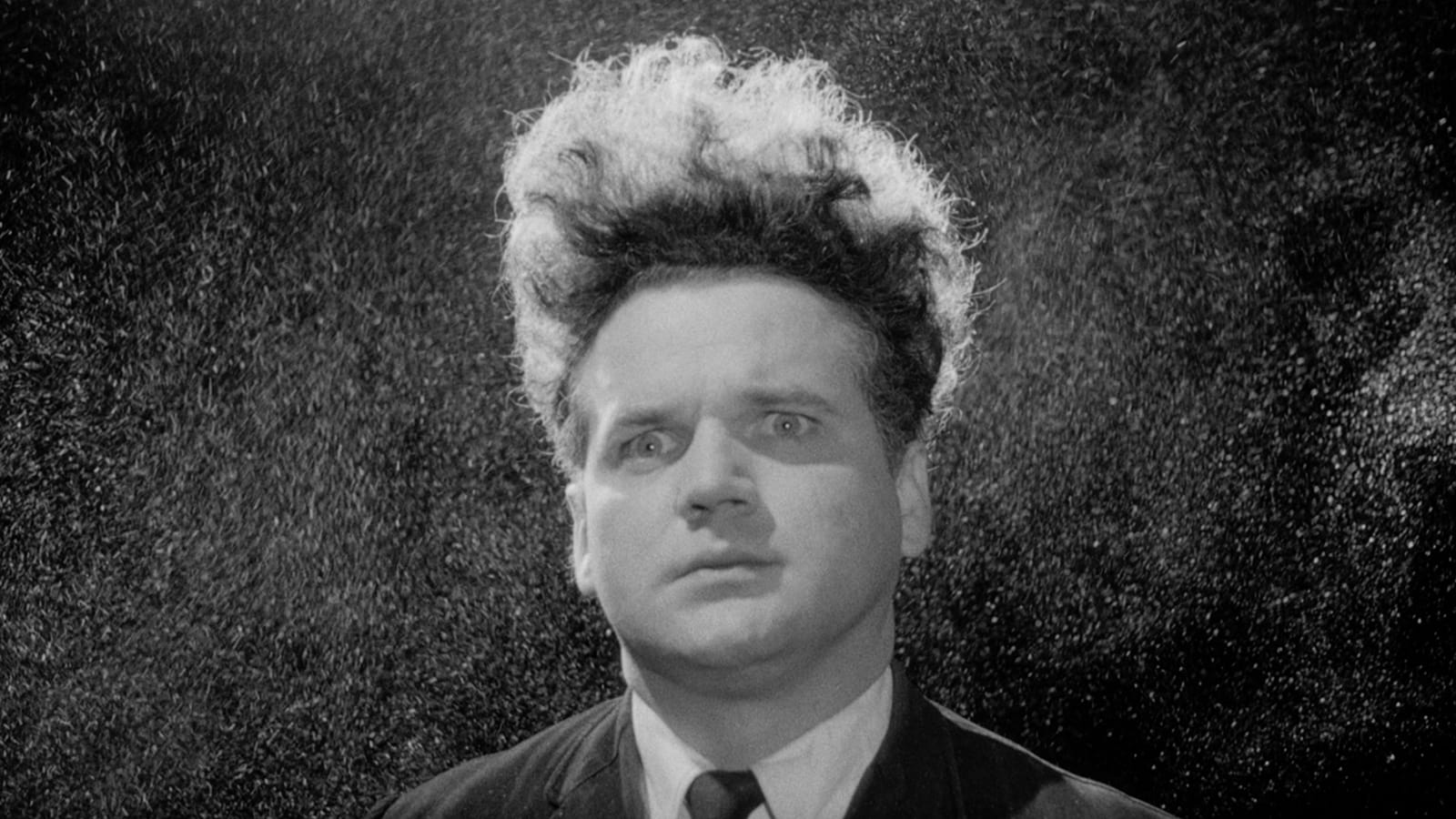
Henry Spencer learns that Mary X has had a child and finds himself responsible for a fragile, crying infant in a hostile industrial world. The story’s domestic pressures unfold through unstable spaces, sound and imagined transformations. Story outline in Sterritt’s essay ↗
Overview. Before Eraserhead became a midnight-film landmark, it was an experimental film initiated at AFI’s Center for Advanced Film Studies and largely built by a tiny group in the unused Greystone estate stables. Its story is inseparable from the way it was made: a mutable short script, a self-built permanent environment, extraordinary rehearsal and lighting time, fragile financing, and a soundtrack that produced an unseen industrial world.
For this dossier, the production record is organized independently from interpretation. Dates refer to specific events—writing, photography, public screening, local booking, record release—rather than one ambiguous label of “release.”
Enter through an image
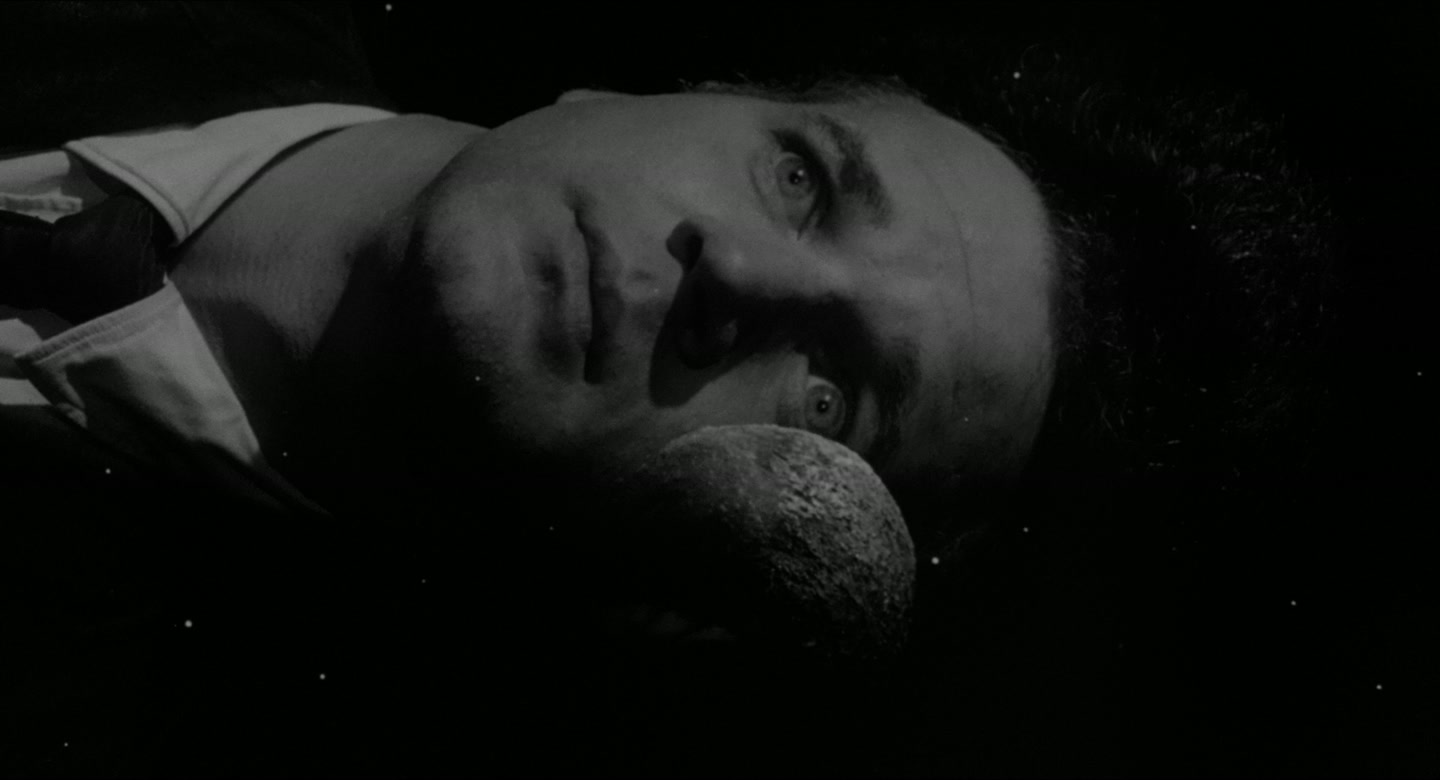 A body and a planet00:40–06:35
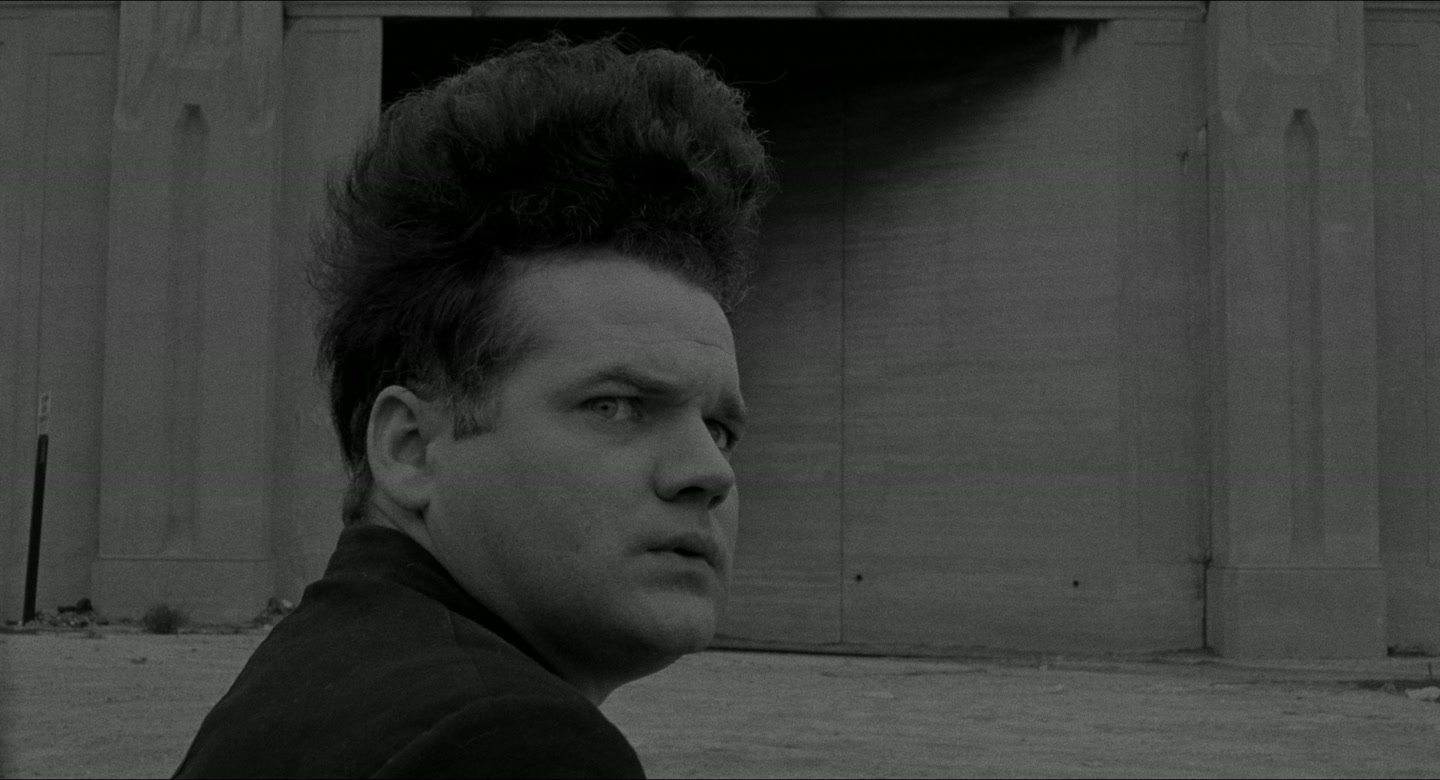 The city and the waiting room06:35–15:50
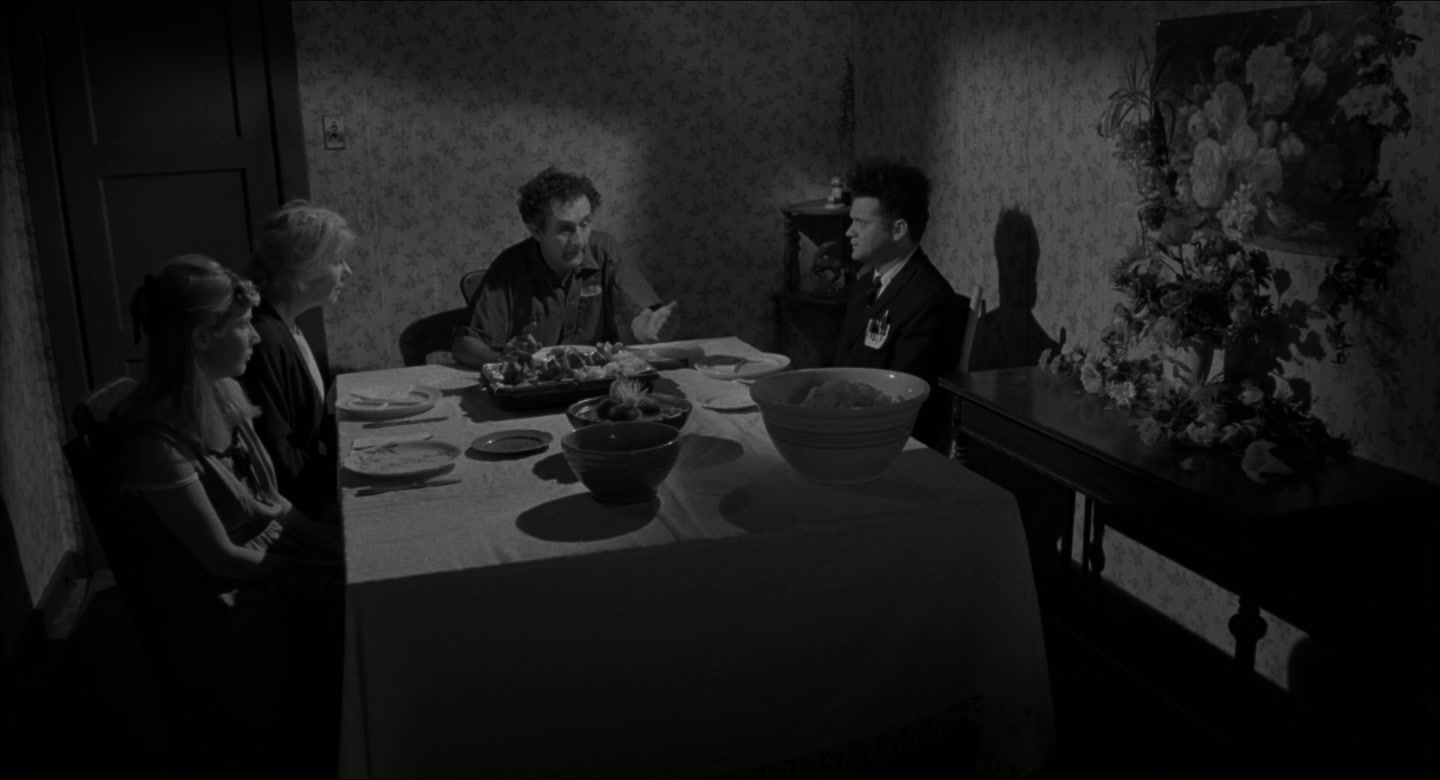 Dinner with the X family15:50–31:25
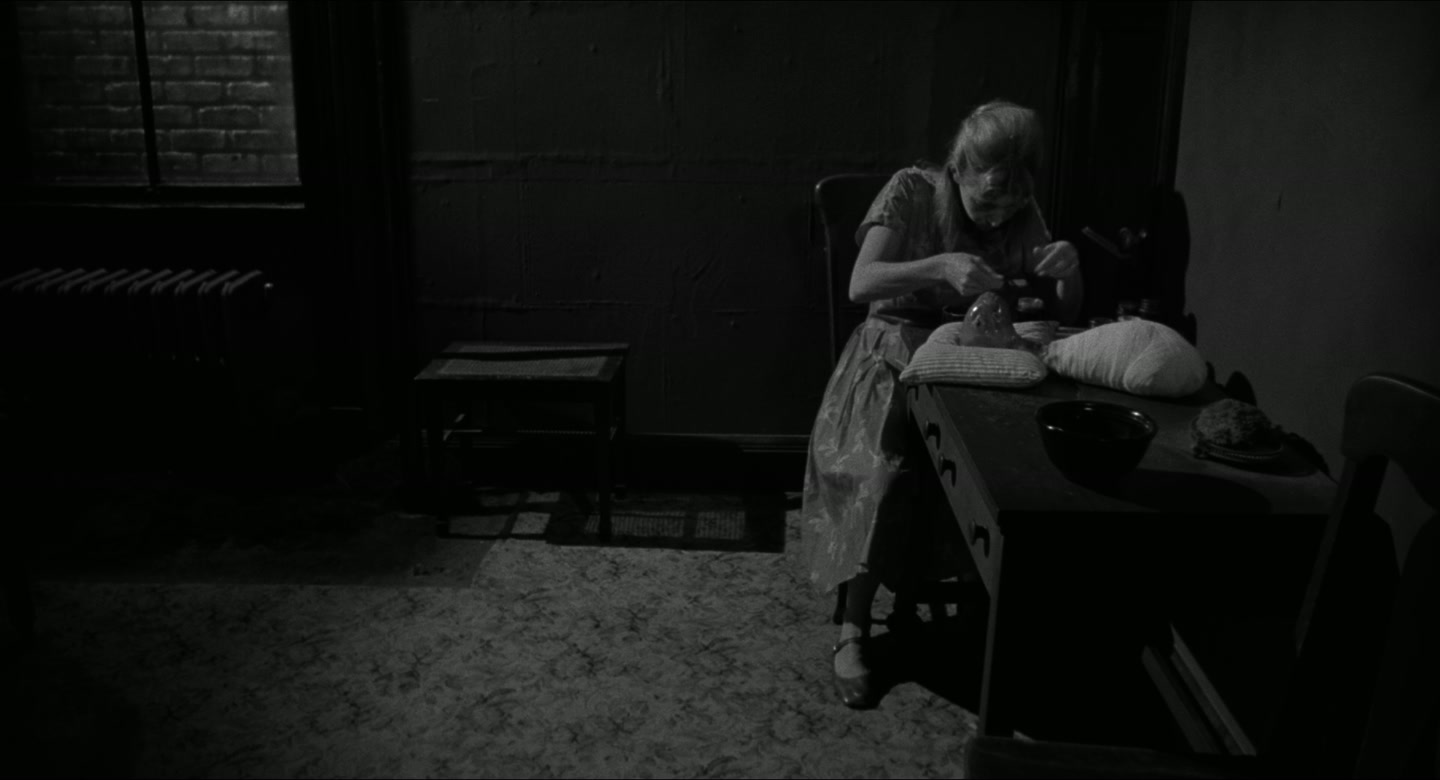 A household that cannot rest31:25–43:20
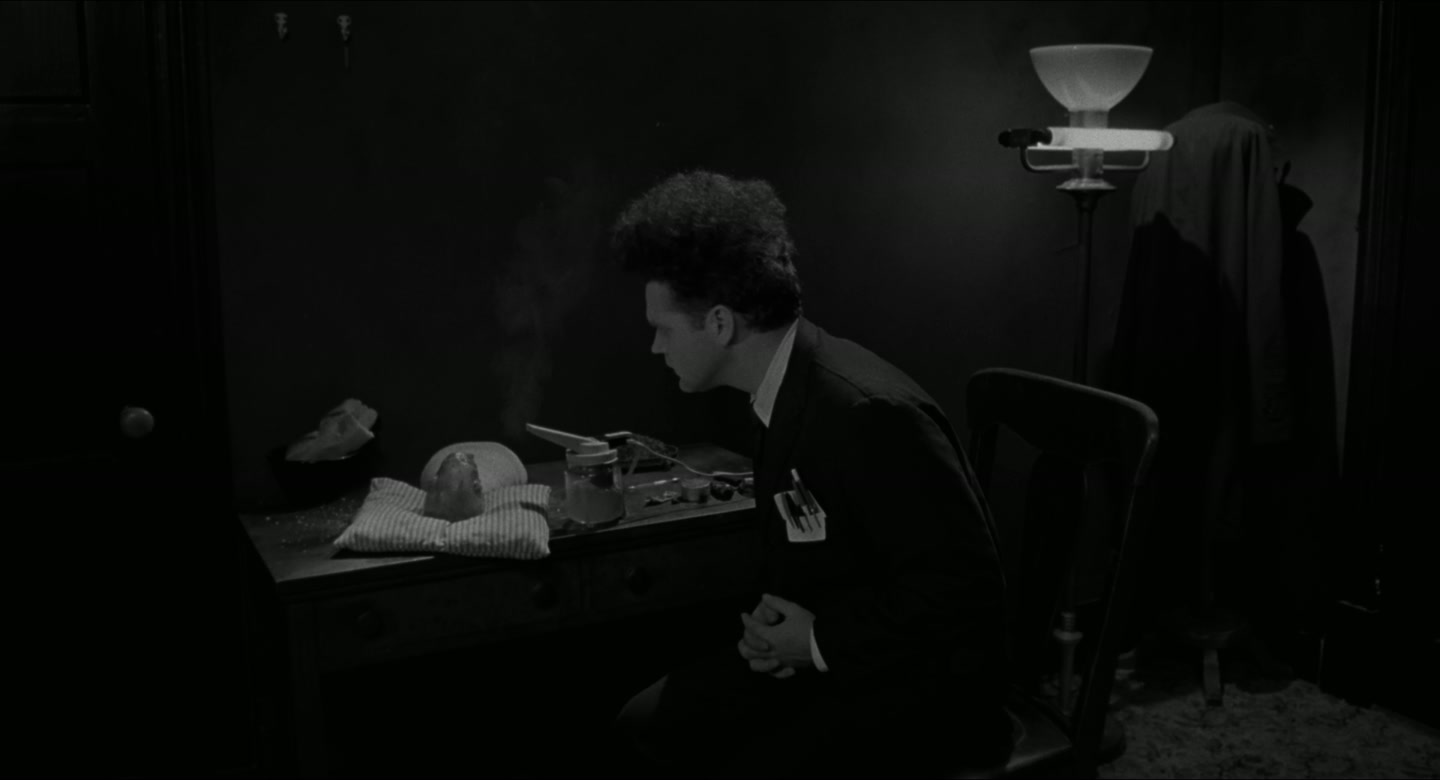 Looking after the child43:20–50:00
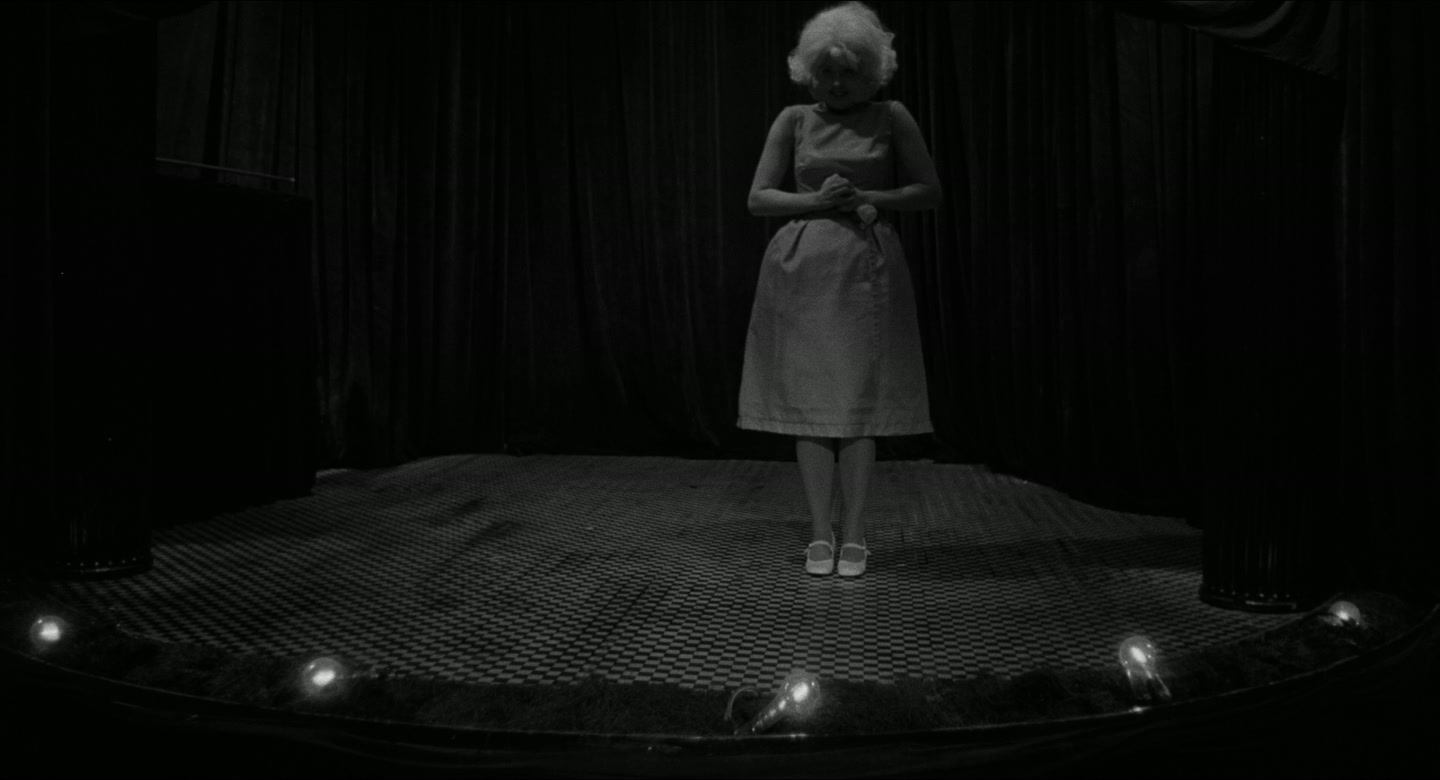 A miniature theatre50:00–52:50
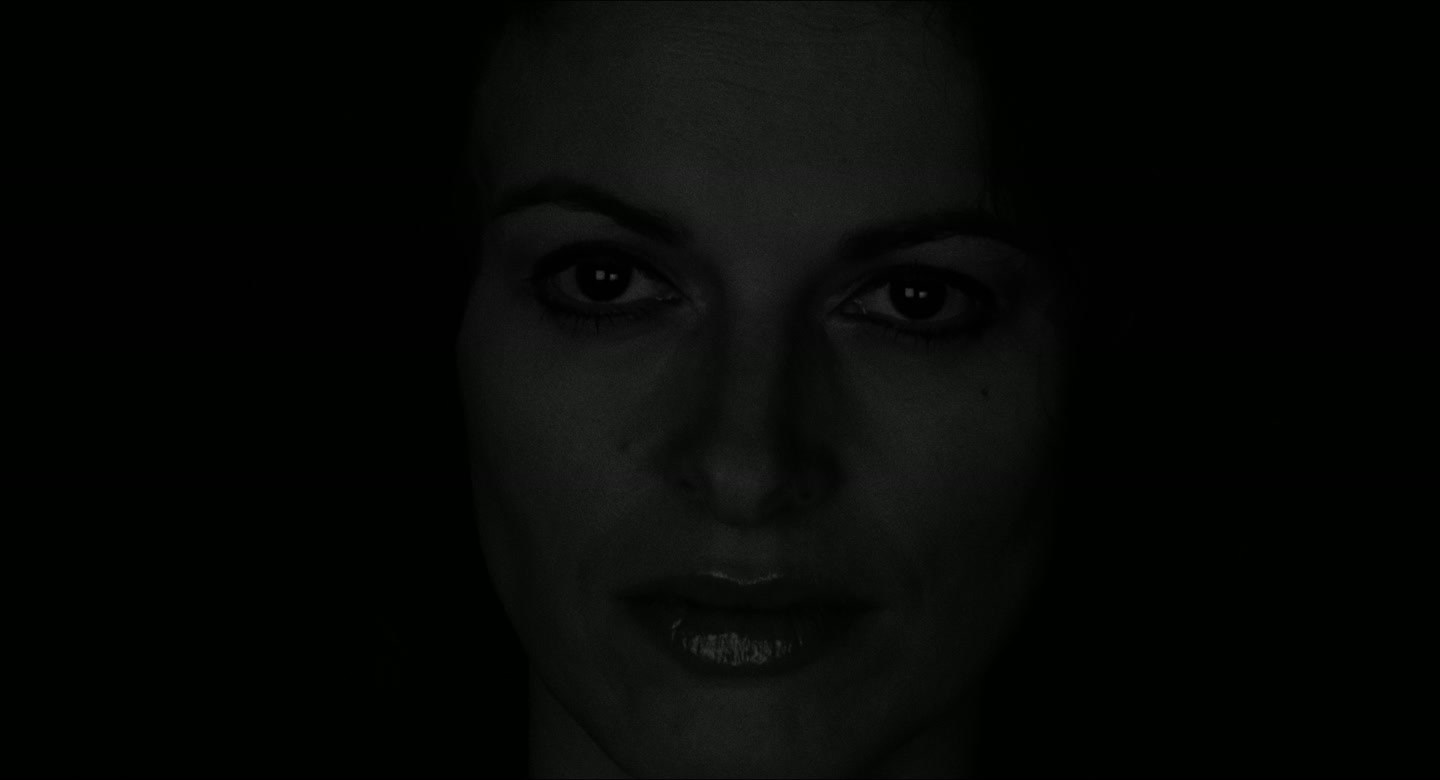 The bed changes its boundaries52:50–1:03:25
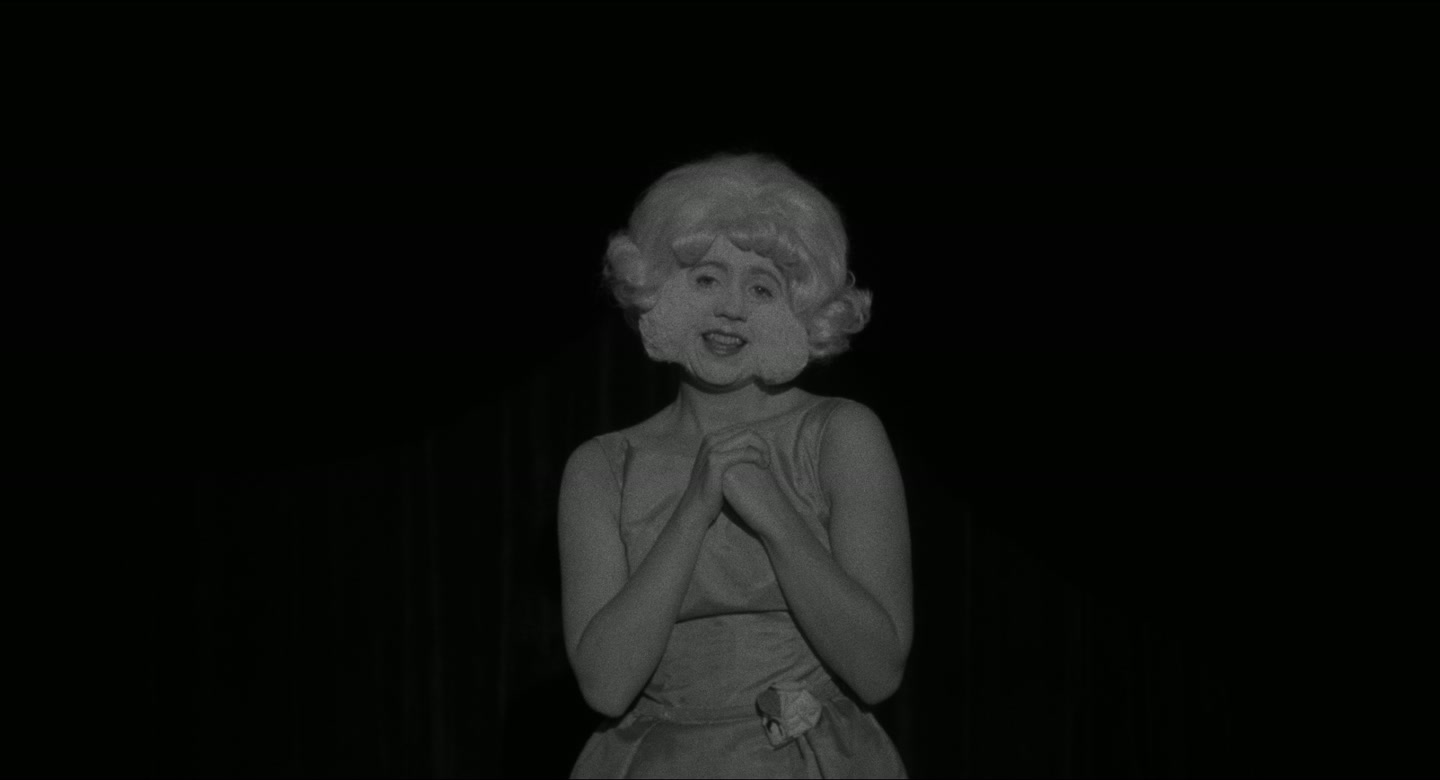 From spectator to exhibit1:03:25–1:08:35
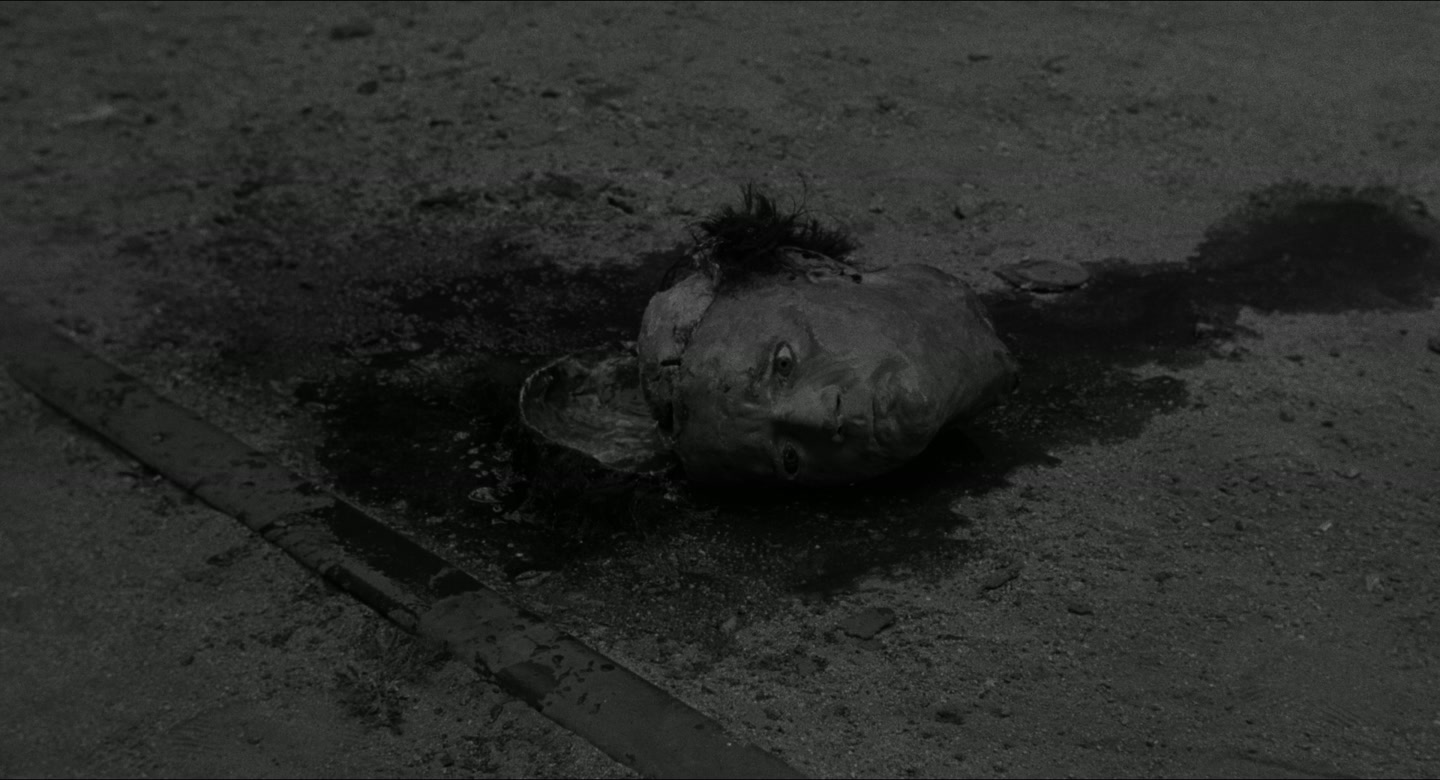 The head becomes material1:08:35–1:13:20
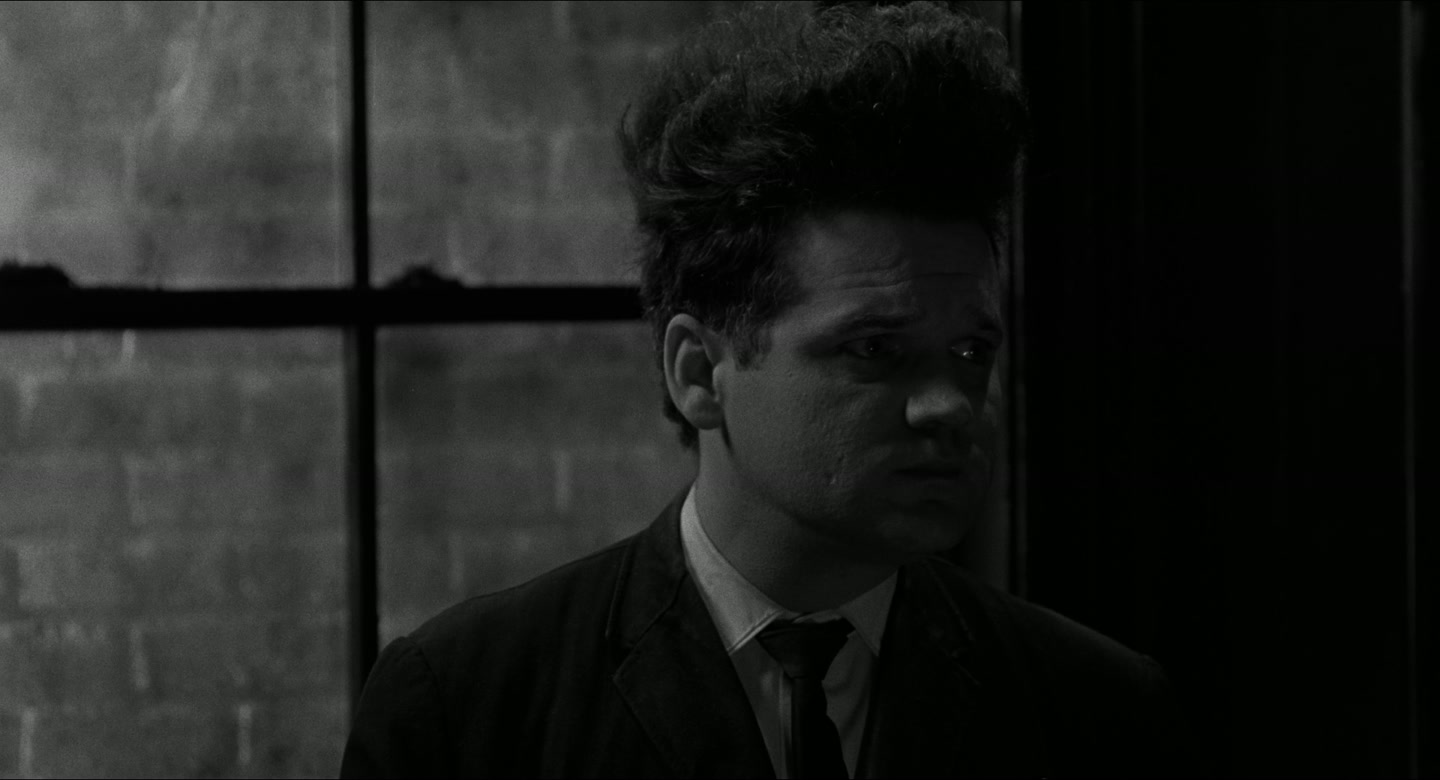 The room after the dream1:13:20–1:20:15
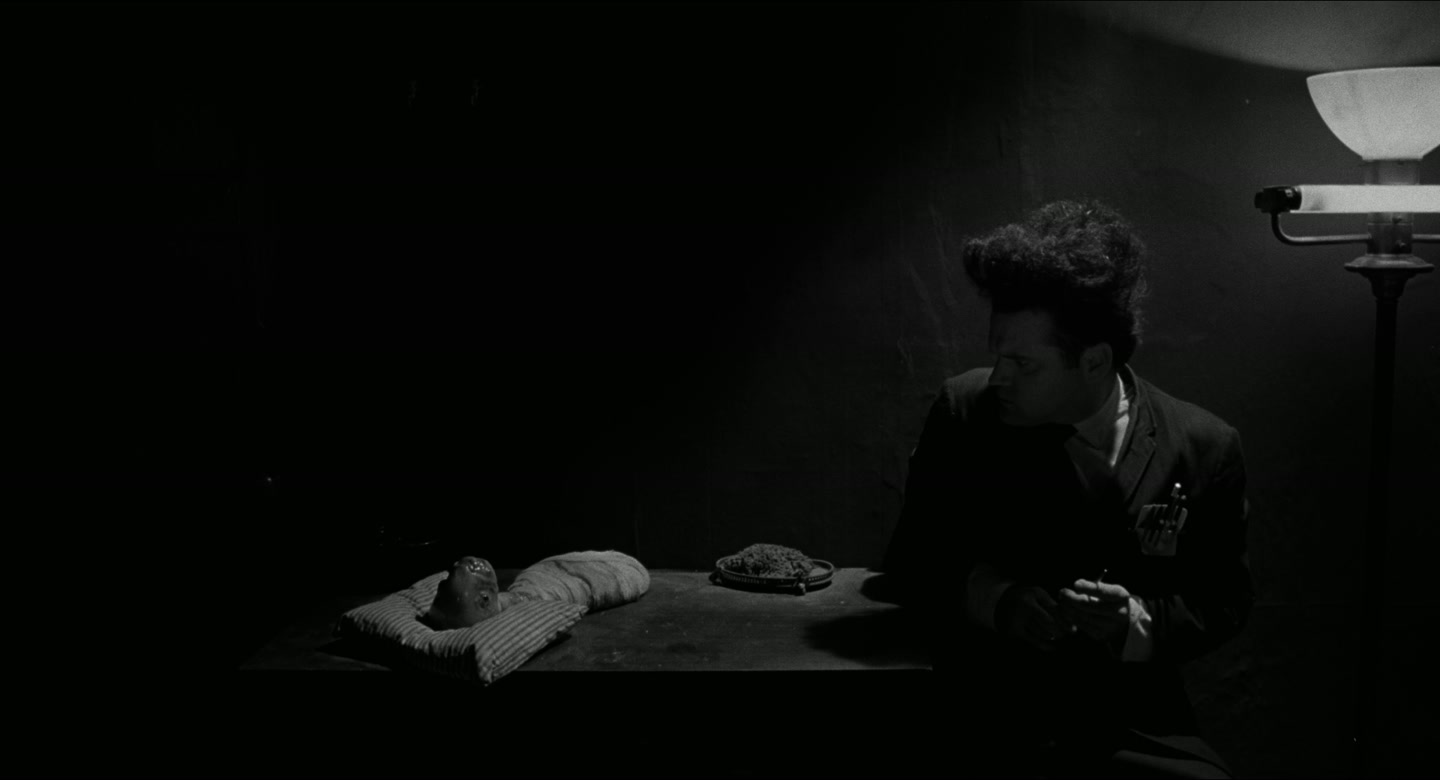 Opening the wrapping1:20:15–1:24:00
 Scale breaks, then an embrace1:24:00–1:26:58
Find a subject · complete contents
77 sections available
Search matches section text as well as titles. The full article remains available below.
Through Henry’s world
Scene studies follow the film from its planetary opening to the final embrace. Expand an image sequence to follow its visual progression, or select a still for a closer look. Includes the ending.
00:40–06:35
A body and a planet
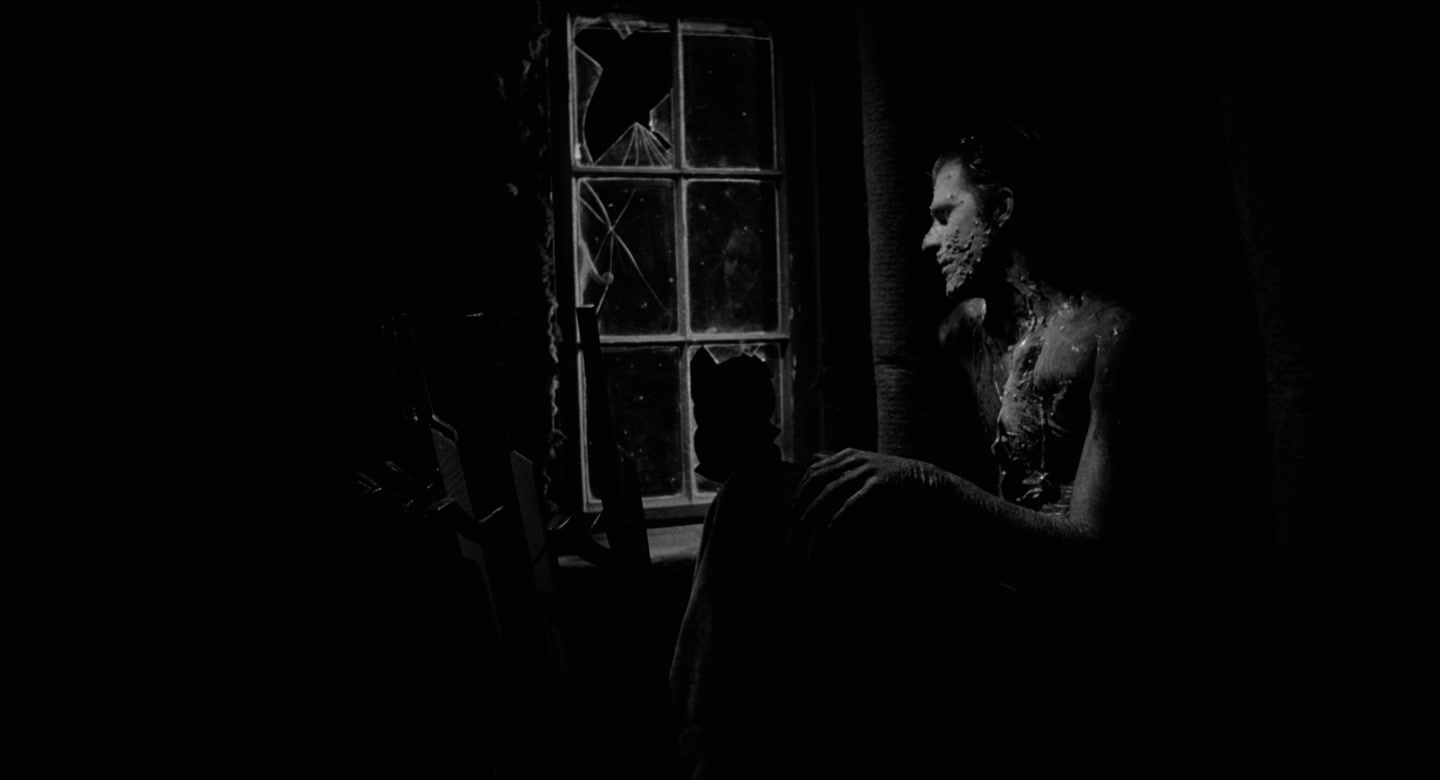
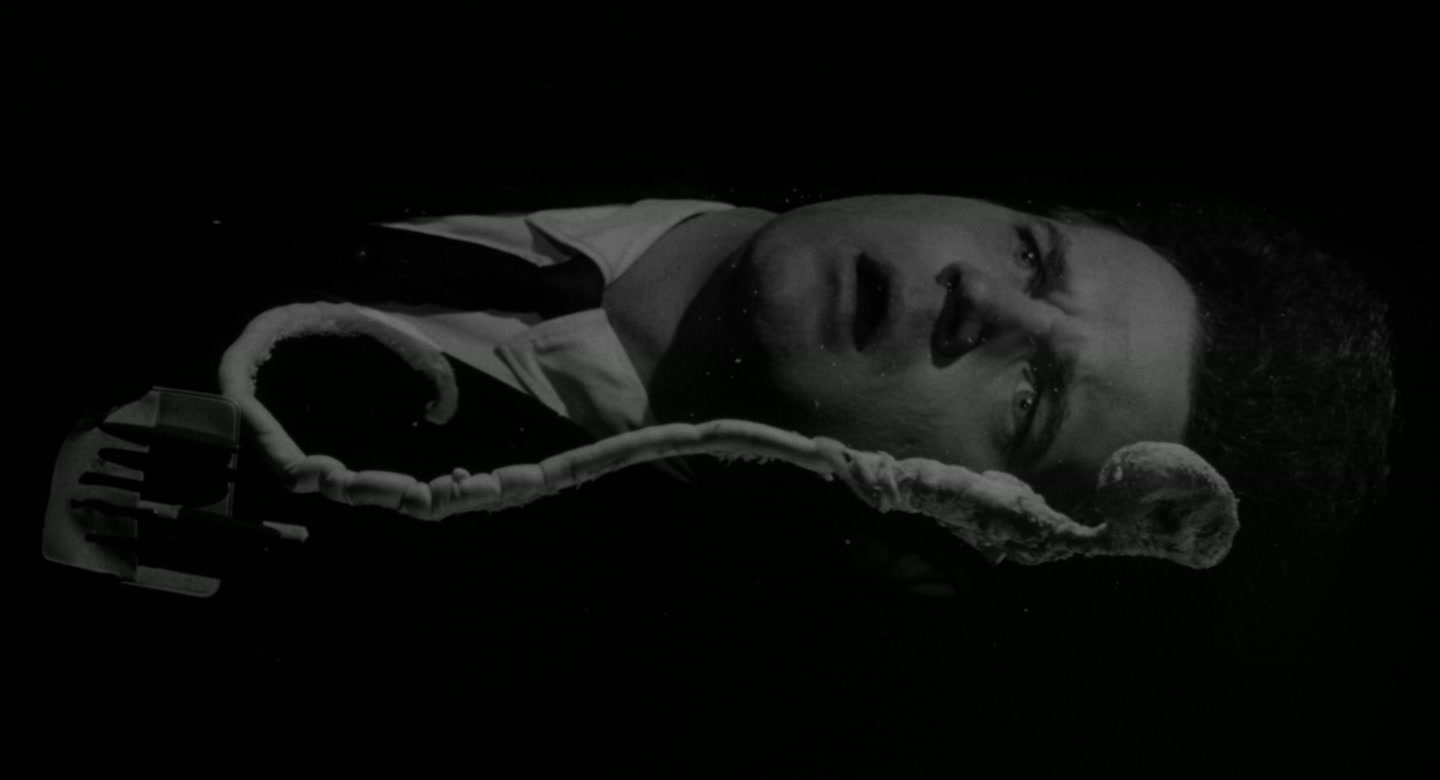
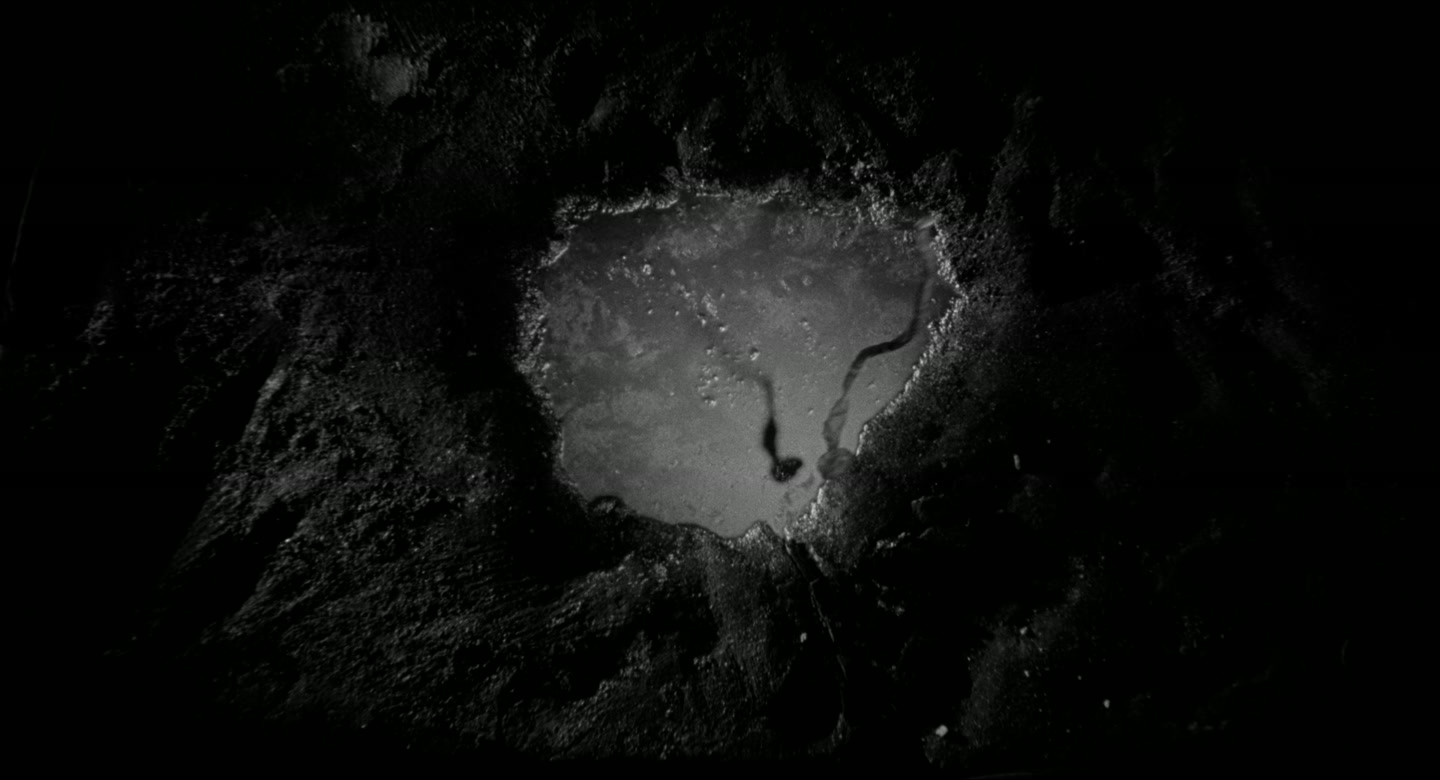
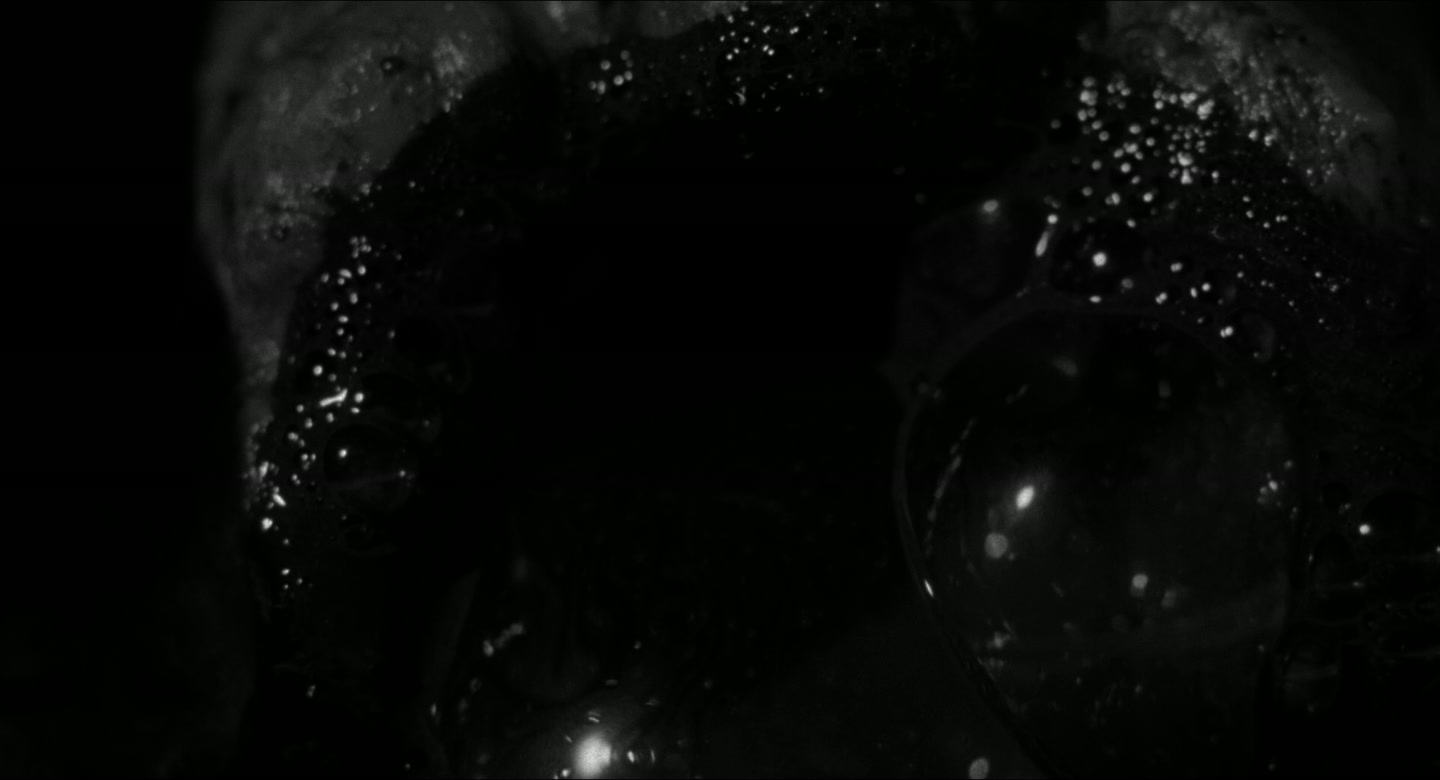
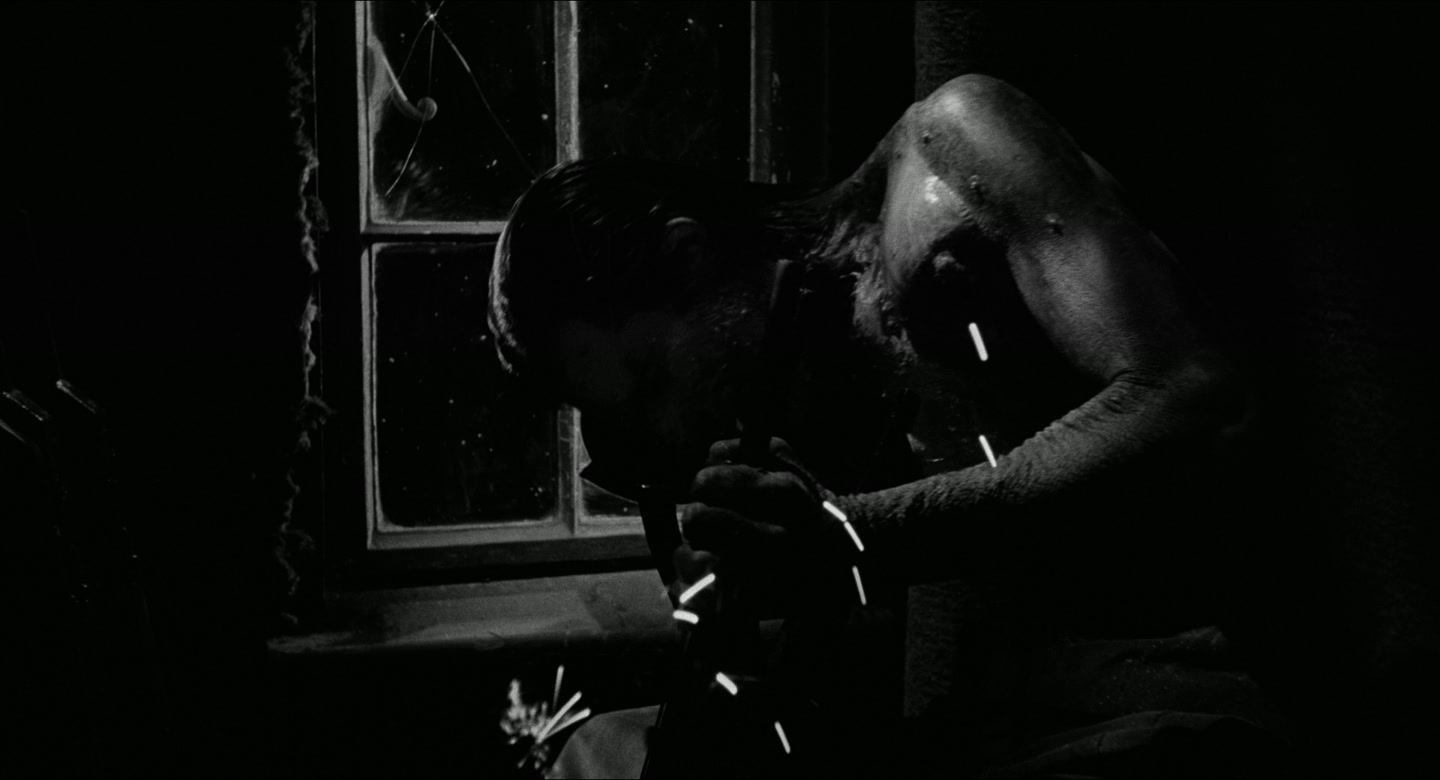
The first landscape has no stable human scale. Henry’s horizontal face crosses a rocky sphere, then the film approaches a surface that becomes a place with a room, a window and an operator. A pale, elongated form appears beside Henry’s mouth and falls toward a pool. Cuts connect these actions without providing a map of how the spaces fit together.
The sequence establishes a grammar that will return at the end: a vulnerable body, a mechanism and a world that may be an object small enough to break. The operator’s levers suggest causation, but the film withholds an explanation of his authority. Watching the sequence as a series of changes in scale preserves more of its force than assigning every object a fixed meaning.
From Henry’s face to the pool · 4 images
06:35–15:50
The city and the waiting room
Henry’s upright arrival replaces the floating figure with a man carrying a paper bag through factories, rubble and oversized blank walls. Doorways and windows establish distances without offering much access. At home, even the elevator demands a prolonged wait. Inside the room, a radiator, a heap of vegetation and a window facing brickwork make a small collection of surfaces feel like an entire environment.
The torn photograph of Mary introduces intimacy as something handled and reassembled. Its small scale answers the enormous exteriors: both ask Henry to find a place for himself. In the 1979 interview, Lynch identifies the delayed elevator as a joke. The duration can therefore be read as awkward comedy as well as confinement; Nance’s restrained movements support both.
Streets, thresholds and the room · 5 images
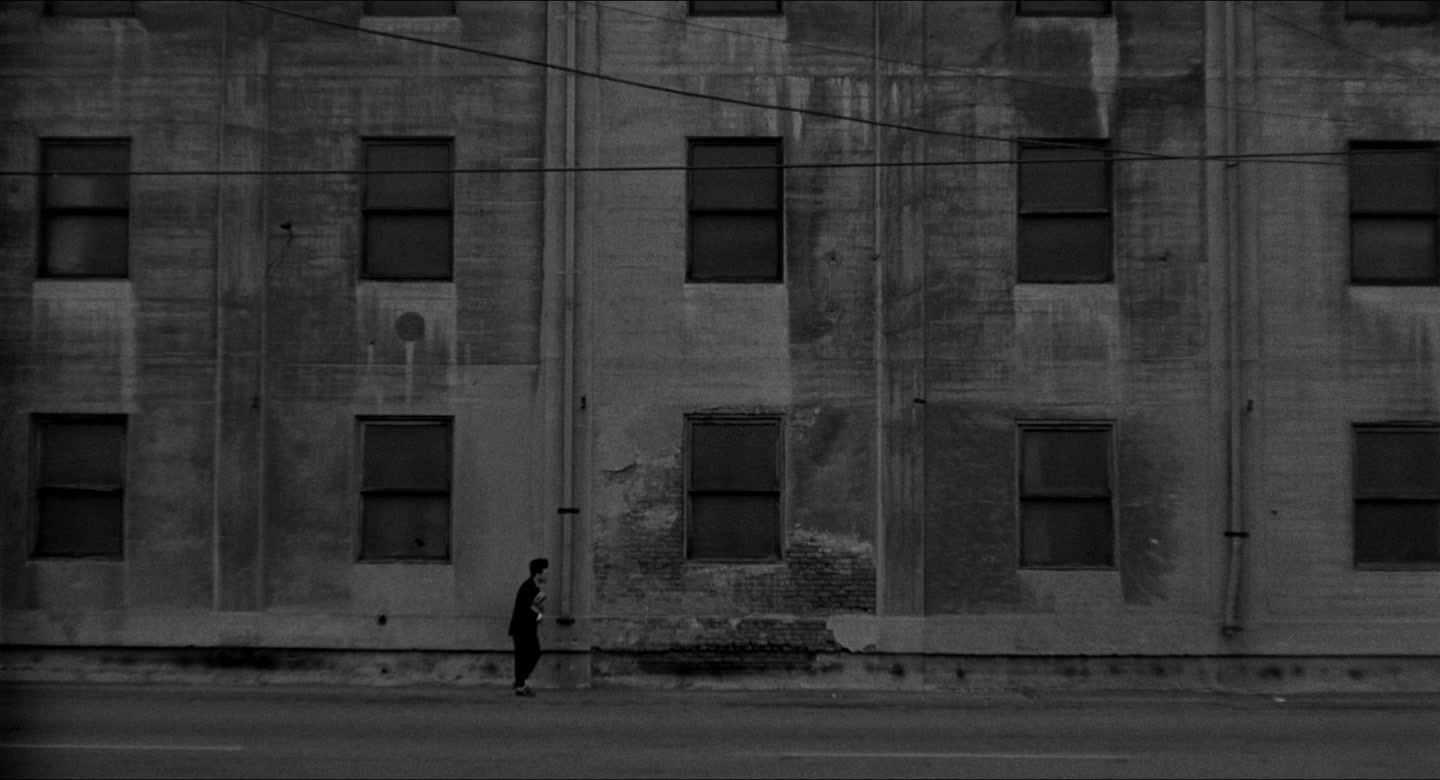
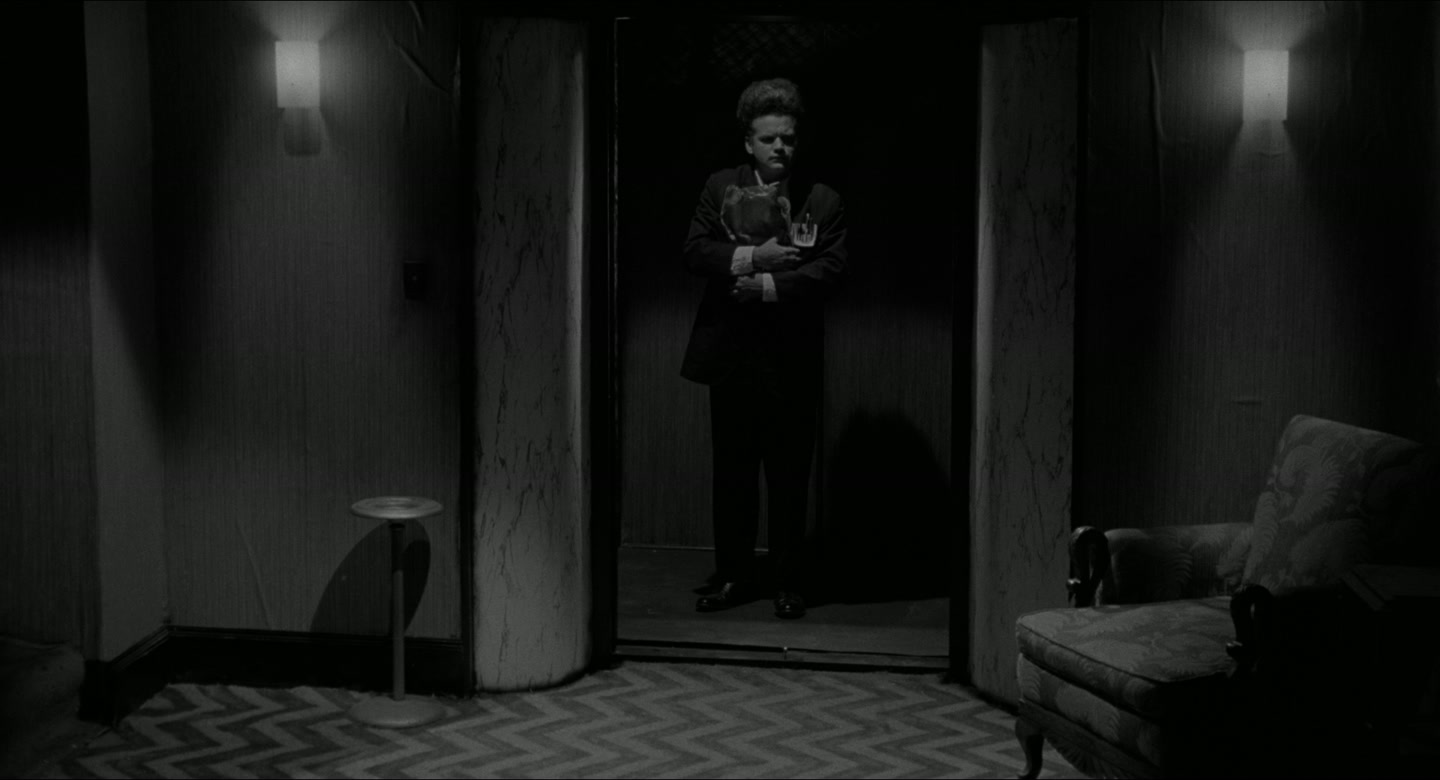
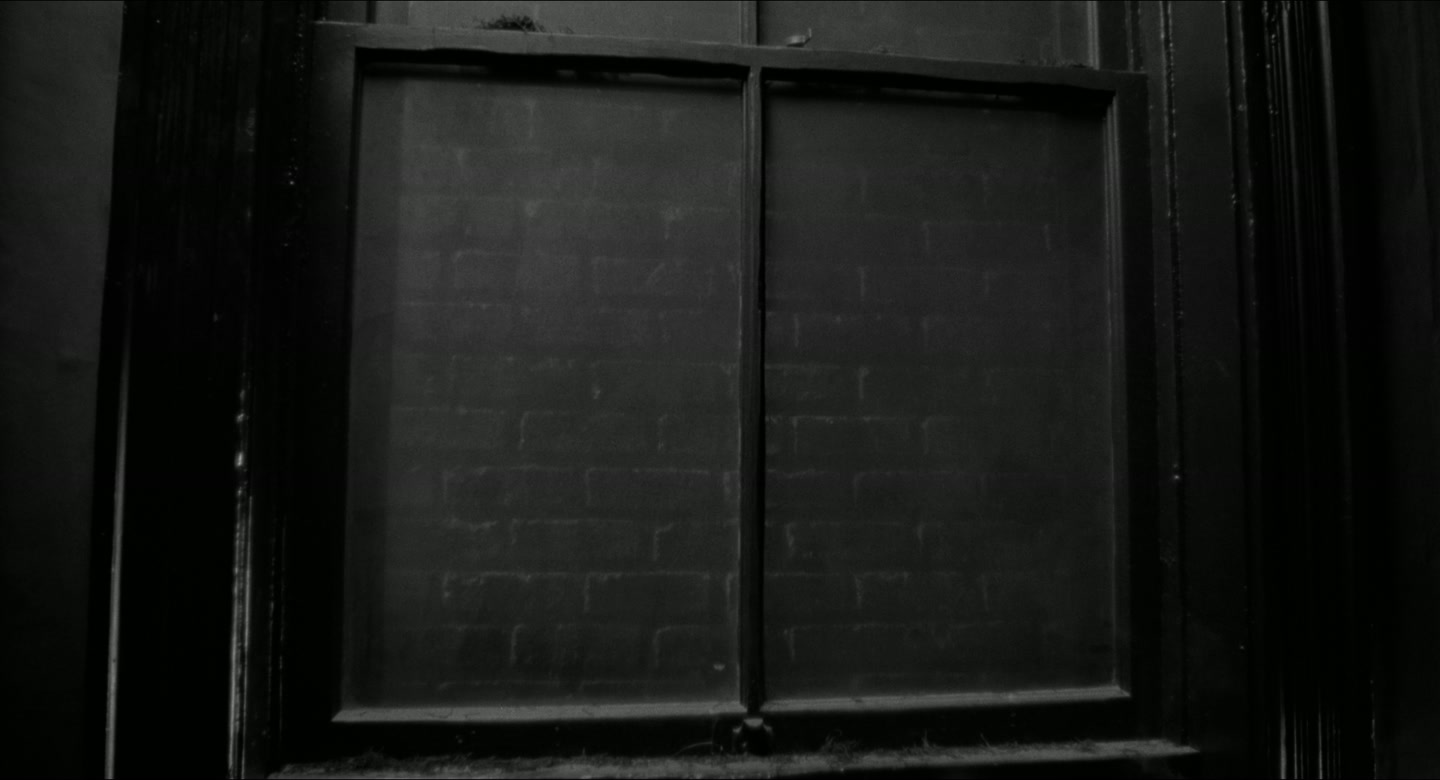
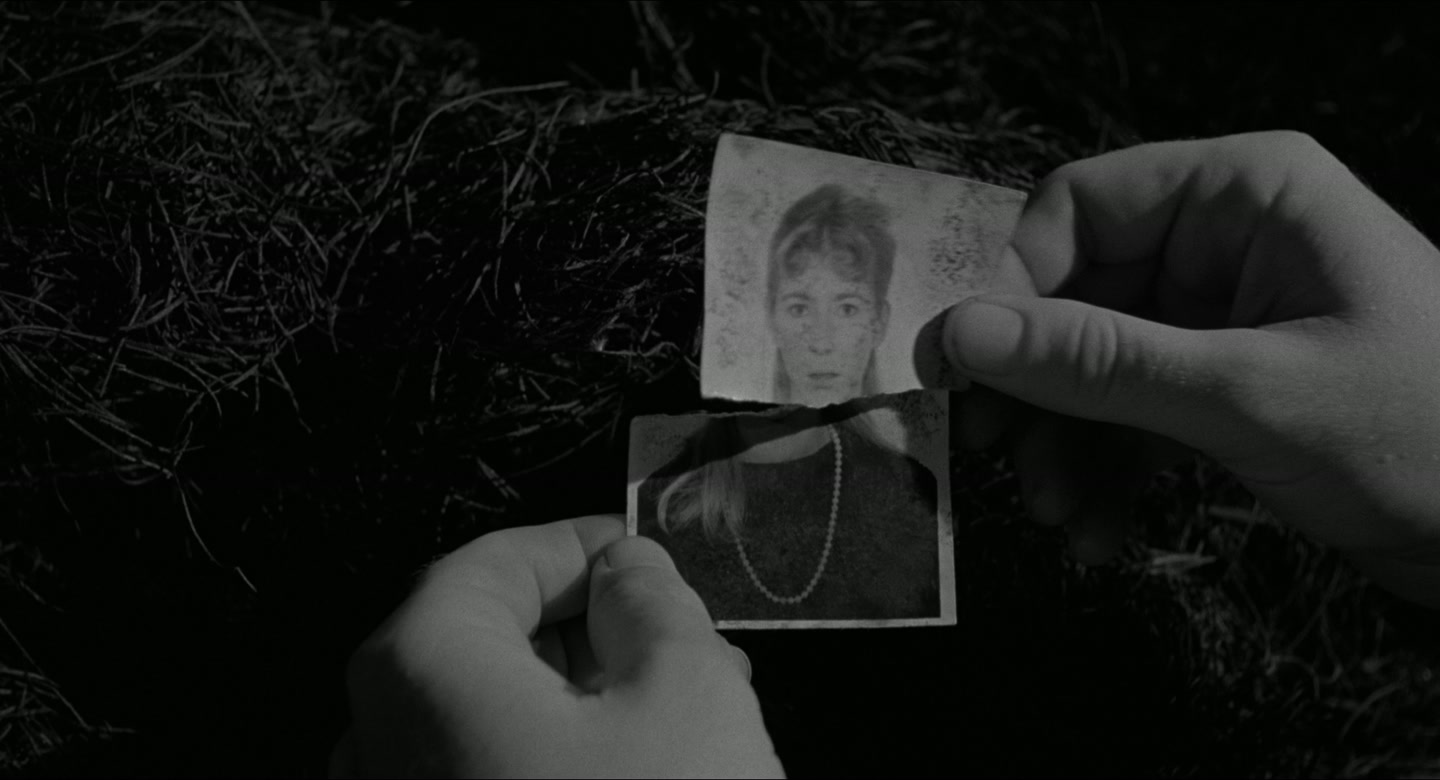
15:50–31:25
Dinner with the X family
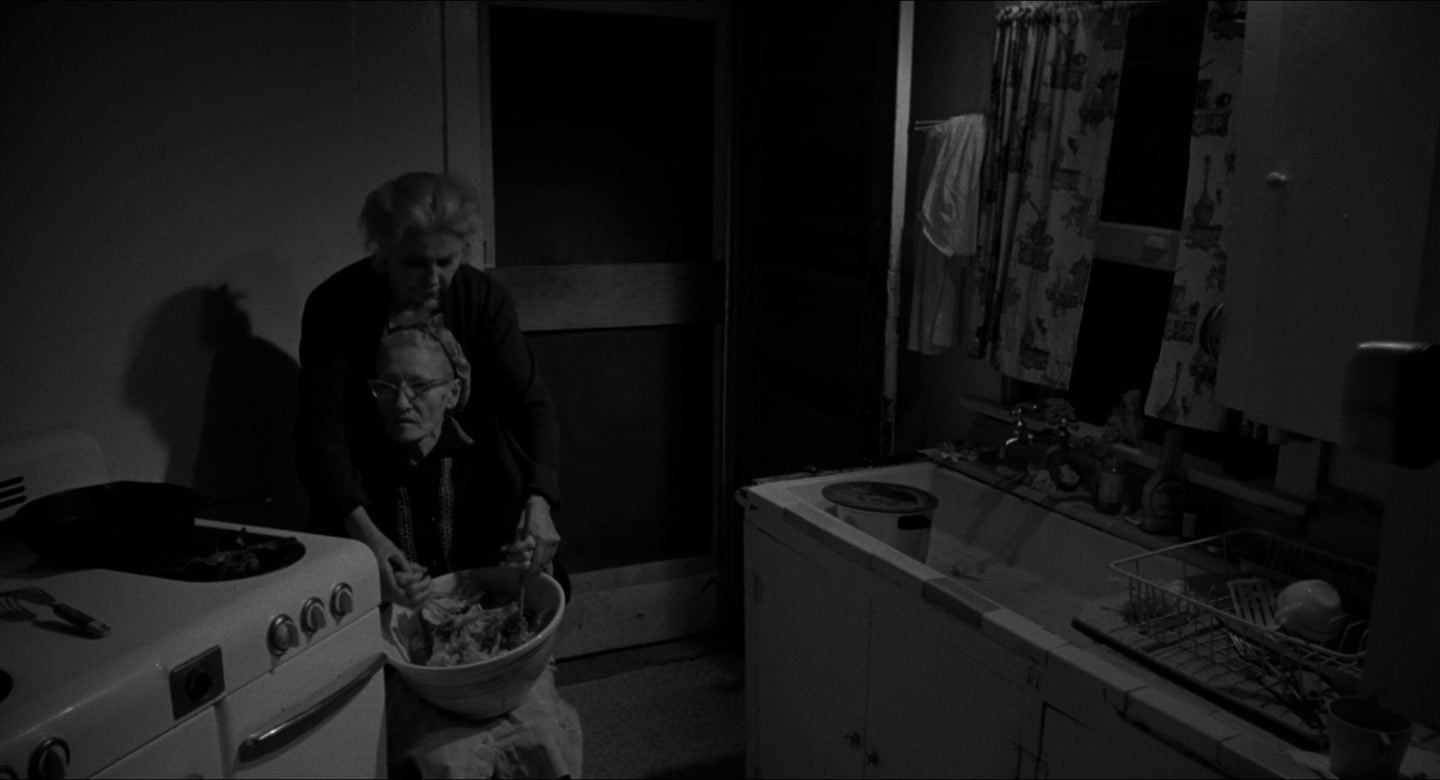
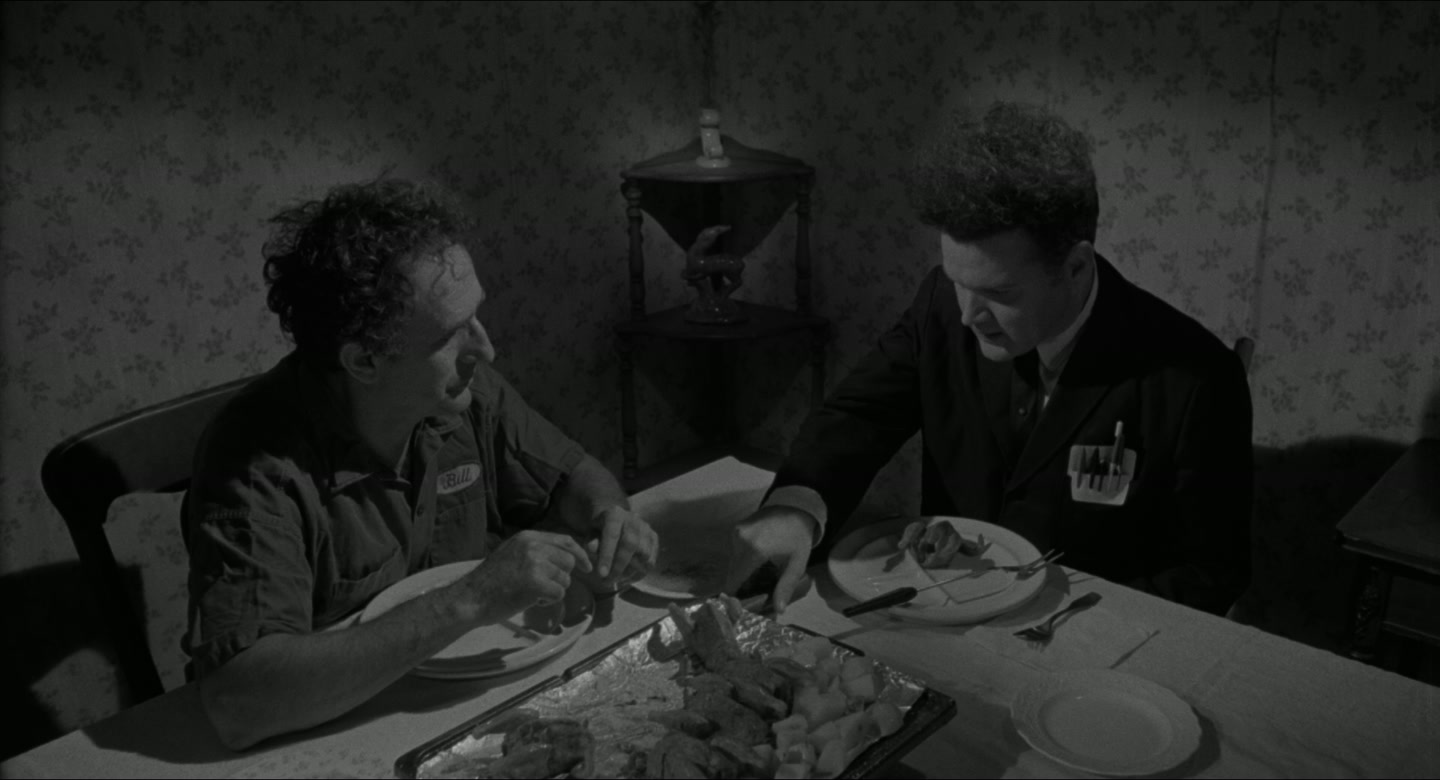
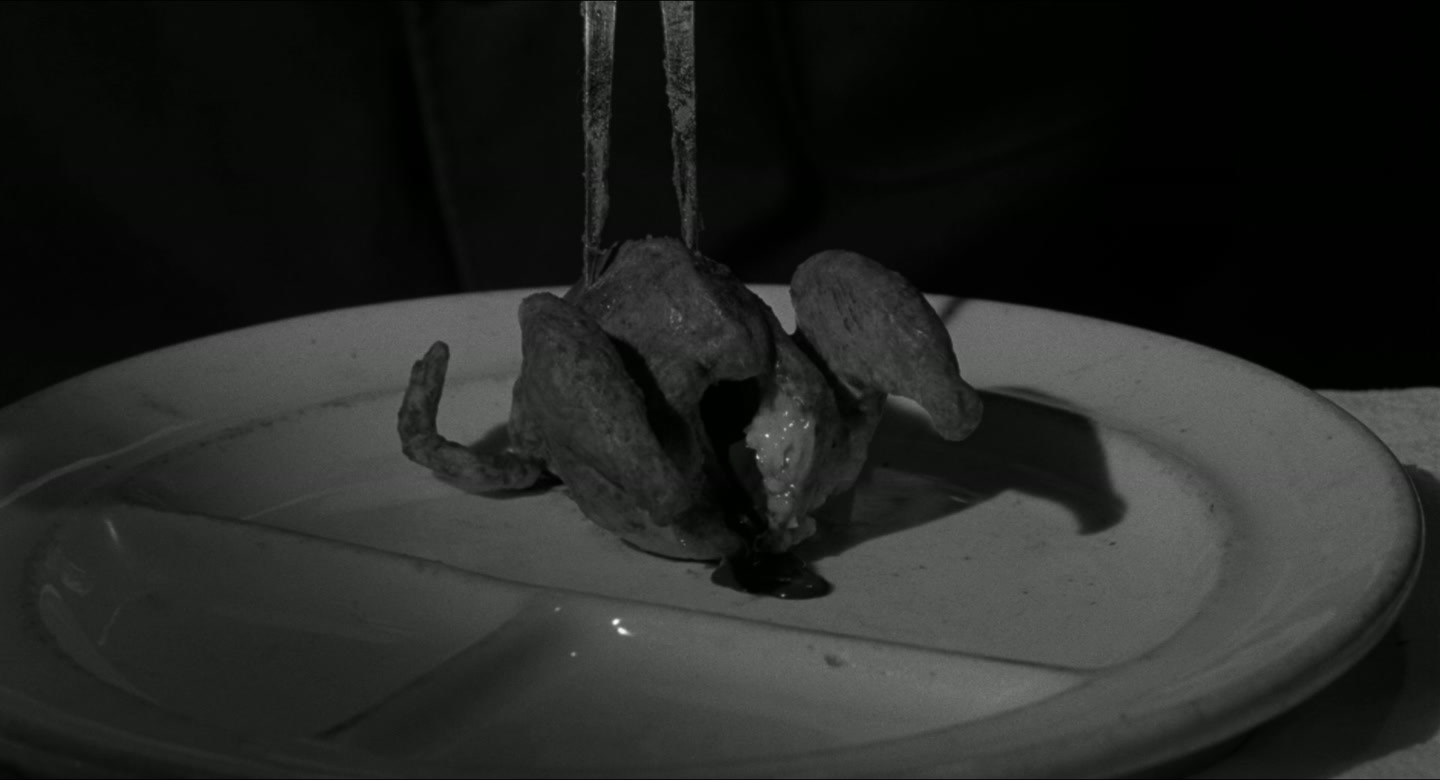
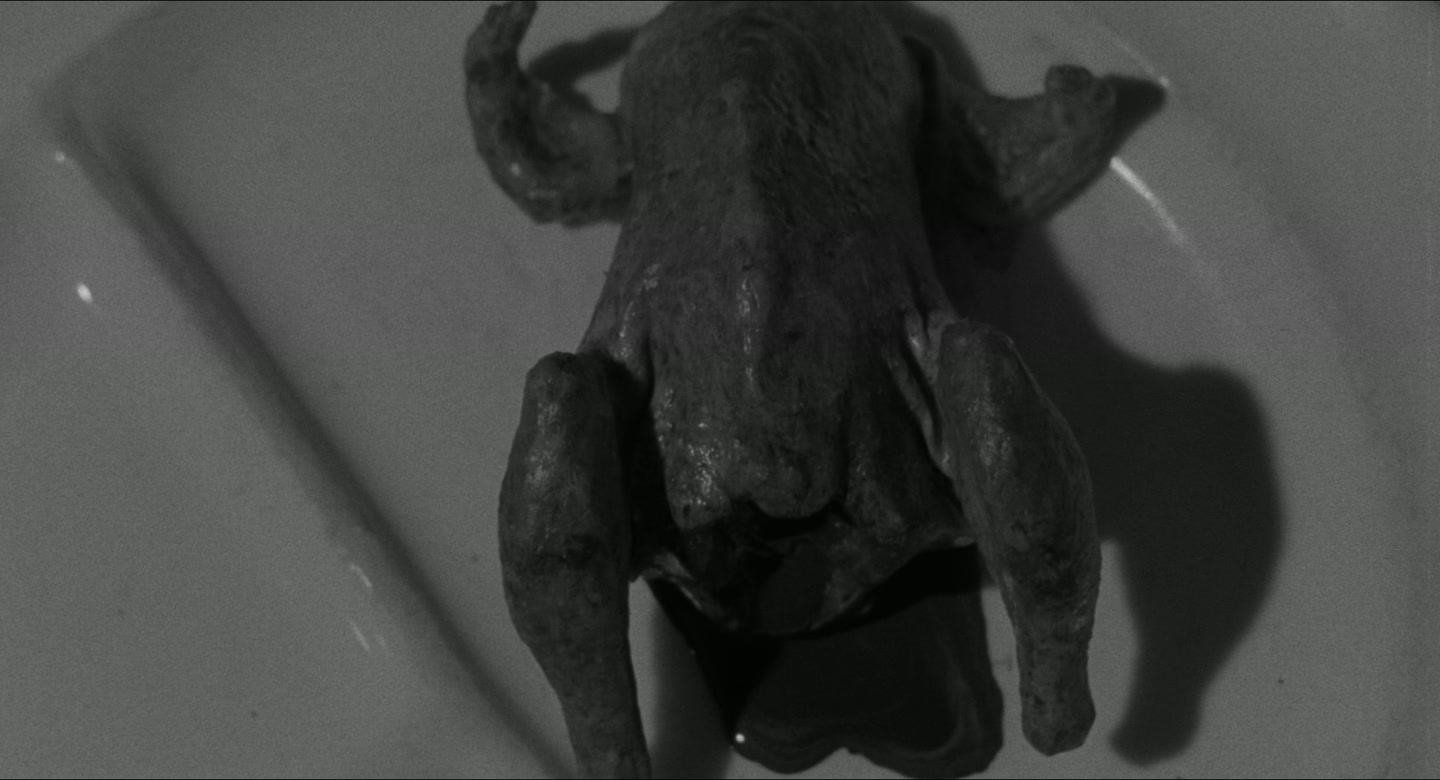
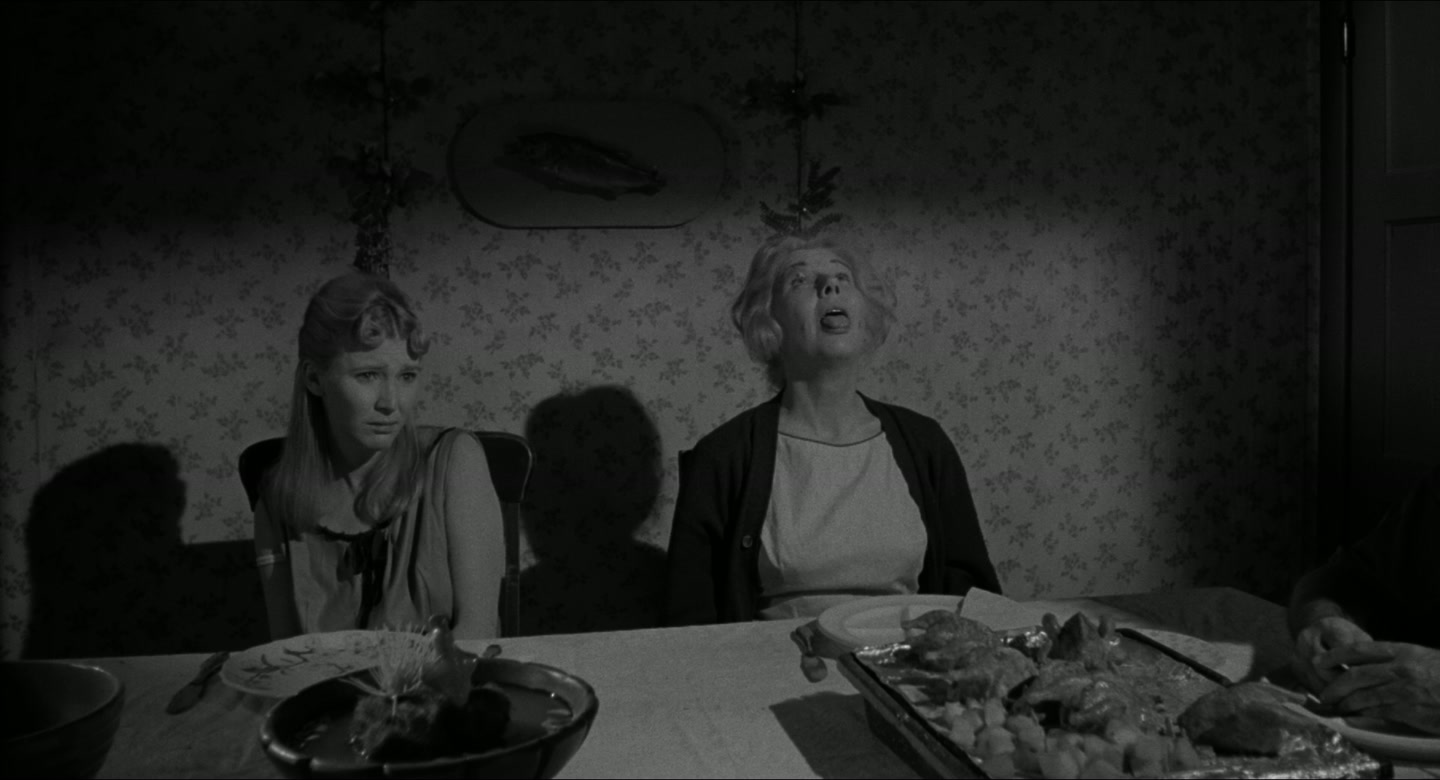
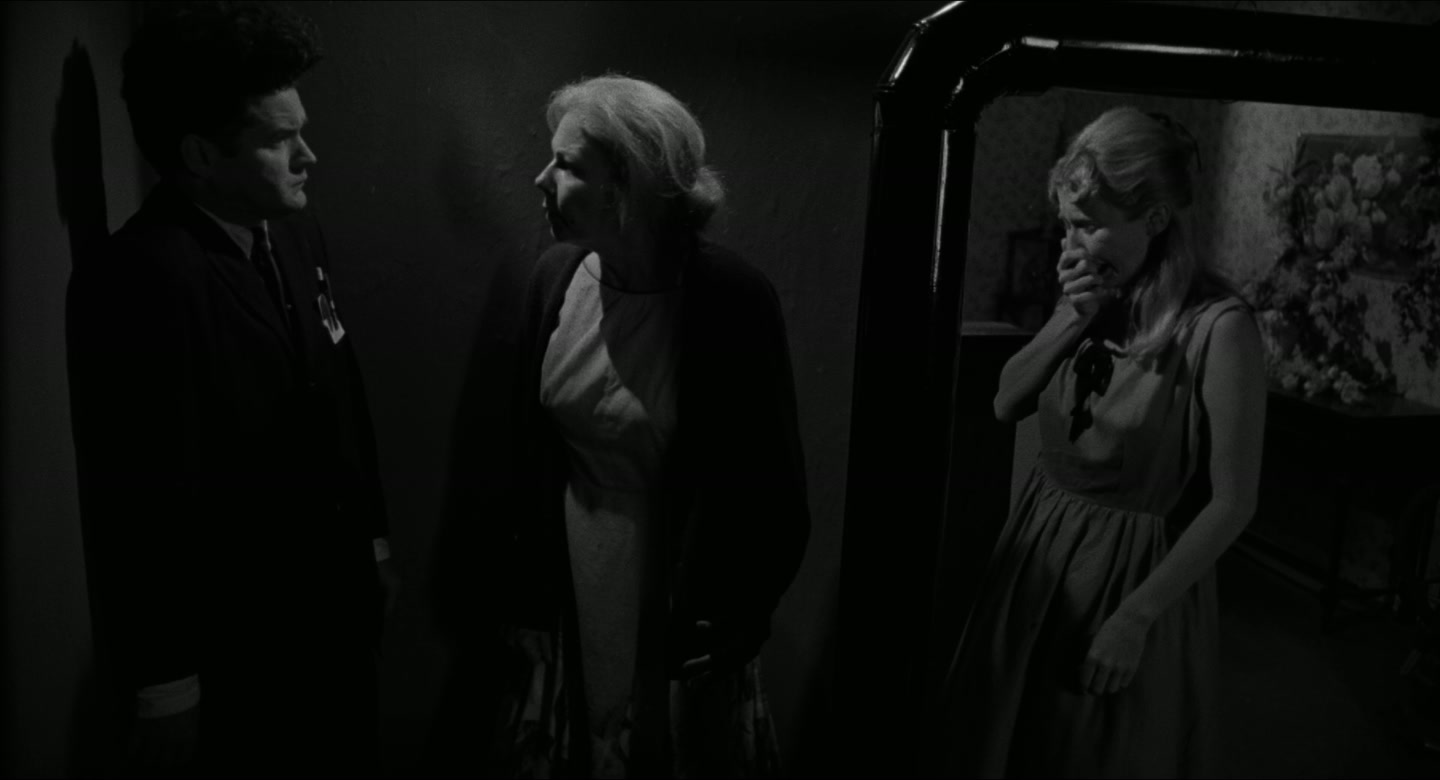
The visit is organized around ordinary rituals that fail to stay ordinary: introductions, preparing a salad, carving dinner and asking about work. Mrs X manipulates the grandmother’s hands; Bill offers a history of his injured arm; Henry is asked to carve unnaturally small chickens. Across these actions, the body repeatedly becomes something operated, inspected or made to perform.
The chicken’s movement is given its own close view, then answered by faces across the table. The effect works through this exchange between an impossible object and socially constrained reaction. The later questioning about Mary and the child narrows the space further, pressing Henry between the two women. Bill’s return to the cold dinner keeps domestic routine going after the scene has apparently exceeded it.
The gallery separates the preparation, the moving prop and the reaction. It shows how framing and performance carry the effect without claiming a mechanism that the image alone cannot establish.
Dinner and the chicken effect · 8 images
31:25–43:20
A household that cannot rest
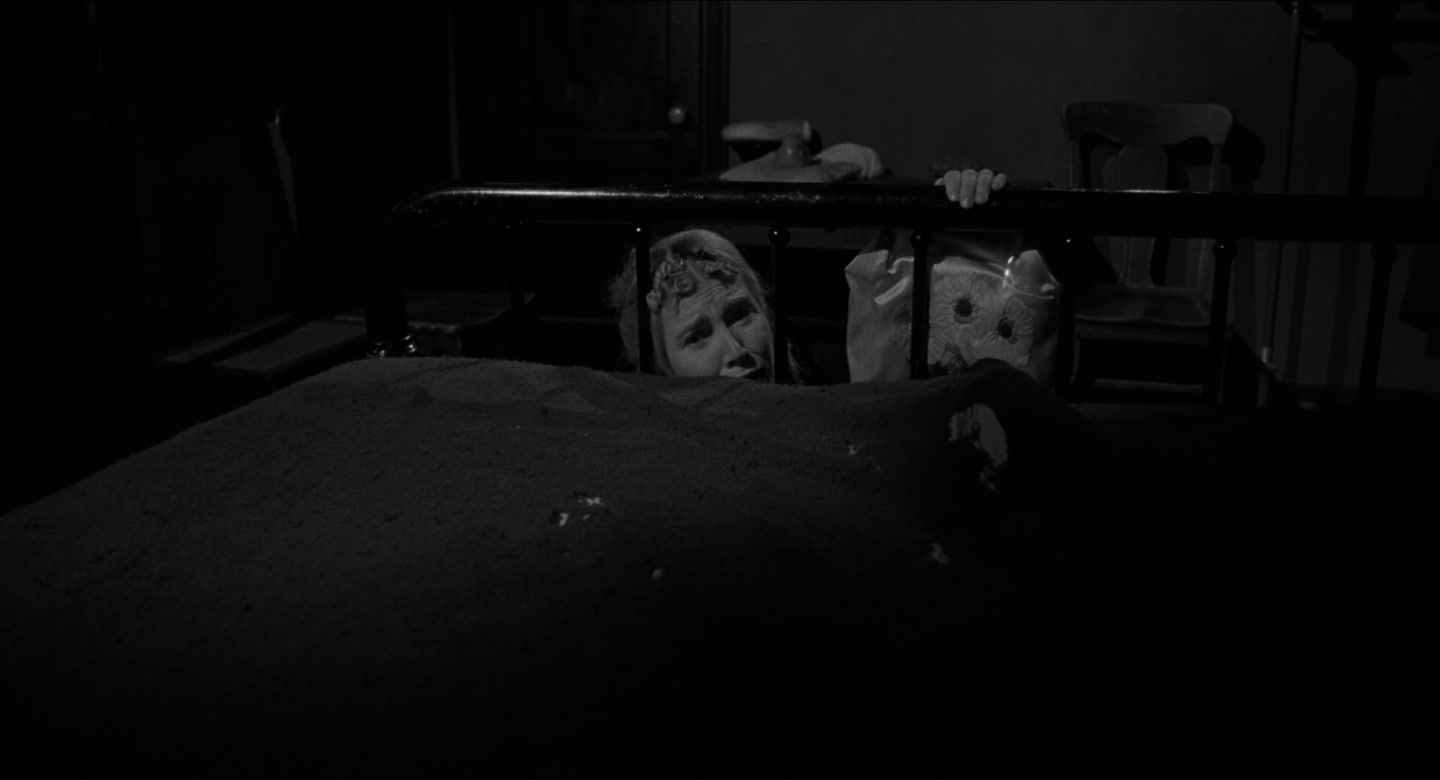
The next domestic arrangement is already in place when the film returns to Henry’s room. Mary feeds the child at a table while the bed, radiator and blocked window retain their earlier positions. The room has changed its responsibilities without gaining space. Henry’s small parcel and his attention to the radiator create competing centres of interest beside the care that Mary is performing.
The nighttime passage shifts from the two figures in bed to Mary’s decision to leave. Her effort to pull the suitcase free extends an ordinary gesture into a physical struggle. Charlotte Stewart’s account describes being instructed to keep pulling until Lynch signalled. That recollection makes the uncomfortable length of the action a concrete performance choice, while the first glimpse of the radiator stage offers a very different kind of space within the same room.
Care, escape and the hidden stage · 4 images
43:20–50:00
Looking after the child
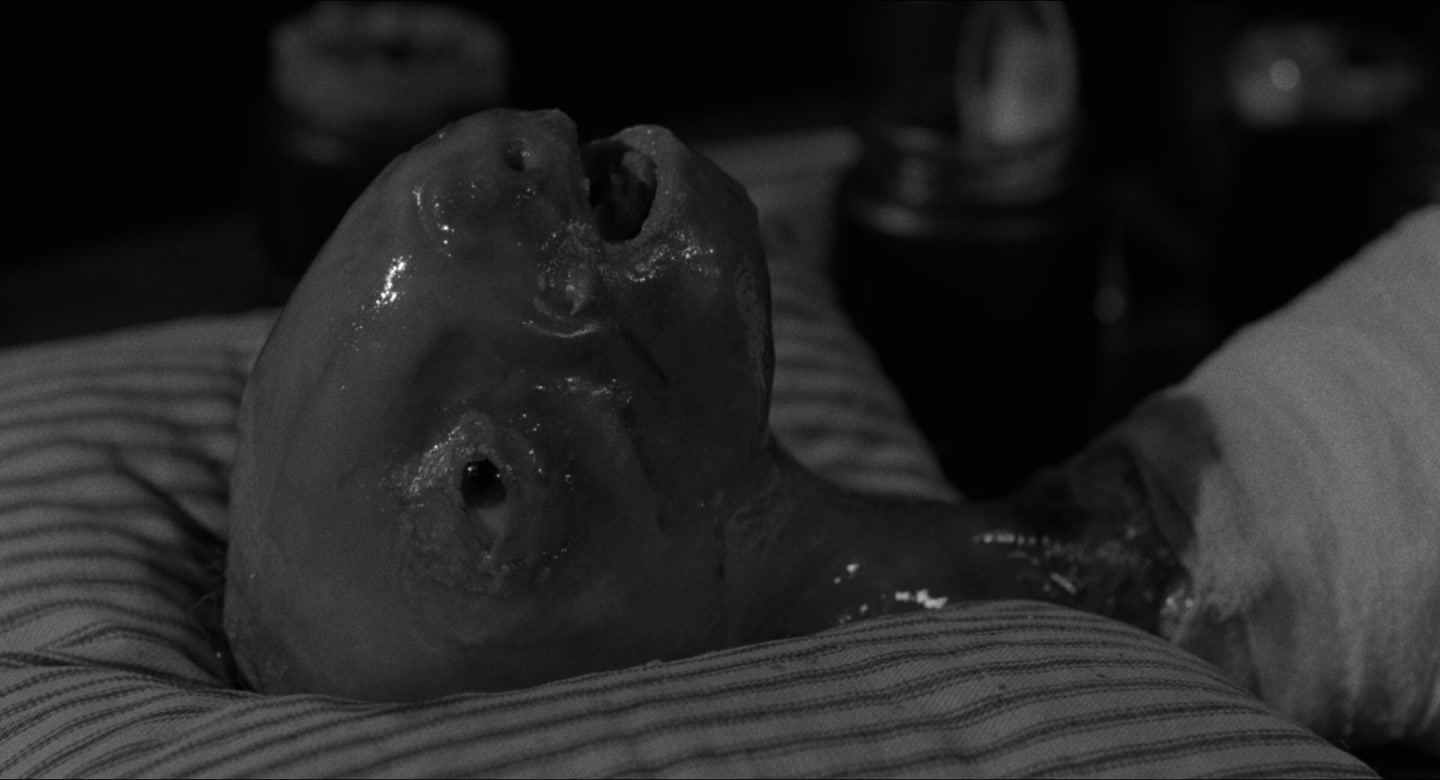
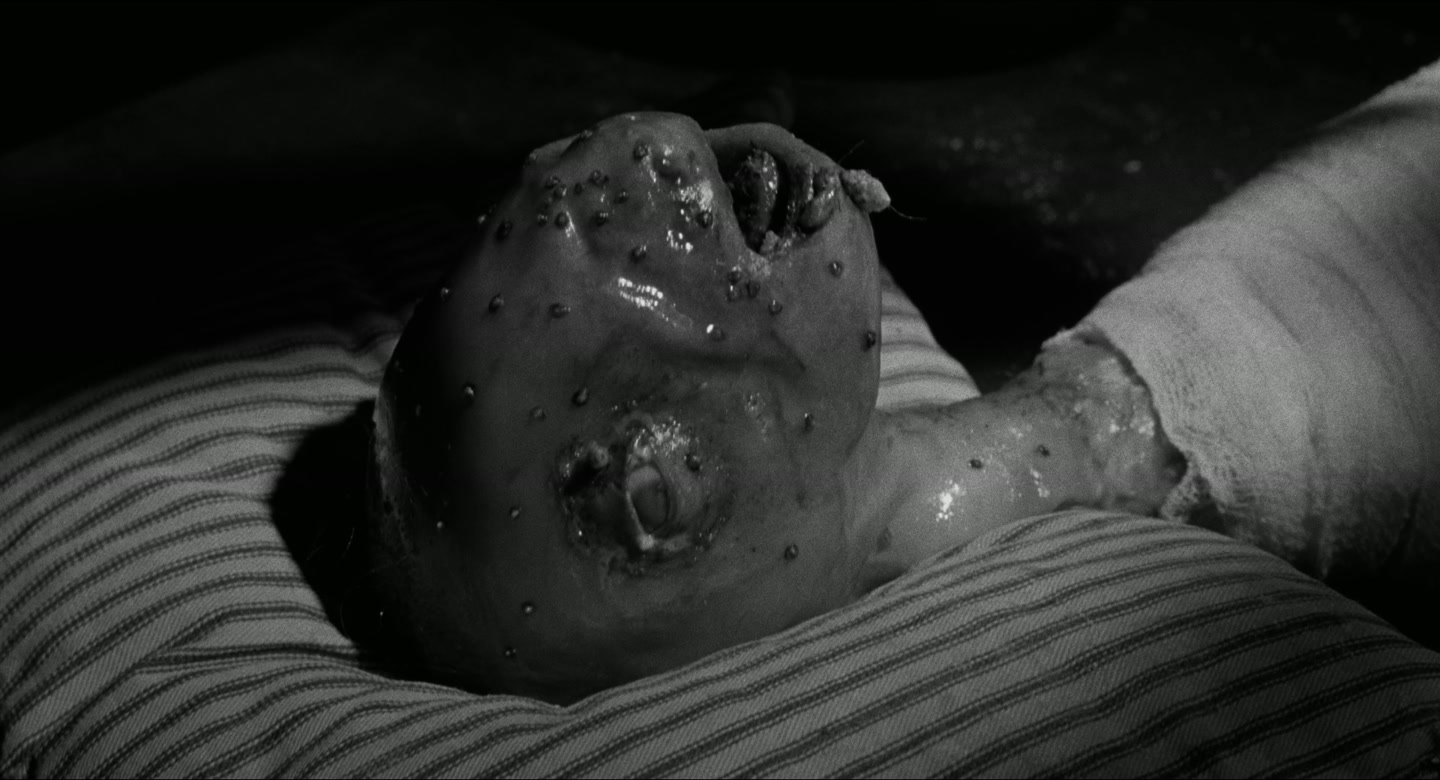
With Mary gone, Henry measures, looks and waits. A thermometer offers the familiar promise of a diagnosis, but the child’s spotted face makes its condition more alarming. The contrast between the wrapped body and the exposed head directs attention toward the eyes, mouth and wet surface. Ordinary bedside objects surround an anatomy that remains difficult to categorize.
The scene gives Henry repeated opportunities to leave the chair or approach the door, then returns him to the child. Its dramatic unit is an interrupted action rather than a decisive discovery. The small changes in distance—from room view to face and back—make care feel inseparable from scrutiny. These views can establish what the effect shows; they do not disclose what the model was made from.
The bedside vigil · 3 images
50:00–52:50
A miniature theatre
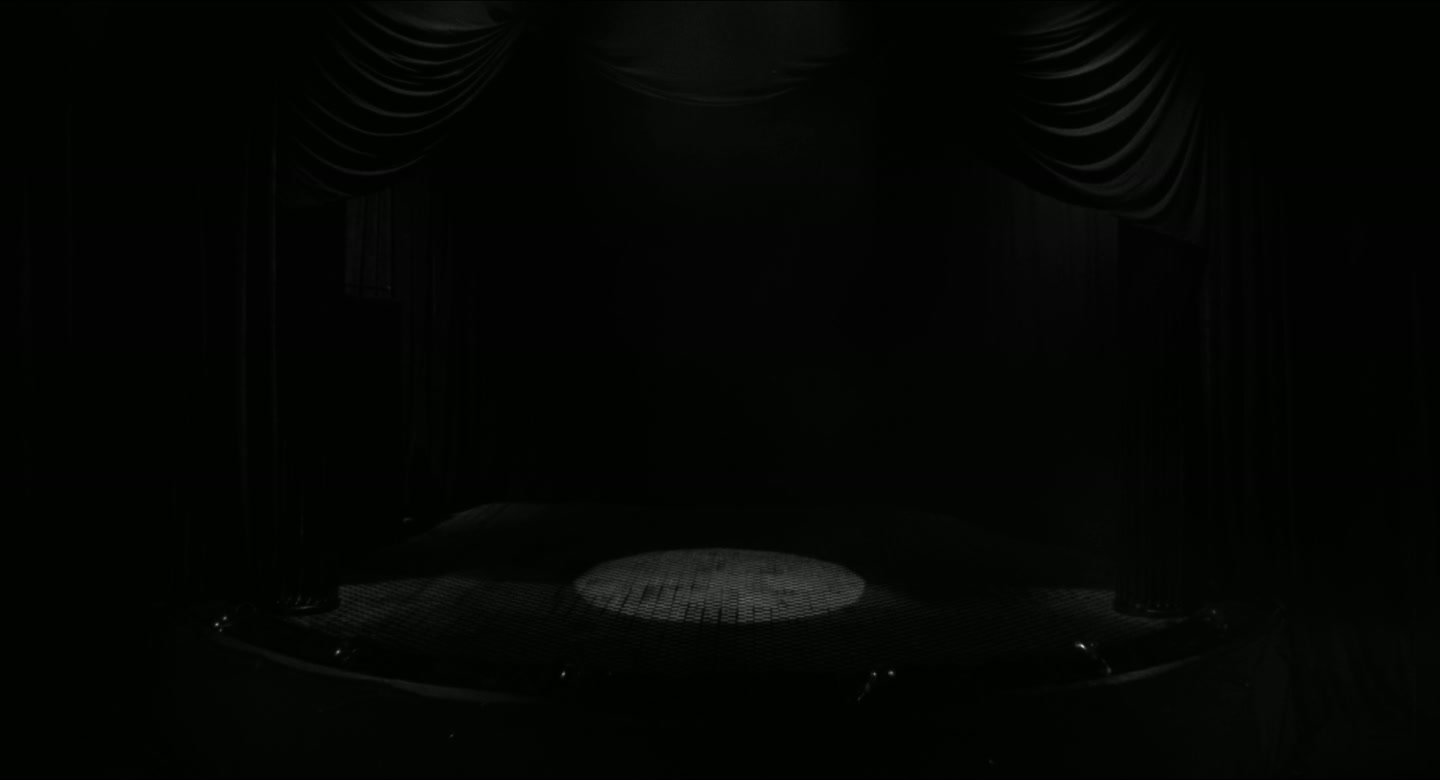
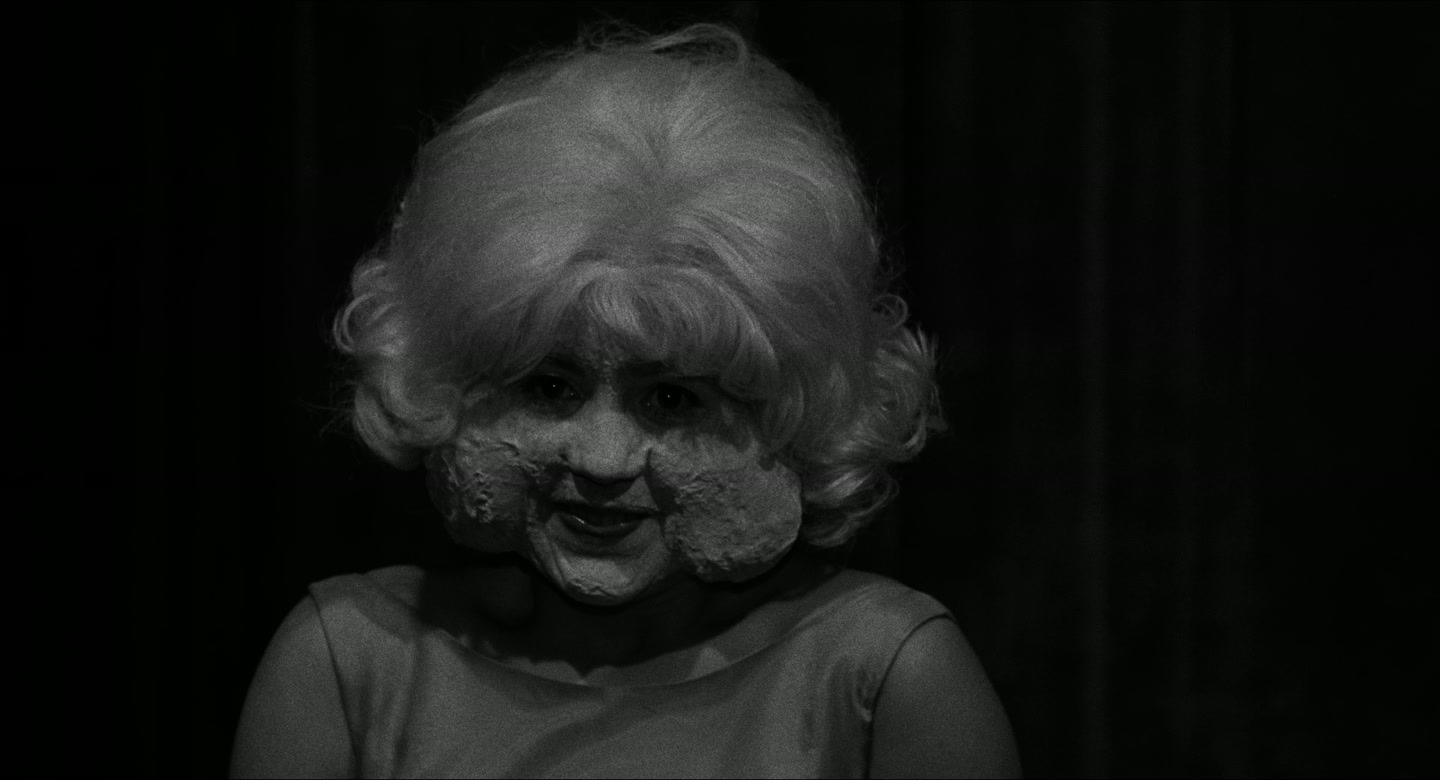
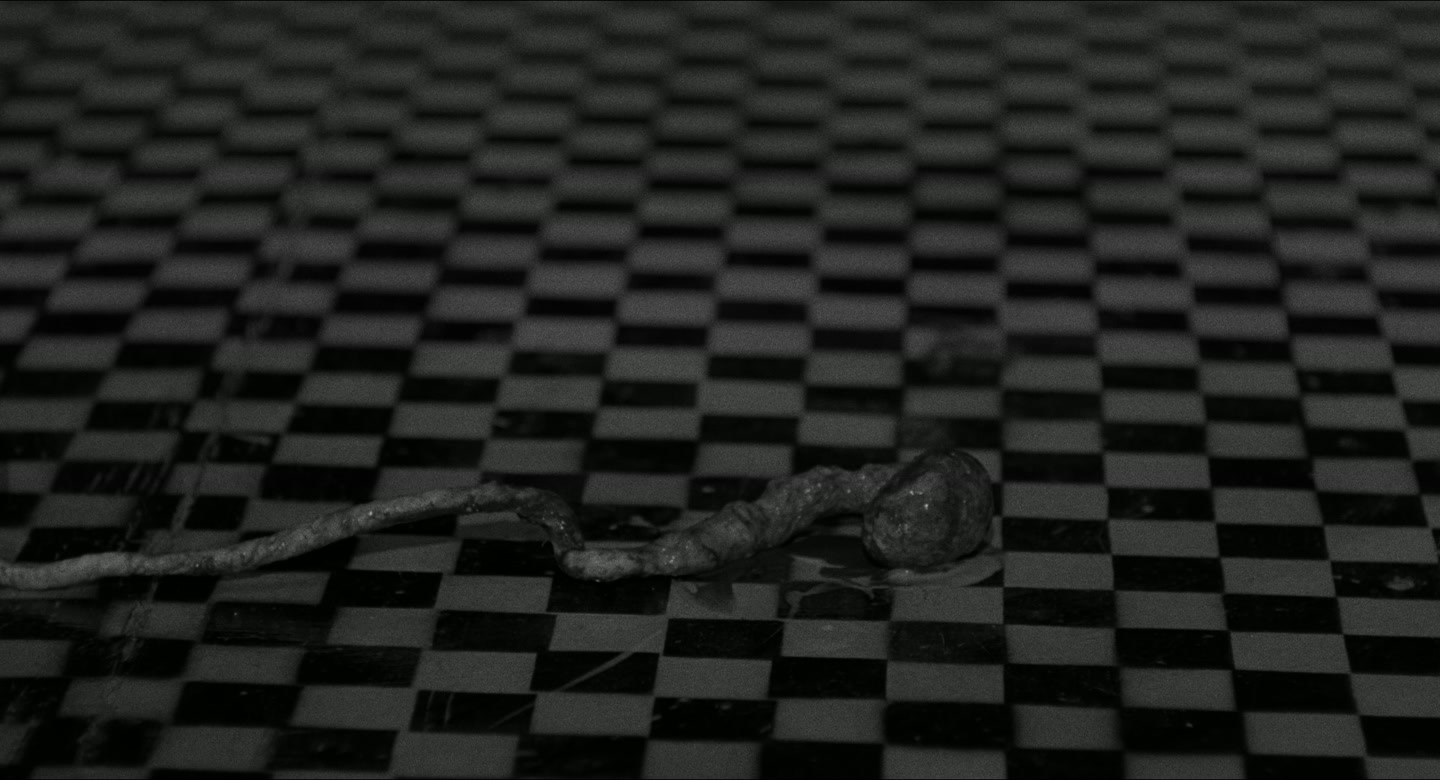
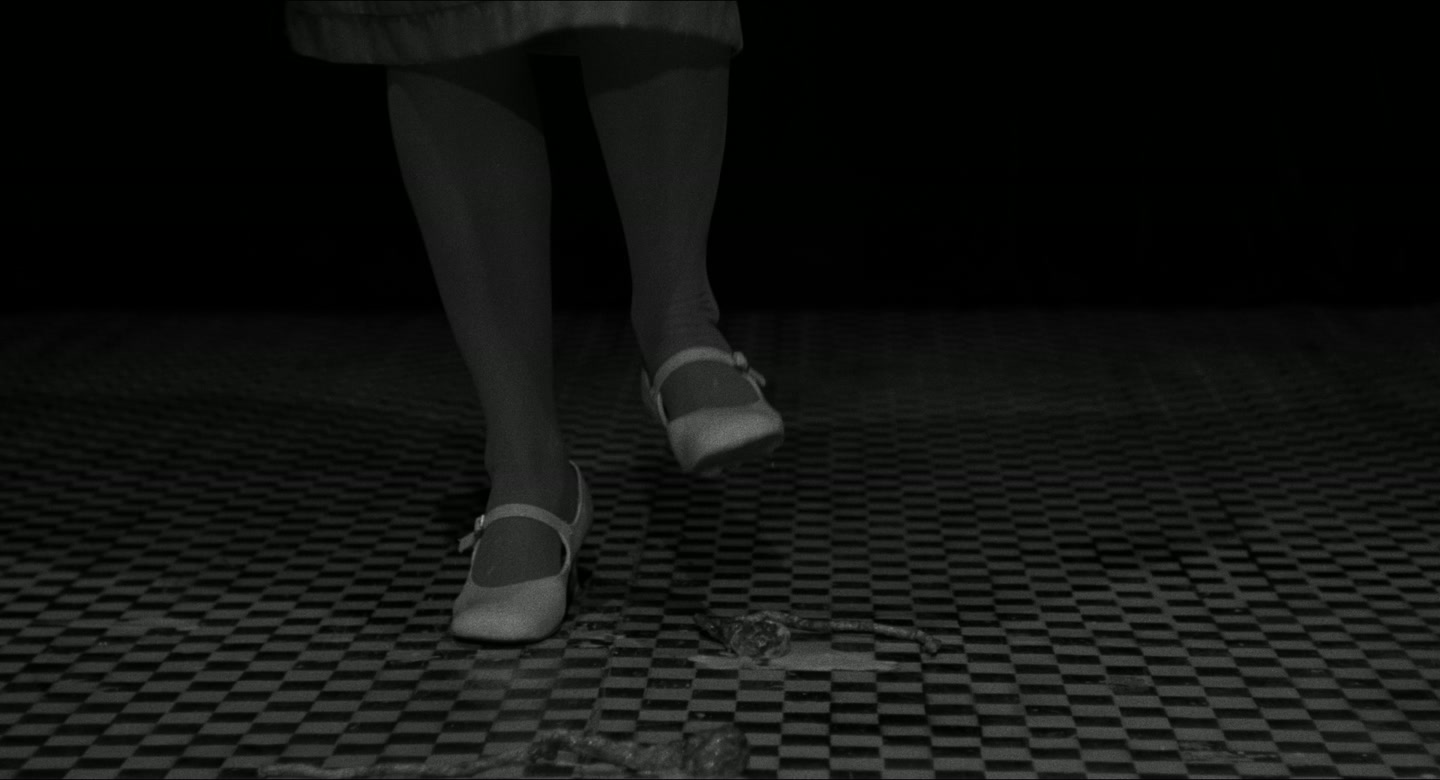
The radiator opens onto a compact theatre: curtains, footlights and a patterned floor contain a performer whose bright face stands apart from the surrounding black. The Lady’s smile and small steps initially make this a welcoming spectacle. Pale forms then fall onto the floor, bringing the opening’s bodily imagery into the performance space.
The sequence alternates the face, the full stage and the shoe’s action. Each scale supplies a different part of the event: invitation, theatrical setting and destruction. In Eraserhead Stories, Lynch recalls the Lady arriving late in the film’s development and the stage occupying a laundry drying pit. The resulting image converts a practical recess into a place that appears to belong inside an appliance.
Face, floor and the stepping effect · 4 images
52:50–1:03:25
The bed changes its boundaries
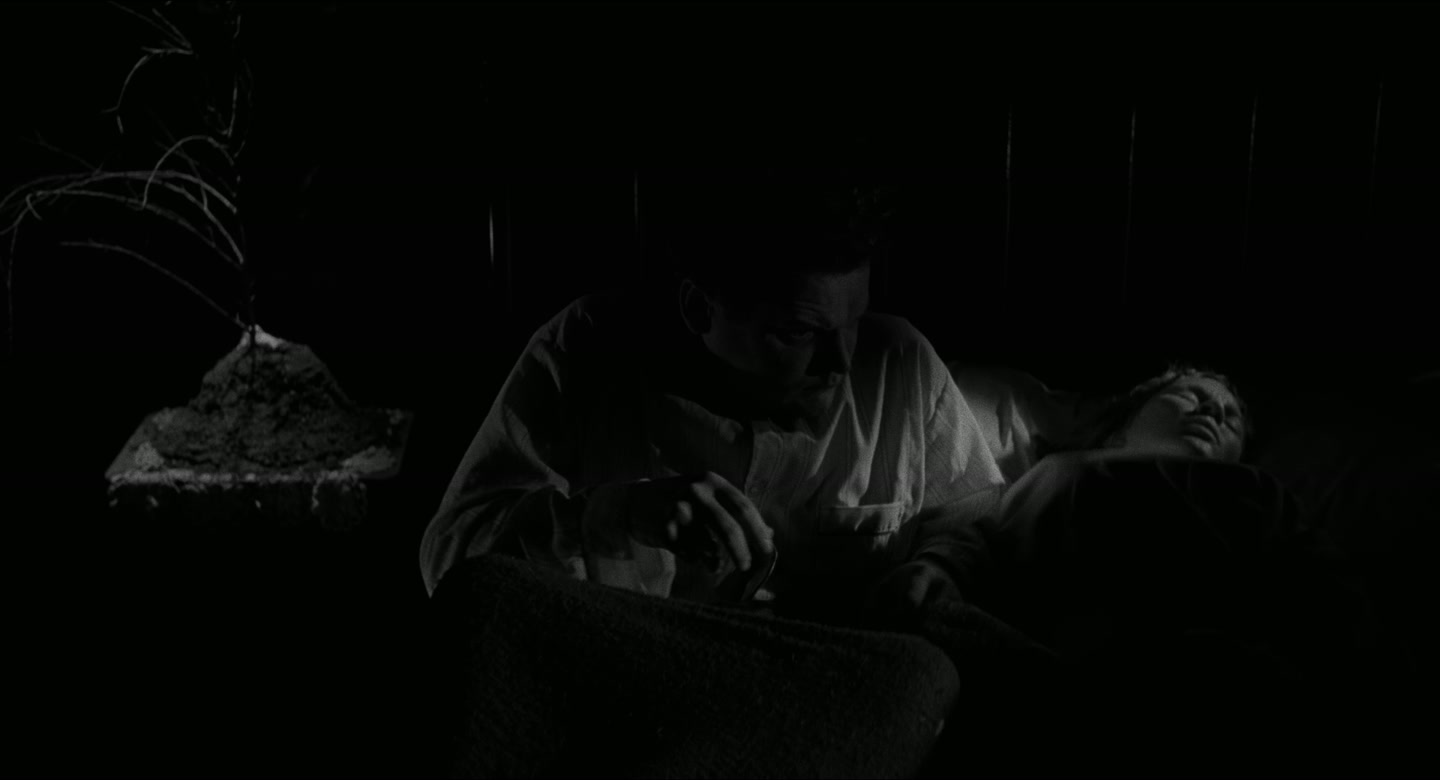
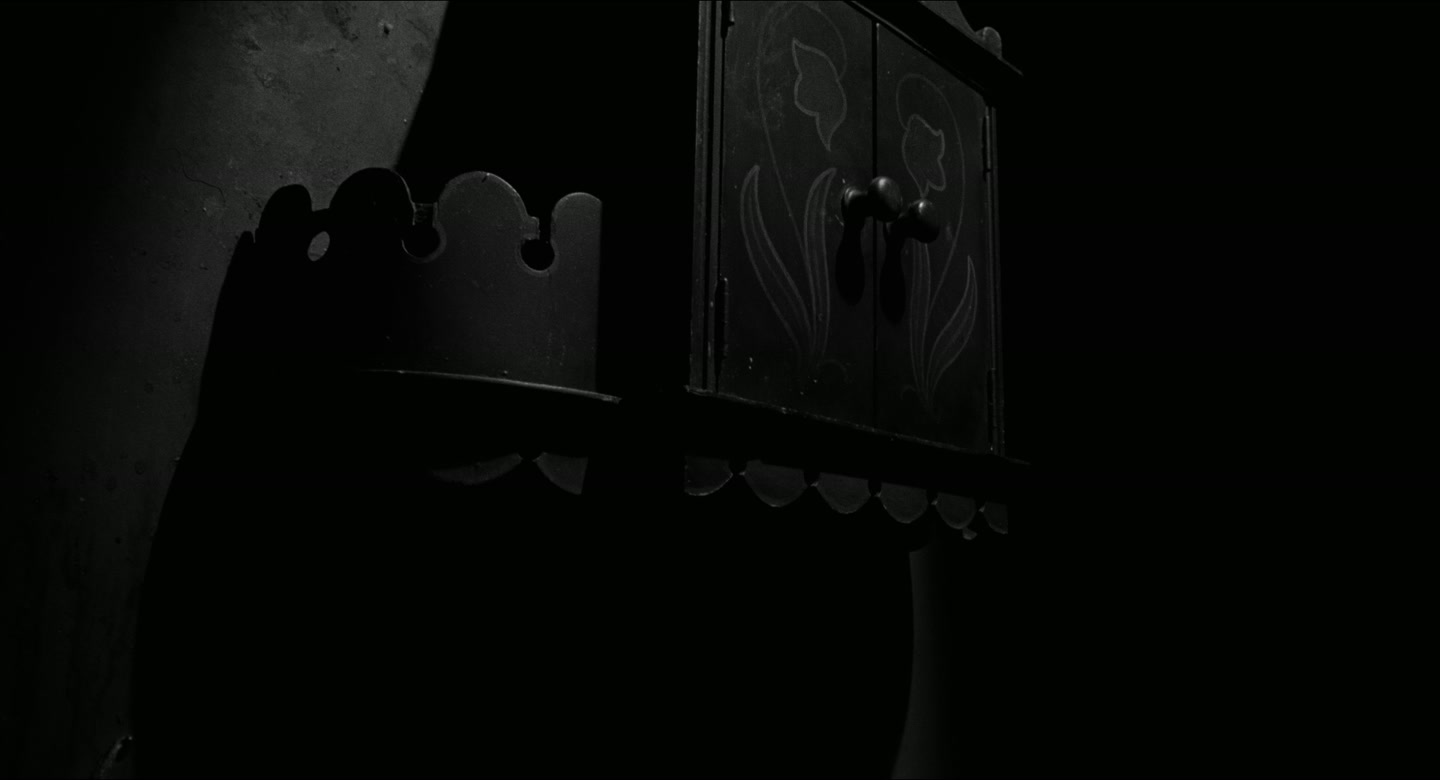
Mary reappears beside Henry after her departure, and the bed becomes the source of more pale forms. An object lodged near the cabinet then leads the eye into a hole and another dark space. The movement from domestic furniture to an interior passage recalls the approach to the planet: a surface becomes an entrance without a conventional establishing view.
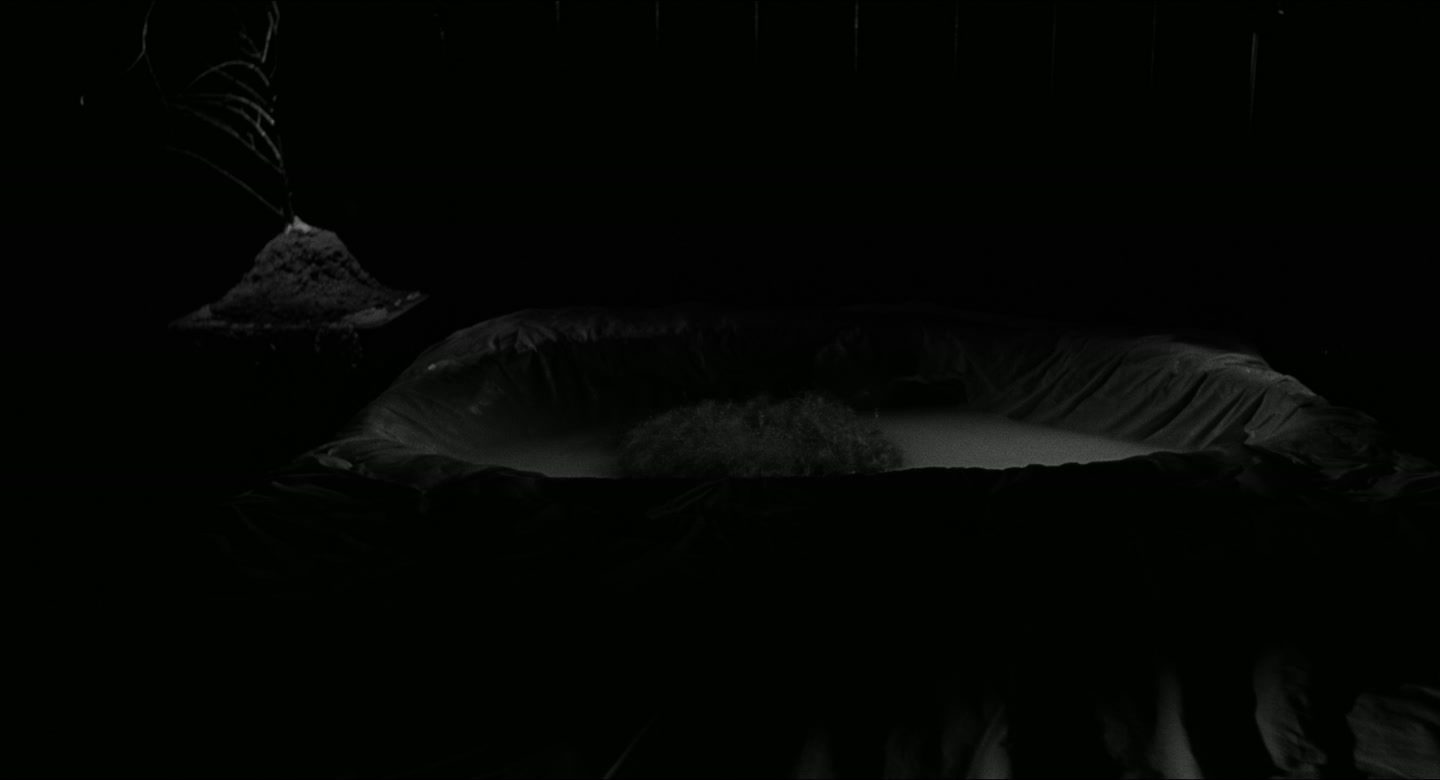
The neighbour’s appearance introduces a different promise of intimacy. Her face emerges from the dark before the surrounding room is fully legible. When the bed becomes a pool, its familiar outline remains long enough to make the transformation readable. The sequence’s dream logic is built from persistent objects—the bed, lamp and cabinet—whose boundaries change while the objects remain recognizable.
Objects and shifting spaces · 4 images
1:03:25–1:08:35
From spectator to exhibit
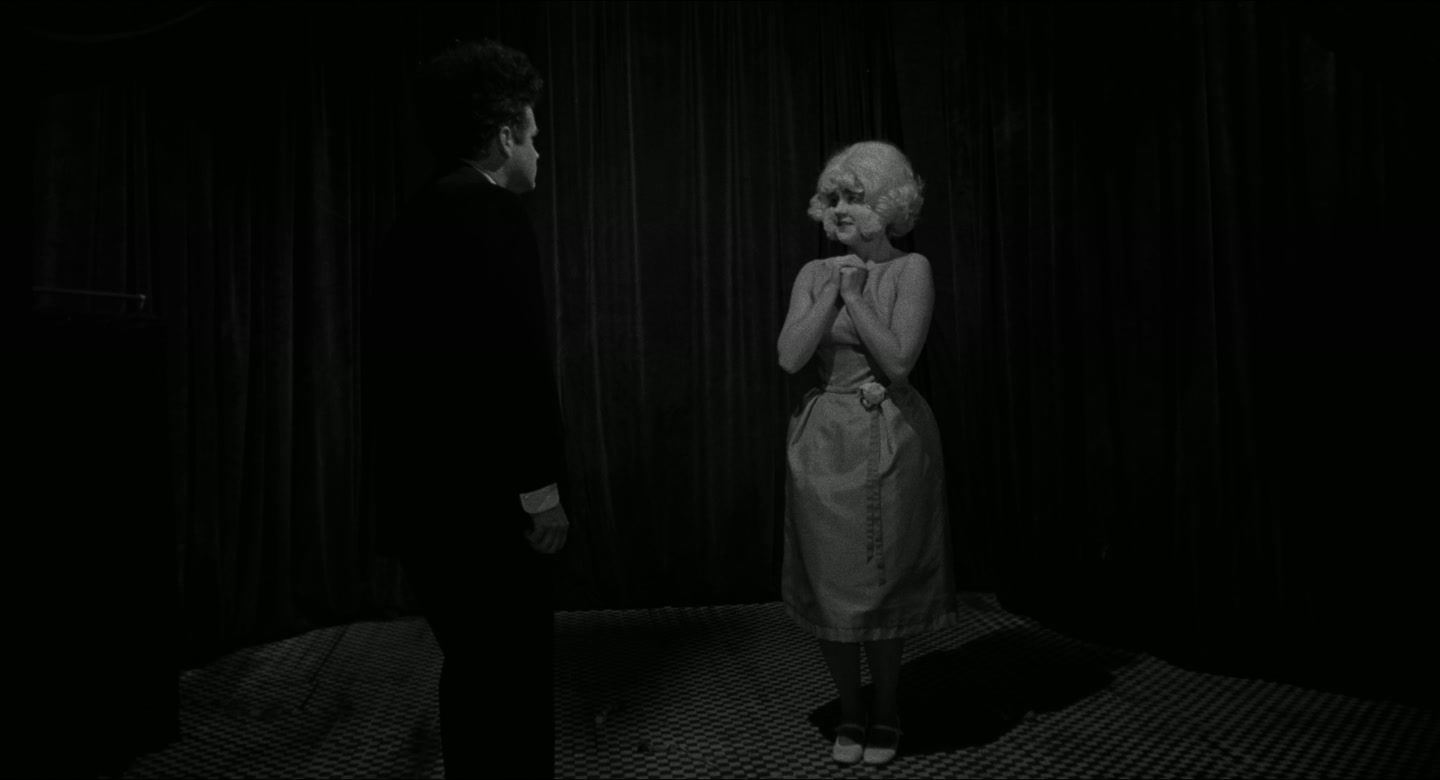
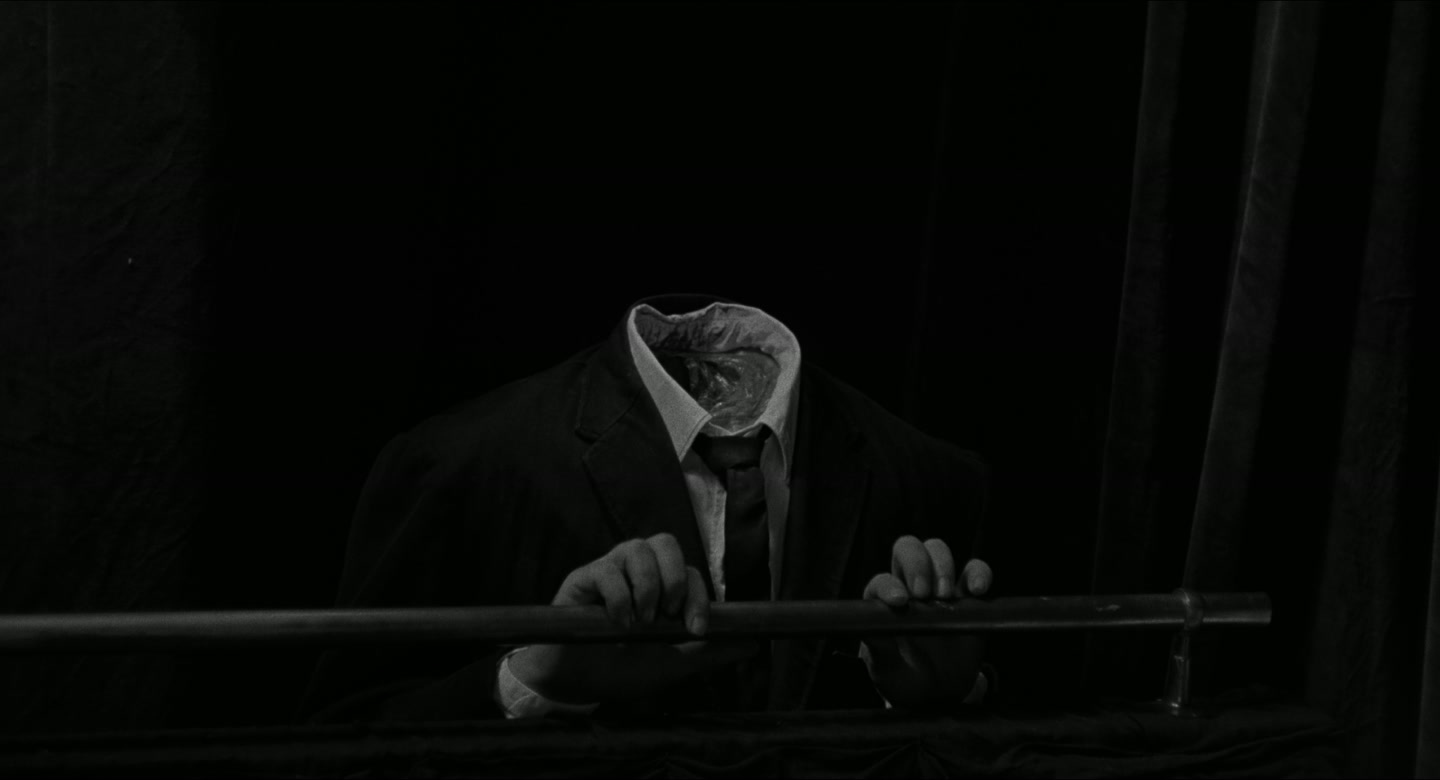
The Lady’s return gives the theatre a frontal, sustained performance before Henry crosses onto its floor. He moves from spectator to participant. The encounter is followed by an empty curtain, a tree-like form and a barrier across his body. His head then separates from the suited figure, and the child’s head appears in its place.
The transformation preserves the collar and the handrail as points of continuity. A familiar costume contains an impossible replacement, making the effect legible without a realistic transition. The film’s end credits name Laurel Near as the Lady in the Radiator and Peter Ivers as the composer and singer of her song; the screen performance and the recorded voice are distinct contributions.
Stage encounter and head replacement · 4 images
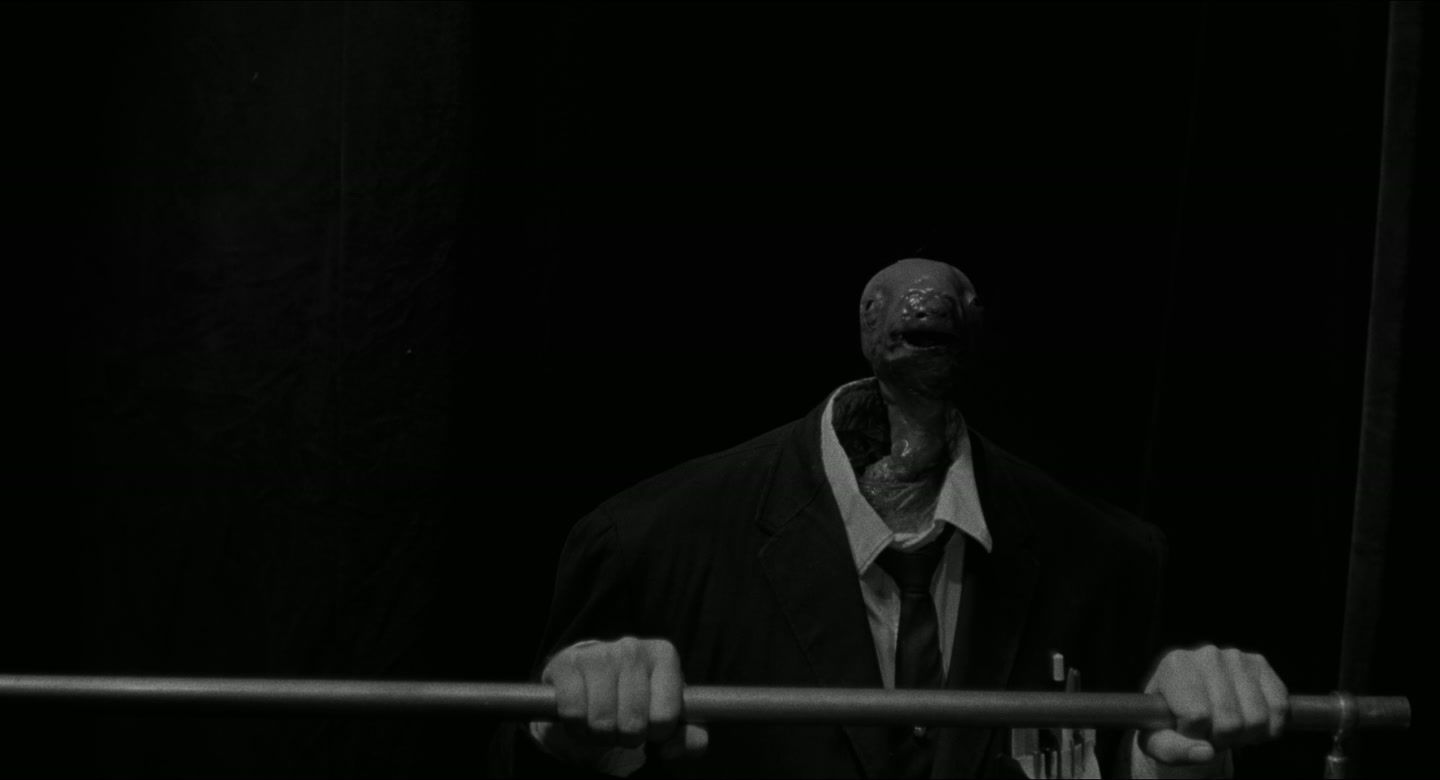
1:08:35–1:13:20
The head becomes material
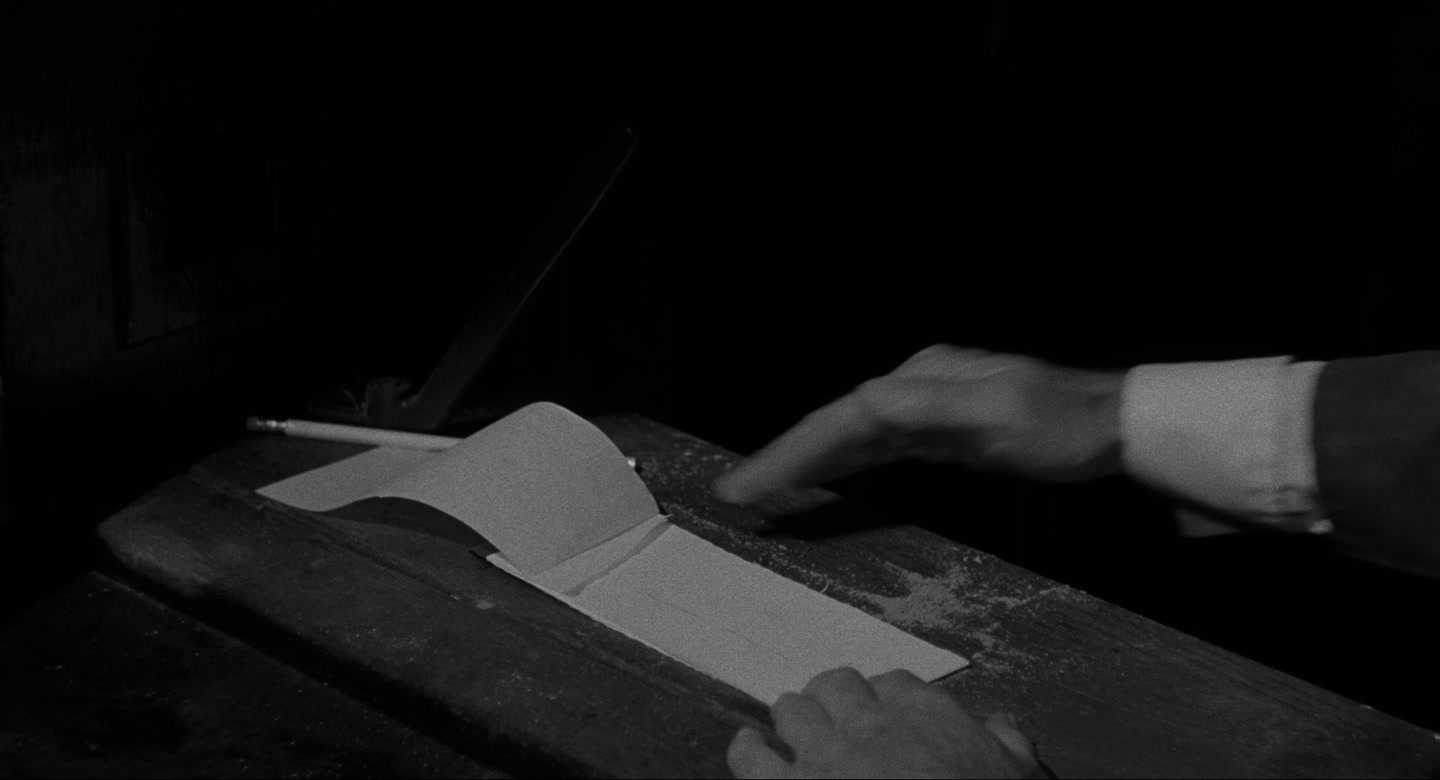
After the head falls into the street, a boy carries it into a workplace. The transaction is staged with the routines of a small business: a counter, an impatient summons, inspection and a test. The head passes from evidence of personal catastrophe to material that can be handled and processed.
The machine sequence gives its absurd procedure the patience of a demonstration. A sample is taken, pencils move through the apparatus, and a written mark is erased before the material is accepted. The title becomes a literal operation. The return to Henry among drifting particles connects the workplace’s residue to the body that seemed to have escaped it.
From the street to the eraser test · 5 images
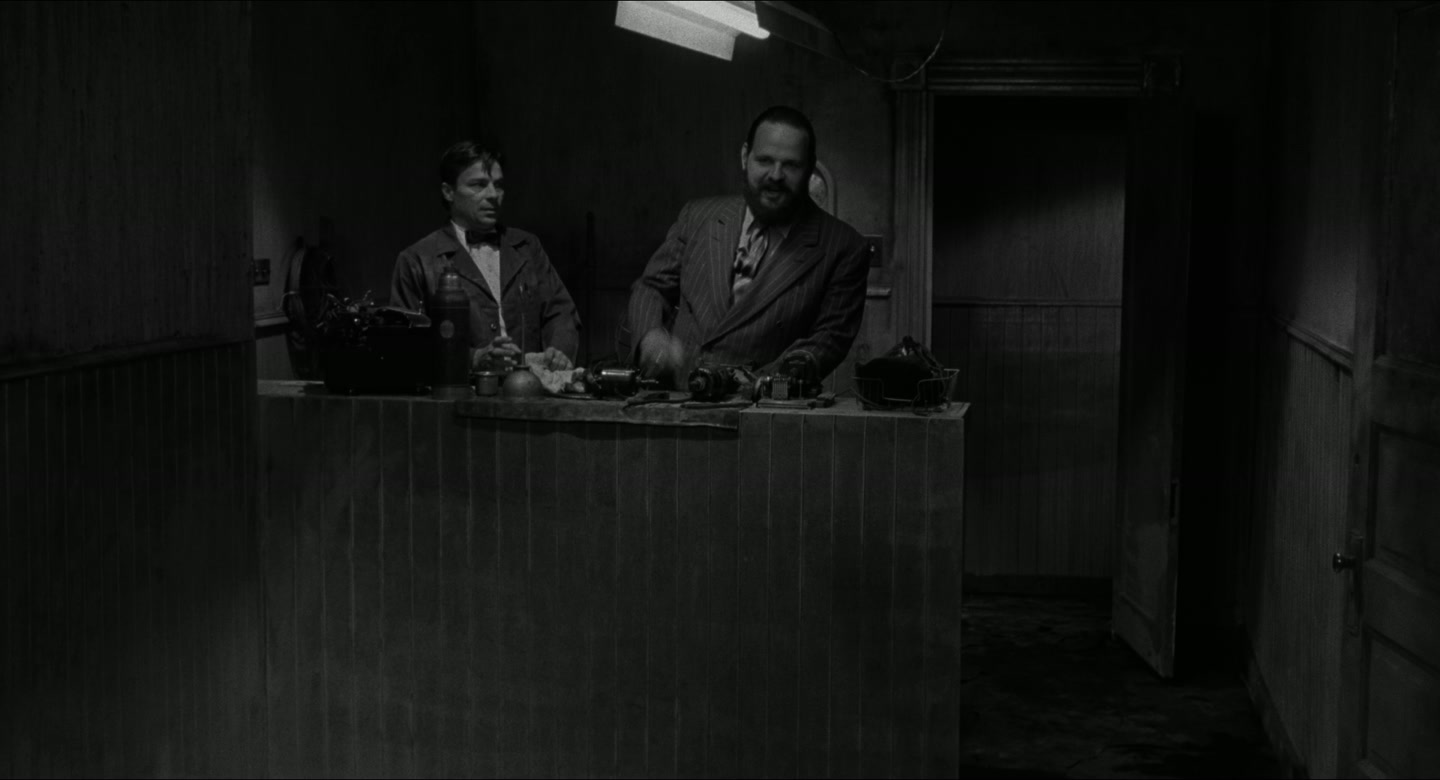
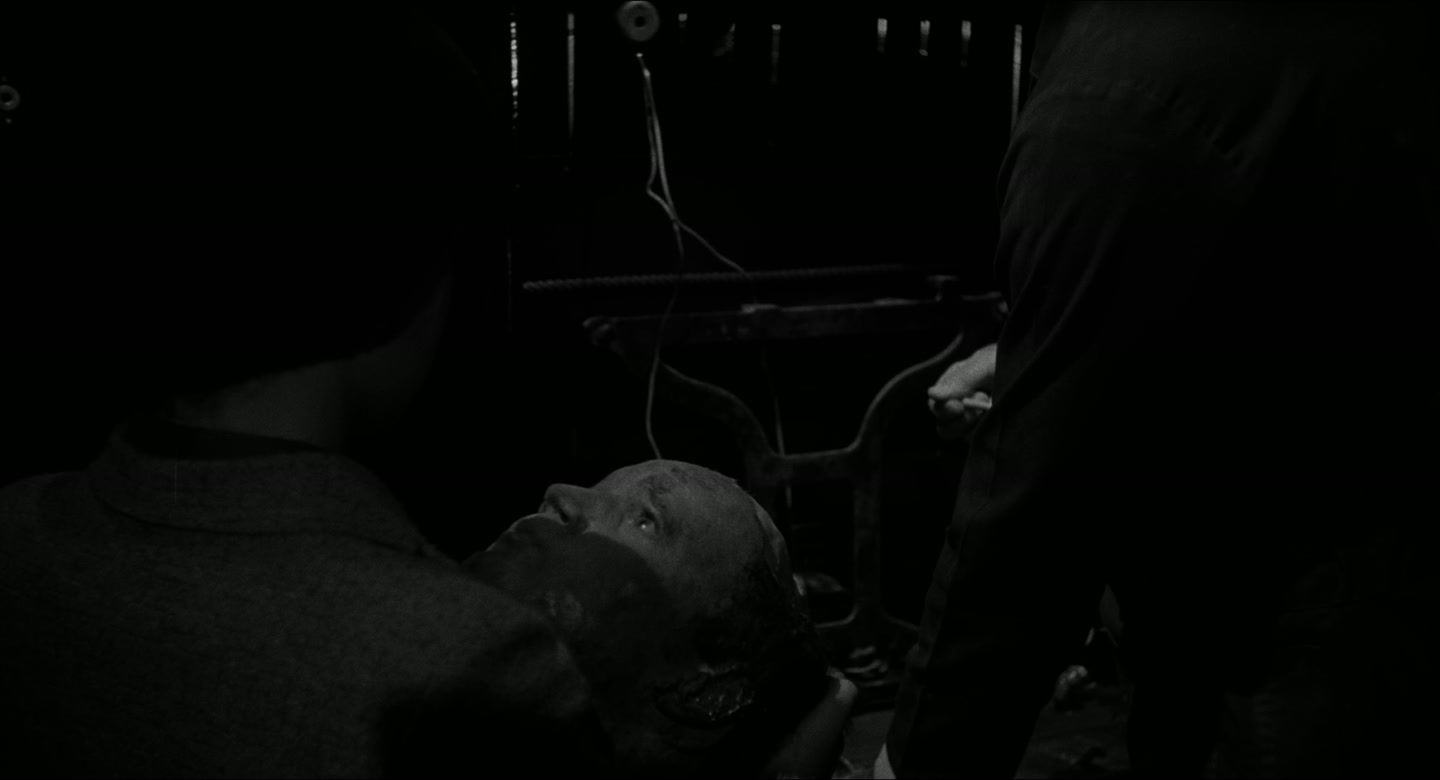
1:13:20–1:20:15
The room after the dream
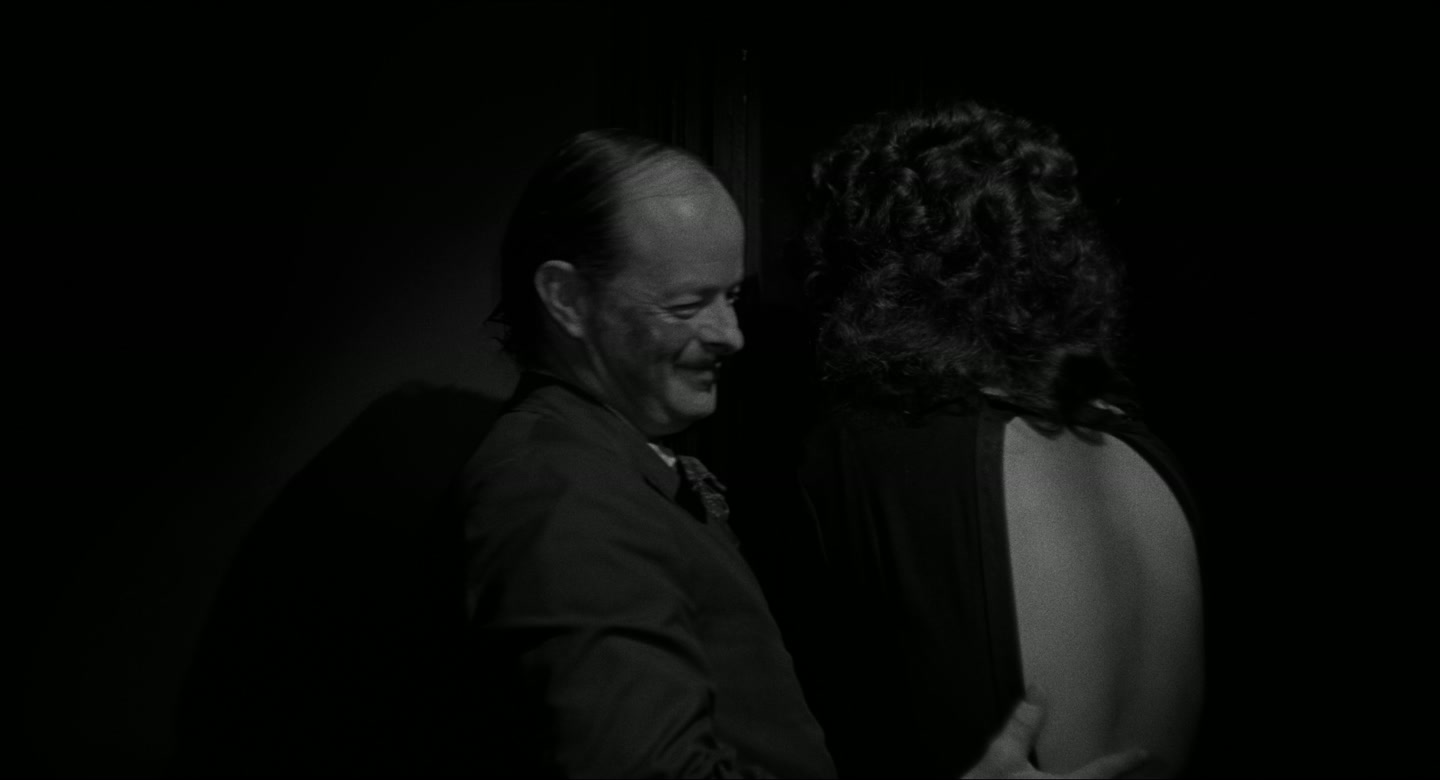
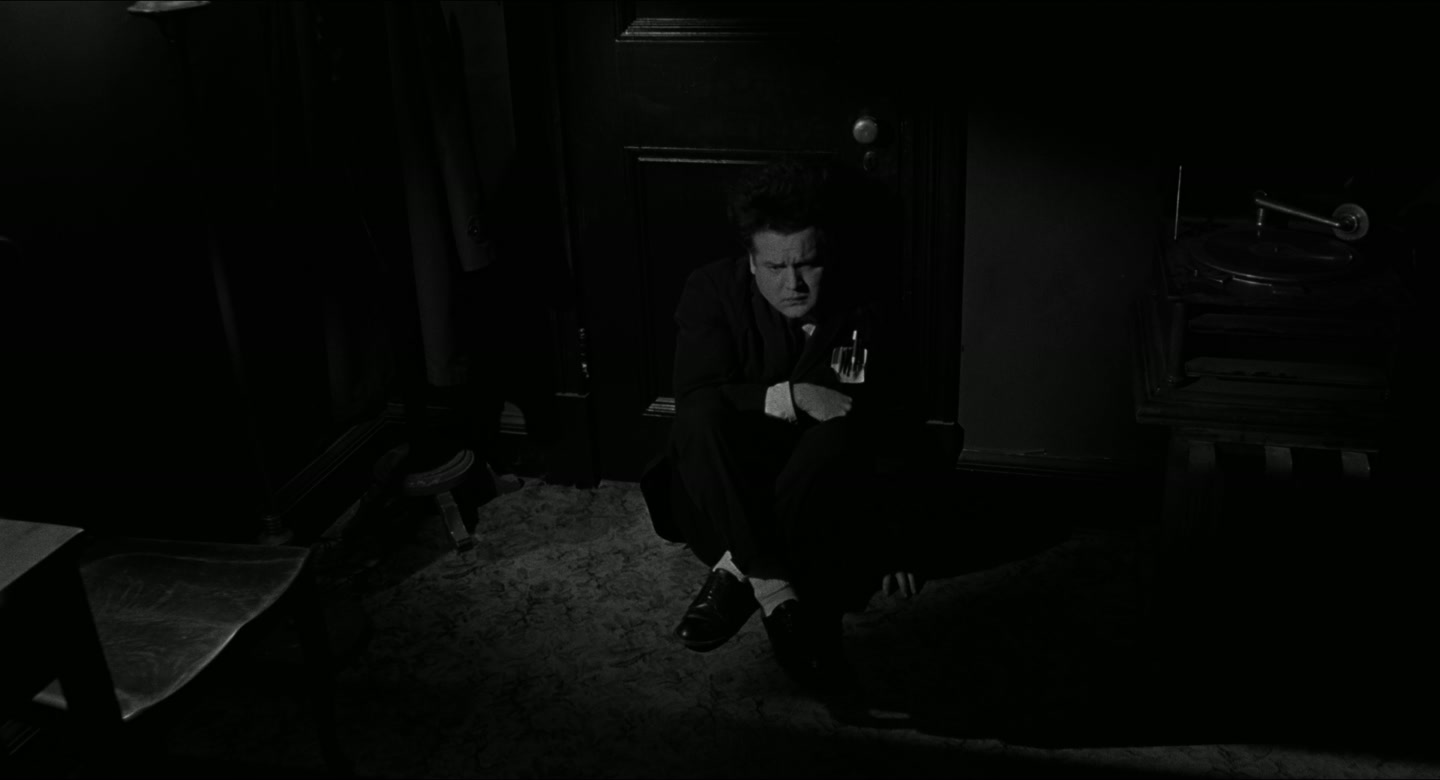
Henry returns to the same room, window and door, but repetition now produces uncertainty rather than reassurance. He looks for the neighbour, listens at the threshold and returns to the bed. Her later arrival with another man places the promise of the previous encounter outside his reach.
The compositions repeatedly isolate Henry at the edge of the room or against the door. The child remains in its fixed place on the table, while Henry’s movements become increasingly hesitant. The room’s geography is still readable; what has changed is his relation to the people and objects within it.
Window, hallway and retreat · 3 images
1:20:15–1:24:00
Opening the wrapping
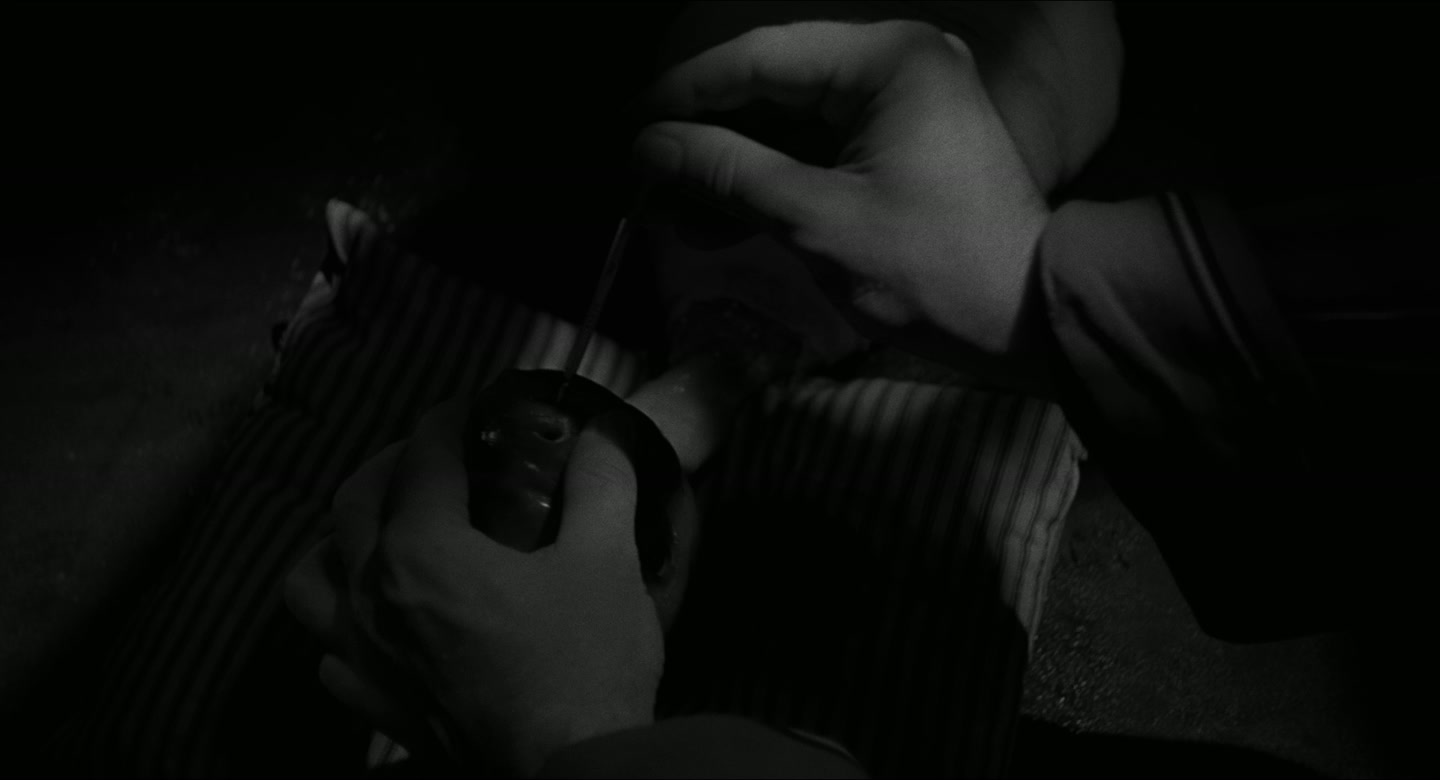
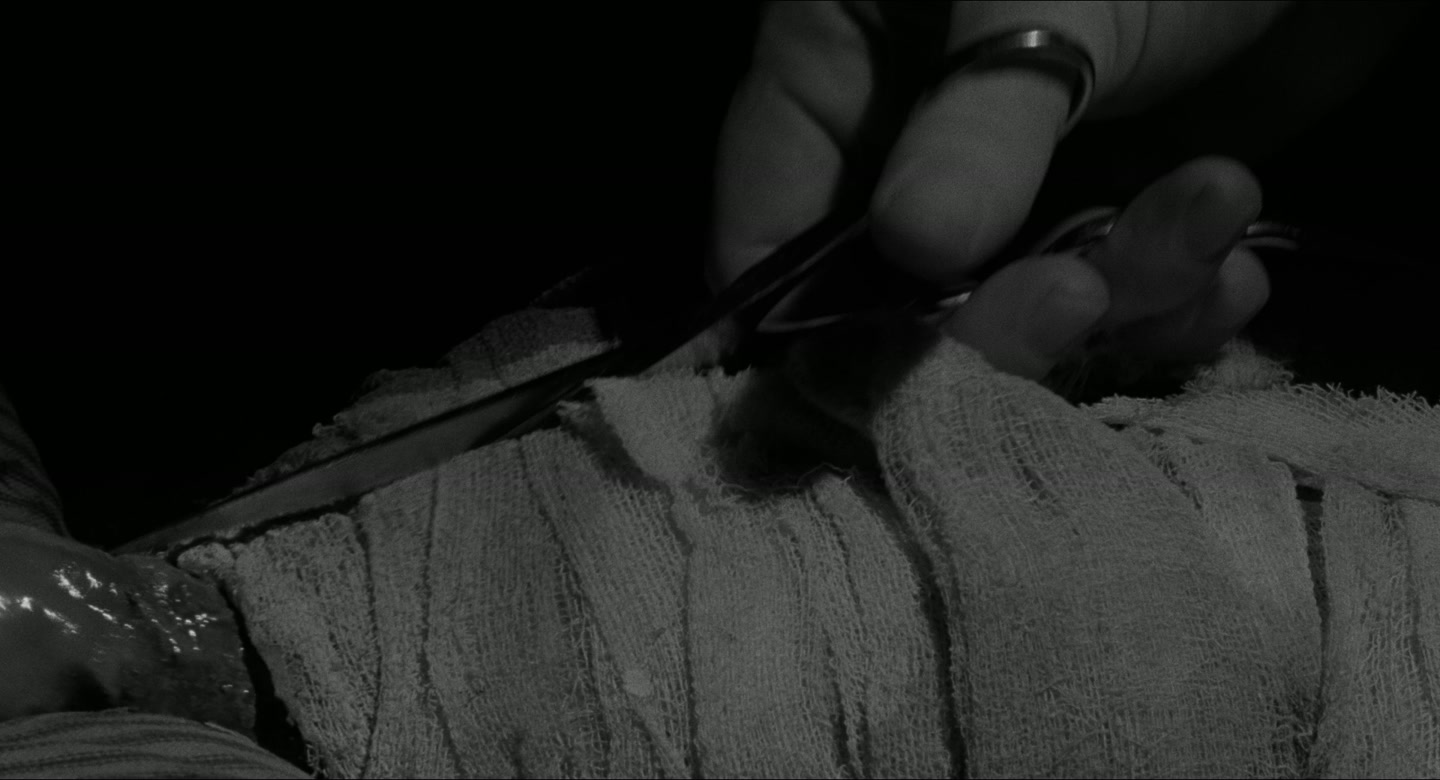
The scissors turn an object associated with care into an instrument of exposure. The bandages first appear to cover the child; cutting them reveals that the wrapping has also been maintaining the body’s boundary. The familiar shape ceases to hold together, and the image progresses through exposed tissue, movement and spreading white matter.
The effect is staged in successive views rather than supplied as one instantaneous revelation. The table and striped pillow anchor the changing body while Henry’s face registers each stage. The gallery follows those visible stages. It does not settle the long-running speculation about the construction of the child, which the finished images cannot resolve.
The unwrapping effect in stages · 5 images
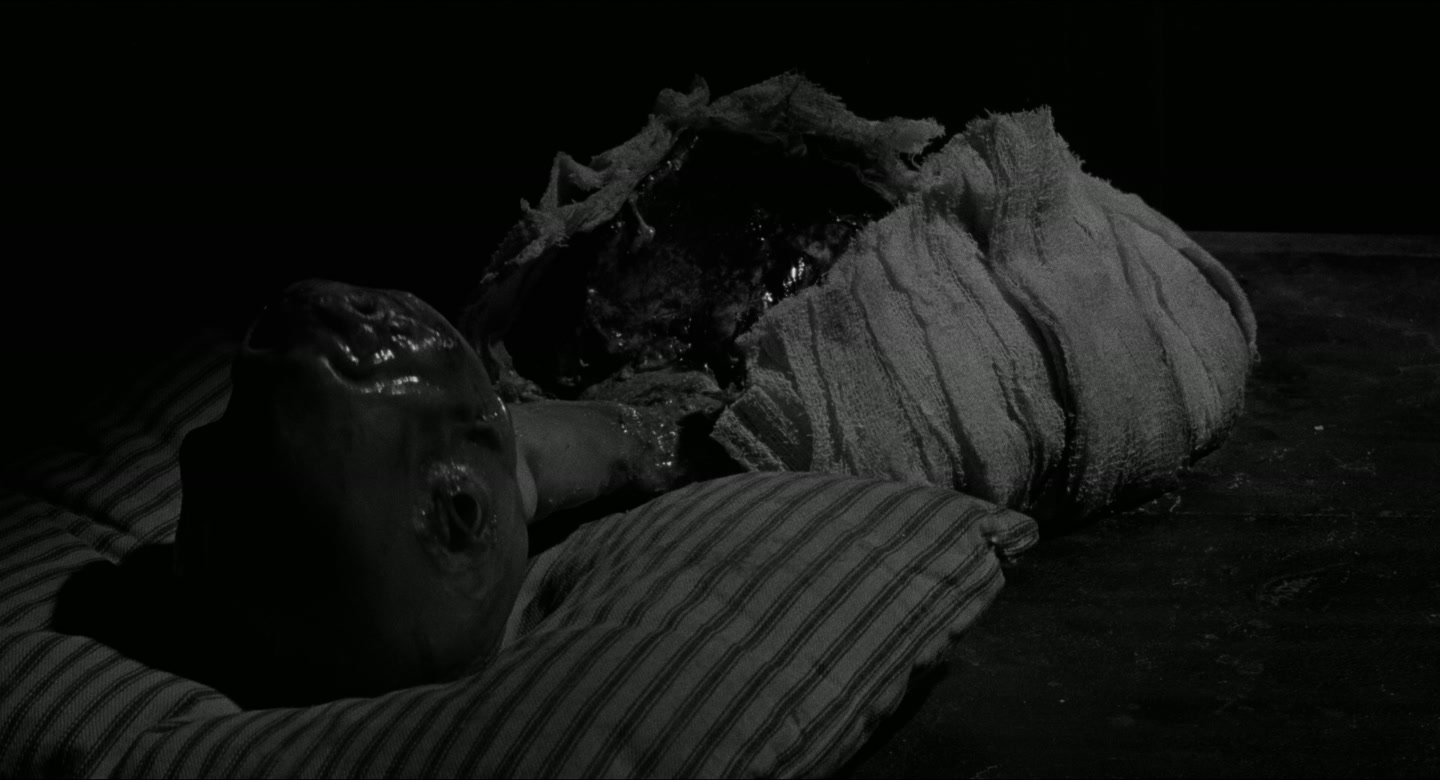
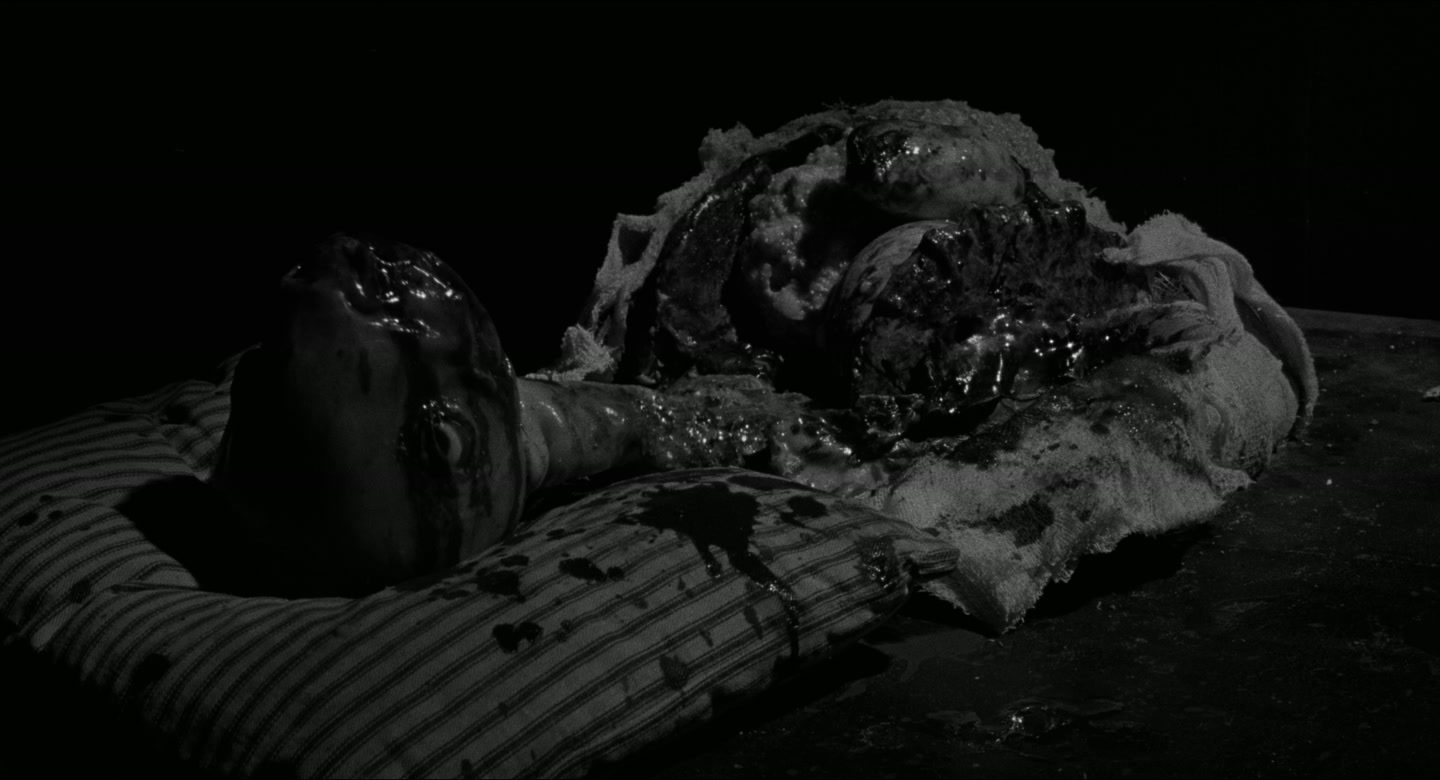
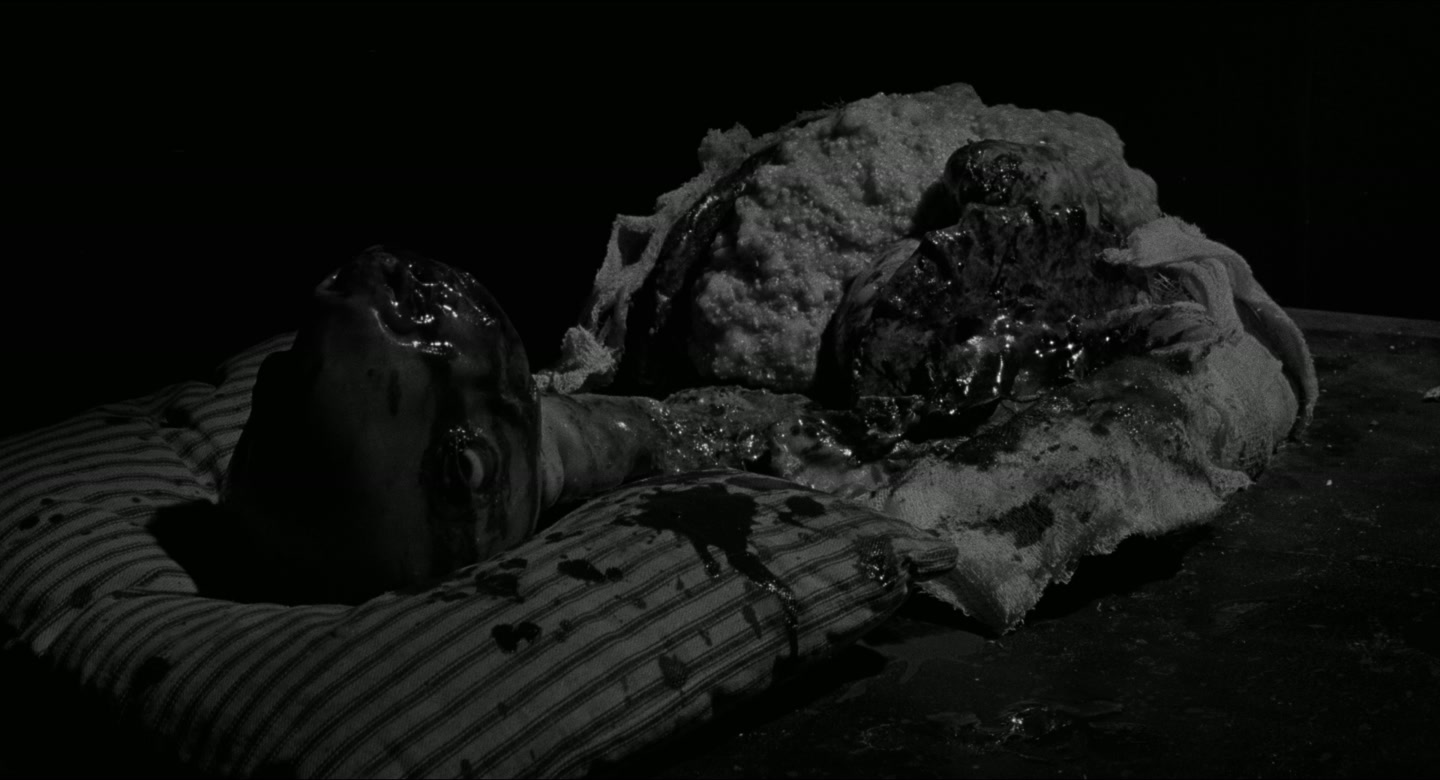
1:24:00–1:26:58
Scale breaks, then an embrace
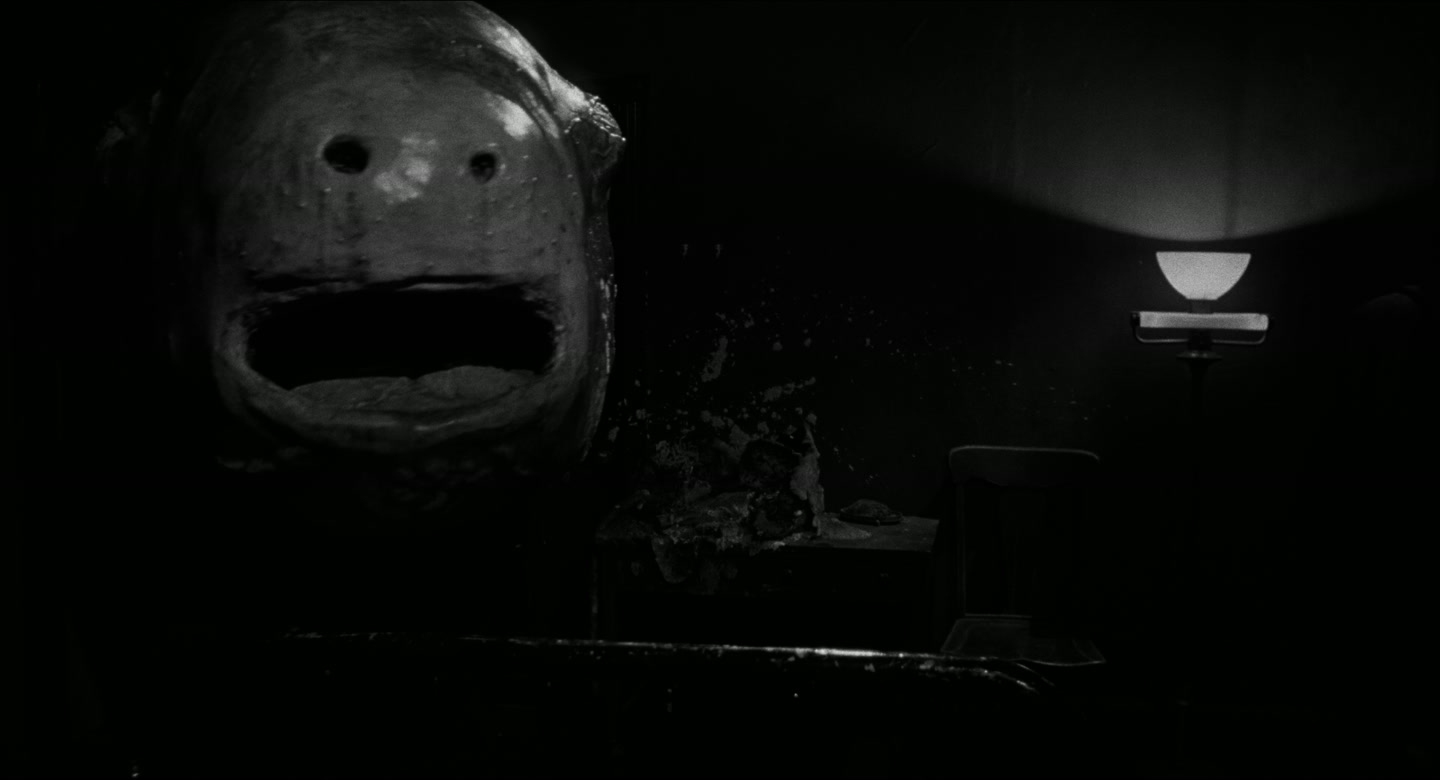
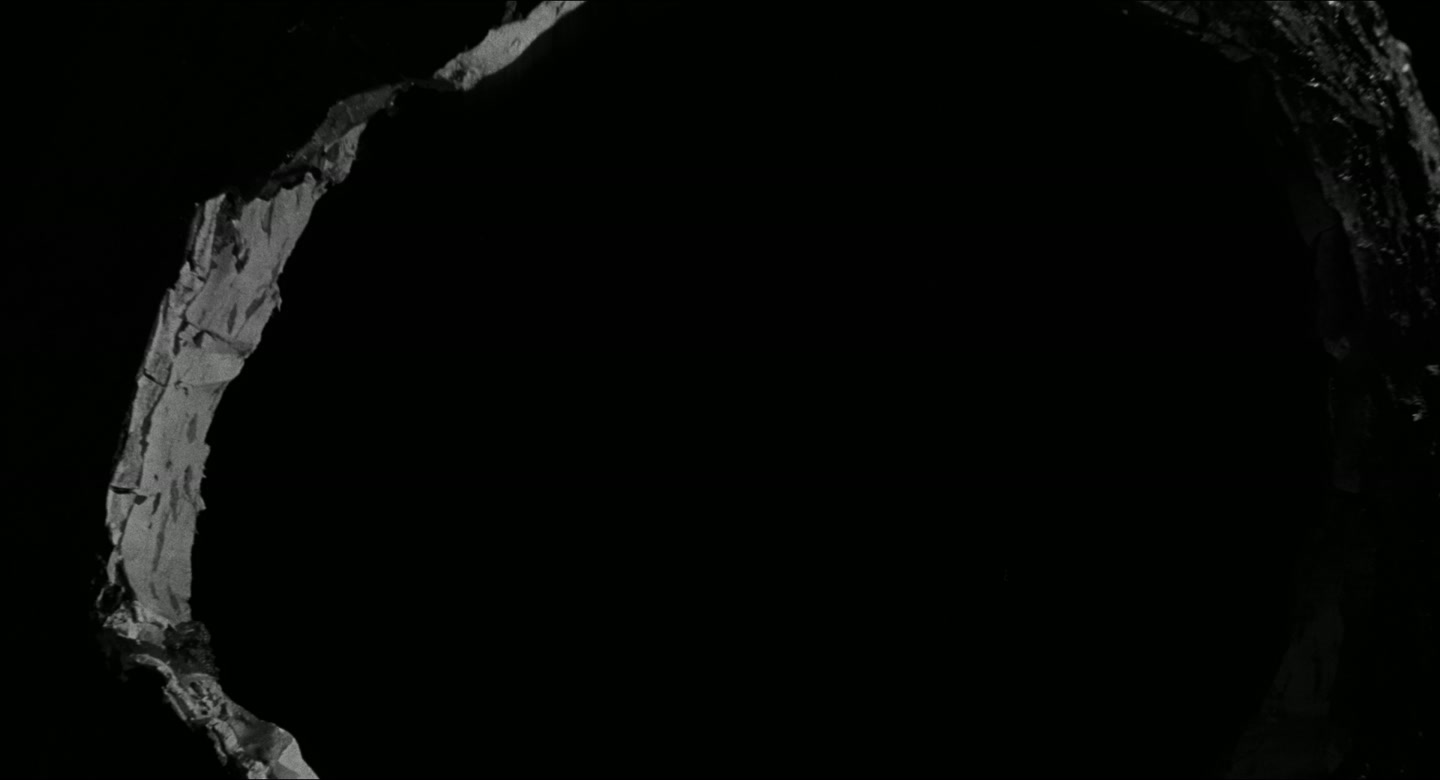
The child’s head expands beyond the scale the room can accommodate. Light fixtures and furniture provide the measurements that make its size startling. The planet and its operator return, bringing the opening’s distant machinery into the crisis of Henry’s room. Faces, surfaces and fragments replace a stable view of a body in a place.
The final embrace changes the image’s tonal terms: the deep blacks give way to a field of light around Henry and the Lady. It is a decisive visual release, but the film does not name it as death, salvation or a waking state. The ending can hold those possibilities without turning any one of them into an official answer. The early interview and the later production recollections provide context while leaving that encounter open.
The room, the planet and the final light · 4 images
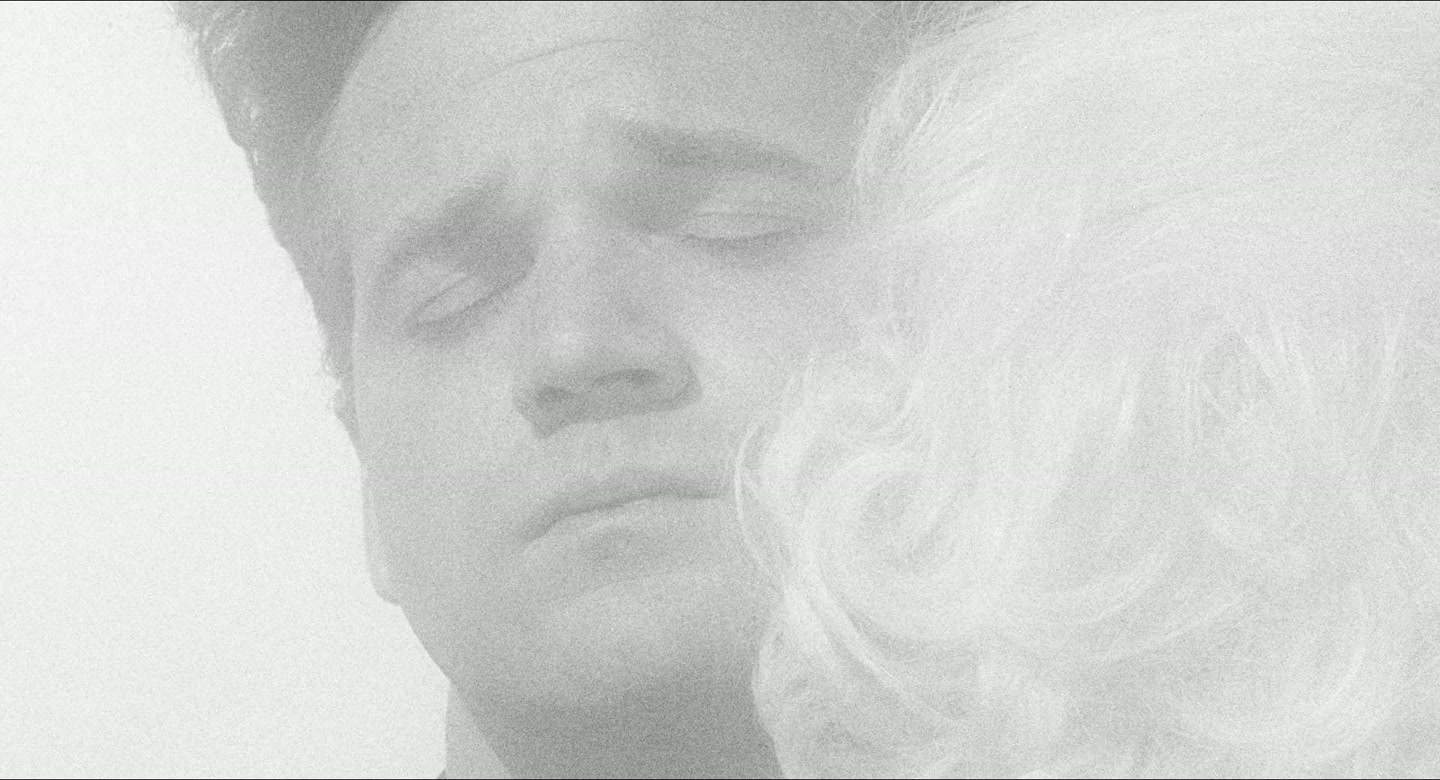
Continue into the short films: animation, bodies and handmade worlds →
Enter the film
People, perceptions and the questions that organize this case file.
Playing ordinary lives inside an impossible world
Character guide. Jack Nance (credited as John Nance) plays Henry Spencer; Charlotte Stewart plays Mary X; Allen Joseph and Jeanne Bates play Bill and Mrs. X; Judith Anna Roberts plays the Beautiful Girl Across the Hall; Laurel Near plays the Lady in the Radiator; Jack Fisk plays the Man in the Planet. Peter Ivers supplies the Lady’s singing voice. BFI compiled credits ↗
Henry’s ordinary self-image
Nance told Godwin on 9 December 1981 that he approached Henry as an ordinary working man, with his own ideas about looking stylish. Returning to the suit helped him recover the role across long interruptions. This is the actor’s account, not a diagnosis of the character. Interview date, PDF p. 152 ↗ · Nance on Henry, PDF p. 154 ↗
The X household and the supporting cast
Jeanne Bates recalled enjoying a departure from her usual sympathetic roles. She described character choices as shared with Lynch and identified Theatre West connections to Allen Joseph and Judith Roberts. Her account makes the family encounter a collaboration between experienced performers. Bates interview, 9 December 1981, PDF pp. 223–225 ↗
Stewart’s movement and continuity account belongs beside the attribution study; Roberts’s recollections belong beside the practical-effects evidence. Those interviews explain work done by individual performers without assigning every gesture to an instruction from Lynch. The minor-role register preserves the additional cast and distinguishes a credit from proof that a scene survives.
How performance changes the reading
Nance’s ordinary self-image gives the strangeness a human point of resistance. The question is not only what Henry’s world symbolizes, but how its people try to behave within it. Paul Taylor’s 1979 review singled out the controlled acting as part of the film’s effect. Reading the acting alongside the sound and lighting avoids treating the performers as scenery inside an effects demonstration. Taylor review reprint, PDF p. 2 ↗
Holding the action past comfort
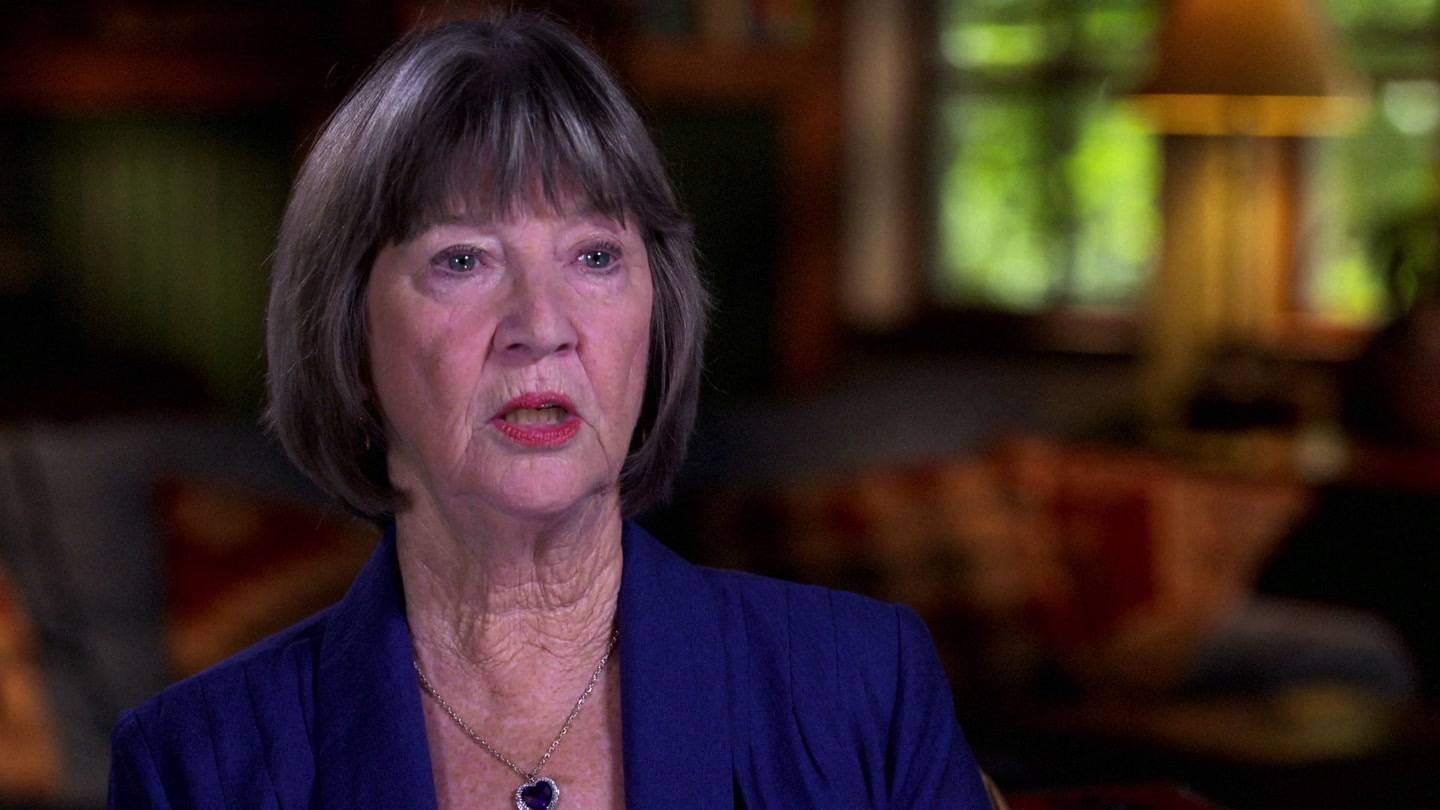
Charlotte Stewart’s 2014 account gives Mary’s departure a useful performance history. She recalls being told to keep pulling at the suitcase beneath the bed until Lynch gave the signal. During the take, she thought the action had continued too long. Her retrospective explanation is that extending it beyond a comfortable duration produces a different effect: the ordinary task becomes a disturbing interval before the object explains the effort.
Stewart also describes makeup suggesting an ear infection, eczema or a stye as a private aid to playing Mary, even when it would not register clearly in the finished image. Her account connects posture to a bodily feeling rather than to a general label such as shyness. These are the performer’s explanations of her process; the scene’s images remain available for a viewer to read differently.
Criterion cast and crew interviews (2014), Charlotte Stewart, 6:13–8:16
Ways into the film: care, machinery and unstable perception
Includes discussion of the ending. Production history and critical readings illuminate the film’s family relationships, industrial spaces and unstable perceptions.
Care and the threat of intimacy
Catherine S. Cox’s 2006 essay connects sexuality, identity, violence and loss. She emphasizes the ambiguity of Henry’s care for the infant and his eventual violence: rage and an attempted release from suffering remain competing possibilities. She also argues that our restricted access to Henry’s perspective prevents a stable division between his dreams and the surrounding world. That is Cox’s interpretation, not a medical judgment or an account of Lynch’s intention. Cox, Senses of Cinema, July 2006 ↗
Bodies and manufactured things
Sean French’s 1987 reading sets bodily vulnerability beside the cruelty of machinery. The pencil factory is especially suggestive because the body becomes material for manufacture. The materials study supplies a useful counterpoint: food, borrowed textiles and assembled hardware created these disturbing surfaces. Production evidence can explain how an image was made while leaving its emotional meaning unsettled. French essay reprint, PDF pp. 1–2 ↗
A world without a reliable outside
David Sterritt approaches the film through surrealism and the combined work of performance, editing, image and sound. His account of a poor projection changing his understanding of the ending is a reminder that interpretation depends on the presentation actually seen. The projection study preserves that distinction. Sterritt essay, PDF p. 2 ↗
The apartment, factory and radiator form a world of obligation, transformation and escape. Everyday spaces take on extraordinary functions, carrying Henry between domestic responsibility and industrial nightmare.
Editing as part of the construction
Lynch described preparing a rough cut, developing effects with Splet, then attaching sound to finalized scenes. His estimated week of mixing followed much longer work. Lynch on editing and mixing, PDF p. 127 ↗
Removal changed Eraserhead as decisively as invention did. The surviving accounts of deleted material reveal a film shaped through subtraction, with its final silences and gaps carrying their own force.
An early account of comedy and uncertainty
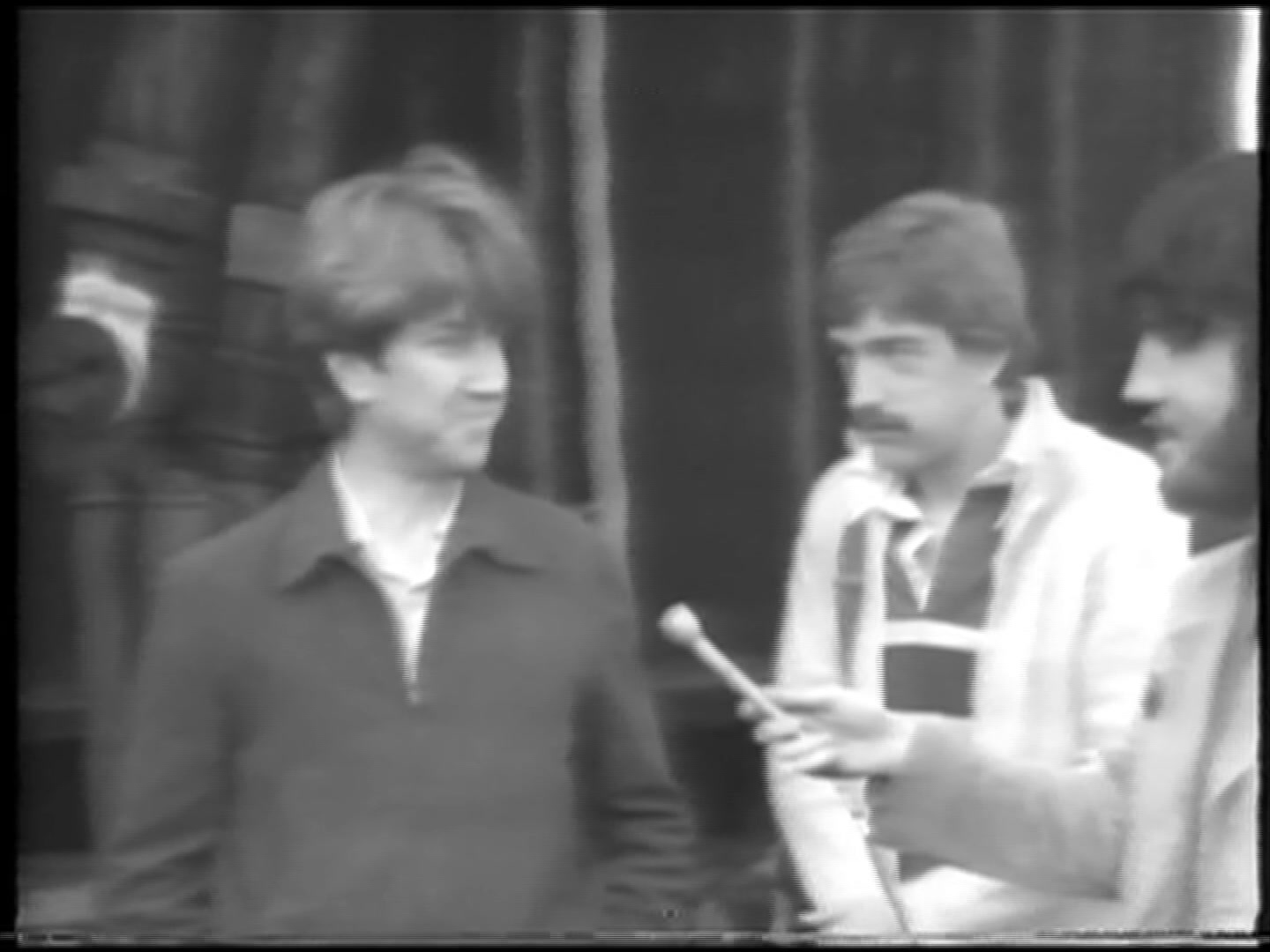
In the 1979 conversation, Lynch resists turning the film’s dream description into a single explanatory key. He also speaks about the first half as black comedy and identifies the elevator’s delayed opening as a joke. This early testimony makes awkward duration part of the film’s design, alongside the fear and abstraction for which it became known.
He describes Henry and Mary as belonging to their own time within an industrial city that is not named by the film. A recognizable city location and an identifiable historical setting are therefore different questions. The frame selects its own world from the streets around it.
Lynch and Elmes filmed interview (1979), 2:37–4:52 and 7:57–9:26
Making a world
From the early script to the working community at AFI.
Production and release chronology
- 1971–72: AFI beginnings. Lynch enters the AFI programme with his Gardenback script. He moves away from that project and proposes Eraserhead. In the Rodley interview he recalls a 21-page screenplay, initially assigned the scale of a 42-minute project. Lynch’s account.
- 1972 onward: Greystone stables. The production takes root below the AFI mansion, using rooms for sets, camera and editing, preparation, and food. Lynch describes shooting mainly at night to secure darkness, quiet and control. AFI archival history.
- Mid-production: cinematography changes hands. Original camera-and-lighting collaborator Herbert Cardwell leaves to take paid commercial work. Frederick Elmes assumes the role after an overlapping transition. Both receive credit. First-person recollection.
- 1974: The Amputee. Lynch and Elmes turn a black-and-white videotape test into two short versions starring Catherine Coulson; its making belongs in the broader AFI-production history. Lynch’s interview.
- 1976: Completion period. AFI’s catalogue records a 1976 completion date; contemporary and retrospective sources differ on how to count writing, shooting, editing and sound. AFI institutional record.
- 19 March 1977: Filmex. The original Los Angeles Film Exposition screening anchors the work’s first public exhibition and its period publicity. Library of Congress publication/copyright record.
- 1977: Festival and New York midnight circuit. The 1977 Seattle festival archive lists the film; distributor Ben Barenholtz’s midnight strategy provides a longer commercial foothold. Lynch/Barenholtz account.
- 3 February 1978: Los Angeles Nuart opening. This specific local opening is the date AFI puts in its cataloguing header, rather than the year of the original Filmex premiere. AFI record.
- 1979: British critical reception. Paul Taylor’s March 1979 Monthly Film Bulletin notice appears in the BFI’s compiled research sheet.
- 1982: First soundtrack album. I.R.S. Records issues Eraserhead: Original Soundtrack, SP 70027. Physical-format catalogue.
- 2004: National Film Registry. Selected for the Library of Congress preservation register. Library of Congress listing.
- 2014: Director-supervised restoration and extensive supplements. Criterion edition #725 consolidates production testimony, short films, a 1979 interview, and Eraserhead Stories. Criterion.
AFI: a studio inside the stables
The unusual physical situation was a creative advantage. Lynch describes a dedicated camera room, greenroom, editing space, multiple rooms for sets, and a hayloft in the disused Doheny estate buildings. Equipment was borrowed from the AFI, including camera and sound systems; the production could leave constructed environments standing while shooting stopped for lack of money. Its pace ultimately slowed to one or two shots per night, with extensive rehearsals and black-and-white lighting tests.
Production manager Doreen G. Small, assistant Catherine Coulson, camera collaborators Cardwell and Elmes, and sound collaborator Alan Splet were central to this small operation. Coulson’s contributions extended beyond director’s assistant: assistant camera, boom duties, practical support, and helping maintain the production through pauses. Lynch sometimes supported himself with a Wall Street Journal paper route; he also describes support from family, crew and friends. The film was not the product of a large hidden studio unit. Criterion interview · Room to Dream excerpt.
Important correction. Some secondary histories place Herbert Cardwell’s death in the middle of shooting. Lynch explicitly recounts Cardwell leaving for a paying commercial and dying later, while working in aviation-related film systems. The two accounts should not be collapsed into a single claim. Source interview.
The financial history is also more intricate than the label “AFI student film” suggests. Lynch recounts an institutional prohibition against feature production, an association/cooperation credit instead of straightforward AFI production status, and a renegotiation of ownership shares that made it possible to find outside funds. Rights and financing account.
A reunion that corrects its own memories
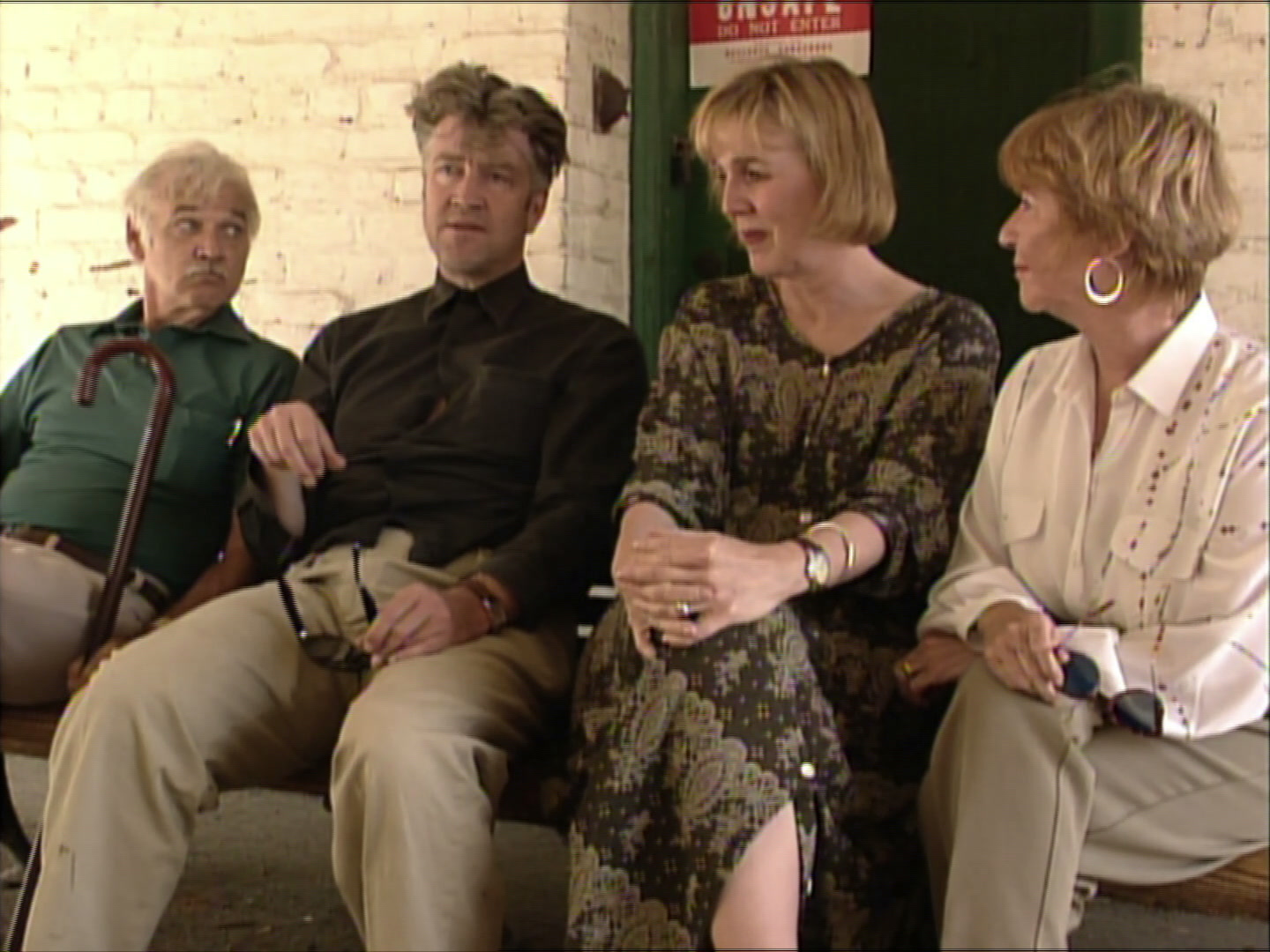
The reunion returns Lynch, Jack Nance, Charlotte Stewart and Catherine Coulson to the former working spaces. Coulson’s recollection of carrying hot water sits beside memories of how cold the performers felt. The place becomes a prompt for different kinds of labour: preparing a physical effect, waiting, rehearsing and performing.
The discussion also demonstrates why group testimony should be preserved as conversation. Stewart remembers one-take shooting; Lynch qualifies that recollection, allowing several takes while identifying a particular early shot that did succeed in one. The value lies in the exchange and correction, rather than in extracting an absolute rule about how the entire film was made.
Eraserhead Reunion, excerpt from Pretty as a Picture (released 1997), 2:24–5:37
The screenplay and the working film
The script is a starting document, not a complete production blueprint. In his Chris Rodley interview, Lynch recalls bringing AFI a 21-page Eraserhead script, initially judged on a rough one-minute-per-page basis before permission was given for a 42-minute production. Lynch’s recollection that the first script did not contain the Lady in the Radiator proves the film’s scenario was revised through shooting, drawing, set encounters and editing. Primary interview ↗
The accessible 31-page Annotated Script credits David Johnson with transcription and annotations. It is a later study of the finished film, distinct from Lynch’s original production screenplay. Inspect the transcription’s credit page ↗ DVD outline-excerpt check
Three distinctly different categories of unrealized material:
- Written and planned, unfilmed: the hospital encounter with Catherine Coulson as a nurse. Both Lynch and Coulson remember it being planned; both say it was never shot. Coulson also recalls that she may have encouraged omitting it because she was preoccupied with the production’s survival. Coulson interview ↗ · Lynch interview ↗.
- Shot, then excised: Henry’s response to an alley full of buried dimes and a downstairs landlady confrontation; the eerie adjacent room containing two tied women and a man operating an electrical box. Lynch recounts both sequences as filmed. Their detailed reconstruction belongs to the lost-scene section but is not evidence that a complete alternate cut is presently available. Lynch interview ↗.
- New material developed during filming: the radiator stage, its doors and the Lady. This was not a deleted scene at all, but a new production discovery that changed the movie’s structure. Lynch interview ↗.
AFI’s cast register credits V. Phipps-Wilson as the Landlady and Gill Dennis as the Man with Cigar, alongside performers associated with the dimes and apartment passages. The cast record connects these surviving production accounts to named collaborators. Institutional cast index ↗
Philadelphia and the film’s imagination
The long-standing shorthand that Eraserhead is ‘Lynch’s Philadelphia film’ captures something real about the director’s memory of the city’s industrial streets, danger and unease, but it can mislead readers about the actual writing chronology. In a 2011 interview, Lynch explained that he wrote the script after leaving Philadelphia. He explicitly distinguished the emotional residue of his years there from the act of writing the film. Lynch interviewed by The Guardian, 2011 ↗.
Rodley’s earlier interview identifies Gardenback as the initial AFI project, followed by the 21-page Eraserhead screenplay. Philadelphia remained a powerful imaginative source as Lynch developed the film in Los Angeles. Rodley/Lynch production chronology ↗
The development spans childhood painting, Philadelphia, Los Angeles and AFI, the abandoned Gardenback, the 21-page Eraserhead manuscript, the multi-year Greystone shoot and the 1977 Filmex exhibition. Each phase contributed to the conditions in which Lynch made his first feature.
Catherine Coulson: a production department of one
In an extended interview conducted before her death and published by Pure Movies in 2017, Catherine E. Coulson identifies a striking range of jobs: setting Henry’s hair, assisting with lighting, first- and second-camera tasks, photographing the film, contributing money and helping arrange its finances. Henry’s hair was designed by Lynch, but Coulson says she performed the combing and cutting throughout shooting; Jack Nance wore hats away from the camera to conceal it. Her recollection is unusually concrete evidence for a costume-and-performance continuity record. Catherine Coulson first-person interview ↗.
A surviving photographic corpus
Coulson says she used her father’s camera to take production stills and rediscovered her negatives while Lynch was making Dune. She brought them to Lynch, who had prints made. That memory aligns with Sacred Bones’ present catalogue of a group of 11 or 12 8 × 10-inch behind-the-scenes photographs credited to Coulson, including Jack Nance, a dinner-table arrangement and a young Lynch on set. Coulson’s recollection ↗ Publisher object listing ↗
The eleven individually illustrated publisher photographs open a wider view of the production: performers, settings and the texture of daily work.
Financing, pay and deferred royalties
Coulson recalls an informal crew participation agreement made on restaurant napkins and continuing annual payments after the film became profitable. She gives weekly crew-pay figures of $25 and later $12.50 when funds diminished; she also recalls seeking small sums from personal contacts, including a pediatrician and dentist. Her account strengthens the financial record beyond the general description “made with no money”: the production paid tiny wages, obtained donated labor and cash, negotiated rights and later honoured crew participation. Direct financial testimony ↗.
Her recollection also preserves the culture around the first Filmex screening and later midnight screenings: a quiet post-screening audience, uncertainty about reaction, then the odd experience of seeing queues for a film made in seclusion. This testimony should sit beside contemporary exhibition records rather than replace them.
The people who built the film
Doreen Small → Charlotte Stewart: Stewart’s 2018 interview describes Small as her roommate and initial connection to Lynch’s production; she expected a short student-film commitment. The extended night shoot unfolded while she also appeared on network television, making hairstyle and wardrobe continuity an unusually long-term obligation. 2018 firsthand interview ↗ · 2016 independent recollection ↗.
Fisk → Splet: Fisk’s casting account independently demonstrates the overlapping roles of production design, sound, acting and improvised special-effects work. It should be plotted alongside AFI’s formal credit taxonomy, not rewritten as though he served only as an actor. Fisk interview ↗ · Credit register ↗.
Cardwell → Elmes: a widely circulated TCM summary says Herbert Cardwell died during the shoot and Elmes replaced him because of the death. Lynch explicitly says Cardwell left for a commercial job because he needed income; Elmes overlapped him for approximately two weeks. These accounts conflict. Prefer the director’s direct production recollection, record the TCM variant as a secondary-source error candidate, and seek the dated commercial-job or Cardwell death record to settle the chronology independently. TCM version ↗ · Lynch’s account ↗.
Judith Roberts recalled filming her appearances across separate periods several years apart, an example of the production’s unusually extended working life. Roberts interview ↗
The crew network also includes a distinctive rights and payment story. Elmes recalls a dining-table royalty agreement that continued to result in payments years later. This indicates that some participants received deferred participation, but the specific ownership percentages and copyright chain require access to signed agreements before they can be treated as definitive contractual figures. Cinematographer’s royalty recollection ↗.
The cast behind the deleted scenes
The American Film Institute’s full cast register names people beyond those most viewers recognize from the 89-minute version. First-person interviews describe the filmed and excised alley/dime events. The two sets of sources can be cross-referenced, but a credit by itself doesn’t prove the performer is absent or present in a particular print. AFI full cast and special thanks ↗ · Lynch on the deleted scenes ↗.
| Person | AFI-listed role | Research relevance |
|---|---|---|
| V. Phipps-Wilson | Landlady | Matches the landlord/landlady incident in Lynch’s cut-scene recollection; exact filmed appearance requires source video or period still |
| Jennifer Chambers Lynch | Little girl | A credited child role in the film’s cast register. |
| Brad Keeler | Little boy | Another child role for comparison with the cut-scene account |
| Peggy Lynch | Person digging in the alley | Unusually explicit connection to the film’s described alley/dime setting |
| Doddie Keeler | Person digging in the alley | Second AFI-listed credit connecting the cast record to the described alley setting |
| Toby Keeler | Man fighting | Credited action may correspond to Lynch’s description of quarrelling over coins; independent visual confirmation outstanding |
| Gill Dennis | Man with cigar | AFI lists the role; Academy photograph 70175896 separately identifies Dennis in a deleted scene. See the photographic comparison below. |
| Neil Moran | The boss | Godwin identifies Moran as the pencil-factory boss (Godwin, PDF p. 48 ↗). This production-history attribution does not connect him to LaPelle’s. |
| Raymond Walsh | Mr. Roundheels | A distinctive character name that warrants frame-by-frame identification; no source yet places him in a particular lost scene |
The electrical-room sequence, the Man with Cigar credit and Henry’s printing workplace belong to separate records. The nightmare’s pencil factory has its own machinery and credited operator.
A photograph advances the Gill Dennis identification
The Academy’s photograph record 70175896 ↗ identifies Gill Dennis in a deleted scene and cites Cinefantastique, September 1984, vol. 14, no. 4, p. 67. Its public preview shows a standing man beside two restrained figures on a bed, consistent with the setting in Lynch’s electrical-room recollection. The catalogue marks its proposed identifications of V. Phipps-Wilson and Catherine Coulson as unverified.
The record and watermarked preview were inspected. The photographer is uncredited and the library lists only a digital file; neither an original negative nor complete moving footage is established. The catalogue’s 1978 date is not proof that the photograph was taken in 1978. This is stronger evidence than matching a cast credit alone, while the original magazine caption and footage remain checks to complete.
Special-thanks records provide a second crew network
AFI reproduces the film’s end-credit acknowledgments, including David Khasky, Sissy Spacek, Margit Fellegi Laszlo, Jack Fisk, Sarah Pillsbury, Frank Daniel and Sidney P. Solow. Several are named in production testimony, giving us research leads for equipment, donated work, household materials, financing or postproduction help. Their presence in the special-thanks list is independently demonstrable; their specific contribution must be connected using interviews or documents, rather than assigning a job from credit alone.
In particular, Lynch identifies David Khasky as an AFI equipment contact; he recalls Sissy Spacek helping on-set while Jack Fisk performed; and Coulson recounts household objects sourced through her aunt Margit Laszlo. The expanded name Margit Fellegi Laszlo in the thanks is a strong cross-identification lead. It does not independently confirm the ownership of every bed sheet, radiator accessory or kitchen appliance. Crew-specific first-person recollections ↗.
The primary oral-history spine: Kenneth George Godwin
A crucial source for this case is Kenneth George Godwin’s Eraserhead: The David Lynch Files, Volume 1. Godwin interviewed Lynch and key collaborators in 1981, prepared an extended illustrated production article for Cinefantastique, and later published the interviews and revised collection as a book. Interviews conducted only a few years after production offer evidence distinct from far-later reminiscences, although they remain oral accounts and should be compared with surviving records. BearManor publisher record ↗.
The early article appeared in Cinefantastique volume 14, numbers 4–5, September 1984, a special double issue also devoted to Dune. Sellers describe a 28-page Eraserhead making-of plus a separate four-page Godwin appreciation. The printed issue is a museum acquisition target because original image captions, typographic presentation, layouts and advertising are not interchangeable with later text reprints. 1984 printed-issue bibliography ↗.
Source hierarchy: a participant’s dated 1981 interview is the original testimony; a 1984 illustrated article is a contemporaneous editorial treatment of that testimony; the 2020 collection makes fuller transcripts available; a retrospective website summary of these accounts is a later secondary retelling. Different types of source should have separate citations and dates.
The same book exists in several digital and physical versions with differing page counts. Our catalogue should record the edition, ISBN, publisher, year and physical pagination, never assume a PDF page number matches a 1984 magazine page. The book is copyrighted; the research records should link to publisher metadata and offer original, short analysis rather than reproducing entire interviews or photographs.
Image, sound and material
Camera methods, practical effects, borrowed objects and the soundtrack.
Camera, light, sets and visual construction
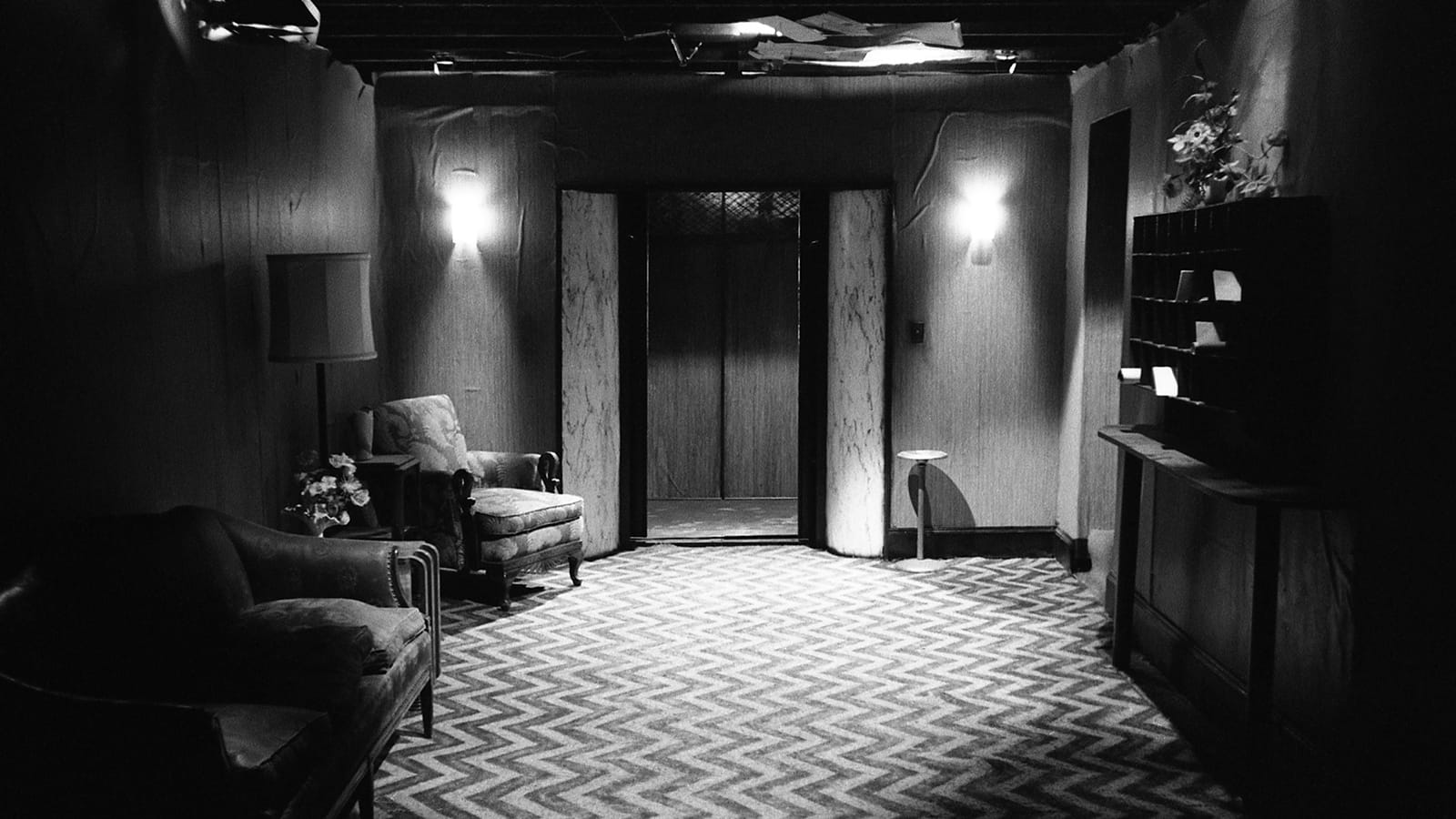
The film’s look results from two credited cinematographers, Herbert Cardwell and Frederick Elmes, working with Lynch’s production design. The use of darkness is practical as well as atmospheric: in black-and-white photography, desired separations require carefully chosen light and contrast. The crew rehearsed movement in increments and built tight pools of light for Henry’s room. Lynch recollection · Elmes on the photography.
Set and location records to cross-reference
- The industrial exterior: Henry’s opening traverse, machinery, barriers, and vacant streets; investigate each as a location reference distinct from the Greystone interiors.
- Henry’s apartment: bed, dresser, radiator, sound-producing objects, narrow windows and small pools of light; document room geography across scenes.
- The X family dinner: domestic lighting, table setting, miniature moving chickens and the kitchen doorway; separate constructed practical effects from the set dressing around them.
- The radiator: Lynch says its distinctive chamber made the new Lady-in-the-Radiator sequence possible; the built doors and stage followed the object’s existing proportions. Primary account.
- Planet / Man in the Planet: Jack Fisk is credited in this role; makeup and an abstract setting invite a production-effects study without reducing the scene to a fixed symbolic meaning. BFI credits.
- Pencil machine: study the sequence’s tooling, stamping/eraser imagery, operator and material transformation. Hal Landon Jr. is credited as pencil-machine operator. AFI credits.
The film’s infant is a deliberate boundary in the evidence. Lynch declined to explain its manufacture; descriptions identifying a specific animal or object as its construction material should not be presented as fact. A useful dossier can describe the baby’s on-screen mechanics and documented production testimony without manufacturing a disclosure. Criterion interview.
Making the grays before photographing them

Catherine Coulson remembers staining Henry’s bed sheets with tea or coffee to reduce their bright whiteness. Frederick Elmes describes testing how wall paint photographed and placing even small patches of light deliberately. Their accounts put the film’s tonal design into the room itself: black-and-white photography began with surfaces, fabric and paint, before exposure or printing could shape the result.
Elmes also describes the attraction of leaving just enough information in a shadow to make the viewer wonder what is there. This explains why the dark areas deserve attention as designed parts of the composition. Lifting them indiscriminately would change the relationship between a precisely lit object and the space that surrounds it.
Criterion cast and crew interviews (2014), Catherine Coulson and Frederick Elmes, 15:31–17:33
Frederick Elmes: technical production notebook
Two substantial interviews—with British Cinematographer and Reverse Shot—allow the film’s visual qualities to be mapped back to specific working decisions instead of generalized references to a “Lynchian look.” Elmes in British Cinematographer ↗ · Elmes in Reverse Shot ↗.
Light only what the shot requires
Elmes describes designing isolated pools of light to mark Henry’s route through space, protecting adjacent darkness by preventing spill. The elevator and its carpet, for example, could be illuminated without revealing the whole surrounding environment. Wall sconces became precise lighting instruments rather than mere decoration. This suggests a formal lighting record for every illuminated wall, doorway, radiator, ceiling bulb and adjacent void. Lighting details ↗.
Elmes further describes the radiator sequence as a series of ordinary edits and movements—from one bulb to the next, then the revelation of a stage—not an elaborate optical dissolve. The effect of crossing into another world arose partly from an unremarkable cutting strategy applied to unusual material. Elmes on transitions ↗.
35mm negative and improvised resources
Elmes recalls that AFI supplied equipment and lab support, including short ends of black-and-white negative originating from The Last Picture Show. When film ran short, he collected small rolls from Kodak for that night’s shooting. He also reports experimenting with simple in-camera reversals and upside-down orientation for effects—evidence of a practical, photo-chemical process before later optical or digital production techniques became routine. Film stock and effects account ↗.
The extended shoot temporarily stopped when Elmes took paid work on John Cassavetes’ The Killing of a Chinese Bookie, taking part of his crew along. A related West Hollywood apartment exterior was shot with large lights and improvised electrical arrangements. That is a historical account of unsafe production improvisation, not a technique to replicate. Elmes chronology ↗.
Film objects were not casually repositioned
Elmes remembers learning that he should not move a small table prop simply to clarify a composition, contrary to ordinary cinematography practice. This is useful evidence for treating Henry’s table, radiator and other arrangements as intentional production compositions. For a scene-by-scene prop inventory, we should preserve each object’s spatial relationship instead of assuming it can be rearranged without changing the design. Set-dressing recollection ↗.
Film chronology note: the retrospective interviews give differing shorthand production spans of four or five years, depending on whether writing, shooting and sound are counted. Catalogue events with specific years rather than forcing every source into a single “principal photography” range.
Cinematography laboratory: physical methods and accidental texture
The original interviews distinguish intentional contrast from unplanned photochemical and electrical artifacts. Both survive on the screen, but they have different production histories. Treating every patch of darkness and flicker as a deliberately designed symbol would misrepresent how the film was made.
Star curtain, moving planet and a failed first exposure
Elmes’ practical setup for the opening movement combined a large black fabric field pierced with points of light, a high-speed Mitchell motion-picture camera, a long track and a coordinated moving planet model. The field measured approximately 20 × 60 feet and the dolly travel approximately 30 feet. The crew installed the apparatus outside near the stables, after the gardeners had left for the weekend. An equipment fault ruined the first photography and required a complete rebuild for a later weekend. This is a practical exterior optical setup, not a fully post-produced digital star background. Technical production source, PDF p. 40 ↗.
Production-art accession breakdown: fabric star field; pierced holes and lamps; support rig; planet model; camera/crane and dolly; shot blocking; a failed take; the final negative. None should be described as a presently surviving physical object without an identifiable inventory entry.
Composite alignment and weightless Henry
To place Henry in a seemingly gravity-free position, Elmes describes photographing Nance while he moved on a dolly with the camera turned sideways. For some combinations of separately photographed elements, the crew temporarily placed film frames in the viewfinder to align subsequent exposures. These are repeatable, historically established optical approaches; a viewer should not confuse them with a screen-grab implying everything was photographed in one shot. Elmes / Godwin account ↗.
Emulsion, processing and exposure
Elmes reports calibrating gray surfaces and makeup for black-and-white exposure. The crew received negative and prints from CFI. During one portion of production, the laboratory was processing Peter Bogdanovich’s Paper Moon and maintained a frequent black-and-white schedule; later, as demand fell, fewer processing days complicated quality control. Lynch also reported inconsistent dense gray tones on some stock, an effect that can be mistaken for intentional movement. These material behaviors should be compared against the restoration notes rather than automatically ‘corrected’ in modern image reproductions. Film laboratory record ↗.
Streetlamp pulsation
The light variation during Henry’s nighttime approach to Mary’s family arose from shooting under existing mains-powered streetlights at camera speeds out of phase with their pulsation. Lynch accepted the result and later regarded it as suited to the film. Catalogue this as an adopted technical anomaly: the source of the effect was unplanned, but keeping it became a creative decision. Lynch’s description of the streetlight behavior ↗.
| Image study | Cause | Museum/source target |
|---|---|---|
| Opening star field | Fabric and back-light apertures | Plan, set photograph, rig specification, failed-vs-final take |
| Henry floating | Camera orientation, moving performer, optical matching | Camera diagram and matched final frames |
| Gray-surface tonal tests | B&W makeup/paint/exposure choices | Gray-card and test-strip documentation |
| Irregular dark-background density | Negative or processing instability | Print comparison against restoration master |
| X-house exterior pulsation | Streetlight-camera synchronization mismatch | Authenticated frame sequence and source statement |
Industrial sound: Alan R. Splet and David Lynch
Splet is credited with location sound, recording, sound editing and rerecording; he and Lynch share sound-effects credit. They were not simply laying music over a completed movie. Lynch’s memories describe experimentation with microphones, recorded environments and manipulation of ordinary sound to establish a world larger than the frame. Full credits · Lynch on sound.
A notably concrete example involves a small microphone lowered into a five-gallon glass bottle floating in a bathtub. Moving, striking and scraping the bottle created a sound Lynch used in the film. Similar methods transformed field recordings and industrial noises, including winds, horns, machinery and resonance. The point is process: acoustic sources recorded and altered, not a library of fictional synthesizer cues. 2012 interview.
The Grandmother collaboration provides an early technical connection: Lynch recounts creating reverberation by playing sound through air ducts and repeatedly recording it instead of using an electronic reverb unit. For this film’s sound lineage, the 1987 Terry Gross interview with Splet is a major primary recording to hear in full.
Music inside Henry’s world
Fats Waller’s pipe-organ recordings evoke a distant musical past against the factory soundscape. Lynch explained that they gave Henry a sense of romance, melancholy and another world. For the Lady in the Radiator’s song, Lynch supplied the words and asked Peter Ivers to compose and sing the music; Ivers performed the vocal used for the film. Laurel Near is the on-screen performer. First-person music history · Period credits.
Collector editions deserve separate records: the I.R.S. 1982 LP, later CDs, Sacred Bones’ expanded 2012 issue, the included 7-inch single, Pete’s Boogie, the booklet, prints and alternative packaging. These are different physical objects, not one interchangeable soundtrack item. Sacred Bones.
A working night measured by unwanted sound

Coulson recalls beginning work after the gardeners stopped and ending when Alan Splet heard birds. Sound therefore helped determine the production’s working hours, not simply the atmosphere added in postproduction. She also remembers Lynch and Splet recording effects in a makeshift space at the stables.
Her radiator anecdote turns on a revealing distinction: the required sound was not the appliance operating, but somebody jumping off it. The account directs attention toward an action and its weight. It complements the film’s industrial ambience without pretending that an interview anecdote identifies every sound in the finished mix.
Criterion cast and crew interviews (2014), Catherine Coulson, 4:44–5:01 and 19:18–20:07
The material behind the soundtrack
Lynch’s account moves from controlling the acoustics of the set to finding physical stock for the final soundtrack. He describes homemade blankets of burlap and fiberglass, hung around the set to reduce unwanted room reverberation. Later, he and Splet salvaged discarded magnetic sound stock and erased it for reuse. The soundtrack’s resources were as improvised as the film’s sets.
At the mixing stage, Lynch recalls a mono workflow with eight dubbers, followed by separate reels of sound and picture for an early screening. That is a recollection of the original production process; it should be distinguished from the audio presentation of later home-video editions.
Eraserhead Stories (2001), David Lynch, 25:55–27:11 and 72:14–76:28
Sound as a parallel filmmaking process: Alan Splet’s 1981 testimony
An audio-history dossier should explain when particular sonic decisions entered the production. Godwin’s interview with Splet separates an early demonstration mix from the extended postproduction period.
The fundraising sound reel
Splet said he and Lynch assembled a complete soundtrack for an early sequence—from Henry entering the apartment through an interior photographic moment—to demonstrate a finished picture-and-sound sample while seeking funding. It was made while the production was still underway. This establishes a potentially distinct early demonstration version, but the recording’s survival, length and exact source elements are not established. Alan Splet interview, 1981 ↗.
The sound marathon, remembered as approximately 1975–76
After a gap while Splet worked elsewhere, he returned for an intensive period of making and editing effects and completing the soundtrack. He recalled an extended attempt to prepare the film for Cannes, sleeping next to his editing equipment and compressing weeks of labor before the work was ultimately not accepted. This unsuccessful proposed festival submission belongs in the distribution-history chronology, not as proof the finished 1977 version screened at Cannes. Splet’s postproduction account ↗.
A real sound-source reconstruction
Splet described starting the opening planetary ambience with an existing recorded atmosphere from the library and manually changing bands on a one-third-octave graphic equalizer until it created the desired expanding presence. The source was not a purpose-built digital synthesizer patch. This is evidence of acoustic manipulation and editing, and an unusually precise opportunity for a technical sound study. Splet’s account of the opening sound ↗.
Splet declined to disclose the materials or processing used for the infant’s voice out of respect for Lynch’s wishes. That is a meaningful limit to our documentation. The archive can explain the recorded result and other techniques without labeling unsupported guesses as revealed studio practice.
In a separate exchange Lynch recalled concentrating on effects creation before a short final mixing session, which he estimated at roughly a week. A short final mix does not imply the soundtrack took a week to create. Lynch’s postproduction chronology ↗.
Source disagreement: Splet’s transcript places the early demonstration in Henry’s apartment (Godwin, PDF p. 203 ↗); Godwin’s narrative places it at the X-family visit (Godwin, PDF p. 36 ↗). These are parts of one compilation, not independent confirmation. The reel or a dated cue sheet is needed to resolve its contents.
In Heaven: Peter Ivers’ original recording testimony
Peter Ivers spoke to Godwin in December 1981—an unusually valuable account made shortly after the film’s original circulation. He credited Alan Splet with connecting him to Lynch after Splet had previously recorded Ivers for AFI projects. Lynch provided the song’s words and a description of the sustained organ sound he wanted. Ivers composed and sang the recording heard over Laurel Near’s appearance as the Lady in the Radiator. Ivers interview ↗.
Ivers recalled recording the organ arrangement during a studio session in spring 1974, using musicians and facilities available around his other recording work. He also remembered lending Lynch a Fats Waller record, while acknowledging uncertainty over how Waller’s music first entered the film. The chronology is one of the strongest reasons to treat the song and the other soundtrack elements as separately dated production events rather than a single scoring session. Ivers recording and Fats Waller recollection ↗.
Music research ledger: distinguish composition, lyricist, recording session, Ivers’ lead voice, Laurel Near’s screen performance, Fats Waller recordings, later 1982 soundtrack LP, 2012 reissue and modern cover versions. No lyric transcription or unlicensed sound clip is needed to document these credit relationships.
Practical effects: what the crew built and operated
Planet sequence / original performer substitution
Jack Fisk confirmed in a 2016 interview that he took the Man in the Planet role because sound collaborator Alan Splet was ill when the scene was due to shoot. Lynch improvised the actor’s altered appearance with material applied around his beard; Fisk recalls how difficult it proved to remove. This establishes Fisk’s performance as a production contingency, rather than a role always planned for him. Read Fisk’s original interview ↗.
Planet breakup: Godwin’s oral-history production account describes a deliberately weakened model, protective camera positions and multiple cameras for an effect that could not easily be repeated. The exact mechanical solution changed at the last minute. This belongs in a model-effects record distinguished from the Man in the Planet makeup, rather than one broad label of “special effects.” Production interviews and illustrated history ↗.
Henry’s room becoming a water tank
The encounter with the Beautiful Girl Across the Hall involved a partial recreation of the room around a water-filled tank. This was a separate temporary effects set, not evidence that the standing bedroom itself was flooded. Its practical construction belongs to the location and set database, alongside Judith Anna Roberts’s performance record and the material’s photographic and sound treatment. Original crew production testimony ↗.
The moving miniature poultry and Spike
Judith Anna Roberts recalls that Lynch fabricated miniature moving chickens himself, and refers to organic materials used for the infant effects. She does not identify the baby’s full material composition, and such testimony does not substantiate the familiar specific-animal fabrication theories. Treat the dinner-table bird effect, the infant performance mechanisms, and organic screen materials as different objects with separate evidence. Read Roberts’s firsthand interview ↗.
Mary’s unused floating movement
Charlotte Stewart describes an attempt to make Mary move unnaturally through an enclosed set, using roller skates and a rope. The effect was abandoned because it did not work on screen. It is a tested practical movement, not an authenticated finished scene or surviving apparatus. Stewart’s further discussion of keeping costume and appearance consistent across years of filming gives this an important continuity context. Stewart’s detailed recollection ↗.
Body cast: production asset, not established surviving museum item
Charlotte Stewart also recalled a torso cast prepared for an effect that took a different form in the finished film. Her account records another piece of the production’s inventive physical work. Stewart’s body-cast account ↗
Building Henry’s world: sets, materials and objects
The prop studies connect screen appearance, crew testimony and practical fabrication: how an everyday object becomes part of Henry’s world.
| Material or object | Record purpose | Status / next action |
|---|---|---|
| Henry’s suit, shoes, pen holder and tie | Wardrobe & personal-item set | Godwin’s interviews describe thrift-store sourcing. Record each garment and accessory from stills before inferring brands. Oral histories ↗ |
| Duck in a bowl | X family dinner centerpiece | Identify photographed material, bowl, liquid and position; catalogue separately from the manufactured chickens. Production testimony ↗ |
| Mounted fish | X family set dressing | Distinct object; obtain front/profile still to check whether a label or fabrication clue is visible. Crew history ↗ |
| Infant’s vaporizer | Illness-care equipment | A period medical and domestic appliance within the film’s unsettling household. Prop sourcing overview ↗ |
| Bed linen and aged cover | Costume/set material continuity | Record changing worn surfaces between early and late shots; source clothing and textiles are not necessarily preserved. Crew interviews ↗ |
| Henry’s radiator stage | Architectural / practical set | The radiator’s existing recess influenced the scene. Measure the screen-space opening, door form, adjacent wall and light position, without presuming original manufacturer. Director testimony ↗ |
| Hat/coat stand | Room prop with crew nickname | Godwin records Jack Nance’s on-set nickname for the fixture: “Uncle Edgar.” Interview collection ↗ |
| Pencil production equipment | Industrial machine and eraser imagery | Distinguish on-screen assembled machine from actual industrial technology; no maker identified. Check crew credits and surviving model documentation. AFI cast/credit record ↗ |
| Factory blank stationery / product packing | In-world graphics and labels | Packages and lettering add fragments of ordinary commerce to Henry’s room. |
| Laboratory, paint and practical-effect tools | Behind-camera equipment | Catalogue only objects visible in authenticated production photographs, distinguishing production tool from on-screen prop. |
These are investigation records, not proof that any specific physical item survives. A collector-facing museum should label original prop, reconstructed replica, later licensed reproduction, and reference photograph as four distinct object classes.
Material effects: food, clothing and borrowed domestic objects
Two apparently ordinary production departments—food and textiles—made an extraordinary contribution to the texture of Eraserhead. The crew did not have a large prop warehouse and stocked sets with purchased secondhand objects, household loans and edible materials. These should be catalogued as sourcing networks, not merely as “organic weirdness.”
The vaporizer in the pudding drawer
Coulson’s interview details a discarded scene showing Henry trying to retrieve an appliance during the infant’s illness. The object was hidden in a drawer of pudding and peas. Doreen Small and Coulson prepared the mixture, not a professional food-effects department. The core artifact records are the vaporizer, drawer construction, food dressing and filmed action; no camera frame from the final film can document the scene’s completed composition. Coulson’s production account ↗.
The flea-market and family supply chain
Coulson identifies her aunt, Margit Laszlo, as a particularly generous source of aged household objects, including a vaporizer and bed linens. She describes staining sheets to modify how white fabric photographed in monochrome, while the old blanket changed visibly as filming stretched over years. Some lobby furniture also came from Nance and Coulson’s home. These descriptions let us trace the provenance of a prop class without inventing a manufacturer or calling a borrowed object a studio-fabricated original. Coulson’s recollection in Godwin’s book ↗.
A catalogue of original tactile materials
Godwin’s interviews also mention gelatinous food products used to create particular surfaces, and Doreen Small describes seeking ordinary kitchen ingredients for makeup and set effects. A relevant example is jellied consommé used to give Henry’s fallen head a wet texture in the pencil-factory sequence. The distinction matters: what appears to be a strange industrial fluid may have been a deliberately selected edible material. A fabricated recipe card should not be represented as a surviving prop label. Crew sourcing accounts ↗.
The fabricated pencil machine
This isn’t a real manufacturer with a missing model number. Lynch said plainly in his 1981 interview that he designed the pencil-production mechanism himself using pieces of other equipment and his own assumptions about manufacturing. Rather than searching a commercial catalogue for an exact real-world pencil-machine match, our object study should identify the visible components and record it as a fictional mechanical construction. Lynch’s own manufacturing-machine explanation ↗.
| Object | Production classification | What the record should show |
|---|---|---|
| Pencil-factory machinery | Original assemblage / imagined industrial machine | Operation, industrial components, forms and operator, not a made-up manufacturer. |
| Vaporizer | Borrowed domestic object | Aunt Margit sourcing testimony and surviving shot if one exists. |
| Drawer food effect | Prepared practical set dressing (cut) | Pudding and peas in the production record. |
| Bed sheet and blanket | Aged real textile | Hand-staining, changing condition over production years, scene continuity. |
| Lobby chairs | Personal furniture on loan | Connection to Nance and Coulson household, film appearance unidentified. |
| Jellied consommé | Practical visual medium | Used beneath fallen head; label as production effect material. |
A household assembled by hand
Borrowed furnishings, textiles, appliances and handmade effects gave Henry’s apartment its physical life. The collaborators’ accounts connect the room’s extraordinary atmosphere to the practical work of finding, making and arranging ordinary things.
The first in-world corporate identity: LaPelle’s Factory
LaPelle’s Factory is spoken of in the dinner scene. Henry identifies himself as a printer and Mrs. X repeats the factory’s name. Multiple dialogue transcripts support the existence of this named workplace. The exact typography/capitalization remains a transcription convention: printed sources variously use LaPelle’s, Lapelle’s and La Pelle’s. The archive uses LaPelle’s Factory for retrieval, while recording the spoken phonetic variants. Theatrical dialogue source ↗ · Independent subtitle comparison ↗.
EH-CORP-001 · DIALOGUE ATTESTED · PRINTING
LaPelle’s Factory
Henry Spencer works in printing at LaPelle’s Factory. During dinner with Mary’s parents, he explains that he is on vacation. The name gives the industrial world an ordinary workplace beyond the room.
The pencil machine belongs to Henry’s nightmare. The credited Pencil Machine Operator forms part of that sequence, distinct from Henry’s named printing workplace. Lynch interview ↗
Two further economic identities, without invented brand names
Bill X identifies his trade as plumbing and recalls decades of work on the neighbourhood’s pipes. His account places the family’s home inside a larger, ageing infrastructure. Period dialogue transcription ↗
Bill presents the miniature chickens as a new manufactured product. Their impossible scale and animated movement turn a domestic meal into a confrontation with industrial food. Scene dialogue ↗
Object reconstruction guidance
For each film-world business, distinguish named in dialogue, visible on sign or package, prop of actual production and proposed collector reproduction. LaPelle’s is named; a surviving printshop logo has not been established. Original promotional typography for an unofficial design should be classified “new reconstruction,” not “lost logo restoration.”
Objects in Henry’s world
The radiator, record player, telephone, miniature chickens and pencil-making machinery connect domestic life with industrial transformation. Familiar objects acquire unsettling functions: a meal moves, a machine processes a body, and a room’s radiator becomes the threshold to another space.
Explore the production accounts above and the Eraserhead museum collection for the objects through which the film’s world continues beyond the screen.
One graphic device spanning Eraserhead and Twin Peaks
Lynch explicitly identified the lobby’s chevron floor motif as also appearing in the Twin Peaks Red Room. This establishes a direct creator-recognized correspondence. The BFI’s motif survey also notes the pattern’s appearance in Jean Cocteau’s Orphée (1950), but that comparison alone is not evidence that Lynch copied Cocteau’s particular floor design. Lynch’s original interview ↗ · BFI motif comparison ↗.
Cross-site plan: prepare a one-to-one visual plate of Henry’s lobby, the original Twin Peaks Red Room and a contextual Orphée frame, with screenshot identification, distinct rights notes, and editorial captions. Until rights are reviewed, link to research images rather than republishing three identical-looking unsourced crops. The original Lyncharium case-file lead still must be a film still, not a promotional poster.
Images that travel beyond the film
Henry’s portrait, Mary’s photograph and the radiator continue through posters, masks and artist prints. Explore these transformations in the Eraserhead collection.
Places and photographs
Separate film spaces, built sets, production photographs and later architectural records.
Greystone and the film’s locations
A precise site record needs to distinguish the historic Doheny estate, its public entrance, the carriage/stables working area and the privately controlled sets constructed there. The City of Beverly Hills historical account ↗ records that the city purchased Greystone in 1965 and dedicated the 18.3-acre site as a public park in September 1971. That means the estate already had a public civic identity during the years Lynch occupied the former stables under AFI arrangements. The city’s present public entrance is 905 Loma Vista Drive; that isn’t automatically a camera-position address for a 1970s stable interior.
Film Oblivion identifies the lower Doheny Road Carriage House / old stable buildings as the main working site and gives a 509 Doheny Road location reference, with the upstairs planet room in the same complex. The current municipal property history establishes the estate’s legal and historical context, while location matching from modern photographs establishes only a proposed specific camera site until original production paperwork confirms it. Annotated contemporary location study ↗.
| Site record | Status | Film-production evidence |
|---|---|---|
| Greystone Mansion & Gardens, 905 Loma Vista Drive | The Greystone estate entrance. | Official city site; useful for historic ownership, park boundaries and construction dates. |
| Lower carriage house / AFI stables along Doheny Road | Strongly attributed production base; specific room footprints still to reconstruct | First-person Lynch and Elmes interviews; detailed location comparisons. |
| Upper-room planet mechanism | Attributed to a room in the Greystone stable complex | Compare Jack Fisk scene and reunion footage from the documentary released in 1997 before assigning a room number. |
| Beverly Center parcel, 8500 Beverly Boulevard | Historically documented location association; heavily changed modern site | Criterion’s 1979 Lynch/Elmes interview and later location-comparison research. |
| Downtown tunnel near 504 S. Santa Fe Avenue | Photographic location identification, pending production document | Secondary visual matching; distinguish the tunnel from adjacent bridge and street exteriors. |
| X-house facade | Constructed set, not an actual surviving suburban dwelling | Elmes describes building and dismantling the exterior over one weekend. |
Construction-period photographic plan: one image of the historic Greystone grounds, one present-day carriage-house facade, one period production shot at the stables, a still of the Man in the Planet window, a film frame of the X-house exterior and a modern view of the Beverly Center parcel. Label every image with photographer/date/source and whether it is a historical document or modern location comparison. A general photograph of the Greystone mansion should never substitute for the distinct carriage-house space.
A built house that disappeared every weekend
In his interview with Kenneth Godwin, Elmes recalled an exterior set for the X residence assembled after Friday’s garden work: earth, vegetation, a sidewalk and facade; Saturday was spent lighting it, and the scene was shot and struck before the staff returned early Monday. That schedule explains why few surviving production photographs might show the temporary exterior and why searching for a matching house address would be misleading. Elmes technical recollection, book PDF p. 40 ↗.
A real kitchen, and its unexpected performer
The X-house kitchen was a real location, not part of the temporary exterior facade. Lynch told Godwin that the elderly woman seen there was Jean Lange, the building’s landlady, who agreed to appear despite having little idea what the scene was about. The kitchen’s genuine physical geography and the separately erected exterior must therefore receive different production records. Lynch’s 1981 interview, PDF pp. 125–126 ↗.
The film’s locations, then and now
Research rule: keep a production photograph, historic architectural survey, contemporary site comparison, and filmed interview on location in different evidence categories. Greystone Mansion is not interchangeable with the Carriage House (former AFI stables), and the construction-site location is not a picture of the mansion. None of these images should serve as generic atmospheric decoration.
Criterion’s supplements include Tom Christie’s 1979 location interview and reunion material from Toby Keeler’s Pretty as a Picture (1997). Together, they return to the places and people who made the film. 1979 source listing ↗ Reunion source listing ↗


These are Criterion reference thumbnails. Their source links lead to the published video records; neither thumbnail establishes the filming date or an exact camera position. The stable accession EH-FILM-1997 retains the documentary release year in its identifier.
Six cross-referenced location studies
EH-LOC-01 / LOCATION EVIDENCE
AFI stables / Carriage House
Location: 509 Doheny Road, Beverly Hills (secondary location identification)
The working production complex, in former estate outbuildings rather than the ceremonial main house. Lynch used the buildings over years; archive the participant revisit included in the 1997 documentary as the most relevant direct visual witness.
Confidence: Director/crew interview + secondary geographic matching.
EH-LOC-02 / LOCATION EVIDENCE
Man in the Planet window
Location: Upper room in the former stables (photographic match reported)
A location-identification lead for Jack Fisk’s room and window; independently identify frame and building before assigning the historic room number.
Image required: Film frame of window and direct comparison with the reunion interior footage.
Confidence: Secondary visual location comparison.
EH-LOC-03 / LOCATION EVIDENCE
Former Beverly Center oilfield / construction site
Location: 8500 Beverly Boulevard, Los Angeles
Lynch described an old oil well and a ring of earth on the land. A 1979 UCLA film class interview with Lynch and Elmes was filmed at one of the locations; the major commercial development later changed the geography.
Image required: 1979 Tom Christie source-video frame, period aerial image, later shopping-center footprint.
Confidence: Criterion’s first-person interview / Lynch’s recollection.
EH-LOC-04 / LOCATION EVIDENCE
Santa Fe tunnel / walking route
Location: Near 504 S. Santa Fe Avenue, Los Angeles (secondary identification)
Location comparison suggests a concrete tunnel in Henry’s opening journey. The image-match and its particular entrance/exit require comparison against the director-supervised print.
Image required: Street frame and current entrance-view with camera bearing.
Confidence: Secondary photographic comparison; primary paperwork missing.
EH-LOC-05 / LOCATION EVIDENCE
Temporary X house facade
Location: Exact stage or lawn footprint not established
Elmes described a facade, garden soil, sidewalk and set dressing constructed and removed over a weekend.
Image required: Contemporary set photo or crew diagram, film master frame.
Confidence: First-person cinematographer testimony.
EH-LOC-06 / LOCATION EVIDENCE
Real X household kitchen
Location: Exact physical address not authenticated
Lynch recalled using an actual kitchen distinct from the fabricated front yard and facade, and casting a person connected to the location.
Image required: Kitchen production photograph or period call sheet; match 1970s cabinets.
Confidence: Filmmaker oral history; address unresolved.
Location methodology: a precise modern address from a comparison website is a locator for further study, not automatically a dated crew call sheet. The temporary X-house facade and a separate real kitchen have no verified exact modern street address. This protects the archive against inventing photographic evidence or falsely identifying a private property.
Catherine Coulson’s production photographs
Publisher Sacred Bones shows eleven separately photographed prints, plus a composite image of the group, for the Eraserhead Behind the Scenes Print Set. It offers editions containing eleven or twelve physical photographs. The publisher’s visible gallery shows eleven distinct individual photographs plus one composite image, so the extra physical print remains unmatched to a specific illustrated item rather than guessed. All prints are described as 8 × 10 inches and taken by Catherine E. Coulson. Original publisher inventory ↗.
Catherine Coulson’s production photographs record performers, sets and the working life of the film. Each numbered entry links to the publisher’s full-size image, bringing the individual photographs into a sequence that can be explored in detail.


Outstanding questions: Which pictured photographs are candid on-set records versus posed continuity/publicity photographs? Do the surviving negatives carry Coulson’s original notes or dates? Is the 12-print set’s extra item a different image or a duplicate format? What paper/printing process and printing dates apply to the newly offered sets? A set attributed to negatives made in the 1970s is not necessarily a 1970s physical print.
The production in photographs
Catherine Coulson’s photographs bring the working community into view: performers, set arrangements and Lynch at work. Alongside publicity stills and later architectural records, they preserve different perspectives on the film’s making.
Greystone photographed in 1984: eleven architectural source records
Historic American Buildings Survey photographers recorded the Doheny Greystone estate in 1984, after Lynch finished the film, producing eleven individually described large-format architectural photographs. The series includes a garage, courtyard views, entrances, terraces, a lily pond and a stair hall. It is a rich independently documented architectural source with per-image numbers. Complete HABS Commons gallery ↗
The HABS photographs document the Greystone mansion estate at 501 Doheny Road. The AFI stables used for Eraserhead are separately identified near 509 Doheny Road. These architectural records establish the wider setting around the production.
The full-resolution files are large TIFF images, unsuitable for direct browser embedding without a web-ready derivative. These are source links for now, rather than invented thumbnail URLs or unlicensed reuploads. Where HABS images are in the public domain, preserve photographer, agency and Library of Congress credit in the object record.
Reading the photographic records
The Filmex publicity group contains five distinct digitized objects; the Coulson gallery illustrates eleven individual photographs. The archive identifies an image’s physical origin, digital host and credited rights separately. A modern location photograph is not treated as a production photograph.
Use the source links beside each image to inspect the original catalogue and credits. Where a host’s thumbnail is unavailable, the linked source remains the reference for that record.
The film that changed
Planned scenes, excised passages, disc editions and restoration evidence.
Changed, cut and unfilmed material
Original screenplay versus finished film: Lynch says the Lady in the Radiator was not present in the initial screenplay. The drawing and the actual radiator chamber arose after production was underway, changing Henry’s internal world. This is a documented creative addition, not merely a later critical theory. Primary account.
Filmed scenes later omitted
- The dimes sequence. Henry sees children uncovering tightly arranged rows of coins in an alley, attempts to go downstairs, hears the child’s cries from the elevator shaft, meets a landlady angry at his kicking furniture, and later sees adults fighting over the coins. A fragment survives in the final film. Lynch’s detailed recollection.
- The electrical apparatus. Henry witnesses two women tied to a bed and a man with an electrical box or terminals. Lynch describes this as another omitted sequence. Separate surviving documentation, cut footage and fan reconstructions rather than presenting any modern illustration as a still from the lost scene. Lynch account.
- Other cut material. Published descriptions refer to a dead-cat sequence and additional Henry movements. Verify each against contemporaneous interviews and the surviving image/footage record before granting it a stand-alone photographic record.
Planned but never filmed
Catherine Coulson’s nurse scene: Lynch recalls a proposed hospital scene in which Henry and Mary would receive their child; Coulson was to play a nurse. He explicitly says the scene was never shot. It therefore belongs under unfilmed material, not the section for missing footage. Rodley interview.
Version history: the original film was longer before an editorial reduction after early screenings. The Filmex 1977 publicity lot explicitly advertises the premiere programme. Any frame-count or runtime comparison between that screening and the present cut requires reliable historical print evidence.
A film made smaller after its first audience
Lynch describes the Filmex screening as the moment that made him certain several passages had to go. He remembers Elmes resisting the immediate decision, then cutting the composite print and taking the altered material to the laboratory to produce new picture and sound elements. He describes the reduction as about twenty minutes.
His later regret concerns the survival of those pieces, rather than a wish to put them back into the finished feature. He says he loved them as individual scenes while finding that they did not belong in the film. This is a useful distinction between preserving discarded work and treating a longer cut as the preferred work.
The deleted scenes and their afterlife
The electrical-room sequence. Lynch described the deleted scene in retrospective interviews, and members of his original website recalled its 2003 online presentation. In March 2025, an online preservation group reported recovering and sharing a recording. The recovery extends the scene’s circulation history beyond the original website. Lynch’s own deleted-scene account ↗ Jared Lyon’s reconstructed online archive ↗ 2025 recovery discussion ↗
Evidence timeline
- 1970s — shot and cut. Lynch recounts Henry looking into an adjacent room where a man with a sparking electrical apparatus approaches two women tied to a bed. The director says he removed it because it created anticipation that displaced the mood he wanted. This is evidence the action was filmed, not evidence a complete version survived. Director testimony ↗.
- 2003 — DVD-linked website access. The direct-to-consumer Eraserhead 2000 DVD (issued in 2003 despite its title) places a short phone-booth access code inside DVD Title 4, now illustrated in our direct study of the disc. Paying DavidLynch.com members entered it into booth 6 to see an introductory clip of Lynch followed by the electrical-room scene. Step-by-step original-site account ↗.
- DVD menu — a second surviving fragment. The disc’s animated menu used a short image of Henry and a dead cat. Direct examination confirms the footage in both the main and Extras menus. Our illustrated menu study follows its presentation; the separately accessed electrical-room scene belongs to the website history. Owner’s DVD account ↗.
- 2006 — broader home-video circulation. The later Subversive/Absurdia-style DVD issued the film more widely without all the oversized original packaging. The animated menu’s survival and inclusion of the Easter egg must be distinguished from the now-defunct external DavidLynch.com paywall. DVD review ↗ · Edition comparison ↗.
- 2014 — Criterion restoration. Criterion’s substantial supplements include Eraserhead Stories but do not list the electrical-room scene. The later edition therefore cannot stand as a complete copy of the 2003 disc-and-website experience. Published supplements ↗.
- March 2025 — online preservation discussion. A fan archive effort circulated footage presented as the recovered website sequence and reconstructed its original discovery mechanism. Preservation discussion ↗
Separate categories remain crucial. The dimes sequence is documented as shot and removed, but no independently authenticated complete copy has been seen in this pass. Coulson’s hospital nurse sequence was planned but not filmed. The Lady in the Radiator’s development belongs to added material. These must not be collapsed into a single “lost scenes” list.
The Academy catalogues Eraserhead — Trims & Outs as M59001, with associated picture and sound elements. Its accession identifiers provide the route into the surviving production material. M59001 ↗ archive record
The Academy’s deleted-scene photograph adds a separate visual record to the film’s production history.
The DVD study now documents the moving menus, Title 4 code, calibration screens and presentation credits directly. The web-delivered electrical-room sequence remains a separate part of the film’s circulation history.
Eraserhead 2000 · Inside the original DVD
The deleted footage behind the menu
The DVD is more than a container for Eraserhead. Lynch turns its menus into another encounter with Henry’s world: a paper bag, a rough wooden wall, a cat on the ground, the pause before a choice. Direct examination of a disc from the large Eraserhead 2000 boxed edition reveals how this moving interface, its hidden code and its instructions for darkness belong together.
Henry, the cat and a loop that outlives the cut
The main menu alternates Henry standing with his bag beside pipes and weathered timber with a low view of his shoes and the cat’s body. His shoe approaches and turns the body. The Extras menu reworks the same material, while another menu isolates the Lady in the Radiator’s smile against white. The footage survives here as an interface: introductions lead into repeating passages, and the menu lettering shares the image with Henry.
That form matters. This is a surviving fragment of removed action, shaped into a repeating invitation to enter the film. It does not restore a complete deleted scene to the feature. The repeated movement gives even an ordinary decision—play, explore, return—the uncomfortable duration of waiting inside Henry’s world.
Explore the menu footage · 3 more images
Booth 6: the disc points beyond itself
A separate hidden title lasts about eight seconds. Henry raises his arm and points; the image reveals Booth 6 · X2416. The code is present on the disc. The electrical-room deleted sequence was delivered separately through the members’ area of DavidLynch.com.
Jared Lyon’s reconstruction of the original site records how members entered this code at the sixth phone booth to reach Lynch’s introduction and the removed sequence. The DVD therefore carried a key to an online encounter, rather than the whole encounter itself. Preserving the disc and preserving its former website destination are two connected histories. Follow the original phone-booth route ↗ · The deleted scenes and their afterlife
Learning to see the darkness
The calibration screens prepare the viewer before the film begins. They ask for normal viewing conditions, favour a darker room and use a barely visible image of Henry as a brightness test. The face is supposed to emerge at the threshold of black. These instructions belong to the DVD’s presentation history: they show how carefully the edition frames the viewer’s encounter with shadow, rather than providing a universal prescription for today’s displays.
Open the calibration screens · 2 images
The interface has its own authorship
The DVD’s credit screen names David Lynch for the menus and interface as well as audio design, and Lynch and John Neff for the audio mix. It assigns digital restoration and DVD pre-mastering to FotoKem Film and Video, with Spike Allison Hooper and Brian Johnson credited as producers. These are the credits of this home-video presentation, distinct from the original film’s production credits.
Read the DVD credit screen
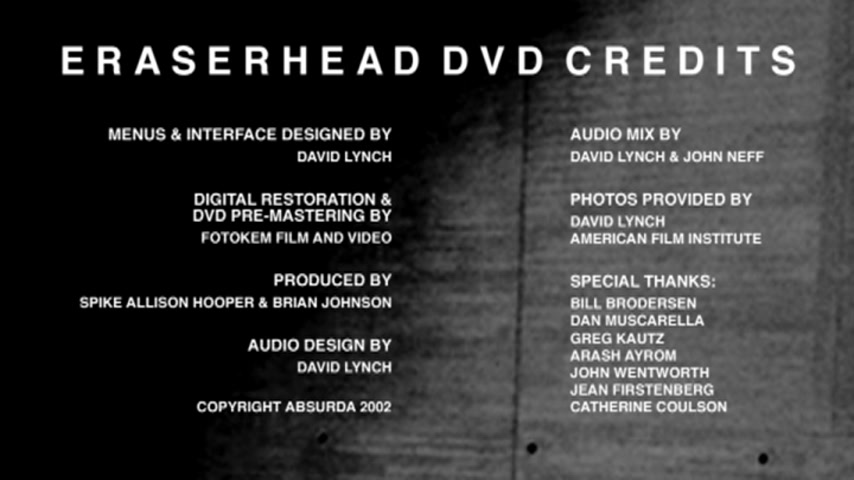
The screen also credits photographs to David Lynch and the American Film Institute, and thanks Bill Brodersen, Dan Muscarella, Greg Kautz, Arash Ayrom, John Wentworth, Jean Firstenberg and Catherine Coulson. Its Absurda copyright line is dated 2002; the boxed edition’s shipping history is discussed below.
What the disc contains
Alongside the feature, the disc holds the approximately 44-second trailer, Eraserhead Stories (about 85 minutes), the short Booth 6 reveal, and the moving and still menus documented here. The retrospective connects this early DVD to later editions, while the interface preserves an experience particular to its original home-video and website setting. Continue with the production testimony or the boxed edition and booklet.
Eraserhead 2000: an unusually important physical edition
The phrase Eraserhead 2000 appears on packaging, but the much-discussed direct-to-consumer DVD began shipping in 2003. A detailed review of its original issue describes an approximately eight-inch square presentation box, a booklet, a theatrical trailer, a television-calibration introduction, animated menus and a roughly 90-minute retrospective. The booklet examined here contains an exterior drawing sheet, production photographs, one reproduced leaf of the original story outline, historical promotional material and a restoration account. That makes an intact copy a research acquisition, not just a collectible media carrier. Owner account published online in 2017 ↗.
DVD Talk’s contemporary 2003 review describes an excerpt from the original outline in the booklet. That document connects the physical edition to the film’s earliest development, alongside Lynch’s account of the 21-page screenplay. Contemporary description ↗
| Object | Documentable features | Research value |
|---|---|---|
| Direct-site Eraserhead 2000 box | Large custom sleeve/box; booklet; calibration; site code | Preserves physical-and-digital distribution context and potential early script materials |
| Later widely distributed DVD | Standard case; digital video and supplements vary by region | Compare menu content, absent oversized book and disc mastering |
| 2014 Criterion #725 | 4K restoration source; interviews, short films, Eraserhead Stories | Current disc-era production source collection, distinct from 2003 artifacts |
The disc’s menus and hidden code can now be examined here in detail. The illustrated booklet study now follows its early drawings, outline, publicity and restoration history page by page. Side-by-side edition study ↗ · Later DVD review ↗.
Comparing the physical package
DVD Talk’s 2003 review calls the booklet 18 pages, while a later owner review calls it 20. The supplied scan has 20 sides including the front and back covers, with 18 between them. Excluding those outer covers could account for the difference, though the reviews do not establish their counting conventions. 2003 DVD review ↗ · Later owner review ↗.
The booklet’s outline, storyboards and photographs should be read alongside the disc, without treating one as a substitute for the other. The page-by-page guide records their order and separates names printed beside photographs from uncredited images and handwriting.
Together, package, disc and website form an unusually personal distribution project: an object ordered from the filmmaker, an interface bearing his design and sound credits, and a hidden invitation to go further online.
Eraserhead 2000 · The booklet
A small paper archive of Henry’s world
The oversized DVD’s booklet gathers working drawings, an outline leaf, crew photographs and the paper trail of the film’s first encounters with an audience. Read beside the deleted footage behind the DVD menus, it offers another route into the film: from a pencilled movement through an alley to an invitation to a midnight screening.
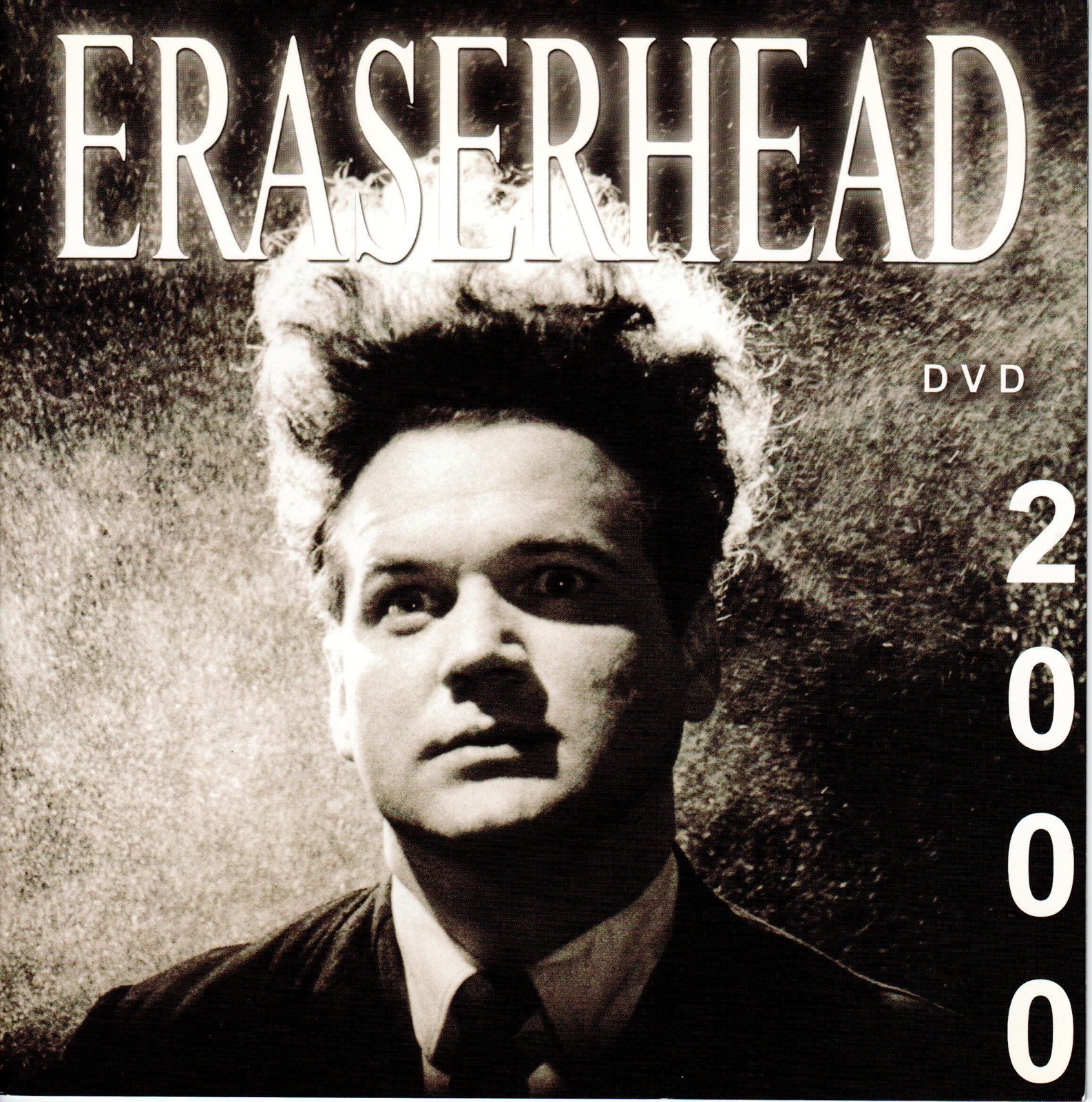
The outline and the cat in the drawings
The reproduced outline is a single sheet headed ERASERHEAD OUTLINE and marked “page.1” (scan page 4). Its seven numbered sequences move from the black planet and its machinery to Henry’s walk home, Mary’s dinner invitation, his apartment and the X family’s kitchen. Check marks and brackets interrupt the typescript. This is a working document, but its marks supply neither a date nor an identified annotator.
The radiator passage is especially revealing. The outline leaves room for Henry’s experience to be either a daydream or an actual departure brought about by the radiator’s sounds. That ambiguity is already present in the writing; it is not something created only by the finished film’s editing. The leaf also names small domestic actions—the phonograph, a wet sock, Mary’s photograph—that anchor the strange events in ordinary material life.
The EXTERIORS sheet (scan page 8) sets out seven rows of five frames, with the later rows largely unused. Its drawings and notes concern Henry’s approach, an alley, a downward pan, a large building, smokestacks, a cat, birds and a whistle. The cat makes a particularly useful connection with the animal visible in the DVD’s recovered menu footage. The sheet establishes a shared motif and an exterior route; it does not, by itself, establish the exact editing of a complete deleted sequence.
Inspect the outline and exterior drawings
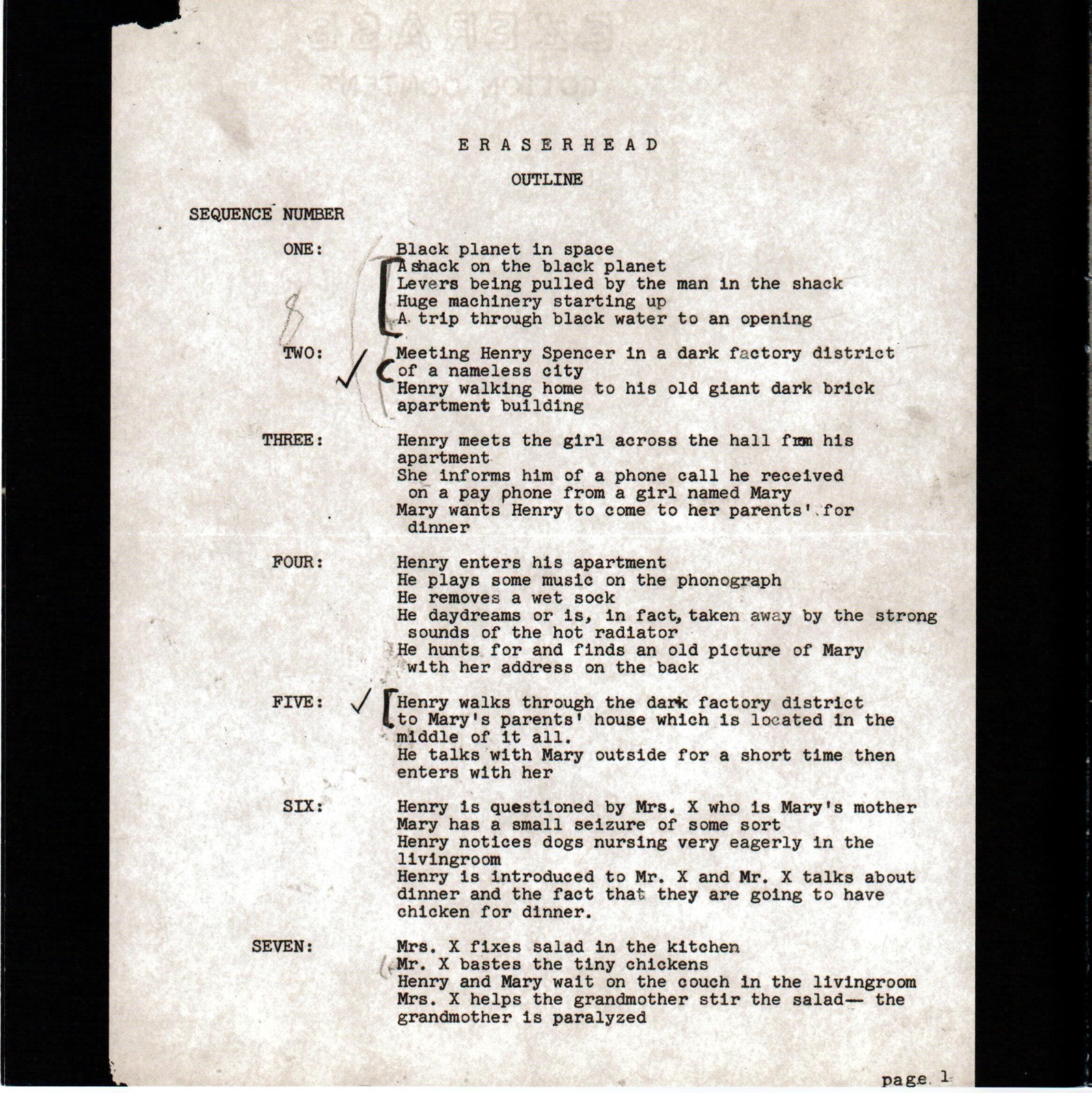
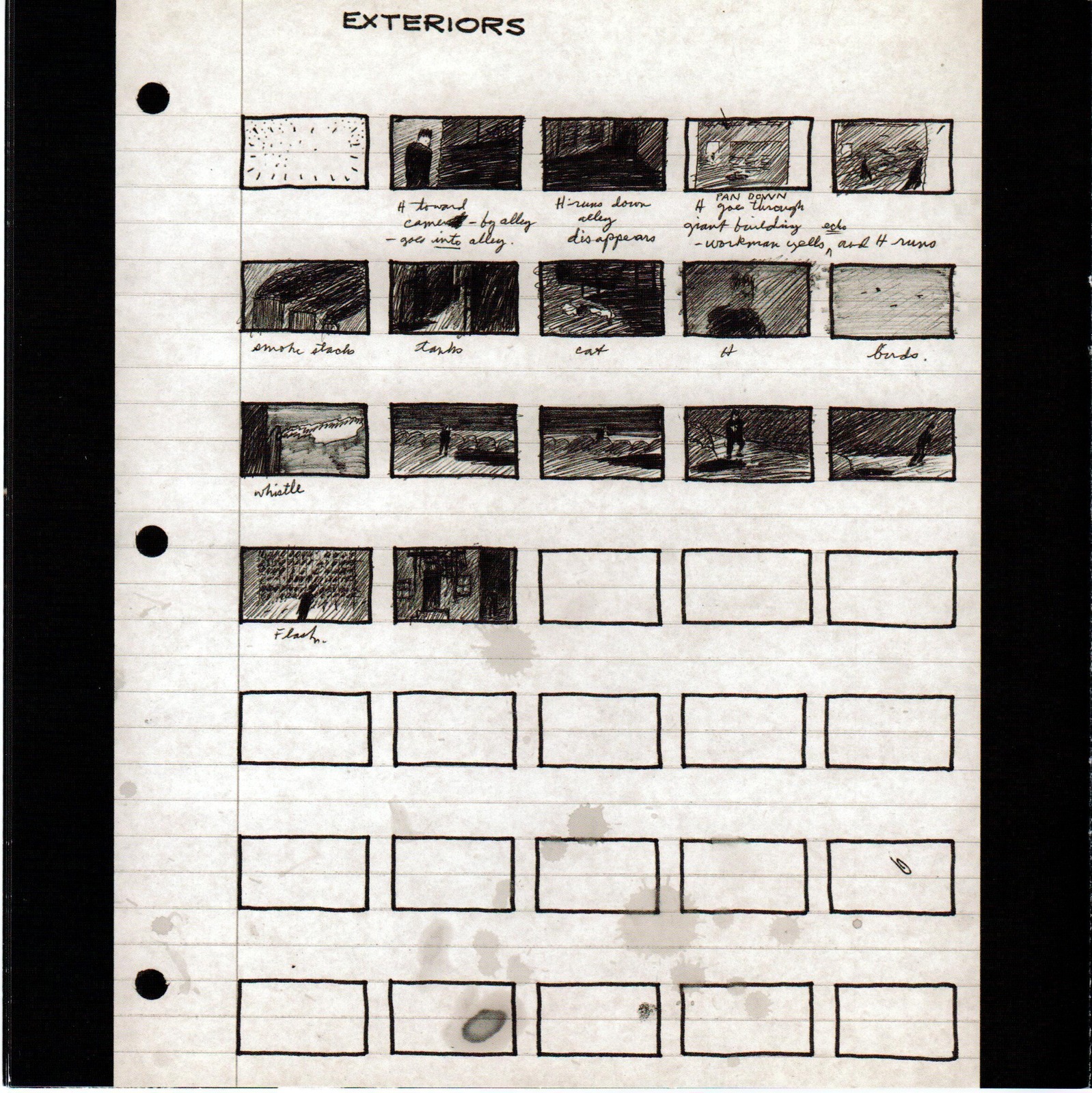
A premiere, an invitation and a telegram
The publicity material records two different moments. The Filmex poster (scan page 15) explicitly announces a world premiere at midnight on 19 March 1977. The Cinema Village invitation (scan page 11), issued in Ben Barenholtz’s name, advertises midnight previews on 28 and 29 September. Its facing mock birth announcement turns the film’s arrival into a family event, naming David K. Lynch as its parent.
The invitation itself does not print a year. The adjacent Western Union telegram does: 29 September 1977. Addressed to Lynch care of Fred Baker at Libra Films in New York and signed by the Eraserhead crew, it conveys their wish to be there with him. Together the objects place the public launch beside the affection of the people who made the film. A separate Cinema Village advertisement (scan page 10) carries an angry handwritten objection to its title font—another reminder that presenting the film was part of shaping it.
Inspect the invitation and crew telegram
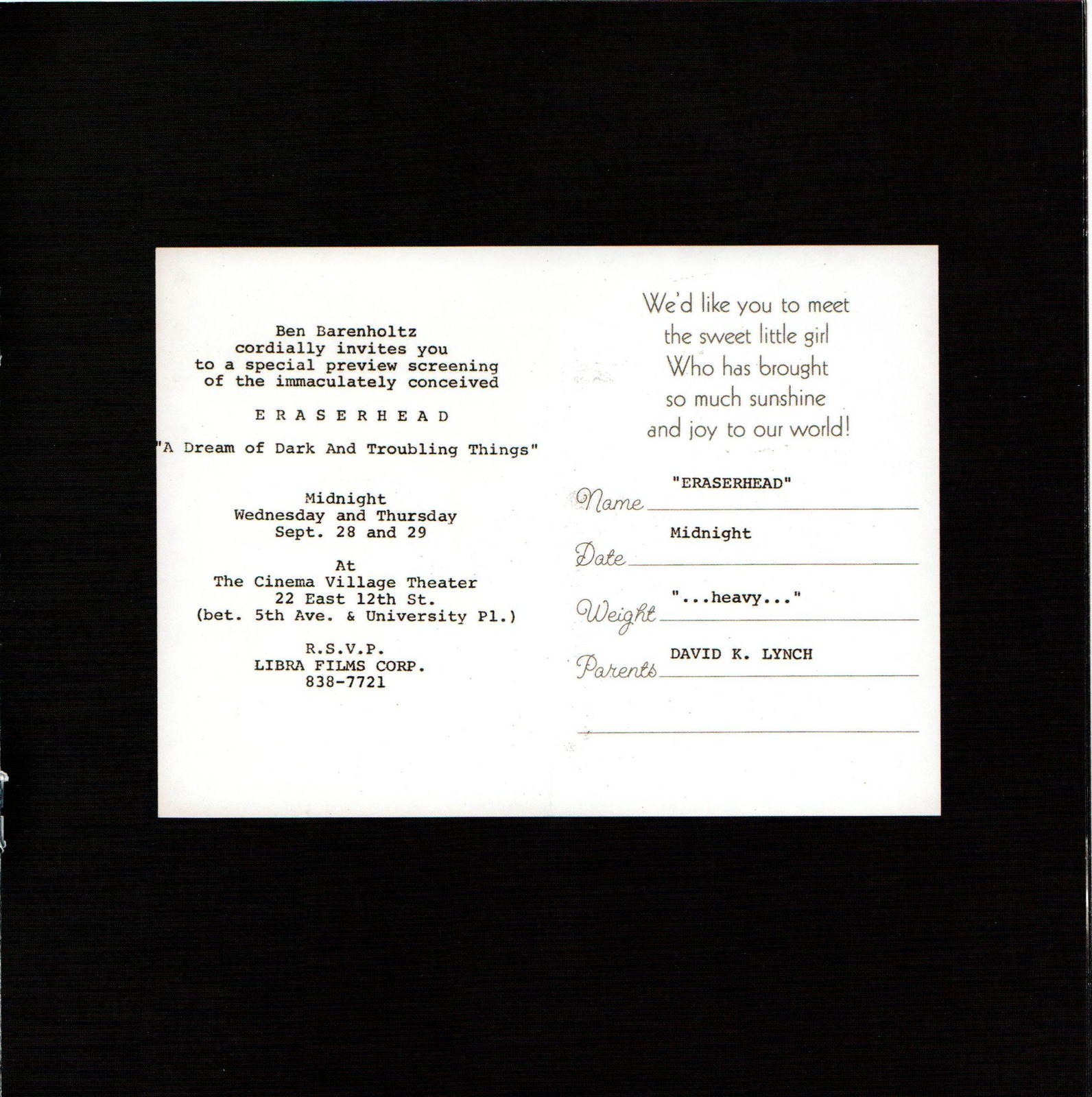
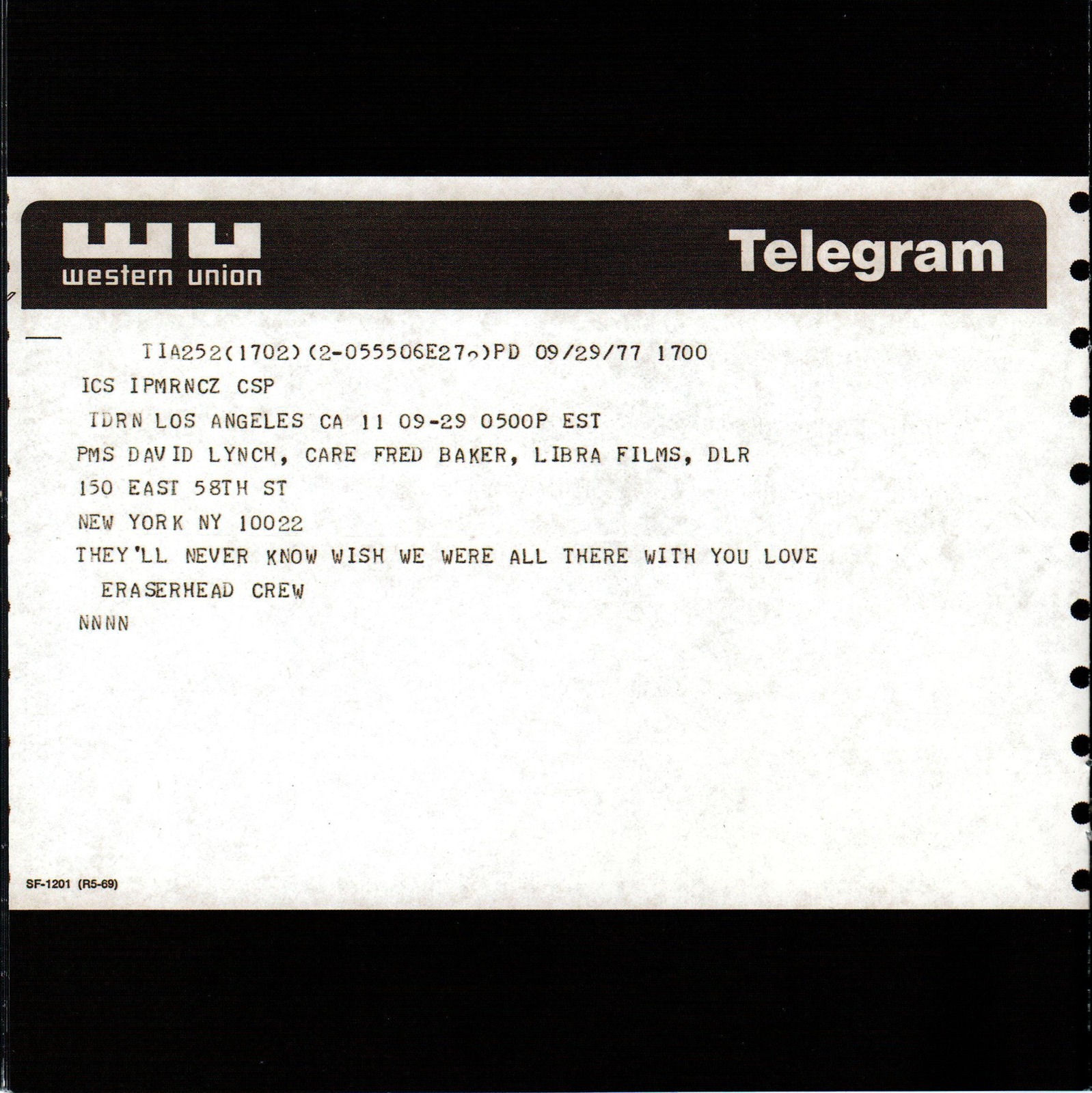
The people around the image
Two group photographs provide names on the page. One identifies Doreen Small, Charlotte Stewart, David Lynch, Catherine Coulson and Herb Cardwell; the other identifies Alan Splet, Lynch and Fred Elmes. These are useful identifications of the people pictured, rather than photographer credits. Around them, portraits, apparatus photographs and images of the Lady in the Radiator alternate with production papers. The booklet makes the film’s creation feel collective without converting its most mysterious images into illustrated explanations.
The first DVD’s restoration account
Restoring Eraserhead (scan page 17) describes a fine-grain interpositive transferred to 1920 × 1080 high-definition tape at 23.976 frames per second, followed by uncompressed working files and six months of frame-by-frame cleaning. It describes a task involving 130,000 frames and says that virtually 99 percent of the film contained dirt or some other imperfection. That figure describes the stated extent of the problem, not a measured percentage of successful repairs.
It also describes encoding MPEG-2 directly from the high-definition files, avoiding an intermediate DigiBeta stage, for an anamorphic 1.85:1 DVD. The sound account names Pro Tools, Waves Restoration-X and an Aphex 204 Aural Exciter, alongside click removal, hiss reduction and low-frequency extension. This documents the earlier DVD workflow and should be kept distinct from the later Criterion restoration.
One discrepancy deserves to remain visible in the record: the booklet describes uncompressed PCM audio, while the examined DVD feature carries a two-channel Dolby Digital (AC-3) track. The printed account and the disc therefore provide different answers about the delivered audio format; neither establishes the reason for the difference.
Inspect the restoration account
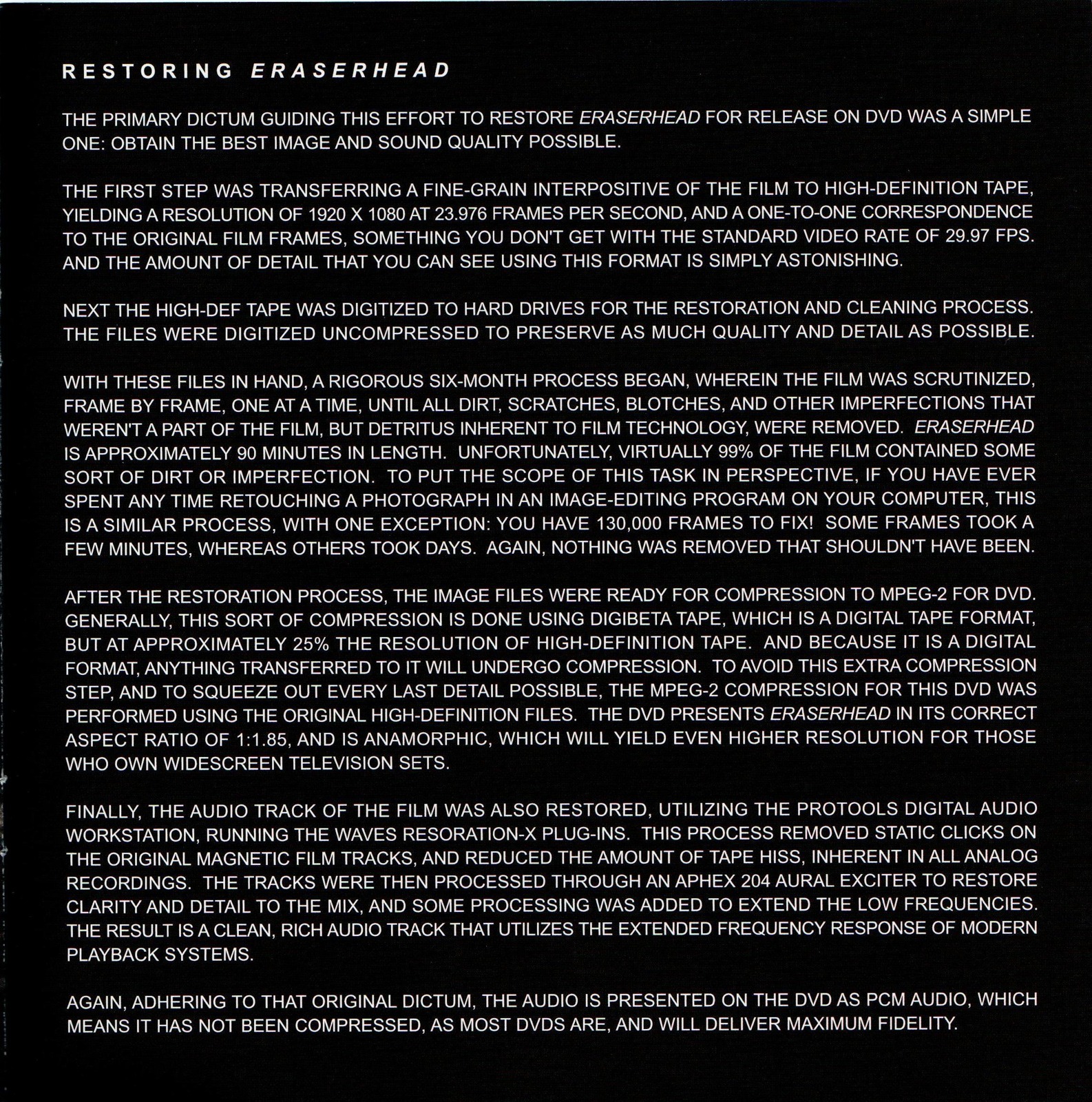
Inside the booklet: a page-by-page guide
- Front cover: Henry, the title, DVD and 2000.
- A sideways portrait and the film’s dark-dream tagline.
- Presentation title with a printed reproduction of a signature.
- Outline leaf: sequences one to seven.
- Lynch with a viewing device.
- Group photograph: Small, Stewart, Lynch, Coulson and Cardwell.
- Group photograph: Splet, Lynch and Elmes.
- The Exteriors drawing sheet.
- Four-image montage of filmmaker and film.
- Cinema Village advertisement with a handwritten font objection.
- Preview invitation and mock birth announcement.
- The Eraserhead crew’s Western Union telegram.
- A suspended object above equipment and wiring.
- A hand above an opened, wrapped object.
- Filmex world-premiere poster and production credits.
- The child-headed figure at a horizontal rail.
- Restoring Eraserhead.
- A figure at a broken window.
- The Lady in the Radiator onstage.
- Back cover: the Lady, music and “In Heaven.”
Page positions here count the front and back covers. The examined scan has 20 sides: 18 between those outer covers. Most have no printed page number; “page.1” belongs to the reproduced outline. This counting distinction may explain the 18- and 20-page descriptions in reviews, without establishing how each reviewer counted a copy.
Source: Eraserhead 2000 booklet, owner-supplied scan of the large-box edition. All twenty scanned sides examined.
A film presented as an object
The large Eraserhead 2000 box brings packaging, print and film together as a designed encounter. Its place in the film’s home-video history extends beyond the feature to the way Lynch presented the work to its audience.
The earliest home-video history: a 1982 Betamax artifact
The Library of Congress catalogues a Betamax-format copy of Eraserhead dated around 1982. This primary institutional record establishes the existence of an early videocassette edition, though the film’s 1977 creation/publication date remains separate from the date of this home-video format. Museum accession: EH-VID-001 / Betamax, circa 1982 / LoC item 2001647026. Library of Congress film-cassette catalogue ↗.
The institutional record connects the cassette and its packaging to a particular release. Title, format, image and sound specifications, box credits and classification together describe the film’s circulation on videotape.
Separate editions by physical carrier and editorial contents
- Early Betamax / home-video copy: documented in LoC holdings. Exact label art and master version need authentication.
- 1982 soundtrack LP: audio-only physical carrier, not a VHS reissue. Catalog separately by label and matrix.
- Original Eraserhead 2000 DVD box (early 2000s): artwork, unusually large box, booklet, story outline, DVD menu and historic website access.
- Criterion edition from 2014: director-supervised restoration with supplements and at least one corrected physical pressing; exact matrix and playback verification required.
Four different stages of the film’s preservation record
- Original-film production and exhibition, 1976–77. Copyright-creation and March 1977 publication records, followed by physical festival and later midnight prints. AFI chronology ↗.
- Early Columbia home-video distribution, 1982. Library of Congress cassette cataloguing records a 1982 Columbia Pictures Home Entertainment issue and carries both 1977 and 1982 rights/imprint data. A source date on a cassette box is not automatically a print striking or filming date. Library of Congress cassette details ↗.
- DavidLynch.com DVD 2000/2003 package and web access. Its unusual booklet and formerly web-gated deleted scene form a physical-and-digital artifact.
- Criterion’s 2014 restoration and later replacements. The supervised restoration consolidates archival supplements, while the reported first pressing and corrected disc are distinct material objects. The missing-response segment is covered by collector-posted Criterion correspondence; match real discs before labelling a copy. Period correspondence record ↗.
The Academy Film Archive’s David Lynch Collection encompasses approximately 660 film and sound elements, including Eraserhead. Its records include picture and sound holdings under W093154 and M59001, connecting the feature to an extensive physical archive. archive study Academy collection description ↗
British classification records: compare editions before comparing runtimes
The BBFC’s release record ↗ distinguishes these feature submissions. Dates below are classification decisions, not demonstrated opening nights.
| Classified | Use / distributor | Recorded duration |
|---|---|---|
| 15 January 1979 | Cinema / Mainline Pictures | 88m 38s |
| 10 August 1993 | Cinema / Rank Film Distributors | 88m 48s |
| 16 June 1986 | Physical media / Palace Video | 85m 05s |
| 10 December 1993 | Physical media / Polygram Video | 85m 06s |
| 15 September 2008 | Physical media and VOD / Scanbox | 85m 06s |
A shorter listed duration alone does not prove censorship or missing scenes. Playback rate, transfer, logos and the actual sequence must be compared before explaining a discrepancy. The same catalogue also includes short trailers; those entries are not feature-film versions. These records provide edition identifiers for future viewing, not a substitute for watching the submitted copies.
Restoration evidence: first-pressing black frames revisited
Collector correspondence attributed to Criterion describes an approximately five-second interruption during a Jack Nance reaction around the 65-minute mark of the first 2014 release. According to that correspondence, the scanned film element contained black frames, initially preserved in the restoration; replacement discs corrected the presentation. Period collector correspondence ↗
Public correction: remove earlier blanket statement that the issue did not reflect the scanned element. The most defensible current account is a mastering/restoration decision linked to a scanned film source, then corrected for replacement media, pending access to the official laboratory notes.
Why projection belongs in the film’s material history
David Sterritt’s essay for the National Film Registry gives an unusually concrete account of first-hand reception. During an early screening he saw the final embrace as almost dissolved in blinding white, with the actors barely visible. Viewing the same scene later at a better-equipped cinema, he realized the characters were in fact clearly discernible. The change was caused at least in part by projection quality, not an alternate filmmaker-approved edit. This is a critical warning for restoration comparisons: viewers’ memories of an image may describe the projection system rather than the film print. David Sterritt’s full essay, Library of Congress ↗.
Sterritt records a piece of the film’s early audience mythology: the rumour that an inaudible or subliminal drone influenced viewers. The story belongs to Eraserhead’s reception, showing how strongly audiences responded to its sound world. Institutional full-text reprint ↗
| Phenomenon | Evidence class | Recommended archive study |
|---|---|---|
| Near-disappearance into the white climax | Sterritt’s recollection of imperfect projection | Print presentation vs modern restored frame; separate subjective experience from alternate version |
| Criterion 2014 five-second blank | Reported restoration source/pressing error with documented replacement programme | Original/restored edition comparison near the identified sequence, verified by disc matrix |
| Alleged subliminal soundtrack frequency | Contemporary audience rumour, noted by critic | Historical reception account, not a purported analysis of frequency spectra |
| Streetlight flicker | Production-account technical artifact retained by Lynch | Frame-rate and electrical-source explanation, not audience-projection malfunction |
David Sterritt’s essay, reprinted by the Library of Congress, connects the film’s visual and sonic world with its place in American cinema.
Meeting its audience
Filmex, release campaigns, criticism and the midnight circuit.
Filmex, midnight cinemas and preservation
The archival record is most legible when dates are separated. The 1976 completion/copyright period, Filmex screening on March 19, 1977, New York midnight engagements, and February 3, 1978 Los Angeles Nuart opening describe different points in the film’s public life. AFI chooses the Los Angeles theatrical booking as its catalogue date; the Library of Congress supplies the 1977 initial publication information. AFI · LoC.
Lynch describes festival rejection, a midnight Filmex showing, mixed early responses and eventual success after Ben Barenholtz backed the film. The distributor’s support and the duration of exhibition on the midnight circuit are central to the film’s history; it was not a conventional wide-release success. Lynch also credited John Waters with actively encouraging audiences to see it. Lynch’s account.
Reception can be reconstructed from the AFI newspaper-citation inventory, the 1977 period interview, the March 1979 Monthly Film Bulletin review, and later analysis. The Registry inducted the film in 2004, establishing its preservation significance. LoC register.
The film’s public life: screenings, reissues and archival returns
The exhibition chronology has to disentangle first public screening, first regular theatrical engagement, special midnight screenings and later international reissues. The dated Filmex campaign and the Nuart Los Angeles engagement are different documents about different events, even when filmographies cite a single release year. Source: AFI Catalog ↗.
Filmex versus Libra publicity
The small 1977 Filmex poster advertises a premiere/festival context, while Libra Films’ better-known materials served subsequent distribution. Heritage’s documented five-item Filmex lot supplies one dated visual anchor and four distinct publicity images, including reverse-side publicity information on one photograph. Auction photo catalogue ↗.
The original reception begins with contemporary reviews and exhibition publicity. AFI’s bibliography maps the publications, dates and bylines, placing the earliest responses within the film’s developing theatrical life.
Film-as-event and companion shorts
Midnight exhibition encouraged audiences to see the film multiple times, with distributors and programmers treating its intense sound/image world as an event. The screening history should capture venue, start date, companion film, print format and programming context rather than state it was “always shown with” any one other movie. Suzan Pitt’s Asparagus, often associated with historical pairings, requires programme or contemporary advertisement evidence for each specific engagement.
Restoration and the 2014 disc defect
The director-supervised restoration and the reported faulty first pressing are distinct records. The official edition listing ↗ describes the release; the restoration study identifies the collector-posted correspondence, its limits, and the disc identifiers needed to classify a physical copy.
Three different period crew visits
The later audiovisual record preserves separate visits and accounts: Lynch and Frederick Elmes at a Los Angeles shooting location in 1979; footage of Lynch with Jack Nance associated with a Guy Girard documentary filmed in 1988 and broadcast years later; and a reunion with Catherine Coulson, Nance and production colleagues included in the 1997 documentary Pretty as a Picture revisiting the original production site. Criterion supplement listing ↗
French distribution: Eraserhead becomes Labyrinth Man
The AFI film record cites a Variety report dated September 9, 1981 documenting a Paris theatrical reissue under the name Labyrinth Man, intended to benefit from the success of The Elephant Man. That is a specific international marketing identity deserving a separate poster and advertising accession. AFI chronology and source dates ↗.
Three events must remain separate. The CNC’s current record for visa 53239 ↗ gives 7 June 1978 in its cinema-release field and 29 December 1980 as the visa date, with a restriction for viewers under sixteen. AFI’s account of the 1981 retitling describes a further distribution event. The database’s release field can now be stated precisely; the later visa date must not silently become the first French screening date.
The original Labyrinth Man title treatment, billings, distributor imprint, print sizes, metropolitan cinema adverts and subsequent reissue formats should be accession priorities.
A French critical response from May 1981
Gérard Courant’s own site preserves his article from Cinéma 81, no. 269 (May 1981), comparing Eraserhead with The Elephant Man. He admires the first film’s painstaking handmade construction and reads its settings and lighting as an extension of Henry’s inner distress. In the second film, he sees attention shift toward how other people look at the protagonist. This is Courant’s critical interpretation, not a diagnosis of Henry or evidence of Lynch’s declared intention. The full French web text was inspected; the original magazine pages were not. Read Courant’s article ↗
The comparison matters because it documents an enthusiastic French response at the time of the second film’s arrival. It complicates any account of early reception built only from hostile American quotations; it does not establish a national consensus.
Contemporary reception source list
AFI indexes contemporary coverage in Daily Variety (15 March 1977), the Los Angeles Times (18 March 1977), Newsweek (11 September 1978) and the New York Times (17 October 1980). Those dated records trace the film’s movement from festival discovery into a longer public life. AFI citations and review history ↗
Filmex, Libra and the international poster variants
A release identity is a dated object. Festival material, distributor advertising, 1980/81 international print campaigns, later DVD promotions, and present-day official reproductions should be separate museum records even when they use the same image of Henry. The museum should show the object’s production and circulation history, not just a gallery of attractive designs.
- Filmex, 1977: Heritage’s lot #86337 pairs an 8.5 × 11-inch Filmex premiere mini-poster with four separate 6.5 × 9.5 to 8 × 10-inch publicity photographs; the seller notes a verso snipe on a Charlotte Stewart photo and a trimmed Jack Nance print. This is a documented five-item lot, not five copies of one poster. Auction record ↗.
- Libra Films promotional printed sheets: Sacred Bones’ listing shows three distinct photographic views of the campaign material, including review/credit typography and a Filmex-related composition. It describes copies from Lynch’s warehouse as original promotion prints. The gallery must catalogue each print design rather than treating the set as a single poster. Primary objects at Sacred Bones ↗.
- Authorized Libra poster reprint: a later 22 × 17-inch printed version explicitly described by Sacred Bones as a reprint. It is a different physical object and should not be date-stamped “1977 original.” Reprint specification ↗.
- French Labyrinth Man campaign: Mauvais Genres catalogued a folded approximately 120 × 160-cm poster as a French 1980 first-release item, specifically noting the post-Elephant Man advertising context. AFI also cites a September 1981 Variety report of a Paris Labyrinth Man reissue. These need independent date/print-imprint verification before one calls a single French design “the 1981 reissue poster.” Illustrated French dealer record ↗ · AFI’s 1981 press citation ↗.
- Japan, original B2: Film on Paper dates one Japanese B2 design to 1981 and does not name its graphic designer. A dealer records a 51 × 73-cm 1981 example with silver ink, glossy paper and condition marks. Compare images to confirm that both records refer to the same graphic before merging them; retain measurements in original units. Poster bibliography ↗ · Detailed physical copy ↗.
- Mary X photograph poster: Sacred Bones’ 27.5 × 19-inch poster reproduces the in-film photograph of Mary, carrying a detail from Henry’s world into an object for the viewer’s own wall. Object listing ↗
- Eraserhead 2000 DVD promotional poster. The Henry portrait links the film’s most recognisable image with the distinctive DVD 2000 release. Publisher listing ↗
Publication and book materials
Olivier Smolders’ French-language Eraserhead: Un Film de David Lynch is documented as warehouse stock, with cover and back-cover photographs. Author, language and advertised title are confirmed; edition year and the amount of original research/images remain acquisition details. French book object ↗.
Claire Henry’s Eraserhead for the BFI Film Classics series was published in 2023. The publisher identifies 120 pages, fifty black-and-white illustrations, and research into Philadelphia visual/sound history, the Los Angeles shoot and the film’s midnight-movie reception. It should become a core bibliographic source. A publicly posted copyrighted full-text scan is not a licence to reproduce its images; obtain the publisher’s edition or library access. BFI publisher catalogue ↗.
Original 1977 publicity and contemporary reviews
New evidence leads us to an image of the actual 1977 Filmex premiere programme description, shared publicly in February 2026. The online photograph is a lead for locating the original catalogue in an institutional archive, not proof that the uploaded image is complete, colour-accurate, or available for unrestricted reproduction. Public image of period programme ↗.
AFI’s contemporary source index links the early reception to Daily Variety, Variety, the Los Angeles Times and Newsweek, spanning the 1977 premiere and the film’s subsequent midnight-screening life. AFI contemporary source index ↗
Contemporary reception matters because many later essays repeat the film’s cult reputation without documenting the original reviews. Each newspaper source should record its author, publication, exact edition and page, screening/booking date, contemporary audience context, and image of the original print where usage can be cleared. Avoid assigning the film’s later reputation to the people who saw it in 1977.
Different dates describe different distribution events. The film completed production around 1976, screened at Filmex in March 1977, appeared on the midnight circuit and opened at Los Angeles’ Nuart in February 1978. The French catalogue records a 1978 cinema-release date and a 1980 visa date, followed by the reported 1981 Labyrinth Man relaunch; the French study distinguishes the evidence for each. The period brochure, posters, listings and reviews should not be treated as interchangeable release-date proof.
A contemporary review that can actually be read
Paul Taylor’s Monthly Film Bulletin review, dated March 1979, is reproduced in the BFI’s 2021 programme sheet. Taylor emphasizes cumulative unease, controlled performance and suggestive imagery rather than isolated shocks or a fixed symbolic solution. That provides an early critical position distinct from later cult reputation. The BFI reprint has been inspected; the original magazine page has not. Taylor review, PDF p. 2 ↗
Sean French’s 1987 essay in the same sheet is later criticism, not a second 1979 review. For a longer comparison see Ways into the film. Original 1977 US newspaper clippings remain listed in the reception acquisition record.
Linda Gross and the earliest contemporary critical record
AFI dates the Los Angeles Times review to 18 March 1977, one day before the listed public premiere. Mark Olsen’s 12 April 2024 column identifies Linda Gross as its author. AFI bibliography ↗ 2024 column ↗
Precisely located follow-up sources
AFI locates the Variety review at 23 March 1977, p. 24; Daily Variety at 15 March 1977; and the Los Angeles Times report at 20 February 1978, p. 12. AFI bibliography ↗
The Los Angeles Public Library’s ProQuest archive ↗ offers searchable historical page images to eligible library-card holders. The 1977 and 1978 originals remain outstanding. Meanwhile, the inspected Courant article adds a primary French critical text to the existing Taylor reprint.
The midnight double bill: Suzan Pitt and Asparagus
Direct collaborator/filmmaker evidence: Suzan Pitt’s official biography states that her independently made animated film Asparagus ran alongside Eraserhead for roughly two years at the Waverly in New York and the Nuart in Los Angeles. This makes the double bill a genuine subject in the feature’s distribution history. It does not demonstrate that they shared the programme at Eraserhead’s Filmex premiere or throughout the feature’s entire later life. Suzan Pitt official biography ↗.
Harvard Film Archive holds material relating to Pitt’s films and exhibition career. Pursue corresponding programmes, film prints, publicity photographs, cinema adverts, festival entries, film titles on marquee photographs, and actual cinema ticket stubs. Harvard Film Archive Suzan Pitt collection ↗.
New illustrated museum record candidates
- EH-PROG-001: Suzan Pitt’s Asparagus original film promotional artwork. Separate artist-owned imagery from Eraserhead’s release material.
- EH-PROG-002: Waverly two-film programme or period newspaper advertisement; precise date pending original.
- EH-PROG-003: Nuart two-film programme or contemporary newspaper advertisement; precise date pending original.
- EH-PROG-004: Filmex March 1977 Eraserhead exhibition notice; does not imply Asparagus was screened that night.
Contextual distinction: Pitt’s animated short was completed later than the initial 1977 Filmex screening. The film’s original audience history and the later midnight programme should be presented as distinct phases.
The museum
Original publicity, later editions and carefully identified collecting records.
1977 Filmex / five surviving publicity objects
This image-led exhibition reconstructs the documented five-piece Filmex publicity group: one premiere mini-poster and four different photographs. Every thumbnail has its own accession, original auction provenance, digitized source, depicted subject and rights record. The digitizations are cropped images of original objects, not new scans commissioned by Lyncharium. Wikimedia Commons labels these specific U.S. pre-1978 images public domain, but that uploader-supplied assessment does not automatically clear international uses, future merchandise or third-party artwork. Original Heritage auction lot ↗


Further photography: individually indexed Catherine E. Coulson images EH-CP-01–11, Filmex/Libra references and the archival visits collected in later documentary releases. Original negatives and modern reproduction rights remain separate acquisition questions.
Museum: documented print and photographic objects
The following objects are separated by date, purpose, production method, and relationship to the original release. A poster made from the same design later is a new artefact, not interchangeable with a release-era print.
- LH-M-001 / 1977 Filmex mini-poster: premiere-specific paper advertising, 8.5 × 11 inches, documented in Heritage’s five-piece lot with four contemporary photographs. Compare the exact paper and verso evidence on the original object. Heritage record ↗.
- LH-M-002 through LH-M-005 / Four Filmex-period photographs: individual photographs from the same lot, including a Charlotte Stewart photograph reported with a surviving publicity snipe on its reverse. Identify subjects and imprint before treating the series as one anonymous still pack.
- LH-M-006 / Period Libra Films promotional sheets: Sacred Bones identifies promotional prints used by Libra Films and states these come from Lynch’s warehouse; some copies were personally held. These are historical campaign materials, not evidence that all versions share one printing date. Publisher photographs and object listing ↗.
- LH-M-007 / Official 22 × 17-inch Libra reprint: Sacred Bones explicitly classifies this as a reprint of an original campaign poster. Create a separate archival record flagged “authorized later reproduction” rather than assigning the first-release date. Publisher specification ↗.
- LH-M-008 through LH-M-019 / Coulson behind-the-scenes series: an early reserved accession range for eleven- or twelve-print editions, not twelve identified images; the illustrated photographs are individually recorded as EH-CP-01–11; size 8 × 10 inches; subjects include Nance, the dinner setting and Lynch on the set. Scan the publisher gallery systematically to avoid duplicate thumbnails. Coulson photo gallery ↗.
- LH-M-020 / The French Labyrinth Man identity: research object for 1981 billings and poster/advertising; source for name and circulation is the AFI Variety entry. Original printed artwork still to be matched. Reissue record ↗.
- LH-M-021 / I.R.S. original soundtrack and related poster: original 1982 SP 70027 soundtrack plus associated period music promotion, with edition and label evidence separately catalogued. Soundtrack listing ↗.
- LH-M-022 / Sacred Bones soundtrack editions: physical releases, variants and inserts. Booklet contents and the Peter Ivers single need edition-specific records. Label documentation ↗.
The existing Lyncharium Criterion cover photograph remains a later home-video design record; it must never substitute for Filmex or Libra release publicity. We will ask permission before copying third-party high-resolution images into the museum. Original-source links can be published before a reproduction licence is secured.
Print ephemera: original Filmex material, later Libra art and the German archive
The film’s earliest public identity is not limited to the familiar monochrome headshot. The 1977 Filmex exhibition produced a distinct mini-poster and publicity photographs, documented in Heritage’s auction catalogue. Digitized versions of the mini-poster and several individual stills are accessible in Wikimedia Commons, where uploaders assert that the original U.S. materials fall under the pre-1978 no-notice public-domain rule. That is an uploader’s copyright assessment, not an independent clearance covering every jurisdiction or new merchandise. We can use the scans for comparative research and seek appropriate advice before commercial reproduction. Filmex primary document scan ↗.
EH-FX-01 · Filmex premiere mini-poster
Historical object: festival-specific promotional mini-poster, distinct from Libra’s later theatrical poster. Compare typography and printed screening details, not just Henry’s portrait.
EH-FX-02 · Mary feeds the infant
Historical object: still from the Filmex-period publicity lot, later cropped for digital viewing. Its public image is a photograph, not the poster graphic.
EH-FX-03 · Infant detail
Historical object: close-up still of the infant prop. Record its crop separately, and do not automatically assign a photographer based on an uploader’s label.
EH-LB-01 · Libra poster
Distribution campaign: classic Henry portrait in Libra’s artwork, separately digitized. Treat later licensed reprints as distinct editions.
German collecting leads
A German poster specialist’s indexed catalogue separately identifies a pressbook (inventory #27341), a lobby-card group (#27344), a Retro Film-Programm (#27342), an assortment of press-kit stills (#27343), and a special-format lobby card (#27345). At the time indexed, some were sold and others listed. These five object types are not one set and cannot be safely assigned identical printing years merely because the product lists the film’s 1977 production date. German archive inventory ↗.
Photographic record plan: one front image for each card and booklet; front and back of the pressbook; printer’s marks, distributor address, title typography, page numbers, reverse stamps and any signs of reissue. The original 1970s date belongs to the object only if that edition can be established by imprint or verifiable source.
The four new Filmex/Libra reference cards intentionally link to different original source scans, not four uses of the same artwork. Public thumbnails can be created later after reproduction permissions are reviewed.
Museum: objects and editions
Catalogue policy. Treat every documented object as a permanent museum record, including unavailable and sold examples. A dealer’s asking price is not a sale price; an auction result belongs to its specific lot. Editions, printing marks, dimensions, publication credits, and condition reports must be captured separately. Acquisition links lead to the sister sites Rare Prints and Posters and Rare VHS and LaserDiscs, with purchases handled separately by each shop.
- Priority 1 / Filmex March 1977 promotional mini-poster. Heritage lot #86337 identifies a piece measuring 8.5 × 11 inches alongside four black-and-white publicity photographs. Sale: $2,400 for all five objects together in April 2023. Auction photo and provenance.
- Priority 2 / Original Libra theatrical poster and exhibition advertising. Catalogue first-release publicity separately from later Janus restorations and reprints. Period poster listing.
- Priority 3 / 1982 I.R.S. Records soundtrack SP 70027. Document front/back cover, disc label, matrix, sleeve, inserts, Elmes photography and design credits. Discographic record.
- Priority 4 / Sacred Bones physical variants. Compare the 2012 deluxe programme, different vinyl colours, 7-inch and booklet/prints. Label’s photographic listing.
- Priority 5 / Criterion spine #725. Disc editions, packaging, Sam Weber artwork and source supplements; keep the 2014 restoration separate from any later formats. Criterion listing.
- Priority 6 / Original promotional stills and snipes. The four photographs in Heritage’s Filmex lot provide a lead for credits and back-stamp scans. The original verso notes are historically informative. Auction photos.
Collecting the film’s material history
Original theatrical material, contemporary artist interpretations and home-video editions each document a different part of the film’s history. Compare the date, maker, format and provenance of an object before treating it as release-era evidence.
Explore the Eraserhead museum records, including four artist editions and a later promotional mask. Acquisition links lead to the relevant sister shop, where current condition and availability are stated.
Images as archival evidence
Keep the film frame used to identify the Case File separate from period physical artefacts: Filmex mini-poster, Mary X publicity photograph, infant close-up, Libra distributor art, Coulson candid, print ephemera, film location, production apparatus and 2003 disc packaging. When two records reference the same object, show one original image and a clearly distinguished alternate angle or verso—not the same crop again.
Photo index workflow: upload one sourced image per stable accession, preserve original source URL and rights status, assign a scene/object/location tag, supply a factual caption, and record the exact crop. Source gallery links remain valid even before files are licensed for local hosting. Every new image must have a purpose in the story.
Caption and integrity rules
A Catherine Coulson photograph is a historical negative-derived image whose present publisher print may be modern. A 1977 publicity still is a historical distribution object. A screen capture from the 2014 restored film is a later digital reproduction. A vintage poster scan represents a particular printed copy whose marks and edges may document provenance. These are separate evidence classes, not interchangeable illustrations.
The existing three WordPress media assets are preserved. The new introductory evidence gallery links to three separate source scans instead of duplicating those existing images. Further third-party image harvesting will require explicit rights review before uploading copies or making sellable artwork.
Research desk
The interviews, publications and archives behind the case file.
Explore further
Follow the sources below, explore the museum collection, or continue through the Reading Room. New archival discoveries and contributions enrich the record of Lynch’s work.
Inside the film’s edition history
- A web-hosted ‘Annotated Script’ is not Lynch’s 21-page original. Page 1 of the directly accessible 31-page PDF names David Johnson as its transcriber and annotator. It contains abundant interpretive material alongside a post-release reconstruction of scenes, and therefore cannot authenticate original stage directions, early wording or screenplay dates. Transcription’s own credit line ↗.
- Henry’s hair needs a credited first-night origin. Lynch remembered an initial barber cutting Nance’s hair, then Charlotte Stewart teasing it on the first shoot to its memorable height. Coulson later recalled wardrobe/hair responsibilities across the long production. These are separate stages of styling, not mutually exclusive claims. Lynch’s first-person recollection ↗ · First-night account ↗.
- The radiator was purchased, then transformed. Lynch says a closing east-Sunset studio sold him the radiator along with practical flats, a large black backdrop, wire and hardware. The later discovery of its recessed space and construction of doors/stage happened on the Eraserhead set. ‘Built from scratch in the AFI stables’ would erase the object’s actual sourcing history. Room to Dream excerpt ↗ · Radiator transformation ↗.
- The film’s dream pencil factory is not LaPelle’s. Dialogue establishes Henry’s print-shop employer, while Lynch describes inventing the imagined pencil equipment without visiting a commercial pencil plant. The relationship between the two is a thematic possibility, not an authenticated common location or fictitious subsidiary.
- Soundtrack tracks are not always individually banded songs. The 1982 I.R.S. LP SP 70027 is organized as a long two-sided soundtrack, using excerpts of several early Fats Waller recordings. Modern discographies may separately index the musical works, but that does not mean the vinyl consists of five individually timed tracks. The expanded 2012 Sacred Bones release adds separately identified Peter Ivers material and bonus elements. 1982 catalog and matrix ↗ · Reissue publisher track list ↗.
- A film still, a release-era publicity print and a newly struck negative-derived collector print are different things. Image captions must separate first publication, photographer credit, original negative, present scan source, and physical print date.
Archival holdings, physical locations and evidence routes
The Academy Film Archive is a separate institution from the Margaret Herrick Library. Its public David Lynch Collection description says Lynch’s 2007 deposit comprised approximately 660 moving-image and audio items, spanning student films and several later works including Eraserhead. The existence of a collection does not establish that it holds a complete original Eraserhead negative, every deleted scene or production photographs. Specific elements must be requested by accession identifier. Read the Academy’s collection description ↗.
Specific Academy records located
The public catalogue was checked on 15 October 2026. The feature record W093154 ↗ links production elements and lists film, video and audio holdings. Its primary date of 1978 is explicitly the Los Angeles opening, not a replacement for the film’s 1977 premiere year.
- M59001 — Trims & Outs ↗: lists 35 mm picture prints I467116 (22 carriers, catalogued complete) and I479913 (37 carriers, catalogued incomplete), plus striped magnetic track I480363 (four carriers). These are catalogue descriptions, not inspected footage. “Complete” describes the listed holding; it does not establish a complete alternate cut or the survival of a named deleted scene.
- Production sound M61581; sound effects and music M61524: linked from the feature’s production-materials field ↗.
The accession identifiers connect the film’s picture, production sound, effects and music records with the Academy’s wider collection.
Paper scripts and production documentation should be searched in the Margaret Herrick Library’s manuscript holdings and finding aids. The private 2003 Eraserhead 2000 package is also a reported source for an excerpt from the original story outline and storyboards, but story outline ≠ full 21-page screenplay.
Locations for image matching: the AFI/Greystone estate stables remain the principal built-set location; the construction-site footage is associated with the area later developed as the Beverly Center; secondary location lists also point to downtown LA industrial walks and a bridge. The exact geography, which shots belong to each exterior, and historical changes in the street line require archival production corroboration. Illustrated location lead ↗.
Coordinate accuracy and camera angles must be confirmed before maps or exact site placards are published.
Research acquisition order
- Documentary priority: the 1984 Cinefantastique double issue, including all Eraserhead illustrated pages, captions and advertising; and the correct edition of Godwin’s full interviews.
- Production-paper priority: the original DVD booklet’s examined outline leaf and exterior drawings, then Academy script and library finding aids.
- Still photography: Coulson’s individually catalogued behind-the-scenes photos, Elmes’ surviving camera-work photos, period Filmex publicity and Libra distribution prints—avoid repeated stock images.
- Artifact priority: Stewart’s reported body cast, Fisk makeup documentation, the radiator/architectural components, baby-illness vaporizer and labelled crew workwear, if documentation survives.
- Technical source priority: any negative/print restoration reports or production logs with accessions and demonstrated dates.
Research source index
Twenty-two source records distinguish interviews, original audiovisual material, institutional documents and artefact catalogues. Links lead to the cited source, not to invented archival downloads. Some audiovisual sources may require a subscription or in-person viewing.
ER-001 / INSTITUTIONAL FILM RECORD / PRIMARY RESEARCH INDEX
AFI Catalog: Eraserhead ↗
Premiere and February 1978 Nuart opening; cast, production credits, archival periodical citations, contemporary promotion; film-year conflicts need contextual separation.
ER-002 / ORIGINAL INTERVIEW / PRIMARY TESTIMONY
David Lynch interviewed by Chris Rodley ↗
Script, AFI stables, personnel, funding, cut scenes, staging, unmade material, production years and Barenholtz account.
ER-003 / FILM / EDITION / EDITION REFERENCE
Criterion Collection: Eraserhead ↗
Director-approved restoration, definitive modern credits, 1.85:1 and primary supplement list.
ER-004 / CREW INTERVIEW / PRIMARY CRAFT TESTIMONY
Frederick Elmes on shooting Eraserhead ↗
First-person lighting and camera discussion. Video excerpt accompanies text.
ER-005 / PRODUCTION DOCUMENTARY / PRIMARY AUDIOVISUAL SOURCE
Eraserhead Stories (2001) ↗
Lynch’s retrospective documentary; 85-minute account available through Criterion Channel.
ER-006 / CREW DOCUMENTARY / PRIMARY AUDIOVISUAL SOURCE
The Making of Eraserhead (2014 interviews) ↗
Coulson, Stewart, Roberts and Elmes filmed interviews, approximately 26 minutes.
ER-007 / ARCHIVAL VIDEO / ARCHIVAL EVIDENCE
Lynch and Elmes at the location, 1979 ↗
Tom Christie UCLA videotape at Los Angeles location that later became the Beverly Center.
ER-008 / CREW REUNION / LOCATION COMPARISON
Eraserhead Reunion (from documentary released 1997) ↗
Toby Keeler footage with Lynch, Nance, Stewart, Coulson revisiting AFI site.
ER-009 / PUBLISHED SOURCE SHEET / DOCUMENT / EXTRACT THUMBNAILS
BFI Eraserhead: contemporary review and complete credits ↗
Includes Sean French 1987 writing, Paul Taylor March 1979 Monthly Film Bulletin review, unusually full cast credits and names of personnel visible in cut scenes.
ER-010 / CONTEMPORARY PRESS / 1977-ERA FIRST-PERSON ACCOUNT
David Lynch: Soho Weekly News interview — archived transcription ↗
Period discussion of original script changes, analog processing, room-tone design, industrial sound. Cross-check original newspaper print for publication date and wording.
ER-011 / INTERVIEW / PRIMARY SONIC TESTIMONY
Lynch on Eraserhead’s sonic world ↗
2012 first-person account of Splet, Sparkletts bottle recording, Henry’s Fats Waller records and Ivers composition.
ER-012 / ARCHIVAL RADIO AUDIO / SOUND ARCHIVE
Alan Splet on Fresh Air, June 5, 1987 ↗
9-minute primary audio source concerning Lynch collaborations, including Eraserhead and Blue Velvet; transcript not available.
ER-013 / MUSEUM OBJECT / PRIMARY OBJECT CATALOGUE
1977 Filmex poster plus four publicity photographs ↗
Heritage Auction 7324 lot 86337; 8.5 x 11-inch premiere mini-poster, four photographs, documented April 2023 $2,400 sale.
ER-014 / PRESERVATION / COPYRIGHT CHRONOLOGY
Library of Congress Eraserhead item ↗
Copyright entry distinguishes 1976 creation, March 19 1977 first publication, and 1982 registration.
ER-015 / PRESERVATION / PRESERVATION HISTORY
National Film Registry complete list ↗
Eraserhead is listed for 2004 induction.
ER-016 / FESTIVAL / DISTRIBUTION HISTORY
Seattle International Film Festival 1977 archive ↗
Institutional programme listing Eraserhead among the 1977 feature selections.
ER-017 / SOUNDTRACK RELEASE / MUSEUM / LABELS
I.R.S. Records 1982 SP 70027 discography ↗
Identifies stock number and period design/photography/production credits; compare dates across discographical sources.
ER-018 / REISSUE / PACKAGING / MUSEUM / EDITIONS
Sacred Bones Eraserhead soundtrack reissue ↗
2012 expanded programme, Pete’s Boogie, 16-page booklet, poster, limited vinyl formats.
ER-019 / SOUNDTRACK MASTER LISTING / MUSIC
David Lynch’s Eraserhead soundtrack Bandcamp ↗
Release credits, tracks and deluxe vinyl format including limited 7-inch Peter Ivers disc.
ER-020 / ACADEMY RESEARCH ACCESS / ACQUISITION LEAD
Margaret Herrick Library screenplay collection ↗
Search Academy Collections for script versions; unpublished scripts may require on-site consultation and may not be reproduced.
ER-021 / INTERPRETATION/PRODUCTION MEMOIR / PUBLISHED FIRSTHAND RECOLLECTION
Room to Dream excerpts via The Quietus ↗
Lynch remembers the AFI workspace, collaborators, funding, rehearsals and personal setting.
ER-022 / PHYSICAL MEDIA / MEDIA EDITION REFERENCE
Criterion 2014 Blu-ray review and package ↗
Disc format, restoration presentation and supplement-level checks useful for edition taxonomy.
Inside the disc interviews
The Criterion Blu-ray brings together accounts recorded at different distances from the production. These conversations are most useful when their dates, speakers and purposes remain visible. Criterion edition and supplement credits ↗
Lynch and Elmes at a location · 1979
The early filmed conversation places the director and cinematographer at a location used during production. Lynch discusses uncertainty and comedy; Elmes discusses the image’s deliberately constructed lighting. Follow comedy and duration (2:37–4:52; 7:57–9:26), or compare the photography discussion at 12:36–14:30 with the later interviews.
Returning to Los Angeles · 1988
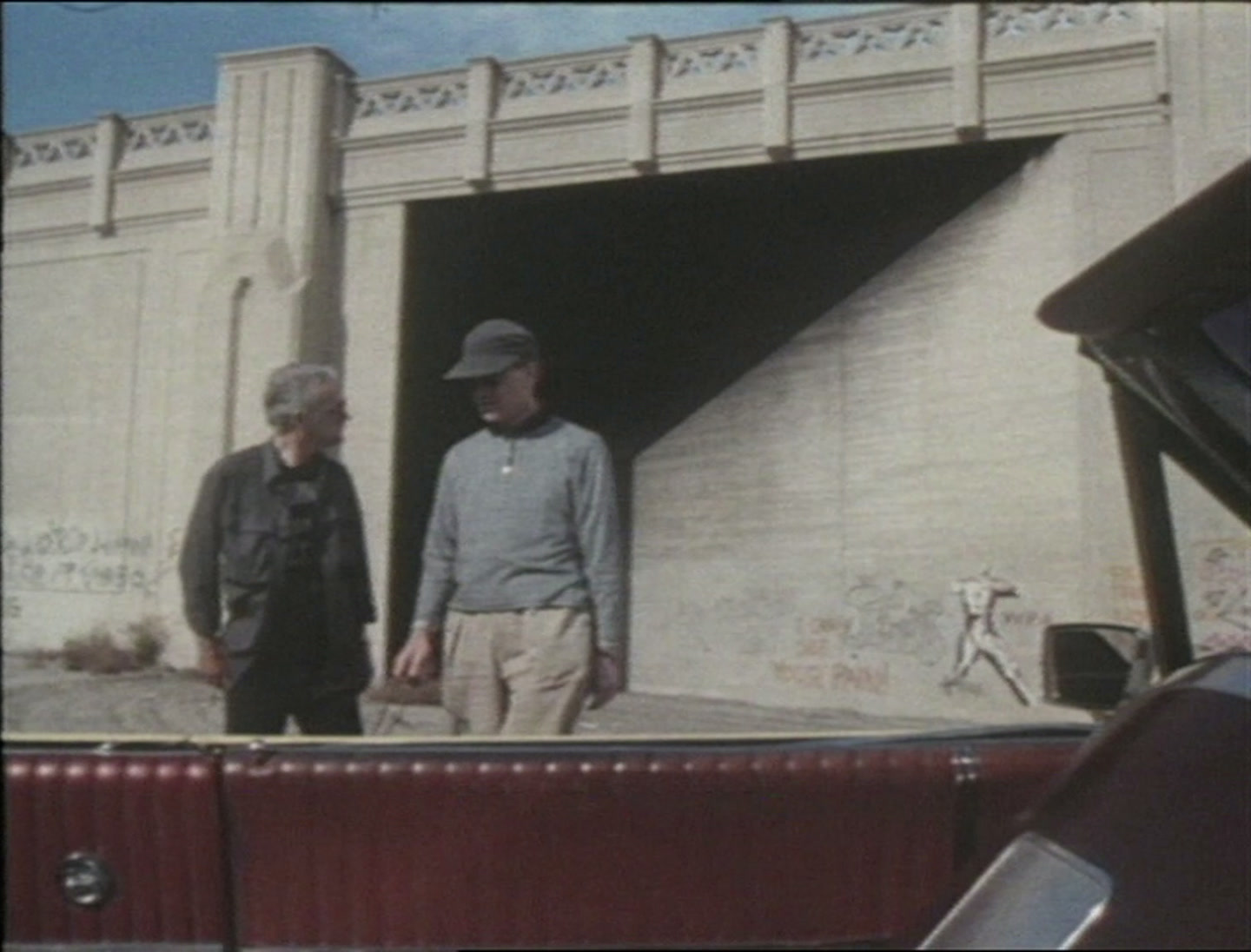
The Cinéma, de notre temps extract follows Lynch and Jack Nance through Los Angeles. The return to a tunnel and the act of photographing a location place present-day movement beside remembered film space. The extract is a later visit, rather than footage documenting the original shoot.
The Greystone reunion · Pretty as a Picture
Lynch, Nance, Stewart and Coulson revisit the working spaces in the extract from Toby Keeler’s documentary, released in 1997. Their accounts overlap, disagree and qualify one another. Hot water, cold performers and the number of takes (2:24–5:37) are especially useful examples of production memory being reconstructed together.
Eraserhead Stories · 2001

Lynch’s extended account moves between recollection, photographs and working materials. Its opening distinguishes the Philadelphia origins of the film’s imagination from a date he cannot retrieve for the first idea. At 7:09–11:55, he describes the abandoned Gardenback project, his wish to leave AFI and Frank Daniel’s support for Eraserhead. His account of Daniel’s institutional dispute is explicitly a story later told to him by Daniel’s son.
At 21:35–27:11, the emphasis shifts to physical resources: salvaged studio flats, newspaper repairs, borrowed props and movable sound blankets. The working world of the film was assembled from these ordinary materials. Photographs throughout the programme offer a second route into that history, alongside the spoken recollections. Follow sound blankets and magnetic stock (25:55–27:11; 72:14–76:28), the radiator-stage account (66:29–69:07), and the Filmex edit (78:10–80:41). At 82:16–83:24, Lynch also explains the origin of the Nuart thank-you shown below.
Outline, appearance and the working crew · 3 images
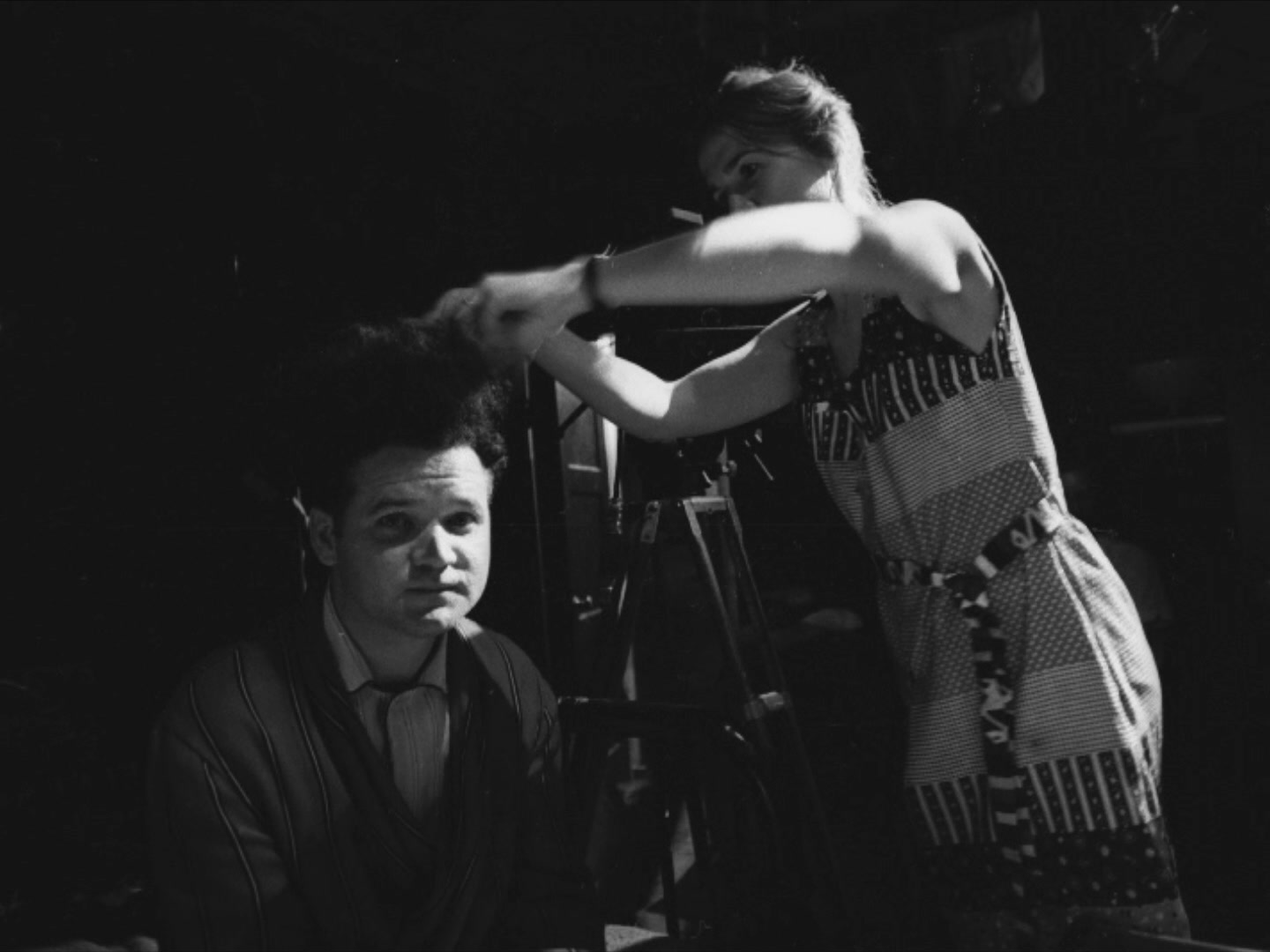
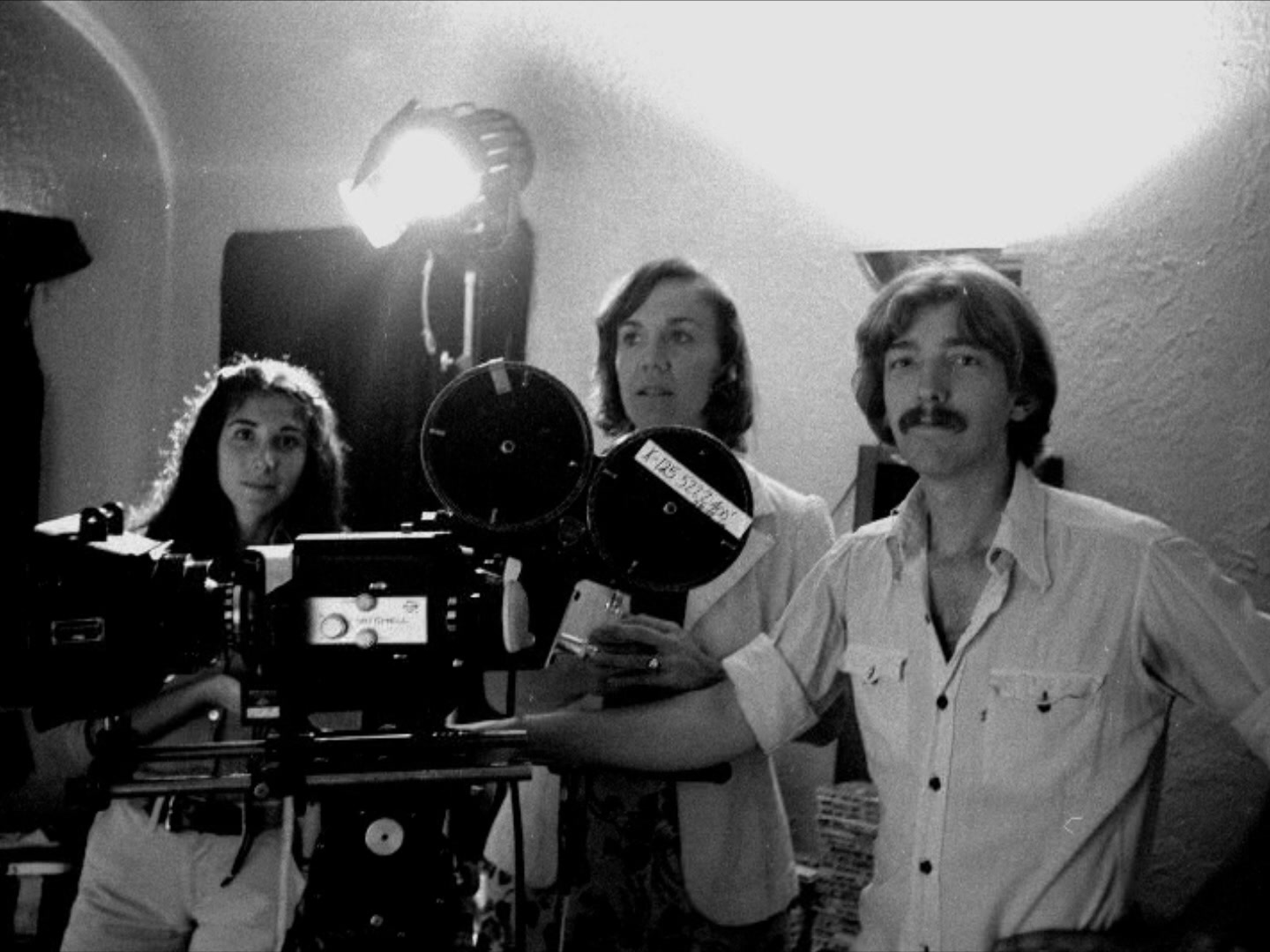
Cast and crew · 2014
Criterion’s interviews bring together Catherine Coulson, Charlotte Stewart, Judith Roberts and Frederick Elmes. Follow Stewart’s suitcase performance (6:13–8:16), Coulson and Elmes on fabric, paint and darkness (15:31–17:33), and Coulson on the working night and recorded effects (4:44–5:01; 19:18–20:07). The speakers’ different jobs make these accounts complementary.
Inviting the audience · 1977 and 1982
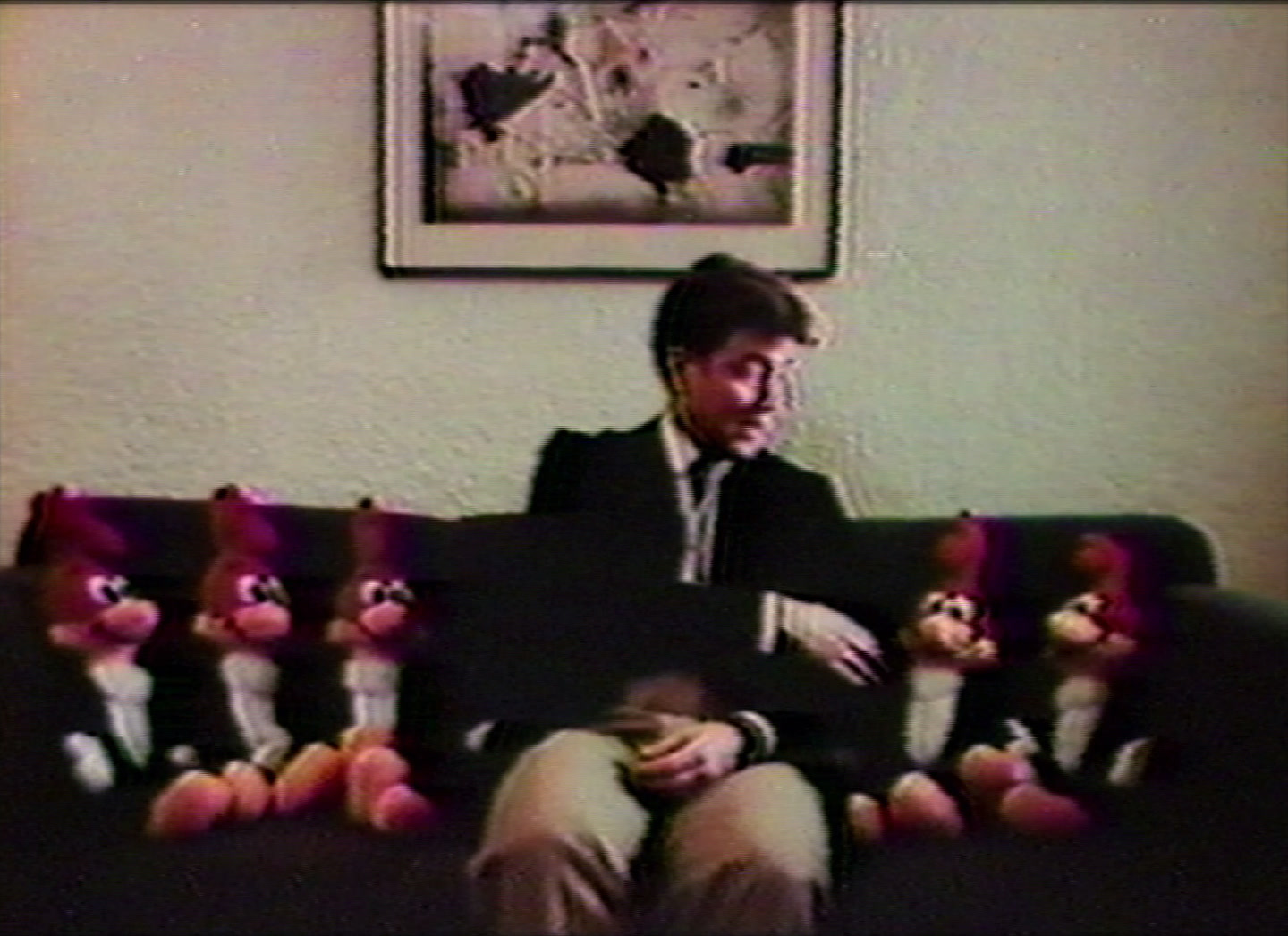
The brief theatrical trailer uses isolated film images and darkness. The 1982 Nuart thank-you places Lynch on a couch with Woody Woodpecker figures, directly addressing the cinema’s audience. These are two distinct ways of presenting the film: a concentrated encounter with its imagery and a personal acknowledgement of the midnight audience that sustained it.
The disc’s short films and introductions have their own illustrated studies →
Production interviews and contemporary criticism
Eleven additional records, ER-023 through ER-033, supplement the initial twenty-two. The record classifications distinguish original testimony, institutional film records, museum objects and secondary research leads.
ER-023 / Primary craft interview
British Cinematographer / Frederick Elmes (2026) ↗
Original cinematography testimony: lighting, AFI negative, Kodak stock, in-camera optical effects, Cassavetes hiatus, set boundaries
ER-024 / Primary craft interview
Reverse Shot / Frederick Elmes (2024) ↗
First-person technical evidence: wall sconces, near-black shadows, strict non-spill lighting, cloudy-only Los Angeles exteriors
ER-025 / Primary cast and crew interview
Pure Movies / Catherine E. Coulson (published 2017) ↗
First-person testimony: styled Henry’s hair, worked camera and lighting, photographed the shoot, contributed funding, details of unfilmed nurse role
ER-026 / Museum object / original production photographs
Sacred Bones / Coulson production print set ↗
Eleven- and twelve-photo 8-by-10-inch print variants; photos credited to Catherine Coulson; physical material from Lynch warehouse
ER-027 / Museum object / period distribution
Sacred Bones / original Libra Films promo prints ↗
Contemporary promotional prints associated with Libra Films, offered from Lynch’s warehouse and personal holdings
ER-028 / Museum object / authorized later reproduction
Sacred Bones / official Libra reprint ↗
22-by-17-inch official reprint of the Libra poster, explicitly distinct from an original release-period print
ER-029 / Institutional film history
AFI Catalog / contemporary press and French retitle ↗
Variety 1981 Labyrinth Man account; newspaper inventory for 1977–85; Academy production paperwork and song title
ER-030 / Government film registration
French CNC / visa 53239 ↗
French classification date, recorded release information and current distributor timeline; compare differing release accounts
ER-031 / Institutional secondary source
Wisconsin Cinematheque / Eraserhead (2025) ↗
Scholarly synthesis of the production’s practical materials; credits Doreen Small testimony on umbilical cords
ER-032 / Research lead to verify against originals
Cornwall CAST / introduction to Eraserhead ↗
Secondary account of reclaimed sets, Doreen Small’s flea-market sourcing, family-sourced humidifier and practical effects collection
ER-033 / Museum object / documented sale
Filmex 1977 poster and publicity photograph lot ↗
Heritage 2023 auction with original mini-poster and four glossy photographs, including one with verso snipe
Sources ER-034 through ER-046
Thirteen distinct additional bibliographic and collecting records, extending the earlier ER-001–ER-033 index. Each record labels its kind of evidence. A publisher, collector or forum account is not automatically equivalent to a physical print inspection or an interview with the original artist.
ER-034
Jared Lyon: David Lynch Phone Booth Archives ↗
Firsthand digital-reconstruction research. Detailed account of original DavidLynch.com booth number 6, DVD title-four code, deleted scene and contemporaneous site interface.
ER-035
March 2025: the reported return of the lost electrical-room clip ↗
Community recovery report. Contemporary report and witness discussion of recovered video; source of original digital file and integrity are not independently established.
ER-036
Twin Peaks Gazette: Eraserhead DVD Review ↗
Owner account published online in 2017. Early-DVD review identifying original 20-page booklet, story outline, promotional material, disc Easter egg, 8-inch box and animated deleted-scene menu.
ER-037
DVD Exotica: Eraserhead and Lynch’s Short Films ↗
Comparative physical-media study. Physical side-by-side comparison of 2003 box editions, later DVD and Criterion HD releases, including packaging differences.
ER-038
1977 Filmex world-premiere programme: photographed page ↗
Period programme scan (community transcription needed). A 2026 community-posted image of the original Filmex programme; should be independently checked against an institutional original.
ER-039
French Labyrinth Man poster, 120 × 160 cm ↗
French physical poster reference. Dealer attributes original French folded poster to 1980 first release; compare 1981 French reissue noted in AFI before assuming one campaign.
ER-040
Film on Paper: Eraserhead Japanese B2, 1981 ↗
Japanese poster bibliography. Bibliographic listing records Japanese 1981 poster, B2 format and artwork with designer unidentified.
ER-041
Japan Movie Poster: B2 first-release example ↗
Japanese physical poster inventory. Object record for 51 × 73 cm silver-ink Japanese B2, condition notes and photographed surfaces; individual seller claims require provenance.
ER-042
Sacred Bones: Mary X photographic poster ↗
Prop-derived printed artwork. Poster reproducing the image of Mary X in Henry’s world; publisher states size 27.5 × 19 inches and estate/warehouse provenance.
ER-043
Sacred Bones: Eraserhead DVD 2000 Poster ↗
Early digital-era promotion. Promotional poster for Lynch’s DVD 2000 release; publisher dimensions contain a likely data-entry error (232 × 17 inches) requiring measurement.
ER-044
Claire Henry: Eraserhead, BFI Film Classics (2023) ↗
Scholarly source / acquisition. Official publisher listing: original archival research, Philadelphia and LA production, midnight cinema reception, 120 pages and 50 monochrome illustrations.
ER-045
Sacred Bones: Eraserhead French Paperback ↗
Olivier Smolders’ French-language Eraserhead: Un Film de David Lynch, offered among Lynch’s warehouse books.
ER-046
Turner Classic Movies: Eraserhead ↗
Secondary overview and production leads. A convenient overview including Jack Fisk, Sissy Spacek and early funding stories; follow claims to crew interviews before treating them as primary evidence.
Source records: production and physical editions
Twelve additional entries ER-047–ER-058 extend the previous ER-001–ER-046 collection. Record dates distinguish when testimony was given from when it was published or reissued; rights and archival availability are separate from evidential strength.
ER-047 / PRIMARY ORAL-HISTORY COMPILATION
Kenneth George Godwin, Eraserhead: The David Lynch Files, Vol. 1 ↗
1981 interviews; 1984 Cinefantastique article; 2020 collected book. Collects original Lynch and crew interviews; primary recollections transcribed and published by Godwin. Printed and digital page numbering differs.
ER-048 / PERIOD PRINTED MAGAZINE
Cinefantastique Vol. 14 nos. 4–5 (September 1984) ↗
Original 1984 production dossier and critical appreciation. Bibliographic evidence for the illustrated issue containing Godwin’s 28-page making-of and four-page critical piece; obtain full physical issue for spreads, captions and advertisements.
ER-049 / FIRSTHAND CRAFT TESTIMONY
Jack Fisk interviewed by Dazed, 2016 ↗
Man in the Planet casting and makeup. Fisk recalls Splet being first choice, the last-minute substitution and the painful beard makeup material.
ER-050 / FIRSTHAND PERFORMER INTERVIEW
Charlotte Stewart interviewed by 25 Years Later, 2018 ↗
Casting, physical movement, work schedule, continuity. Roommate Doreen Small brought Stewart to the film; filming overlapped television commitments. Stewart describes an abandoned roller-skate practical effect.
ER-051 / FIRSTHAND PERFORMER INTERVIEW
Judith Anna Roberts interviewed by Fangoria, 2022 ↗
Organic effects and handmade miniature poultry. Roberts recalls Lynch hand-making the baby and small chicken props and does not name the specific infant fabrication process.
ER-052 / FIRSTHAND CINEMATOGRAPHY INTERVIEW
Frederick Elmes, British Cinematographer, 2026 ↗
Film stock, space/lighting, set arrangements and labor. Elmes describes selective lighting, Kodak black-and-white short ends, rejected prop repositioning and the shoot’s stop-and-start financial pattern.
ER-053 / INSTITUTIONAL ARCHIVE INVENTORY
Academy Film Archive: David Lynch Collection ↗
Collection received 2007; approximately 660 film/audio items. Separate from the Margaret Herrick Library’s paper collections; contains Eraserhead film materials and other Lynch holdings. Specific public catalogue records were located in the follow-up: feature W093154 ↗ and trims and outs M59001 ↗. Catalogue inspection does not establish the contents or accessibility of unseen elements.
ER-054 / 2003 PHYSICAL-MEDIA REVIEW
DVD Talk: Eraserhead disc and oversized box, 2003 ↗
Booklet and original digital-release packaging. Contemporary reviewer describes an 18-page booklet with an excerpt from the original outline and photographed/sketched materials; later review says 20 pages. The owner-supplied scan examined here has 20 sides including the outer covers, with 18 between them.
ER-055 / ALTERNATIVE FIRST-PERSON INTERVIEW
Charlotte Stewart interviewed in Pop Culture Classics (2016), archived by Joni Mitchell ↗
Continuity while concurrently acting on TV. Independent Stewart interview corroborates years of intermittent night shooting around network-series production.
ER-056 / SECONDARY HISTORY TO CORRECT
Turner Classic Movies: Eraserhead profile ↗
Cardwell chronology discrepancy. Says Cardwell died during production; conflicts with Lynch’s first-person account of his departure for a paid commercial. Correct this in the historiography ledger.
ER-057 / 1982 LYNCH INTERVIEW TRANSCRIPTION
Heavy Metal / 1982: Lynch interview — archived transcription ↗
21-page script and how it evolved. Archived transcription describing the manuscript as image-and-diagram shorthand; check original 1982 printing before relying on exact wording.
ER-058 / LOCATION EVIDENCE LEAD
Film Oblivion: Eraserhead location comparisons ↗
AFI stables, downtown exterior, Beverly Center construction site. Geographic research lead with screen references; secondary coordinates need on-site or archival production verification.
Sources ER-059 to ER-073
These fifteen accession records extend the initial ER-001 through ER-058 series. The oral-history chapters have their own dated witness/source-part records, even where they share the same 2020 printed source. Source records do not imply all physical originals have been acquired.
ER-059 / UNIVERSITY-HOSTED BOOK
Godwin’s 2020 Eraserhead electronic edition ↗
New Bulgarian University course-resource copy, 248 PDF pages; primary interview transcriptions from December 1981, original making-of text and original interpretation. Edition declares it may be abridged compared with print. Research access only; not licensed to republish entire text.
ER-060 / CITY ARCHIVE
City of Beverly Hills: History of Greystone ↗
Municipal timeline, architecture, estate grounds, ownership transitions and park dedication; useful to prevent erroneous identification of the mansion as every film location.
ER-061 / MUNICIPAL SITE RECORD
City of Beverly Hills: About Greystone ↗
Confirms 905 Loma Vista as the park’s public entry; estate location and mansion administration are different from the production’s stables/carriage buildings.
ER-062 / ILLUSTRATED LOCATION SURVEY
Film Oblivion: Eraserhead (1977) locations ↗
Secondary screen-to-location comparison: Doheny Road Carriage House, S. Santa Fe tunnel, Beverly Center construction site. Ground coordinates/angles await primary verification.
ER-063 / DIGITIZED PRIMARY OBJECT
Wikimedia Commons: Filmex 1977 premiere poster ↗
2270-by-2932 scan traceable to Heritage lot 86337; online US public-domain status asserted by uploader, not a substitute for independent rights review.
ER-064 / DIGITIZED FILM PUBLICITY STILL
Wikimedia Commons: Mary feeds the infant ↗
Single Charlotte Stewart publicity frame cropped from Heritage lot material, distinct from poster graphic and Coulson’s later photo set.
ER-065 / DIGITIZED FILM PUBLICITY STILL
Wikimedia Commons: infant close-up ↗
Another cropped publicity still sourced from the same Heritage lot. Distinguish publication, capture, crop, and photographer credit.
ER-066 / DIGITIZED DISTRIBUTION POSTER
Wikimedia Commons: Libra Films Eraserhead poster ↗
1786-by-2354 digitization of Libra Films art. Different printed campaign artifact from the Filmex 1977 mini-poster.
ER-067 / COLLECTOR INVENTORY
German Eraserhead pressbook, dealer ref. 27341 ↗
Dealer lists German pressbook in very-good condition; 1977 in listing identifies film date, not verified issue date or copyright.
ER-068 / COLLECTOR INVENTORY
German Eraserhead lobby-card group, dealer ref. 27344 ↗
Dealer records German lobby cards separate from publicity stills; count, individual card dimensions and distribution dates require physical evidence.
ER-069 / COLLECTOR INVENTORY
German Retro Film-Programm, dealer ref. 27342 ↗
Distinct German printed programme, historically listed as sold. Not the same as the pressbook or later American home-video booklet.
ER-070 / PRIMARY TECHNICAL TESTIMONY
Alan Splet interview, December 1981, Godwin transcript ↗
Direct sound-editor account: early fundraising reel, 1975–76 assembly and Cannes submission push, one-third-octave equalization of background ambience, guarded infant-sound methods.
ER-071 / PRIMARY MUSIC TESTIMONY
Peter Ivers interview, December 10 1981, Godwin transcript ↗
Ivers describes introduction through Alan Splet, 1974 spring organ-song recording and loan of a Fats Waller record; session player name is tentative in transcript.
ER-072 / PRIMARY CAMERA TESTIMONY
Frederick Elmes interview, Godwin technical history ↗
Photochemical grade tests, practical star-curtain construction, high-speed Mitchell failure, rushed weekend set builds and camera-speed/lighting anomalies.
ER-073 / PRIMARY CONSTRUCTION & SOURCING TESTIMONY
Catherine Coulson and Doreen Small interviews, Godwin ↗
Furniture from home, objects sourced from Coulson’s aunt Margit Laszlo, tea/coffee-stained bed linens, handmade pudding-and-peas drawer for abandoned scene.
Source addendum: ER-074 to ER-080
ER-074
Criterion / restoration edition and supplements ↗
Publisher record to distinguish the 2014 supervised digital restoration from original production prints and DVD-only supplements.
ER-075
Criterion 2014 first-pressing report ↗
Collector report of accidental black replacement in part of the film and replacement-disc process; exact defect verified independently before labeling copy.
ER-076
INA archive / 1988 documentary ↗
Institutional audiovisual catalogue for Guy Girard’s December 1988 Lynch film, later broadcast on ARTE; compare archive ID and full programme metadata.
ER-077
Criterion / Lynch and Nance location visit ↗
Short excerpt included in Criterion supplements, historically distinct from 1979 Lynch/Elmes discussion and the reunion from the 1997 documentary.
ER-078
Village Voice/period-review bibliography ↗
AFI source inventory indexes print review dates. Retrieve actual period clipping before recording article wording or judgment.
ER-079
Coulson stills publisher index ↗
Primary commercial listing of distinct photo prints attributed to Coulson, with publisher image gallery.
ER-080
Documented premiere publicity lot ↗
Auction provenance and photographs of mini-poster and publicity stills; the sold-lot price applies to five-piece group, not one still.
Source entries ER-081–ER-087
Seven entries with overlapping subject matter. The quote and subtitle sites may share an underlying transcript and are not independent corroboration. Their functions are: film dialogue, later transcript, creative testimony, music-format documentation and graphic motif scholarship.
ER-081
Eraserhead theatrical dialogue/character quote reference ↗
Third-party quote transcript renders the named LaPelle’s Factory and Mr. X’s plumbing occupation; not an original screenplay or corporate logo record.
ER-082
Eraserhead caption/subtitle transcription (later remaster) ↗
Reproduces dialogue including LaPelle; unauthorized uploads may have variable transcription and timings; frame and spelling should be compared with Criterion release.
ER-083
David Johnson: Eraserhead Annotated Script, later film transcription ↗
The 31-page PDF’s first page was checked on 15 October 2026: it credits Johnson with transcription and annotations. This establishes the document’s stated authorship, not authentication of Lynch’s original production screenplay. The complete transcription was not reviewed against the film. Location/prop candidates derived from it need direct film-frame corroboration.
ER-084
BFI Sight & Sound: David Lynch, motifs and doubles ↗
BFI compares the Eraserhead floor, Twin Peaks Red Room and Cocteau’s Orphée, without establishing direct borrowing or direction of influence.
ER-085
Room to Dream excerpt: original studio liquidation ↗
Director’s recollection of purchasing radiator, flats, nails, wire and backdrop from a closing Sunset Boulevard studio, and of Charlotte Stewart creating Henry’s first-night hair silhouette.
ER-086
I.R.S. soundtrack album track and matrix documentation ↗
Discography gives catalog SP 70027 and matrix SP 070027-A/B. Compositions excerpted in the continuous soundscape are not the same as discrete timed tracks.
ER-087
Sacred Bones: soundtrack deluxe track format ↗
Official reissue distinguishes Side A and Side B from the added In Heaven and Pete’s Boogie; includes physical-insert information.
Source records ER-088–ER-096
Nine new source records supporting exhibition history, home-video, restoration analysis, contemporary reception and the museum inventory.
ER-088
Primary filmmaker archive: Suzan Pitt biography ↗
Pitt’s official history identifies Asparagus as a companion to Eraserhead for two years at New York’s Waverly and the Nuart in Los Angeles; it is evidence of a circuit pairing, not the precise date of every engagement.
ER-089
Harvard Film Archive: Suzan Pitt filmography ↗
Institutional collection and context for the 1979 animated short Asparagus, important to Eraserhead’s midnight-exhibition ecology.
ER-090
Filmex contemporary review via Los Angeles Times retrospective ↗
Later quotation only.
ER-091
Library of Congress 1982 Betamax print catalog ↗
Institutionally catalogued Betamax, circa 1982, with cassette-box bibliographic and accession evidence. Edition object, not an inference based on modern collector listings.
ER-092
The Criterion Collection restoration and packaging ↗
Publisher source for the modern restoration and supplements; pressings/defects should be documented separately.
ER-093
2014 restoration defect and replacement correspondence ↗
Collector thread cites Criterion’s disclosure that about five seconds were black in the film element scanned, and records the corrective disc programme; direct publisher archival notice remains an acquisition lead.
ER-094
BFI catalogue Eraserhead PDF ↗
Transcribed filmographic information, full credits, and dated British review, useful for source reconciliation.
ER-095
Filmex 1977 original five-piece lot ↗
Auctioned publicity grouping, including 8.5×11 premiere poster and four photos; original period ephemera with identified market provenance.
ER-096
Waverly/Nuart programme chronology in Criterion history ↗
Lynch discusses how midnight-programming and Ben Barenholtz supported the film’s circulation; compare with original print advertising.
Sources ER-097–ER-106
Ten records expand the research catalogue. Some documents introduce a newly identified evidence object; others correct confidence levels and distinguish the original version of evidence from an editorial reprint or collector report.
ER-097 / Primary interview / photographic archive lead
Chris Rodley’s 1993–96 Lynch interviews, published 1997 and excerpted by Criterion in 2014 ↗
Rodley’s question explicitly describes production contact sheets with hundreds of photographs. It does not identify their present custodian; inquire of the Rodley archive, photographer, estate or institutional holder.
ER-098 / Primary filmmaker interview / dating clarification
David Lynch in The Guardian, November 3, 2011 ↗
Lynch locates writing the Eraserhead script after leaving Philadelphia and separates firsthand fear there from the later scripting process.
ER-099 / Institutional screen-credit transcription
AFI Catalog, Eraserhead, full credited cast, crew and special thanks ↗
AFI lists Gill Dennis, Jennifer Chambers Lynch, Peggy Lynch, Doddie Keeler, Toby Keeler, Brad Keeler and others alongside credits for on-screen and potentially cut material; it also transcribes special thanks.
ER-100 / Institutional film-scholar essay
David Sterritt, Eraserhead, Library of Congress National Film Registry essay ↗
Two-page authorized essay includes Sterritt’s recollection of a poor projected print obscuring the final embrace, then his corrective experience at a better cinema.
ER-101 / Institutional HTML reproduction
Library of Congress Now See Hear blog, January 29 2025 ↗
Accessible full-text reprint and institutional contextualization of Sterritt’s essay; separate from the original scholarly essay’s earlier publication.
ER-102 / Archival preservation collection
Academy Film Archive David Lynch Collection, acquired 2007 ↗
Collection-level description. The follow-up located itemized film and sound holdings under W093154 ↗ and M59001 ↗; neither record authenticates an original screenplay or a named deleted scene. See the archive study for inspection limits.
ER-103 / Institutional image/paper archive portal
American Film Institute Archive ↗
AFI photography, print manuscripts, oral histories, scripts and other holdings. General catalogue is a contact route, not proof it owns specific Eraserhead negatives.
ER-104 / Contemporary home-media primary correspondence reproduction
Criterion Forum, September–October 2014 pressing discussion ↗
Collectors quote Criterion’s replacement email concerning about five seconds of missing reaction footage in the restoration scan. Original publisher correspondence would be stronger.
ER-105 / Unique Filmex-period publicity still
Wikimedia Commons: Eraserhead – Henry Spencer.jpg ↗
A distinct Henry portrait from the identified 1977 publicity lot.
ER-106 / Early videocassette library record
Library of Congress catalog: 1977 film, 1982 Columbia Pictures Home Entertainment cassette ↗
Catalog metadata distinguishes film copyright creation, March 19 1977 public exhibition, and 1982 Columbia videocassette issue/registration.
Source records ER-107–ER-118
ER-107 / CRITERION SOURCE VIDEO / UCLA CLASS, 1979
Open source ↗ — Tom Christie recorded a 17-minute interview with Lynch and cinematographer Frederick Elmes at a Los Angeles Eraserhead location, on the site later occupied by the Beverly Center. Primary audiovisual location reference.
ER-108 / CRITERION SOURCE VIDEO / TOBY KEELER REUNION, 1997
Open source ↗ — Approximately 16 minutes of Lynch, Jack Nance, Charlotte Stewart and Catherine Coulson revisiting the former AFI Eraserhead site for Pretty as a Picture. 1997 is the source documentary’s release year; its recording date has not been established here. The reunion is discussed in the production-memory study and disc interview guide.
ER-109 / CRITERION FILM AND SOURCE-FILM COLLECTION
Open source ↗ — Publisher’s original listing places the 1979 film, 1988-shot French television segment, reunion from the 1997 documentary, 2001 Stories and 2014 interviews in chronological evidence groups. Video listing dates are distinct from recording dates.
ER-110 / ANNOTATED GEOGRAPHIC COMPARISON / FILM OBLIVION
Open source ↗ — Separate photo-based identifications for the carriage house at 509 Doheny, downtown Santa Fe tunnel, and 8500 Beverly Center site. Independent call sheet/production map verification still pending.
ER-111 / HISTORIC AMERICAN BUILDINGS SURVEY / ESTATE PHOTOGRAPH INDEX
Open source ↗ — Eleven separate high-resolution Greystone/Doheny Mansion survey photographs from 1984, including a garage and stair hall; photographs of mansion estate do not establish the actual AFI stables stage rooms.
ER-112 / BEVERLY HILLS MUNICIPAL HISTORY
Open source ↗ — Municipal history of Doheny Greystone estate, its purchase and public-park status. Grounds and current civic identity require separation from the AFI production footprint.
ER-113 / SACRED BONES ORIGINAL PUBLISHER GALLERY
Open source ↗ — Publisher’s gallery contains eleven individually illustrated Coulson photographs and a set overview; source-hosted image filenames match the eleven photographic accession records.
ER-114 / WIKIMEDIA COMMONS / ORIGINAL FILMEX SCANS
Open source ↗ — Commons catalogues the Filmex 1977 poster plus four distinct individual stills, derived from a 2023 auction lot. Public-domain assessment is supplied by uploader and must be reviewed separately for commercial use.
ER-115 / Critical interpretation
Catherine S. Cox, Eraserhead, Senses of Cinema, July 2006 ↗ — Essay text inspected for its readings of care, violence and restricted perception. Interpretation is attributed to the critic; its production chronology is not used as independent corroboration of the primary interviews.
ER-116 / British classification records
BBFC: Eraserhead ↗ — Official submission dates, distributors, uses and durations inspected. Film content and frame rates were not independently compared.
ER-117 / French critical text
Gérard Courant: Elephant Man et Eraserhead ↗ — Author-hosted reprint, Cinéma 81, no. 269, May 1981. Full French web text inspected.
ER-118 / Deleted-scene photograph
Academy photograph 70175896 ↗ — Catalogue and public preview inspected. Digital-only holding with uncredited photographer; the identification study retains the catalogue’s qualifications.
Another doorway
Continue exploring
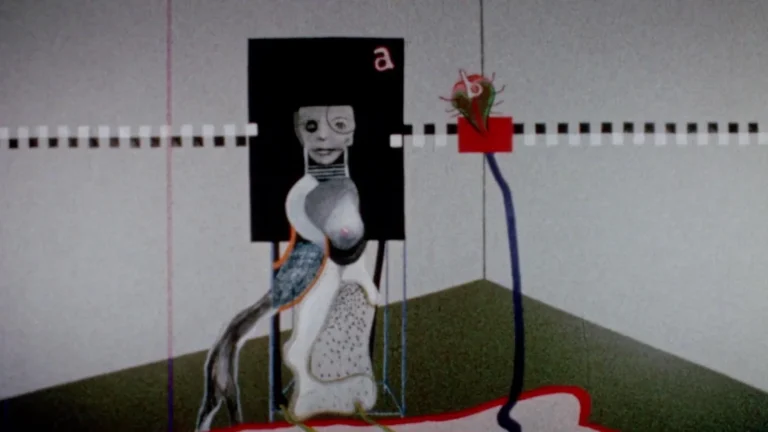
Short films
Short Films
Explore David Lynch’s short films, from The Alphabet to Rabbits and Fire, with production histories, collaborators, sound studies and viewing guides.
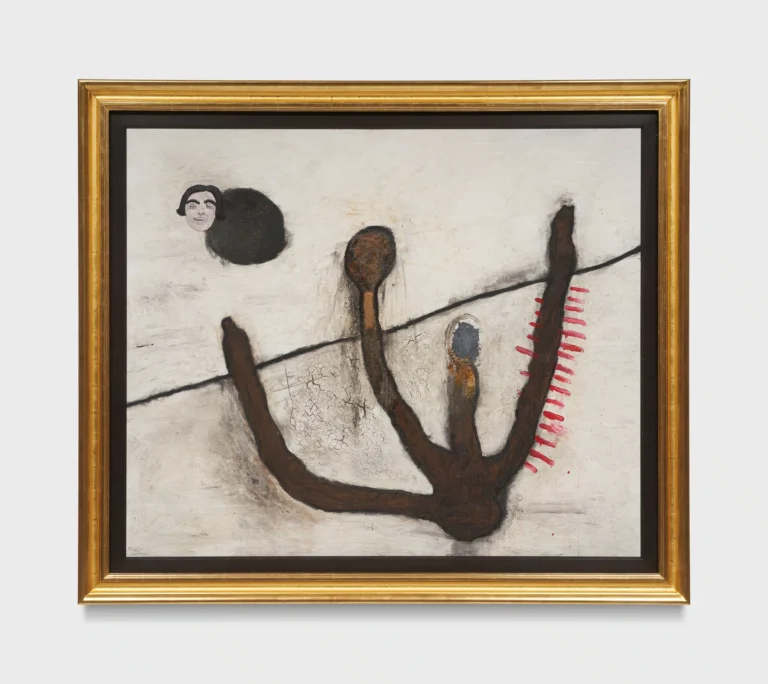
Art
Art
Explore David Lynch’s paintings, lithographs, sculpture and photography through close readings, exhibition histories, credited images and documented sources.

Museum
Museum — The Objects Remain
Explore David Lynch posters, artist editions and LaserDiscs through 35 illustrated records, edition comparisons, object histories and documented research.
Image credits and sources accompany each linked guide.