Short Films
David Lynch / Short films, moving paintings and web experiments
A whole world can fit inside a minute. It can also refuse to leave a room.
David Lynch’s short films turn drawing, performance, sound and repetition into worlds of their own. This dossier follows thirteen selected works and series, from the sculpted screen of Six Men Getting Sick to the interrogation in What Did Jack Do? and the restless surface of Ant Head. Along the way are threatened children, interrupted letters, strangers who cannot communicate, and a household whose laughter offers little reassurance.
These works are worth encountering at their own scale. They also make Lynch’s working methods unusually tangible: a performer remembers the liquid used for a practical effect; a sound collaborator helps turn an air duct into an instrument; an online audience responds while a series is still taking shape. The guide connects those production histories to the images and to the different places in which the works have been shown.
This guide follows Lynch’s short films through their images, stories, collaborators and release histories. Discussion includes disturbing imagery and story details.
Enter through an image
Short films, close up.
Explore the films through scene studies and expandable image sequences. Each still opens for a closer look.
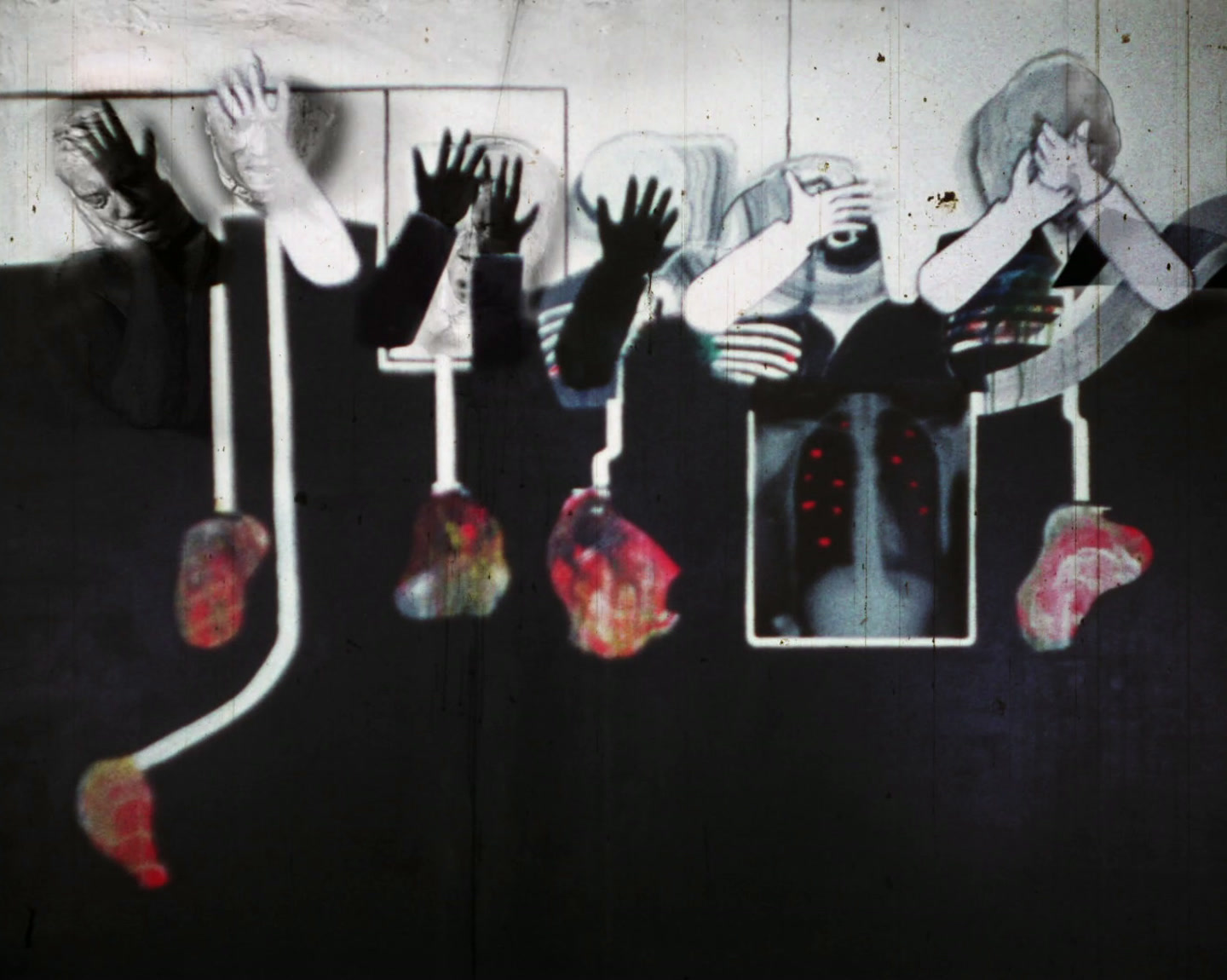
 Six Men Getting SickRelief, animation and repetition
 The AlphabetA lesson becomes a bodily nightmare
 The GrandmotherA child grows someone who will care
 The Amputee · Version 1Letter, treatment and departure
 The Amputee · Version 2A second performance of the same situation
 Premonitions Following an Evil DeedFive spaces in a single camera run
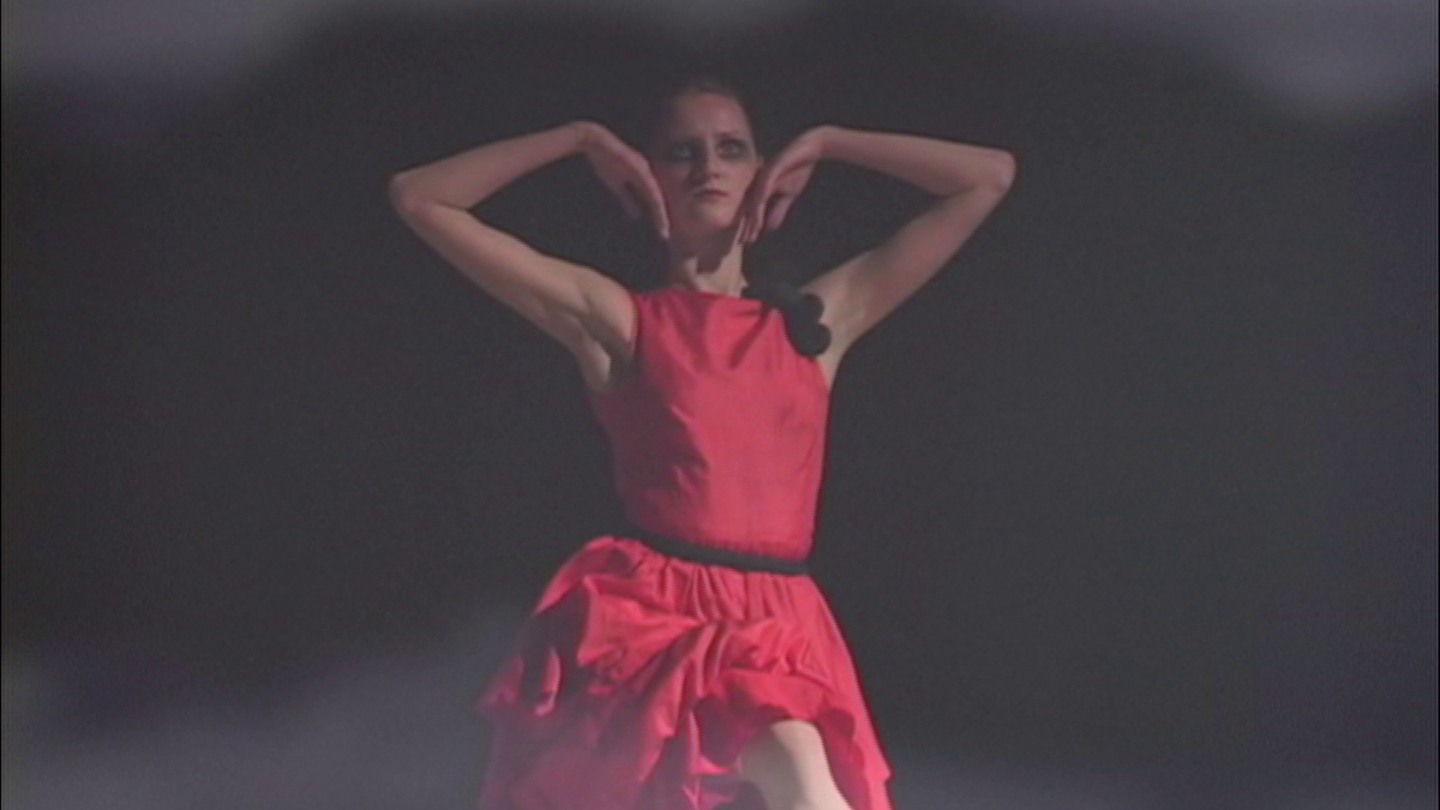 BallerinaA body appears, doubles and dissolves
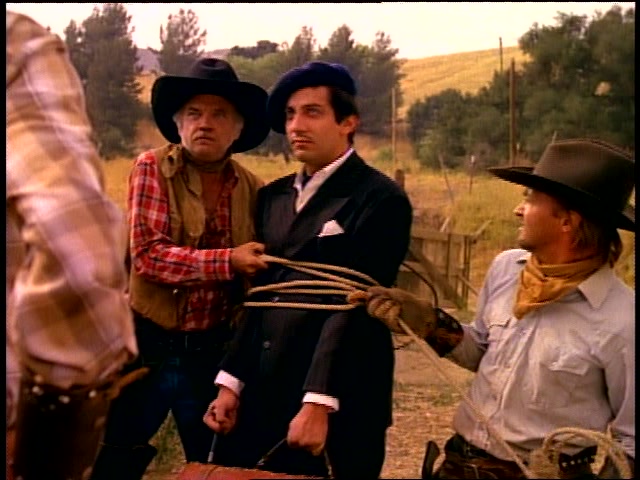 The Cowboy and the FrenchmanFrom capture to a layered musical gathering
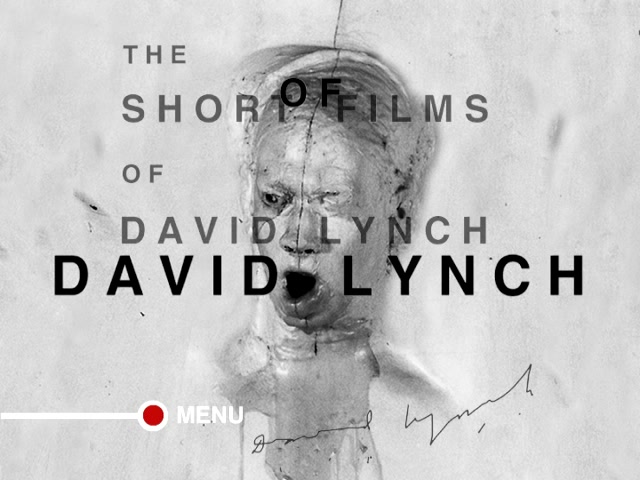 The boxed DVDIntroductions, tape tests and a designed interface
Four ways into a larger world
Painting, bodies, transformation
Start with Six Men Getting Sick and The Alphabet, then stay with The Grandmother. Follow the movement between a drawn body, a photographed performer and a physical surface. Continue into Lynch’s art and Eraserhead.
Comedy under pressure
Move from the divided attention of The Amputee to the misunderstandings of The Cowboy and the Frenchman, the hostility of DumbLand and the unlikely suspect in What Did Jack Do?.
Rooms, repetition, the web
Enter Rabbits and Darkened Room through their original online context. Then follow the separate history of Inland Empire. A shared image does not erase the earlier work’s identity.
Sound gives the image another life
Compare the siren in the installation, Lynch’s account of sound with Alan Splet, the live quartet accompanying Fire (Pożar) and the music behind Ant Head. Continue in the music guide.
Find a work
Dates below follow the identified records. They may describe a work, a commission or a later release. The edition notes preserve important disagreements.
- 1967*Six Men Getting SickInstallation
- 1968The AlphabetAnimation / live action
- 1970The GrandmotherShort film
- 1974The AmputeeTwo versions
- 1988The Cowboy and the FrenchmanComic short
- 1995*Premonitions Following an Evil DeedAnthology
- 2002DumbLandAnimated series
- 2002RabbitsWeb series
- 2002Darkened RoomWeb / compilation
- 2007BallerinaDance / digital image
- 2015Fire (Pożar)Animation / music
- 2017What Did Jack Do?Short film
- 2018Ant HeadMusic-linked short
When a painting acquires time
In his 2007 BAFTA lecture, Lynch recalled a garden painting seeming to move and make a sound. He made a continuously projected work for an experimental painting and sculpture competition. A subsequent commission failed when the camera produced a blurred roll; he then turned to The Alphabet. His account connects material experimentation, an accident and another idea, rather than a pre-planned ascent toward feature filmmaking. [14]
1967 in Criterion’s catalogue / installation
Six Men Getting Sick: a screen with a body
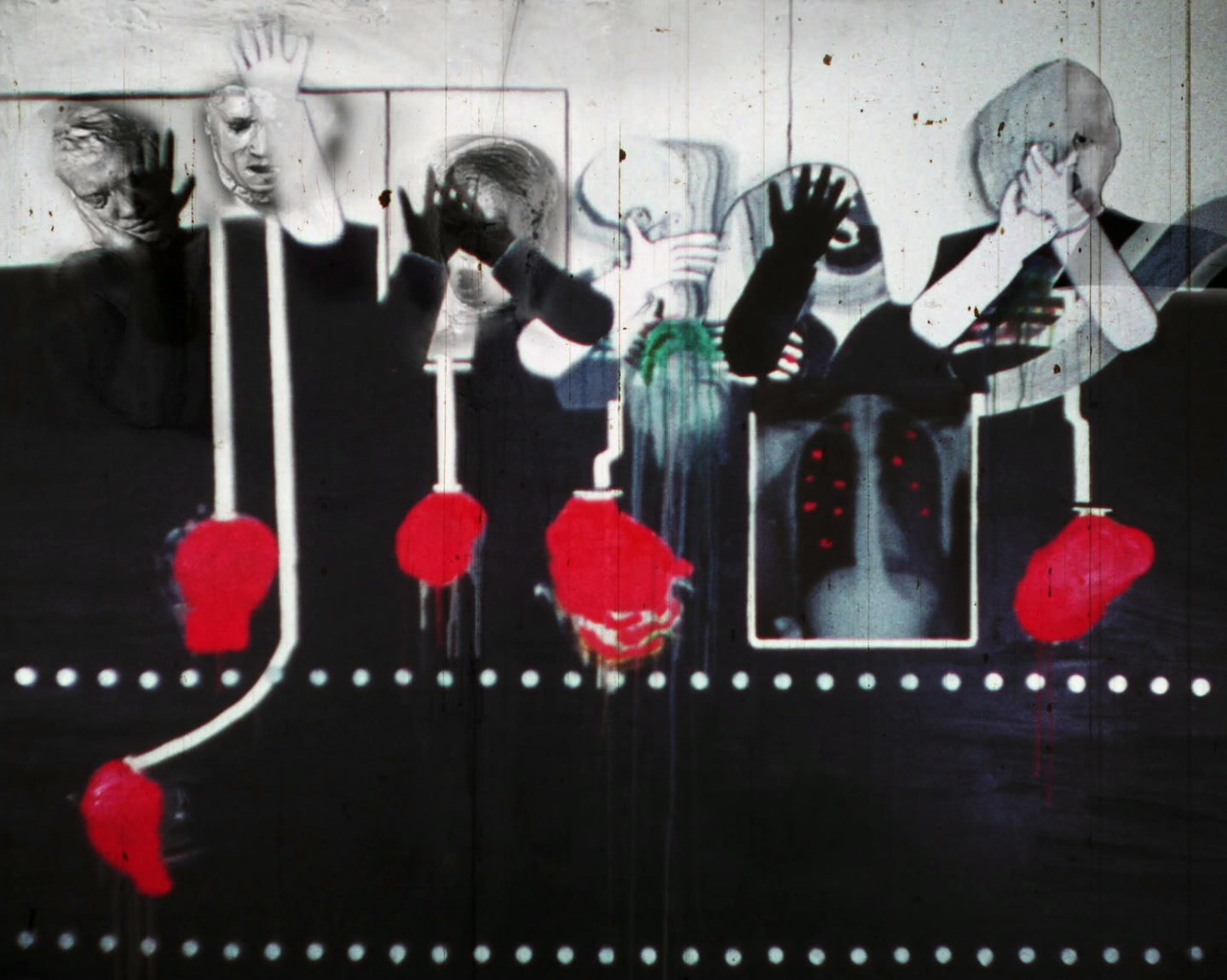
PAFA’s institutional description identifies hand-painted animation projected onto a sculpted screen, with body casts made with Jack Fisk’s help. The sixty-second loop and a repeated siren belong to one combined work. The museum places it in its permanent collection and explicitly describes its identity across painting, sculpture, projection and sound. [1]
A loop gives sickness no satisfactory conclusion. The body seems to empty itself, only to begin again. The title’s bluntness offers little distance from that process. And because the screen has relief, the receiving surface is already bodily before animation reaches it. Film does not simply illustrate an object; the object participates in what the film becomes.
This makes the installation a useful threshold between the art guide and the film archive. A flat recording can preserve visible motion while changing scale, physical depth and the viewer’s position. Its duration may include repeated cycles or surrounding material. PAFA’s one-minute loop and Criterion’s longer streaming presentation therefore answer different questions. [1] [5]
Scene study
A body that cannot finish being sick
The sculpted heads at the left remain physically present while drawn bodies change around them. Lines descend into stomach-like compartments; patches of red make those compartments conspicuous. Hands rise toward the heads, and white streams spread down the surface. The movement ends by preparing its own return. There is no recovery scene waiting beyond the discharge.
The contrast between relief and projection gives the cycle its force. A face can hold its shape while light redraws the body attached to it. The images below follow three phases—filling, agitation and release—without detaching them from the screen on which they happen. Repetition makes the bodily event into the work’s organizing structure.
In his filmed introduction, Lynch recalls wanting a painting to move and make a sound. He describes a sculptured screen, a short animation and a repeating siren. The recording makes that partnership visible, while the installation’s scale and relief remain central to its identity. Film and introduction [27]
Follow the animation · 3 images
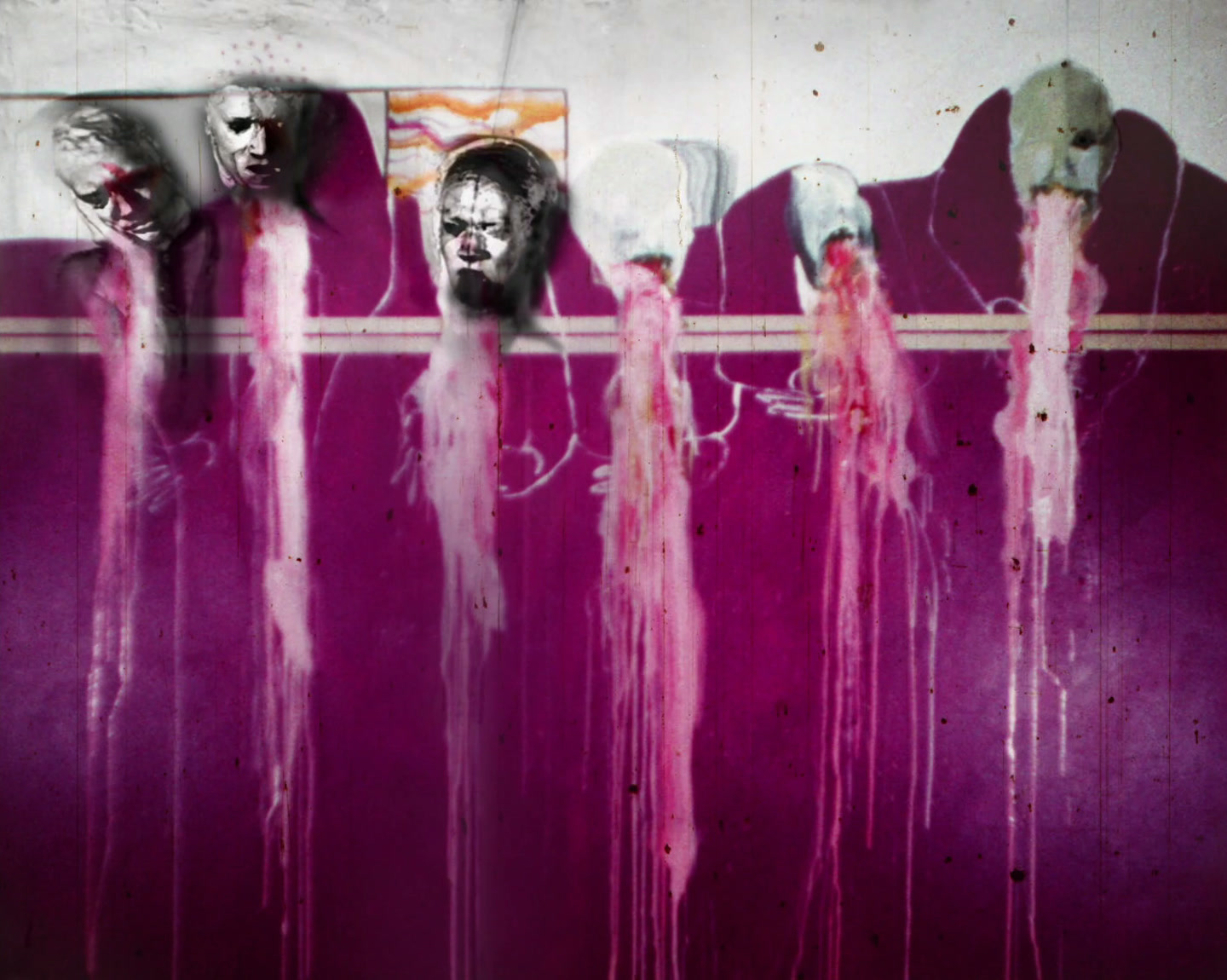
From the boxed DVD
The camera between Six Men and The Alphabet
Lynch’s account of the next commission gives Six Men Getting Sick a less inevitable sequel than a simple filmography suggests. He recalls spending $200 on the installation and wondering whether its expense meant that filmmaking would stop there. H. Barton Wasserman, who had seen the work, then offered $1,000 for a moving-image piece for his home. That support made buying a camera possible.
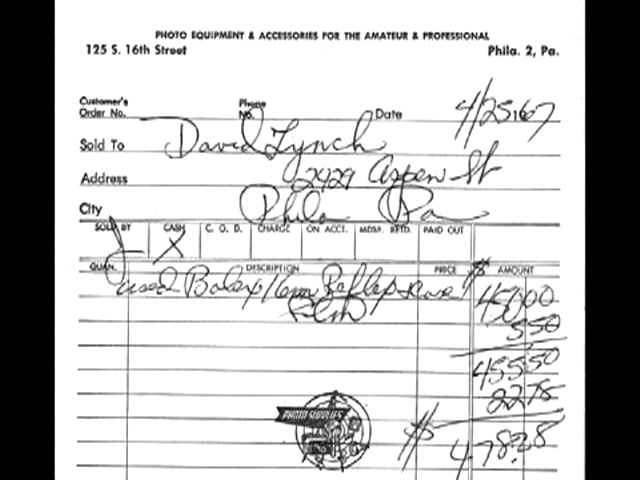
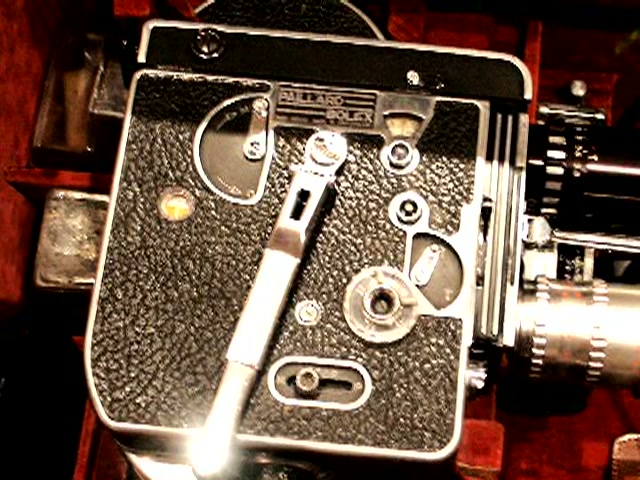
The DVD turns the story into an encounter with an object: Lynch’s Bolex and the purchase receipt appear on screen. He recalls finding the camera at Photorama in Philadelphia, staying awake through the night so he could return when the shop opened, and then spending about two months animating. The proposed work would divide a large screen between live action and animation.
According to Lynch, the developed roll came back as a continuous blur, without the expected frame divisions. Wasserman allowed him to use the remaining money for another film and supply a print. The recollection ends at The Alphabet. The failed commission belongs between the two completed works; it should not be mistaken for an alternate version of either. The receipt and camera make the practical risk of that transition unusually tangible. DVD films, introductions and credits [28]
The camera and its purchase · 2 images
1968 / animation and live action
The Alphabet: a lesson becomes an ordeal
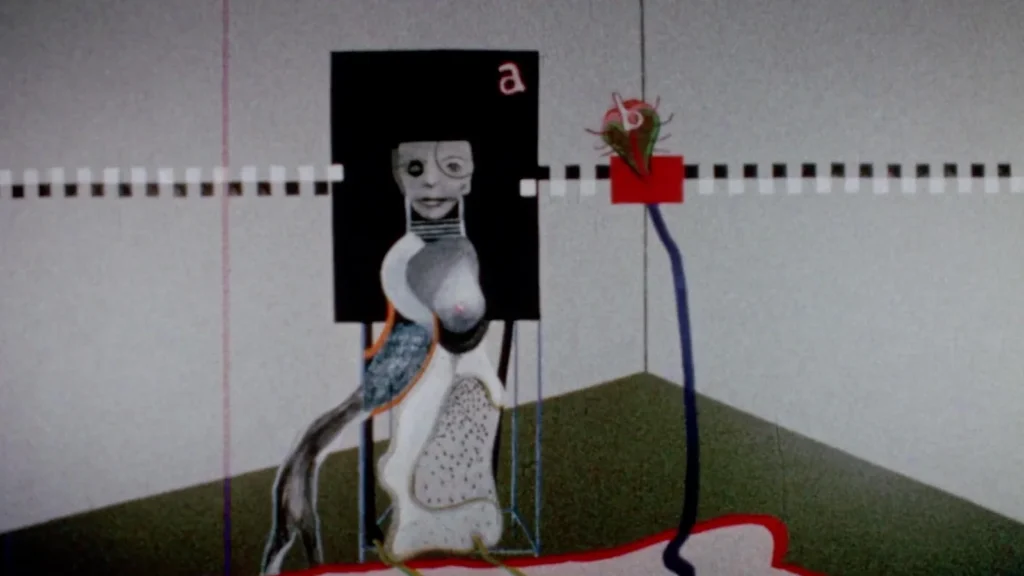
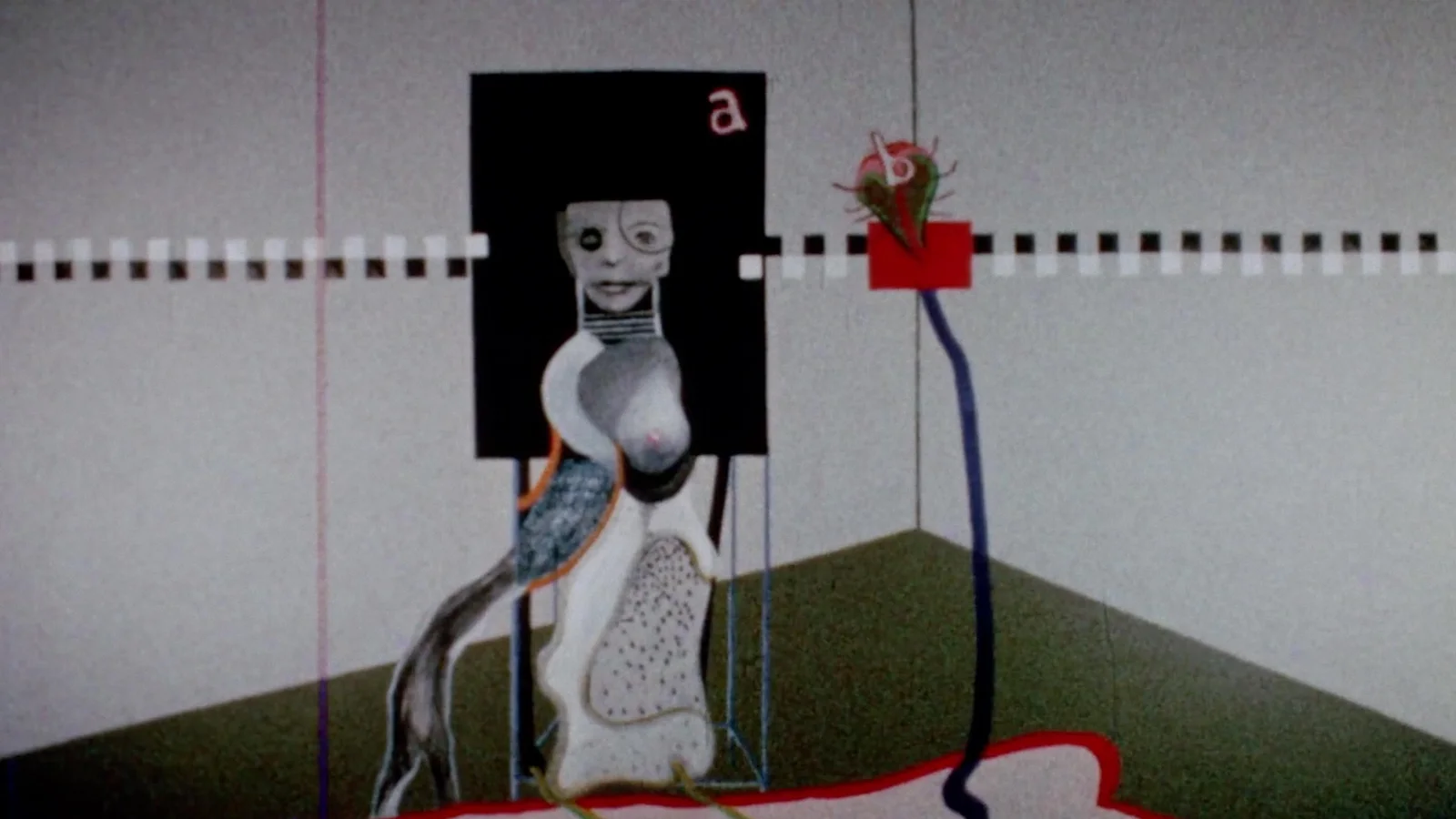
Criterion describes a woman’s nightmare in which the alphabet takes living form. The combination of animation and live action matters more than any single proposed meaning for an individual letter: it allows a sign, a drawn figure and a photographed body to occupy the same short work. [2]
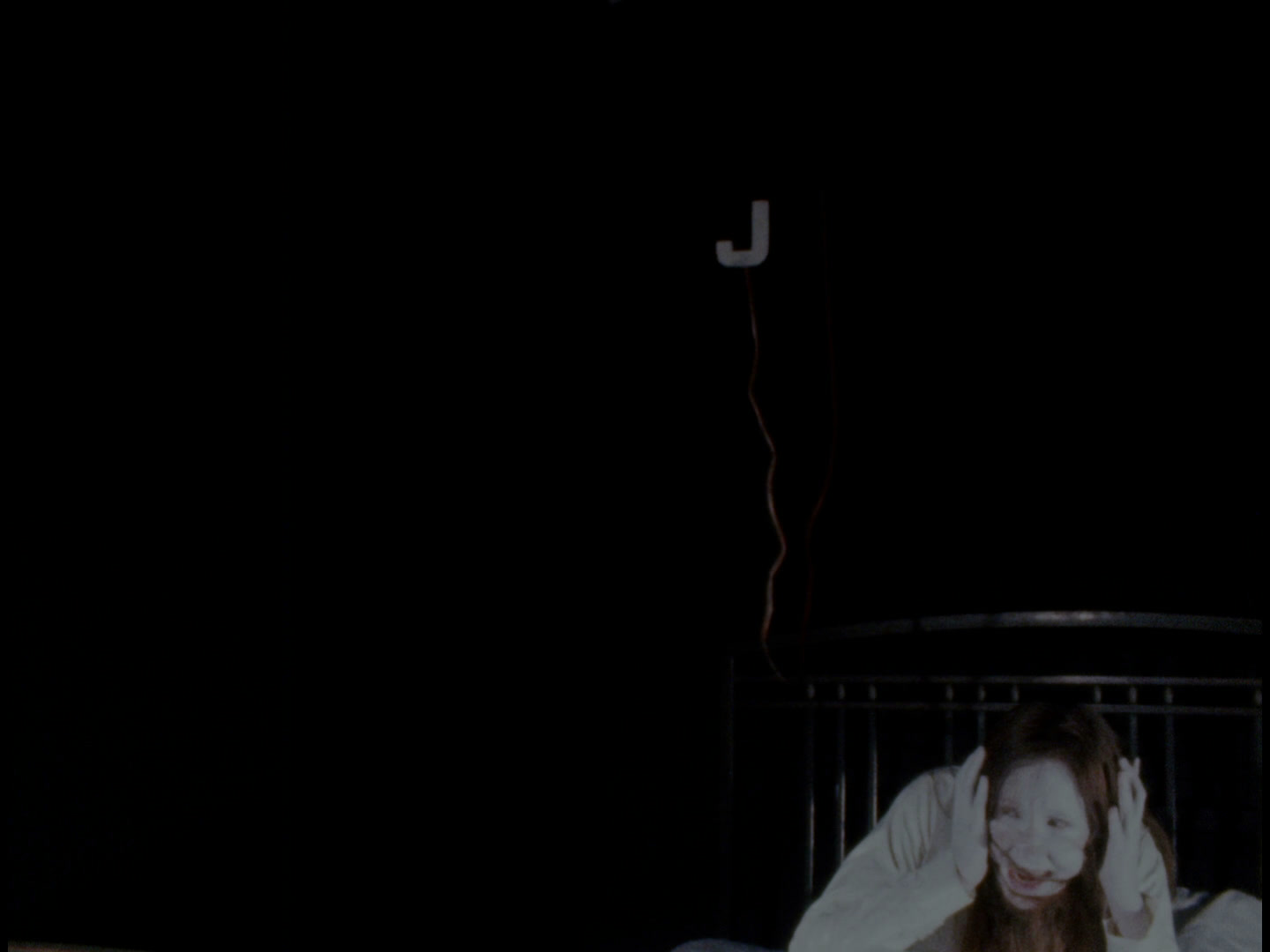
The opening image reproduced above provides a precise visual foothold. Letters float around a rough, constructed figure; straight-edged architecture and checkerboard decoration contain the unstable body. The alphabet looks less like an orderly lesson than a population of objects. A familiar system for making sense of the world has become part of the world’s strangeness.
A performer’s account changes the production story
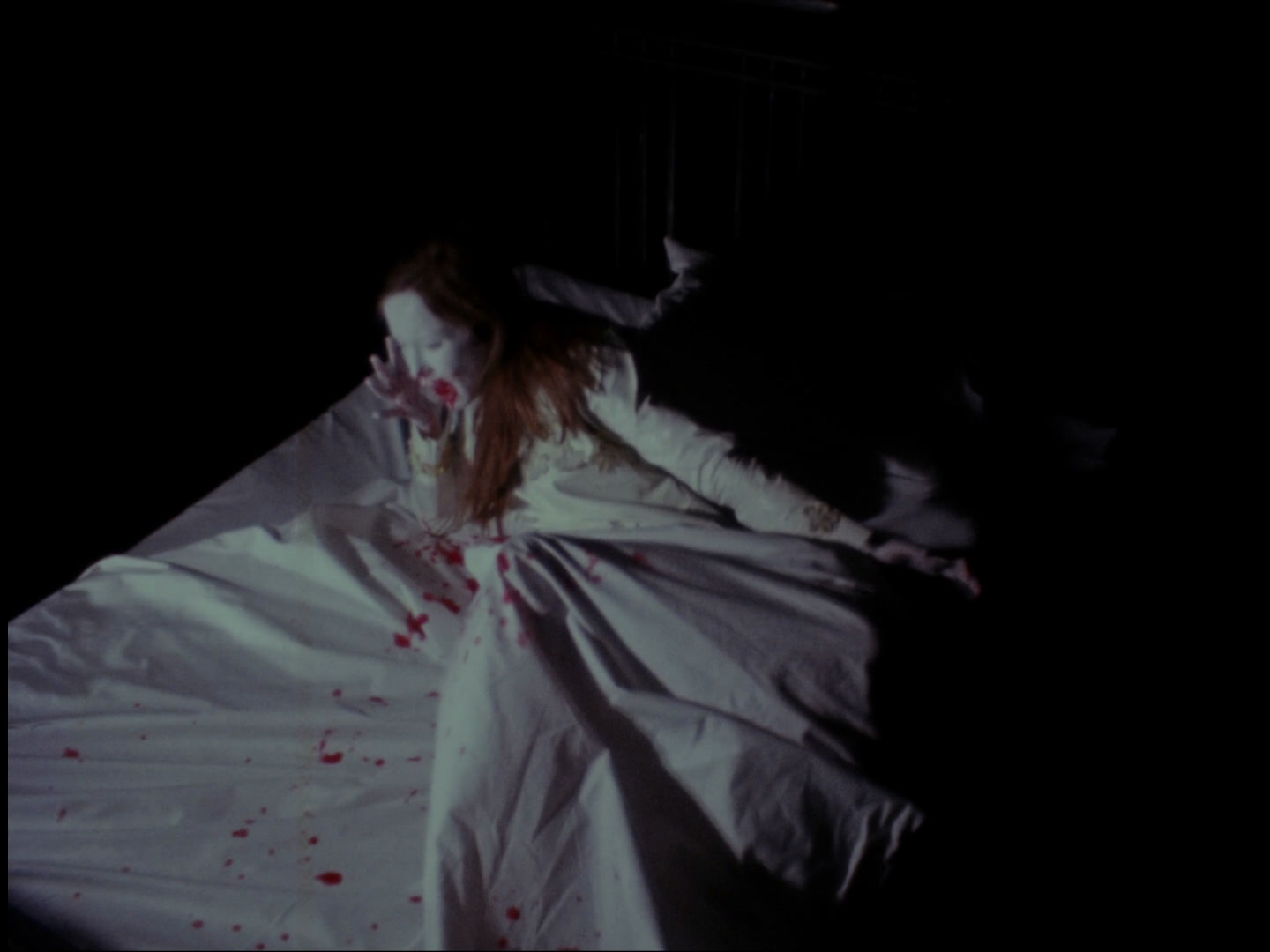
Artist Peggy Reavey recalls performing in a cold house with black bedroom walls, wearing a white vinyl nightgown and white makeup. The red liquid she was directed to spit across the bedding was Kool-Aid mixed with food colouring; she remembers having one take. Her account also distinguishes enjoying the finished film from the experience of being directed, which she contrasts with painting independently. [13]
This testimony moves the discussion from a generalized “nightmare” toward a designed collision of surfaces. The white costume and bedding make a red mark unusually legible; the performer must produce that mark at the required moment. It is an action made by a person under practical conditions, even when the result feels detached from ordinary life. Reavey deserves attention as an artist and participant, not simply a biographical footnote.
Scene study
From a drawn mouth to a living body
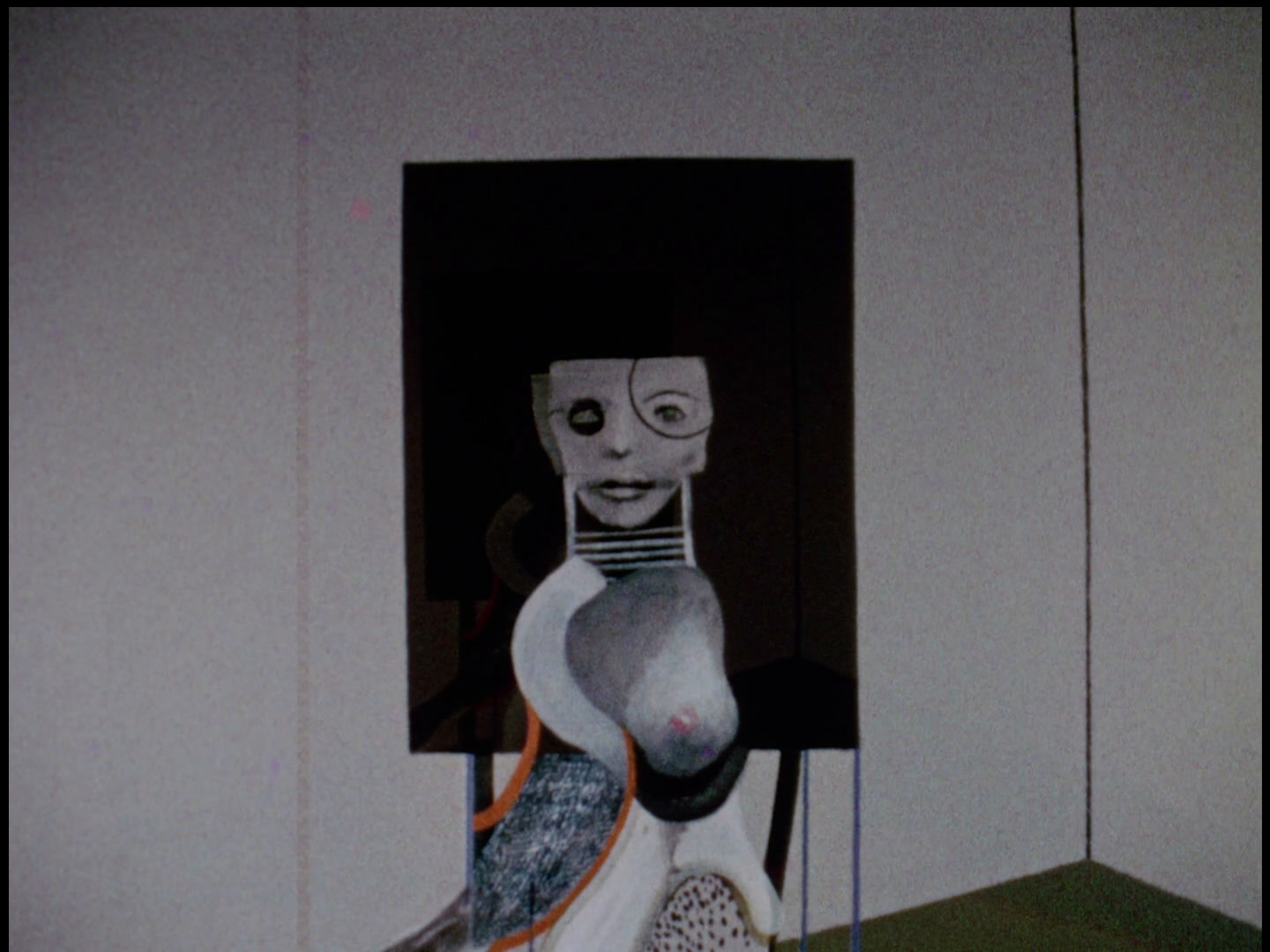
The film keeps changing the material in which its nightmare happens. Letter forms inhabit a drawn space; a seated figure acquires a head and face; the mouth becomes a point of passage. The rigid room and chequered decoration give those transformations something to disturb. Straight edges hold still while the figure’s surface refuses to settle.
The later bedroom passage makes letters physical objects suspended above a performer. A familiar lesson has crossed into the space of a bed. The red mark also changes medium: it travels across the painted face before appearing on the woman and the pale bedding. This connection between animation and a practical action gives Peggy Reavey’s account of the red liquid a precise place in the scene.
Lynch’s introduction traces the idea to Peggy’s account of a niece repeating the alphabet during a nightmare. He describes making his own imagined film from that account. The short’s credits name its performer as Peggy Lynch. The gallery follows the film’s progression through drawing, suspended lettering and the stained bed. Film, credits and introduction [27]
Drawing, letters and the red mark · 4 images
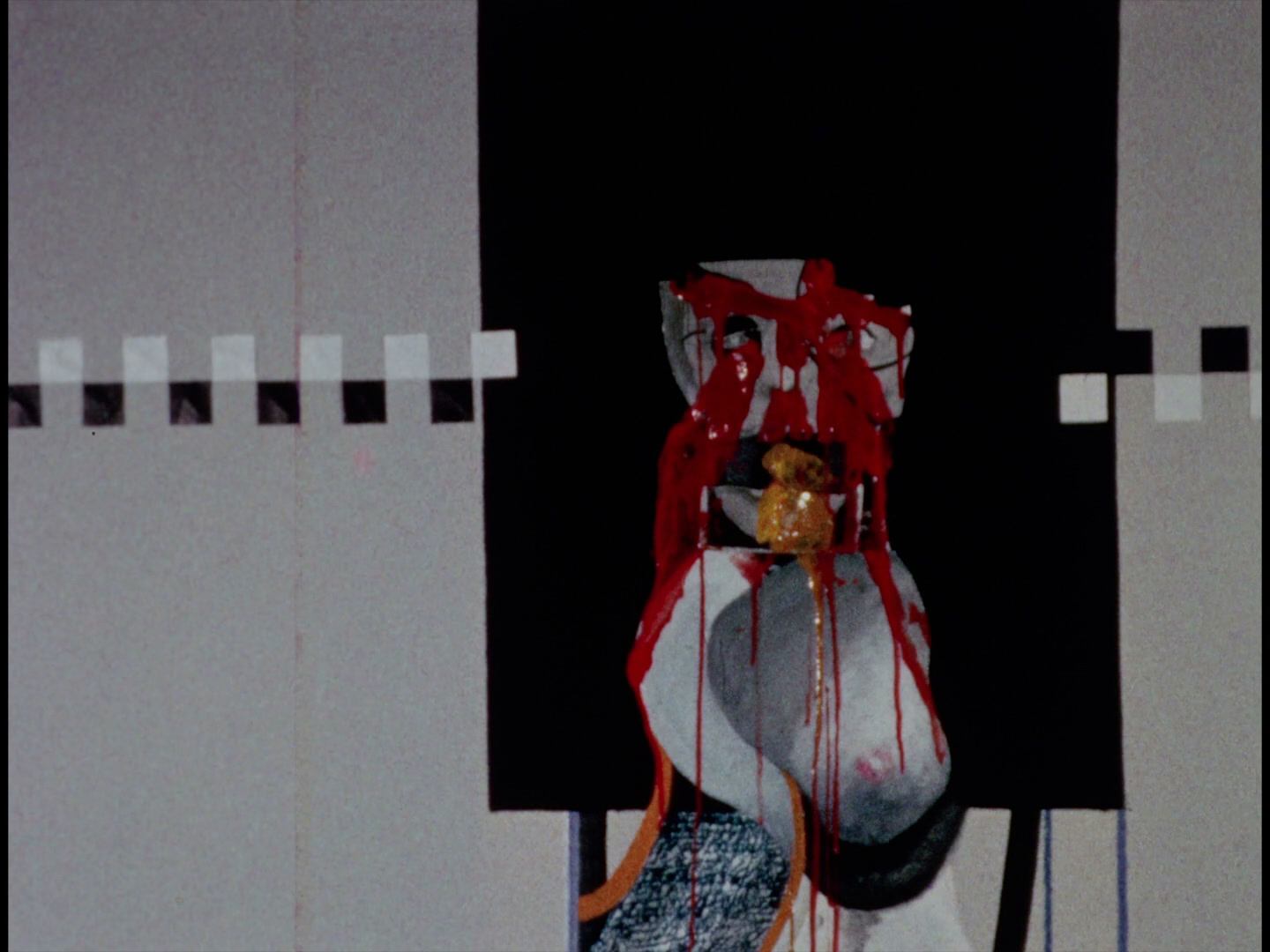
A performer named in the film
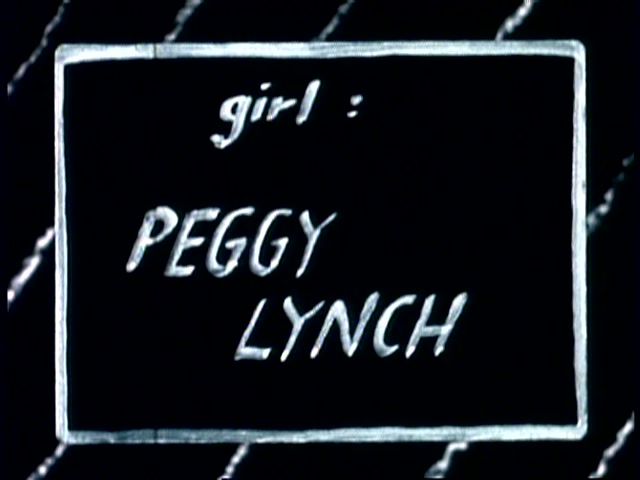
The boxed DVD preserves the credit naming the girl as Peggy Lynch, the name Peggy Reavey used at the time. Read beside her later account of performing the red-liquid action, the card connects the apparently disembodied bedroom nightmare to a credited collaborator. Lynch’s separate introduction attributes the starting incident to the story she told him about her niece’s troubled sleep; the resulting images are his imagined response to that account. The Bolex recollection explains how an unsuccessful commission helped make this next film possible. DVD films, introductions and credits [28]
The performer’s credit · 1 images
1970 / short film / Criterion listing: 34 minutes
The Grandmother: making someone who will care
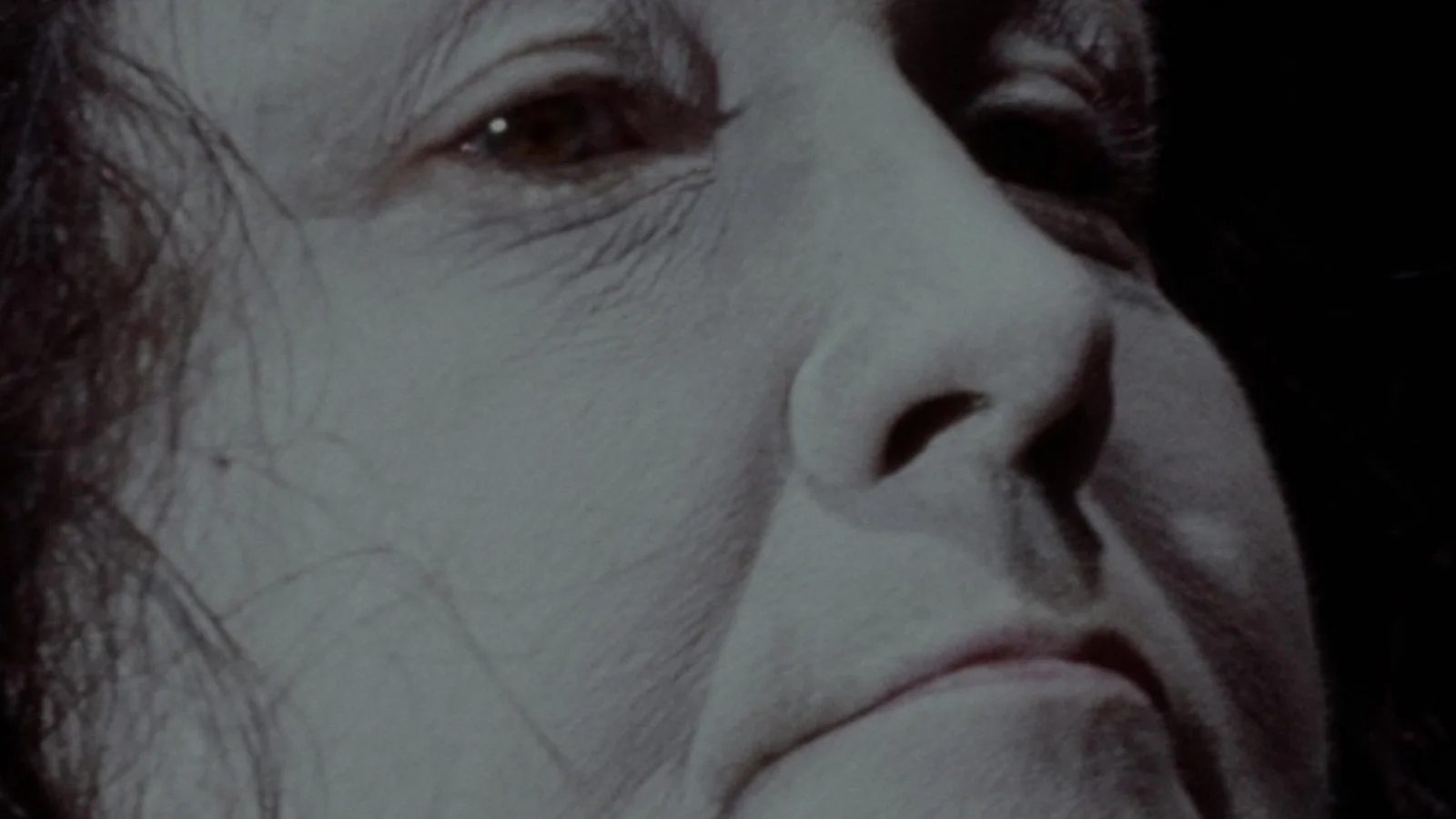
A boy plants a seed and grows a grandmother. That premise turns a wish for affection into a material undertaking. Criterion names Richard White, Dorothy McGinnis, Virginia Maitland and Robert Chadwick in the cast. The film’s scale allows the household and the invented relationship to become sustained experiences, rather than a single transforming image. [3]
From a script and grant to a longer experiment
Lynch’s BAFTA account is specific about the sequence: he made The Alphabet, wrote a script for The Grandmother, obtained an AFI independent filmmaker’s grant and made the short. Acceptance into the Centre of Advanced Film Studies in Los Angeles followed. This supports distinguishing an independently funded short from a project made after entering the school. [14]
A household described through image and sound
Tim Maloney’s 2006 essay describes black-painted interiors, pale faces, restricted colour and parents whose vocal behaviour resembles barking. He reads the child’s invention against an environment of fear and punishment. His credit block names Tractor for music and Alan R. Splet for sound. [4]
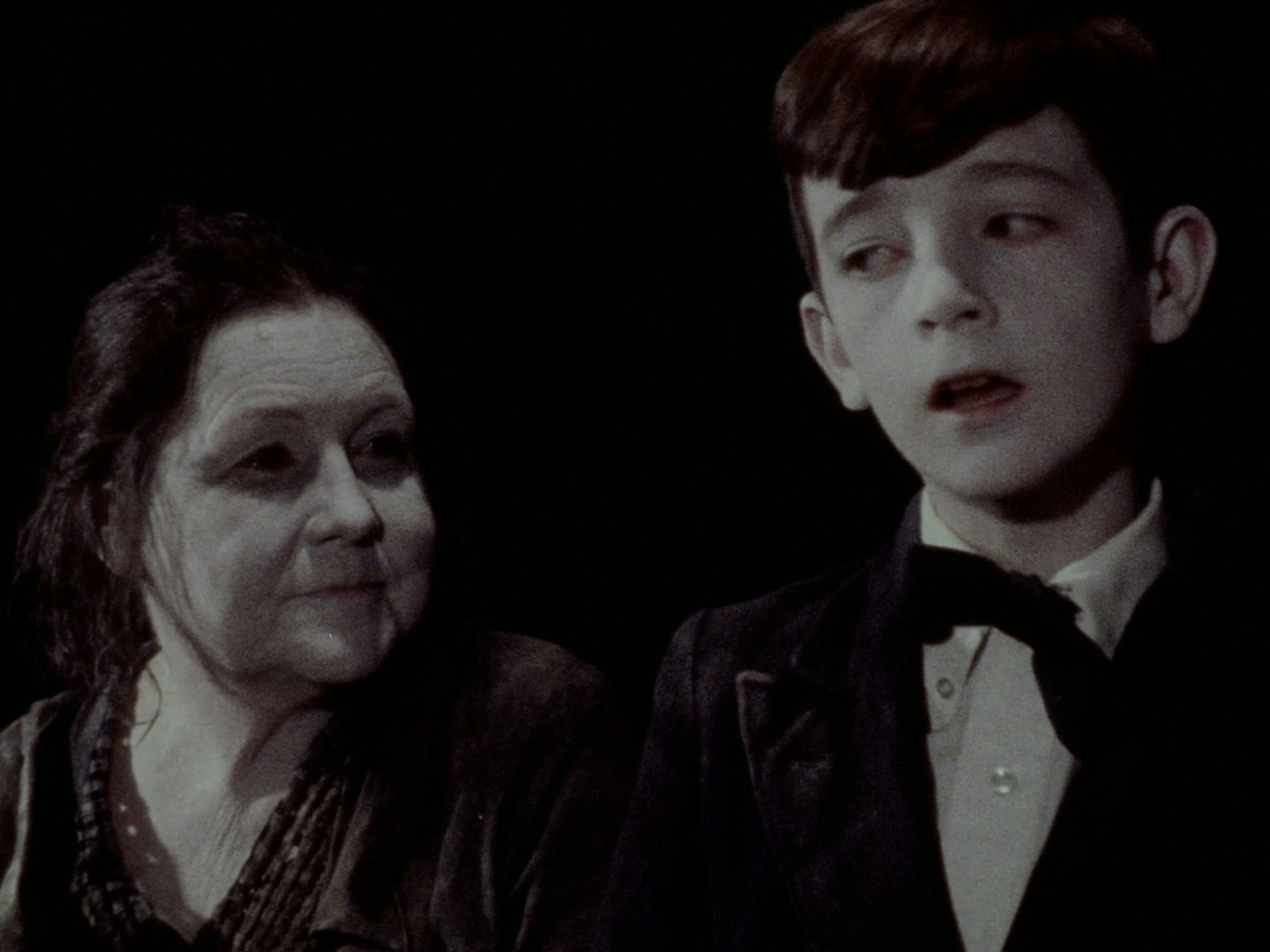
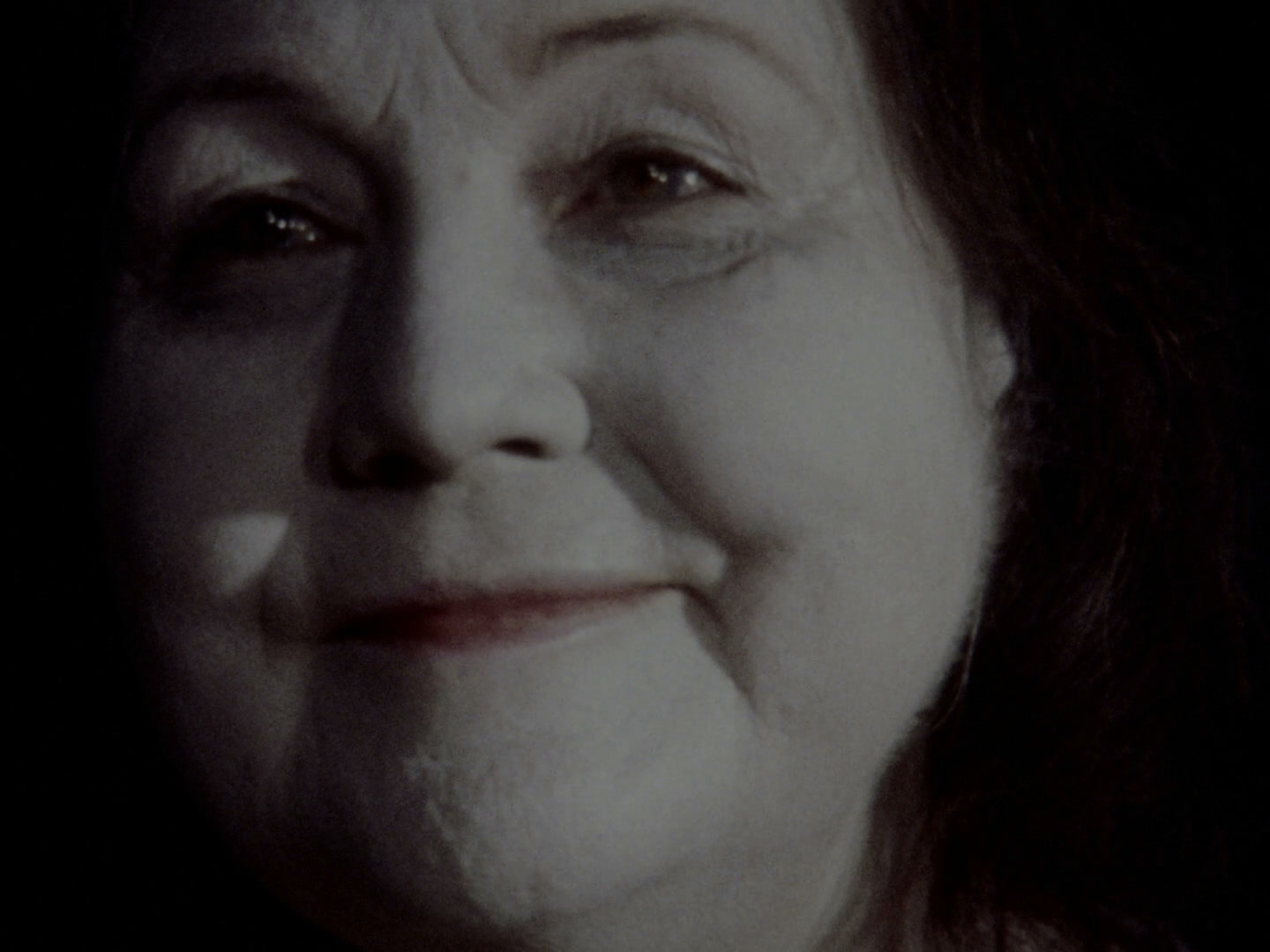
The central reversal is that a child has to create the conditions in which he might be cared for. Growing a grandmother makes affection both fantastic and urgently practical. The close-up reproduced here strengthens that tension: light gives the face a palpable surface while darkness withholds the surrounding room. A face can offer contact without making the larger world intelligible.
The relationship to Eraserhead is particularly productive when approached through domestic construction. In both dossiers, we can ask how a room, a body and an obligation become inseparable.
Alan Splet and the air duct
In Eraserhead Stories, Lynch places his first meeting and sustained sound work with Splet during The Grandmother. His recollection of weeks spent making sounds gives the later feature’s partnership a concrete beginning. Lynch’s account, 1:41–2:40 →
Lynch told Pitchfork in 2012 that he began working with Splet on The Grandmother. Without a reverb unit, they put speakers in air ducts and recorded from the other end, repeating the process to lengthen the reverberation. This firsthand recollection strengthens the collaboration history beyond the earlier critical attribution. [15]
The building becomes part of the instrument. Sound design is no longer only the recording of an action already visible; it can manufacture the space in which that action seems to exist. Repetition here is a production method as well as a possible aesthetic effect.
There is also a concrete exhibition trail: BAMPFA’s programme for 9 October 1981 lists The Alphabet and The Grandmother with Eraserhead and announces a discussion with Lynch and Splet. It shows the shorts being presented alongside the feature in a sound-focused context. The programme is evidence of the scheduled event; its promised discussion has not been heard for this dossier. [23]
Scene study
Growing a different family
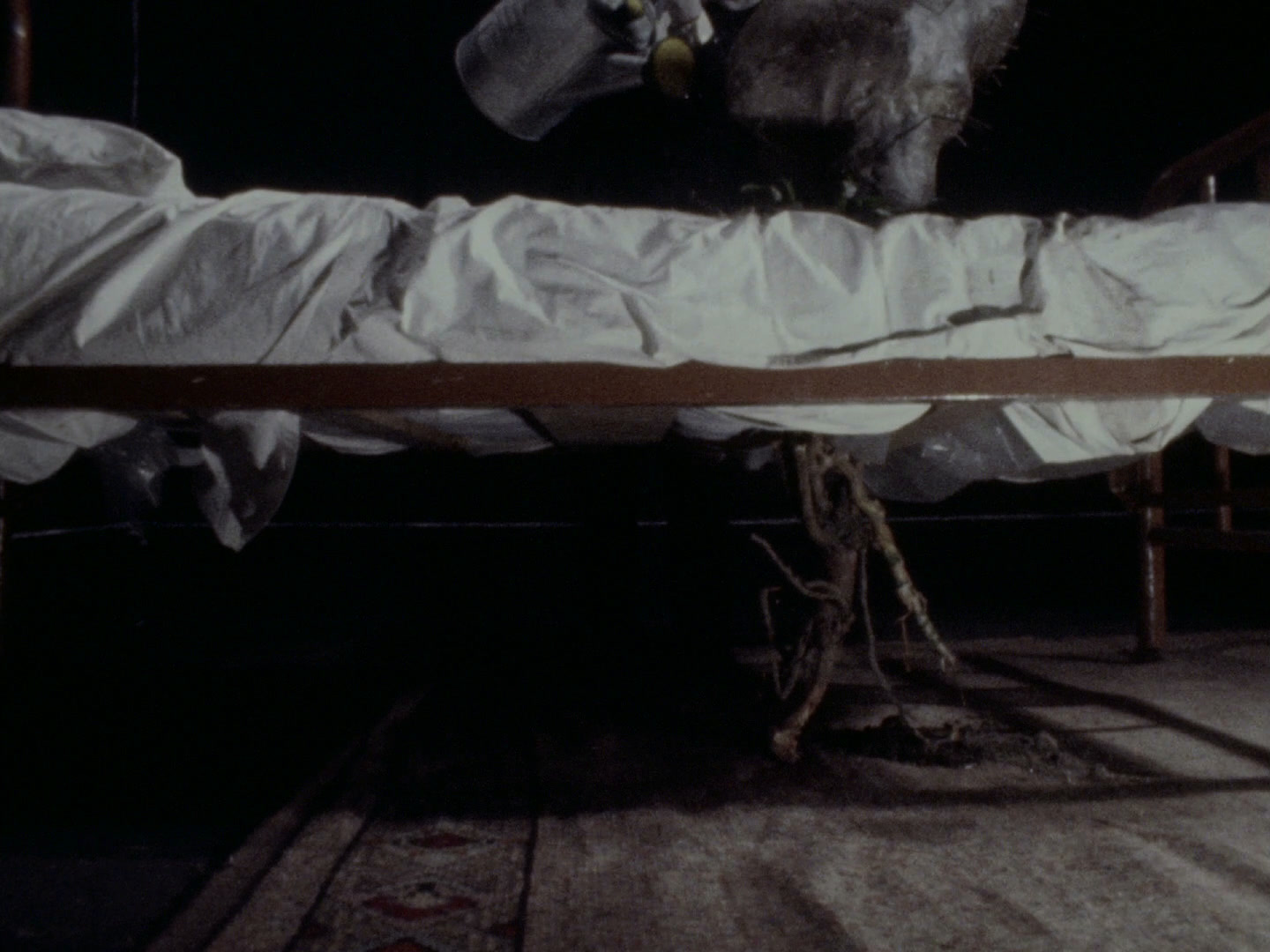
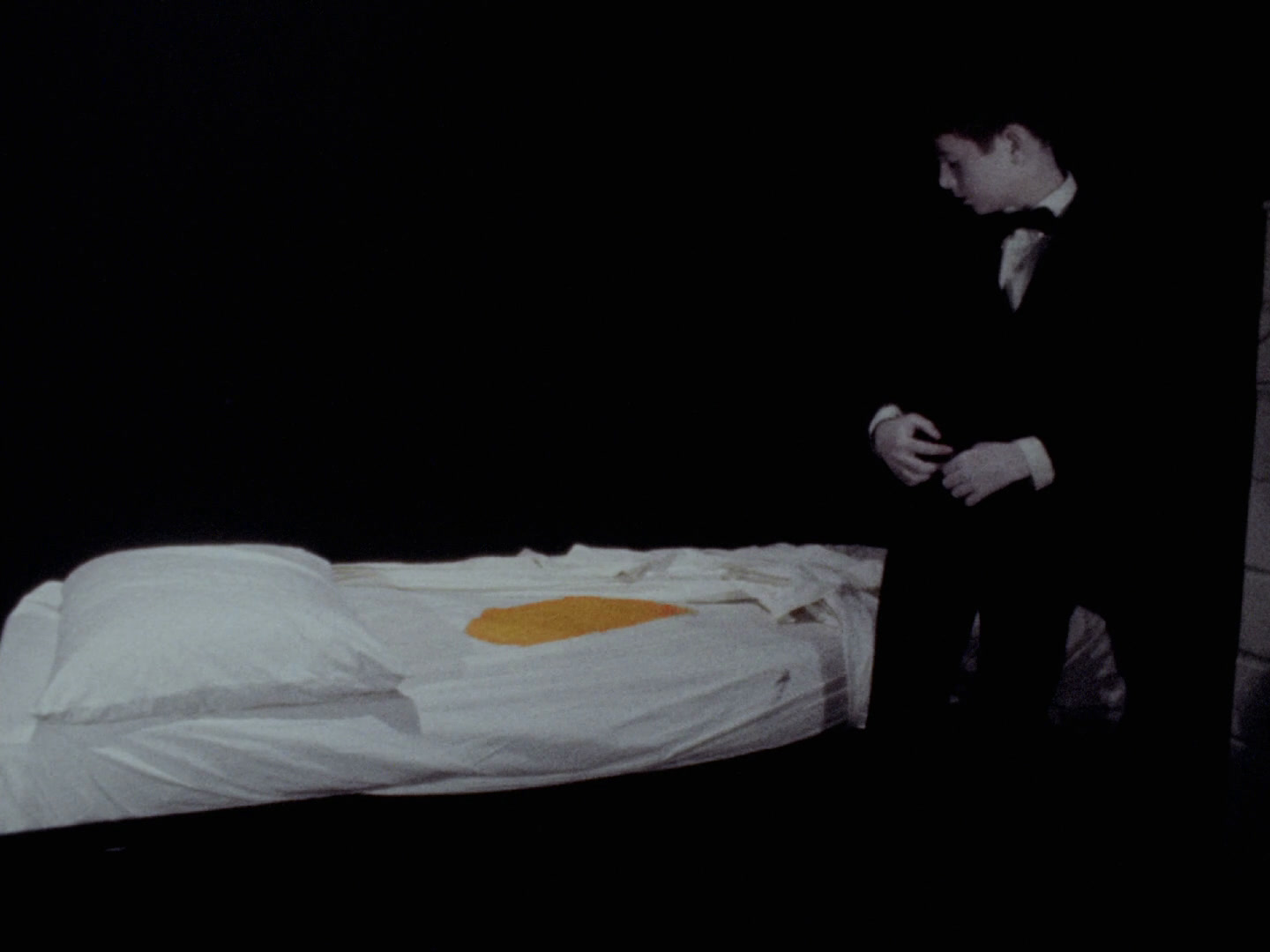
The opening alternates drawn transformations with people emerging from the ground. It makes birth look like a difficult passage between materials. Inside the house, furniture and pale faces stand apart from an almost black surrounding space. The yellow stain on the boy’s white bed becomes a visible focus for the parents’ hostility. A room that should protect him instead displays the evidence against him.
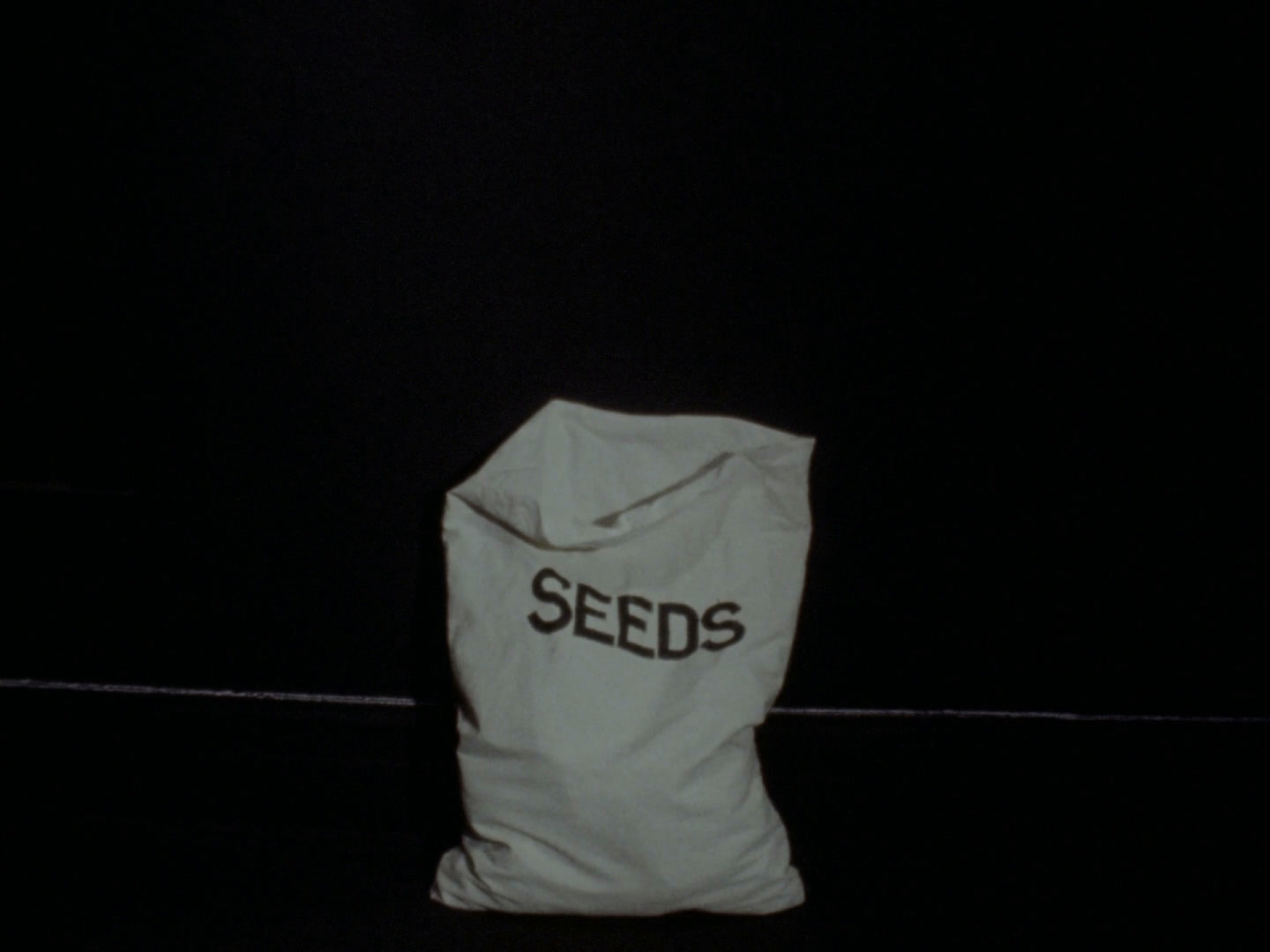
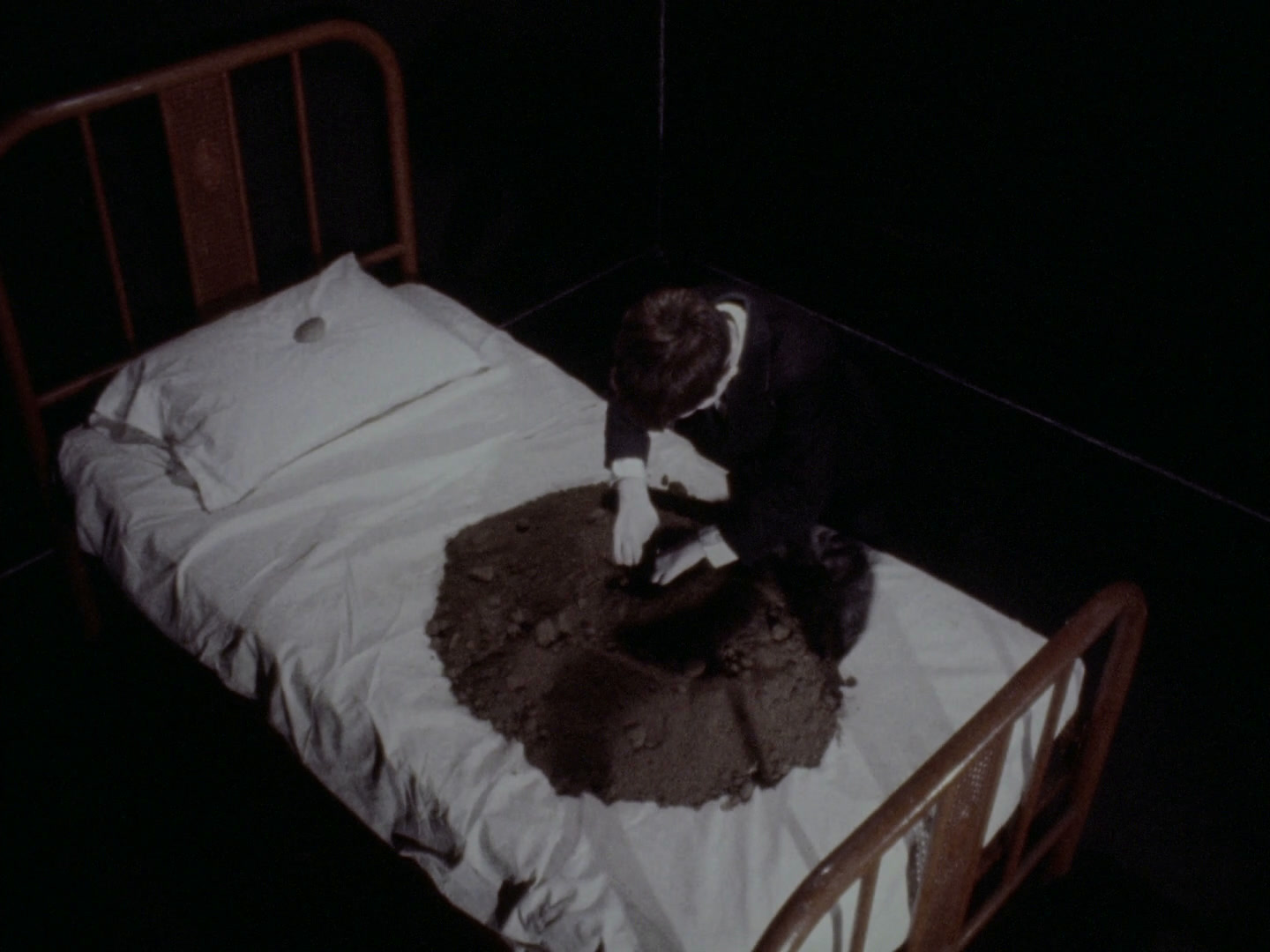
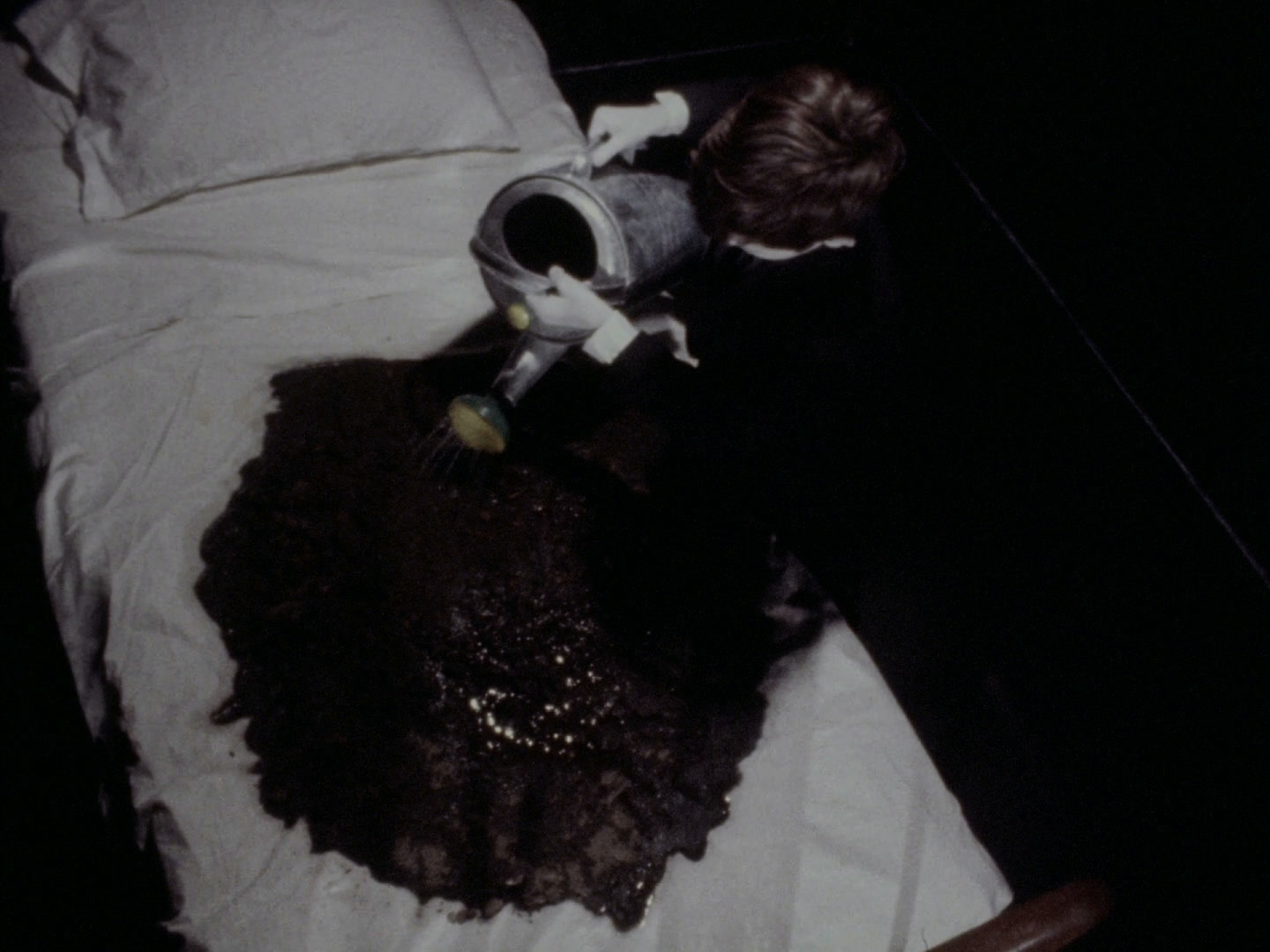
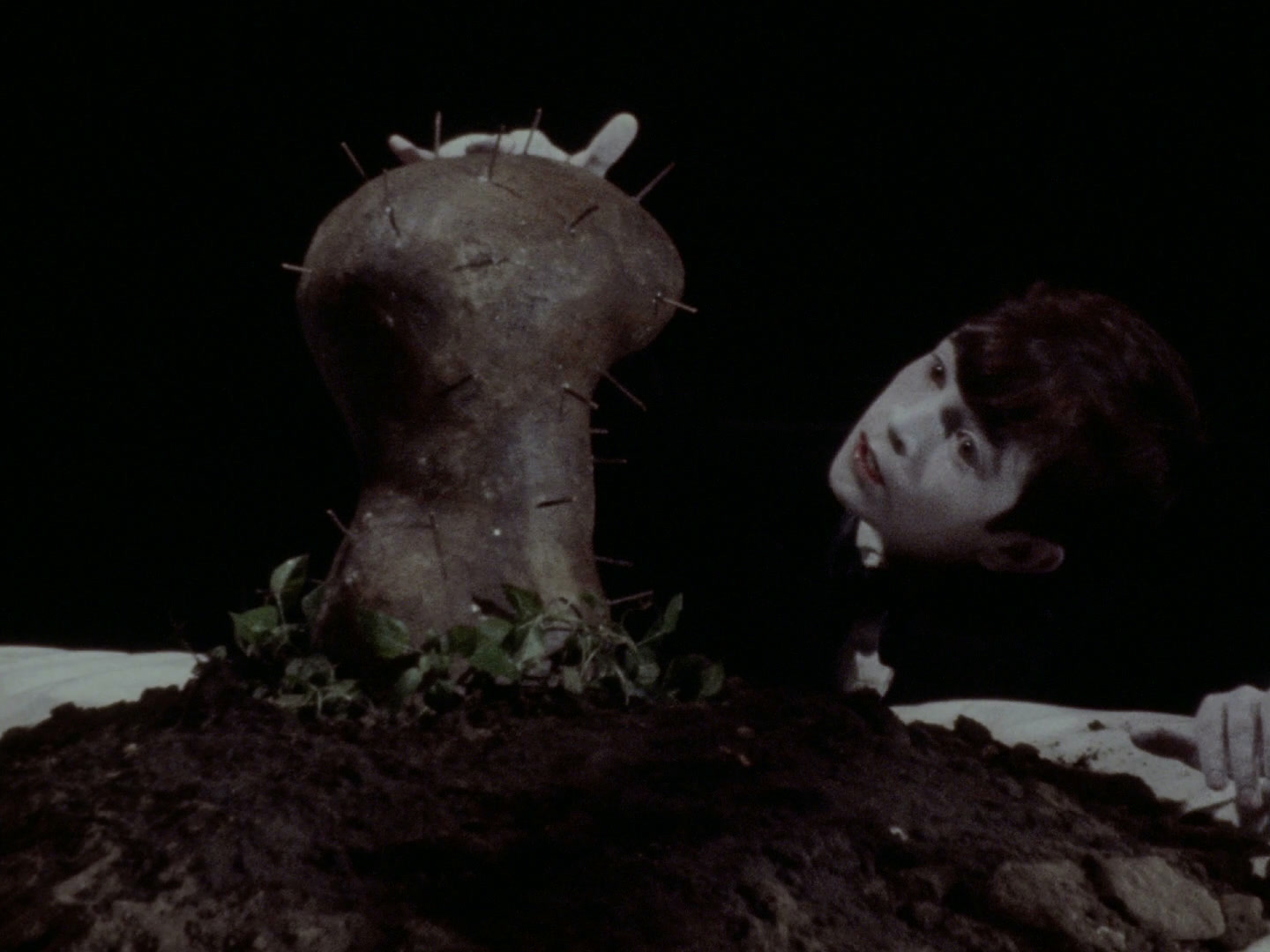
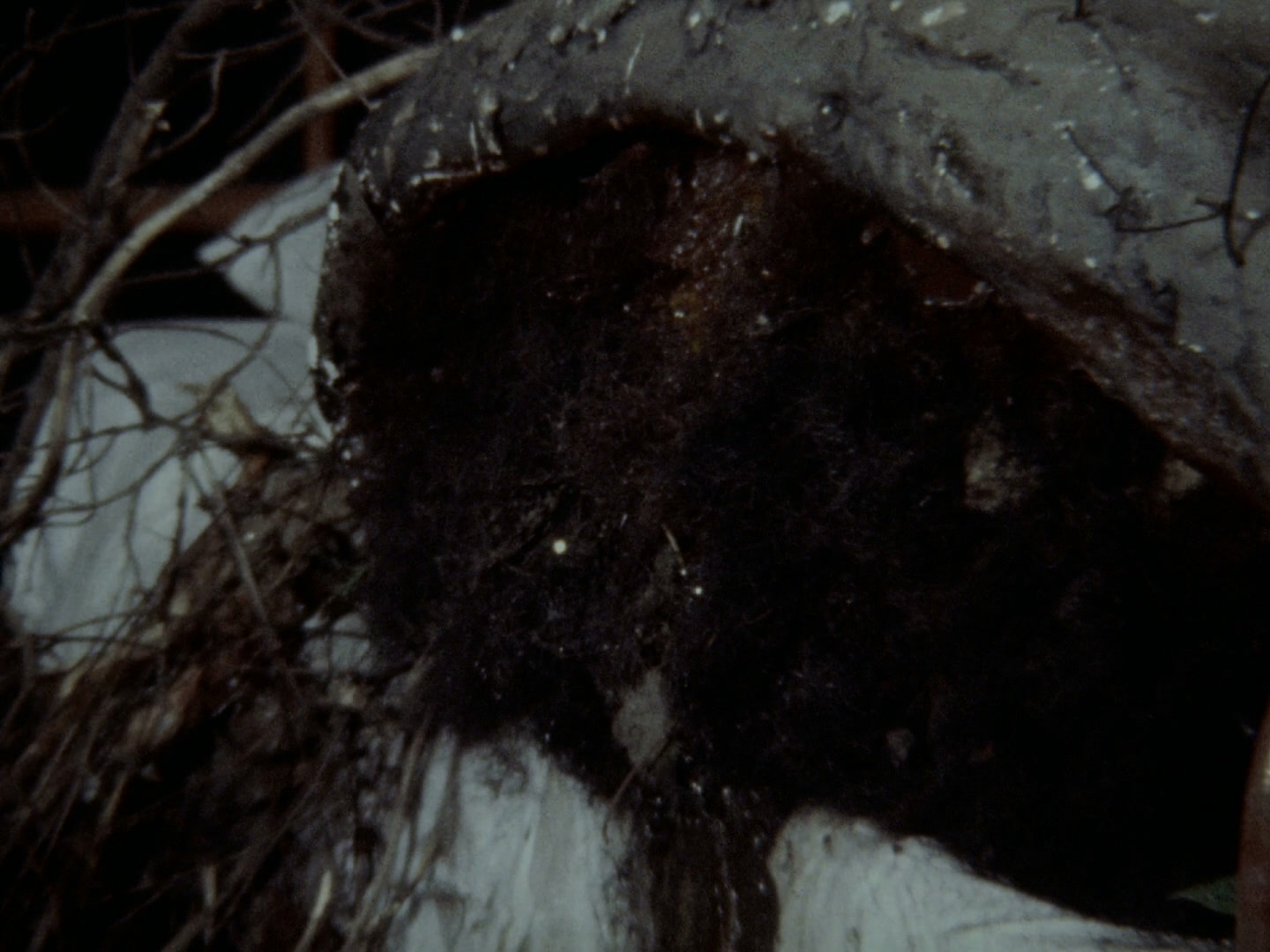
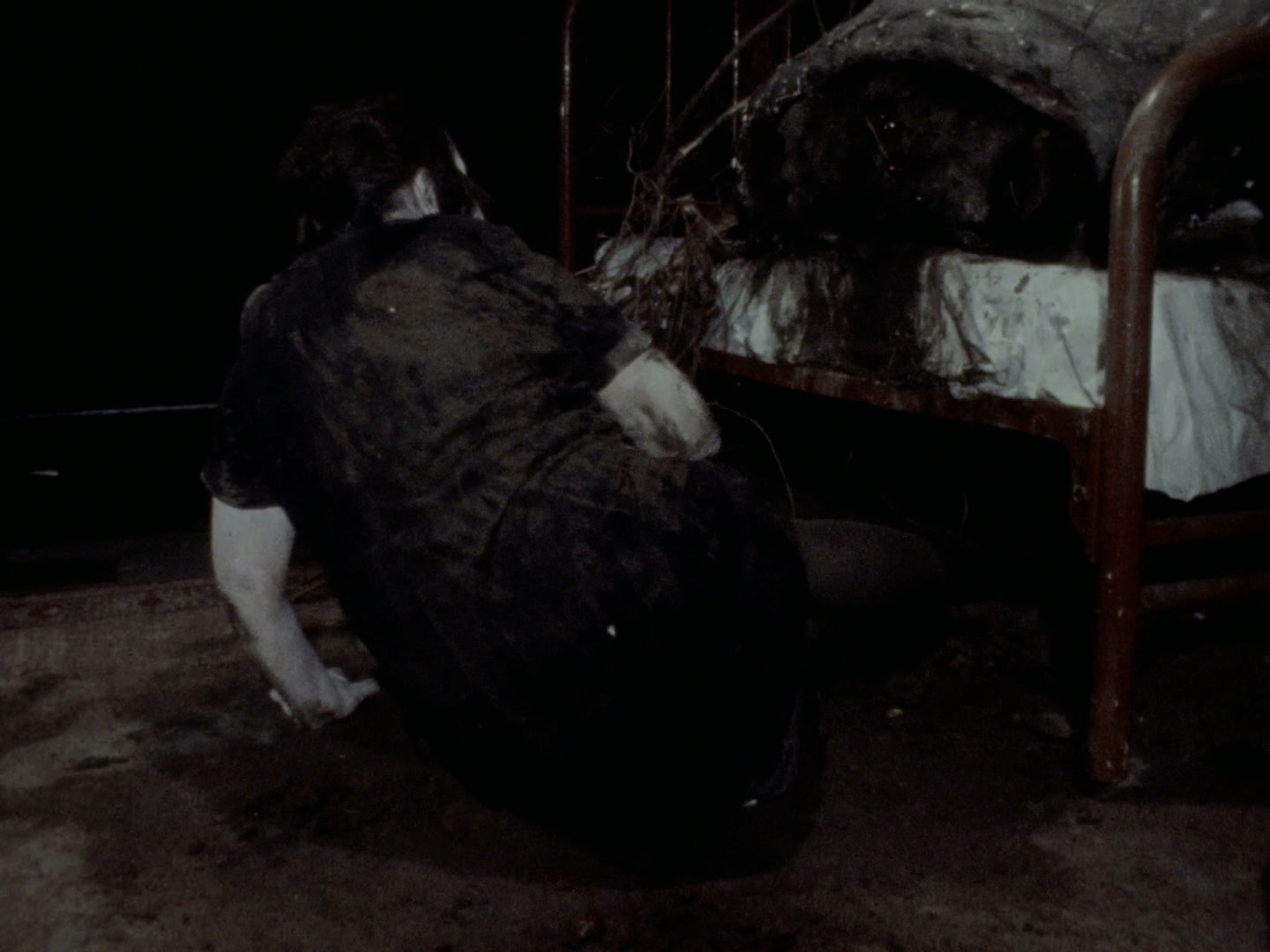
The boy’s answer is practical and impossible at once: seeds, soil, water and another bed. The preparation is shown in distinct actions before the growth appears. Its surface changes, roots extend beneath the bed, and a pod-like cavity opens. The emergence of a person connects the short’s animation to a physical object occupying the same room as its performer. The sequence can be followed through its visible stages without inventing a mechanical explanation for the effect.
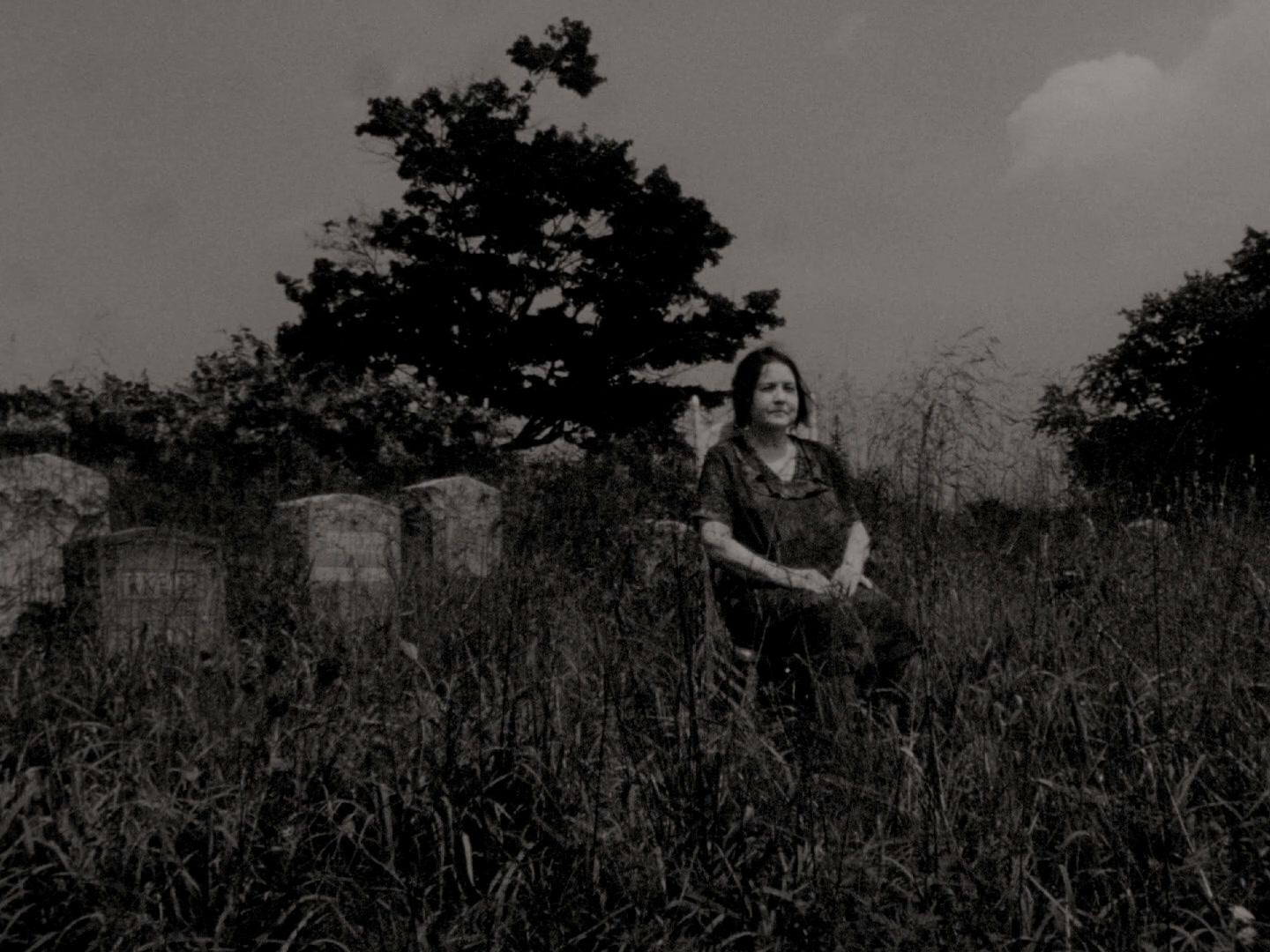
The grandmother changes the film’s scale of attention. Close views of the boy and the older woman, a returned look and the adjustment of his clothing make tenderness legible in the same dark space that held punishment. This is more than the arrival of an unusual creature: he has made someone who will attend to him. Later, her distress and his unsuccessful appeal to his parents break that refuge. The outdoor encounter near the end briefly opens the film beyond the house before it returns to the bed and the boy.
The credits identify Richard White as the boy, Dorothy McGinnis as the grandmother, Virginia Maitland as the mother and Robert Chadwick as the father. They also credit Tractor for music and music effects and acknowledge an American Film Institute production grant while stating that Lynch retained control of design and content. His introduction recalls developing an unusually descriptive script and receiving the AFI call that made production possible. Film, credits and introduction [27]
Planting, growth and emergence · 7 images
The child and the family he makes · 4 images
A short script, a shared sound world
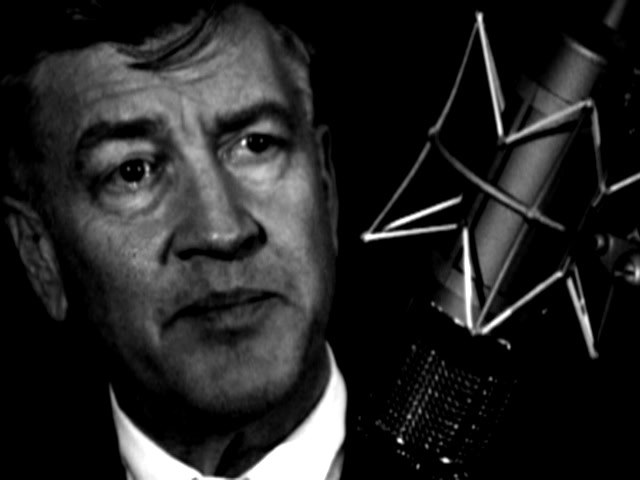
In the DVD introduction, Lynch remembers a dense script of perhaps eight pages, organized in sentences corresponding to shots or scenes rather than in a conventional screenplay format. Bushnell and Tutie Keeler encouraged him to apply to the American Film Institute’s independent grant programme. He now had both things the application required: a completed film and a proposed next one. His account follows the anxious wait through a printing job to the call from George Stevens Jr. and Tony Vellani that made The Grandmother possible.
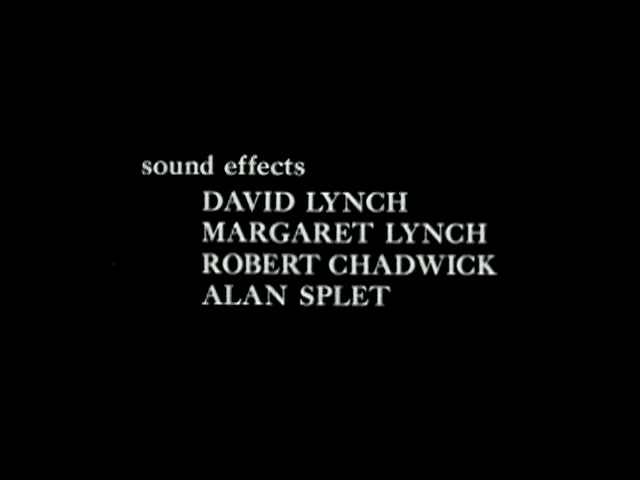
The film’s own end credits give the sound world a wider group of makers than a single-name shorthand allows. Tractor receives the music and music-effects credit; sound effects are credited to David Lynch, Margaret Lynch, Robert Chadwick and Alan Splet. Splet’s crucial place in Lynch’s developing cinema sits within that shared credit. Margaret Lynch and C. K. Williams are also named as assistant script consultants, while Doug Randall is credited for still photography.
This distinction matters to the scene study above. The hostile household and the boy’s refuge are made legible through the interaction of bodily performance, constructed sound and the growth on the bed. The credits identify participants in that whole undertaking without assigning a particular noise or image to someone the film does not specify. DVD films, introductions and credits [28]
The grant recollection and sound credits · 2 images
1974 in Criterion’s catalogue / two video versions
The Amputee: one situation, two records
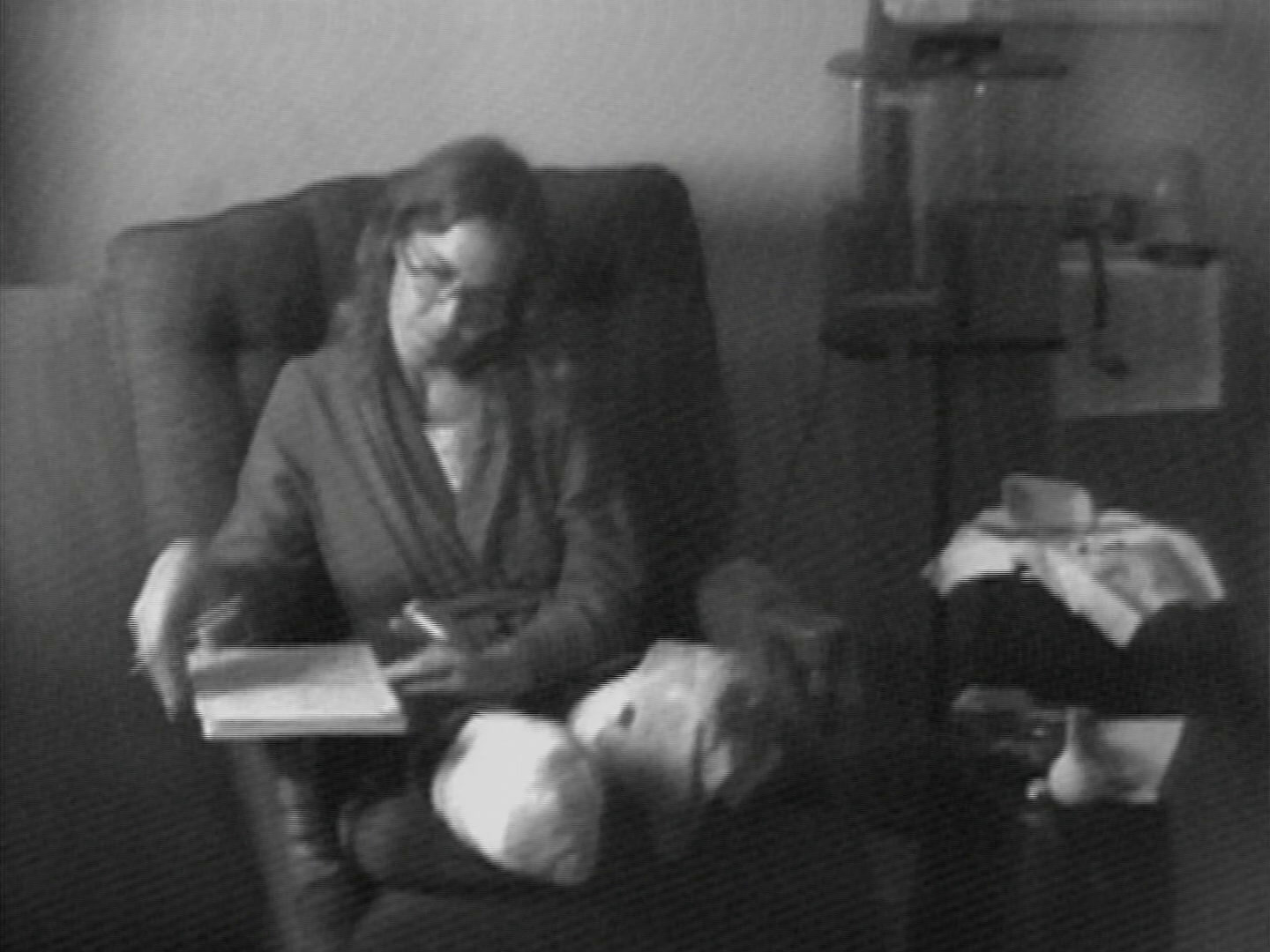
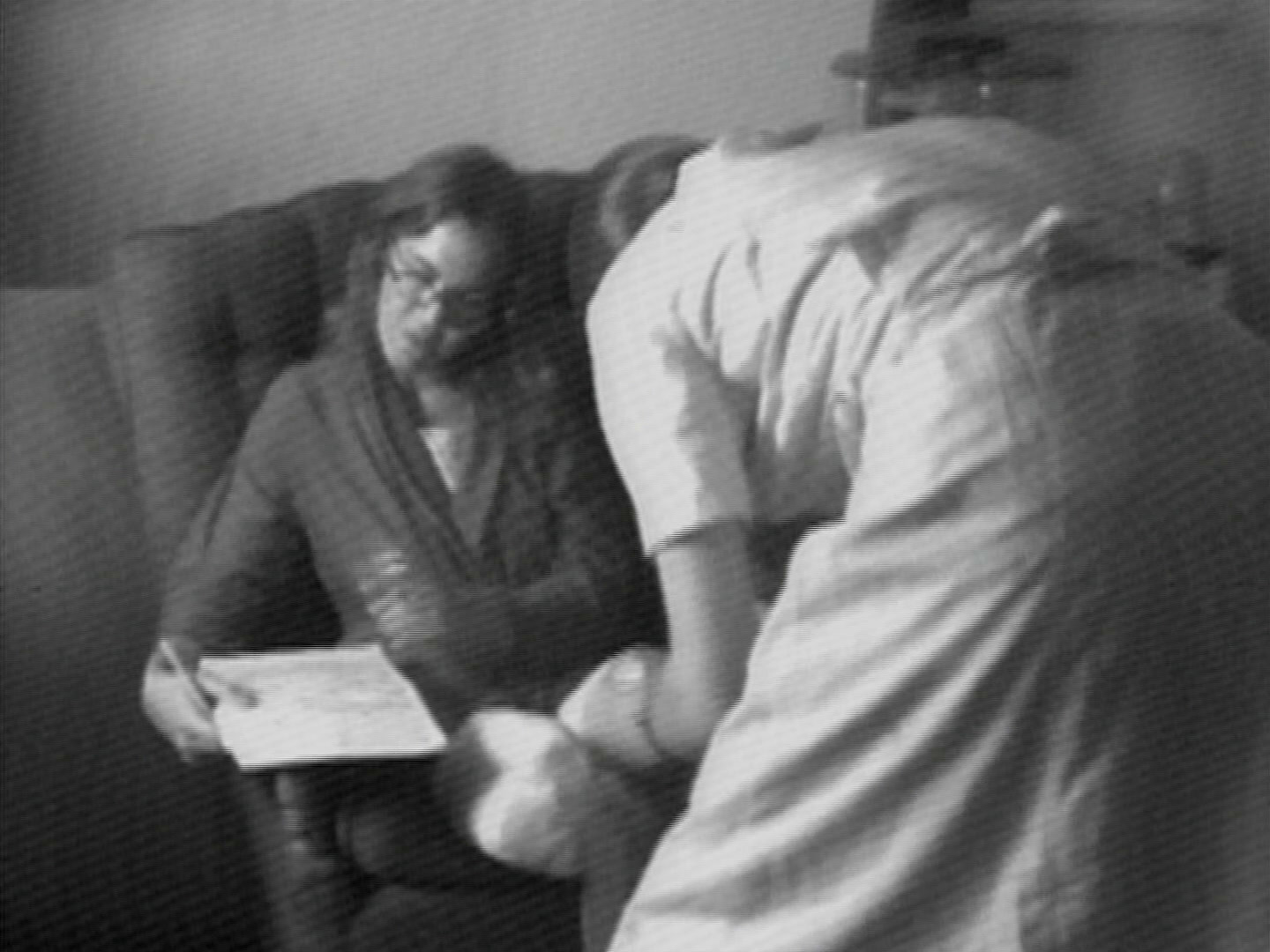
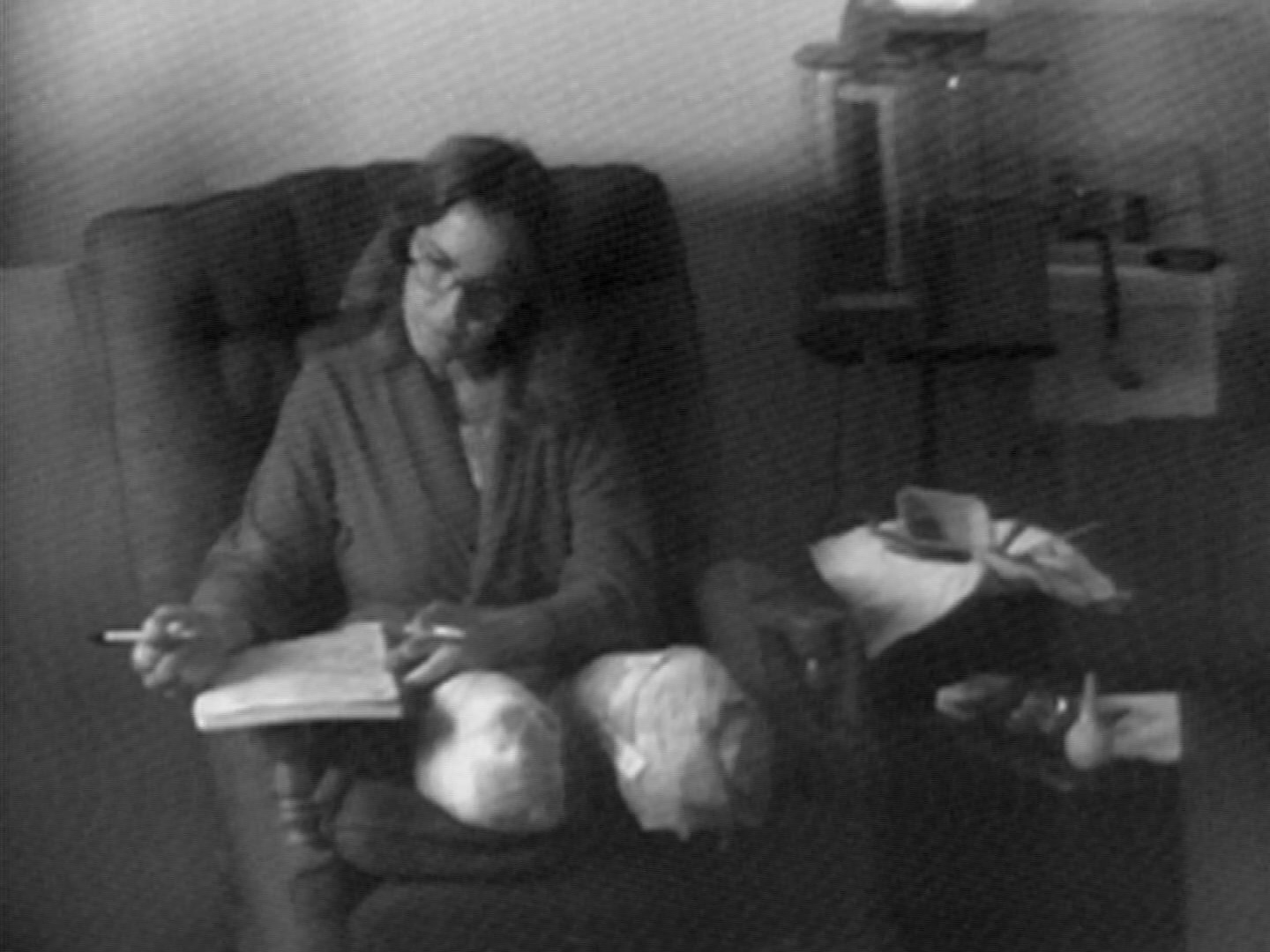
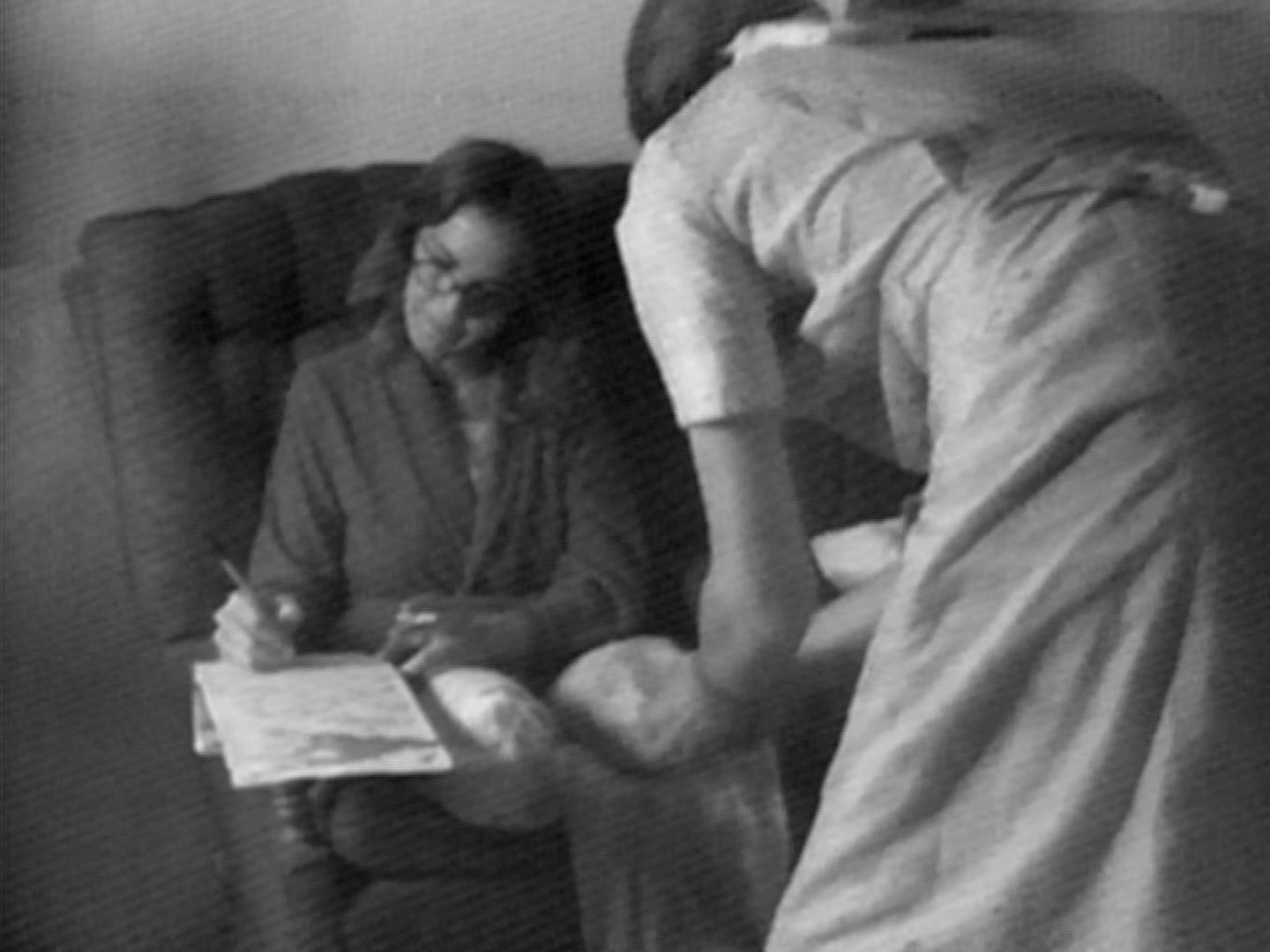
A woman tries to write a letter while a nurse attends to her amputated legs. Criterion keeps Version 1 and Version 2 as separate entries. The two presentations on the Criterion Blu-ray run approximately 5:12 and 4:06, including their title and credit material. [5]
Richard Harland Smith’s TCM account connects the work to an AFI comparison of two brands of black-and-white videotape. Frederick Elmes had planned a technical test; Lynch proposed filming a short on each stock. Smith identifies Catherine Coulson as the woman and Lynch as the nurse. [16]
Two kinds of attention occupy one situation. The letter belongs to a private social world; the treatment demands bodily attention. The comic and disturbing possibilities come from their coexistence. A comparison should therefore ask more than which version looks cleaner. It should follow the performer’s concentration, the nurse’s interventions and the relation between spoken or written language and visible action.
The distinction to keep: a shorter second version is not automatically an edited-down first version. Separate takes, performances, technical carriers, later transfers and credits can all affect a presentation.
Coulson also appears in AFI Watch’s Cowboy record as an assistant-camera contributor. Keeping such work visible connects the performing and technical communities around Lynch without reducing a collaborator’s career to their most familiar screen role. [6]
Scene study
Two performances inside one fixed frame
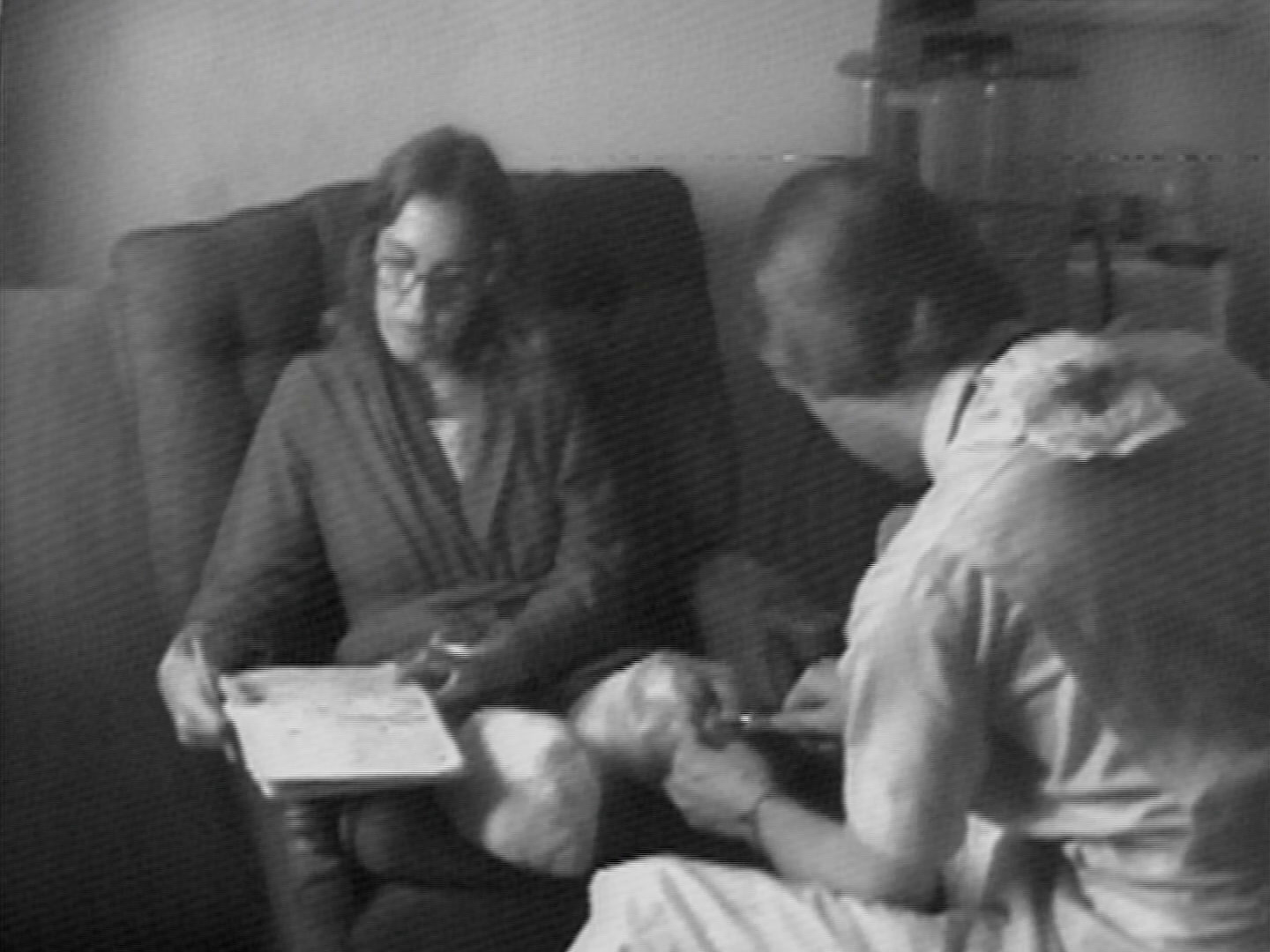
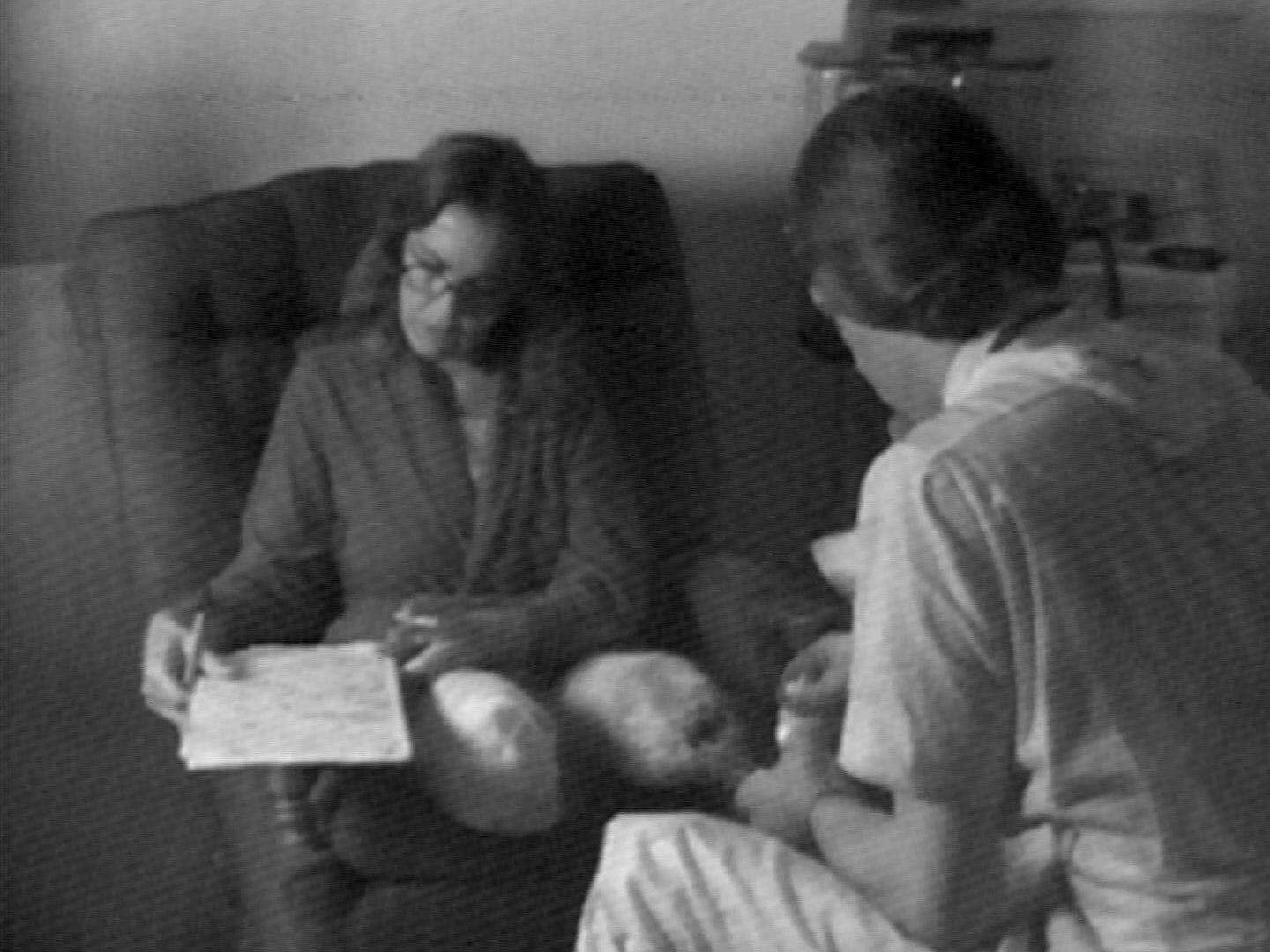
The camera holds the woman, her writing materials and the attendant’s work in the same view. Coulson moves between the page, her cigarette and a look away from the treatment. The letter follows friendships, accusations and competing claims to know what happened between other people. Its social urgency continues while the visible situation demands an entirely different kind of attention.
The attendant enters from the right, kneels, removes a dressing and works on the exposed stump. The fixed composition makes the practical effect share space with an ordinary performance. There is no reassuring cutaway that tells us to watch only the letter or only the treatment. Her concentration and his increasingly busy hands remain available at once.
The second version repeats that arrangement with a different pace. The same opening movement occupies roughly the first minute, but the later treatment, letter and departure do not finish at the same time. In Version 1 the attendant leaves at about 4:22; in Version 2 he is out of the frame around 3:32. The woman remains in the chair after each departure. These are useful landmarks for comparing the performances, rather than treating the shorter version as a simple abridgement.
Lynch’s introduction describes Elmes’s test of two videotape stocks and the proposal to film the same situation twice. The credits identify Coulson, Lynch and camera work by Frederick Elmes; both presentations carry a 1974 copyright. Lynch’s spoken recollection begins in 1973. The production recollection and the dates printed on the films are retained as separate pieces of evidence. Both films, credits and introduction [27]
Version 1 · letter, treatment, departure
Version 2 · letter, treatment, departure
Before the performance: two tape-test slates
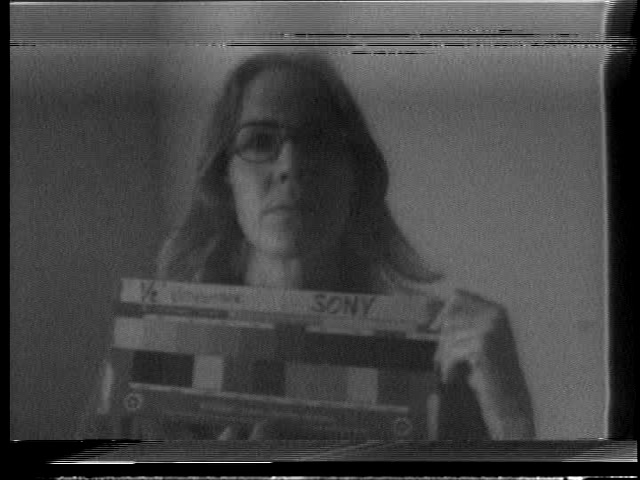
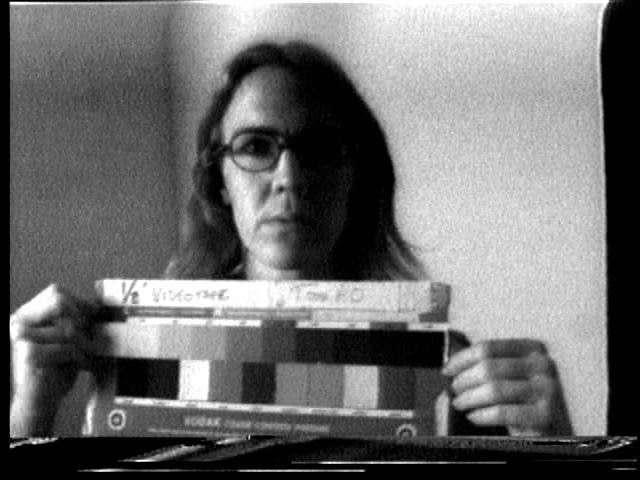
The boxed DVD also preserves two brief test recordings in which Catherine Coulson holds identification slates. One is labelled Sony; the other carries Scotch branding. The different slates, grayscale blocks and visible disturbances in the picture bring the videotape experiment into view before the dramatic action takes over. These are separate test fragments, not a third completed version of The Amputee.
They complement Lynch’s account of filming the same situation twice for Frederick Elmes’s tape-stock comparison. The pictures establish that the tests were labelled; their appearance alone does not establish which stock produced a particular performance version, or offer a controlled judgement of the original tapes’ quality. The DVD’s selection screen dates The Amputee to 1973, adding another explicit instance of the earlier date alongside the 1974 copyright already discussed above.
Coulson’s presence on both sides of production continues beyond this film: The Cowboy and the Frenchman’s end credits later name her as camera assistant. The two shorts preserve different kinds of evidence of her work, from a sustained on-camera performance to participation behind the camera. DVD films, introductions and credits [28]
The Sony and Scotch test recordings · 2 images
1988 / comic short
The Cowboy and the Frenchman: costume, language, encounter
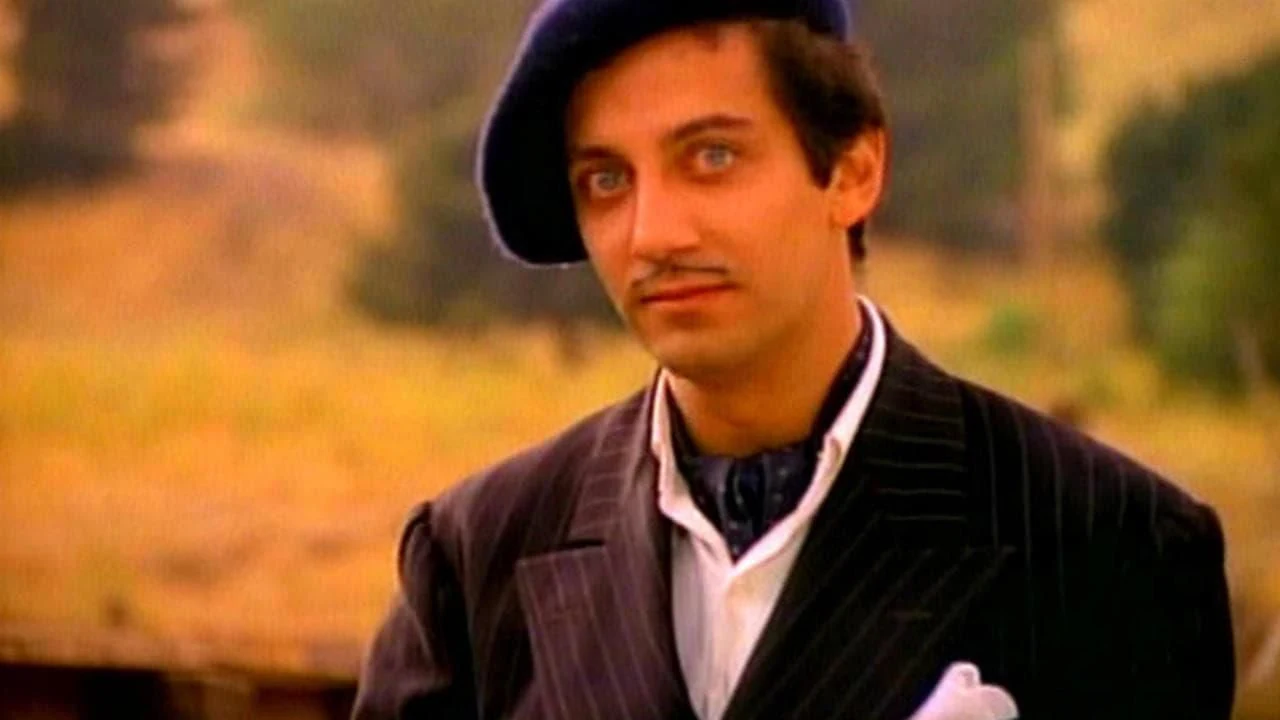
AFI Watch describes the hard-of-hearing Slim and his companions encountering a well-dressed Frenchman. Harry Dean Stanton, Jack Nance, Frederic Golchan, Tracey Walter and Michael Horse form the listed ensemble. The entry credits Daniel Toscan du Plantier as producer, Frederick Elmes for cinematography and Scott Chestnut for editing. [6]
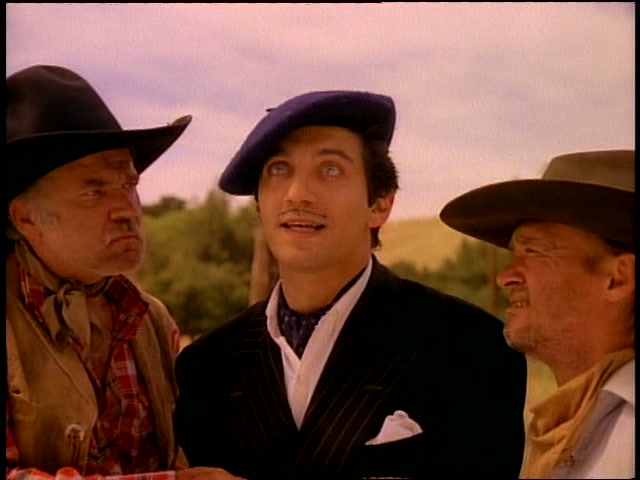
The beret, neckwear and striped jacket do immediate descriptive work against the warm landscape. The figure is visually legible before we hear him. This is a useful way to approach a comedy of national types: costume can tell a viewer what category to expect, while the encounter tests how inadequate that expectation may be.
Hearing and translation create different obstacles. One can fail to understand because a sound is not heard, because a language is unfamiliar, or because a familiar cultural image takes the place of listening. The short’s broad setup makes those failures available for comedy.
The production record extends beyond the familiar actors. AFI Watch lists Patricia Norris and Nancy Martinelli across costume and design fields, Sarah Elgart for choreography and Frank Silva for set decoration. Those credits open lines of inquiry into visual and musical staging; they do not establish who selected the particular beret or designed a specific movement. [6]
Scene studies
An arrival becomes a capture
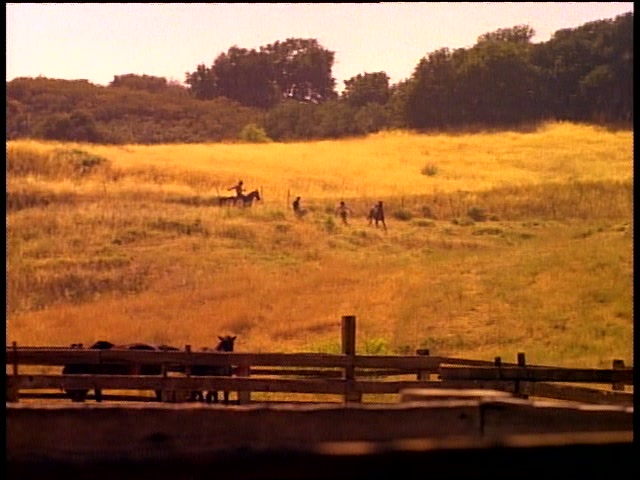
The opening encounter gives the hillside the proportions of a western and then makes its inhabitants struggle to understand the person entering it. The stranger’s clothes announce a category before anyone establishes a shared language. The cowboys use the tools available to them: watch him, surround him, rope him and secure him to a fence. A meeting becomes a capture before it becomes a conversation.
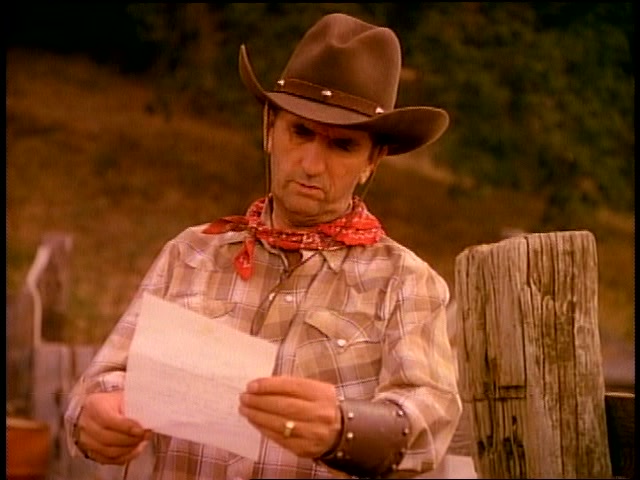
Slim’s difficulty hearing adds another interruption to the exchange. Reaction shots make understanding uneven: information can reach one person without reaching the person supposedly in charge. Rather than solving the misunderstanding with a fluent interpreter, the film keeps returning to faces that cannot quite make the other side intelligible. The visitor is framed between suspicious companions, his composure tested by their examination.
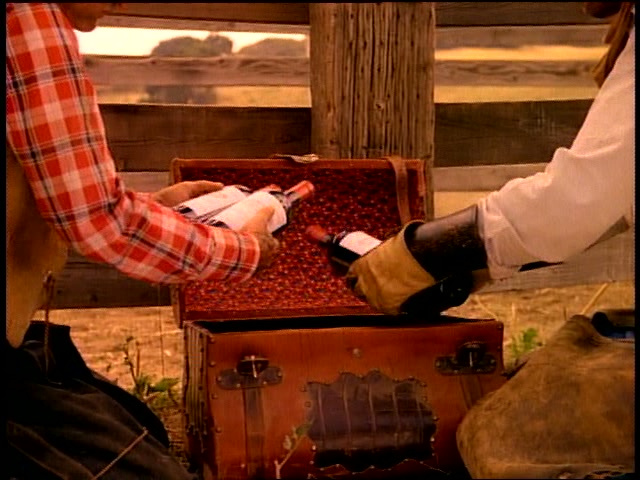
The suitcase opens a second channel of communication. Objects can be held up, tasted, inspected or passed around when speech fails. Yet they also make national identity into a portable set of expectations. The joke moves between a person and the familiar signs through which the others try to recognize him. Slim’s scrutiny of the letter extends the same problem into writing: another object promises an explanation without immediately clearing the air.
Approach, capture and inspection · 5 images
The fence changes its purpose
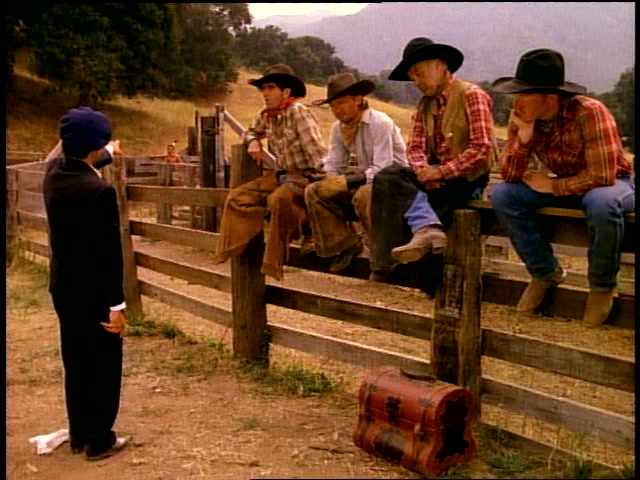
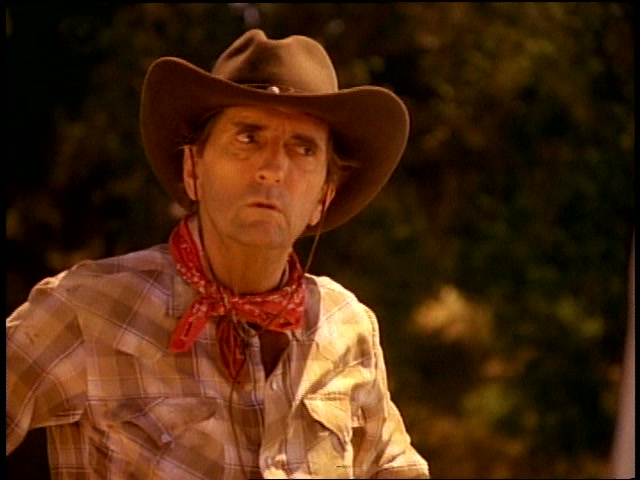
The fence is an especially useful measure of the change in the encounter. First it restrains the visitor and fixes the others around him. Later it becomes a place to sit together. The setting has barely changed, but the distribution of bodies has: the boundary that held someone apart now supports a temporary company.
The white car’s arrival further enlarges the gathering. The short stops behaving like a mystery about an intruder and begins making room for a party. New performers and guests enter without a complicated chain of explanation. This expansion changes its rhythm as well as its population. The scene can linger on an act, a gesture or a shared space instead of supplying the next piece of evidence about the stranger.
The change does not simply erase the stereotypes. It makes them available for performance and exchange. Western costume, French costume, music and a miniature Statue of Liberty all become things that can coexist in the same gathering. Hospitality arrives as a change in how people occupy the frame, rather than as a speech resolving every difference.
The gathering expands · 2 images
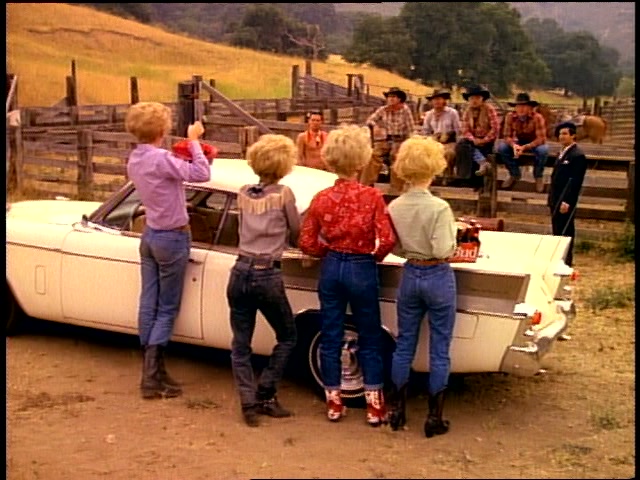
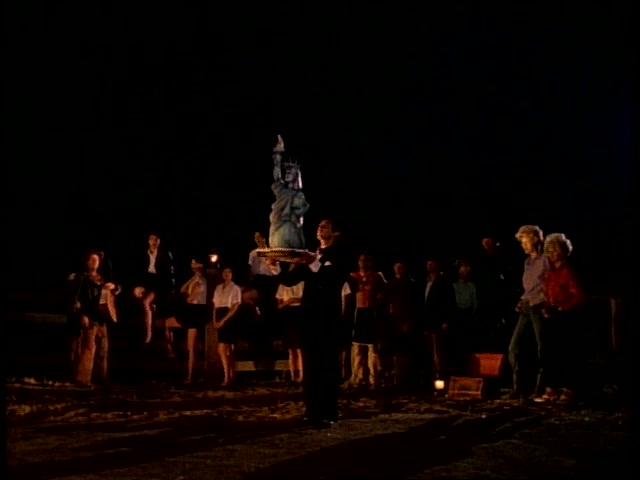
Layered images, musical space
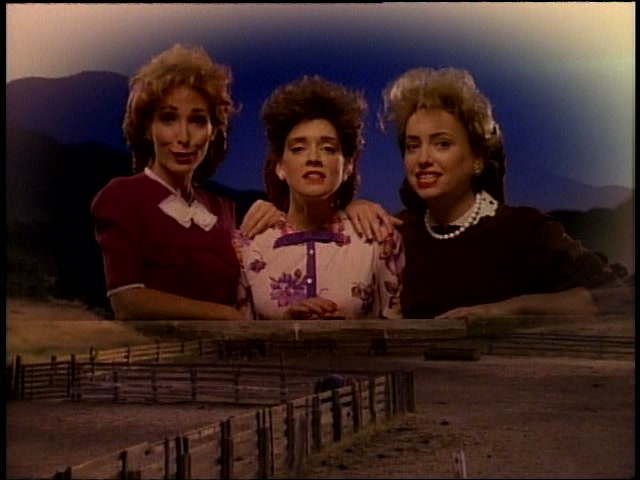
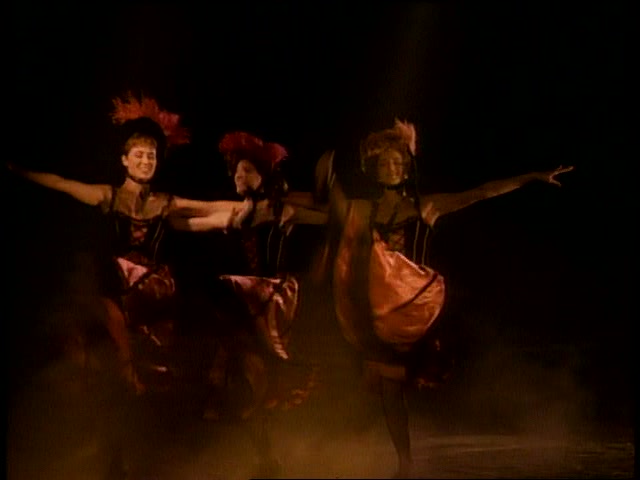
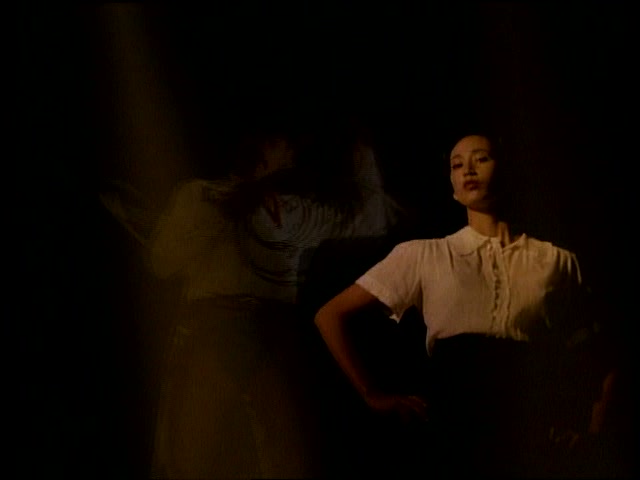
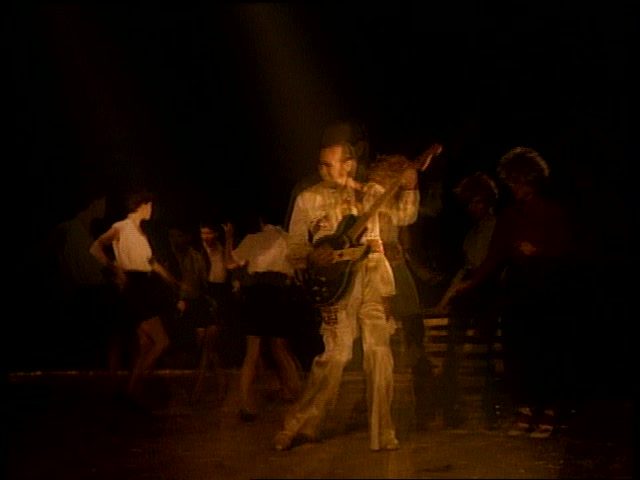
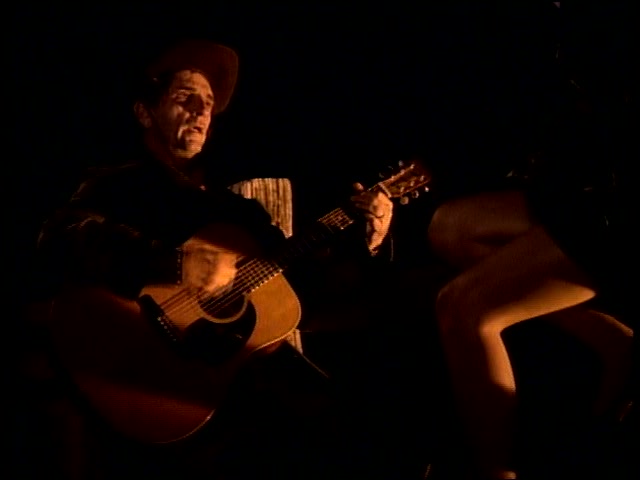
The singing trio’s appearance above the landscape prepares a departure from the opening’s comparatively solid geography. The film can now place a performance over a setting without pretending the performers physically stand there. At night, overlapping images and dissolves let dancers and musicians occupy more than one scale: a moving figure can fill the foreground while the gathering remains visible behind it.
These layers make musical performance part of the film’s construction, not a detachable interlude. A body can interrupt the scene without blocking it completely. A white-clad musician becomes a foreground presence; dancers pass across the party; Slim’s guitar playing places the figure who struggled to hear at the centre of another form of participation. The effects loosen the rules of distance and simultaneous action.
The sequence is worth following in stages because a single still can look like a conventional group scene or an accidental double exposure. Across the gallery, the repeated shifts in scale and transparency become deliberate ways of arranging the party. The on-screen results are clear; the credits do not identify a separate technical recipe for each composite. DVD films, introductions and credits [28]
Performance, superimposition and changing scale · 4 images
After the party
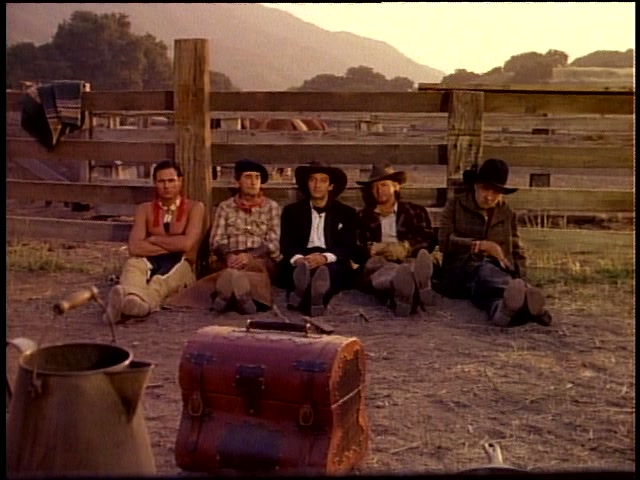
Morning returns the company to the fence. The image answers the earlier confinement with a row of people sharing the same support. The film does not end on an elaborate settlement of the linguistic problem. It ends after people have spent time together.
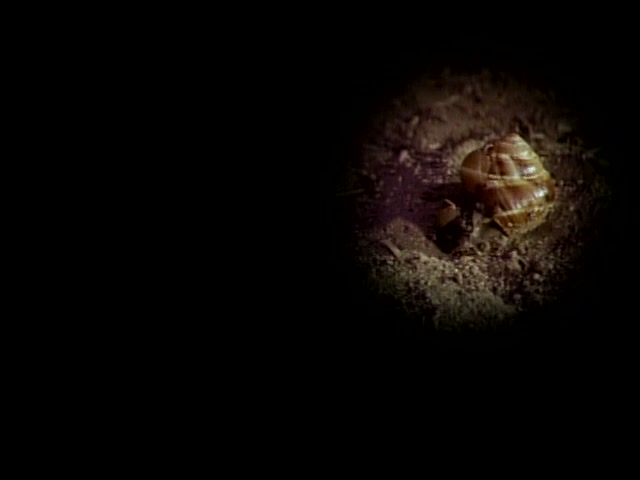
The final contraction to a snail changes scale once more. After bodies, costumes, music and a national monument have filled the image, attention settles on something small. That closing movement belongs with the short’s larger play between expansive western space and the oddly particular object. The joke can finish without becoming a general explanation of either country.
The last change of scale · 1 images
The commission and the company
Lynch’s DVD introduction locates the commission after Blue Velvet, during a Paris dinner with Daniel Toscan du Plantier. He recalls initially declining because he had no idea, then finding one on the walk back to his hotel. The recollection presents the short’s paired national stereotypes as the premise accepted by its producer, rather than a label applied retrospectively to the finished film.
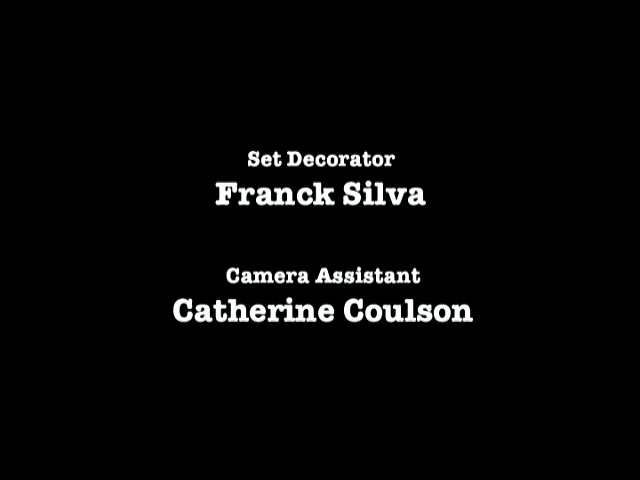
The end credits connect the seemingly casual gathering to a precise group of collaborators. Frederick Elmes is director of photography and Scott Chestnut editor. Patricia Norris and Nancy Martinelli share art-direction and costume credits; Sarah Elgart is credited for choreography. Catherine Coulson appears as camera assistant, while the set-decoration credit names Franck Silva. The printed spelling is retained here.
The music credits name the Radio Ranch Straight Shooters, Eddy Dixon, Jean-Jacques Perrey on accordion, and additional music by Bobby Woods. They also identify Offenbach’s Gaîté Parisienne, orchestrated and conducted by Manuel Rosenthal. The mixture gives the musical gathering its own production history: performed identities are assembled through costume, movement and selected music as well as through dialogue.
The DVD presents the film at roughly twenty-six minutes including its credits, consistent with the longer listing discussed above. This full presentation lets the nighttime gathering and morning aftermath carry their proper weight alongside the more immediately recognizable encounter at the fence. DVD films, introductions and credits [28]
A collaborator behind the camera · 1 images
1995 in Criterion’s catalogue / anthology contribution
Premonitions Following an Evil Deed: how much world can a fragment hold?
Criterion identifies the short as Lynch’s contribution to Lumière and Company. Cinétévé, the producer, describes the project as forty 52-second films made using the restored 1895 Lumière Cinématographe, surrounded by Sarah Moon’s making-of material. This production context is more useful than treating the short as an isolated internet miniature. [7] · [19]
Criterion’s synopsis begins with the discovery of a body. Even at that basic level, the title directs attention beyond an event: an evil deed has happened, and the image carries an anticipation of something else. An extremely short work can make consequence feel larger than what it has time to show. Its force may depend on the spectator supplying an unseen before and after, rather than on compressing a feature-length explanation into seconds. [7]
The anthology also asks a material question. A camera associated with cinema’s beginnings is used to make a contemporary work. That is a specific encounter with equipment and constraints, not simply a modern film given an “old movie” appearance. The surrounding making-of is the next essential evidence for shot construction, transitions, crew practice and the exact rules as applied on this production. The programme’s technical format field must not be copied into a claim about the camera used for Lynch’s contribution. [19]
Three different measurements: the producer’s 52-second project specification, a film segment’s measured screen time, and a platform item containing surrounding material need not match. Criterion’s legacy collection displays 1:21 for its item. We have not used that listing to claim that Lynch broke the commission’s limit. The 1995/1996 catalogue-year disagreement also remains visible. [5] · [9] · [24]
Scene study
A discovery, a vision, a knock at the door
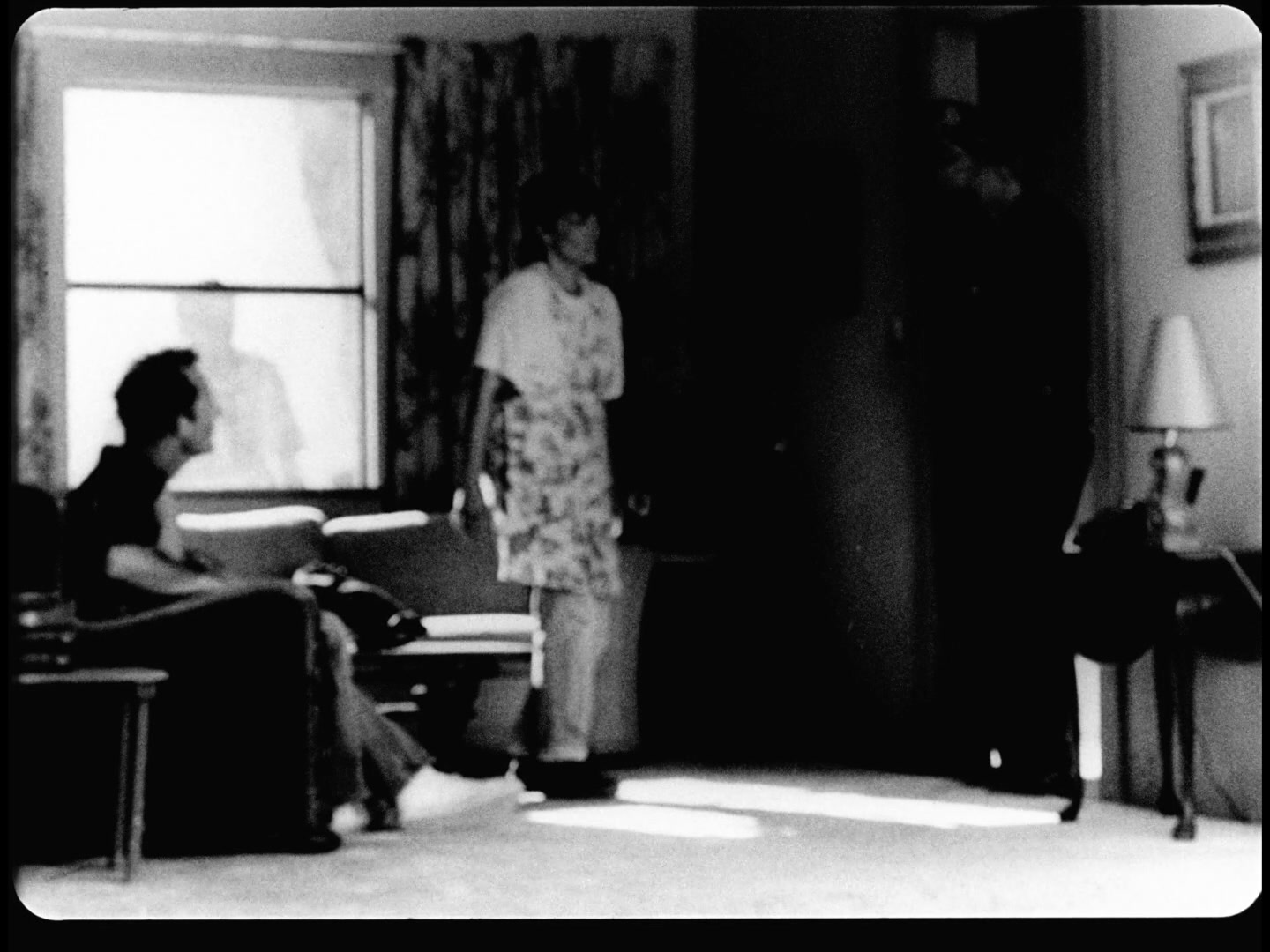
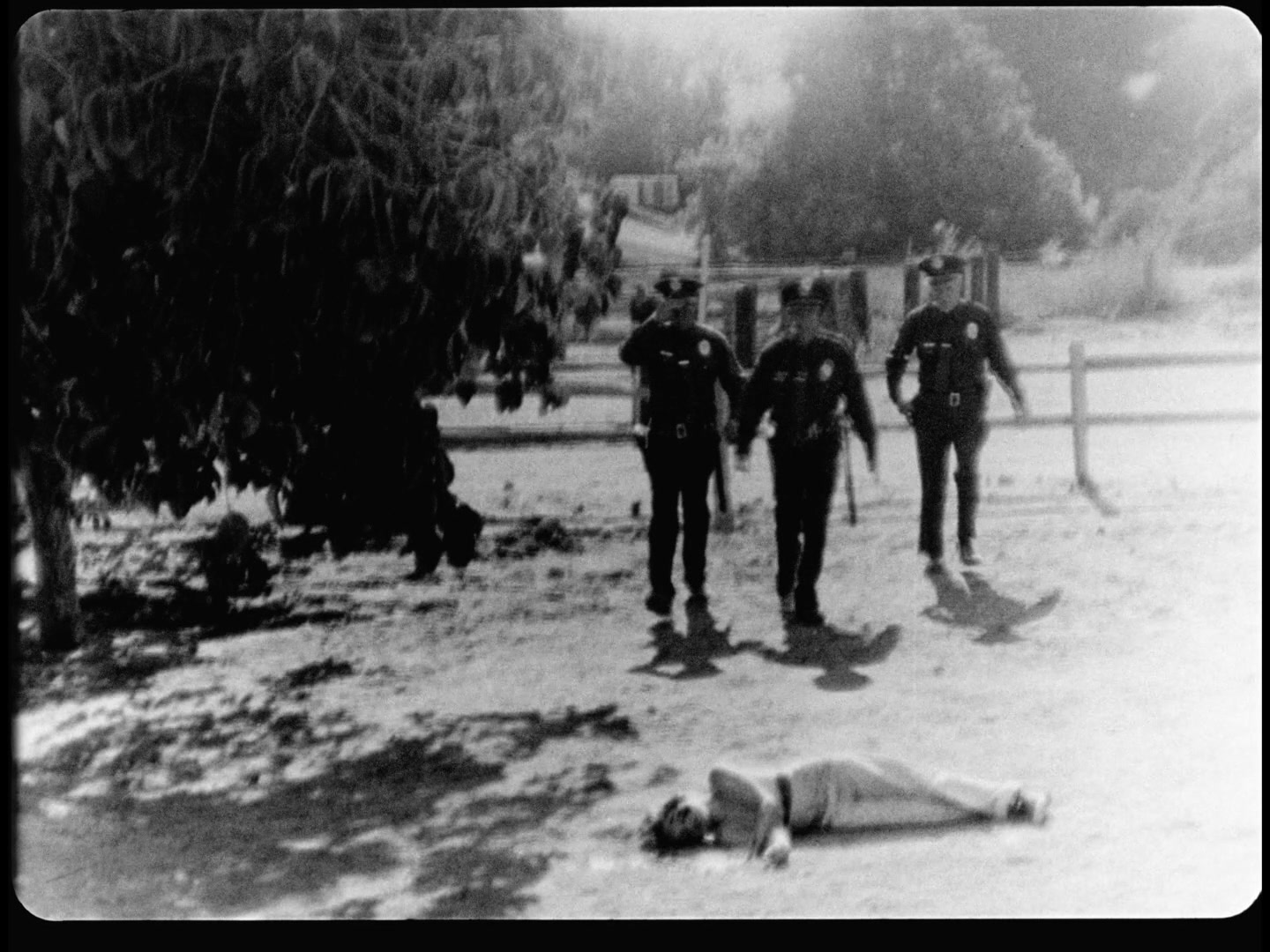
Police approach a body outdoors. A woman waits in a room. Three women gather around a garden-like seating area. Smoke and light give way to figures beside a glass enclosure containing a human form. The film returns to a domestic interior, where the arrival of the police turns a doorway into the point at which an unseen event enters the home.
These spaces are connected by darkness, sudden changes of brightness and rapid movement. Their exact relationship is withheld. The laboratory-like image can be encountered as an interruption, a premonition or an impossible adjacent world; the short does not provide an explanatory return to it. Its final domestic image makes the earlier discovery feel consequential without supplying a conventional chain of investigative scenes.
In the filmed introduction, Lynch describes the restrictions of the restored Lumière camera: natural light, no synchronized sound and an uninterrupted camera run. That makes the concealed passages between the visible spaces part of the filmmaking problem. The still sequence below follows those passages; it does not mistake a change of scene for proof of an editorial cut. The film’s closing copyright is 1995. Film, credits and introduction [27]
Follow the five spaces · 5 images
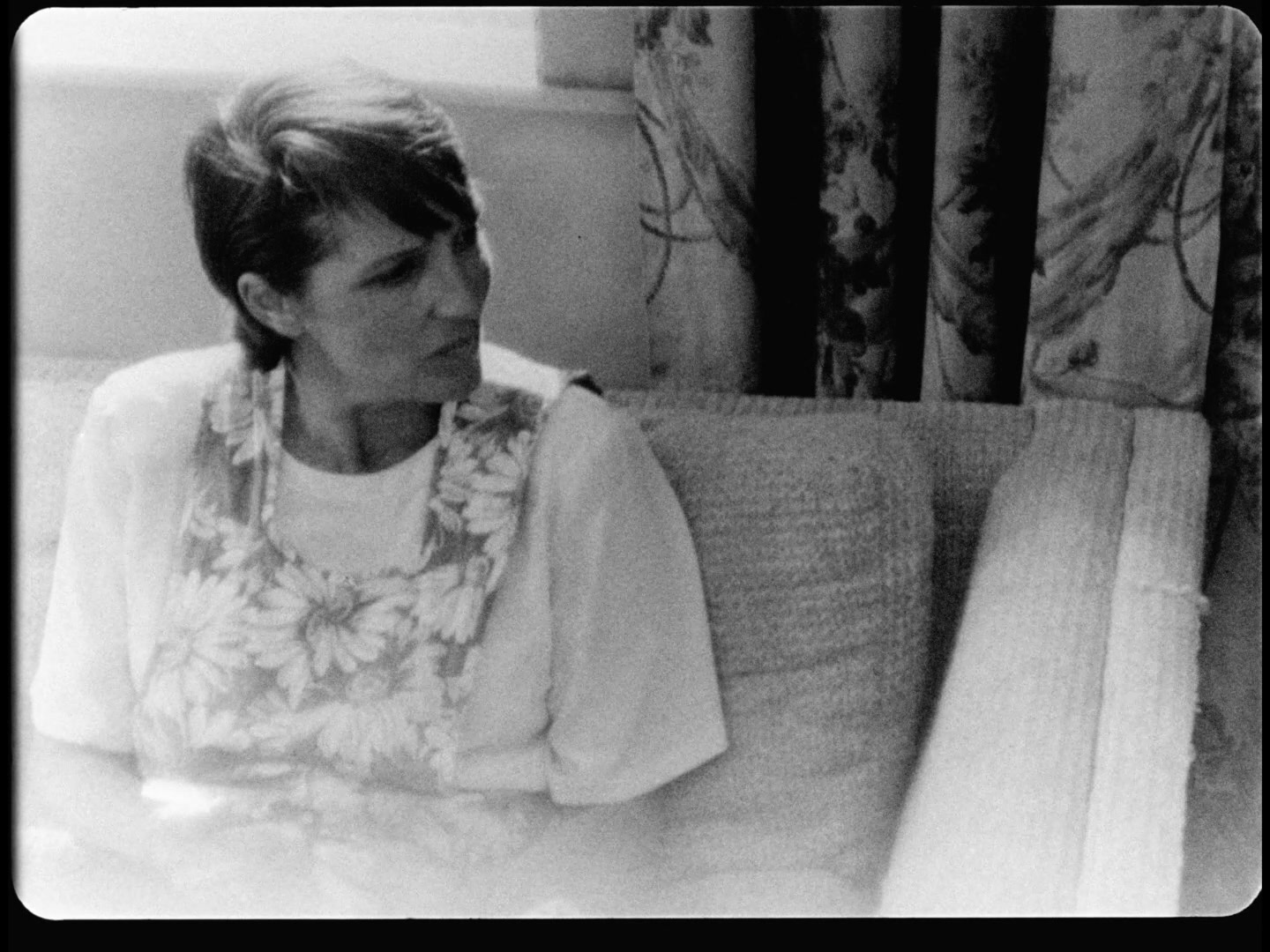
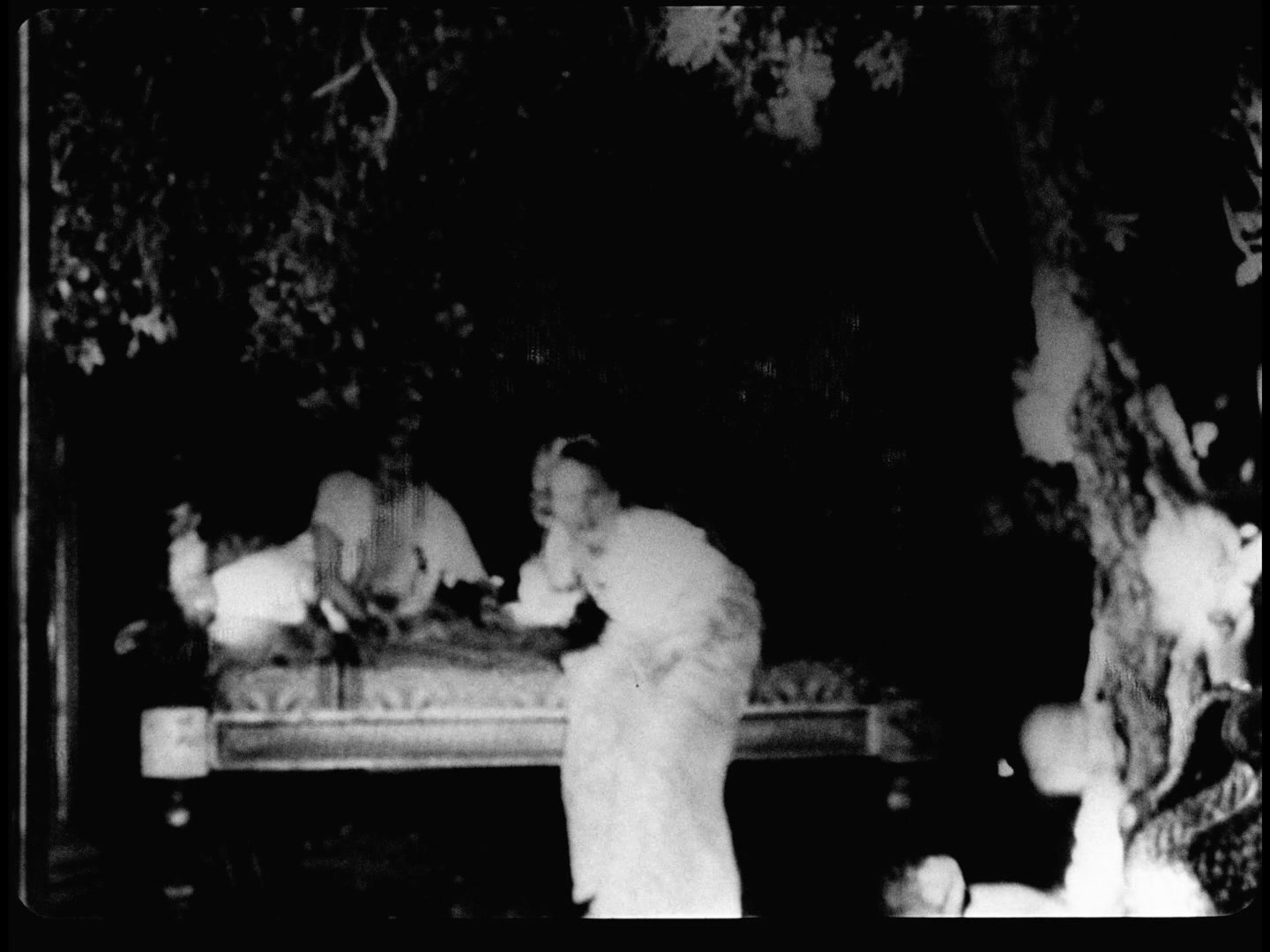
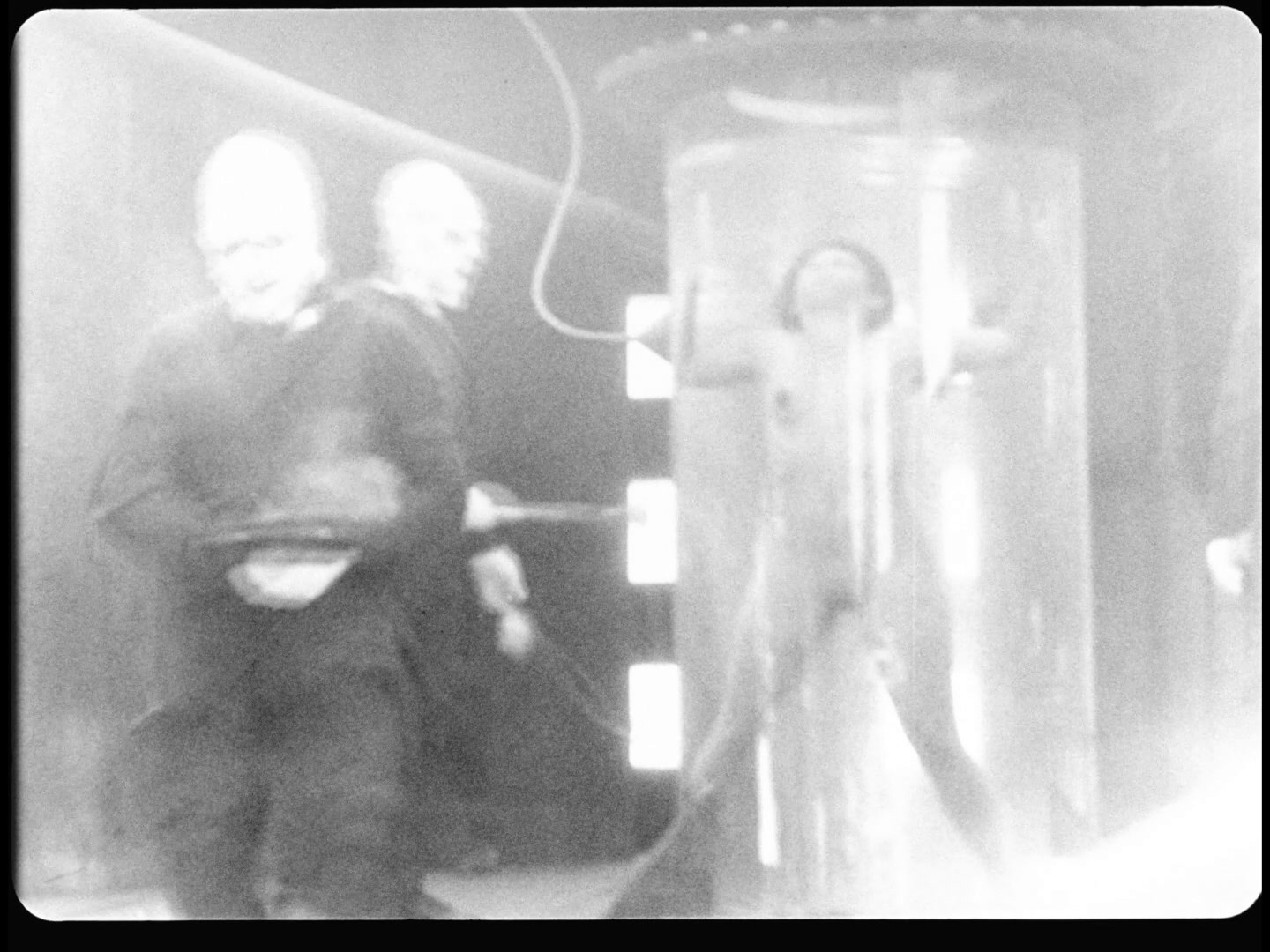
Building the spaces around one camera run
Room to Dream adds the collaborators’ account of the short’s physical construction. In the extract “Next Door to Dark,” Kristine McKenna relays Neal Edelstein’s memory of building the set on effects artist Gary D’Amico’s property and coordinating several passages that all had to work together. D’Amico recalls Lynch postponing the shoot until he could take part. Their accounts put the apparent succession of worlds inside a shared practical undertaking: spaces, performers and transitions prepared around the camera’s run. Next Door to Dark, 01:00–03:23 · source guide →
Lumière on the menu, Premonitions in the collection
The boxed DVD labels this selection Lumière and gives 1995, 35 mm and fifty-five seconds on its menu. That label identifies Lynch’s contribution to Lumière et compagnie, rather than a separate short to add to the filmography. The compact menu name and the fuller title Premonitions Following an Evil Deed lead to the same work.
Lynch’s introduction places the film’s elaborate succession of spaces against the physical limitations of the historic camera. He describes wood, metal and glass, a hand crank, the unusual perforation arrangement and a recreated emulsion on acetate rather than nitrate. His account allows three takes, natural light and no synchronized sound, with the camera continuing once cranking begins. The five-space study above should therefore be read as an arrangement staged for that constrained run, not as a conventional montage reconstructed from its stills. DVD films, introductions and credits [28]
The filmmaker and the camera’s limits · 1 images
The website as a place to make work
In a 12 November 2002 interview with Yaron Gat, Lynch described the internet as a place of freedom and experiment, while acknowledging frustrating speeds and an entertainment audience still unlike television’s. He spoke of fragments that could be abstract or tender, and of immediate response when Rabbits 8 went online. This is contemporary testimony from within the period, not a later assumption that every web experiment was a sketch for a feature. [17]
A site can change the rhythm of making. Work can be released, encountered and discussed before it accumulates into the sort of complete object expected by a cinema distributor. The small unit matters: a room, a drawing, a question or a task can be enough. This also makes preservation harder, because the original menu, sequence and audience context can disappear while individual video files survive.
2002 / eight-part animated series
DumbLand: domestic life at maximum abrasion
For an earlier encounter between a domestic setting, drawing and anger, explore The Angriest Dog in the World. Its fixed comic panels offer a useful comparison with animation.
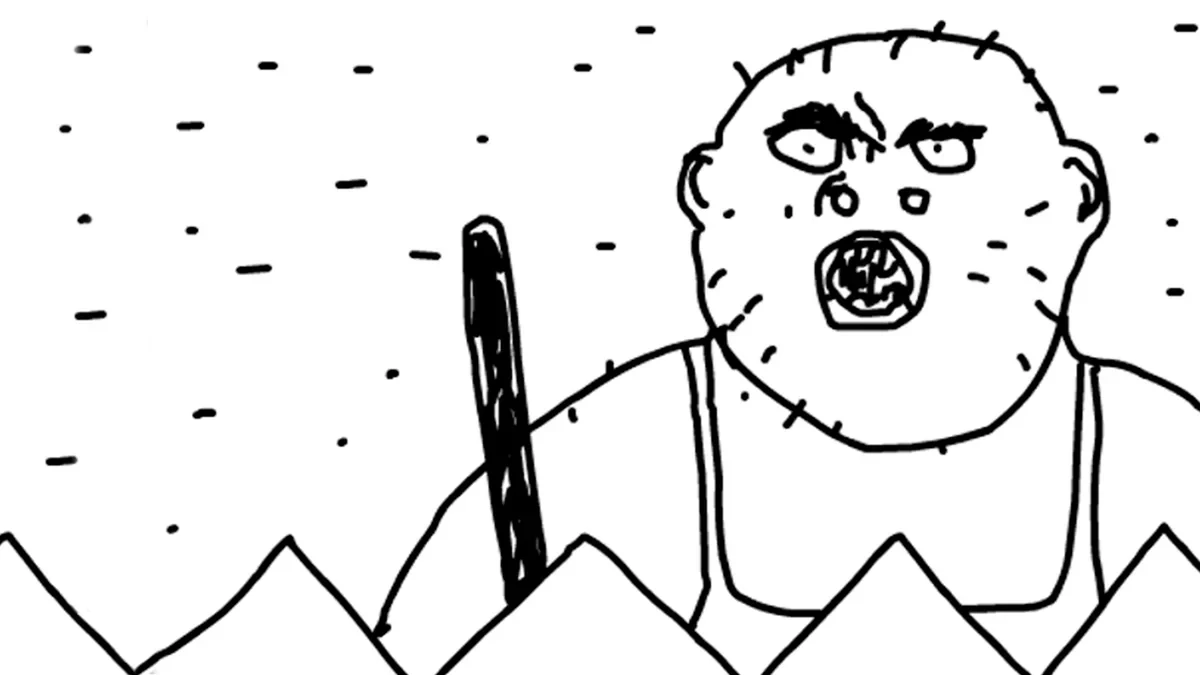
Criterion presents eight episodes around Randy, his family and the people who interrupt his world. The catalogue’s incidents range from an encounter with a neighbour and a noisy treadmill to injury, an unwelcome visitor and ants. That episodic organization deserves to survive even when the series is offered as a continuous compilation. [8]
Looking at the still: a heavy, uneven line creates Randy’s body, teeth and the pointed fence. There is little visual distance between a character’s outline and the marks that surround him. The image’s roughness is itself expressive; photographic polish would describe a different kind of body and a different comic space.
The home repeatedly meets a disturbance, but ordinary irritation carries a disproportionate charge. The small recurring unit allows a return to the household without promising emotional progress. The question is how a recognizable everyday annoyance becomes aggressive performance—through drawing, timing, sound and the relation between one character’s anger and everyone else’s vulnerability.
Eight episode titles in Criterion’s current order
- The Neighbor
- The Treadmill
- The Doctor
- A Friend Visits
- Get the Stick!
- My Teeth Are Bleeding
- Uncle Bob
- Ants
The episode records and BAFTA’s filmography date DumbLand to 2002. [9]
2002 / web series / later re-edit and feature reuse
Rabbits: the promise of a sitcom, the pressure of a mystery
Zoran Samardzija’s 2010 study describes the original web version as eight episodes, largely organized around a fixed view of rabbit-headed figures in a domestic interior. Chores and cryptic speech sit beside a laugh track. He identifies Naomi Watts, Laura Harring and Scott Coffey among the voices and notes a later re-edit in The Lime Green Set. These are his documented account and analysis, rather than a completed comparison by Lyncharium. [25]
A laugh track usually helps an audience inhabit a social rhythm. It marks the moment at which a remark or entrance is supposed to be understood. When the dialogue withholds that understanding, laughter can instead suggest that an unseen audience knows something we do not. The room remains familiar in outline while becoming difficult to inhabit emotionally.
This is a different use of repetition from the physical loop in Six Men Getting Sick. A repeated visual arrangement invites the viewer to detect changes in speech, position and response. A mystery can intensify without advancing toward a conventional solution. That possibility makes the series valuable in its own right, even for a visitor who has never seen Inland Empire.
What belongs to the series, and what belongs to the feature?
BAFTA’s 2007 programme discusses Rabbits among the online material feeding into Inland Empire. Samardzija goes further, arguing that the feature’s reuse does not establish a simple, continuous fictional world. That distinction matters: recognizing an image can enrich a viewing without supplying a universal decoding key. [9] · [25]
The 2002 Gat interview provides an additional chronological anchor because Lynch explicitly discusses the audience response to episode eight. It does not establish the exact upload date of each earlier episode. For now, we keep three records conceptually separate: the web series, the later compilation or re-edit, and the material as it functions inside Inland Empire. [17]
2002 in BAFTA’s filmography / later included in Dynamic:01
Darkened Room and the problem of the compilation
BAFTA’s filmography lists Darkened Room as a 2002 short, written and directed by Lynch. mk2’s current Dynamic:01 page includes The Darkened Room with a 12-minute listing. Those records establish a work and a later package; they do not establish that every circulating file has identical boundaries. [9] · [18]
The compilation supplies a broader view of the website’s activity. Alongside The Darkened Room, mk2 lists Boat, Lamp, Out Yonder: Neighbor Boy, Industrial Soundscape, Bug Crawls and Intervalometer Experiments, followed by member questions. Treating the last item as another fictional short would distort the catalogue. [18]
Its range resists an account of Lynch’s digital years as one uninterrupted mystery narrative. A practical object, a landscape, an experiment and a response to a member can occupy neighbouring positions. The website permits a different proximity between the artist, the process and the finished work.
This dossier gives Darkened Room an explicit place while withholding a detailed scene interpretation until an identified presentation has been logged. The immediate task is to compare the original web entry with the compilation’s chapter boundaries and credits. mk2 itself provides differing package metadata—2006/95 minutes on the current page and 2007/98 minutes in the 2023 catalogue—so the compilation’s date or duration must not become the short’s production date or verified running time. [18] · [24]
2007 / Short film / 12 minutes
Ballerina: the body comes into focus
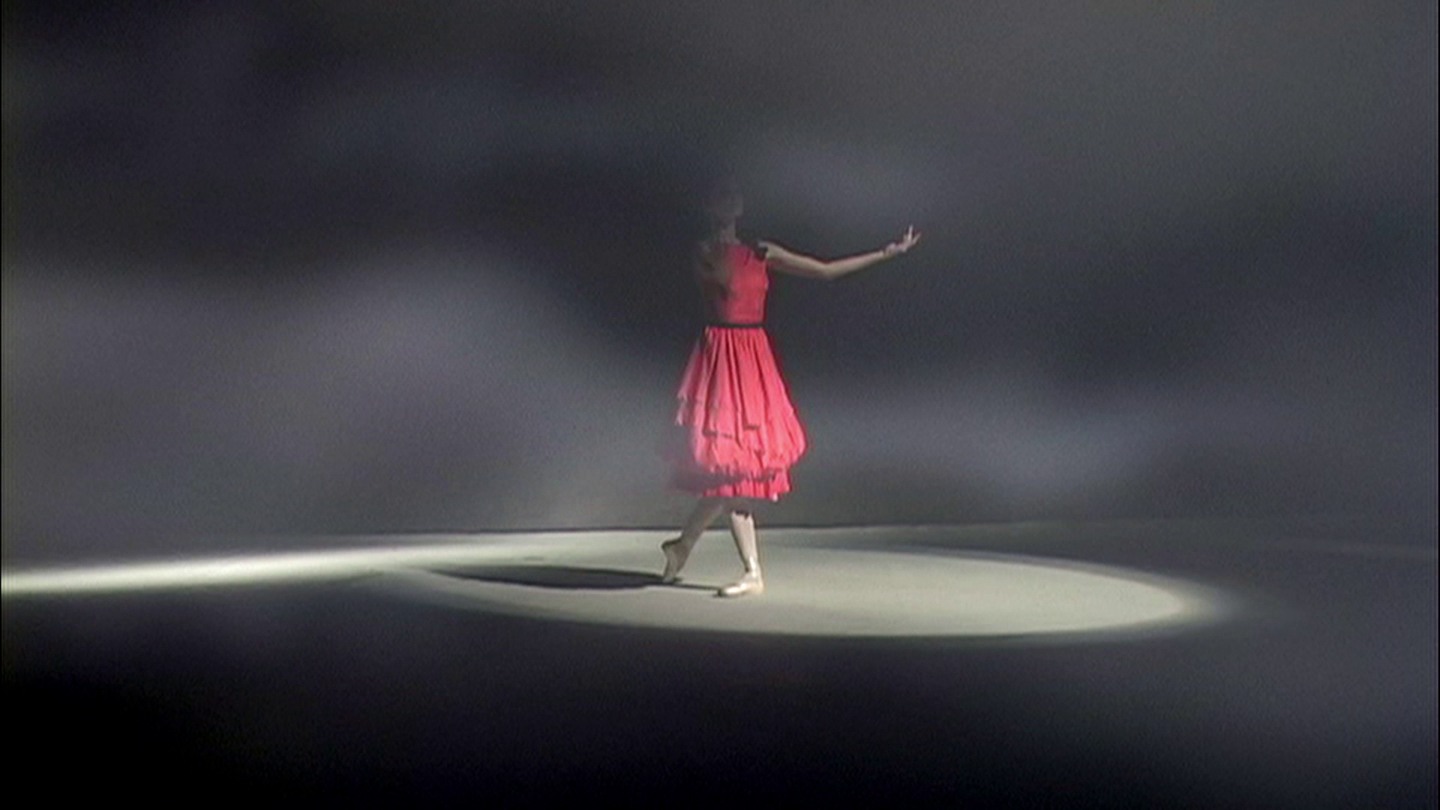
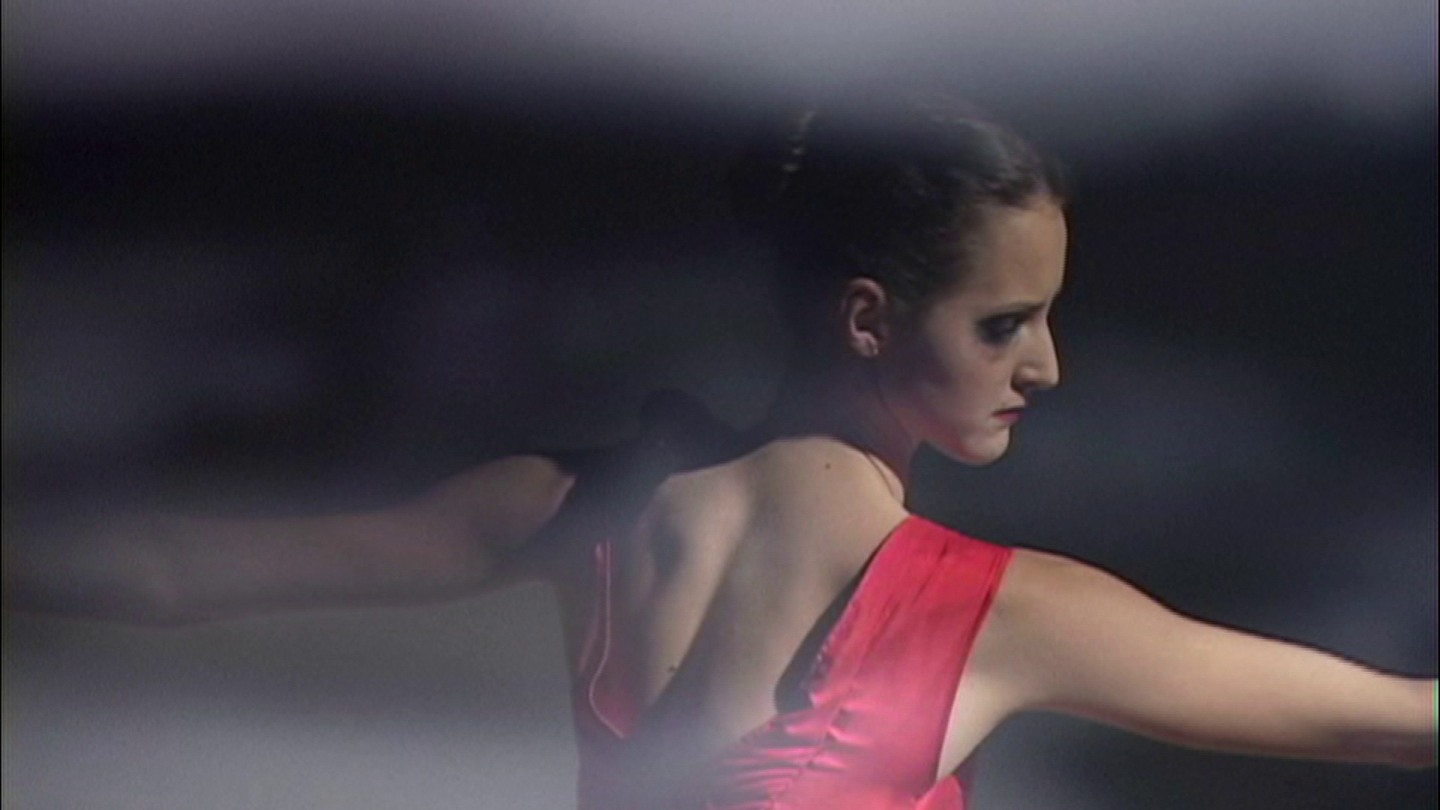
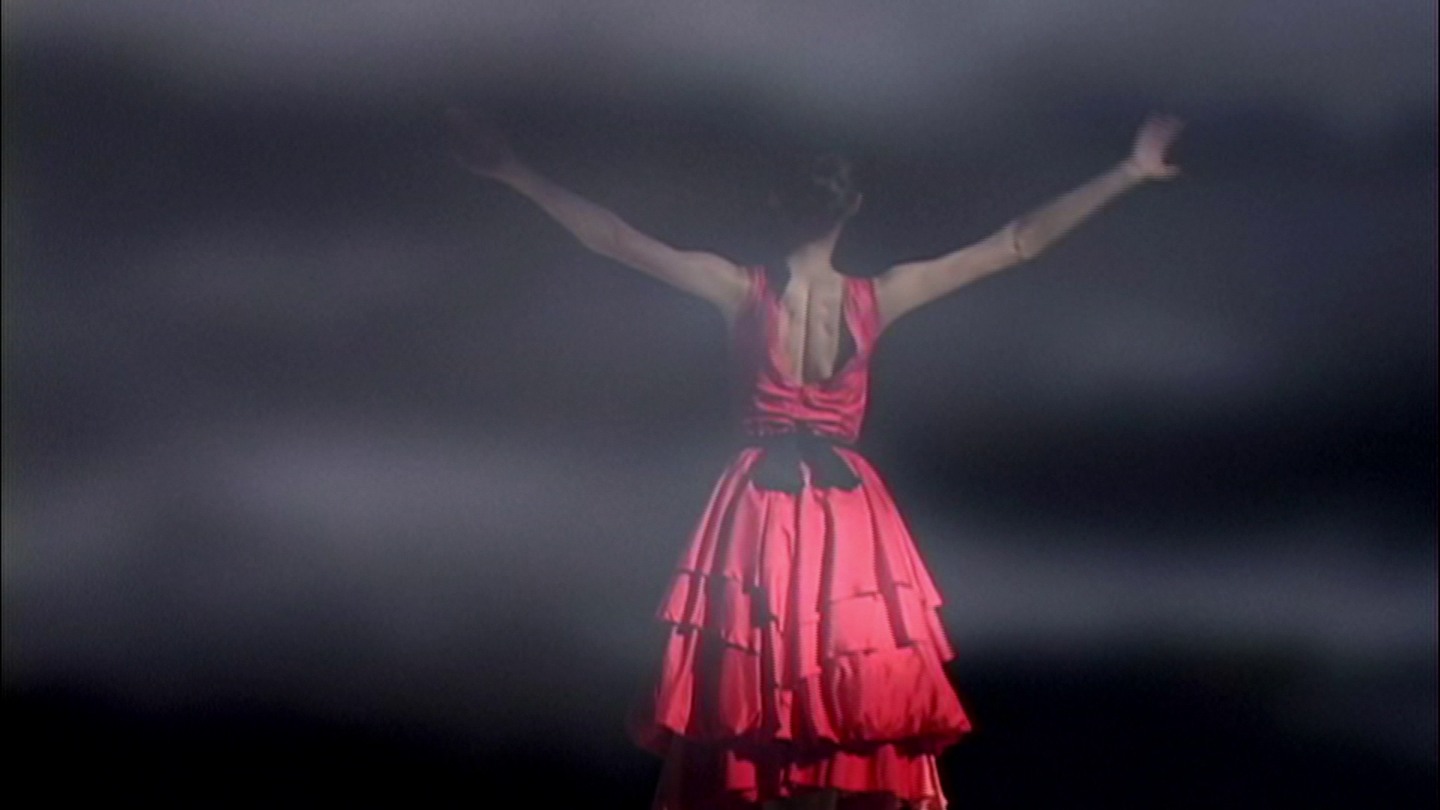
A woman in a red dress dances in a pool of light. Around her, the image behaves like something passing across a window: grey bands drift, the body loses its outline, and a second view begins to occupy the same space. Ballerina gives choreography to the picture as well as to the performer. Its recurring event is the recovery of a body that the frame has almost concealed.
Distance, detail, disappearance
The opening establishes the dancer as a coloured trace before offering the relative clarity of a full figure in an oval spotlight. A wider view makes the position of feet and arms readable; a closer one replaces that spatial certainty with a face, a shoulder or the sweep of red fabric. Neither distance remains secure for long. The grey layers return, and one scale of the performer can overlap another.
The floor passage changes the work’s centre of gravity. Kneeling, reclining and back-bending movements bring the figure down into the light. Around four minutes, a large foreground head and a smaller seated body coexist. The image connects gestures that a single stationary view could not hold together. Later, hands around the head briefly give the face a clear frame of its own. Near the end, the dancer rises onto her toes with arms extended before the body recedes into haze again.
These changes make visibility part of the performance. Blur does more than soften an otherwise complete dance record: it withholds the body, lets a gesture arrive before its surroundings, and changes the weight of the next clear view. The red dress supplies continuity when anatomy and depth become uncertain.
Follow the changing image · 6 images
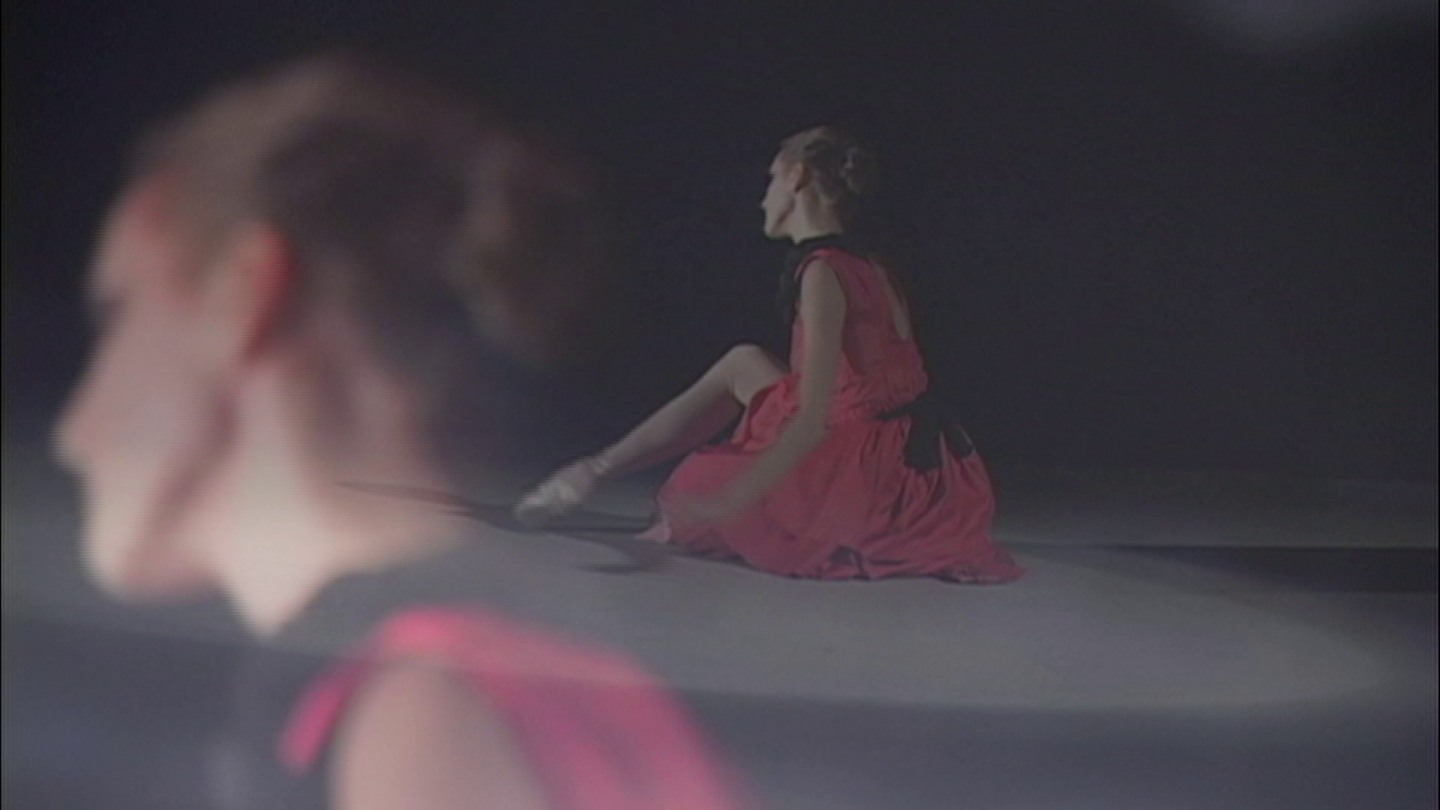
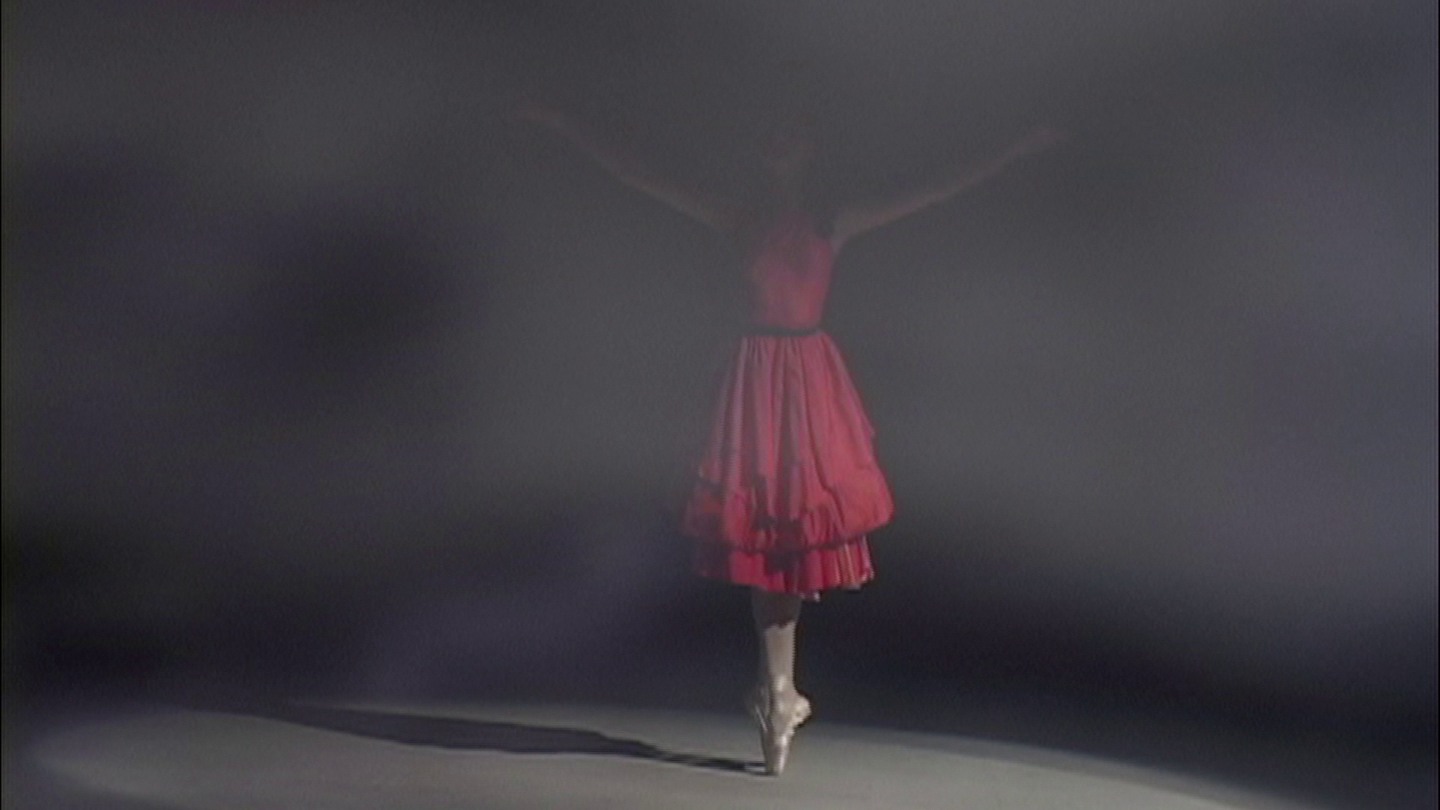
A glimpse of the camera plan
In LYNCH2, Lynch discusses the ballerina while planning two contrasting kinds of coverage. One camera is to explore blur, zooms and changes of focus; another is to keep the whole figure more steadily contained against black, with space around her. That production passage gives a concrete counterpart to the finished short’s movement between a legible body and an unstable image. It also makes Ballerina a useful companion to Inland Empire’s camera and performance studies. Film and production source
Continue from this study into moving paintings, Rabbits and the other works surrounding Inland Empire.
Later encounters: performance, music, another screen
The later works return this guide to some of its first questions: who gives a body its voice, how music interprets an image, and what changes when the same work moves from a shared event to an individual screen.
2015 work / official online upload: 20 May 2020
Fire (Pożar): an image handed to a composer
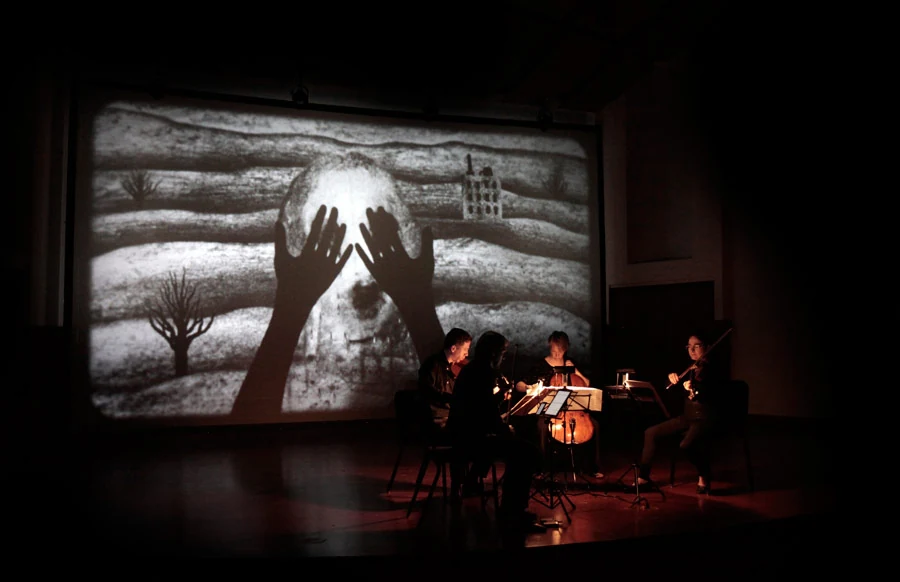
The official David Lynch Theater upload separates the credits clearly: Lynch wrote, drew and directed; Noriko Miyakawa animated; Marek Zebrowski supplied the music. Its description carries a 2015 copyright, while the upload is dated 20 May 2020. This corrects the shorthand in some coverage that assigns all the animation work to Lynch. [26]
USC’s account of the 28 March 2015 Measures & Frames concert records the Penderecki String Quartet performing Zebrowski’s Music for David with the film. In the accompanying interview, Lynch says he withheld an explanation of his intentions so the composer could respond to the images. Zebrowski describes combining pizzicato with a lyrical line in response to what looked to him like a hailstorm. [20]
This is collaboration through a deliberately open handover. Music does not need to certify one correct meaning for an image; it can answer its movement and emotional temperature. The event photograph makes the relationship concrete. The projected hands dominate the space while seated musicians produce the accompaniment beneath them. It records a performance environment, not an isolated frame from the film.
The official upload offers a direct viewing route, while the concert record preserves a different encounter with the work. No claim is made here that the live performance and the uploaded soundtrack have been matched cue for cue. Watch Fire on David Lynch Theater ↗
2017 work / Netflix catalogue label: 2020
What Did Jack Do?: the detective meets his match
Fondation Cartier’s Mondo Reale exhibition record identifies a black-and-white 2017 work in which Lynch plays a homicide detective confronting an unexpected suspect in a railway-station setting. Netflix’s synopsis identifies the suspect as a monkey and labels its listing 2020. These records describe different moments in the work’s life. [10] · [11]
An interrogation depends on the belief that questions will produce useful answers. An improbable speaking suspect makes that mechanism conspicuous. We can attend to the detective’s authority, the ritual of waiting for a response and the possibility that an exchange may prolong uncertainty rather than resolve it. This connects the work to the problem of conversation in The Cowboy and the Frenchman and Rabbits, without implying that all three use dialogue in the same way.
Its gallery history also matters. Cartier places the film at the end of an exhibition concerned with competing ways of understanding reality, alongside Lynch’s other moving-image contributions. Netflix makes it available through a different catalogue and viewing environment. The same work can therefore function as part of an exhibition’s sequence and as a separately selected short. [10]
The work’s exhibition history dates to 2017; Netflix later brought the short to a wider audience. Netflix’s official listing ↗
2018 / music-linked short
Ant Head: the surface will not stay still
Little White Lies hosted the wider online release of Ant Head on 14 November 2018, following a Festival of Disruption presentation the previous month. Adam Woodward describes a roughly thirteen-minute black-and-white shot of ants moving across a head-shaped object, accompanied by Thought Gang’s “Frank 2000” and “Woodcutters from Fiery Ships.” The article also carries Lynch’s identification of ants and cheese among its ingredients. [22]
An apparently stable face becomes a changing surface. Movement is distributed among tiny bodies rather than concentrated in a central actor. The encounter offers another way to think about a “moving painting”: the eye searches across the image while music supplies its own progression. The image can remain in one setup without becoming static as an experience.
The film belongs here as a short moving-image work and also in the music guide through Thought Gang, Lynch’s collaboration with Angelo Badalamenti. The promotional occasion is part of its history, not a reason to discard it from serious consideration. Release account and video ↗
The Short Films of David Lynch / boxed DVD
A collection designed as an object
This edition brings together Six Men Getting Sick, The Alphabet, The Grandmother, both versions of The Amputee, The Cowboy and the Frenchman and the Lumière contribution. Lynch’s filmed introductions link the selections through cameras, commissions, collaborators and practical obstacles. They give each short its own production story rather than presenting the early films only as a prelude to the features.
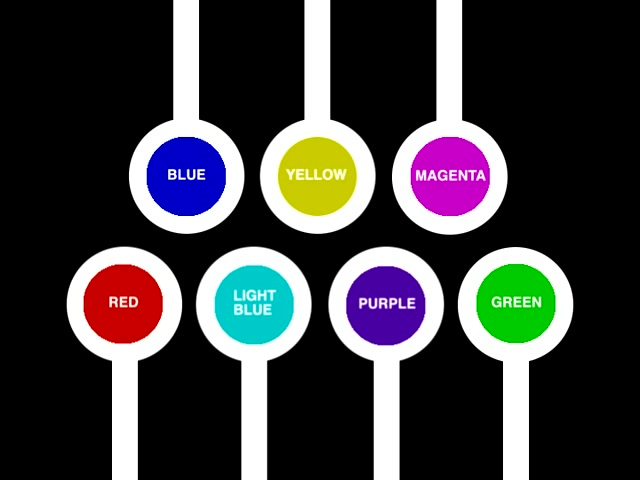
The surrounding interface is part of the edition’s identity. Moving typography and a sculptural head turn the entrance into an animated surface. Television-calibration options continue that attention to how an image is encountered, with separate brightness, contrast and colour screens. They are functional instructions embedded in a distinctive visual presentation.
The DVD’s own credits make the authorship unusually explicit: menus and interface designed by David Lynch; audio design by Lynch; audio mix by Lynch and John Neff. Arash Ayrom is credited for DVD compression and authoring, and Ayrom and John Wentworth for DVD production. The music credit identifies Bluebob Jam by Lynch and Neff. The closing copyright is Absurda, 2001; it belongs to this disc presentation and is not the production year of the films.
The most revealing additional fragments are distributed back into their relevant studies: the camera and failed commission, the Sony and Scotch test slates, and the grant recollection and shared sound credits. The disc gives those small pieces a place alongside complete works, allowing the collection to function as a history of making as well as a programme to watch. DVD films, introductions and credits [28]
Calibration and interface credits · 2 images
Viewing routes, versions and the dates that travel with them
For the early works, Criterion’s Eraserhead edition lists 2K restorations and Lynch introductions for Six Men Getting Sick, The Alphabet, The Grandmother, both versions of The Amputee and Premonitions Following an Evil Deed. That is six presentations of five titles. The feature’s 4K restoration specification does not make those supplements 4K. [12]
The Criterion Channel collection ↗ is a useful catalogue route for the early films and DumbLand. Its collection also contains introductions, so a platform’s item count should never be repeated as a count of distinct films. Access and regional availability should be checked with the provider.
| Work | What the records say | What follows |
|---|---|---|
| Six Men Getting Sick | PAFA: one-minute installation loop. Criterion: 1967; legacy stream 4:20. BAFTA/mk2: 1966. [1] · [5] · [9] · [24] | Different objects or presentations must be identified before duration or year differences can be explained. |
| The Amputee | Criterion: two 1974 versions. Legacy streaming labels: 5:10 and 4:02. mk2 2023 combines the title under 9 minutes. [5] · [24] | Keep both versions and their timings separate; do not label one an abridgement without comparison. |
| The Cowboy and the Frenchman | AFI Watch: 1988 / 22 minutes. mk2 2023: 1988 / 26 minutes. [6] · [24] | An unresolved listing difference, not proof of a cut. |
| Premonitions Following an Evil Deed | Criterion: 1995. BAFTA and mk2: 1996. Cinétévé: 52-second anthology contributions. [7] · [9] · [24] · [19] | Distinguish commission specification, film segment, packaged item and dated release event. |
| Dynamic:01 / Darkened Room | Darkened Room: 2002 in BAFTA. Dynamic package: 2006 / 95 minutes on mk2’s current page; 2007 / 98 in its 2023 catalogue. [9] · [18] · [24] | A compilation date and length do not define each constituent short. |
| Fire (Pożar) | Official description: ©2015. Upload: 20 May 2020. USC documents a 2015 live-quartet presentation. [26] · [20] | Keep work date, event date and online release date separate. |
| What Did Jack Do? | Fondation Cartier: 2017 work. Netflix: 2020 catalogue label. [10] · [11] | The exhibition record does not by itself authenticate the first screening’s exact date. |
Compare releases by distributor, format, region, framing and soundtrack. Introductory titles and restoration cards also form part of an edition’s presentation.
Exhibition history is part of the work’s meaning
These records place the shorts in a museum installation, a film programme, a subscription website, an anthology, a live concert and a streaming catalogue. Our synthesis: there is no single default encounter from which every other presentation is a diminished copy. There are also real differences worth preserving. A loop can surround a visitor; a short before a feature can frame an evening; an episode can arrive in a continuing conversation; a concert gives sound a visible human source.
These twelve studies connect installations, individual shorts, serial works, anthology contributions and films made with music. Continue into Commercials, Music Videos and Online Works to explore the wider field.
Explore further
Follow the sources below, explore the museum collection, or continue through the Reading Room. New archival discoveries and contributions enrich the record of Lynch’s work.
Commissions and collaborations
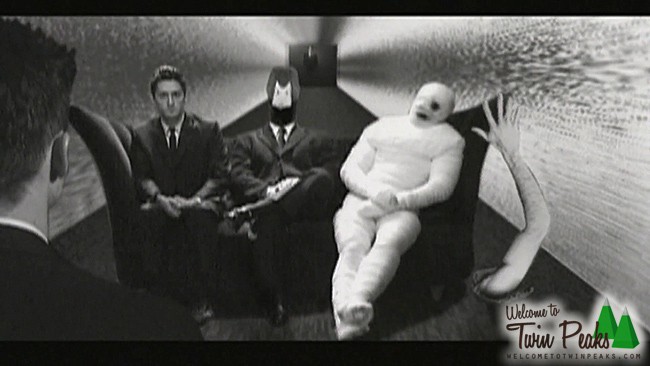
Commercials ↗
Explore the briefs, people and campaign histories behind Lynch’s advertising, with unresolved credits kept visible.
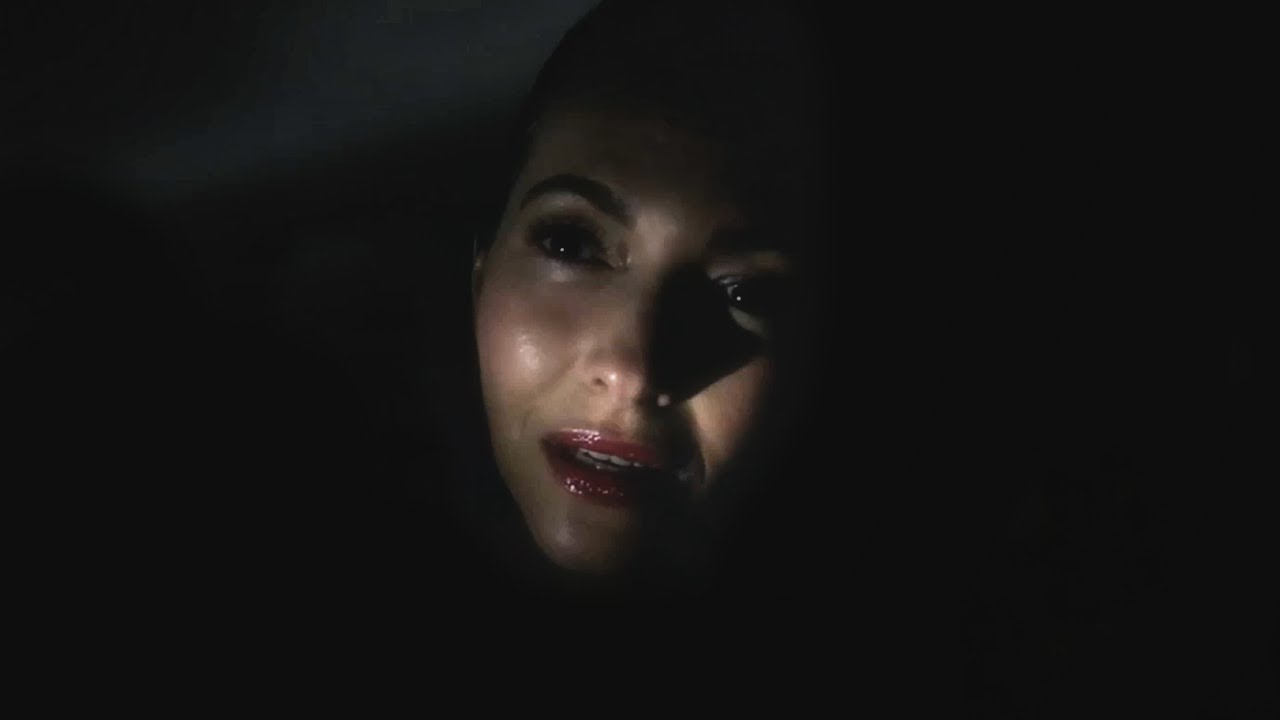
Music Videos ↗
Directed videos and adjacent collaborations, from a film-linked performance to animation, concert projection and the illuminated face.
Online works and the performance stage
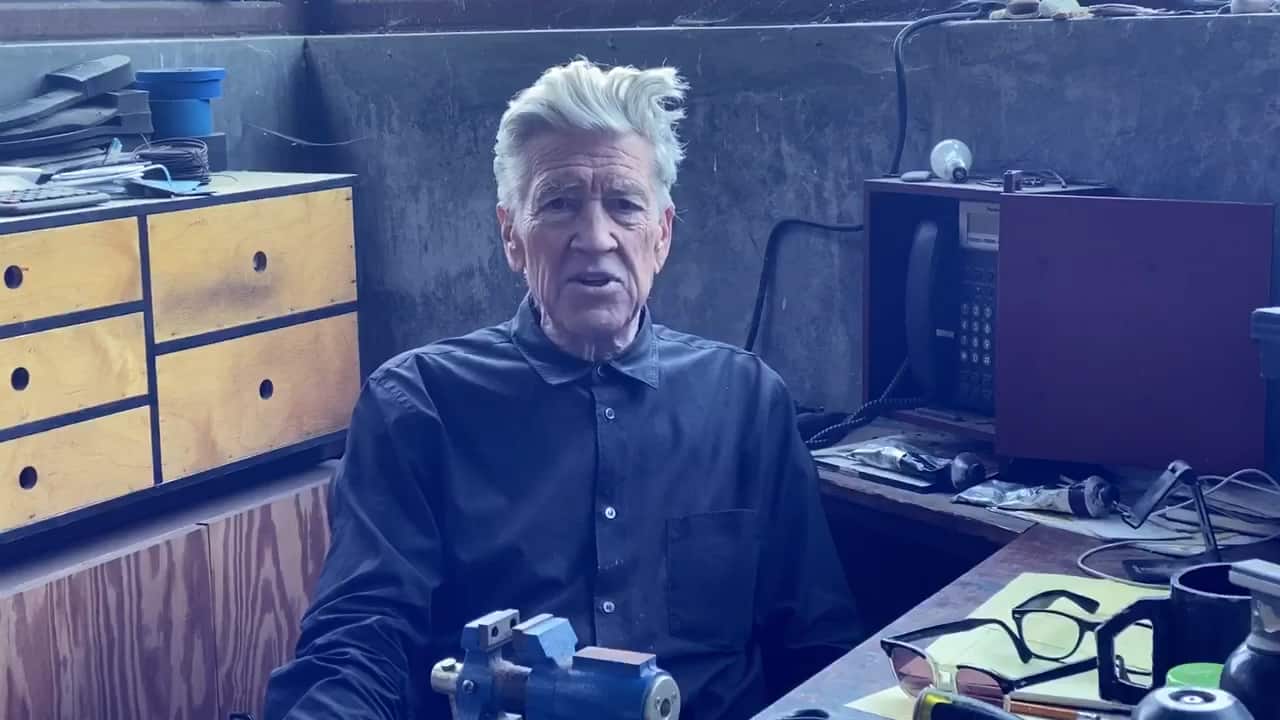
Online Works ↗
A website as a studio, a film released in fragments, a daily greeting: explore Lynch’s life online.
Industrial Symphony No. 1 ↗
Julee Cruise, Angelo Badalamenti and a dream built on stage: follow the event and the video it became.
Sources and further reading
The source guide connects each work to its collaborators, production history, release editions and critical reception.
- Ballerina (2007), David Lynch; LYNCH2 (2007), blackANDwhite.Criterion’s Inland Empire. Ballerina: visual study across the complete short, with selected images at 01:20, 01:54, 02:15, 04:18, 08:00 and 10:15. LYNCH2, 03:00–04:00: Lynch plans the contrasting camera coverage for the dancer. Edition and supplement record ↗ · Production studies →
- PAFA — David Lynch: Six Men Getting Sick ↗Institutional account of the installation, its one-minute loop, siren, sculpted screen and Jack Fisk’s assistance. Historical exhibition page, 2015.
- Criterion Channel — The Alphabet ↗1968 catalogue record, animation/live-action description and opening image.
- Criterion Channel — The Grandmother ↗1970 catalogue record, 34-minute listing, premise, cast and image.
- Tim Maloney — The Grandmother, Senses of Cinema (2006) ↗Critical account of performance, painted interiors and sound; the interpretation and Splet attribution are identified as Maloney’s.
- Criterion Channel — Short Films by David Lynch ↗Selected film records and separate Amputee versions. Introductions and series episodes must not be counted as distinct standalone films.
- AFI Watch — The Cowboy and the Frenchman ↗1988 listing, premise, cast and crew. An online listing, not a comparison of screen credits or editions.
- Criterion Channel — Premonitions Following an Evil Deed ↗1995 record and identification of the Lumière and Company anthology.
- Criterion Channel — DumbLand ↗2002 series record and eight-episode listing.
- BAFTA — David Lynch: A Life in Pictures programme (2007), PDF ↗Jamie Russell’s essay (PDF p.5, printed 6–7), contributor profiles (PDF pp.4,6–7) and filmography (PDF p.8, printed 12–13). Dates differ from Criterion in two entries. Written programme, not lecture audio.
- Fondation Cartier — Mondo Reale exhibition record ↗Identifies What Did Jack Do? as a 2017 work and describes its detective and station setting.
- Netflix — What Did Jack Do? ↗Platform record labelled 2020; synopsis identifies the monkey as a murder suspect. Availability depends on location and subscription.
- Criterion Collection — Eraserhead edition ↗Publisher’s supplement inventory: six restored short-film presentations, including both Amputee versions, with Lynch introductions.
- Peggy Reavey — PLATFORM artist interview ↗First-person account under the visual-storytelling question: The Alphabet costume, makeup, red liquid and one-take performance. Retrospective testimony, not a production log.
- David Lynch — BAFTA David Lean Lecture, 27 October 2007 ↗Exchange beginning “how did you get involved with them?”: moving painting, failed camera commission, Alphabet, Grandmother script and independent grant before AFI study. Transcript inspected.
- David Lynch — Pitchfork interview, 2012 ↗Answer to the Eraserhead sound question: meeting Splet on The Grandmother and repeatedly recording through air ducts for reverberation. First-person recollection; no individual film cue identified.
- Richard Harland Smith — The Amputee, Version 2, TCM (2015) ↗Published production history: Elmes’s comparison of videotape stocks, Coulson and Lynch. Secondary production account, read alongside Lynch’s filmed introduction and the two performances compared above.
- Yaron Gat interviews David Lynch, Paris, 12 November 2002 ↗Questions on internet freedom, fragments and immediate audience feedback. Lynch explicitly mentions Rabbits 8; not a complete episode-release calendar.
- Mk2 Films — Dynamic:01 ↗Current distributor entry lists 2006/95 minutes and seven named films plus Member Questions; The Darkened Room is listed as 12 minutes. These describe the compilation record.
- Cinétévé — Lumière et compagnie ↗Producer’s French synopsis: forty 52-second contributions using the restored 1895 Cinématographe, with Sarah Moon’s making-of. Technical metadata for the surrounding programme must not be transferred to each contribution.
- Julie Riggott — New music shines in the projector’s beam, USC Thornton, 9 April 2015 ↗Into the Fire section: Lynch and Zebrowski discuss composition after the images; pizzicato and lyricism; March 28 concert. Photograph of the quartet identified in its caption.
- USC Polish Music Center — Measures & Frames (2015) ↗Programme and April report identify the 2015 animation, Music for David, live quartet and American premiere. Main text says March 28; one image caption says March 23. Main text agrees with USC Thornton.
- Adam Woodward — Ant Head exclusive, Little White Lies, 14 November 2018 ↗Publication hosting the online premiere: prior Festival of Disruption screening, Thought Gang tracks, black-and-white single-shot description and Lynch’s short statement. Contemporary release evidence.
- BAMPFA — Eraserhead plus Alphabet and The Grandmother, 9 October 1981 ↗Historical programme pairing the shorts with Eraserhead and announcing a discussion with Lynch and Splet.
- Mk2 Films — Collections, spring/summer 2023, p.57 ↗David Lynch collection table, PDF p.29 / printed p.57: shorts dates, Cowboy 26 minutes, Amputee combined 9 minutes and Dynamic 01 2007/98 minutes. Distributor metadata differs from other listings; not proof of alternate cuts.
- Zoran Samardzija — DavidLynch.com: Auteurship in the Age of the Internet and Digital Cinema, Scope 16 (2010) ↗PDF pp.2, 5–7: subscription-site context, Dynamic:01, original Rabbits, Lime Green Set re-edit and Inland Empire reuse. Scholarly interpretation.
- David Lynch Theater — FIRE (POZAR) ↗Official page inspected in browser: 20 May 2020 upload, ©2015, 10:30 displayed player duration; written/drawn/directed by Lynch, animation by Noriko Miyakawa, music by Marek Zebrowski. Description inspected; full audiovisual playback not reviewed.
- Criterion Eraserhead Blu-ray — short films and David Lynch introductions ↗Direct image and credit comparison: Six Men Getting Sick, The Alphabet, The Grandmother, both versions of The Amputee and Premonitions Following an Evil Deed. Introductions provide Lynch’s retrospective production accounts. Scene readings are Lyncharium’s interpretation of the films.
- The Short Films of David Lynch — boxed DVD, AbsurdaOwner-supplied physical edition. The disc’s interface credits carry a 2001 copyright. Evidence used here: the six film selections, both Amputee versions and the Sony/Scotch test fragments; Lynch’s filmed introductions and Bolex recollection; the films’ end credits; DVD selection, calibration and interface-credit screens. Production recollections are attributed to Lynch. Visual interpretations are Lyncharium’s readings of the films. The short-film galleries retain their earlier Criterion material alongside the new DVD studies.
Another doorway
Continue exploring
Online works
Online Works
Explore David Lynch’s online world: his original website, web series, Interview Project, daily weather reports and the art of returning every day.
Commercials
Commercials
Explore David Lynch’s commercials, from Obsession and Barilla to PlayStation and Dior, through campaign histories, creative collaborations and striking imagery.
Music
Music Videos
Explore David Lynch’s music videos, from Chris Isaak and Moby to Nine Inch Nails and Chrystabell, through the artists, images and collaborations.
Image credits and sources accompany each linked guide.