Inland Empire
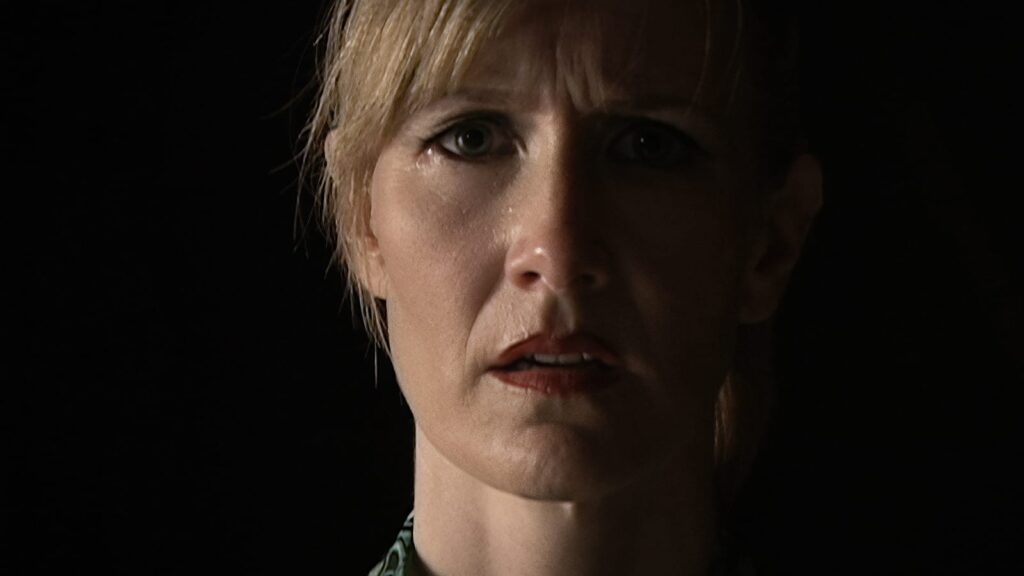
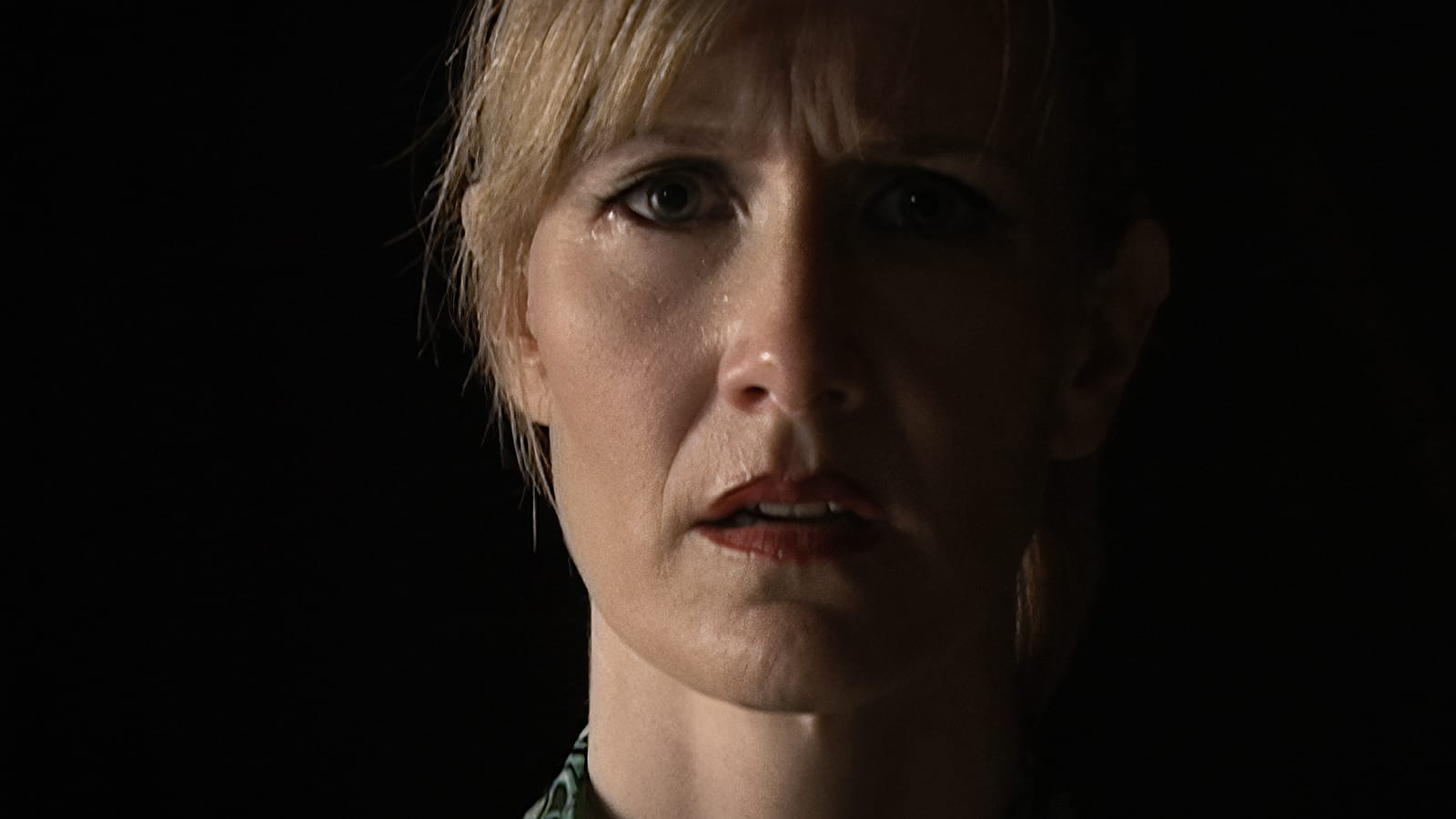
The feature films / 2006 / Research dossier
An actress enters a role. The frame stops holding the world in place.
Inland Empire makes acting, watching and the making of images inseparable. Laura Dern’s Nikki Grace takes a film role; certainty about the person, the performance and the world around them begins to dissolve. This dossier follows the labour behind that uncertainty: evolving written scenes, several cameras, rooms built and rebuilt, voices recorded and images transformed. Film and cast record ↗
Reading this dossier: discussion includes narrative developments. Production testimony, criticism and inspected images support this edition.
- Film year
- 2006
- Listed runtime
- 180 min
- Image
- Black and white / Color
- Edition ratio
- 1.85:1
Writing into a film
The familiar description of Inland Empire as a film made without a script obscures a more interesting process. In Michael J. Lee’s December 2006 interview, Lynch describes working scene by scene before the relationship between the pieces emerged. He also describes a later phase involving substantial writing and a more concentrated shoot. The absence of an initial, complete feature screenplay does not establish an absence of written material. Lynch and Dern on the evolving production ↗
Sean Axmaker’s January 2007 interview gives this process a starting relationship: Lynch and Dern wanted to work together again. Lynch had been making scenes for his website; connections between apparently separate pieces became visible to him. The feature was discovered through that work rather than simply photographed from an already settled plan. The Idea interview ↗
Camera operator Ole Johan Roska complicates the shorthand further. In a 2007 Norwegian interview, he recalls detailed scripts for the work he filmed, even though the entire story remained mysterious to him. That is compatible with a production whose written material accumulated over time. It is not evidence that every participant possessed an identical, complete screenplay. Roska’s account of the written material ↗
The significant distinction is between a scene being precisely prepared and a whole film being fixed in advance. A written exchange, a rehearsed gesture and an unresolved larger structure can coexist. This helps explain why “improvised” is too blunt a description of the finished work. To establish what changed, however, we need dated pages and production records, not just a retrospective account of inspiration.
There is also a boundary between a project idea and a filmed scene. In 2022, sound engineer John Neff recalled Axxon N as a proposed series involving a woman whose circumstances lead into another life. That recollection is a lead into development history. It does not prove that every element of the proposal was photographed or survived into Inland Empire. Neff on the earlier proposal ↗
Los Angeles and Łódź: two places of work
Poland belongs in the film’s production history as a place of collaboration. In a 2009 Polish interview, Lynch remembered asking Marek Żydowicz to arrange a green room and actors for a day’s work. He named Krzysztof Andrzejewski, Krzysztof Majchrzak and Karolina Gruszka among those involved. He described writing scenes, then returning to work with Dern and Jeremy Irons in Los Angeles. These are later recollections; they do not supply a complete dated shooting schedule. Lynch’s account in Newsweek Polska ↗
A contemporary checkpoint helps keep that history grounded. Dorota Hartwich’s January 2006 report locates work in Łódź and discusses the Polish production relationship. Its projected Cannes premiere should be read as an expectation at the time: the eventual festival history must be established separately. The January 2006 production report ↗
The Polish Film Institute’s New Polish Films 2008 catalogue identifies a US–Poland–France production and names Żydowicz as executive producer. Its craft record includes Wojciech Wolniak in art direction. This is useful evidence beyond a director-centred account, although the entry also duplicates Wilson name variants that require checking against the actual end titles. Catalogue entry, printed p. 41 ↗
Describing the Polish passages only as an uncanny elsewhere risks turning real creative work into atmosphere. A better production map asks who arranged the spaces, built the sets, recorded the voices and performed the scenes. It also keeps a fictional location distinct from where a camera stood. The dossier therefore leaves precise room-to-location identifications open until production documentation supports them.
Laura Dern: knowledge inside the moment
Dern told Lee that the process required attention to the present scene without complete knowledge of what would follow. Lynch, in the same interview, connected digital shooting with the freedom to sustain long takes. Together, these accounts suggest a practical relationship between equipment and acting: a performance could continue without the interruptions associated with changing film magazines. Performance and the duration of a take ↗
Uncertainty for an actor and uncertainty for an audience need not be identical. An actor may have a concrete objective in a scene while a viewer lacks the information needed to place it. Reading Dern’s work only as confusion misses that distinction. A useful close analysis would track how posture, breath, vocal force and attention establish a moment before asking where it fits in an overall explanation.
The credited names are an orientation, not a solution. Dern is listed as Nikki Grace/Susan Blue; Justin Theroux as Devon Berk/Billy Side; Jeremy Irons as Kingsley Stewart; and Harry Dean Stanton as Freddie Howard. The paired names identify a performance problem the film sets up. They should not be converted automatically into a simple diagram that explains every image. Cast credits ↗
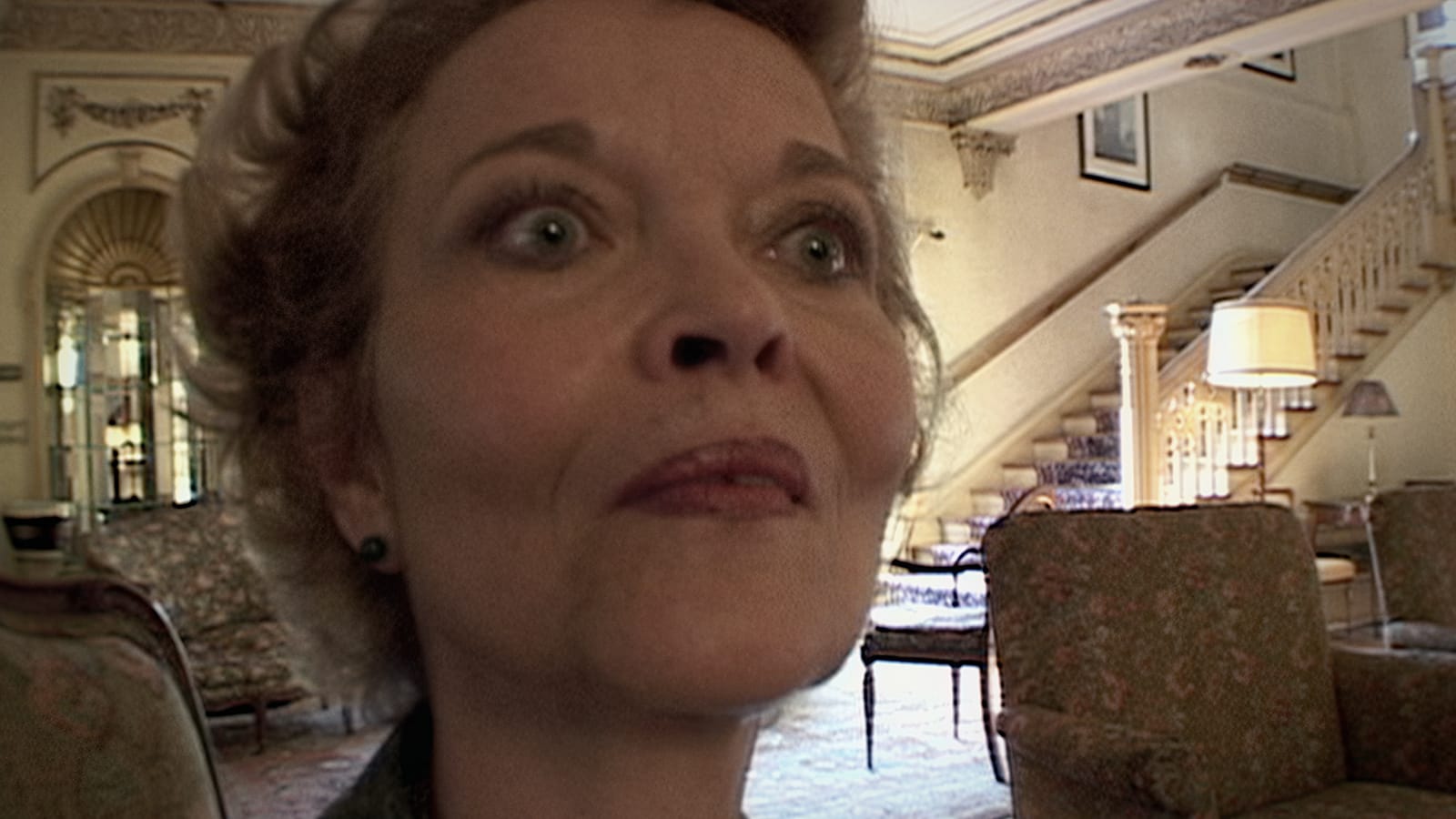
The Visitor image provides a small, inspectable example. Grace Zabriskie’s face occupies the foreground while patterned furniture and a staircase remain visible behind her. The image holds facial attention and a much larger room together. That imbalance of scale can make an encounter feel spatially intrusive before any dialogue is explained.
Lynch resisted the suggestion that different performers were simply using incompatible styles. In Axmaker’s interview, he treated their behaviour as belonging to the particular characters. That makes the contrast between Dern’s listening and the Visitor’s delivery a subject to investigate in the scene, rather than a production mistake to explain away. Lynch on character and performance ↗
The camcorder—and the people around it
Lynch’s choice of the Sony PD150 grew out of his web filmmaking. He told Axmaker that he retained the camera as the material developed, and valued the imaginative possibilities of a less detailed image. This is an aesthetic argument as well as a production decision. Softness is not automatically evidence of a failed attempt to imitate polished 35 mm photography. Camera choice and image detail ↗
Roska describes three-camera work with Lynch and Odd Geir Sæther, including Lynch’s use of a monopod for close views. His account restores a working group to the image of the solitary filmmaker with a small camera. It also gives a practical reason to study the edit: simultaneous views can offer different scales and reactions from the same performance. Camera positions and working method ↗
There is an unresolved technical discrepancy. In Iain Blair’s 2007 Post interview, Lynch names Final Cut Pro. The later Janus remaster note names Avid. Both statements are retained here; a software handoff is possible but has not been established. Only project metadata, conform records or precise participant clarification could turn that possibility into a reliable chronology. Contemporary editing account ↗ · Later technical account ↗
When the image is deliberately obscured
Blair’s interview also recovers a specific piece of effects labour. Lynch says he began work on blurred faces in Shake and that assistant editor Noriko Miyakawa finished it. He recalls needing further work when the image was converted to HD. This matters for restoration research: an indistinct face might involve an original effect, a conversion problem or later processing. Those causes cannot be diagnosed from a small web image alone. Miyakawa and the face effects ↗
The production history changes the questions we ask of the picture. Where does a face stop being readable? Does a cut make an uncertain shape suddenly intelligible? Is the discomfort caused by proximity, duration, texture or an effect? A technical description becomes useful when it leads back to those visible decisions. It becomes misleading when the camera model is offered as the explanation for all of them.
A camera close to the actors
In his conversation with Mike Figgis, recorded in Łódź on 28 November 2006, Lynch connects digital filmmaking to physical freedom: a smaller camera, less intrusive lighting and the ability to stay close to actors. The attraction is not simply economy. He describes being able to move quickly with an idea, see the image as it is made and continue a performance for longer without reloading. The conversation gives a practical counterpart to the low-definition aesthetic discussed above.
His account of directing also resists a fixed recipe. Different actors may reach a scene through different numbers of takes; the task is to communicate the particular idea and recognize when it has appeared. These remarks help explain the value of Inland Empire’s intimate, flexible working conditions without turning spontaneity into an absence of craft. Lynch with Figgis, 10:30–19:35 · Explore the interview collection →
Rooms that have to be made
Roska recalls helping with practical construction, using material such as FixAll to build up surfaces. He also describes recreating the rabbit set and matching its framing closely enough to avoid a visible discontinuity. The apparently unstable world therefore depended, in part, on precise physical and pictorial work. Construction and the rabbit set ↗
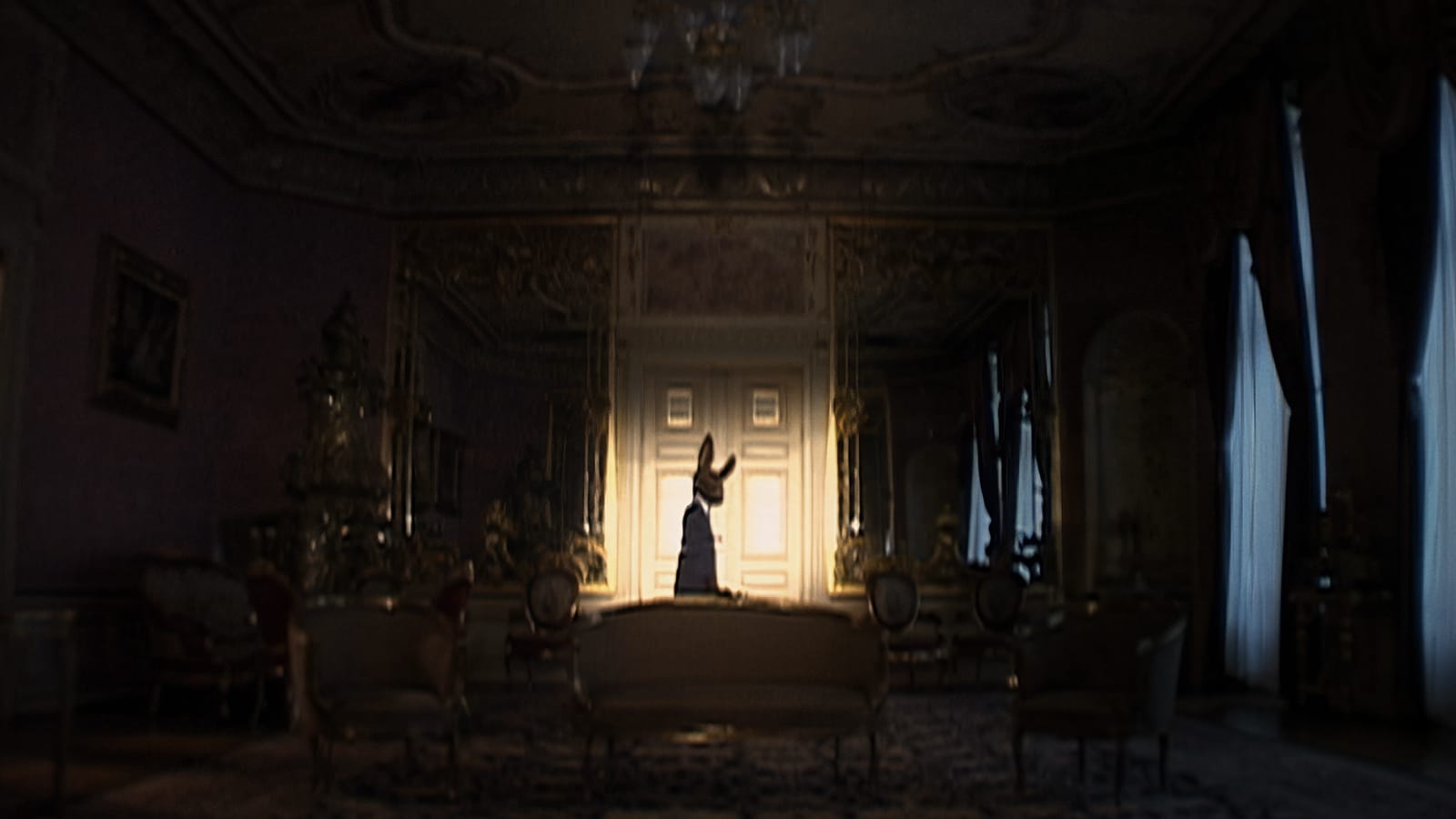
In this second inspected image, a rabbit-headed figure stands far from the camera, near illuminated doors. Much of the room is dark. Compared with the Visitor close-up, the body occupies very little of the frame. The two images offer opposing pressures—being too close to a face and too far from a figure. Architecture is active in both. Here the spectator has a space to scan but limited access to the person within it.
Rabbits connects the film to Lynch’s earlier online experiments. Its familiar room and extraordinary occupants change meaning when encountered within the feature’s expanding world. Explore the series in Short Films and Online Works.
Clothes, props and museum evidence
The PISF catalogue credits Melanie Rein with set decoration and Karen Baird and Heidi Bivens with costume design. Design and costume record ↗
For Lyncharium’s Museum, a release poster, a DVD package and a purported production prop require different records. A poster needs a territory, issuer, printing and date. A disc needs an edition and contents inventory. A screen-used object requires documented custody connecting it to the production. No such object attribution is being made from these stills. The film’s visual power is a reason to investigate its objects carefully, not a substitute for provenance.
Watching without making one key do everything
Jim Emerson’s January 2007 review makes watching part of the film’s subject. His account repeatedly returns to the relationship between spectator, actress and image, and to fragments that seem to contain patterns found elsewhere in the work. This is a critical model, not a statement from the production explaining a single correct plot. Emerson’s review ↗
Michael Atkinson’s April 2007 review places greater emphasis on texture, duration and the inadequacy of reducing the experience to a decoded story. Read alongside Emerson, it opens a productive difference: one can trace correspondences without assuming they will produce a final master diagram. Atkinson’s review ↗
An archive can make room for both approaches by separating three kinds of note. First, record what a sequence presents: a face, a line, a sound, a cut. Second, record an association: a recurring gesture, a similar room, a voice heard elsewhere. Third, identify the interpretation that joins them. The third can be persuasive without being the only conclusion the first two allow.
For a return viewing, three questions are especially useful. What establishes an apparent boundary between performance and ordinary life? What crosses that boundary first—an image, an action or a voice? And what remains emotionally clear after the location or identity becomes uncertain? These are viewing prompts for the documented completion pass, not a substitute for the full sequence log still to be made.
Voices recorded, music rediscovered
Neff’s recollection supplies a concrete location-sound example: a barbecue scene recorded with eight lavalier microphones and two booms, making ten channels. He distinguishes his Los Angeles work from the Polish production and remembers the long upstairs monologue being filmed in Lynch’s painting studio. This testimony concerns recording conditions; it should not be expanded into a claim that Neff created the whole film’s music or final mix. Location recording and the monologue ↗
Multiple recorded voices create possibilities for later emphasis. The final scene may make one voice feel intimate while placing another at a distance, but the recording inventory alone cannot tell us how the mix achieved that effect. A complete sound analysis must follow the material through editing and mixing, and listen to the specified release track.
Polish Poem
In Sam Wigley’s interview with Lynch and Chrystabell, Chrystabell recalls an early recording that was not originally made for the film. Dean Hurley later found it on a hard drive; Lynch called her as it became part of Inland Empire. The song’s history is therefore a story of a recording finding a new context. Its eventual place in the film should not be projected backward as its original commission. Chrystabell on the recording’s return ↗
The listening environment is part of the record
In his DVD interview with Axmaker, Lynch discussed how domestic playback and quiet listening affect dynamics. That makes the edition and playback conditions relevant to any claim about the film’s sound. A low-volume television presentation cannot simply be treated as an equivalent test of a cinema mix. Lynch on DVD sound ↗
The Janus note says the January 2022 audio work used original 5.1 stems, with Lynch, Ron Eng and Hurley adjusting dialogue, noise and dynamics. It describes preserving the original channel arrangement and its emphasis on the front speakers. This is the restoration team’s account, not our listening verification. Soundtrack remaster note ↗
What “4K restoration” means here
Janus traces SD DV capture through an HD finish to 35 mm and HDCAM-SR outputs. For the later remaster, the HDCAM-SR source was recaptured, reduced to SD and enlarged using Topaz’s GaiaHD process. The stated aim included discarding false detail introduced during the earlier HD conversion. Problem shots were reprocessed, followed by colour work and added grain. This is a new treatment of a digital source, not a scan of a 4K camera original. Image remaster note ↗
Restoration gives the film another encounter with its audience. Faces, darkness and digital texture remain central to its visual character, making the relationship between the original video image and its later presentation a particularly rich part of the film’s history.
| Record | What it establishes | What it does not establish |
|---|---|---|
| 2008 Polish catalogue | Lists 35 mm distribution material. | That the film was photographed on 35 mm. Catalogue ↗ |
| Criterion Blu-ray listing | HD master sourced from a 4K restoration. | A 4K UHD disc. Edition listing ↗ |
| BBFC durations | 2007 cinema: 180:00; 2007 home video: 172:19; 2023 cinema: 179:47. | That the shorter record necessarily contains cuts. Classification records ↗ |
Different runtimes can require investigation of playback speed, logos, credits and content. Until those factors are checked on identified copies, the classification figures belong in the version record as questions rather than conclusions.
Behind the image
Directing a world that keeps changing
The documentaries and later conversations preserve different kinds of evidence: work taking place in front of a camera, participants remembering that work, and Lynch shaping his own account of how the film began. Read together, they make the production’s practical decisions visible without reducing the finished film to a single explanation.
Laura Dern: emotional knowledge without a map
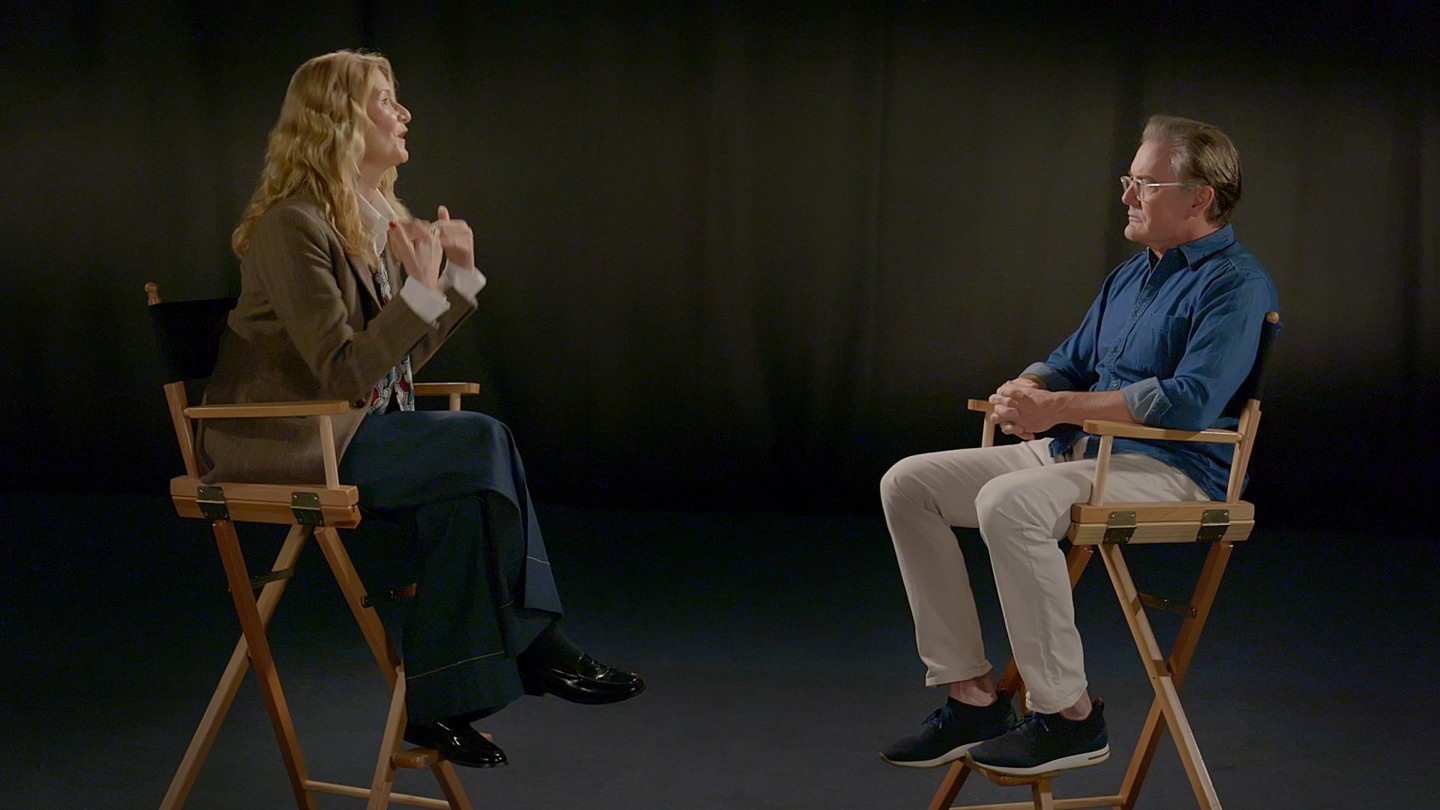
In her 2022 conversation with Kyle MacLachlan, Dern describes receiving a fourteen-page handwritten monologue before there was a settled feature. Further scenes arrived at intervals, sometimes separated by long gaps. This is a history of accumulating written and performed material, not a claim that the finished film sprang from unprepared improvisation.
Her account separates a character’s emotional life from knowledge of the whole story. She describes finding each woman’s pain and immediate circumstances without necessarily knowing how she had arrived there or where she would go next. The uncertainty is especially concrete in her memory of the burlesque-club scene: Lynch put a screwdriver in her hand while withholding the larger explanation she wanted. For Dern, the lack of a map became part of the performance’s pressure. 2022 conversation, 03:10–09:15 and 13:25–15:35
The conversation also returns to the physical intimacy of the small-camera shoot. Dern recalls Lynch bringing the camera so close during a scene with Justin Theroux that its microphone touched the performers. Later, she describes a water bottle hidden behind furniture being rejected because it did not belong in the imagined home. These are complementary recollections: an unusually small working apparatus, and exacting attention to the world it photographed. 06:15–07:20 and 21:35–22:55
Their discussion reaches back to Blue Velvet, Dern’s rehearsal of Lula in Wild at Heart, and MacLachlan’s creation of Mr. C in Twin Peaks. The recurring subject is how a precise image or physical clue can guide an actor without a long psychological explanation.
LYNCH2: a line, a look, a route through the room
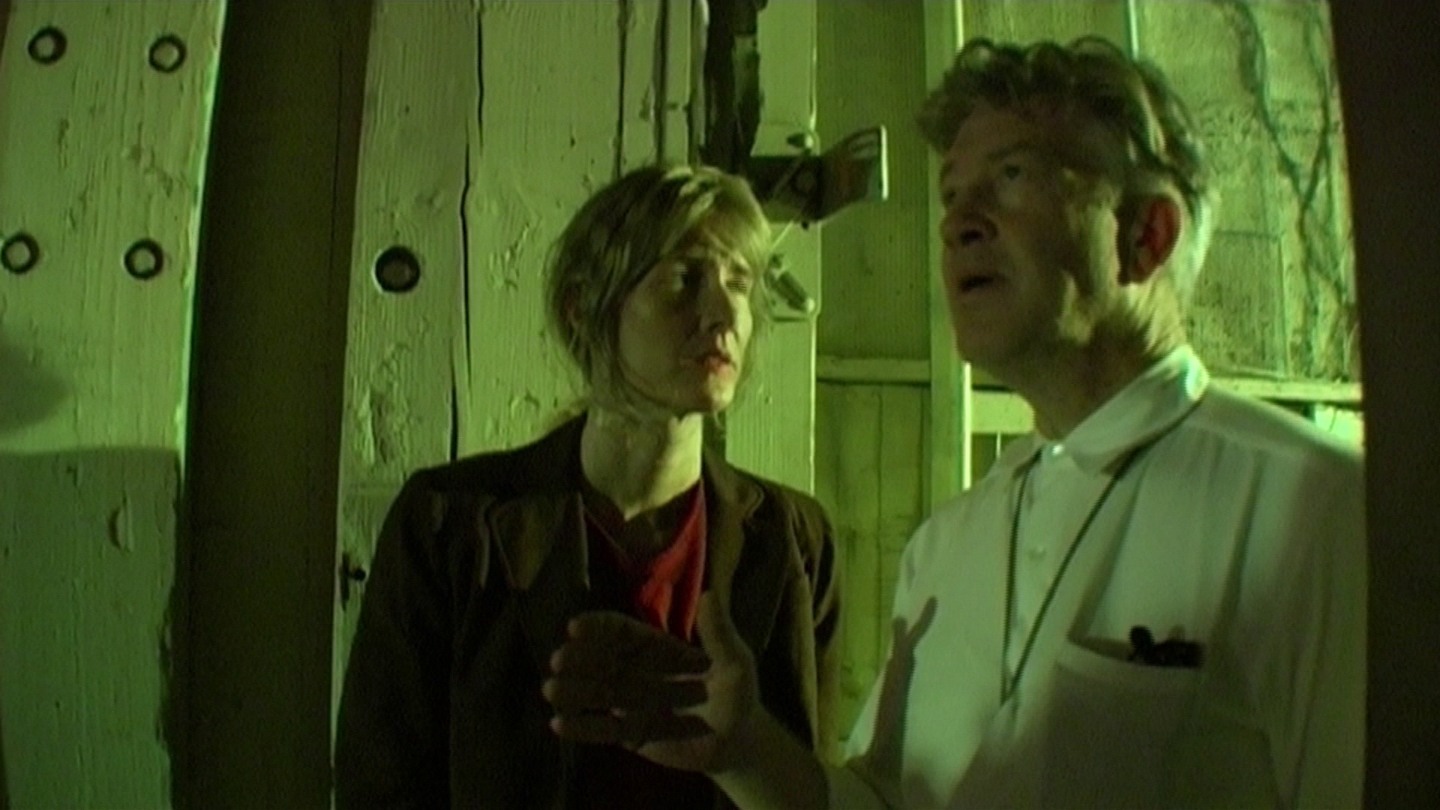
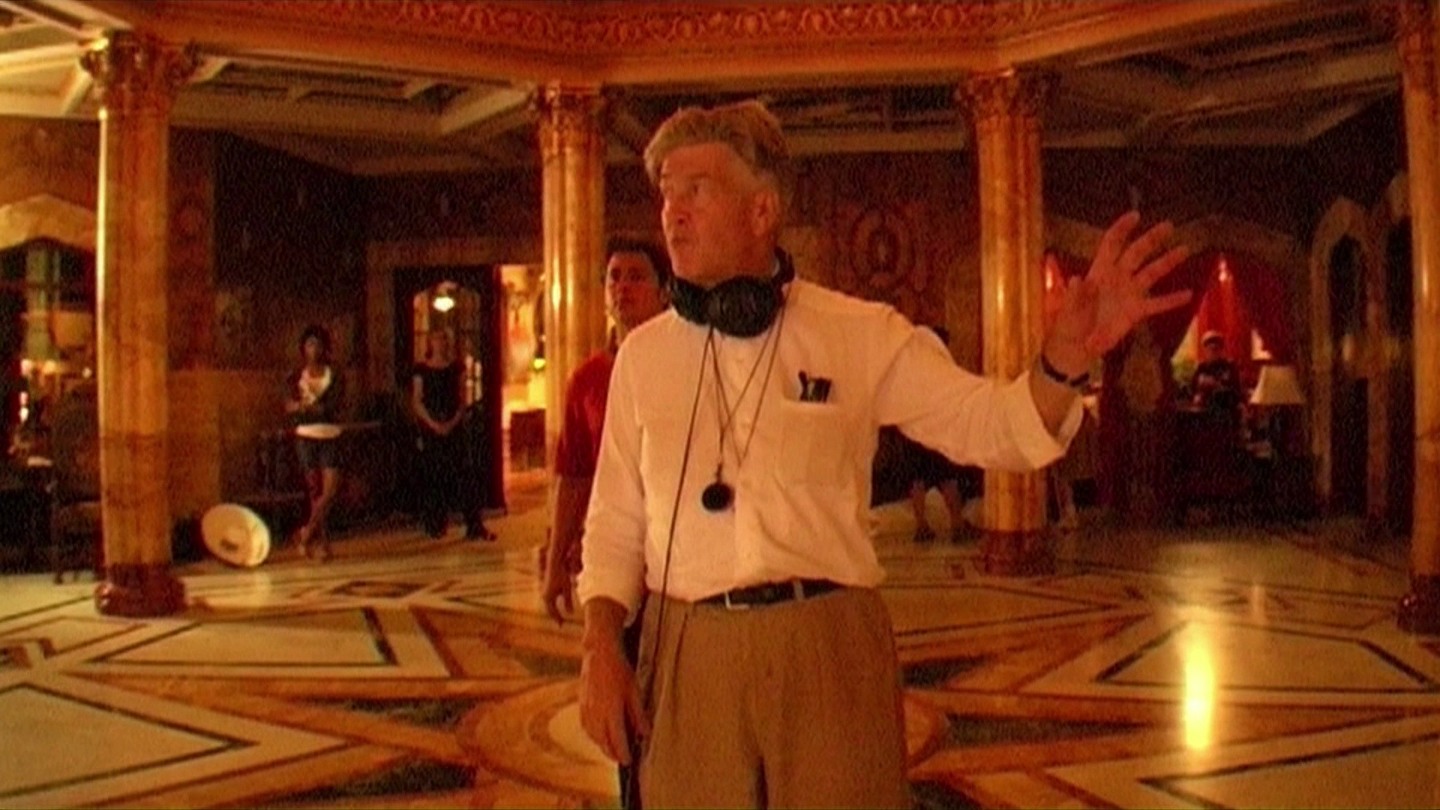
LYNCH2 brings the practical direction into view. Lynch works through the cadence of a line with Jeremy Irons, reviews wide and close coverage of the hotel room, and rehearses an eyeline with Dern in a green interior. These passages show the precision inside a production often described primarily through mystery. An unresolved larger structure can still contain an exactly placed look.
The hotel-room discussion moves between the performer, the television image, reflected light and the choice of camera distance. In the final ensemble sequence, chairs, columns, entrances and performers’ movements are coordinated so that a room full of activity can appear settled at the right moment. The space is continually made and remade for the camera. LYNCH2, 05:30–06:20, 12:29–14:35 and 25:15–30:08
Inside the working scene · 4 images
Performance and effect: the Hollywood Boulevard collapse
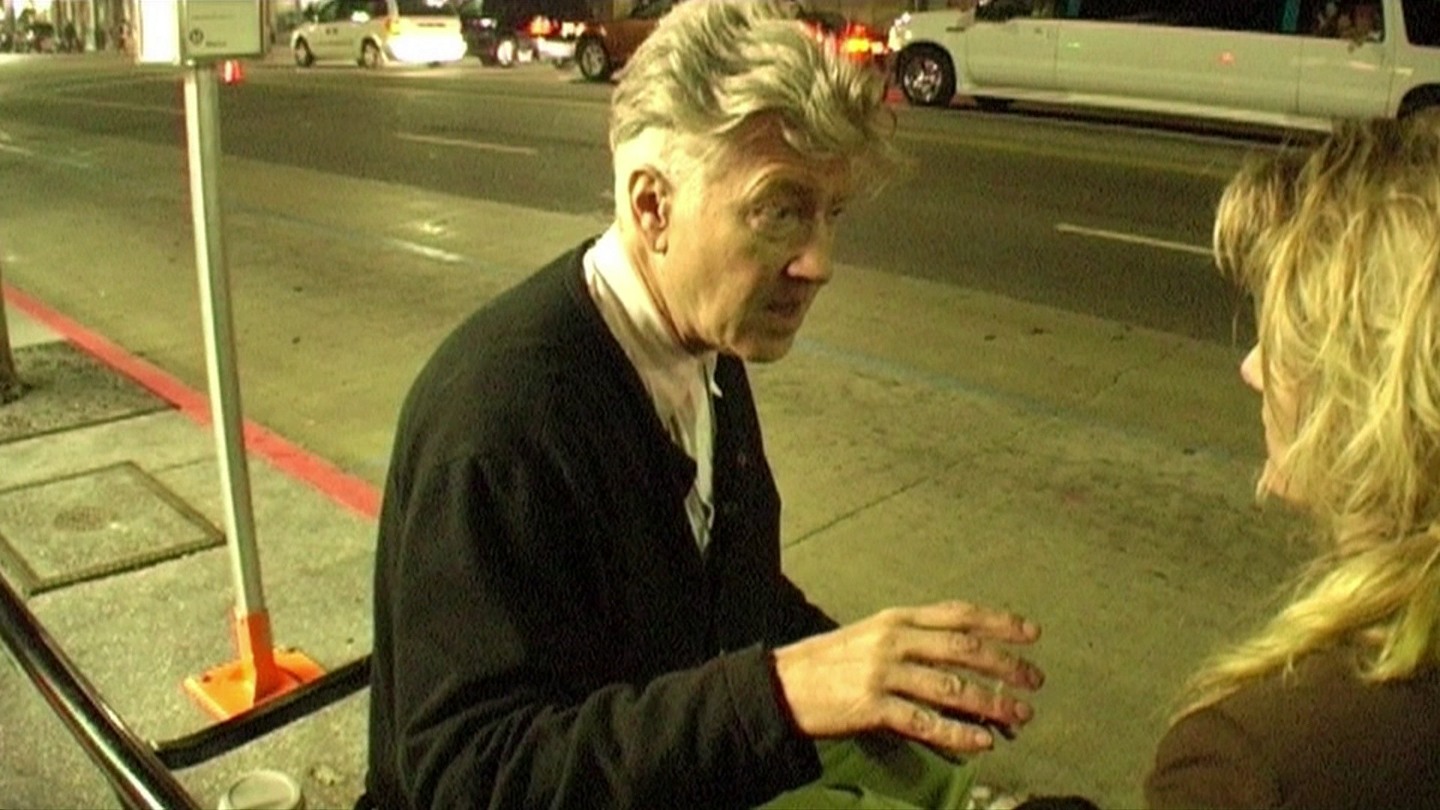
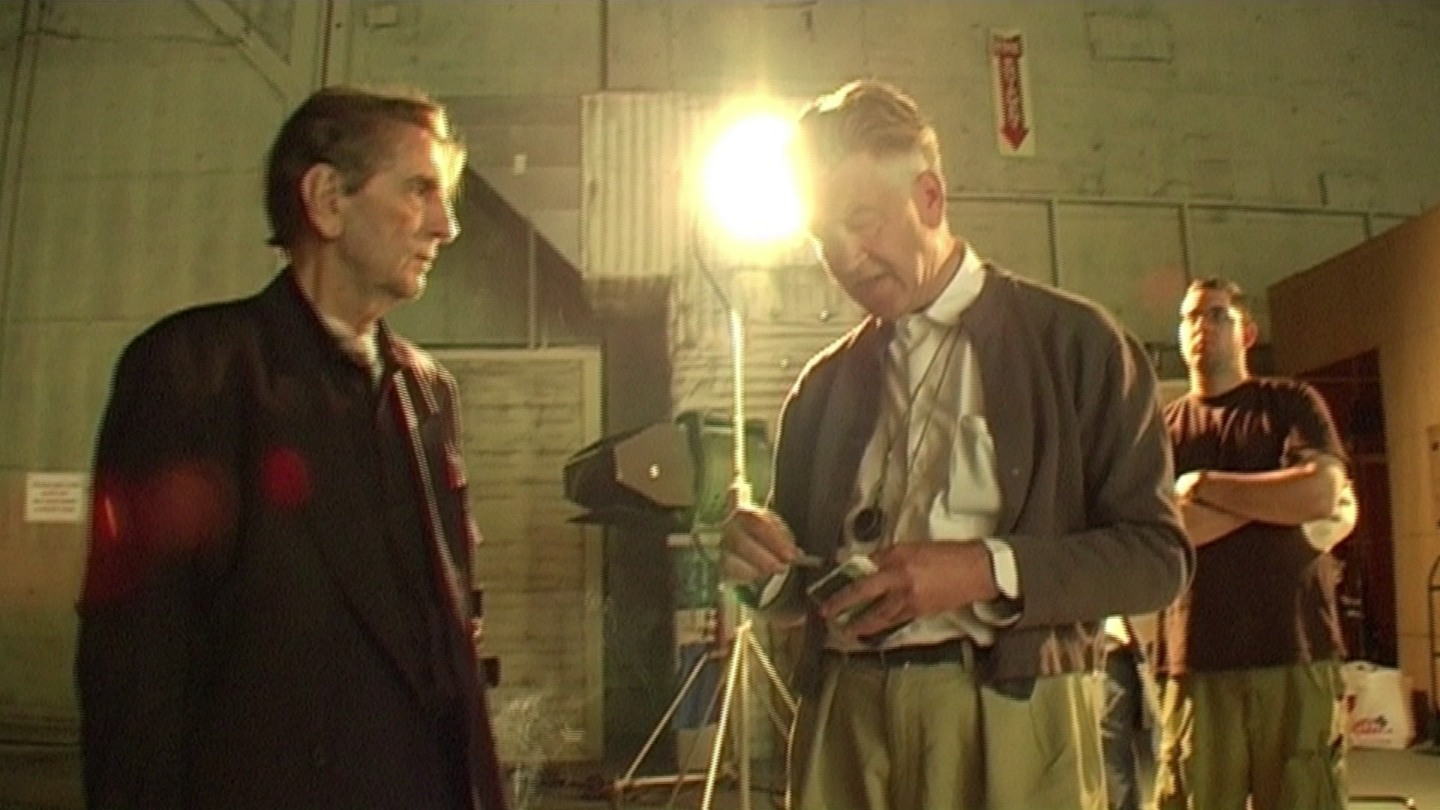
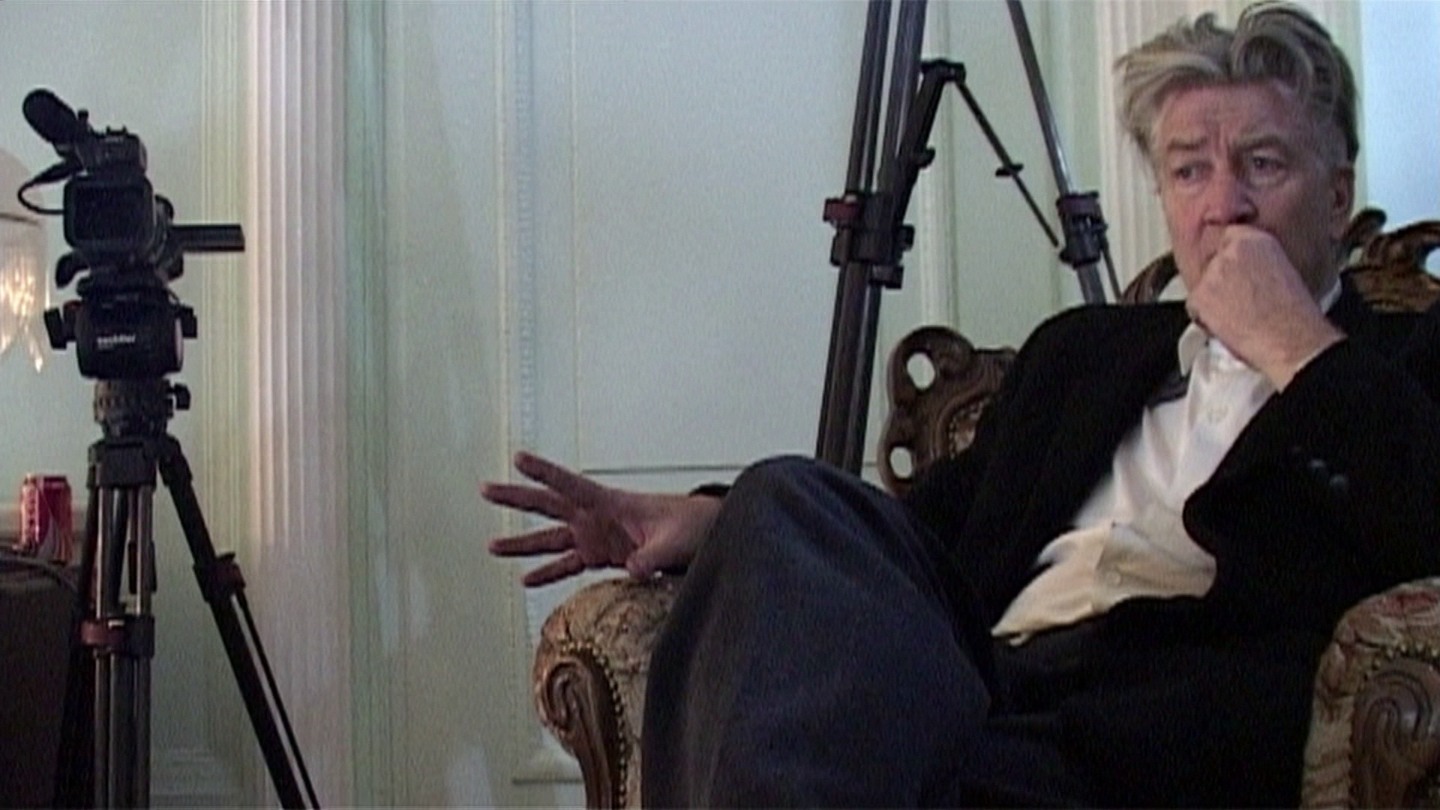
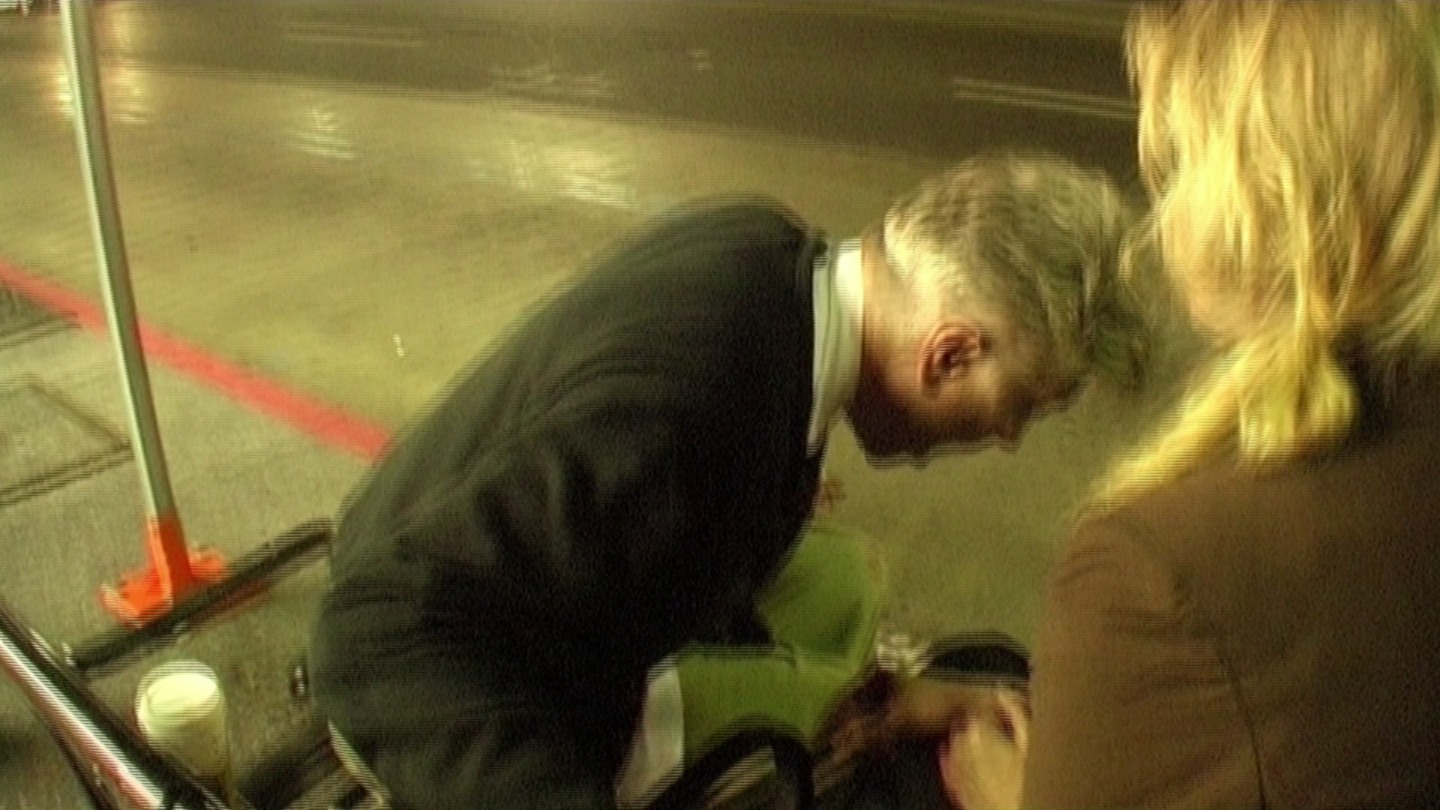
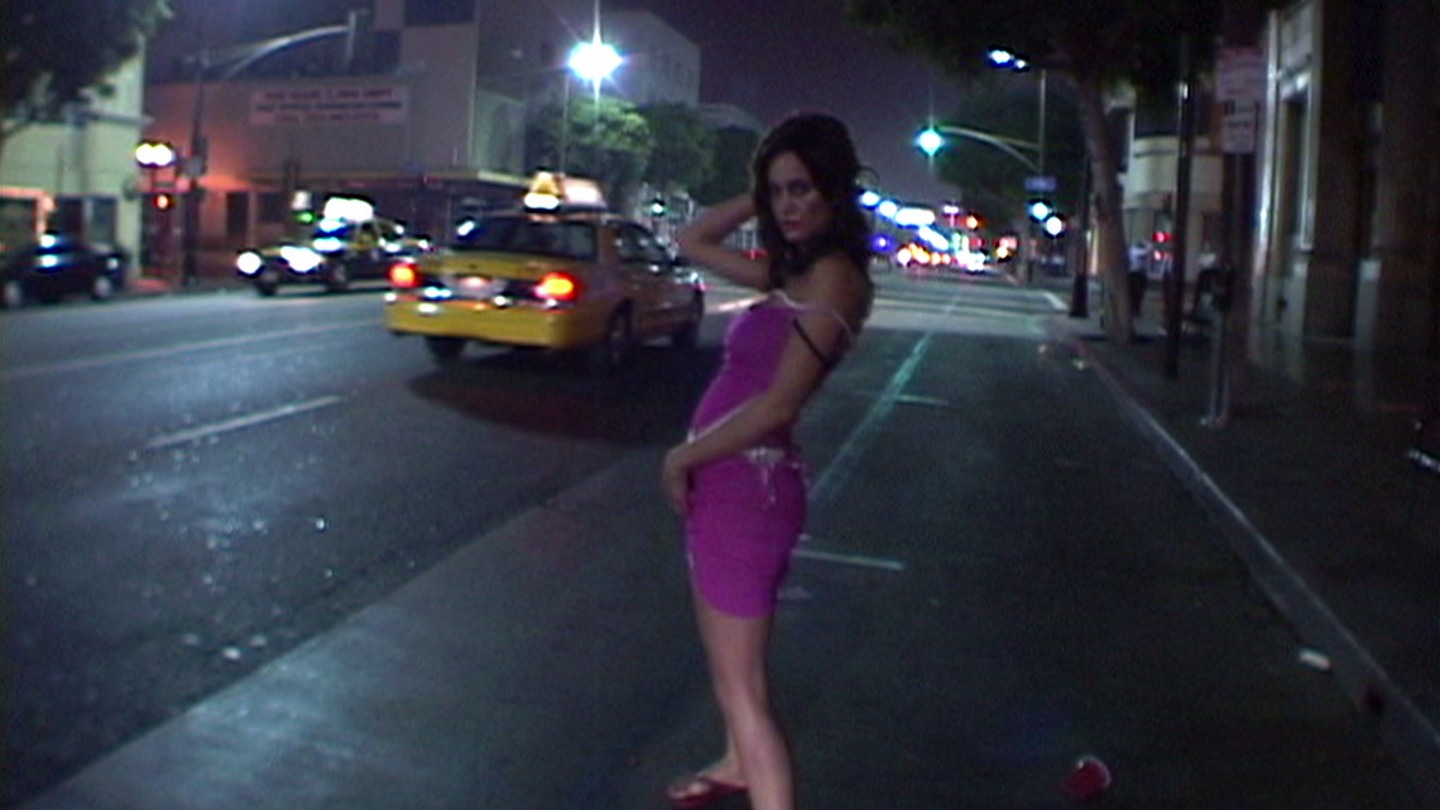
The street scene’s bodily distress begins as a conversation about movement. Kneeling beside Dern, Lynch demonstrates the collapse and retching action, then coordinates the gesture with the liquid effect and a stop cue. Later footage shows him preparing a performer’s face for the street material. The production images expose an interaction between acting, makeup, timing and the camera’s position. What appears uncontrolled in the scene depends on people agreeing on a sequence of actions.
This is also a revealing companion to Dern’s later account of the scene. She remembers being kept close to the audience’s position, receiving other characters’ words without a complete explanation of what they would mean. Physical coordination and emotional uncertainty operate together. LYNCH2, 20:04–22:20 · Dern, 15:45–16:50
Follow the performance and effect · 3 images
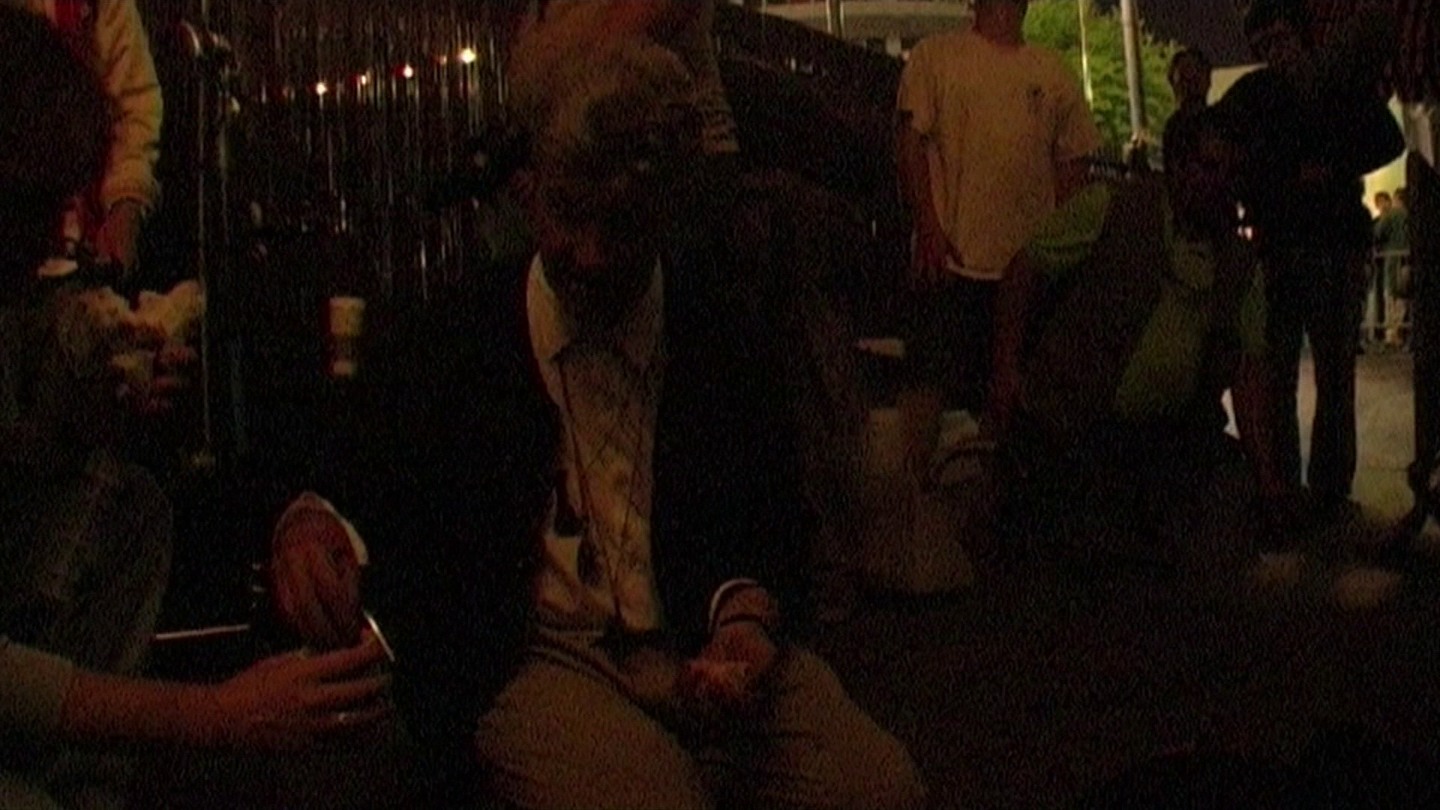
Another short passage records Lynch planning the contrasting camera movements for Ballerina. The short has its own illustrated study in the collection, with an expandable sequence tracing the dancer’s appearance, doubling and disappearance. LYNCH2, 03:00–04:00
LYNCH (one): the film takes shape at the workbench
LYNCH (one) (2007), directed by blackANDwhite, places the production among Lynch’s other daily activities: painting, building, photographing, recording a weather report and moving between conversations. Its mixture of colour, monochrome and differently sized images makes it a constructed portrait as well as a production document. The film gives unusual access to practical decisions without turning them into a tidy origin story. Programme and passage guide →
An idea still needs a room
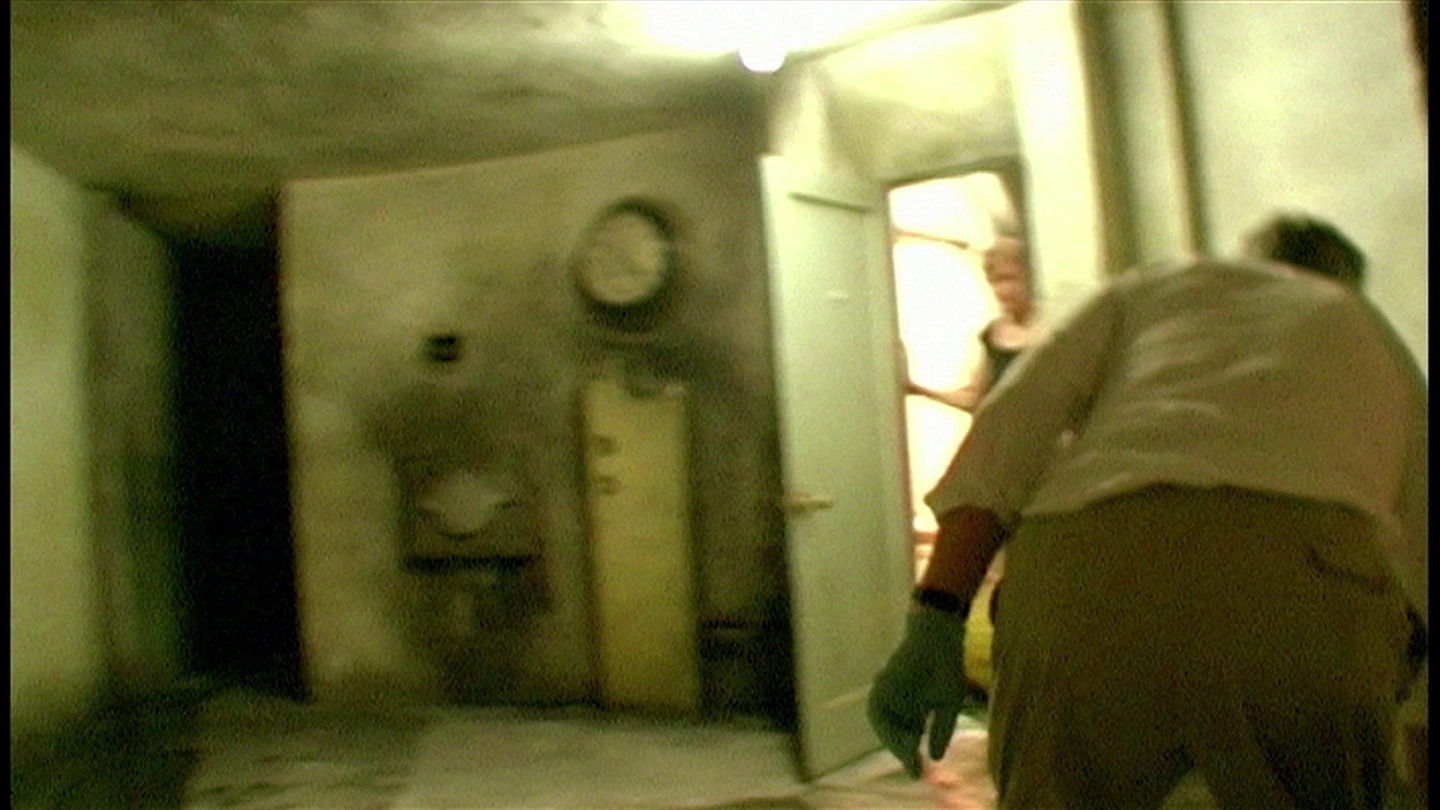
Lynch talks about equipment, materials and space as continuing limits on what an artist can do. The documentary places those remarks beside the physical preparation of sets. Later he discusses cutting doorways, then lays out the rehearsal-room scene: the table, the four performers, an apparent intruder and a door in a façade that leads nowhere. The disorienting screen space has a concrete working geography.
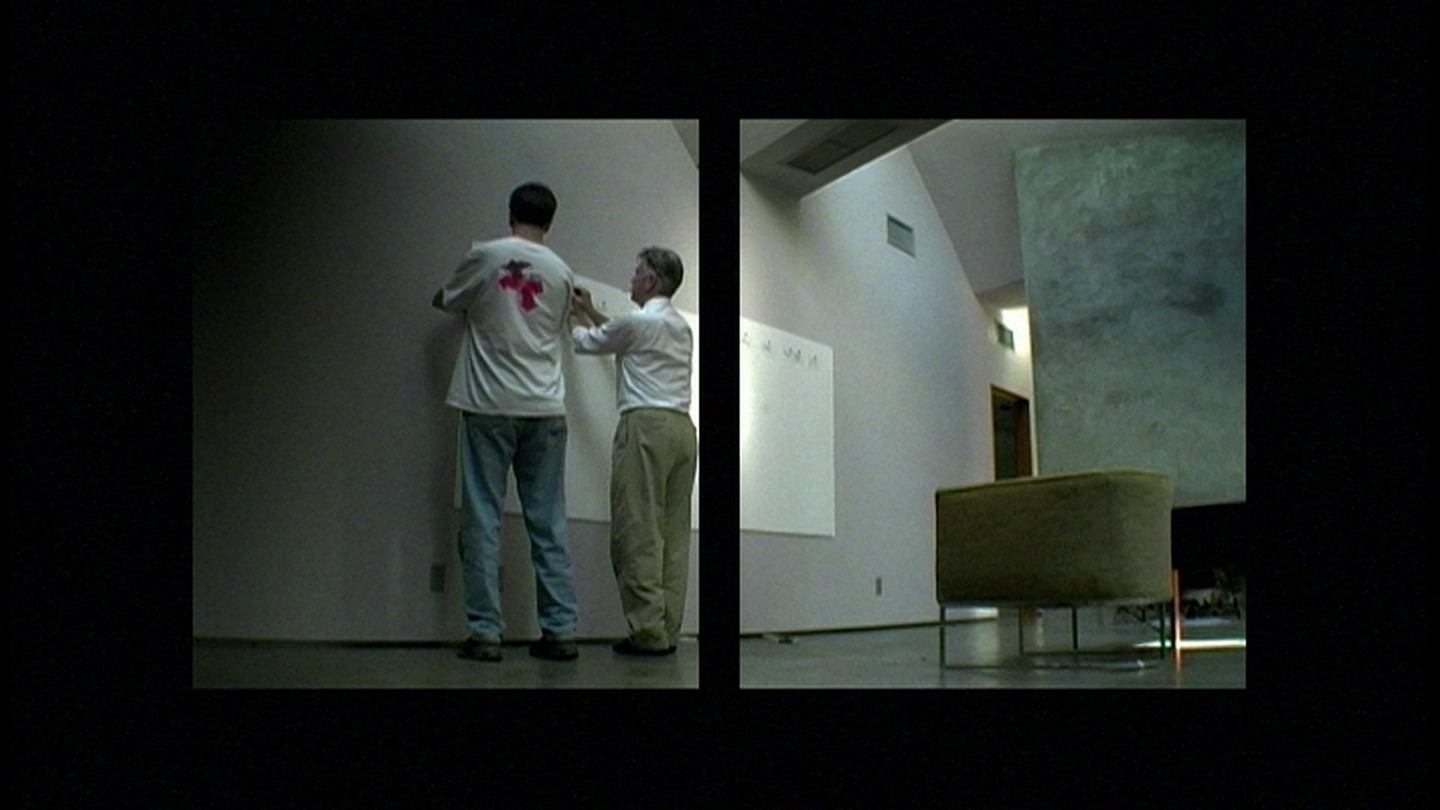
Another passage shows scenes being arranged on a wall. Lynch describes shooting before the whole has become clear, contrasting that process with assembling a screenplay before production. His telephone conversation with Jeremy Irons makes the uncertainty immediate: he explains the kind of information the character must deliver while acknowledging that the larger structure is still forming. He briefly recalls Mulholland Drive as an earlier experience of working toward a whole that had not yet settled.
Objects, scenes and doorways · 3 images
Photography becomes a way into the film
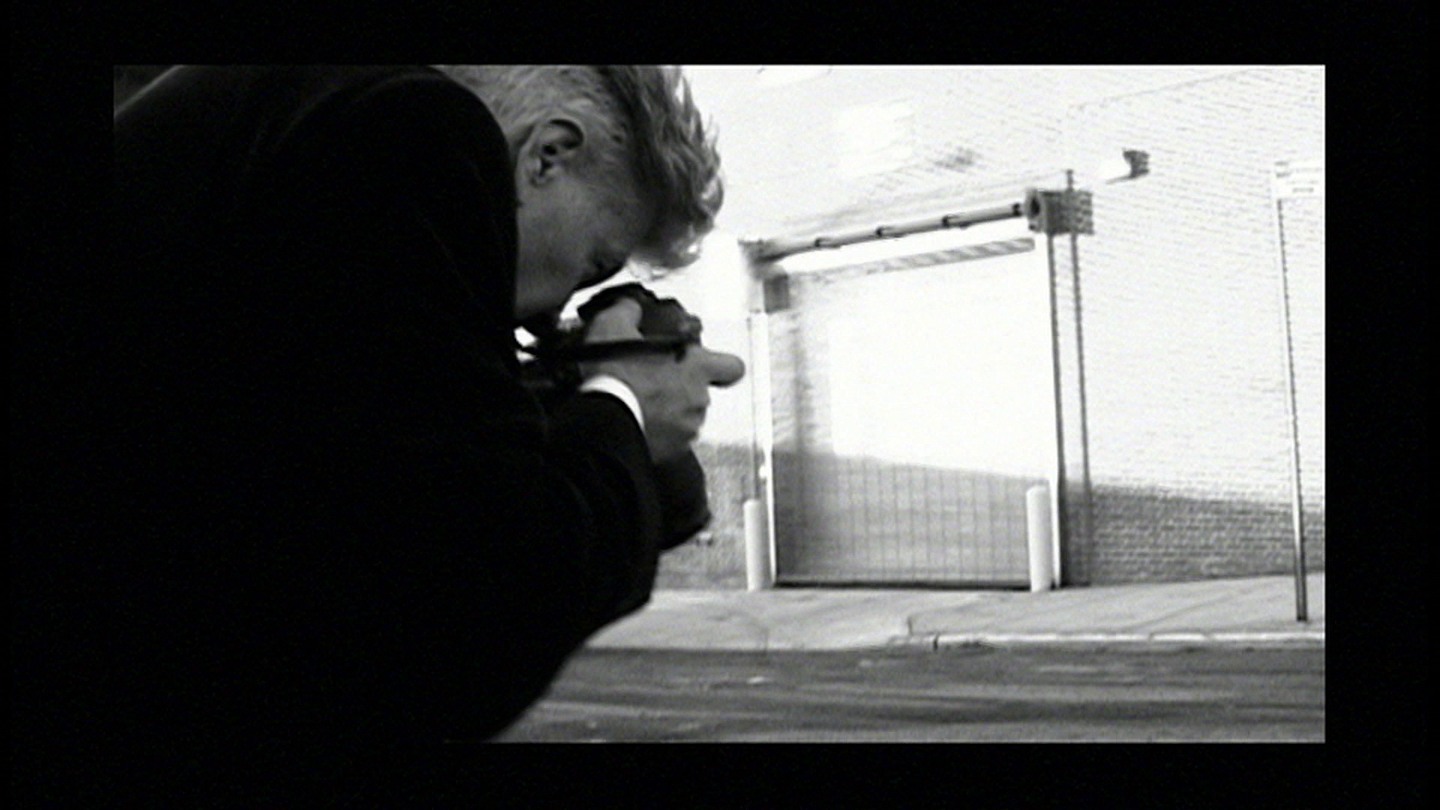
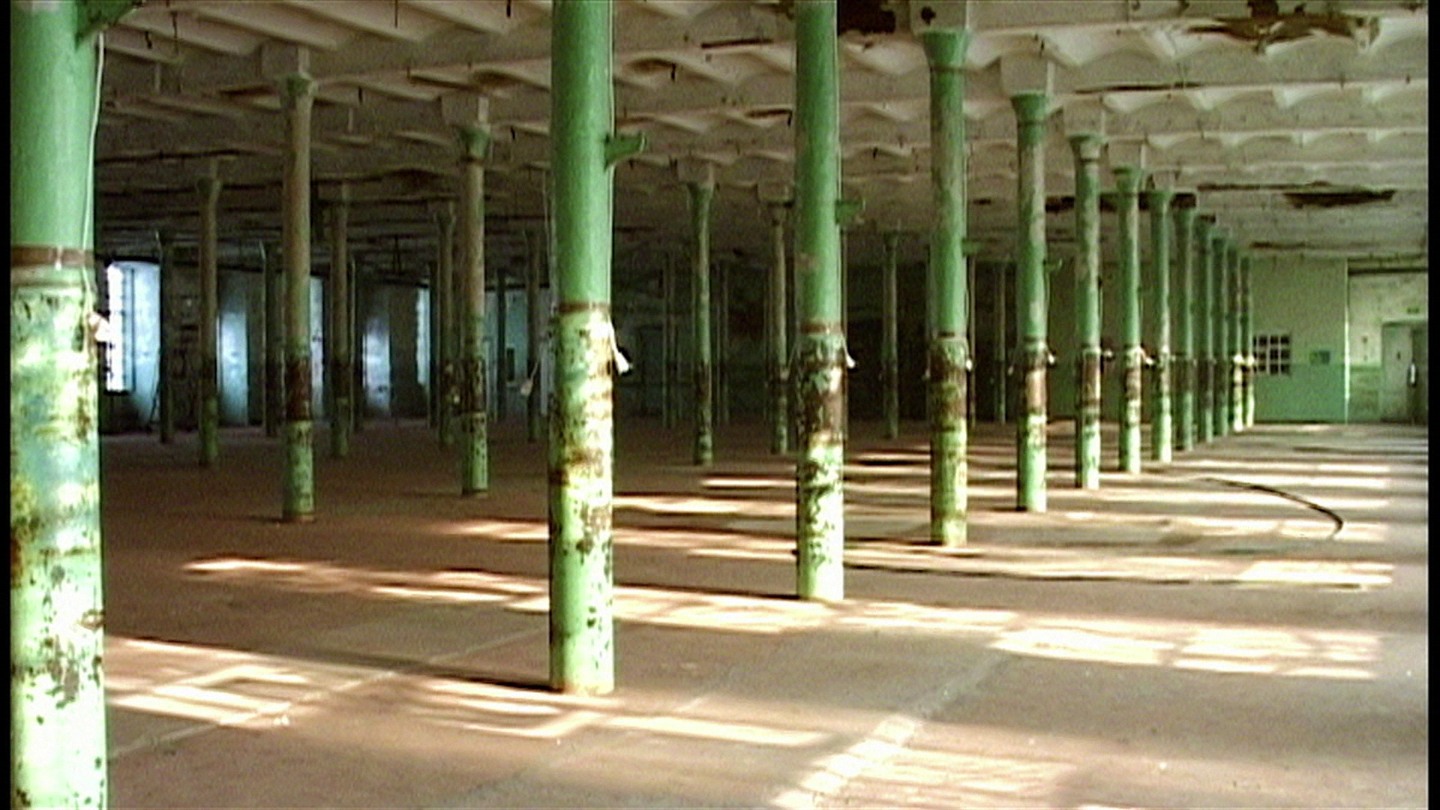
The visits to factories in Łódź are shown as active looking. Lynch studies damaged surfaces and openings, discusses exposure and camera stability, and examines photographs. He describes the appeal of overcast weather and the way nature changes industrial structures. Later he connects those encounters, and the work with the Camerimage group, to the developing film experiment. The passage offers a visible bridge between the factory photographs and the production’s locations; it does not make every photograph a storyboard.
Looking at the industrial spaces · 2 images
Small cameras and exact instructions
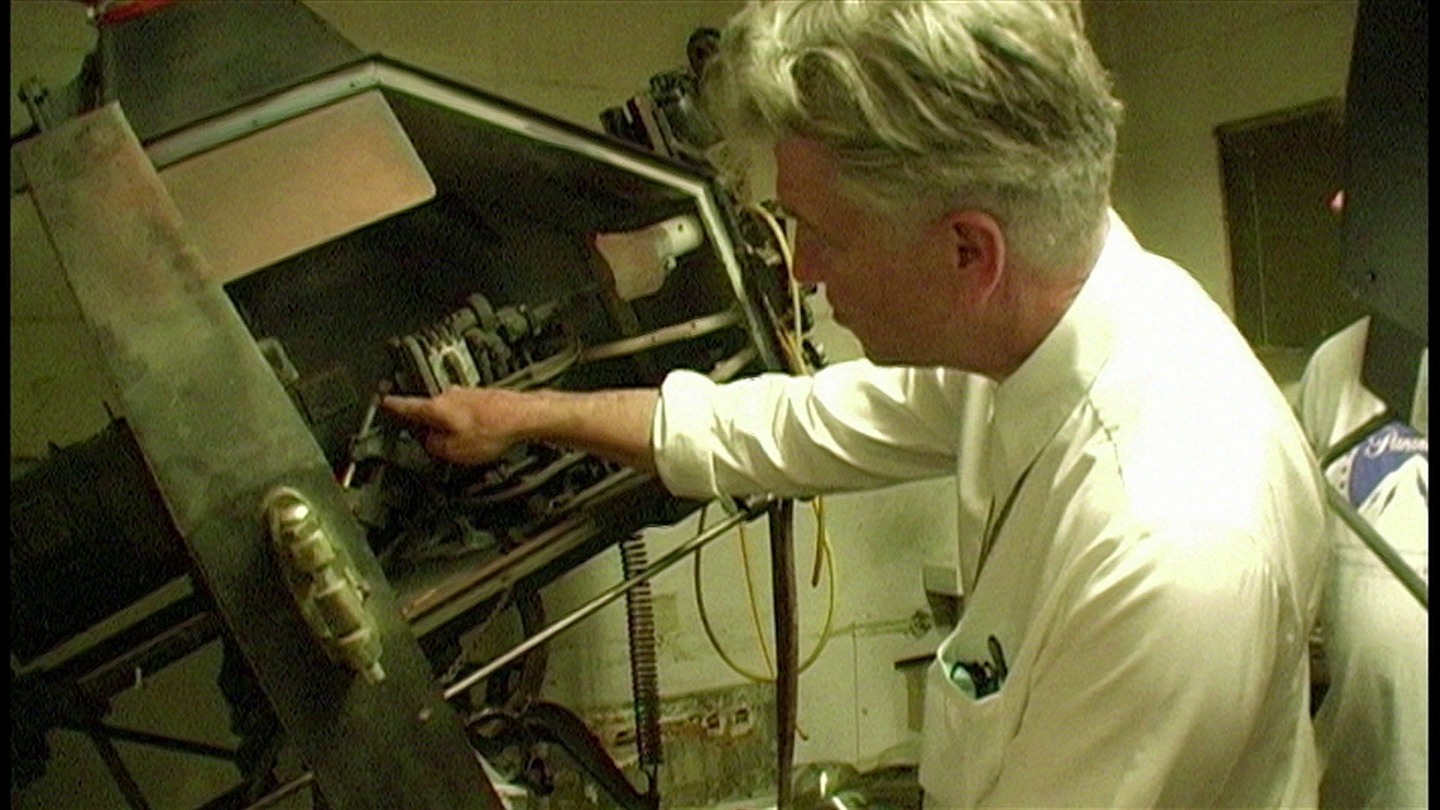
Lynch’s preference for the Sony PD150 is tied to ease of use and the movements he wants to attempt. Alongside that preference, the film records his fascination with older projection machinery. The two interests coexist: working digitally does not end his curiosity about the physical apparatus of cinema.
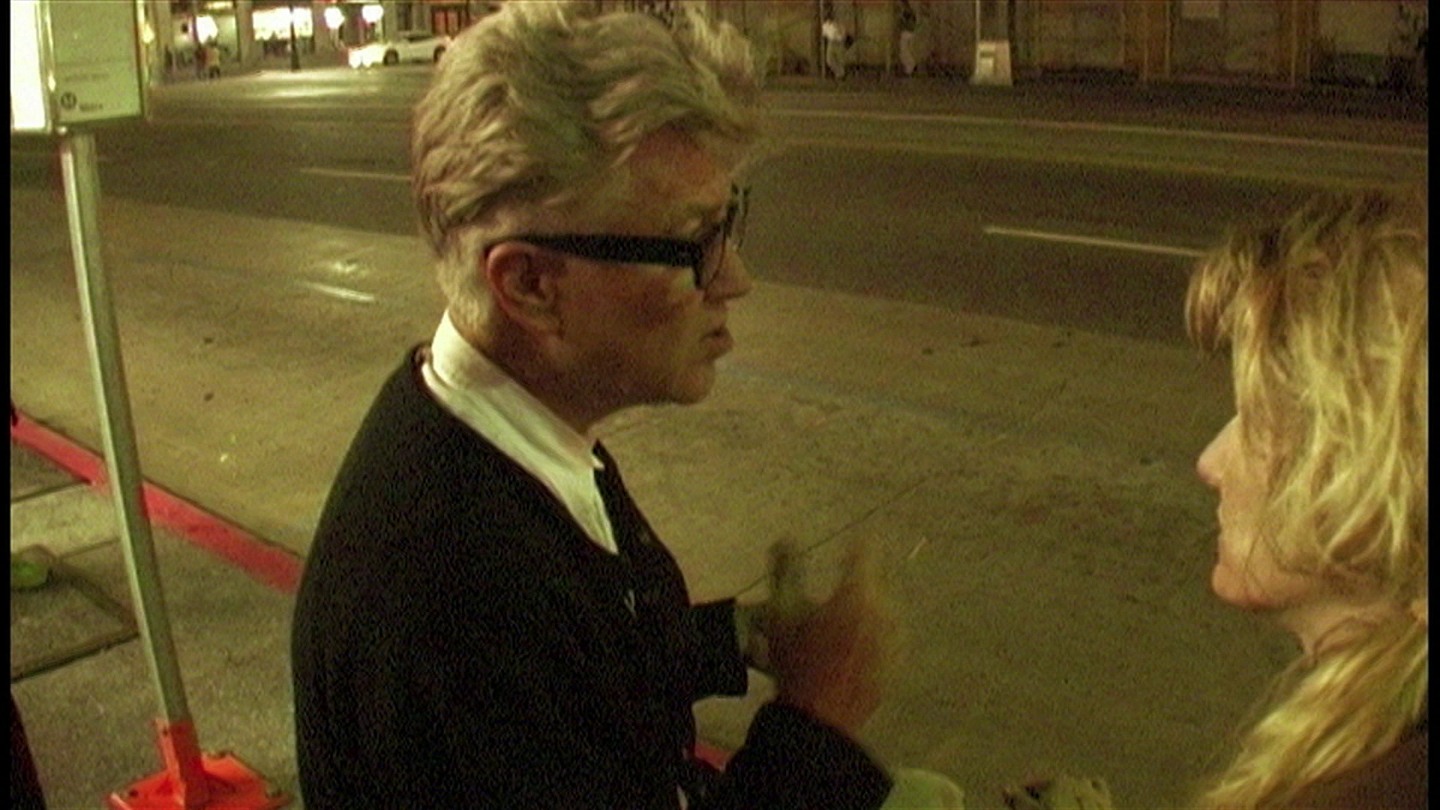
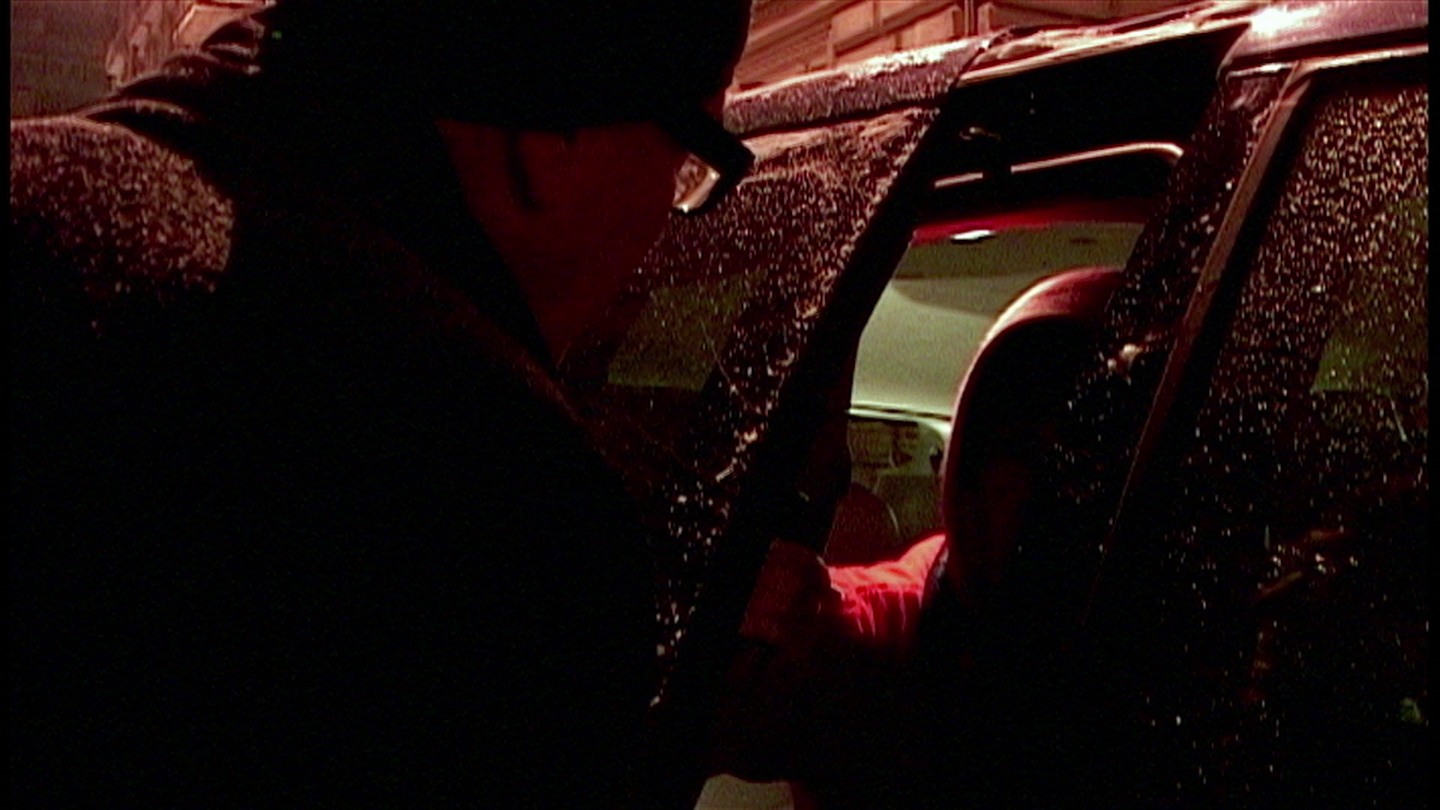
The performance passages are equally specific. He asks the actors in the Polish street scene for deliberate, dreamlike exchanges rather than casual conversation. On the Boulevard he demonstrates the movement around the screwdriver and the collapse. During the winter shoot, he and Dern work through what the frame will show, when the other figures appear and how long she must remain outside. These exchanges complement the LYNCH2 effect study: gestures, framing, props and the performer’s practical needs have to meet in the same shot.
Apparatus and performance · 3 images
His remarks on meditation belong to his account of creative practice. The documentary also shows irritation, uncertainty and logistical frustration. Reading those moments together gives a fuller working portrait than either the serene artist or the volatile director considered alone.
Room to Dream: a scene before there was a film
In the reading from Room to Dream, Lynch traces a route from digital image-making and his website to the first long performance with Dern. He recalls writing fourteen pages on a yellow pad, preparing a set and filming her with Erik Crary. Further work in Poland and another connecting scene gradually revealed a larger film. The account reinforces the distinction between a carefully prepared scene and a feature whose complete form had already been decided. Reading, 04:19–09:07
His account and Dern’s 2022 recollection agree on the handwritten monologue while giving different remembered durations for its performance. Their common ground is the work’s starting point: writing and sustained acting came before a fixed feature-length structure. The testimony is most useful when each participant’s perspective remains visible.
The earlier part of the reading places Rabbits and Out Yonder within the demands of DavidLynch.com. Lynch describes the imbalance between the time it took to create new material and the speed with which visitors could consume it. Weather reports and conversation with subscribers offered another kind of continuity. This online workshop belongs to the film’s development history, while the individual works retain identities beyond it. 01:40–04:19 · Explore the online works
More things happened—but in which work?
More Things That Happened is separately assembled additional material. Lynch told Axmaker that it belonged alongside the feature, while explaining that removed scenes were not being inserted back into the movie. That distinction prevents the supplement from silently becoming a longer “complete” cut in the dossier. The companion’s relationship to the feature ↗
Criterion lists the seventy-five-minute companion, LYNCH (one), LYNCH2 and other supplements. The companion works and documentary testimony open different routes through the production. Supplement inventory ↗
Additional material can change our sense of a character or a project without changing what the released feature contains. A documentary can preserve a working moment without revealing the whole schedule. Keeping these records separate makes cross-reference more useful: a visitor can see whether a claim comes from the film, a companion work, an interview or a production document.
Companion film · David Lynch · 2007
More Things That Happened
Seventy-five minutes of additional scenes make a substantial companion to Inland Empire. Domestic labour, a bargain over a watch, a telephone call and a family history receive room to unfold. The arrangement has its own changes of scale and pace: intimate exchanges give way to empty rooms, then to the exposed night street. It is presented separately from the feature, rather than as a longer cut of it. Film and passage guide →
The house as a working space
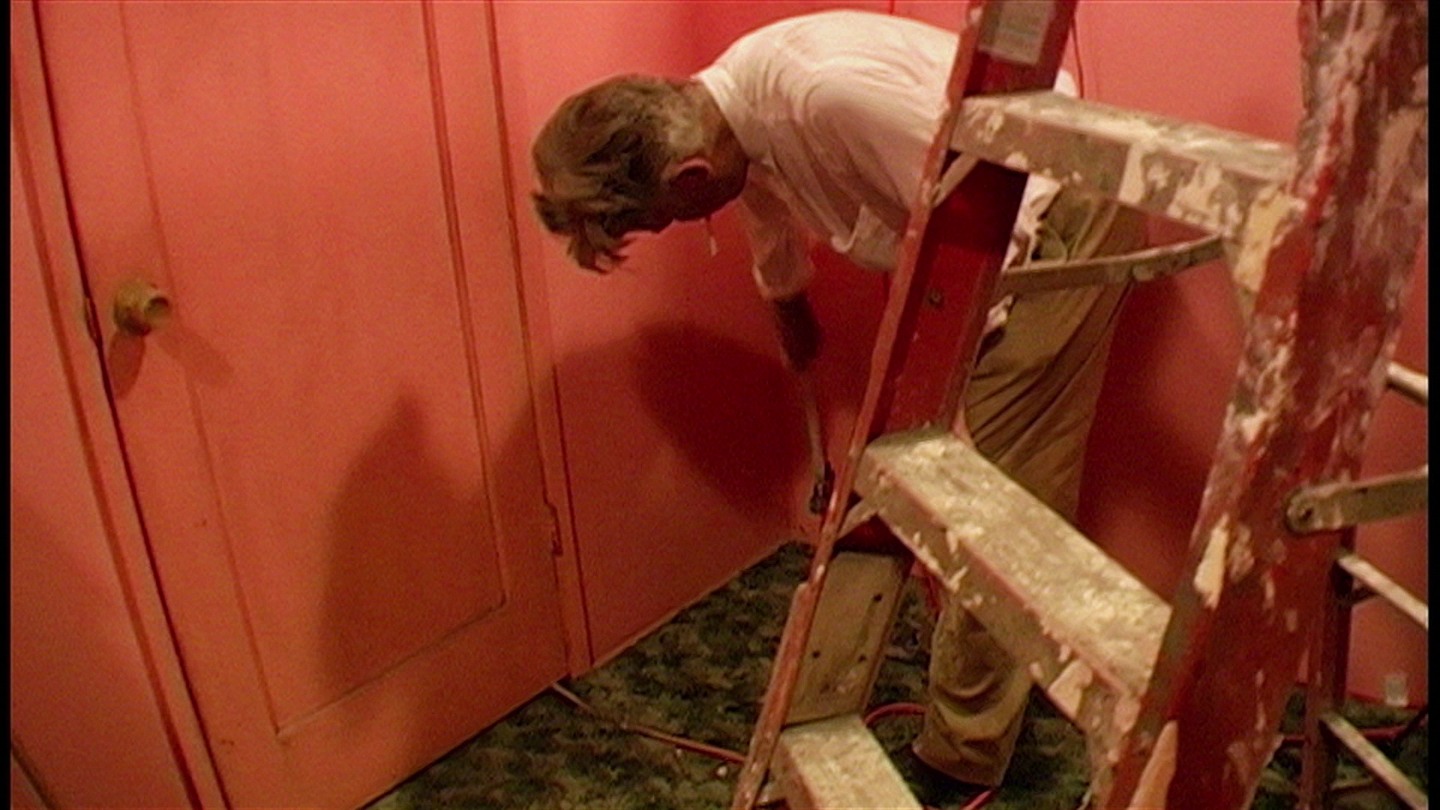
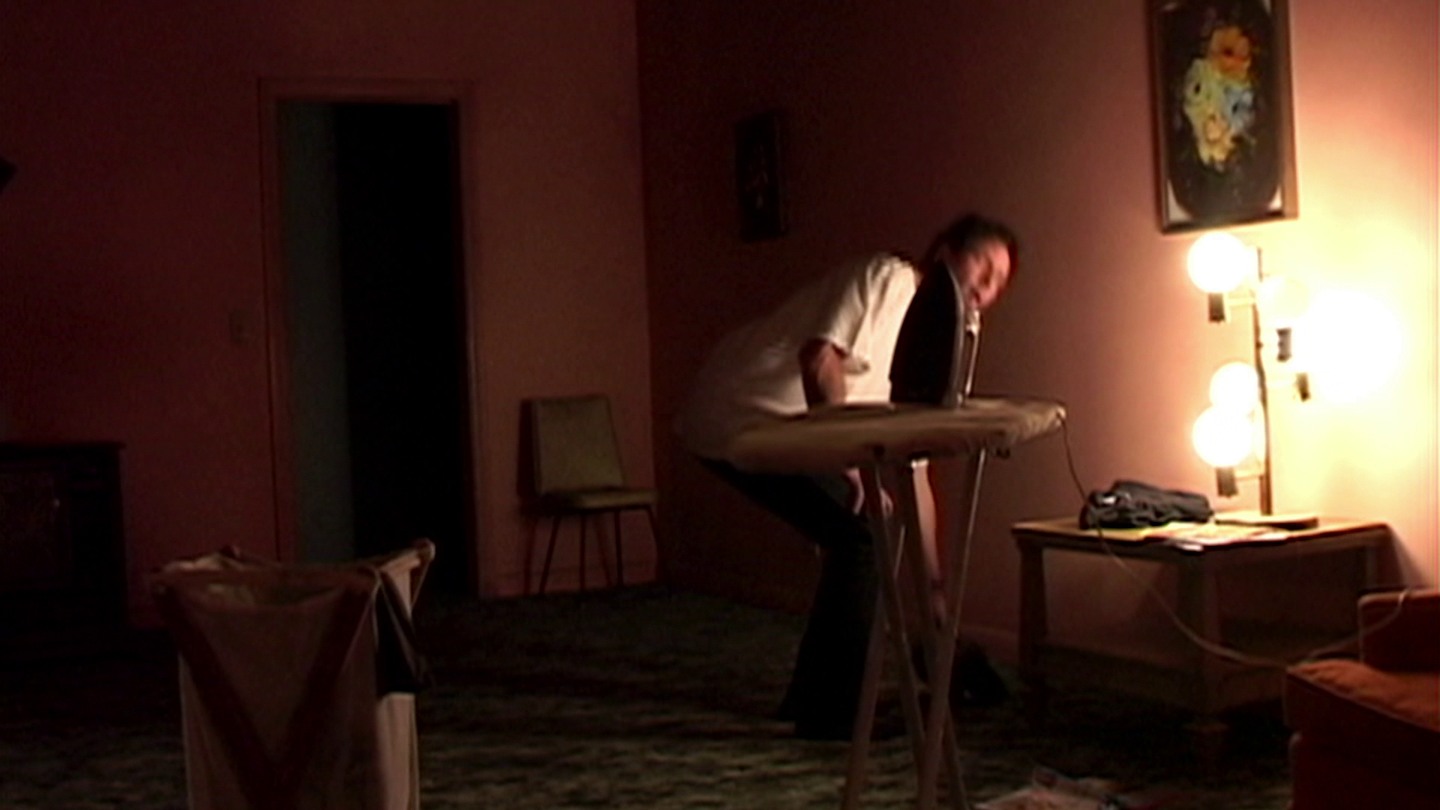
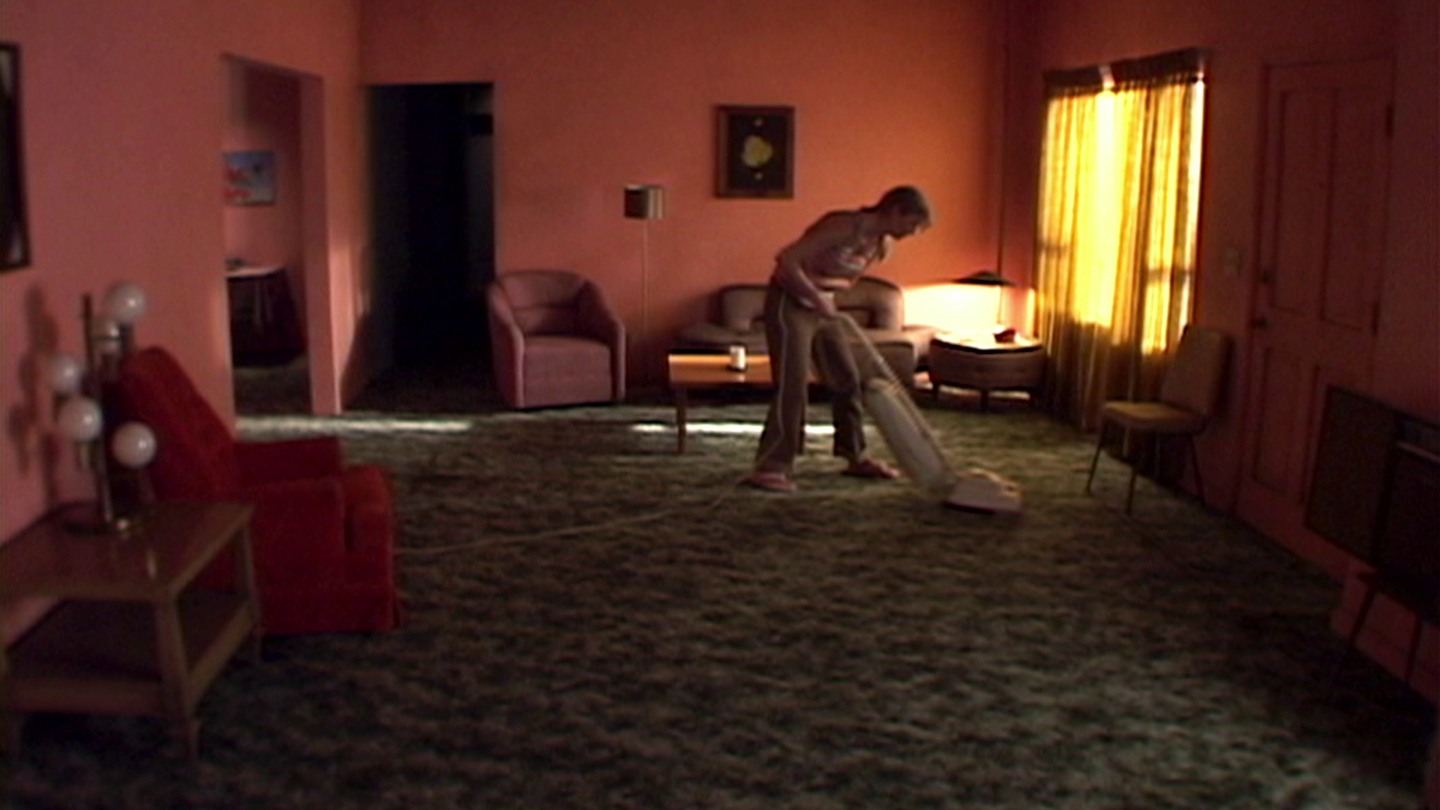
The opening passages give household objects and chores unusual weight. An argument continues around an ironing board; later, washing dishes and vacuuming occupy the pink-walled room. These actions establish the place as somewhere a woman must maintain, rather than simply an atmospheric set. The green carpet, doorway and bright lamp keep returning as stable landmarks while the people and situations change.
Inside the domestic space · 2 images
What does the watch promise?
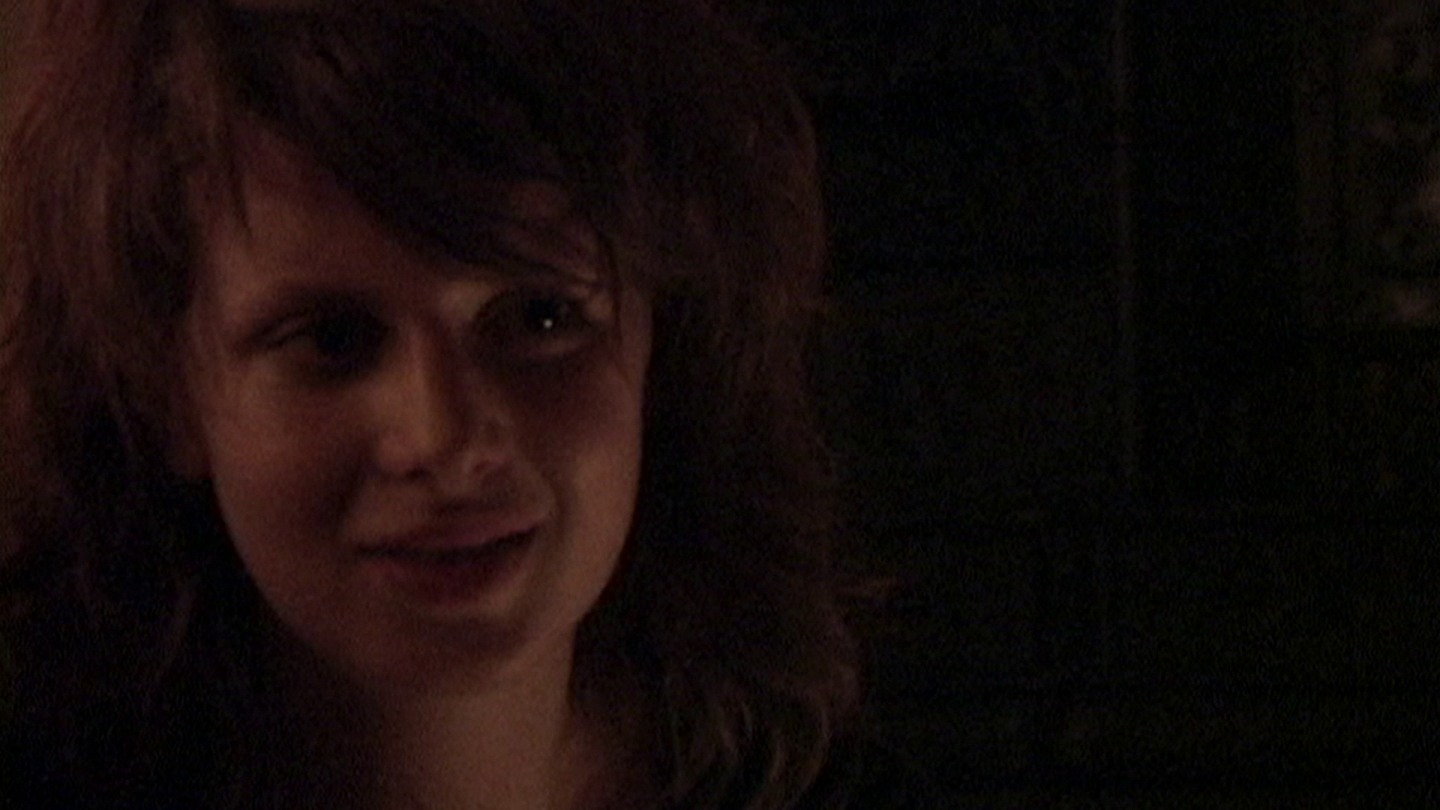
A prolonged exchange turns a small purchase into an unsettling negotiation. The prospective buyer asks about good luck; the seller links the transaction to money and physical contact. Close-ups keep the encounter concentrated on the two faces, before the banknote makes the bargain tangible. The suspense lies in consent and hesitation: what has been agreed to, and what might an apparently ordinary object carry with it? The dialogue supplies the promise without demonstrating that the promise is true.
Faces and the transaction · 2 images
A voice without a secure location
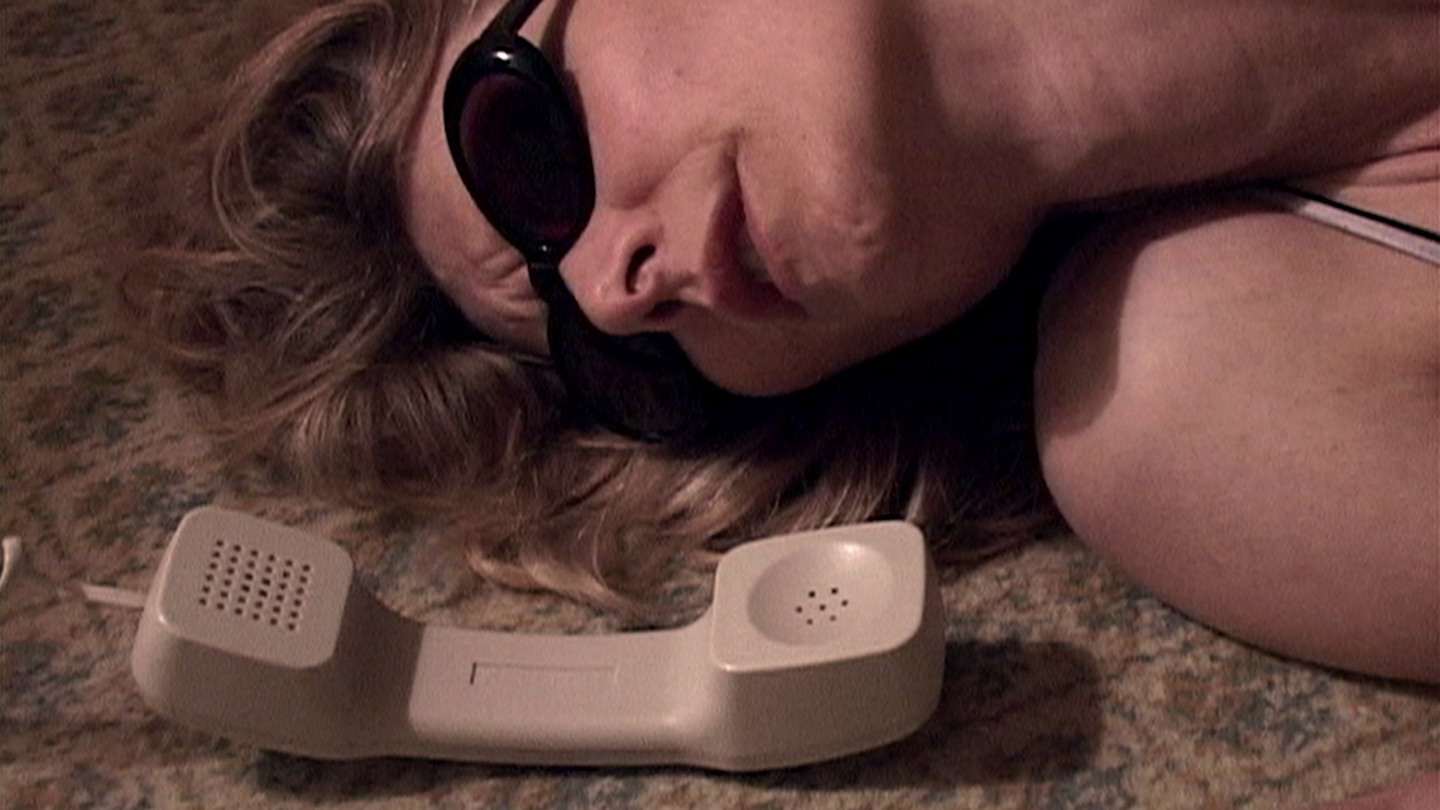
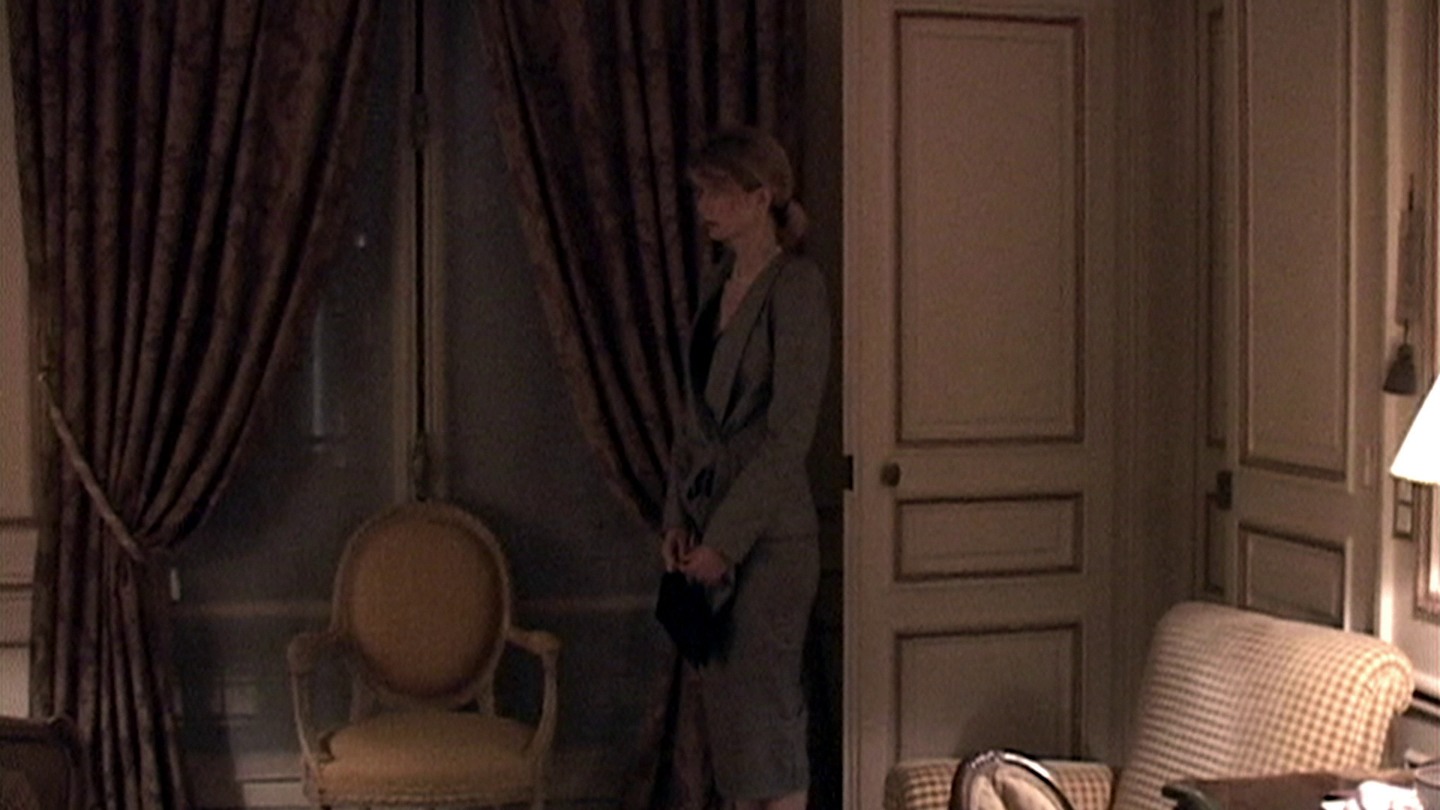
Nikki lies on the carpet beside a pale telephone, still wearing dark glasses. The handset, coiled cord and her face become the scene’s principal shapes. Her questions move toward the other person’s whereabouts and her fear of being alone. A cut to the rabbit room expands the call’s visual world without providing a reassuring connection between the spaces. The scene makes communication itself uncertain: a voice can be present while its owner remains unreachable.
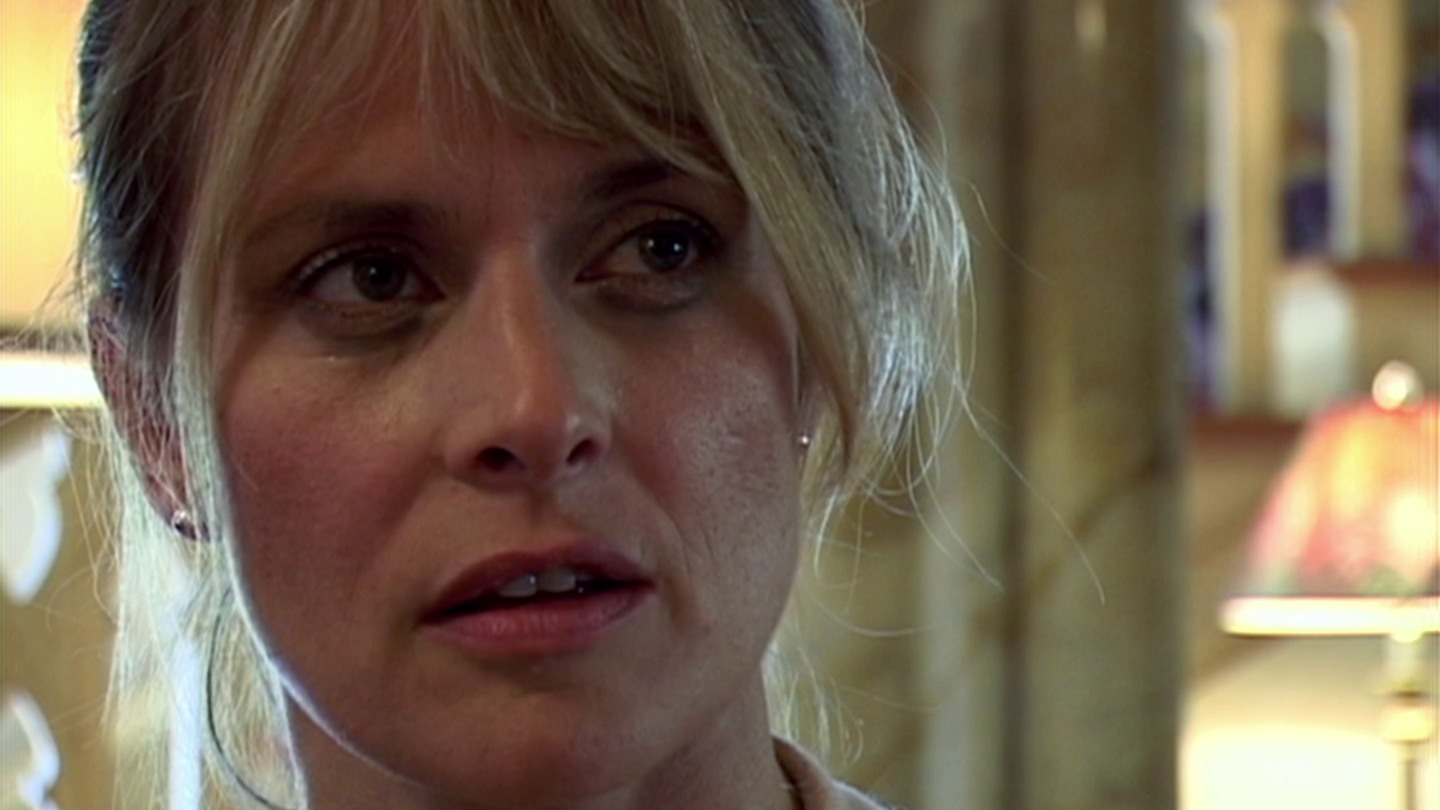
The later account of meeting Billy at a bar is staged differently. Dern faces another woman in a bright interior and reconstructs an encounter, recognition and a journey to a hotel. The remembered event reaches us through a changing expression. Description becomes a performance rather than an illustrative flashback.
Threshold, telephone and recollection · 3 images
A room that will not stay settled
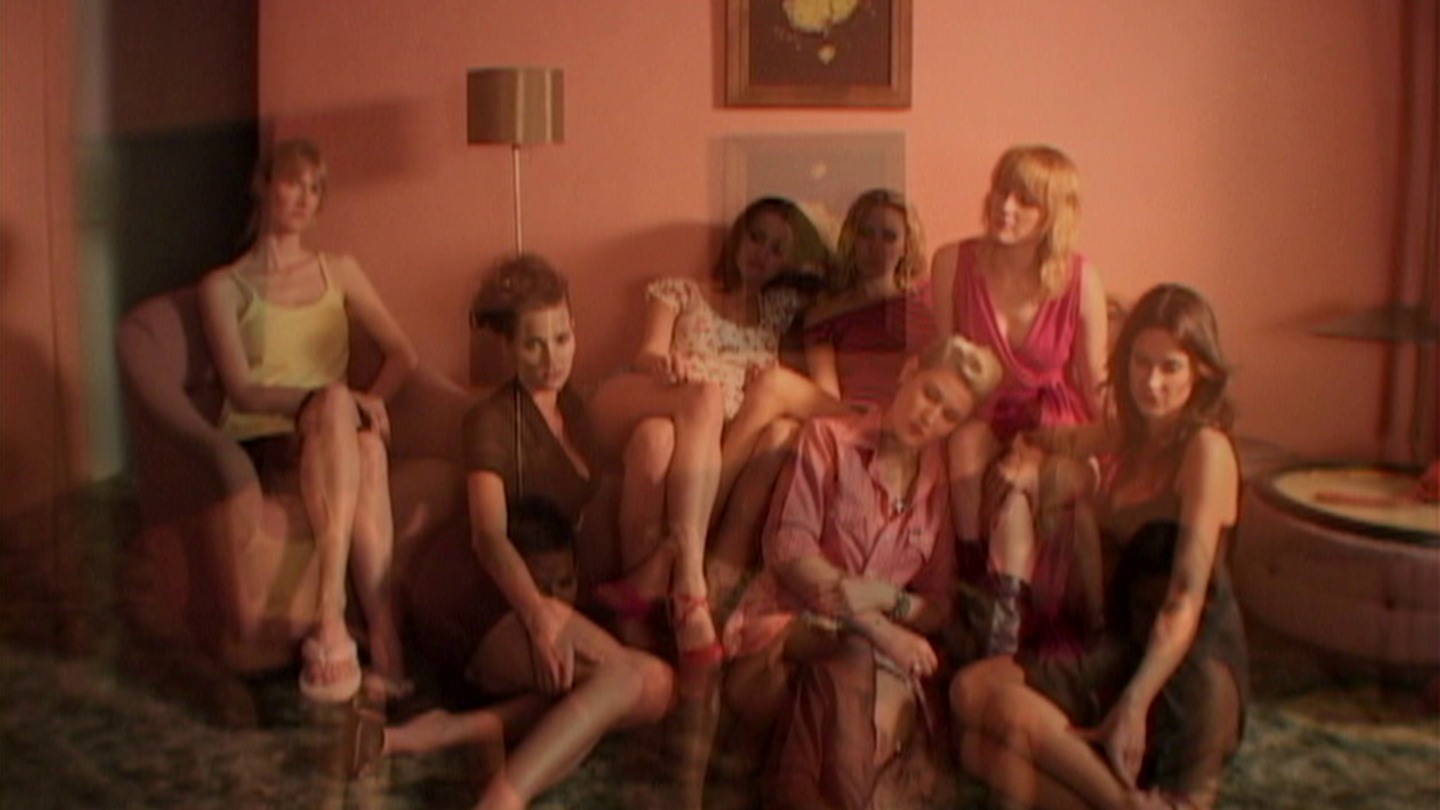
Passages through doors and corridors repeatedly return to the pink interior. A flying object crosses it; a seated figure occupies its red-orange chair; the ensemble reappears near the ending in overlapping images. Familiar furniture provides continuity even when the image refuses it. The empty area around the chair matters as much as the figure: the composition leaves space in which another presence might appear.
Follow the room through its transformations · 4 images
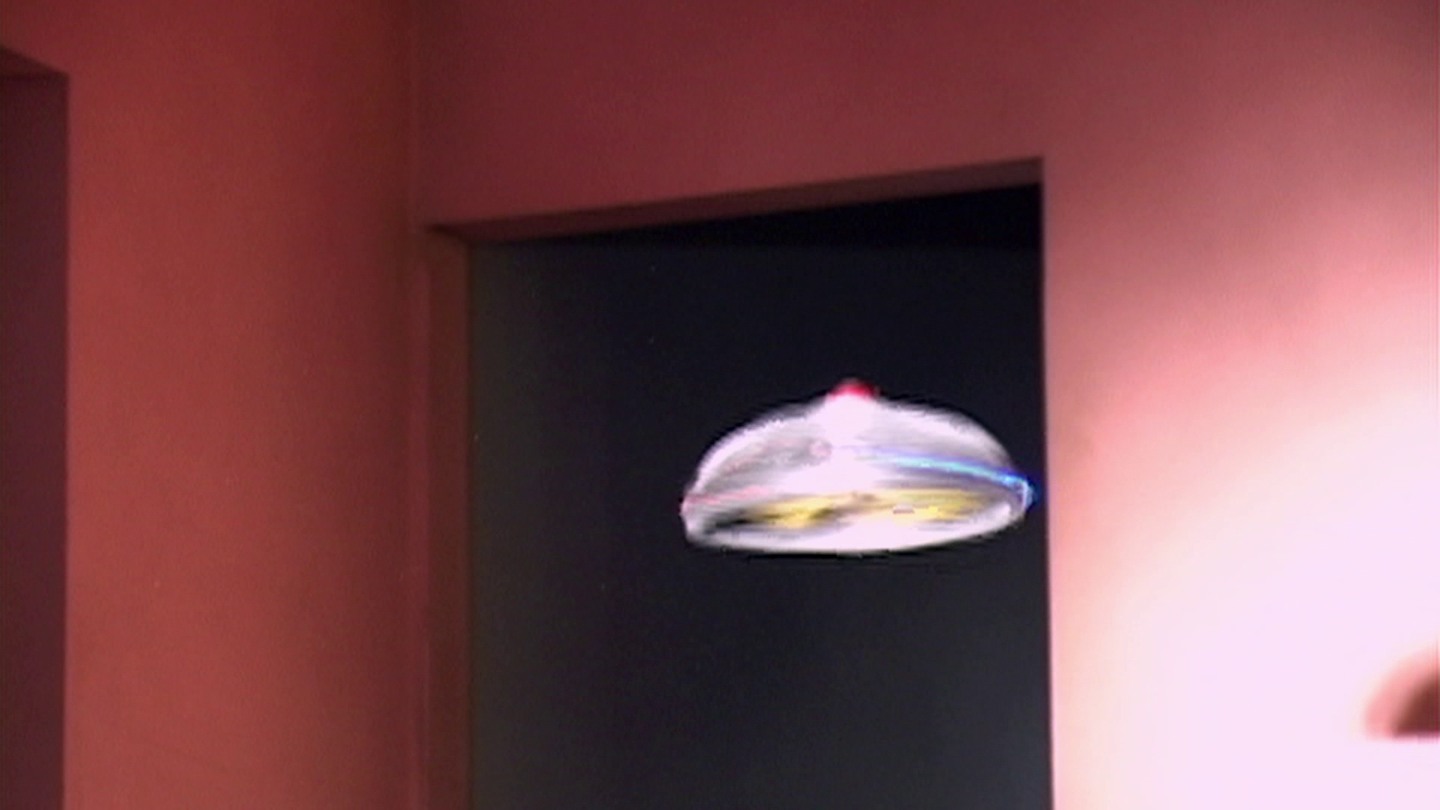
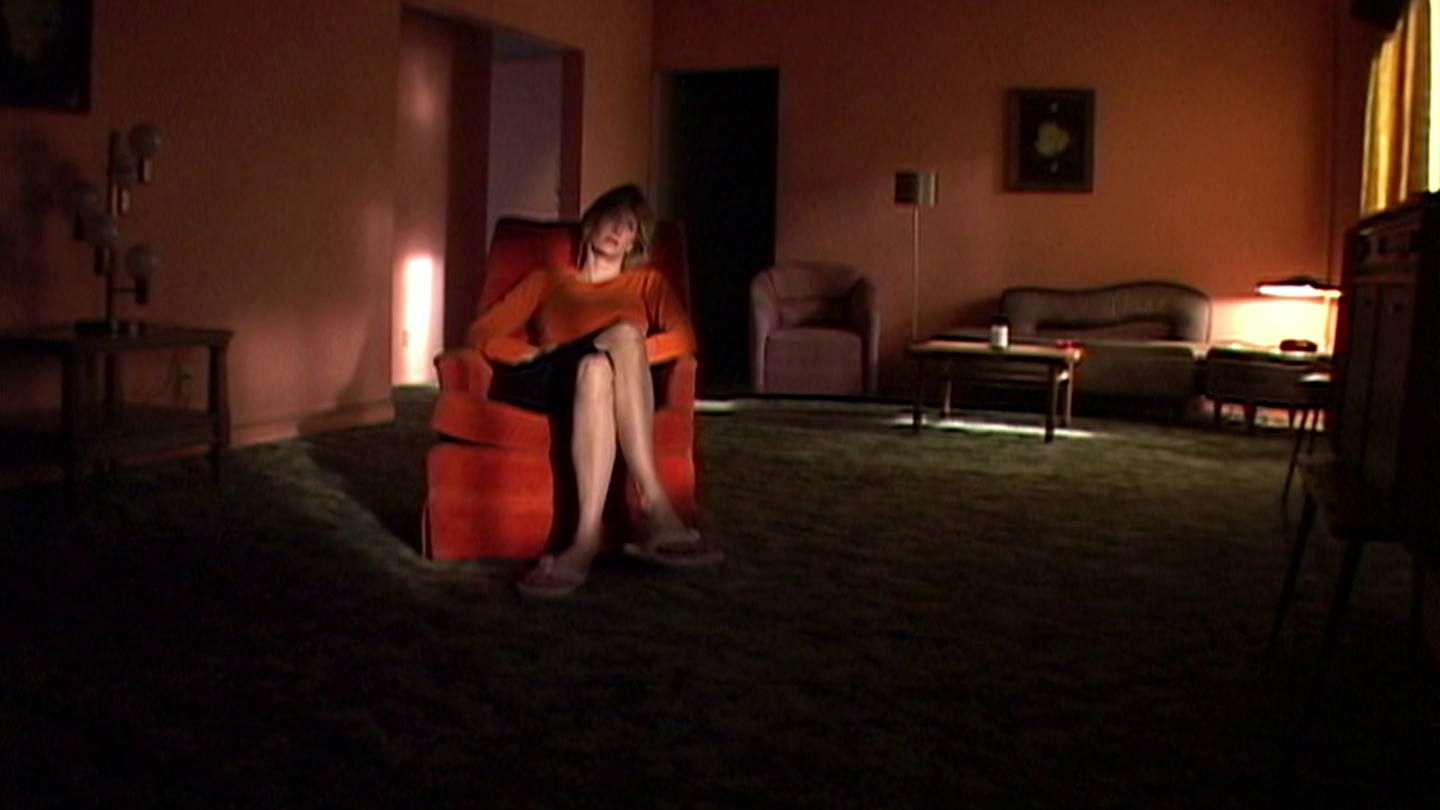
A shelf, a lamp and a family history
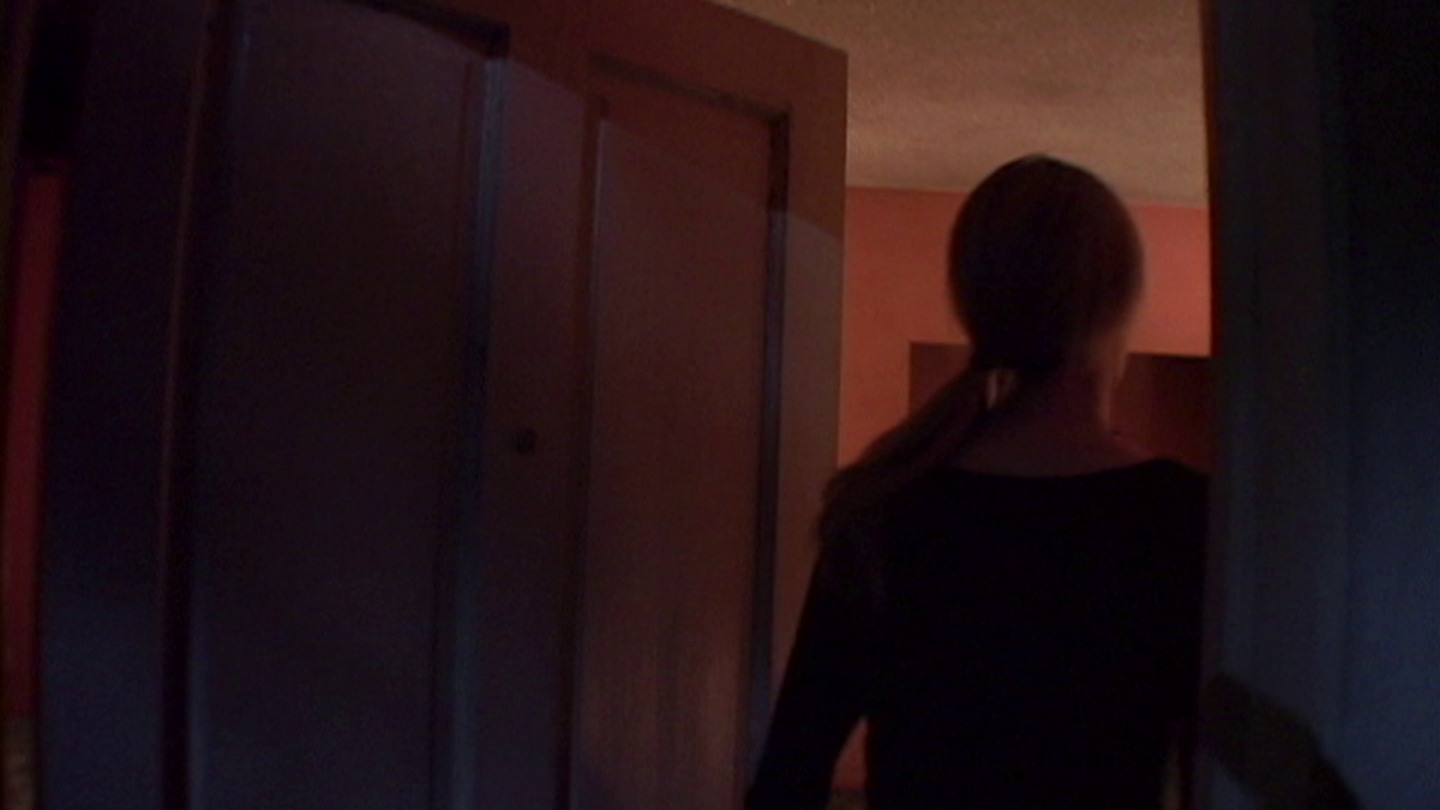
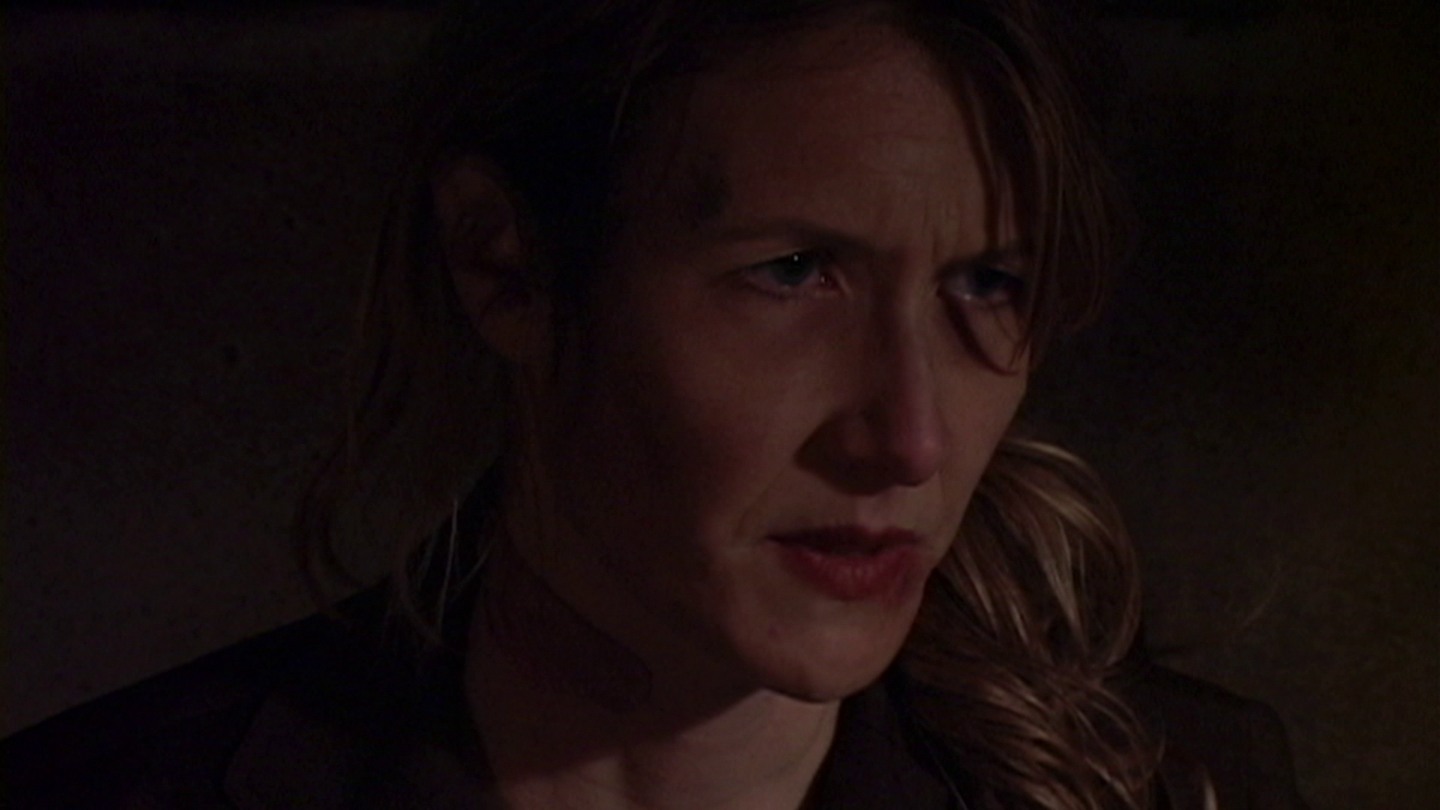
The long late monologue begins with ownership on the smallest scale: a named shelf in a refrigerator, a borrowed bed and a lamp kept from the family home. A photograph of that lamp leads to a question about an unidentified man’s arm. The story then moves through a mother’s industrial injury, a sister’s exhausting work and an unwanted sexual approach. Everyday objects become points of access to histories of exploitation and resistance.
Much of this violence is narrated rather than illustrated. Dern’s face carries its pressure, with occasional returns to the listening man. The abrupt changes of subject are part of the scene’s force: a practical complaint can open onto a memory, then close down again. This is useful alongside Dern’s account of receiving pages before there was a complete screenplay, without treating every recollected production detail as an explanation of the character.
From the circus ring to the Boulevard
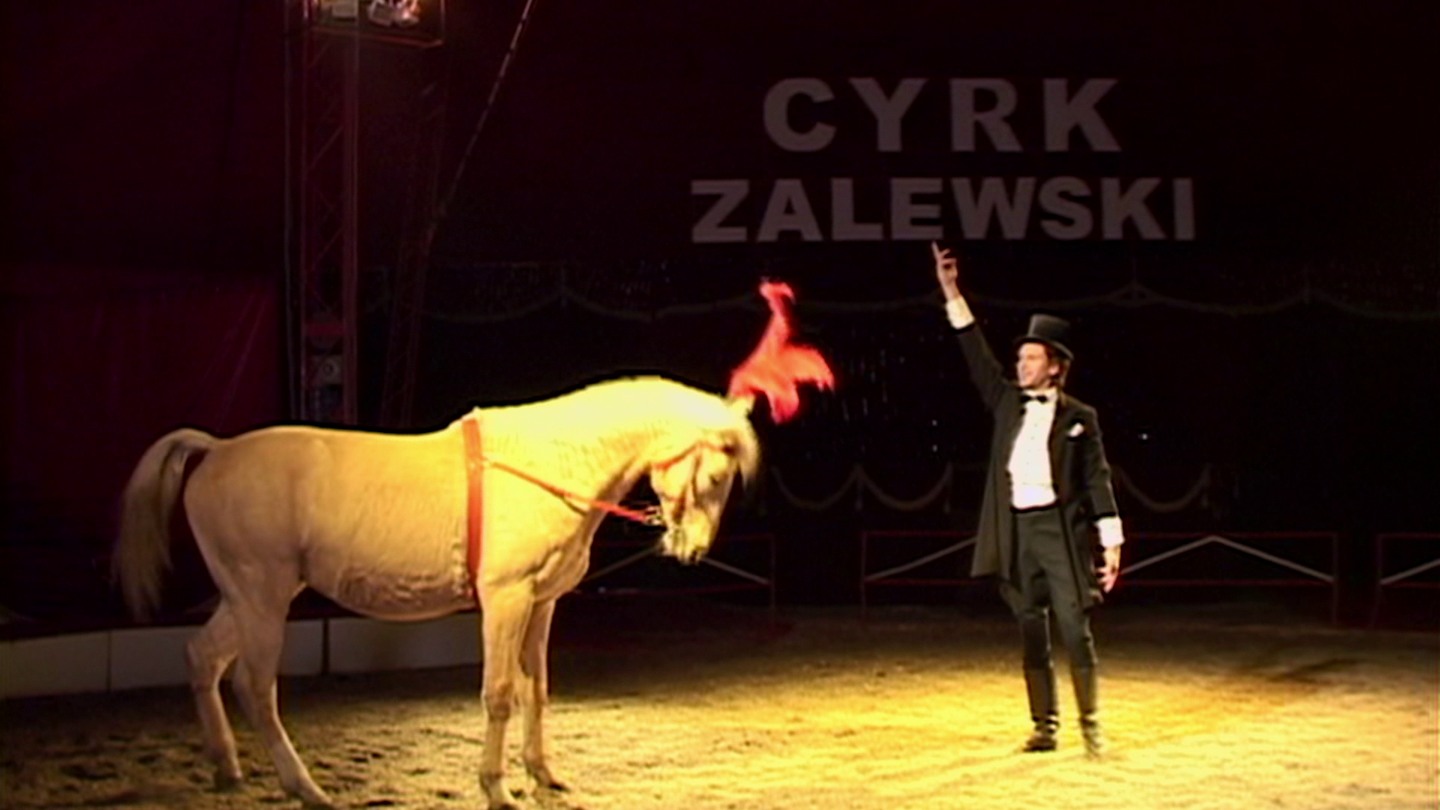
A brief circus passage isolates a horse and its handler beneath the ring’s lights. Later, the Boulevard sequence expands around a public telephone, passing cars, cigarettes and a search through a handbag. Its loose movement differs from the concentrated face-to-face scenes: attention passes among the women and the traffic around them. Near the end, the return to the pink room gathers bodies into a layered group image. The companion closes by bringing the film’s social spaces back into relation, rather than by resolving them into a single explanation.
Public spaces and performance · 2 images
From festival event to continuing argument
La Biennale’s institutional account places Inland Empire at Venice in 2006 alongside Lynch’s Golden Lion for Lifetime Achievement. The award honoured his career; it should not be confused with the festival’s best-film prize. Film at Lincoln Center’s archive also places the film in the 44th New York Film Festival’s 2006 main slate. Venice record ↗ · NYFF 44 archive ↗
The early reviews examined here offer different ways of entering the film. Emerson concentrates on spectatorship and recurring patterns. Atkinson makes the resistance to tidy explanation central. Kim Nicolajsen’s March 2007 Electric Sheep review connects the audience’s uncertainty with Dern’s trust in Lynch during production. These arguments overlap without being interchangeable. Emerson ↗ · Atkinson ↗ · Nicolajsen ↗
At the New York Film Festival in October 2006, Andrew O’Hehir offered a more resistant response. He defended Lynch’s independence and distrusted attempts to reduce the work to a solved puzzle, yet found this film’s opacity and treatment of its central woman difficult to embrace. His festival report matters because it separates admiration for the filmmaker from enjoyment of this particular film: rejecting a single explanatory key did not oblige every sympathetic critic to celebrate the result. O’Hehir’s 2006 festival response ↗
These English-language responses register a disagreement rather than a single critical verdict. Contemporary reviews and later reassessments belong to different moments in the film’s history; a republication preserves an earlier argument rather than automatically supplying a new one.
Inland Empire is especially vulnerable to an archive that turns every difficulty into a solved anecdote. Its production history can clarify who made an image and how it reached us. Its criticism can sharpen attention. Neither needs to promise that uncertainty will disappear. The evidence can become more exact while preserving the space in which the film works.
A campaign on a pavement
Dern’s 2022 conversation and Lynch’s Room to Dream reading both return to his unusual awards campaign: a chair, a cow and a poster asking voters to consider her performance. They describe passersby recording the encounter and its circulation online. The promotion continues the production’s taste for a small, distinctive gesture that can travel beyond its immediate audience. Dern, 25:00–26:30 · Lynch, 13:00–15:08
The trailer: faces before explanations
The short trailer on the Criterion supplement disc moves between faces, dark interiors, distorted features and abstract imagery before reaching the title. It offers a succession of visual pressures rather than a compact account of the plot. That emphasis makes a useful comparison with the much longer More Things That Happened: promotion compresses the film into encounters, while the companion allows an encounter to occupy minutes. Trailer source →
Explore further
Follow the sources below, explore the museum collection, or continue through the Reading Room. New archival discoveries and contributions enrich the record of Lynch’s work.
Sources and the research record
- Laura Dern and Kyle MacLachlan, 2022 conversation.Criterion’s Inland Empire, 31:46. 03:10–09:15: handwritten monologue, small-camera work and the screwdriver scene; 10:35–12:15: Mr. C and Lula; 13:25–16:50: emotional knowledge and the Boulevard scene; 18:00–19:25: Blue Velvet; 21:35–24:55: sets and objects; 25:00–26:30: the cow campaign. Programme listing ↗
- LYNCH2 (2007), blackANDwhite.Criterion’s Inland Empire, 30:11. 03:00–04:00: Ballerina camera plan; 05:30–06:20: Jeremy Irons; 12:29–14:35: hotel-room coverage; 20:04–22:20: street performance and makeup; 25:15–30:08: eyelines and ensemble blocking. Selected production stills accompany the studies.
- David Lynch reads “The Happiest of Happy Endings,” from Room to Dream.The 2018 book was written with Kristine McKenna. Reading included on Criterion’s Inland Empire, 15:09. 01:40–04:19: website and online films; 04:19–09:07: monologue and emerging feature; 11:19–12:59: winter production; 13:00–15:08: the cow campaign. The memoir is a later participant account.
- LYNCH (one) (2007), directed by blackANDwhite.Criterion’s Inland Empire, 85:22. 12:19–17:40 and 42:27–43:17: factory photography and Łódź; 18:10–20:48: website announcement and the first Dern scene; 28:11–29:18: practical constraints and set work; 36:24–41:31: ideas, biblical reading and production without a completed whole; 58:58–60:35: Jeremy Irons conversation; 61:10–64:32: doorways and rehearsal scene; 66:00–68:23: projection and digital cameras; 68:30–70:09 and 73:20–75:08: performance direction. Title and creator credit checked against the film’s credits.
- More Things That Happened (2007), David Lynch.Additional scenes presented as a separate 74:59 programme on Criterion’s Inland Empire. The illustrated studies follow domestic scenes, 00:00–05:20 and 39:00–41:30; the watch exchange, 06:00–19:20; thresholds and telephone, 22:20–33:45; the remembered meeting, 34:30–38:50; room transformations, 41:30–46:20; circus, 47:00–47:20; family monologue, 47:30–63:25; Boulevard and final group, 64:20–74:59. Official programme listing ↗
- Inland Empire trailer, Criterion’s Inland Empire edition.The 1:02 trailer juxtaposes faces, interiors, visual distortion and abstract imagery before the title and distributor marks. It is treated as a promotional construction, separately from the feature and companion film.
- Andrew O’Hehir: Beyond the Multiplex, Salon ↗5 October 2006. A New York Film Festival response that combines admiration for Lynch’s independence with reservations about Inland Empire. Distinct from a comprehensive release review.
- David Lynch in conversation with Mike Figgis, Hotel Centrum, Łódź, 28 November 2006. Included on Criterion’s The Elephant Man Blu-ray.10:30–14:50: digital image, smaller equipment and proximity to actors; 15:00–19:35: performance, repeated takes and the cinematographer’s response to an idea. Date and place appear on the programme’s closing card. Edition and supplement listing ↗
- Criterion Collection: Inland Empire ↗Official film specifications, cast and craft credits, edition inventory and gallery images. Rechecked 13 November 2026. The films and conversations used in these studies are identified separately in this source record.
- Michael J. Lee interviews David Lynch and Laura Dern, RadioFree ↗7 December 2006. Published interview read, especially the changing writing process, long takes and Dern’s knowledge during performance. No interview recording inspected.
- Sean Axmaker: David Lynch on Inland Empire I — The Idea ↗January 2007 Seattle interview, originally published by GreenCine in August 2007; read in its 18 January 2025 republication. Participant testimony on connected scenes, camera choice and rhythm.
- Sean Axmaker: David Lynch on Inland Empire II — The DVD ↗2007 telephone interview, edited for MSN; expanded version republished 18 January 2025. Full published interview read. Covers additional material and domestic sound presentation; does not establish inspection of that DVD.
- Iain Blair: Director’s Chair — David Lynch, Inland Empire ↗Visible publication date 2 February 2007 (URL says February 1). Full interview read. Final Cut Pro statement and Noriko Miyakawa’s work on blurred faces are particularly useful locators.
- Jon Inge Faldalen interviews Ole Johan Roska, Rushprint ↗9 August 2007, Norwegian. Full interview read in browser; English paraphrases are ours. Firsthand account of camera work, written scene material, construction and recreating the rabbit set; no original recording inspected.
- Krzysztof Kwiatkowski interviews Lynch: Tu zdarzy się cud ↗Newsweek Polska, 13 December 2009, updated 20 December. Polish interview read; English paraphrases are ours. Green-room recollection is retrospective testimony, not a dated call sheet.
- Dorota Hartwich: David Lynch completes Inland Empire in Łódź ↗Cineuropa, 23 January 2006. Contemporary report read through web retrieval; direct local download was blocked. Its anticipated Cannes premiere was a plan, not evidence of a completed screening.
- Polish Film Institute: New Polish Films 2008, p. 41 (PDF) ↗Inland Empire entry on printed p. 41 / PDF p. 43 extracted and visually inspected. Useful Polish production and craft record; duplicated Wilson name variants require reconciliation against end titles. The catalogue’s 35 mm entry describes distribution material, not camera capture.
- Matt Fagerholm interviews John Neff, Indie Outlook ↗2 May 2022. Inland Empire questions read: location recording, the upstairs monologue and Axxon N. Neff distinguishes his Los Angeles work from the Polish production; his narrative interpretation is not treated as canon.
- Sam Wigley interviews David Lynch and Chrystabell, Sight and Sound ↗Published 25 November 2024, updated 17 January 2025; July 2024 interview context. Read for Chrystabell’s account of Polish Poem and Dean Hurley finding the recording. No session tapes or cue sheet inspected.
- Janus Films: newly remastered picture and soundtrack (PDF) ↗Complete one-page technical note read and visually inspected. Documents the 2021 image work and January 2022 audio work. An official process account, not independent comparison of the finished editions.
- Michael Atkinson: Inland Empire reviewed in Sight and Sound ↗April 2007 review, republished 25 May 2023. Full review read. Publication and republication dates kept distinct; an individual critical argument, not a consensus.
- Jim Emerson: Go Inland, young woman! ↗25 January 2007. Full review read in browser. Written by Jim Emerson, despite the site’s name. Critical descriptions are attributed; its runtime is not used to establish an edition.
- Kim Nicolajsen: Inland Empire, Electric Sheep ↗4 March 2007. Review read in full and attributed to its closing signature, Kim Nicolajsen; the page’s CMS byline displays Virginie Sélavy. UK release line is a contemporary notice, not a complete release history.
- La Biennale di Venezia: David Lynch remembrance ↗16 January 2025 institutional account read for the 2006 Inland Empire screening and Lynch’s Golden Lion for Lifetime Achievement. This was a career award, not the festival’s best-film prize for Inland Empire.
- Film at Lincoln Center: 44th New York Film Festival ↗Official 2006 edition archive read; Inland Empire appears in the main slate. Edition-specific record used rather than the inconsistent festival number on the general film page.
- BBFC: Inland Empire classification records ↗Cinema and home-entertainment records inspected 16 October 2026. Recorded durations are classification metadata; playback speeds, frame counts and content have not been compared.
Another doorway
Continue exploring
Short films
Short Films
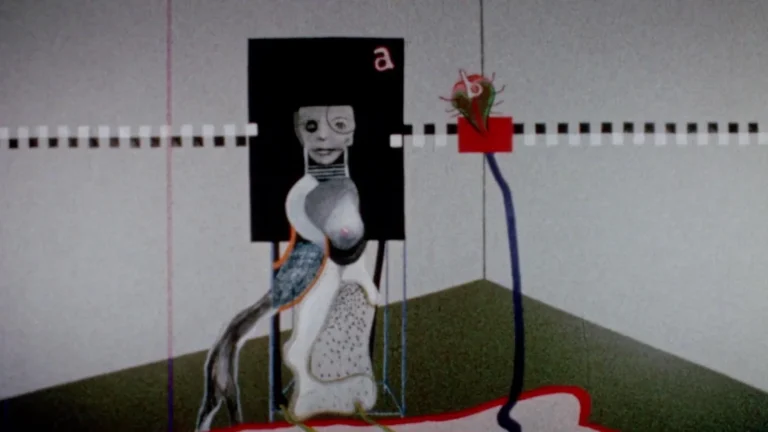
Explore David Lynch’s short films, from The Alphabet to Rabbits and Fire, with production histories, collaborators, sound studies and viewing guides.
Art
Art
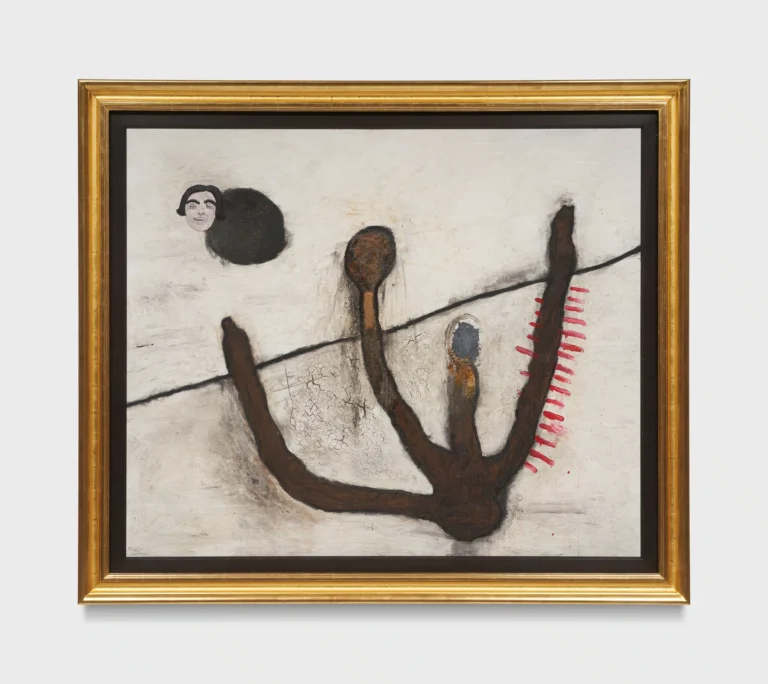
Explore David Lynch’s paintings, lithographs, sculpture and photography through close readings, exhibition histories, credited images and documented sources.
Films
Mulholland Drive
Explore Mulholland Drive through 45 illustrated scenes, dialogue studies, music and sound credits, Club Silencio, production history and edition research.
Image credits and sources accompany each linked guide.