Twin Peaks: Fire Walk with Me
The feature films / 1992 / Research dossier
The person behind the photograph.
A mystery can turn a person into evidence. Twin Peaks: Fire Walk with Me reverses that movement: Laura Palmer becomes the center of an experience that the town’s explanations cannot contain. This dossier follows that change through writing, performance, production, image, sound and the film’s troubled passage into public view.
- Film year
- 1992
- Listed runtime
- 135 min
- Image
- Color
- Edition ratio
- 1.85:1
Reading note: discusses abuse and trauma without graphic description. Contains spoilers for the original series and film; detailed screenplay-ending evidence is behind a disclosure.
Choose a route: begin with Laura and the film’s point of view, follow the making of the film, or compare editions and additional scenes. The source notes say exactly what was inspected.
Explore this dossier
Three movements: the case, the person, the image beyond death
The film’s opening movement does not simply warm up the viewer for Laura. Deer Meadow presents an investigation in which familiar forms of assistance and hospitality become difficult. Chris Isaak’s Chet Desmond is an investigator, but his passage through this world lacks the social ease associated with Cooper. Tim Greiving’s critical essay makes that displaced familiarity a useful starting point. Deer Meadow and Desmond
The opening teaches the viewer to distrust the assumption that the return of a familiar institution means the return of a familiar experience. A sheriff’s office, a diner and an FBI investigation are recognisable structures. Their functions are altered. This prepares the larger change when Laura becomes the film’s sustained centre: the story will no longer be organised primarily around other people’s efforts to account for her.
The second movement gives everyday encounters a different pressure. Laura has to move among people who know different versions of her, while managing knowledge she cannot easily share. Her friendships, work and home life are not separate categories that a detective can calmly sort. They are demands upon a person living through them. That is our interpretive reason for resisting a purely chronological “last seven days” synopsis: the days matter because of the changing experience of passing through them.
The closing Red Room passage places Laura’s image in a space that exceeds the investigation. It can be read as consolation, release, a transformation of spectatorship, or an image whose comfort remains troubled by everything preceding it. The film’s emotional ending should not be reduced to a code that a later television episode either validates or invalidates.
Read across the four works: Season 1 asks who can describe Laura; Season 2 separates the audience’s knowledge from the investigation’s solution; this film gives Laura sustained experiential priority; The Return reopens the consequences of trying to change her story. These are connected questions, not interchangeable versions of one plot.
Close looking · The theatrical feature
From the broken screen to Laura’s final image
Nineteen illustrated studies follow the film’s changing point of view, with expandable sequences for gesture, surveillance, the picture doorway and the ending. Timings locate passages in the feature; they are not claims about exact shot boundaries. Viewing and credit notes.
00:00–03:04
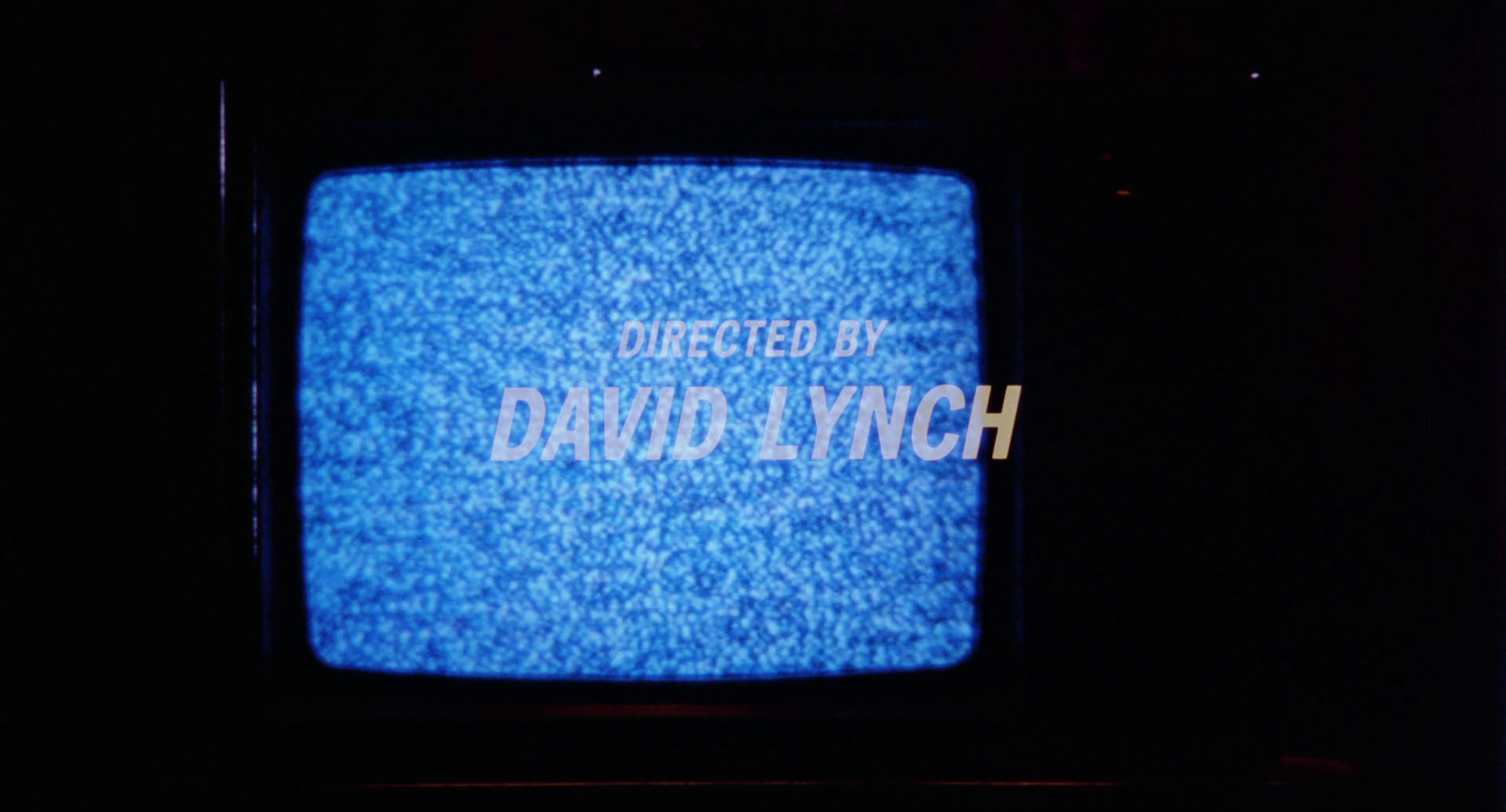
A screen breaks; an investigation begins
The blue field beneath the credits turns out to belong to a television. Pulling back reveals an object; breaking that object turns an apparently abstract opening into an act of violence. The following image of Teresa Banks in the river introduces a body before an investigator can explain it. This is a forceful change of scale: screen, room, landscape. The sequence can be read as a break with television’s familiar frame, but its violence also cautions against treating that break as a playful declaration of artistic independence.
04:20–07:40
Lil’s performance: explanation with a remainder
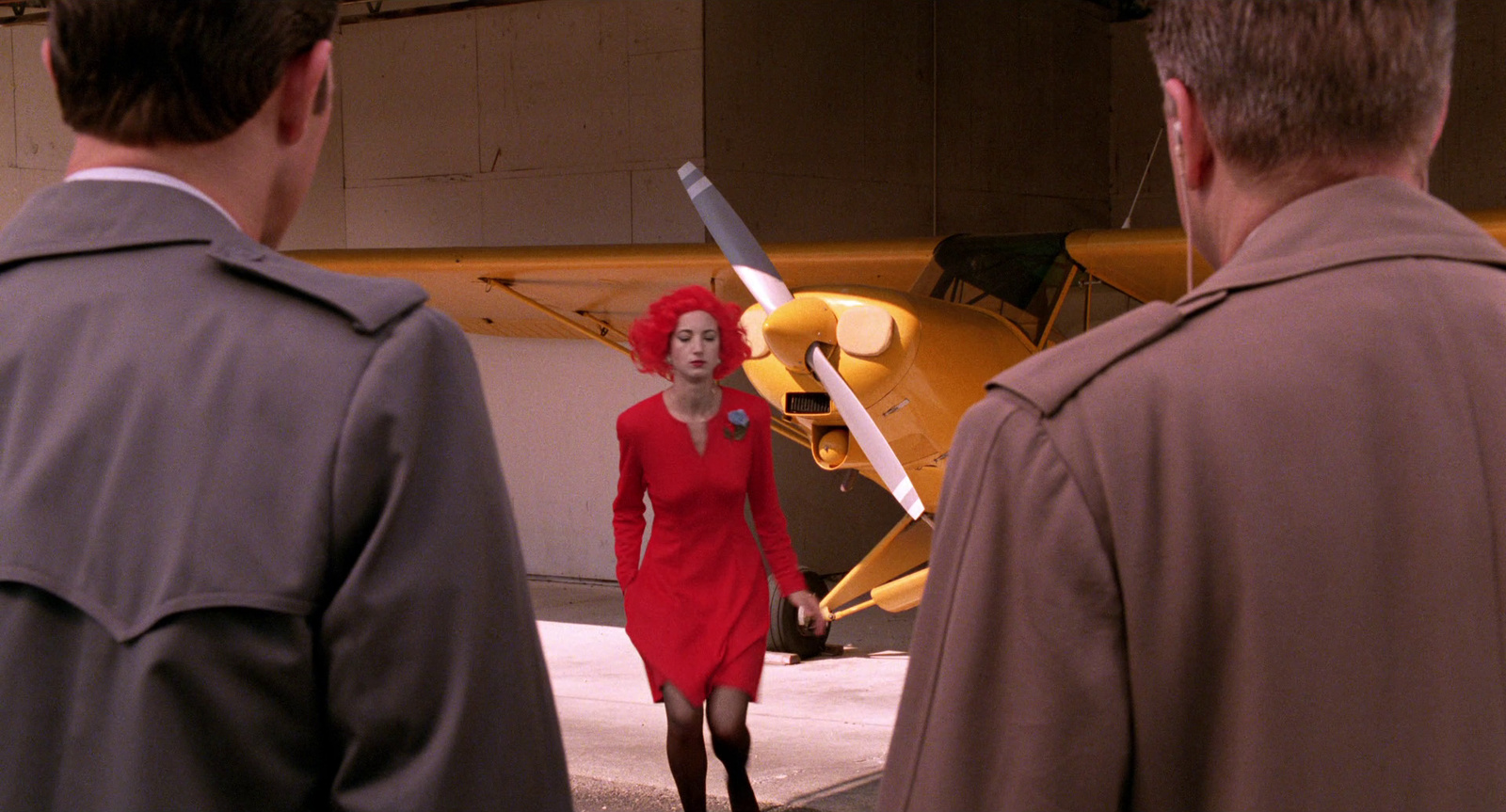
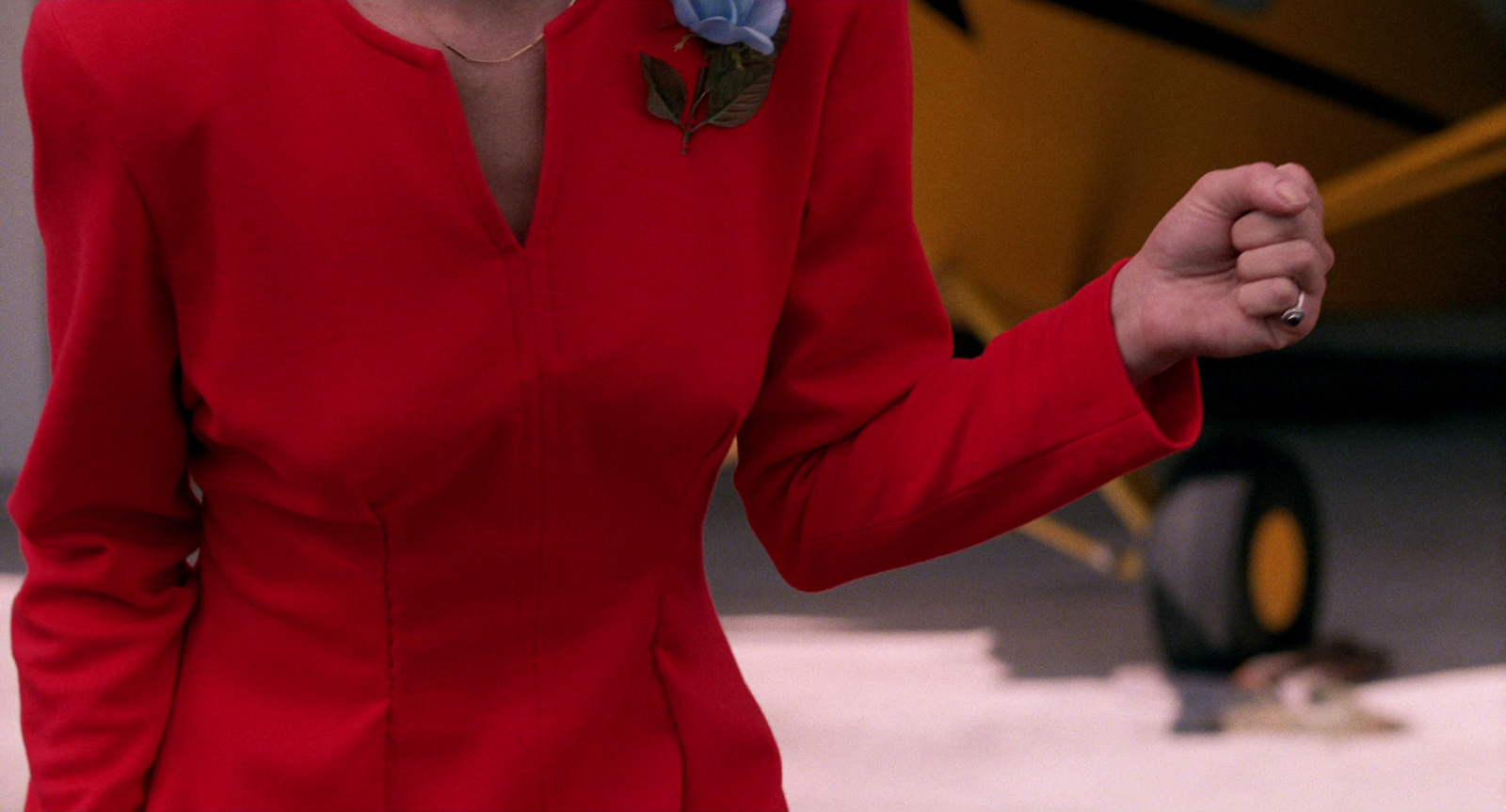
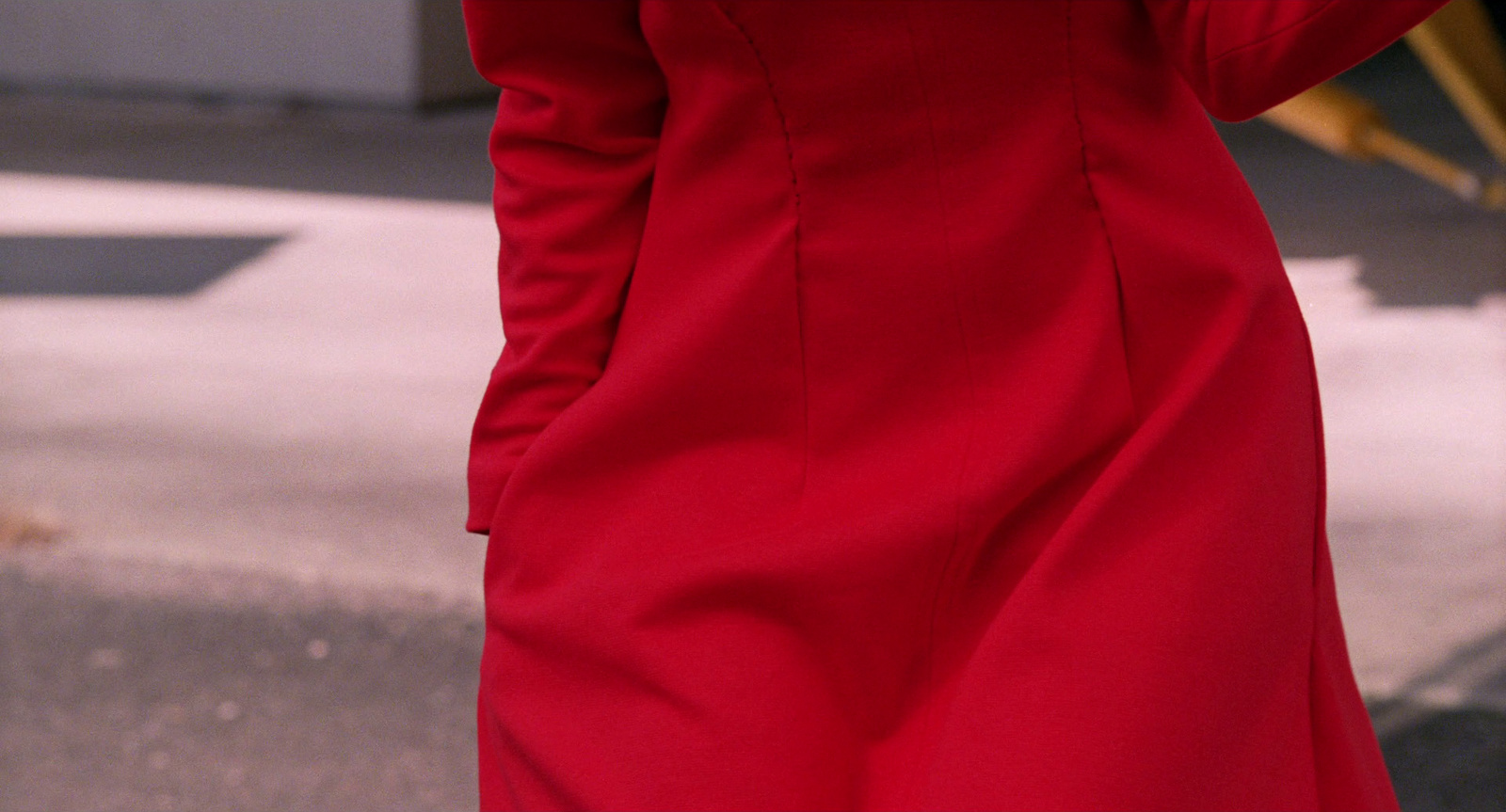
Lil’s costume, face and movements are first offered as a complete, strange performance beside the aircraft. Desmond then separates them into clues for Stanley. The inserted details convert a person’s movement into an investigative vocabulary. Yet his explanation stops at the blue rose. The scene demonstrates both the pleasure and the limit of decoding: some signs are translated, while another remains withheld. Ron García attributes the principal costume-and-aircraft colour choices to Patricia Norris and describes his own contribution as augmentation. This distinction keeps design and cinematography in conversation without assigning every colour to one author. Research note.
Open the image sequence · 3 frames
07:40–15:03
An institution that refuses hospitality
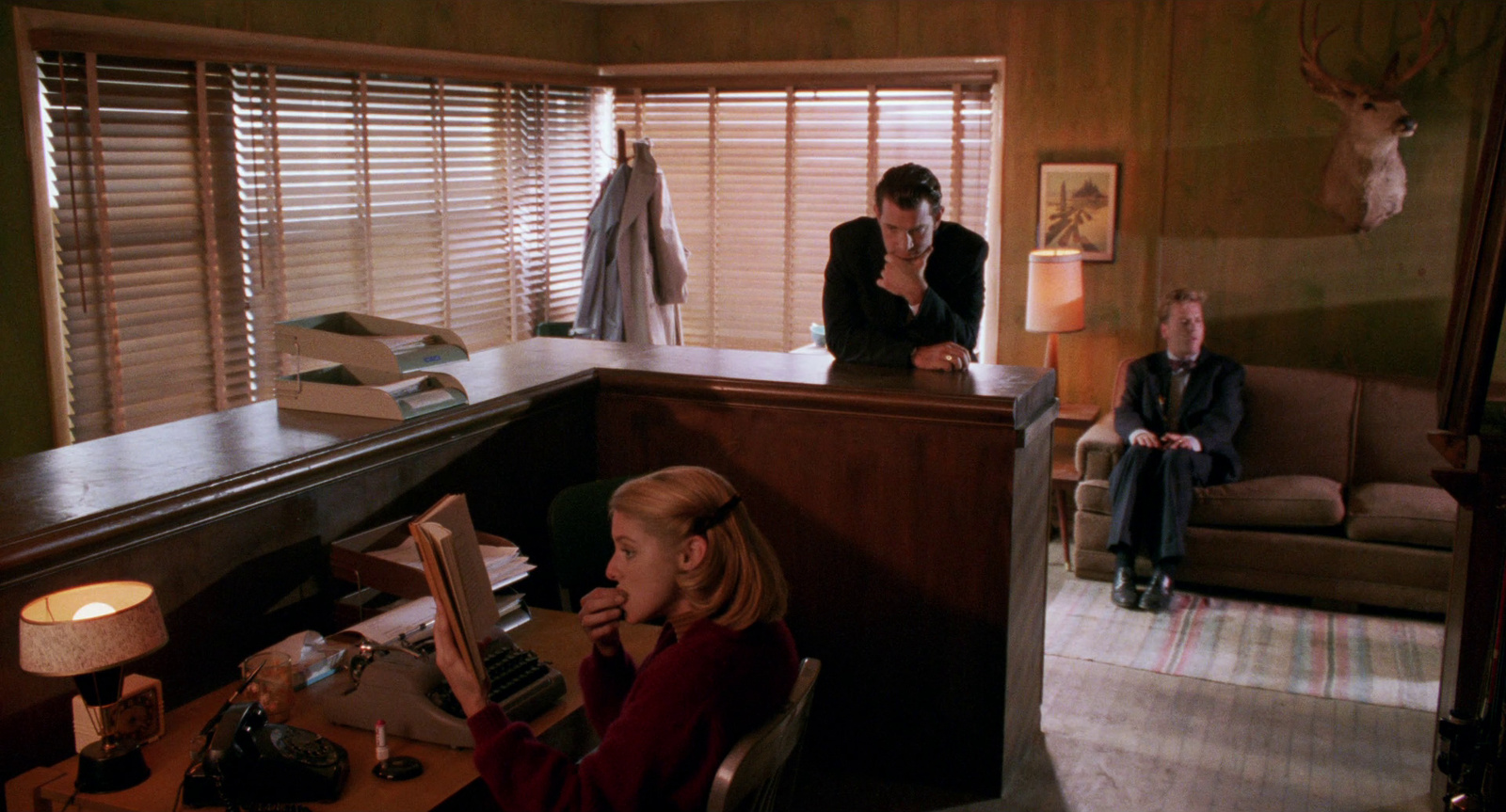
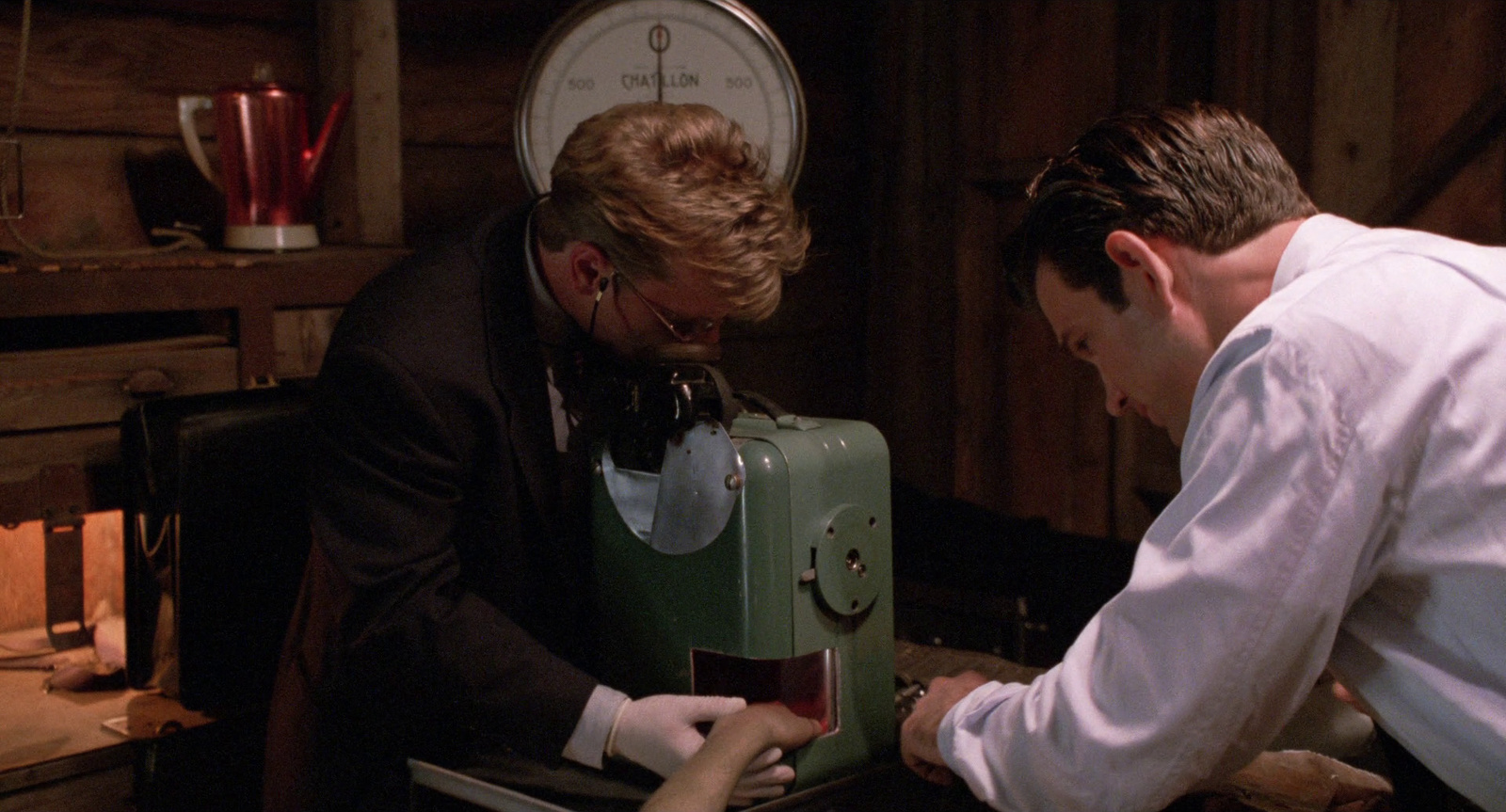
The waiting room disperses the agents among desks, a counter and spectators. Laughter and obstruction give routine official requests an antagonistic setting. The subsequent examination of Teresa’s body changes the agents’ activity from social negotiation to close inspection. The finger clue is legible where the town’s assistance is not. Compare this with the later dinner-table inspection of Laura’s hands: the recurring act of looking closely has radically different meanings when performed by investigators and by a controlling parent.
Open the image sequence · 2 frames
15:03–24:00
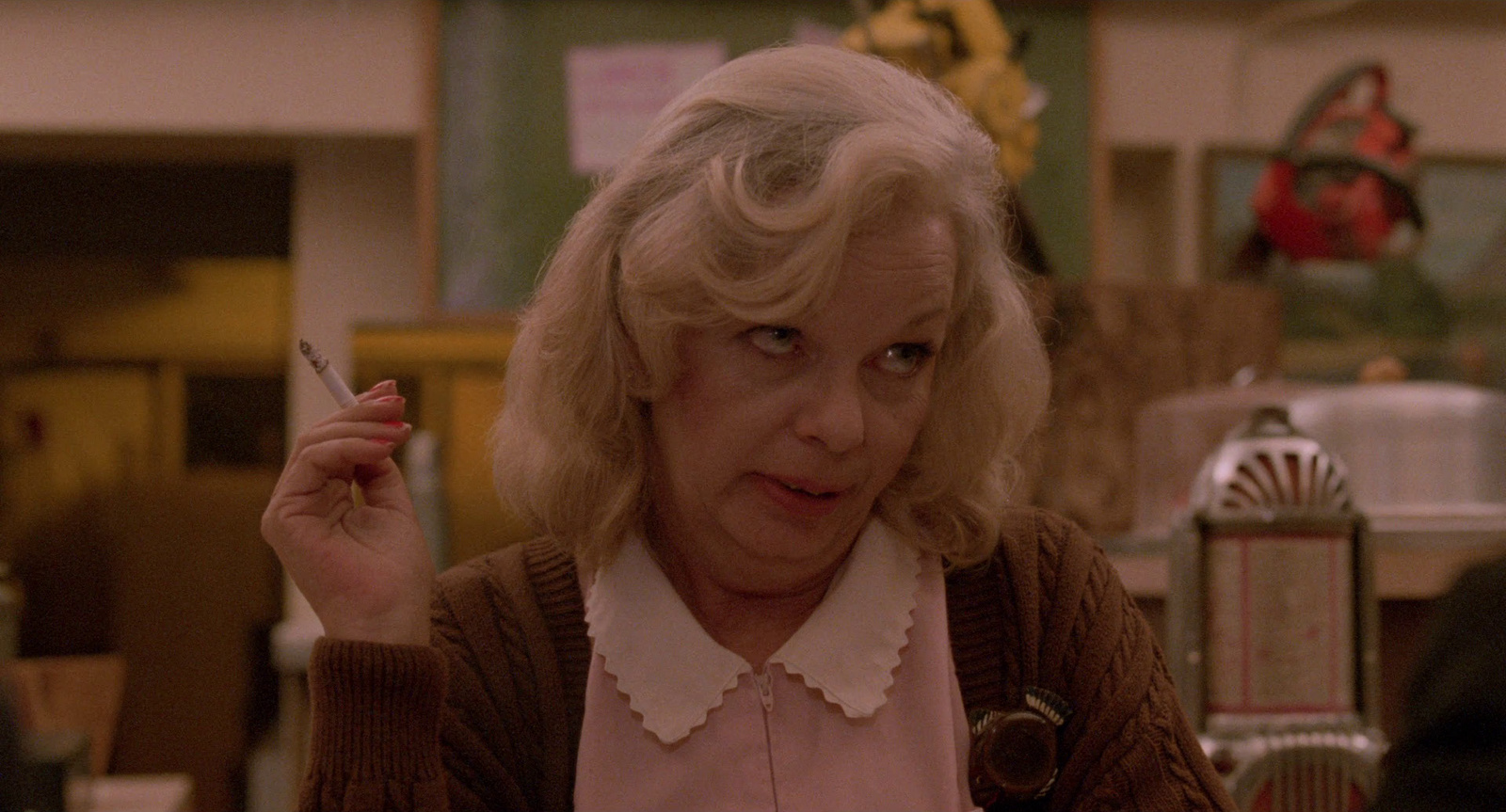
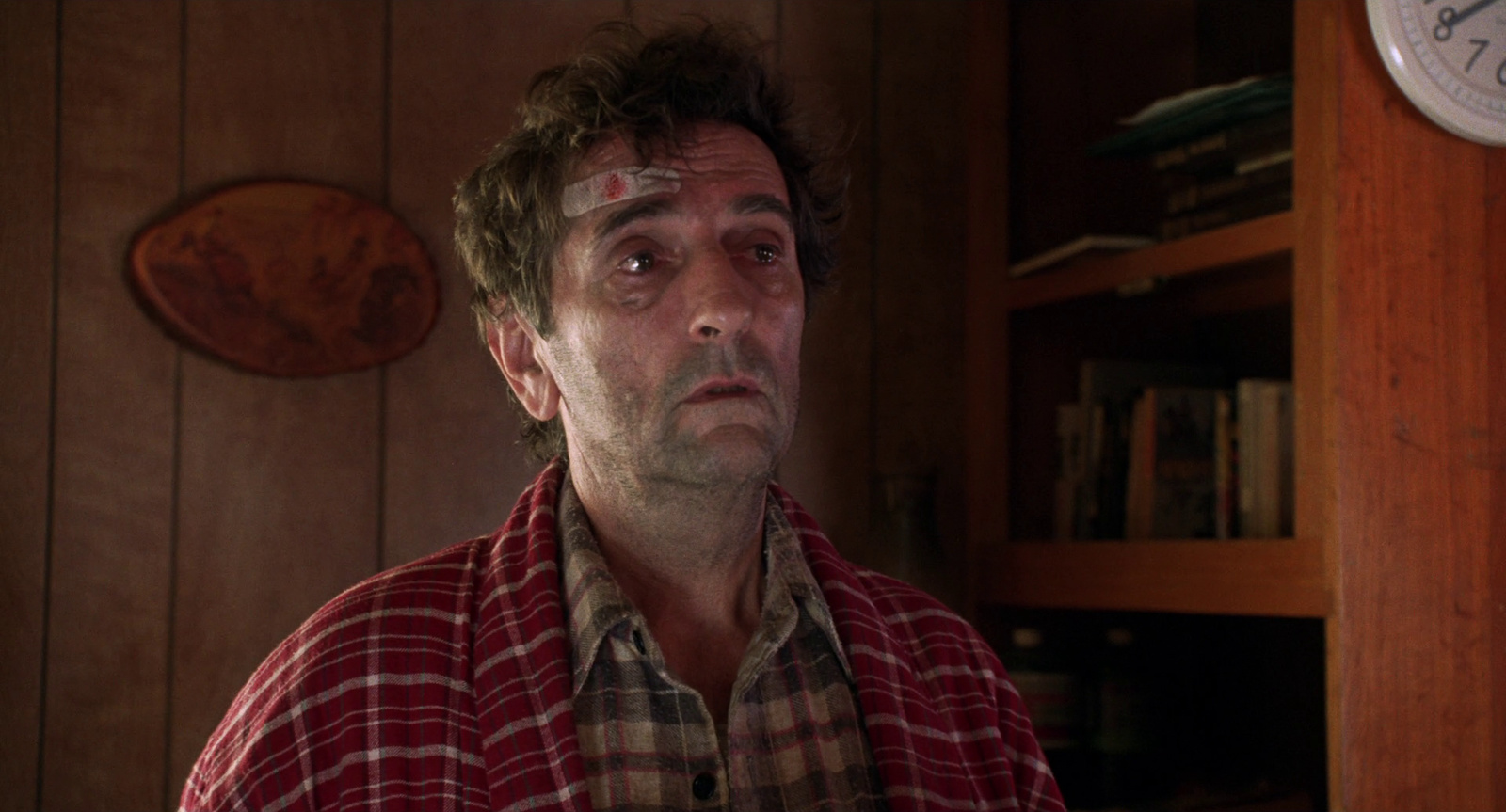
Irene and Carl: the people around the evidence
Irene’s recollection gives Teresa a fragmentary working life: a waitress, an unexplained physical complaint, a person whose absence has not generated the town-wide mourning accorded Laura. At Fat Trout, Carl’s pauses and the interruption at the doorway resist the pace of the agents’ questions. Harry Dean Stanton’s reaction is worth holding apart from the ring clue. His wish to remain where he is suggests experience the investigation does not possess. These witnesses are not merely containers from which the detectives extract a useful answer.
Open the image sequence · 2 frames
26:58–33:49
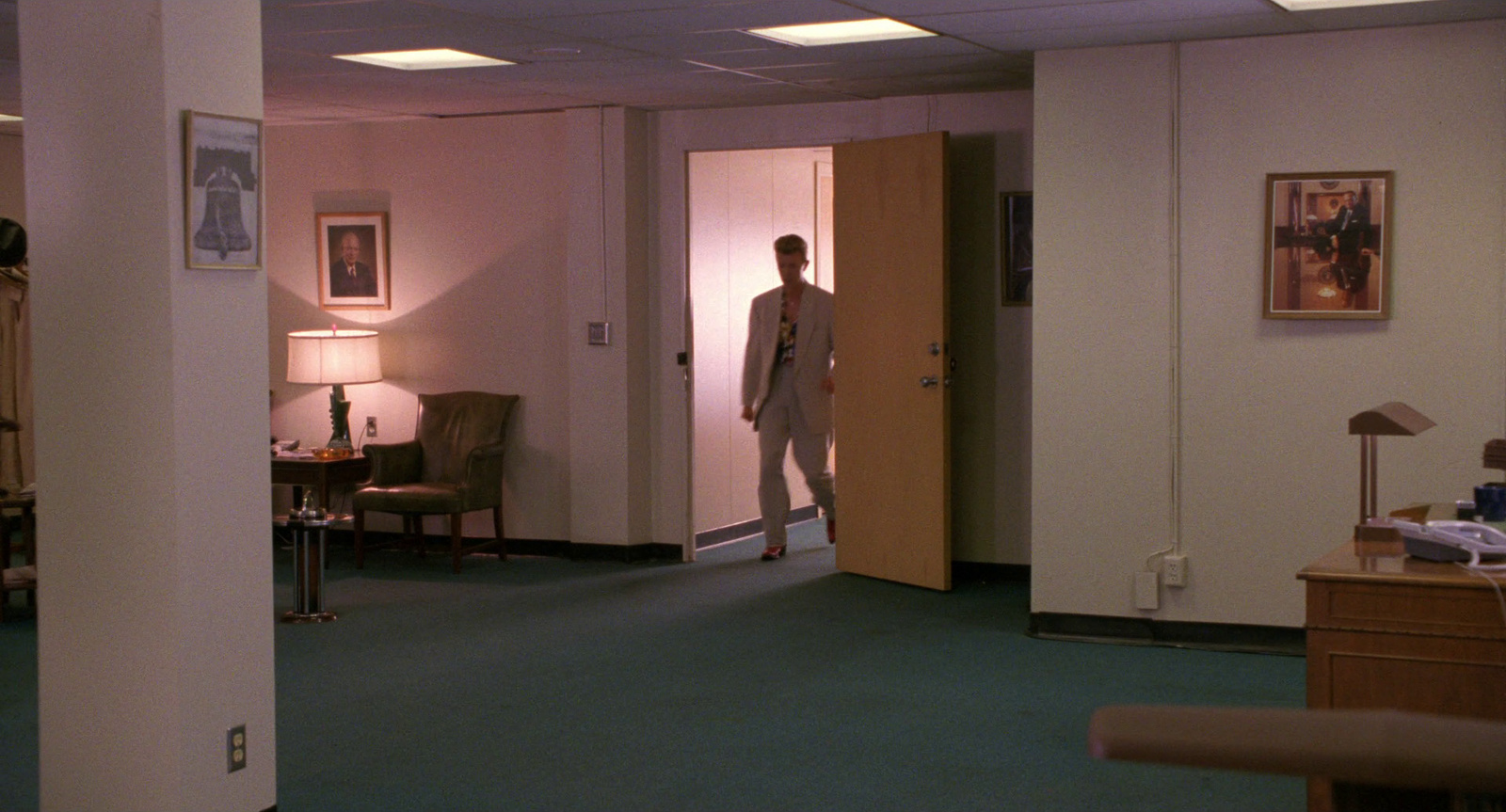
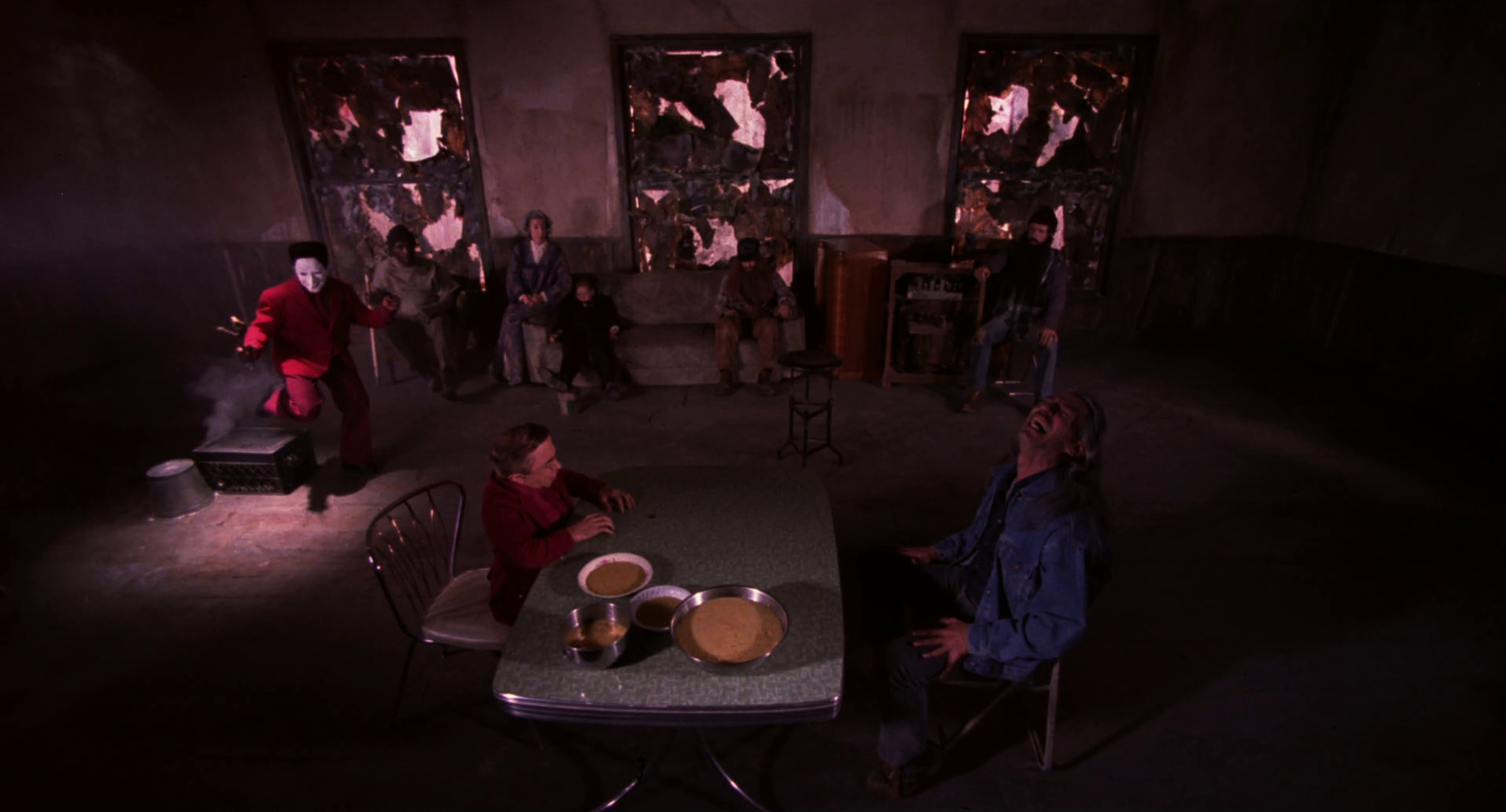
Jeffries, surveillance and a missing investigator
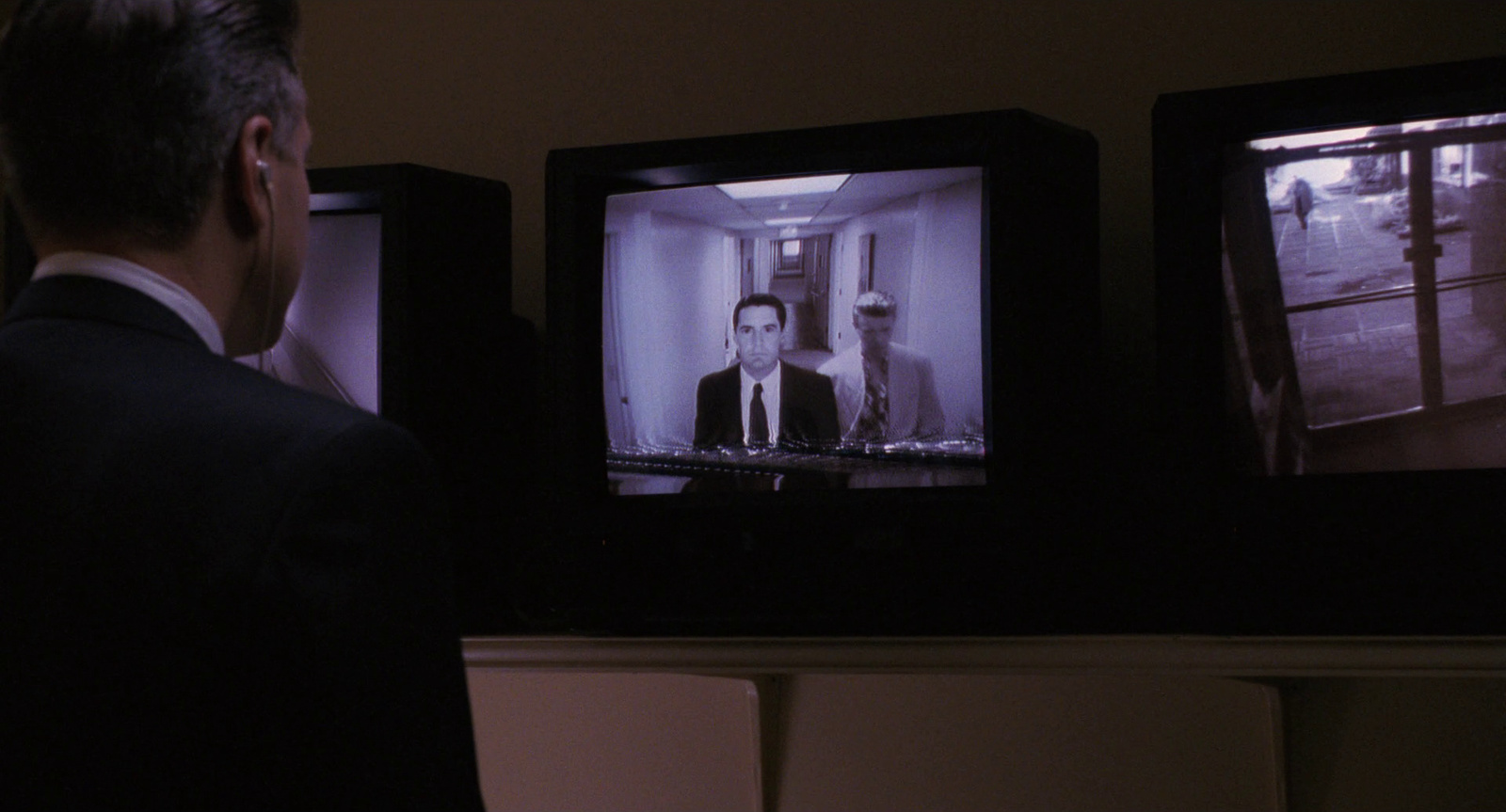
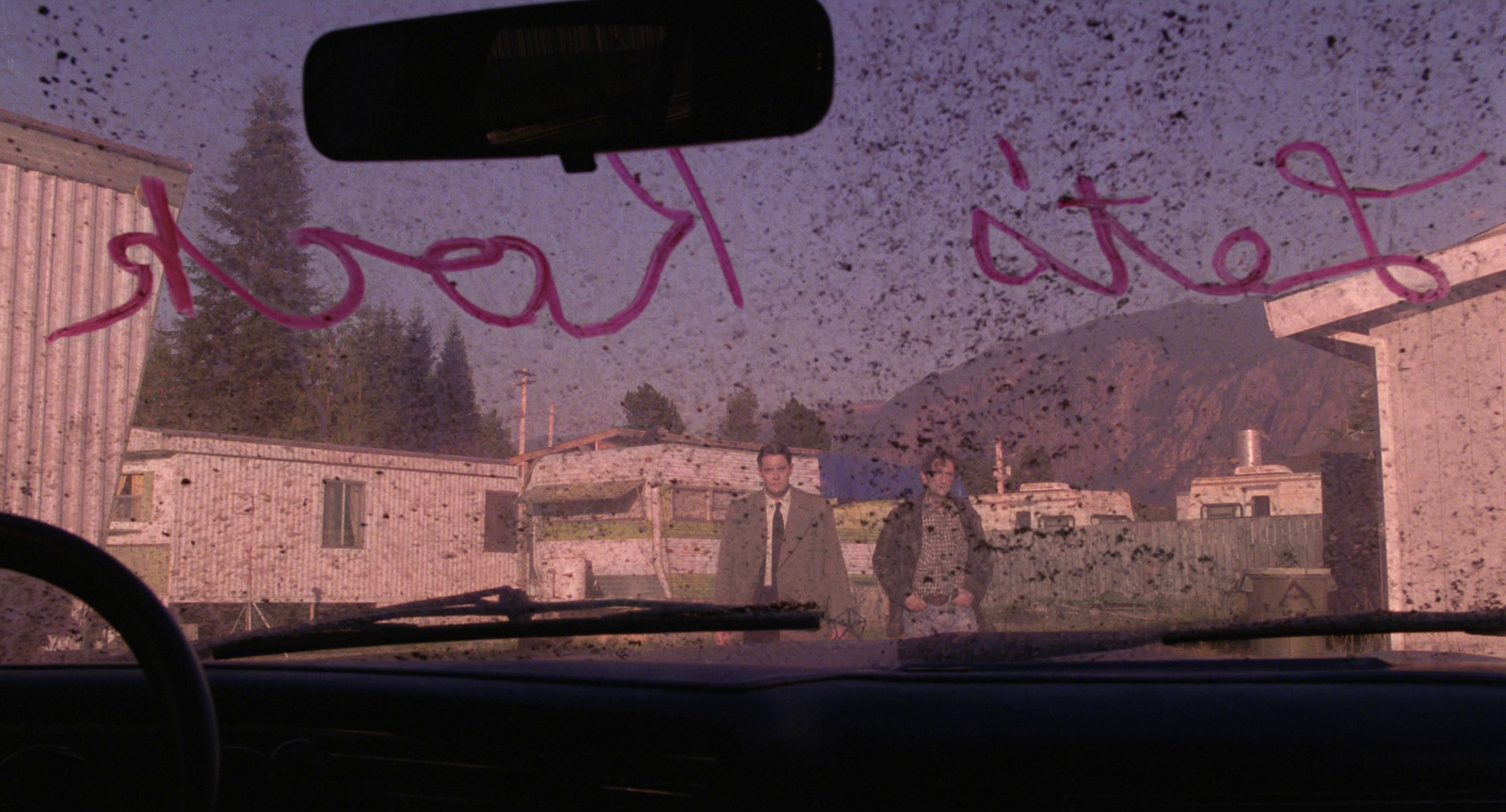
Cooper moves between the corridor and its surveillance image before Jeffries enters the office. The arrival does not restore a stable account: speech, static, another gathering and the office compete for the scene. A camera record becomes another troubling image rather than neutral proof. The subsequent visit to Fat Trout carries the investigation towards an absence, then writing on the windscreen. The later assembly The Missing Pieces allows the Jeffries material more room; it should be compared as a different arrangement, not used to replace the feature’s disruptive compression. The four images below follow the movement from arrival to an unresolved trace.
Open the image sequence · 4 frames
33:49–39:22
Laura alive, among other people’s expectations
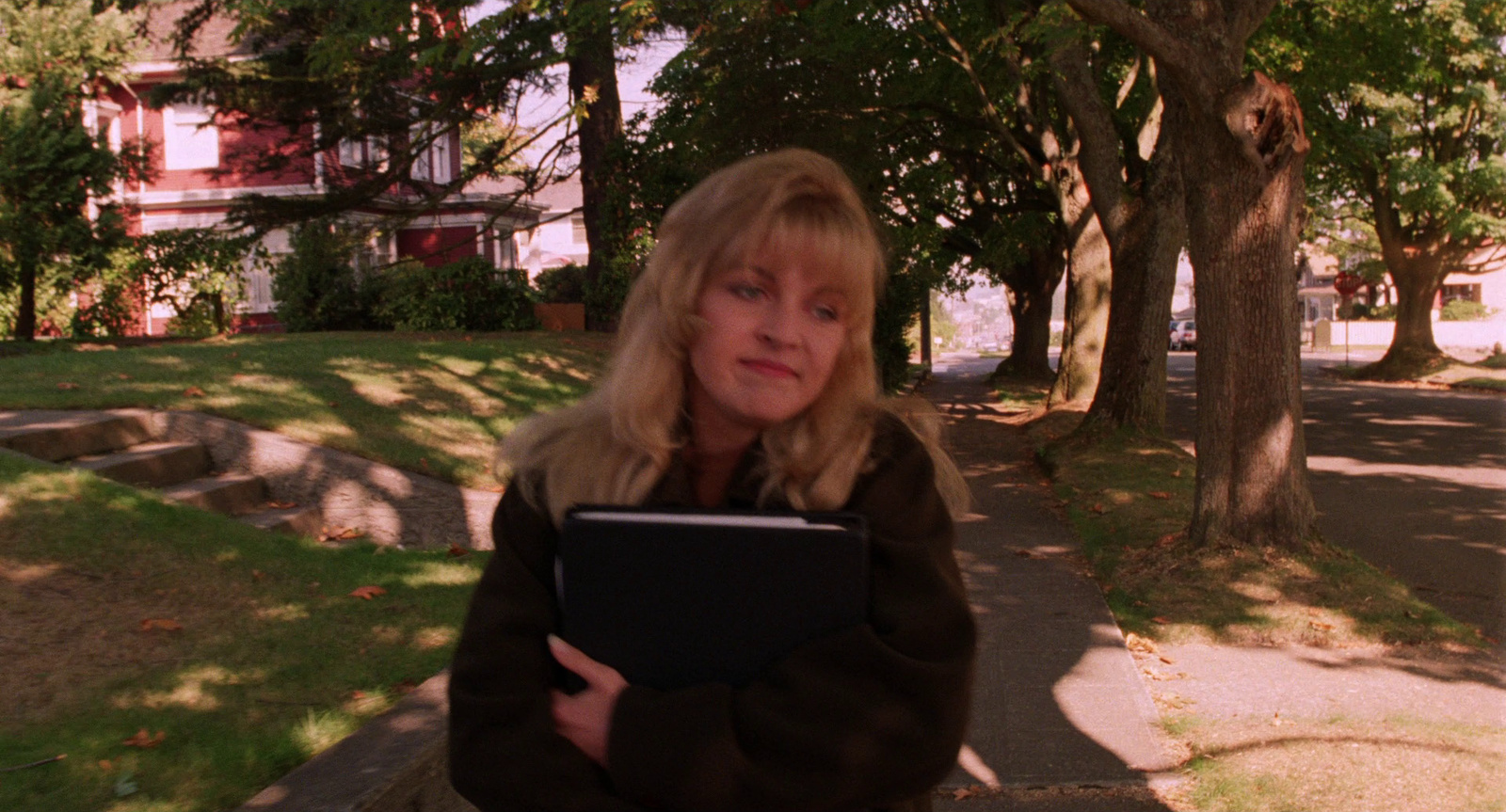
The shift to Laura walking through daylight changes the film’s center. She is no longer a name towards which an investigation points. School corridors, private exchanges with James and Bobby’s demands require different responses from the same person. Her apparent ease in one moment cannot authenticate the next. Sheryl Lee’s archival recollection of Laura’s loneliness is particularly valuable here: it directs attention towards the effort of moving among people, rather than reducing her performance to a succession of contradictory “sides.” Read the performance testimony.
39:22–42:06
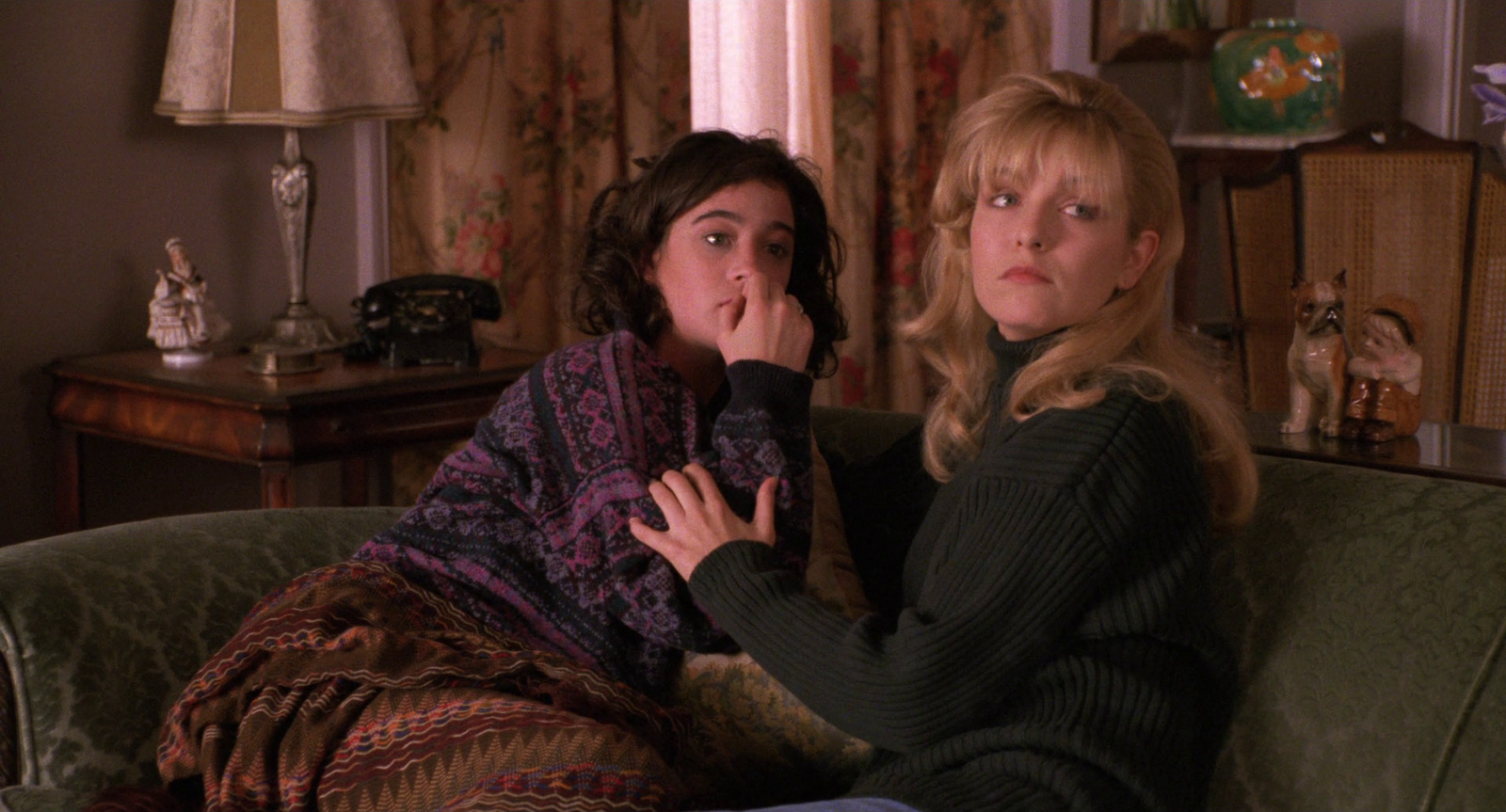
Two couches; the possibility of falling forever
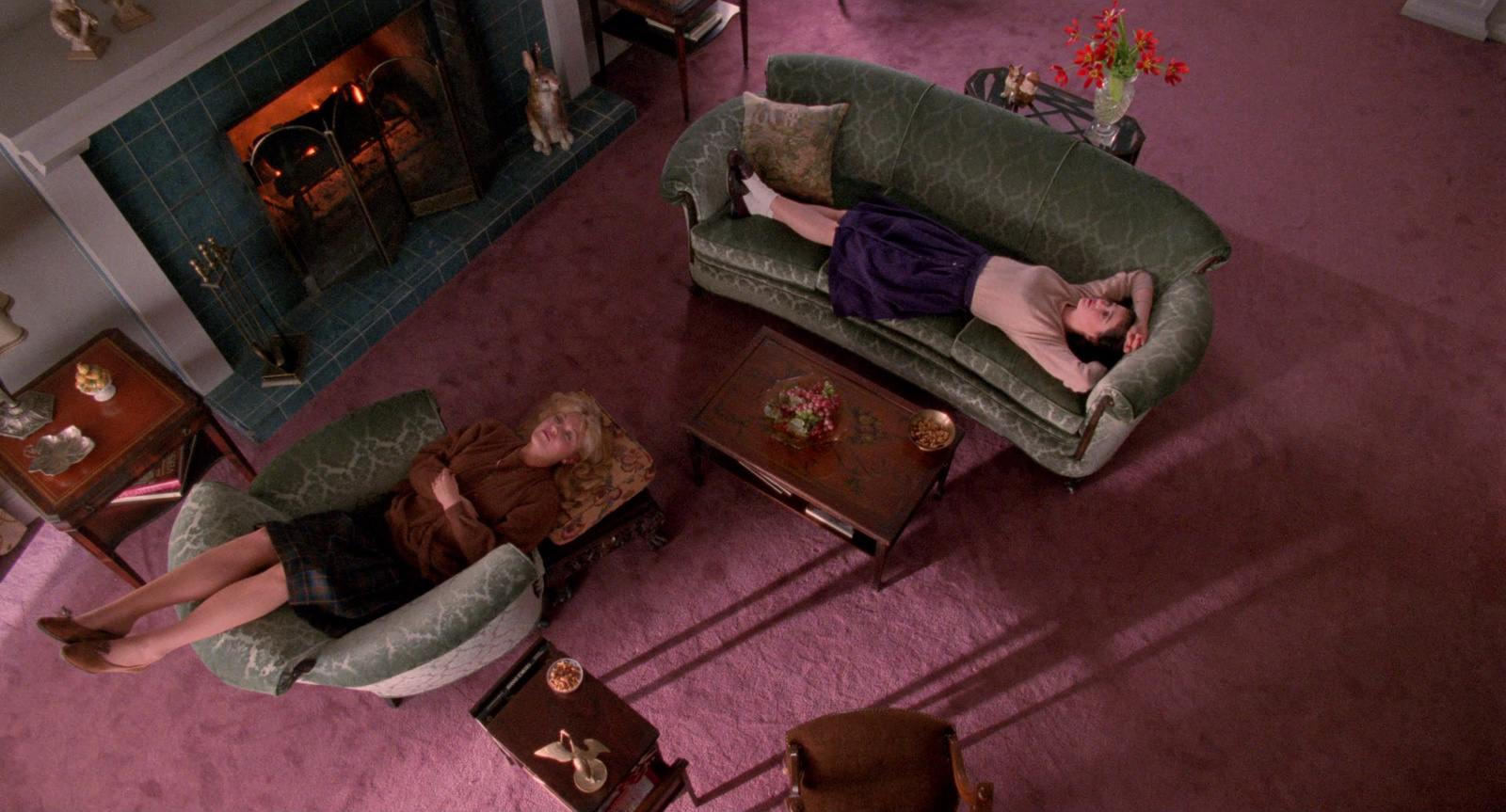
The overhead view makes a shared room feel spacious while keeping Laura and Donna physically separate. Their conversation moves from a speculative fall into the disappearance of angels. The distance is not a simple diagram of failed friendship: the girls can think aloud together, yet Donna cannot fully enter the experience Laura is approaching through an apparently abstract question. The ending’s angel image will return to this earlier thought without making the conversation a puzzle with a single verbal answer.
42:06–46:50
The diary: evidence Laura chooses to entrust
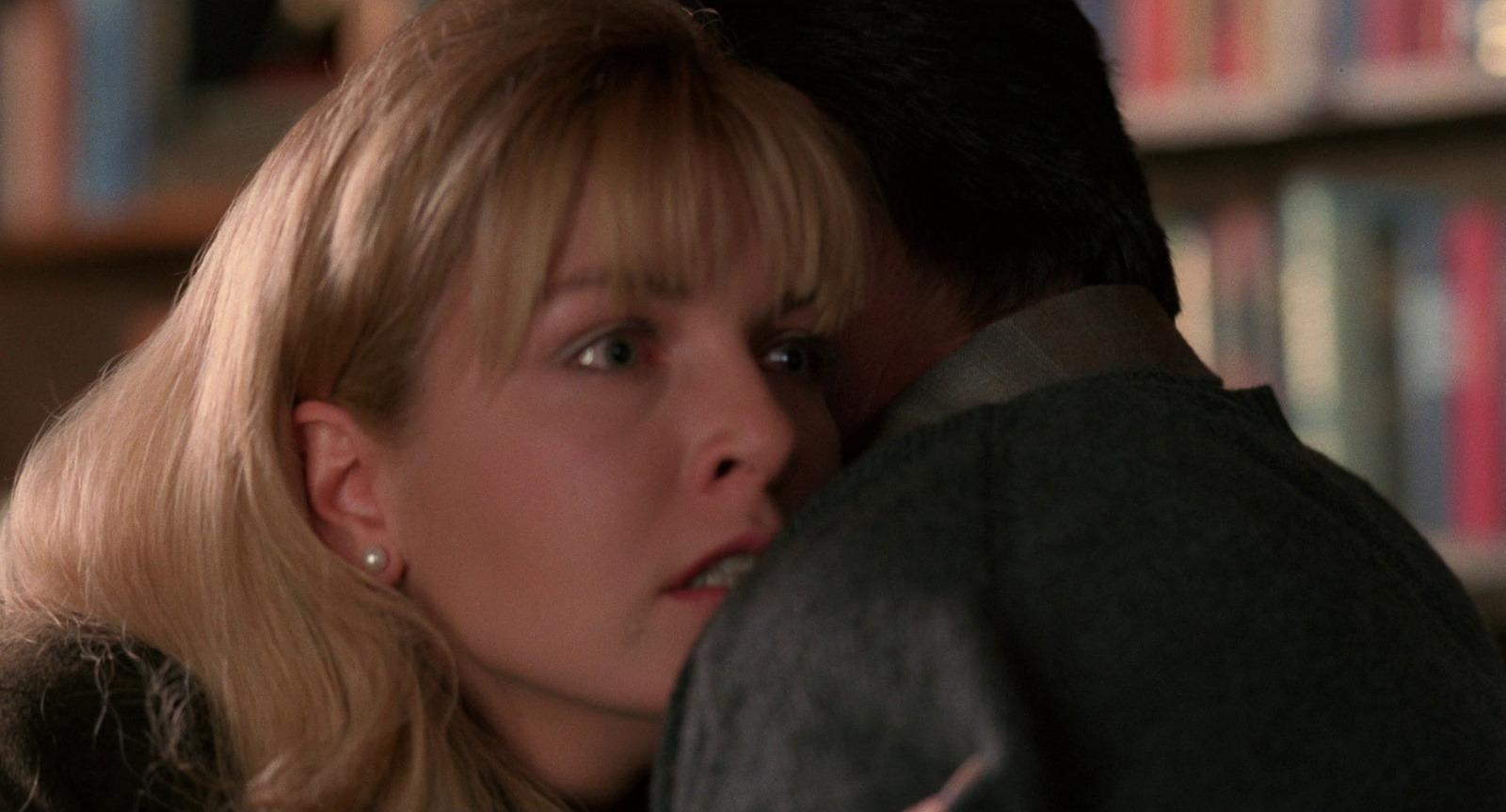
Missing pages make the diary’s vulnerability material. Laura takes it to Harold and insists that its damage is real even when he questions her account of BOB. The distinction matters: a witness can offer kindness while still failing to recognize the terms in which she describes danger. Laura’s trust is therefore active and risky. The embrace gives the scene a temporary shelter, not a resolution. Read it alongside the series’ later investigation of the diary, where an entrusted object becomes evidence handled by people absent from this exchange.
48:08–58:53
Recognition and the dinner table
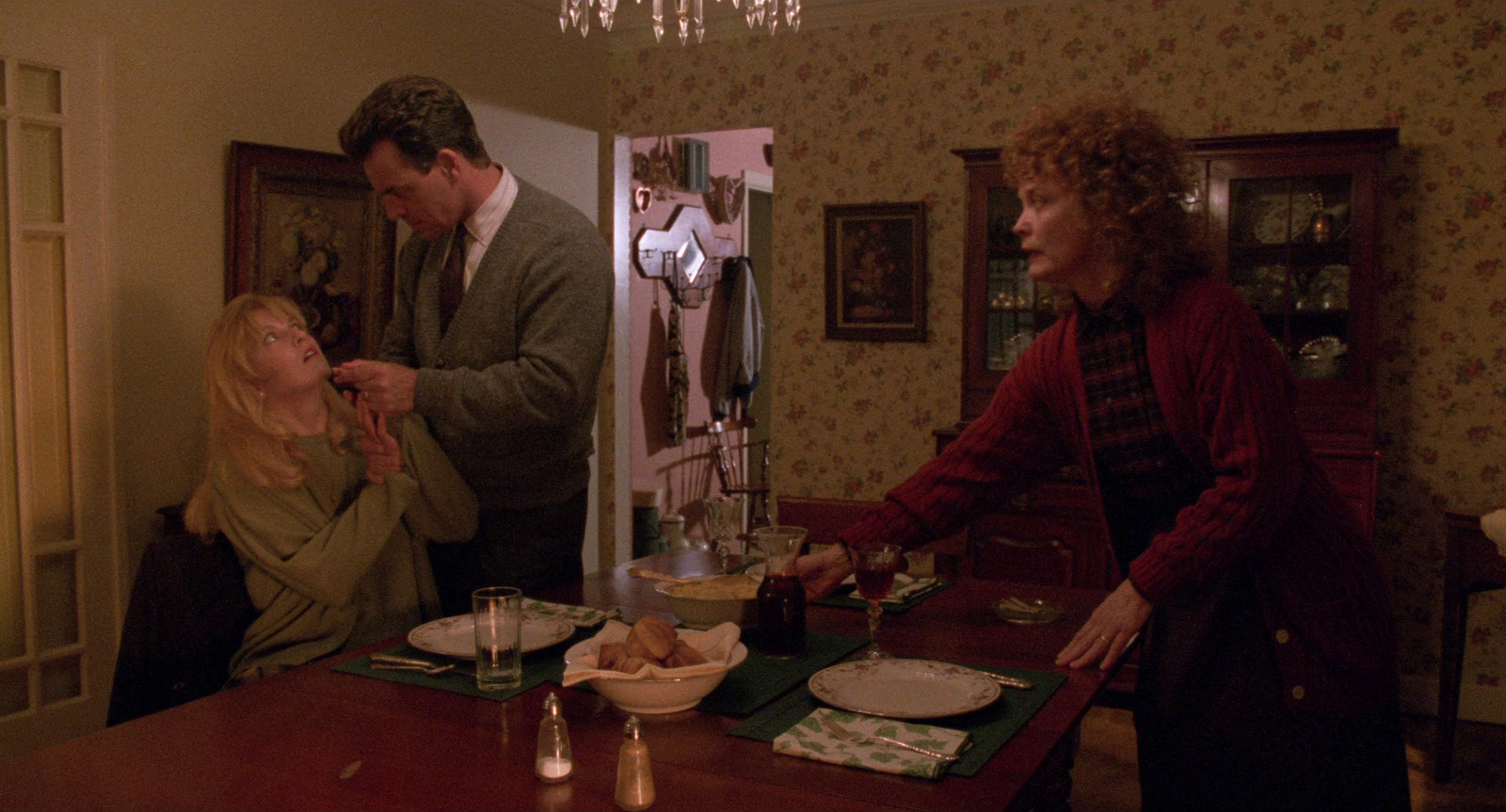
The warning outside the Double R and Laura’s return home make the familiar house uncertain before the dinner scene begins. Her flight from the bedroom and sight of Leland leaving place recognition beside denial. At dinner, scrutiny is disguised as parental concern: hands, cleanliness and the necklace become opportunities to control her. Sarah’s intervention shows that the pressure is visible within the room, even though it is not stopped. The later apology should be read within that same pattern of power; tenderness does not erase what the preceding gesture has done.
59:30–64:45
A picture becomes a route
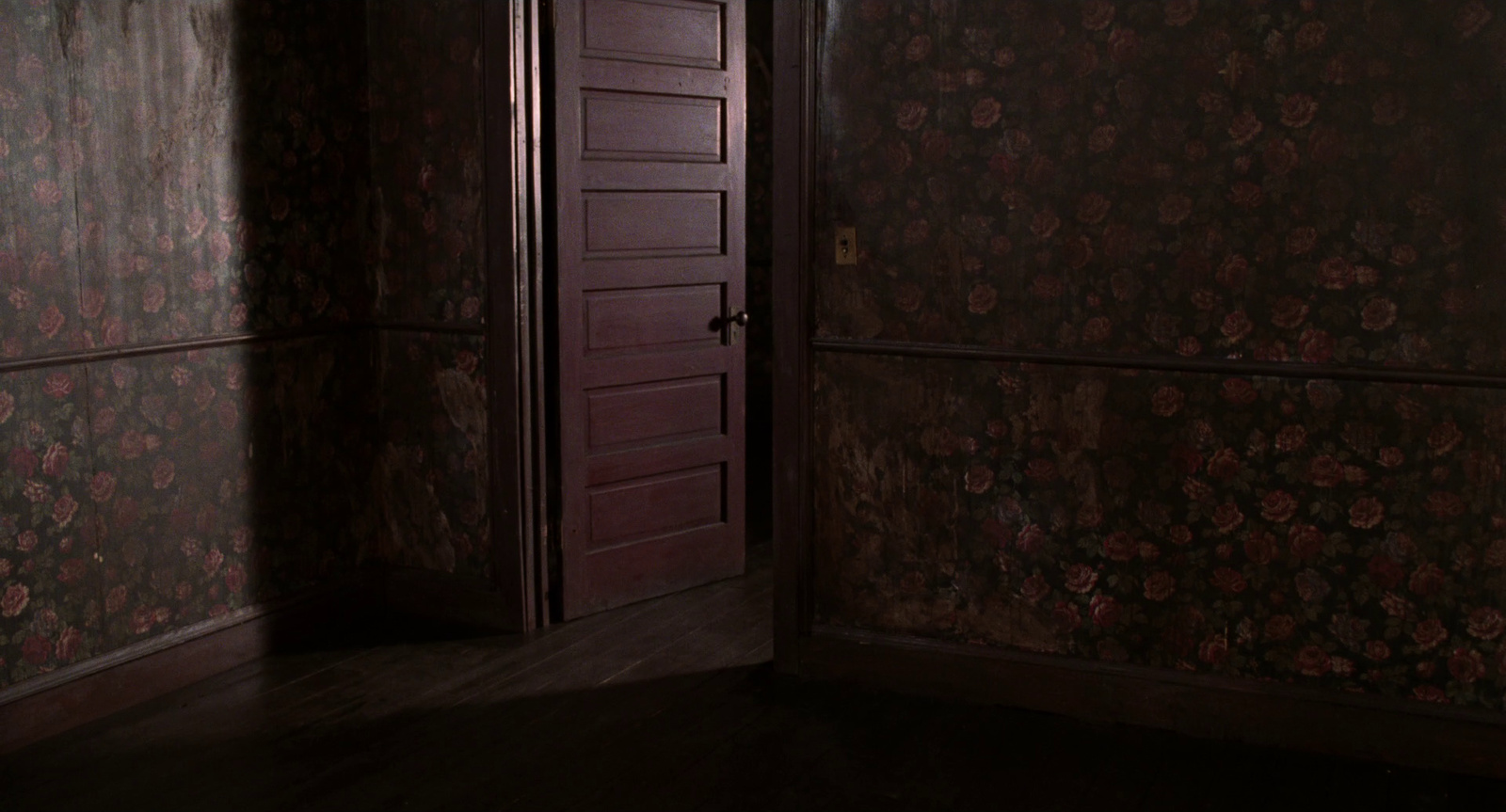
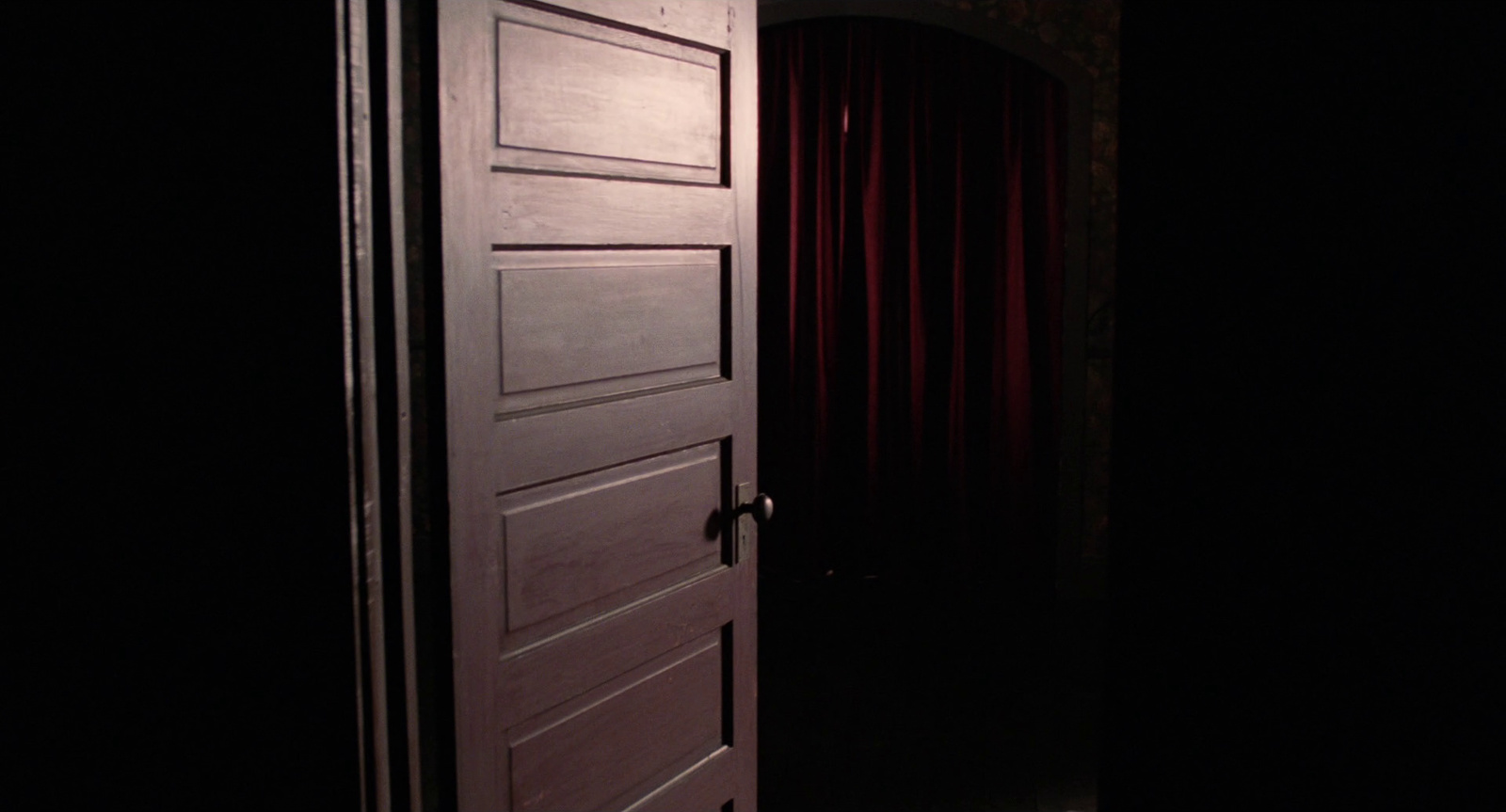
The framed image opens into a succession of spaces: doorway, corridor, the boy’s position in darkness, the Red Room and Laura’s own appearance within the pictured interior. The cutting makes a flat object available for movement without settling its geography. Annie’s message introduces a future crisis into Laura’s bedroom, while Cooper’s warning about the ring fails to make its meaning simple. This focused gallery follows spatial transformation rather than treating each appearance as a separate supernatural fact. It documents the finished visual effect; it does not claim an unverified account of how every shot was manufactured.
Open the image sequence · 5 frames
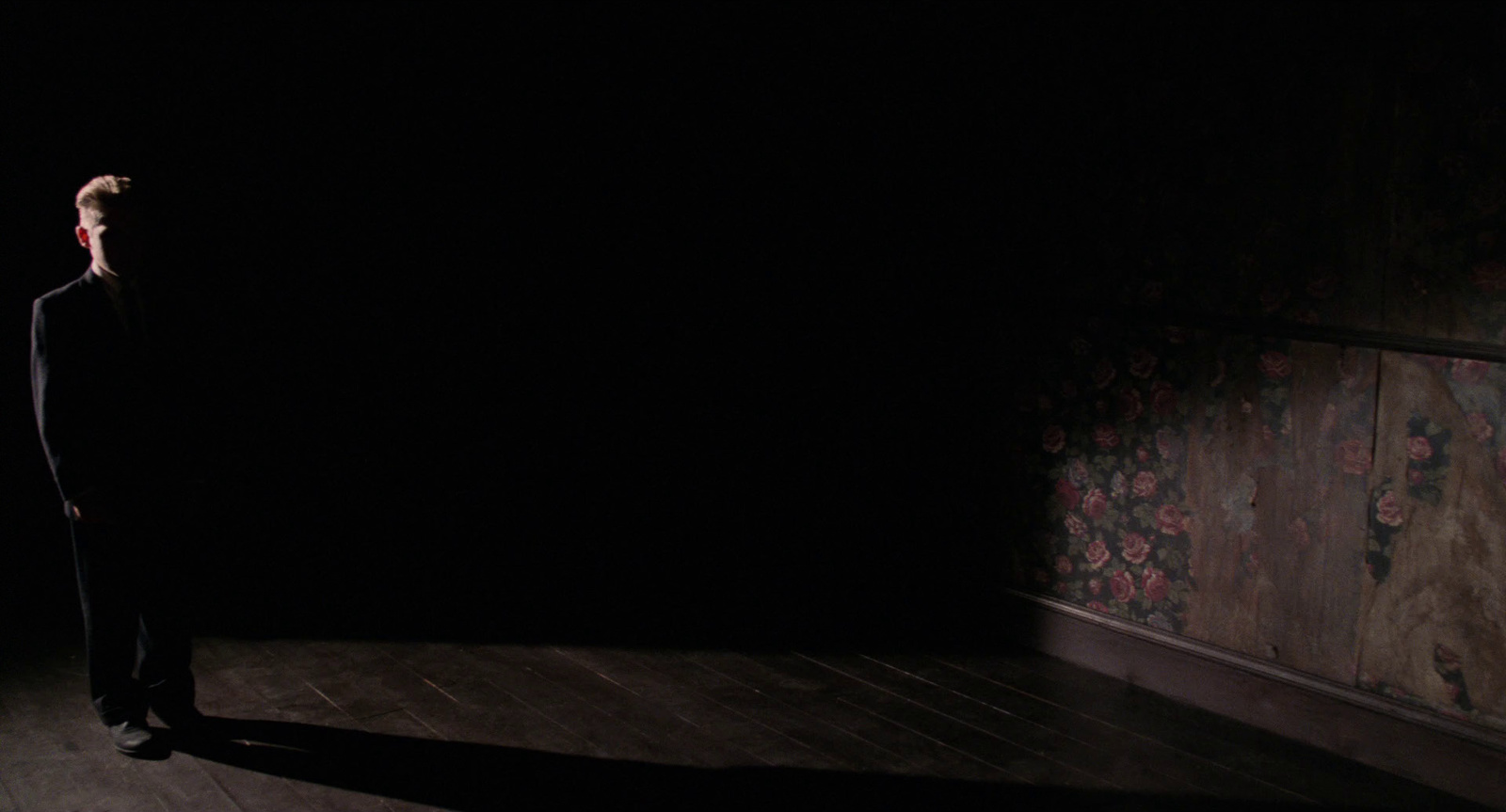
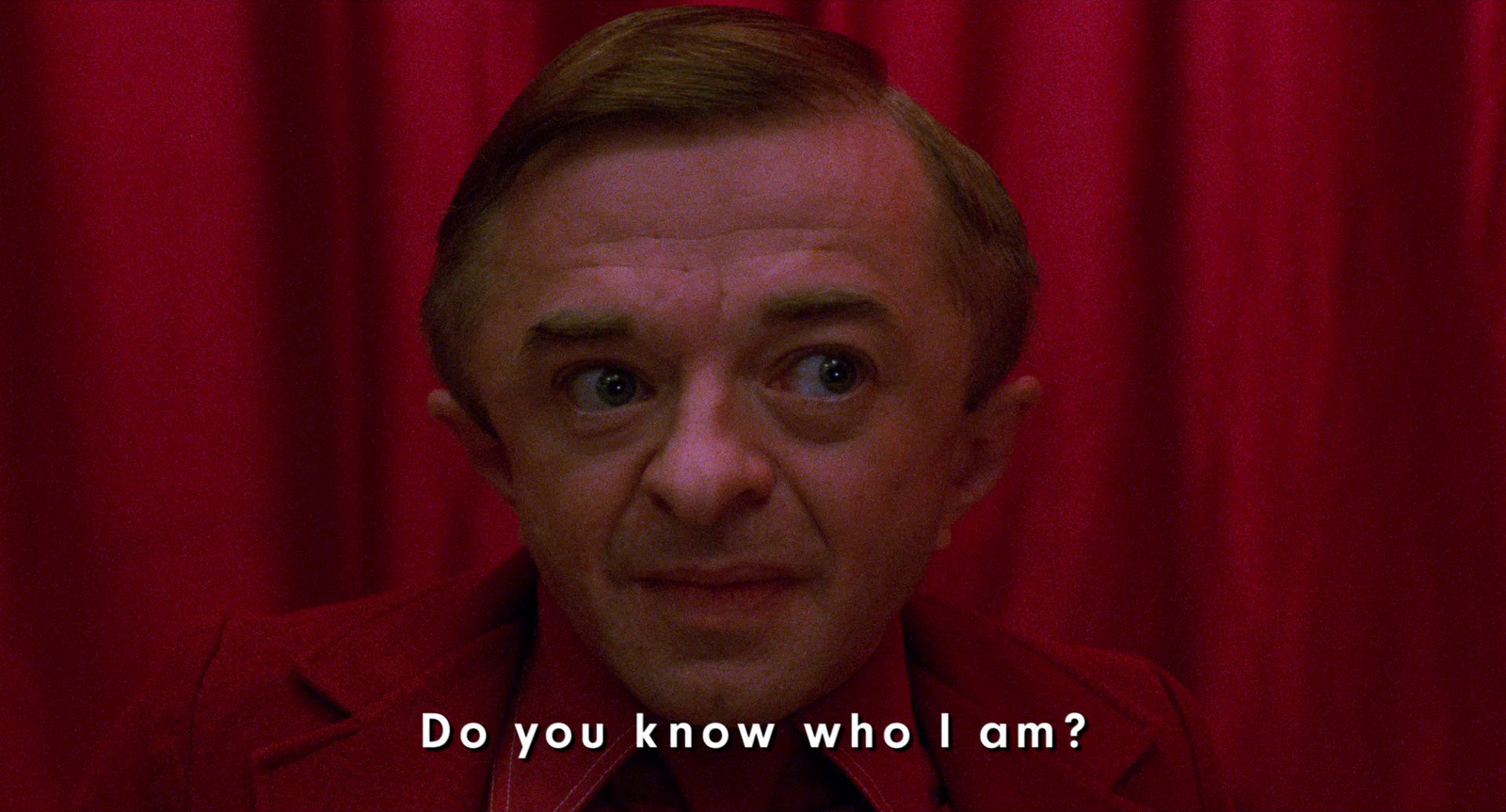
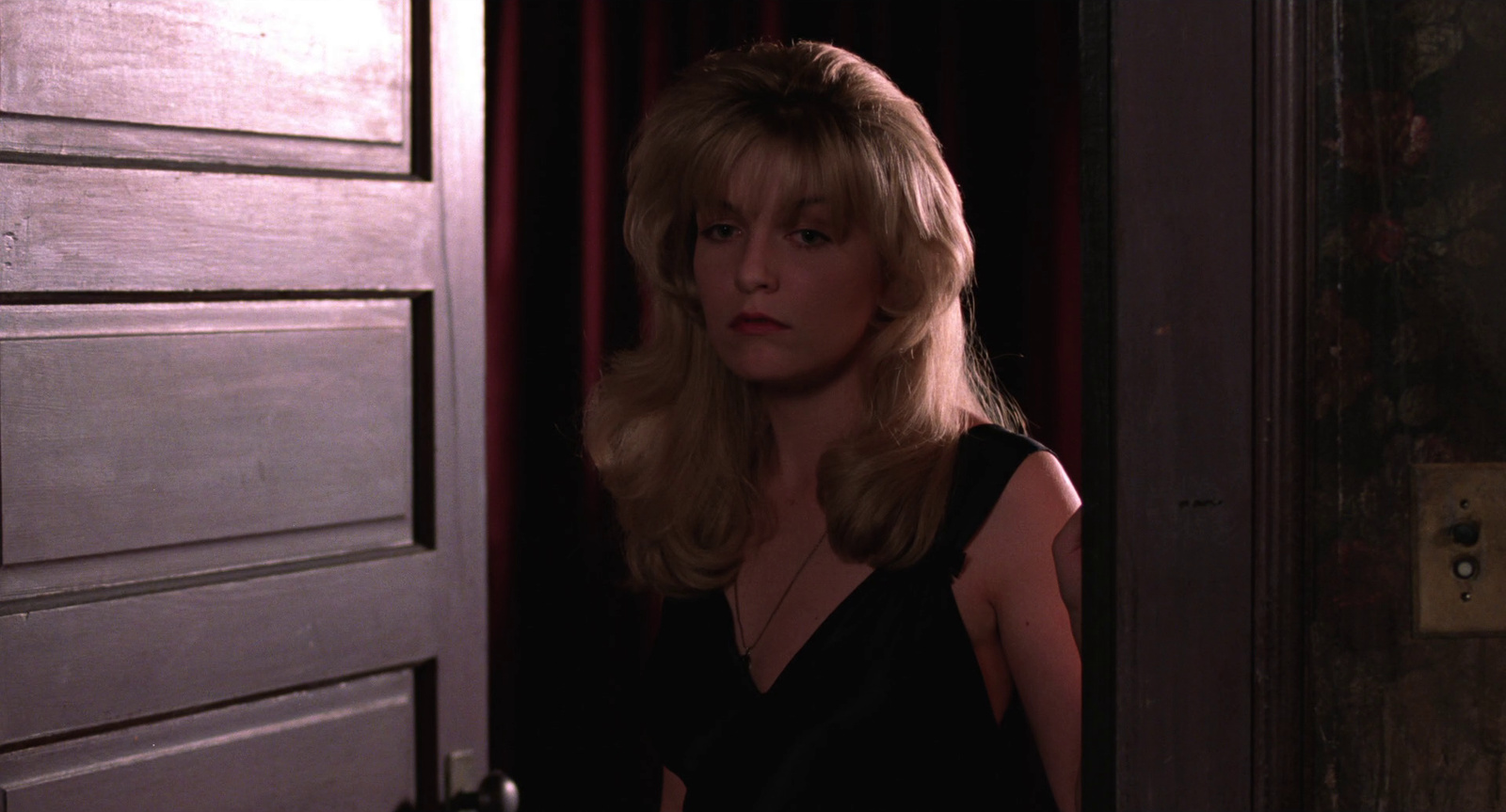
64:55–66:45
Control has more than one household
Leo’s instructions, the floor and the telephone place domestic domination beside the organization of a drug transaction. The practical conversation does not interrupt the coercion; both occupy the same space. Mädchen Amick’s account of Shelly’s indirect response to abuse offers a useful performance context, while remaining testimony about the character rather than a shot-by-shot explanation of this particular scene. The comparison broadens the film’s domestic world without making Shelly and Laura interchangeable.
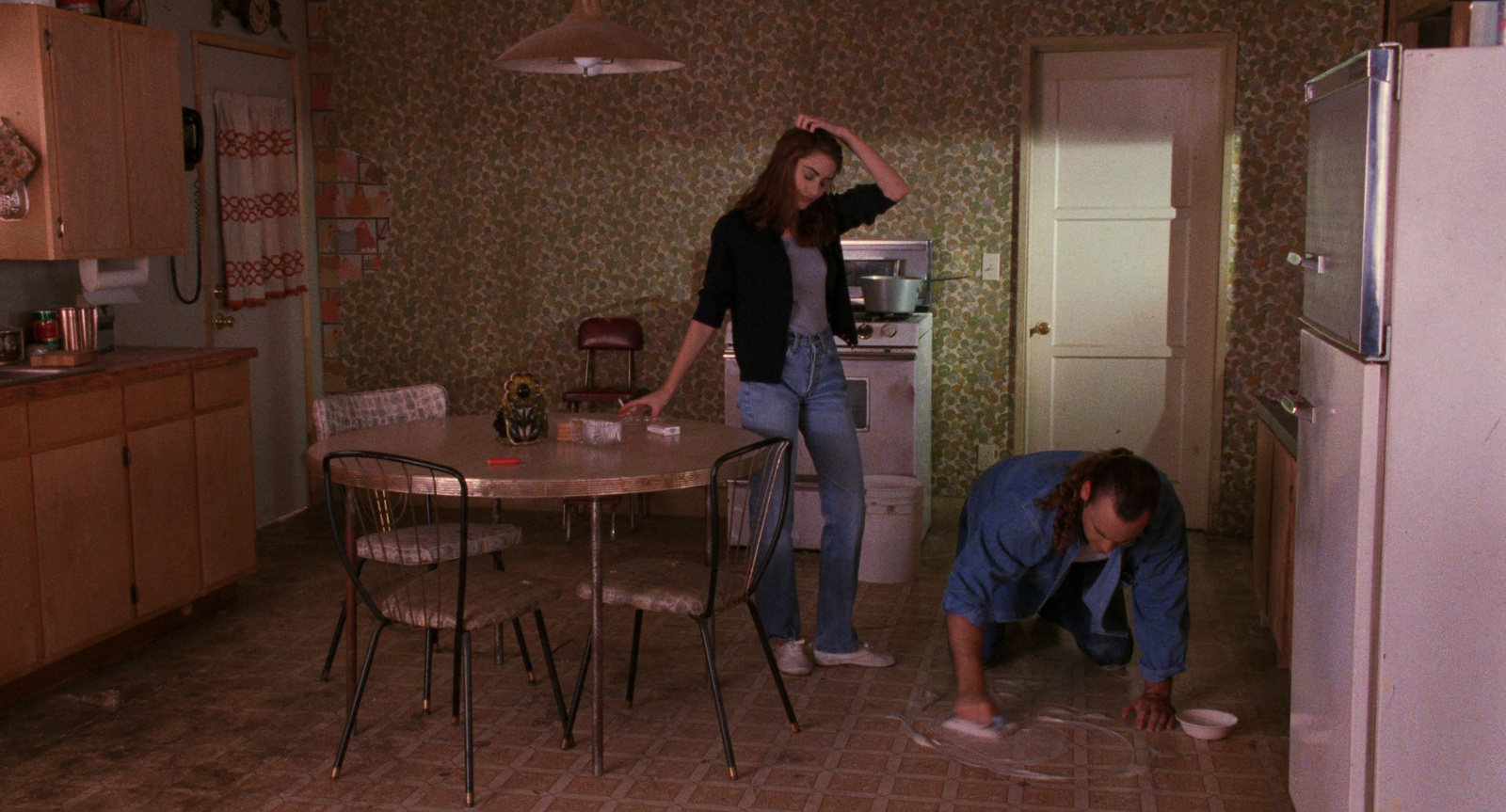
69:13–75:26
A warning, a song, a face listening
The Log Lady’s touch briefly arrests Laura’s movement towards the Roadhouse. Inside, the film gives sustained attention to Julee Cruise performing and to Laura listening. The singer’s blue light and the red curtains form a stage image; Laura’s tears make reception of the song an event in its own right. The subsequent arrival of other people does not cancel the isolation established by her close-up. The end credits identify the song as “Questions in a World of Blue,” with Cruise’s vocal, Badalamenti’s music and Lynch’s lyric. The song is a dramatic encounter, not merely atmosphere.
Open the image sequence · 3 frames
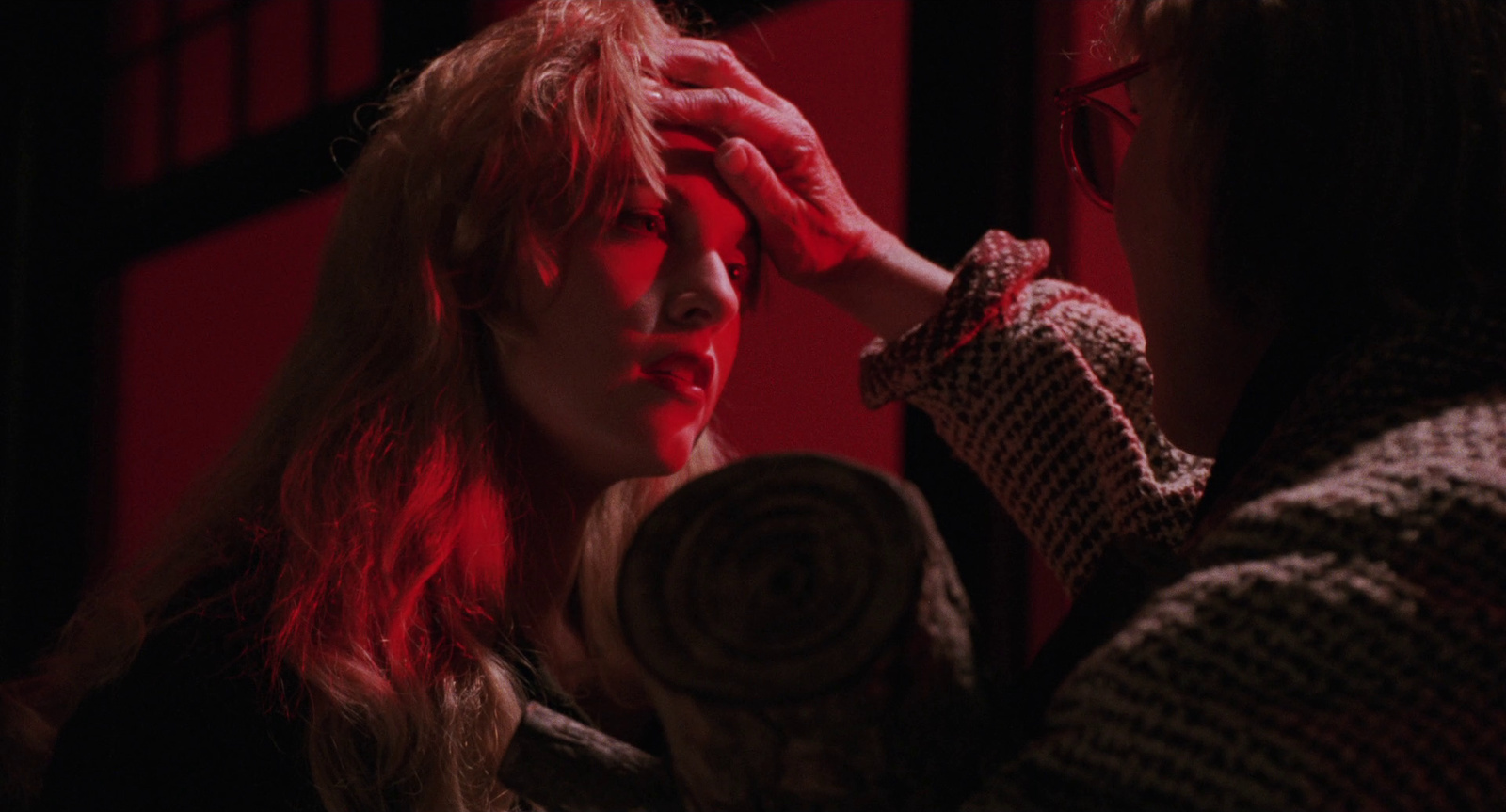
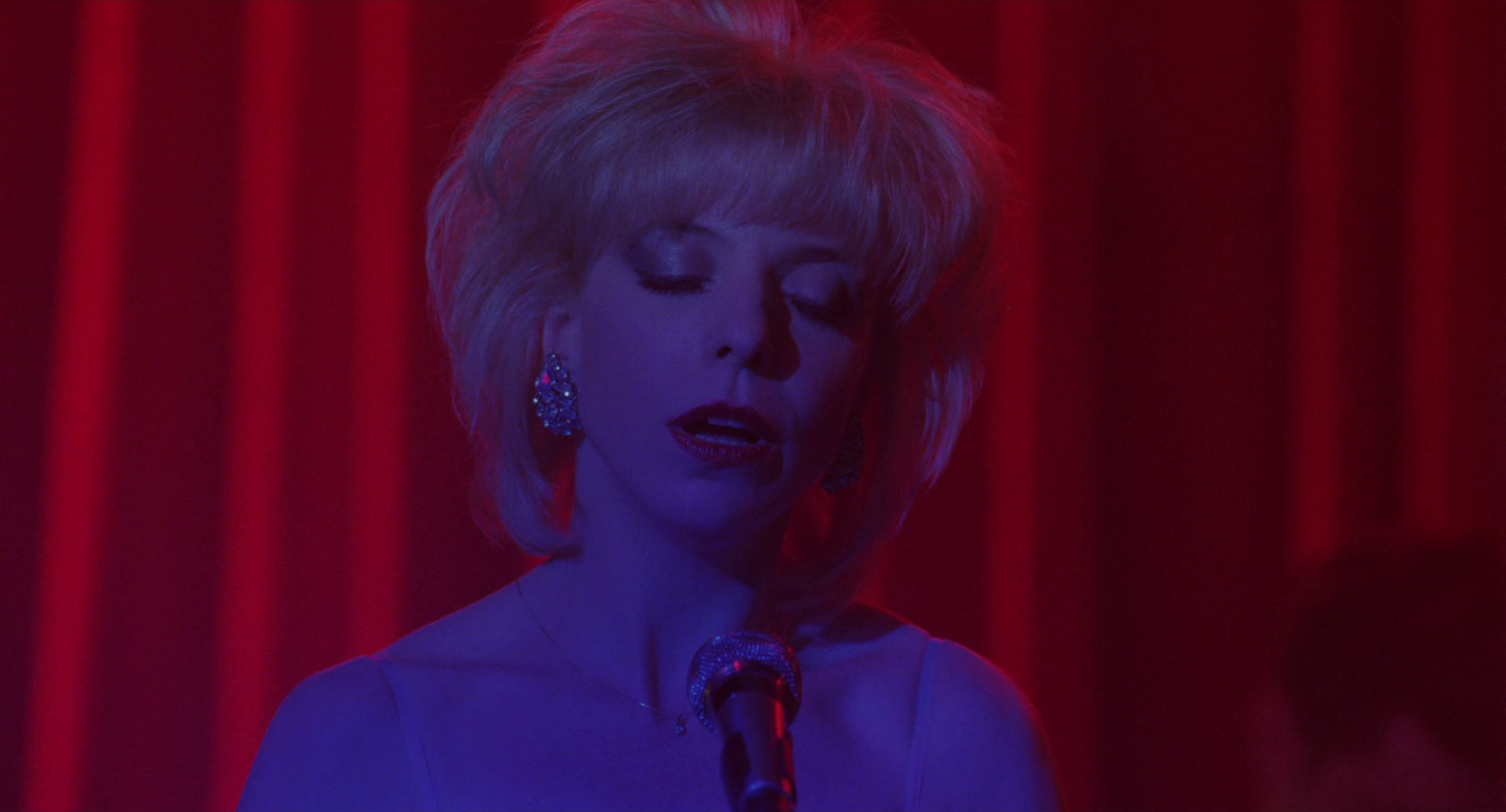
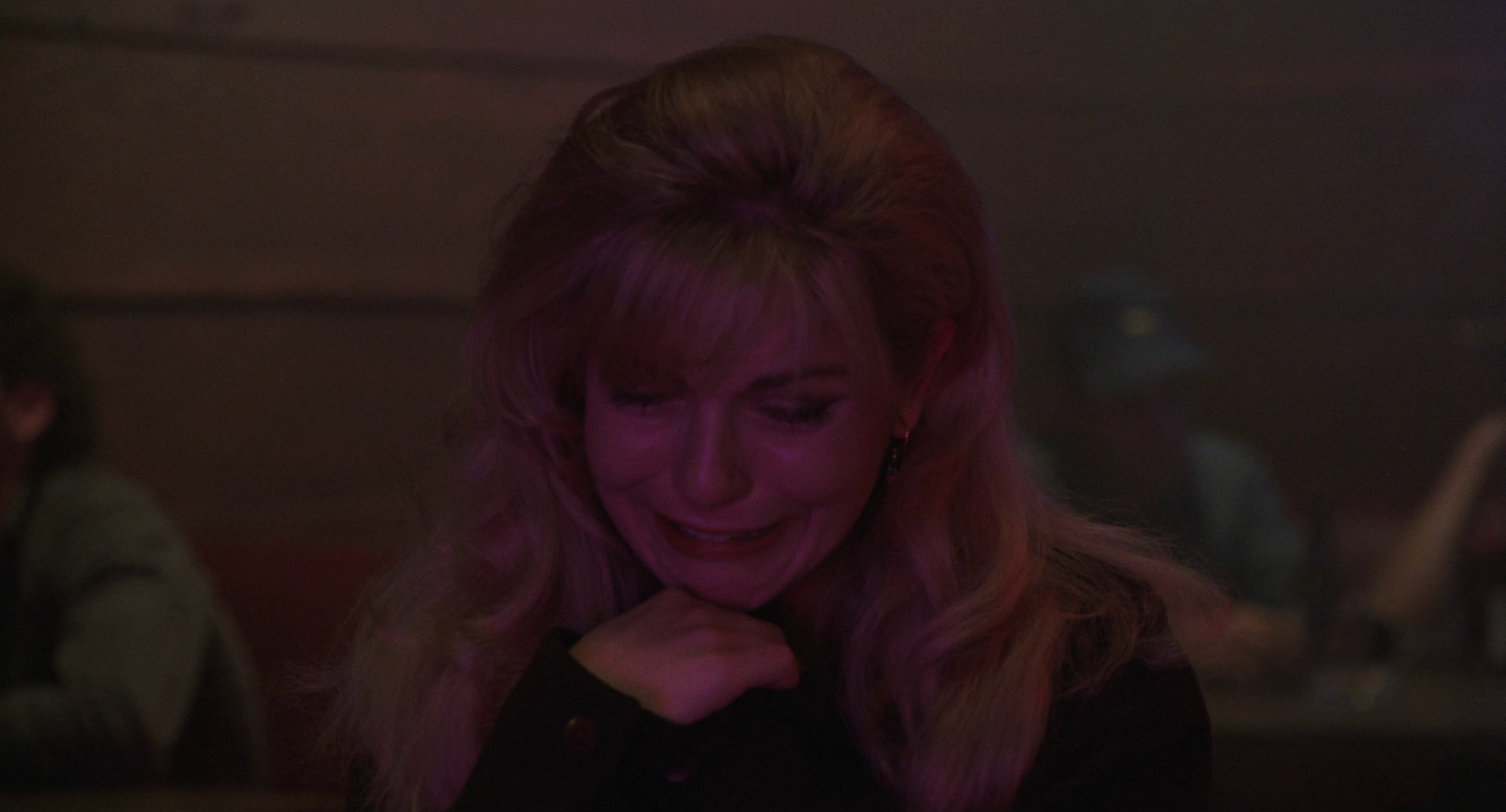
75:26–86:22
The Pink Room and the next morning
Music, red light and the need to read speech change how the Pink Room communicates. Douglas Murray recalls that the difficulty of hearing dialogue was deliberate and that subtitles were Lynch’s solution. Donna’s involvement turns Laura’s attention outwards: she tries to get her friend home, then insists the next morning that affection must not become imitation. The morning scene restores intelligible conversation but not safety. Leland’s entrance interrupts the girls’ exchange, connecting the night’s dangers with the ordinary threshold of a family room. Sound-source distinction.
Open the image sequence · 2 frames
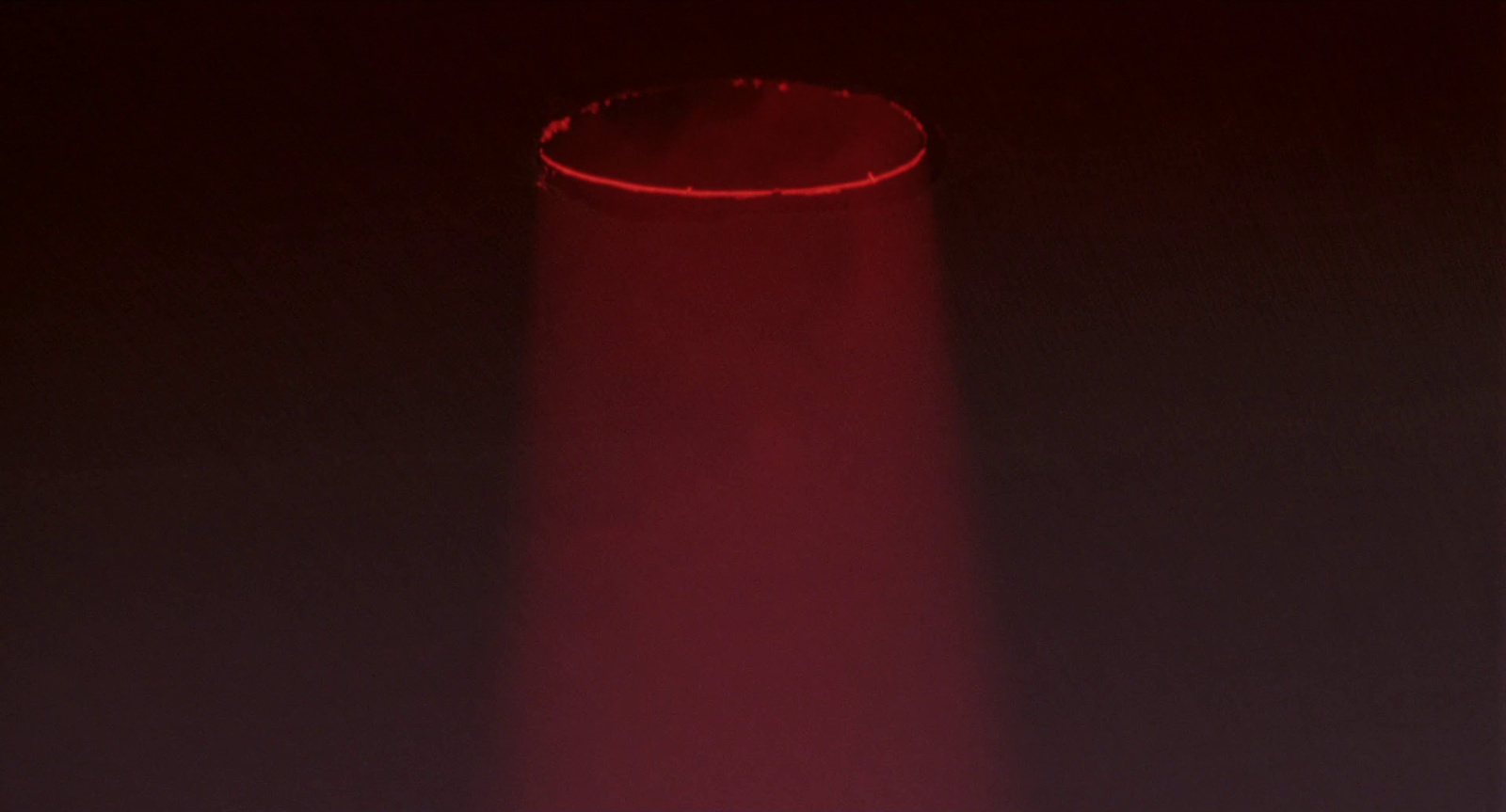
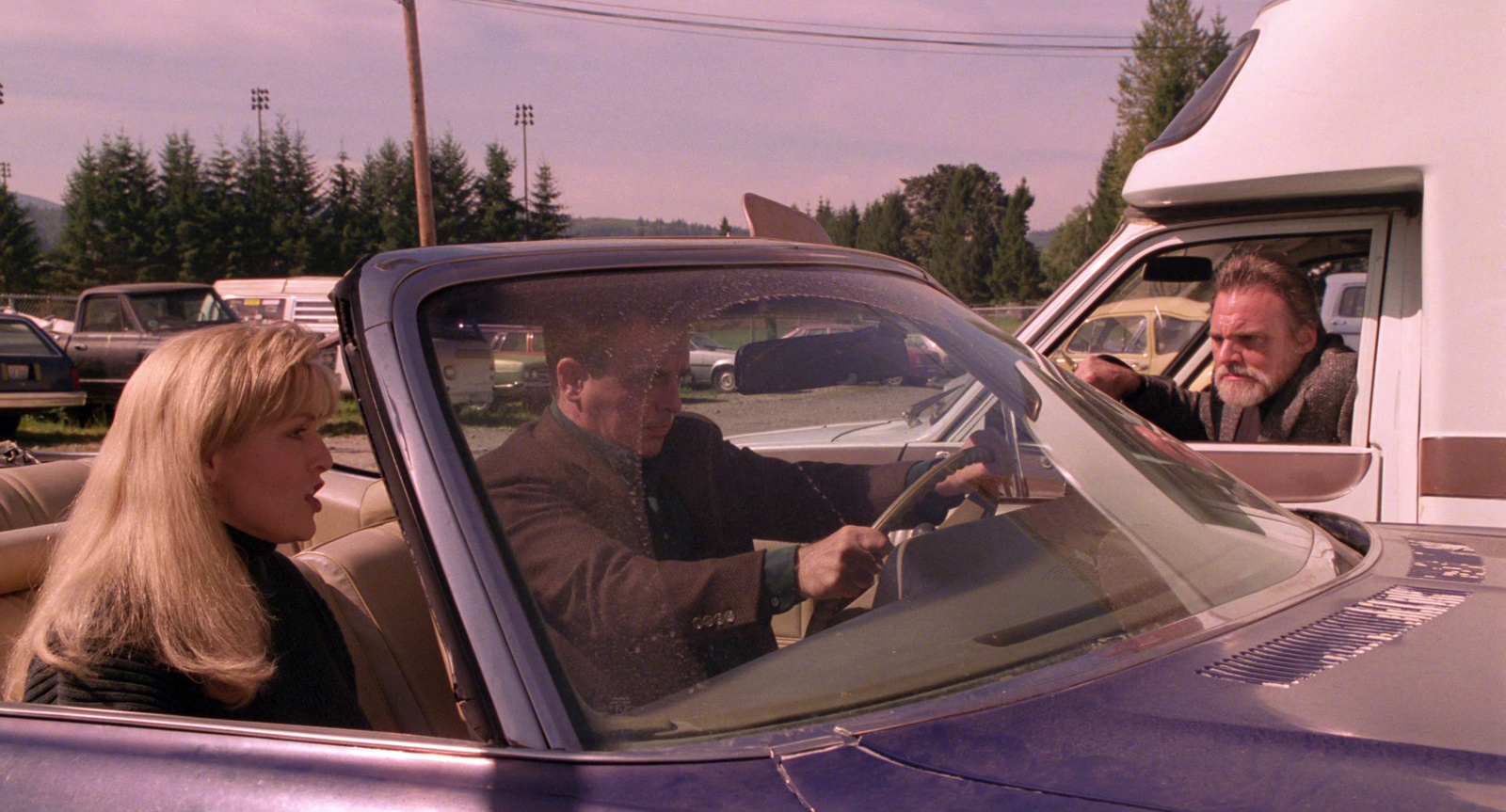
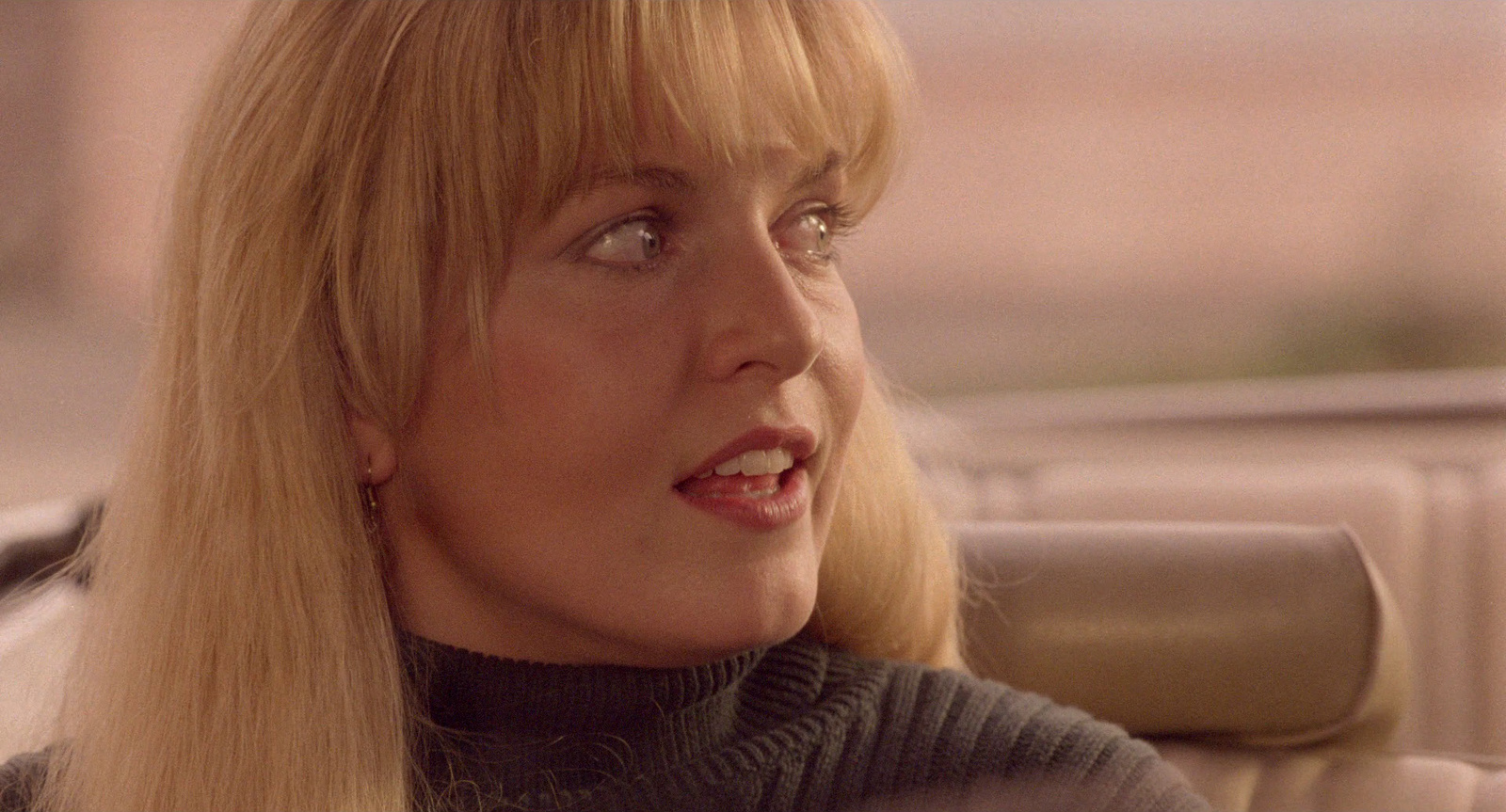
86:22–92:40
A public warning inside a private car
Phillip Gerard’s confrontation breaks into a journey shared by father and daughter. Vehicles and their noise crowd the encounter, while the scene keeps returning to faces inside the car. Leland’s memories introduce knowledge unavailable to Laura. Afterwards, she asks a precise question about whether he returned home; he supplies an explanation. The difference between what the viewer has been shown and what she can safely ask is the sequence’s central pressure. Murray’s account of the aggressive engine and horn effects supports reading the sound as part of Laura’s experience, rather than neutral street ambience.
Open the image sequence · 2 frames
94:44–100:48
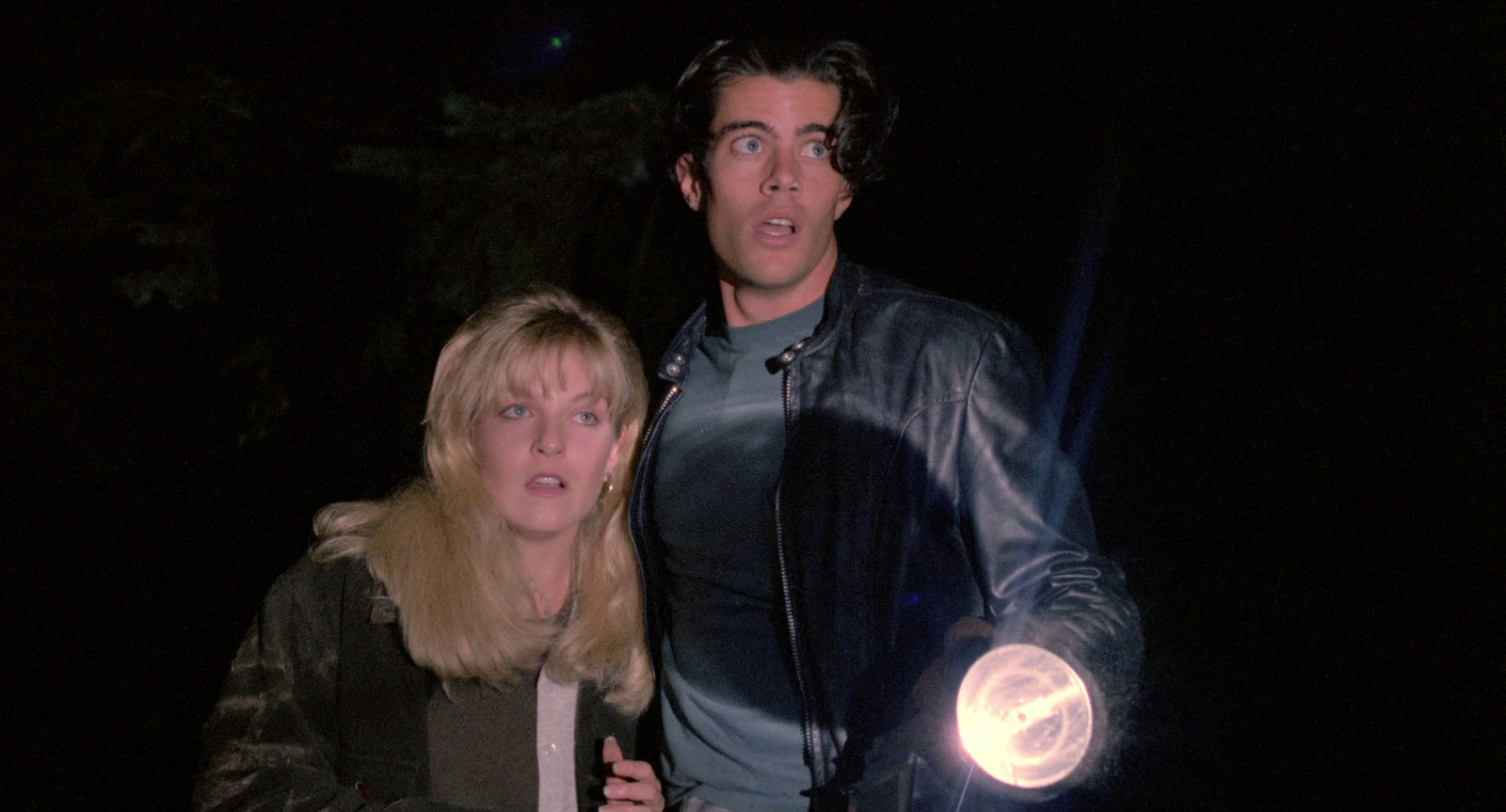
A flashlight organizes the forest
The forest meeting is arranged around small, mobile areas of visibility. A beam picks out faces and bodies while the surrounding space remains difficult to read. The transaction turns abruptly into a shooting; Bobby’s panic and Laura’s laughter do not provide a stable shared account of what has happened. García recalls using a powerful Xenon flashlight for this scene and arguing with Lynch about its brightness. That production memory helps explain the unusually forceful beam, but the finished scene’s emotional imbalance remains a question of performance and cutting as well as exposure.
102:30–108:15
The household resumes
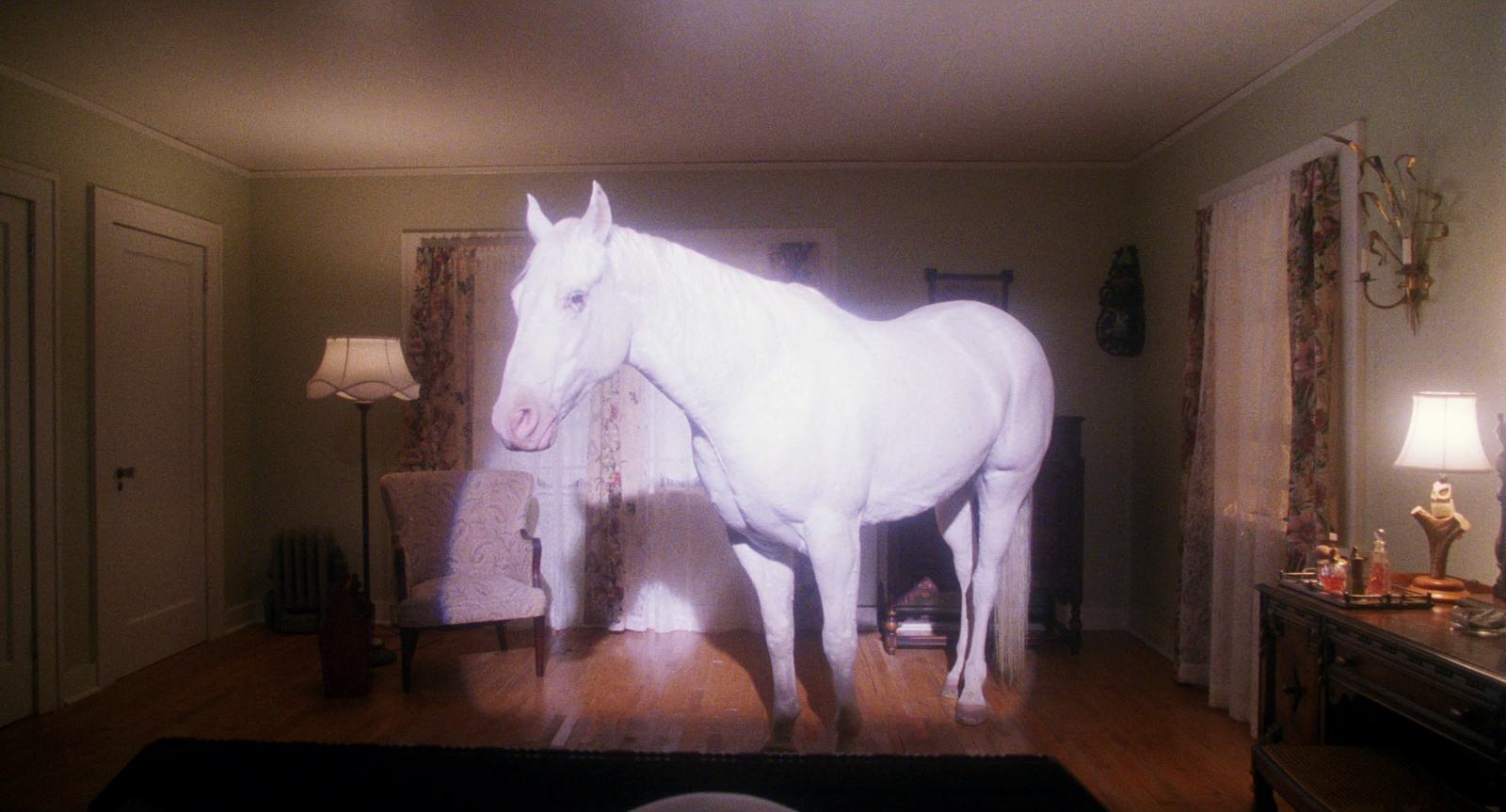
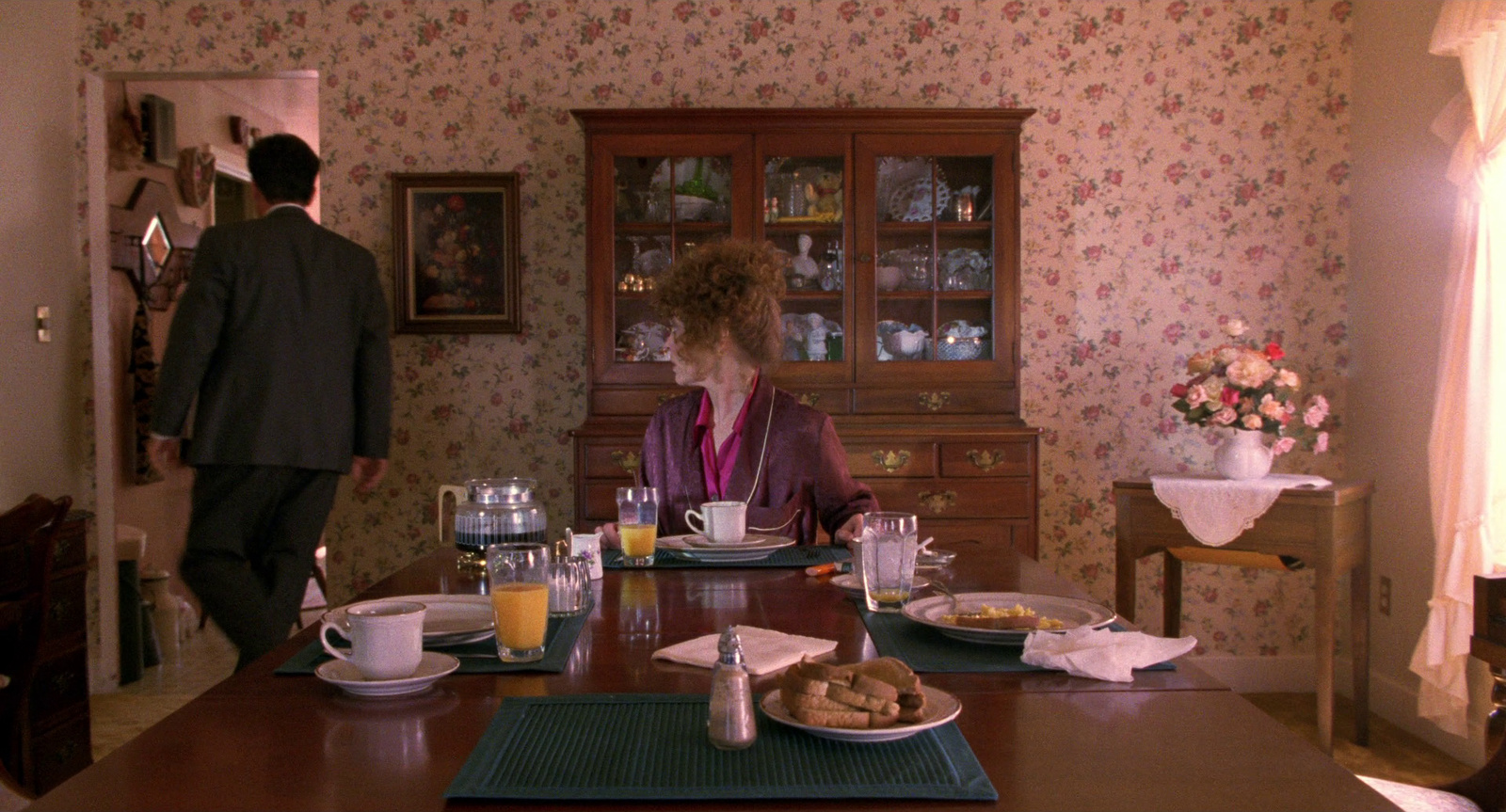
The drink, ceiling fan and horse precede the night’s recognition of the father within the violence associated with BOB. The following breakfast returns to flowers, dishes, daylight and familiar positions around a table. Ordinary continuity becomes disturbing precisely because it can resume. Laura’s withdrawal and warning to Leland resist that appearance of normality. The horse is kept here as an image within Sarah’s experience; the scene does not establish a single verbal definition for it. The study uses domestic spaces and reactions without reproducing the assault.
Open the image sequence · 2 frames
113:22–118:30
Refusing the Laura that James can preserve
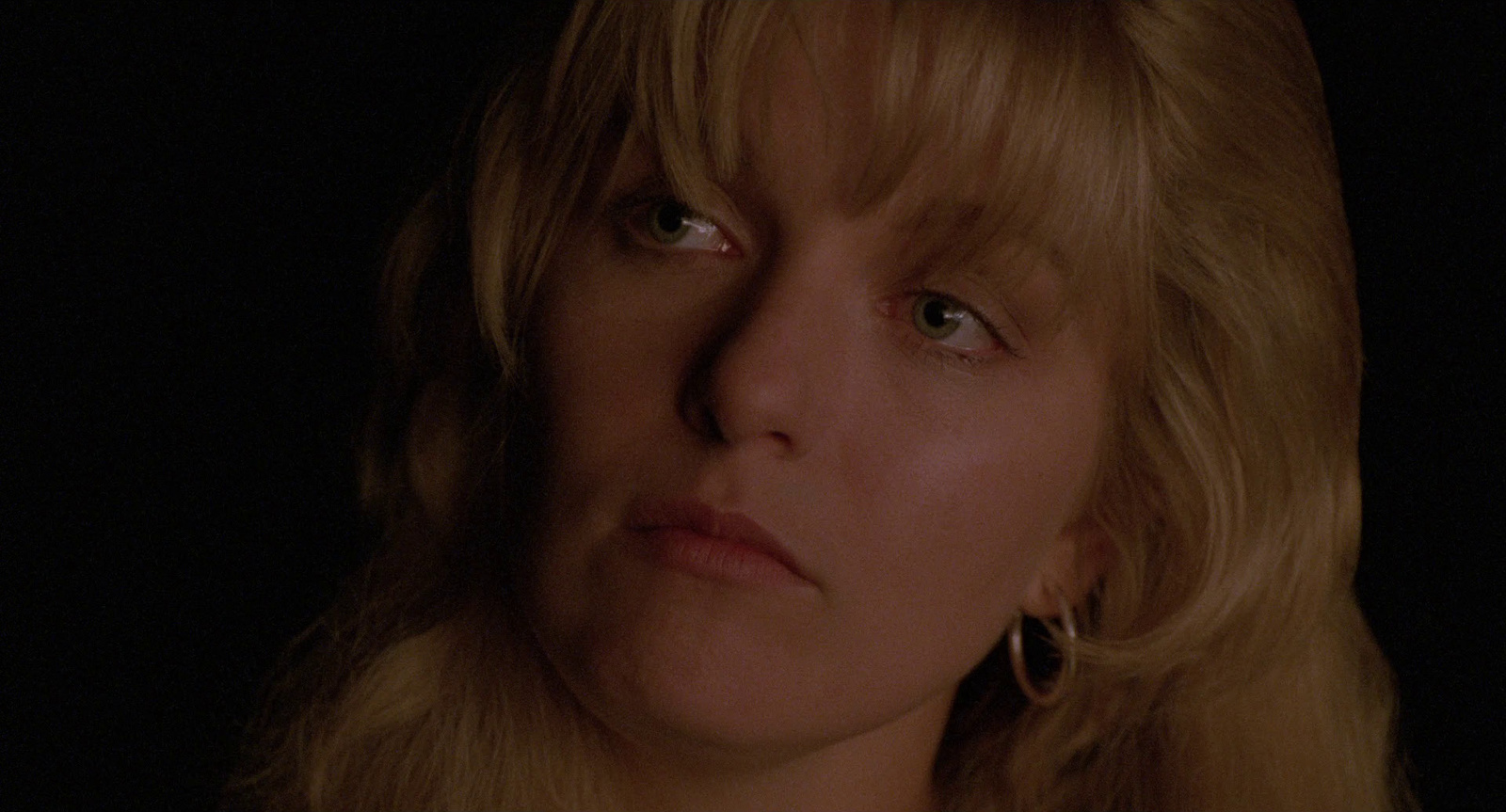
The sustained conversation with James exposes the gap between his assurance that he knows and loves Laura and what she believes he can recognize. Lee’s changes of expression work within a repeated close framing: tenderness, challenge and a sudden movement away from the identity he invokes. Her departure into the forest follows an encounter in which love is present but understanding is inadequate. The scene is especially important to the film’s treatment of testimony: speaking more explicitly does not guarantee that another person will accept what has been said.
118:39–128:50
Enclosures, the ring and the limits of explanation
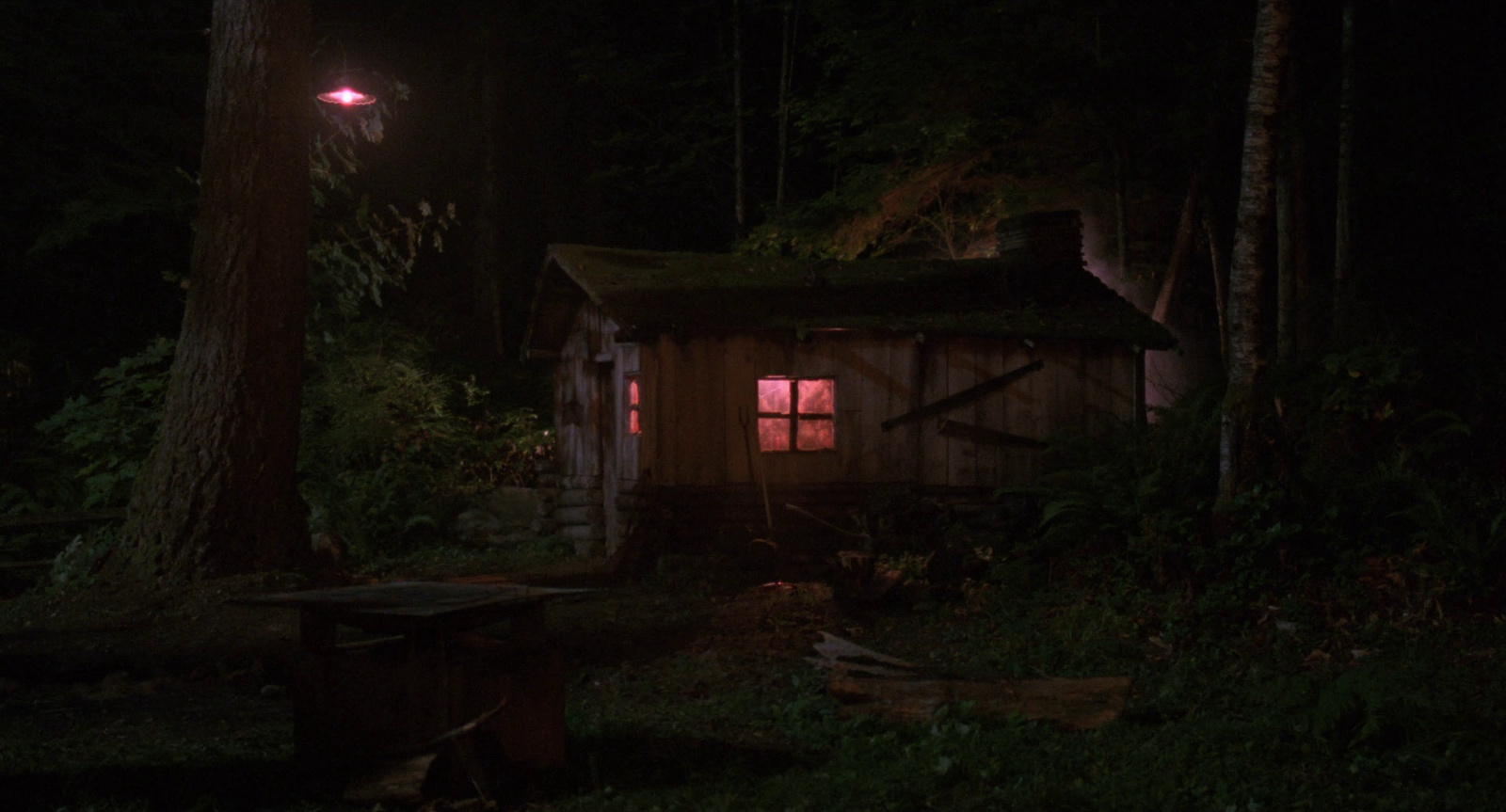
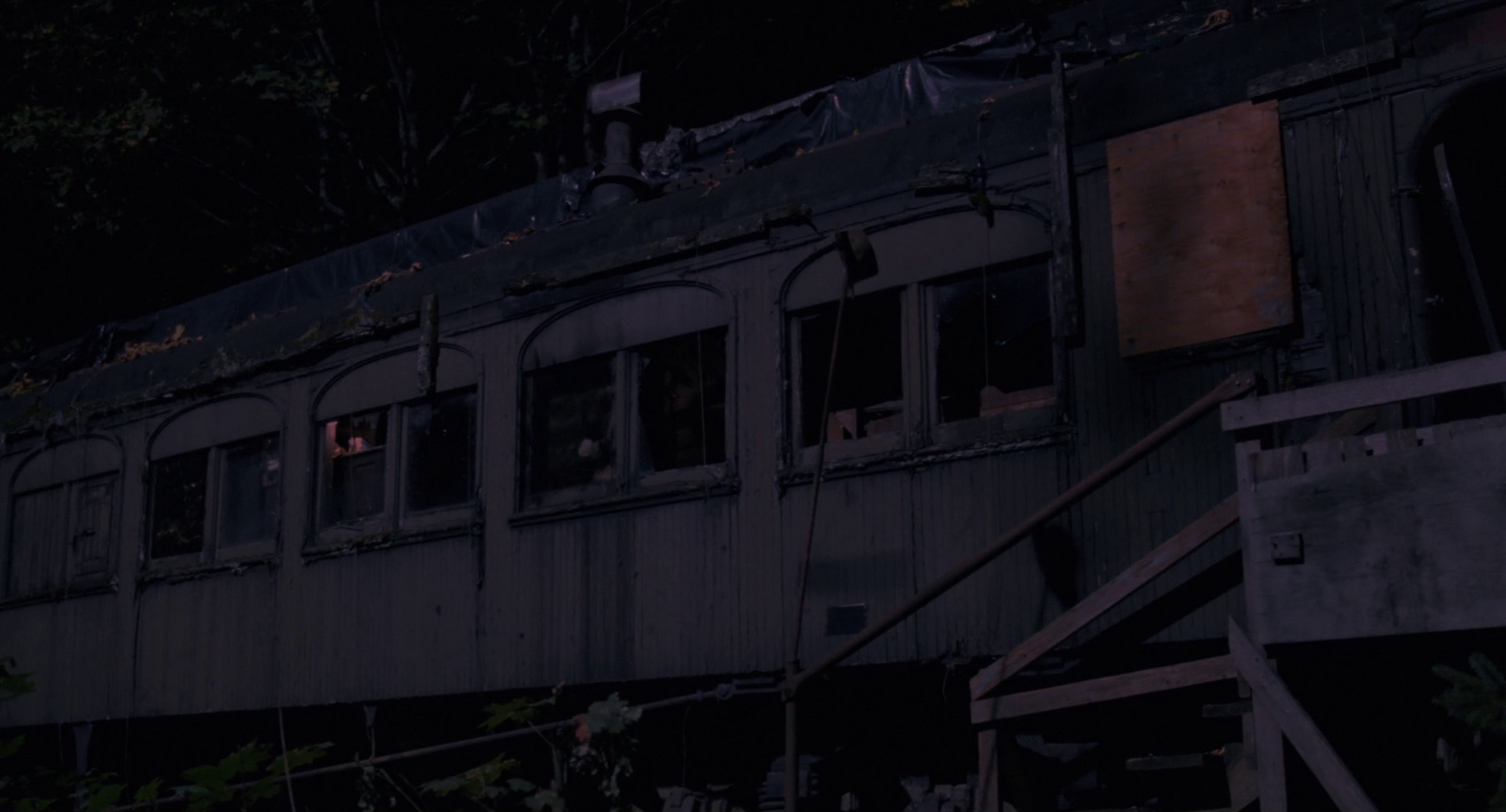
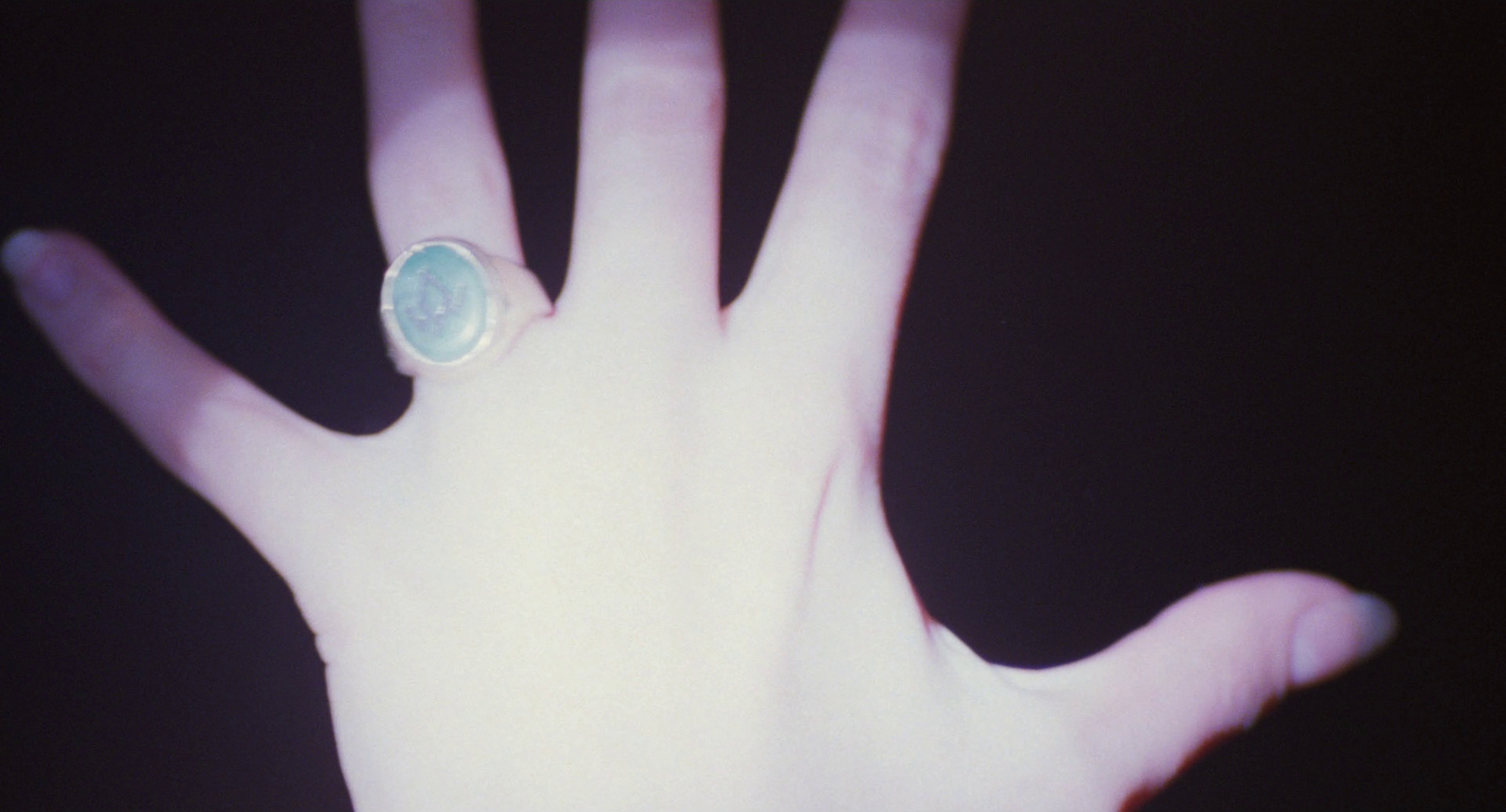
The cabin and train car turn the forest into a succession of enclosures. The ring’s appearance offers a concentrated action amid fractured images and voices. A reading of Laura’s choice should not erase the violence inflicted upon her or pretend that every supernatural relationship has become clear. García’s recollection of two Xenon flashlights, augmented when necessary, supplies a bounded account of the train-car lighting. The theatrical credits separately name Karin Robison as the angel in the train car and Lorna MacMillan as the angel in the Red Room; the two appearances should not be casually conflated.
Open the image sequence · 3 frames
128:50–132:24
The final image gives Laura time
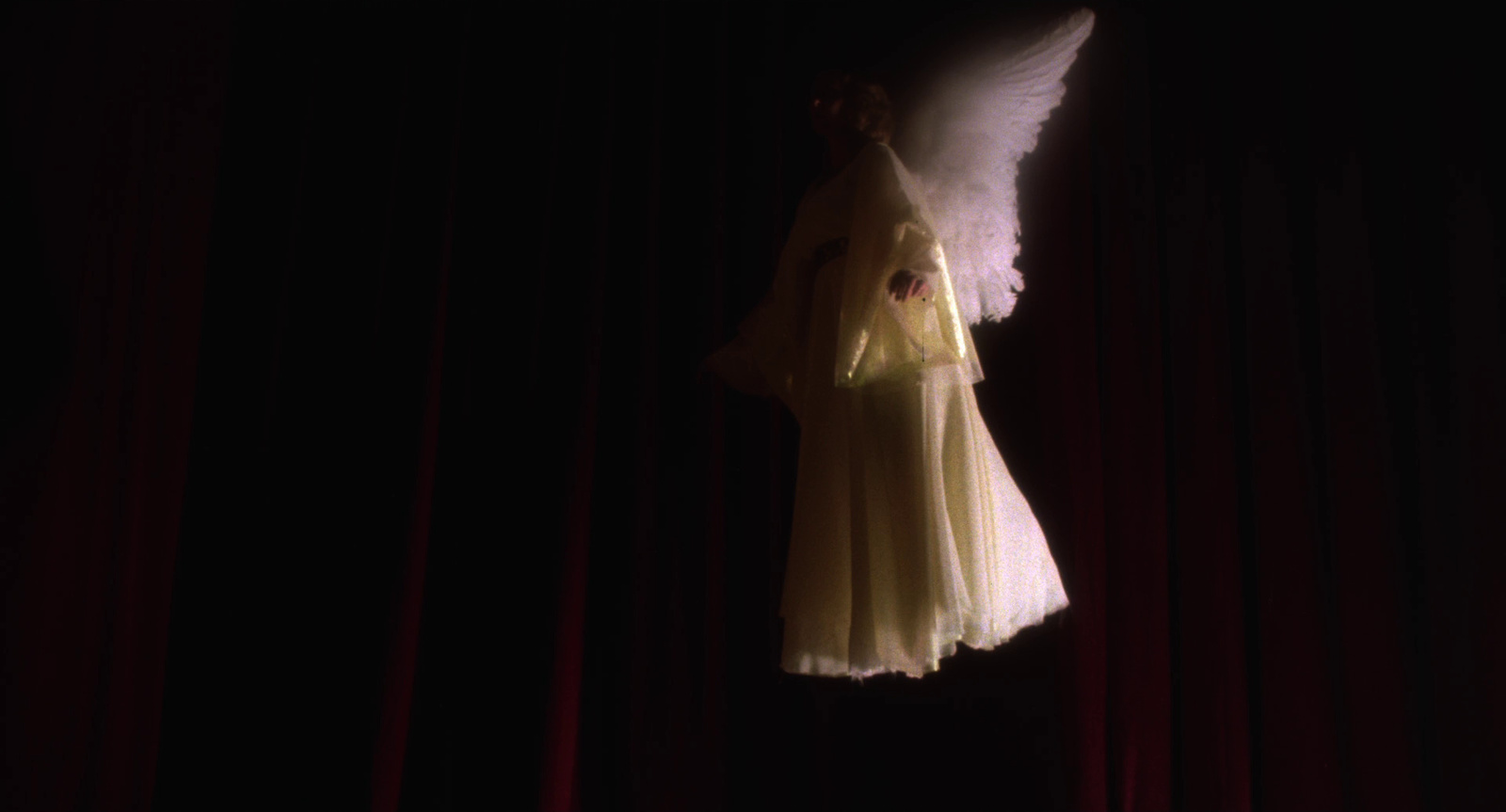
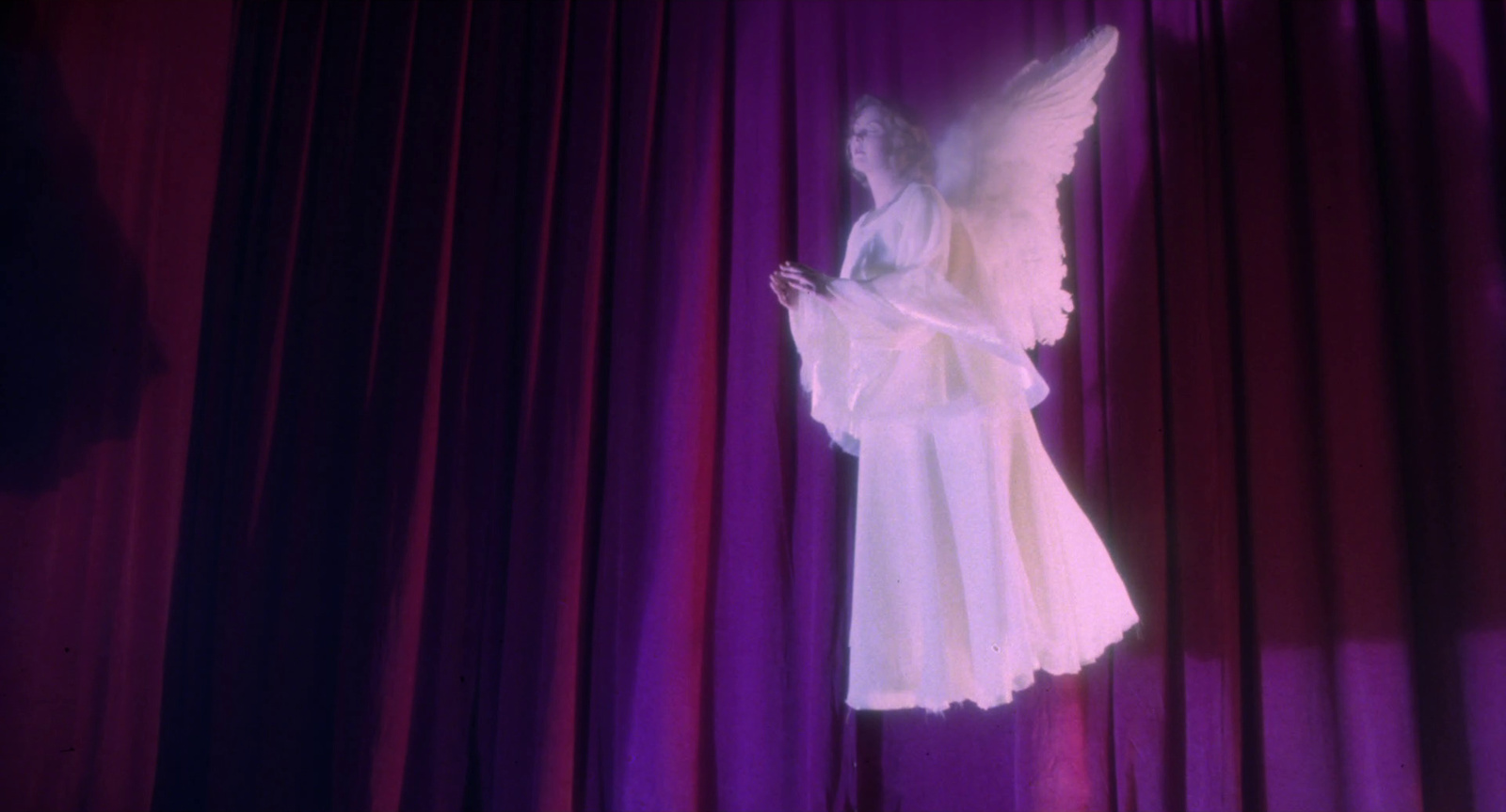
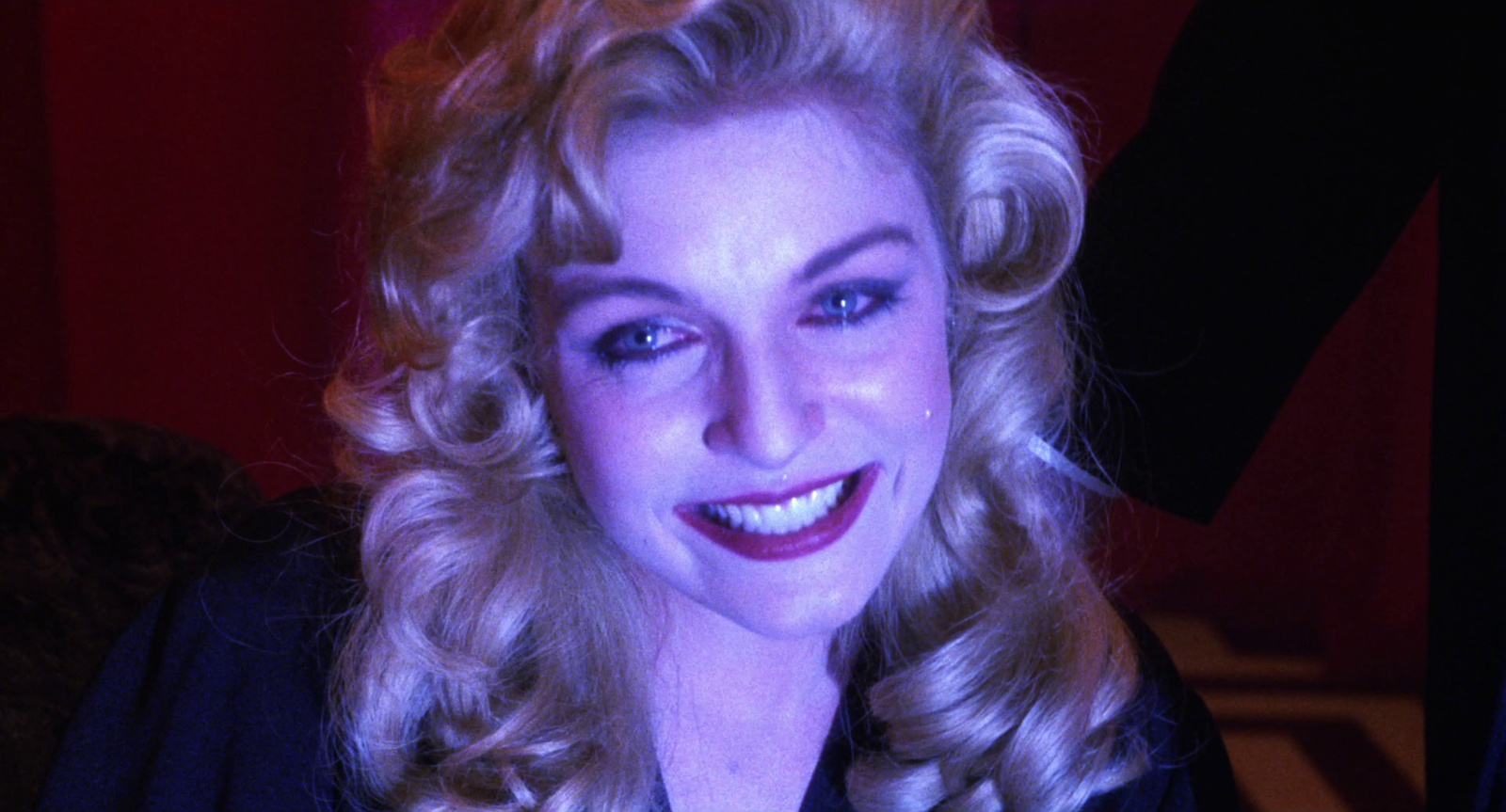
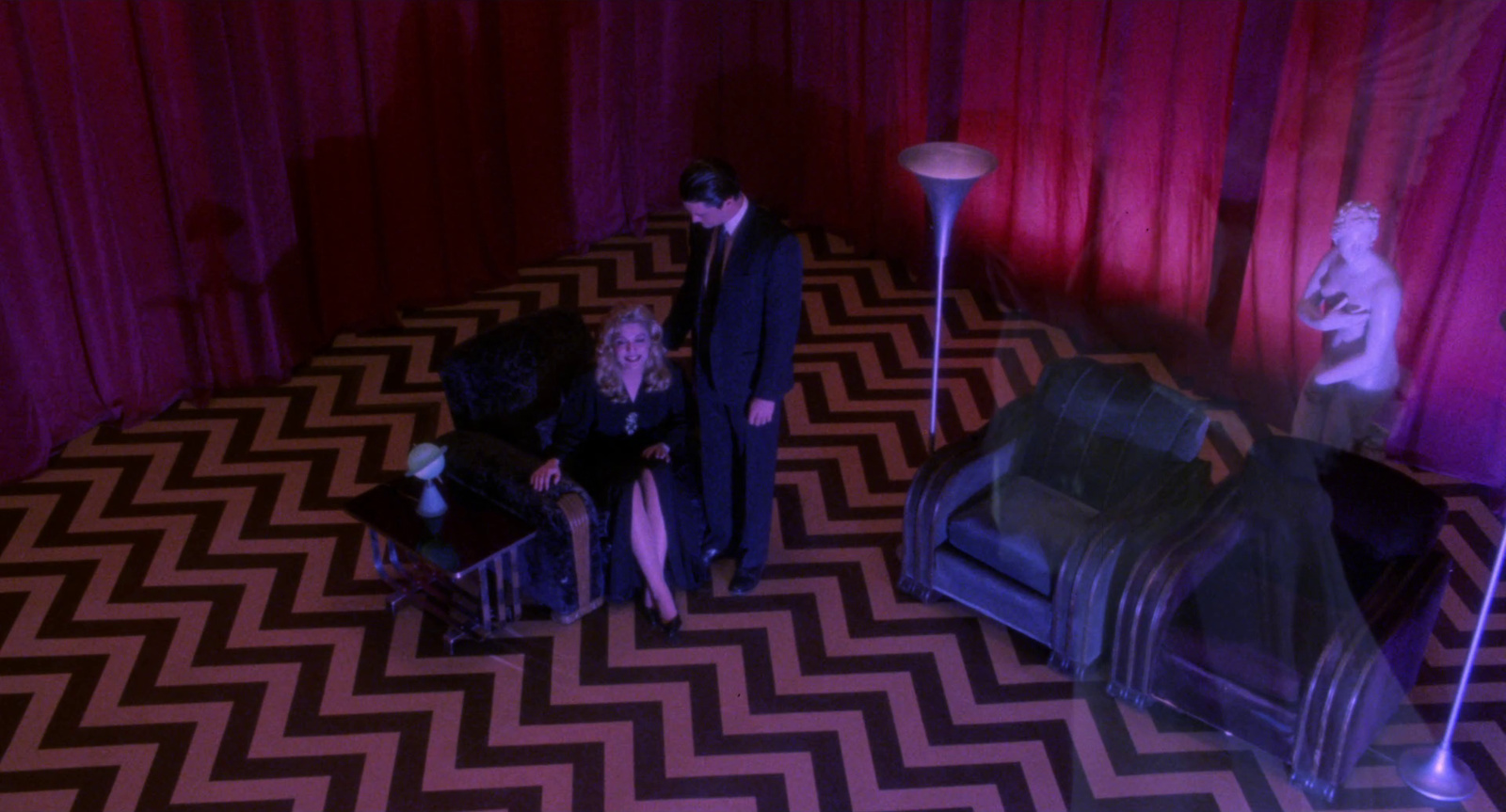
The ending moves between the angel, Laura’s changing face and a wider view with Cooper beside her. The image does not simply switch from grief to happiness: tears and smiling coexist, while the later overlapping angel image changes the room itself. This is a response to the earlier conversation about angels that remains visual and emotional rather than explanatory. Compare the finished wide composition with the dated screenplay’s different chair arrangement. The difference is concrete evidence of a film developed through staging and editing, not grounds for declaring either version the hidden meaning of the other.
Open the image sequence · 4 frames
Laura Palmer: from evidence to experience
At BAFTA in 2007, Lynch described wanting to return to Laura’s own side of the story and the last seven days of her life. He acknowledged the film’s darkness and reduced humor while affirming his attachment to it. This is a later account of his motivation, not a production memo. Lynch’s account ↗
That change of emphasis asks something different of an audience. An investigator sorts traces into an explanation; Laura has to live inside situations whose meaning may be unbearable. Knowing the outcome does not make her experience redundant. It changes suspense into anticipation, and asks whether attention can become a form of care rather than another act of scrutiny.
Álvarez López and Martin’s written introduction to their BFI video essay identifies the many Laura Palmers produced by other people’s images and expectations. Their examples extend beyond this theatrical film. Our reading takes that distinction as a starting point: the homecoming photograph, a friend’s memory and a daughter’s lived experience are related, but none can simply substitute for another. Laura and the images made of her ↗
The Teresa Banks investigation also matters in its own right. The official Cannes synopsis places her death before Laura’s story. A person already lost should not become disposable merely because another character will become more familiar to us. The prologue gives the dossier a second ethical question: whose suffering receives sustained attention, and whose remains a case someone passes through? Official synopsis ↗
Tim Greiving reads Chris Isaak’s Chet Desmond against the expectation of Cooper, and Deer Meadow against the reassuring familiarity of Twin Peaks. That is useful criticism rather than a statement of authorial intent. Desmond’s reserve makes an investigation feel less hospitable; the change of protagonist then asks us to relinquish the investigator’s apparent distance altogether. Desmond and the displaced detective ↗
Lee insists on Laura’s age and the violence done to her
When a question frames Laura’s problems through her sex life, Lee redirects it to her youth and her experience of abuse, assault and incest. Her response is an important guide to the film’s center of attention: Laura is a young victim whose actions must be understood in relation to violence done to her, rather than treated as an erotic puzzle.
Later, Lee recalls the prequel developing through continuing creative conversations with Lynch. She felt relief at returning because Laura’s story had not been fully voiced. This adds the performer’s perspective to Lynch’s later account of wanting to tell Laura’s side, without treating either retrospective account as a production-day chronology.
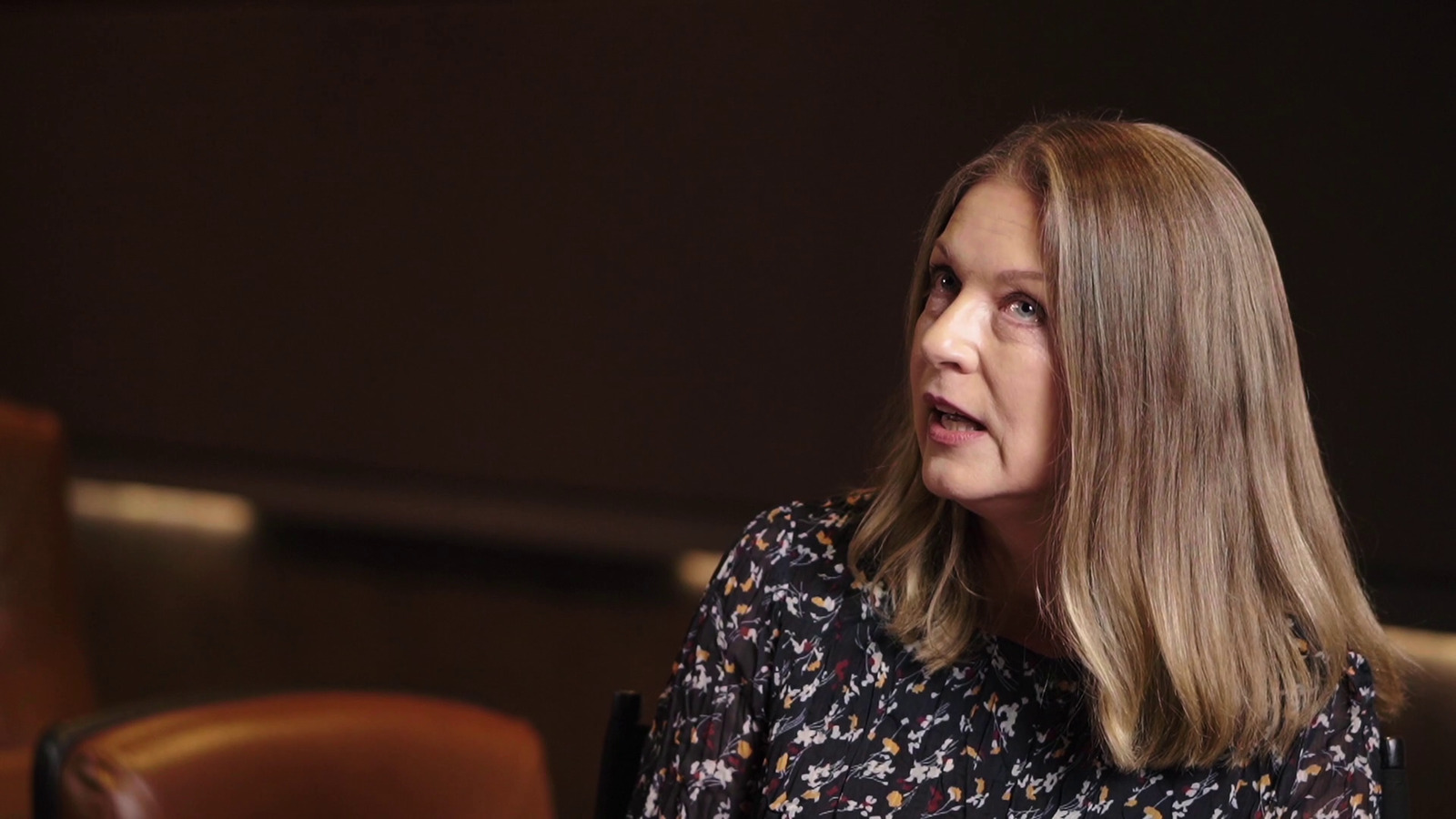
A Talk with Kyle MacLachlan and Sheryl Lee, 13:28–15:07; 38:49–40:19. The performers’ later recollections are read alongside the finished work and other production evidence.
A screenplay is a stage in the film’s history
The Lynch–Engels scan bears 8 August 1991 and the title Teresa Banks and the Last Seven Days of Laura Palmer. Its visible date does not authenticate custody or completeness. Inspect the screenplay copy ↗
Printed page 1 (PDF page 2) opens with Teresa’s body, a proposed place-and-year caption and then Cole’s call to Desmond. This is an opening plan to compare with a release, not proof that every written action was filmed.
Ending evidence in the dated copy — spoilers
Printed page 126 (PDF page 127), scenes 236–237, includes Cooper, Doc Hayward and Truman. Scene 238 specifies Laura on Cooper’s lap in a shared Red Room chair. These are script directions, not the released film’s final composition.
A useful comparison must therefore keep four objects separate: a dated draft, photographed material, the theatrical feature and the later assembly of additional scenes. An online reconstruction can introduce a fifth object. When a scene moves between those categories, its surrounding scenes, duration and sound can change its function even if its dialogue remains the same.
For the completion pass, the decisive record will be a scene-by-scene concordance with printed page numbers, edition timecodes and revision evidence. Until then, this dossier treats the inspected opening and ending as bounded documentary findings. It does not turn the whole scan into an authenticated “original screenplay.”
A film negotiated, then built
AFI’s production history traces a project disrupted by rights questions and Kyle MacLachlan’s reluctance to return. Its cited August 1991 report records agreement on five days of work and a reduced role. That gives a documented production context for Cooper’s limited presence; it does not explain every creative decision in the finished prologue. AFI’s trade-report chronology ↗
The diary excerpts attributed to Charlotte Fraisse offer workdays and decisions in progress. We have read a later transcription, not the original diary; its dates should not be silently corrected to agree with a catalogue. Shooting-diary transcription ↗
| Record | What it reports | What remains unresolved |
|---|---|---|
| AFI history | Principal photography began 5 September 1991. | Check the underlying trade report and production records. |
| Fraisse diary transcription | 5 September is described as the second day. | This implies 4 September; obtain a call sheet or production report before choosing a date. |
The records give different start dates, 4 and 5 September 1991. The production chronology preserves both dated accounts.
October entries describe Party Land’s studio construction, simulated logs and colored lights, then Red Room reverse filming and Michael Anderson’s backward speech. October production entries ↗ These details join physical construction to performance: the atmosphere was made through labor, surfaces, lighting and rehearsed bodily behavior.
The film’s geography combines fictional places, location exteriors and constructed interiors. Reading those spaces together reveals how production turns separate sites into Laura’s world.
Sheryl Lee, and the work of giving Laura a voice
Lee’s 2013 conversation with Brad Dukes describes the film as an opportunity to give Laura a fuller voice. She recalls using Laura’s theme and Jennifer Lynch’s diary novel to connect with the character, and describes the emotional cost of the train-car work while emphasizing the supportive people around her. Those recollections establish preparation and experience; they do not allow us to diagnose the performer or reduce the performance to autobiography. Lee on returning to Laura ↗
The distinction matters because a performance of distress can be mistaken for an absence of technique. The more useful questions concern transitions: what makes a gesture look protective in one context and defensive in another; how speech holds together or breaks down; how the same familiar face can become difficult for another character to read. The illustrated scene studies follow those changes without turning the character into a list of symptoms.
One concrete detail interrupts an easy symbolic reading: Lee explains that she wore a wig for the film because a preceding role had required short hair. A visible feature can have a practical production history as well as an expressive effect. She also recalls Ray Wise and Grace Zabriskie as generous, experienced collaborators. Lee on appearance and collaborators ↗
Criterion’s introduction to its Sheryl Lee interview describes Lynch’s economical, intuitive guidance, complementing Lee’s account of preparing and inhabiting Laura. Criterion’s interview introduction ↗
Lee recalled already knowing and admiring Moira Kelly. Her account places the new Donna within a working relationship between the performers. What Lee does and does not establish ↗
This reading places the ensemble around Laura rather than using it to dilute her centrality. Friendship, family authority and a stranger’s attention create different pressures on a performance. A close account should notice the other actor’s timing, distance and response as carefully as Lee’s face. That is how an analysis can describe a relationship rather than simply praise an intense lead performance.
Staying open, then finding a way out of the role
Lee distinguishes knowing the script from knowing how sustained work inside Laura’s experience would feel. She describes preparation, breathing, attention to the present moment and the support of Lynch, the crew and her fellow performers as conditions that let her remain emotionally available. She also recalls Lynch sometimes addressing her as Laura and discussing where the character had just been; his approach varied with the situation rather than following one universal method.
Asked about leaving the role, Lee says acting training had taught her how to enter a character more readily than how to exit one. A trip with her own family helped restore a different physical and sensory environment. Her account of Ray Wise and Grace Zabriskie likewise joins their startling shifts in performance to kindness and trust between collaborators. These are her descriptions of working and recovering, not a clinical account imposed on her from outside.
A Talk with Kyle MacLachlan and Sheryl Lee, 41:44–47:42; 60:56–61:25. The performers’ later recollections are read alongside the finished work and other production evidence.
Precision inside an unsettled performance
Lee’s 2017 interview makes the work behind Laura’s instability more concrete. Recalling the bar sequence, she describes loud music on set alongside the practical demands of hitting marks, delivering lines and meeting cues. Laura may appear unmoored while the performer is coordinating exact actions. This recollection adds a production perspective to the Pink Room study: music helped create the conditions of acting before the final soundtrack shaped the audience’s experience. The on-set sound and the completed mix remain distinct stages. Lee, 09:22–11:07 ↓
For the Red Room, Lee describes a space whose unfamiliar rules required trust and attention rather than an advance explanation of every meaning. Elsewhere in the interview, she recalls Lynch giving her time when an unnamed scene’s lines did not yet feel true. These are accounts of directing a performer through uncertainty. They help explain how the work can be carefully made while leaving its experience open to the viewer. Lee, 06:56–07:55; 11:13–13:58 ↓
The family’s laughter, remembered together
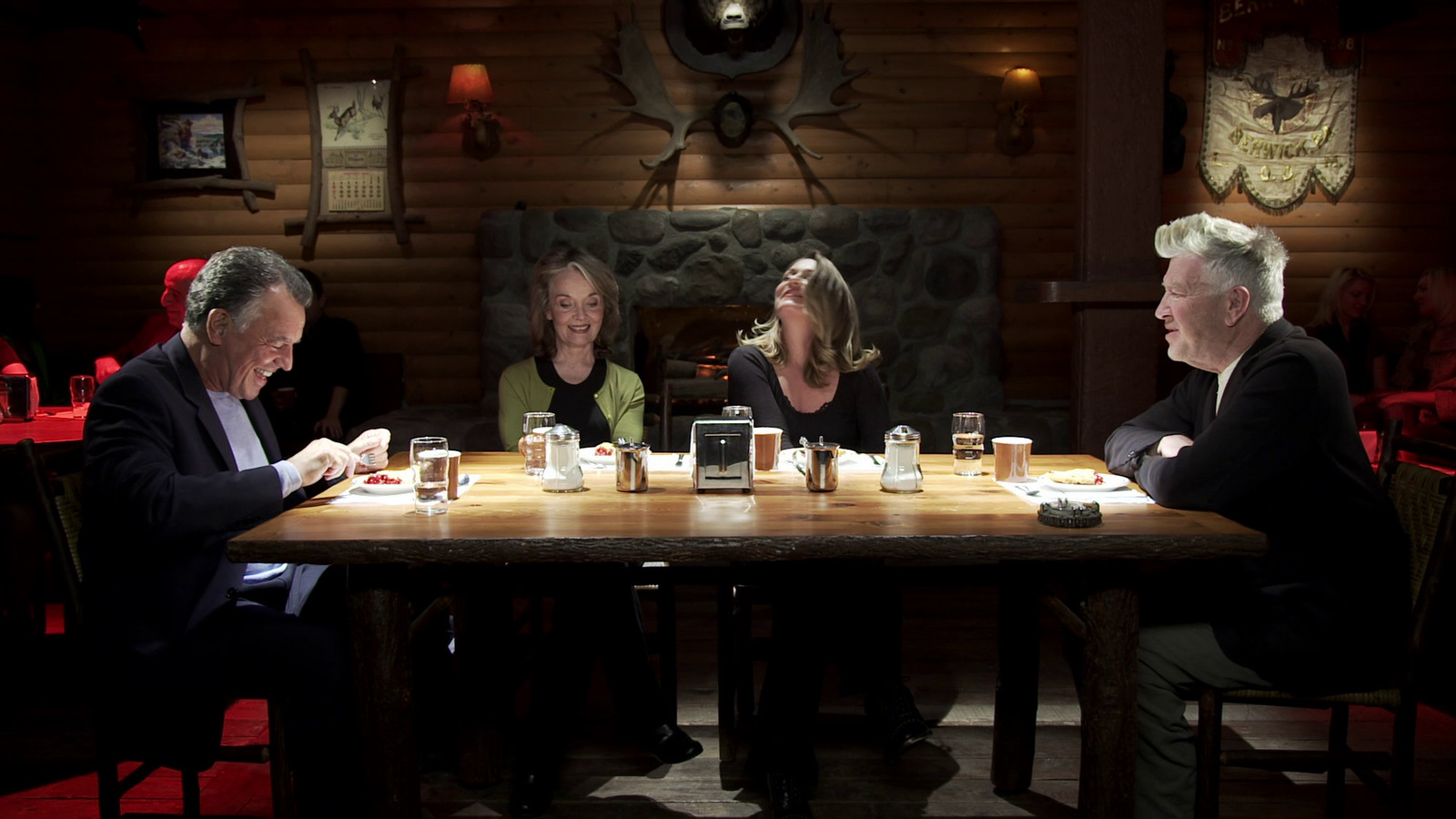
In their 2014 discussion with Lynch, Lee, Ray Wise and Grace Zabriskie watch the deleted dinner scene in which Leland teaches Sarah and Laura a Norwegian greeting. Their delight identifies a shared memory of playing the Palmers as a family capable of laughter. In The Missing Pieces, that domestic warmth complicates the household seen in the feature: intimacy is part of what makes the betrayal devastating. The cast’s fond recollection describes making the scene; it does not make the fictional family’s violence less real. Actors’ discussion, 10:42–13:01 ↓
Open the performance testimony gallery · 2 images
Loneliness, welcome and the freedom of a gesture
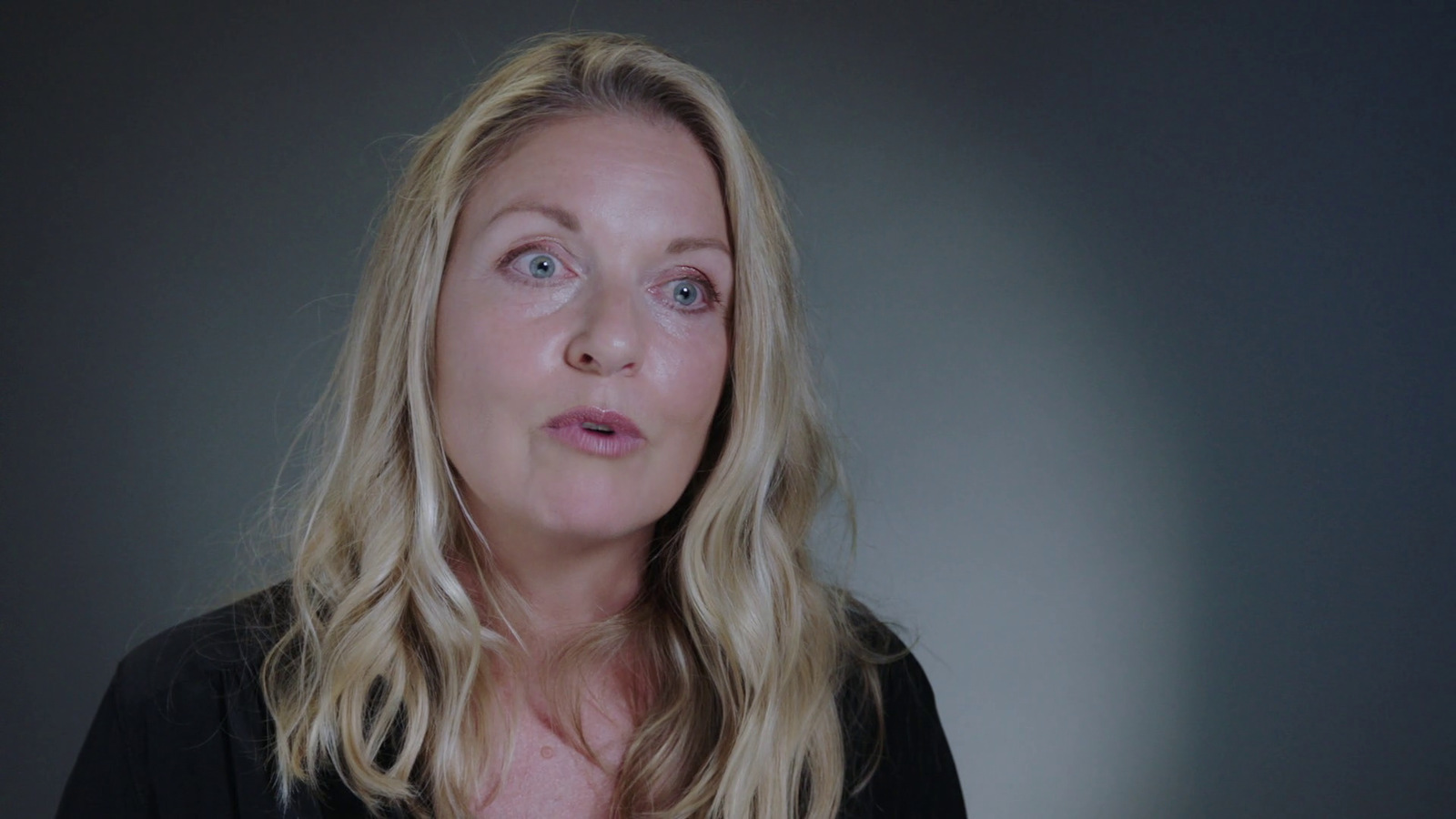
In an archival interview, Lee identifies loneliness as the emotion she most strongly associates with playing Laura. She describes an intensely compressed working experience and credits Lynch with helping her through it. Beside her later account of preparing with music and the diary novel, this testimony gives the performance a specific emotional centre: Laura’s many encounters do not necessarily relieve her isolation. That last connection is a reading of the character, rather than a diagnosis of the performer. Lee, 00:02–01:01
Kelly remembers being nervous about taking over a role already played by someone else, but finding the cast and crew welcoming. Her account adds the incoming performer’s perspective to Lee’s recollection of their friendship. It helps explain the working relationship around the new Donna; it does not establish why Lara Flynn Boyle did not return. Kelly, 00:08–00:28
Mädchen Amick offers a concrete example of Lynch’s direction of movement. She recalls being asked to raise her head slowly towards the ceiling, then questioning whether someone would naturally do that. His response, as she remembers it, treated cinema as a place where an invented gesture could be enough. Her distinction between ordinary realism and the creation of speech and movement is useful throughout Twin Peaks. The interview does not identify the scene, so the anecdote should not be attached to a particular shot in this film. Amick, 00:43–01:44
View the four archival interview portraits
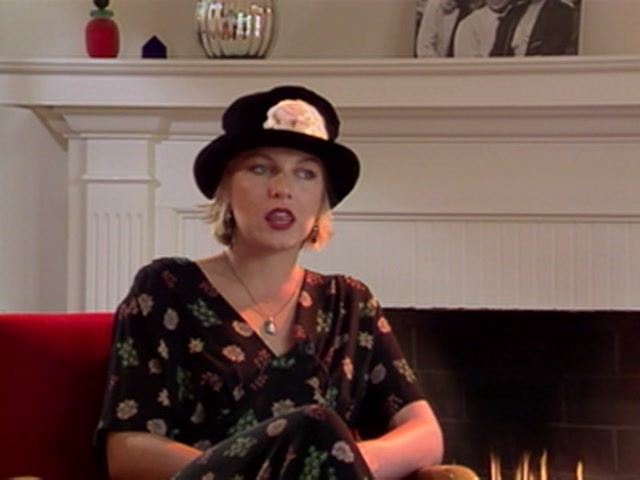
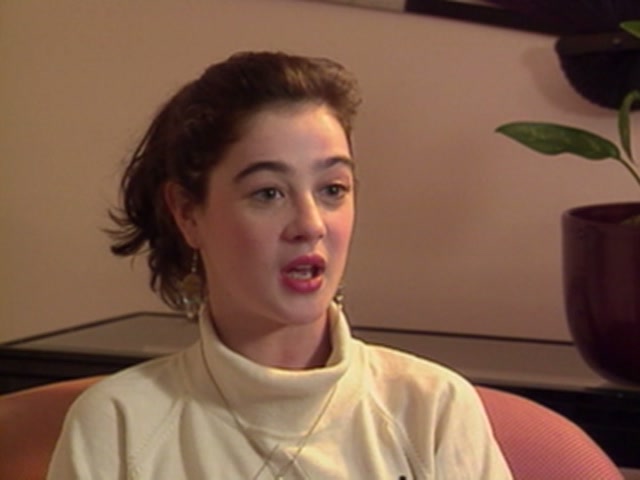
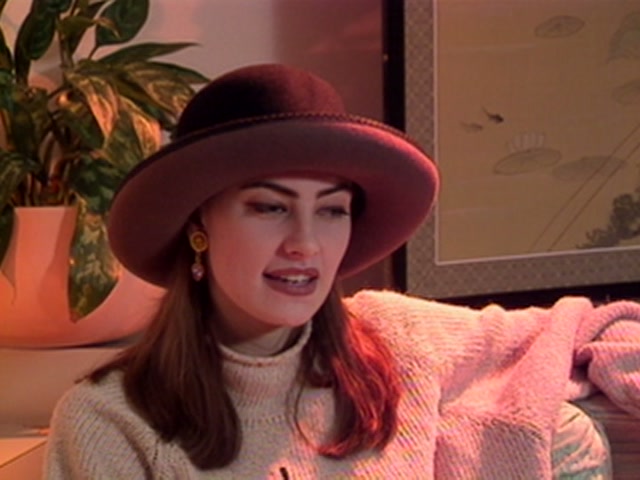
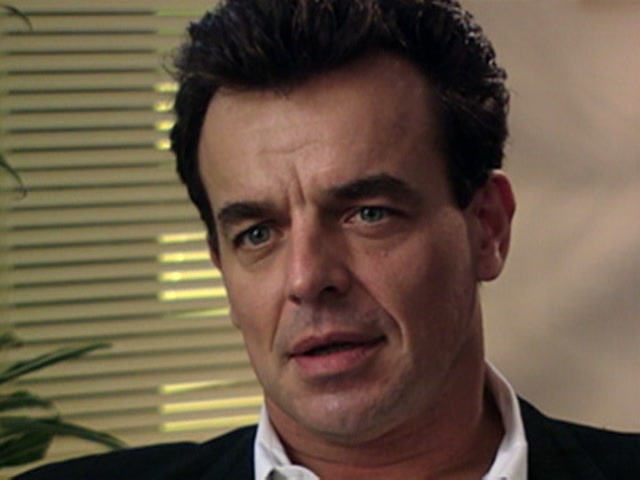
Image and design: a room, a face, a constructed world
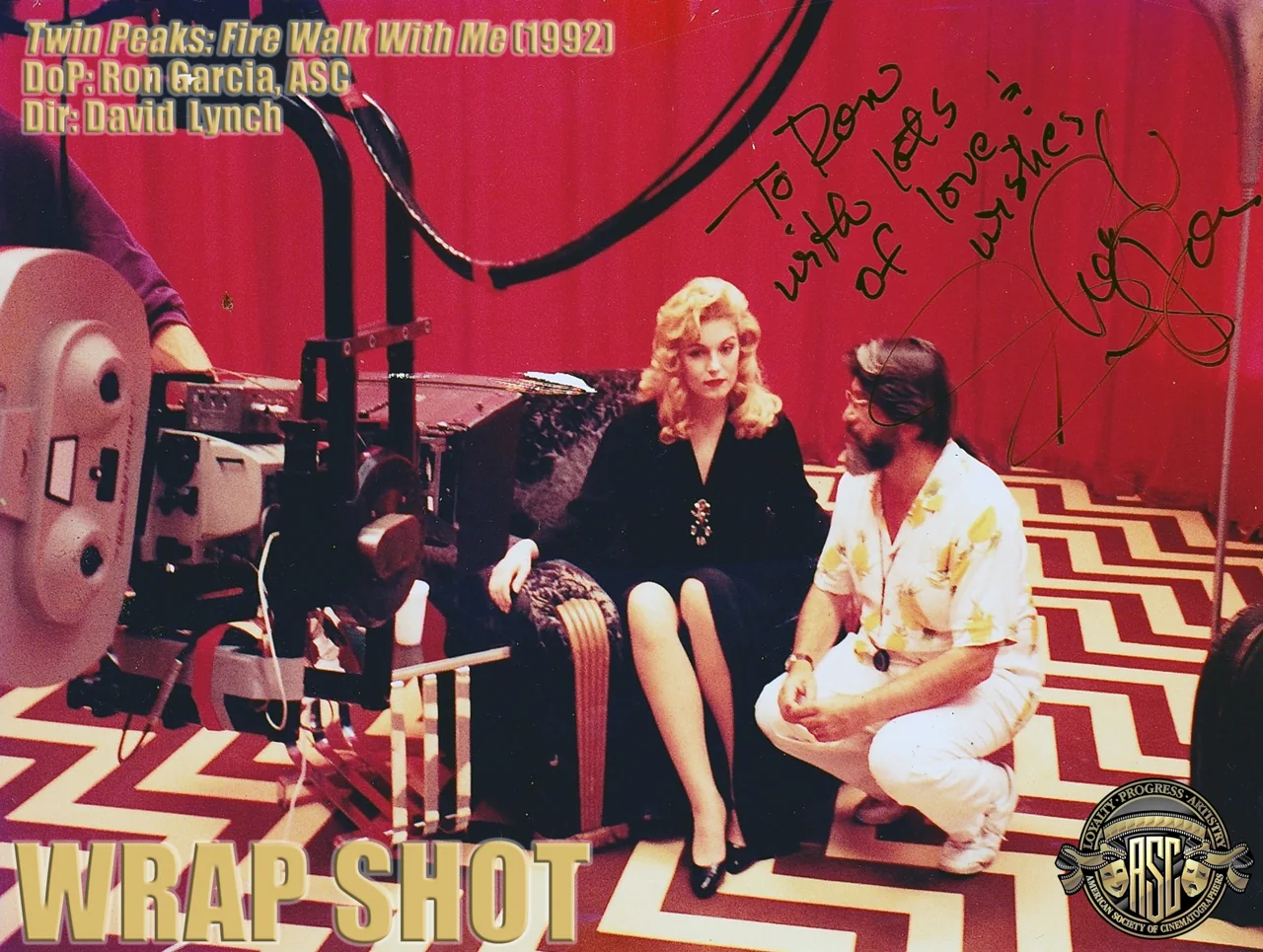
The production photograph places cinematographer Ron Garcia beside Lee in the Red Room, bringing the crew and performance together within its distinctive setting. Production photographs and their context ↗
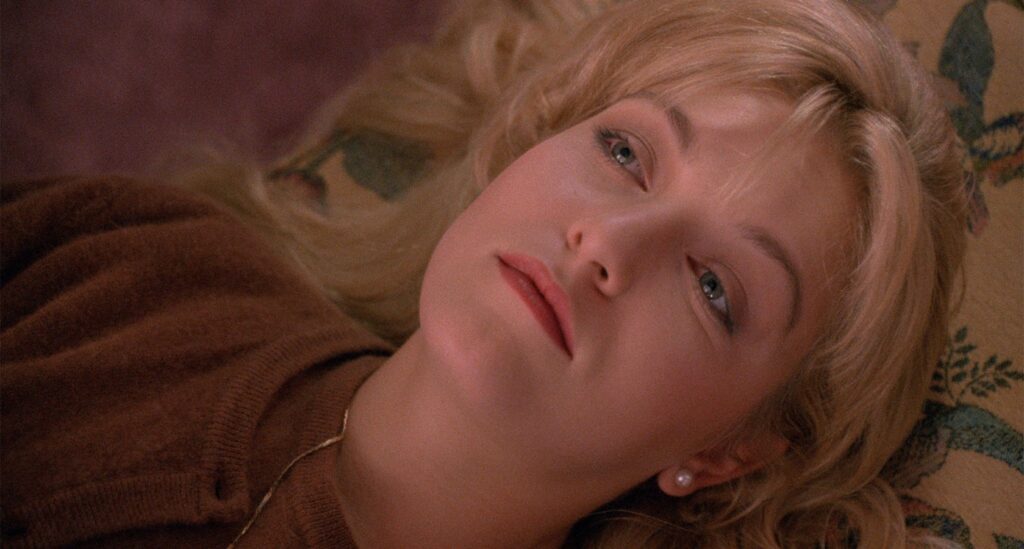
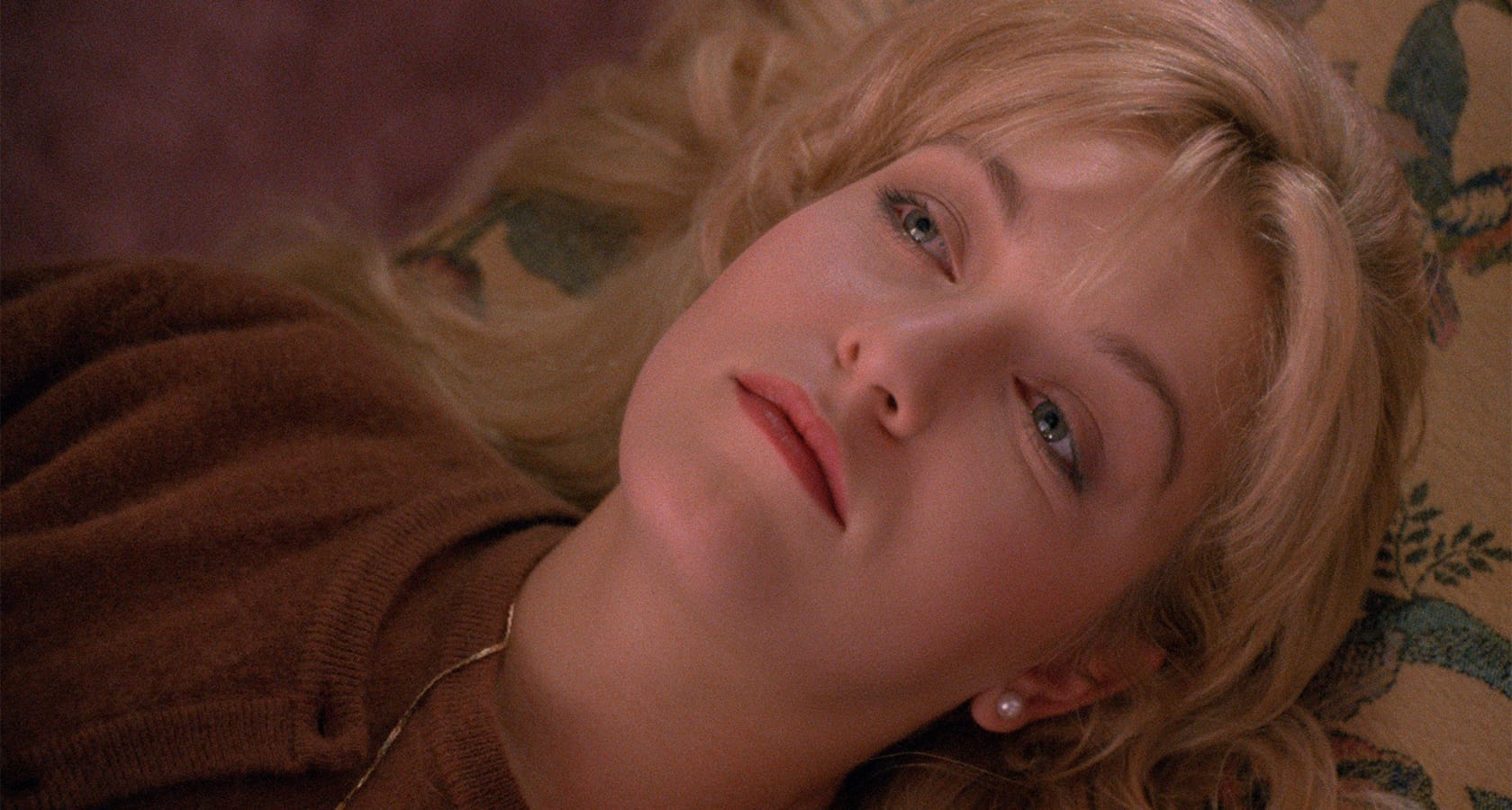
In the opening still, Laura’s face rests against an emphatic pattern and her gaze extends beyond the frame. The composition holds attention on her expression while keeping the object of that attention out of view.
The reproduced UK credits name Patricia Norris for production and costume design, Amy Stofsky as costume supervisor and Leslie Morales as set decorator. Those roles should stay distinct. A department credit does not by itself identify who selected, fabricated or altered a particular garment or furnishing. Department credits ↗
This reading places the familiar house and the visibly theatrical room as connected problems of design. Domestic familiarity can make an intrusion more disturbing; a conspicuously artificial setting can make a gesture harder to dismiss. Neither realism nor stylization guarantees emotional distance. The question is what the design permits a face, body or object to do in the frame.
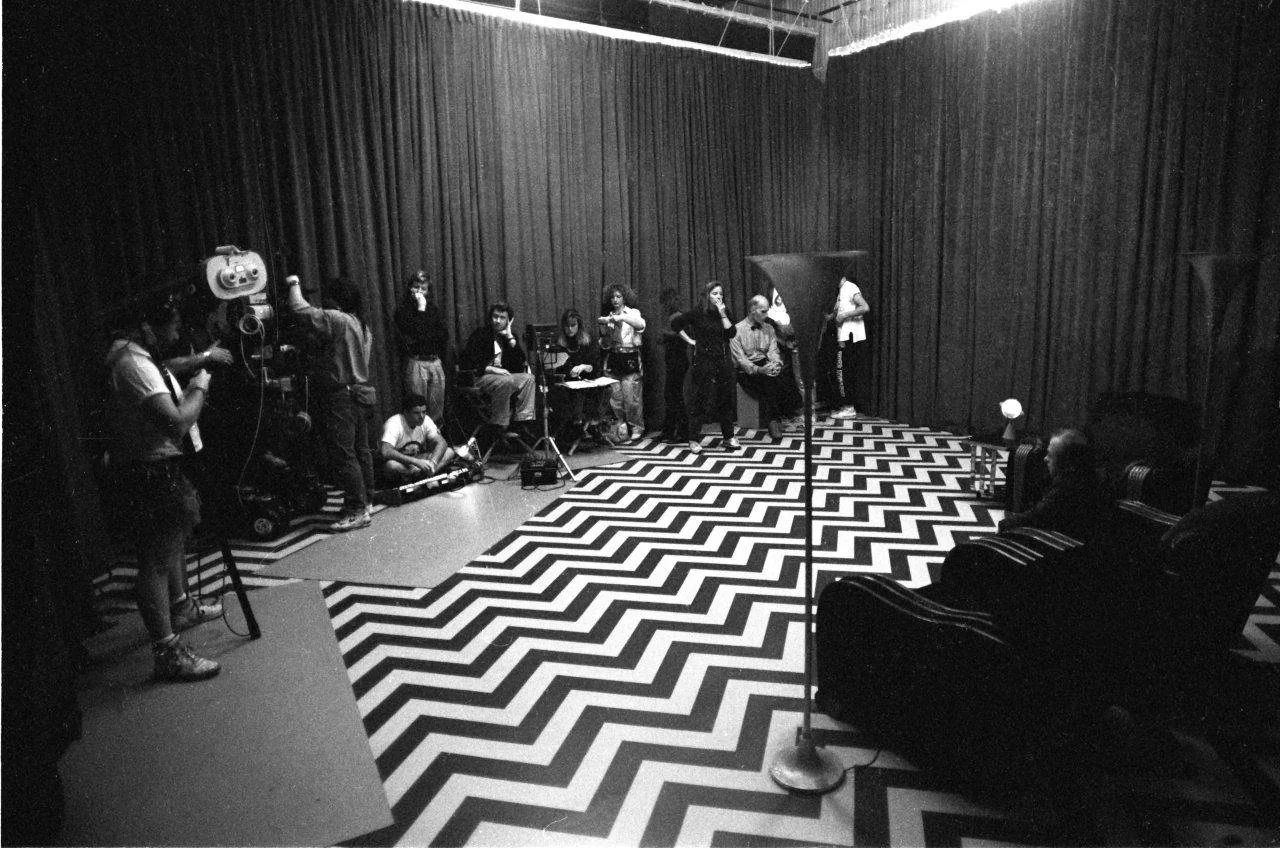
This reverse angle is especially useful because it gives the atmosphere a material history. Curtains become fabric arranged in space; a viewpoint becomes a camera position. Seeing the apparatus need not diminish the image’s force. It lets a museum account credit collaborative construction while leaving the dramatic experience intact.
Camera-stock and lighting claims will need film-specific testimony or records. A recollection about the pilot, however vivid, is not sufficient.
Lighting the forest, composing the blue rose
A technical problem with an emotional purpose
A short technical account attributed to Ron García, preserved from the American Cinematographer website by The City of Absurdity, describes the forest drug-deal scene. García recalls a handheld Xenon source and negotiated bounce light into the pines. He tested normal and pushed processing, scanning comparison frames before deciding that pushing was unnecessary. The surviving reproduction is specific evidence of a reported test; the original publication and laboratory records have not been located. García’s attributed technical account
That distinction matters technically. Scanning test frames for inspection does not establish a digital-intermediate workflow for the entire feature. Nor does the recollection prove the same lighting arrangement was used for every night exterior.
Motivated light can intensify vulnerability. If a character carries the source, seeing becomes dependent on a moving body and its limited attention. Darkness remains an active condition around the action.
Lil: an image with a precise division of labour
In Andreas Halskov’s later interview, García attributes Lil’s yellow, blue and red colour arrangement to Patricia Norris’s design, with his photography strengthening its contrasts. The account gives the costume and production designer a specific place in an image often discussed only as a Lynchian riddle. García on Norris and Lil
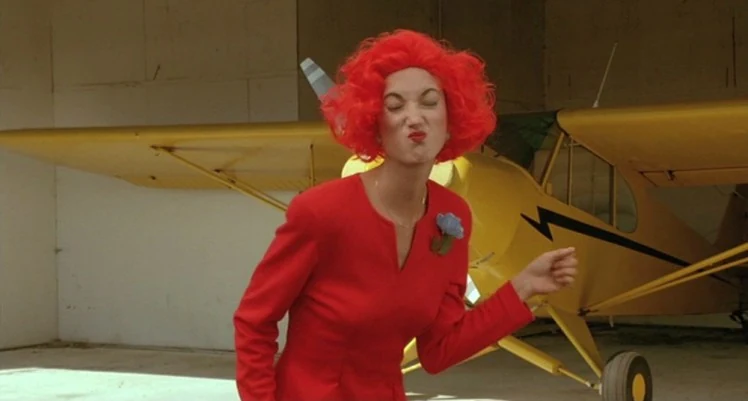
The reproduced frame allows a modest but useful close examination. The blue flower is small beside the large red area of the dress and the yellow aircraft behind it. A detail can therefore become conspicuous without dominating the frame’s surface. Lil’s body carries information through clothing, gesture and position; the image makes interpretation look like a physical activity.
This opening lesson in deciphering behaviour creates a potentially misleading confidence. Some signs can be explained as a professional code. It does not follow that Laura’s later fear, desire or distress can be decoded by the same procedure. The film moves from a demonstration of reading signs toward a person whose experience cannot be exhausted by a key.
The still’s colour relationships connect costume, performance and setting. The production interviews add the collaborators’ accounts of how those visual choices developed.
Sound can place us where the dialogue cannot
Sound editor Douglas Murray offers unusually concrete film examples. He describes traffic engines and horns pressing into Laura’s experience, and the Pink Room mix privileging loud music over intelligible speech, with subtitles carrying words the audience could not readily hear. His account links sonic pressure to dramatic perspective, not simply to “loudness.” Murray’s interview ↗
Subtitles in that situation are not merely a repair for deficient dialogue recording. They can divide understanding from hearing. We may read the words while remaining exposed to a space that overwhelms ordinary conversation. The Pink Room study preserves that relation among speech, music, effects and text instead of treating them as isolated tracks.
Music editor Lori Eschler’s later interview describes a working vocabulary of slowing, reversing and overlapping material. Her recollections illuminate the original Twin Peaks collaboration; Dean Hurley’s work discussed in the same article belongs to a later period. Neither account licenses assigning a particular process to an unexamined cue. Eschler on the music-editing vocabulary ↗
The UK press folder brings the film’s musical works and collaborators together in a compact credit map. Reproduced music credits ↗
| Work | Credit recorded in the press folder |
|---|---|
| The Pink Room | Music: David Lynch. |
| Questions in a World of Blue | Music: Angelo Badalamenti; lyrics: David Lynch; vocal: Julee Cruise. |
| Deer Meadow Shuffle / Double R Swing / Best Friends | Music: David Lynch and David Slusser. |
| Requiem in C minor | Composer: Luigi Cherubini; conductor: Riccardo Muti; Ambrosian Singers and Philharmonia Orchestra. |
The last distinction prevents a common credit error: the conductor is not the composer. More broadly, a song title, a soundtrack-album track and a film cue are not interchangeable units. An album can reorganize or extend material; a film can interrupt it, combine it with other sounds or return to only part of it.
Lee’s account of using music during preparation adds another layer: music can be an actor’s route into a character before it becomes part of the audience’s experience. That does not prove the preparation track accompanies a particular scene. Keeping those uses separate makes the collaboration more interesting, not less.
Jazz, texture and the voice of a composition
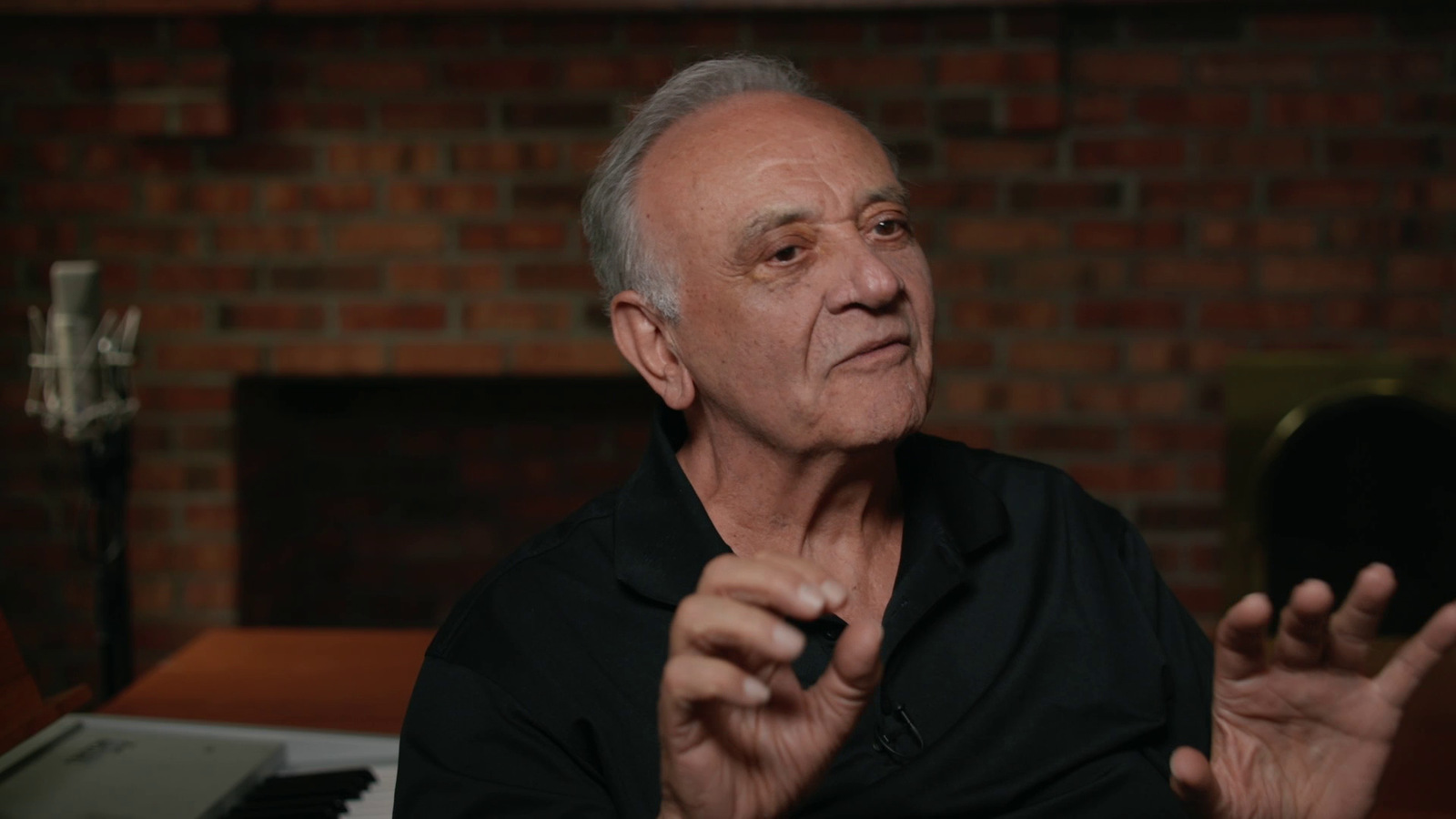
Badalamenti’s 2017 interview describes the film’s jazz sound through instruments and their expressive contrasts. A rhythm section and muted trumpet give the opening its surface, while a darker middle passage introduces another pressure. He also discusses the colours available from vibraphone and acoustic bass, including bowed and plucked playing. His account offers a way to hear smoothness and disturbance working together rather than assigning all menace to an added sound effect. Badalamenti, 06:08–07:54 ↓
The same conversation traces Black Dog Runs at Night to wind recorded at Lynch’s office and a spoken phrase transformed by lowering and slowing the voice. Environmental sound, words and musical collaboration meet in the making of a piece. This is the composer’s recollection of its construction; the soundtrack album and the placement of material within the film require separate attention. Badalamenti, 14:43–15:27 ↓
An imagined ending at the keyboard
Badalamenti recalls Lynch describing Laura, an angel and an emotional release as he explains The Voice of Love, then performs the piece at the keyboard. The demonstration lets us follow an emotional instruction becoming musical shape. It should be read alongside the finished ending, which uses Cherubini’s Requiem in C minor: the interview’s compositional account and the film’s final cue are different evidence. The distinction gives both works their own history. Recollection and performance, 15:44–19:45 ↓
Open the composition gallery · 2 images
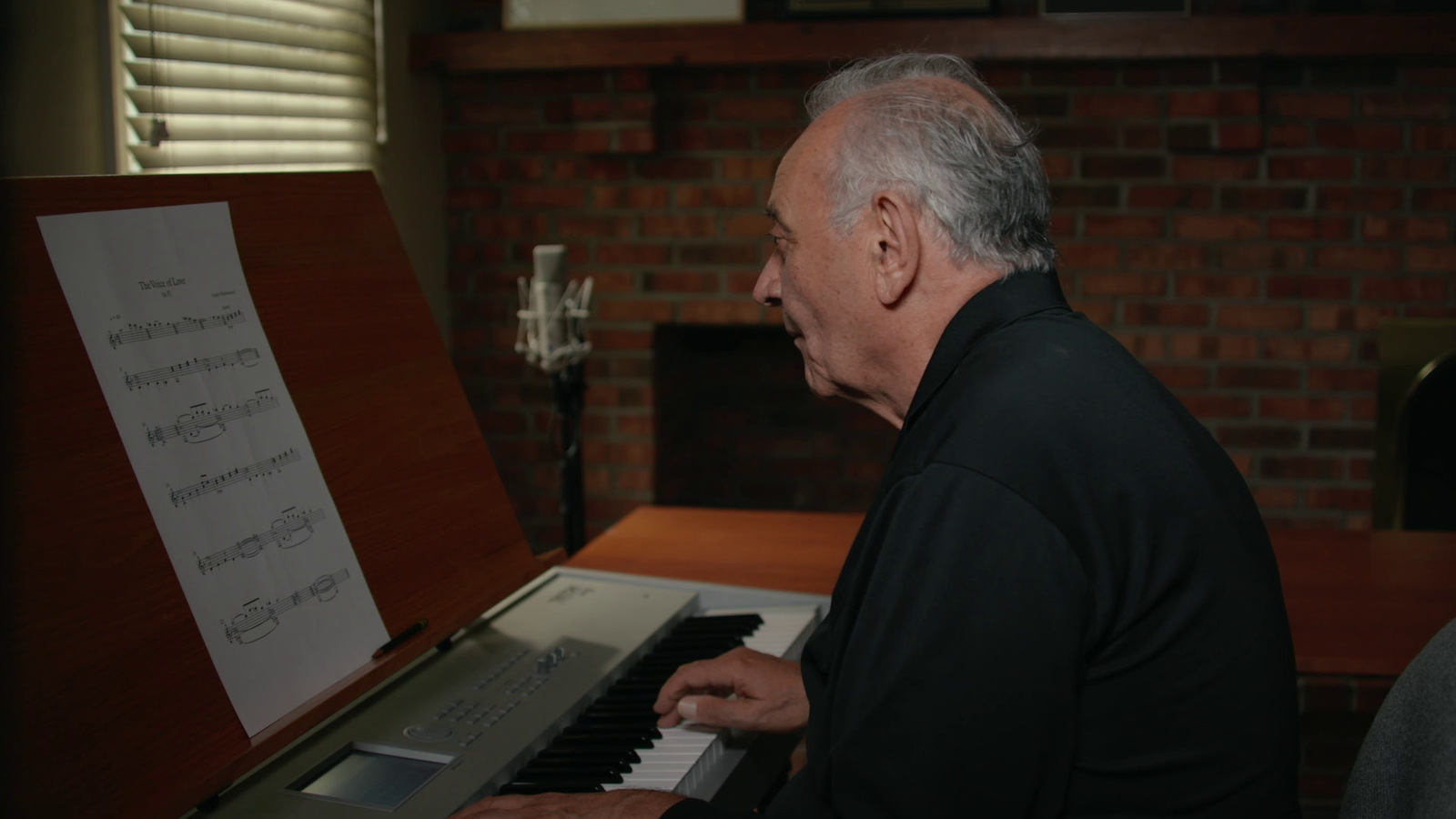
Compare the later assembly’s sound relationships: quiet music in Ed and Norma’s car, Garland’s reading around the basement scene, and the uncertain location of Lucy’s voice over the intercom. Its end credits identify Dean Hurley’s later sound work, which should remain distinct from the feature’s 1992 credits.
The feature, the working material and The Missing Pieces
The diary’s 25 September entry records Mary Sweeney showing rough cuts during production. Rough cuts during production ↗ Editing was already part of the film’s development. This reference does not give us a surviving assembly or a complete history of its changes.
Murray recalls the climax moving away from a dense effects treatment toward a more musical, poetic result after a visit from Cannes’s Gilles Jacob. Murray on the changing climax ↗
Ray Wise’s 2014 interview expresses pleasure at seeing additional scenes and a wish that more had been included. His proposed explanation involving running-time constraints is explicitly speculation. A performer’s preference is valuable evidence about his experience, but cannot settle the director’s reasons or establish a suppressed definitive cut. Wise on the recovered scenes ↗
Criterion lists The Missing Pieces as a 90-minute assembly of deleted and alternate material made by Lynch. Its authorship matters, but so does its form: an assembly presented separately is not an instruction to insert every scene into the theatrical feature. A fan reconstruction adds decisions about placement, transitions, repetition and duration. Official supplement description ↗
Our editorial test is simple: ask what a scene does in the object actually being watched. A gentler interval can change the pressure of adjacent material; an explanation can close an uncertainty; a return to the town can redistribute attention away from Laura. “More” is not a neutral quantity when the arrangement itself gives the film its shape.
The illustrated Missing Pieces dossier now follows all 33 titled passages. Its longer Jeffries sequence separates spaces the feature compresses; the Hayward and Palmer scenes alter the time given to family relationships; the epilogue extends Annie’s and Cooper’s paths beyond the second-season ending. Those comparisons describe the two finished arrangements. They do not claim access to every intermediate cut.
Where the film sits in Twin Peaks
For a first encounter, our recommended route is: the original two television seasons, then Fire Walk with Me, then The Missing Pieces, then The Return. This is an editorial viewing recommendation. It preserves the original series’ discoveries and lets the film change their meaning before later material expands the field.
Story chronology and release order answer different questions. A prequel can depend on knowledge acquired from the earlier-released work; presenting the events first does not necessarily preserve the experience for which they were arranged. The same applies to supplemental scenes: they can be illuminating after the feature without becoming obligatory insertions on a first viewing.
It is also useful to resist treating the film as a container of clues whose sole purpose is to explain The Return. Later work can transform our reading, but the 1992 film has its own emotional and formal demands. Laura’s experience deserves sustained attention before its images are redistributed across a larger mythology.
The Twin Peaks dossier provides the broader series route. Here the focus remains on the film, its production and the separate evidence supplied by its additional material.
Edition records: identify the object before comparing it
Criterion’s current listing describes a Lynch-supervised 4K restoration, a 7.1 presentation and an alternative original 2.0 surround track. Its supplement inventory includes cast conversations and a booklet drawing on Chris Rodley’s Lynch on Lynch. Edition and supplement inventory ↗
| Record | Listed length | What the figure establishes |
|---|---|---|
| Criterion feature | 135 min | Catalogue duration for the listed edition. |
| Criterion: The Missing Pieces | 90 min | Separate assembly of additional and alternate material. |
| BBFC cinema, Guild, 12 June 1992 | 134 min 26 sec | Duration attached to this classification record. |
| BBFC video, Guild, 16 March 1993 | 129 min 00 sec | Duration attached to this video submission. |
Inspect the BBFC records ↗ · BFI’s catalogue lists 134 minutes ↗. These figures are not, by themselves, a list of cuts. Rounding, playback rate, included logos and genuinely different material are separate possibilities. A comparison must inspect the edition and measure the relevant difference before choosing an explanation.
The sound comparison needs the same discipline. More channels do not automatically mean more authentic creative intent, and matching dialogue does not establish identical effects or music. Record the disc, territory, release date, playback settings, selected track and reference timebase, then compare the same passages.
Our Reading Room describes this edition method. The aim is a reproducible record that another viewer can check, rather than a verdict built from packaging language or an unexplained runtime.
Publicity, objects and the museum
The reproduced UK folder announces: “In a town like Twin Peaks, no one is innocent.” Its back cover maps character connections. These are revealing publicity choices: a marketable network of secrets becomes a way to sell the film. The tagline is not proof that the film assigns equal responsibility to victims and abusers. UK publicity folder ↗
Our reading asks what that marketing map leaves out. A connection between two names cannot describe the power within their relationship. A publicity chart can promise mastery of the story while the film makes another person’s experience difficult to master. The tension is worth preserving as part of the film’s public history.
The film’s ring, costumes, interiors and publicity images connect the story to its material production. In the museum, production objects, promotional material and later artist editions each have their own histories.
Explore the Lyncharium Museum for the objects and editions that carry this world beyond the screen. Our sister sites, Rare Prints and Posters and Rare VHS and LaserDiscs, offer posters, artist prints and physical media.
A disputed release, then changing ways of looking
The archival cast interviews also preserve the expectations surrounding the film. Wise presents it as a new life for Twin Peaks, stressing the intensity of Laura’s final week; Kelly promises series viewers the chance to encounter Laura before her death. These are promotional invitations, not evidence of how audiences actually responded. Read alongside the contemporary reviews, they help show why returning to a familiar television world and entering Laura’s experience could become competing expectations. Wise, 00:02–00:36; Kelly, 00:39–00:55
The official Cannes record places the film in the 1992 competition. AFI records its Cannes showing on 16 May and its US release on 28 August. Festival selection, a screening date and a prize are different facts: this film’s competition entry is not a Palme d’Or win. Cannes record ↗ · Release chronology ↗
Contemporary criticism was not a single unanimous verdict. In a December 1992 year-end column, Chris Hicks treated the film as a negative example of television becoming a movie. That is a brief hostile item, not a complete account of reception. Hicks’s year-end judgment ↗
Christopher Potter’s 29 August Ann Arbor News review was mixed: he objected to the opening and ending yet valued Lee’s performance and the film’s concentrated power. We have read a later transcription, not the original newspaper. It is enough to challenge the convenient claim that recognition began only decades later. Potter’s contemporary review ↗
BFI’s 2019 editorial selection of 1990s films provides one later reassessment. Its separate 2022 Sight and Sound critics’ poll record places the film at tied 211th. An editorial list and a multi-voter poll have different methods; neither should be presented as the other. 2019 selection ↗ · 2022 poll record ↗
The film’s reception brings several forces together: expectations inherited from television, the later availability of additional scenes, new work that redirects attention, and changing critical discussion of abuse and subjectivity.
The most useful reception history will keep disagreements visible. Early dismissal cannot replace a close reading; later admiration cannot erase difficulties in the film or retroactively make every spectator response identical. The task is to understand which film, in which setting, people believed they were being asked to watch.
Lynch looking back in 2014
During the actors’ discussion, Lynch says his impulse was to enter Laura’s last seven days. He also connects the film’s difficult reception to the series’ declining momentum and to the challenge of asking an audience to confront incest and murder. At this 2014 moment he still considers the film’s recognition incomplete. This is a dated statement by its director, useful alongside contemporary reviews and later reassessments; it cannot stand in for the many different responses of actual spectators. Actors’ discussion, 21:56–23:31 ↓
Selling Laura’s story and returning to the town
The U.S. theatrical trailer moves from Laura’s school life and relationships toward threat, then ends its invitation with the claim that nobody in Twin Peaks is innocent. The international trailer announces Laura’s final seven days and juxtaposes familiar people with the fan, portrait, ring and Red Room. Both sell recognition and danger, but their chosen emphasis is part of the advertising, not a complete synopsis. The 2014 Missing Pieces trailer widens the field again: its succession of familiar faces, comic exchanges and strange incidents promotes a return to material absent from the feature. Together, the three trailers document changing invitations to enter the same fictional world. Trailer sources ↓
Explore further
Follow the sources below, explore the museum collection, or continue through the Reading Room. New archival discoveries and contributions enrich the record of Lynch’s work.
Sources and the research record
Production records, collaborator interviews and criticism trace the film’s history. Follow the references below for the accounts behind this dossier.
- Criterion Collection: Twin Peaks: Fire Walk with Me ↗Credits, specifications, restoration, gallery and supplement inventory read. Criterion’s current listing is kept separate from the From Z to A viewing and archival-interview evidence recorded below.
- David Lynch with Jason Barlow, BAFTA, 27 October 2007 ↗Published transcript, including the Laura Palmer discussion, read.
- AFI Catalog: Twin Peaks—Fire Walk with Me, record 59421 ↗History and release information read.
- Lynch–Engels screenplay scan bearing 8 August 1991, hosted by Script Slug ↗127-page PDF downloaded. Cover, opening and final page visually inspected: PDF pp. 1–2 and 127 / printed pp. 1 and 126.
- Charlotte Fraisse shooting-diary excerpts, preserved by Twin Peaks Blog, 30 October 2020 ↗Published transcription credited to Adam Harding, preserved through Dugpa, read.
- Brad Dukes interviews Sheryl Lee, part one, May 2013 ↗Published interview read; film wig and working relationships distinguished from television-pilot anecdotes.
- Brad Dukes interviews Sheryl Lee, part two, June 2013 ↗Film-specific preparation, emotional cost and casting answers read. Later recollection; no unpublished recording inspected.
- Criterion: Surrendering Logic in Twin Peaks: Fire Walk with Me, 18 October 2017 ↗Publisher’s written introduction read.
- Michael Gingold interviews Ray Wise, originally 29 July 2014; Fangoria republication, 31 July 2024 ↗Published answers about additional scenes, the reunion and acting knowledge read. His explanation of time constraints is explicitly a guess.
- David E. Williams: Wrap Shot—Twin Peaks: Fire Walk with Me (1992), ASC, 19 January 2017 ↗Article and production photographs inspected. Pilot anecdotes are not reassigned to the feature. Photographers of the two reproduced production images are not identified here.
- Andreas Halskov interviews sound editor Douglas Murray ↗Published transcript read, separating film examples from pilot work. Publication date not established; no session files or sound masters inspected.
- Sam Davies: Backwards through the backwoods, Sight and Sound, 10 June 2025 ↗Published interview read. Body identifies Lori Eschler and Dean Hurley correctly; headline reverses surnames. Hurley’s later work is not assigned to the 1992 film.
- 1992 UK press folder, reproduced by Steven Miller, Twin Peaks Blog, 9 July 2026 ↗Cover, relationship-chart reproduction and crew/music credit panel inspected. Physical folder, original distribution history and complete production archive unseen.
- Festival de Cannes: Twin Peaks: Fire Walk with Me, 1992 ↗Official competition entry and synopsis read.
- BBFC: Twin Peaks—Fire Walk with Me, release records ↗Dated cinema and video classifications and durations read. Records are not frame comparisons or proof of cuts.
- Christopher Potter: Not past his peak, Ann Arbor News, 29 August 1992; later transcription ↗Reproduced review text read through Twin Peaks Blog.
- Chris Hicks: Best and worst aspects of cinema in ’92, Deseret News, 27 December 1992 ↗Year-end item read. Brief negative mention, not a complete review or representative sample of audiences.
- BFI: 90 great films of the 1990s, 18 July 2019 ↗Film entry and editorial-selection method read; this is not a multi-voter poll.
- BFI film record and 2022 Sight and Sound critics’ poll ↗Runtime and tied 211th position read. Catalogue and poll evidence, not a viewing record.
- Cristina Álvarez López and Adrian Martin: Wrapped in plasticity, 2017 ↗Written introduction read. Season-one focus and Missing Pieces example distinguished from the theatrical film.
- Tim Greiving: Twisted Nostalgia—Chris Isaak in Twin Peaks: Fire Walk with Me, Criterion, 12 January 2022 ↗Published critical essay read. Interpretation of Desmond and Deer Meadow, not testimony about the director’s intentions.
- Andreas Halskov interviews Ron García ↗Published pilot and feature passages read. Motivated light, filters and Patricia Norris’s colour design distinguished from later interpretation. The transcript contains a speaker-label error; no quote under that label is attributed as direct Lynch testimony. Publication date not established.
- Ron García: Tricks of the Trade ↗Attributed American Cinematographer text preserved by The City of Absurdity at an oocities archive. Complete short text read. Original publication and laboratory records not located; describes a scene test, not the feature’s entire post-production workflow.
- Archival Interviews: Ray Wise, Sheryl Lee, Moira Kelly and Mädchen Amick, Twin Peaks: From Z to A.Individual interview locators: Wise 00:02–00:36 (film promotion); Lee 00:02–01:01 (experience and loneliness), 01:25–01:36 (direction); Kelly 00:08–00:28 (recasting and welcome), 00:39–00:55 (audience expectations); Amick 00:02–00:20 (Shelly), 00:43–01:44 (speech, movement and the head-tilt anecdote). Interview images and English captions checked against the spoken-word transcription. Timings restart with each interview. The original recording dates and Amick’s unnamed scene are not established by the clips. Performer testimony is distinguished from interpretation and promotional claims.
- Feature viewing, image and credit notes.Twin Peaks: Fire Walk with Me, in Twin Peaks: From Z to A: illustrated passages checked against the film image and English captions; timecodes run from the feature start. The 40 selected frames retain the picture composition with encoded black bars removed. The scene analyses are critical readings, not claims of authorial intent. End-credit checks at approximately 02:12:51–02:14:21 distinguish the angel performers, sound designer David Lynch, supervising sound editor Douglas Murray, dialogue/ADR editor Teresa Eckton, re-recording mixers David Parker, Michael Semanick and Lynch, and the music credits. The credits name Luigi Cherubini as composer of the Requiem in C Minor and Riccardo Muti as conductor; Muti is not its composer.Production testimony is cross-referenced to Andreas Halskov’s interview with Ron García (colour design, forest and train-car flashlight lighting) and his interview with Douglas Murray (Pink Room intelligibility, traffic effects and the final mix). These are retrospective accounts. Murray does not establish that the pilot’s mouth-produced wind was reused in the girls’ conversation.
Further performer testimony: A Talk with Kyle MacLachlan and Sheryl Lee. Produced and directed by David Naylor; edited by Michael Frost (2019). Viewed in Twin Peaks: From Z to A. Timed passages: 13:28–15:07; 38:49–40:19; 41:44–47:42; 60:56–61:25. Timings refer to the conversation. Retrospective testimony is attributed to its speaker and distinguished from analysis of the finished scenes.
Another doorway
Continue exploring
Television
Twin Peaks
Explore Twin Peaks: viewing order, Lynch and Frost, Laura Palmer, music, photography, The Return, pilot versions and companion books.
Music
Music
Explore David Lynch’s albums and collaborators, from Julee Cruise and Thought Gang to Chrystabell, with recording histories, edition notes and sources.
Films
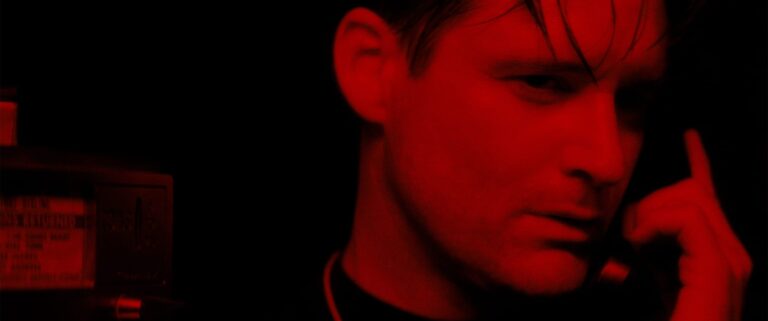
Lost Highway
Explore Lost Highway (1997) through 36 illustrated scenes, dialogue and song studies, sound credits, Tim Lucas’s commentary and edition research.
Image credits and sources accompany each linked guide.