Blue Velvet
The feature films / 1986 / Scenes & research
Who gets to look—and who pays for what they see?
Jeffrey Beaumont’s discovery of a severed ear leads him toward Dorothy Vallens, Sandy Williams and Frank Booth. The mystery is also a question of responsibility: curiosity can uncover another person’s suffering while turning that suffering into an adventure. Film and cast record ↗
- Film year
- 1986
- Listed runtime
- 120 min
- Image
- Color
- Edition ratio
- 2.35:1
Choose a way into Lumberton
First visit: start with the film’s beginnings, then meet the performers.
Behind the image: follow photography and design into music and sound and the cutting room.
Follow the evidence: inspect the dated draft, release distinctions and Explore further.
Inside Lumberton
Follow the film, image by image
From roses against a white fence to Dorothy and her child: follow the film through its rooms, performances and changing points of view. Select any still for a larger image, then use the arrows to move through the guide.
The studies discuss the complete story and ending. Times locate the illustrated moments in the copy examined here.
Scene studies / 01
The surface and the discovery
A familiar town becomes a place to investigate. The first clues are also lessons in how to look.
An invitation too perfect to trust
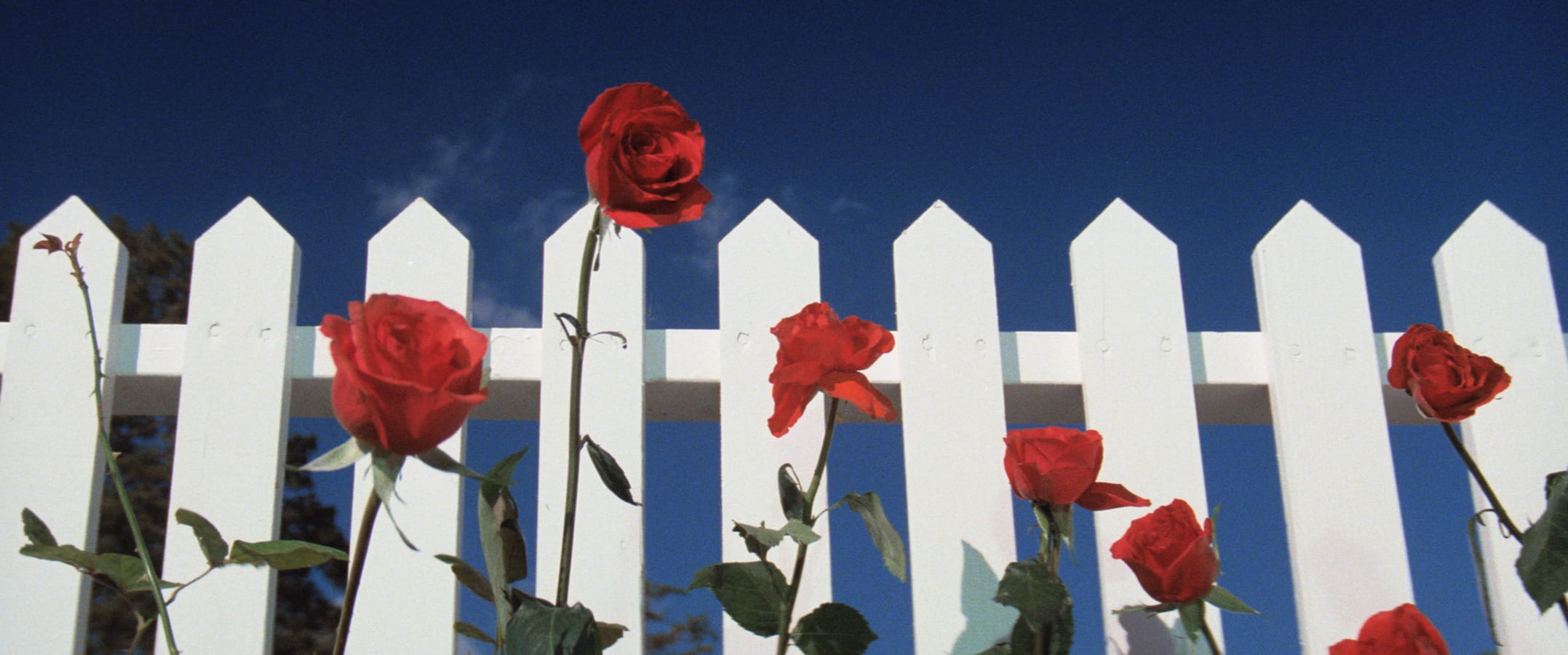
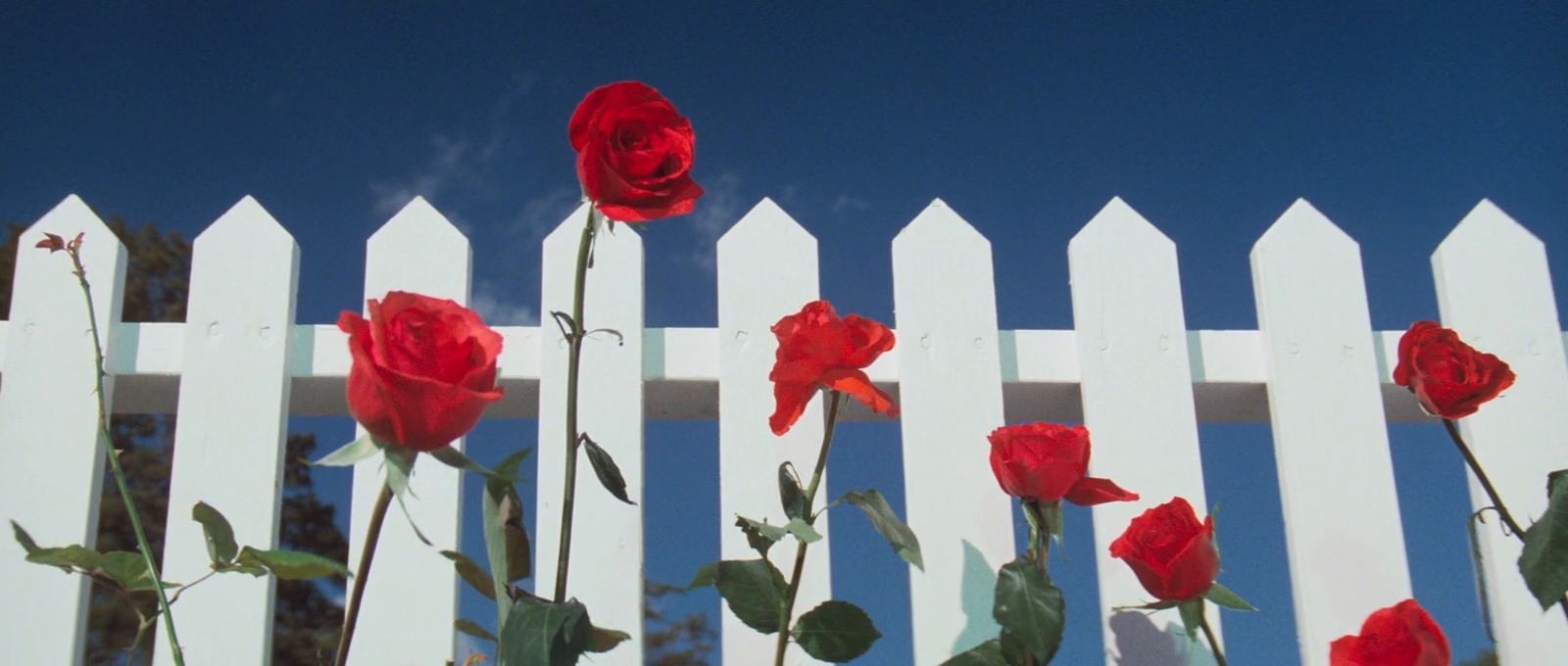
02:05The roses, fence and blue sky offer an unusually clean arrangement of color. The fire engine and school crossing extend that promise of a town in which everybody has a place. These images invite pleasure before the film makes that pleasure uncertain. Their return near the ending matters because the opening has already taught us that a reassuring surface can be an arrangement, rather than the whole of a world.
The garden loses its order
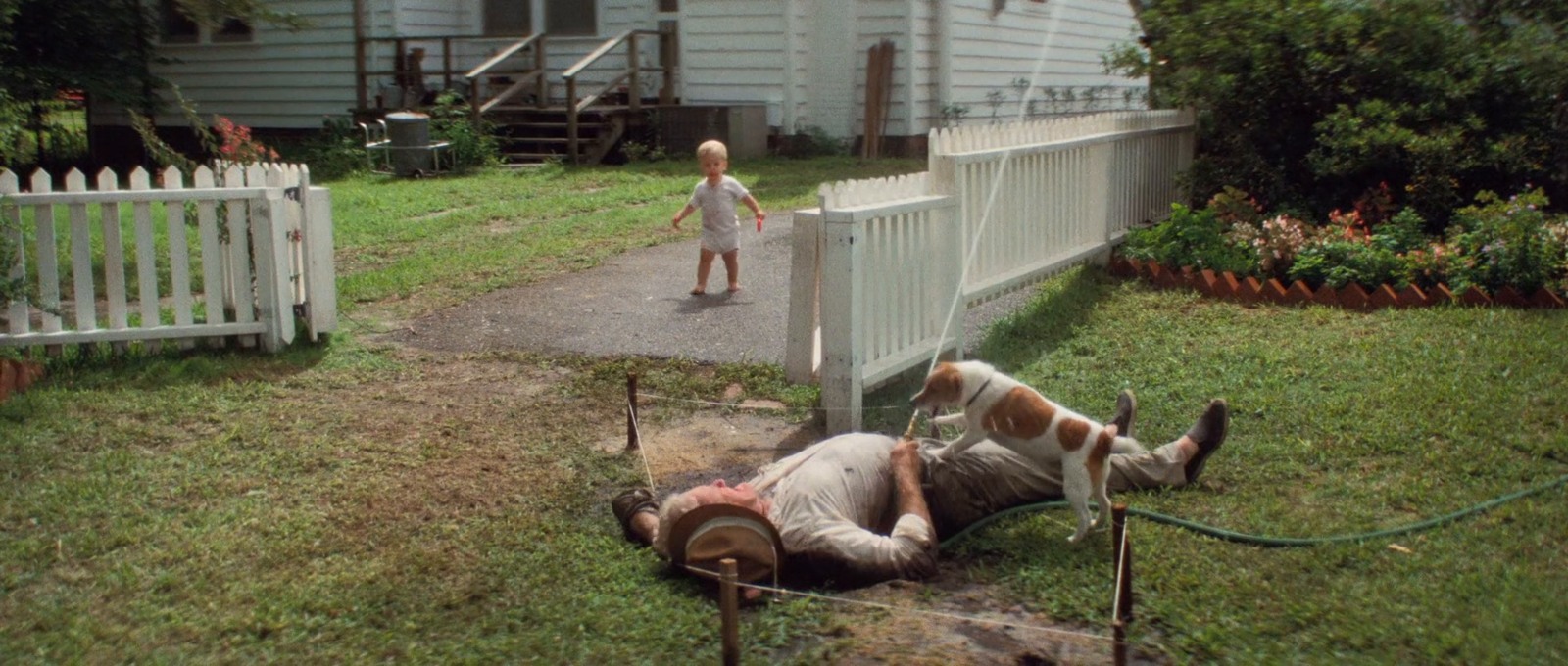
03:15The hose continues spraying after Jeffrey’s father collapses. A dog snaps at the water while a small child approaches: ordinary activities continue around a body that can no longer perform its ordinary task. The subsequent descent through the grass changes scale, replacing the tidy garden with crowded insect life. The shift makes the opening’s neat separation of attractive surface and hidden disturbance difficult to maintain.
A clue with a missing person attached
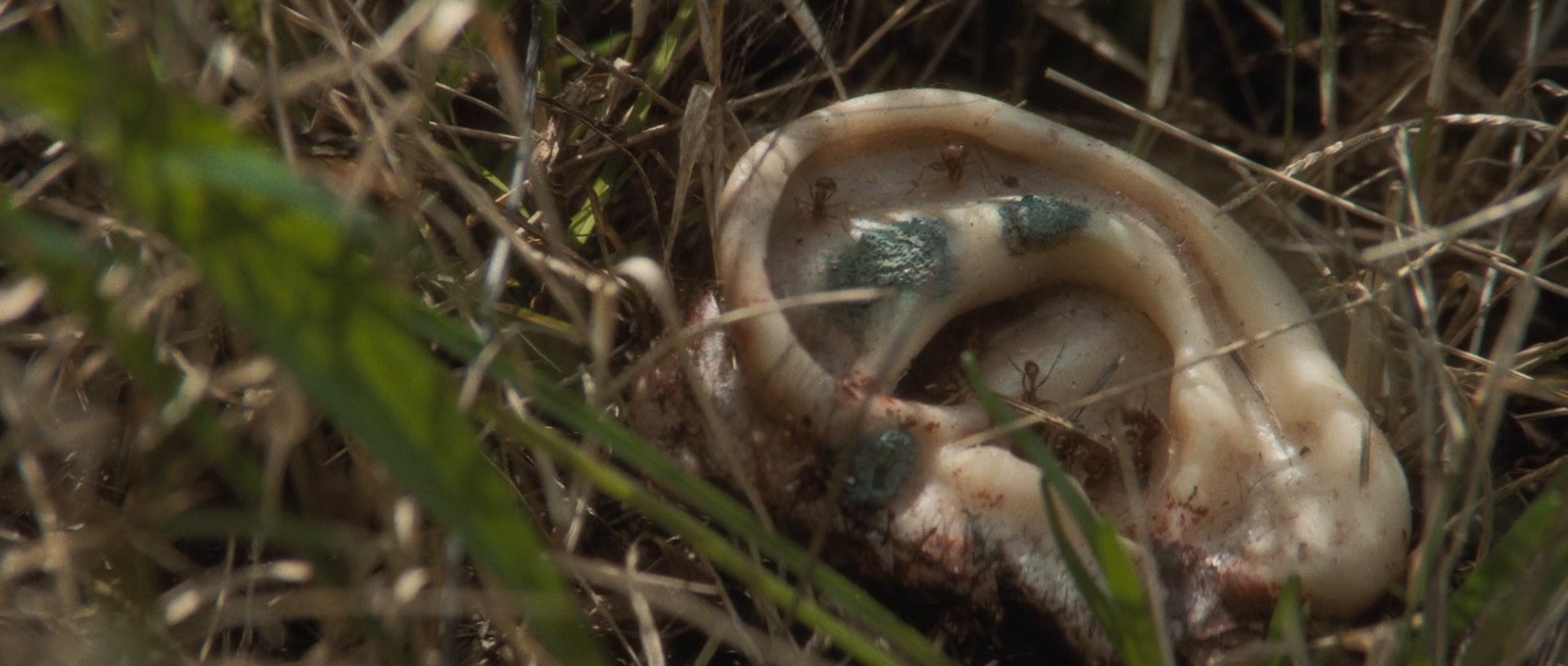
06:25The ear interrupts Jeffrey’s walk with an object that is both recognizable and radically out of place. Close framing gives its damaged surface and surrounding insects an uncomfortable physical presence. Before it can become a mystery to solve, it is evidence of an absent person. That distinction follows Jeffrey throughout the film: the excitement of finding a clue can pull attention away from the human being to whom it belongs.
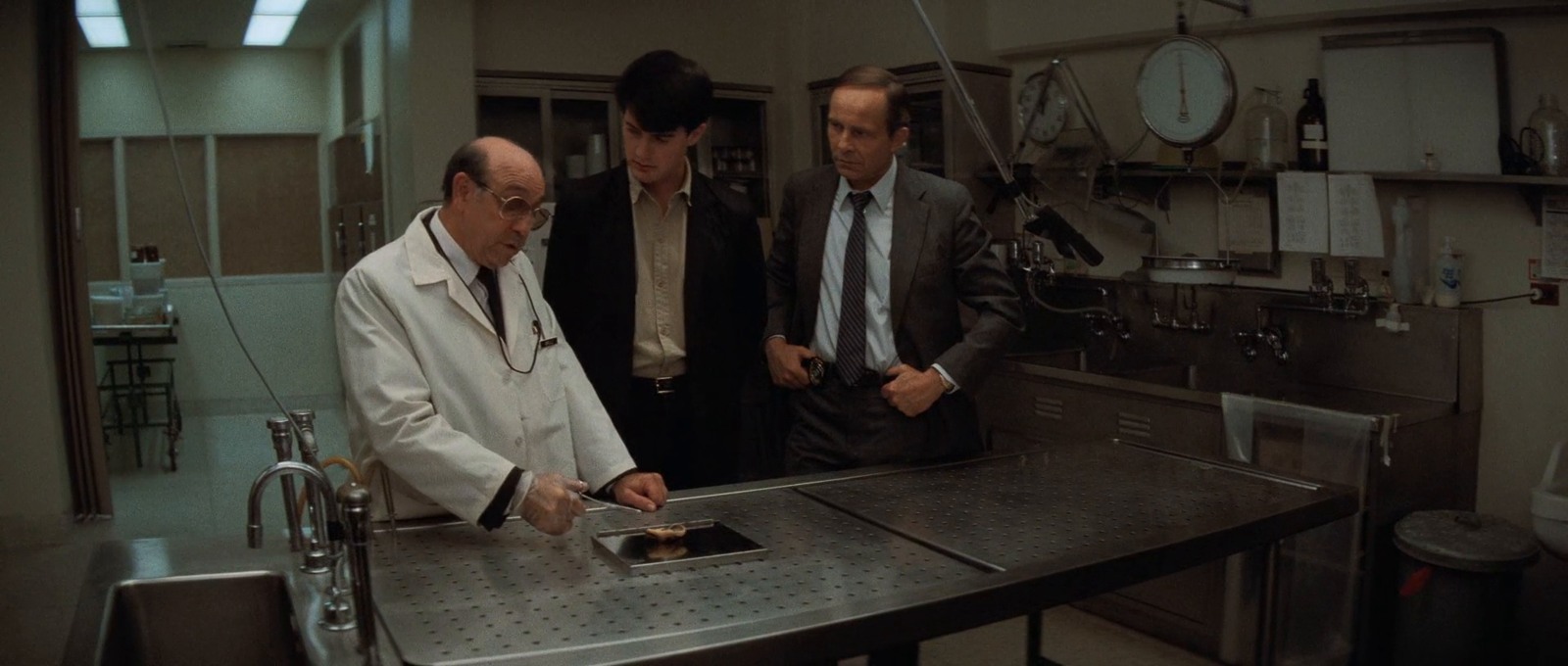
Turning discovery into evidence
08:45The move from field to examination room changes the ear’s setting and the people authorized to interpret it. Jeffrey is brought into an institutional process, but that access is limited. Looking at evidence does not make him a detective. The scene establishes the tension that his later impersonations exploit: he wants the knowledge and privileges of investigation without accepting its boundaries or accounting for its consequences.
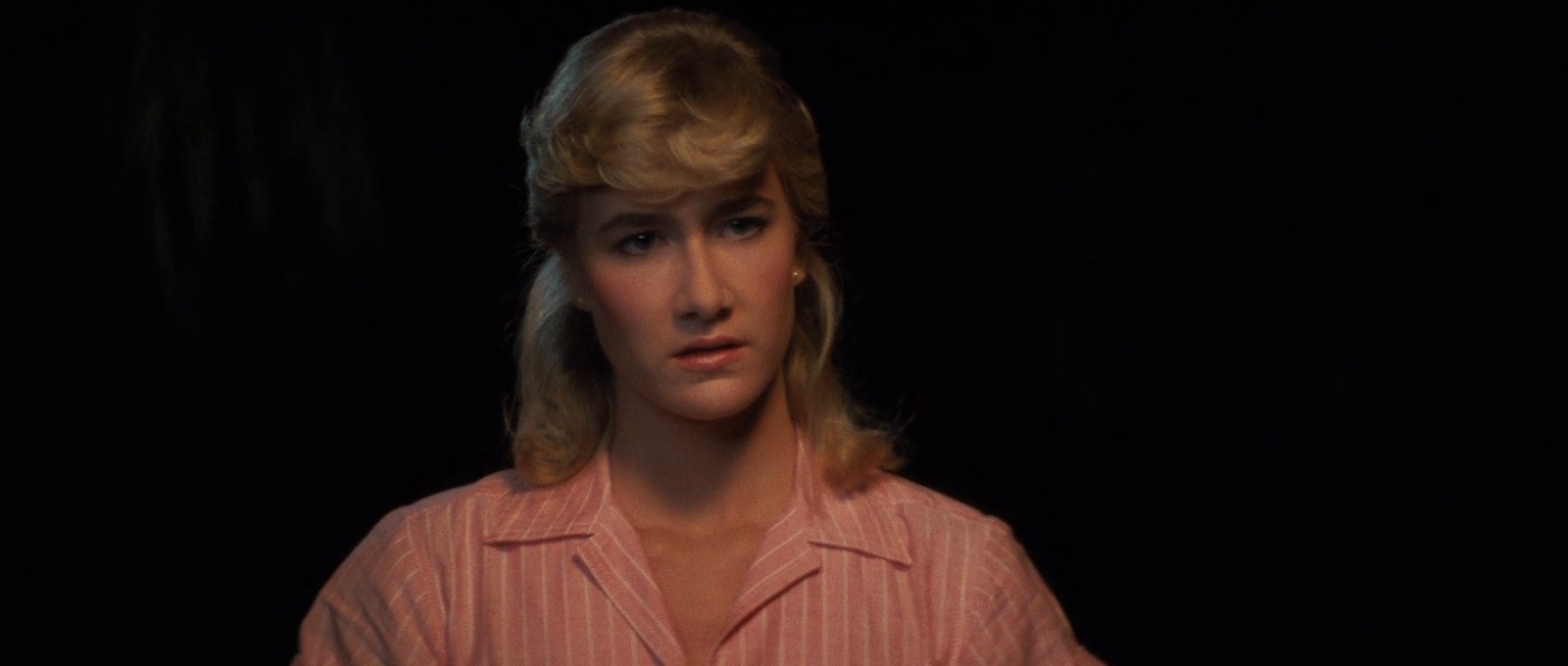
A face appears out of the dark
12:50Sandy first becomes distinct against an almost black background. Her light clothing and face do not eliminate that surrounding darkness; they make its depth legible. She brings information that Jeffrey could not obtain from her father and becomes a partner in the inquiry. The entrance complicates a simple opposition between Sandy as daylight and Dorothy as night: Sandy’s own introduction is already a movement out of shadow.
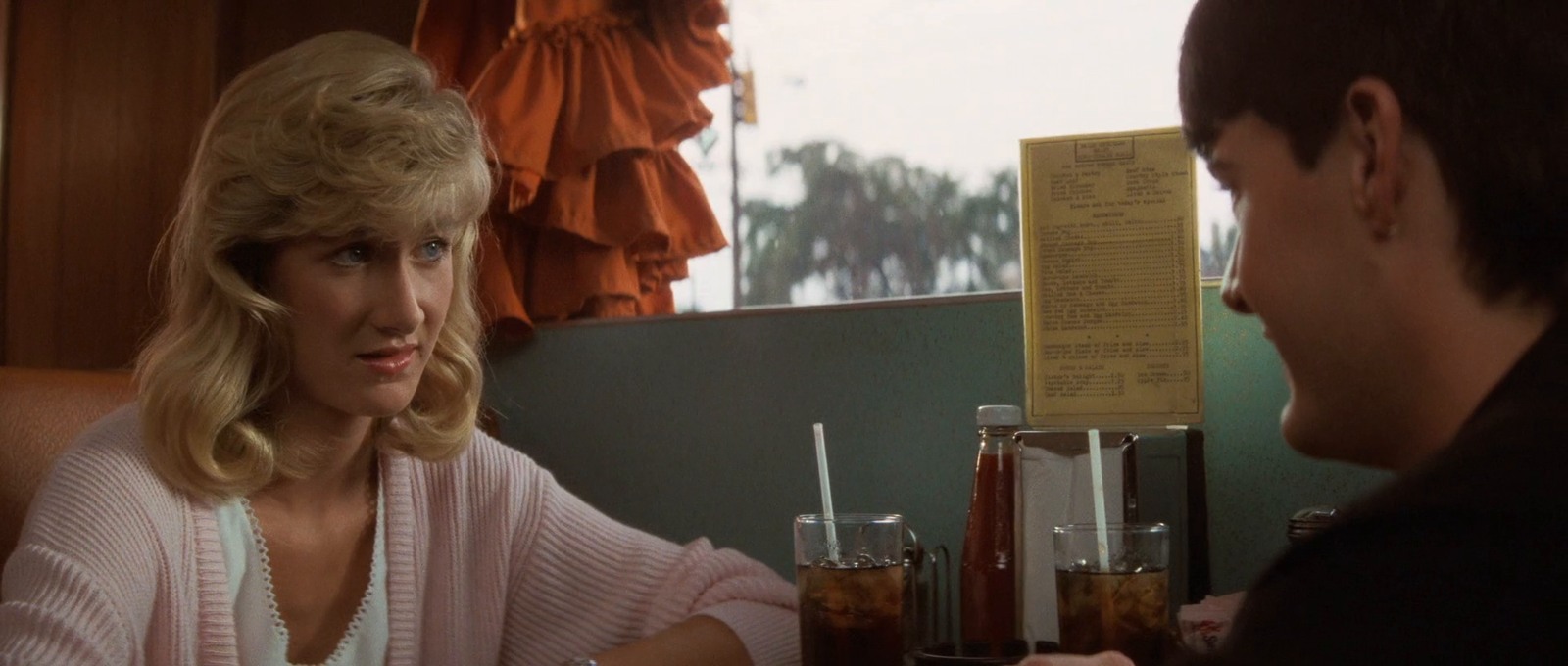
The investigation becomes a shared project
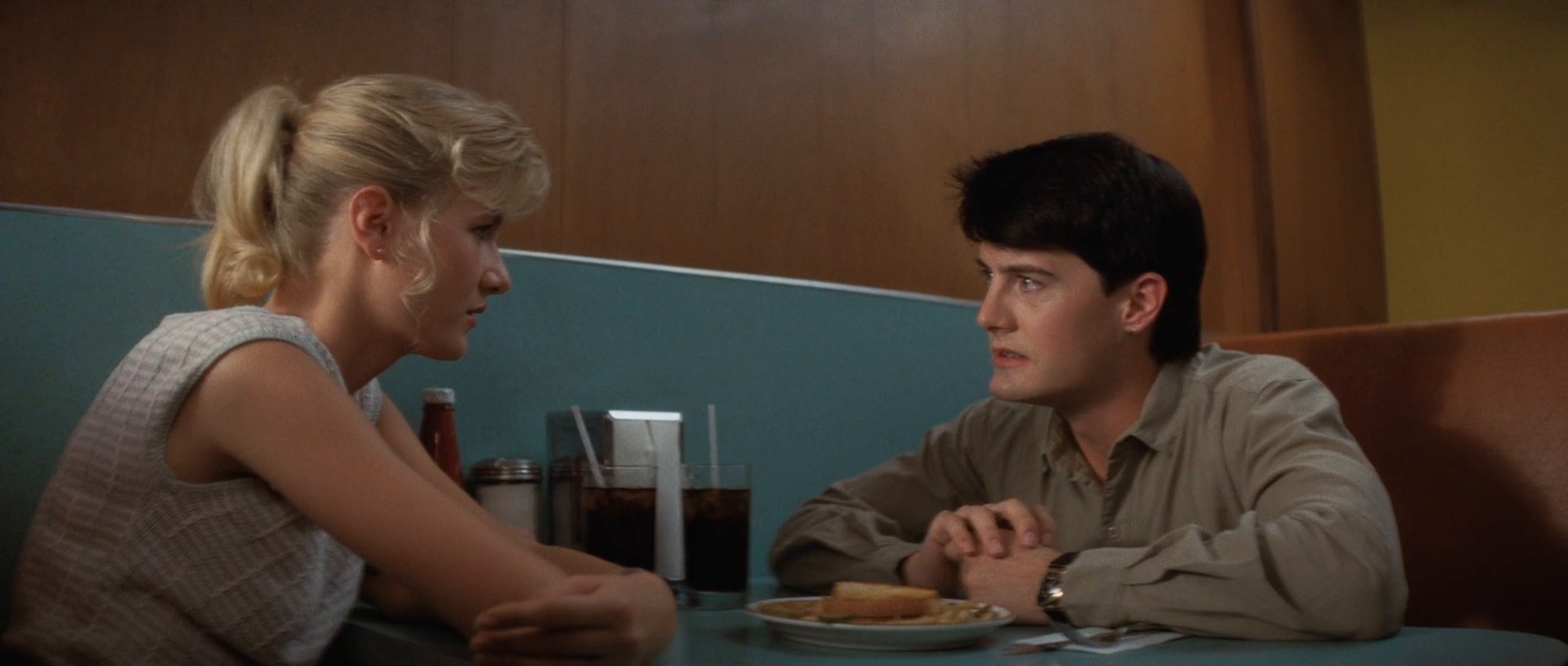
18:45The diner gives Jeffrey and Sandy a bright, ordinary setting in which to discuss increasingly intrusive plans. Alternating views hold their reactions in relation to one another, allowing attraction, hesitation and curiosity to occupy the same exchange. The setting makes the scheme feel possible. Later returns to similar public spaces will test the gap between the manageable story Jeffrey tells and what he has actually encountered.
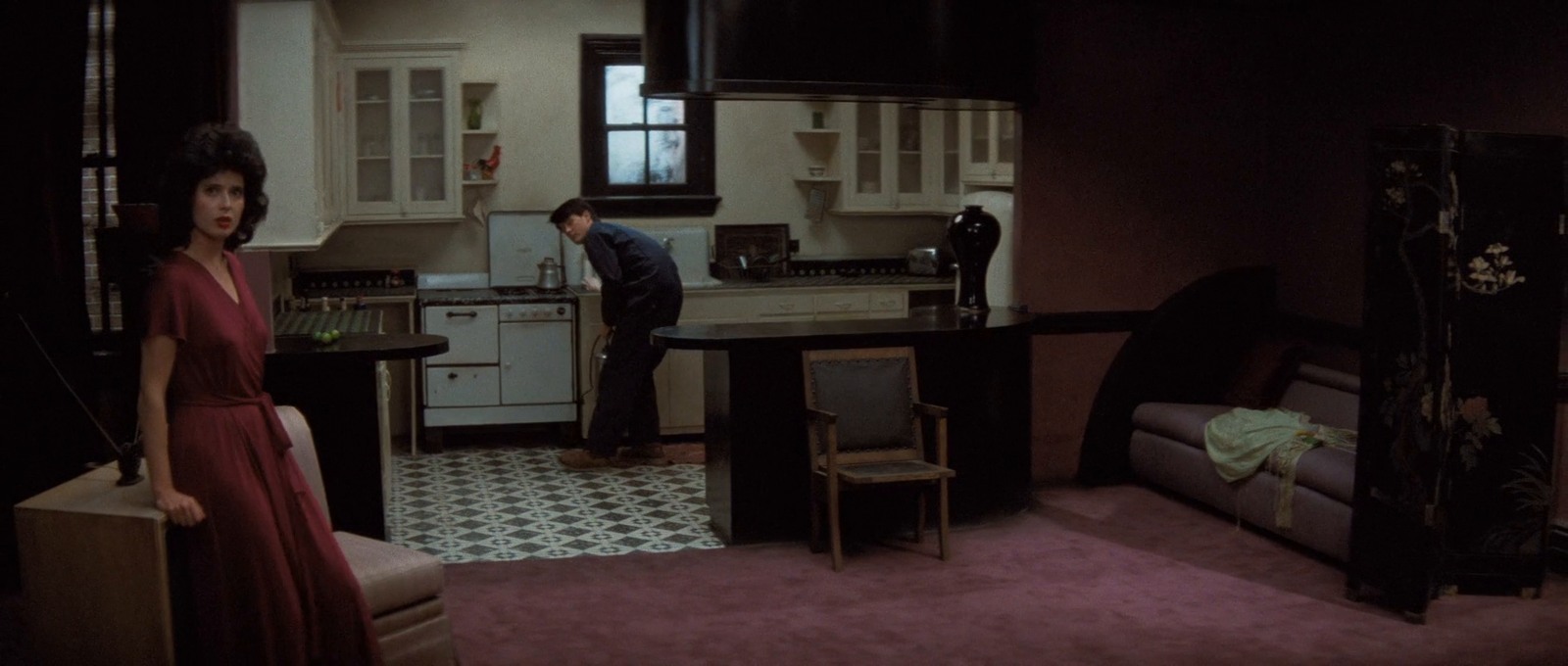
A costume opens the door
23:45Jeffrey enters the apartment by adopting a practical role: a worker with a purpose and equipment. The kitchen gives his performance a plausible place to happen while Dorothy remains nearby. The scene turns access into something staged. Its suspense depends on the difference between what the occupant believes is happening and what the visitor is doing with that permission. The later clandestine visit grows out of this first deception.
Scene studies / 02
The stage and the apartment
Public performance gives way to private observation. Jeffrey repeatedly loses the distance he assumes he can keep.
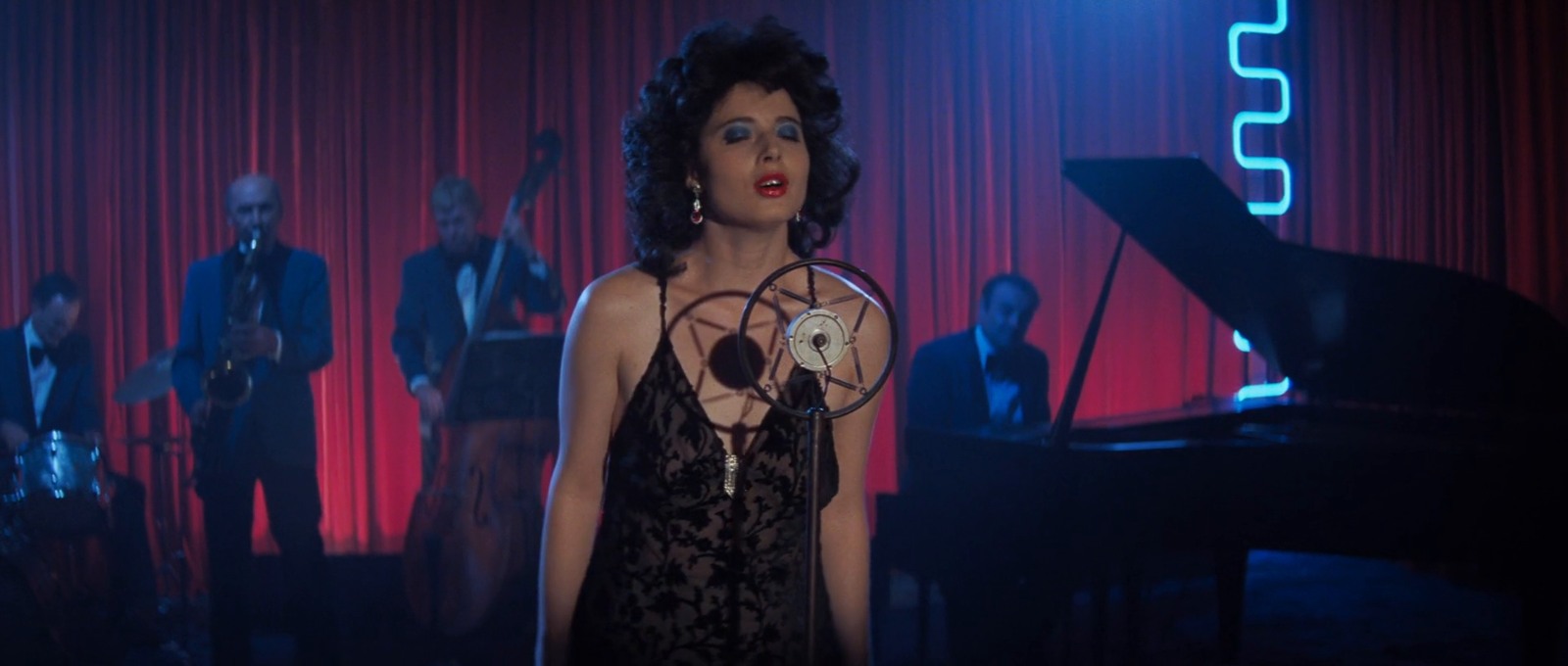
Dorothy within the stage picture
29:15The club presents Dorothy as the center of a carefully separated field of color: dark costume, pale skin, blue illumination and red curtains. Jeffrey and Sandy can watch from the audience without being part of her performance. That comfortable division will not last. The stage supplies one public image of Dorothy; the apartment scenes reveal circumstances that this polished appearance cannot explain on its own.
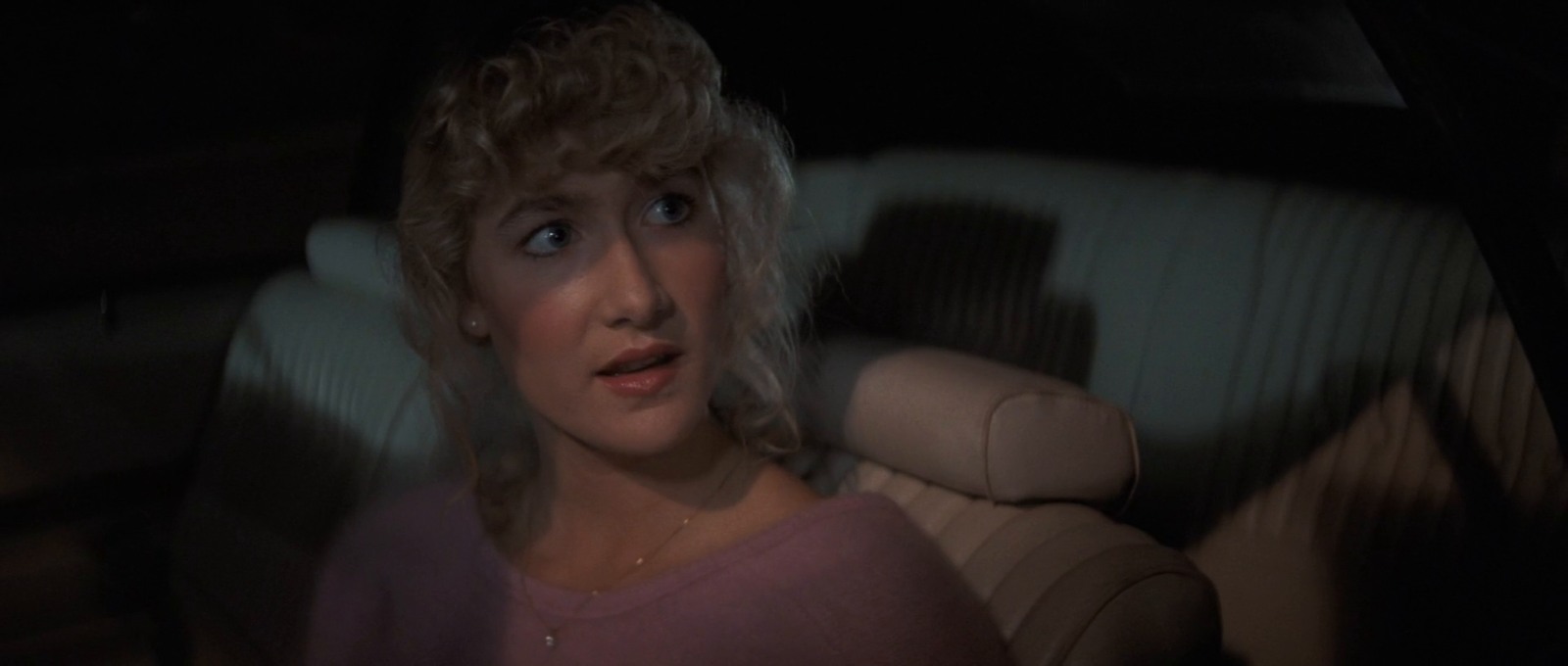
Sandy remains outside
31:45The car holds Sandy at a distance from the apartment while connecting her to Jeffrey’s plan. Her waiting becomes part of the scene’s tension, not simply an interval between his actions. Their partnership has an uneven distribution of knowledge: he crosses the threshold while she monitors the street. The alternation between these spaces lets the audience experience the danger of that separation before the characters fully understand it.
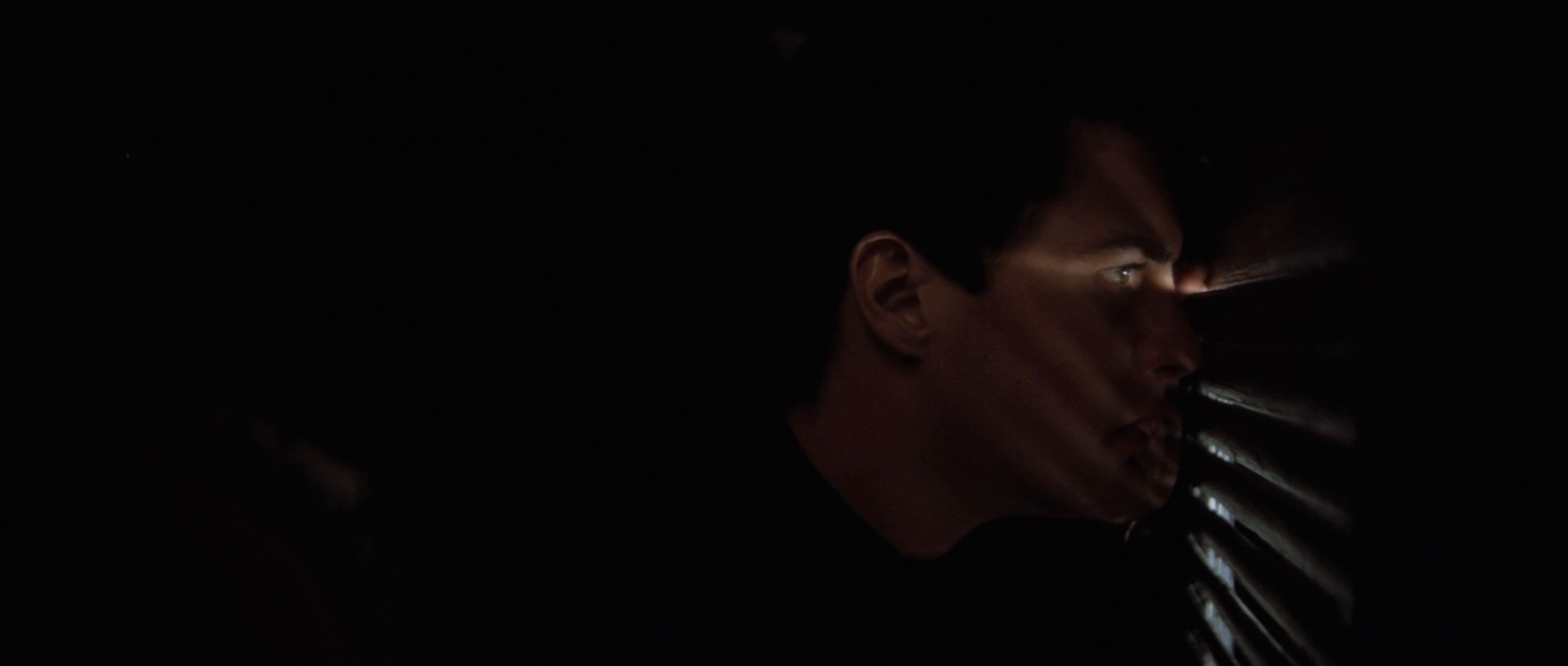
The spectator is given a hiding place
35:45The closet turns a room into a restricted view. Slats interrupt both Jeffrey’s sightline and the image of his face, making concealment visible rather than allowing a neutral, all-seeing viewpoint. The film places the spectator near his position while continuing to show the apparatus of that position. The narrow view grants access to another person’s life, but it cannot make that access innocent.
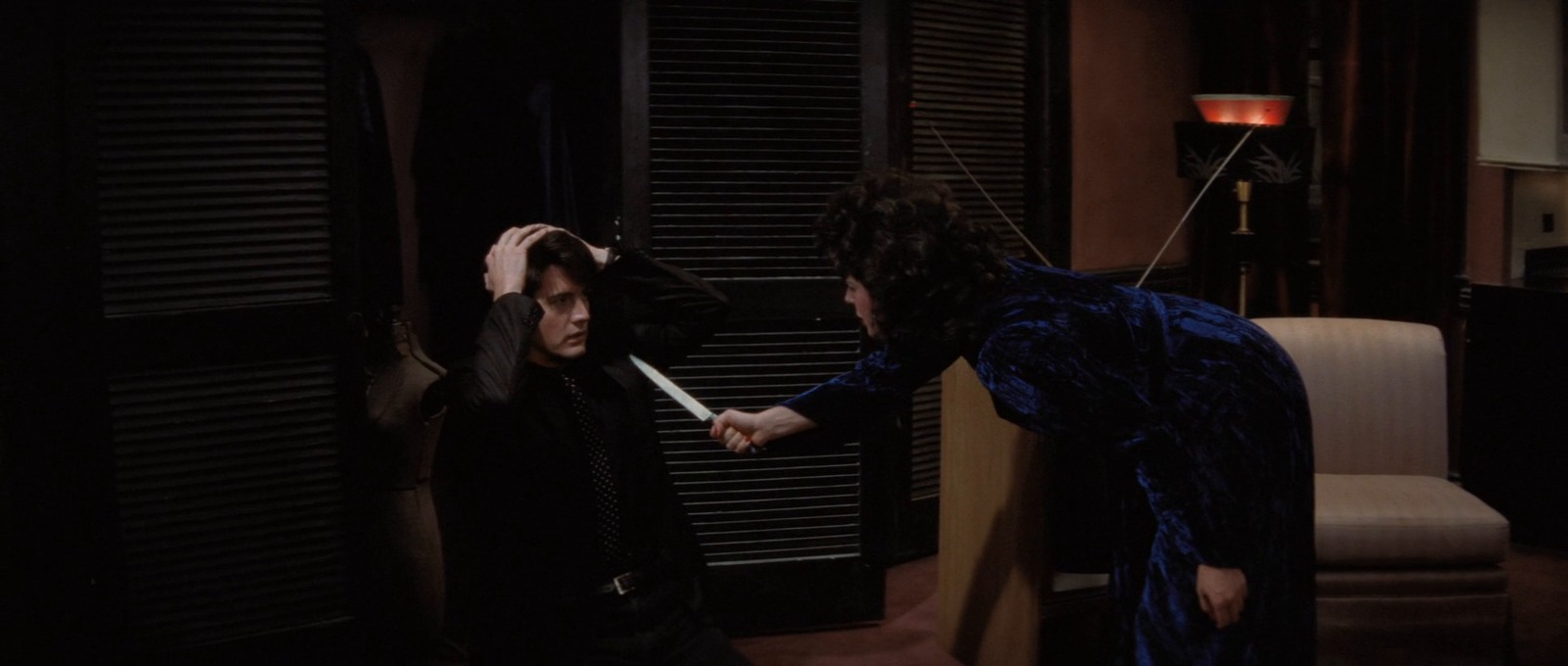
The watched person looks back
38:45Dorothy’s discovery of Jeffrey breaks the arrangement that kept him hidden and apparently in control. Their positions are unequal in a different way now: she stands over him, and he must answer for his presence. The room has not changed, but its power relations have. The scene is a useful companion to the production account of the apartment set because its furnishings and doors organize those reversals.
Frank makes the room his own
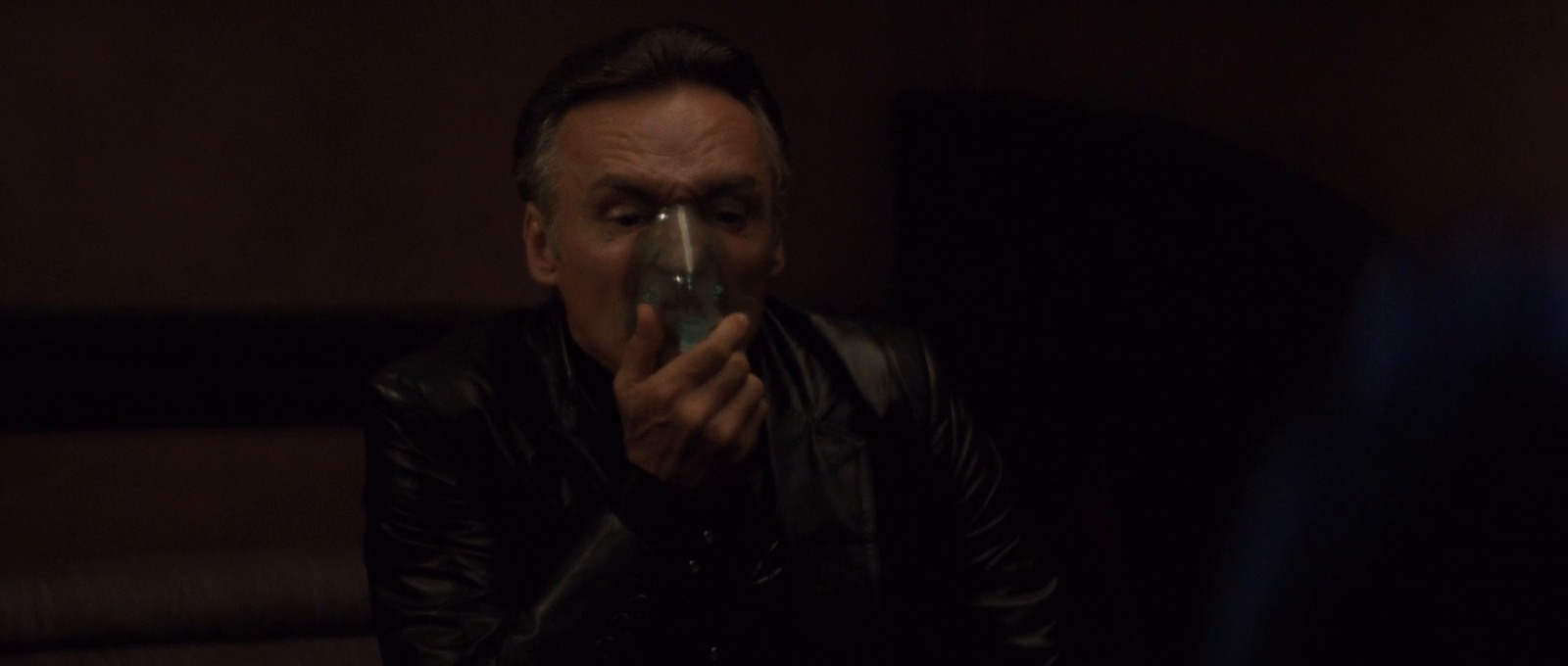
44:15Frank’s arrival reorganizes the apartment around his demands. His mask, fixed looks and abrupt changes of posture make control a bodily performance, while Jeffrey is returned to the closet. The visible apparatus should not be treated as proof of a particular gas. What the scene establishes is a ritual of coercion and an observer who can no longer mistake the room for a private adventure without a victim.
Witnessing does not settle responsibility
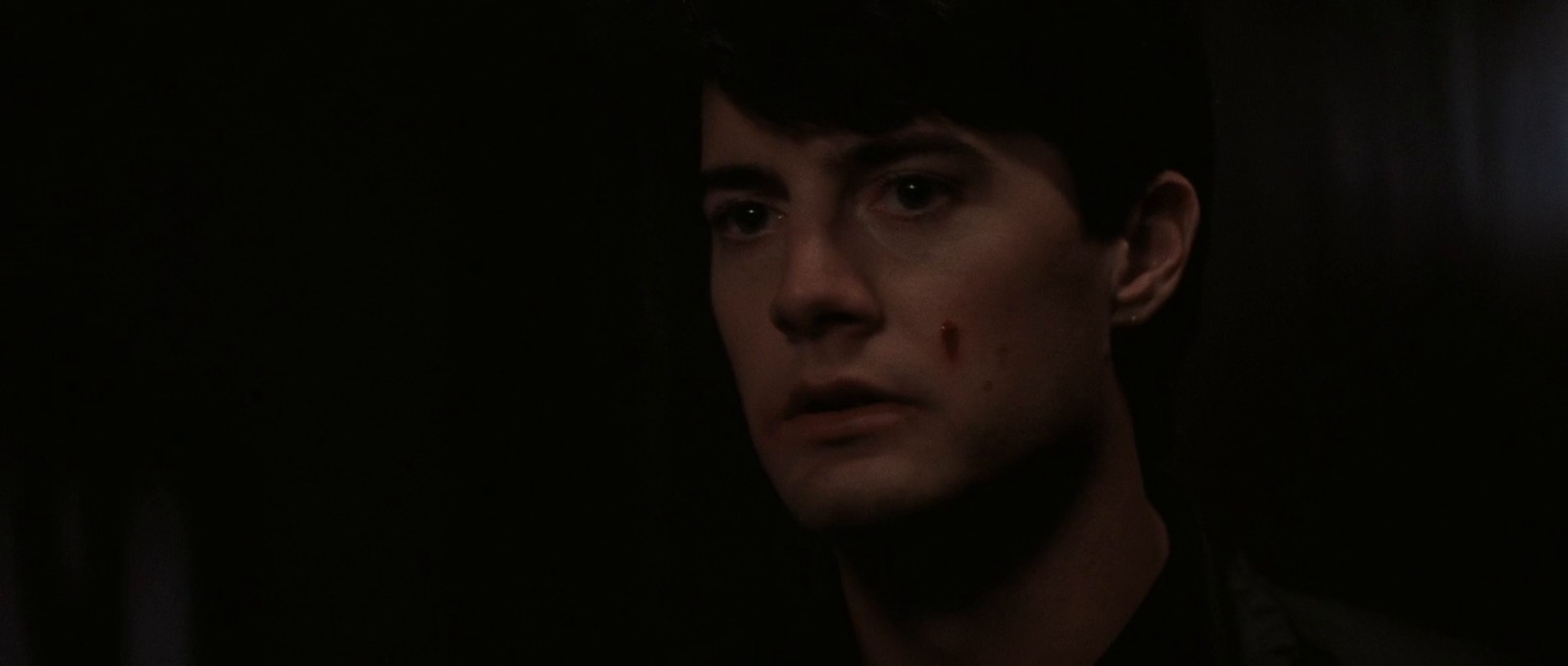
51:15After Frank leaves, Jeffrey’s relation to Dorothy cannot return to the earlier scheme of detective and subject. He has witnessed violence and is drawn into her need for help, yet his own secrecy remains part of the encounter. The doorway and pauses prolong that uncertainty. The scene leaves a question that the mystery plot cannot answer for him: what would acting responsibly require once he knows more?
Sandy offers another picture of the world
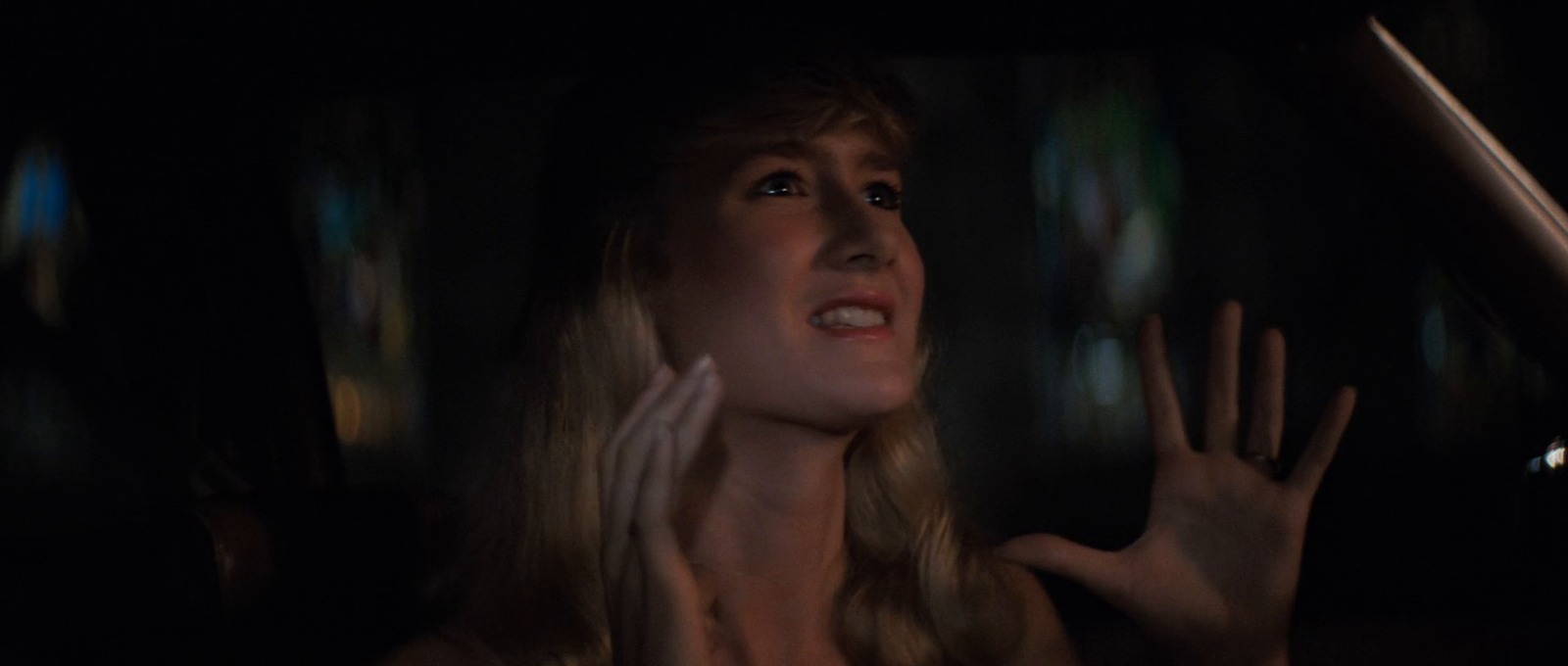
56:45Sandy’s account of robins imagines love as a force capable of changing a dark world. The film gives that idea time and a face rather than immediately illustrating it. Jeffrey listens in the same confined car space used for the investigation, but the exchange changes its emotional purpose. The robin at the ending will therefore arrive as both an ordinary creature and the return of an image Sandy has already made meaningful.
Scene studies / 03
Inside Frank’s world
Investigation becomes exposure. Rooms, vehicles and performances turn Jeffrey into somebody else’s captive audience.
Looking becomes a disguise
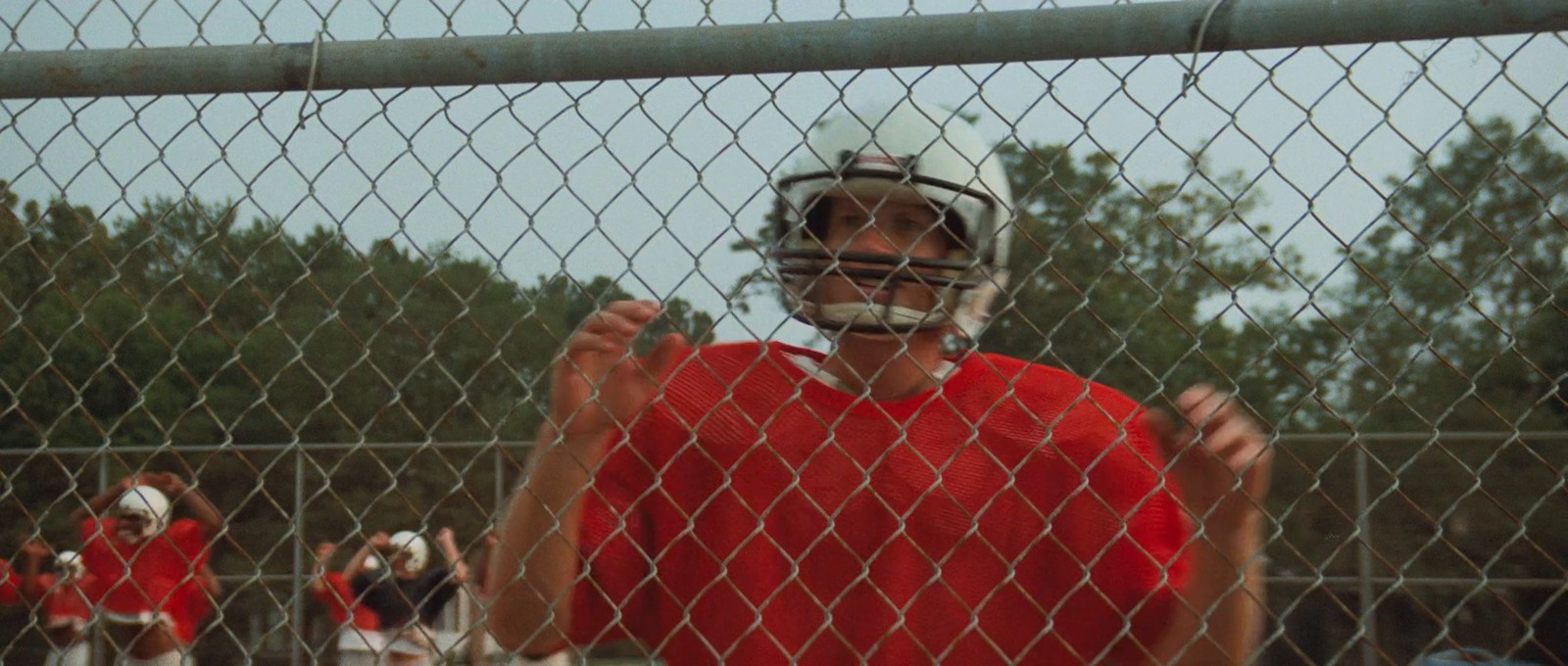
1:02:45Hat, dark glasses and the fence make Jeffrey’s renewed investigation look self-consciously covert. The fence offers cover while placing another pattern between him and the world he watches. His attempts to join scattered observations into a case continue the closet’s visual logic in an outdoor setting. More information does not necessarily mean a more reliable understanding, particularly when his own involvement has to remain concealed.
A familiar table holds a different story
1:05:15Returning to the diner makes the changing relationship measurable against a familiar space. The inquiry that once brought the pair together now includes experiences Jeffrey cannot easily share. The table keeps them close while their unequal knowledge creates distance. This is one way the film uses repetition: a setting can remain inviting even when the conversation it contains has become much harder to control.
Returning is a choice
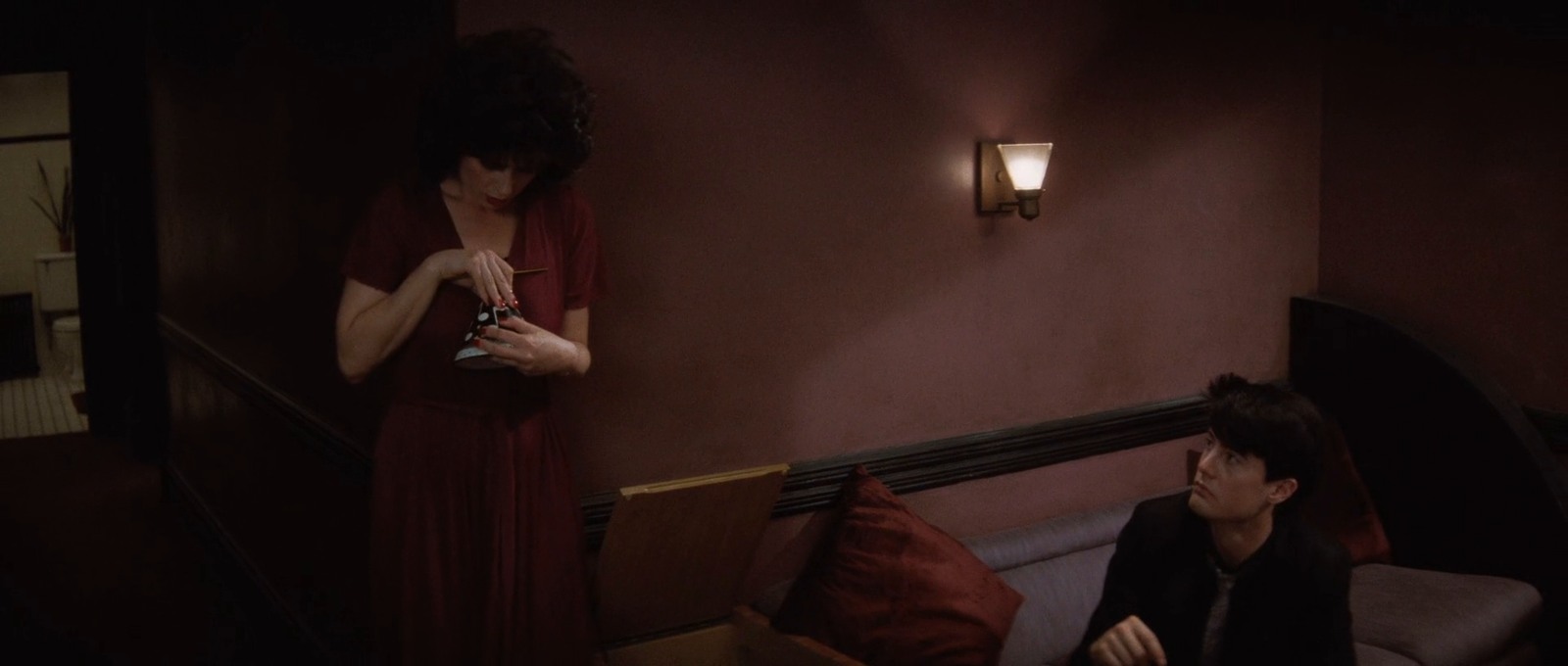
1:09:45Jeffrey’s further visit to Dorothy is no longer explainable as an accidental discovery. The arrangement of her standing figure, his seated body and the familiar sofa makes the room recognizable while their relationship becomes less stable. The film refuses to keep his desire outside the investigation. The performance study below offers a way to consider Dorothy’s vulnerability without treating her merely as an image in Jeffrey’s development.
The threshold stops being an escape
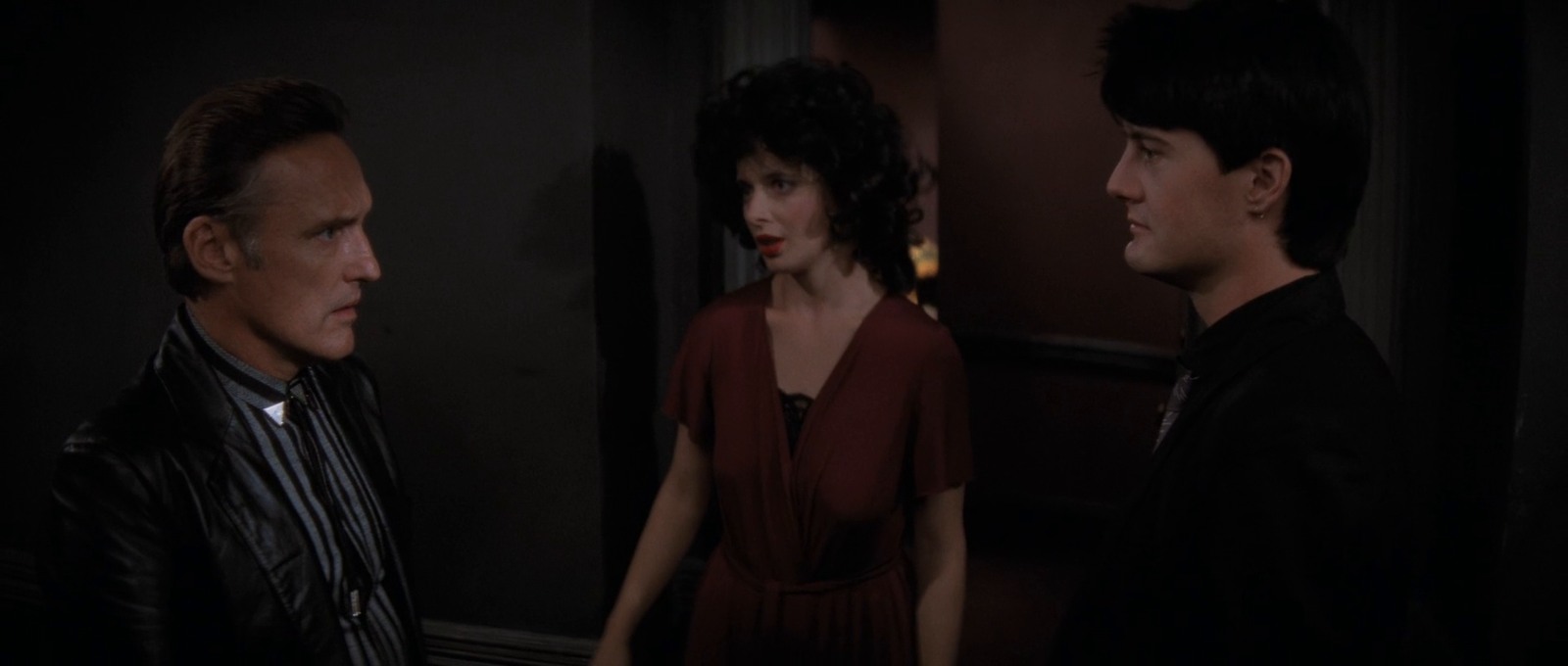
1:11:15The doorway that Jeffrey has used to enter and leave now brings him directly into Frank’s company. Their faces occupy the same space; the protection offered by a hidden viewpoint disappears. The encounter turns investigation into enforced participation. It also changes the value of the apartment’s boundaries: a door can promise an exit while delivering the person opening it to somebody waiting outside.
An ordinary lamp becomes a spotlight
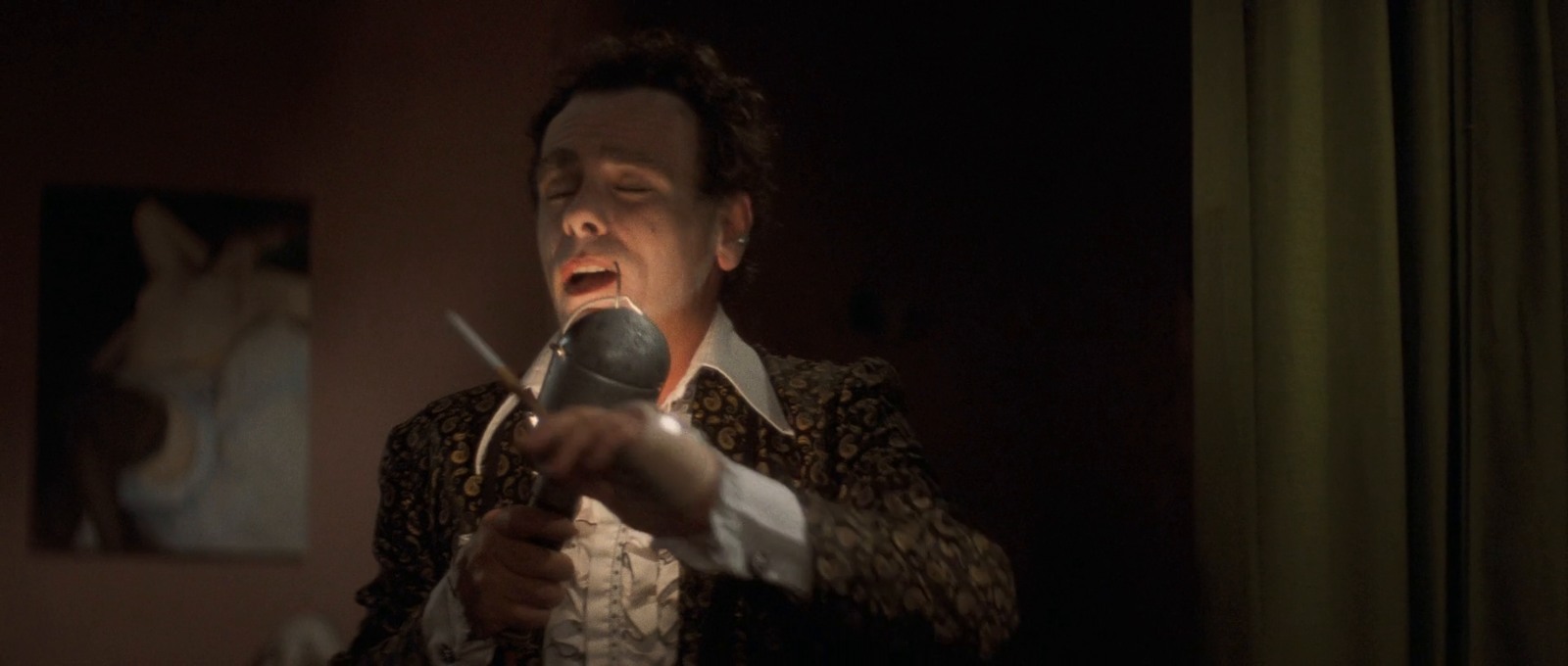
1:19:20Ben’s handheld light converts a room into a makeshift stage. Its glow gives his face a sharply separate presence while the other characters become an audience around him. The gesture rhymes with Dorothy’s club appearance but changes the scale and social conditions of performance. A familiar song becomes part of the group’s encounter, and Jeffrey has little control over either what he watches or when he can leave.
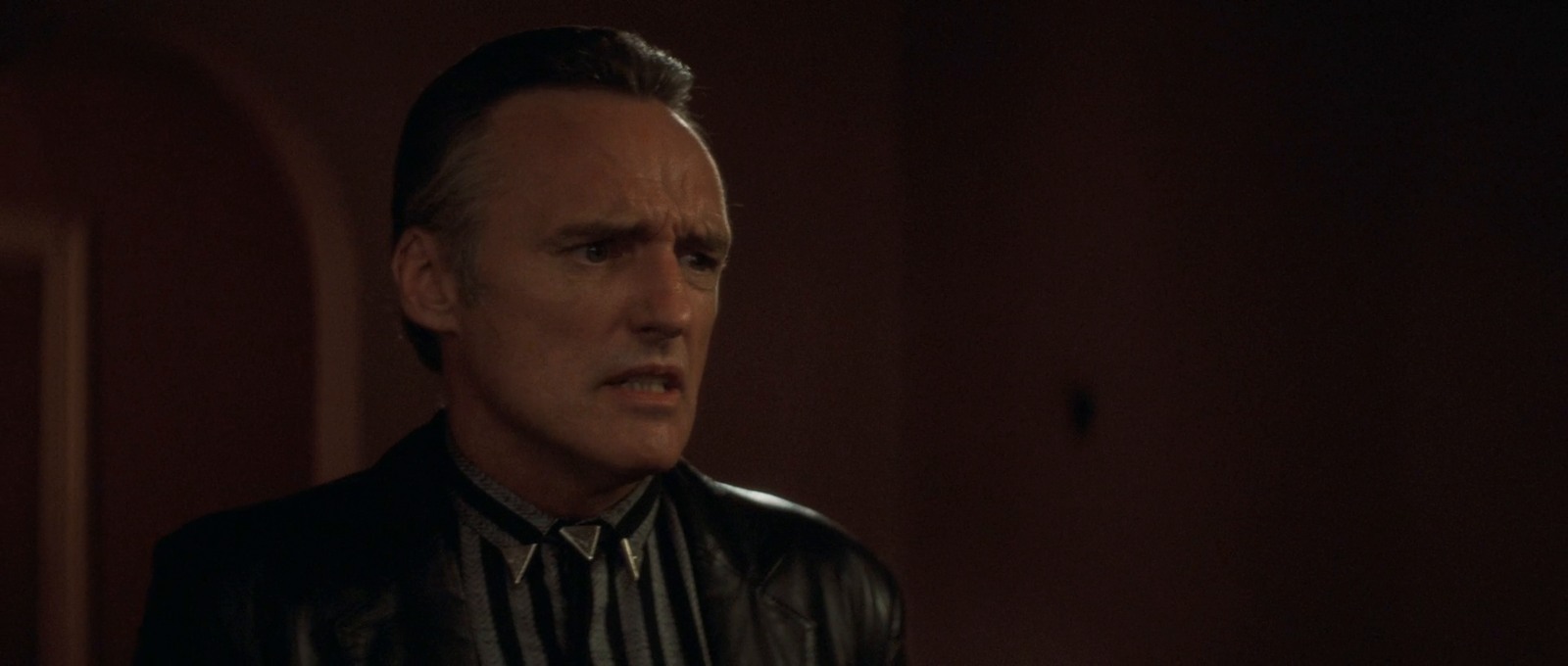
The audience is part of the performance
1:20:15Cutting away from Ben gives Frank’s reaction its own weight. The sequence is not only an image of somebody performing; it is also an arrangement of watchers whose responses can change the atmosphere. Frank’s concentration makes attention itself unstable. In this room, aesthetic pleasure and the threat of violence do not occupy separate scenes. The people watching help determine what the performance becomes.
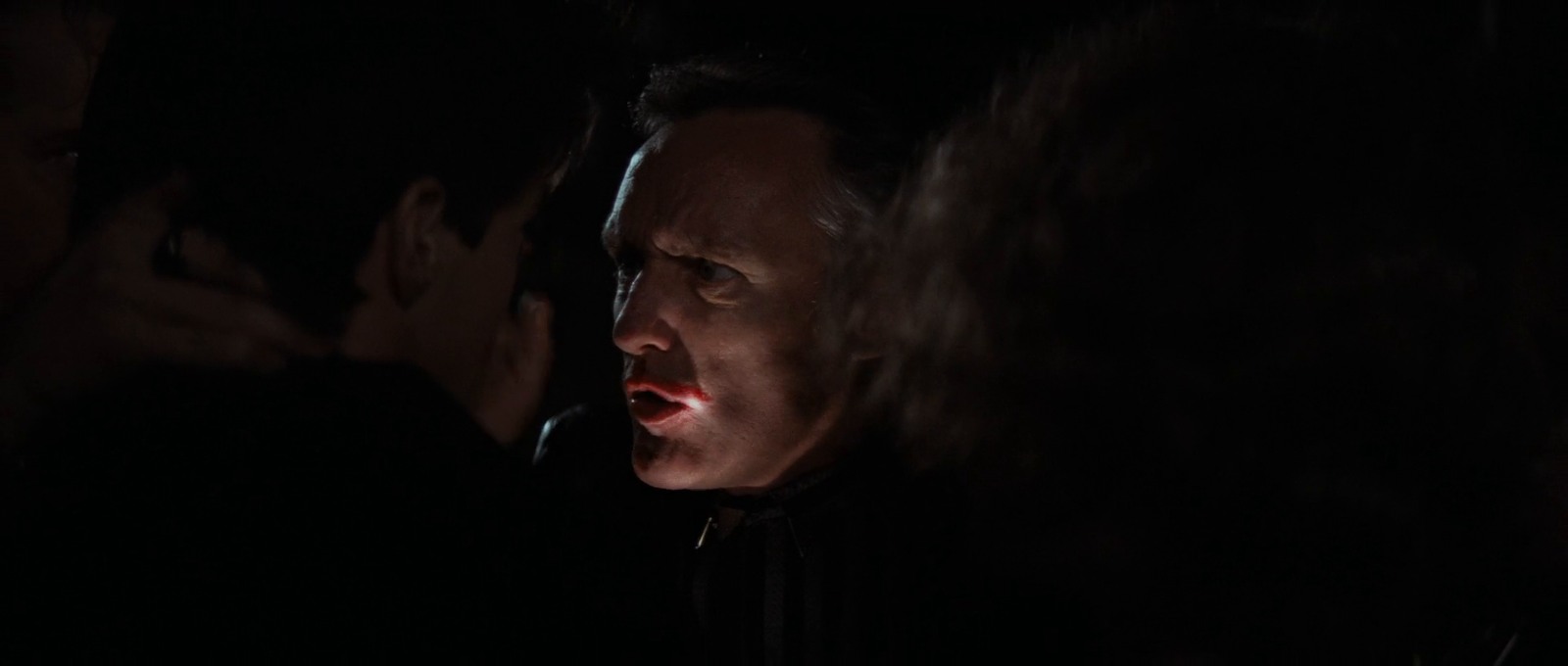
A close-up without safety
1:25:15The excursion strips Jeffrey of the distance he previously tried to maintain. Faces are pressed close together, and the darkness beyond them offers little sense of a secure surrounding space. Frank’s proximity makes the encounter invasive before any account of the plot can organize it. Dorothy’s presence in the car further prevents the scene from becoming a private contest between two men: the power Frank exercises also contains and threatens her.
Scene studies / 04
Returning to Lumberton
The two halves of Jeffrey’s life collide. Familiar places and images return with meanings they can no longer entirely control.
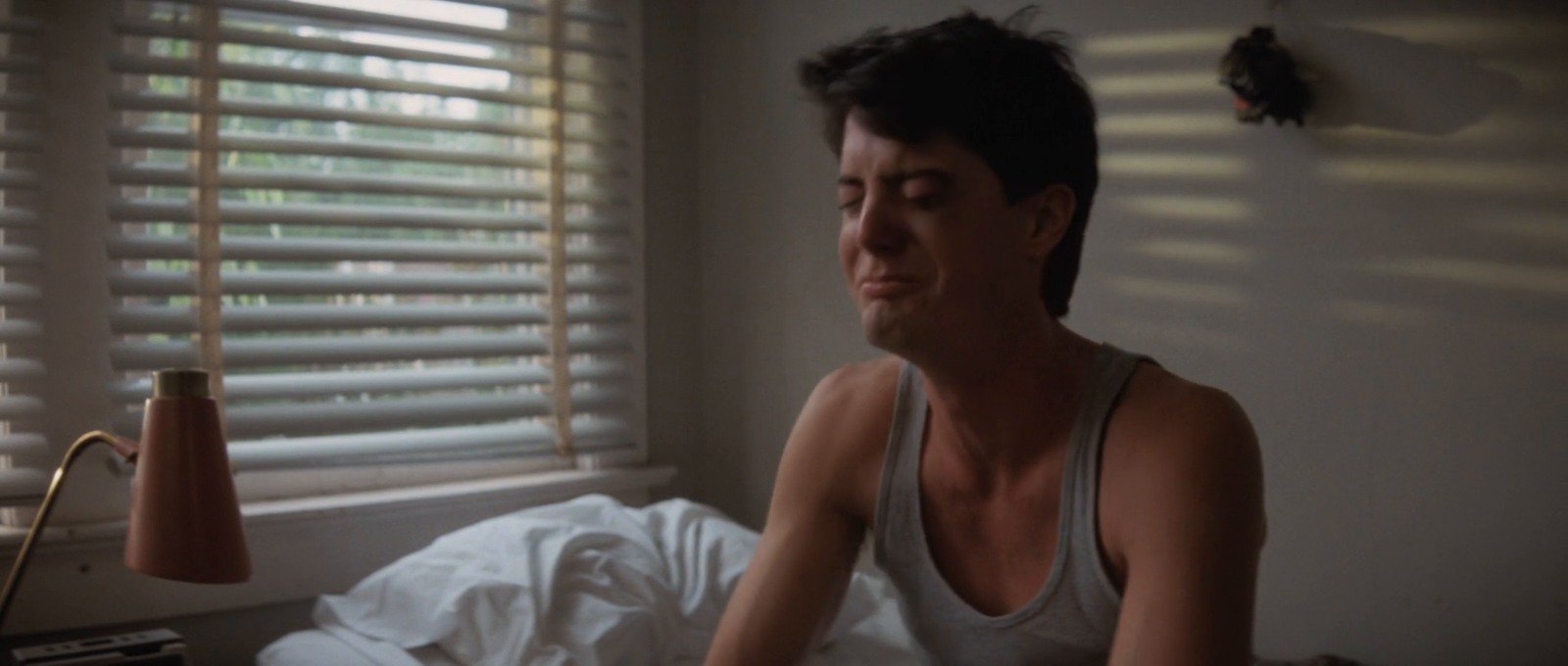
Daylight does not undo the night
1:28:35The bedroom’s daylight returns Jeffrey to a familiar domestic setting, but his physical and emotional state carries the preceding night into it. The bands of light recall other divided views without functioning as a hiding place. The change of hour is therefore not a clean reset. Bringing the investigation to Detective Williams becomes part of the return from private certainty to a situation that Jeffrey can no longer manage alone.
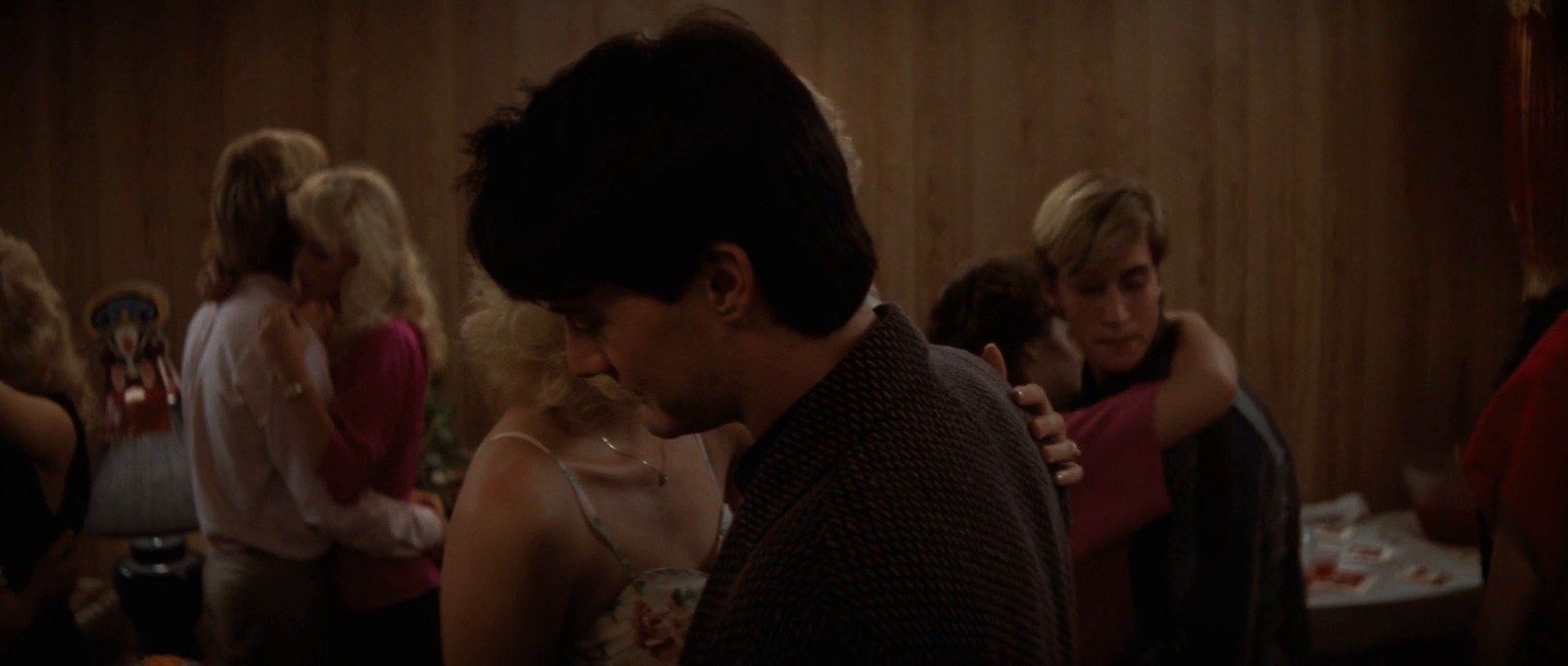
The promise of an ordinary romance
1:37:45The party offers an apparently recognizable conclusion to the relationship: a shared dance, other young couples and a room organized around sociability. Its familiarity is part of its force. The film lets the attraction between Jeffrey and Sandy matter, then tests whether the experiences excluded from this scene can really be left outside it. The following journey home changes the party’s sense of a destination already reached.
Dorothy enters the other story
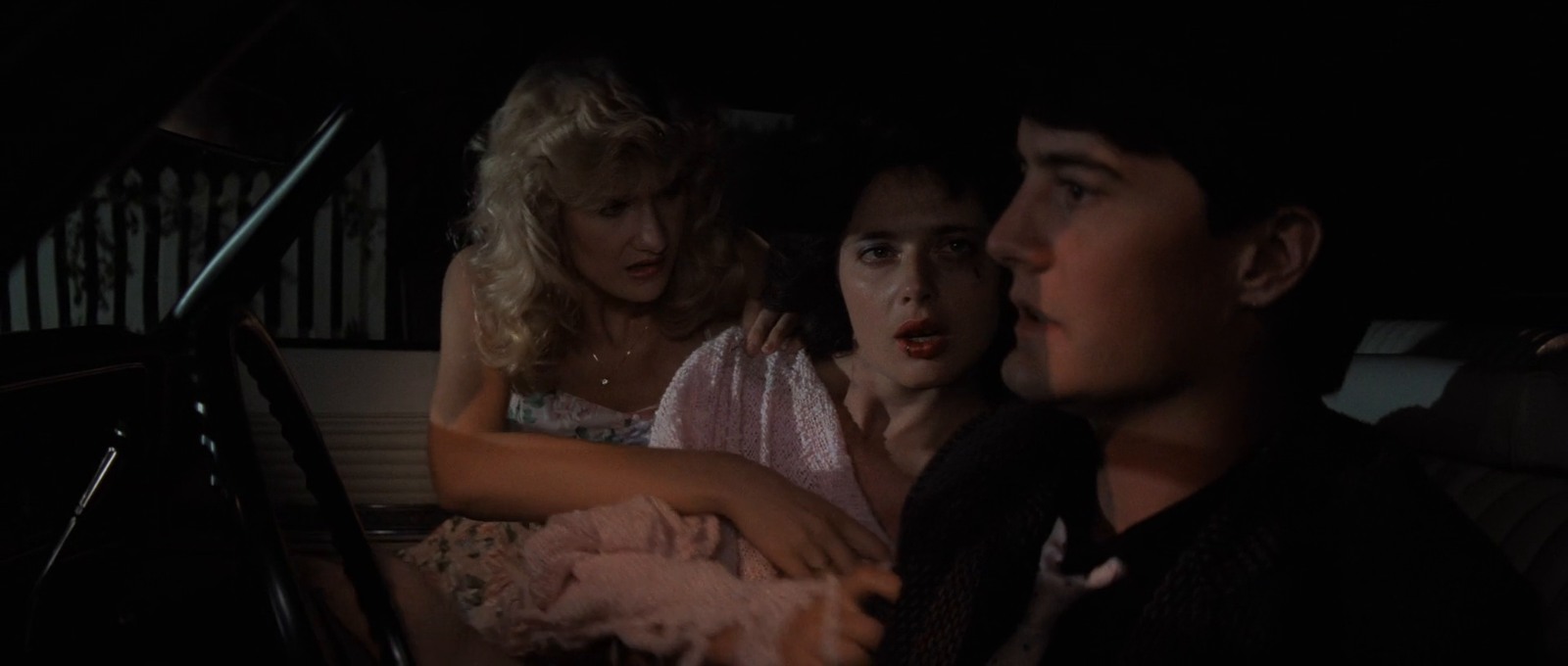
1:42:15Dorothy’s arrival brings into public view what Jeffrey has kept divided. Sandy’s physical support of her is as important as Jeffrey’s reaction: the two women are no longer held apart as separate destinations in his life. The car briefly contains all three, making their proximity unavoidable. The scene transforms an investigation into a demand for care and an encounter with the consequences of Jeffrey’s secrecy.
The apartment becomes a terrible tableau
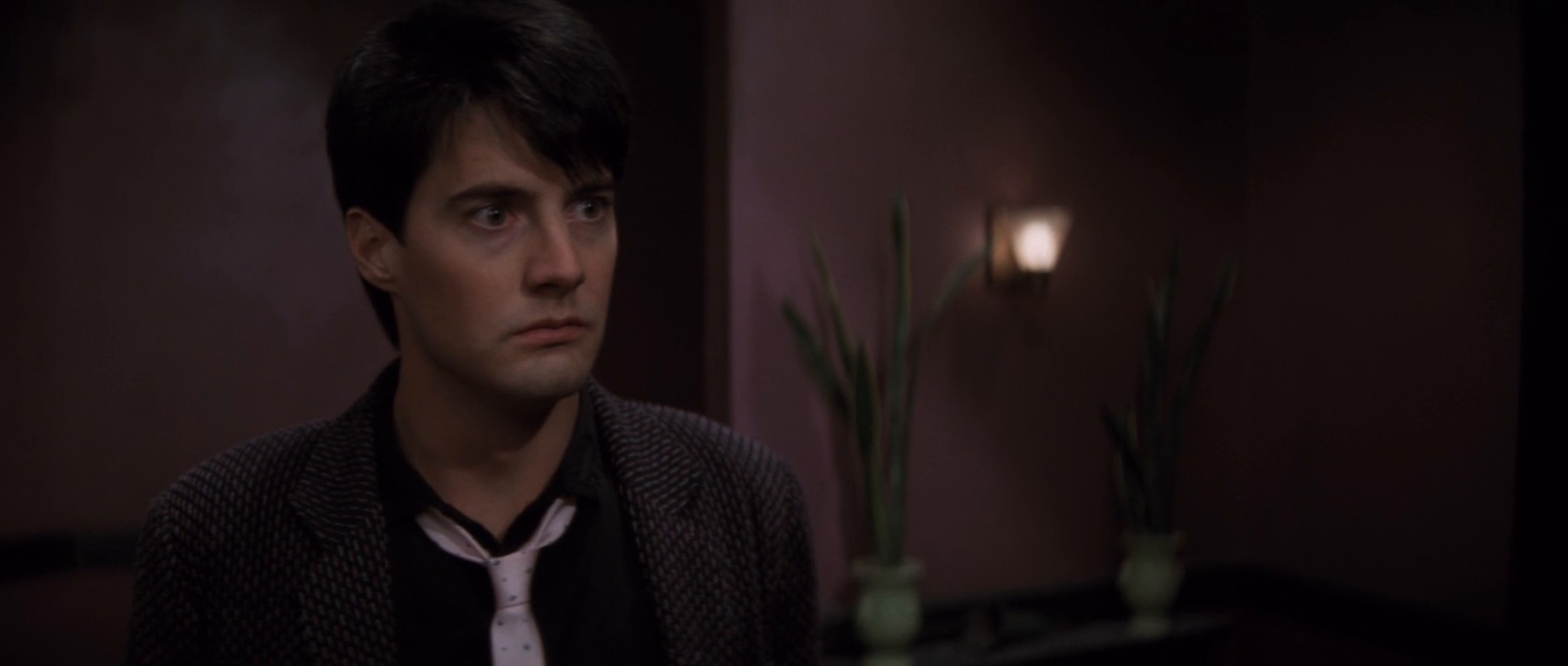
1:48:15The final return replaces the room’s earlier exchanges with an arrangement of bodies and objects that Jeffrey must read. The familiar furnishings make the disruption more severe, not less. Recognition now comes too late to protect the people represented by the clues. His reaction is an essential part of the scene: the film asks us to look at someone confronting the result, rather than treating the room only as a puzzle to decode.
Information can be overheard
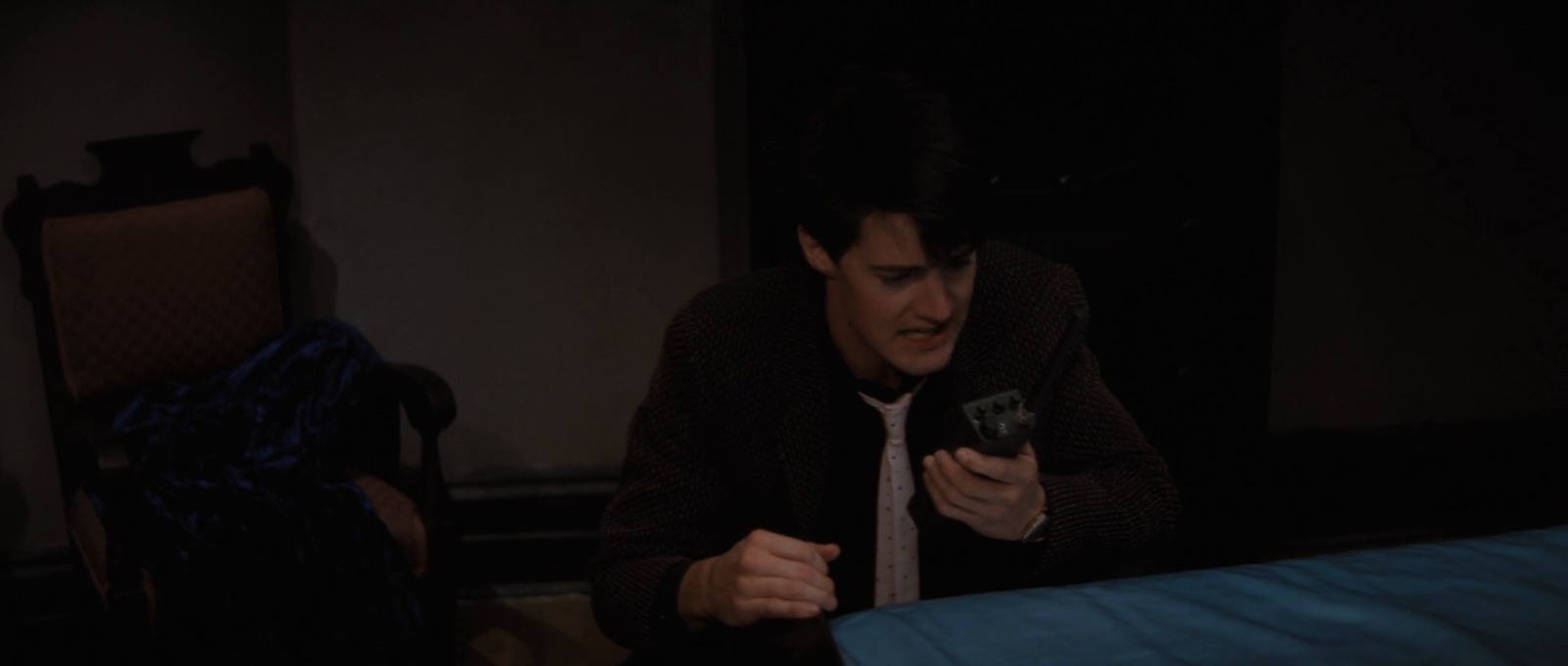
1:52:00The radio offers a connection to help while also exposing Jeffrey’s words to Frank. The solution is not simply to communicate more clearly; it is to use the difference between a spoken location and an actual one. This makes the climax a problem of listening and spatial knowledge. The apartment’s separate rooms, already familiar from the earlier visits, give the deception a geography the viewer can follow.
The hiding place returns
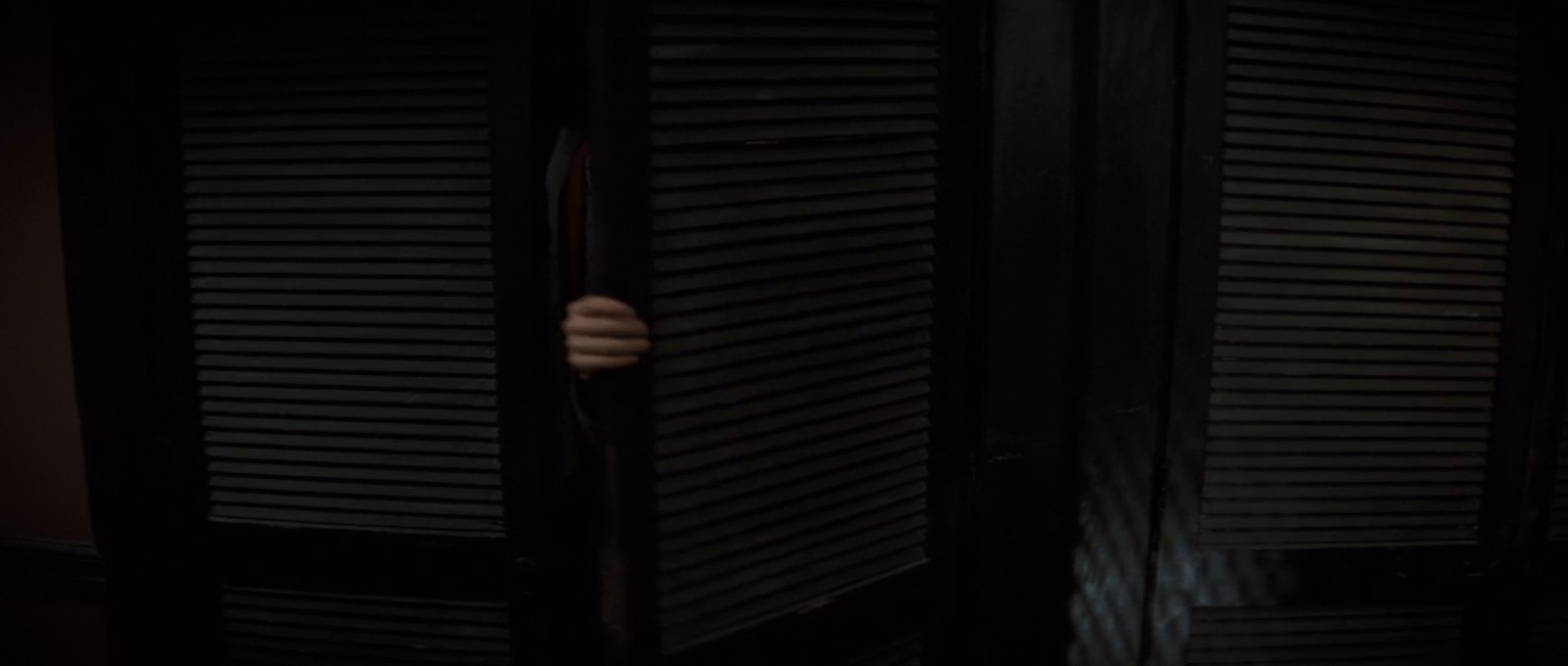
1:53:45Jeffrey’s return to the closet repeats the earlier image under radically changed conditions. He is hiding from a pursuer rather than arranging a secret view of Dorothy, and his knowledge of the room now has an immediate purpose. The repeated location connects the climax to the film’s central question of looking. It does not erase the earlier intrusion simply because the same space can now help him survive.
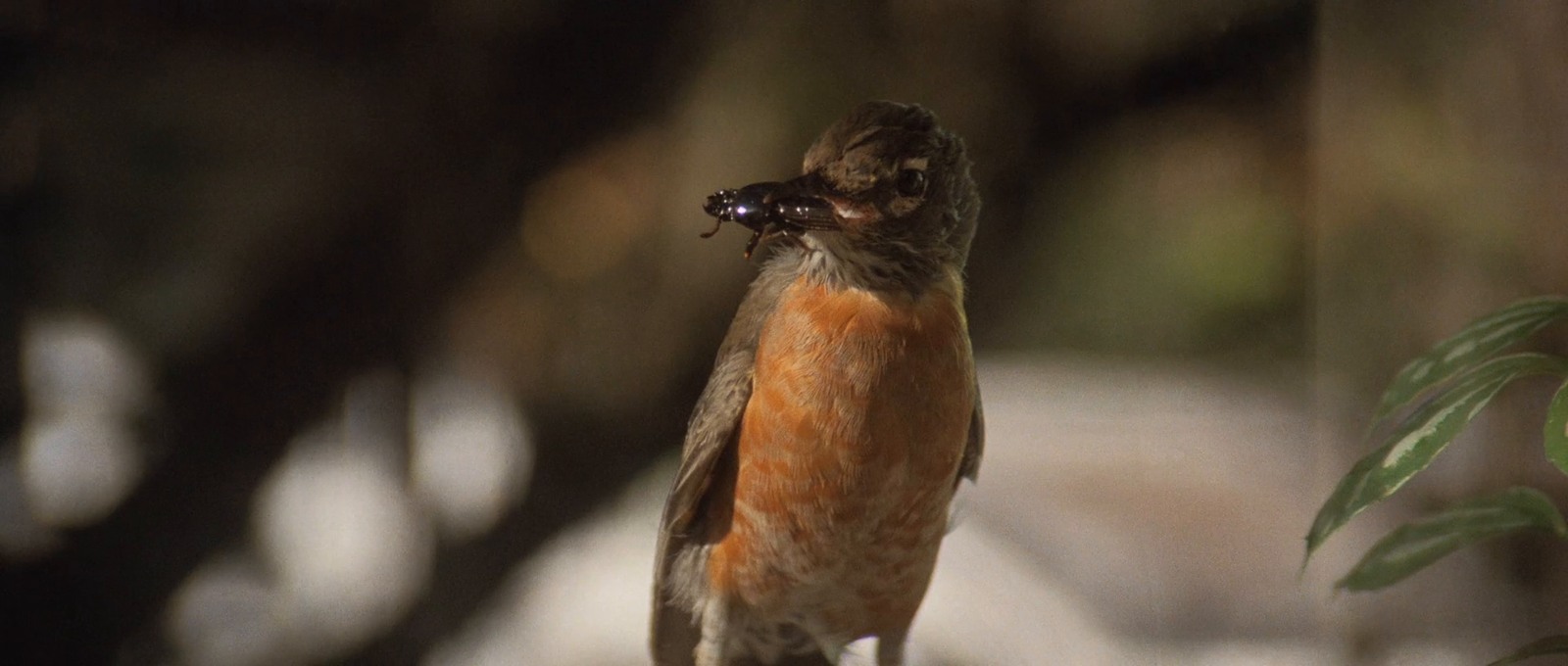
The promised bird has something in its beak
1:57:57The robin recalls Sandy’s dream while retaining a stubbornly material detail: the insect in its beak. A symbol of love is also a creature eating another creature. The image brings the opening’s insect world back into the restored domestic picture instead of leaving it underground. Whether the ending feels reassuring, artificial or unsettled depends partly on how much weight we give that coexistence.
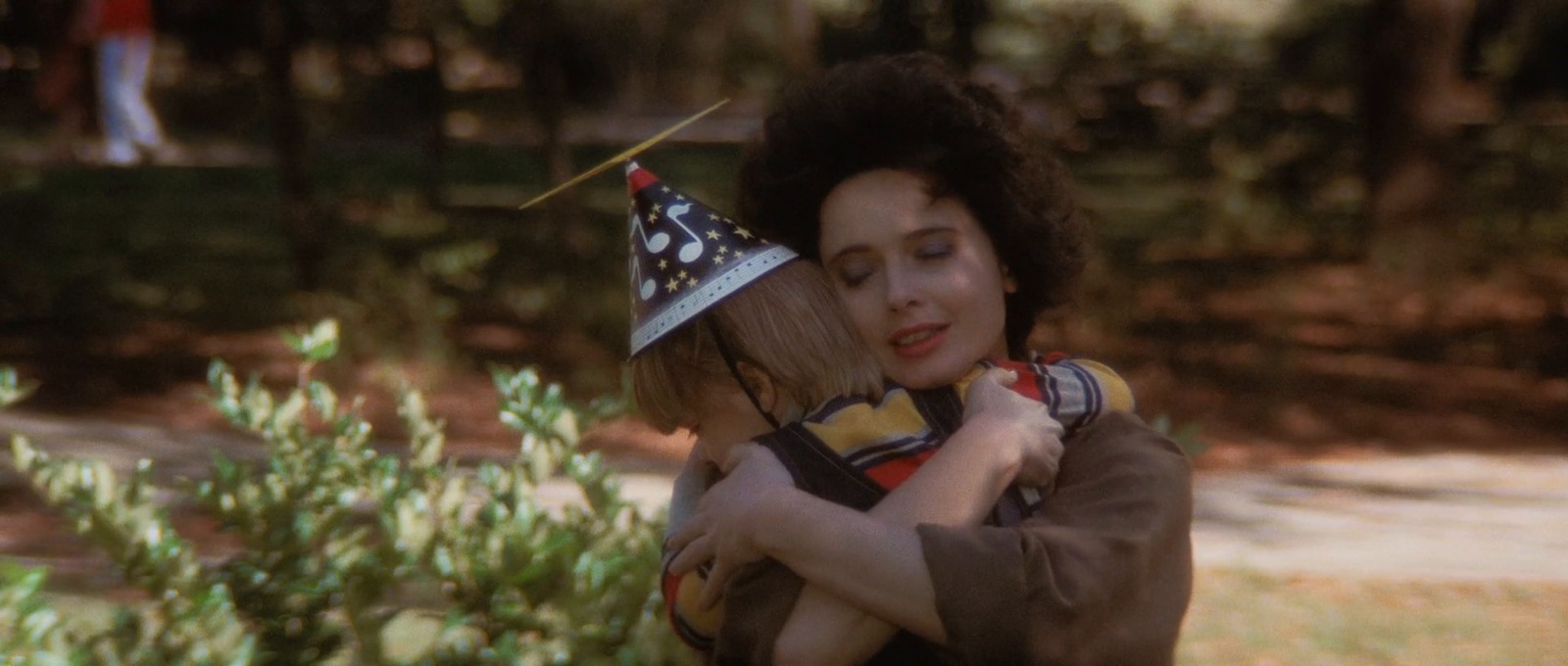
The ending makes room for Dorothy
1:58:45The return of flowers, fence and fire engine could have closed the film around Jeffrey’s restored neighborhood. Dorothy’s embrace with her child gives the ending another center. Her face changes within the reunion, and the film does not reduce the encounter to a solved case. The image answers the absence that first appeared as a severed ear with a surviving relationship, while leaving the cost of the intervening events visible.
Viewing this edition
The copy behind the scene guide
The illustrated moments come from a widescreen copy running 2 hours 31 seconds, including its opening logos and closing credits. Its image is approximately 2.35:1. The times belong to this copy and may shift in other releases.
Criterion’s edition record lists the feature at 120 minutes and 2.35:1, with a restored presentation and separate sound options. See the version guide for the released feature, television adaptation and supplementary footage.
About the scene studies and images
The guide draws on selected frames examined across the complete running time, with closer checks of the opening, apartment, performance and closing sequences. These are scene readings rather than an inventory of every cut. Embedded English subtitles support narrative identification; the separate dialogue and song guide explains its full-track, machine-assisted method. Direct listening and comparisons between sound mixes remain separate work.
Film images: Blue Velvet (1986). Captions describe the selected moment. The research below provides production credits, documentary sources and collaborator testimony.
The Lost Footage
Scenes from another possible Lumberton
Seven comparisons follow the deleted scenes and alternate takes assembled by Lynch: college, family life, the Slow Club, another route through the investigation and brief variations after the credits. Each study leads back to the finished film.
Jeffrey before the ear
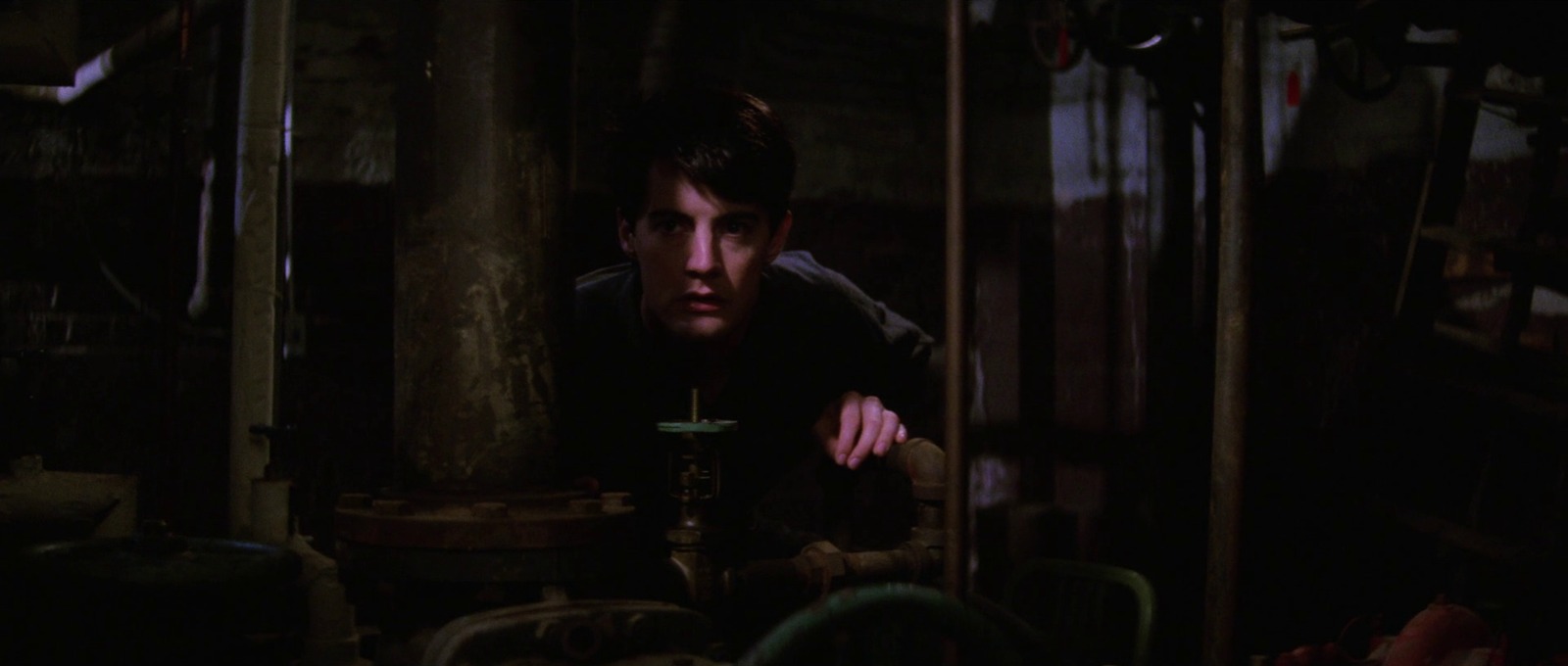
The college material gives Jeffrey a history of looking before he discovers the ear. In a basement, he watches an encounter from behind pipes and machinery. A telephone call then brings the ordinary crisis: his father is seriously ill, and the family cannot continue paying for his education. His return to Lumberton becomes an enforced interruption of adult life, not simply a visit home.
Louise, played by Megan Mullally, is another relationship absent from the released film. Their campus farewell and later telephone calls make Jeffrey’s involvement with Sandy less self-contained. These scenes offer a different starting point for his curiosity. The finished film concentrates the beginning around the lawn, the hospital and the ear, leaving much less explanation between domestic catastrophe and investigation.
Explore the image sequence · 3 stills
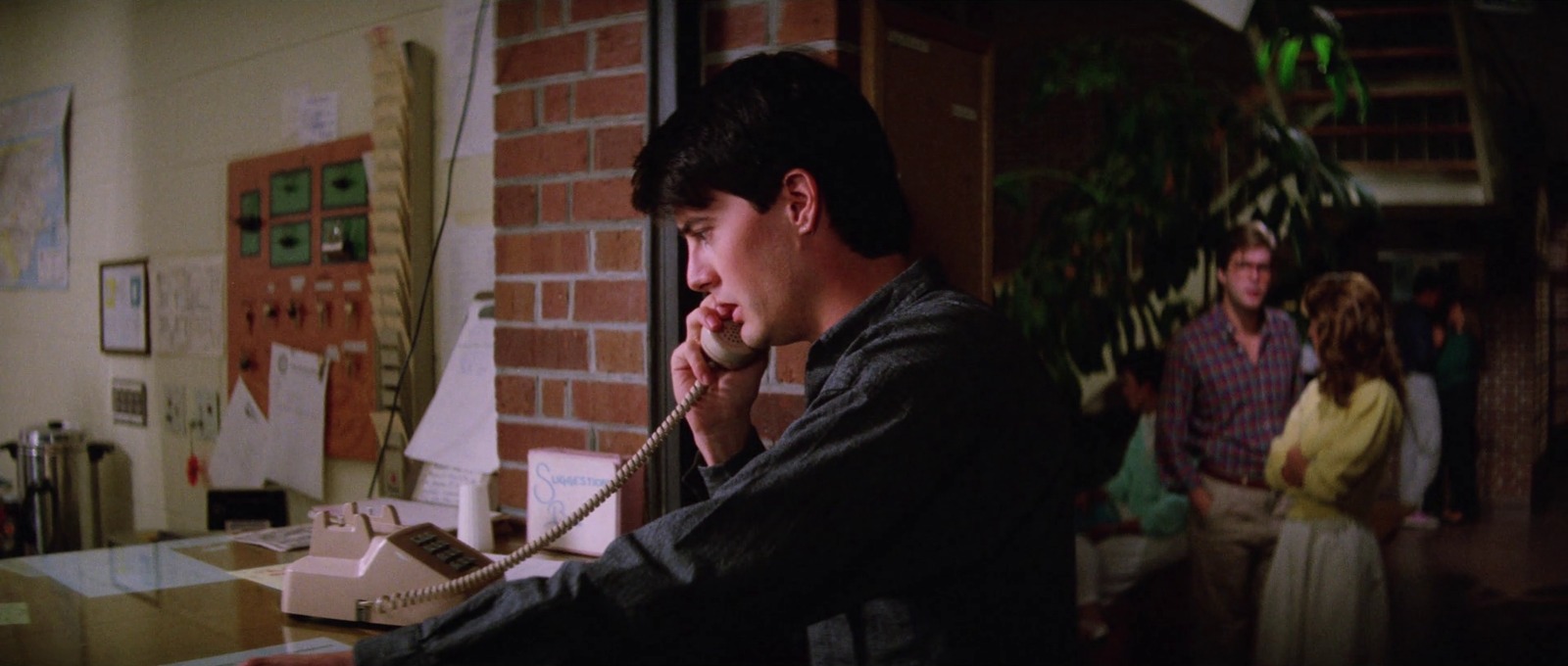
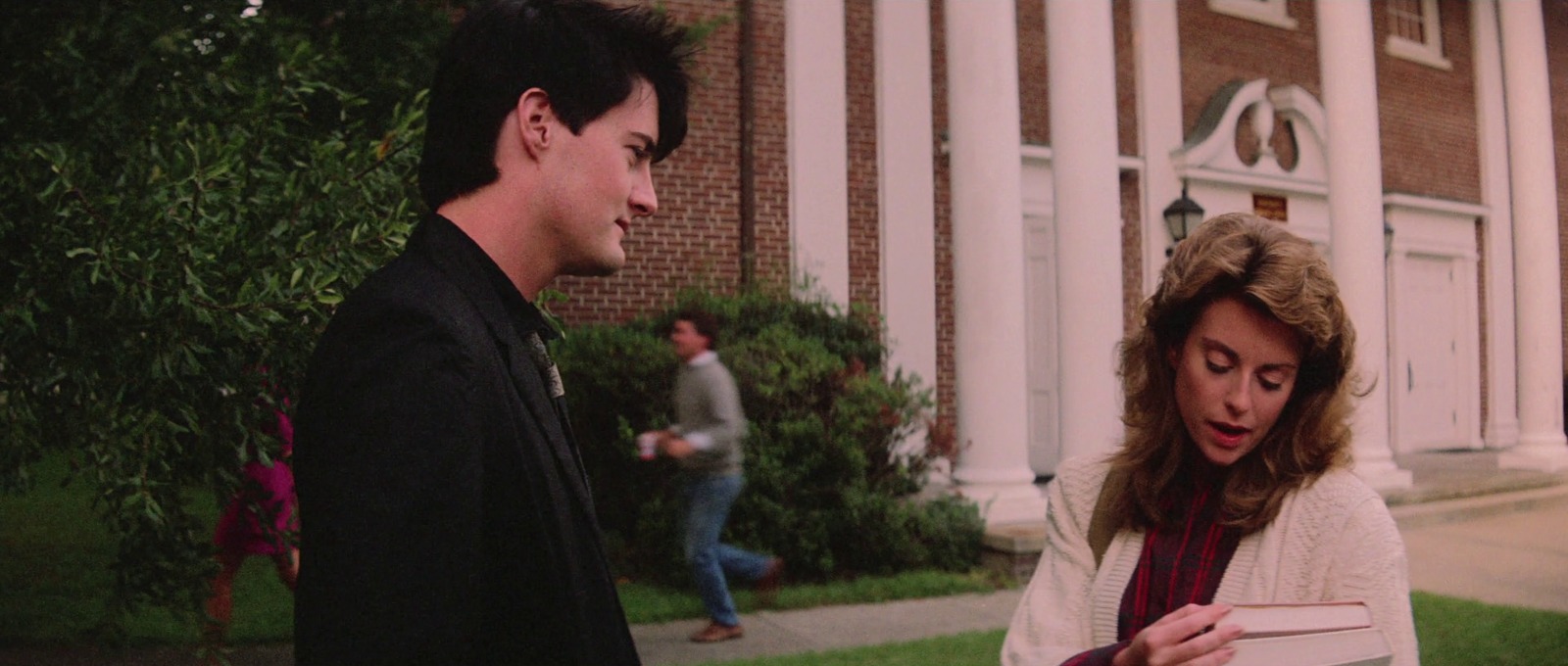
The Lost Footage, 03:48–08:20 · Supplement guide
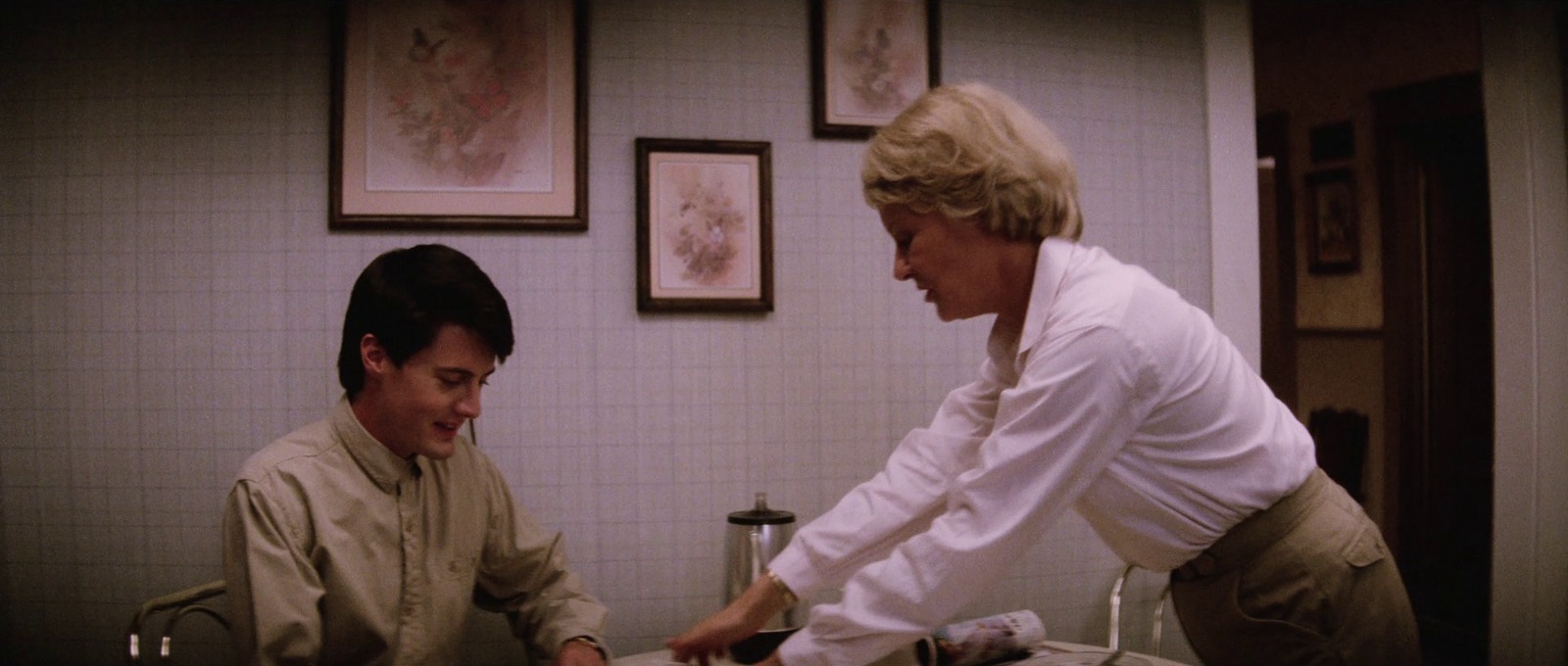
Home becomes an obligation
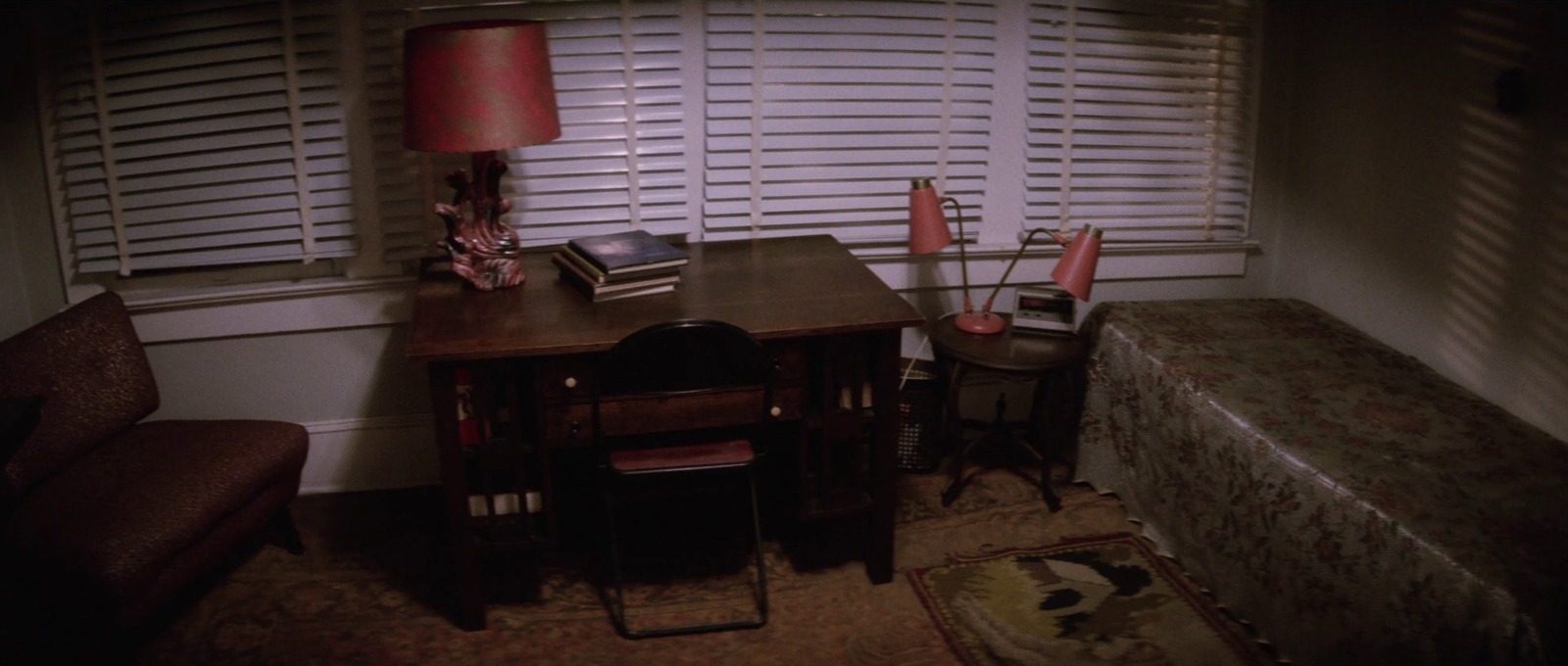
The journey home, the return to Jeffrey’s bedroom and the breakfast conversation give the Beaumont household a slower rhythm. His mother asks him to conceal the fact that he has left college from his hospitalized father. Aunt Barbara’s practical talk and anxious advice sit alongside the medical and financial uncertainty.
Later, his mother waits up and questions the mark on his face. A family doctor, a missed call to his father and a joke about termites keep bringing Jeffrey’s nocturnal adventure back into the responsibilities of the house. Removing this material makes the released film’s domestic world more elliptical; the family remains present without repeatedly explaining his movements.
The Lost Footage, 08:20–15:04; 18:55–20:00; 28:56–31:04 · Supplement guide
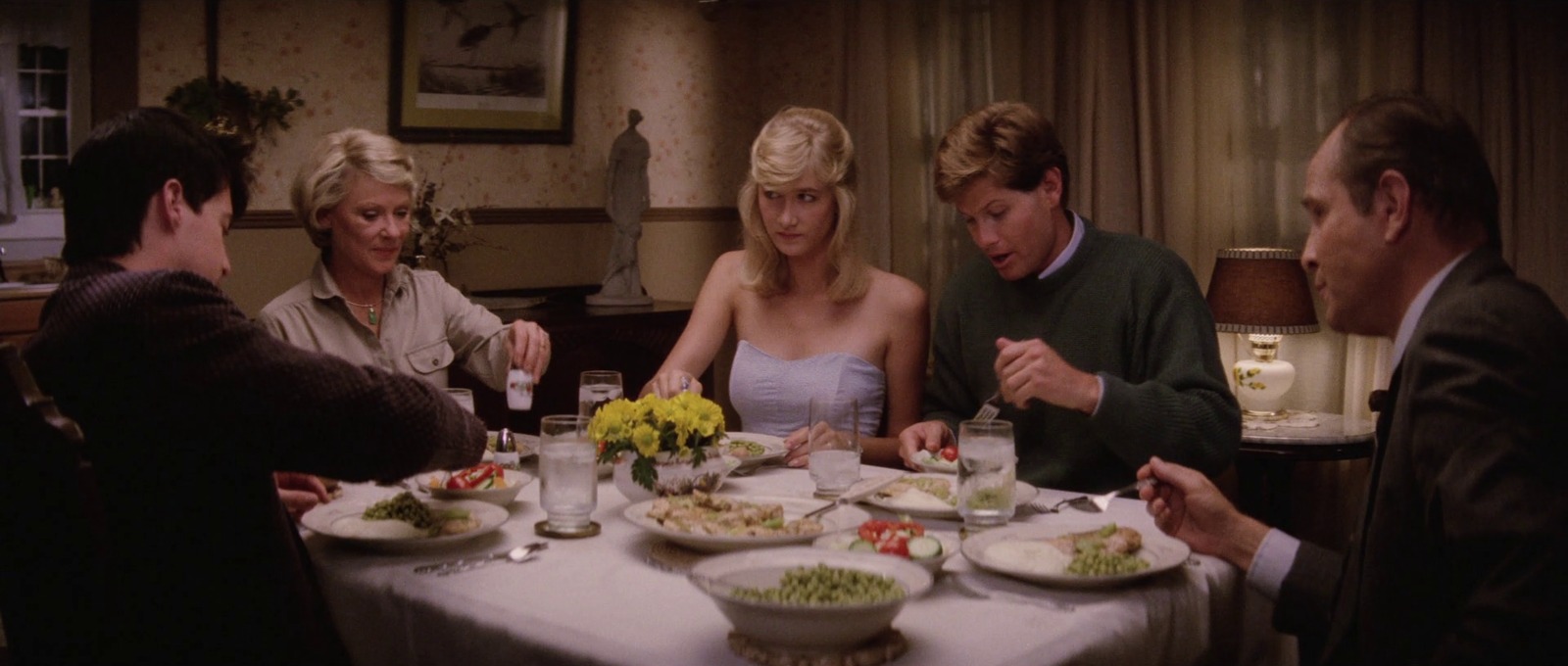
Sandy enters through the kitchen
Mrs. Williams welcomes Jeffrey with coffee and chocolate cake while he waits for the detective. Sandy and Mike are introduced as part of this hospitable household. This is a very different first encounter from Sandy’s emergence out of the darkness in the released film: the deleted scene explains the family connections before it allows mystery to form around her.
The later dinner extends the contrast between Jeffrey and Mike through talk about sport, health and vitamins. In the living room, Jeffrey and Sandy try to discuss the investigation while the family carries on around them. The sustained domestic staging makes their private alliance something negotiated inside a social gathering.
Explore the image sequence · 2 stills
The Lost Footage, 16:14–18:55; 31:20–38:04 · Supplement guide
A longer night at the Slow Club
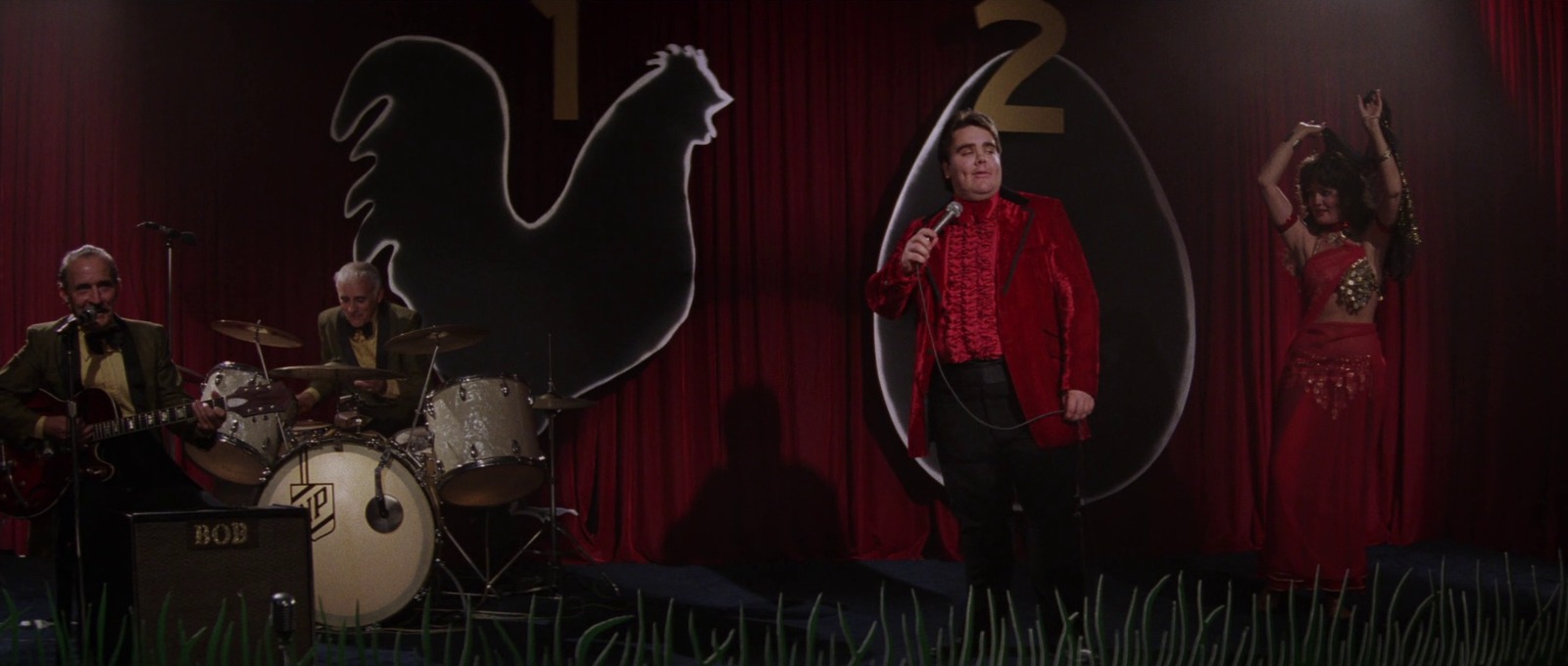
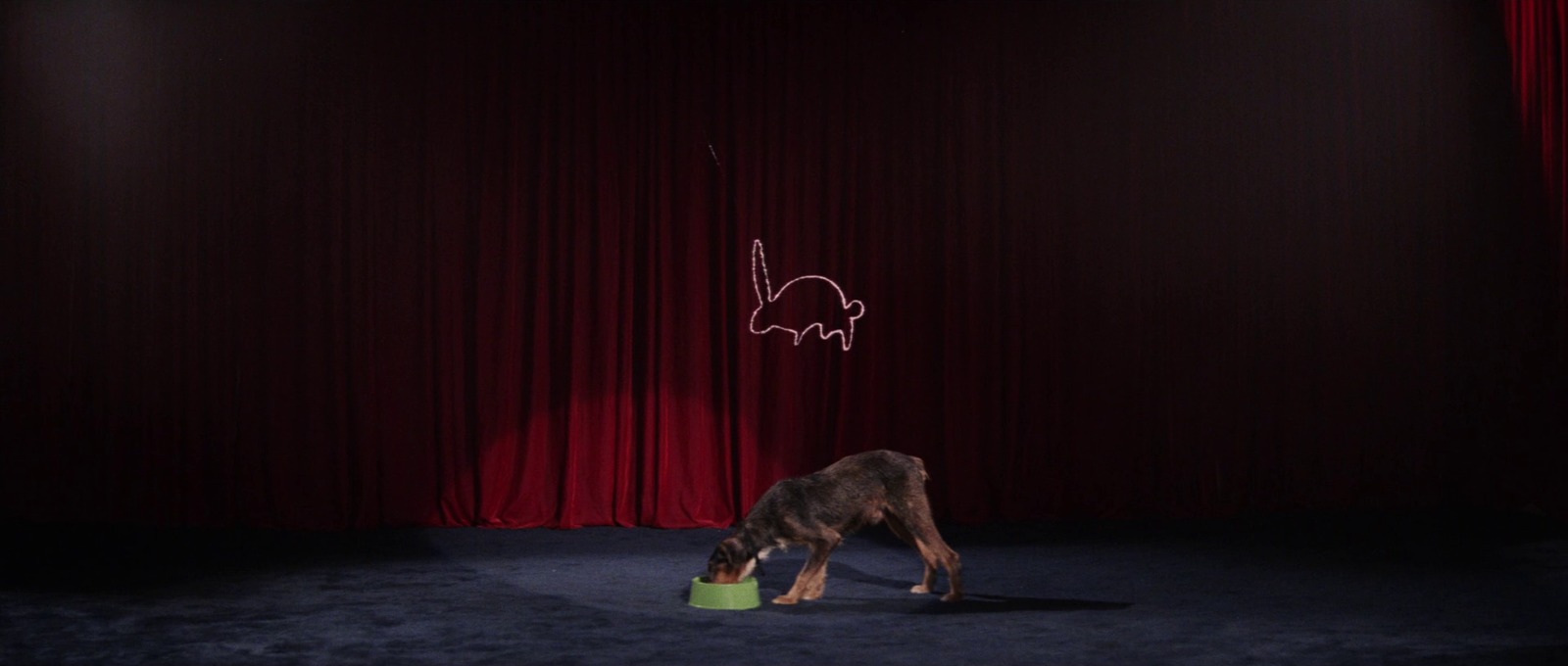
The visit includes more of the journey, the club entrance, the audience and an eccentric stage programme: a dog act, a comic and a conspicuous chicken-and-egg backdrop. Jeffrey and Sandy have time to observe the room before Dorothy’s performance becomes the centre of attention.
The additional acts change the balance between everyday entertainment and private fascination. Dorothy belongs to a working nightclub with an entire bill of performers, while Jeffrey is already treating the visit as reconnaissance for entering her apartment. In the finished film the club is more tightly organized around her song, Frank’s attention and Jeffrey’s looking.
Explore the image sequence · 2 stills
The Lost Footage, 20:17–28:40 · Supplement guide
The detective supplies another clue
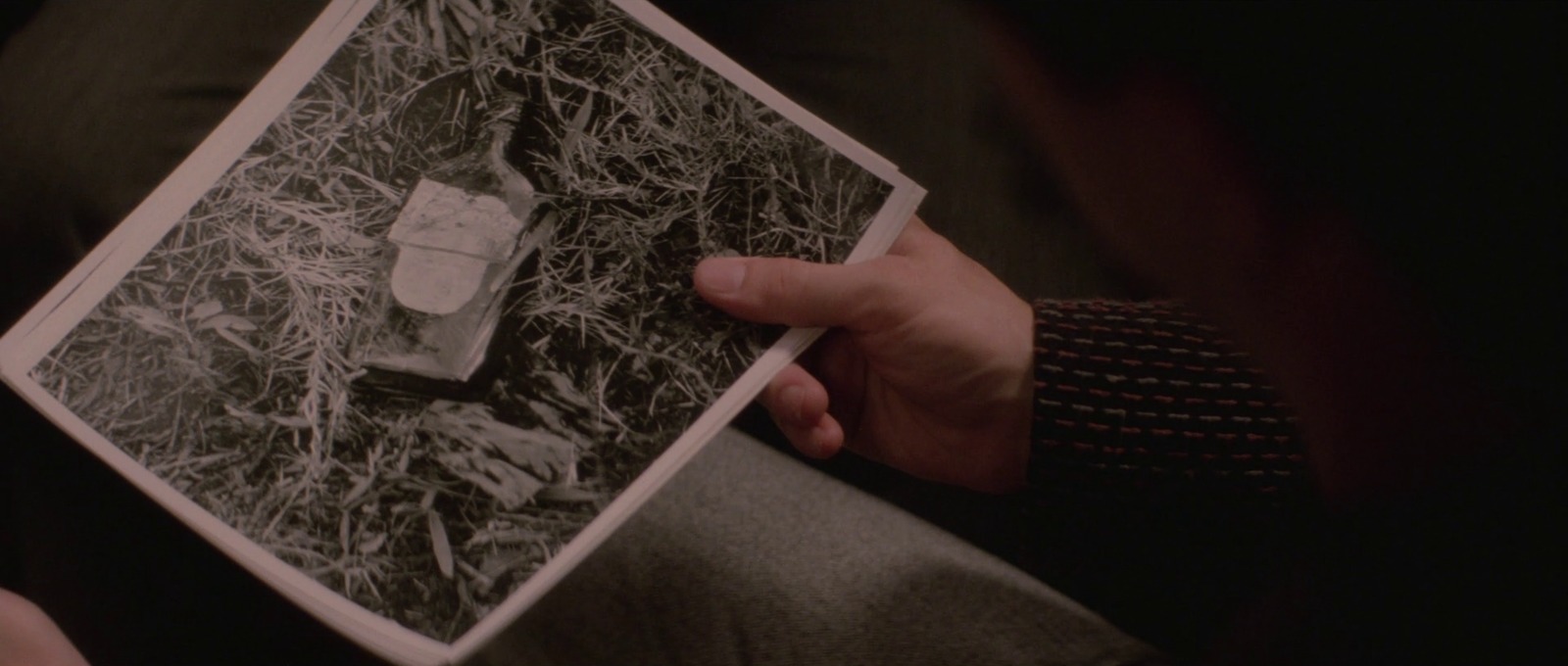
Detective Williams shows Jeffrey photographs from the vacant lot. The scene brings a piece of blue velvet into their conversation and lets Jeffrey react without explaining everything he knows. The photograph is a second-hand image of the place where his own investigation began.
Sandy then uses an ordinary errand as a reason to take Jeffrey out in the car. The passage joins official evidence, withheld knowledge and their growing intimacy more explicitly than the released film does. It is useful as a comparison with the finished narrative’s preference for partial discoveries and conversations that do not quite connect.
The Lost Footage, 38:04–40:50 · Supplement guide
Threats reach beyond the apartment
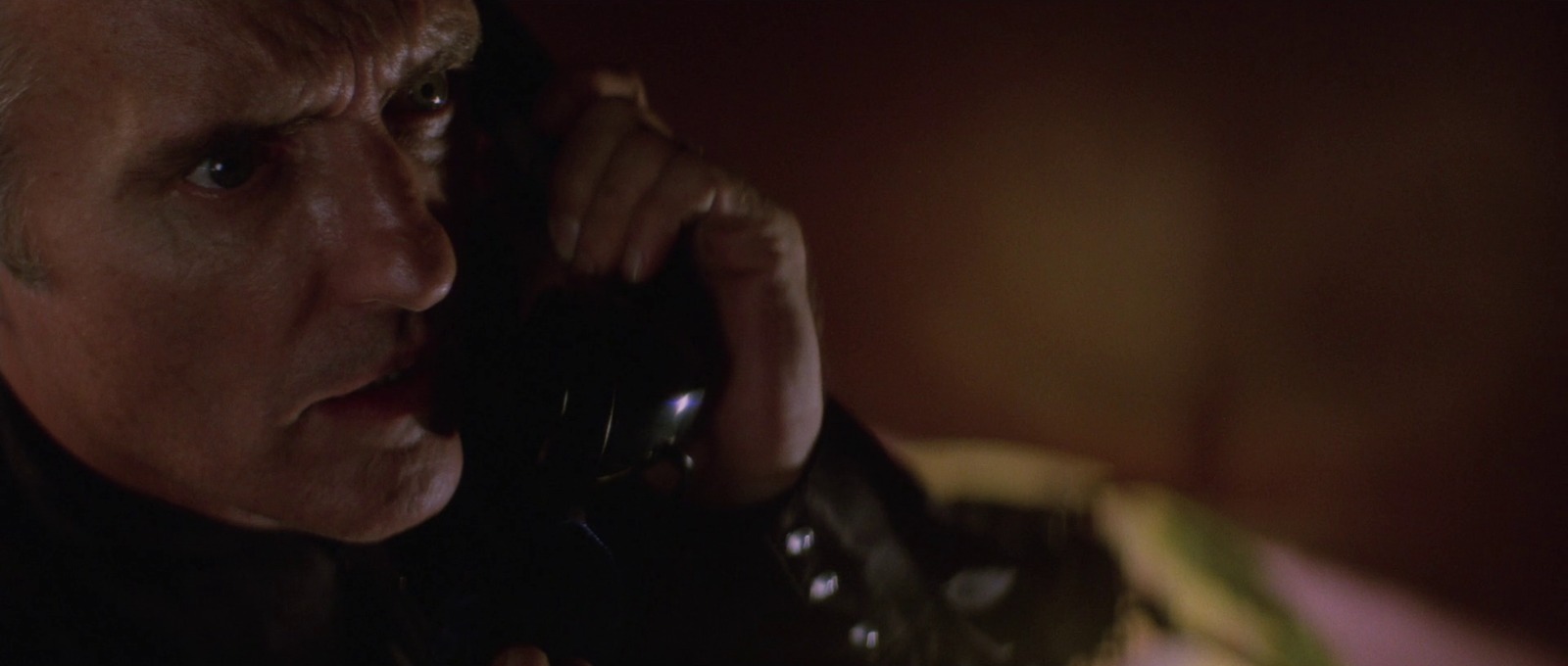
A threatening telephone call, Jeffrey’s waiting and watching in the car, and further material in Dorothy’s apartment extend the sense of surveillance around him. The apartment scene places another man in Dorothy’s orbit and gives Jeffrey more to witness from concealment. His hiding is no longer simply a route to a single revelation.
The material moves out toward a dark rooftop encounter with Dorothy. Its usefulness is comparative: it shows additional routes the story could take through danger and attachment. The Lost Footage is an assembly of deleted scenes and alternate takes, not a longer finished cut into which every passage can be inserted without changing the film’s structure.
Explore the image sequence · 3 stills
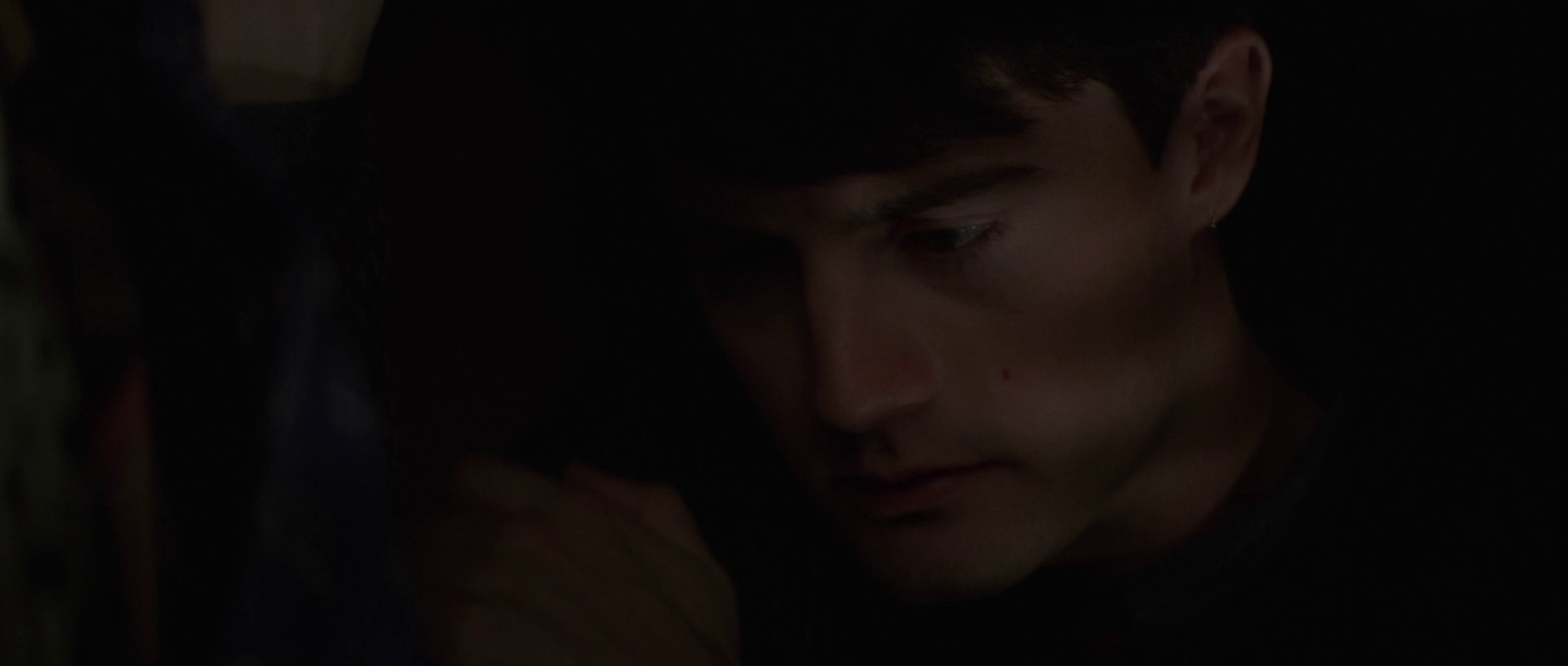
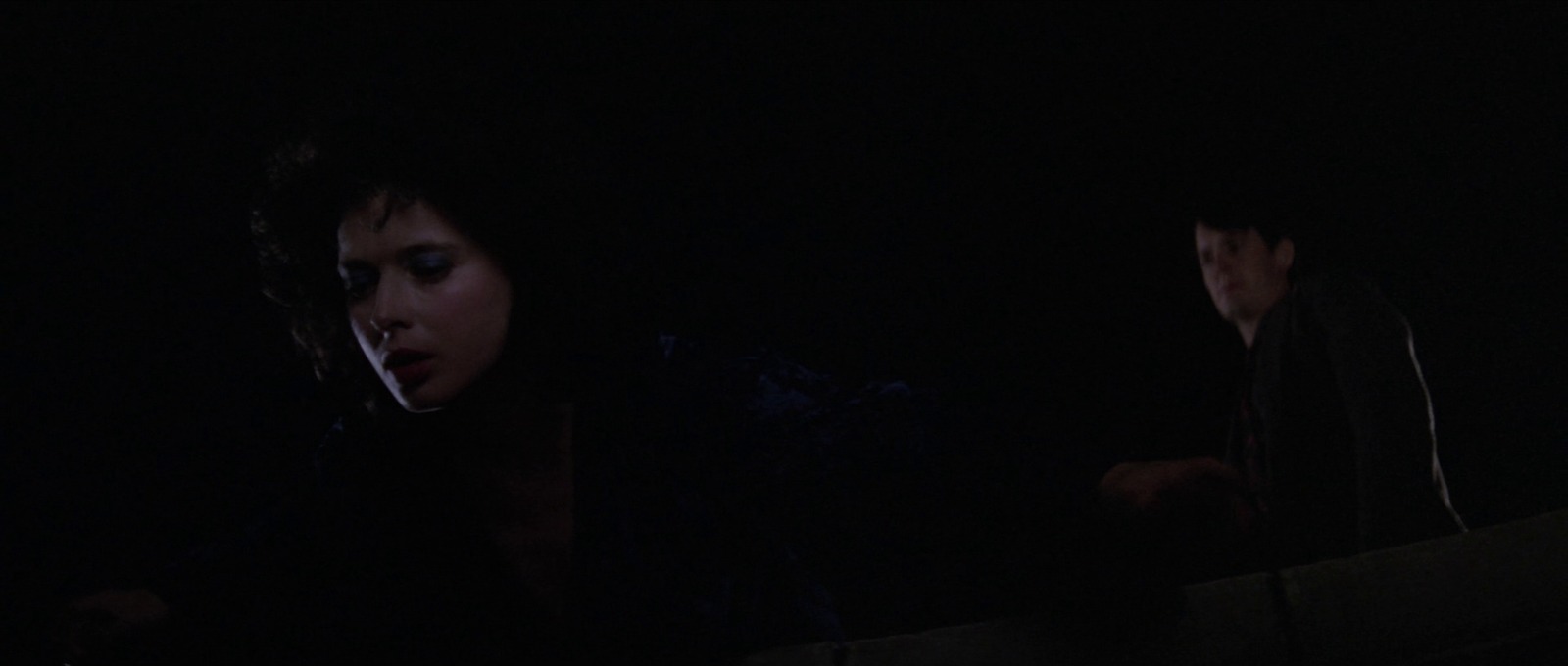
The Lost Footage, 41:00–50:14 · Supplement guide
The assembly continues after its credits
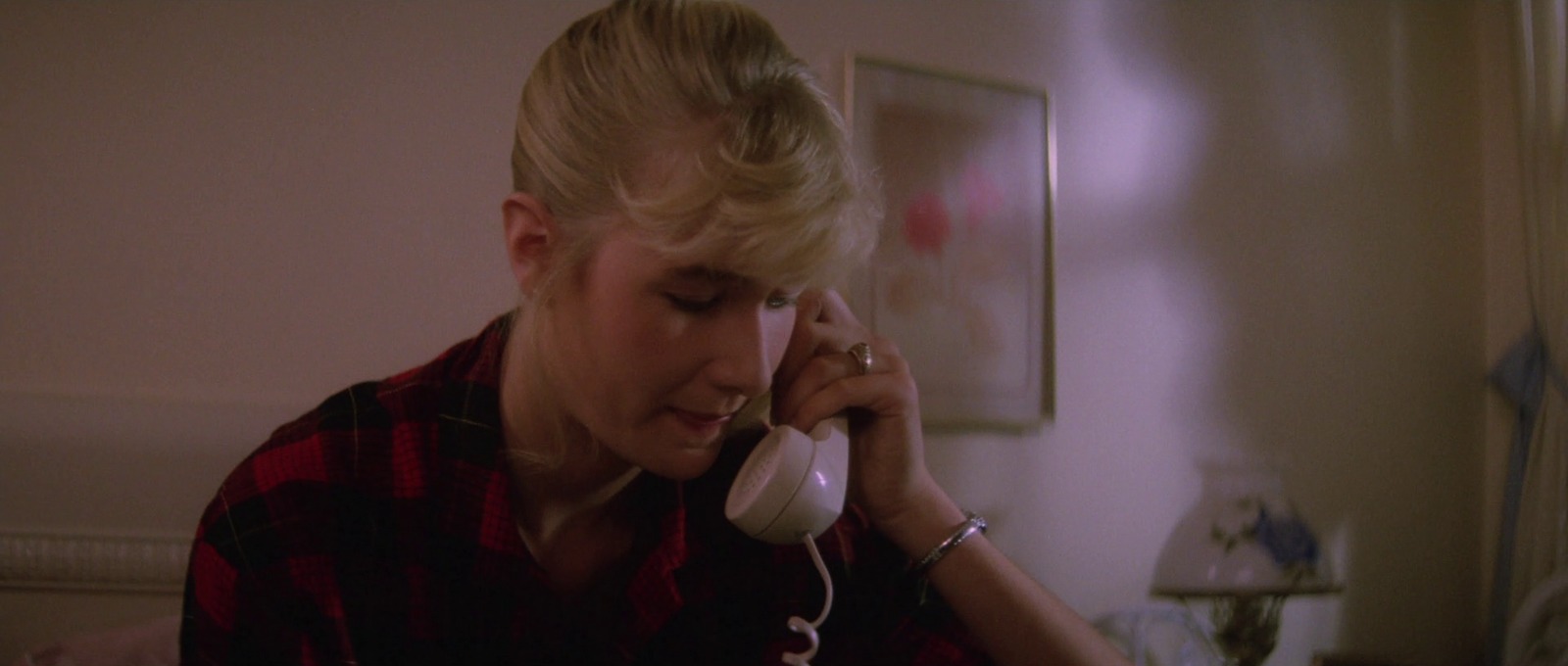
The closing credit card acknowledges the difficulty of recovering every performer’s name. It is followed by brief alternate material, including variations on Sandy’s telephone farewell and the Williams dinner. These fragments let us see small performance choices and humorous alternatives without treating them as another completed ending.
The final cast list identifies Louise as Megan Mullally, the Slow Club comic as Pat Miller and the lipstick girl on television as Jennifer Lynch. Those are credits belonging to the recovered material; they should not be silently folded into a description of what appears in the released feature.
The Lost Footage, 50:14–53:16 · Supplement guide
Making the image
Props, sets and practical effects
The ear’s changing shape, the Yellow Man’s makeup, a work light at Ben’s and a factory constructed from shadows: follow the physical decisions behind the image. Open each sequence to compare the stages.
An ear that can carry a story
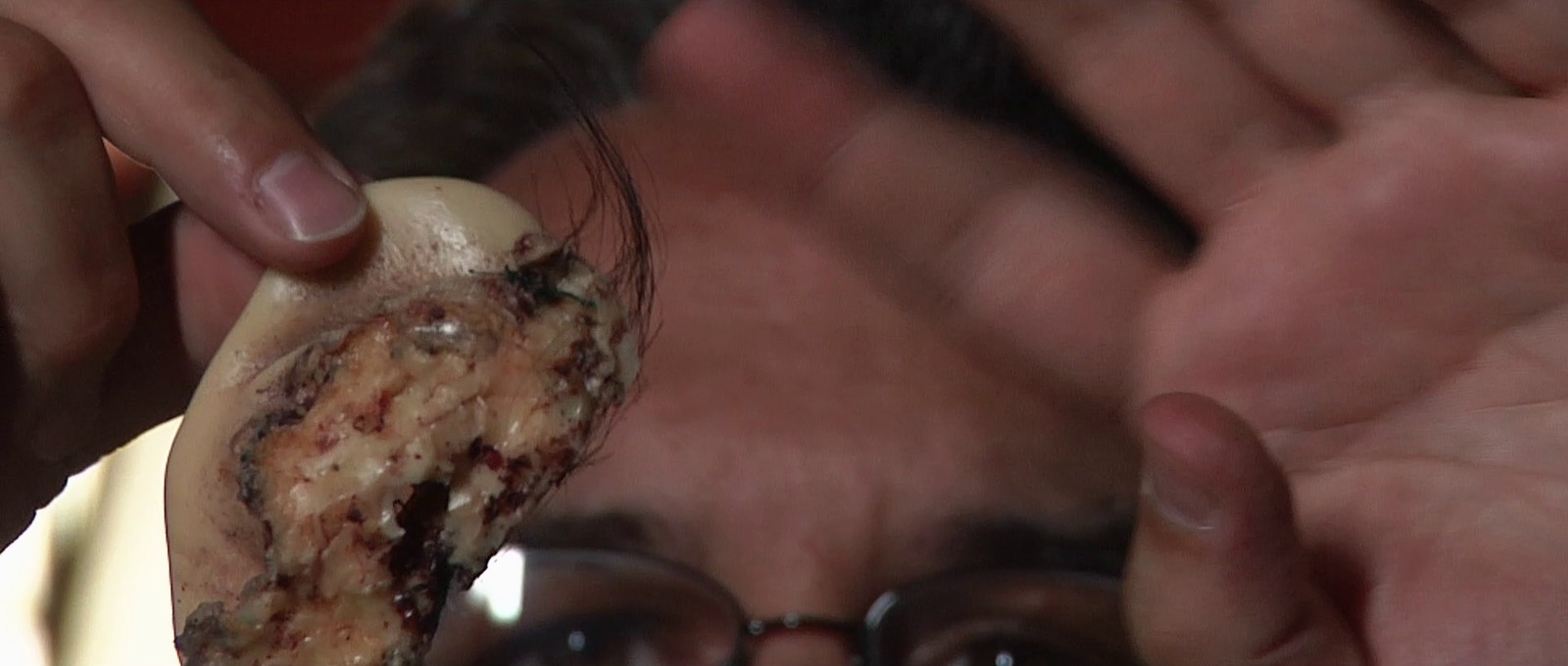
Makeup supervisor Jeff Goodwin lays out a sequence of decisions rather than presenting the ear as a finished curiosity. His first design followed the crescent of an ear cut away from a head. Lynch asked for a fuller shape that the audience would recognize immediately, then for a larger adult ear. Goodwin says a cast of producer Fred Caruso’s ear supplied that scale after his own proved too small.
The objects shown in the interview make those revisions visible. Shape, scale and the damaged surface all have to register before Jeffrey understands what he has found. Goodwin also describes using silicone and adding hair from Lynch’s haircut. These details connect an apparently anonymous clue to work performed by particular people. The documentary’s return to the field is a later visit, giving us a view of a prop and a location rather than another shot from the released film.
Explore the image sequence · 5 stills
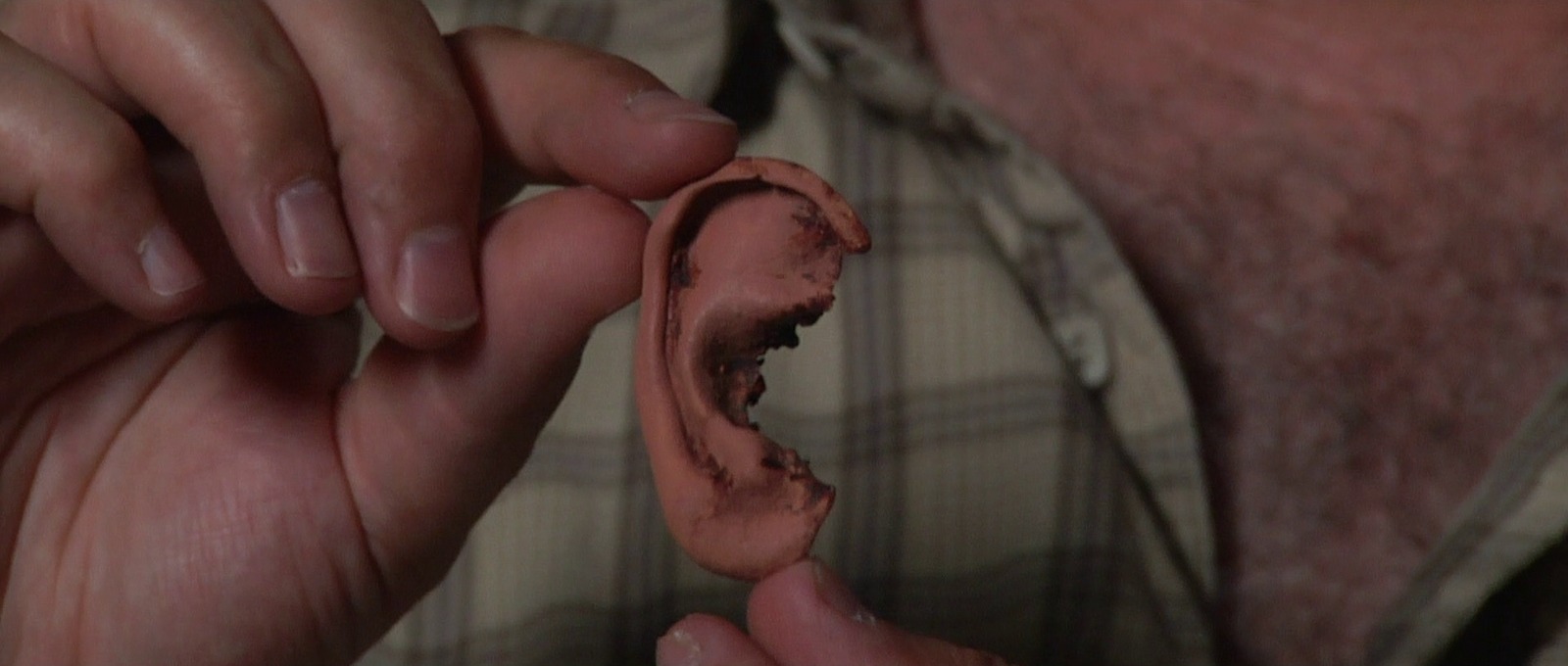
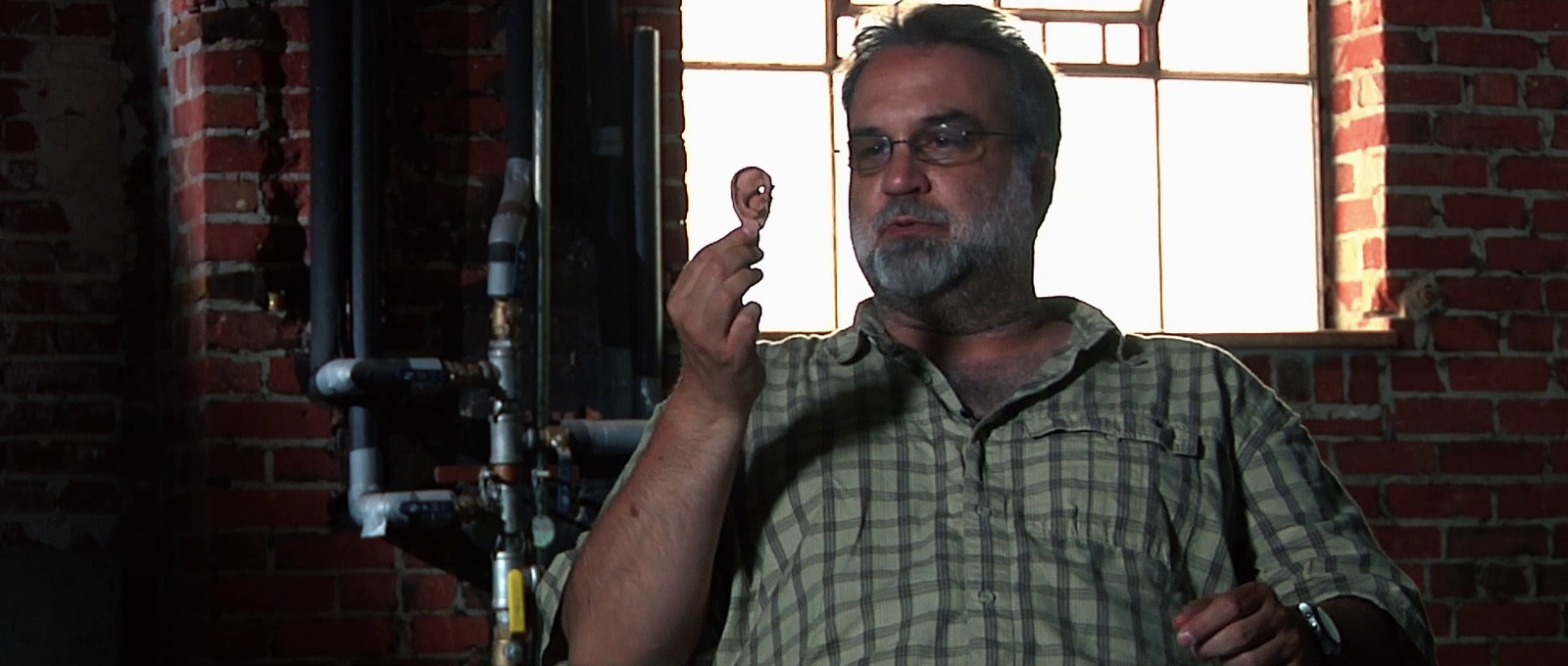
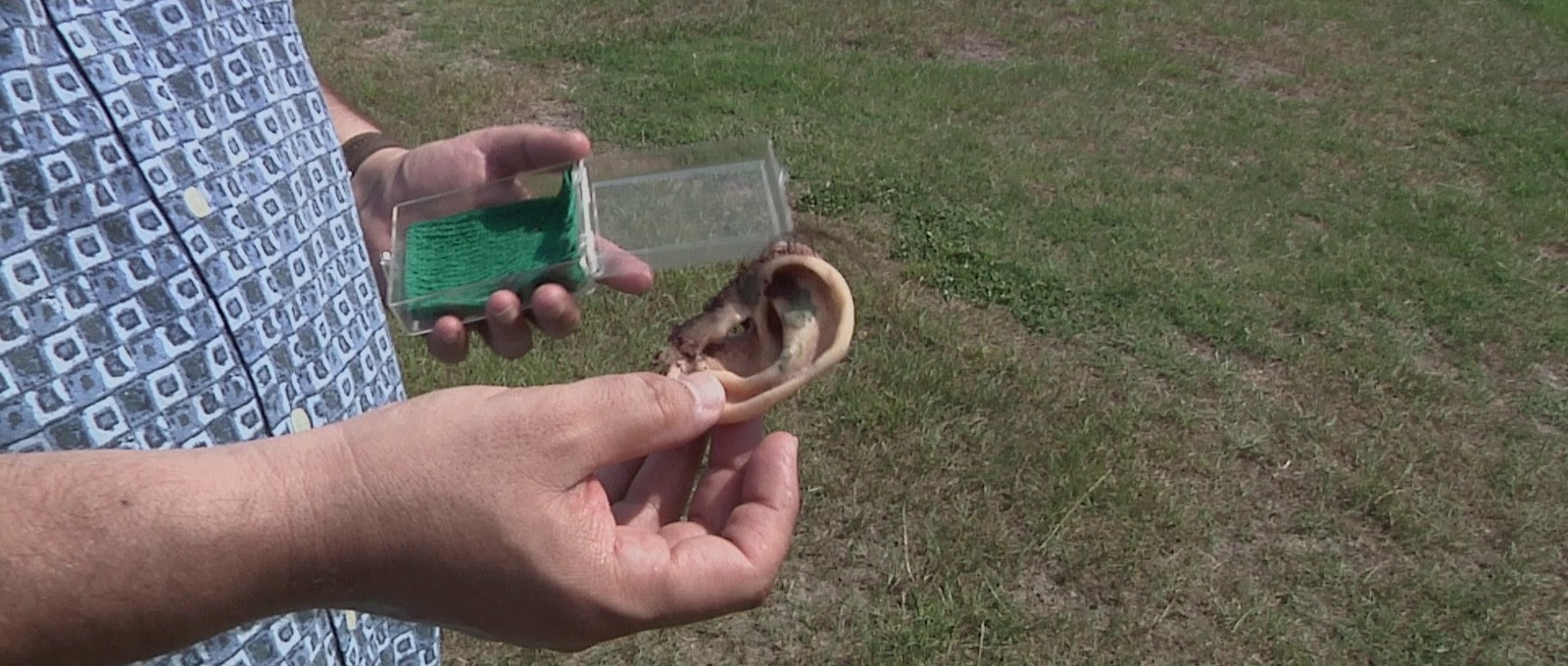
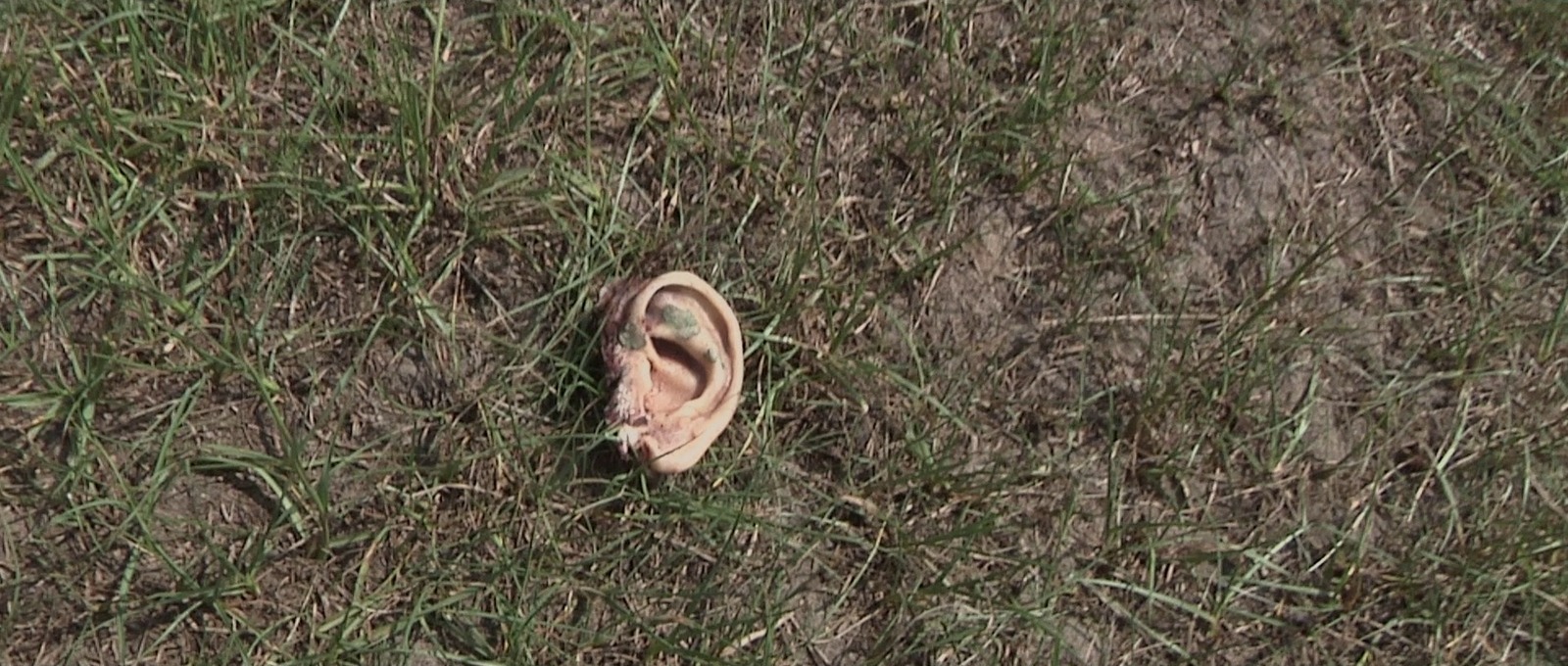
It’s a Strange World, 00:35–02:46 · Supplement guide
Return to Jeffrey’s discovery · The ear and the object collection
The Yellow Man: makeup held in performance
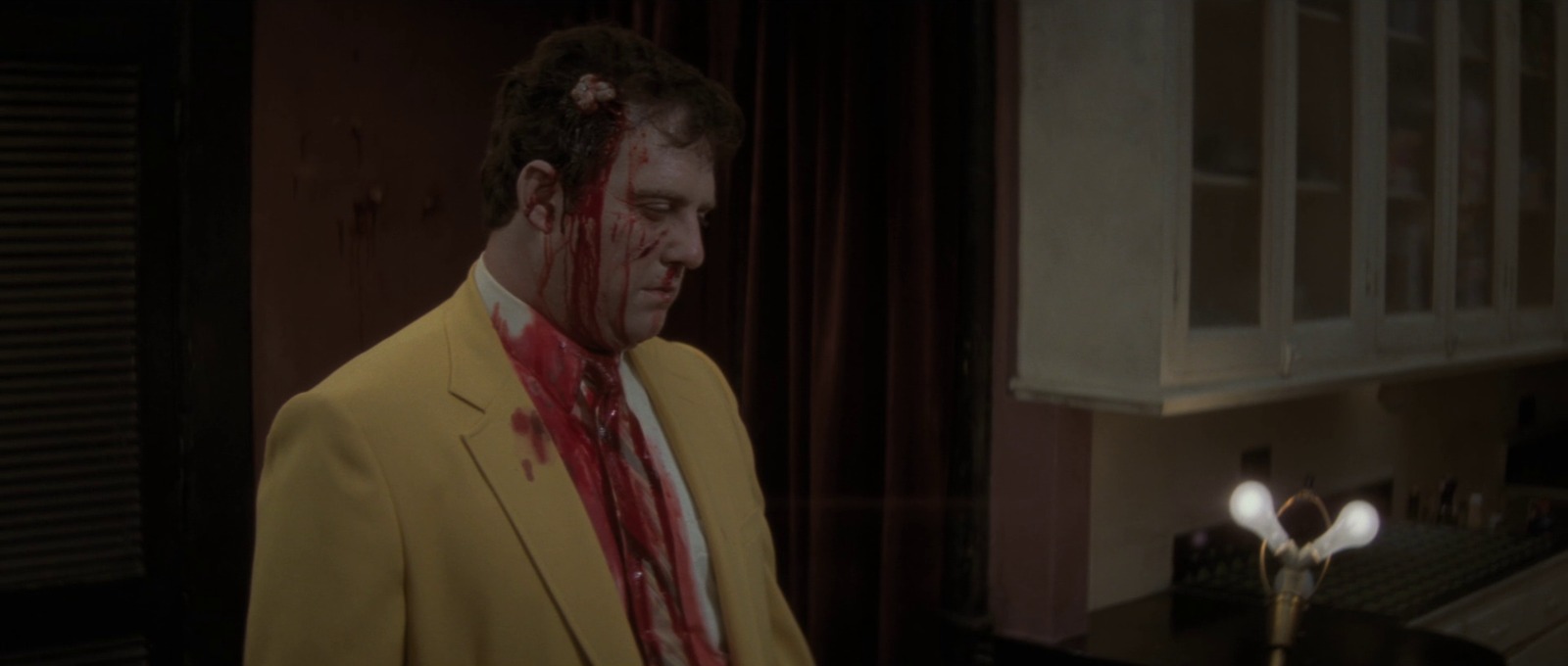
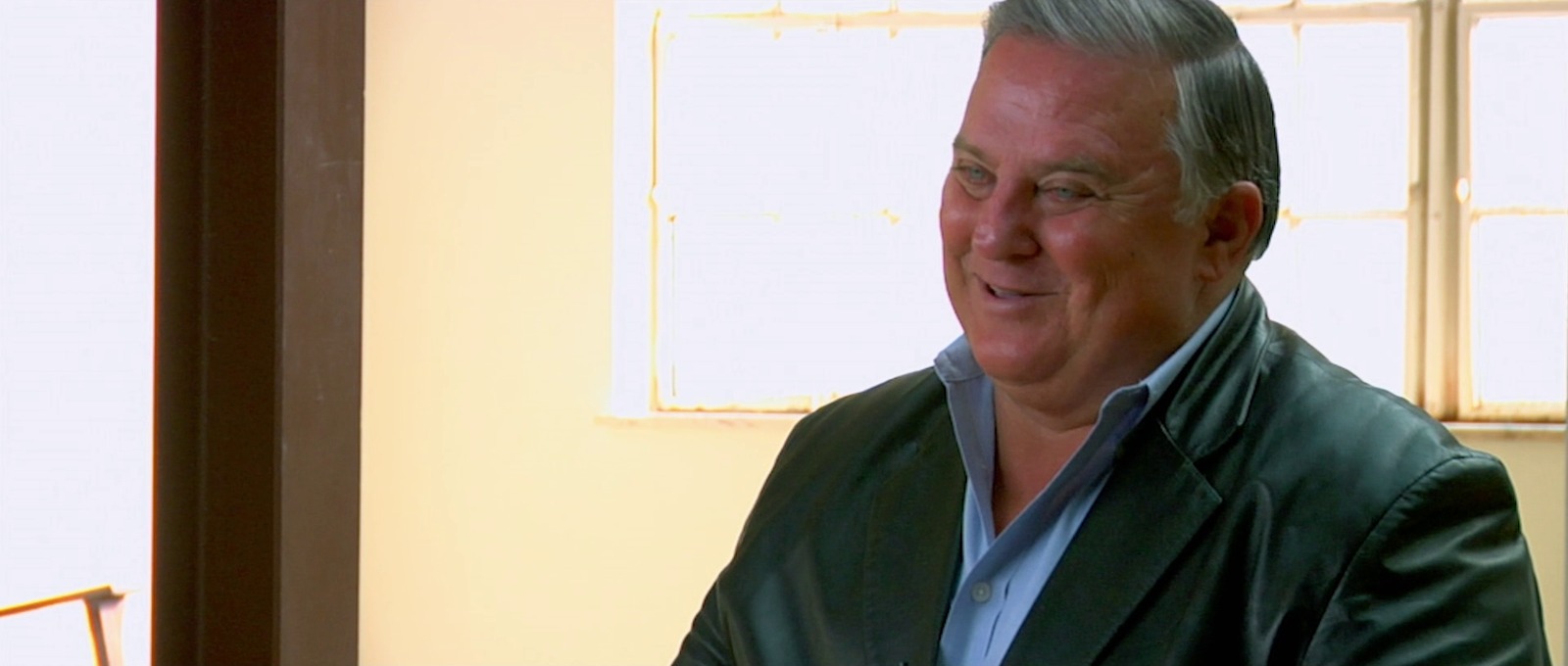
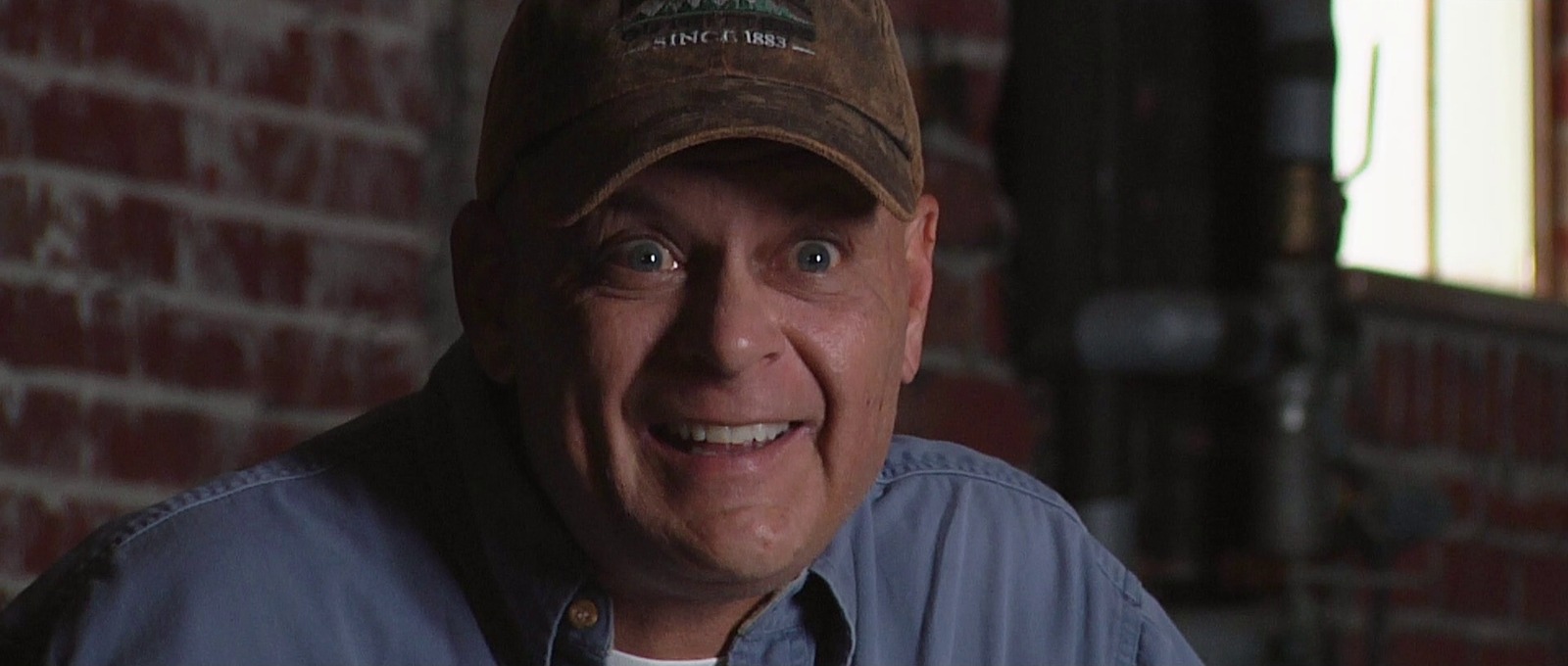
Fred Pickler describes the Yellow Man’s strange stillness as something he had to sustain physically: the character can register the room while being unable to respond normally. His account includes calibrating the movement that knocks the lamp and learning how to remain out of the action after falling back. The result depends on the actor’s timing as much as on the visible wound.
Goodwin shows the appliance and points out its blood channel, then describes adding blood at Pickler’s mouth. Bringing the demonstration beside the film image separates the object from the performance that gives it duration. The effect is disturbing because the room seems to have stopped while this wounded body remains standing inside it.
Explore the image sequence · 4 stills
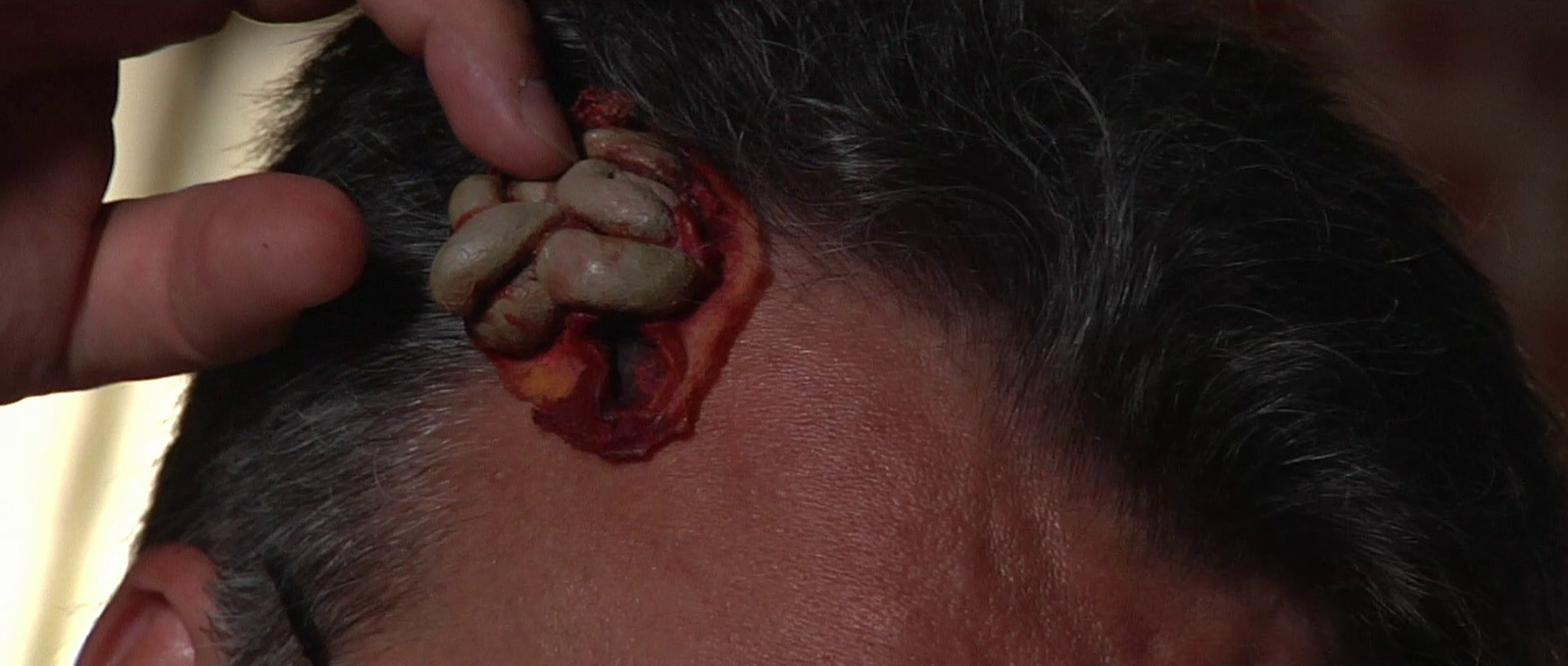
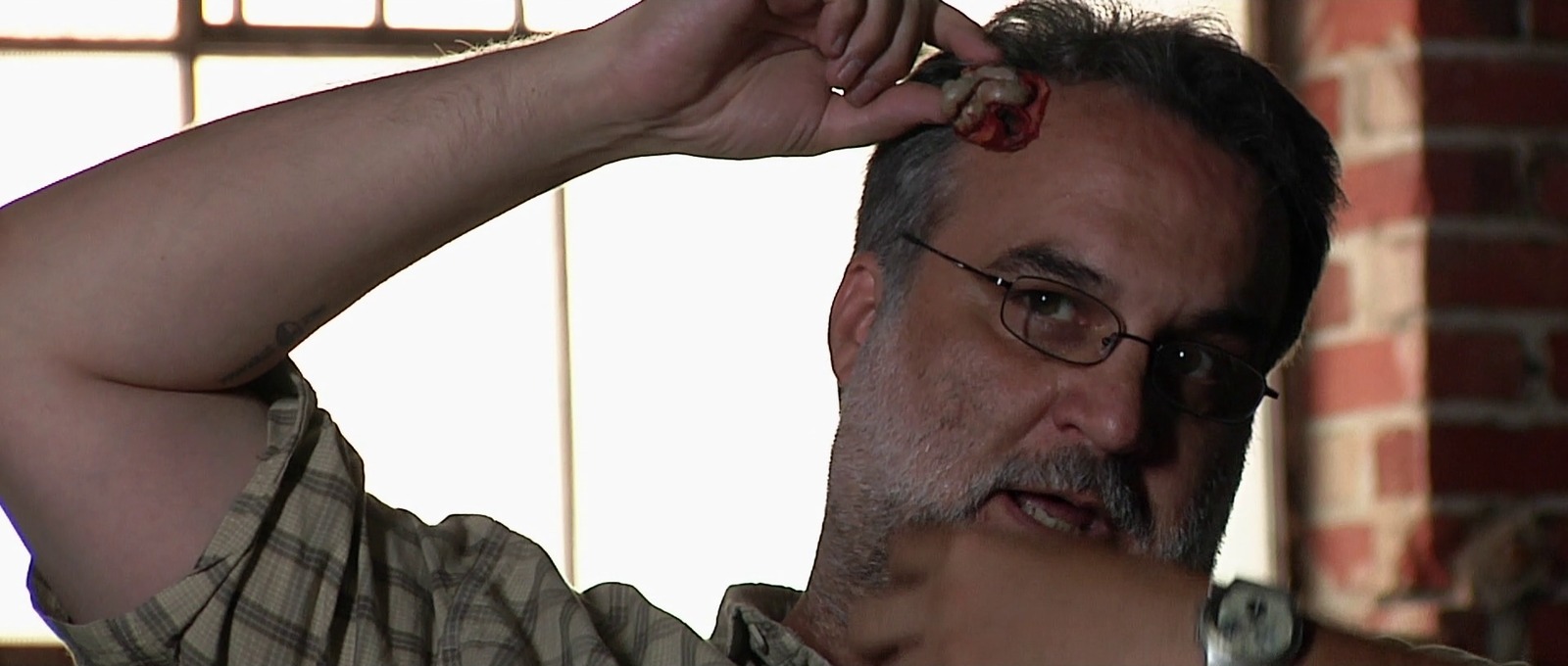
It’s a Strange World, 08:20–10:43 · Supplement guide
Ben’s lamp, found on the prop truck
On-set props worker Shaw Burney remembers being sent to find an object Ben could use as a microphone. After trying possibilities from the prop truck, he noticed the work light illuminating his own face in a mirror. He returned to the set and demonstrated that glow to Lynch. His account turns an iconic image back into a practical search among available objects.
Lynch’s Room to Dream reading supplies a different part of the scene’s development. He recalls originally planning for Hopper to sing, then seeing Stockwell continue during rehearsal while Hopper watched him. The finished arrangement joins those two discoveries: a performer illuminated from below and a spectator whose absorbed reaction becomes part of the performance. The accounts describe separate contributions to the scene.
It’s a Strange World, 03:45–06:47; Room to Dream, 04:21–06:07 · Supplement guide
The staircase and the weight of the camera
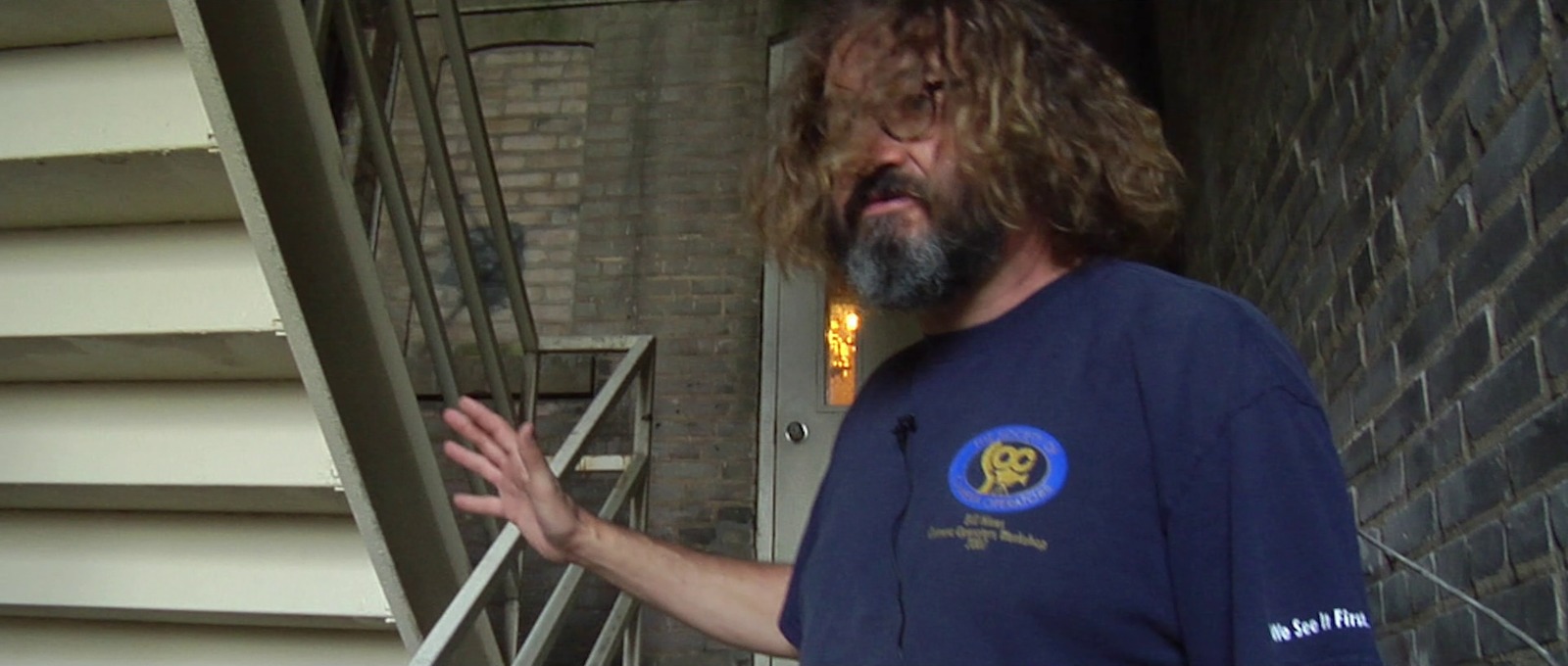
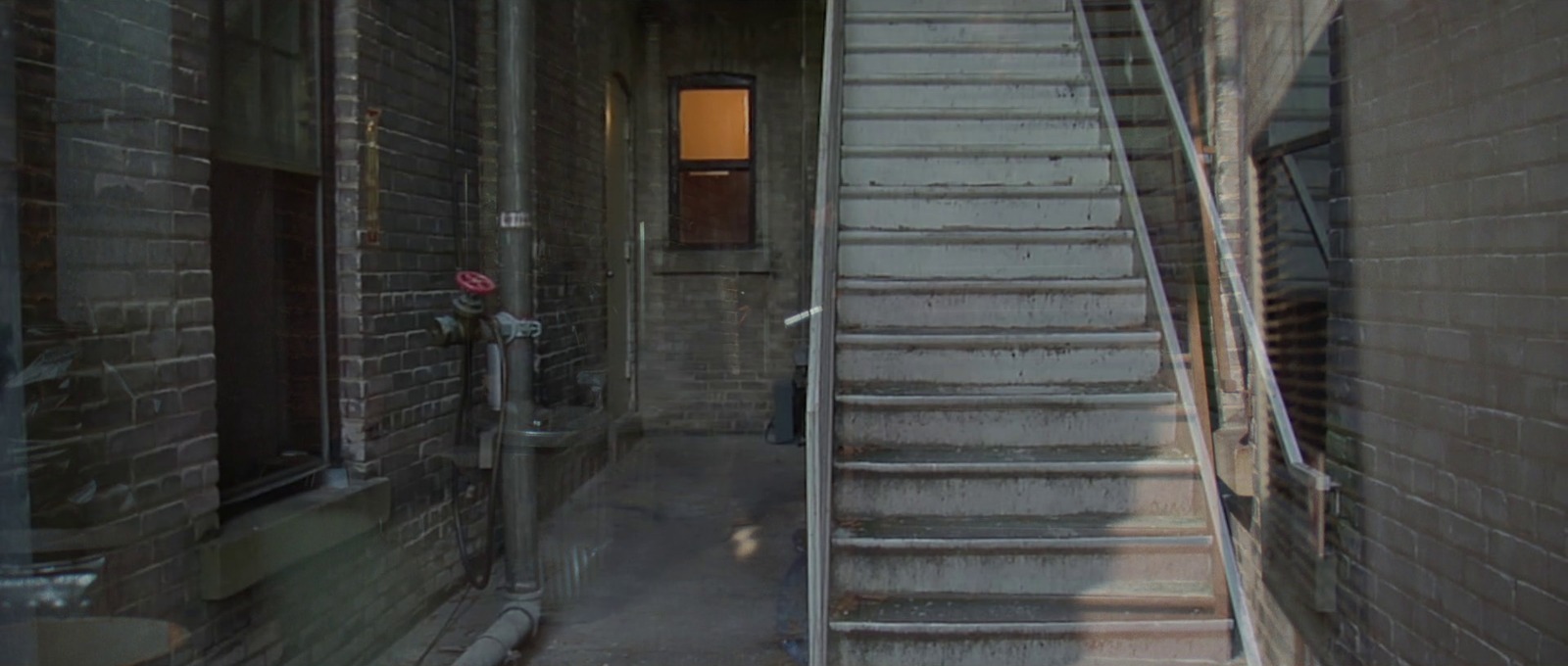
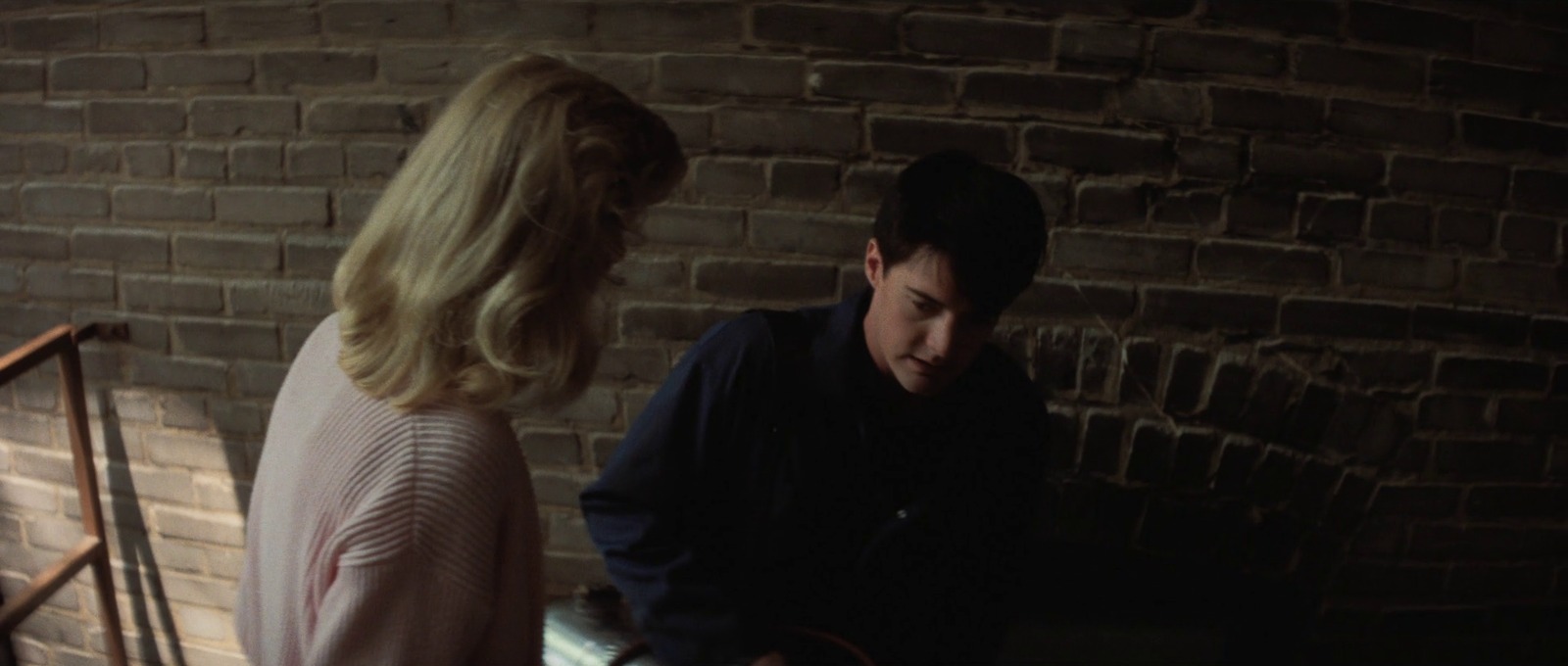
Returning to the exterior staircase, Steadicam operator Dan Kneece retraces two shots: Jeffrey’s climb with the exterminator’s equipment and the later hurried descent. He describes moving close to the rail to accommodate MacLachlan, tilting heavily as the actor breaks the doorway, and beginning to stop above the intended landing because the moving rig carries its own momentum.
The demonstration gives the suspense a physical production history. The apparent freedom of a moving viewpoint required a route, balance and a stopping distance. Kneece remembers these shots as the start of a long working relationship with Lynch, continuing through films including Wild at Heart, Lost Highway and Mulholland Drive.
Explore the image sequence · 3 stills
It’s a Strange World, 10:52–12:27 · Supplement guide
A factory made from light and shadow
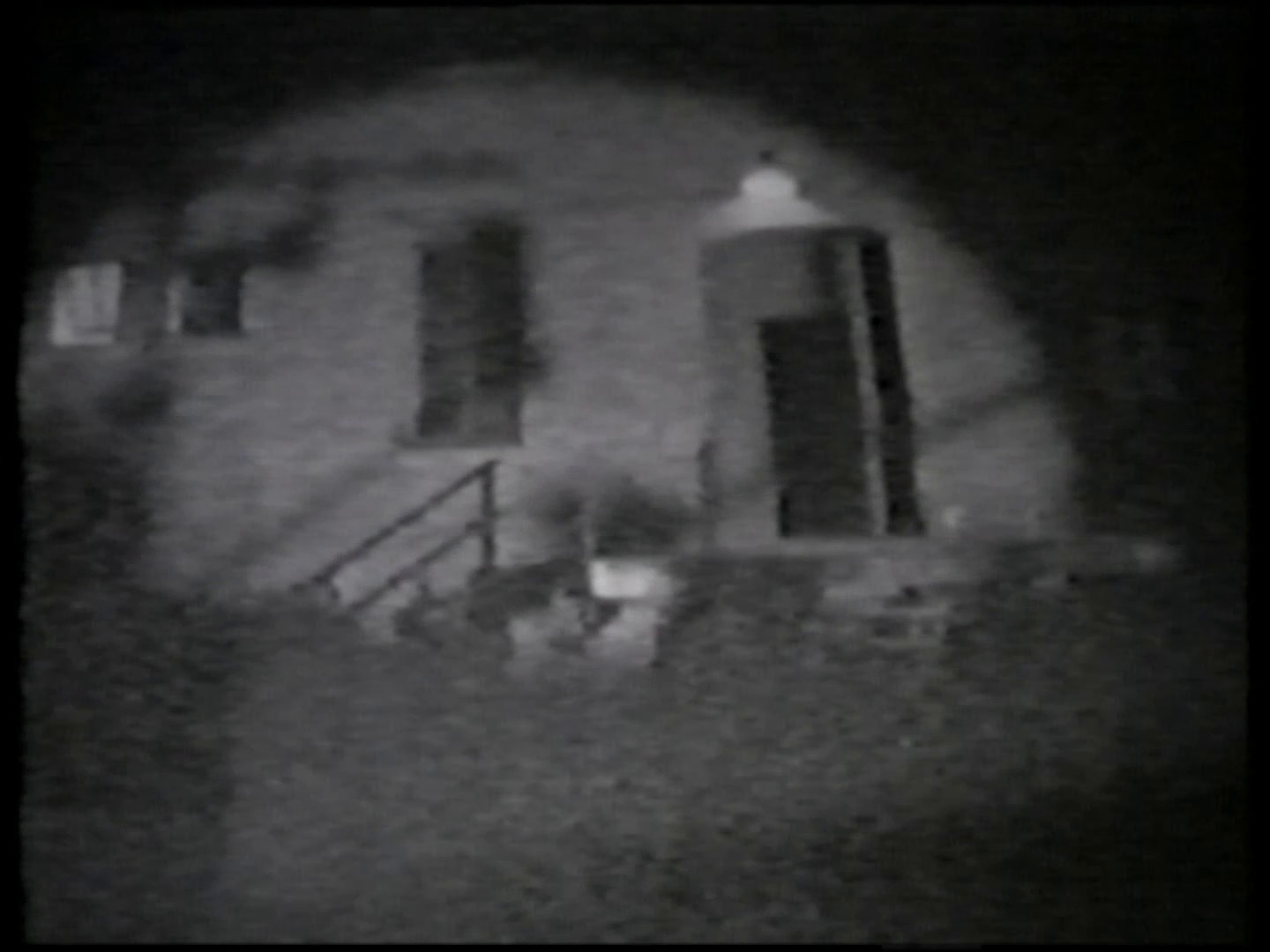
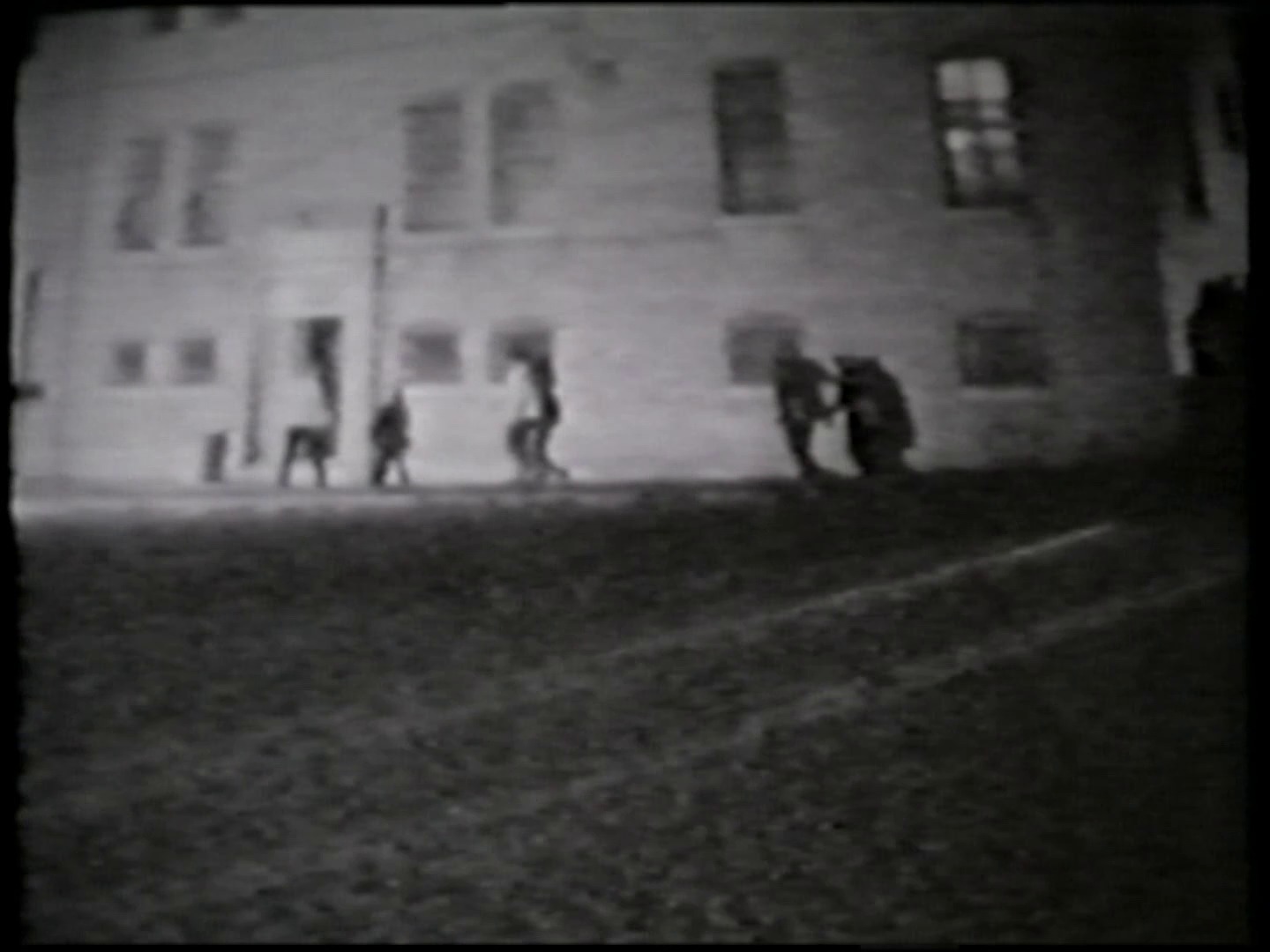
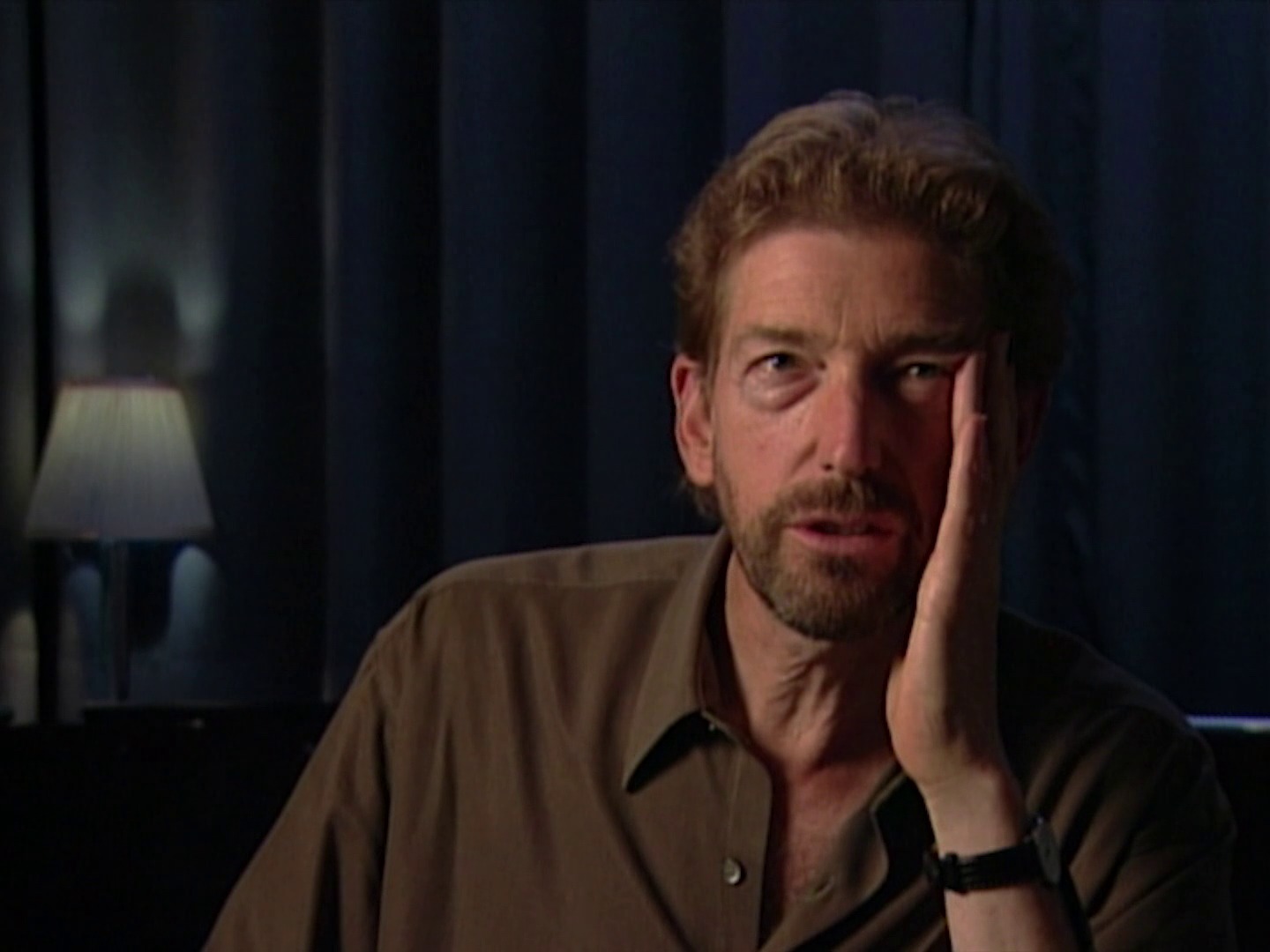
Frederick Elmes describes lighting a large warehouse exterior, then finding that the result was too bright for Lynch’s conception of the scene. The solution was not to add industrial detail. They reduced the light and used cutout shapes in front of a large source to project an imagined factory onto the building.
Elmes recalls crew members moving shapes to suggest pistons and levers while smoke passed through the shot. The documentary places production footage beside his explanation. The effect builds an active industrial world from a wall, a light, silhouettes and movement—an extension of the handmade working methods visible in Eraserhead.
Explore the image sequence · 3 stills
Mysteries of Love, 49:56–51:25 · Supplement guide
The film’s lighting and design · Eraserhead’s constructed world
The apartment is built for concealment
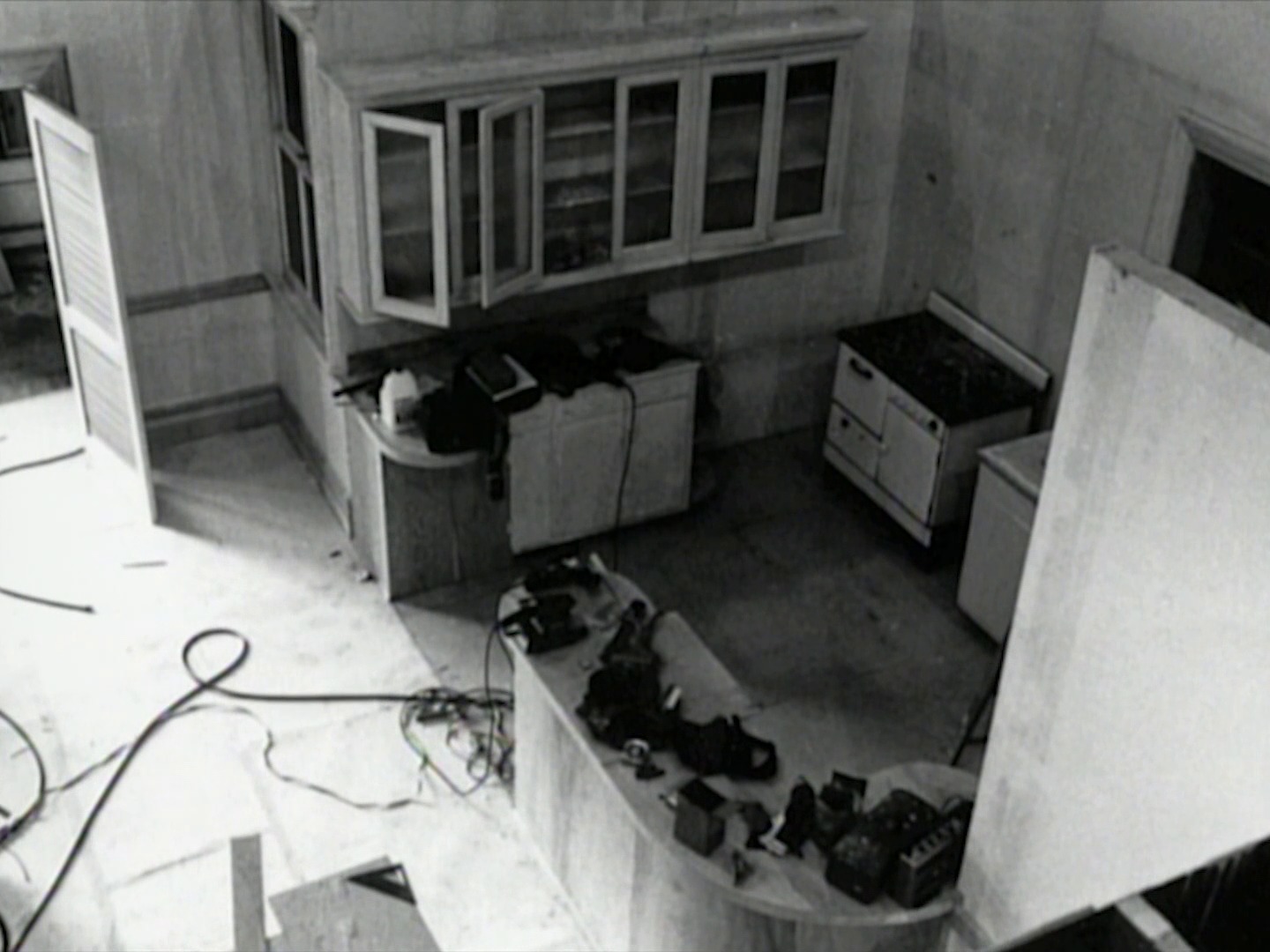
Elmes describes the apartment as a set whose different zones could be placed for the action: the bright kitchen to one side, the dark corner, the bathroom beyond view and the closet that confines Jeffrey’s sight. He and Patricia Norris worked to give Dorothy’s room a particular colour that would not be repeated elsewhere in the film.
The closet slats were tested for the way light passed through them. That turns a familiar image into a specific production problem: the doors must hide Jeffrey, reveal fragments of Dorothy’s room and allow the camera to register his face. A photograph of the open set makes the difference between a believable room and a workable filming space especially clear.
Explore the image sequence · 2 stills
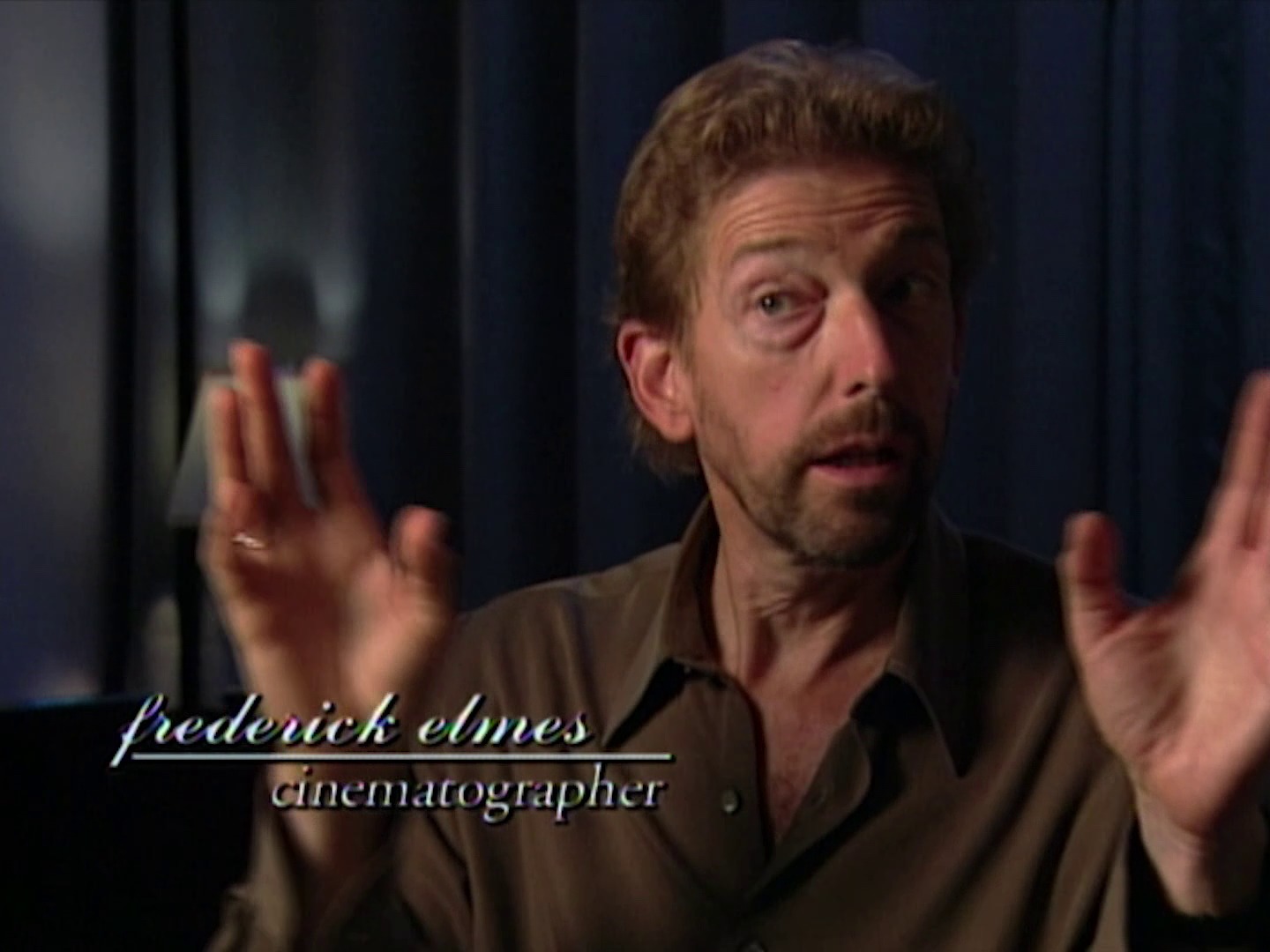
Mysteries of Love, 46:43–48:22 · Supplement guide
Voices from the production
Performance, music and remembered choices
Read the collaborators’ accounts alongside the scene studies. The 2002 documentary, the 2017 Badalamenti interview and Lynch’s later memoir describe the work from different moments in time.
Badalamenti: finding the voice before writing the score
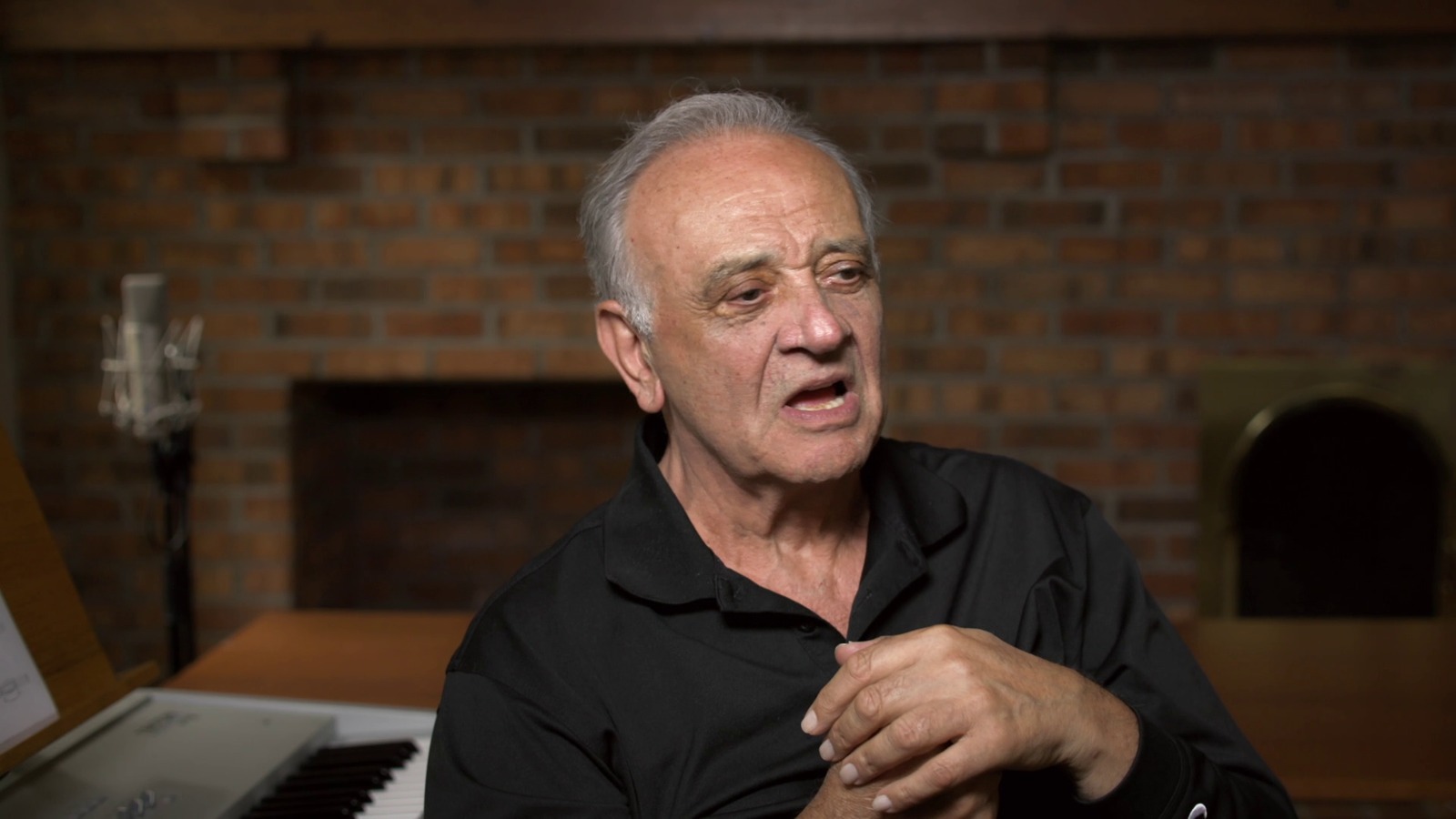
Badalamenti begins his Blue Velvet account with a practical assignment: helping Rossellini sing the title song. He remembers working at a piano with a cassette recorder and bringing the result to Lynch. The relationship expanded from vocal preparation into a song and then a score. It was built through work that solved the film’s immediate problems.
His description of Mysteries of Love gives Julee Cruise’s contribution particular weight. He initially associated her with a powerful theatrical voice and asked her to recommend other singers. After those attempts failed, she worked on a different register herself and returned with the quiet delivery he wanted. The voice was an achieved performance, not simply an unusual sound waiting to be discovered.
He also describes low instrumental passages that Lynch could slow and reshape, and contrasts their first film’s more conventional scoring process with later sessions in which Lynch spoke about moods beside the keyboard. Composition, performance and manipulation of a recording become connected stages of the same collaboration.
Angelo Badalamenti interview (2017), 04:28–15:11 · Supplement guide
Lynch remembers the freedom to make Blue Velvet
Lynch’s reading returns to the script’s acquisition by Dino De Laurentiis and to the importance of final cut. He remembers the modest production as a release from the pressure surrounding Dune. That later recollection belongs alongside the earlier development records: the project had a history before it became this particular opportunity to work freely.
The passage follows several discoveries into the finished film, including In Dreams, Badalamenti’s rehearsal cassette and the commissioned Mysteries of Love. Lynch also remembers wanting This Mortal Coil’s Song to the Siren for Blue Velvet and finally using it in Lost Highway. A musical idea can remain important to a filmmaker even when its eventual screen context changes.
Near the end, he recalls receiving an enthusiastic telephone report after a preview, then discovering that the audience cards had been strongly negative. His account preserves the contrast between private encouragement, a test audience and De Laurentiis’s decision to stand behind the release. It is a memory of the preview, distinct from the cards themselves.
Room to Dream audiobook excerpt (2018), 00:00–18:17 · Supplement guide
The film’s development · How Ben’s performance took shape · The song’s later home in Lost Highway
Direction through rhythm, gesture and disguise
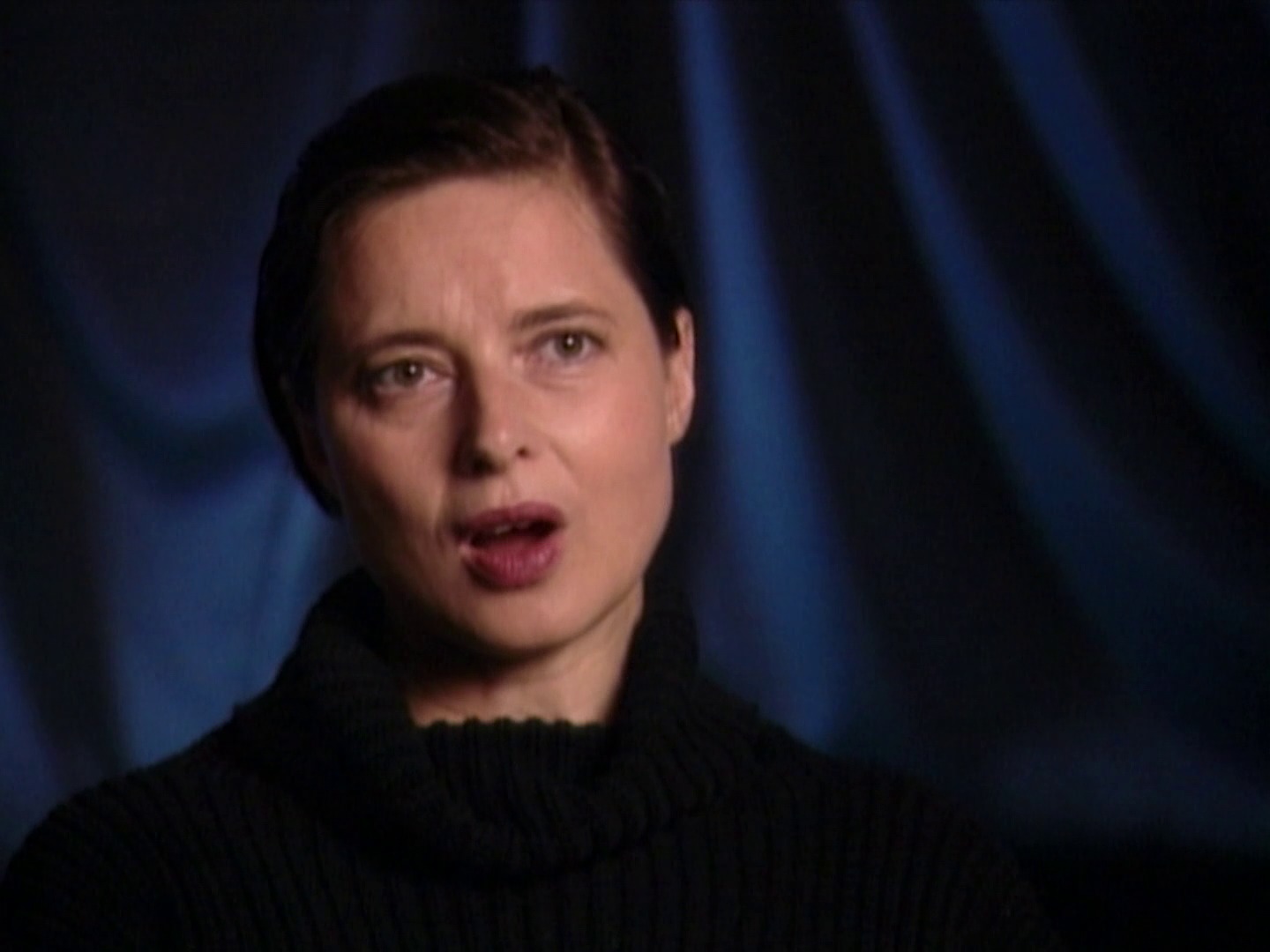
Laura Dern remembers Lynch asking for Sandy’s entrance to feel like a wind and playing Shostakovich through loudspeakers as they walked. Her later description of Sandy also complicates the simple light-versus-dark division: Sandy listens, gathers information and is fascinated by the mystery herself.
Isabella Rossellini describes Dorothy’s carefully arranged hair, makeup and clothes as a covering for profound distress. The decision to show the wig coming off makes that covering literal. She also recalls Lynch directing close-ups through his presence and bodily responses, comparing the exchange to a conductor guiding a musician. These accounts describe choices made by performers, rather than treating the women merely as symbols in Jeffrey’s story.
Mysteries of Love, 27:07–29:45; 31:57–39:53 · Supplement guide
The record, the remake and Dorothy’s voice
Badalamenti recalls an attempt to remake Bobby Vinton’s recording of Blue Velvet as a less expensive alternative. Although the arrangement recreated its period sound, Vinton’s voice now required a lower key. Lynch ultimately insisted on the original recording. The anecdote distinguishes the identity of a particular record from the song as a composition.
Rossellini’s vocal was another kind of construction. Badalamenti describes working patiently, phrase by phrase, after a difficult night of filming; Rossellini remembers the editing and explains that the dramatic feeling mattered more than vocal polish. Her reference was the longing in Judy Garland’s Over the Rainbow. The documentary then follows the new composition Mysteries of Love, giving three different routes by which music enters the film: an existing master, an actor’s performance and a commissioned song.
Mysteries of Love, 52:48–60:07 · Supplement guide
Badalamenti’s later account of Julee Cruise · Julee Cruise and the wider musical collaboration
Blue Velvet Revisited
Inside the working days
Peter Braatz’s production images and recorded conversations offer another route into the film: the labour, waiting, experiments and ordinary surroundings out of which Lumberton takes shape.
Lettering Lumberton by hand
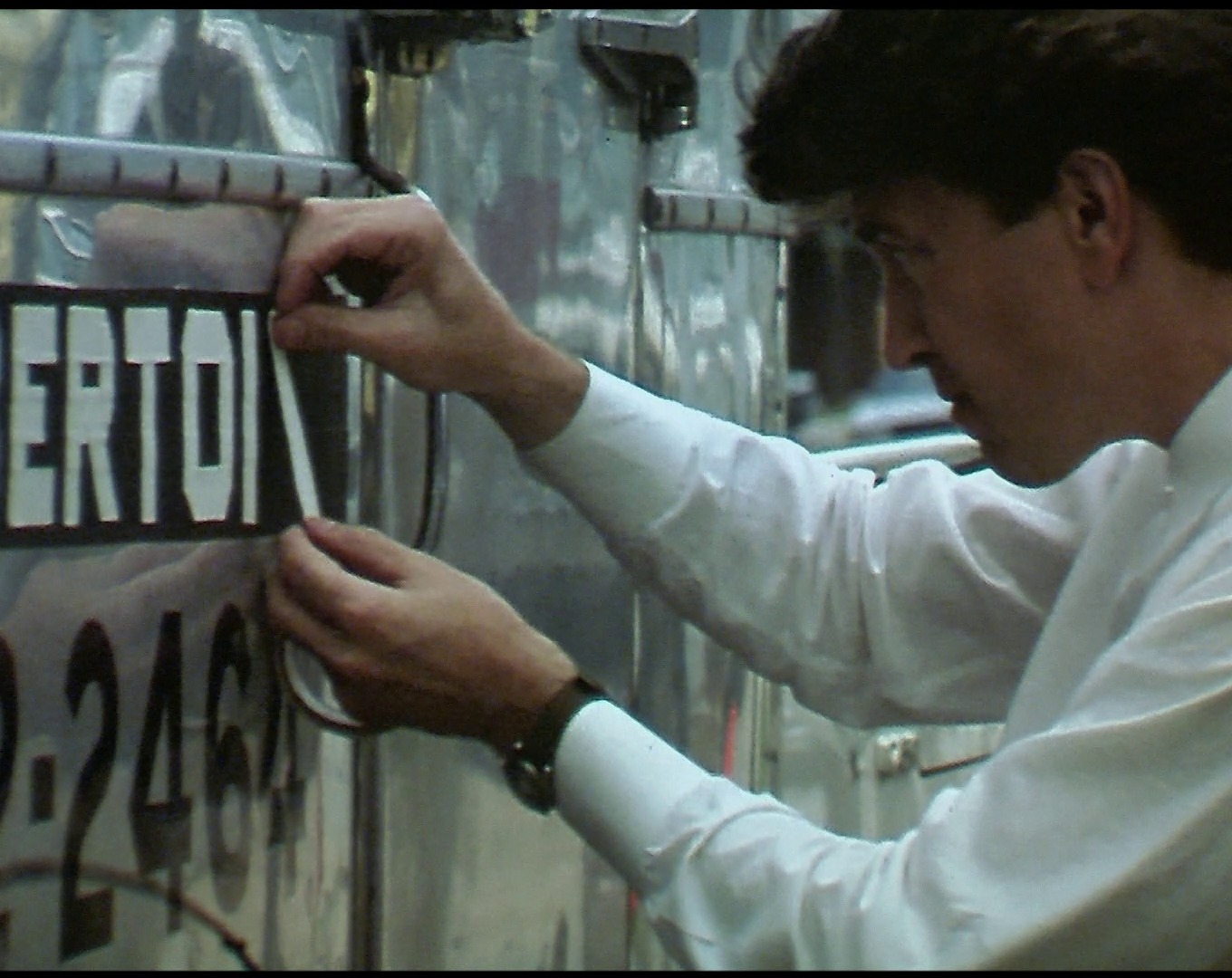
Braatz records Lynch applying the lettering to the side of an ice truck. The sequence allows a small piece of the fictional town to be watched in the making: an incomplete word becomes LUMBERTON through measured, manual work. The director’s hands are occupied with the surface that the feature will absorb into its world.
The close views have a different value from a finished-film still. They show the intervals and adjustments normally excluded from the image, and make the continuity between Lynch’s visual art and his filmmaking tangible without having to turn every object into a symbol.
Explore the image sequence · 3 stills
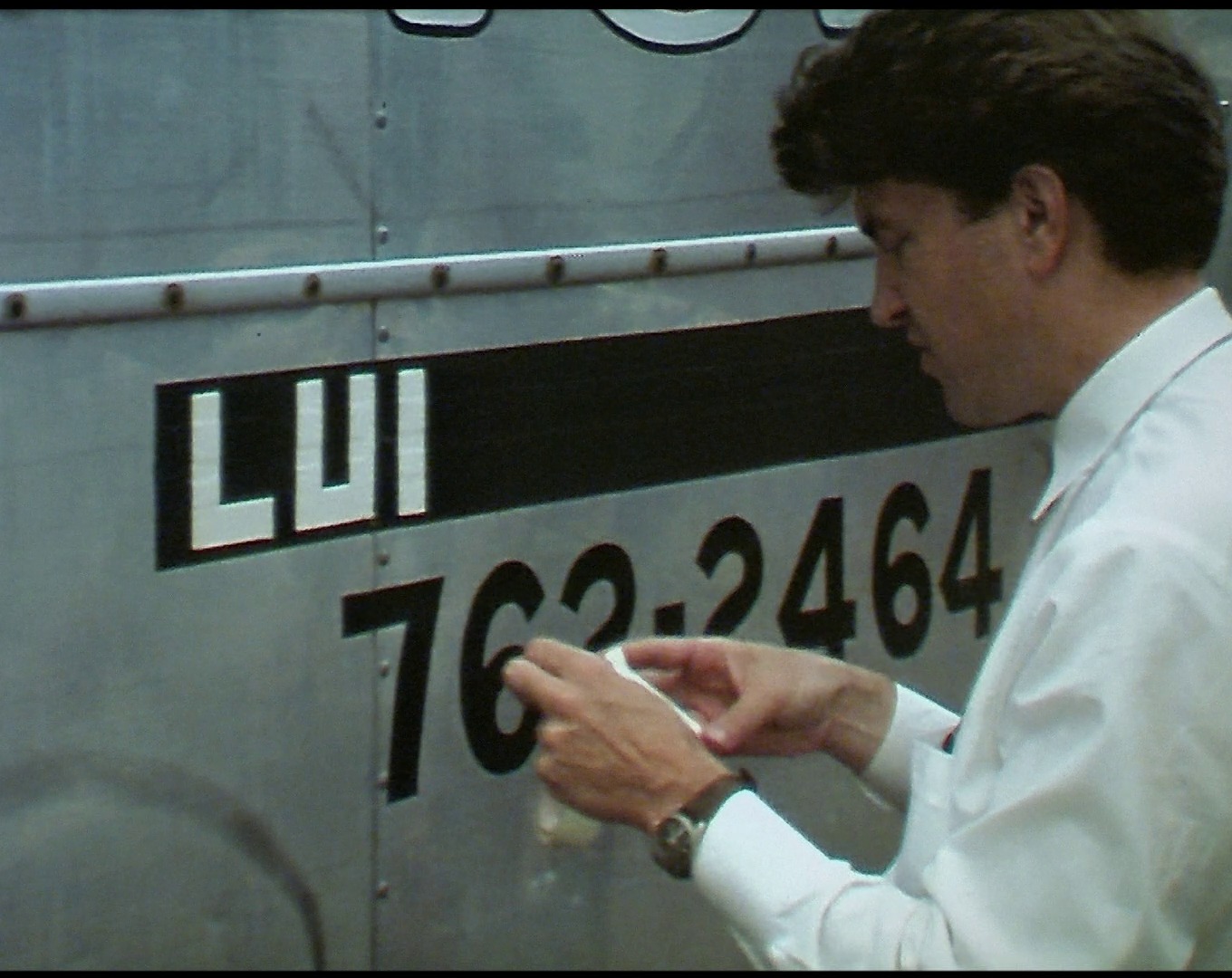
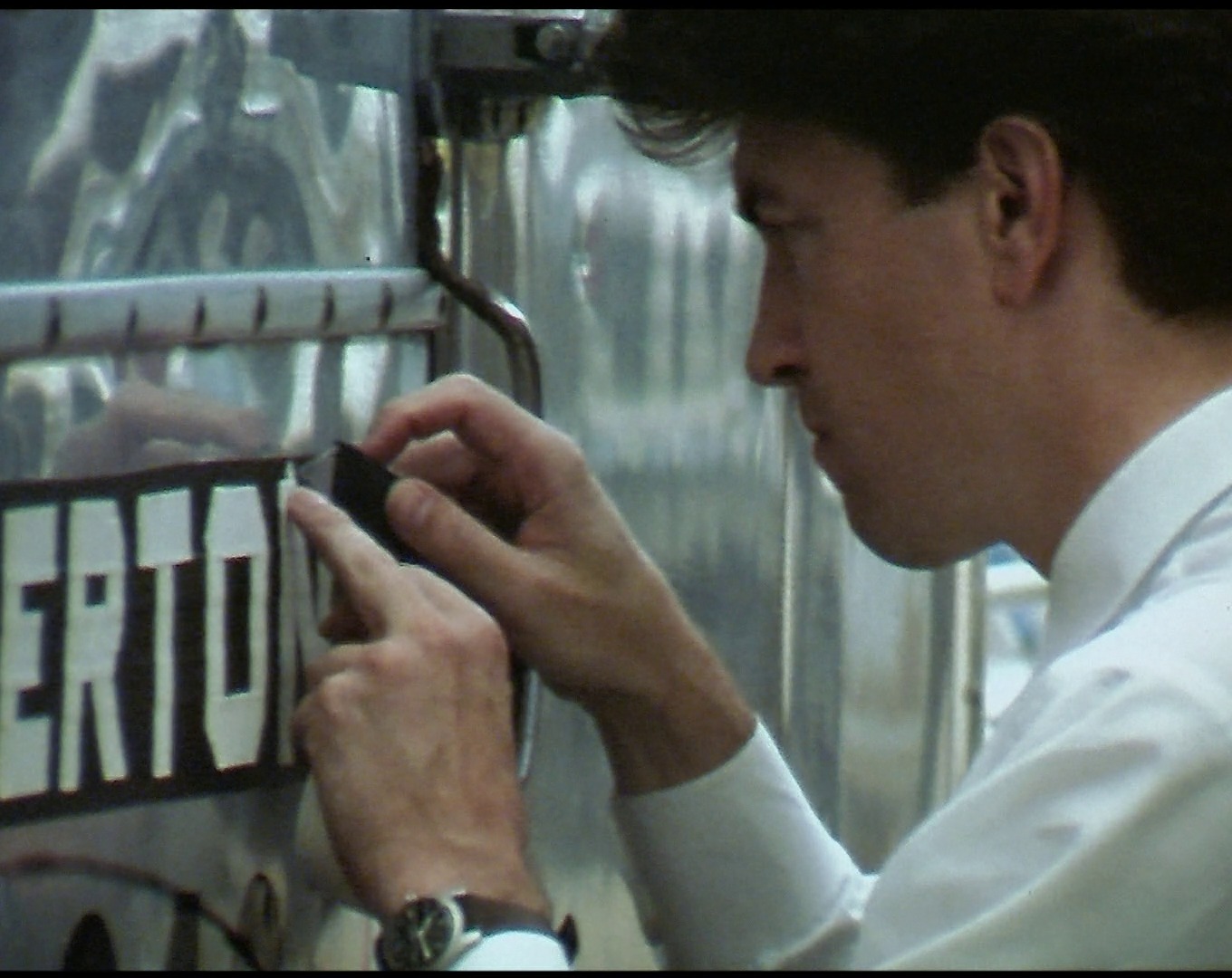
Blue Velvet Revisited, 11:20–12:46 · Supplement guide
The machinery outside the frame
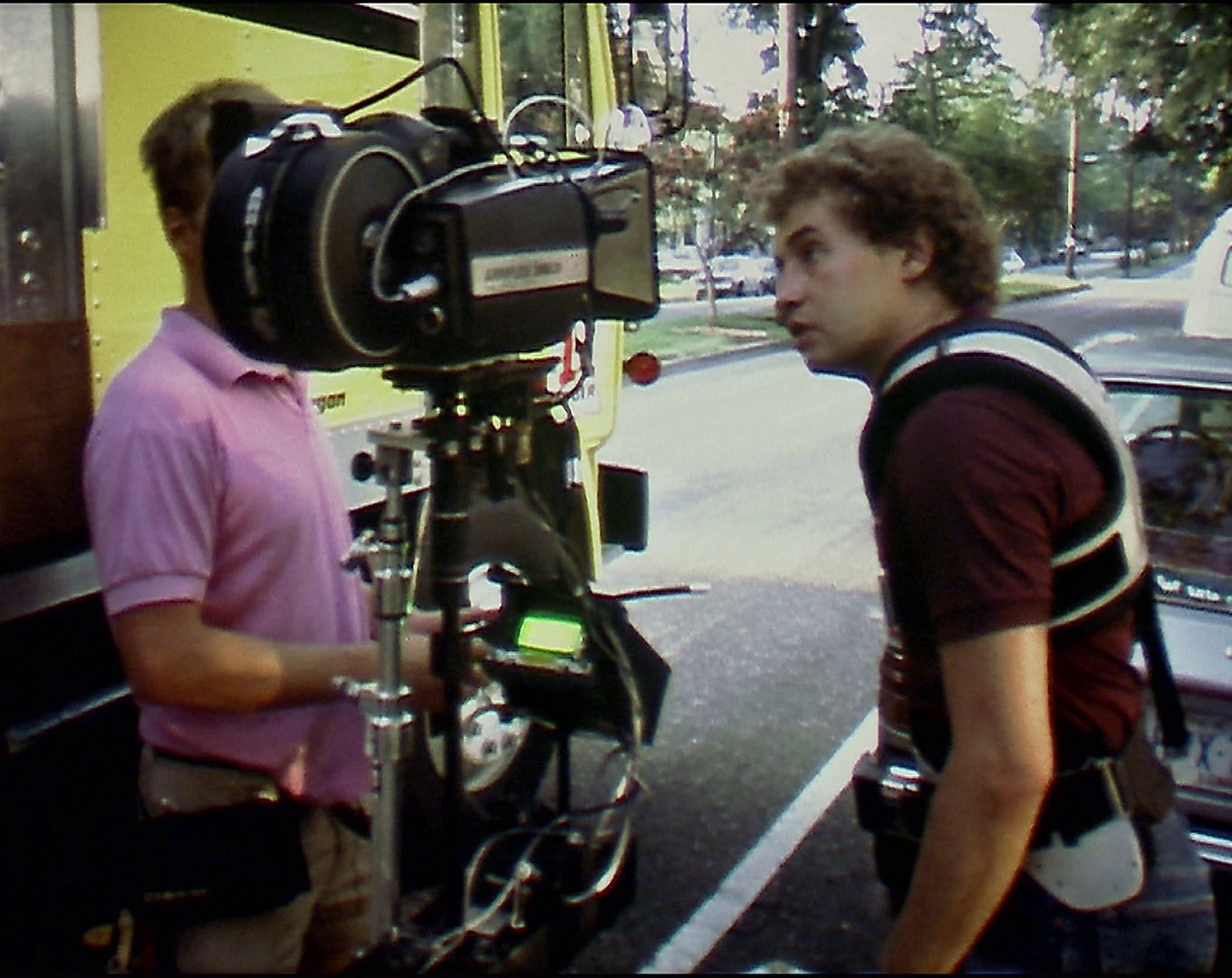
Production views reveal the camera as a physical burden: the Steadicam operator in his harness, a platform set among the grass, crew members gathered around a shot that will appear to belong to Jeffrey alone. Beside Dan Kneece’s later account of the stairs, these images restore the equipment and bodies that the finished movement conceals.
Lynch’s recorded conversation turns to an imagined system of computer-assisted lighting and a tiny camera that could move into an ear. He wants to shorten setup time and leave more room for small discoveries. These are proposals for equipment he wishes existed, not techniques being demonstrated on the production. The passage puts the handmade devices and the desire for new tools within the same working imagination.
Explore the image sequence · 2 stills
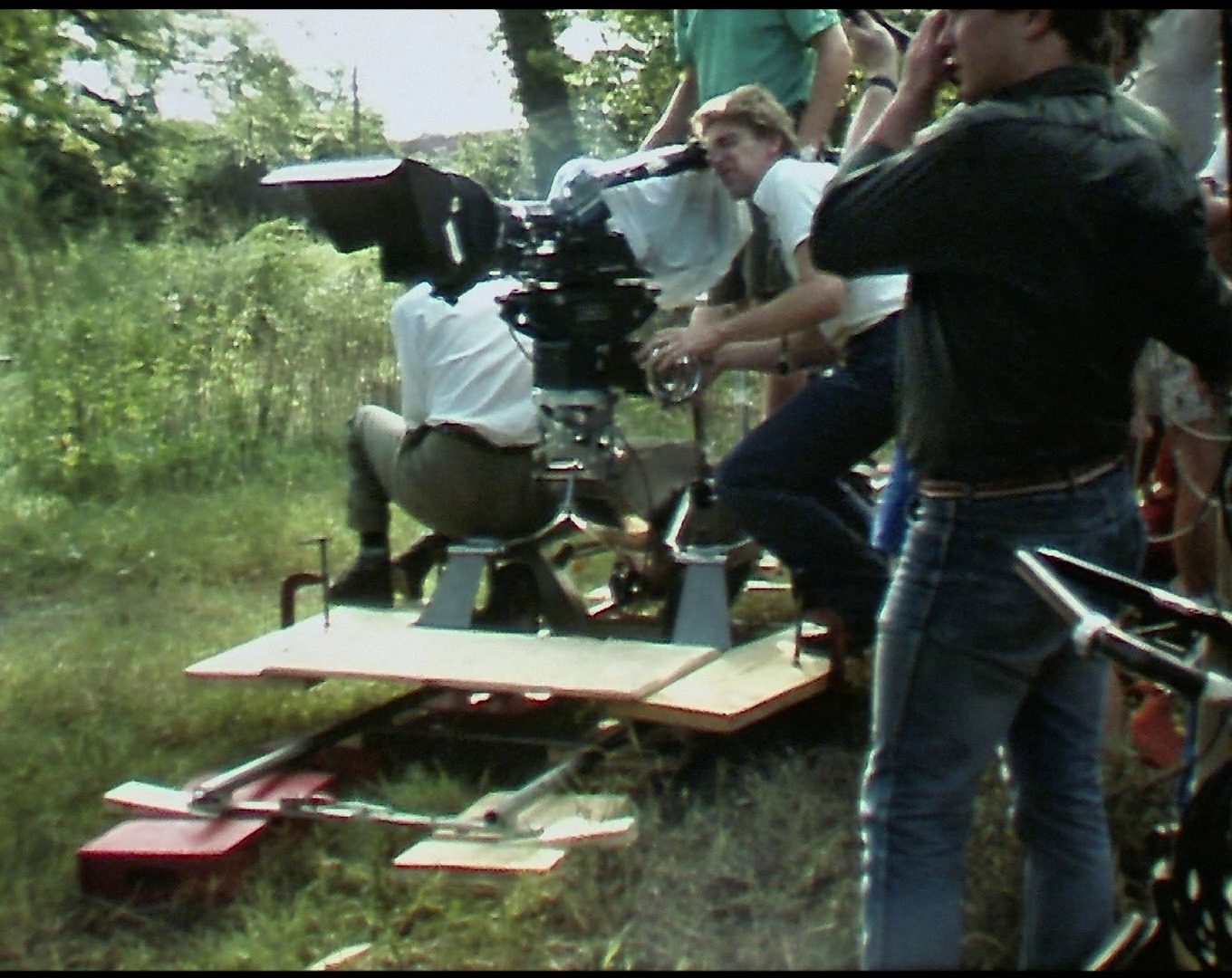
Blue Velvet Revisited, 04:00–07:00; 17:40–22:15; 79:42–80:40 · Supplement guide
Alan Splet: listening, trying and returning
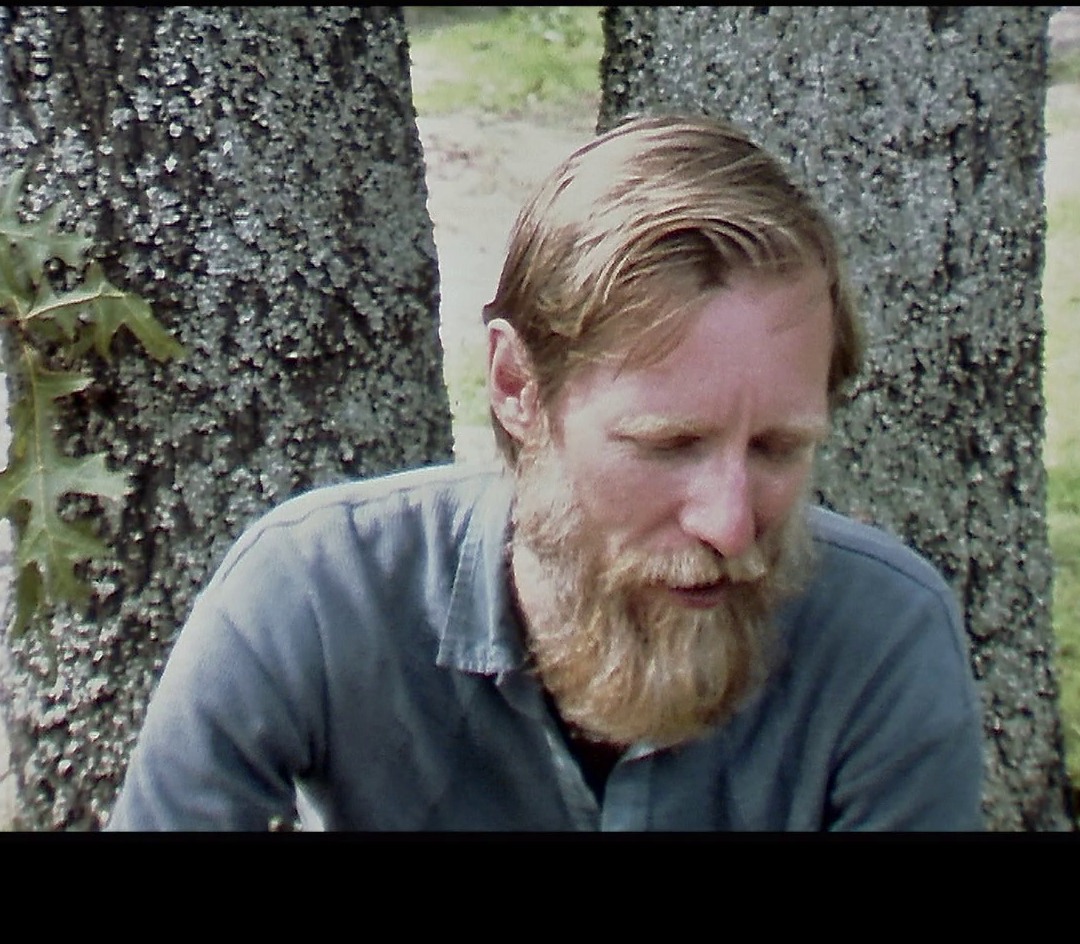
Recorded during production, Splet describes a cycle of trying material with Lynch, listening to each other’s reactions and returning to the laboratory to develop it. He explicitly connects this process with their work on Dune. His account gives a working method to the broader description of their collaboration: sound is found through exchange and revision.
Splet also allows room for disagreement. Lynch has to respond to the result, but Splet describes explaining his own reservations when he is not satisfied. Read beside the finished soundtrack, the conversation restores discussion and uncertainty to sounds that can otherwise seem inevitable.
Blue Velvet Revisited, 39:39–40:20 · Supplement guide
A film still being decided
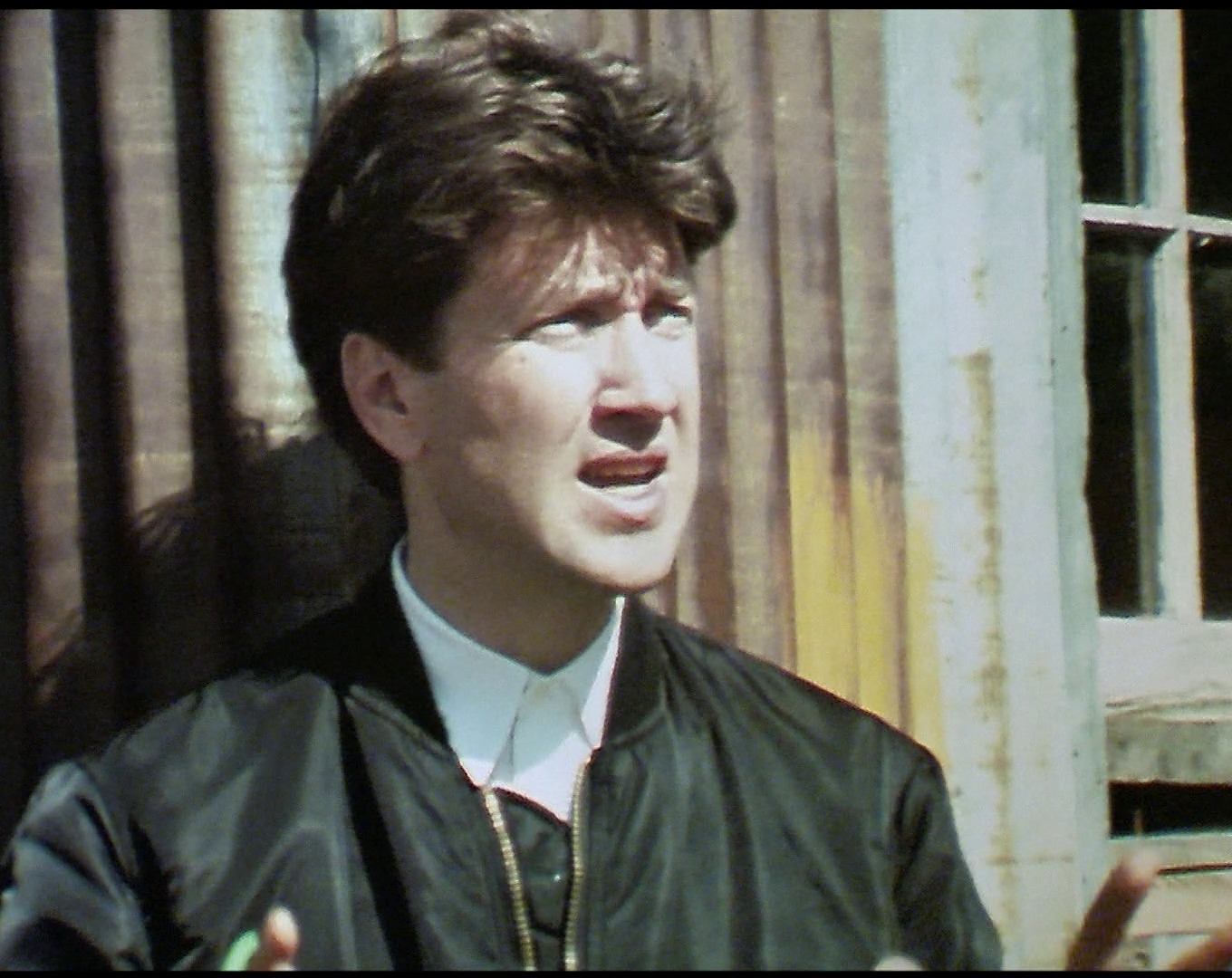
Lynch distinguishes his pleasure in individual scenes from the unanswered question of how they will hold together. Rossellini offers a different route through the script: reading it without the characters’ names, she imagines its conflicting impulses as parts of a single person. These are contemporary responses to work in progress, not retrospective explanations of the finished film.
Near the end of the documentary, Lynch discusses the pressure of night work, fatigue and the remaining schedule. Producer Fred Caruso gives a concrete example: a goodbye scene planned for a room with a fireplace cannot be completed that night, so he proposes finding an exterior for the following day. Braatz’s record catches the film between intention and practical revision; it does not establish that every proposed alternative was ultimately used.
Explore the image sequence · 2 stills
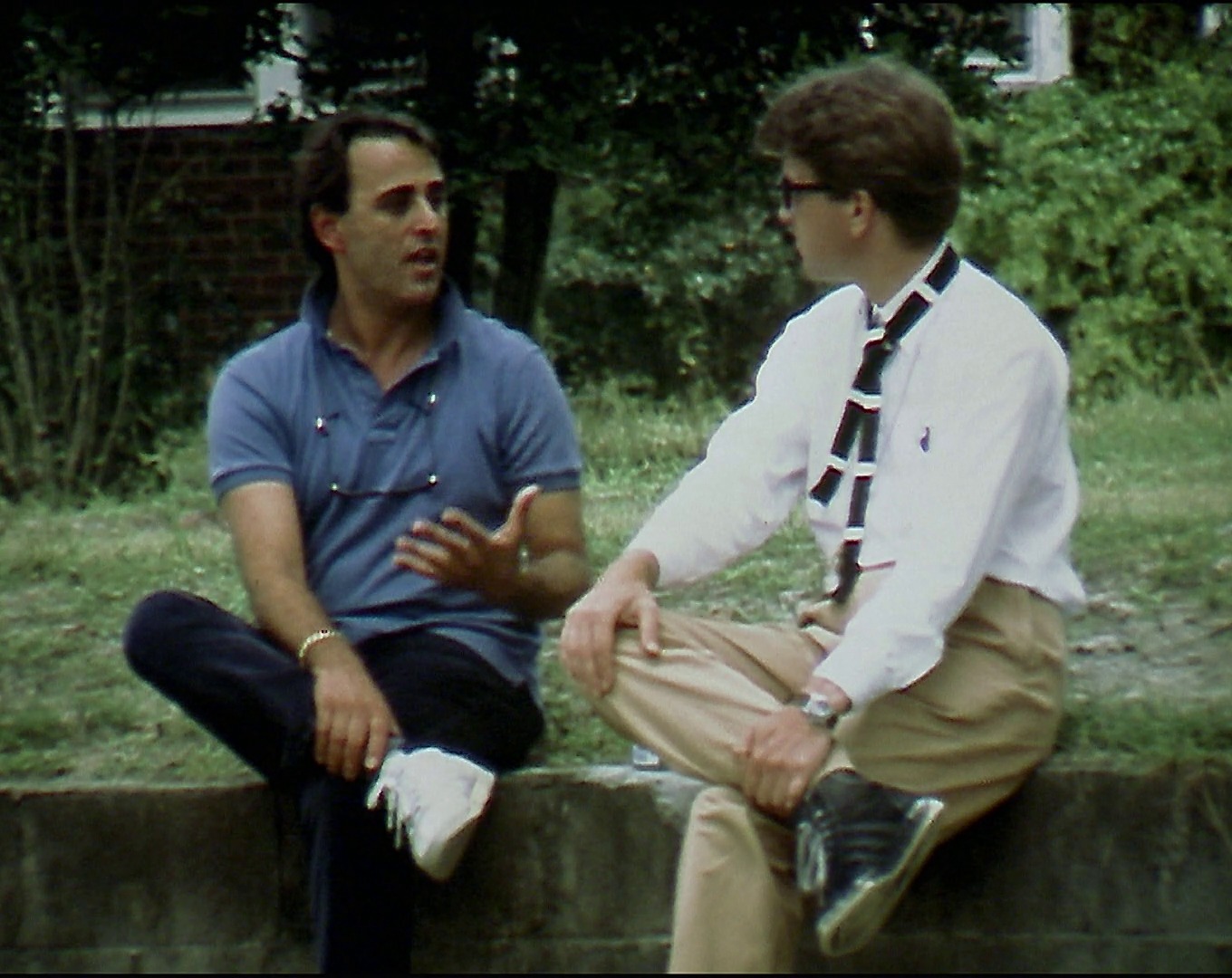
Blue Velvet Revisited, 47:39–50:28; 76:26–79:42 · Supplement guide
A production archive becomes another film
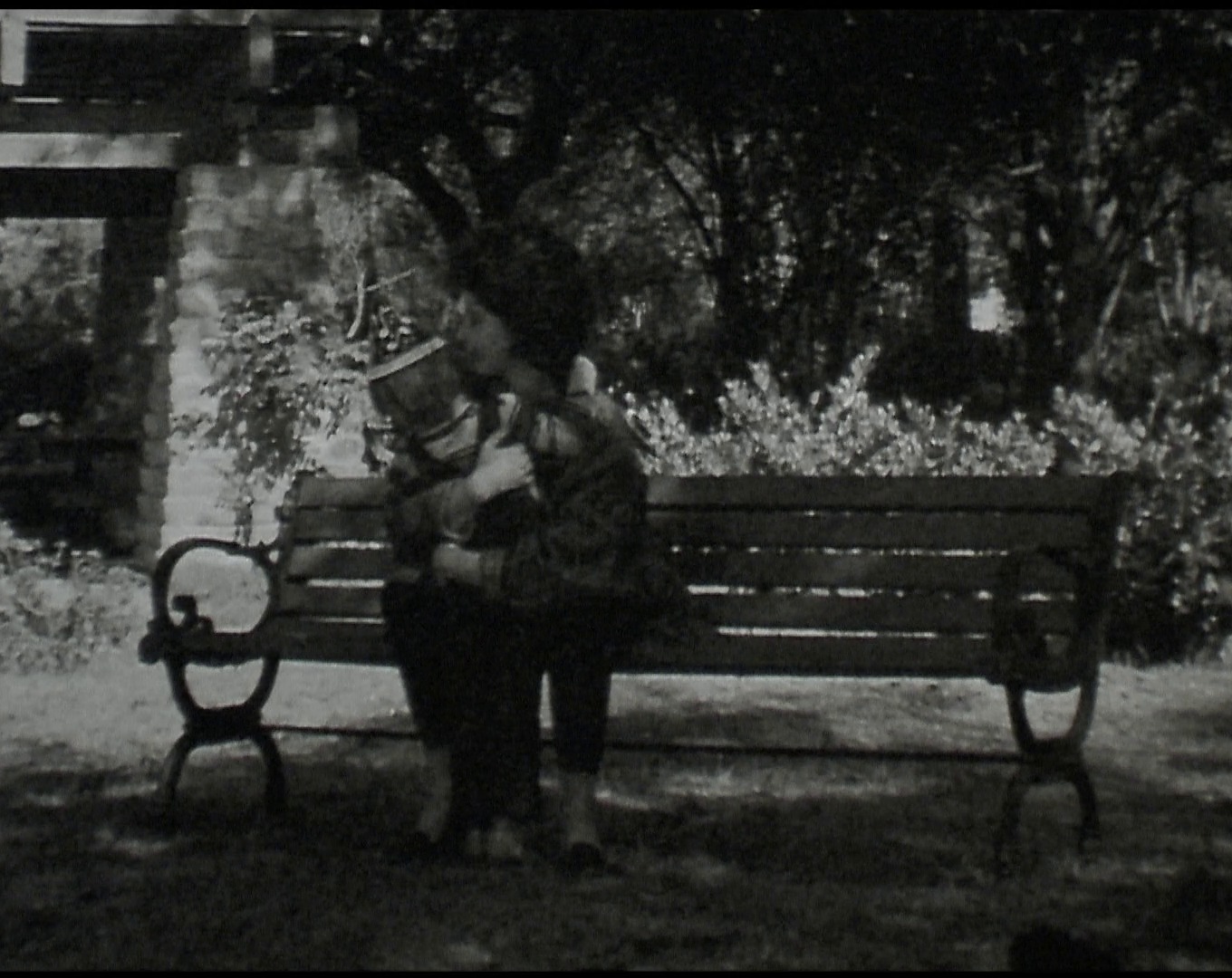
Blue Velvet Revisited is Peter Braatz’s later arrangement of production images, photographs and recorded voices. It moves between colour and black and white, pauses on faces and landscapes, and lets conversations continue across images from other moments. The result can be read as a document of the shoot and as a separate film about memory, labour and atmosphere.
Its credits name Braatz for the photography, with sporadic and interview photography by Frank Behnke, and credit both men for the original production sound. The music by Tuxedomoon, Cult With No Name and John Foxx belongs to this documentary’s construction. It should not be confused with the sound heard by the crew in 1985 or with the finished feature’s soundtrack.
Blue Velvet Revisited, throughout; closing credits, 87:28–88:54 · Supplement guide
The supplementary films
Six ways back into Blue Velvet
- The Lost Footage · 53 minutes. Deleted scenes and alternate takes assembled by David Lynch. Explore the comparisons →
- Blue Velvet Revisited · Peter Braatz’s documentary built from his production recordings, photographs and Super 8 material. The disc presentation runs 1:28:54. Inside the working days →
- Mysteries of Love · 2002, 1:10:45. Retrospective interviews with the cast and collaborators, archival Lynch interviews, film extracts and production material. The older Lynch recordings and later interviews are different layers of evidence. Light, sets and performance →
- It’s a Strange World · 2019, 15:57. Crew recollections, surviving props and location returns. The ear and other practical decisions →
- Angelo Badalamenti · Interview recorded in 2017, 15:41. Vocal coaching, composition, Julee Cruise and the musical collaboration. The voice and the score →
- Room to Dream · 18:17 audiobook extract from the 2018 memoir by David Lynch and Kristine McKenna, read here by Lynch. Lynch’s remembered decisions →
Programme times in the studies refer to the named supplement. The original film scene guide uses its own feature timeline. The Criterion edition record supplies the release inventory; testimony is attributed to its speaker and programme.
A personal film, years in the making
The project predates the release of Dune. AFI traces it to Richard Roth’s Warner Bros. deal reported on 25 February 1981, then to a financing announcement on 31 August 1984 and a postponement reported that November. These are contemporary announcements summarized by AFI, not proof that their schedules were fulfilled. Development history ↗
Lynch told Jane Root in 1987 that the Bobby Vinton recording, clandestine apartment watching and an ear in a field were starting points. He resisted making Dorothy and Sandy stand for all women and girls. April 1987 interview ↗
In his 1997 Museum of the Moving Image discussion, Lynch recalled accepting reduced pay and a smaller budget in exchange for final cut. He remembered the Wilmington production as unusually free. That recollection gives a useful counterpoint to Dune’s contested editorial history. Financing and final cut ↗
Calling this simply a retreat after Dune obscures the earlier development. The more revealing question is how an existing project became possible under different working conditions. “Personal” need not mean solitary: financing, location infrastructure and collaborators made the imagined town photographable.
A chronology with an unresolved seam
AFI describes principal photography as early 1986. DOC NYC’s record of Peter Braatz’s on-set documentation captions its production photograph Wilmington, 1985. We retain that disagreement rather than silently harmonizing it. Dated call sheets, camera reports and the original newspaper report cited by AFI should settle the shooting period. AFI account ↗ · Braatz documentation ↗
A small connection back to London
The dog snapping at the garden hose has a history that reaches back to The Elephant Man. In his own portion of the Room to Dream audiobook chapter “The Young American,” Lynch identifies the dog as Sparky, the Jack Russell terrier Mary Fisk acquired while they were in London. He remembers Sparky’s enthusiasm for biting water. A familiar animal’s behaviour became part of Lumberton’s disturbing opening: the dog continues playing while Jeffrey’s father lies on the ground. Lynch’s recollection, 1:00:15–1:01:45 · Return to the garden scene →
The screenplay on the page
The circulated screenplay scan is labelled Revised Third Draft, August 24, 1984. Its 138 PDF pages include preliminary and inserted material; references distinguish PDF positions from printed screenplay pagination. Scanned document ↗
On a small screen, swipe the table sideways to compare every column.
| Checked location | What is on the page | Research consequence |
|---|---|---|
| Preliminary leaf PDF p. 2 | Shostakovich’s Symphony No. 15 is proposed for theme and mood music. | A plan, not a cue sheet for the released soundtrack. |
| Scene 91 Printed p. 48 / PDF p. 52 | The leaf is dated 9 August 1984. Frank’s canister contains helium, with a high voice specified. | Record the leaf’s date separately from the cover’s revision date. |
| Closing page Printed p. 126 / PDF p. 138 | Returning neighborhood images lead to Dorothy embracing her child. | Compare the written ending with the identified release, without assuming every instruction was filmed. |
Lynch later confirmed that helium had been his written idea. He described Hopper developing his own account of what Frank inhaled while seeking the vocal effect through performance. This supports a change in approach; it does not identify a real substance used by the actor. 1997 question about Frank’s canister ↗
Why it matters: three different records can coexist: an instruction in a draft, a performer’s working explanation and an effect in the finished film. A reliable comparison follows those stages separately.
Lumberton: a town made from names, places and thresholds
In his June 1986 conversation with David Chute, Lynch connected the town’s appearance to childhood memories of Spokane. He explained that choosing the name Lumberton suggested lumber trucks and the radio station’s timber imagery; the practical availability of town insignia also mattered. The fictional setting is a construction, not a documentary portrait of one municipality. Names and childhood imagery ↗
The Carolina Apartment Building at Fifth and Market supplies the exterior of Dorothy’s Deep River Apartments. Elmes describes her rooms and connecting hallway as a purpose-built set: a real Wilmington landmark opening onto a constructed interior. Location guide, p. 3 ↗ Apartment design ↗
A way to read the spaces: separate the public town, where institutions promise order, from the rooms where access is controlled. Jeffrey crosses these boundaries by investigating, impersonating and hiding. A door, staircase or closet is therefore more than atmosphere: it determines who can enter, who can remain unseen and whose version of events becomes available.
Joining their points into a plausible driving route would invent continuity the evidence has not established.
The darkness was built into the image
Frederick Elmes’s 1986 account credits Patricia Norris’s colors after tests favored normal negative treatment. Michael Katz and the grip crew created street lighting; early Technicolor tests checked shadow density through release-print generations. Dorothy’s connected set and selected closet slats controlled Jeffrey’s sightlines. Some speeding-car dialogue was made with a stationary car, moving lights and vibration. Photography, design and practical illusion ↗
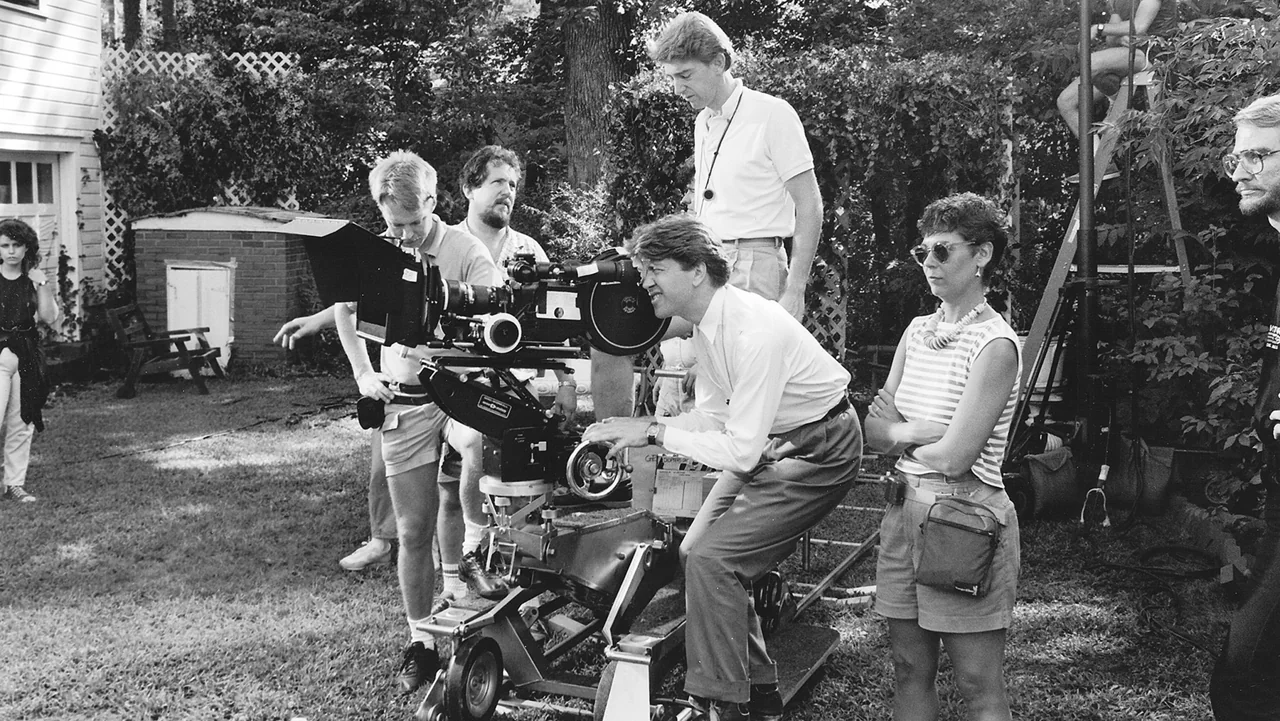
The often repeated description “darkness beneath suburbia” is a starting point, not an account of how the picture works. Saturated objects, restricted illumination and the boundaries of a set organize the audience’s knowledge. A brightly colored surface can be carefully made; a dark scene can be equally precise. Neither is simply what the camera happened to find.
BFI credits also identify draughtsperson Dawn Serody, property master Tantar Leviseur, costume-shop supervisor Gloria Laughride and wardrobe contributor Henry Earl Lewis. Object-specific attribution needs further evidence. Selected design and wardrobe credits ↗
The stage study and closet study compare clothing against furnishings and lighting, from Dorothy’s public appearance to Jeffrey’s concealed observation. A costume can help establish a public role; changing its context can unsettle that role. Specific claims about fabric, manufacture or an individual designer need costume records or inspected objects.
Dorothy is a performance, not just an image
Rossellini’s 1997 Fresh Air interview, rebroadcast in 2002, explains how she approached Dorothy as a woman whose vulnerability complicates the usual femme-fatale role. She describes preparing the difficult encounter with Hopper and finding the collaborators protective and humorous. For Dorothy’s exposed walk outdoors, she recalled drawing on the outstretched gesture in Nick Ut’s Vietnam photograph to communicate helplessness. These are the actor’s explanations of choices, not a clinical diagnosis of the character. Rossellini transcript ↗
In a later Vogue interview, Rossellini recalled discussing and rehearsing the script with Lynch and MacLachlan before being hired. Her account restores a stage of interpretation and experimentation that a story about casting a famous face can miss. Audition and rehearsal recollection ↗
An actress’s account of her working process and a critic’s account of a film’s effect answer different questions. Rossellini’s agency matters in its own right. It does not require every viewer to find the result ethically convincing, and a viewer’s discomfort does not justify erasing her creative contribution.
Jeffrey, Sandy and Frank: different kinds of control
Lynch told Chute that Sandy counterbalances the darkness but also encourages Jeffrey’s investigation. That makes her more than a passive emblem of innocence. Chute’s accompanying criticism, meanwhile, questions Jeffrey’s apparently blameless curiosity. Keep the director’s account and the critic’s judgment distinct. Sandy and Jeffrey ↗
A useful ensemble study asks who controls a conversation, who must perform for somebody else, and how quickly those positions reverse. MacLachlan’s Jeffrey, Dern’s Sandy, Rossellini’s Dorothy and Hopper’s Frank should be followed through those exchanges rather than reduced to moral labels. Dean Stockwell’s Ben also makes spectatorship a visible social arrangement: one person performs while others watch.
The illustrated scene guide now follows gestures, listening and reactions across the film. A comprehensive performance log still needs continuous shot and sound analysis and additional testimony from Dern, MacLachlan, Hopper and Stockwell. It should include awkward pauses, listening and reactions, not only the most quoted speeches.
Why Ben had to unsettle Frank
Dean Stockwell explains his approach to Ben in Toby Keeler’s Pretty as a Picture. He admired the screenplay but initially found his own role less compelling than Frank Booth. Reading the relationship between the men gave him the way in: Frank sought Ben out and appeared to admire him, so Ben had to possess a strangeness capable of commanding Frank’s attention. Stockwell describes building his performance from that imbalance.
Lynch introduces the recollection by saying that Stockwell’s Ben exceeded the character on the page. Together, the accounts illuminate a scene in which overt violence briefly yields to theatrical control. Ben can hold the room because Frank lets himself become an audience. Pretty as a Picture, 50:41–52:32 · source guide →
Direction as a physical clue
In their 2022 conversation, Laura Dern and Kyle MacLachlan remember Lynch guiding performance through mood, energy and compact images. Recalling Blue Velvet’s car scene, they describe prompts that invited more mystery or an Elvis-like quality rather than a lengthy psychological explanation. MacLachlan contrasts the relative relaxation of Blue Velvet’s Wilmington shoot with the structured feeling of his first film, Dune. Their account places Jeffrey and Sandy’s apparent innocence within an active collaboration: the actors respond to suggestive directions while maintaining the scene’s emotional simplicity. Dern and MacLachlan, 2022 conversation, 18:00–19:25
The voice, the song and the room around them
Badalamenti recalled arriving to coach Rossellini, making a piano-and-voice cassette, then recording the title song in New York. He said an unaffordable Cocteau Twins selection led to a new composition: Lynch provided lyrics, Badalamenti the music and Julee Cruise the voice for Mysteries of Love. The assignment grew into scoring the film. Composer interview, section II ↗
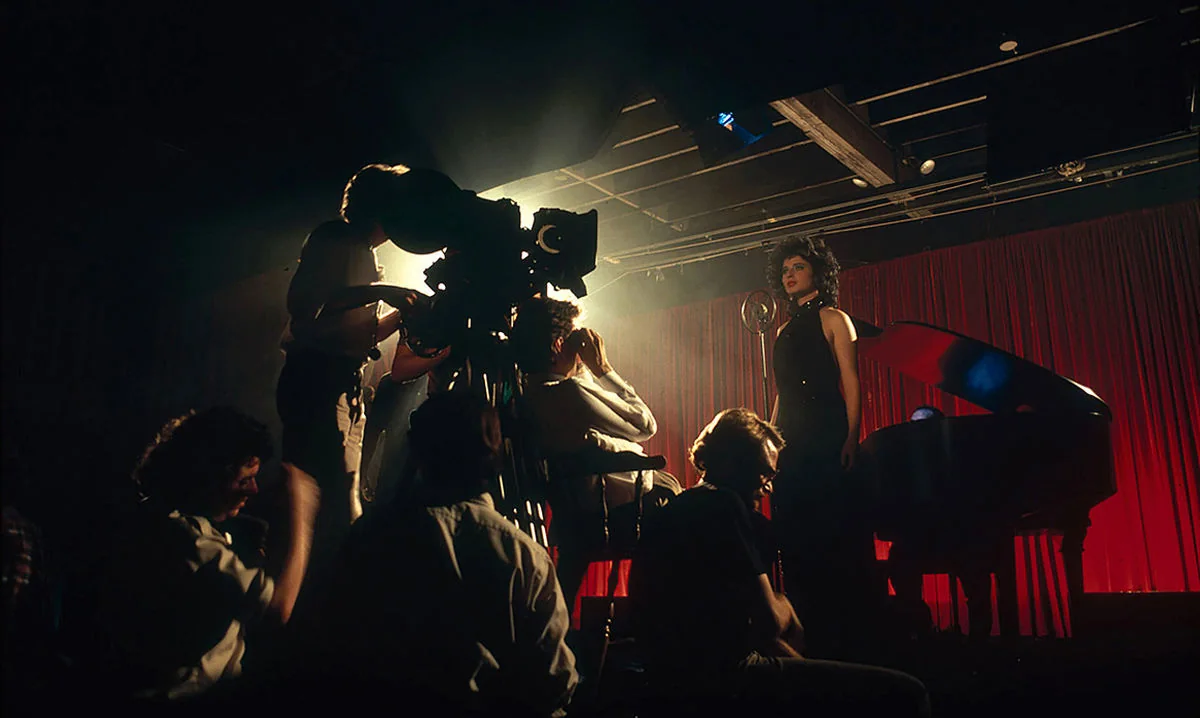
Kroeber’s own testimony adds another kind of listening. In 2011 she recalled choosing her Blue Velvet production mixer by auditioning it with her microphones, including a blind comparison, rather than accepting a recommendation based on price. Her interview treats listening as an active search for expressive material. Production recording and listening ↗
BFI distinguishes Splet’s sound design, Kroeber’s mixing, Adler’s music editing, and Berger and Parker’s re-recording. Sound credits ↗
A listening route: keep three questions separate. Who appears to produce the sound in the story? Who recorded or assembled it? What does its placement make the audience feel? Dorothy’s onstage singing, a familiar pop record, the score and the surrounding effects may share a scene while having different histories.
The tactile force of the ear, breathing and enclosed rooms makes this a central investigation, not a minor technical appendix.
From a performance to a recording
Badalamenti’s account distinguishes the rehearsal cassette from the later New York recording. It also describes guiding Julee Cruise toward a whispered delivery for Mysteries of Love. Those recollections help separate the character seen performing, the singer credited and the work that shaped a recorded voice. Composer’s account ↗
The closing-credit guide identifies the song performances and the dialogue, effects and music specialists. The ten studies follow how speech and songs acquire new meanings as they move between rooms and listeners.
Dialogue, songs & listening
Words that change what we see
A warning, an overheard conversation, a love song turned into a threat: sound carries people across Lumberton’s boundaries.
Follow ten studies from the town’s radio announcement to the final trap, connecting the words and returning songs to the illustrated scenes.
The town gives itself a voice
Lumberton is introduced through a broadcast as well as through pictures. The local station names the town, advertises its timber identity and turns a falling tree into a time signal. Its confident address makes the community sound busy, legible and shared. When the station returns during Jeffrey’s investigation, that same public identity continues alongside the activities he is discovering.
The broadcast supplies a useful counterpart to the police radio near the ending. One voice presents the town to itself; the other distributes urgent, incomplete information among people trying to act. Neither gives the listener an all-seeing account of Lumberton. The film’s radios establish social worlds and access to knowledge, rather than merely filling the background.
Back to the dialogue guide ↑An investigation begins with overhearing
Detective Williams asks Jeffrey both to keep the ear secret and to stop asking questions. He promises an explanation later, when the case is resolved. Sandy immediately opens another route: her bedroom is above her father’s office, and she has heard fragments of his work. The arrangement of the house becomes a channel through which official knowledge escapes.
Sandy also admits that she can confuse the cases she overhears. That qualification matters. She supplies a singer’s name, a nearby address and the possibility of a connection, not a complete explanation. The ear has brought Jeffrey to an institution that asks him to wait; listening through a domestic boundary gives him the means to proceed. What follows develops from partial information and his decision to act on it.
Back to the dialogue guide ↑A warning is only useful if it arrives
Sandy does more than object to the intrusion. She devises a signal: four horn blasts will tell Jeffrey that Dorothy is on her way upstairs. The dialogue establishes an exact code and asks the viewer to remember it. Jeffrey’s apparent control of the operation now depends on somebody outside the apartment.
The return sequence places the horn cue during the toilet flush. An ordinary action interrupts the connection on which the plan depends. The suspense comes from the difference between sending a warning and receiving it in time. Later, the police-radio confrontation reverses the problem: Jeffrey must contend with somebody hearing too much, then deliberately choose what that listener will be told.
Back to the dialogue guide ↑Dorothy’s call changes the meaning of the song
Jeffrey has already encountered Dorothy as a singer. From concealment he now hears her ask Frank for contact with Don and little Donny. She addresses Frank deferentially, makes assurances and refers to singing the title song. A public performance has acquired a private context of fear and negotiation.
Only Dorothy’s side of the call is available to Jeffrey. The missing replies make her questions and changes of address do the explanatory work. When she discovers him, she demands to know what he has seen; he includes the telephone conversation in his answer. The intrusion has exposed more than her body or her room. It has given him access to a crisis whose terms she has not chosen to share with him.
Back to the dialogue guide ↑Frank controls the terms of the conversation
Frank’s first visit repeatedly dictates whether Dorothy may speak and whether she may look at him. His changing family names and contradictory instructions prevent the exchange from becoming an ordinary conversation with stable rules. The role changes are actions he imposes on the room; they do not require a diagnostic explanation to make their coercion clear.
The same control reappears in seemingly social language. Jeffrey declines the proposed ride, but Frank converts the exchange into agreement. At Ben’s, he compels Jeffrey to join a toast and then boasts that he can make him comply. Invitations, neighborliness and politeness become instruments of control. What matters is not only Frank’s profanity, but his power to decide what another person’s answer is allowed to mean.
Back to the dialogue guide ↑Telling the case is not telling everything
Jeffrey’s first account to Sandy turns the apartment experience into a theory about kidnapping and the severed ear. He qualifies his conclusions and explains that his information was obtained illegally. Later, he organizes surveillance into numbered discoveries while acknowledging that an association between men does not itself prove anything. Dialogue lets us watch an investigator turn observations into a story.
Those accounts are also selective. He protects Sandy when Williams questions him and keeps his own involvement with Dorothy outside the story he tells Sandy. Dorothy’s appearance in the Williams house breaks that arrangement: her identification of Jeffrey as an intimate partner makes the private relationship public. The resulting request for forgiveness is not another clue in the criminal case. It is an admission that the person explaining the mystery has been concealing part of his own conduct.
Back to the dialogue guide ↑Sandy’s dream has to survive the story
Sandy gives her dream an interpretation within the scene: the absent robins stand for missing love, and their return changes a dark world. This is a character’s response to Jeffrey’s question about the existence of people like Frank. It offers a moral hope rather than a piece of investigative evidence.
After Dorothy’s arrival exposes what Jeffrey has withheld, Sandy asks where her dream has gone. The earlier speech therefore returns under pressure before the robin appears at the kitchen window. In the final exchange, tentative recognition sits beside Aunt Barbara’s practical disgust at the bird eating an insect. The dream has not simply become an unqualified explanation of the ending. Hope, appetite and ordinary conversation occupy the same image.
Back to the dialogue guide ↑A familiar song becomes a threat
At Ben’s, Roy Orbison’s recording of In Dreams accompanies a performance with the work light. The distinction between the visible performer and the recorded voice is essential: Ben gives the song a face and an improvised stage, while Frank becomes its absorbed spectator. Its interruption returns the room to his commands.
On the roadside the record returns in a different situation. Frank repeats its language while directing a threat at Jeffrey, converting a romantic address into a claim of possession. His promise of a love letter is explicitly recast as a bullet. When Love Letters later accompanies the return to the apartment, an already familiar phrase carries that threat into the scene. These connections depend on words and placement; the songs do not retain an innocent meaning simply because the recordings predate the violence.
Back to the dialogue guide ↑A declaration does not finish the story
Jeffrey and Sandy exchange declarations of love during the dance sequence accompanied by Mysteries of Love. Unlike the answers Frank forces from people, these words appear reciprocal. Their reassurance is important to the story, even though the next encounter will expose what Jeffrey has concealed. The scene offers a relationship the film will test rather than a guarantee that the test has already been passed.
The closing sequence returns to Mysteries of Love, then to Dorothy’s rendition of Blue Velvet as the film reaches her reunion with her child. The change restores Dorothy to the ending’s emotional account. Jeffrey’s return to home and romance is not the only form of recovery that matters. Song links the characters without requiring their experiences to be identical.
Back to the dialogue guide ↑The final trap is made from information
Jeffrey’s appeal to Detective Williams seems to offer the direct connection that has repeatedly been missing. During the call, however, he realizes that Frank also has a police radio. He supplies a hiding place in the back bedroom, then uses the closet instead. The apparent exposure of his position becomes an opportunity to misdirect his pursuer.
Frank confidently repeats what he has learned and later claims to hear Jeffrey’s radio. Receiving a signal is still not the same as understanding the situation. The closet first served Jeffrey’s uninvited observation of Dorothy; now its concealment works with a deliberately misleading message. The ending joins the film’s problems of looking and listening in one practical action.
Back to the dialogue guide ↑Explore the song and sound credits
The recordings are distinct performances
The closing credits separate the songs, their performers and their writers. They also identify the Film Symphony of Prague for the score recording. These credits describe the film; they are not a track list for a particular soundtrack album.
- Blue Velvet
- Bobby Vinton and Isabella Rossellini are credited separately as performers. Written by Lee Morris and Bernie Wayne.
- Blue Star
- Performed by Isabella Rossellini; music by Angelo Badalamenti, lyrics by David Lynch.
- Mysteries of Love
- Performed by Julee Cruise; music by Angelo Badalamenti, lyrics by David Lynch.
- In Dreams
- Written and performed by Roy Orbison.
- Love Letters
- Performed by Ketty Lester; written by Victor Young and Edward Heyman.
- Honky Tonk (Part I)
- Performed by Bill Doggett; written by Shep Shepherd, Clifford Scott, Bill Doggett and Billy Butler.
- Livin’ for Your Lover / Gone Ridin’
- Music excerpts performed by Chris Isaak.
The people who shaped the finished soundtrack
The closing cards add these editorial and mixing credits to the sound-design and production-recording account.
- Re-recording mixers
- Mark Berger and David Parker
- Music re-recording mixer
- Todd Boekelheide
- Dialogue editors
- Vivien Gilliam, John Nutt and Michael Silvers
- Sound effects editor
- Richard Hymns
- Sound editors
- Rob Fruchtman and Pat Jackson
- Music editor
- Mark Adler
- Foley artist
- Dennie Thorpe
Edition, timings and review method
The complete 2:00:31 English soundtrack was decoded and processed with local speech recognition. Its output was reviewed alongside the embedded English dialogue and accessibility captions; fourteen selected passages received a second transcription from the centre channel. The studies use corroborated dialogue, captioned cues and scene context, without treating uncertain recognition as a quotation.
This is a machine-assisted dialogue and song-context review, not direct auditory verification of every musical cue, vocal texture or surround effect. The horn-and-flush overlap and the song passages are supported by the English accessibility track. Song and crew attributions were checked against the film’s closing credits. The published composer and recordist interviews supply production testimony, rather than proof of a particular sound in this copy.
The copy contains an English 5.1 track. No comparison with the original stereo presentation, the television adaptation or isolated music and effects tracks is claimed. Times refer to the copy used for the scene guide.
The film takes shape in the cutting room
Duwayne Dunham recalled joining the Wilmington shoot, then working in Berkeley, where Splet lived. In his 2022 interview he described a first assembly of three hours and 57 minutes and roughly five months of postproduction. Reaching the two-hour limit required both large omissions and very small trims. He also identifies Jonathan Shaw and Mary Sweeney as assistant editors. Assembly and collaborators ↗
His example of an entrance explains an editor’s practical freedom: an unseen door could be relocated in the audience’s understanding through cutting and sound, regardless of where it stood on set. The scene’s timing mattered more than preserving the floor plan. The door anecdote ↗
A long assembly is a stage of work, not automatically a suppressed masterpiece. Removing connective action can change uncertainty, duration and the weight of a glance. Restoring footage later changes those relationships again; it does not simply return a missing quantity to an otherwise identical film.
The next comparison will ask what each omission does to knowledge and pacing: when a relationship becomes legible, how long Jeffrey or the viewer must wait, and whether a scene’s emotional destination changes. That requires the complete released film and The Lost Footage, not arithmetic based on their advertised lengths.
A dispute worth keeping alive
Roger Ebert’s release-era review praises Rossellini’s commitment while objecting to the relation between her suffering and the film’s comic detachment. He regards the contrast as an artistic failure. That is a consequential contemporary judgment, not evidence that the production harmed the actor or a consensus about the film. 19 September 1986 review ↗
Steve Jenkins’s April 1987 review reaches a different conclusion: the difficulty of separating visual pleasure from moral discomfort is part of the film’s achievement. He treats looking as implicated in power, fear and knowledge. Jenkins review ↗
The disagreement is more useful than a verdict about which critic “understood” Lynch. Does the invitation to investigate expose violence, participate in it, or both? Does the pleasure of the mystery alter when Dorothy’s experience becomes harder to keep at a distance? A film can make that conflict deliberate without making every response to it identical.
AFI records the U.S. opening on 19 September 1986 and cites an opening-weekend report of 98 screens and $789,409. The Academy records one nomination, for Lynch’s directing, at the 1987 ceremony. Neither a single weekend nor an award tells the whole reception story. Release record ↗ · Award record ↗
Publicity records what audiences were first promised. Later artist editions show how the film’s imagery continued to evolve as its reputation grew. Explore those reinterpretations in the museum.
Which Blue Velvet is in front of us?
A version record needs more than a rounded runtime. Editorial changes, image restoration, sound presentation and supplementary footage are separate dimensions.
On a small screen, swipe the table sideways to compare every column.
| Object | Documented distinction | What remains to check |
|---|---|---|
| Released feature | Criterion lists 120 minutes, color, 2.35:1. | The scene guide follows a 2:00:31 presentation. |
| Television adaptation | UPI’s 1987 report describes Sweeney’s ten-week editing task and 58 replacement lines recorded by Hopper. | Locate a documented broadcast copy; log language, images, framing and sound. |
| The Lost Footage | Criterion lists 53 minutes of deleted scenes and alternate takes assembled by Lynch. | Seven illustrated comparisons follow its scenes, alternate takes and closing variations. It is not a complete longer director’s cut. |
| Restored edition | Criterion lists a Lynch-supervised 4K restoration, 5.1 audio and an alternate original 2.0 surround track. | Compare actual presentations; restoration is not itself a new narrative edit. |
Edition inventory ↗ · Contemporary television report ↗
BBFC records 120m 8s for the cinema submission classified on 23 October 1986 and 115m 34s for a 2012 physical-media submission. The shorter number alone does not prove censorship or deleted scenes. Playback speed, distributor, submission and content must be checked together. Individual classification entries ↗
Blue Velvet Revisited reshapes Braatz’s production images, photographs and recordings into a later documentary. Mysteries of Love is a 2002 retrospective documentary; It’s a Strange World is a 2019 crew-and-location film. A later assembly of contemporary material is different evidence from a later recollection. Documentary record ↗ · Supplement list ↗
Fan assemblies extend the film’s reception history, presenting additional material through another editor’s choices. Director-approved releases and fan reconstructions are distinct versions.
Later interpretations and an earlier viewing format
The collection includes four artist editions and a Japanese LaserDisc with Japanese subtitles and an obi. Kevin Tong’s regular and variant prints have separate records, making their colour and edition differences easy to compare.

Inspect the Japanese LaserDisc → · All Blue Velvet museum records →
Makeup artist Jeff Goodwin recalled treating the severed ear as a character, preserving Polaroids and notes from the work. His account places the prop’s design inside the film’s performance and production history. Goodwin interview ↗
Blue Velvet: A Polaroid Diary, catalogued by Reel Art Press’s distributor, is a specific next source for makeup and continuity research. Publisher-distributor entry ↗
Explore further
Follow the sources below, explore the museum collection, or continue through the Reading Room. New archival discoveries and contributions enrich the record of Lynch’s work.
Sources and further reading
The source records below support the research and illustrated scene guide. Testimony, criticism, institutional records and publisher listings serve different purposes. Notes identify what was inspected and where access remains incomplete.
- Criterion Blu-ray: six supplementary programmesThe Lost Footage, Blue Velvet Revisited, Mysteries of Love, It’s a Strange World, the 2017 Badalamenti interview and the Room to Dream extract. Programme-specific image observations and attributed testimony support the new studies.
- David Lynch and Kristine McKenna, Room to Dream (2018), audiobook extract “The Young American,” included on Criterion’s The Elephant Man Blu-ray.1:00:15–1:01:45: Lynch identifies Sparky and recalls the dog’s appearance in Blue Velvet. The attribution comes from Lynch’s own narration, following McKenna’s biographical section. Explore the chapter →
- English soundtrack, captions and closing creditsComplete 2:00:31 English track processed with local speech recognition; full dialogue output and embedded English captions reviewed, with fourteen selected centre-channel checks. Accessibility captions support cue placement. Closing cards at 1:59:55 and 2:00:15 visually inspected for crew and song credits. No direct auditory mix comparison.
- Blue Velvet: the copy examined for the scene guideDirect visual study of selected frames across the 2:00:31 widescreen copy, with denser checks of key sequences. Embedded English subtitles consulted for narrative identification. A full-track machine-assisted English dialogue pass, fourteen centre-channel checks and direct inspection of closing song and sound credits now support the separate dialogue guide.
- Criterion Collection: Blue Velvet ↗Edition specifications, credits, restoration and supplement inventory inspected.
- AFI Catalog: Blue Velvet ↗History, release record and cited trade-report dates inspected. Original trade pages remain unchecked; the production-date discrepancy is retained below.
- BFI: Jane Root interview, Steve Jenkins review and credits ↗BFI programme notes reproduce two Monthly Film Bulletin contributions from April 1987. Interview, review and selected craft credits read; original magazine pages unseen.
- David Chute: Interview with David Lynch ↗Film Comment, September–October 1986; interview conducted 21 June 1986. Published web text read, distinguishing Lynch’s remarks from Chute’s criticism.
- Museum of the Moving Image: David Lynch dialogue ↗16 February 1997, moderated by David Schwartz. Transcript passages on Blue Velvet’s financing, final cut and Frank’s gas read; recording not audited.
- Blue Velvet: circulated revised-third-draft scan ↗138-page scan hosted by Script Slug. Cover dated 24 August 1984; preliminary music note and selected pages inspected. PDF 52 is printed p. 48, dated 9 August; PDF 138 is printed p. 126.
- Ron Magid: Blue Velvet — Small Town Horror Tale ↗American Cinematographer, November 1986; web reprint 13 February 2018. Elmes testimony and captions checked. Web images include later additions; original issue layout unseen.
- Wilmington film and television location guide ↗Tourism-board PDF, p. 3: Carolina Apartment Building exterior entry checked. Historical location guide.
- Fresh Air: Isabella Rossellini on Blue Velvet ↗31 May 2002 broadcast transcript, Rossellini interview identified as recorded in 1997. Dorothy, difficult scenes and gesture passages read; full audio not audited.
- Vogue: Isabella Rossellini on Conclave, faith and farm life ↗Retrospective interview: Blue Velvet audition and rehearsal passage inspected. Used for the actor’s account, not as independent production documentation.
- Frances Badalamenti interviews Angelo Badalamenti ↗The Believer, 1 August 2019, section II. Vocal coaching, cassette, commissioned song and Cruise recollections read; session records unseen.
- Karol Urban interviews Ann Kroeber ↗Designing Sound, 7 October 2011. Production-mixer selection, listening and collaboration passages read. These recollections do not identify every finished sound effect.
- Erik Luers interviews Duwayne Dunham ↗Filmmaker, 12 April 2022. Blue Velvet hiring, Berkeley, assembly, cutting and assistant-editor passages read. Retrospective testimony; no editing logs inspected.
- UPI: Blue Velvet edited for television ↗21 August 1987. Accessible indexed excerpts on Sweeney’s ten-week work and Hopper’s 58 redubbed lines checked. Full article retrieval failed; broadcast itself unseen.
- Roger Ebert: Blue Velvet ↗Review dated 19 September 1986. Earlier inspected opening and newly accessible indexed argument checked; full retrieval currently restricted. Original newspaper page unseen.
- Academy: 59th Academy Awards ↗Official 1987 ceremony record checked: one nomination for Blue Velvet, David Lynch for Directing.
- BBFC: Blue Velvet classification records ↗1986 cinema, 2001 cinema and 2012 physical-media durations inspected. No inference of missing footage from runtime alone; individual submission files unseen.
- DOC NYC: Blue Velvet Revisited ↗2026 screening record checked: 85-minute documentary, Braatz’s production documentation and photograph caption dated Wilmington 1985. The disc documentary is examined in the production-film studies.
- El País / ICON: Jeff Goodwin on the ear ↗5 October 2026, Spanish-language interview passages on preparation, ear and Polaroids inspected. Paraphrased in English; neither physical props nor complete book examined.
- D.A.P. / Reel Art Press: A Polaroid Diary ↗Publisher-distributor catalogue entry checked: Jeff Goodwin’s photographs/text, edited by Tony Nourmand.
Another doorway
Continue exploring
Music
Music
Explore David Lynch’s albums and collaborators, from Julee Cruise and Thought Gang to Chrystabell, with recording histories, edition notes and sources.
Films
Mulholland Drive
Explore Mulholland Drive through 45 illustrated scenes, dialogue studies, music and sound credits, Club Silencio, production history and edition research.

Museum
Museum — The Objects Remain
Explore David Lynch posters, artist editions and LaserDiscs through 35 illustrated records, edition comparisons, object histories and documented research.
Image credits and sources accompany each linked guide.