Twin Peaks: The Return
2017 · Eighteen parts · Research dossier
The familiar face. The changed world. Eighteen parts that make returning an open question.
- Premiere
- 21 May 2017
- Parts
- 18
- Written by
- Mark Frost & David Lynch
- Directed by
- David Lynch
Explore the episodes
The Return, scene by scene
Enter the illustrated dossiers for close readings, sound and dialogue studies, focused effects galleries and the voices of the people who made the work.
 Part 01 · Illustrated episode dossier
My Log Has a Message for You
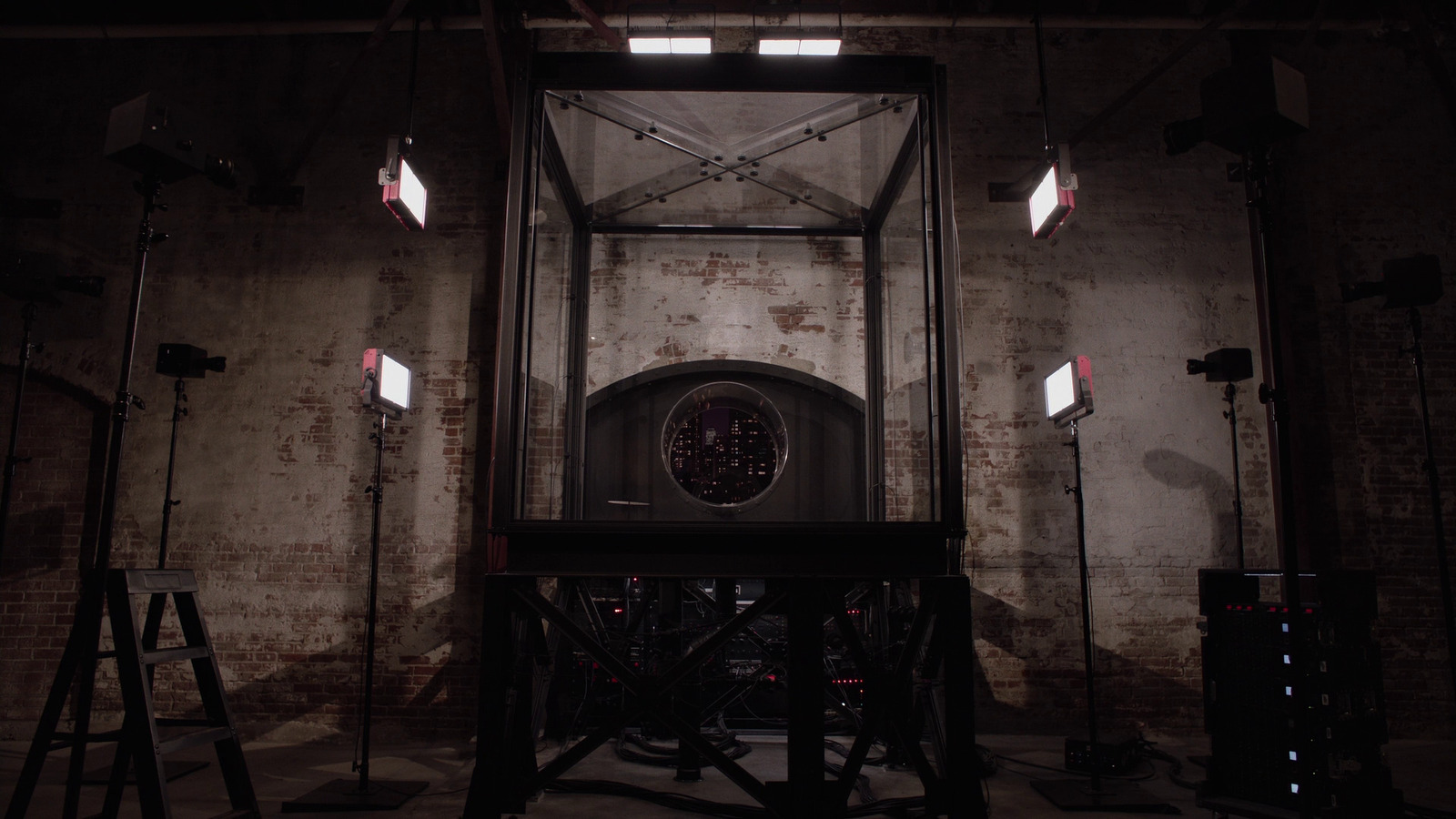
Twelve illustrated studies follow the glass box, Mr. C, the Buckhorn investigation and Margaret’s message. Includes sound and dialogue analysis, two focused FX galleries and production testimony.
Read the illustrated episode dossier ↗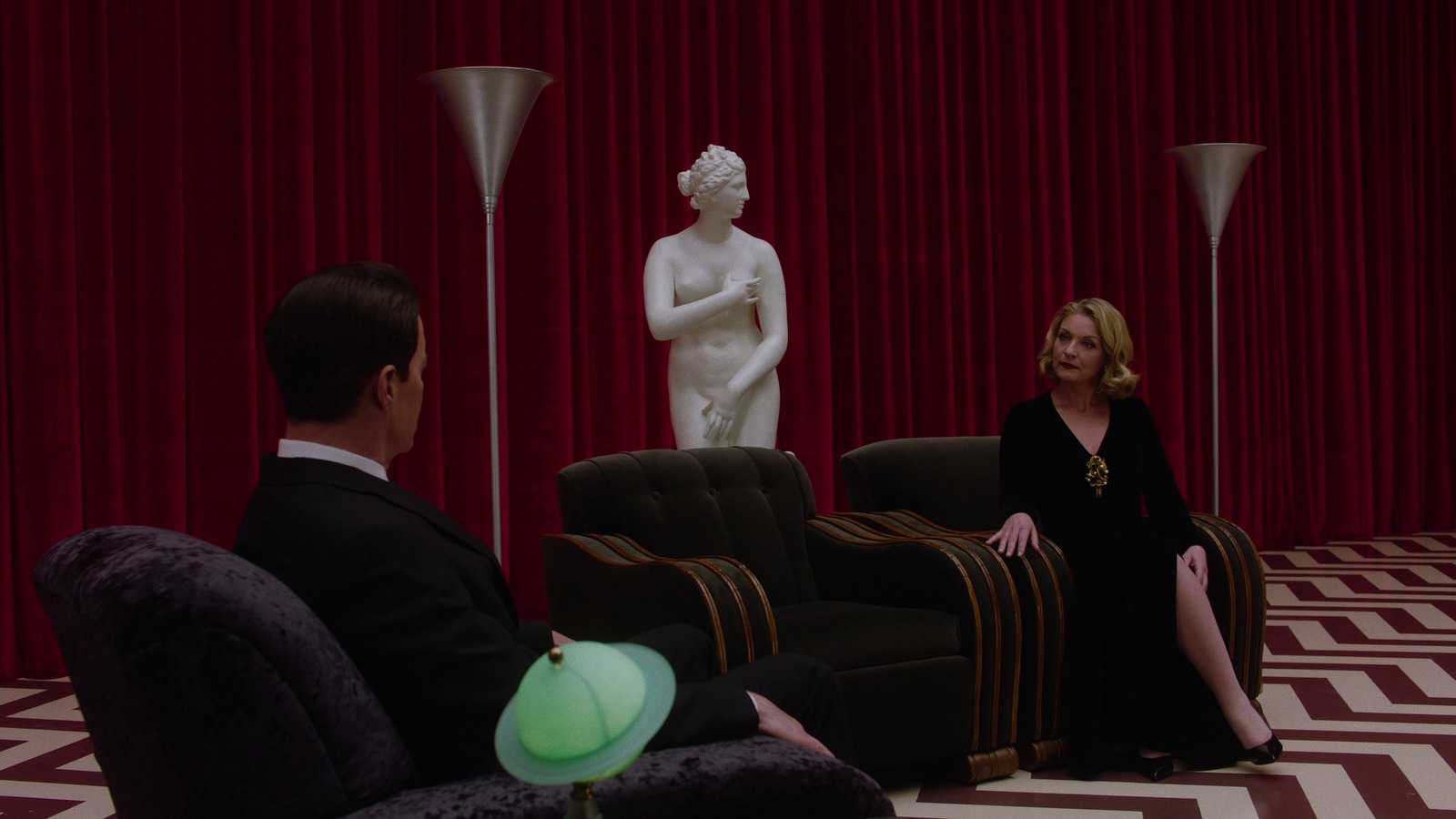 Part 02 · Illustrated episode dossier
The Stars Turn and a Time Presents Itself
Fifteen illustrated studies follow Bill and Phyllis, Mr. C’s recordings, Laura and the evolving Arm, Cooper’s passage and the Roadhouse. Includes three focused FX galleries and sound analysis.
Read the illustrated episode dossier ↗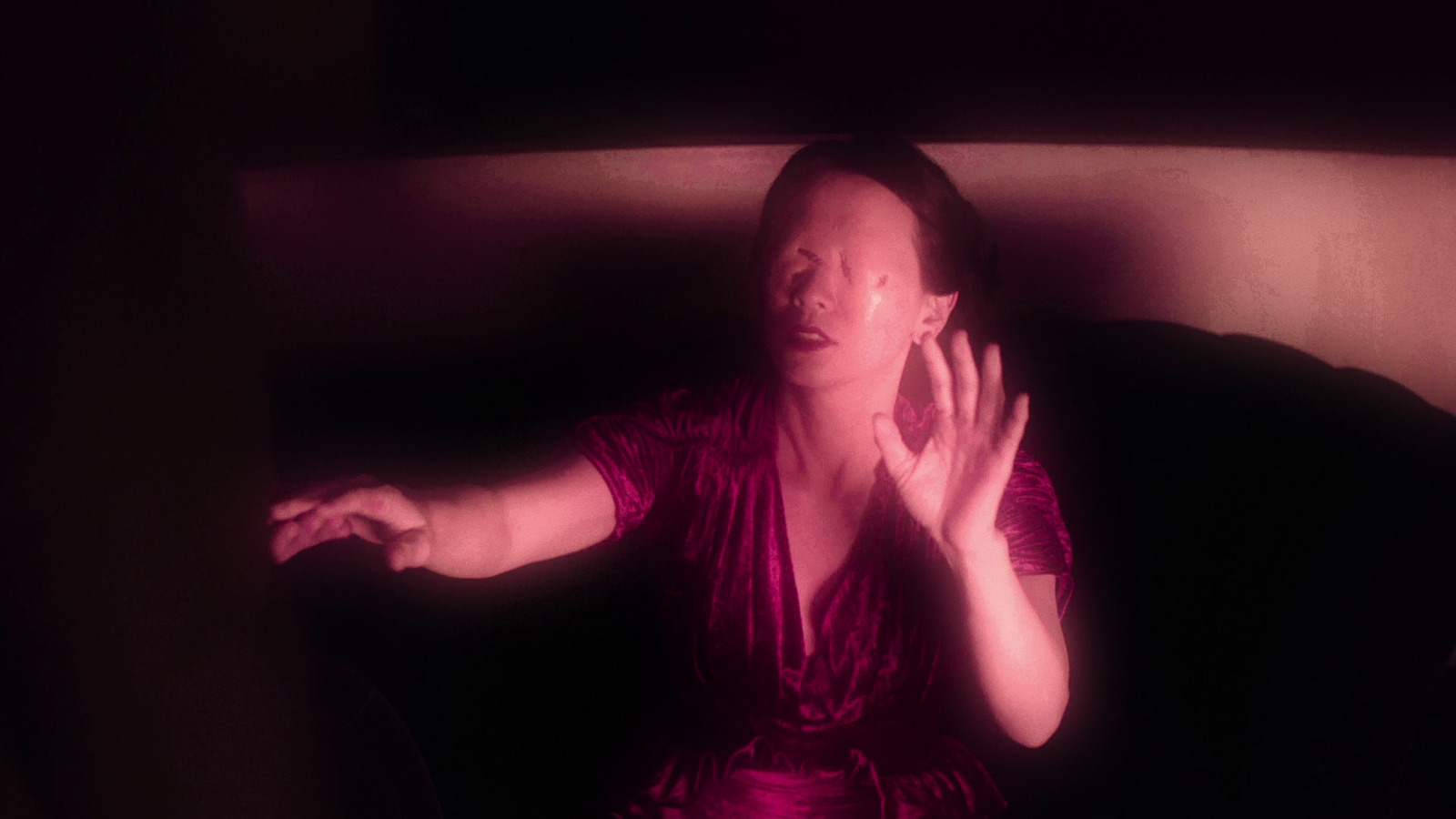 Part 03 · Illustrated episode dossier
Call for Help
A way out of the darkness leads to a world whose simplest instructions have become strange.
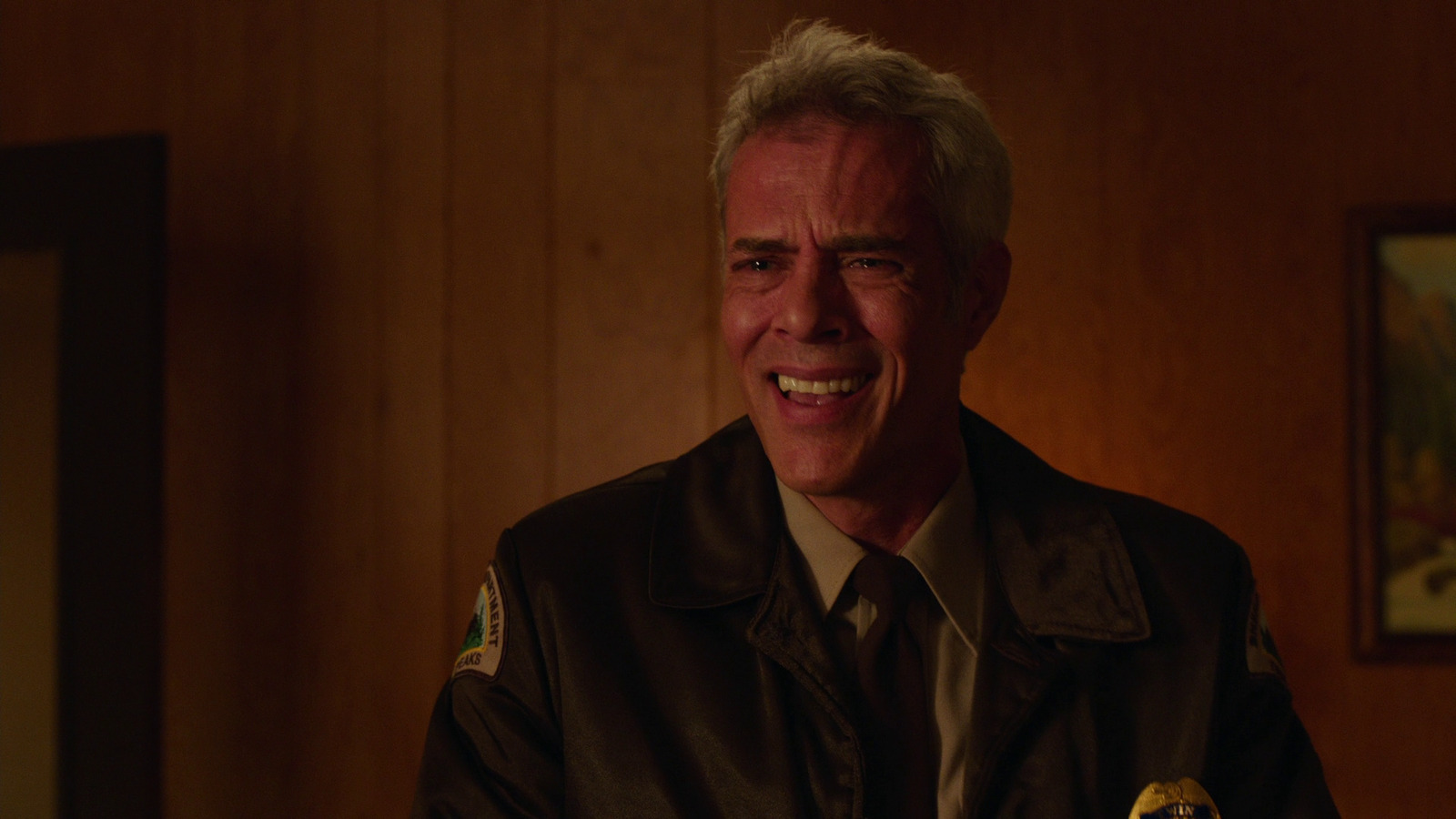 Part 04 · Illustrated episode dossier
…Brings Back Some Memories
A familiar face can return without bringing the familiar person. A photograph can make an absent person suddenly present.
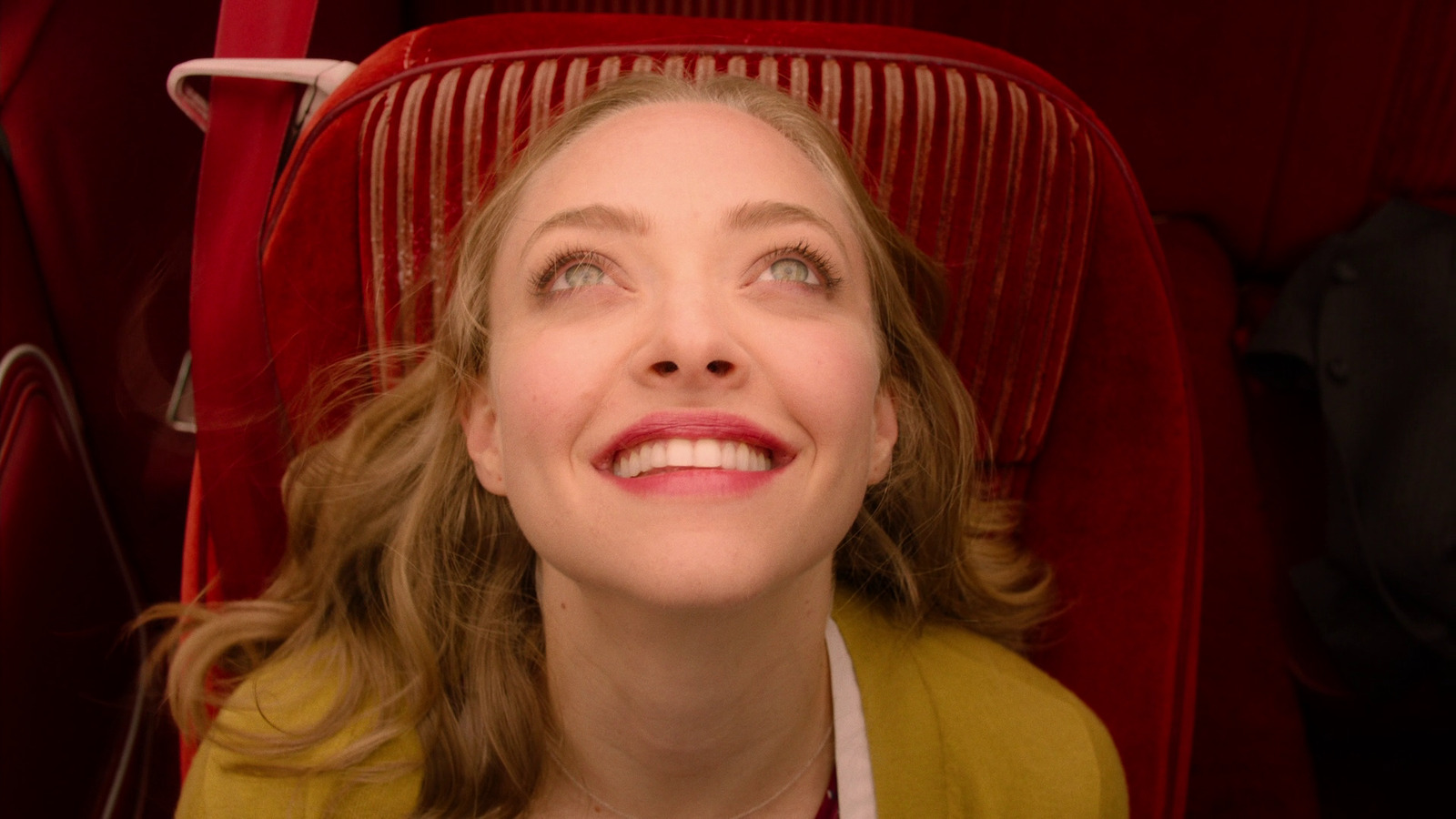 Part 05 · Illustrated episode dossier
Case Files
The ordinary working day is full of signals that only some people can read.
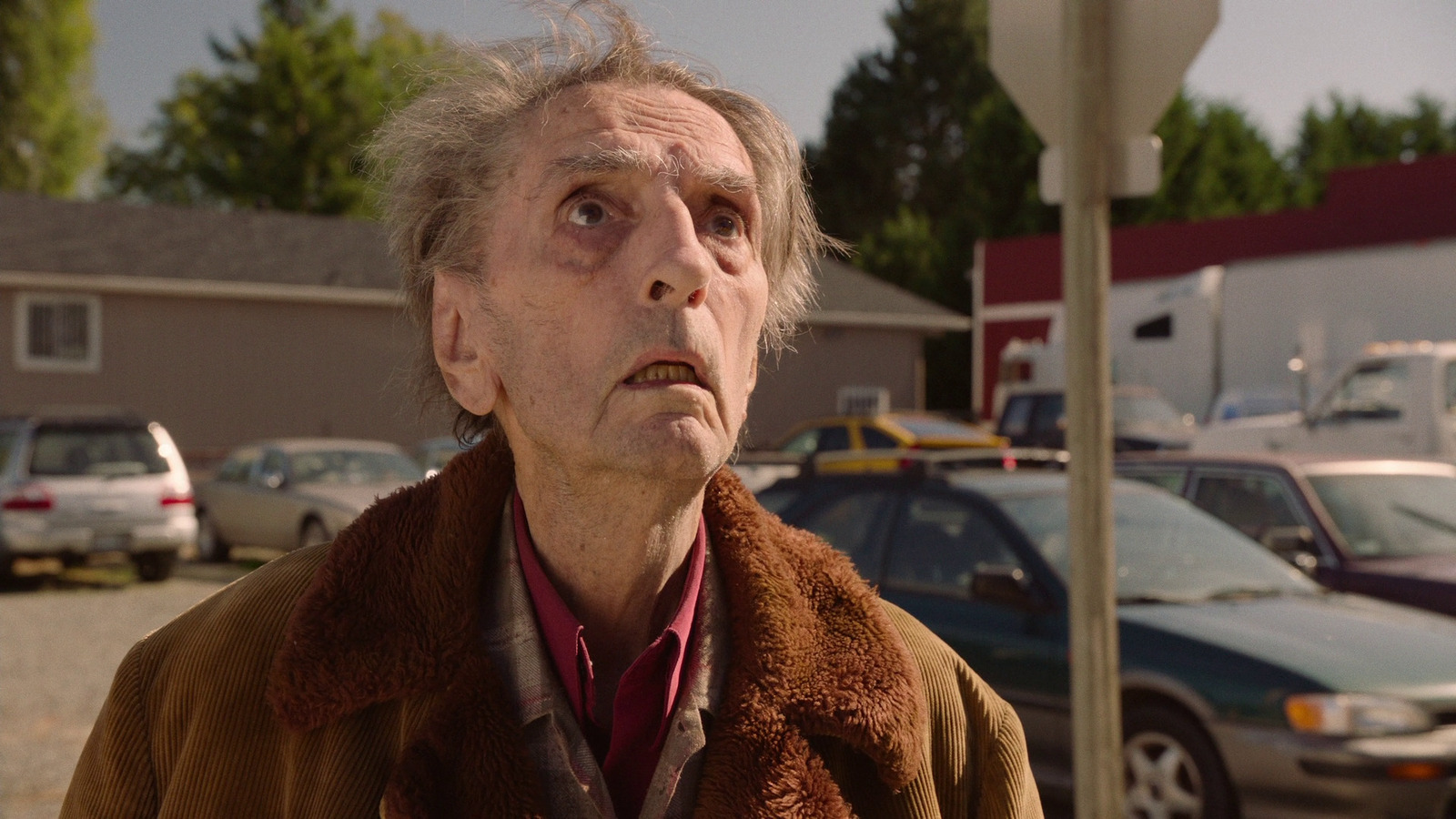 Part 06 · Illustrated episode dossier
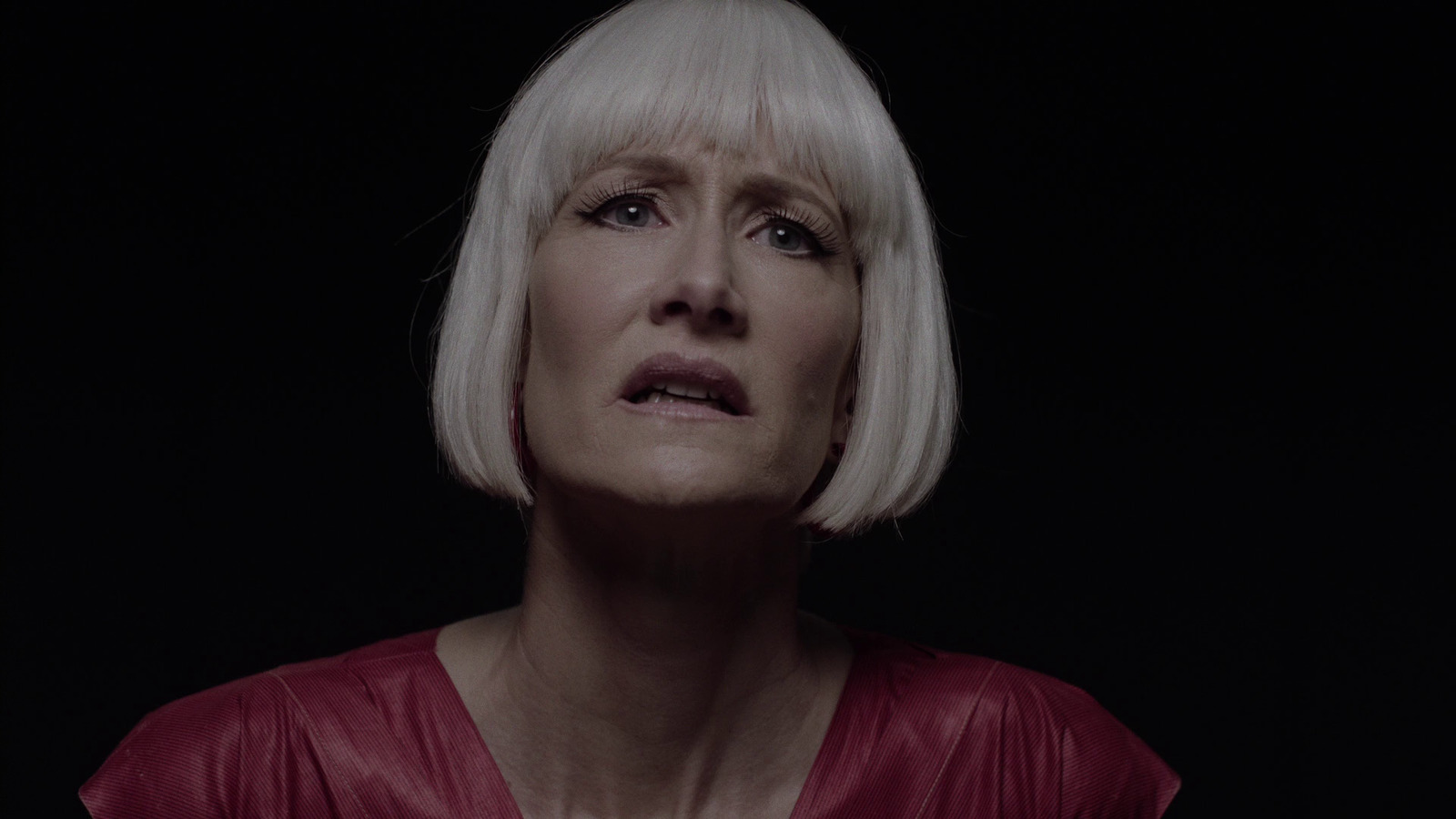
Don’t Die
A vision matters because of what someone does after seeing it.
 Part 07 · Illustrated episode dossier
There’s a Body All Right
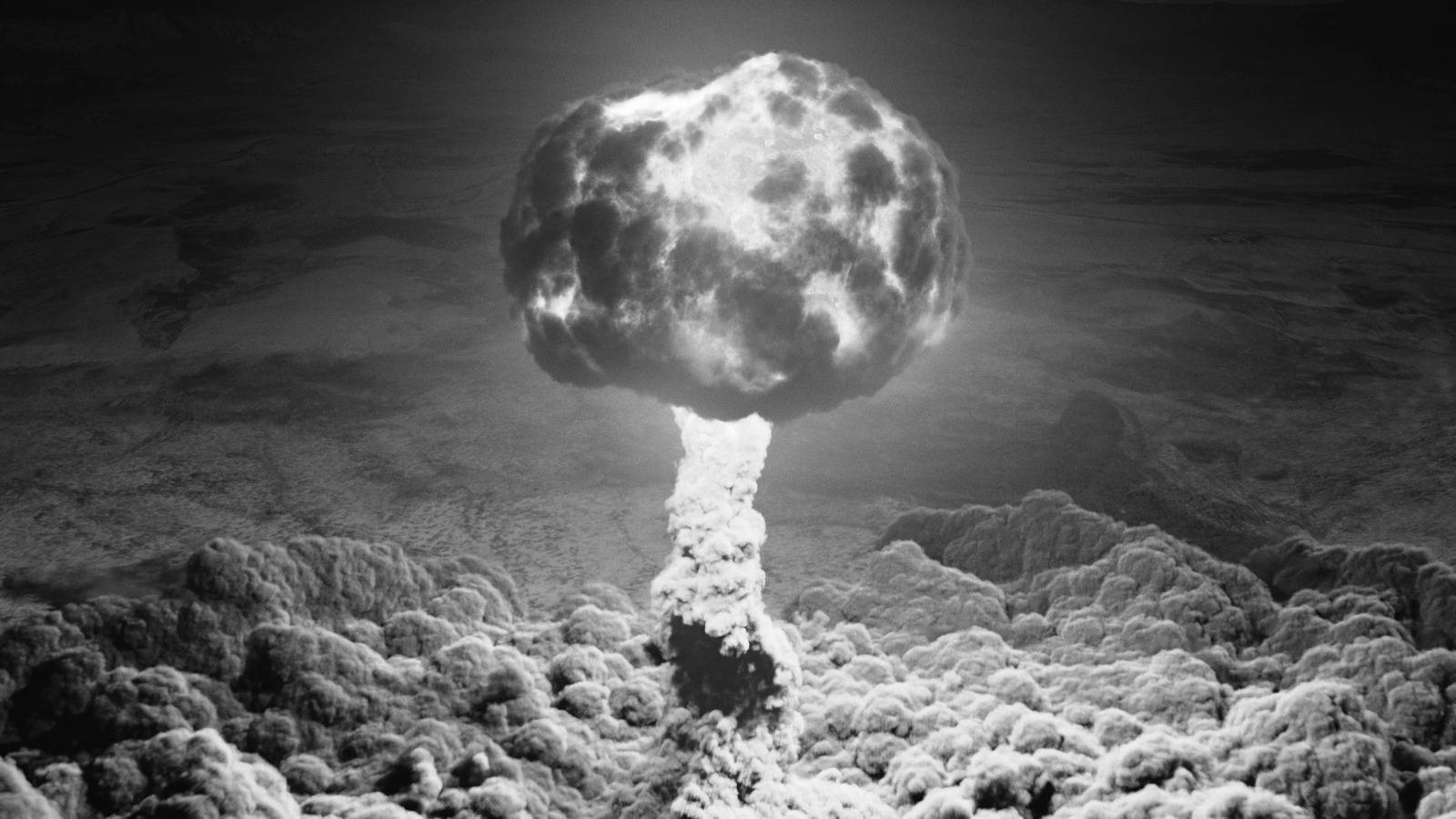
A familiar face becomes evidence against itself. A recovered page brings an old warning into the present.
 Part 08 · Illustrated episode dossier
Gotta Light?
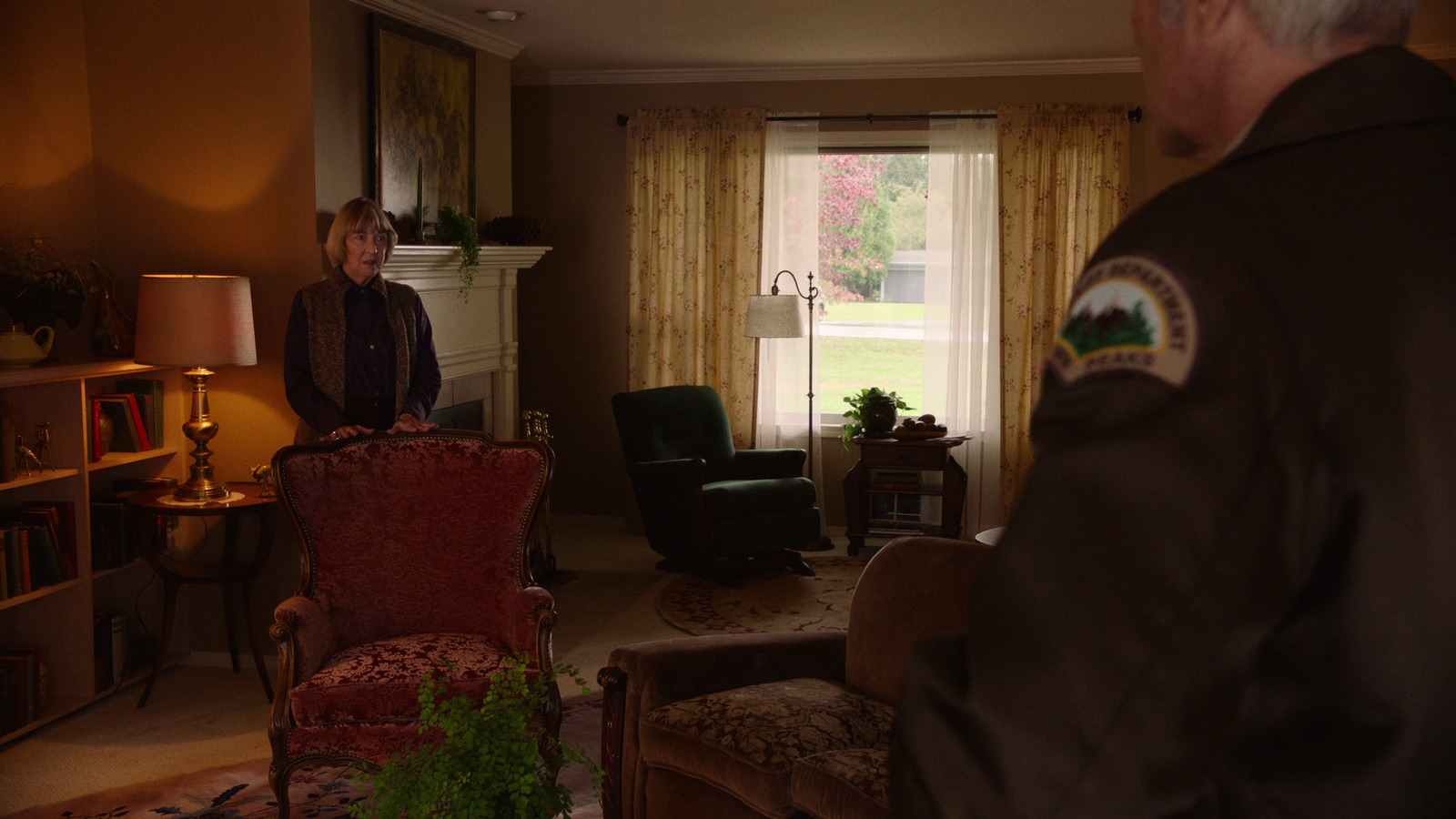
A shot beside a dark road opens into a history of catastrophe. Images, bodies and voices cross boundaries that ordinary investigation cannot contain.
 Part 09 · Illustrated episode dossier
This Is the Chair
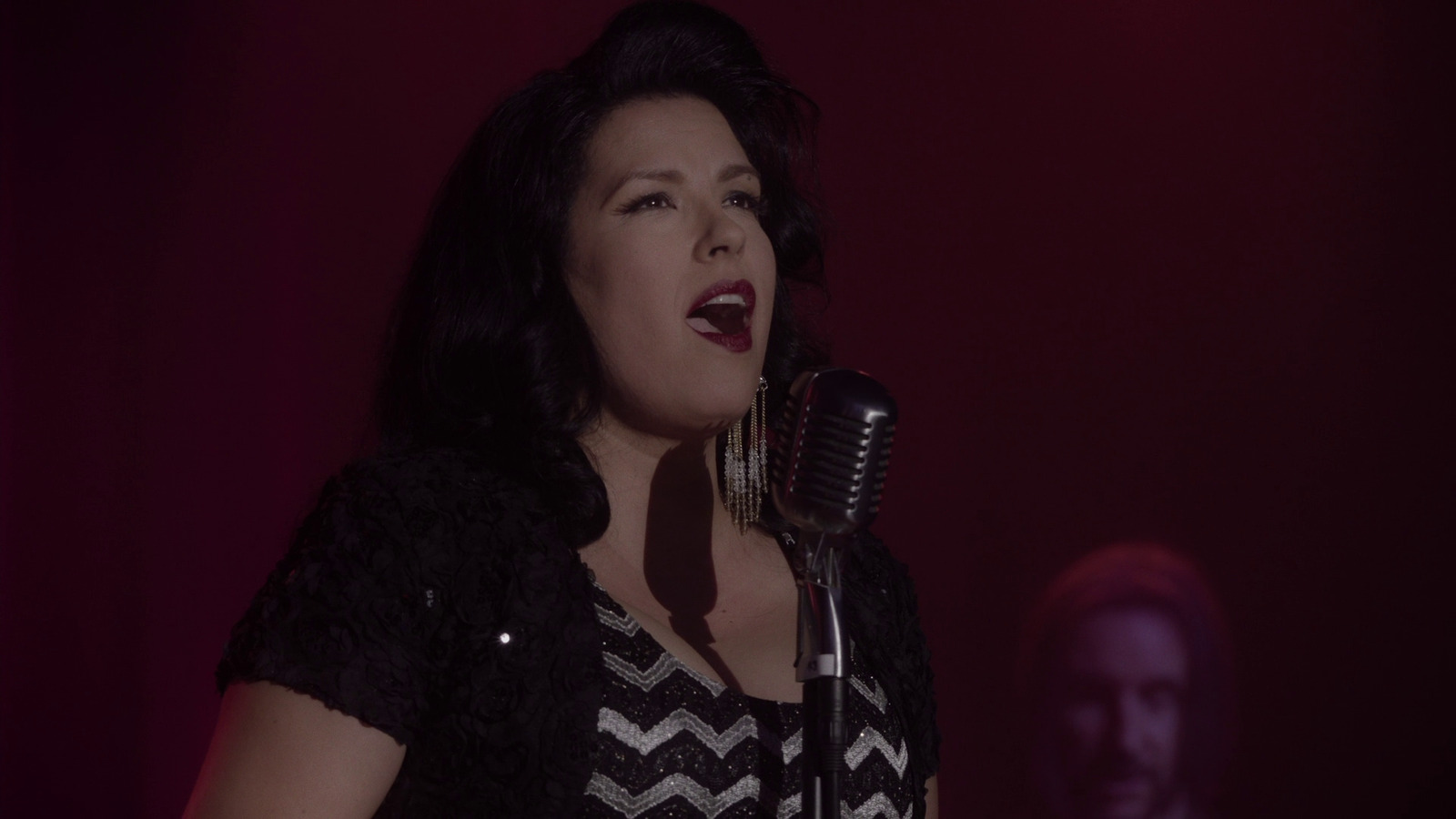
The past survives in furniture, paper, a body and a voice struggling to explain what it has seen.
 Part 10 · Illustrated episode dossier
Laura Is the One
A voice can threaten, comfort, deceive or continue after nobody is listening. Part 10 tests the distance between speaking and being heard.
 Part 11 · Illustrated episode dossier
There’s Fire Where You Are Going
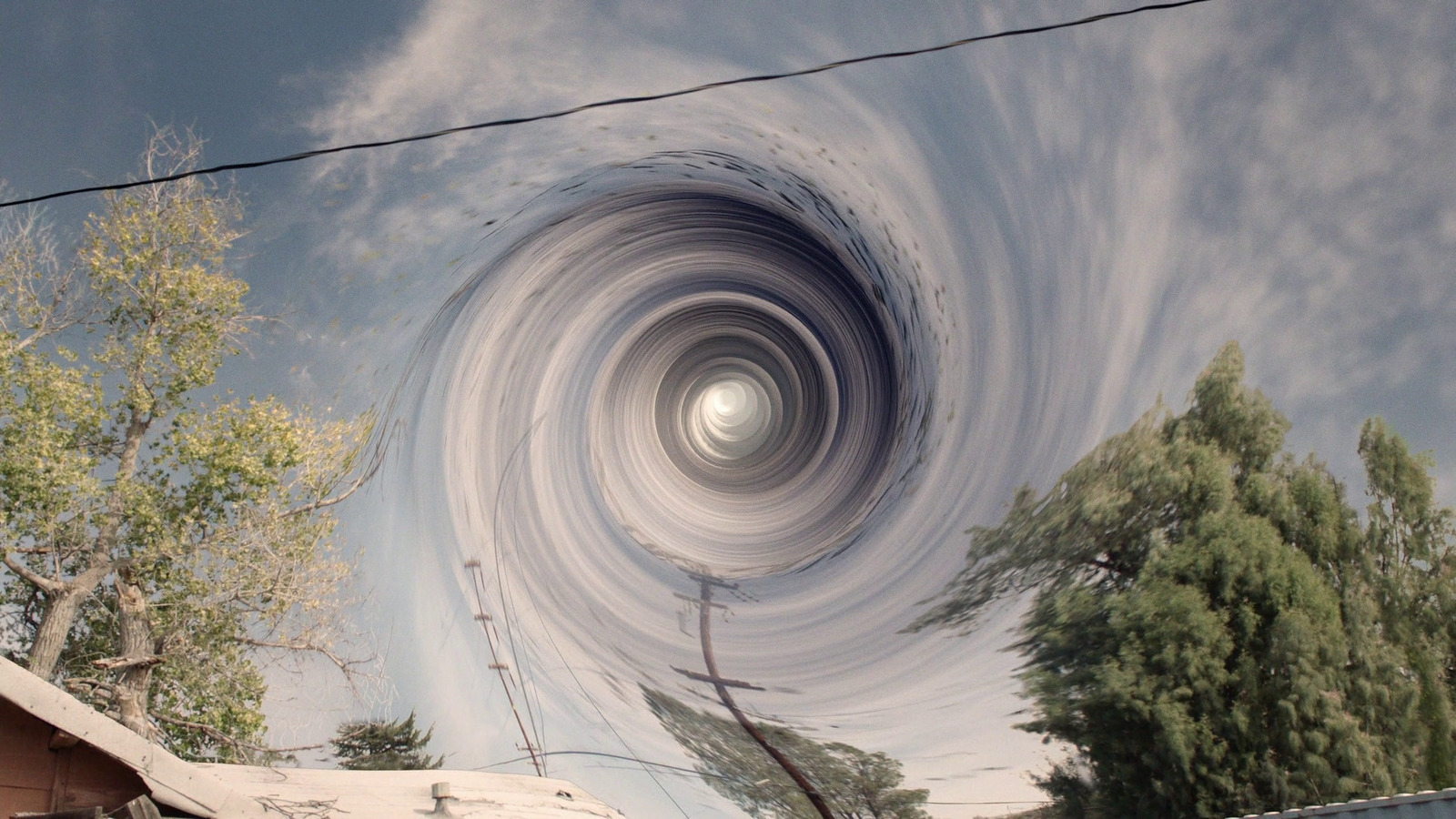
A sky opens above an empty lot. A roadside emergency will not settle. A cherry pie changes the outcome of a planned killing.
 Part 12 · Illustrated episode dossier
Let’s Rock
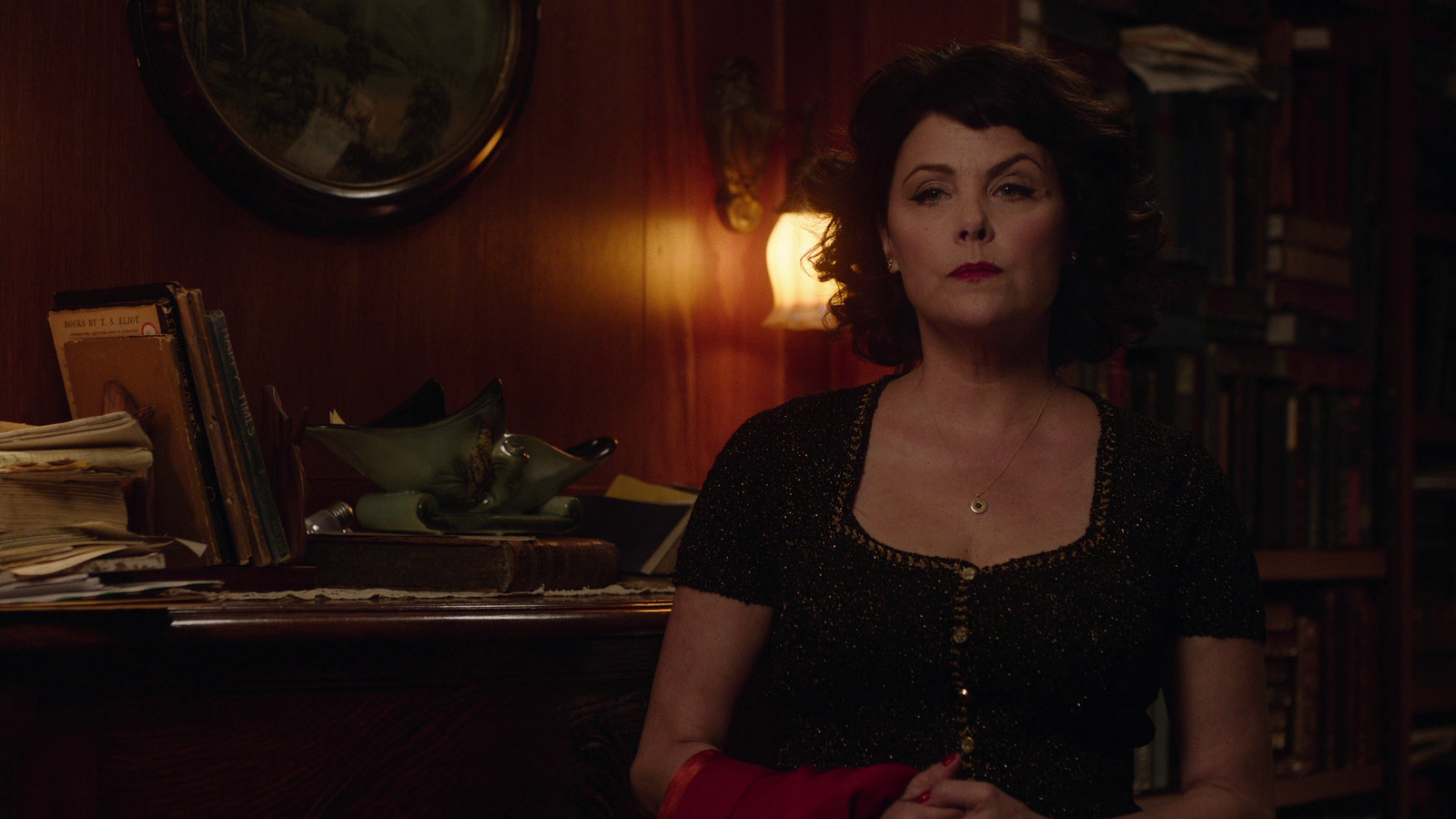
People offer help, ask for answers and wait for somebody else to respond. Part 12 makes the delay itself part of the drama.
 Part 13 · Illustrated episode dossier
What Story Is That, Charlie?
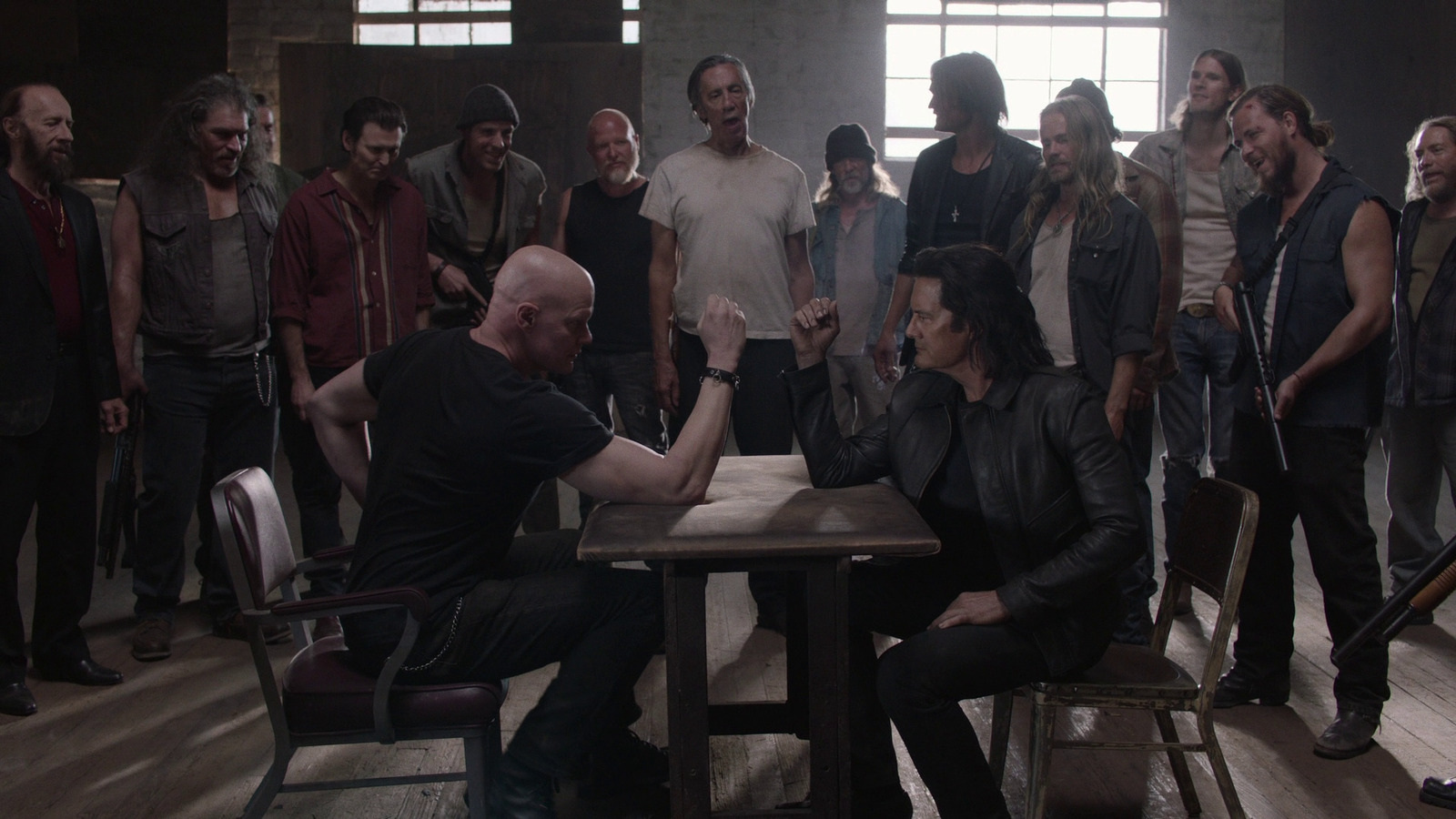
A contest of strength becomes a display of control. A cup of coffee becomes an offer of forgiveness. A familiar song returns to a changed room.
 Part 14 · Illustrated episode dossier
We Are Like the Dreamer
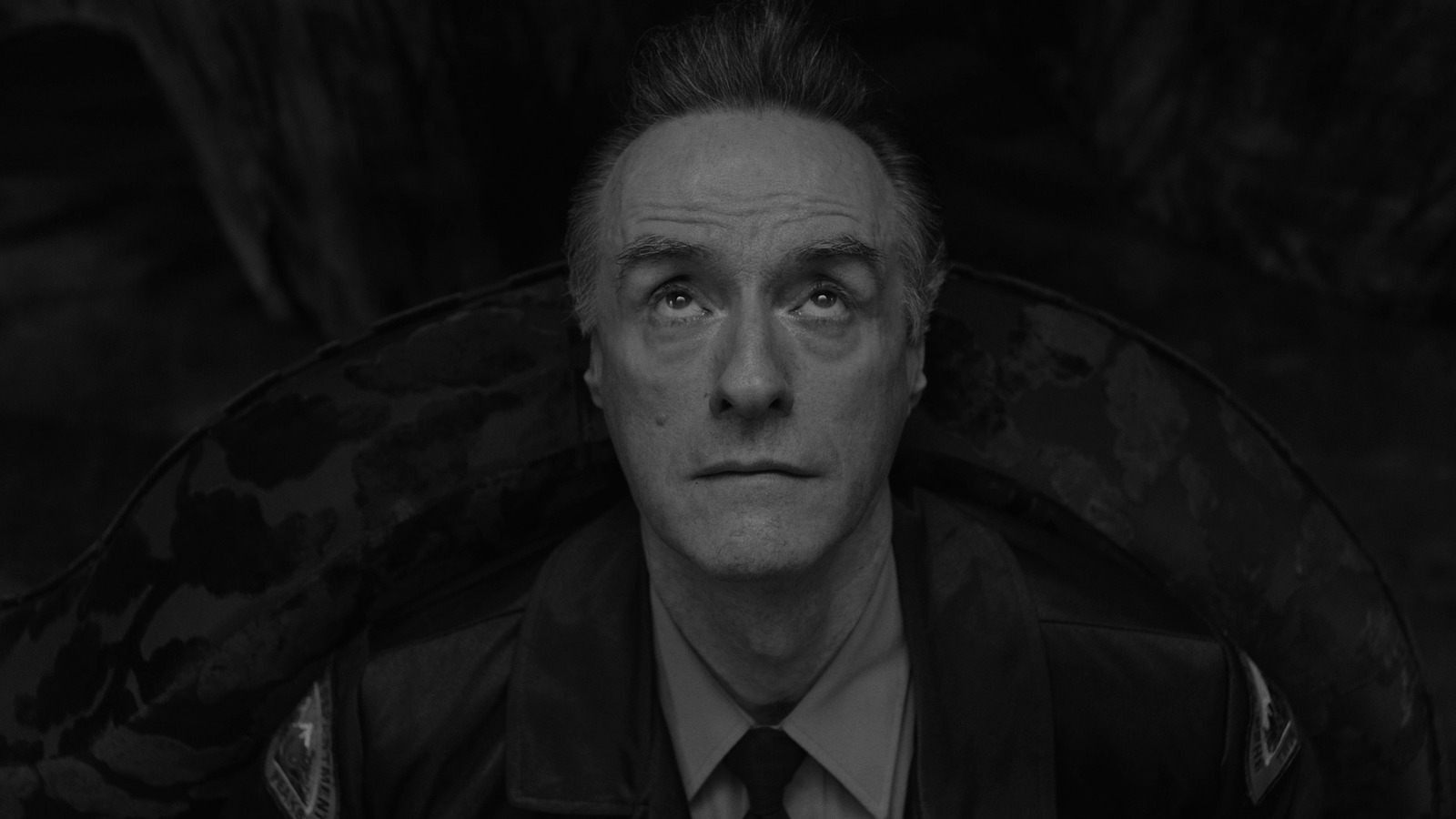
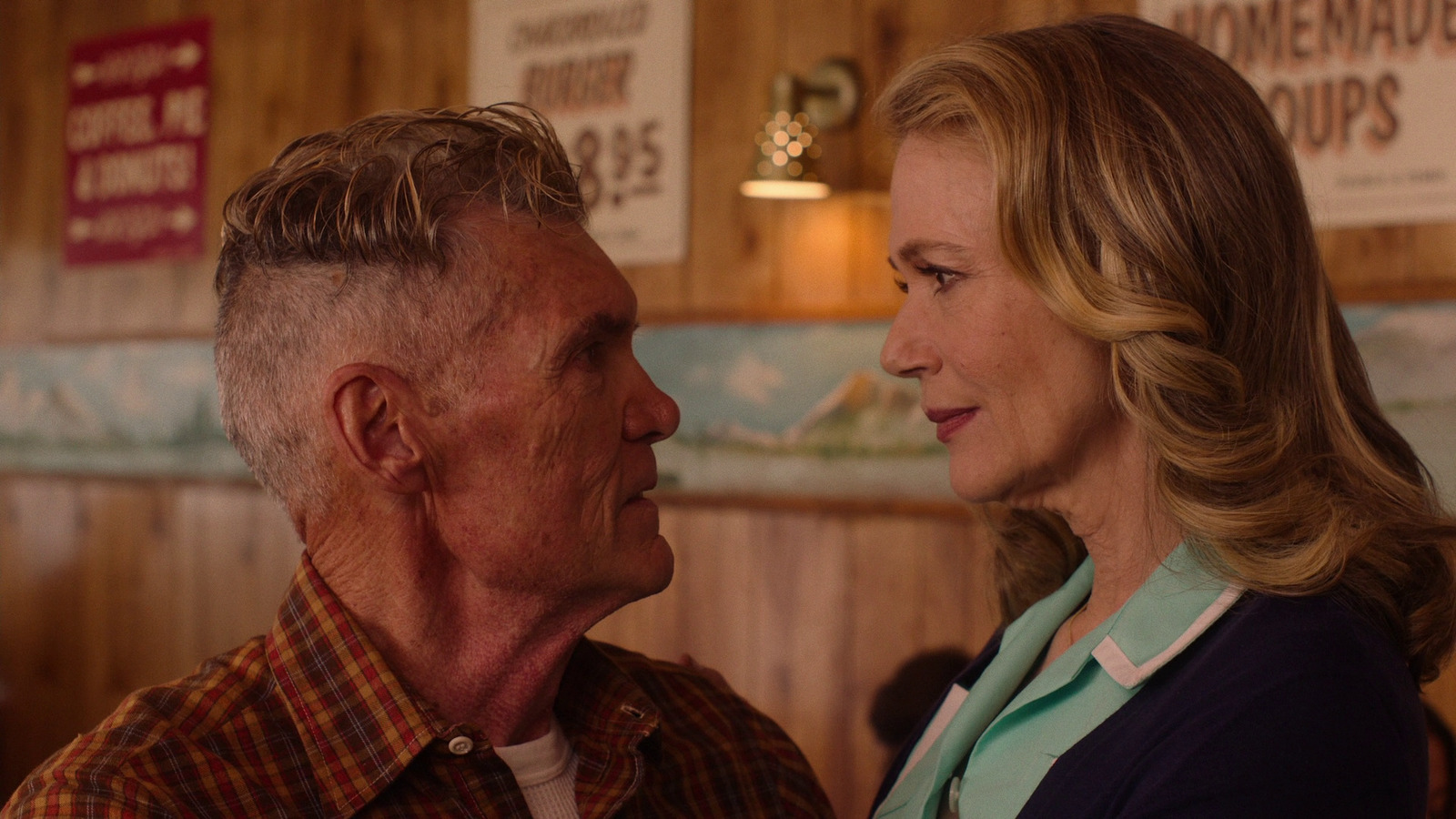
A dream looks backward. A forest opens upward. Andy returns knowing whom to protect, while Sarah’s face conceals a different kind of interior.
 Part 15 · Illustrated episode dossier
There’s Some Fear in Letting Go
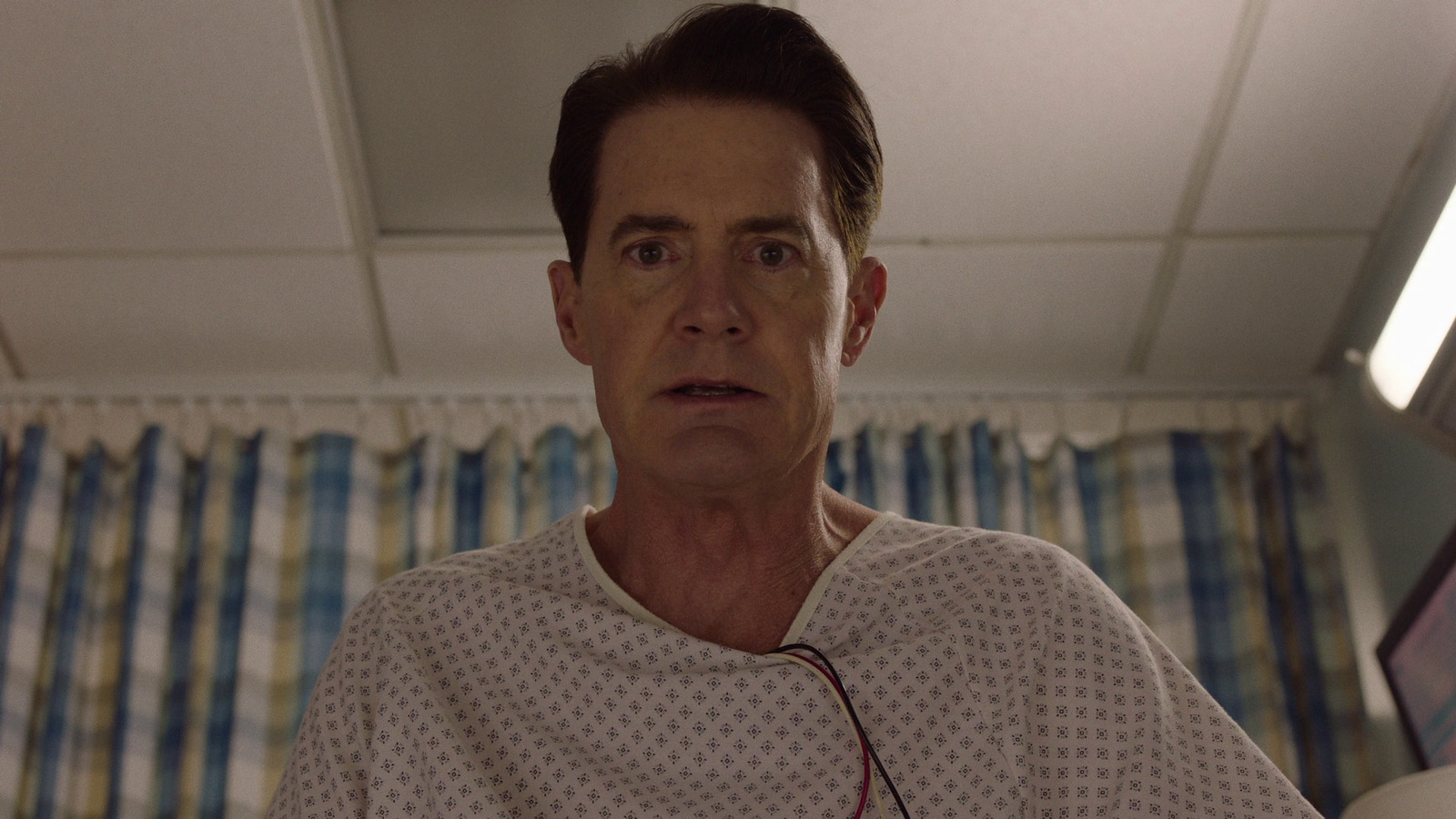
A hand on a shoulder. A voice on the telephone. A building that disappears. Part 15 finds radically different forms for letting go.
 Part 16 · Illustrated episode dossier
No Knock, No Doorbell
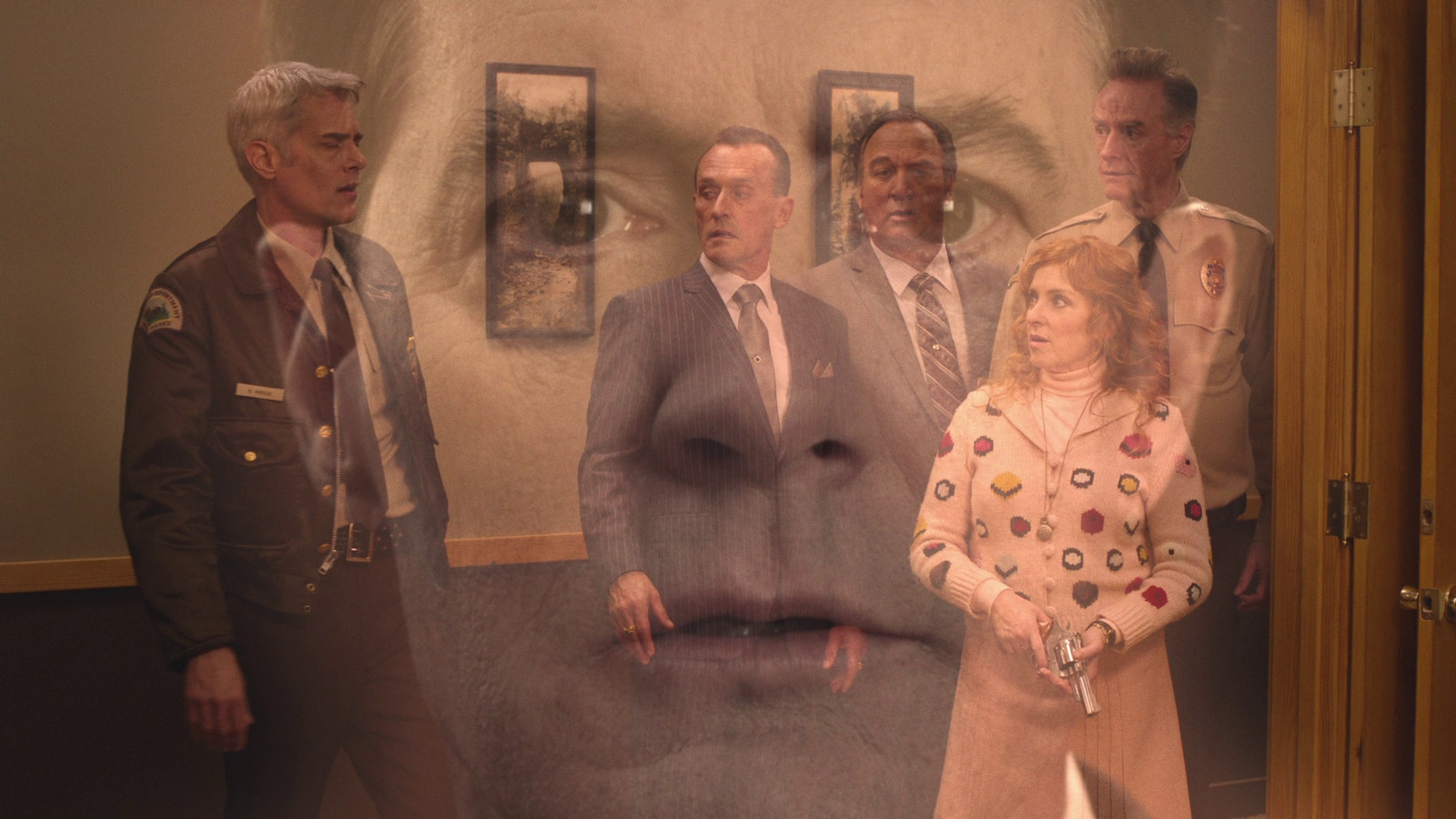
Cooper wakes with purpose. Diane struggles to speak a buried memory. Audrey finds the dance floor, then loses the room around it.
 Part 17 · Illustrated episode dossier
The past dictates the future.
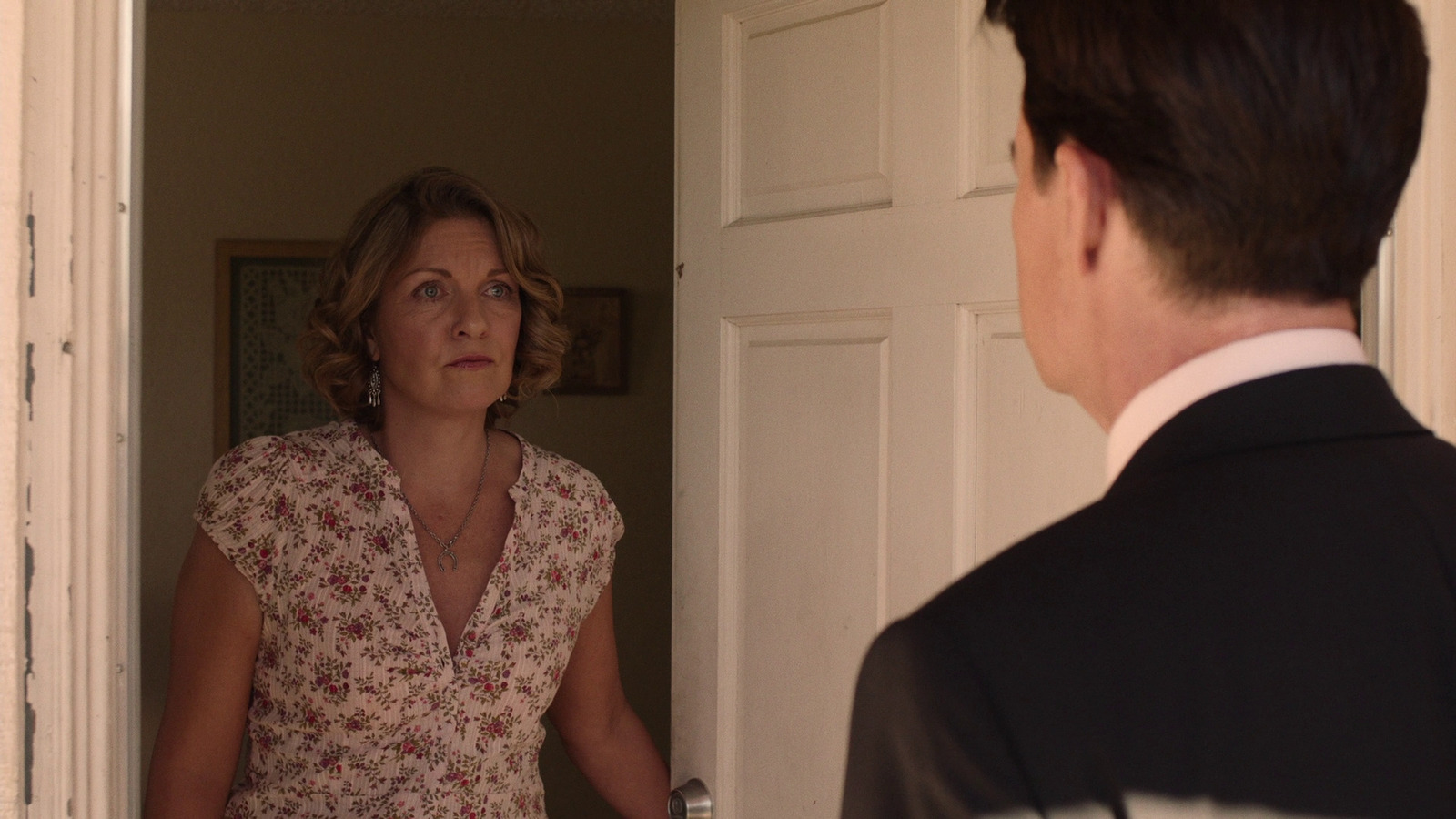
A crowded reunion gives way to a solitary intervention in Laura Palmer’s last night. The apparent resolution becomes a question about what it means to change the past.
 Part 18 · Illustrated episode dossier
What is your name?
A journey home becomes a crisis of recognition. Names, places and familiar faces survive while the connections between them become uncertain.
A return that makes familiarity strange
Twin Peaks: The Return is an eighteen-part work written by Mark Frost and David Lynch, with every part directed by Lynch. Its 2017 premiere was an unusually expansive invitation: the first two parts aired together on SHOWTIME, while subscribers could immediately stream Parts 3 and 4 before their later linear broadcast. Even its opening encounter had more than one rhythm. Official premiere and credit record
The title promises a reunion. The work repeatedly asks what reunion can mean after time has changed the people, the medium and the spectator. Cooper is present without being available in the expected way; the town persists without containing the whole story; Laura returns as memory, image and unresolved demand. The delay is not a corridor leading to the real work. Learning how to attend to the delay is part of the work itself.
Before entering: follow Season 1, Season 2 and Fire Walk with Me. The separate Missing Pieces assembly adds context but is not an extended theatrical cut. Full spoilers below, including Parts 17 and 18.
Writing one long work, making eighteen parts
Frost describes almost a year of conversation before the writing, and scripts completed in spring 2015. He estimates being present for roughly forty percent of filming. This is important evidence against the convenient division in which Frost merely supplied a script and disappeared while Lynch made an unrelated object. It remains Frost’s retrospective estimate, not an attendance record. Frost on writing and production
Peter Deming recalls a script of more than 525 pages and 140 shooting days followed by an additional day. Those figures describe the scale remembered by the cinematographer. They do not certify the contents of every draft. His account also makes the project’s continuity with Lynch’s earlier feature work visible: one sustained photographic collaboration across a changing geography. Deming’s production account
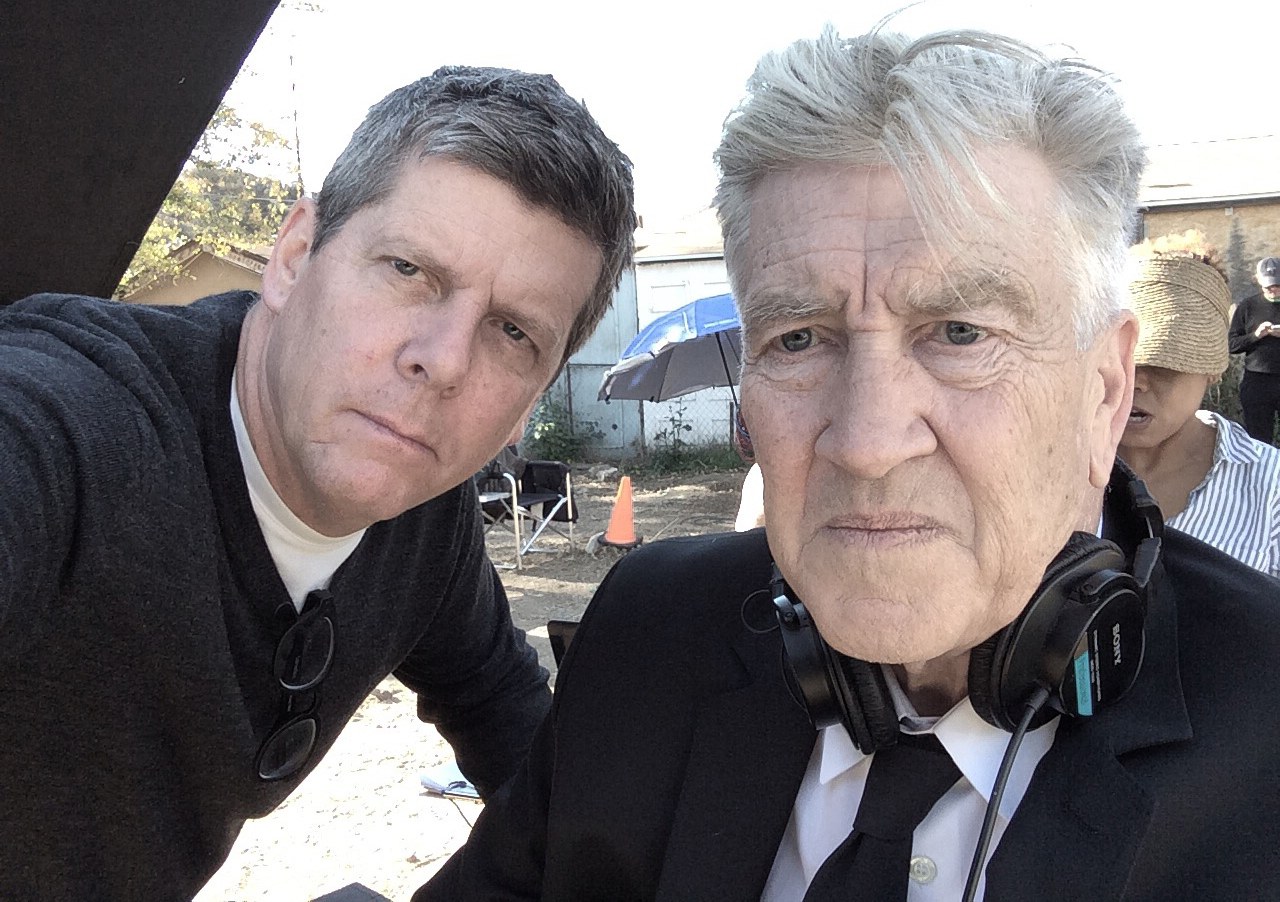
Executive producer Sabrina Sutherland describes the use of earlier footage as planned before production, and an extended period in which Lynch continued editing after other editors had finished. Her account complements rather than replaces the contributions documented by editor Duwayne Dunham. A late stage of solitary work does not erase the preparatory, collaborative and technical work that made it possible. Sutherland on reuse and post-production
Chapters are made, not merely cut off
Dunham describes organising the material with cards and developing roughly hour-long units. He rejects the idea that each part simply ends with a Roadhouse number. Without conventional recaps, the placement of a return to a person, room or song becomes especially important. Editing and chapter construction
A part works as a temporary arrangement of distances: between Cooper and his old self, between one location and another, and between what the audience remembers and what the characters know. Calling the work a long film can illuminate its continuity, but it should not make these eighteen thresholds disappear. Each interruption changes what is held in memory.
The opening pair: where an interruption falls
The standalone Part 1 ends after the detectives search Bill Hastings’s car. Its own closing credits, accompanied by the gramophone image, hold that disturbing discovery apart from what follows. The combined presentation instead continues into Bill and Phyllis’s prison conversation. The standalone Part 2 places its opening titles before that conversation. The encounter therefore arrives either as a continuation of the investigation or as the beginning of a new part.
The closing dedications also distinguish the arrangements. Part 1 names Catherine Coulson; Part 2 names Frank Silva. The combined ending names both. These are changes in the framing of the material, not evidence for a different solution to the story. The standalone presentations run approximately 1:00:36 and 54:35, while the combined presentation runs about 1:51:37. Timings in the scene studies identify which arrangement they follow. Presentation and credit evidence.
Performance, sound and the working image
The production footage in Jason S.’s Impressions: A Journey Behind the Scenes of Twin Peaks adds another view of the scenes: directions spoken on set, rehearsals, material experiments and choices still being worked out.
Follow the findings into the episode dossiers. These studies sit alongside the finished scenes, interviews and effects accounts already gathered there.
- Part 1 — Giving an invisible attack a physical rhythm (3 studies)
- Part 2 — Bill tries to make a dream sound credible (2 studies)
- Part 3 — A small question needs room around it (3 studies)
- Part 5 — The explosion and the child’s reaction are separate constructions (2 studies)
- Part 6 — Ike’s attack moves from a floor plan to abstraction (1 study)
- Part 7 — A threat organized around a desk (2 studies)
- Part 8 — The ritual is rehearsed hand by hand (5 studies)
- Part 9 — Evidence enters as a comic performance (2 studies)
- Part 10 — An imaginary fly, two remote controls (3 studies)
- Part 11 — Bradley remembers in stages (2 studies)
- Part 12 — The assassination and the child’s point of view (2 studies)
- Part 13 — Renzo’s fall has to carry weight (3 studies)
- Part 14 — Gordon’s volume is also a physical event (3 studies)
- Part 15 — Jeffries’s apparatus begins as a material problem (3 studies)
- Part 16 — Diane’s dissolution begins with a face and a handful of dough (4 studies)
- Part 17 — The BOB confrontation joins a spoken plan to physical texture (4 studies)
- Part 18 — The motel scene is built in pieces (1 study)
The returned location holds an older working landscape
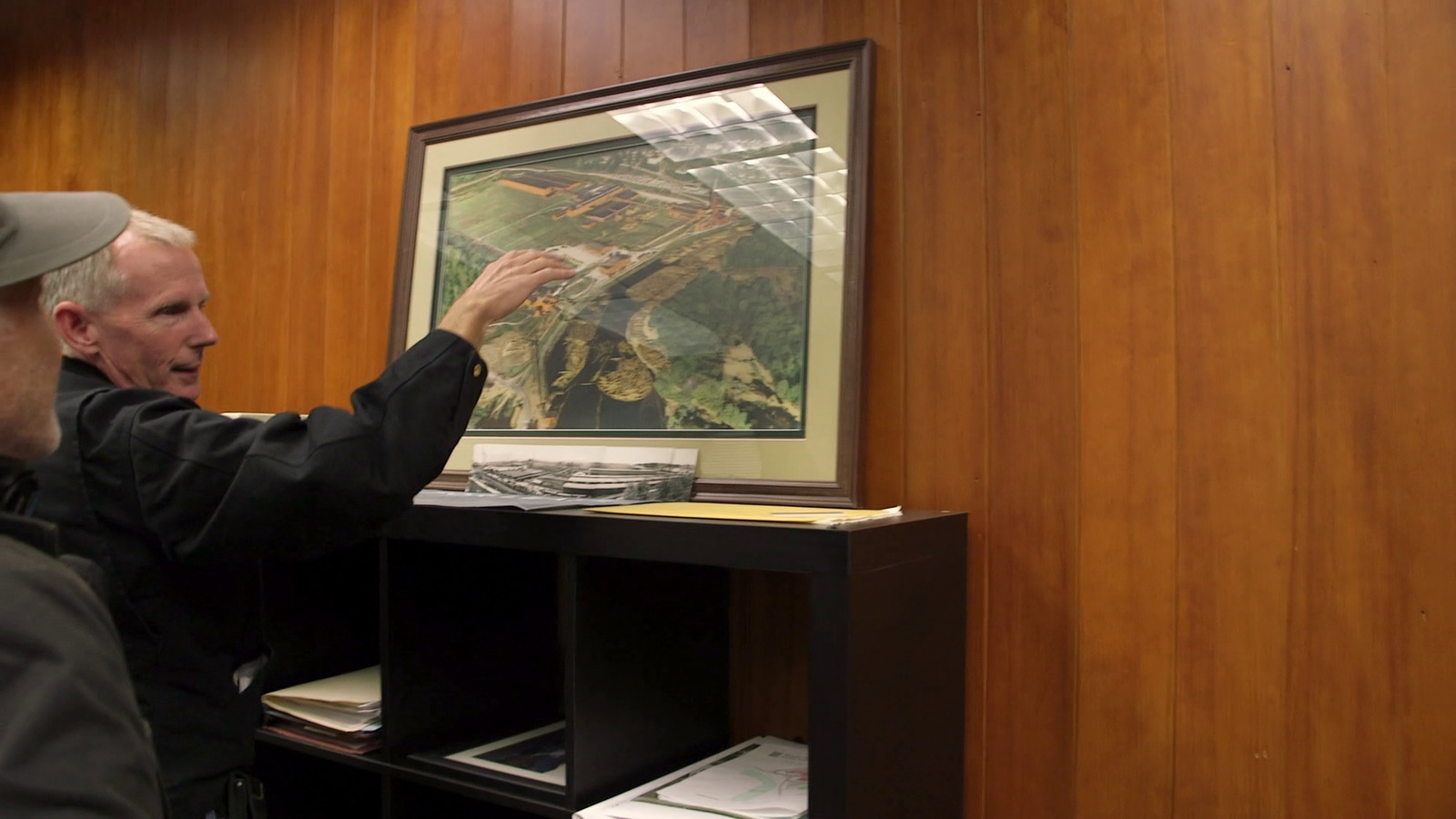
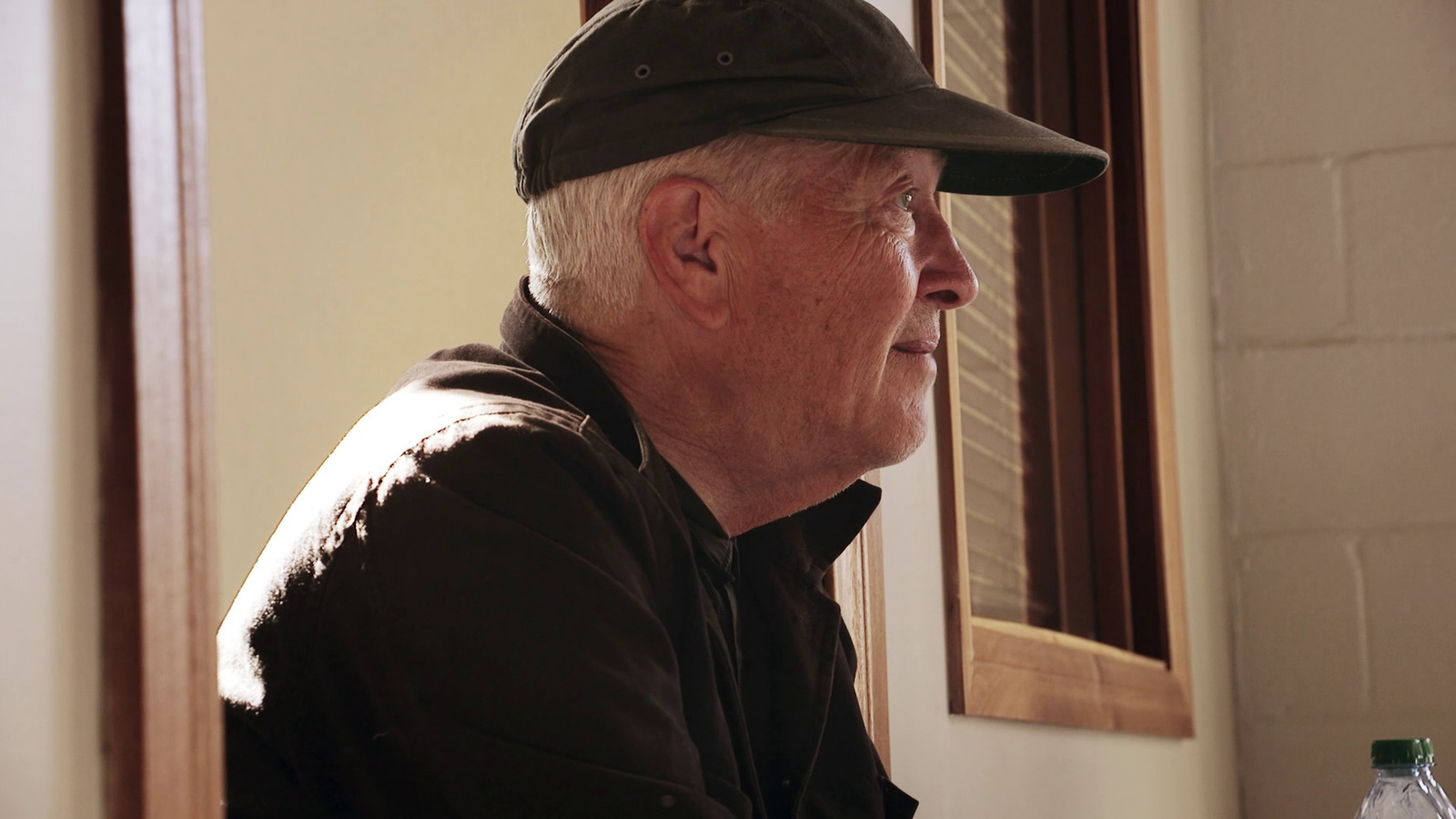
A conversation at the sheriff’s-station location moves from historical photographs into Lynch’s memory of watching the mill work during the earlier production. He recalls the log, the assessment of its usable timber, the saw and the movement of the cut wood. The precision of his interest returns the site to an industrial process before it is a recognizable television landmark.
The exchange ends with thanks to the DirtFish hosts and an acknowledgment of the pleasure and sadness of returning. It offers a useful companion to the series’ treatment of familiar places: continuity resides in buildings and images, but also in remembered labor and in the people who permit a production to inhabit a place again.
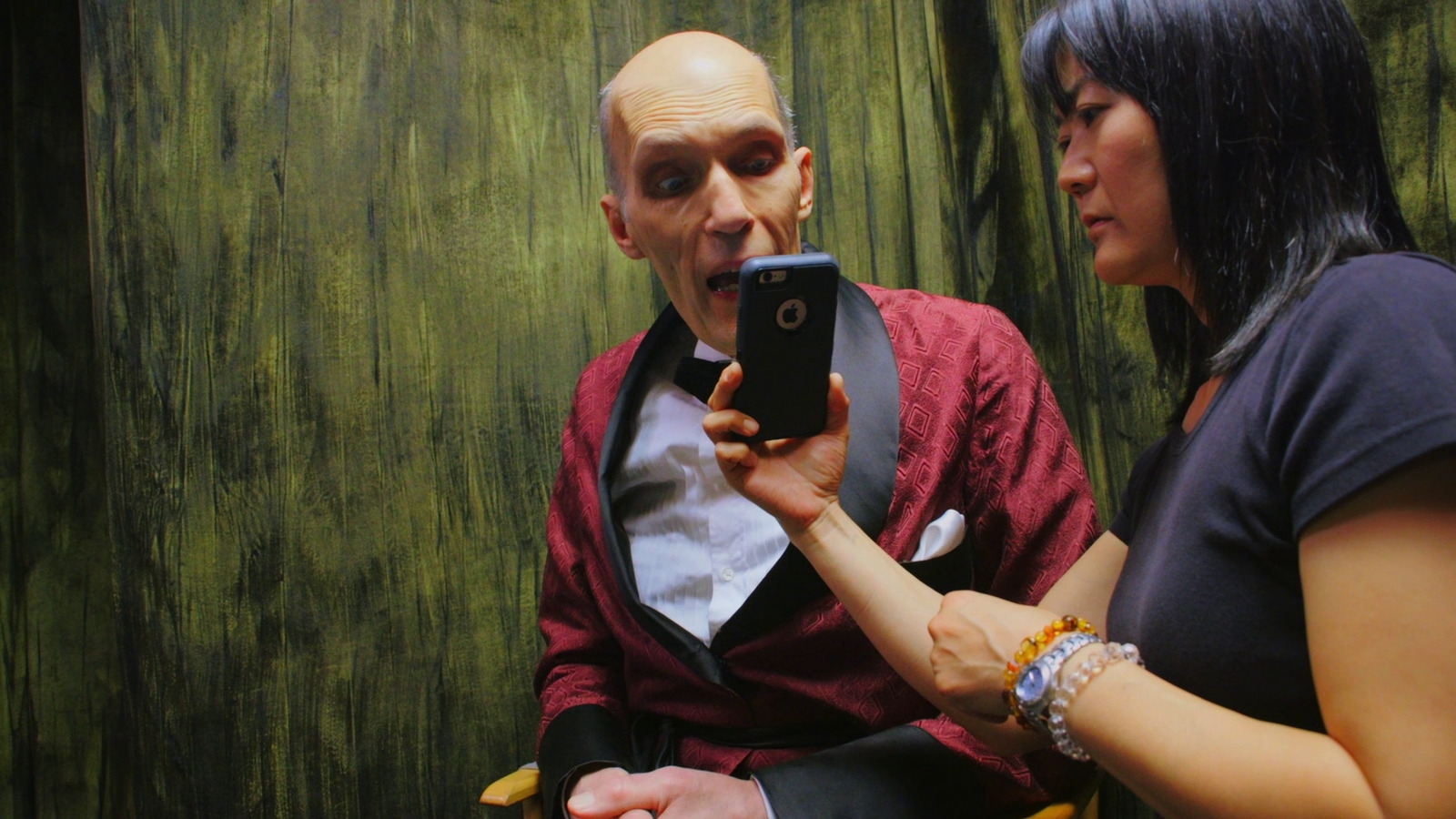
An altered voice still begins with a performer
Carel Struycken works through unfamiliar syllables and listens to the electronically altered playback on a phone, repeating and adjusting the performance. The documentary makes the unusual speech a practical collaboration between voice and recording rather than an effect simply laid over ordinary delivery.
That process is a useful companion to the series’ sound studies. The estrangement of a voice depends on exact labor by the person speaking, even when the final result seems to come from outside ordinary bodily speech.
Music also occupies the time between takes
On the woodland set, David Patrick Kelly performs The Lass of Aughrim while Lynch listens. Kelly then connects the song to James Joyce’s The Dead and speaks of music’s capacity to cause trouble. The documentary’s closing credits identify the performance.
This is music within the working day, not a newly discovered cue in the episode score. Preserving that distinction allows the moment to illuminate the production’s social atmosphere without confusing the documentary’s soundtrack with the sound of The Return itself.
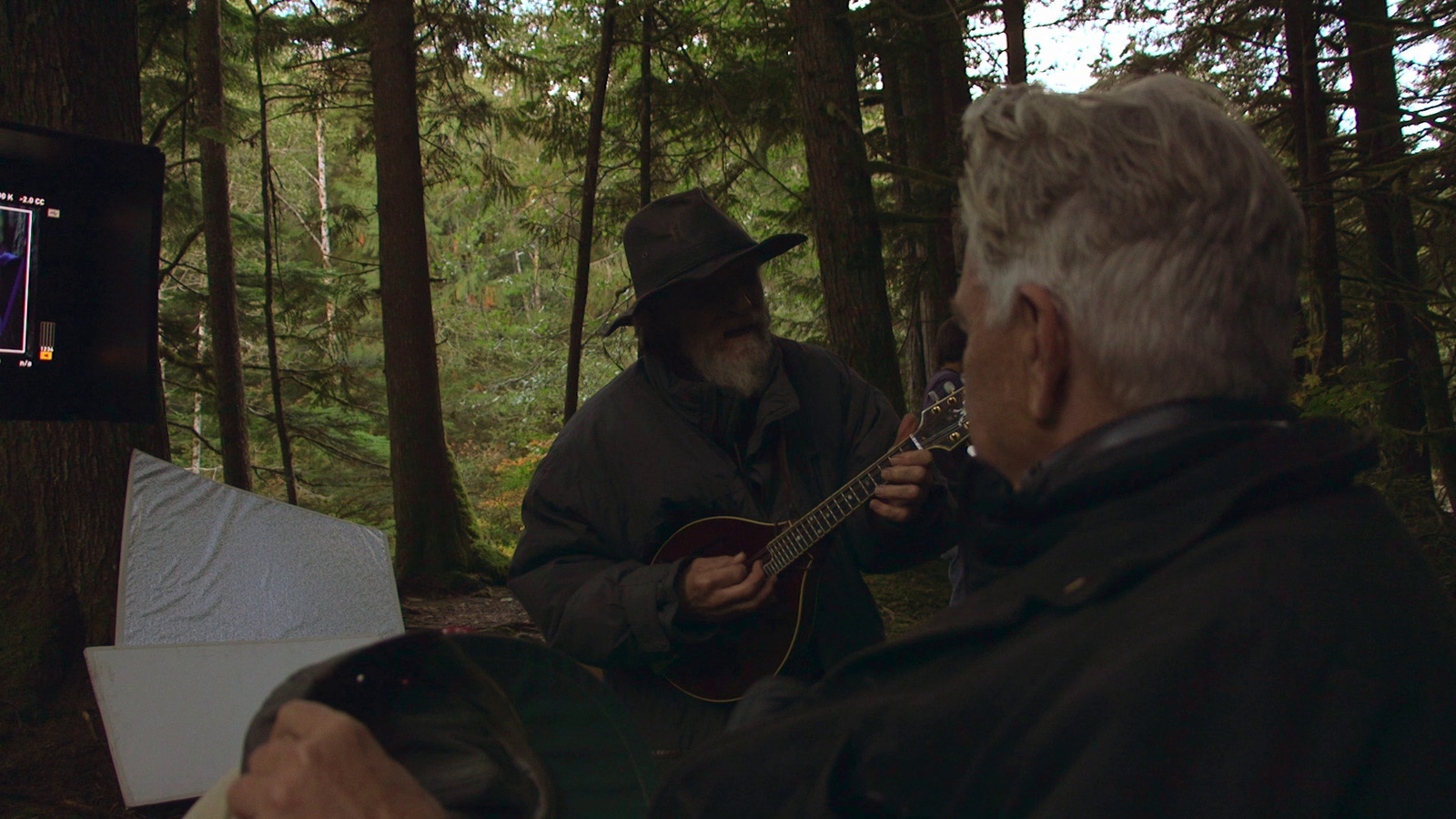
The Man with the Gray Elevated Hair, 12:30–15:04; closing music credits.
Keeping Albert means changing the working week
Lynch addresses the crew about Miguel Ferrer’s restricted availability while working on another television series. Rather than recast Albert, he asks the production to accommodate Saturdays and six-day weeks so Ferrer can appear in the scenes written for him. The footage records a scheduling decision grounded in the importance of a particular performer to the story.
The later wrap for Albert and Gordon gives that decision a human counterpart. Ferrer and Lynch exchange the characters’ names during rehearsal, then share the crew’s applause at the end of their work together. The documentary preserves both the practical cost of continuity and the affection attached to it.
Open the Albert and Gordon production study · 2 frames
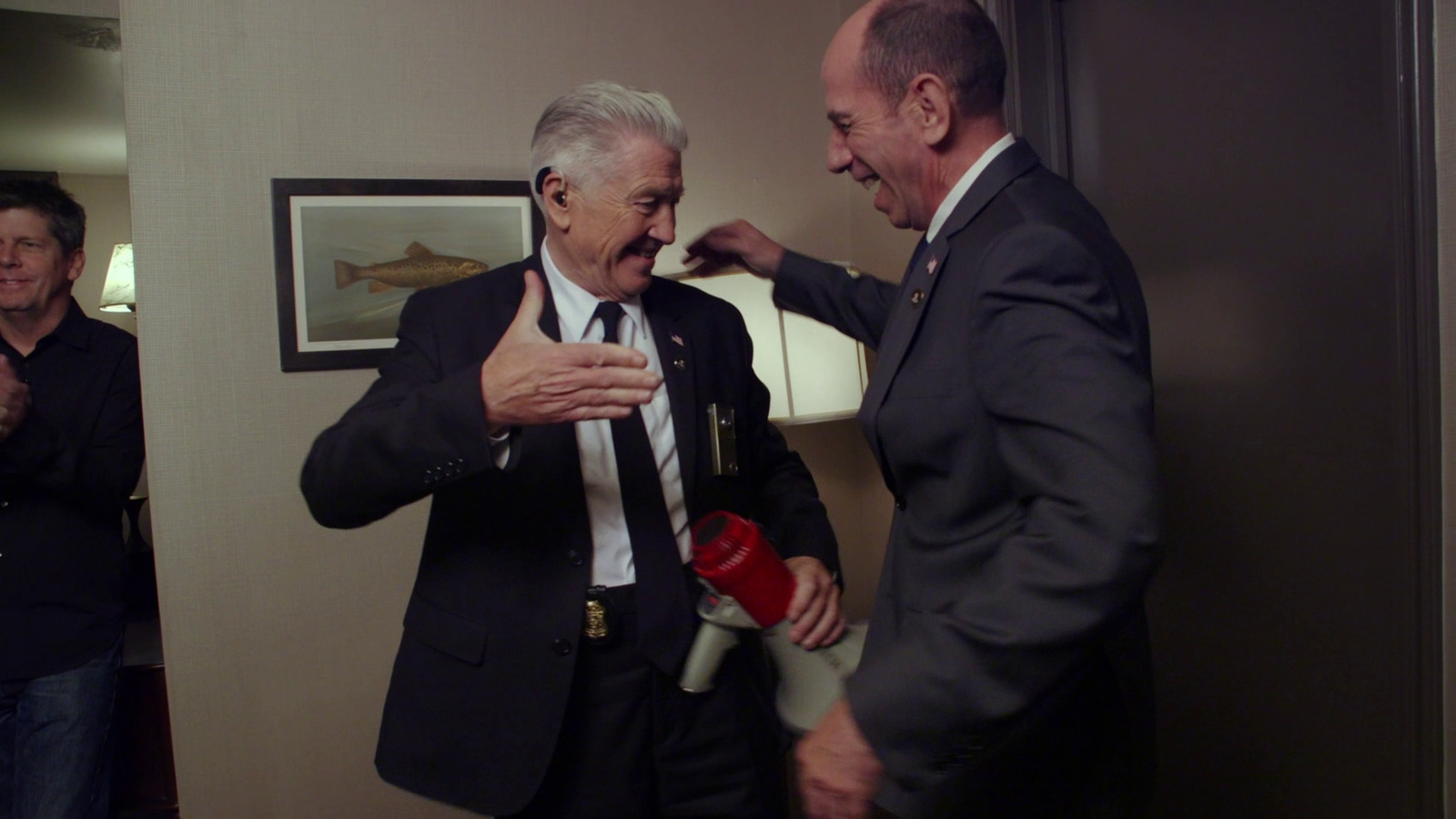
See You on the Other Side Dear Friend, 01:19–02:31; 08:09–09:40.
Al Strobel’s story belongs to the performer
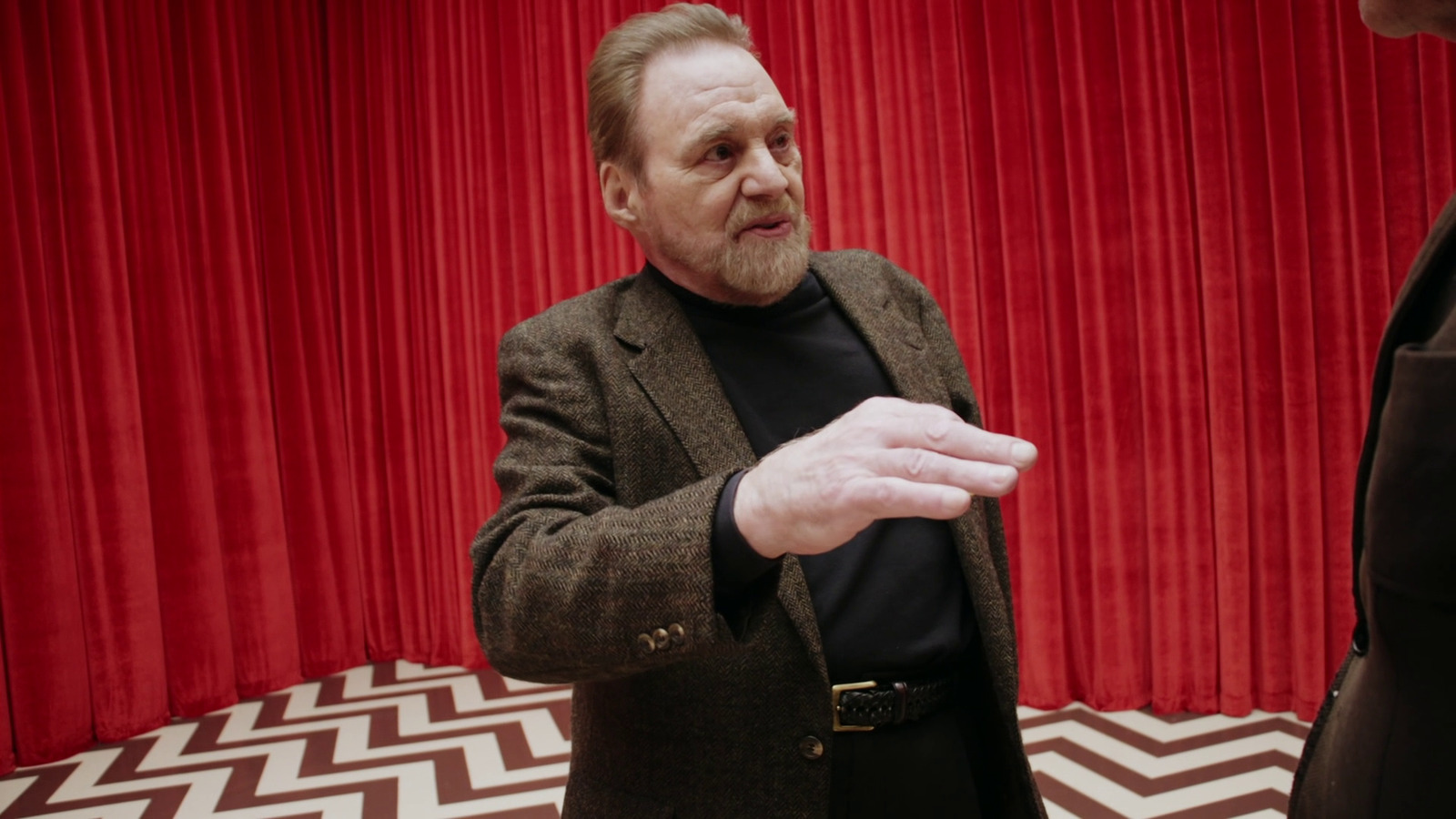
On the Red Room set, Lynch asks Al Strobel about the accident in which he lost his arm. Strobel recounts a crash as a teenager in Wisconsin, the person who helped him and the continuing phantom pain from which the documentary takes its title. The exchange pauses rehearsal to give the performer room to speak in his own terms.
This is Strobel’s personal recollection, including his account of an out-of-body experience. It should not be converted into an explanation of MIKE or evidence for the series’ supernatural world. Its place in the production history is the conversation between an actor and a director who have returned to work together.
Time to finish, and time to discover
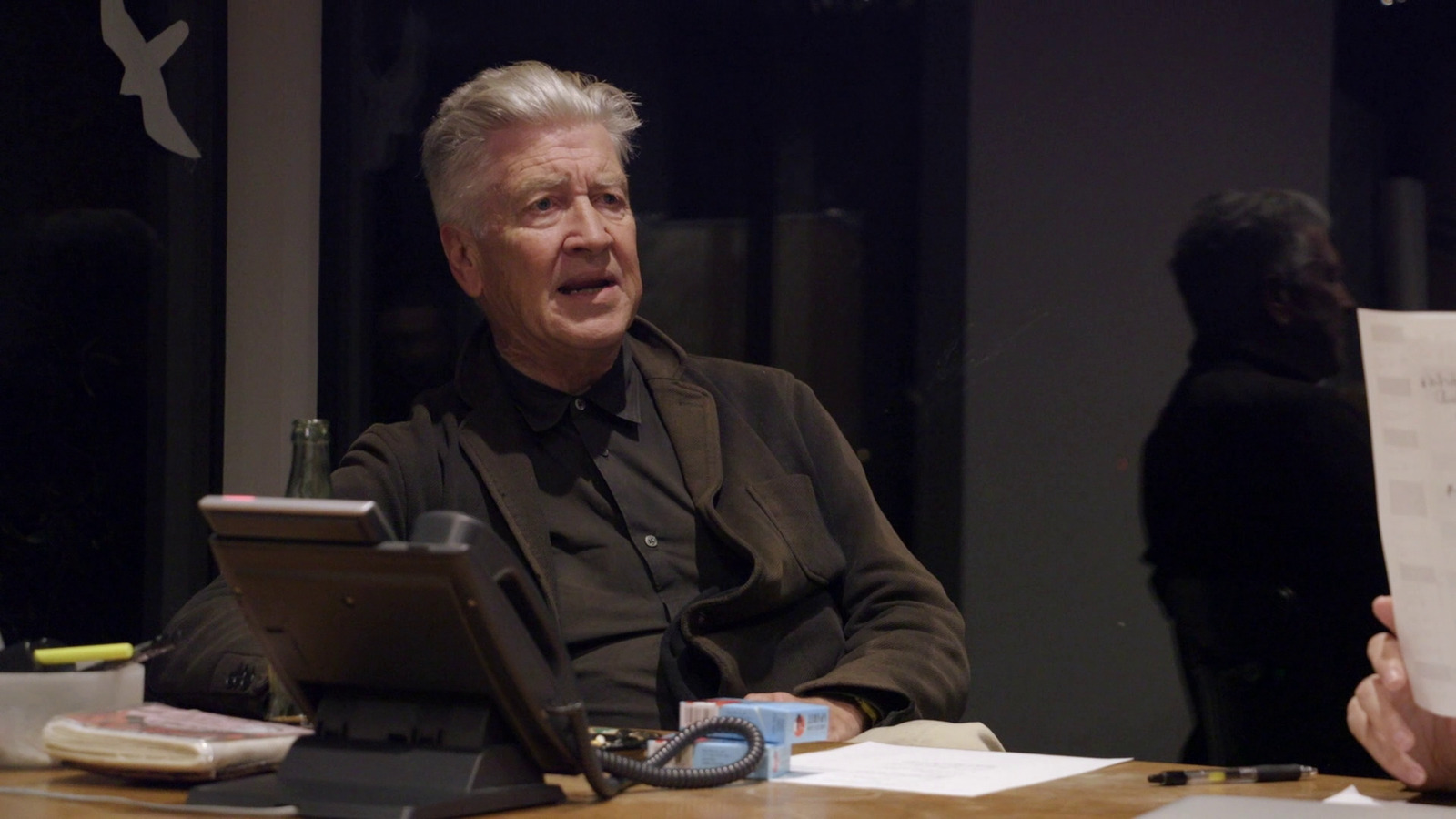
A production meeting exposes the pressure behind the Great Northern scenes. Lynch objects to fitting the work into two days, while the discussion identifies performer availability and the cost of keeping an actor longer. He wants time for extra shots, experiments and discoveries that cannot be fully specified in advance, recalling how much more he would have liked to do in the Fireman’s space.
The exchange complicates the idea of an entirely settled design simply being executed. Planned scenes, available people, stage work and ideas still taking shape must be reconciled. Read beside the finished episodes’ long pauses and expansive spaces, the meeting makes their pace an artistic achievement rather than evidence of an unhurried production.
One performer receives several farewells
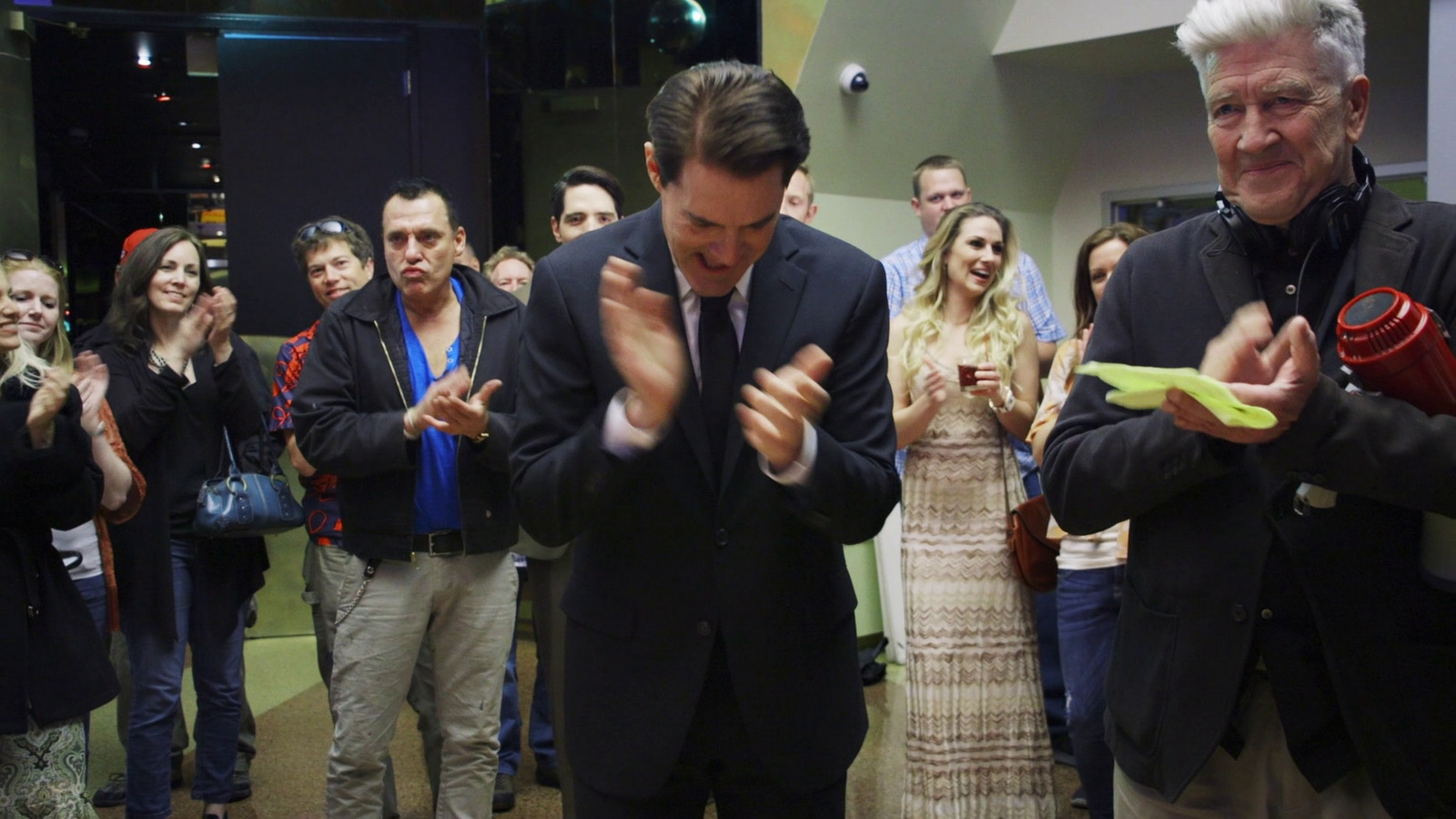
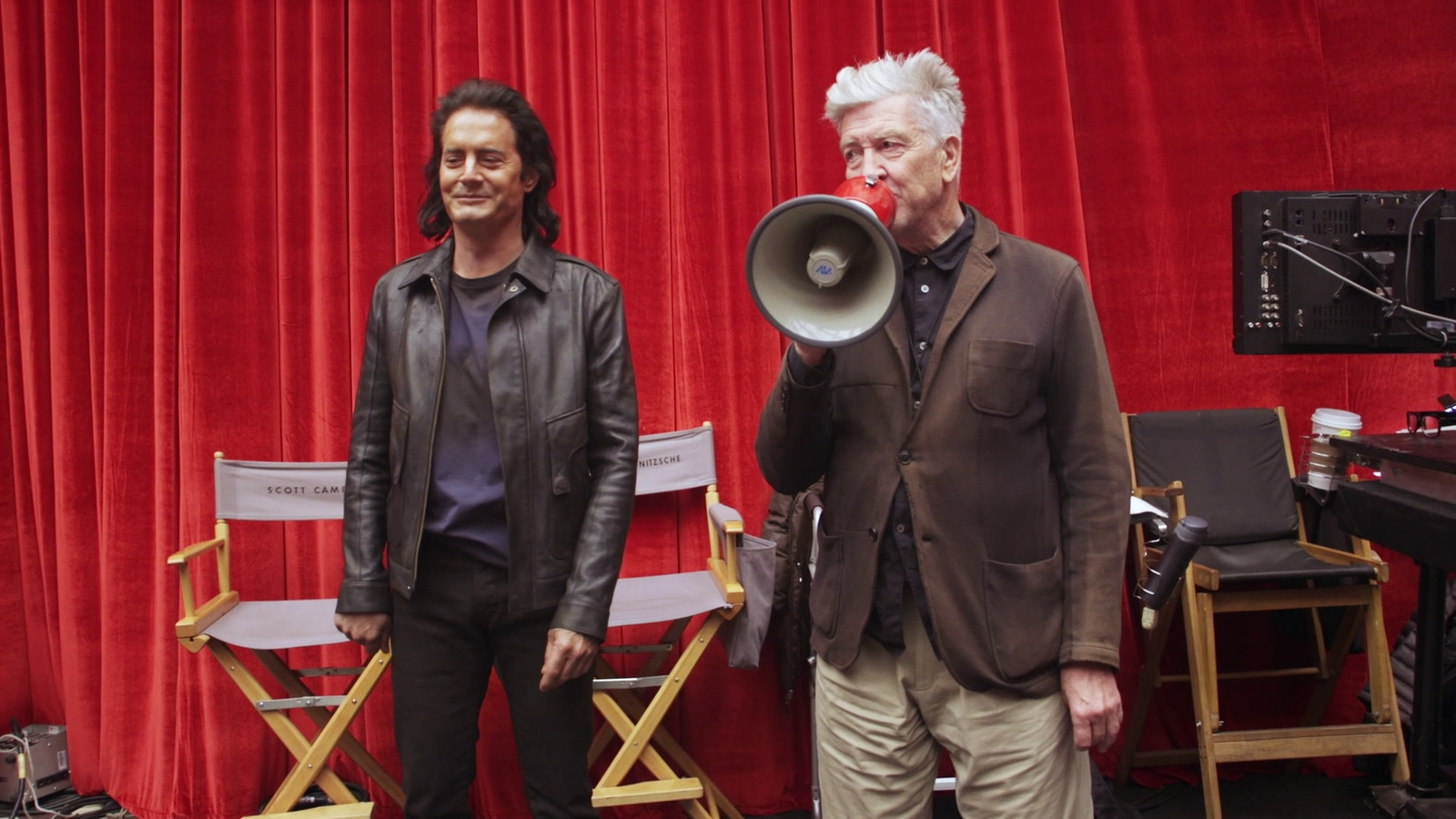
Sabrina Sutherland thanks the crew before Lynch and Kyle MacLachlan exchange tributes at the close of principal photography. The documentary then includes separate farewells for the original Dougie and Cooper’s double. Their different costumes and playful tones bring the work of dividing MacLachlan’s performance back into view.
These are production endings, distinct from the unresolved ending of the story. The documentary’s own narrator asks questions about Cooper and BOB without answering them. Its closing structure can preserve a sense of accomplishment among the filmmakers while leaving the fiction open.
Open the production-farewell study · 2 frames
Rehearsal, performance and the working set
Follow the production evidence into the episode dossiers: camera positions, effects preparations and directions to performers examined alongside the finished scenes and earlier testimony.
- Part 1 — Preparing the room that Cooper will leave behind
- Part 2 — Phyllis’s death is built from a timed turn and a separate floor detail
- Part 3 — Naido and Cooper are photographed as separate suspended bodies
- Part 4 — A shared life built from a small amount of information
- Part 5 — Sonny Jim knows the routine that Cooper has lost
- Part 6 — Cooper’s attention settles on texture, colour and a clap
- Part 7 — Diane makes the agents enter her territory
- Part 8 — The camera changes authority when Mr. C falls
- Part 9 — The blood has to carry elapsed time
- Part 10 — Finding the right place from which to notice Albert
- Part 11 — The vortex begins with fixed views and unequal sightlines
- Part 12 — The Blue Rose briefing has a social choreography
A familiar character can return with an unfamiliar amount of information
Harry Goaz remembers learning that Andy had a son without receiving an elaborate explanation of the intervening family history. Kimmy Robertson describes working from small portions of material, sometimes encountering new pages with the set already prepared. Their shared familiarity with Lucy and Andy therefore coexists with limited knowledge of what the new story will ask them to do.
Their recollections belong beside the production footage, rather than replacing it. The footage shows directions and rehearsals; the interview explains how the work is remembered by two people carrying characters across decades. Neither should be made into a universal rule about every actor’s access to the script. Together they help distinguish what a performer needs for a moment from what an audience will eventually assemble across eighteen parts.
The linked studies above follow that distinction into particular scenes. They examine the preparation of gestures, voices, waiting, camera positions and practical effects alongside the finished episodes and earlier sources. A proposed action on set is identified as a proposal; an interpretation of the completed scene remains an interpretation.
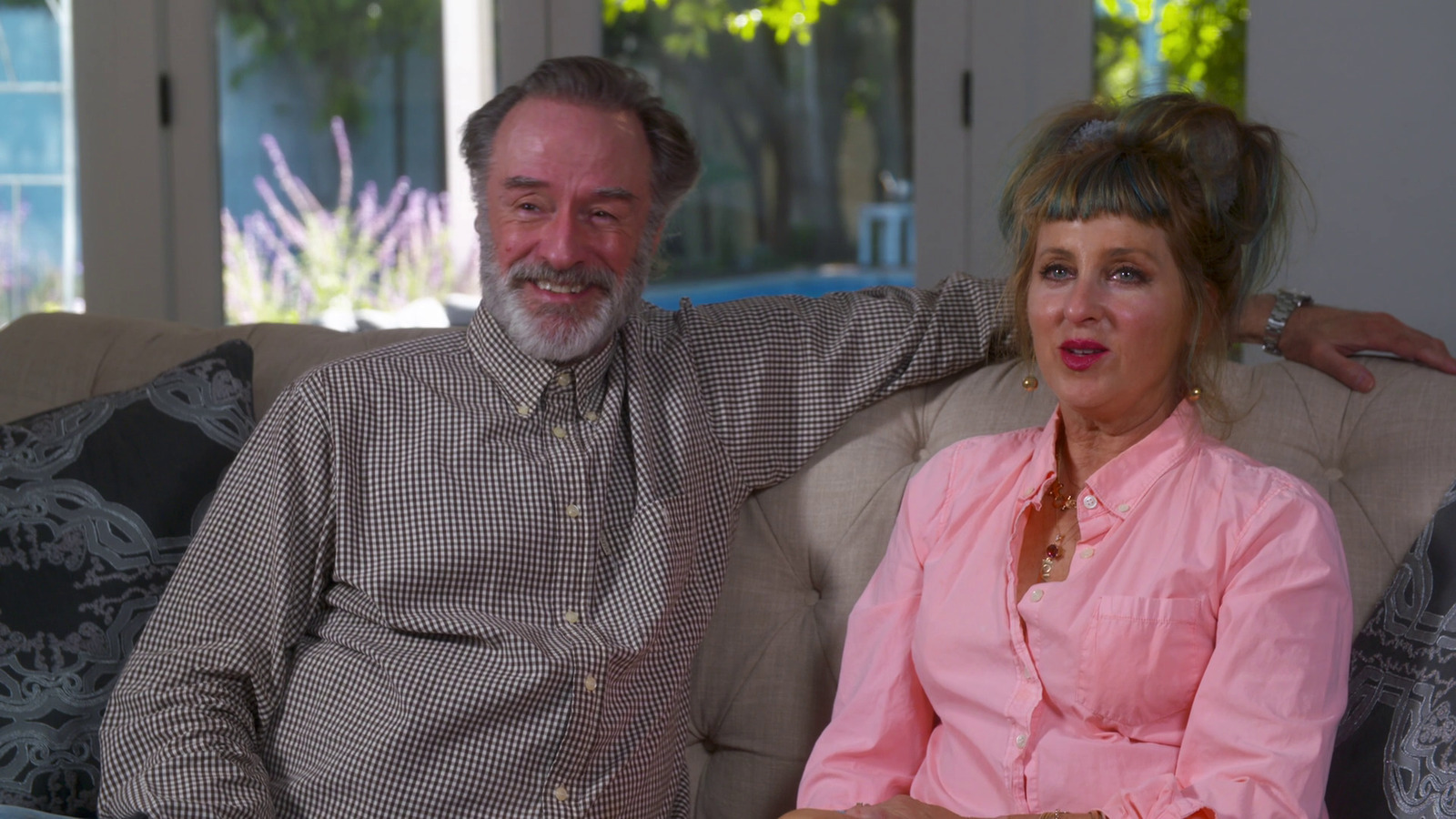
On the Couch with Kimmy and Harry, 03:32–05:15; 05:30–06:30.
The beginning of the story was still being filmed at the end
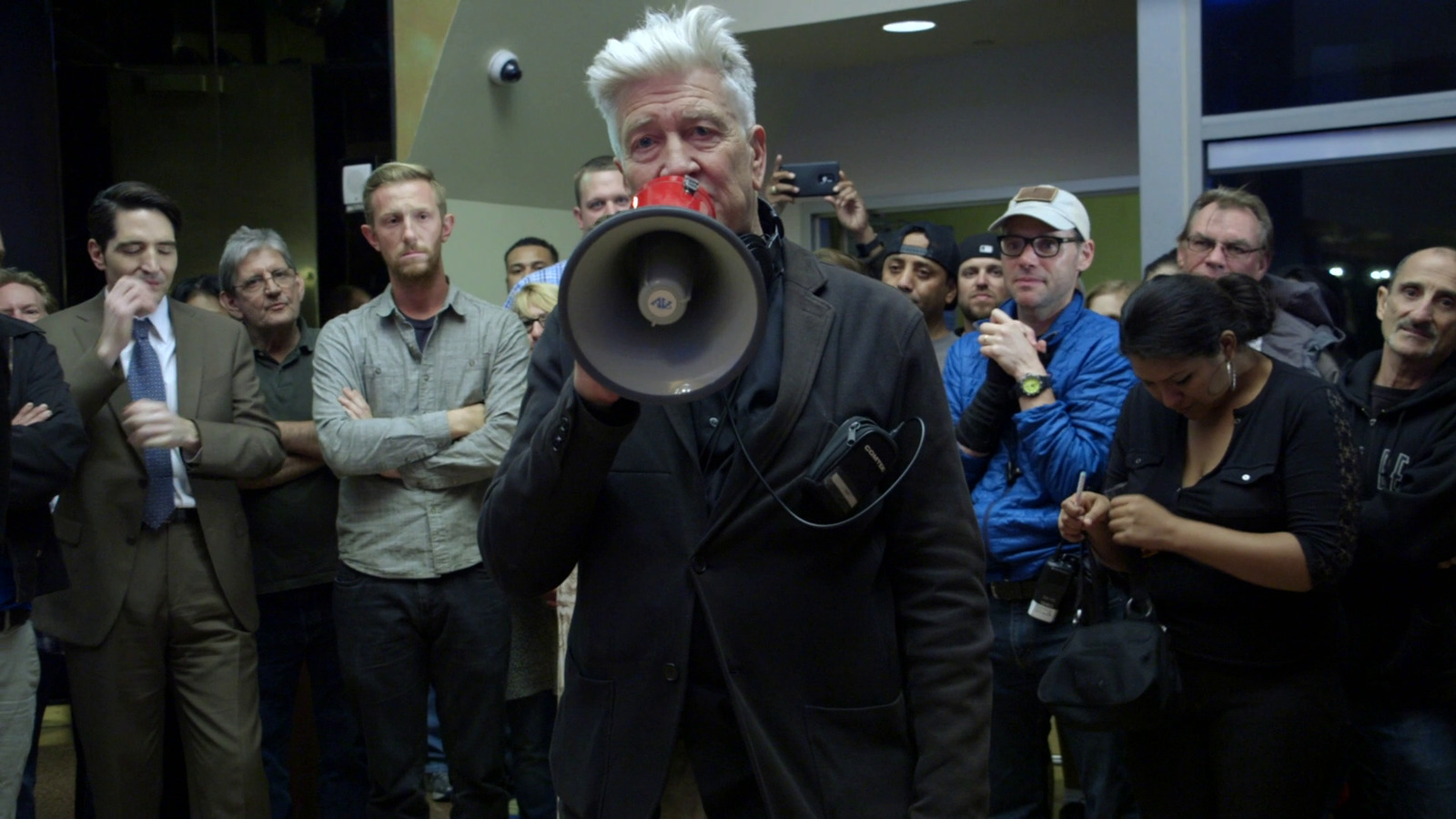
The casino footage is dated on screen to 14 April 2016 and identified as the final day of principal photography. It shows early-story business with Mr. Jackpots, the casino employees and his attempted departure before Lynch announces the wrap.
This is a useful reminder that The Return’s order of revelation is not a diary of its shooting schedule. The documentaries organize access to work made across locations and dates; their episode labels do not make every adjacent shot contemporaneous. Here, seemingly early steps in Cooper’s return become the occasion for the production’s farewell.
Inside the final movements: performance and production
Follow the production evidence into the episode dossiers: camera positions, effects preparations and directions to performers examined alongside the finished scenes and earlier testimony.
- Part 13 — The conga line: disorder with a precise route
- Part 14 — Bobby’s memory determines the route
- Part 15 — Making the telephone booth strange
- Part 16 — Richard follows a sound towards the rock
- Part 17 — The Woodsmen: hands, blood, smoke and light
- Part 18 — Judy’s diner: ordinary irritation before extraordinary violence
Dougie’s attention as an acting process
MacLachlan connects Cooper-as-Dougie to an acting-school exercise in encountering an object as though its purpose were unknown. Small discoveries accumulate from day to day; he and Lynch work through responses to an elevator, coffee, sound and a name. The slowness involves learned behavior and the time needed to discover it, rather than an undifferentiated vacant expression.
He distinguishes this sustained work from the brief, differently costumed original Dougie Jones and from Mr. C, whose appearance and interior life were developed together. His aim for Mr. C was an unsettling presence that made sustained looking uncomfortable. The contrast offers a performer’s account of the different kinds of attention carried by one face throughout The Return.
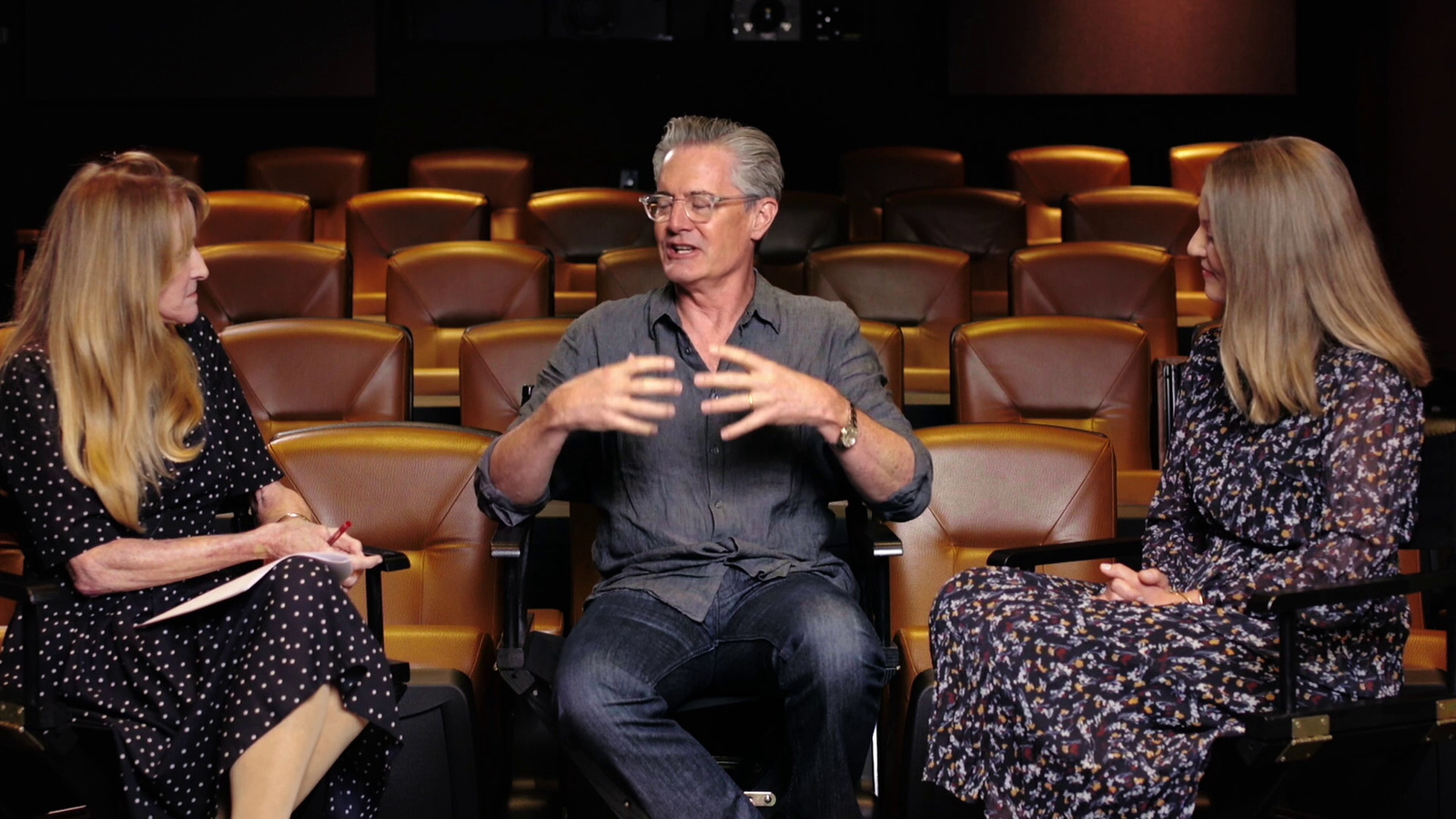
A Talk with Kyle MacLachlan and Sheryl Lee, 53:28–56:34. The performers’ later recollections are read alongside the finished work and other production evidence.
Follow the conversation into the individual dossiers:
Three Coopers, three ways of occupying time
Dougie: attention without explanation
Kyle MacLachlan describes the patience and trust required to play Cooper’s diminished responsiveness, resisting the urge to hurry a scene. He also distinguishes the physical construction of Mr. C through hair, costume and bodily presence. This is useful performance evidence because the same actor’s recognisability can obscure how different the working problems are. MacLachlan on Dougie, Mr. C and Cooper
Our interpretation of the Las Vegas material begins with a reversal. The original detective enters a room and notices what others have missed. Dougie often needs other people to make the room navigable. Help becomes dramatic action: a colleague, a spouse or a stranger can decide whether to exploit an unresponsive person or make space for him.
The comedy is therefore not empty time while the competent hero is withheld. It reveals habits of care and impatience. It also puts strain on an audience trained to value recognition, speed and mastery. Tom Huddleston’s contemporary discussion compares the performance’s comedy with silent-film traditions; that is a critic’s analogy, not evidence that a particular shot directly reproduces a named film. A contemporary reading of the Las Vegas comedy
Mr. C: agency without reciprocity
Mr. C occupies the opposite dramatic position. He acts, travels, bargains and threatens without the original Cooper’s curiosity about other people. This is more disturbing than a simple change from kindness to cruelty. The detective’s efficiency survives after the social feeling that made it attractive has been removed.
The contrast also changes how to read the delayed recovery. When the familiar Cooper becomes available again, competence feels exhilarating. Yet the work has already taught us that being able to act and being able to understand the consequences of action are separate accomplishments. The finale tests that separation.
Janey-E and Diane: different demands on the same face
Nancy Steiner’s costume account distinguishes Diane’s carefully developed fittings from a late change toward ordinary jeans and a cardigan for Janey-E. The different preparation histories matter: a striking design can arrive through a long process, while an everyday appearance can be the result of a decisive last-minute revision. Steiner on the two costume approaches
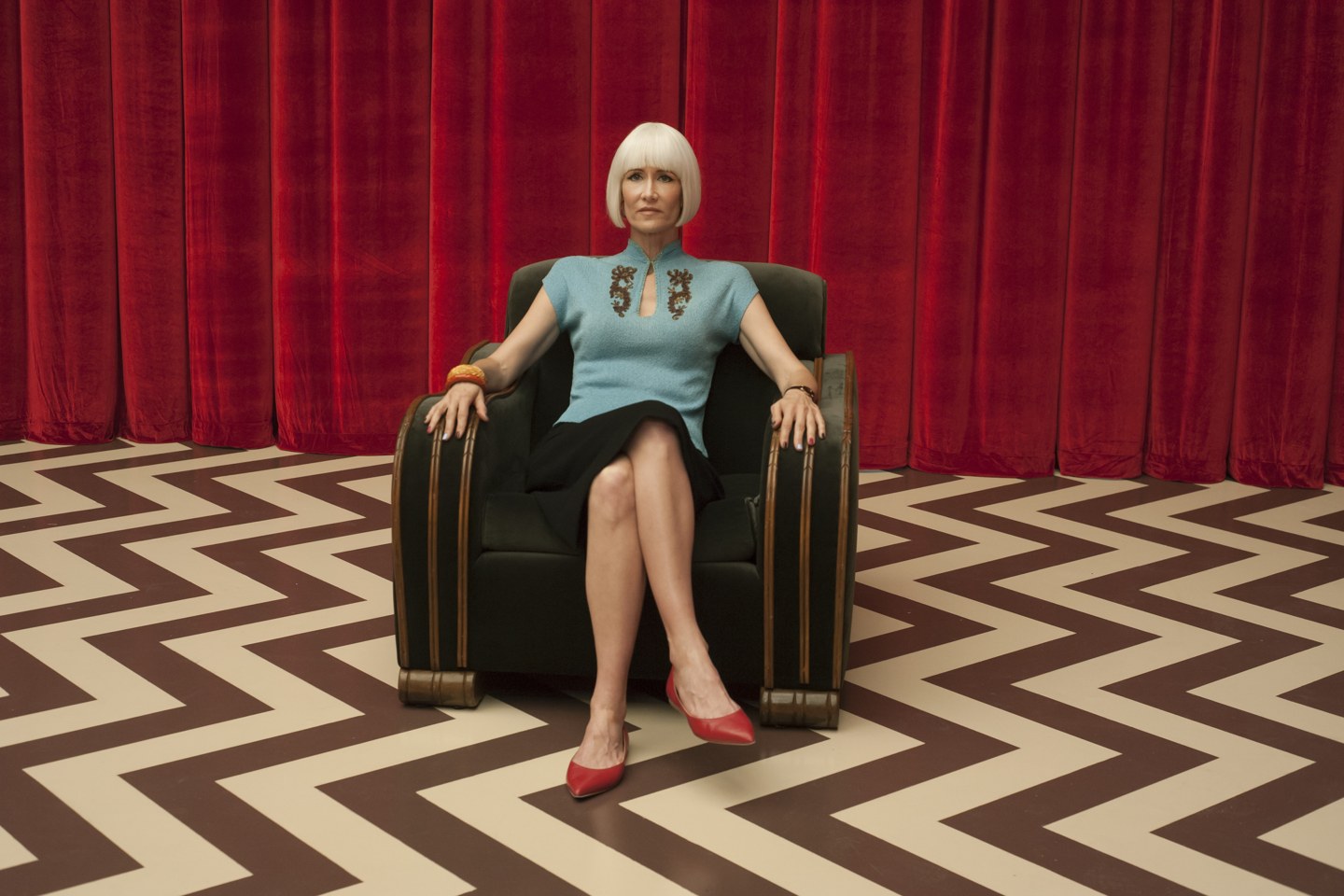
Our reading of the reproduced publicity photograph is that Diane’s controlled silhouette and direct gaze resist easy access. Janey-E, in the Las Vegas story, must translate Dougie’s behaviour into practical household decisions. Neither role is adequately described as a clue to which Cooper is on screen. Each exposes the emotional and social obligations attached to his identity.
Building Mr. C from the outside
Discussing The Return with Laura Dern in 2022, Kyle MacLachlan recalls being apprehensive about playing Mr. C. He describes developing the character from the outside inward: finding the look and physical feeling helped him reach the interior. That account offers a concrete route into the differences among his roles. Costume, bearing and bodily rhythm can establish a person before dialogue explains him. MacLachlan’s recollection also complements Dern’s account of navigating several identities in Inland Empire, where emotional understanding did not require a complete map of the story. Dern and MacLachlan, 2022 conversation, 10:35–11:40
Janey-E: working from a partial view
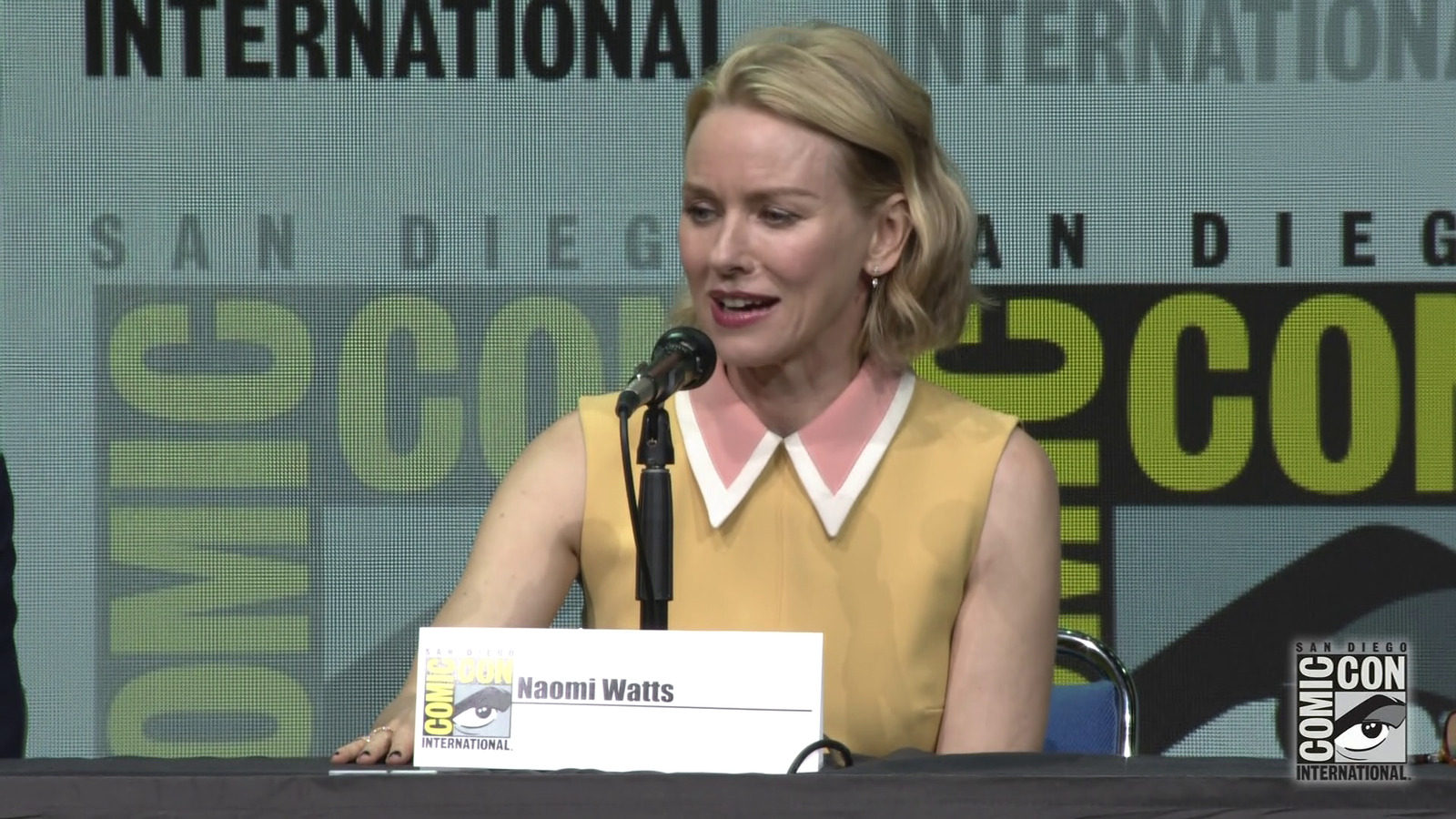
Naomi Watts recalls reading her material at Lynch’s house, with a cup of coffee and pages that revealed her scenes rather than the surrounding story. Some lines were crossed out. Her account establishes the practical limits of the information available to her, while leaving room for a precise performance within those limits. Our reading of Janey-E’s domestic urgency rests on her actions in the finished scenes; it does not require the actor to have possessed a complete explanatory map of Cooper’s journey. Panel, 17:18–20:09.
Bushnell’s fluency: work behind apparent ease
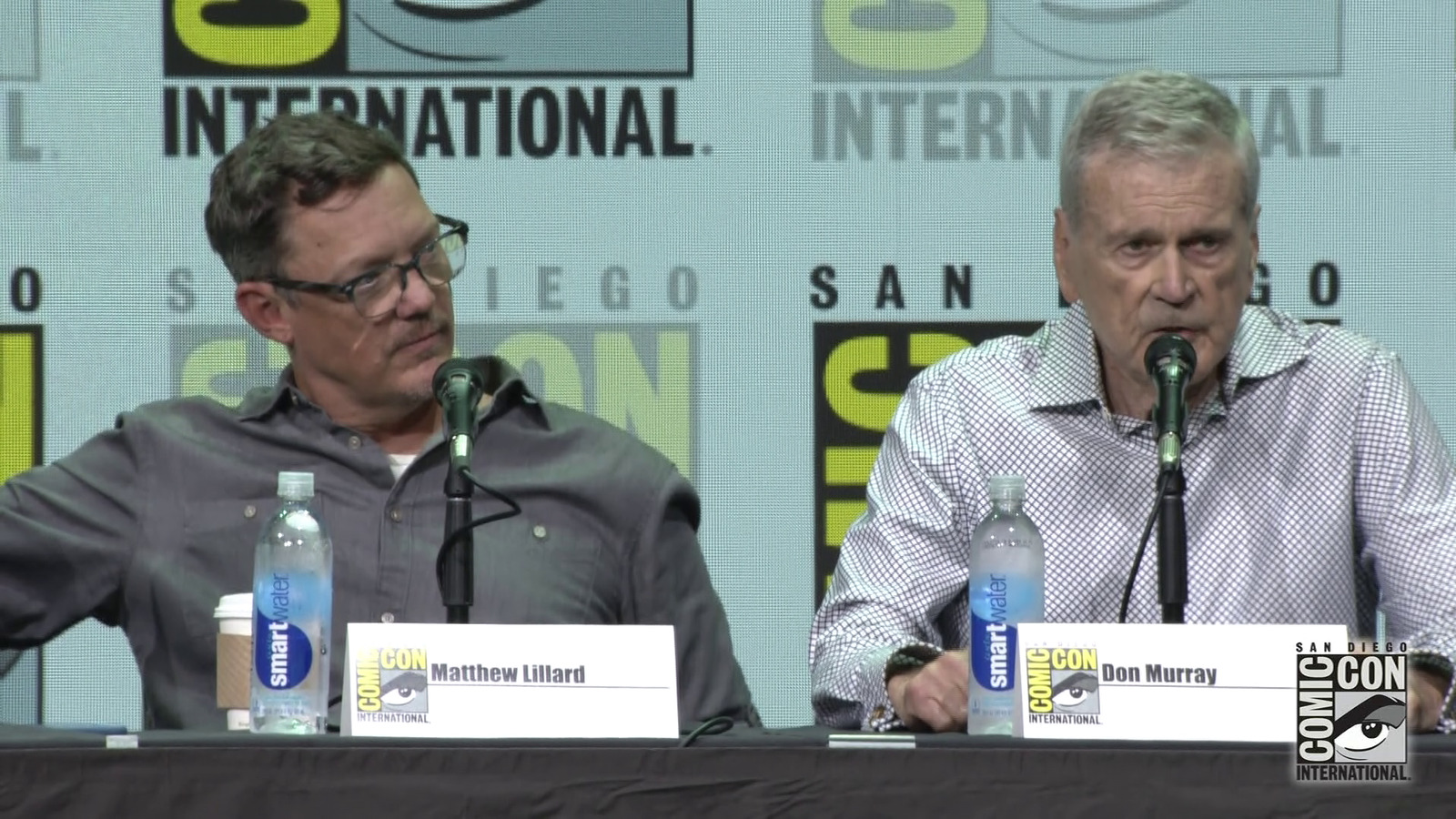
Don Murray describes receiving a scene with four pages of largely his own dialogue. His son Michael ran it with him ten times a day for ten days before filming. He then remembers a relaxed set in which actors and technicians worked together without a strong social divide. That combination is more useful than a general claim that Lynch obtained spontaneous performances: a welcoming atmosphere could coexist with intensive preparation. Murray’s fluent speech provides a productive contrast to Dougie’s sparse replies in the later insurance-office scenes. 26:01–28:19.
A town with a past, and a world beyond it
The opening parts distribute attention across the Lodge, Twin Peaks, New York, Buckhorn and Las Vegas. Huddleston’s first dispatch records how disorienting that dispersal felt in 2017. The review is valuable as an encounter before the complete structure was available; its early hypotheses should not be mistaken for later-established explanations. Contemporary response to Parts 1–4
The enlarged geography deprives the town of its former monopoly on strangeness. Surveillance, financial work, roads, hotel rooms and official investigations connect places that do not initially seem to belong together. A mysterious event is no longer guaranteed to become intelligible by returning to the sheriff’s station.
The cost of remembering only the lovable town
In the middle parts, Bobby, Shelly and Becky occupy a family structure altered by time. Sarah’s supermarket distress and isolated home life expose another form of continuity. Carl Rodd’s acts of attention offer a quieter counterweight. These threads appear in the contemporary episode records, but the claim that they belong together as a study of care is our interpretation. The town in Parts 11–12 · Carl and the town in Parts 9–10
The return of a familiar person does not automatically supply consolation. Some characters have acquired responsibility; some remain caught in damaging repetitions. Nostalgia becomes selective if it remembers only coffee, pie and eccentric camaraderie. The earlier series already contained exploitation and family violence. The later work asks what has happened to both the affection and the damage.
Farewell as dramatic action
Part 15 places Margaret’s farewell and Ed and Norma’s reunion within the same late movement of the work. Huddleston’s account recognises the emotional force of these scenes alongside the continuing disturbance. Tenderness is not a brief concession to an audience otherwise being punished. It is one of the standards by which the surrounding failures of care become visible. The late reunions and farewells
Keeping Margaret in the story
Producer Sabrina Sutherland recalls that Catherine Coulson’s work was initially planned across Washington and Los Angeles. As travel became impossible, the arrangements changed. Sutherland remembers joining Lynch and Peter Deming after a day’s filming to check the remote setup on a computer screen, with Lynch approving how it looked. The account makes the practical collaboration behind Margaret’s return visible alongside the emotional force of her scenes. Sutherland’s first-hand account, 22:30–24:29.
Photography, rooms and the texture of the impossible
Deming describes testing and using the ARRI Amira, recording 3.2K ProRes. That is a capture account, not a statement that a particular disc is natively 4K. He also distinguishes existing spaces from built interiors, including offices for Truman and Ben Horne. The familiar room may be a reconstruction with a specific practical purpose. Camera and set distinctions
Cara Brower’s account identifies Ruth De Jong’s production-design leadership and the art department’s work in turning the written world into buildable environments. Material continuity matters precisely because the narrative refuses easy continuity. Wood, curtains, furniture and the scale of a room allow recognition before the spectator knows whether recognition is trustworthy. Art-department testimony
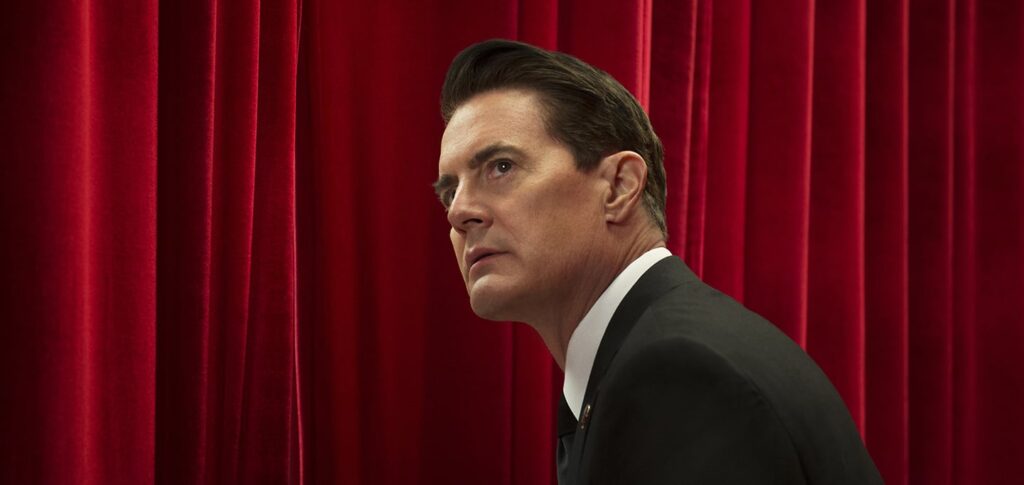
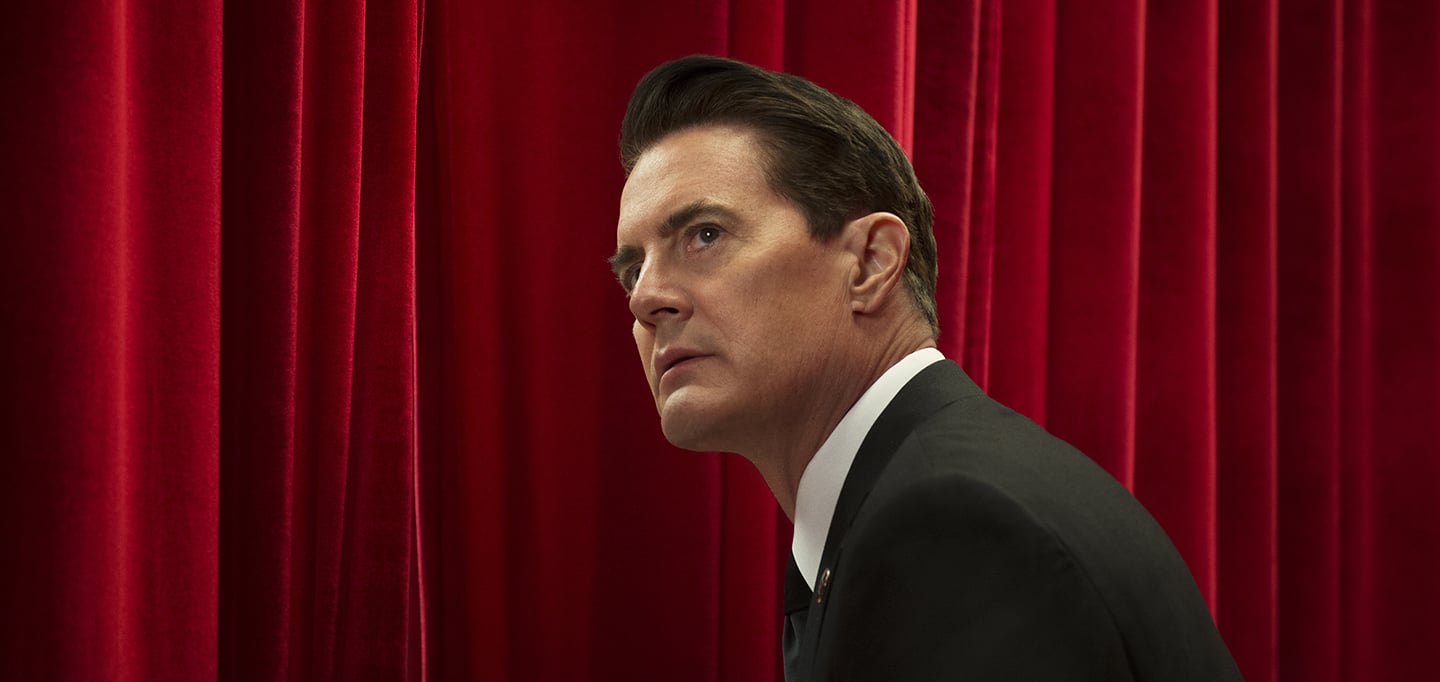
The Red Room’s saturated curtains do not require us to abandon photographic questions. Where is the light coming from? How does the figure separate from the background? What does a change in camera position permit us to see? Those questions remain useful beside metaphysical interpretation. The hero image can be inspected as an image before it is asked to certify a complete theory of the Lodge.
BUF: a documented portion of the effects work
BUF reports 213 shots, representing about forty minutes of its effects contribution. These are the vendor’s figures, not a total for the whole series. Its production notes describe the evolution of the Arm from Lynch’s sculpture, effects built from reference images, and the mixing of filmed material with computer-generated environments. Vendor production notes
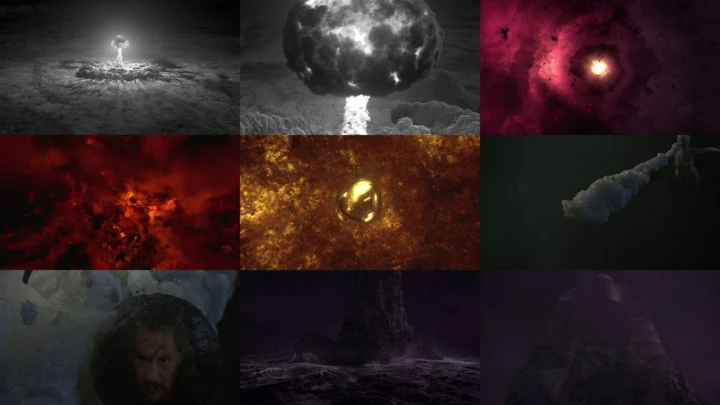
The notes make revision visible. A proposed electrical-socket distortion looked too comic, leading to added smoke. The explosion material involved multiple designed environments and an edit, despite being grouped under a “1 shot” heading in the vendor’s account. That heading must not become a claim that the finished sequence is one unbroken take.
The effects often preserve a tension between visible construction and emotional conviction. An image can look assembled and still be frightening. Asking only whether it appears realistic misses the different task: to make a body, a face or a landscape behave according to rules the spectator cannot comfortably predict.
A working room behind an impossible place
Richard Beymer’s production films make the Red Room visible as a collaborative working space. Curtains are lifted, camera positions negotiated, a ceiling lighting grid lowered and gestures tested in front of monitors. In Behind the Red Curtain, Lynch and Peter Deming consider the empty room before the familiar chairs and figures occupy it. I Had Bad Milk in Dehradun adds an overhead view that exposes the floor’s boundaries and the equipment surrounding it. Production footage.
Open the Red Room production study · 2 frames
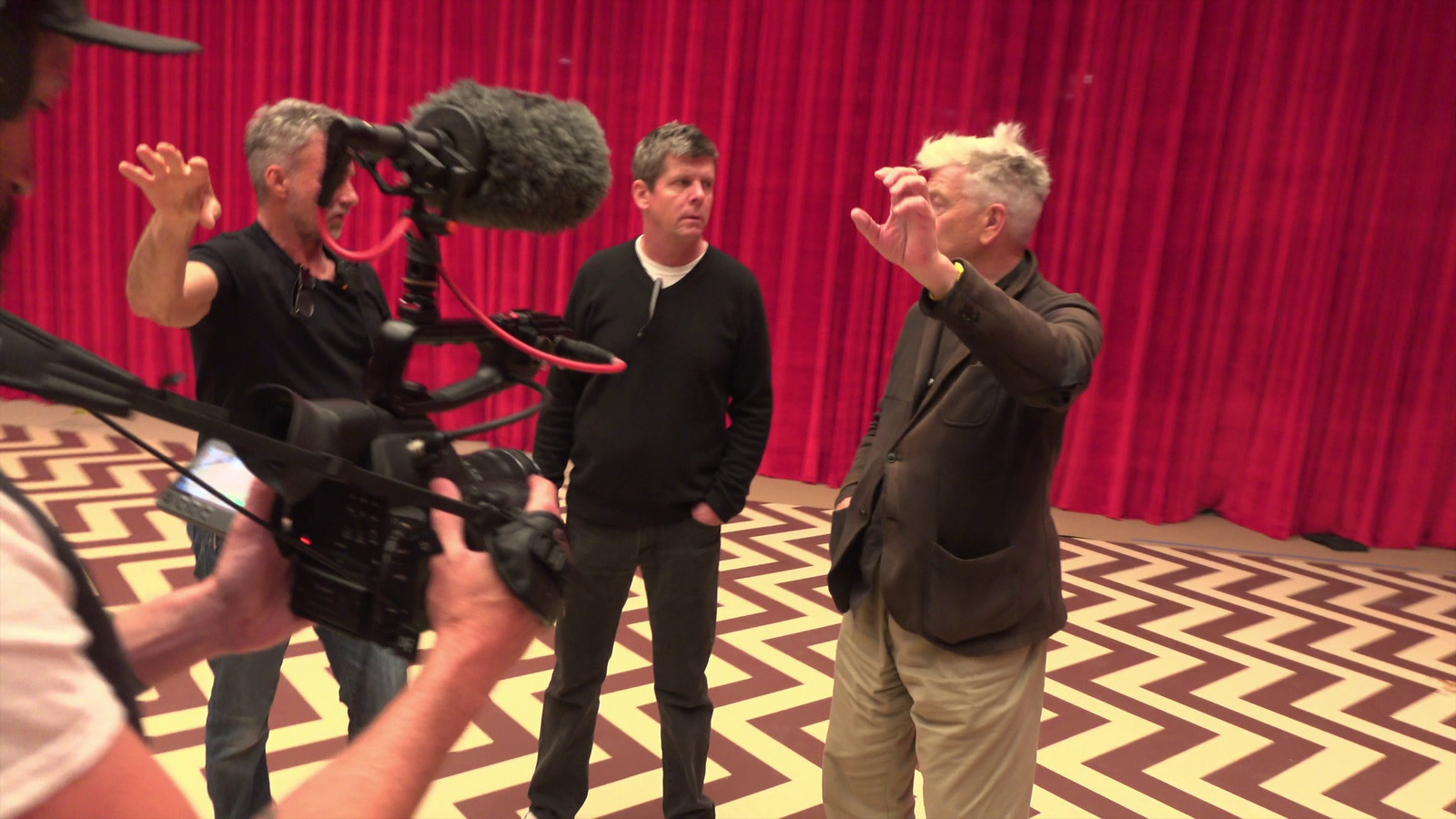

Deming’s published account identifies a large, diffused overhead light and a grid used to control its spread. His explanation of Lynch’s preference for a bright Red Room is useful beside these images: the unease does not depend on hiding everything in shadow. Saturated curtains, patterned floor, precise performance and altered motion can disturb a clearly visible space. Deming’s account.
The rehearsals connect directly to the episode research. Follow Laura’s reversed speech, face-opening gesture and exit tests, Dougie’s ring and Cooper’s electrical passage, or the construction of Ray’s new location. These views distinguish the actor’s task, the photographed element and the completed effect instead of treating them as interchangeable.
Returning to places, returning to people
A Very Lovely Dream: One Week in Twin Peaks follows location work and reunions in September 2015. Ruth De Jong describes recovering the earlier locations; MacLachlan distinguishes the surviving sheriff’s-station building from its changed surroundings. Robertson’s recollection of arriving on the reconstructed set gives architectural familiarity an emotional dimension. These accounts describe different kinds of return: a place physically restored, a set rebuilt and an actor meeting a remembered working world. Location footage and interviews.
The smaller performance histories are just as valuable. Lucy’s phone confusion and Wally’s family visit grow out of specific acting choices. Richard’s assaults acquire a contrasting production viewpoint through makeup preparation, direction and the reactions of fellow performers. The documentary supplies evidence of making; the episode dossiers ask what the resulting choices do on screen.
A recurring mark that does not stay the same
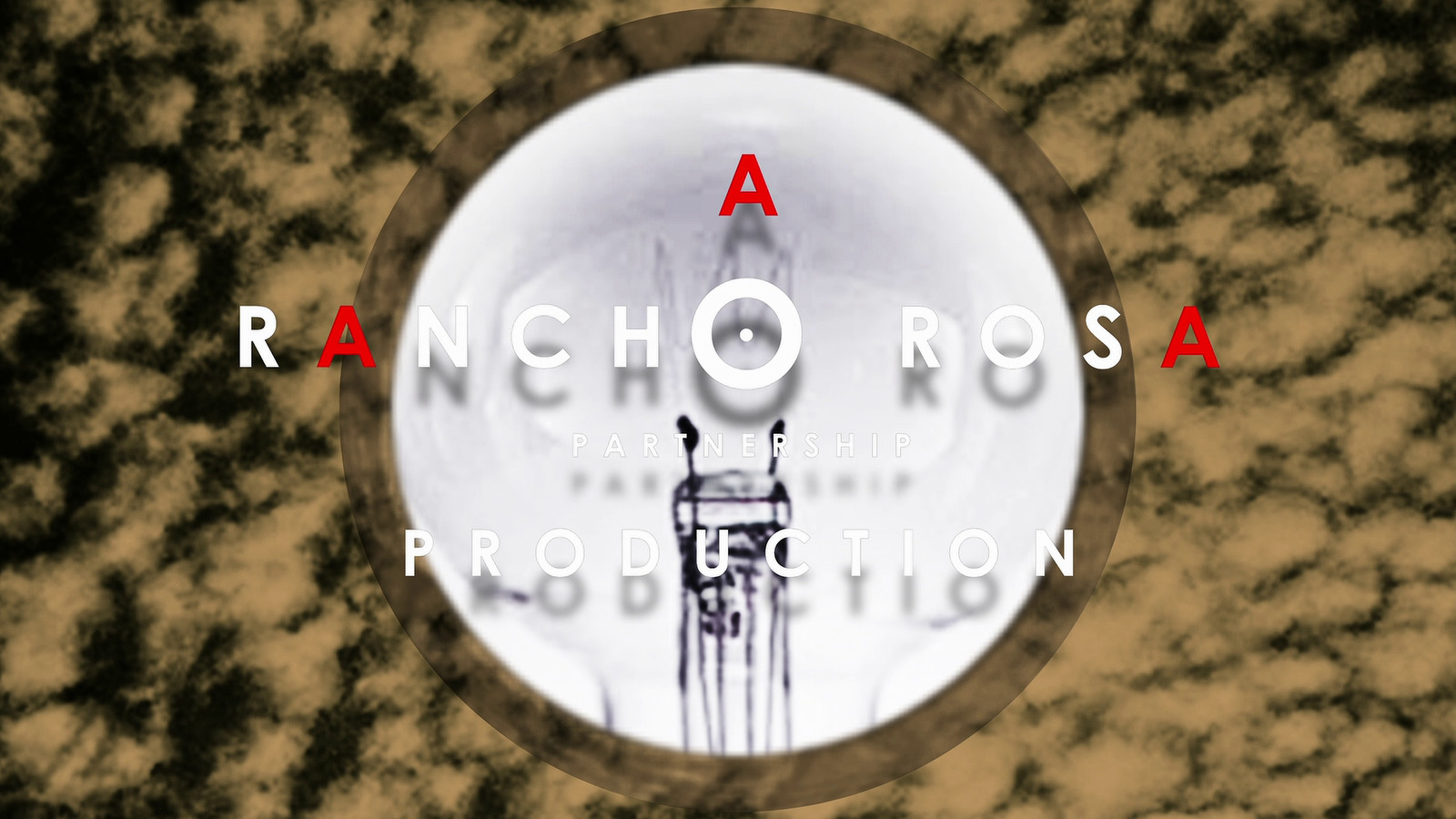
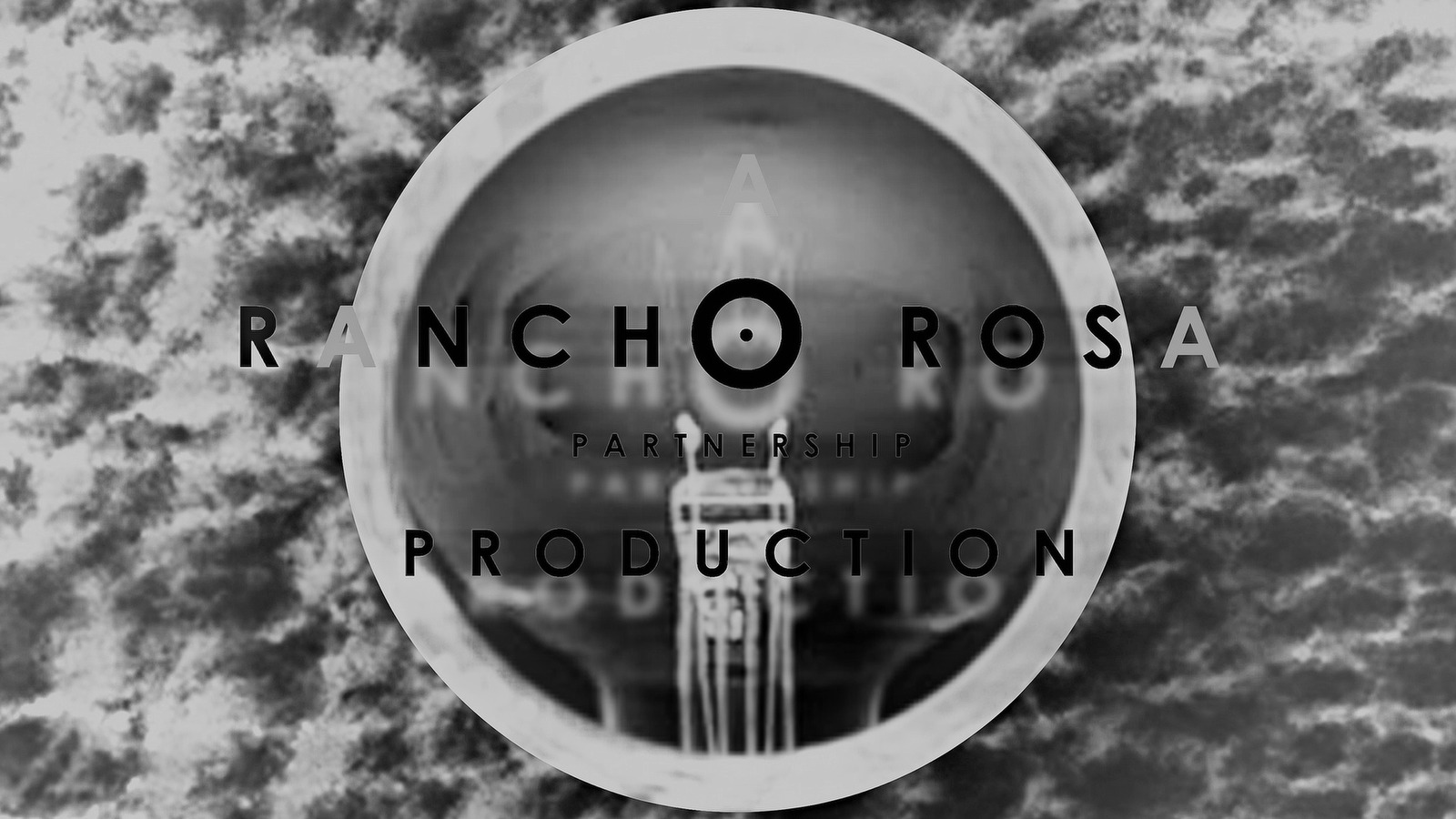
The collected Rancho Rosa production logos put small differences beside one another: coloured rings, shifting cloud fields, changes of brightness and reversed tonal relationships. The central circular design remains recognisable while its surroundings and contrast change. It is a compact example of repetition with variation at the edge of the programme itself. The comparison establishes visible differences; it does not turn each colour into a certified key to the story. Logo sequence.
Compare four logo variants
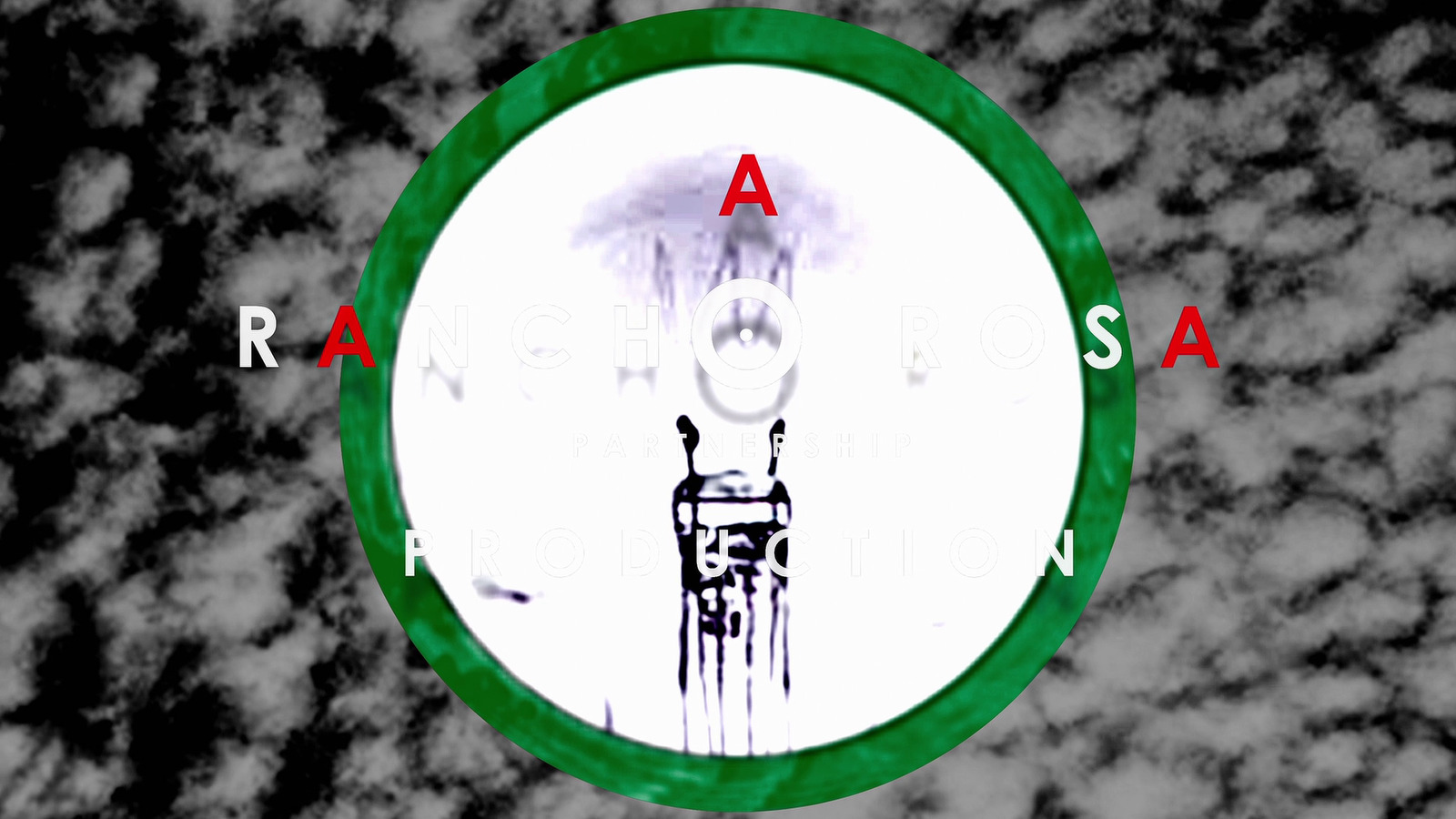
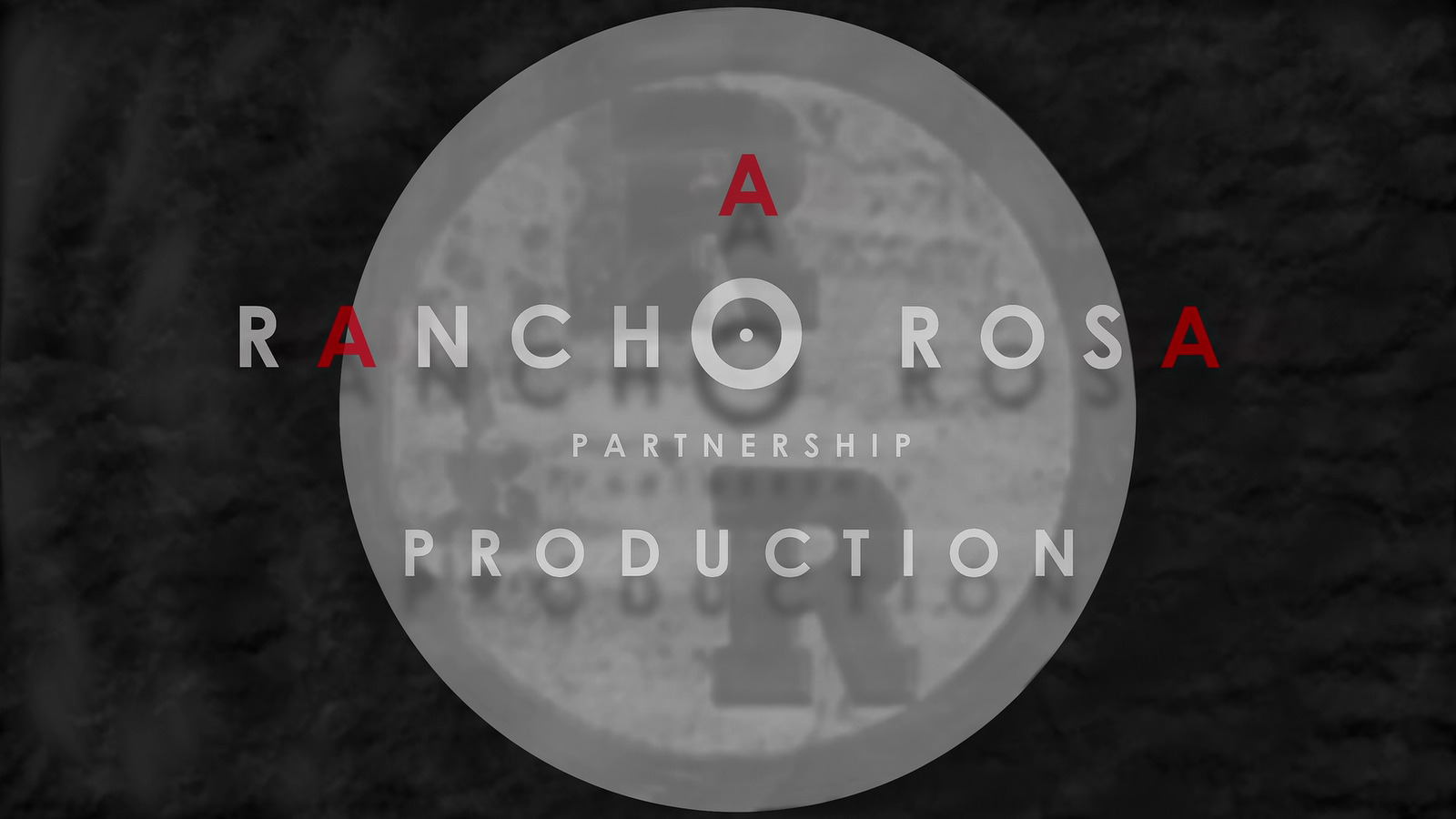
Part 8: history interrupts the investigation
Part 8 moves from the continuing Mr. C story into the atomic explosion and later New Mexico material. Huddleston’s contemporary response registers the radical change of scale. It is useful evidence of the episode’s initial reception, not a licence to settle every creature’s identity or to declare one universal origin of evil. Contemporary account of Parts 7–8
Frost describes the explosion as brief on the script page within a larger Part 8 passage. His recollection establishes a difference between writing density and screen duration, not the exact wording of an authenticated draft. The production remains a collaboration whose final scale cannot be calculated by counting lines alone. Frost on the written Part 8 material
The interruption changes the spectator’s imagined size of the story. A police investigation seeks a chain of actions by identifiable people. The explosion brings historical violence, abstraction and myth into the same work without supplying a clean conversion table between them. The image of Laura within this expanded scale can be read as an insistence on the singular person within overwhelming forces.
The later 1956 passage brings the disturbance back toward a vulnerable body and a domestic room. The movement from enormous spectacle to intimate threat is central to our reading. It does not make a historical event a complete explanation of abuse, and it does not absolve the people who act within the story. The supernatural and the social remain difficult to separate.
Sound, silence and the Roadhouse
Dean Hurley describes Lynch revisiting the original finale and wanting less explanatory underscore for the new work. Lori Eschler’s account of the earlier series makes the contrast more precise: recognisable music had long been actively reshaped for scenes. A changed musical density is therefore a changed editorial practice as well as an altered mood. Music editors on the earlier and later series
Our listening proposition is that an unfilled interval asks the spectator to notice space, electrical texture, breath and bodily movement. Silence should not be used as a loose synonym for an empty soundtrack. A sparse passage may contain highly organised sound, and a proper comparison needs the named mix and listening conditions.
Lynch’s 2017 interview also credits Hurley and Ron Eng with making sounds, resisting the assumption that his own sound-design credit makes him the sole maker. In the same interview, he explains that Bowie permitted reuse of his filmed performance but requested a replacement voice. Both details complicate a simple story of one creator controlling every audible element alone. Lynch on sound collaborators and Bowie
The Roadhouse performances provide a different relationship between music and duration. The spectator can attend to a performance as an event, not only as a cue beneath action. Dunham’s warning that not every part ends there matters: the venue is a recurring possibility, not a mechanical punctuation mark. The listener is repeatedly asked whether a song supplies release, interruption or an additional unresolved association.
Part 2: solitary watching, then a room shared through music
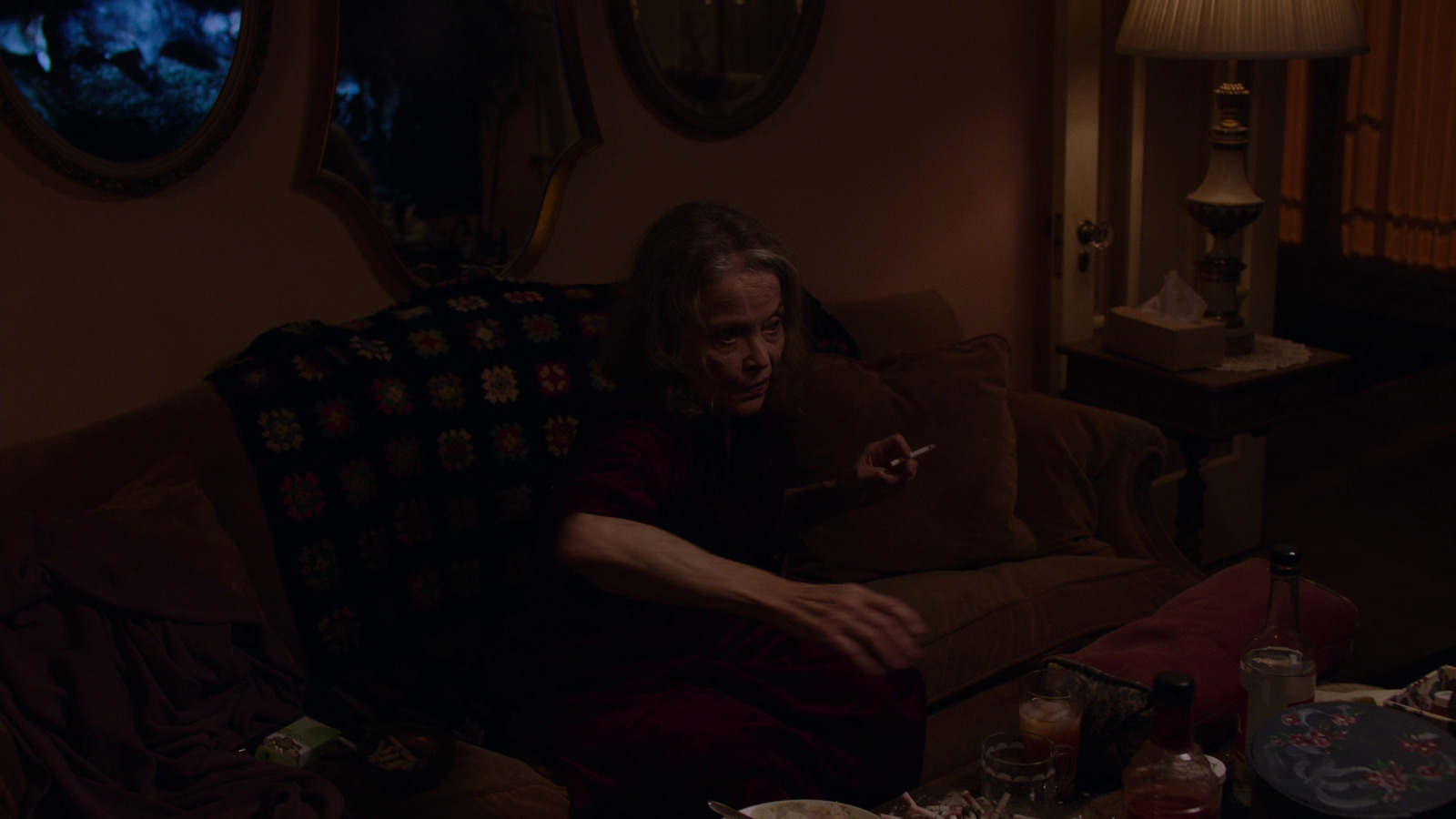
Sarah sits alone in the Palmer living room while a wildlife programme fills the television. The images of animal predation are framed by bottles, furniture and her repeated drinking and smoking. A familiar home has become a place of isolated watching. Moving to the Roadhouse changes both the social arrangement and the relationship to a screen: instead of a television watched alone, a band performs before a room full of people.
The return to Shelly is not simply a reassuring reunion. She worries that her daughter is with the wrong man, while her friends resist that judgment. Moments later, she defends James against another quick judgment, explaining his quietness through his motorcycle accident. One conversation asks whether concern gives someone authority over another person’s life; the other asks what a changed outward manner allows observers to infer. Familiarity supplies neither complete knowledge nor automatic agreement.
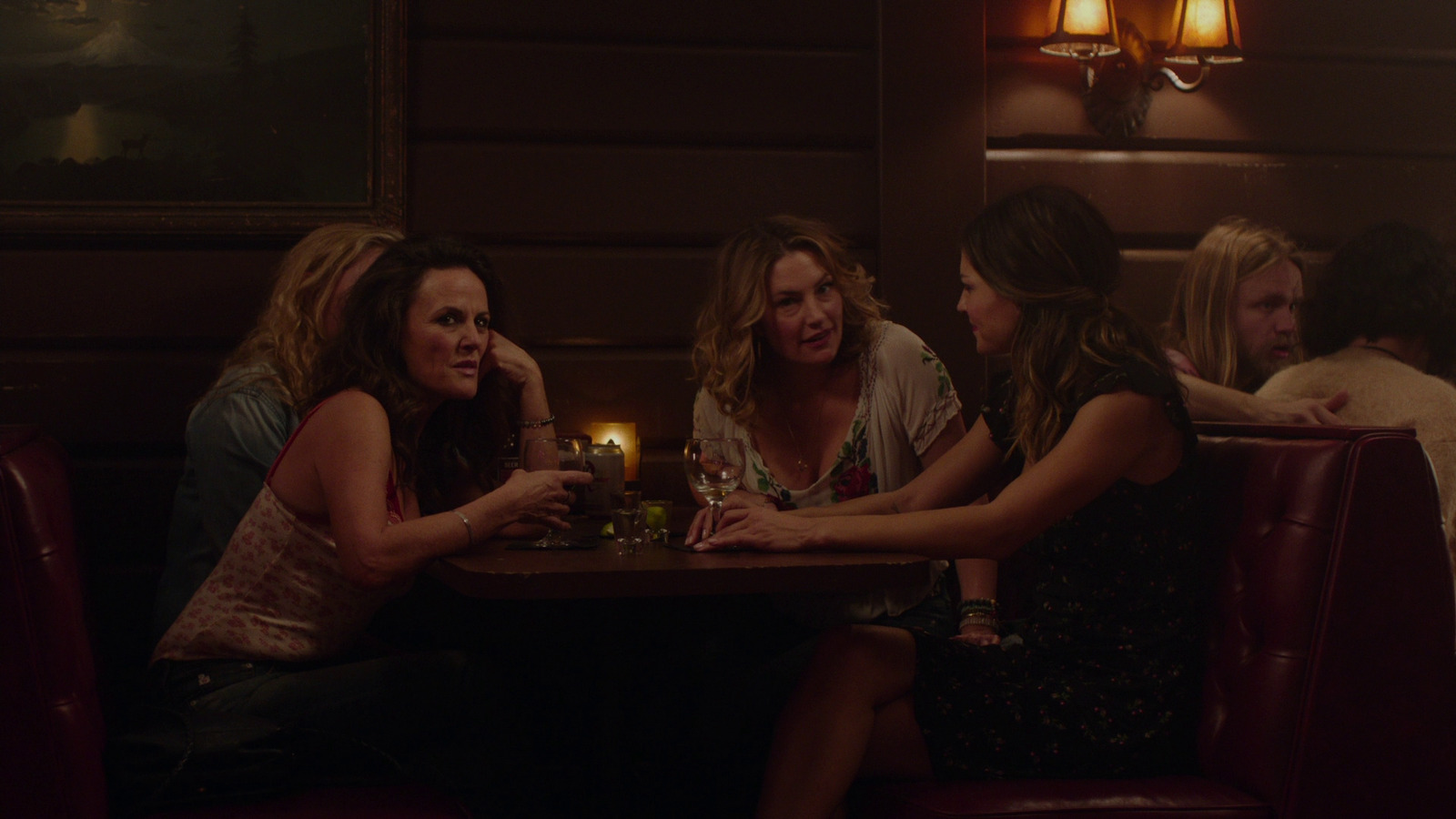
Chromatics’ “Shadow” provides a continuous musical setting for the exchange, the looks across the room and the transition into credits. The band remains a visible participant in the scene. The number does not settle Sarah’s isolation, Shelly’s worry or James’s position; it lets these unfinished lives coexist within a shared duration. The song is therefore worth studying as part of the dramatic arrangement, not only as a soundtrack selection.
Open the performance image
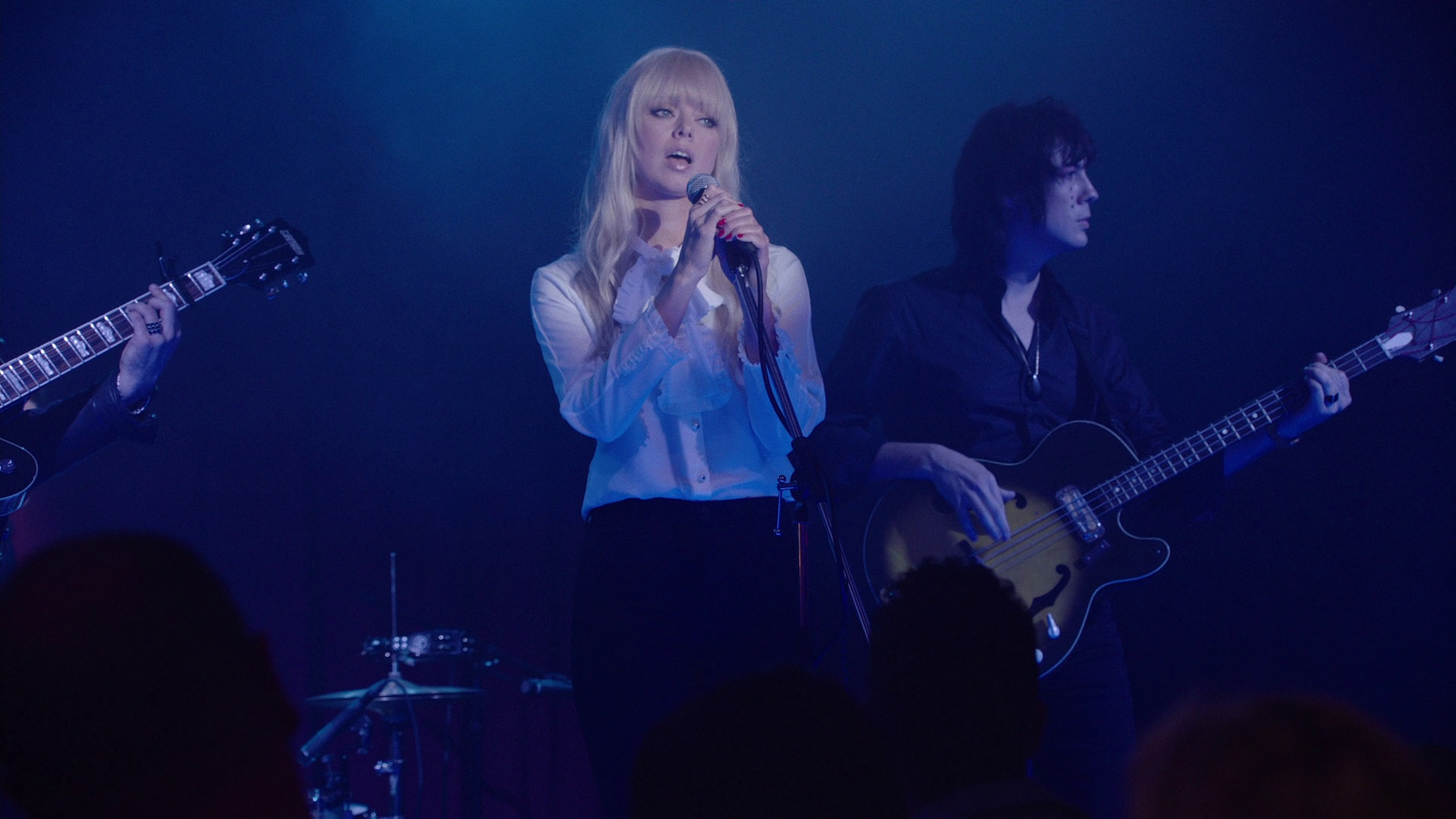
The Roadhouse as a performance space
These illustrated studies examine the separately presented Roadhouse Music performances alongside their episode settings: the musicians’ positions, changing light, camera distance and the presence of an audience. The individual edits are a comparison source, not substitutes for the episodes’ complete dramatic arrangements.
Open a performer below for the study and expandable images. “Sad Song” is treated as a separate performance, without an invented episode placement.
Chromatics — Shadow
Blue light and a shared room
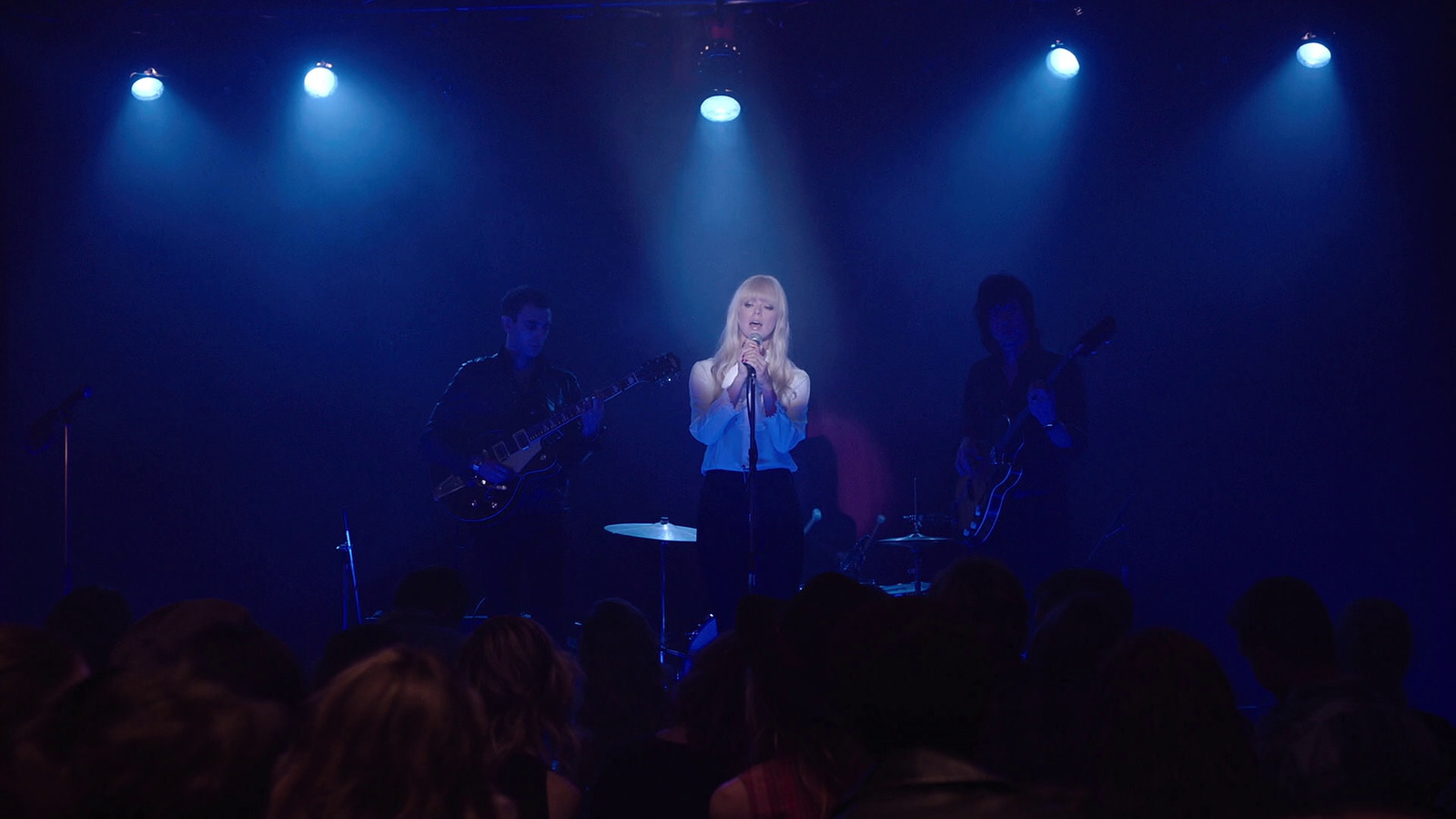
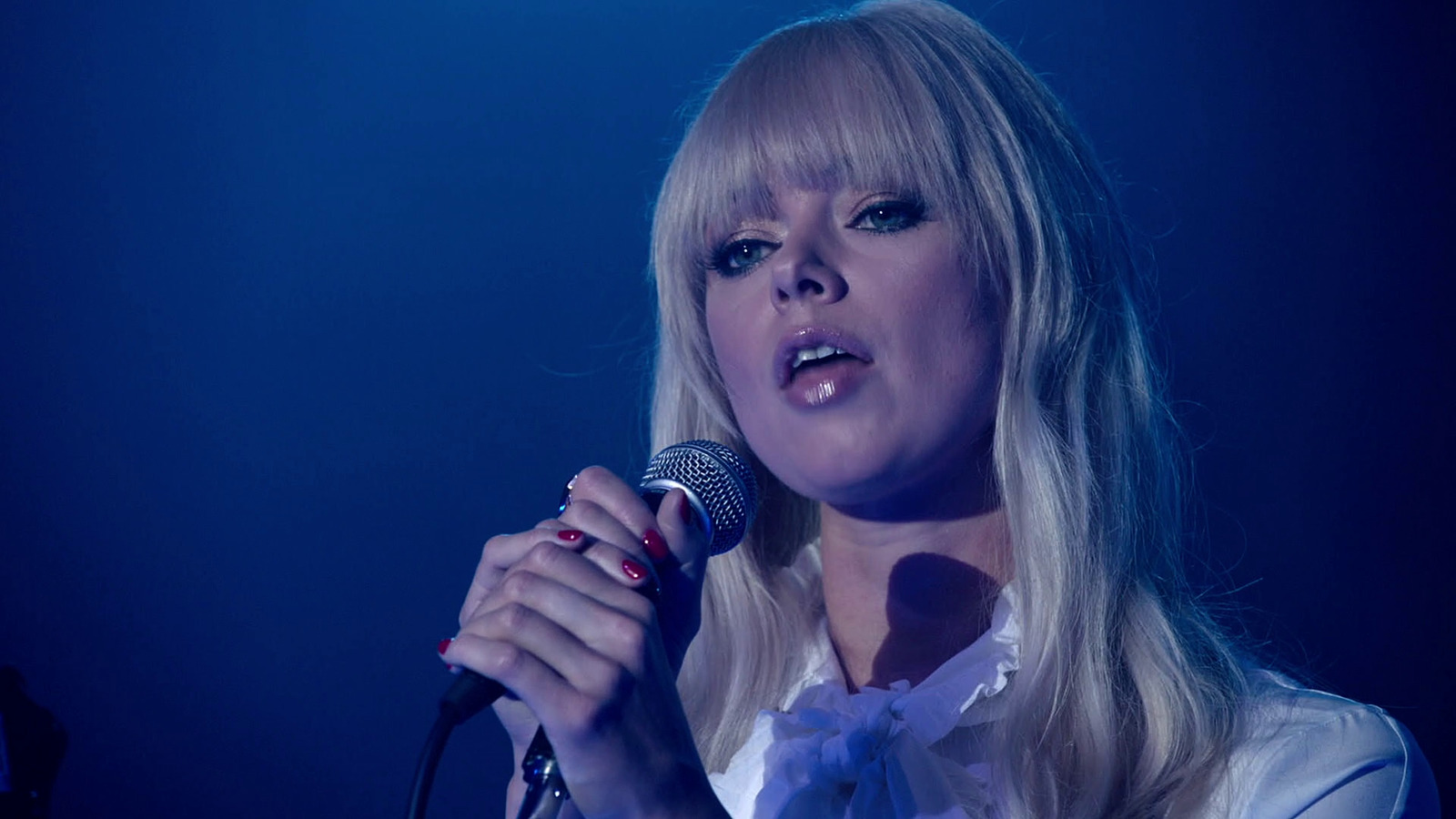
The separate performance edit gives the opening approach to the Bang Bang Bar time of its own: the building, parked cars and neon sign establish a place before the musicians take the image. Inside, blue light joins close views of the singer and instruments to wider views across the audience. Heads remain in the foreground; the performance is situated among people rather than isolated against a neutral background.
Placed beside Part 2, this version helps distinguish the band’s visual presence from the episode’s conversations and glances. The same venue can hold a song, a social encounter and a return to familiar characters. The separate edit makes the stage easier to study without replacing the episode as evidence of that dramatic arrangement.
Continue with Part 2: sound and performance →
Roadhouse Music: Chromatics — Shadow, 00:00–03:46. Timings refer to this separate performance edit.
The Cactus Blossoms — Mississippi
Two microphones, one visual partnership
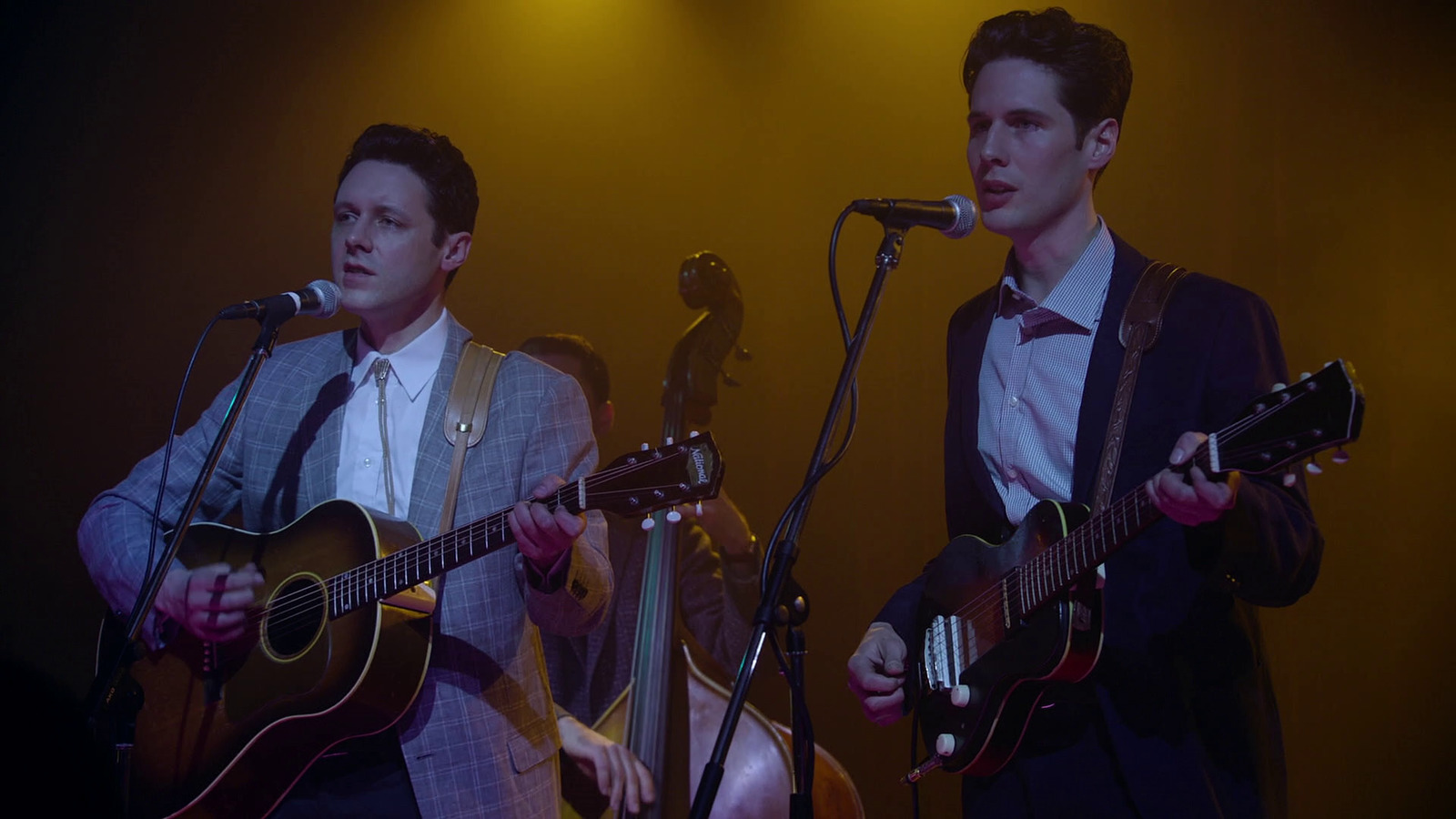
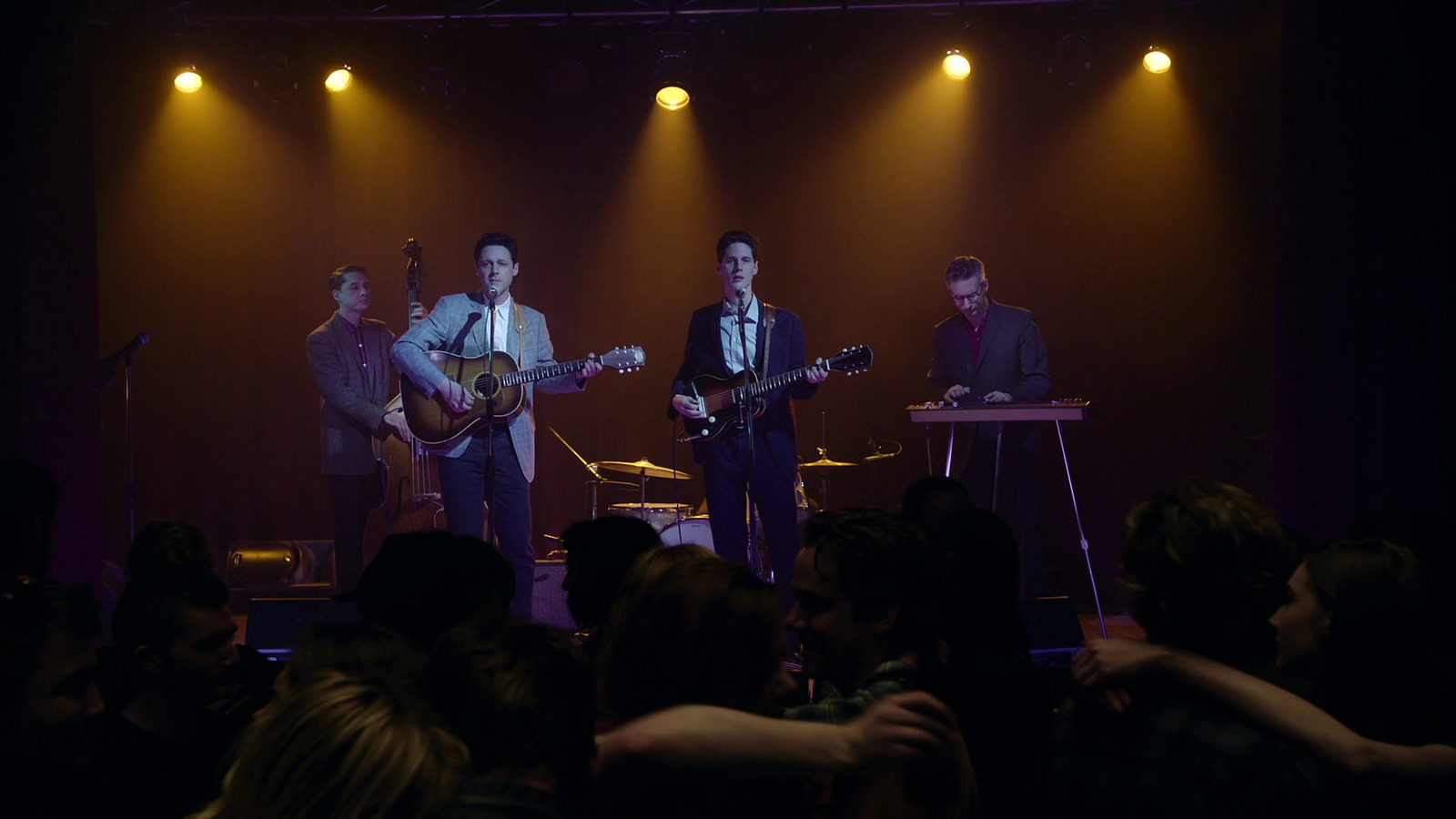
The Cactus Blossoms are repeatedly framed as a pair: two microphones, two guitars and bodies angled toward the same room. The wider images also retain the upright bass, drums and keyboard, while audience members dance in the foreground. Amber light gives the number a different temperature from the blue setting of “Shadow.”
Close views divide the two singers without dissolving their partnership. The camera’s return to the pair makes their relationship the visual centre of the performance. Beside Part 3’s disorienting changes of place and scale, the Roadhouse supplies a social space whose arrangement can be understood at a glance.
Continue with Part 3: sound and performance →
Roadhouse Music: The Cactus Blossoms — Mississippi, 00:00–04:14. Timings refer to this separate performance edit.
Au Revoir Simone — Lark
Three keyboards make a horizontal stage
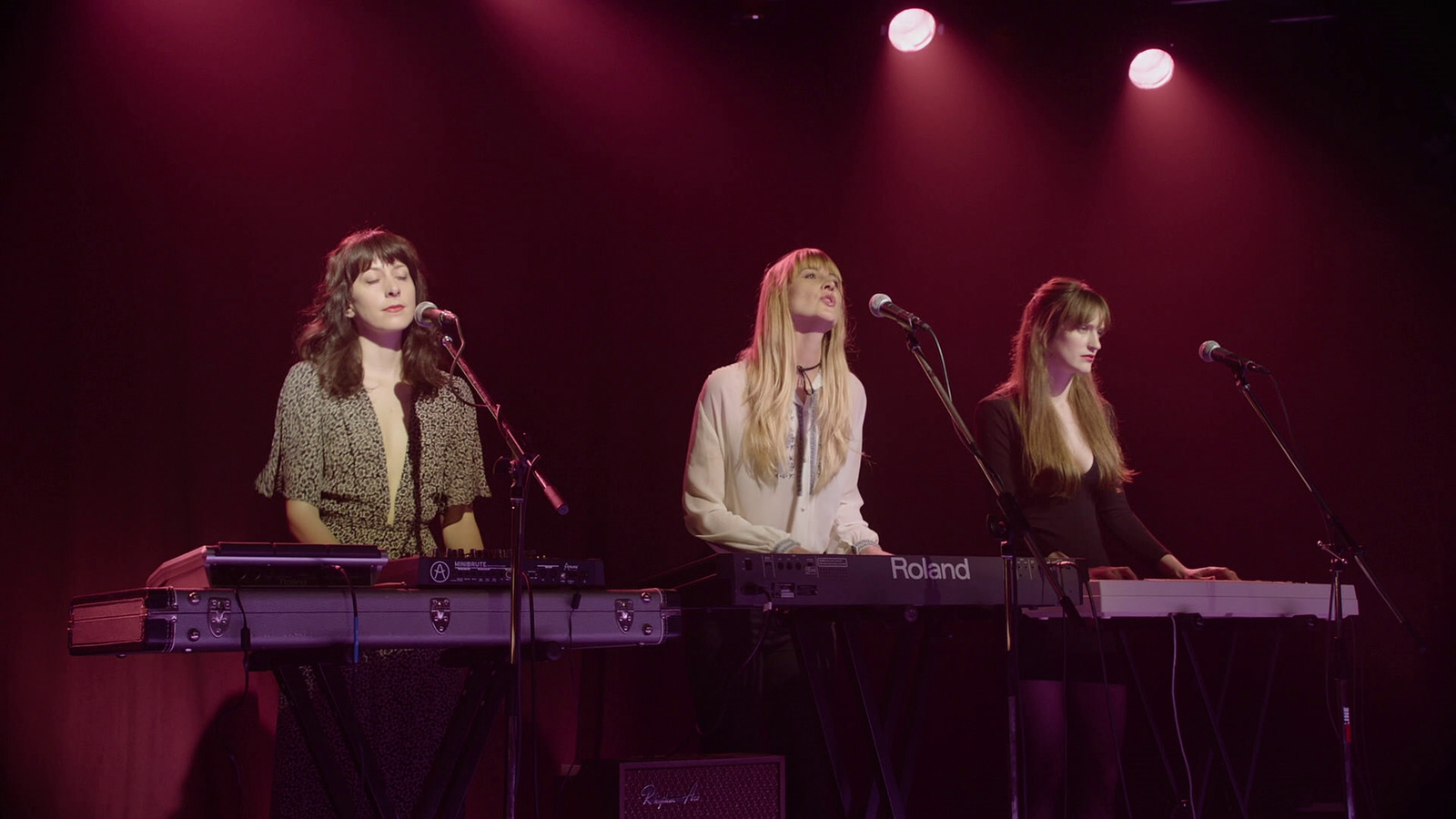
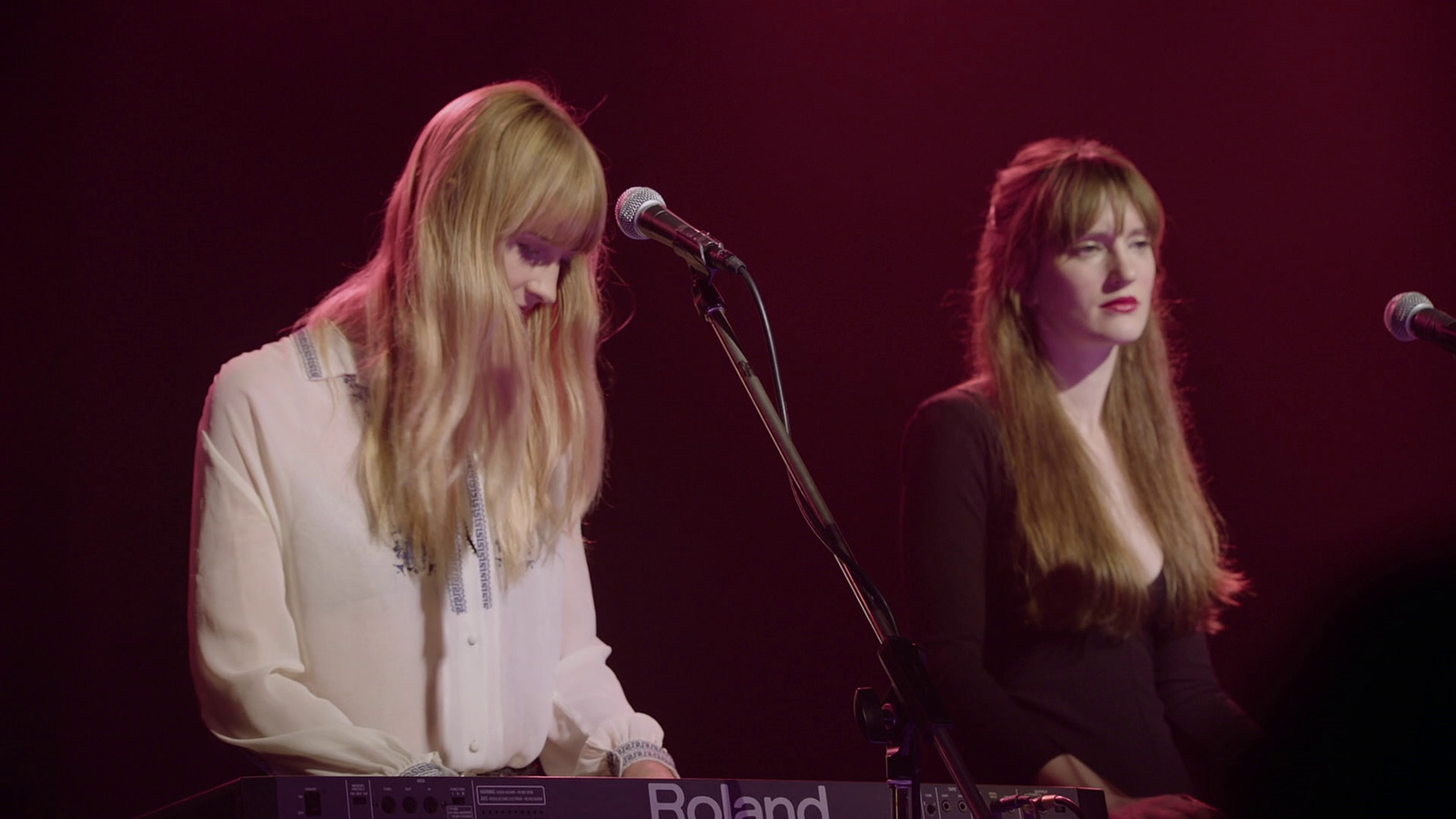
Au Revoir Simone’s three performers stand in a line behind their keyboards. The camera returns repeatedly to that complete arrangement, then isolates faces and hands without changing the basic geometry of the stage. The three microphones and the red curtain give the group a strong visual continuity across changes of scale.
The performance’s measured presentation is useful beside the other kinds of coordination in Part 4: people recognizing Cooper, testing his condition and trying to make him function within an ordinary day. That is a formal comparison, not a claim that the song illustrates a single character. The separate edit lets the group’s own arrangement remain the centre of attention.
Continue with Part 4: sound and performance →
Roadhouse Music: Au Revoir Simone — Lark, 00:00–04:32. Timings refer to this separate performance edit.
Trouble — Snake Eyes
An instrumental performance gives the room another centre
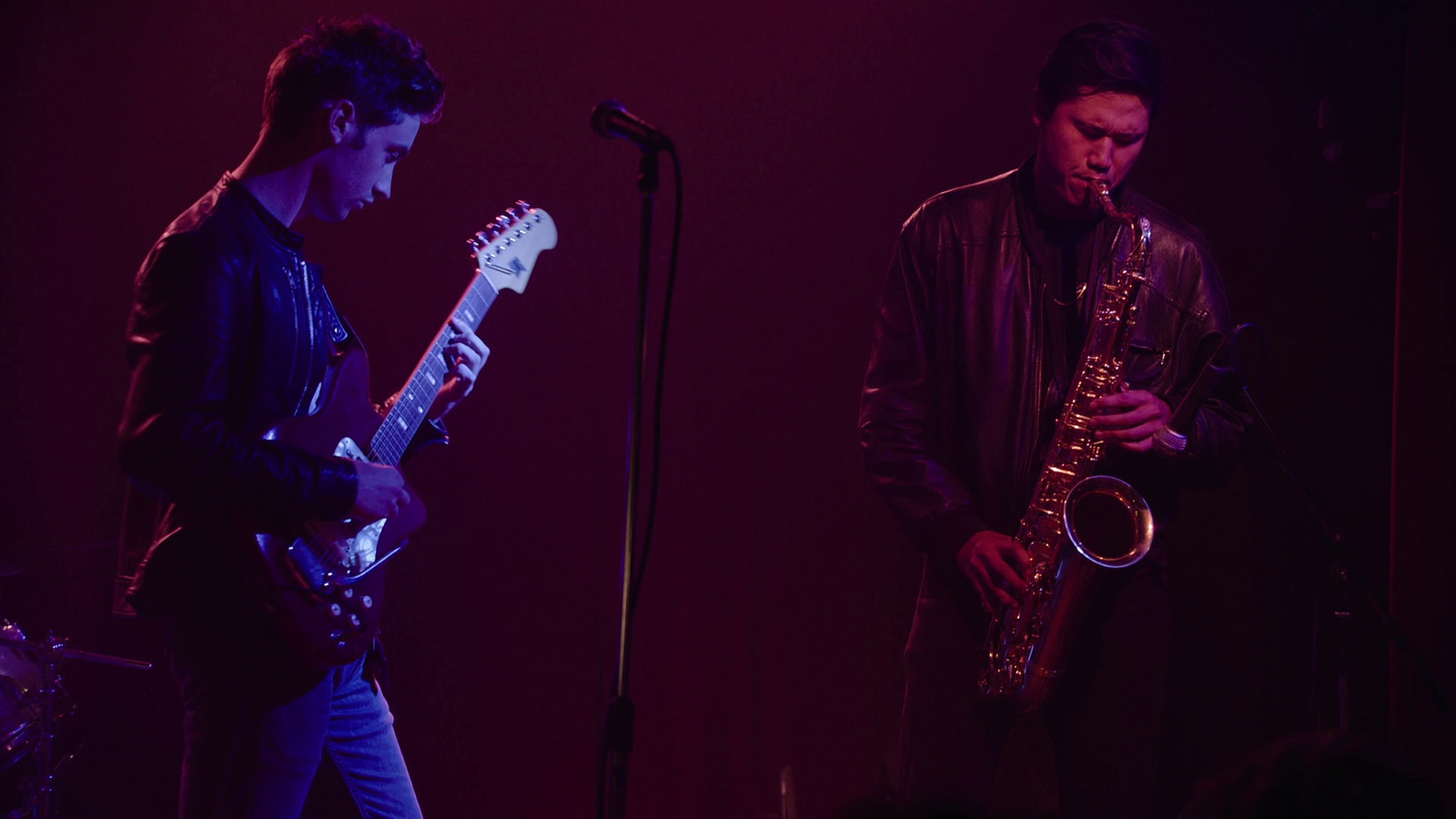
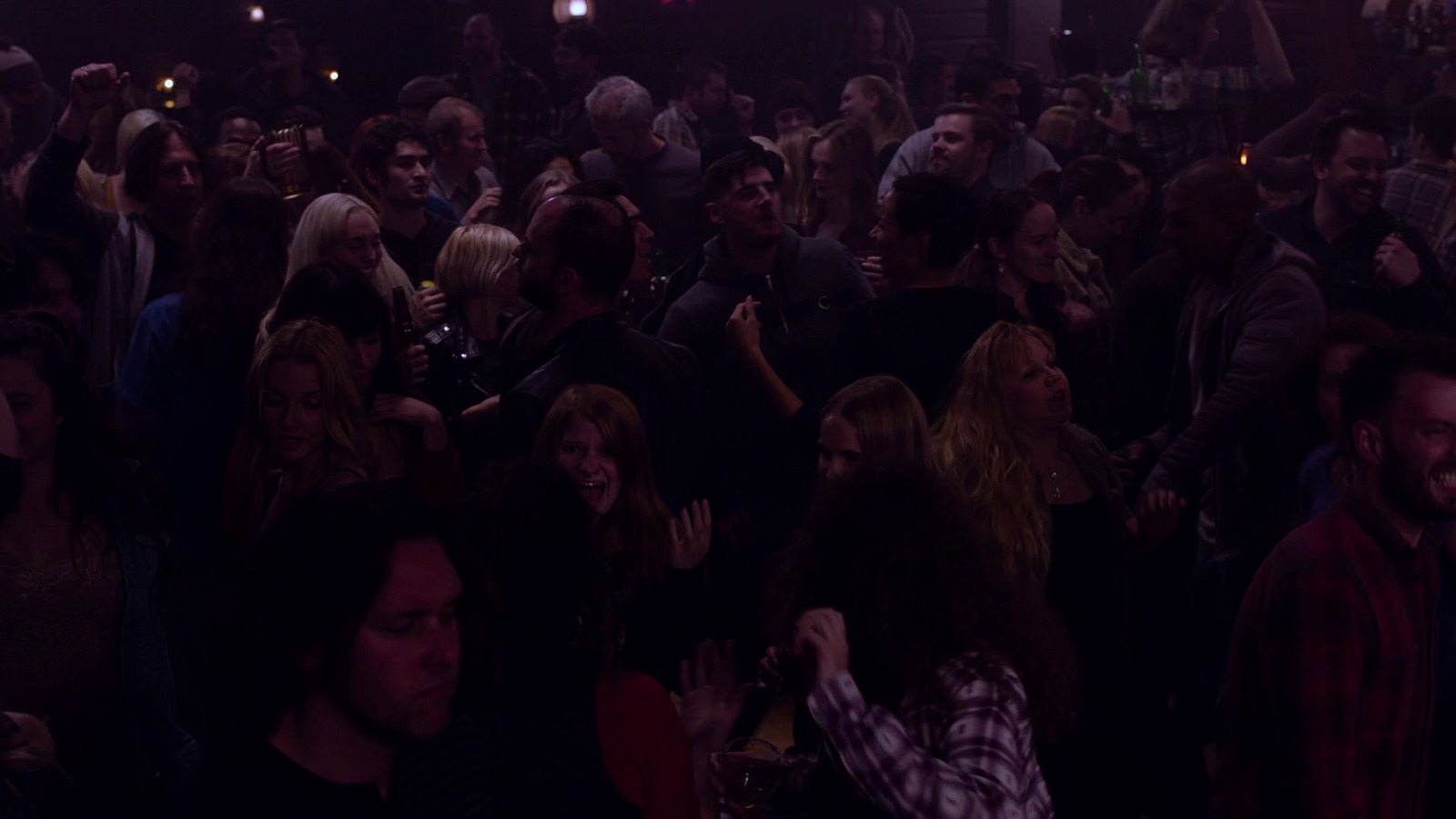
The announcer introduces Trouble, then the edit distributes attention among saxophone, guitars, drums and dancing spectators. There is no lead singer occupying the front microphone. Close views instead follow playing hands and the saxophonist’s posture, while the wider stage views keep the musicians in relation to one another.
This is a useful comparison with the episode’s threatening social action at the Roadhouse. The performance’s visible work and the crowd’s ordinary movement continue within the same setting. Studying the separate music edit makes that public environment more concrete; it does not turn the song title into an explanation of every action occurring in the room.
Continue with Part 5: sound and performance →
Roadhouse Music: Trouble — Snake Eyes, 00:00–04:00. Timings refer to this separate performance edit.
Sharon Van Etten — Tarifa
The band stays present around the singer
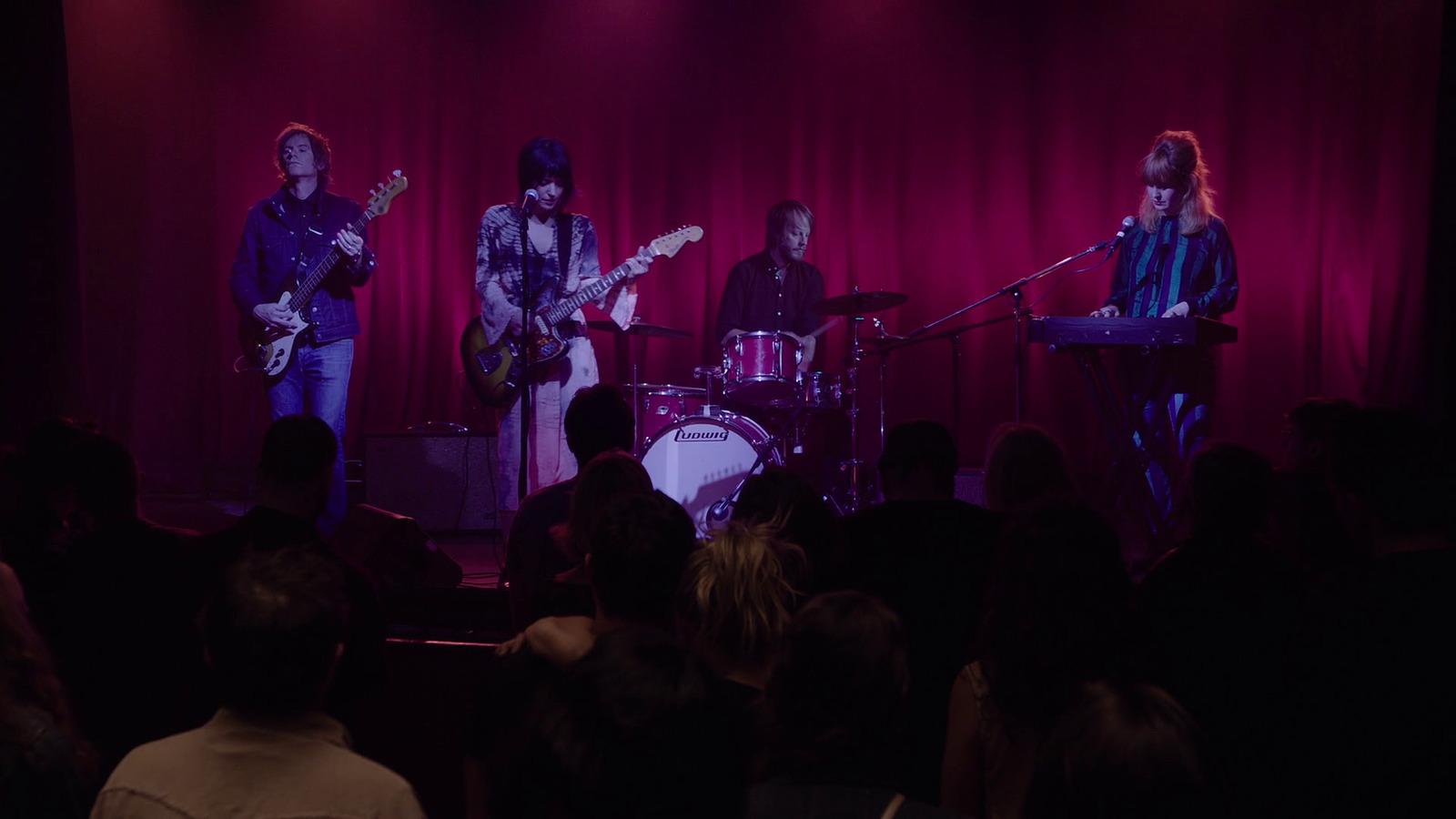
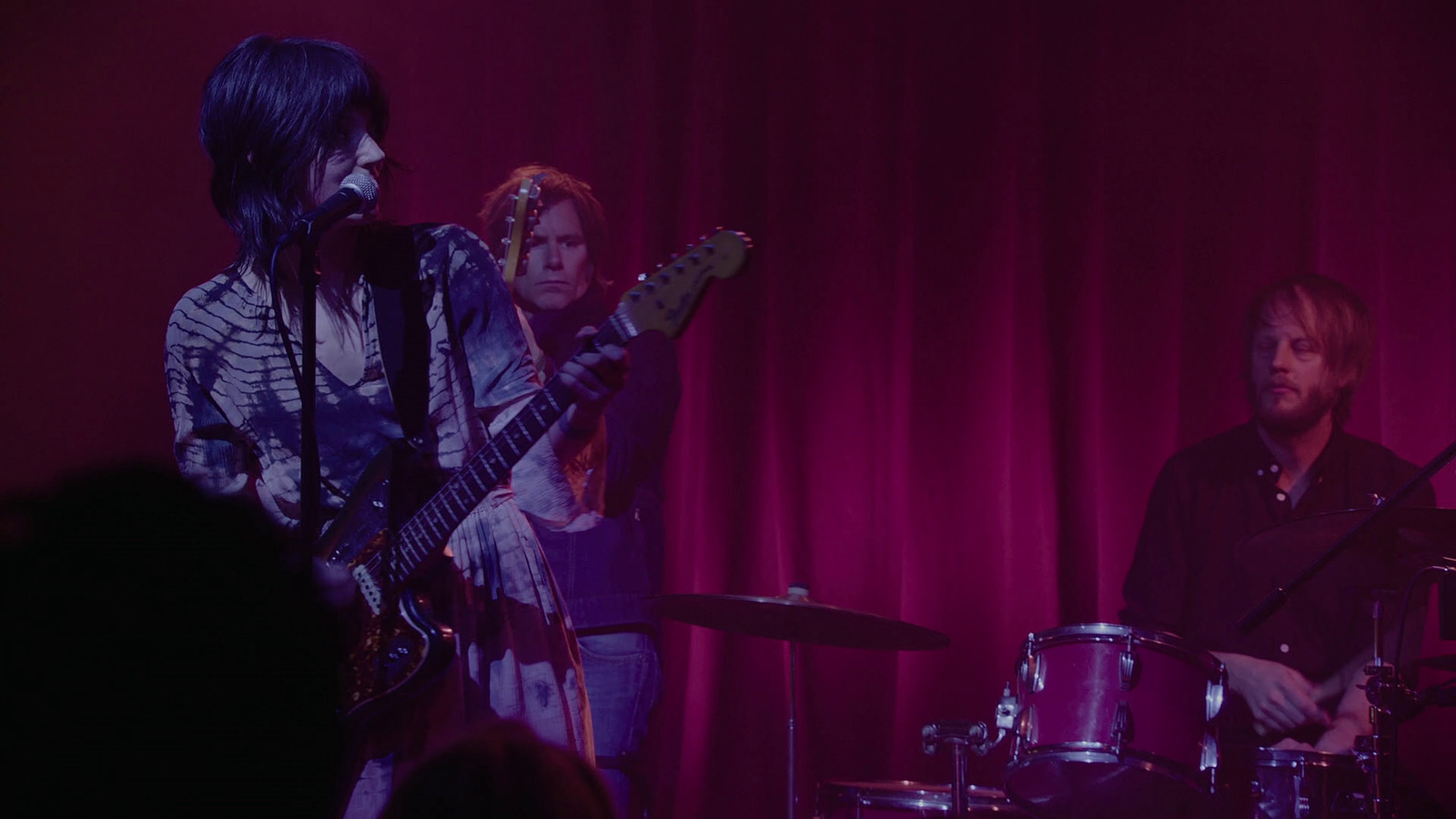
The red curtain remains strongly visible behind Sharon Van Etten, but the image does not reduce the performance to one face against it. The edit moves between her guitar and microphone, the keyboard player, the drummer, the bass player and views of the full group. A turn of the singer’s head can carry attention back toward the other musicians.
The audience appears as another layer of the room rather than as a single character’s reaction. In the separate performance, these changes of scale reveal an ensemble working within the Roadhouse’s familiar architecture. They offer a formal comparison with Part 6’s harsher public spaces without claiming that the number supplies a simple emotional resolution.
Continue with Part 6: sound and performance →
Roadhouse Music: Sharon Van Etten — Tarifa, 00:00–04:50. Timings refer to this separate performance edit.
Nine Inch Nails — She’s Gone Away
Light breaks the performers into changing surfaces
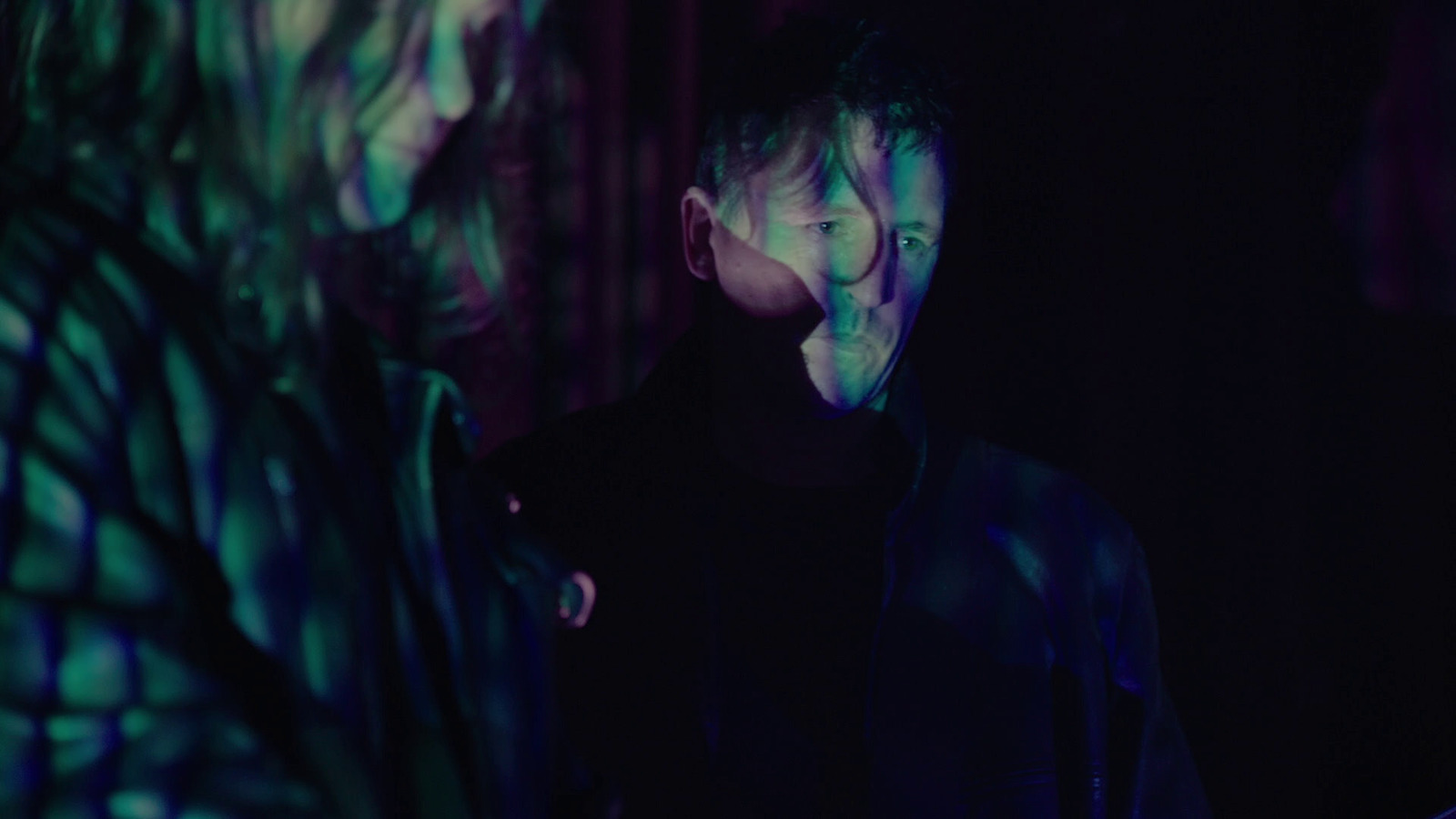
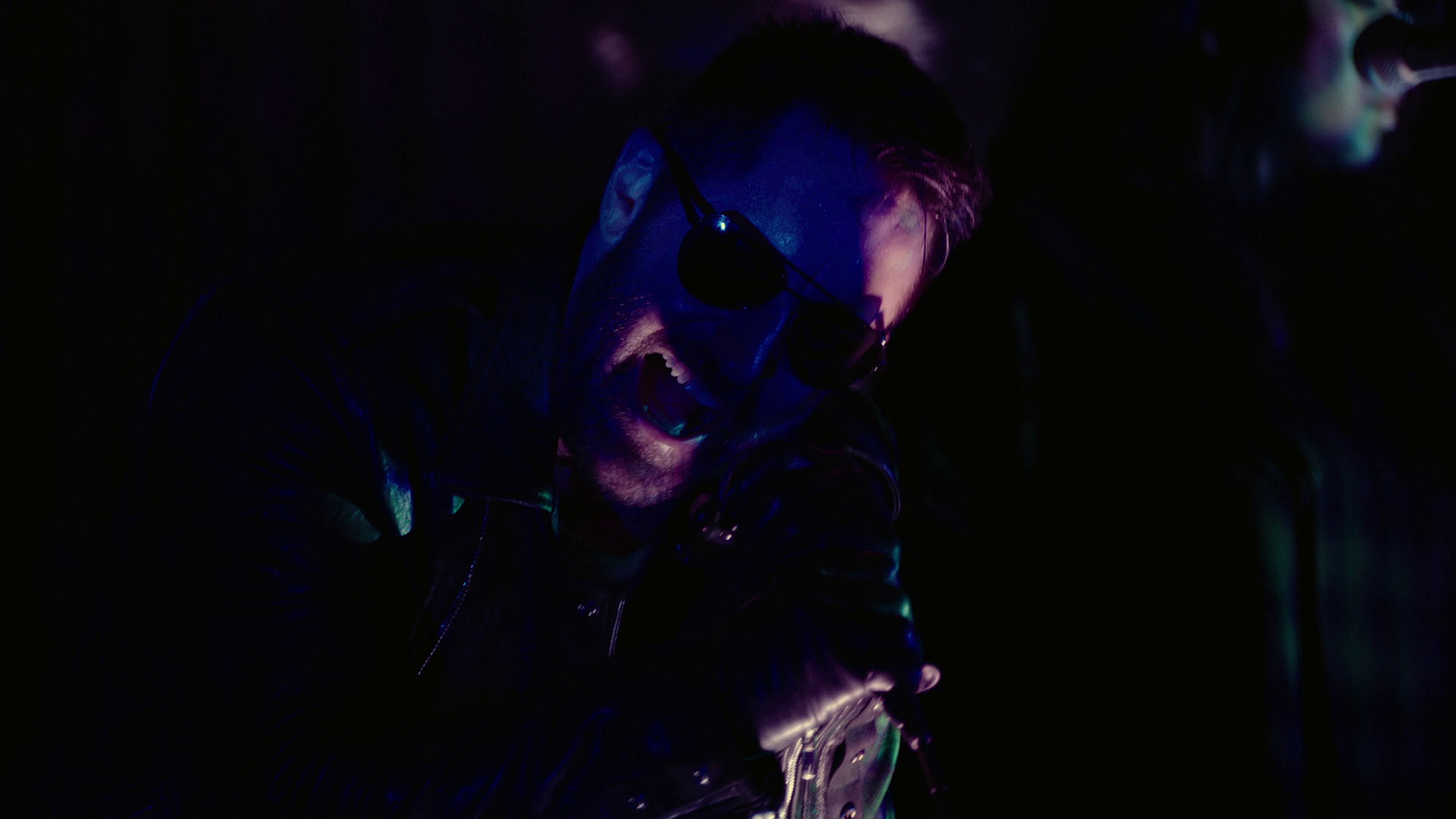
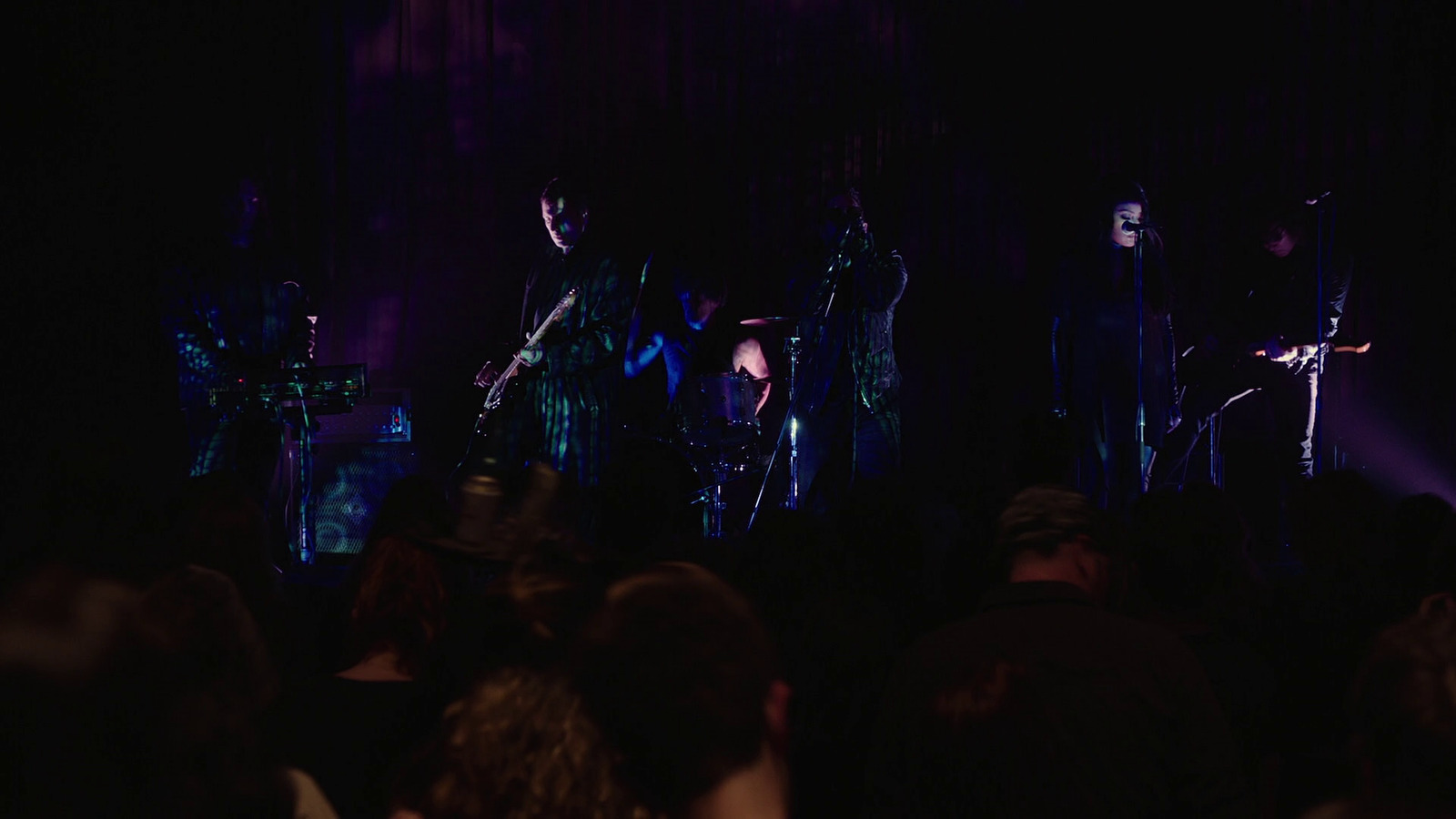
The Nine Inch Nails performance differs sharply from the evenly lit band arrangements elsewhere at the Roadhouse. Patterns of coloured light fall across faces, leather, instruments and curtain. Close views repeatedly lose portions of a body in darkness; wider views restore the group and the crowded room without making the lighting ordinary.
The separate edit gives those shifting surfaces room to be examined before returning to Part 8’s larger construction. Its value is not that it decodes the extraordinary images that follow. It shows the Roadhouse itself becoming an unstable visual field, with performers and spectators still physically present inside it.
Continue with Part 8: sound and performance →
Roadhouse Music: Nine Inch Nails — She’s Gone Away, 00:00–06:13. Timings refer to this separate performance edit.
Au Revoir Simone — A Violent Yet Flammable World
A familiar formation with a more visible crowd
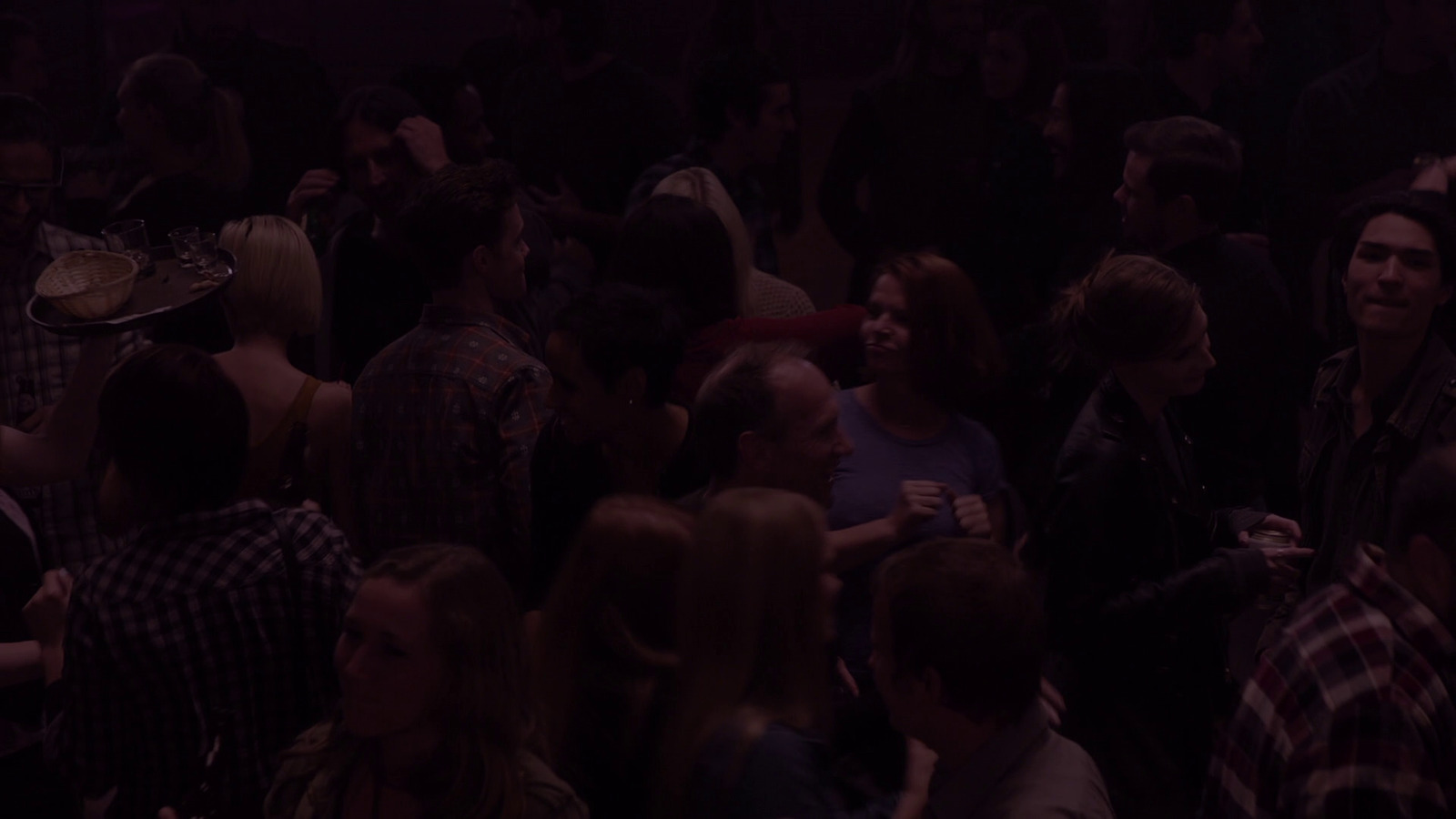
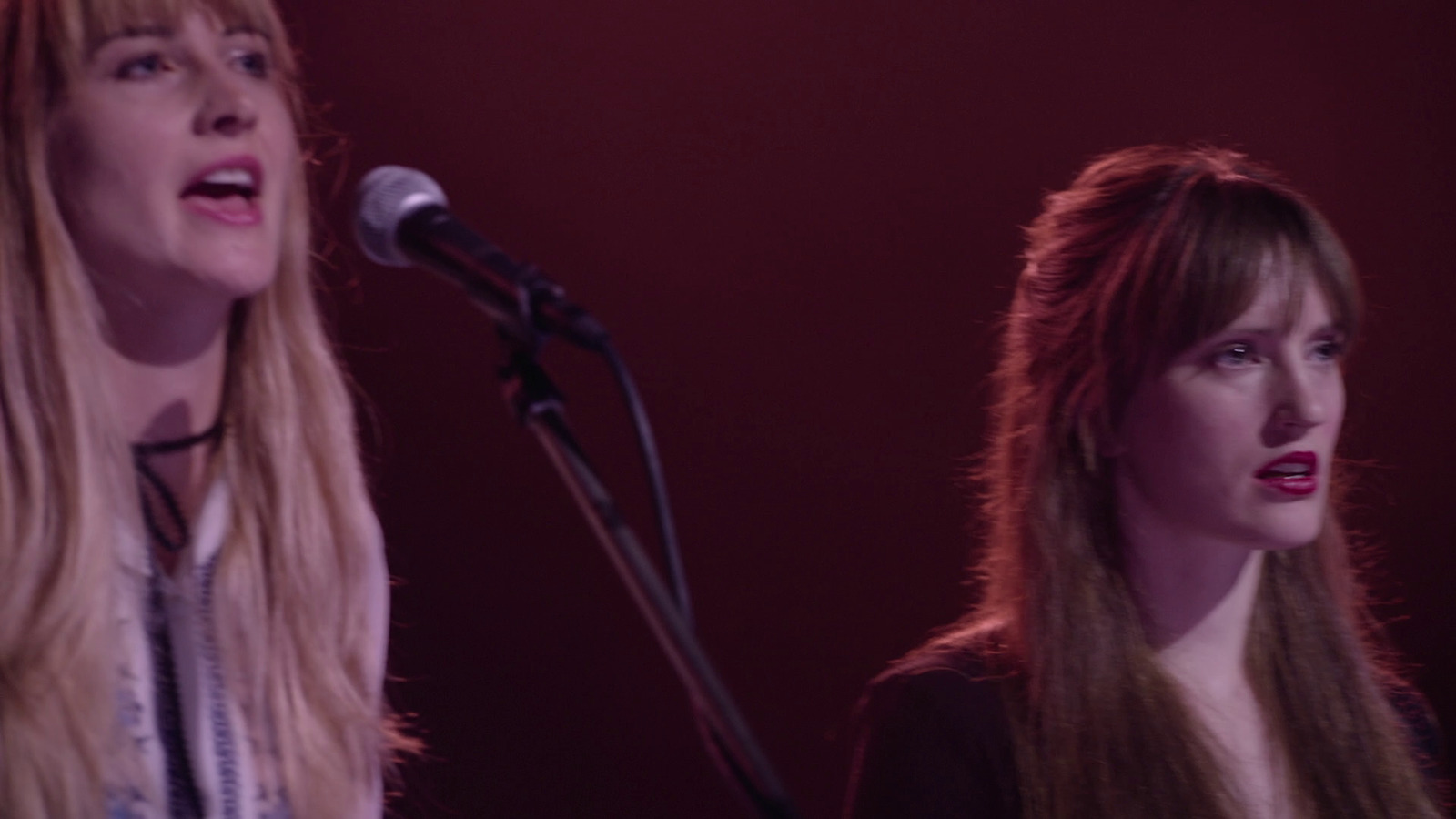
The familiar row of keyboards returns, but the separate edit of “A Violent Yet Flammable World” repeatedly opens onto the audience. Faces and moving bodies interrupt the stage views; the musicians then reappear as a three-person formation or in paired and individual close images. The audience is a visible participant in the performance’s changing scale.
Read beside Hudson Mohawke’s “Human,” the number shows how the same venue can frame electronic music through different bodily arrangements. One performer concentrating on controls gives way to three performers singing and playing across a shared line. Part 9’s Roadhouse is not defined by one fixed kind of musical image.
Continue with Part 9: sound and performance →
Roadhouse Music: Au Revoir Simone — A Violent Yet Flammable World, 00:00–05:01. Timings refer to this separate performance edit.
Hudson Mohawke — Human
The electronic performer’s hands become the action
Hudson Mohawke stands alone behind an electronic setup, with the audience’s heads forming a dark foreground. Wide views preserve a considerable distance between the solitary performer and the room; closer views concentrate on his hands, face and equipment. There is no singer at the front of this particular performance.
The contrast with the Roadhouse’s guitar bands is visual as well as musical. Small adjustments at the controls become the principal visible actions. This makes “Human” a useful companion to the other Part 9 performance, Au Revoir Simone’s “A Violent Yet Flammable World”: one venue accommodates different relationships between bodies, instruments and spectators.
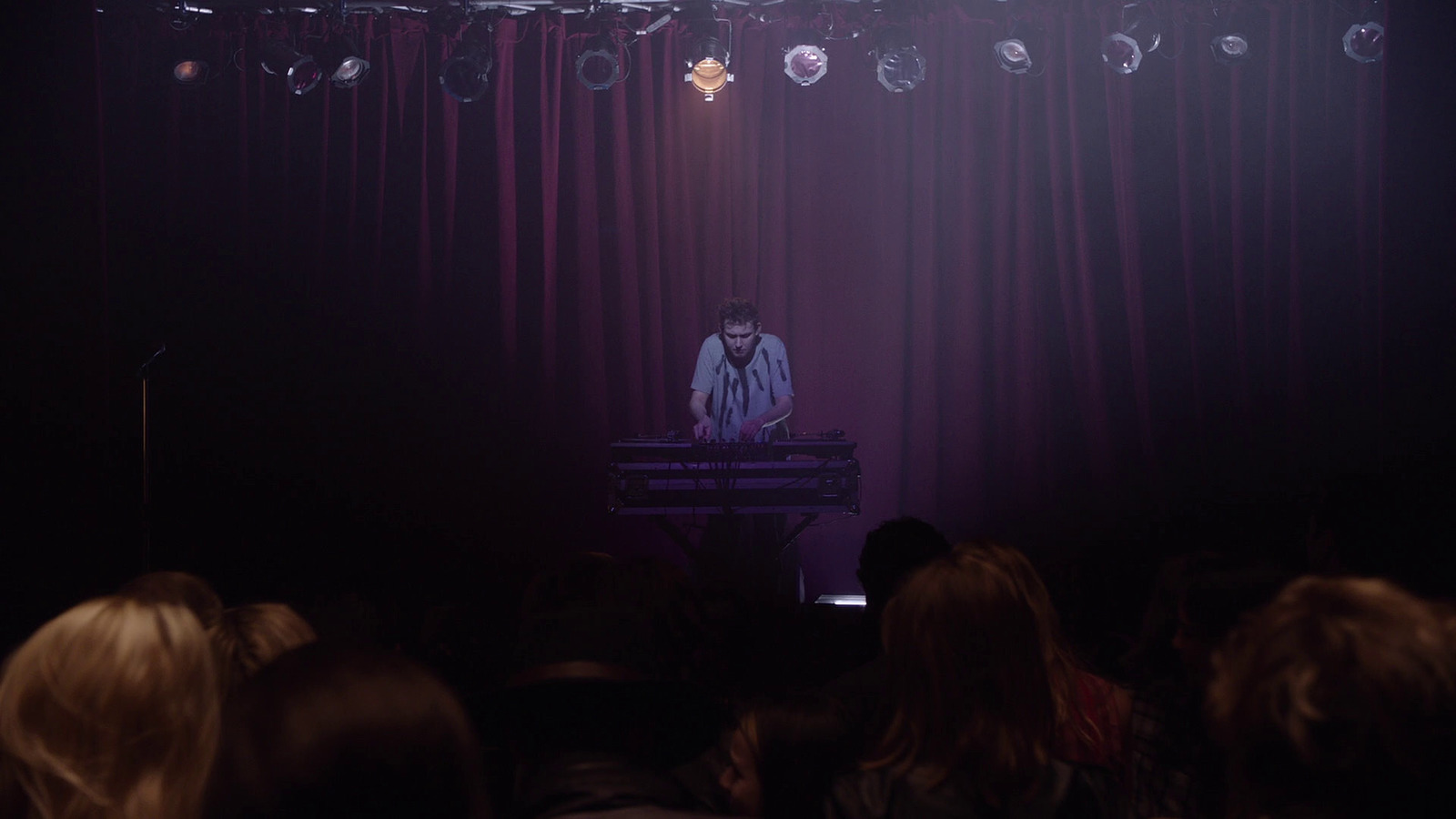
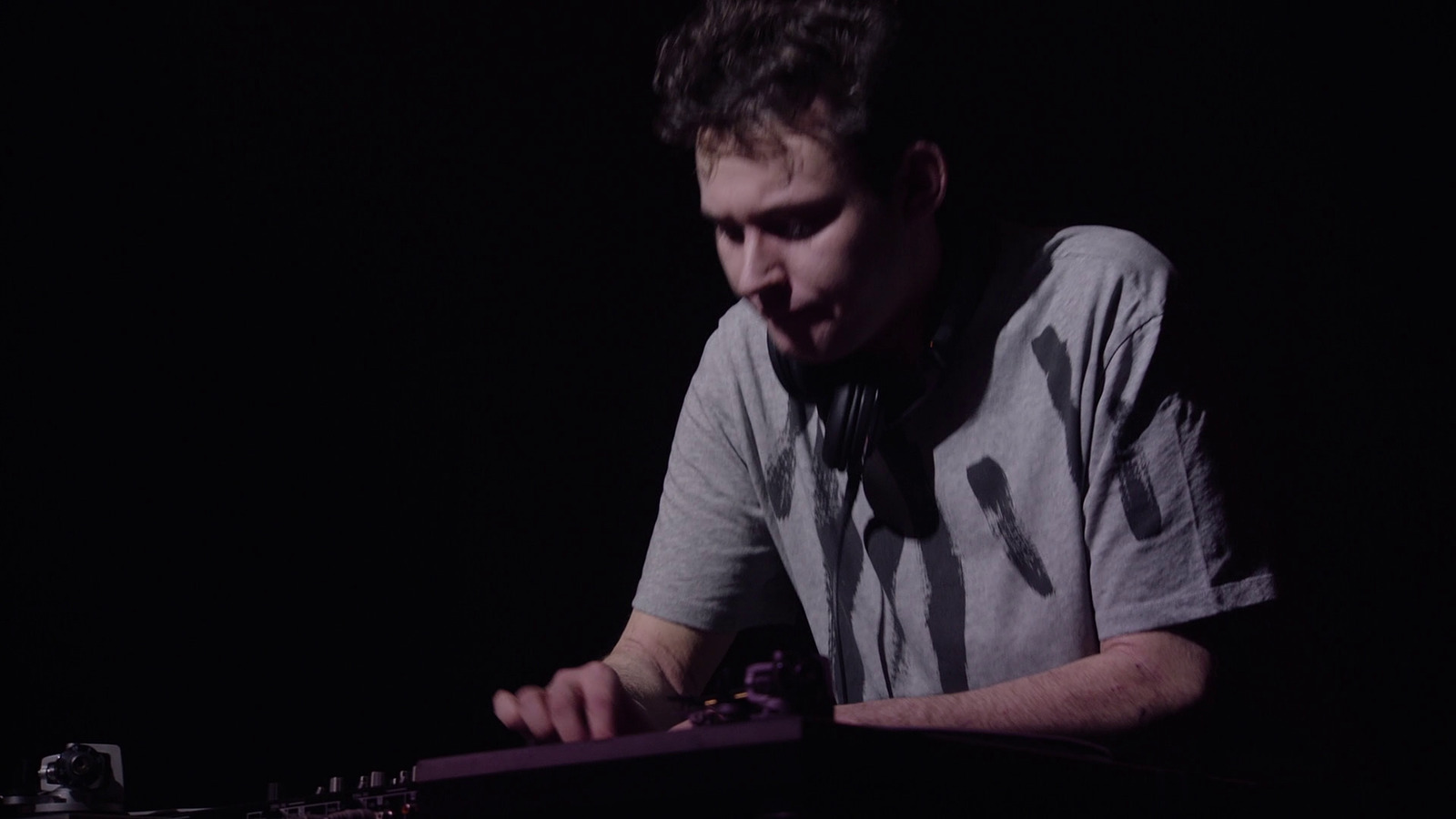
Continue with Part 9: sound and performance →
Roadhouse Music: Hudson Mohawke — Human, 00:00–03:42. Timings refer to this separate performance edit.
Rebekah Del Rio — No Stars
The singer’s hands carry the long performance
Rebekah Del Rio stands before the red curtain in a dress patterned with black-and-white zigzags. The microphone gives her a fixed point, while her hands open, rise toward her face and return toward her body. Close views make these gestures prominent; wider views preserve the guitarist, drummer, keyboard player and the audience around her.
The separate performance’s duration allows small changes in posture and expression to accumulate. Its visual relationship to Part 10 is therefore not exhausted by recognizing the singer or the song. The episode’s closing movement can be compared with a sustained stage event in which gesture, the visible band and the surrounding room all remain available to attention.
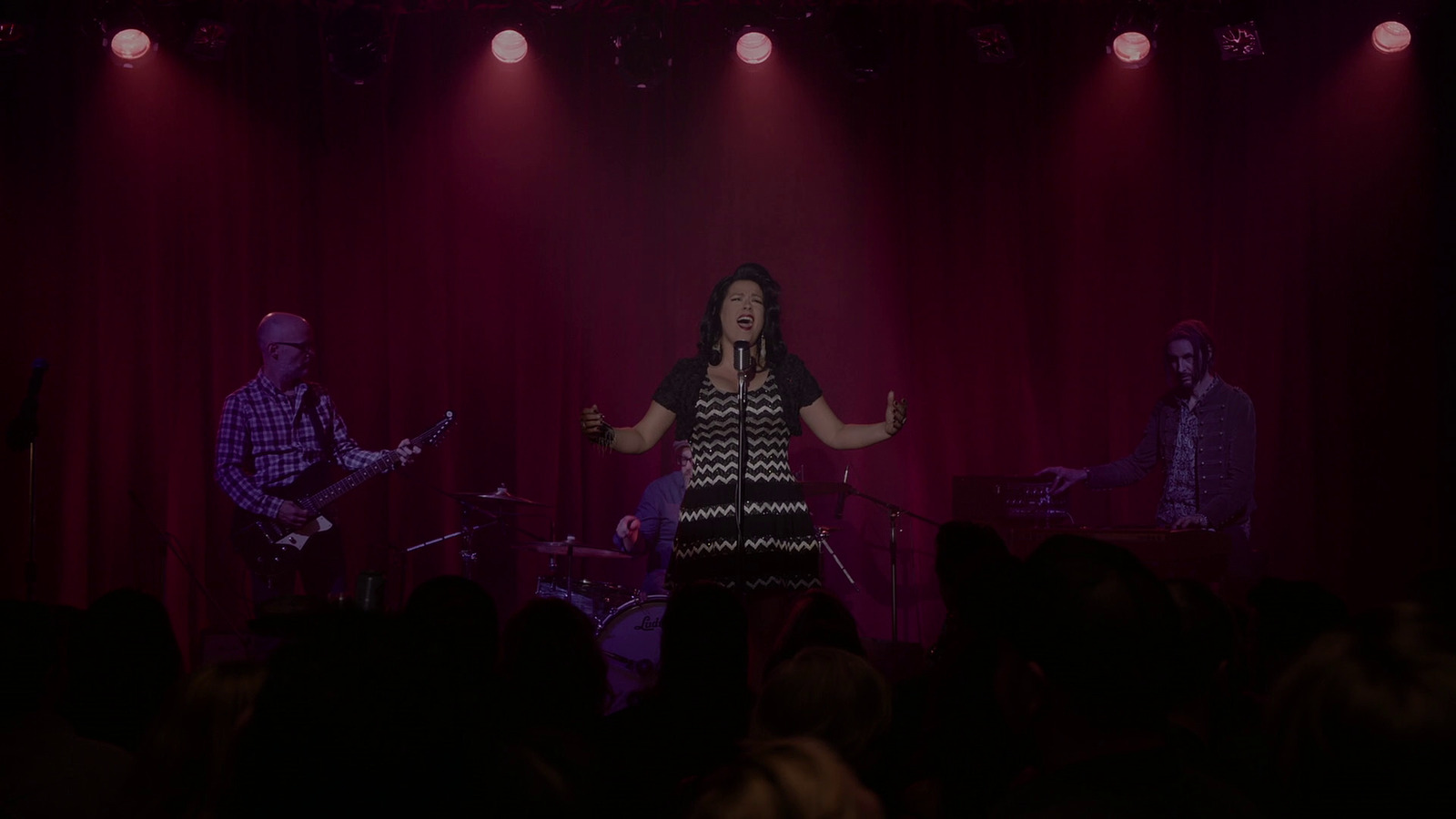
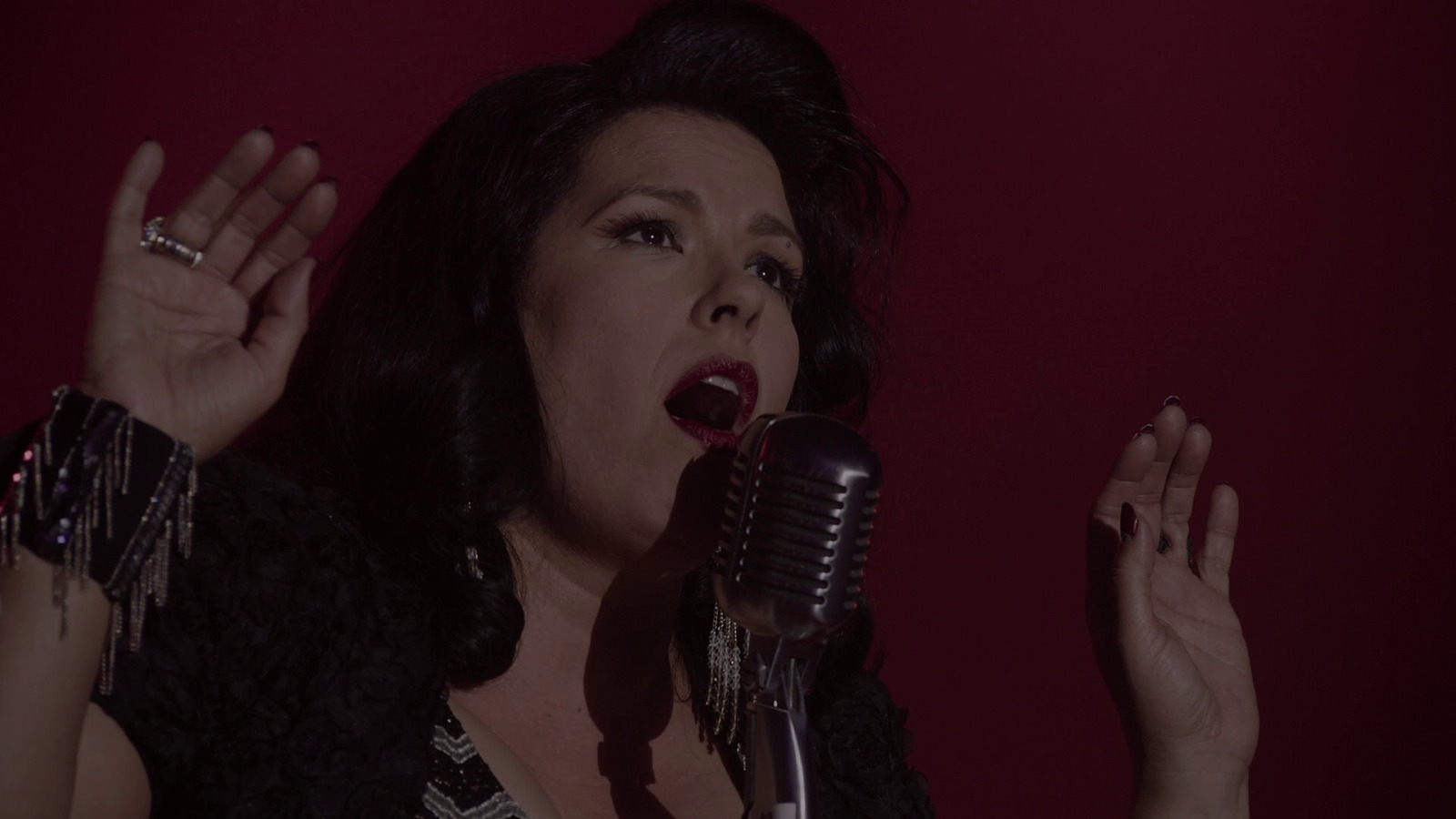
Continue with Part 10: sound and performance →
Roadhouse Music: Rebekah Del Rio — No Stars, 00:00–07:21. Timings refer to this separate performance edit.
Chromatics — Saturday
The returning band changes its arrangement
In “Saturday,” Ruth Radelet plays guitar at the centre of the band. Violet light replaces the strong blue of “Shadow,” and the camera repeatedly emphasizes the instruments: the red guitar, playing hands and the relationships among the musicians. The return of Chromatics does not simply reproduce the earlier performance’s image.
The comparison is especially useful because both numbers use the same Roadhouse architecture and recognizable performers. Changes of lighting, instrument and framing can therefore be noticed without mistaking a different song for a different venue. The separate edit clarifies the band’s arrangement, while Part 12 retains the conversations that make the evening more than a concert.
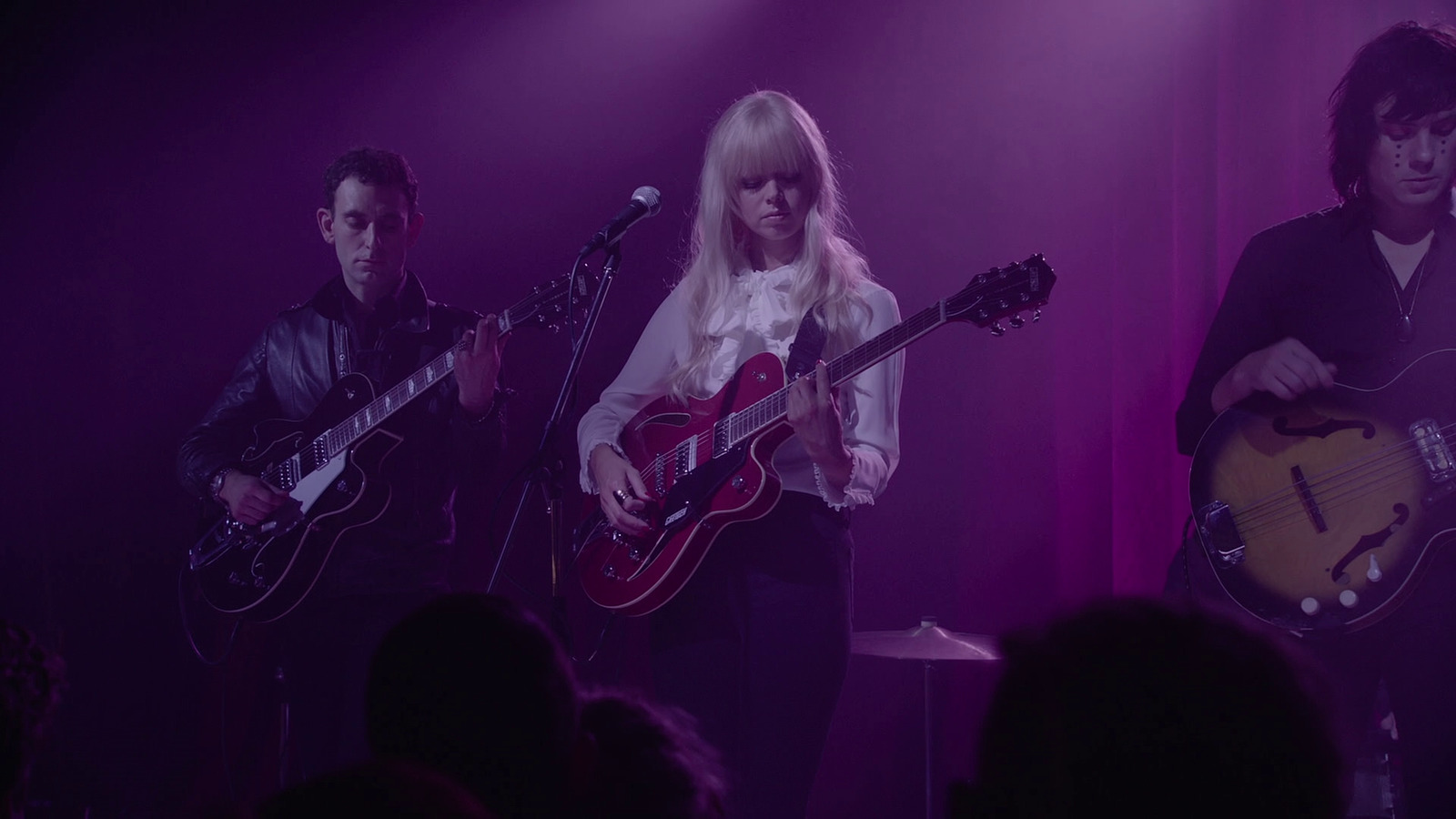
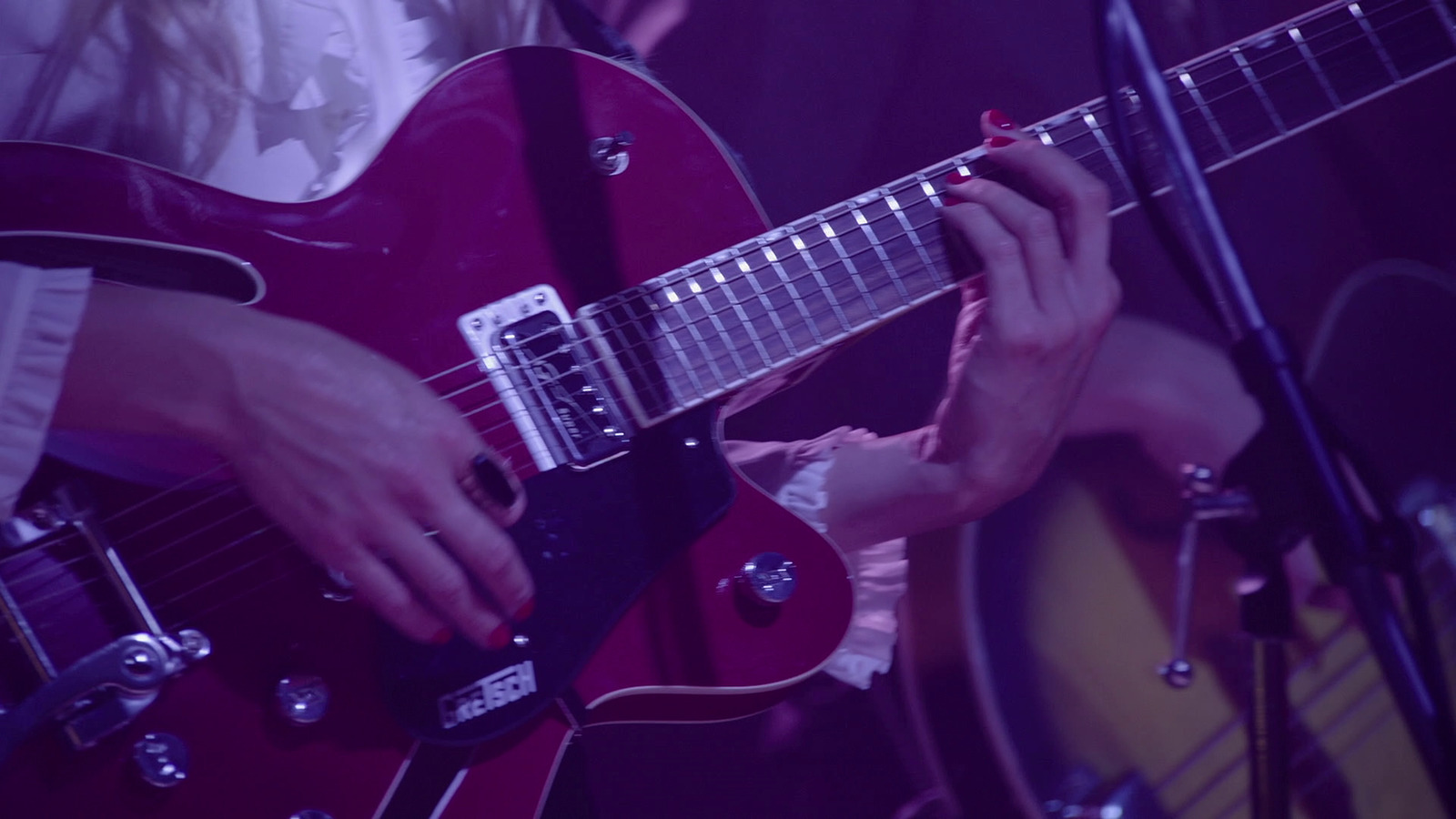
Continue with Part 12: sound and performance →
Roadhouse Music: Chromatics — Saturday, 00:00–03:15. Timings refer to this separate performance edit.
James Marshall as James Hurley — Just You
A remembered song still has listeners in the present
James’s seated guitar performance is framed with two backing singers under violet light. The edit moves between his face, the three performers together and the crowd. It also retains views of the women at their table, including the visibly emotional response near the end. The standalone number therefore remains connected to people within the story.
The staging gives the song’s return a double character: an arrangement recognizable from earlier Twin Peaks is performed before a new audience. A close image of James cannot account for the scene on its own. The listeners, and the distance between their table and the stage, are part of the event’s meaning.
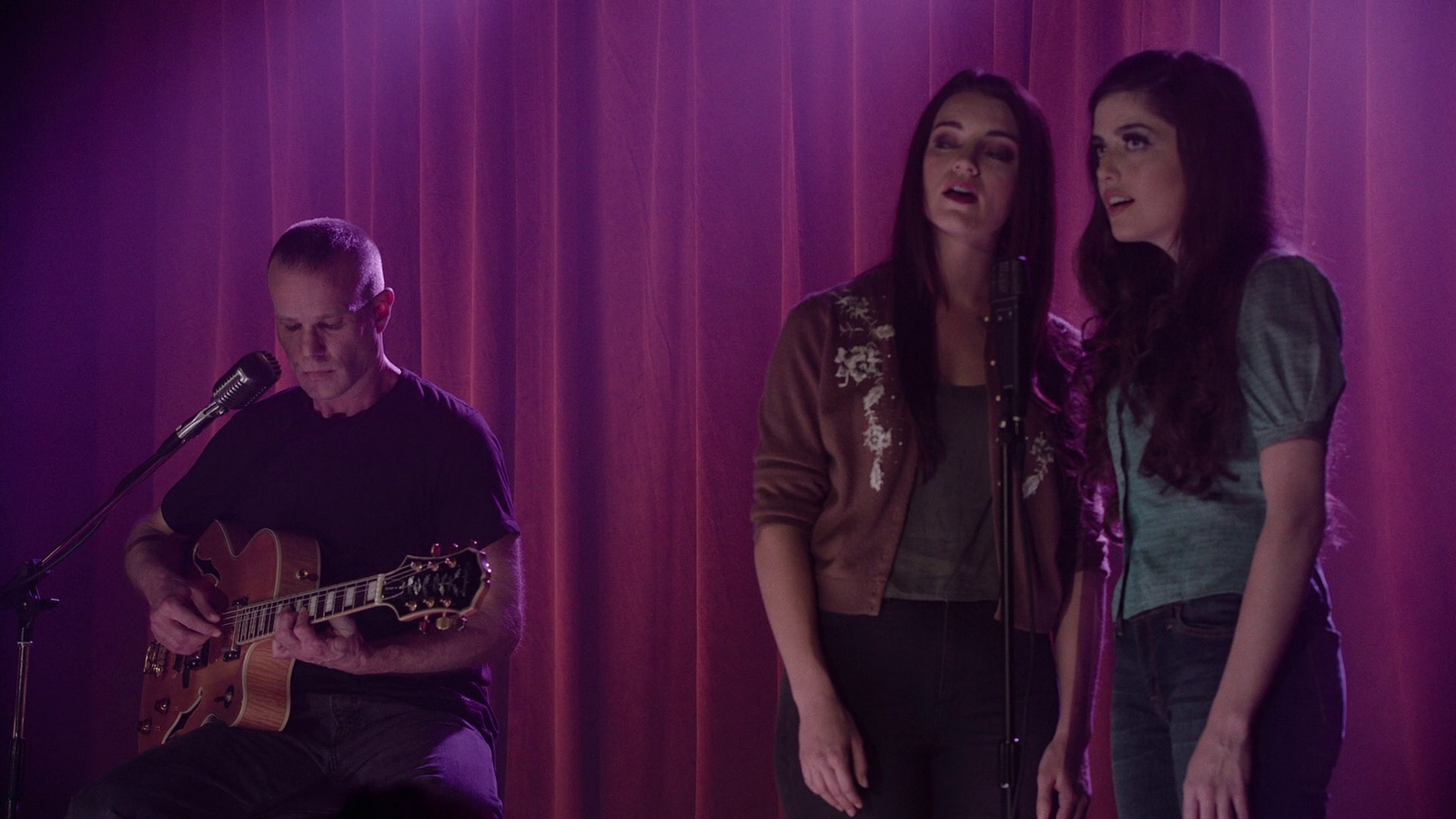
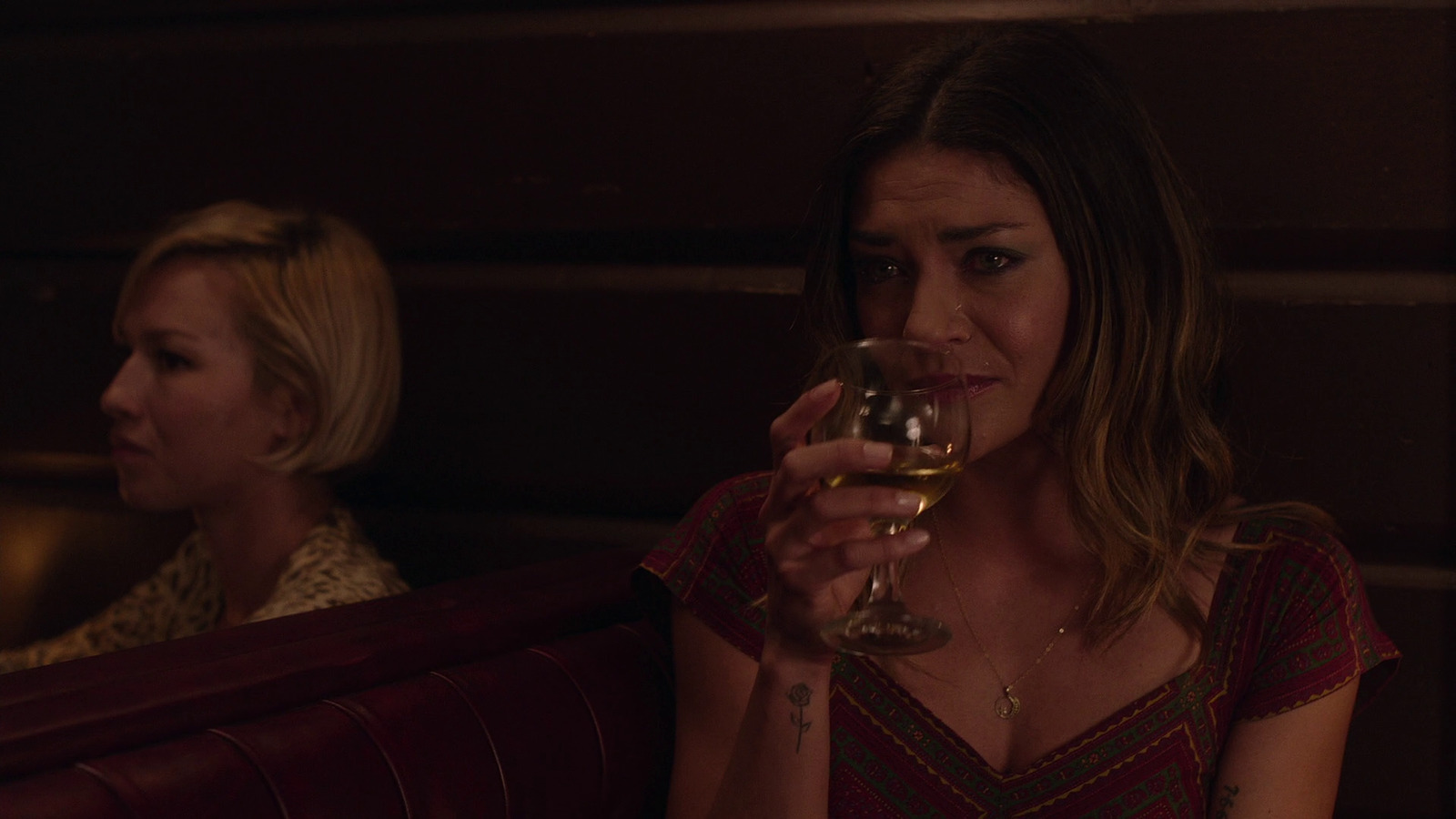
Continue with Part 13: sound and performance →
Roadhouse Music: James Marshall as James Hurley — Just You, 00:00–03:20. Timings refer to this separate performance edit.
Lissie — Wild West
A public performance after an intimate account
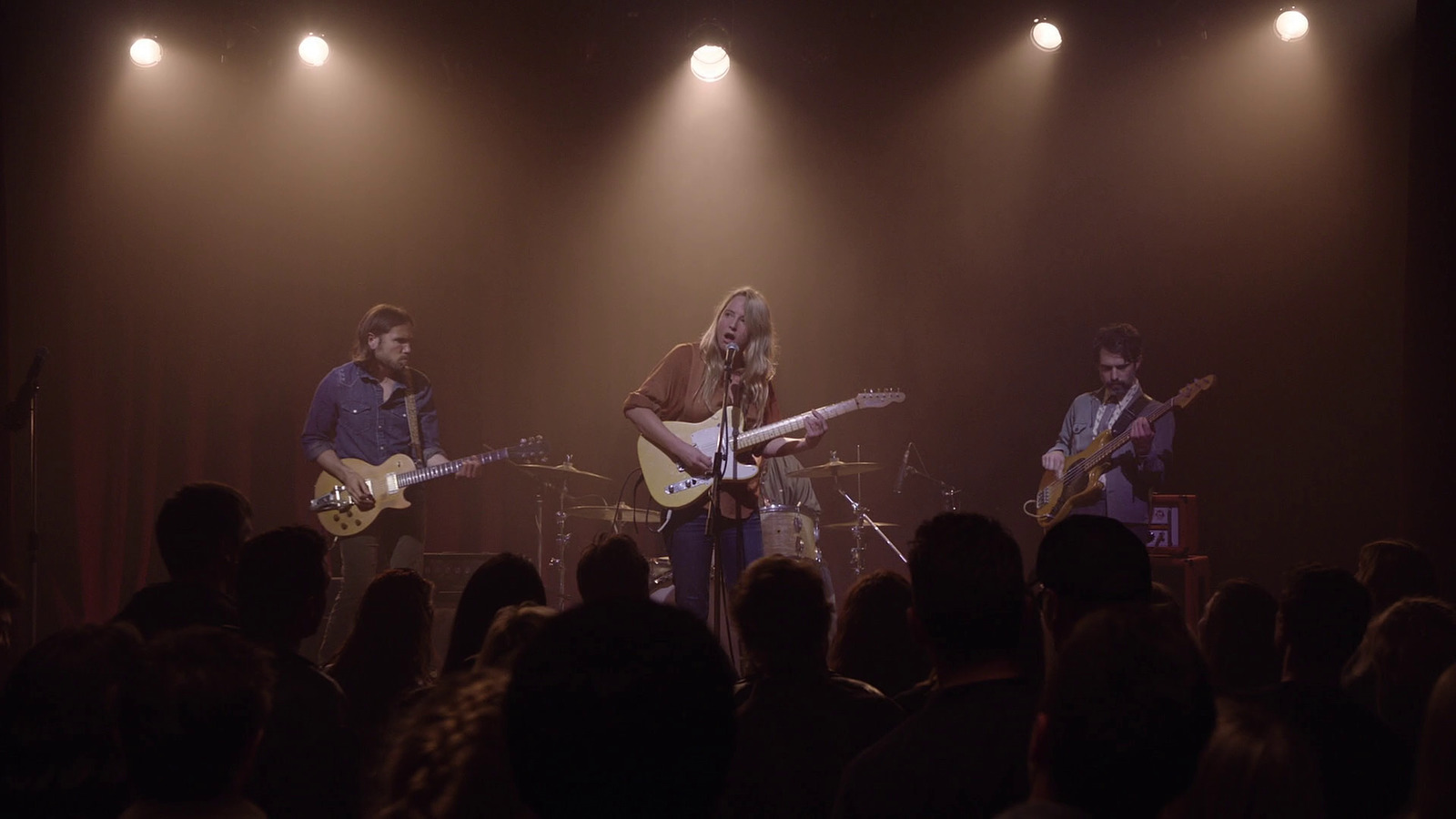
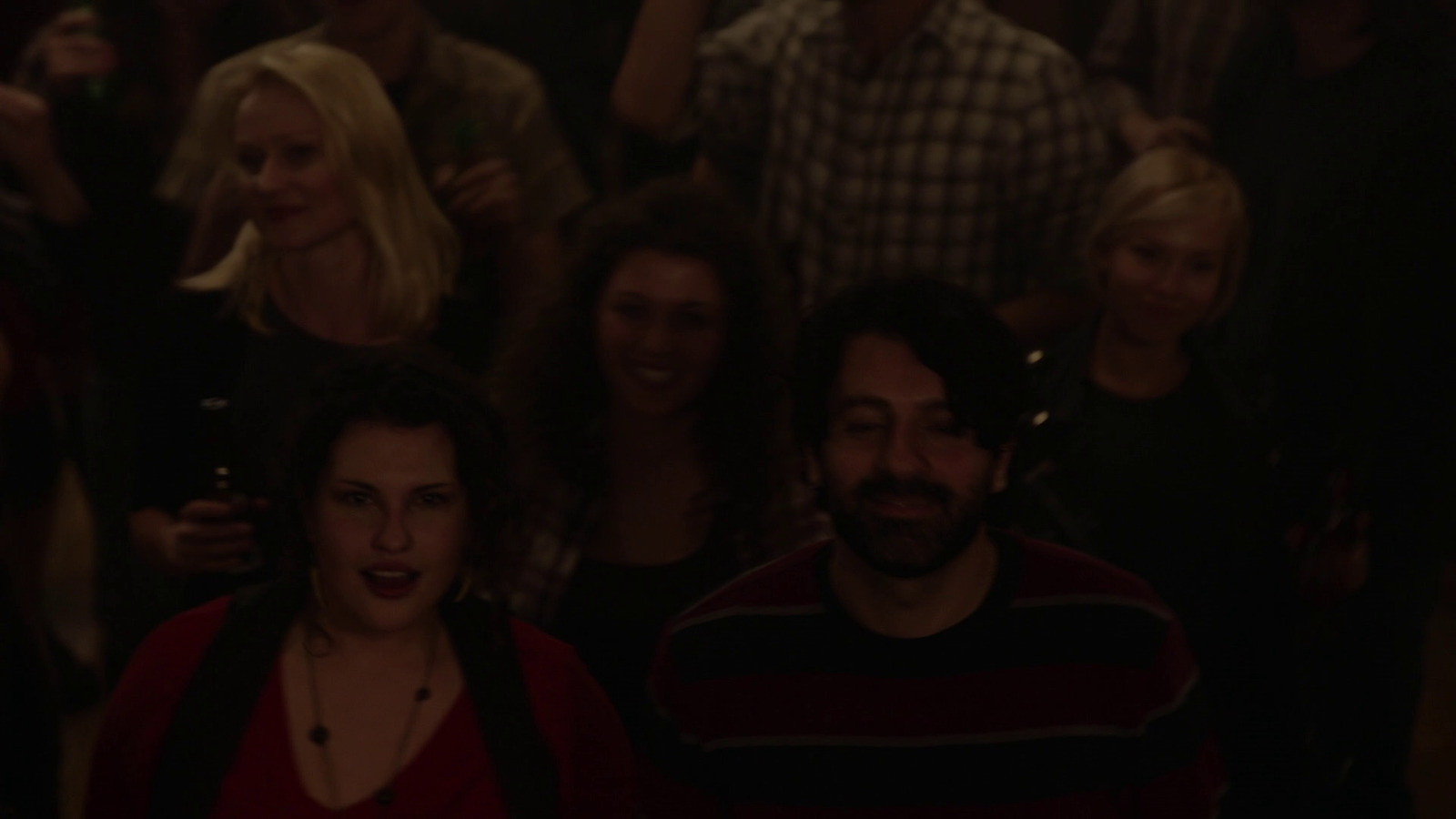
Lissie’s guitar and microphone occupy the centre of a four-person band, under warm overhead light. The edit alternates her animated delivery with wider views of the musicians and the crowd; individual audience faces emerge briefly before the image returns to the stage. The performance presents the Roadhouse as a populated, functioning venue.
The separate edit is useful beside Part 14’s closing conversation because it allows the band’s physical arrangement to be studied on its own. That change of emphasis should not erase the episode’s transition from personal testimony into public music. The song continues a shared evening without resolving what the conversation has disclosed.
Continue with Part 14: sound and performance →
Roadhouse Music: Lissie — Wild West, 00:00–03:53. Timings refer to this separate performance edit.
The Veils — Axolotl
A singer who does not stay in one position
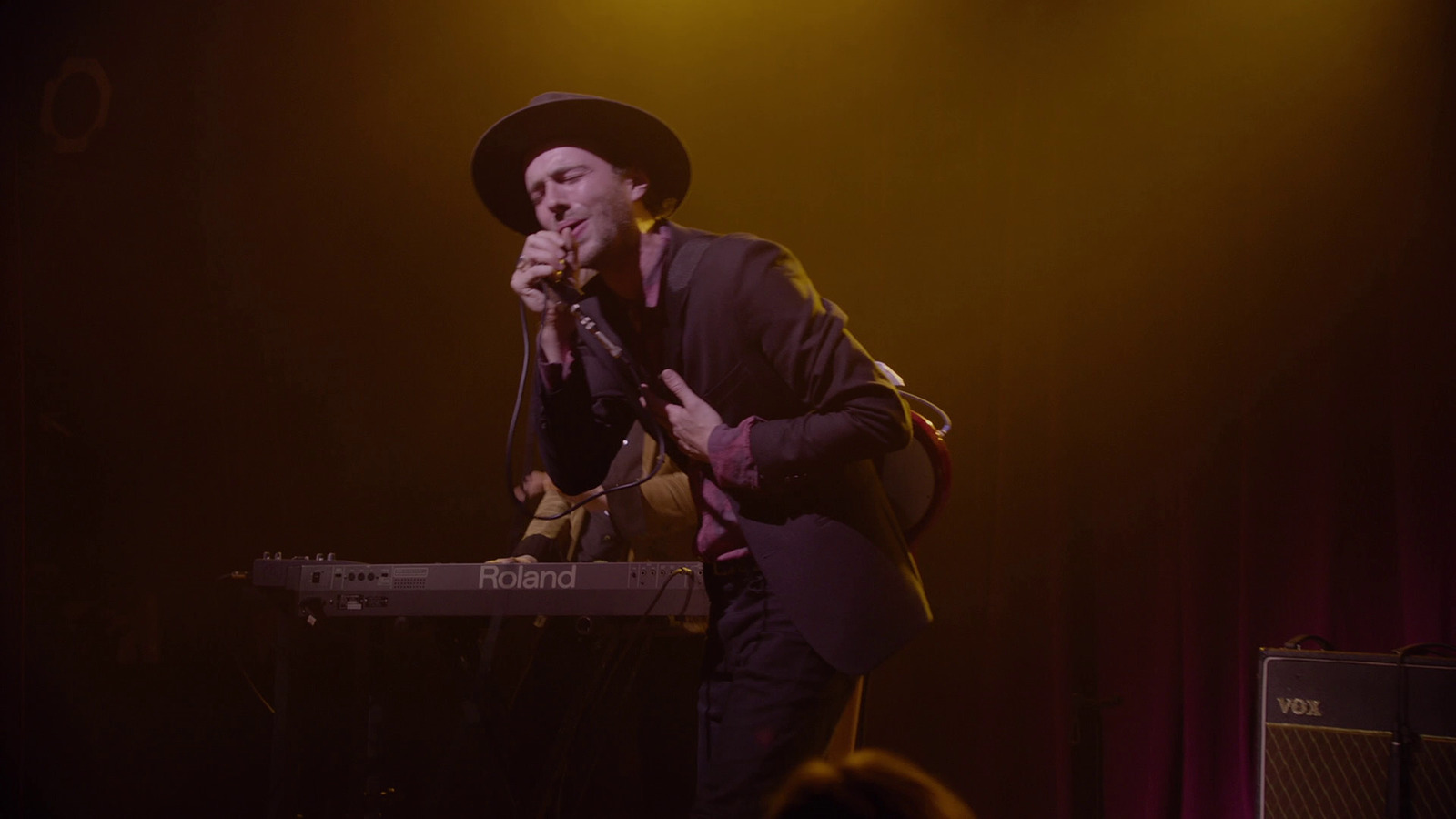
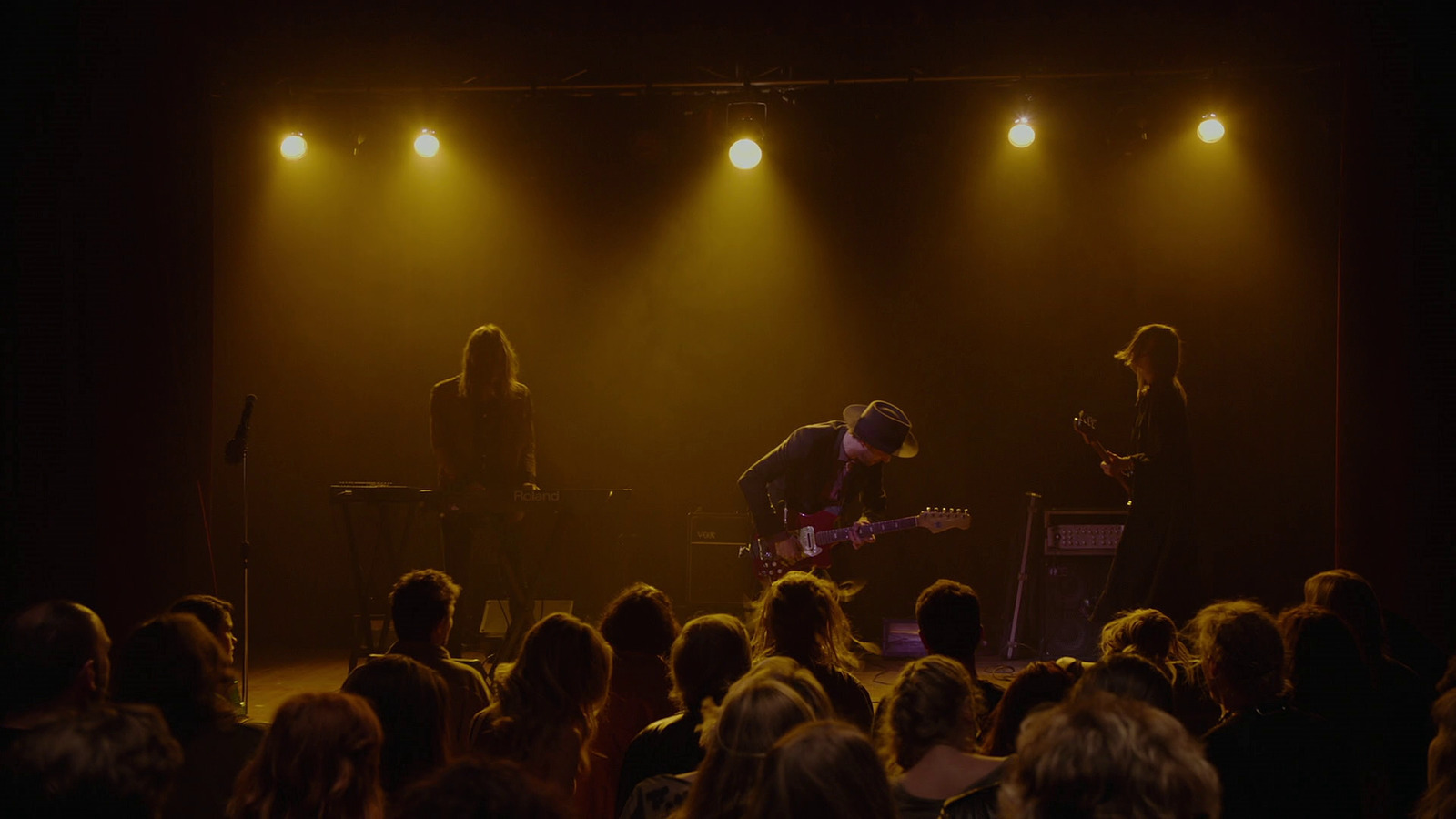
Finn Andrews leans into the microphone, bends toward the audience and changes position within the amber-lit stage. The surrounding keyboard and guitar players remain visible in wider views. Close images sometimes isolate the singer against darkness, then return him to the group and the moving crowd.
The standalone performance makes bodily motion unusually prominent. In Part 15, the Roadhouse is also a place where a spectator’s distress can become visible without being understood by those around her. Comparing the stage’s movement with the episode’s movement through the crowd is more revealing than treating the song as a detachable end-credit ornament.
Continue with Part 15: sound and performance →
Roadhouse Music: The Veils — Axolotl, 00:00–03:03. Timings refer to this separate performance edit.
Eddie Vedder — Out of Sand
One chair in a large dark room
The selection menu names Eddie Vedder; the Roadhouse announcer introduces Edward Louis Severson. Keeping both names visible preserves the distinction between the performer’s familiar public identity and the introduction used inside the scene.
The performance is built around a seated singer, an acoustic guitar and a narrow pool of light. Wider views leave substantial darkness around the chair and retain the audience in front of it. The close views bring the hands and instrument into the same field as the face rather than introducing an elaborate change of setting.
This restrained arrangement gives the Roadhouse a different scale from the full-band performances. The solo number establishes concentrated attention before Part 16 turns the room toward Audrey’s dance and its rupture. The separate edit preserves the singer’s complete visual space; the episode supplies the unsettling transition that follows it.
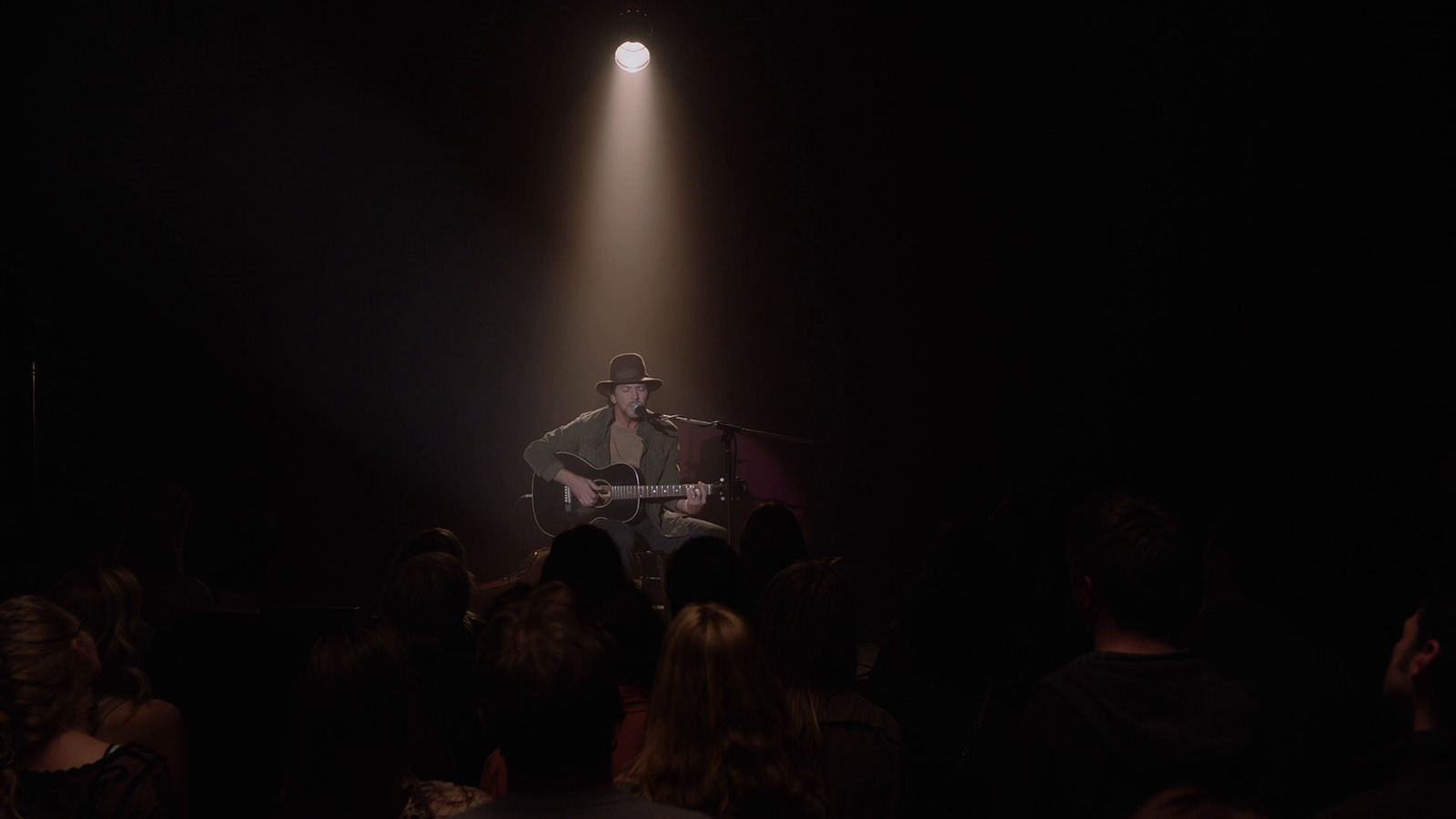
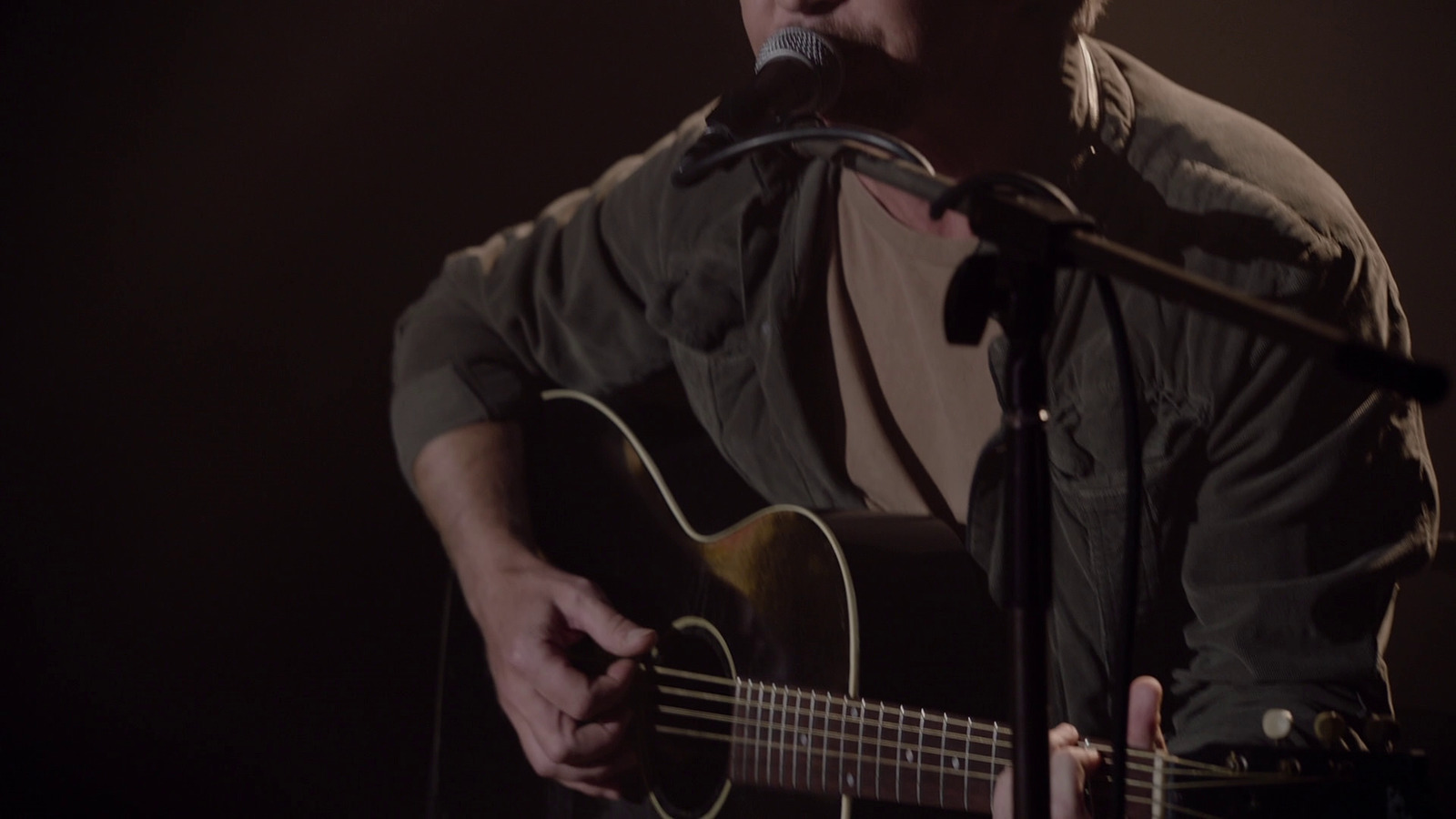
Continue with Part 16: sound and performance →
Roadhouse Music: Eddie Vedder — Out of Sand, 00:00–03:44. Timings refer to this separate performance edit.
Julee Cruise — The World Spins
A familiar voice occupies a longer visual space
The separate performance gives Julee Cruise a sustained presence before the red curtain. Much of the band remains in silhouette. The edit moves between her face and gestures, the complete stage and the audience, allowing the room to persist around a singer whose place in Twin Peaks reaches back to the original series.
This presentation is longer than the closing glimpse within Part 17 and is useful precisely because it changes the available duration. It lets the performance be considered as an event of its own while the episode uses it within a much larger movement through memory, loss and Laura’s disappearance. The two edits should be compared rather than treated as interchangeable.
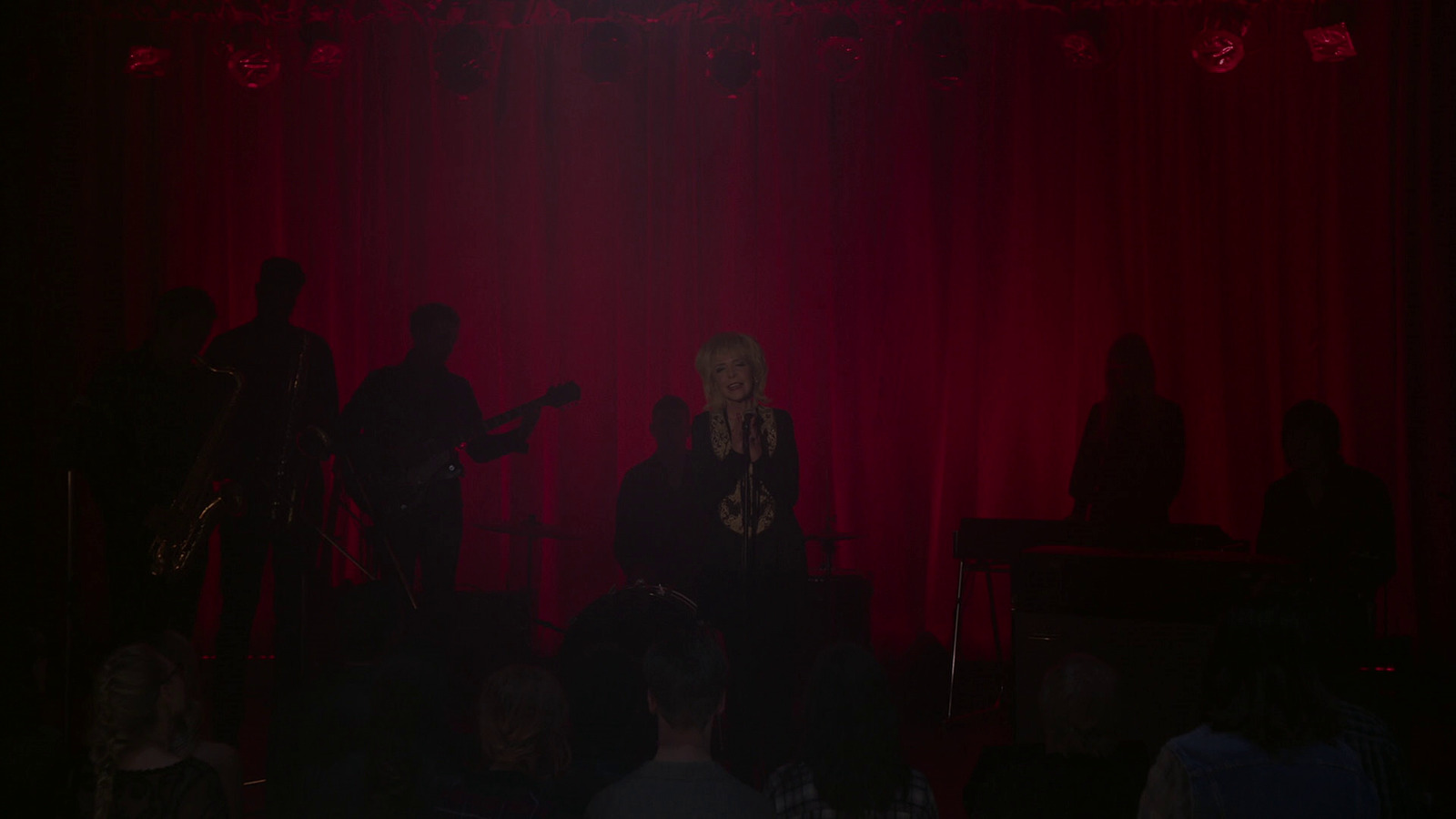
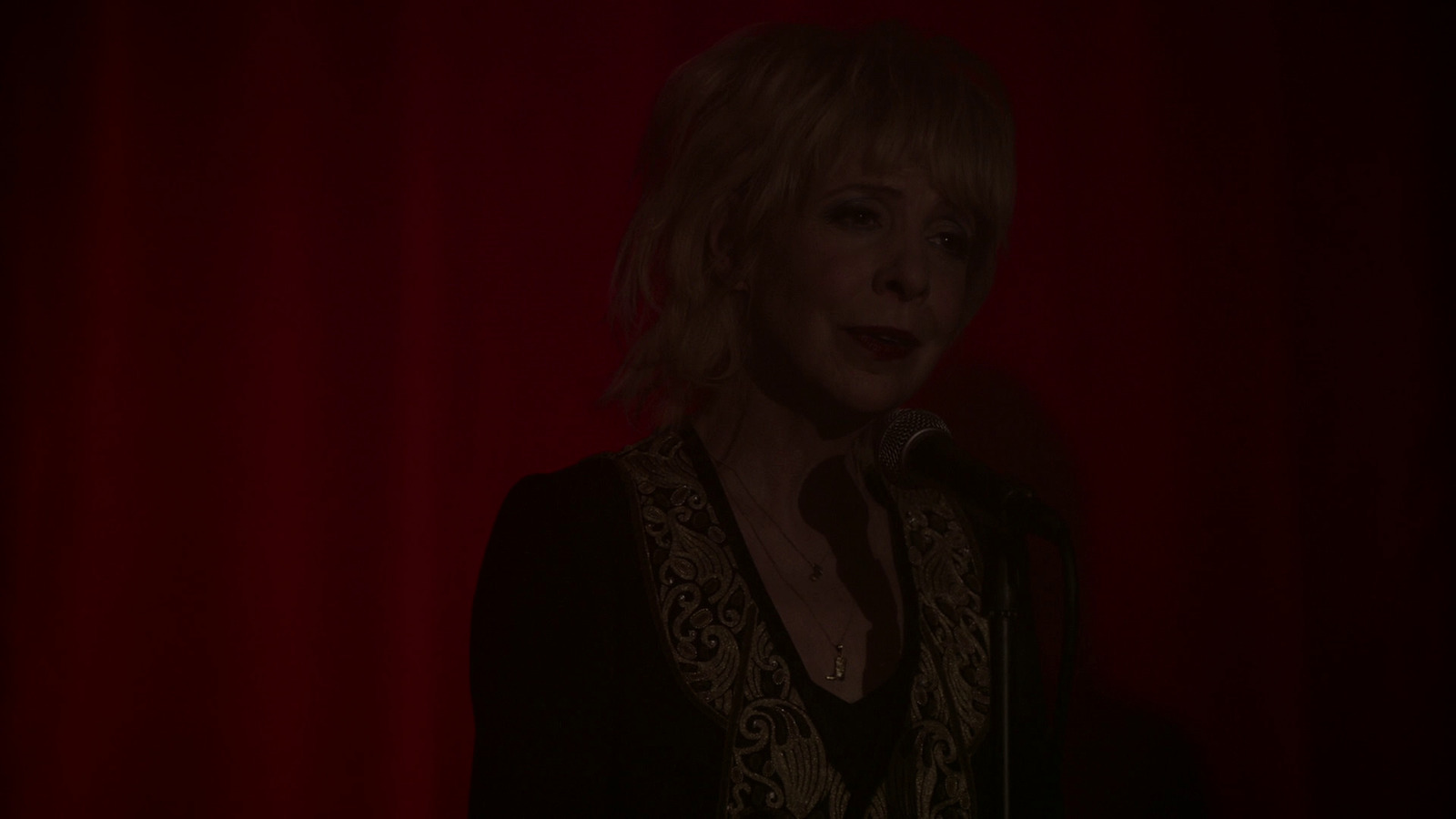
Continue with Part 17: sound and performance →
Roadhouse Music: Julee Cruise — The World Spins, 00:00–06:53. Timings refer to this separate performance edit.
Au Revoir Simone — Sad Song
Another performance beyond the episode selection
“Sad Song” offers a third view of Au Revoir Simone at the Roadhouse, alongside “Lark” and “A Violent Yet Flammable World.” The same keyboard line, microphones and red curtain provide a useful basis for comparison. The edit moves from complete group views to pairs and individual faces, with audience silhouettes crossing the lower part of the image.
Its place here is as a separately presented Roadhouse performance in Twin Peaks: From Z to A. It should not be assigned an invented episode number or treated as a missing narrative scene. Its value is the opportunity to compare another song and edit within a closely related performance setup.
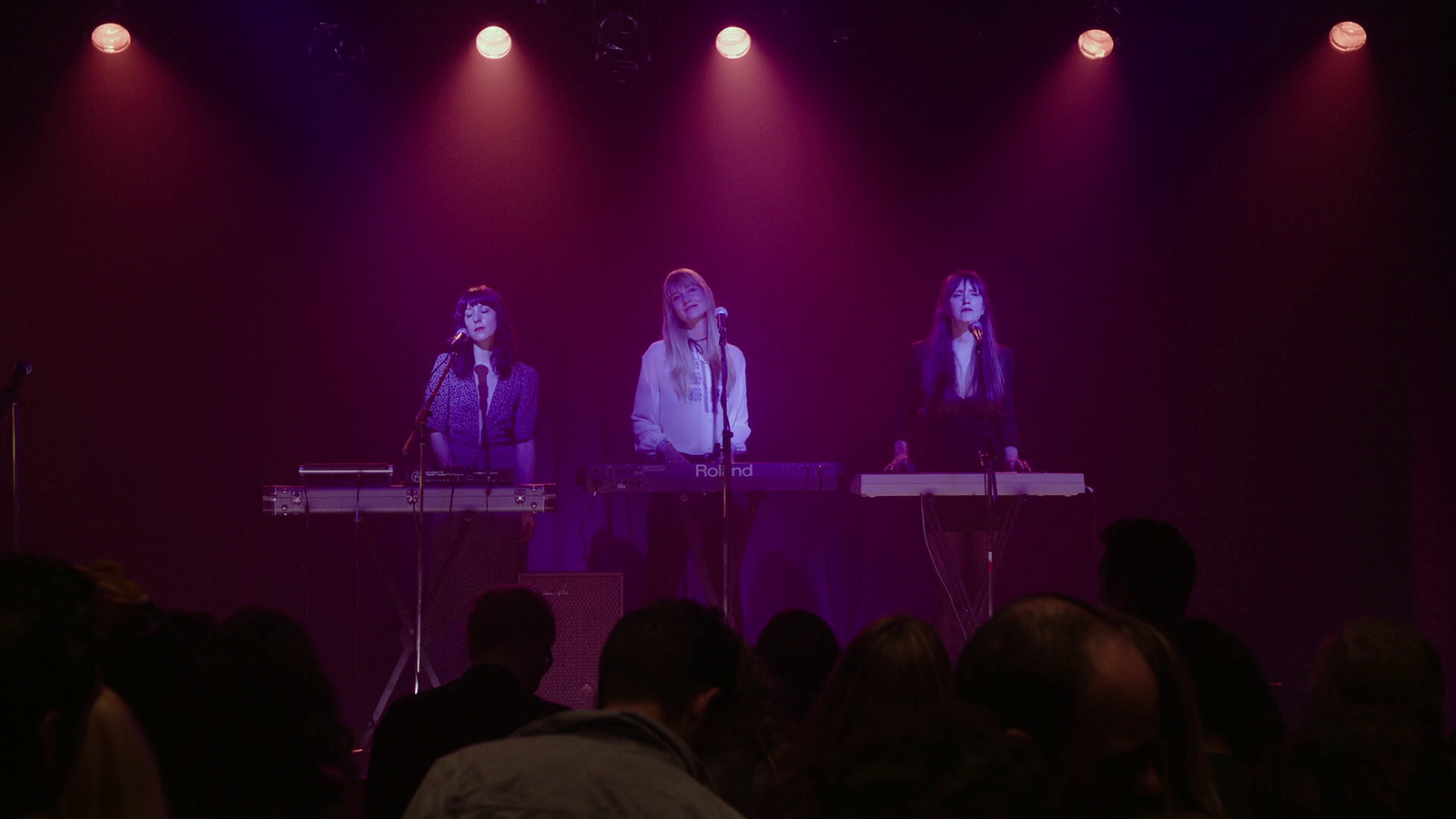
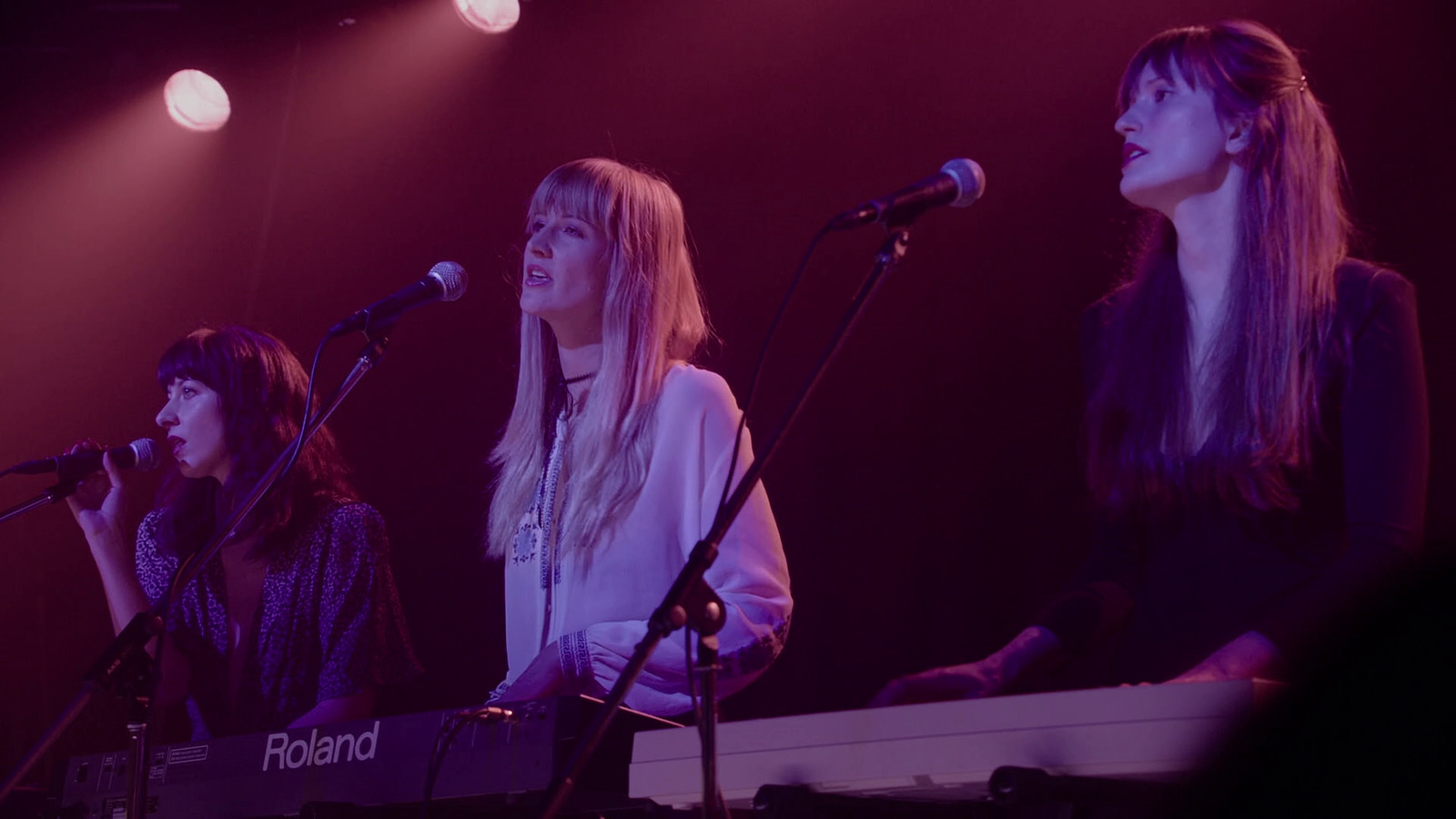
Roadhouse Music: Au Revoir Simone — Sad Song, 00:00–04:12. Timings refer to this separate performance edit.
Parts 17 and 18: success followed by a new problem
The penultimate part assembles recognitions and confrontations at the sheriff’s station, then brings Cooper into earlier material associated with Laura. The final part moves toward a road journey, Carrie Page and a house whose familiarity no longer guarantees the expected answer. These are the broad events documented by contemporary recaps; their meaning is not a solved production fact. The two-part ending as first received
The two parts offer different models of completion. Part 17 can appear to gather the mythology into a spectacular solution. Part 18 asks whether changing an event, finding a person and bringing someone home are necessarily the same accomplishment. Cooper’s determination survives even when the categories that once made his determination reassuring become unstable.
Laura’s scream is consequently not just another clue waiting for a correct label. It can be read as an interruption of the investigator’s account of what he has achieved. This interpretation places the ending beside Fire Walk with Me, where Laura’s experience exceeds the explanations offered by other people. It does not require us to identify one scene as a literal dream or the final world as the viewer’s own reality.
Keep disagreement alive without calling every theory evidence
Contemporary criticism did not converge on one response. Daniel D’Addario admired the ambition while questioning the experience created by its violence and duration. Carli Velocci read the ending through continuing trauma. These are distinct critical positions, not a majority verdict. A critical reservation · A trauma-centred interpretation
The disagreement is useful when it asks what the work does to a viewer, rather than which critic possesses a secret solution. Does repetition deepen attention or exhaust it? Does withholding preserve Laura’s irreducibility or risk making her suffering another mechanism? This dossier offers ways to pursue those questions, while leaving room for a reader to reach a different judgment.
Explore the new primary-image studies: Part 17 follows the station confrontation, BOB’s orb, Diane’s return and Laura’s altered past; Part 18 follows the crossing, Carrie Page and the final house sequence. Both distinguish visible evidence, production testimony and interpretation.
Promising a return without explaining it
The short promos produced by David Lynch offer a compact study of anticipation. Instead of outlining an investigation, they ask how little needs to be shown for a familiar world to become present again: a keyboard, a mouth eating, trees, a room, a face. Their refusal to explain is an editorial choice with its own rhythm, not simply a lack of available footage.
Seen together, they also establish two different promises. Recognition tells returning viewers that people and places persist; gaps and isolated actions make that recognition uncertain. The longer pieces begin to connect the town with unfamiliar interiors and wider geography. These are promotional arrangements of images, not reliable maps of the order in which events will unfold.
Piano: a person inside a landscape
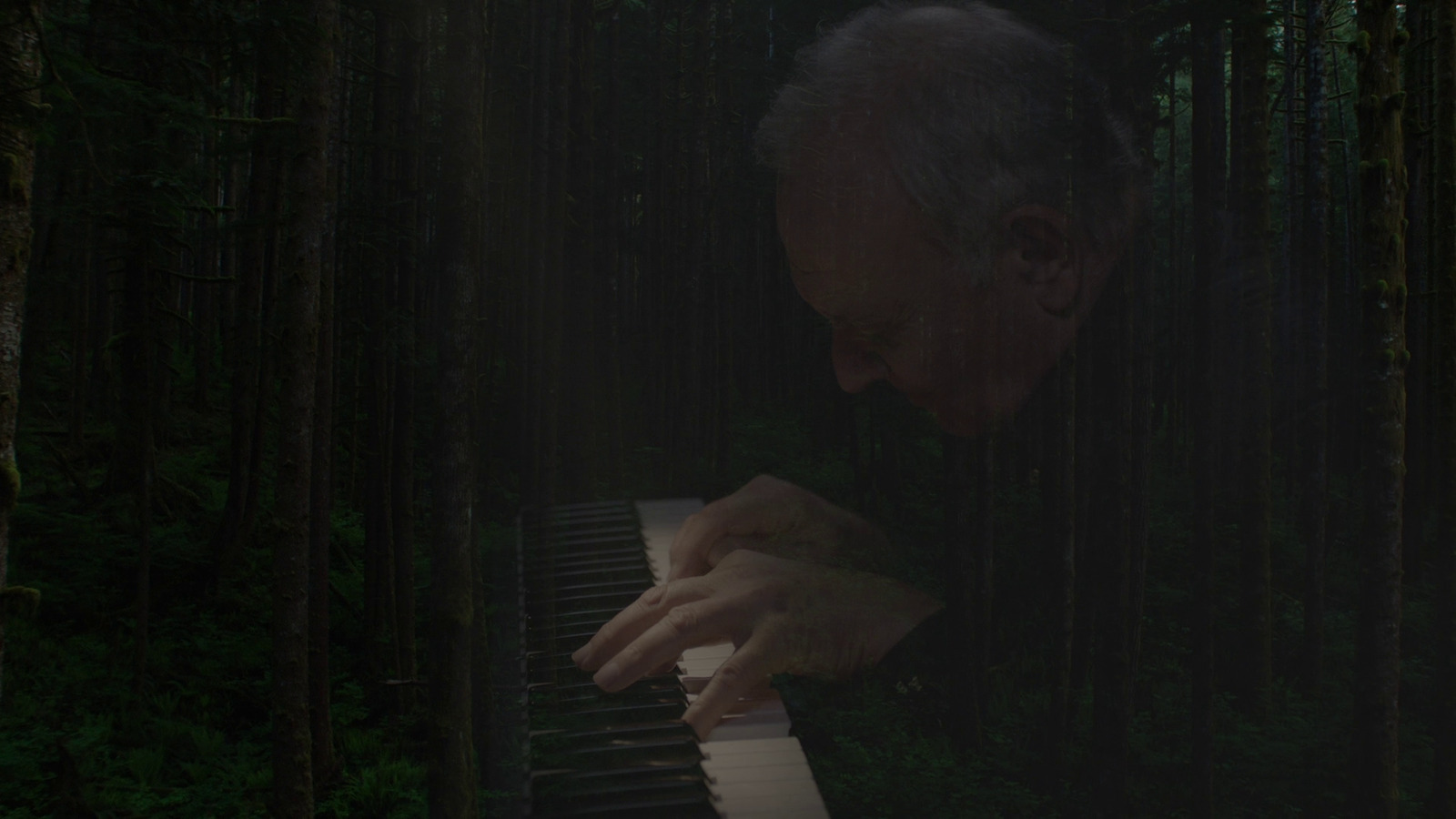
Angelo Badalamenti’s hands and face are superimposed over trees. The composer becomes visibly continuous with the setting, while the later appearance of Laura’s portrait turns musical recognition toward a remembered person. The construction condenses three elements of the programme’s identity—landscape, music and Laura—without explaining a new plot.
Donut: allow the action to last
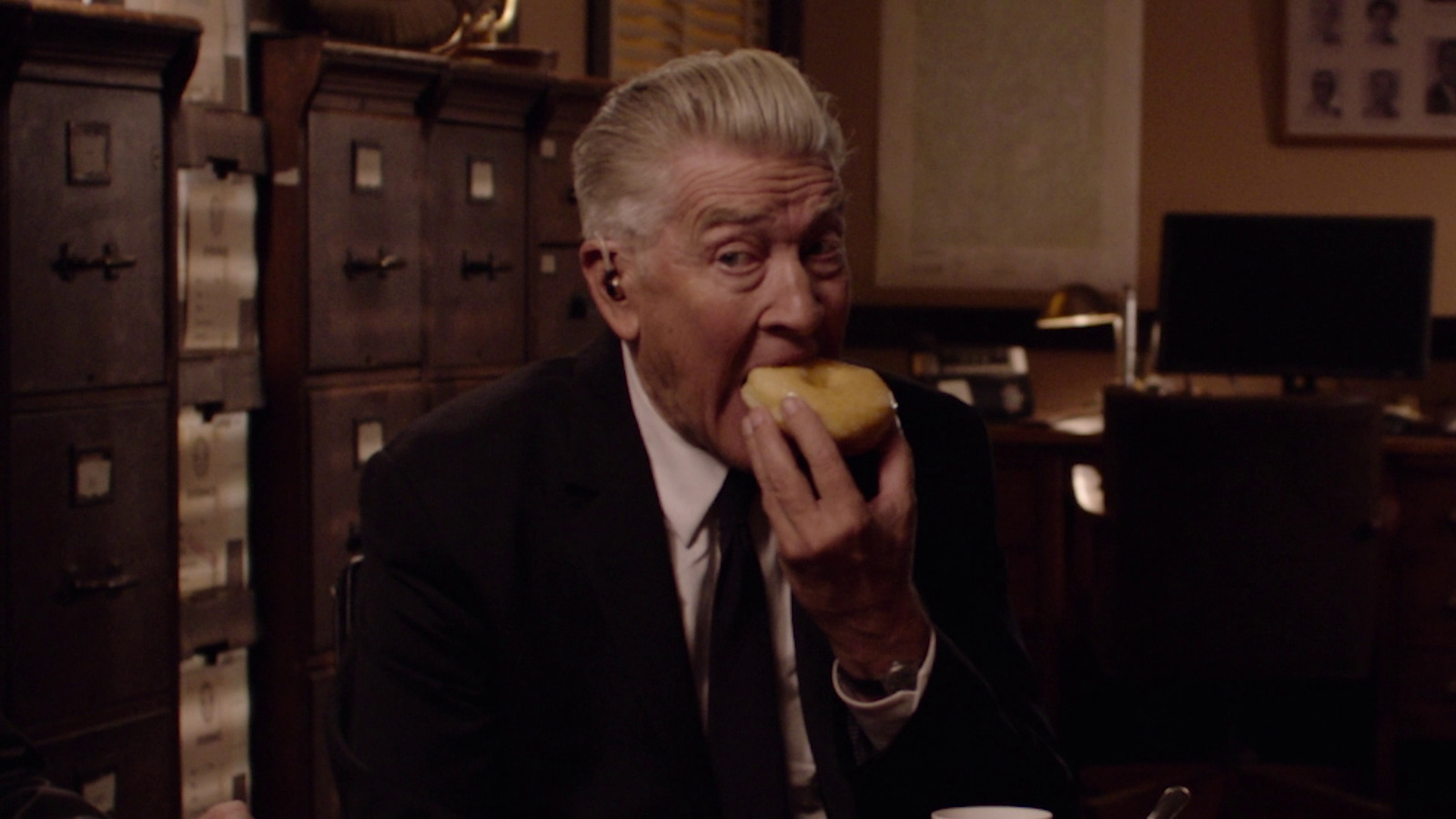
Gordon Cole eats while the camera holds on a small, ordinary action. The duration gives biting, chewing and looking the weight a conventional trailer might reserve for a revelation. The familiar town sign supplies the final recognition. This is both a character appearance and a demonstration of the patience that The Return will repeatedly request.
Woods: recognition emerges from darkness
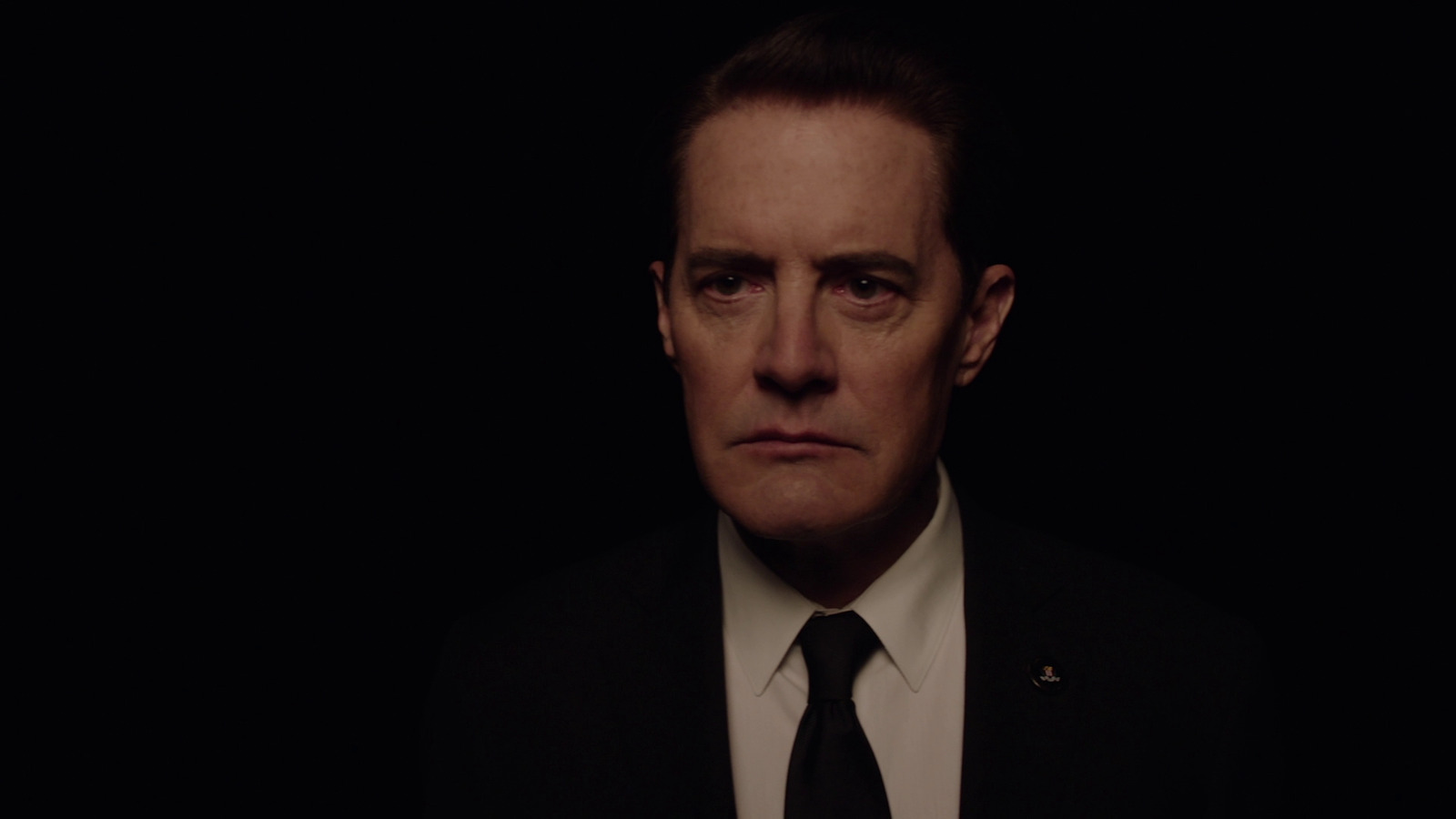
Landscape fragments and an illuminated road precede Cooper’s face. The transition withholds the surrounding situation: seeing the expected actor does not tell us where he is or how he will act. That separation between recognising a face and understanding an identity becomes central to the opening parts.
Places and People: two kinds of reunion
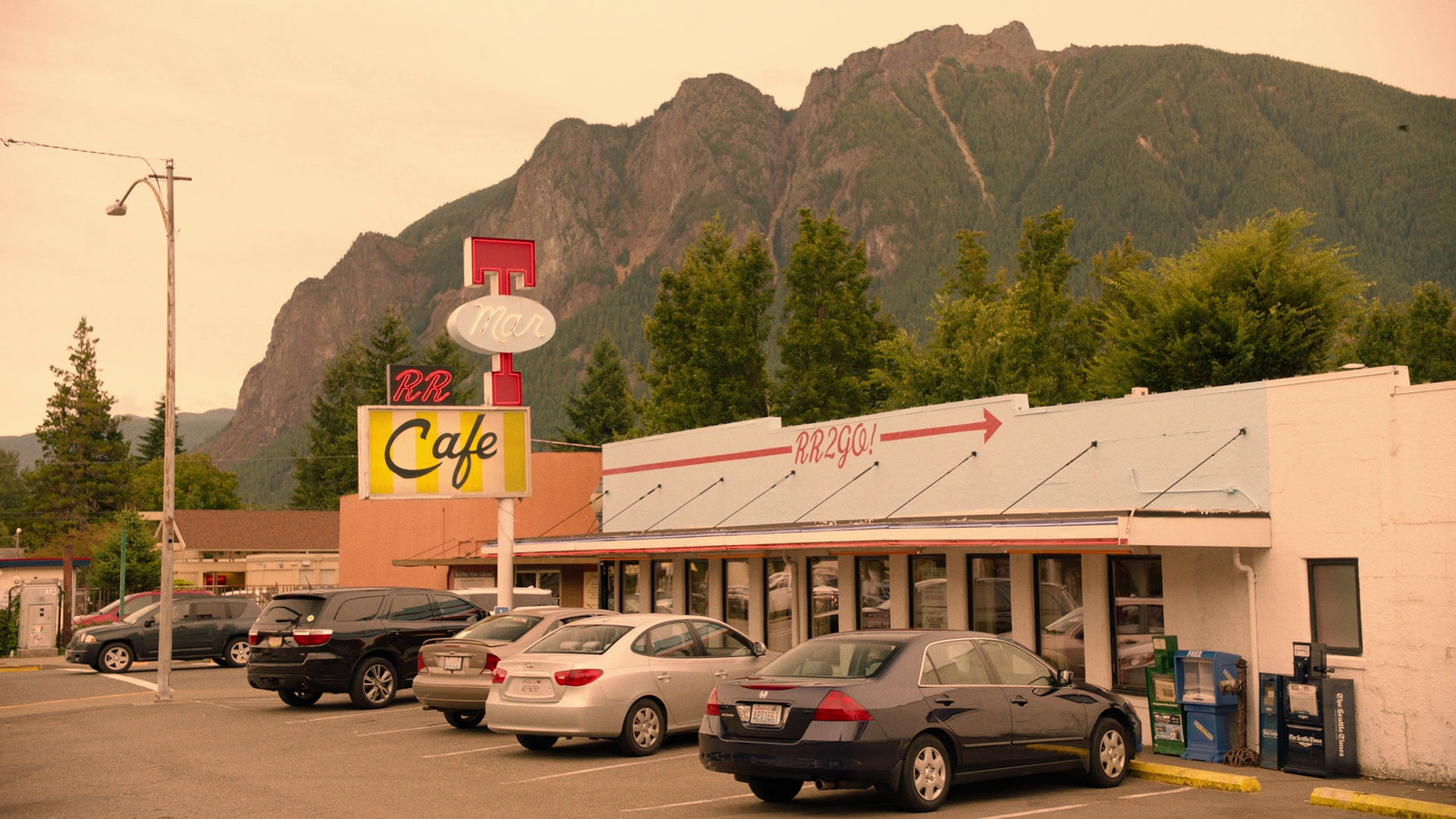
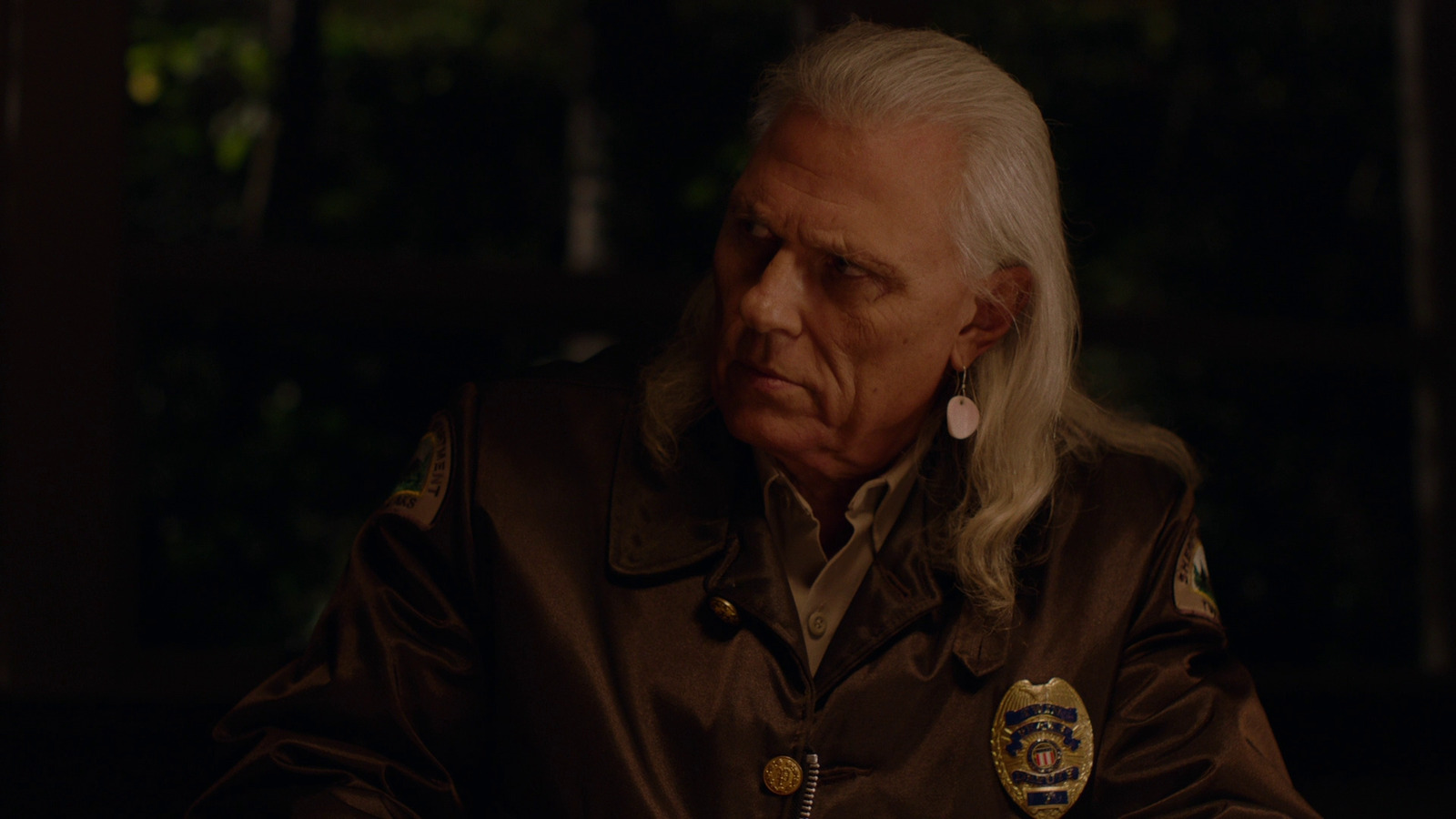
Places moves among the Red Room, sheriff’s department, diner, woods and trailer park. People offers brief portraits, including familiar residents whose bodies now carry the passage of time. The pair separates continuity of setting from continuity of person. A room can remain recognisable while the lives associated with it have changed.
People: a second view of reunion
Albert: a wider world in fragments
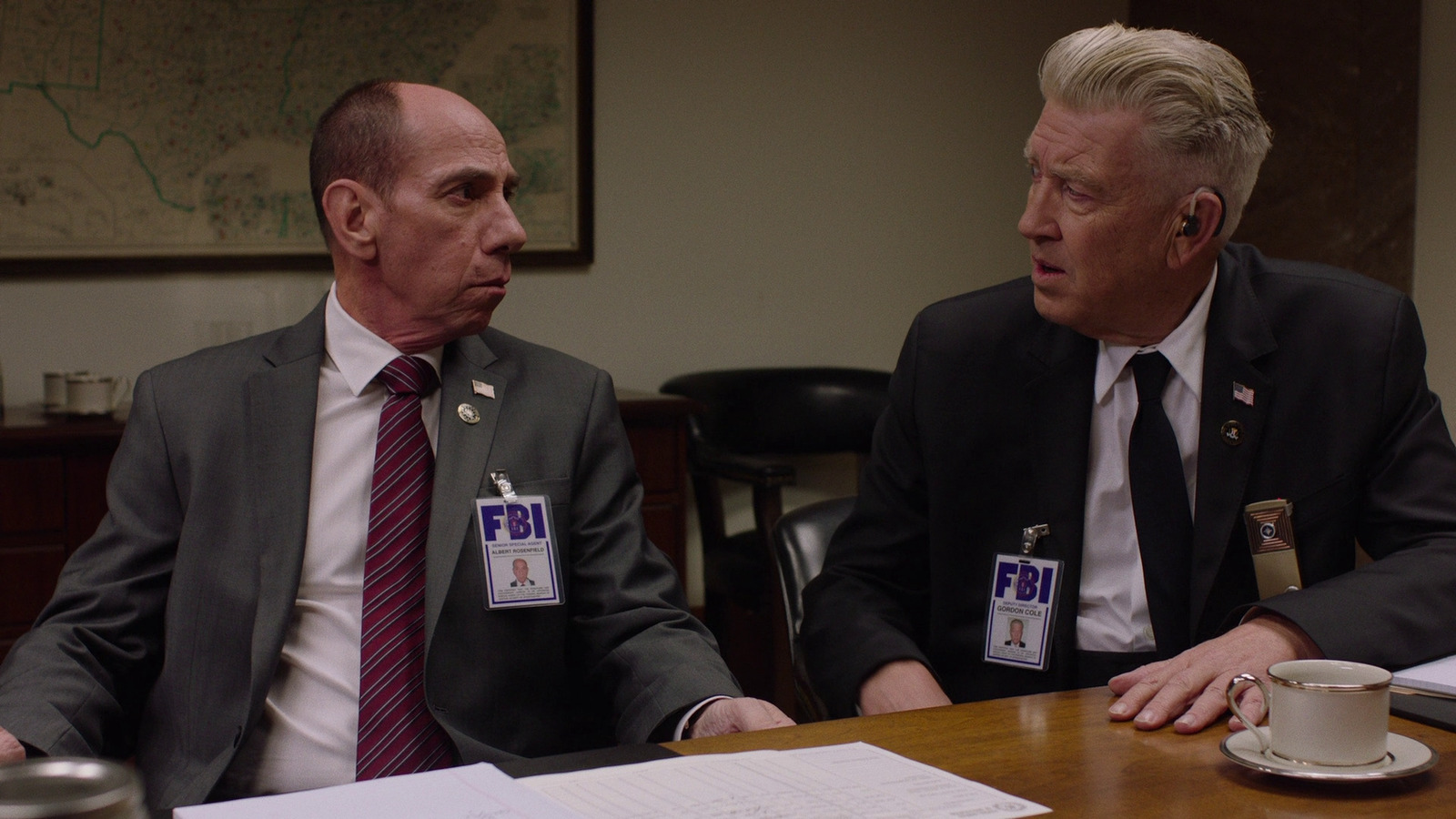
The longer montage places familiar residents beside a camera, unfamiliar corridors and other enclosed spaces. Its late exchange between Cole and Albert offers a moment of human recognition inside that discontinuity. The withholding comes from the arrangement: brief encounters are separated before they can become an explanatory sequence.
In Cinema: the longer invitation
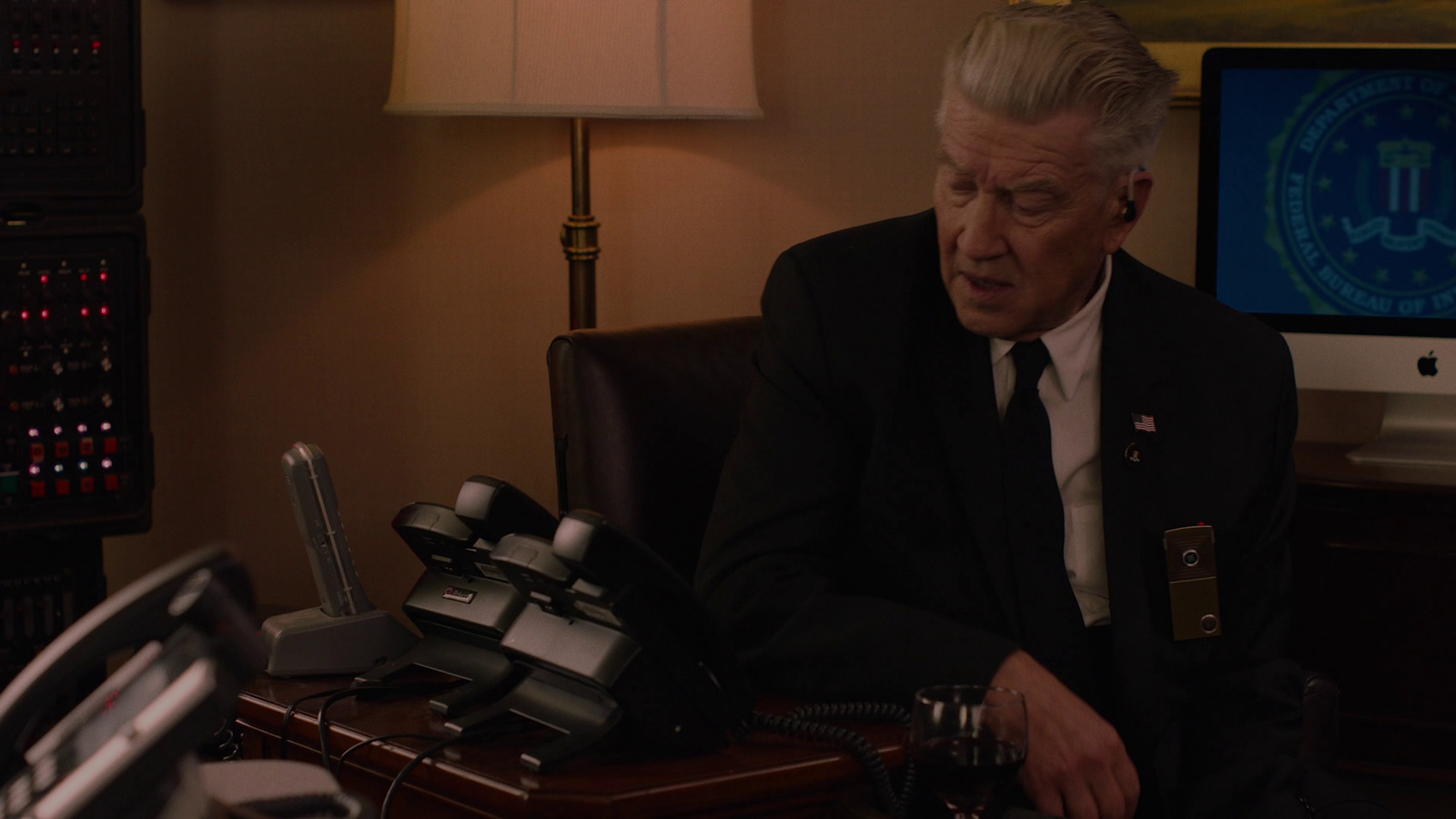
Cole’s telephone appearance opens a more extended set of fragments. Ben, Lucy, the Roadhouse and a desert housing development occupy the same invitation, but remain separated by changes of place and gaps. The title identifies a presentation context; it should not be mistaken for a different episode or a newly discovered narrative scene.
Explore the audience that kept Twin Peaks alive ↗
A greeting interrupted by a world outside the frame
Lynch’s recorded greeting for the 2017 Comic-Con panel is a small comic performance in its own right. He repeatedly attempts to address the audience while noises and incidents interrupt him: an apparent fall, a traffic crash, and then an increasingly chaotic encounter with a horse, a gun, a broken lamp and a cat. Much of the action is withheld from view. An empty chair can become the centre of a busy scene because voices, impacts and cries supply the surrounding space.
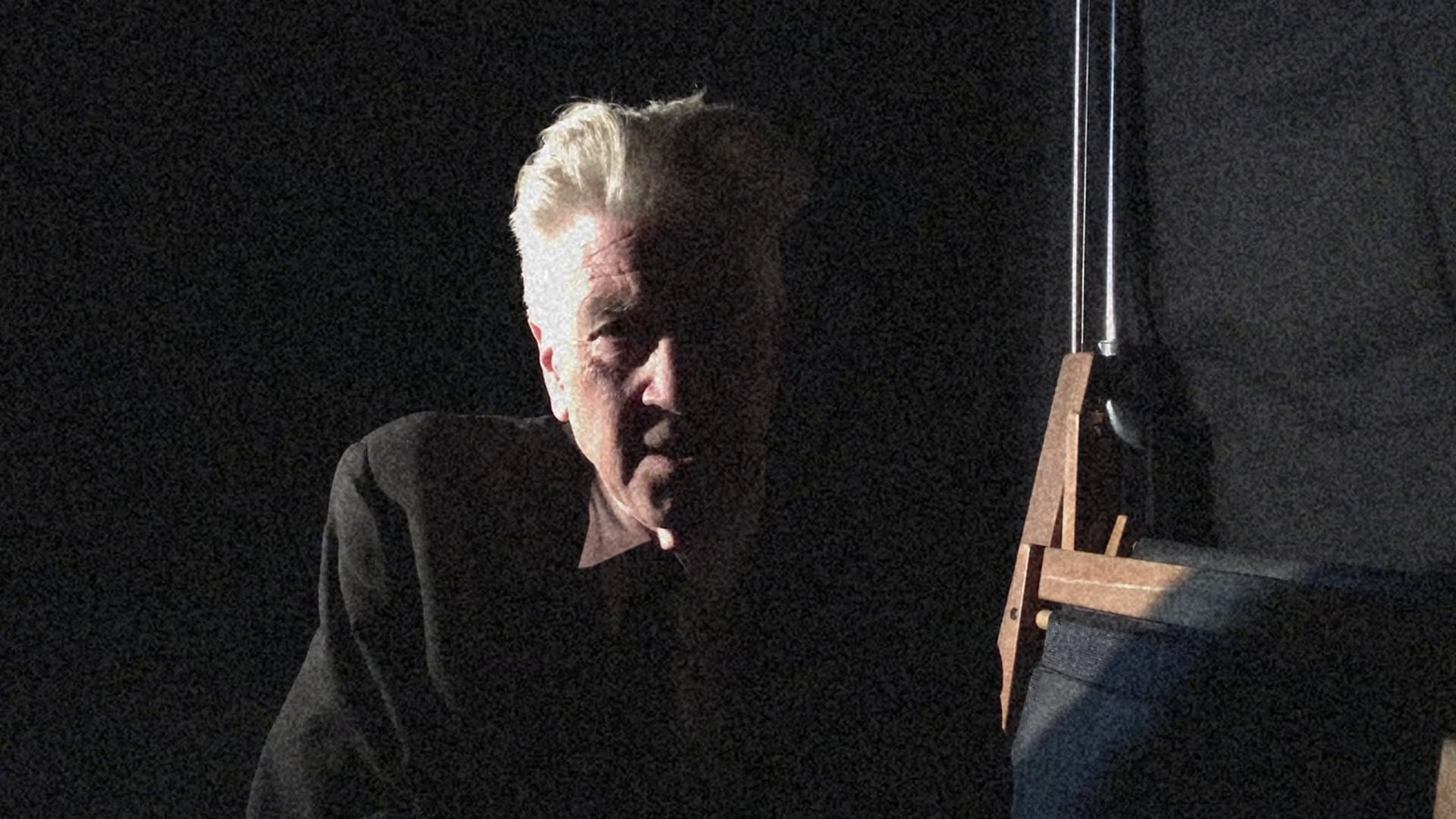
Open the second frame: the action leaves the chair
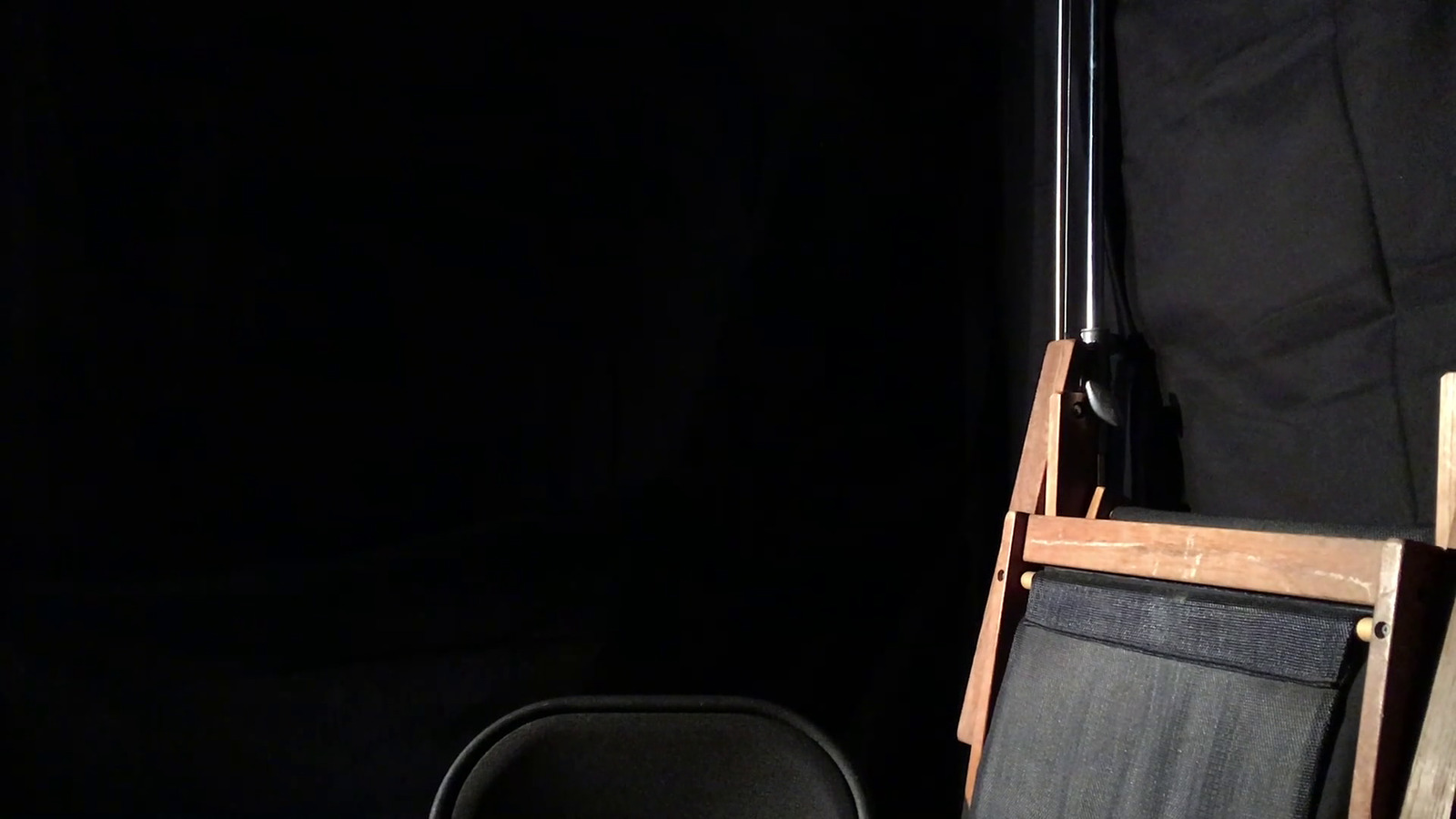
The interruptions link this greeting to the promos’ interest in duration, everyday objects and incomplete views, but here the sound supplies a miniature slapstick plot. His story about an O. J. Simpson golf ball belongs to the performance’s comic setup; the film does not authenticate the object’s provenance. Recorded greeting, approximately 06:15–08:10.
Eighteen parts: an annotated route
All eighteen parts open into illustrated dossiers, with scene studies, sound and dialogue analysis, focused effects galleries and production sources. The annotated route below adds reading prompts for the unfolding journey; contemporary recaps supply their event locators, without adopting speculative identifications as facts.
- Part 01 · Illustrated episode dossier
My Log Has a Message for You
Twelve illustrated studies follow the glass box, Mr. C, the Buckhorn investigation and Margaret’s message. Includes sound and dialogue analysis, two focused FX galleries and production testimony.
Read the illustrated episode dossier ↗ - Part 02 · Illustrated episode dossier
The Stars Turn and a Time Presents Itself
Fifteen illustrated studies follow Bill and Phyllis, Mr. C’s recordings, Laura and the evolving Arm, Cooper’s passage and the Roadhouse. Includes three focused FX galleries and sound analysis.
Read the illustrated episode dossier ↗ - Part 03 · Illustrated episode dossier
Call for Help
A way out of the darkness leads to a world whose simplest instructions have become strange.
- Part 04 · Illustrated episode dossier
…Brings Back Some Memories
A familiar face can return without bringing the familiar person. A photograph can make an absent person suddenly present.
- Part 05 · Illustrated episode dossier
Case Files
The ordinary working day is full of signals that only some people can read.
The Las Vegas material makes routines newly strange. Watch how people respond when expected conversation and professional behaviour fail.
Contemporary record ↗ - Part 06 · Illustrated episode dossier
Don’t Die
A vision matters because of what someone does after seeing it.
Care and violent indifference occupy the same work. Consider what happens to the comic rhythm when the larger world intrudes.
Contemporary record ↗ - Part 07 · Illustrated episode dossier
There’s a Body All Right
A familiar face becomes evidence against itself. A recovered page brings an old warning into the present.
The diary reconnects old and new material. Reading an earlier object does not simply restore the interpretive confidence of the original series.
Contemporary record ↗ - Part 08 · Illustrated episode dossier
Gotta Light?
A shot beside a dark road opens into a history of catastrophe. Images, bodies and voices cross boundaries that ordinary investigation cannot contain.
An investigation opens onto historical and mythic scale. Follow the movement from enormous spectacle back toward a vulnerable body.
Contemporary record ↗ - Part 09 · Illustrated episode dossier
This Is the Chair
The past survives in furniture, paper, a body and a voice struggling to explain what it has seen.
Briggs’s legacy becomes an active resource. Ask how an absent person can shape events through a surviving object or instruction.
Contemporary record ↗ - Part 10 · Illustrated episode dossier
Laura Is the One
A voice can threaten, comfort, deceive or continue after nobody is listening. Part 10 tests the distance between speaking and being heard.
Small acts of attention coexist with coercion. Consider which encounters become meaningful through listening rather than through solving a clue.
Contemporary record ↗ - Part 11 · Illustrated episode dossier
There’s Fire Where You Are Going
A sky opens above an empty lot. A roadside emergency will not settle. A cherry pie changes the outcome of a planned killing.
The town’s generations meet amid distress. Compare household problems with the disturbances that spill into public space.
Contemporary record ↗ - Part 12 · Illustrated episode dossier
Let’s Rock
People offer help, ask for answers and wait for somebody else to respond. Part 12 makes the delay itself part of the drama.
A familiar resident no longer offers a familiar encounter. Ask whether returning to an old location can clarify what time has done to someone.
Contemporary record ↗ - Part 13 · Illustrated episode dossier
What Story Is That, Charlie?
A contest of strength becomes a display of control. A cup of coffee becomes an offer of forgiveness. A familiar song returns to a changed room.
Repeated behaviour may be reassuring or imprisoning. Follow the distinction between a ritual chosen for comfort and a pattern that seems impossible to leave.
Contemporary record ↗ - Part 14 · Illustrated episode dossier
We Are Like the Dreamer
A dream looks backward. A forest opens upward. Andy returns knowing whom to protect, while Sarah’s face conceals a different kind of interior.
The investigation enters another order of space. Consider which kinds of knowledge travel back with a witness and which remain difficult to communicate.
Contemporary record ↗ - Part 15 · Illustrated episode dossier
There’s Some Fear in Letting Go
A hand on a shoulder. A voice on the telephone. A building that disappears. Part 15 finds radically different forms for letting go.
Ed and Norma’s possibility sits beside Margaret’s departure. The return of affection and the acceptance of loss are different forms of completion.
Contemporary record ↗ - Part 16 · Illustrated episode dossier
No Knock, No Doorbell
Cooper wakes with purpose. Diane struggles to speak a buried memory. Audrey finds the dance floor, then loses the room around it.
Cooper’s awakening restores a recognisable momentum. Ask what that exhilaration encourages the spectator to overlook about the task ahead.
Contemporary record ↗ - Part 17
The apparent convergence
The station gathers recognitions before Cooper’s intervention in Laura’s past. Does assembling the expected people and signs establish that the work is finished?
Contemporary record ↗ - Part 18
A house without the expected answer
Carrie Page and the final journey unsettle the promise of bringing someone home. Consider the difference between persistence, knowledge and care.
Contemporary record ↗
Following the research across formats
The 2019 From Z to A collection brings together the series, film and extensive supplements. It includes UHD presentations of the pilot and Part 8 alongside the wider collection. Historical edition announcement
Frost’s The Final Dossier is a separate literary work with a situated narrator. The publisher’s record establishes the identified UK edition; it does not establish that every statement in the book directly resolves an on-screen ambiguity. Identified book edition
The opening-pair dossiers document scenes, dialogue, selected sound sequences and credits, including the different boundaries of the standalone and combined presentations. Further comparisons across releases and between script pages and finished images can extend that evidence. The episode studies, interviews, contemporary criticism and literary works remain distinct sources within one developing research record.
Explore further
Follow the sources below, explore the museum collection, or continue through the Reading Room. New archival discoveries and contributions enrich the record of Lynch’s work.
Sources and further reading
Participant testimony, distributor records and criticism do different jobs. The notes identify what was inspected and what remains a lead. Original readings above belong to Lyncharium, not to the quoted participants. Checked 16 October 2026.
- Twin Peaks: Dreams, Doubles and Doppelgängers ↗David E. Williams, American Cinematographer, 11 July 2018. Peter Deming interview: preparation, photography, sets and Red Room lighting read. Source of the header and production photograph; no frame timecodes established.
- Twin Peaks — Television Academy awards record ↗Television Academy, awards database inspected. 1990 costume/editing wins and 2018 Part 8 editing nominees checked. An award entry is not a full episode credit roll.
- David Lynch on Bowie and the music of the new Twin Peaks ↗Daniel Dylan Wray, Pitchfork, 19 September 2017. Written interview read: permission for reused footage, replacement voice and sound collaborators. No independent audio measurement.
- Twin Peaks 2017: interview with art director Cara Brower ↗Jessica Bloom, Format, 18 May 2017. Published interview read. Art-department responsibilities and the Fisk–De Jong–Brower connection; pre-premiere account constrained by secrecy.
- BUF: Twin Peaks production notes ↗Vendor project record and full written production notes read. Reports its own 213-shot contribution, not the whole series’ effects count. “1 shot” is a vendor grouping, not proof of one continuous finished take. Montage inspected; making-of video not played.
- A Promising Return to Twin Peaks Fell Victim to Itself ↗Daniel D’Addario, TIME, 5 September 2017. Published review read. His objections to duration, violence and lost emotional connection are attributed criticism.
- Parts 5–6: The good, the bad and the Dougie ↗Tom Huddleston, Sight and Sound, 2017. Contemporary recap and criticism following the episodes’ first release.
- Art of the Cut with Twin Peaks editor DuWayne Dunham ↗Steve Hullfish, ProVideo Coalition, 23 October 2017. Interview read on original-series work, editing, cards and chapter length. Source of Suzanne Tenner’s Laura Dern photograph. Recalled scene durations were not treated as measured timings.
- Parts 17–18: You can never go home again ↗Tom Huddleston, Sight and Sound, 2017. Contemporary recap and criticism following the episodes’ first release.
- The last word on Twin Peaks, by David Lynch’s co-creator Mark Frost ↗Ryan Reed, Salon, 7 November 2017. Interview read on writing, production participation, books and Cooper. Frost’s stated production attendance is his estimate, not a call-sheet count.
- Twin Peaks: The Final Dossier — UK hardback record ↗Pan Macmillan, 2 November 2017, 160 pages, ISBN 9781509802043.
- The Secret History of Twin Peaks — ebook record ↗Mark Frost; Macmillan ebook, 18 October 2016, ISBN 9781447293859. Publisher synopsis and edition metadata read.
- Kyle MacLachlan on the craft of Twin Peaks ↗Rawaan Alkhatib, Backstage; page updated 4 June 2020. Full published text read through web retrieval. Current direct download was blocked. Performance recollections are not a shot-by-shot audit.
- The Entire Mystery: contemporary release-announcement reprint ↗CBS/Paramount press release dated 15 May 2014, reproduced by Travis Leamons at Inside Pulse that day. Contents and disc breakdown read.
- Parts 7–8: Extremes of experience ↗Tom Huddleston, Sight and Sound, 2017. Contemporary recap and criticism following the episodes’ first release.
- Parts 11–12: Bringing it all back home ↗Tom Huddleston, Sight and Sound, 2017. Contemporary recap and criticism following the episodes’ first release.
- Parts 13–14: The plot thickens ↗Tom Huddleston, Sight and Sound, 2017. Contemporary recap and criticism following the episodes’ first release.
- Parts 1–4: So far, so wayward ↗Tom Huddleston, Sight and Sound, 2017. Contemporary recap and criticism following the episodes’ first release.
- Parts 15–16: Back in style ↗Tom Huddleston, Sight and Sound, 2017. Contemporary recap and criticism following the episodes’ first release.
- Parts 9–10: Event horizon ↗Tom Huddleston, Sight and Sound, 2017. Contemporary recap and criticism following the episodes’ first release.
- Twin Peaks dual key art and premiere announcement ↗SHOWTIME, 24 February 2017. Official announcement read: credits, 18 parts, premiere and staggered streaming/linear availability. Historical publicity, not a current streaming guide.
- Backwards through the backwoods ↗Sam Davies, Sight and Sound, 10 June 2025. Written interview with Lori Eschler and Dean Hurley read. The page headline swaps their surnames; the body identifies them correctly. Complete episode tracks were not auditioned.
- Intimate Apparel: a conversation with Nancy Steiner ↗Hillary Weston, Criterion, 31 August 2022. Twin Peaks questions read: Diane’s fittings and the change to Naomi Watts’s clothes. Retrospective costume testimony, not a continuity inventory.
- Lynching Television (Again): a conversation with Sabrina Sutherland ↗Andreas Halskov, 19 October 2017, now hosted at TV Obsessive. Interview passages on reused footage, editing and production constraints read. The introduction’s broad account of Frost leaving is qualified by Frost’s own later testimony.
- David Lynch Shows That It Was Never About Answers ↗Carli Velocci, TheWrap, 3 September 2017. Published finale review read. Used for a contrasting interpretation, not as authority for exact dialogue, sound or plot mechanics.
- Sabrina Sutherland guides Twin Peaks’ Return ↗Simran Hans, MUBI Podcast, 2 October 2025, 22:30–24:29. Producer testimony checked against the published English transcript; retrospective production recollection.
- From Z to A — 2019 announcement preserved at Twin Peaks Blog ↗CBS Home Entertainment release dated 21 August 2019, reproduced by Steven Miller on 22 August. Announcement and supplement descriptions read.
- Comic-Con 2017: Twin Peaks Panel, moderated by Damon Lindelof, presented in Twin Peaks: From Z to A. Participants’ retrospective accounts; captions, speaker images and selected audio passages checked. Locators include the programme’s opening pause. Recorded Lynch greeting, 06:15–08:10; Naomi Watts, 17:18–20:09; Don Murray, 26:01–28:19. Further testimony is integrated into the Part 1 and Part 2 dossiers.
- Behind the Red Curtain and I Had Bad Milk in Dehradun, Richard Beymer’s production films, viewed in Twin Peaks: From Z to A. Red Room planning and framing: Behind the Red Curtain, 08:45–12:20; overhead working-space view: I Had Bad Milk in Dehradun, 27:33–28:09. Beymer’s accompanying written note describes Lynch’s invitation to document the Red Room work and their earlier India documentary collaboration. The note is treated as Beymer’s account.
- A Very Lovely Dream: One Week in Twin Peaks, produced and directed by Charles de Lauzirika, viewed in Twin Peaks: From Z to A. September 2015 identified on screen. Locations and returning sets, 09:28–11:56; performance findings have their own locators in the linked episode dossiers.
- Rancho Rosa Logos and Twin Peaks 2017 Crew List, presented in Twin Peaks: From Z to A. Logos compared as visual designs; crew list retained as a department-by-department credit source, separate from claims about an individual shot’s authorship. The accompanying production-photo gallery was examined alongside the moving footage.
- Bad Binoculars, directed and photographed by Jason S., in Impressions: A Journey Behind the Scenes of Twin Peaks (2017), viewed in Twin Peaks: From Z to A. Passages: 17:17–19:55. Picture and English captions examined, with targeted speech checks. Rehearsal proposals and production observations are distinguished from interpretation of the finished episodes. Documentary narration and its music are not treated as unscripted statements by Lynch.
- The Number of Completion, directed and photographed by Jason S., in Impressions: A Journey Behind the Scenes of Twin Peaks (2017), viewed in Twin Peaks: From Z to A. Passages: 01:55–03:14. Picture and English captions examined, with targeted speech checks. Rehearsal proposals and production observations are distinguished from interpretation of the finished episodes. Documentary narration and its music are not treated as unscripted statements by Lynch.
- The Man with the Gray Elevated Hair, directed and photographed by Jason S., in Impressions: A Journey Behind the Scenes of Twin Peaks (2017), viewed in Twin Peaks: From Z to A. Passages: 12:30–15:04; closing music credits. Picture and English captions examined, with targeted speech checks. Rehearsal proposals and production observations are distinguished from interpretation of the finished episodes. Documentary narration and its music are not treated as unscripted statements by Lynch.
- See You on the Other Side Dear Friend, directed and photographed by Jason S., in Impressions: A Journey Behind the Scenes of Twin Peaks (2017), viewed in Twin Peaks: From Z to A. Passages: 01:19–02:31; 08:09–09:40. Picture and English captions examined, with targeted speech checks. Rehearsal proposals and production observations are distinguished from interpretation of the finished episodes. Documentary narration and its music are not treated as unscripted statements by Lynch.
- A Pot of Boiling Oil, directed and photographed by Jason S., in Impressions: A Journey Behind the Scenes of Twin Peaks (2017), viewed in Twin Peaks: From Z to A. Passages: 01:16–03:48; 05:03–08:08; 31:06–38:23. Picture and English captions examined, with targeted speech checks. Rehearsal proposals and production observations are distinguished from interpretation of the finished episodes. Documentary narration and its music are not treated as unscripted statements by Lynch.
- On the Couch with Kimmy and Harry. Directed and produced by Charles de Lauzirika; edited by Will Hooke (2019). Viewed in Twin Peaks: From Z to A. Timed passages: 03:32–05:15; 05:30–06:30. Timings refer to the documentary, not the episode. On-set directions and retrospective recollections are distinguished from Lyncharium’s interpretation of the finished scenes.
- Behind the Curtain, Part 4. Photographed by Jason S.; edited by Jonathan Angus, with editorial assistance by Robert Lay and additional photography by Charles de Lauzirika (2019). Viewed in Twin Peaks: From Z to A. Timed passages: 00:07–09:08. Timings refer to the documentary, not the episode. On-set directions and retrospective recollections are distinguished from Lyncharium’s interpretation of the finished scenes.
- Roadhouse Music, separately presented performance edits in Twin Peaks: From Z to A. Performer and song names checked against the authored selection menus; images and timings checked against the individual presentations. The studies distinguish the performance edits from episode context and do not infer that the released soundtrack was recorded live from the photographed stage.
Further performer testimony: A Talk with Kyle MacLachlan and Sheryl Lee. Produced and directed by David Naylor; edited by Michael Frost (2019). Viewed in Twin Peaks: From Z to A. Timed passages: 53:28–56:34. Timings refer to the conversation. Retrospective testimony is attributed to its speaker and distinguished from analysis of the finished scenes.
Another doorway
Continue exploring
Television
Twin Peaks
Explore Twin Peaks: viewing order, Lynch and Frost, Laura Palmer, music, photography, The Return, pilot versions and companion books.
Short films
Short Films
Explore David Lynch’s short films, from The Alphabet to Rabbits and Fire, with production histories, collaborators, sound studies and viewing guides.
Music
Music
Explore David Lynch’s albums and collaborators, from Julee Cruise and Thought Gang to Chrystabell, with recording histories, edition notes and sources.
Image credits and sources accompany each linked guide.