Twin Peaks: The Return — Part 5
2017 · Twin Peaks: The Return · Episode dossier
The ordinary working day is full of signals that only some people can read.
Case files, a wedding ring, a hotel key, fingerprints and surveillance images connect lives across several states. Meanwhile, Cooper can recognise coffee and respond to a child, but cannot complete the simplest journey without help.
- Part 5
- Case Files
- Directed by
- David Lynch
- Written by
- Mark Frost & David Lynch
- Standalone presentation
- 00:58:18
The Return overview · Twin Peaks research hub. Timings follow the standalone part and include its opening titles. Presentation and credit notes.
Explore this dossier
Evidence travels; people remain stranded
Part 5 gives the investigation more material while making the act of interpreting it increasingly difficult. A ring in an unidentified body points towards a man living under the wrong name. A familiar face appears inside another face. A key begins its return by ordinary post. Cooper speaks a direct accusation at work, then struggles to understand the assignment it produces. The episode’s objects move more efficiently than many of its people. [1]
Its emotional centre is not reducible to the clues. Cooper’s tears at the sight of Sonny Jim and Becky’s pleasure in a love song interrupt the networks of coercion around them. These moments invite attention to a face over time. The galleries below compare both visible transformations and this quieter work of duration.
Illustrated scene studies
- A failed job becomes a chain of messages
- A wedding ring in the wrong body
- BOB in the prison reflection
- Mike Nelson reads a failed application
- Frank’s office cannot exclude domestic life
- A child’s face reaches Cooper
- The statue arrests his journey
- Coffee as a route into the office
- An accusation interrupts the meeting
- Words become handles
- Surveillance without an explanation
- The wrong people enter the car
- Jade sends a small object home
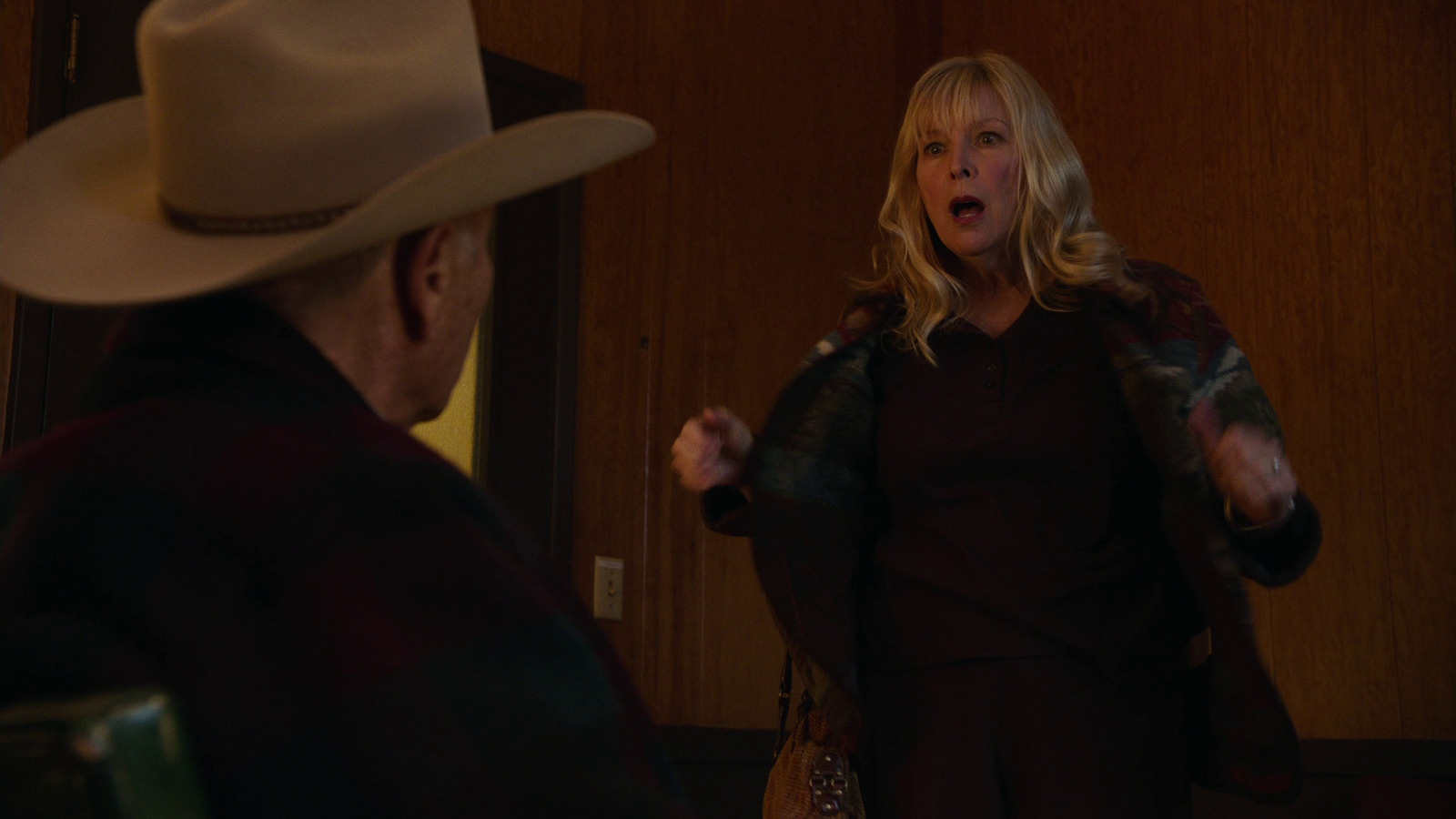
- Shelly and Norma recognise a pattern
- A love song suspends the car journey
- The workday ends; the search continues
- Dr. Amp sells a way out
- One more impossible fingerprint hit
- The Roadhouse fails to protect Charlotte
- Reading prints, controlling surveillance
- The credits leave Cooper outside
A failed job becomes a chain of messages
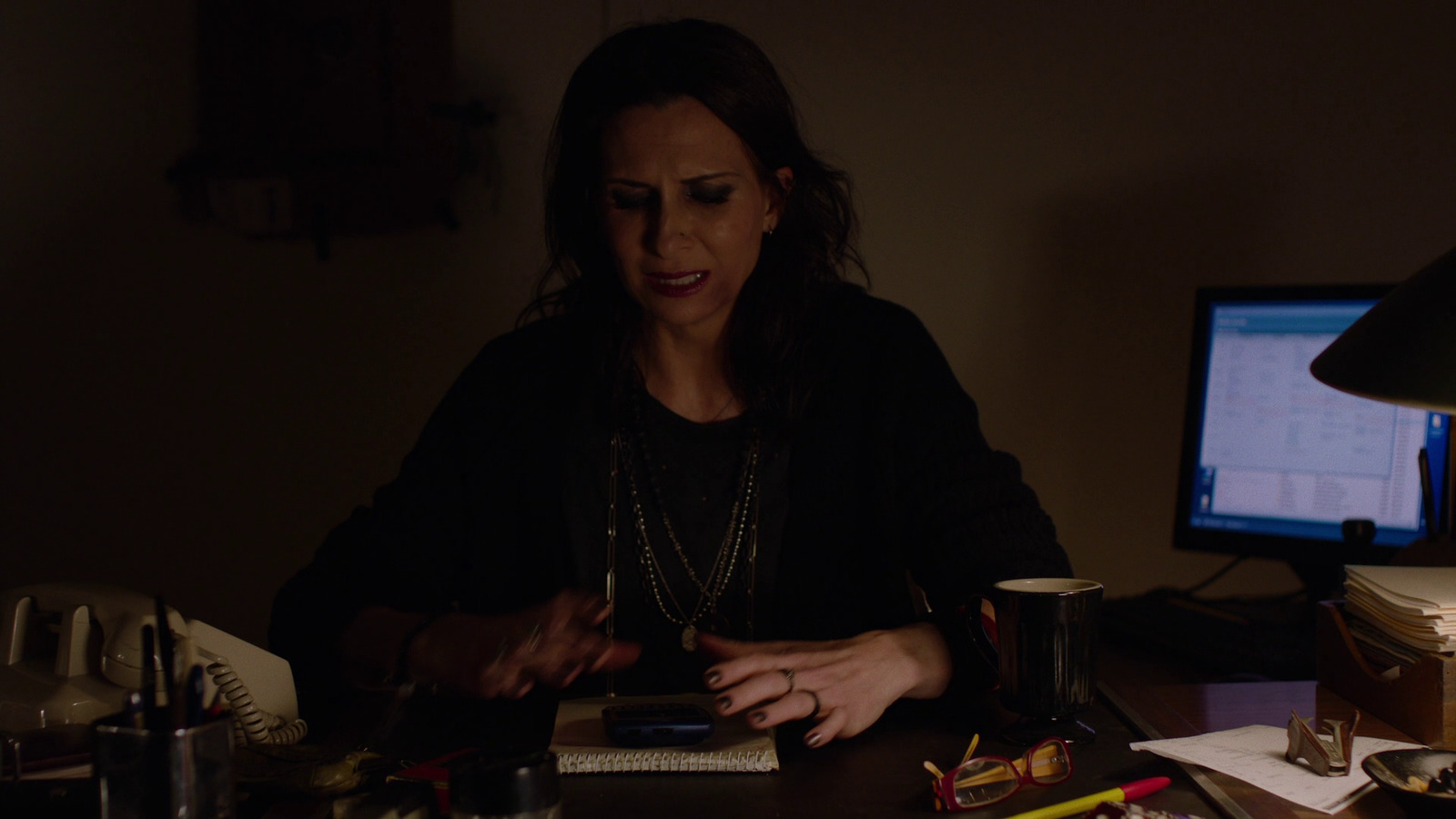
Gene and Jake’s report about the parked car makes Lorraine anxious about the consequences for herself. Her message to a remote device extends the chain beyond the people we can identify. The opening presents murder as outsourced work, with deadlines and fear travelling down the hierarchy. The device’s return near the end gives this small exchange a larger structural role.
A wedding ring in the wrong body
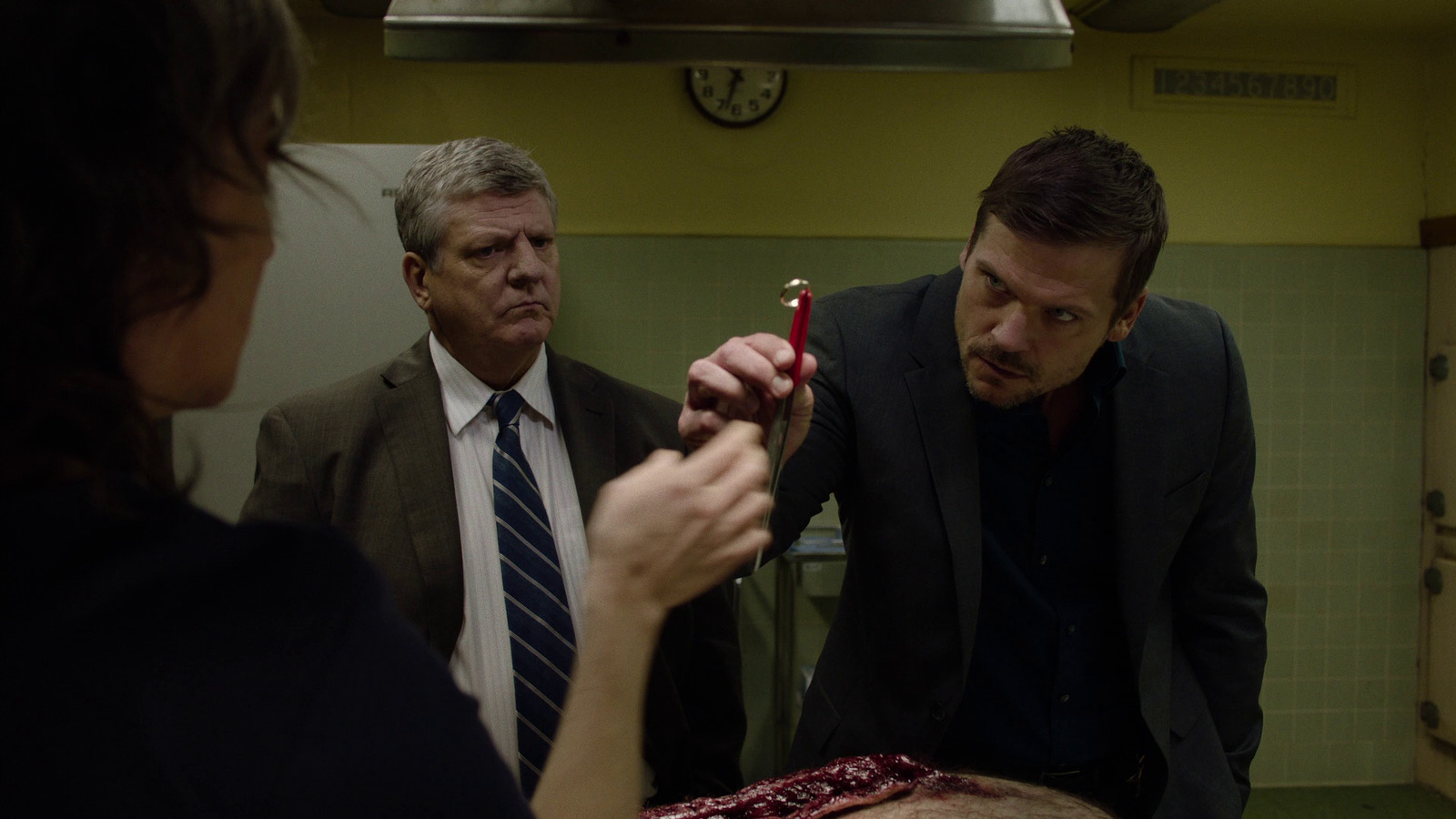
Constance’s dry humour is followed by a material discovery: the ring in the body’s stomach is inscribed for Dougie from Janey-E. The identification of an object does not identify the body that contains it. By connecting Buckhorn with Las Vegas, the scene gives the viewer a geographical advantage over either local investigation while preserving the central contradiction.
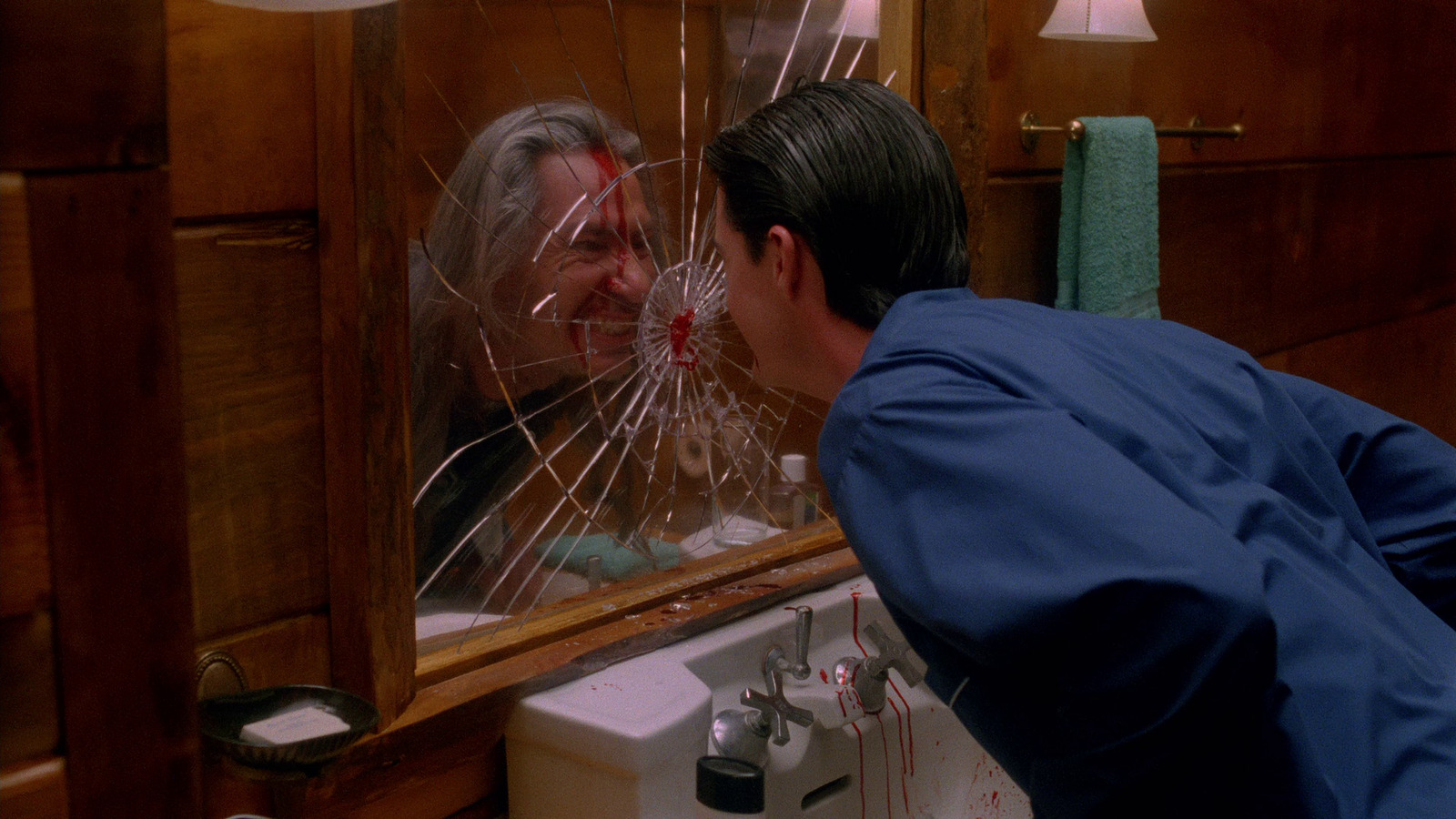
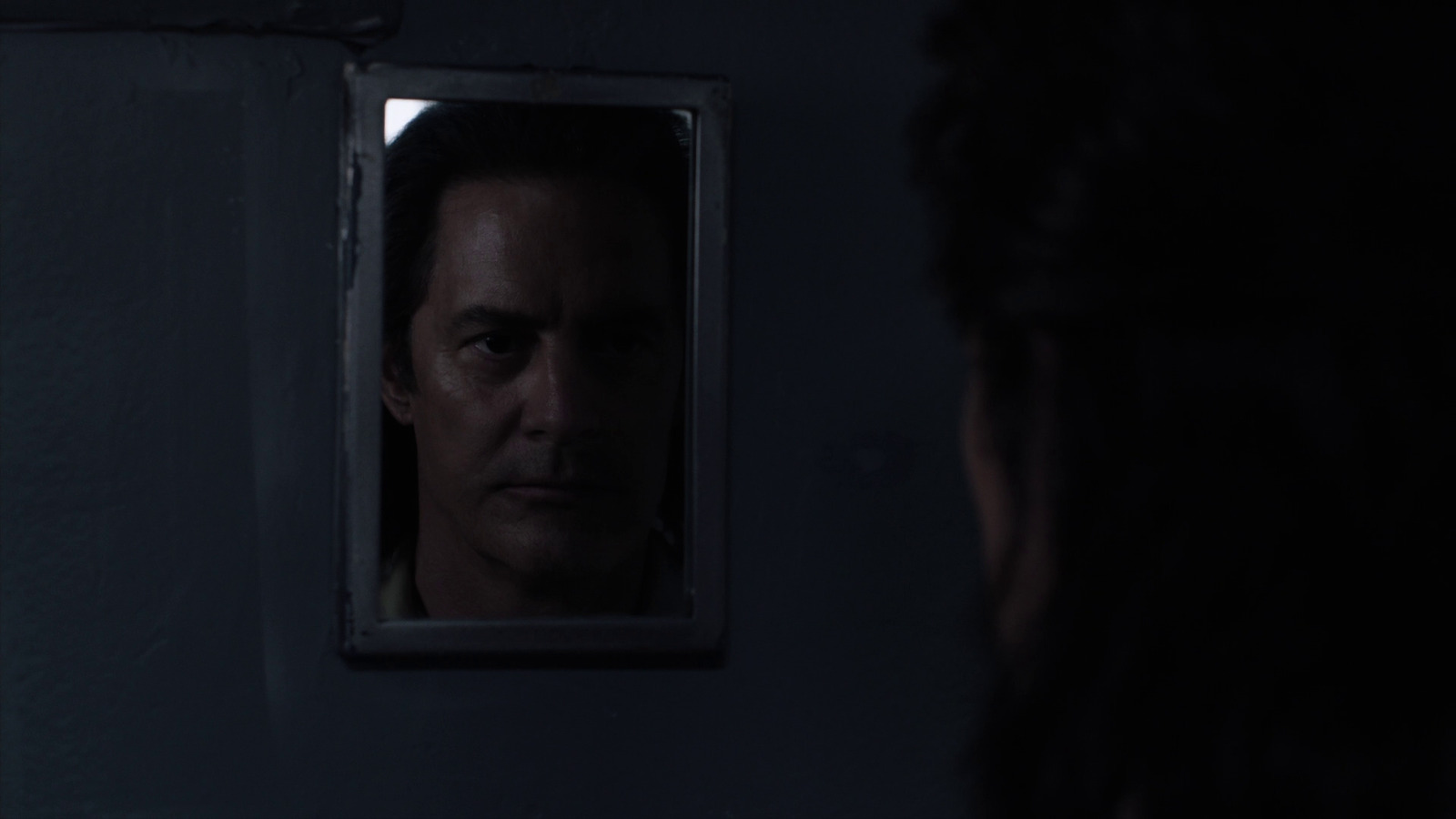
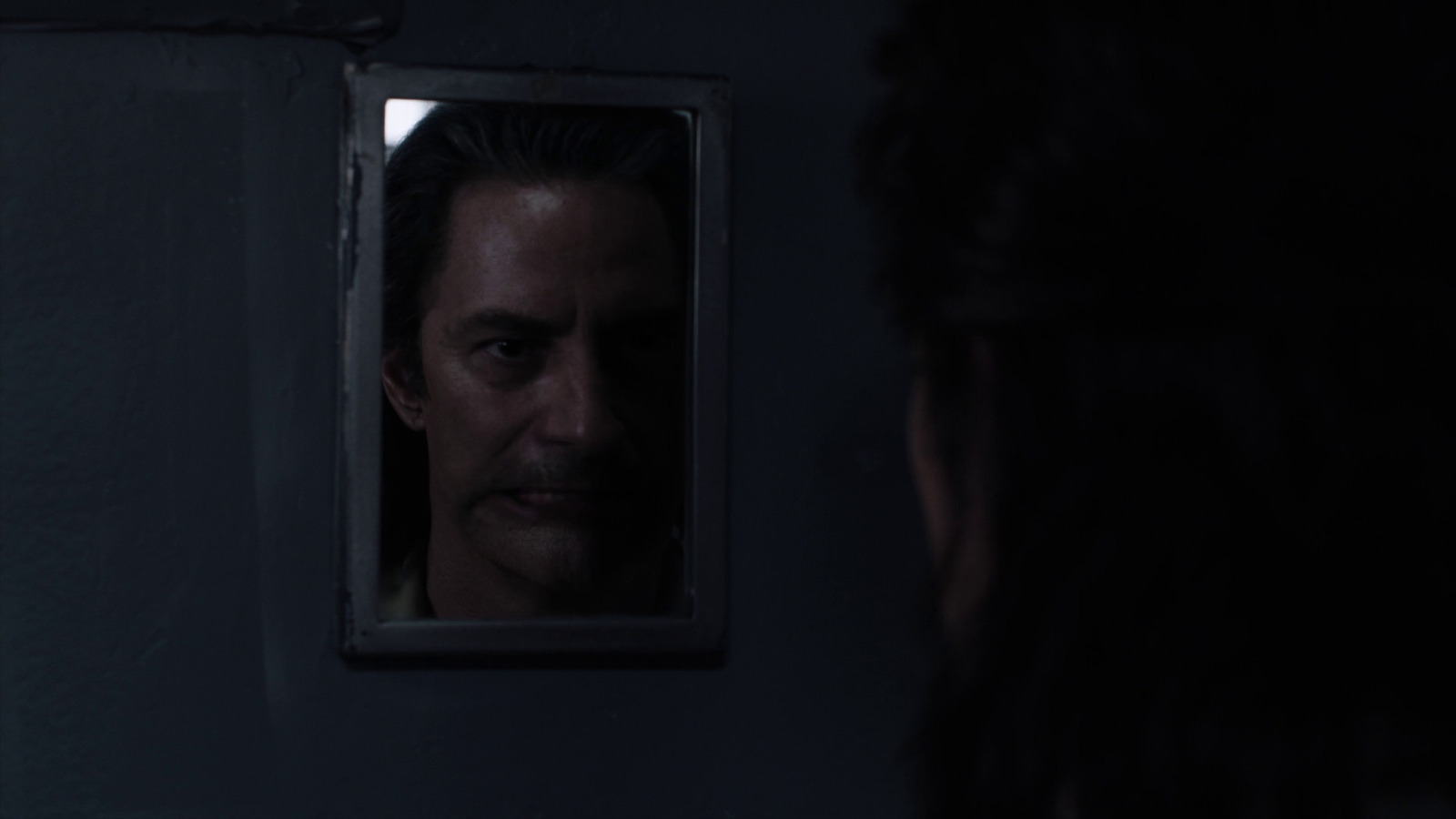
BOB in the prison reflection
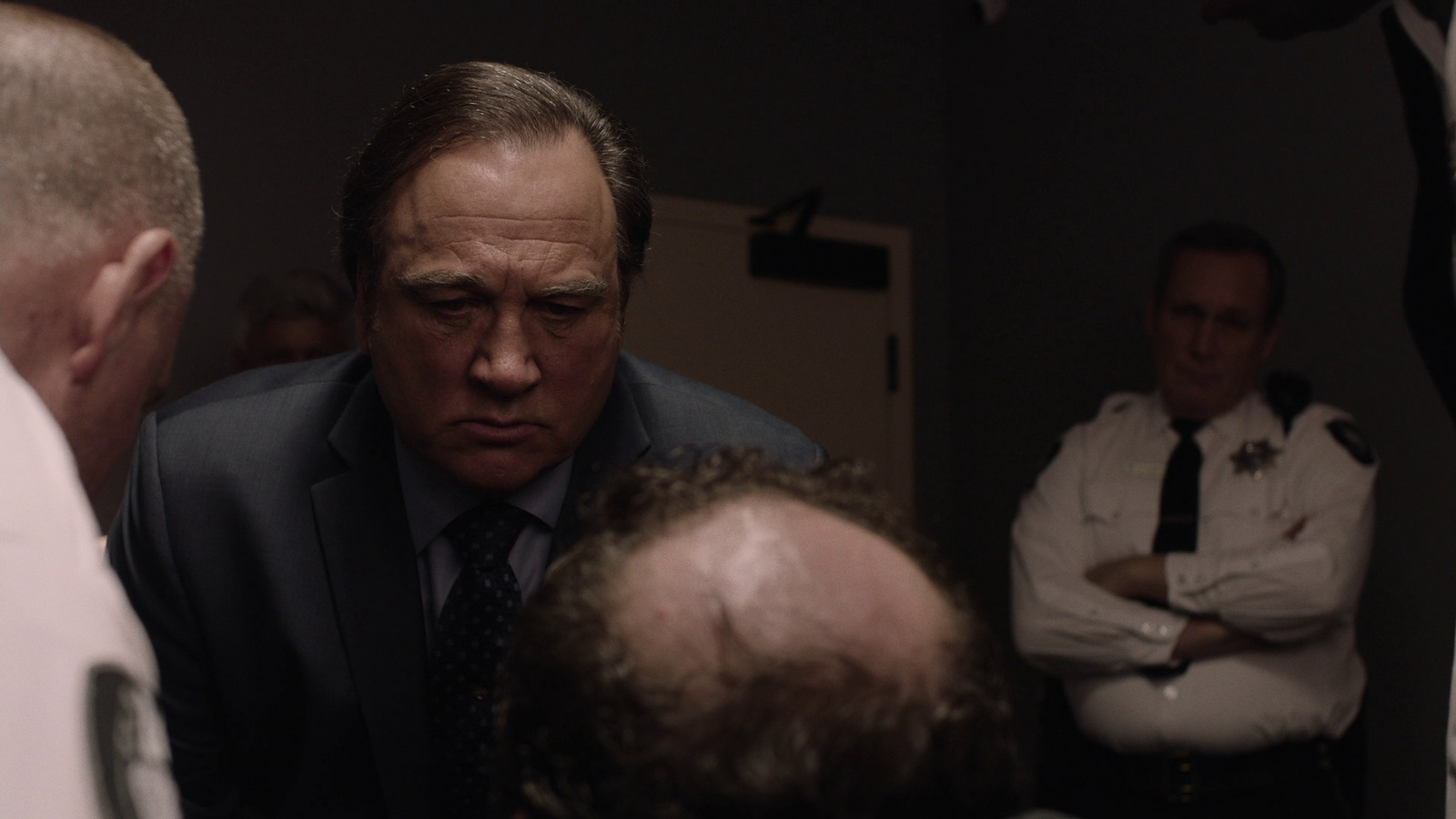
Mr. C approaches the small mirror in his cell. Images from the original series’ Red Room and bathroom return before BOB’s features become visible within the present reflection. The earlier scenes supply a history for what might otherwise appear to be a new visual anomaly. Mr. C’s approval of BOB’s continuing presence makes the recognition different from Cooper’s alarm or an investigator’s discovery.
Open the scene sequence · 2 frames
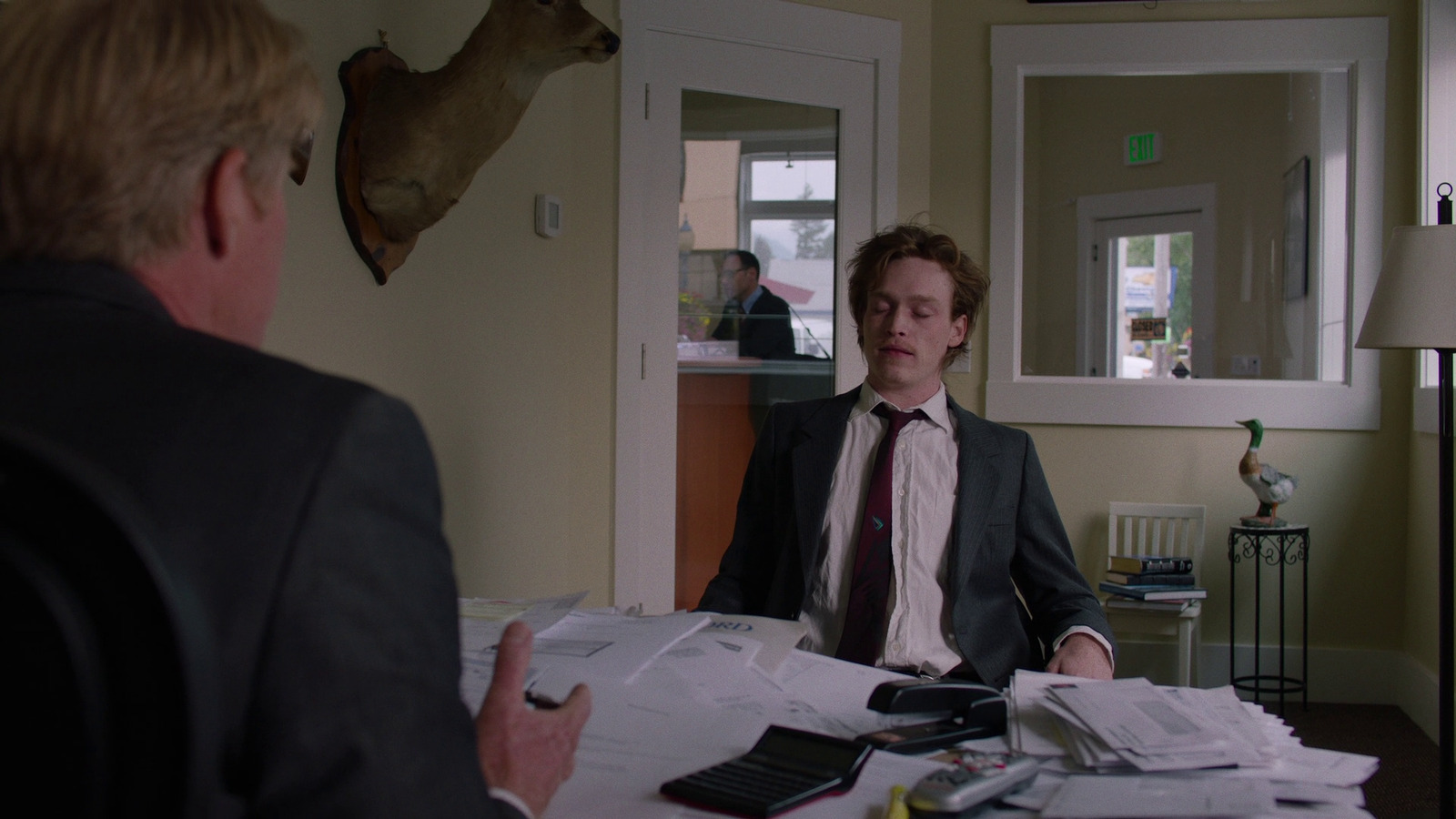
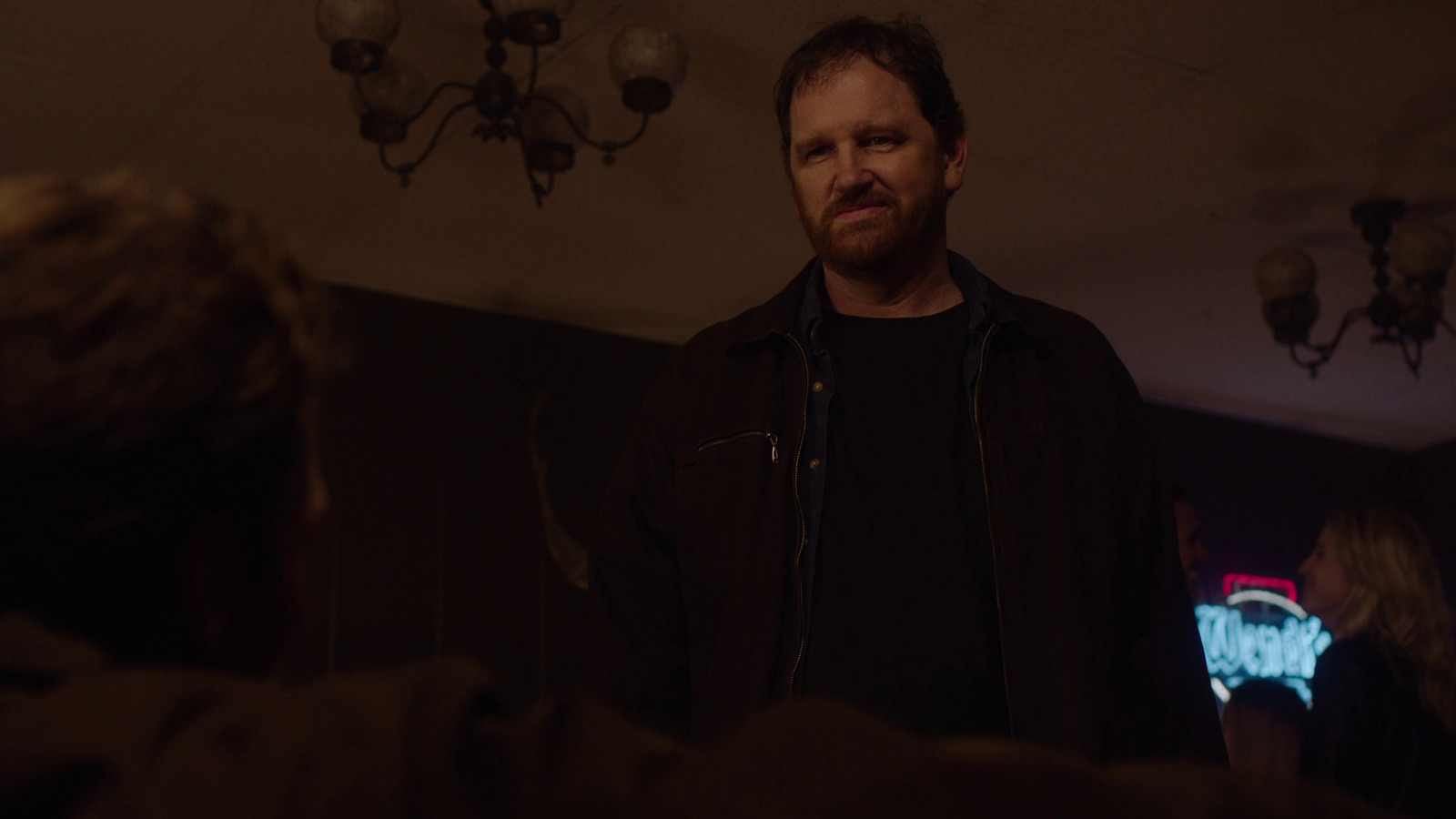
Mike Nelson reads a failed application
Mike has called Steven in to criticise his incomplete, badly prepared application. The exchange makes employment another site at which a document is judged. It also establishes information that Becky does not have: Steven later presents the interview as encouraging. Caleb Landry Jones moves between forced confidence, embarrassment and defensive irritation, making that later account recognisably self-serving.
Frank’s office cannot exclude domestic life
Frank’s call to his ill brother is interrupted by Doris’s arrival. The leaking pipe, bucket and car are small problems that fill the office with disproportionate pressure. The scene withholds the family history supplied in Part 6. That later information matters: the first encounter offers neither a complete explanation of Doris nor permission to reduce her to a joke.
A child’s face reaches Cooper
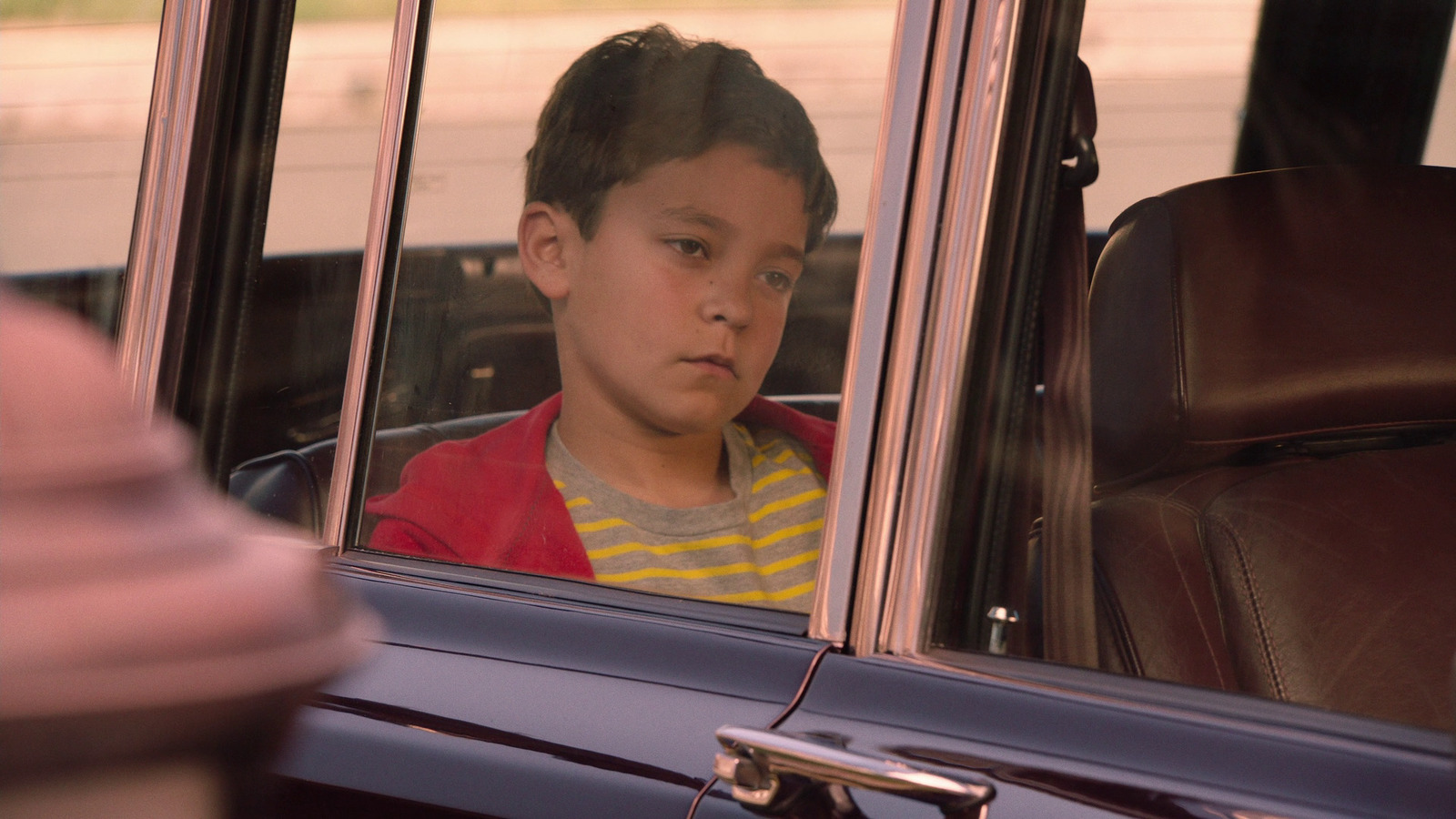
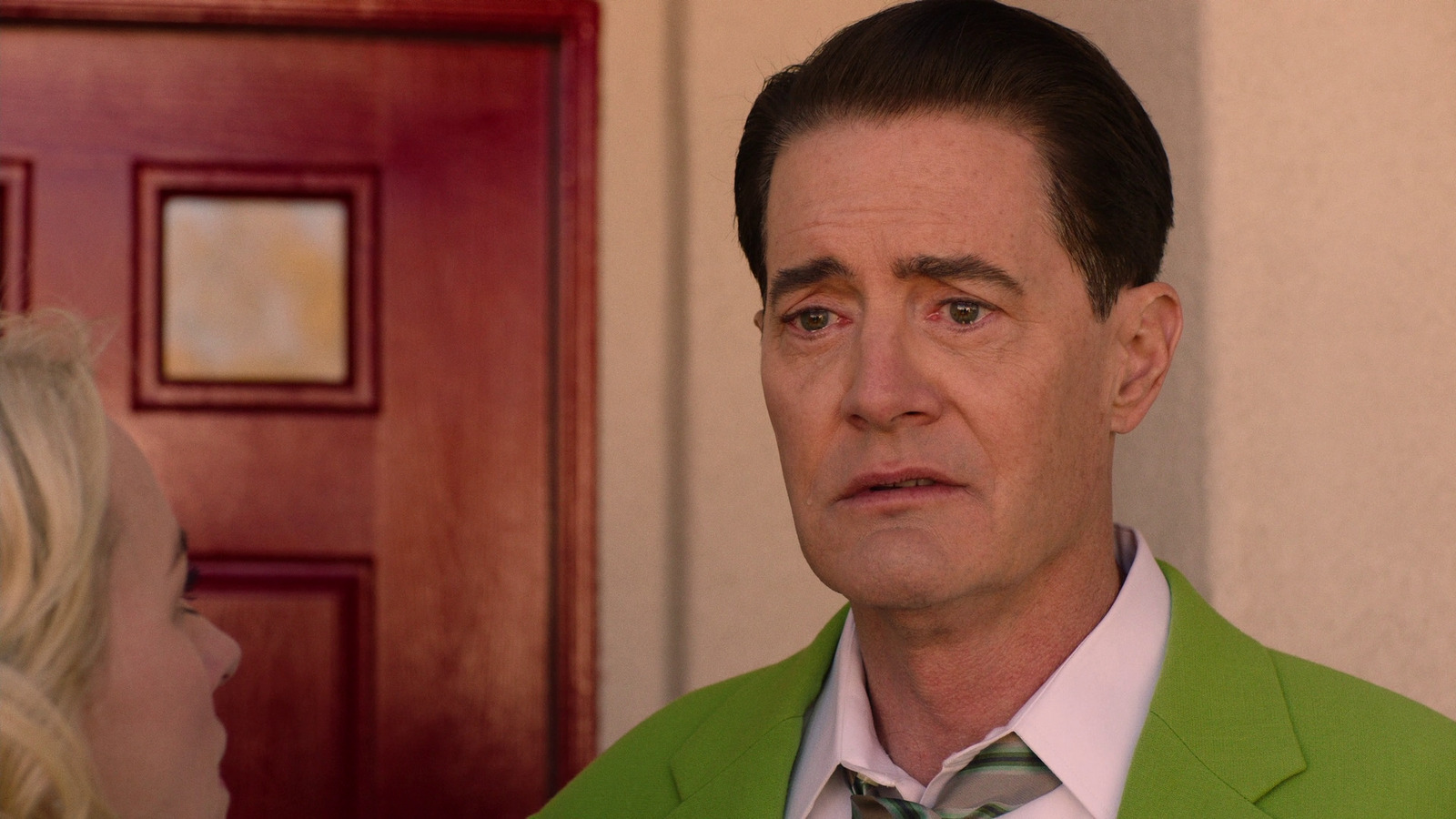
Janey-E counts the casino money as a way out of debt, but Cooper’s attention settles on Sonny Jim waiting in the car. The editing moves between the child and Cooper’s tearful response. He cannot describe what he recognises. The feeling remains legible without a recovered biography, and the scene gives his impaired state an interior dimension beyond its comic inconveniences.
Open the scene sequence · 1 frame
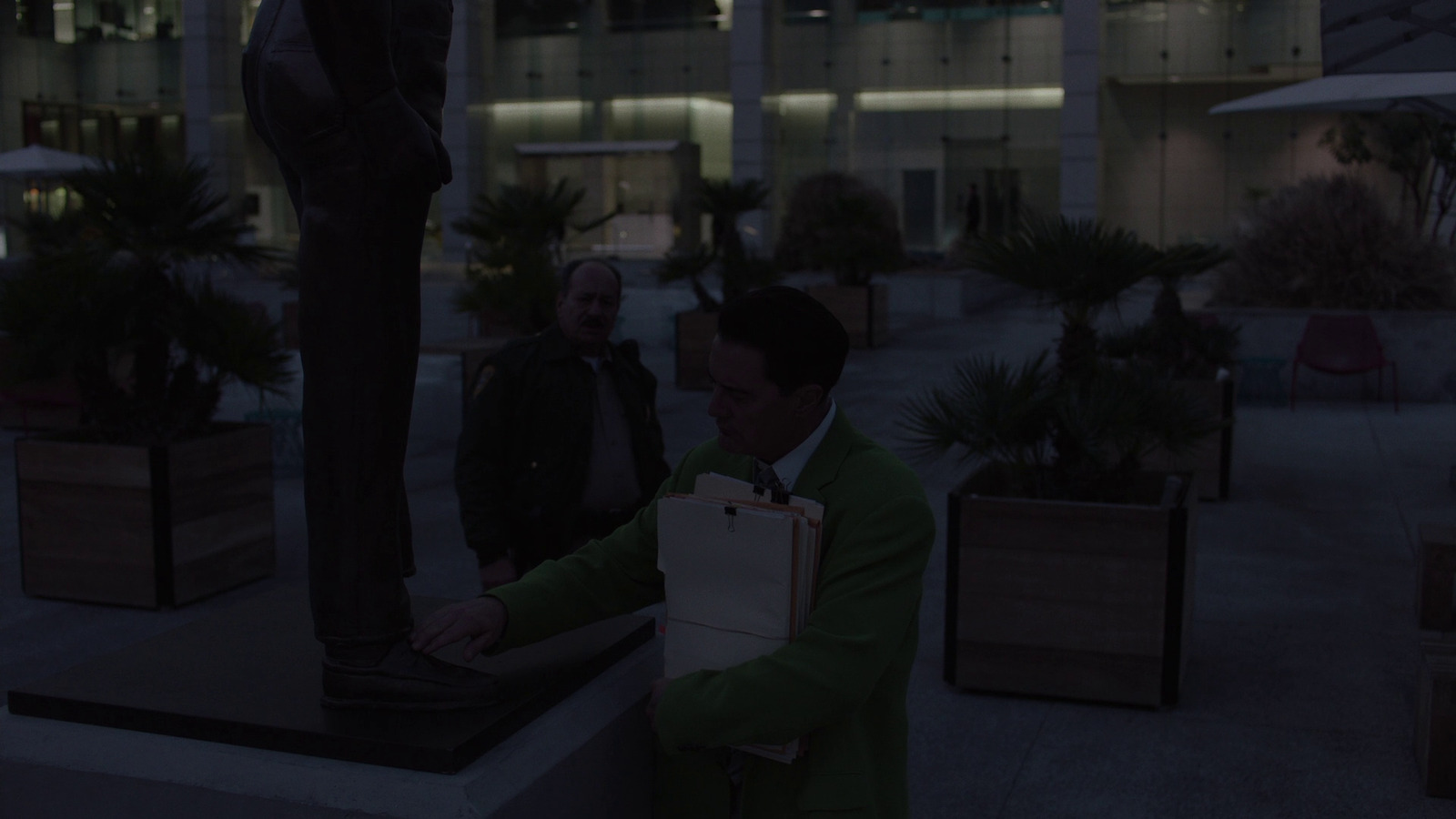
The statue arrests his journey
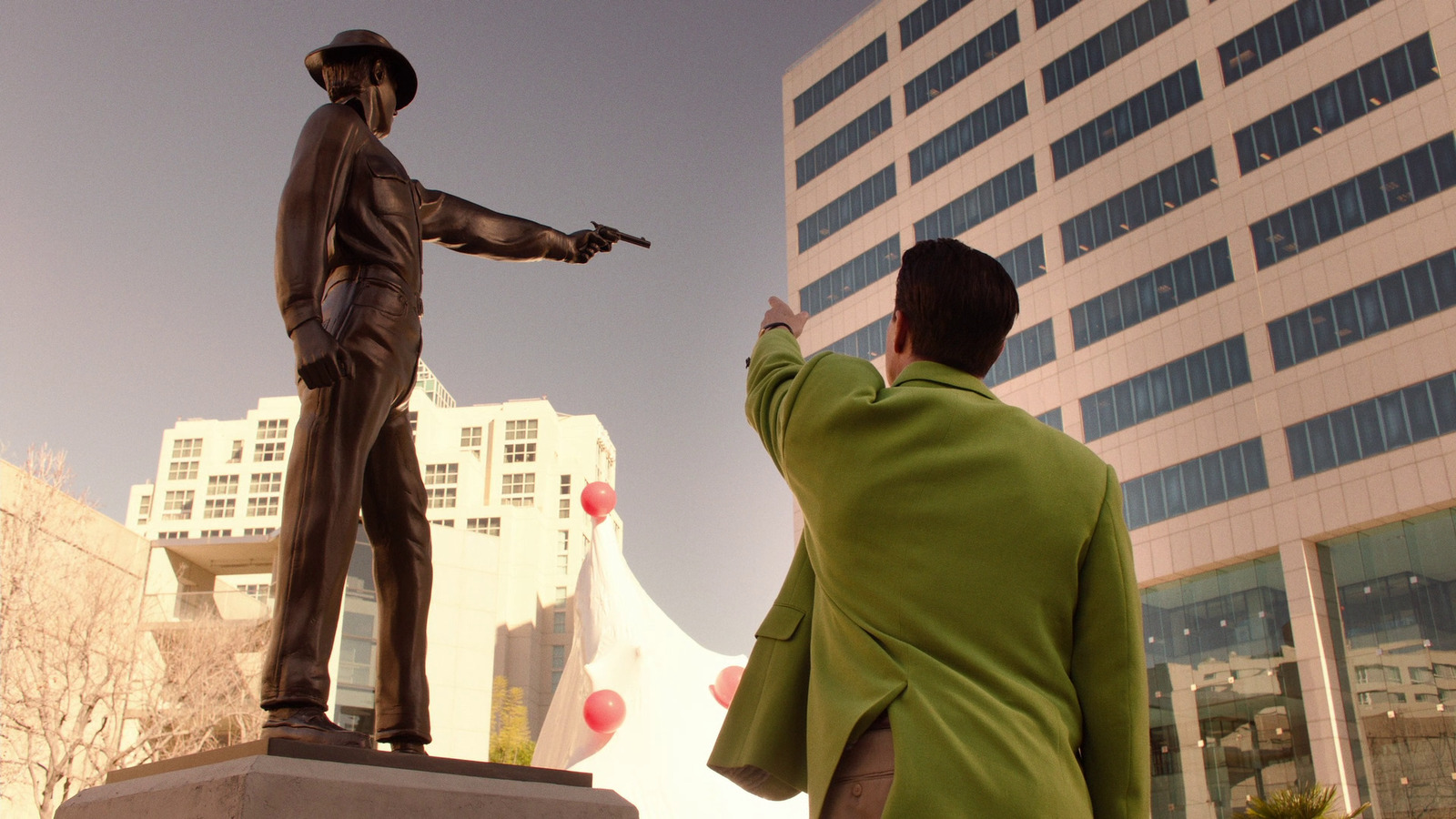
After the drive to Lucky 7, Cooper pauses before a cowboy statue. Its badge and raised gun attract him while the office crowd continues past. He gestures towards it but cannot explain the attraction or turn it into a useful next action. The statue will still hold his attention when everyone else has left.
Coffee as a route into the office
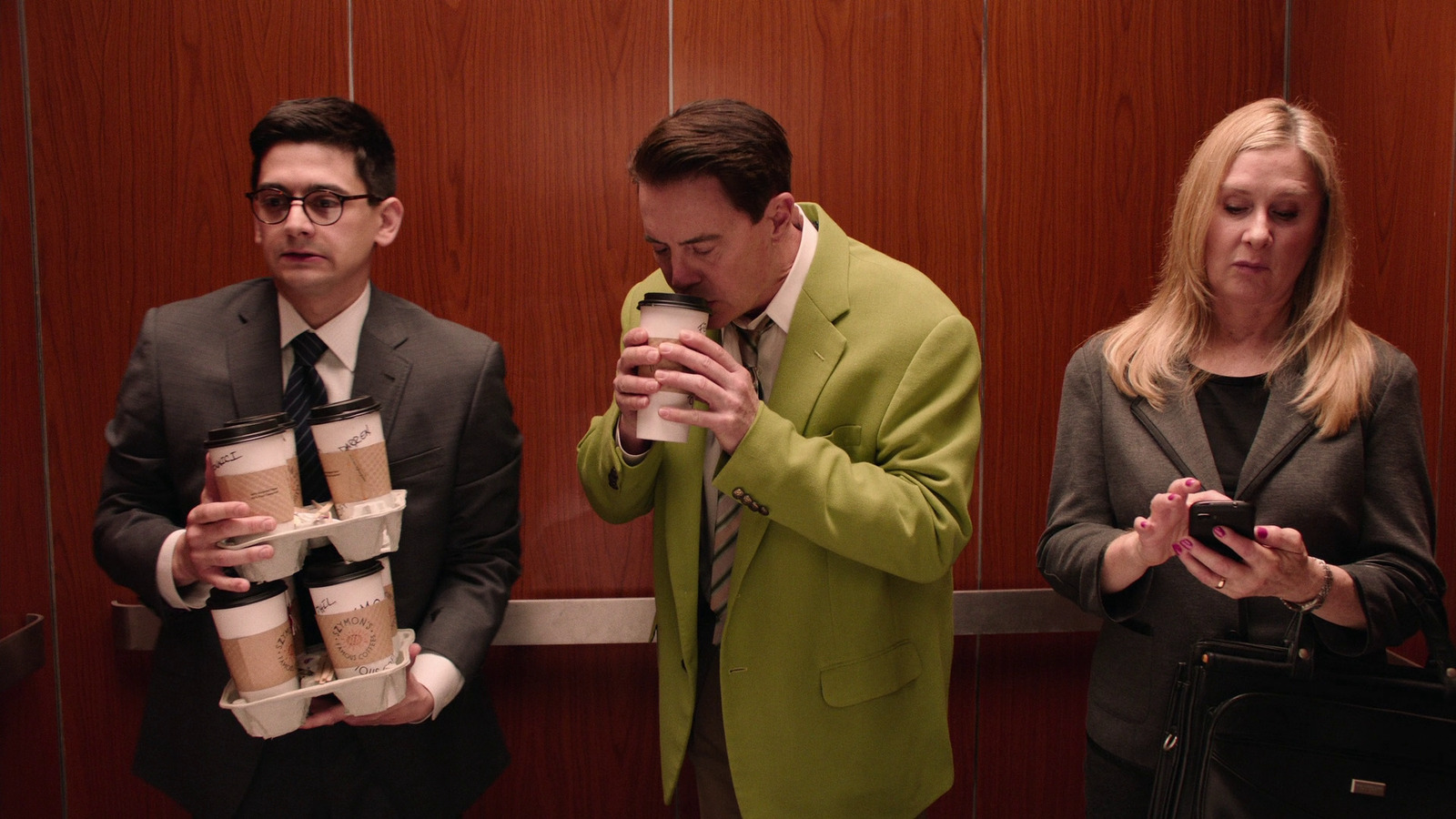
Phil’s tray gives Cooper a sensory guide through the building. The elevator sequence makes room for the smell, the cup and the pleasure of drinking; Phil then improvises a replacement for Frank’s displaced order. Social life repeatedly repairs the disruption Cooper creates. That practical kindness is distinct from genuine understanding of his condition.
An accusation interrupts the meeting
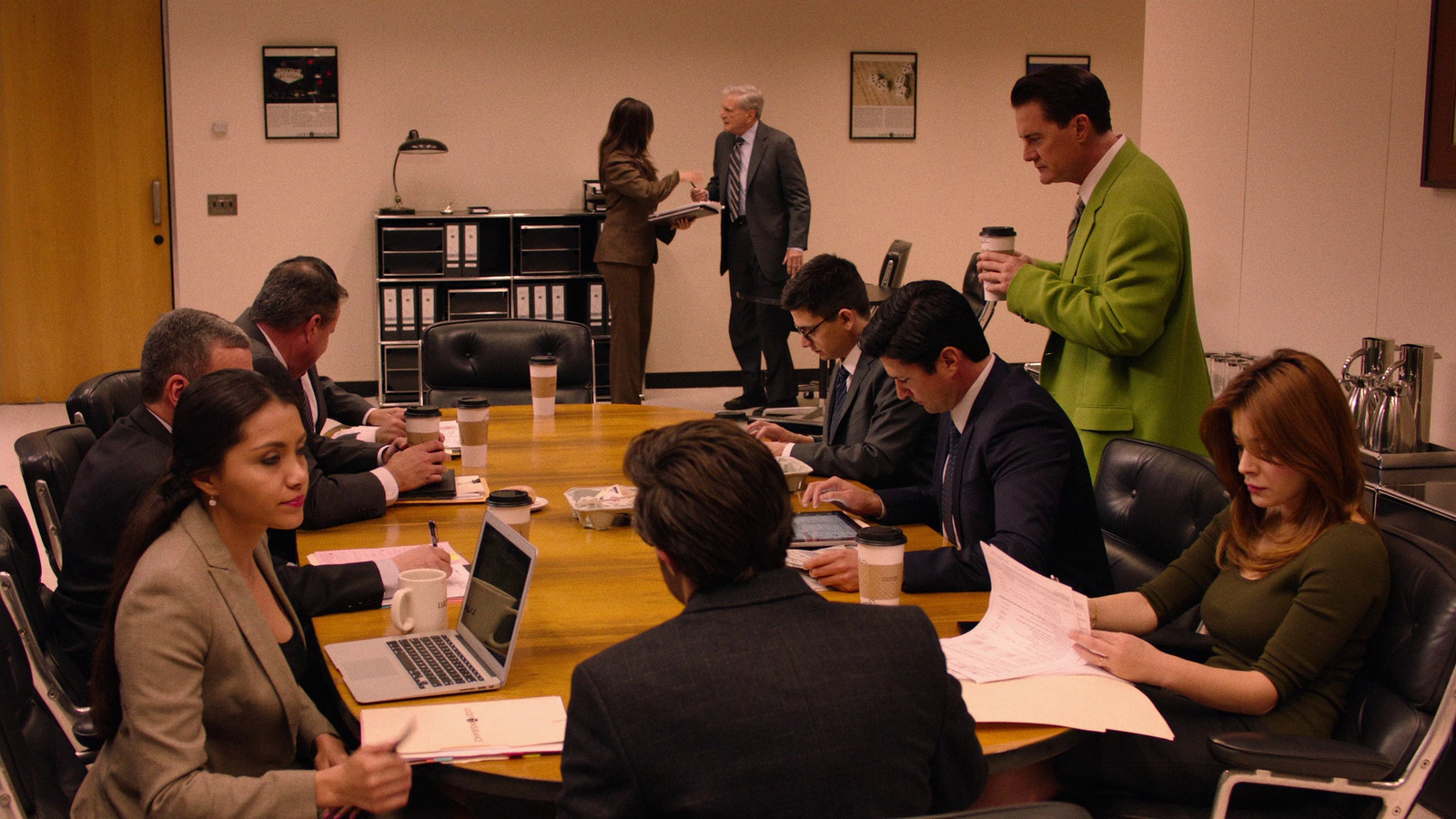
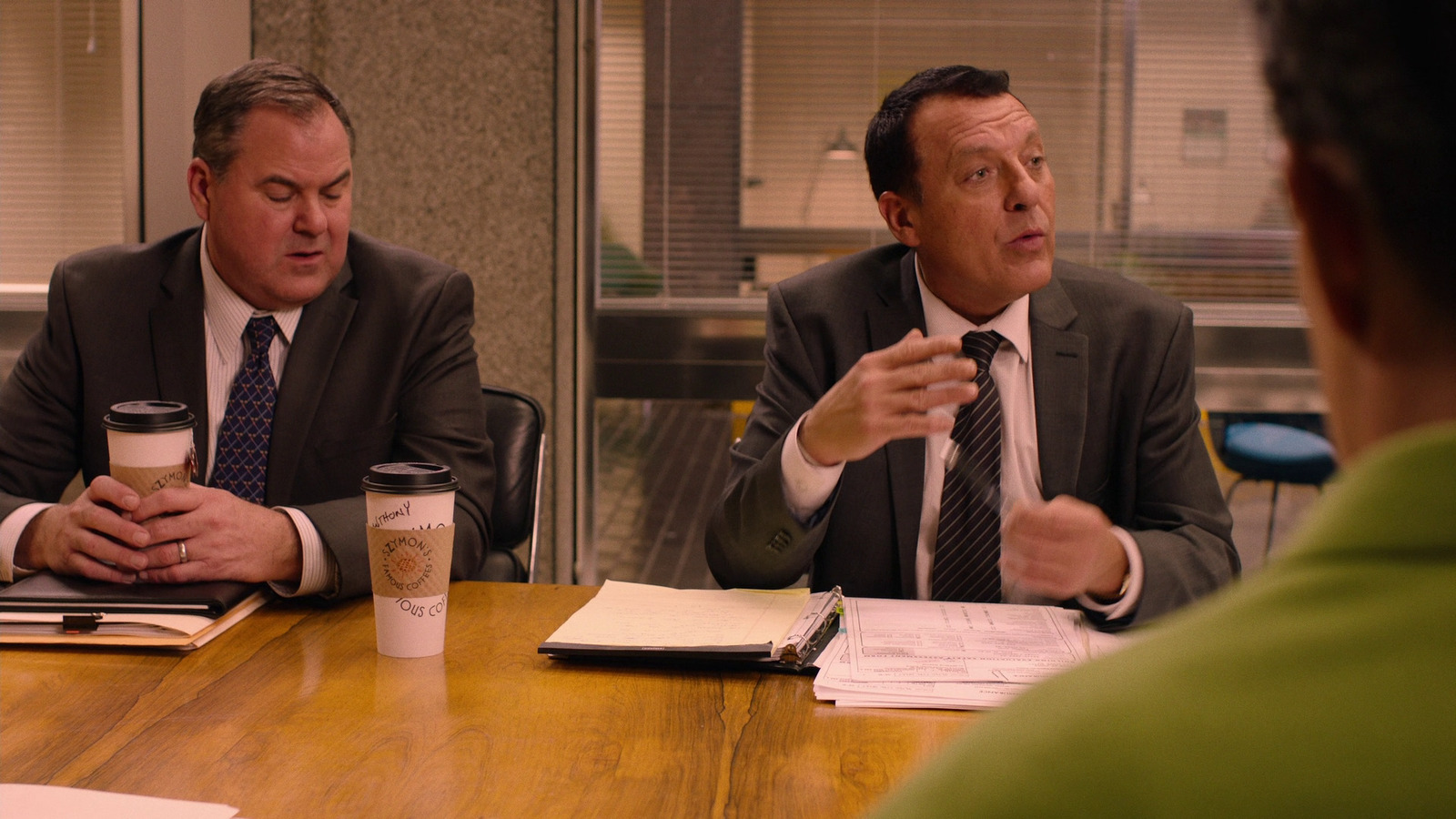
Anthony defends payment on a claim that Bushnell associates with arson. Cooper abruptly calls Anthony a liar. The certainty contrasts with his difficulty sitting down or following office routines. The scene gives us a claim of dishonesty, not a complete account of the fraud; later parts develop its evidential basis.
Open the scene sequence · 1 frame
Words become handles
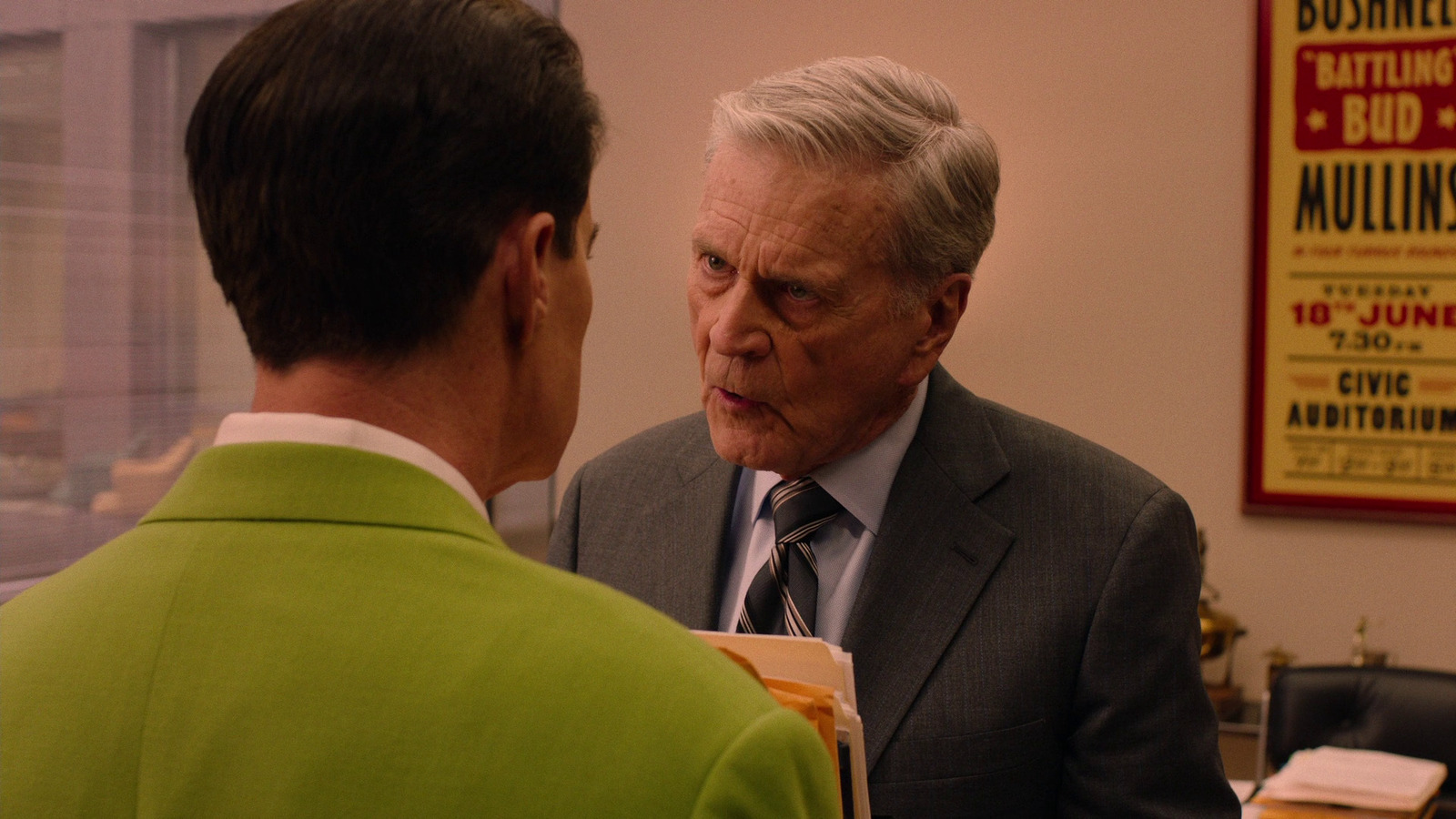
Bushnell’s rebuke offers Cooper individual words to repeat: agent, game, case files. Each word suggests a possible point of contact with his former capacities, but repetition is not yet explanation. The assignment sends a packet of records home for the drawings and Bushnell’s recognition in Part 6. Rhonda’s assistance afterwards again exposes the gap between adult expectations and Cooper’s immediate needs.
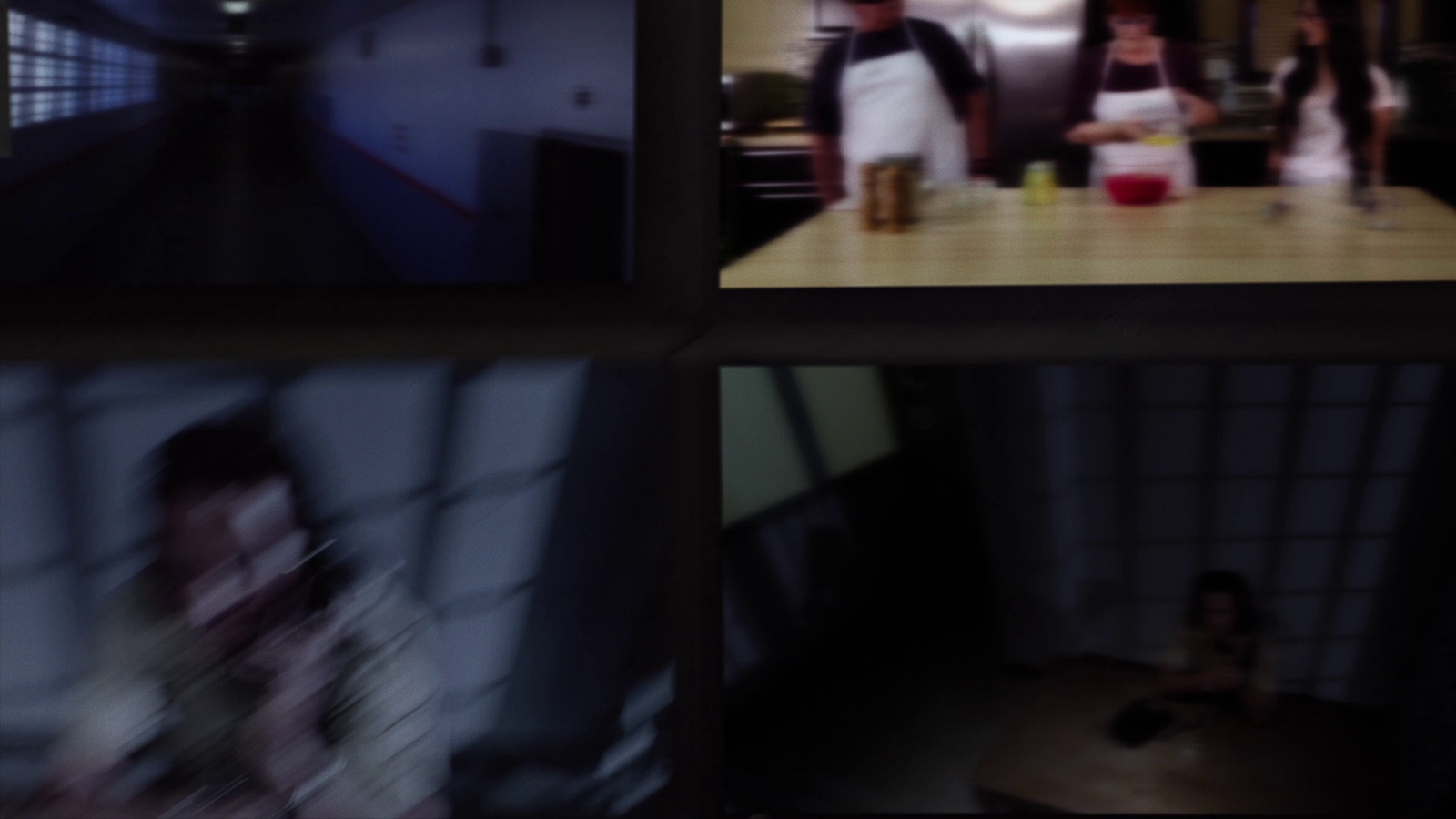
Surveillance without an explanation
The Mitchums can replay Cooper’s jackpots but cannot see the guiding visions available to him. They explain the losses through collusion and punish the floor manager. The screen seems to provide objective evidence while omitting the element that would make the event intelligible. Candie, Mandie and Sandie remain in the room as another register of the casino’s theatrical, unequal world.
The wrong people enter the car
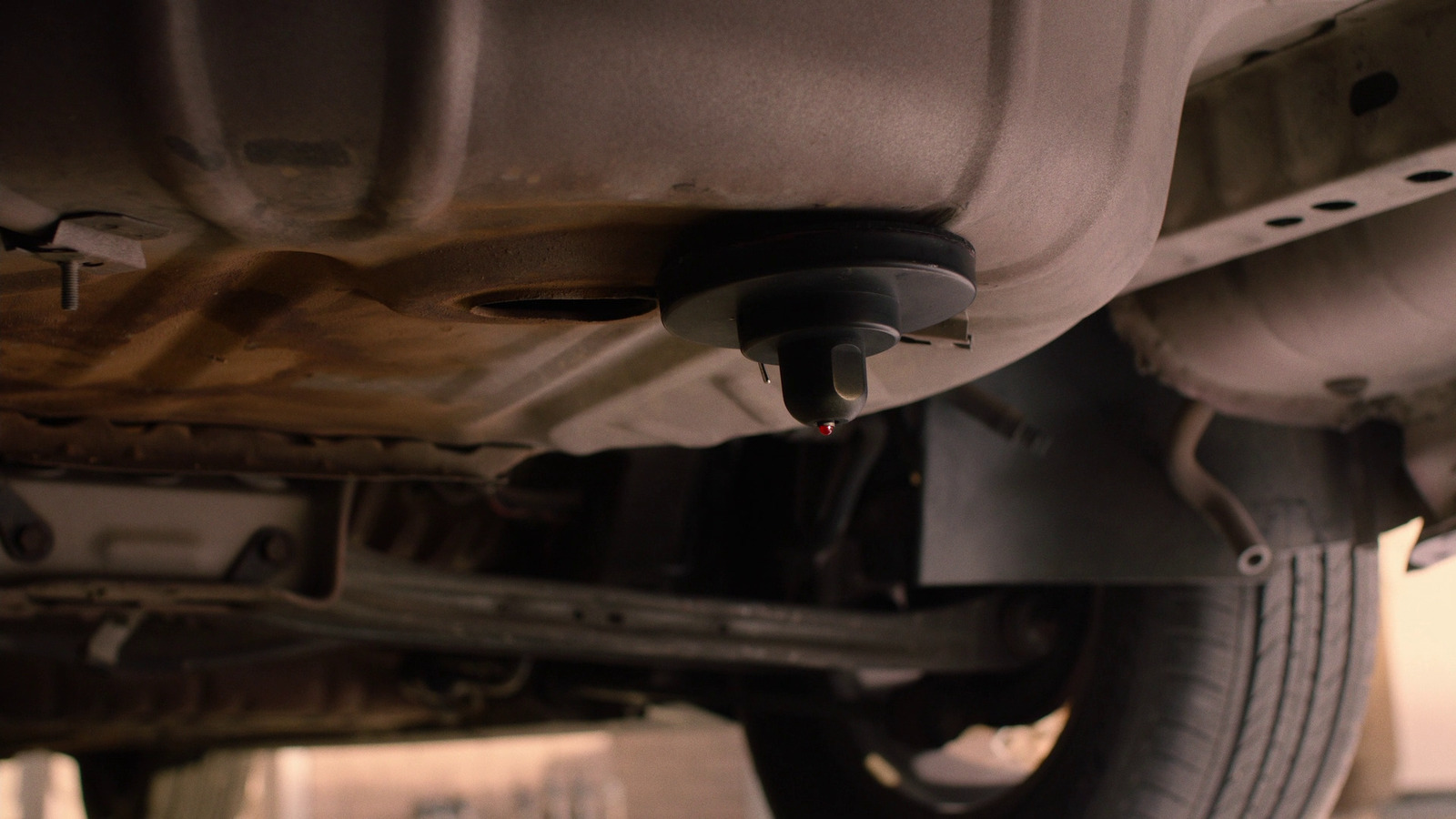
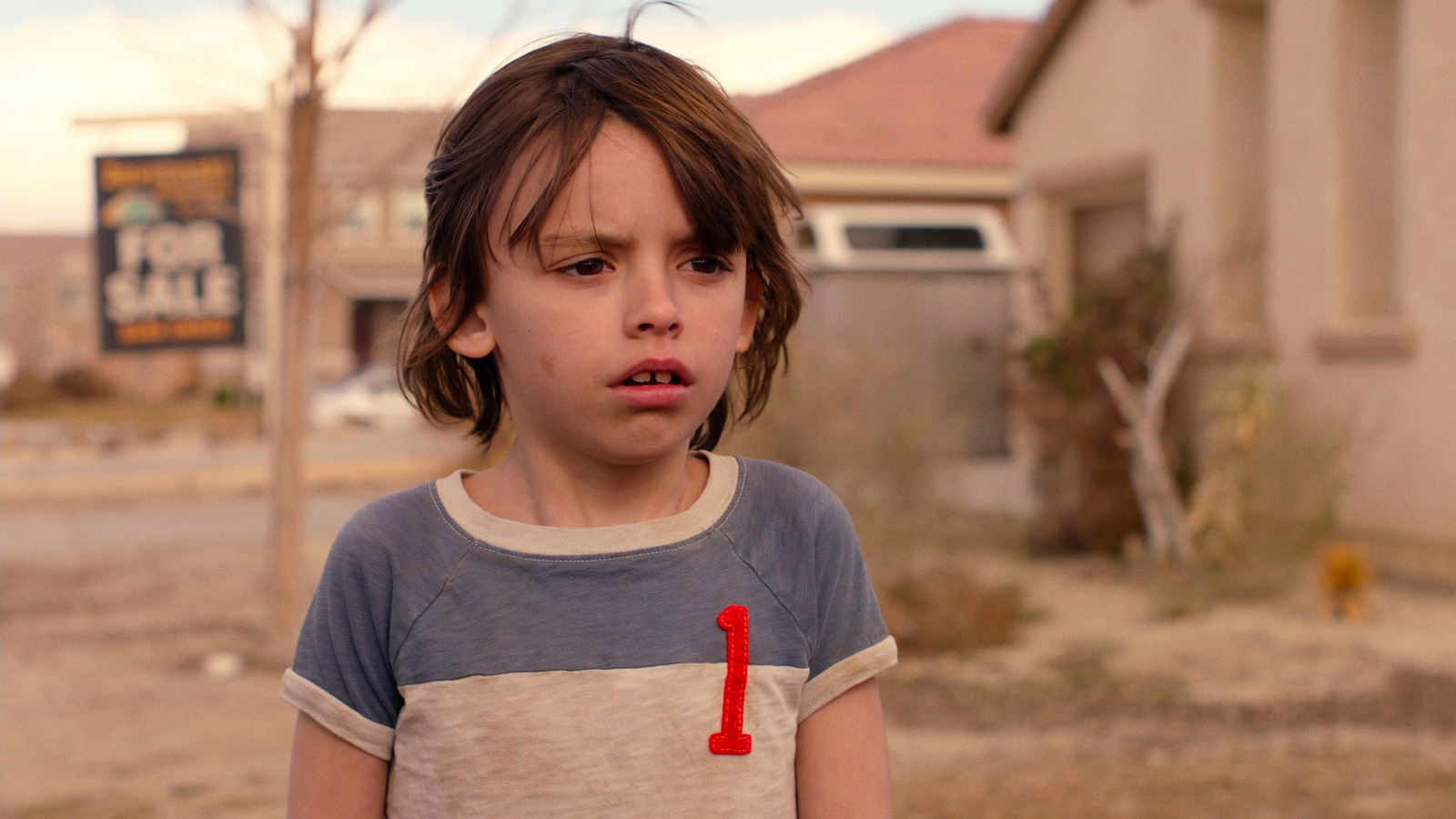
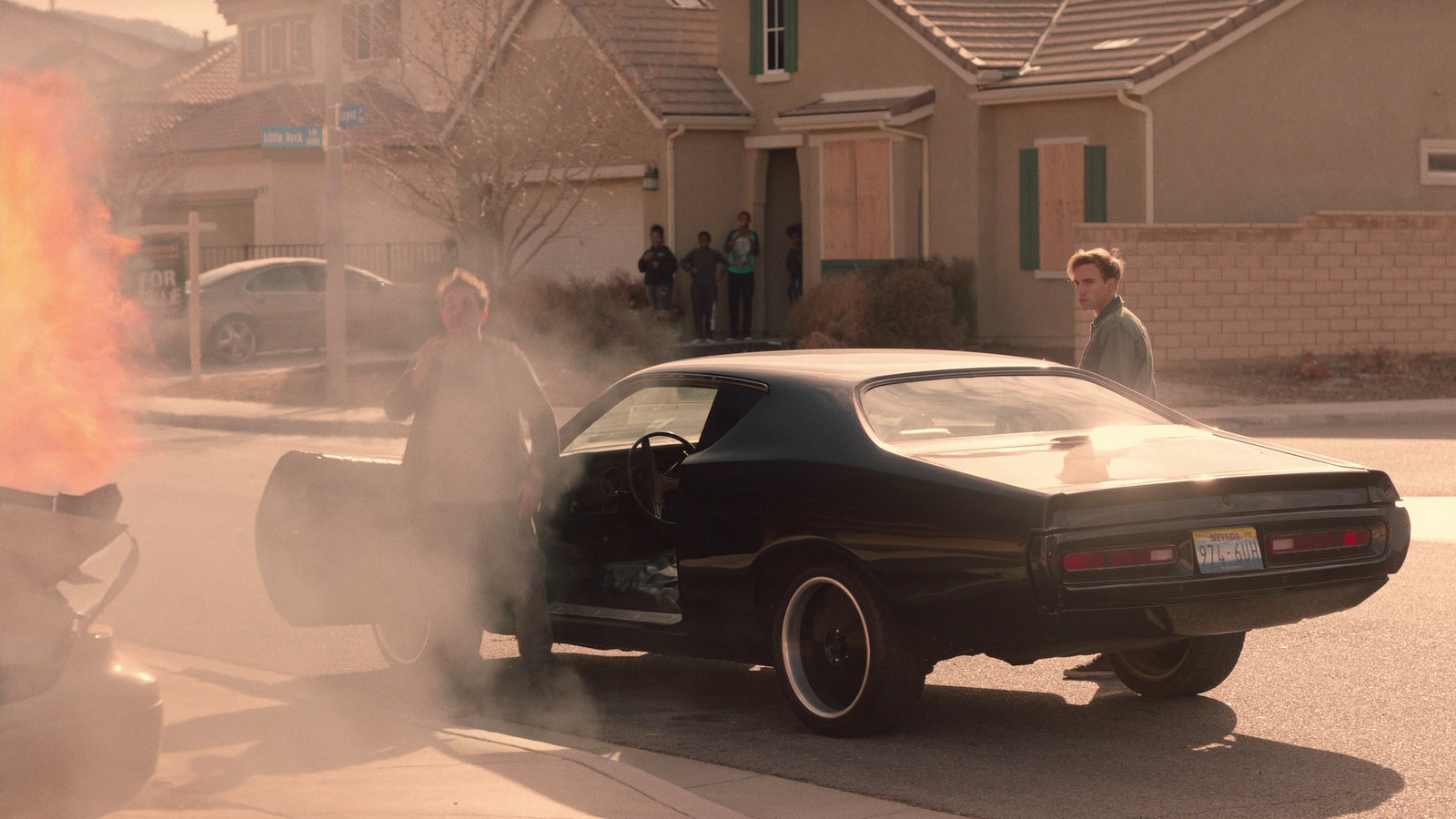
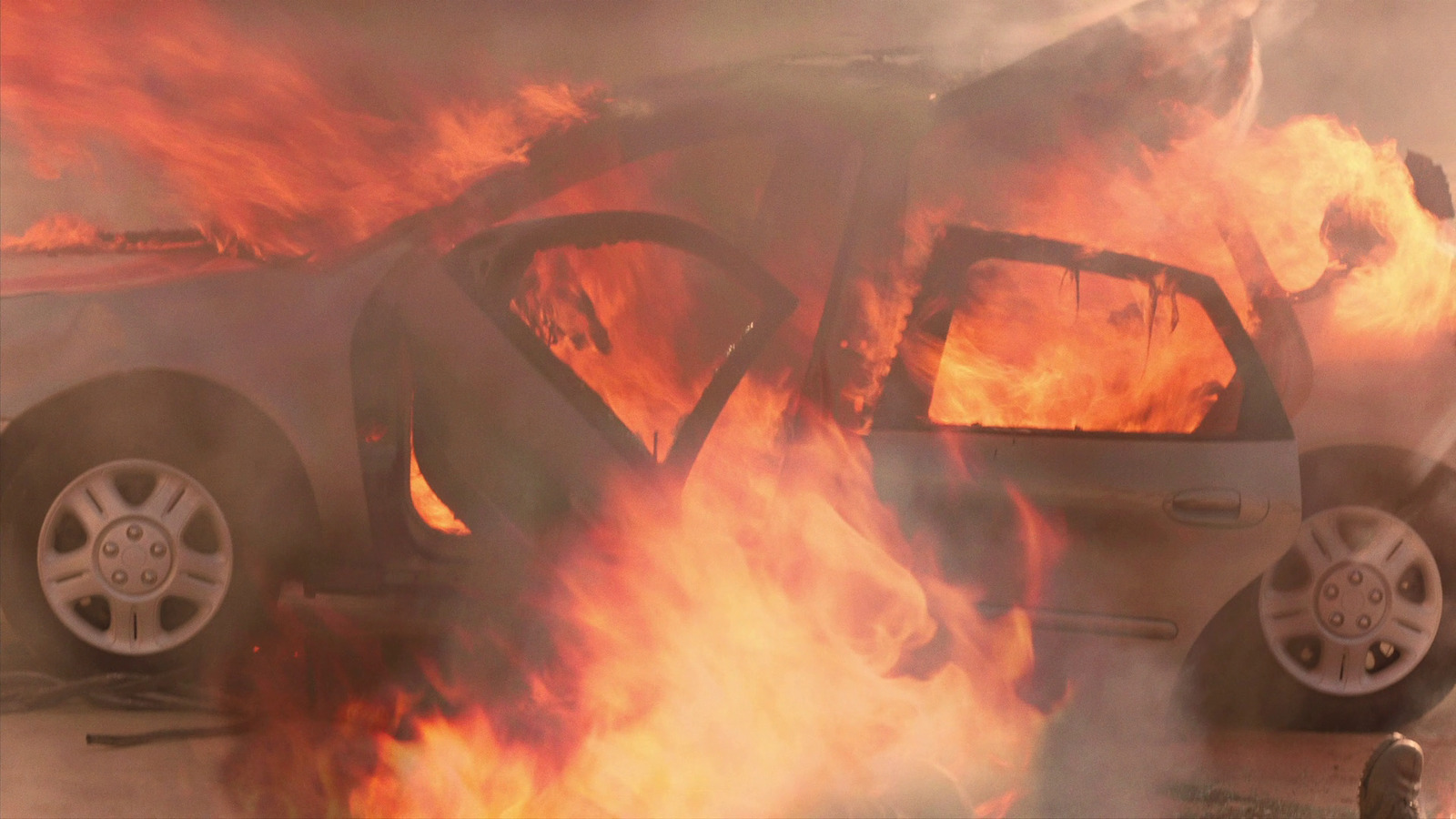
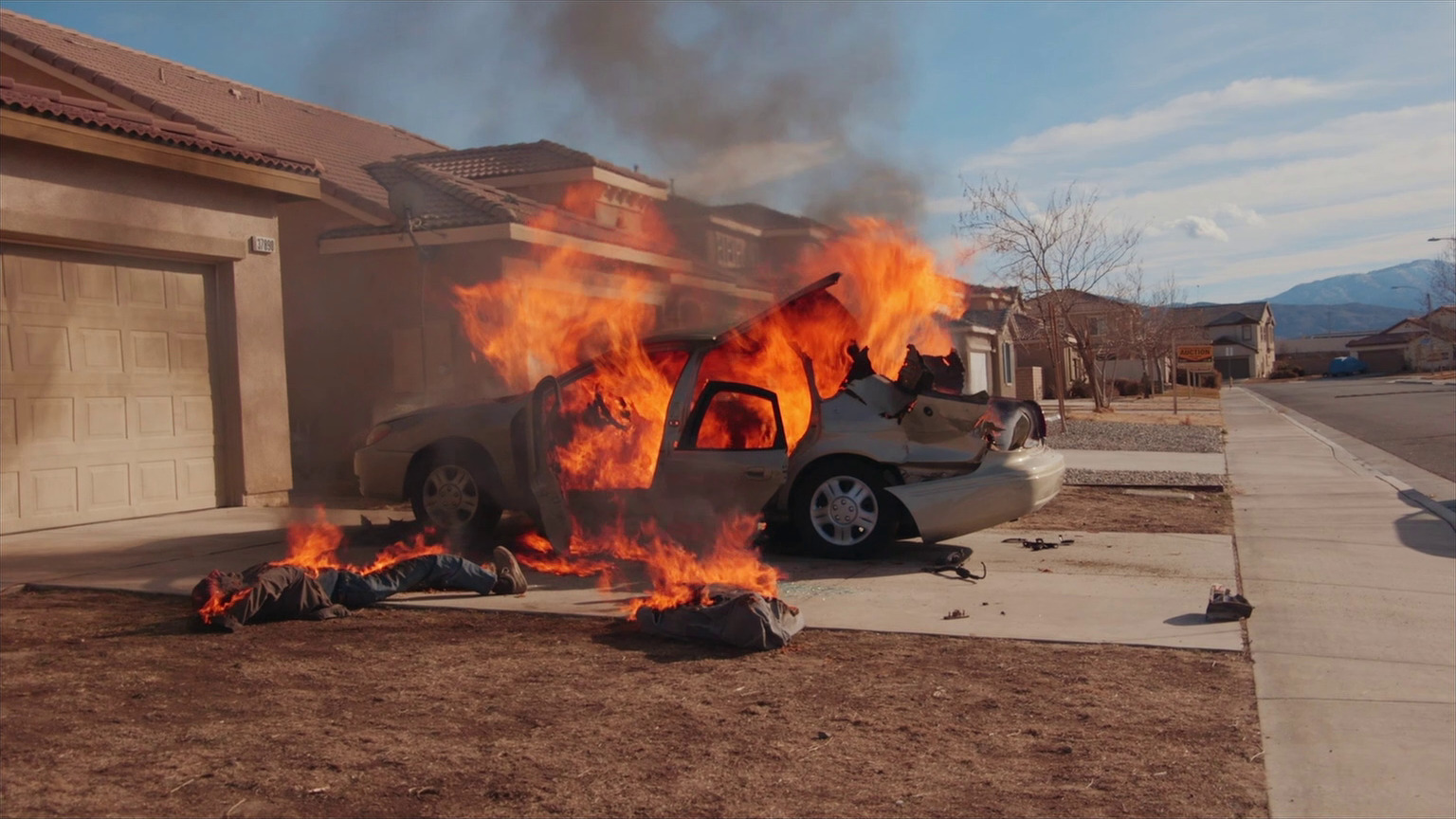
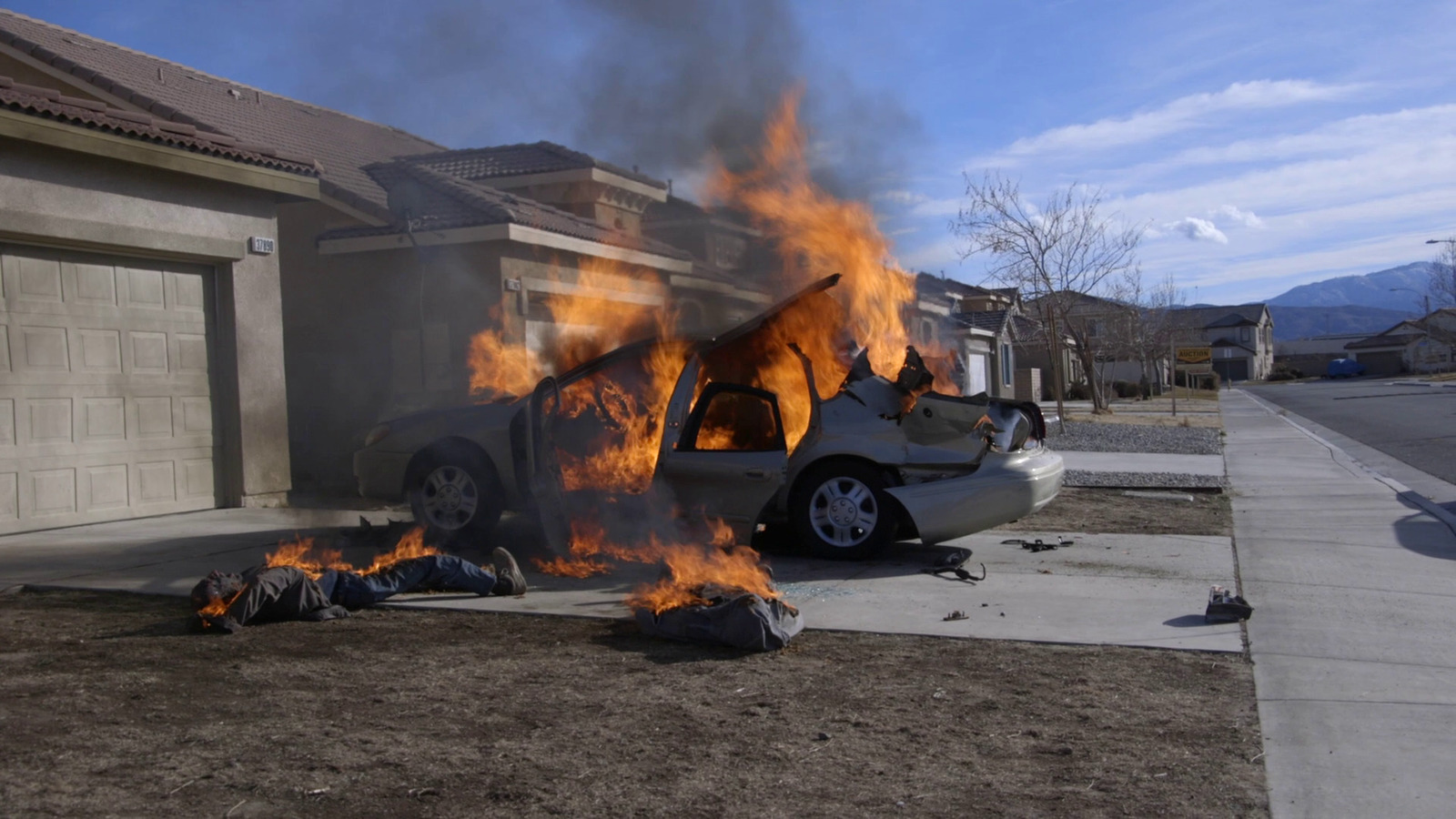
A boy notices the device under Dougie’s parked car. Men drive him away and attempt to take the vehicle themselves; the bomb kills them. The sequence distributes knowledge unevenly between child, thieves, killers and spectator. The brief impact and the longer burning aftermath show how a plan aimed at one body spreads danger through an apparently empty neighbourhood.
Open the scene sequence · 3 frames
Jade sends a small object home
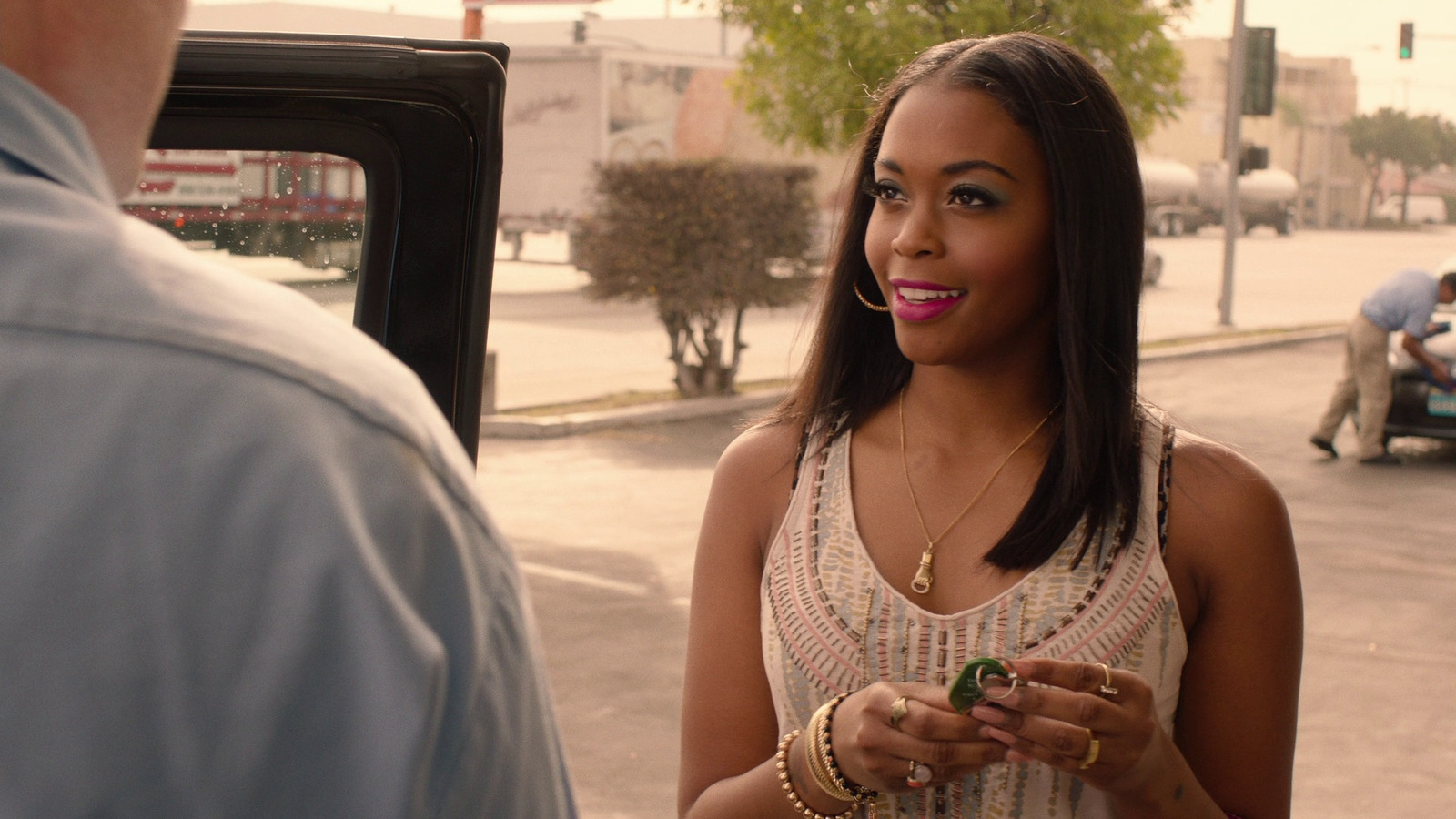
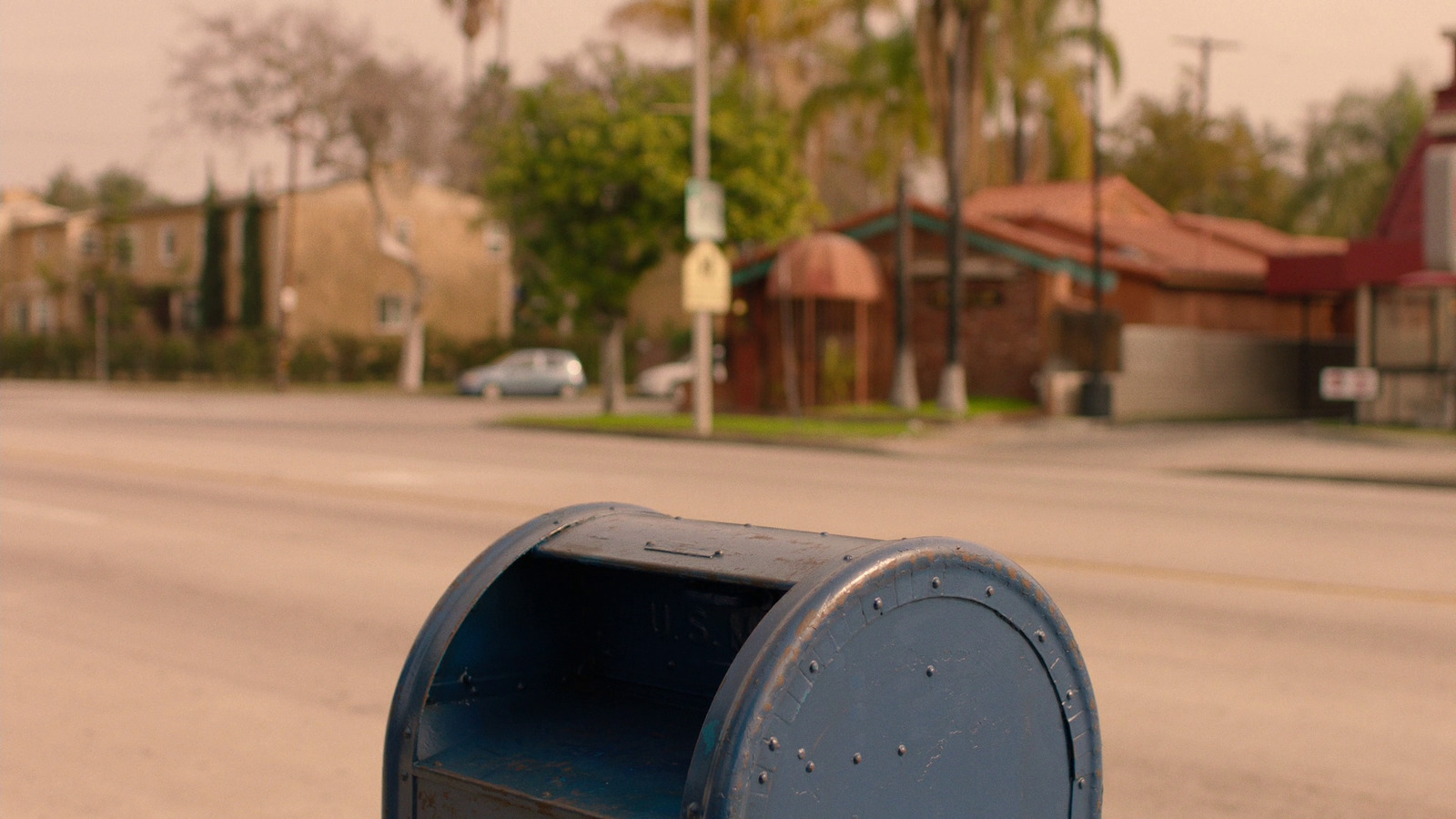
The car wash produces the Great Northern key that Cooper carried into Las Vegas. Jade’s response is practical and unceremonious: return it. The mail provides a connection that needs neither a vision nor official intelligence. Follow its arrival in Part 7’s hotel sequence.
Open the scene sequence · 1 frame
Shelly and Norma recognise a pattern
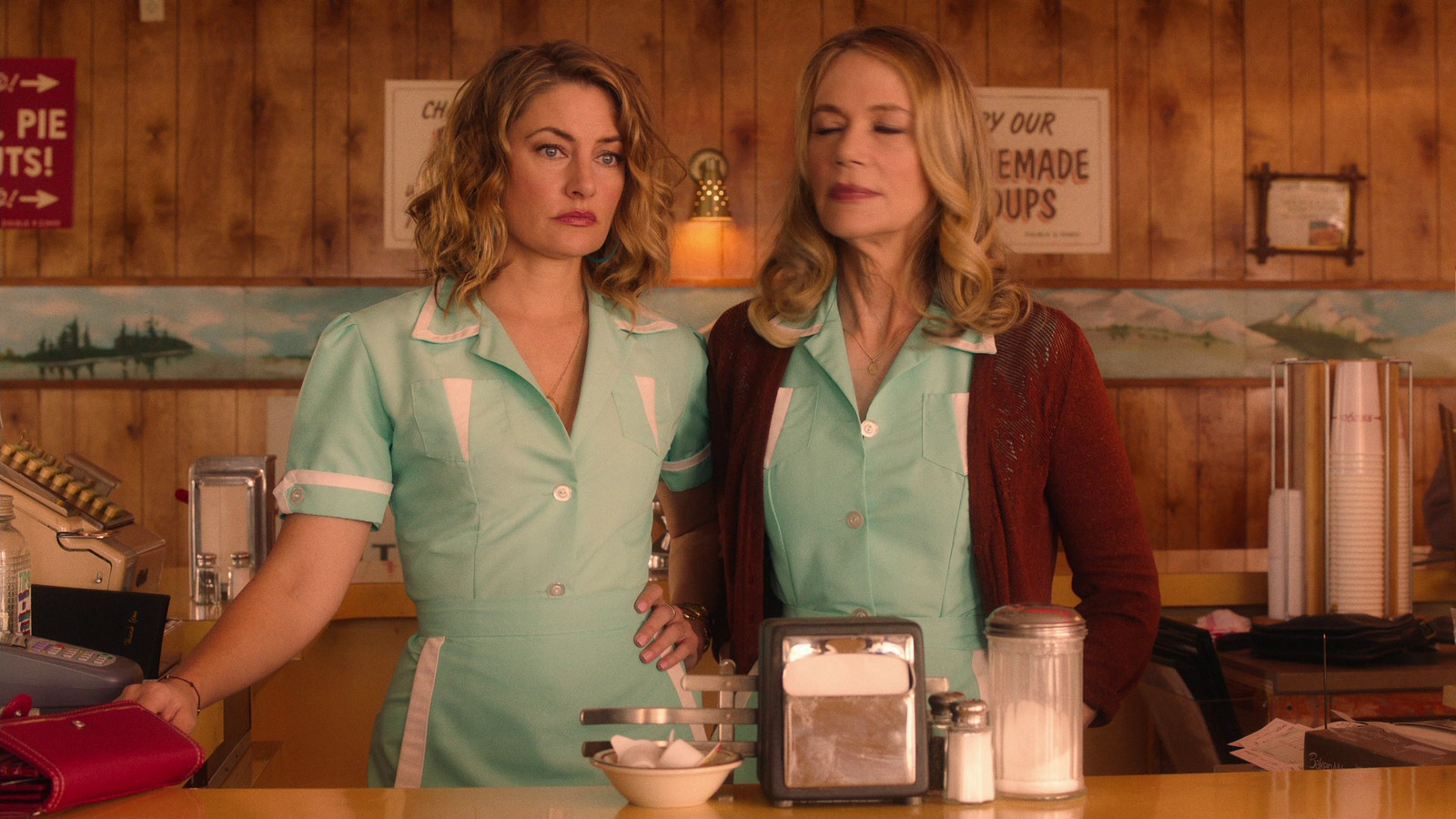
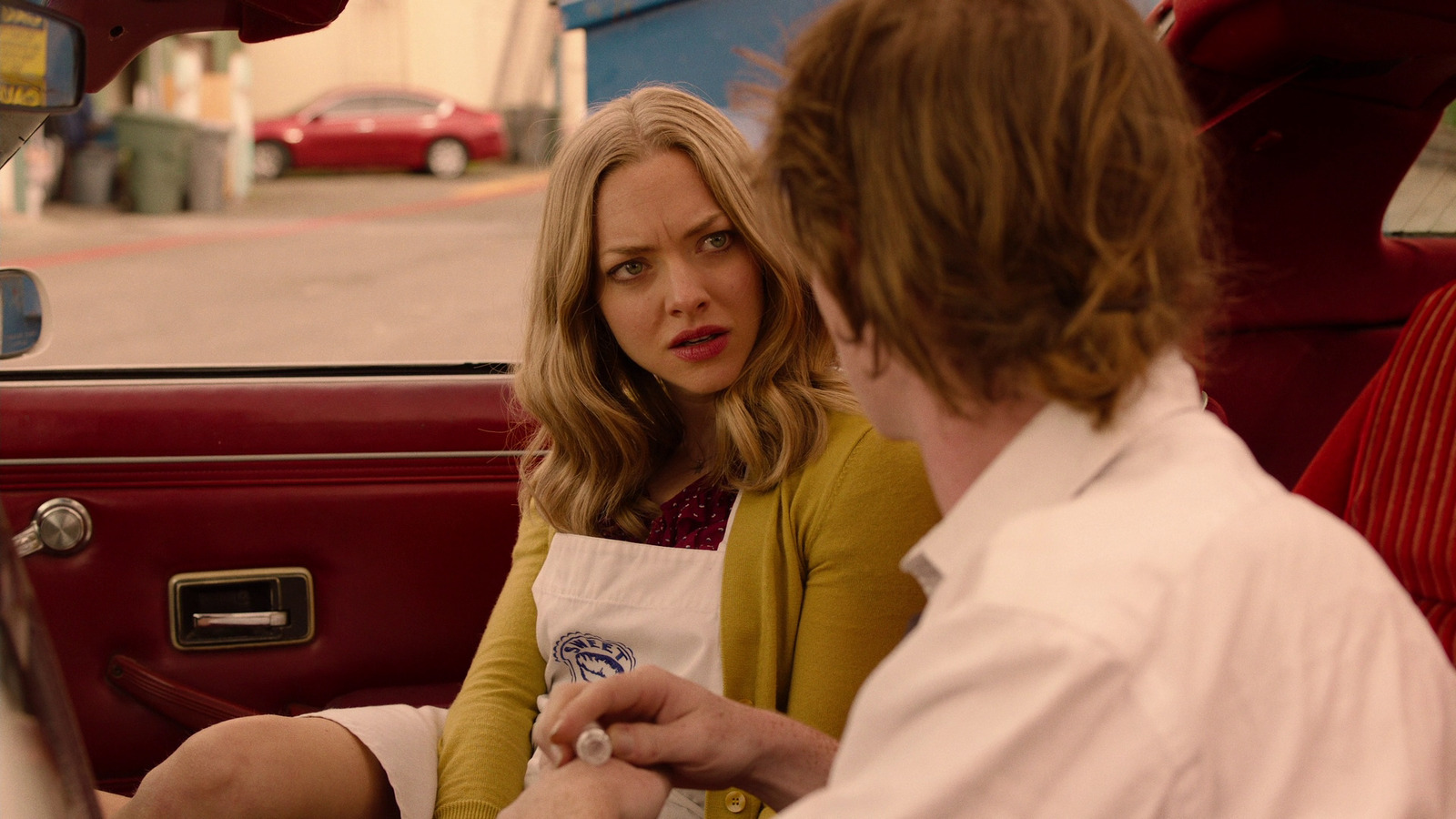
Becky asks for money to support Steven, who is supposedly trying to find work. Norma warns Shelly that repeated rescue can make a later intervention harder. Their shared experience gives the concern a history without requiring an explanatory flashback. In the car, Steven’s claim of good interview feedback contradicts the scene with Mike. His affection and promises accompany dependency and deception.
Open the scene sequence · 1 frame
A love song suspends the car journey
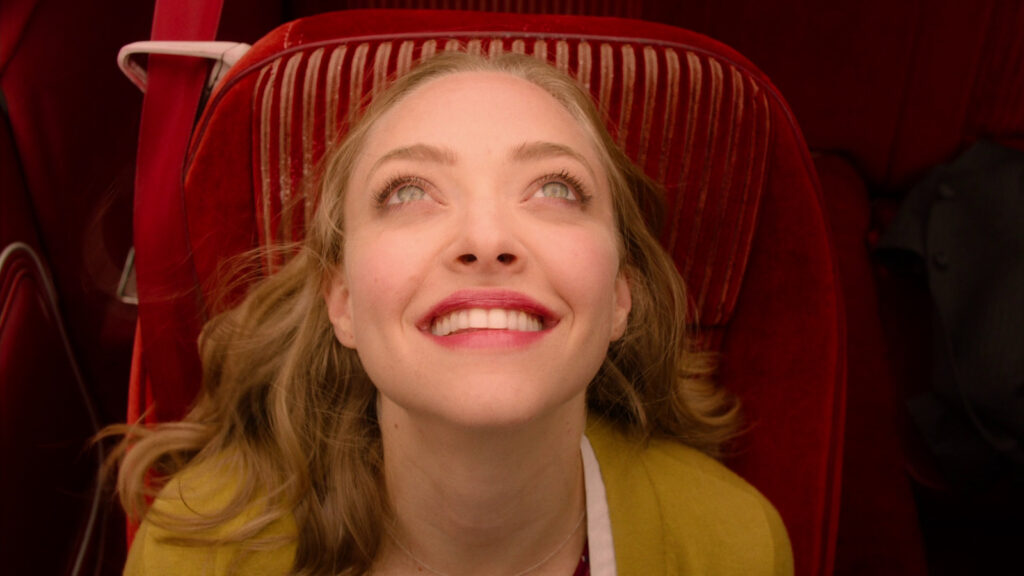
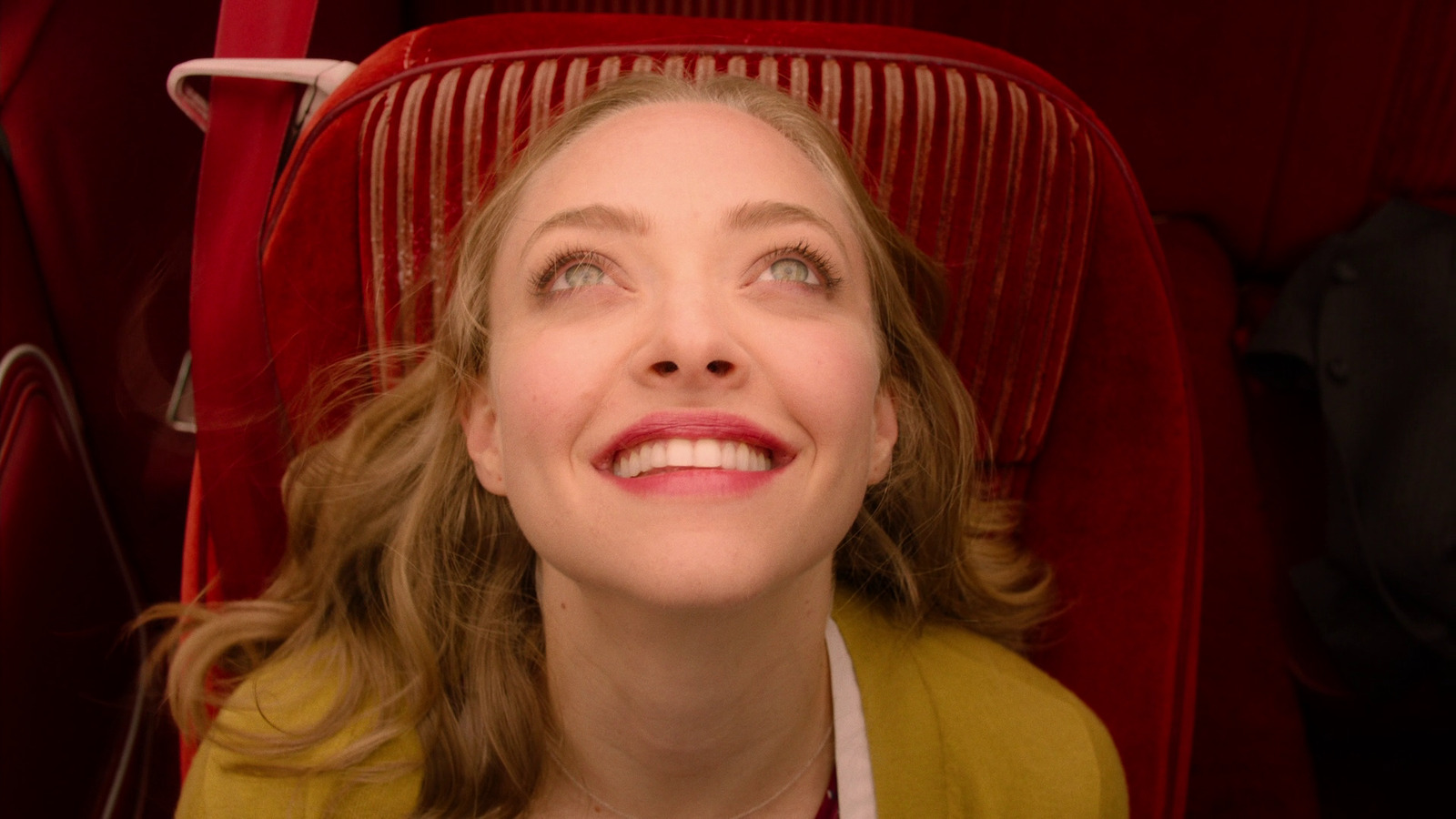
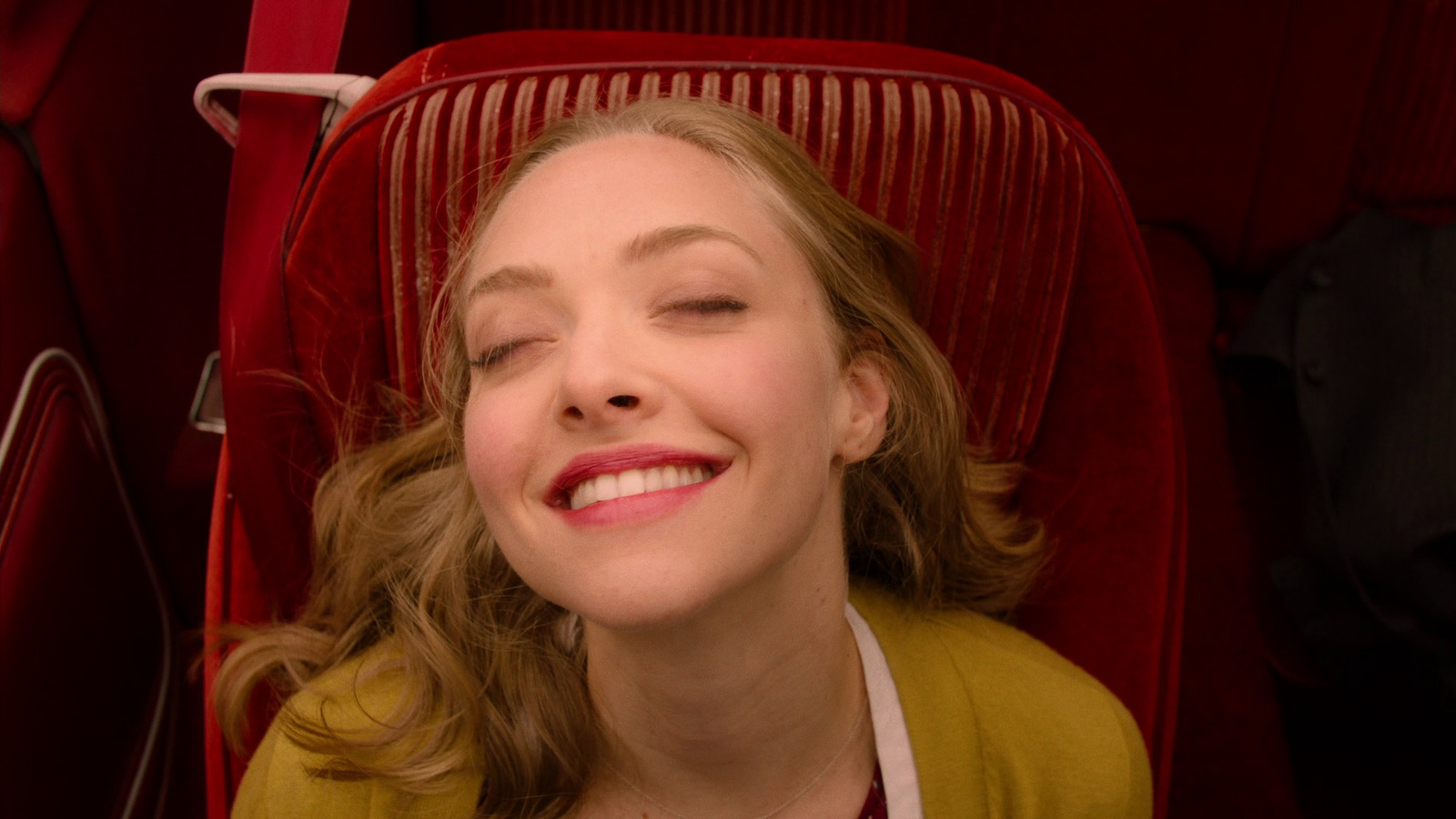
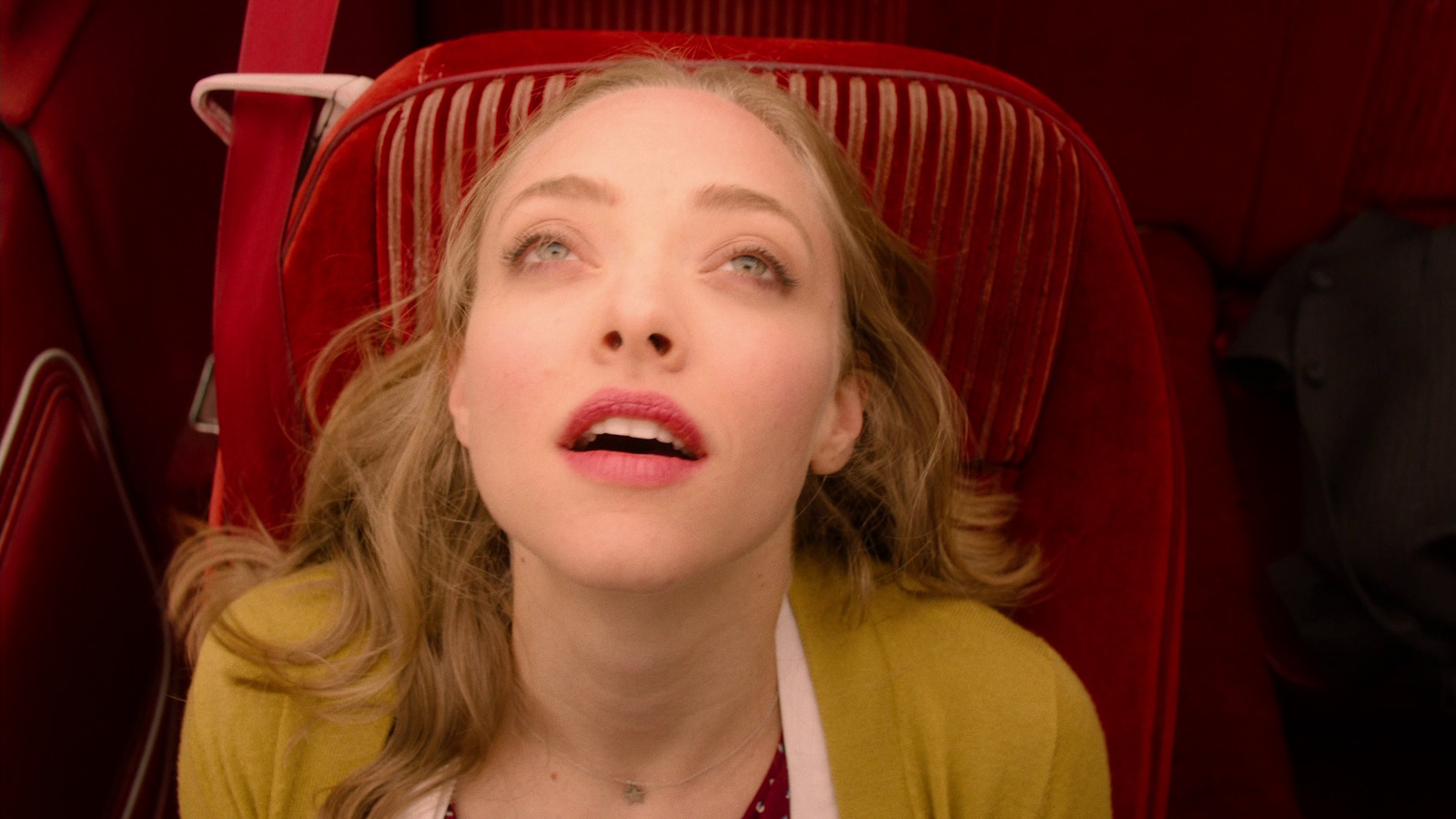
The Paris Sisters’ I Love How You Love Me accompanies a sustained overhead view of Becky. Her eyes close and open, and her expression changes while the red upholstery holds the composition together. The music gives access to pleasure without cancelling what the preceding conversation has told us. The shot is neither simply a romantic endorsement nor merely an illustration of delusion: it allows feeling and danger to coexist.
Open the scene sequence · 2 frames
The workday ends; the search continues
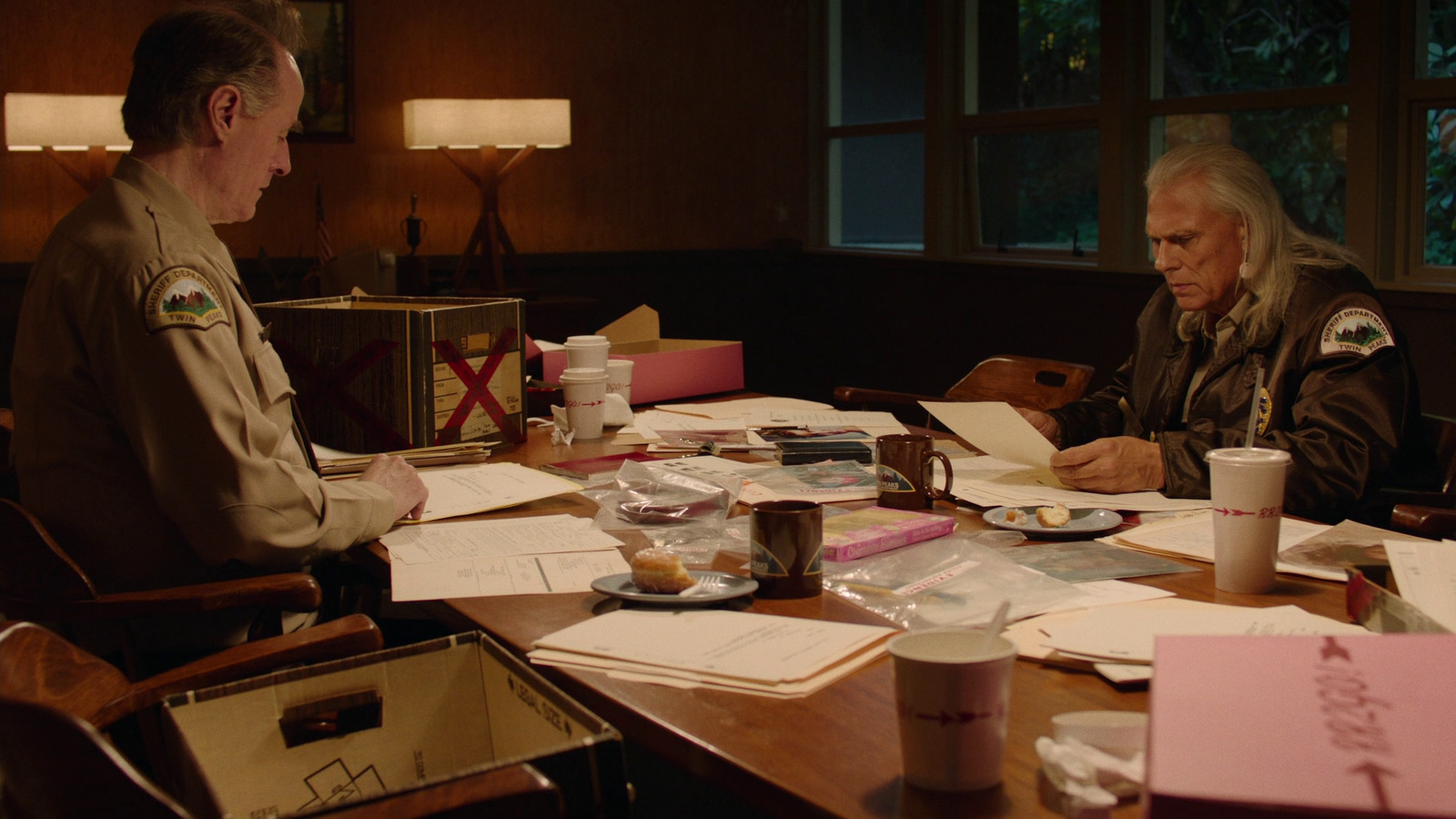
The office elevator empties around a Cooper who cannot organise his departure. He returns to the statue as evening falls. In Twin Peaks, Hawk and Andy continue going through the old evidence. Both sequences involve being unable to make the next connection, but Hawk’s search is deliberate work while Cooper’s pause is a loss of ordinary autonomy.
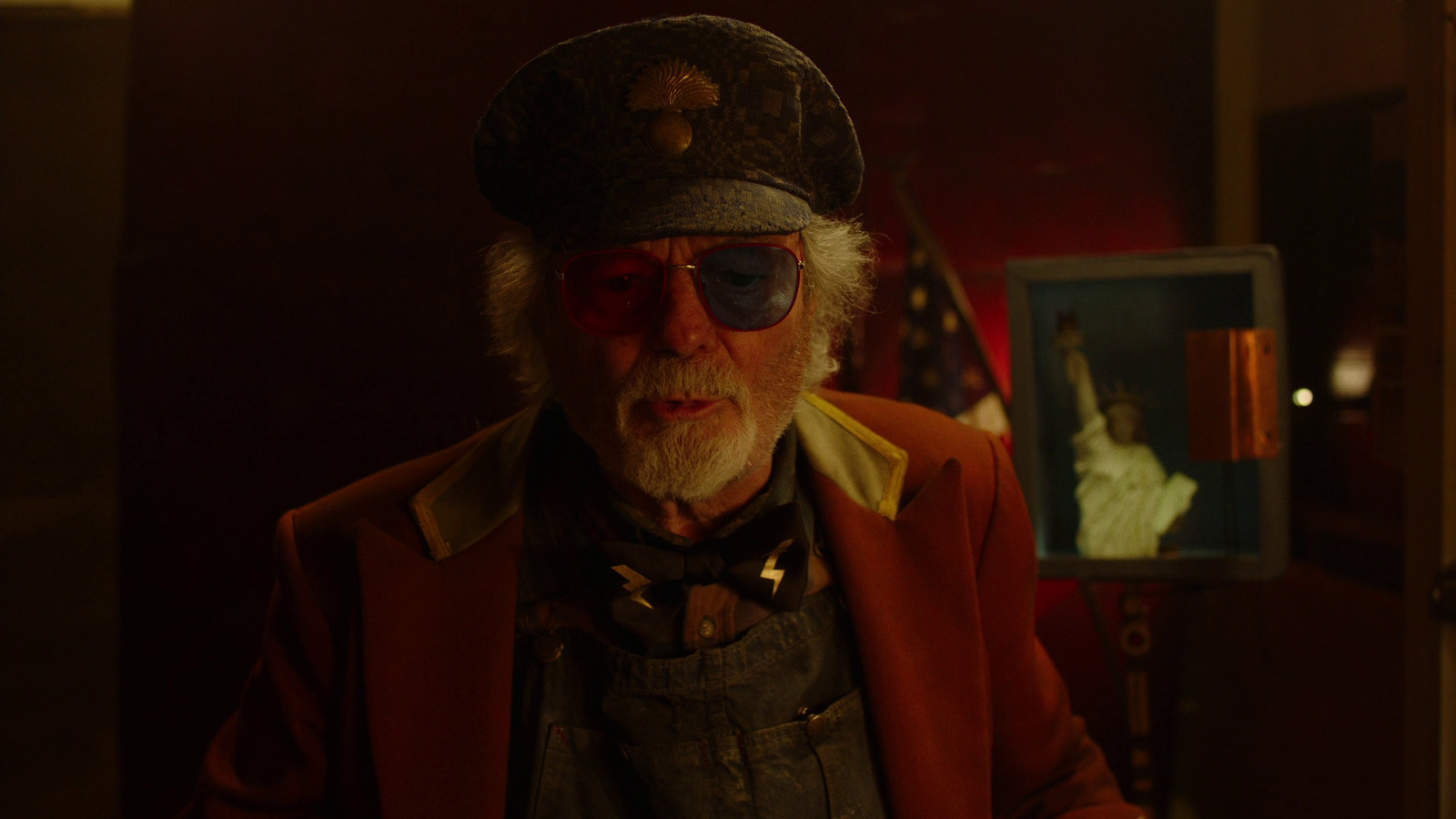
Dr. Amp sells a way out
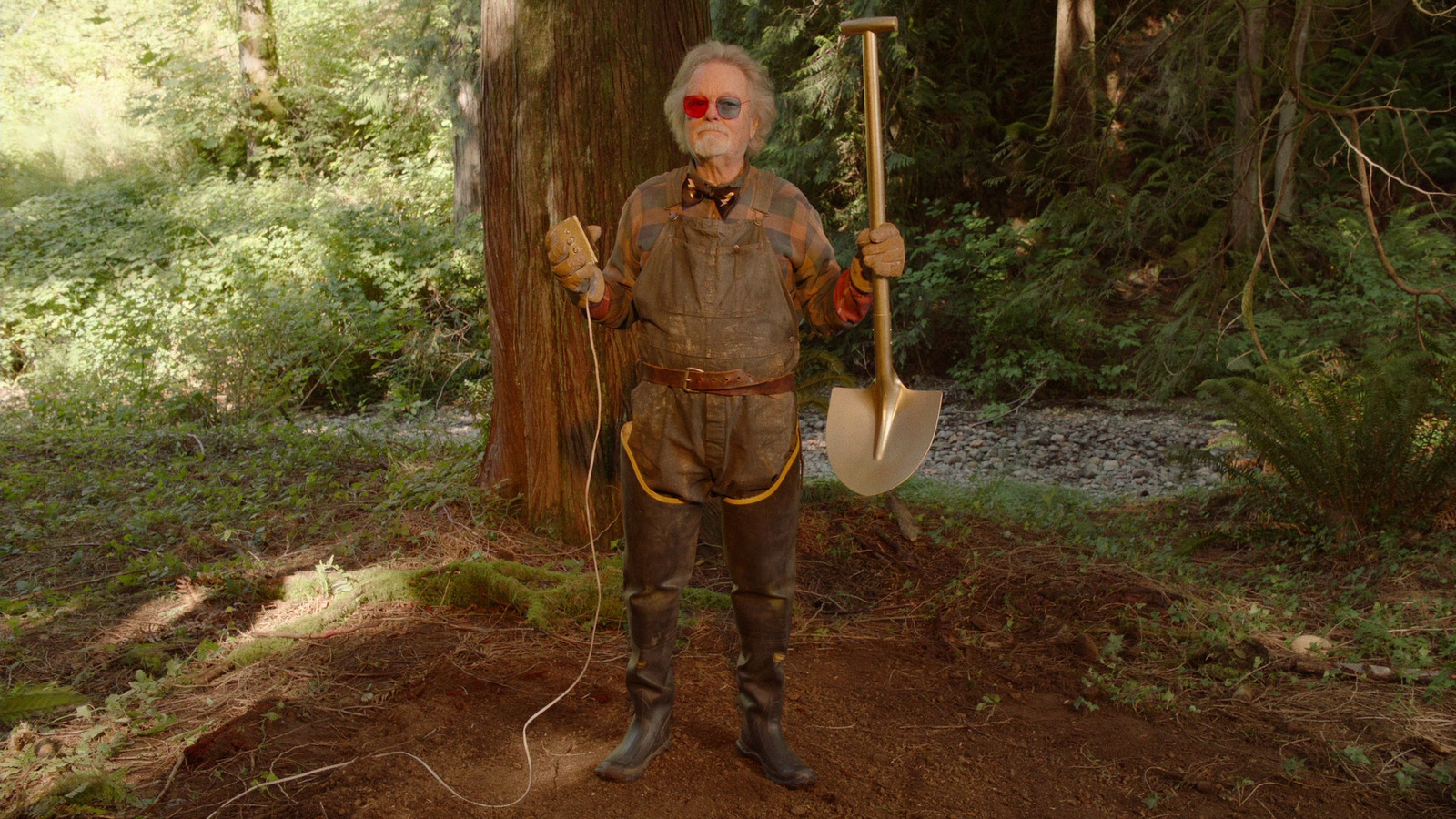
Jacoby’s broadcast joins patriotic music, theatrical props, denunciation and direct address. Jerry and Nadine are among the viewers who give the performance a life beyond the broadcasting room. The rhetoric of liberation becomes an advertisement for the gold shovels prepared in earlier parts. Its price and shipping terms turn the promise of escape into a product. The comedy depends on watching that transition, not simply dismissing the listeners.
Open the scene sequence · 2 frames

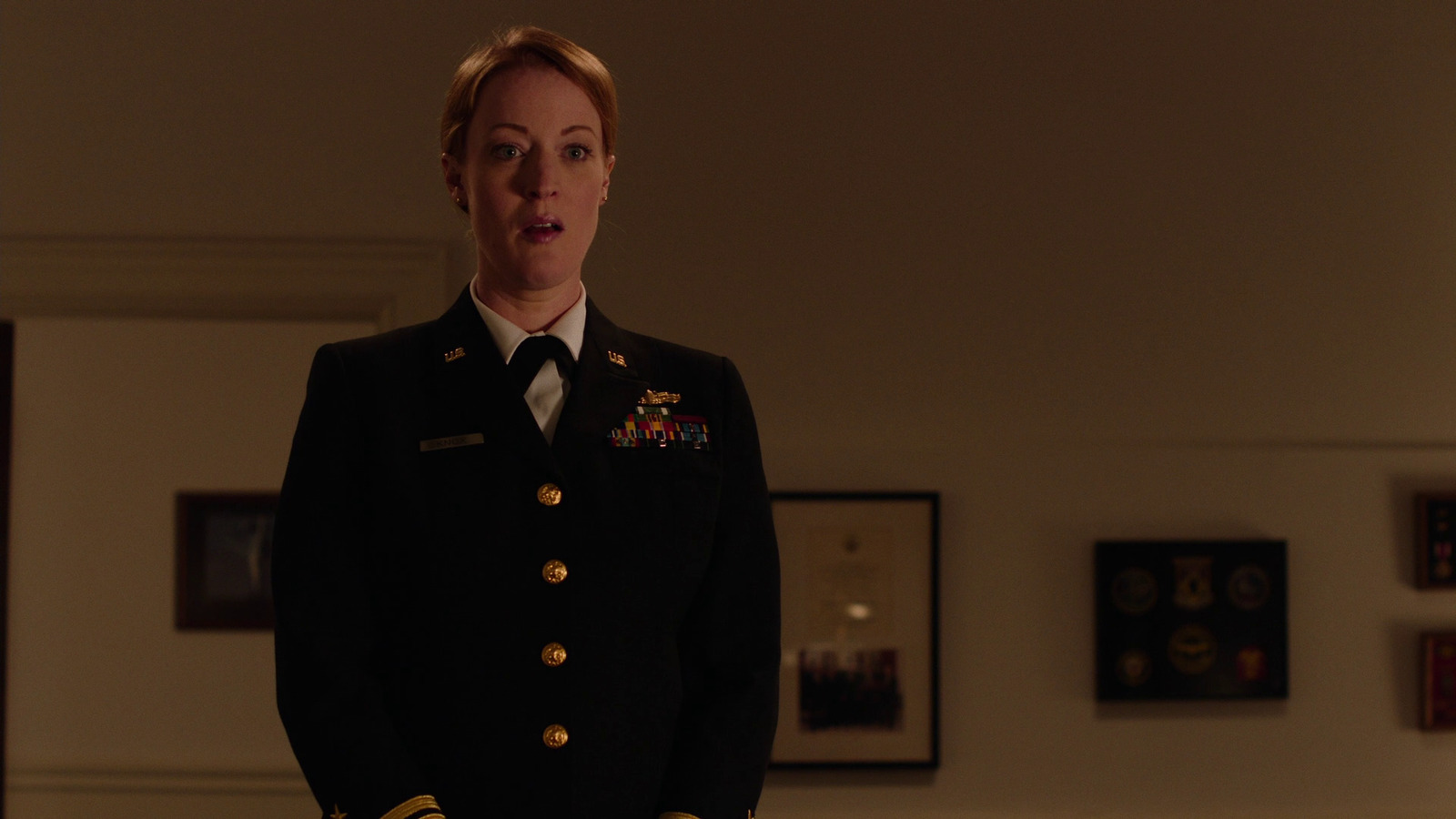
One more impossible fingerprint hit
Lieutenant Knox reports a sixteenth hit on Garland Briggs’s prints across twenty-five years. Colonel Davis expects another fruitless lead but sends her to Buckhorn. Institutional scepticism coexists with an obligation to investigate. The exchange supplies the route that will bring the military to the body and its chronological problem in Part 7.
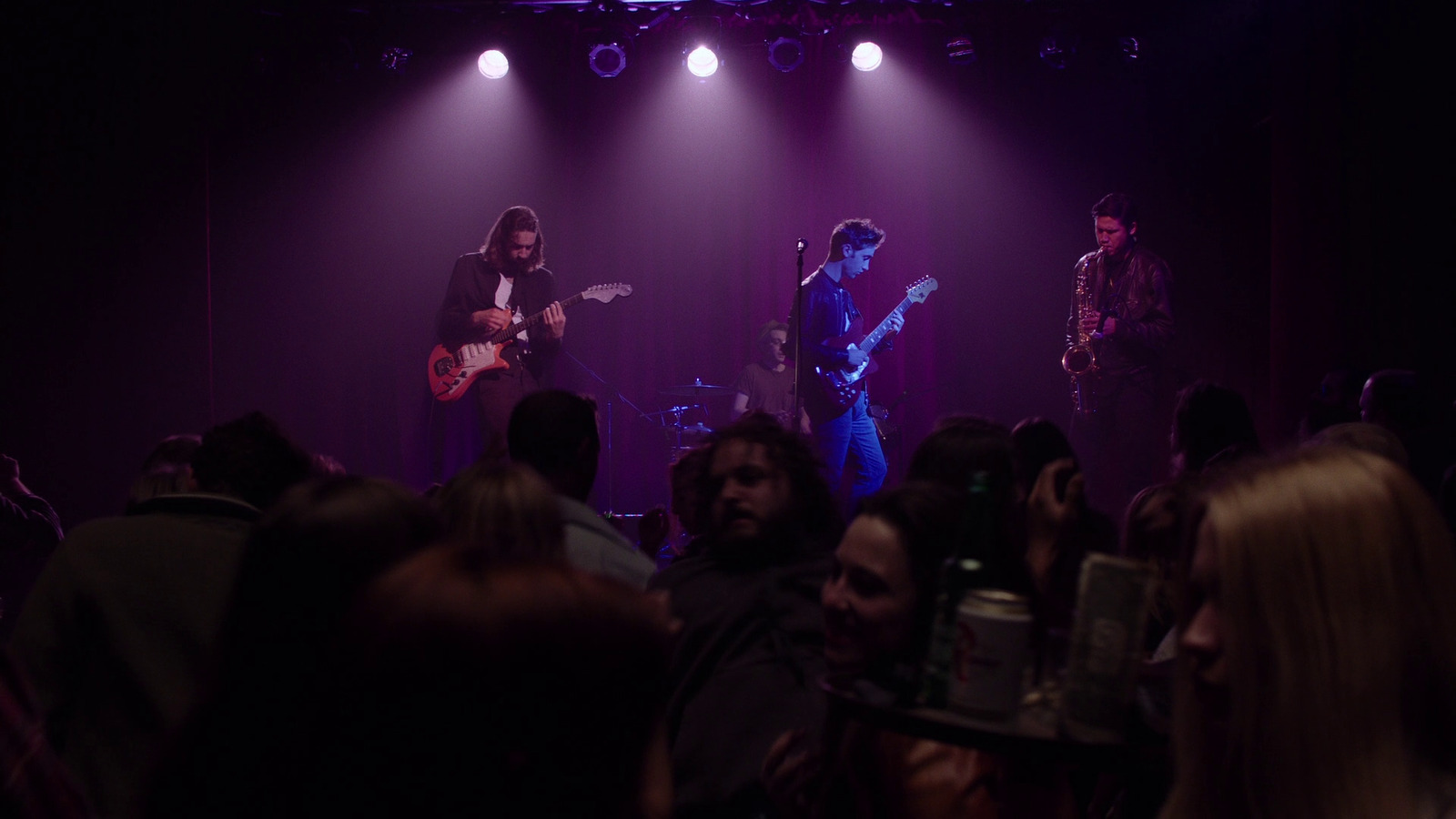
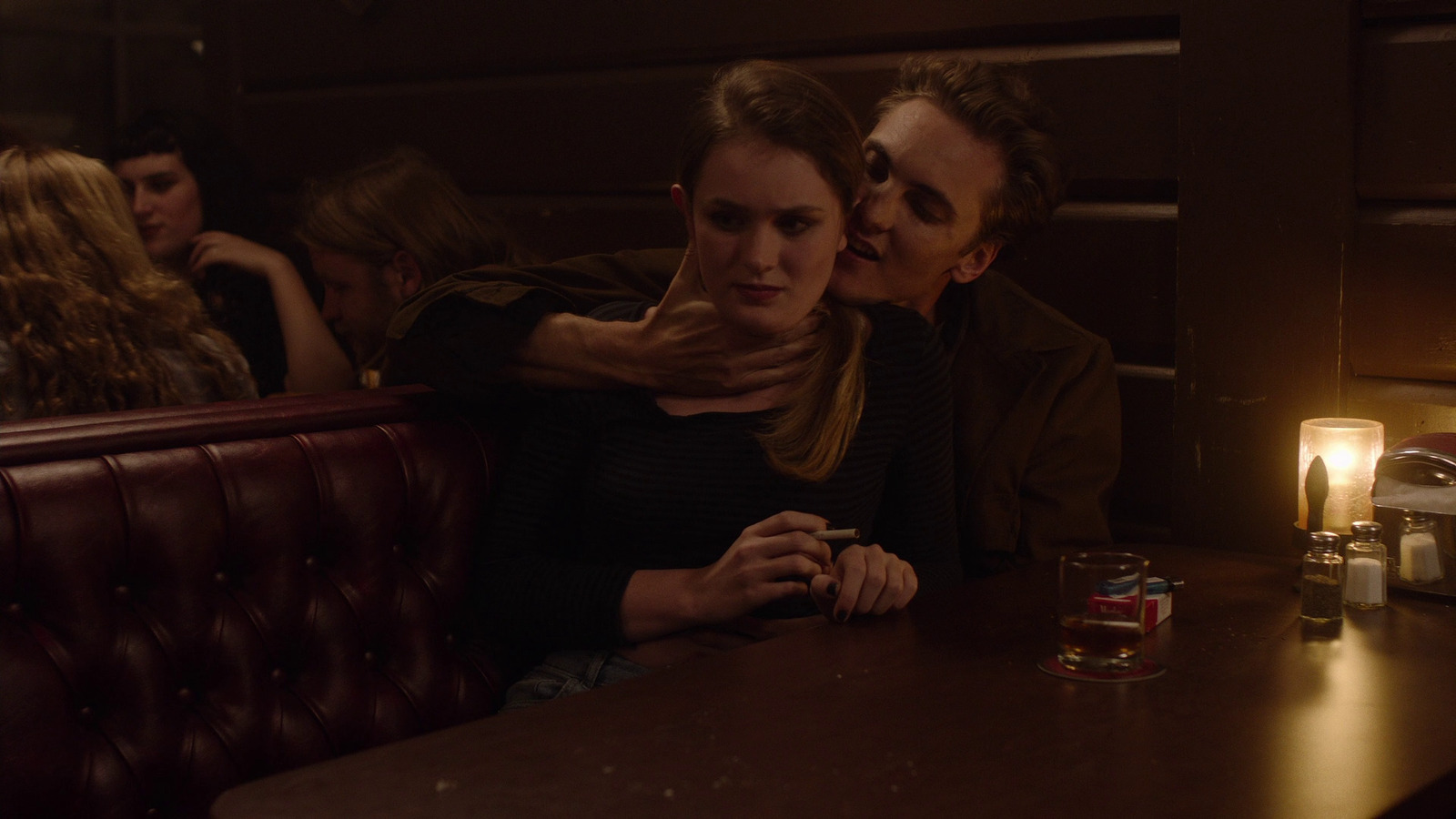
The Roadhouse fails to protect Charlotte
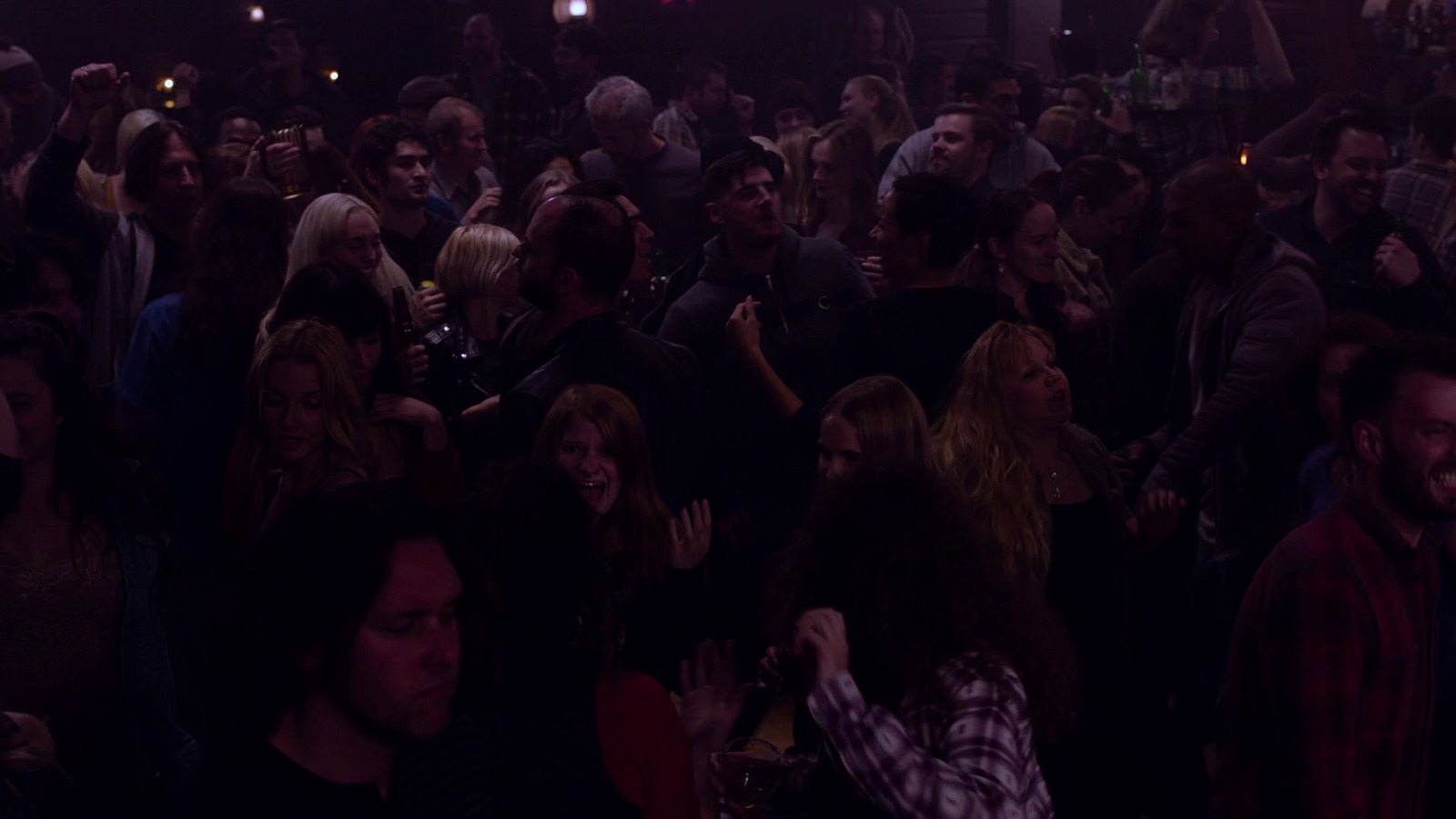
Trouble’s performance supplies the setting for Richard’s first sustained appearance. A request that he stop smoking exposes Chad’s compromised intervention, and a request for a light becomes an opportunity for Richard to restrain and threaten Charlotte. The crowded music venue is no guarantee of safety. The scene establishes the coercive behaviour that the next part follows into the warehouse and the street.
Open the scene sequence · 2 frames
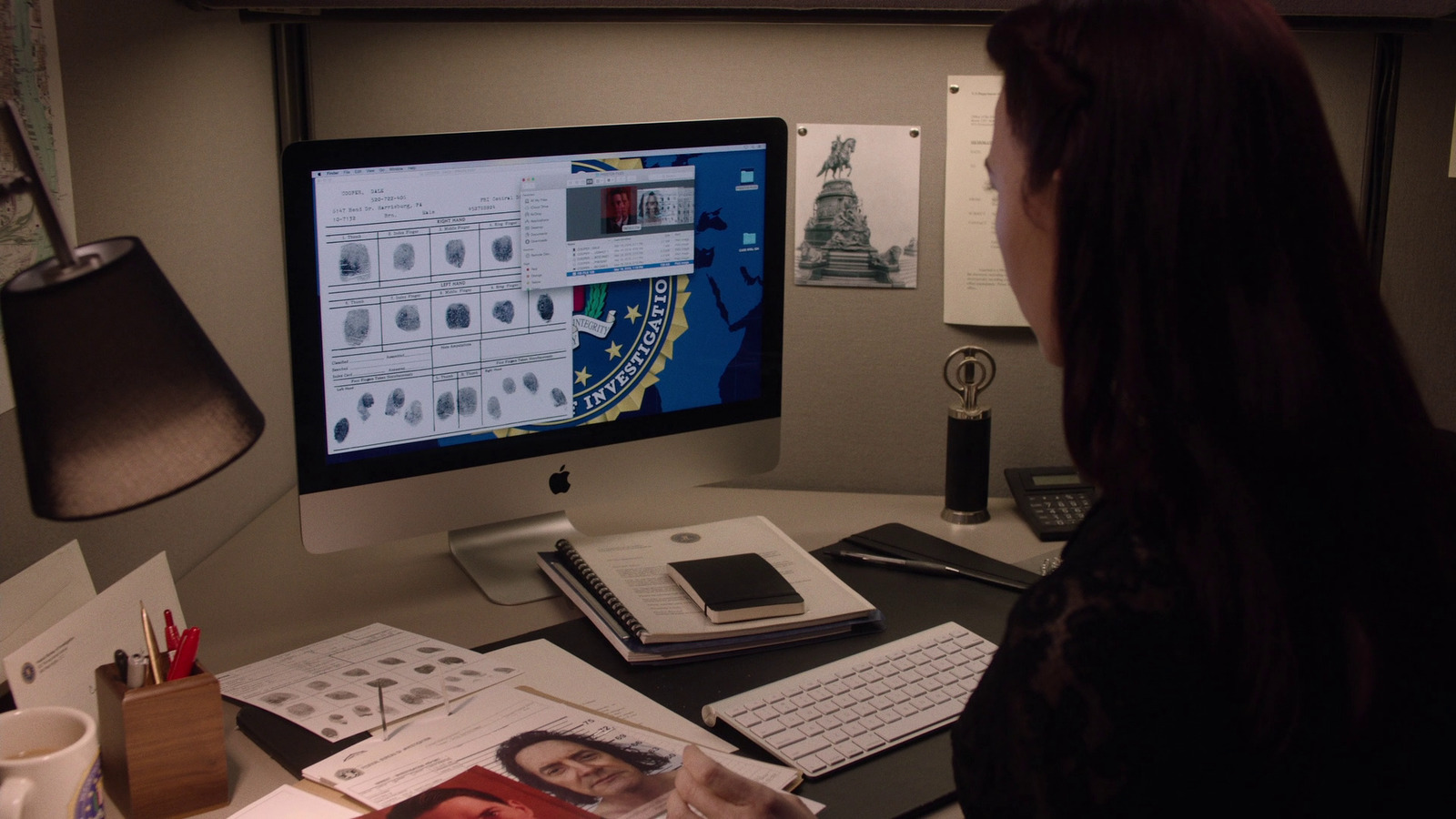
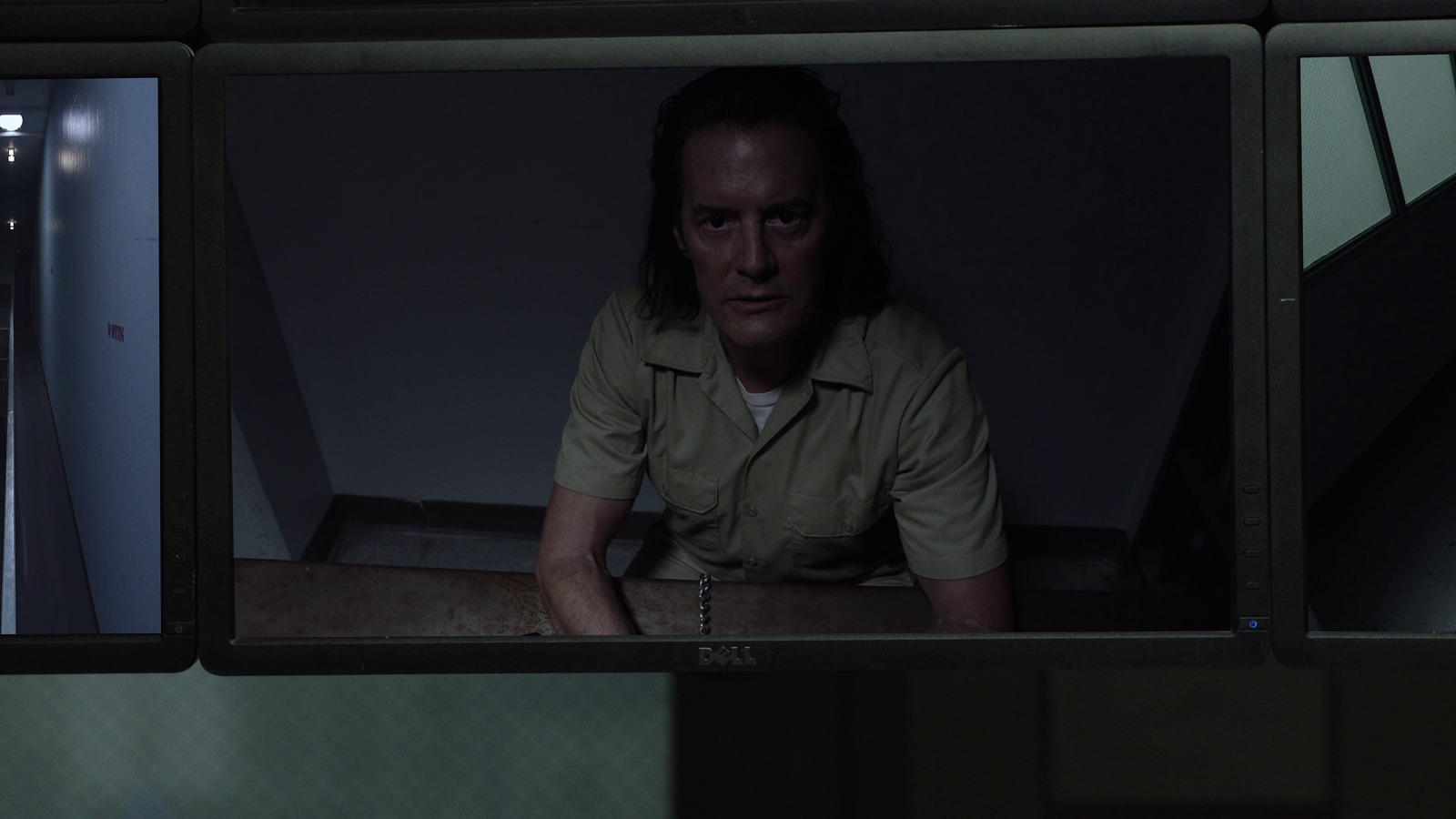
Reading prints, controlling surveillance
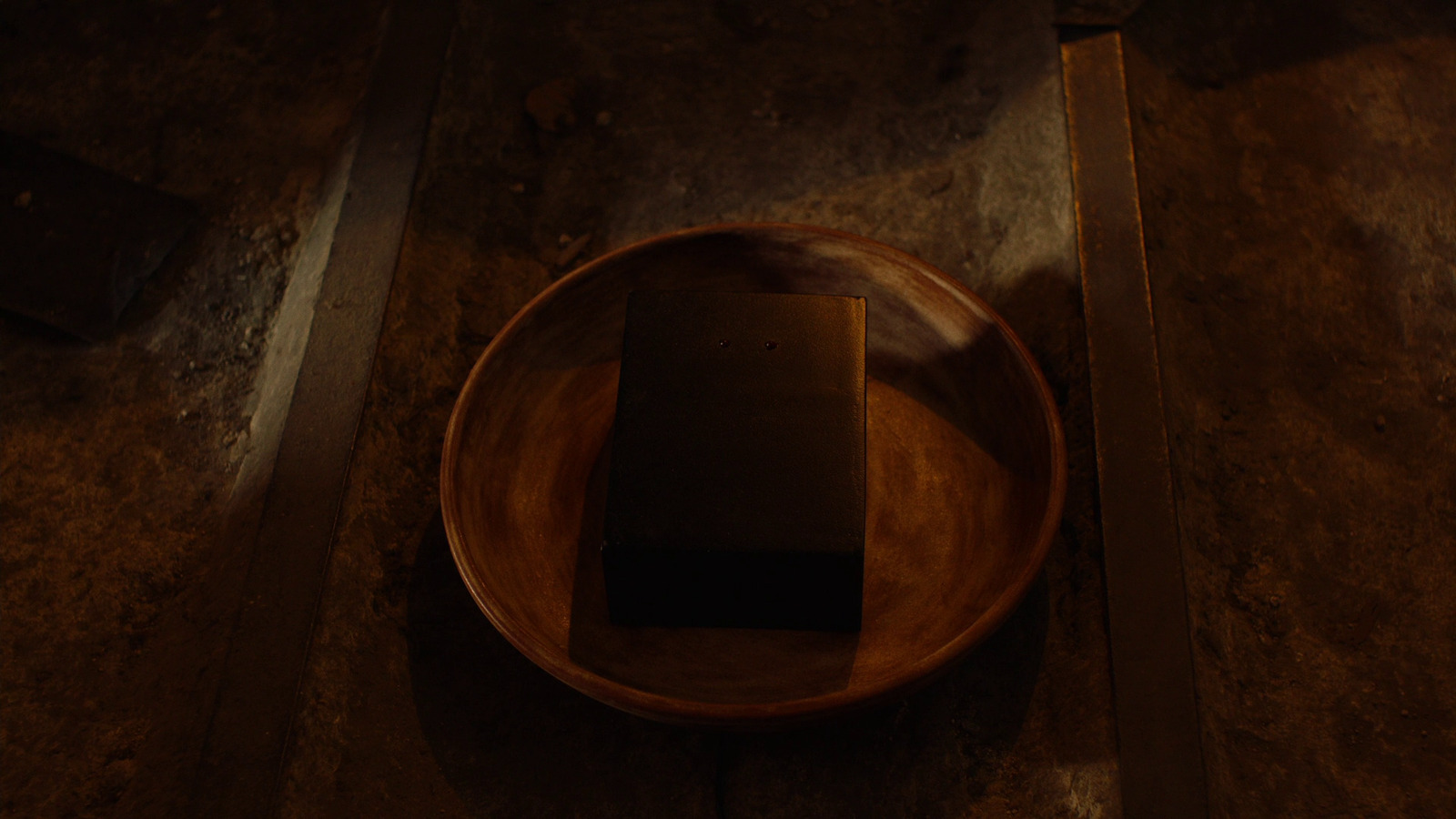
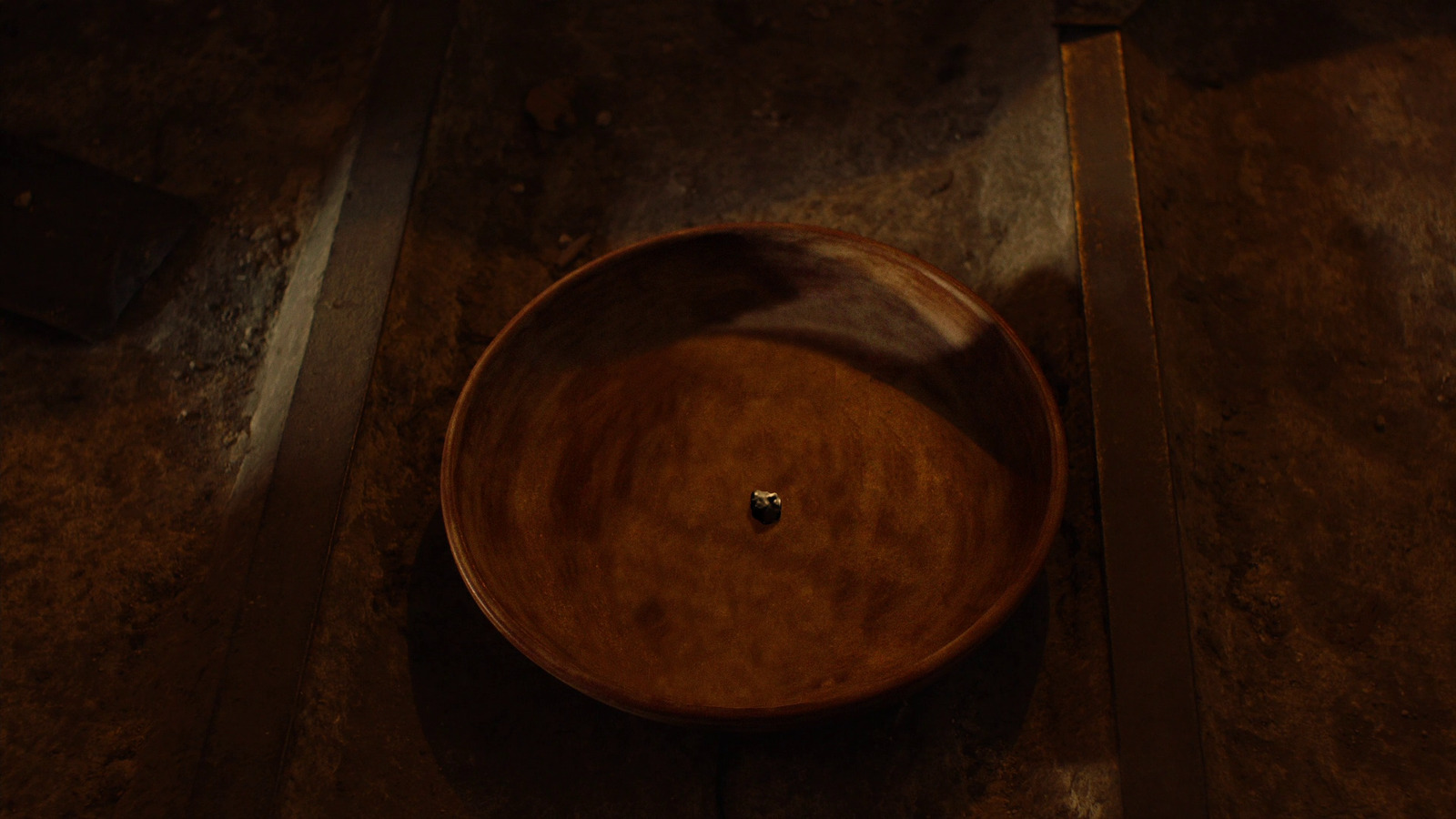
Tammy compares the old Cooper records with the present prisoner. Mr. C then uses his monitored telephone call to unsettle Warden Murphy and disrupt the prison’s systems. His reference to Mr. Strawberry makes the warden’s private vulnerability visible; the alarms turn institutional observation into panic. After the call, the remote black device collapses to a tiny remnant. The edit connects these events without supplying a technical explanation of the mechanism.
Open the scene sequence · 4 frames
The credits leave Cooper outside
The ending returns to the statue rather than letting the Roadhouse close the episode. A security guard asks Cooper to move on, yet the credits continue over his inability to leave. The working day has ended without resolving his most basic problem. Part 6 resumes this position and supplies the police escort home.
Music, repetition and controlled communication
Cooper’s verbal fragments. His immediate responses to coffee differ from the words he repeats in Bushnell’s office. Pleasure can be expressed while professional identity remains out of reach. His allegation against Anthony briefly breaks that pattern with an unprompted judgement. The contrast is more revealing than treating every repeated word as the same gag.
Becky and the song. The Paris Sisters recording is attached to the car stereo before the overhead close-up extends its emotional space. The critical point is the continuity between a questionable relationship and a pleasurable listening experience; reproducing the lyrics is unnecessary to make that tension visible.
The broadcast and the telephone. Dr. Amp builds a public persona through announcement, music and slogans, then gives his listeners an instruction to buy. Mr. C’s call also depends on knowing he has an audience: he addresses the watchers before taking control of the room’s electronic soundscape. One sequence converts attention into a sale; the other converts surveillance into intimidation.
A credit correction. The Roadhouse number is Snake Eyes, performed by Trouble. An accessibility-caption cue reverses the band and song; the closing music credit resolves the distinction. This dossier follows that on-screen credit. [1]
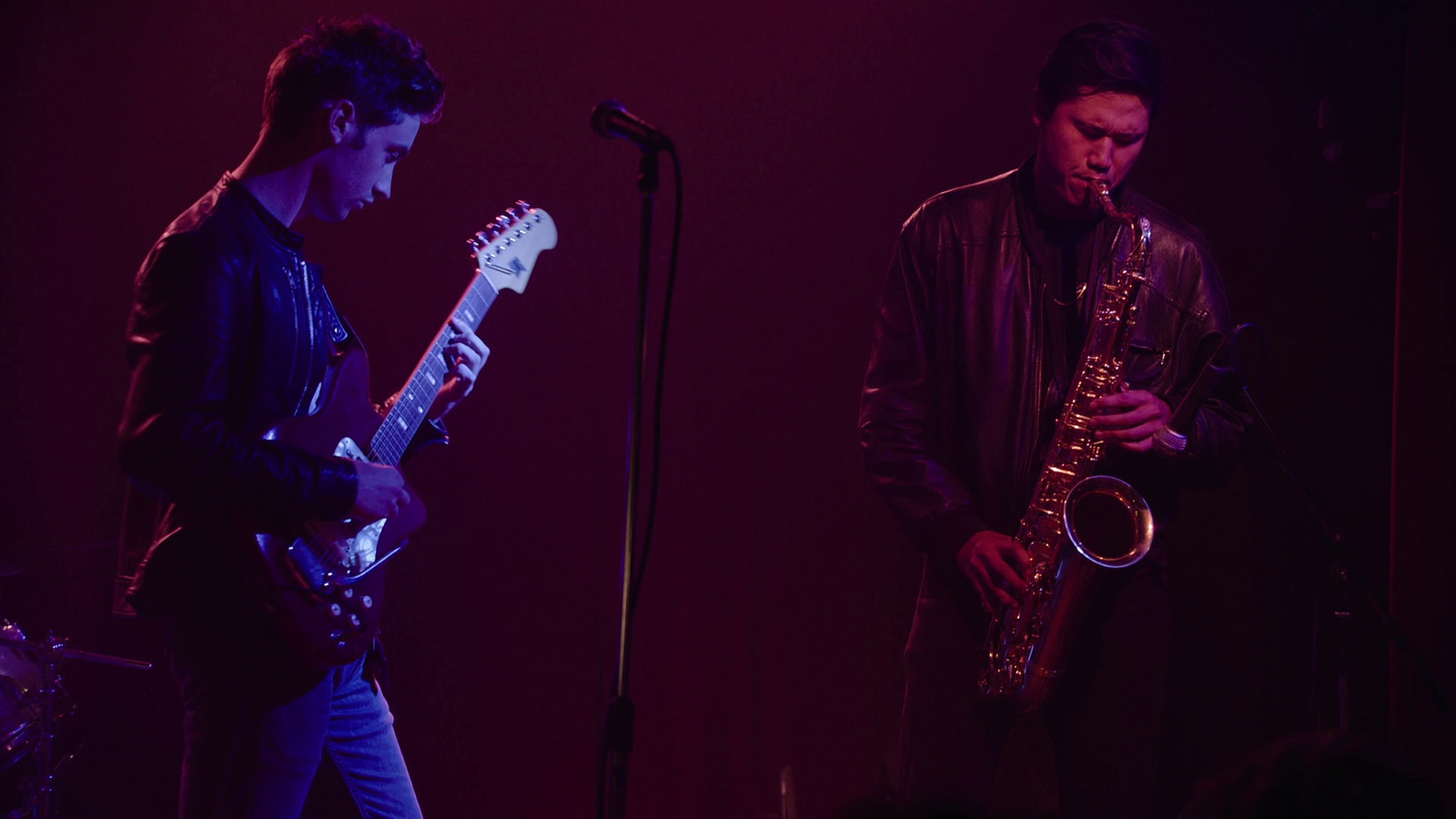
A closer view of the Roadhouse performance
Trouble — Snake Eyes
The announcer introduces Trouble, then the edit distributes attention among saxophone, guitars, drums and dancing spectators. There is no lead singer occupying the front microphone. Close views instead follow playing hands and the saxophonist’s posture, while the wider stage views keep the musicians in relation to one another.
Open the Snake Eyes performance study · 2 frames
Read the full performance comparison →
Source: Roadhouse Music — Trouble — Snake Eyes, 00:00–04:00, in Twin Peaks: From Z to A. These timings identify the separate performance edit; the episode context is examined above.
Focused image and FX studies
The mirror remembers another face
The recalled bathroom reflection establishes BOB’s relation to the face we see in the prison. The present reflection then changes internally while the small mirror and surrounding cell remain stable. The comparison concerns the visible composite and the editorial use of older footage; it does not assign an undocumented technique to a specific artist.
Open the mirror comparison · 3 frames
A device reduced to a remnant
The bowl supplies a fixed reference for the transformation. Before and after frames distinguish the black rectangular object from the tiny remnant without pretending that the episode explains what the object is. Its placement after the prison call makes the change a consequence to consider, not a solved mechanism.
Open the device transformation · 2 frames
A face held through a song
This is a focused performance study rather than an effects attribution. Compare the changing eyes and mouth within the stable overhead framing. The red seat holds the image together while the moving journey is registered chiefly through light, hair and expression.
Open Becky’s song sequence · 3 frames
Making the images, shaping the performances
Kyle MacLachlan described drawing on Rain Man, Starman, Being There and his earlier performance in The Hidden while developing this version of Cooper. He also emphasised the comic timing supplied by other actors’ frustration and responses. That account is useful for the office scenes: Phil, Bushnell and the rest of the ensemble create the social rhythm around Cooper’s pauses. The performance is a relationship between actors, not an isolated set of mannerisms. [2]
The credit sequence names Amanda Seyfried as Rebecca “Becky” Burnett and Caleb Landry Jones as Steven Burnett. It retains Frank Silva’s BOB credit for the returning images and dedicates the episode to Marv Rosand, who plays Toad. These details connect the new characters and images to an ensemble that also carries the original series’ people and losses. [1]
Performance, sound and the working image
The production footage in Jason S.’s Impressions: A Journey Behind the Scenes of Twin Peaks adds another view of the scenes: directions spoken on set, rehearsals, material experiments and choices still being worked out.
The explosion and the child’s reaction are separate constructions
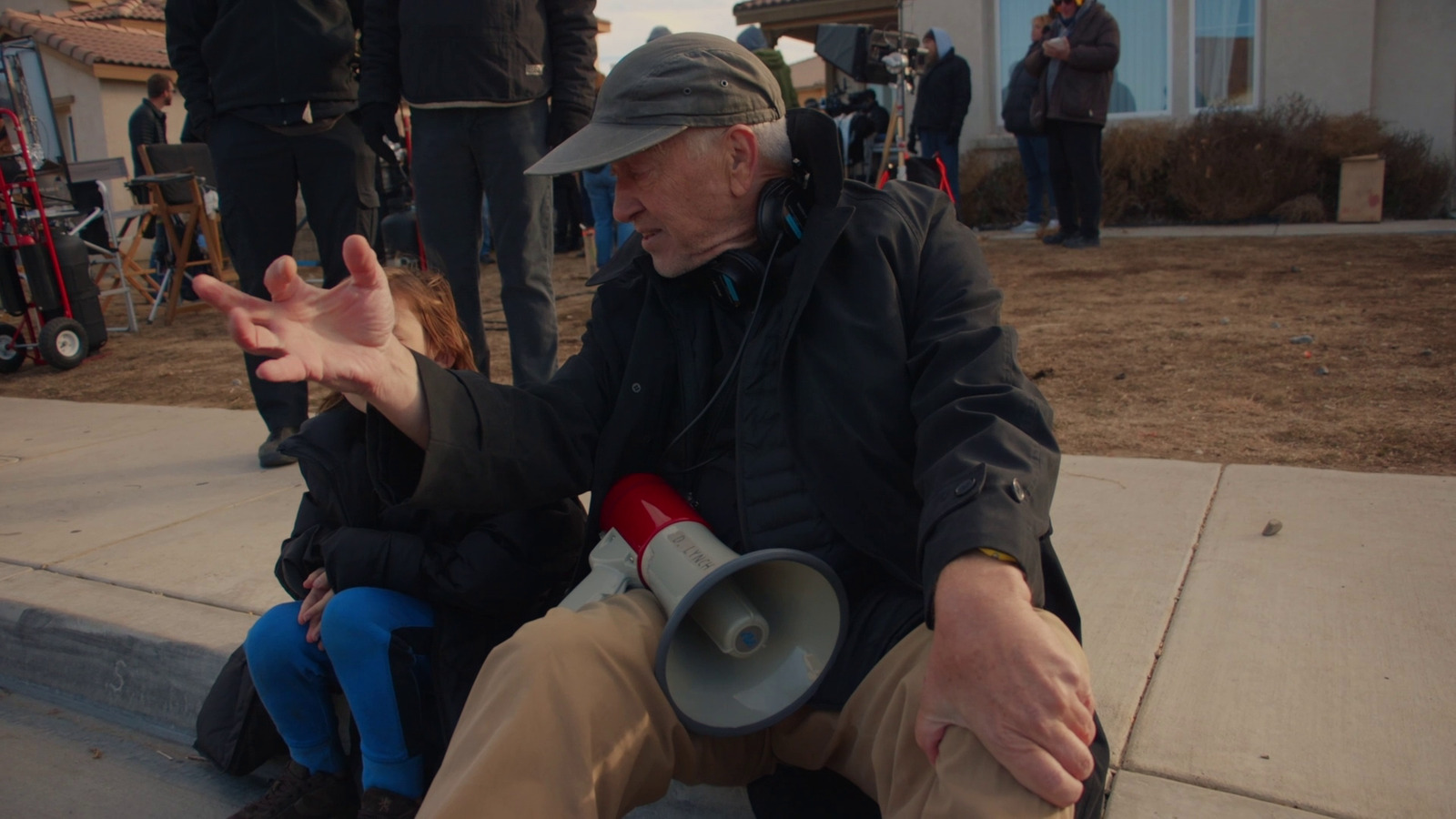
The Rancho Rosa sequence is planned through the positions of the red car, Jade’s departure, the device beneath the parked car and the child across the street. Lynch argues for completing useful action from an already established camera position rather than rebuilding it later. On location, he delays the lightly dressed child’s work until the weather is warmer.
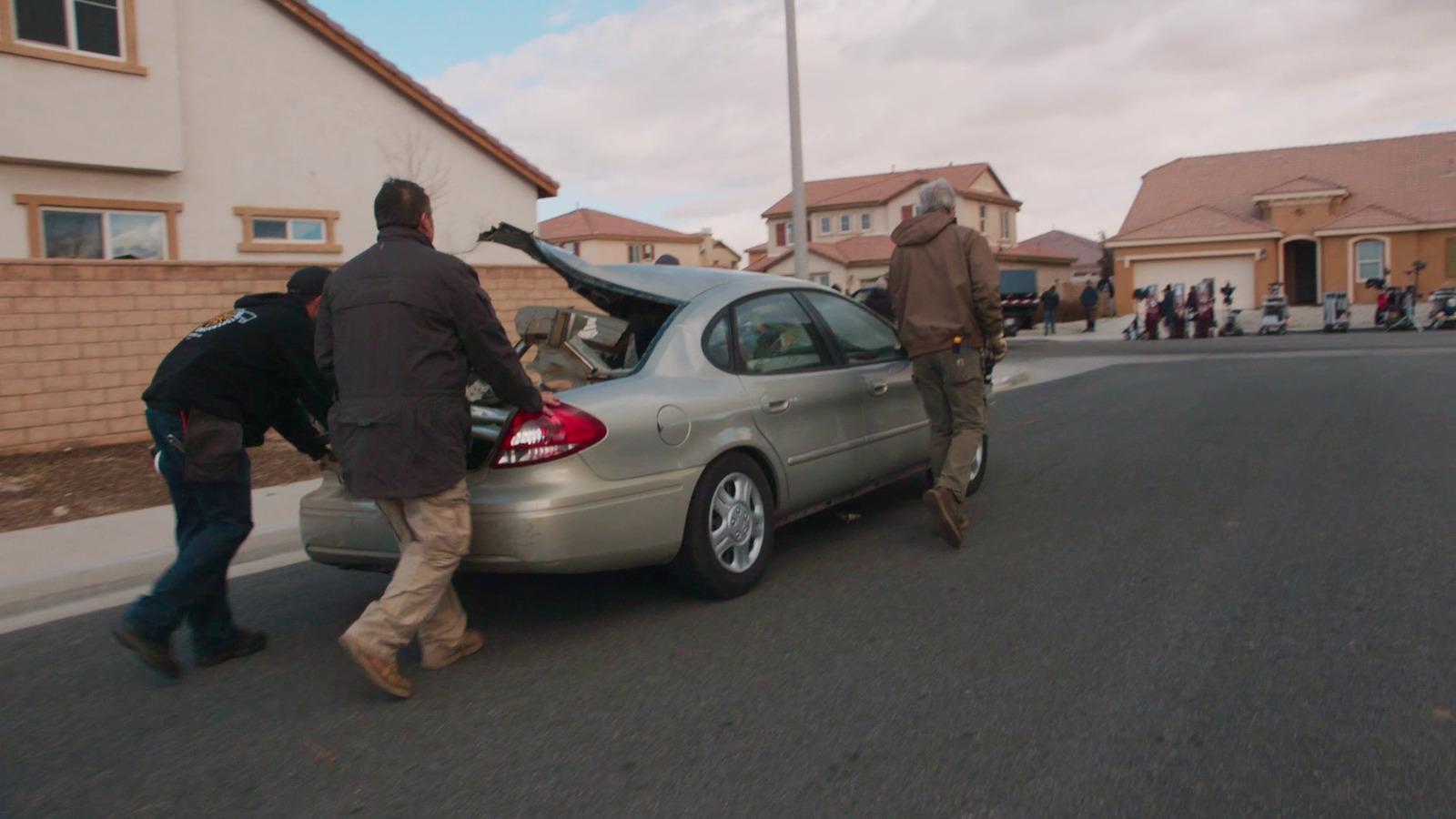
The young performer is told to imagine a large bang that he will not actually hear, then run on a separate cue. The documentary cuts between this direction, the crew’s handling of the prepared vehicle and the practical fire. It makes the separation of reaction, hazardous action and aftermath visible: the finished sequence unites elements that were managed as distinct pieces.
Open the car effect and reaction study · 3 frames
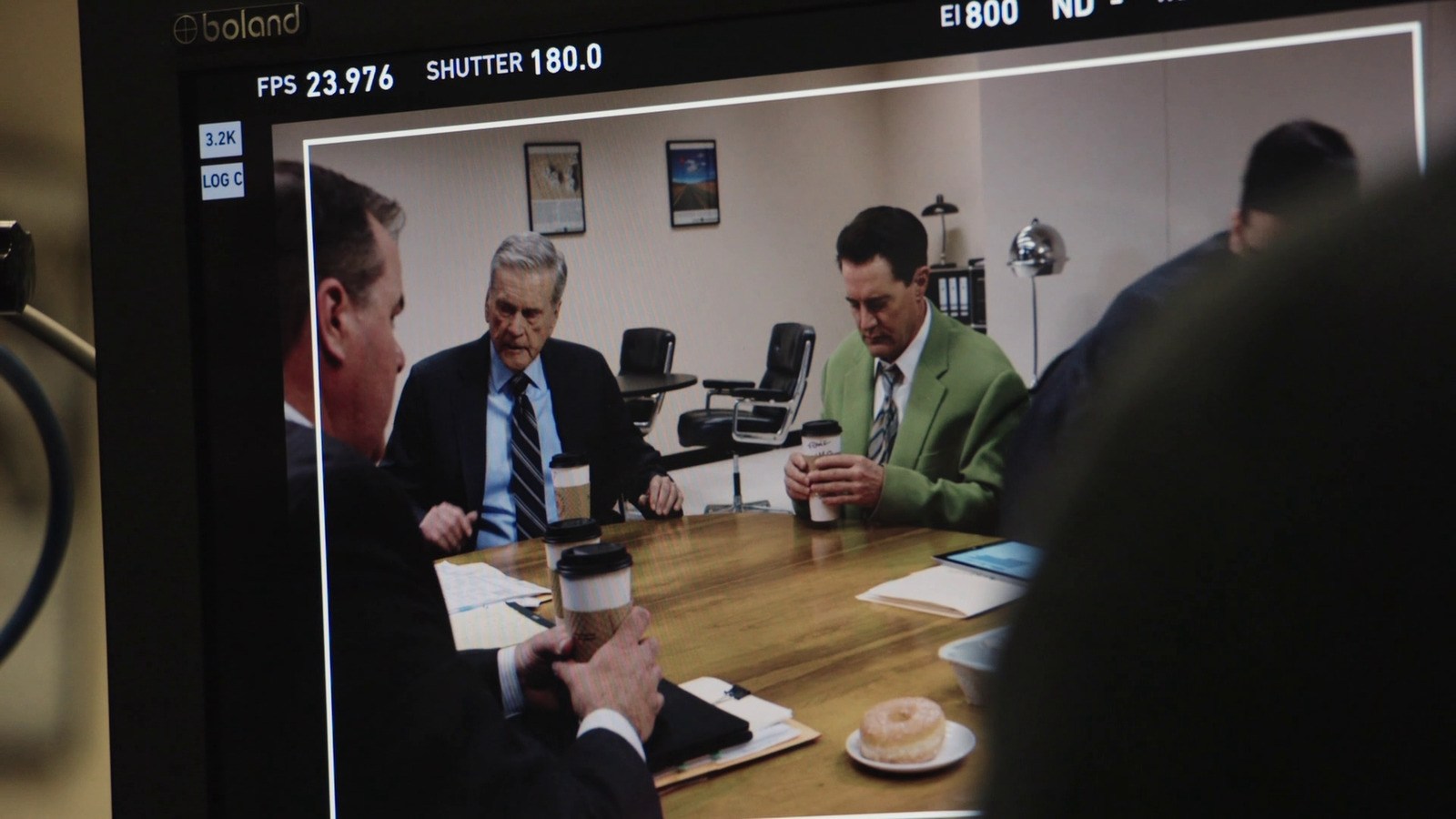
The office learns to look at a different Dougie
Lynch asks the insurance-office ensemble to notice Dougie’s altered hair, weight and behavior. Bushnell must watch Phil help him sit before continuing the meeting. The routine proceeds, but its participants are given different moments at which the familiar colleague becomes a problem.
Small pleasures and threats receive equally specific attention. Frank is asked to keep drinking the coffee because its unexpected taste is wonderful; Anthony’s offended reply is adjusted word by word, with an instruction not to underline the pronoun. The scene’s comic drift and sudden accusation are built through shared timing and vocal emphasis.
Open the insurance-office rehearsal study · 2 frames
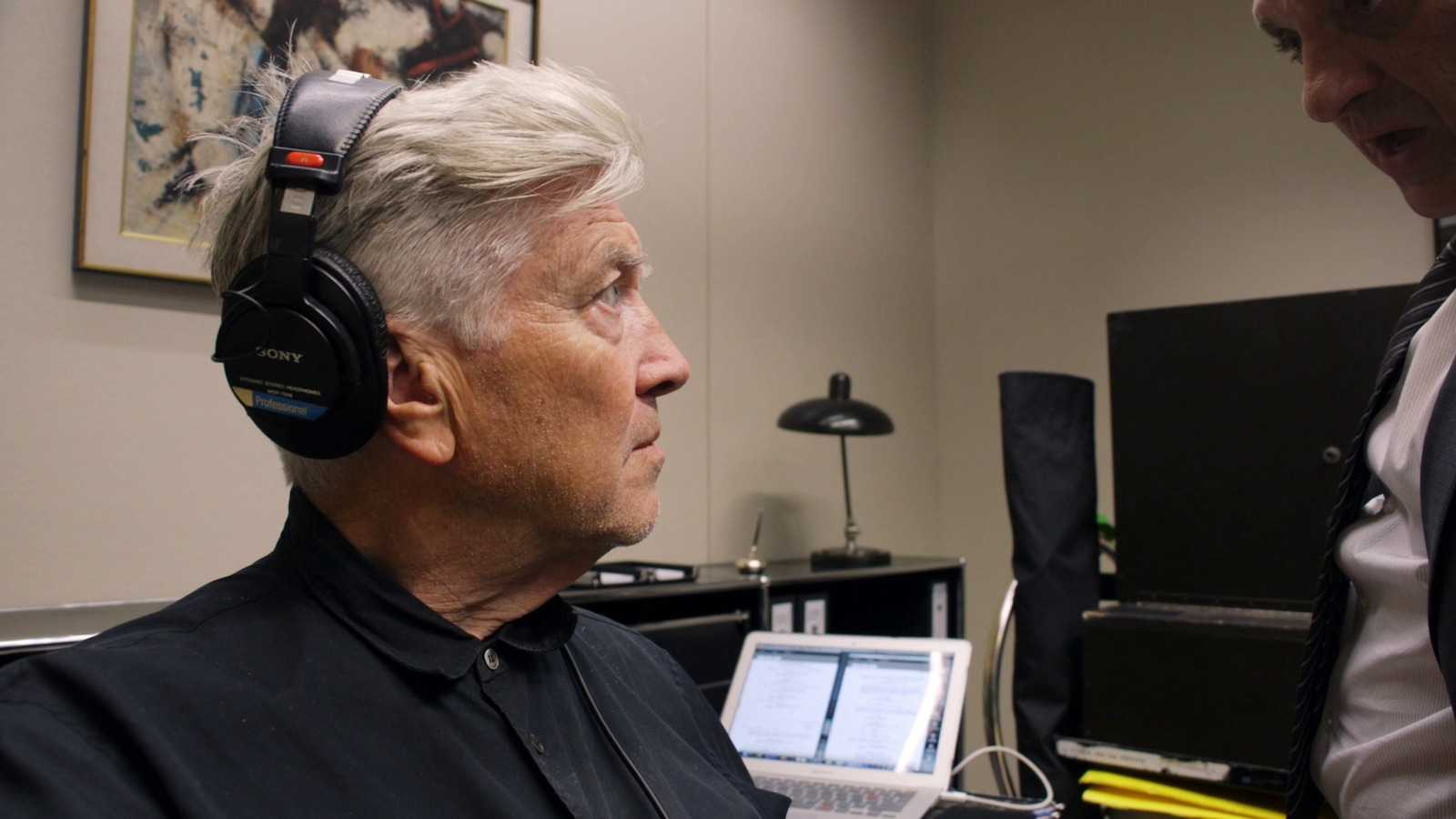
Rehearsal, performance and the working set
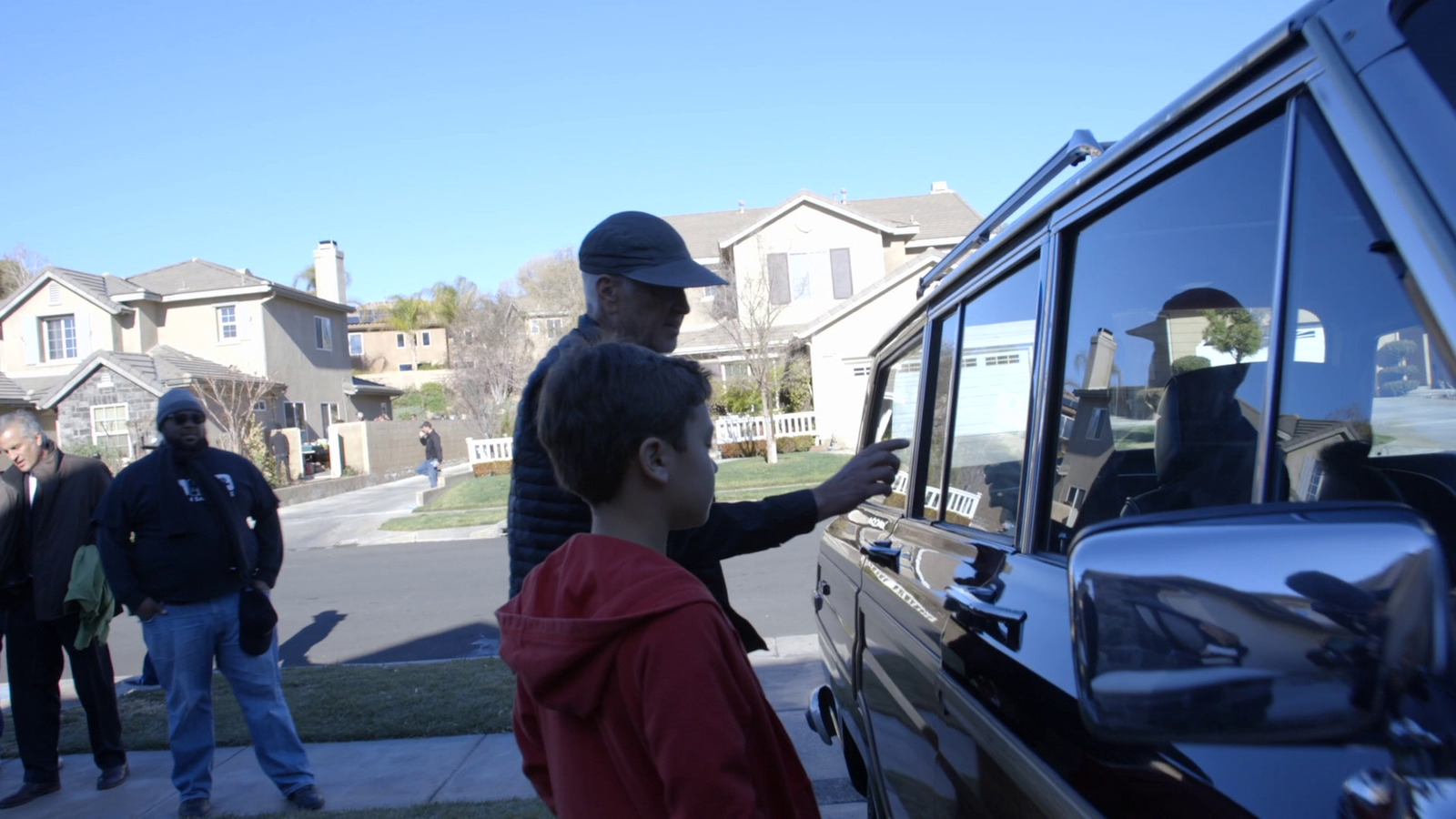
Sonny Jim knows the routine that Cooper has lost
Lynch walks Sonny Jim through the morning journey in detail: take the keys, unlock the car, leave the keys in the ignition and sit in his usual place. The child knows the sequence of actions. Cooper needs Janey-E to move him through almost every step.
Watts is directed to deliver the money, debt and work instructions with the force of a household list while tying his tie. At the office entrance, MacLachlan follows the statue’s arm toward its gun and then the door. Familiar routines and a newly discovered visual route briefly occupy the same world.
Open the morning and statue study · 2 frames
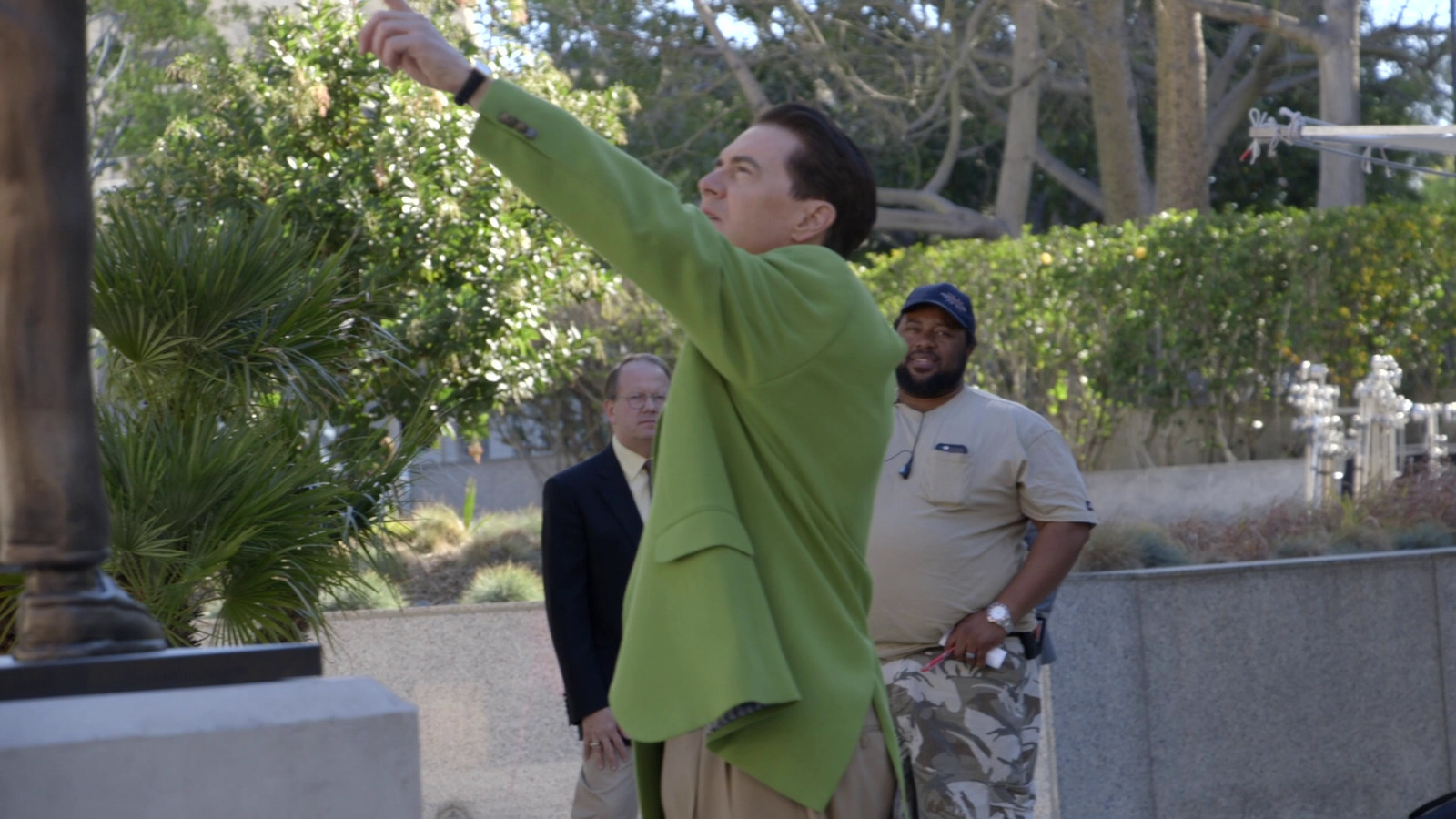
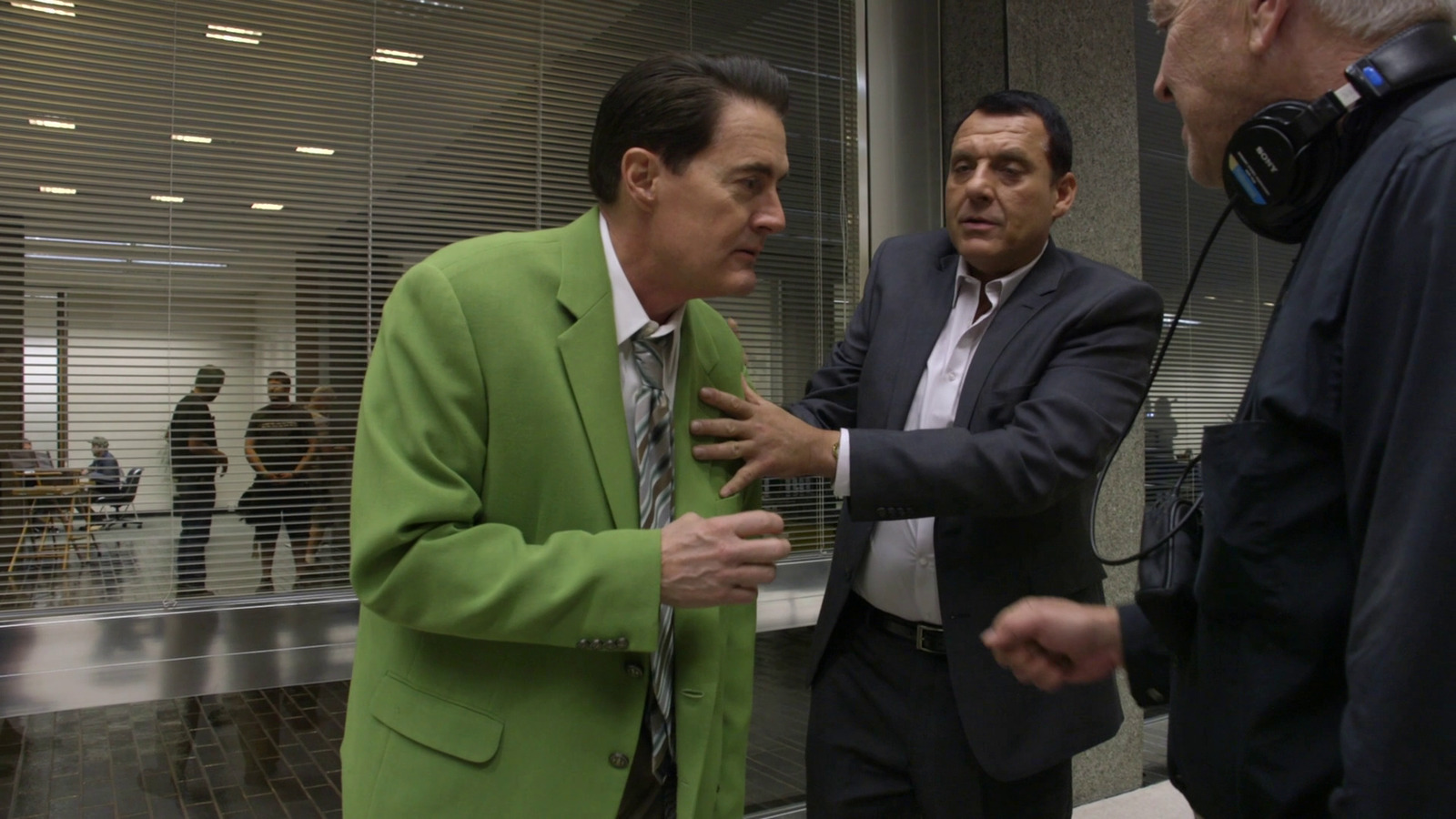
Anthony handles Dougie while Phil helps him
The rehearsal gives Anthony control of Dougie’s body: turn him around, open the jacket and display the altered colleague to the room. Lynch describes the handling as almost humiliating. Phil’s subsequent work of guiding the chair into place supplies a different kind of physical assistance.
The restroom passage also depends on timing beyond the visible body. Lynch arranges Rhonda’s position, waits, and cues the moan from behind the closed door before her laughter. The comic exchange belongs to a shared arrangement of movement, waiting and offscreen sound.
Open the office blocking study · 2 frames
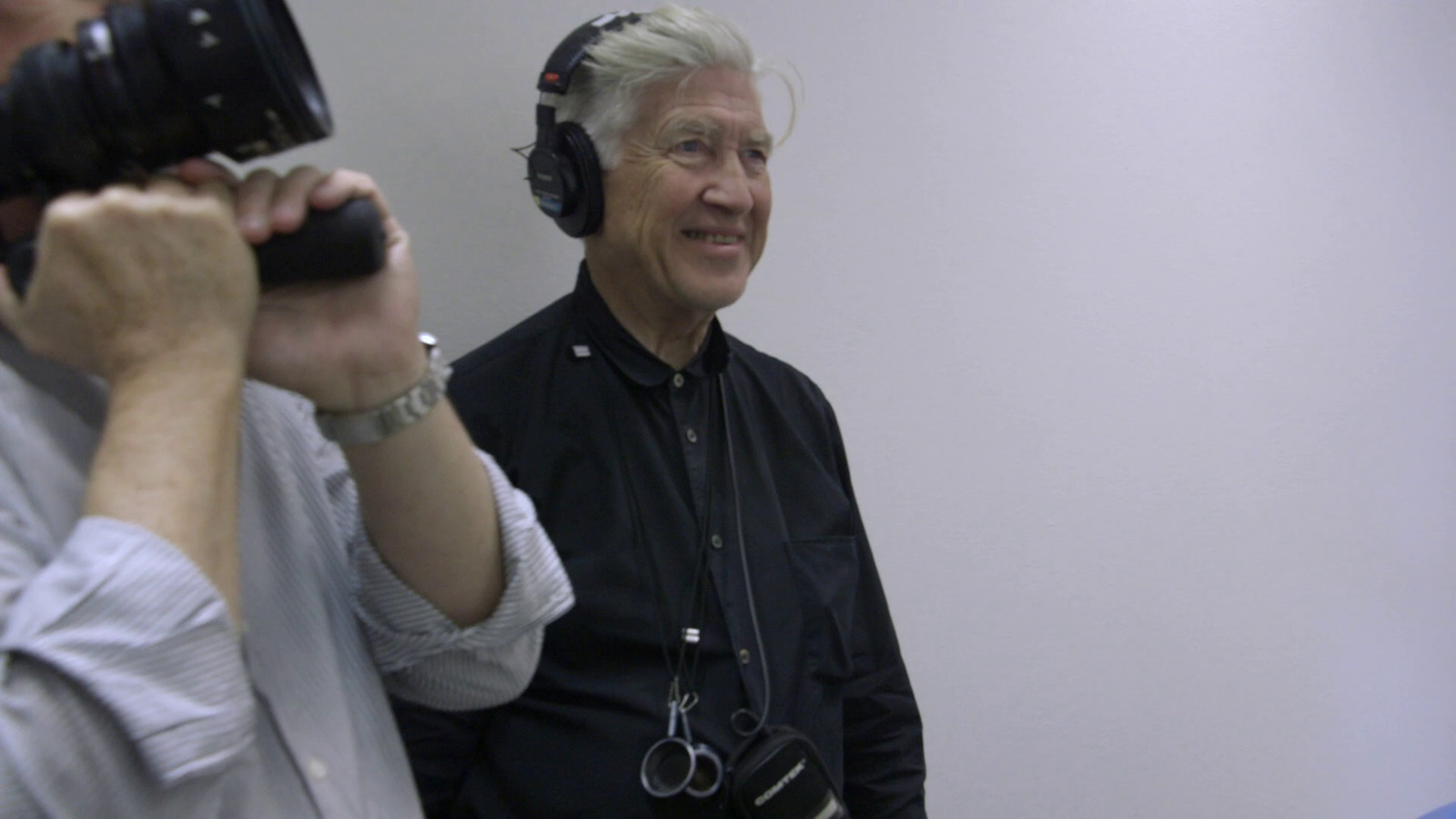
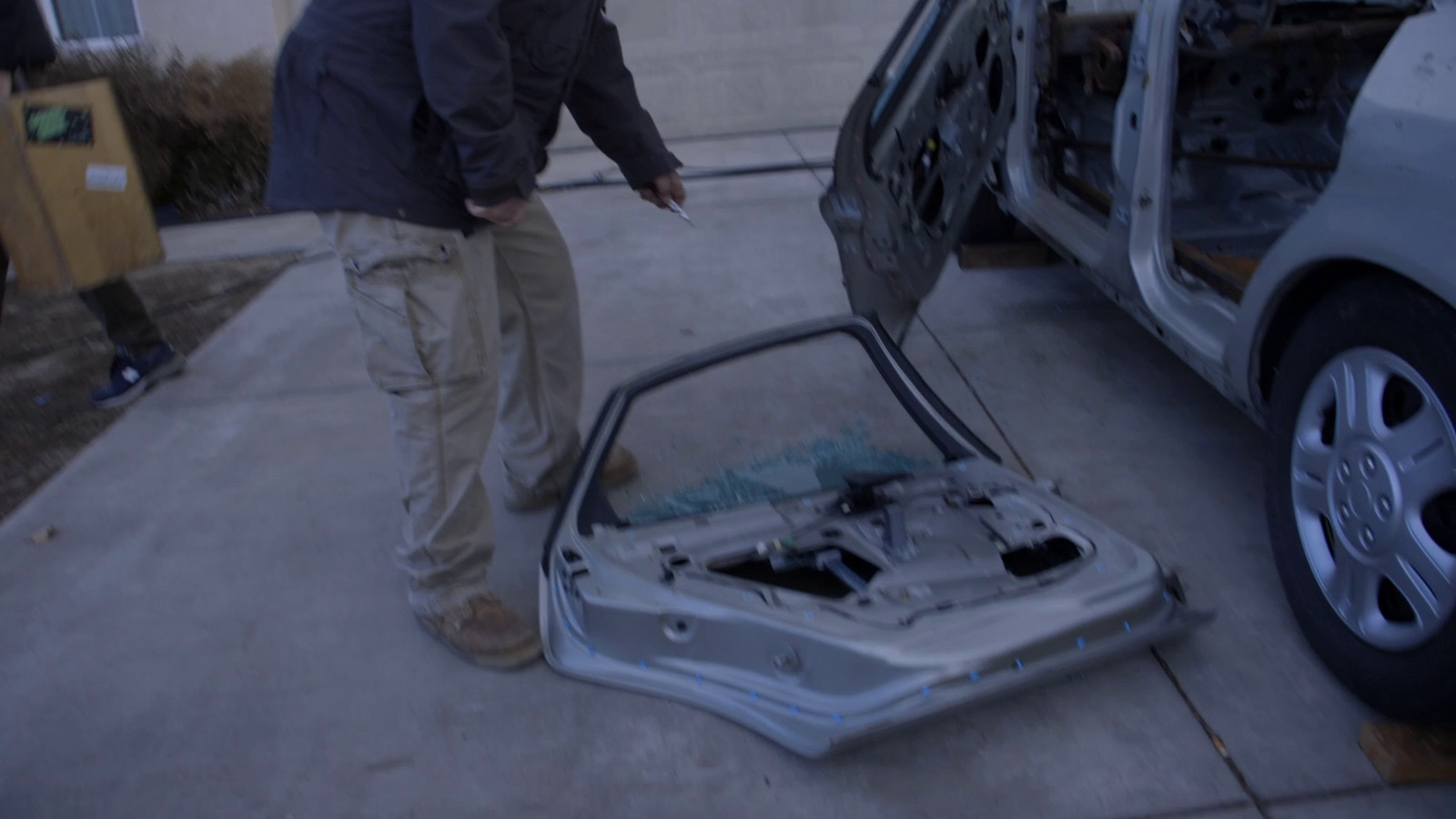
The wreck’s aftermath is arranged before the fire
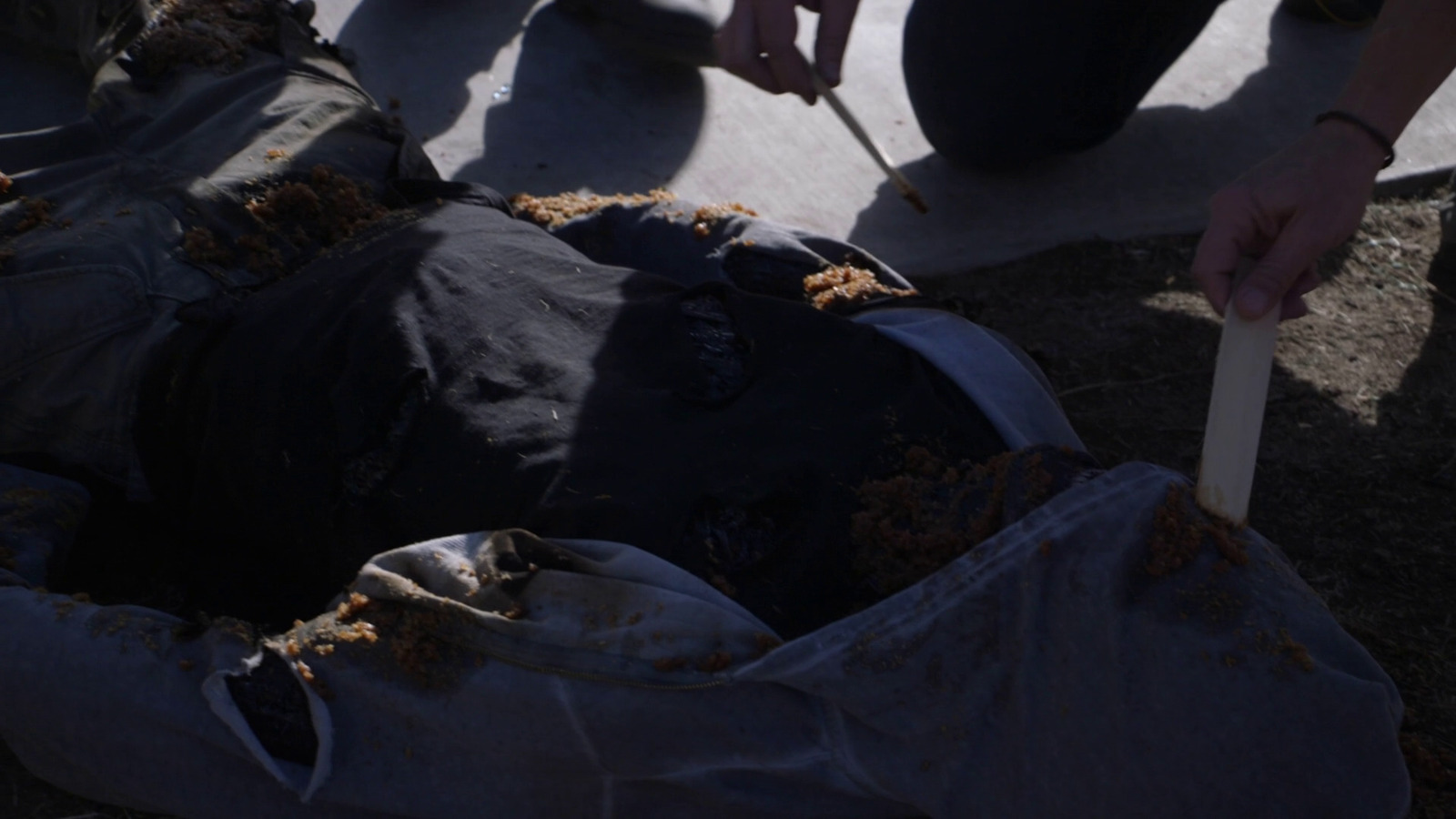
Further production footage extends the earlier account of the car explosion. The crew works out where the victims would fall, adjusts their positions around the stripped vehicle and substitutes dummies for the fire work. The charred body and detached parts belong to a prepared aftermath rather than an uncontrolled accident.
The departing men’s reaction is planned as another separate action, after the fire has subsided enough for their return. The child’s run is photographed separately as well. These views show how the sequence joins a hazardous effects event to controlled human responses; they do not establish that every element in the final shot was created by the same technique.
Open the wreck and practical-effects study · 3 frames
The prison alarm is an acting cue as well as a sound effect
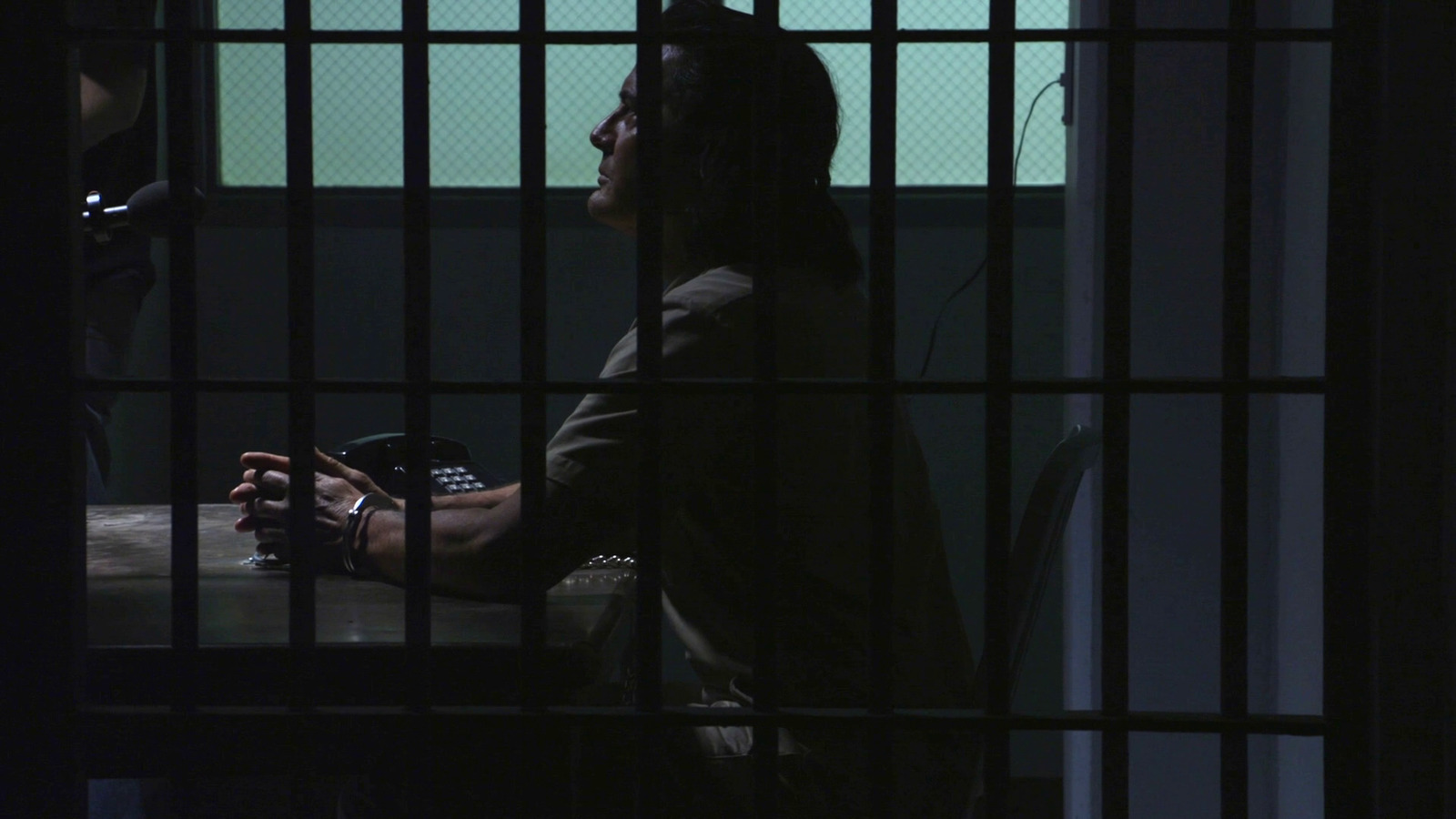
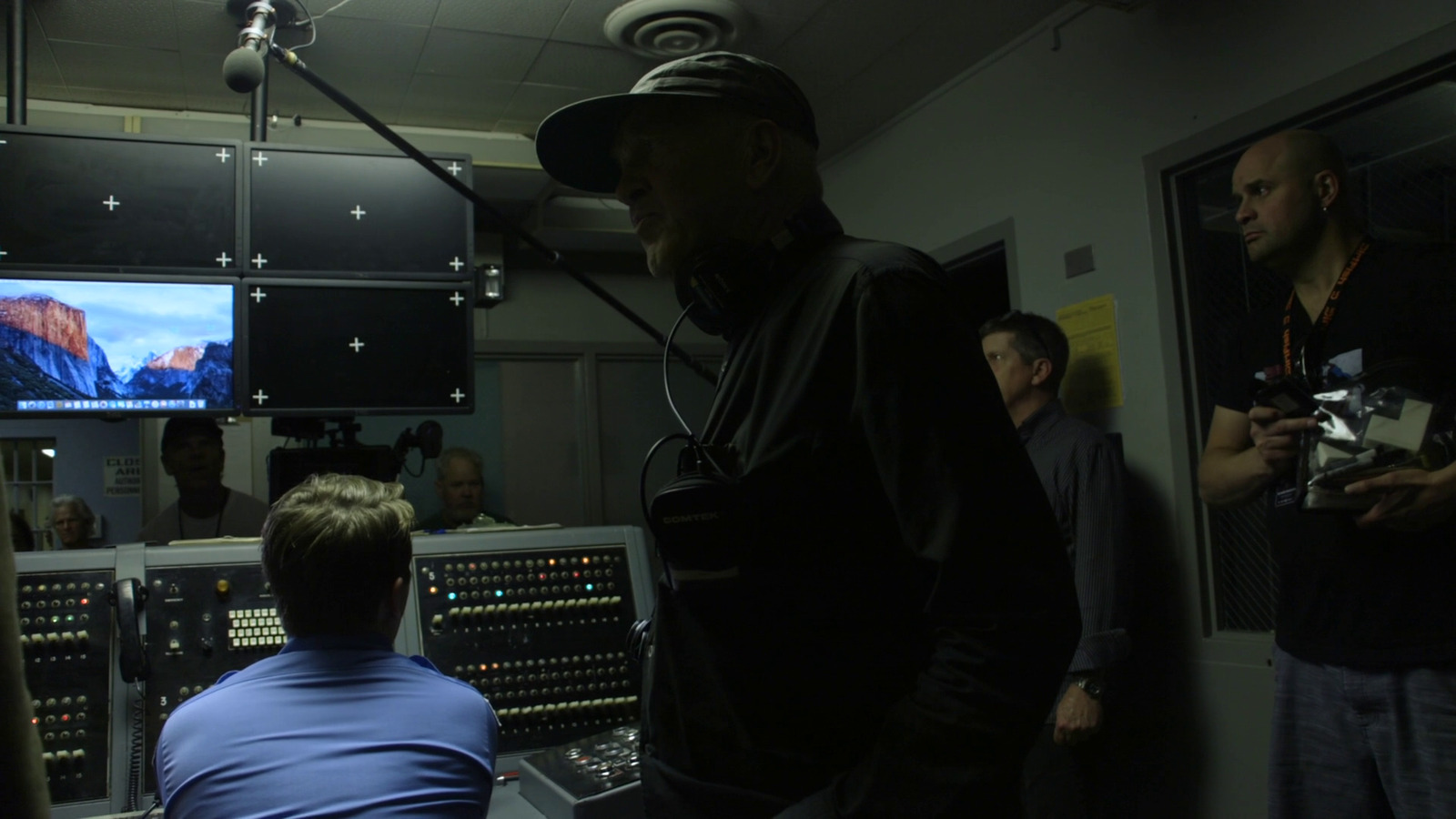
The phone scene is rehearsed through the placement of the telephone, the guard’s exit and Mr. C’s deliberate stillness. In the control room, Lynch asks the staff to react to the screens and speak over a loud alarm. Their confusion is given a physical volume and rhythm before the finished sound mix exists.
The interruption has a second beat: Mr. C hangs up, the disturbance stops, and the observers feel his continuing stare. Marked screens are visible during preparation. The documentary reveals the performers’ instructions and the working set, while the final combination of screen images, lighting and sound remains a separate construction.
Open the phone and control-room study · 2 frames
Presentation, music and credits
This study uses the standalone Part 5, approximately 58 minutes including titles and closing credits, from Twin Peaks: From Z to A. Its English 5.1 programme audio and accessibility captions were checked alongside the picture and on-screen credits. No alternate commentary or separate episode supplement accompanies this presentation.
The music credits include Johnny Jewel’s The Flame and Windswept; Angelo Badalamenti and David Lynch’s Frank 2000; the Paris Sisters’ I Love How You Love Me; Trouble’s Snake Eyes; Uniform’s Habit and Tabloid; Sousa’s The Stars and Stripes Forever; and BluntedBeatz’s I Am (Old School Hip Hop Beat). The Roadhouse performance occurs before the final investigation and telephone scenes. The closing credits remain with Cooper in the plaza. [1]
Sources and viewing notes
- Twin Peaks: The Return, Part 5 (2017), directed by David Lynch, written by Mark Frost and David Lynch; Twin Peaks: From Z to A. Episode images, English captions, selected dialogue passages and on-screen credits checked. Timings refer to the standalone part, including opening titles. Interpretive connections are distinguished from established narrative facts and production testimony.
- Josh Wigler, “Twin Peaks Star Kyle MacLachlan Promises Everything Will Make Sense”, The Hollywood Reporter, 6 July 2017. Primary interview used for MacLachlan’s performance references and account of ensemble timing. The full interview discusses events through Part 8.
- Tell It Martin, directed and photographed by Jason S., in Impressions: A Journey Behind the Scenes of Twin Peaks (2017), viewed in Twin Peaks: From Z to A. Passages: 01:37–08:01. Picture and English captions examined, with targeted speech checks. Rehearsal proposals and production observations are distinguished from interpretation of the finished episodes. Documentary narration and its music are not treated as unscripted statements by Lynch.
- See You on the Other Side Dear Friend, directed and photographed by Jason S., in Impressions: A Journey Behind the Scenes of Twin Peaks (2017), viewed in Twin Peaks: From Z to A. Passages: 12:06–16:54. Picture and English captions examined, with targeted speech checks. Rehearsal proposals and production observations are distinguished from interpretation of the finished episodes. Documentary narration and its music are not treated as unscripted statements by Lynch.
- Behind the Curtain, Part 5. Photographed by Jason S.; edited by Jonathan Angus, with editorial assistance by Robert Lay (2019). Viewed in Twin Peaks: From Z to A. Timed passages: 02:22–06:47; 07:46–12:47; 16:29–24:48; 24:50–28:18. Timings refer to the documentary, not the episode. On-set directions and retrospective recollections are distinguished from Lyncharium’s interpretation of the finished scenes.