Twin Peaks
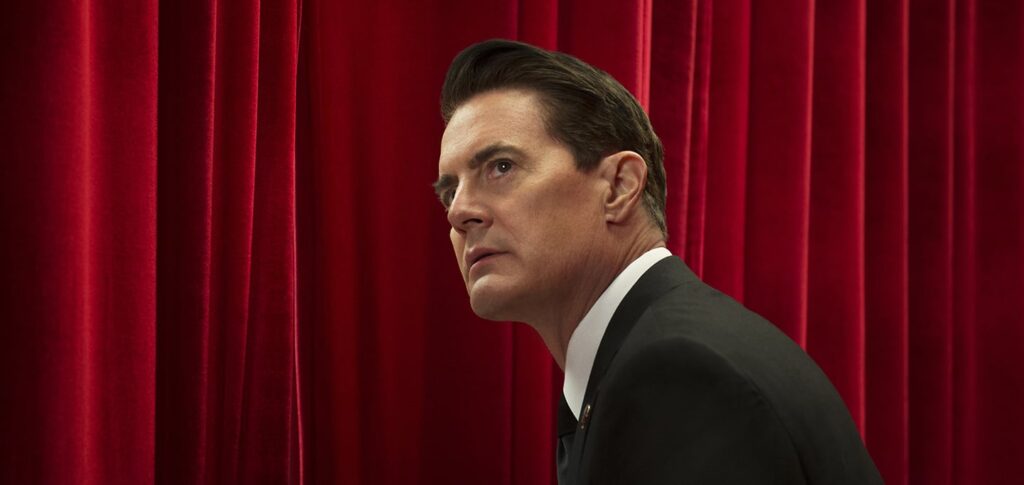
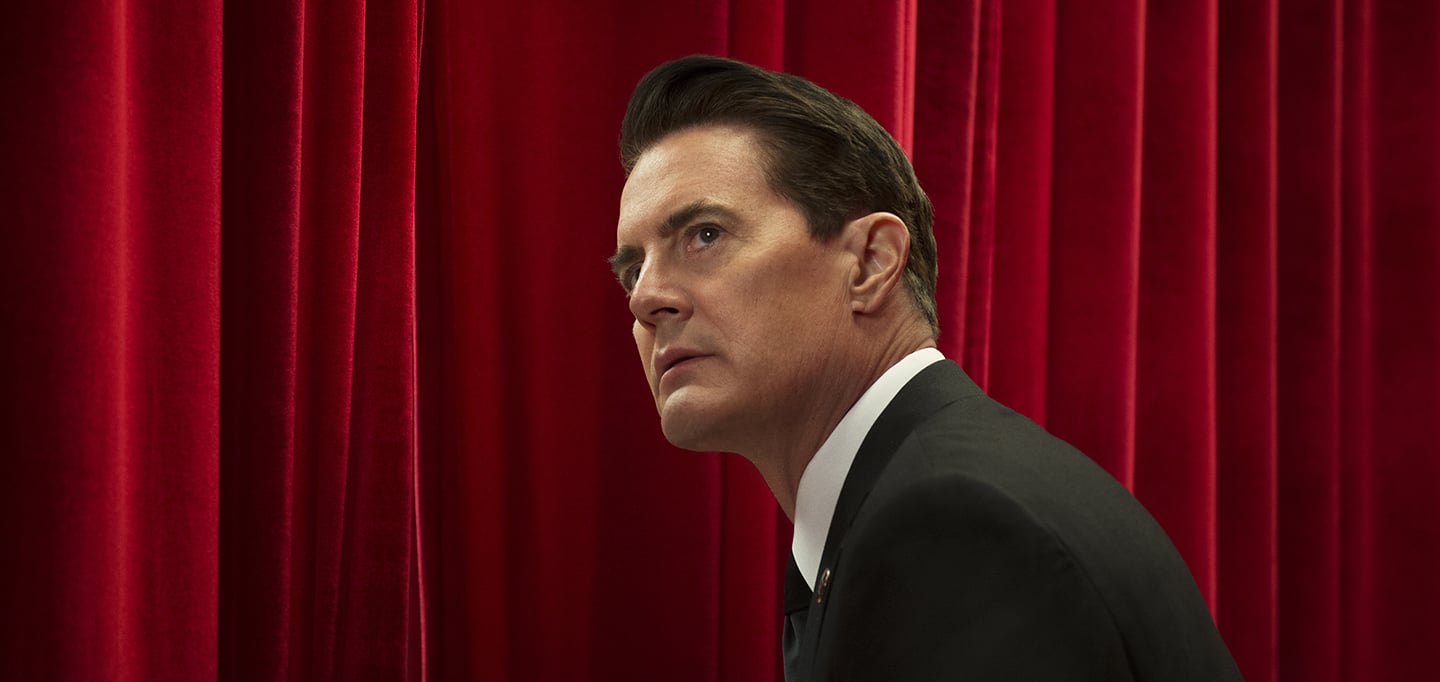
Television / 1990–1991 & 2017 / Research dossier
A town that turns grief into a mystery. A return that asks what it means to go back.
Created by David Lynch and Mark Frost, Twin Peaks begins with Laura Palmer’s death and FBI agent Dale Cooper’s arrival. The investigation draws us into a community whose warmth and violence occupy the same rooms. This hub connects substantial dossiers and retains the shared research across their people, working methods, images, sounds and changing forms of storytelling. Series history ↗
Explore the Twin Peaks dossiers.
Give each era its own time. These separate research editions offer sustained essays, visual records, sources and specific investigations. The season dossiers also provide a route through every episode or part.
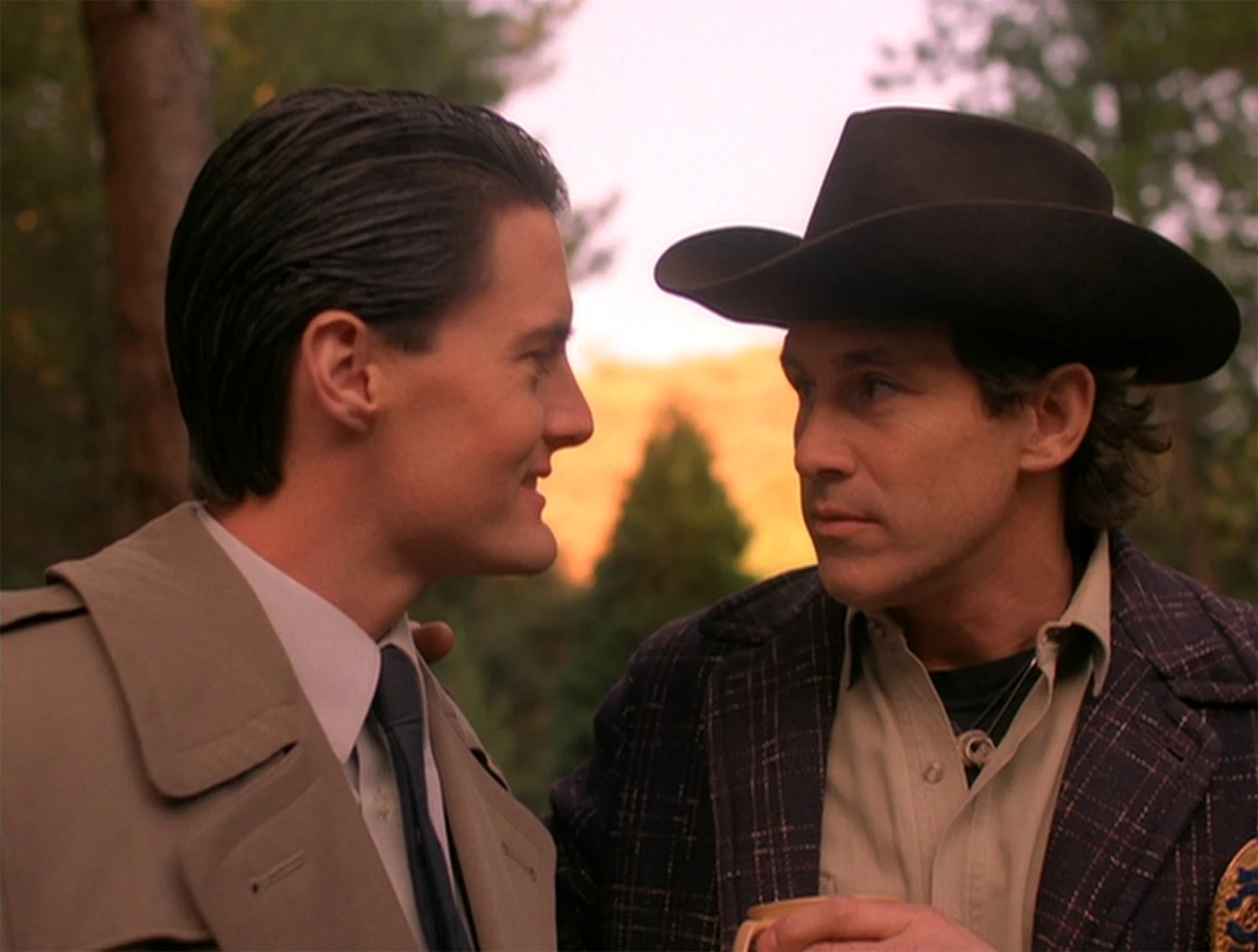
Season 1
The pilot, the town, the ensemble and the craft of the first mystery.
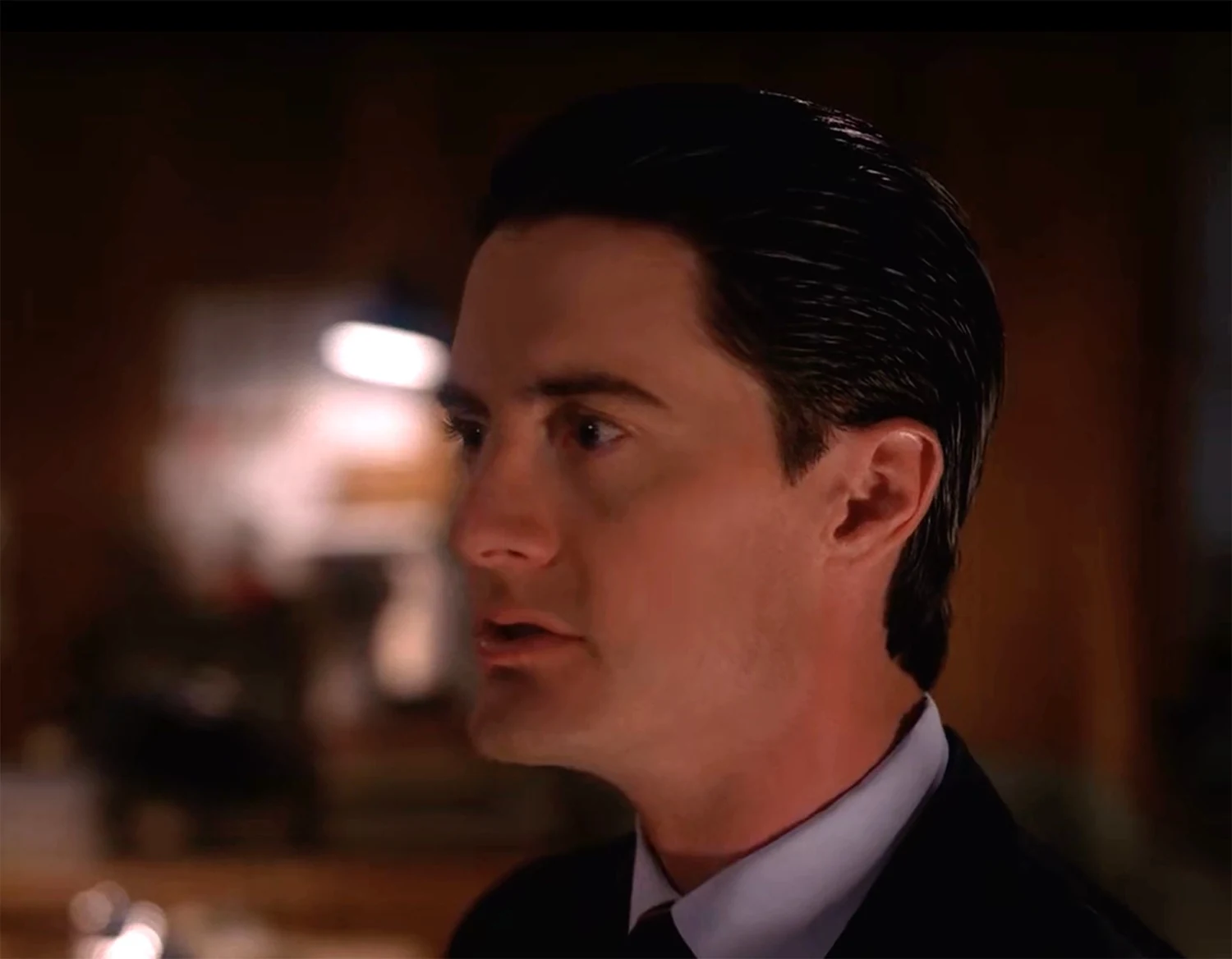
Season 2
Revelation, grief, the expanding ensemble and Cooper’s passage into the Lodge.
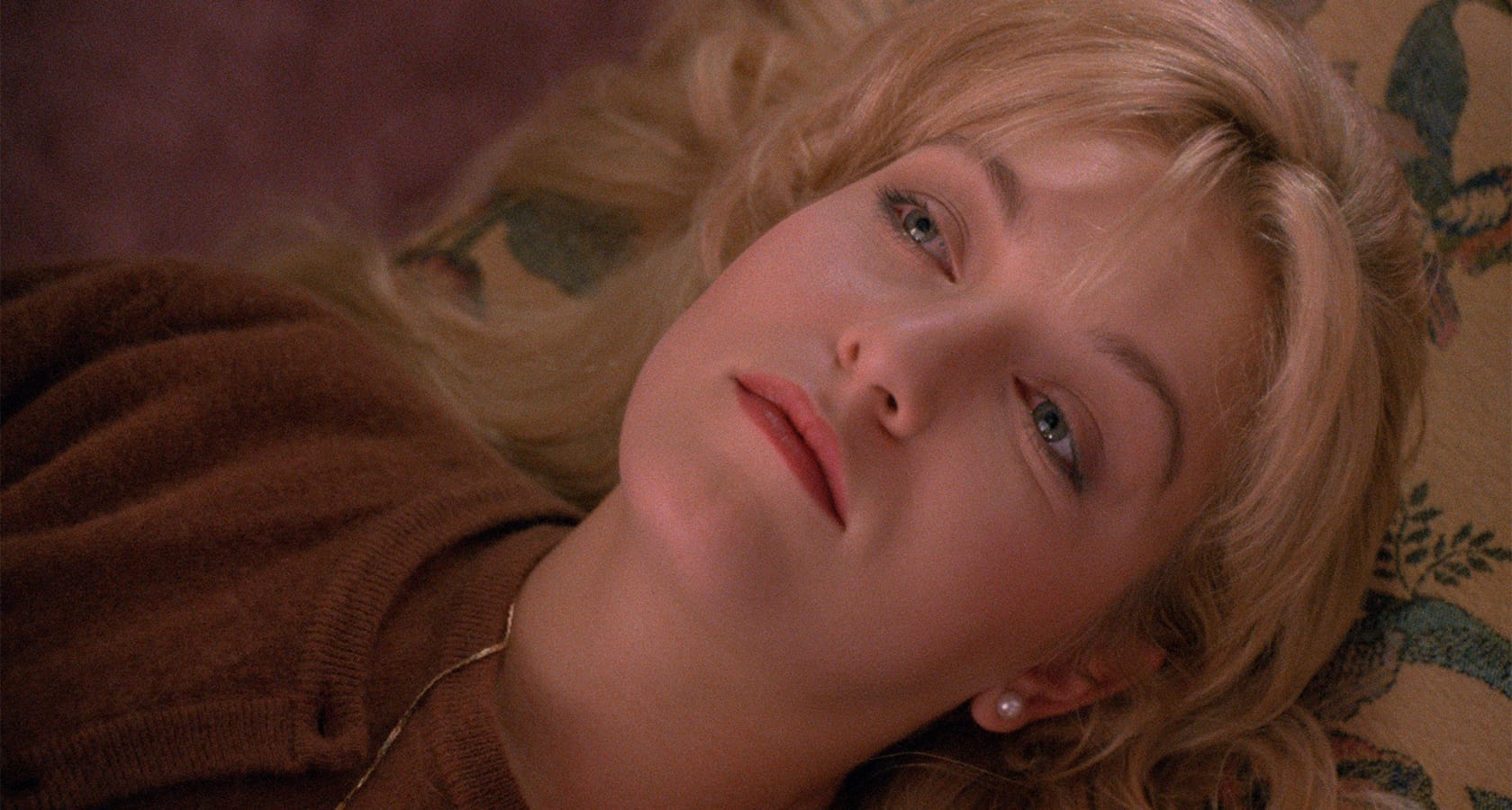
Fire Walk with Me
Nineteen illustrated scene studies, Laura’s experience, archival cast testimony, light, sound and the film’s contested history.
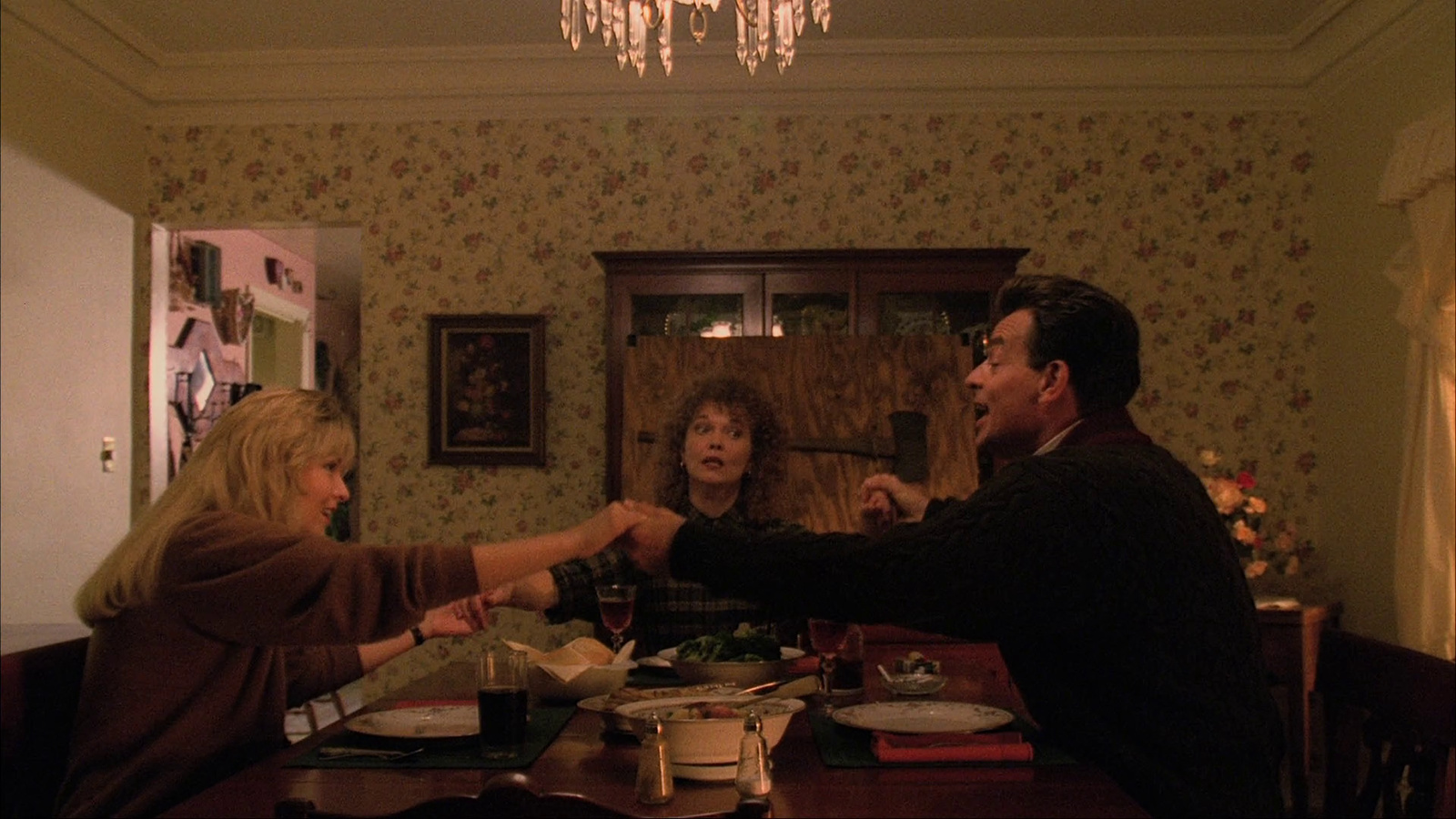
The Missing Pieces
Thirty-three scene studies: Jeffries’ journey, Laura’s relationships, the town’s comic rhythms and the unsettling epilogue.
The Return
Performance, Part 8, effects, music, duration and the difficult promise of going home.
- Created by
- David Lynch & Mark Frost
- Original series
- 1990–1991 · Two seasons
- The Return
- 2017 · 18 parts
- Related film
- Fire Walk with Me · 1992
Step into the first mystery.
Three illustrated episode dossiers follow the town’s first day of grief, Cooper’s arrival and the dream that changes the investigation. Each brings together scene studies, focused galleries and a route to the next episode.
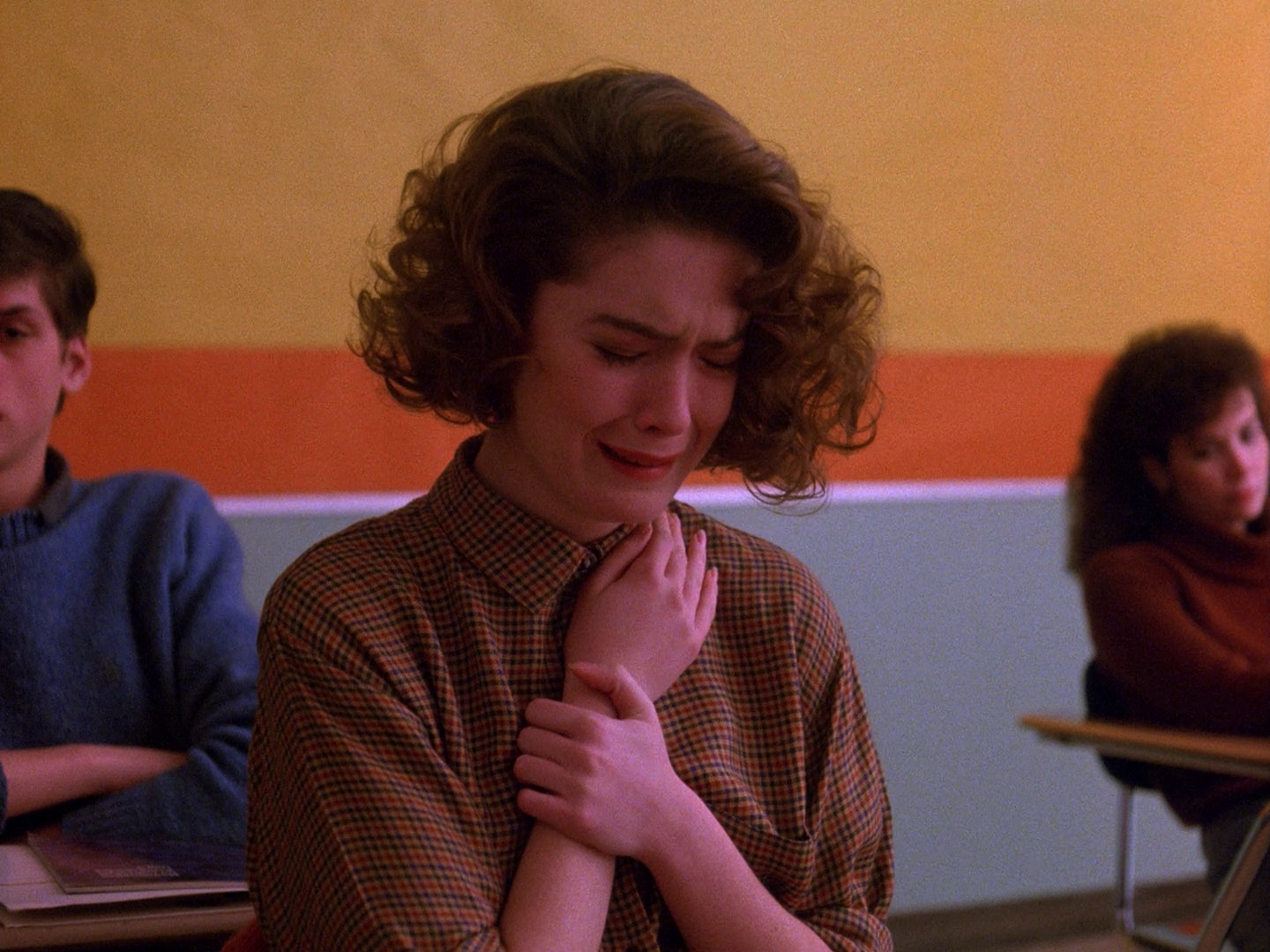
The pilot: two endings
Laura’s absence, the town’s reactions and the US/international ending comparison.
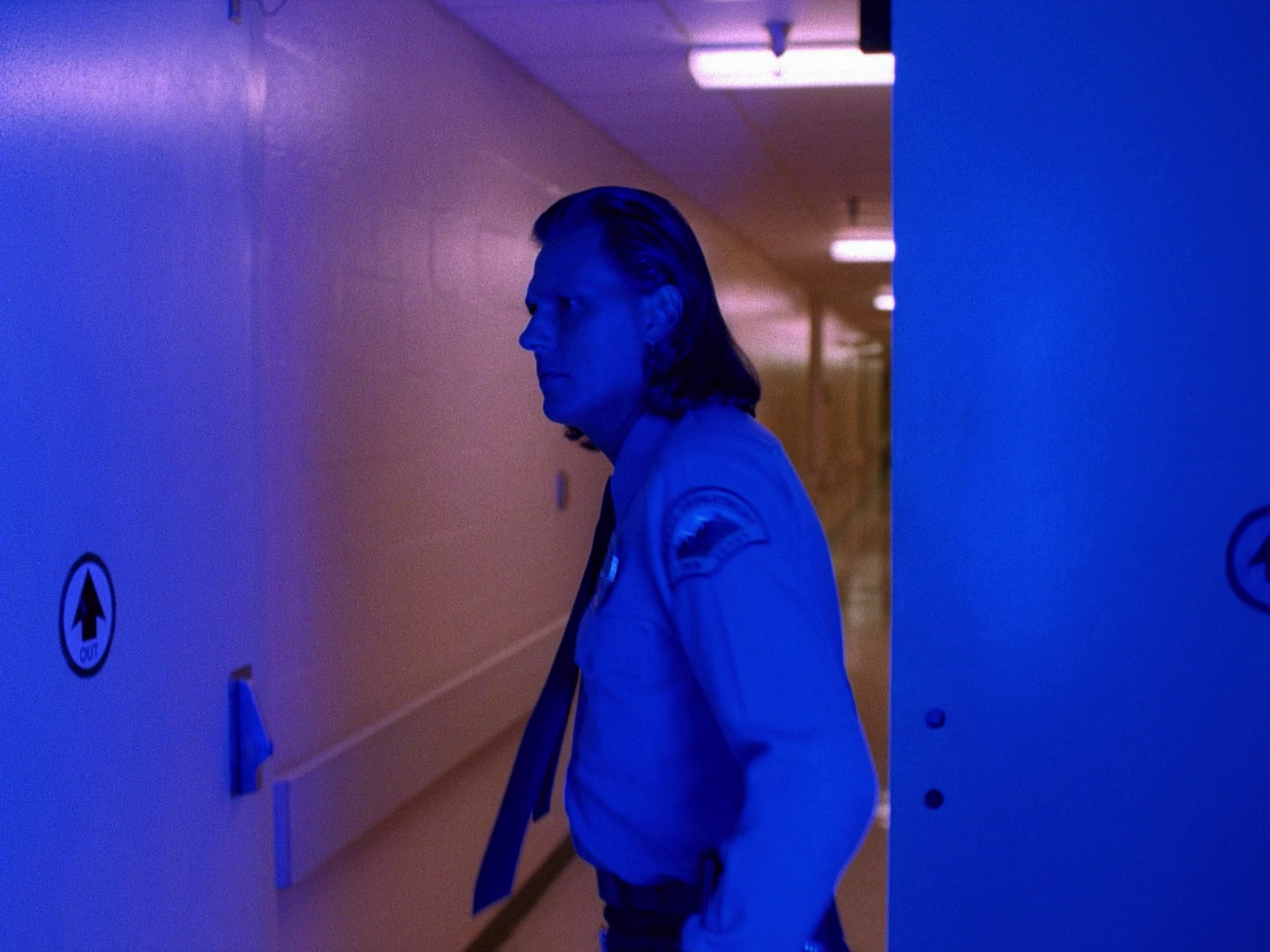
Episode 1: Traces to Nowhere
The home movie, domestic secrets, the Log Lady and a blue hospital corridor.
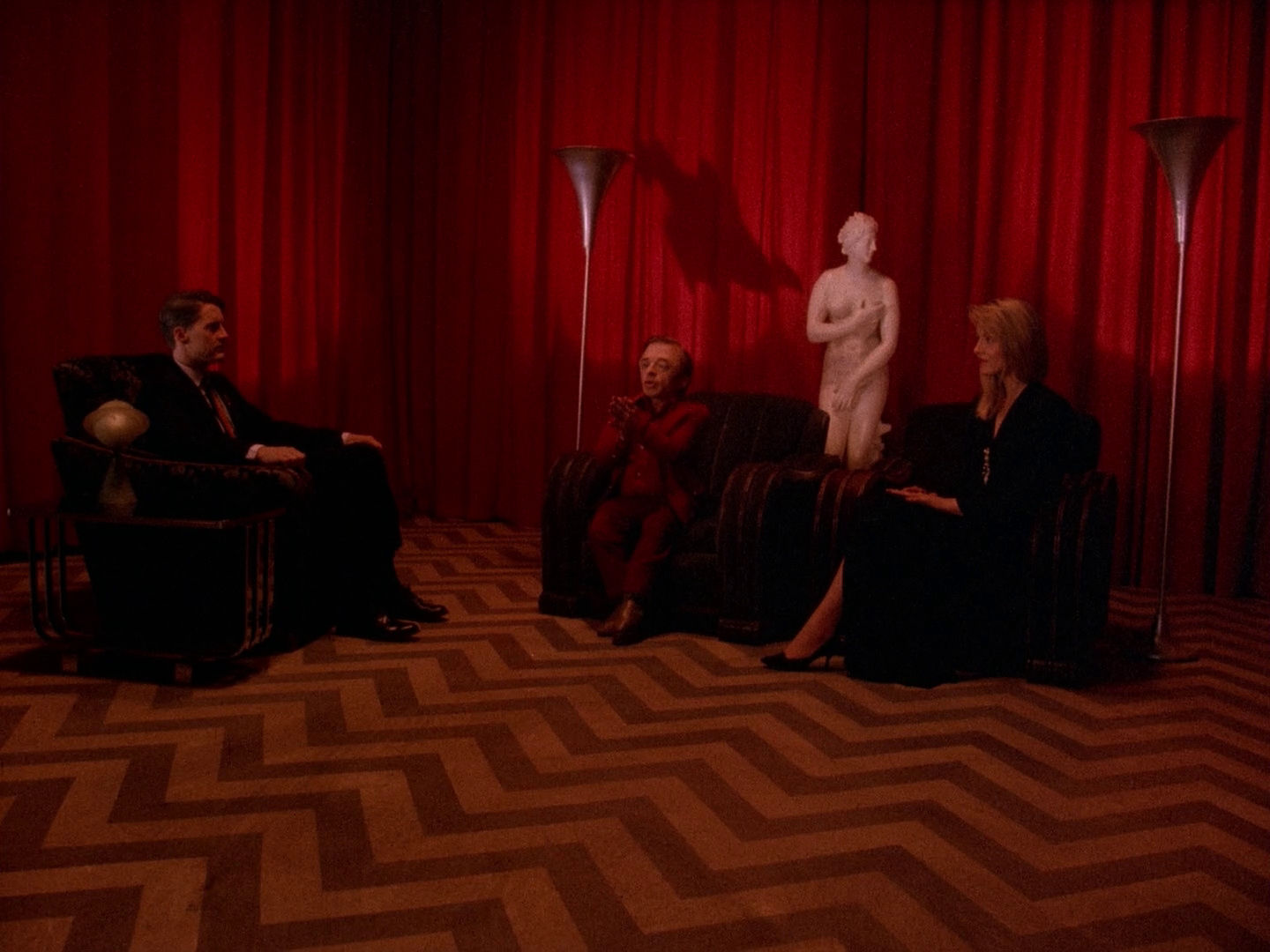
Episode 2: Zen, or the Skill to Catch a Killer
Cooper’s stone test, three dances and the Red Room’s return.
Explore the Log Lady introductions and interview companion →
The Return, scene by scene.
Enter the illustrated episode dossiers: the glass box, the Lodge, the purple sea, the case files, Carl’s roadside encounter, Diane’s return, the atomic vision, Briggs’s message and Laura’s continuing presence. Each follows the images, voices and documented working methods in detail. Continue through the Buckhorn vortex, the Blue Rose task force, Audrey’s return and the encounters surrounding Cooper and his double.
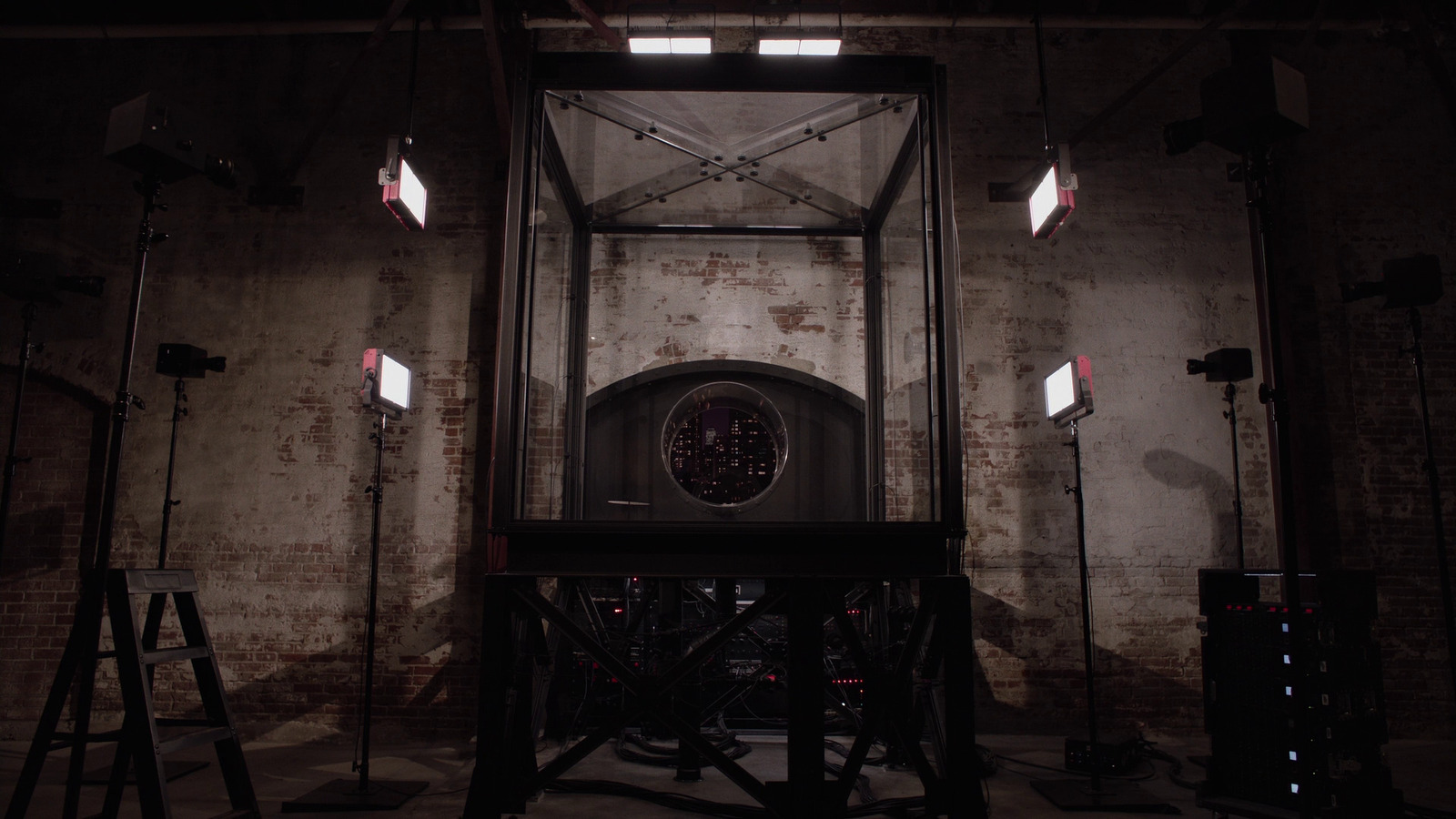 Part 01 · Illustrated episode dossier
My Log Has a Message for You
Twelve illustrated studies follow the glass box, Mr. C, the Buckhorn investigation and Margaret’s message. Includes sound and dialogue analysis, two focused FX galleries and production testimony.
Read the illustrated episode dossier ↗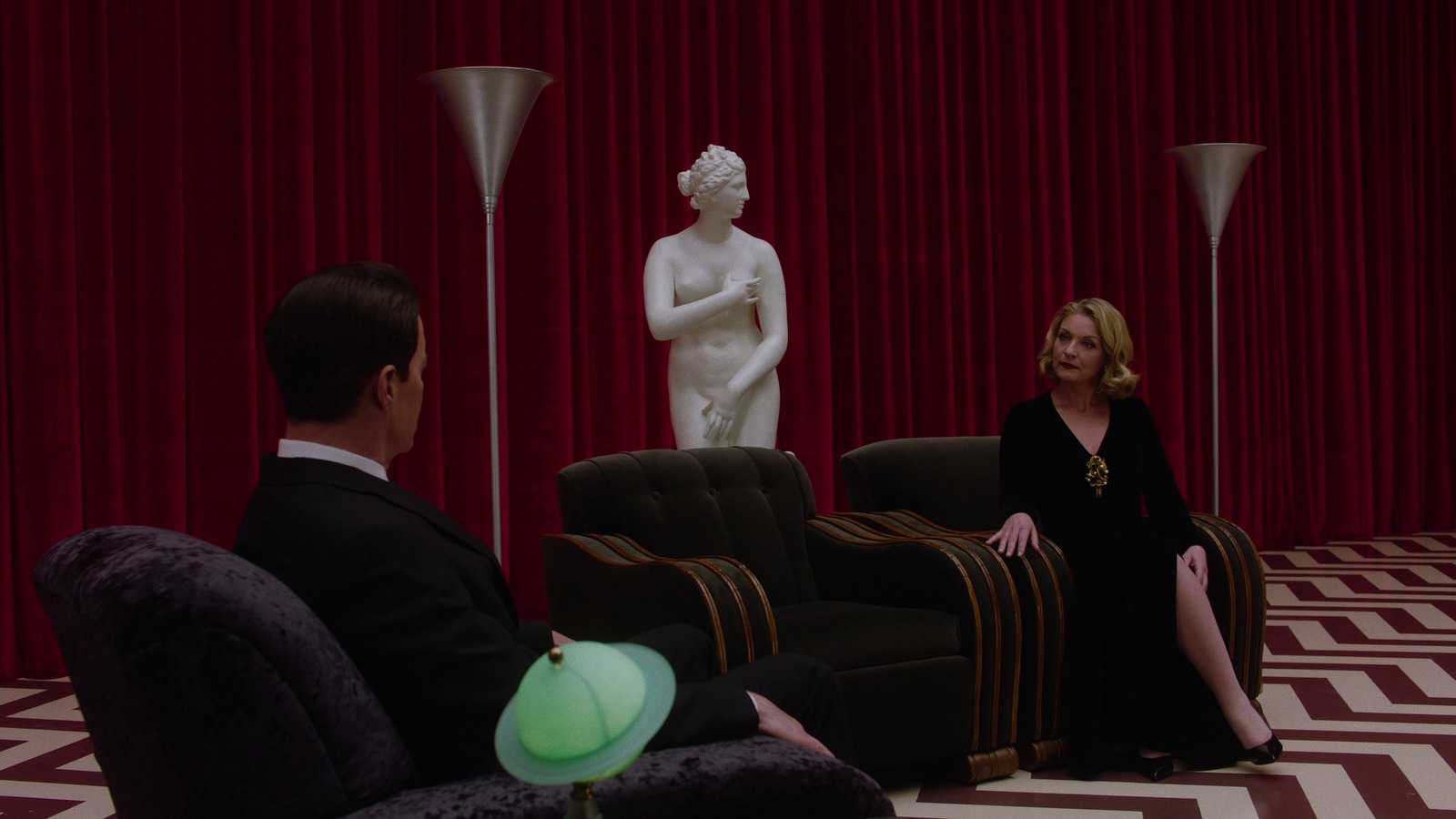 Part 02 · Illustrated episode dossier
The Stars Turn and a Time Presents Itself
Fifteen illustrated studies follow Bill and Phyllis, Mr. C’s recordings, Laura and the evolving Arm, Cooper’s passage and the Roadhouse. Includes three focused FX galleries and sound analysis.
Read the illustrated episode dossier ↗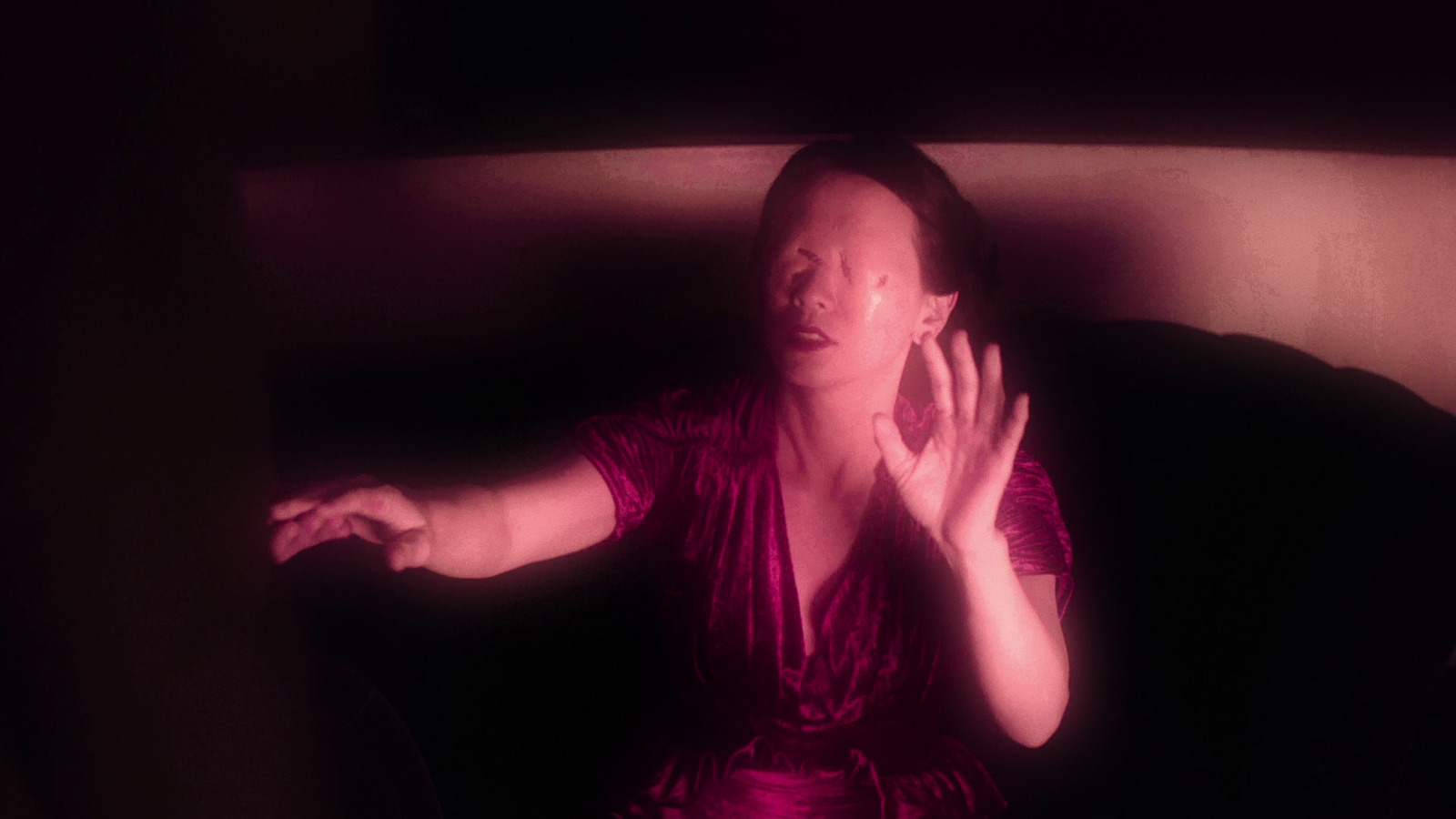 Part 03 · Illustrated episode dossier
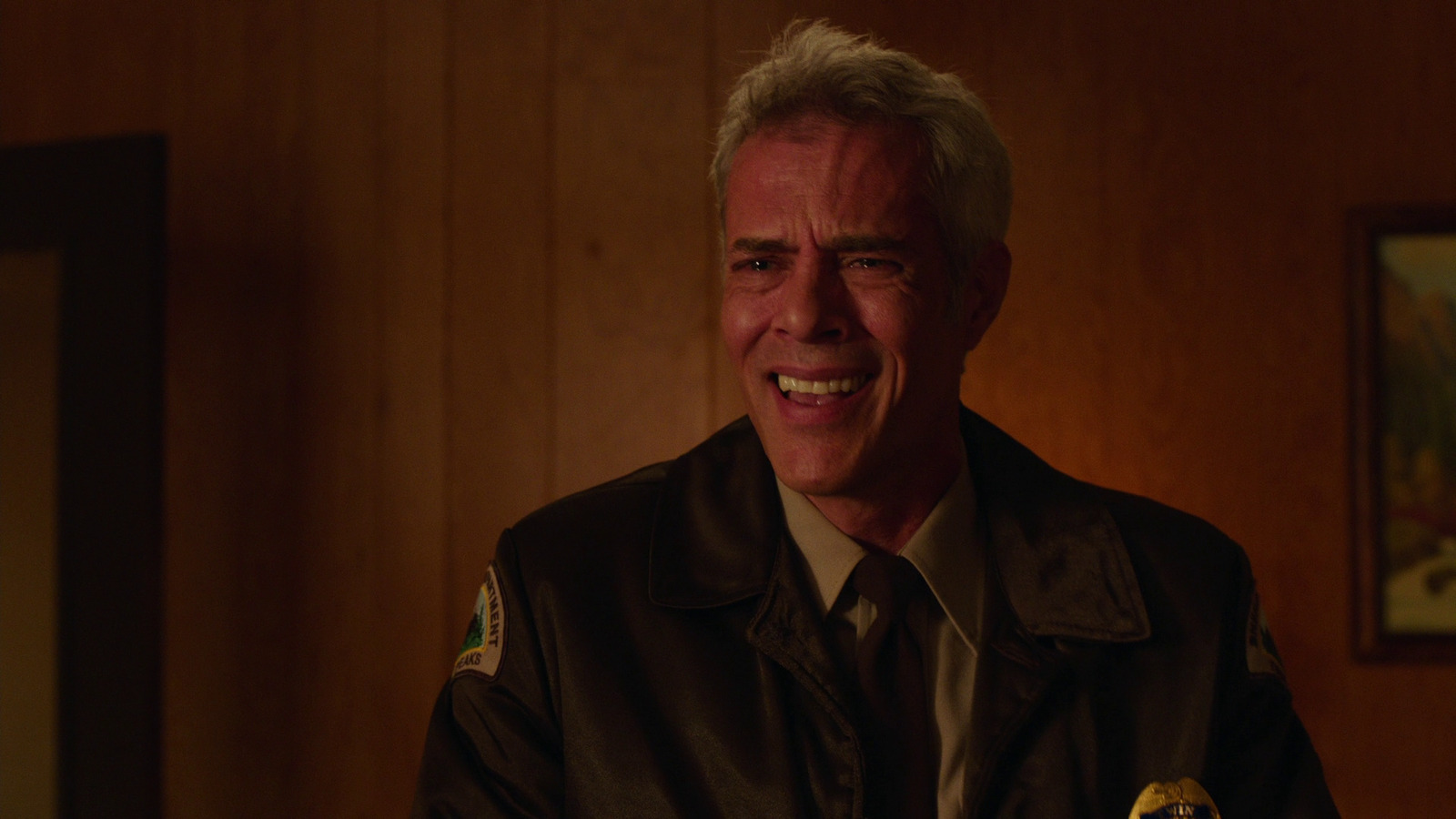
Call for Help
A way out of the darkness leads to a world whose simplest instructions have become strange.
 Part 04 · Illustrated episode dossier
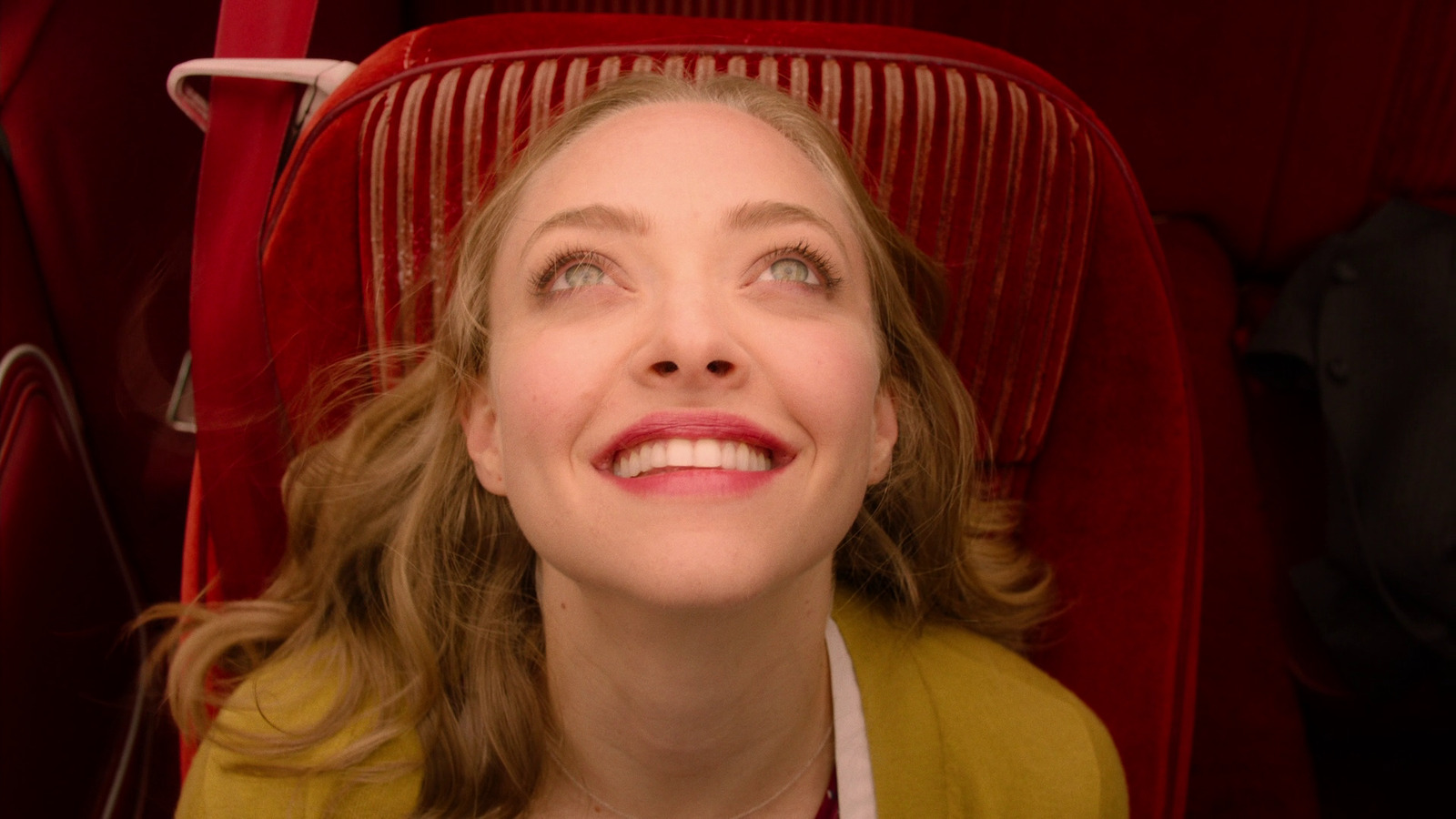
…Brings Back Some Memories
A familiar face can return without bringing the familiar person. A photograph can make an absent person suddenly present.
 Part 05 · Illustrated episode dossier
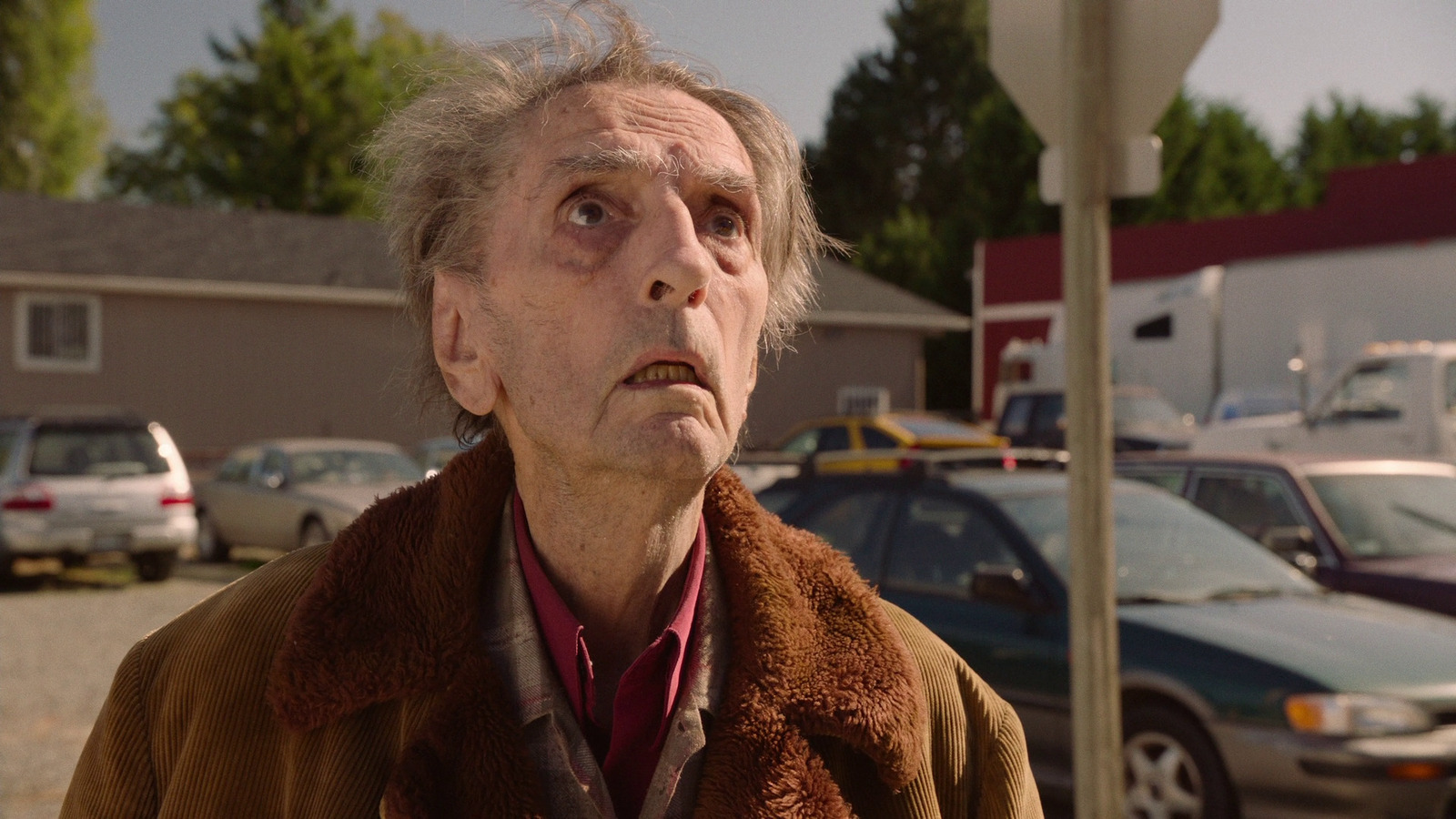
Case Files
The ordinary working day is full of signals that only some people can read.
 Part 06 · Illustrated episode dossier
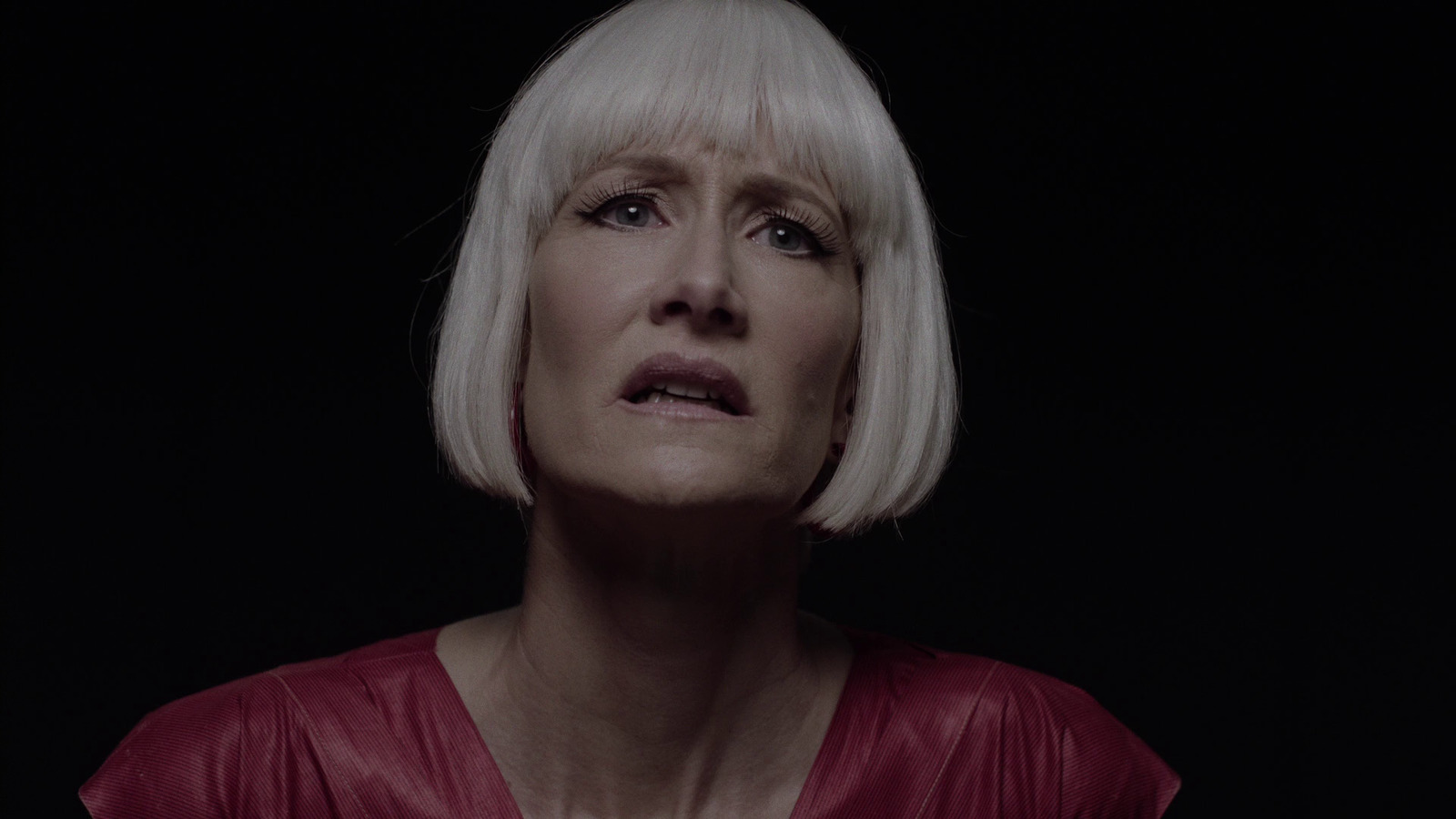
Don’t Die
A vision matters because of what someone does after seeing it.
 Part 07 · Illustrated episode dossier
There’s a Body All Right
A familiar face becomes evidence against itself. A recovered page brings an old warning into the present.
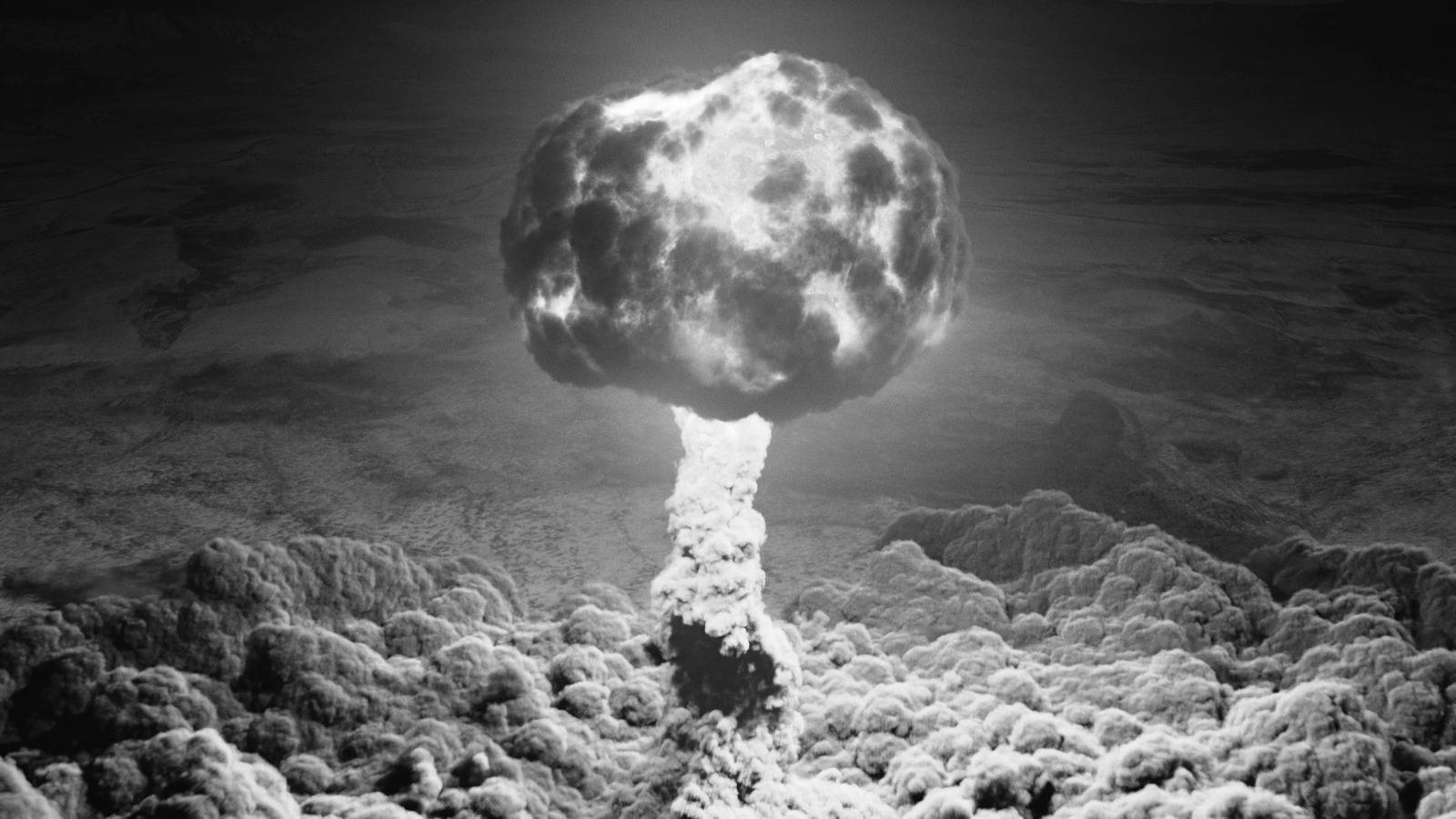 Part 08 · Illustrated episode dossier
Gotta Light?
A shot beside a dark road opens into a history of catastrophe. Images, bodies and voices cross boundaries that ordinary investigation cannot contain.
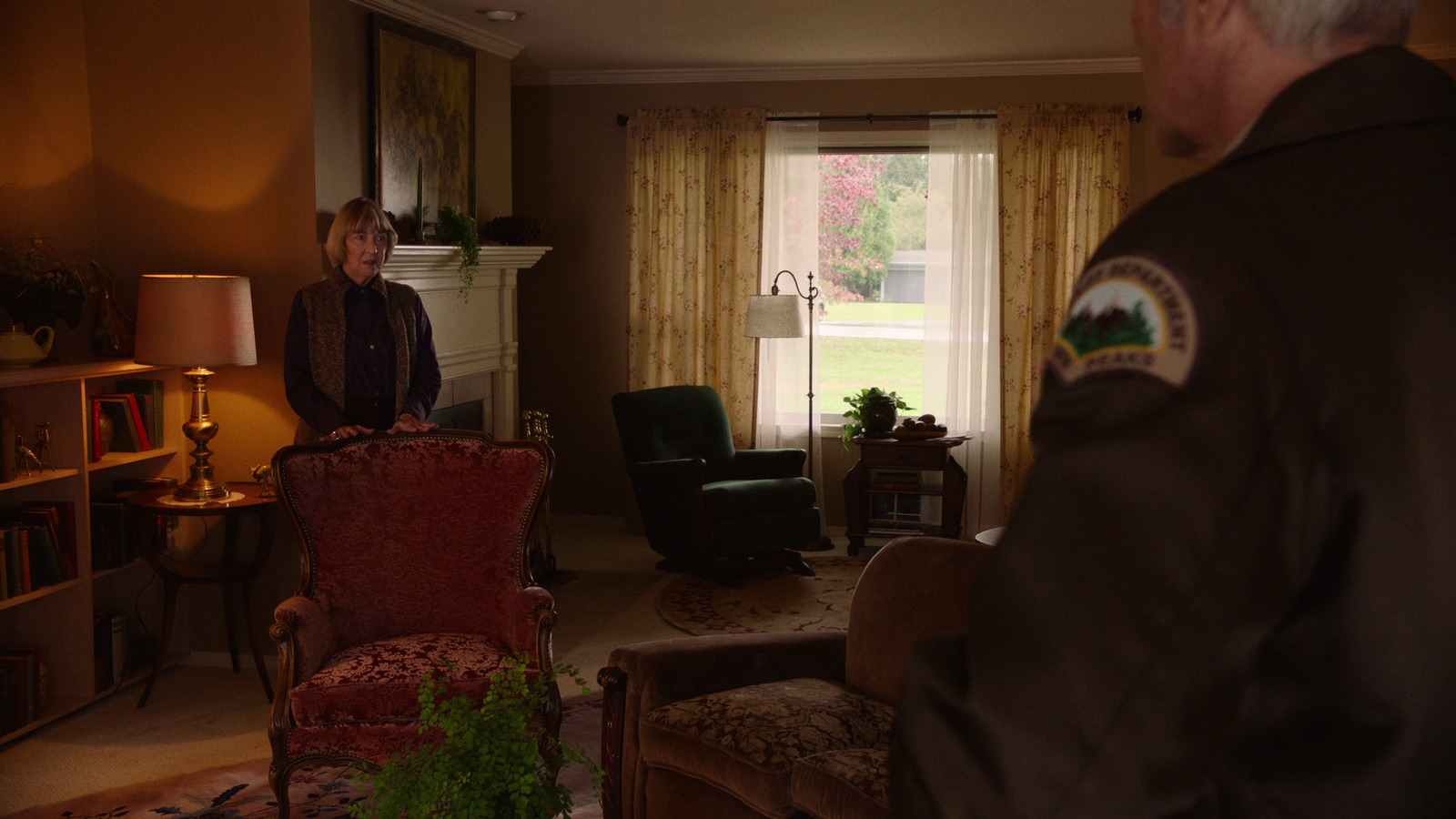 Part 09 · Illustrated episode dossier
This Is the Chair
The past survives in furniture, paper, a body and a voice struggling to explain what it has seen.
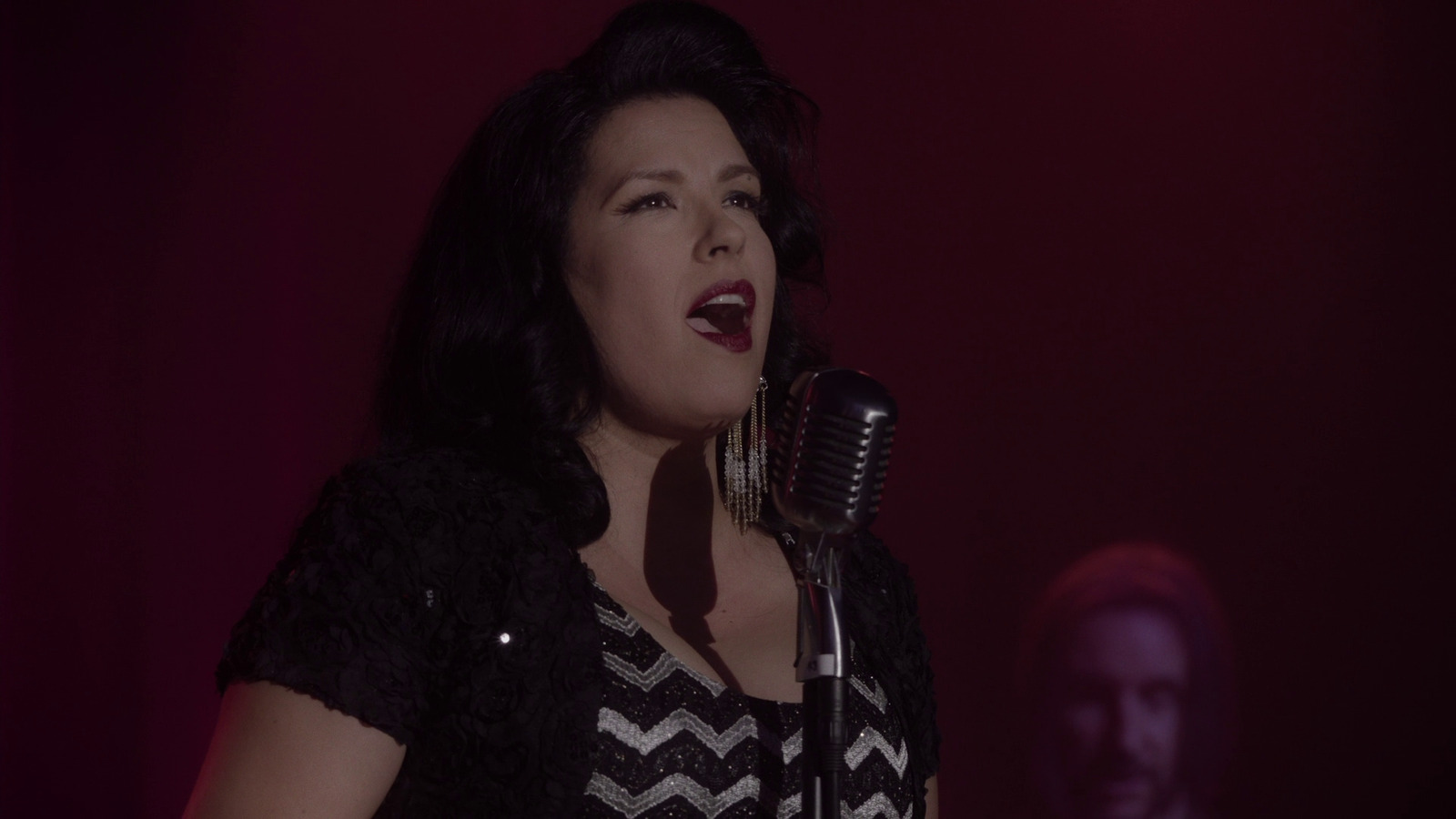 Part 10 · Illustrated episode dossier
Laura Is the One
A voice can threaten, comfort, deceive or continue after nobody is listening. Part 10 tests the distance between speaking and being heard.
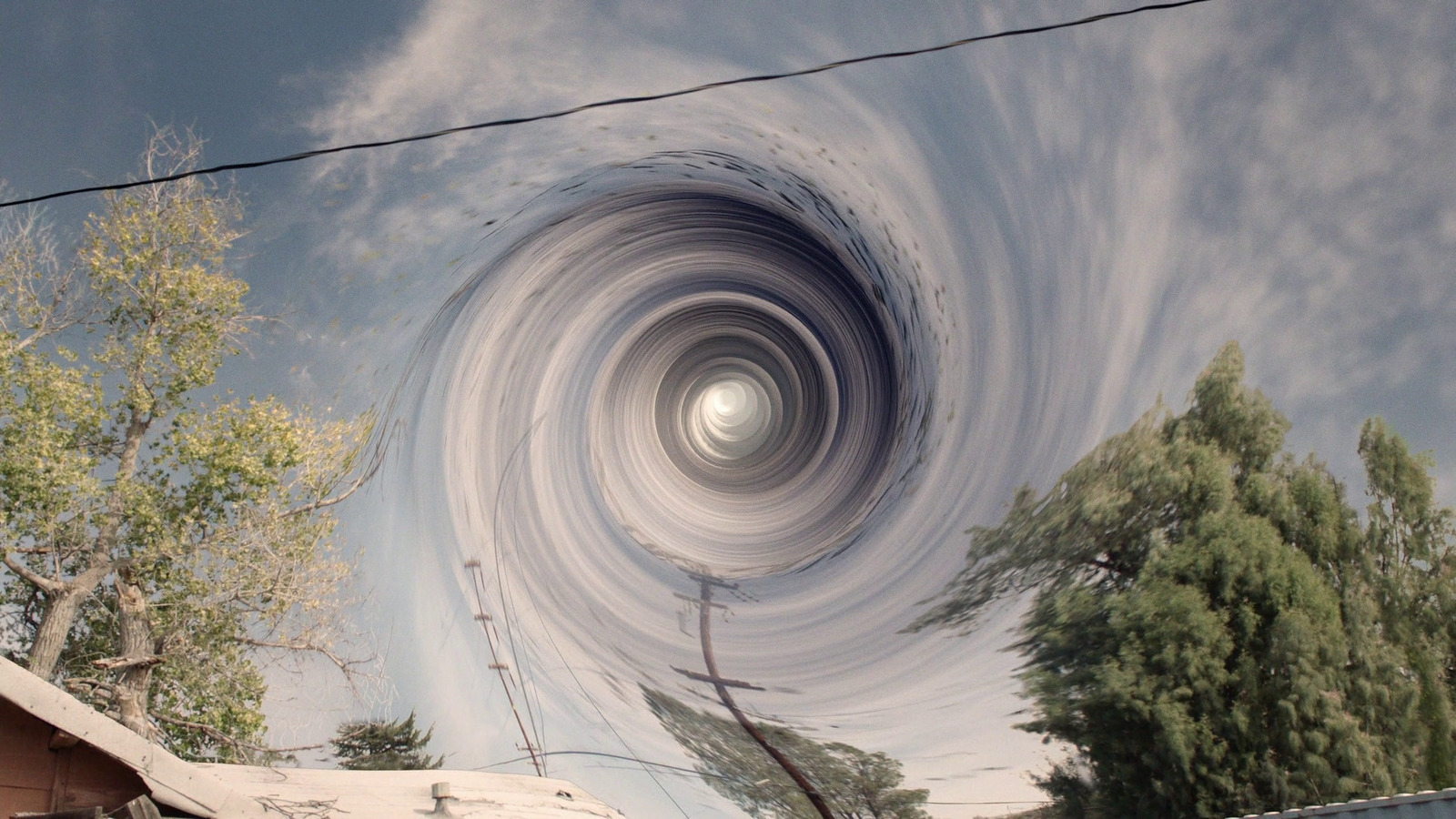 Part 11 · Illustrated episode dossier
There’s Fire Where You Are Going
A sky opens above an empty lot. A roadside emergency will not settle. A cherry pie changes the outcome of a planned killing.
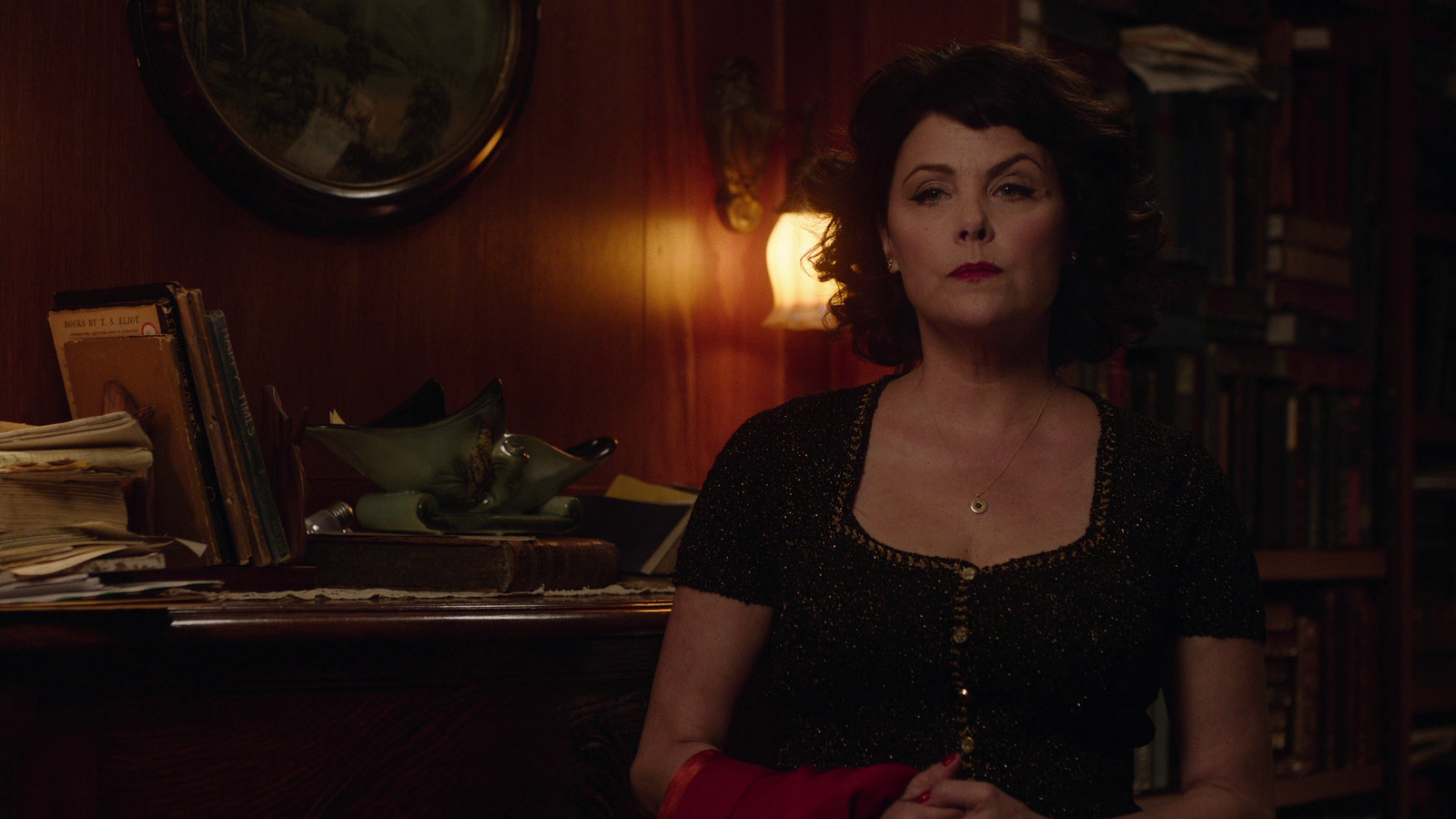 Part 12 · Illustrated episode dossier
Let’s Rock
People offer help, ask for answers and wait for somebody else to respond. Part 12 makes the delay itself part of the drama.
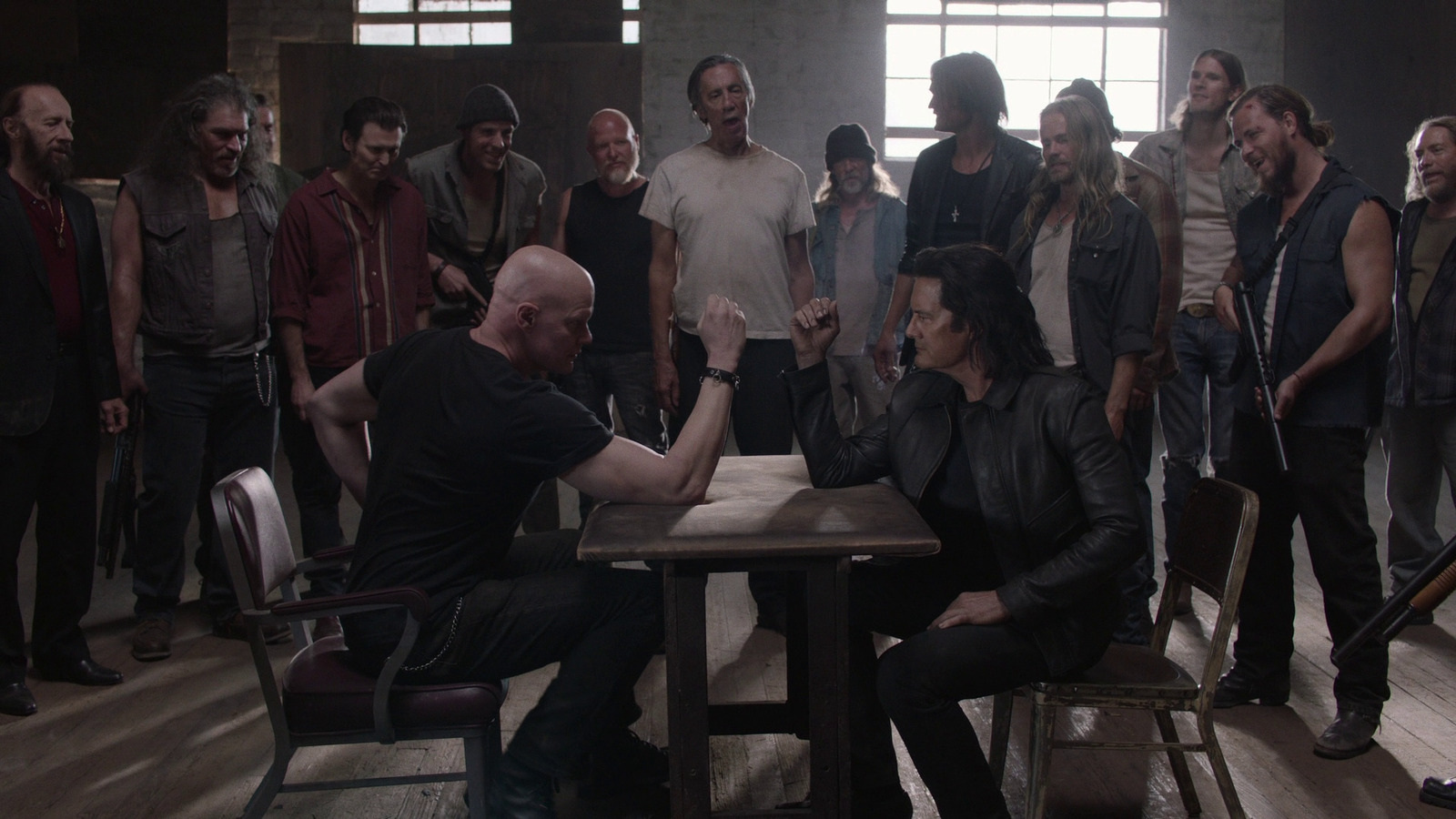 Part 13 · Illustrated episode dossier
What Story Is That, Charlie?
A contest of strength becomes a display of control. A cup of coffee becomes an offer of forgiveness. A familiar song returns to a changed room.
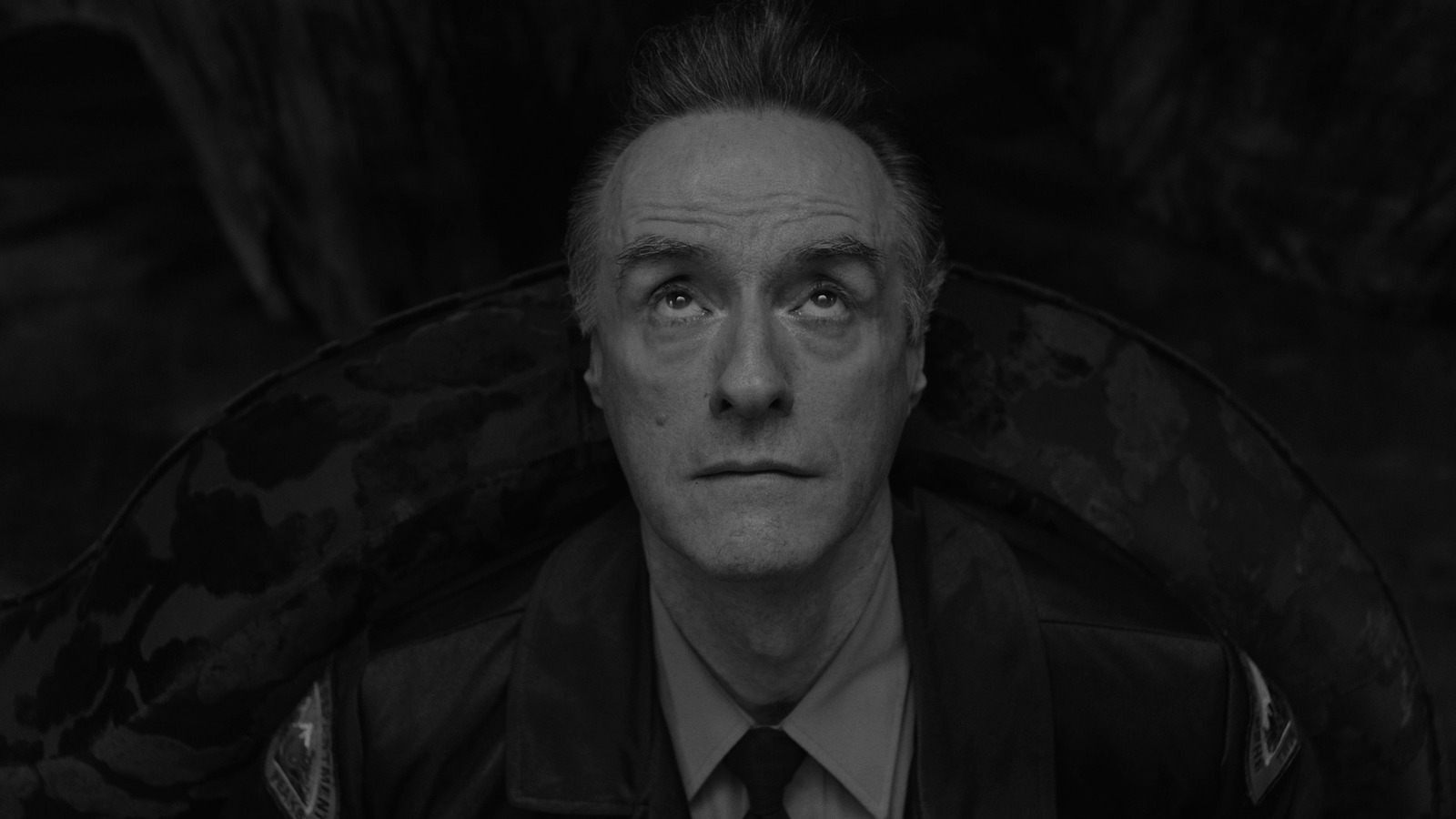 Part 14 · Illustrated episode dossier
We Are Like the Dreamer
A dream looks backward. A forest opens upward. Andy returns knowing whom to protect, while Sarah’s face conceals a different kind of interior.
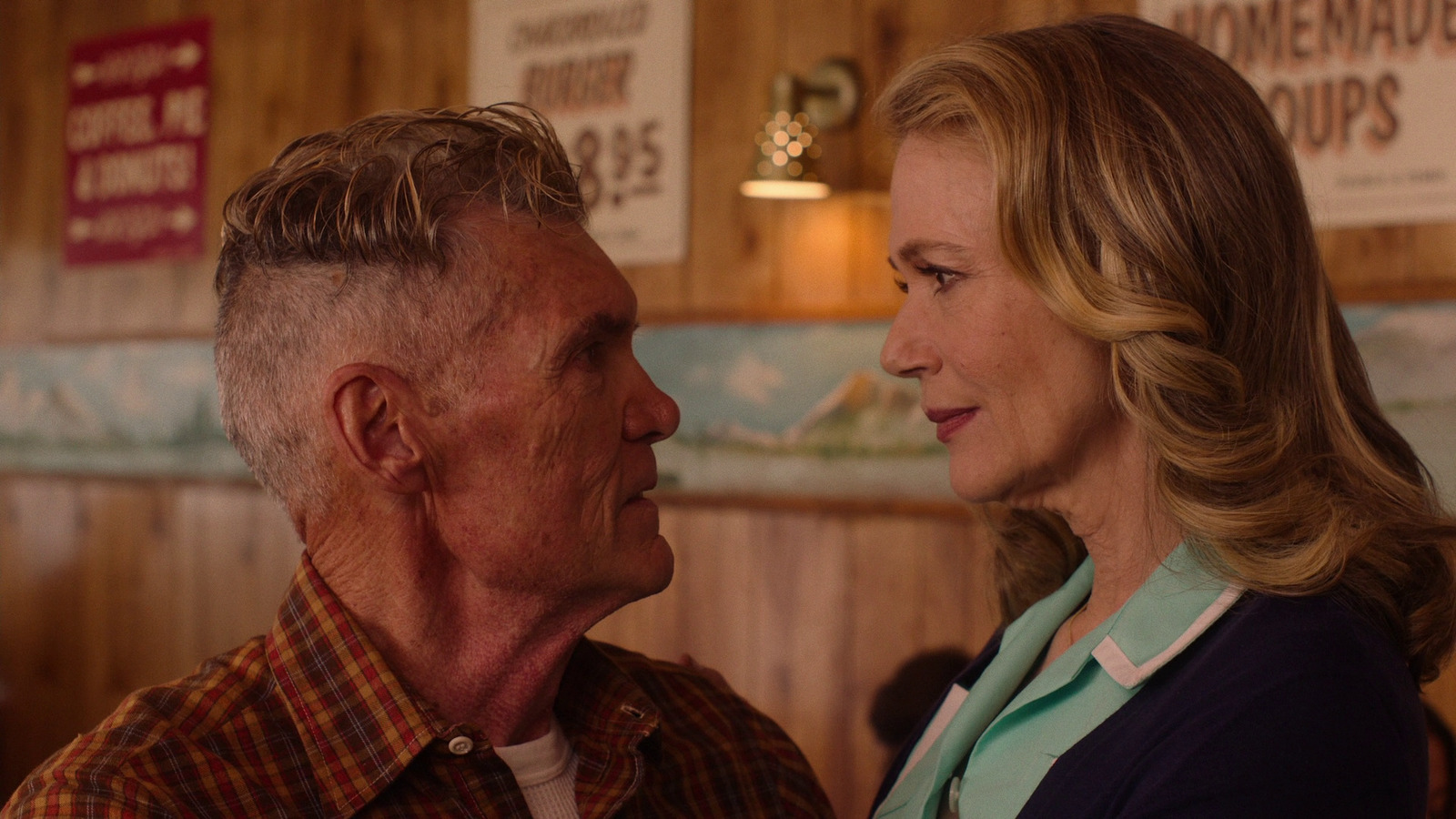 Part 15 · Illustrated episode dossier
There’s Some Fear in Letting Go
A hand on a shoulder. A voice on the telephone. A building that disappears. Part 15 finds radically different forms for letting go.
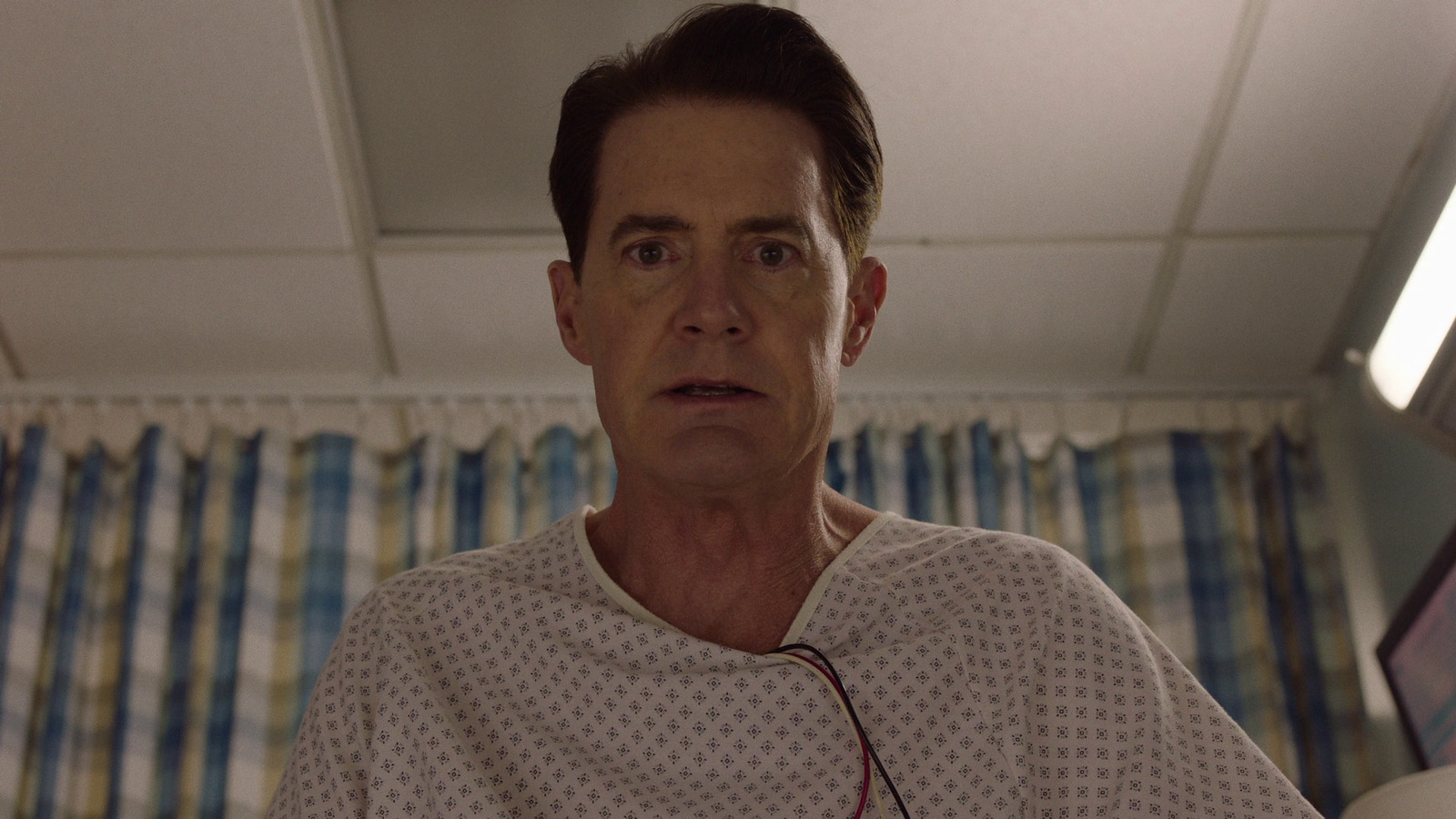 Part 16 · Illustrated episode dossier
No Knock, No Doorbell
Cooper wakes with purpose. Diane struggles to speak a buried memory. Audrey finds the dance floor, then loses the room around it.
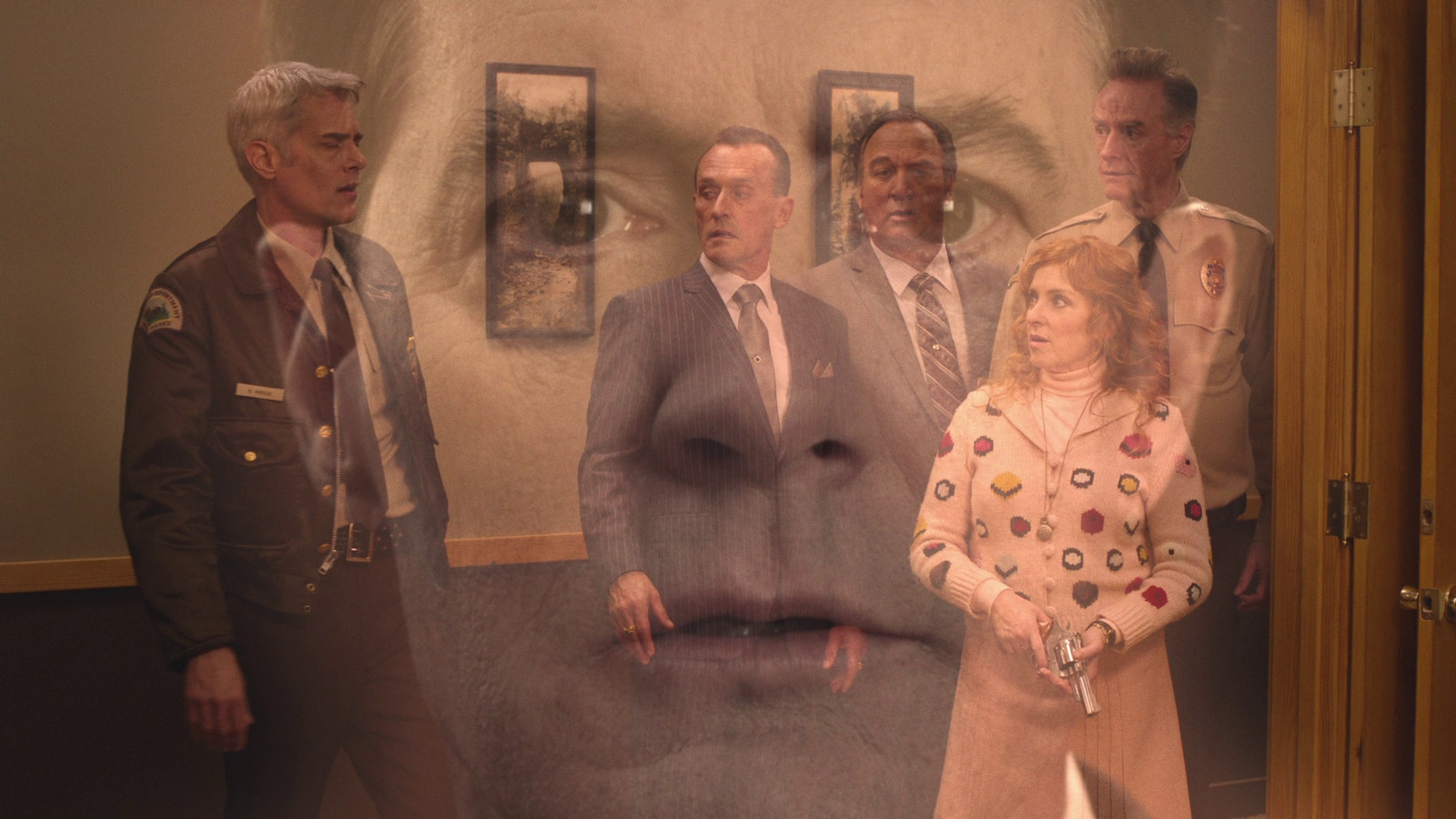 Part 17 · Illustrated episode dossier
The past dictates the future.
A crowded reunion gives way to a solitary intervention in Laura Palmer’s last night. The apparent resolution becomes a question about what it means to change the past.
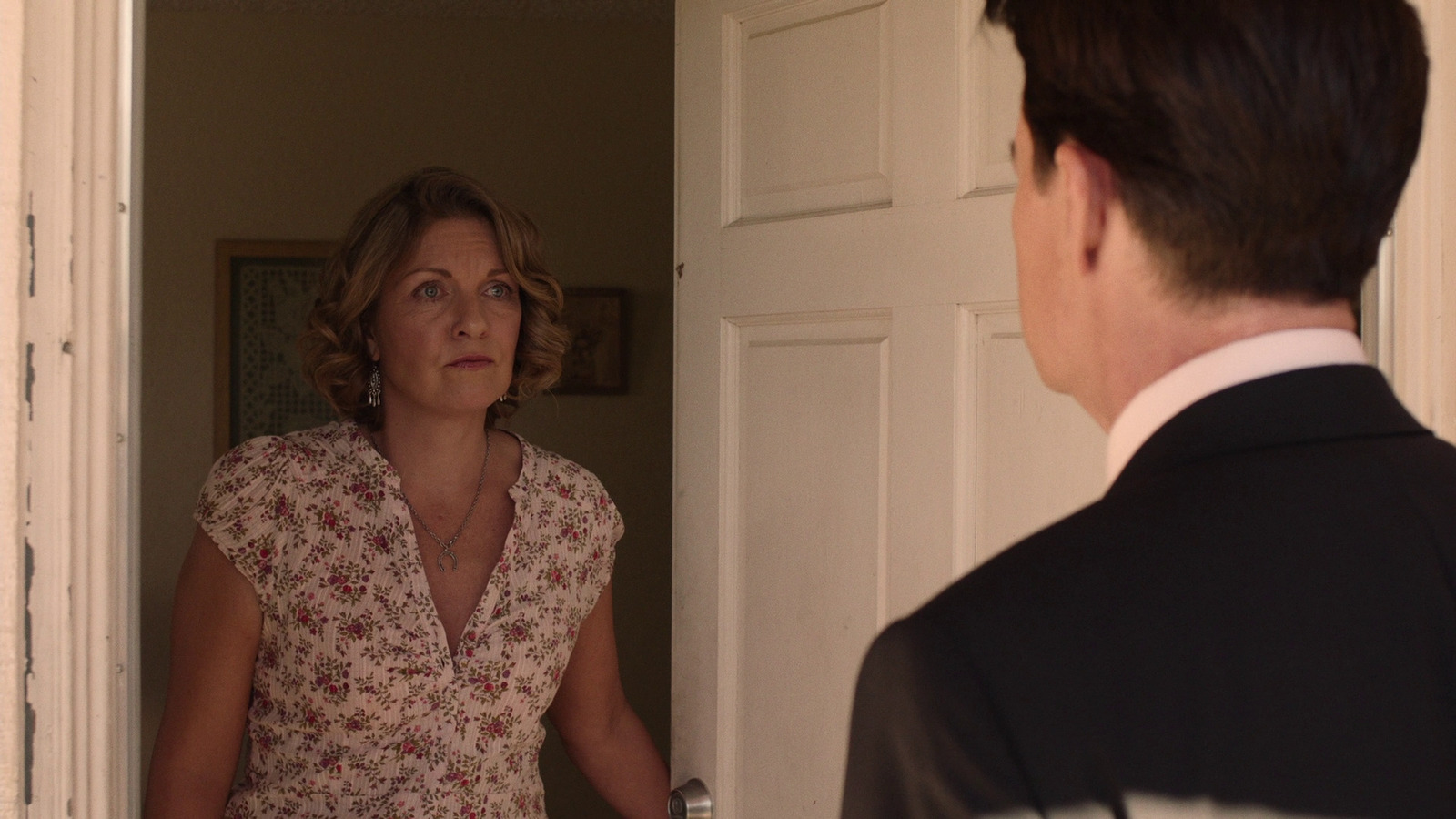 Part 18 · Illustrated episode dossier
What is your name?
A journey home becomes a crisis of recognition. Names, places and familiar faces survive while the connections between them become uncertain.
Where to begin
For a first visit, we recommend release order. It allows the television mystery to establish its viewpoint before the film changes our relationship with Laura. This short route avoids identifying her killer or explaining either finale.
- 01 · The original seriesBegin with the U.S. pilot, then Season 1 and Season 2. The original ABC run began on 8 April 1990 and ended on 10 June 1991. Broadcast record ↗
- 02 · Fire Walk with Me (1992)Watch the feature next. Approach The Missing Pieces, its separate collection of deleted and extended scenes, afterward as a companion. It is not a replacement for the feature. Film and supplement record ↗
- 03 · Twin Peaks: The Return (2017)Continue through its 18 parts in sequence, with the dedicated Return dossier. The SHOWTIME premiere was on 21 May 2017. Premiere announcement ↗
The companion books are additional reading, not prerequisites for following this route. Save spoiler-bearing book descriptions and the deeper sections below until you are ready. A collection’s name alone does not establish which works it includes: see versions and books.
Beyond this point: discussion includes the series’ later development, identities, violence and endings. The separate season dossiers provide episode-level routes; this hub follows the connections across them.
The performer inside Twin Peaks
Gordon Cole also belongs to Lynch’s wider acting career. Explore Lynch as an Actor for performance questions and connections to Louie, Lucky and The Fabelmans.
Lynch also connects Gordon Cole’s name to Sunset Boulevard and recalls the character developing from an offscreen supervisor’s loud telephone voice. The account links the later bodily performance to an earlier vocal decision, rather than treating Cole’s screen presence as fully formed at the outset. A Slice of Lynch: Uncut, 30:59–32:06
The original series: a community, not just a case
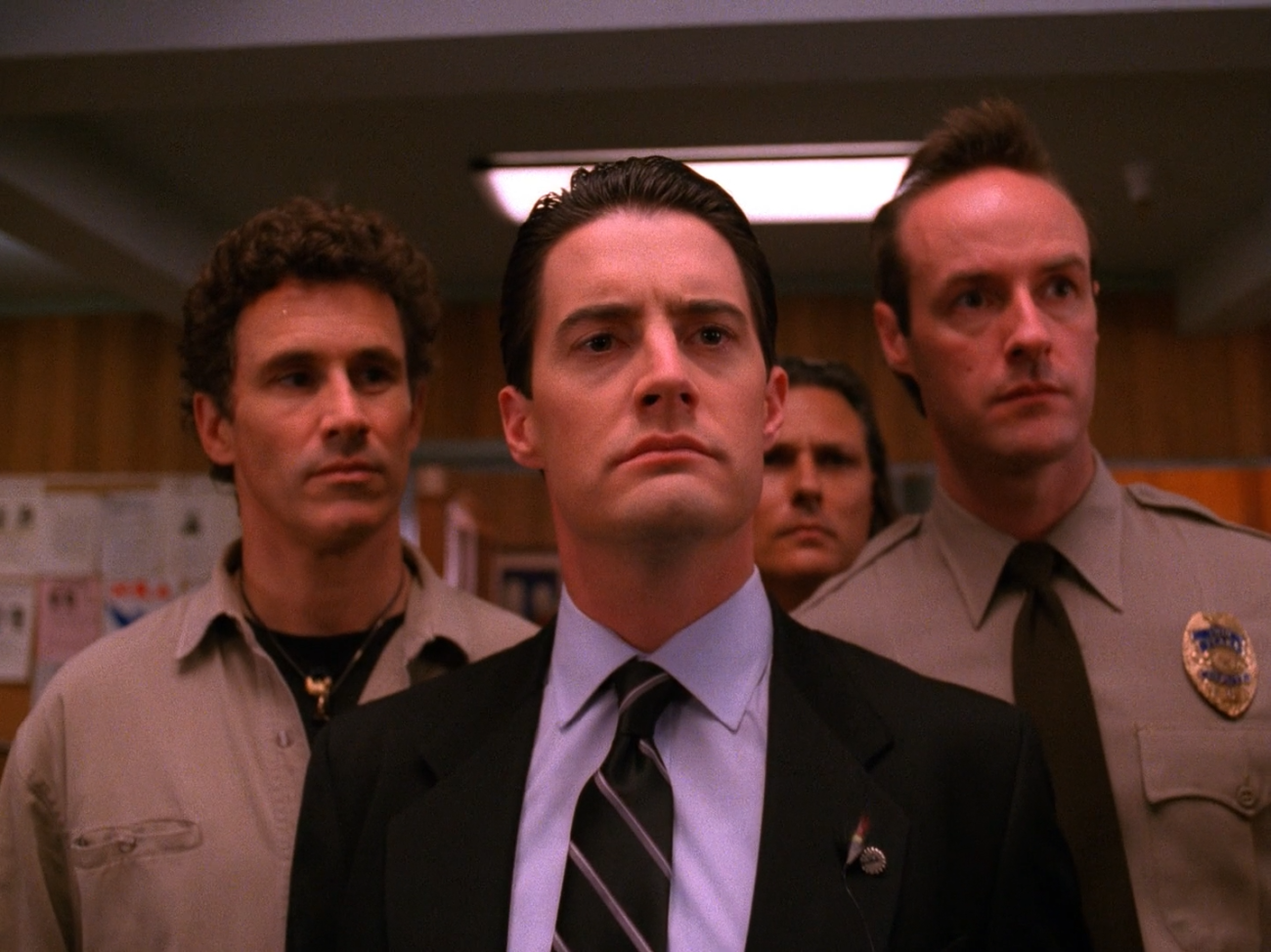
Frost’s recollection of the project’s beginnings combines a childhood lakeside community and an old murder story with Lynch’s Pacific Northwest associations. A murder supplied an entrance into interconnected lives. In the same oral history, MacLachlan remembers developing Cooper’s enthusiasms and Lynch directing through rhythm and feeling. These recollections help us understand the project’s appeal without reducing its creation to one person’s inspiration. Frost and MacLachlan’s testimony ↗
Cooper occupies the foreground, but the local officers remain visibly present. Warm wood surrounds a place of official inquiry. Authority here is embedded in companionship, awkwardness and everyday habits. The image gives the visitor two things to follow: the investigating individual and the community that makes his investigation possible. It also suggests why a revelation about one household can disturb the larger town.
Who made the television we remember?
DuWayne Dunham recalls editing the pilot, then directing the first regular episode while work on Wild at Heart overlapped the early series. That account complicates a tidy division between Lynch’s cinema and television. Dunham on the original production ↗
The Academy records 1990 wins for costume design, naming Patricia Norris, and single-camera series editing. Its 2018 Part 8 editing nomination lists Dunham with additional editors Brian Berdan, Jonathan P. Shaw, Justin Krohn, Jason W. A. Tucker and Lynch. These are useful reminders of collaborative work, although award submissions cannot replace complete screen credits. Awards and named contributors ↗
Calling something “Lynchian” can help describe a feeling, but it can also stop inquiry too soon. A costume, a reaction shot and a musical entrance are different decisions, made through different departments. The original series especially needs attention to its changing writers and directors. Its variations should be studied as part of its history rather than filtered out until only a handful of celebrated sequences remain.
The first sustained question for that study is how the town continues after the central mystery changes. Which relationships acquire space of their own? Which become comic diversions, and how does performance hold them together? The episode credit and viewing investigation will connect those questions to particular collaborators and scenes.
Two creators, complementary instincts
In A Slice of Lynch: Uncut, Lynch interrupts praise directed solely at him to emphasise Mark Frost’s equal creative contribution. He recalls their earlier unmade projects and the development of a television premise before the series acquired its familiar title and setting. Placed beside Frost’s oral history, this account presents the town as a collaboration whose imaginative and organisational work cannot be reduced to one signature. A Slice of Lynch: Uncut, 04:03–08:41; 35:41–36:20
Finding a town through its actors
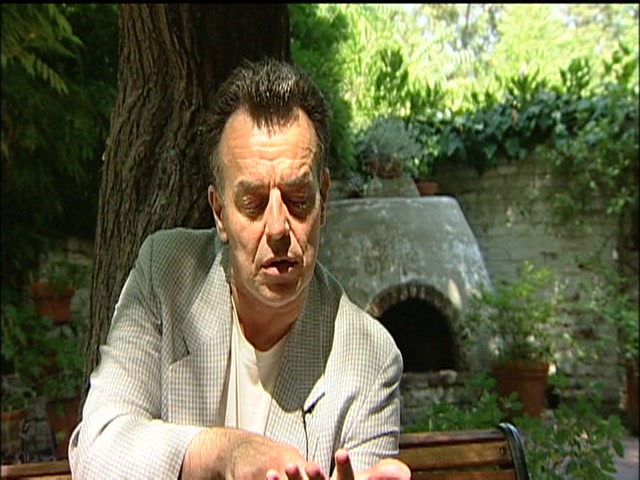
The cast recollections describe a selection process built from conversation as well as audition. Ray Wise remembers hoping to play the sheriff before Lynch offered him Leland Palmer; rereading the pilot brought home how much of the part involved a father’s grief. Wendy Robie, coming from theatre, recalls wondering whether her cheerful disposition counted against playing Nadine. The meeting instead became an opportunity for Lynch and Frost to imagine an actor outside the impression she made in the room.
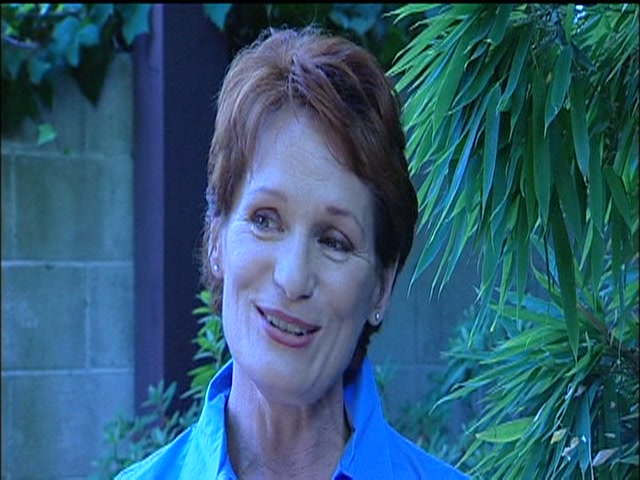
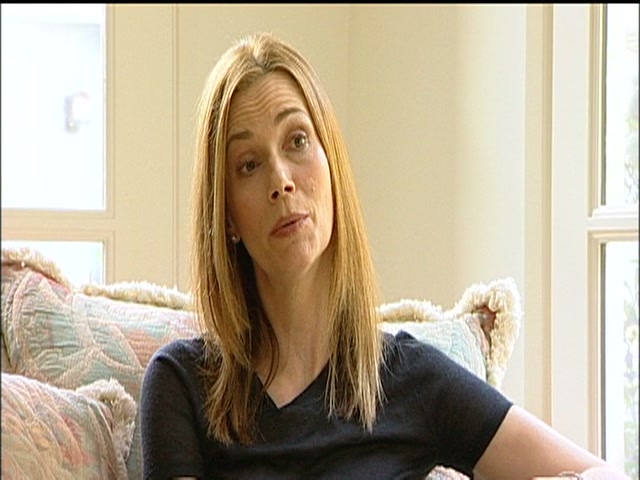
Peggy Lipton places particular weight on being wanted. She remembers finding her photograph alone on Lynch’s desk and feeling that his confidence gave her permission to create. These accounts complement Mädchen Amick’s description of trust below: an actor’s capacity need not be demonstrated by behaving like the character throughout an audition.
Robie and Lipton on being chosen · 2 portraits
Miguel Ferrer’s route into the ensemble also makes the pilot’s importance clear. Having agreed to appear, he found the later scripts difficult to understand in isolation. He recalls Mark Frost giving him the pilot to watch; repeated viewings supplied the world those pages assumed. The production could introduce an actor to a community already taking shape. Cast recollections · source notes
Michael Horse on Hawk’s place in the town
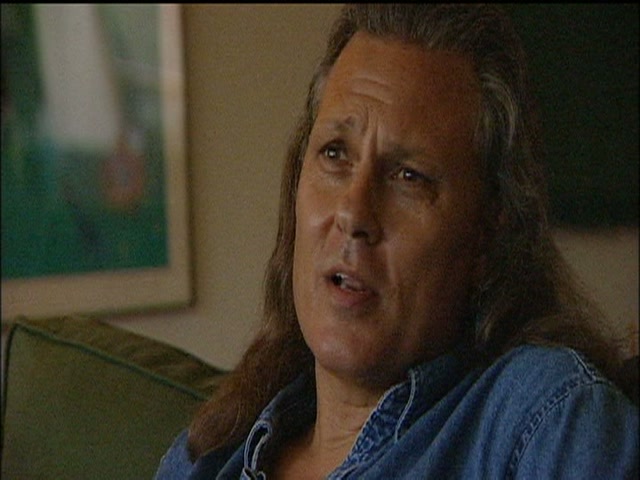
Michael Horse describes Hawk as intelligent, sensitive and spiritual, and remembers the role as an unusually rewarding opportunity to play an Indigenous character. His account is also a reflection on the narrower opportunities he had encountered as an actor. It gives the character’s participation in the sheriff’s department a professional and personal context beyond his usefulness as an interpreter of the woods.
Horse’s assessment belongs beside a close reading of Hawk’s speech, rather than being treated as certification of the series’ mythology. In the discussion of the Lodges, for example, the dialogue supplies the drama’s own supernatural geography. The actor’s pride in the character and the fiction’s account of belief are different kinds of evidence. Michael Horse · source note
A conversation about cars becomes a character
Everett McGill connects Big Ed’s casting with conversations during Dune. He recalls discussing Lynch’s Studebaker and its mechanical possibilities; Lynch took him for someone who understood cars. McGill presents that remembered affinity as a route to the trusted mechanic of Twin Peaks. An everyday exchange between collaborators becomes part of the story an actor tells about how a role found him. Everett McGill, 00:05–01:25
Directing through proximity and trust
Amick remembers preparing for a scene in which Shelly breaks down in the diner. She describes Lynch touching her arm and conveying something through a brief, largely unspoken exchange that left her ready to perform. She does not identify the episode, so the recollection belongs to a study of their working relationship rather than an attribution to one particular scene. MacLachlan also remembers Lynch watching from beside or below the camera, with Amick supplying the concrete example of the pilot’s car scene. A Slice of Lynch: Uncut, 29:07–29:55; 32:08–32:43
The friendship behind Cooper and Truman
Asked about Michael Ontkean, MacLachlan describes a relaxed, generous colleague and the pleasure they took in each other’s company. He connects the actors’ differences and affection to the intelligibility of Cooper and Truman’s friendship. This testimony offers a practical counterpart to the partnership on screen: the investigation’s unusual methods remain grounded in two people who enjoy and trust one another. A Slice of Lynch: Uncut, 50:33–51:56
The diner before and after the cameras
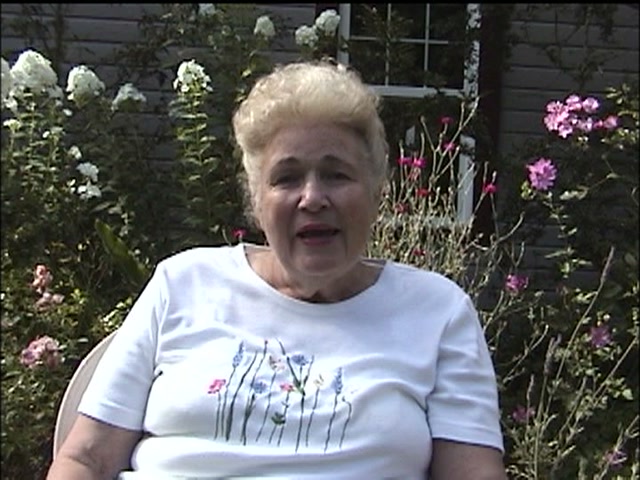
Pat Cokewell’s account restores work and ownership to the familiar Double R image. Interviewed by John Mitchell on 20 August 2000, the Mar T Diner owner remembers a location scout wanting the restaurant as it stood. A planned remodelling was stopped. The place’s existing appearance was an asset before it became an icon of the programme.
She recalls two days of filming and a long evening extending into the early morning. The seventeen pieces of pie in the interview’s title were an actual production expense. Her memory also complicates the automatic association of filming with cherry pie: she remembers orders for banana and chocolate peanut-butter pies, and names Garnet Cross as the pie maker. These are her recollections of the location work, not a census of everything eaten or shown in the finished series.
After transmission, visitors wanted pie and coffee. Cokewell describes unpredictable demand, the need for help and the decision to stop selling whole pies because demand was too high. She distinguishes the pilot’s location work from the later Los Angeles diner set, and recalls the return for Fire Walk with Me. The diner’s history is therefore also a history of labour, temporary closure, compensation and neighbours living beside a suddenly famous business.
Source: 17 Pieces of Pie: Shooting at the Mar T (AKA RR) Diner, 00:20–04:10 and 05:22–07:49, in Twin Peaks: From Z to A.
Mark Frost on planning and discovery
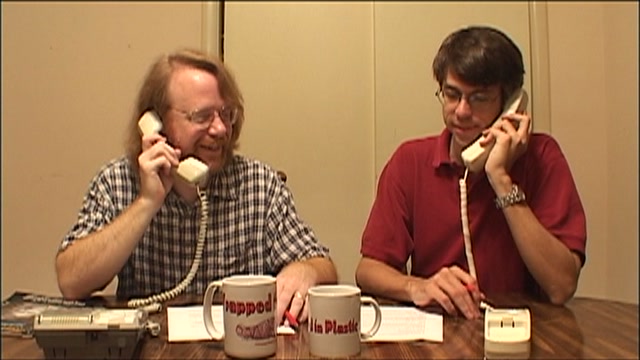
Craig Miller and John Thorne’s 7 August 2001 telephone interview with Mark Frost gives a useful account of development as a mixture of intention and circumstance. Frost remembers Tony Krantz bringing him and Lynch together, the ABC presentation before the 1988 writers’ strike, and a Pacific Northwest setting with an atmosphere that could evoke the 1950s while remaining contemporary.
Frost describes Cooper through both Holmes-like reasoning and a willingness to attend to dreams and intuition. He also separates the character’s creation from the later casting of Kyle MacLachlan. His account of the international pilot ending is especially revealing: a contractual need for a self-contained foreign version produced material that could subsequently be used differently in the series. The relationship between the two pilot endings and Cooper’s dream is a creative transformation, rather than evidence that every later connection had been fixed at the beginning.
Source: Mark Frost Interview with Wrapped in Plastic, 00:20–07:00 and 11:25–14:05, in Twin Peaks: From Z to A.
Direction as a physical task
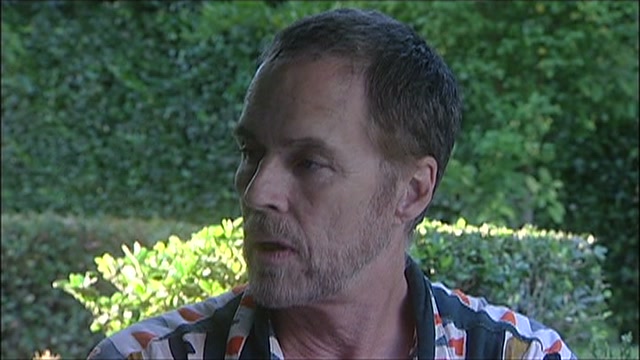
In An Introduction to David Lynch, Richard Beymer remembers repeated instructions to take larger bites of a brie sandwich until speaking became difficult. The actor’s account makes appetite an obstacle within the performance: Ben must retain his composure while his mouth resists the conversation. Beymer’s estimate of the number of takes remains a retrospective recollection, but the account is precise about the task he was given.
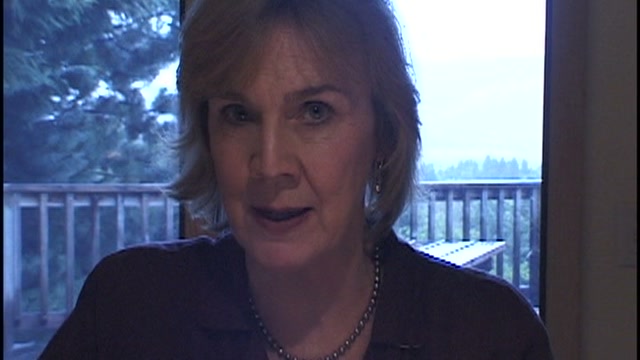
Catherine Coulson offers a complementary example from the bear-claw scene. She remembers arriving at an emotion rather than receiving a prescribed line reading, while acknowledging that she cannot reconstruct Lynch’s exact prompt. Her account belongs beside Mädchen Amick’s recollection of preparing Shelly’s distress. Together they describe direction through a bodily or emotional condition, not only through an explanation of what a line means.
Source: An Introduction to David Lynch, Beymer 12:27–16:30 and Coulson 16:36–17:34, in Twin Peaks: From Z to A.
A photograph, a conversation, a different part
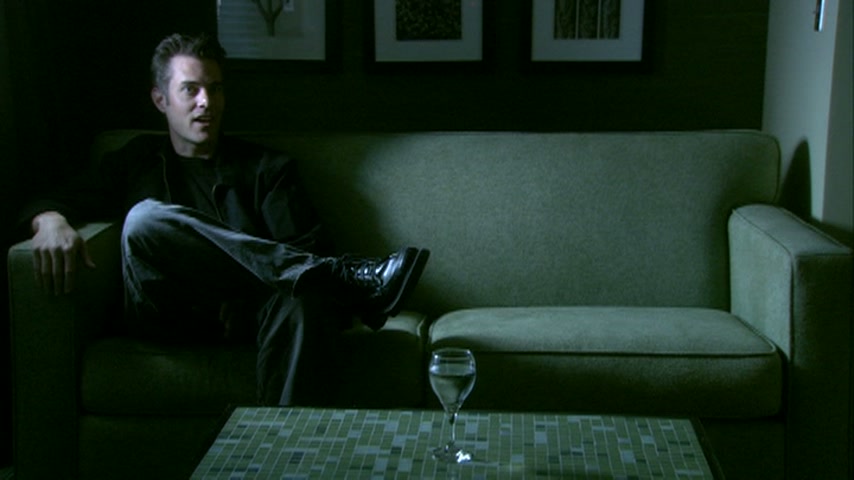
Dana Ashbrook remembers a casual photograph helping him reach a meeting with Lynch and Frost; Gary Hershberger recalls arriving with another role in mind before the conversation turned toward Mike. James Marshall describes a photograph that initially misrepresented him and a meeting that changed the impression. Together these accounts show casting as a search for a person’s possibilities, not simply a test of a prepared scene.
Don S. Davis recalls an audition that moved into fishing, the Ozarks and his military experience before Lynch asked whether he could cry on camera. Kimmy Robertson remembers using her meeting to ask Lynch the questions she and her friends wanted answered. The anecdotes differ, but each stresses the productive detour away from a conventional reading. Cast and crew interview sources
Performing without a settled explanation
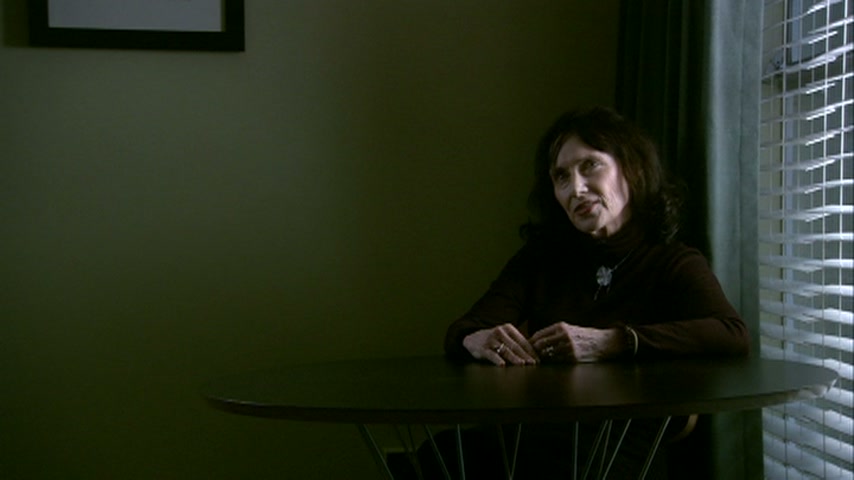
Mary Jo Deschanel recalls seeking a more definite history for Eileen Hayward’s use of a wheelchair and her connection with Ben Horne. She describes several possible explanations rather than one settled answer. Her uncertainty is valuable as production testimony: it should not be converted into a diagnosis for Eileen or a hidden solution that the series itself confirms.
James Marshall remembers Lynch breaking the tension around a difficult love scene through a prolonged, comic physical gesture. Ashbrook describes an accidental roof-vent squeak being recreated after it stopped, so that its sound could be retained. These recollections make room for both emotional direction and responsiveness to accidents on set. They also resist the idea that every unusual detail began as a fixed symbolic instruction. Marshall and Ashbrook · source notes
Directors shaping the town
The directors’ recollections make the series’ shared authorship concrete. Todd Holland develops an opening from the interrogation-room ceiling; Caleb Deschanel proposes a childhood flashback; Duwayne Dunham gives Richard Beymer space to respond to projected home movies. Each example connects an idea to the physical conditions of making a scene.
- Holland: inside the acoustic tile
- Deschanel: the Horne brothers remember Louise
- Dunham: Ben and the projector
- Von Dohlen: the farewell Harold did not receive
Stephen Gyllenhaal argues for an emotional logic beneath the programme’s apparent irrationality. Caleb Deschanel similarly cautions against treating its characters as strange beings detached from ordinary humanity. These are different directors describing their ways into the work, not a single rule that explains every episode. Directors’ interviews · source notes
The pageant as a negotiated performance
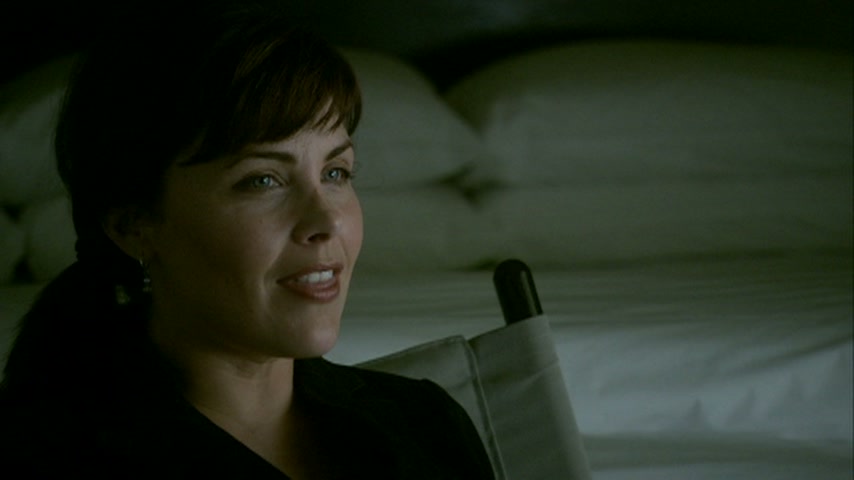
The Miss Twin Peaks pageant gathers several kinds of creative labour. Kimmy Robertson recalls Mark Frost asking her to choreograph the ensemble dance. Robyn Lively remembers finding Lana’s combination of charm and manipulation through a Southern accent, then confronting the script’s extravagant description of her dance. Sherilyn Fenn says she resisted participating in the conventional parade of contestants and remembers Audrey’s speech as a way to be present on different terms.
Tim Hunter describes the elaborate final pageant as a problem of covering much action with limited time and setups. He remembers two cameras operating and allows that a third may have been used. The distinction is retained: his confidence about two cameras should not become certainty about three. These accounts give the contest a production history as well as a place in the story. Robertson, Lively, Fenn and Hunter · source notes
Laura, Maddy and the work of being seen
Sheryl Lee remembers initially being cast for Laura’s body and a small amount of filmed material, before the role expanded and she also played Maddy. She later used Jennifer Lynch’s diary book in preparing for Fire Walk with Me. Her account places performance at the center of a character whom the original investigation often encounters through other people’s memories. Lee on casting and preparation ↗
One recollection is particularly revealing. For a diner scene as Maddy, Lee recalls Lynch evoking summer in the 1950s and milkshakes, despite a rainy scene with coffee. She understood it as a way of finding a feeling. The imagined summer is an acting prompt, not evidence that the scene is set in that year or that its props were milkshakes. The Maddy diner anecdote ↗
This distinction helps explain how a performance can feel slightly displaced without turning that displacement into a continuity error. An actor can carry an emotional climate different from the literal weather. Lee’s account also gives Maddy a creative existence beyond her resemblance to Laura: the work involves building a particular presence in a particular scene.
The portrait and the person
Craig Williams connects Laura’s portrait with Otto Preminger’s Laura (1944) and the town’s melodrama with Peyton Place (1957). Alongside his critical comparisons, he reports a development screening of Peyton Place, attributing that account to Tony Krantz. The comparisons and the reported production anecdote are different kinds of evidence. Williams’s critical route ↗
A portrait offers a promise of access while withholding the person. Different speakers can turn the same face into an innocent daughter, a secret, an accusation or a lost opportunity. A useful way to watch the series is to distinguish remembering Laura from explaining her. The fact that someone speaks with authority does not make their account complete.
The move to Fire Walk with Me therefore changes more than chronology. It asks us to spend time with the person around whom the investigation has formed. Read our companion dossier for the film’s performance, production and screenplay questions. Keep its scenes, the television episodes and Jennifer Lynch’s fictional diary separately identified: each can change our understanding without becoming interchangeable evidence.
That principle also matters to interpretations of rescue. A story can be compelling because someone wants to put things right, while leaving open whether that desire restores another person’s agency. Frost’s later comments on Cooper, discussed below, provide one perspective on that tension; they do not exhaust Laura’s meaning.
Laura’s care, the Horne family’s blame
Two unused scenes bring Johnny Horne closer to the centre of Laura’s life. Together they give her death a daily consequence that the investigation can easily miss: someone has lost a trusted visitor, a tutor and a companion. The material also exposes the Horne family’s struggle to explain Johnny to one another. Deleted-scene sources ↓
The person who came three times a week
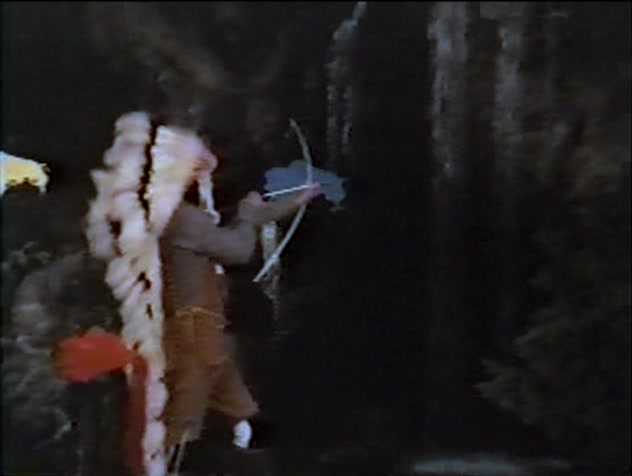
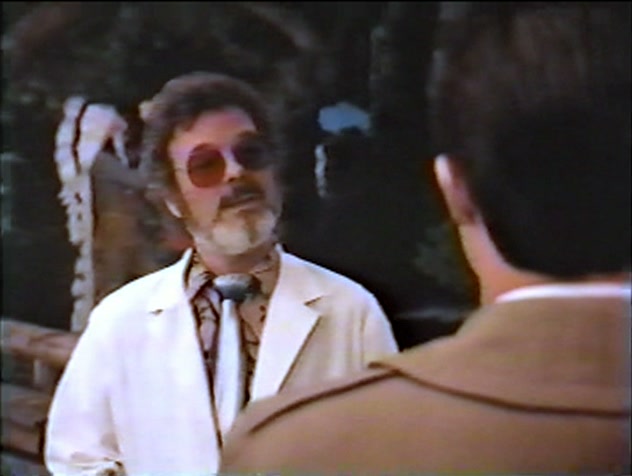
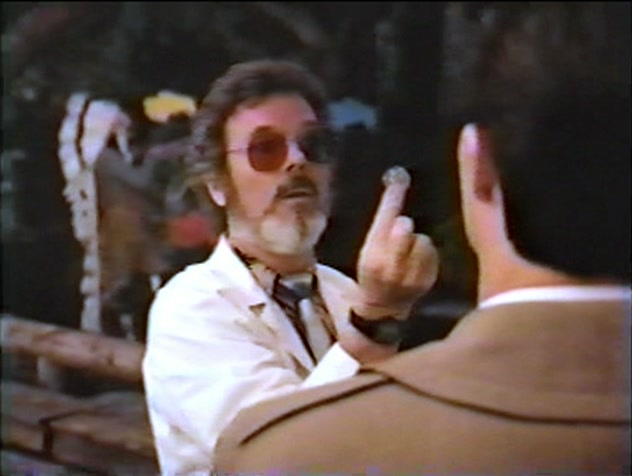
In 27 Going on 6, Cooper questions Jacoby while Johnny shoots at painted buffalo on the hotel grounds. Jacoby describes Laura’s Monday, Wednesday and Friday visits and Johnny waiting outside the door for her. The small routine supplies a different measure of Laura’s importance from a portrait, a diary or a list of secrets: she is remembered through time spent with another person.
Jacoby occupies an awkward position. He can describe Johnny’s routines and Laura’s work, yet invokes professional confidentiality when Cooper asks about his relationship with Laura. He then produces a coin as a trick. The change from questioning to conjuring makes his friendliness difficult to separate from evasion. The scene’s value lies in this movement between care, knowledge and performance; its infantilising language about Johnny remains the character’s language.
Audrey refuses the family’s story
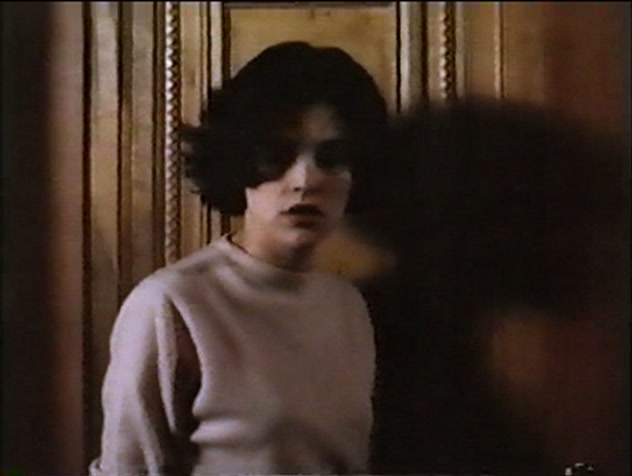
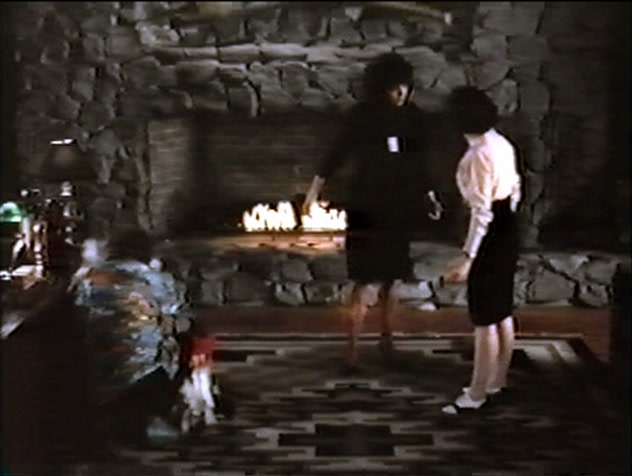
Something About Johnny begins with Audrey responding to her brother’s distress. Sylvia turns that distress into an accusation: she blames Audrey for a childhood fall. After Audrey leaves, Jacoby explicitly rejects Sylvia’s account. The scene therefore contains a contested claim, not a settled explanation of Johnny’s condition. Jacoby’s own psychological theory is also a character’s assertion, not a clinical account the series establishes as fact.
Placed beside Audrey’s investigation of Laura, the unused encounter strengthens another side of her curiosity: she can be protective, angry at an adult’s cruelty and alert to pain in her own home. The family argument and Laura’s remembered visits complicate the idea of the Great Northern as simply a place of business and intrigue. These are alternative dramatic possibilities preserved outside the broadcast narrative.
Explore Laura, Johnny and Audrey · 5 images
Small errands and wandering attention
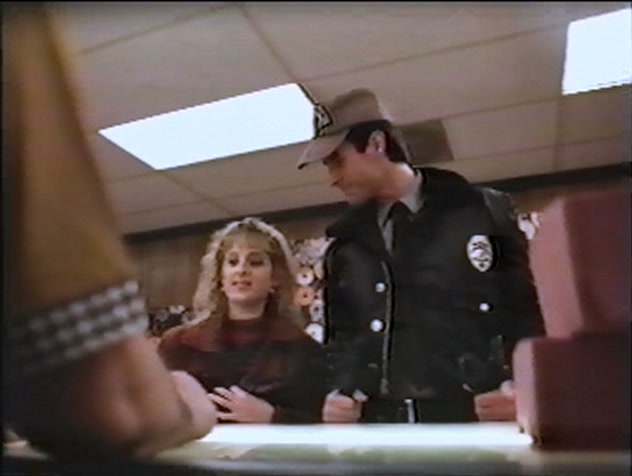
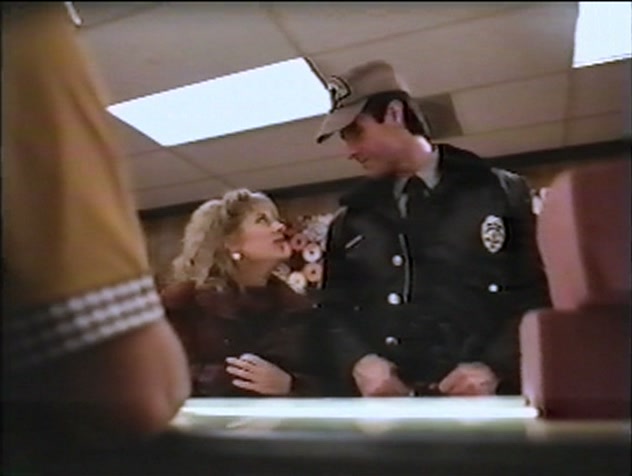
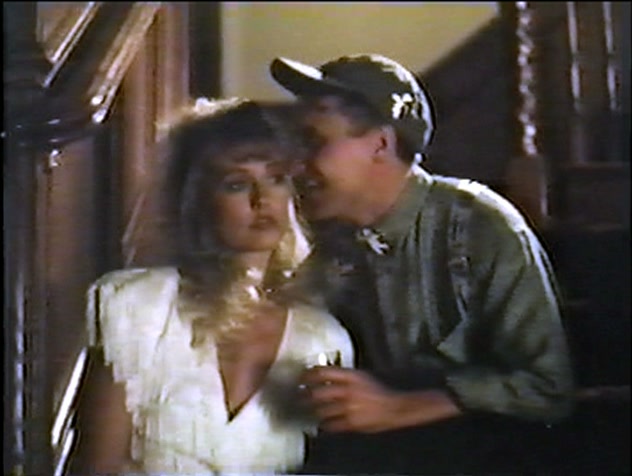
The shorter unused scenes work at a different scale. Lucy, Andy, and Donuts follows a practical errand, including Lucy remembering Cooper’s preference. It makes the familiar station refreshments somebody’s work. Jerry’s Wandering Eye makes reassurance and distraction coexist: Jerry’s attention drifts while he addresses his companion. Neither scene supplies a missing solution to Laura’s murder. Both extend the town through habits, appetites and exchanges that can sit beside the central investigation.
Two everyday diversions · 3 images
Continue with the pilot’s alternate performances and the pageant’s private rehearsals.
Music, repetition and the room around a voice
At the keyboard: making a world before the image
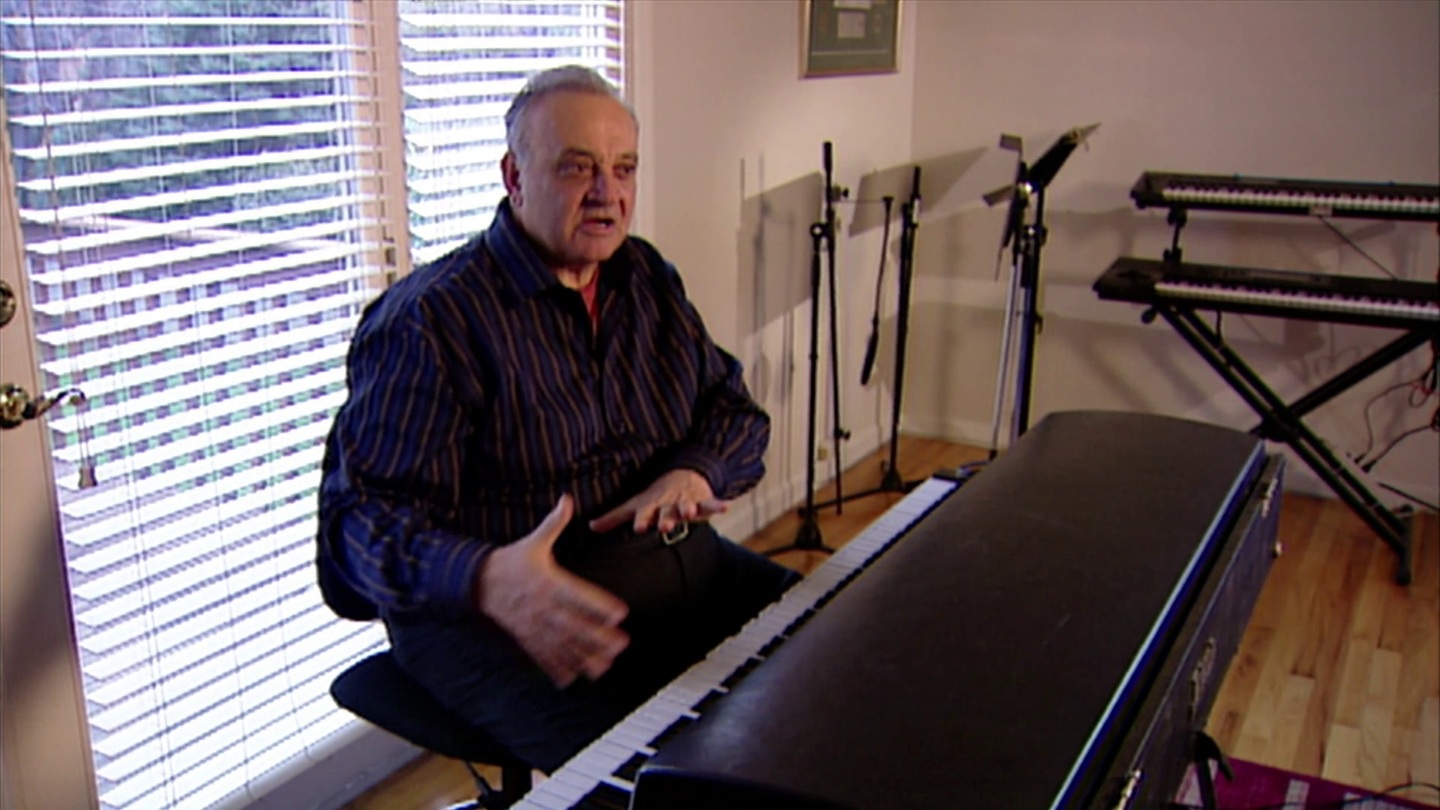
In Where We’re From: Creating the Music, Angelo Badalamenti demonstrates the working method behind the themes. Lynch sat beside his Fender Rhodes while a cassette recorder ran. Rather than beginning with a finished scene, the composer responded to Lynch’s spoken description of woods, wind and a lonely girl approaching. Badalamenti recalls being asked to slow the music, build toward her arrival and let it fall as she receded. His demonstration makes composition a conversation: an imagined movement supplies the shape of a melody.
The same interview explains a less visible part of that sound. Badalamenti points to suspended inner voices, between the upper melody and the bass, whose dissonance may resolve or remain unsettled. This gives a specific musical basis for the mixture of tenderness and unease. It also helps distinguish the themes’ construction from the later editorial decisions that repeat, layer or reposition them.
Julee Cruise: delicacy as a performed choice
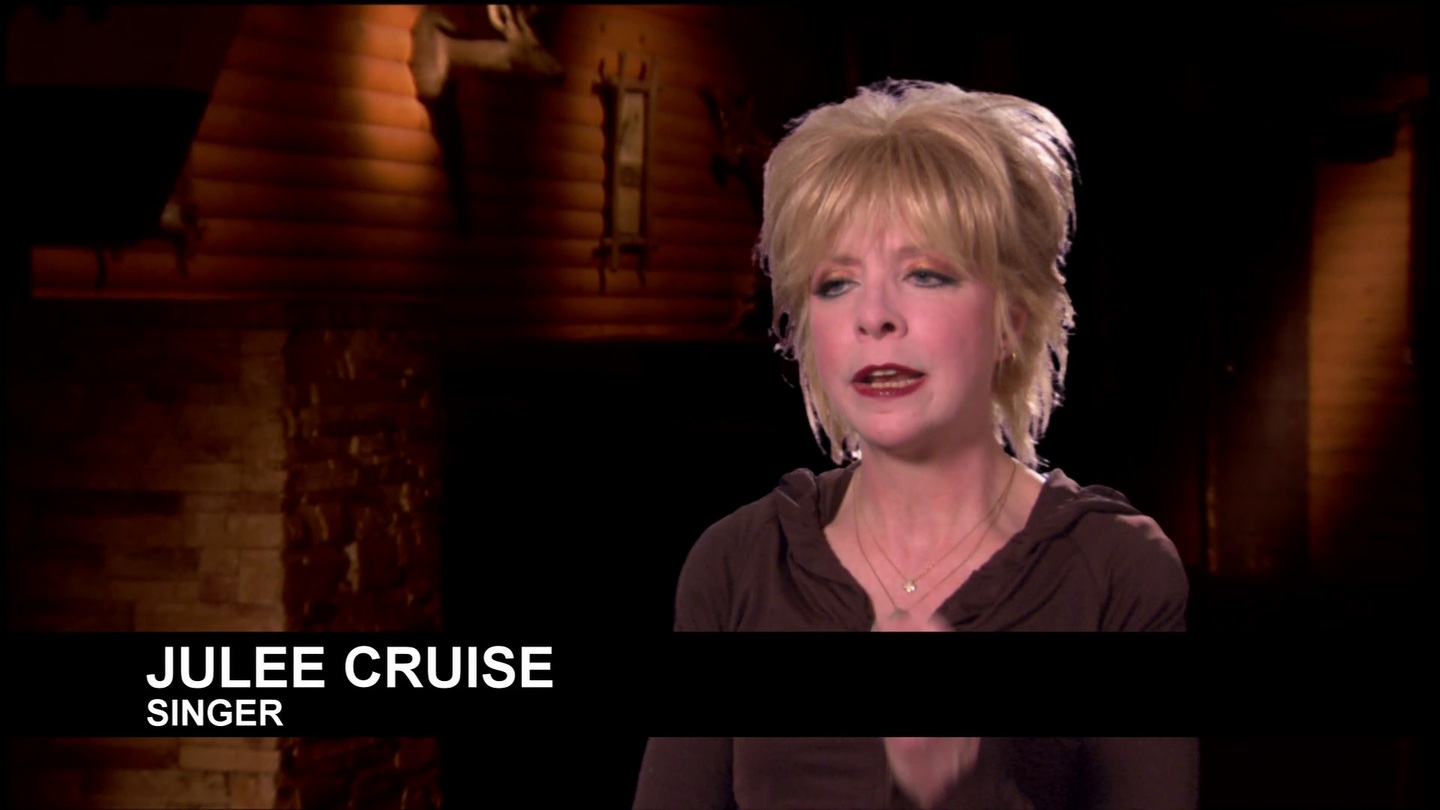
Badalamenti remembers knowing Cruise as a singer with a theatrical background. The airy register was developed deliberately: they found a key in which she could sing delicately at the top of her range, then recorded her close to the microphone over a synthesizer track. Cruise’s own account emphasises the emotional and physical effort of singing Falling and The World Spins. The apparent weightlessness of the voice should not obscure that work. Her description connects the Roadhouse performances to a singer’s choices about breath, pitch and dramatic feeling.
Lori Eschler describes Lynch communicating an emotional atmosphere to Angelo Badalamenti as the composer responded at the keyboard. She recalls transforming cues through slowing, reversal and layering. Dean Hurley describes Lynch revisiting the original series and wanting less underscore in the continuation. Those accounts distinguish composing a melody from shaping its presence in the finished work. Eschler and Hurley on their methods ↗
A recurring cue can make a place feel inhabited before anyone enters it. Repetition can invite recognition, then turn recognition into expectation. When the expected music does not arrive, attention may shift to the actor’s breathing, the room or the length of a pause. That change is not adequately described by calling one era musical and the other silent.
A close listening study should ask what the soundtrack makes us feel certain of. Does a cue appear to know more than the person speaking? Does it encourage affection, suspicion or a joke? Does a familiar sound continue across a cut into a new space? These are testable questions once a scene, an edition and an audio track have been identified.
The distinction between a song performance and underscore is equally useful. A visible musical performance gives the viewer a body, a stage and a social space to attend to; an unseen score can seem to belong to the drama’s larger emotional world. Neither relationship is automatic. The same recording can function differently depending on its placement and the image surrounding it.
Listen for the layers within apparent silence: room tone, electrical noise and distant sound give the town a life beyond the visible action.
Electrical sound, remembered and remade
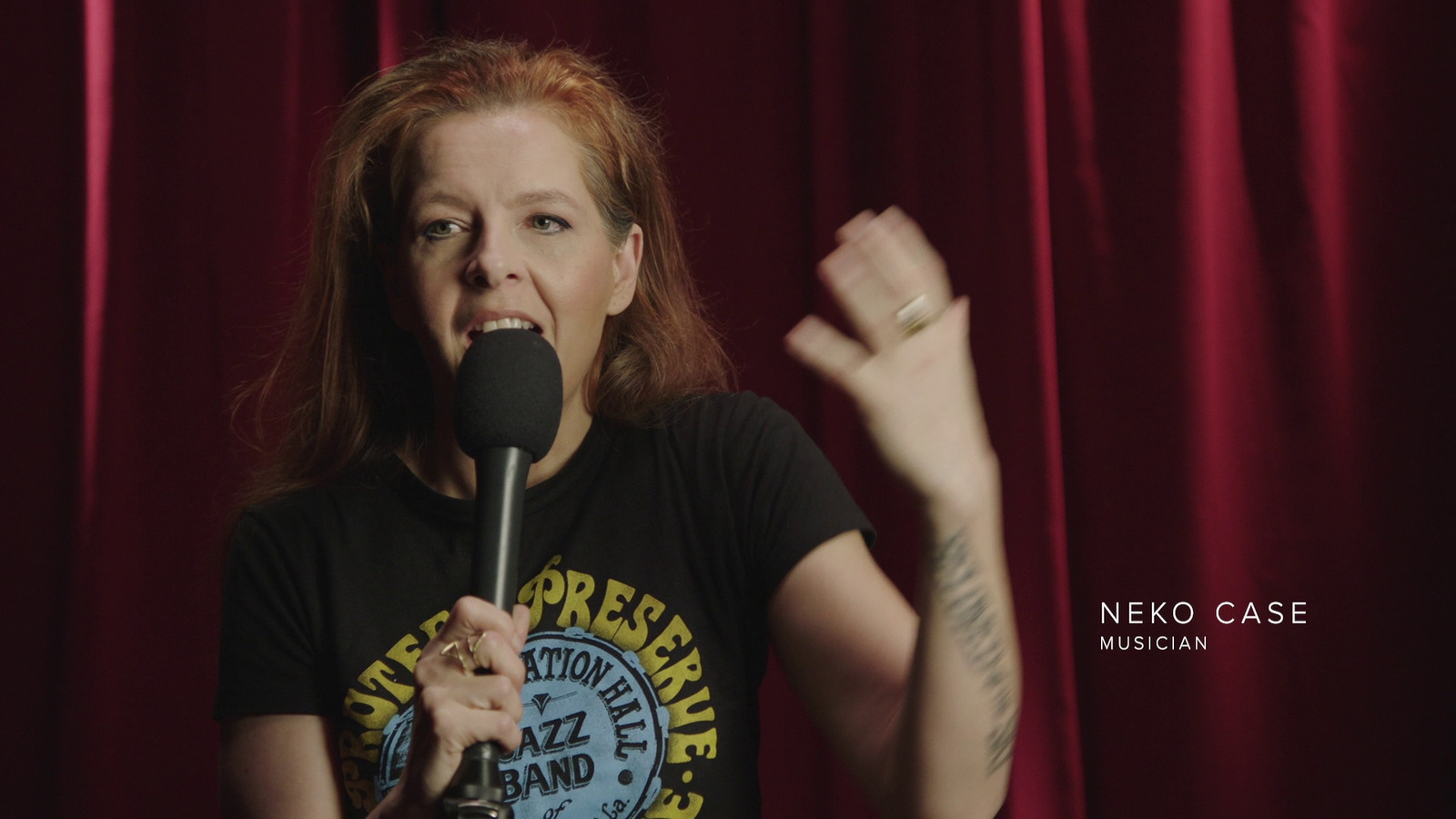
Neko Case singles out the buzzing of electrical wires as a way Lynch establishes mood. Her brief observation in Phenomenon: Renaissance widens the discussion of musical influence: what stays with a musician need not be a melody. An environmental sound can be remembered as a compositional decision. This is a listener’s response, distinct from the production methods described by Eschler and Hurley above.
The surrounding montage follows musicians, fan art and a Twin Peaks-inspired burlesque performance. The programme moves from remembering a world to making something within its influence. Lynch’s response welcomes people who create. The result is a useful counterpart to the Roadhouse: music and performance do not merely decorate the fictional town, but help viewers construct occasions to enter and reinterpret it together.
Recognising a world in three notes
Badalamenti’s 2017 interview distinguishes the opening theme’s notes from the instrumental sound that makes them immediately recognisable. He credits the combination of a synthesizer sound and Vinnie Bell’s electric guitar, emphasising the players’ contribution to the theme’s identity. A composition can be recognised through timbre before its melody has fully unfolded. This account complements the keyboard demonstration above by moving from the invention of a theme to its recorded realisation. In the feature, a different palette of jazz instruments supplies another route into the same world: follow the Fire Walk with Me composition study. Badalamenti, 10:06–11:18 ↓
Making The Return: two writers, a long production
SHOWTIME credits Lynch and Frost as writers and executive producers, Sutherland as executive producer, and Lynch as director throughout. The 18-part continuation consequently has a different directing structure from the original run. Official production credits ↗
In November 2017, Frost recalled completed shooting scripts by spring 2015 and estimated that he attended roughly 40 percent of production while also working on his books. This qualifies the simpler account, in the introduction to an earlier Sutherland interview, that he left after writing. His estimate is testimony about participation, not a daily attendance record. Frost’s account ↗ · The earlier account ↗
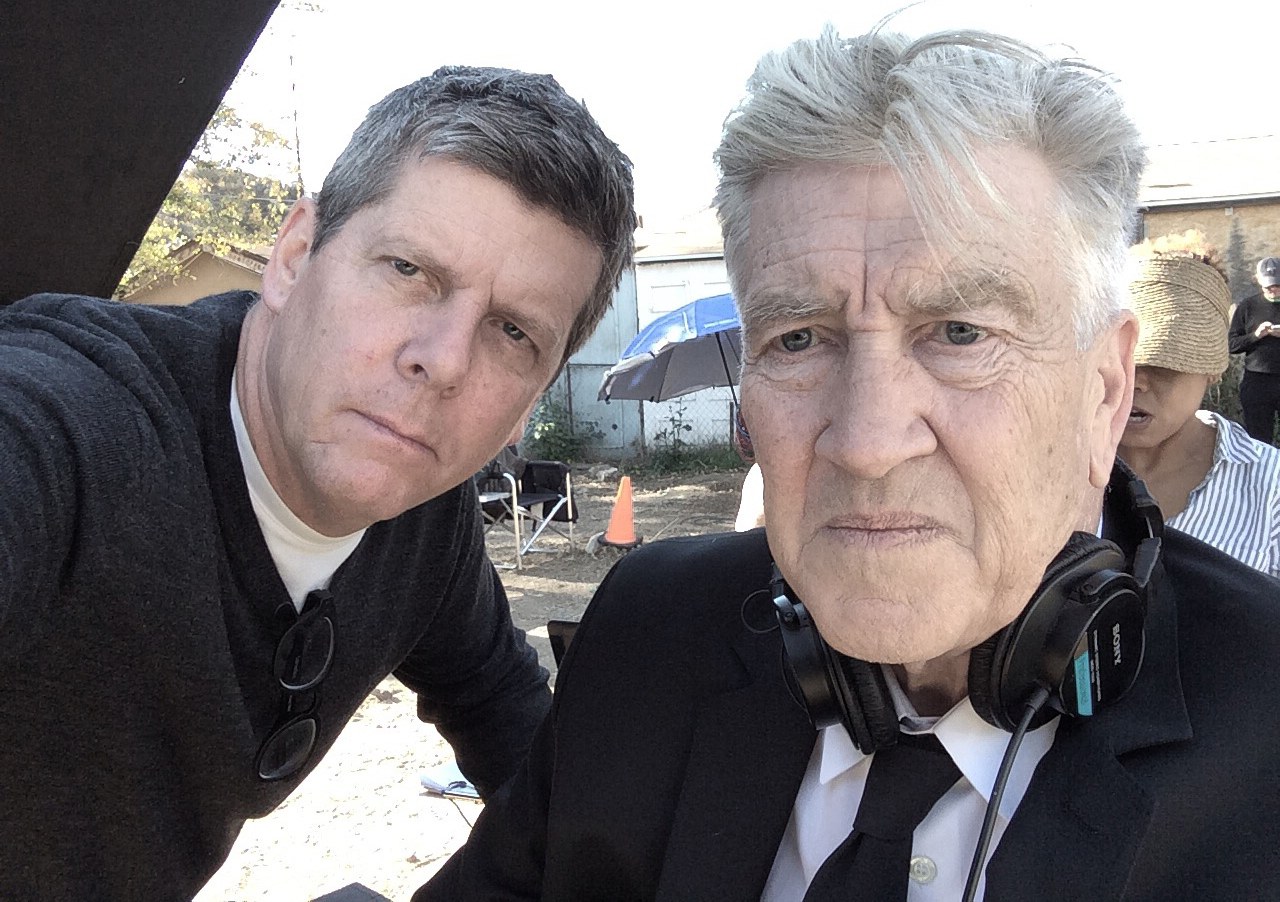
Deming recalls a script exceeding 525 pages and treating the shoot as an extended feature. For capture, he describes ARRI Amira footage recorded as 3.2K ProRes and enlarged for final delivery. That is a production account, not evidence that every subsequent consumer edition presents the same master. Deming on preparation and photography ↗
Our synthesis: a substantial written plan and discoveries during shooting can coexist. “Improvised” is too broad if it erases years of writing; “fully predetermined” is too broad if it erases changes made by performers, designers, editors and the director. The useful research task is to identify which decision belongs to which stage.
Returning images are also new editorial decisions
Sutherland recalls plans to incorporate older footage before preproduction, connecting them with Lynch’s renewed examination of earlier material. She also describes continued editing after the main editorial team had finished. Her testimony makes reuse part of the production’s development, rather than something to assume was added only at the last moment. Sutherland on older footage and postproduction ↗
An older image can retain its original photographic texture while acquiring a different narrative job. The question is not simply whether we recognize it. It is who encounters it now, how it is joined to new material, and whether the joining changes what we thought the past contained. The historical footage and its new placement need separate records.
Rooms that return, clothes that change
Art director Cara Brower describes translating the director’s and production designer’s ideas into constructed sets. She recalls Jack Fisk recommending Ruth De Jong, who then brought her into the production. This gives the familiar rooms a practical history of design, delegation and building. Brower on the art department ↗
Deming distinguishes practical sheriff’s-station rooms from a built Truman office, raised to permit effects beneath the floor; Ben’s Great Northern office was also constructed. For the Red Room, he describes broad overhead light and a deliberately bright approach. Familiar architecture did not require identical construction or lighting. Locations, builds and Red Room light ↗
The Red Room’s recognizability is economical: curtains, patterned floor, a chair and a figure can carry a large burden of memory. Brightness does not remove its uncertainty. It lets the viewer see the surfaces clearly while leaving the relations between people and spaces unsettled. A room can be visually legible and narratively difficult at the same time.
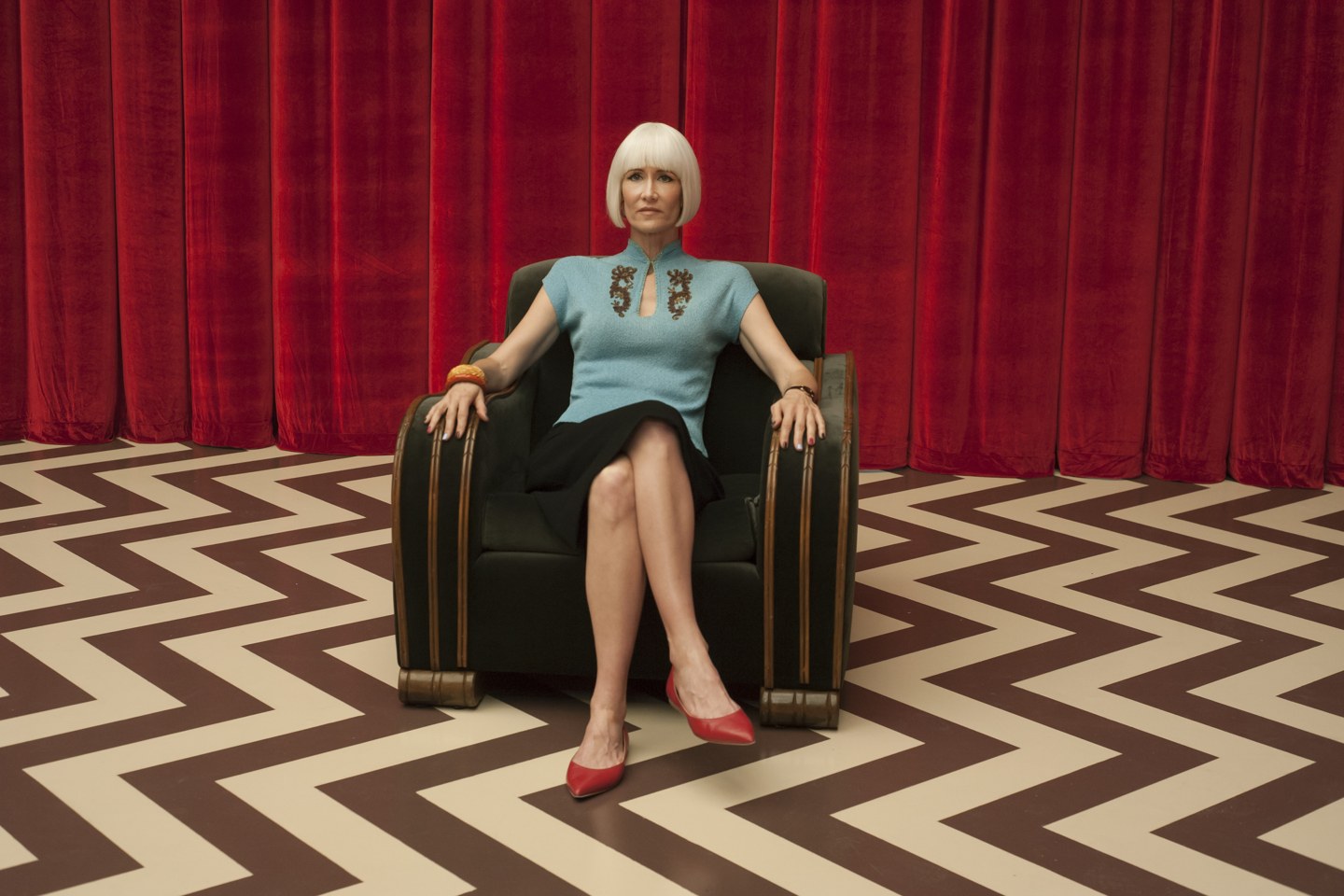
Diane and Janey-E: two routes into costume
Nancy Steiner recalls several fittings for Laura Dern’s bold Diane wardrobe. Naomi Watts’s clothes took a different route: a planned floral dress gave way, on the morning of shooting, to jeans, a top and a cardigan. The contrast demonstrates both preparation and rapid revision within the same department. Steiner’s costume account ↗
Diane’s pale hair and blue top stand apart from the red curtain, while her shoes repeat its color near the floor. Her hands rest firmly on the chair. The photograph makes the relationship between garment, posture and room available for inspection. It cannot establish a shot’s duration or how a cut reveals this appearance.
Steiner’s account also cautions against assuming that every costume detail was fixed at the writing stage. Clothes can shape our interpretation without their meaning having been specified in a screenplay. A stronger object study would compare the garments, fittings, continuity photographs and finished scenes. Until then, a department credit should not be converted into a claim about who made a particular bracelet, chair or floor pattern.
A performer’s view of the Red Room
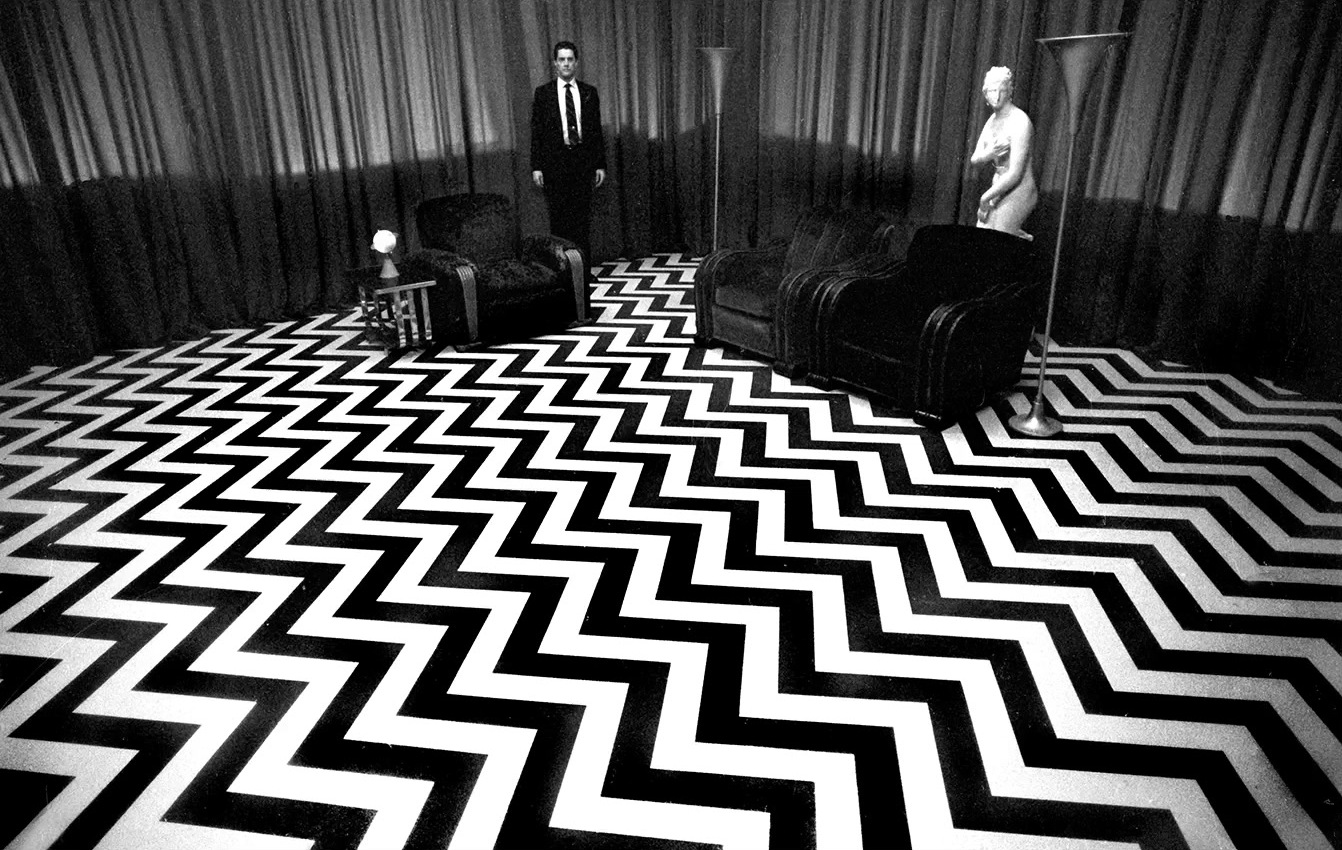
Richard Beymer’s photographs let us approach the Red Room as a place where people worked. In this wide view, Kyle MacLachlan stands beyond the chairs while the chevron floor occupies most of the image. The room’s familiar furniture is not merely a set of symbols: its distances and lines organise where a performer can stand, sit or move.
The accompanying photographs include crew, lighting equipment and performers between the images that became part of the fiction. That change of viewpoint does not make the finished scenes less strange. It shows how their strangeness depends on a precisely arranged space, inhabited by actors and repeatedly reconfigured for a camera. The collection’s introduction identifies the photographs as taken and personally selected by Beymer.
Source: Richard Beymer’s photographic gallery, especially the wide Red Room photograph, in Twin Peaks: From Z to A.
Editing a long narrative into eighteen parts
Dunham describes tracking the production with colored index cards: green for material in Twin Peaks, a separate color for Sarah Palmer, and colors for other strands. Pins tracked a scene’s editorial state. The system made absences visible across a very large assembly. He also recalls a roughly 52–58-minute chapter target and the decision to avoid recaps. The cutting-room account ↗
The cards: where are we?
Different story strands could be seen together on a wall. Organizing such a narrative means managing the distance between appearances as well as the order of events.
The pins: how far along?
Assembly, notes and approval were separate states. A scene’s place in the plan and its readiness for the finished work are different questions.
Our synthesis: calling The Return a long film describes an approach to construction; releasing it in parts describes an encounter with viewers. Both matter. A pause that feels proportionate in a continuous viewing may occupy much more of someone’s memory during a week’s wait. A chapter ending can become a temporary ending even when the larger narrative refuses to settle there.
Duration is a relationship
To investigate a slow passage, first ask what is being sustained: a gesture, an awkward exchange, a journey, a space after somebody leaves. Then ask what would be lost if it were shortened. This is a more useful critical starting point than treating patience as a test that a worthy viewer must pass. Boredom, amusement and dread are possible responses worth describing, not errors to be dismissed.
Cooper and the desire to repair a story
Frost’s November interview emphasizes the unforeseen consequences of Cooper’s actions. It offers a creator’s perspective on the ending, not a universal answer key. Frost on Cooper ↗
The wish to return to a beloved place can also become a wish to make it conform to memory. For a viewer, recognition is pleasurable; for the people inside the story, the past may be something less consoling. The dossier’s working question is whether going back allows someone else to be heard—or imposes another account of what their life should have been. That question connects the original portrait, the film’s altered viewpoint and the continuation without requiring a single diagram of every supernatural rule.
The small images had their own schedule
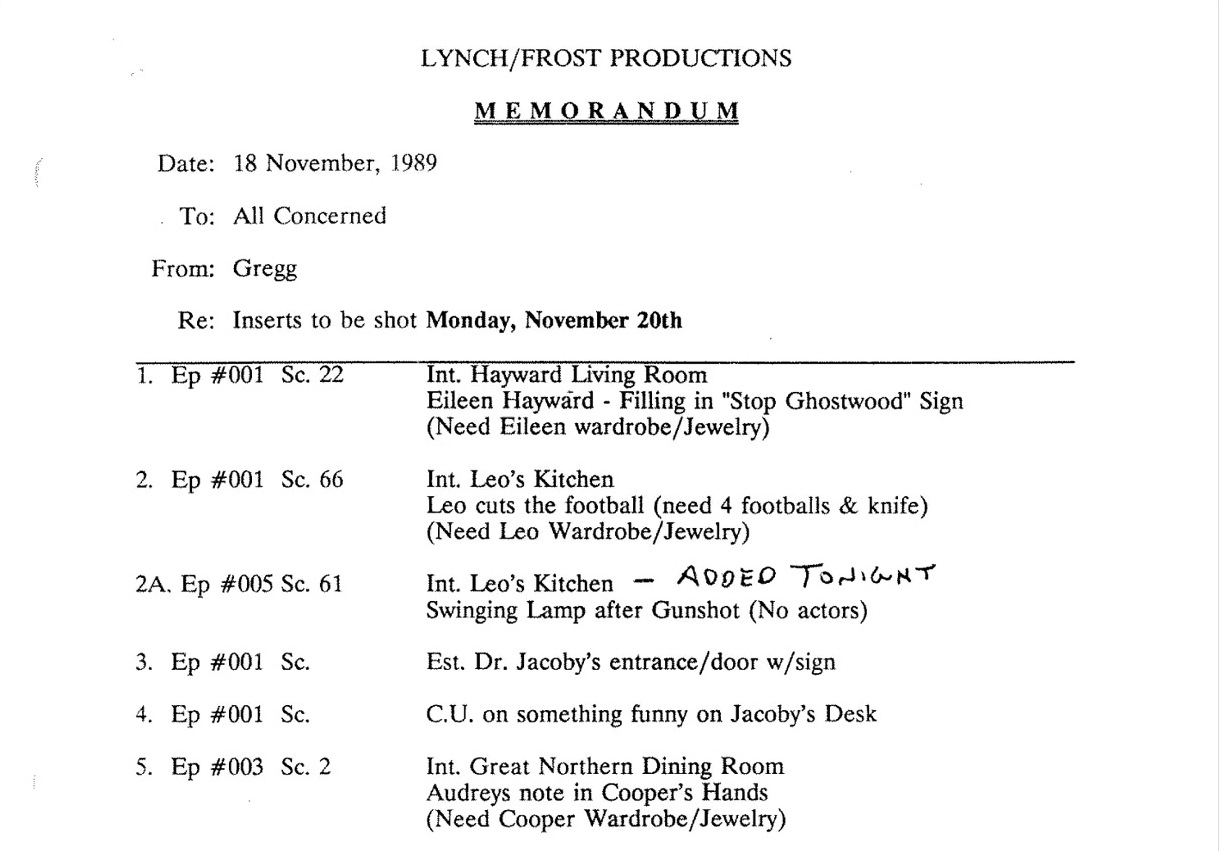
A Lynch/Frost Productions memorandum dated 18 November 1989 schedules inserts for Monday, 20 November. Its list moves between episodes and locations: Eileen Hayward’s protest sign, Leo cutting a football, Jacoby’s doorway and desk, Audrey’s note in Cooper’s hands, a drawing held by Josie, the sheriff’s speakerphone and photographs connected to Jacques.
The practical instructions are revealing. Wardrobe and jewellery must match even when the immediate subject is an object or a hand. Leo’s football requires four footballs and a knife; a handwritten addition requests the swinging lamp after a gunshot, with no actors. The document gives a production context for a characteristic viewing experience: an apparently small image can carry a clue, a threat or the aftermath of an action. It is evidence of planned pickup work, rather than proof that every requested shot survives in the broadcast edit.
Source: production-document gallery, memorandum headed “Inserts to be shot Monday, November 20th,” dated 18 November 1989, in Twin Peaks: From Z to A.
Release and reception: different expectations, different judgments
The release schedule itself shaped what could be discussed. On 21 May 2017, SHOWTIME premiered two parts and made parts three and four immediately available to subscribers online and on demand; their linear broadcast followed on 28 May. Early responses therefore did not necessarily share the same viewing horizon. Dated release plan ↗
| Moment | Critical position | What it helps us ask |
|---|---|---|
| April 1990 | Richard Zoglin’s available opening excerpt welcomes the program as unusually inventive network television. TIME ↗ | What did novelty mean within that broadcasting context? |
| 3 September 2017 | Carli Velocci interprets the ending through repetition and trauma rather than complete resolution. TheWrap ↗ | Can an ending’s lack of closure be part of its emotional work? |
| 5 September 2017 | Daniel D’Addario admires moments of ambition but argues that duration and violence weaken the continuation’s human connection. TIME ↗ | When does difficulty deepen engagement, and when does it obstruct it? |
Our synthesis: these positions should remain in conversation. A defense of ambiguity does not answer every objection to pacing or violence; a frustration with pacing does not establish that the work has no structure. Better criticism names what a passage does and how it affects a viewer. It does not require every viewer to experience it in the same way.
The disagreements are part of Twin Peaks’ history: its different eras have provoked different expectations, pleasures and frustrations. The season dossiers follow those responses alongside the work’s evolving form.
Returning to a place made by television
Return to Twin Peaks follows the fan festival through location visits, shared meals, games, costume and conversations with performers. Activities such as throwing stones and tying cherry stems turn recognisable screen actions into things participants can attempt together. The locations are not treated simply as a checklist of backgrounds; they become meeting places for people whose relationship began with the programme.
The interviews repeatedly connect returning to returning people as well as returning places. Read beside Cokewell’s account, the film also exposes two different perspectives on the same phenomenon: a visitor’s emotional homecoming and the daily business of a town accommodating visitors. Neither perspective alone explains the afterlife of the series.
Source: Return to Twin Peaks, festival interviews, location visits and closing location credits, in Twin Peaks: From Z to A.
When the ceiling fan became a trading card
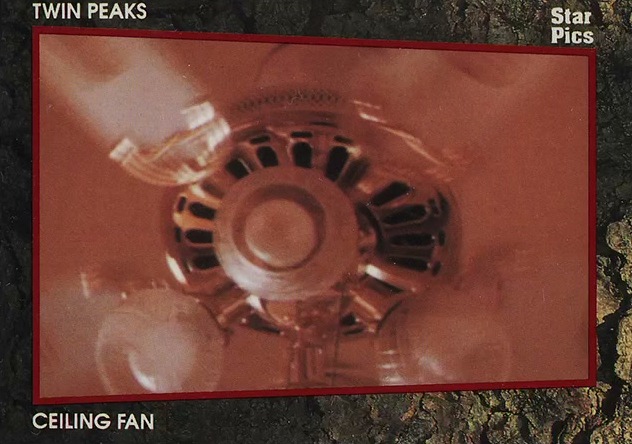
The 1991 Star Pics set places characters beside objects, recipes and production figures. Its ceiling-fan card is an especially compact example of how the series was marketed through recognisable details. Instead of supplying a single authoritative interpretation, the reverse invites the collector to decide what the fan represents. A small household fixture can be collectible because viewers remember the attention the programme gave it.
The card credits its profile text to Lynch/Frost Productions. That makes it evidence of an authorised promotional presentation, but not a substitute for analysing the scene itself. The series and the collectible ask different things of the image: one places the fan within a house and a sequence; the other isolates it, labels it and makes it part of a set that can be owned.
Source: Star Pics gallery, introduction and card 61, “Ceiling Fan”, in Twin Peaks: From Z to A.
When the characters followed the actors home
The cast interviews record several forms of sudden recognition. Michael J. Anderson remembers intense attention in New York after his early appearance in Cooper’s dream. Mädchen Amick describes leaving work in Shelly’s injury makeup and being approached as though the bruises were her own; she also recalls a viewer confusing an episode’s broadcast with a live appearance. Piper Laurie compares the immediate public response with the event-like feeling of early television. Together these memories suggest how quickly a fictional town entered everyday encounters. They describe individual experiences, rather than measuring the audience as a whole. Anderson, Amick and Laurie · source notes
A fan object within a family
Russ Tamblyn and his daughter Amber show a pair of childhood shoes covered with cast signatures in their filmed recollection of a Twin Peaks autograph event. Amber remembers approaching the performers while wearing the shoes; Russ says he kept them afterwards. The object offers a more intimate counterpart to commercially issued cards and merchandise: its meaning comes from a particular gathering and the family’s decision to preserve it. Tamblyn conversation, 00:11–02:29
Keeping the conversation alive
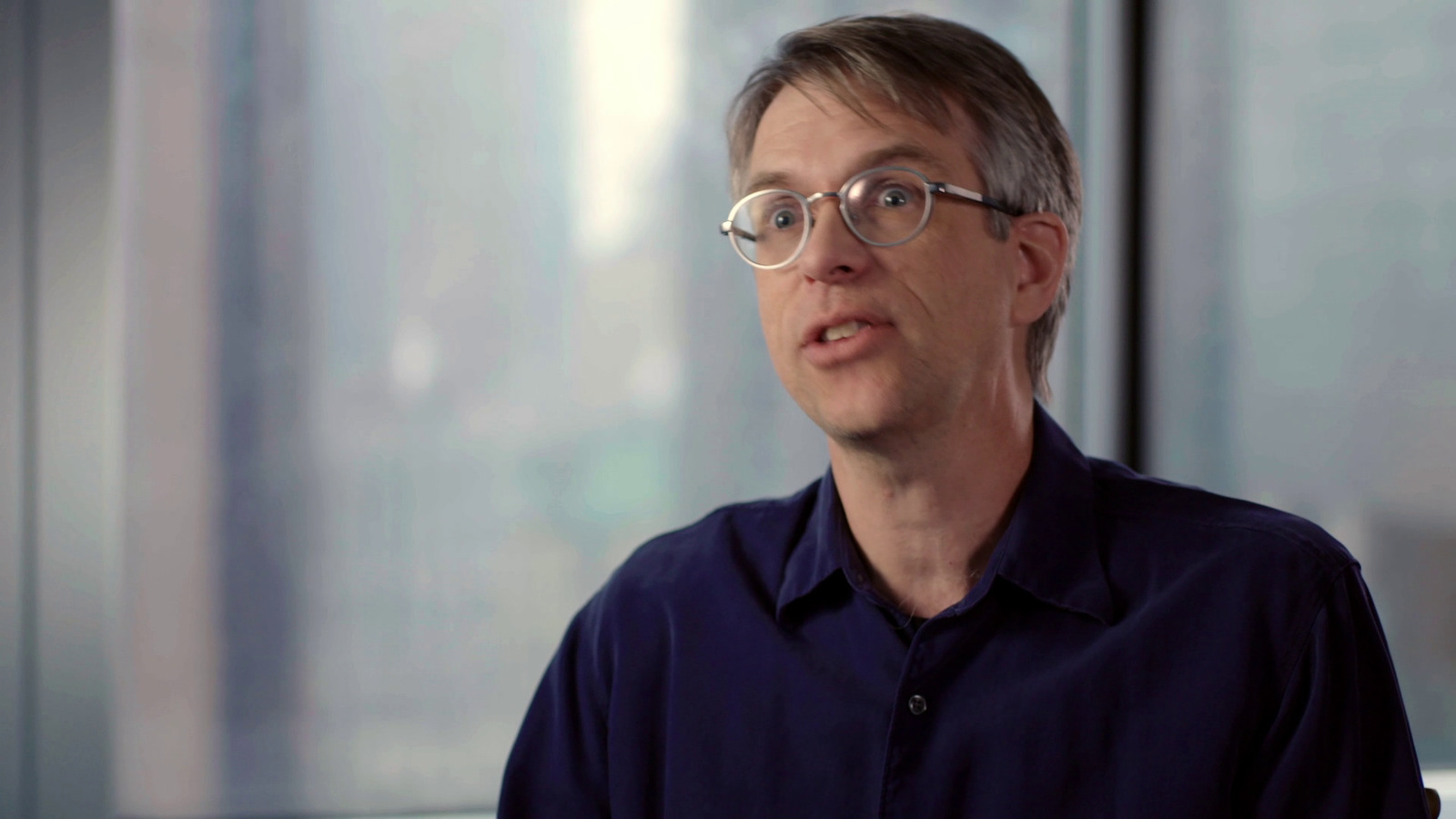
The interval between the original series and The Return was not an absence of activity. In Phenomenon: Life After Death, John Thorne recalls producing Wrapped in Plastic with Craig Miller for about thirteen years. He connects the magazine to a practical difficulty: viewers could circulate videotapes, but had relatively few places to sustain detailed discussion. His account gives the series’ afterlife an infrastructure—copies, print, correspondence and gatherings—rather than treating enthusiasm as something that survived by itself.
The film then turns toward streaming and online discovery. Pieter Dom describes an expanding international audience; the change is not simply that a programme becomes available again, but that newcomers acquire ways to find one another. Read beside Return to Twin Peaks and Pat Cokewell’s diner interview, the testimony distinguishes several kinds of work behind a continuing community: distributing access, making criticism, organising meetings and accommodating visitors.
Influence also becomes more useful when someone names a particular working ambition. Damon Lindelof recalls J. J. Abrams invoking Twin Peaks while they developed Lost, hoping for comparable artistic and cultural impact. David Hollander connects its example with visual storytelling and the Hollywood noir of Ray Donovan. These are creators’ retrospective accounts of influence; they do not make every later mystery series a direct descendant or establish the documentary’s more sweeping claims about television history.
Phenomenon is itself part of that history. Its three short films assemble interviews, earlier scenes, fan activity and reunion anticipation into a promotional argument for the programme’s continuing importance. Their celebratory purpose matters when evaluating claims of uniqueness. The most productive evidence is specific: who made a magazine, what another writer aspired to, or how a viewer turned an attachment into new creative work.
Versions, collections and companion books
The edition guide follows the series through its broadcasts, physical releases and later presentations.
| Record | Documented scope | Important distinction |
|---|---|---|
| The Entire Mystery · 2014 | Original two seasons, U.S. and international pilots, feature, nearly 90 minutes of The Missing Pieces, and Log Lady introductions. Release reprint ↗ | Predates The Return. The disc list counts the pilot separately from episodes 1–29. |
| Fire Walk with Me · Criterion | The film and separately listed supplementary material. Edition record ↗ | Additional scenes do not make an authorized extended feature cut. |
| From Z to A · original 2019 edition | All three television seasons, feature, The Missing Pieces and additional making-of material. Preserved announcement ↗ | The UHD disc is specified for the pilot versions and Part 8—not every episode. Later repackagings require their own inventory. |
| The Television Collection · 2019 announcement | The three television seasons and earlier extras. Same dated announcement ↗ | Do not infer inclusion of the feature from “television collection.” |
The 2014 inventory lists both an English surround option and original stereo. Comparing those tracks is a separate task from comparing image resolution. Likewise, a menu title, episode number and running time need the context of a specific edition. Technical listing ↗
Books: three different kinds of record
Their publisher descriptions establish useful starting points for a companion bibliography.
- Jennifer Lynch, The Secret Diary of Laura Palmer. Gallery Books trade paperback, 6 December 2011, ISBN 9781451662078. A reissue record for the fictional diary, distinct from the book as an onscreen object. Publisher details ↗
- Mark Frost, The Secret History of Twin Peaks. Macmillan ebook, 18 October 2016, ISBN 9781447293859. The publisher describes a wider history reaching back to Lewis and Clark. Publisher details ↗
- Mark Frost, The Final Dossier. Macmillan UK hardback, 2 November 2017, ISBN 9781509802043. The publisher frames it around the intervening years and the continuation. Publisher details ↗
Frost discusses Tammy’s perspective in the books as fallible. That is a useful authorial prompt for reading them as constructed accounts, rather than treating every sentence as an impersonal correction to the screen. Frost on the narrator ↗
A diary, a compiled history and an investigative dossier make different promises about access to knowledge. A diary can be intimate without being complete; a dossier can look authoritative while depending on selection. An archive about Twin Peaks should be alert to those differences in the fiction and in its own research.
Continue through the Reading Room’s edition guide or explore the museum, where publicity, artist editions and physical media extend the work’s visual life.
Jennifer Lynch: writing Laura from within
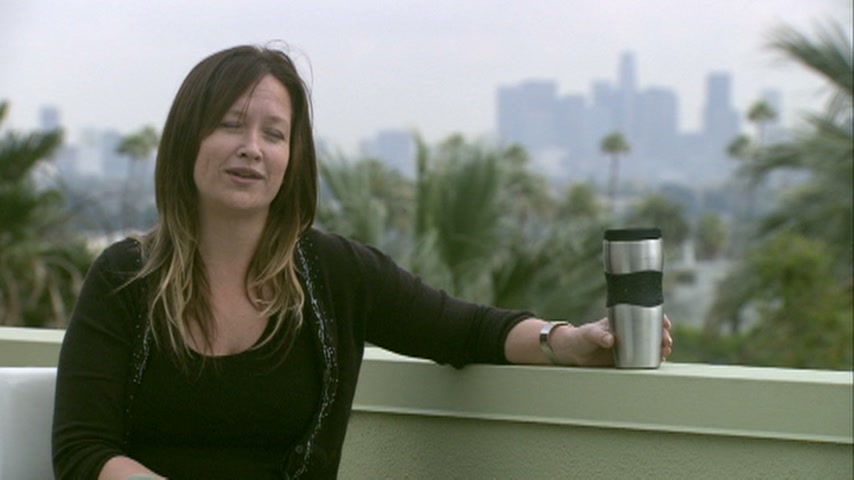
Jennifer Lynch recalls receiving the killer’s identity and a list of characters from David Lynch and Mark Frost, while retaining substantial freedom to shape Laura’s diary. She also identifies one disturbing dream as a contribution from her own experience. The book therefore combines a coordinated place in the larger mystery with the author’s independent imaginative work.
Her interpretation of Meals on Wheels emphasises Laura’s wish to do good and to imagine a future despite the weight she carries. Read that testimony beside Harold’s reading of the diary, where Laura’s interior voice reaches another character through a physical object. Jennifer Lynch, 00:09–02:58
Explore further
Follow the sources below, explore the museum collection, or continue through the Reading Room. New archival discoveries and contributions enrich the record of Lynch’s work.
Sources and the research record
- Twin Peaks at 35: an oral history ↗Jane Wollman Rusoff, Television Academy, 16 October 2025; originally published as A Damn Fine Show. Published oral history read. Participant memories are retrospective. Its Wild at Heart/second-season chronology is not adopted here.
- Twin Peaks dual key art and premiere announcement ↗SHOWTIME, 24 February 2017. Official announcement read: credits, 18 parts, premiere and staggered streaming/linear availability. Historical publicity, not a current streaming guide.
- Twin Peaks: Dreams, Doubles and Doppelgängers ↗David E. Williams, American Cinematographer, 11 July 2018. Peter Deming interview: preparation, photography, sets and Red Room lighting read. Source of the header and production photograph; no frame timecodes established.
- Backwards through the backwoods ↗Sam Davies, Sight and Sound, 10 June 2025. Written interview with Lori Eschler and Dean Hurley read. The page headline swaps their surnames; the body identifies them correctly. Complete episode tracks were not auditioned.
- Twin Peaks: the films that influenced David Lynch’s TV masterpiece ↗Craig Williams, BFI, 15 May 2017. Critical comparisons and original-series image provenance retained from the first edition and checked against the published article. Comparisons are criticism, not documented creator instructions.
- The Entire Mystery: contemporary release-announcement reprint ↗CBS/Paramount press release dated 15 May 2014, reproduced by Travis Leamons at Inside Pulse that day. Contents and disc breakdown read.
- Twin Peaks: Fire Walk with Me — film and edition record ↗Criterion Collection. Film and supplement inventory rechecked in the browser, including the current UHD/Blu-ray listing. Feature and The Missing Pieces were not played during this pass.
- Twin Peaks: The Final Dossier — UK hardback record ↗Pan Macmillan, 2 November 2017, 160 pages, ISBN 9781509802043.
- Art of the Cut with Twin Peaks editor DuWayne Dunham ↗Steve Hullfish, ProVideo Coalition, 23 October 2017. Interview read on original-series work, editing, cards and chapter length. Source of Suzanne Tenner’s Laura Dern photograph. Recalled scene durations were not treated as measured timings.
- Intimate Apparel: a conversation with Nancy Steiner ↗Hillary Weston, Criterion, 31 August 2022. Twin Peaks questions read: Diane’s fittings and the change to Naomi Watts’s clothes. Retrospective costume testimony, not a continuity inventory.
- The last word on Twin Peaks, by David Lynch’s co-creator Mark Frost ↗Ryan Reed, Salon, 7 November 2017. Interview read on writing, production participation, books and Cooper. Frost’s stated production attendance is his estimate, not a call-sheet count.
- Twin Peaks 2017: interview with art director Cara Brower ↗Jessica Bloom, Format, 18 May 2017. Published interview read. Art-department responsibilities and the Fisk–De Jong–Brower connection; pre-premiere account constrained by secrecy.
- Lynching Television (Again): a conversation with Sabrina Sutherland ↗Andreas Halskov, 19 October 2017, now hosted at TV Obsessive. Interview passages on reused footage, editing and production constraints read. The introduction’s broad account of Frost leaving is qualified by Frost’s own later testimony.
- The Sheryl Lee interview: complete and unedited ↗Andy Burns; interview conducted 24 February 2014, republished 24 February 2015. Published transcript read. Lee recalls casting, Maddy, direction and using Jennifer Lynch’s diary book.
- Twin Peaks — Television Academy awards record ↗Television Academy, awards database inspected. 1990 costume/editing wins and 2018 Part 8 editing nominees checked. An award entry is not a full episode credit roll.
- Like Nothing on Earth ↗Richard Zoglin, TIME, 9 April 1990. Contemporary enthusiasm, not an audience survey.
- A Promising Return to Twin Peaks Fell Victim to Itself ↗Daniel D’Addario, TIME, 5 September 2017. Published review read. His objections to duration, violence and lost emotional connection are attributed criticism.
- David Lynch Shows That It Was Never About Answers ↗Carli Velocci, TheWrap, 3 September 2017. Published finale review read. Used for a contrasting interpretation, not as authority for exact dialogue, sound or plot mechanics.
- The Secret Diary of Laura Palmer — publisher record ↗Jennifer Lynch; Gallery Books trade paperback, 6 December 2011, 192 pages, ISBN 9781451662078. Publisher description and metadata read.
- The Secret History of Twin Peaks — ebook record ↗Mark Frost; Macmillan ebook, 18 October 2016, ISBN 9781447293859. Publisher synopsis and edition metadata read.
- From Z to A — 2019 announcement preserved at Twin Peaks Blog ↗CBS Home Entertainment release dated 21 August 2019, reproduced by Steven Miller on 22 August. Announcement and supplement descriptions read.
Cast recollections: performance, casting and reception
Postcards from the Cast, in Twin Peaks: From Z to A. Individual interview timings: Ray Wise, 00:05–03:18; Wendy Robie, 00:05–01:53; Peggy Lipton, 00:05–01:53; Miguel Ferrer, 00:05–02:38; Michael Horse, 00:05–04:45; Everett McGill, 00:05–01:25; Michael J. Anderson, 00:05–00:44; Mädchen Amick, 00:05–01:28; Piper Laurie, 00:05–02:20. These are retrospective first-person accounts. The interview portraits illustrate the speakers; the linked episode studies examine the finished drama.
Related findings: Grace Zabriskie on Sarah’s grief and audience laughter; Kyle MacLachlan on meeting Lynch for Dune.
Cast and crew: making characters, making scenes
Cast and crew interviews in Twin Peaks: From Z to A. Cast segments are headed “Origin,” “Production” and “After Twin Peaks”; timings restart within each segment. Selected passages: Dana Ashbrook, Origin 00:00–01:16 and Production 00:00–01:47; Gary Hershberger, Origin 00:00–00:37; James Marshall, Origin 00:00–00:40 and Production 00:00–01:17; Don S. Davis, Origin 00:00–01:40; Kimmy Robertson, Origin 00:00–01:07 and Production 00:00–02:18; Mary Jo Deschanel, character-history discussion 00:00–00:58; David Duchovny, Origin 00:05–00:53 and Production 00:00–00:44; Lenny Von Dohlen, Production 00:00–01:17; Robyn Lively, Origin 00:01–01:24 and Production 00:00–00:57; Sherilyn Fenn, Production 00:00–01:32.
Individual crew interviews: Jennifer Lynch 00:09–03:49; Todd Holland 00:09–04:10; Caleb Deschanel 00:09–04:18; Duwayne Dunham 00:09–04:01; Stephen Gyllenhaal 00:09–03:36; Tim Hunter 00:09–02:39. Accounts are attributed recollections. The interview identifications and English captions were checked; interpretations and uncertainties remain attached to their speakers.
Angelo Badalamenti interview (2017), recorded in New Jersey, Criterion Collection edition of Twin Peaks: Fire Walk with Me, 10:06–11:18. The passage concerns the opening theme’s synthesizer-and-guitar timbre; the film’s jazz palette is discussed separately at 06:08–07:54.
Another doorway
Continue exploring
Television
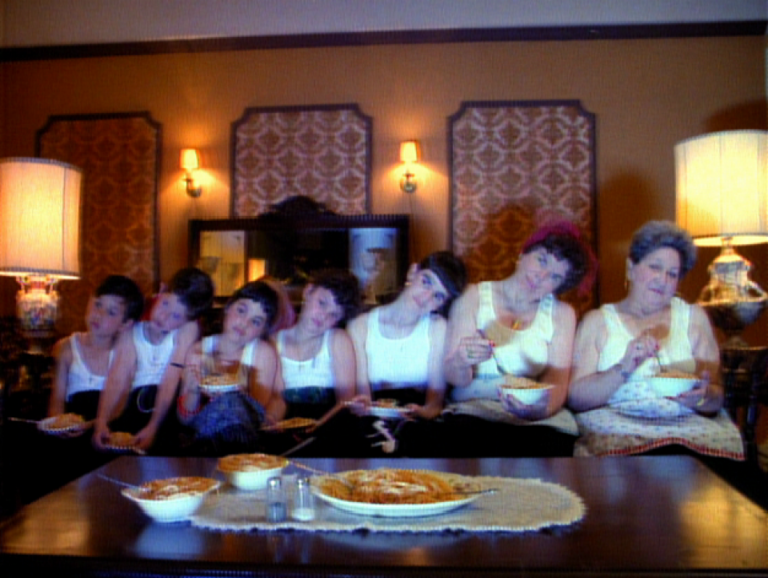
On the Air
Explore David Lynch and Mark Frost’s On the Air: all seven episodes, its cast, backstage comedy, production history and distinctive visual world.
Television
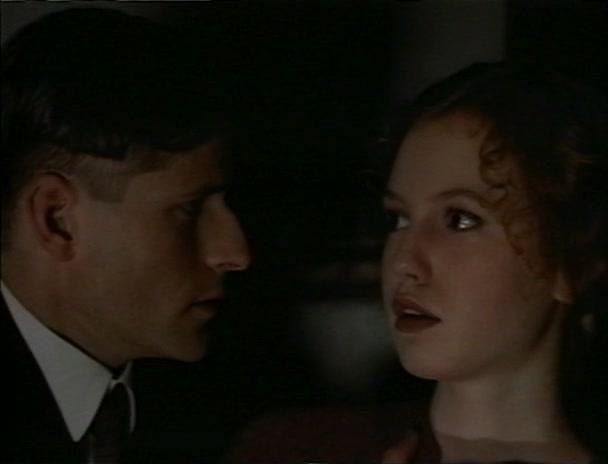
Hotel Room
Explore Hotel Room: Tricks, Getting Rid of Robert and Blackout, with story guides, cast, production history, scripts and stills.
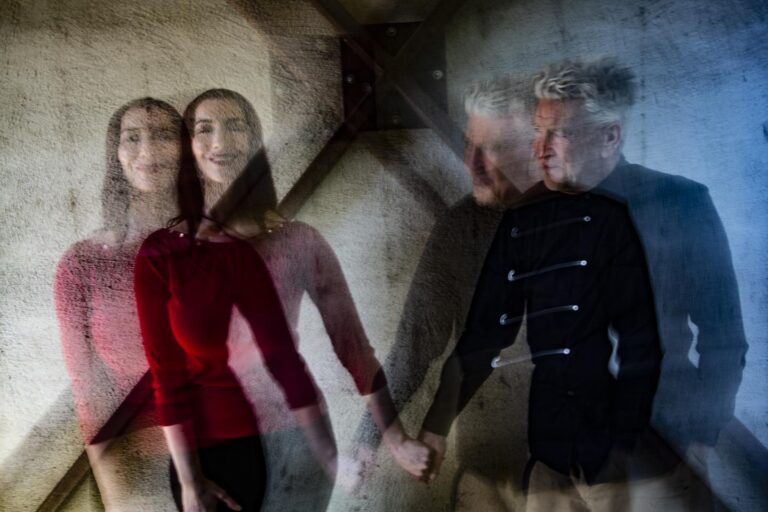
Music
Music
Explore David Lynch’s albums and collaborators, from Julee Cruise and Thought Gang to Chrystabell, with recording histories, edition notes and sources.
Image credits and sources accompany each linked guide.