Twin Peaks: Episode 1 — Traces to Nowhere
1990 · Regular Episode 1 · Directed by Duwayne Dunham
Laura’s image becomes evidence. Cooper settles into the town while its homes, recordings and witnesses reveal how much remains concealed.
Regular Episode 1, after the pilot. Often listed as Season 1, Episode 2. Contains episode spoilers.
Explore this episode
A detective makes himself at home
The first regular episode begins the harder work of serial storytelling: returning to a world after the shock of its introduction. It lets Cooper become a resident of the town’s routines while making the familiar houses less secure. The case continues, but breakfast, housework and dinner are now investigative terrain.
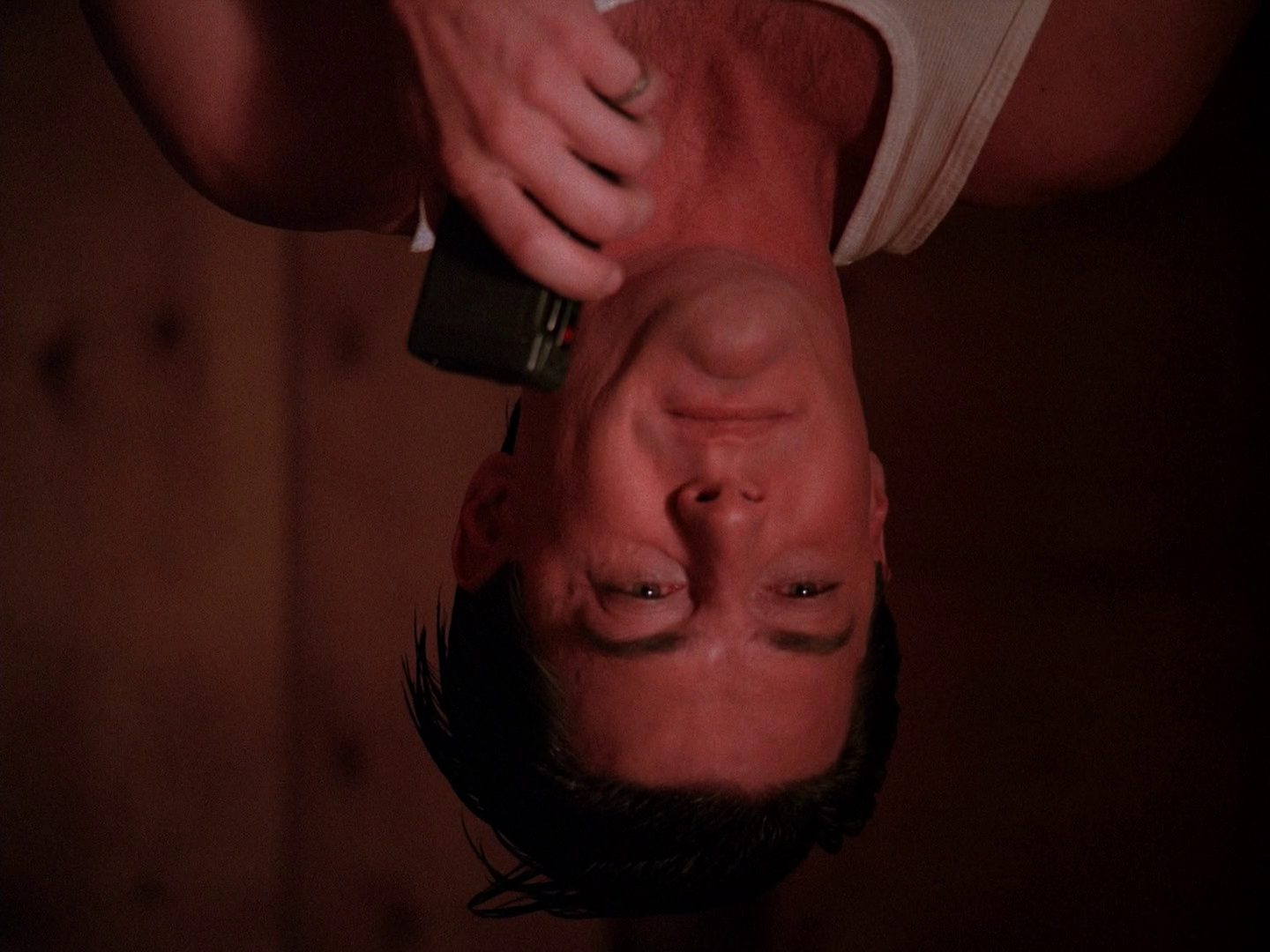
Cooper’s hotel room is an improvised office. His recorder, watch and other belongings share the space of bodily routine; his inverted exercise makes dictation a physical comedy without making the detective incompetent. At breakfast, Audrey enters his attention by placing herself within his routine. Her account of Johnny and Laura’s visits turns family information into an opening for intimacy.
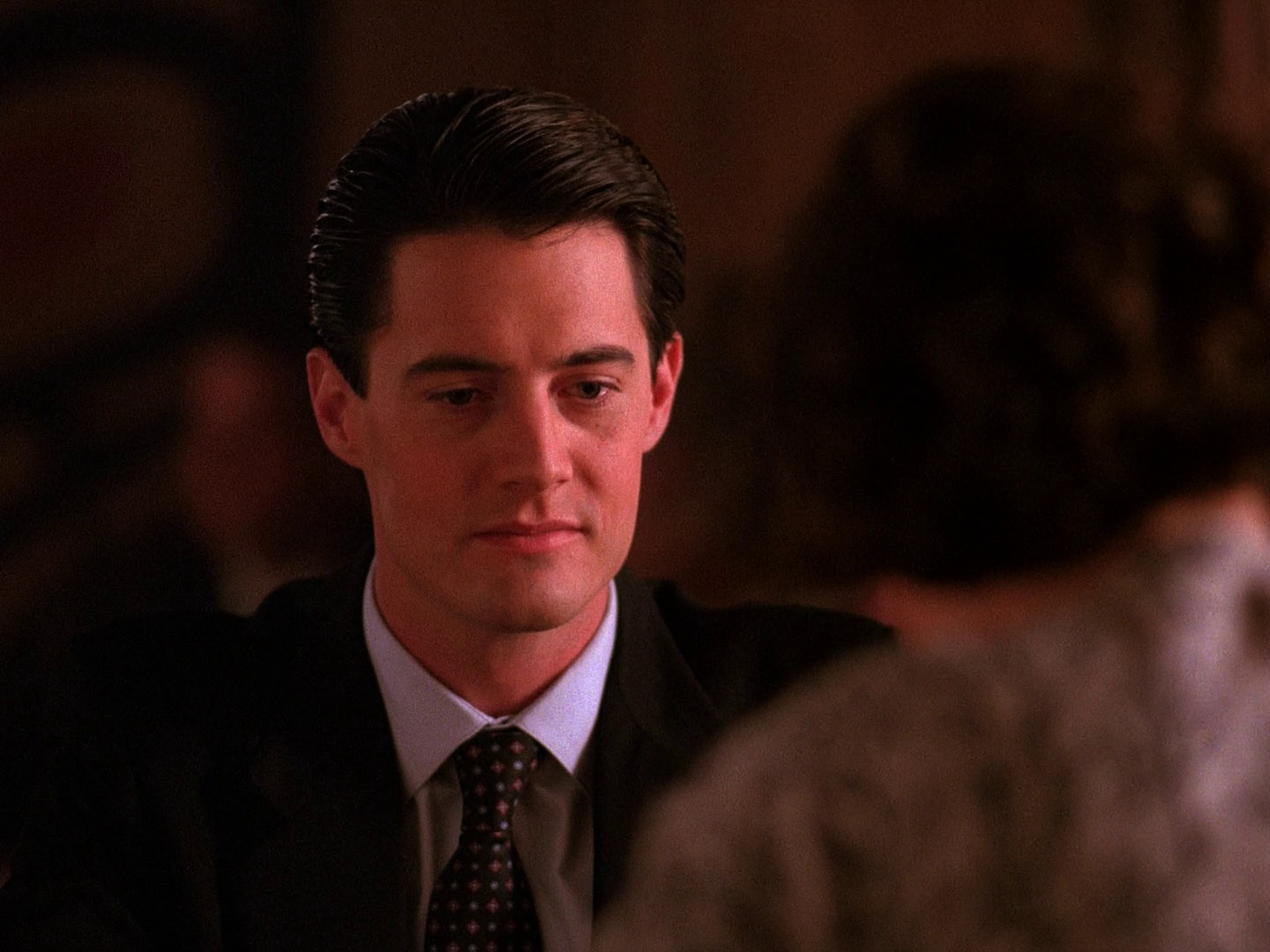
At the station, Dr. Hayward’s report cannot be separated from his knowledge of Laura as a child he delivered. His personal connection is precisely why another doctor performed the examination. The scene distinguishes care from professional distance without pretending that either can remove the loss. Leo’s treatment of Shelly then offers a brutal contrast: the domestic sphere becomes a place where a man demands service and uses ordinary objects to enforce obedience.
The home movie becomes a witness
James’s questioning makes the home movie a third presence in the room. Laura and Donna’s gestures remain available to replay, while the people watching try to decide what the gestures meant. The recording looks candid, but its apparent ease does not stop it becoming evidence against competing accounts of Laura’s relationships.
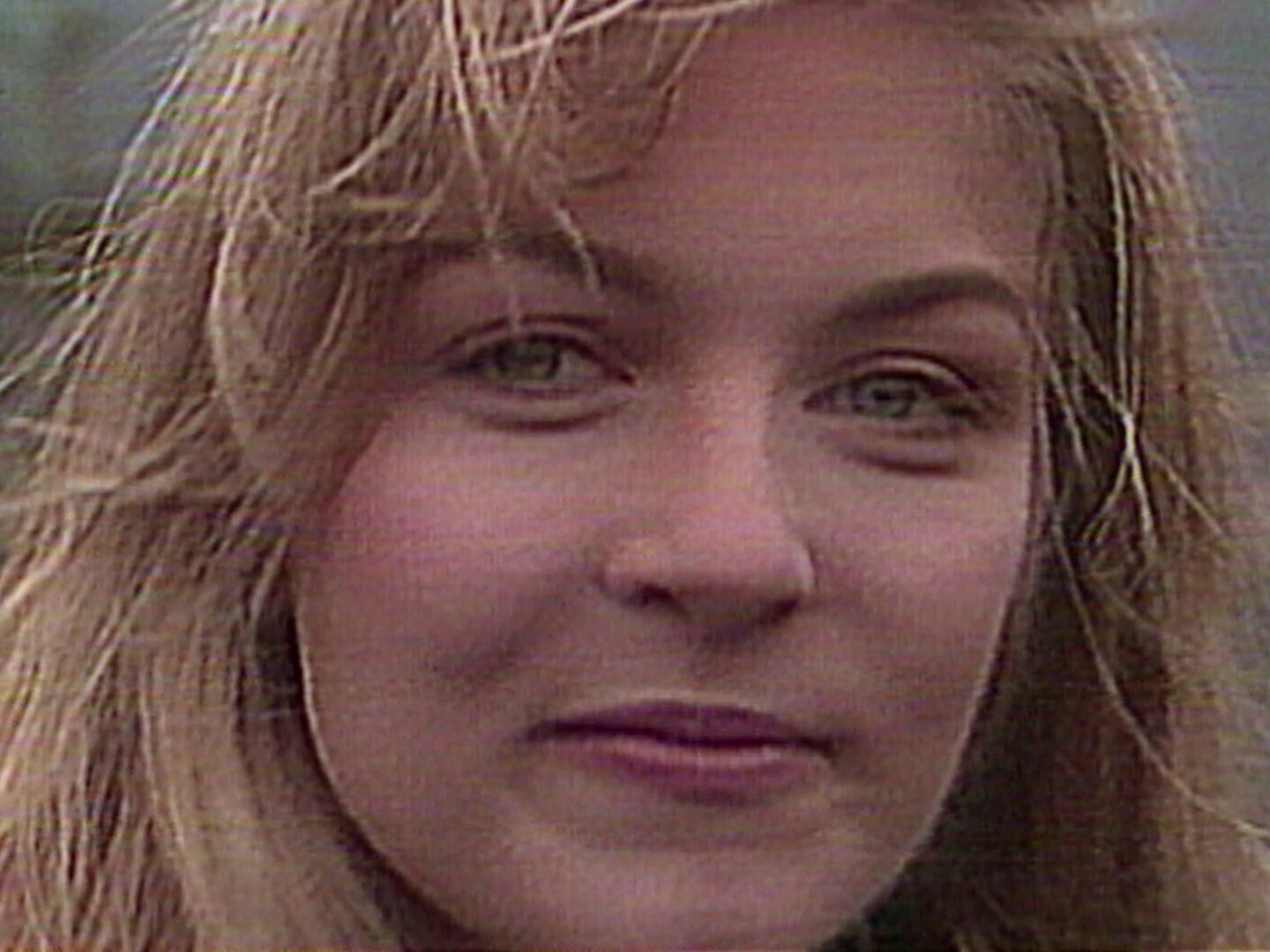
The broken-heart necklace adds a different kind of image: an object designed to signify a bond, now divided and hidden. Its sentimental meaning and its evidentiary value cannot be pulled apart. James’s explanation offers a memory of Laura, but a memory given under questioning is also a defence of the person remembering.
Donna’s conversation with Eileen refuses to reduce her to an accessory in the detective plot. She has to speak about grief and her feelings for James together. The private conversation gives that confession a quieter setting than the police station, and her mother’s response offers a form of listening that does not demand an immediate verdict. The episode makes room for feelings that would look contradictory if recorded only as facts in the case.
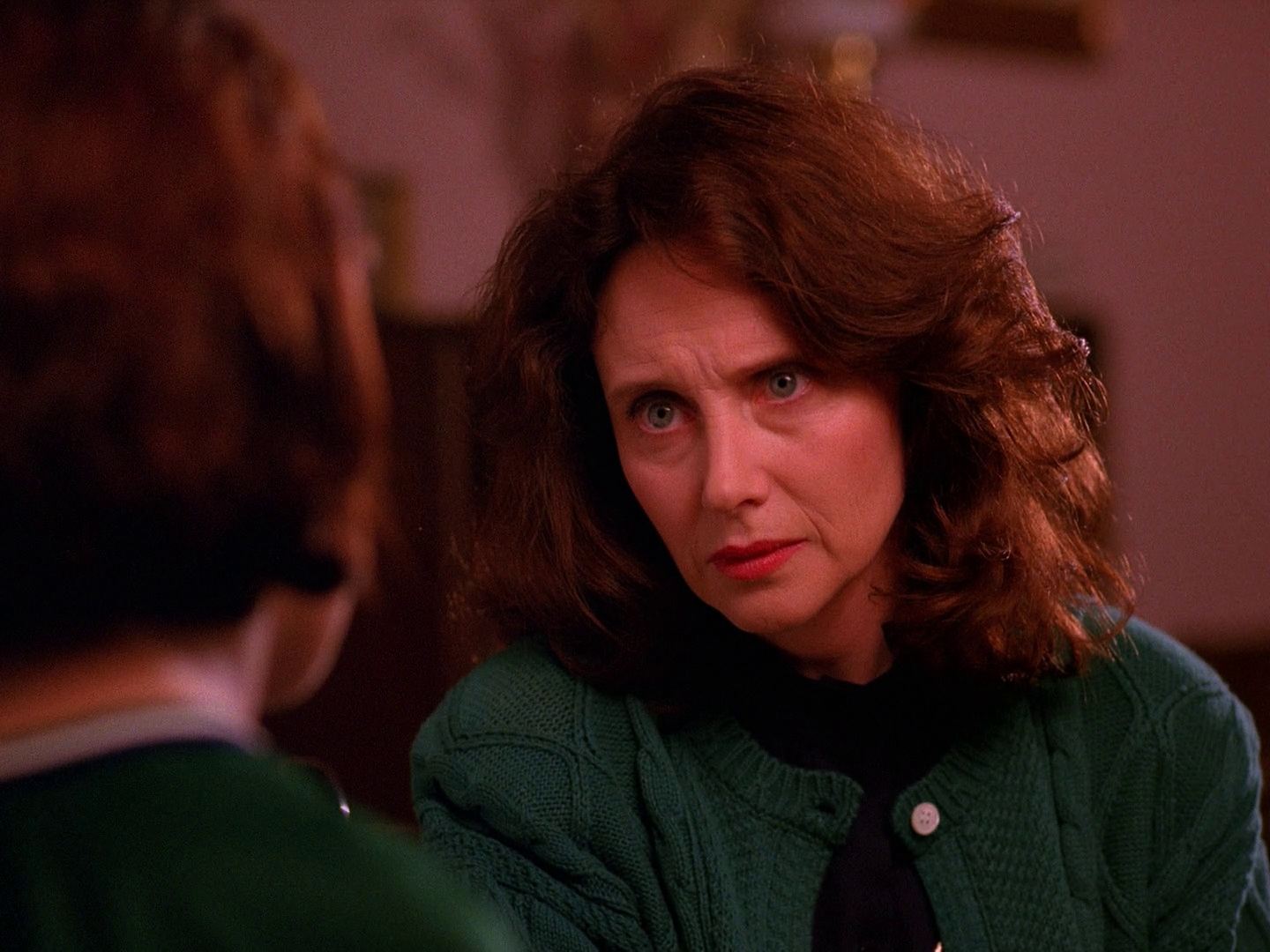
These scenes establish an important distinction for the series: a recording can preserve an appearance, but it cannot exhaust a person. Each replay creates another encounter between an image and the needs of its viewers. Laura’s afterlife in tapes, photographs and objects will keep exposing that gap.
Hospitality, business and coercion
The visit to Josie and Pete turns an interview into a social occasion. Coffee, conversation and local knowledge surround Cooper’s questions. He observes the relationship between Truman and Josie through their behaviour, making a private attachment visible inside an official inquiry. Pete’s revelation about the coffee percolator punctures the room’s polite surface without resolving any of its more serious secrets.
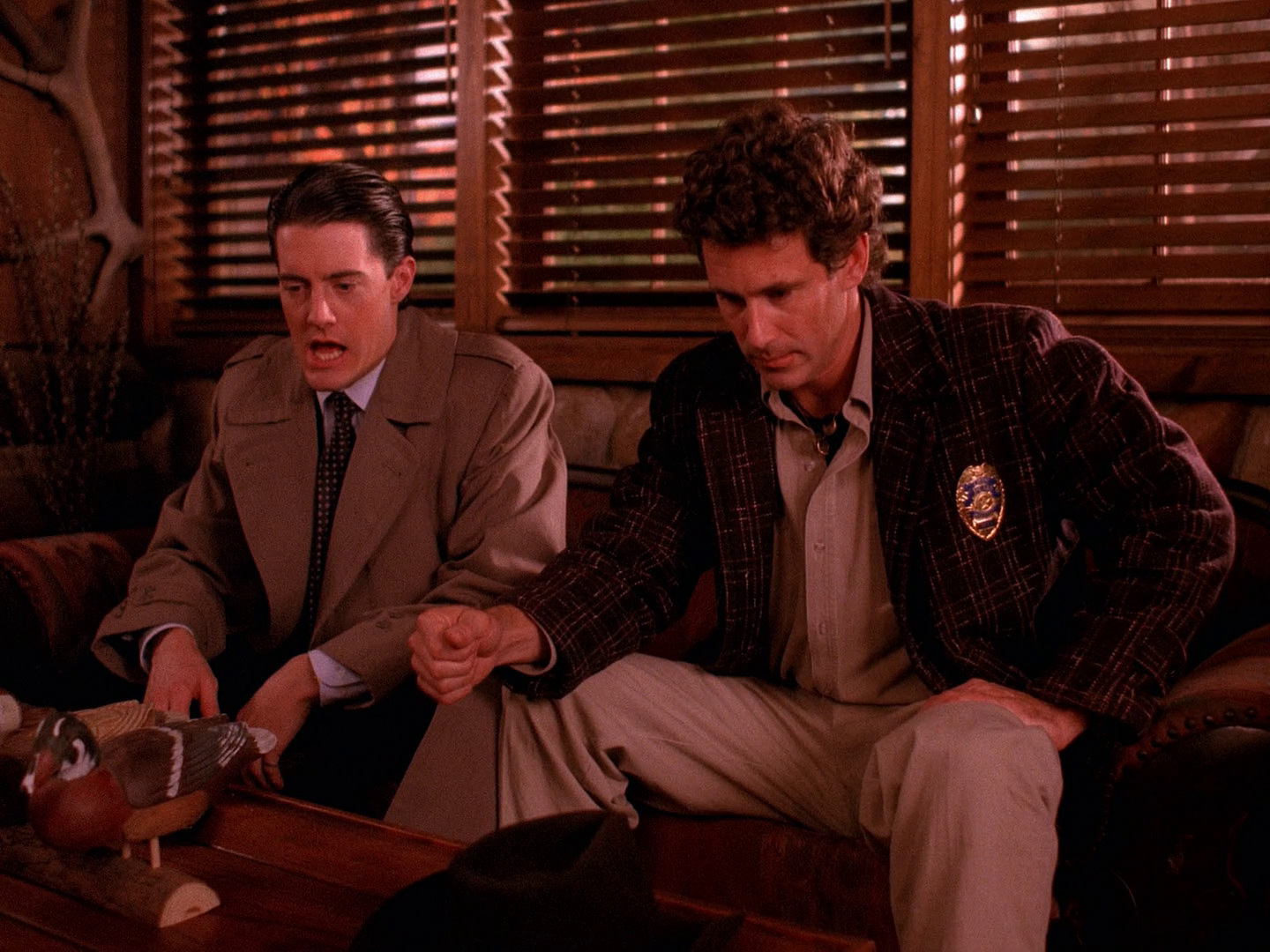
Catherine and Ben’s bedroom conversation joins the mill’s future to an intimate conspiracy. The episode does not confine business to offices and romance to bedrooms: economic ambition speaks through the affair. This is a useful counterpoint to the pilot, where Josie’s decision to stop work made the mill a public place of mourning.
Shelly’s house is organised by a more immediate threat. Leo’s demands about boots, laundry and a missing shirt make routine work part of surveillance. Later, the soap-filled sock turns a household object into a weapon. The sequence belongs in an account of coercive control; a gallery concerned only with the blow would lose the system of fear that makes the scene significant.
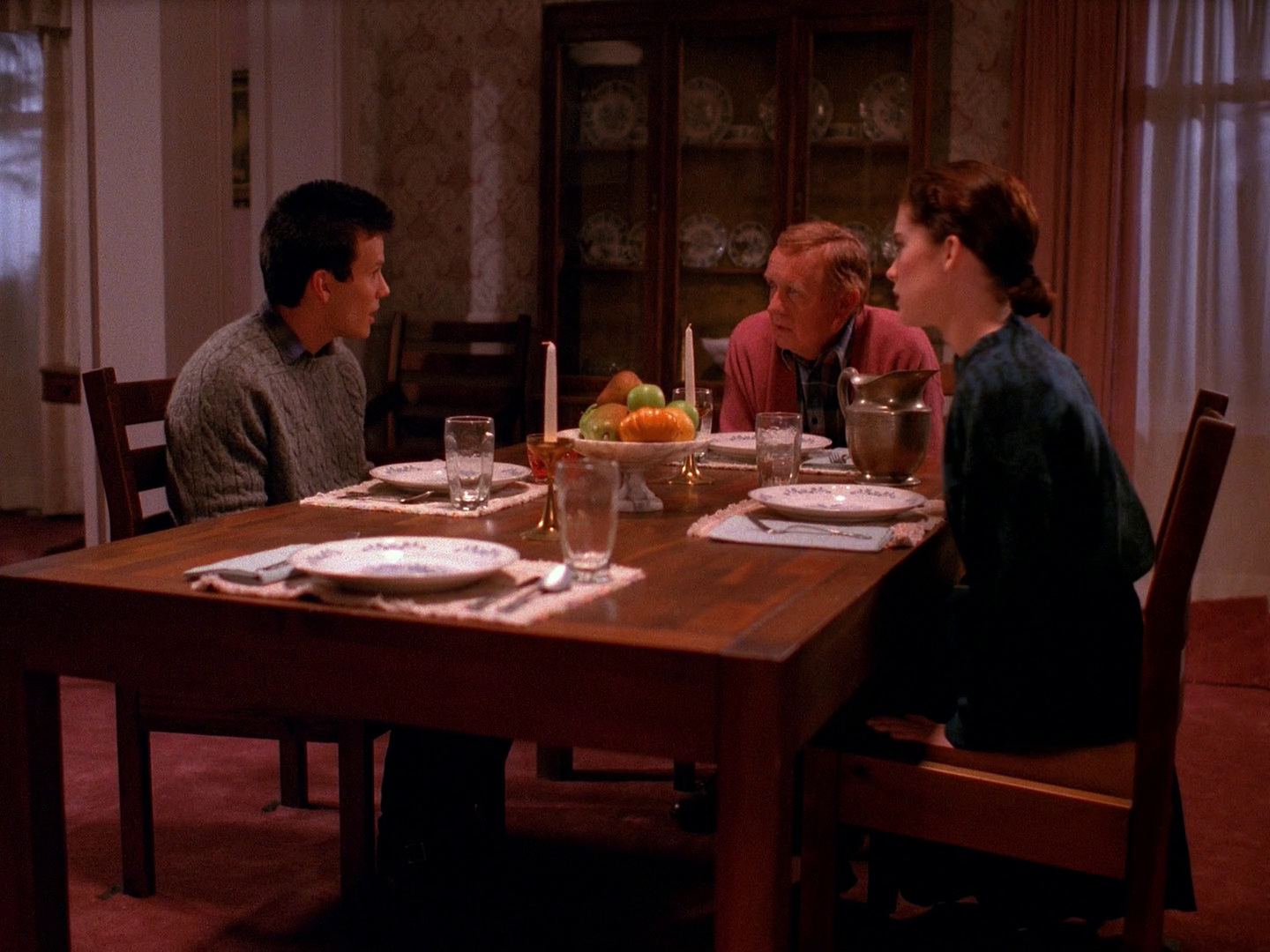
At the Briggs table, paternal authority arrives as a speech about order and responsibility. At the Hayward table, James is welcomed. The placement of these meals makes the ordinary family interior a field of comparison: discipline, danger and refuge are all possible behind a front door.
A face in a room, a figure in a corridor
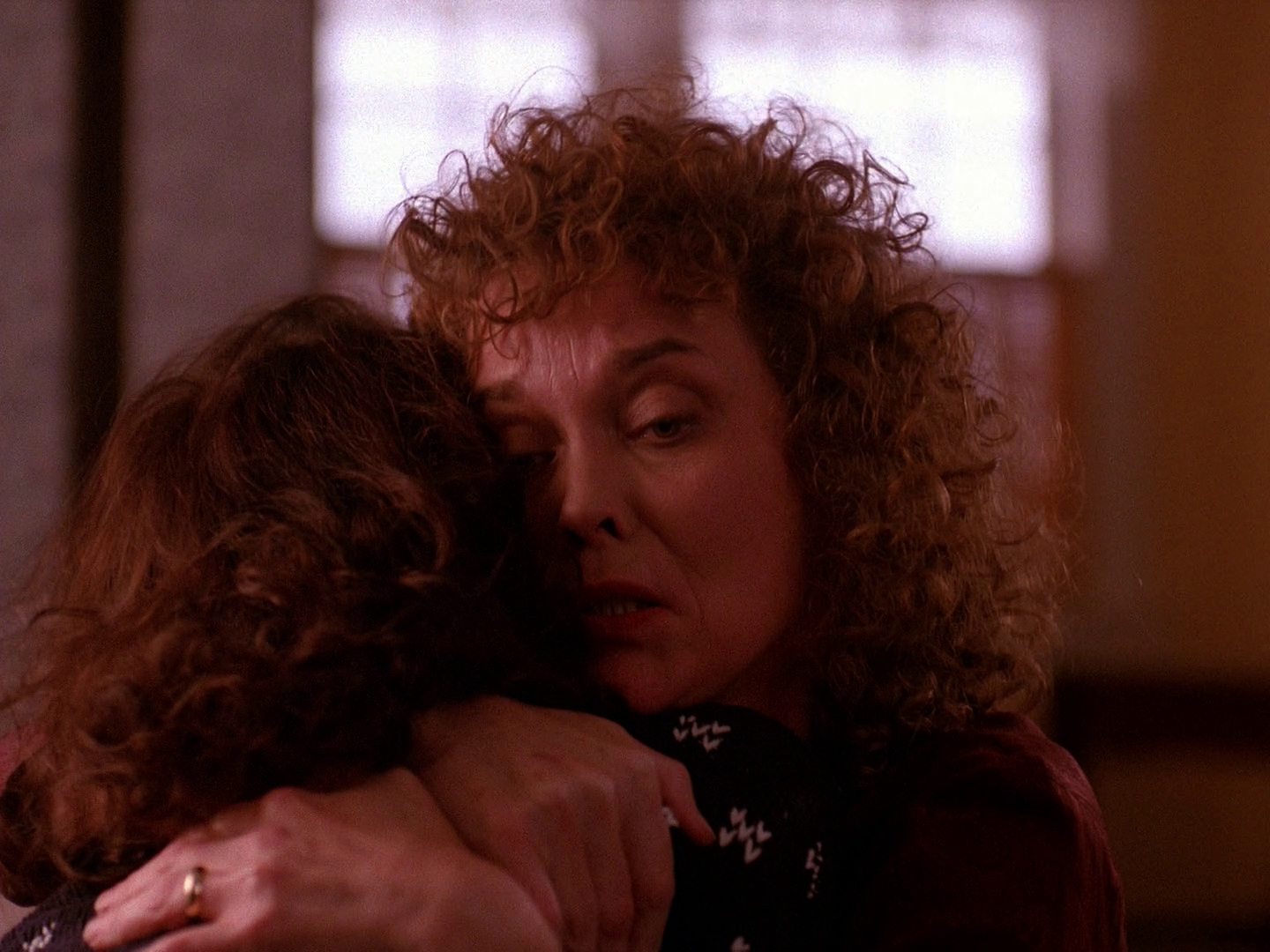
Donna’s visit to Sarah begins as an act of comfort and becomes a failure of stable recognition. The embrace brings the absent daughter into the encounter so forcefully that the visitor can no longer remain simply herself. The scene’s importance lies in the instability of looking: grief changes what Sarah can see in another face.
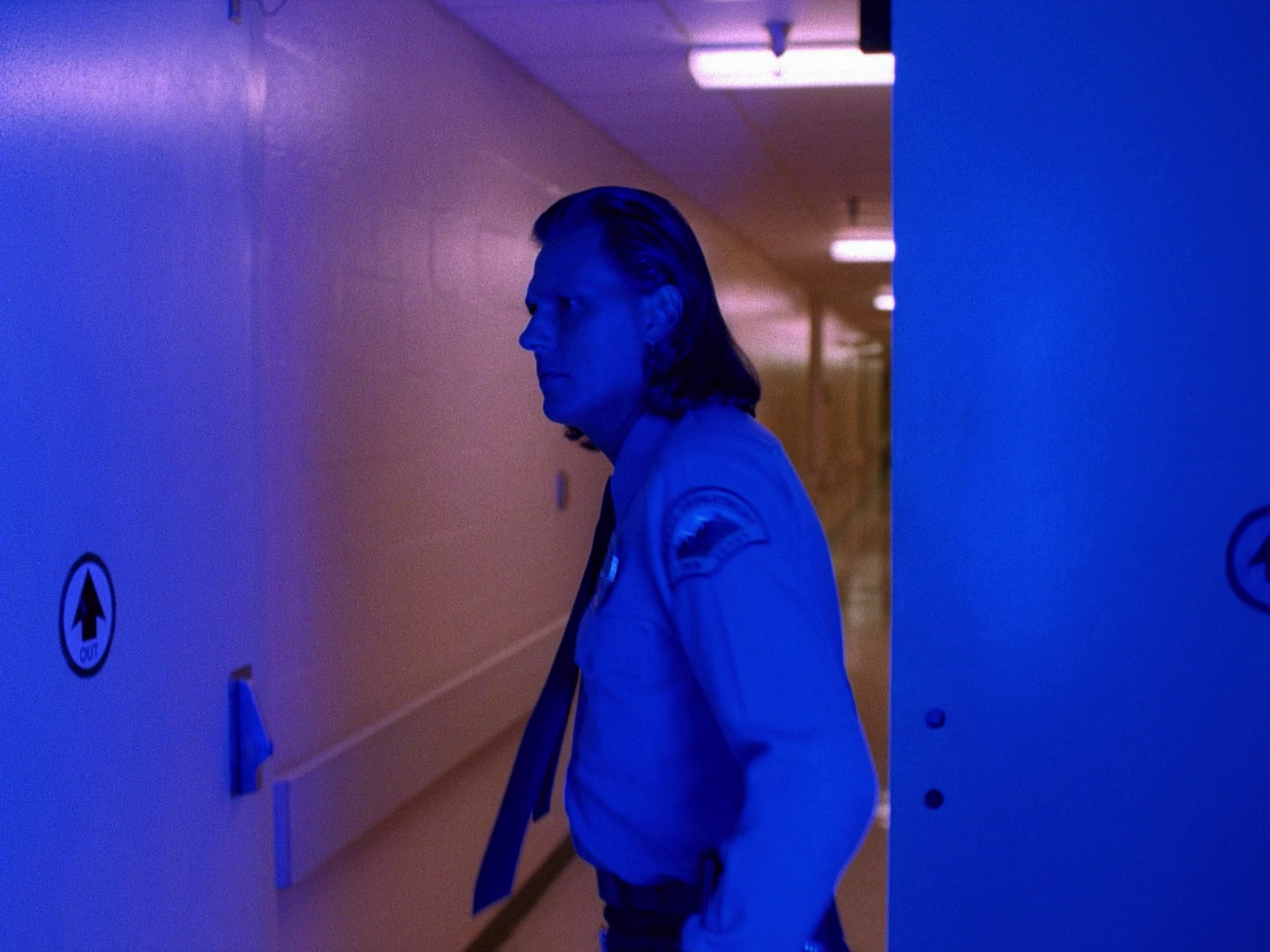
The hospital passage gives another disturbance a physical route. Hawk moves from speaking with Ronette’s parents toward the one-armed man, while the corridor’s saturated blue separates it from the more ordinary room he has just left. The same institution that offered medical explanation now contains an elusive figure. The programme changes the feeling of a place before providing a reliable explanation of what has happened there.
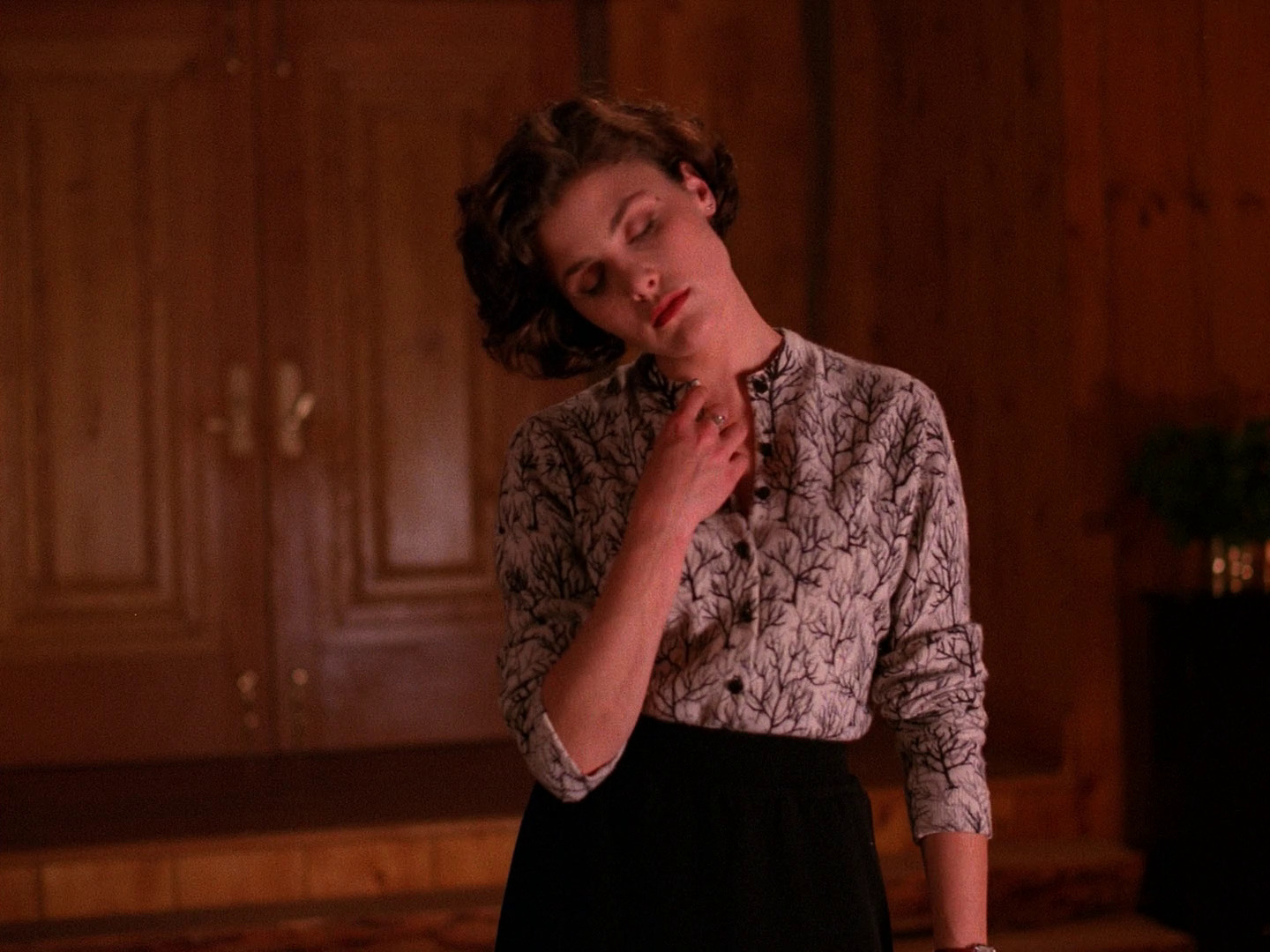
Audrey’s movement at the hotel supplies a third way of refusing an orderly exchange of information. Her dance occupies time and space before the conversation with Ben turns openly hostile. Her father understands the lost business; she wants him to acknowledge an emotional injury. Their competing accounts of the Norwegian incident cannot be settled by agreeing on what physically happened.
Who is allowed to give evidence?
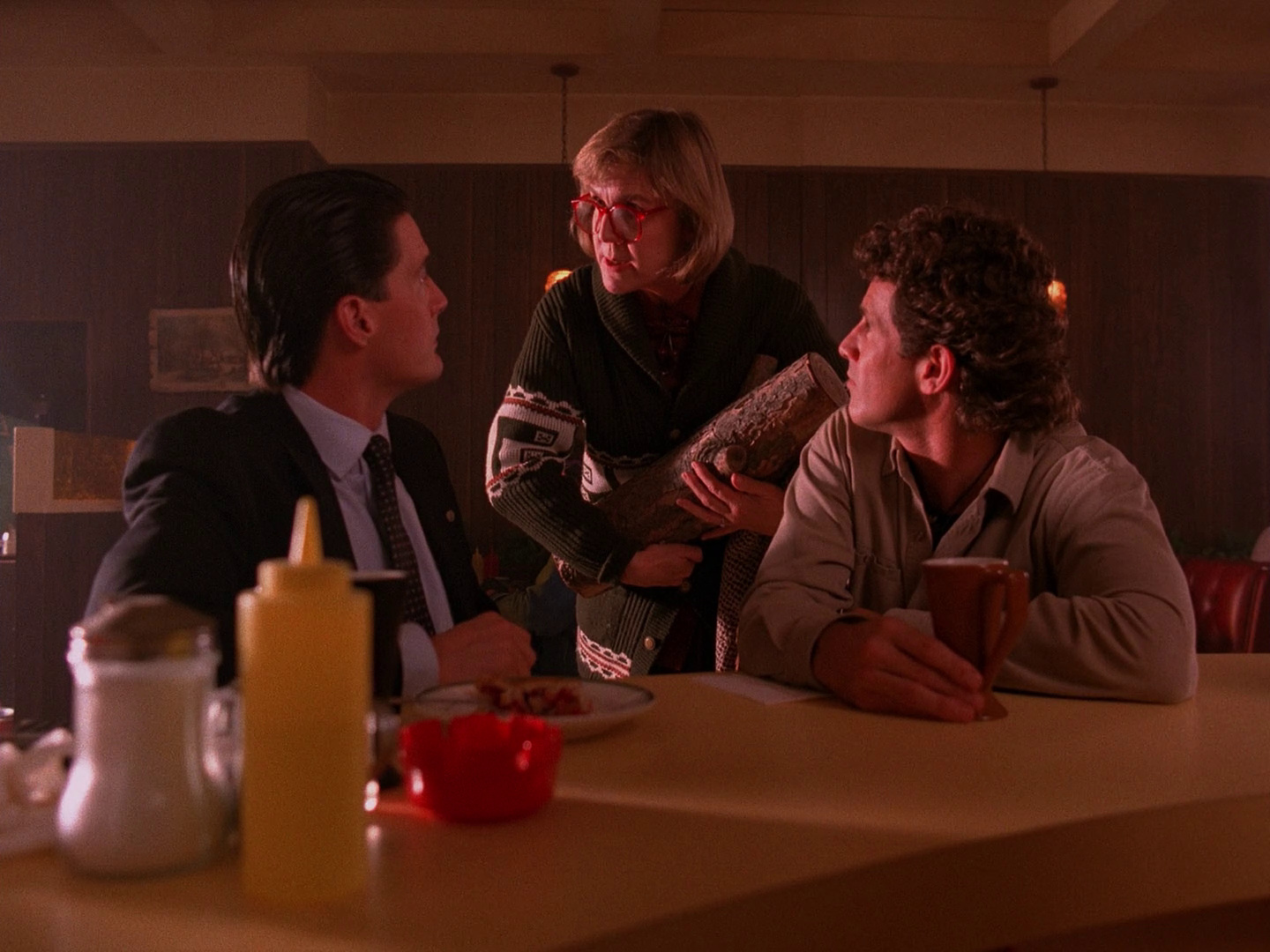
At the Double R, the Log Lady’s proposal tests the reach of Cooper’s curiosity. He will speak to a person, but the idea of questioning the log brings him to a boundary. The scene does not supply a rulebook for supernatural testimony. It makes the investigator’s willingness to listen visible by placing an apparently absurd witness inside an otherwise familiar conversation about Laura.
The separate Log Lady introduction on the disc sharpens the question. Margaret insists that carrying the log is serious to her and asks whether people take time to understand the reasons for unusual behaviour. Read beside the episode, the introduction shifts attention from how strange she appears to how quickly someone else decides not to listen.
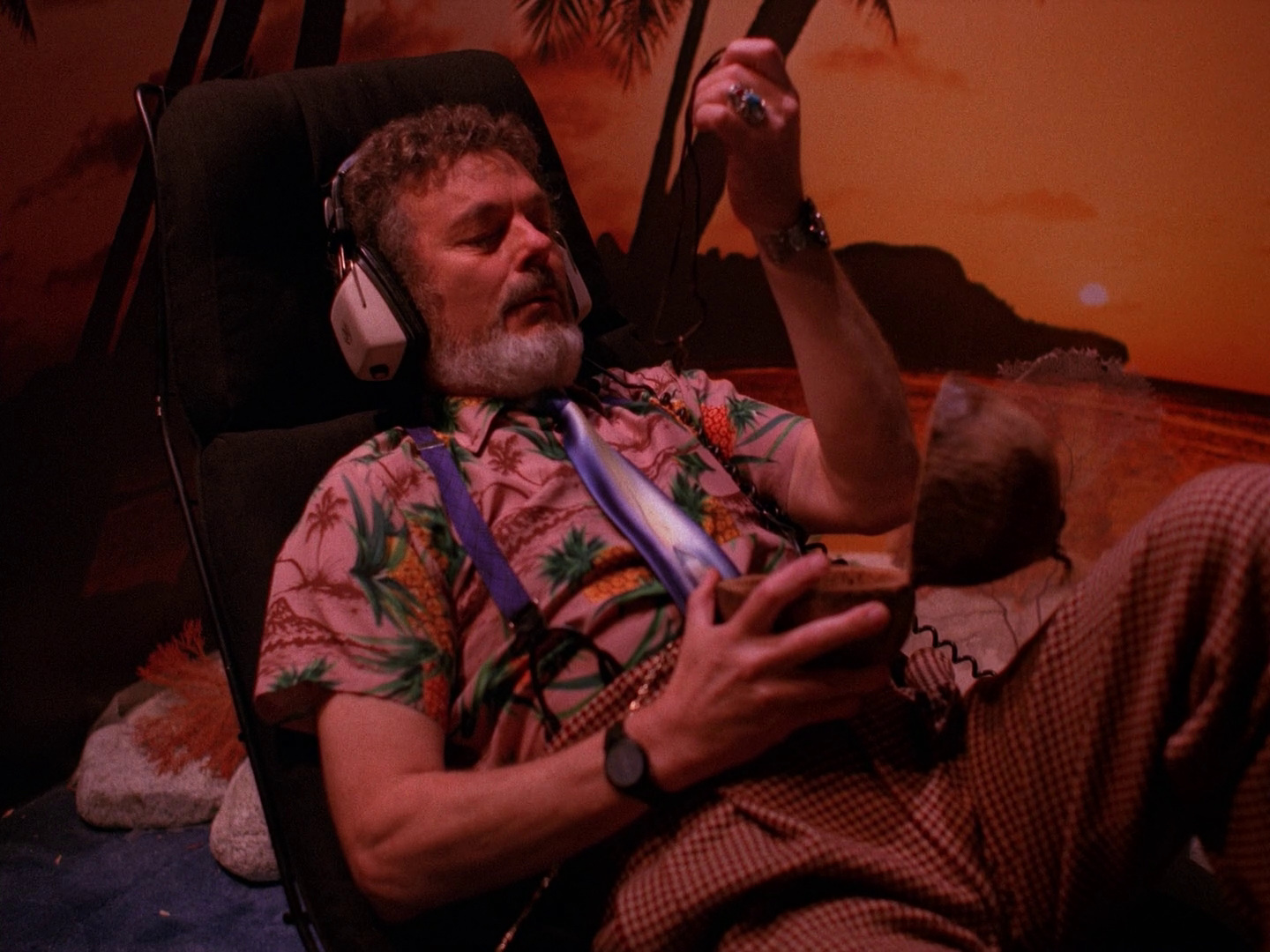
The final Jacoby scene returns to a more recognisable recording technology. Headphones give him private access to Laura’s voice, while the necklace connects the listening scene to an object withheld from the investigation. The tape gives Laura a continuing presence, but the episode ends before it can become a convenient answer. The viewer receives evidence through someone whose relationship to it is already troubling.
Cooper’s dictation at the start and Laura’s recording near the end form a suggestive pair. Both address a listener who is absent from the immediate room. One builds an investigator’s account of the town; the other unsettles the town’s account of the victim. The series is accumulating voices, not simply accumulating clues.
Recorded voices, absent speakers
Cooper begins by dictating his experience of the Great Northern to Diane. Jacoby closes the episode by listening to a tape Laura made for him. The arrangement gives the episode two forms of recorded intimacy: a living investigator makes an account for later use, while a private message from the dead reaches its listener after its circumstances have changed. Both recordings address somebody other than the viewer. We are placed inside a communication that was not made for us.
Laura identifies herself and explains that she has posted the tape in an envelope Jacoby supplied. These ordinary details establish a continuing exchange, not a conveniently delivered confession. Her comments about James and the unnamed man open new questions while Jacoby holds the necklace. Sound and object arrive together, but neither tells the audience how much the listener already knows.
Earlier, Lucy describes Albert’s telephone call by its distant, open-air quality and compares it to wind in trees. The joke momentarily turns a communications problem into the landscape’s language. A useful comparison is Cooper’s opening hotel report, where the waterfall outside his window enters his assessment of the room. The investigation keeps producing accounts of how places feel as well as accounts of what happened there.
Selected screen credits
Duwayne Dunham, credited as the pilot’s editor, directs this first regular episode. The closing titles identify Frank Byers and Richard Hoover in the photography and production-design roles occupied by Ron Garcia and Patricia Norris on the pilot. This is a concrete change of collaborators within a continuing visual world.
Filmmakers, music and sound
- Written by
- Mark Frost & David Lynch
- Directed by
- Duwayne Dunham
- Produced by
- Gregg Fienberg
- Director of photography
- Frank Byers
- Production designer
- Richard Hoover
- Music composed and conducted by
- Angelo Badalamenti
- Sound mixer
- Walter Hoylman
- Supervising sound editor
- John Larsen
- Music editor
- Lori L. Eschler
- Re-recording mixers
- Gary Alexander; Jim Fitzpatrick; Adam Jenkins
Source: the episode’s opening and closing screen credits. The recorded-voice study draws on the episode’s dialogue and English subtitles.
A route through Episode 1
- Morning routines. Cooper’s exercise, breakfast with Audrey and the report at the station.
- Images under questioning. James, the home movie, the necklace and Donna’s confession to Eileen.
- The town’s private arrangements. The long-distance call, drape runners, Josie and Pete, Catherine and Ben.
- Unsteady perception. Sarah’s encounter with Donna, Hawk’s pursuit and Audrey’s dance.
- Different homes, different witnesses. The Briggs dinner, the Log Lady, Leo and Shelly, the Hayward table.
- A recorded voice. Jacoby’s headphones, Laura’s tape and the hidden necklace.
Look closer at the episode’s rooms · 4 images
Sources and connections
Primary screen source: regular Episode 1, Twin Peaks, in From Z to A; the associated Log Lady introduction is treated separately. The page’s scene studies concern the episode’s images, dramatic situations and subtitle-supported dialogue. Original analysis is distinguished from production testimony.
Duwayne Dunham’s recorded interview recalls reusing footage of James riding his motorcycle that had been filmed for the pilot. It is an account of editorial reuse in a later episode, not a claim that this episode opens with that footage. Read the interview guide alongside the existing Season 1 production research.
Return to the pilot and its two endings, or continue to Episode 2: the stone test and the dream.