Twin Peaks: Pilot
1990 · Pilot · US and international versions
A death travels through the town. Follow the pilot’s rooms, voices and images, then enter the alternate ending that helped give the series its dream language.
Pilot / Episode 0. Often listed as Season 1, Episode 1. This dossier discusses both endings and contains spoilers.
Explore this episode
The town before the detective
The pilot takes its time before bringing Dale Cooper into Twin Peaks. Laura Palmer’s death passes through the mill, the Palmer house, a business meeting and the school before the investigating outsider arrives. That order matters. We first encounter the town as people who have lost someone; only afterwards do we learn how those people will be questioned.
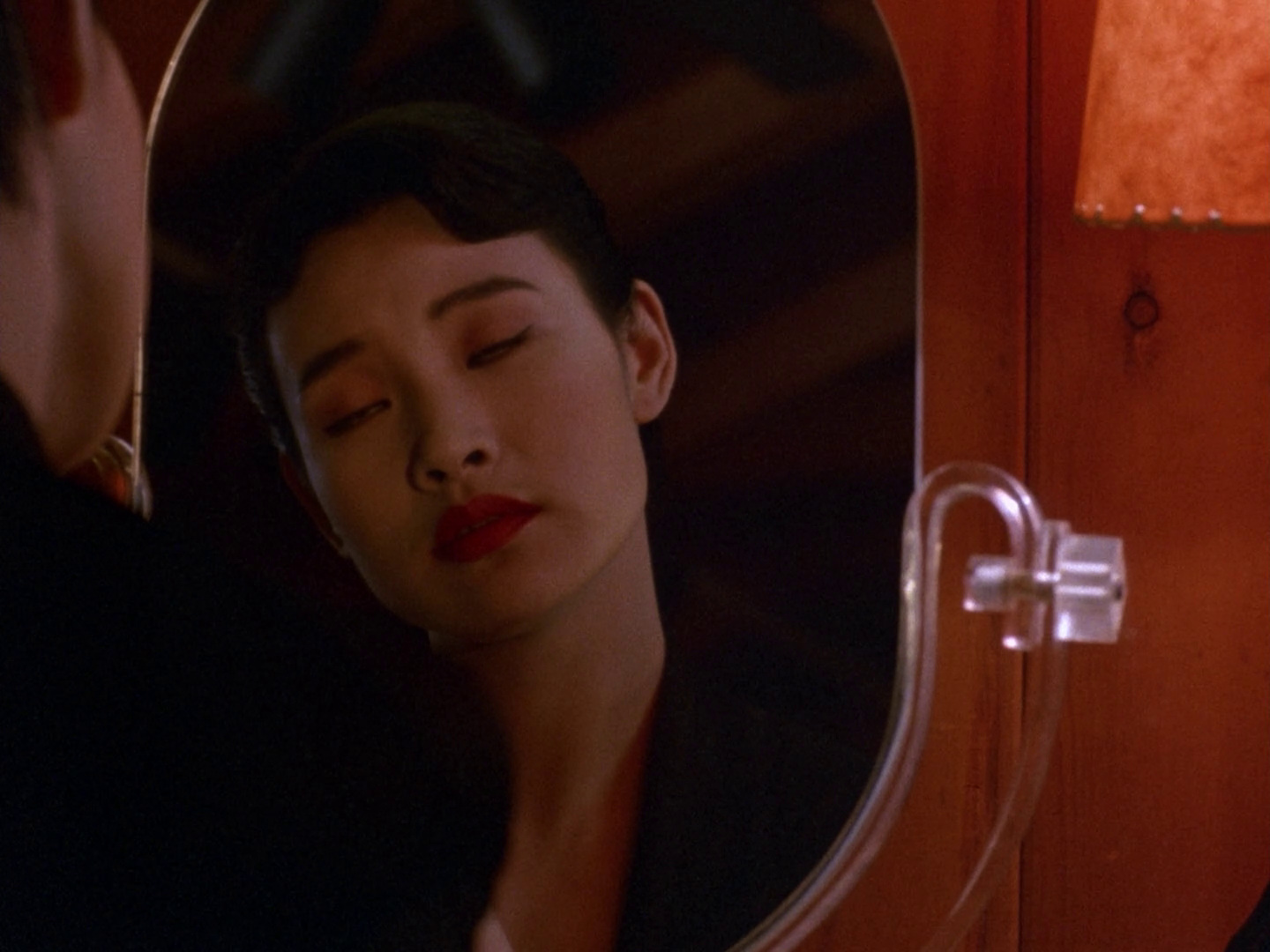
The opening credits connect water, wood and machinery. This is a working landscape, not simply a picturesque backdrop. Josie looks into a mirror; Pete leaves the house to fish; an ordinary morning becomes a discovery on the shore. The film repeatedly interrupts familiar activity rather than beginning with a self-contained spectacle of the crime. Laura’s absence changes the meaning of rooms that were already in use.
The initial police response refuses the ideal of a perfectly detached investigation. Andy cannot keep from crying. Dr. Hayward recognises the body. Truman is both an officer and a member of the community. Their difficulty doing professional work is part of the scene’s emotional information. Later, Cooper’s procedural confidence enters a world in which a name already means a face, a family and an accumulation of memories.
A town on paper before a place on screen
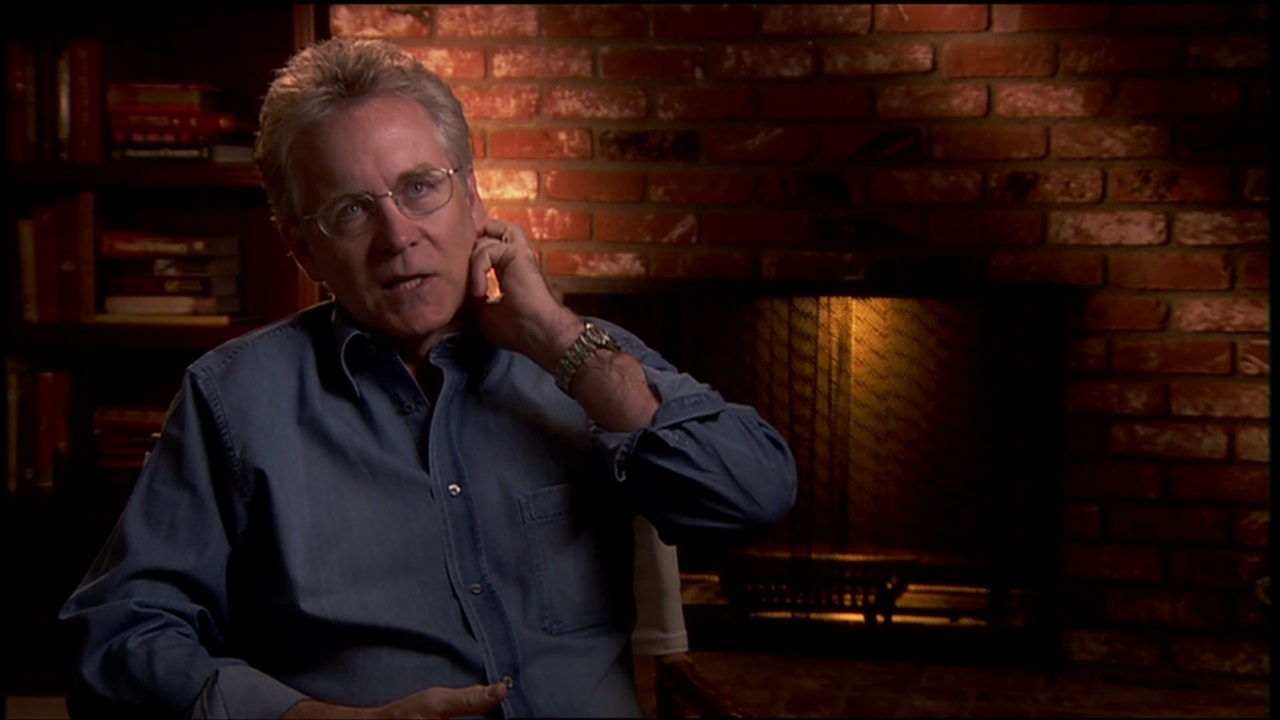
In Northwest Passage: Creating the Pilot, Mark Frost describes a writing process shared scene by scene and line by line with Lynch. He recalls drawing a map to keep the town’s geography in mind. The two mountains framing that imagined settlement supplied the eventual name. In this account, the map is a working aid to dramatic invention: it makes people, businesses and routes belong to a place before the location search gives them a physical form.
Frost also remembers arriving in the Snoqualmie and Issaquah area after several days of scouting and recognising elements already specified in the screenplay: a diner, railway facilities and a hotel beside a waterfall. His recollection complements the pilot’s opening. The landscape carries a network of ordinary work and movement before it carries a mystery. The town was developed through the meeting of an imagined geography and particular locations, rather than discovered fully formed by the camera.
Source: Secrets from Another Place: Creating Twin Peaks, “Northwest Passage: Creating the Pilot,” 3:55–5:10 and 14:30–15:16, in Twin Peaks: From Z to A.
A telephone carries the news
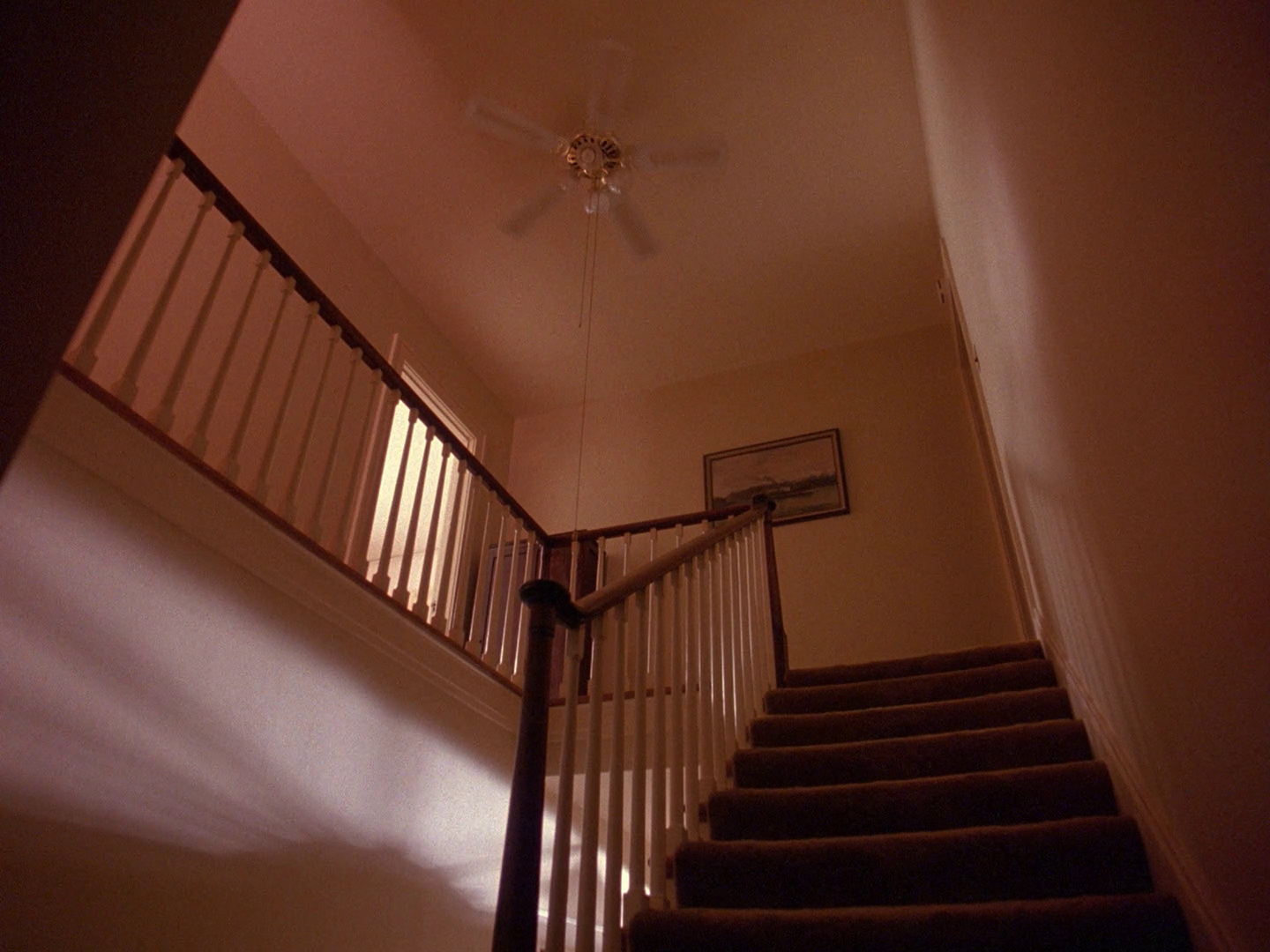
Sarah’s search begins with the small irritation of a parent trying to wake a daughter. The staircase and empty spaces above it turn that routine into unease. Her calls to other households produce plausible explanations, each of which postpones the knowledge already held by the viewer. Suspense comes from waiting for the two kinds of knowledge to meet.
Leland is at the Great Northern helping Ben Horne sell an attractive version of the town to investors. Truman’s arrival brings a different Twin Peaks into the room. Sarah is still on the line when Leland understands what has happened. The telephone connects the parents while keeping their bodies apart; the hanging receiver makes grief present in an object even after ordinary conversation has collapsed.
Follow the news through the town · 6 images
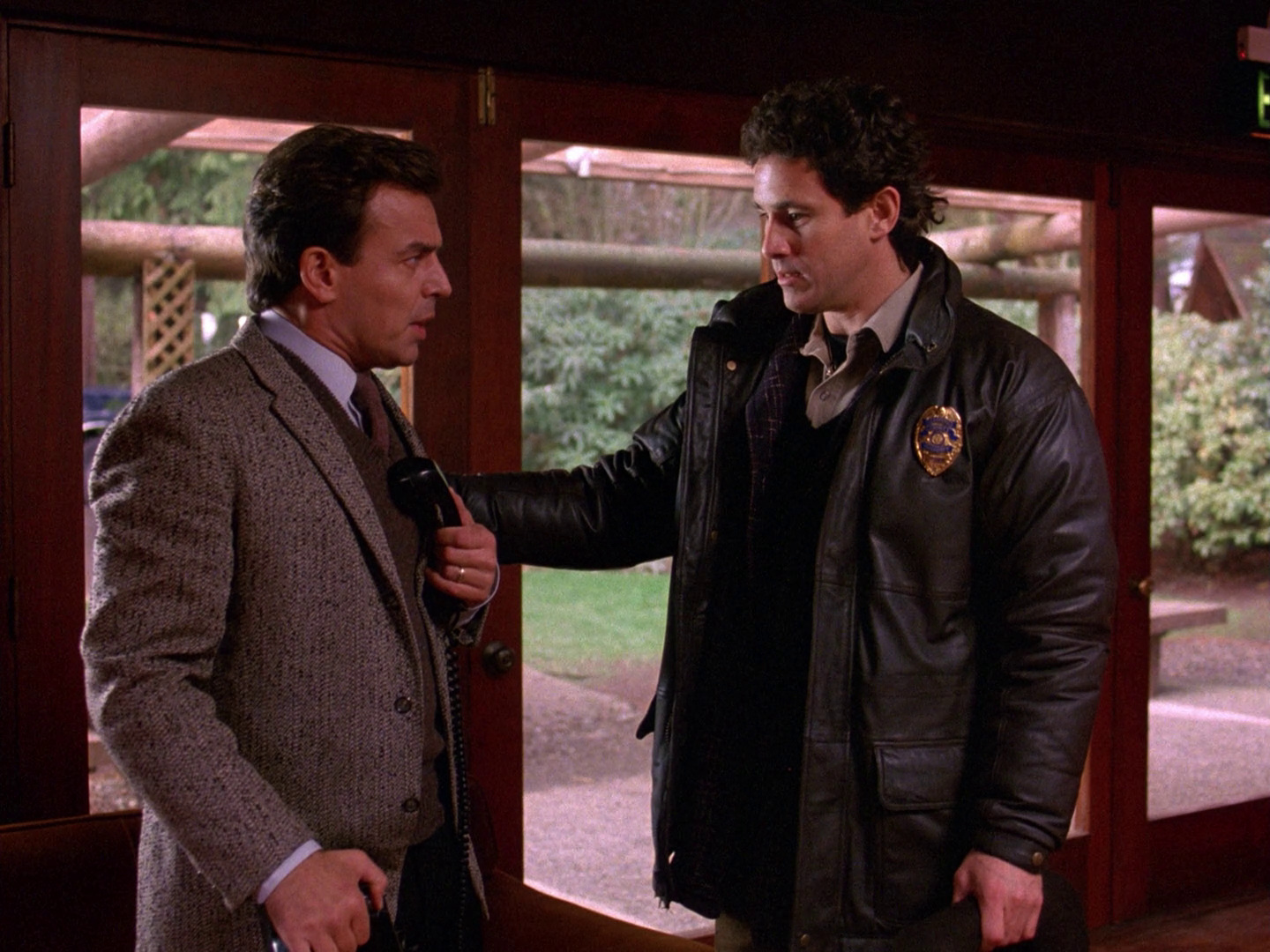
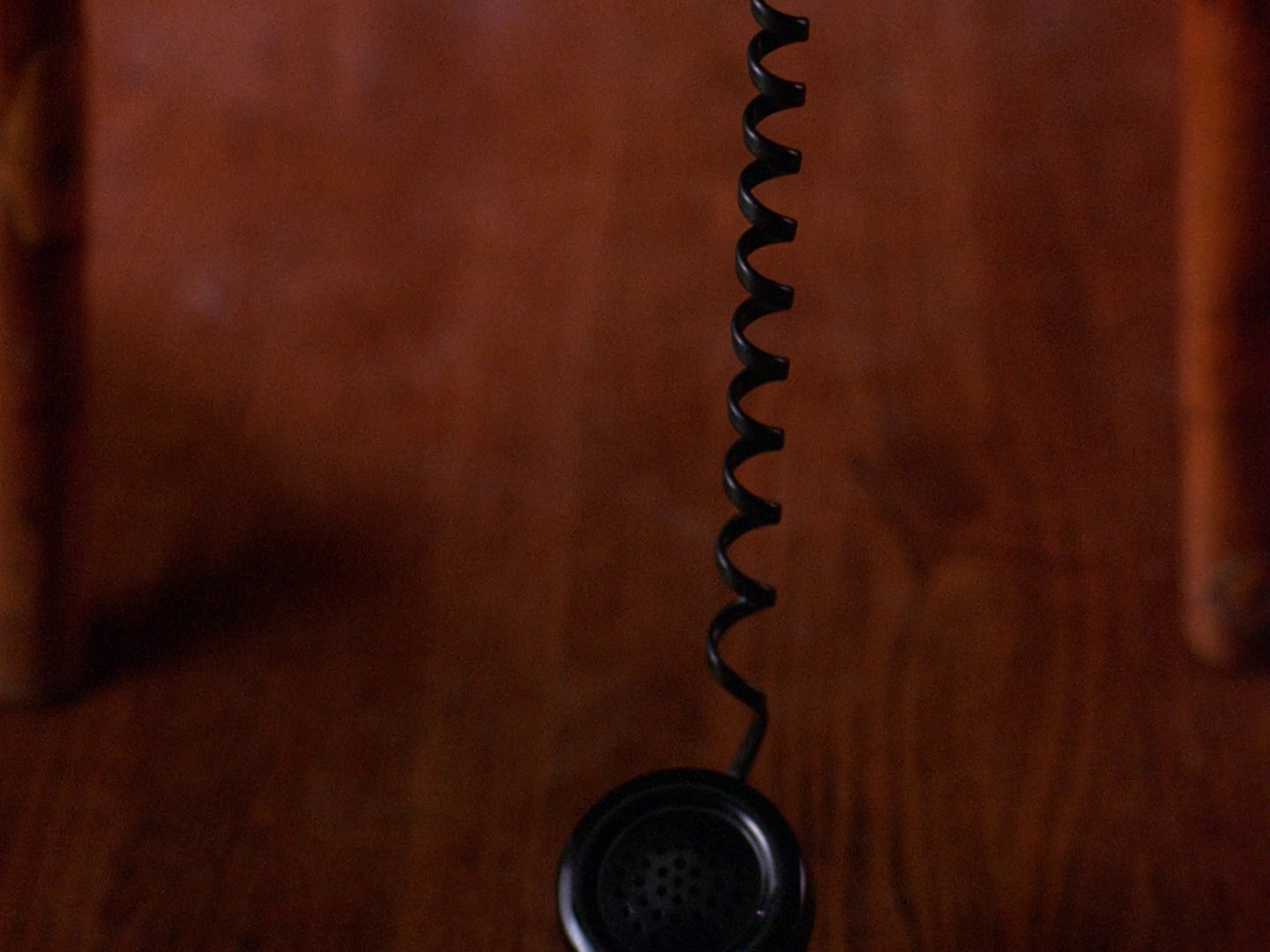
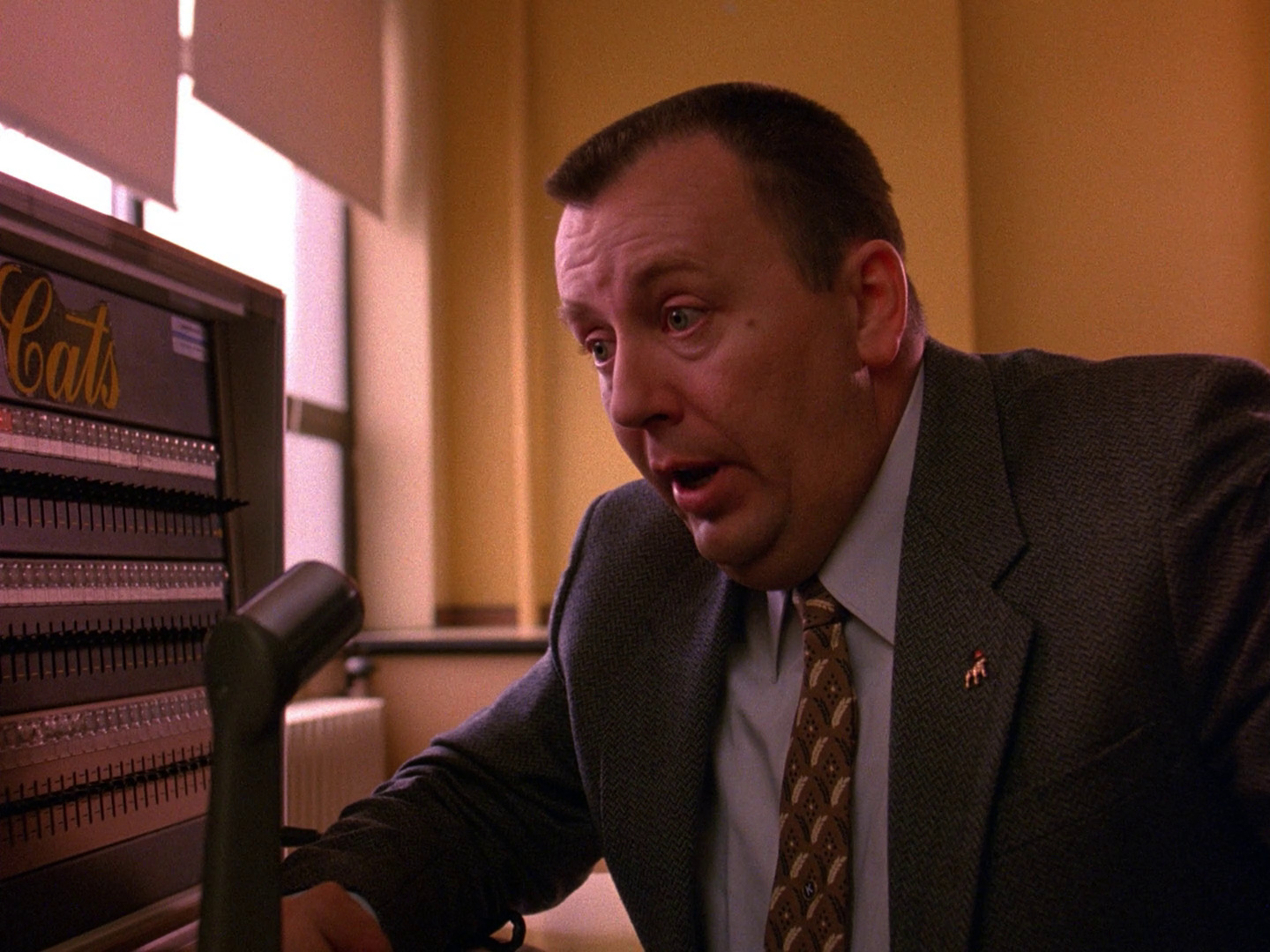
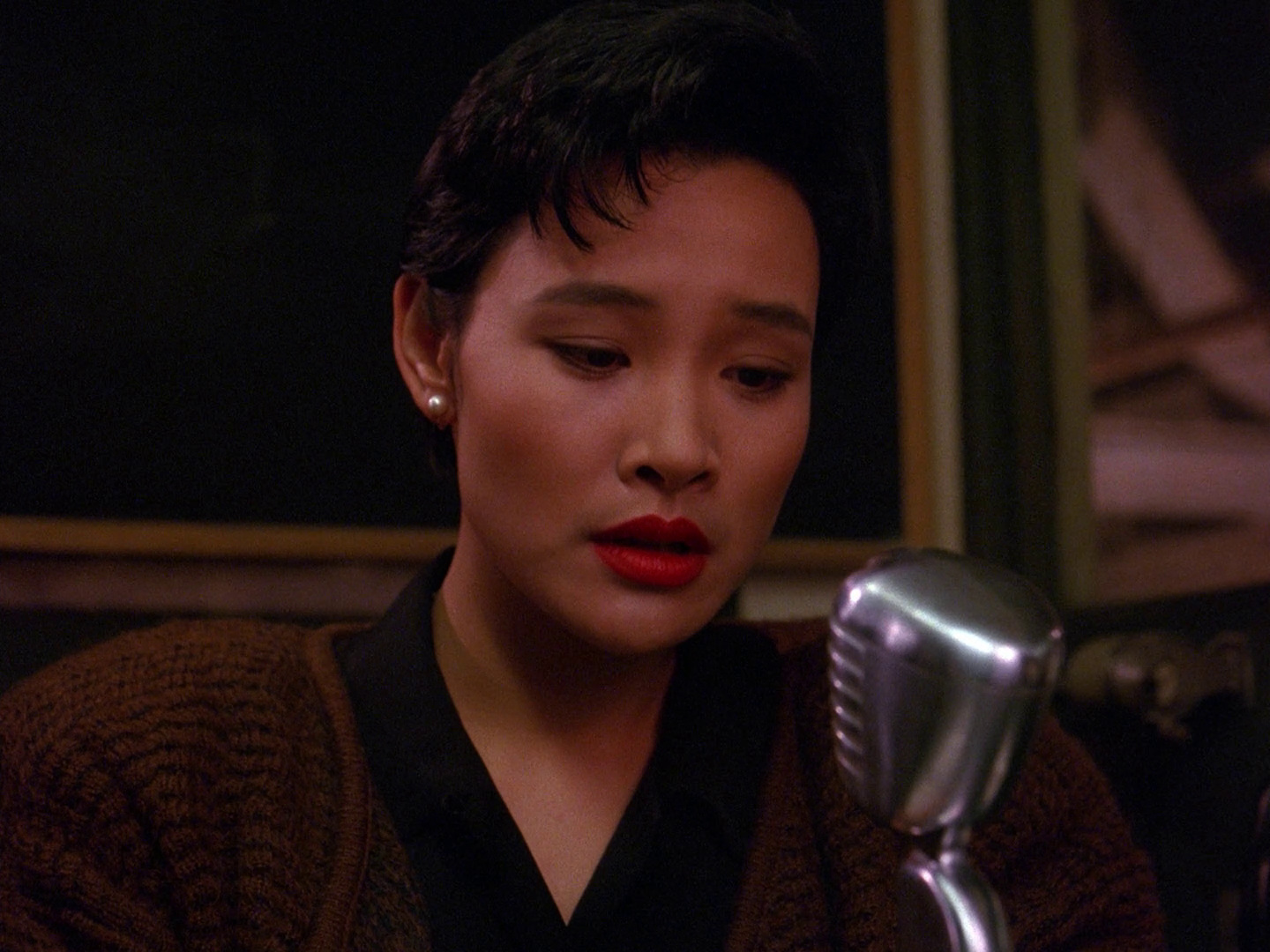
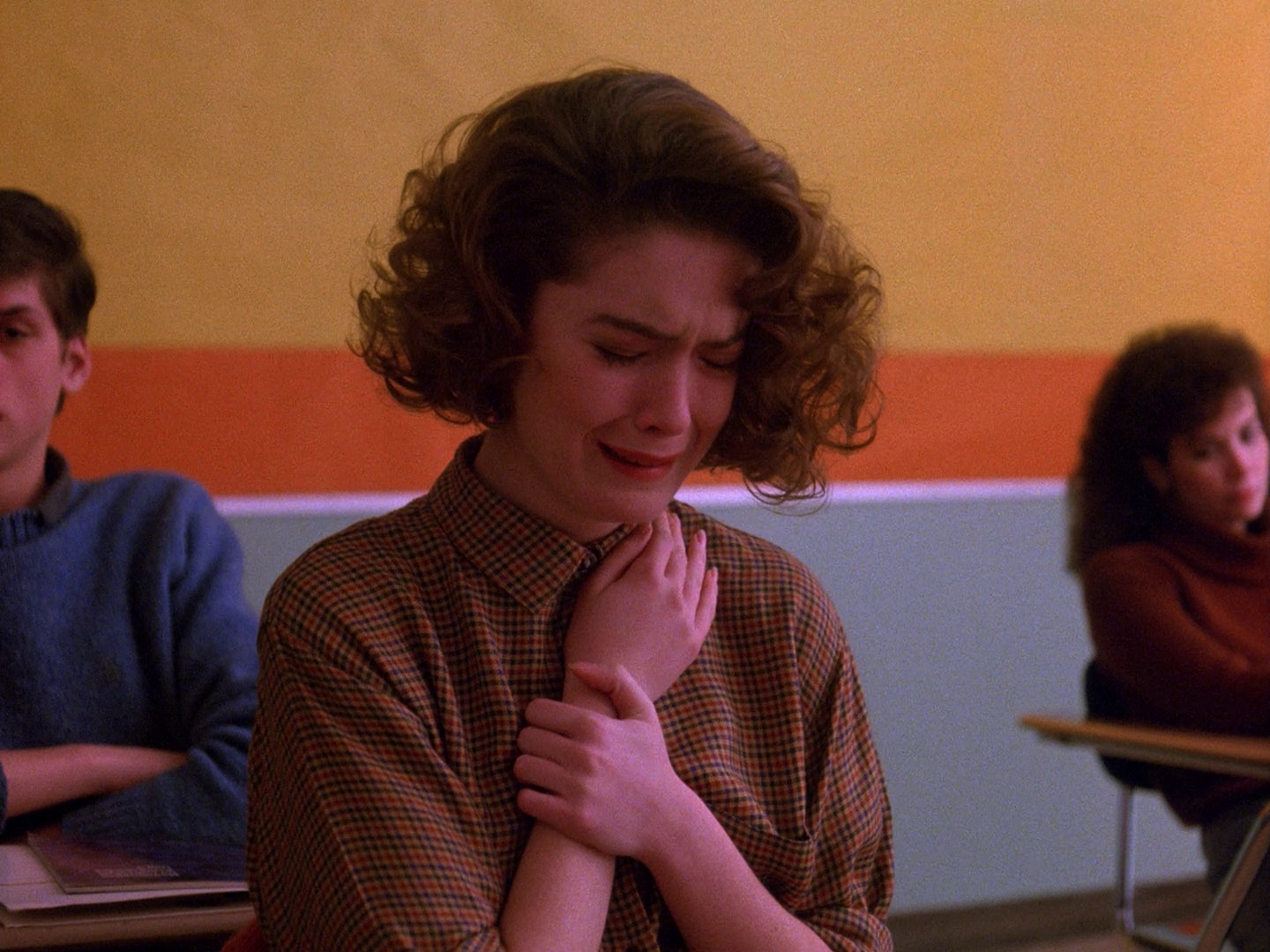
At school, Donna reads the situation before the principal formally announces it. The empty desk and her reaction make institutional language arrive too late to protect anyone. At the mill, Josie turns public speech into a concrete decision: work stops. Catherine objects in the language of authority and productivity. The sequence gives mourning economic consequences, while Ben’s interrupted sales pitch shows an effort to keep business moving. These are different responses to the same death, not interchangeable reaction shots.
Grace Zabriskie: laughter is not an acting instruction
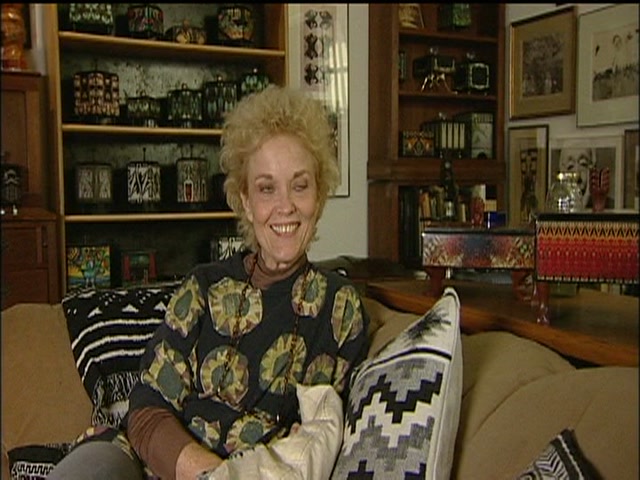
Zabriskie remembers a screening where Sarah’s distress and the camera’s attention to the telephone drew laughter from some viewers and anger from others. A reporter took her willingness to acknowledge that humor as evidence that she had performed the scene as a joke. She rejects that equation. An actor can recognise an unsettling comic response without making laughter the objective of the performance.
Her account helps preserve the difficulty of this passage. Sarah’s grief is neither cancelled by the audience’s laughter nor protected from it by an unambiguous tonal instruction. The dangling telephone connects an unbearable experience with an oddly conspicuous object; the performance and the viewer’s response need not occupy the same emotional position. Zabriskie, 00:06–01:59 · source note
In the longer 2014 actors’ discussion, Lynch responds to Zabriskie’s screening anecdote by emphasising the sincerity of her distress and suggesting that laughter can release an audience’s discomfort. His response adds a director’s interpretation of spectatorship to her account of acting; neither treats laughter as proof that Sarah was performed for comedy. Zabriskie and Lynch, 02:12–04:28 ↓
Cooper brings another rhythm
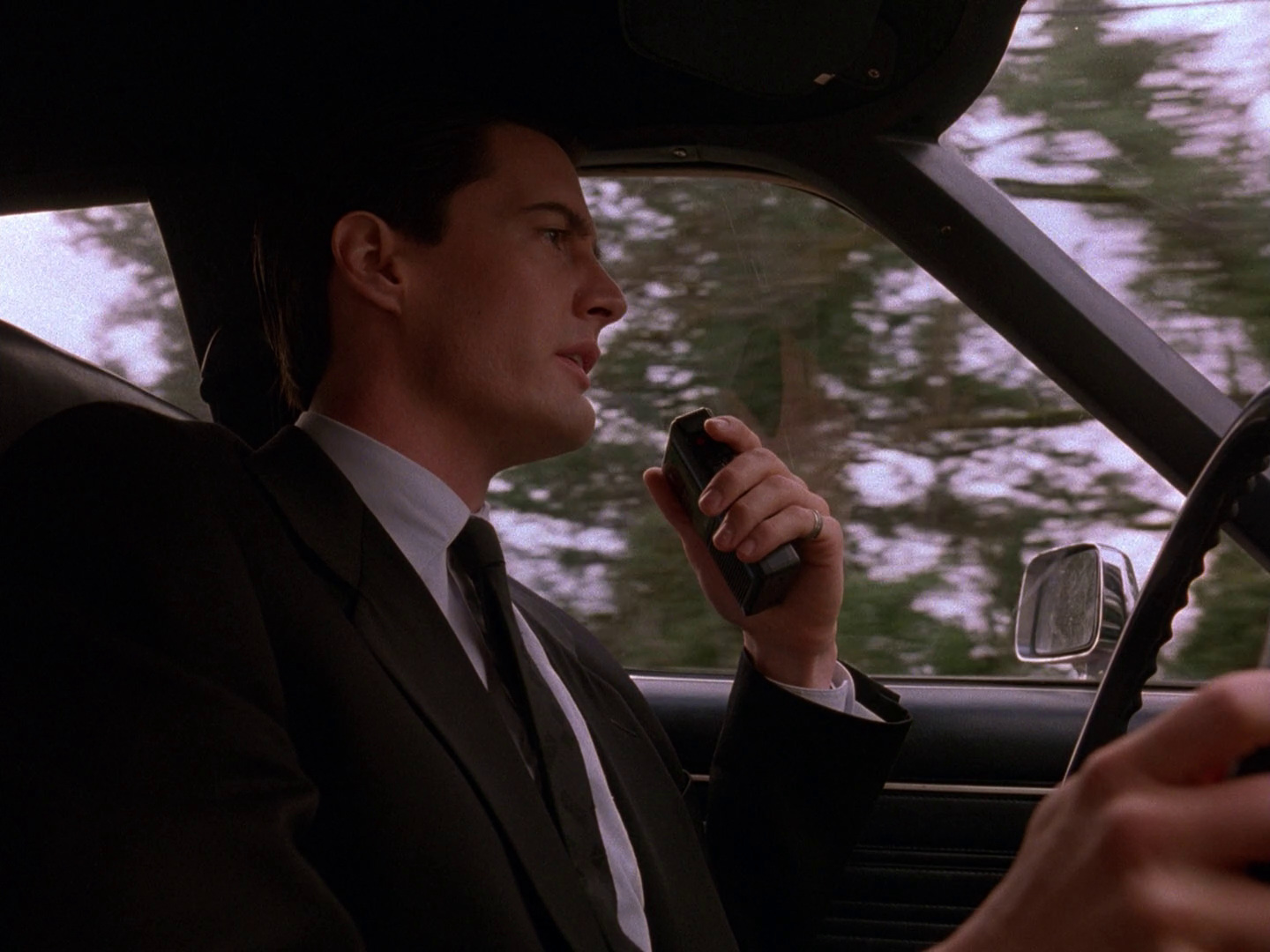
Cooper’s first dictation mixes the practical and the delighted: mileage, fuel, food, weather and trees all belong in the report. The recorder introduces an unseen listener, Diane, and gives the investigation a voice that is intimate without requiring another person in the car. His appetite for detail is a character trait before it becomes a detective technique.
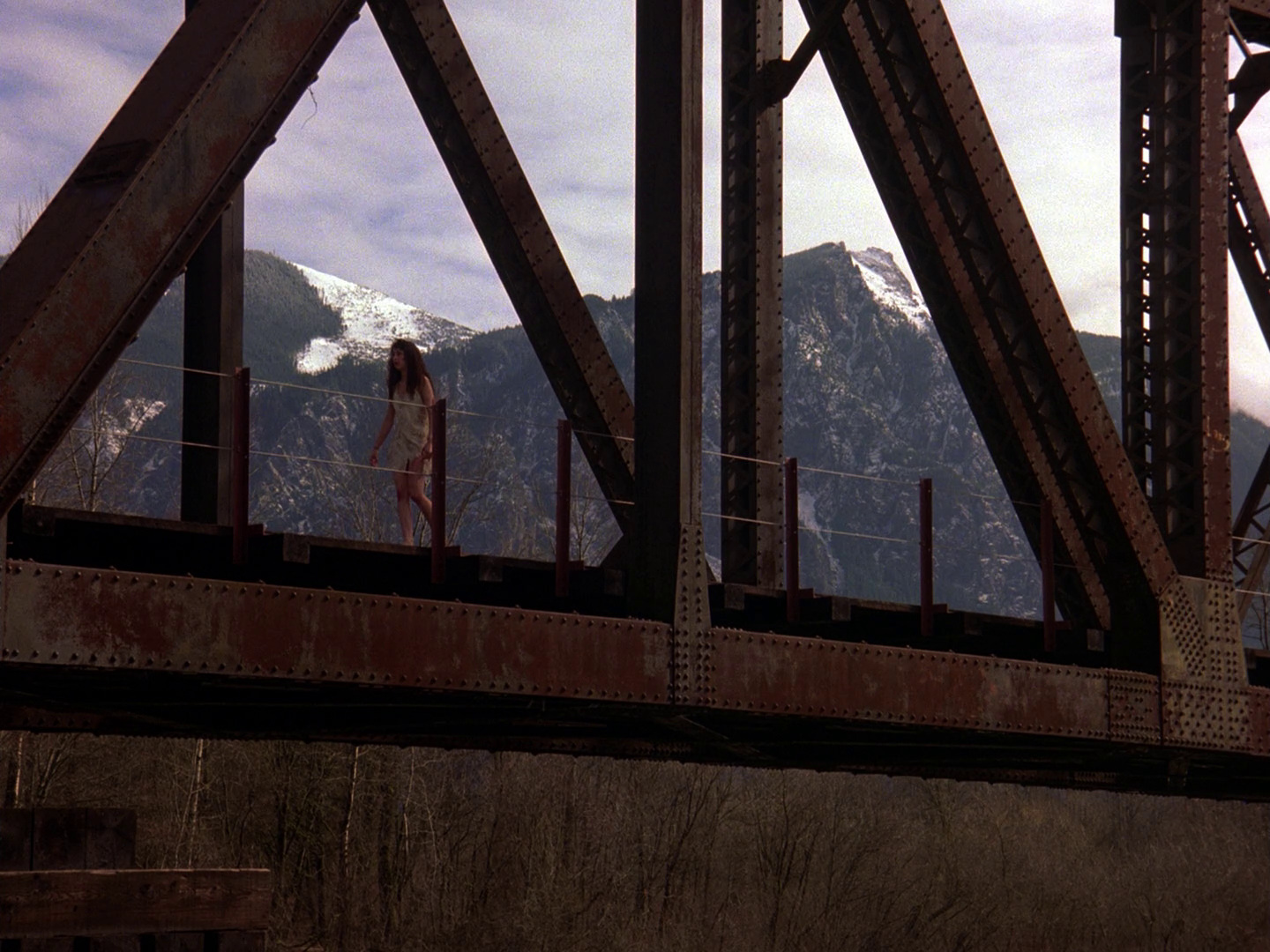
At the hospital he makes the chain of authority explicit, then asks Truman about the trees. The switch does not cancel his firmness. It places authority beside curiosity and pleasure. His encounter with Ronette also changes the case’s shape: the bridge image has already shown a survivor emerging from the landscape, and the hospital now makes survival an urgent problem of communication.
The morgue sequence introduces the tiny letter under Laura’s nail. Cooper’s recognition connects the local case to another victim, Teresa Banks, while Truman has to ask what his new colleague knows. The pilot therefore produces two investigations at once: an official search for the killer and the viewer’s attempt to learn how Cooper thinks. The unstable fluorescent light remains stubbornly ordinary even as the room begins to suggest something less containable.
Finding Cooper in the driving introduction
Kyle MacLachlan recalls the car being towed along a short uphill stretch while he worked with script pages and the recorder. He describes the character coming together during those takes. That recollection gives the seemingly effortless introduction a practical setting: Cooper’s flow of observations emerged within a repeatedly travelled piece of road. A Slice of Lynch: Uncut, 11:30–12:19
Casting Cooper and Shelly
MacLachlan recalls Lynch wanting him for Cooper while also making room for Mark Frost to approve the choice. He remembers wondering whether he was too young; Lynch answers that Cooper’s intelligence and intuition mattered more than age. Mädchen Amick’s account gives casting director Johanna Ray a central role in her arrival. Amick thinks she originally prepared Donna’s part before Lynch discussed Shelly with her. These are the actors’ retrospective accounts of finding the roles, with Frost and Ray active in the process. A Slice of Lynch: Uncut, 08:43–10:00; 16:18–18:13
Casting changes the character
Johanna Ray describes gathering photographs for Lynch, who would select a small number of candidates and then talk with them rather than ask for a conventional reading. Joan Chen remembers Josie’s precursor as an Italian outsider; the documentary shows a screenplay passage naming her Giovanna. Chen identifies the character’s position within the town as the connection she recognised, even though the role had not originally been written as a Chinese woman from Hong Kong.
That account makes casting part of the writing history. Chen’s suggestion that the role may have been imagined for Isabella Rossellini remains her interpretation, not proof of an offer or a confirmed casting plan. What the interview and displayed page do establish is a change between an earlier conception of the outsider and the Josie who appears in the pilot.
Source: Northwest Passage: Creating the Pilot, 6:51–7:26, 8:14–8:22 and 11:05–12:01.
Making Leo frightening before he appears
MacLachlan singles out Shelly’s alarm when she and Bobby approach the house and see Leo’s truck. In his reading, Amick’s reaction makes Leo frightening before he enters the scene. Later in the conversation, Amick recalls Lynch being down at their feet in the car during filming. The two memories connect the dramatic effect of Shelly’s fear with the director’s physical closeness to the actors. A Slice of Lynch: Uncut, 18:20–18:54; 32:08–32:43
The letter under the nail: a performer’s sleight of hand
MacLachlan recalls making the tweezers appear to enter beneath Laura’s nail by sliding his fingers down the tool. He demonstrates the movement during the conversation, then criticizes his own withdrawal of the tweezers because he did not reverse the illusion in the same way. This is a specific recollection of how the gesture was performed, rather than evidence that anything was pushed beneath Lee’s nail.
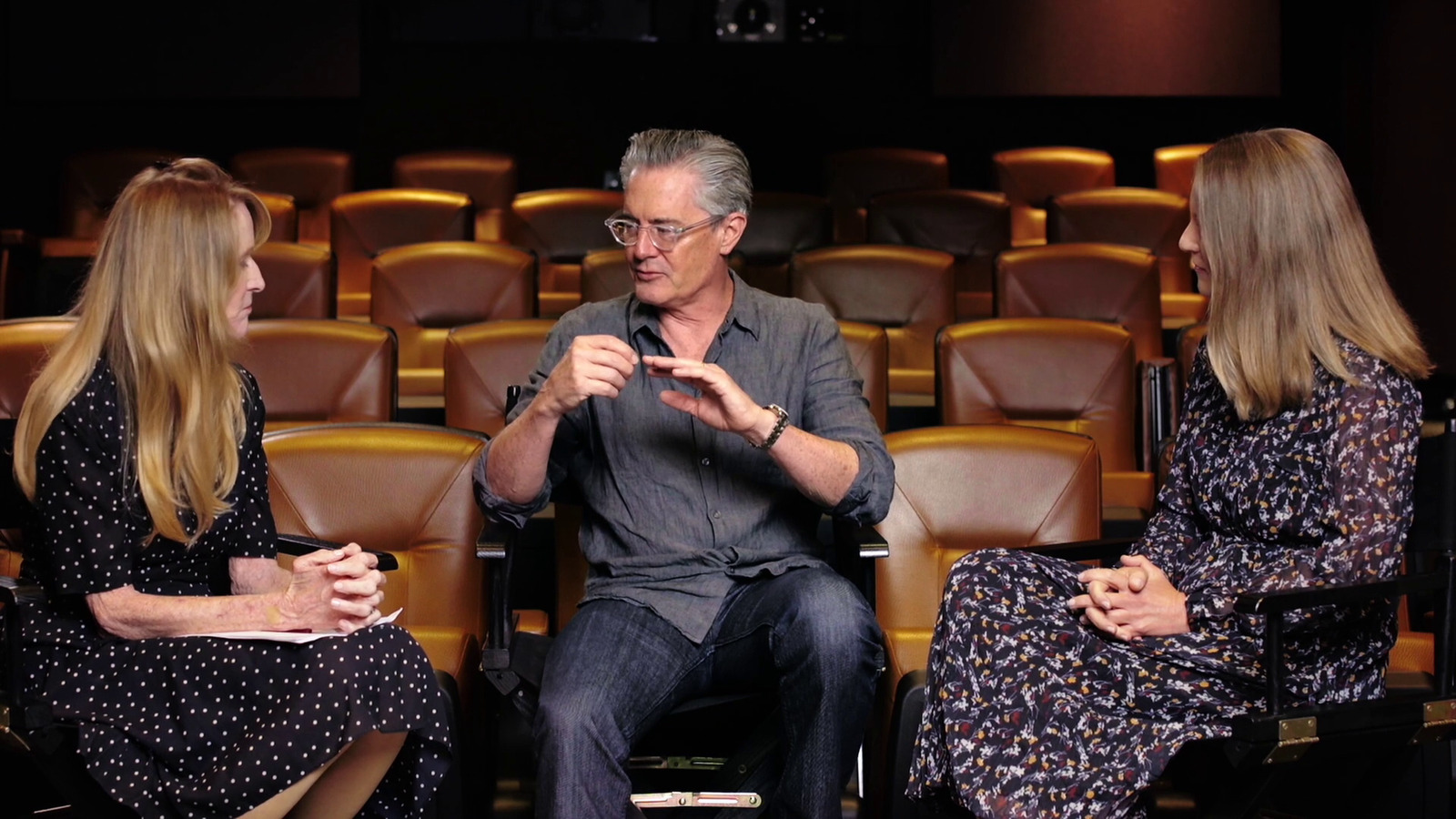
A Talk with Kyle MacLachlan and Sheryl Lee, 01:07–01:48. The performers’ later recollections are read alongside the finished work and other production evidence.
Cooper’s quick delivery and Lynch’s delight in trees
The later conversation extends MacLachlan’s account in A Slice of Lynch: Uncut. He remembers the short tow-rig run putting pressure on the amount of dictation he could deliver before the vehicle turned around, with only a few rehearsals. He also identifies the hospital question about the trees as a moment when he deliberately borrowed Lynch’s manner. The practical time limit and the borrowed delight give two concrete points of entry into Cooper’s changing rhythm.
A Talk with Kyle MacLachlan and Sheryl Lee, 07:25–09:55. The performers’ later recollections are read alongside the finished work and other production evidence.
Laura’s images, Laura’s things
A diary, a key, a home movie and a broken-heart necklace promise access to Laura. Each is also a problem of interpretation. Cooper can open the diary and identify a possible lead, but possessing it does not make him the owner of her experience. Truman’s disbelief about the apparent drug evidence exposes the difference between knowing a person socially and knowing everything about that person.
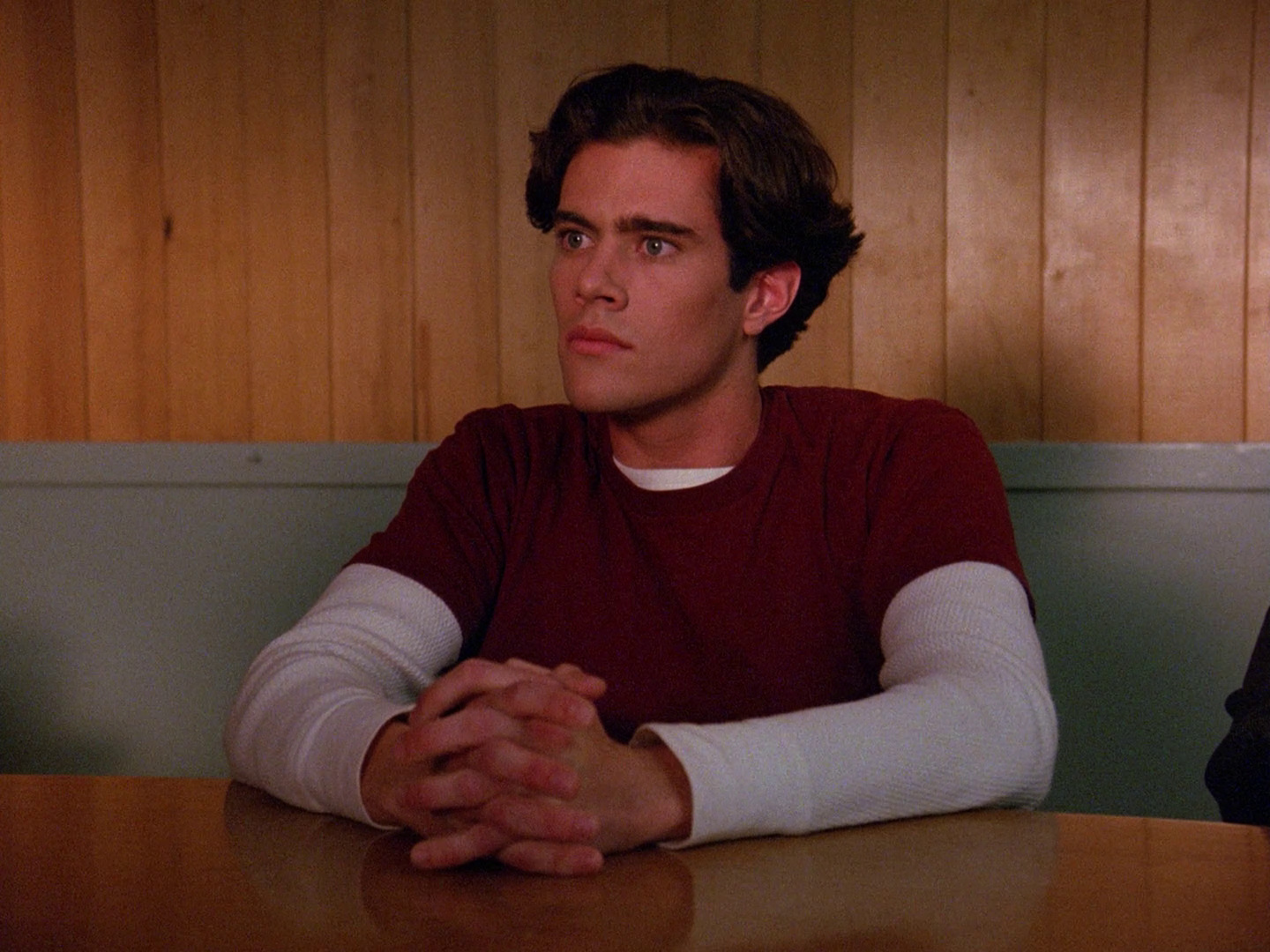
The home movie is especially unstable. Laura and Donna seem happy, but Cooper uses the recording to test Bobby’s knowledge of who was behind the camera. The image supplies neither an innocent idyll nor an automatic confession. Its meaning changes with the questions asked around it. This becomes central to the next episode’s closer examination of the recording.
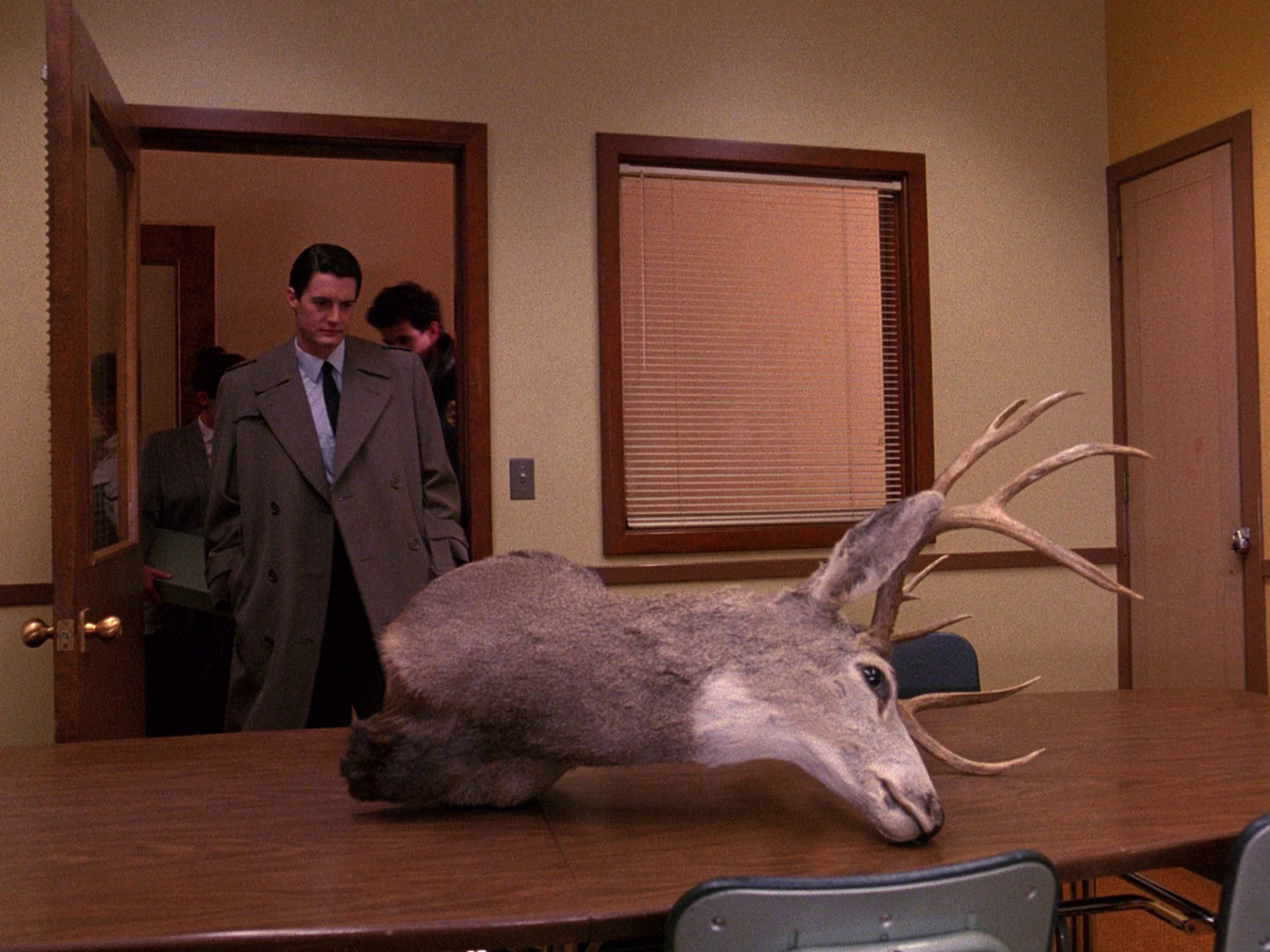
The vault expands the physical puzzle while allowing an incongruous object, the moose head, to occupy the investigative space. Lesli Linka Glatter later recalled that the head was waiting to be mounted when Lynch incorporated it into the scene. Her account is useful production testimony because it describes an accidental arrangement becoming part of the image, rather than treating every oddity as a pre-planned symbol. Source notes ↓
Making the portrait the town remembers
Lee’s 2017 interview supplies a practical history for Laura’s familiar homecoming portrait: she says she had not been a homecoming queen herself, and that the photograph was made for the production. The image’s apparent past was constructed for the character. That matters when the pilot turns a polished public likeness into an object of mourning: the photograph looks like something a community already knows, even as the story begins to expose the distance between recognition and knowledge. Lee, 02:05–03:19 ↓
The Roadhouse and the woods
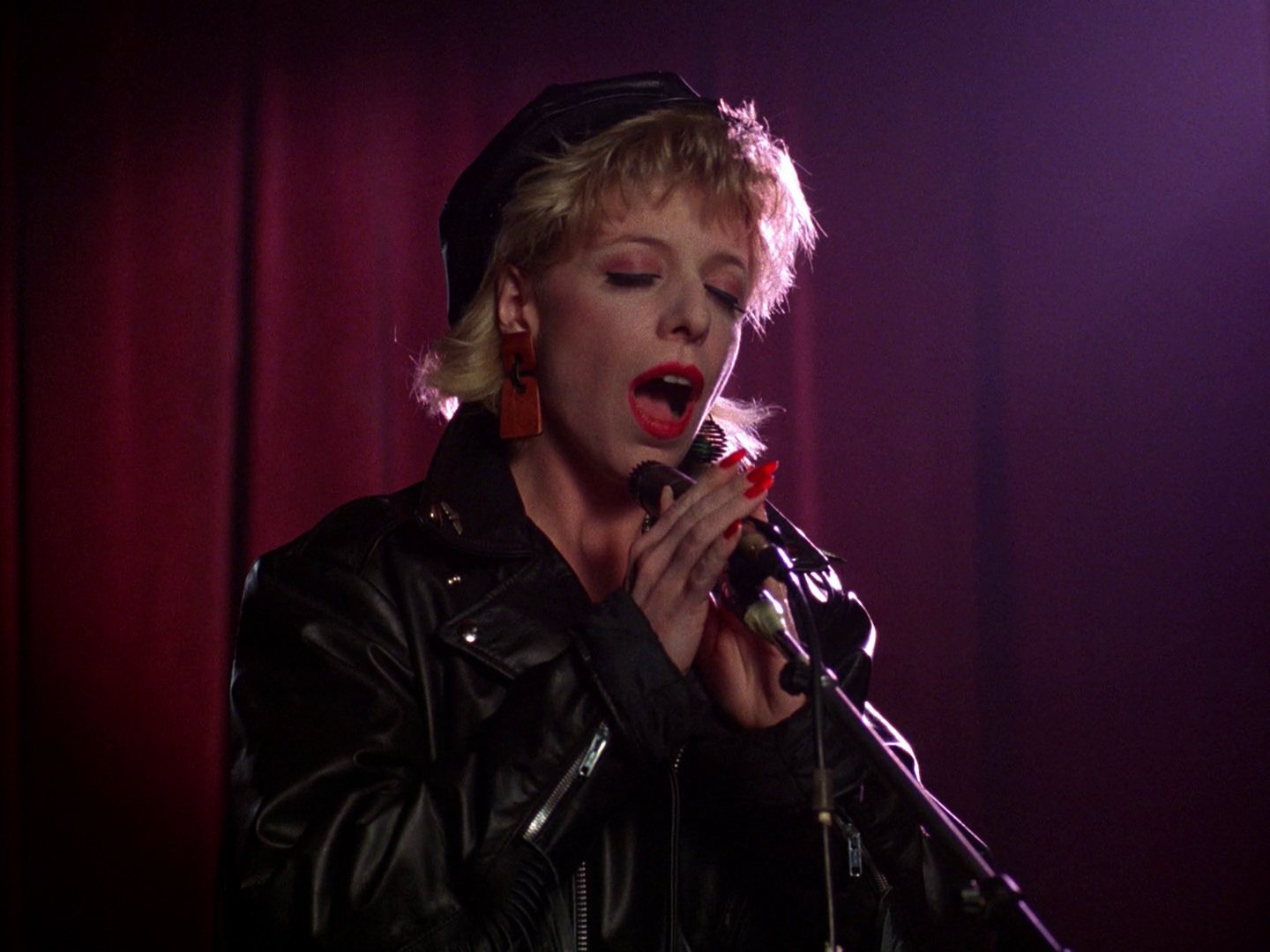
Night brings a change of social space. The Roadhouse holds performance, romance, surveillance and aggression in the same room. Julee Cruise’s presence is visible on stage, so the music belongs to a place that characters can enter, watch and fight inside. The end credits identify “Falling” and “The Nightingale,” performed by Cruise. Music is part of the town’s life as well as part of the programme’s atmosphere.
Donna leaves the safety of home to find James. Their meeting in the woods is not simply an exchange of useful information. They discuss Laura, but grief and desire make their accounts difficult to separate from what they want to believe about themselves. The buried necklace turns an attempt to protect someone into another hidden object for the investigation.
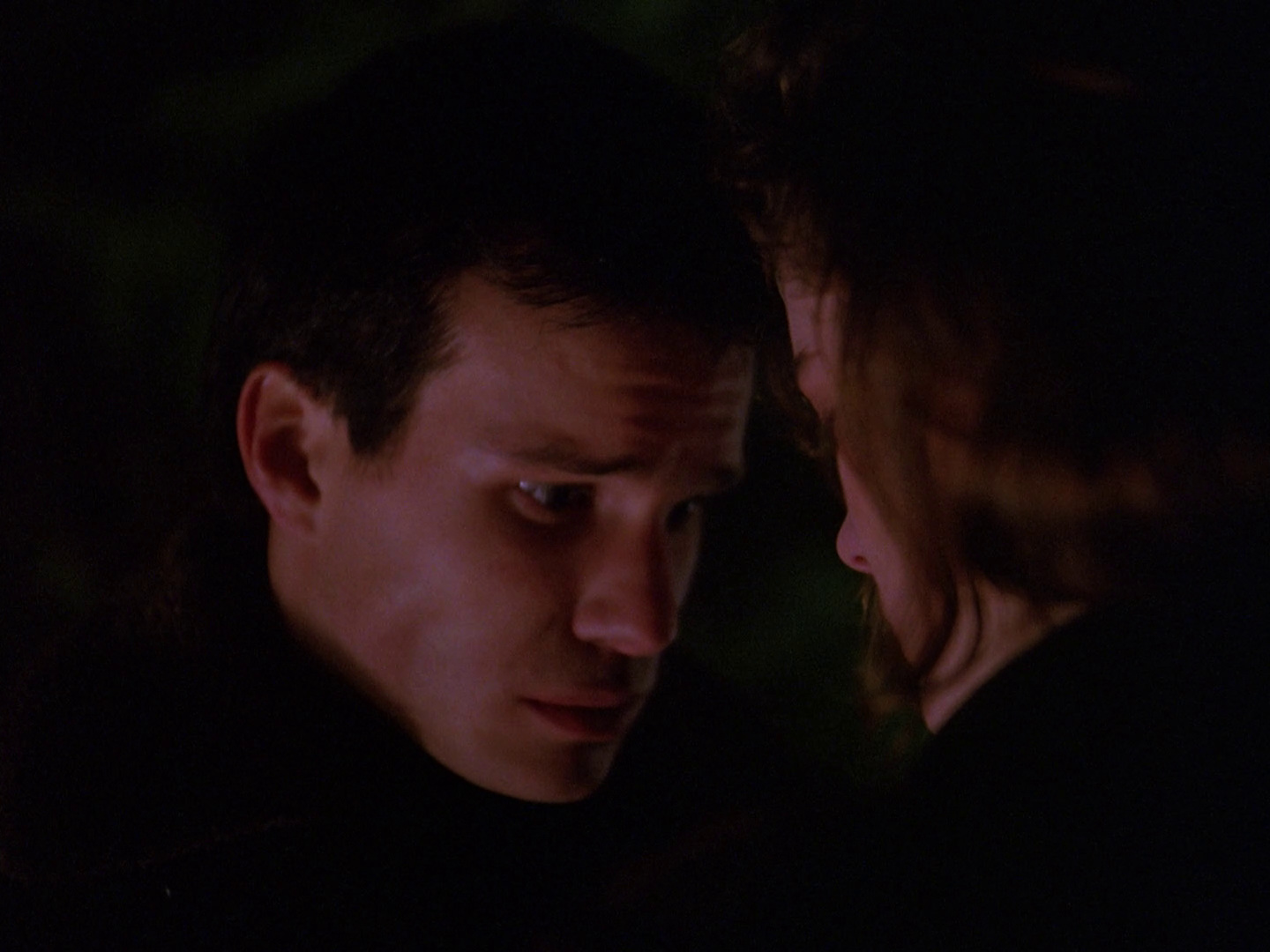
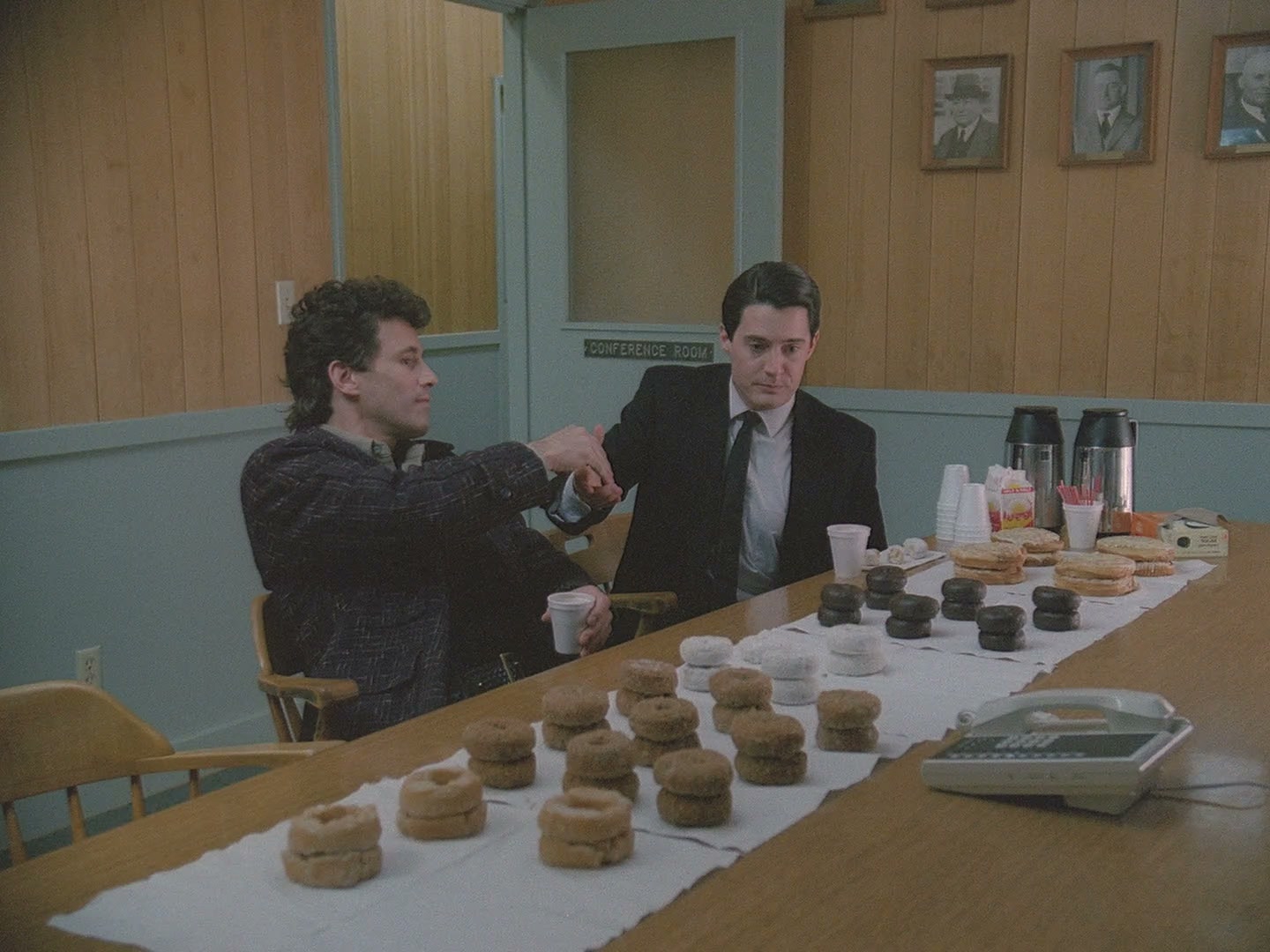
Back at the station, the adults and teenagers return to contrasting roles: police interrogation, fatherly care, hostile performance in the cells. The doughnut table offers an almost ceremonial image of investigation organised around hospitality. The US ending then disturbs any sense of a settled working arrangement. Sarah’s fearful perception and the recovery of the buried heart leave the viewer with a renewed question, not a solution.
James Marshall remembers an image that was not filmed
Marshall recalls finding Lynch looking into a puddle outside the Roadhouse during the pilot shoot. The reflected neon guns appeared beside cigarette ends that suggested bullets. According to Marshall, Lynch noticed the chance arrangement but did not film it. The recollection is valuable as an account of attention on location; it should not be mistaken for a shot in the pilot or a documented deleted scene. Marshall, 00:06–01:38
Two pilots, two uses of an ending
The two versions comprise a US pilot of about 94 minutes and an international version of about 113 minutes. They share the long introduction to the town and diverge near the close. The international version should be read as an alternate construction, not as a missing episode that simply fits between the pilot and regular Episode 1.
| Version | What the ending does |
|---|---|
| US pilot | Leaves the murder investigation open and makes the buried necklace a final source of uncertainty. |
| International pilot | Adds Sarah’s vision, a phone summons, a hospital encounter with MIKE and a boiler-room confrontation with BOB, then moves to an aged Cooper in the Red Room. |
| Regular Episode 2 | Reworks material from the alternate ending as Cooper’s dream, without presenting its complete hospital pursuit and confrontation as events in the continuing investigation. |
Inside the international ending · 6 images
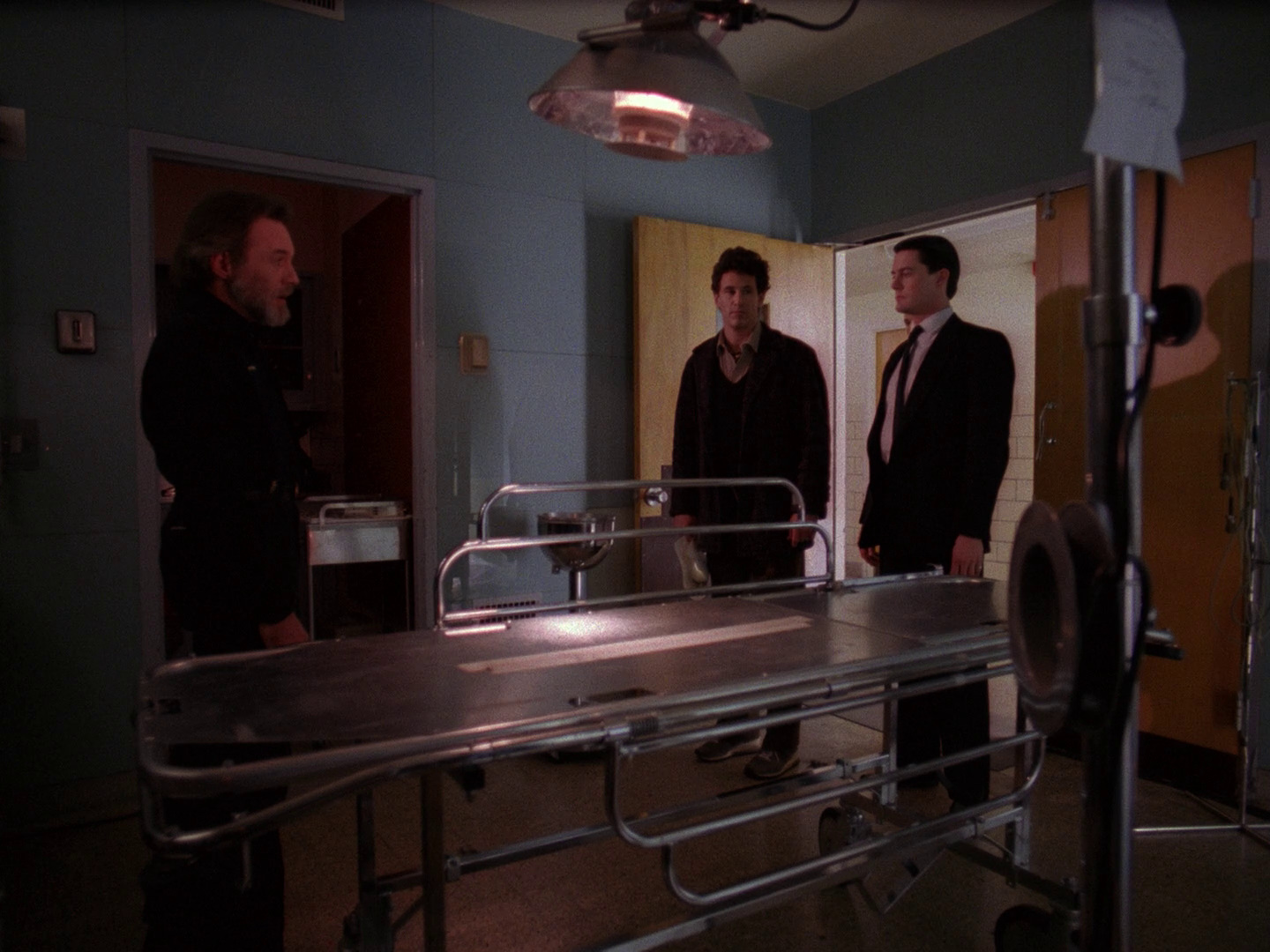
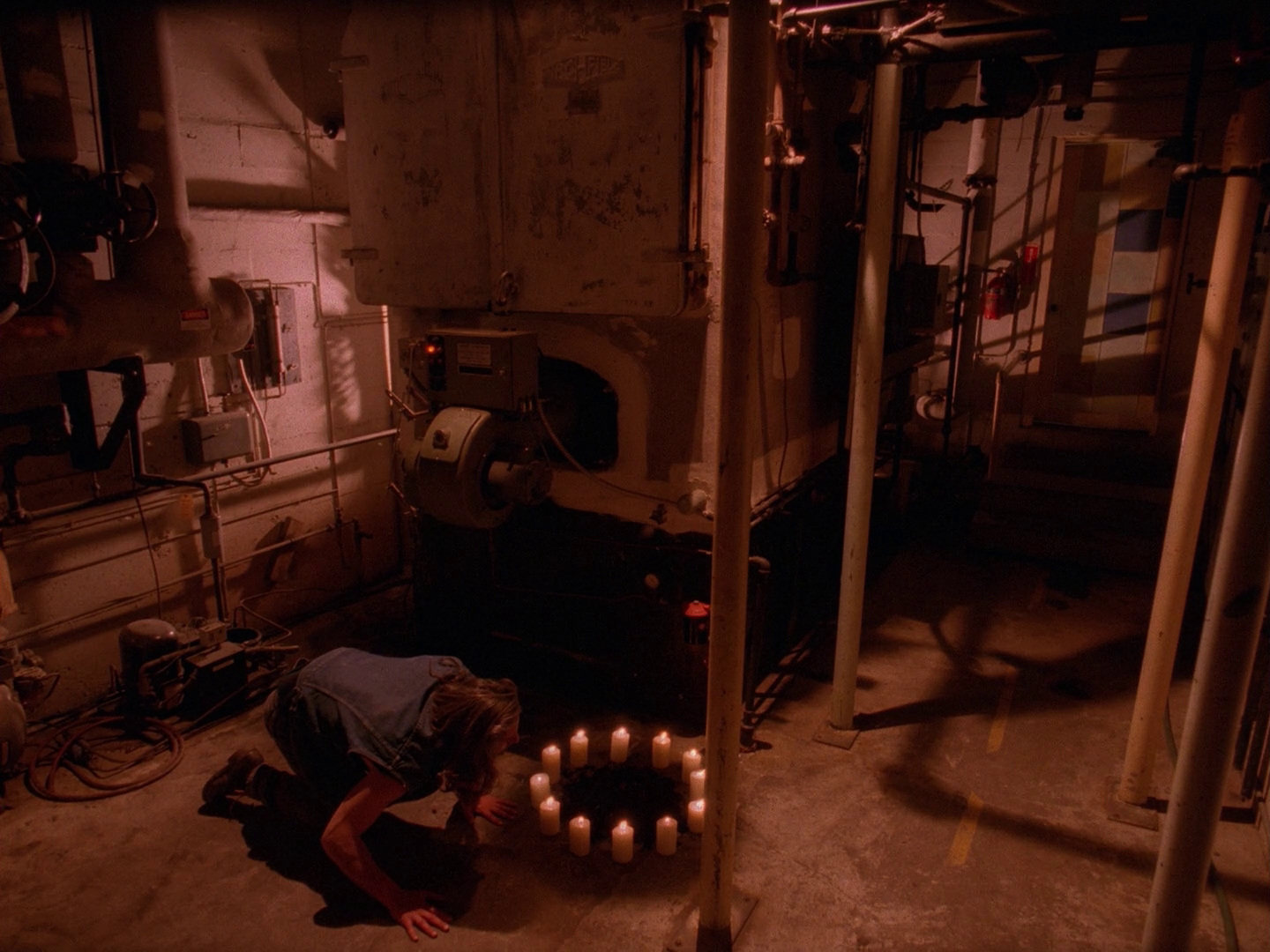
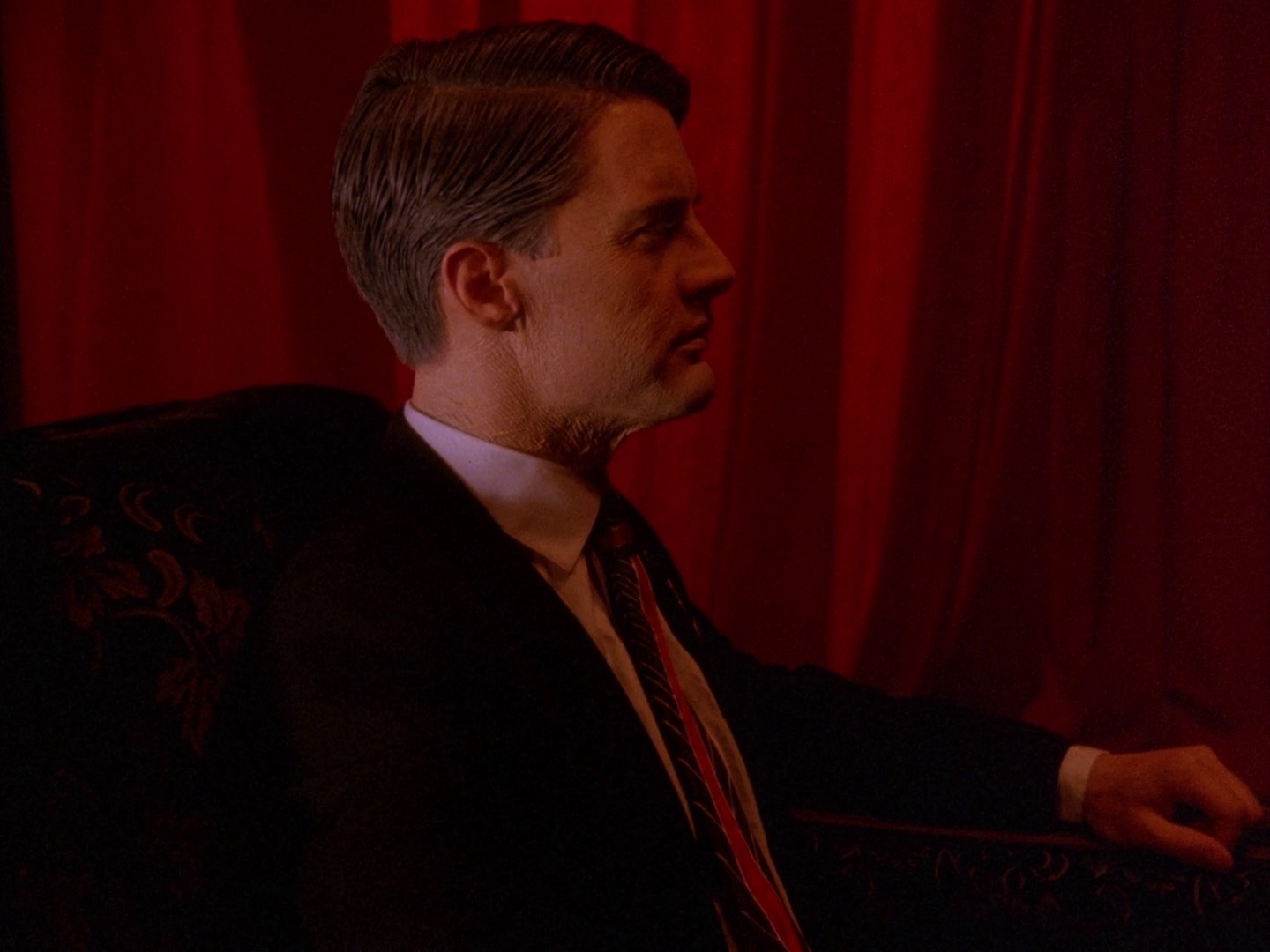
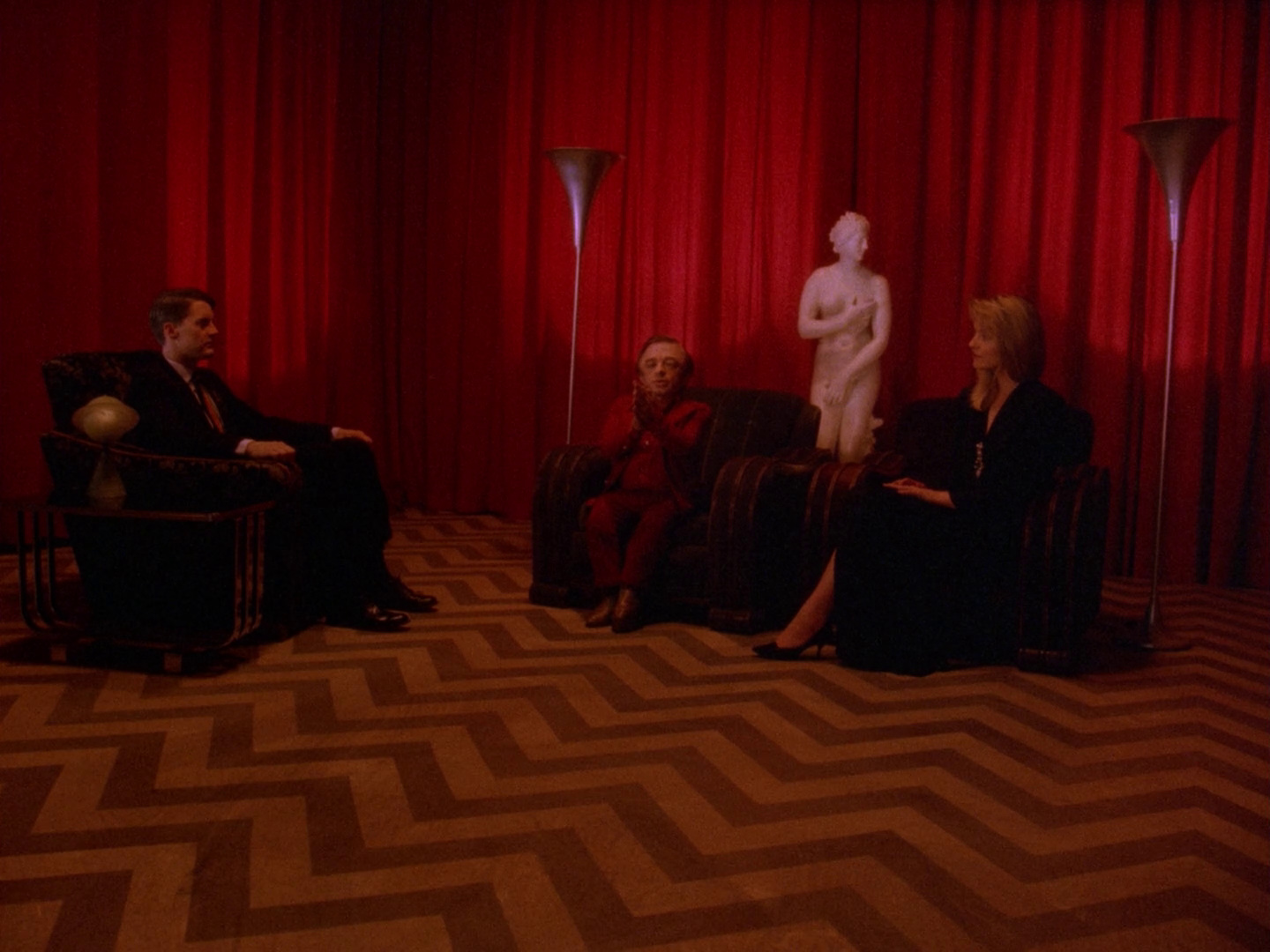
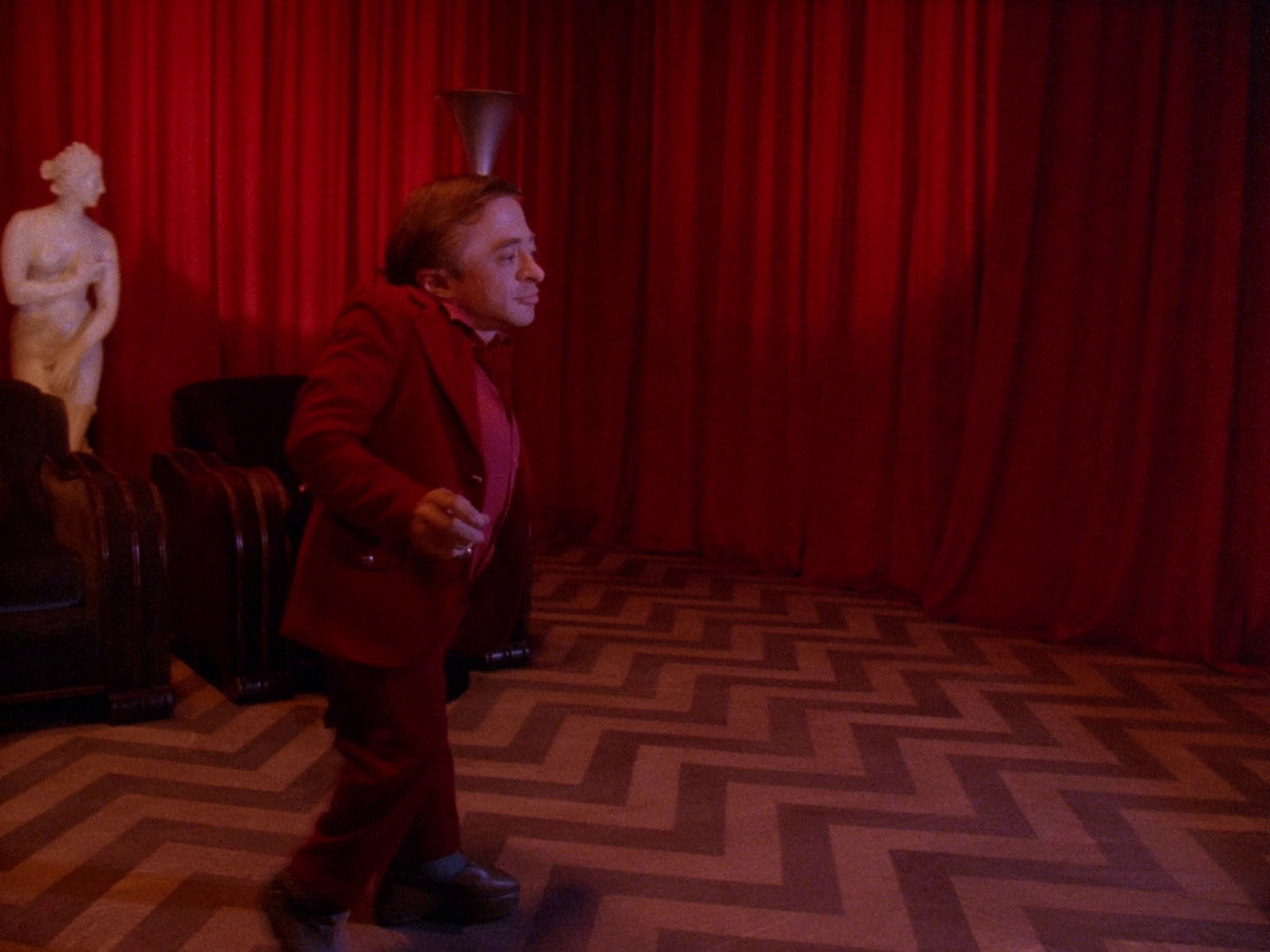
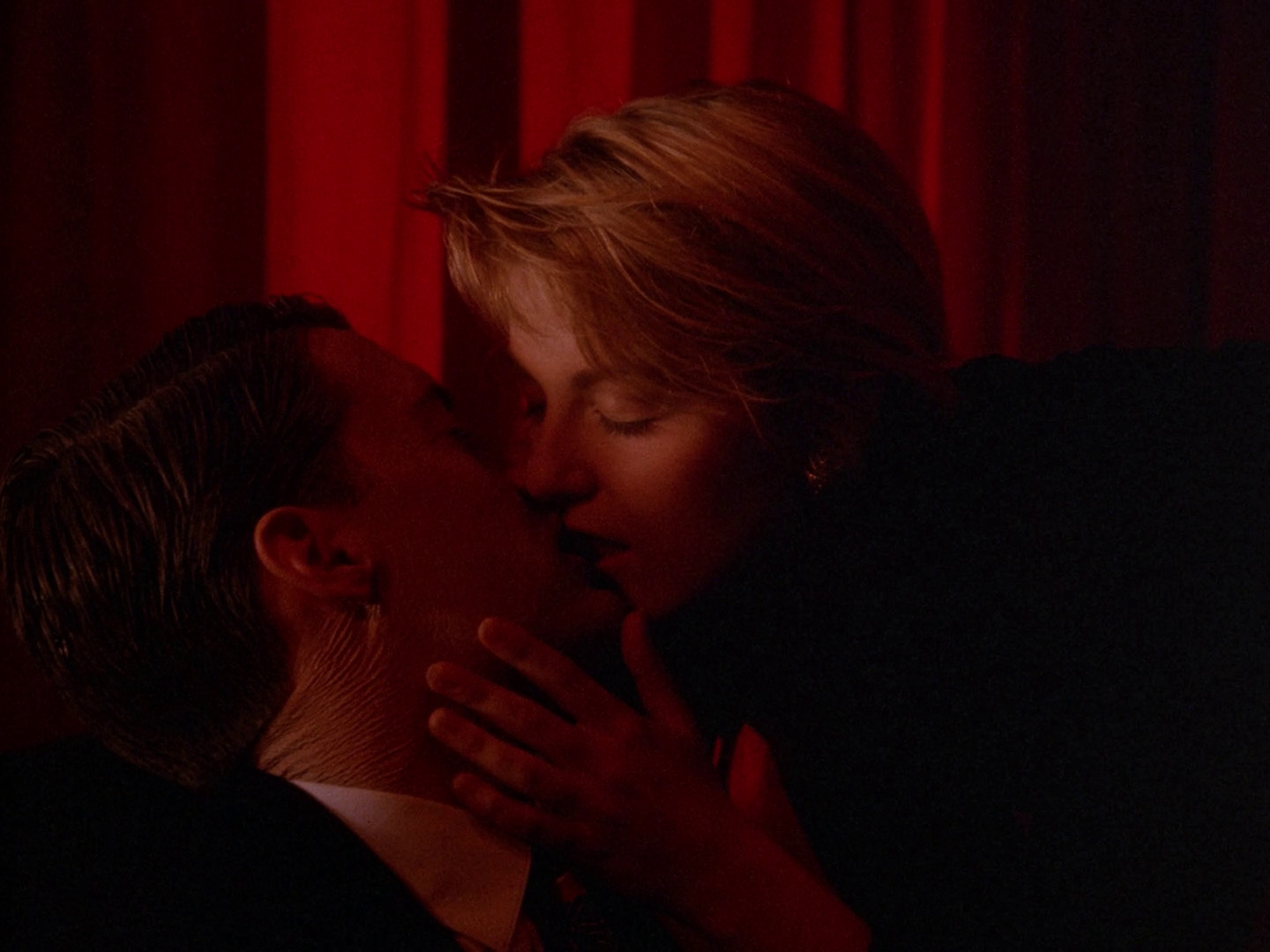
The added hospital passage initially offers something like a solution: a caller, a route to follow, an identified adversary and a violent confrontation. The Red Room then changes the terms again. Age, gesture, speech and space no longer behave like extensions of the hospital investigation. Even an ending designed to resolve a mystery generates an experience that exceeds that resolution.
The later dream changes the material’s status. What appeared after an investigation in one version becomes an image received by a sleeping investigator in another. The difference is structural, not cosmetic. It gives the series a resource that can be remembered, interpreted and revisited without having to preserve every event of the international ending as literal continuity. Continue with the Episode 2 dream study.
The obligation that became an image
Lynch recalls the contractual need for a European ending and the Red Room idea arriving while he was beside a warm car roof in a laboratory parking lot. He describes subsequently writing and revising the passage with Frost. Read beside the two endings, the recollection connects a delivery requirement to an imaginative departure whose images would later be reorganised as Cooper’s dream. A Slice of Lynch: Uncut, 42:21–45:18
Frank Silva: a planned image and an accidental reflection
Lynch’s account distinguishes two events often collapsed into a single discovery. Hearing a warning that set dresser Frank Silva might lock himself in Laura’s room prompted an image: Lynch asked whether Silva acted, then deliberately filmed him at the end of the bed. The accidental mirror reflection occurred later, during the scene with Sarah downstairs. Preserving that order matters. In this recollection, an overheard phrase and a staged shot precede the camera accident; BOB does not emerge from the reflection alone. A Slice of Lynch: Uncut, 45:21–48:20
An ending that opened another route
Mark Frost’s 2001 interview with Wrapped in Plastic places the international ending within the pilot’s financing and delivery requirements. He recalls the need for a version that could stand on its own for foreign video, and describes the later reuse of its material as part of the series’ discovery process. This production account supports the distinction visible on screen: material that closes one version becomes an unresolved dream in another context.
The testimony does not make the international resolution the concealed literal answer to every later event. Its value is more specific. A practical requirement created images and performances that the continuing series could reorganise. Follow that reorganisation in the Episode 2 dream study.
Source: Mark Frost Interview with Wrapped in Plastic, 11:25–13:05; interview dated 7 August 2001, in Twin Peaks: From Z to A.
Voices across the town
The pilot repeatedly changes who can hear a voice and who can answer it. Sarah speaks through a telephone; the principal and Josie address groups through public-address systems; Cooper talks into a recorder intended for Diane. These devices give a private loss an expanding audience. They also separate the speaker from the people receiving the message. At the school and mill, an announcement must convert an individual death into words an institution can use.
Cooper’s recorder offers a different kind of address. His observations are made for an absent listener, but the audience receives them immediately. The apparently incidental details of food, trees and accommodation make his official record personal. The recurring problem is not simply whether a statement is true: it is who owns it, who receives it and what changes when it is repeated.
The Roadhouse gives a voice a visible body and a stage. The pilot’s end titles credit Julee Cruise’s performances of The Nightingale and Falling, with lyrics by David Lynch and music by Angelo Badalamenti. Those credits identify a collaboration rather than reducing the town’s musical identity to a single author. The same titles distinguish Douglas Murray’s sound design, David Slusser’s music editing and the re-recording work of Mark Berger and David Parker.
Recording the world around the voices
John Wentworth recalls recording pilot sound effects and, later, recognising a gale he had captured with a stereo microphone within the finished mix. His memory adds a field-recording history to the pilot’s imagined environment. It identifies a contributor’s experience of the work; it does not establish the placement of that recording in every scene. A Slice of Lynch: Uncut, 19:28–22:17; 52:00–53:32
The pilot’s other rhythms
The surviving outtakes let a familiar scene retain a little more time, a different diversion or an unfinished edge. They are especially revealing around Cooper: his attention can turn a trip across town, a coffee break or a formal question into an encounter with somebody else’s rhythm. Outtake sources ↓
A detective who can be distracted by a bear
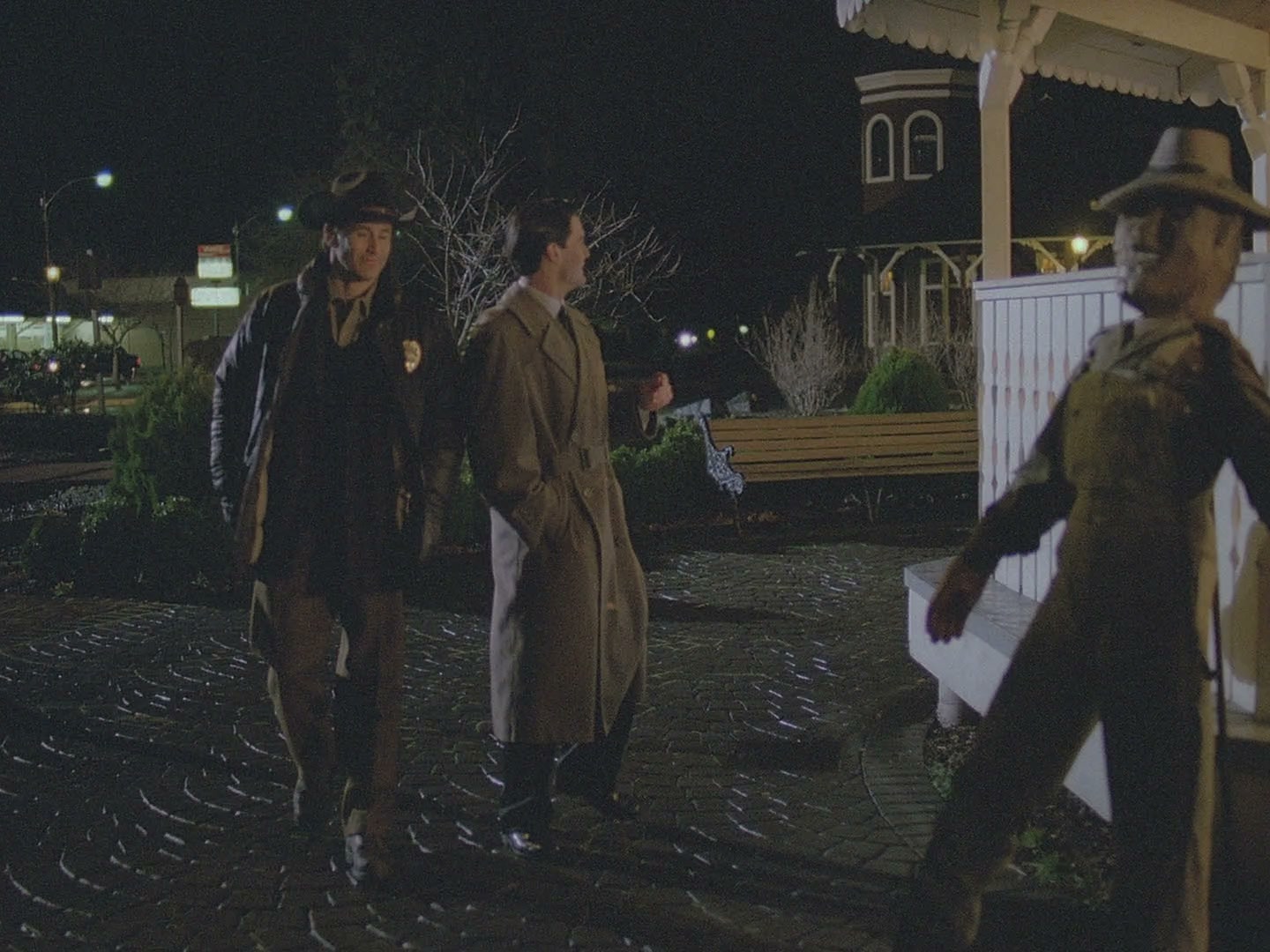
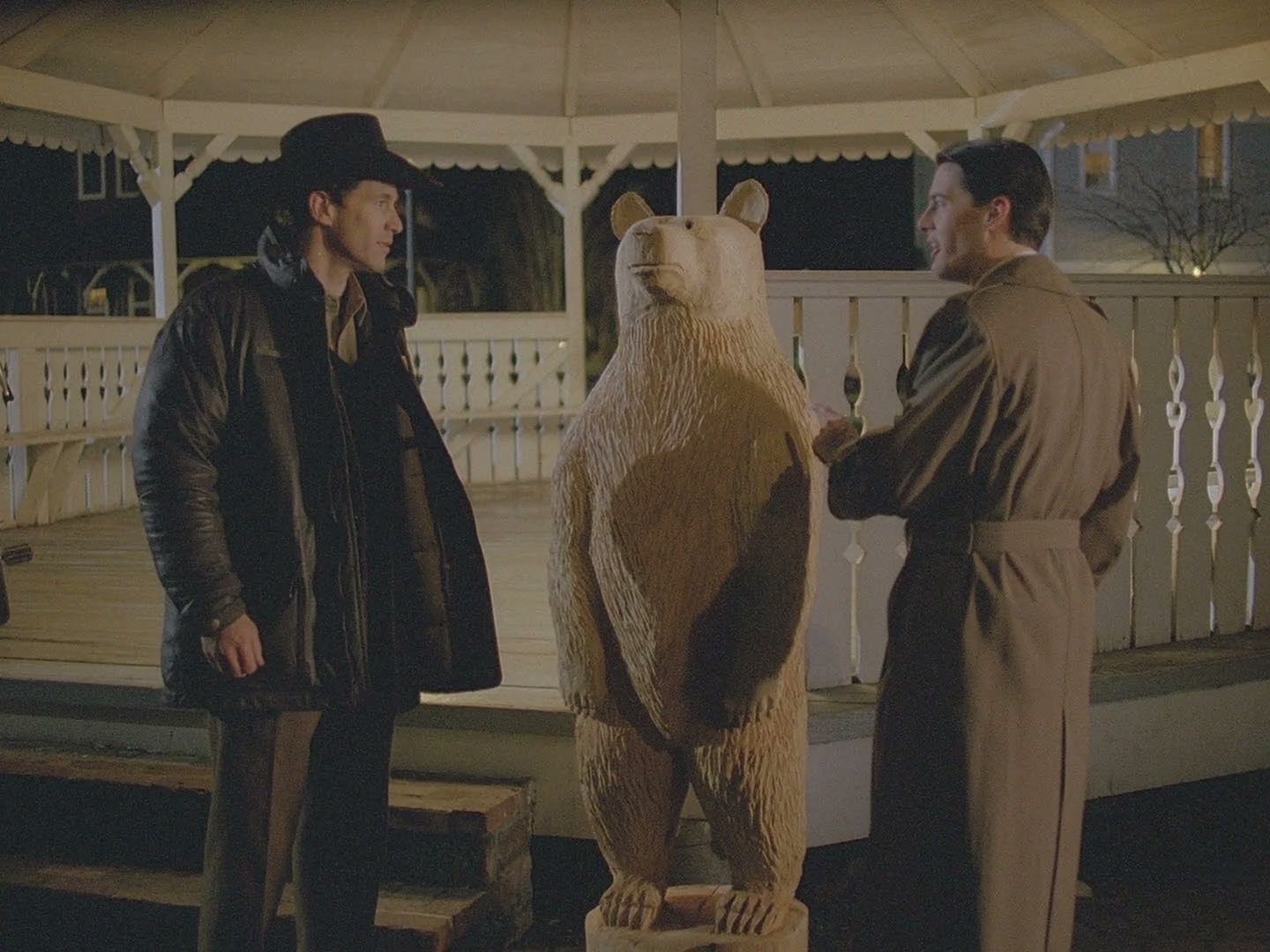
In Cooper and Truman at Gazebo, the sheriff is trying to get to the town meeting. Cooper stops to admire the gazebo and then a carved bear. The tableau gives their partnership a physical shape: one man needs to keep moving while the other keeps finding reasons to linger. The bear remains after the men leave, turning a practical destination into a small attraction in its own right.
The official voice loses its footing
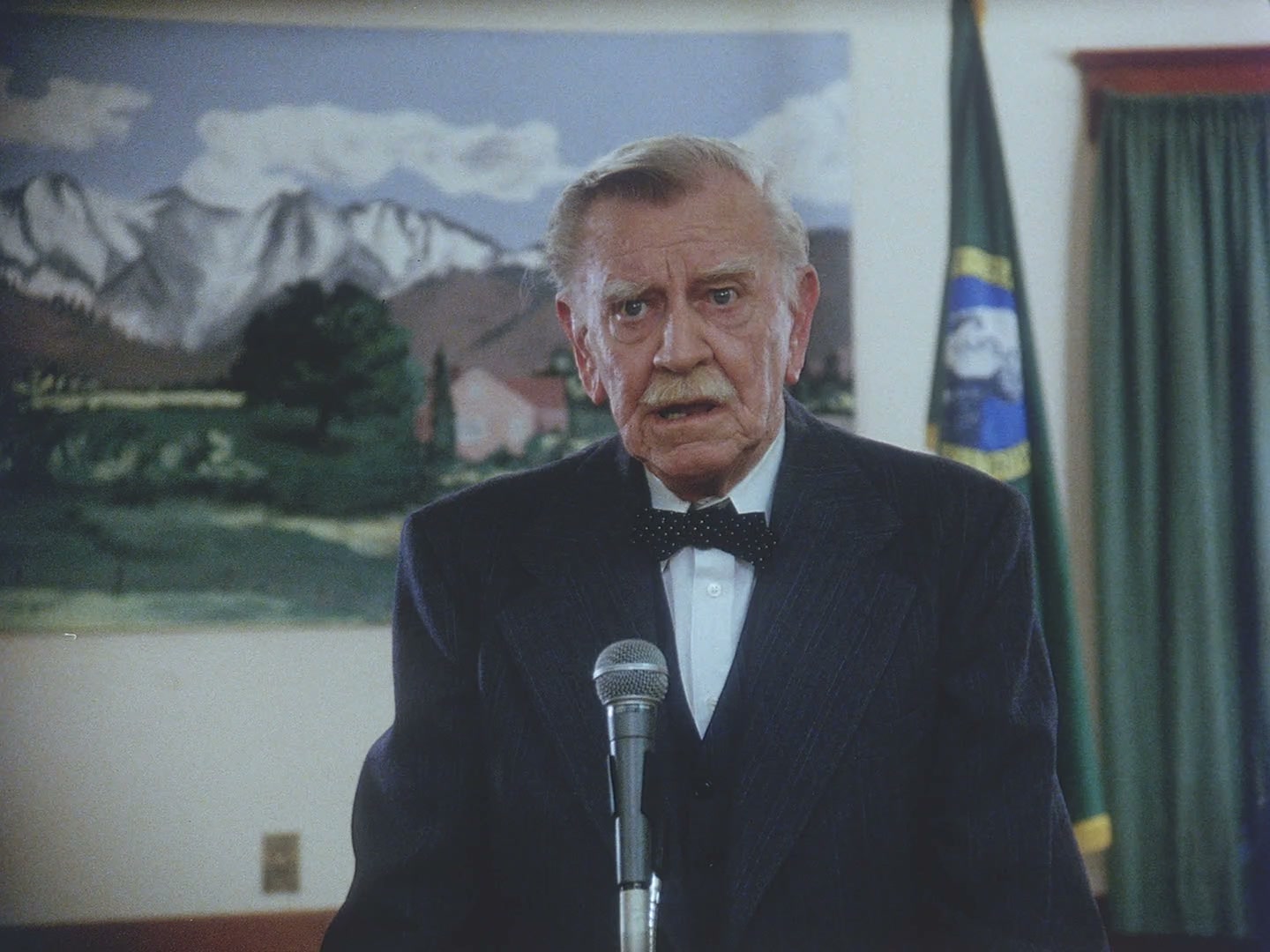
Mayor’s Speech prolongs the effort of addressing the town, including the business with the microphone. The solemn occasion has to pass through an elderly speaker’s body and the people helping him. In Lucy and Raccoons, the coffee-and-doughnut conversation wanders through Cooper’s accommodation and Lucy’s radio report. Hospitality and administrative interruption share the same space as police work. The footage supports a close comparison of performance and timing; it does not by itself establish which lines were improvised.
Look closer at the alternate takes · 4 images
The picnic before it becomes evidence
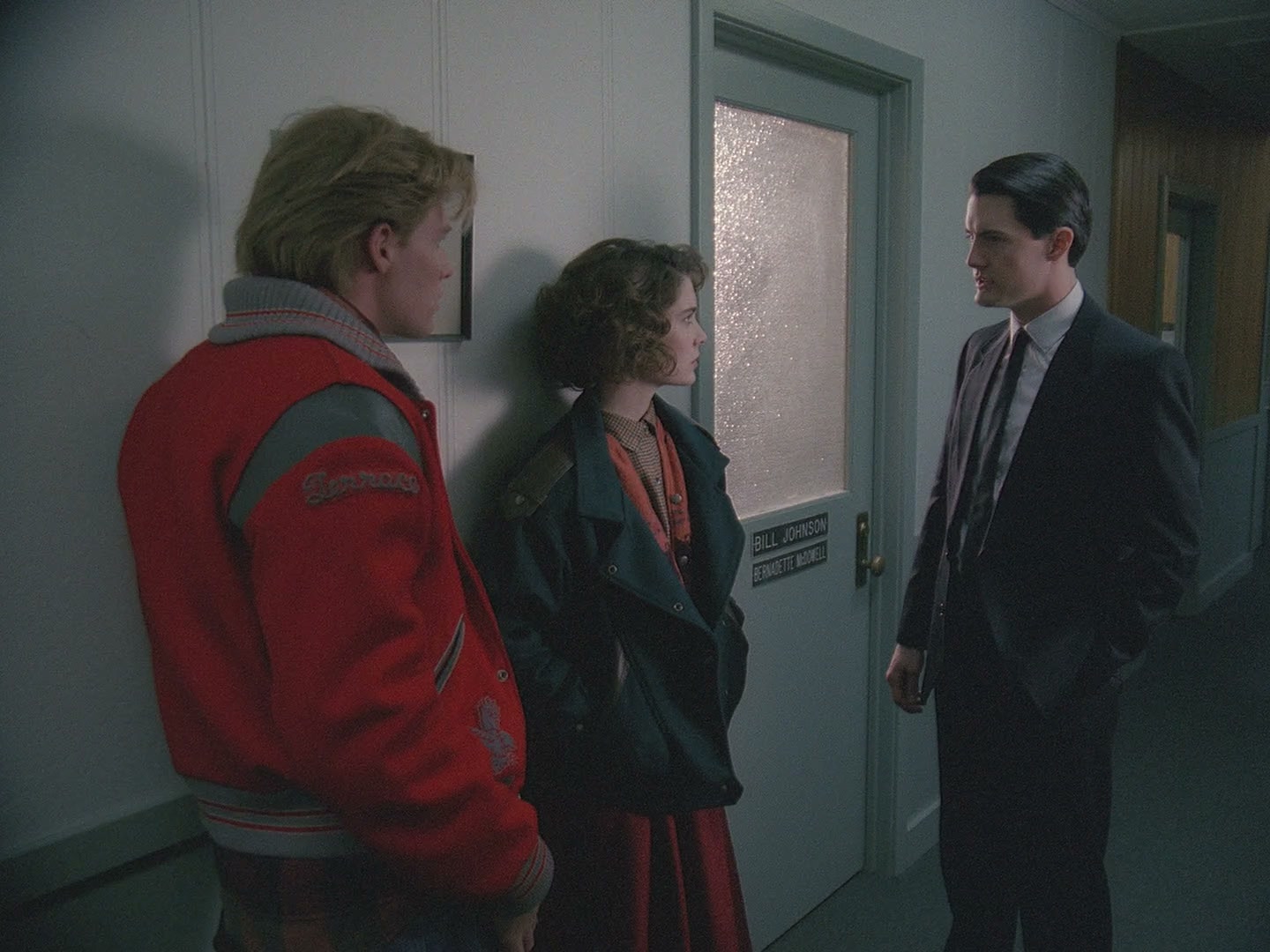
The brief hallway encounter with Donna puts Cooper’s question beside her ordinary interaction with Mike. The accompanying picnic footage returns Laura and Donna to food, movement and play before the home movie is turned into an investigative object. The difference matters: the girls occupy the image as friends, while the detective later searches it for someone outside the frame. See the home-movie study in Episode 1.
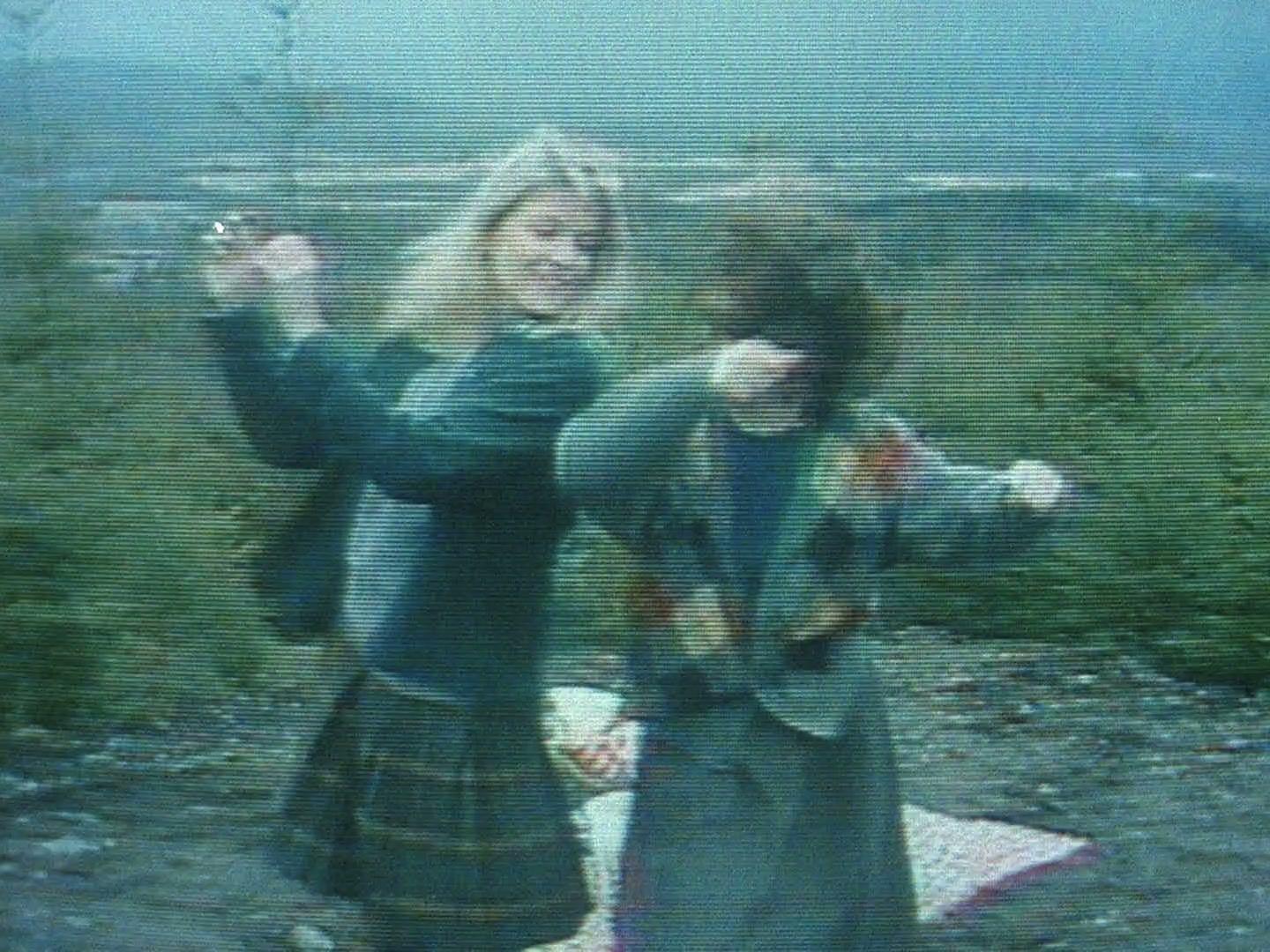
Screen sources: Twin Peaks: From Z to A, “Outtakes”: Cooper and Truman at Gazebo (00:02–00:37), Mayor’s Speech (00:01–01:25), Lucy and Raccoons (00:01–01:18), Cooper and Donna Talk About Picnic (00:02–00:17), and the accompanying Laura-and-Donna picnic footage (00:02–00:47). Read alongside the pilot and the later reuse of the home movie.
Selected screen credits
The pilot’s own titles identify the team below. The international ending also credits Frank Silva as Bob and Michael J. Anderson as the Man from Another Place; its closing credits play over the Red Room dance, giving the alternate version a different final image from the US pilot’s portrait of Laura.
Filmmakers, music and sound
- Written by
- Mark Frost & David Lynch
- Directed by
- David Lynch
- Produced by
- David J. Latt
- Director of photography
- Ron Garcia
- Production designer and costume designer
- Patricia Norris
- Edited by
- Duwayne R. Dunham
- Music composed and conducted by
- Angelo Badalamenti
- Sound design
- Douglas Murray
- Music editor
- David Slusser
- Re-recording mixers
- Mark Berger; David Parker
- Featured songs
- The Nightingale and Falling — lyrics by David Lynch, music by Angelo Badalamenti, performed by Julee Cruise
Source: opening and closing screen credits of the US and international pilots. For the relationship between alternate endings and introductions, see the pilot versions and framing study.
A route through the pilot
- The first morning. Mill machinery, Josie’s mirror, Pete’s departure and the discovery by the water.
- The news travels. Sarah’s calls, Leland at the hotel, the school announcement and the mill shutdown.
- The outsider arrives. Cooper’s dictation, Ronette in hospital, Jacoby and the morgue examination.
- Objects become evidence. The diary, the home movie, interviews, the railway carriage and the vault.
- A town after dark. Curfew, the Roadhouse, Donna’s journey, James’s account and the buried necklace.
- A branch at the ending. The US cliffhanger or the international hospital, boiler-room and Red Room extension.
Sources and further paths
Primary screen source: Twin Peaks, pilot, US and international versions, in From Z to A Blu-ray collection. The episode images, dialogue situations, version comparison and scene studies above refer to those versions. The separately authored material includes a Log Lady introduction; it is not part of the pilot’s original dramatic action.
Production testimony: Amy Dawes, DGA Interview: Lesli Linka Glatter, DGA Quarterly, Spring 2015. Her recollection of the moose head is attributed testimony. See also the collaborators’ testimony for Duwayne Dunham’s account of reusing pilot motorcycle footage.
Continue through the Season 1 dossier, the Twin Peaks hub and Fire Walk with Me. The latter returns to Laura’s experience from a different narrative position.
Grace Zabriskie, Postcards from the Cast, in Twin Peaks: From Z to A, 00:06–01:59. Her retrospective account distinguishes audience laughter from playing Sarah’s grief for laughs.
James Marshall, Sneak Peeks, in Twin Peaks: From Z to A, 00:06–01:38. Location recollection about the Roadhouse reflection; Marshall explicitly says it was not filmed.
Further performer testimony: A Talk with Kyle MacLachlan and Sheryl Lee. Produced and directed by David Naylor; edited by Michael Frost (2019). Viewed in Twin Peaks: From Z to A. Timed passages: 01:07–01:48; 07:25–09:55. Timings refer to the conversation. Retrospective testimony is attributed to its speaker and distinguished from analysis of the finished scenes.
Sheryl Lee interview (2017), recorded in Los Angeles, Criterion Collection edition of Twin Peaks: Fire Walk with Me, 02:05–03:19; the portrait’s production at approximately 02:53–03:00. Read alongside the portrait’s use in the pilot.
Actors’ discussion (2014), David Lynch with Ray Wise, Grace Zabriskie and Sheryl Lee, Criterion Collection edition of Twin Peaks: Fire Walk with Me, 02:12–04:28. Zabriskie’s anecdote also appears in the shorter Postcards from the Cast source cited above; the extended conversation supplies Lynch’s response.