Twin Peaks: The Return — Part 3
2017 · Twin Peaks: The Return · Episode dossier
A way out of the darkness leads to a world whose simplest instructions have become strange.
Cooper crosses an impossible sea and returns to ordinary rooms without ordinary competence. Follow the hands that guide him, the machines that move him and the people who mistake recognition for understanding.
- Part 3
- Call for Help
- Directed by
- David Lynch
- Written by
- Mark Frost & David Lynch
- Standalone presentation
- 00:58:51
The Return overview · Twin Peaks research hub. Timings follow the standalone part and include its opening titles. How the combined presentation differs.
Explore this dossier
Finding a route, learning a gesture
Part 3 turns passage into the central action. Cooper must cross a threshold, read a warning, enter a mechanism, put on shoes, leave a vehicle and negotiate a revolving door. These actions connect the purple realm to suburban Las Vegas. The change of setting does not restore his ability to explain himself.
The illustrated studies follow the standalone part in sequence. Close comparisons separate what the episode shows from what its characters infer. Production notes from BUF supply specific evidence about the sea, Major Briggs and the electrical passage; they do not provide a complete explanation of the fiction. Sources and viewing notes.
Illustrated scene studies
- A landing without a map
- Touch before language
- A lever, a fall and a familiar face
- The room has changed
- An electrical passage and a resisting body
- Dougie’s body loses its stability
- Being recognised is not being understood
- The body the gunman cannot see
- How can something missing be found?
- The work of making gold
- A request that becomes a repeated sound
- A private signal among public machines
- Pictures that do not become an explanation
- Cooper’s name redirects the investigation
- A song as a different kind of passage
A landing without a map
The fall continues the dislocation at the end of Part 2, then abruptly changes scale and pace. After the rushing movement, Cooper finds a ledge, a wall and a dark sea. Distant water gives the purple space an acoustic depth before there is any secure account of its geography.
The architecture offers small practical possibilities: a surface to stand on, an opening to enter, a room beyond. Cooper explores those possibilities rather than explaining the landscape. The viewer is placed in the same position. A striking image becomes a problem of how to move.

Touch before language
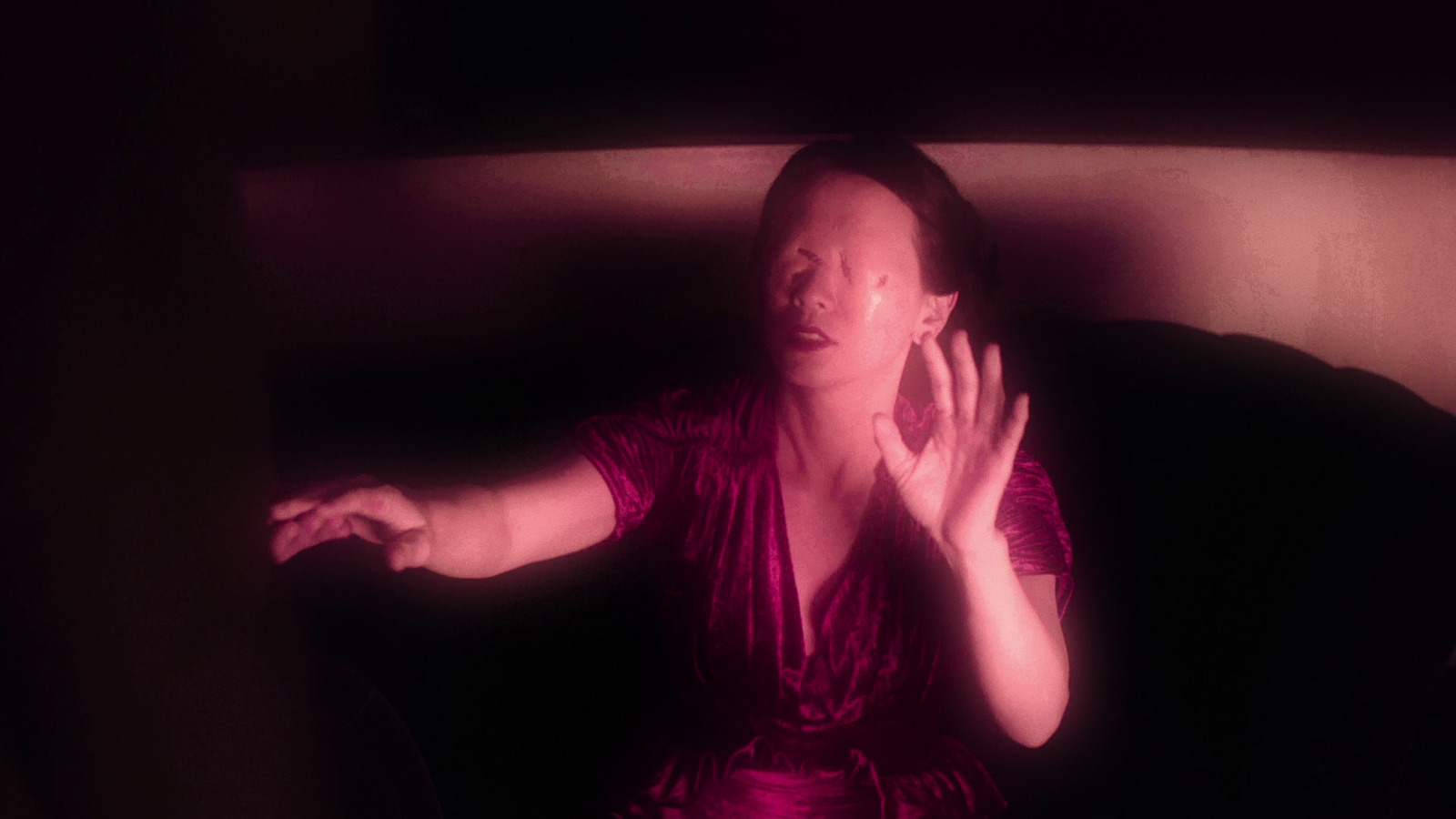
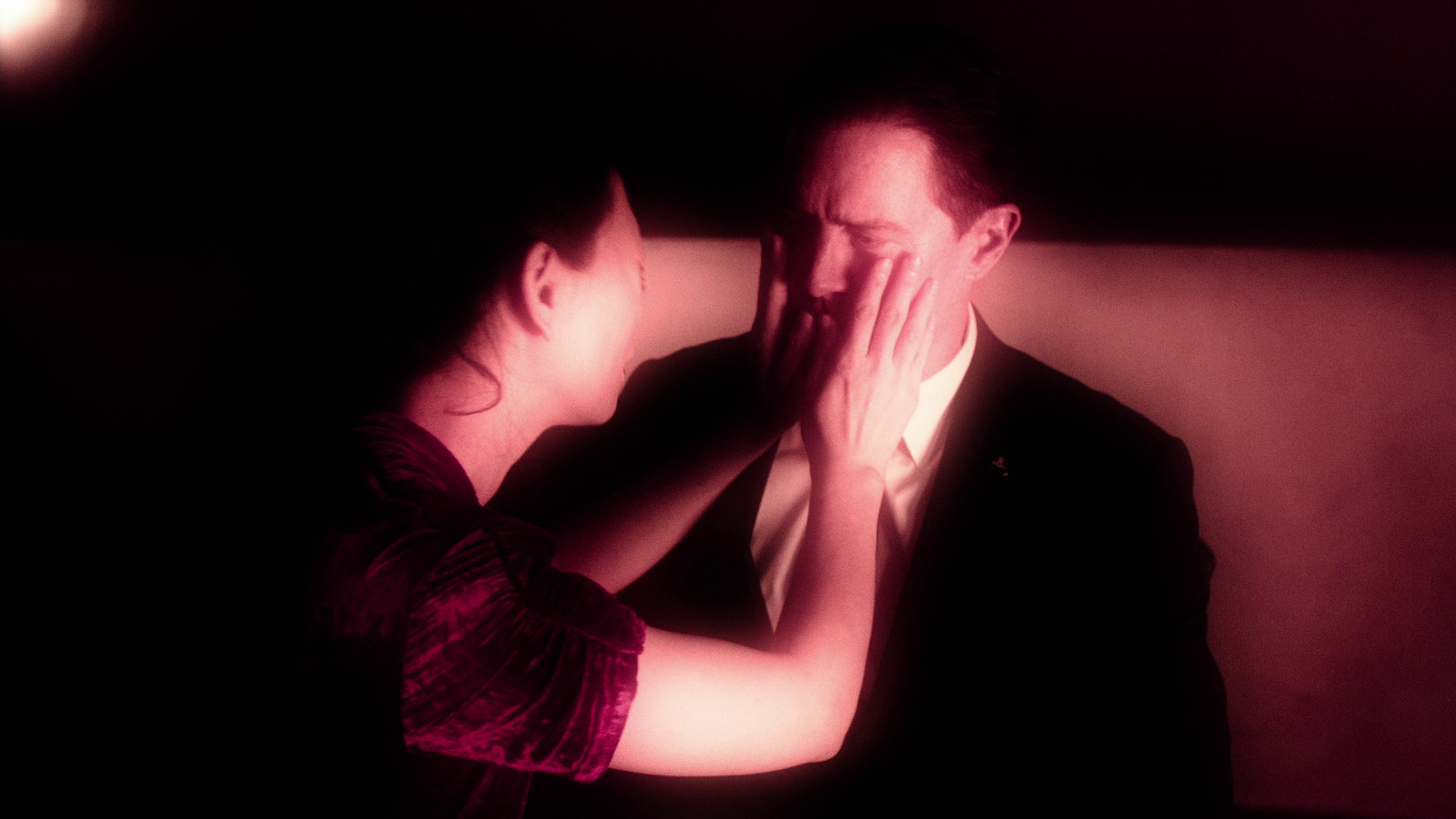
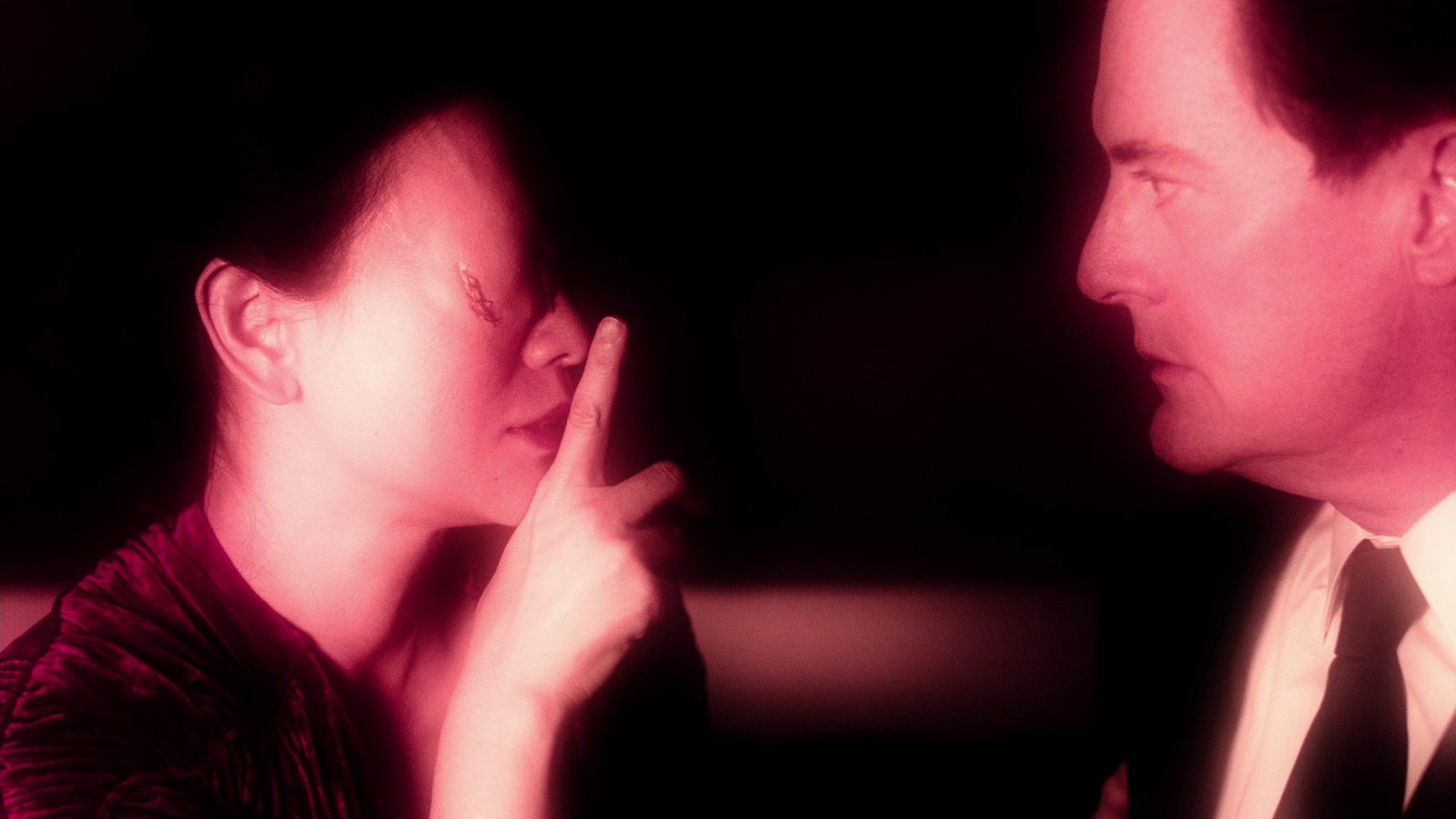
Naido’s face denies Cooper the reciprocal gaze on which an ordinary conversation depends. Her reaching hands establish contact instead. He lowers himself beside her; she touches his face, signals and intervenes when his attention turns towards the mechanism.
His questions receive breathy, altered sounds rather than an explanatory reply. The repeated pounding adds pressure from outside the frame. Reading the scene requires attention to her gestures and to the rhythm of threat. The absence of conventional speech does not make her passive: she is the person who understands that action is needed.
Open the scene sequence · 3 frames
A lever, a fall and a familiar face
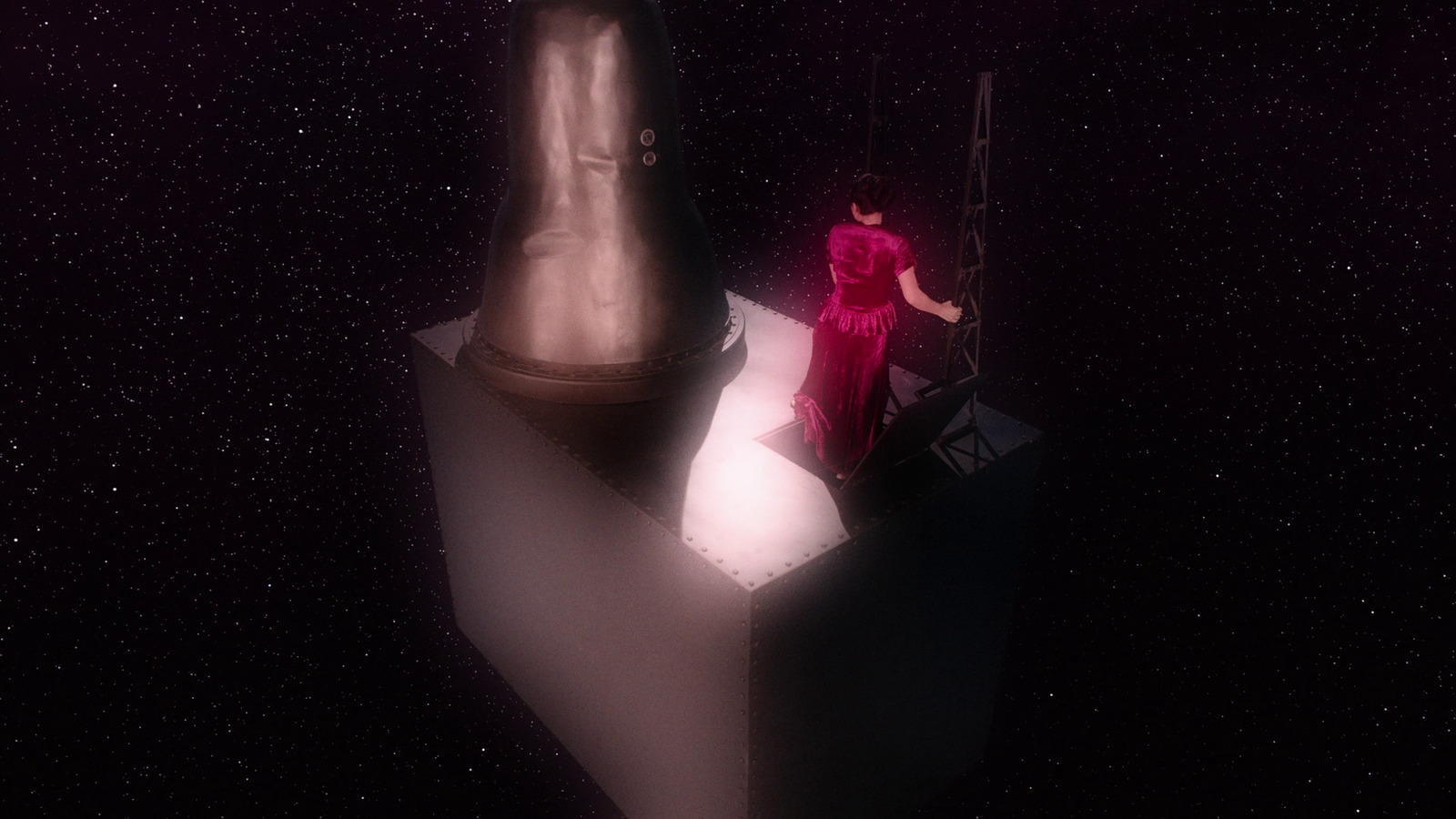
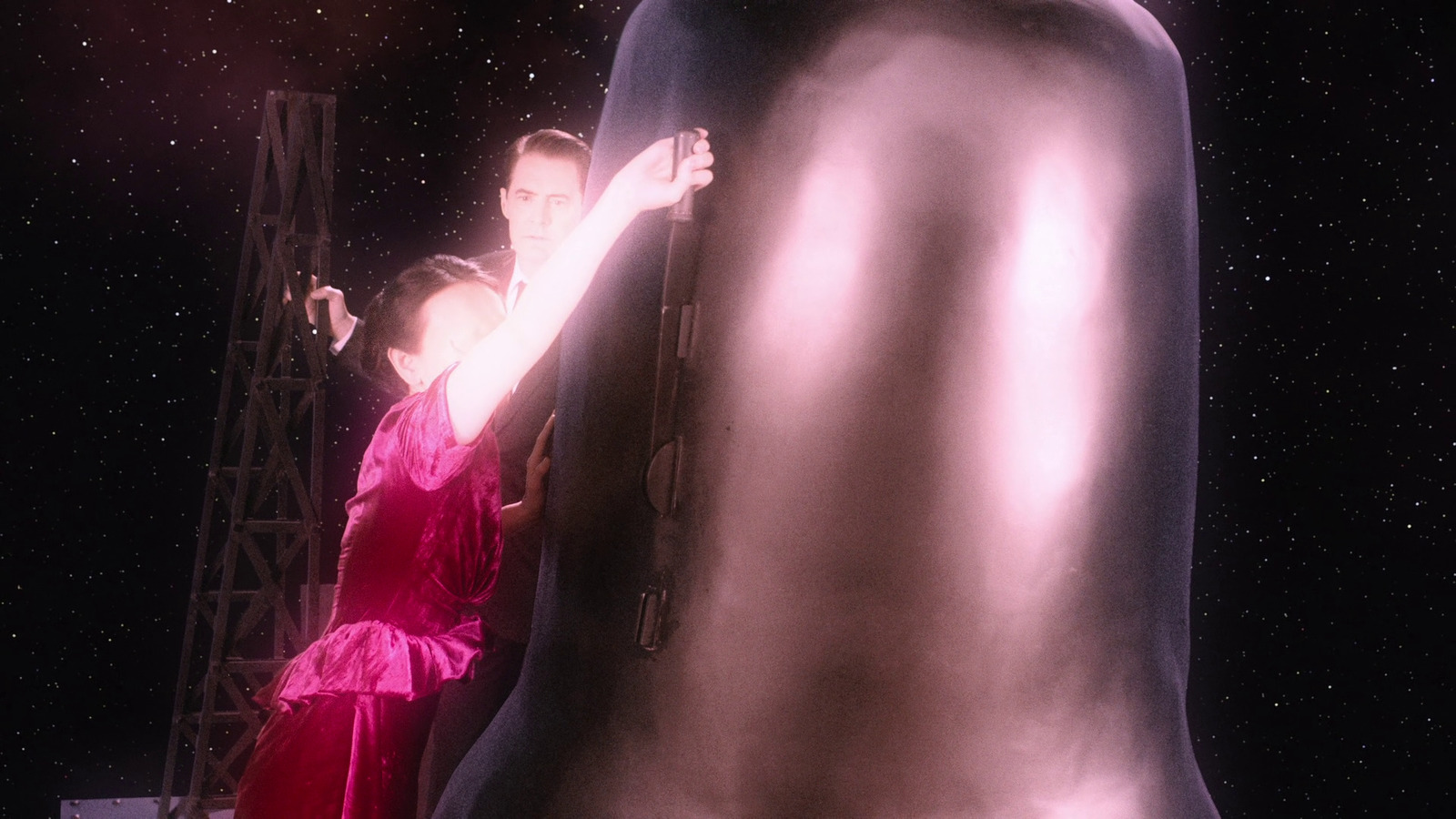
The climb exchanges a bounded interior for a small platform against stars. Naido’s physical effort at the lever connects a mechanical act to the electrical disturbance and her fall. Cooper is left to make his next move without the guide who brought him there.
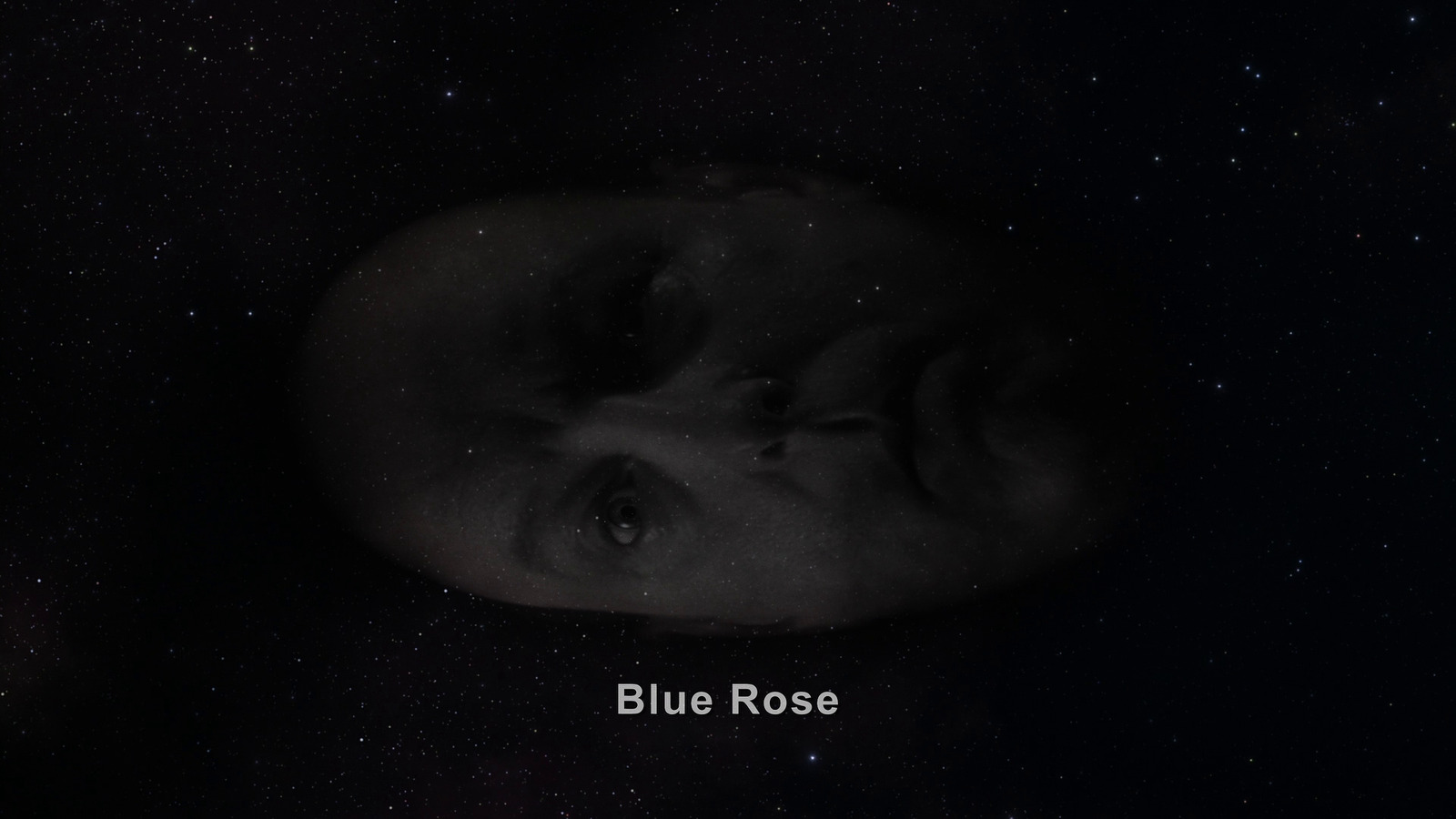
Major Briggs’s head passes through the darkness and speaks the phrase Blue Rose
. Recognition arrives as a fragment: a face and two words, rather than a restored person who can answer questions. The image extends Briggs’s importance from the earlier series while retaining the scene’s uncertainty. See the focused effects study for BUF’s account of reconstructing the head.
Open the scene sequence · 2 frames
The room has changed
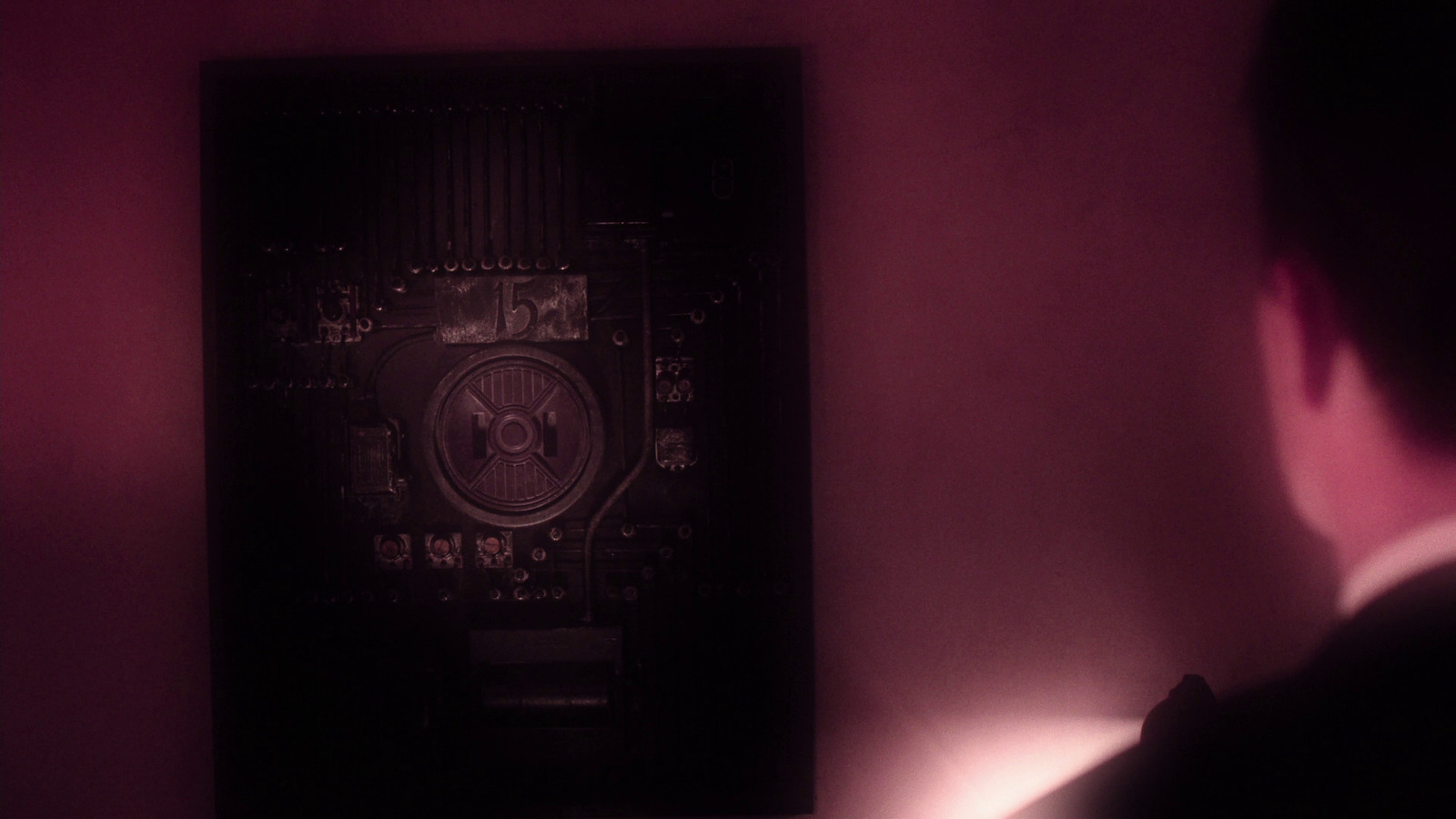
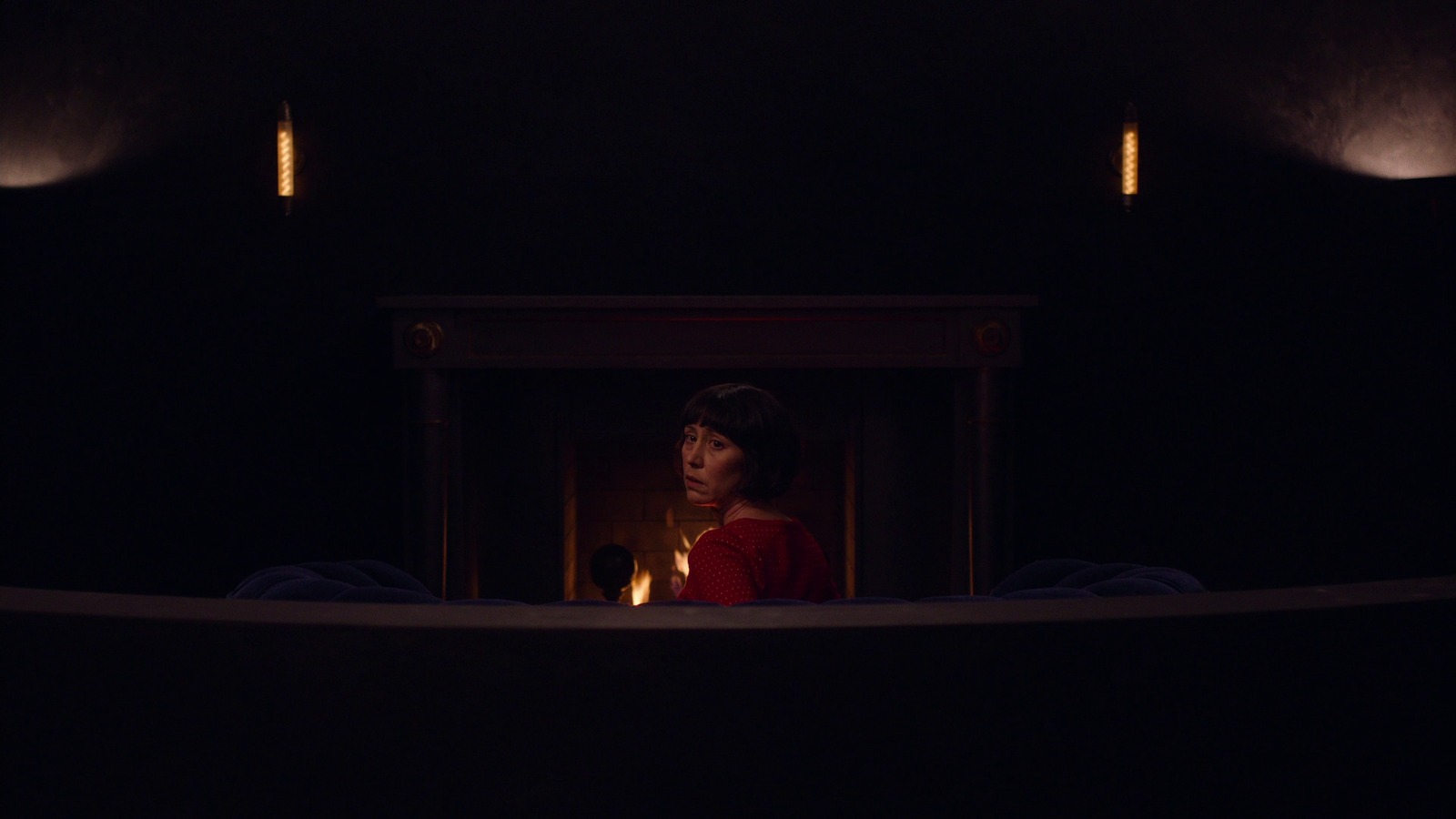
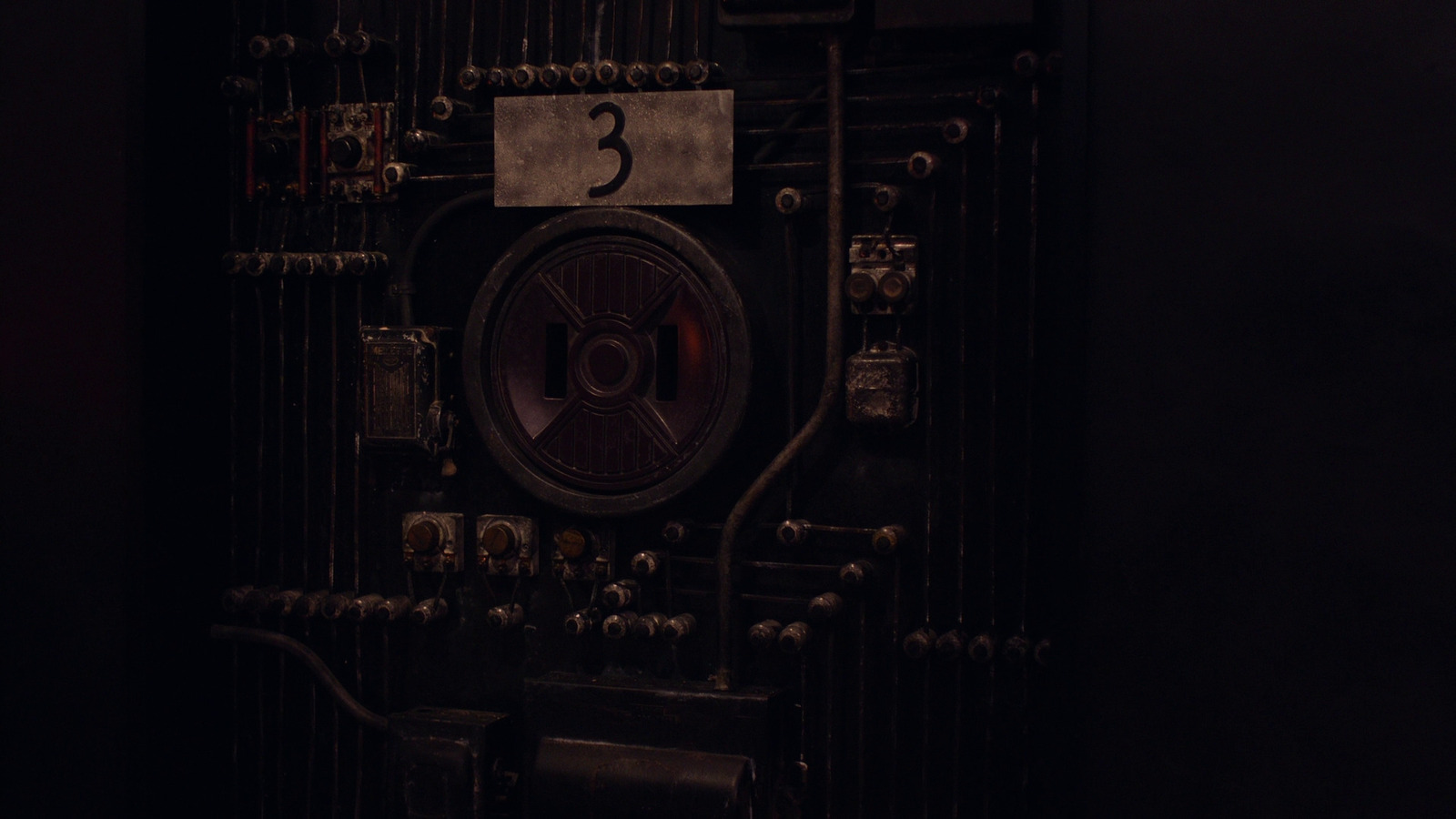
Cooper descends into a room that is recognisable but altered. Another woman sits by the fire, and the wall mechanism now bears 3 where it previously bore 15. These substitutions ask the viewer to compare images rather than accept the room as a stable location.
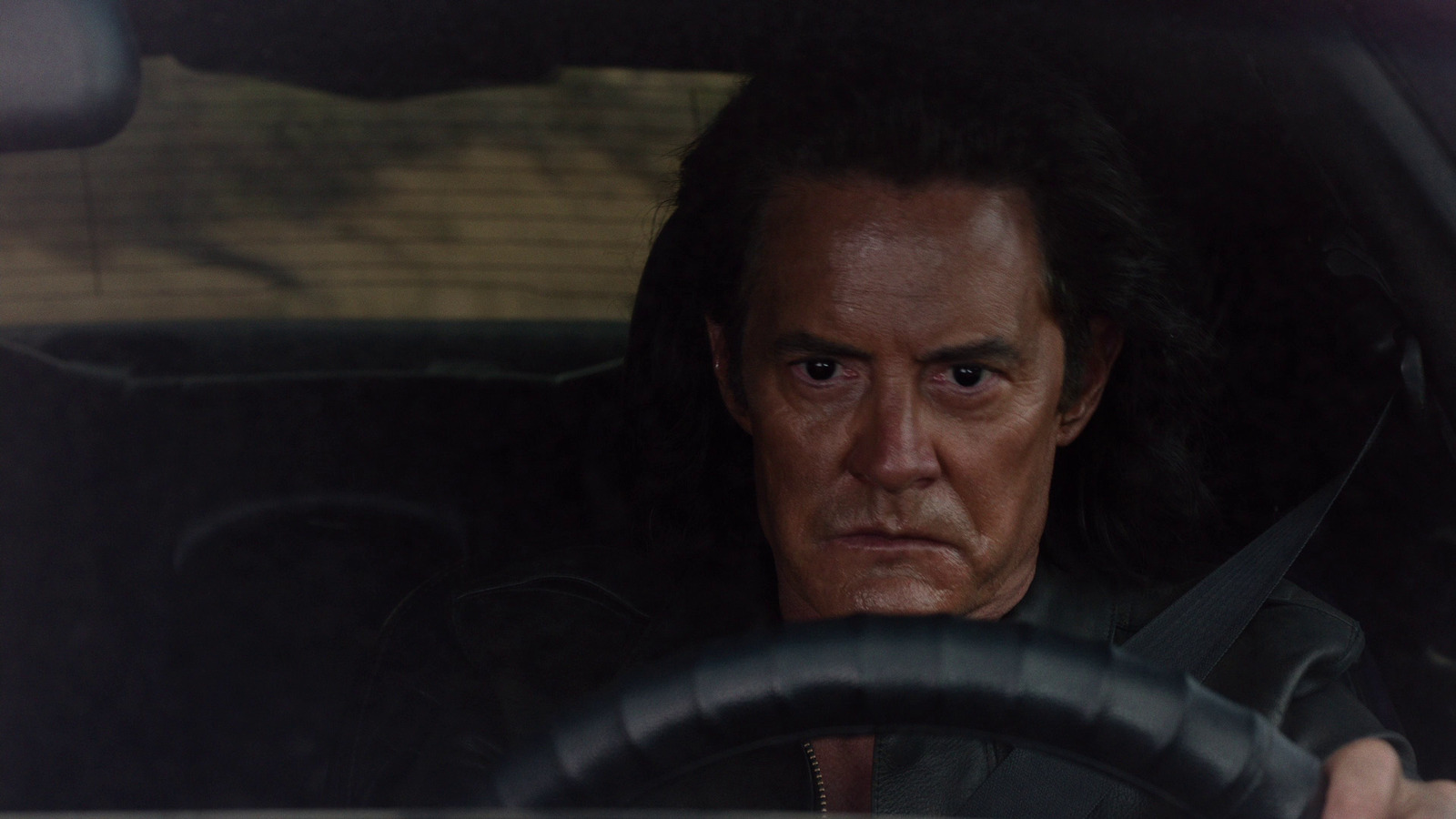
The woman tells him that someone will already be there when he arrives and urges him to hurry because her mother is coming. The warning is delivered through conspicuously altered speech and on-screen words. It supplies urgency without identifying the mother or explaining the destination. The cut to Mr. C at the wheel begins to connect these obscure instructions with bodily resistance elsewhere.
Open the scene sequence · 2 frames
An electrical passage and a resisting body
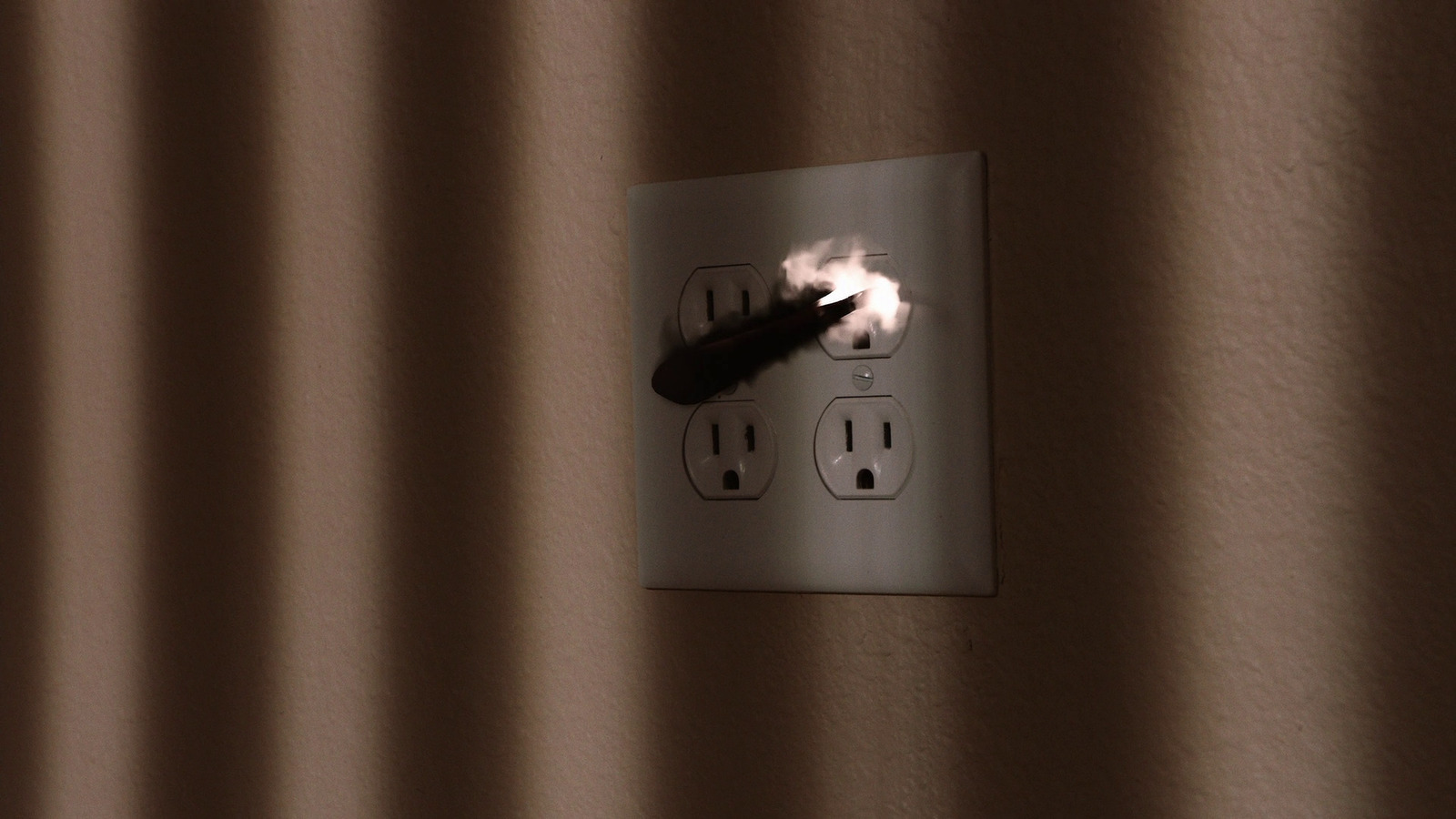
Electrical sockets become visual links between spaces that cannot be joined by ordinary travel. The numbered mechanism, the car’s socket and the bedroom outlet make the movement legible through repeated shapes and sounds. Mr. C’s tightening face and loss of control give the otherwise abstract crossing a physical cost.
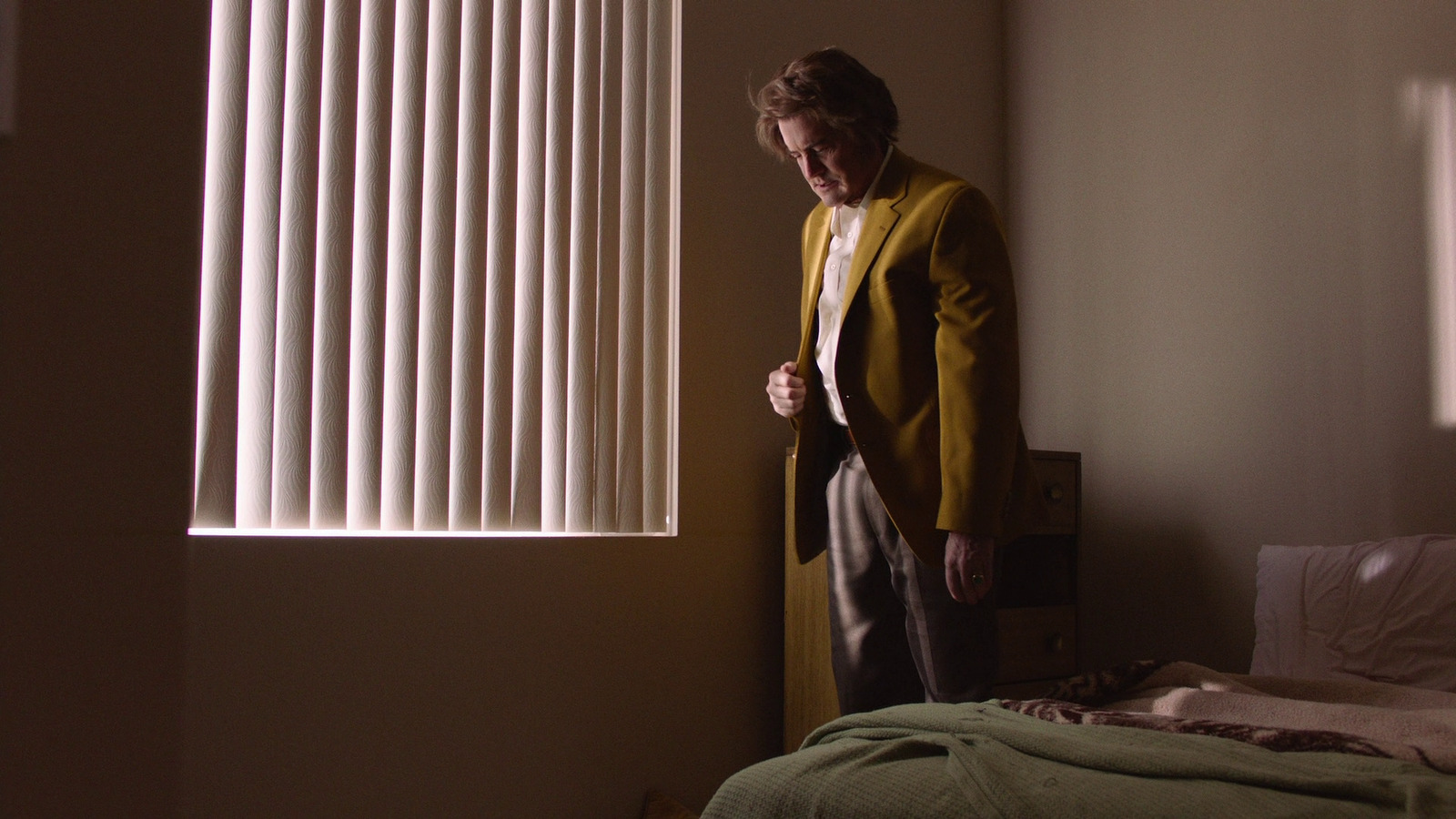
The car crash does not resolve that exchange. The episode introduces Dougie Jones in a yellow jacket, whose numb arm and sudden sickness extend the pattern of bodily disturbance. The intercutting establishes a relationship among the men; it does not make all of their knowledge equivalent. Mr. C’s struggle, Dougie’s bewilderment and Cooper’s passage remain distinct performances.
Open the scene sequence · 2 frames
Dougie’s body loses its stability
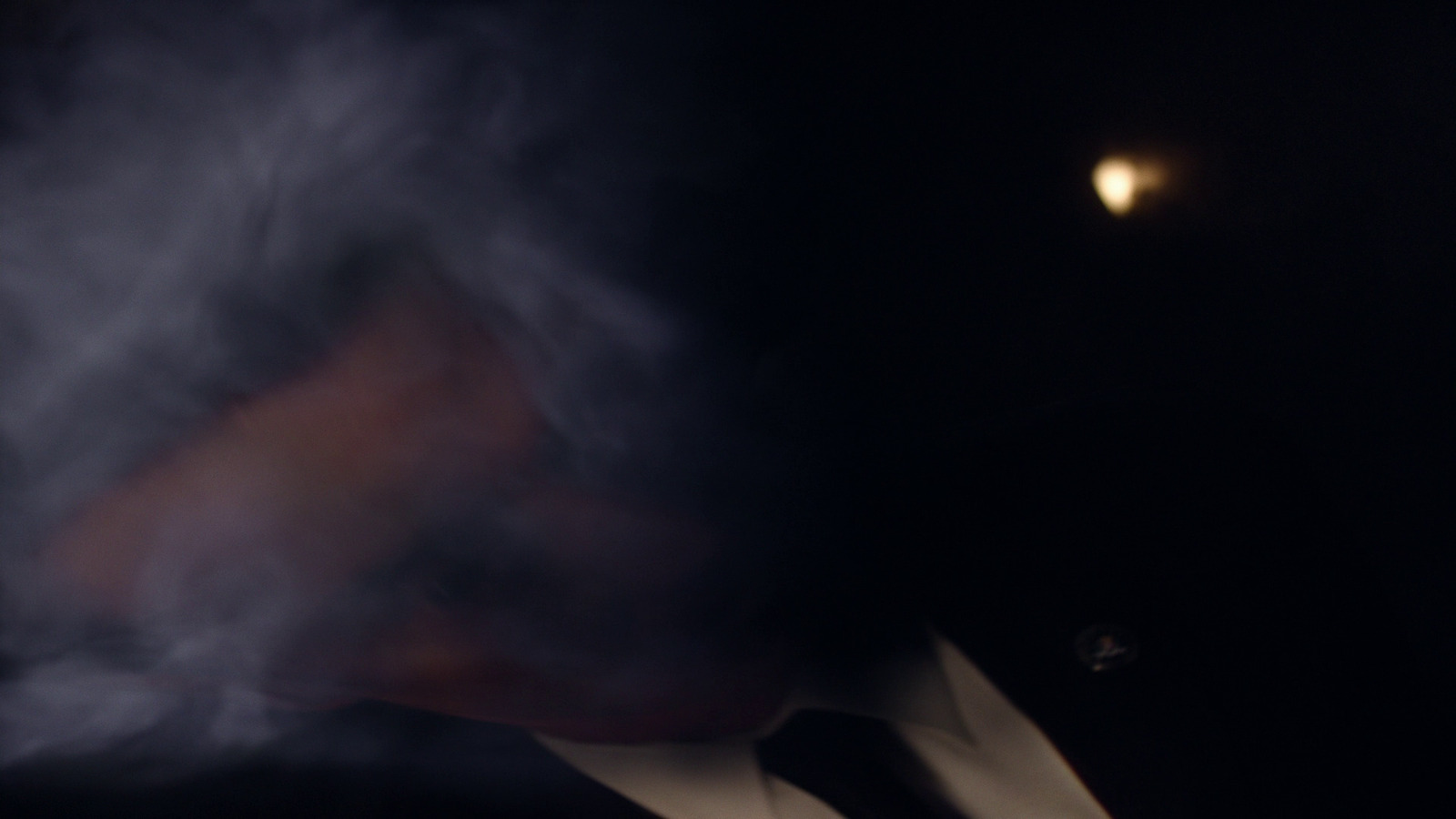
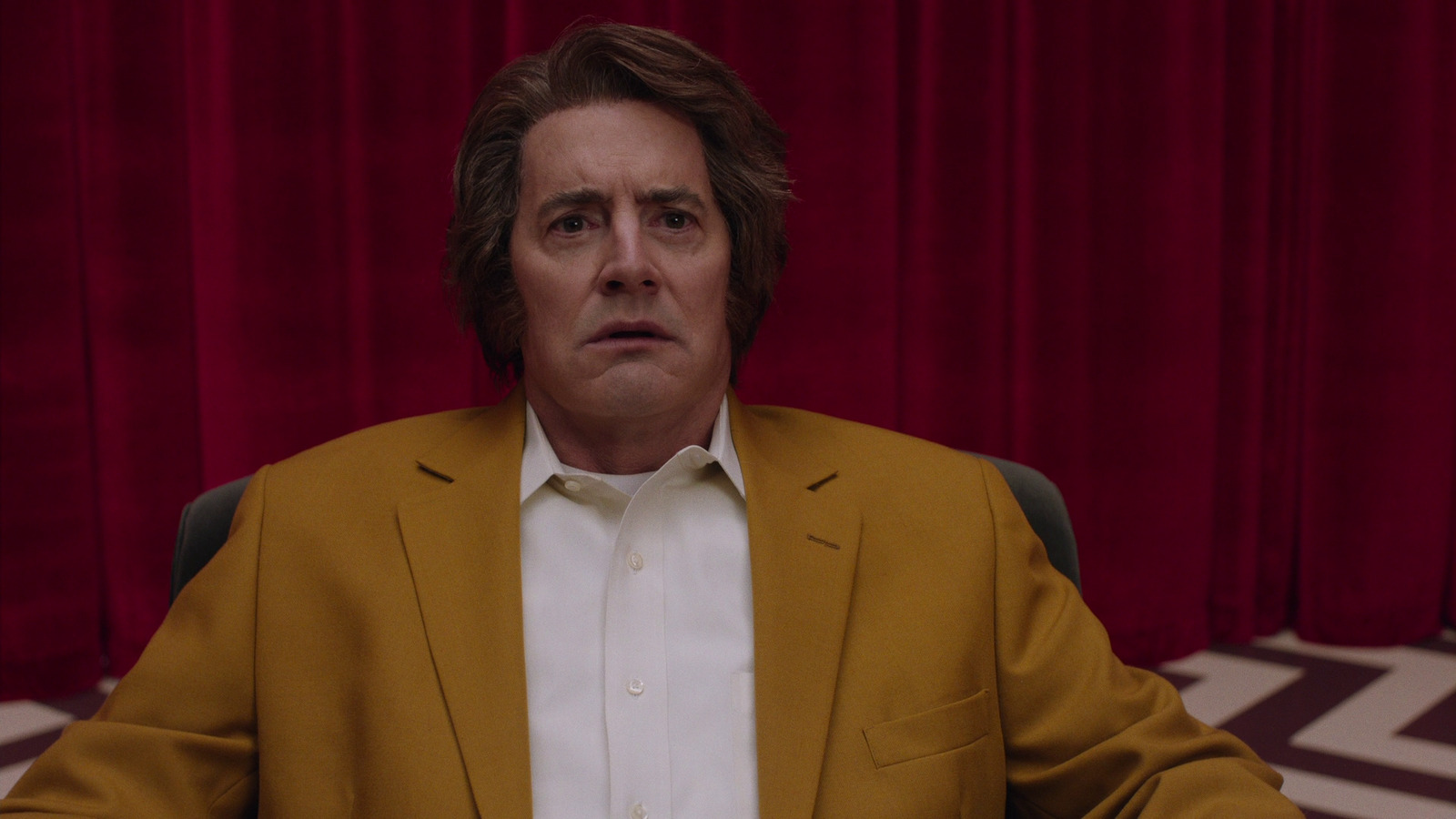
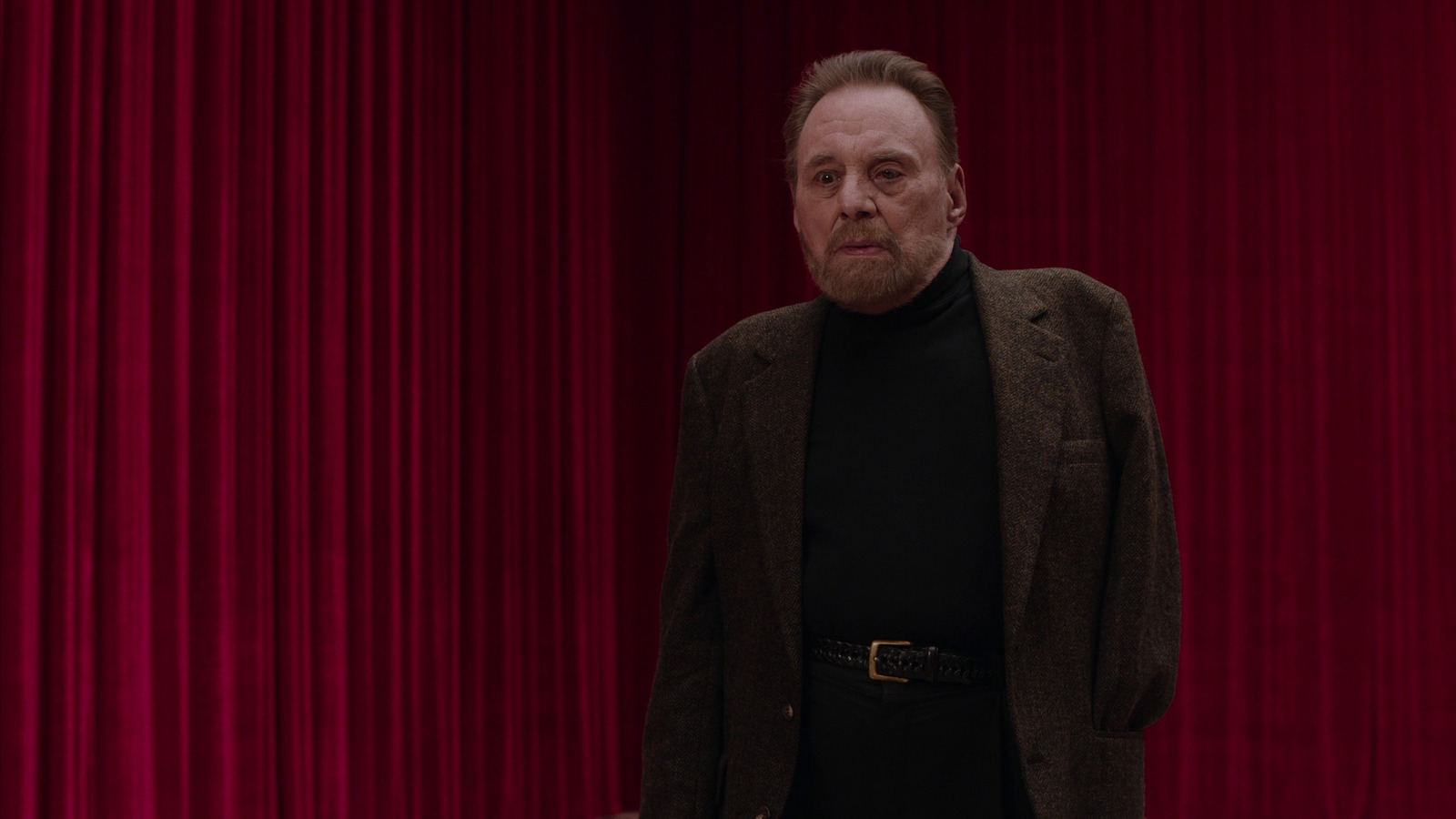
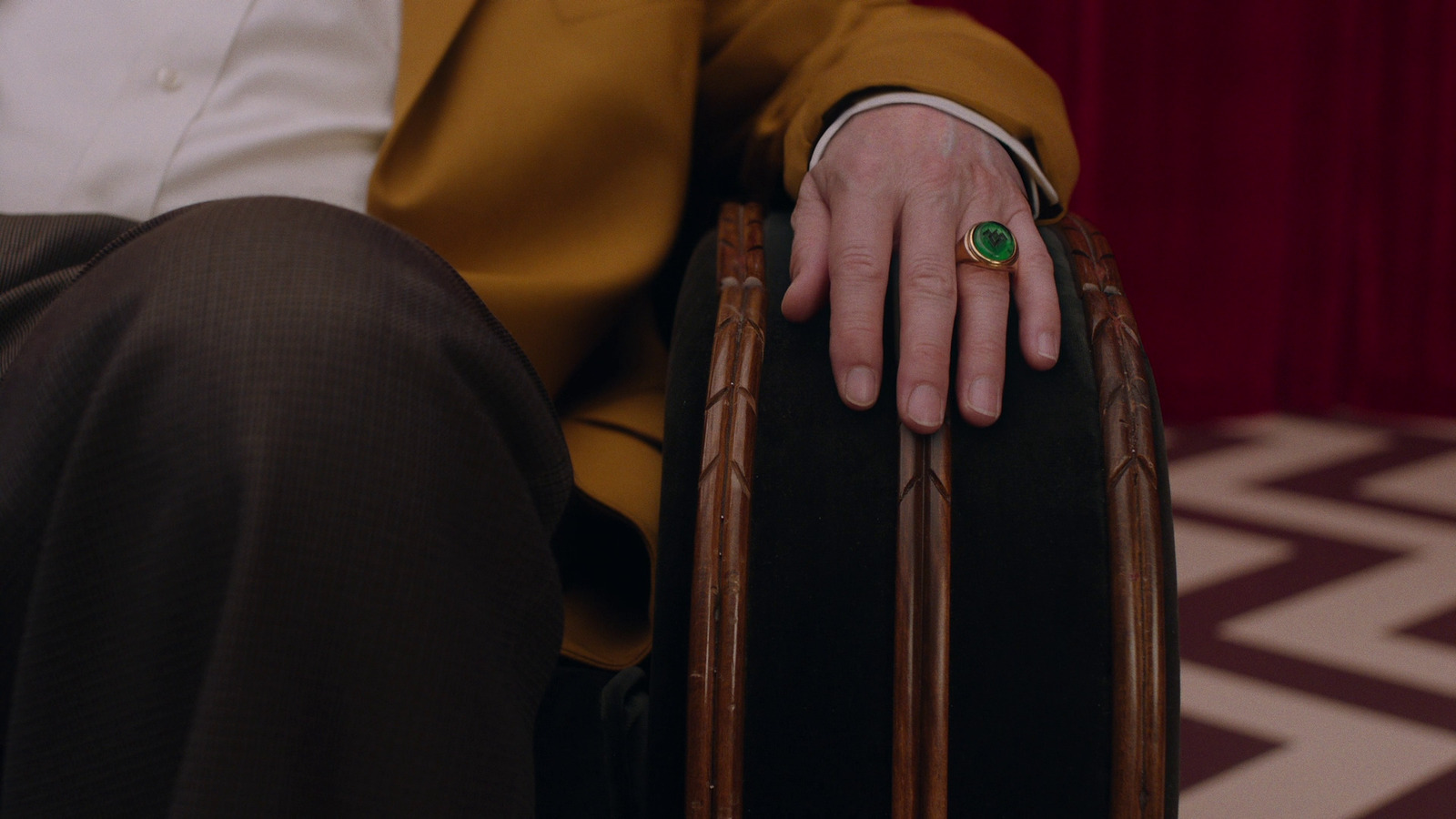
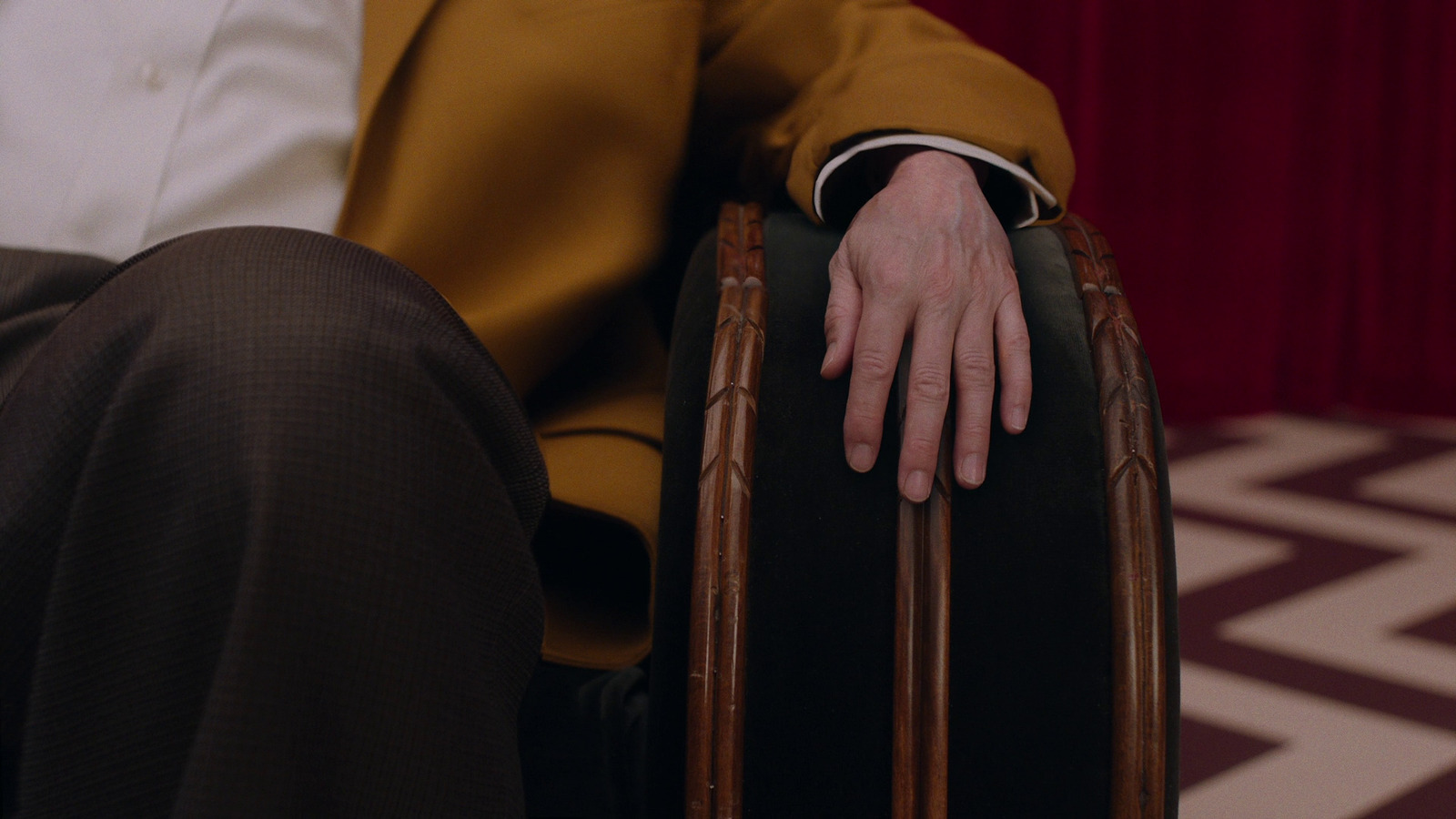
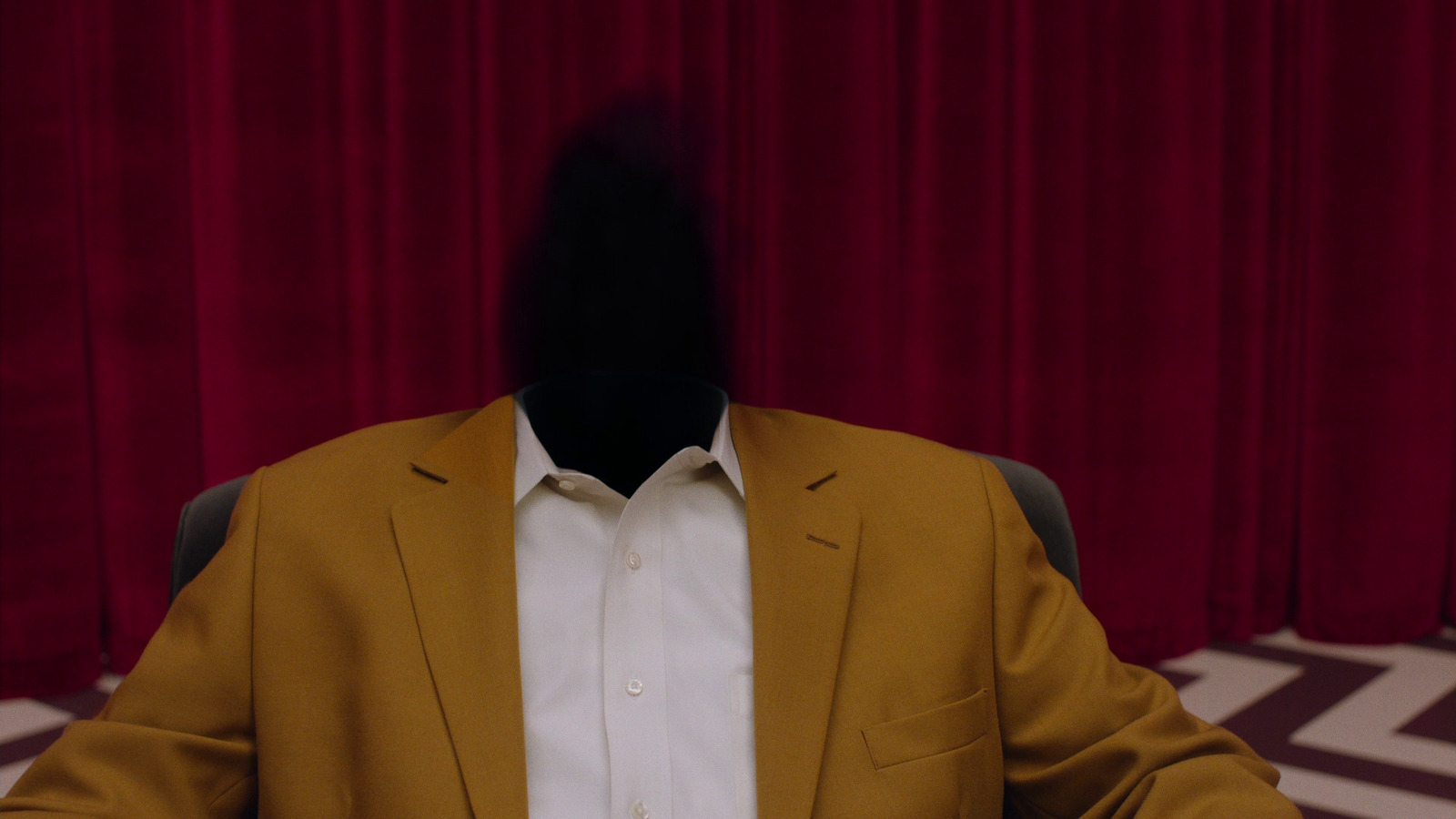
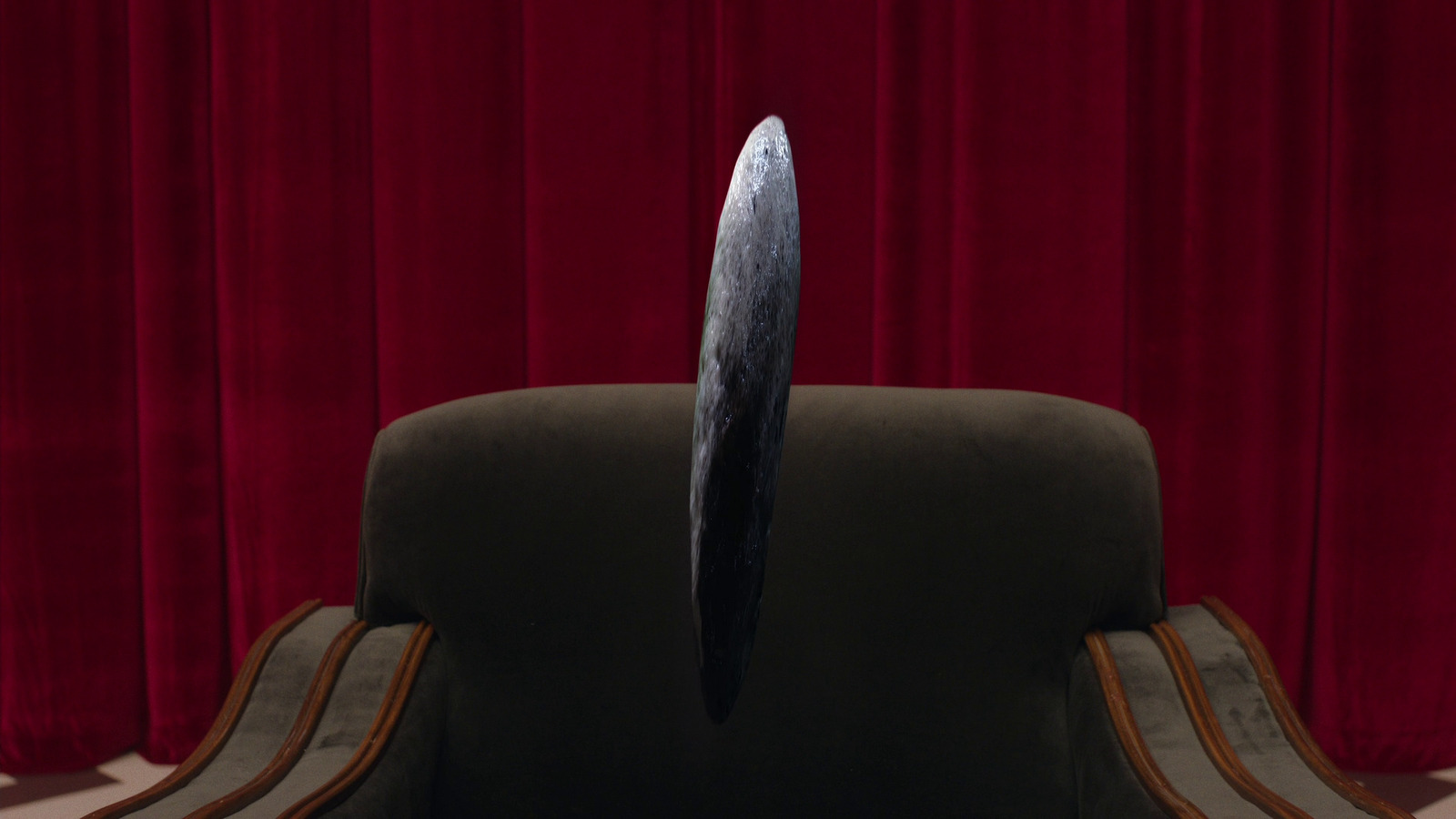
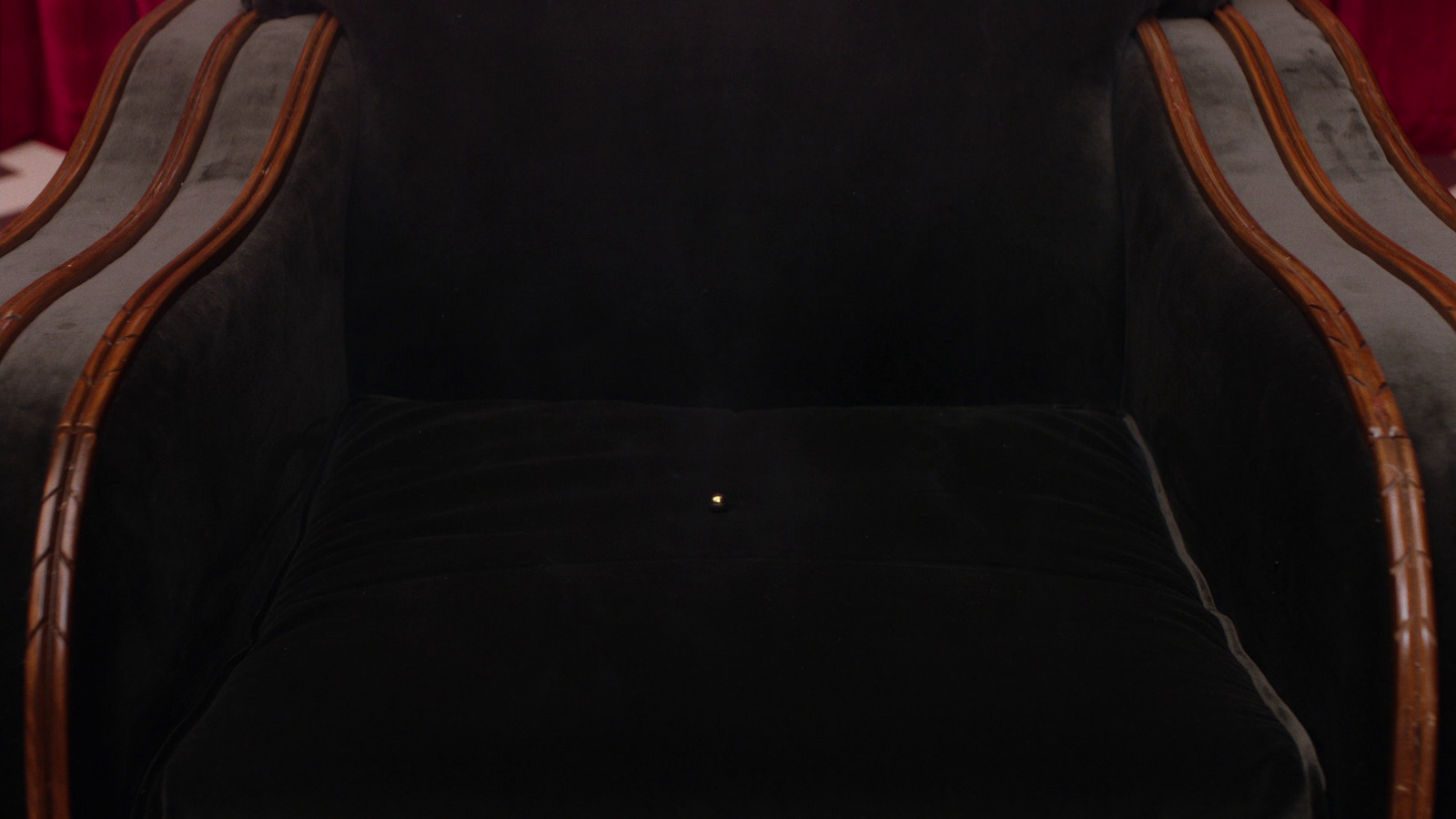
Dougie appears in the Red Room with the conversational habits of an ordinary man who does not understand where he is. Mike says he was manufactured for a purpose and believes that purpose has now been fulfilled. The statement belongs to Mike; the scene does not provide an independent history of Dougie’s creation.
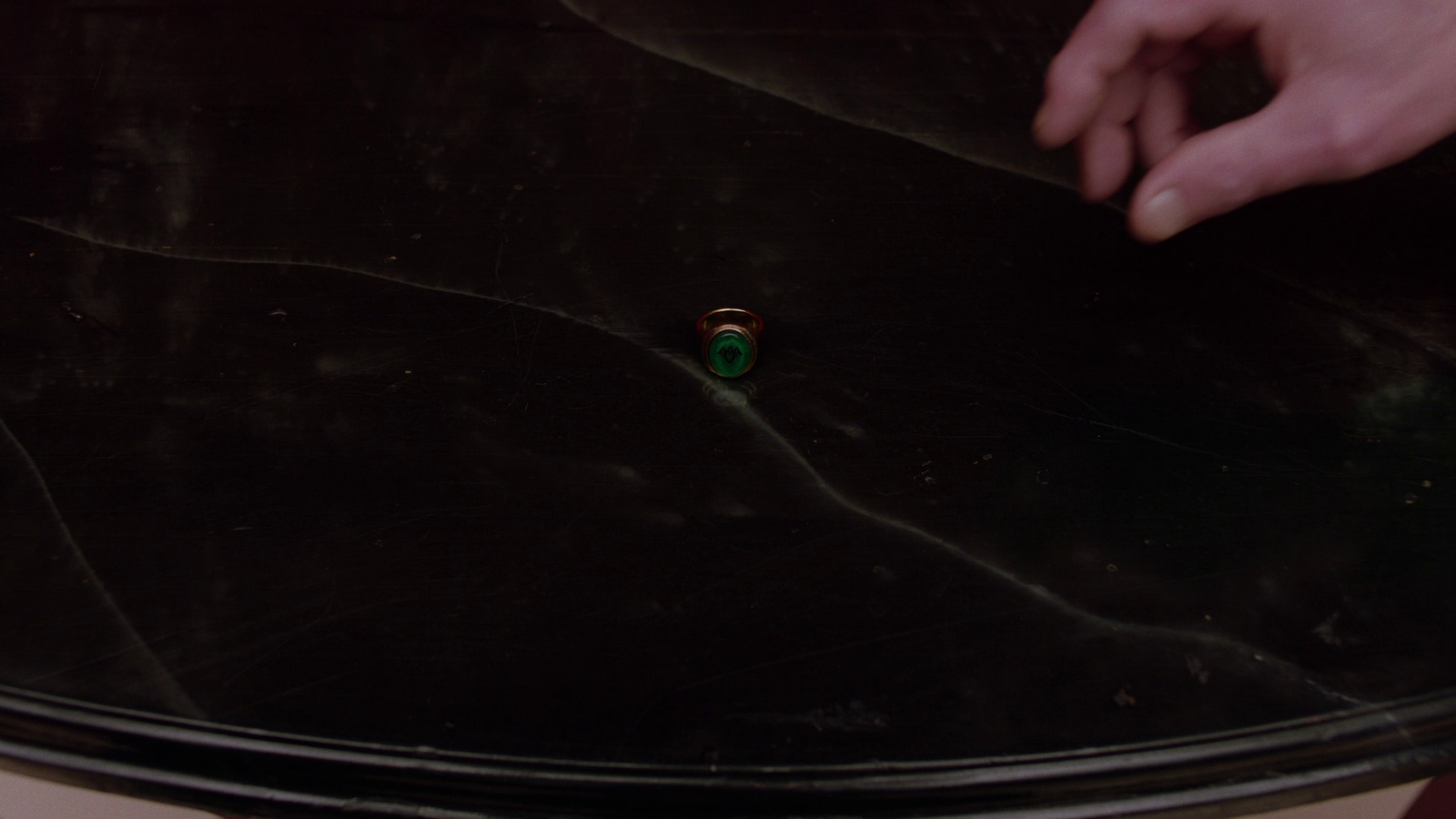
The transformation begins with details small enough to look almost like a costume problem: shrinking hands, oversized sleeves and a collapsing posture. It then replaces the head and body with unstable forms before leaving a tiny gold remnant. Mike retrieves the ring and handles the remaining objects. The patient staging turns disappearance into a sequence of material changes.
Open the scene sequence · 7 frames
Being recognised is not being understood
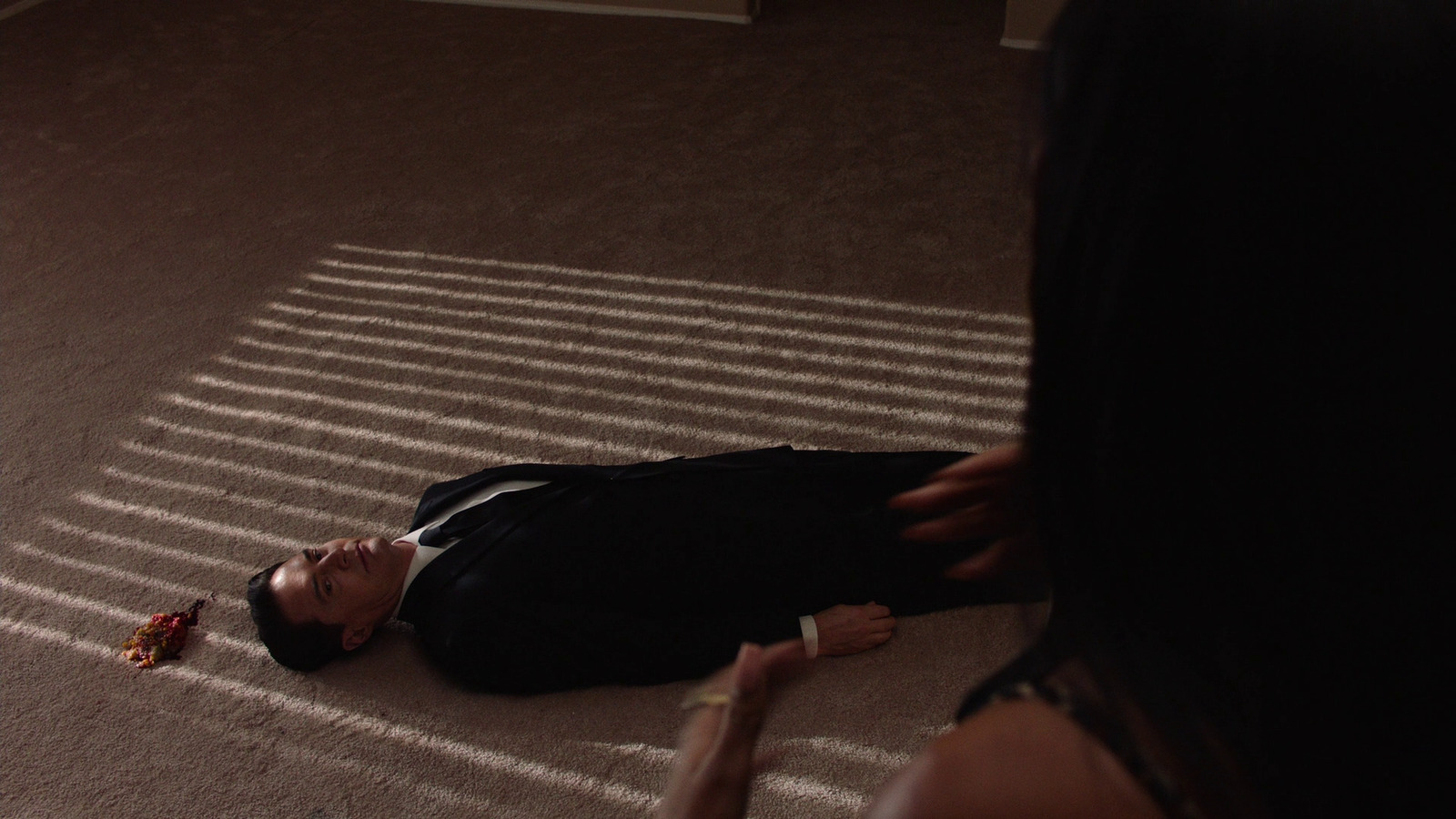
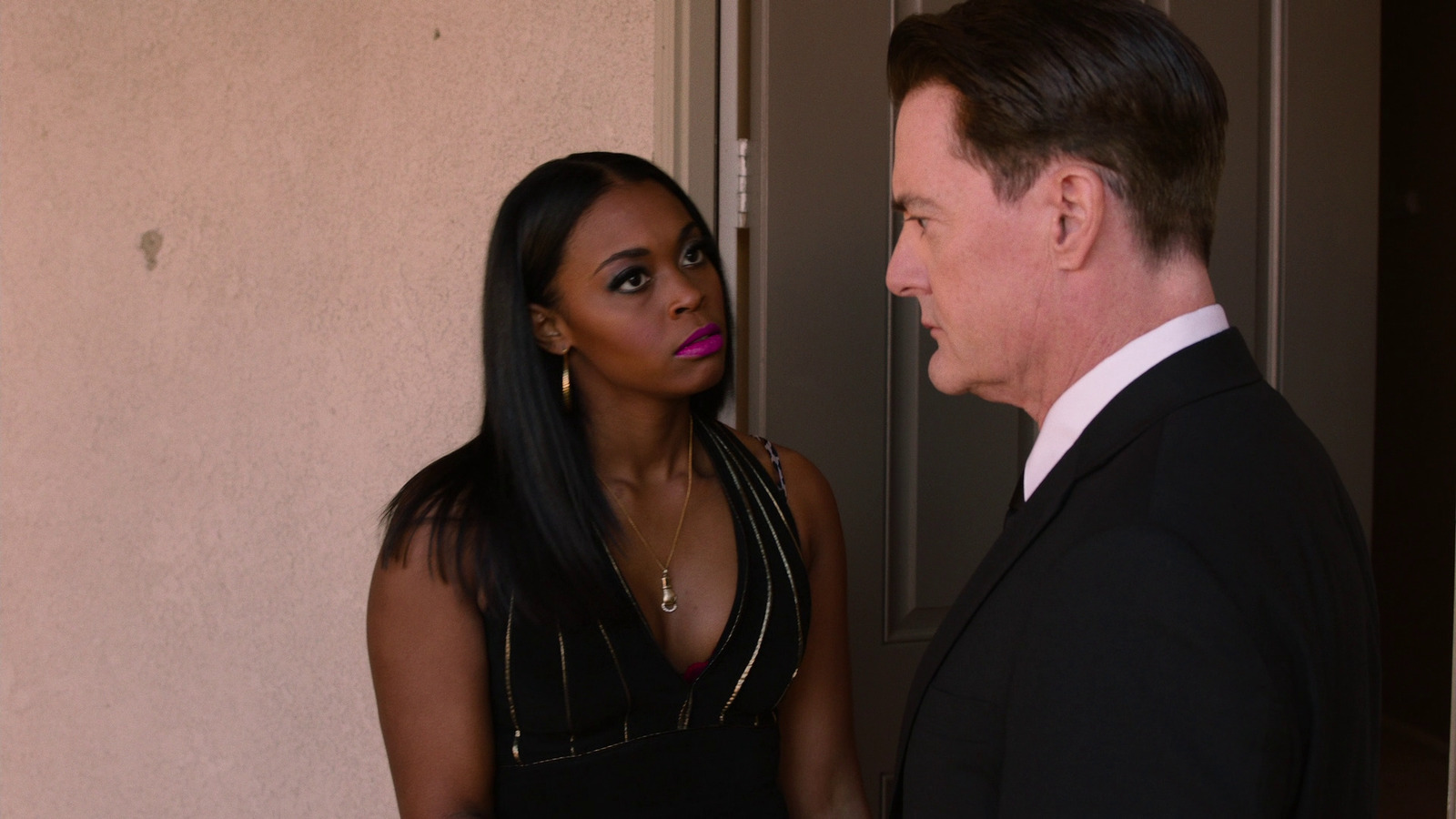
Cooper arrives on a carpet patterned by sunlight through blinds. Jade sees the suit and altered hair but addresses him as Dougie. The scene makes recognition socially practical and factually unreliable: she has good reason to identify the person she expects, while the viewer has seen a substitution she has not.
Her impatience is mixed with care. She retrieves his shoes, prompts his movements and tries to get him safely out of the house. His delays extend ordinary tasks into comic sequences. The comedy depends on MacLachlan’s physical timing, but Jade’s mounting suspicion that he is ill prevents his incapacity from becoming merely a gag.
Open the scene sequence · 1 frame
The body the gunman cannot see
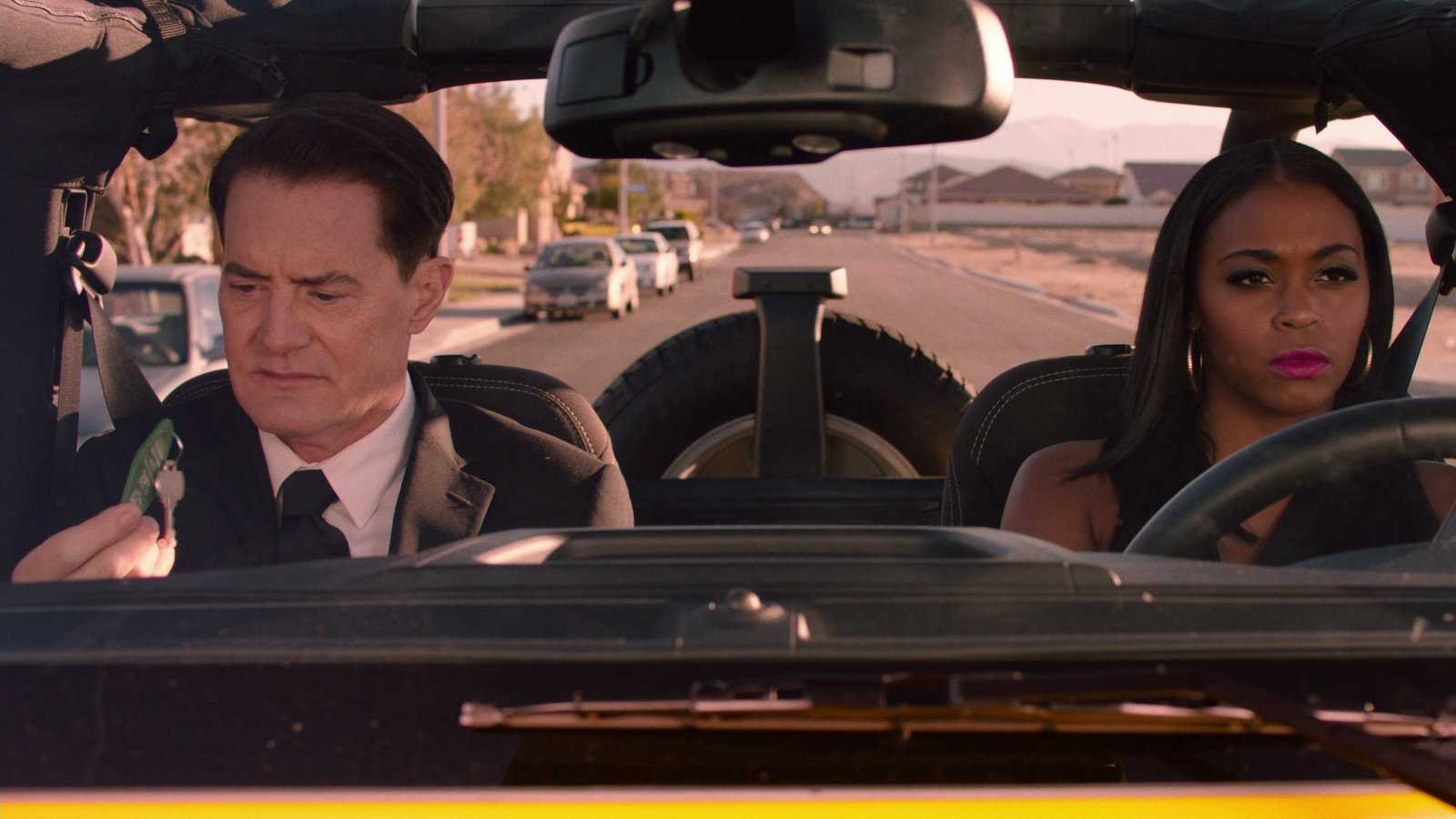
The waiting men read the neighbourhood through cars, windows and radio reports. Cooper bends down in Jade’s vehicle at the crucial moment, making a mundane movement decisive within the surveillance setup. The viewer can connect his action with the gunman’s missed view even though Cooper gives no sign of planning an escape.
Across the street, a child watches while a woman repeatedly calls One-one-nine
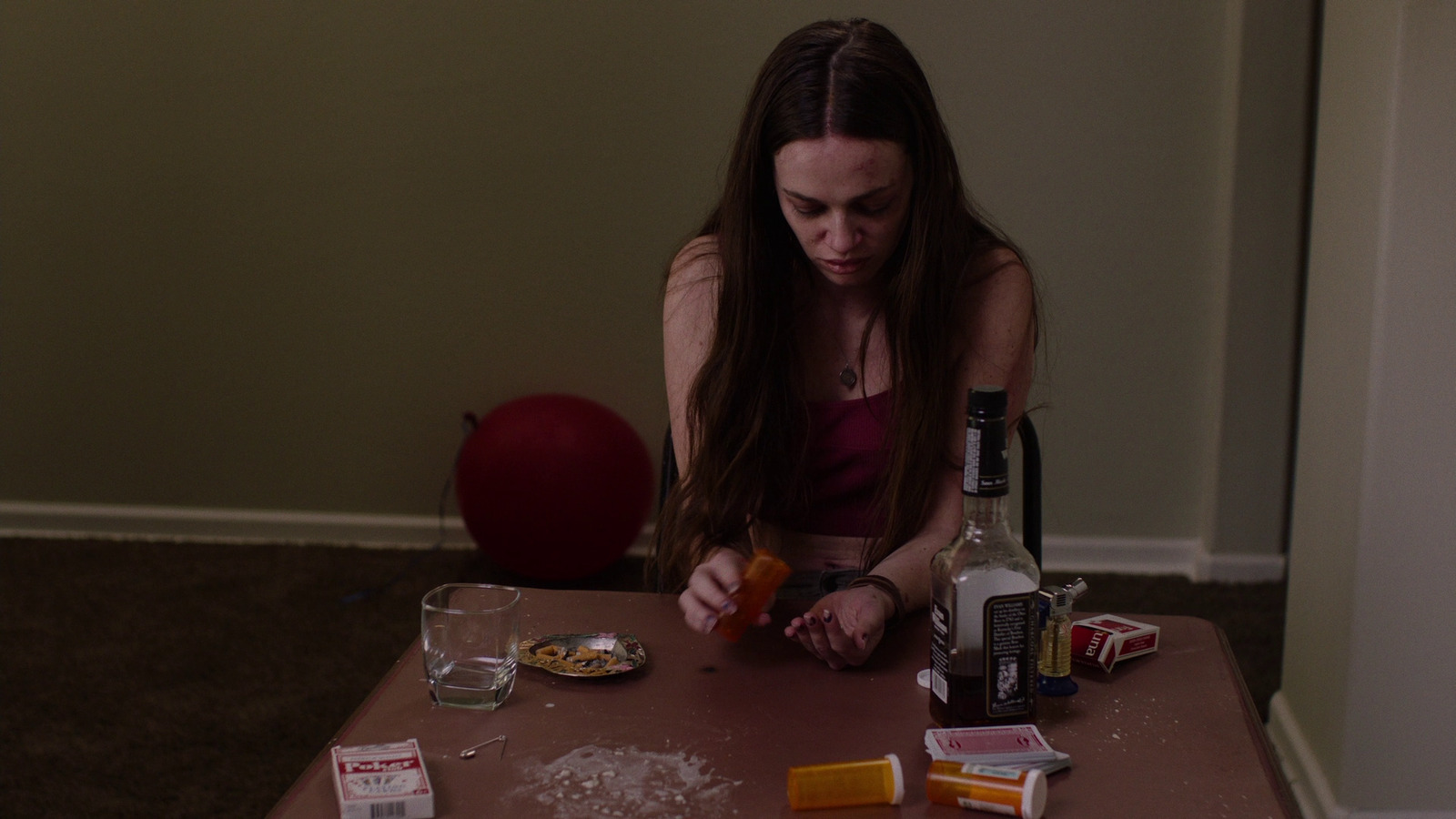
. The reversed order recalls an emergency number without becoming an effective call for help. The later officers at Mr. C’s wreck make an ordinary emergency request, but recoil from what they find inside. Help is repeatedly available in form and obstructed in practice.
Open the scene sequence · 1 frame
How can something missing be found?
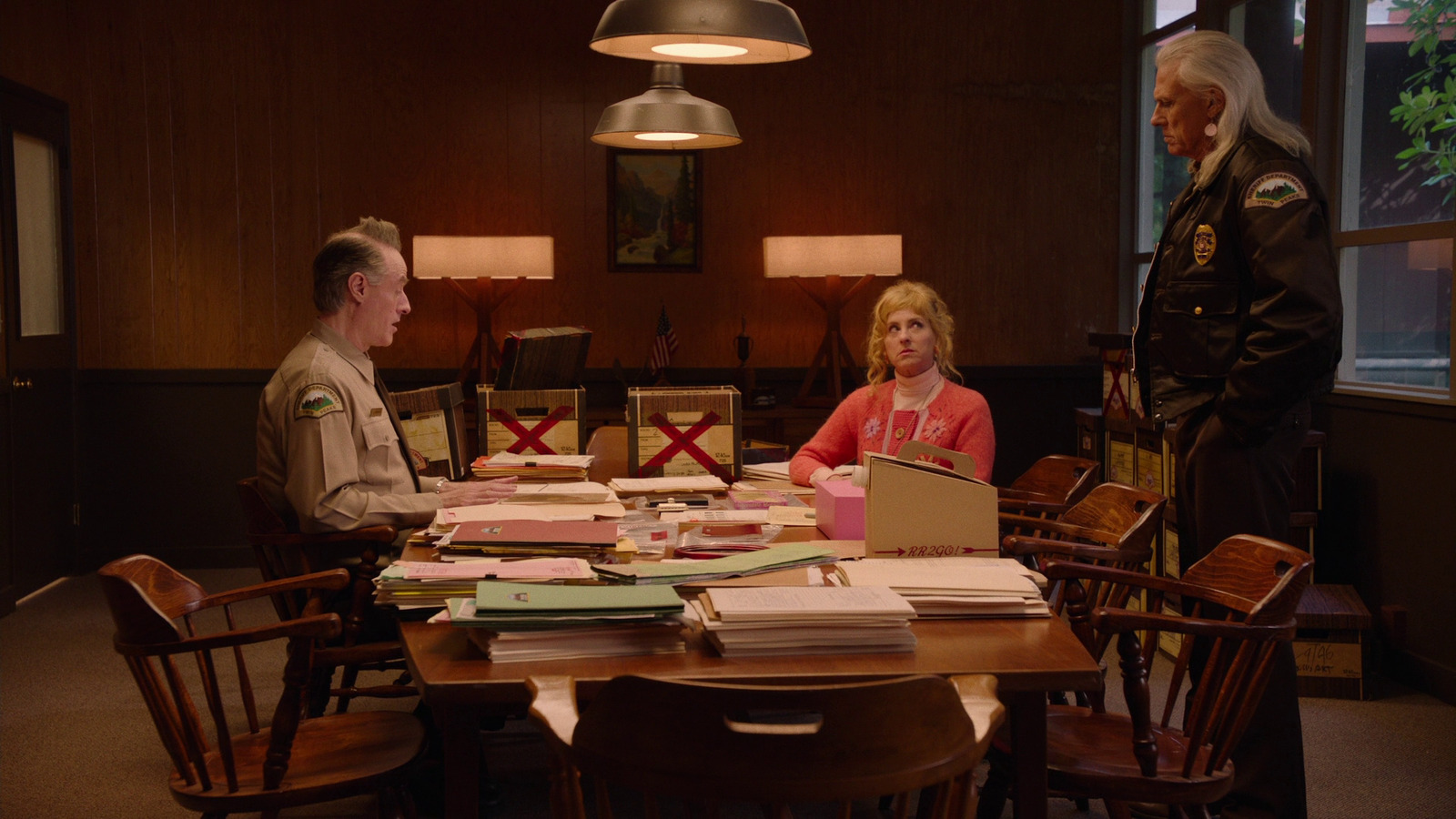
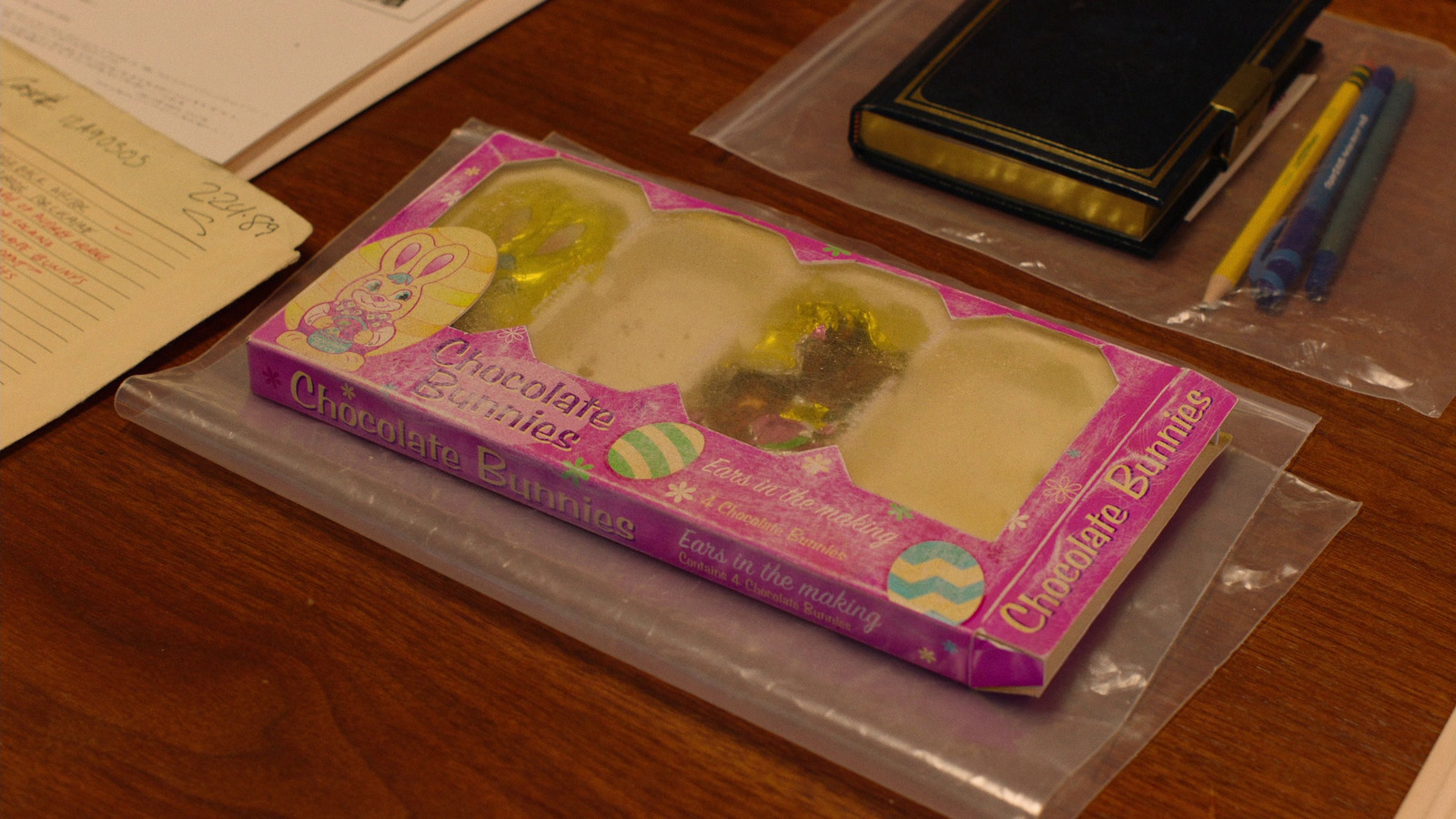
Hawk, Andy and Lucy arrange old evidence on a table. Their conversation turns the Log Lady’s instruction into a problem of method: how can they recognise an absence, and what does Hawk’s heritage have to do with finding it? The scene makes the difficulty of interpretation explicit.
Lucy’s chocolate-bunny confession offers an absurdly concrete answer. Hawk repeatedly has to distinguish a missing object from the relevant missing thing. His patience provides the scene’s centre. The joke also cautions against a viewer’s tendency to turn any conspicuous detail into the solution to every mystery.
Open the scene sequence · 1 frame
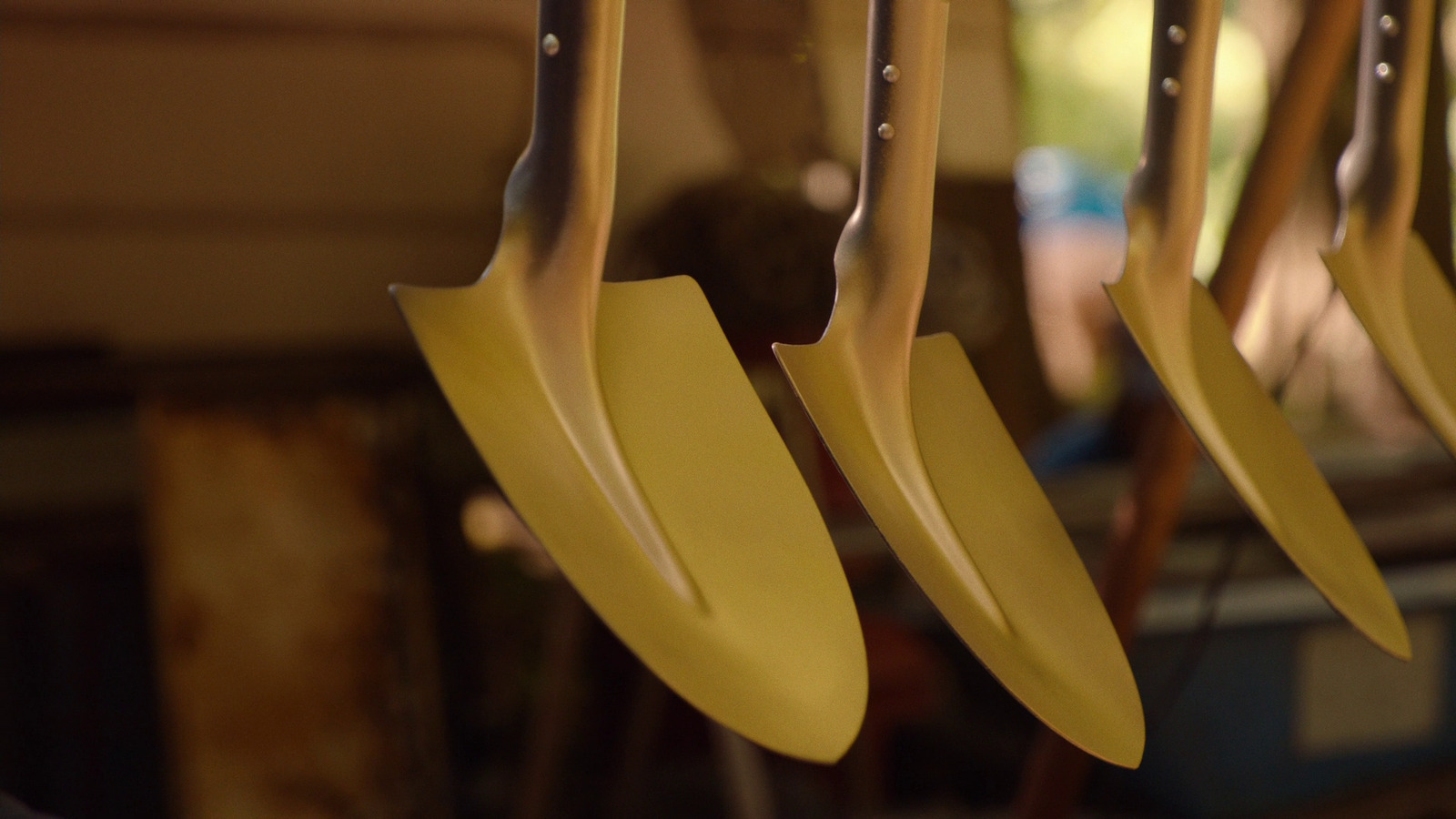
The work of making gold
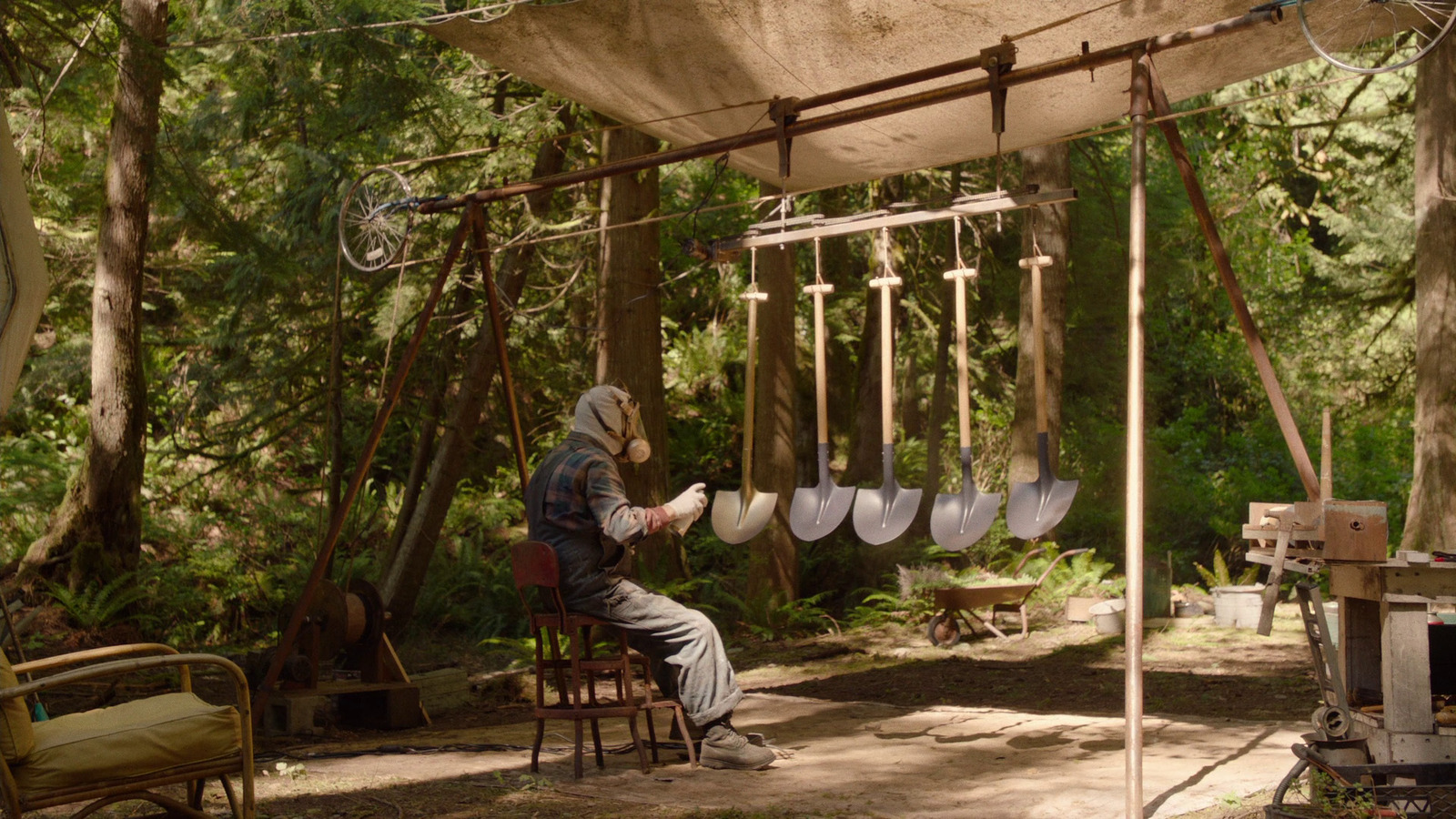
Jacoby’s shovel painting is given enough time to become a process rather than a quick eccentricity. The suspended blades, simple rotating mechanism, spray-can rattle and repeated passes organise the scene around labour. Gold is visibly being applied to a utilitarian surface.
The episode places this manufactured gold after Dougie’s transformation and before the casino wins. That sequence invites a comparison between kinds of value—made, inexplicable and awarded—without establishing that the objects share a literal supernatural origin. The image is most productive when its material specificity is retained.
Open the scene sequence · 1 frame
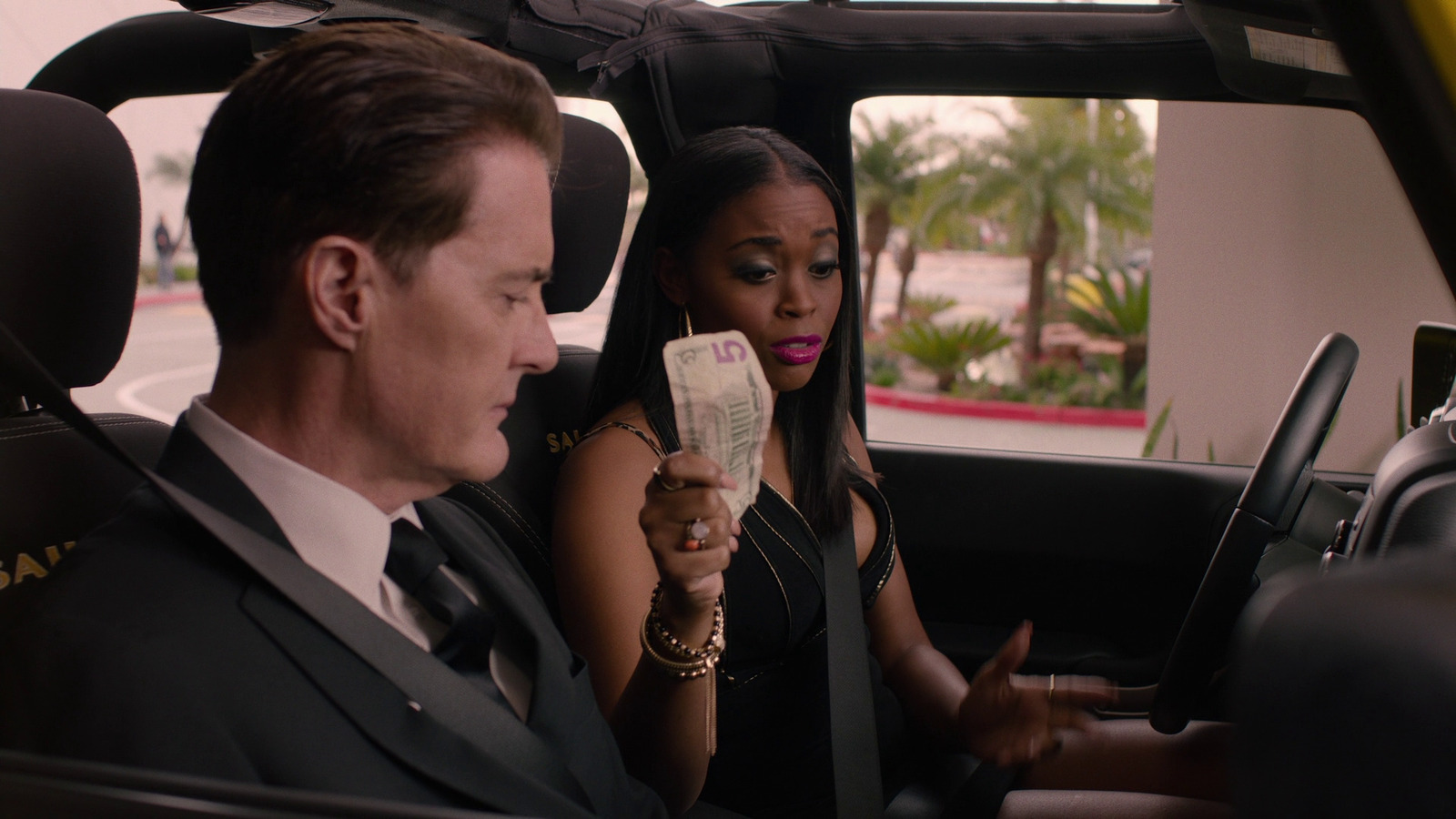
A request that becomes a repeated sound
Jade gives Cooper five dollars and tells him to call for help, suggesting a doctor because she thinks he may have suffered a stroke. Her diagnosis is a worried character’s hypothesis, not the episode’s medical explanation. Cooper repeats words from her instructions but does not convert them into the intended action.
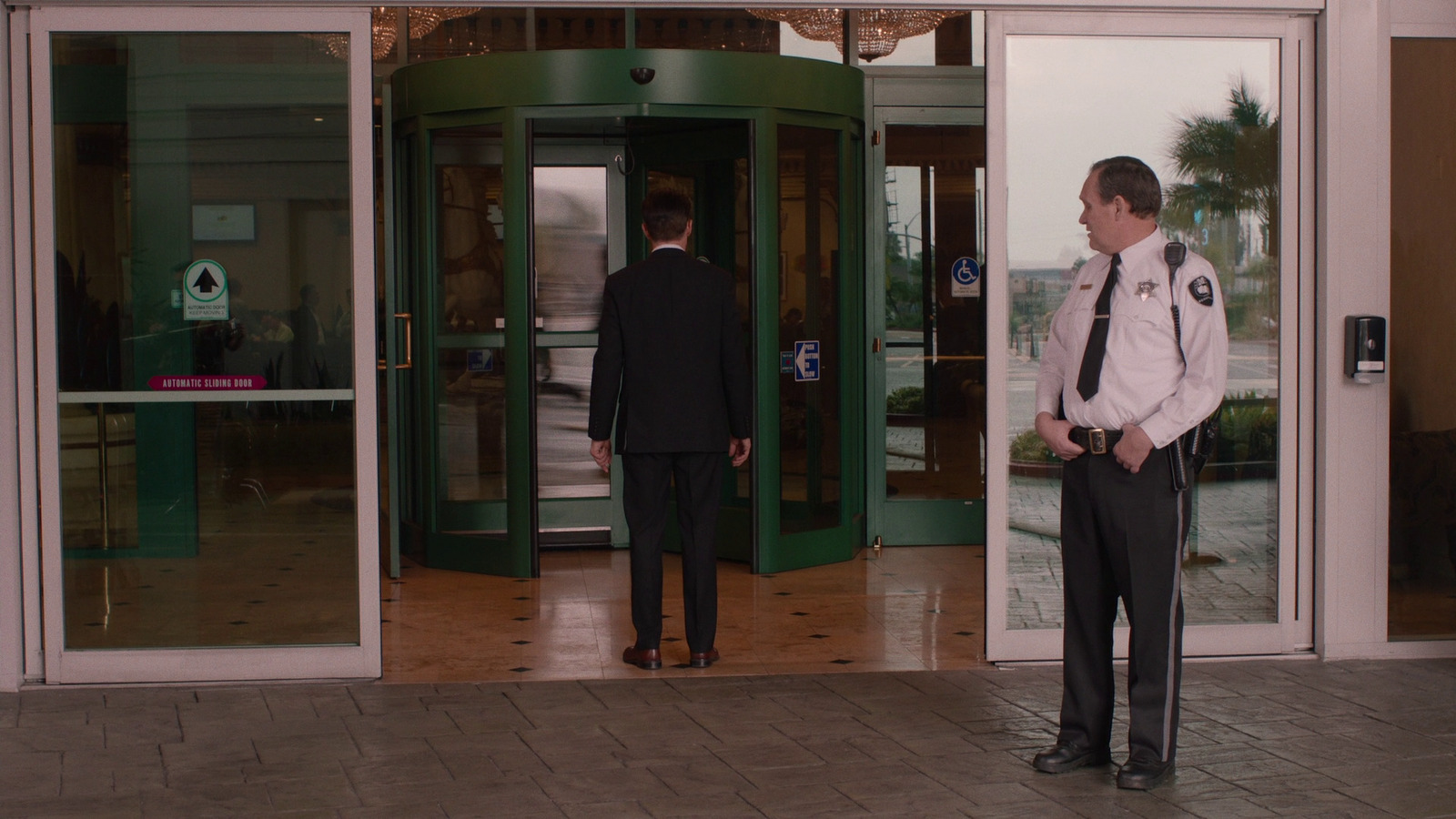
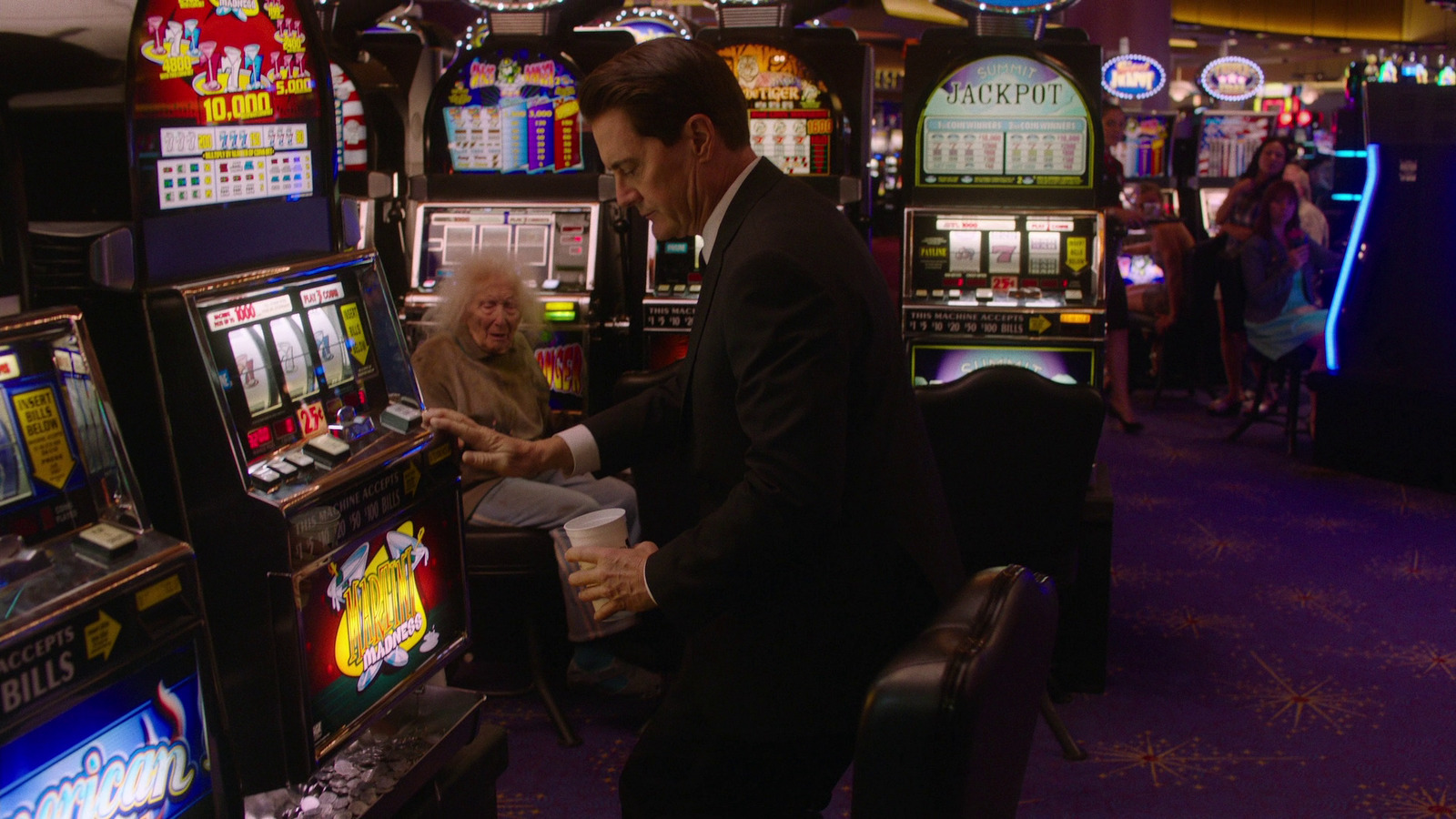
The revolving door makes the difficulty visible. Inside, casino staff interpret him within the business they know: a visitor needs change and wants to play. His repeated request is absorbed into that system. The scene quietly distinguishes being attended to from having one’s actual need understood.
Open the scene sequence · 1 frame
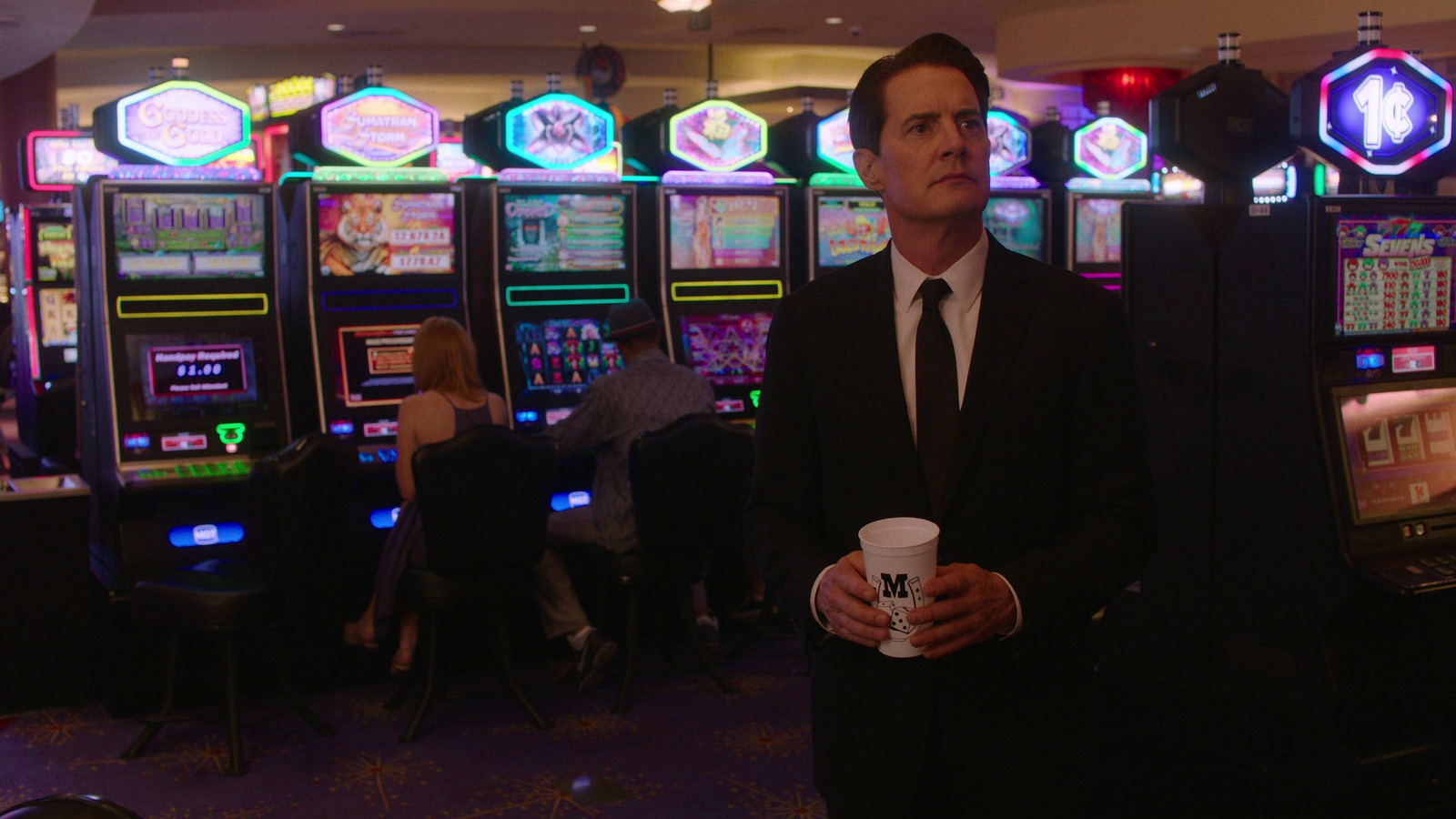
A private signal among public machines
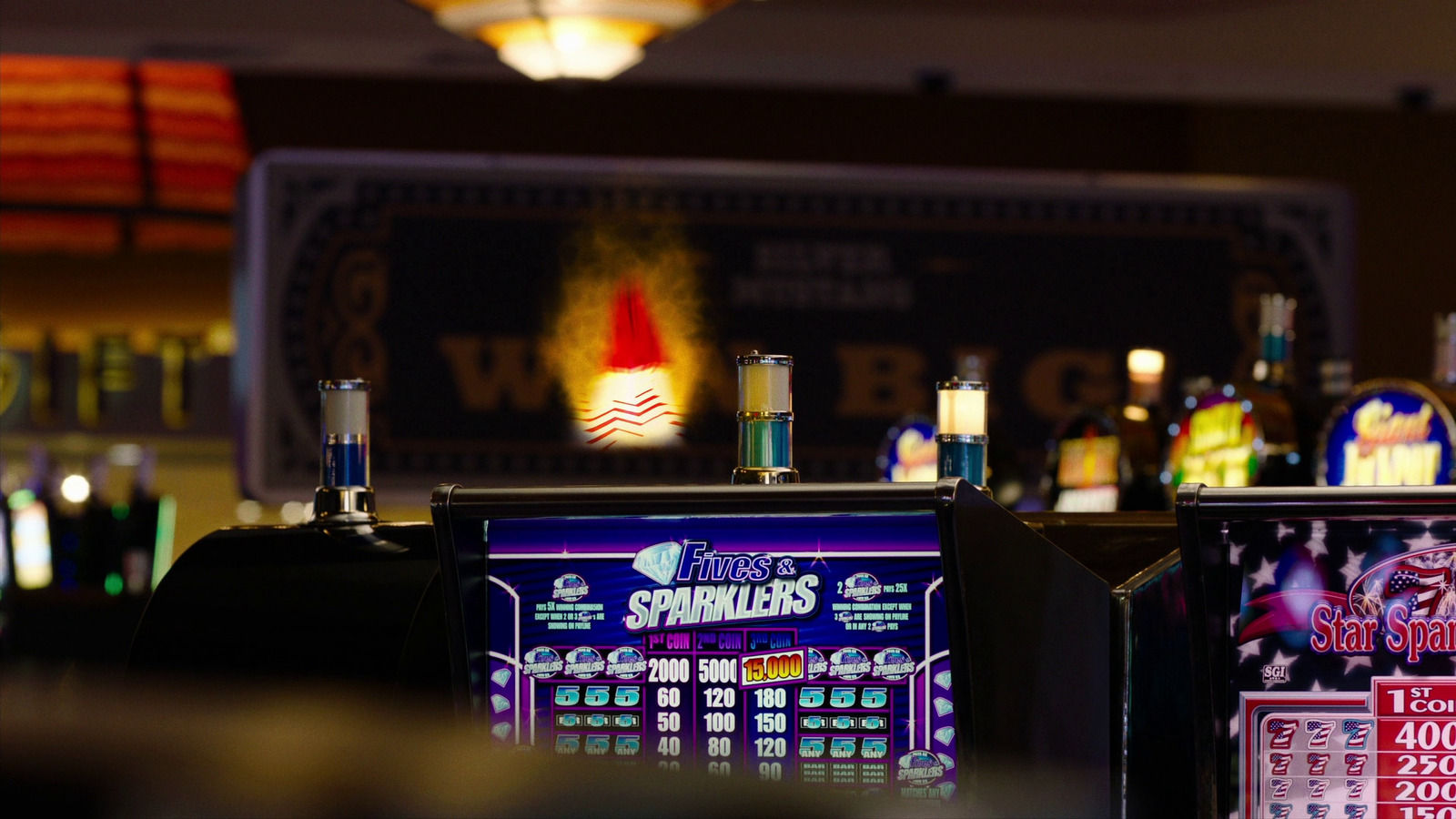
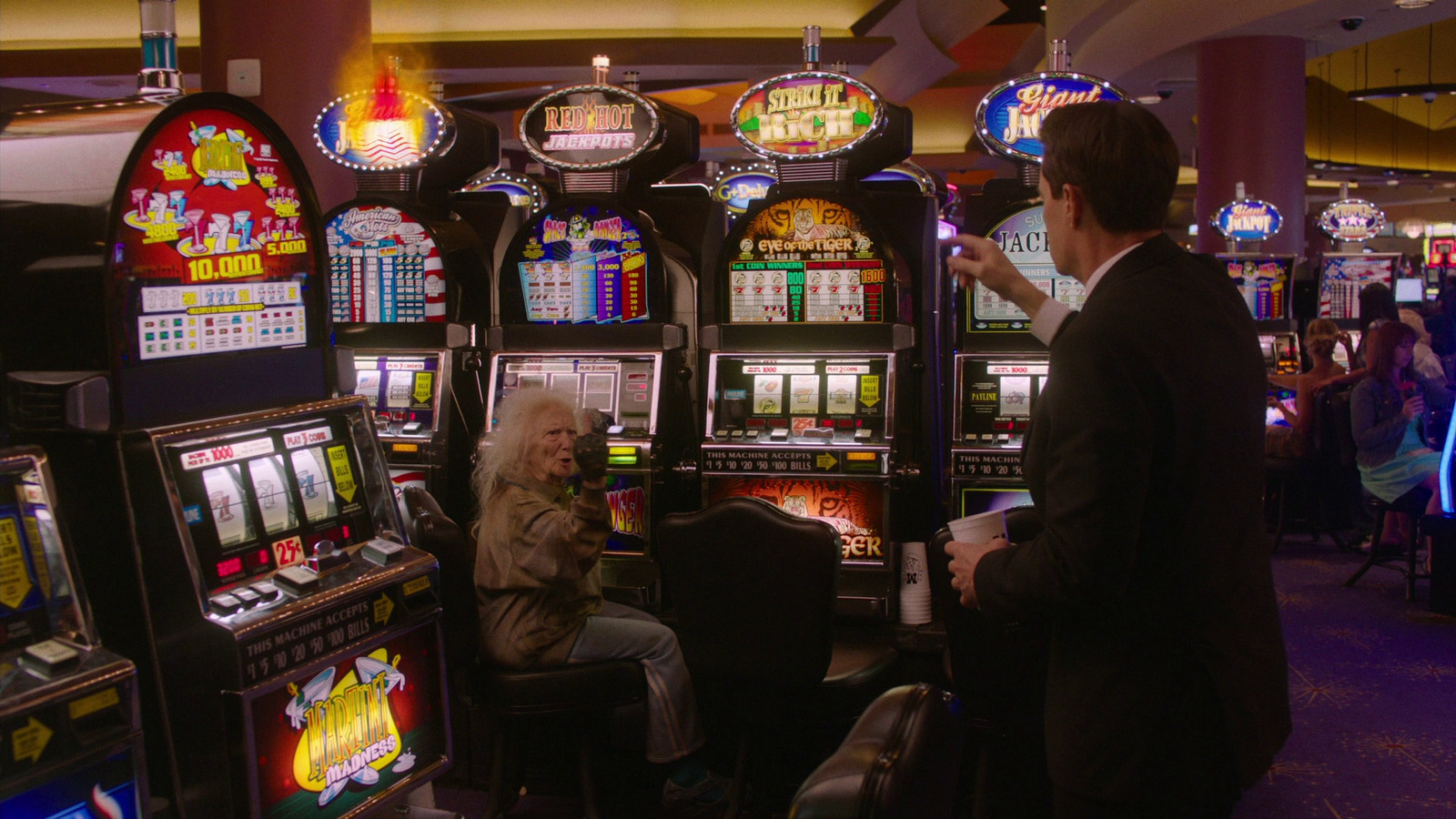
The casino is full of instructions, bright displays and competing sounds, yet the signals that guide Cooper are small visions of red curtains above selected machines. Their appearance introduces another register into the room’s commercial spectacle. The electric-guitar cue and atmospheric sound separate the visions from the machines’ bells and voices.
His success grows out of minimal actions: follow, insert, pull, wait. The attendant congratulates him and offers a larger bucket when he repeats his request for help. Cooper also directs another player towards a machine, extending the mysterious assistance beyond himself. This passage should be read alongside Part 4’s change from public celebration to managerial scrutiny.
Open the scene sequence · 3 frames
Pictures that do not become an explanation
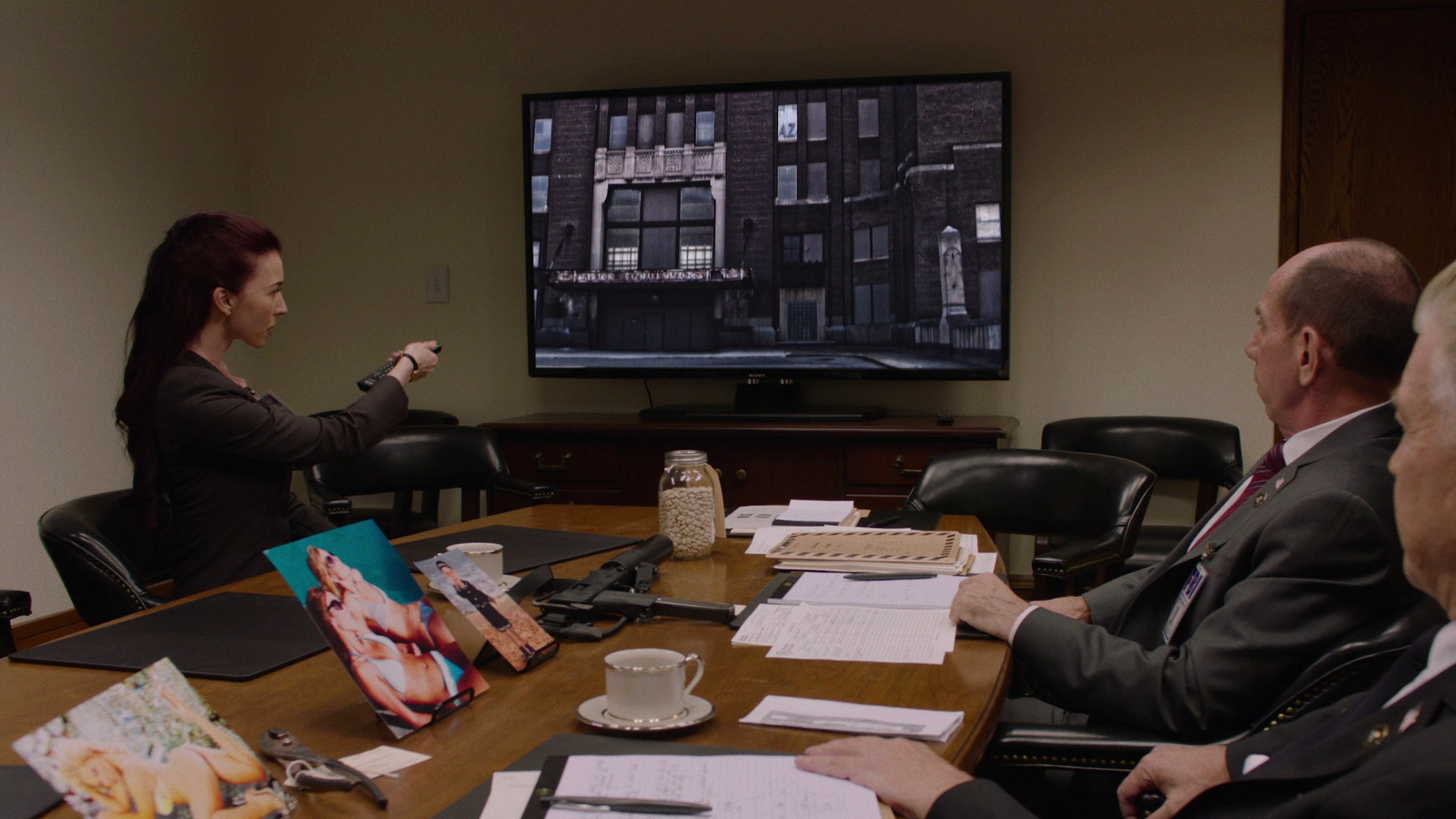
The FBI meeting first turns a congressman’s scattered objects into an official interpretive puzzle. Tammy then presents a much more disturbing archive: the cameras around the New York glass box, images of the victims and a fleeting shape recorded before the killings.
Her report is careful about limits. The owner and guards have not been located; other cameras did not show the same thing; forensic tests supplied none of the usual traces. Evidence can be abundant and still fail to produce a coherent event. That gap connects the professional investigation to Hawk’s table, but the violence in the images changes the emotional weight.
Cooper’s name redirects the investigation
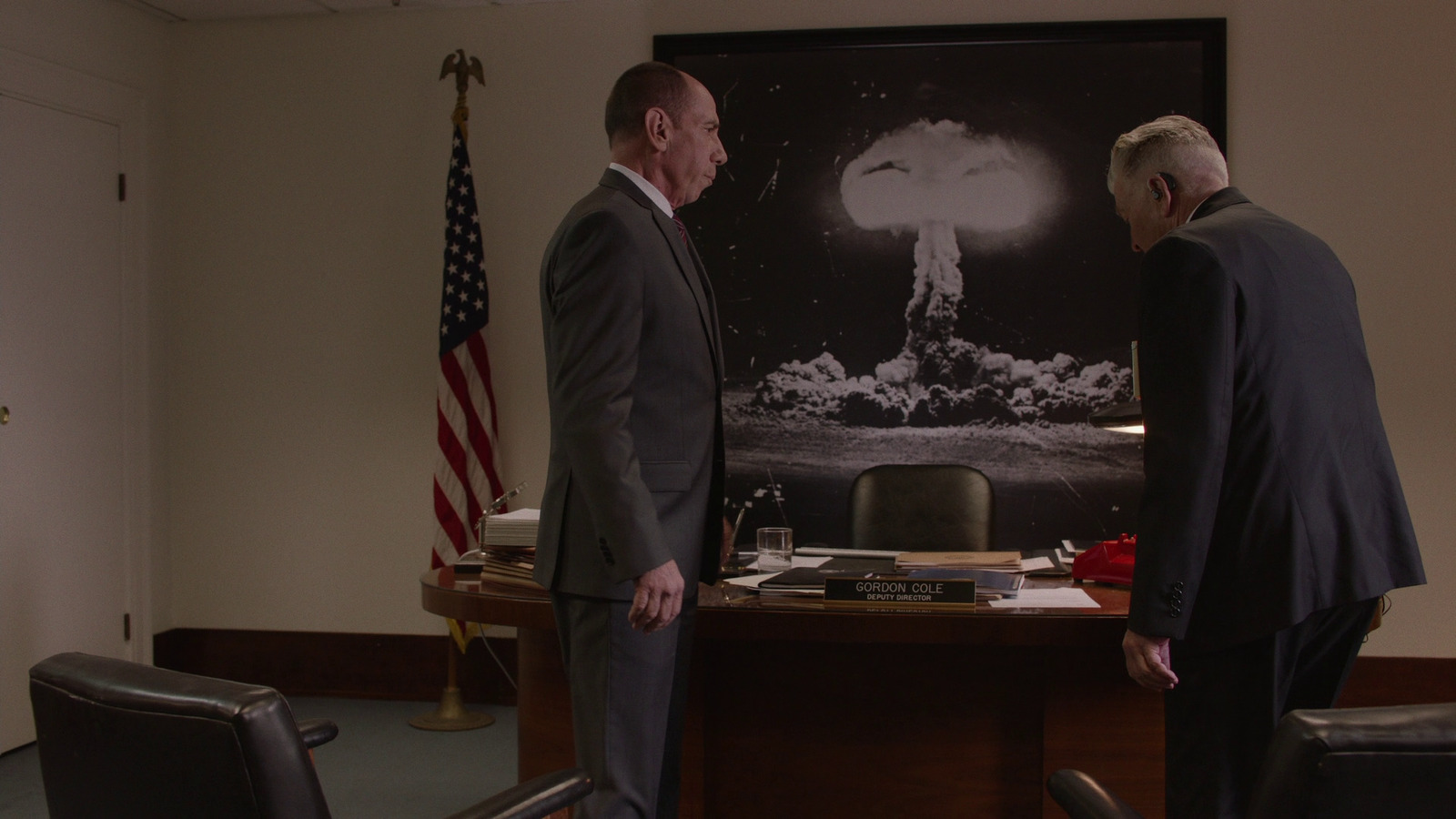
An assistant announces a call about Cooper, interrupting the glass-box discussion. Gordon and Albert move into another room and begin negotiating what the name might mean after so long. The hearing difficulties and abrupt repetitions make their communication imperfect even at this apparently decisive moment.
Gordon arranges the next morning’s interview in South Dakota and brings Tammy into the journey. Albert’s dry closing response resists the grandeur of Gordon’s statement about existence. The exchange sets up Part 4’s test of recognition: a known face and familiar name will not be sufficient proof.
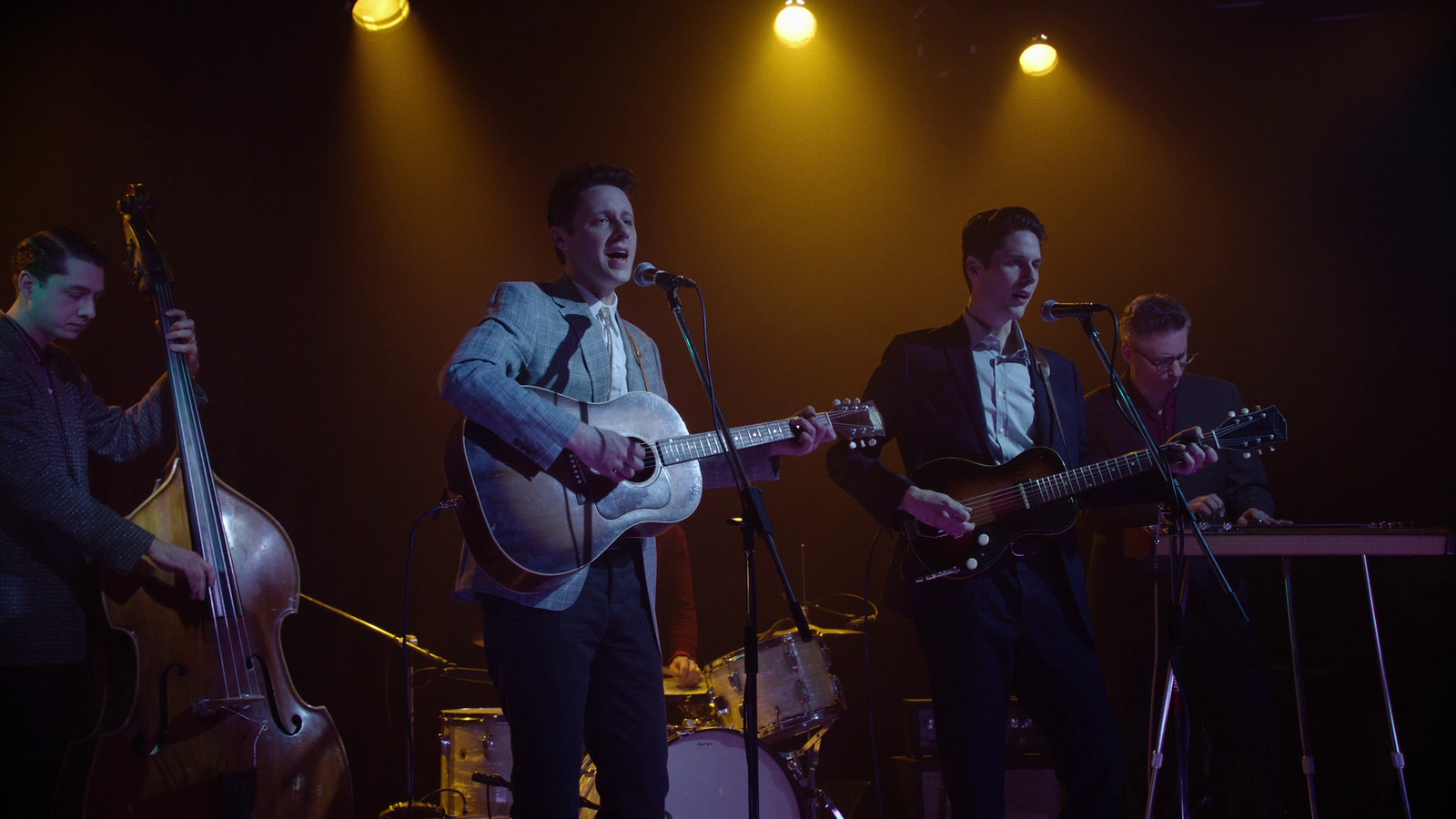
A song as a different kind of passage
The Cactus Blossoms’ performance of Mississippi changes the episode’s mode of attention. After distorted voices, requests and investigative reports, two singers share a stage and a continuous musical space. The performance supplies a resting place without solving the events that precede it.
Its position changes in the combined presentation: the music continues without the standalone ending’s overlaid credits before the story proceeds into the casino material of Part 4. The song therefore acts both as an ending and as a bridge, depending on the presentation.
Sound, repetition and the difficulty of asking
The purple room, 02:30–12:40. Distant water, reverberant vocal sounds, electrical hiss and the persistent pounding differentiate spaces before their geography is clear. Naido’s gestures carry meaning that ordinary dialogue cannot. The off-screen pounding generates a threat without a revealed body. The quiet outside the room changes the pressure but does not establish safety.
The crossing, 14:36–26:25. Electrical scratching, sputtering and abrupt changes in intensity join the car, the mechanism and the bedroom. Bodies answer with groans, gagging and vomiting. The design makes the passage both mechanical and painfully physical. A later officer’s reaction to the car adds a sensory consequence that cannot be shown directly: its overwhelming smell.
Repeated words, 26:26–49:02. Cooper’s echoes differ from Mike’s altered speech. One asks the viewer to decipher a statement; the other shows a person repeating language without reliably acting on it. Jade supplies a practical instruction, the guard supplies a direction and the cashier supplies a gaming transaction. Each responds within a different social frame.
Gold and machinery, 39:09–51:28. Jacoby’s spray and rotating apparatus give repetitive work its own rhythm. The casino answers with bells, clinks, alarms and automated congratulations. The red-curtain visions interrupt that bed of noise with a recognisable musical cue. The soundscape helps distinguish the source of guidance from the system dispensing money.
Music and credits. The ending identifies Mississippi, written by Jack Torrey and performed by The Cactus Blossoms, and Dream Recall, by David Lynch and Dean Hurley. David Lynch receives the sound-design credit; Ron Eng and Dean Hurley are credited as sound supervisors and re-recording mixers. Willard Overstreet is sound-effects editor and supervising Foley editor; Luke Gibleon is sound editor; David A. Cohen and Kerry Dean Williams are dialogue editors. [1]
A closer view of the Roadhouse performance
The Cactus Blossoms — Mississippi
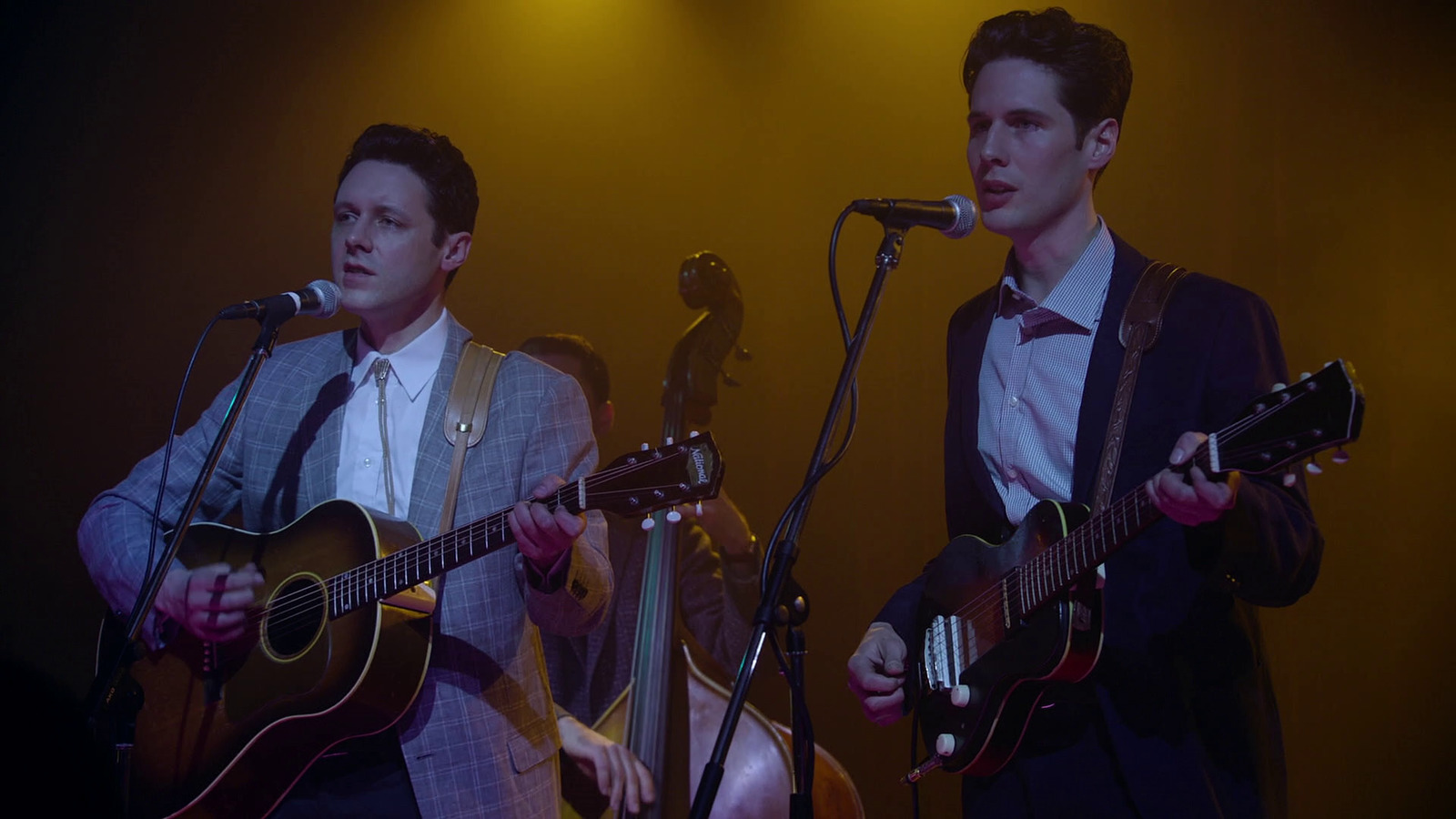
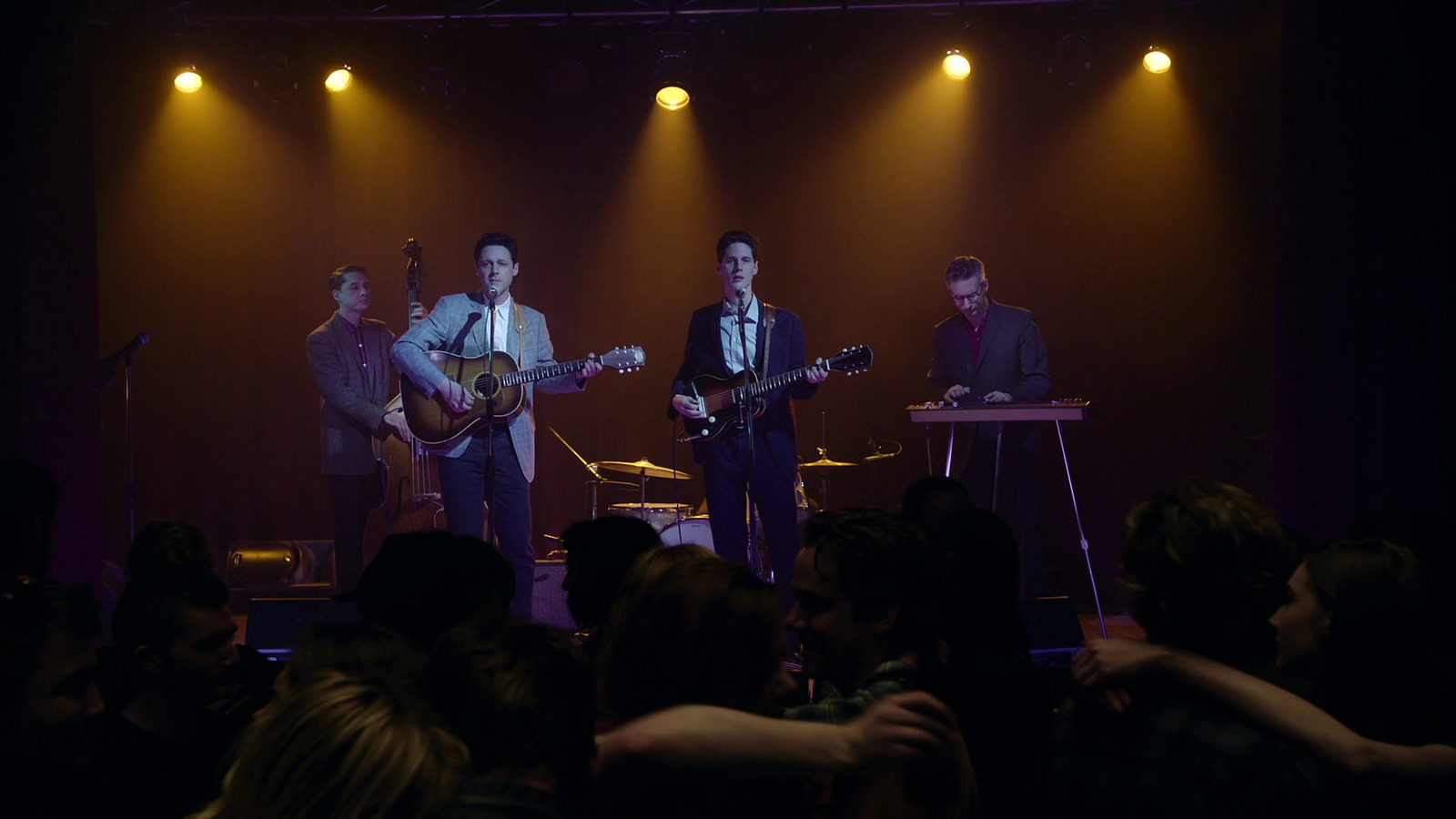
The Cactus Blossoms are repeatedly framed as a pair: two microphones, two guitars and bodies angled toward the same room. The wider images also retain the upright bass, drums and keyboard, while audience members dance in the foreground. Amber light gives the number a different temperature from the blue setting of “Shadow.”
Open the Mississippi performance study · 2 frames
Read the full performance comparison →
Source: Roadhouse Music — The Cactus Blossoms — Mississippi, 00:00–04:14, in Twin Peaks: From Z to A. These timings identify the separate performance edit; the episode context is examined above.
Focused effects studies
The sea, the platform and Major Briggs
BUF describes a computer-generated black sea beneath a violet, bubble-like sky. Its account of the platform sequence specifies tracking, green-screen extraction and wire removal. Briggs’s moving head was reconstructed from photographs of Don S. Davis from the earlier series, then animated and given a stretched, partly transparent appearance. These are documented production methods; the meaning of the encounter remains open. [2]
Open the sea and platform study · 4 frames
A person reduced to unstable matter
The sequence proceeds from a recognisable body to shrinking hands, a blackened head, a floating form and the small gold remainder. BUF identifies its own contribution narrowly: the beginning of the transformation, including smaller hands and sinking shoulders, achieved with a two-dimensional effect. Its note should not be expanded into an unsupported attribution for every subsequent image. [2]
Open Dougie’s transformation · 6 frames
Through an outlet, back into a body
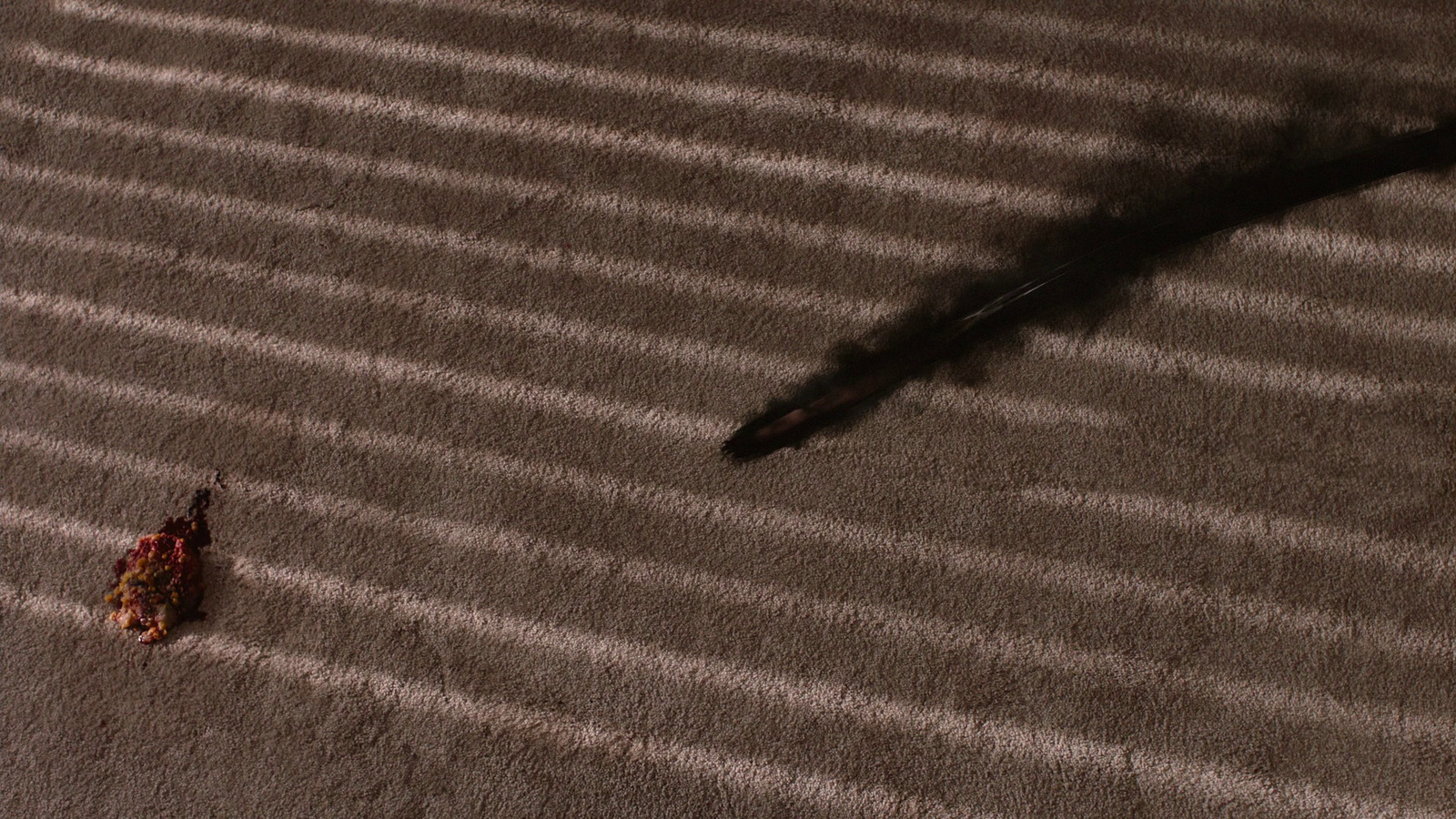
The wide view and the close view give the outlet two scales: a small domestic fitting and an impossible route for a human body. BUF records attraction, deformation and re-formation as related effects. It also explains a creative revision: the early stretched-body treatment struck Lynch as too comic, so smoke was added to obscure the distortion during the passage and rematerialisation. The visible smoke is therefore part of the effect’s tonal design, not merely a cover for a technical join. [2]
Open the electrical passage · 5 frames
Making the images, shaping the performances
MacLachlan’s three bodies. Mr. C uses tension and resistance; the yellow-jacketed Dougie displays ordinary bewilderment; the returned Cooper moves through delayed responses and prompts. Their shared face invites comparison, while posture, rhythm and costume keep their situations separate. The scene studies follow those differences before imposing a single explanation on them.
Working with an incomplete picture. In the 2017 Comic-Con conversation, Kyle MacLachlan distinguishes his own occasional backward movements from the backward dialogue performed by others in the Lodge scenes. He also says he encountered the finished Arm alongside the audience. That testimony is valuable as a reminder that performance and the final effects image need not have been available to the actor at the same time. It does not establish the production method of every gesture in Part 3. Read the performance testimony with Part 2. [3]
A precise production trail. BUF’s notes are unusually useful because they identify individual operations and the limits of the company’s contribution. They allow the dossier to distinguish an observed effect from an inferred method. The cinematography discussion with Peter Deming adds a wider account of Lynch’s approach to lighting and image-making; its specific description of the blue airfield belongs with Part 4.
Preparing the impossible: a ring, a body and a pull
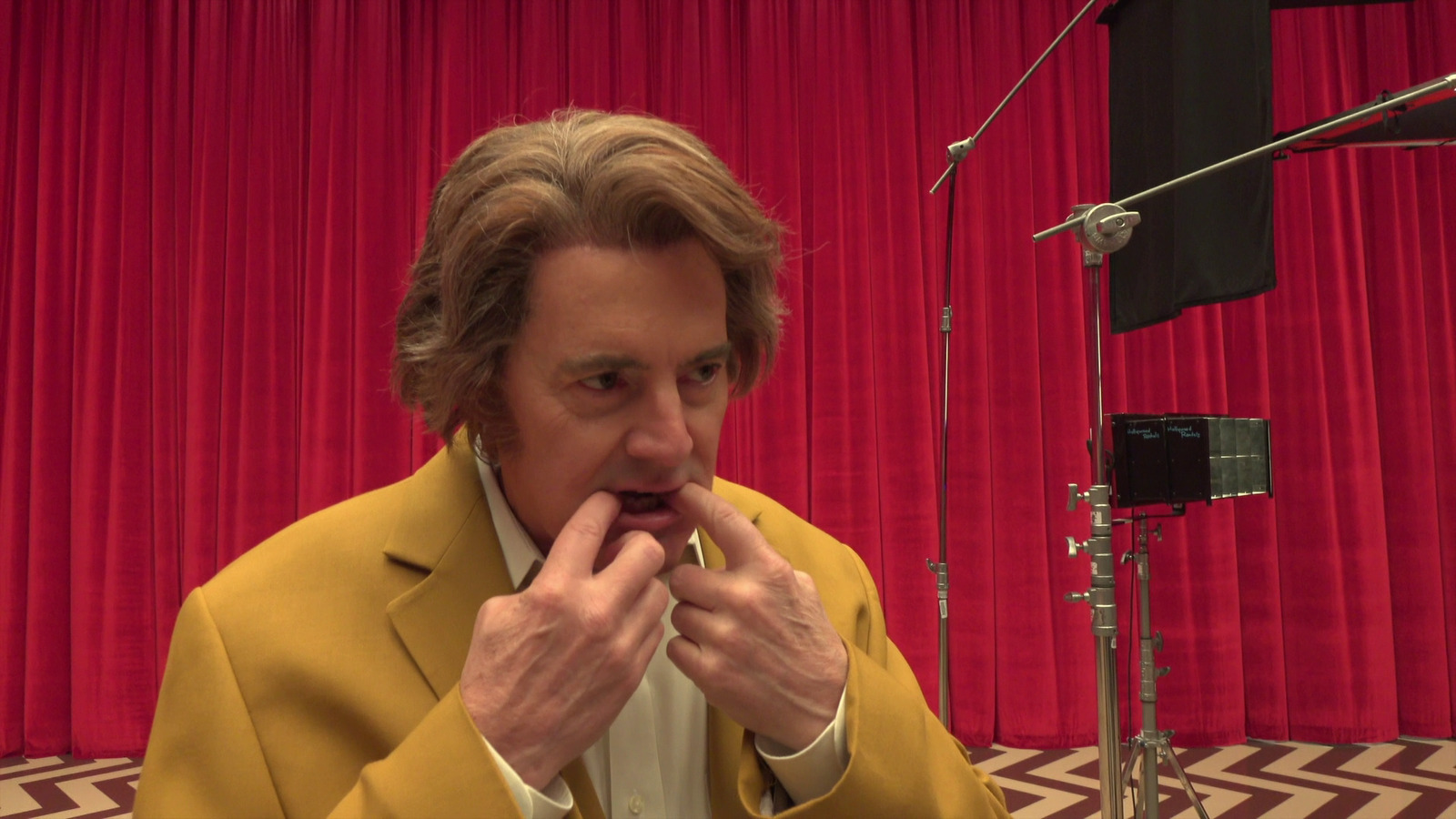
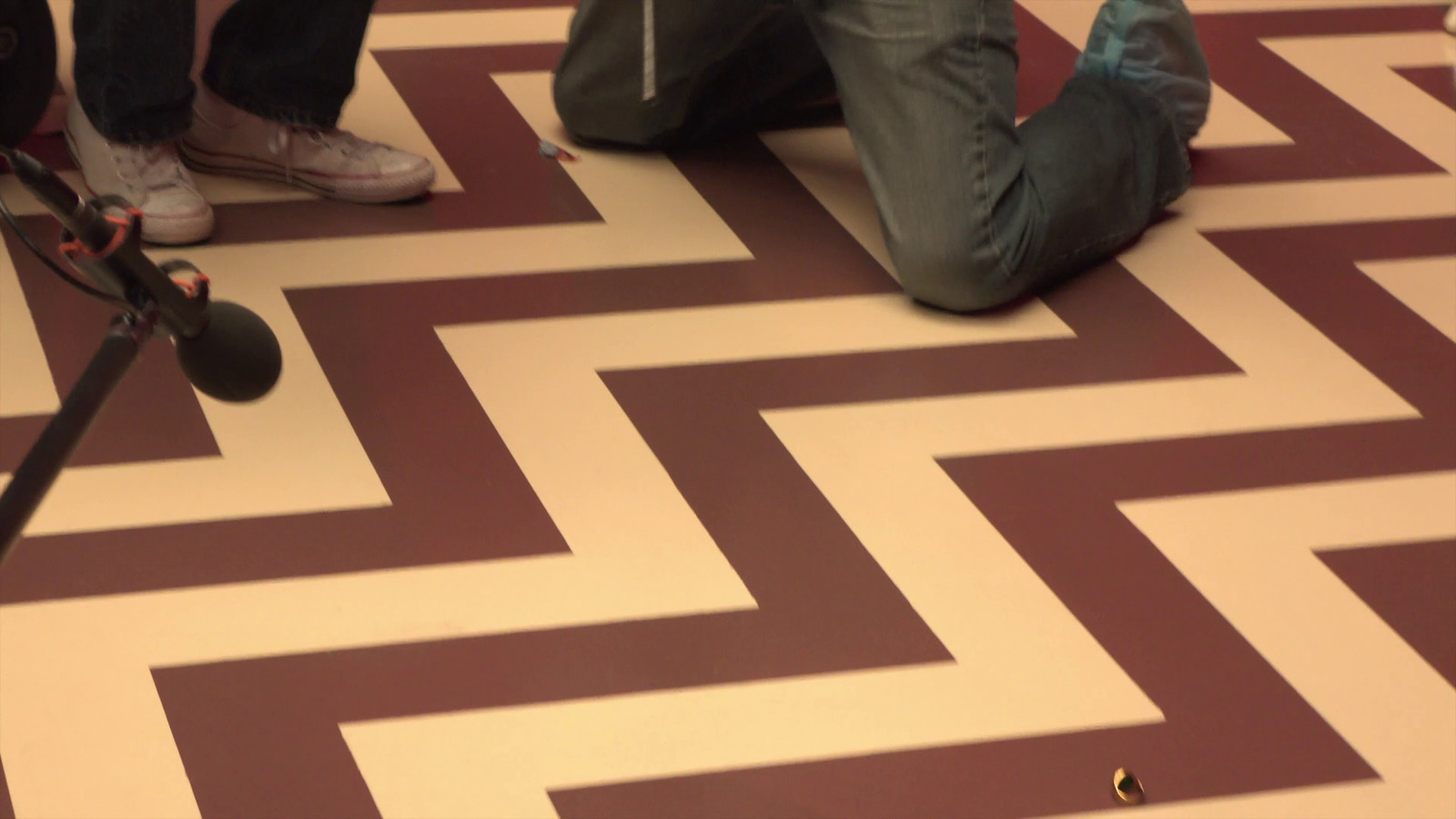
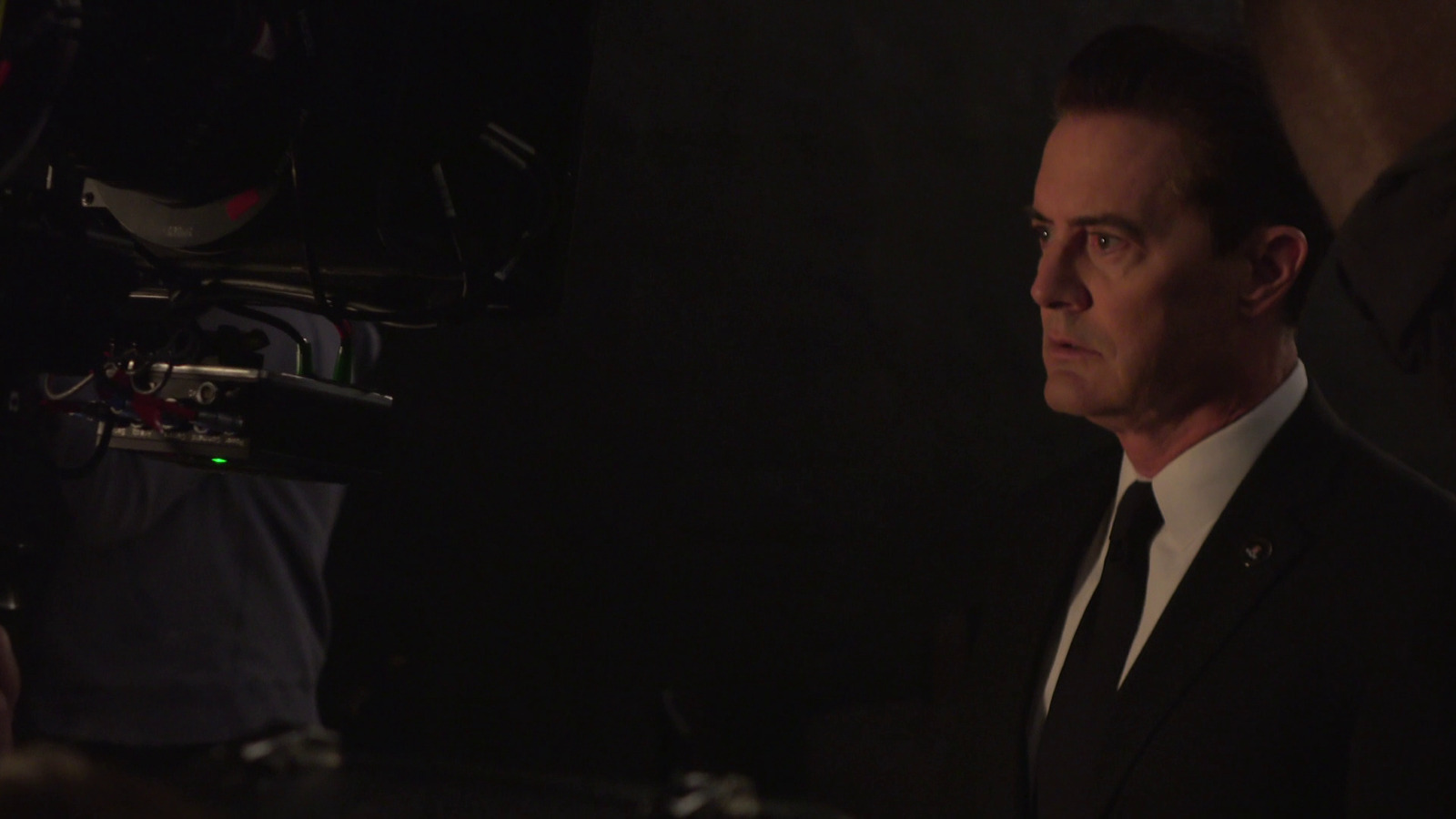
Richard Beymer’s I Had Bad Milk in Dehradun separates several of Part 3’s effects into the actions photographed for them. MacLachlan adjusts a dental piece before playing the original Dougie in his mustard jacket. Al Strobel rehearses looking for the small gold object and collecting the green ring. The ring’s fall is photographed separately, with the crew discussing additional drops to obtain variations. The finished transformation joins these performances and inserts; it is not one uninterrupted practical event. 06:48–09:45.
Open the Dougie and ring production study · 2 frames
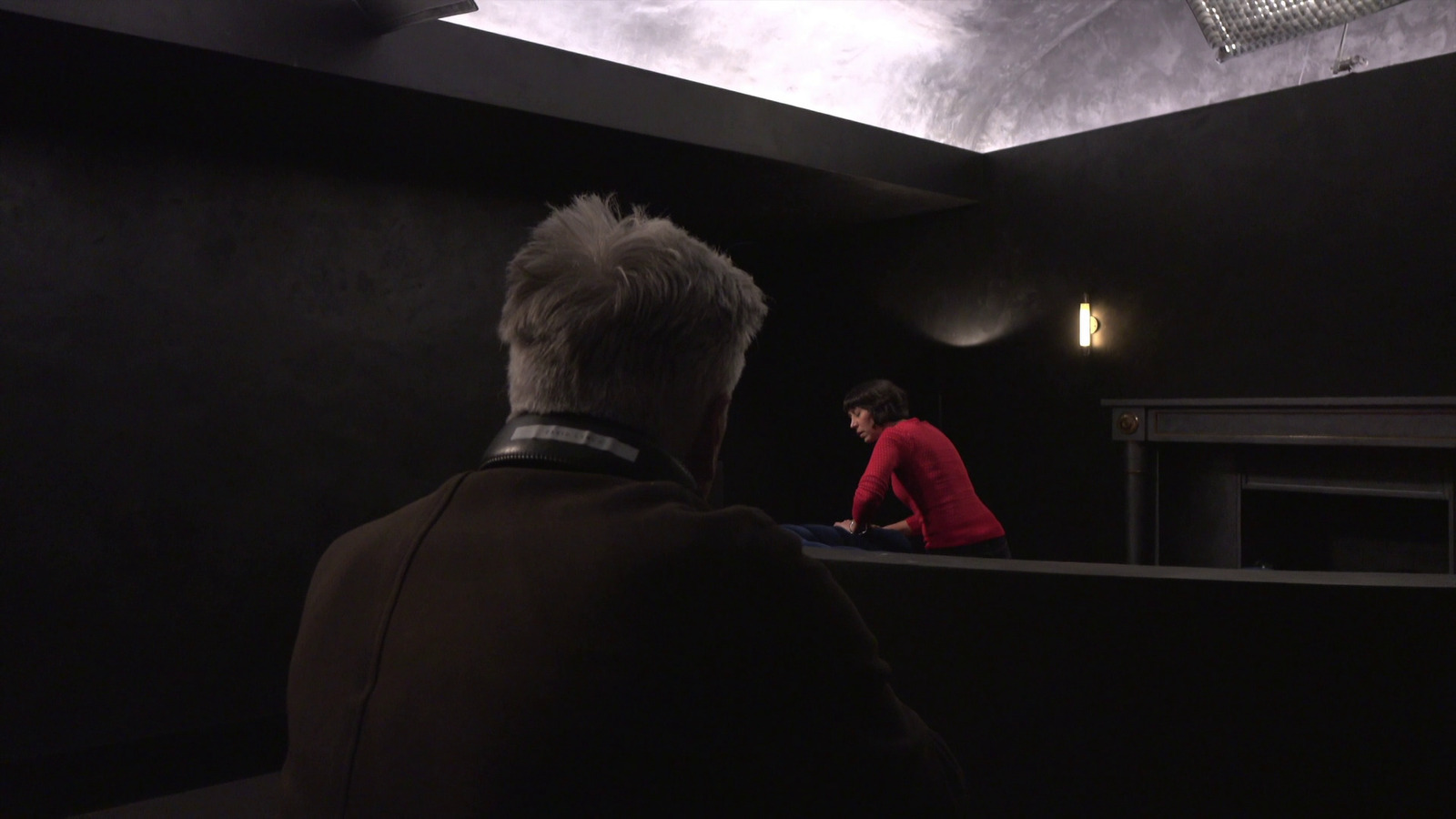
In the dark electrical room, Lynch gives Phoebe Augustine a sequence of concrete actions: agitation, a turn toward the seat, a slow look back, attention to the watch and the fire. The directions to MacLachlan anticipate sounds and forces that the completed scene will supply. He takes small steps, senses the woman’s alarm, responds to an imagined rising hum and finally leans into the pull while trying to look back. 20:16–24:46.
This is useful evidence for the scene’s relation between sound and movement. An unseen pressure becomes a physical performance through cues and eyelines before the final sound mix and visual transformation are present. The documentary shows those cues; it does not establish the precise processing chain of the finished soundtrack. The scene study can therefore distinguish the actor’s preparation from the later impression that electricity is taking control of his body.
Open the electrical-room rehearsal · 2 frames
Performance, sound and the working image
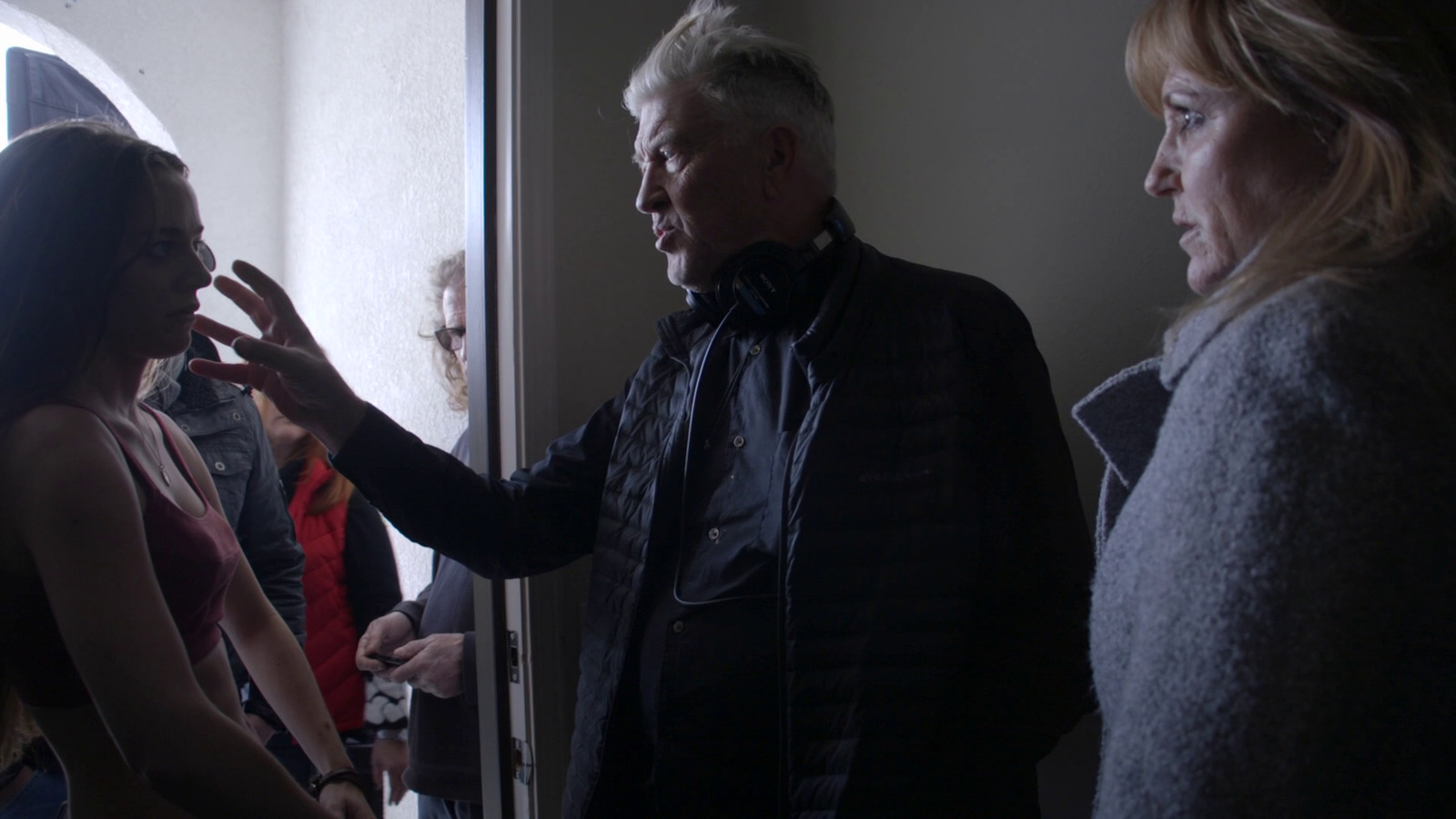
The production footage in Jason S.’s Impressions: A Journey Behind the Scenes of Twin Peaks adds another view of the scenes: directions spoken on set, rehearsals, material experiments and choices still being worked out.
A small question needs room around it
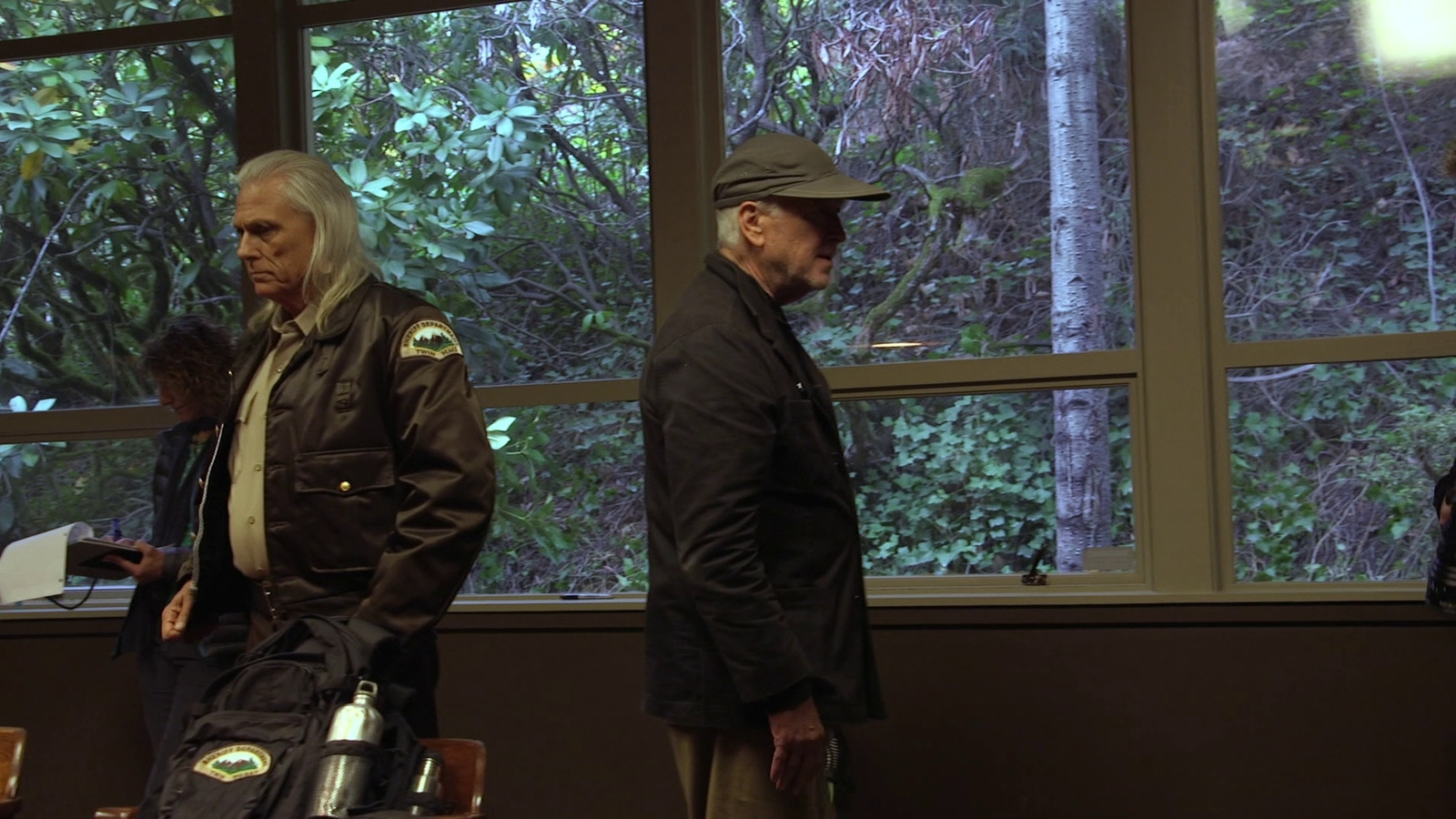
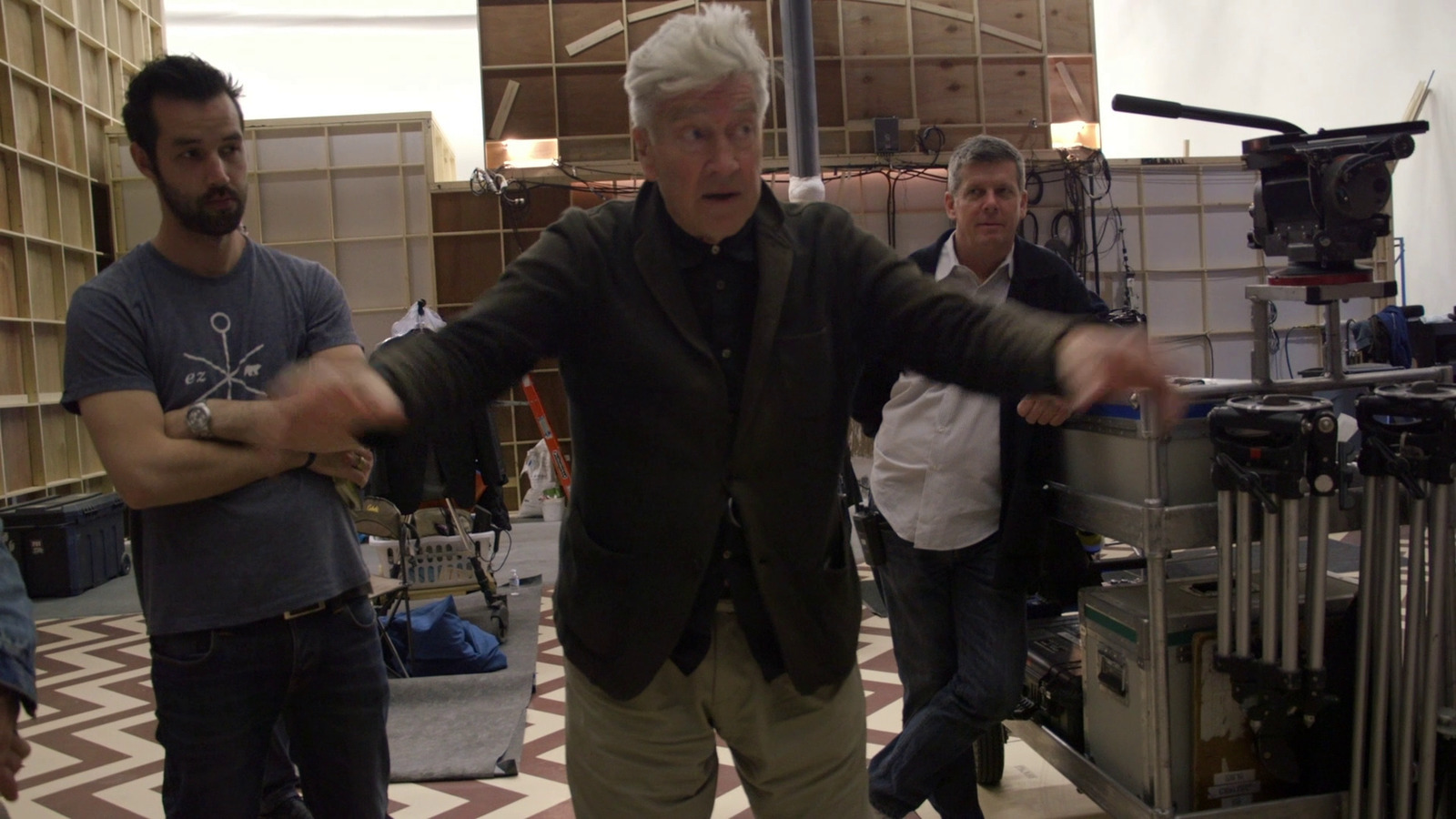
During the evidence-table rehearsal, Lynch reduces Hawk’s question and adjusts the pause around the exchange about the missing chocolate bunny. He asks Michael Horse for a quiet delivery, almost to himself, and limits the people standing in the rehearsal space.
That attention keeps the scene from becoming only a comic interruption. Hawk is trying to discover what the absence might mean while the others offer a literal, domestic explanation. His low voice preserves a second line of thought inside the joke.
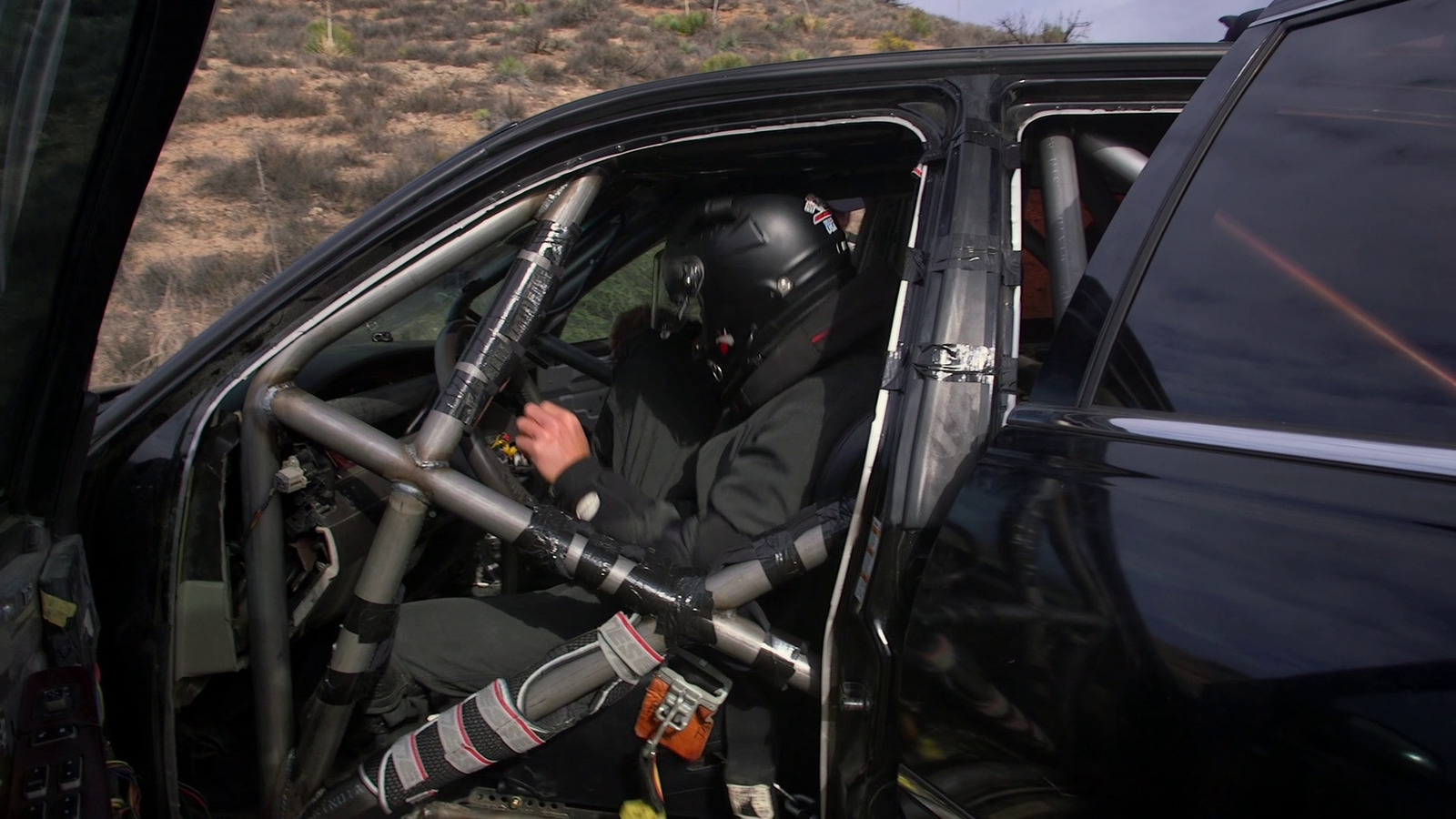
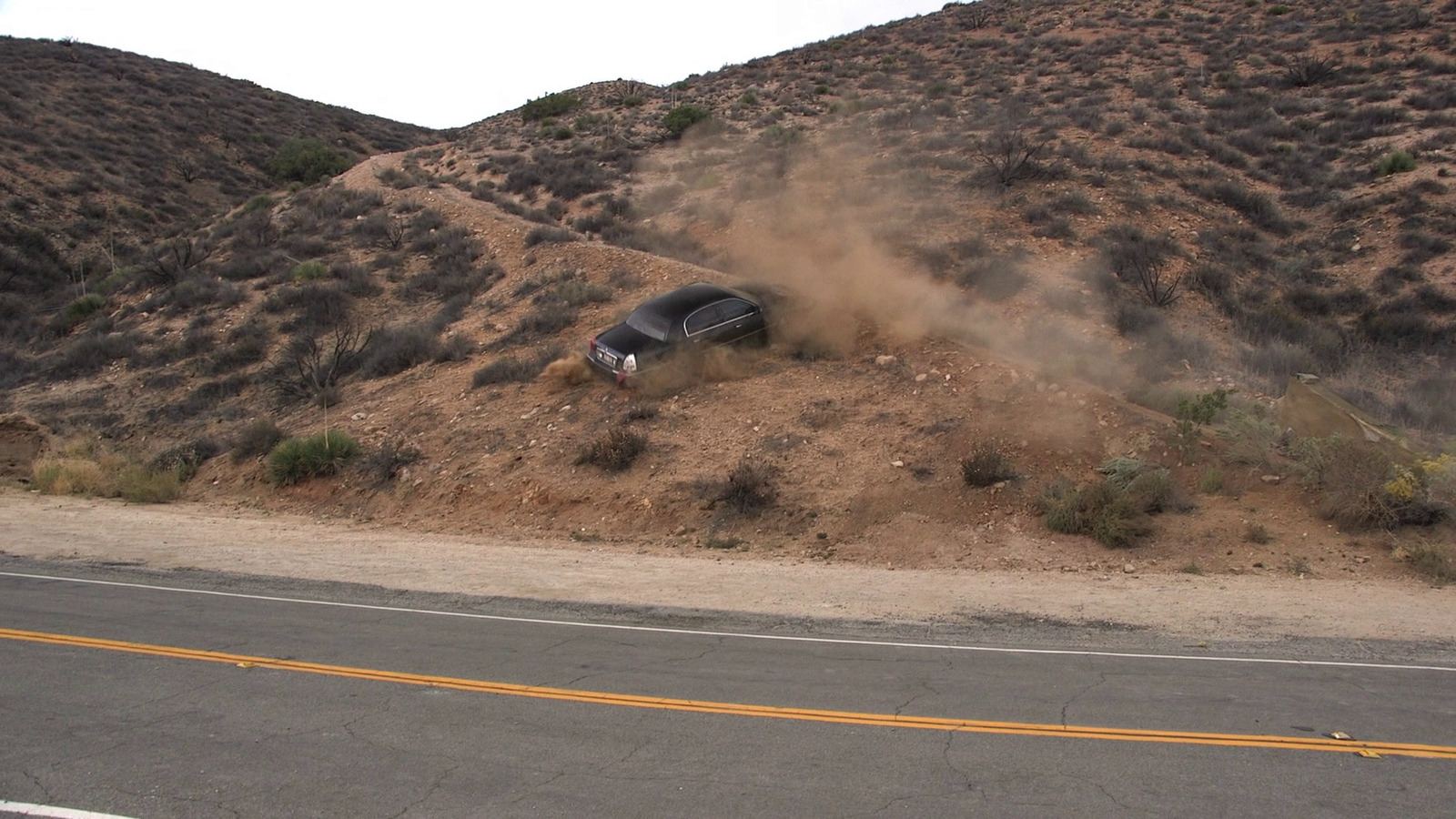
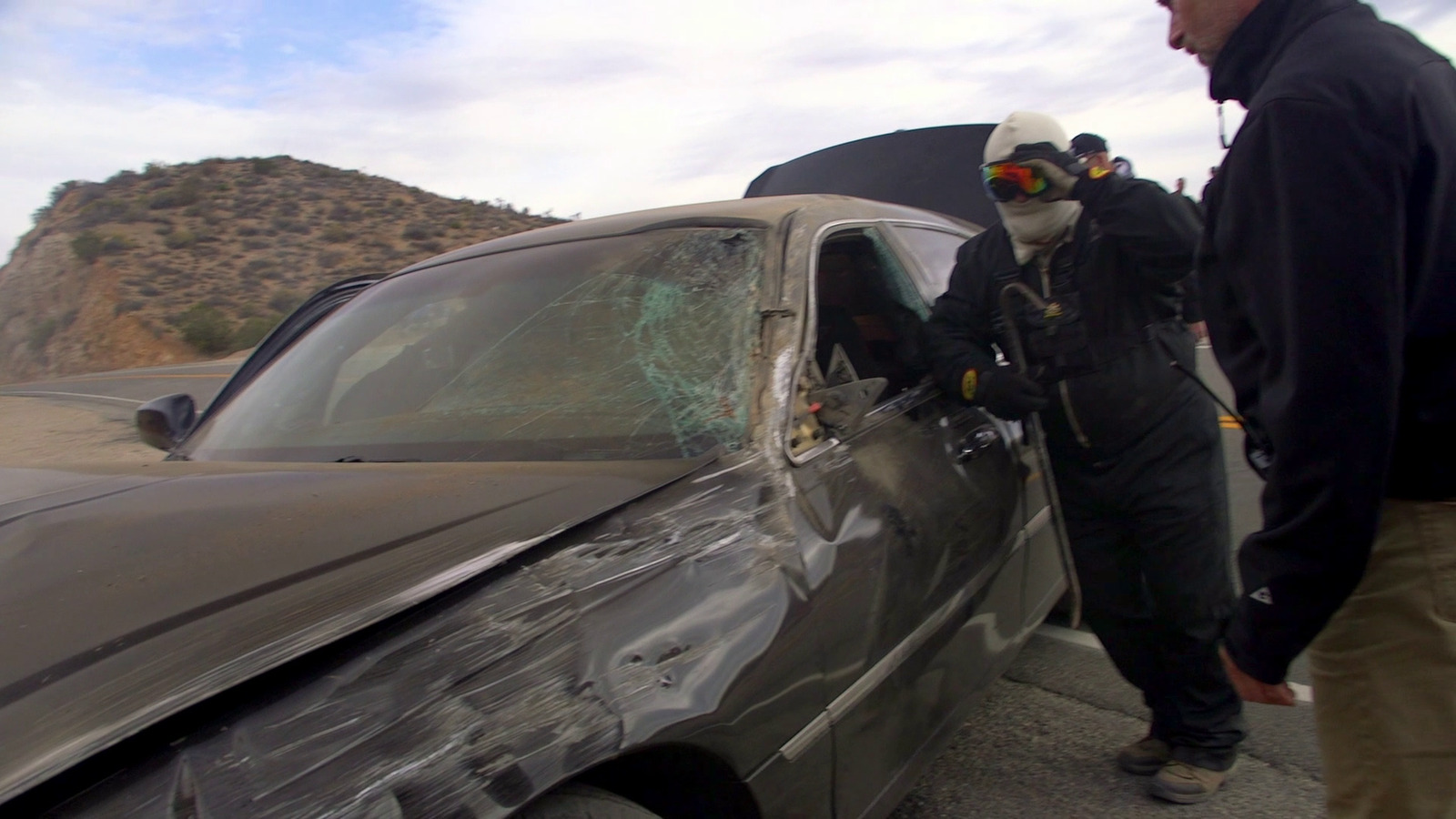
A scripted loss of control becomes a practical rollover
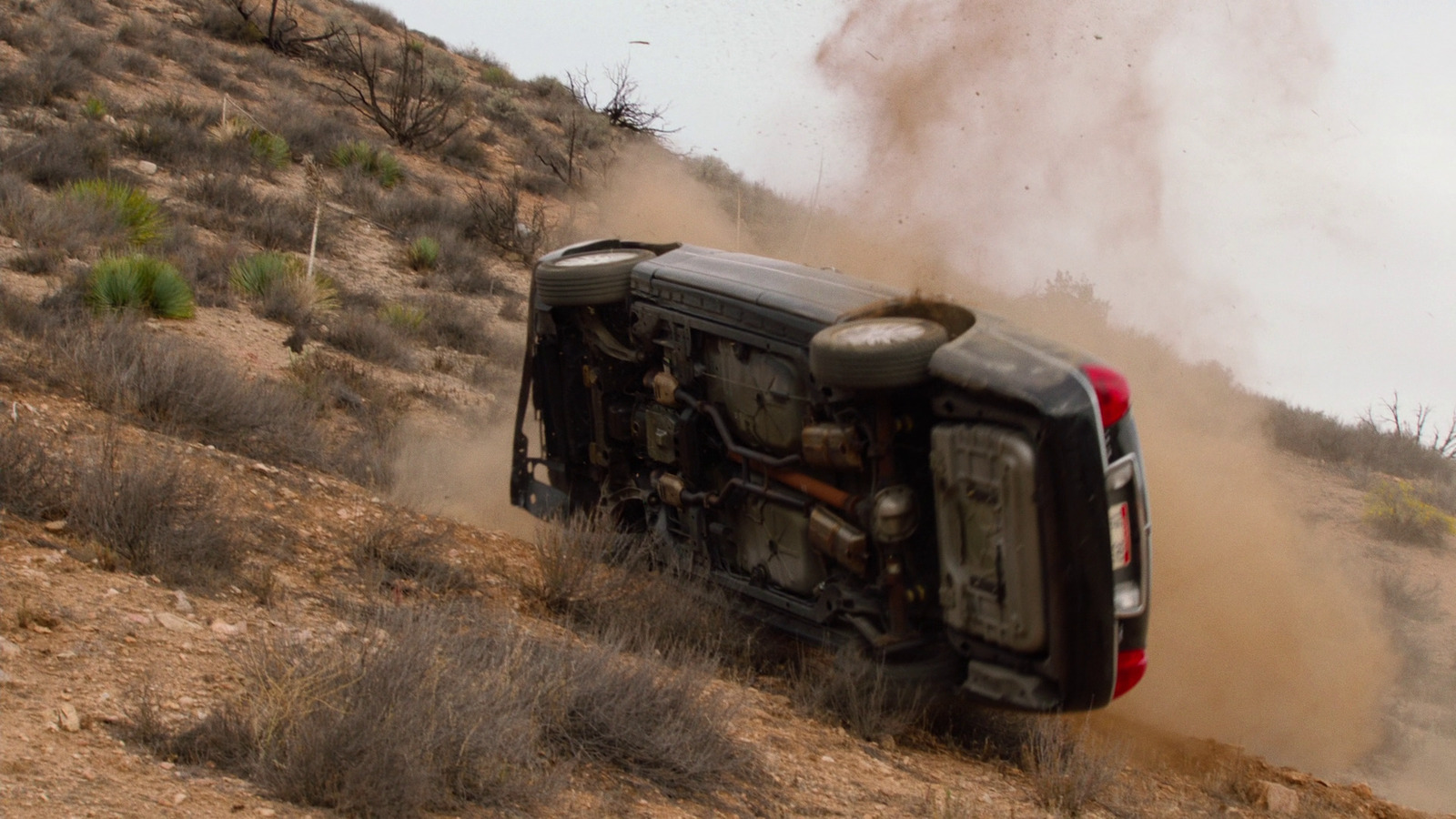
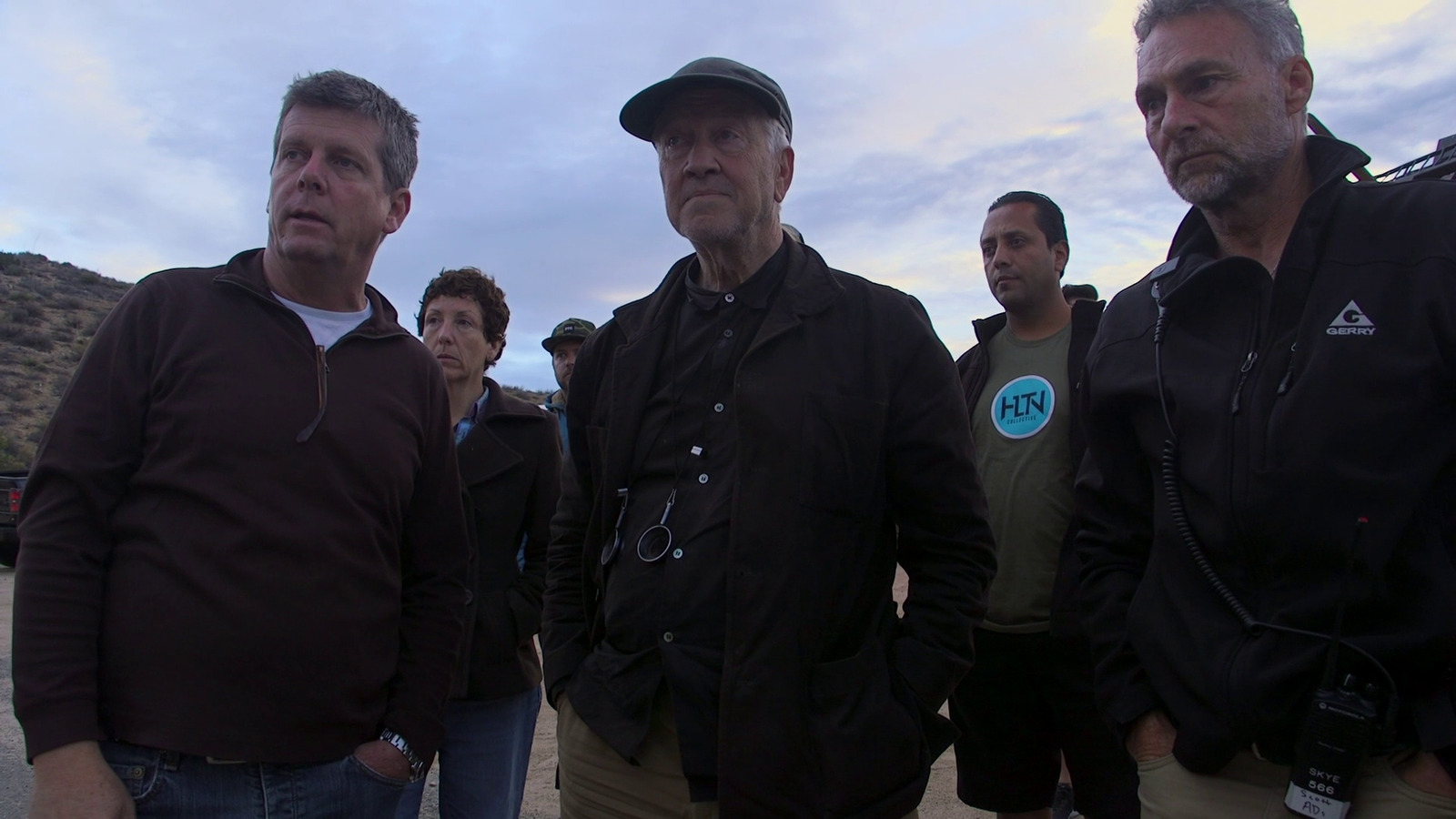
The scene is read aloud with its strange engine-like sound, deteriorating vision and increasing speed. During the location discussion, the wording in which the car slows and rolls backward is revised to a rollover. The documentary records an adjustment between the written action and the physical event being prepared.
The crew plans multiple camera positions, briefs the stunt and checks the secured driver before the car rolls across the slope. The aftermath is inspected before congratulations follow. These views establish the practical vehicle action; they should be kept distinct from MacLachlan’s performance, the sound treatment and the later bodily effects that make Mr. C’s crisis more than a road accident.
Open the rollover production study · 4 frames
Impossible travel begins with distinct bodily positions
Lynch demonstrates a series of positions for Cooper’s journey: falling with limbs extended, dropping behind a balcony wall, moving horizontally through the tube into the glass box, and leaning toward the electrical socket. The preparation distinguishes these actions rather than treating the passage as one generic floating effect.
A brief view shows MacLachlan supported horizontally against green screen. The discussion also specifies a close view to be distorted later. Physical performance, photographed elements and subsequent image treatment are being planned together; these preparations complement the finished sequence without turning every proposed angle into a claim about the final edit.
Open the floating-performance and effects study · 2 frames
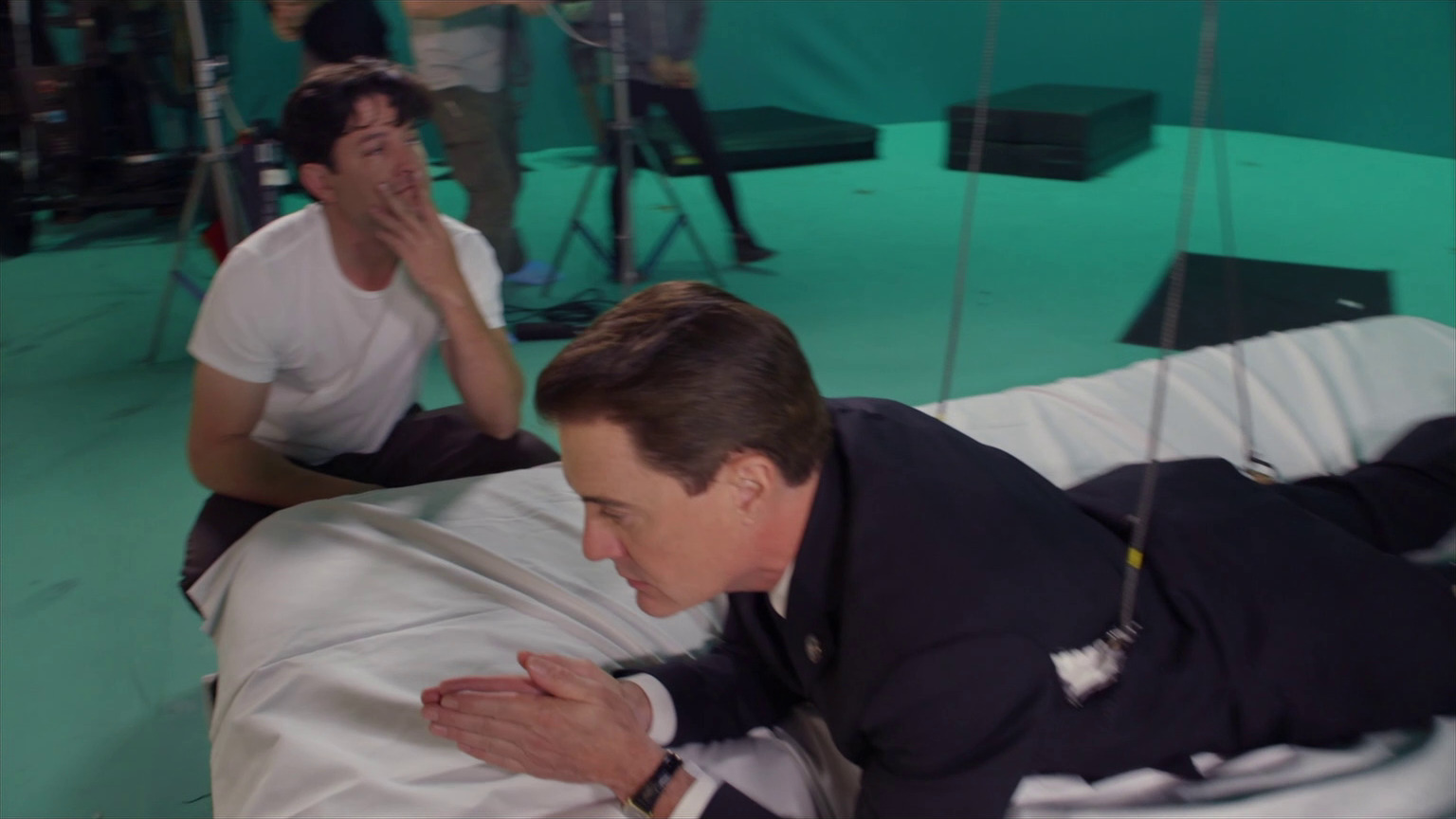
Rehearsal, performance and the working set
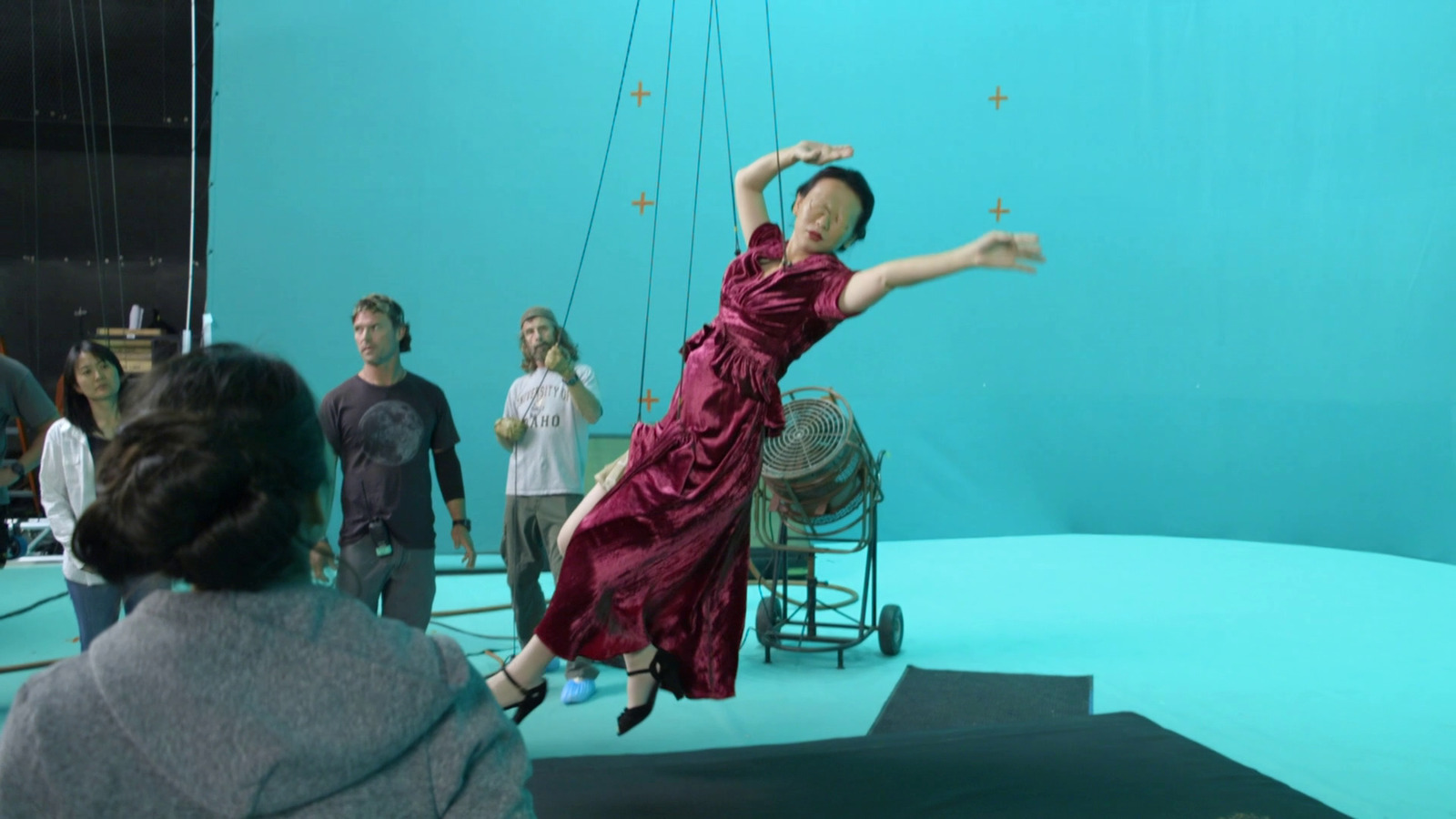
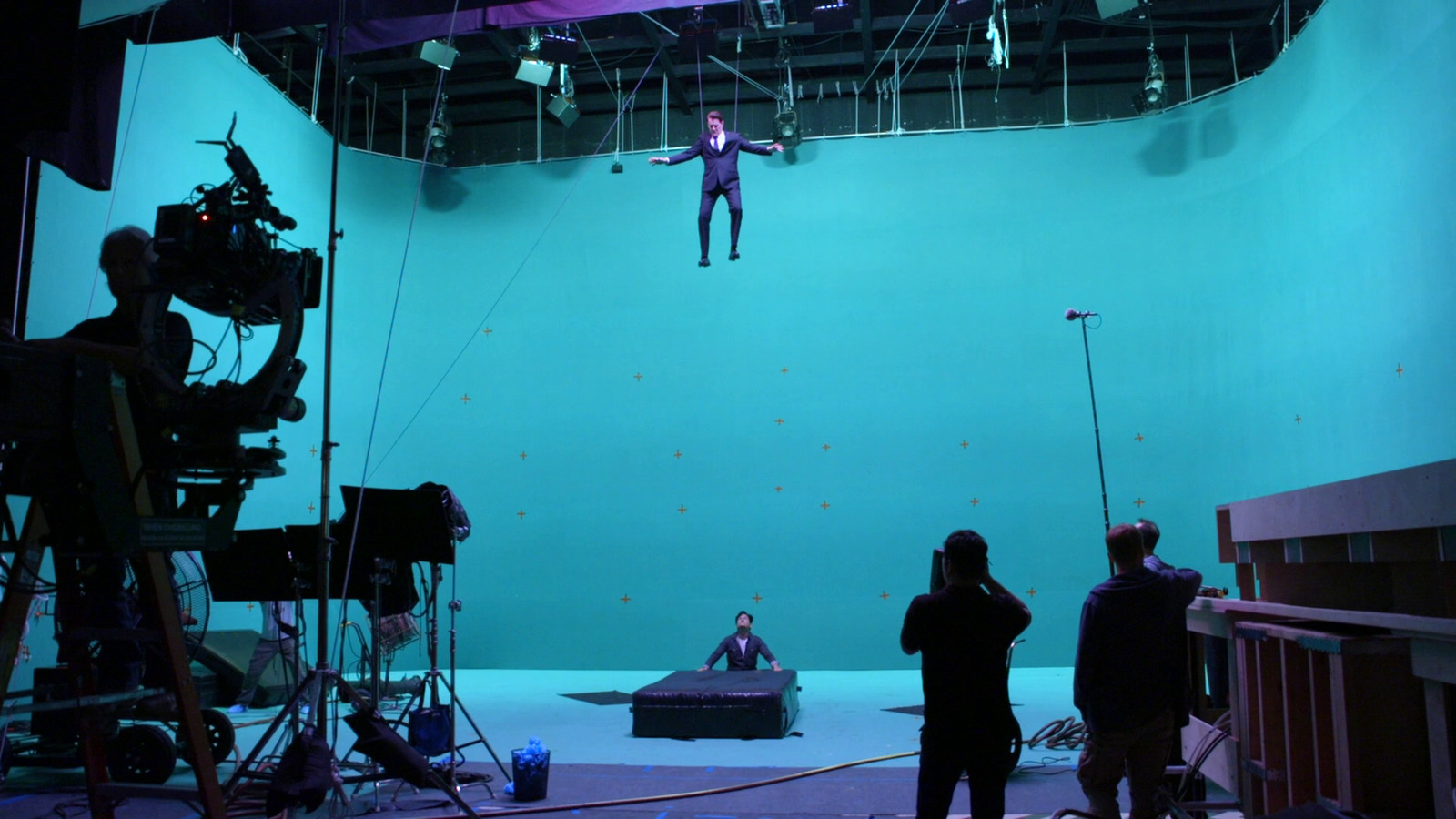
Naido and Cooper are photographed as separate suspended bodies
The green-screen stage reveals a constructed platform, the dark device, wind equipment and performers suspended against a marked backing. Naido’s falling movement and Cooper’s balancing response are photographed separately. The director’s counted cues coordinate the movement and the wind.
These views extend the earlier planning footage: the impossible exterior is assembled from distinct bodily actions, with the performers supplying an effort and a loss of balance that the final space will make legible. The documentary records photographed elements rather than a complete account of every composite.
Open the suspended-performance study · 2 frames
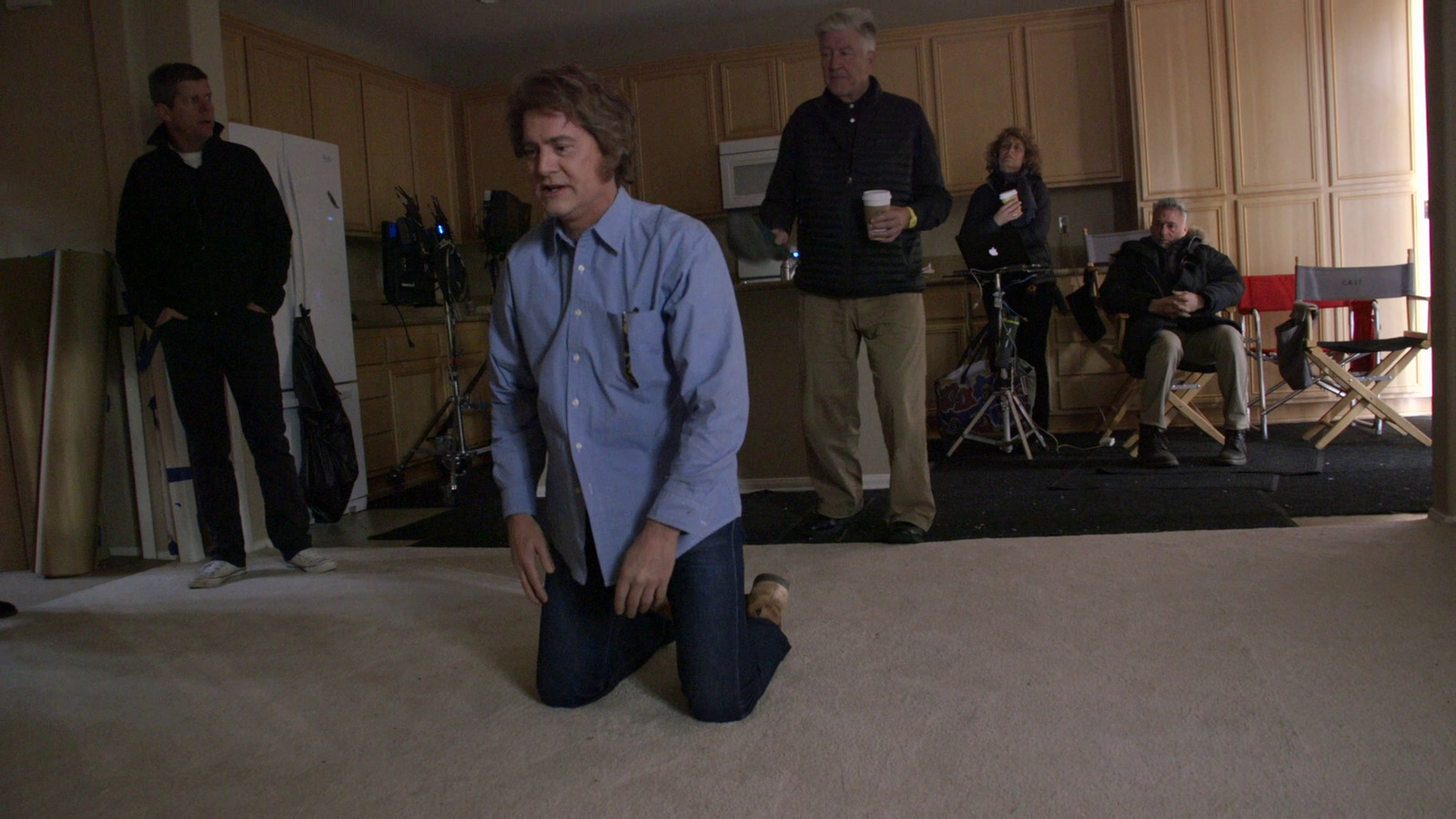
Dougie’s disappearance joins a performed jolt to material effects
The living-room rehearsal separates Dougie’s crawl, nausea and abrupt disappearance from Cooper’s position on the floor afterward. Lynch asks for a rising bodily jolt rather than a move into a standing position. Jade’s entrance then has to discover a familiar-looking person whose clothes, haircut and condition have changed.
The crew also handles and adjusts the vomit material in front of the camera. Its consistency and placement are discussed in relation to the head and the composition. Together, these preparations connect the bodily performance, the physical residue and the later transformation image without collapsing them into one method.
Open the disappearance preparation study · 2 frames
Jade’s practical attention gives the key a future
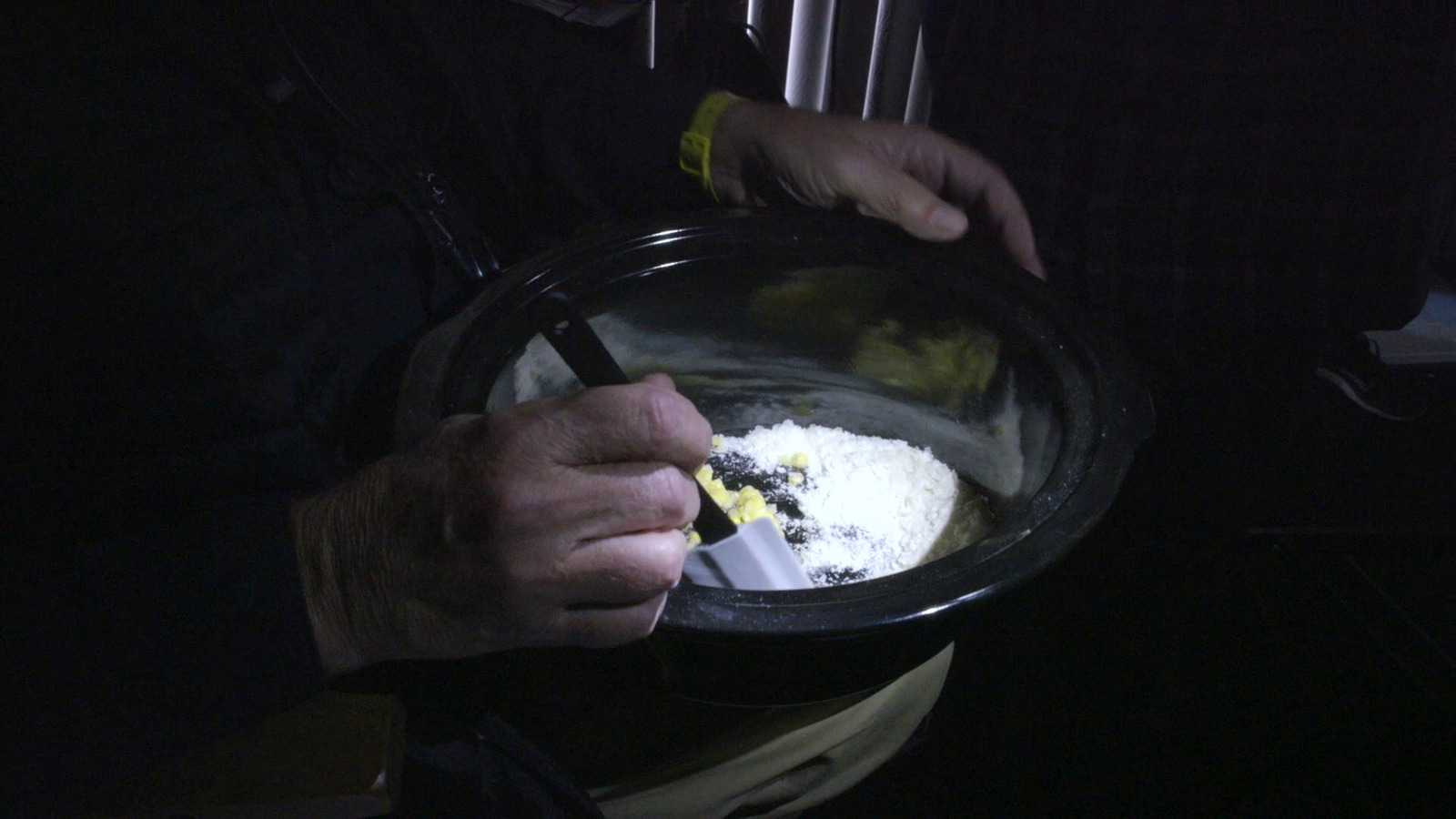
Williams works through getting Cooper out of the house, putting on his shoes and checking whether he has his keys. Lynch asks her to examine the hotel key because she will recognize it again later. A small look establishes continuity for an object whose eventual return will matter elsewhere.
He also increases the force of the request to put on the shoes: Cooper is giving her almost nothing to answer. Jade’s impatience remains connected to the practical job of moving him along. It is this ordinary attention that helps the displaced visitor continue his journey.
Open Jade’s key and performance study · 2 frames
The child is directed through curiosity and quiet observation
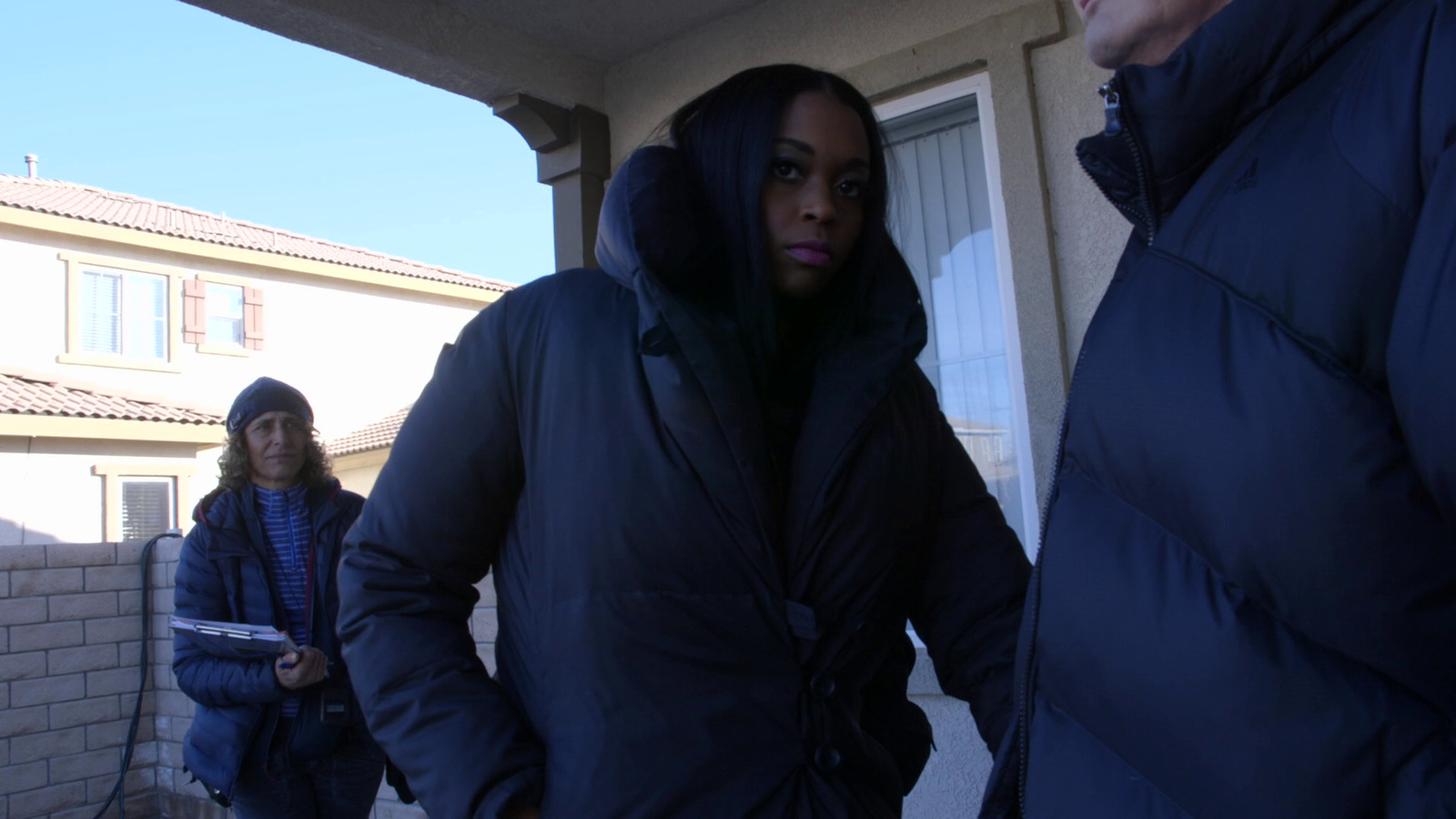
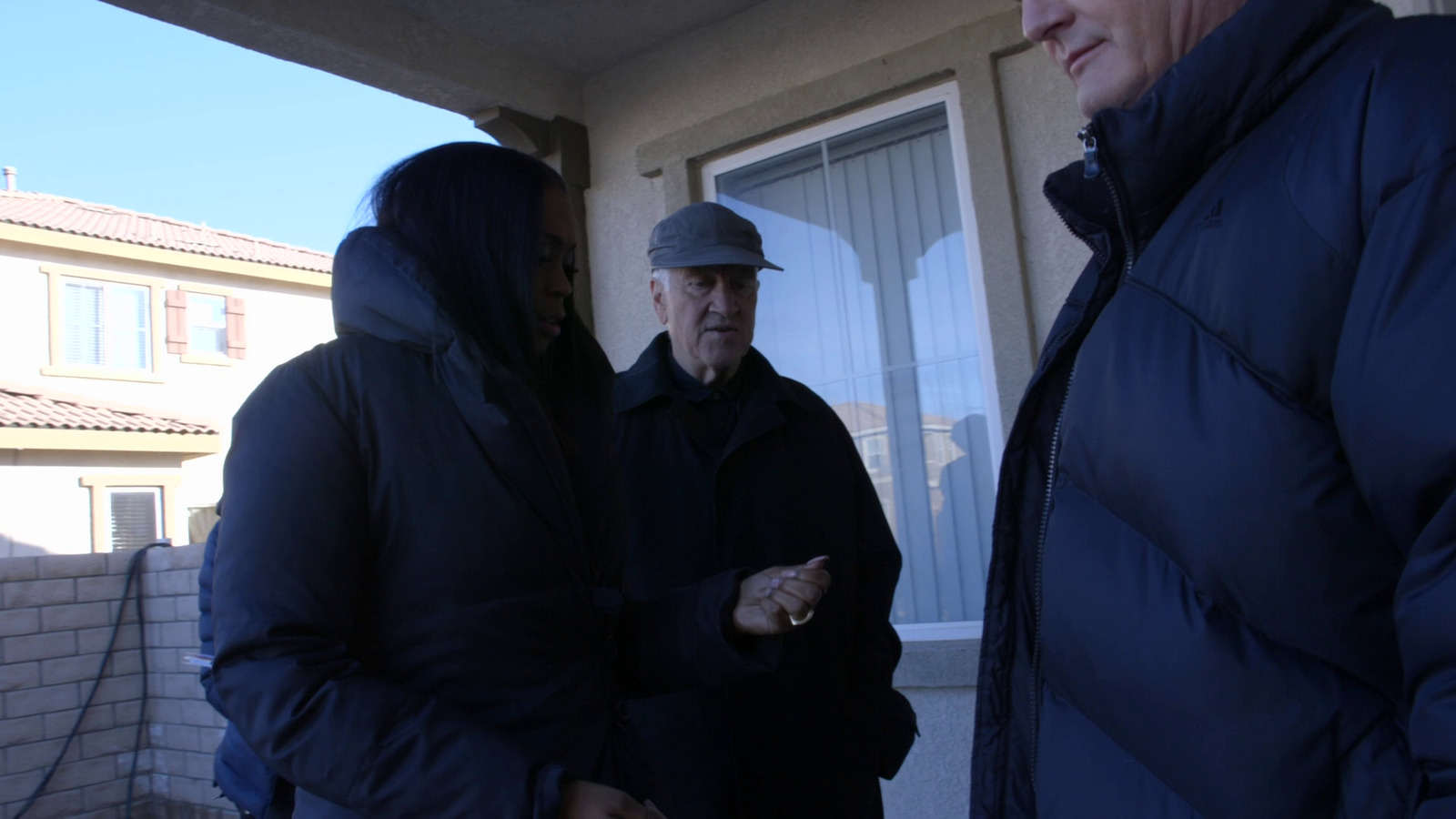
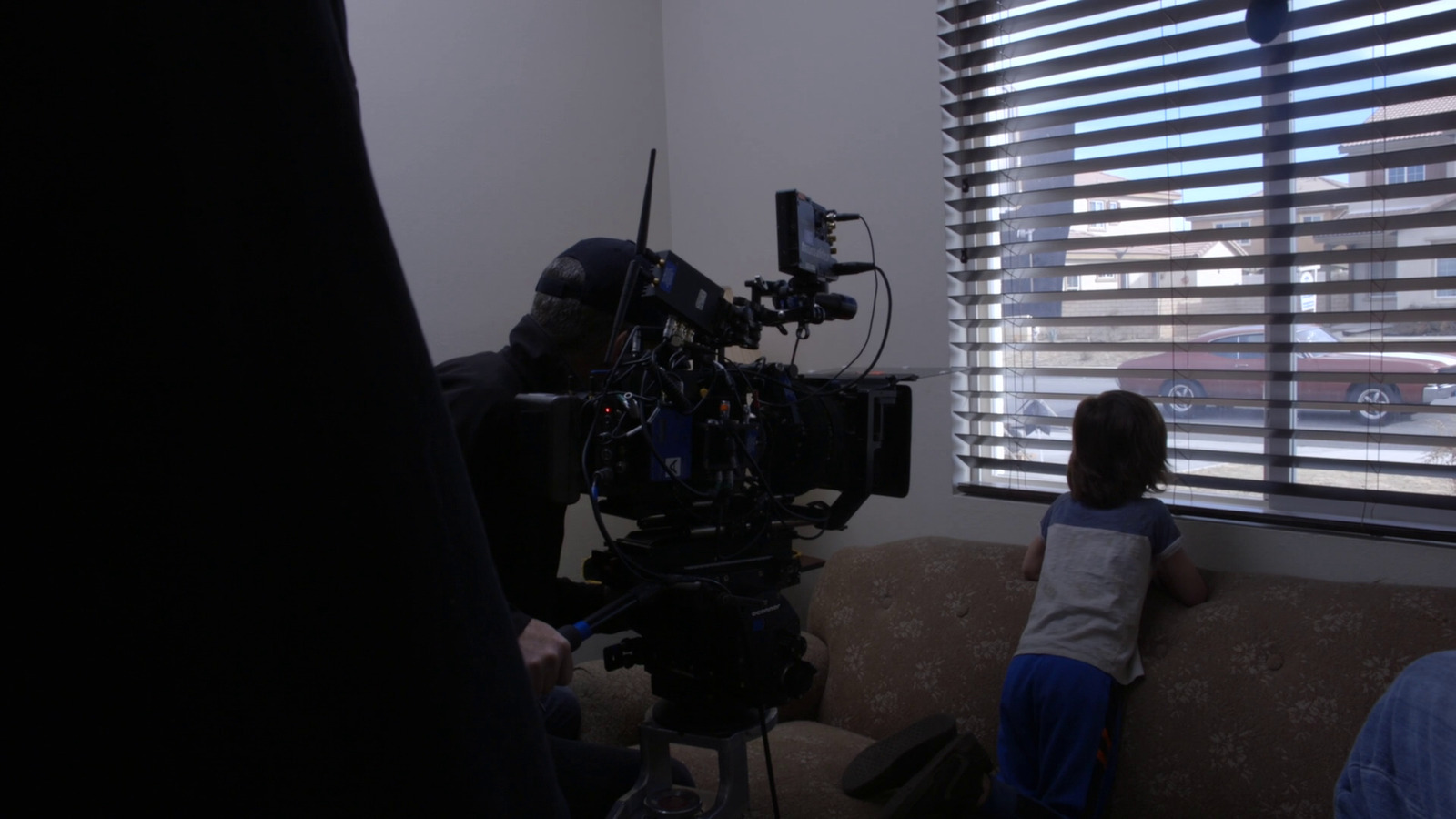
Lynch gives the child at the window a specific task: watch the arriving man, notice what goes beneath the parked car and wonder what it is. The direction frames him as curious and attentive, allowing the audience to recognize a danger he cannot yet name.
The later exit begins with a look at his sleeping mother and a quietly closed door. Her makeup and the emptied containers are separately adjusted to suggest a difficult history without overstatement. The sequence’s threat grows from the difference between what the child can see and what the surrounding scene lets the viewer understand.
Open the witness and home study · 2 frames
The body starts the effect; editing changes the encounter
MacLachlan recalls initiating the electrical passage with a bodily lean so that effects work could continue a movement already begun by the performer. He compares it with starting the shrinking movement inside the suit. His account supplies a practical bridge between acting and transformation, alongside the separately documented effects preparations.
He also says the jagged editing was not in the script and that the scene felt softer and more peaceful during production than it did to him in the finished work. Editing and sound changed his experience of it. This is a valuable distinction between a performer’s knowledge on set and the completed sequence’s rhythm; it does not mean that every discontinuity was decided without prior planning.
A Talk with Kyle MacLachlan and Sheryl Lee, 63:59–66:21. The performers’ later recollections are read alongside the finished work and other production evidence.
Two parts, two ways of arriving
The standalone Part 3 runs approximately 58:52, including opening titles and the ending. The joined Parts 3 and 4 presentation runs approximately 1:53:36. Timings in this dossier refer to standalone Part 3; they should not be transferred indiscriminately to other presentations.
The difference is more than joining two complete episodes. In the combined version the Roadhouse performance continues without Part 3’s end-credit overlays, then leads into casino action without the separate Part 4 opening. The combined ending identifies music under the two part headings. The standalone Part 3 ending includes a dedication to Don S. Davis and Miguel Ferrer.
The reviewed presentation provides English 5.1 audio and English accessibility captions. No commentary accompanies these parts. Authored dialogue captions and the final credits are treated as evidence alongside the image and soundtrack; production testimony is cited separately.
Sources and viewing notes
- Twin Peaks: The Return, Part 3, “Call for Help,” written by Mark Frost and David Lynch, directed by David Lynch (2017). Episode, soundtrack, on-screen dialogue, English accessibility captions and final credits; standalone and combined Parts 3/4 presentations in Twin Peaks: From Z to A. Scene locators refer to the standalone presentation. Selected stills retain the full active picture.
- BUF, Twin Peaks production notes, sections “Black Sea,” “Dougie,” “Black Box” and “Socket Effects.” Primary production account; consulted 22 November 2026. Statements are attributed to the company’s documented contribution.
- Comic-Con 2017: Twin Peaks Panel, included in Twin Peaks: From Z to A. MacLachlan on backward performance, approximately 43:33–45:00; on the completed Arm, 58:08–58:58. The broader panel research is integrated into The Return overview and the relevant episode studies.
- I Had Bad Milk in Dehradun, a film by Richard Beymer; production footage viewed in Twin Peaks: From Z to A, 06:48–09:45 and 20:16–24:46. Images and English captions inspected; key speech passages cross-checked where needed. Production observations are distinguished from interpretation of the finished scene.
- Bad Binoculars, directed and photographed by Jason S., in Impressions: A Journey Behind the Scenes of Twin Peaks (2017), viewed in Twin Peaks: From Z to A. Passages: 10:13–11:19. Picture and English captions examined, with targeted speech checks. Rehearsal proposals and production observations are distinguished from interpretation of the finished episodes. Documentary narration and its music are not treated as unscripted statements by Lynch.
- See You on the Other Side Dear Friend, directed and photographed by Jason S., in Impressions: A Journey Behind the Scenes of Twin Peaks (2017), viewed in Twin Peaks: From Z to A. Passages: 23:10–29:04. Picture and English captions examined, with targeted speech checks. Rehearsal proposals and production observations are distinguished from interpretation of the finished episodes. Documentary narration and its music are not treated as unscripted statements by Lynch.
- A Pot of Boiling Oil, directed and photographed by Jason S., in Impressions: A Journey Behind the Scenes of Twin Peaks (2017), viewed in Twin Peaks: From Z to A. Passages: 21:19–22:51. Picture and English captions examined, with targeted speech checks. Rehearsal proposals and production observations are distinguished from interpretation of the finished episodes. Documentary narration and its music are not treated as unscripted statements by Lynch.
- Behind the Curtain, Part 3. Photographed by Jason S.; edited by Jonathan Angus, with editorial assistance by Robert Lay (2019). Viewed in Twin Peaks: From Z to A. Timed passages: 00:07–03:04; 09:17–14:20; 14:21–16:42; 20:03–22:26. Timings refer to the documentary, not the episode. On-set directions and retrospective recollections are distinguished from Lyncharium’s interpretation of the finished scenes.
Further performer testimony: A Talk with Kyle MacLachlan and Sheryl Lee. Produced and directed by David Naylor; edited by Michael Frost (2019). Viewed in Twin Peaks: From Z to A. Timed passages: 63:59–66:21. Timings refer to the conversation. Retrospective testimony is attributed to its speaker and distinguished from analysis of the finished scenes.