Twin Peaks: The Return — Part 2
2017 · Twin Peaks: The Return · Episode dossier
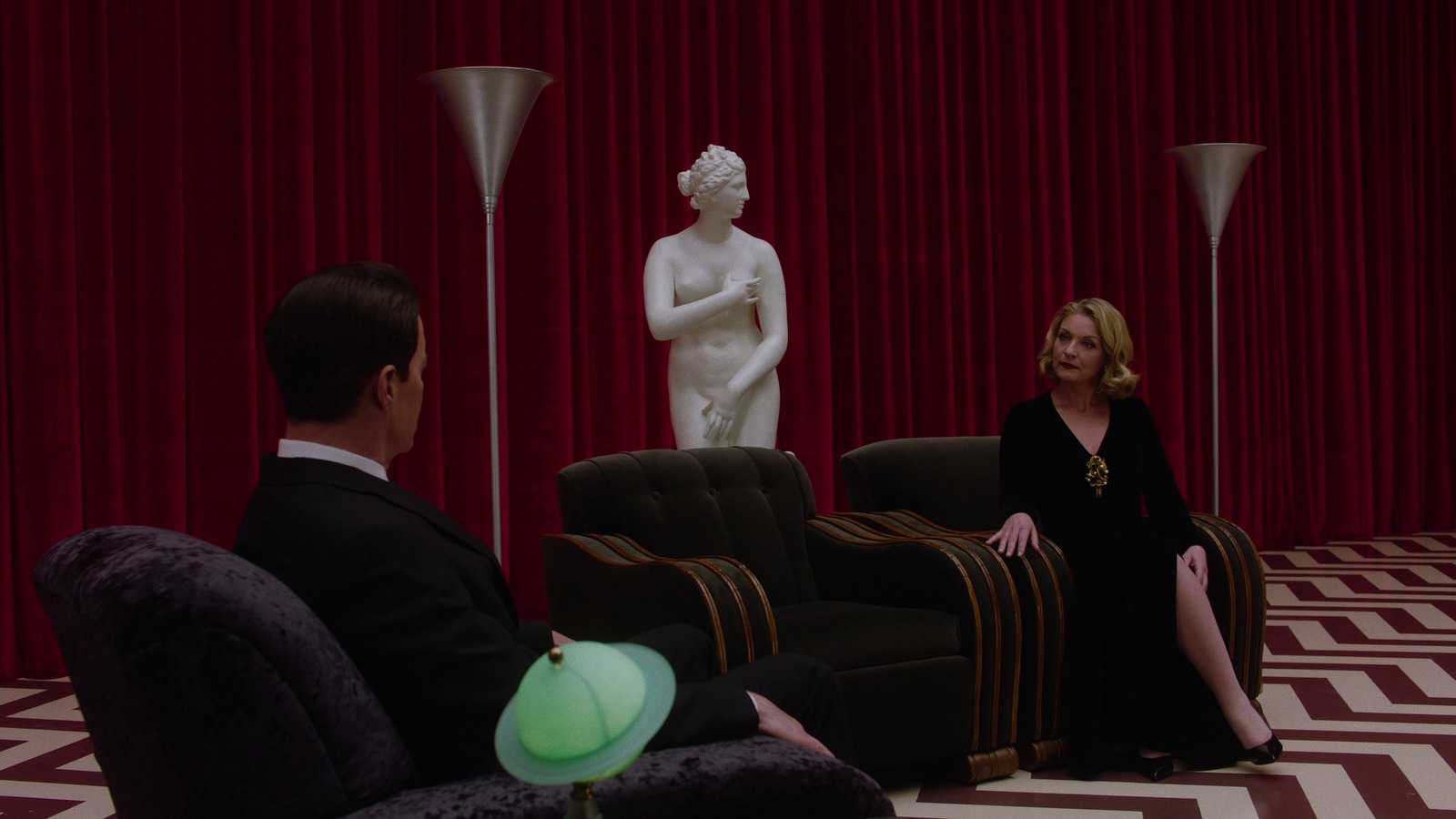
A man cannot explain where he has been. Another insists on deciding where he will go. Between them, the familiar rooms of Twin Peaks cease to provide a reliable map.
Follow the opening confrontation, the return to the Lodge and the passage into the Roadhouse through scene studies, sound, performance and effects. The central question is not simply which Cooper is which, but who can control the terms of an encounter.
- Part 2
- The Stars Turn and a Time Presents Itself
- Directed by
- David Lynch
- Written by
- Mark Frost & David Lynch
- Standalone presentation
- 00:54:34
The Return overview · Twin Peaks research hub. Timings follow the standalone part and include its opening titles. How the combined presentation differs.
Explore this dossier
Promises, instructions and refusal
Part 2 develops two opposed movements. Cooper tries to leave an environment whose rules he cannot command, while his double works to prevent a return he expects. Between them, other people negotiate dangerous dependencies: a marriage, a job, a criminal arrangement, a message received at a distance.
Repeated rooms now come with changed information. The jail contains something the police do not explain. The familiar Red Room permits neither a stable identity nor a straightforward exit. The New York enclosure becomes a place where the viewer knows more than its observer. Follow those changes of knowledge before trying to fit every image into one settled chronology.
Illustrated scene studies
- An explanation that cannot become an alibi
- The jail admits an unexplained presence
- Phyllis returns to a house already occupied
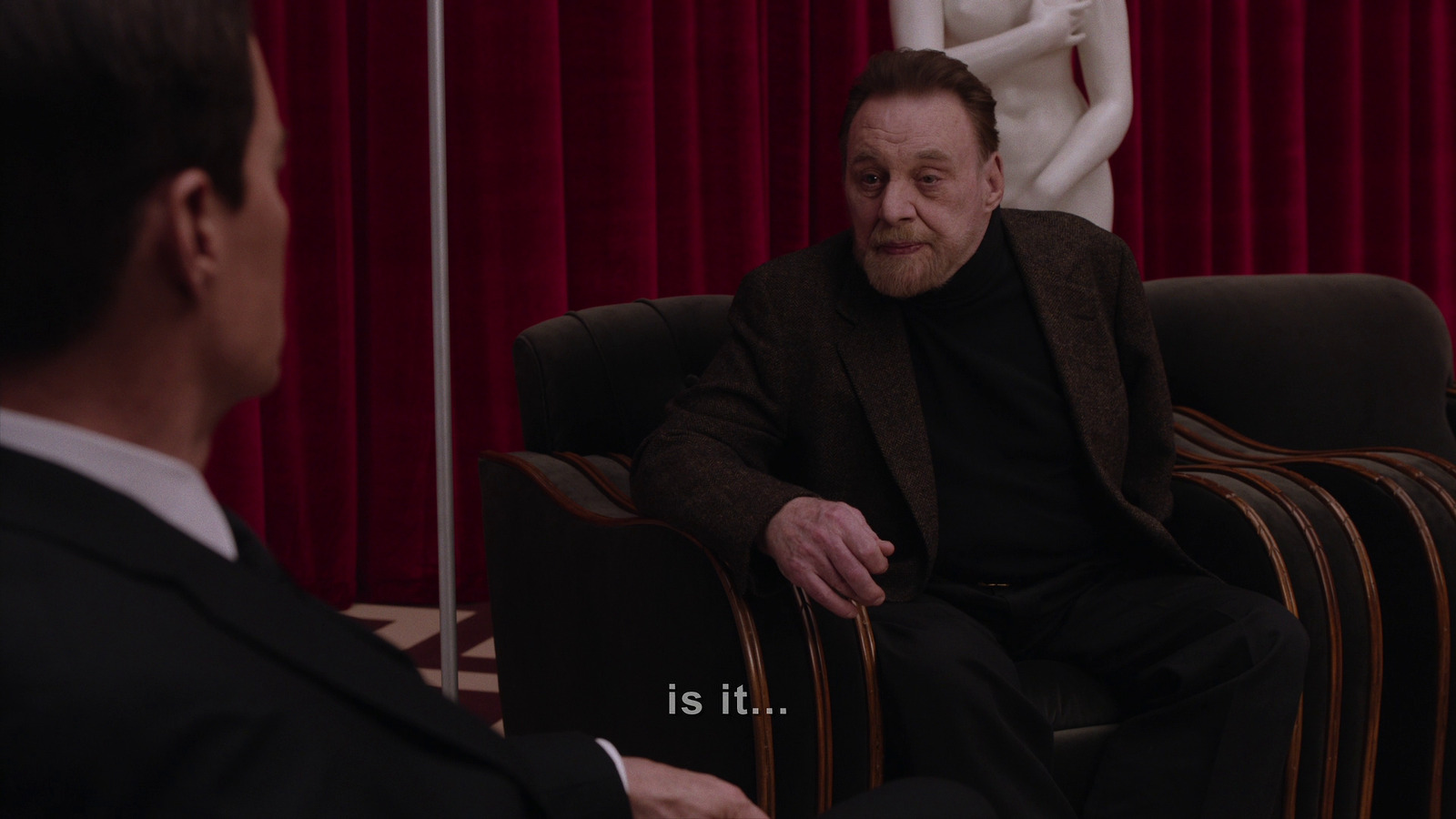
- An order without its origin
- Wanting, needing and controlling the table
- A time to watch, a place to approach
- Recognising Laura does not explain Laura
- The Arm takes another form
- A car transaction becomes bodily control
- A recording turns concealment against its speaker
- A familiar name does not authenticate a voice
- A succession of openings that do not provide an exit
- The observer misses the event
- A screen with no companion
- The music holds several stories at once
An explanation that cannot become an alibi
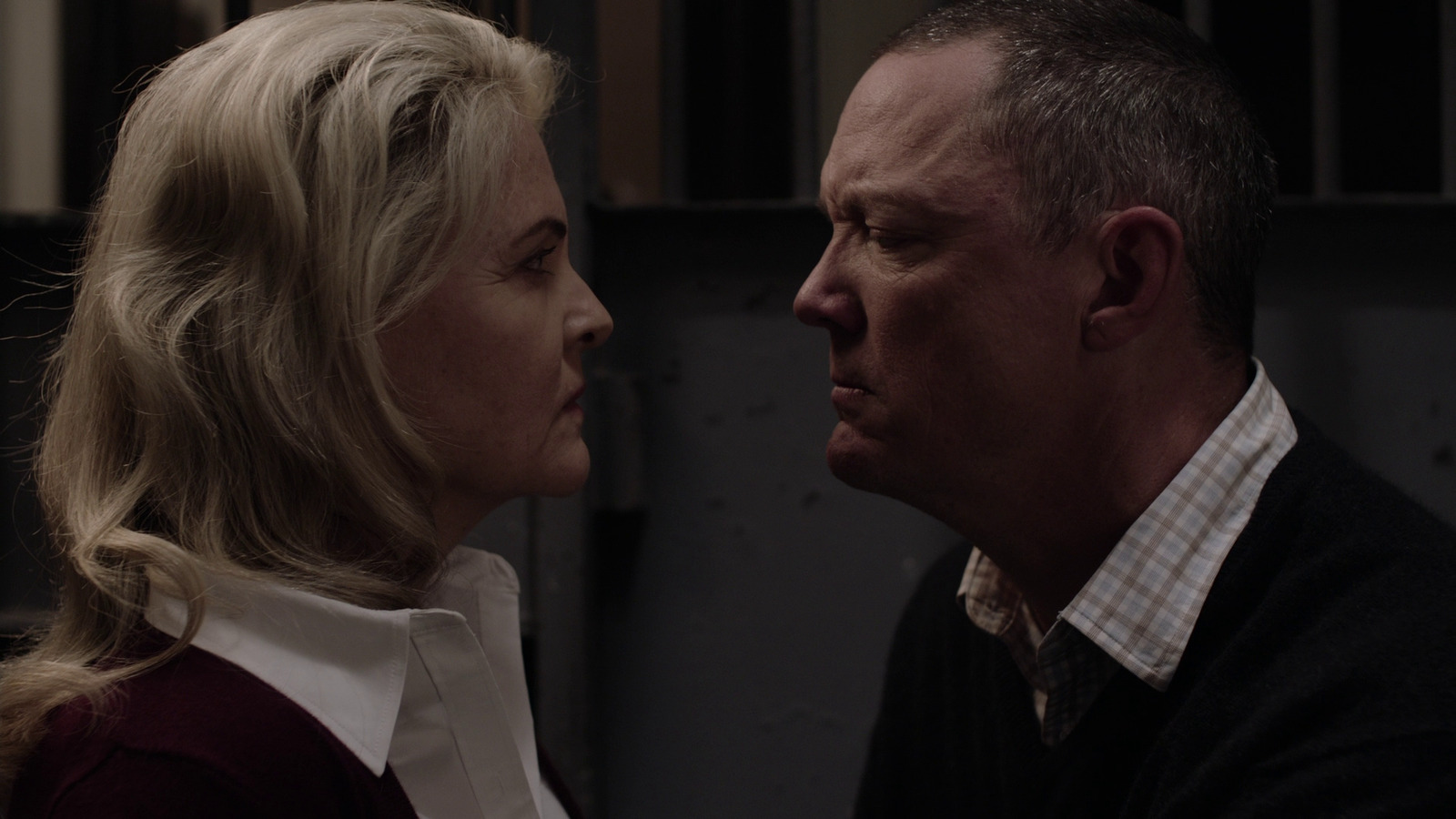
Bill Hastings struggles to make a distinction that Phyllis refuses to accept: he describes a dream of Ruth’s apartment, while she answers with the material fact of his fingerprints. His pauses and repeated attempts to begin do not accumulate into an explanation. Phyllis has a different account ready, one organised around an affair and its consequences.
The bars divide the encounter before either person speaks. Bill cannot follow Phyllis when she decides it is over; the locks and doors give her departure a weight his words cannot counter. Her subsequent exchange with George introduces another withheld relationship. The scene makes uncertainty part of the marriage as well as the investigation. It does not establish that everything Bill remembers is either an innocent dream or a conscious lie.
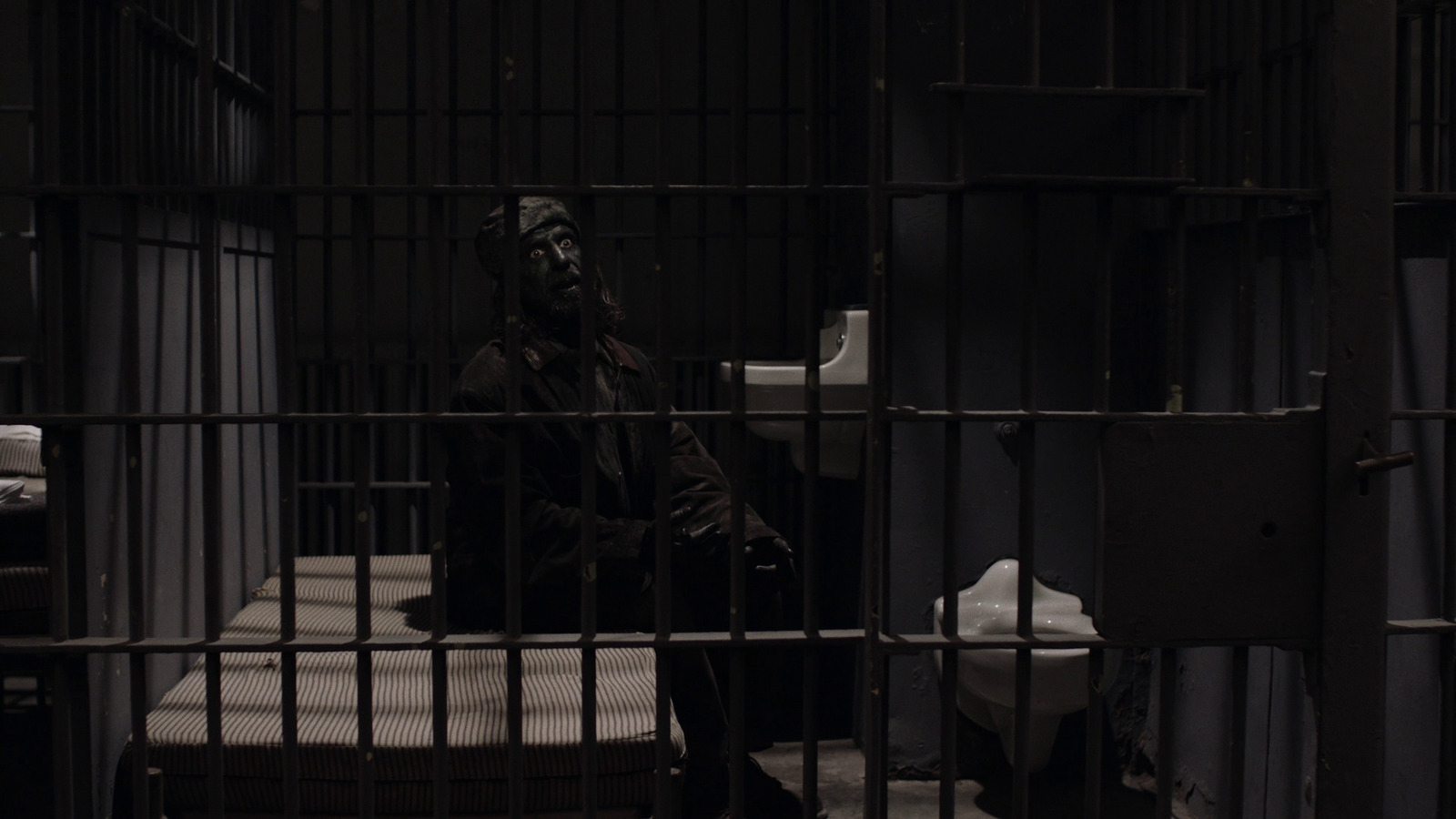
The jail admits an unexplained presence
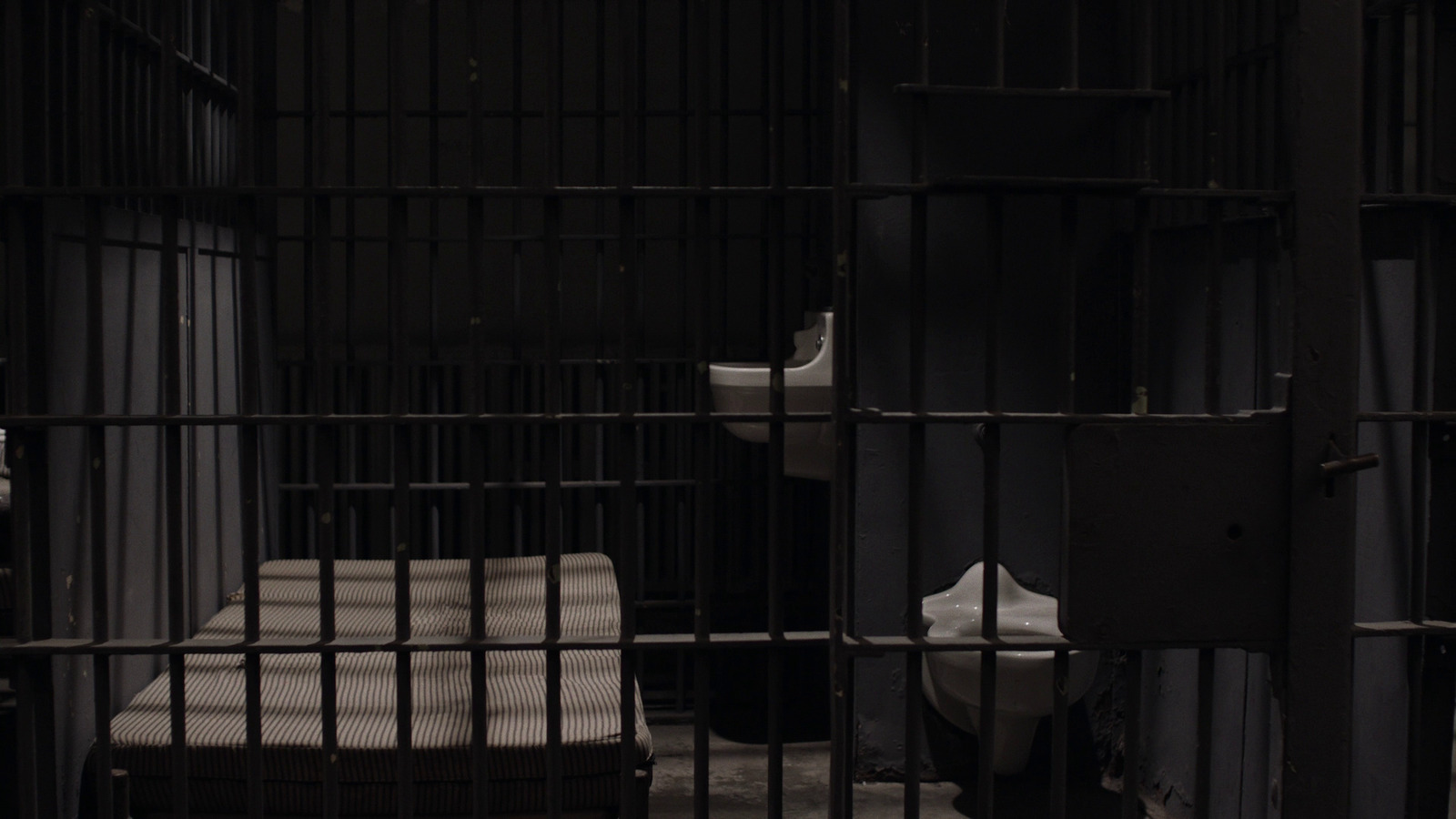
Bill’s distress gives way to a view of another cell occupied by a darkened figure. The bars, bench and toilet remain ordinary; the figure’s dissolution does not. The camera supplies no police reaction that could bring this sight into the official account of the case.
The effect extends the prison sequence beyond the dispute between dream and evidence. Something can be made visible to the audience without becoming knowledge available to the investigators. The empty cell left behind is as important as the apparition itself.
Open the scene sequence · 1 frame
Phyllis returns to a house already occupied
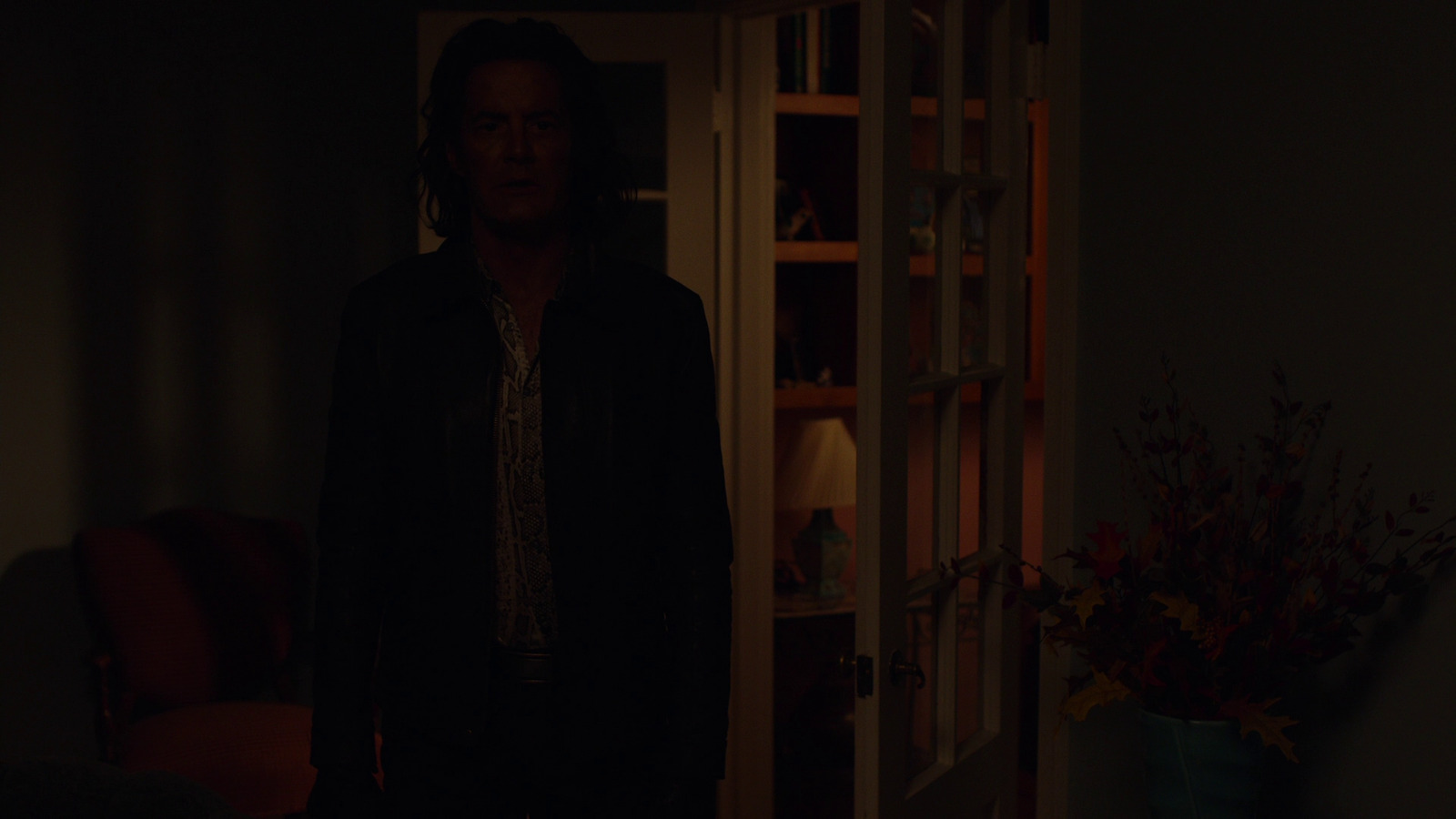
A key, a door and a familiar domestic interior initially promise a return to privacy. Cooper’s double is already there. He connects his action to George’s gun, making the killing part of a larger arrangement without explaining that arrangement to the viewer.
The episode has just shown Bill unable to leave confinement. Phyllis can leave it, but freedom of movement does not make her safe. The double’s composure and the abrupt report of the shot end the scene before it can develop into a negotiation.
An order without its origin
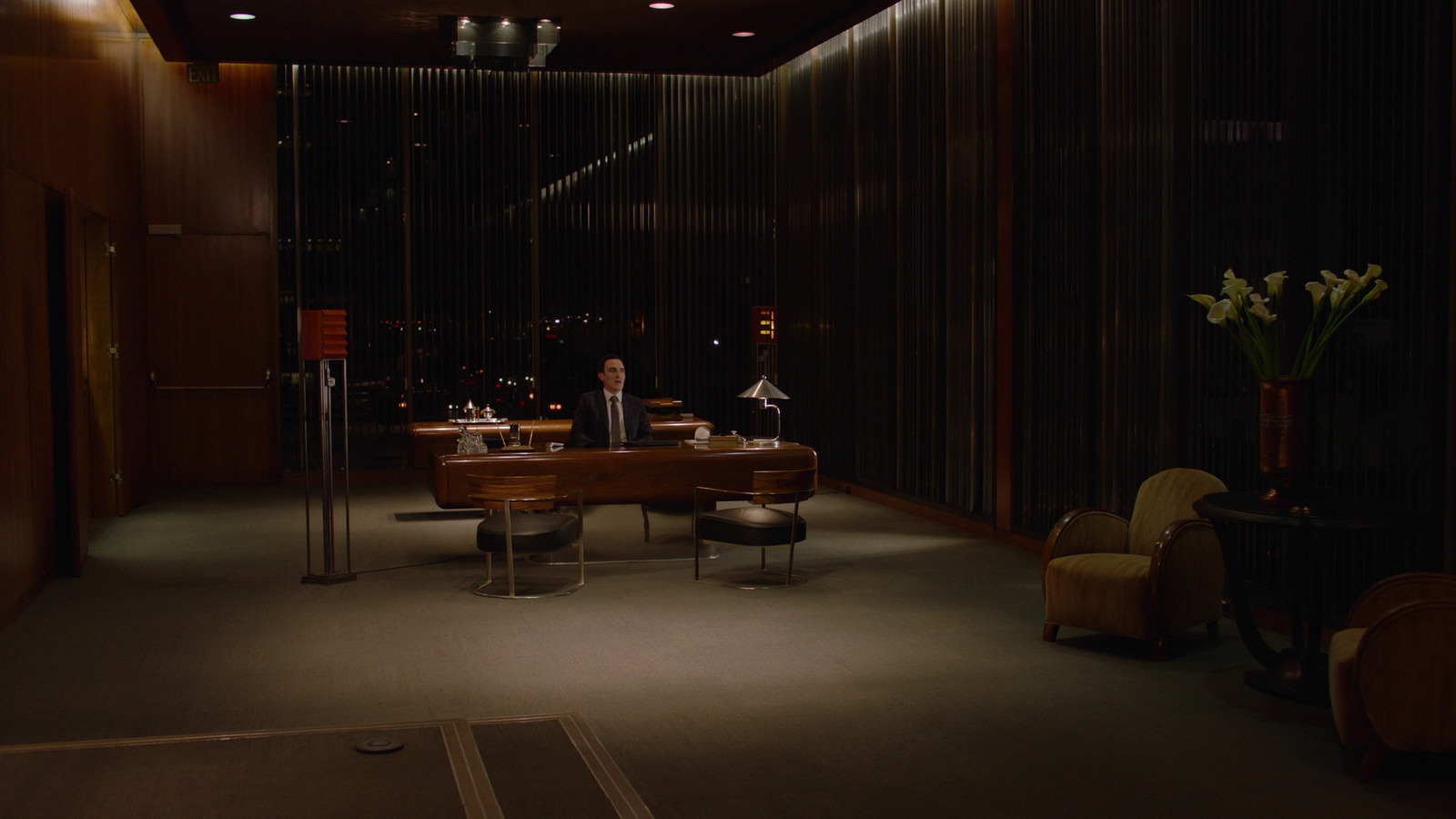
The scale and polish of the office contrast with the cramped jail and dim house. A short instruction is delivered through Roger, who questions why Todd permits an unnamed man to make him do such things. Todd’s warning supplies fear in place of identification.
This is a new social level for a pattern already present elsewhere: someone carrying out instructions cannot fully name or control the authority behind them. The scene expands the geography through a relationship of dependency rather than a conventional establishing explanation.
Wanting, needing and controlling the table
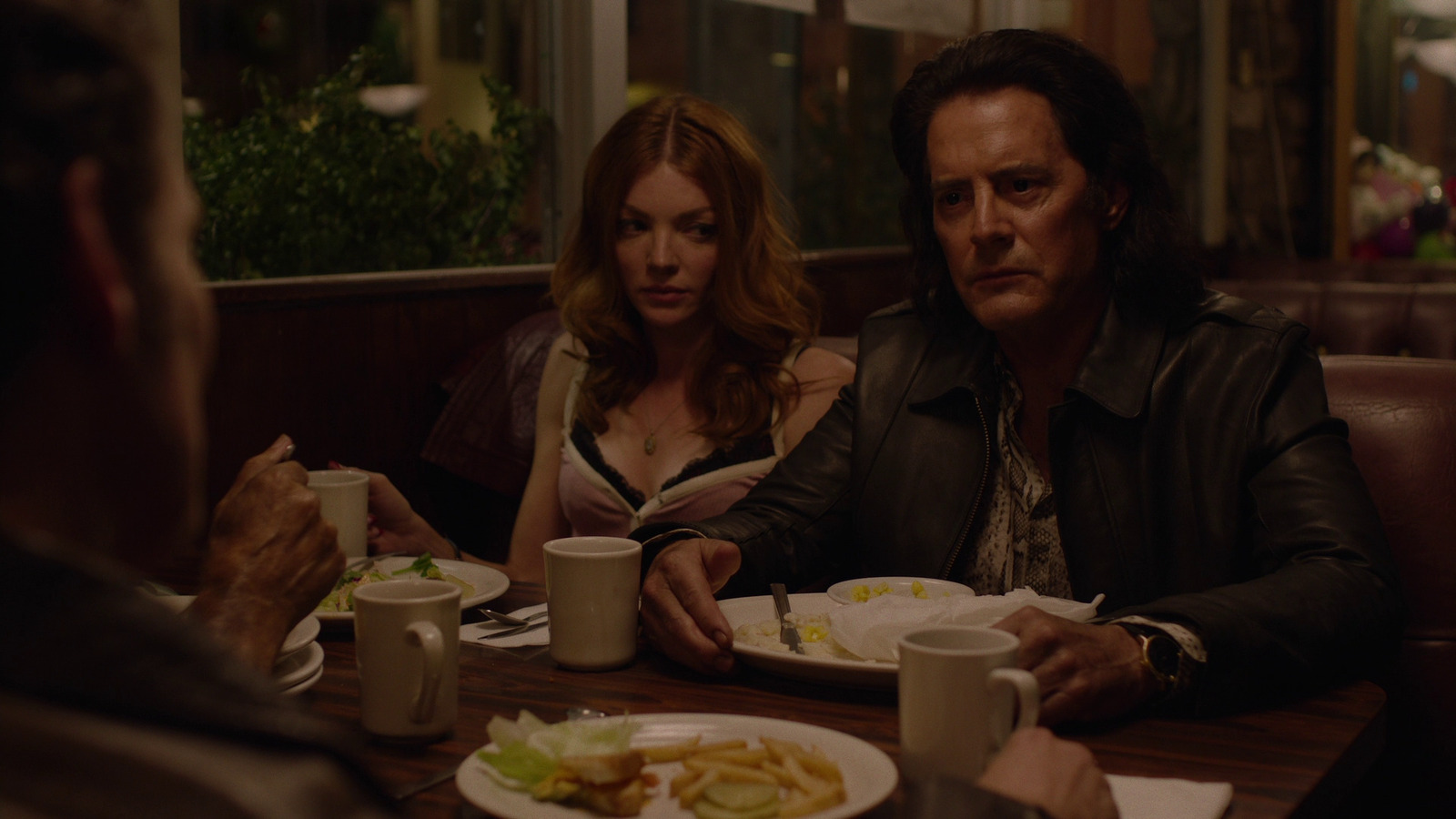
The railway crossing gives the transition a mechanical rhythm before the conversation settles into a booth. Jack’s three dinners make appetite comically visible. Across the table, the double insists on a verbal distinction between wanting information and needing it.
The correction is a performance of independence. Ray offers help and refers to a contact, but the double regulates both the conversation and the terms in which his situation may be described. Hastings’s secretary provides a concrete link to Buckhorn. That connection is stated; the full purpose of the requested information remains withheld.
A time to watch, a place to approach
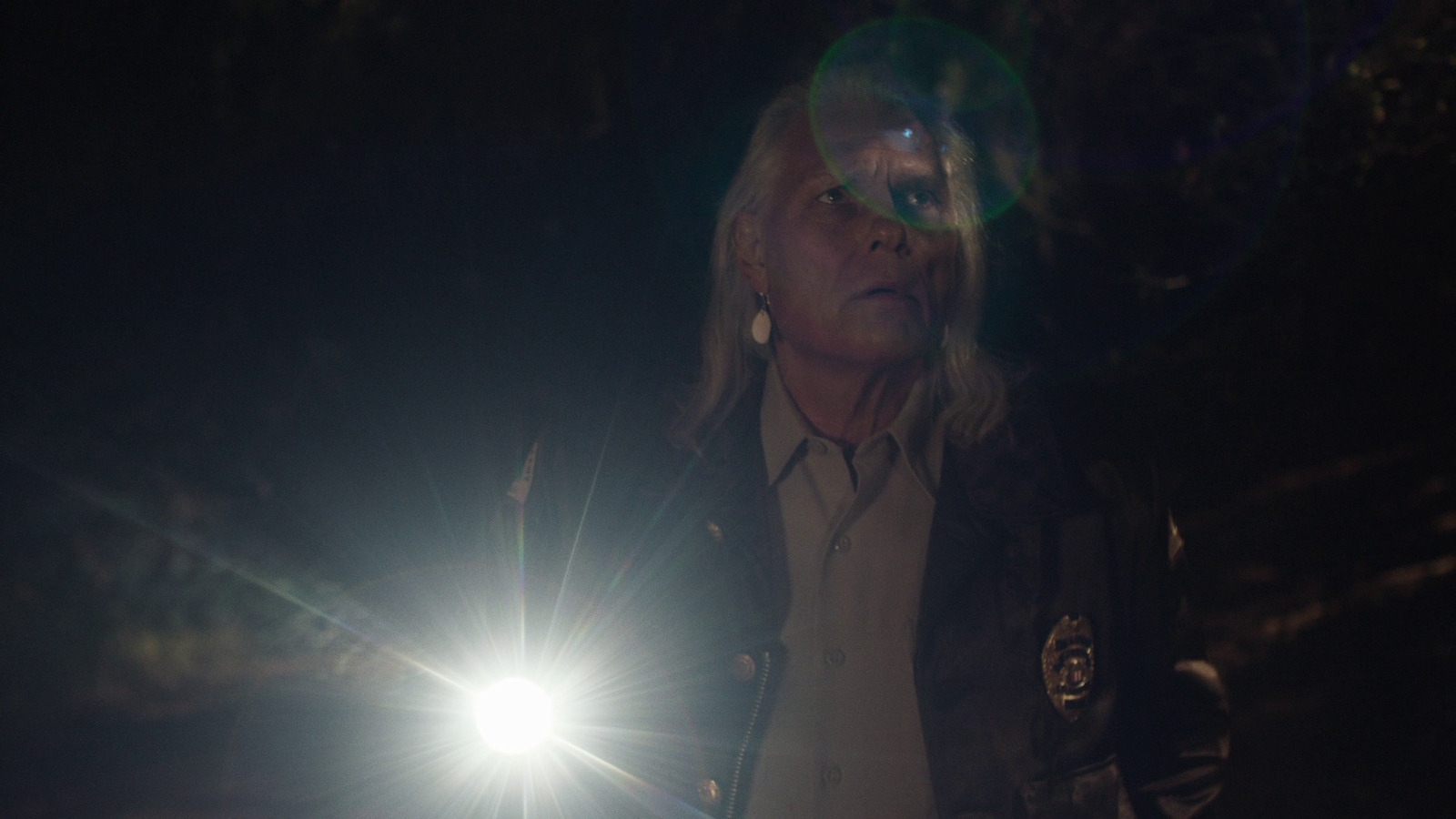
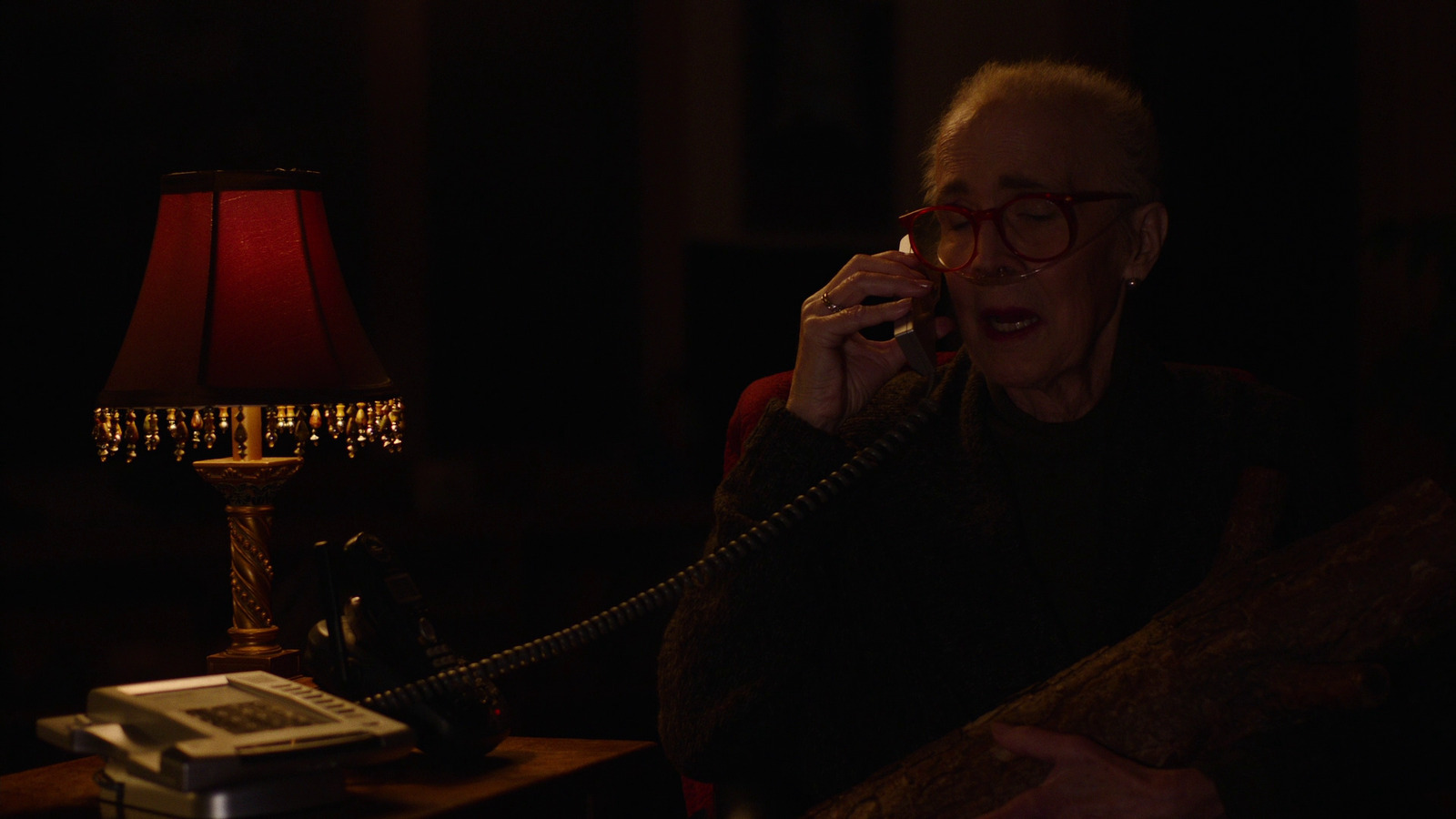
Hawk’s torch cuts a small field of visibility through trees. Margaret’s telephone call adds a temporal instruction to his movement through space: he must attend to what happens at this particular moment. Her offer of coffee and pie keeps the exchange personal even as its purpose is extraordinary.
The sequence moves from torchlight and creaking trees towards the red curtains. A connection is made by the cut, but the episode does not supply a neutral diagram of how the spaces fit together. The flashlight’s restricted reach becomes a good measure of what the scene lets us know.
Open the scene sequence · 1 frame
Recognising Laura does not explain Laura
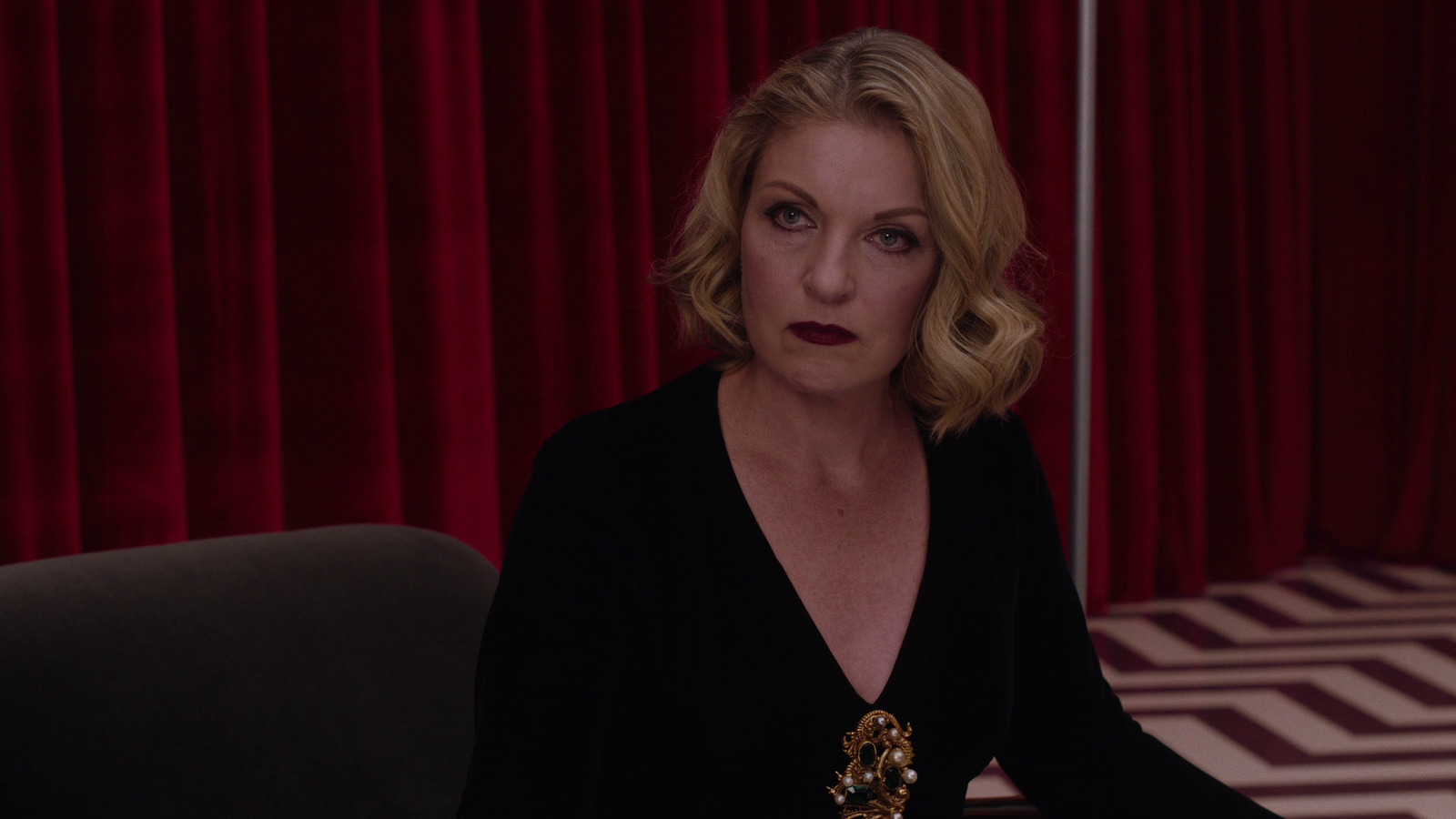
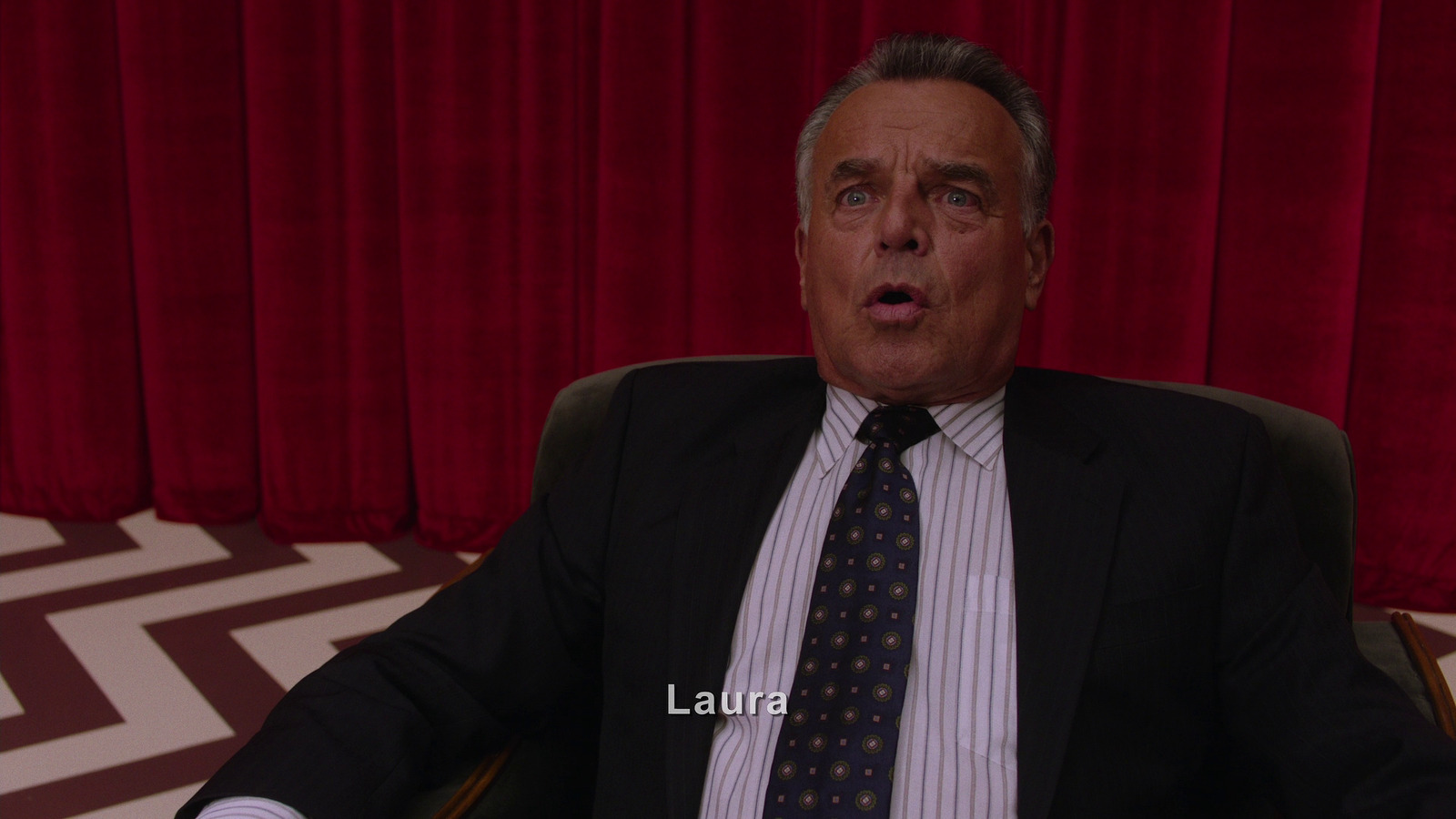
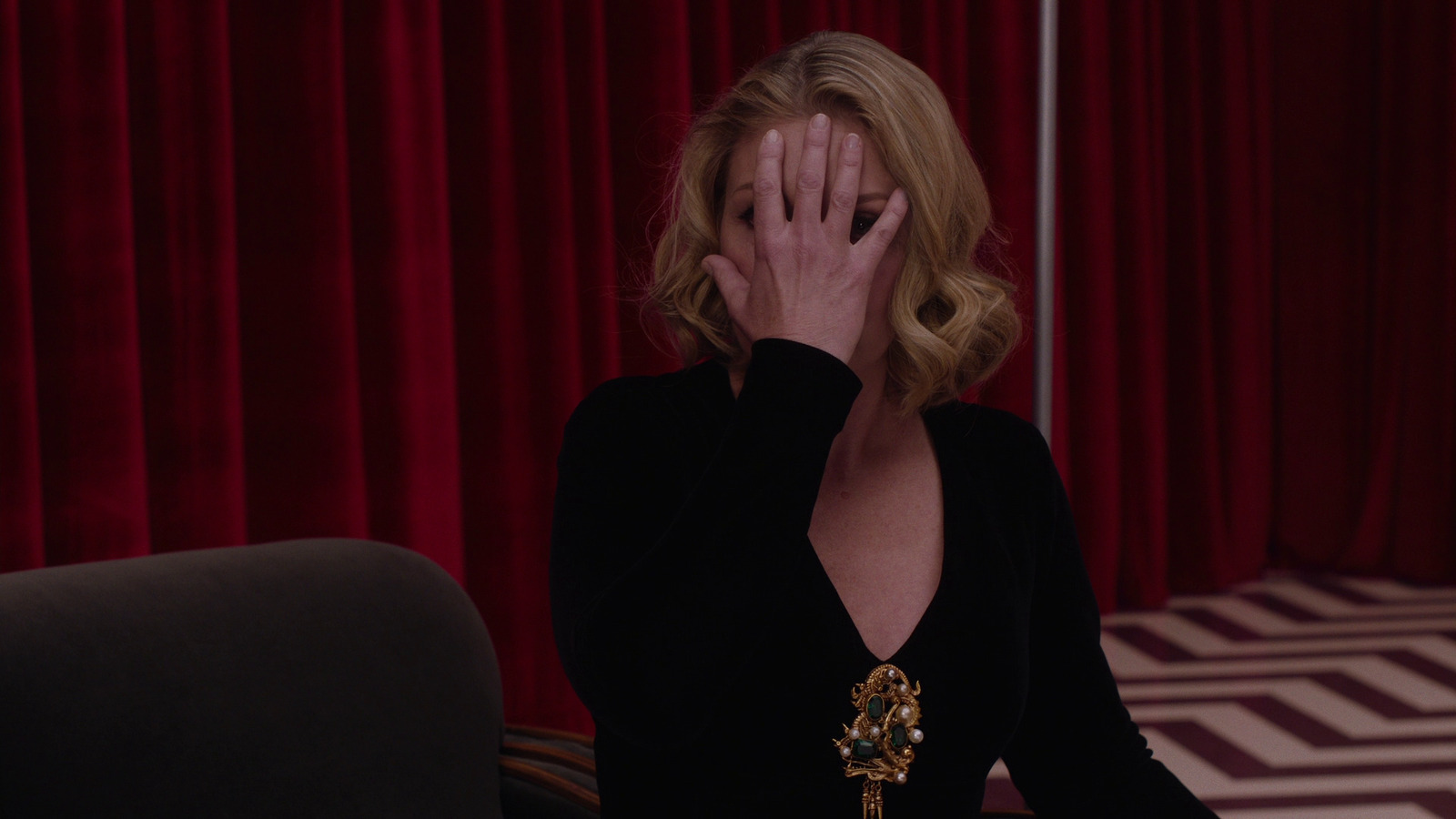
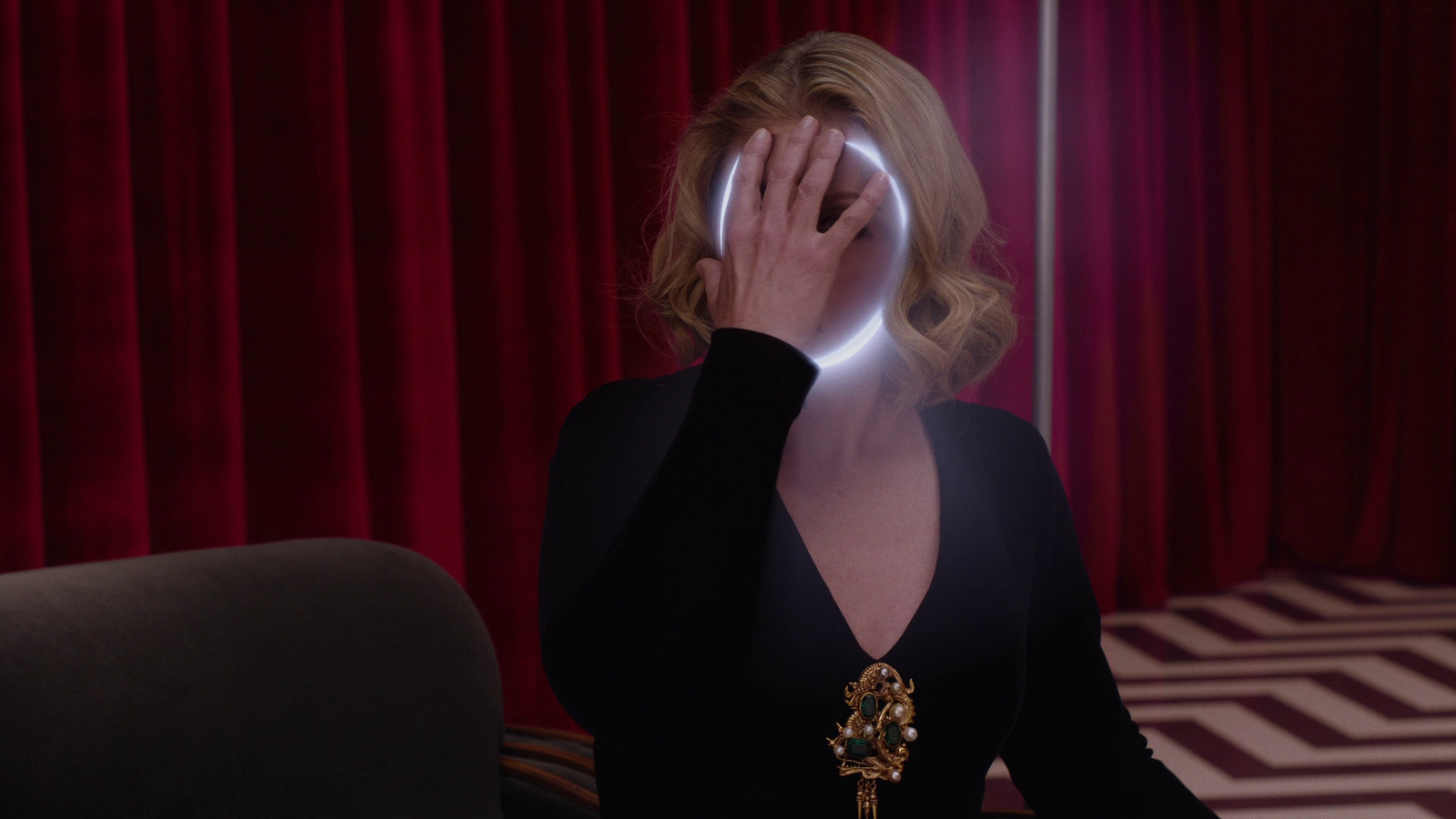
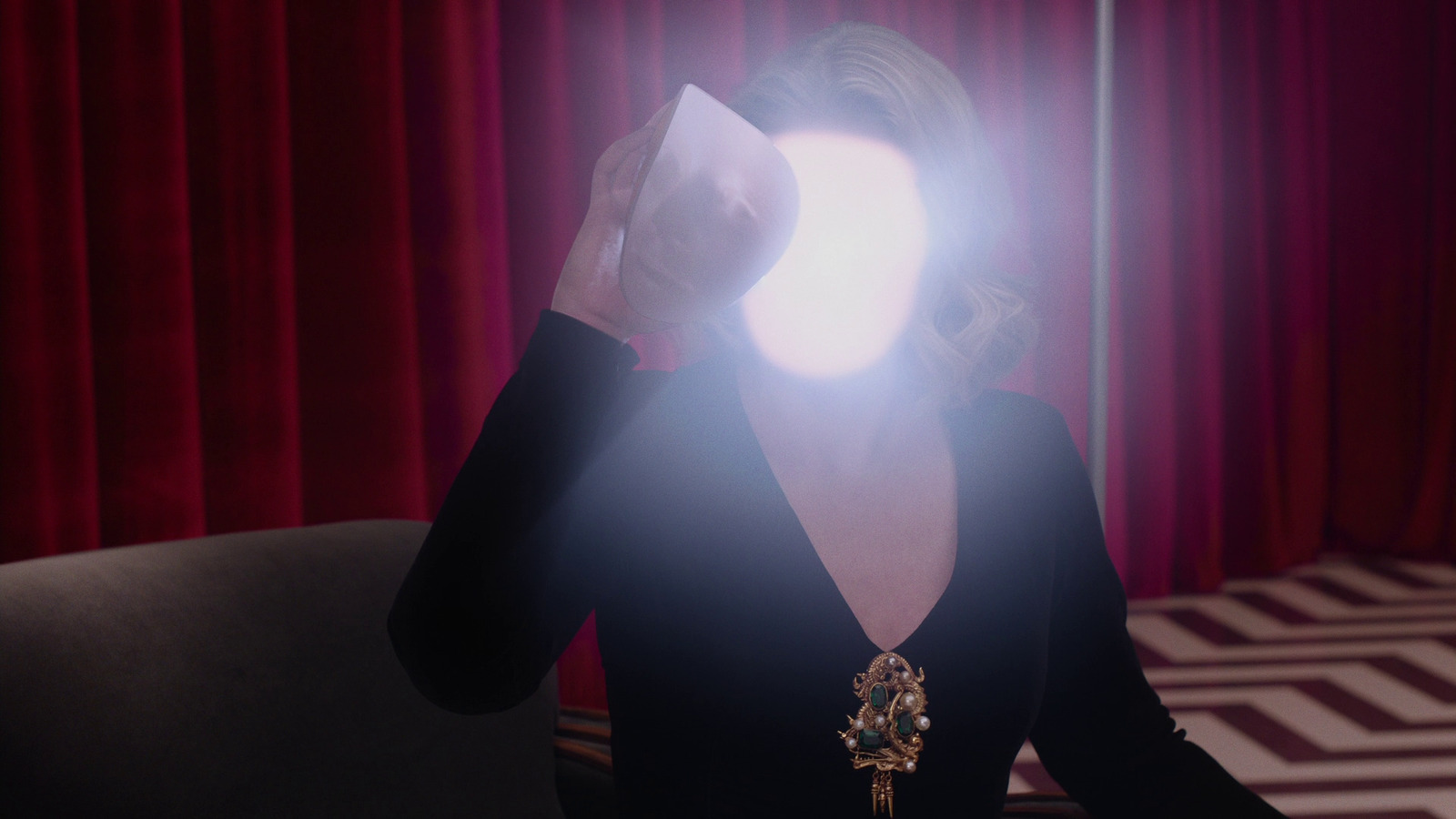
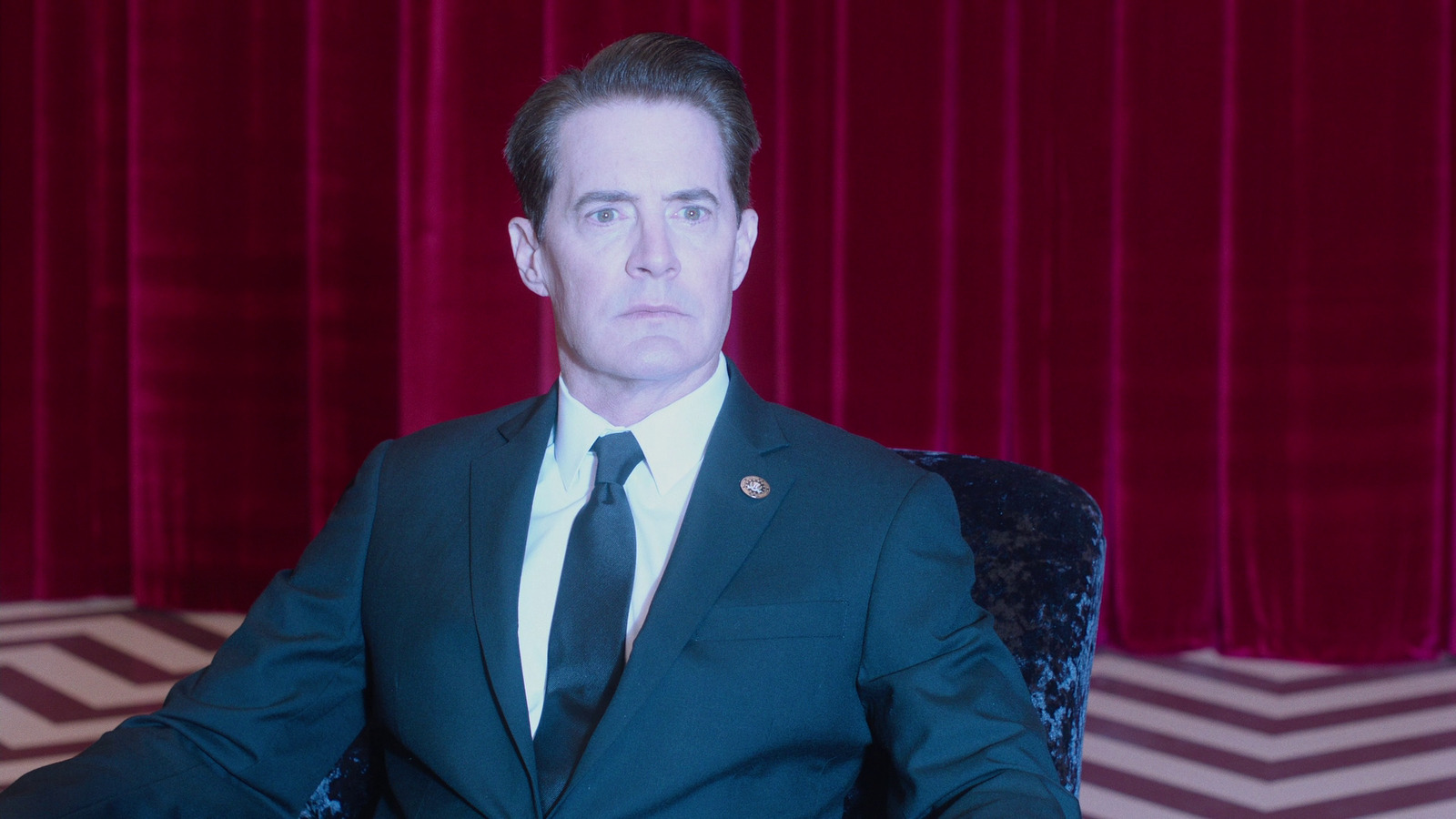
Gerard’s questions unsettle time before Laura enters. Cooper recognises her face, but her answers make recognition insufficient. Sheryl Lee holds the encounter through long looks and measured speech; the familiar face can be both reassuring and profoundly strange.
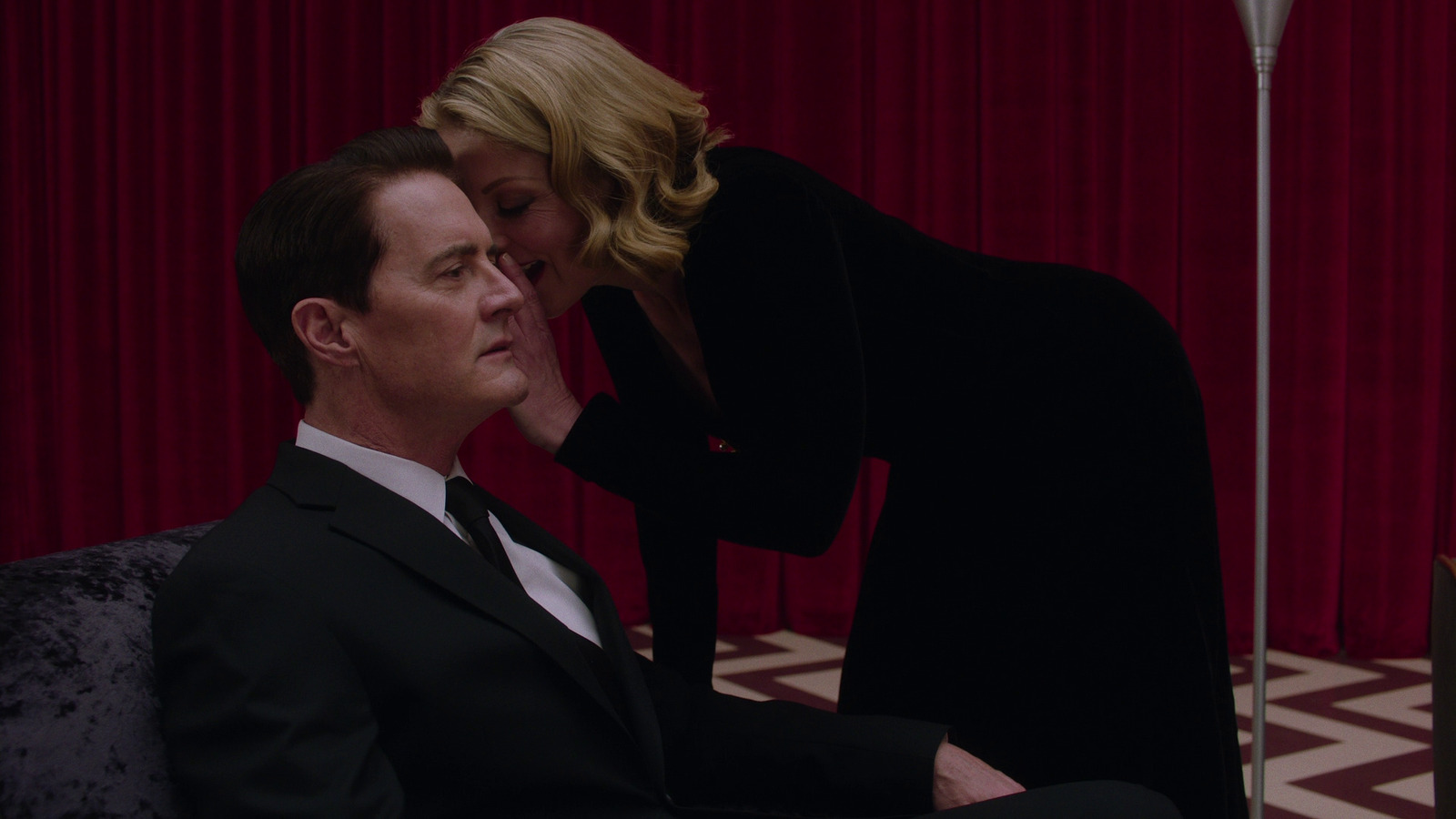
The removal of the face is followed by an intimate exchange: Laura approaches, kisses Cooper and whispers. The viewer sees communication without gaining access to its words. His reaction is evidence of an effect on him, not a transcript from which we can reconstruct the message.
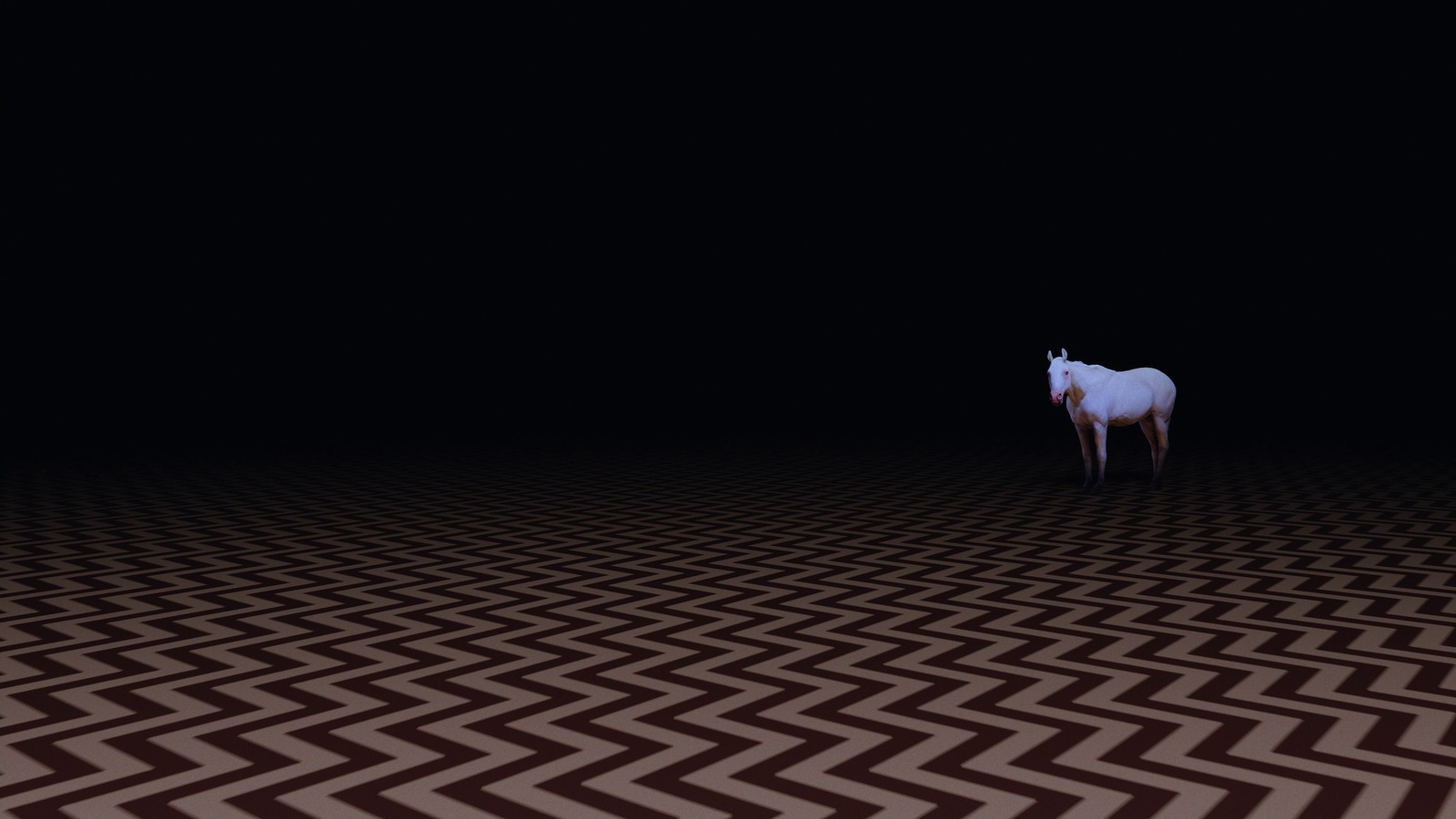
Laura’s sudden upward removal breaks the measured encounter into screaming, wind and movement. Curtains lift to expose a darkness containing a white horse. The space has changed again, but it has not become more navigable. These events connect the body, voice and room through transformations rather than explanation.
Open the scene sequence · 2 frames
The Arm takes another form
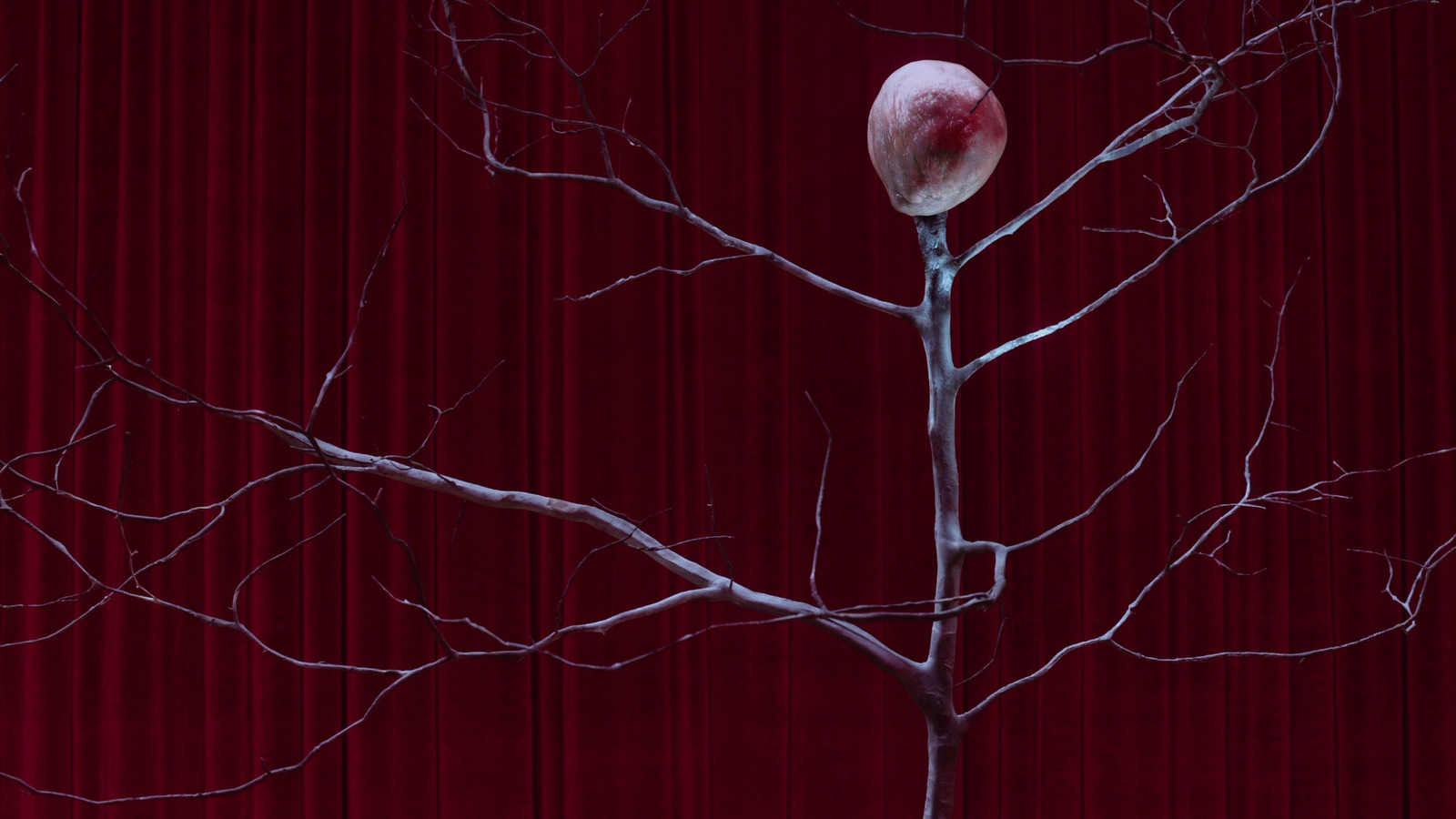
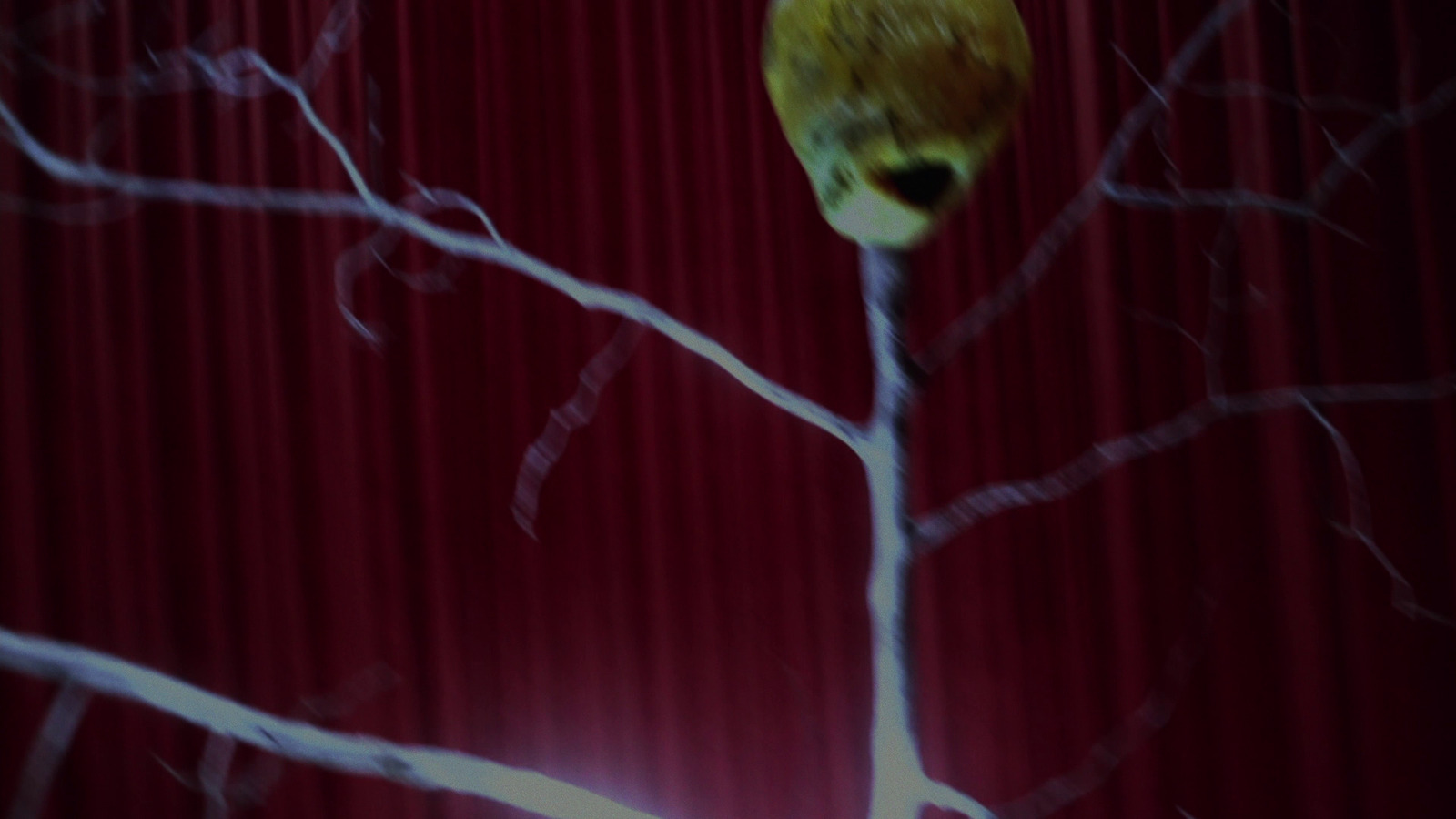
Gerard leads Cooper to a tree-like figure whose rounded head moves above branching limbs. Speech is attached to an unfamiliar body, while the sound and the return of earlier images insist on continuity with the series’ past. The figure links Cooper’s ability to leave with the return of his double.
The sequence is not simply a new creature reveal. It makes identity survive a radical change of shape, then introduces a rule that the double’s later plans directly resist. The focused effects comparison below separates the Arm’s two appearances and the production account of their design.
Open the scene sequence · 1 frame
A car transaction becomes bodily control
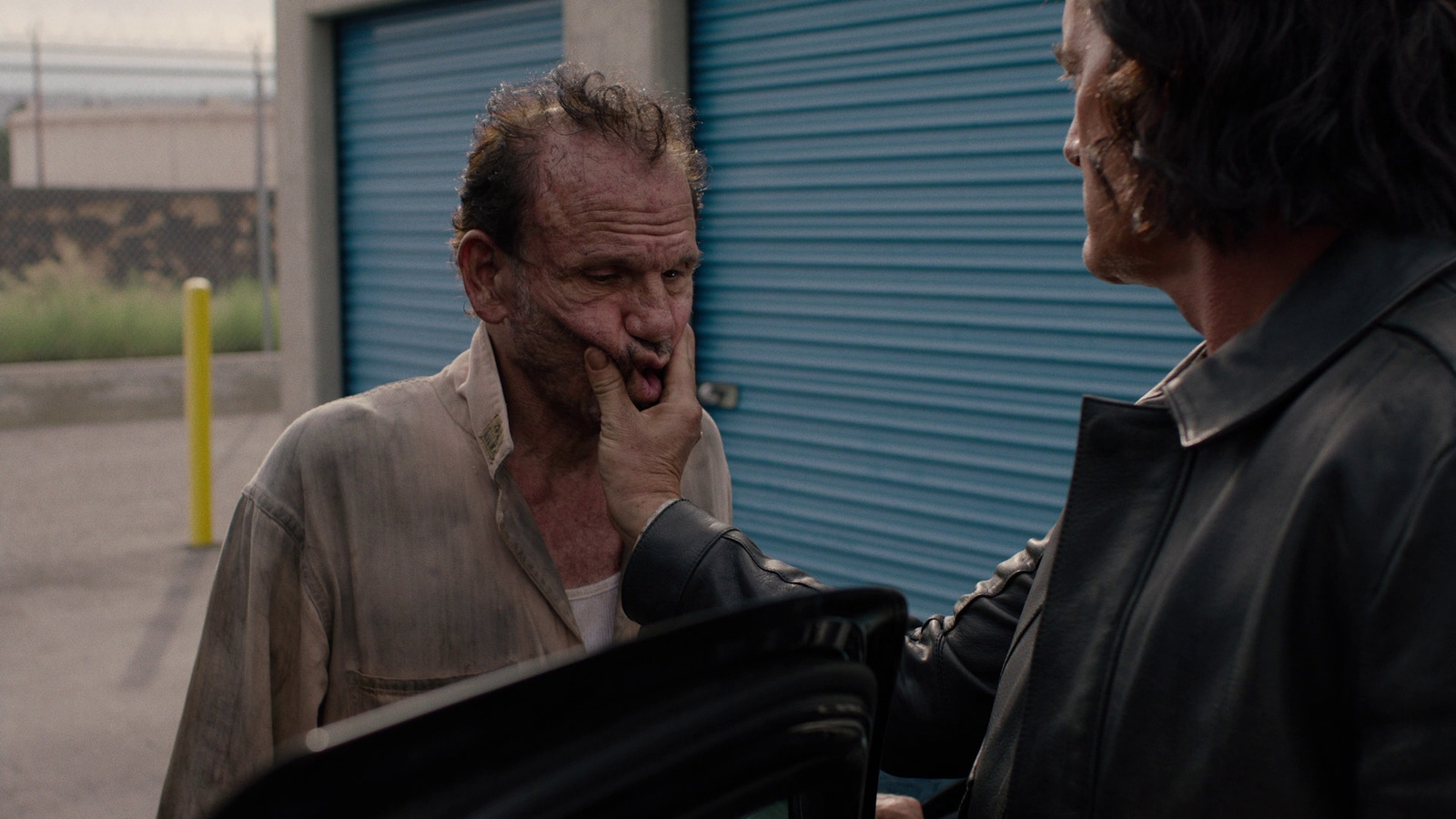
Blue doors and daylight briefly offer a plain working environment. The double receives keys, calls Jack back and takes hold of his face. The gesture is prolonged beyond the practical business of obtaining a vehicle.
The following motel conversation supplies the double’s claim that Jack is dead. The scene at the car itself does not show every step of that killing. Keeping the distinction between the visible gesture and the later account preserves the episode’s deliberate gaps.
A recording turns concealment against its speaker
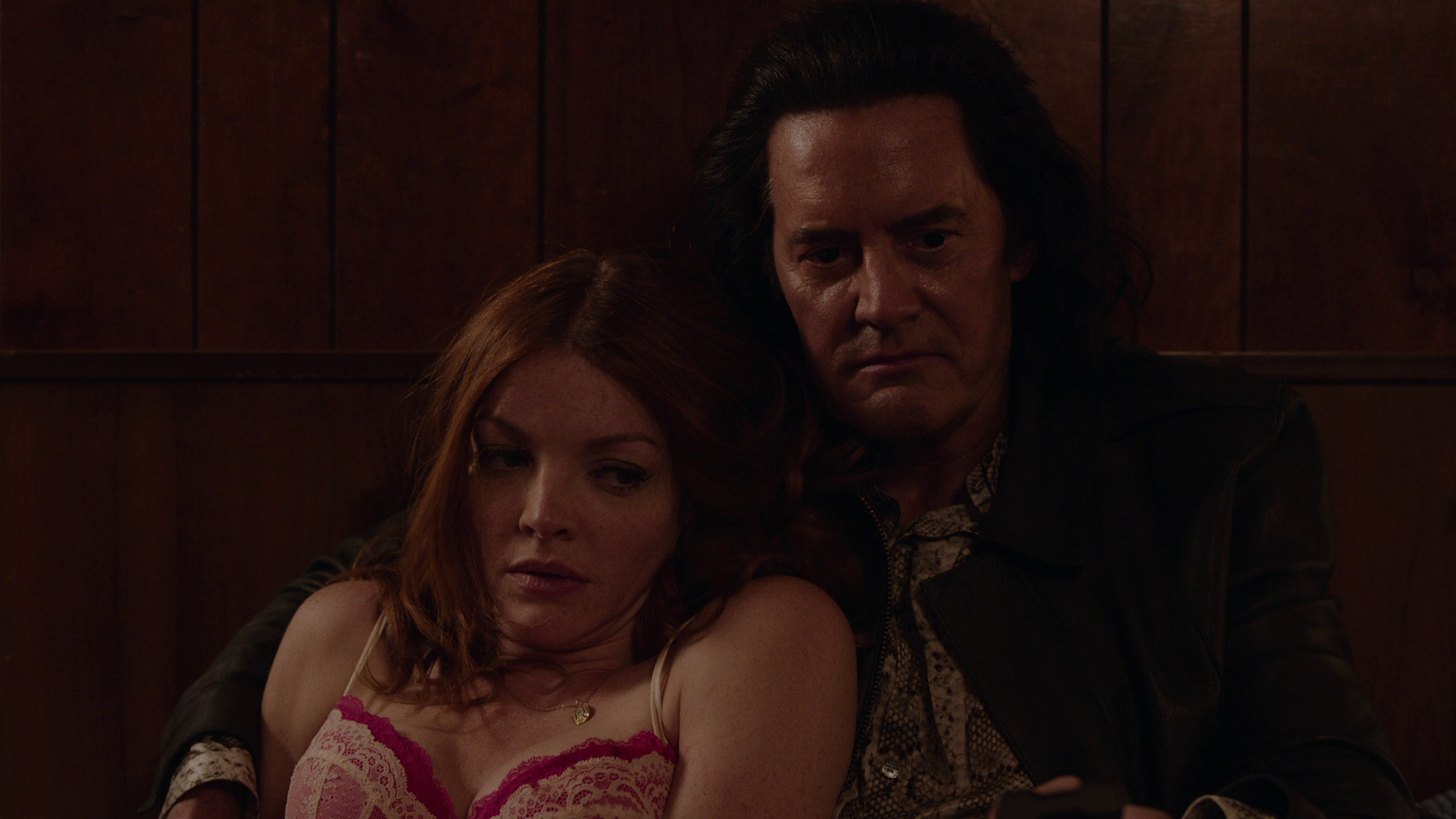
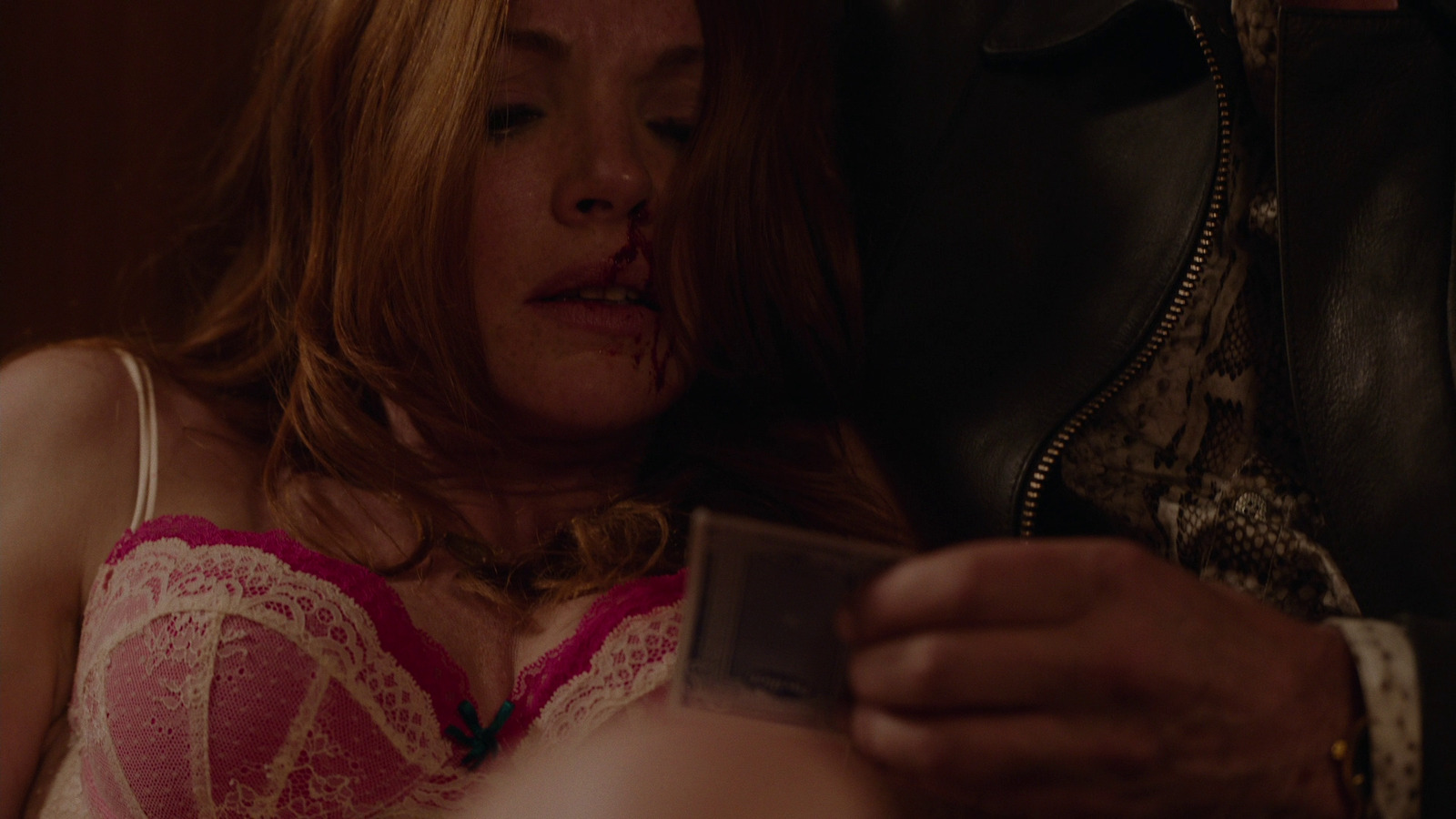
Darya ends a phone conversation as the double arrives, then offers him a different account of whom she was speaking to. His questioning first allows the story to continue. Only after he has physically restrained her does he replay the intercepted exchange with Ray.
The recording transforms private speech into evidence under someone else’s control. Ray’s assurance that nobody is listening becomes especially cruel when heard from the equipment of the person he intends to kill. Darya must listen to her own earlier words while trying to speak in the present.
The double then states his refusal to go back to the Black Lodge and asks about coordinates. A card is presented as something he wants, without explaining its full meaning. His repeated certainty about killing her gives the questions a coercive structure: information is demanded under a promise of violence that he does not withdraw. Rain, thunder, the recorded call and the final muffled gunshot keep the room’s threat close and enclosed.
Open the scene sequence · 1 frame
A familiar name does not authenticate a voice
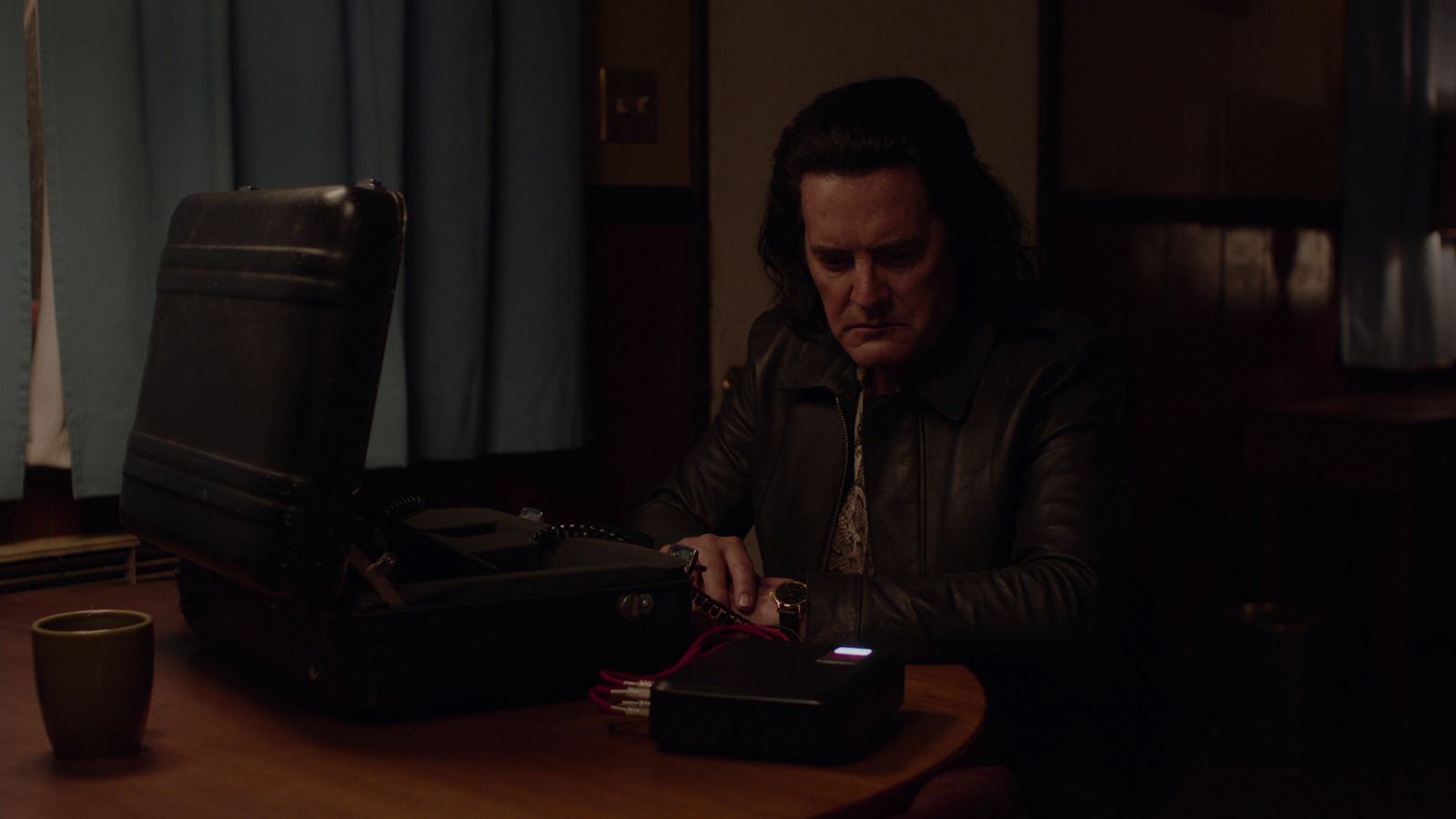
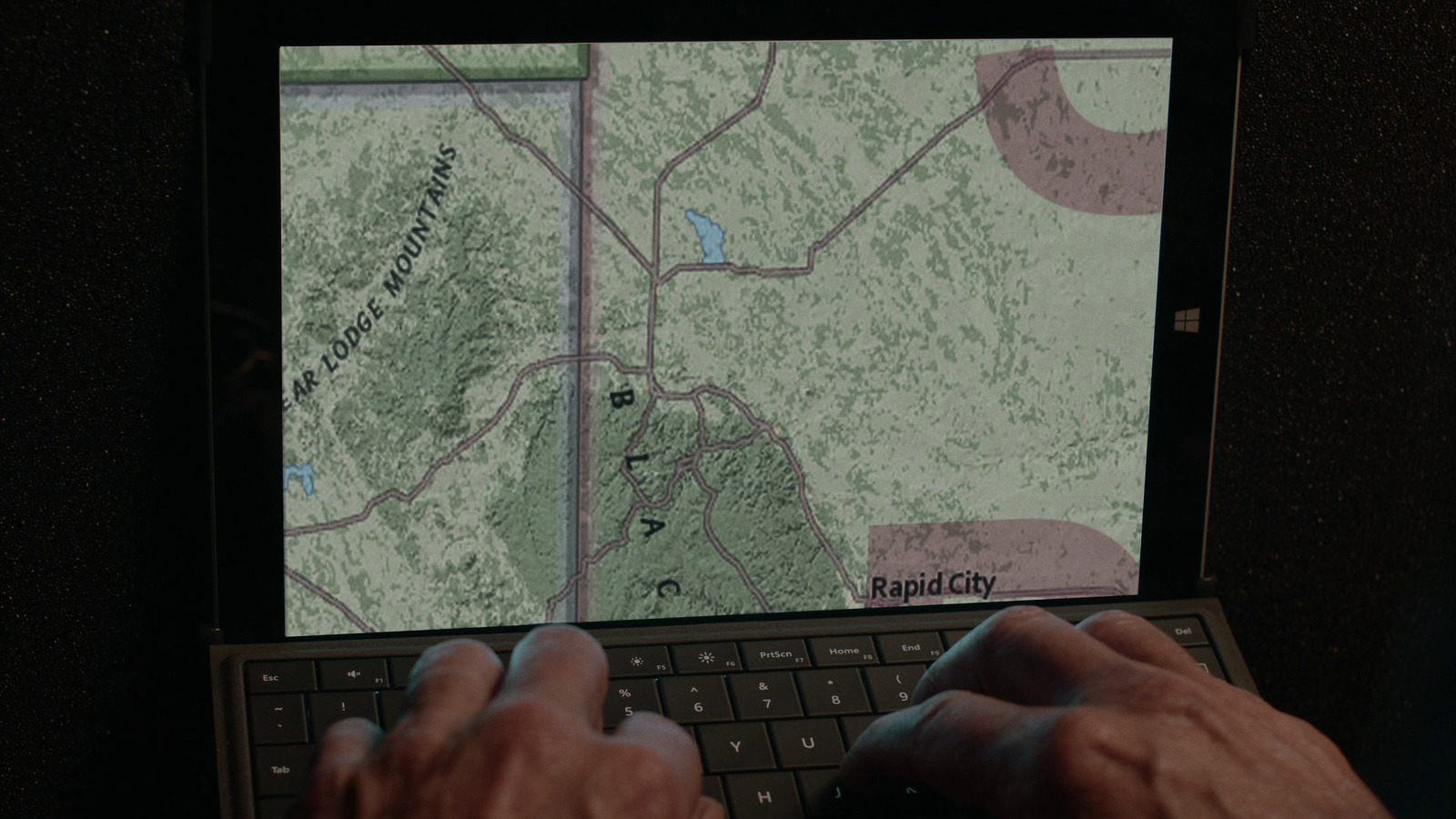
Washing and opening a case turn the aftermath into another routine. The double addresses the distant caller as Phillip, but his questions increasingly test the identification. The voice knows about New York, Buckhorn and Major Briggs, and refers to being with Bob again. The conversation ends without securely confirming who is speaking.
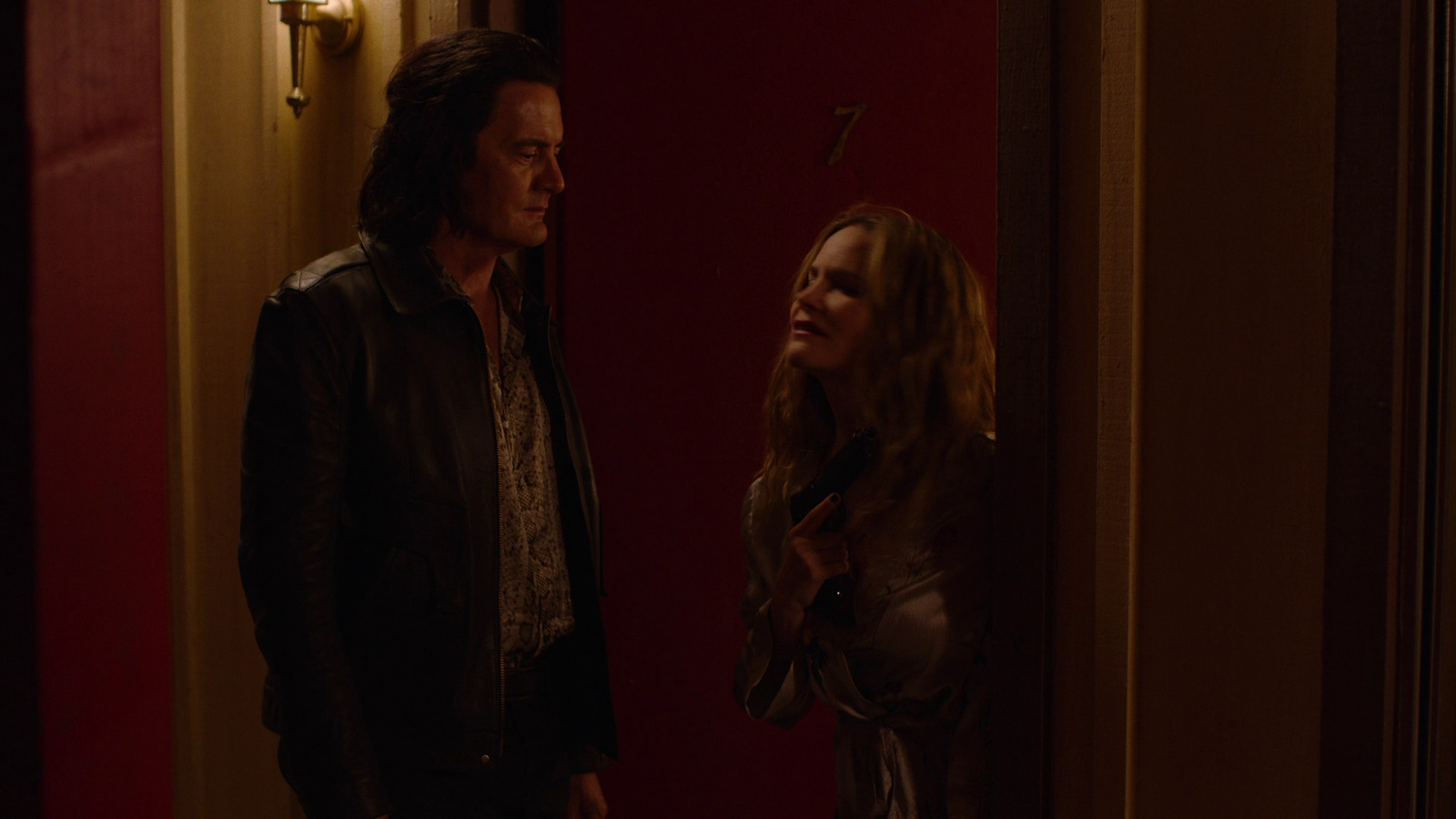
A laptop, an FBI screen and a map make the pursuit of information visible. The move to Chantal’s room then translates violence into instructions to clear the previous room and prepare another assignment. Different people possess pieces of the operation; their proximity to the double does not imply equal knowledge or power.
Open the scene sequence · 2 frames
A succession of openings that do not provide an exit
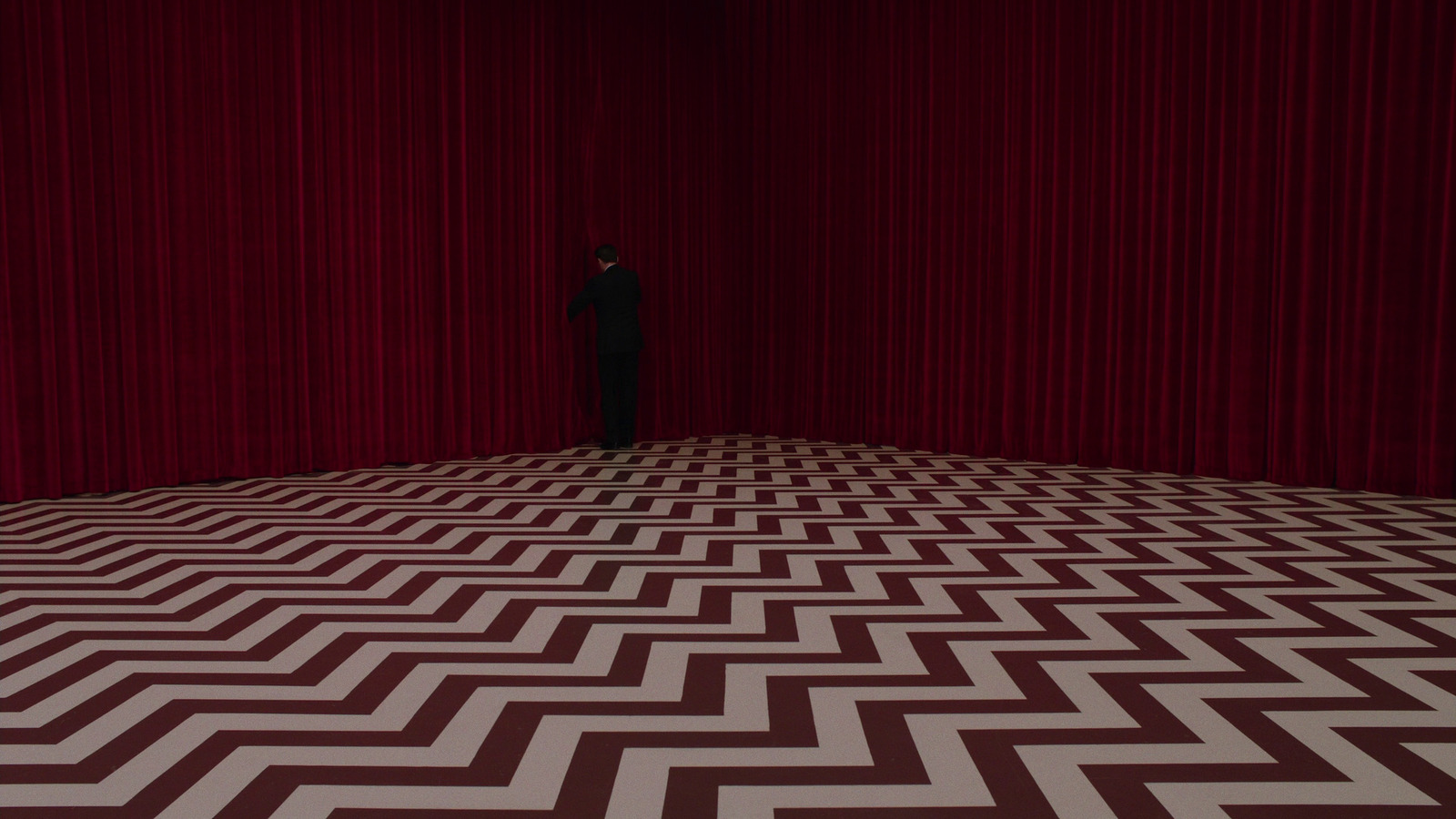
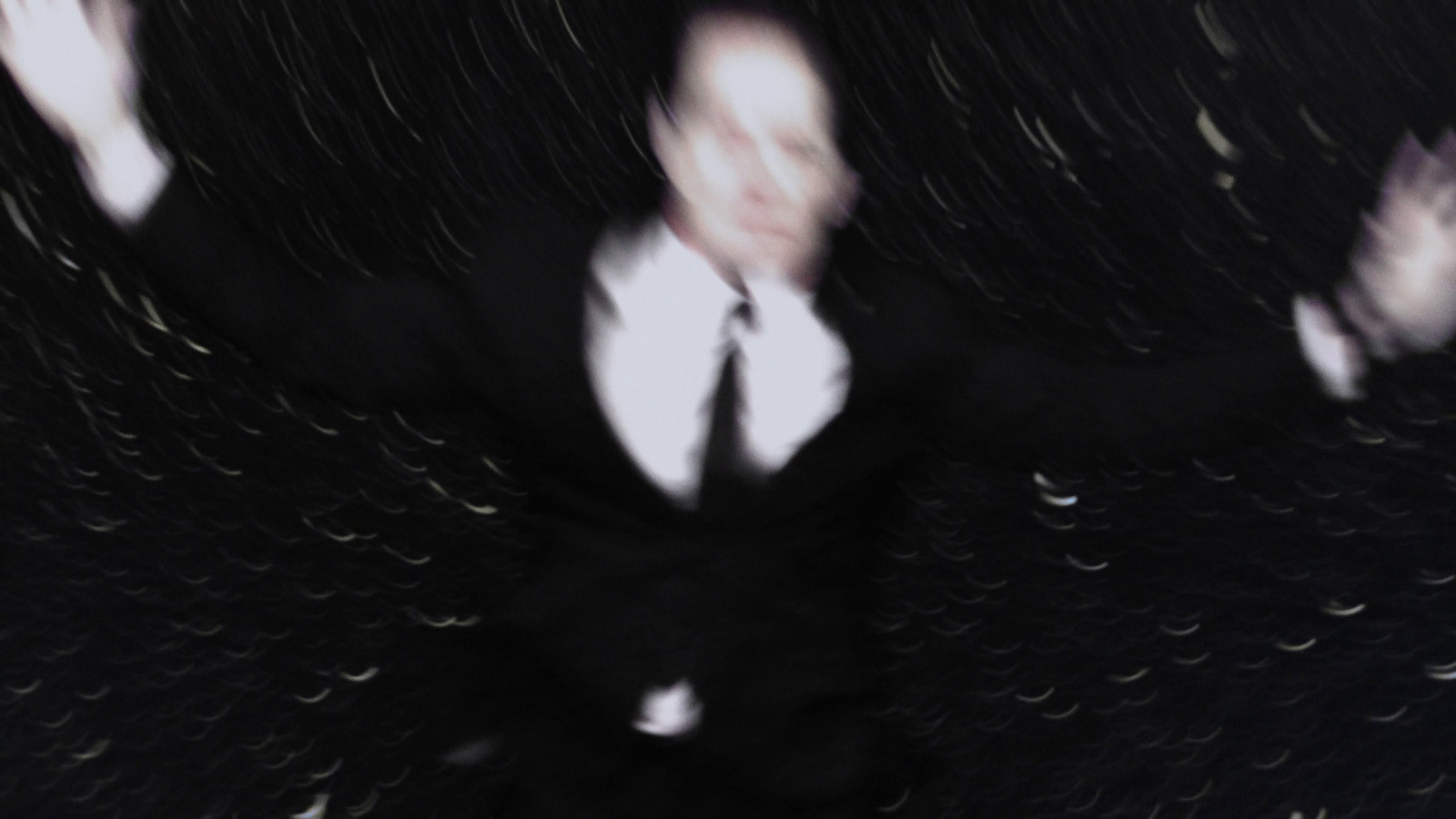
Cooper parts curtains, crosses the patterned floor and enters apparently related chambers. Repetition makes these actions readable, but it never establishes a dependable plan of the space. Leland’s request concerning Laura returns the journey to a person rather than a solution to the architecture.
The disturbance of the floor and the Arm’s threatening double make the attempted departure unstable. The pattern beneath Cooper no longer functions as secure ground. His fall changes the scale of the image from a furnished room to a dark field of movement, before an inverted city view introduces another kind of space.
Open the scene sequence · 1 frame
The observer misses the event
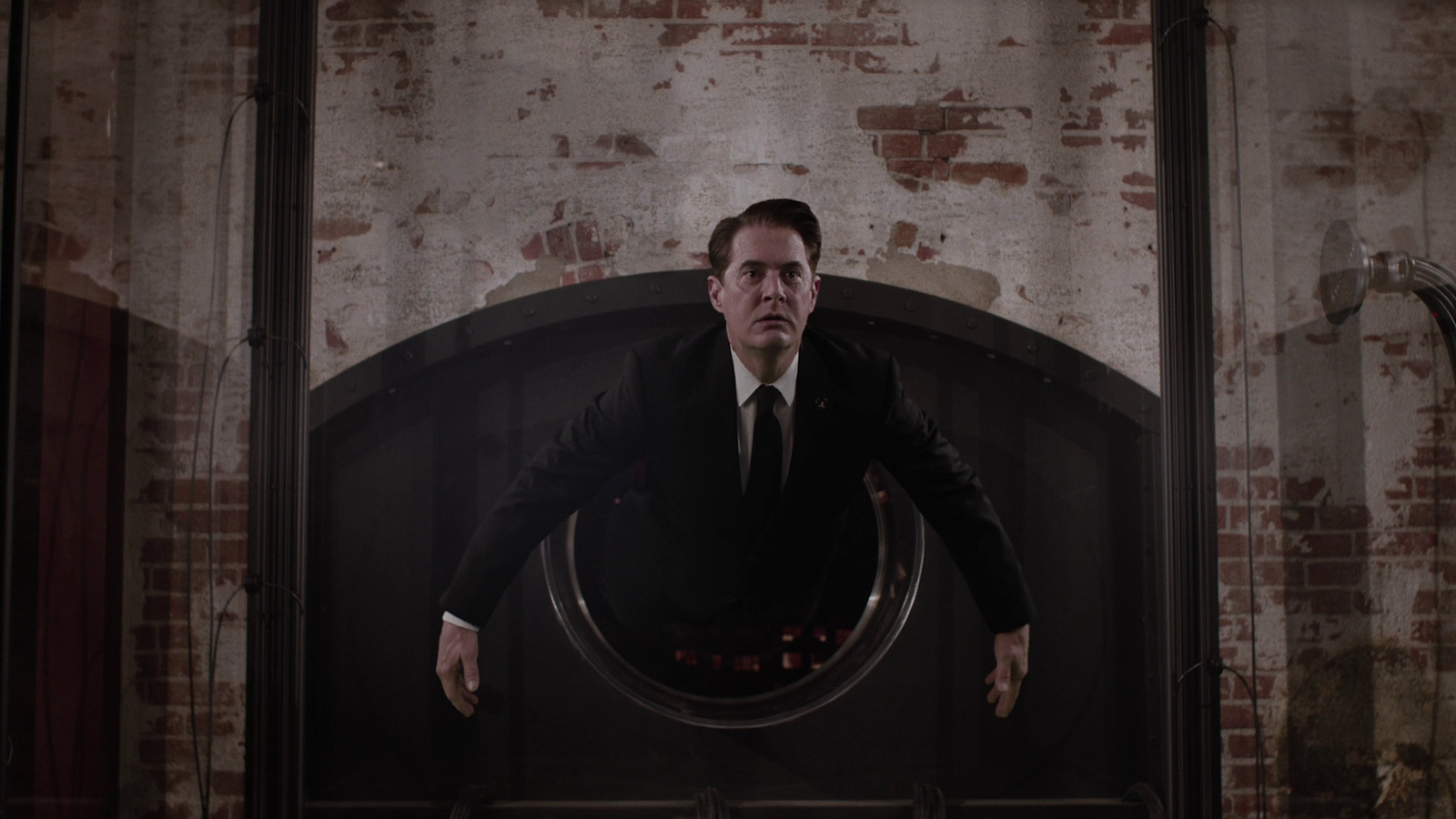
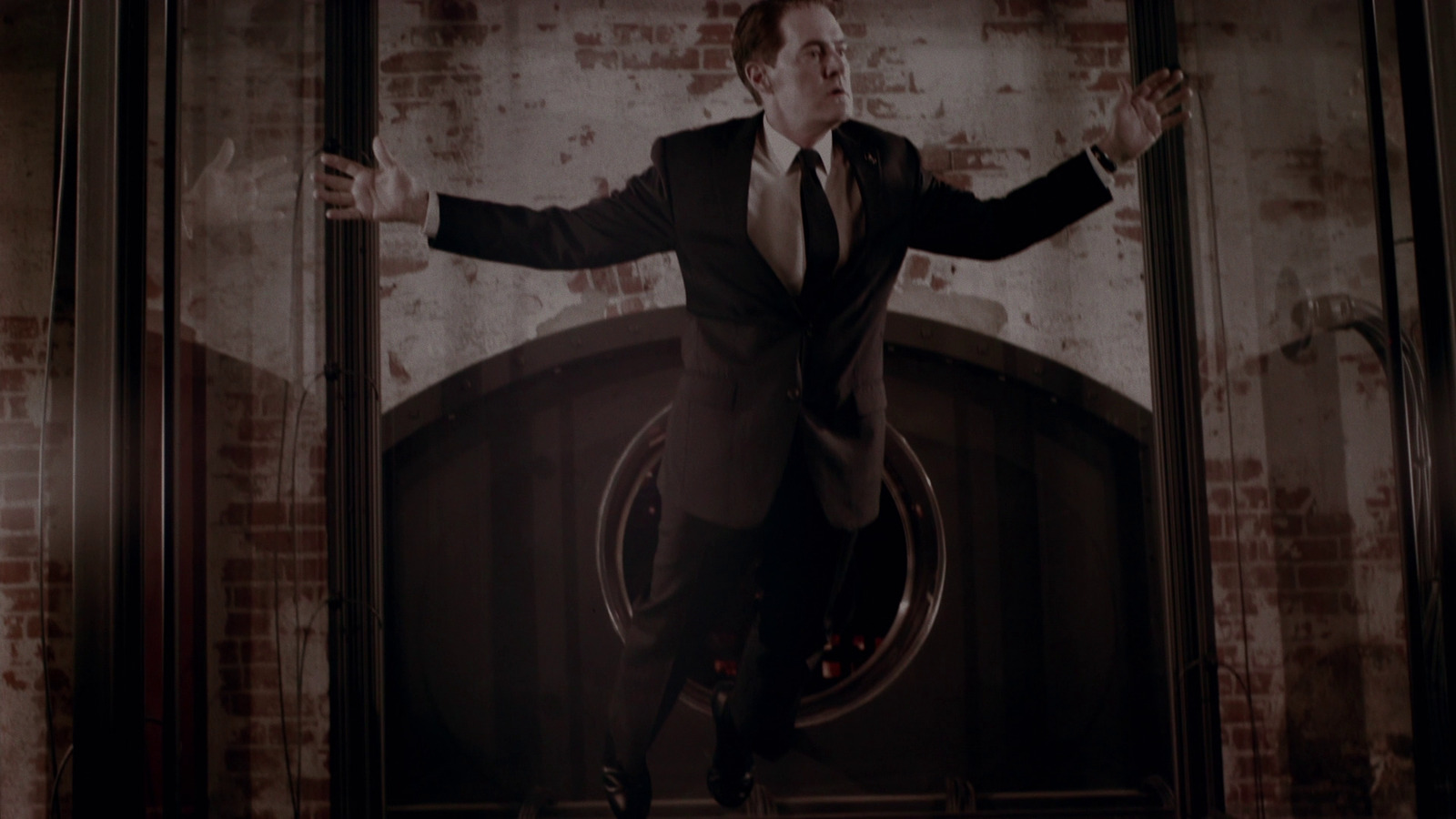
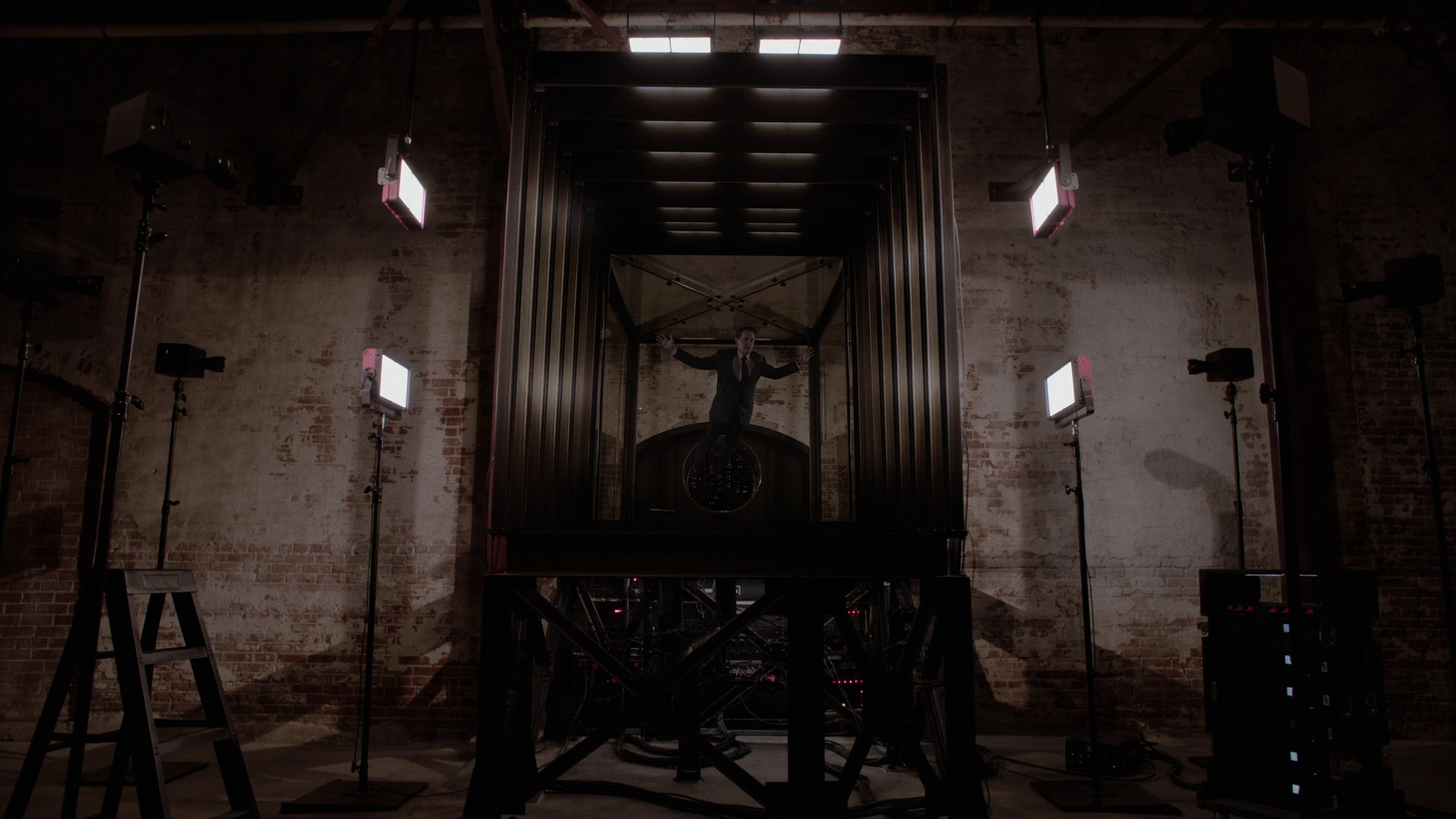
Cooper arrives inside the glass box while Sam is away from his seat. The return to Tracey at the doorway overlaps an encounter seen earlier, asking the audience to reconsider the observation room through information unavailable to its watcher.
For a moment the box gives Cooper a visible boundary and an apparently recognisable destination. Its distortion and withdrawal then deny that stability. The enclosure is part of a passage, not a place where the episode can simply deposit its returning protagonist. This does not identify Cooper with the later attacker: the images establish distinct appearances, not an equivalence between them.
A screen with no companion
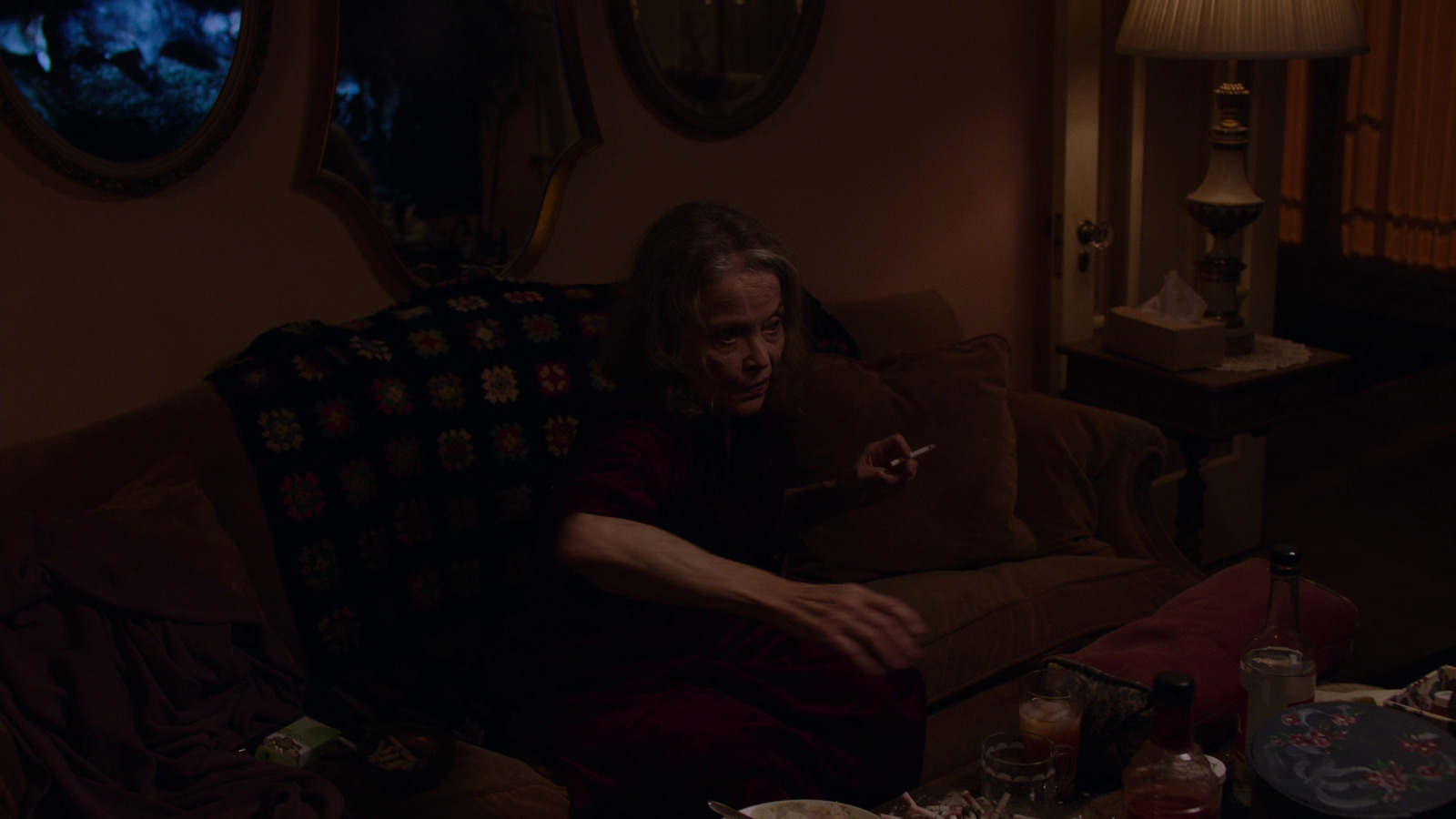
Sarah watches a wildlife programme alone. The television’s lions and water buffalo bring predation into the living room through sound, while her drinking and smoking belong to an ordinary domestic routine. The scene supplies no conversation that could translate this combination into an explanation.
Placed before the Roadhouse, the image establishes a sharp change in the act of watching: a solitary spectator at home gives way to a room of people gathered around a performance. Neither setting guarantees companionship. This is a comparison produced by the sequence, rather than a claim that the wildlife footage supplies a coded solution to Sarah’s story.
The music holds several stories at once
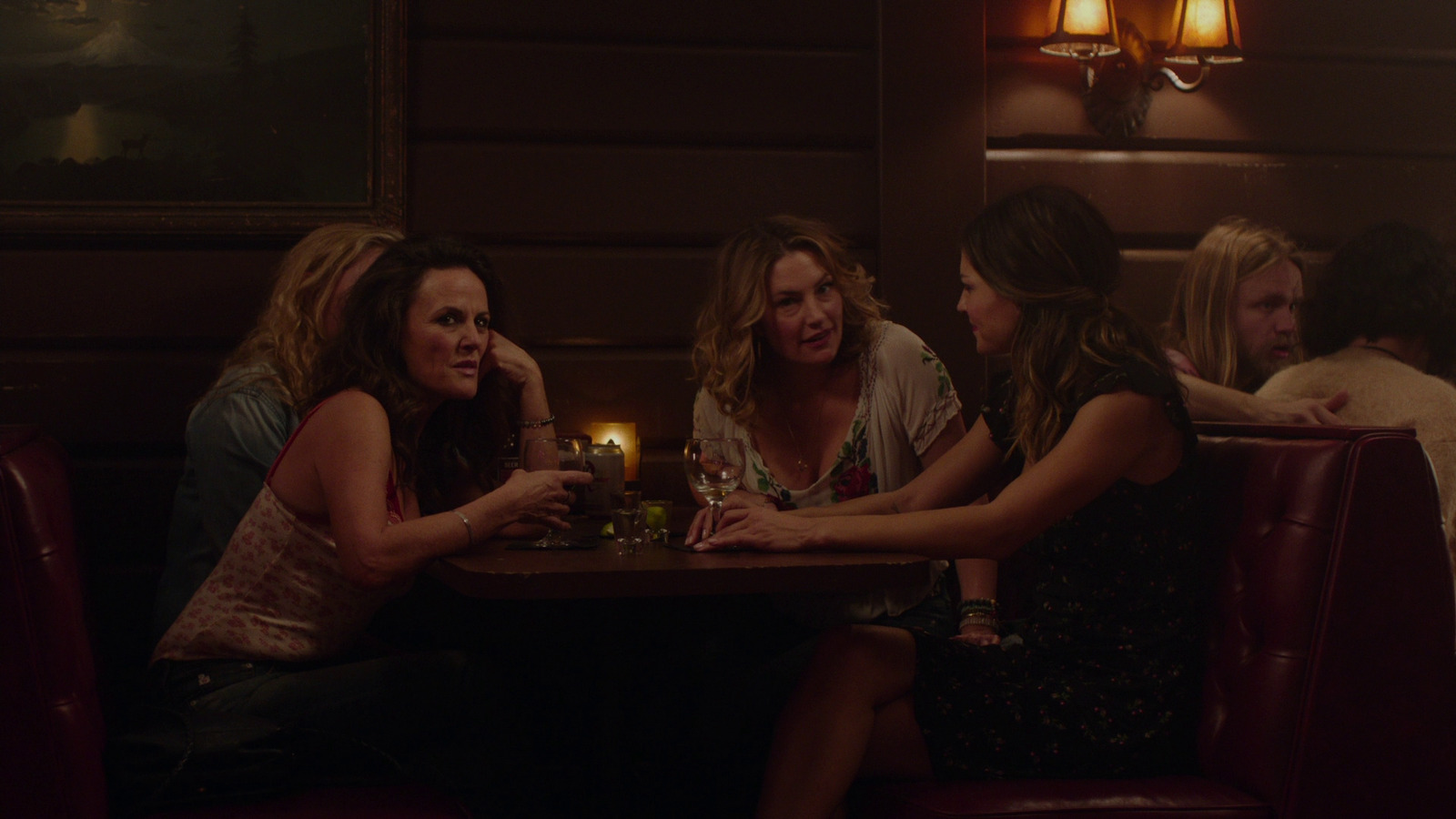
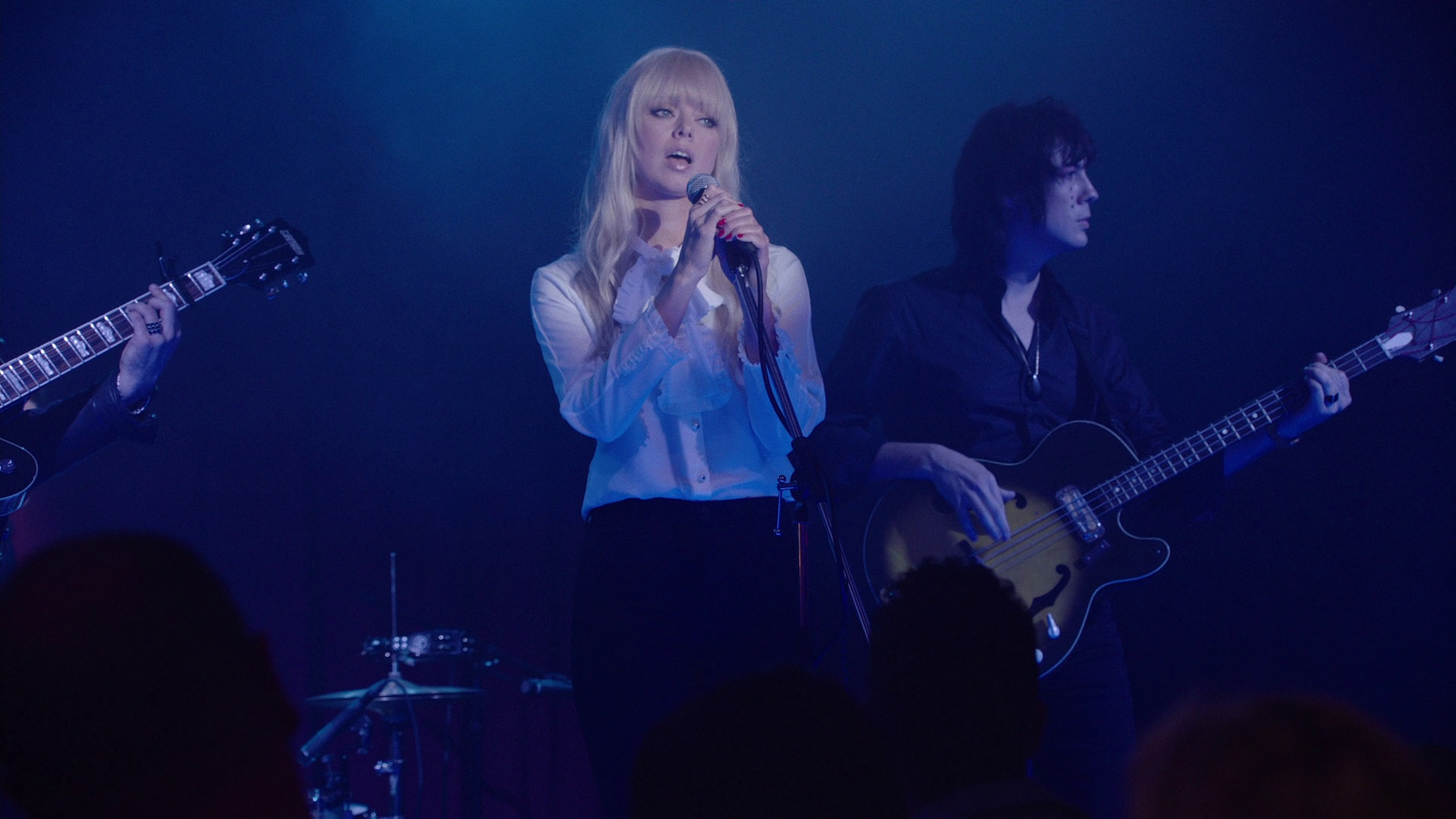
Chromatics perform Shadow under blue light. The scene moves between Ruth Radelet, Shelly and her friends, James and Freddie, and the exchange of looks involving Red. The song continues across changes of speaker and point of attention: it gives the room continuity while the people within it pursue different concerns.
Shelly’s conversation links the pleasure of reunion to anxiety about Becky and Steven. Her defence of James complicates another character’s quick judgment of him; she offers a history of injury that the glance alone cannot provide. Red’s attention then opens a different thread. The performance lets the episode finish among recognisable faces without suggesting that those faces share one settled account of the town.
The closing credits preserve the musical setting. The Part 2 presentation dedicates the episode to Frank Silva; the combined presentation includes both Silva and Catherine Coulson. Compare the closing images in the Return overview.
Open the scene sequence · 1 frame
How sound connects unequal spaces
The correction at the diner. Around 10:37–11:10, the double interrupts the idea that he needs information and replaces it with wanting. The pauses and emphasis make a claim to autonomy audible. His later admission that a return to the Lodge is expected gives that insistence a pressure it initially conceals.
Recorded speech becomes a weapon. The replay beginning around 29:54 places Ray and Darya’s earlier conversation inside the motel scene. Their confidence about privacy is contradicted by the situation in which we hear it. The recording changes who controls the exchange; it does not make every name mentioned on it reliable.
A name is tested across a connection. In the call at 36:34–37:11, the double’s movement from addressing Phillip to asking who is speaking is a meaningful change. The voice’s knowledge should not be confused with verified identity. The series lets a communication channel deliver precise details and uncertainty at the same time.
Voice, breath and movement in the Lodge. Altered speech and its written captions create a different rhythm from the motel’s interrogation. Laura’s private whisper is not rendered as an intelligible message to the audience. Her removal, the shifting room and Cooper’s fall bring screams, rumbling, scratching and forceful air sounds into the foreground. The point is not to fill every pause with an answer, but to notice when the room changes the terms of hearing.
The Roadhouse provides a shared duration. Chromatics’ performance continues while the scene selects different listeners, conversations and glances. The music belongs visibly to a place, then carries that place into the credits. It gives the part an ending without resolving its other threads. The contrast with Sarah’s isolated television viewing makes listening and watching social questions as well as atmospheric ones.
A closer view of the Roadhouse performance
Chromatics — Shadow
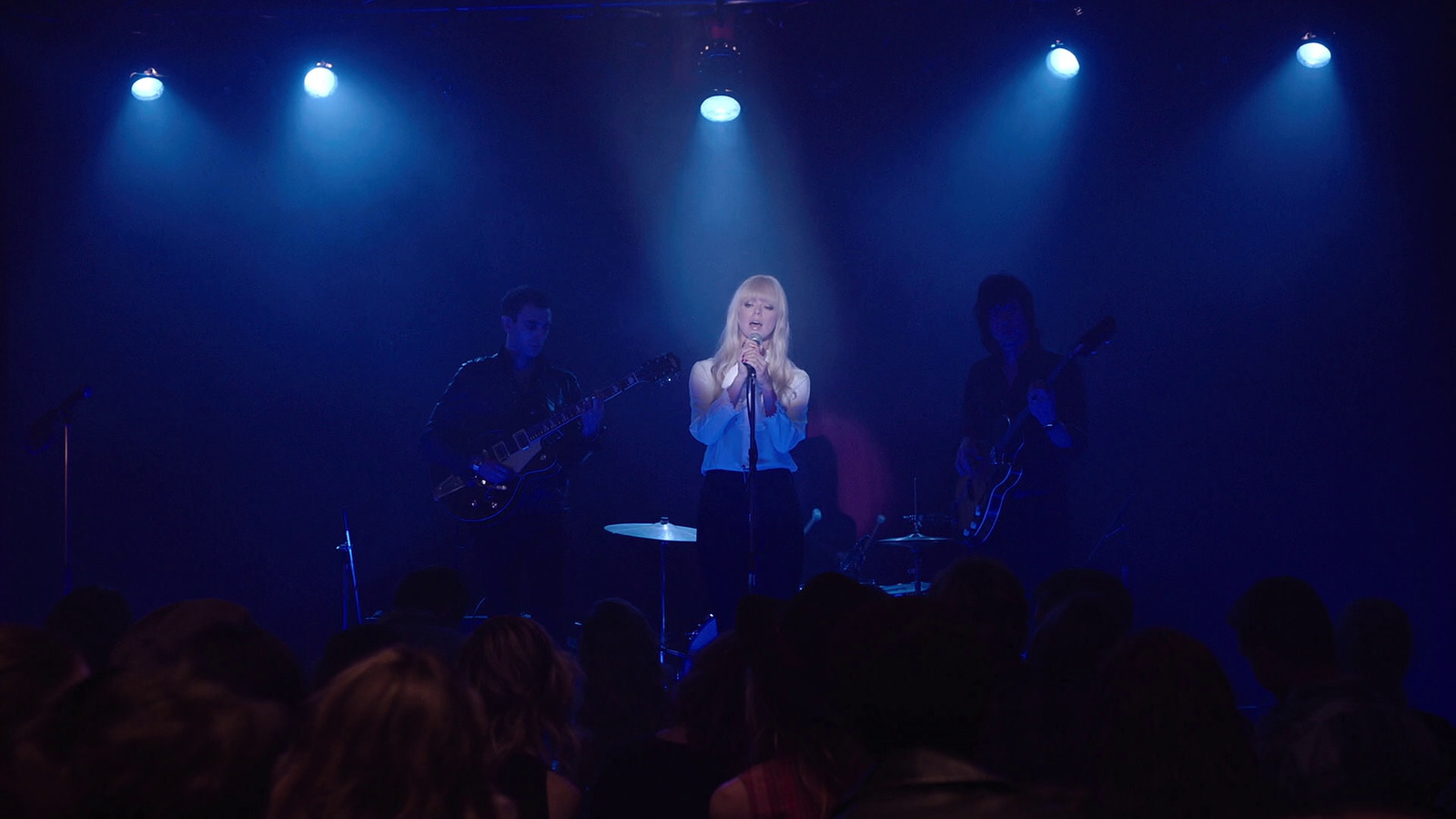
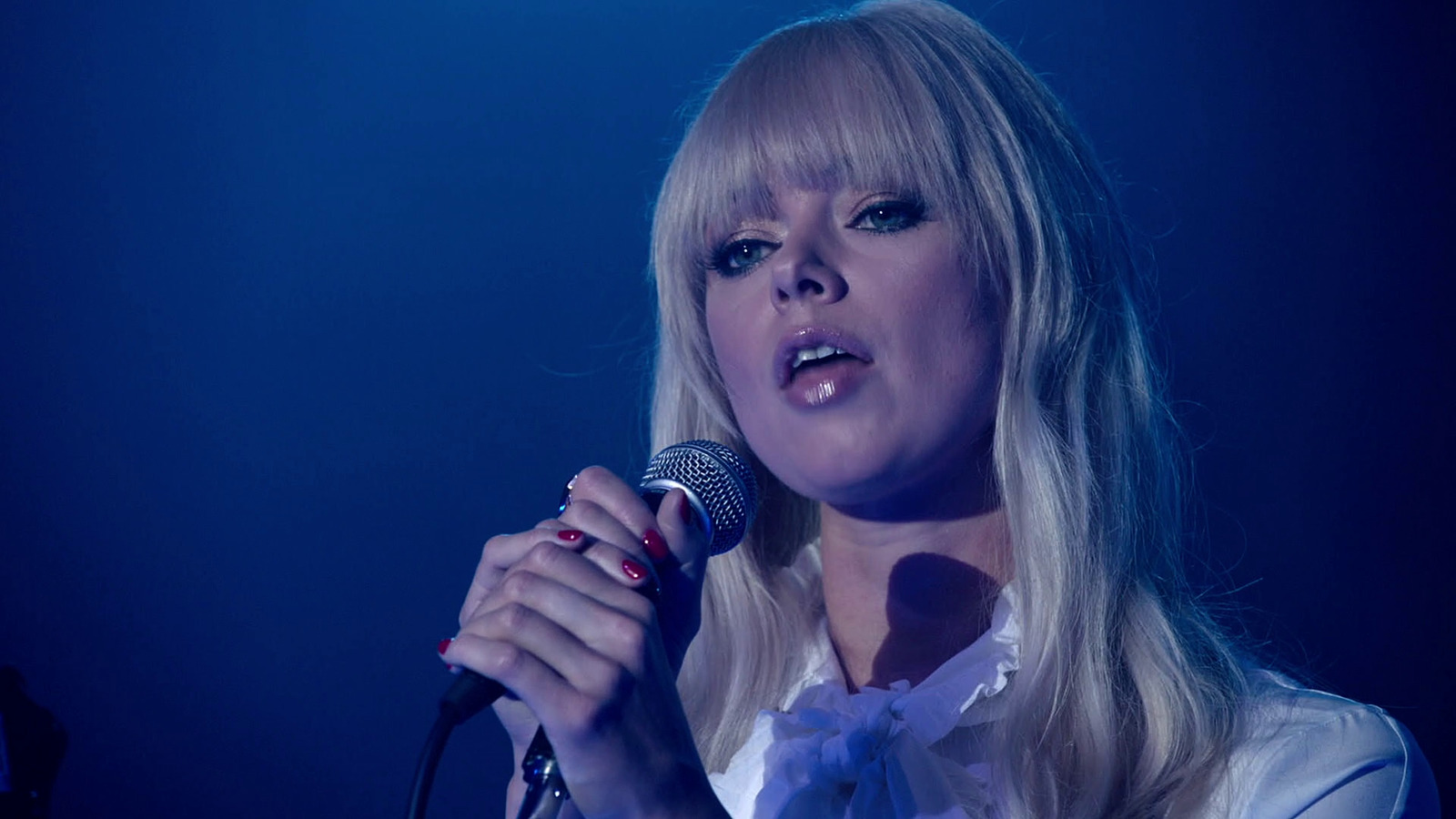
The separate performance edit gives the opening approach to the Bang Bang Bar time of its own: the building, parked cars and neon sign establish a place before the musicians take the image. Inside, blue light joins close views of the singer and instruments to wider views across the audience. Heads remain in the foreground; the performance is situated among people rather than isolated against a neutral background.
Open the Shadow performance study · 2 frames
Read the full performance comparison →
Source: Roadhouse Music — Chromatics — Shadow, 00:00–03:46, in Twin Peaks: From Z to A. These timings identify the separate performance edit; the episode context is examined above.
Focused effects studies
Laura’s face: a surface that opens
Follow the hand covering the face, the first edge of light, the exposed brightness and the reverse view of Cooper. The change is grounded in a small bodily action, then made to affect the room’s other occupant. BUF describes creating computer-generated head and hand elements from filmed references, with a bright interior. This supports a specific digital-effects attribution for the transformation. [2]
Open Laura’s transformation · 4 frames
The Arm and its double
The two forms share a branching structure, but colour and movement alter the encounter. BUF explains that its digital form began from photographs of a sculpture by Lynch, with differentiated colour and behaviour for the variants; filmed mouth material supplied by Lynch informed the animation. The comparison shows how a repeated design can acquire another agency without becoming an entirely unrelated object. [2]
Compare the Arm’s appearances · 2 frames
Cooper’s body and the moving enclosure
The body first appears suspended against the box’s architecture; the surrounding structure then changes scale and gives way to unbounded movement. BUF describes combining background photography with a later green-screen performance, including wire removal, costume repair and matching motion between the elements. The finished scene uses that technical coordination to remove the very sense of stable position it briefly establishes. [2]
Open Cooper’s passage through the box · 4 frames
Making the images, shaping the performances
Kyle MacLachlan’s performances establish the contrast through behaviour. In the Lodge, Cooper waits, asks and reacts; in the motel, his double controls another person’s movement and the order in which information is disclosed. The distinction is sustained by posture, pacing and the space each performance allows the other actors.
Peter Deming’s production account describes experimentation with movement and frame rate. That testimony is useful context for a part whose spaces and bodies repeatedly cease to behave conventionally, while BUF’s account gives more exact construction details for the transformations above. A broad production statement should not be mistaken for a technical recipe for every shot. [3]
DuWayne Dunham’s coloured scene-card system tracked characters and locations in a sprawling production photographed out of order. That organisational work helps explain how the different strands could be shaped together, without turning the cards into a key to the story’s mysteries. [4]
A performance made before the final image
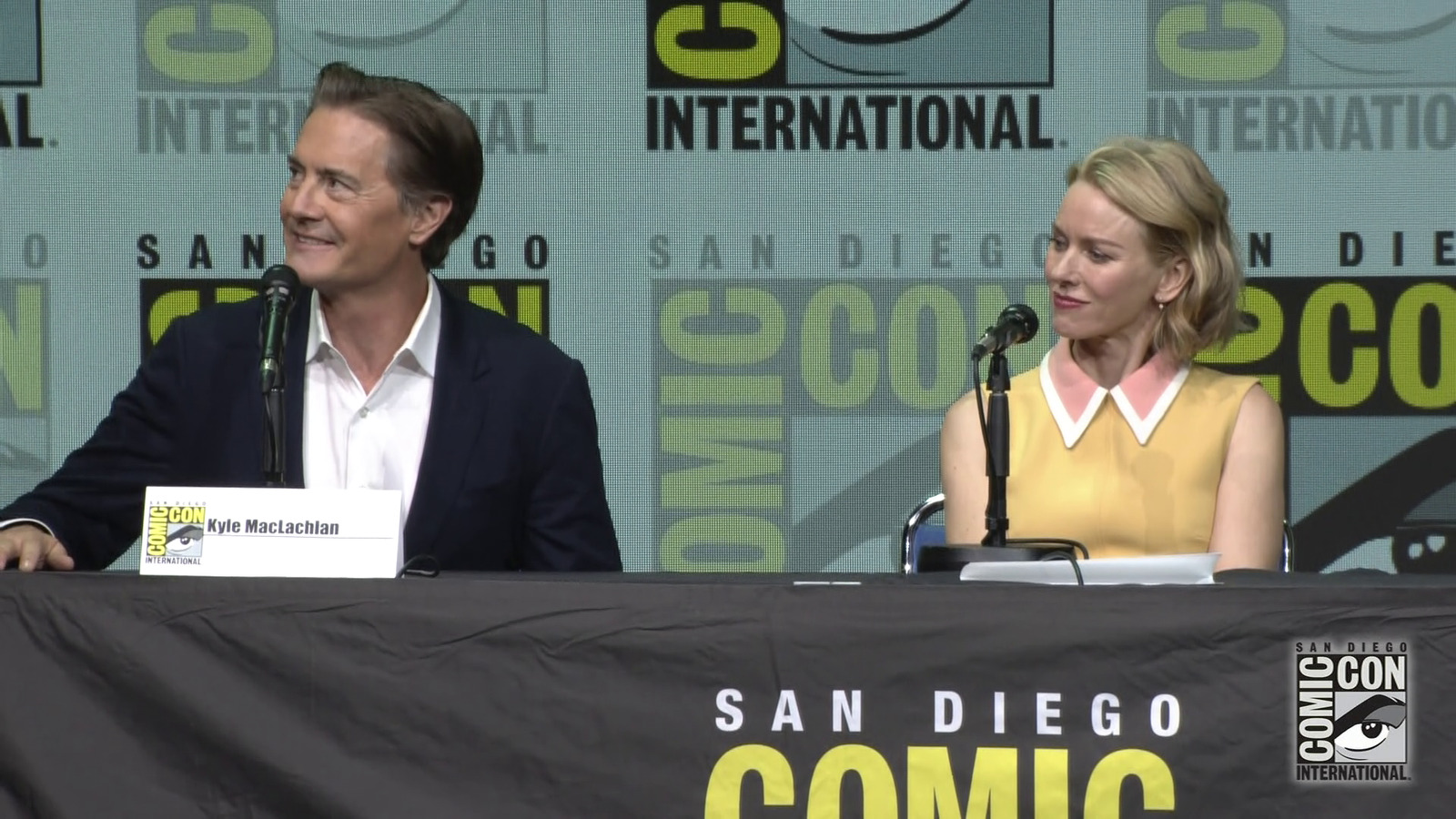
At the 2017 Comic-Con panel, Kyle MacLachlan distinguishes his occasional backward walking and sitting from the other performers’ task of learning dialogue backward. The distinction matters: the Lodge’s strangeness is assembled from different physical and vocal tasks, rather than every performer simply doing the same reversed action. He also recalls the concentration of working in that environment. 43:33–45:00.
Asked about the evolved Arm, MacLachlan says he did not know what the completed apparition would look like and experienced it with the audience. His reaction and eyeline on set therefore preceded the finished effect. Read alongside BUF’s construction account, the testimony separates the actor’s immediate task from the image eventually placed before him; it does not imply that the visual-effects team was improvising without a design. 58:08–58:58.
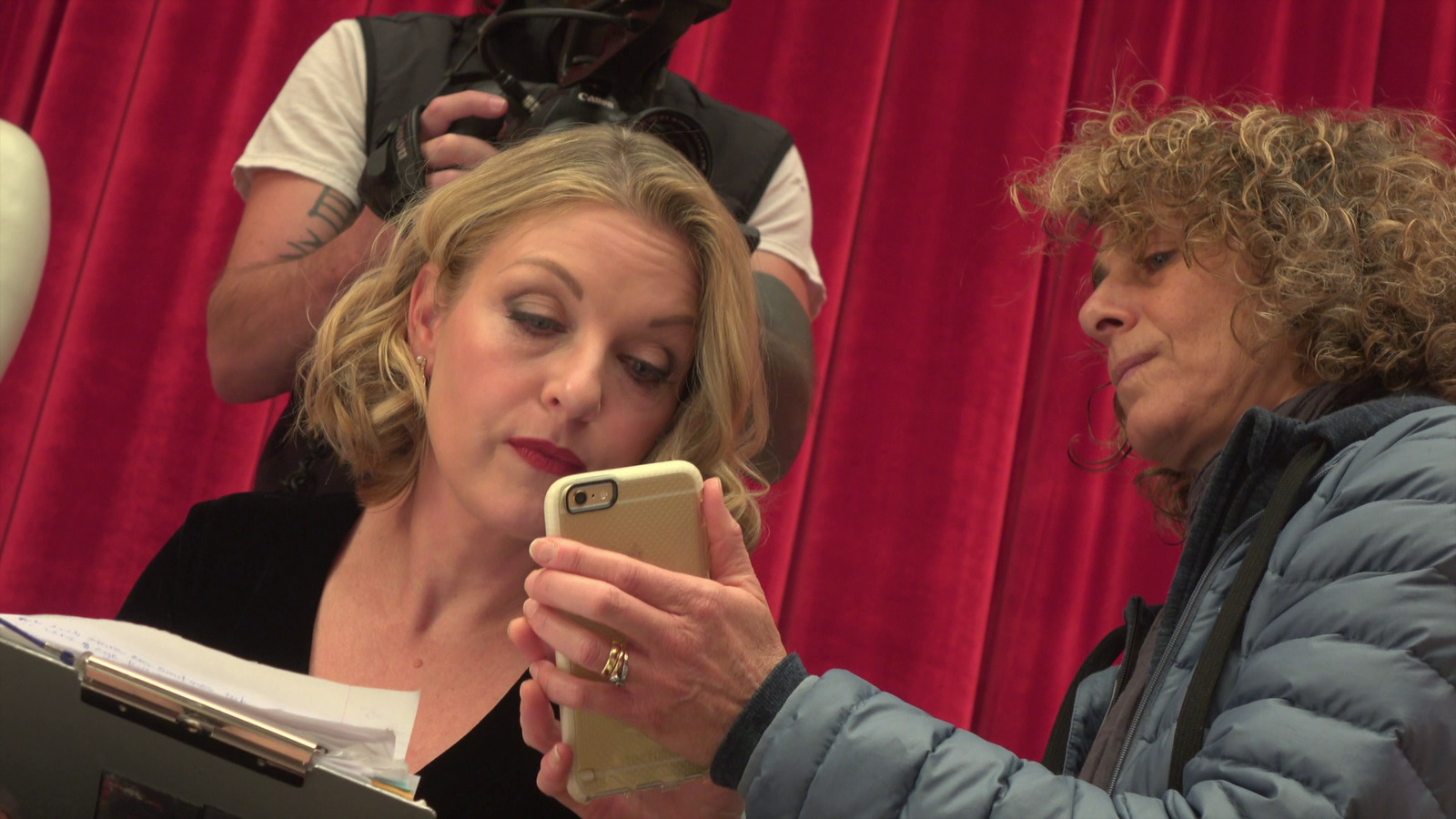
Before the reversal: voice, gesture and timing
Richard Beymer’s Behind the Red Curtain lets us follow the work that precedes Laura’s uncanny fluency. Sheryl Lee records a line, checks how it sounds reversed, and adjusts the inflection. Lynch distinguishes an emotional delivery from a flatter alternative; the exercise is about finding a performance, not merely pronouncing a phonetic puzzle. Kyle MacLachlan supplies forward-spoken lines while Lee works in the other direction. 15:23–16:41.
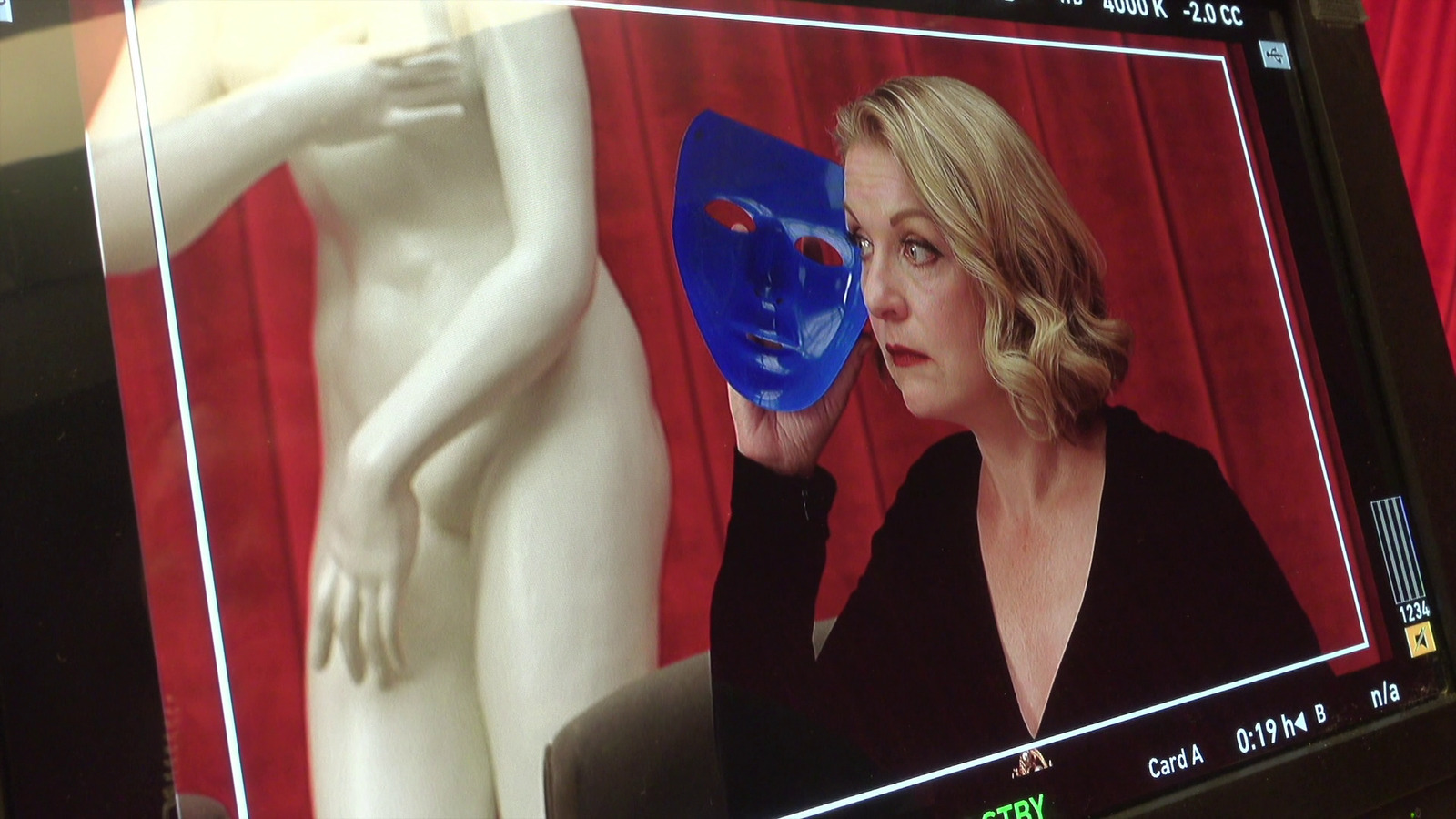
The face-opening passage adds a second reversal. Lynch describes a hinge at the thumb, asks Lee to hold the opening, then specifies the closure and lowered arm. The photographed action is rehearsed in reverse order as well as the speech being learned backward. A blue face-shaped prop supplies a visible reference for the gesture. This production evidence complements BUF’s account of the digital head and hand: performance, reference material and the completed composite are separate stages of the same image. 18:34–19:35.
Open the face-opening rehearsal · 2 frames
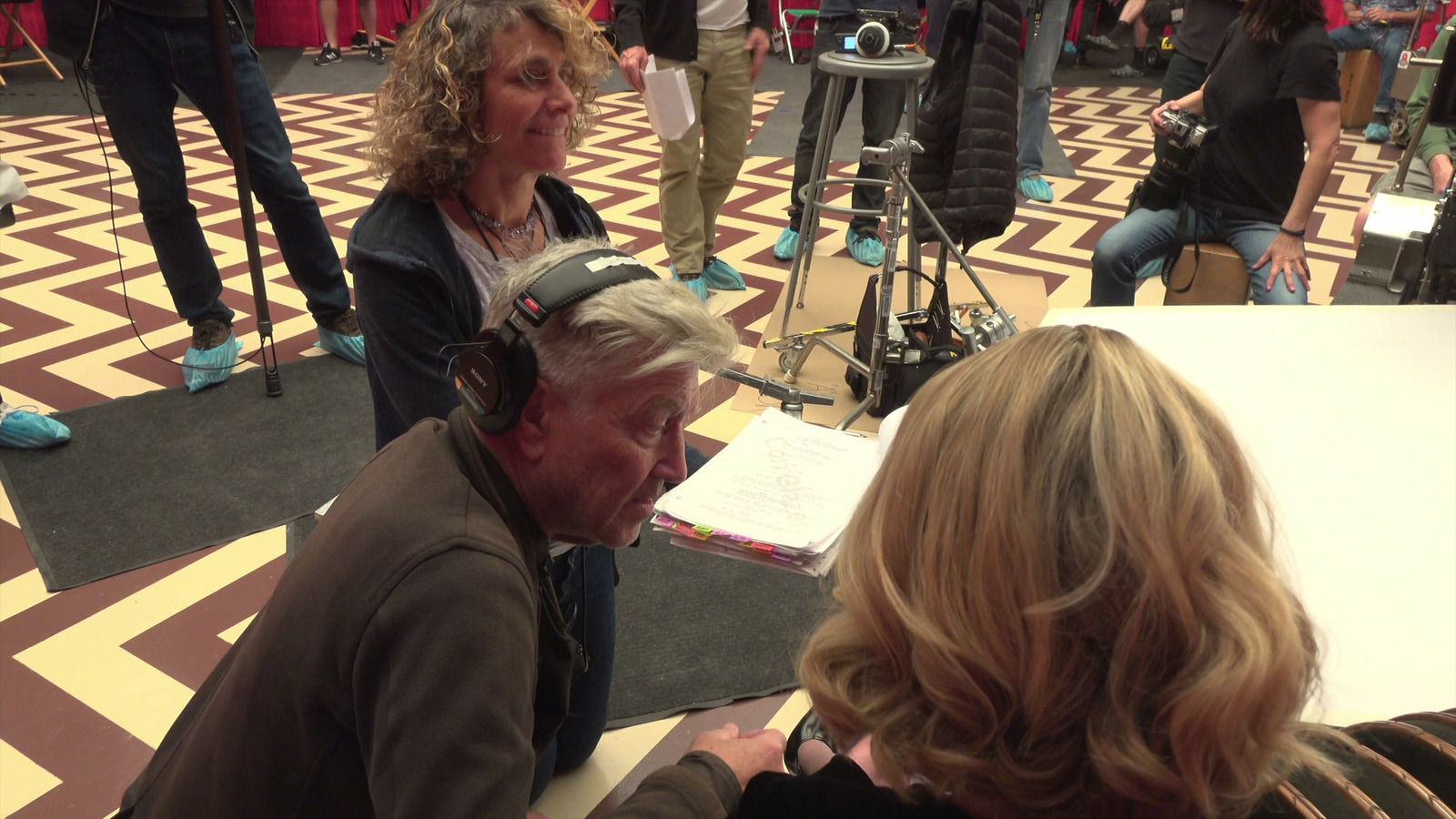
The whisper is equally deliberate. Lynch demonstrates the cupped hand and the approach to Cooper’s face, while Lee and MacLachlan rehearse the kiss and withdrawal. The footage shows how a secret is staged without disclosing its words. It gives no basis for presenting a guessed whisper as a recovered answer. Later, Cooper is directed to sense Laura’s movement before seeing it. The reaction therefore begins with an internal alert rather than an obvious visual cue. 19:52–20:58 and 24:12–26:24.
Open the whisper and reaction study · 2 frames
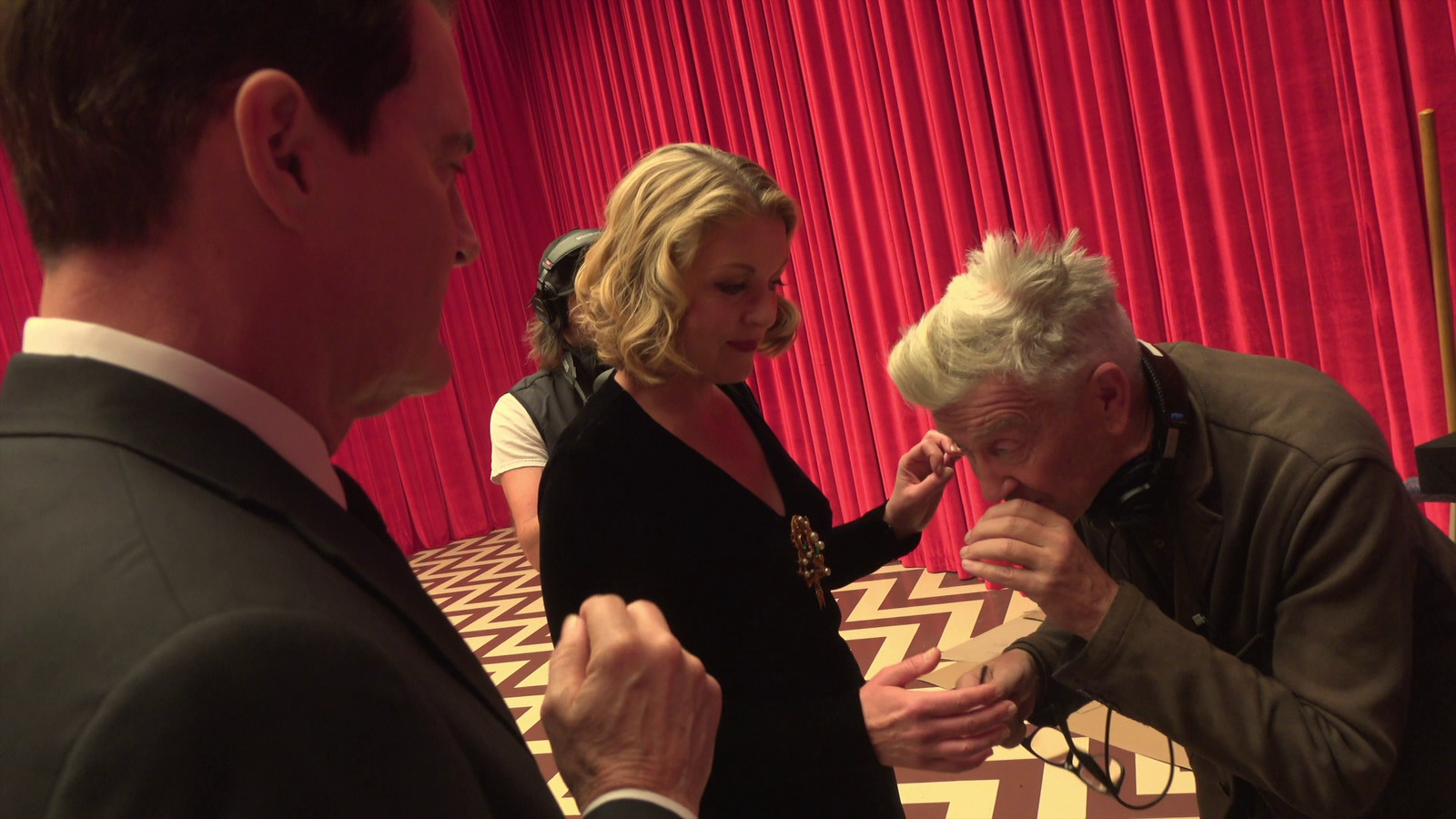
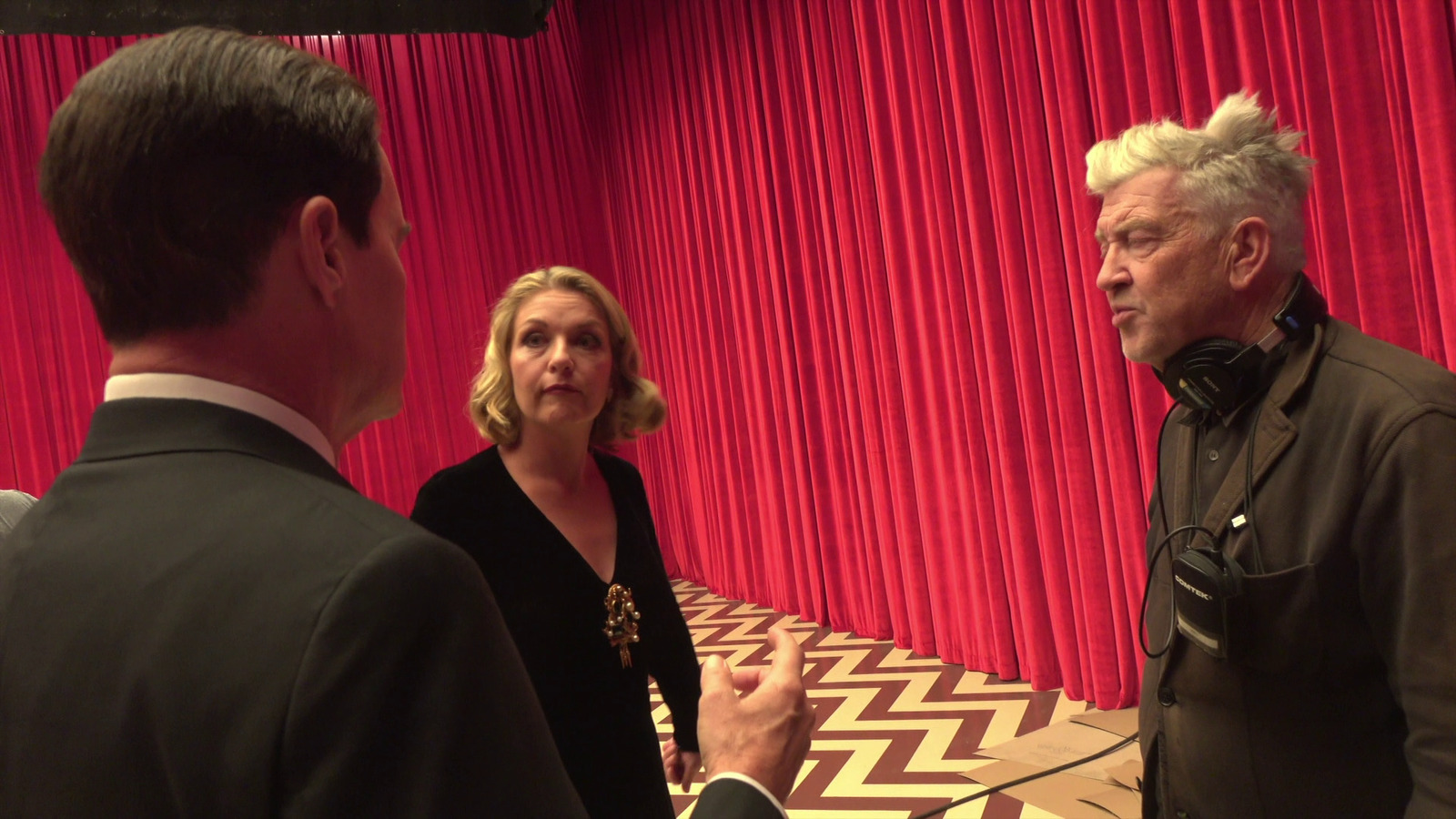
Laura’s violent exit takes experimentation. The team reviews a motion that feels too regular, discusses reversing a downward action and considers other rigging possibilities. The documentary records a problem being solved; a proposed wire or greenscreen method should not automatically be described as the method used in the finished shot. Its value is more exact: Lynch rejects smooth, predictable travel because the disappearance needs a different force and rhythm. 21:09–24:03.
Open the movement-test study · 1 frame
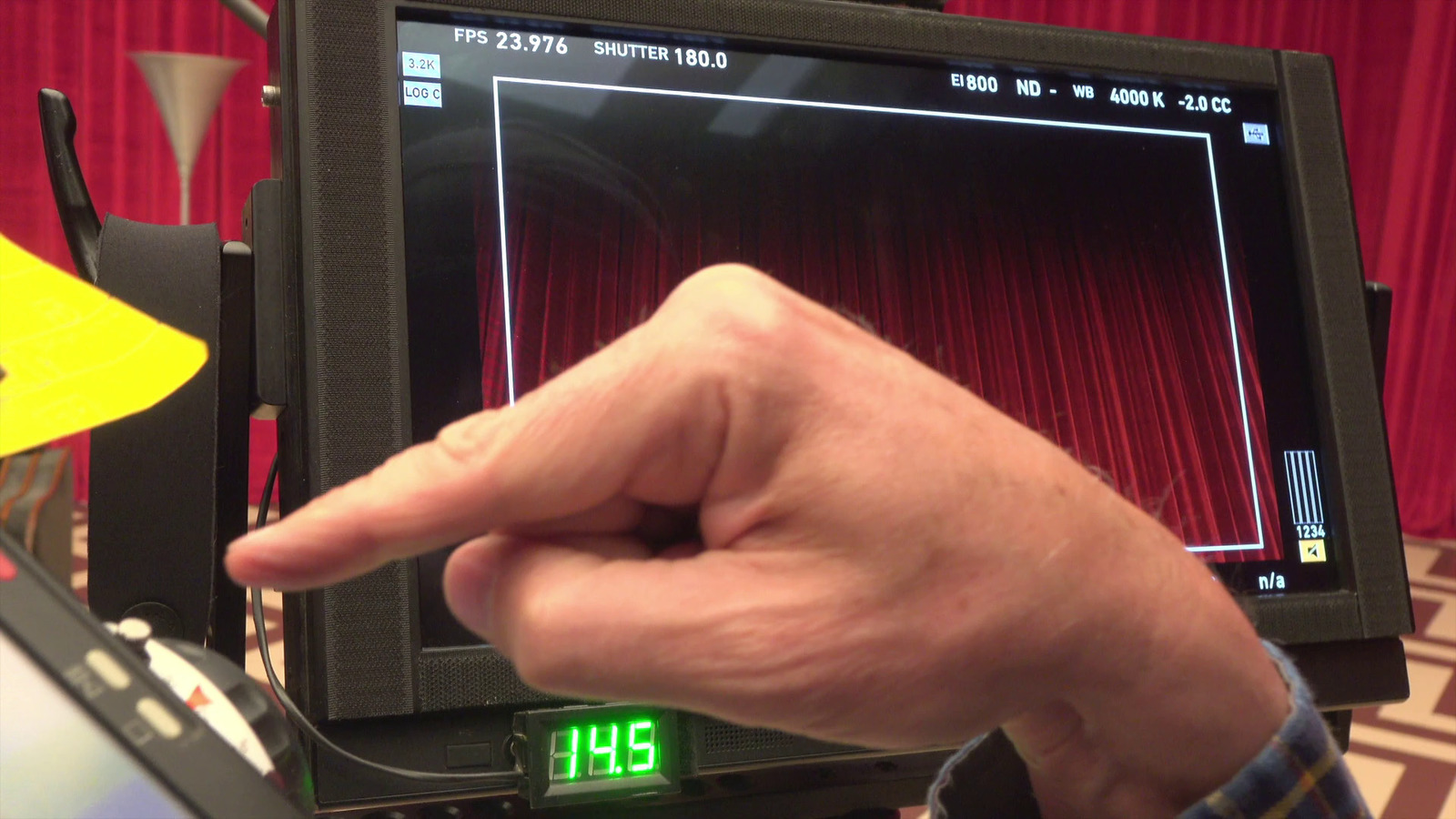
Performance, sound and the working image
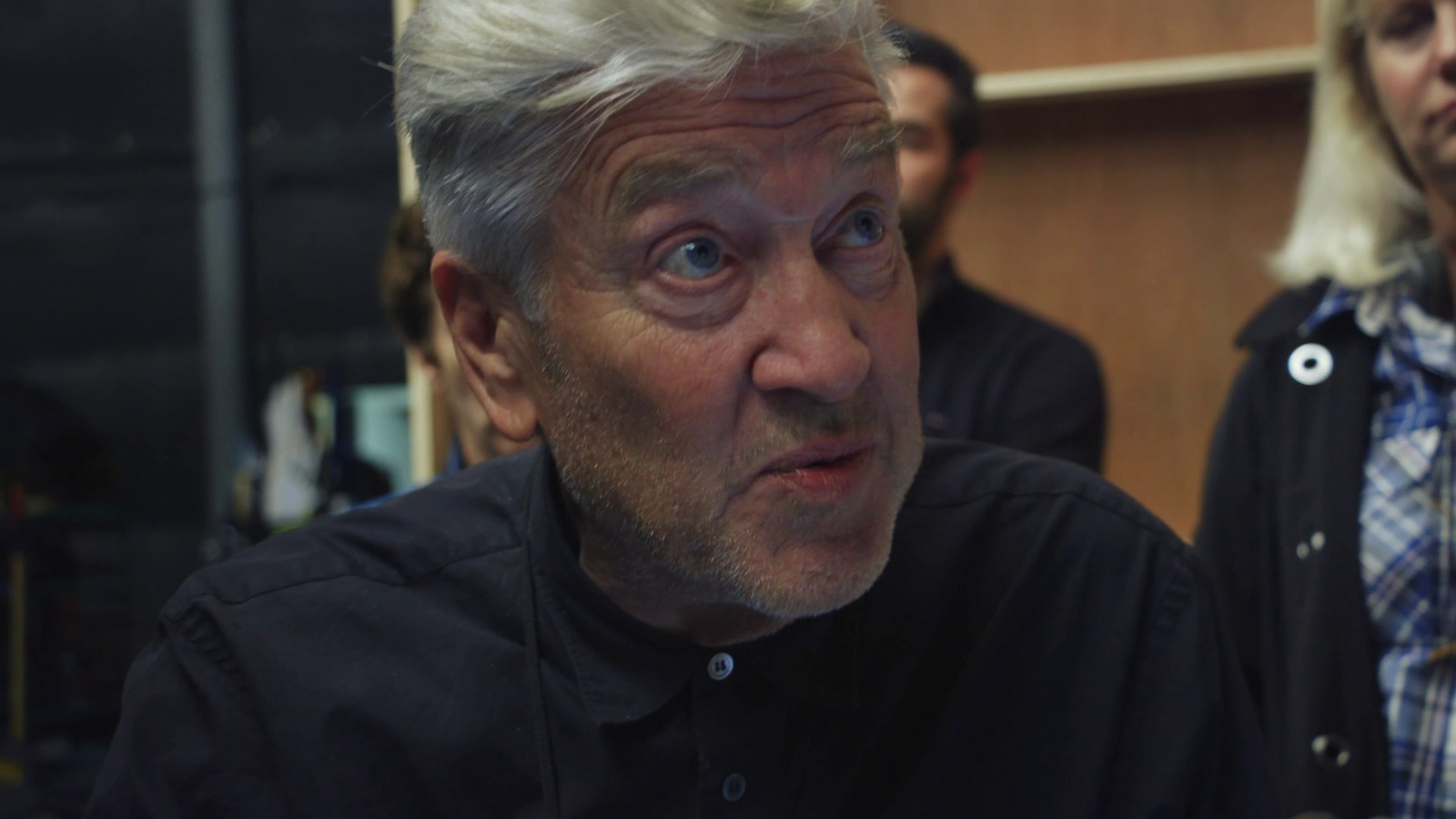
The production footage in Jason S.’s Impressions: A Journey Behind the Scenes of Twin Peaks adds another view of the scenes: directions spoken on set, rehearsals, material experiments and choices still being worked out.
Bill tries to make a dream sound credible
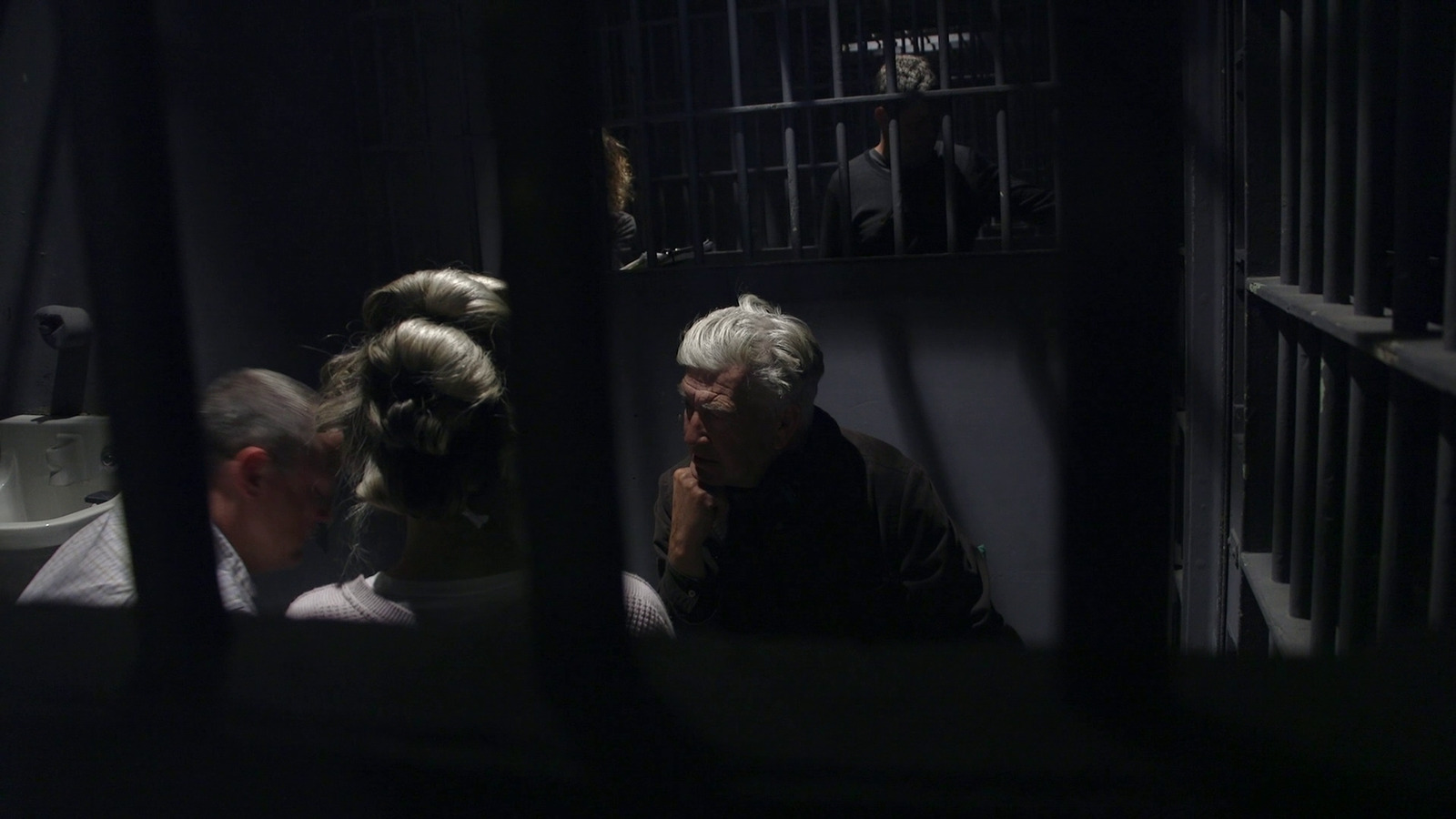
During the jail rehearsal, Lynch asks Matthew Lillard to study Phyllis’s eyes and begin more slowly. Bill is trying to confide something he cannot reconcile with his certainty that he was not present: the dream troubles him, and he needs his wife to understand that difficulty. The exchange is directed toward an emotional collapse, rather than played at one continuous pitch of panic.
Cornelia Guest’s attention becomes the scene’s measuring instrument. Bill searches her face for belief; her response turns disclosure into exposure. These directions illuminate the relationship without deciding whether Bill’s explanation is true.
The floor moves Cooper, then opens beneath him
The Red Room’s moving floor is a practical apparatus. Production footage shows its raised sections, the opening and a water tank beneath. Lynch describes the movement as irregular and forceful: Cooper’s feet should not appear to cause it. Reviewing the performance, he asks MacLachlan to seem less nimble and let the floor disturb his balance.
The descent requires a different piece of timing. The opening must still be visible as Cooper enters it, so that the audience understands the floor’s separation and his disappearance as a connected event. Rehearsal, tests and monitor playback show how a finite set and a shallow tank are photographed as an apparently bottomless passage. This practical material belongs beside the digital work and editing that complete the journey.
Open the moving-floor practical-effects gallery · 4 frames
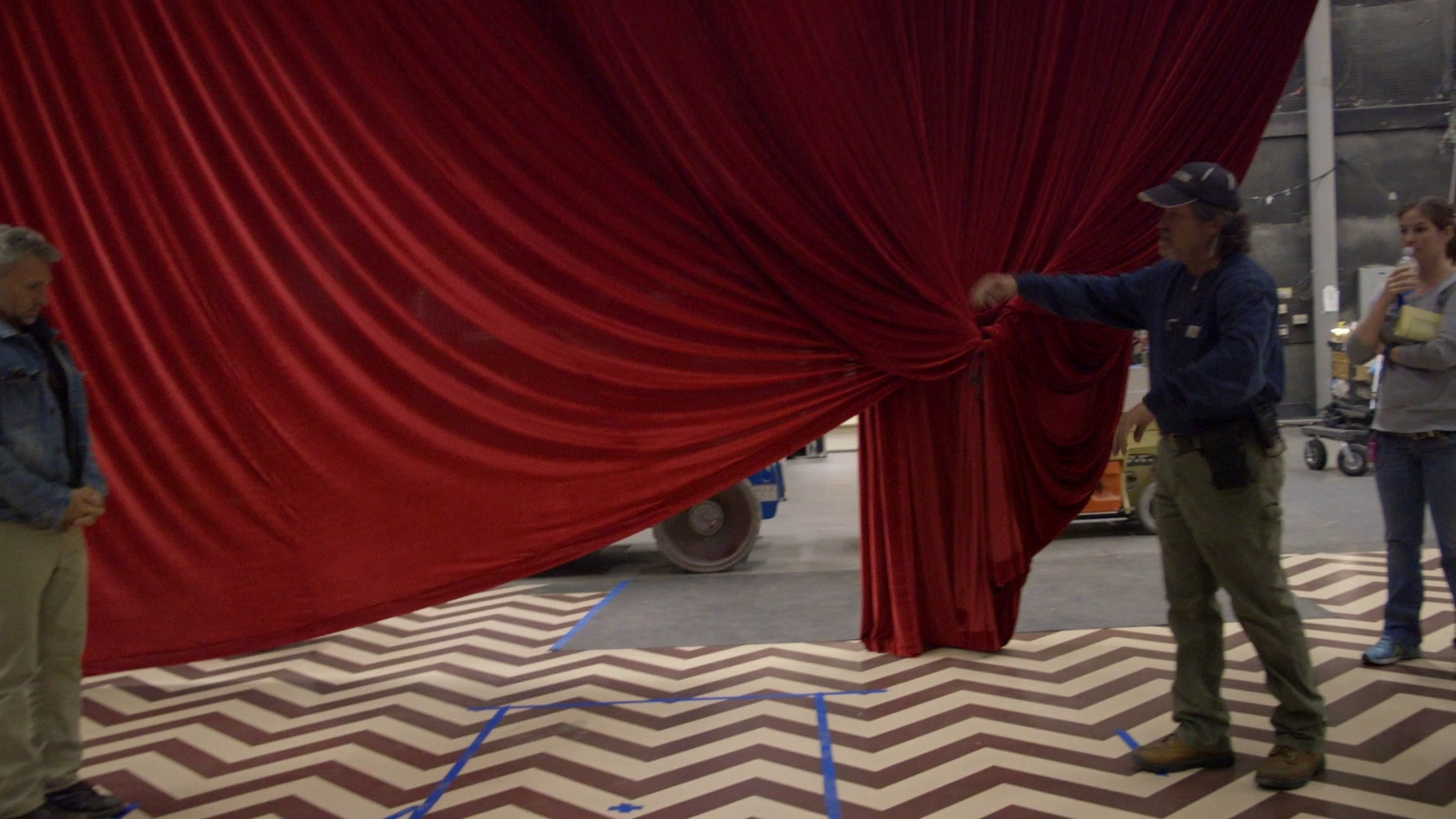
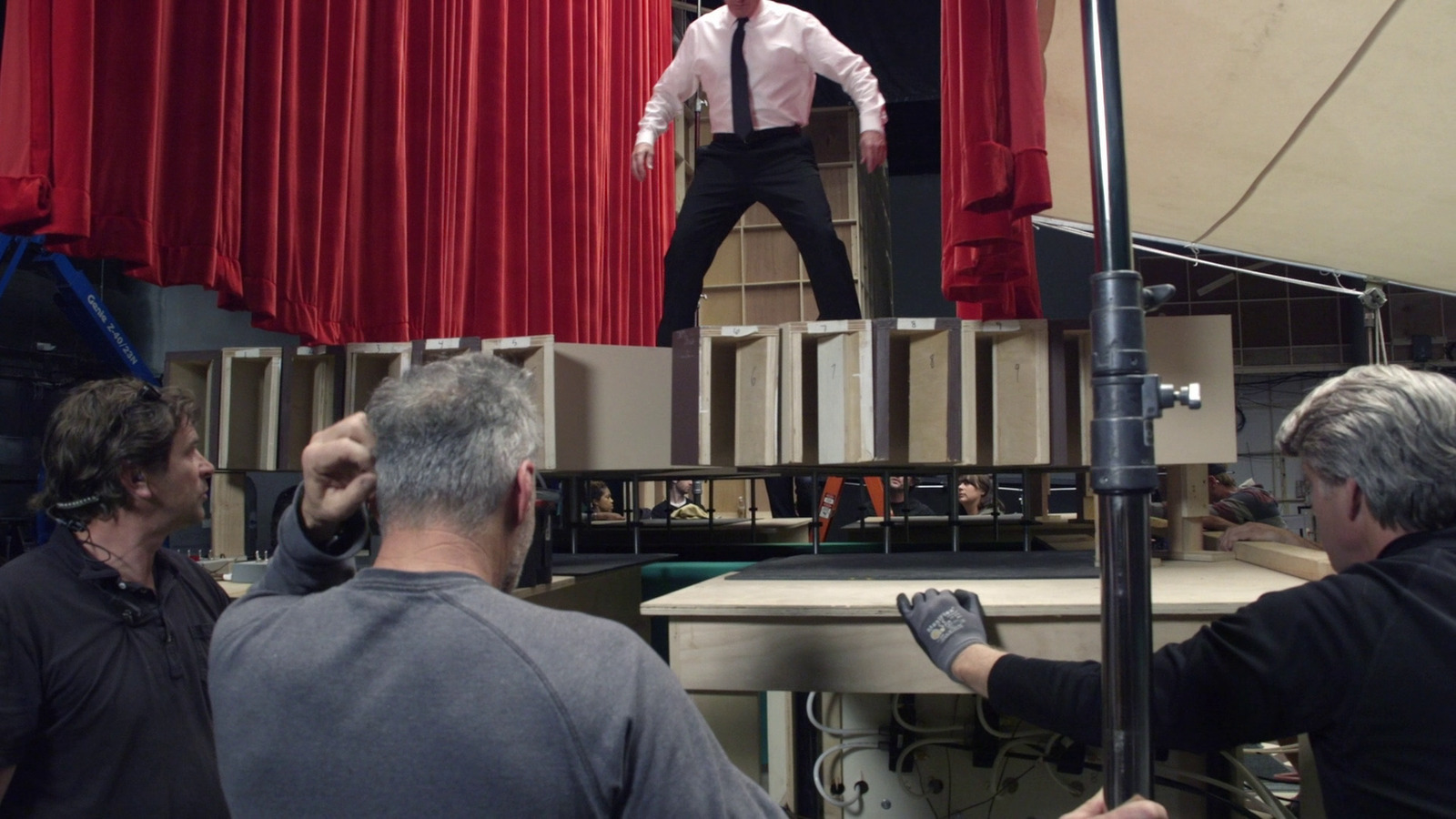
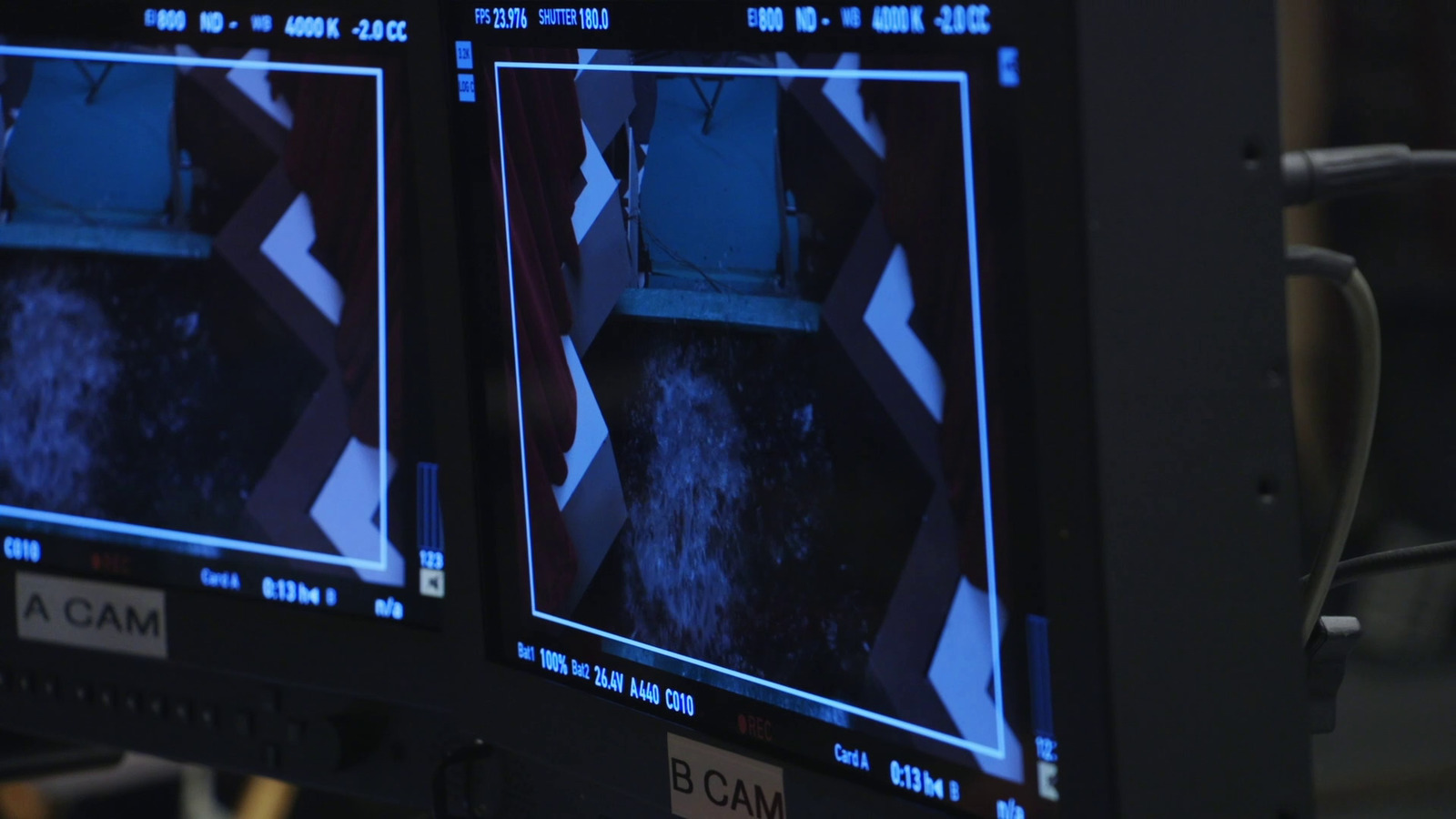
Rehearsal, performance and the working set
Phyllis’s death is built from a timed turn and a separate floor detail
The production footage divides the shooting into distinct tasks: Mr. C’s line, a counted turn and fall, and a closer view of the body on the floor. Lynch watches the take on a monitor before requesting another version as protection.
The aftermath receives its own preparation. The crew arranges the performer’s position and the practical blood beneath her head; Lynch specifies where the spreading pool should enter the composition. The effect’s force depends on the relation between a sudden action and the quieter, sustained view that follows it.
Open the Phyllis practical-effects study · 3 frames
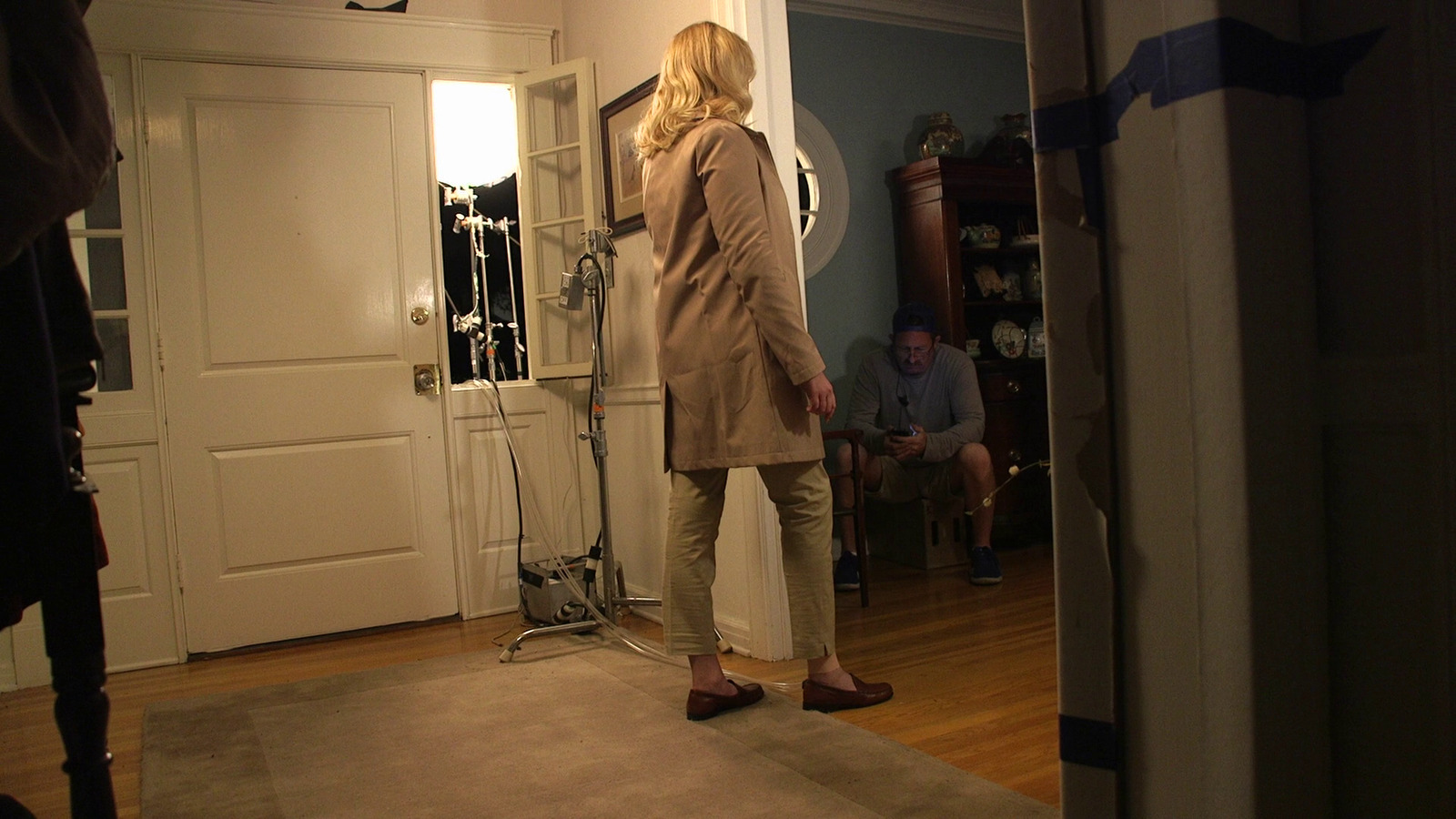
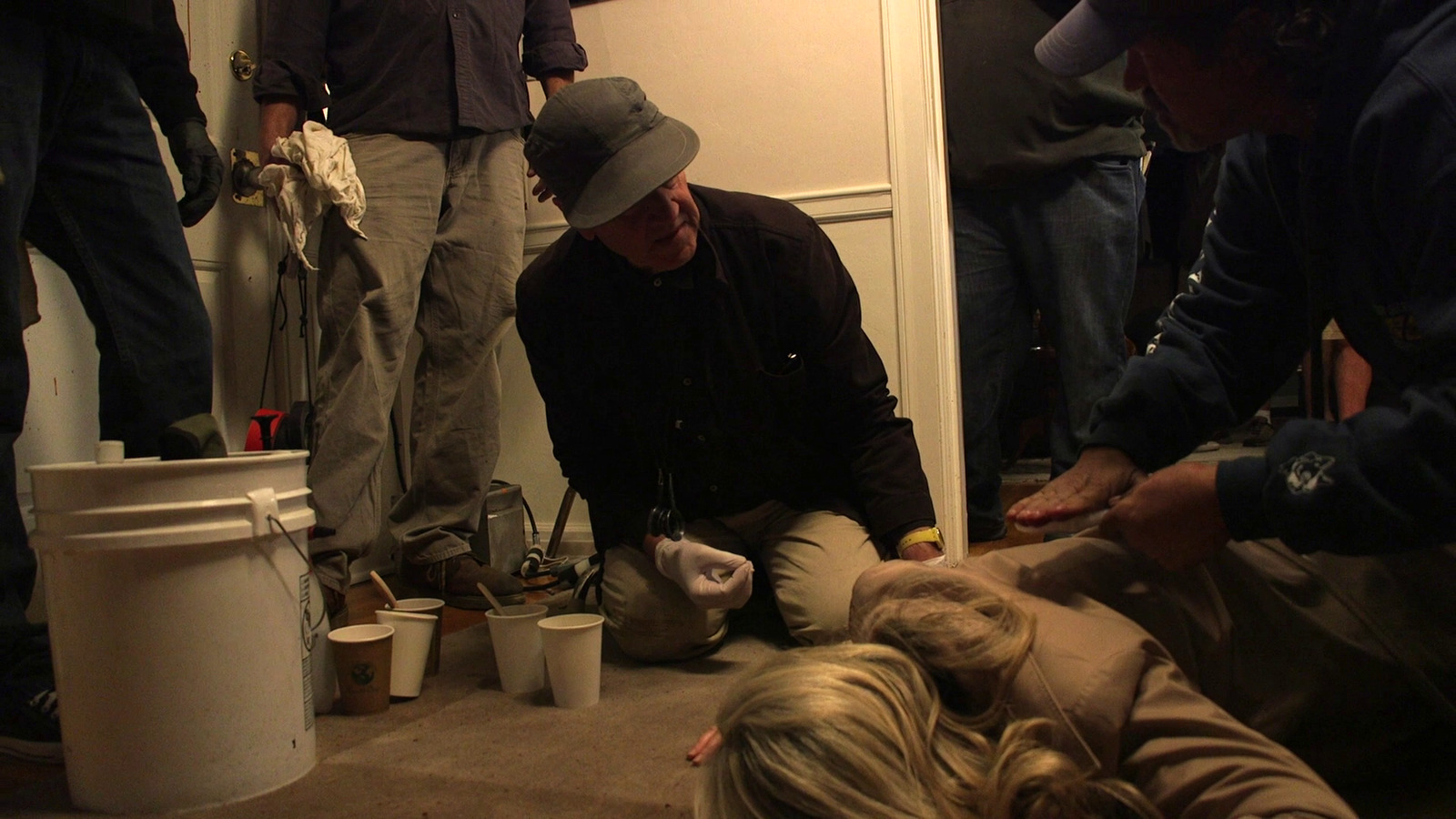
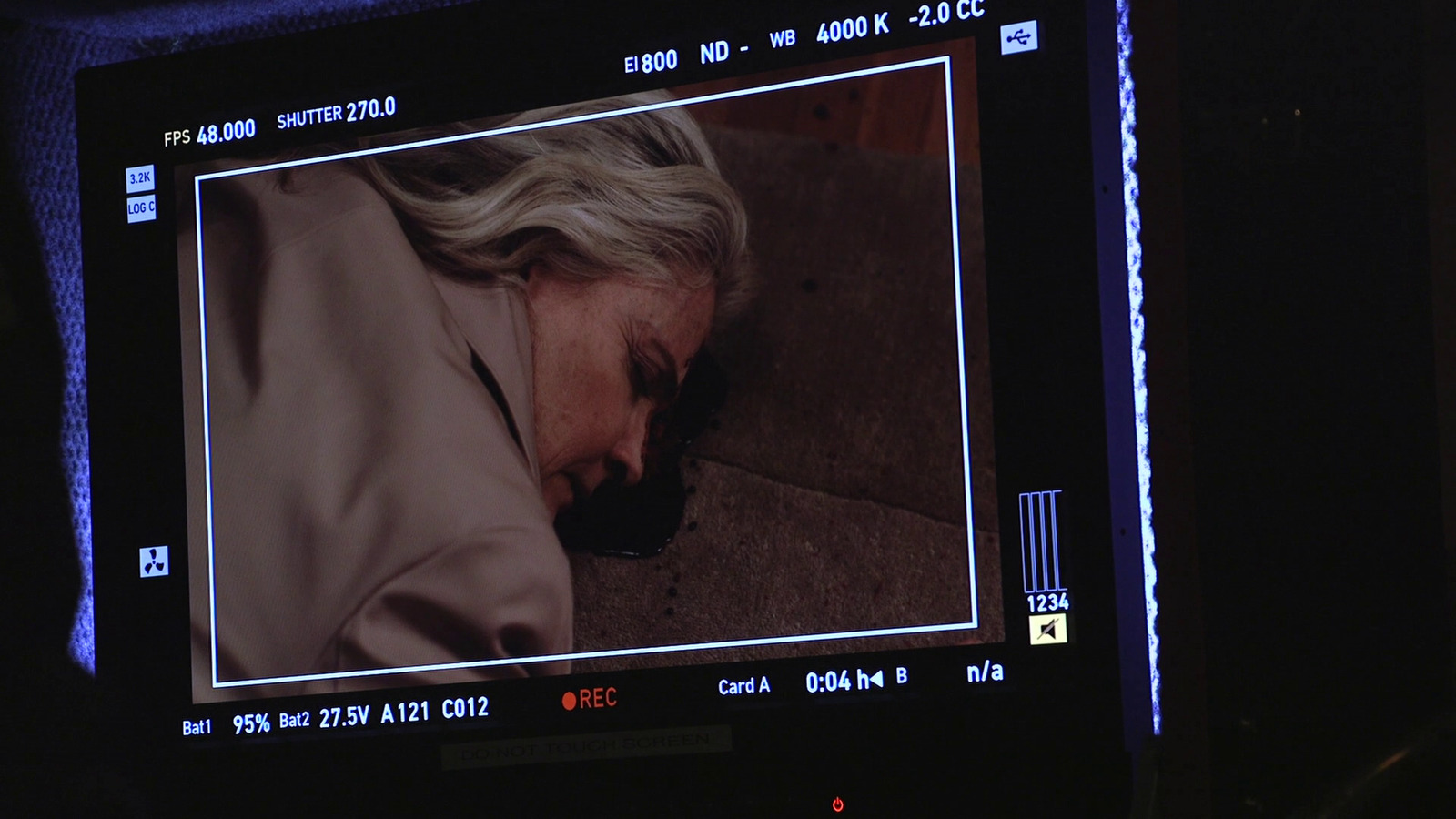
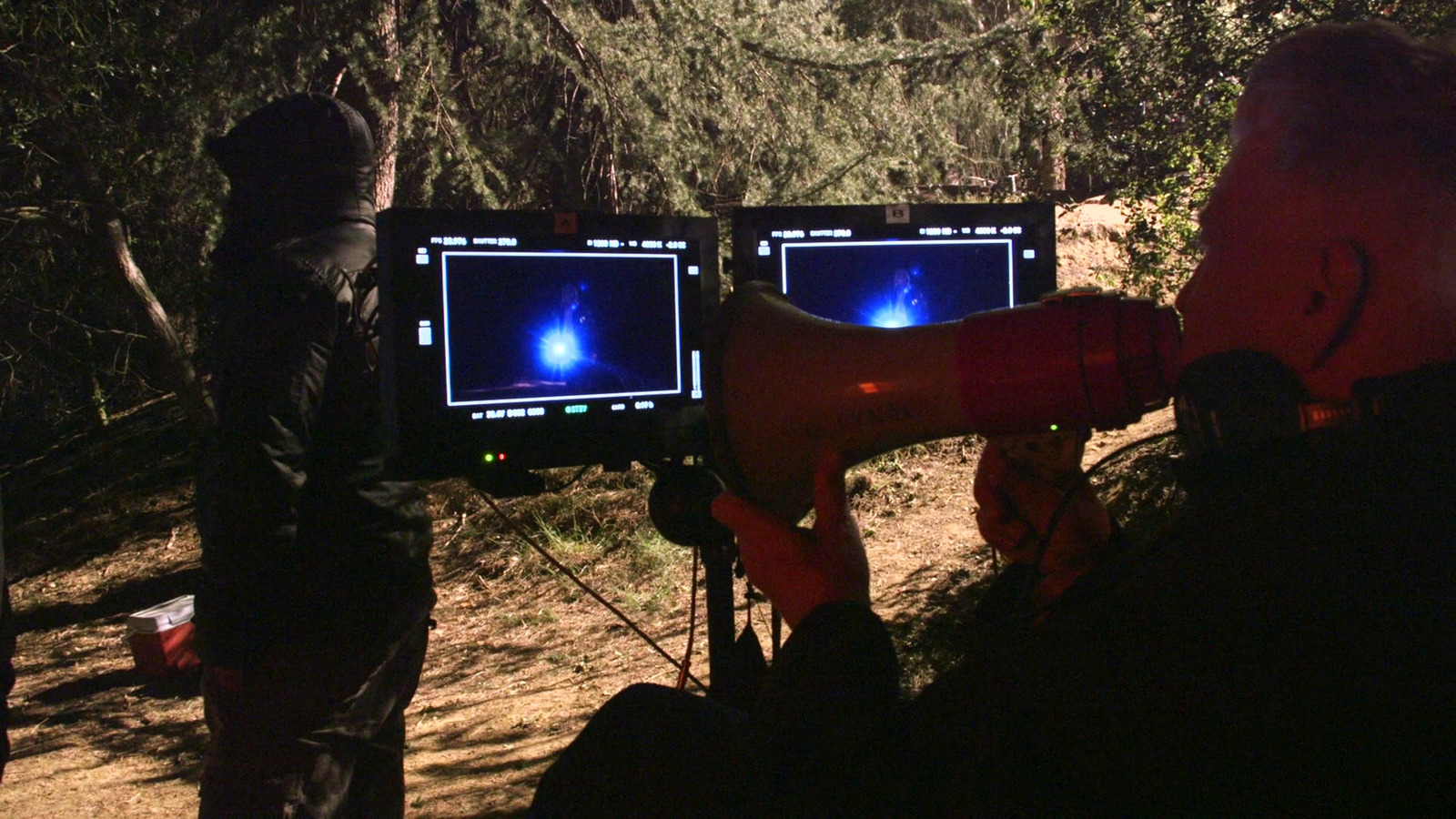
Hawk’s flashlight is directed toward the lens
Lynch asks Michael Horse to let the flashlight occasionally strike the camera lens as Hawk searches the trees and talks on the phone. The beam should follow his gaze, briefly overwhelming the image without seeming like a deliberate display for the audience.
The rehearsal makes the light a moving part of the performance. A practical source in the actor’s hand interrupts visibility at the very moment he is trying to see. The documentary then plans the transition into Glastonbury Grove, connecting a walked route to the more charged space ahead.
Open the flashlight and lens study · 2 frames
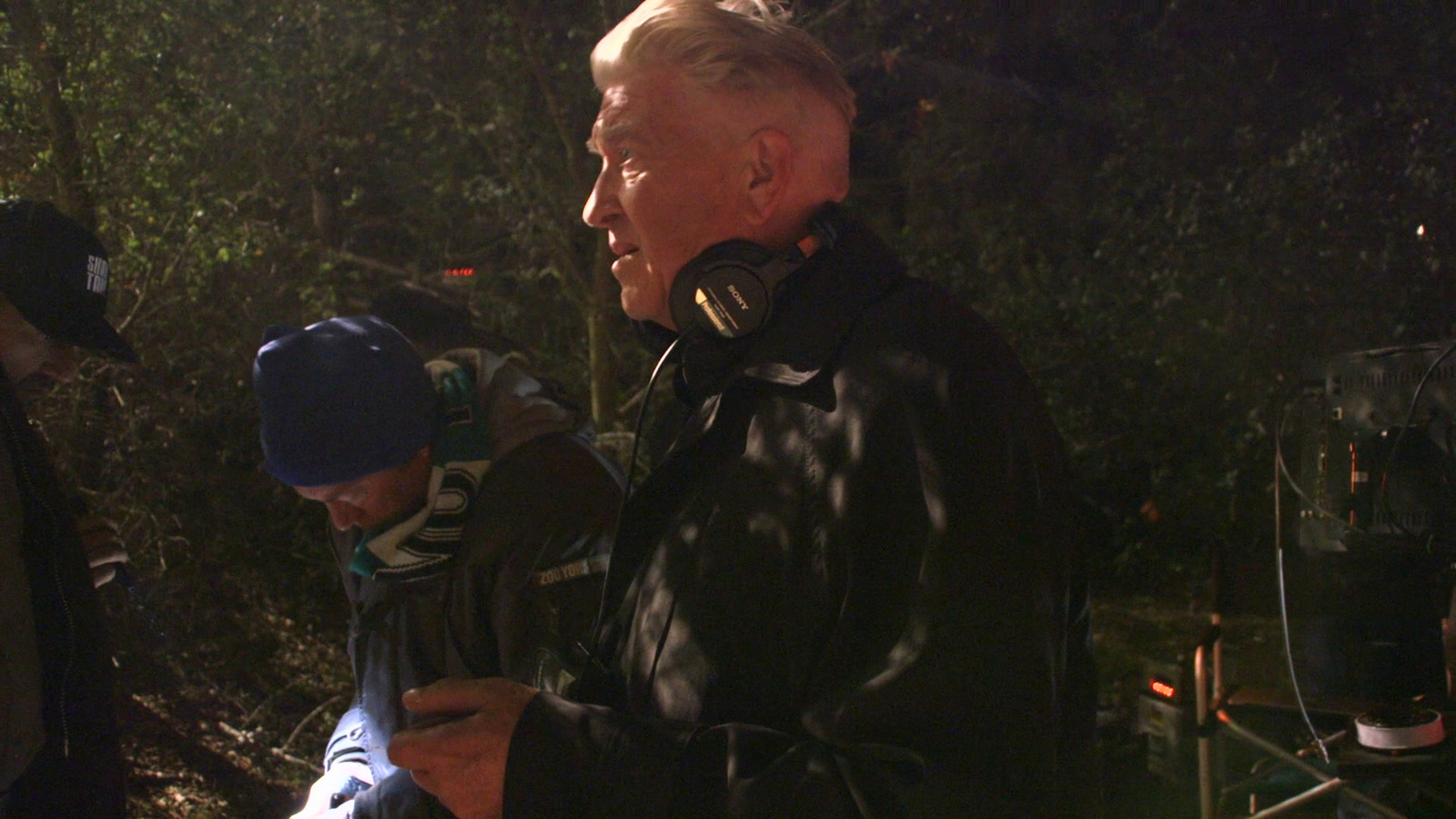
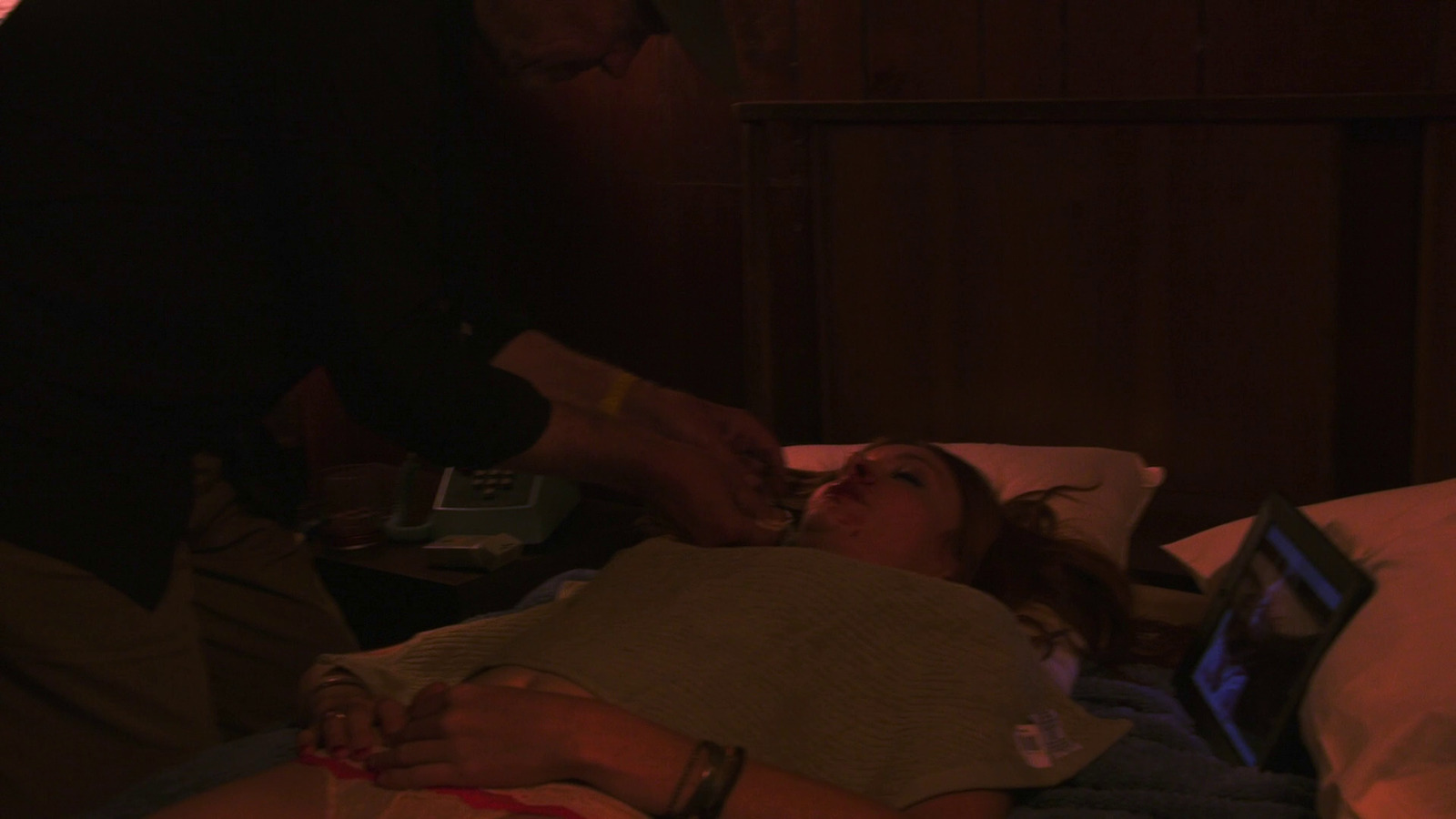
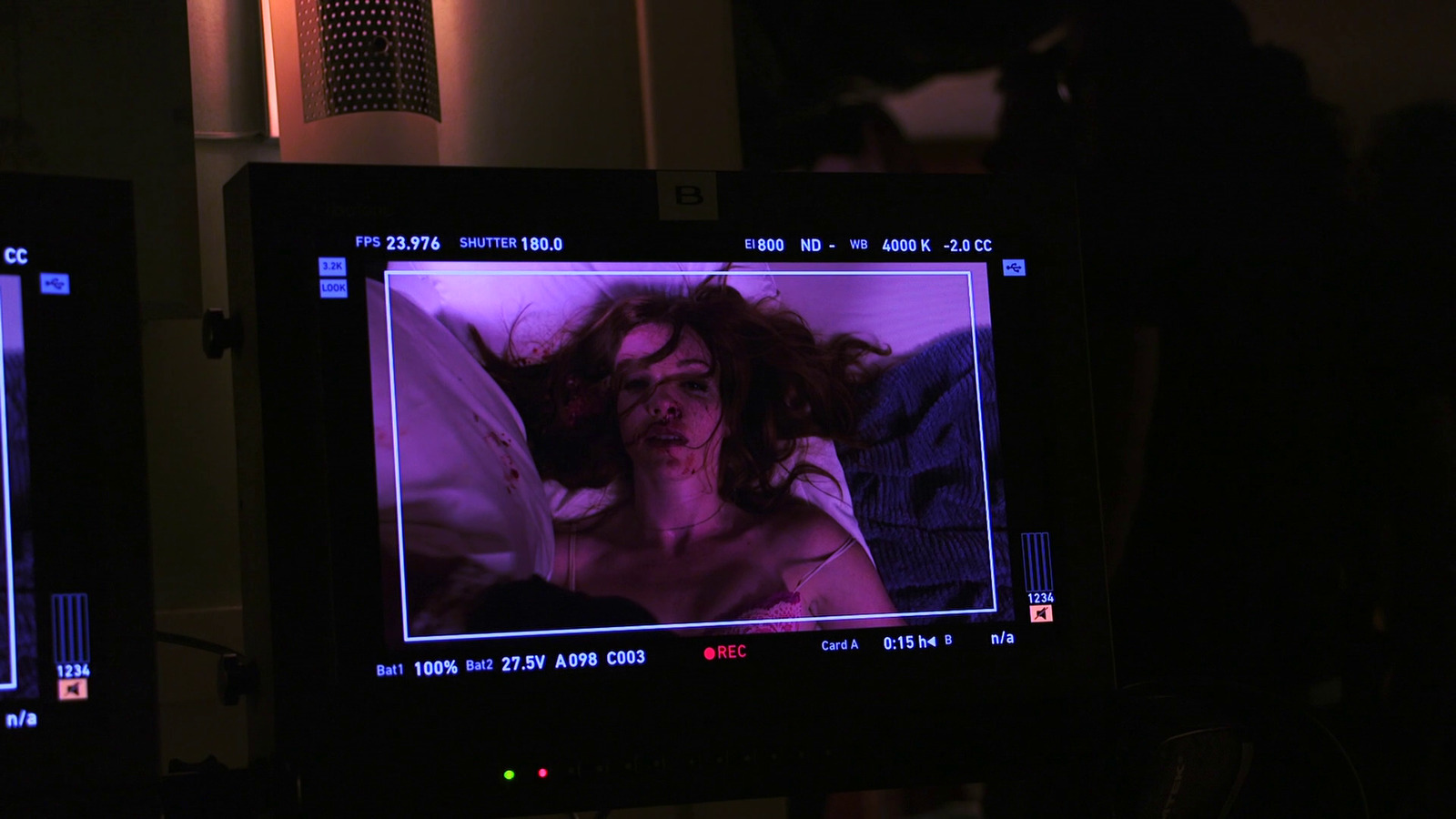
Darya’s aftermath is adjusted against a photographic reference
The motel scene moves from blocking and monitor playback to close work on the makeup. Lynch and the crew consult a photograph while adjusting the blood and hair, then check the pillow reveal on the monitor. The appearance has to remain consistent across the separately photographed actions.
The preparation is followed by a counted reveal and a decision about the dead stare. This is useful evidence of the practical work beneath the final scene’s controlled brutality: the still body, the surrounding fabric and the arrangement of the hair are all treated as parts of the image. It complements the scene analysis without turning the documentary into a claim that no later image work was involved.
Open the Darya makeup and reveal study · 2 frames
Two parts, two ways of arriving
The standalone Part 2 begins with its own opening titles and the Hastings prison visit, and ends with its own credits. The combined Parts 1 and 2 presentation reaches the prison sequence directly after the search of Bill’s car. It therefore changes the transition into the material: a renewed beginning becomes a continuation of the same investigation.
The combined ending also starts its credits at a different point in the Roadhouse material and combines cast listings and dedications. This is why scene timings here follow the standalone Part 2 rather than a time copied from the feature-length version. The separate presentation runs approximately 54 minutes 35 seconds; the combined programme approximately 1 hour 51 minutes 37 seconds.
The standalone end titles commemorate Frank Silva. They credit David Lynch’s sound design, the Chromatics performance and visual-effects personnel including Pierre Buffin and Stéphane Vogel. The reviewed menu and audio tracks provide no episode commentary. The promotional short studies and Phenomenon research place the surrounding material in the wider history of the return.
Sources and viewing notes
- Twin Peaks: The Return, Part 2, written by Mark Frost and David Lynch, directed by David Lynch. Programme image, English soundtrack, captions and end titles; Twin Peaks: From Z to A. Timings follow the standalone presentation. Sound discussion concentrates on selected sequences; altered speech was checked against its on-screen wording rather than treated as a reliable automatic transcript.
- BUF, Twin Peaks production notes. First-hand effects account of Laura’s face, the Arm and Cooper’s glass-box passage. Interpretations of the completed scenes are Lyncharium’s.
- “Twin Peaks: Dreams, Doubles and Dopplegangers”, American Cinematographer. Peter Deming’s account of visual design and production experiments.
- Steve Hullfish’s interview with editor DuWayne Dunham, ProVideo Coalition, 23 October 2017. Editing and story organisation.
- Comic-Con 2017: Twin Peaks Panel, moderated by Damon Lindelof, presented in Twin Peaks: From Z to A. Participants’ retrospective accounts; captions, speaker images and selected audio passages checked. Locators include the programme’s opening pause. Kyle MacLachlan: backward movement and dialogue, 43:33–45:00; seeing the finished Arm, 58:08–58:58.
- Behind the Red Curtain, a film by Richard Beymer; production footage viewed in Twin Peaks: From Z to A. Reversed speech, 15:23–16:41; face-opening rehearsal, 18:34–19:35; whisper, 19:52–20:58; movement tests, 21:09–24:03; reaction direction, 24:12–26:24. Footage, English captions and selected speech passages cross-checked. Proposed solutions are distinguished from the completed effects.
- Two Blue Balls, directed and photographed by Jason S., in Impressions: A Journey Behind the Scenes of Twin Peaks (2017), viewed in Twin Peaks: From Z to A. Passages: 03:54–06:23. Picture and English captions examined, with targeted speech checks. Rehearsal proposals and production observations are distinguished from interpretation of the finished episodes. Documentary narration and its music are not treated as unscripted statements by Lynch.
- A Pot of Boiling Oil, directed and photographed by Jason S., in Impressions: A Journey Behind the Scenes of Twin Peaks (2017), viewed in Twin Peaks: From Z to A. Passages: 22:54–29:37. Picture and English captions examined, with targeted speech checks. Rehearsal proposals and production observations are distinguished from interpretation of the finished episodes. Documentary narration and its music are not treated as unscripted statements by Lynch.
- Behind the Curtain, Part 2. Photographed by Jason S.; edited by Jonathan Angus, with editorial assistance by Robert Lay (2019). Viewed in Twin Peaks: From Z to A. Timed passages: 03:09–07:20; 07:26–09:30; 22:27–27:29. Timings refer to the documentary, not the episode. On-set directions and retrospective recollections are distinguished from Lyncharium’s interpretation of the finished scenes.