Twin Peaks: The Return — Part 4
2017 · Twin Peaks: The Return · Episode dossier
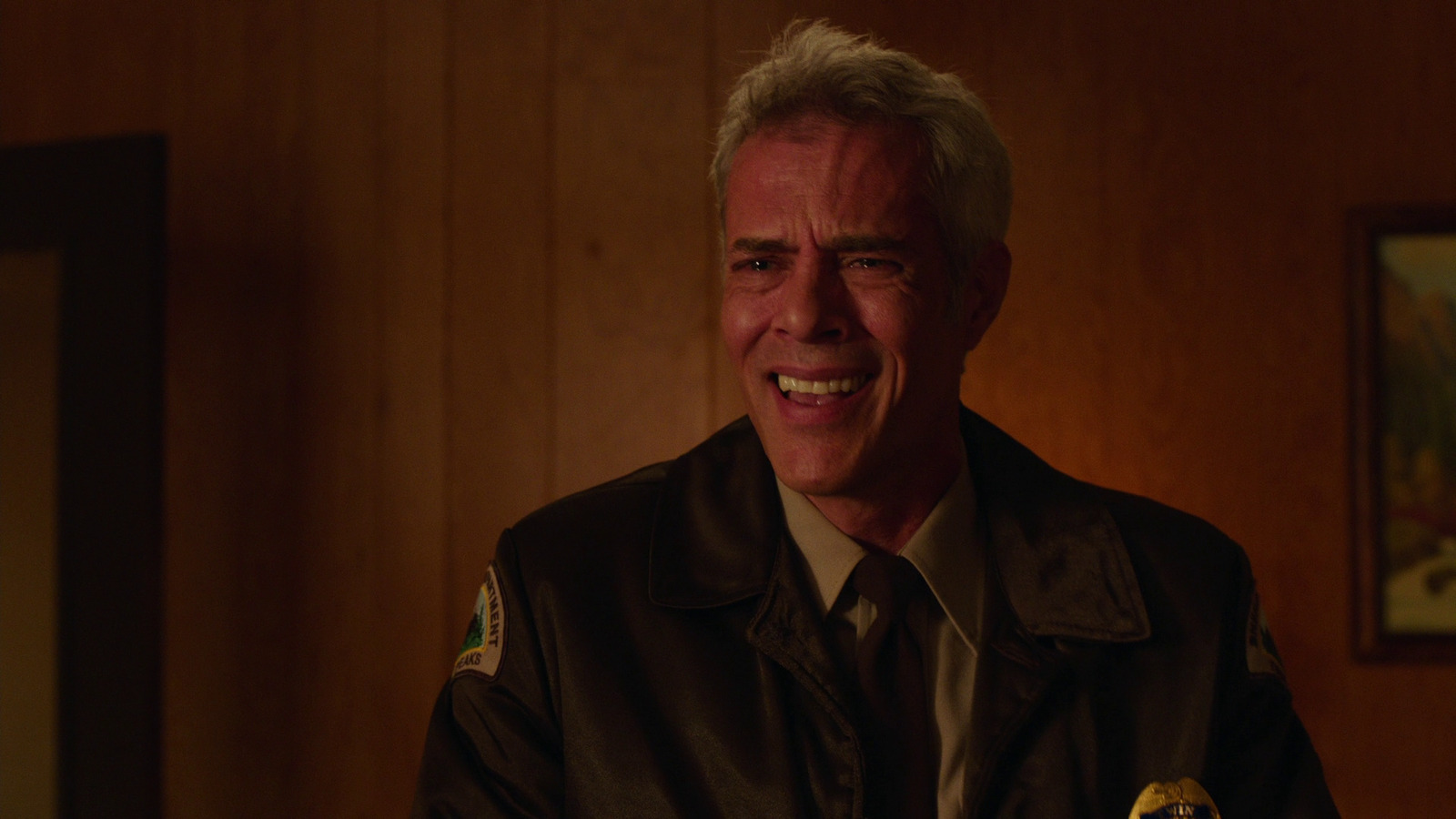
A familiar face can return without bringing the familiar person. A photograph can make an absent person suddenly present.
Follow the casino, the Jones household, the sheriff’s station and the FBI through fifteen illustrated scene studies. Recognition becomes a practical, emotional and investigative problem.
- Part 4
- …Brings Back Some Memories
- Directed by
- David Lynch
- Written by
- Mark Frost & David Lynch
- Standalone presentation
- 00:56:57
The Return overview · Twin Peaks research hub. Timings follow the standalone part and include its opening titles. How the combined presentation differs.
Explore this dossier
Recognising someone is only the beginning
Part 4 sets several forms of recognition beside one another. Strangers name Cooper as Dougie; Janey-E recognises a husband whose behaviour she cannot explain; Bobby encounters Laura through a photograph; Gordon meets a man whose greeting is wrong. Each scene asks what familiarity permits someone to know.
The distinction between helpful repetition and coercive repetition connects the two men with Cooper’s face. One depends on other people to supply a usable phrase or gesture. The other repeats an explanation that tries to control what his listeners will conclude. Around them, ordinary work continues: a child’s breakfast, a dispatch report, a desk full of files.
Illustrated scene studies
- A name supplied by strangers
- Hospitality under surveillance
- Getting home is not the same as knowing home
- Money changes the terms of the reunion
- A familiar colleague in a position of authority
- The voice and the person occupy different places
- Daily work around an old case
- Laura’s photograph becomes a present encounter
- A speech that asks everyone else to wait
- A warning appears inside an ordinary morning
- A child teaches the adult the routine
- A successful match produces a refusal
- The reunion sounds prepared
- An admission of responsibility, then an admission of uncertainty
- A performance holds the unresolved ending
A name supplied by strangers
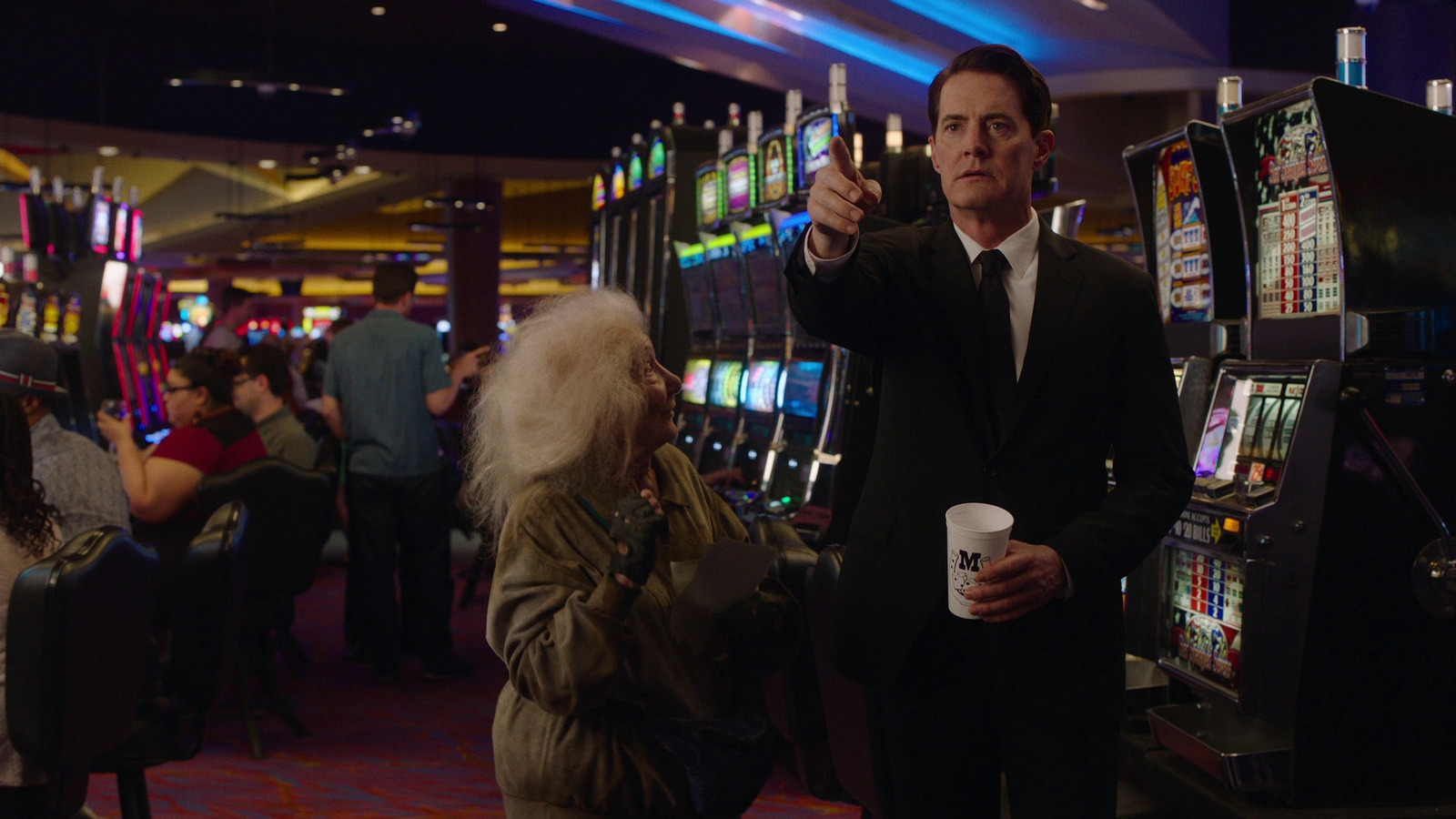
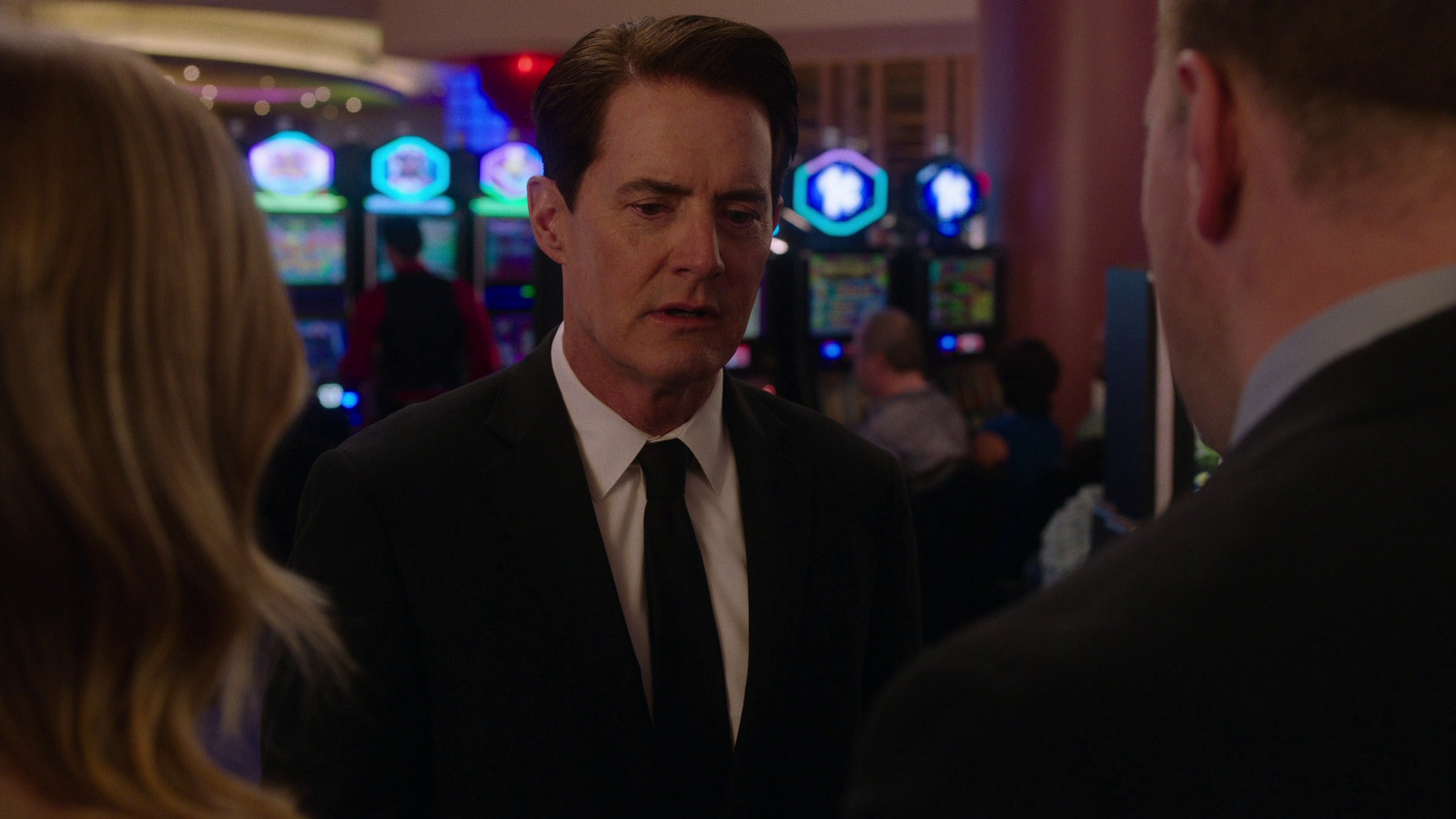
The repeated jackpots gather a growing audience. Staff count the wins as a mounting institutional problem, while the older woman treats Cooper’s pointing as practical help. His extraordinary luck produces two different social relationships: gratitude on the gaming floor and alarm among those responsible for it.
Bill Shaker addresses the same man as Dougie Jones. Cooper repeats names and fragments without supplying an account of himself. A passing reference to breakfast at home becomes a request that the couple eventually interprets for him. Identity and destination are assembled from other people’s words.
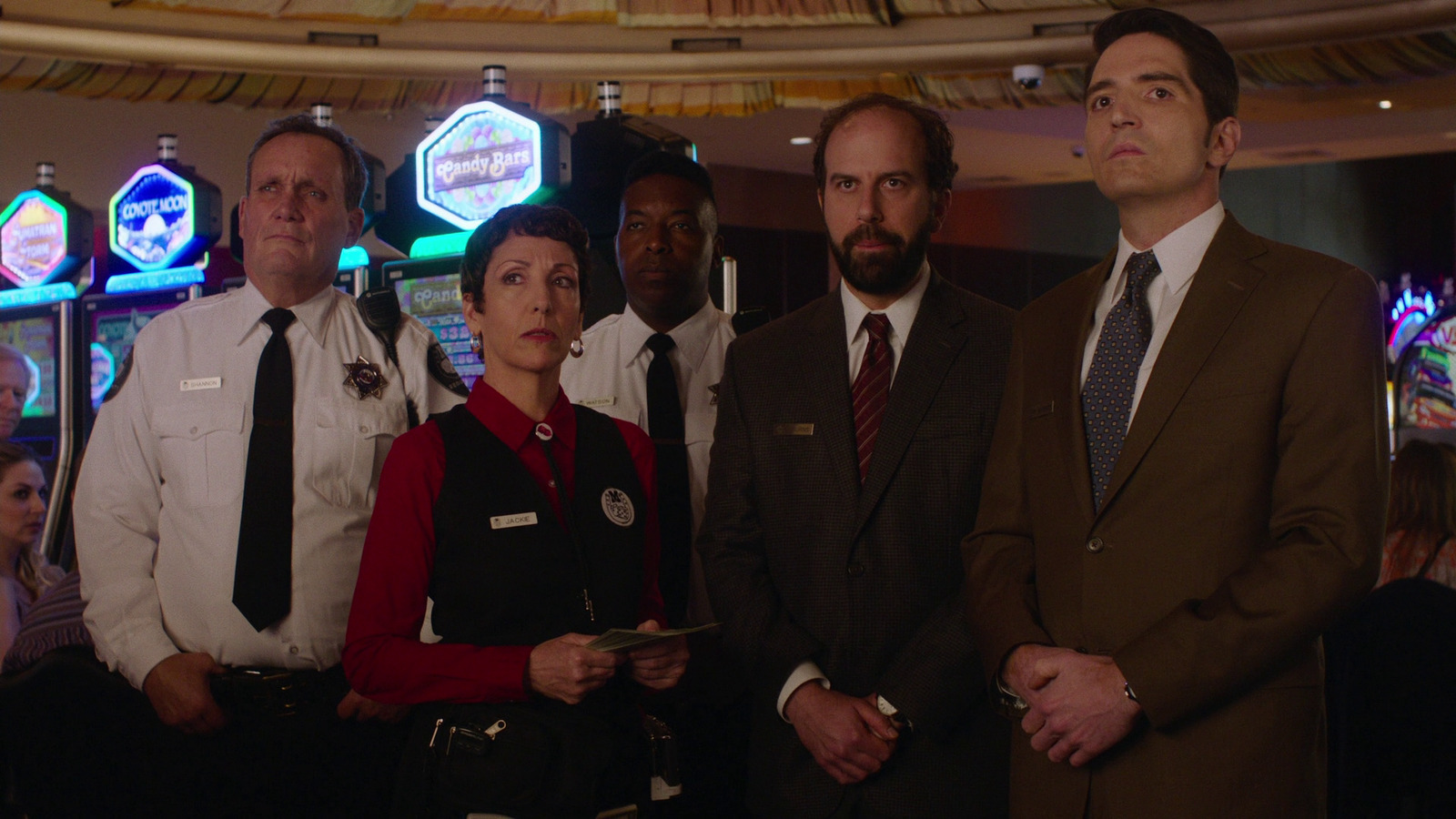
Open the scene sequence · 3 frames
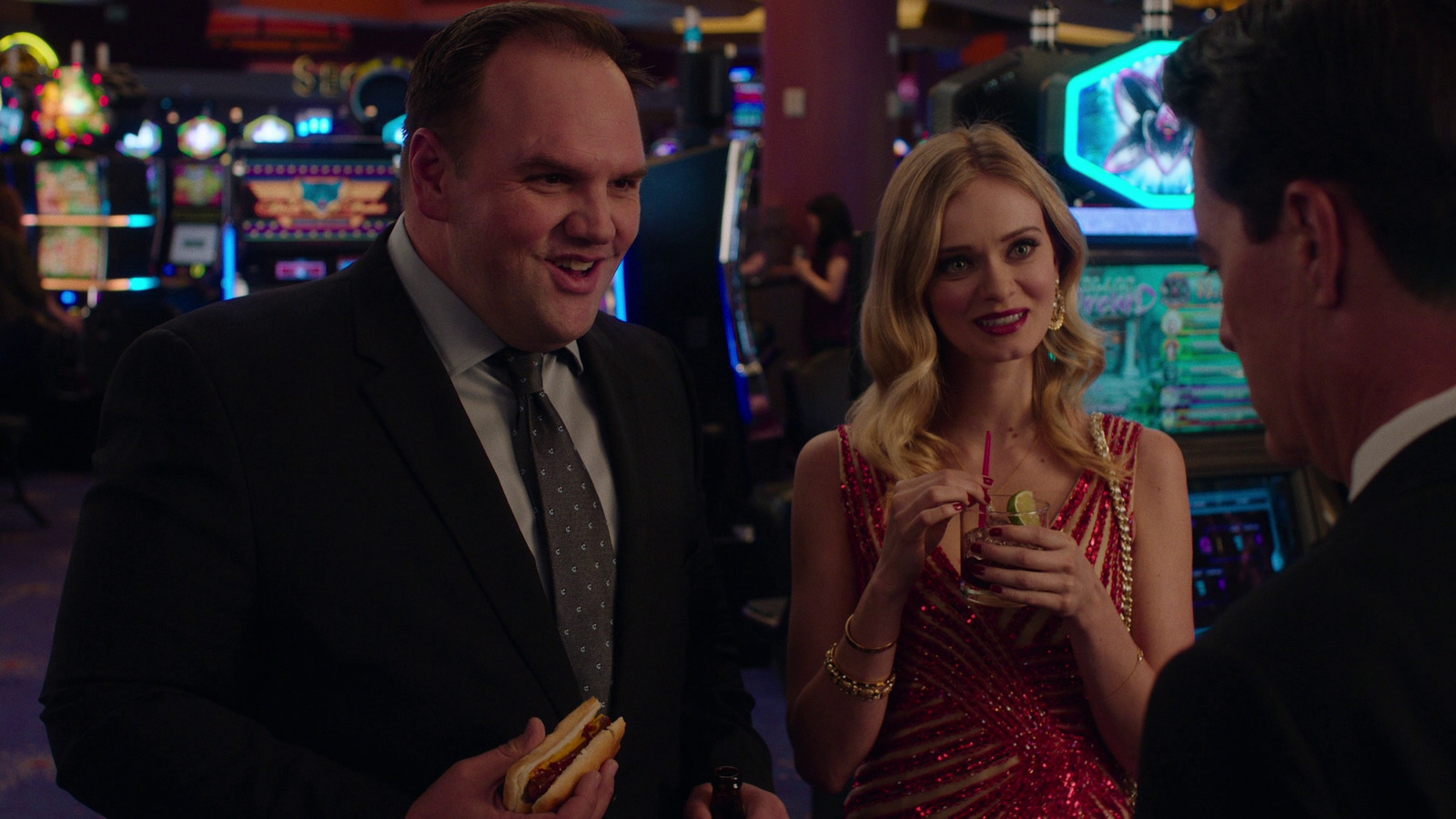
Hospitality under surveillance
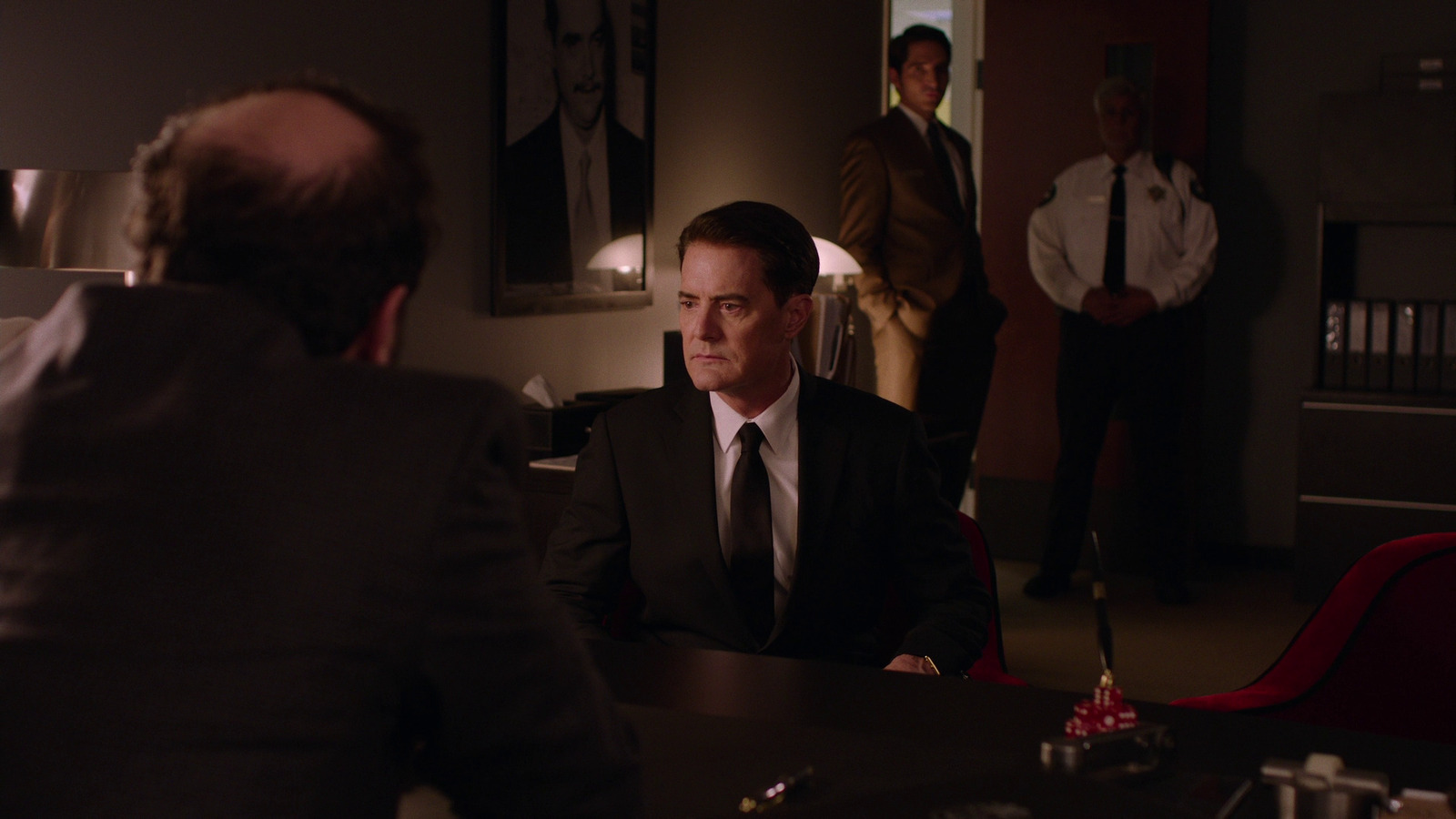
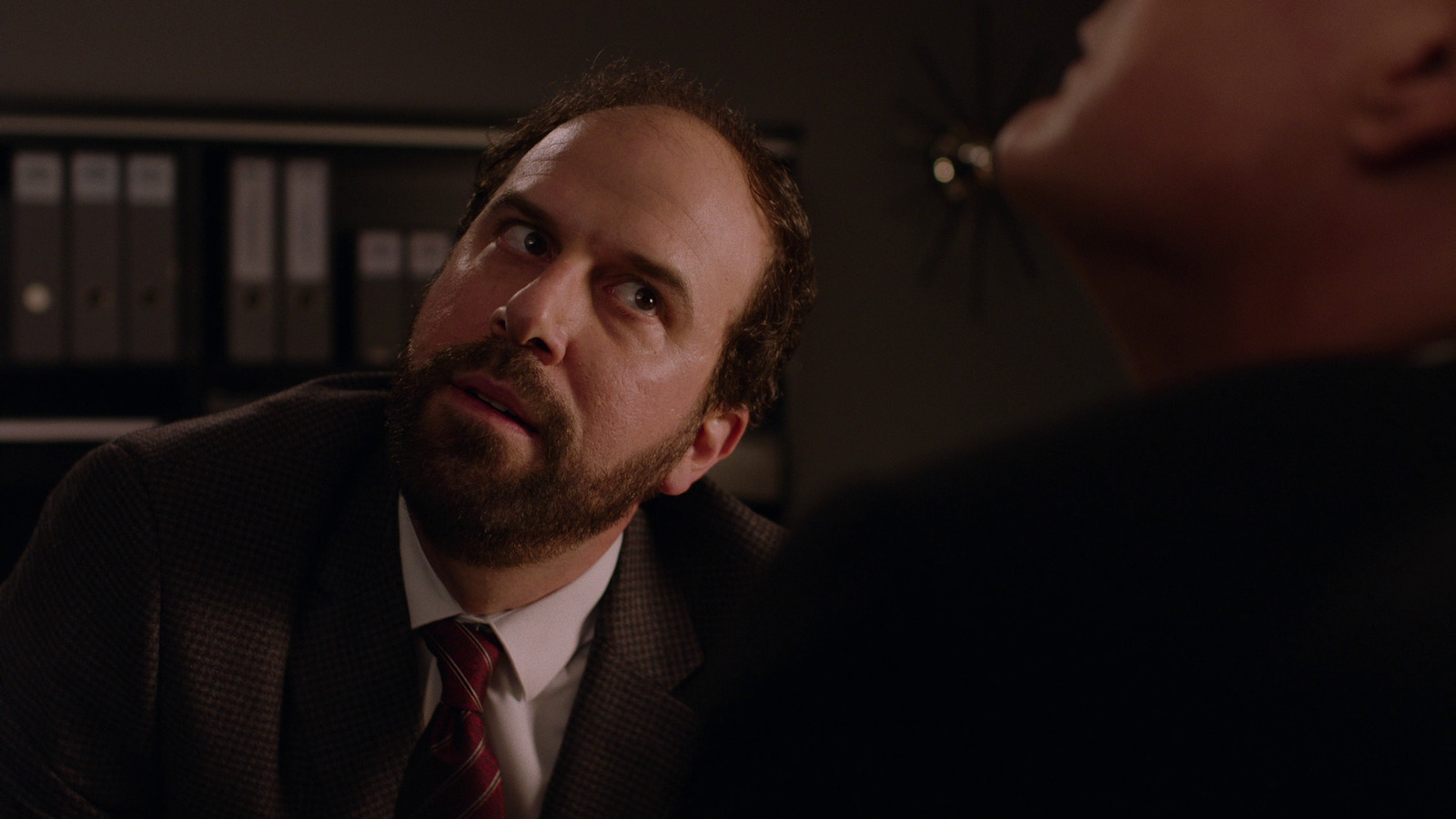
A bag of money, a chair and offers of food, company and transport turn the bewildered visitor into an important customer. The manager’s questions are ordinary; Cooper’s replies borrow the language already available to him. Even the offer of a home away from home becomes a literal cue.
The scene then changes its address. The manager looks toward the camera after Cooper leaves, declaring that the casino is watching him. The same institution that supplies a limousine also treats its guest as a problem to monitor. Courtesy does not remove suspicion.
Open the scene sequence · 1 frame
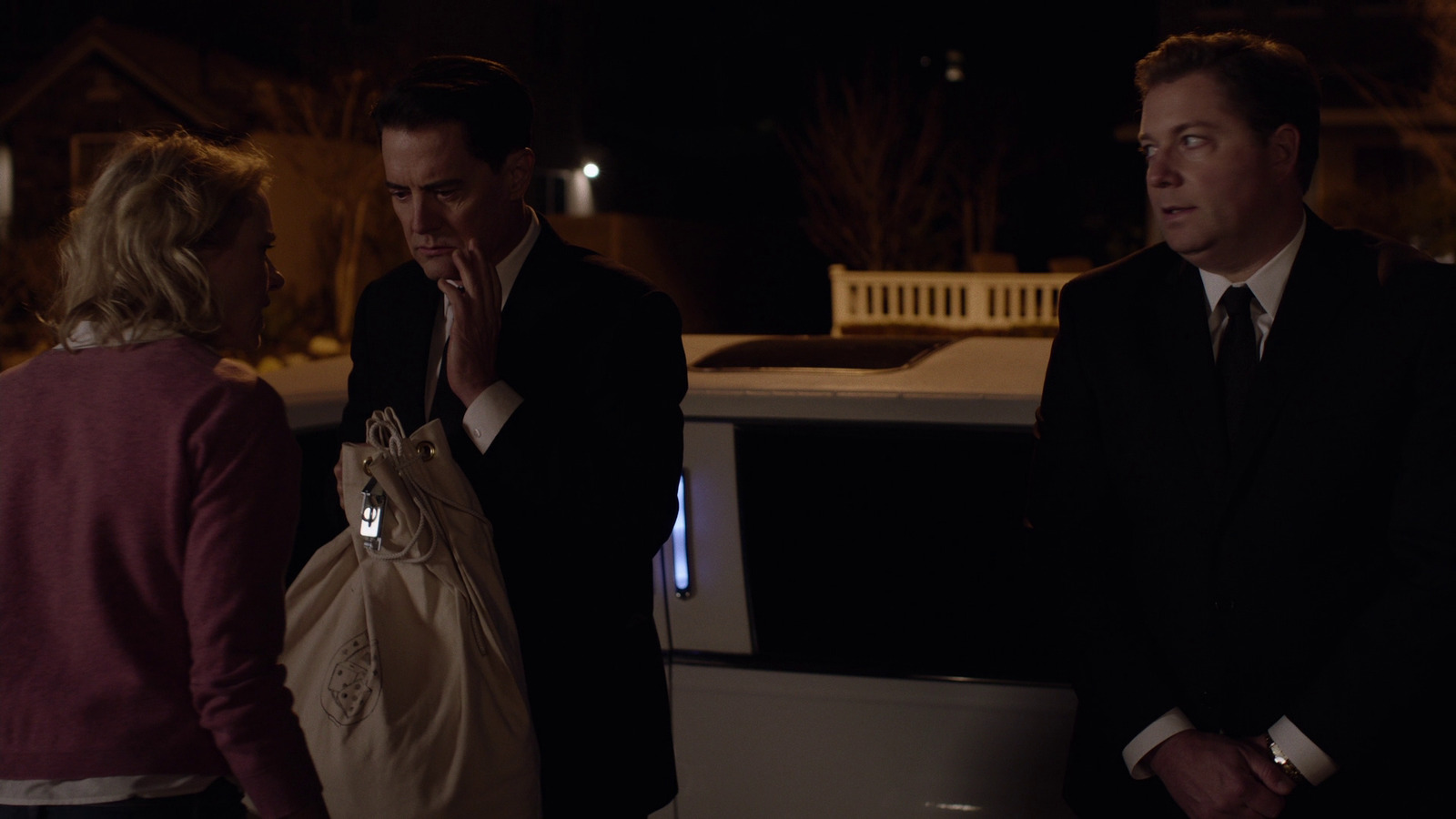
Getting home is not the same as knowing home
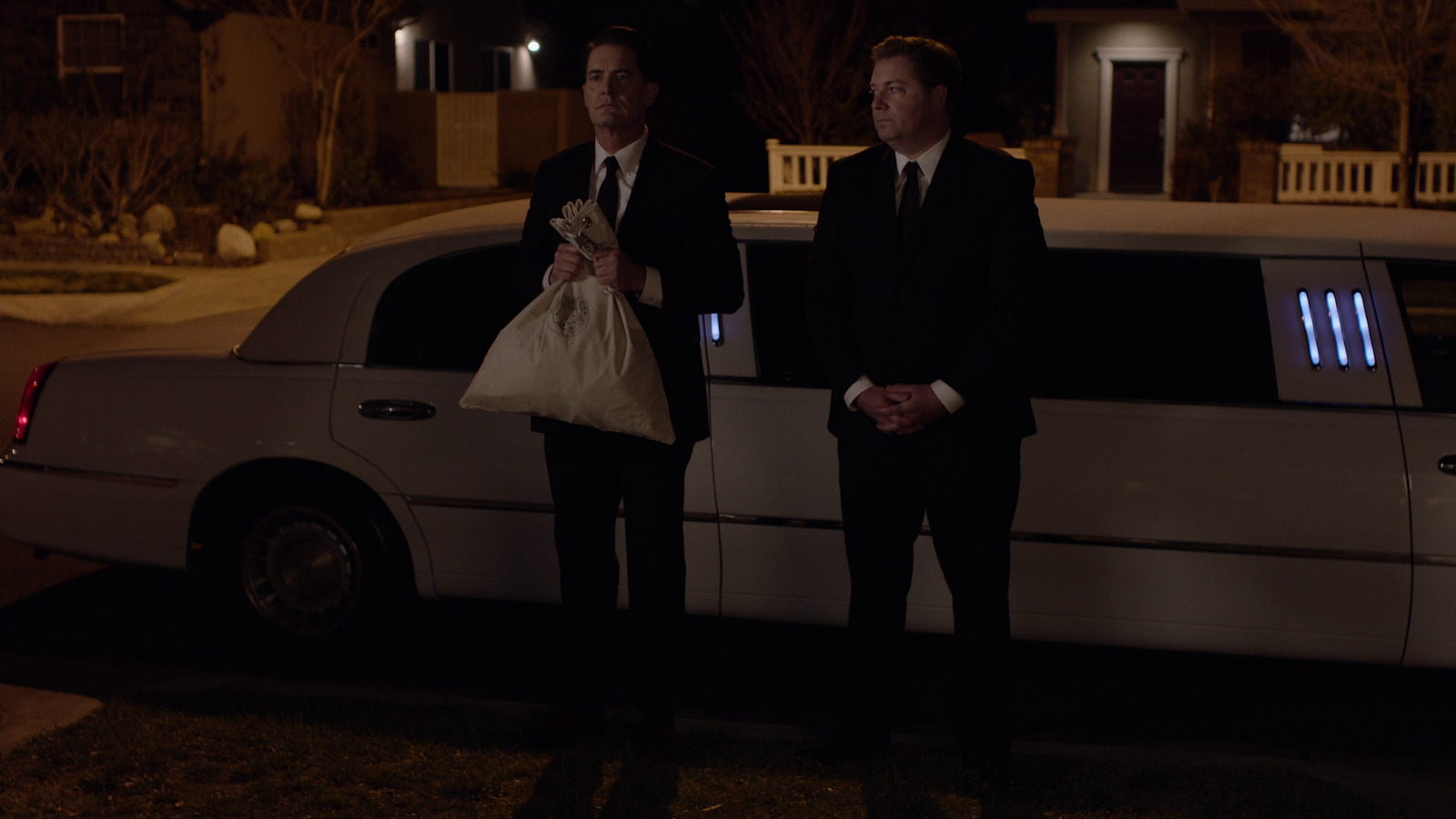
The driver must translate a red door into an address in darkness. Once the car stops, Cooper still cannot carry out the expected next action. The two men wait beside the limousine; an owl’s call makes the driver uneasy without establishing a visible supernatural cause.
The pause lets a small act of care become dramatic action. The driver stays rather than treating delivery to the street as the end of his responsibility. Janey-E’s entrance finally gives the waiting figure a household and a history of obligations.
Money changes the terms of the reunion
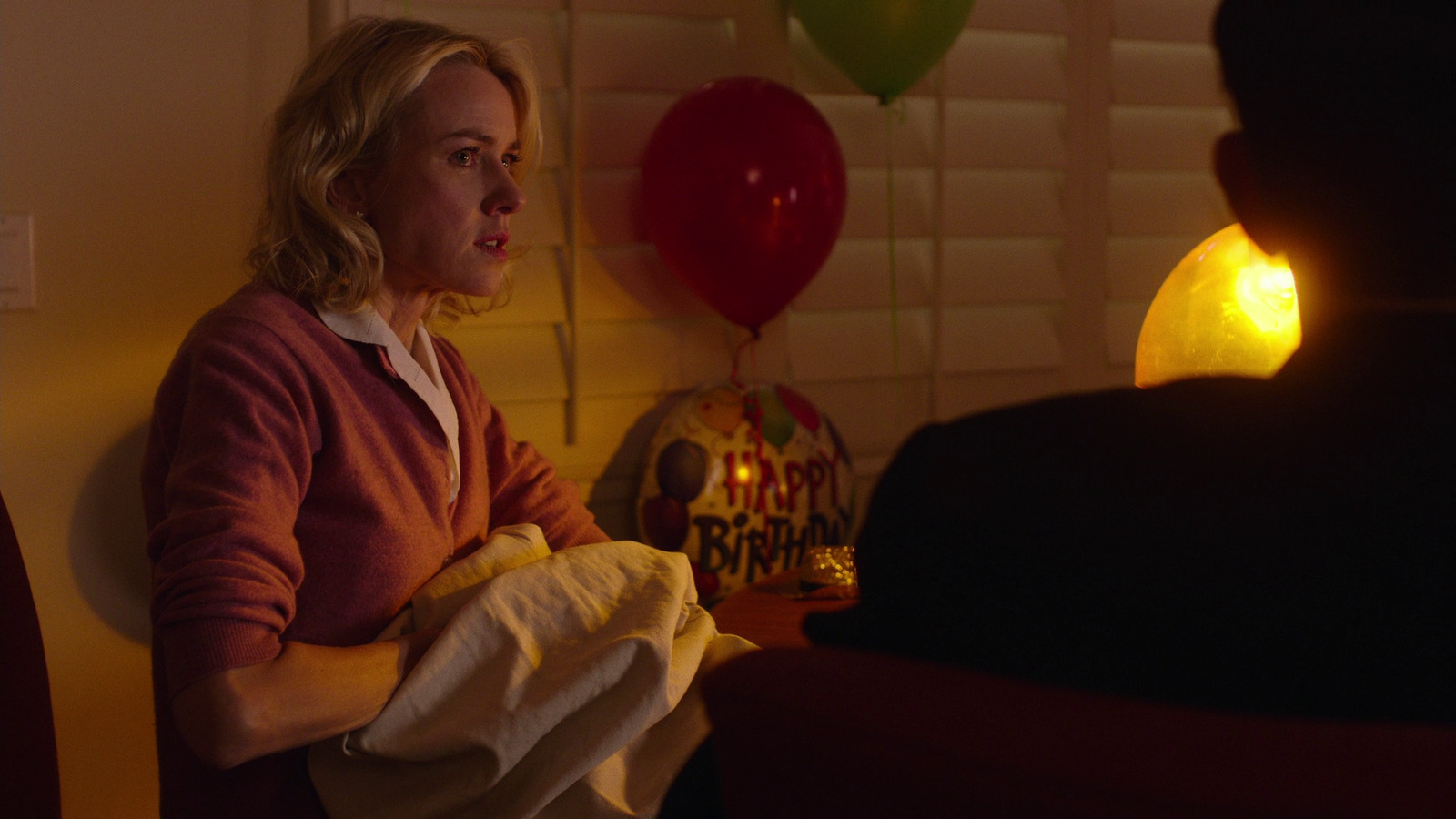
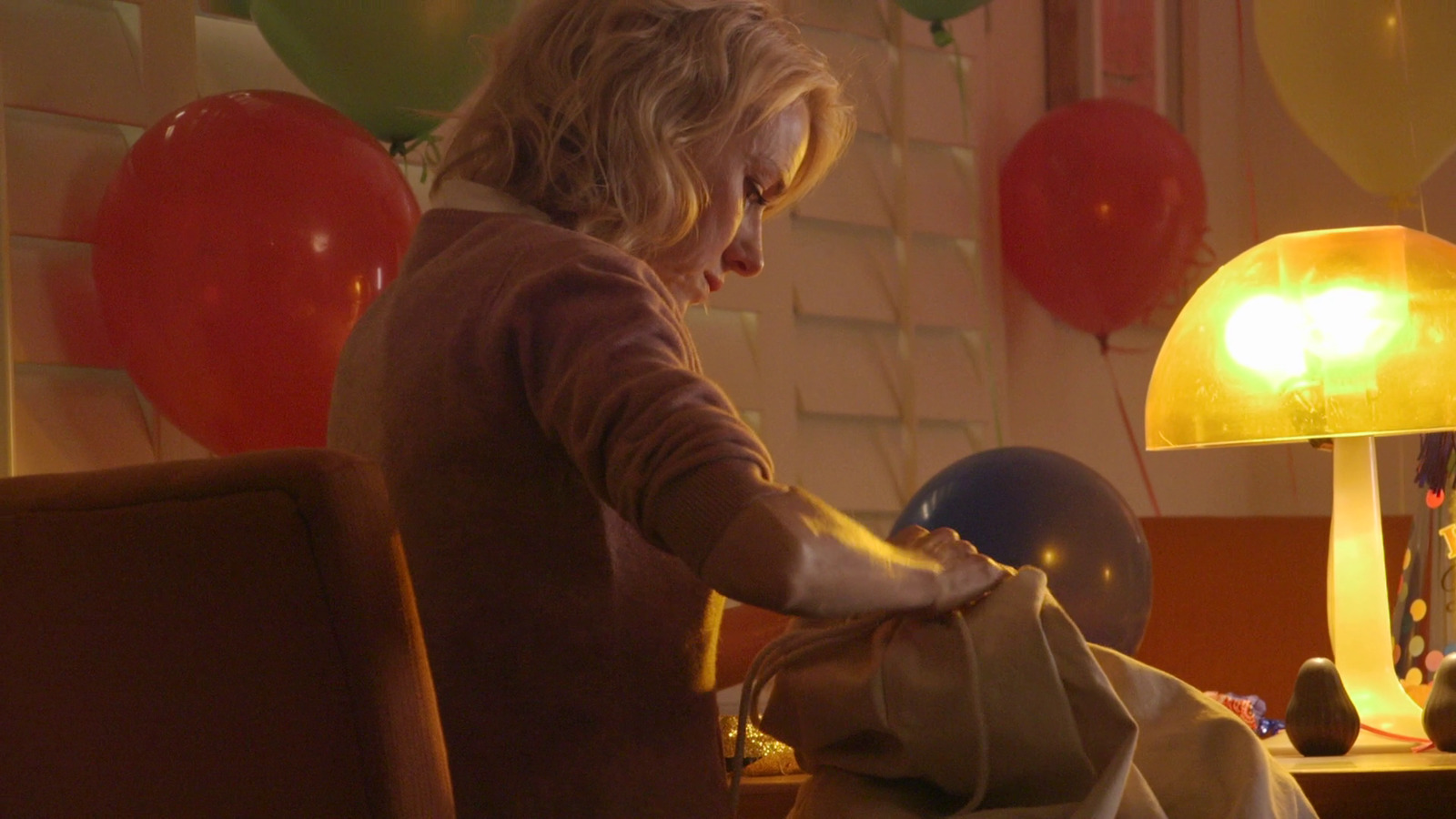
Janey-E sees a husband who has been absent for three days, missed work and missed Sonny Jim’s birthday. The balloons and remaining cake make that absence material. Her anger is directed at a relationship whose ordinary history Cooper cannot access.
The cash does not explain his behaviour, but it changes the immediate problem: there is enough to repay a debt. Naomi Watts moves from accusation to calculation and relief without making the day simply happy. Preparing a sandwich and saving cake turn the reunion toward care, even while the wrongness remains visible.
Open the scene sequence · 1 frame
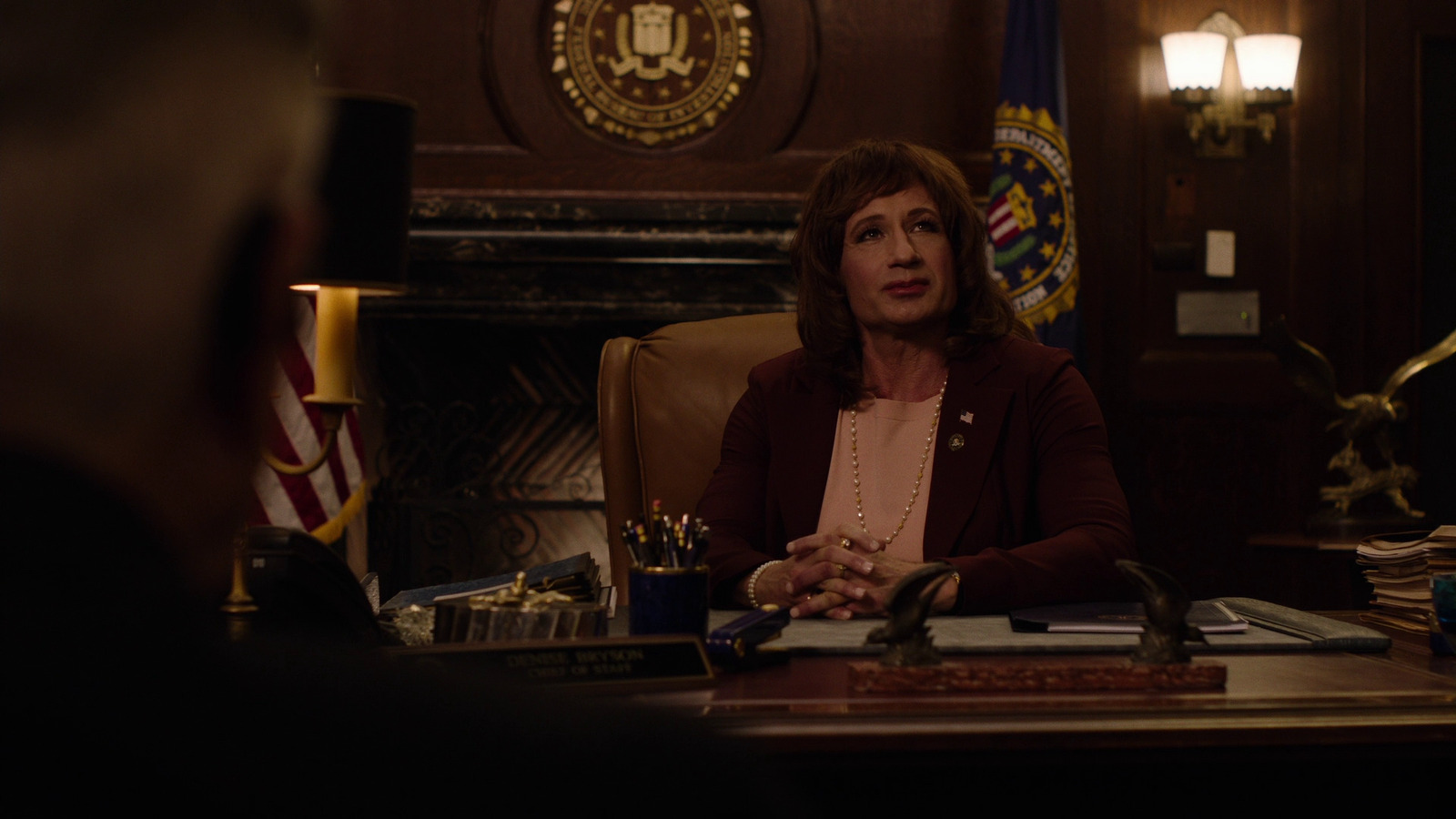
A familiar colleague in a position of authority
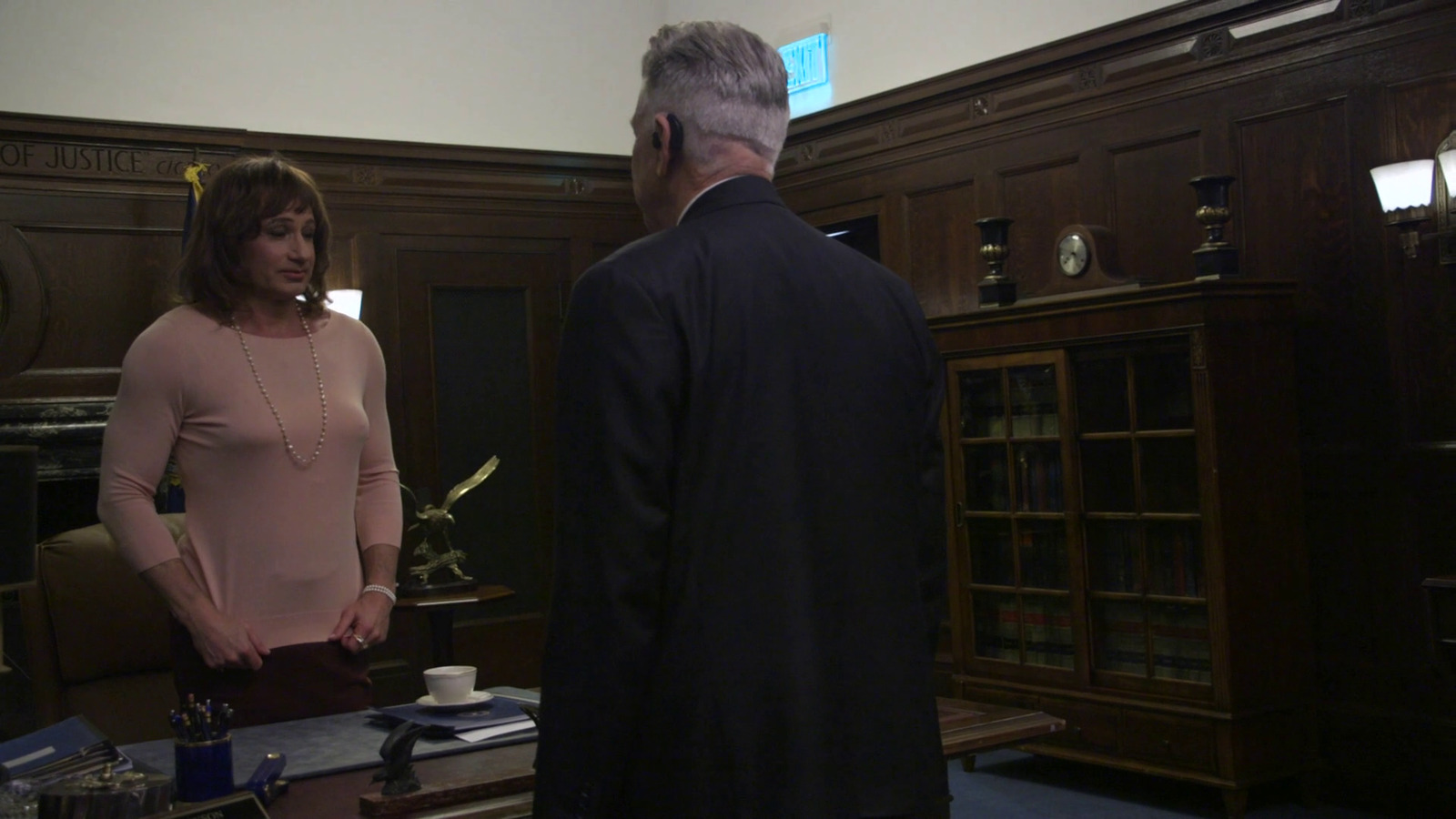
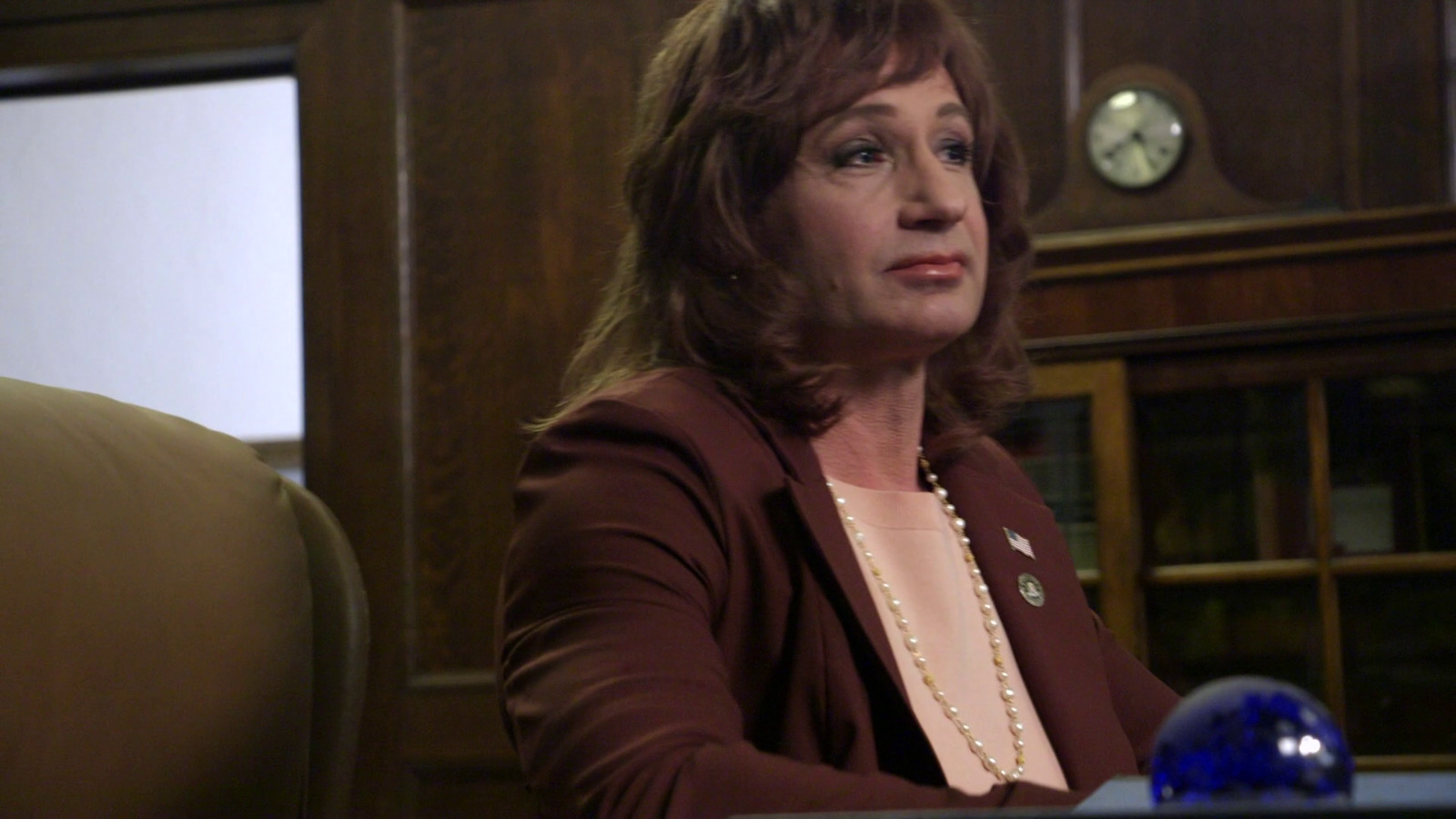
Gordon’s arrival allows small talk and an interval of waiting before Denise enters. The office gives her institutional authority; the conversation gives that authority a shared personal history. Her question about taking Tammy Preston on the trip challenges Gordon’s judgment rather than simply receiving a briefing.
Gordon remembers defending Denise against colleagues’ mockery and insists that Preston is capable. The scene connects professional respect with the way people speak about one another. Its warmth coexists with dated, awkward gendered banter; the exchange need not be flattened into an uncomplicated institutional ideal.
Open the scene sequence · 1 frame
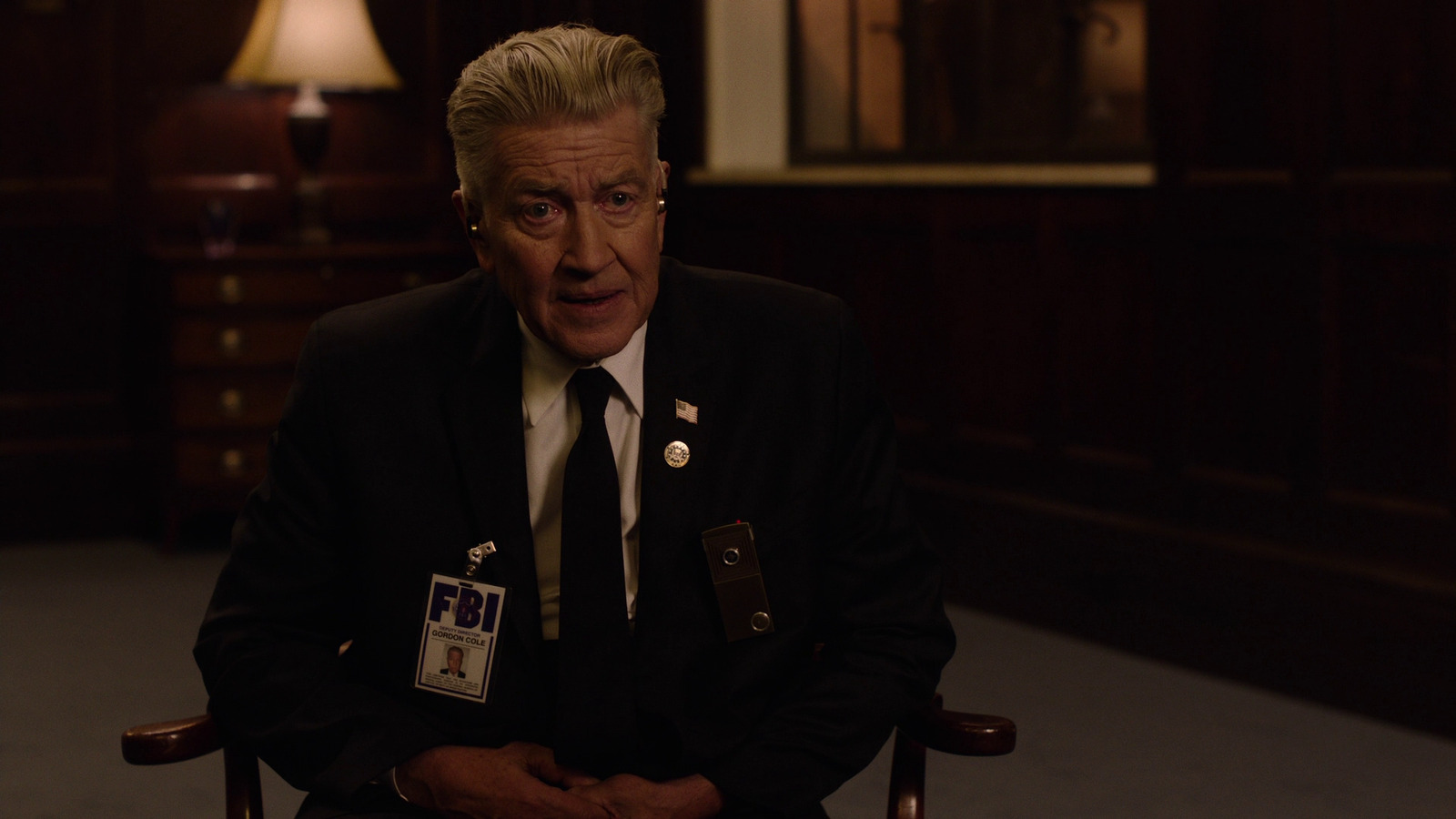
The voice and the person occupy different places
Lucy’s questions about the thermostat lead into a more fundamental uncertainty about unseen events. She imagines Sheriff Truman still fishing while he speaks on a mobile telephone. His arrival makes the relationship between voice and location suddenly impossible within her understanding.
The comedy turns on mismatched assumptions. Frank and Andy know that the caller can move; Lucy treats the phone as if it fixes him in place. Andy’s explanation recognises her competence in other work, allowing affection and exasperation to remain present together.
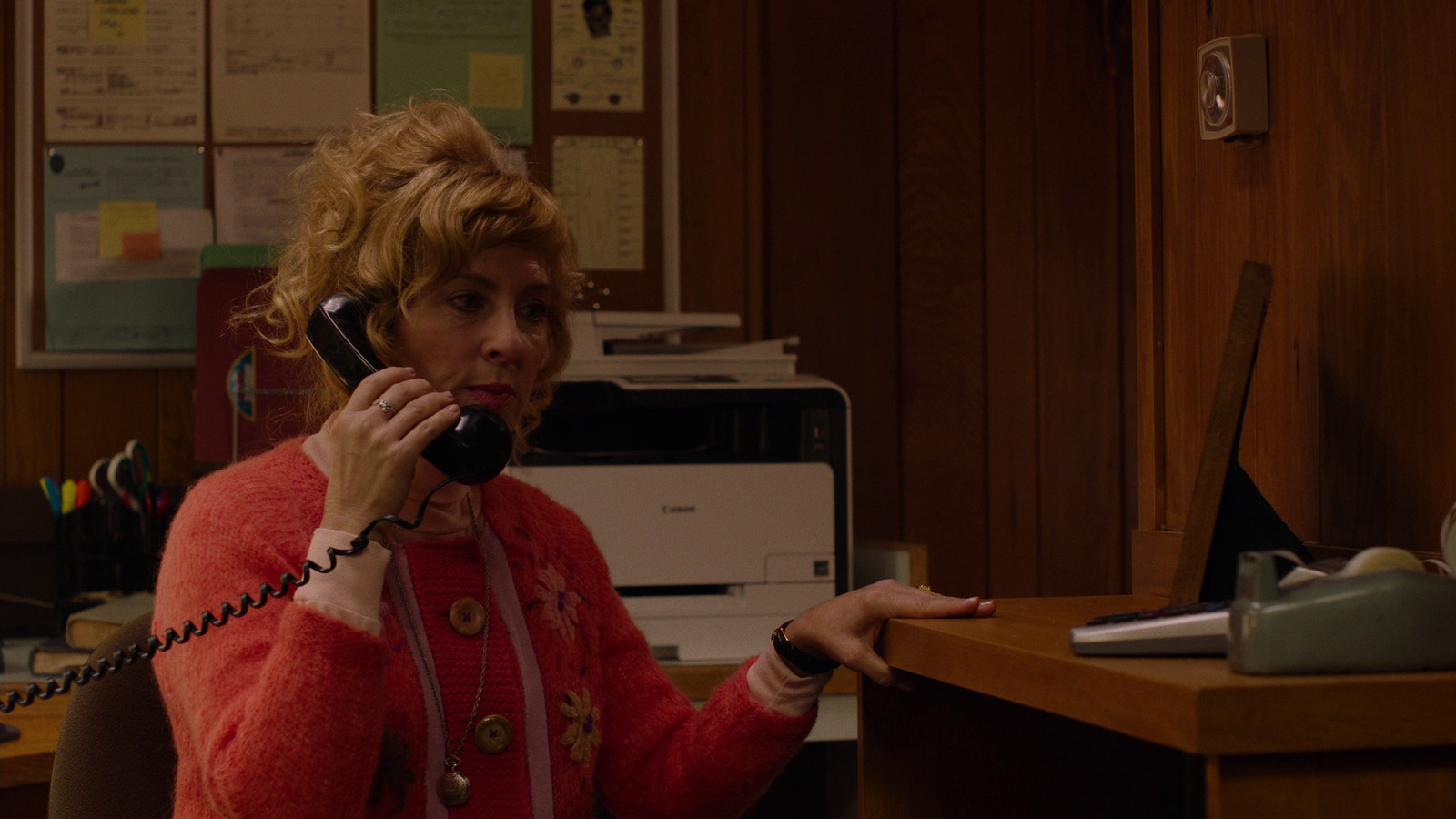
Open the scene sequence · 1 frame
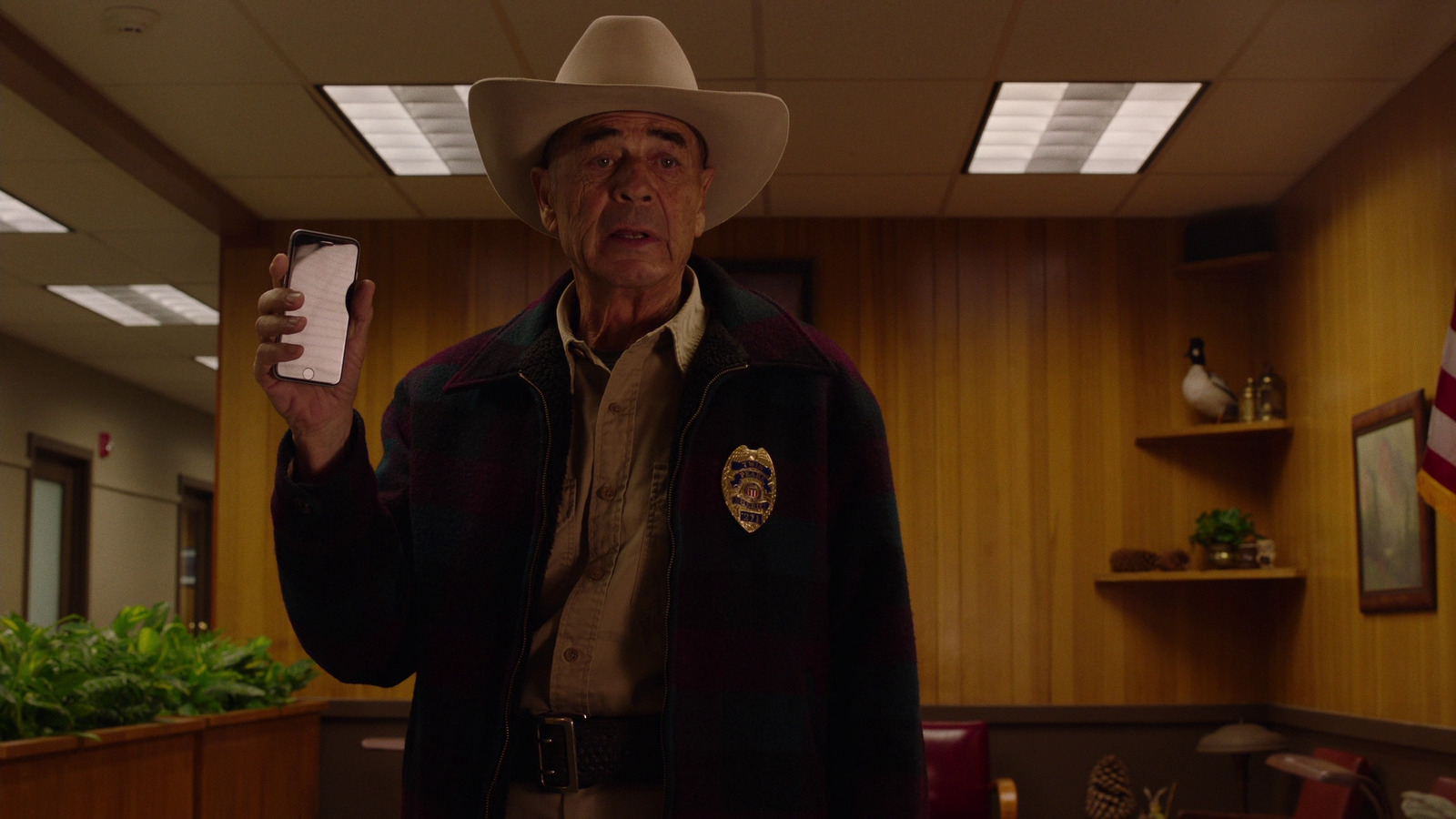
Daily work around an old case
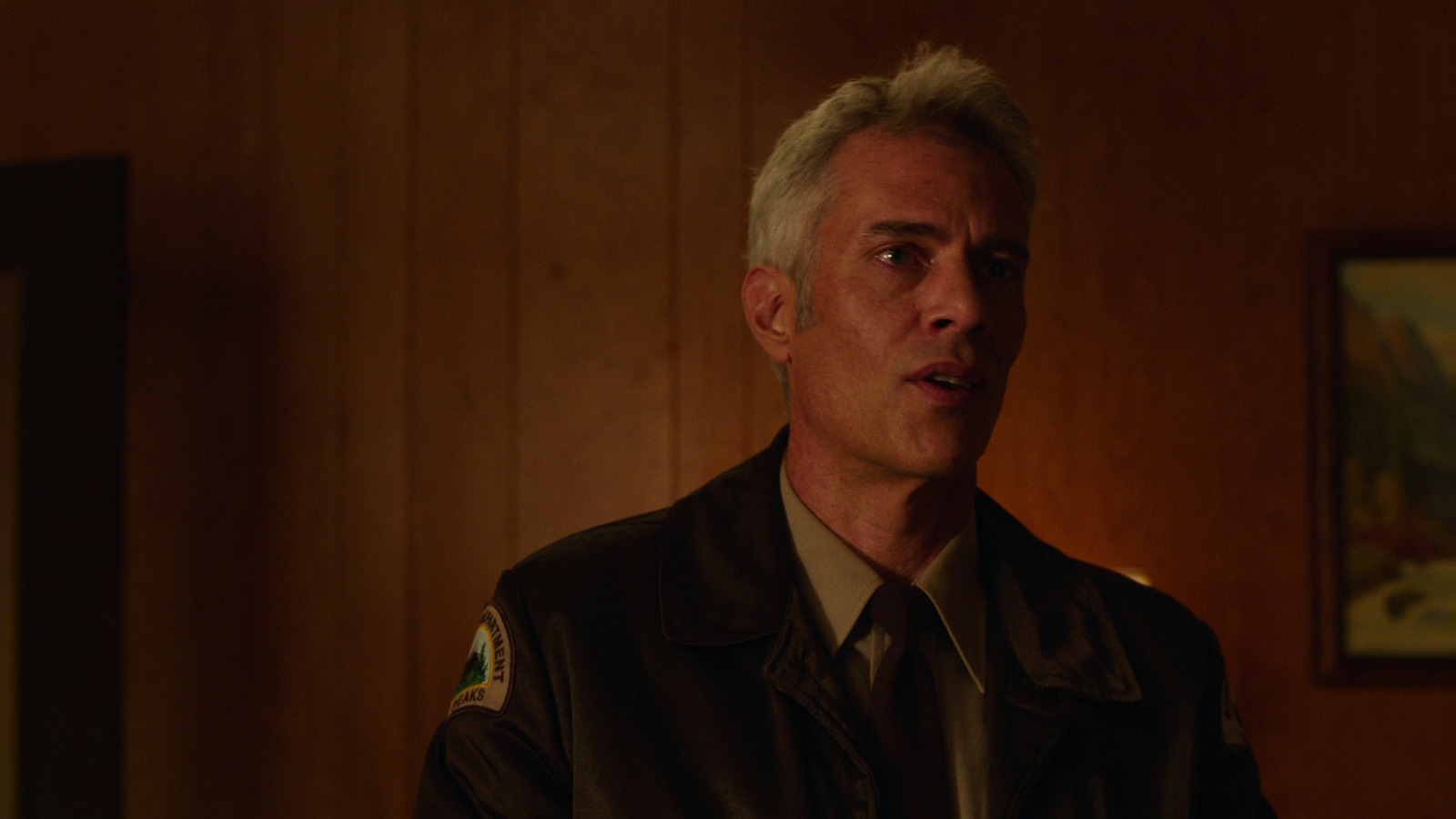
Maggie’s routine report includes the death of a schoolboy. The apparently reassuring return to the station therefore contains another family’s disaster. Bobby discusses surveillance and suspected drug traffic, while the distinction between every trail and every known trail quietly limits the certainty of his coverage.
At the conference table, Margaret’s message becomes a question about missing evidence. Chad’s ridicule obstructs the group’s willingness to take her seriously. The difference is not simply belief against reason: Hawk’s trust is based on previous experience, whereas Chad dismisses the witness before considering the message.
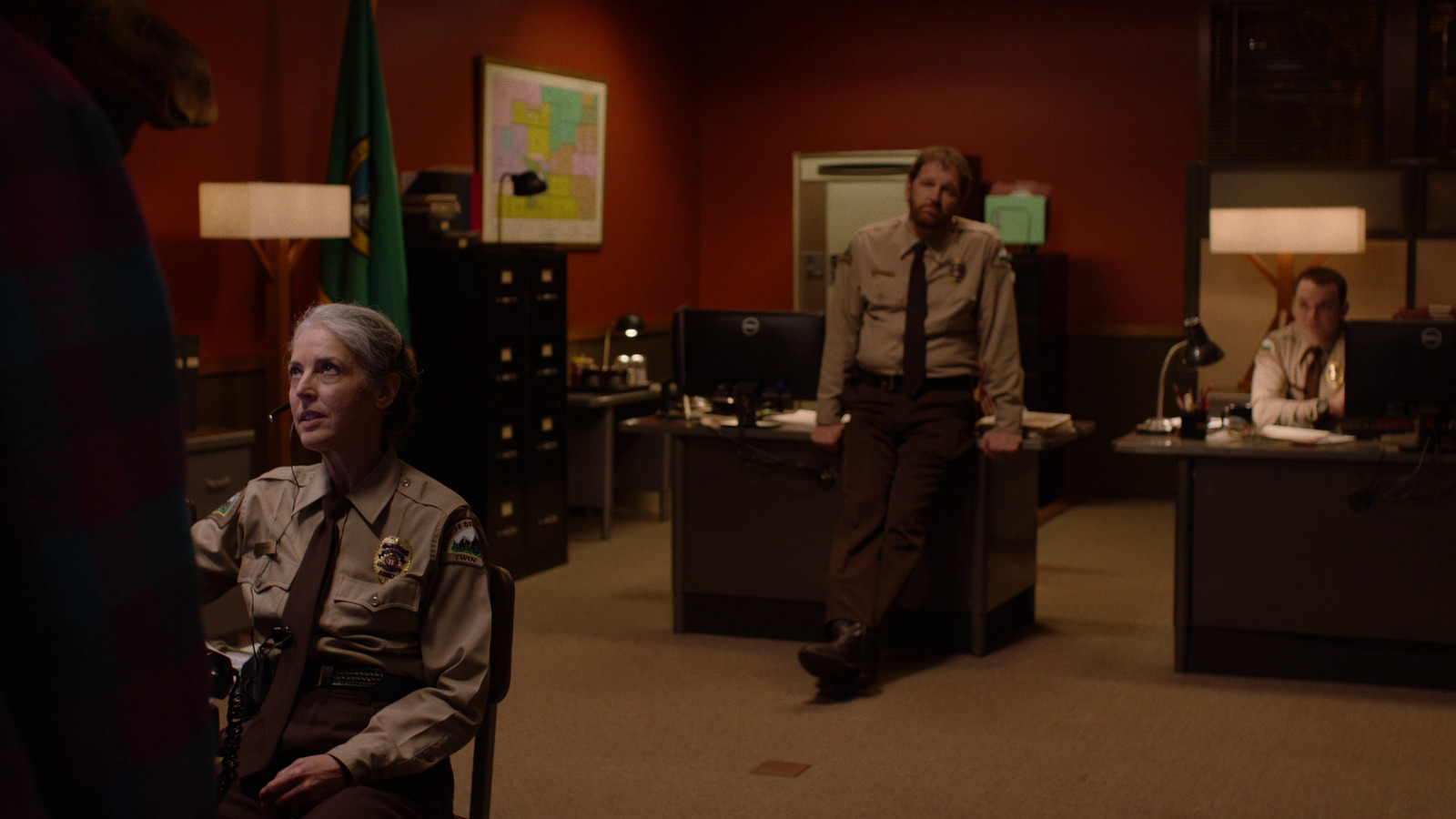
Open the scene sequence · 1 frame
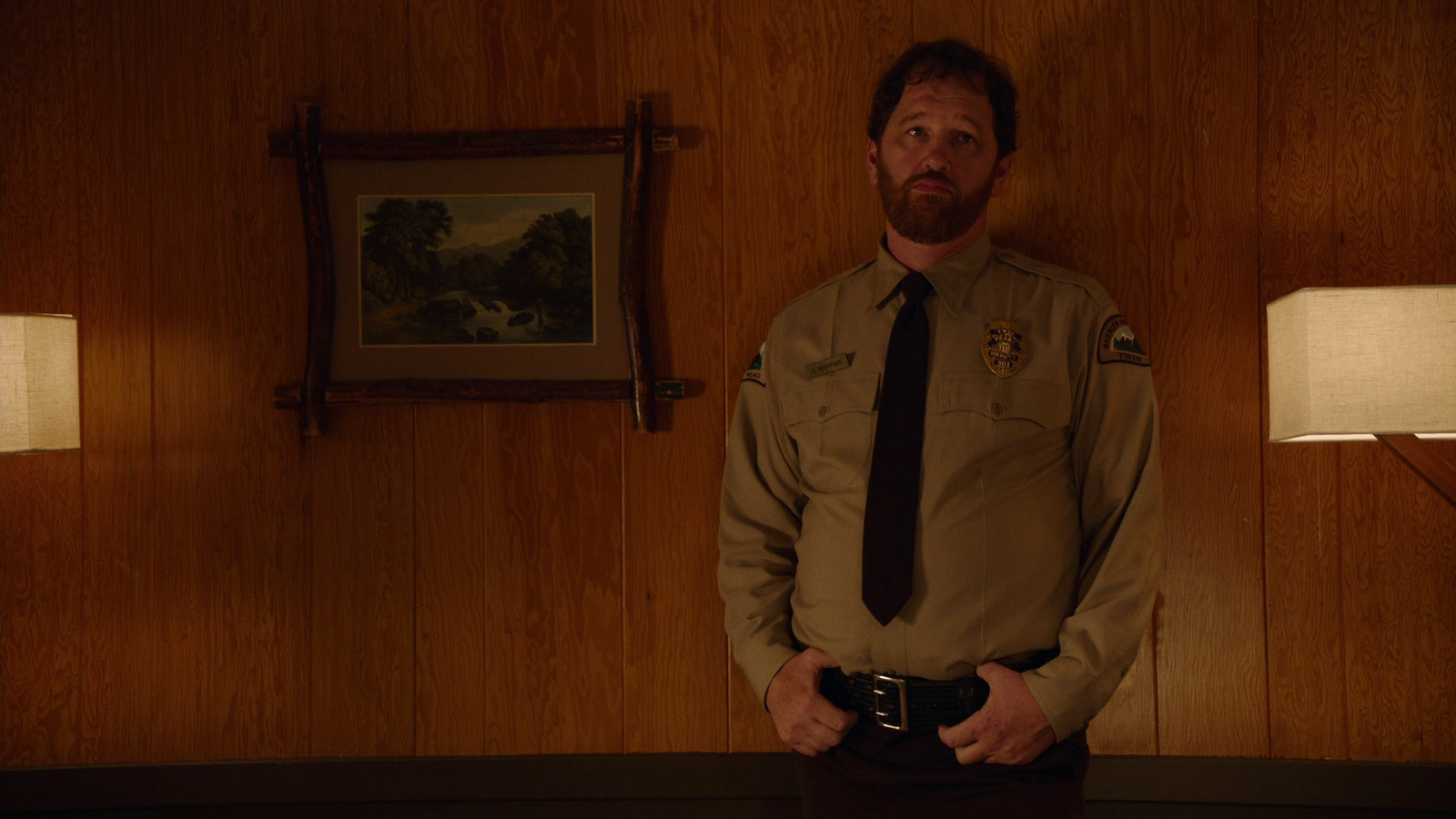
Laura’s photograph becomes a present encounter
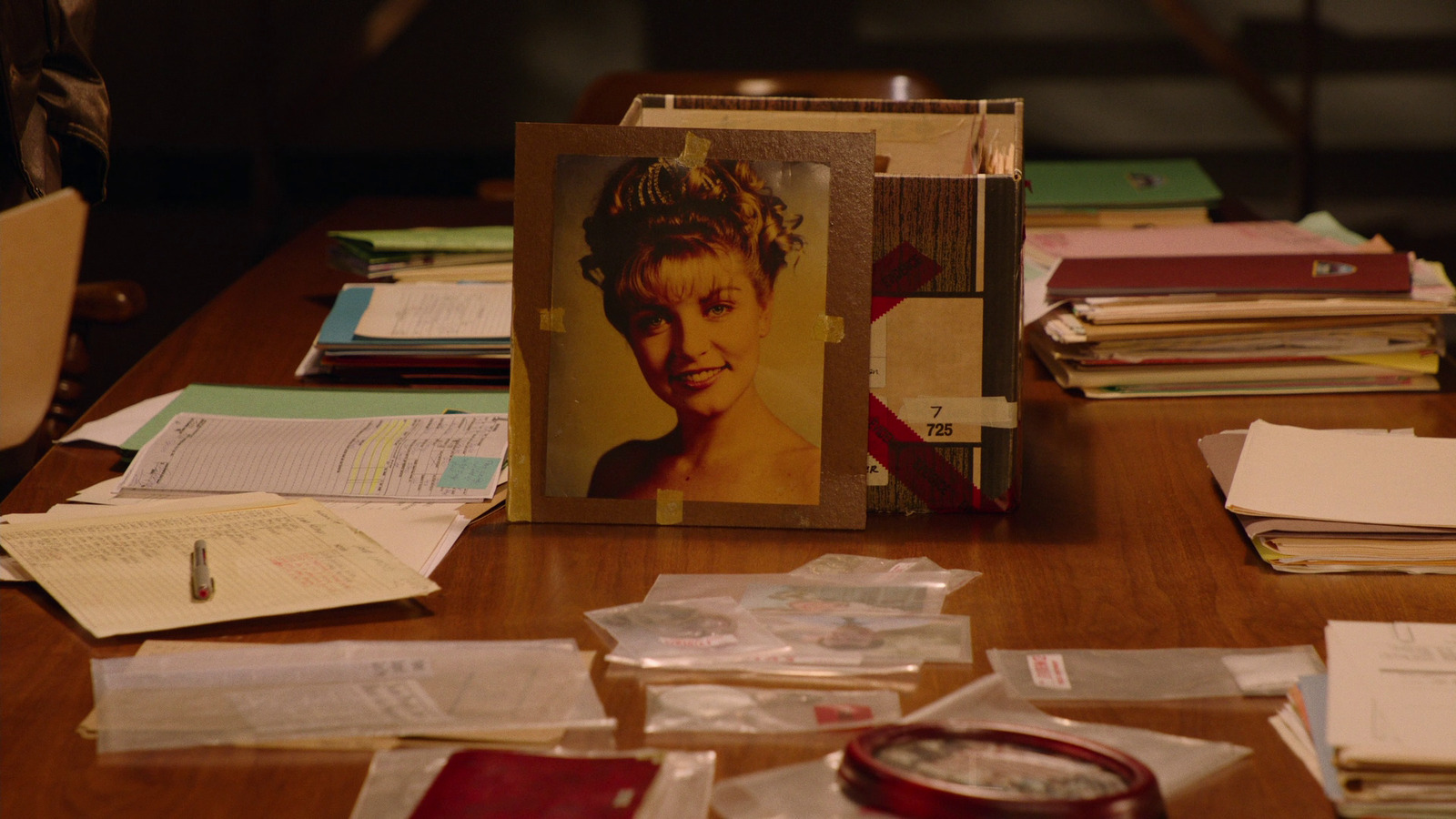
The familiar portrait is already part of a collection of case materials. Bobby’s entrance changes its function. His tears and the return of Laura’s theme interrupt the work of sorting evidence; the person in the photograph becomes someone whose loss can still alter a room.
The scene then turns grief toward information. Bobby reports what his mother told him about Cooper visiting Major Briggs before the fire. This is an attributed family account, not a flashback verifying every event. His lack of knowledge about the conversation’s contents is part of the evidence, not a gap the scene silently fills.
Open the scene sequence · 2 frames
A speech that asks everyone else to wait
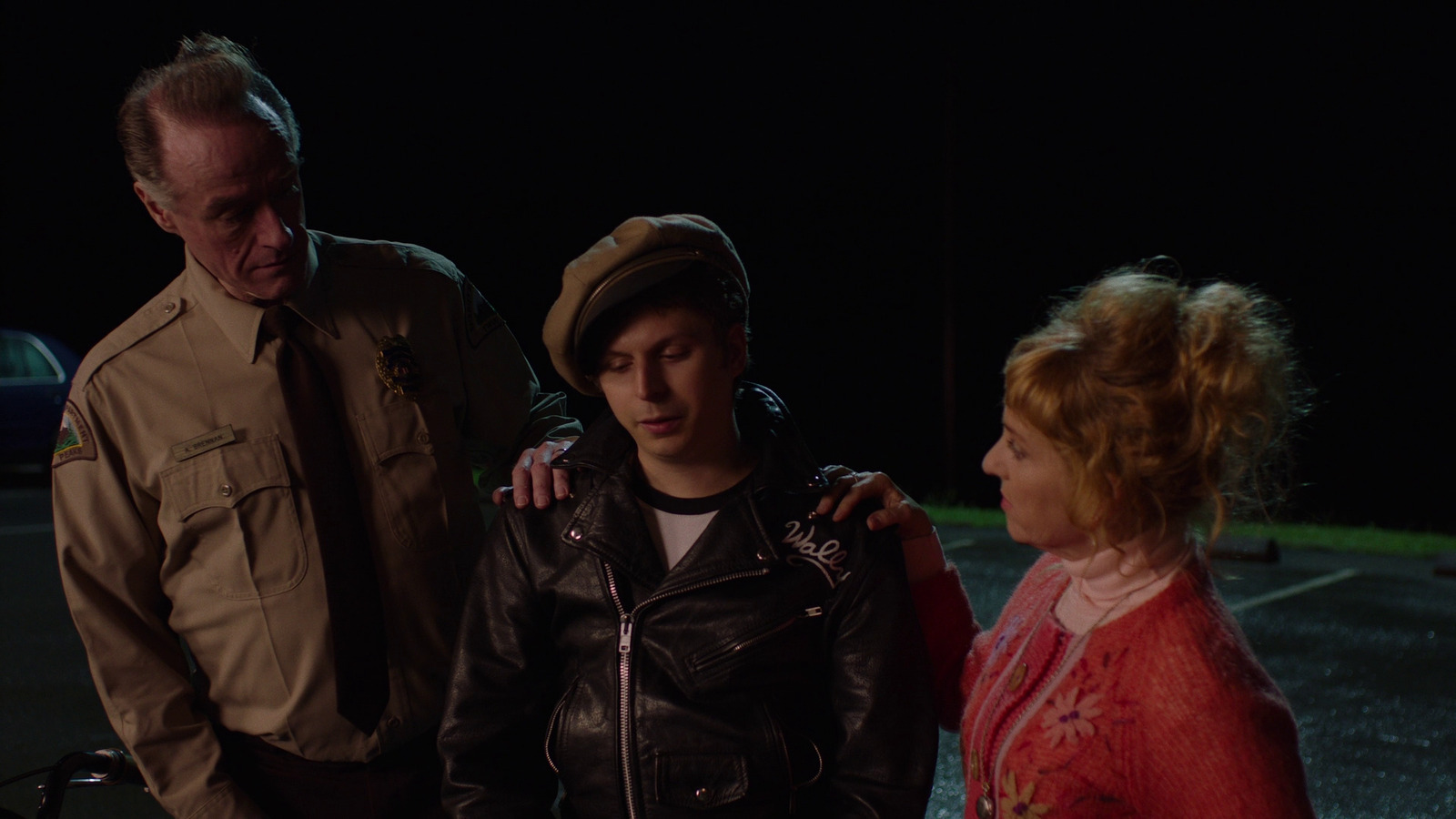
Wally’s appearance is framed by Andy and Lucy’s delight and Frank’s restrained attention. His formal condolences, permission to repurpose his childhood bedroom and expansive account of the road occupy much more time than their practical information requires.
The pauses and listening faces are essential to the joke. Frank tries to answer in the speaker’s ceremonial register, and Wally receives that answer with equal gravity. The scene makes a family’s pride visible without requiring the listener to share the scale of its self-mythology. Wally’s account of American exploration remains his speech, not the dossier’s historical judgment.
Open the scene sequence · 1 frame

A warning appears inside an ordinary morning
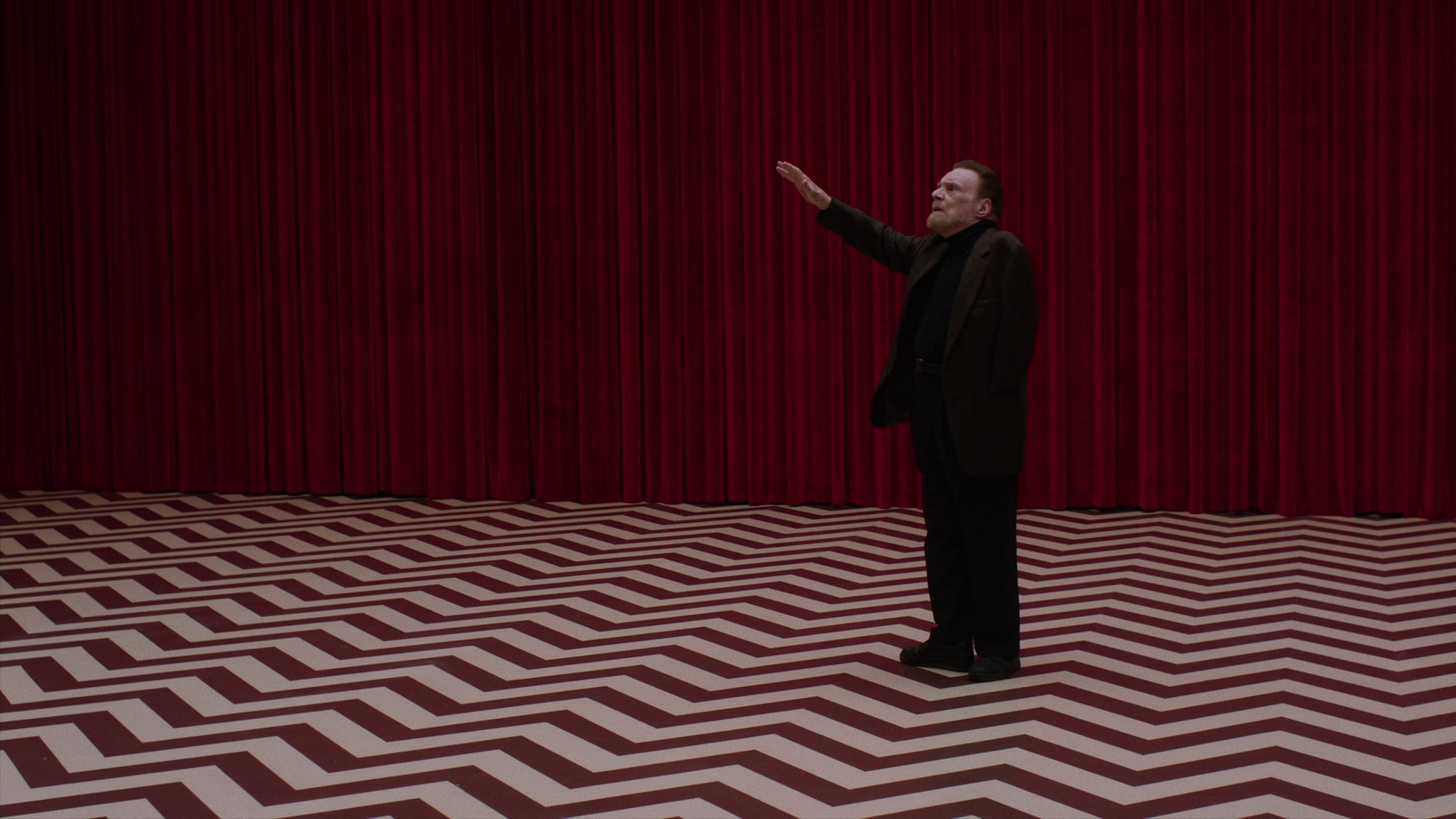
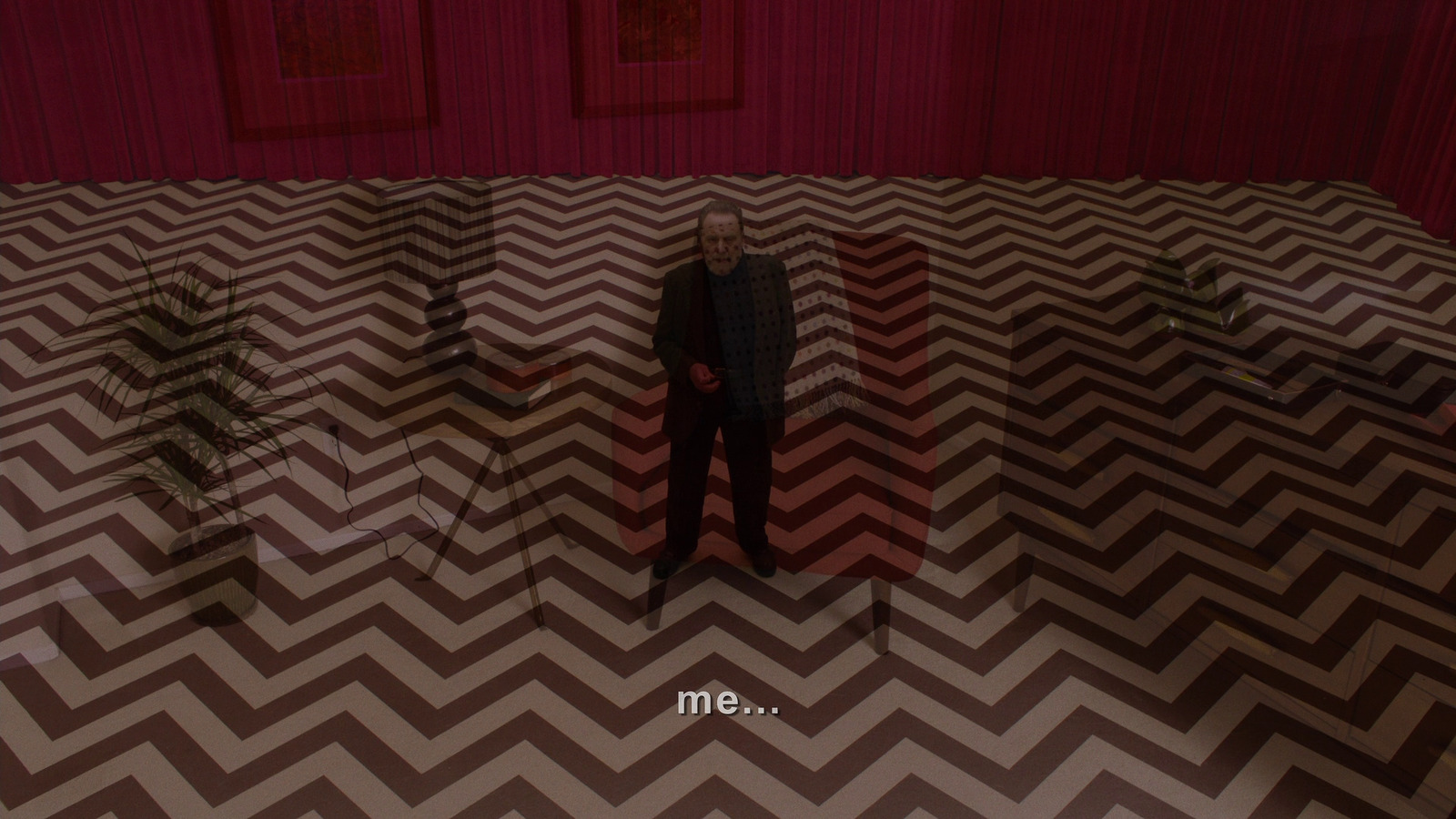
Cooper sits among clothes laid out for him, but the image of Mike and the patterned Lodge floor interrupts the room. The overlap refuses a clean separation between two locations. Cooper can attend to the apparition without being able to resume an ordinary morning.
Janey-E’s practical intervention changes the scale again: he needs to use the bathroom and get dressed. The mirror and his inspection of his hand make bodily familiarity uncertain. A face and a body can be present before the habits associated with them return.
Open the scene sequence · 2 frames
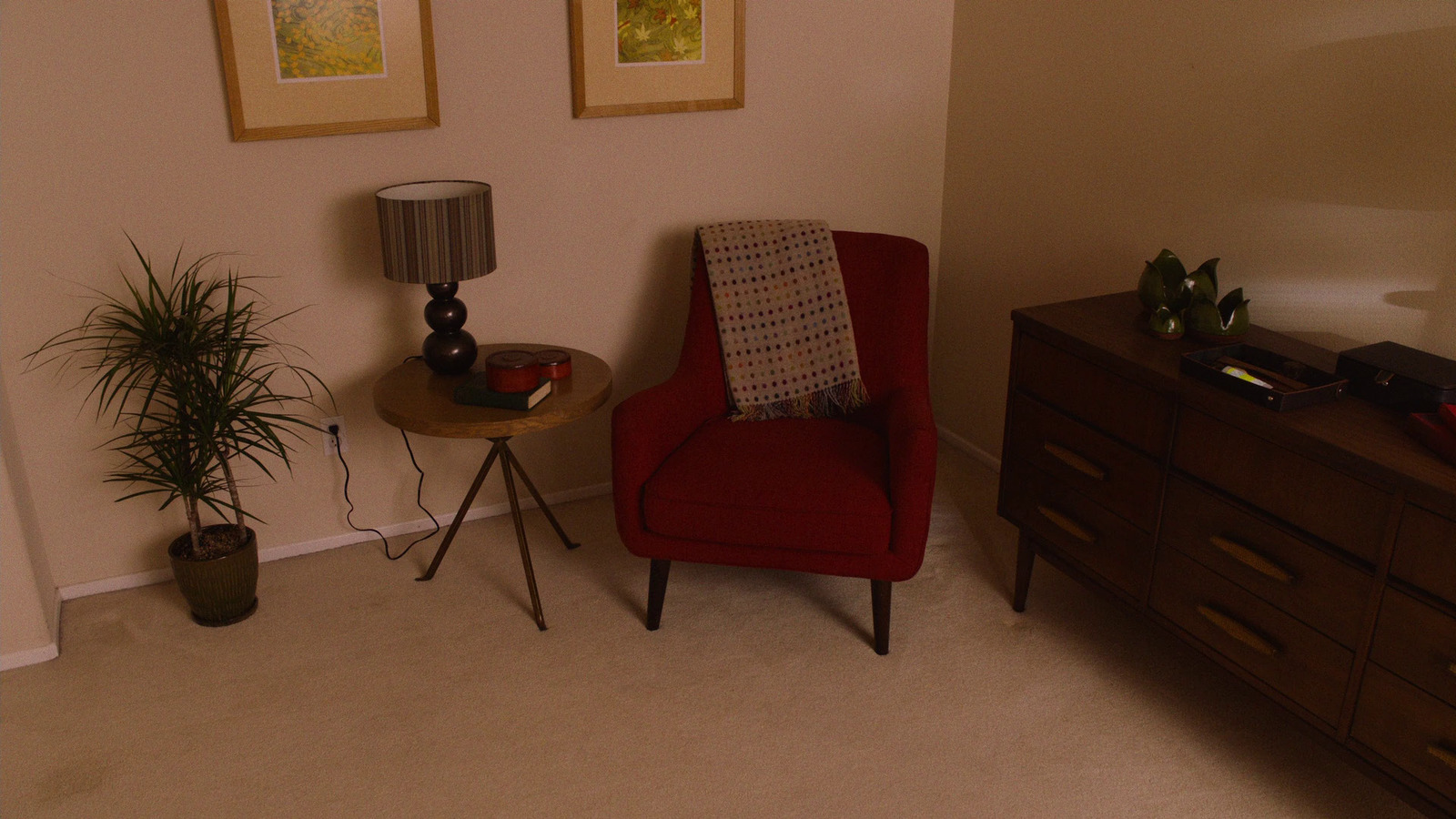
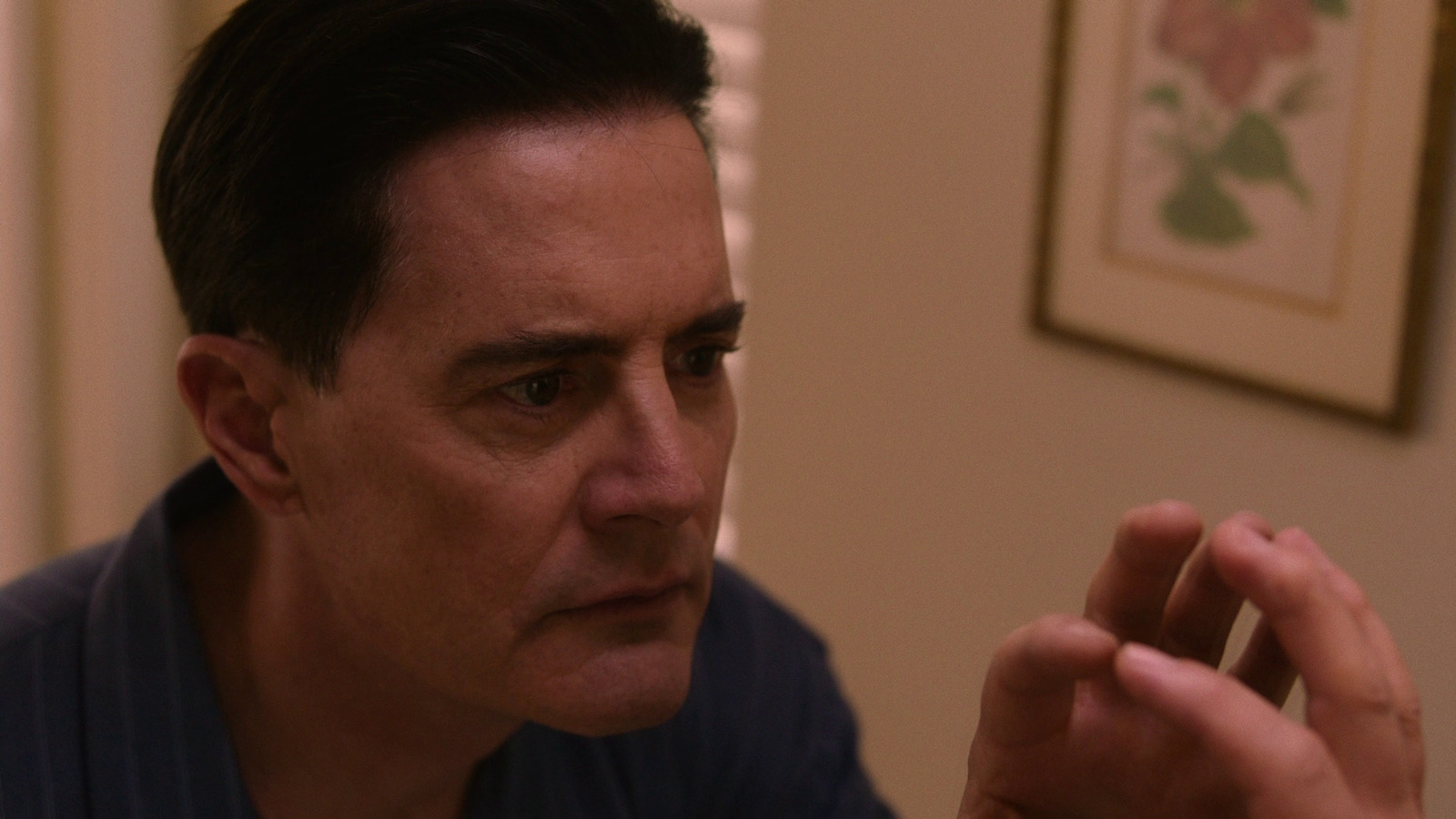
A child teaches the adult the routine
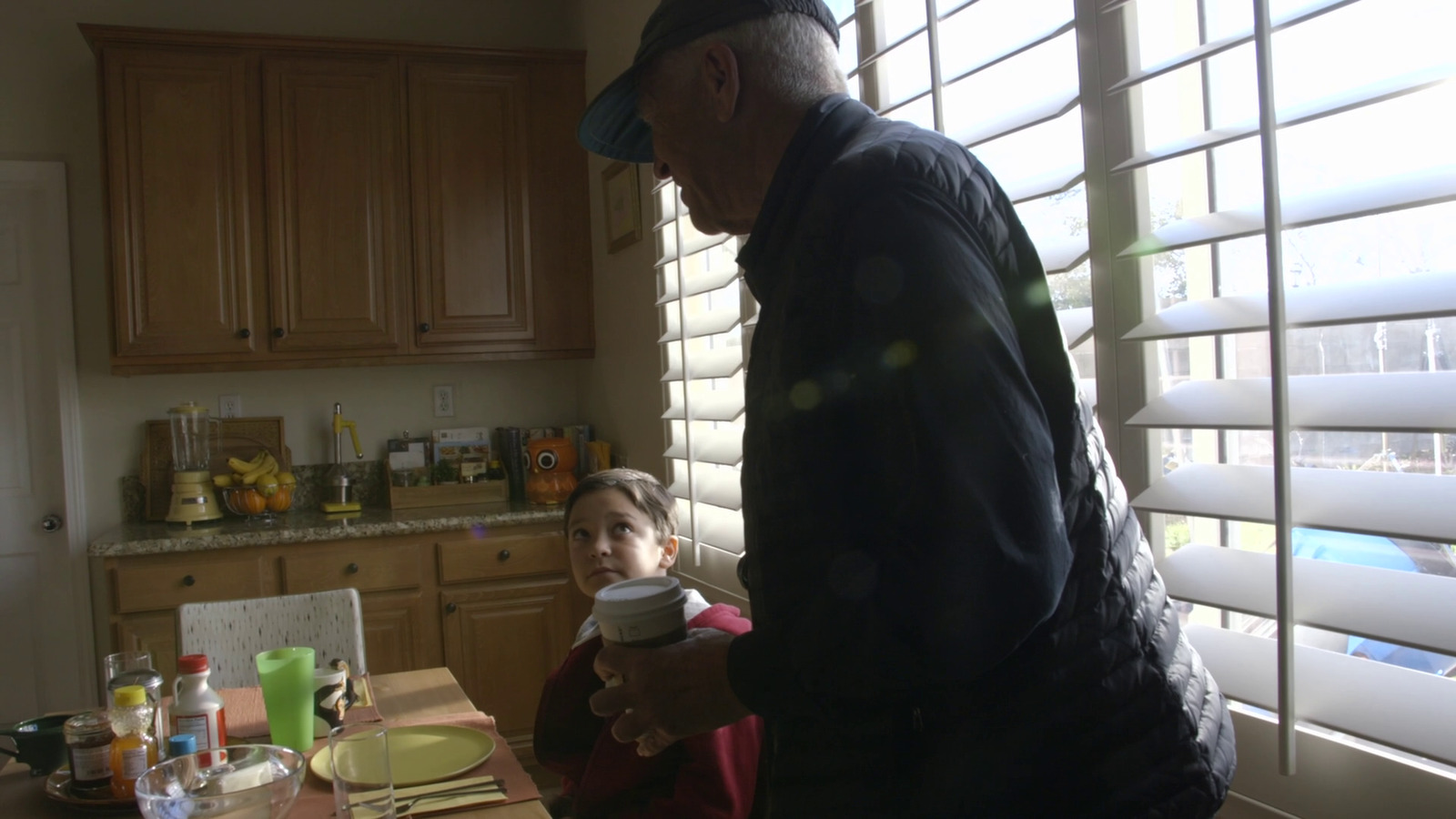
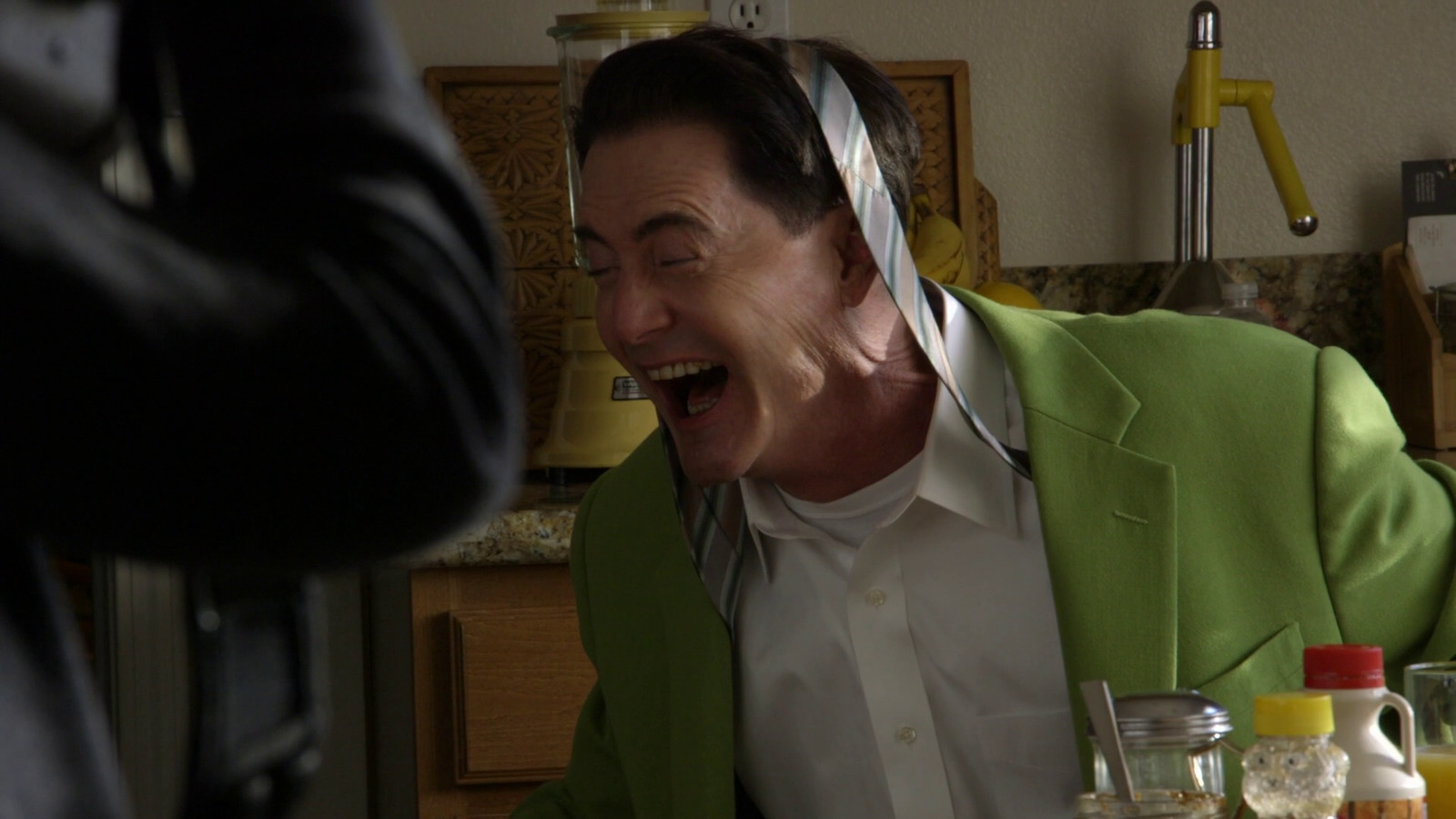
Janey-E notices that the green jacket and trousers no longer fit the body before her. She explains the mismatch through weight loss and compares it with the black suit. The costume supplies evidence that the social role has continued while its occupant has changed.
Sonny Jim’s small gestures make the table navigable. The child’s amusement gives the routine a warmth different from adult impatience. “Take Five” accompanies this extended domestic business, while coffee supplies a point of recognition and an immediate physical shock. Recognition is partial: the familiar pleasure does not restore the whole person at once.
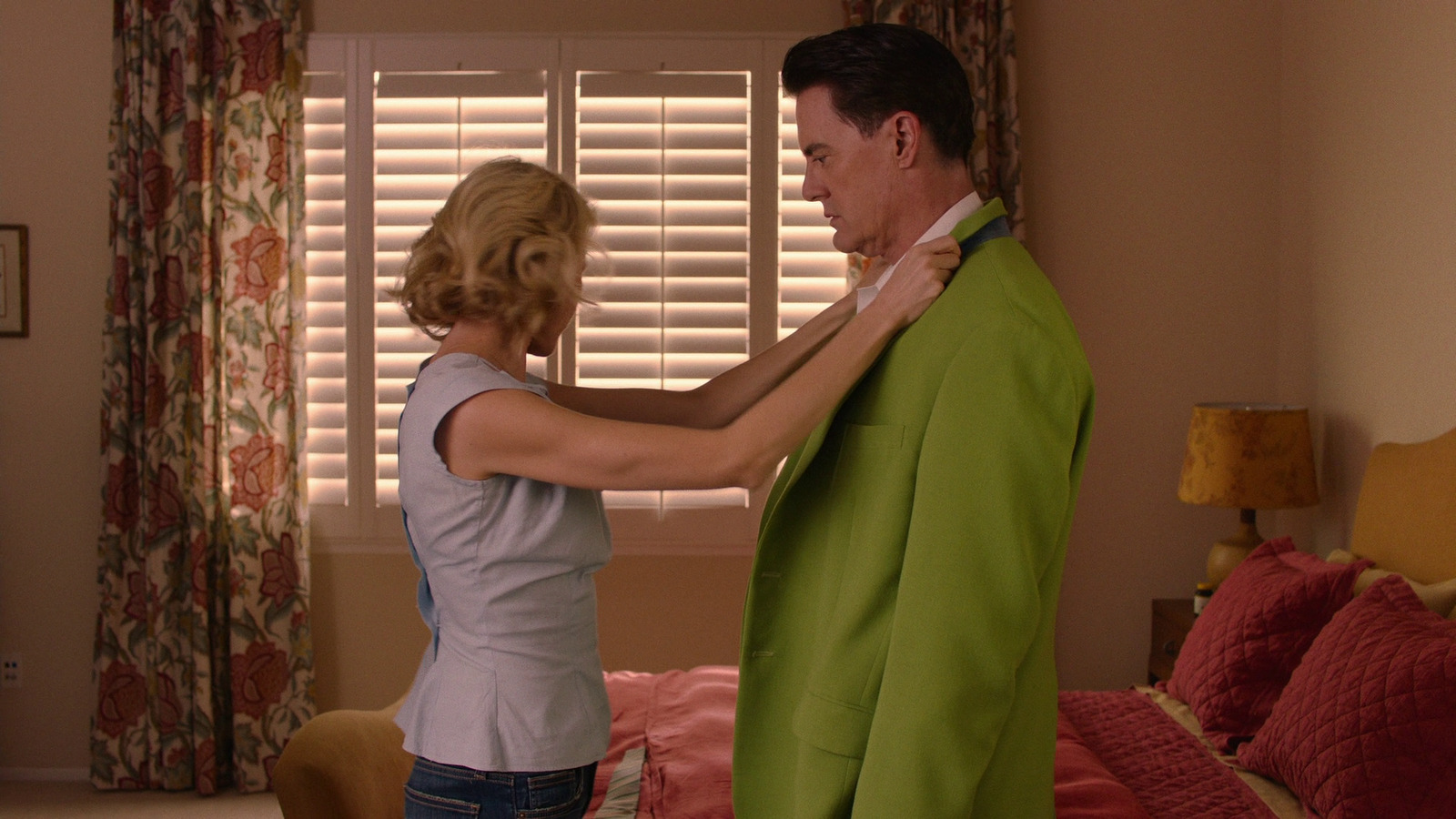
Open the scene sequence · 2 frames
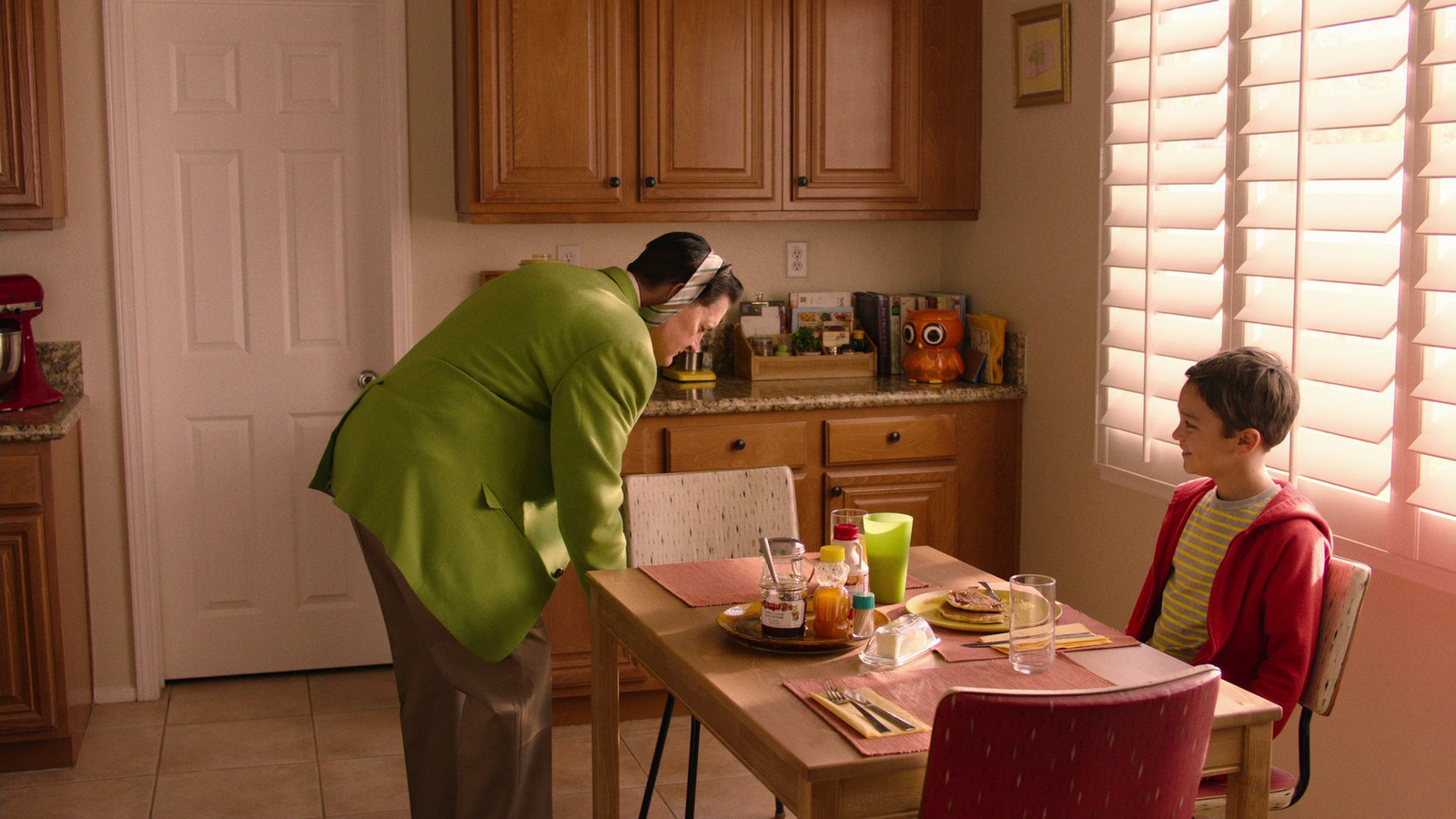
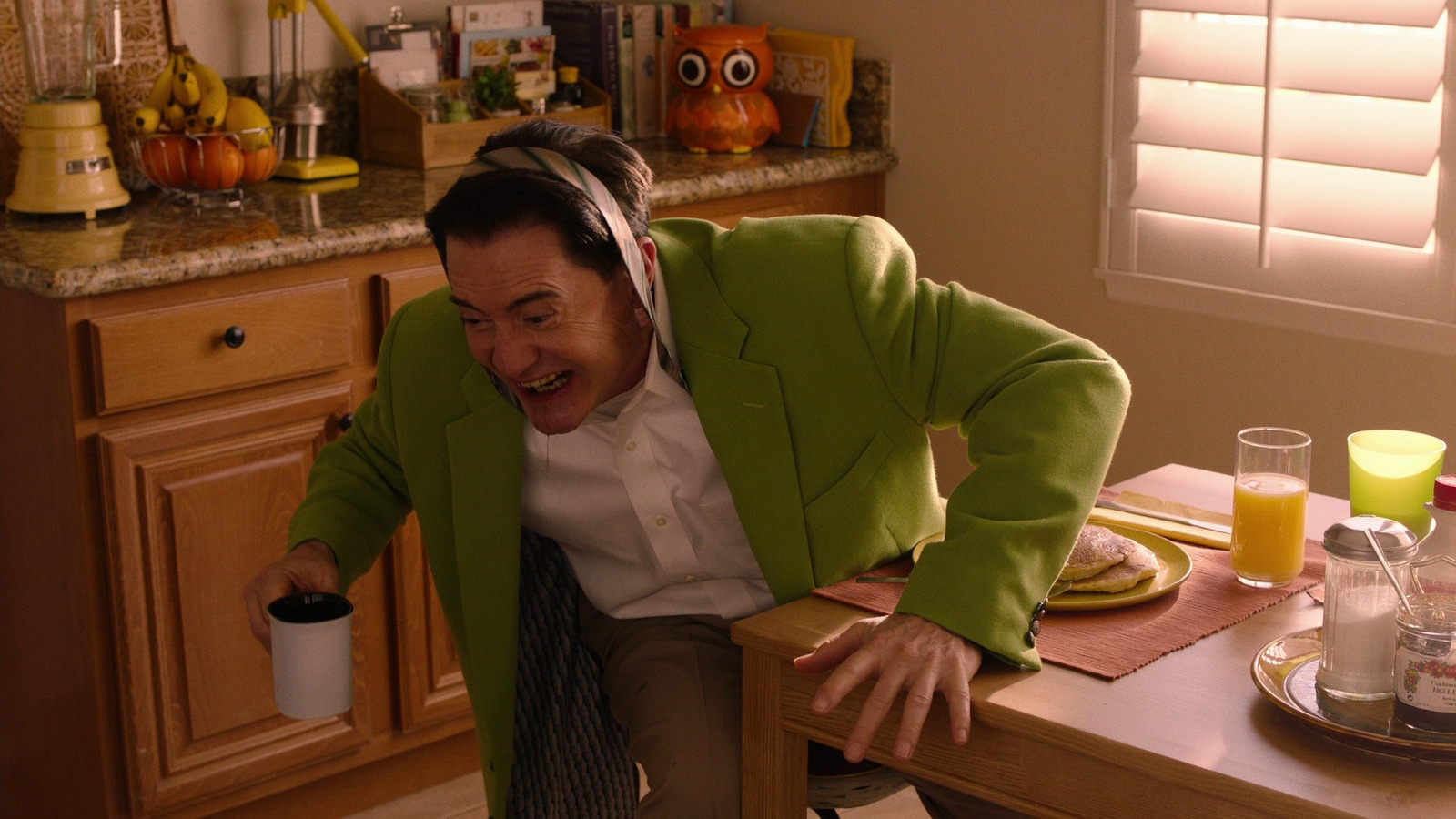
A successful match produces a refusal
The fingerprint search returns a match for the unidentified male body, but military authorisation prevents access. The screen both confirms that information exists and refuses to release it. Investigation advances by discovering the location of a barrier.
The FBI journey follows with another reduced substitute for access: Albert’s wish to see Mount Rushmore is answered with a photograph. Misheard words, a braking car and the agents’ reactions give the journey comic friction before the more troubling problem of recognition in the prison.
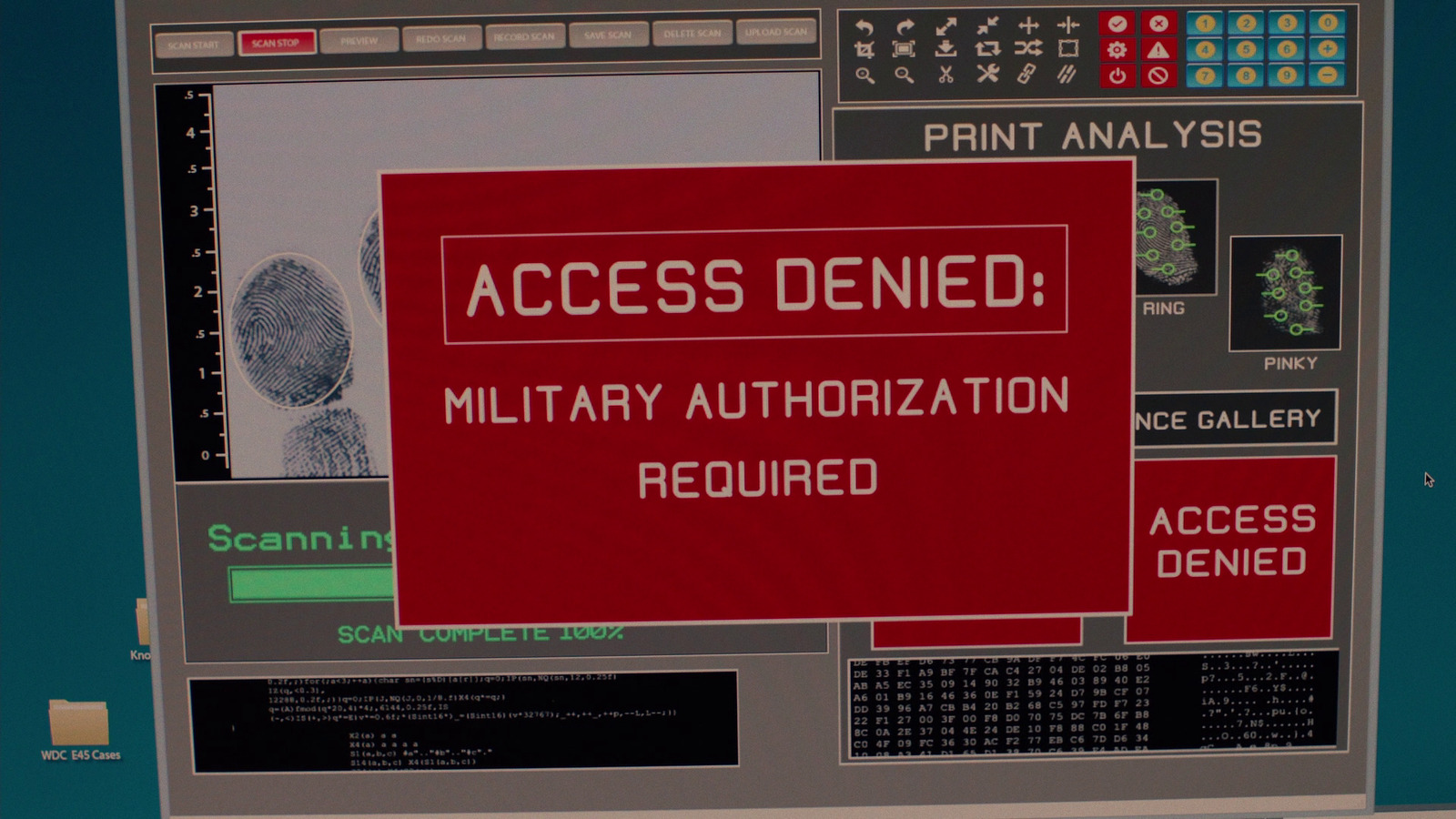
Open the scene sequence · 1 frame
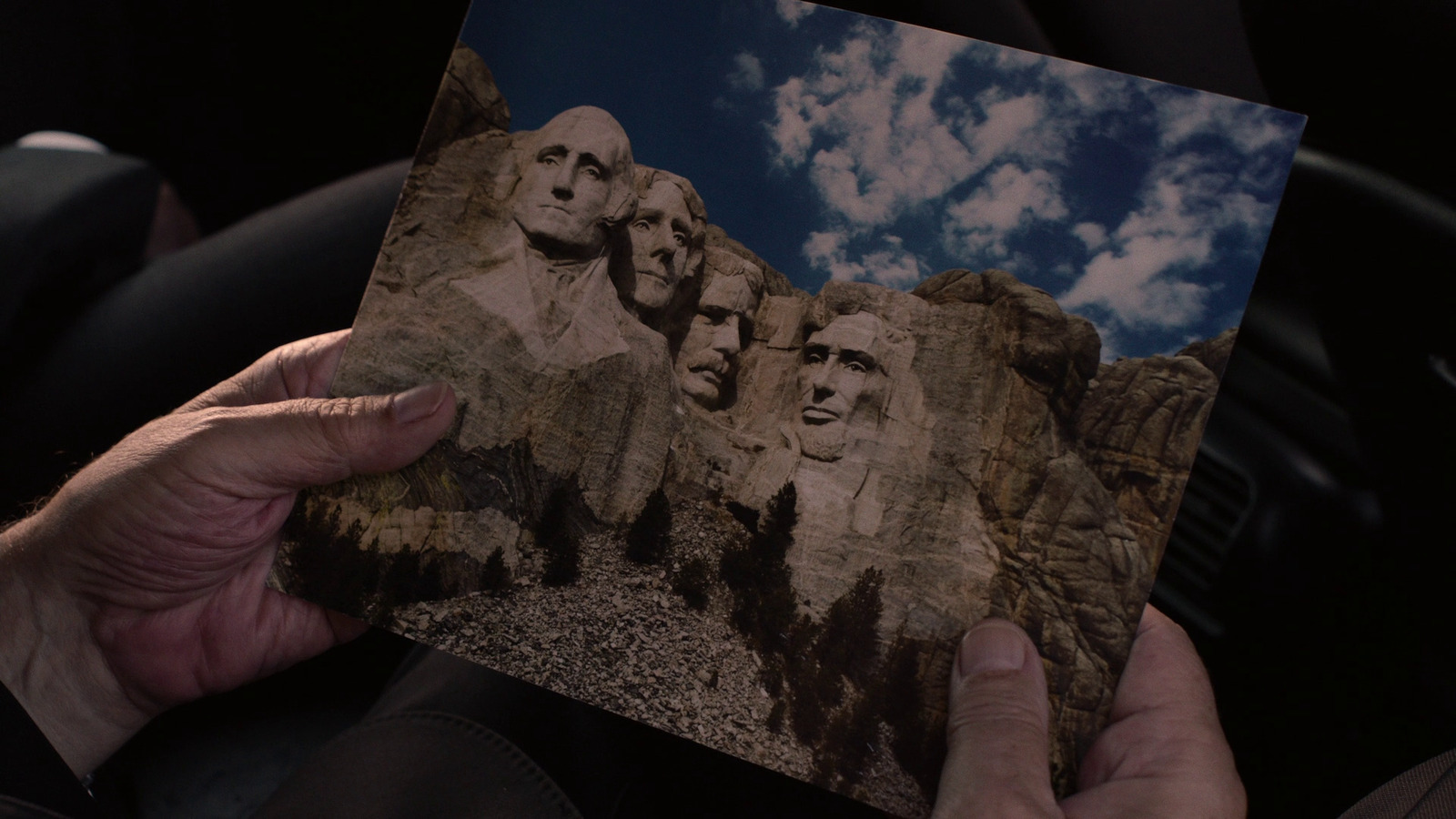
The reunion sounds prepared
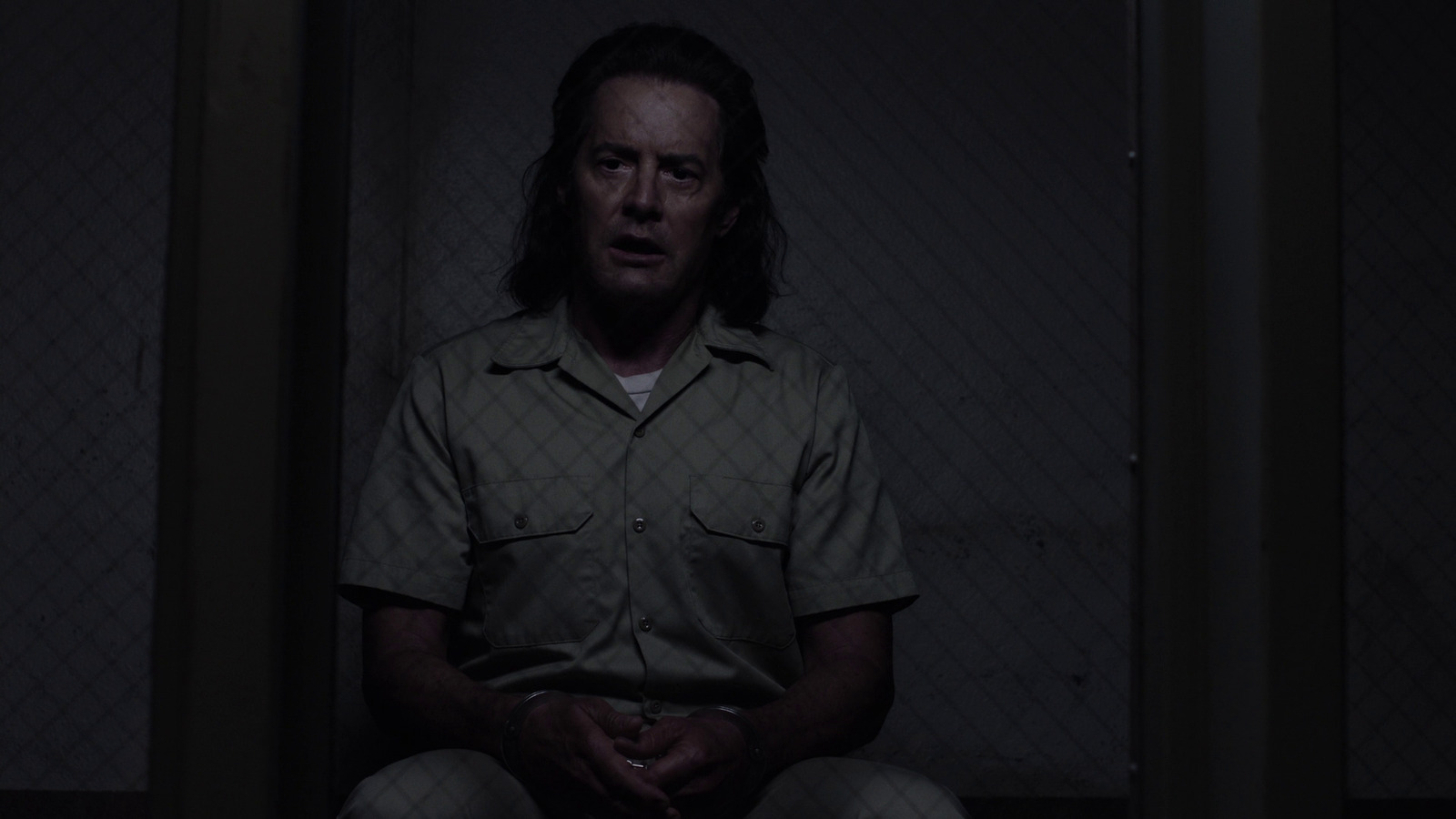
Contraband and the prisoner’s photograph precede the meeting. The shutter opens onto a man with the expected face, but Gordon, Albert and Tammy remain together on the other side of a physical and acoustic barrier. The composition makes listening a shared investigative act.
The prisoner’s slow assurances repeat friendship, an undercover explanation, the need for a debriefing and a road accident. Repetition here differs from Cooper’s borrowed words in Las Vegas: it presses an account on the listeners and seeks release. Gordon’s restrained response withholds agreement. Familiar language fails to establish a familiar person.
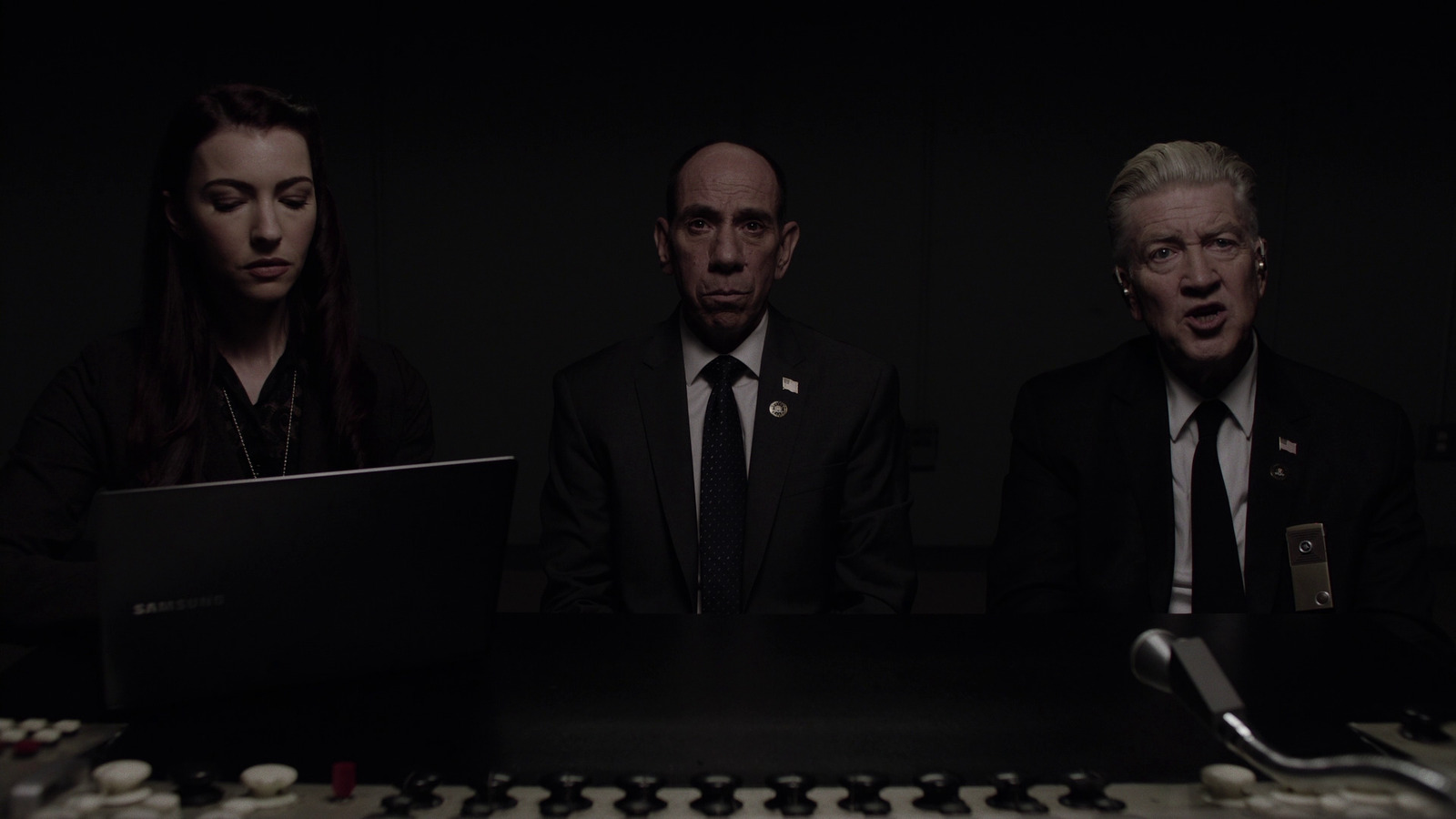
Open the scene sequence · 2 frames

An admission of responsibility, then an admission of uncertainty
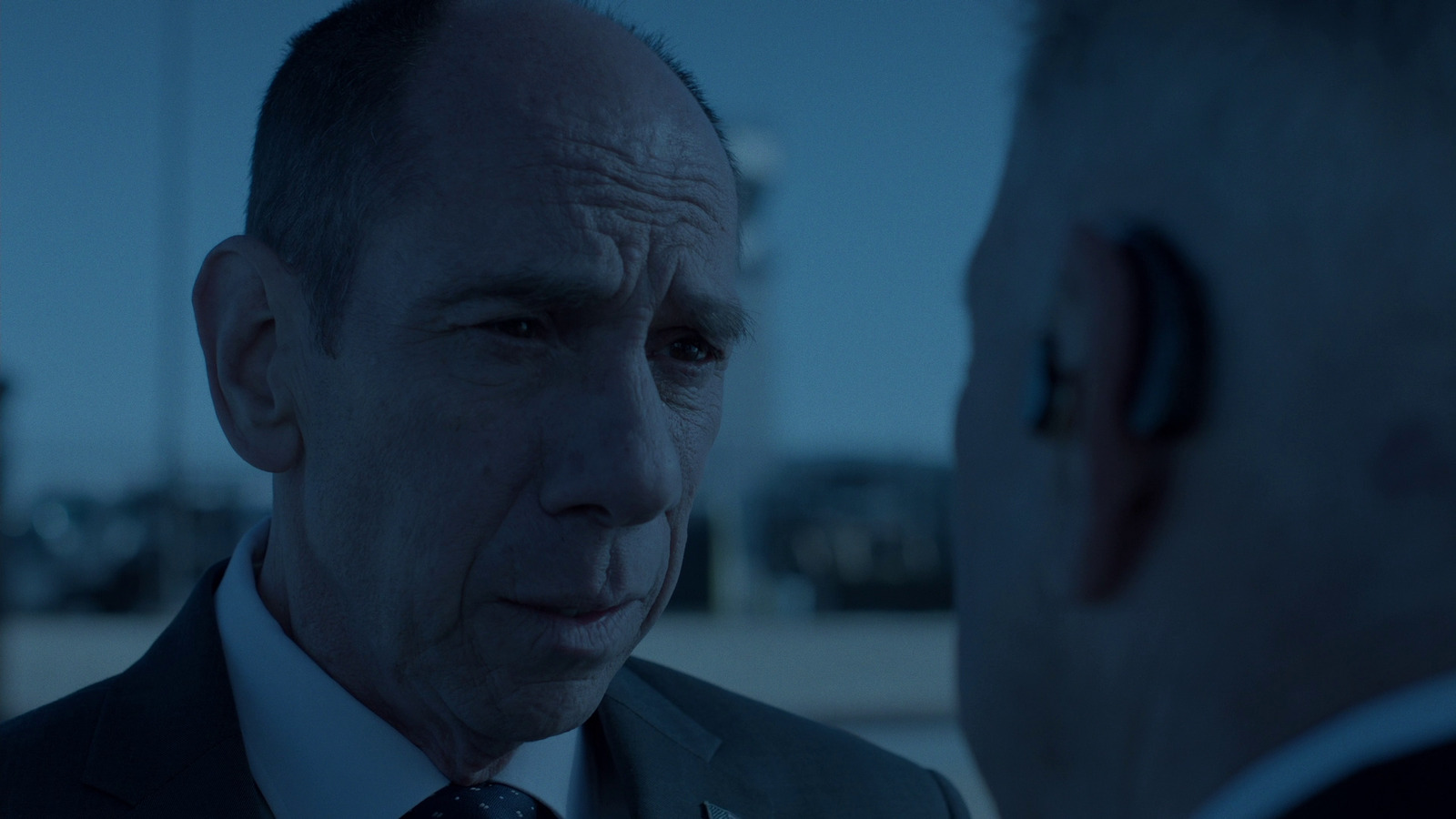
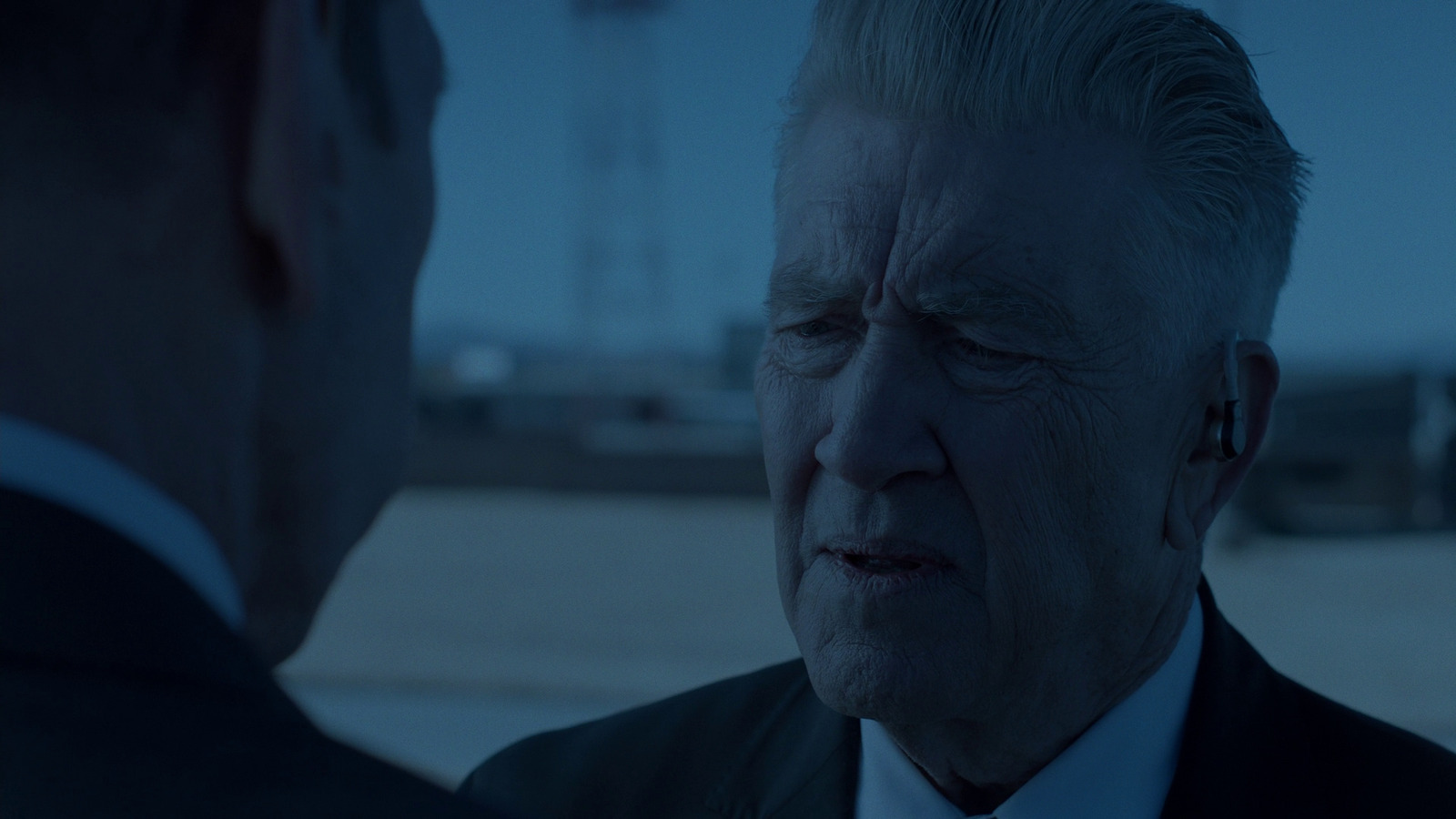
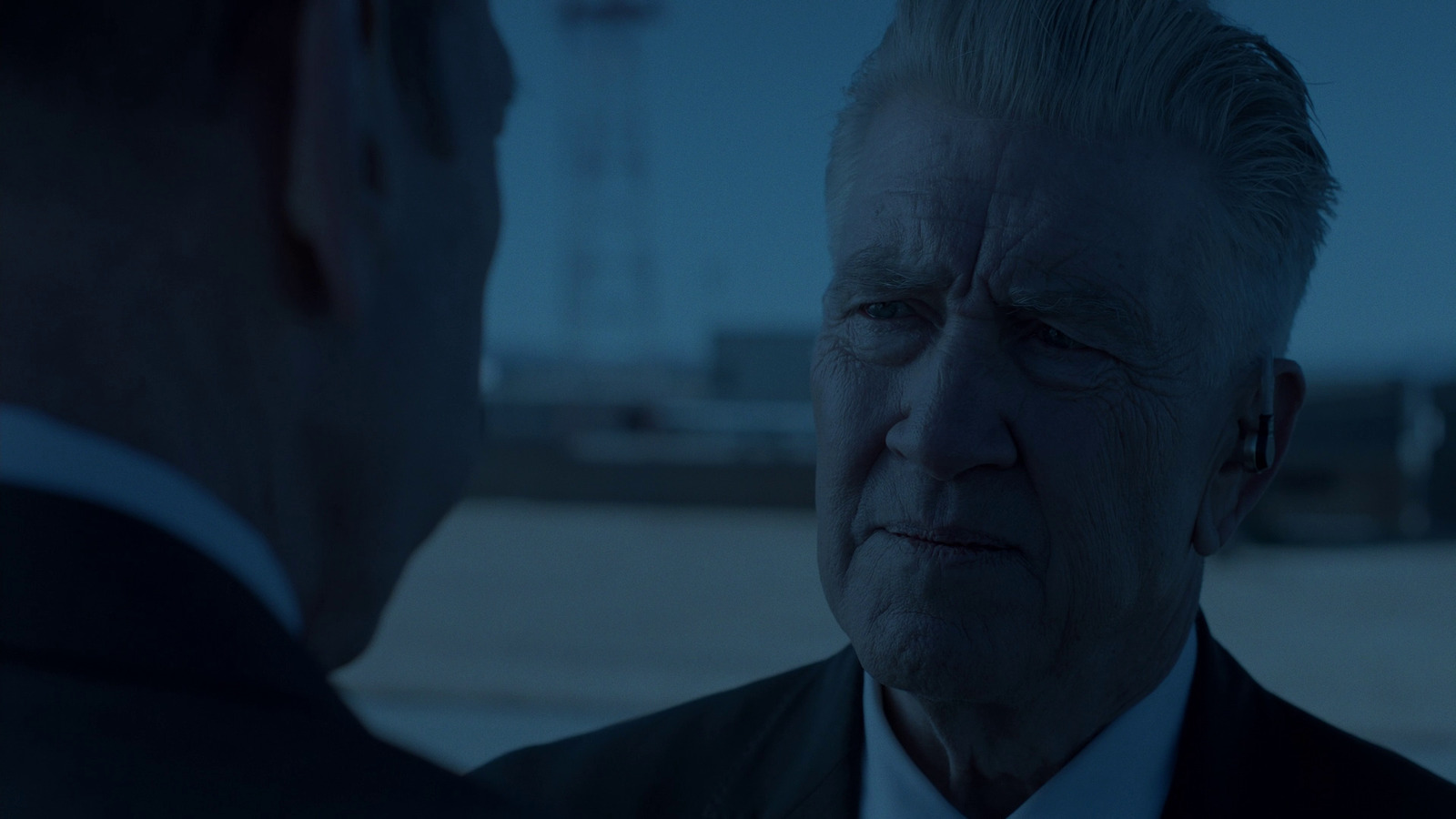
Tammy is sent away before Albert describes authorising a disclosure after a call he understood to be from Phillip Jeffries. The named contact in Colombia was killed a week later. Gordon’s questions expose the crucial limit: Albert did not speak to Cooper directly. The scene reports a chain of belief and consequence without independently authenticating the caller.
The men then acknowledge that the prison encounter was wrong and that they do not understand it. Gordon’s amplified hearing makes a scrape on the concrete painfully intrusive. The intense blue image gives their uncertainty a shared visual atmosphere; the phrase “Blue Rose” arrives within it. They resolve to consult a woman, but this scene does not yet name her.
Open the scene sequence · 2 frames
A performance holds the unresolved ending
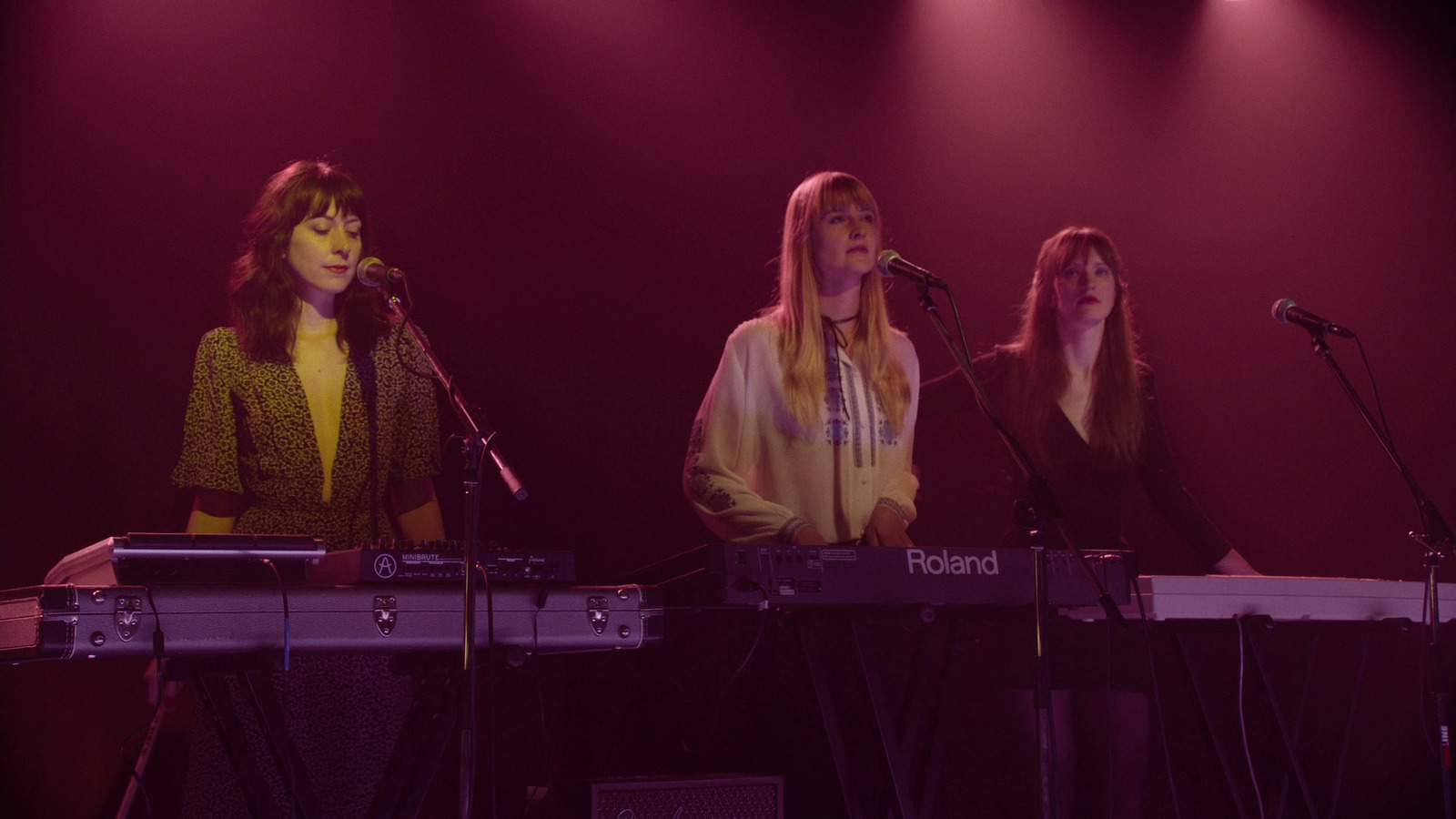
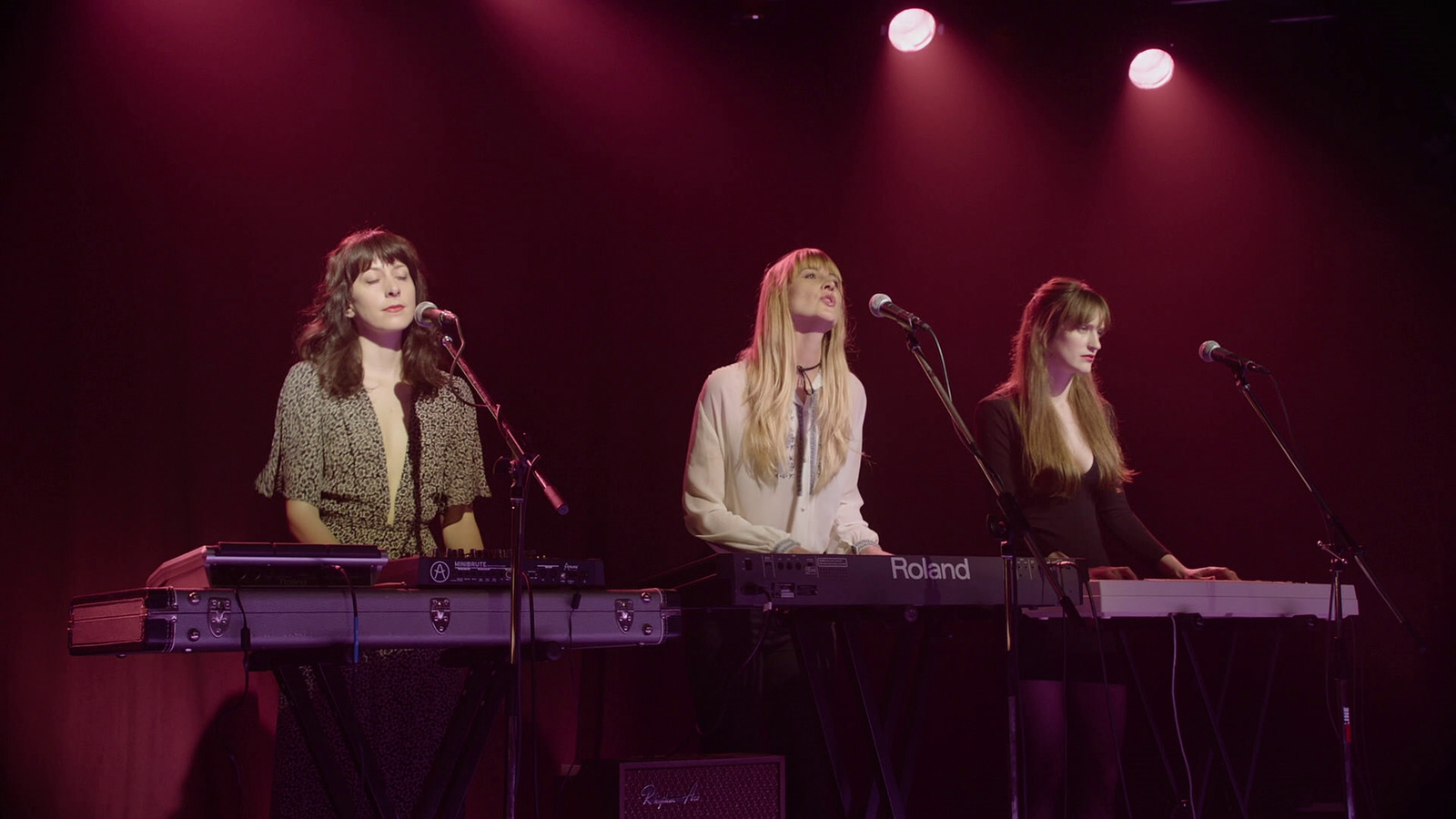
Au Revoir Simone’s “Lark” moves the ending from uneasy confidential speech into a visible musical performance. Three keyboards, coloured lighting and the duration of the song provide another way of sharing time. The music does not solve the investigators’ problem; it lets the part end while that problem remains open.
Recognition in voices, music and small sounds
Words borrowed and words rehearsed. The casino exchanges at 03:48–08:10 let Cooper repeat the names, directions and requests supplied by others. The prison interview at 46:20–49:35 gives his double repeated assurances of friendship and duty. Similar verbal repetition serves opposite relationships to the listener.
Memory enters through music. Laura’s theme at approximately 26:10 accompanies Bobby’s encounter with the portrait. The cue makes the earlier series present alongside his altered position as a deputy. It is an emotional event before his recollection of Major Briggs supplies investigative information.
Speech needs a listener. Wally’s pauses make Frank’s reactions part of the scene’s rhythm. Gordon’s conversation with Denise combines professional questions with a much more personal mode of address. Neither exchange can be understood by reducing it to plot information alone.
Amplification changes the scale of a sound. At approximately 53:03, the scrape of Albert’s shoe and the feedback around Gordon’s hearing equipment become intrusive. The conversation explicitly connects the discomfort with the device being turned up. The mix makes attention itself difficult at the moment the agents need to compare what they heard in prison.
Two musical spaces. The Dave Brubeck Quartet’s “Take Five” accompanies the breakfast passage; Au Revoir Simone’s “Lark” occupies the Roadhouse ending. The former accompanies a routine being learned, while the latter is a performance the viewer is invited to remain with. Credits identify the recordings; the scene readings concern their placement in the finished part.
A closer view of the Roadhouse performance
Au Revoir Simone — Lark
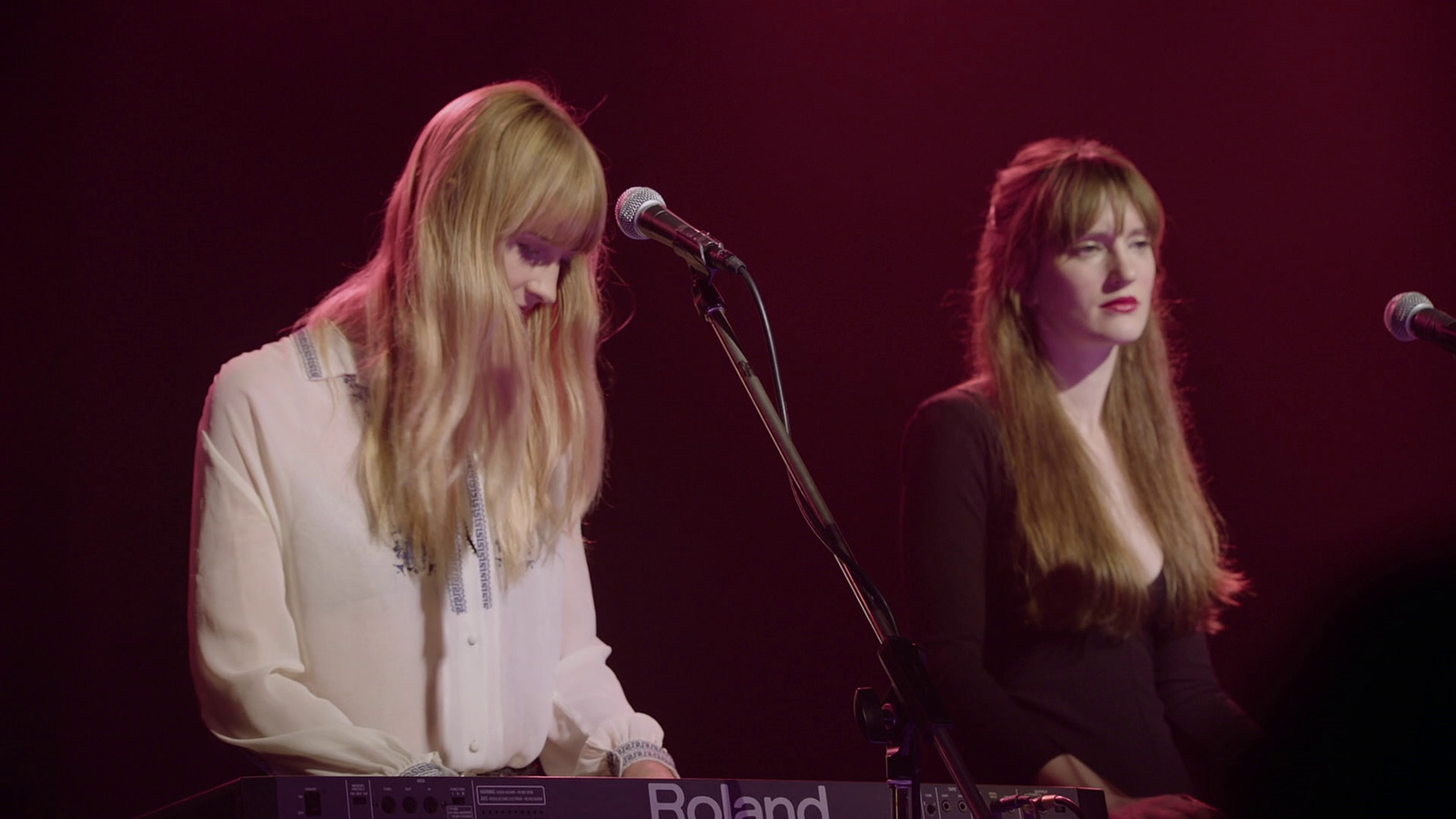
Au Revoir Simone’s three performers stand in a line behind their keyboards. The camera returns repeatedly to that complete arrangement, then isolates faces and hands without changing the basic geometry of the stage. The three microphones and the red curtain give the group a strong visual continuity across changes of scale.
Open the Lark performance study · 2 frames
Read the full performance comparison →
Source: Roadhouse Music — Au Revoir Simone — Lark, 00:00–04:32, in Twin Peaks: From Z to A. These timings identify the separate performance edit; the episode context is examined above.
Image and effects studies
Mike’s message: two spaces occupy one image
The sequence cuts between the bedroom and Mike before placing his figure and the Lodge floor across the domestic furnishings. The chair and lamp remain readable beneath the pattern. This is an overlap that must be looked through, rather than a new location that simply replaces the old one. The gallery records the visible construction without assigning the shot to a vendor whose involvement has not been established.
Open the bedroom and Lodge sequence · 3 frames
Blue as a finishing decision
Peter Deming recalls that the Gordon–Albert scene was not photographed with this degree of blue: the treatment was introduced by Lynch in post-production. That specific testimony supports discussing the colour as a finishing decision. Its emotional significance remains open to interpretation; the production account does not establish a single symbolic explanation. [2]
Open the blue airfield study · 3 frames
Making the images, shaping the performances
Watts’s 2017 panel account describes receiving her scenes at Lynch’s house without a full view of the surrounding story. That limited access is useful context for Janey-E’s concentrated domestic perspective, but the relationship between the two is our reading, not an intention she claims. [3] Read the illustrated account of her preparation.
The performances also depend on distinct forms of listening. Bobby’s tears precede an explanatory account; Frank lets Wally’s speech run its course; the three FBI agents preserve their uncertainty during the prison meeting. Reaction shots and pauses make that work visible rather than treating the speaker as the only active performer.
Lucy and Wally: the work behind the warmth
In A Very Lovely Dream: One Week in Twin Peaks, Kimmy Robertson explains Lucy’s phone confusion as an inability to reconcile a voice on a mobile phone with the speaker’s physical location. The documentary shows the reception setup and the fall from her chair. Her explanation makes the comedy an acting problem with a definite trigger: Lucy is trying to fit a new kind of communication into her own map of the room. It also gives the eventual phone-related intervention in Part 17 a performance history. Production footage and Robertson’s account.
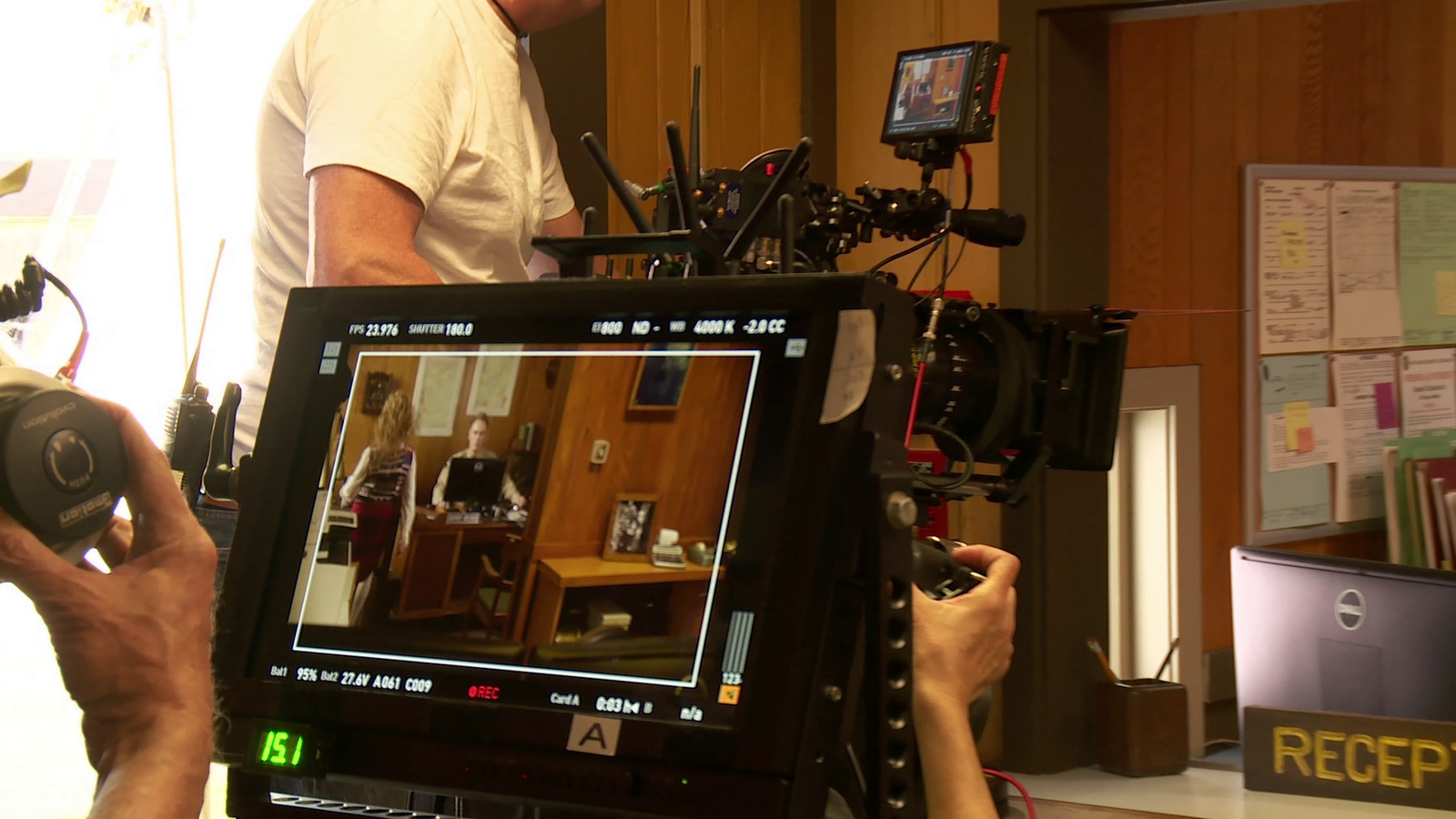
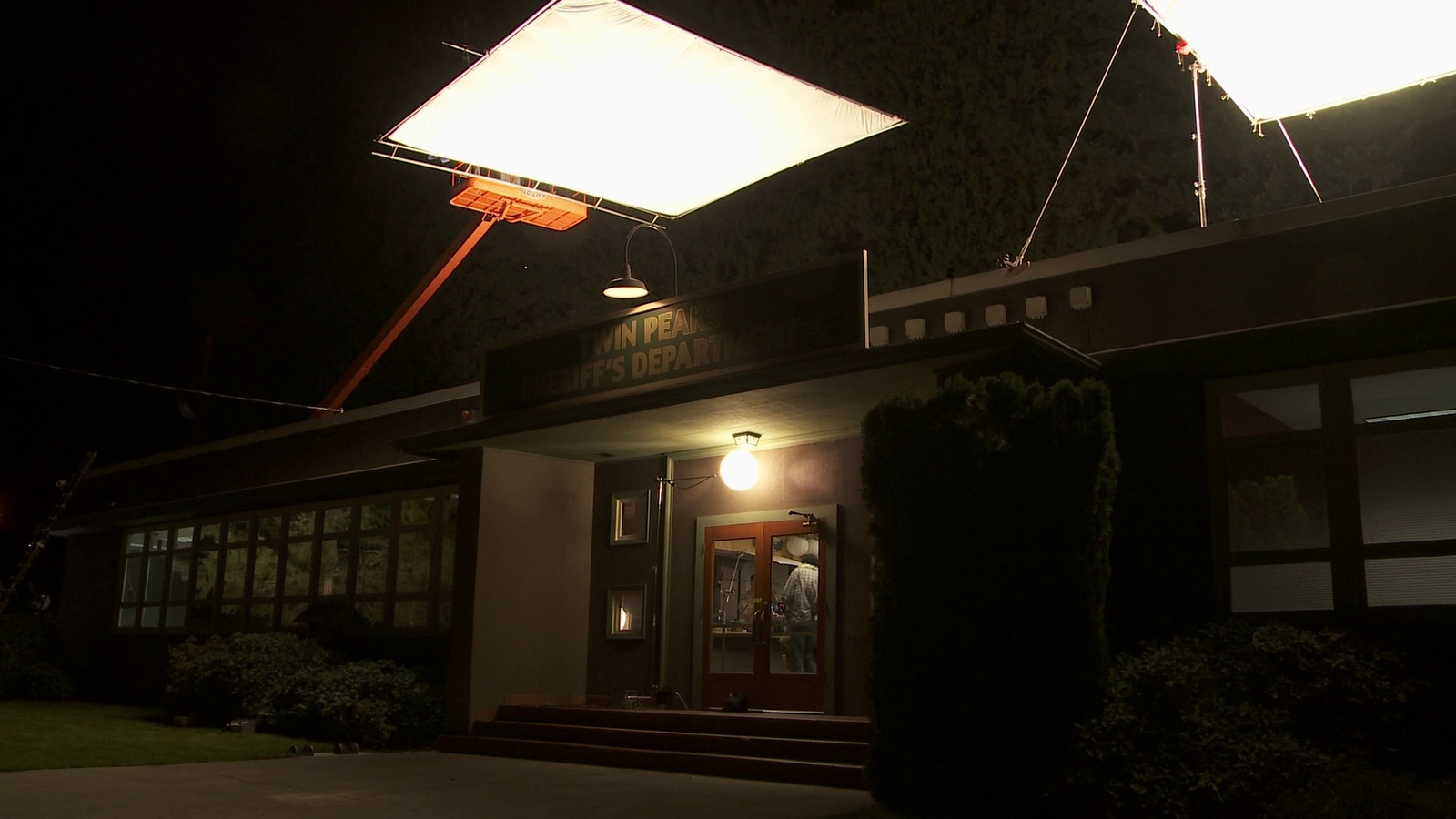
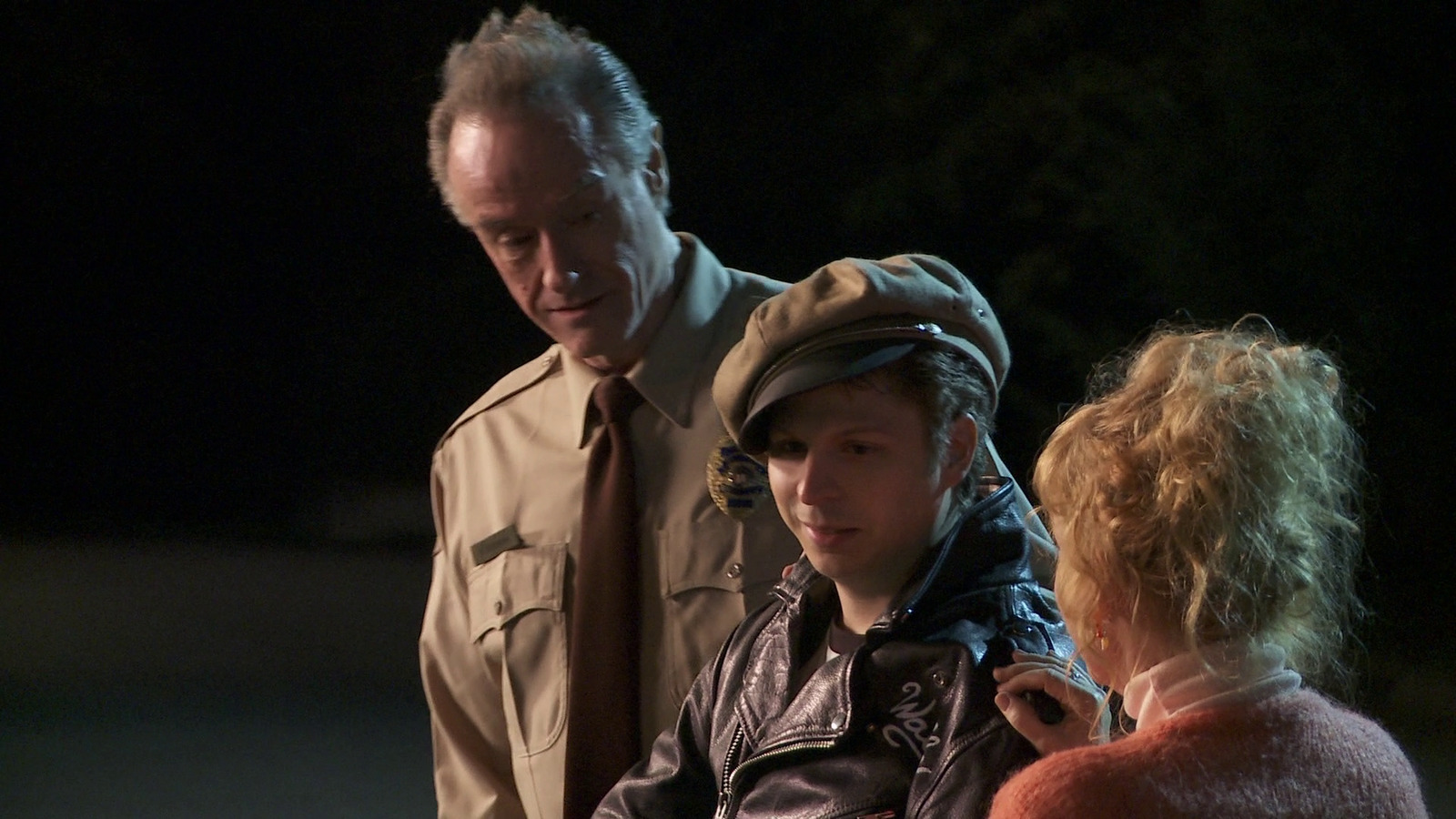
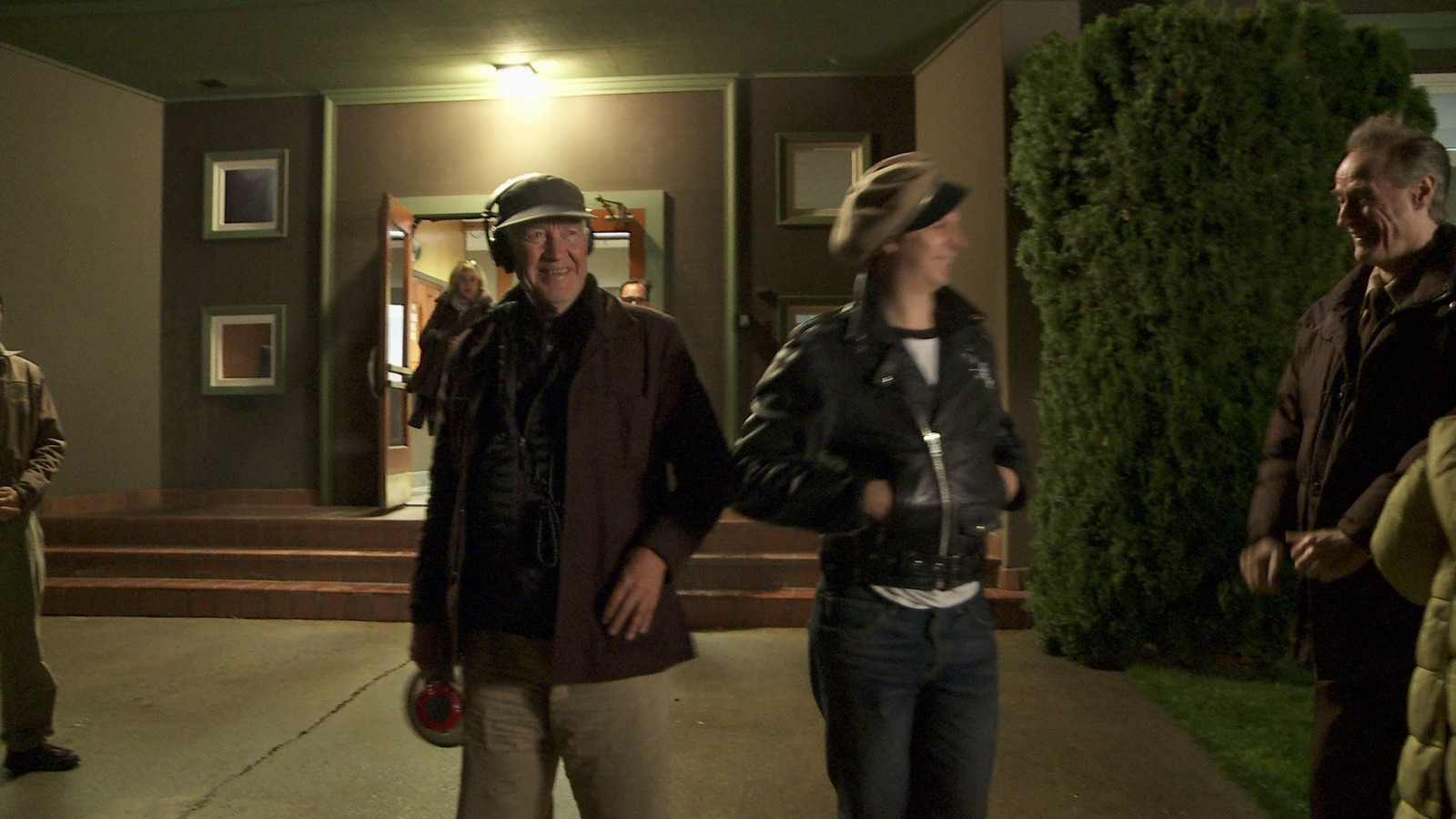
The Wally Brando material reveals a different use of waiting. Robertson remembers Michael Cera expecting ten or twelve takes of the speech; after a successful run, Lynch enthusiastically asked whether he had another in him. This is her recollection, rather than a take-by-take production record. Alongside it, the footage shows Cera held between the parents’ adoring attention, the night lighting beyond the frame and the crew’s acknowledgment when his work is finished. Wally’s comic self-importance grows inside a scene played with affection, not with performers signaling contempt for him.
Robertson’s account helps explain why the scene can sustain a long speech without feeling mechanically repeated. The performance is allowed to keep its freshness; Goaz and Robertson supply an attentive family audience. Frank’s reserve creates the other pole. The humor emerges between those attitudes, while the documentary restores the practical setting—cold night, lights, motorcycle, camera—from which the screen’s unhurried encounter was made.
Open the Wally Brando production study · 3 frames
Rehearsal, performance and the working set
A shared life built from a small amount of information
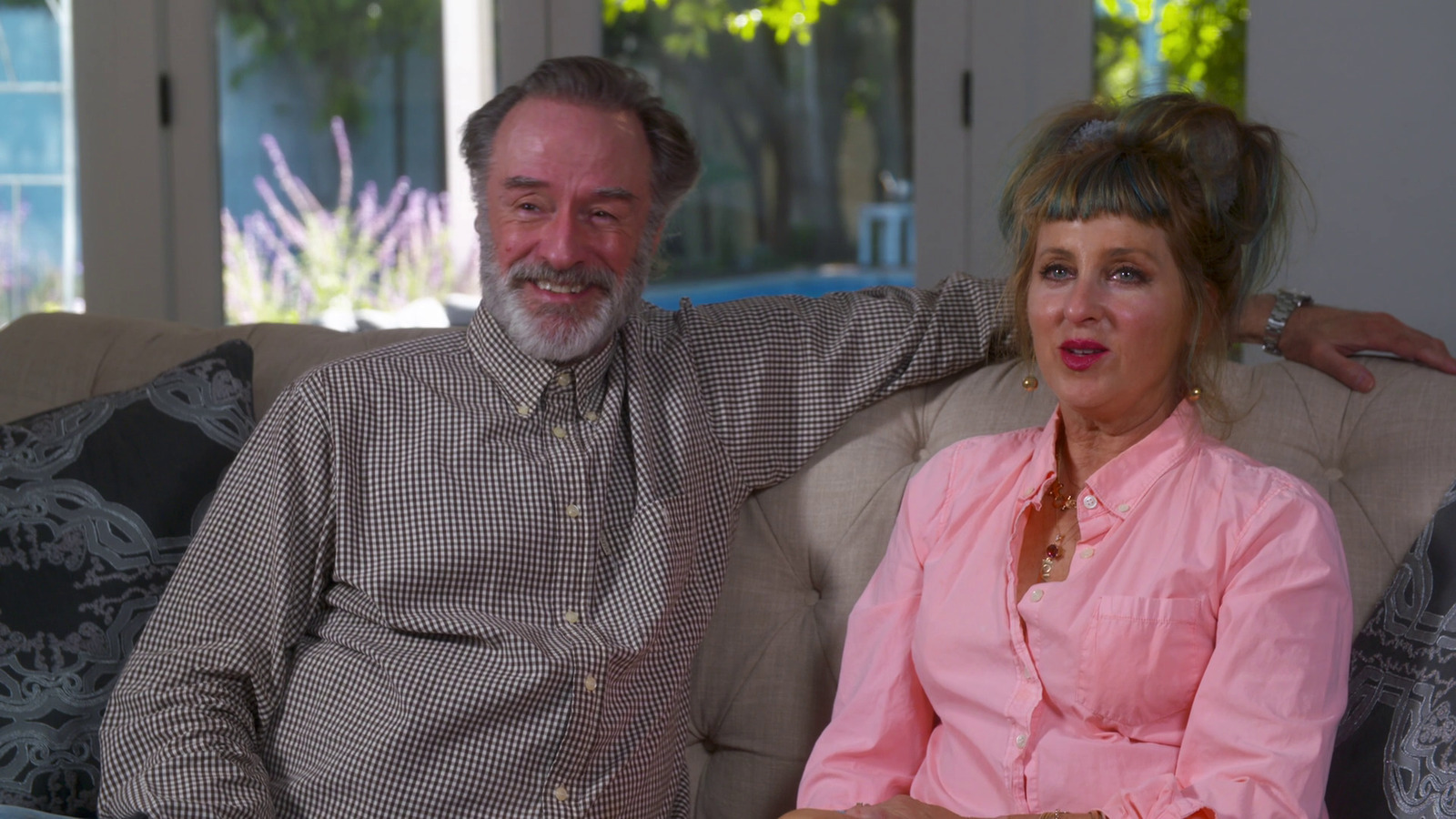
Harry Goaz recalls being told that Andy had a son, then returning to his hotel and thinking about that new family history. Kimmy Robertson describes little explanatory discussion of Lucy’s character and a working method built around short pieces of script, sometimes changed after she reached the lit set. Their recollections make the Wally encounter especially revealing: the parents must communicate years of attachment without first being supplied with an exhaustive account of the intervening years.
That does not mean the scene was simply improvised. Robertson distinguishes memorizing material from responding to a revision; Goaz describes preparation through the situation he had been given. Their ease together supplies continuity, while the particular instructions shape what that familiarity does in front of the camera. This testimony complements the production footage and Robertson’s account of Michael Cera’s takes above.
Open Lucy and Andy’s performance context · 2 frames
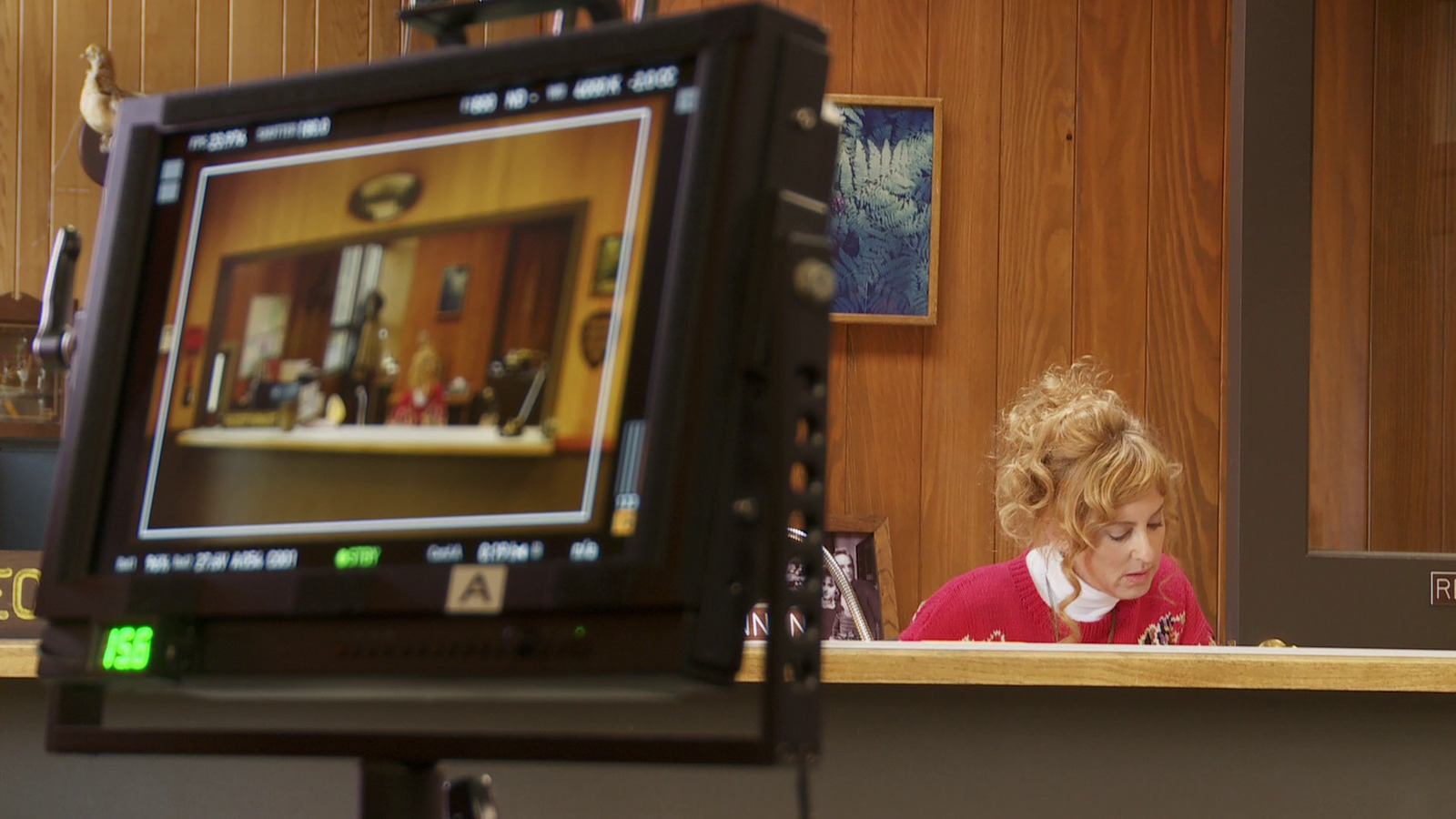
The telephone surprise has a camera beside it
The interview’s production inserts offer another view of Lucy’s startled fall: the camera occupies the space beside the reception desk, and Andy’s movement toward her is performed within that crowded working area. The wide view restores the offscreen apparatus to an action that the episode presents as a sudden disturbance of an ordinary workplace.
Read it alongside the finished sequence and the earlier documentary account of Lucy’s confusion about the telephone. The effect depends on the relation between a voice, an unexpected bodily entrance and the response of another performer. The footage is evidence of staging, not a reason to reduce Lucy’s response to an accidental mishap on set.
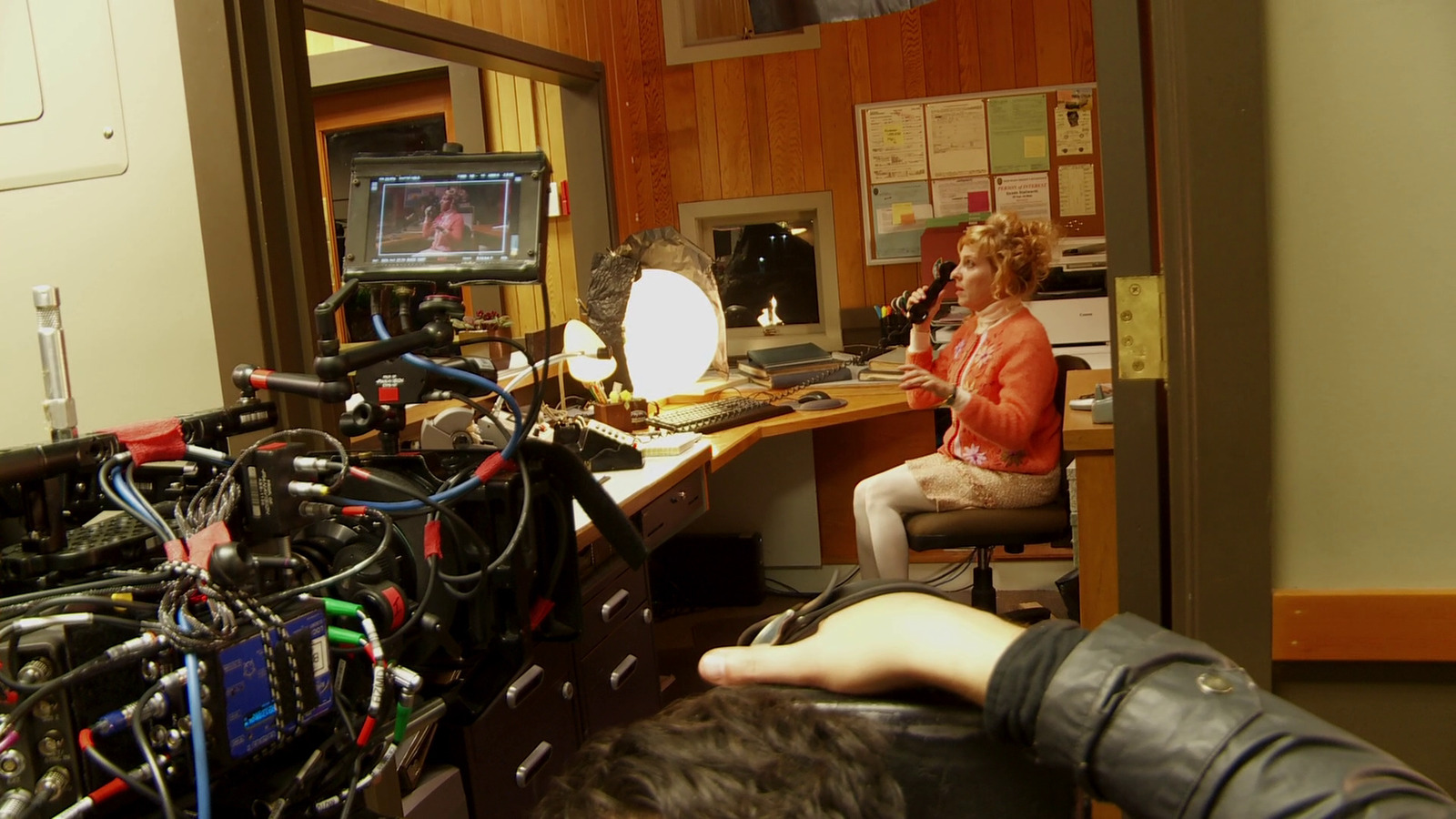
On the Couch with Kimmy and Harry, 05:18–05:30; 05:45–05:58.
An extraordinary gift is made legible through ordinary gestures
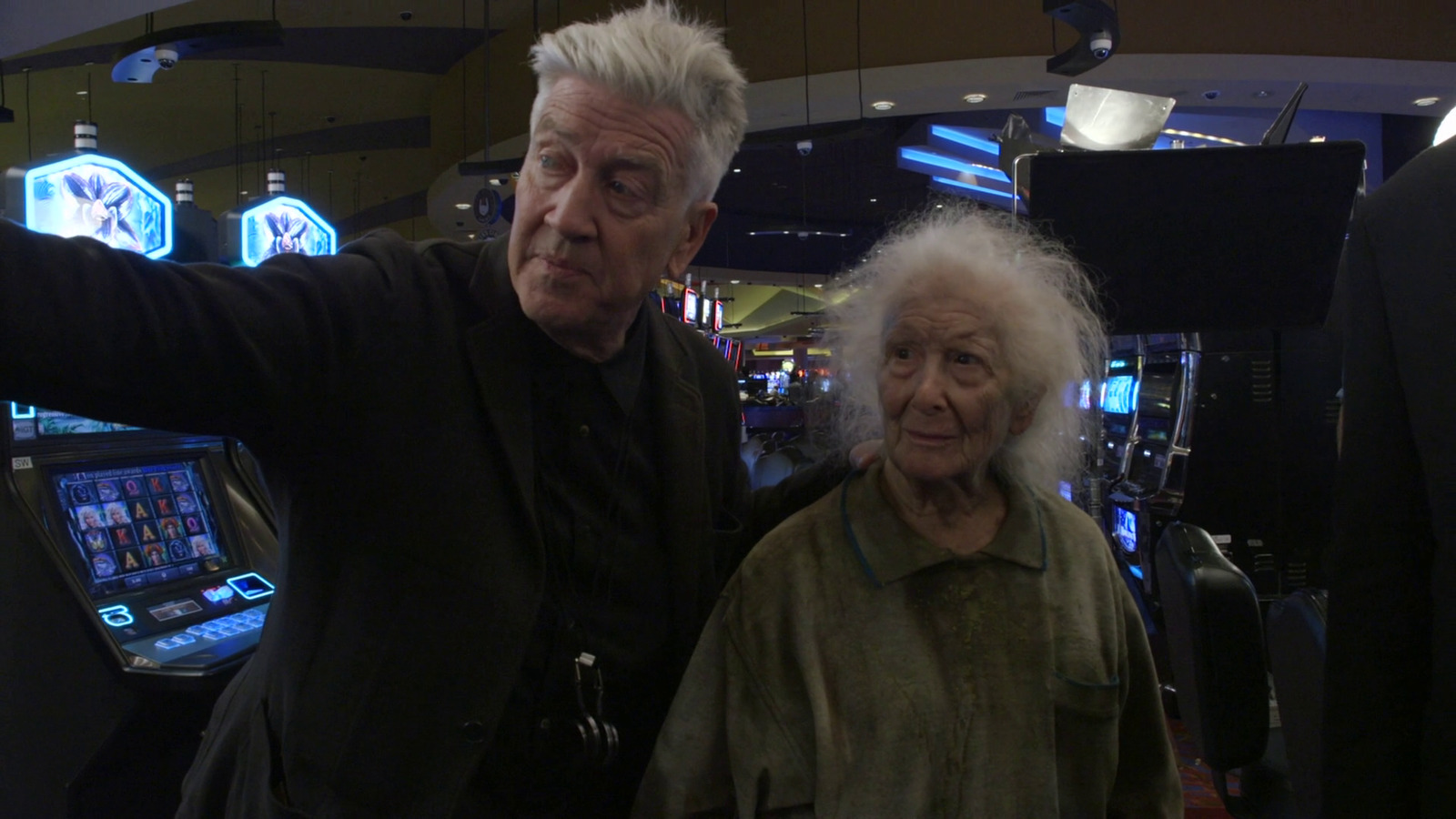
Linda Porter and MacLachlan work through an exchange built from pointing, looking and moving between the machines. She watches his direction, checks which machine he means and then goes to it. Lynch adjusts the chest taps and the free movement of her hands when she thanks him.
The encounter gives the apparently passive Cooper a clear effect on someone else’s life. Its gestures also prepare the later restaurant reunion, where Porter is directed to bring that changed life back into the scene.
Janey-E’s anger changes as her hands reach the money
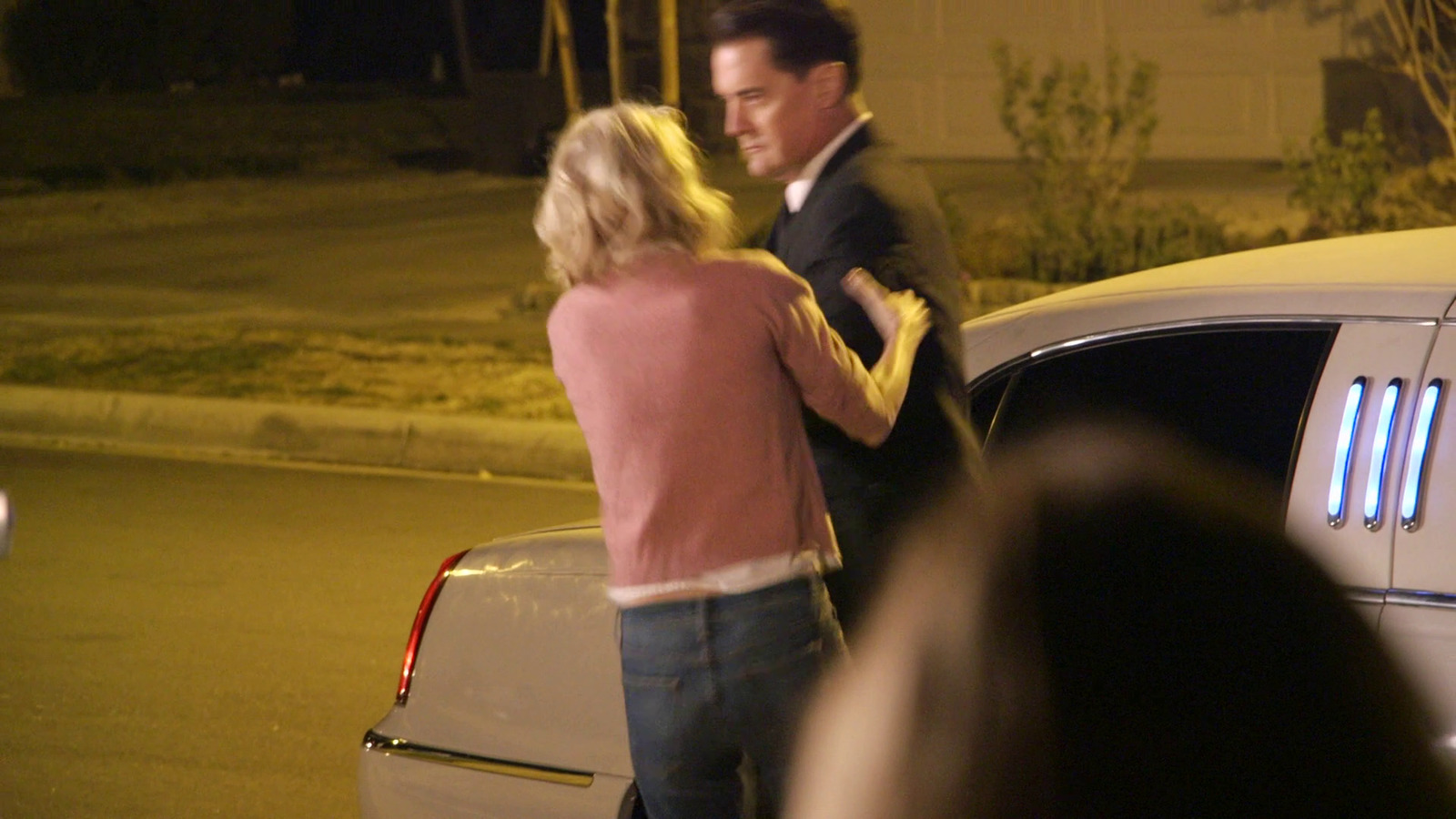
Outside the house, Cooper is given a simple path: follow the driver’s pull, face the red door and look up on the owl cue. Janey-E supplies the force that gets him indoors. The staging distributes initiative unevenly between the two performers before the domestic conversation begins.
At the table, Watts is asked to begin asking about the bag as she reaches for it. Handling the object releases the discovery, then the rapidly changing response to the cash. Lynch keeps the mixture of relief and distress moving into the welcome home. The emotional turn is joined to an action rather than delivered as a detached change of mood.
Open the homecoming and money study · 2 frames
Gordon stands for his superior
Before the office take, Lynch proposes that Gordon stand when Denise enters because she is now his boss. David Duchovny is positioned behind the desk, with a period standing before sitting. The small act of courtesy gives the changed professional relationship a visible form.
The scene’s discussion of loyalty and prejudice is thus staged inside a present hierarchy, not only a recollection of Gordon’s earlier support. His respectful greeting and her command of the office matter alongside the speech.
Open the office staging study · 2 frames
The breakfast joke belongs to a family’s different attention
Watts is kept busy at the stove and then with the pancakes and coffee. MacLachlan is allowed time to look around before sitting. Pierce Gagnon receives a separate reason to watch: his father’s strange tie looks like a game, and the odd movements make him laugh because he loves his dad.
Lynch continues supplying prompts through the take, shaping the invitation to sit and the child’s observation of Cooper. The later coffee reaction arrives after this extended pattern of looking and waiting. The comedy has an affectionate witness even while the adults are working from incompatible understandings of the morning.
Open the breakfast performance study · 2 frames
Two parts, two ways of arriving
The standalone Part 4 runs approximately 56 minutes 57 seconds, including its opening and closing titles. The combined Parts 3 and 4 presentation runs approximately 1 hour 53 minutes 36 seconds. It carries the Cactus Blossoms performance into the casino material without a separate Part 4 opening-title interruption. The combined ending groups music credits under Part 3 and Part 4 headings.
The closing credits identify “Take Five” as written by Paul Desmond and performed by the Dave Brubeck Quartet. “Lark” is credited to Heather D’Angelo, Erika Forster and Annie Hart. Sound design is credited to David Lynch; Ron Eng and Dean Hurley are the sound supervisors and re-recording mixers. These credits identify collaborators without assigning every audible detail to an individual.
The reviewed presentation offers the English programme soundtrack and English SDH. No episode commentary is listed in the authored menu. Timings throughout this dossier follow the standalone Part 4.
Sources and viewing notes
- Twin Peaks: The Return, Part 4, written by Mark Frost and David Lynch, directed by David Lynch; Twin Peaks: From Z to A. Programme images, English captions, selected audio passages and visible end titles. Standalone and combined presentation boundaries compared. Altered speech is checked against on-screen wording rather than treated as a reliable automatic transcript.
- David E. Williams, “Twin Peaks: Dreams, Doubles and Dopplegangers”, American Cinematographer, 11 July 2018. Peter Deming’s account of the airfield scene’s blue treatment in post-production.
- Comic-Con 2017: Twin Peaks Panel, moderated by Damon Lindelof, in Twin Peaks: From Z to A. Naomi Watts, 17:18–20:09: access to her scenes and reading at Lynch’s house. Captions, speaker images and selected audio compared.
- A Very Lovely Dream: One Week in Twin Peaks, produced and directed by Charles de Lauzirika. Production footage and participant interviews, 11:07–13:15 and 21:32–25:12; viewed in Twin Peaks: From Z to A. September 2015 filming identified by the documentary’s opening card. Recollections remain attributed to the speakers; the scene analysis is Lyncharium’s.
- On the Couch with Kimmy and Harry. Directed and produced by Charles de Lauzirika; edited by Will Hooke (2019). Viewed in Twin Peaks: From Z to A. Timed passages: 03:32–05:15; 05:18–05:30; 05:45–05:58. Timings refer to the documentary, not the episode. On-set directions and retrospective recollections are distinguished from Lyncharium’s interpretation of the finished scenes.
- Behind the Curtain, Part 4. Photographed by Jason S.; edited by Jonathan Angus, with editorial assistance by Robert Lay and additional photography by Charles de Lauzirika (2019). Viewed in Twin Peaks: From Z to A. Timed passages: 00:07–03:35; 09:19–14:48; 14:53–19:36; 20:23–25:22. Timings refer to the documentary, not the episode. On-set directions and retrospective recollections are distinguished from Lyncharium’s interpretation of the finished scenes.