Twin Peaks: Season 2
1990–1991 · 22 episodes · Research dossier
A case closes. The town keeps changing. The detective becomes the mystery.
- Broadcast years
- 1990–1991
- Episodes
- 22
- Created by
- David Lynch & Mark Frost
- Next
- Fire Walk with Me
New illustrated episode dossiers
Three ways into Season 2.
 S2E01 · Overall Episode 8
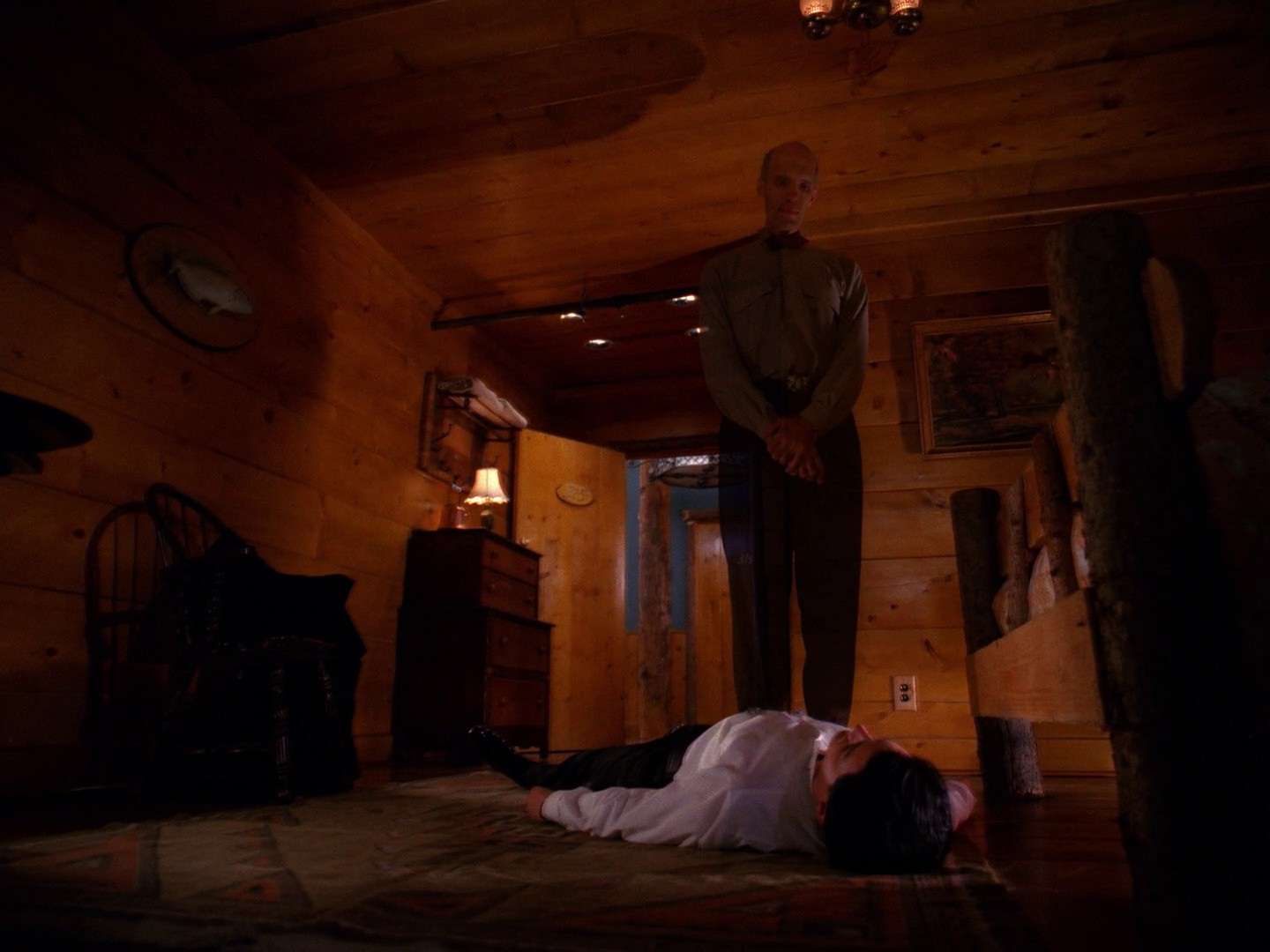
May the Giant Be with You
Cooper’s visitors, Major Briggs’s vision and the Hayward supper.
Read the illustrated dossier ↗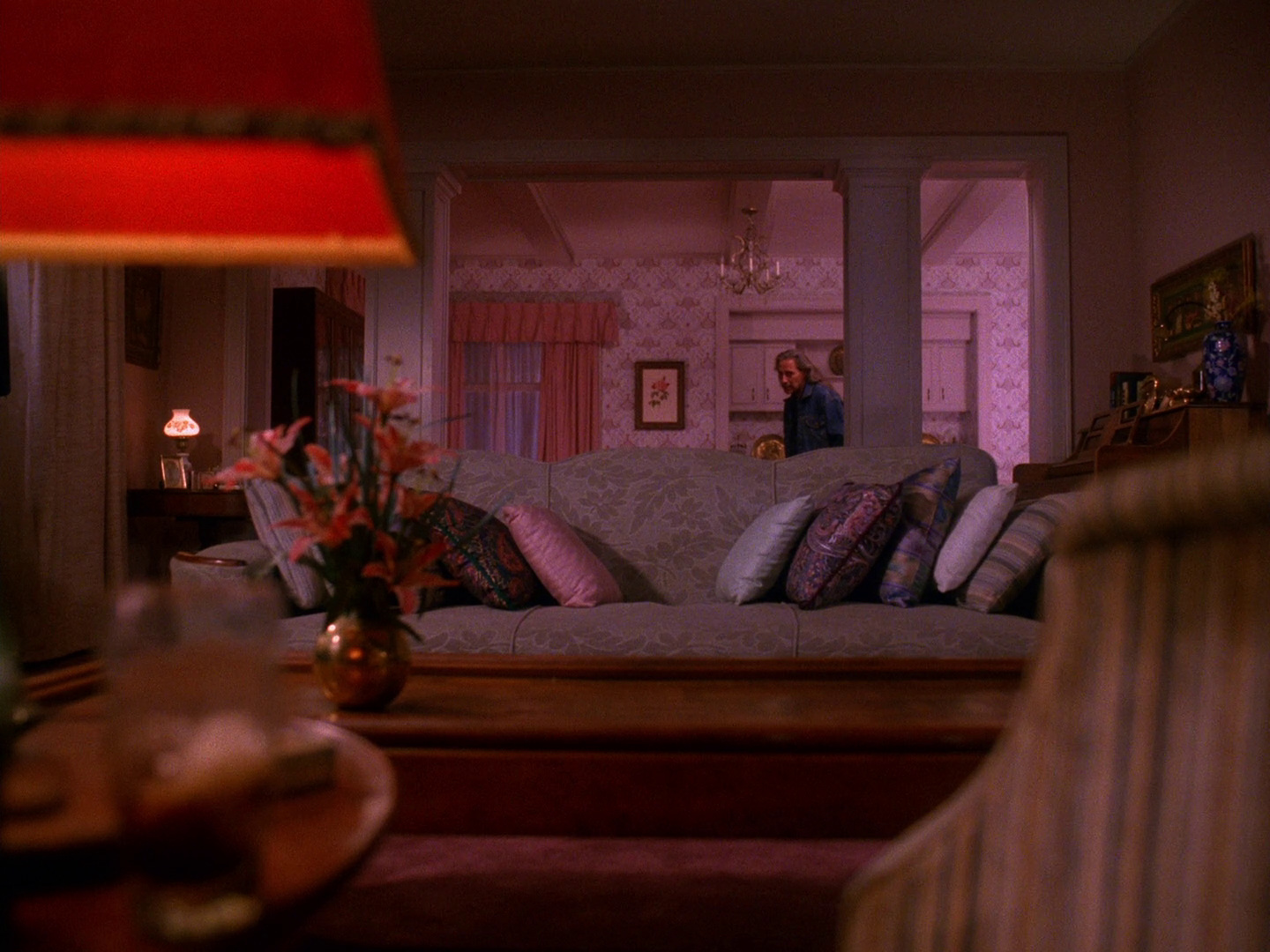 S2E02 · Overall Episode 9
Coma
The Tremonds, the signal and the apparition in the living room.
Read the illustrated dossier ↗ S2E03 · Overall Episode 10
The Man Behind Glass
Harold, Albert, Jacoby’s recollection and Laura’s second diary.
Read the illustrated dossier ↗The season that changes the question
Season 2 of Twin Peaks has 22 episodes: nearly three times the first season’s count. It begins with Cooper injured, brings the Laura Palmer investigation to a resolution, searches for new dramatic centres, and ends by making the investigator himself a mystery. Those are different tasks, and the season is better understood through their transitions than through a single reputation for decline. Official season listing
Our central reading is that this is a season about the instability of authority. Cooper’s certainty, the town’s familiar roles and the apparent boundary between everyday life and supernatural threat all become less dependable. Some stories deepen that instability; others turn it into broad comedy or prolonged diversion. A serious account should be able to discuss both without dismissing the whole middle or pretending that every detour has the same force.
Reading route: finish Season 1 first. This page contains major spoilers, including Laura’s killer and the finale. Watch Fire Walk with Me after this season, then The Return.
Three movements, rather than a good half and a bad half
- Episodes 1–9 · The case closes. The Giant, the diary and the investigation converge on the Palmer household. Knowledge arrives unevenly: what the viewer has been shown is not immediately what the police know.
- Episodes 10–16 · The centre disperses. Cooper’s professional trouble, the returning Packard history and Windom Earle’s threat compete with stories whose scale ranges from grief to farce.
- Episodes 17–22 · The town becomes a threshold. Annie’s arrival, the gathering Lodge story and the pageant bring personal longing and supernatural danger into a new configuration.
This is our editorial division, not a production designation. The distributor’s sequence supplies the episode anchors. The break after Episode 9 is especially important: the viewer’s discovery of the killer in Episode 7 and the investigation’s resolution are separate dramatic events. A guide that calls them the same “reveal episode” loses two hours of consequences. Episode sequence · Hunter on the resolution episode
Why “Lynch left” is insufficient history
Later participants describe a production with changing levels of involvement, not a switch that simply turned one creator off. Frost recalls ABC’s pressure to solve the murder; Harley Peyton’s 2026 public conversation describes preparations for the expanded season and being asked to propose stories. That event is available through a reporter’s account, not a recording inspected here. Frost on network pressure · Peyton’s second-season preparation account
The testimony must be dated and checked. One recollection confuses the episode in which Leland dies with the earlier disclosure of the killer; the event report flags the difference. The Academy oral history’s Wild at Heart chronology is also problematic when compared with Dunham’s first-season account. These discrepancies are reasons to consult production paperwork, not reasons to replace a complex production with a simpler legend.
Harley Peyton, Robert Engels, Mark Frost and the episode directors belong in this account as working contributors. So do the editors, camera and design departments that sustained a world through a much larger order. A complaint about a storyline is not evidence that the people making it were absent, indifferent or interchangeable.
Frost on the missing bridge to Windom Earle
Mark Frost’s retrospective account in Into the Night: Creating Season Two identifies a structural problem more specific than a general decline in quality. Looking back, he would have made Windom Earle a larger and more threatening presence earlier. He describes the gradual introduction as leaving a gap after the Laura Palmer investigation, before another story had acquired enough force to hold the season together.
That judgement is a writer’s assessment of his own work, not a demand that every viewer dismiss the intervening episodes. It offers a practical question for following them: when does Earle become more than an account from Cooper’s past, and when do the chess game, the pageant and the search for the Lodge become one danger? The late episodes increasingly bring those routes together.
Frost also remembers planning further consequences for Cooper after the finale. The interview predates the eventual 2017 continuation. His description of an unrealised next season should therefore be read as a record of an earlier intention, not as a synopsis or advance explanation of The Return.
Source: Secrets from Another Place: Creating Twin Peaks, “Into the Night: Creating Season Two,” approximately 20:54–22:10 and 25:27–26:38, in Twin Peaks: From Z to A.
Three episodes, three different kinds of terror
The premiere: Cooper cannot make the room move faster
Frank Byers recalls the low-angle prism used for the wounded Cooper’s encounter with the Giant. He connects the show’s look to wide lenses, long takes and a film-style approach to coverage. The practical account makes duration visible as an authored choice: a vulnerable body and an unusually low viewpoint replace the agent’s normal freedom to move through a case. Byers on the second-season opening
The scene temporarily separates perception from action. Cooper receives information, but receiving it does not immediately give him control. The hospitality of the hotel becomes strange partly because ordinary assistance and extraordinary visitation occupy the same waiting period. This anticipates the finale’s more radical removal of his familiar investigative footing.
“Lonely Souls”: knowing becomes an ordeal
Sheryl Lee’s published recollection of filming Maddy’s murder describes alternate versions designed around secrecy. Mary Sweeney identifies this Lynch-directed revelation episode as the one she edited alone during the original series. These accounts direct attention to a coordinated act of performance and editing, rather than treating the killer’s identity as a detached piece of information. Lee on filming Maddy’s death · Sweeney on her original-series editing assignment
The violence destroys the safety of the look-alike device. Maddy cannot remain a reassuring substitute for Laura. Recognition becomes unbearable because the body through which the audience had recovered a familiar face is placed in danger. The sequence’s importance is emotional as well as informational: knowing who killed Laura does not mean that the town can protect another woman.
This is also where the later feature changes the terms of a return visit. Fire Walk with Me asks the audience to spend sustained time with Laura’s own perception, rather than waiting with investigators to discover what happened to her. The two works should be read together without letting the film erase the specific viewpoint of the television episode.
“Arbitrary Law”: a solution with an ethical remainder
Tim Hunter remembers constructing drainage around the sheriff’s-station set for Leland’s final scene under the sprinklers. He also discusses the controlled reveal of information through camera movement. Water, performance and pacing were material production problems, not simply symbols added after the fact. Hunter on the episode’s opening and flooded set
The scene asks the viewer to encounter a dying person after an account of monstrous actions. Compassion does not settle culpability. The language of possession may describe the fiction’s supernatural structure, but it does not require the audience to stop thinking about the family, the victim or responsibility. The unresolved tension is one reason Laura’s perspective remains necessary after the case is declared solved.
The enlarged ensemble: tenderness, caricature and power
Cooper is no longer only an outsider looking in
The second season gives Cooper a past and a professional vulnerability. The listing moves from his former partner’s escape to their renewed rivalry and later reinstatement. Our reading is that Earle changes the relationship between detective and mystery: the danger can now arise from the investigator’s own history. It is not simply another unknown person somewhere in the town. Cooper’s changing position in the season
Annie’s arrival also changes what Cooper is willing to risk. A case can be approached as a professional problem; a loved person in danger draws the investigator into a story in which he is implicated. The finale makes that difference decisive. Its challenge is not merely whether he can decipher a clue, but what he believes he can accomplish by entering another order of experience.
Denise: an ally with a professional life
David Duchovny recalls auditioning through Johanna Ray and enjoying the opportunity to play Denise. He also discusses returning to the character and wishing he had been able to do more with her. His retrospective account supplies an actor’s perspective, rather than a complete record of the writers’ intentions. Duchovny on playing Denise
Our reading is that Denise matters because she is an effective ally, not only an occasion for other people’s reactions. A critical account can value that treatment while examining the humour and assumptions of the original broadcast period. It need not pronounce an entire character either perfectly progressive or wholly reducible to a stereotype.
Josie, Jonathan and the limits of the disguise joke
Mak Takano’s interview provides unusually specific testimony about working with different episode directors. He describes contributing to Jonathan’s fighting choreography, and contrasts Lynch’s indirect prompts with Todd Holland’s preparation and Glatter’s hands-on engagement. He also remembers recognising Piper Laurie beneath the Tojamura disguise. Takano on choreography, directors and Tojamura
That recollection complicates the familiar claim that the disguise fooled everyone. More fundamentally, our reading distinguishes a performer’s enjoyment of a production trick from the racial caricature visible in the device. The mystery of who is behind the disguise does not remove the question of how an Asian businessman is made recognisable to an audience. Takano explicitly declines to certify what the writers intended; we do not fill that gap for him.
Josie’s story likewise deserves more than its famous final image. Work, money, coercion and the threat of being reclaimed by an earlier life connect her to the town’s power structure. Frost’s later account describes wanting a way to remove her while leaving a possible return open. That production recollection does not, on its own, explain the supernatural status of the image. Frost on Josie’s departure
How to read the digressions without making excuses for them
The middle stretch repeatedly changes register. The Little Nicky inquiry, Ben’s retreat into another historical identity and James’s departure from the town ask for different kinds of attention from the Palmer investigation. Our assessment is that detours work best when they reveal something about the community’s habits of fantasy, denial or care. They are less persuasive when a separate plot borrows the mystery’s momentum without giving something equally compelling back.
This remains a judgment about dramatic form, not a claim that all viewers experienced the season alike. The episode route below preserves the whole run. It does not ask the reader to skip material in order to obtain a cleaner version of the show’s history.
The pageant’s private rehearsals
Two unused passages turn the Miss Twin Peaks setting towards the relationships around the spectacle. In Bobby Coaches Shelly, Bobby promises greater attention to Shelly, then supplies a speech that wanders into sports-car sales. She has to remind him that ecology and forests are the point. The joke exposes the distance between offering support and actually listening: her public words have been shaped by his interests. Outtake sources ↓
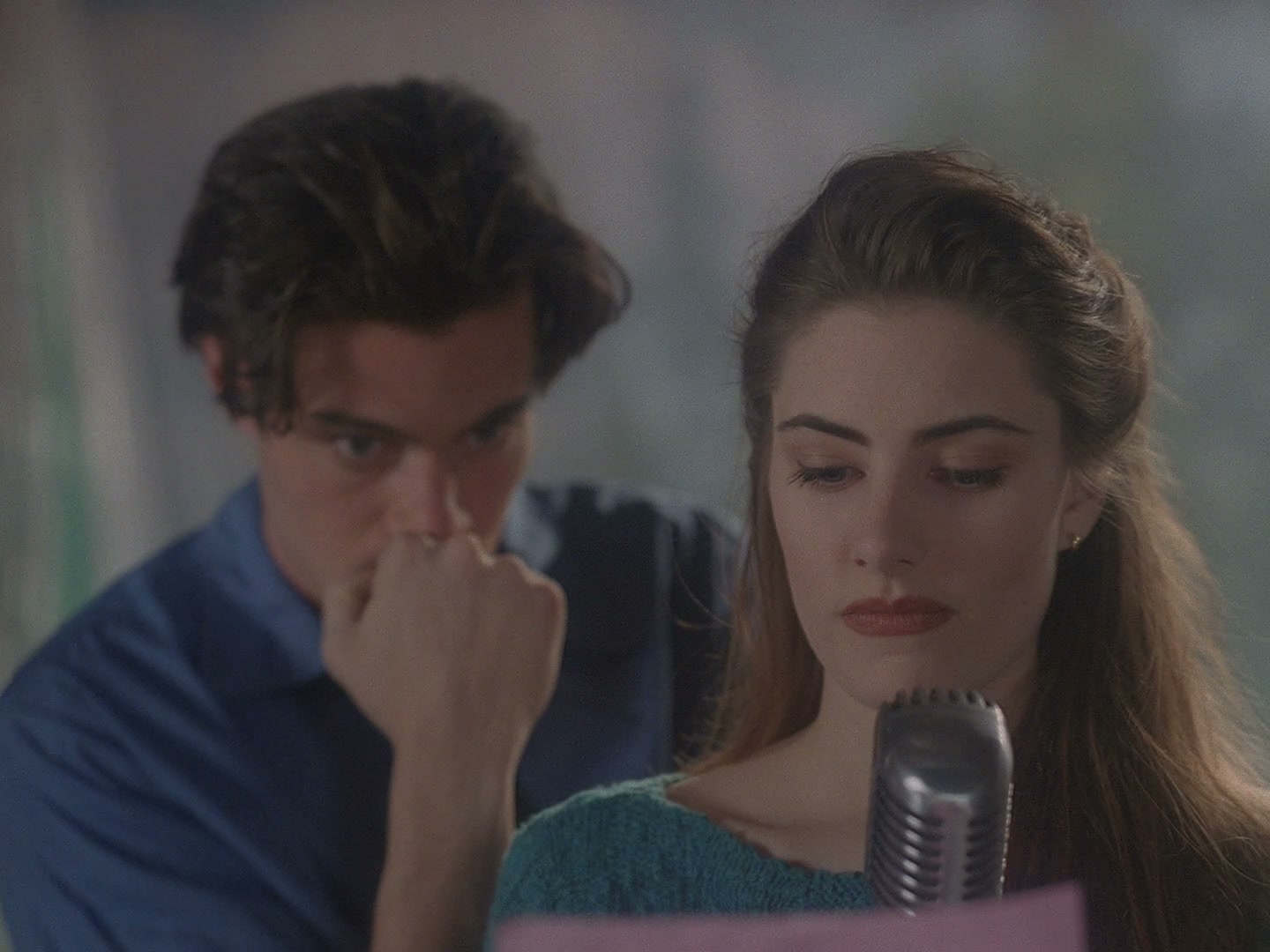
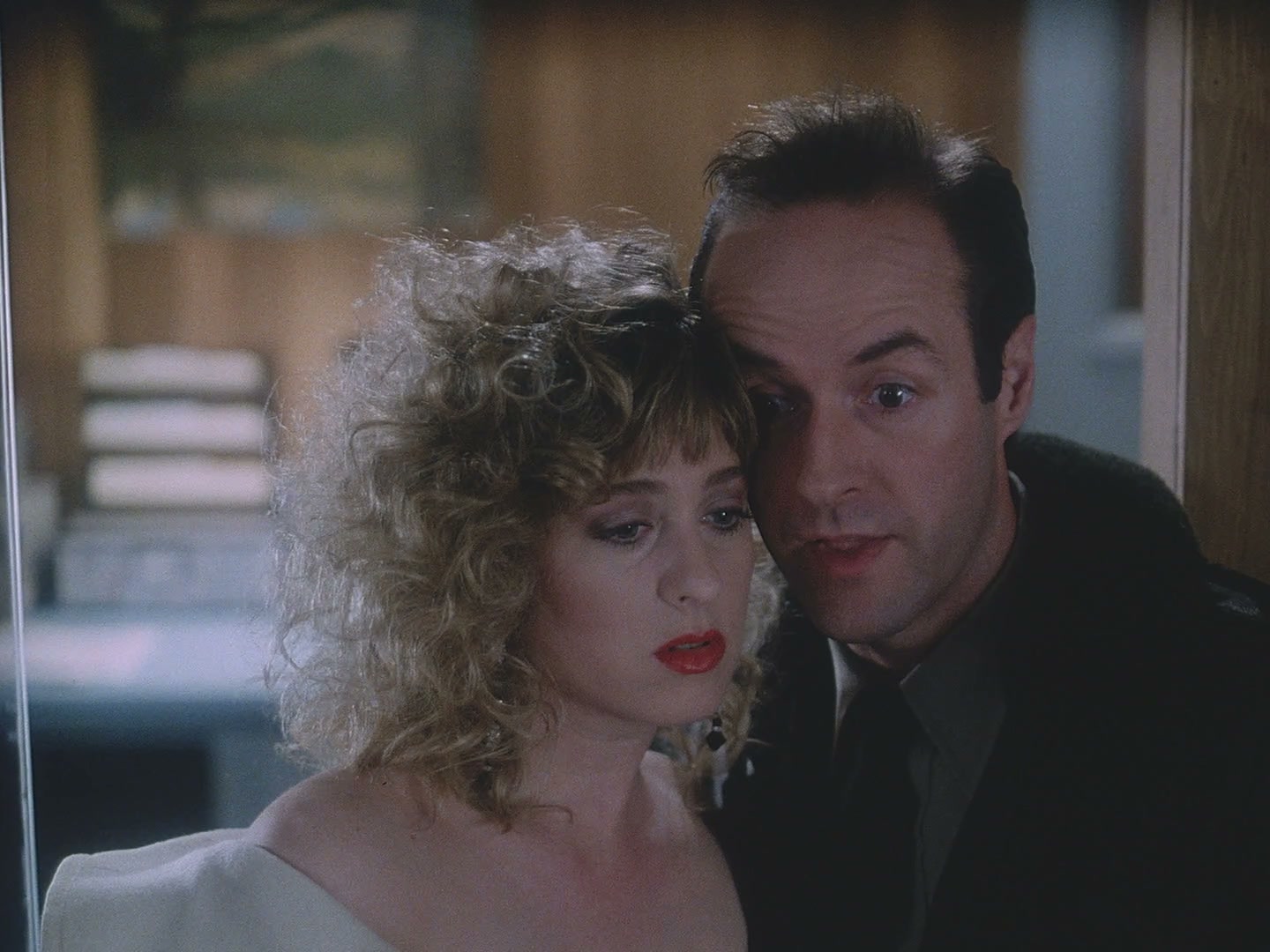
In Lucy and Deputy Andy, Lucy describes the fear produced when the Roadhouse lights went out, then imagines the same failure during childbirth. Andy answers the hypothetical crisis with a promise of practical care. Their declaration of love is followed by his realisation that the puzzle is a map. Domestic reassurance and detective insight inhabit one exchange. As unused material, it offers an alternate emphasis for their relationship without silently adding events to the broadcast episode.
Continuity of craft through changes of tone
Byers remembers changing from Fuji stock in the first season to Kodak in the second. His account also describes reverse-camera work and a long rehearsal for the finale. The testimony establishes remembered working choices; it is not a substitute for camera reports or a measured comparison of modern transfers. Byers on stock and the finale
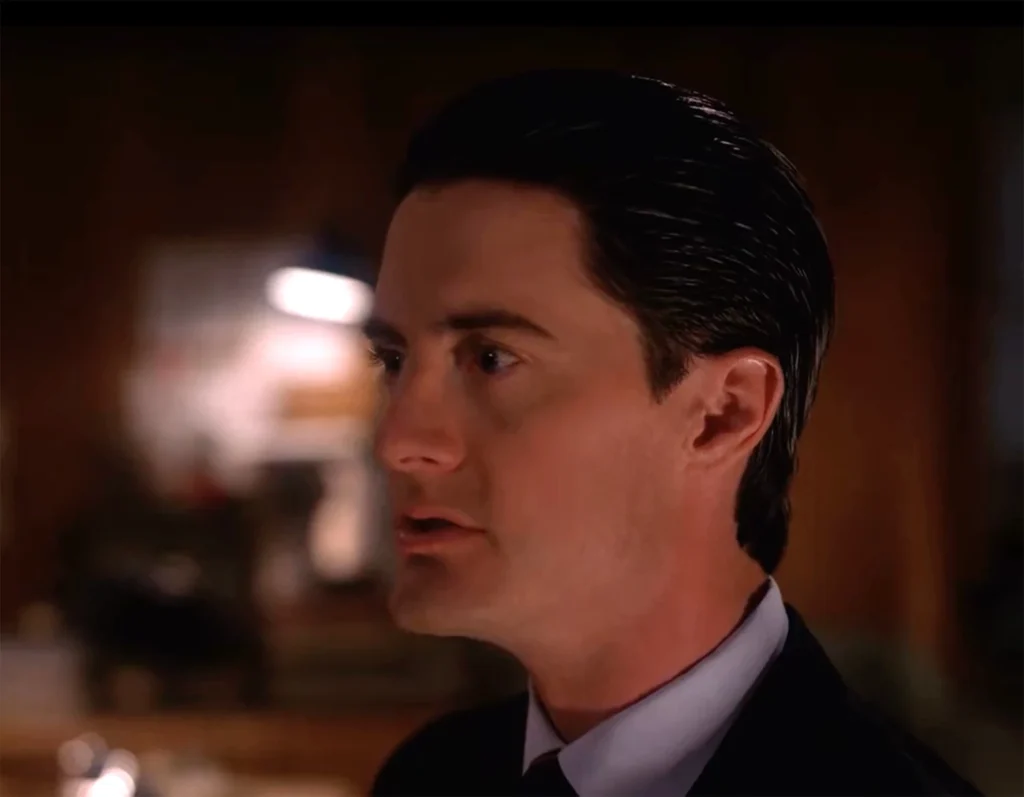
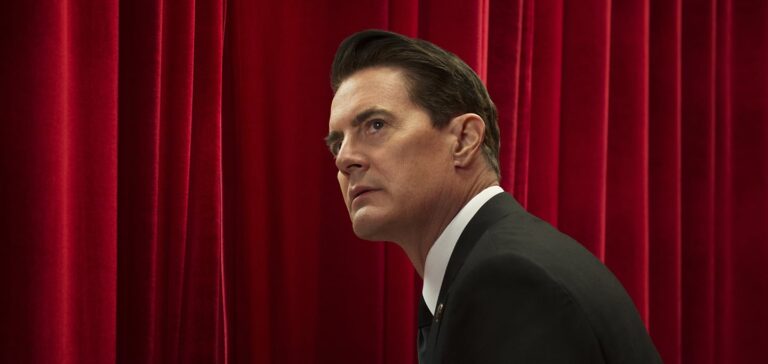
The hero still, identified by its source as coming from the finale, preserves warm wood and a softly separated background around Cooper. Our reading of that image is that the recognisable town remains visually available at the moment its narrative assurances are about to fail. A departure from realism does not require every familiar surface to become unfamiliar at once.
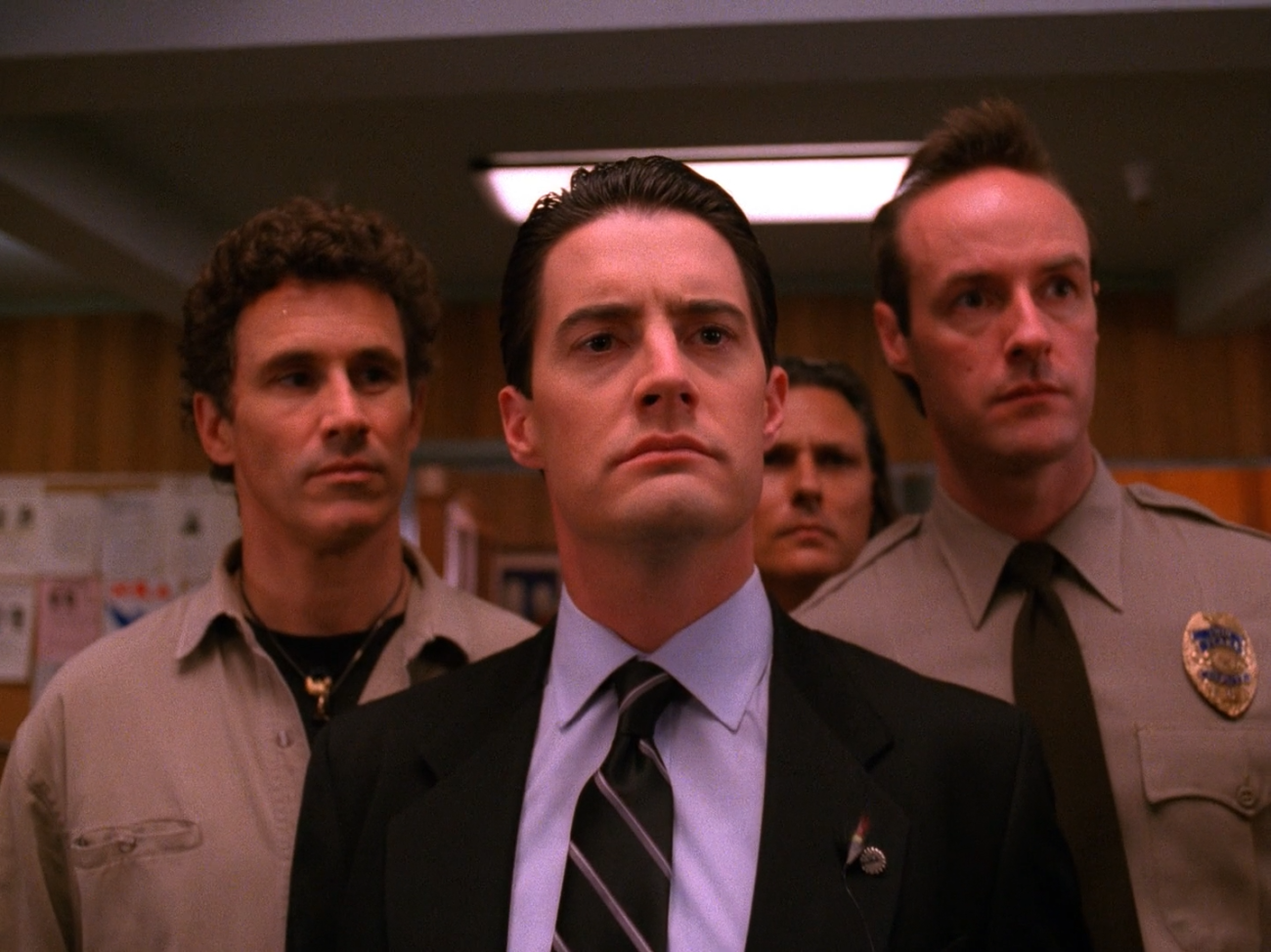
The recurring offices, hotel rooms and diner connect many episode directors’ work. Yet a location or set is not an inert container. Who stands, who sits, who waits and who is permitted to enter can change the function of the same room. The supporting original-series image shows a layered group arrangement at the sheriff’s department; its exact episode has not been established, so it is not presented as a verified Season 2 frame.
Music supplies another continuity. Eschler’s account of the original series describes adapting existing material to particular dramatic needs. Our listening question for this season is how that recognisable sound behaves when the case, tone or protagonist changes. A familiar cue can promise continuity even where the narrative is withdrawing it. Original-series music-editing testimony
Production photographs as a second viewpoint
Cast portraits, on-set photographs, Red Room setups and images of evidence props offer a different view from the finished episodes. A production photograph can reveal work outside the dramatic frame; a photographed prop can itself belong to the fiction. These materials need to be read alongside the scene and its credits, rather than treated as interchangeable illustrations.
The finale: the detective crosses into the evidence
The last episode offers a structural reversal. Earlier, Cooper could bring dreams back into the police station and attempt to use them. Now he moves into the space in which ordinary explanations cease to protect him. The detective’s interpretive method becomes a physical vulnerability: he can no longer assume a stable distance between observer and object.
Annie, the Lodge and the doubles make the rescue more complicated than a contest with Earle. The ending destabilises the person through whom viewers learned to navigate the show. We resist turning that event into a closed diagram of metaphysical rules. Later works add evidence, but the 1991 ending first existed as a deeply unsettled stopping point.
Byers’s account of reversal and rehearsal is particularly useful here. The sequence’s unnatural movement is the result of bodies and cameras being organised to produce it, not an absence of craft. The surviving screenplay variants and the released finale need a scene-by-scene comparison before a precise account of what Lynch changed can be completed. The frequently repeated claim that the whole finale was simply improvised is too broad for the evidence inspected here.
The bridge onward is Fire Walk with Me. Its position before Laura’s death in fictional time does not make it an innocent starting point, and its relationship with this finale prevents “prequel” from describing everything it does. The Return later reopens Cooper’s fate in a different production, technological and emotional world.
All 22 episodes: a route through the season
Season numbering follows Paramount+. “Overall episode” follows the older convention that numbers the pilot separately, so Season 2 starts at Episode 8 and ends at Episode 29. The distributor’s catalogue contains some title spelling differences found elsewhere; numbers are the dependable cross-reference. Prompts below are editorial, not complete synopses or verified shot logs. Distributor index
- S2E01 · Overall episode 8
May the Giant Be with You
The Giant’s visit interrupts Cooper’s ordinary control. Watch the relationship between the low viewpoint, waiting and the promise of information.
- S2E02 · Overall episode 9
Coma
Cooper’s former partner enters the case’s horizon. Ask how a detective’s history changes the apparent neutrality of his investigation.
- S2E03 · Overall episode 10
The Man Behind Glass
Private writing becomes a coveted object. Its value depends on who wrote it, who possesses it and what another reader thinks it can prove.
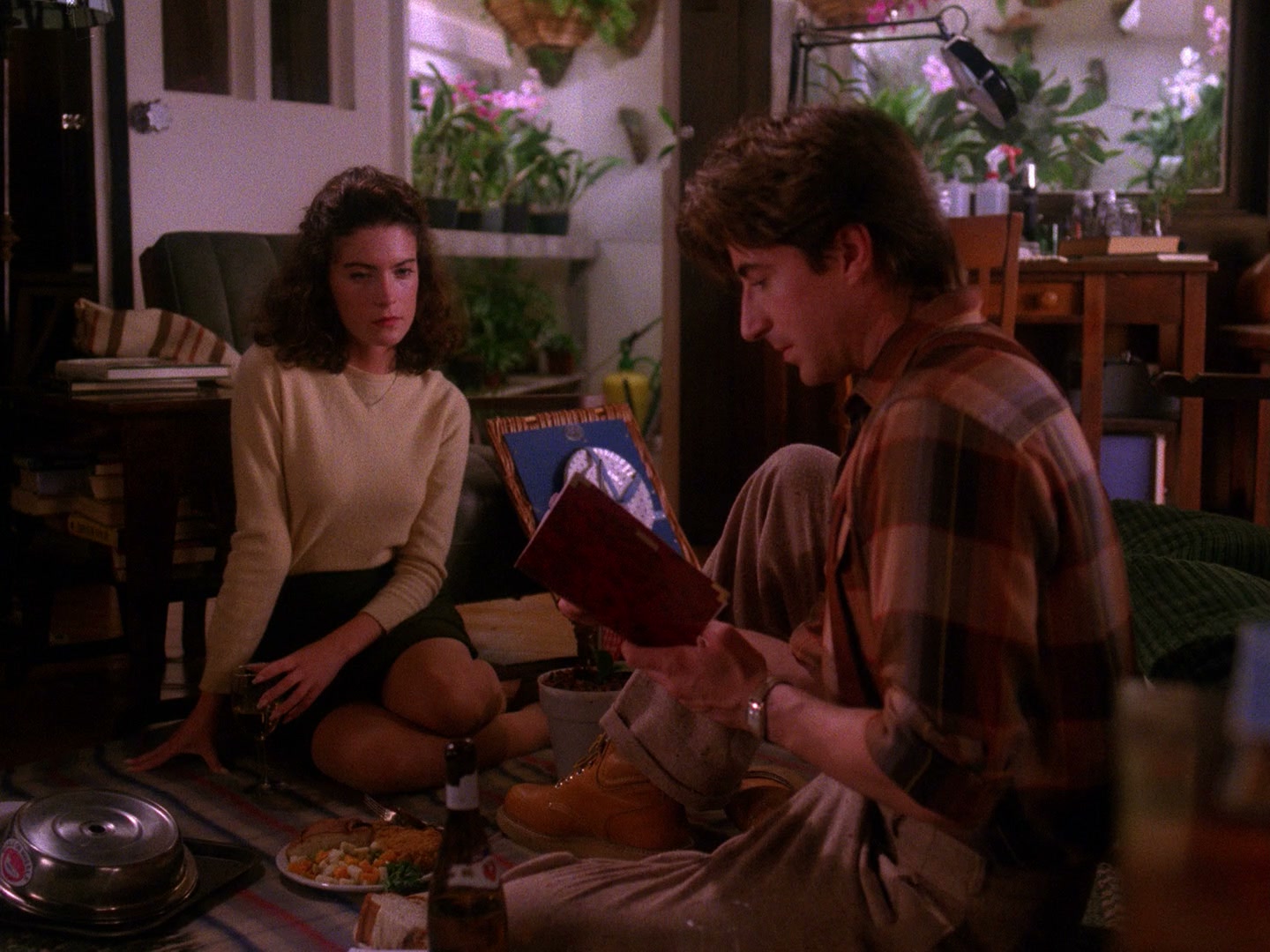 S2E04 · Overall episode 11
Laura’s Secret Diary
Confession, ransom and private writing place competing demands on trust. Follow Lucy’s interruption, Josie’s divided loyalties and the town’s forms of judgement.
Competing appeals make trust a practical decision. Consider the difference between being offered information and being asked to act on it.
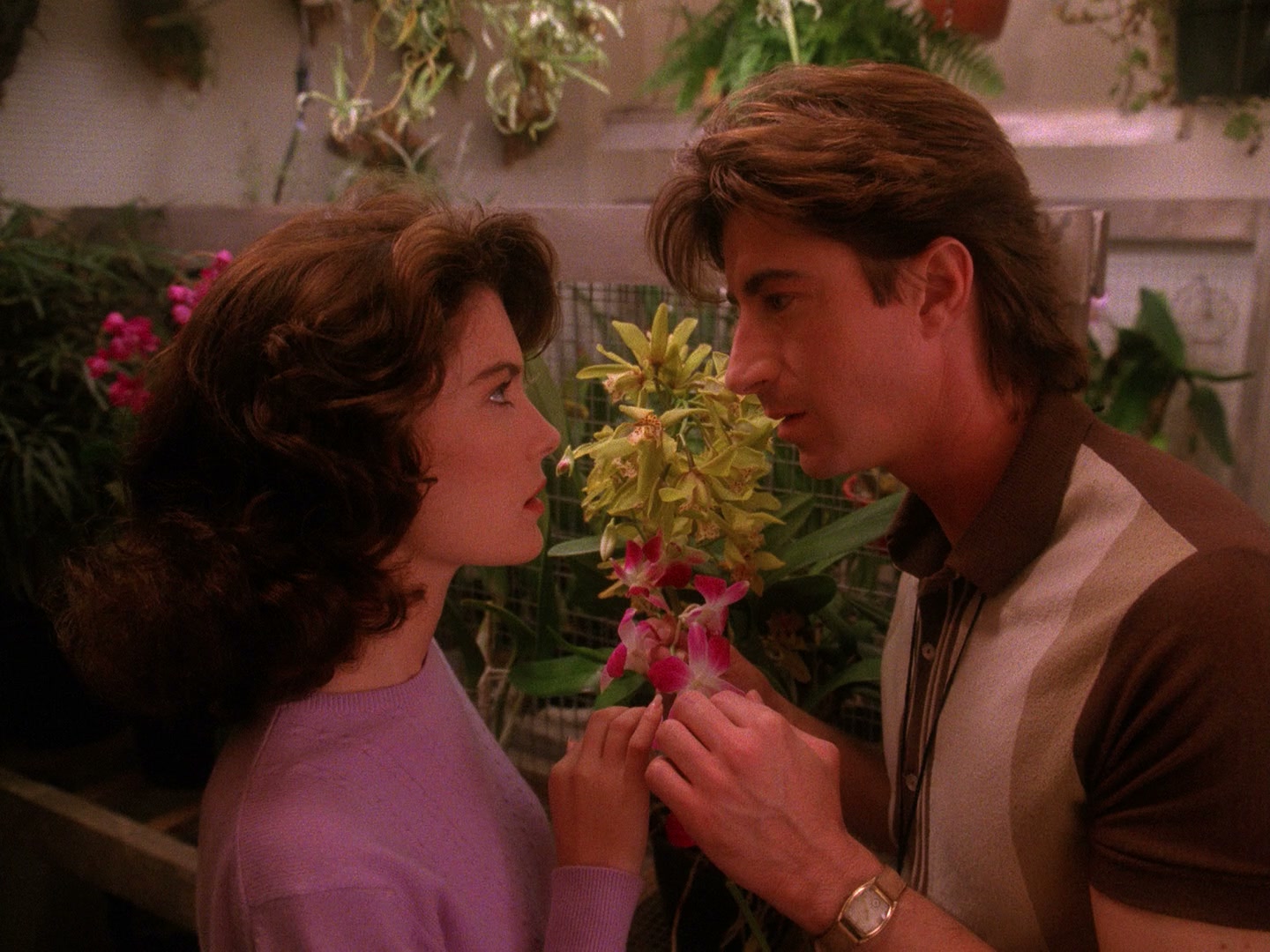 S2E05 · Overall episode 12
The Orchid’s Curse
A headstand retrieves a clue, two hearings test the town’s judgement, and Donna’s diary plan runs beside the rescue of Audrey. Explore 24 stills, focused galleries and the episode’s competing uses of trust.
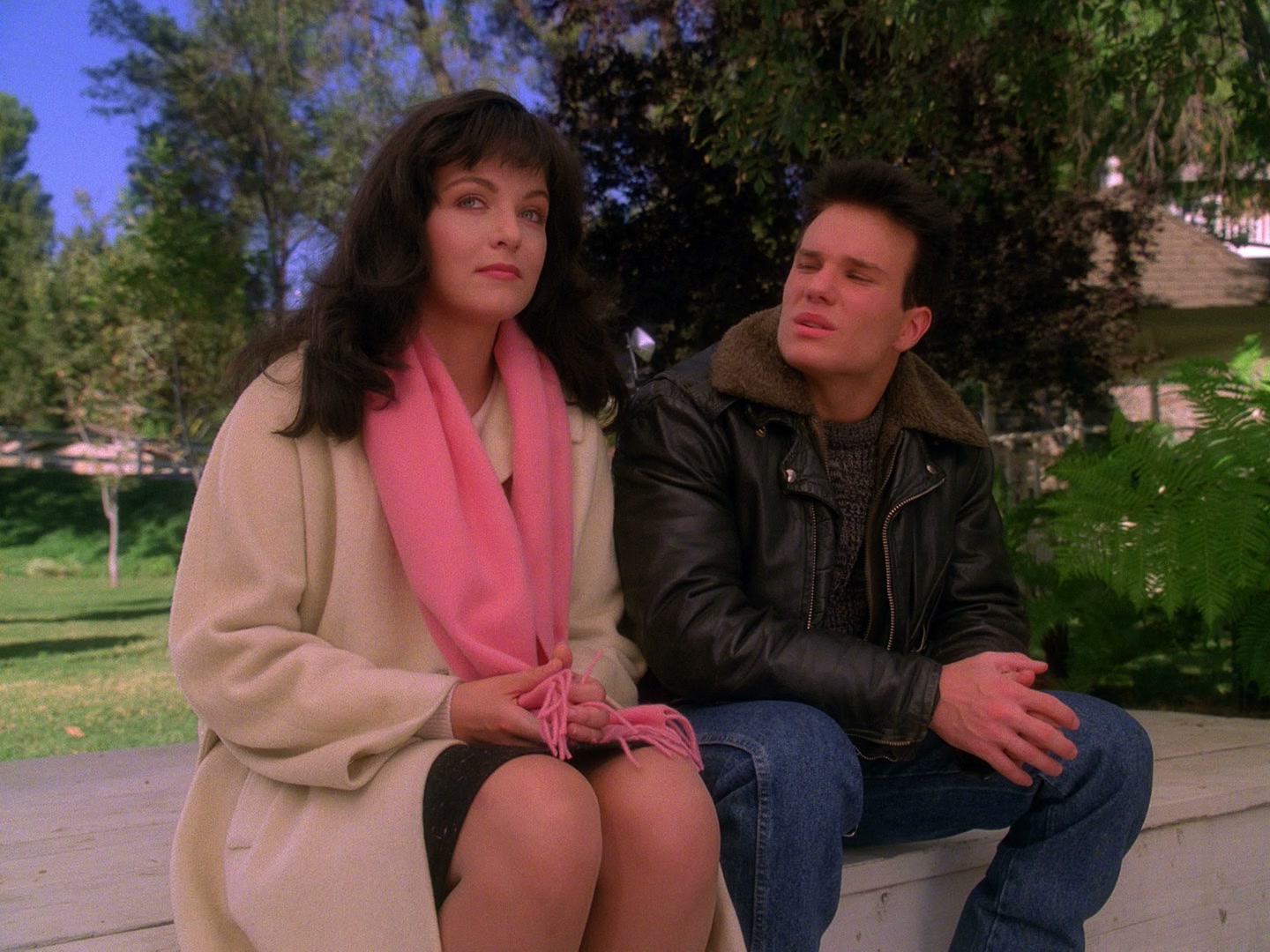 S2E06 · Overall episode 13
Demons
After Audrey’s rescue, Maddy speaks as herself and Gordon Cole arrives. Explore the costs of care, Josie’s departure and the interrogation that produces Mike’s account.
The diary inquiry exposes the vulnerability of people treated as holders of evidence. What responsibility does an investigator acquire toward a source?
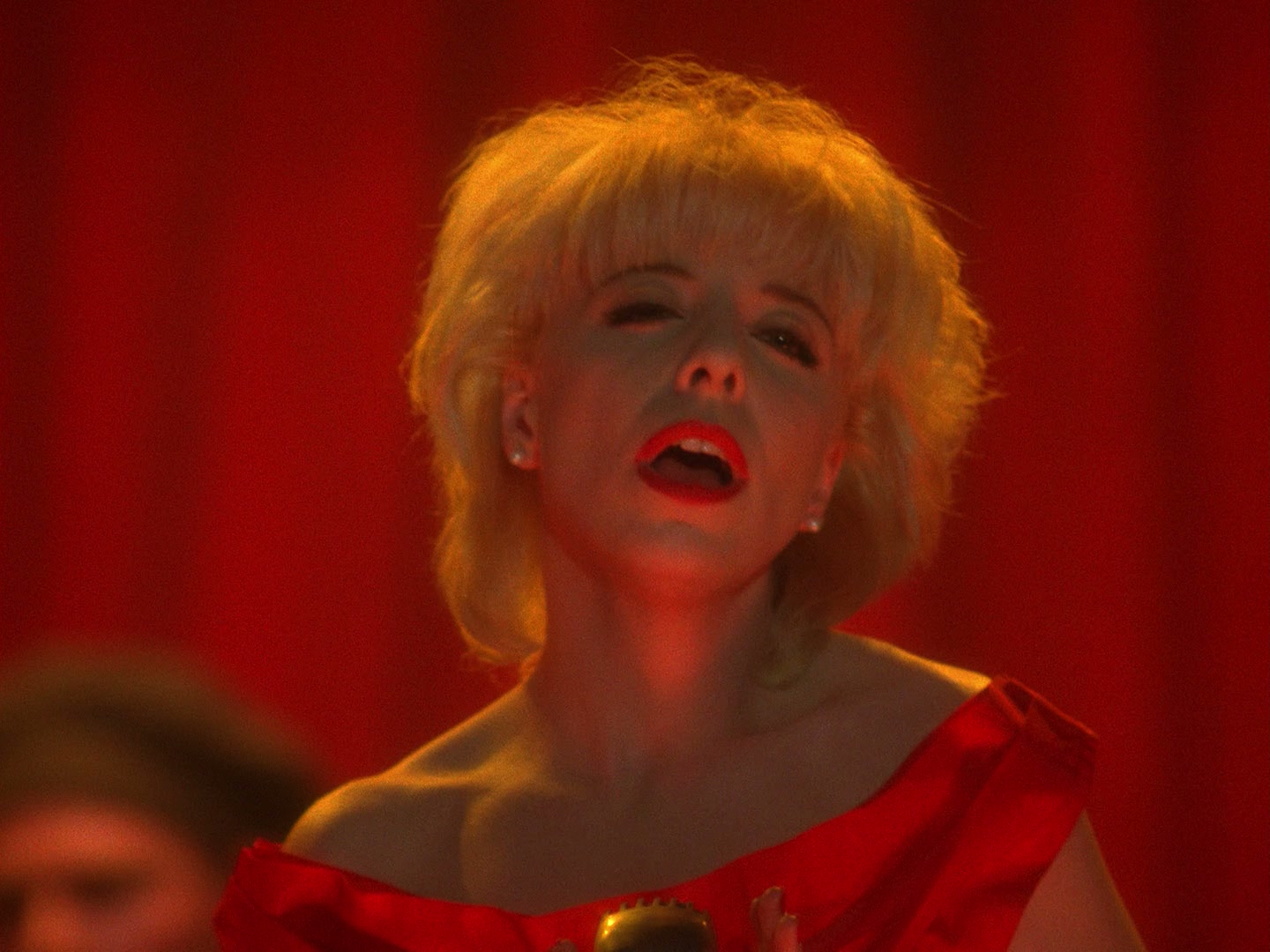 S2E07 · Overall episode 14
Lonely Souls
Maddy’s wish to go home meets a devastating revelation. Follow the diary, Audrey’s questions, the pale horse and a focused study of the Palmer-house and Roadhouse ending.
The audience’s discovery is an emotional ordeal. Maddy’s fate makes the difference between recognition and protection devastatingly clear.
 S2E08 · Overall episode 15
Drive with a Dead Girl
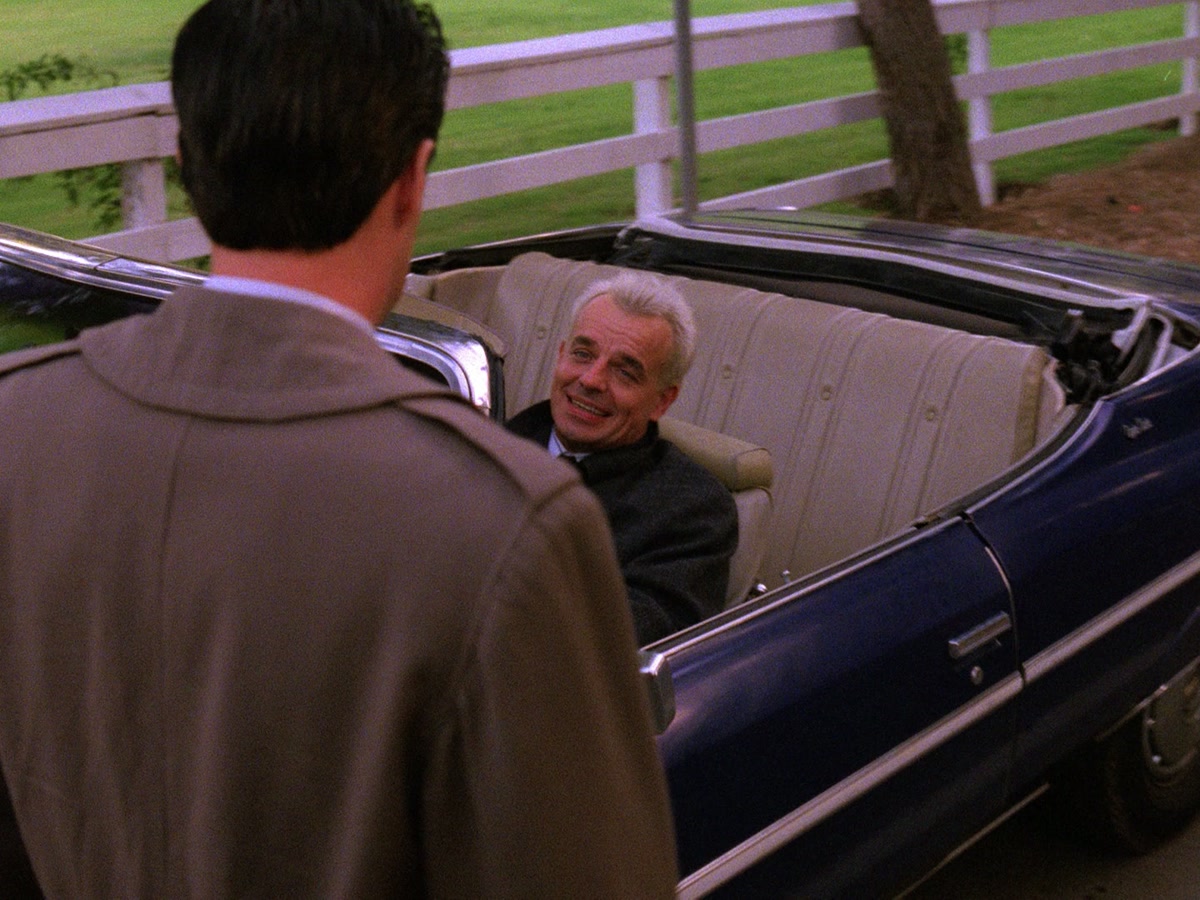
Leland’s drive, Catherine’s recorded alibi and the gap between seeing the truth and proving it.
The spectator knows more than the investigators. Suspense now depends partly on the gap between seeing a truth and having a usable way to establish it.
 S2E09 · Overall episode 16
Arbitrary Law
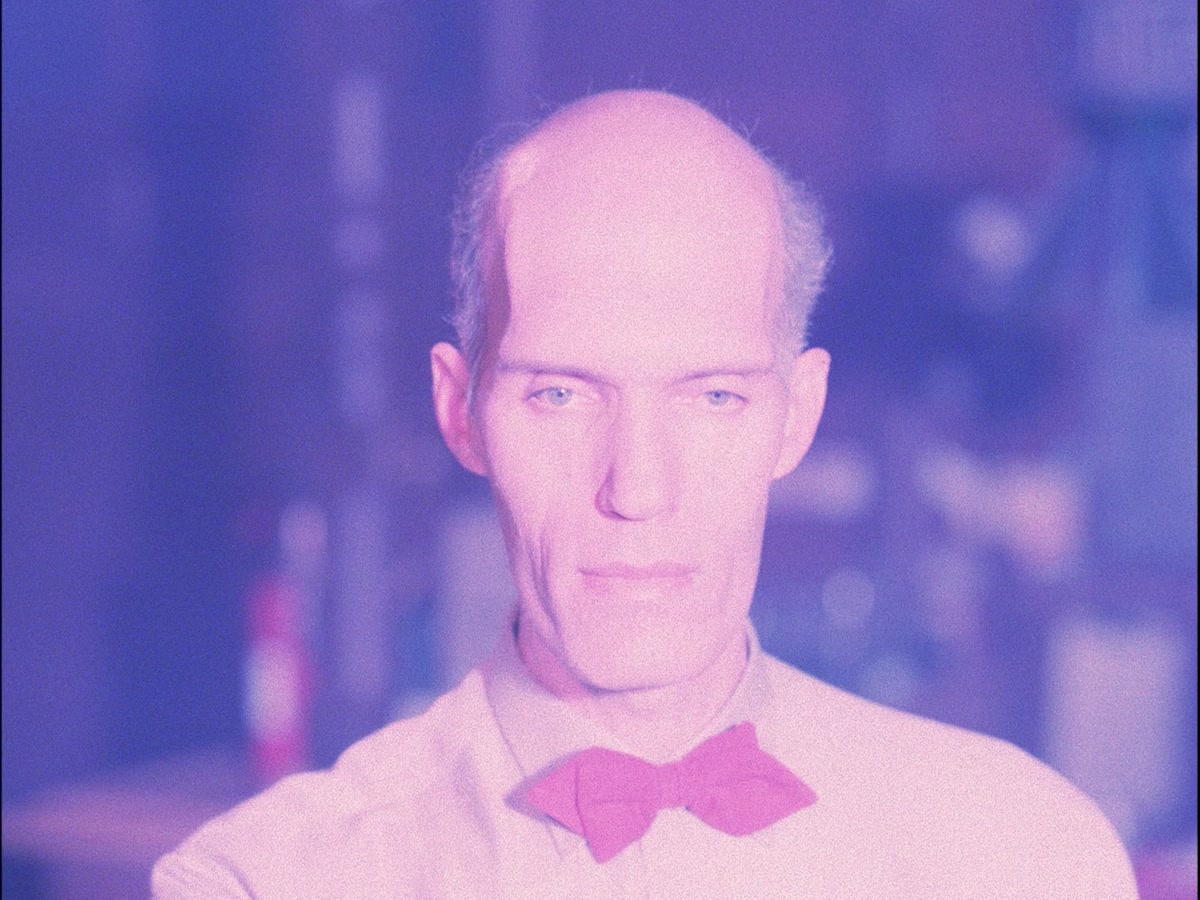
Laura’s diary, Donna’s dangerous visit, the Roadhouse revelation and the interrogation ending.
The investigation reaches Leland. Consider how the final encounter holds compassion, supernatural explanation and responsibility in uneasy proximity.
 S2E10 · Overall episode 17
Dispute Between Brothers
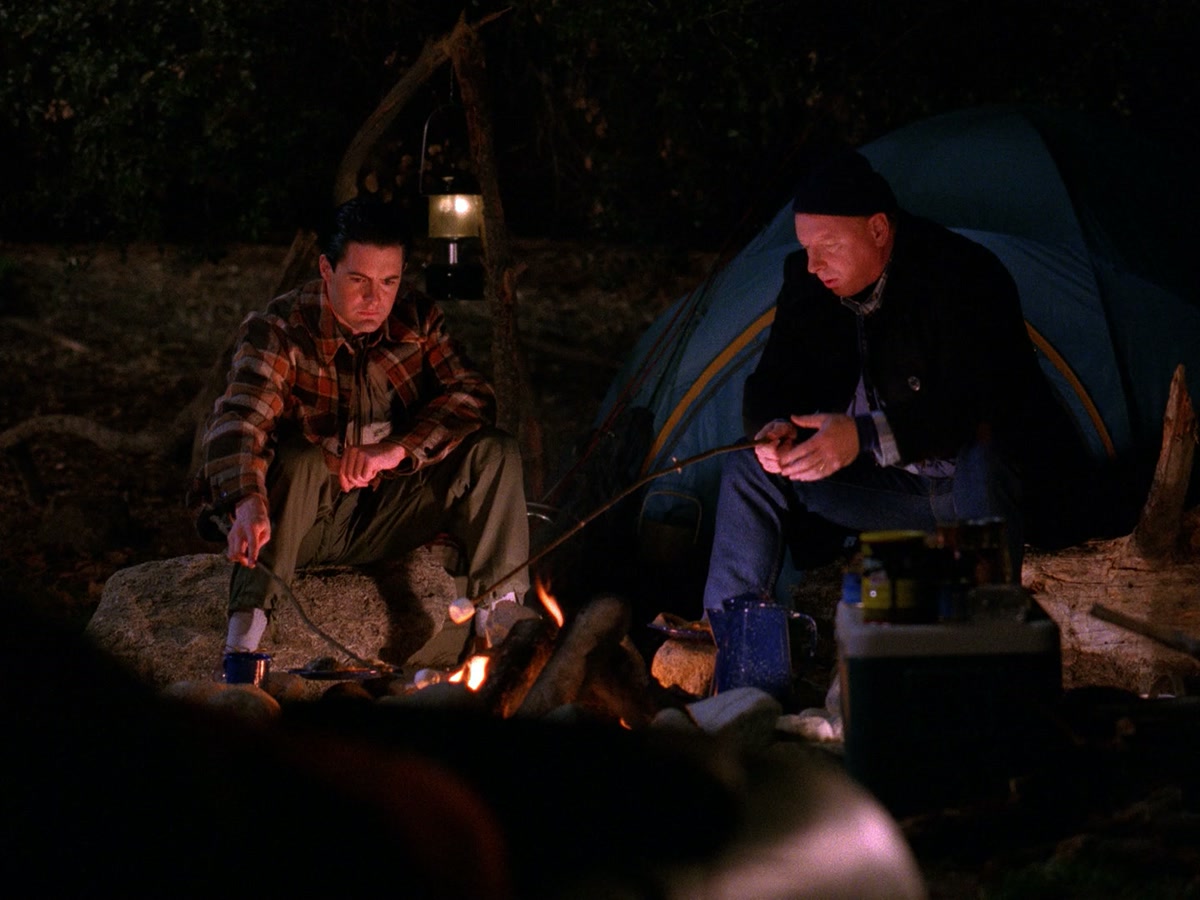
Sarah’s grief, Cooper’s suspension, Norma’s confrontation and Briggs’s disappearance in the woods.
Cooper appears ready to leave, but closure proves unstable. Ask which stories acquire new weight once the original investigation no longer organises every return to town.
 S2E11 · Overall episode 18
Masked Ball
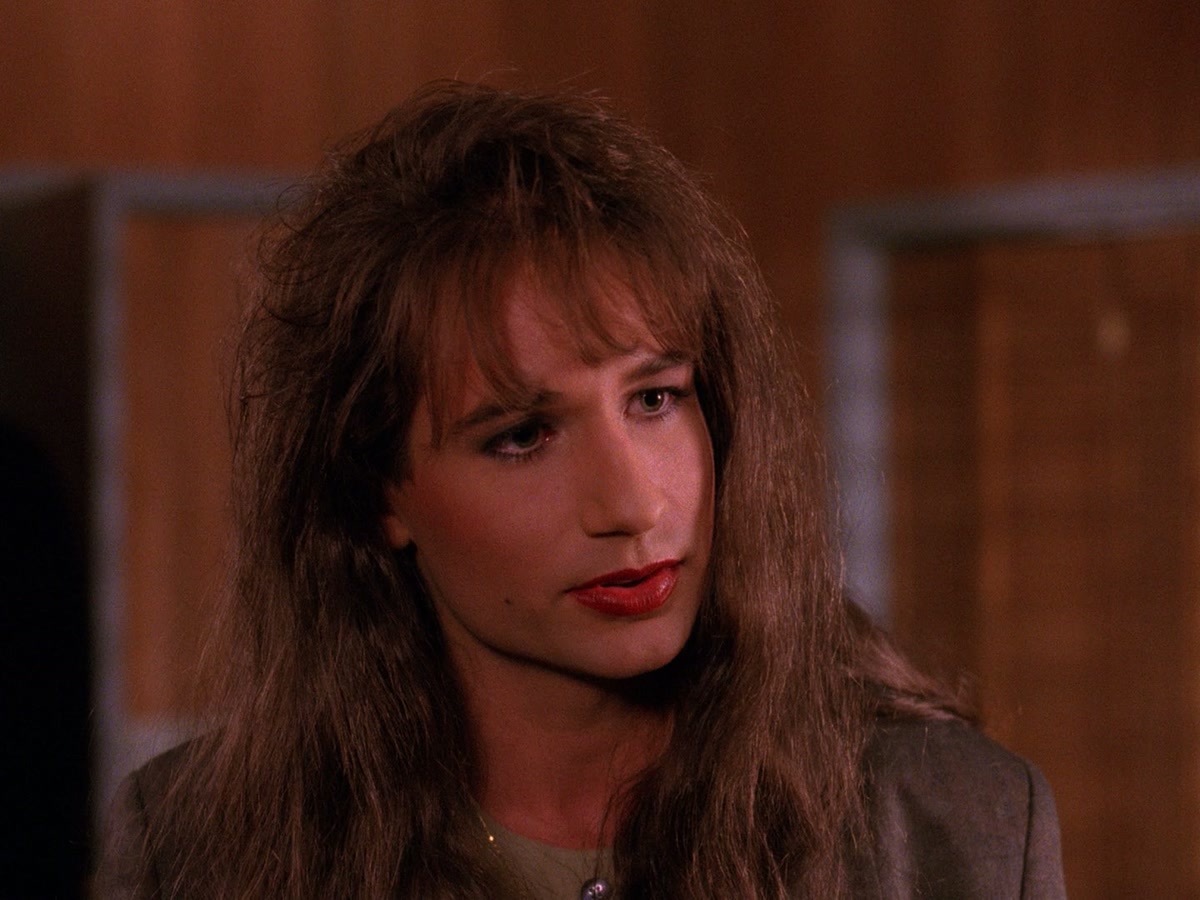
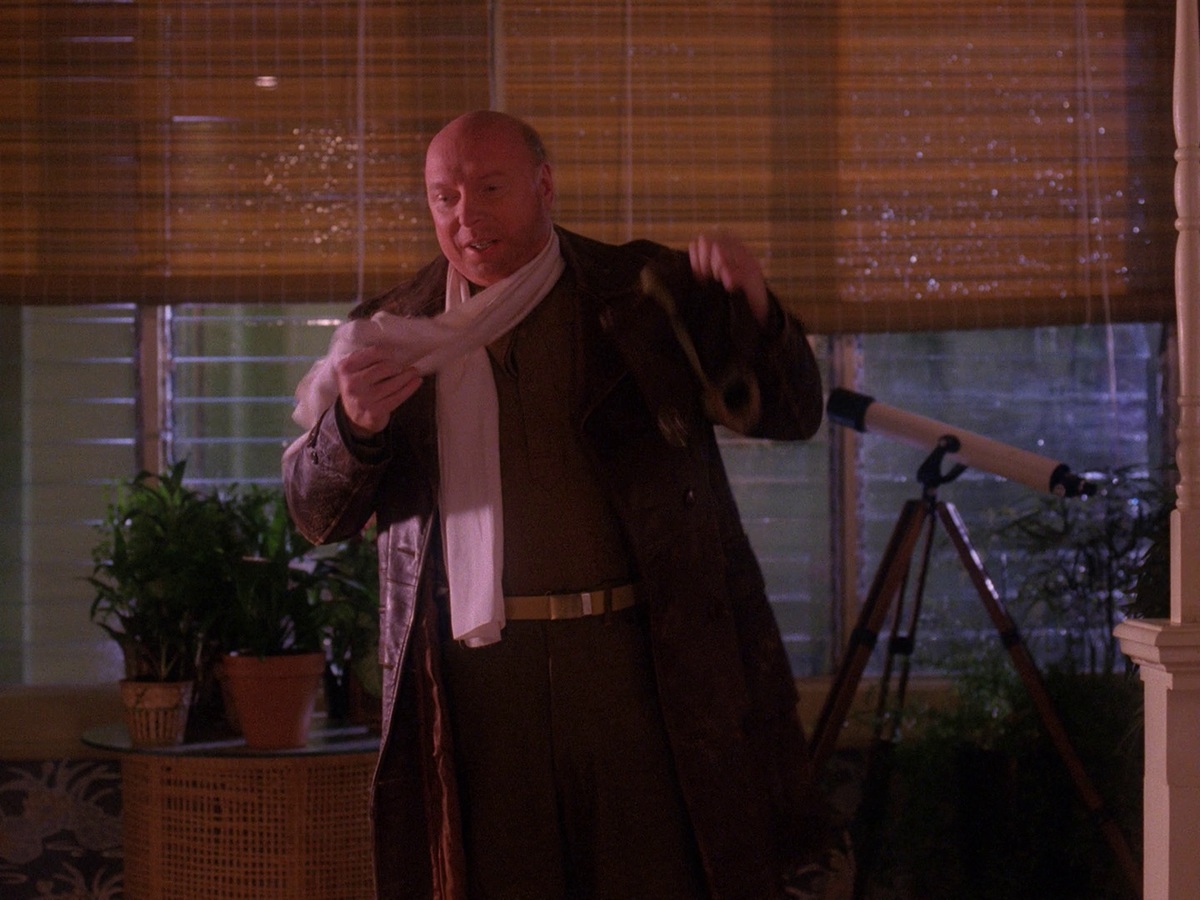
Hawk’s account of the Lodges, Denise’s arrival, Ben’s home movies and Windom Earle’s recorded challenge.
Earlier family and business arrangements re-enter the present. Property and kinship make the town’s past an active source of pressure.
 S2E12 · Overall episode 19
The Black Widow
Ben’s ambition, the Dead Dog Farm evidence, Lana’s arrival and Briggs’s unexpected return.
A photograph can be both information and an instrument of power. Compare who controls an image with who understands what it records.
 S2E13 · Overall episode 20
Checkmate
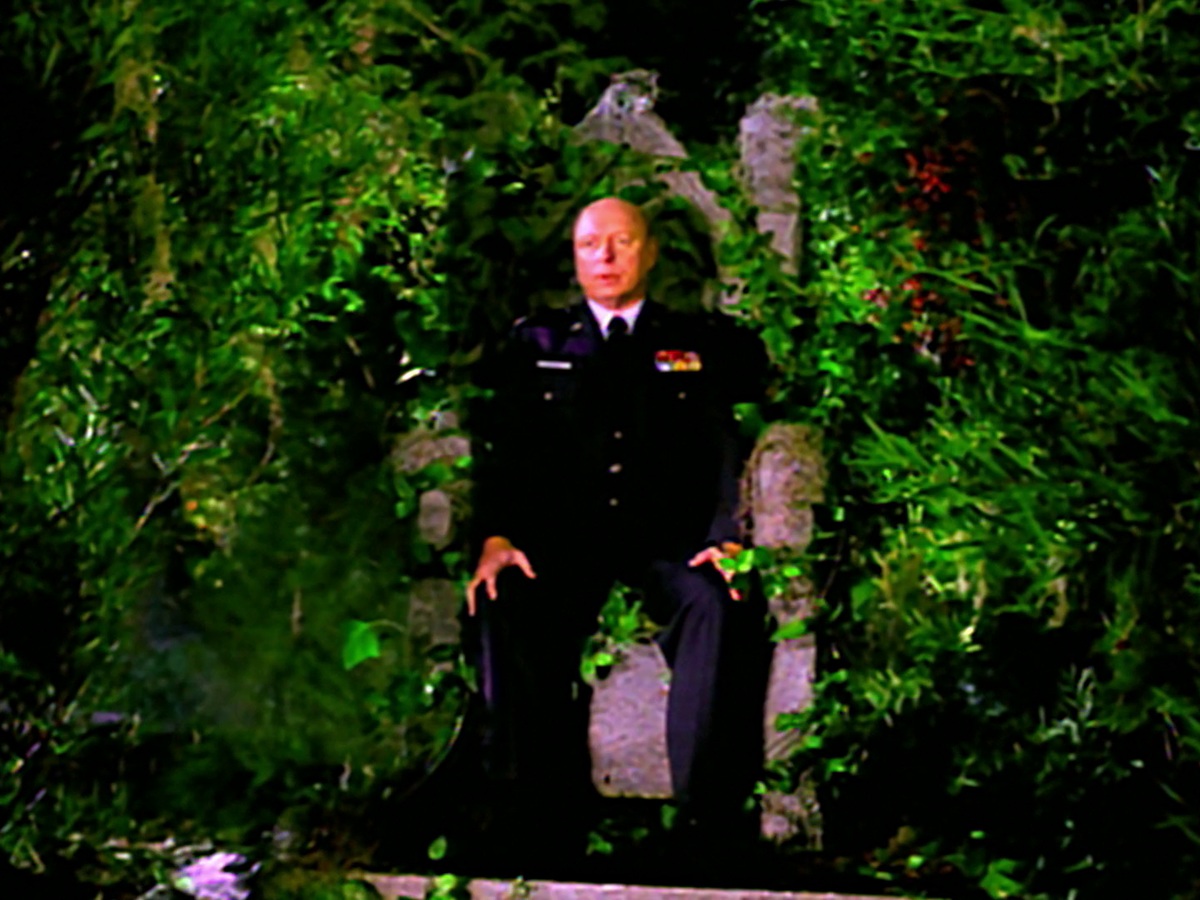
Briggs and the White Lodge, Denise’s improvised rescue, Ben’s miniature war and Leo’s return.
The season’s comic investigation tests another register of suspicion. Ask what separates eccentric curiosity from adults projecting fantasies onto a child.
 S2E14 · Overall episode 21
Double Play
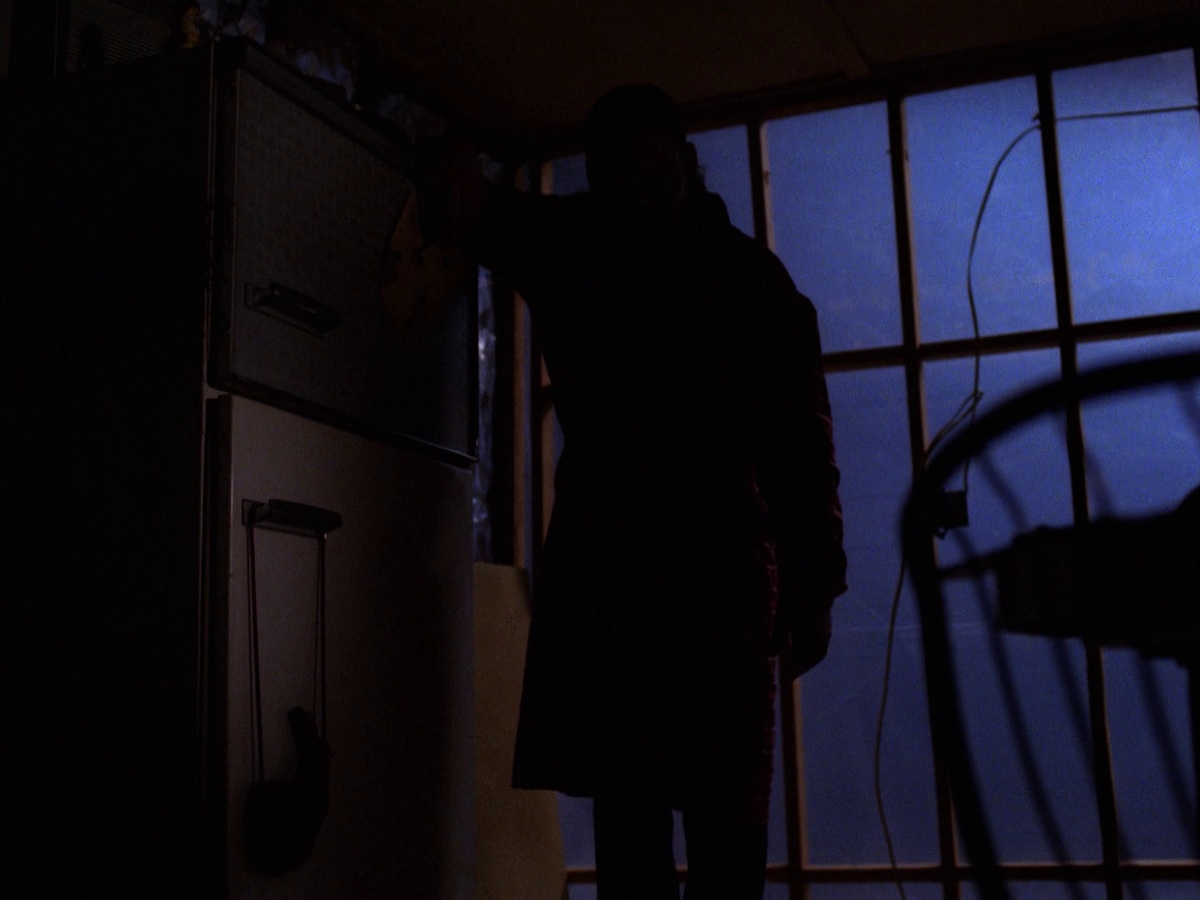
Shelly’s fight inside the unfinished house, Caroline’s history, Evelyn’s trap and Earle’s cabin.
A former partnership becomes a threat. Reconsider the investigator’s confidence when an adversary knows his habits and personal history.
 S2E15 · Overall episode 22
Slaves and Masters
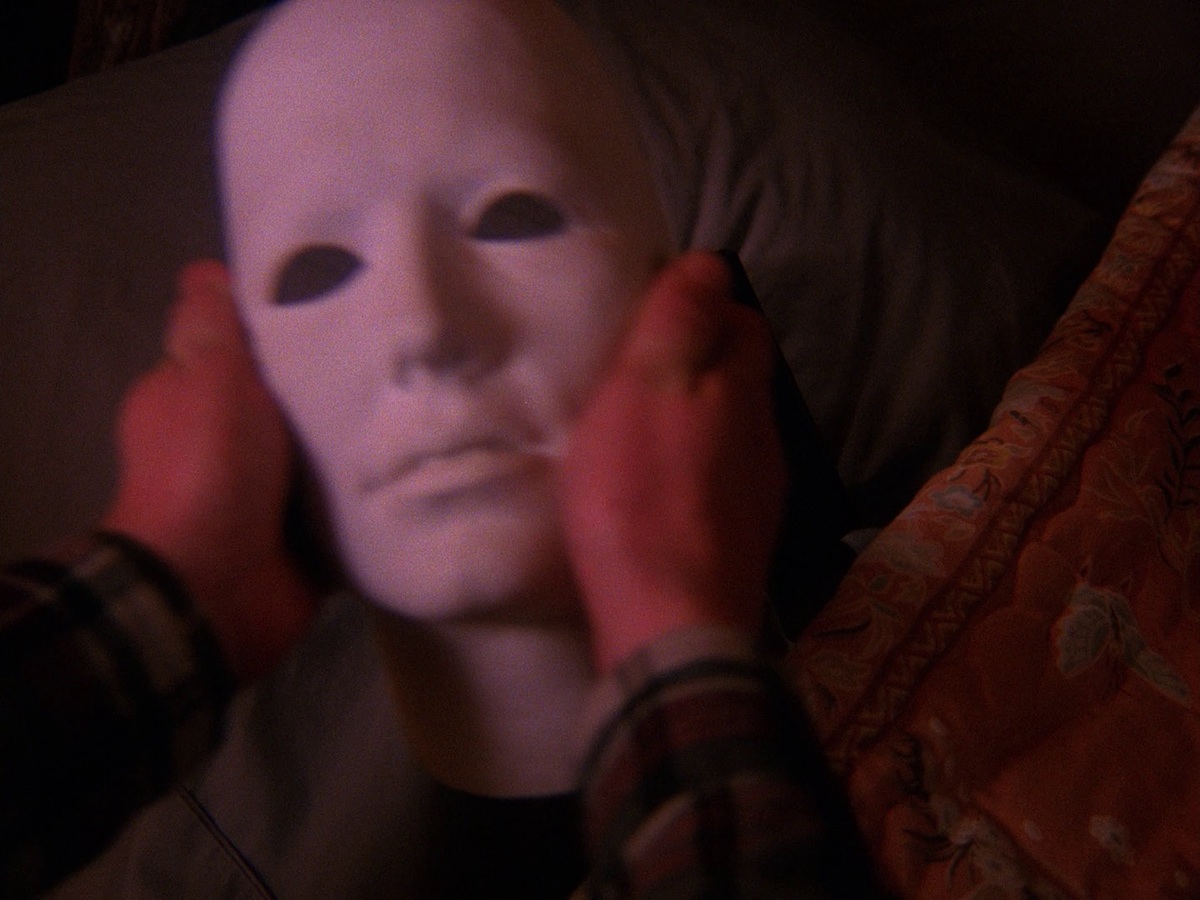
Earle’s control of Leo, Ben’s staged surrender, Evelyn’s repeated story and Caroline’s death mask.
Earle’s communications turn danger into a display. The viewer is invited to interpret a performance whose maker is also trying to control the interpretation.
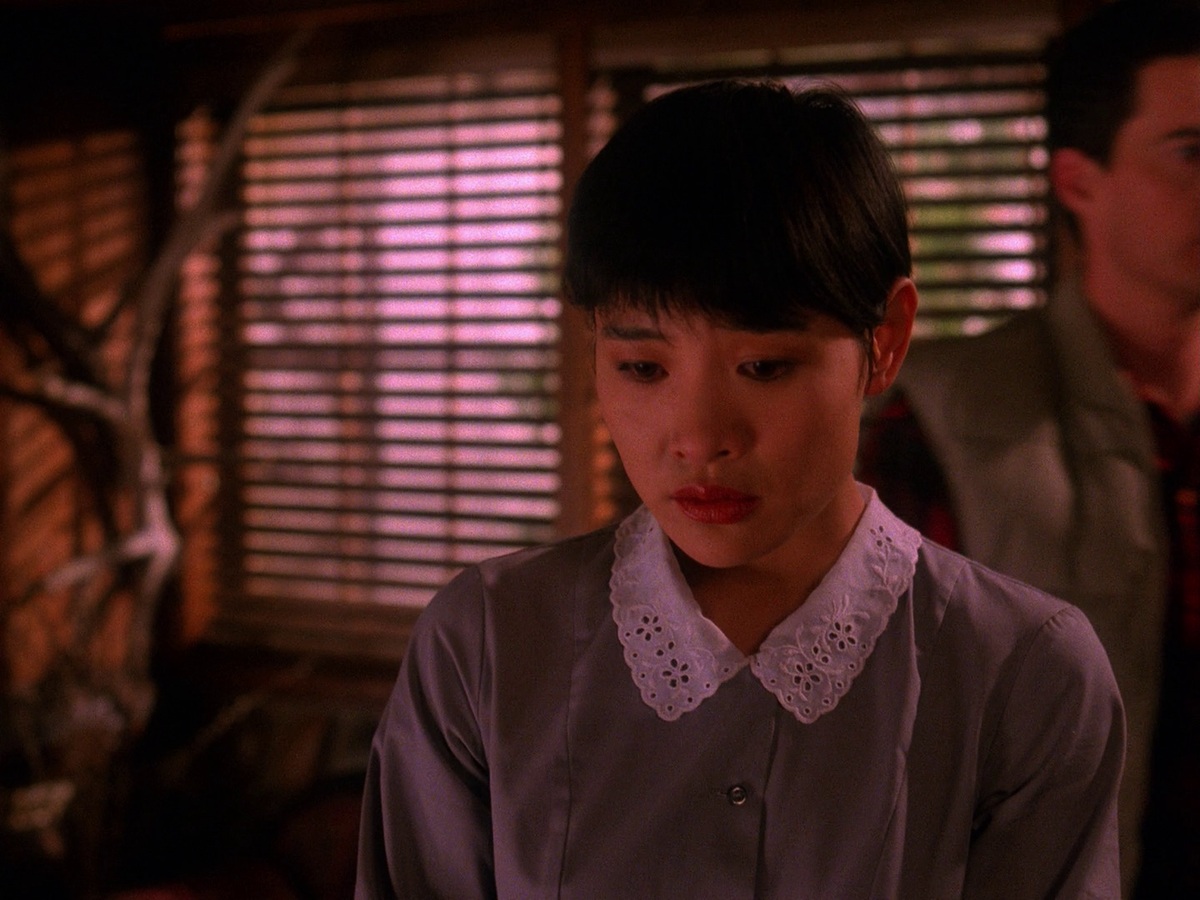 S2E16 · Overall episode 23
The Condemned Woman
Business coercion, intimacy and supernatural disturbance converge. Keep the production account of her exit separate from a theory of what the final image means.
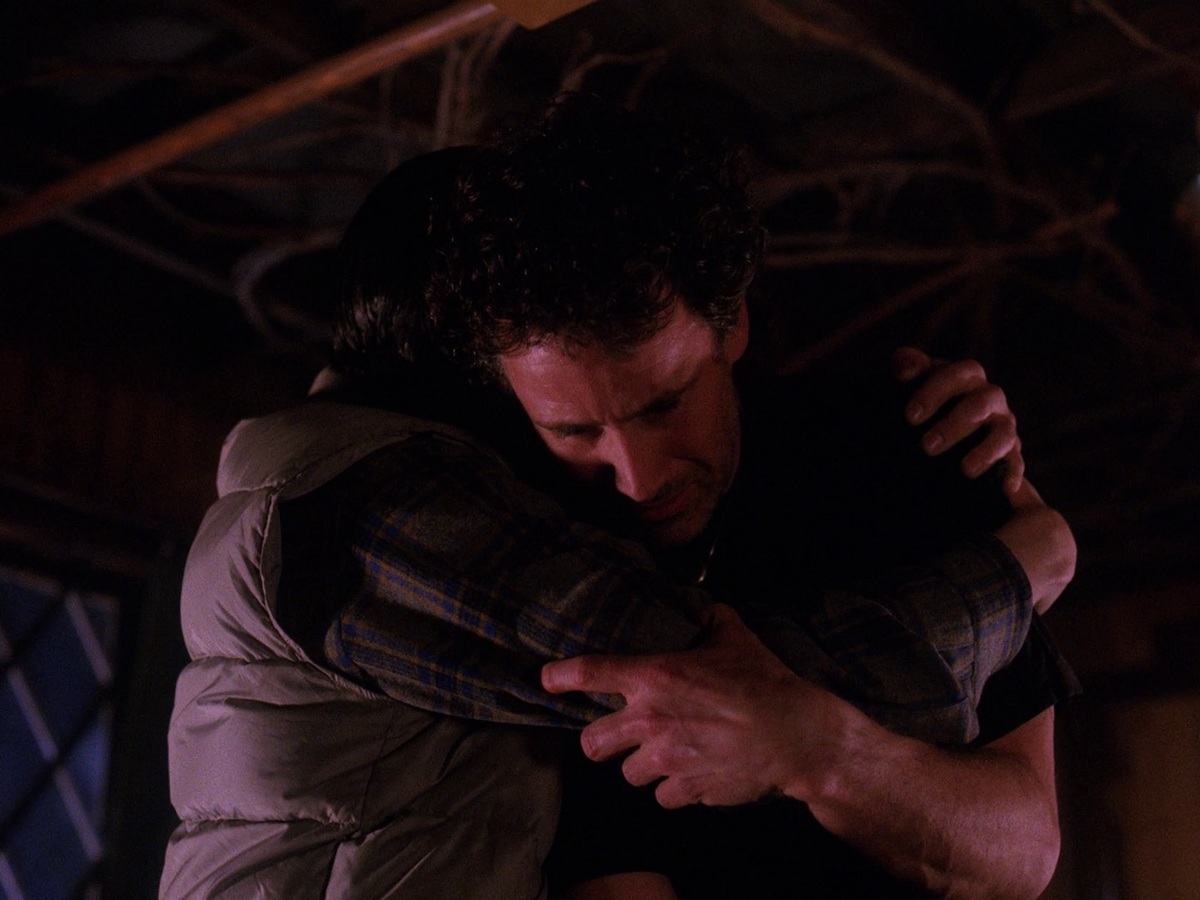 S2E17 · Overall episode 24
Wounds and Scars
A new relationship gives Cooper a personal future to imagine. Consider how that possibility alters the meaning of duty and risk.
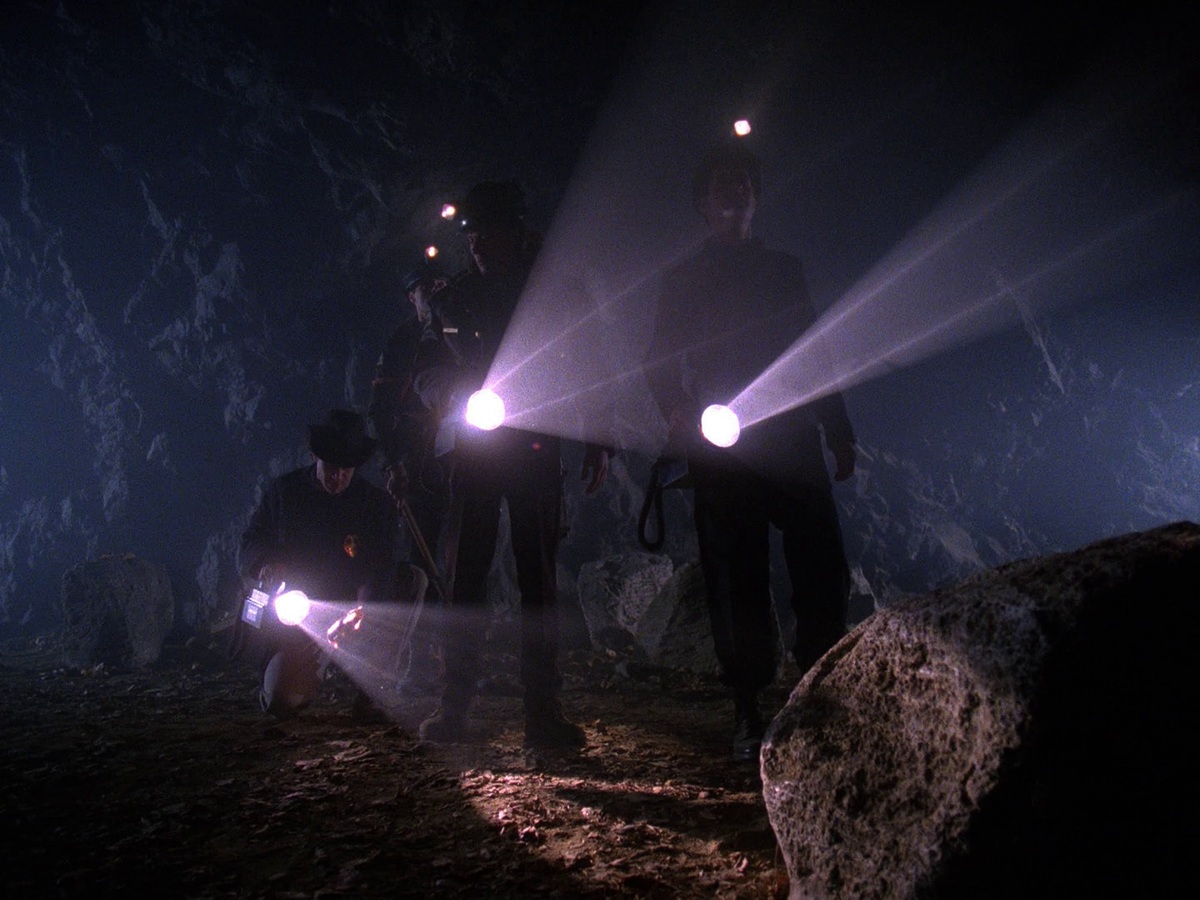 S2E18 · Overall episode 25
On the Wings of Love
Reinstatement restores one form of authority. Ask what it cannot repair about the personal and supernatural uncertainties already in motion.
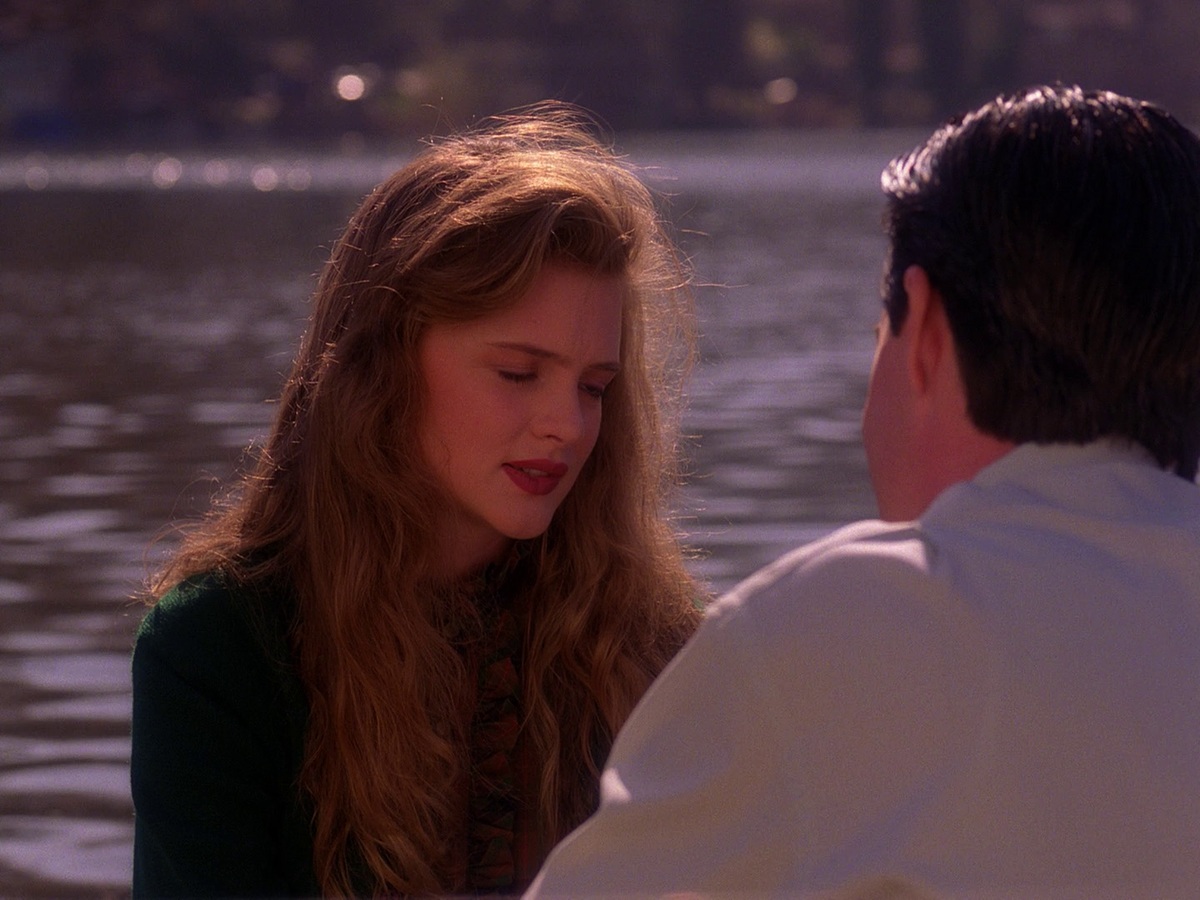 S2E19 · Overall episode 26
Variations and Relations
An object seems to promise orderly discovery. Compare that promise with the less controllable relationships and desires surrounding the investigators.
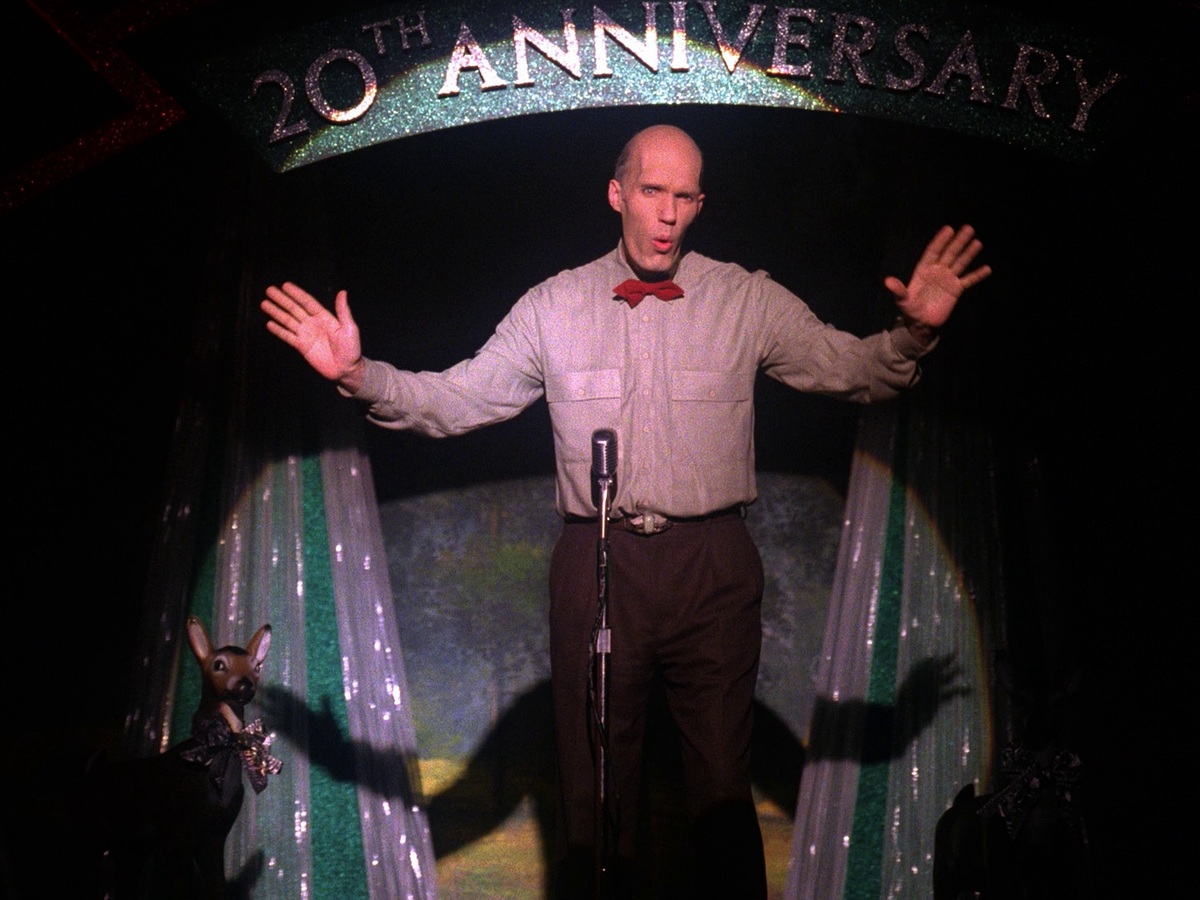 S2E20 · Overall episode 27
The Path to the Black Lodge
Briggs resists Earle’s interrogation; Cooper and Annie dance beneath a warning. Follow the converging clues, performances and paths into the woods.
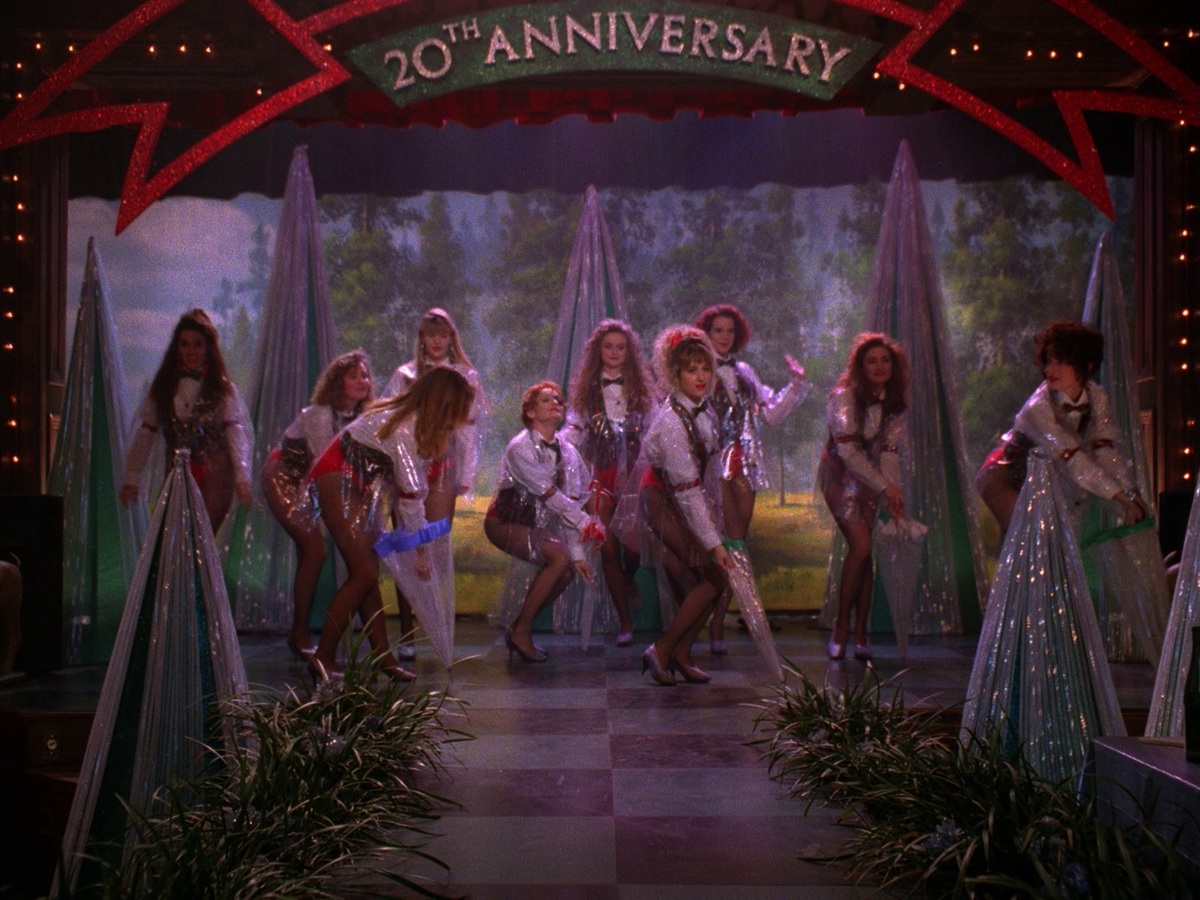 S2E21 · Overall episode 28
Miss Twin Peaks
The pageant becomes Earle’s trap. Explore the performances, surveillance, Leo’s defiance and the abduction through illustrated studies and focused galleries.
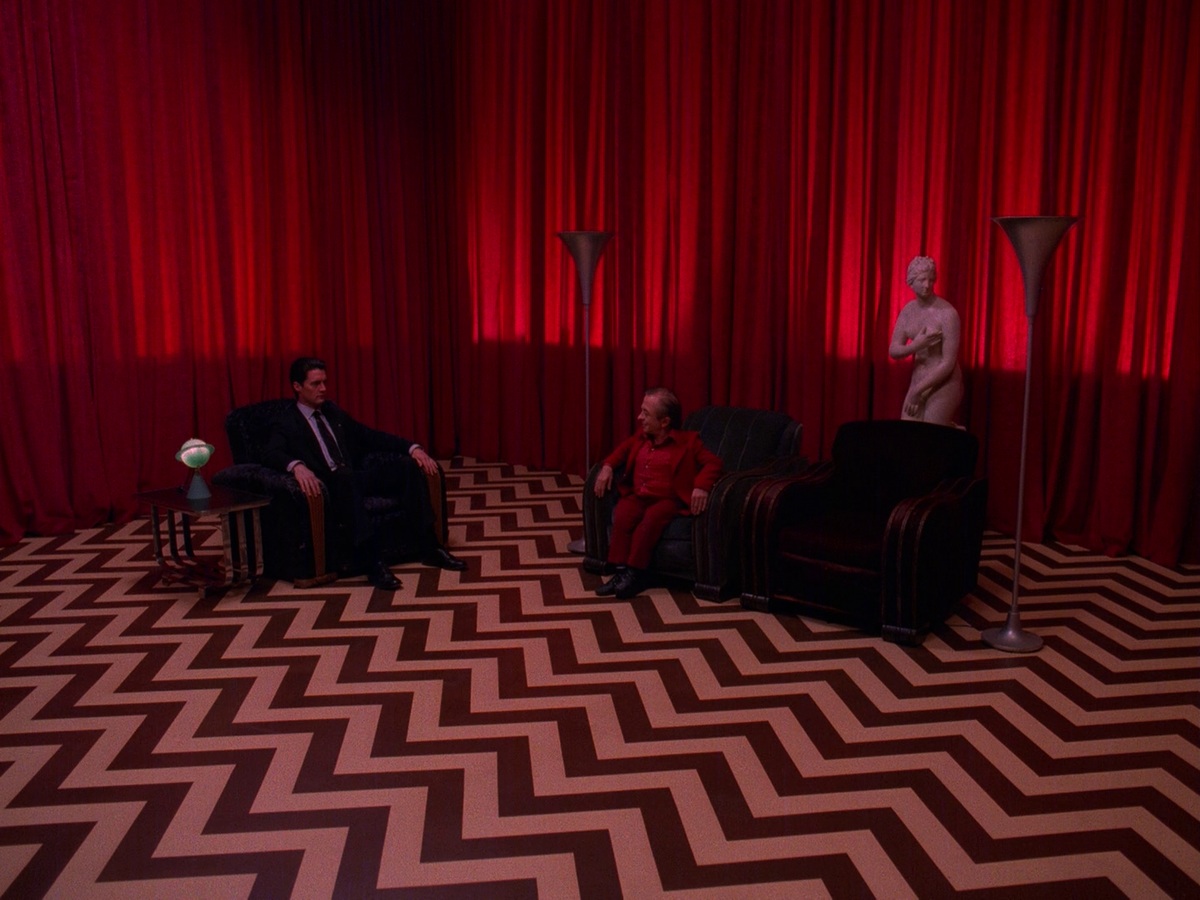 S2E22 · Overall episode 29
Beyond Life and Death
Enter the Red Room through repeated spaces, changing identities and reversed performance. Follow the bank sequence, Cooper’s double and the mirror ending.
Twin Peaks between broadcasts
The story continued to address viewers outside the episodes. A Thursday-night announcement, seasonal greeting, message to allied forces, football promotion and sheriff’s-department T-shirt advertisement place its recognisable faces and settings within the practical life of network television. They show different uses of the town: inviting a return, marking an occasion or turning an institution from the fiction into an object audiences could wear.
Recaps and next-episode previews also shape expectation through selection. Margaret’s introductions instead ask how to perceive and interpret: surfaces and dreams before the premiere, inside and outside before Donna’s visit to the Tremonds, and language before Jacoby’s prompted recollection. These pieces frame the drama without supplying a master key to it.
When a recap preserves an earlier mistake
The recap for Coma repeats Lucy’s report that Jacques was strangled; the episode then has Albert correct the cause of death to suffocation with a pillow. Recaps can preserve a character’s provisional account rather than deliver an omniscient summary. The next-episode preview’s promise of Ronette’s story likewise directs attention towards testimony, while her subsequent recognition is conveyed through distress rather than a fluent explanation. Read the episode’s dialogue study.
Cooper speaks beyond the investigation
The Thursday-night announcement borrows the waking-from-a-dream premise and homeward language of The Wizard of Oz, then turns Cooper’s address to Diane into scheduling information. His seasonal greeting and message to allied forces use a recognisable character to address people outside the fiction. In the latter, Shelly’s pie delivery restores the diner’s familiar social world around the greeting. The T-shirt advertisement similarly lets Gerard and Lucy turn the sheriff’s department into an invitation to viewers.
The football promotion shows its working
The football-promotion outtakes preserve slates, action calls, repeated exchanges and variations around Cooper’s coffee. Cooper and Truman’s familiarity becomes a performance that can be adjusted across takes. Unlike the finished episode, this material lets the viewer encounter the instructions and restarts surrounding the scene. Its value lies in how a brief promotional appearance is made, as well as in the television event it advertises.
Selling Saturday as another mystery
An ABC promotion reuses Cooper’s dream, images of the Red Room and the stone-and-bottle test to advertise where viewers should find the programme. Weekday names pass across the image before a final Saturday announcement. The series’ methods of puzzling out a mystery become a way to make a television scheduling message recognisably its own.
A second spot packages characters through ironic labels: husband, daughter, killer and widow. The labels alternate with brief dramatic excerpts rather than supplying the context an episode gives them. Together, the spots show how the same material could be reshaped into an invitation to return, condensing unresolved stories into a few emphatic contrasts.
Lucy announces a different night
A special closing-credit announcement uses Lucy’s familiar delivery to direct viewers to a two-hour finale on Monday, 10 June. The picture remains Laura’s portrait beneath the credit roll. The contrast is revealing: the image preserves the series’ memorial ending while the voice performs the practical work of keeping an audience informed about its next broadcast.
The announcement belongs beside the earlier Thursday and Saturday promotions. Scheduling is part of the programme’s history of reaching its viewers, and a message delivered by a familiar character can make that practical information feel continuous with the town. It should be distinguished from dialogue within the episode itself.
From a difficult broadcast to a long afterlife
The original ABC run ended on 10 June 1991. Frost’s later testimony describes the pressure to reveal the murderer and the prolonged experience of cancellation. It is evidence of how he remembers the process, not a complete network decision record. Frost’s cancellation account
Our assessment separates three propositions often fused together: that the show lost audience; that the narrative changed after the case closed; and that a specific creative decision caused the entire loss. The first requires measurement, the second analysis, and the third a stronger causal argument than retrospective disappointment. Scheduling, publicity, competition and the novelty of the first season belong in that investigation.
Later access changes the experience too. A viewer with all 22 episodes available can traverse a difficult stretch without the interruptions of the original schedule. That does not repair every storyline, but it changes the duration of uncertainty and the ability to recognise patterns. Release history is therefore part of criticism, not merely a list of boxes.
The pilot variants, production interviews and additional scenes preserve different histories of the series: changes to the story, memories of making it and later ways of presenting it. The research draws these materials together with contemporary criticism and published interviews. Sources and further reading
The murder mystery as the centre of the town
In A Slice of Lynch: Uncut, Lynch recalls resisting a solution to Laura’s murder and describes the central mystery as supporting the surrounding stories. That retrospective account sits beside Frost’s recollection of pressure to reveal the killer. Together they explain how the creators remembered the change; they do not by themselves settle every cause of the programme’s audience losses. A Slice of Lynch: Uncut, 36:52–38:24
Explore further
Follow the sources below, explore the museum collection, or continue through the Reading Room. New archival discoveries and contributions enrich the record of Lynch’s work.
Sources and further reading
Participant testimony, distributor records and criticism do different jobs. The notes identify what was inspected and what remains a lead. Original readings above belong to Lyncharium, not to the quoted participants. Checked 16 October 2026.
- Twin Peaks at 35: an oral history ↗Jane Wollman Rusoff, Television Academy, 16 October 2025; originally published as A Damn Fine Show. Published oral history read. Participant memories are retrospective. Its Wild at Heart/second-season chronology is not adopted here.
- Andreas Halskov interviews Frank Byers ↗Published interview read: stock, colour, wide lenses, second-season premiere and finale. Publication date not established.
- Frank Byers: Episode 1.002 commentary, transcribed and illustrated ↗Dugpa, Twin Peaks Blog, 18 December 2024. Written transcription and selected images inspected, not the complete DVD audio. Episode 1.002 is S1E3 under pilot-inclusive numbering. Byers’s pilot-footage memory is explicitly tentative.
- David Duchovny on Gestureland and Denise Bryson ↗V13 Media, 13 August 2021. Written Twin Peaks questions and answers read; embedded audio not played. Distinguishes original auditions from later return.
- It all begins with the story: Tim Hunter interview ↗Andreas Halskov, 16:9, November 2018. Twin Peaks passages read: camera movement and the drained set for Leland’s final scene. A caption’s 1991 date is not adopted for the 1990 episode.
- Twin Peaks: the films that influenced David Lynch’s TV masterpiece ↗Craig Williams, BFI, 15 May 2017. Critical comparisons and original-series image provenance retained from the first edition and checked against the published article. Comparisons are criticism, not documented creator instructions.
- The Sheryl Lee interview: complete and unedited ↗Andy Burns; interview conducted 24 February 2014, republished 24 February 2015. Published transcript read. Lee recalls casting, Maddy, direction and using Jennifer Lynch’s diary book.
- The Entire Mystery: contemporary release-announcement reprint ↗CBS/Paramount press release dated 15 May 2014, reproduced by Travis Leamons at Inside Pulse that day. Contents and disc breakdown read.
- Real Twin Peaks 2026: conversation with Harley Peyton ↗Steven Miller, Twin Peaks Blog, 31 March 2026. The report corrects an episode-number confusion.
- Twin Peaks: Season 2 episode listing ↗Paramount+. Twenty-two-entry distributor listing inspected. Some catalogue title spellings differ from other references; episode numbers are used as stable locators.
- Backwards through the backwoods ↗Sam Davies, Sight and Sound, 10 June 2025. Written interview with Lori Eschler and Dean Hurley read. The page headline swaps their surnames; the body identifies them correctly. Complete episode tracks were not auditioned.
- You want people to enter the dream: Mary Sweeney ↗Matt Fagerholm, RogerEbert.com, 2022. Original-series editing passage read in the previously preserved browser text. Current automated download returns 403; it is not the inspection copy. Audio/video not played.
- Andreas Halskov interviews Mak Takano ↗Published interview read: choreography, episode directors and recognising Tojamura. Actor’s later memory; his speculation about cancellation and unknown writer intentions are not treated as established history.
- From Z to A — 2019 announcement preserved at Twin Peaks Blog ↗CBS Home Entertainment release dated 21 August 2019, reproduced by Steven Miller on 22 August. Announcement and supplement descriptions read.
Another doorway
Continue exploring
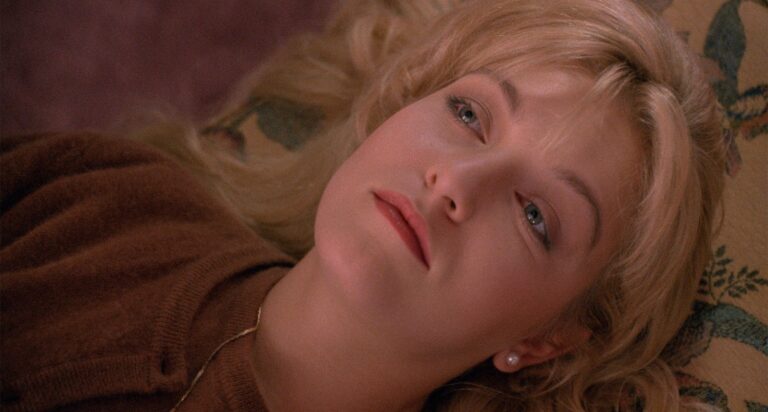
Films
Twin Peaks: Fire Walk with Me
A sourced guide to Twin Peaks: Fire Walk with Me: Laura Palmer, Sheryl Lee’s performance, image and sound, The Missing Pieces and the film’s changing reception.
Television
Twin Peaks: The Return
Explore all 18 parts of Twin Peaks: The Return through performance, Part 8, effects, sound, editing, the ending and documented production sources.
Television
Twin Peaks
Explore Twin Peaks: viewing order, Lynch and Frost, Laura Palmer, music, photography, The Return, pilot versions and companion books.
Image credits and sources accompany each linked guide.