Twin Peaks: Episode 18 — Masked Ball
1990 · Season 2, Episode 11
Denise arrives, Hawk names the Lodges and Windom Earle sends a recorded challenge. Explore an episode of altered identities, projected memories and dangerous offers of refuge.
Season 2, Episode 11 / overall Episode 18. Includes major story revelations.
Explore this episode
An absence that cannot be filed
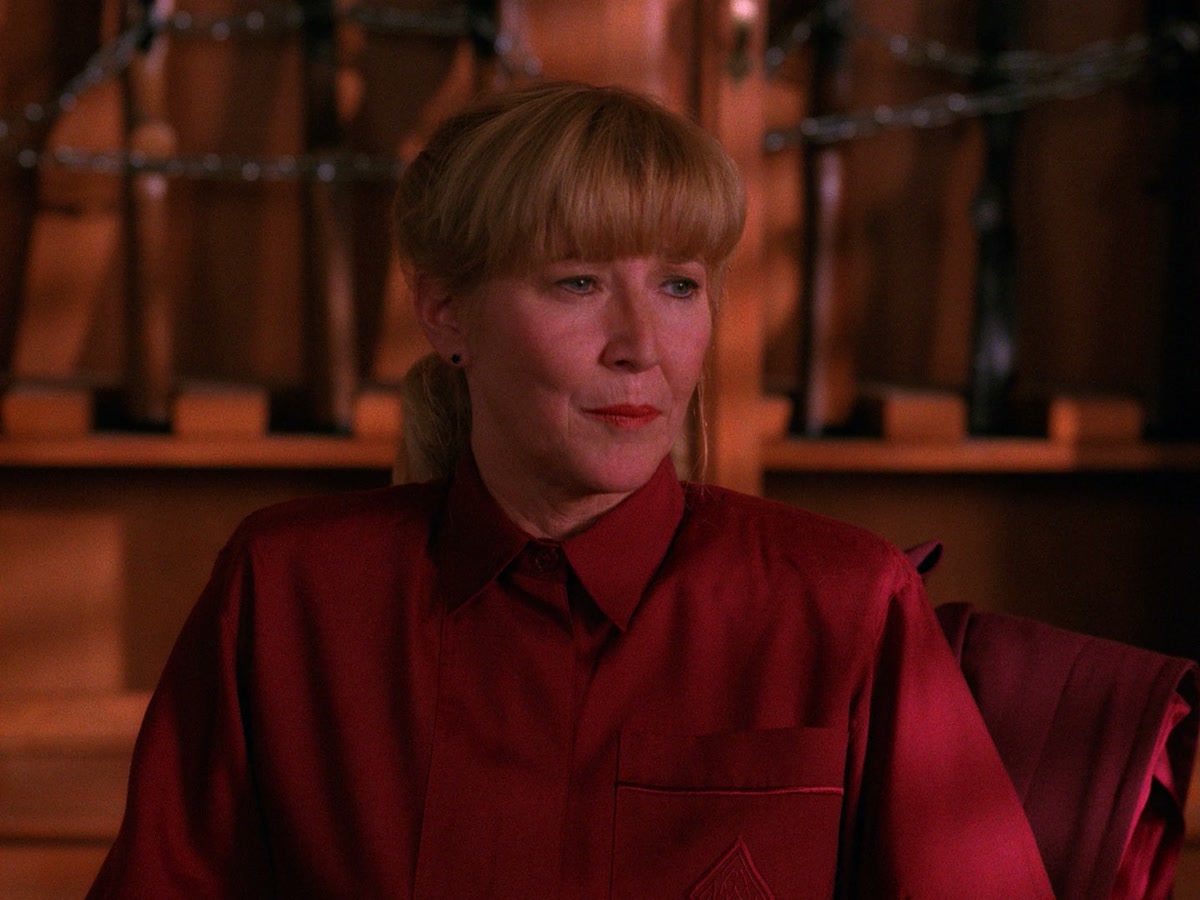
Betty Briggs tells Cooper and Truman that her husband has disappeared before. Her composed manner initially offers an ordinary explanation: Garland’s work is secret, and his family has learned to live with absences. Cooper’s description of the campsite does not settle whether this disappearance belongs to that pattern. Betty’s knowledge is intimate but limited; she understands the life without possessing its classified explanation.
The scene gives the major’s disappearance a domestic cost. Betty describes a husband with an explorer’s appetite, then acknowledges that there is no manual for being married to him. The series’ expanding cosmology reaches the person left at home waiting for a call. Cooper’s certainty about the light in the woods remains separate from what he can demonstrate to her.
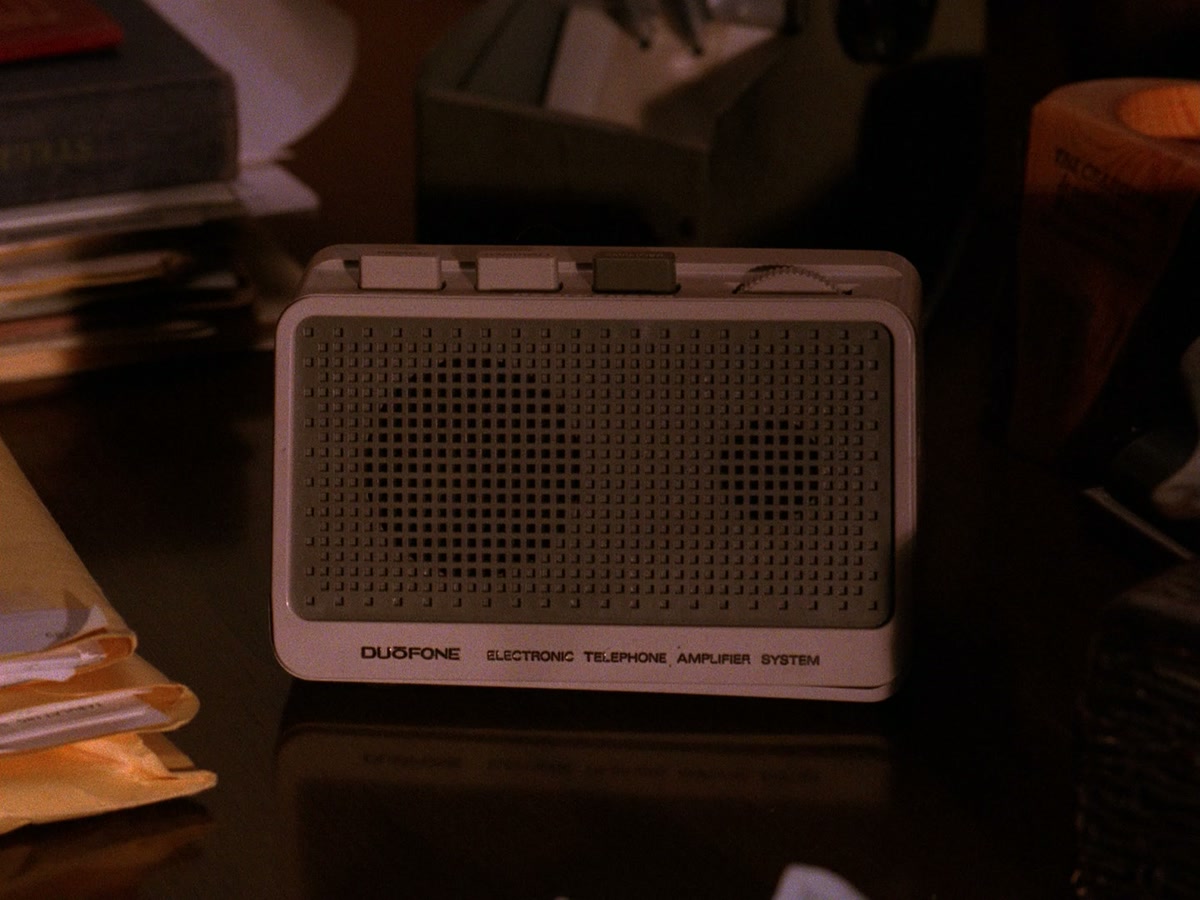
Gordon Cole’s telephone call brings another absent person into the station. His support for Cooper has to travel through a speaker, a temporary receptionist and repeated questions. This practical business of transmitting information sits beside the much harder problem of finding a man who has vanished.
Beyond the edge of the board
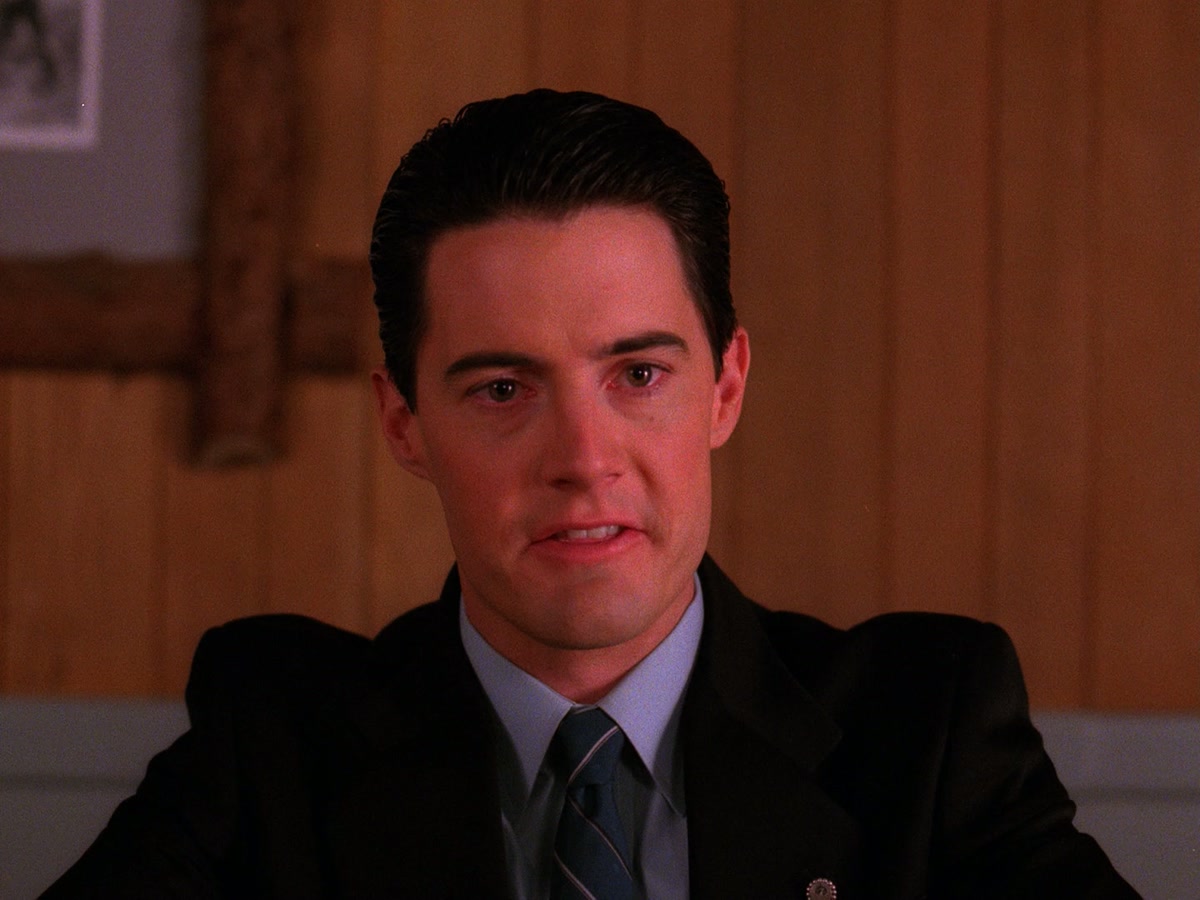
The Bureau hearing presents Cooper with an expected performance of self-defence. Roger wants him to contest the charges in the language of professional procedure. Cooper instead accepts responsibility for going beyond the guidelines while denying criminal wrongdoing. His refusal to play the expected part looks to Roger like a failure to protect himself.
Cooper describes directing his attention beyond the board: wind in trees, animal life, fear and what lies outside it. The speech does not make the investigation disappear. Roger keeps the suspension in place and considers a psychological assessment. The same words that express moral clarity for Cooper can be heard as evidence of instability by his superior.
The scene gains another meaning when Windom Earle later makes a literal chess game into a threat. Cooper wishes to see beyond established moves; Earle argues that recurring patterns expose a person to attack. Both speak about games, but one seeks a larger relation to the world while the other treats people as pieces to sacrifice.
Hawk names the threshold
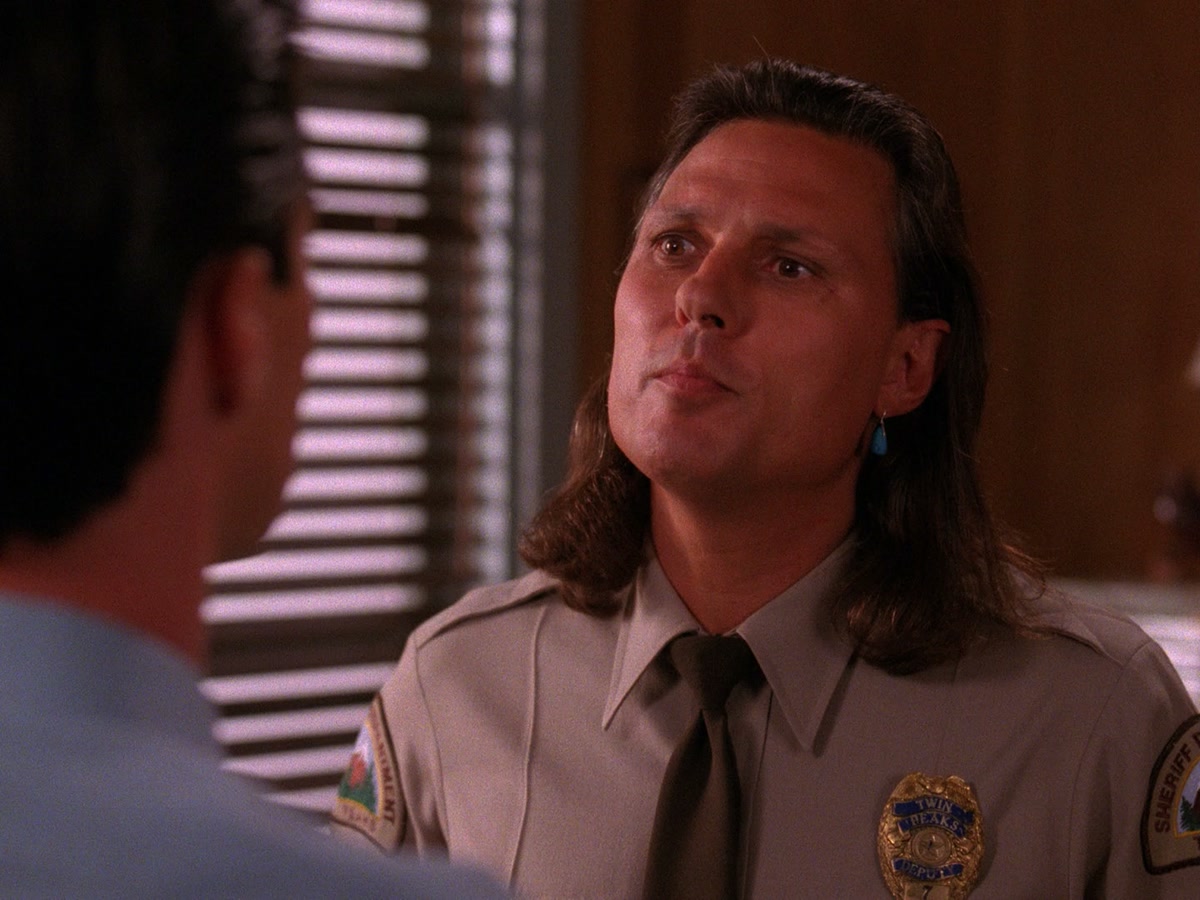
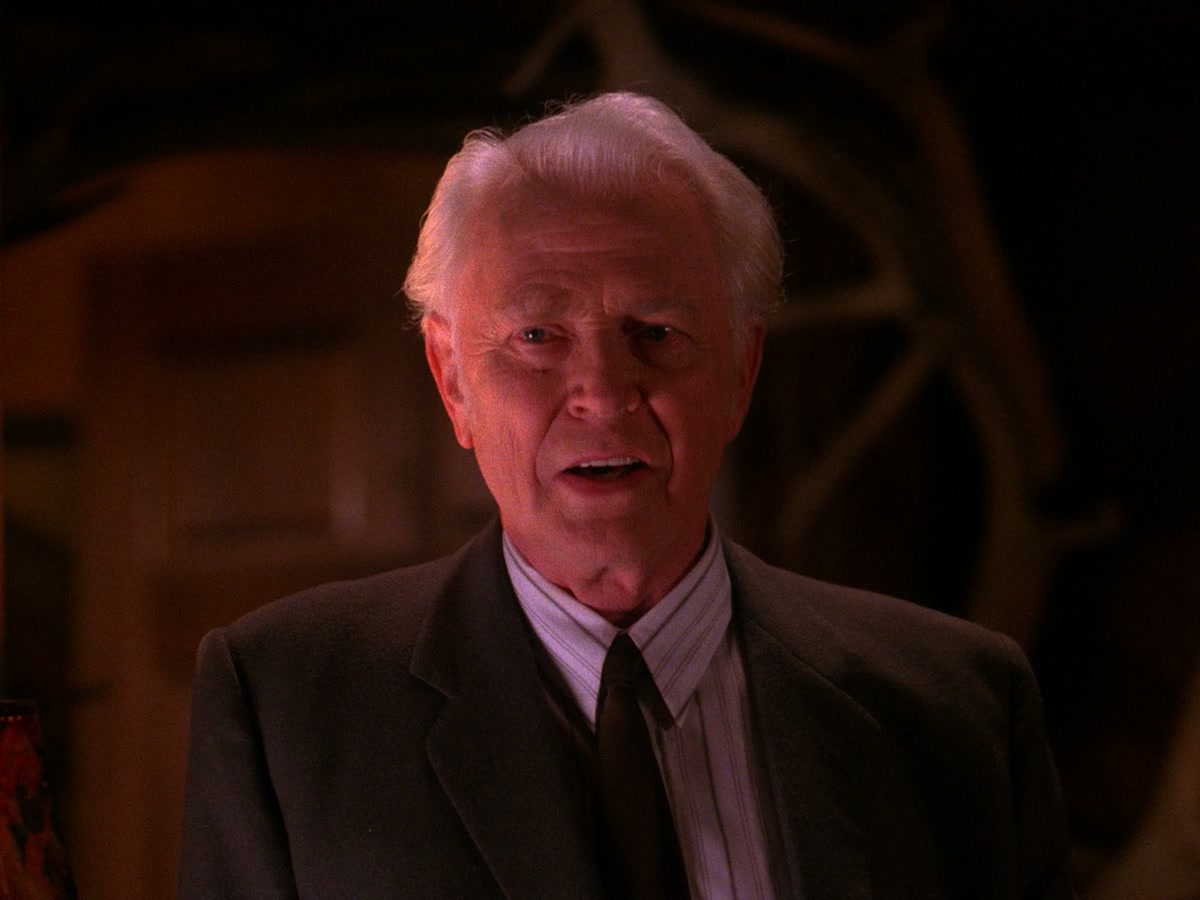
Briggs’s last reference to the White Lodge prompts Cooper to ask Hawk about it. Hawk describes the White Lodge, its shadow counterpart and a confrontation with one’s own shadow. The warning concerns the quality of the visitor’s courage, rather than a simple division between a safe room and a dangerous room.
This is a speech by a fictional character within the programme’s developing mythology. It should not be presented as a documented statement of a particular Indigenous tradition. Truman’s description of local legend and Hawk’s account of spiritual danger establish different relations to the same story: familiarity for one listener, instruction for another.
The arrangement is economical. Three investigators remain in a recognisable office while their discussion reaches beyond the world that office can administer. A message announcing a visitor interrupts the account. The episode moves from a warning about meeting one’s shadow to an encounter that challenges the men’s expectations of a familiar colleague.
Denise enters as a colleague and an investigator
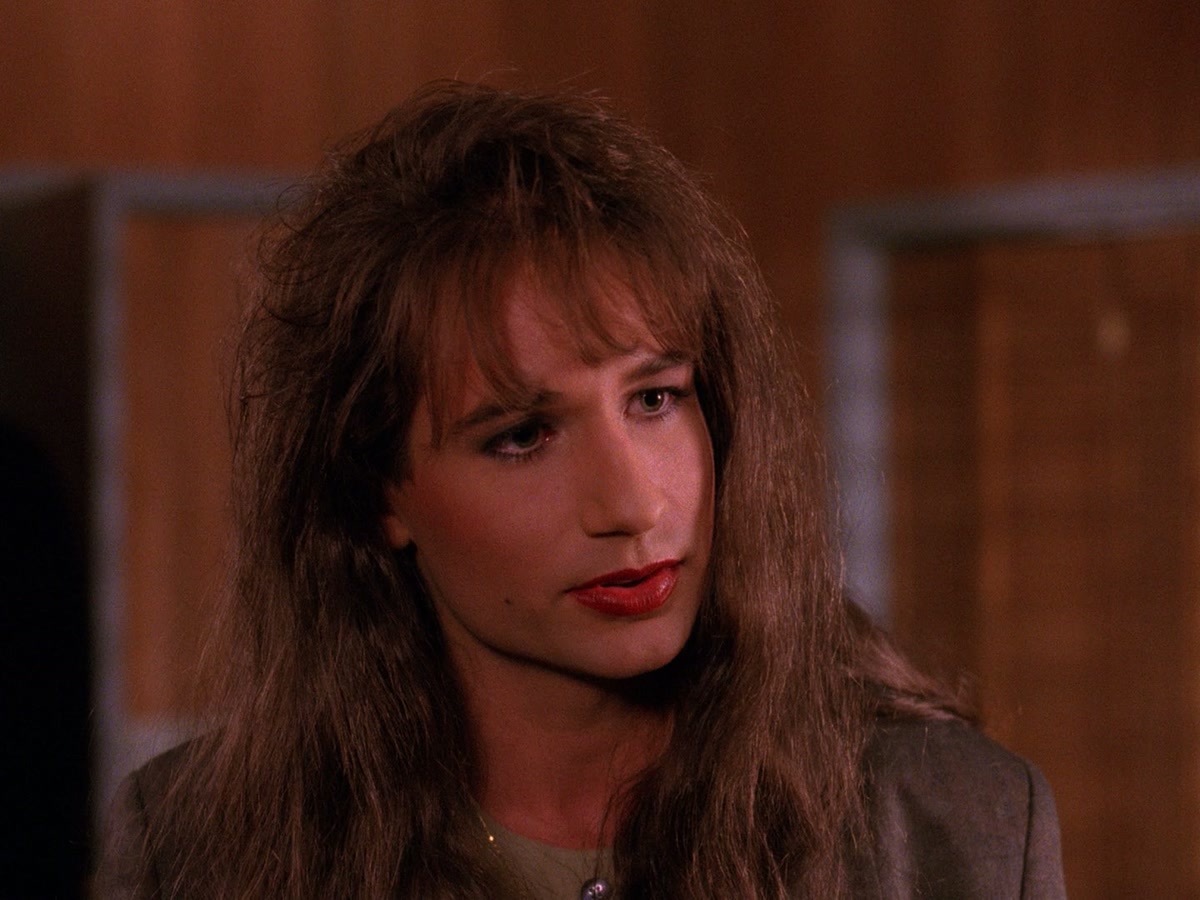
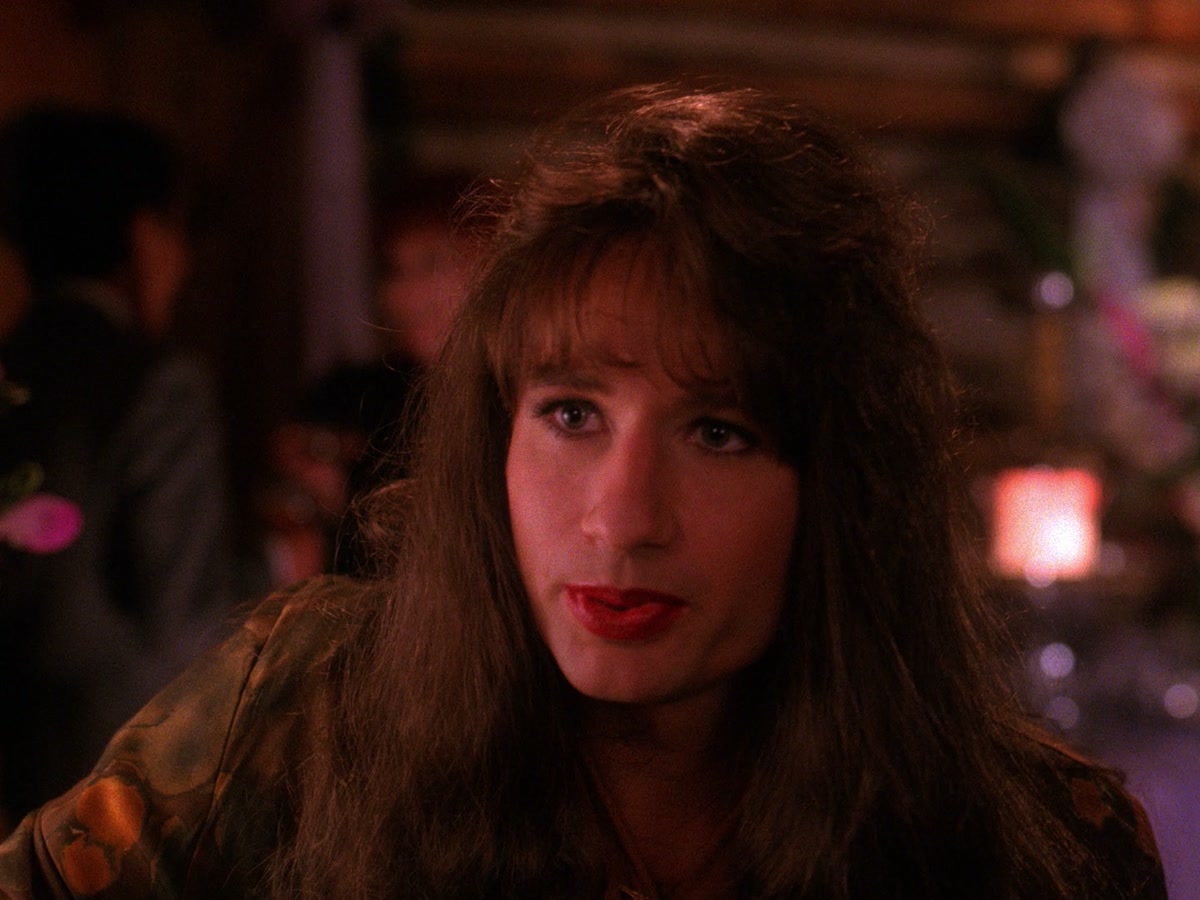
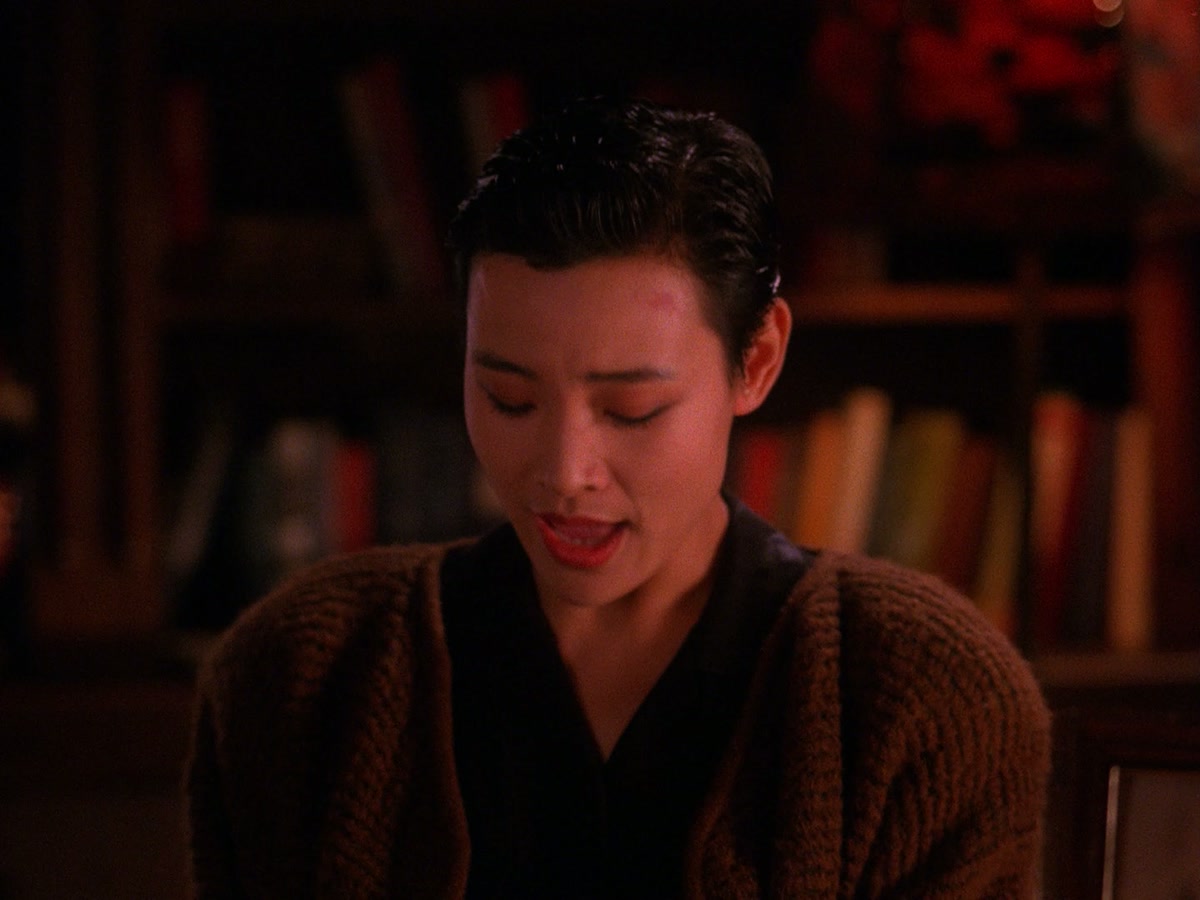
Denise Bryson’s entrance begins with a correction of her name. Cooper accepts it and introduces her to Truman and Hawk. The scene gives her professional work immediate substance: she explains the DEA allegations and begins to investigate whether Cooper has been framed. She is not present only to generate reactions from the other characters.
The episode also contains dated jokes and inconsistent forms of address. Those elements should be recognised rather than rewritten into a seamless account of acceptance. Cooper’s willingness to listen matters, but the surrounding comedy still exposes the limits of the programme’s treatment.
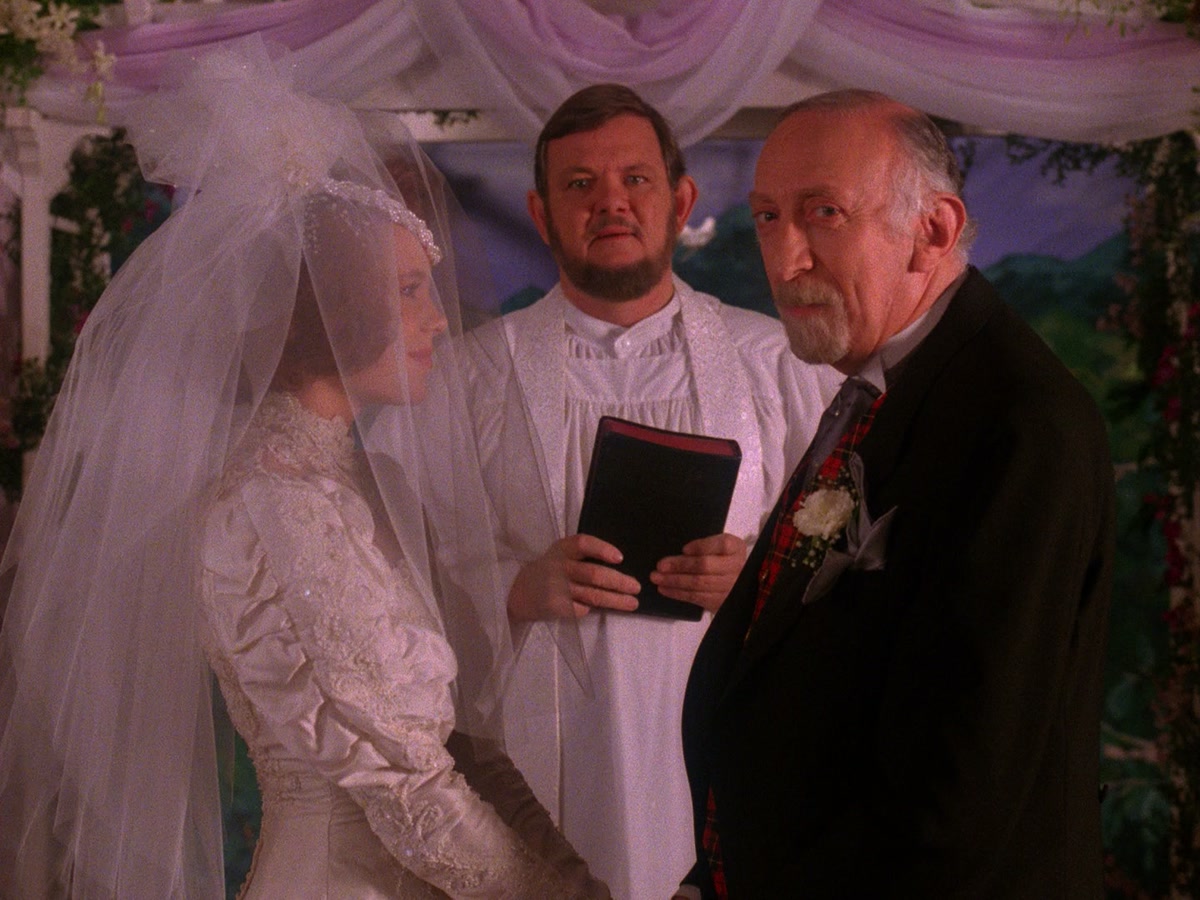
At the wedding, Denise reports evidence found in Cooper’s car. Friendship does not erase her professional obligation: she needs something stronger than his belief that he has been framed. Their subsequent conversation allows her to describe her experience in her own terms, including its unexpectedness. The movement between work and personal disclosure makes the character more than an interruption to Cooper’s case.
The reception supplies a public setting in which companionship and scrutiny coexist. Other guests carry on with the rituals of the wedding while Cooper and Denise discuss evidence and identity at a small table. Both conversations concern how a person is recognised, but they do not have the same stakes.
Arrival and conversation · 3 images
David Duchovny: allowing the presentation to do the work
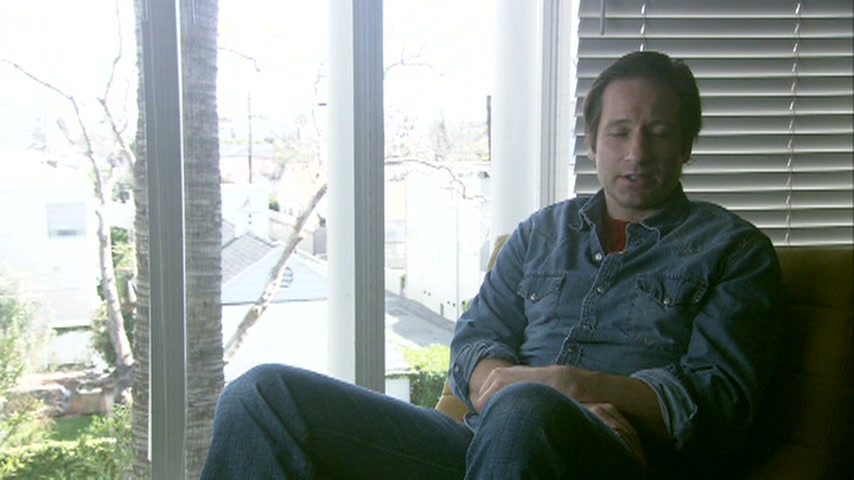
Duchovny recalls reconsidering his performance after costume, wig and makeup were applied. He felt that pushing the character’s mannerisms would be less effective than restraint. That account belongs beside Denise’s professional ease with Cooper: the character can carry a strong visual entrance without every gesture announcing it again.
His separate casting recollection is qualified by his own uncertainty: he believed the part had been intended for James Spader. It is preserved as his memory of the opportunity, not as independently documented casting history. The more direct evidence concerns his own audition and his adjustment on set.
Interview source: David Duchovny, “Production,” 00:00–00:44; “Origin,” 00:05–00:53; Twin Peaks: From Z to A. Retrospective testimony, identified separately from the finished episode.
Leaving town, entering another story
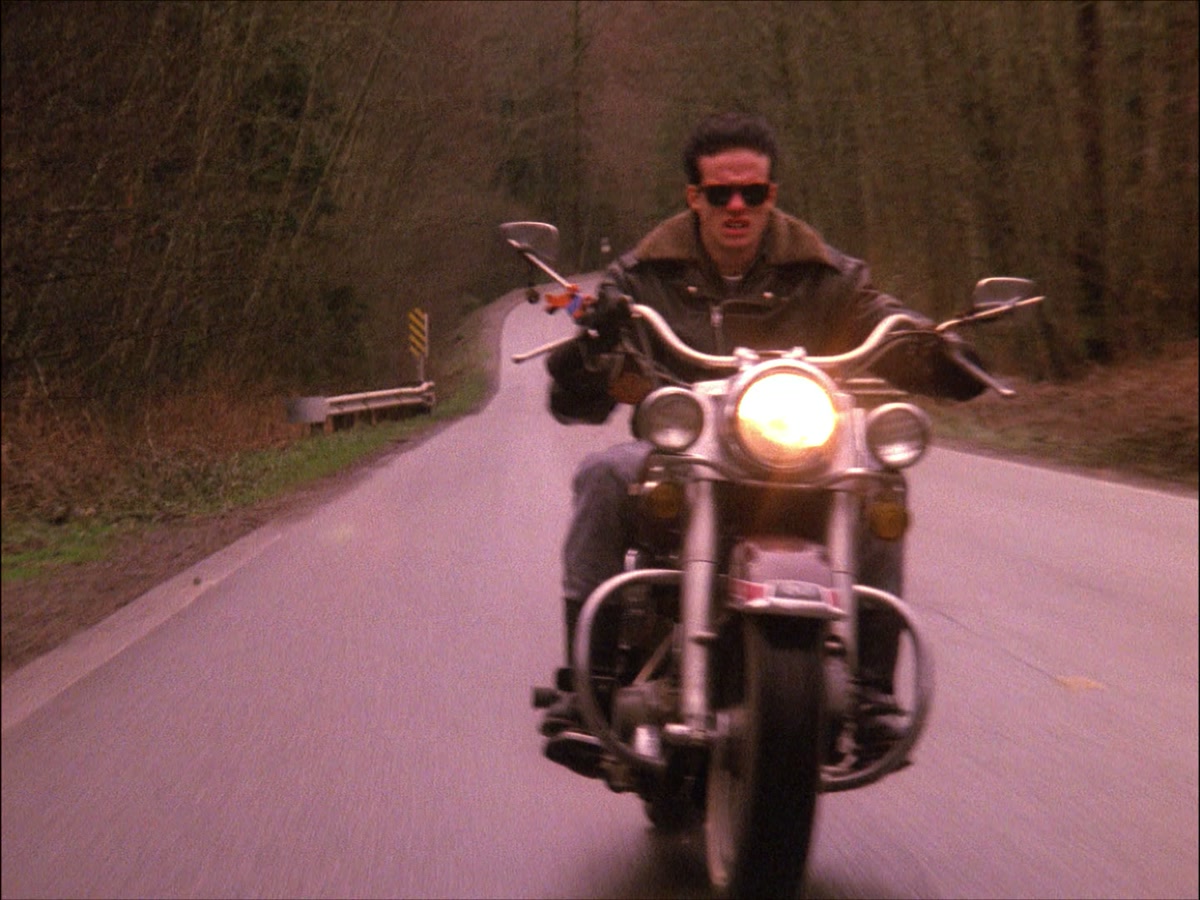
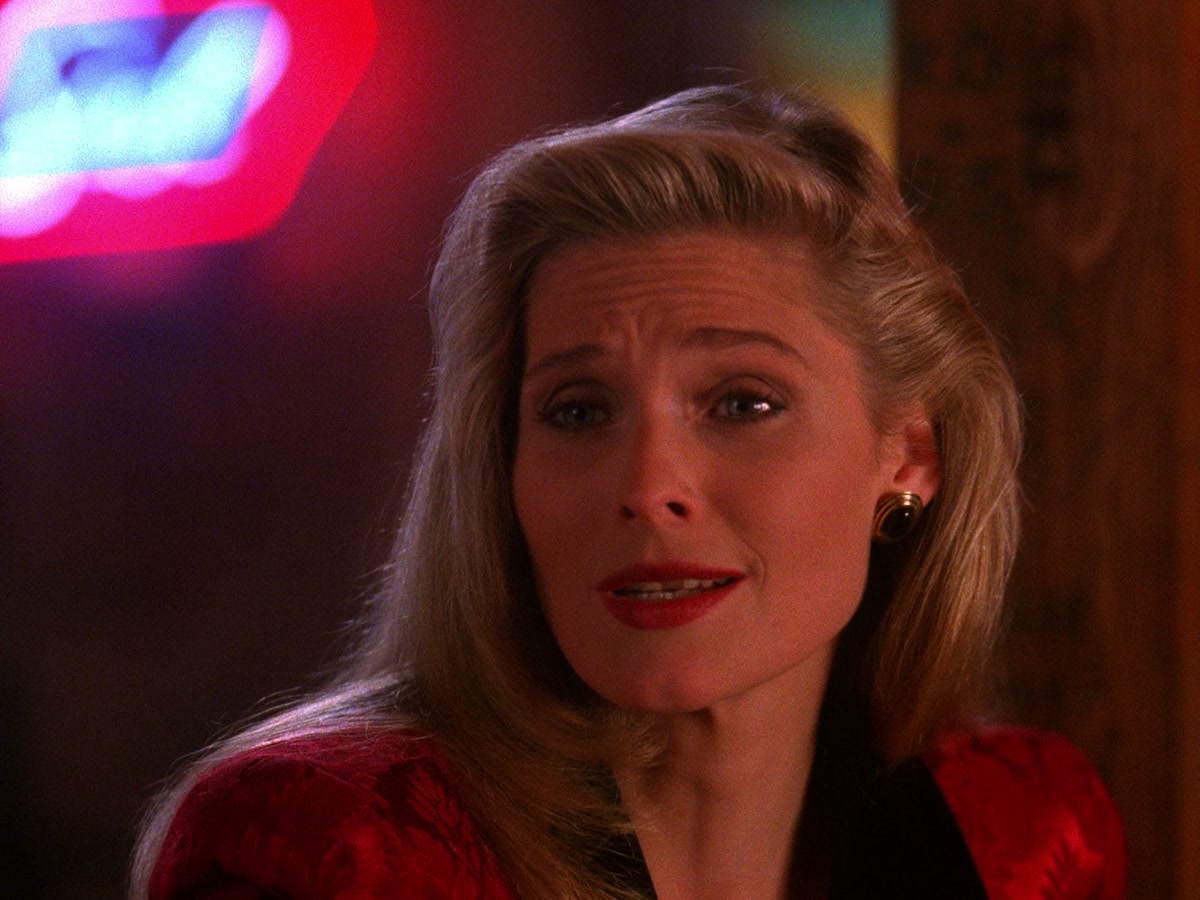
The road opening offers James an image of escape: movement, open space and a destination not yet announced. Wallies replaces that openness with a tightly lit interior. Evelyn reads him as a man running from something before she knows his history. The encounter feels less like a fresh beginning than an invitation to occupy a role she already understands.
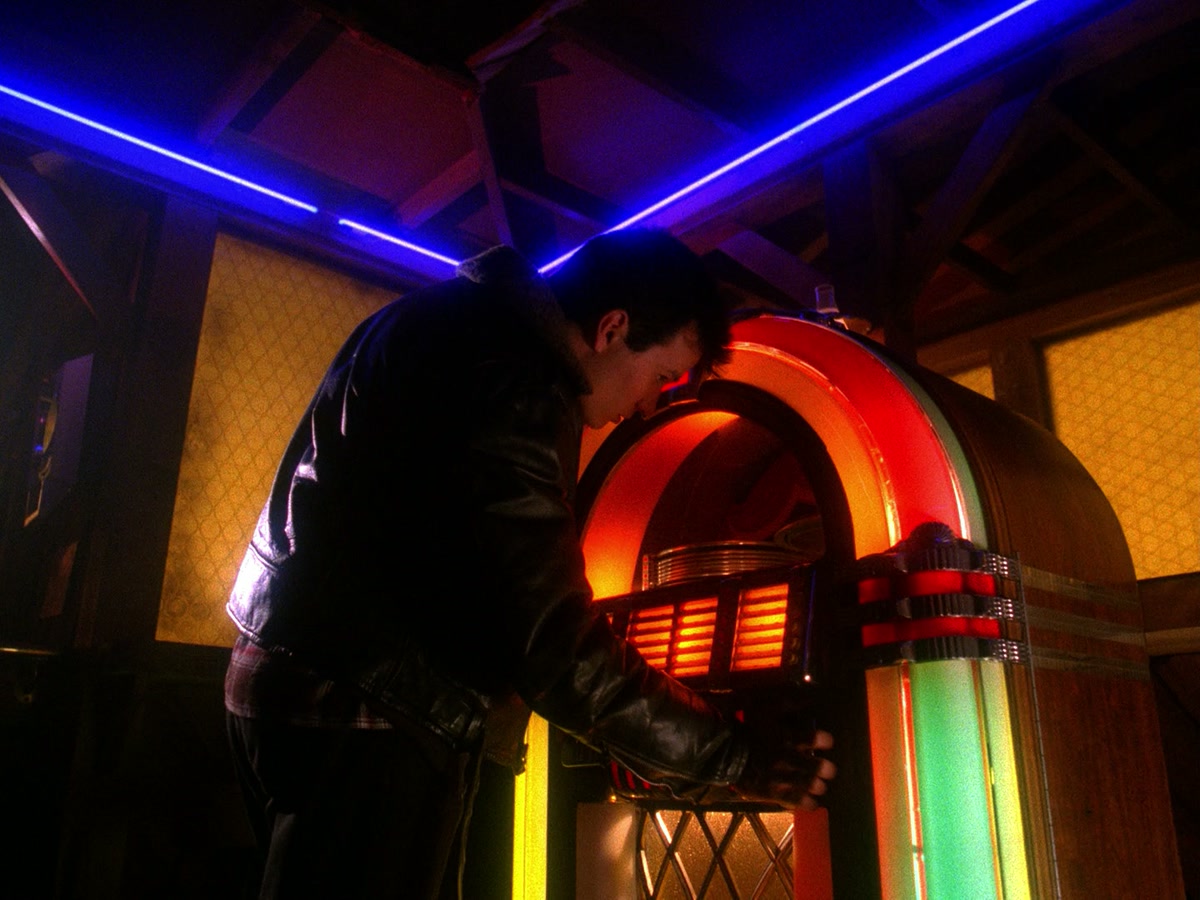
The jukebox gives James a pause between accepting her proposal and following it. His stillness beside the illuminated machine contrasts with the forward movement of the motorcycle. It is an expressive interval in which the promise of freedom stops long enough to become loneliness.
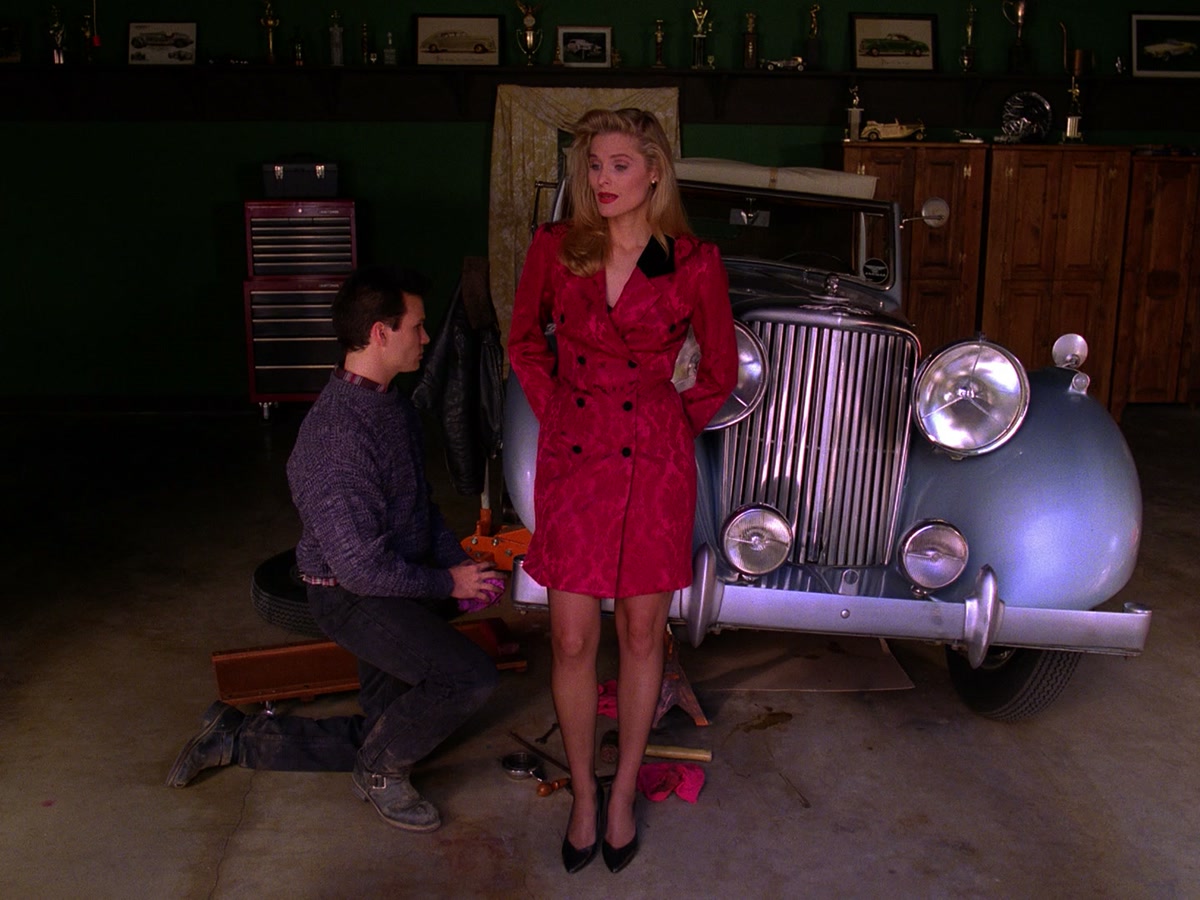
At the garage, Evelyn describes her husband through the possessions he expects to remain perfect. James contrasts the appearance of a machine with the feeling of riding it. Her offer of accommodation turns a repair job into a reason to stay. The episode leaves the imbalance in view: she controls the house and the terms of the arrangement; he has arrived needing somewhere else to be.
From the road to the garage · 3 images
Ben projects a family past onto the present
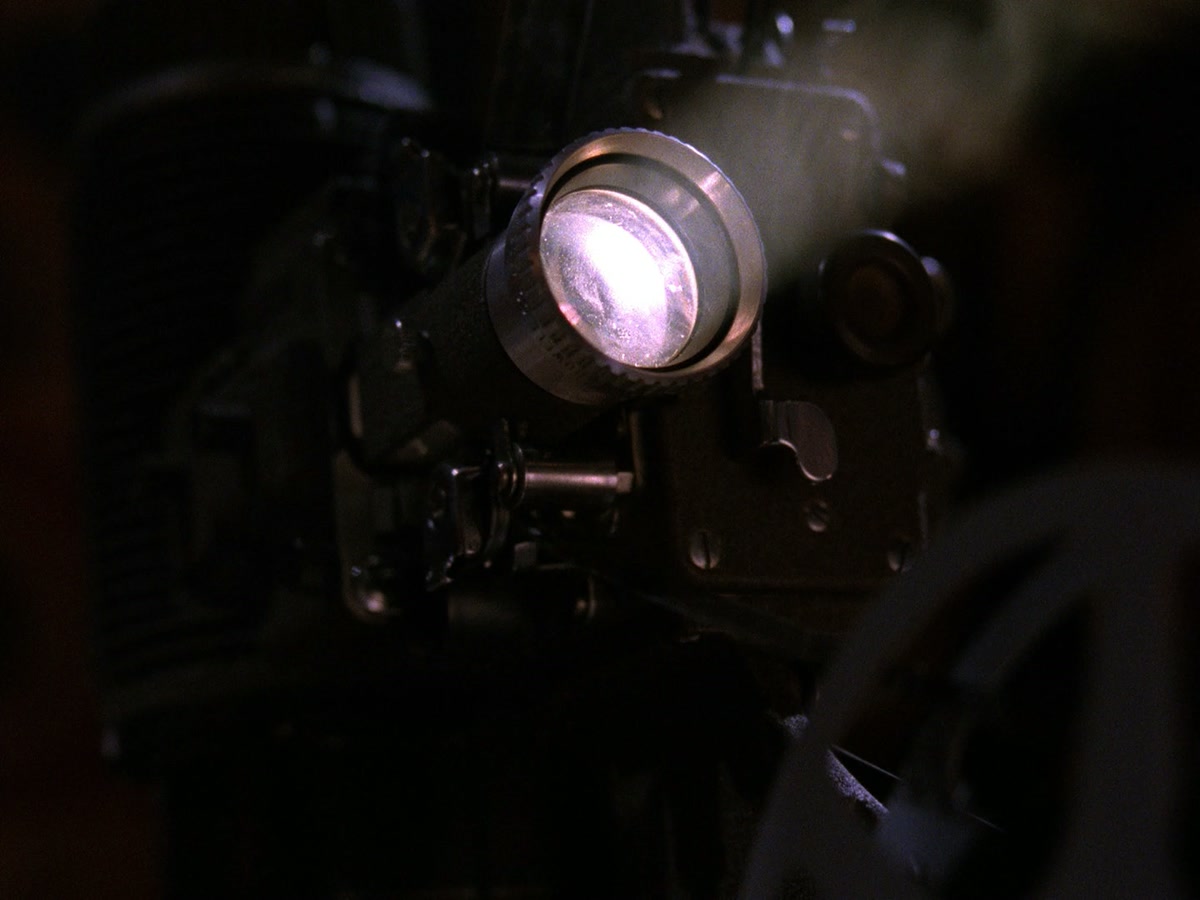
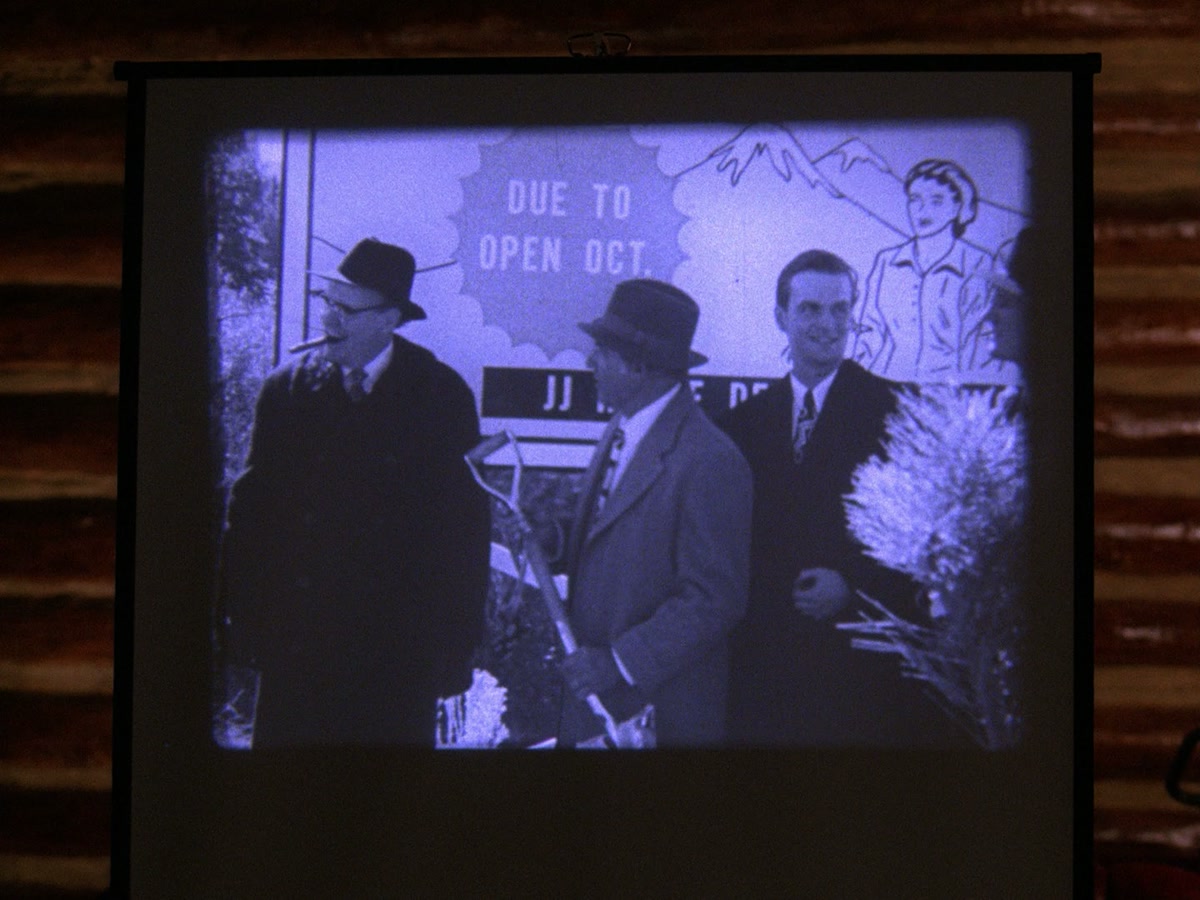
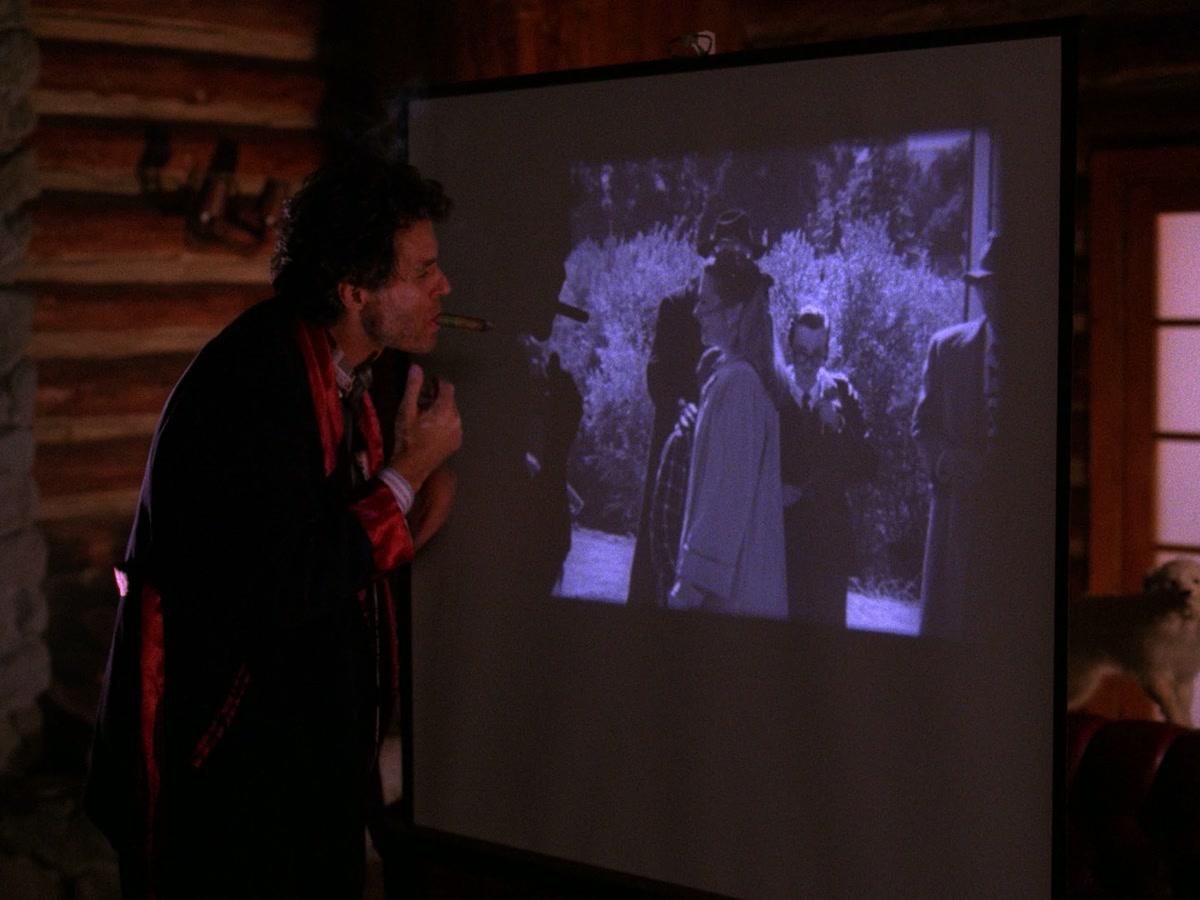
Ben watches an old home movie associated with the Great Northern. The projector, the screen and his body beside it are all visible. Memory is therefore staged as a material activity: he handles a machine and stands in a room while another time occupies its wall.
The footage offers family and business as a coherent beginning at the moment Ben’s present holdings are coming apart. His Shakespearean speech and speculation about arranging furniture extend the attempt to find an order that might restore him. Moving objects in a room becomes an implausible substitute for recovering control of his affairs.
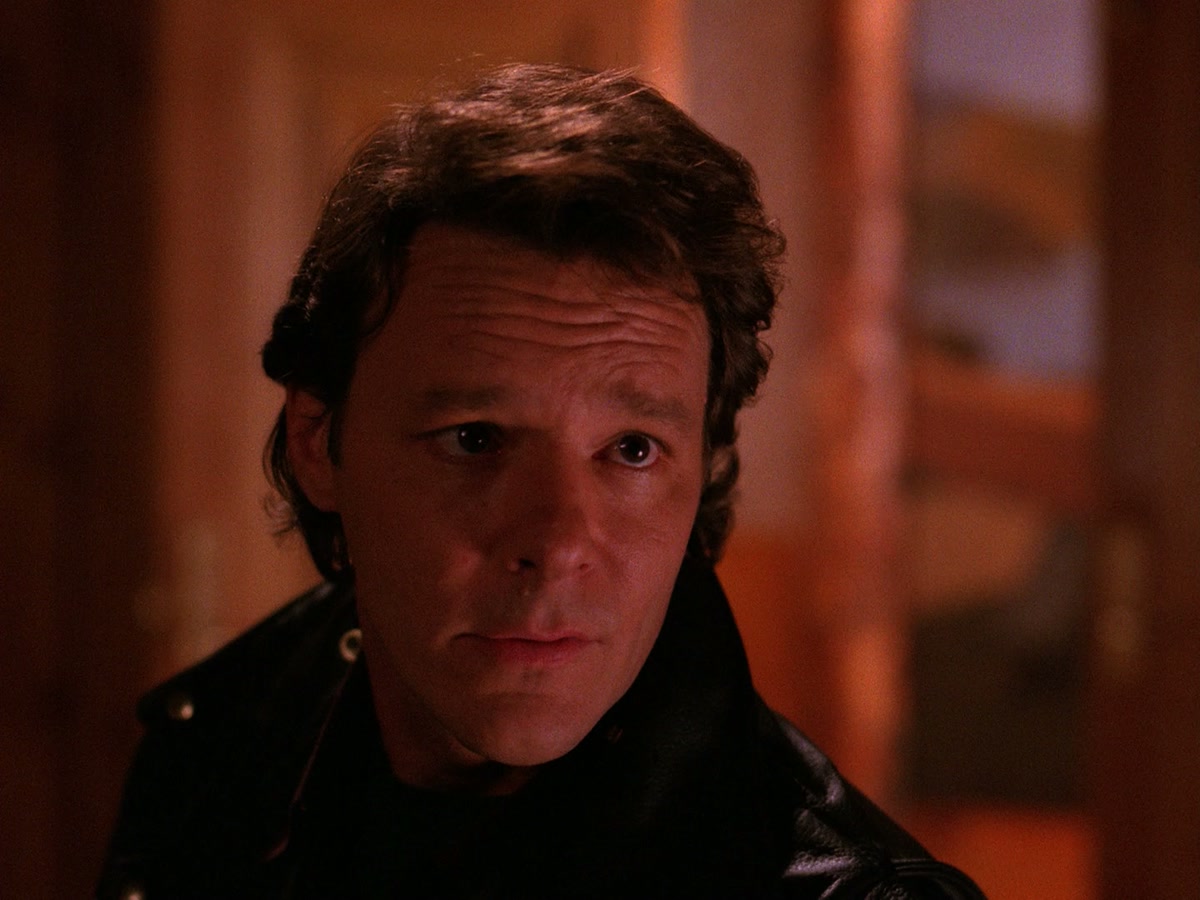
Hank enters to announce that One Eyed Jack’s no longer belongs to Ben. The interruption forces a current change of ownership into a room organised around images of inheritance. Ben’s attempt to command the exchange repeatedly collapses into imitation and repetition. The final credit background returns to the home-movie image, giving the apparently private refuge an afterlife beyond the scene.
Projection, possession and loss · 3 images
Duwayne Dunham: giving Ben room to remember
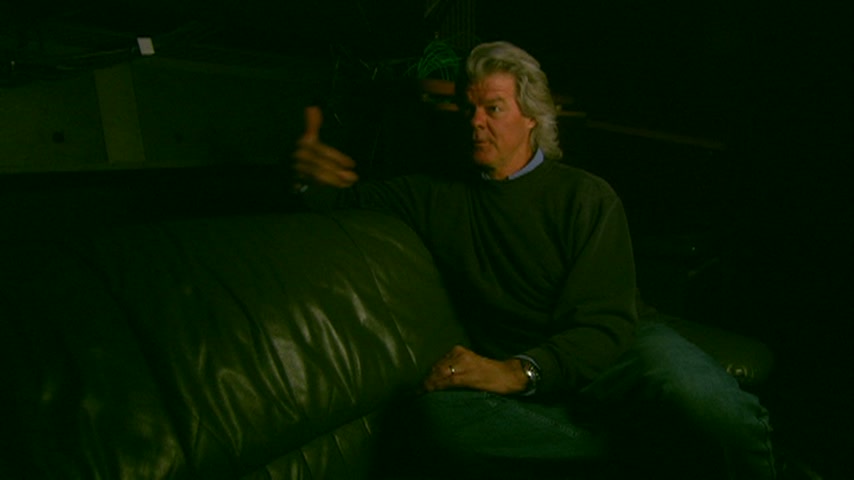
Dunham recalls setting up the screen and projector and allowing Richard Beymer freedom to respond to the childhood film. He describes the actor making his own commentary, approaching the projected images, and moving into shadow play after the reel ran through. The performance’s instability emerges from a passage through memory, loss and play.
The director singles out the projector’s repetitive end-of-reel sound and the emptied screen. In his recollection, these are not merely props surrounding Ben’s breakdown: they make the remembered family disappear while the machine continues. Dunham stresses the pathos of Beymer’s performance, a useful counterweight to reading the scene only as eccentric comedy.
Interview source: Duwayne Dunham, 01:41–02:58; Twin Peaks: From Z to A. Retrospective testimony, identified separately from the finished episode.
A recording takes over Cooper’s listening space
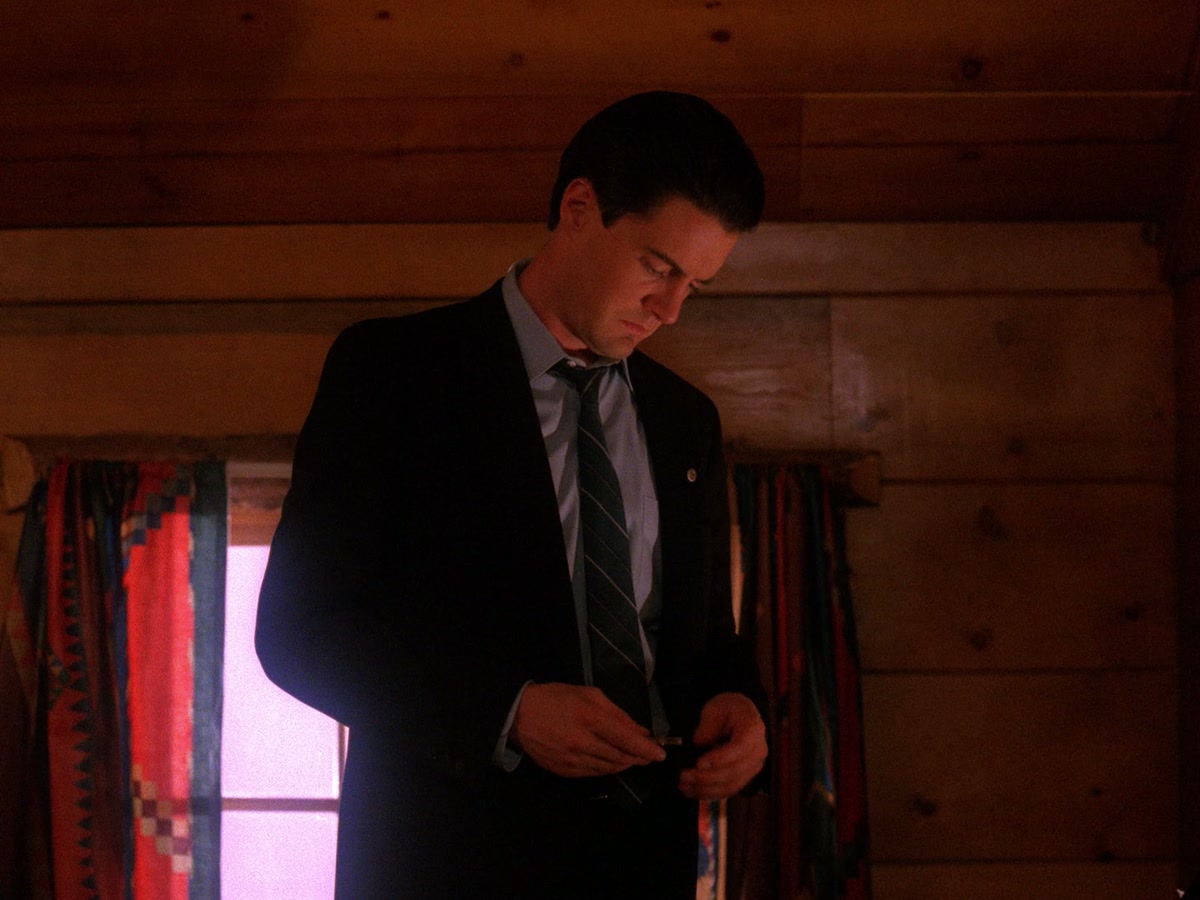
The package from Windom Earle combines a chess move with a recorded address. Cooper is usually the person dictating to an absent listener. Here he becomes the listener, while another man describes his habits and predicts his responses.
Earle’s language converts the board into a map of power. His willingness to sacrifice pieces, including the queen, makes the game’s ordinary rules sound like a declaration about human lives. The threat depends on personal knowledge: he speaks as someone who understands Cooper’s wounds and can exploit his preference for consistent behaviour.
The camera remains with Cooper and the playback device. Earle’s body is withheld while his message occupies the room. Compare this use of recorded address with Laura’s tape and Jacoby’s private listening: both place an absent speaker in a present room, but Earle deliberately uses that distance to exert control.
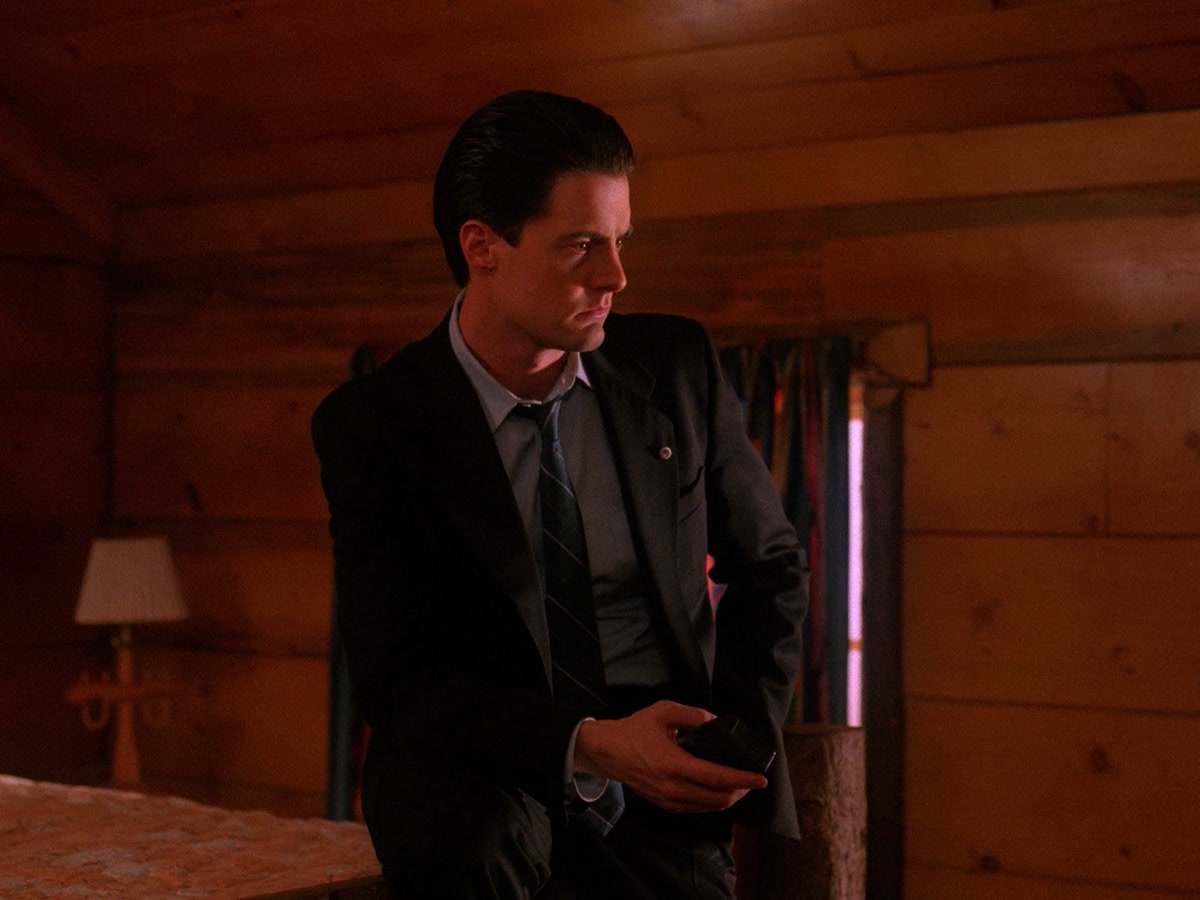
Public rituals and comic contests
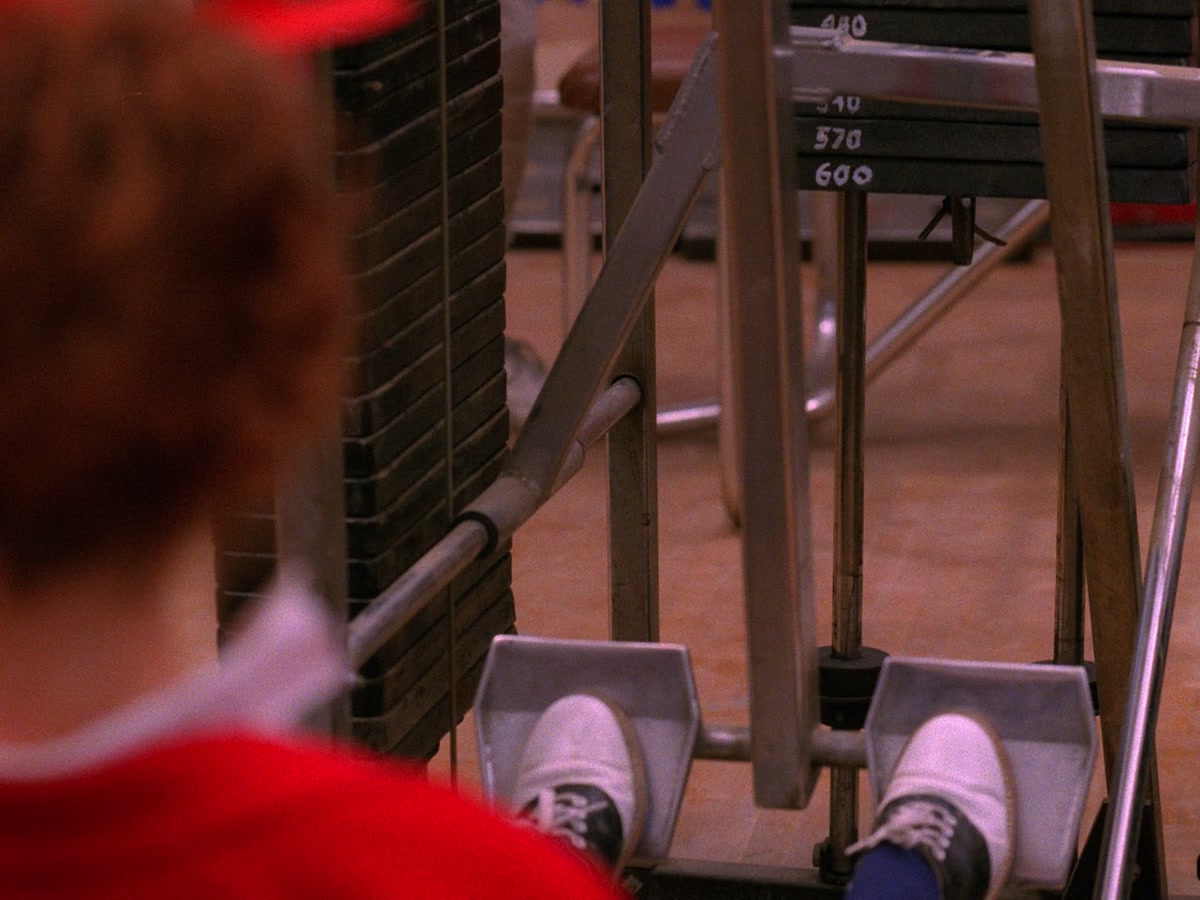
The town’s other plots involve performances of belonging. Nadine inhabits school life with an enthusiasm that Donna cannot reconcile with her marriage. Her conversation about Mike treats the division between school and home as perfectly reasonable; her extraordinary strength then breaks the ordinary scale of the gym.
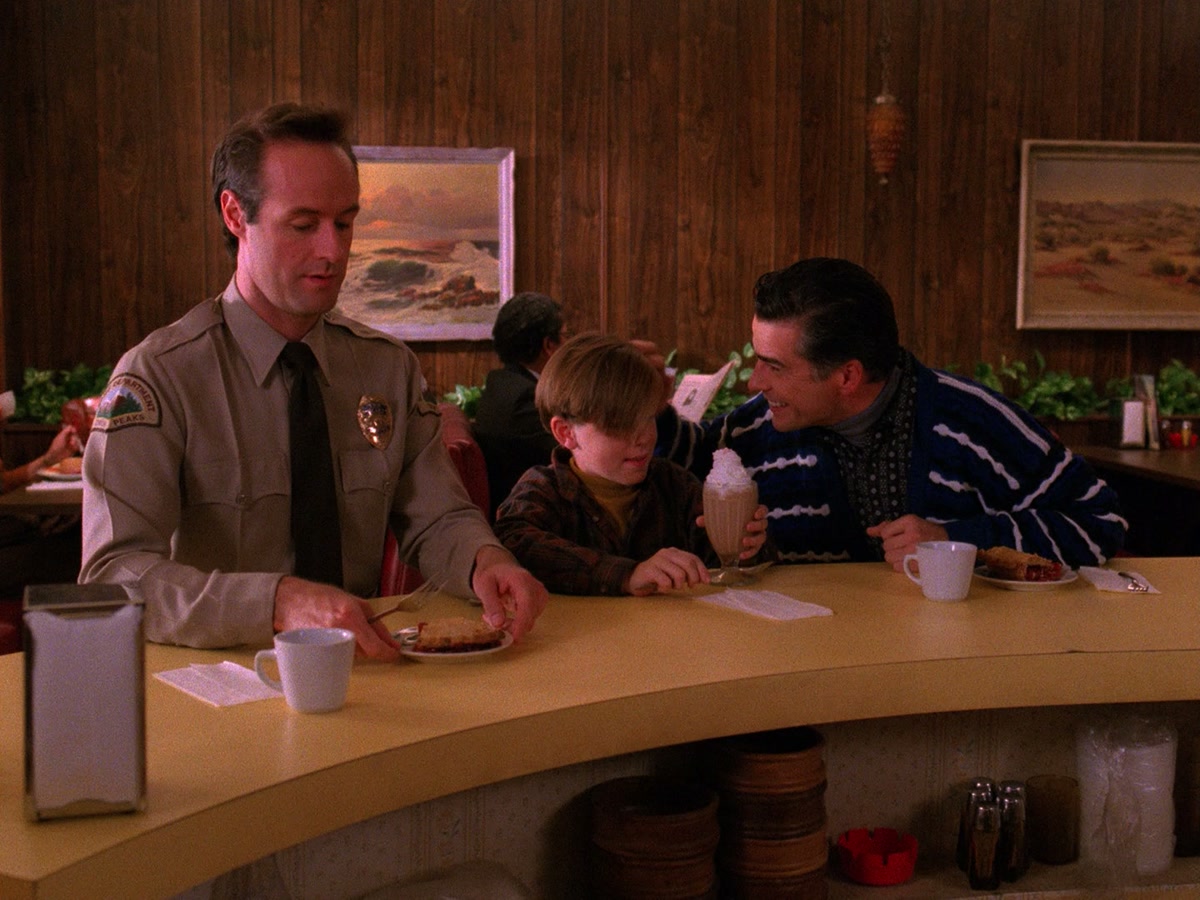
Dick presents Nicky as evidence of his ability to care for a child, while Andy offers unforced practical kindness. The diner sequence tests the men through spills, embarrassment and their responses to a child’s behaviour. It turns an abstract competition over parenthood into small visible acts.
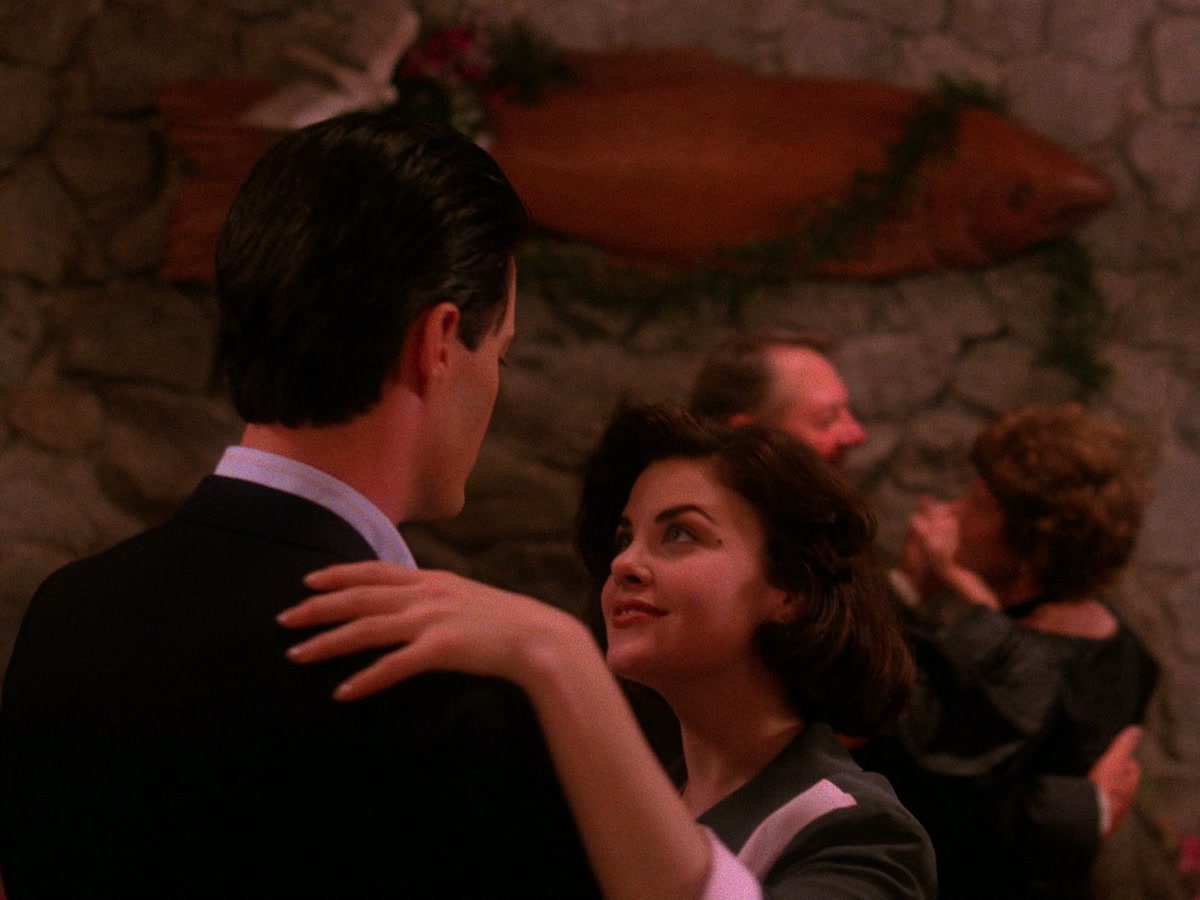
The Milford wedding gathers much of the town while continuing the brothers’ dispute. Objections, cake, flirtation and dancing repeatedly interrupt the solemn form of the ceremony. Audrey and Cooper’s dance briefly offers a gentler model of not knowing what comes next: following another person’s movement without turning uncertainty into a contest.
School, diner and reception · 4 images
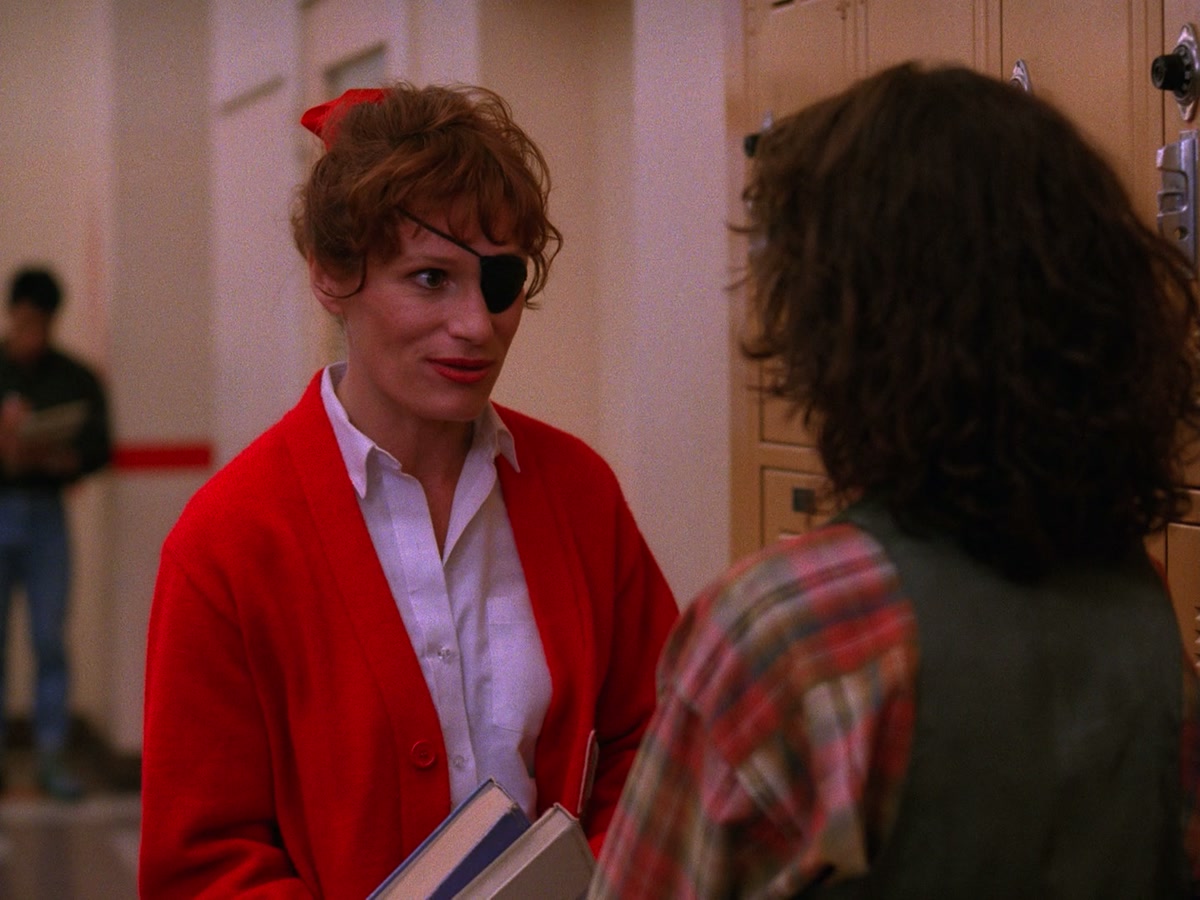
Protection with a price
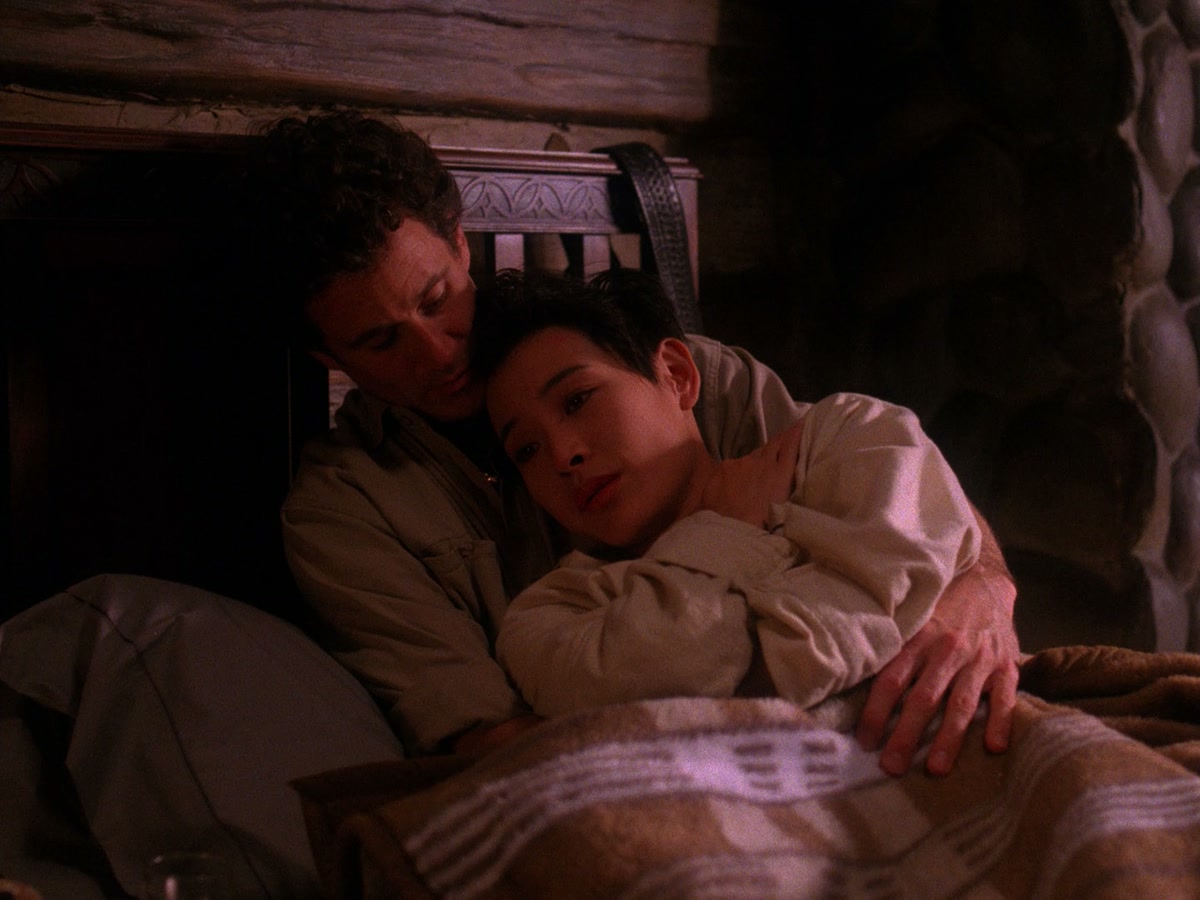
Josie’s account to Harry describes Thomas Eckhardt as the man who took her off the streets, controlled her life and treated her as property. The scene lets Harry hear a history that appears to explain her fear and evasions. His response is protective, but the episode does not make his trust a guarantee that the account is complete.
Catherine receives a similar appeal with a very different calculation. She lists Josie’s betrayals and offers survival on the condition of domestic service and obedience. The proposed escape from one form of possession becomes another. The room’s desk, chairs and unequal positions make that exchange of power visible.
Andrew’s appearance after Josie leaves changes the information available to the audience. Catherine’s negotiation was conducted with knowledge she withheld, and the dead husband is now a participant in a plan. The episode ends by making the viewer reconsider an earlier conversation, a familiar Twin Peaks method now applied to a business and family trap.
An appeal and a withheld witness · 2 images
Voices through machines
Three devices organise the episode’s encounters with absent people: the speakerphone carries Cole, the projector carries Ben’s family past, and the cassette carries Earle. They establish different kinds of distance—geographical, historical and threatening—without requiring the absent person to enter the room.
The English caption track also marks the melancholy jukebox selection and the upbeat wedding performance. These cues identify two contrasting social uses of music: James withdraws beside a machine while the reception invites collective movement. A soundtrack comparison can begin with those visible sources and the changes in who is listening, rather than assuming all music functions as background.
A route through Masked Ball
- The missing major. Betty’s knowledge and Cooper’s account of the light.
- The hearing. Professional rules meet Cooper’s changed priorities.
- The road and the bar. James encounters Evelyn and pauses at the jukebox.
- The Lodges and the visitor. Hawk’s warning is followed by Denise’s arrival.
- Competing accounts. Josie asks Harry for protection; the diner hosts other concealed dealings.
- Machines of memory. Ben projects a home movie; Earle sends a recorded challenge.
- The wedding and the reveal. Public celebration gives way to Catherine and Andrew’s private plan.
Sources and connections
Primary source: Twin Peaks, “Masked Ball,” Season 2, Episode 11 / overall Episode 18, in Twin Peaks: From Z to A. Visual studies and the English subtitle track support the scene and dialogue analysis.
Continue through the Season Two episode guide, or explore Richard Beymer’s photographs and recollections of directing actors.