Twin Peaks: Episode 17 — Dispute Between Brothers
1990 · Season 2, Episode 10
After the answer comes the aftermath. Sarah mourns, Cooper loses his badge and a conversation beside a campfire opens onto the White Lodge.
Season 2, Episode 10 / overall Episode 17. Includes major story revelations.
Explore this episode
Sarah remains after the explanation
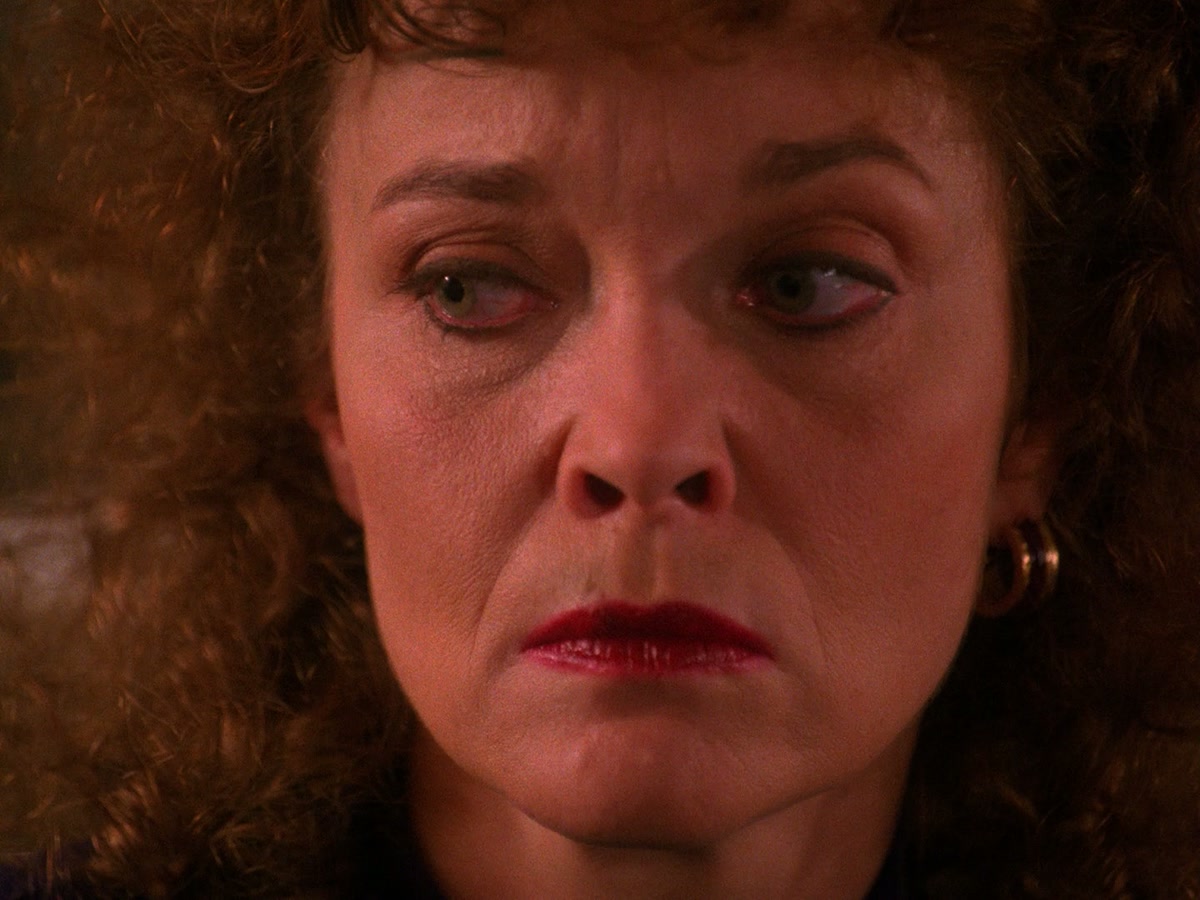
A title places the opening three days after Leland’s death. Sarah wants to be present when he is buried beside Laura. Her refusal of sedation is a small assertion of agency in a household where other people have repeatedly decided what she should know and how much she should feel.
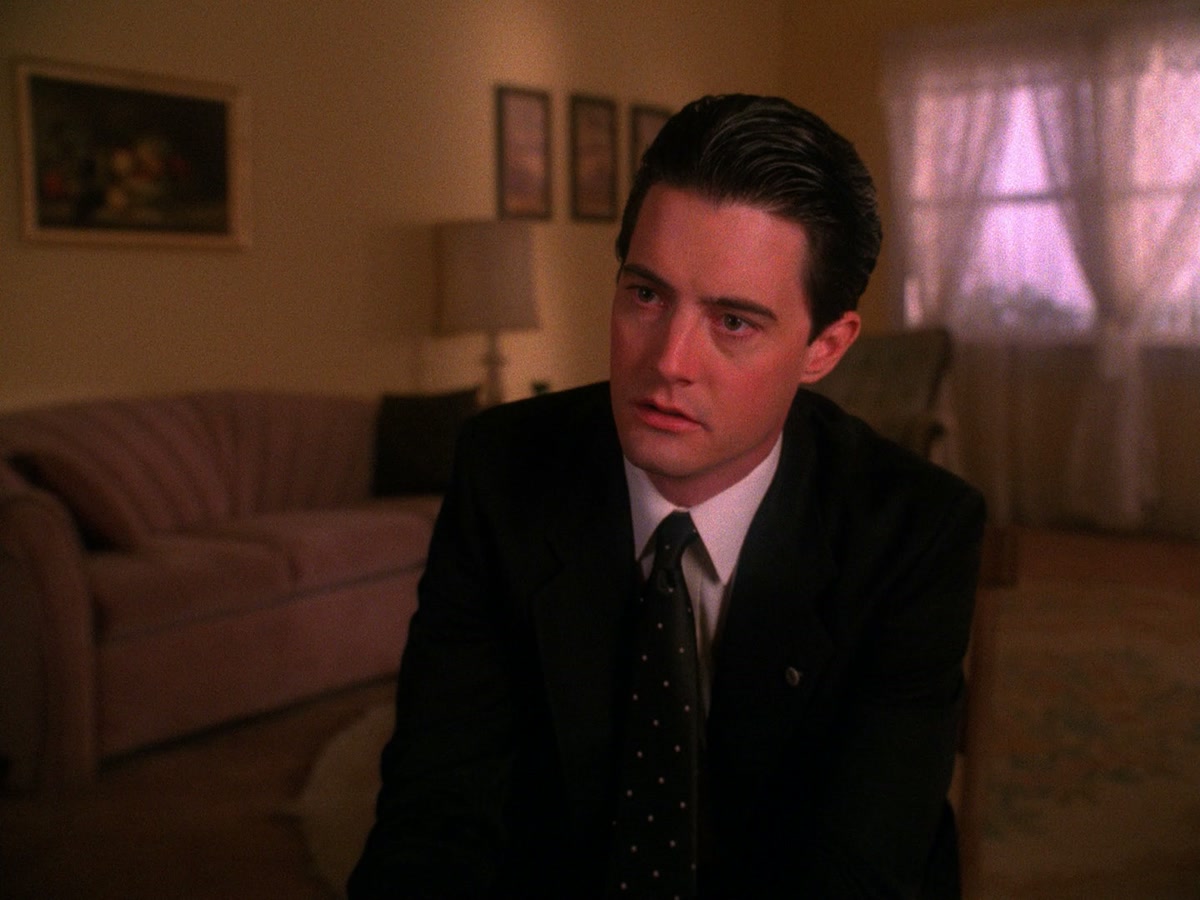
Cooper offers an account that separates the husband Sarah knew from the force that acted through him. He also tells her that Leland experienced Laura’s forgiveness as he died. These are words of consolation spoken by Cooper. They should not be converted into an independent declaration by Laura, or used to make the violence against her disappear into the relief of solving a mystery.
Sarah’s missing earring returns the conversation to a minute domestic absence. Leland used to find the other one. The detail does not answer a question about guilt; it shows how a person can mourn a familiar gesture while confronting facts that change the meaning of an entire marriage. The series has named the killer, but Sarah has no equivalent ending to inhabit.
A house holds incompatible kinds of mourning
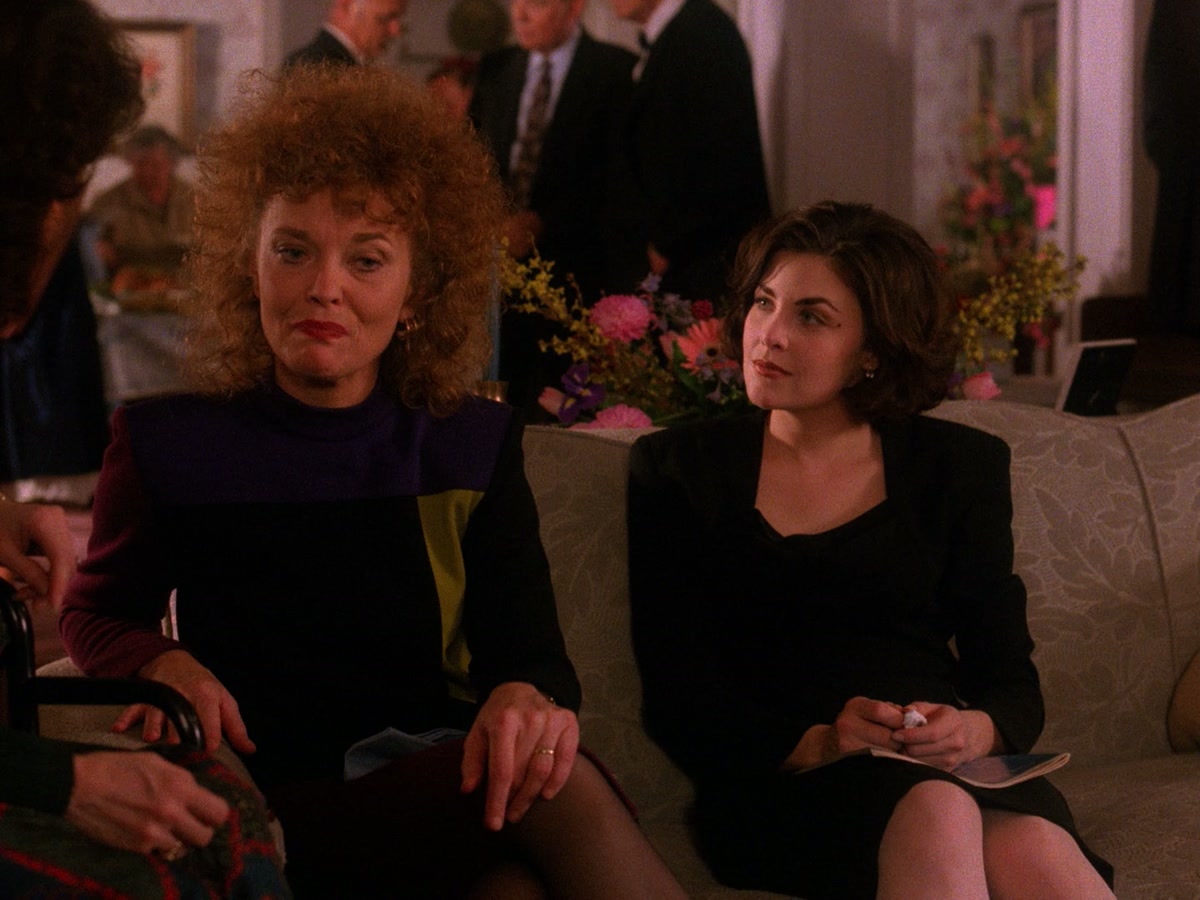
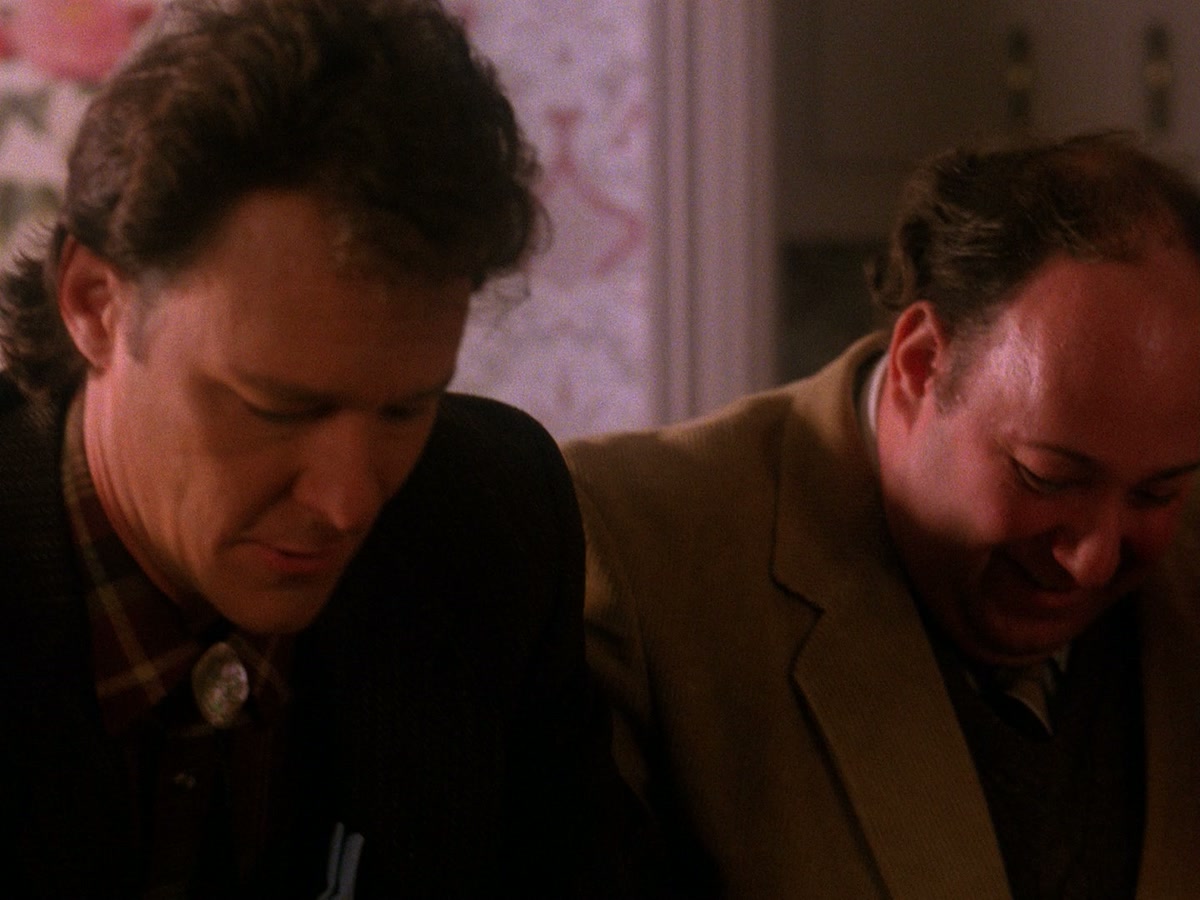
The wake lets several registers occupy the Palmer house at once. Truman and his companions eat; friends exchange news; Nadine notices a reflection in polished shoes; the Milford brothers continue an old feud. The movement between ordinary appetite, comedy and bereavement is deliberately uncomfortable. A community can gather without sharing a single experience of the gathering.
Sarah’s conversation with Donna briefly restores Laura through the history of their friendship. It is a different form of recollection from Cooper’s explanatory speech. Sarah remembers the girls together and asks Donna to maintain contact. The request locates remembrance in a continuing relationship rather than in the successful closing of a case.
James’s absence and Bobby’s wish to move forward belong to this same room, but they point in different directions. One young man has left town; another begins imagining work, money and a future with Shelly. The wake becomes a crossing point between the Laura investigation and the stories that will continue after it.
The witness Cooper could not protect
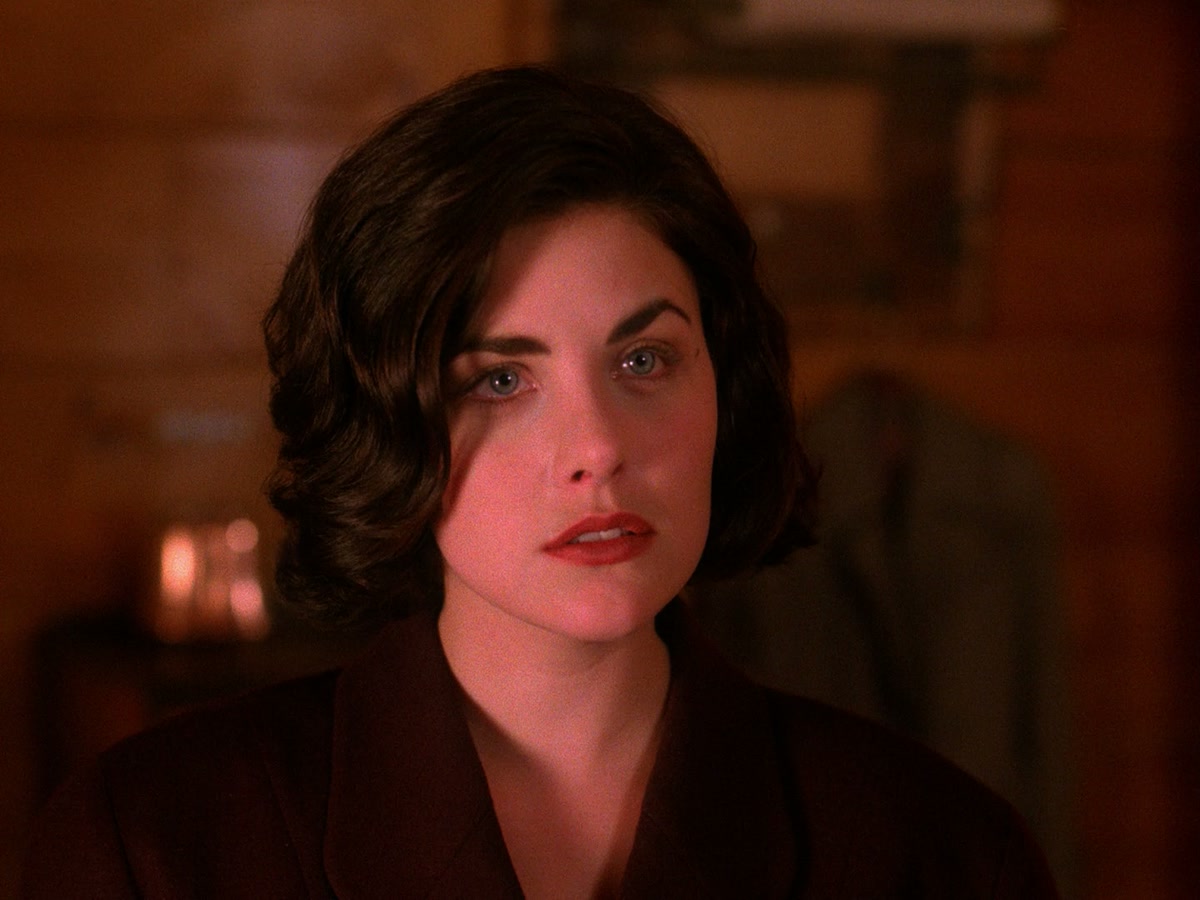
As Cooper prepares for a fishing trip, Audrey tries to understand why he is leaving. He tells her about a protected witness with whom he fell in love, her death and the damage to his partner. The confession changes the earlier account of an investigator guided by serene intuition: Cooper’s professional life contains a failure he cannot repair.
He describes trying to avoid a repetition, then recognises that his feelings for Audrey are part of the danger. The scene establishes a boundary without treating affection as unreal. Friendship remains possible, but his position and her youth make another kind of relationship inappropriate.
Windom Earle is initially present here as the damaged partner in Cooper’s account. The later recorded challenge in “Masked Ball” will turn that recollection into a present threat. Cooper’s story gives the listener information before the antagonist acquires a body.
The suit and the confinement
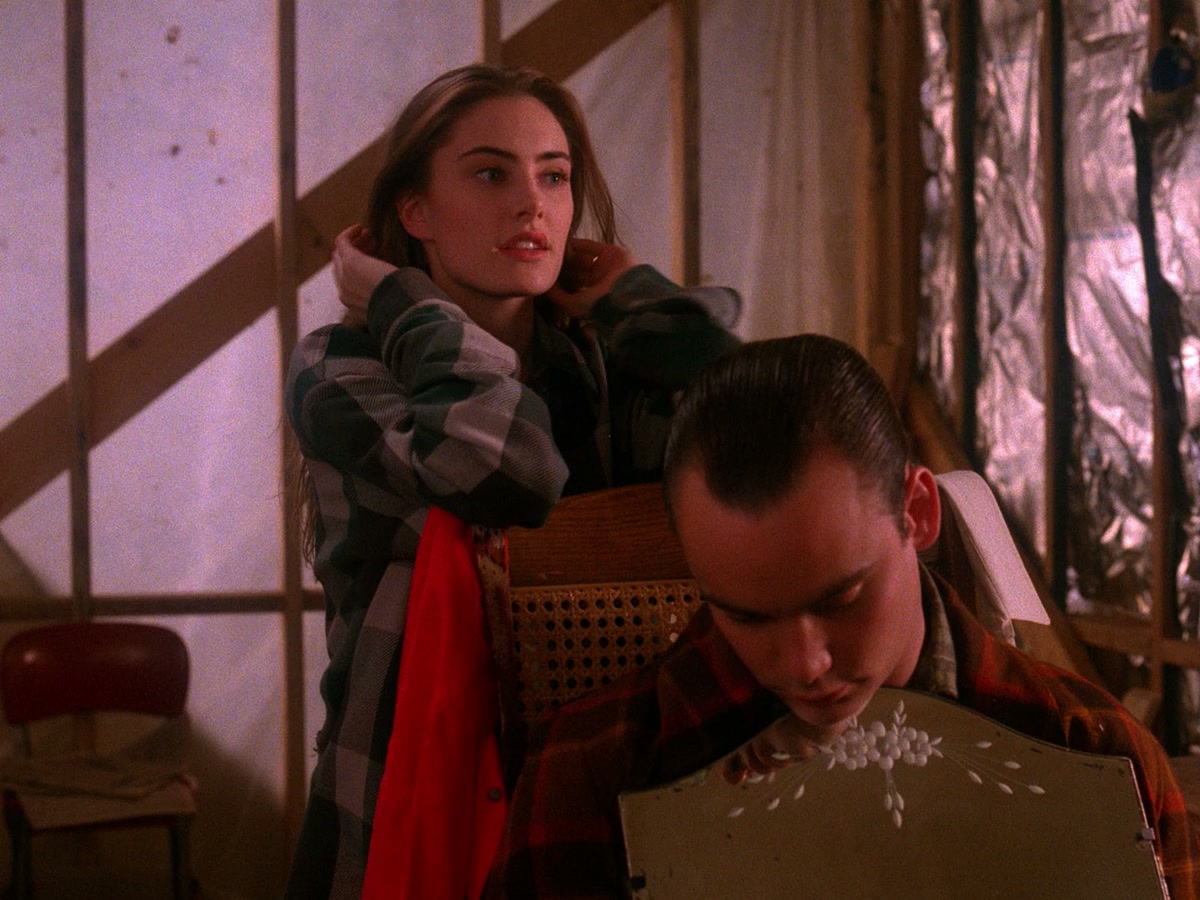
Bobby dresses in Leo’s suit as he plans to approach Ben Horne. Borrowing the clothes is an attempt to enter a more powerful adult role, but it is financed by the same household arrangement that has trapped Shelly. His optimism and her frustration occupy opposite sides of Leo’s chair.
Shelly wants work, movement and a life beyond nursing the man who abused her. The plan that promised freedom has instead made her responsible for his care. When the episode returns to Leo, a small movement destabilises the assumption that he can remain an inert source of income.
Bobby’s meeting with Ben does not reward his borrowed authority. Audrey subsequently offers help, while the material he carries promises to turn information into a route to employment. His new initiative remains entangled with coercion and dependence, rather than simply marking a clean departure from adolescence.
Catherine controls the account of her survival
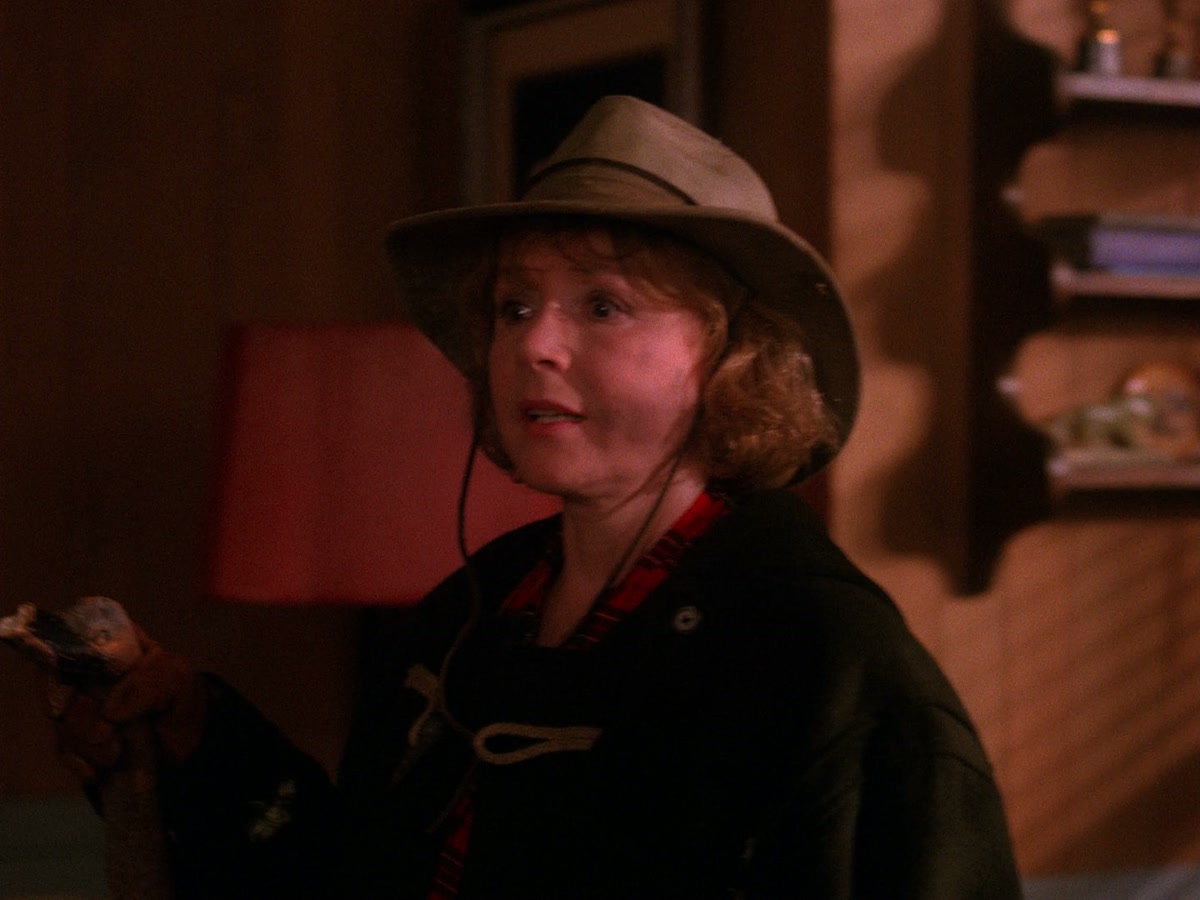
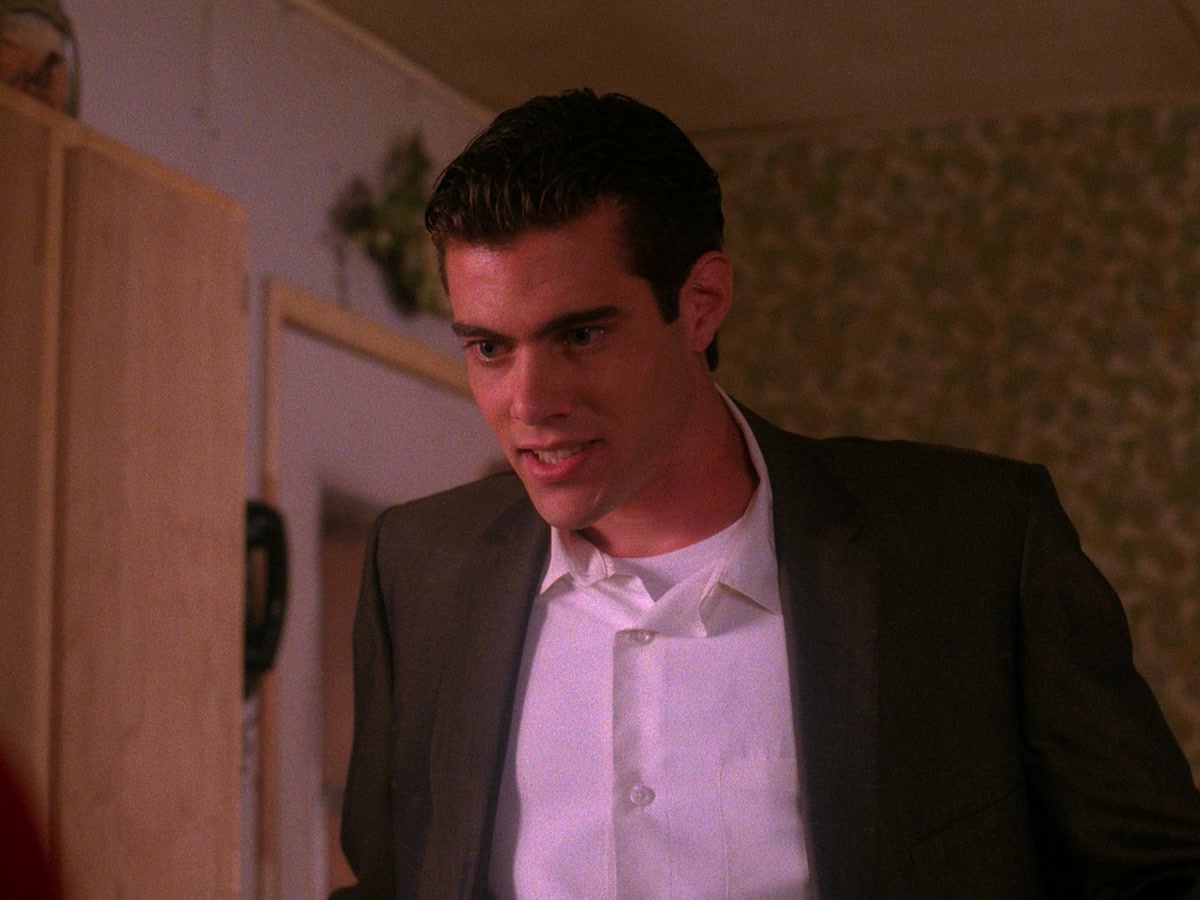
Catherine returns in outdoor clothes and tells Truman how she escaped the fire, hid at a childhood cabin near Pearl Lakes and eventually ran out of food. The account offers fear, resourcefulness and a prosaic reason for reappearing. Its final turn toward provisions makes a potentially heroic survival narrative sound like a practical inconvenience.
The audience possesses information that Truman does not. Catherine has already negotiated with Ben in the Tojamura disguise. Her account at the station therefore cannot be treated as an exhaustive explanation of her absence. It is a performance addressed to a particular listener, shaped by what she wants him to know.
This is one of the episode’s recurring contrasts: an institution asks for a narrative, while a character decides which part of the story to supply. Catherine handles that situation with control; Cooper will soon discover how little control his own honest account gives him.
A fishing fly, a badge and two kinds of belonging
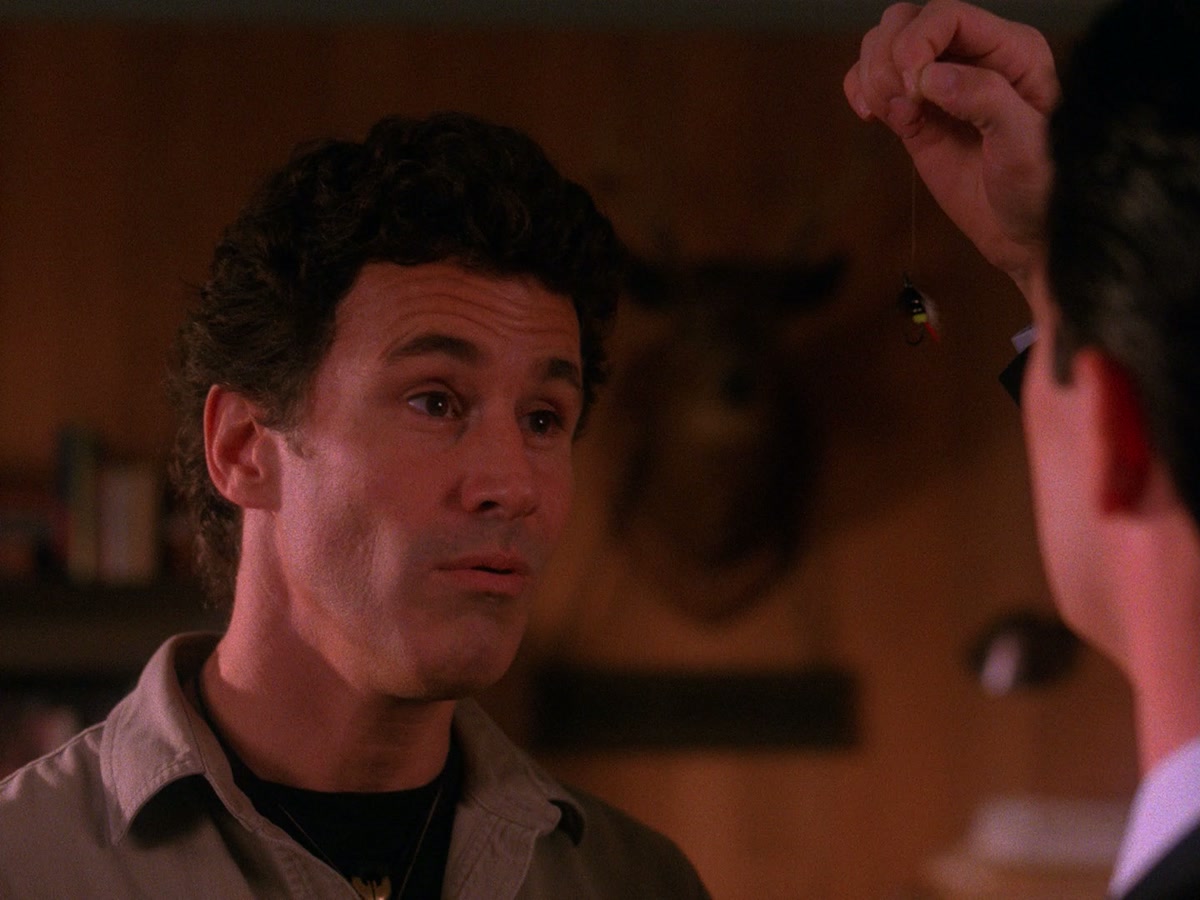
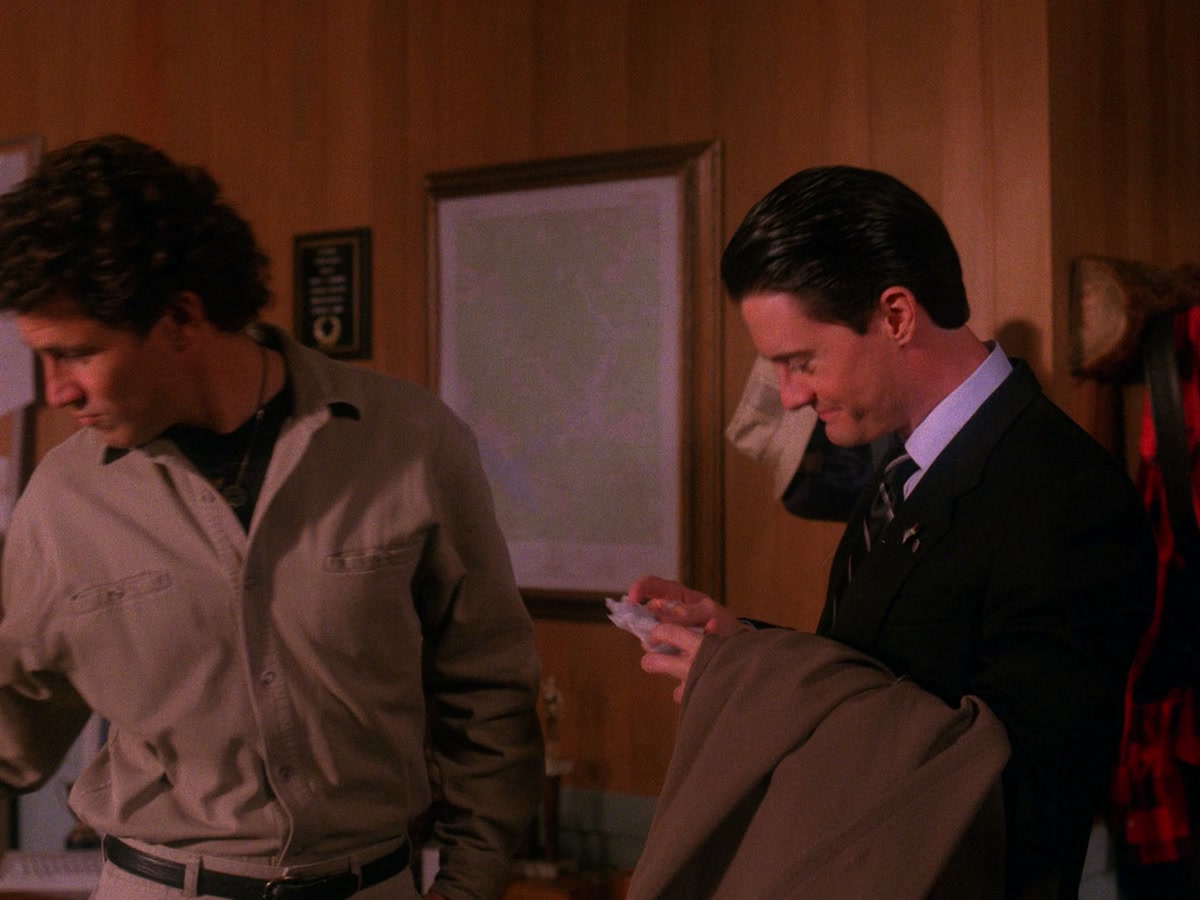
Truman’s hand-tied fishing fly connects Cooper to a family craft. The Bookhouse Boy patch adds a second gift, recognising him as part of a local fellowship. Both objects make acceptance tangible. The farewell has the warmth of a completed visit, with work giving way to friendship and recreation.
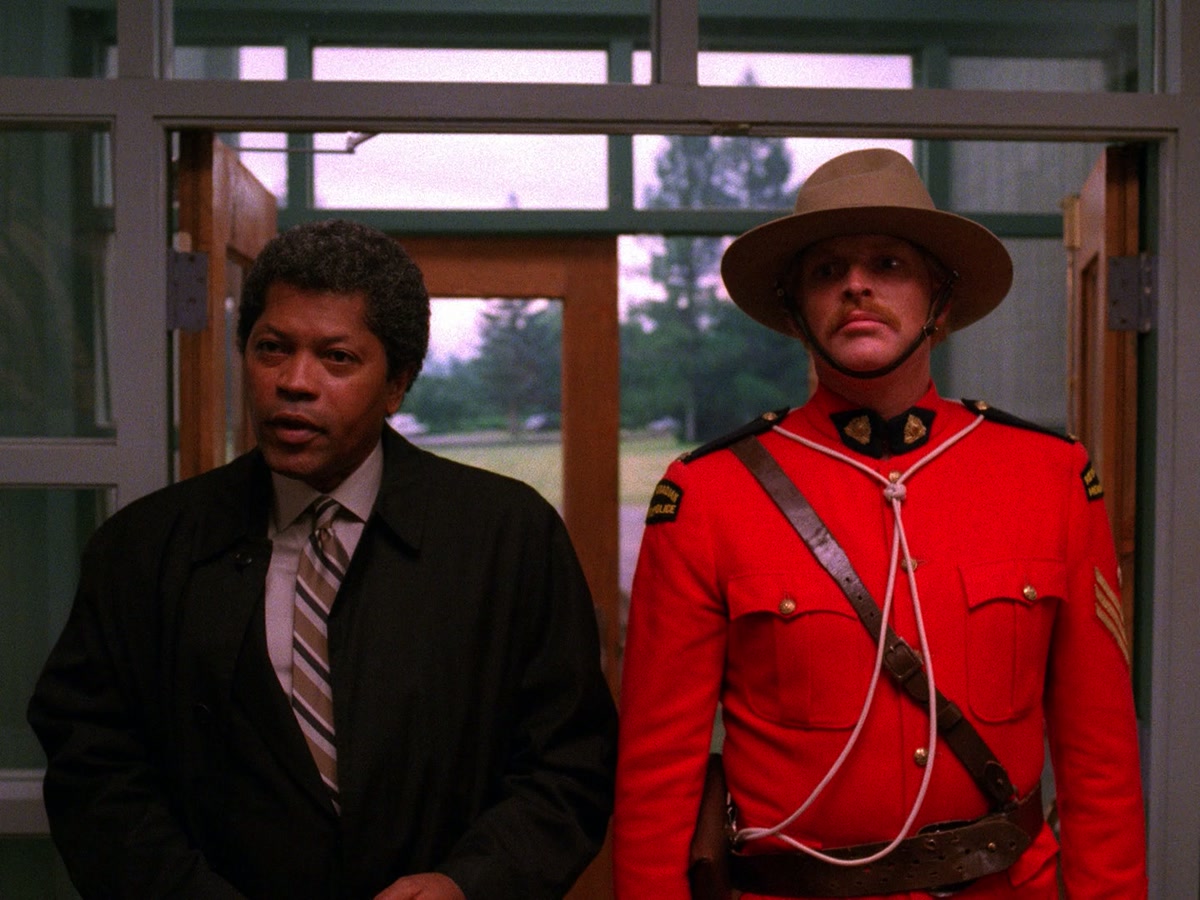
The arrival of Hardy and the Canadian officer immediately changes the scene’s terms. Cooper is suspended without pay and must surrender his badge and weapon. The sequence places local honour beside federal exclusion, using objects rather than an abstract argument to show the difference.
The interruption also prevents a conventional departure. Cooper cannot simply leave as the visitor who solved the case. His attachment to Twin Peaks now survives the removal of his official authority, which makes his relationship to Truman and the Bookhouse Boys newly consequential.
Gifts and interruption · 2 images
The rescue becomes a case against its rescuer
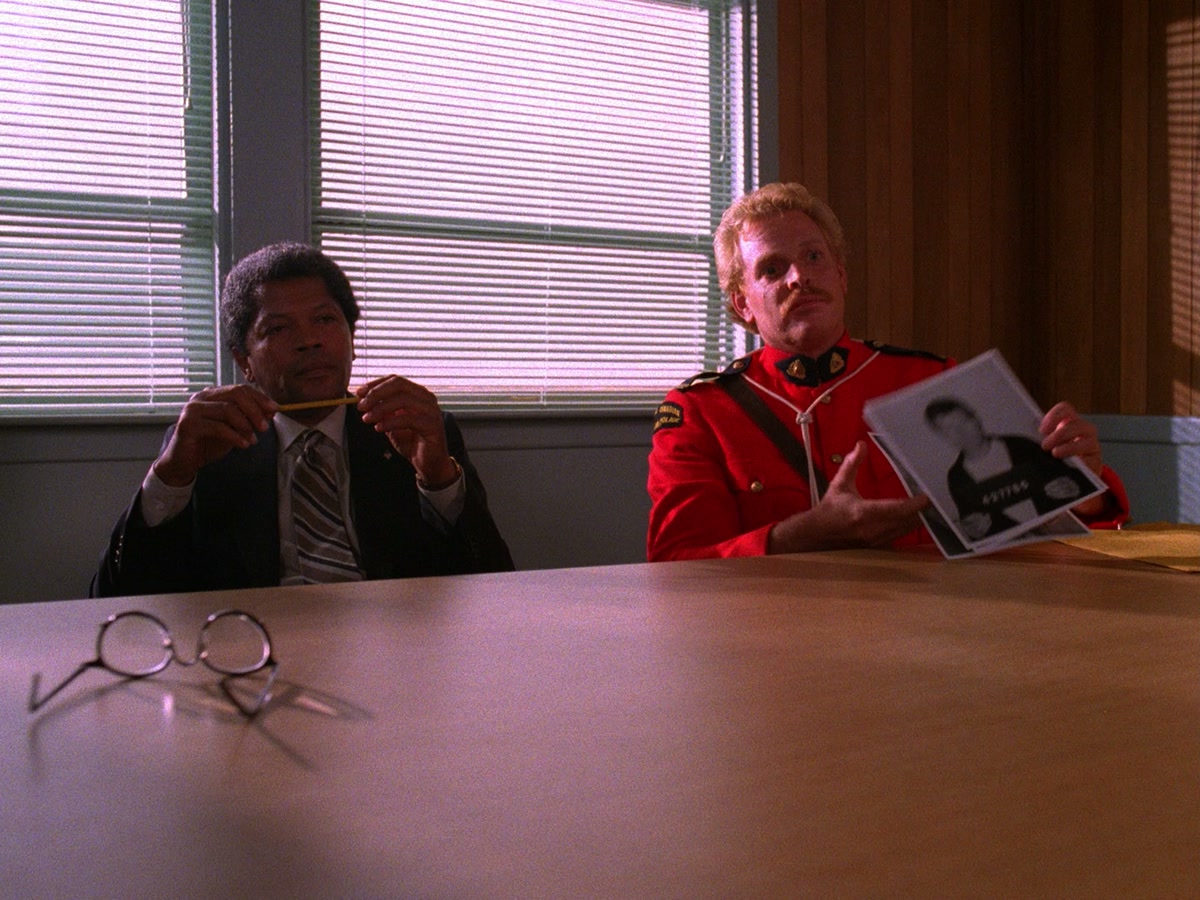
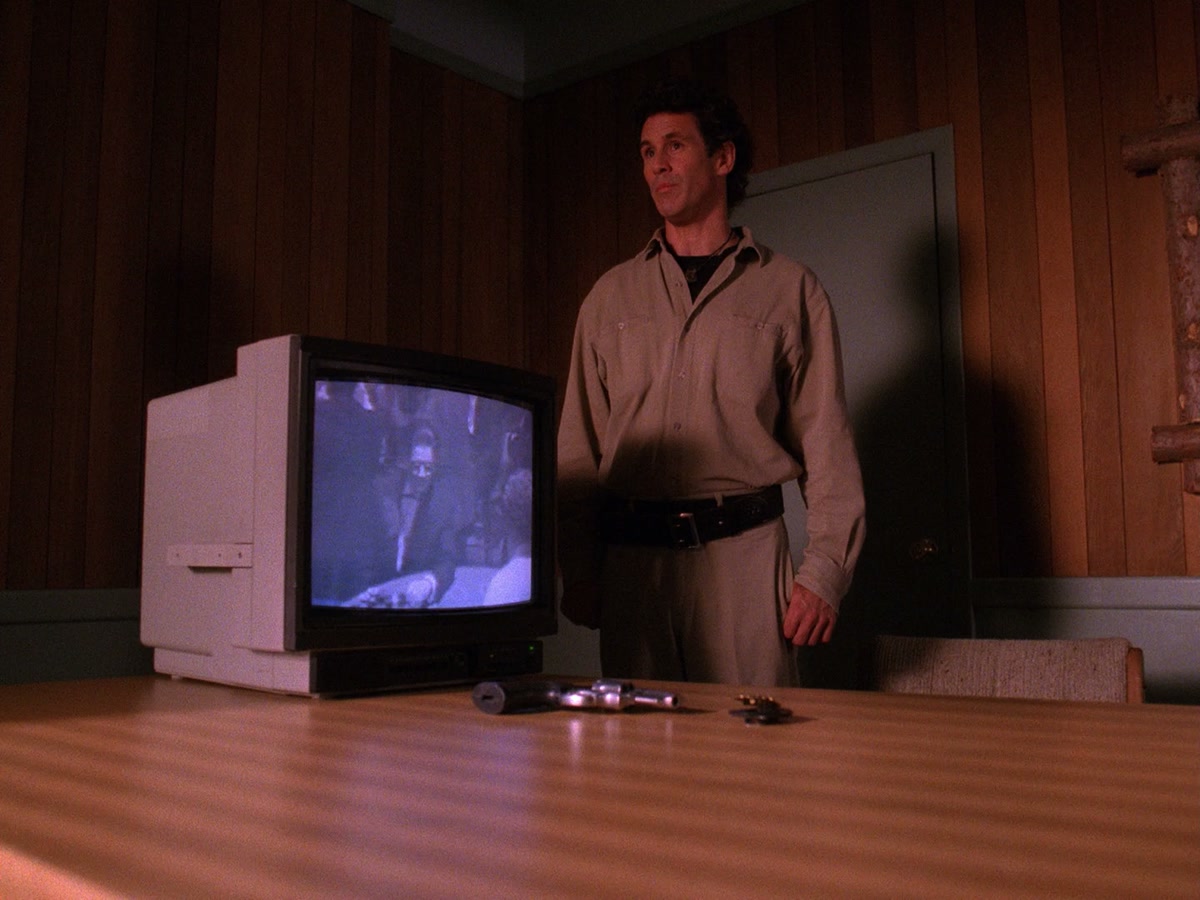
The hearing recasts the rescue at One Eyed Jack’s as an unauthorised border operation that disrupted a narcotics investigation. Photographs, a video monitor and formal questions replace the earlier scene’s urgency. Actions the viewer experienced as a rescue are reorganised into the language of misconduct.
Truman defends Cooper and refuses to let the inquiry erase what he has witnessed. His loyalty does not answer every procedural allegation, but it prevents the institutional record from becoming the only available account. The room holds competing forms of evidence: documents and recordings on one side, a colleague’s sustained experience on the other.
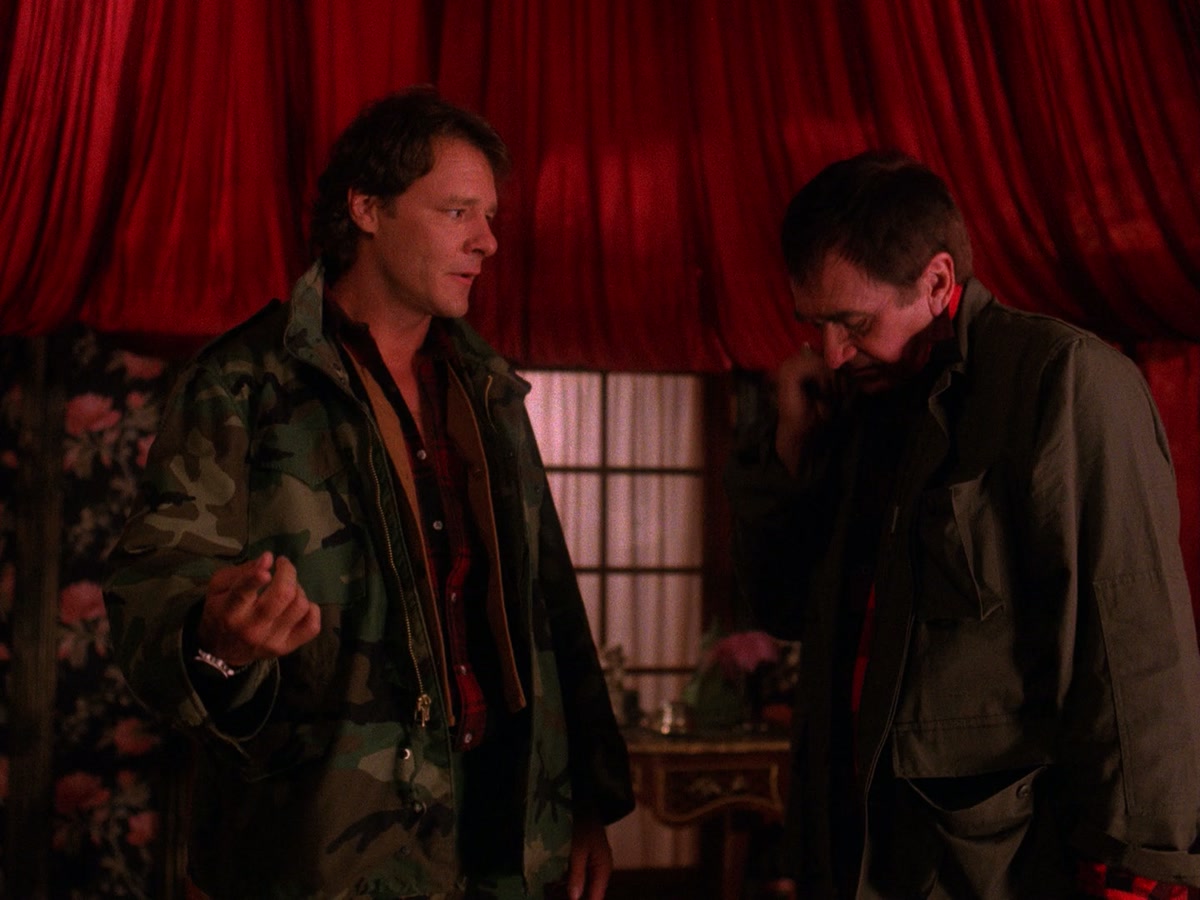
The later meeting involving Jean Renault, Hank and Ernie reveals the criminal interests behind the accusation. The Canadian officer’s involvement gives the audience knowledge unavailable to Cooper. This changes the suspense from wondering whether Cooper is guilty to watching how a manufactured case might become authoritative.
The contrast with the preceding episode is sharp. Cooper’s Roadhouse assembly makes space for intuition before an arrest; this hearing treats departures from an established procedure as grounds for suspicion. Neither arrangement is presented as a neutral container.
Two rooms, two accounts · 2 images
A review becomes a family judgment
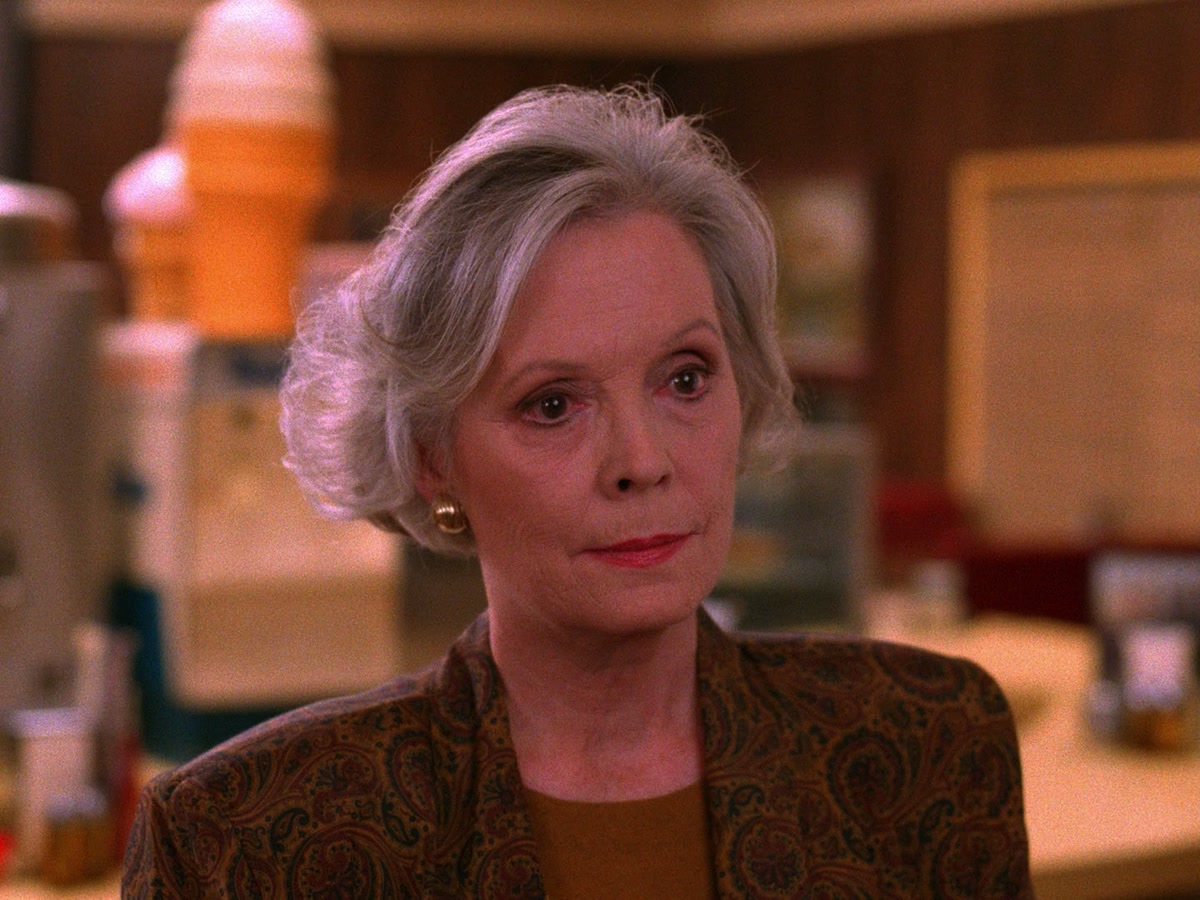
Vivian reveals that she is the restaurant critic M. T. Wentz. What had seemed like a professional review now reaches Norma as a concealed judgment by her mother. Vivian insists on the independence of her standards, but that insistence cannot cancel the personal relationship in which the verdict lands.
Norma’s refusal is directed at the terms on which she is continually measured. She does not ask her mother to rewrite the review. She asks for distance from a relationship in which approval remains conditional and affection arrives entangled with appraisal.
The diner is a workplace, a community meeting point and part of Norma’s identity. The scene makes the critic’s anonymity matter because it crosses all three at once. Compare Pat Cokewell’s recollection of the real diner, where the demands of filming and fan attention also meet an ordinary working business.
Promises to belong
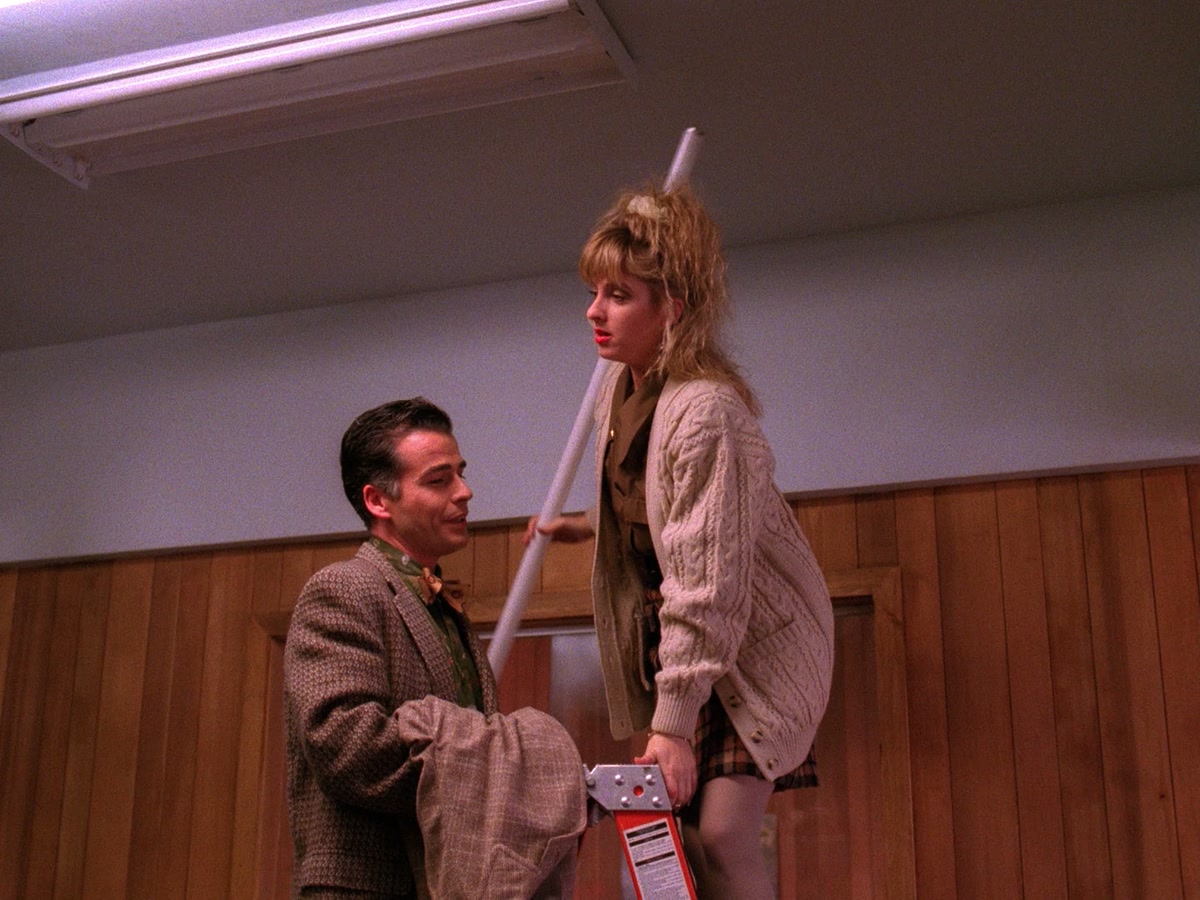
Lucy’s pregnancy becomes a contest in which Dick proposes a charitable demonstration of responsibility and Andy tries to respond generously. The scene’s ladder, decorating work and awkward exchanges keep the competition grounded in the practical business of the station.
Nadine’s school life is another attempt to inhabit a role. Cheerleading converts her extraordinary strength into a public spectacle while her understanding of her own age remains at odds with everyone around her. The comic physical excess sits beside the episode’s quieter disputes over who a person is allowed to be.
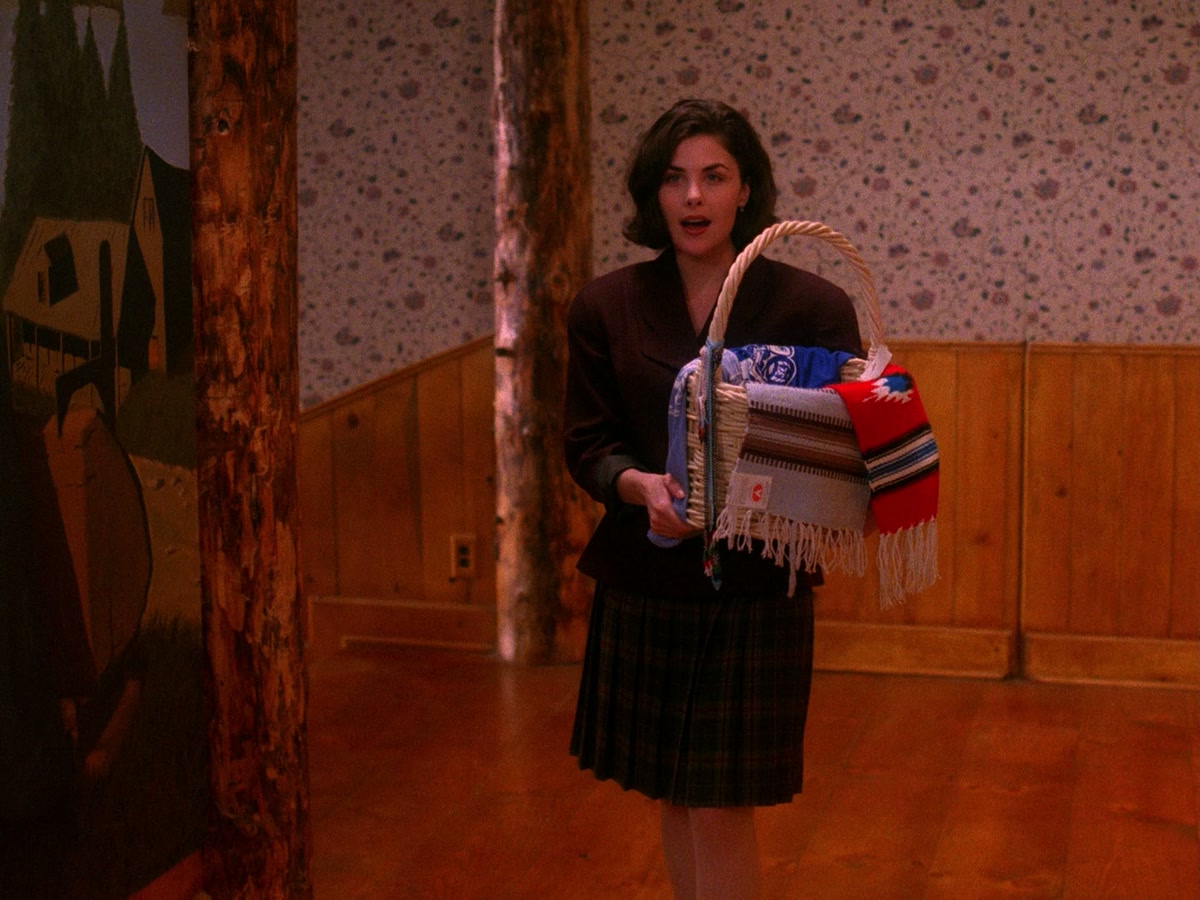
Josie’s return gives Harry an apparent reunion after the other interrupted departures. Her distress invites protection, but her arrival does not explain her absence. The next episode will make that gap the subject of competing bargains.
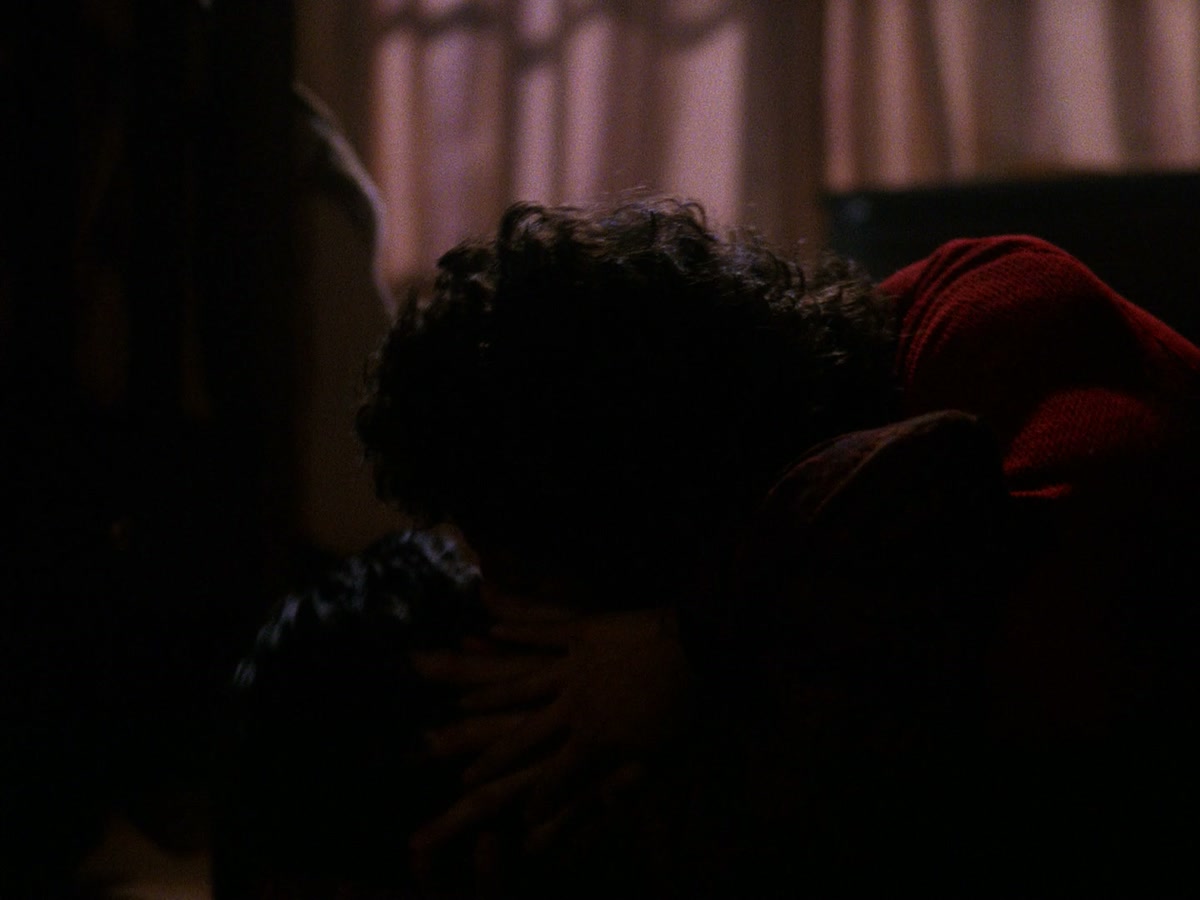
Station, school and reunion · 3 images
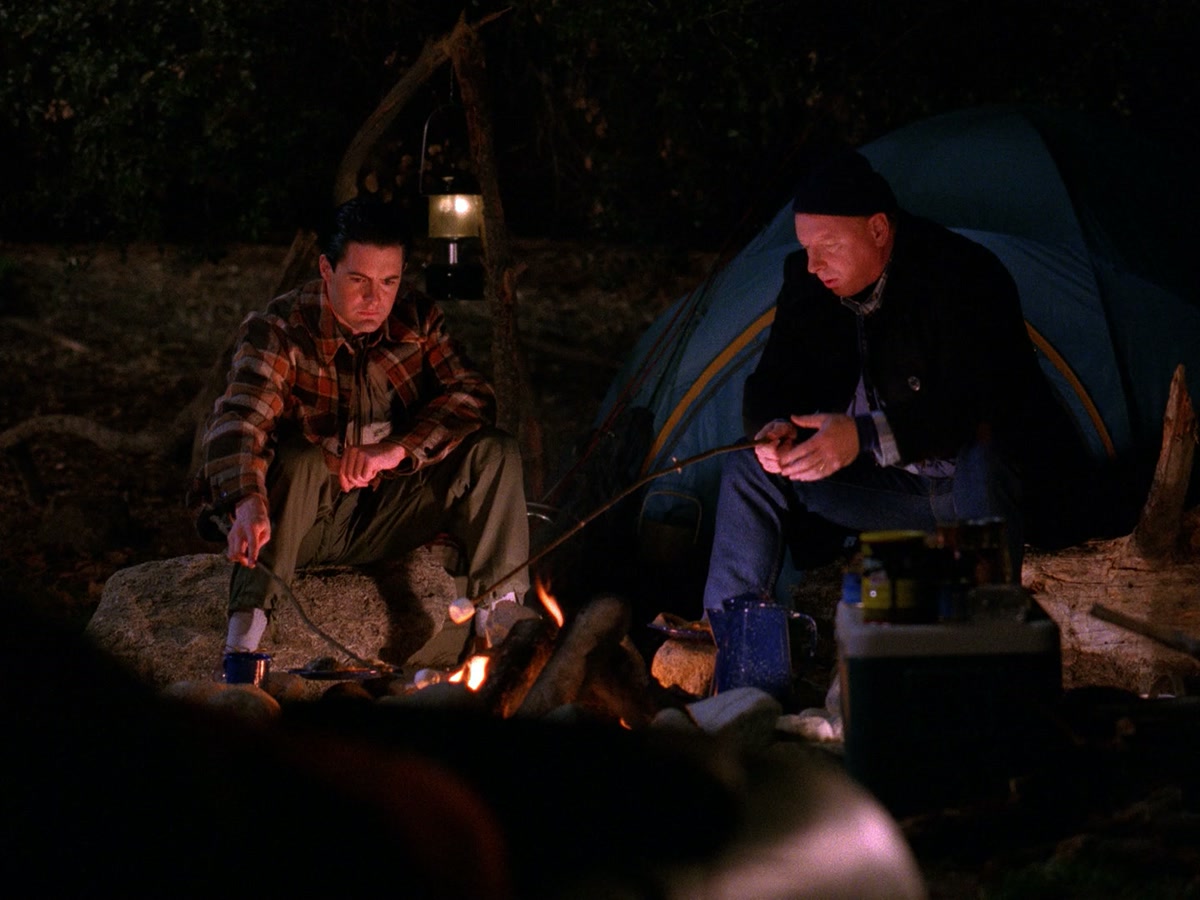
The campfire conversation opens onto the White Lodge
Cooper and Briggs discuss what it means to confront darkness after Leland’s death. Briggs approaches the question through individual responsibility and the possibility of receiving guidance. Their shared campfire offers a space in which Cooper can speak without defending himself before an institution.
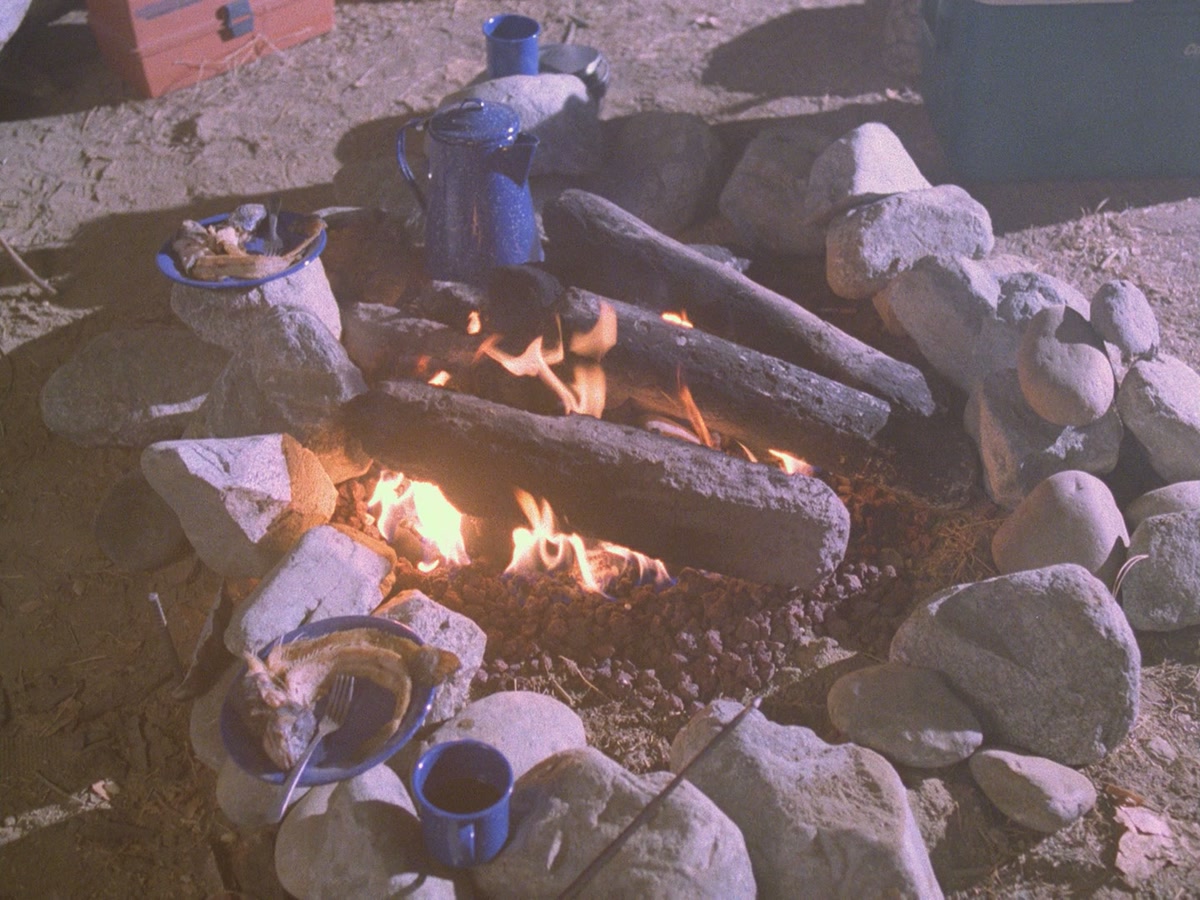
The White Lodge enters the exchange as a name attached to Briggs’s experience, not as an explained location. The forest remains recognisable around the tent, kettle and fire. Its ordinariness matters: the extraordinary event interrupts a carefully established place where two men have been talking and eating.
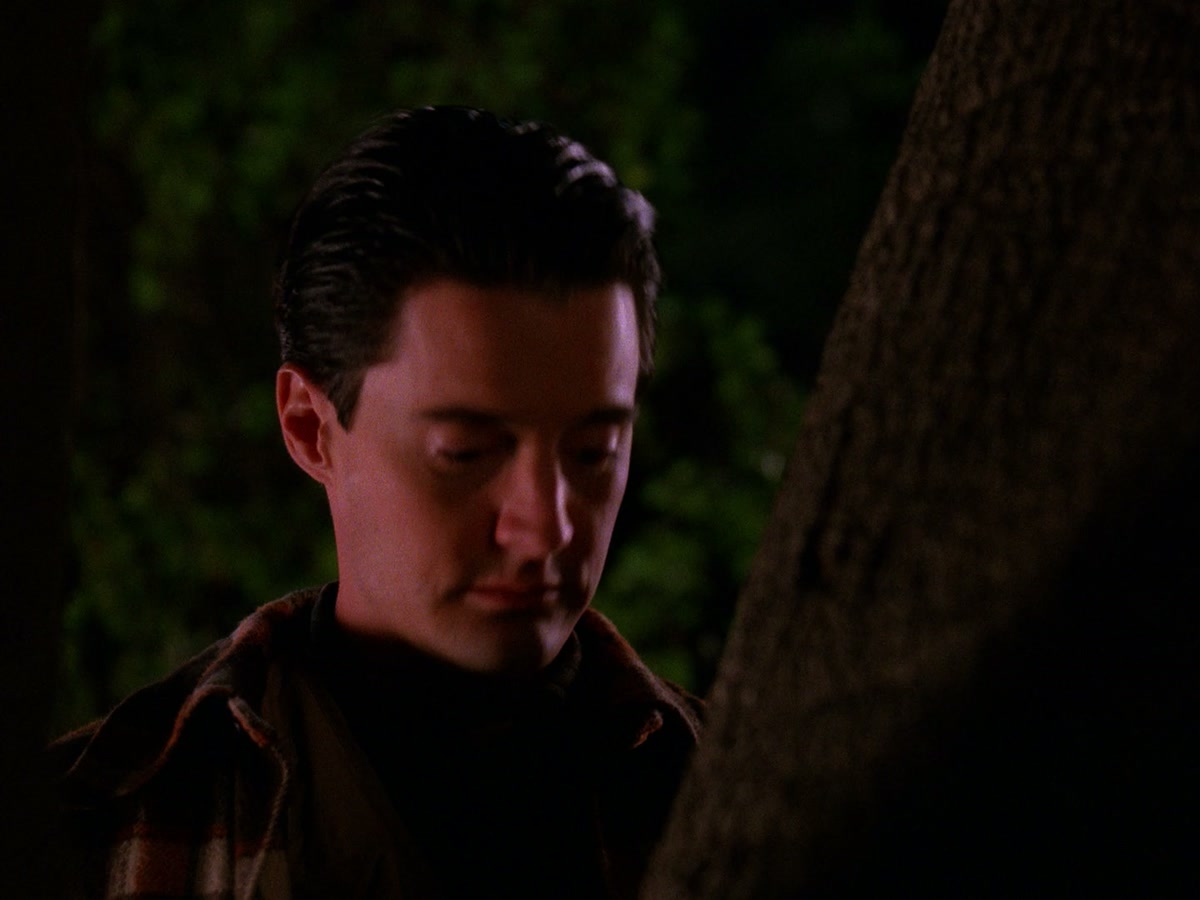
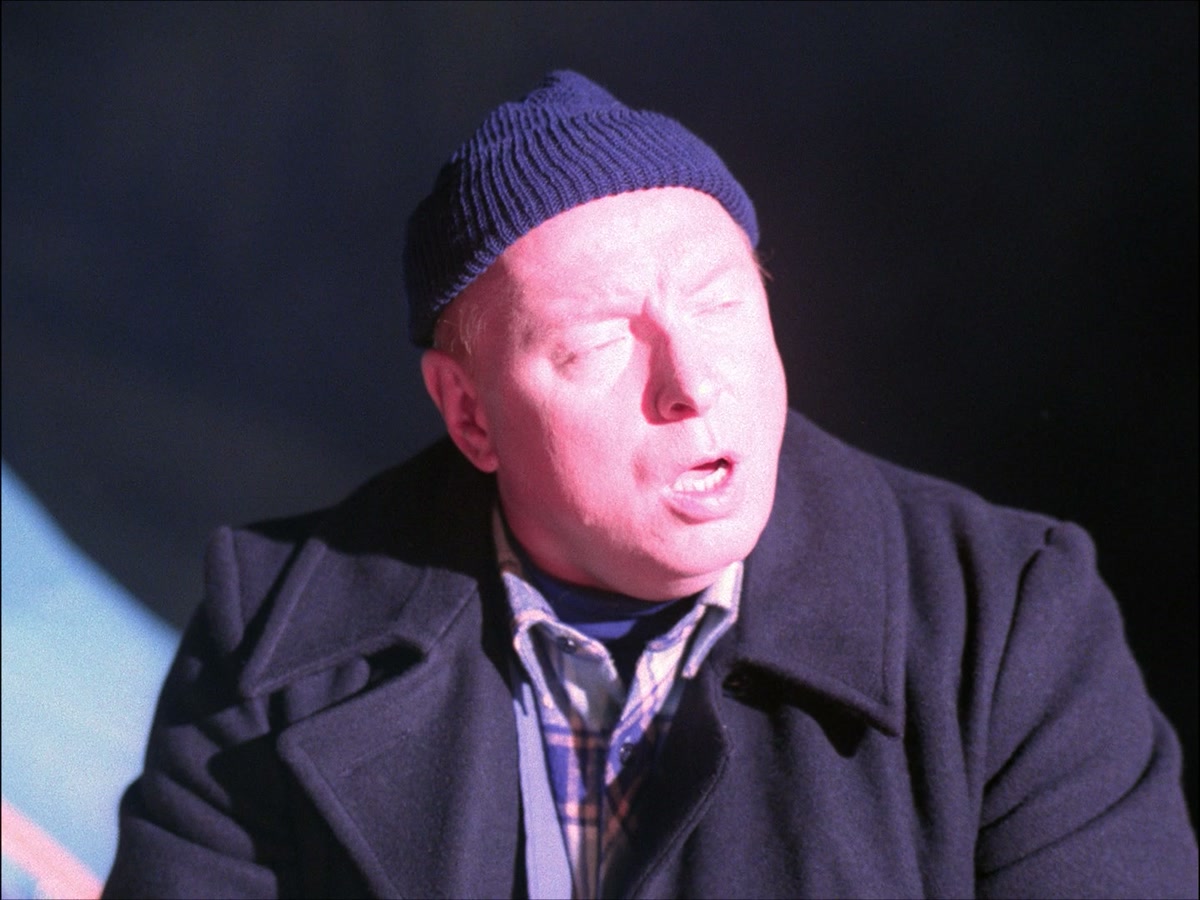
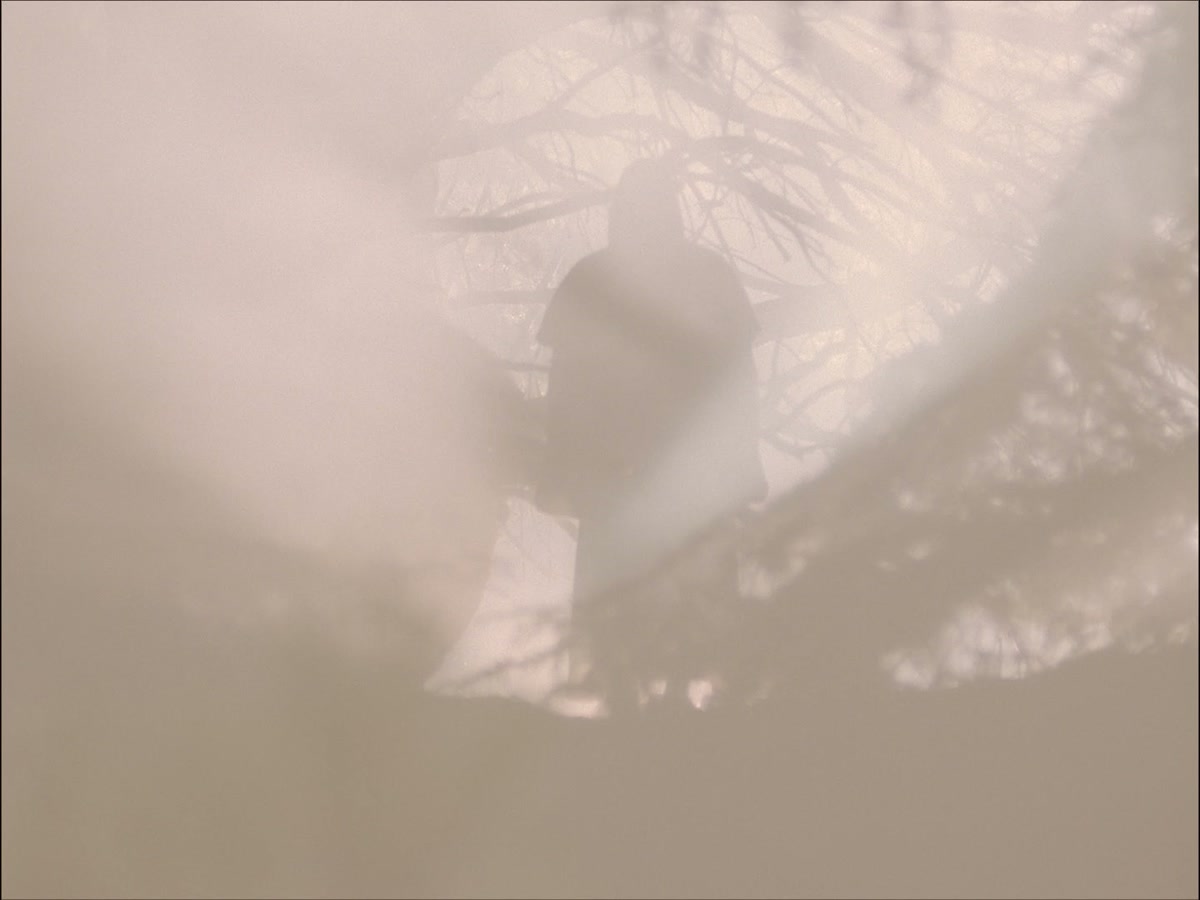
Cooper steps away. The English captions mark owl calls before he reacts to the light. The visual sequence separates the men, illuminates Briggs, introduces a hooded silhouette and then shows the fire without its companion. Cooper’s search supplies movement and disorientation while withholding a clear account of what has taken Briggs.
The disappearance is constructed through a change in illumination, obscuring light and the removal of a person from a familiar arrangement. The images do not justify choosing a single explanation at this point. What remains is the abandoned camp and a witness who can describe an experience but cannot yet make it intelligible.
The light in the woods · 7 images
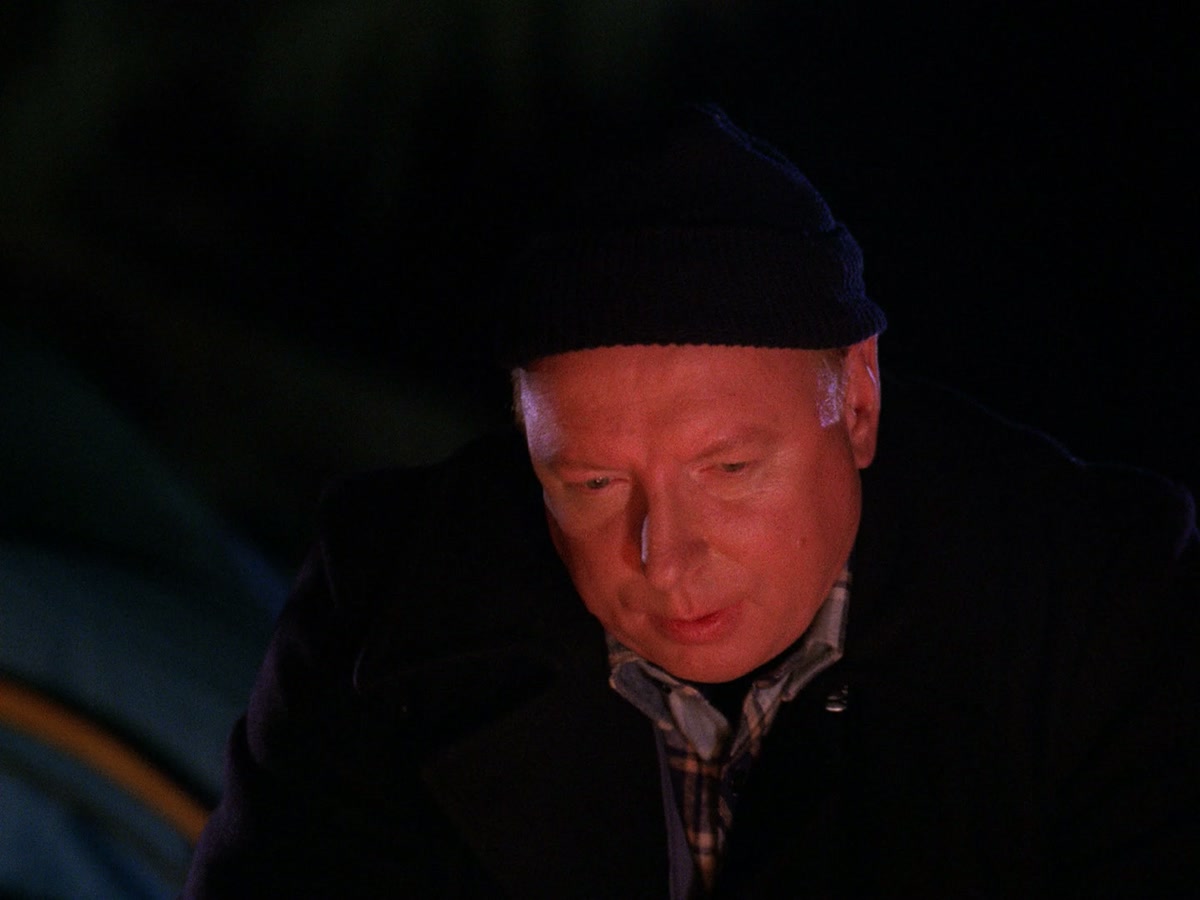
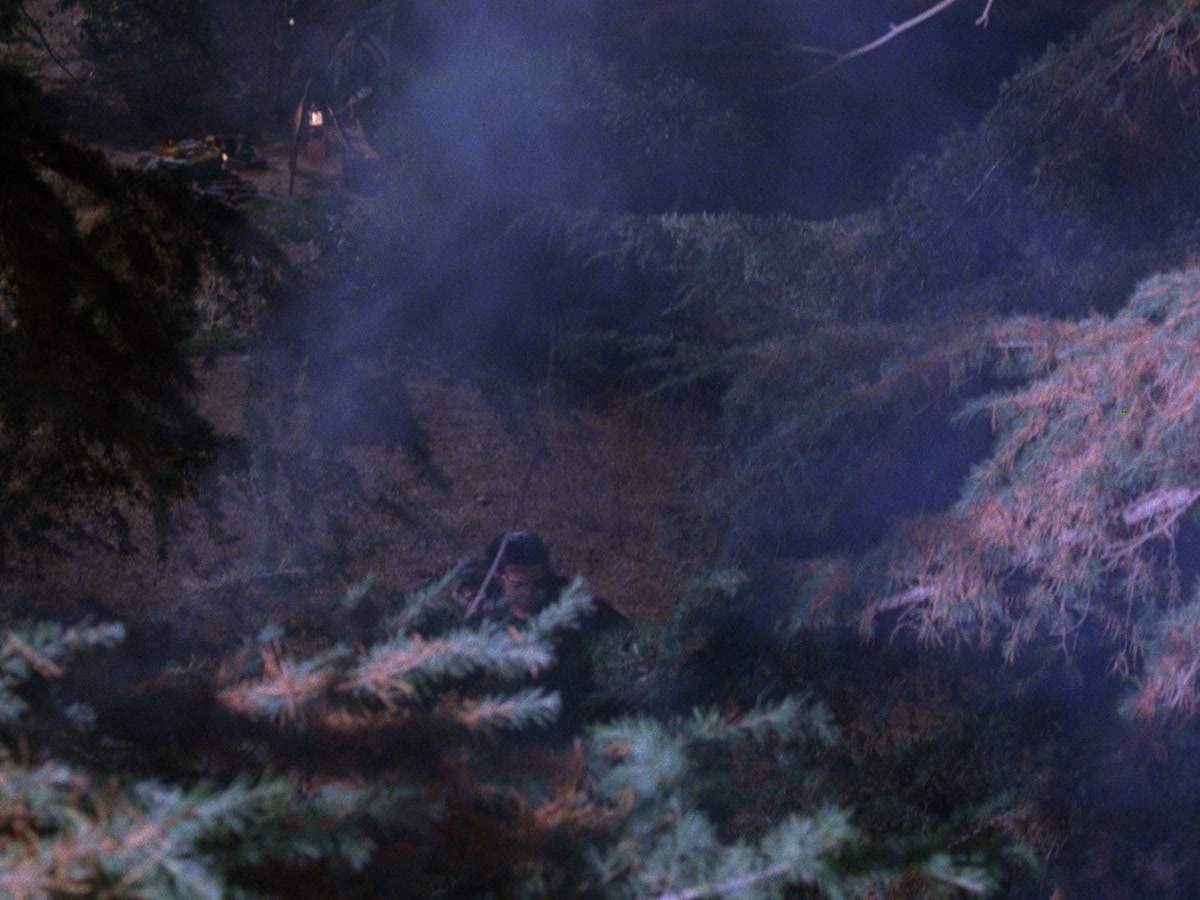
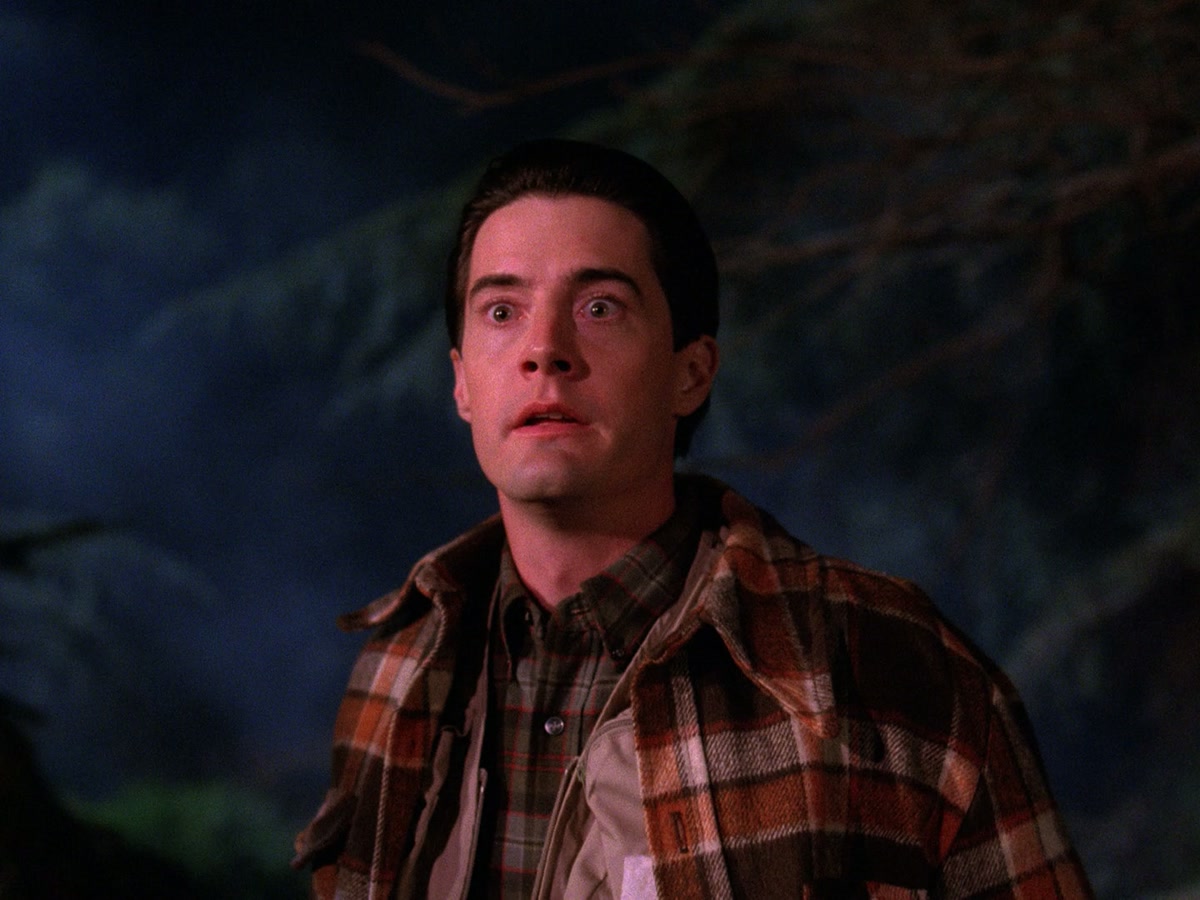
Listening for an interruption
The final scene gives an important sound question a precise setting: the relation between the owl calls, the onset of the light and Cooper’s attempt to locate Briggs. The caption track identifies the calls and his spoken search; the images establish the changing light and spatial separation. These are distinct kinds of evidence, and neither substitutes for a comparison of the soundtrack itself.
Earlier conversations use interruption differently. A farewell is broken by an official arrival, an account of survival ends in a detail about food, and a restaurant discussion becomes a family rupture. The episode repeatedly changes the meaning of a conversation before its participants are ready to finish it.
A route through Dispute Between Brothers
- After Leland. Sarah’s conversation with Cooper and the wake.
- Preparing to leave. Cooper confides in Audrey; Bobby borrows Leo’s suit.
- Returns and promises. Catherine reappears, Lucy hears proposals and the station prepares a farewell.
- The suspension. Cooper loses his credentials and faces a formal inquiry.
- Judgments and schemes. Norma confronts Vivian; Jean’s allies build a case against Cooper.
- The woods. Briggs names the White Lodge, then vanishes from the campsite.
Sources and connections
Primary source: Twin Peaks, “Dispute Between Brothers,” Season 2, Episode 10 / overall Episode 17, directed by Tina Rathborne, in Twin Peaks: From Z to A. The visual studies and dialogue analysis use the episode and its English subtitle track.
Continue with “Masked Ball”, return to “Arbitrary Law”, or browse the illustrated Season Two guide.