Twin Peaks: Episode 8 — May the Giant Be with You
1990 · Season 2 premiere · David Lynch
A wounded detective, a father’s vision and a supper that cannot contain grief. Enter the season through its rooms, performances and unanswered messages.
Season 2, Episode 1 / overall Episode 8. Contains episode spoilers.
Explore this episode
An emergency that cannot get moving
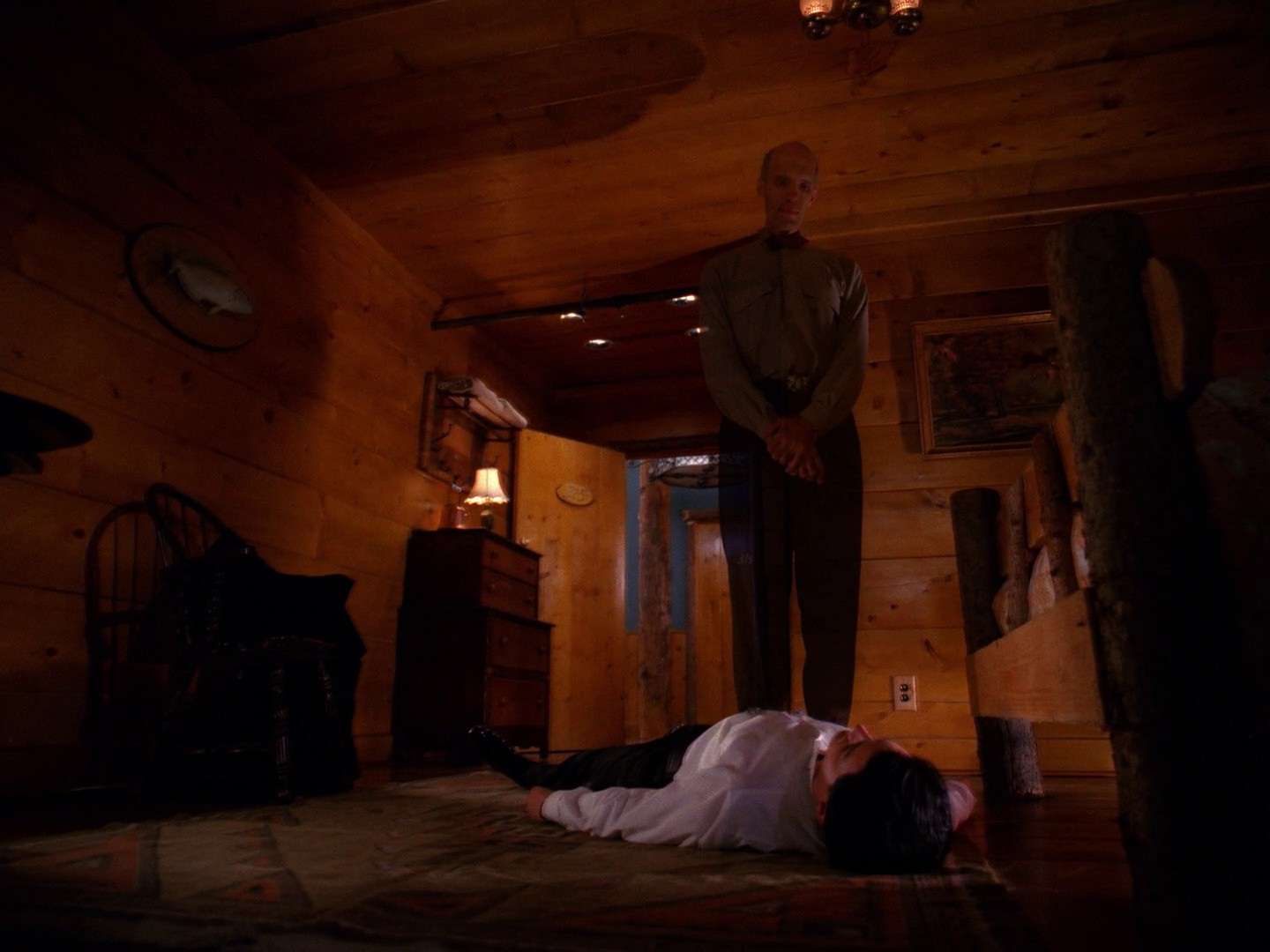
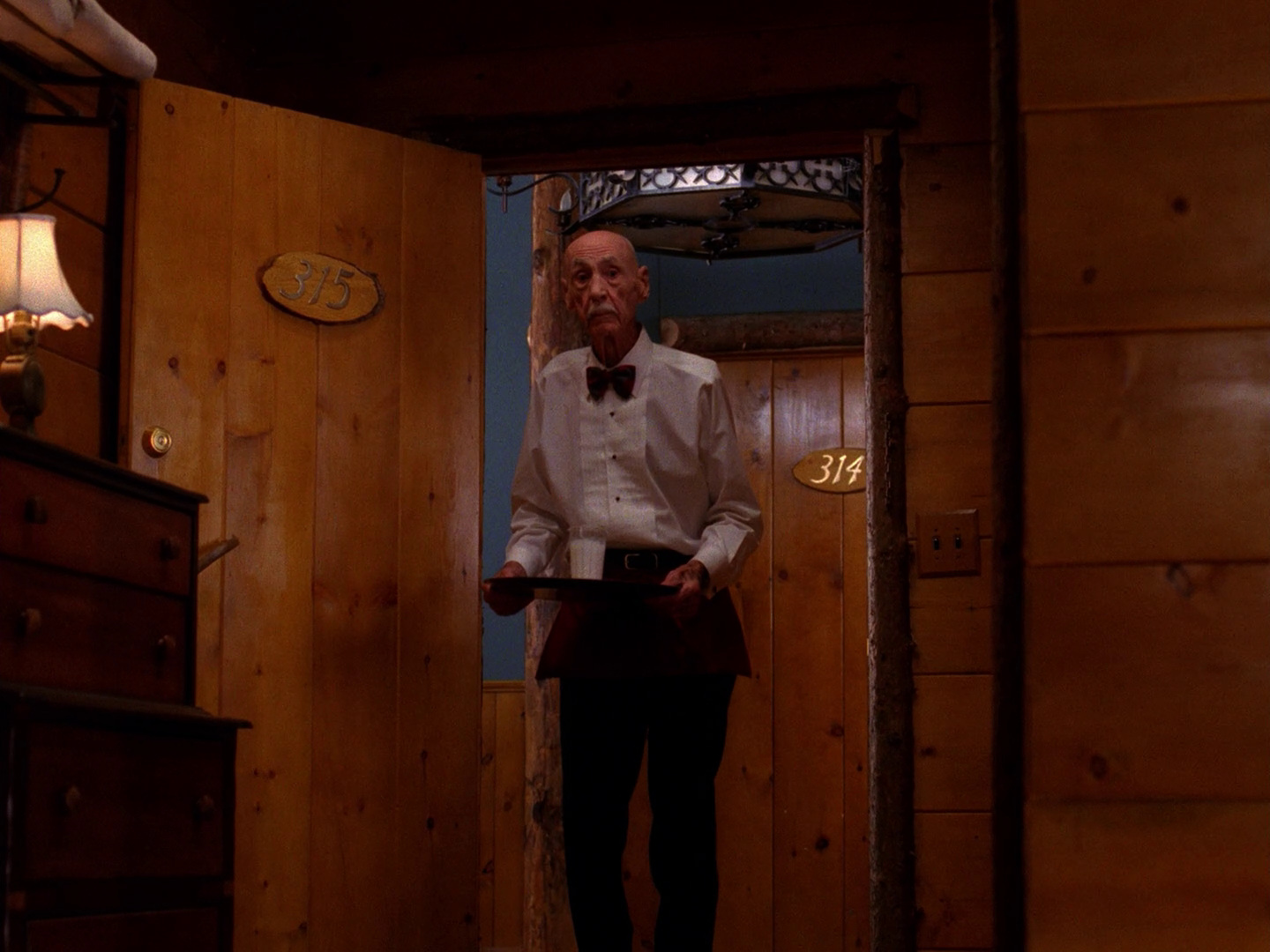
Season 2 begins by suspending its investigator. Cooper is wounded, horizontal and unable to impose the brisk rhythm that usually makes a room follow his instructions. A telephone offers a route to help, but the waiter treats the room as a service call. Milk, a bill and a gratuity become obstacles between recognition and rescue. The comedy depends on the discrepancy between what Cooper needs and what the visitor believes he has come to do.
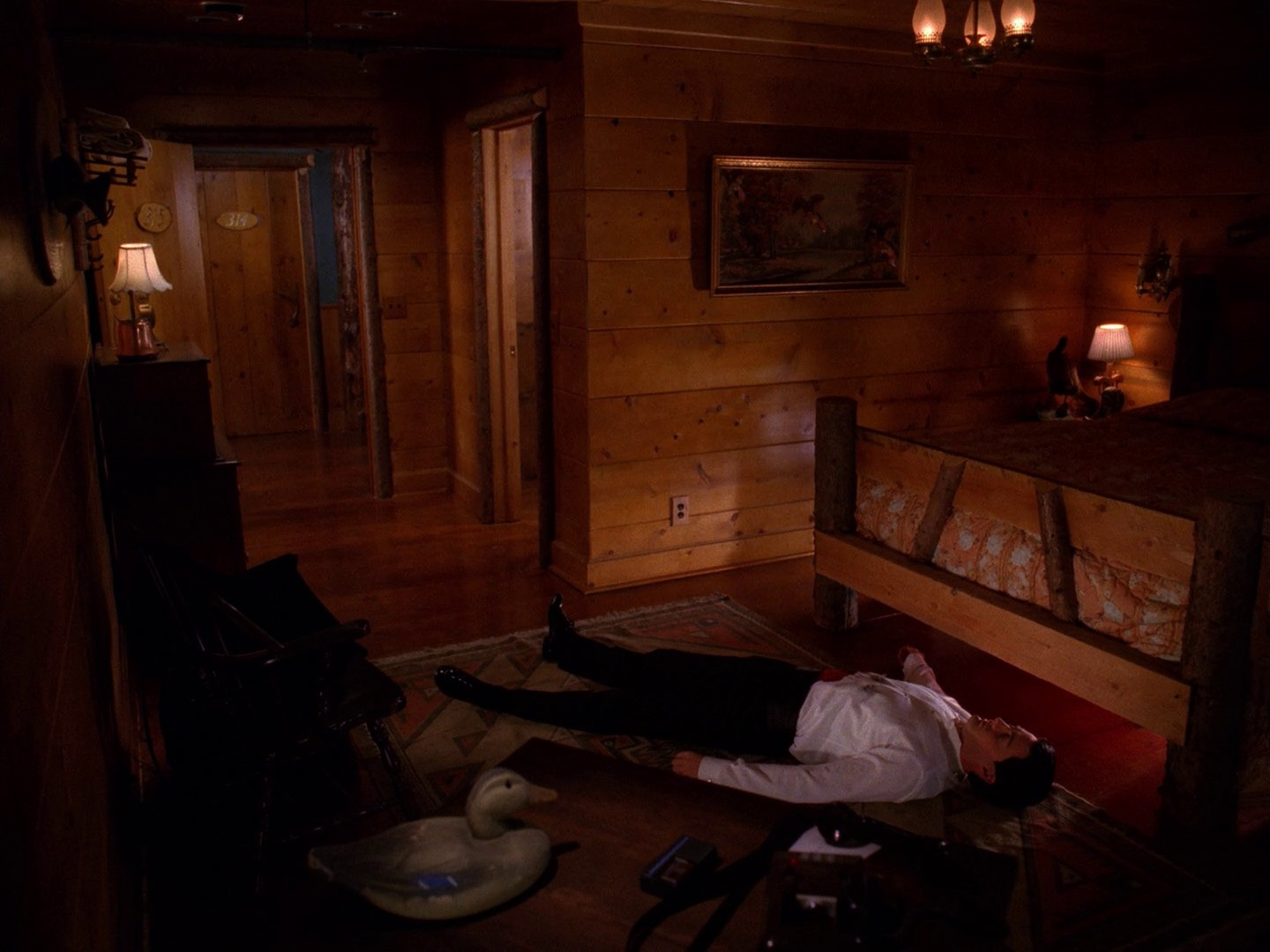
The low viewpoint matters as much as the dialogue. The waiter can leave the frame, return, pause at the door and repeat a gesture while Cooper remains where the gunshots put him. A familiar hotel room becomes an enormous distance to cross. Each departure seems to promise progress; each return renews the delay.
The room, the visitor and the ring · 4 images
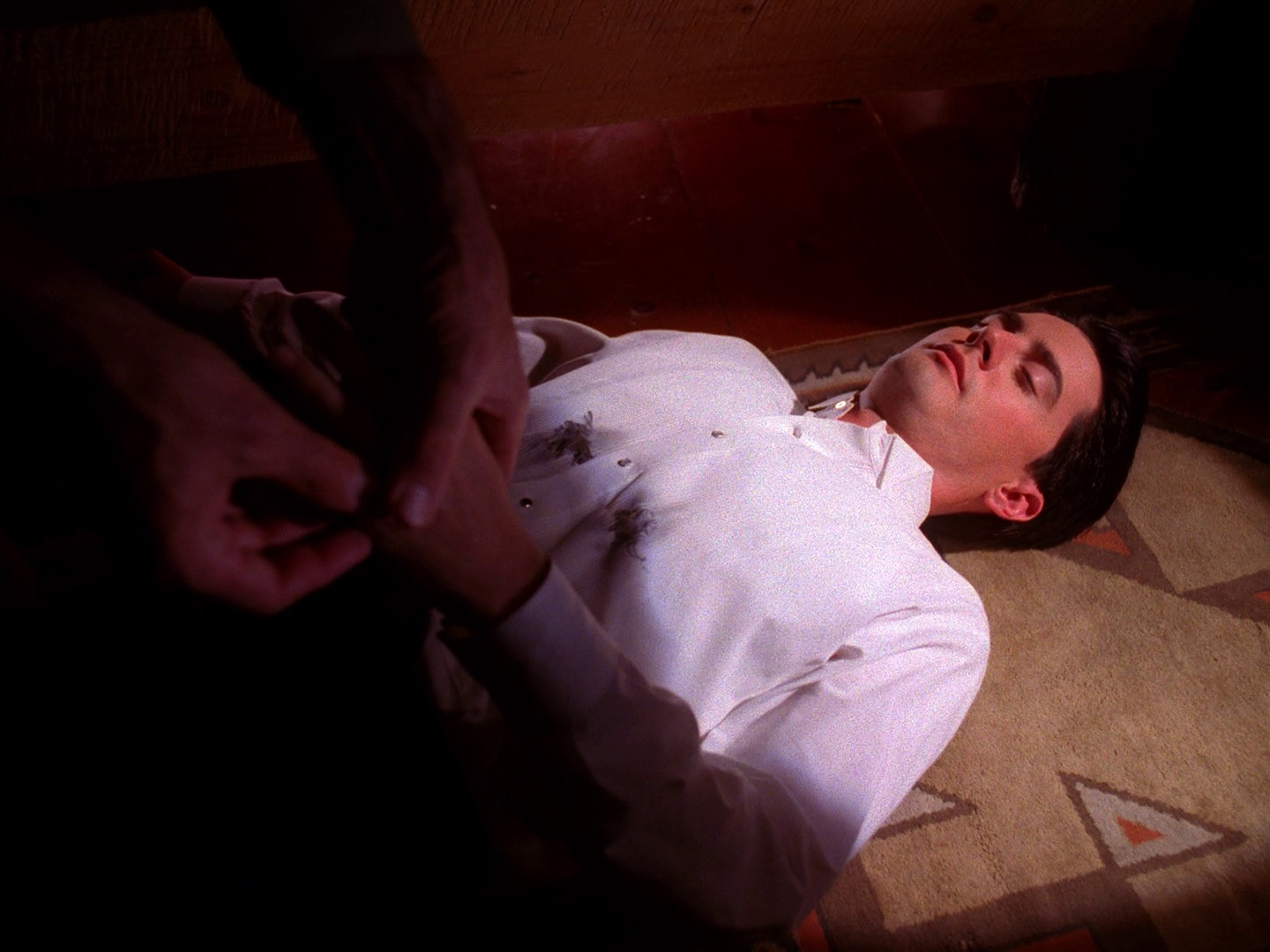
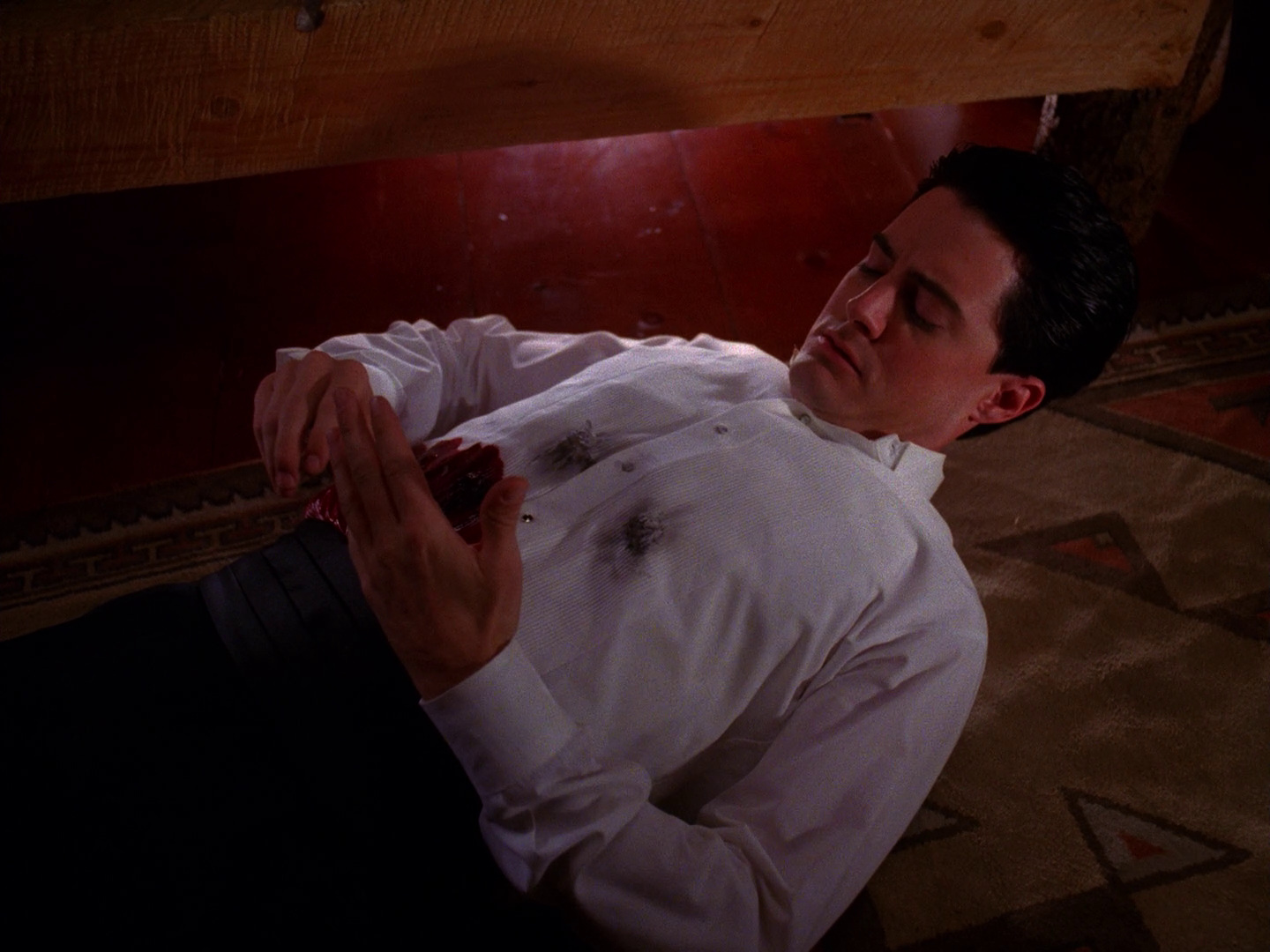
The Giant does not restore normal procedure. His clues require future recognition, and the ring becomes a pledge that an interpretation might eventually be confirmed. The episode therefore gives Cooper two visitors whose purposes he cannot command: one apparently ordinary and frustratingly unhelpful, the other extraordinary and conditionally informative.
Cooper’s later address to Diane brings the recorder into this same problem of distance. He hopes it can record his voice from where it lies. That hope is part of the scene; the passage does not establish that a usable recording is actually being made. Practical observation gives way to regrets about experiences not yet lived. The voice that normally collects the world for an unseen listener tries to remain composed while its speaker may be dying.
Margaret’s introduction
The Log Lady introduction asks what can and cannot be seen through surfaces and connects dreams with the woods. Its questions frame an episode in which seeing a person is repeatedly different from understanding their condition. Continue to Coma, where voices, drawings and electronic messages complicate that problem.
Masks, hair and borrowed glasses
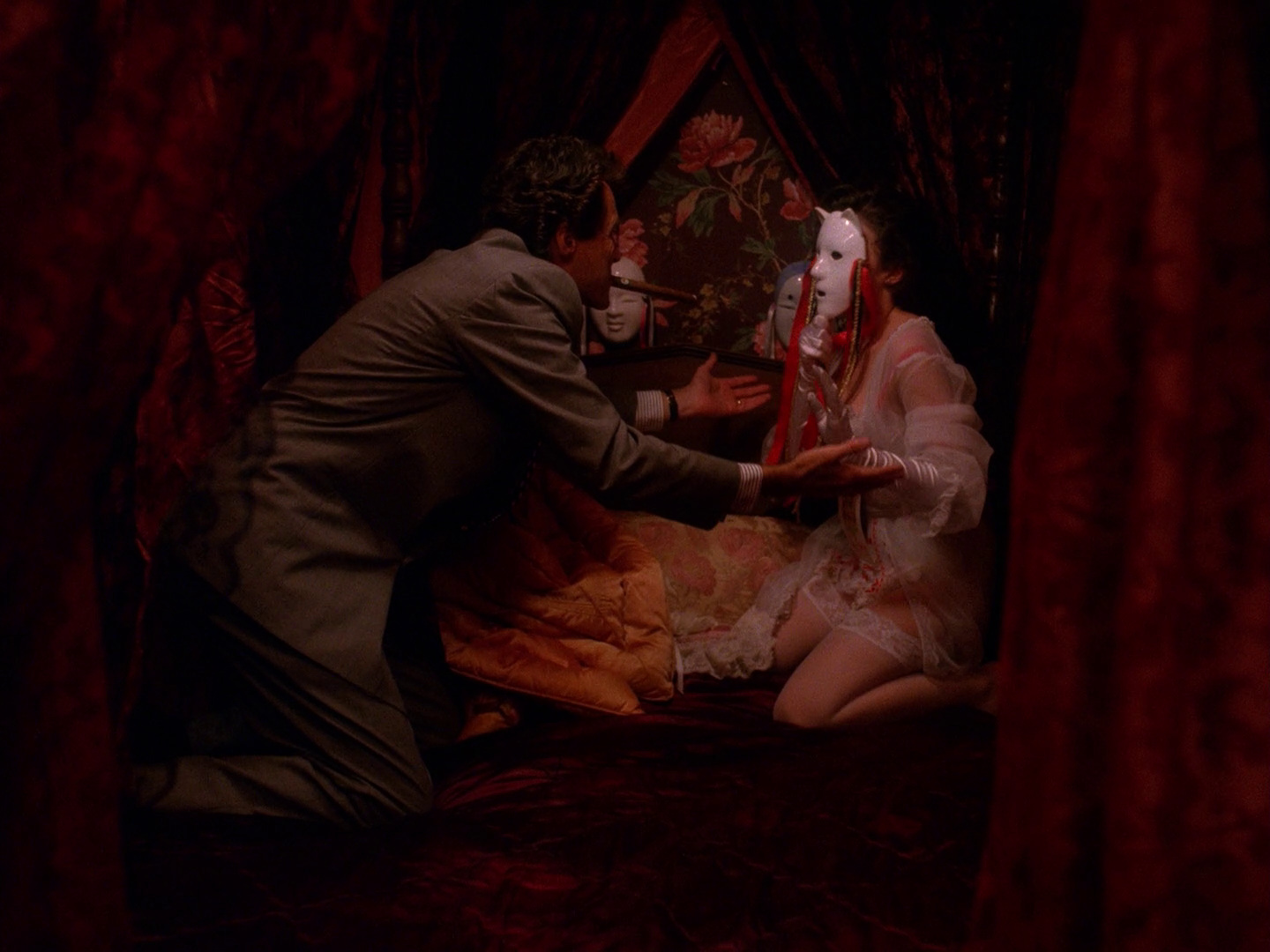
At One Eyed Jack’s, concealment is both Audrey’s investigative method and her immediate protection. Ben enters a situation whose family relationship he has not recognised. The mask allows the scene to prolong that unequal knowledge. Jerry’s interruption changes the immediate danger without undoing the system that made it possible. Audrey has entered her father’s business and found a place where being his daughter cannot safely be announced.
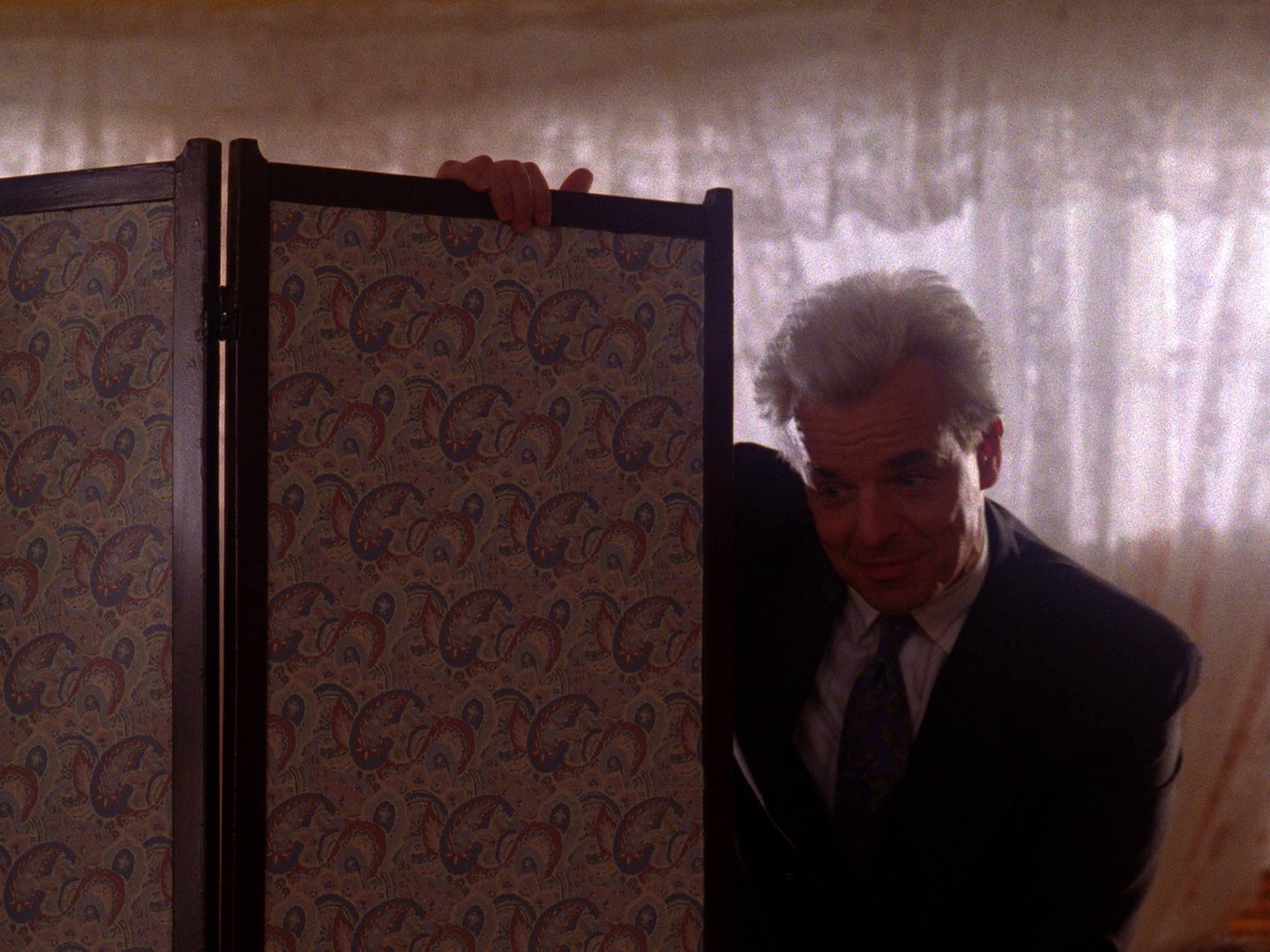
Leland’s white hair offers the inverse arrangement: a transformation everyone can see without being able to explain it. His cheerful performance does not fit the household’s recent grief. The new appearance and the song make feeling conspicuous while making its meaning less secure.
Changes in appearance · 3 images
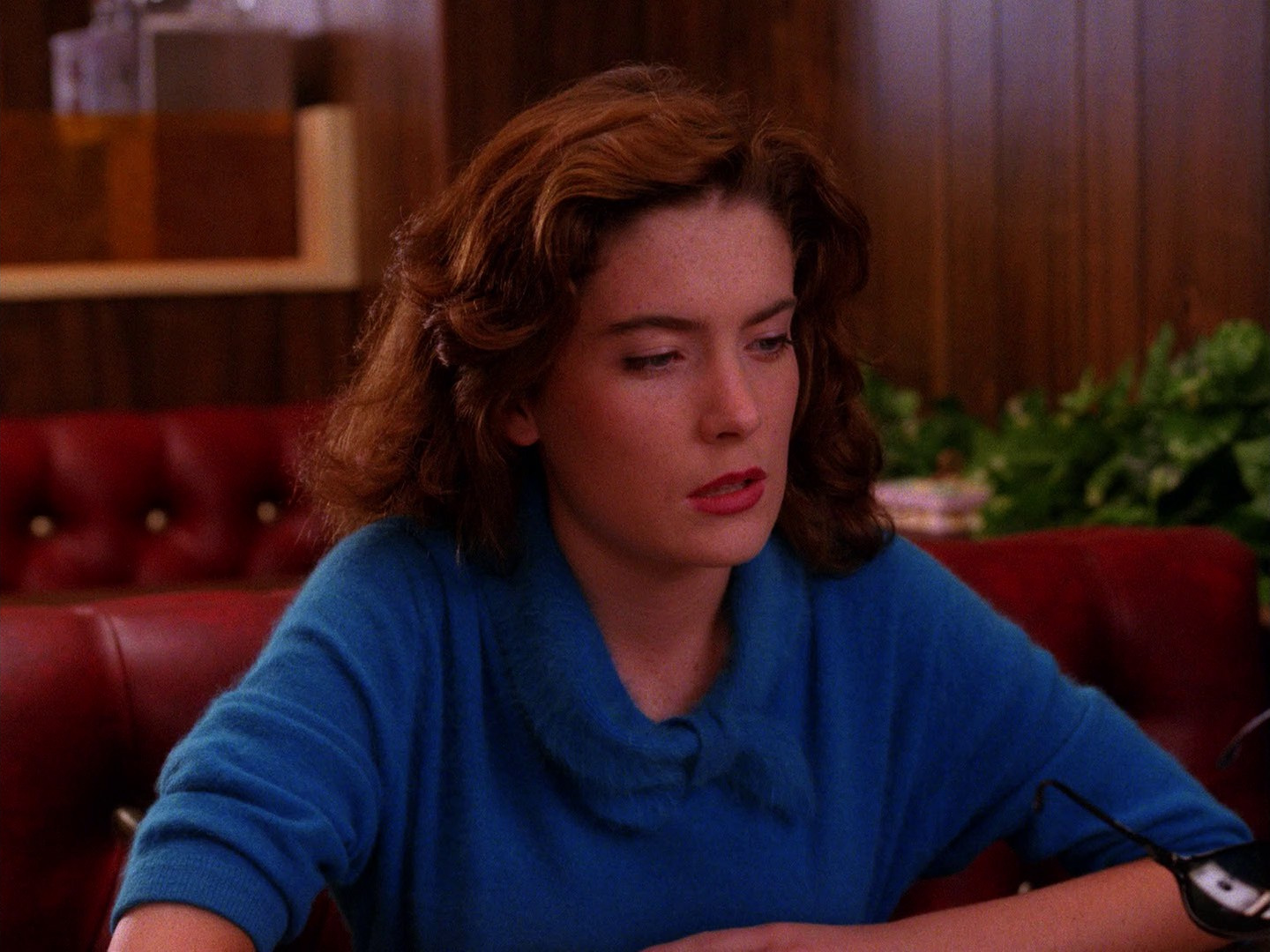
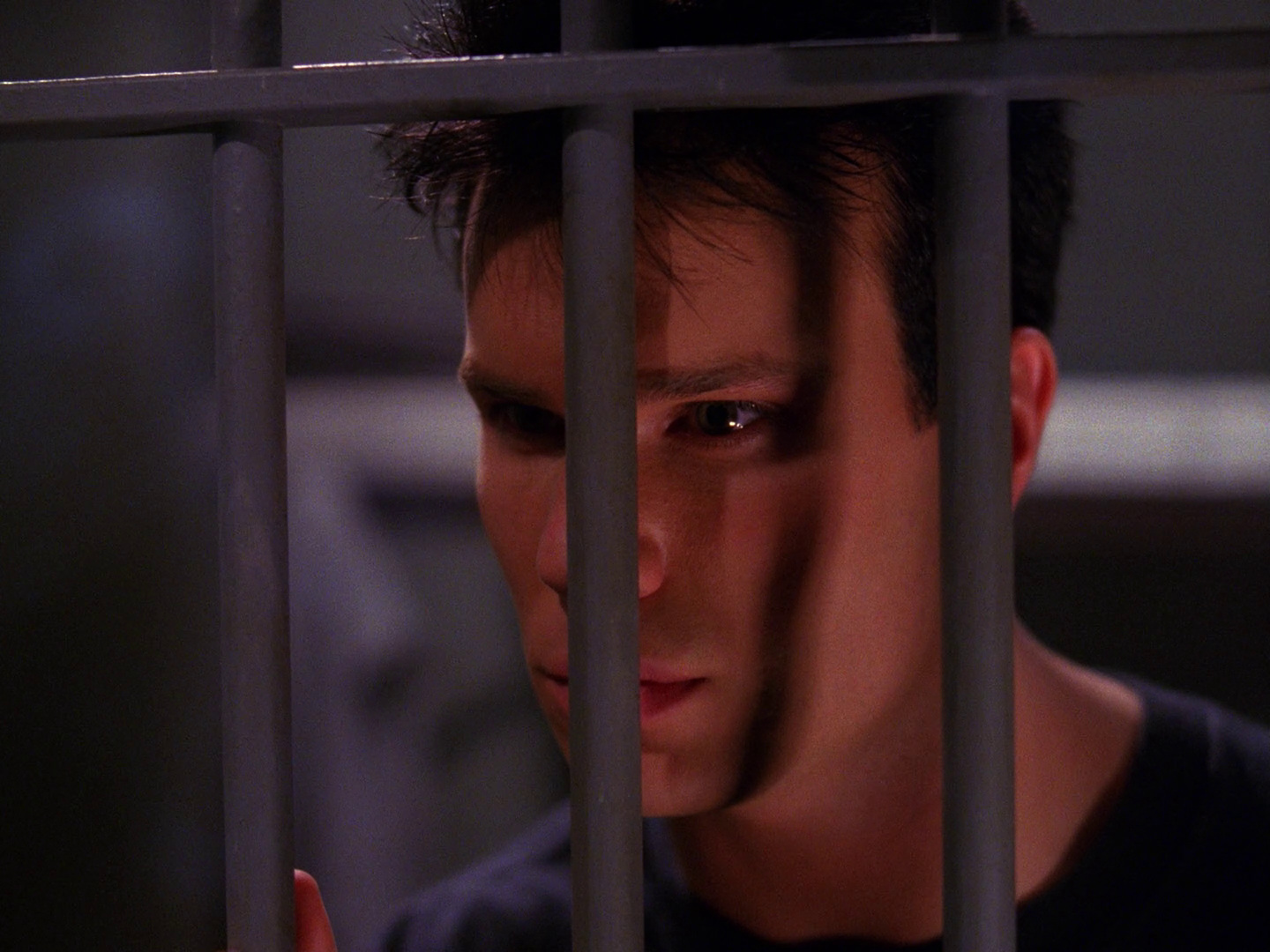
Donna’s possession of Laura’s sunglasses belongs beside Maddy’s rejection of her own glasses. An object associated with Laura can be inherited, worn and used to alter how others respond. Donna’s more assertive encounter with James in jail is not simply an exchange of information: it is an experiment in how to be seen. Maddy’s resemblance is given; Donna tries out a resemblance through conduct and accessories. Neither gains uncomplicated access to Laura by doing so.
The investigation makes room for feeling
Albert’s impatience sharpens the contrast between an efficient report and a town that cannot detach the report from its people. Andy’s contribution concerning Leo and the earlier Teresa Banks case is useful precisely because apparently peripheral local knowledge can establish an alibi. His sensitivity is not evidence of professional uselessness.
The episode repeatedly gives a witness more than one kind of authority. Jacoby can supply information about Laura and the necklace, yet his account of her state of mind remains his interpretation. Cooper resists the move towards treating her death as something she simply invited. The distinction between evidence and a person’s theory of another person is crucial here.
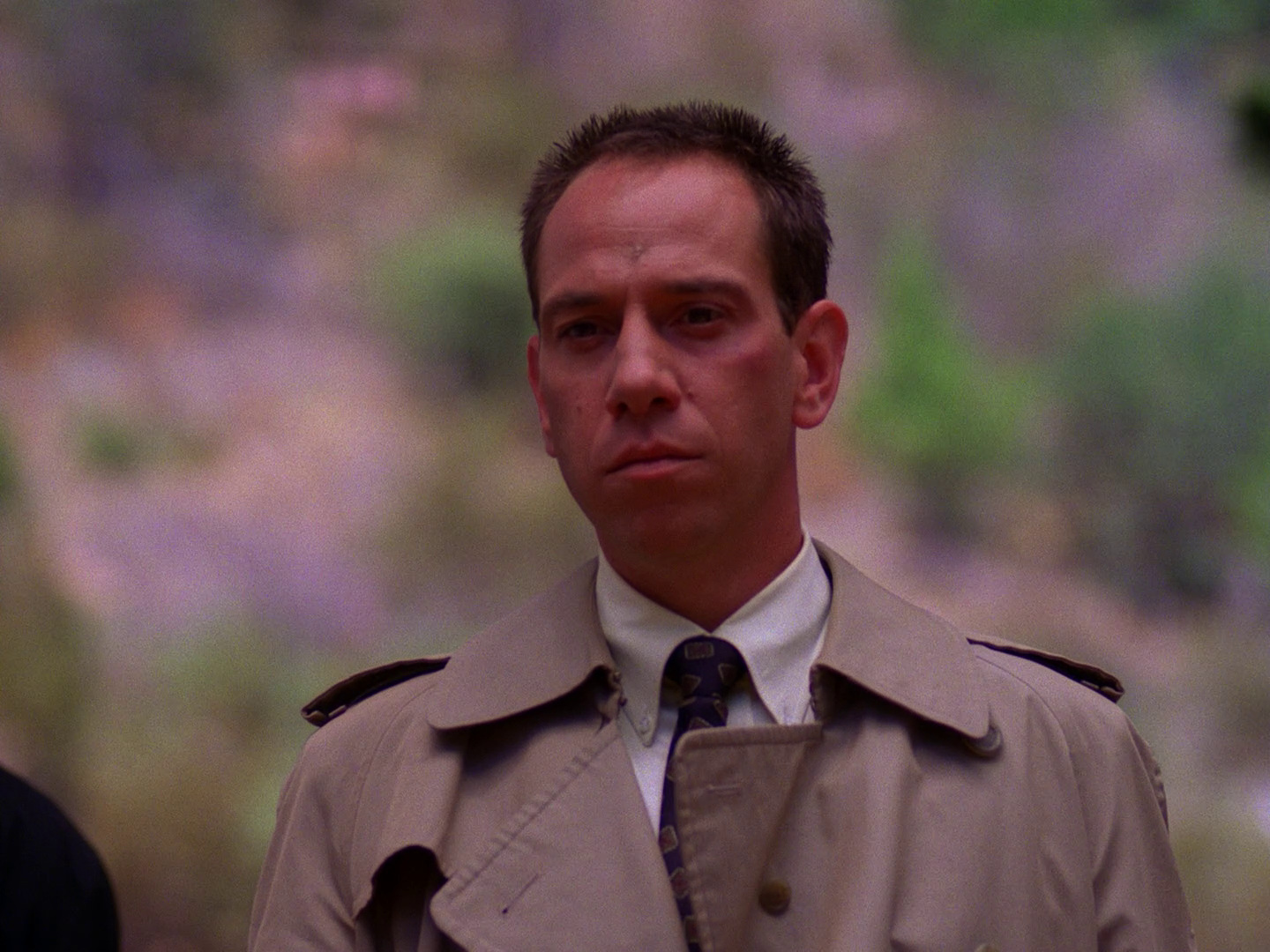
Ed’s account of Nadine’s lost eye brings a different burden into the hospital. The story is intimate, awkward and painfully connected to his relationship with Norma. Albert’s background behaviour makes one possible response to Ed visible while Cooper supplies another. The staging permits discomfort and compassion to occupy the same scene.
Later, the sheriff’s department reconstructs Laura’s final night through images laid over the breakfast-table world of coffee and doughnuts. The overlay does not turn every inference into an independently witnessed fact. It shows the investigators assembling a possible sequence. Andy’s tears and his eventual resistance to Albert insist that reconstructing violence is also an emotional act.
Testimony and reconstruction · 4 images
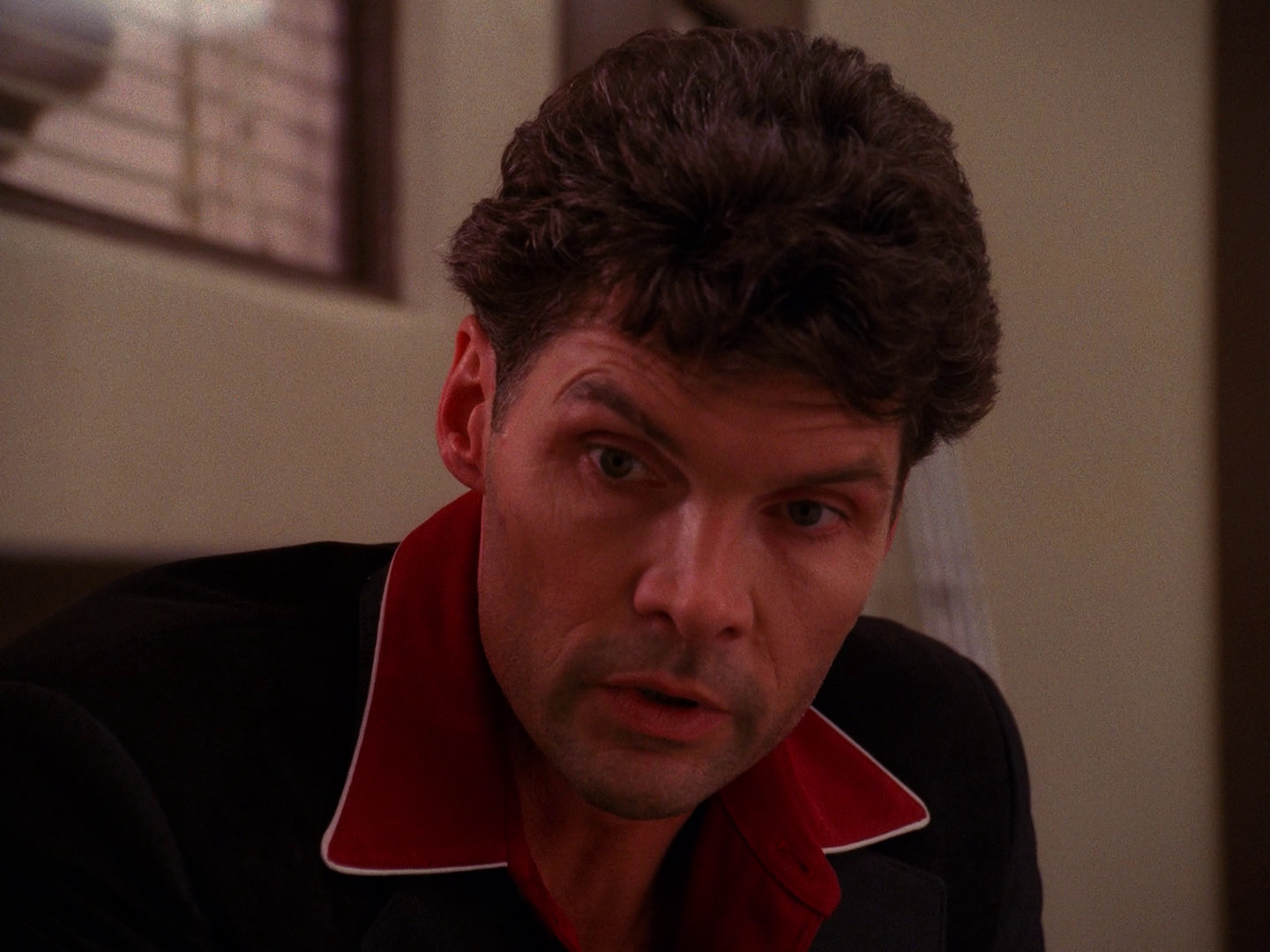
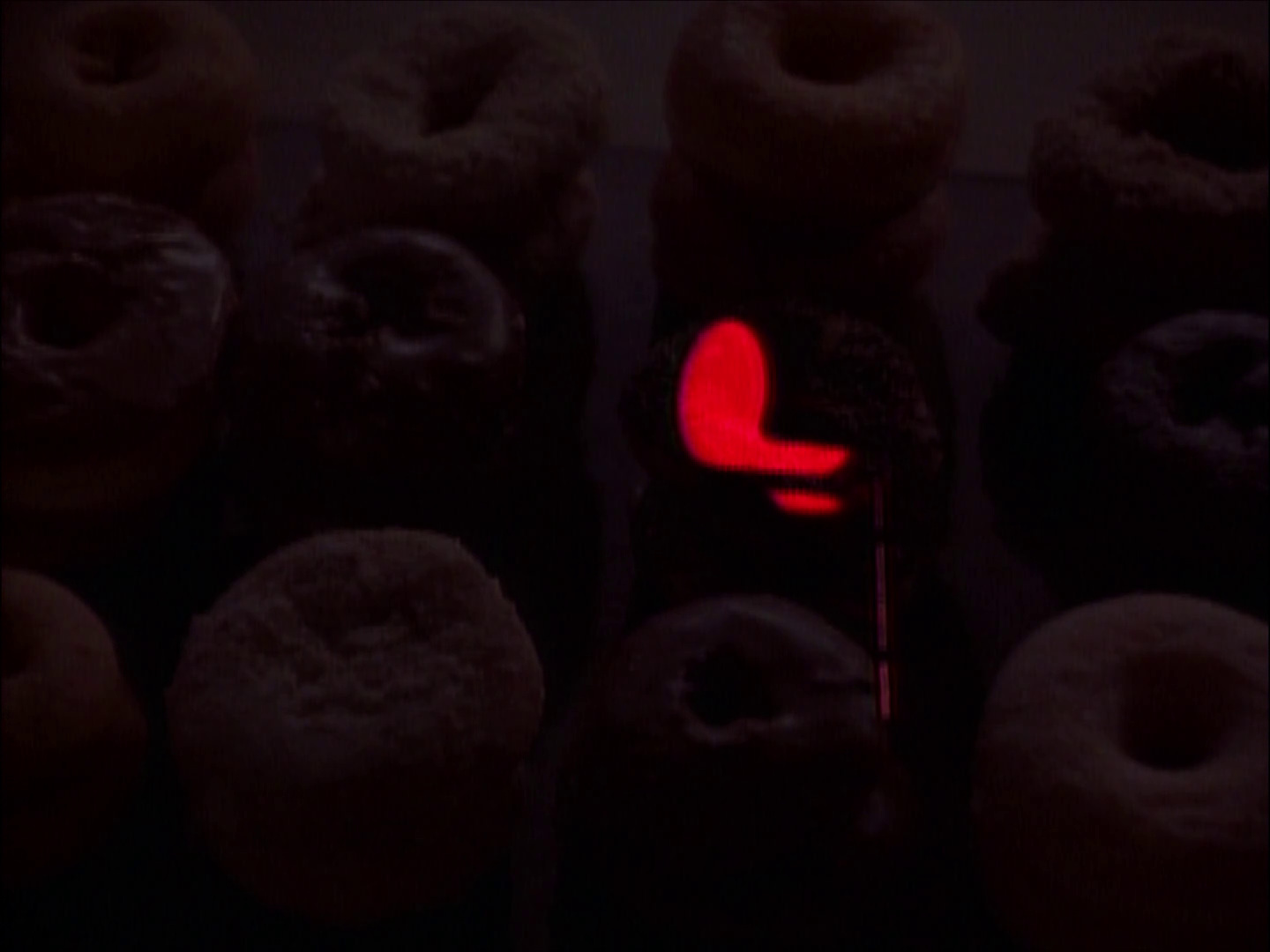
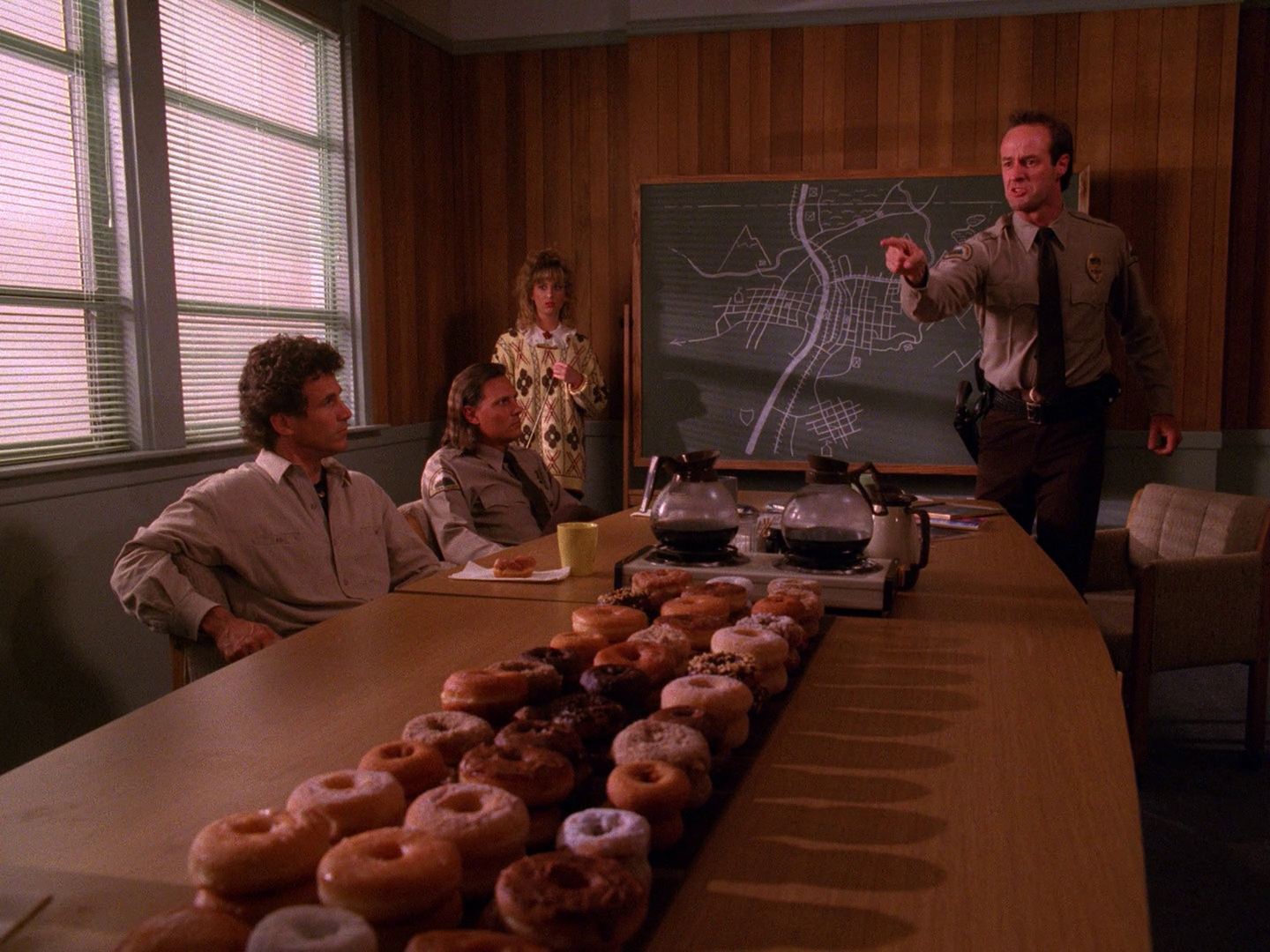
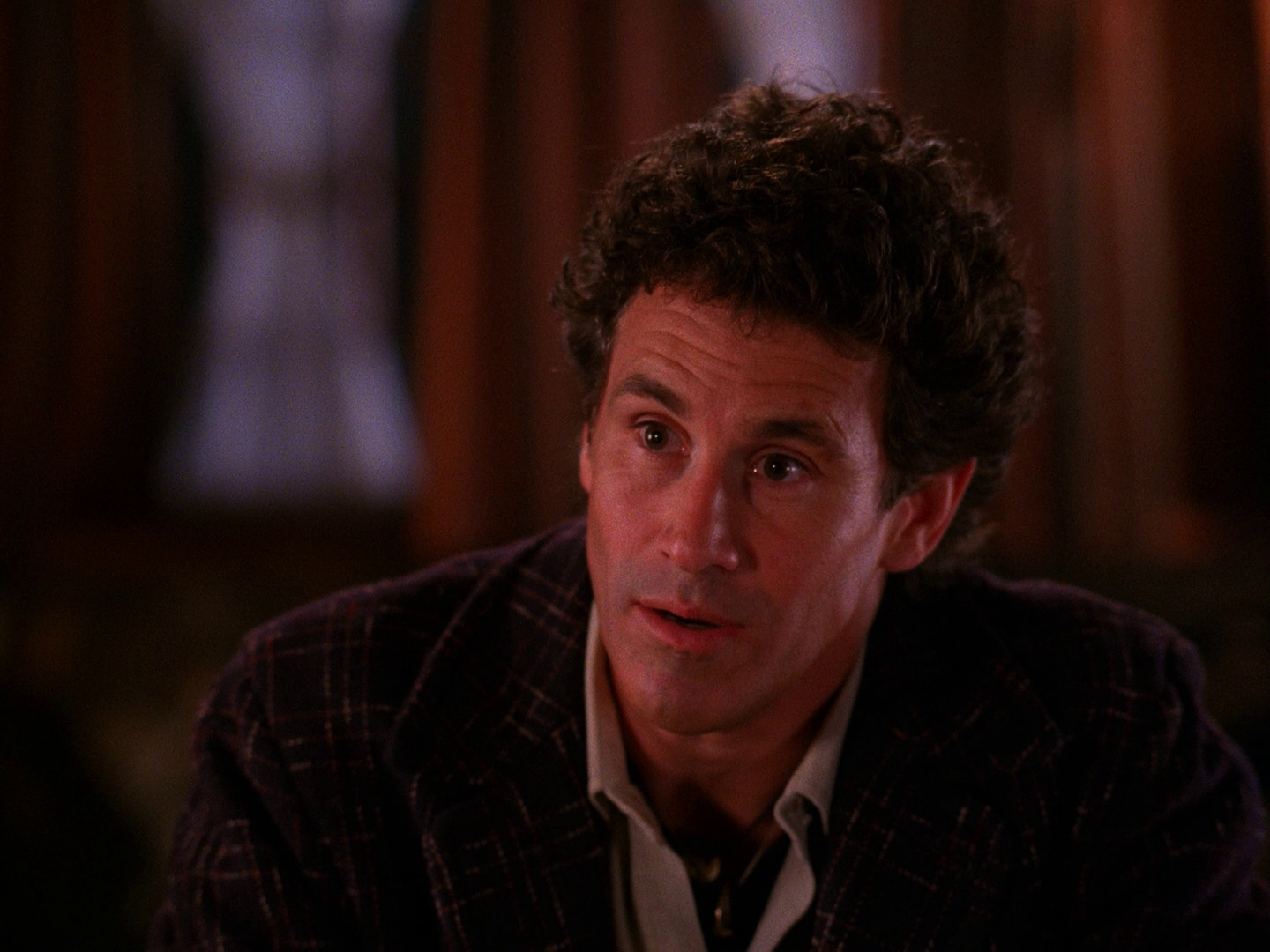
Pete’s account of Catherine refuses a simple movement from marital conflict to relief. The presumed loss makes room for memories of tenderness that did not cancel their difficulties. His uncertainty belongs to the episode’s larger aftermath: people are still acting on incomplete news about the mill, Josie and those who may have survived.
Major Briggs sees a future for Bobby
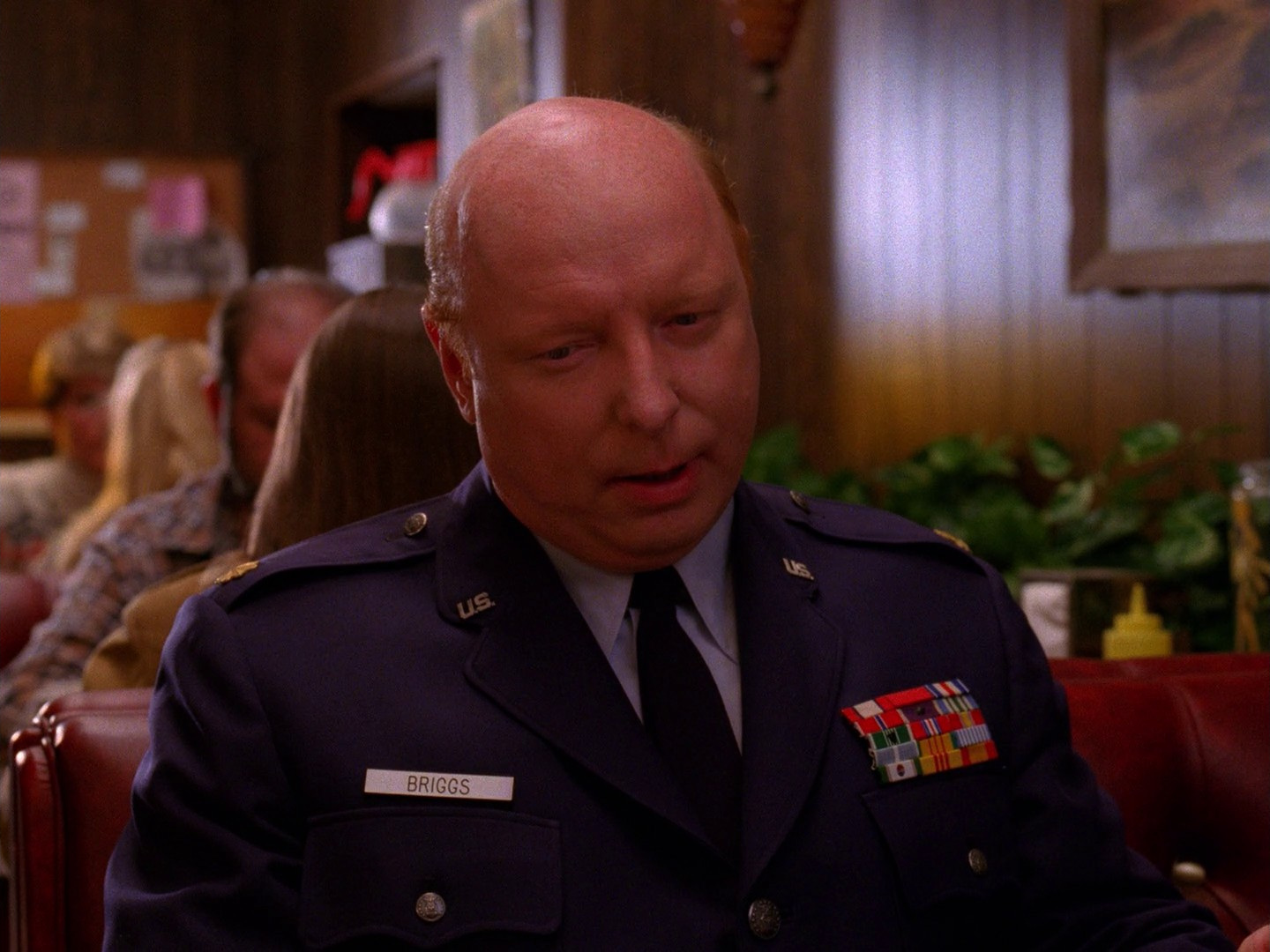
At the Double R, Major Briggs offers Bobby a vision of reconciliation. He makes a distinction between this experience and a dream, describing an imagined place and a son who is well. The significance lies less in predicting an event than in the kind of attention the father is willing to give his child.
Bobby’s listening is the sequence’s other action. The exchange begins within a relationship often organised by discipline and defiance. The camera allows his expression to change while the Major continues. A paternal account of future goodness gives Bobby a form of recognition he has not had to earn by performing toughness.
A change in the father–son conversation · 2 images
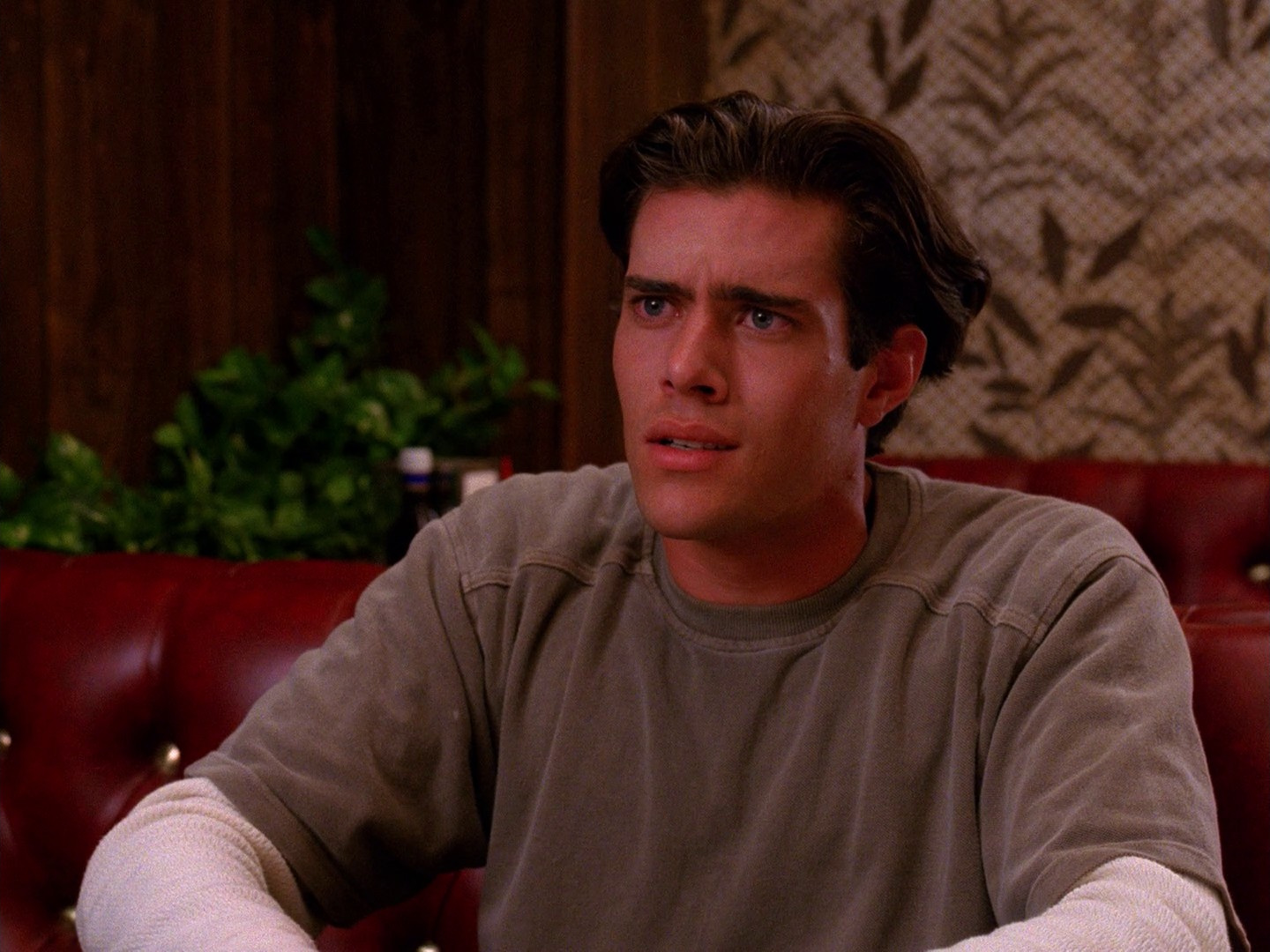
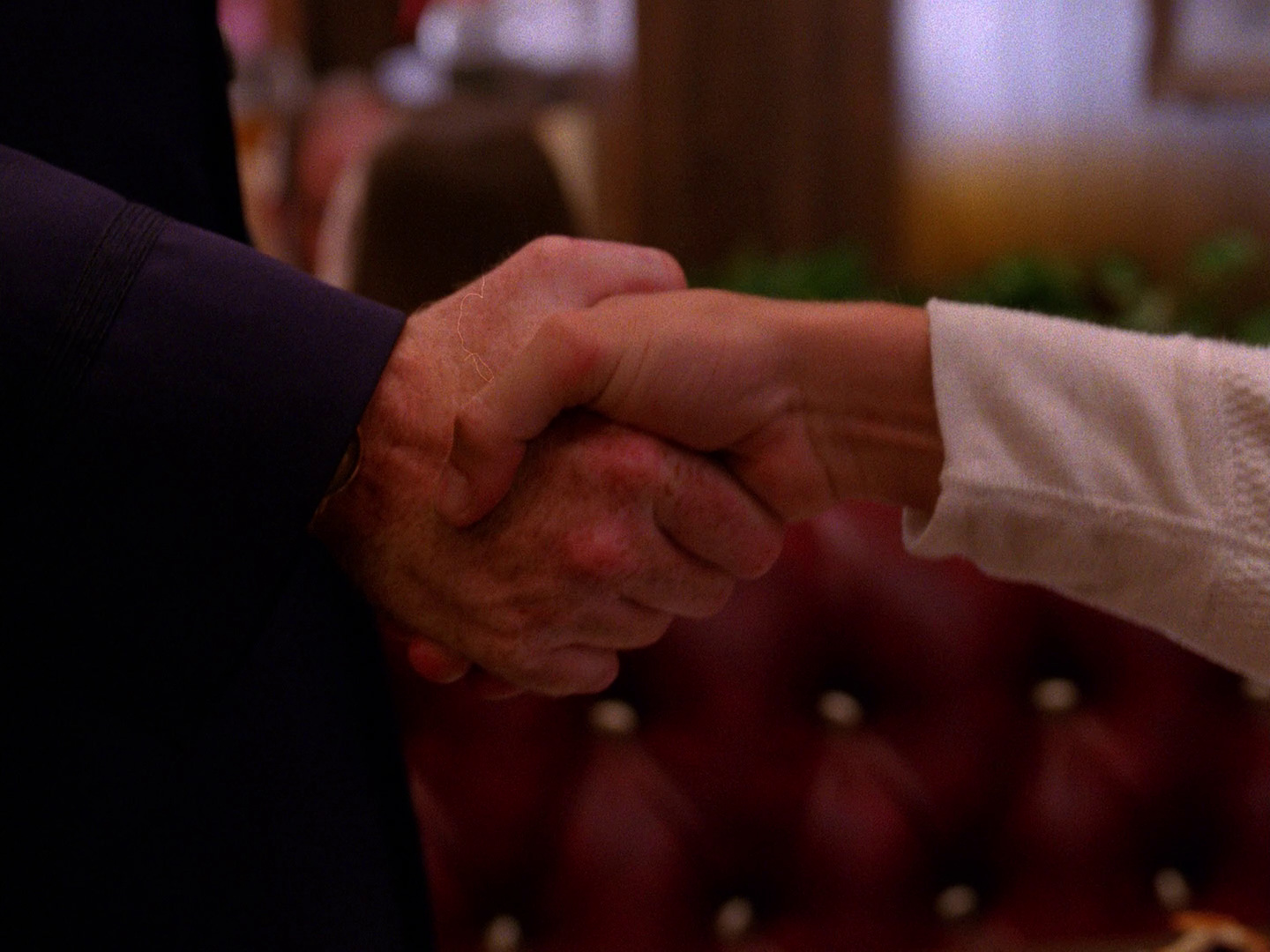
The handshake makes the vision physical without proving it prophetic. This is one of the episode’s clearest alternatives to coercive knowledge: Briggs speaks about Bobby without reducing him to a suspect, a failure or a problem to be solved. Placing the scene among investigations and hospital visits makes generosity itself an event.
The Hayward supper: performance and interruption
The Hayward gathering begins with a recognisable domestic programme: a meal, young people performing, adults giving them attention. Gersten’s costume and piano playing make the room a stage. Harriet’s poem addresses Laura as an absence that the family can acknowledge together. The evening tries to organise grief into forms that can be shared.
Donna and Maddy’s private conversation runs beside this formal hospitality. They are making plans within a household attempting to hold itself together. The episode places the wish to investigate Laura and the wish to mourn her in the same room without pretending they are identical activities.
Music and mourning at the Haywards’ · 3 images

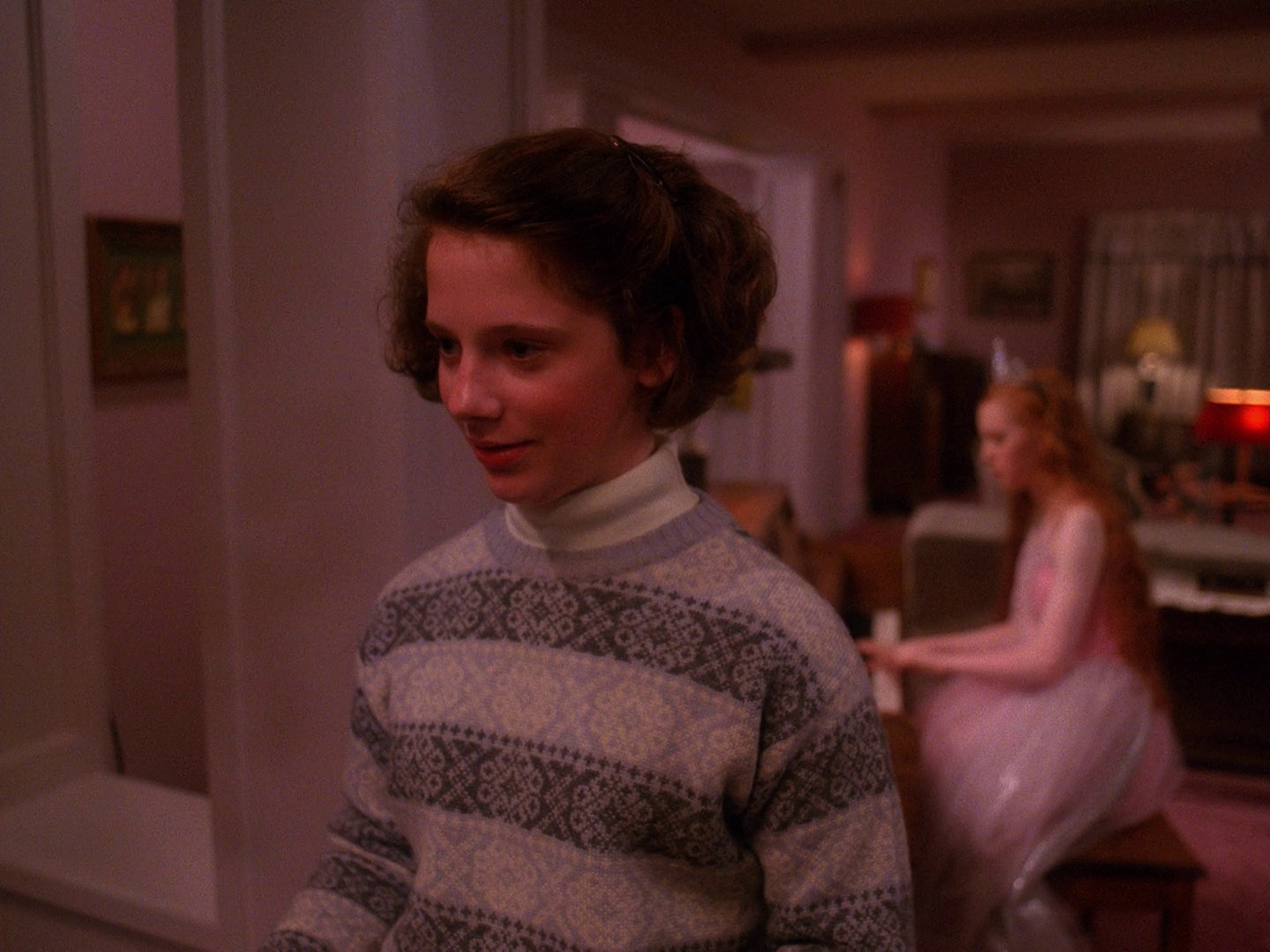
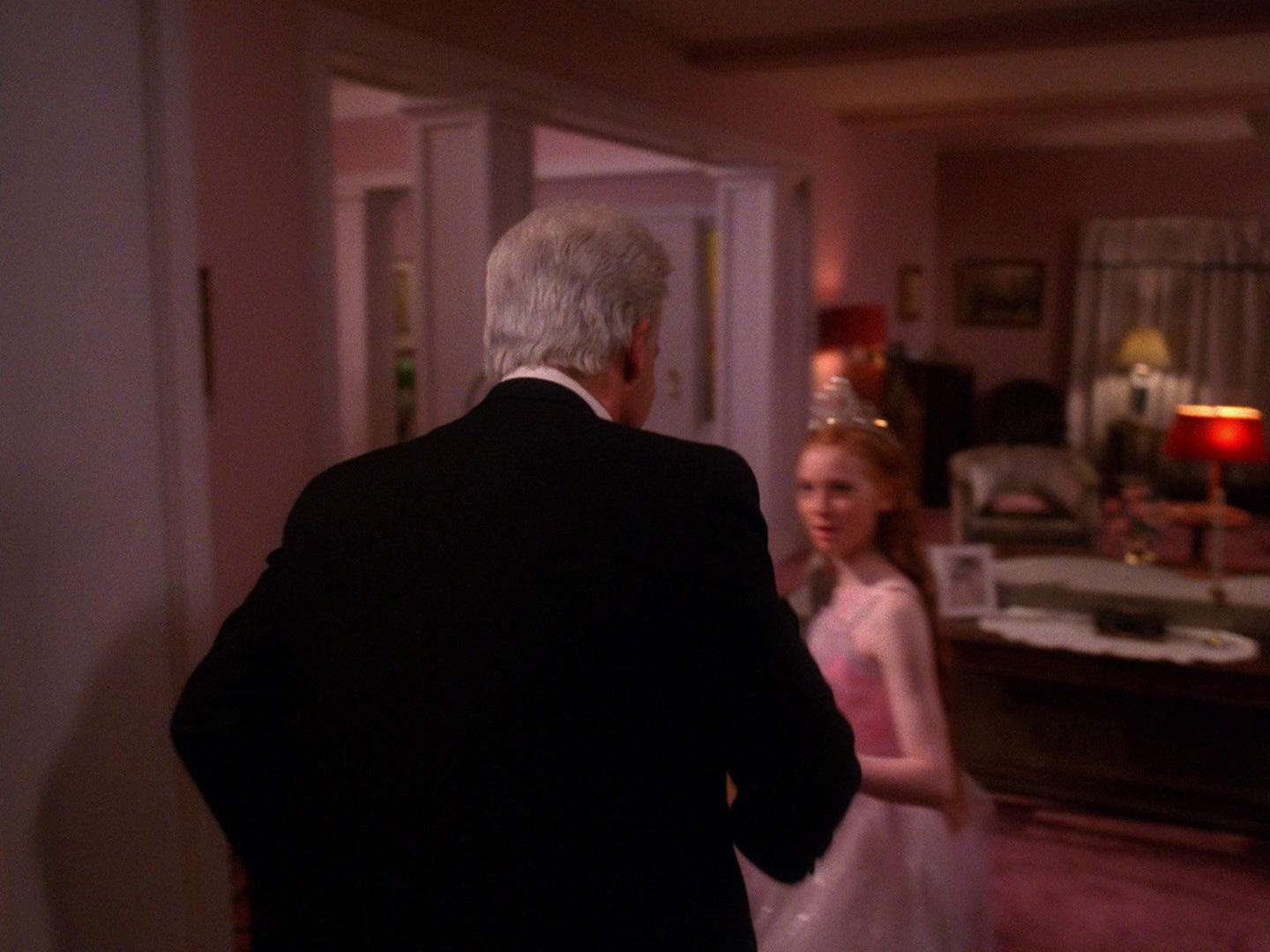
Leland’s performance of “Get Happy” disrupts the balance. Its promise of happiness cannot be taken as a transparent statement of his condition. The number becomes increasingly difficult for the room to contain, ending in collapse. The contradiction between the song’s invitation and the body performing it is the scene’s organising fact. Gersten’s piano also returns under the closing credits, carrying an image of domestic performance beyond the final nightmare.
A prayer, a clue and a survivor
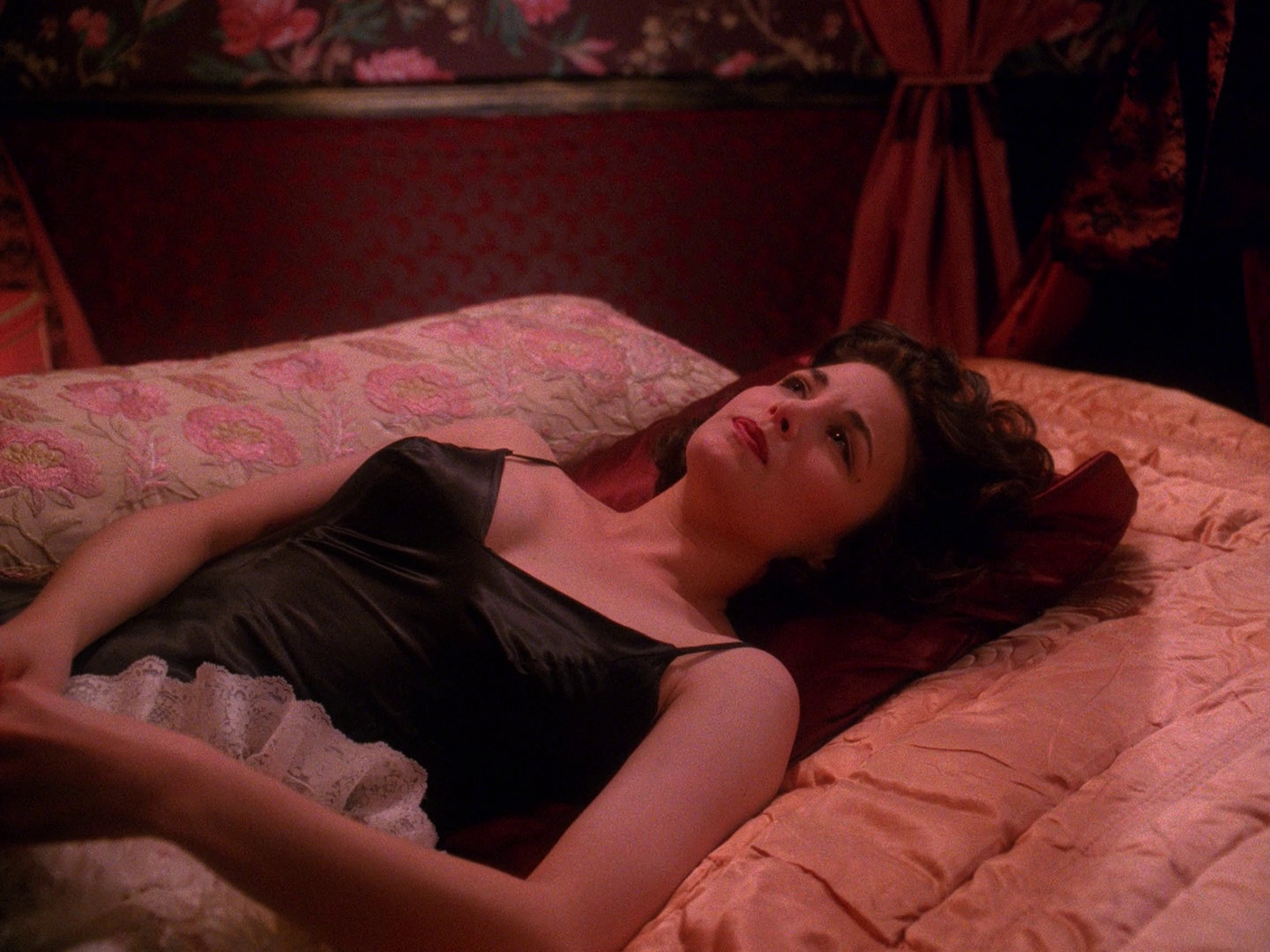
Audrey’s prayer and Cooper’s hotel-room solitude are joined by editing rather than a functioning conversation. She addresses the person she believes can save her, but he does not receive a telephone call at this point. The crosscut creates an emotional connection while preserving the practical isolation that makes her situation dangerous.
The Giant’s return shifts the episode back towards interpretation. A reference to people who have seen the third man leads into Ronette’s awakening. The concluding train-car imagery is attached to a survivor’s distress. It is not merely an illustrated answer to the briefing earlier in the episode; its violence arrives as an experience that the hospital cannot yet translate into ordinary testimony.
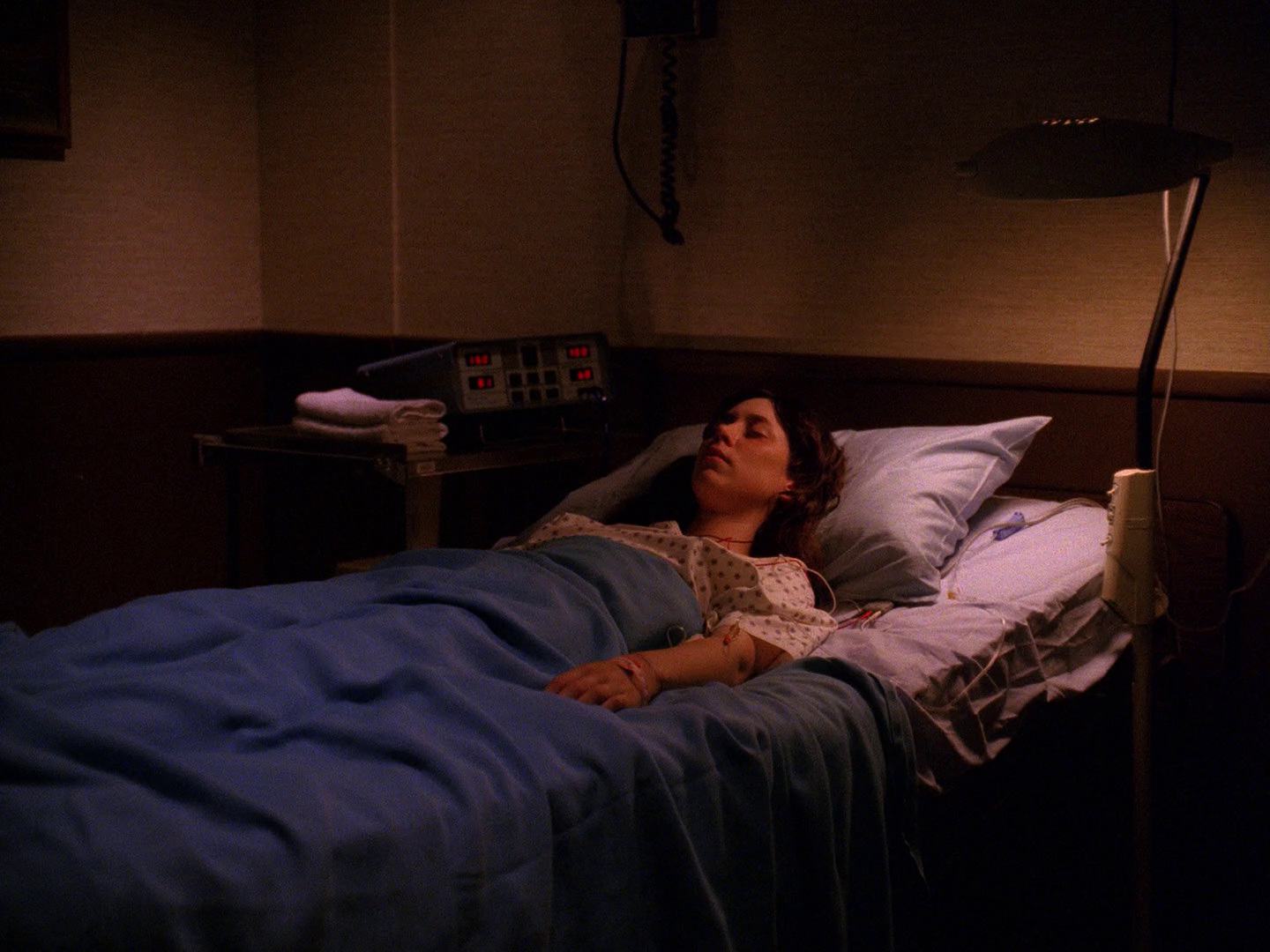
The ending gathers three kinds of address: Audrey’s plea, the Giant’s cryptic instruction and Ronette’s traumatised response. Cooper’s work depends on learning which messages can be answered immediately, which require recognition later, and which should first be understood as the suffering of a person.
Voices, reports and unanswered requests
Diane: an audience who may never receive the message
Cooper’s address to Diane becomes unusually precarious on the hotel floor. The recorder is beyond his reach, and he can only hope that voice activation is working. His familiar report becomes a possible last testament: professional observations give way to regret, affection, ordinary physical pleasures and Tibet. Later, back in bed, he returns to the language of a working day and tries to place the Giant within an account of exhaustion. The two dictations show him moving between exposed feeling and the professional form that usually contains it.
The recorder as a separately planned image
A Lynch/Frost Productions insert list for episode 2.001, headed “Director: David Lynch,” calls for Cooper’s recorder to start, run and stop through several voice-activated cycles. The same list requests the telephone receiver in different states, the waiter hanging it up, a plain view of the Palmer carpet without its animated mark, Leo’s boot sole and the note directing Donna towards Meals on Wheels. These are small images with different jobs: some establish evidence, some clarify an action, and others prepare a visual alteration. The list makes Cooper’s apparently spontaneous dying address part of a carefully organised relationship between performance and objects.
Source: Lynch/Frost Productions, Twin Peaks — Insert List 2.001, two enlarged views in the production-document gallery of Twin Peaks: From Z to A.
A riddle becomes a place name
The Giant’s reference to Leo being locked inside a hungry horse initially sounds like an impossible image. Andy makes it useful by treating Hungry Horse as a place and checking the jail record. His work produces an alibi connected to Teresa Banks’s murder. The transition matters: supernatural instruction does not replace investigation. A curious listener still has to translate the phrase, make an enquiry and establish a date. Return to the investigation.
What a father can disclose
Major Briggs declines Bobby’s question about his classified work but offers a remarkably intimate account of a vision. He explicitly distinguishes it from a dream, then describes a homecoming in which his son is happy and at peace. The authority of his occupation yields to a father’s willingness to speak about love. Read beside Ed’s account of his marriage, the scene makes personal testimony an important form of knowledge even when it contributes no solution to Laura’s murder. Explore Briggs and Bobby.
Audrey gives a report as a prayer
Audrey’s appeal to Cooper contains practical information: her note, her location, her father’s ownership of One Eyed Jacks and the department-store connection. Yet it has no dependable means of delivery. She insists on her ability to look after herself while asking him to come. The audience possesses a report that the investigator does not. In Coma, a working telephone will bring them closer without immediately solving that failure of understanding.
Source: episode dialogue and English subtitles, Twin Peaks: From Z to A. Related framing: Margaret’s introductions and the series’ addresses to its audience.
A route through the premiere
- The wounded detective. The waiter’s visits, the Giant’s clues and Cooper’s address to Diane.
- Concealment and rescue. Audrey’s mask; the hotel response; the hospital’s accumulating news.
- Changed appearances. Leland’s hair, Maddy’s glasses and Donna’s sunglasses.
- Accounts of the night. James, Jacoby, Ed and the sheriff’s department reconstruct events.
- Another future. Major Briggs speaks to Bobby; Pete tries to describe Catherine.
- A family stage. The Hayward supper moves from piano and poetry to Leland’s collapse.
- Unanswered messages. Audrey’s prayer, the Giant’s return and Ronette’s nightmare.
Sources and connections
Primary source: Twin Peaks, regular Episode 8, in Twin Peaks: From Z to A. Directed by David Lynch; the opening credits identify a story by Mark Frost and David Lynch. The episode supplies the images, dramatic action and dialogue discussed here. The separately authored Log Lady introductions and publicity films are identified as such.
Continue through the season’s production and craft research and its broadcast and reception history, where collaborators’ accounts sit alongside published interviews and criticism.