Twin Peaks: Episode 9 — Coma
1990 · Season 2, Episode 2 · David Lynch
A plate of corn, a sentence in a signal and a figure crossing the sofa. Follow the messages that refuse to remain ordinary.
Season 2, Episode 2 / overall Episode 9. Contains episode spoilers.
Explore this episode
Breakfast with unwelcome news
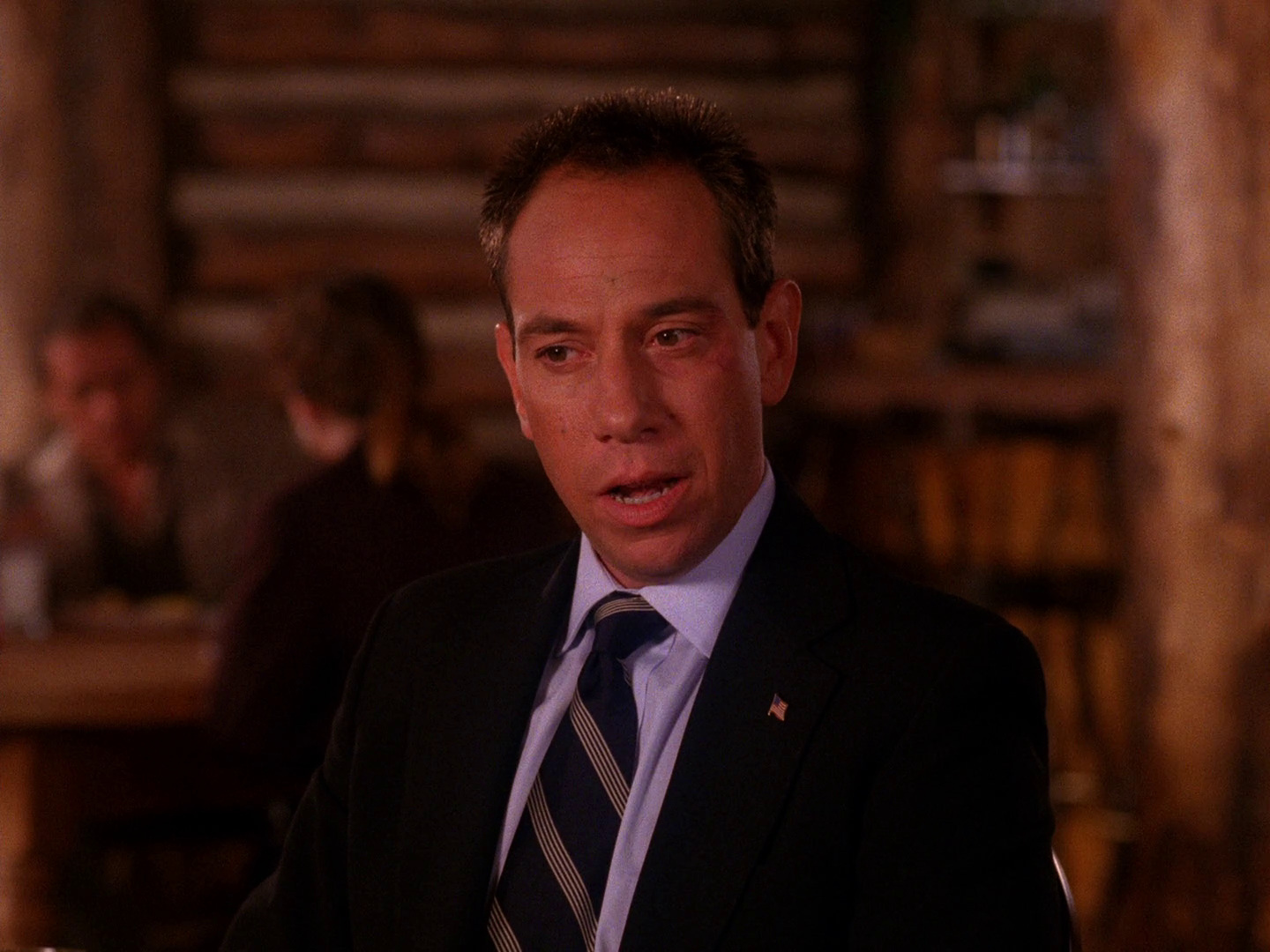
Cooper and Albert begin with apparently incompatible scales of attention. Cooper is interested in Tibet and the possibilities of experience; Albert brings details of injuries, a suffocation and a fugitive. Windom Earle’s escape gives Cooper a past that can now enter the town. The detective who arrived as an outsider is no longer the only carrier of that earlier world.
The barbershop quartet visible at breakfast makes the setting more than a neutral container for exposition. A public performance continues around the private exchange of alarming information. The scene places ordinary organised entertainment beside the knowledge that a former colleague is missing and dangerous.
Coma is an apt organising idea for the episode, but it is not limited to a medical condition. People are waiting for witnesses to speak, trying to extract information from reluctant institutions, or mistaking activity for understanding. A person can be awake and still unable to make a warning legible.
Donna’s delivery and the disappearing corn
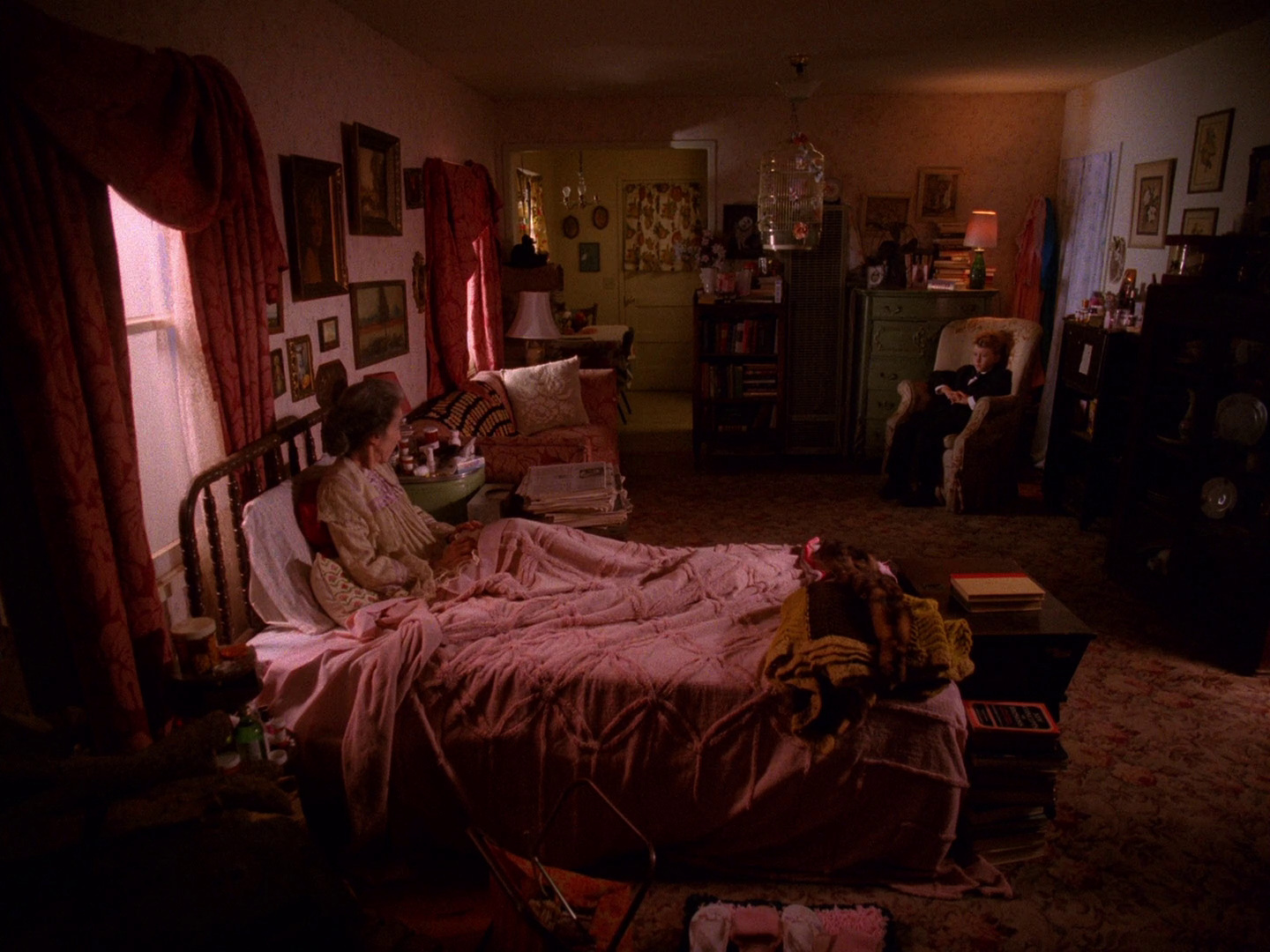
Meals on Wheels gives Donna a socially acceptable reason to enter unfamiliar rooms. What begins as a delivery becomes an encounter with a woman who refuses the creamed corn and a grandson who appears to relocate it. The episode presents the small domestic impossibility without an explanatory apparatus. Donna is not given the position of an experimenter who can repeat and test the event.
The gesture becomes stranger because the surrounding request is so mundane. Food preferences, care work and a plate on a tray establish an ordinary transaction. The grandson’s action changes the status of that transaction while leaving Donna to continue behaving like a helpful visitor.

Mrs. Tremond’s direction towards Harold Smith turns an uncanny visit into an investigative route. Donna must decide what to do with information whose source she cannot fully explain. The sequence thus extends Cooper’s problem into another character’s experience: a useful lead may arrive through an encounter that resists ordinary verification.
Margaret’s introduction
The Log Lady introduction joins above and below, inside and outside, before asking about creamed corn. It supplies a set of relations to consider rather than a literal solution to Donna’s visit. Recaps and previews compress and redirect the episode’s material for serial television. Continue to The Man Behind Glass.
Recognising BOB is not the same as explaining him
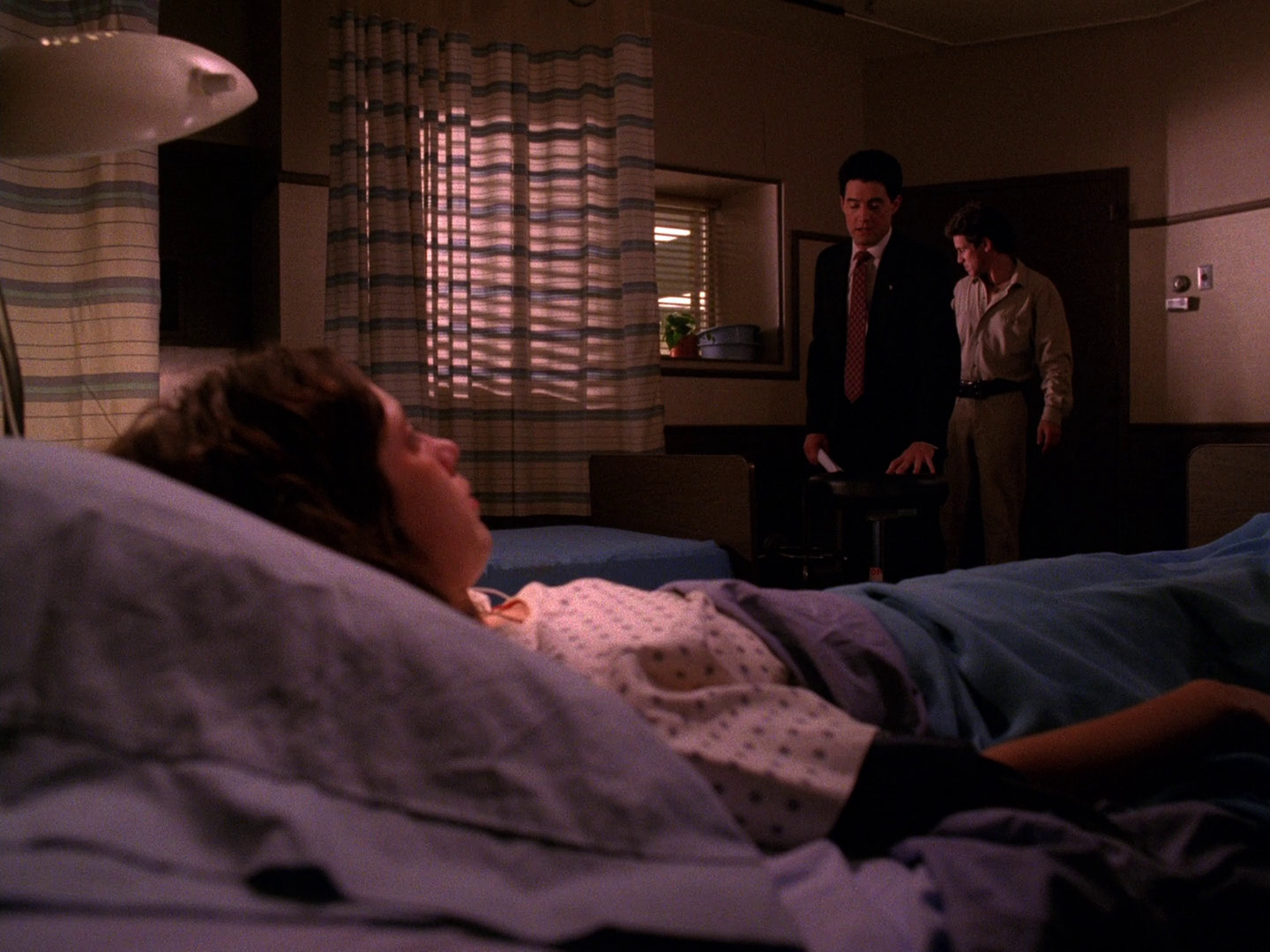
The hospital visit moves from Cooper’s awkward handling of the stool to Ronette’s confrontation with the drawings. The comic business does not make her response comic. It creates a sharp change in the room’s rhythm when an image demands recognition from someone who has already suffered.
Ronette’s reaction supplies urgency without becoming a complete spoken account. The investigators can ask her to identify a face, but that does not mean they possess the experience attached to it. A wanted sketch circulates more easily than the knowledge required to understand what it represents.
The drawing reaches different witnesses · 3 images
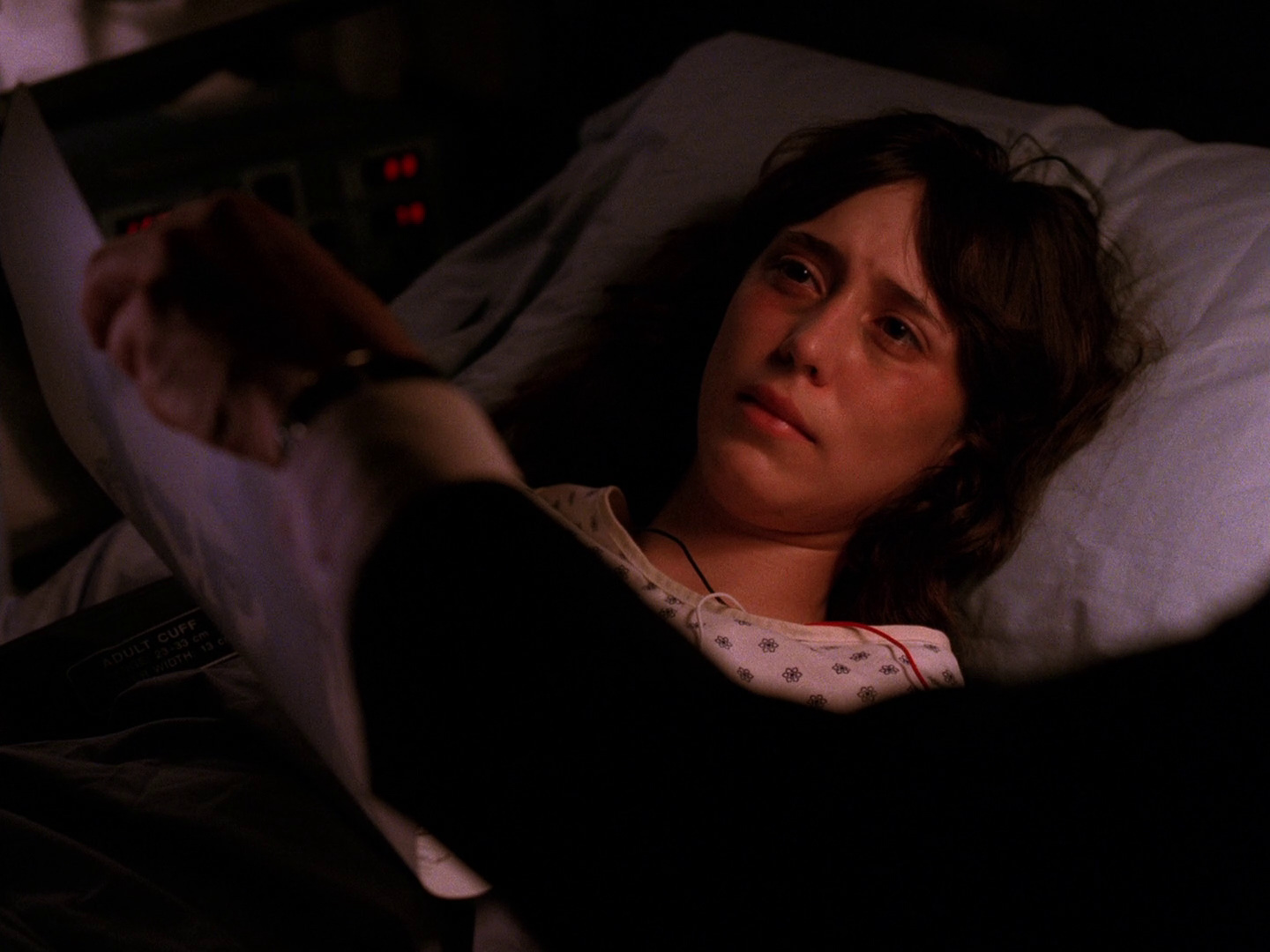
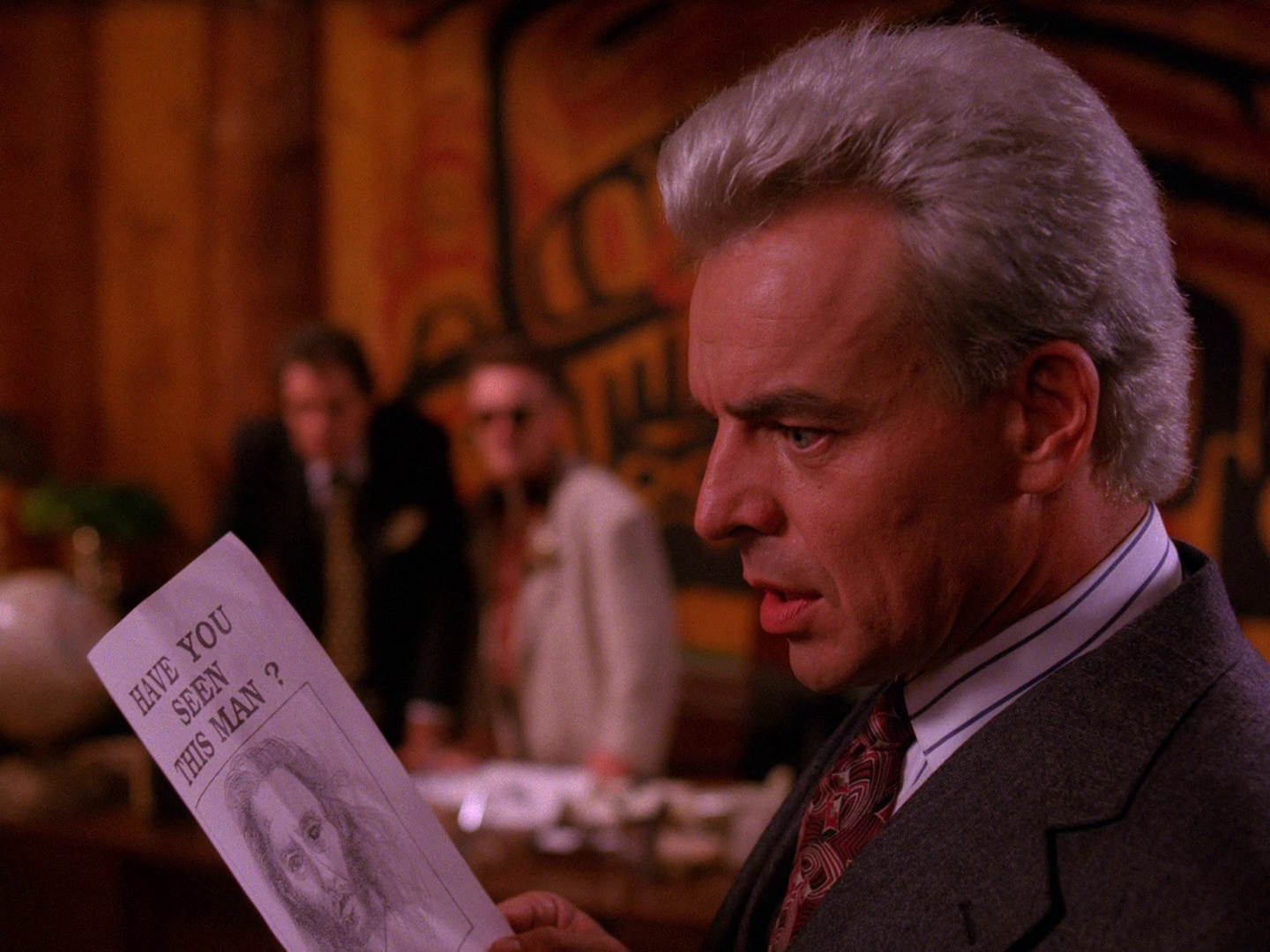
Leland’s later recognition introduces another time and place: his childhood at Pearl Lakes. The same drawing now produces a story of a neighbour rather than the immediate hospital terror. These accounts are connected by an image, but the episode does not invite us to flatten their different circumstances into one simple testimony.
Care, profit and the ownership of people
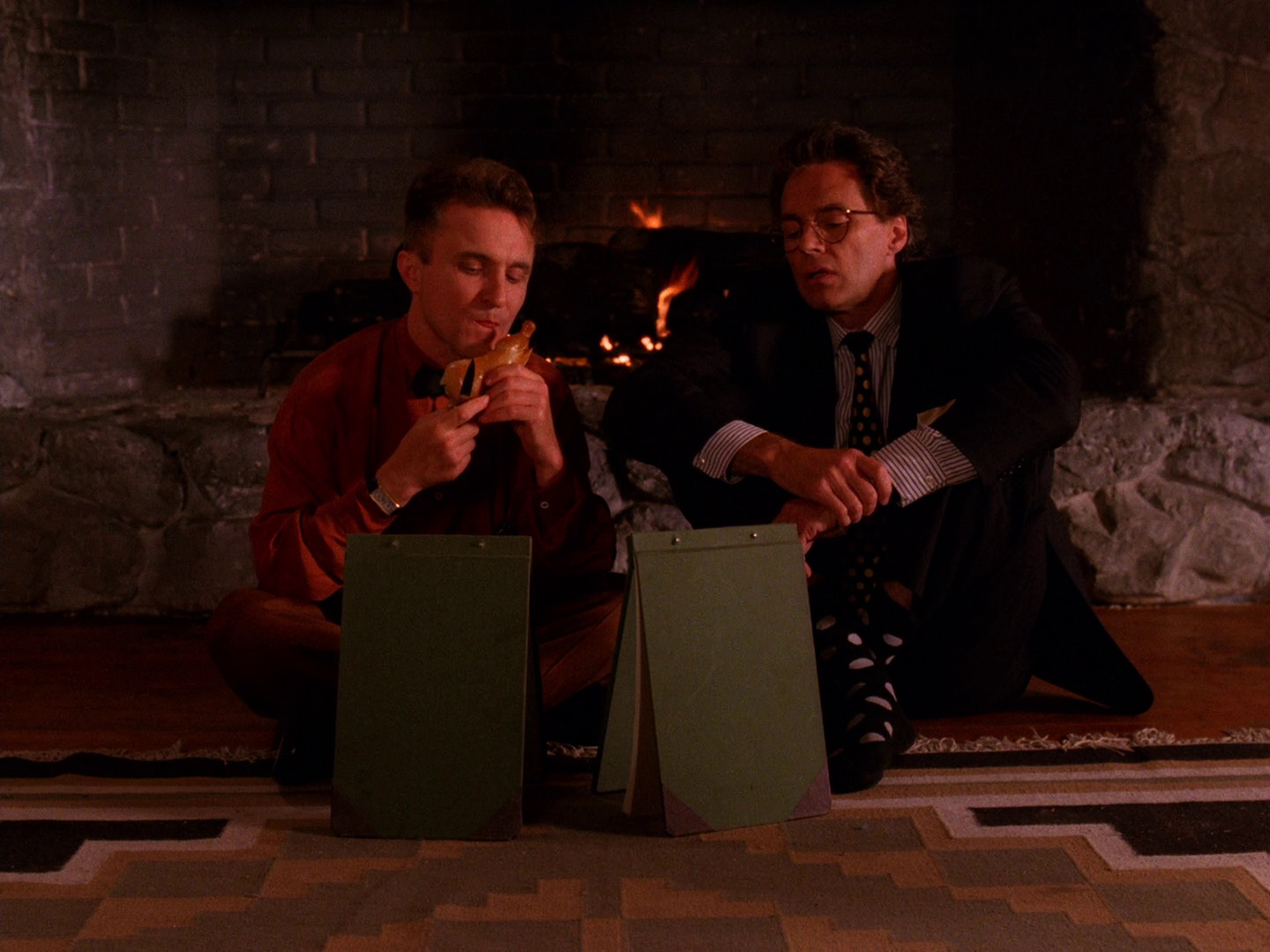
The Horne brothers’ accounting turns versions of a business into portable objects. Two sets of figures allow a choice between the story that is useful publicly and the knowledge retained privately. Their conversation makes fraud an administrative activity, while food and appetite keep punctuating the exercise of power.
Bobby proposes keeping Leo at home as a way to secure money. Shelly’s future is treated as a calculation involving care, a damaged body and insurance. The plan may promise release from one kind of pressure while preserving another: Leo remains the centre around which her domestic life is organised.
A different kind of calculation · 3 images
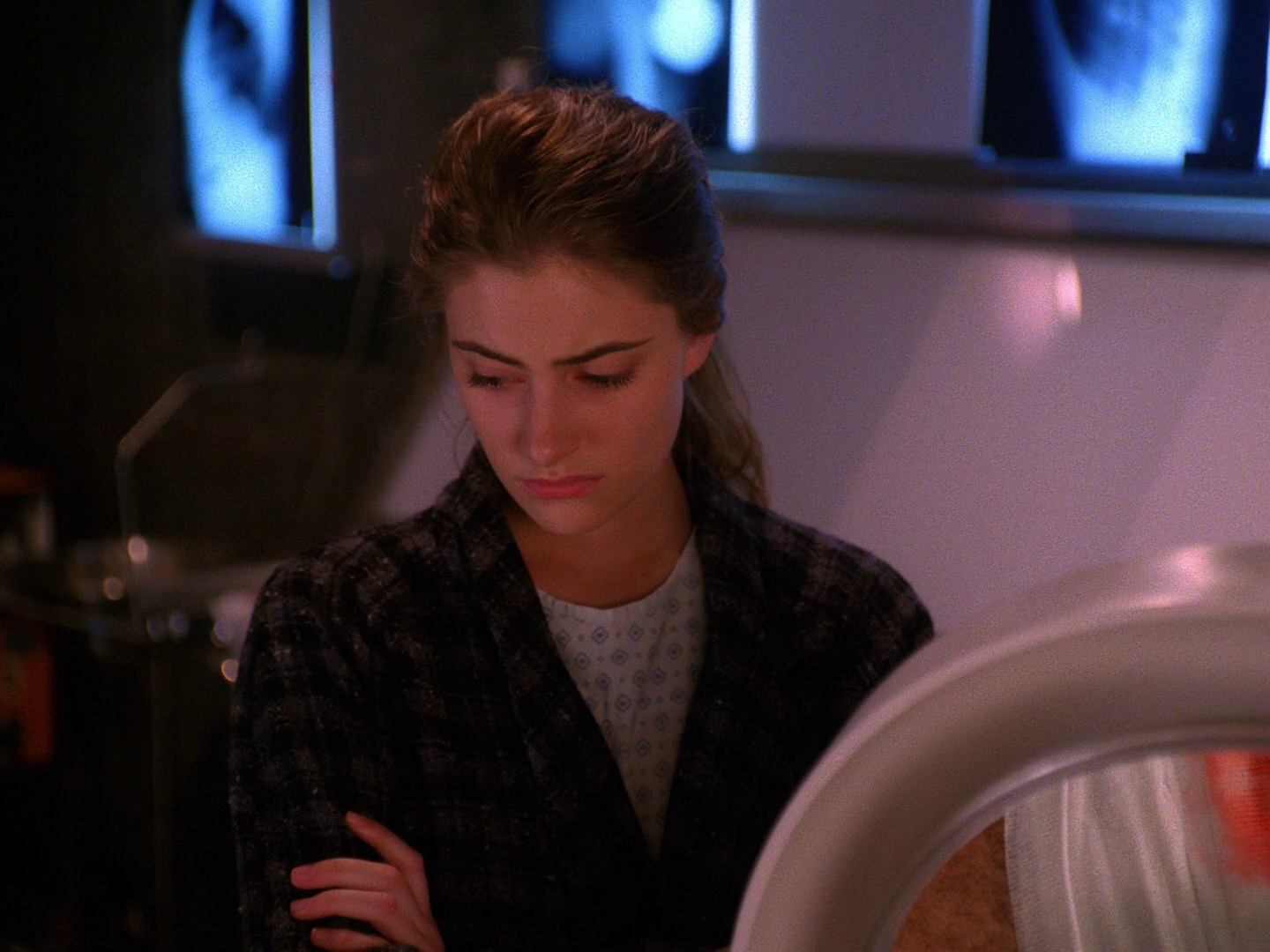

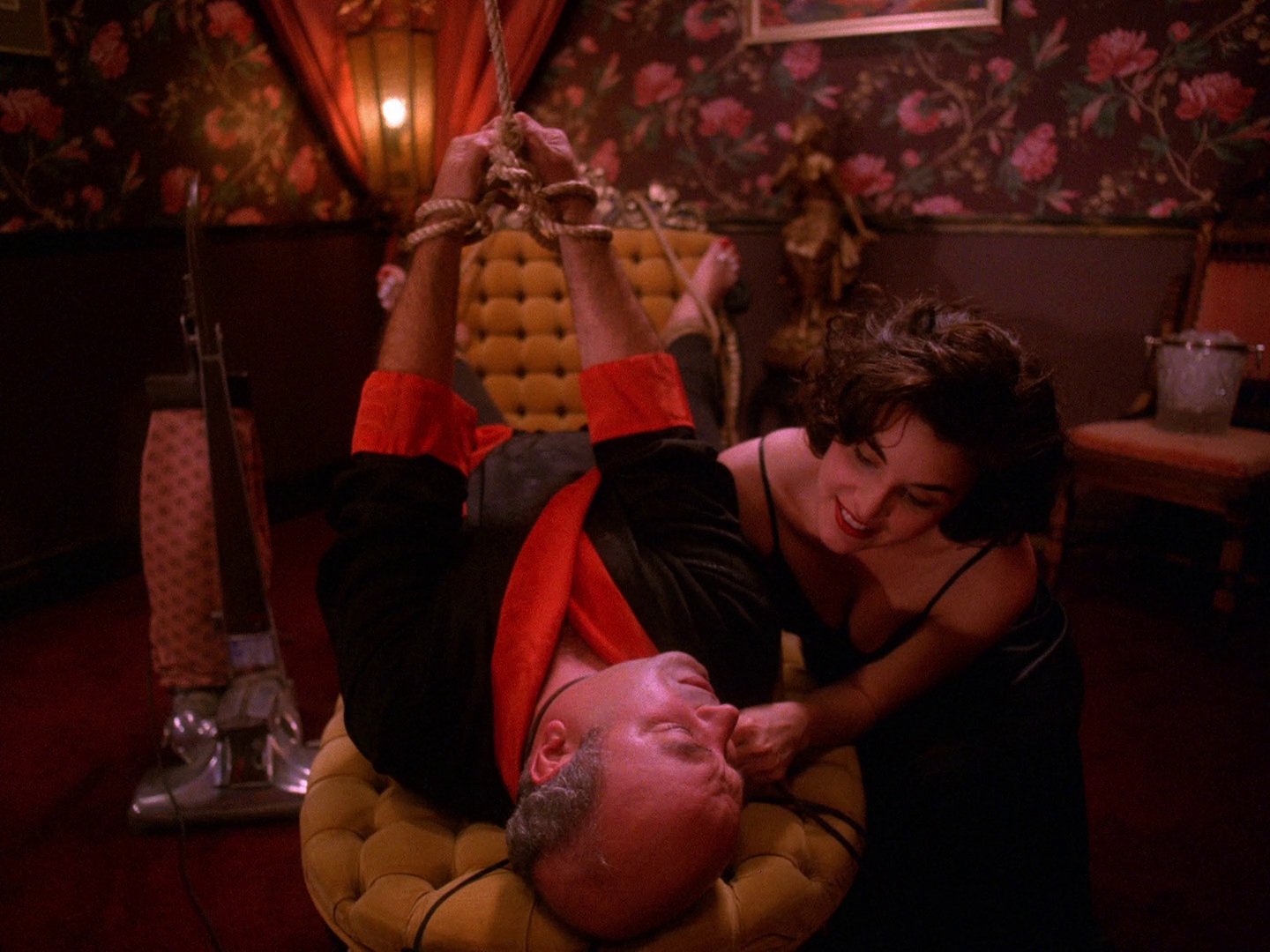
Audrey tries to reverse the flow of information at One Eyed Jack’s by tying up Emory and questioning him. The vacuum cleaner provides a practical cover for the encounter. His statements about recruitment and ownership turn a place of alluring surfaces into an organisation with names, procedures and victims. These are statements made under coercion inside the story, not independent production-history claims.
Andy’s confrontation with Lucy uses another misunderstood explanation of the body. The flypaper on his forehead makes him visibly ridiculous while the subject of fertility becomes painfully consequential. The scene distinguishes the confidence with which a term is used from the understanding it actually produces.
Margaret, Briggs and a sentence in the signal
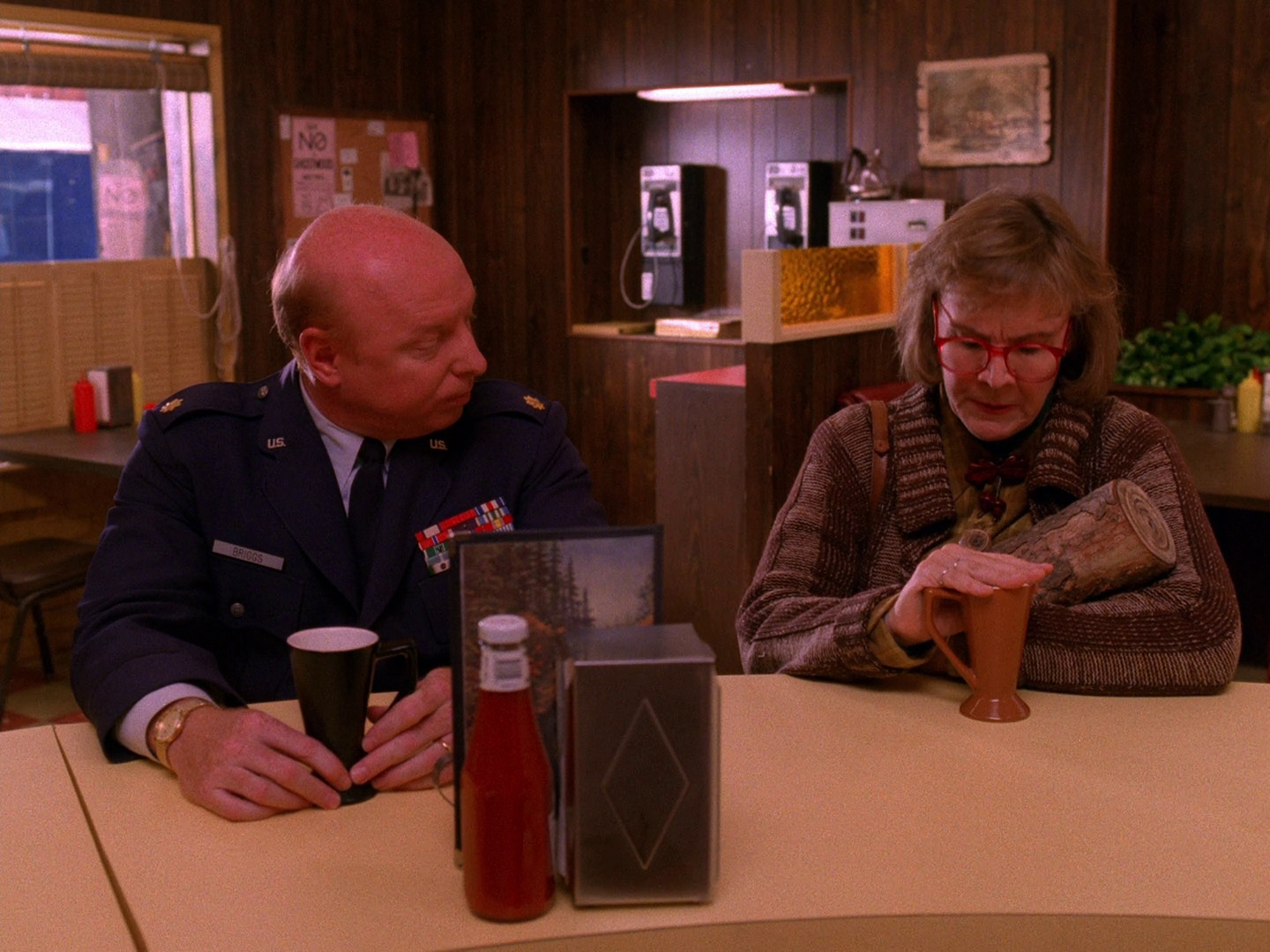
Margaret approaches Briggs through the language of an errand: she has a message that must reach someone else. The encounter gives a military figure and the Log Lady a shared place in a chain of communication. Neither resemblance of occupation nor agreement about method is necessary for the message to travel.
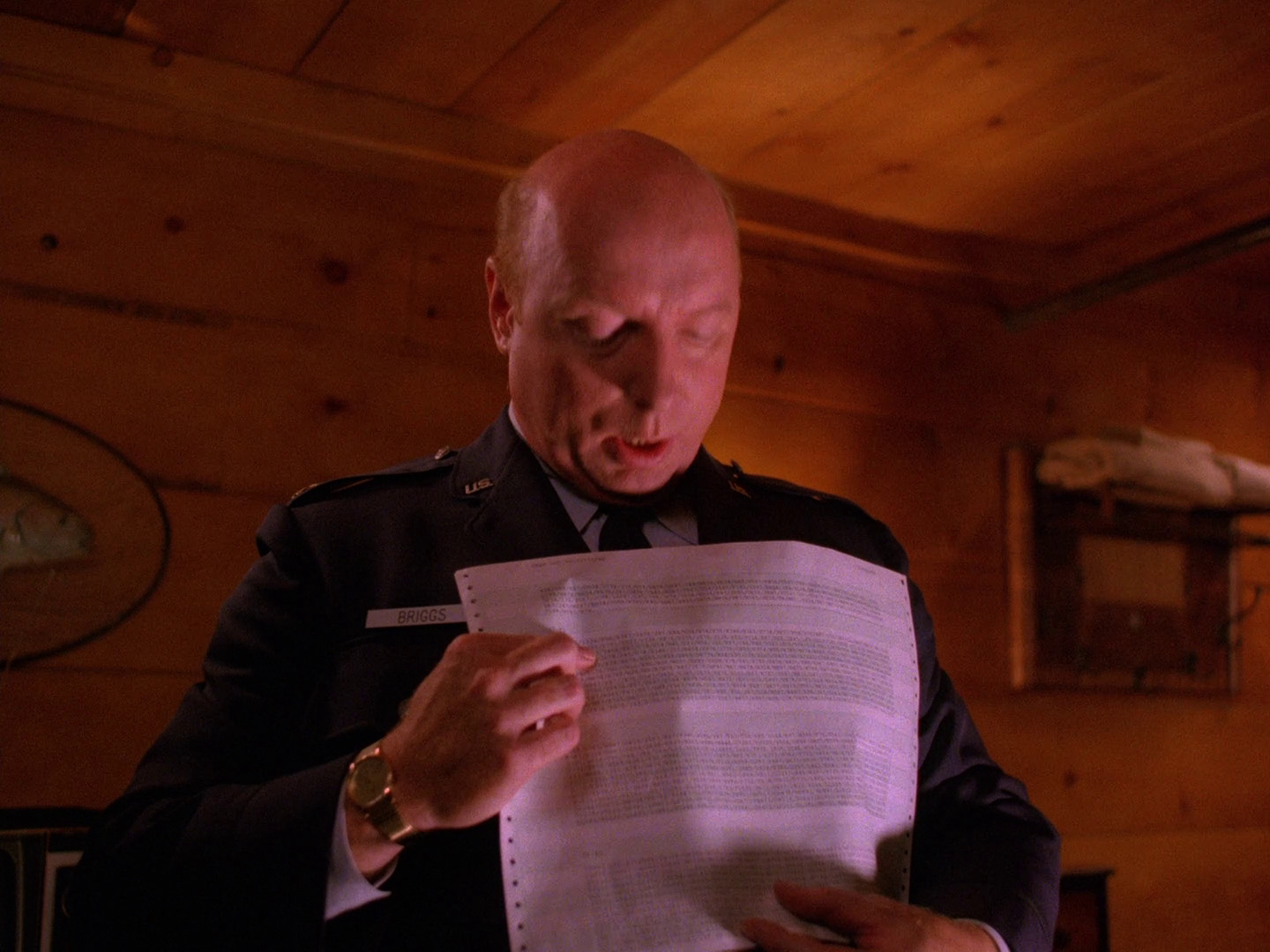
Briggs later visits Cooper with a printout. In the arrangement of the scene, the apparently impersonal apparatus of signal collection produces words that address an intimate and local mystery. Cooper’s name among the repetitions makes him more than the detached reader of a document.
From messenger to readout · 3 images
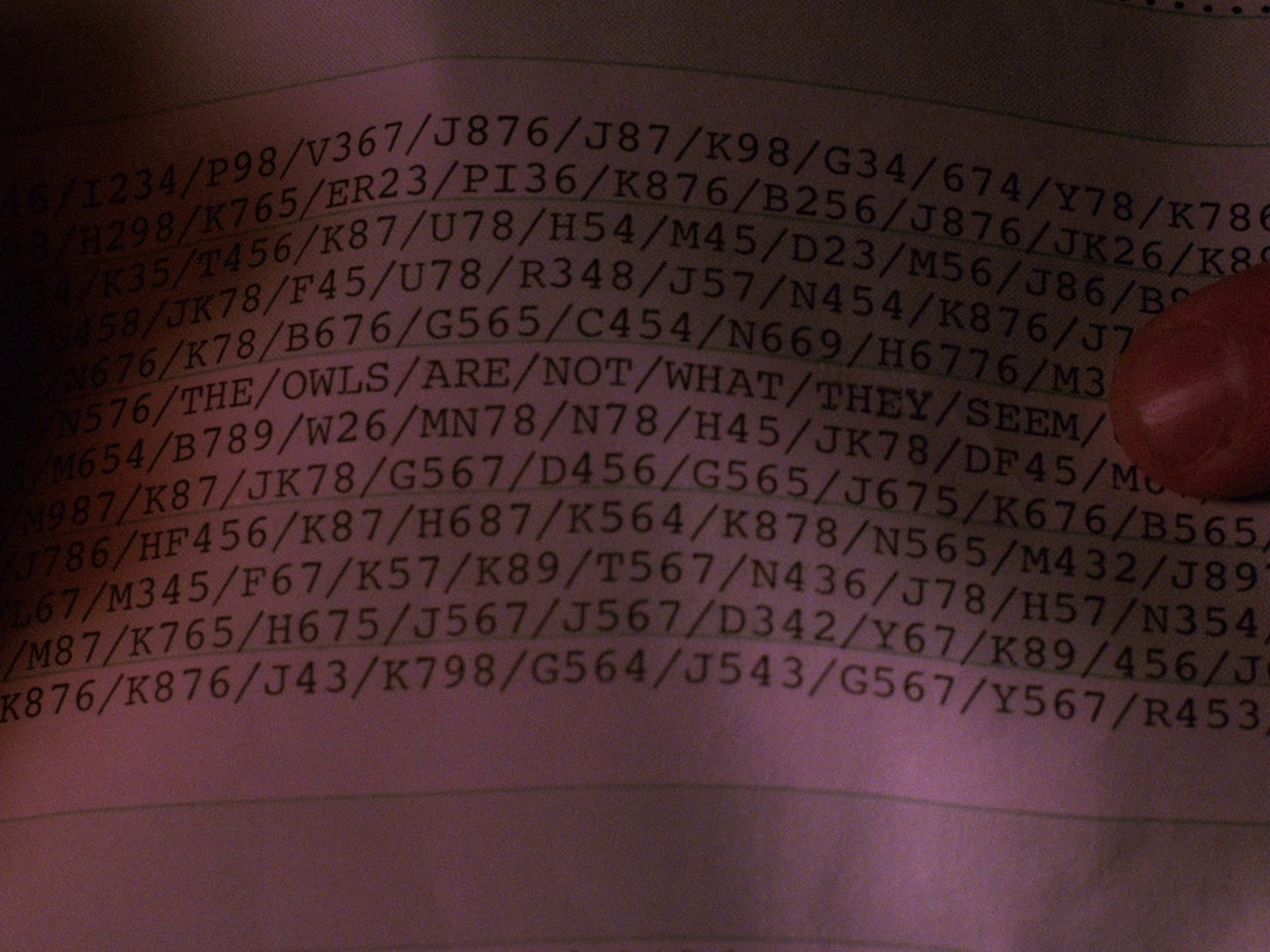
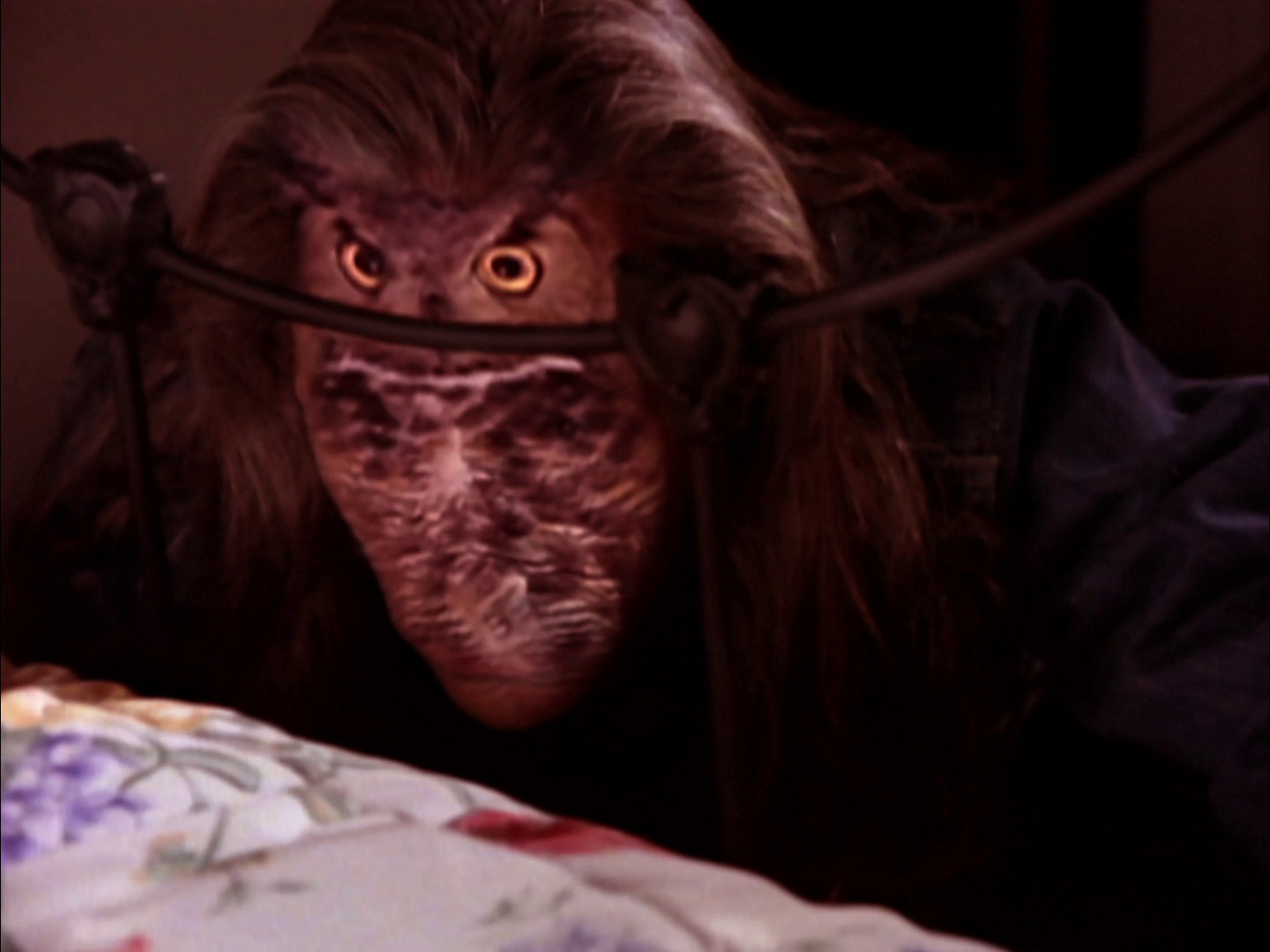
The warning about the owls does not establish what the owls are. Its force is to disrupt a category that appeared secure. The dream imagery that follows at the episode’s close keeps this problem visual: an owl and BOB are associated through an overlay, but an association is not yet a complete account of causation or identity.
The song and the approach across the sofa
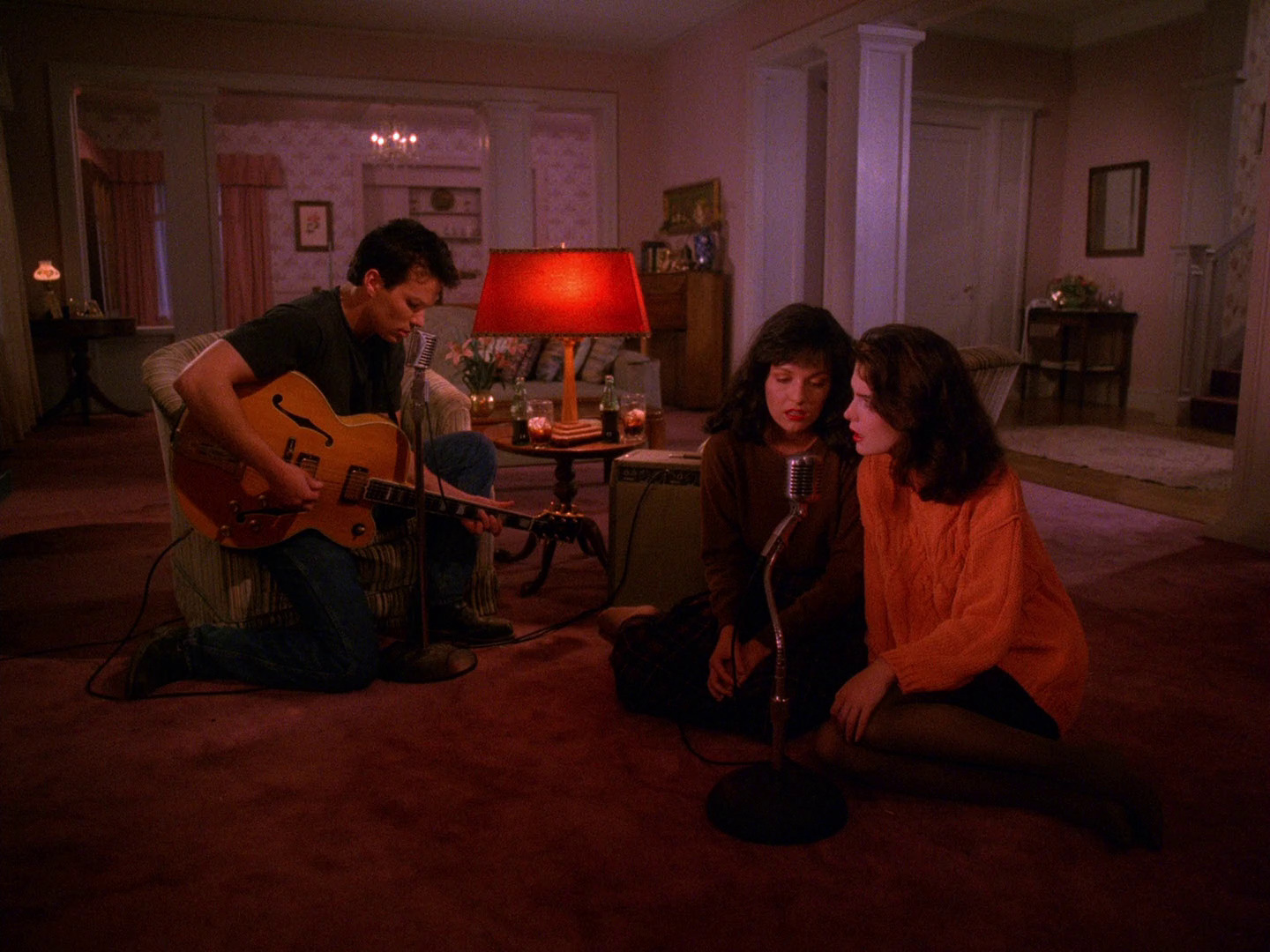
The rehearsal of “Just You” creates a temporary performance space out of the living room. James sings while the two women’s looks introduce relationships the song cannot resolve. Donna’s departure breaks the arrangement; the music has not provided a stable expression of shared feeling.
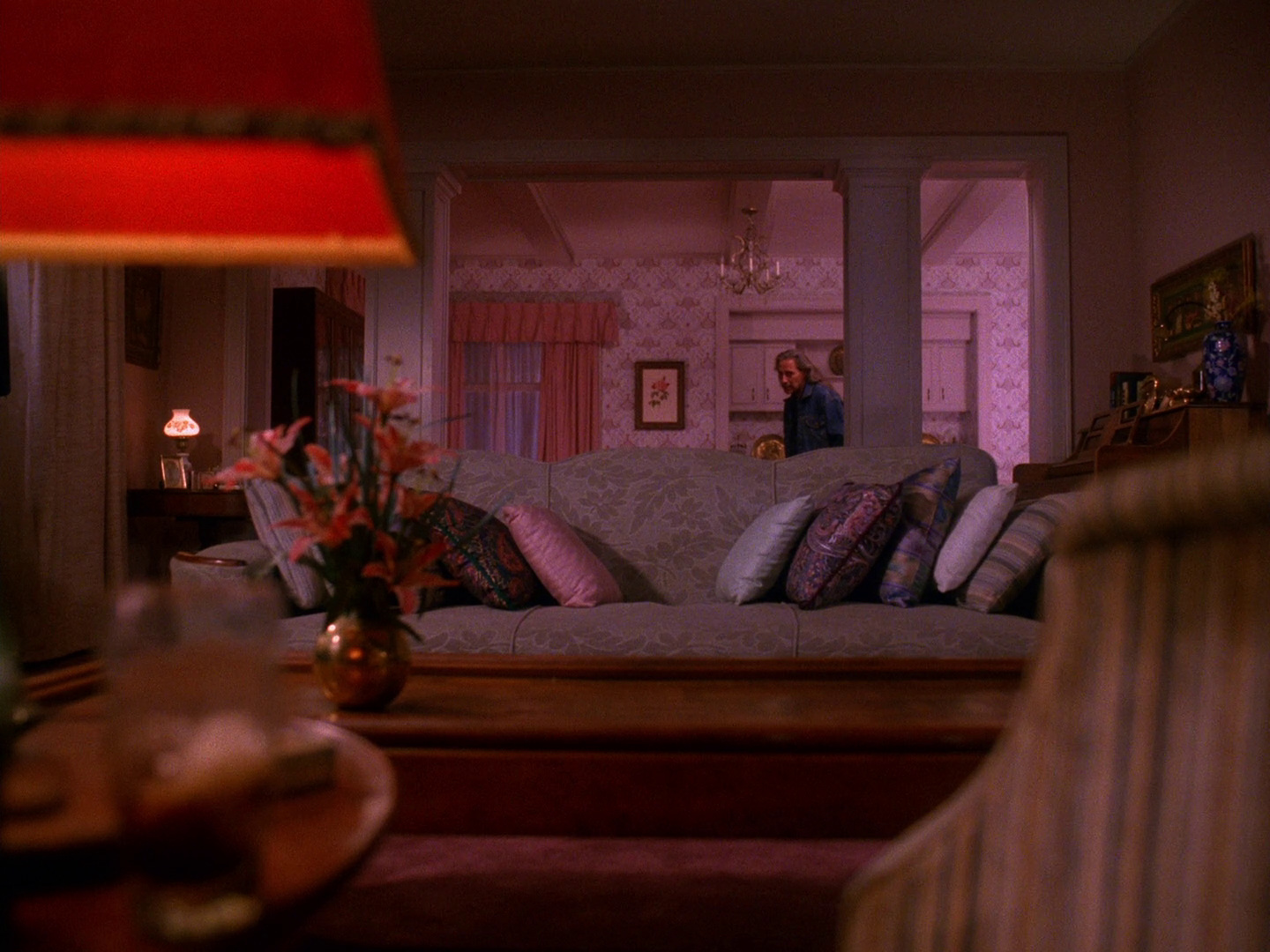
Once Maddy is left in the room, the familiar furniture takes on another function. BOB appears behind the sofa and advances across it towards the camera. The sofa is not merely a backdrop. Its back and cushions make the approach visibly effortful and invasive, forcing an ordinary household object to become part of the threat.
The living room loses its safety · 4 images
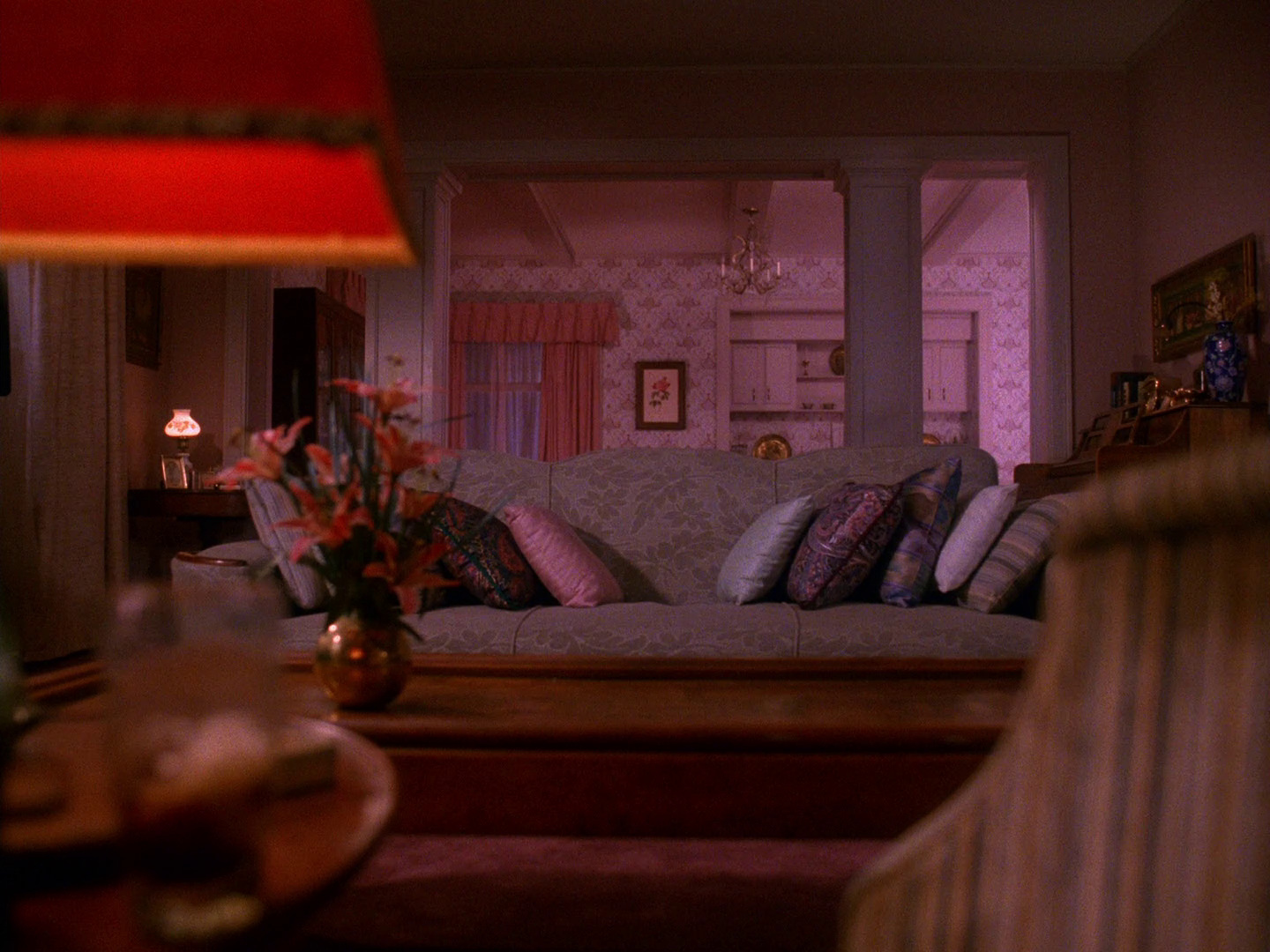
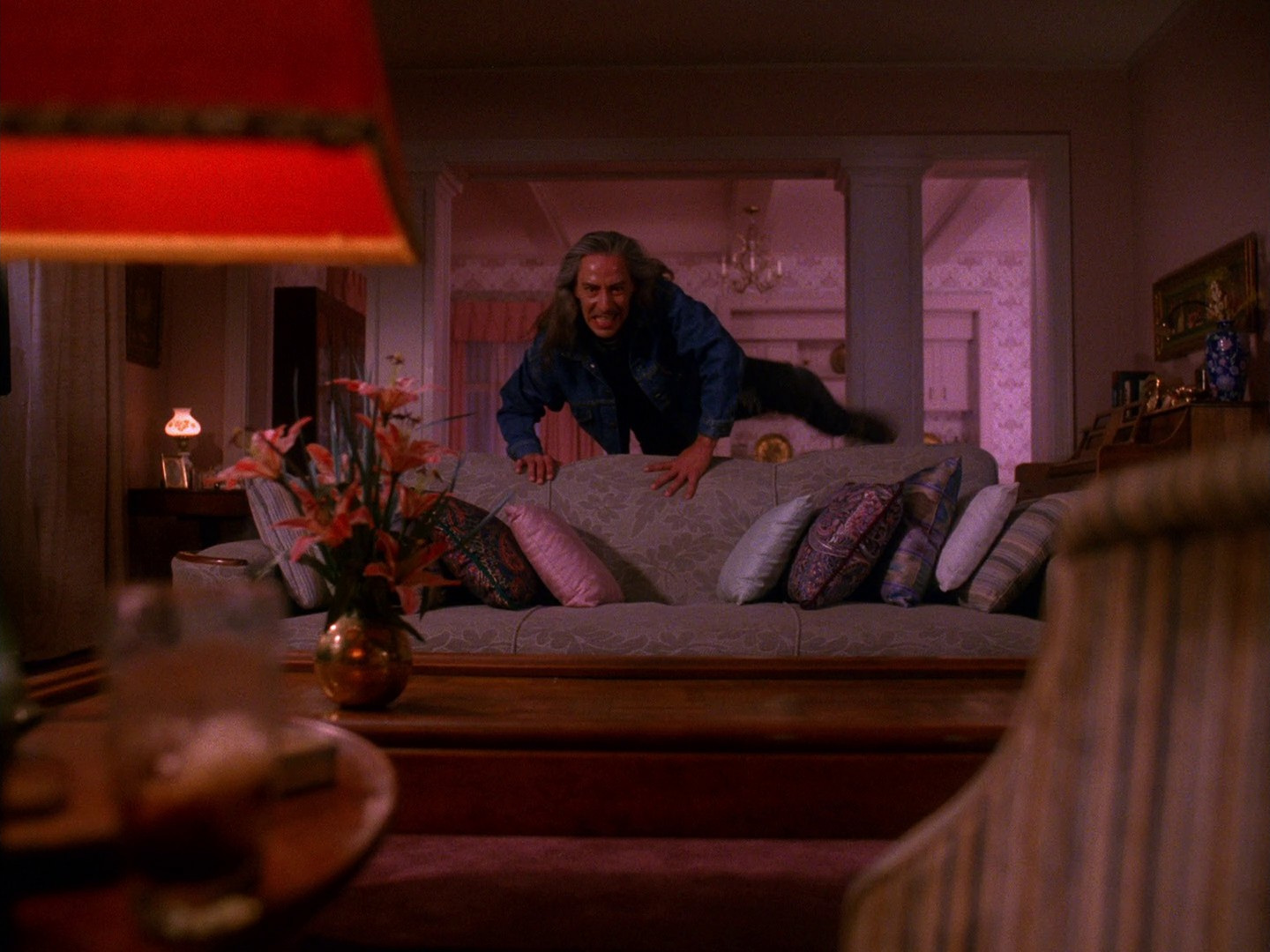
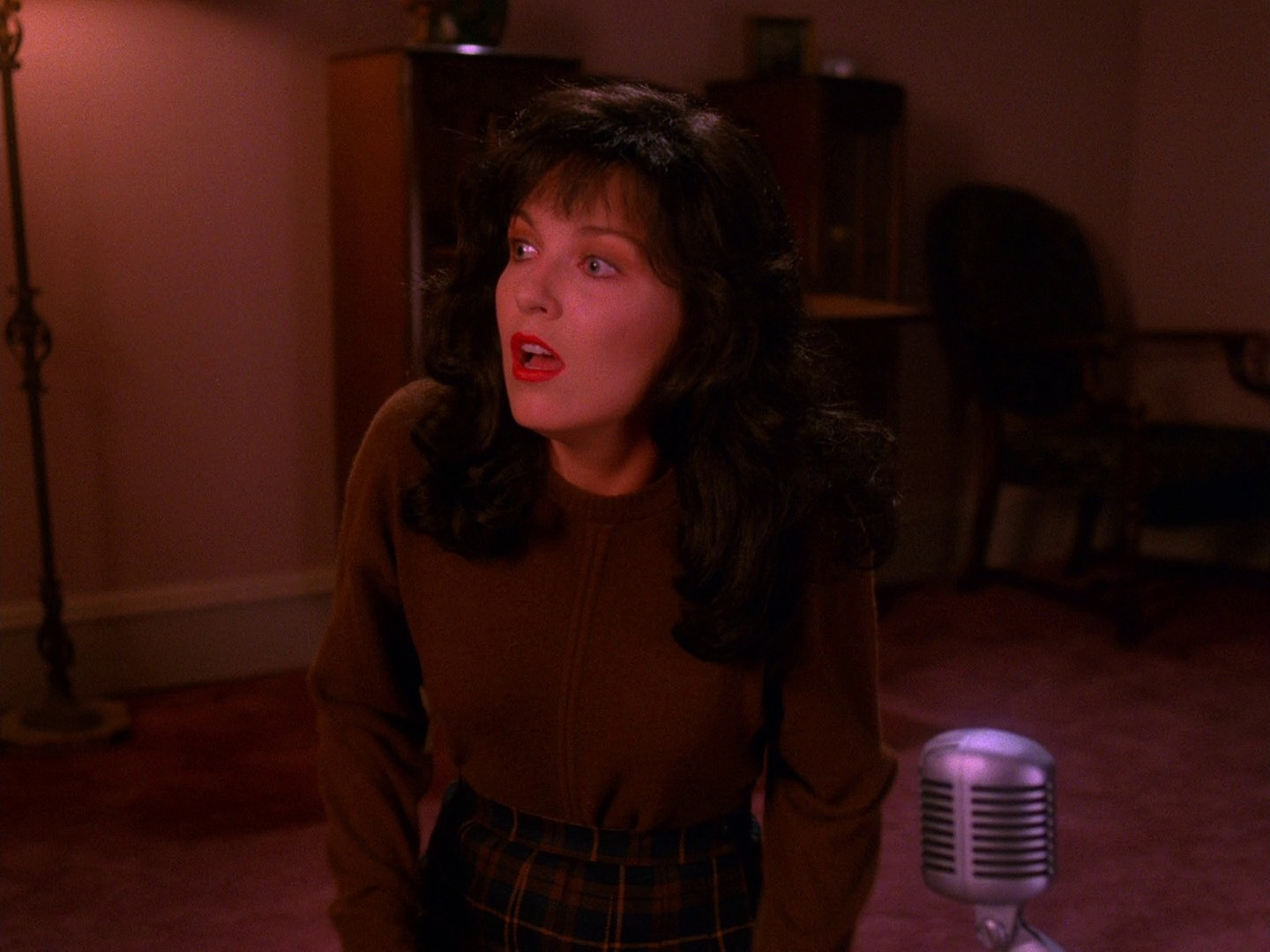
The sequence uses distance as a variable. At first the figure can be located within a room; as he comes forward, the space available between him and the viewer collapses. Maddy’s response anchors the event in her experience while the direct approach puts pressure on our own viewing position. The effect does not depend on an elaborate transformation: a face, a body, furniture and the camera’s place are enough.
Audrey’s interrupted telephone call then returns danger to a practical channel of communication. A call ought to bring Cooper into contact with someone who needs help, but Blackie’s intervention prevents it from becoming a successful rescue. The episode finishes with different failed assurances: neither a living room nor a telephone connection guarantees safety.

Voices, corrections and interrupted contact
A report is revised
The recap repeats Lucy’s earlier report that Jacques Renault was strangled. At breakfast, Albert specifically corrects that account: the killer suffocated him with a pillow. His absurd list of supposed stomach contents first makes an autopsy report into a joke; the correction then restores its evidential purpose. Watching the recap and episode together reveals a useful distinction between what the town has reported and what the investigation subsequently establishes.
The log needs an interpreter
When Margaret asks Briggs whether he can hear her log, he says that he cannot. She supplies its message herself. Later, Briggs brings Cooper a different kind of uncertain communication: intelligible phrases extracted from a stream of apparently meaningless material. He describes the conflict between his obligations to secrecy and his decision to share it. Both encounters require a person to carry information across a boundary; neither gives the recipient unrestricted access to its source.
Repetition and the people outside it
James asks to repeat the opening of “Just You” during the living-room rehearsal. That request temporarily gives the three performers a shared task, while Donna’s uncertainty about James and Maddy persists around it. Harold’s telephone call draws Donna away from the group. The scene places a repeatable song alongside relationships that cannot simply be reset. Its words belong to a performance within the room, not an uncomplicated declaration by each of the people singing.
Being connected is not the same as being understood
Audrey finally reaches Cooper, but his first response treats her disappearance as adolescent misbehaviour. She appeals to his memory of their earlier encounter and tries to explain that she is in trouble before the call is interrupted. The scene revises the premiere’s unanswered prayer: the channel now works, but the listener’s assumptions delay recognition. A familiar voice can still be misread.
Sources: episode dialogue, English subtitles and the separately presented recap, Twin Peaks: From Z to A. Continue with how recaps and previews frame the story.
A route through Coma
- News at breakfast. Albert, Cooper and the return of Windom Earle to the story.
- Food and a lead. Donna meets the Tremonds and learns Harold Smith’s name.
- A drawing and a witness. Ronette reacts; Leland supplies a childhood memory.
- People as accounts. The Horne ledgers, Leo’s care and Audrey’s interrogation of Emory.
- Messages cross institutions. Margaret reaches Briggs; Briggs brings Cooper the printout.
- The living room. A rehearsal becomes a scene of jealousy and then an apparition.
- The interrupted call. Audrey tries to reach Cooper while another image enters his dream.
Sources and connections
Primary source: Twin Peaks, regular Episode 9, in Twin Peaks: From Z to A. Written by Harley Peyton and directed by David Lynch, as credited on screen. The episode supplies the images, dramatic action and dialogue discussed here. The separately authored Log Lady introductions and publicity films are identified as such.
Continue through the season’s production and craft research and its broadcast and reception history, where collaborators’ accounts sit alongside published interviews and criticism.