Twin Peaks: Episode 13 — Demons
1990 · Season 2, Episode 6 · Lesli Linka Glatter
After the rescue, the harder questions begin. Explore Audrey’s return, Maddy’s farewell, Gordon Cole’s arrival and the voice that calls itself Mike.
Season 2, Episode 6 / overall Episode 13. Contains episode spoilers.
Explore this episode
Two rescues and their aftermath
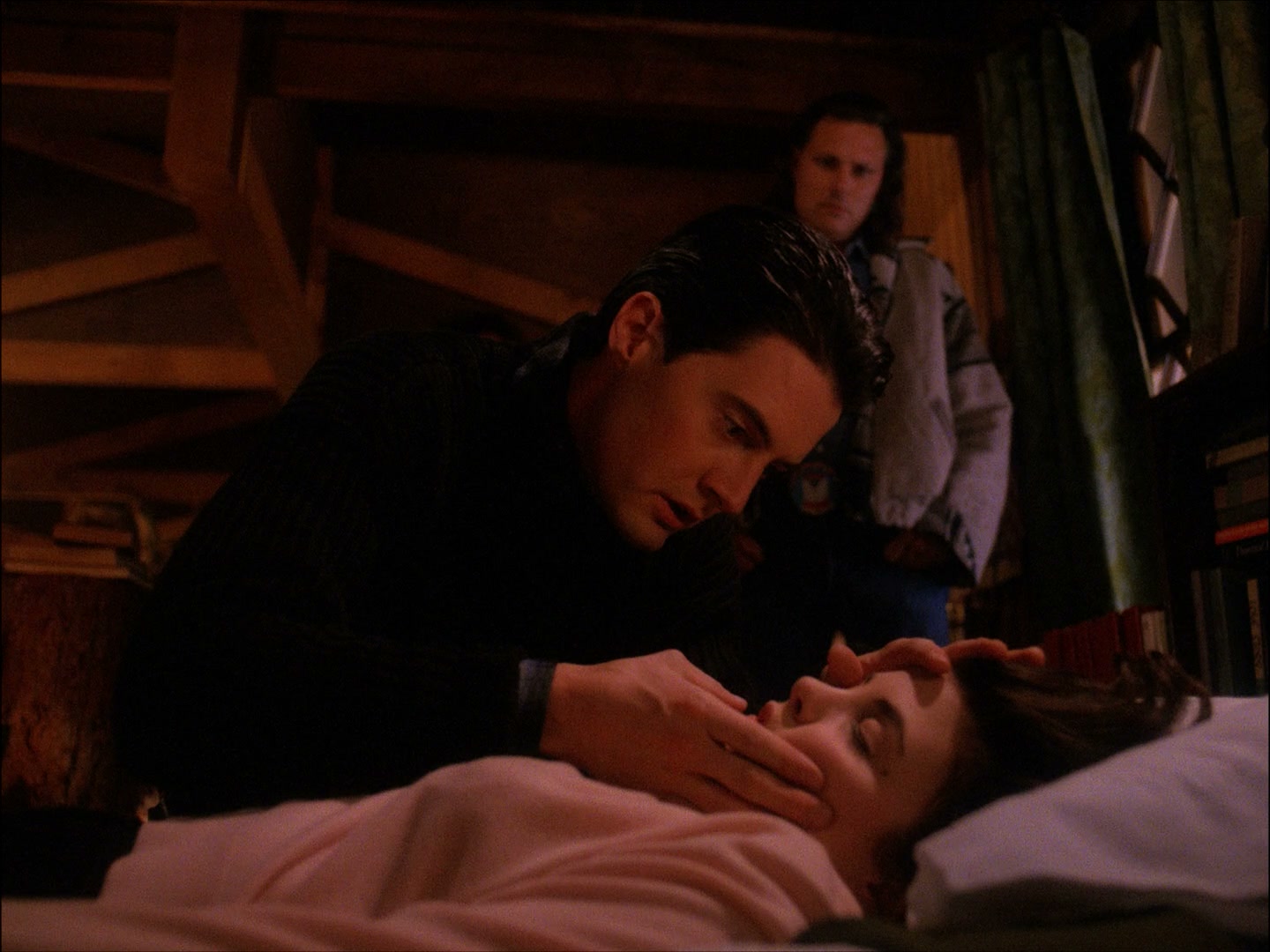
“Demons” begins by refusing the relief promised by a rescue. James gets Donna and Maddy out of Harold’s house, but the women leave behind a person whose trust has been destroyed. Cooper brings Audrey to the Bookhouse, where medical care has to precede any celebration of her escape. The paired situations continue the previous episode’s parallel intrusions, now through what those actions have done to the people involved.
Harold describes betrayal as contamination. Once the others have gone, he attacks his orchids: the controlled environment that had made contact possible becomes the object of his distress. The episode gives his suffering an image beyond the threat with which he confronted the women. That does not excuse the threat, but it prevents him from becoming merely an obstacle that the young investigators have overcome.
Leaving danger does not resolve it · 3 images
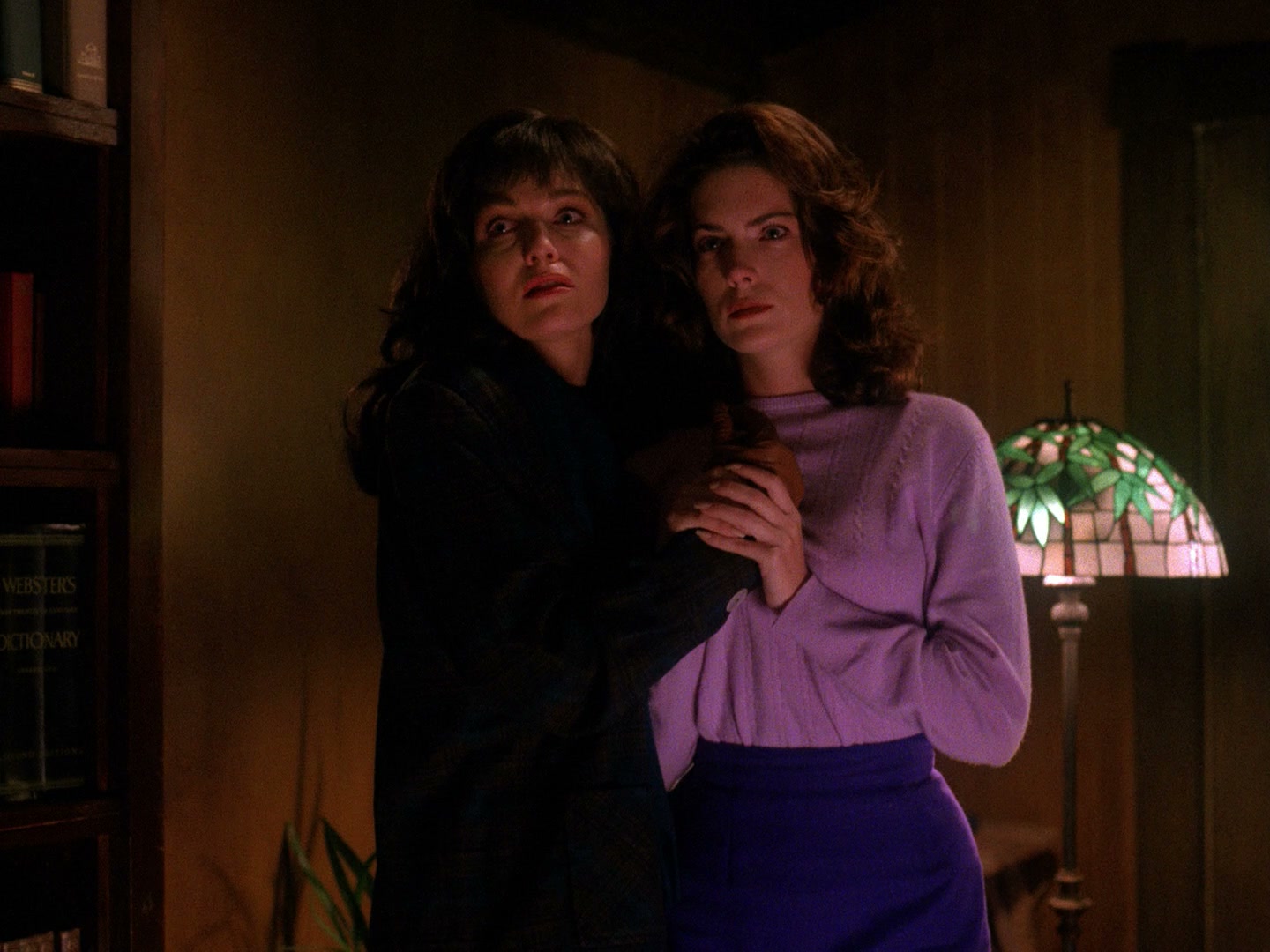

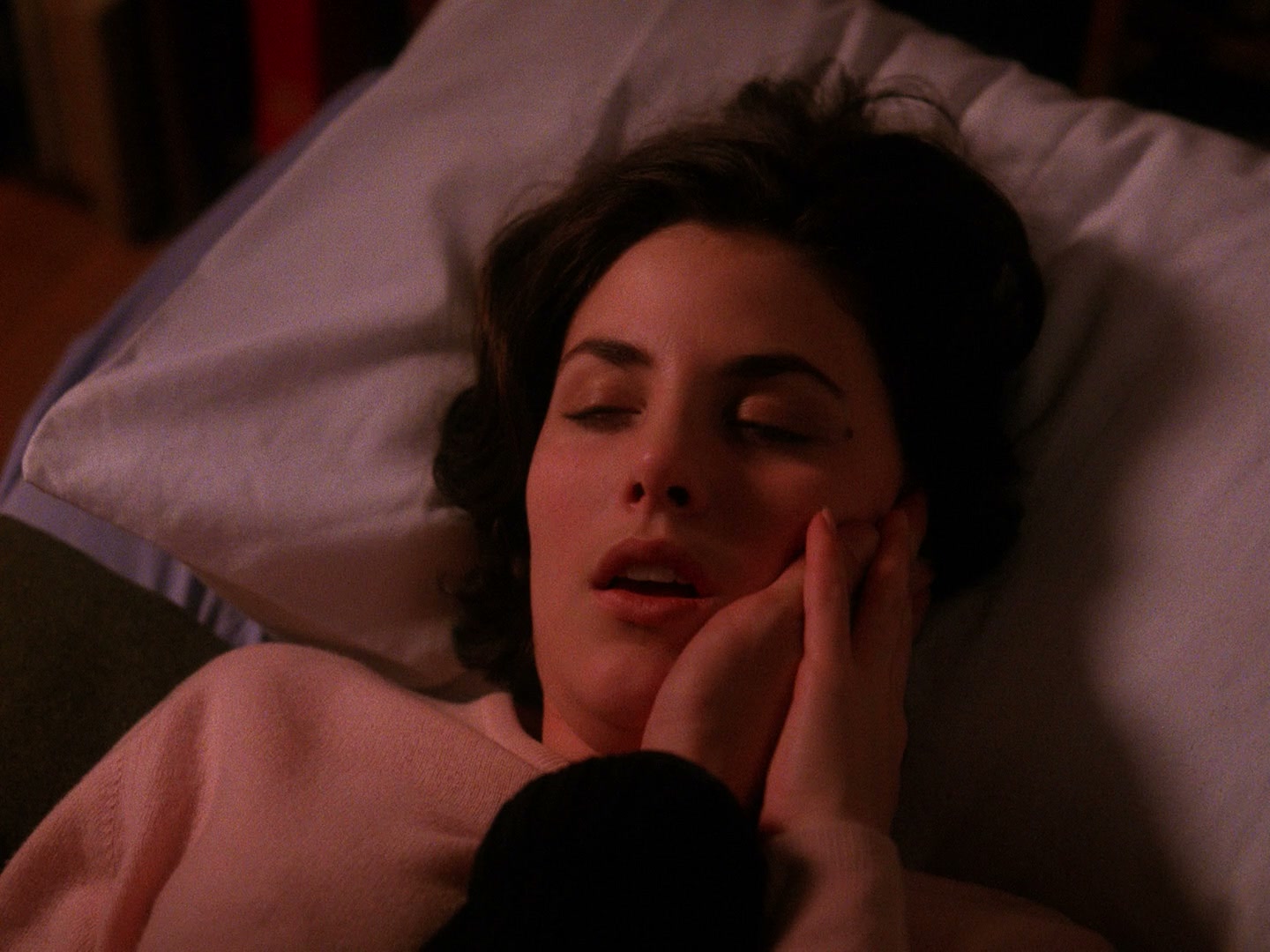
Audrey’s speech moves through confused appeals, bodily memories and recognition. Cooper’s repeated calls to stay awake have an immediate practical purpose. When she finally recognises him, the scene allows gratitude without treating her condition as a romantic reward for his courage.
Later, Cooper identifies Jean Renault’s purpose: Audrey was bait in a plan directed at him. He judges his own intervention through jurisdiction, professional duty and the suffering of someone he cares about. Truman answers through its result: Audrey is here and receiving help. Their disagreement puts two necessary measures of responsibility beside one another. A successful outcome cannot erase the risks, but self-reproach must not erase the person who was rescued.
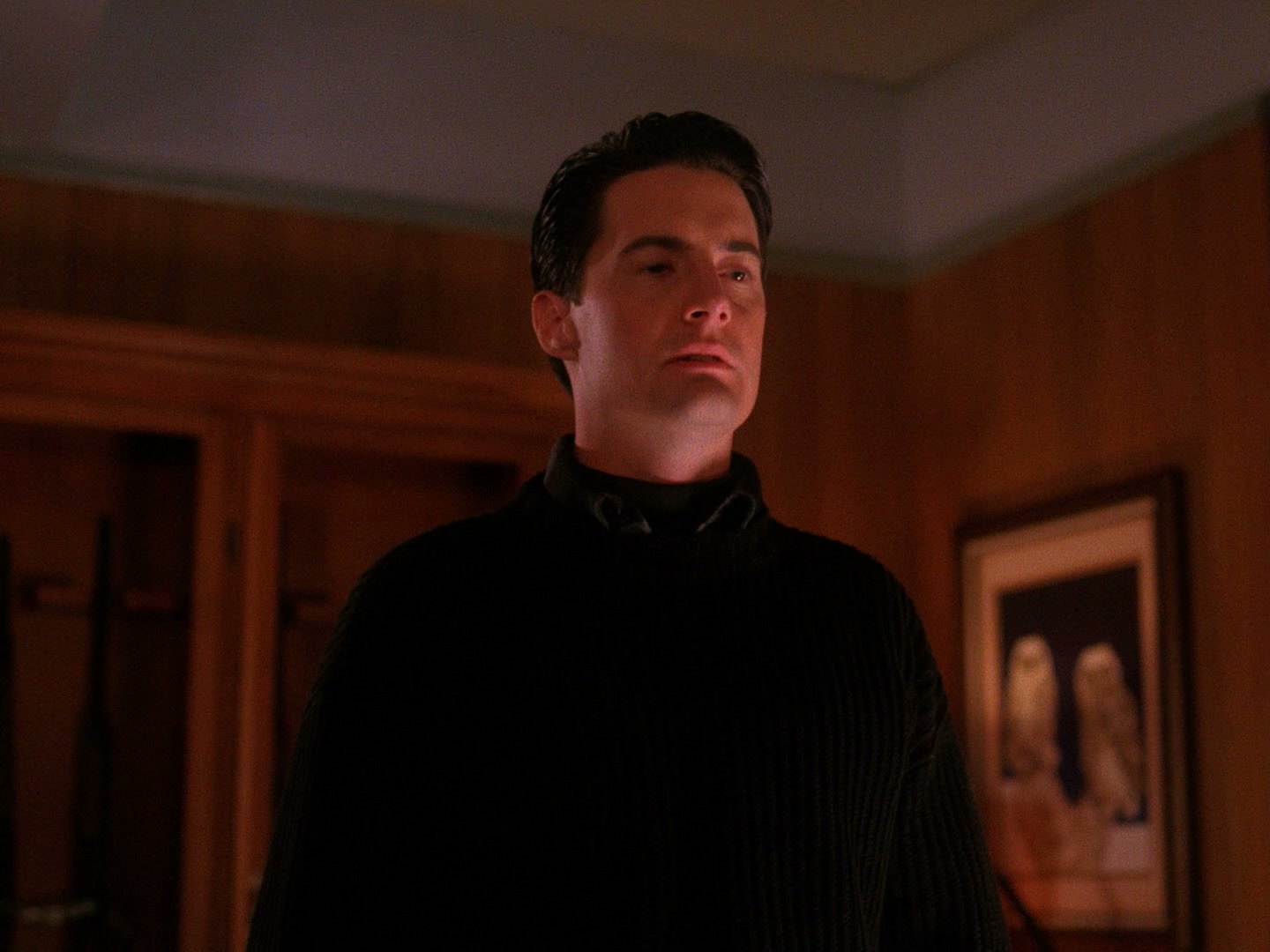
The daughter who now knows
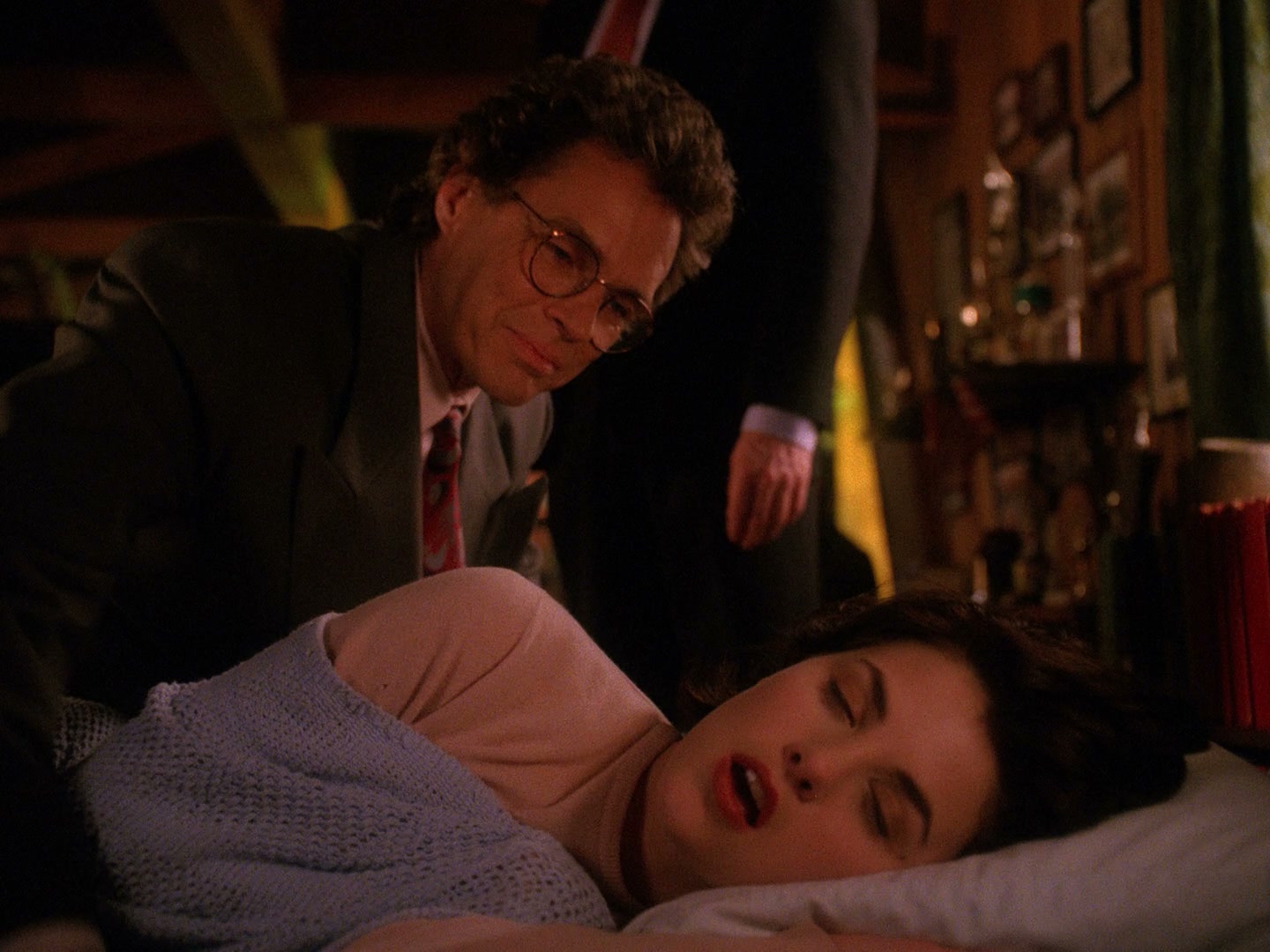
Cooper’s meeting with Ben restores the ransom money while withholding easy access to Audrey. Ben responds to each part of the rescue story with a brief expression of concern; the sequence leaves room to compare his performance of fatherhood with what the viewer knows of his business.
At Audrey’s bedside, Ben invokes the renewed value of life and promises to put things right together. She answers by saying how much she has seen and learned. Their language appears compatible until its different meanings become apparent. Ben offers a return to the family arrangement; Audrey signals that her knowledge has changed the terms of that arrangement.
Her request that Cooper take her home is the scene’s decisive action. It is small, courteous and unmistakable. She does not have to explain all her suspicions to choose whom she trusts. Ben’s proposal that they might all travel together tries to absorb the refusal into a family picture again. The direct questioning in “Lonely Souls” develops from this restrained encounter.
Recovery and a new boundary · 2 images
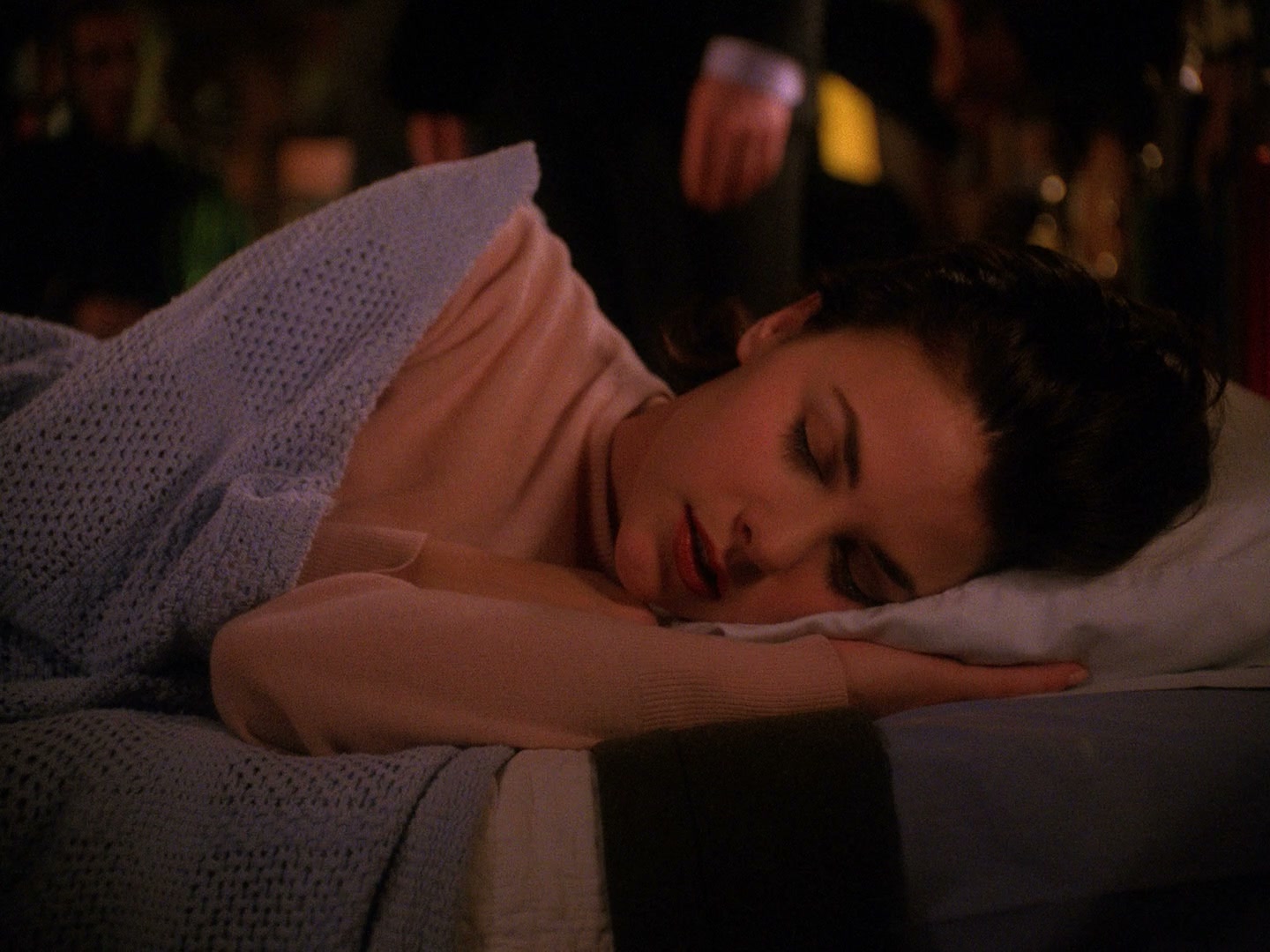
The economics of a welcome home
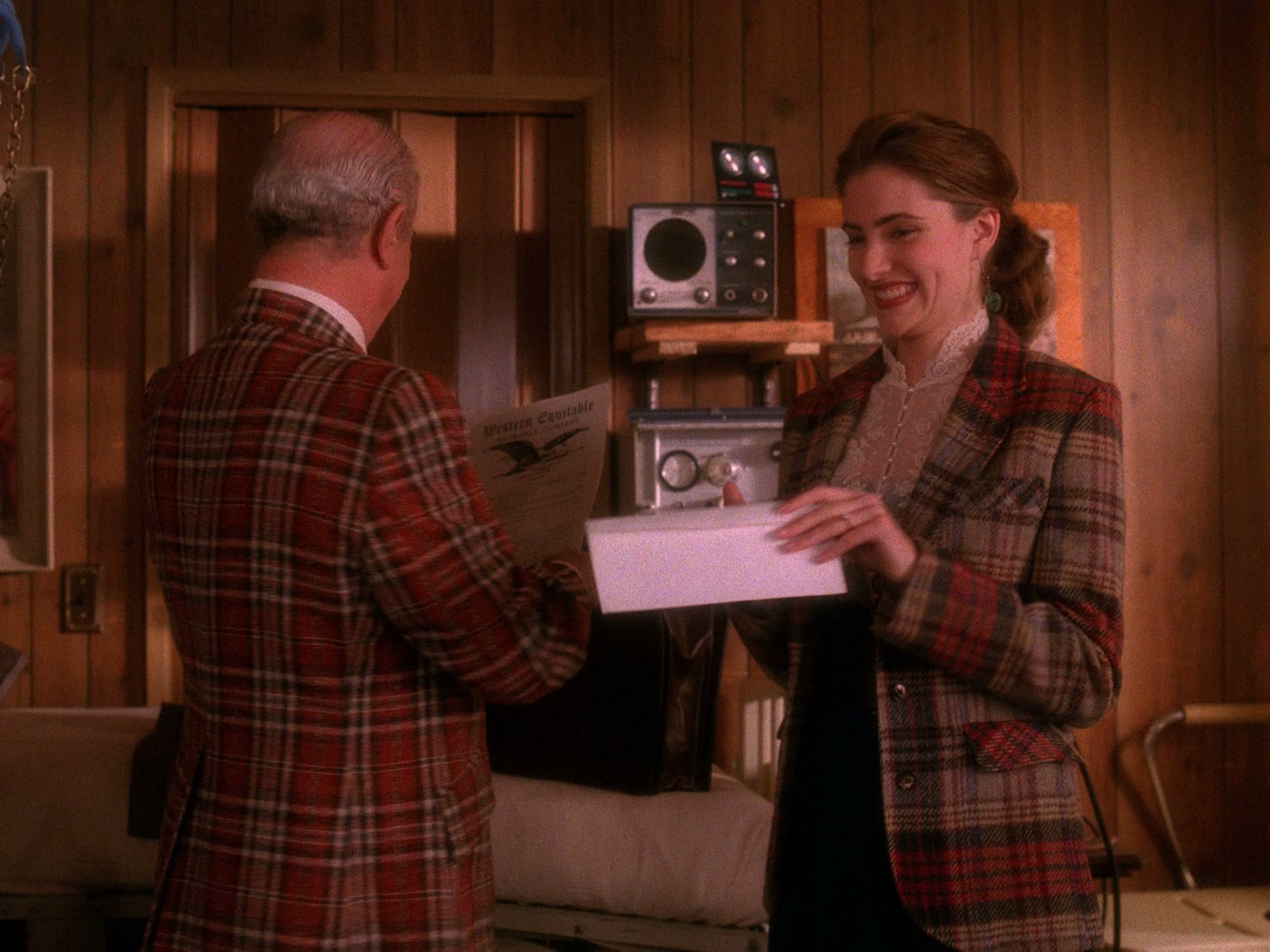
The man who delivers Leo praises Bobby and Shelly for keeping him among loved ones. Bobby is presented as a cousin; the language of family care helps disguise the scheme. The cheque exposes its weakness. Deductions reduce the expected income to a sum that will not support the arrangement they imagined.
Shelly immediately understands the consequence in terms of work. Looking after Leo means leaving the diner, while the available money cannot replace her wages. Bobby’s calculation has treated a disabled man as a source of income without calculating the labour that makes home care possible. The bureaucratic farewell leaves that work with Shelly.
Their later party turns the welcome-home ceremony into a list of Leo’s cruelties. Kazoos, hats and streamers give accusation the form of a celebration. Bobby names the domestic violence and attempted murder that ordinary language about a caring household has concealed. Shelly participates, then becomes frightened when Leo appears to move.
Celebration, accusation and uncertainty · 2 images
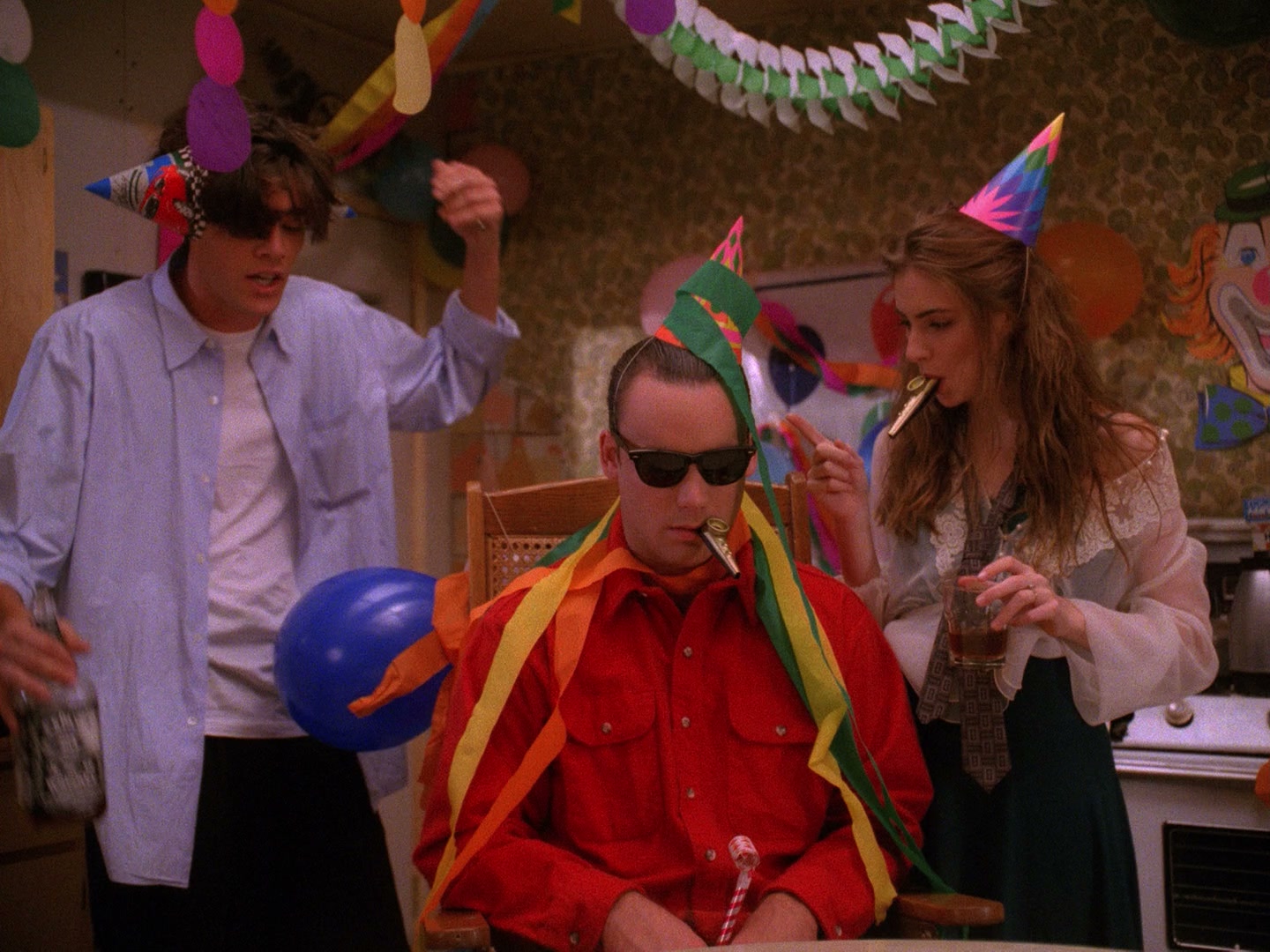
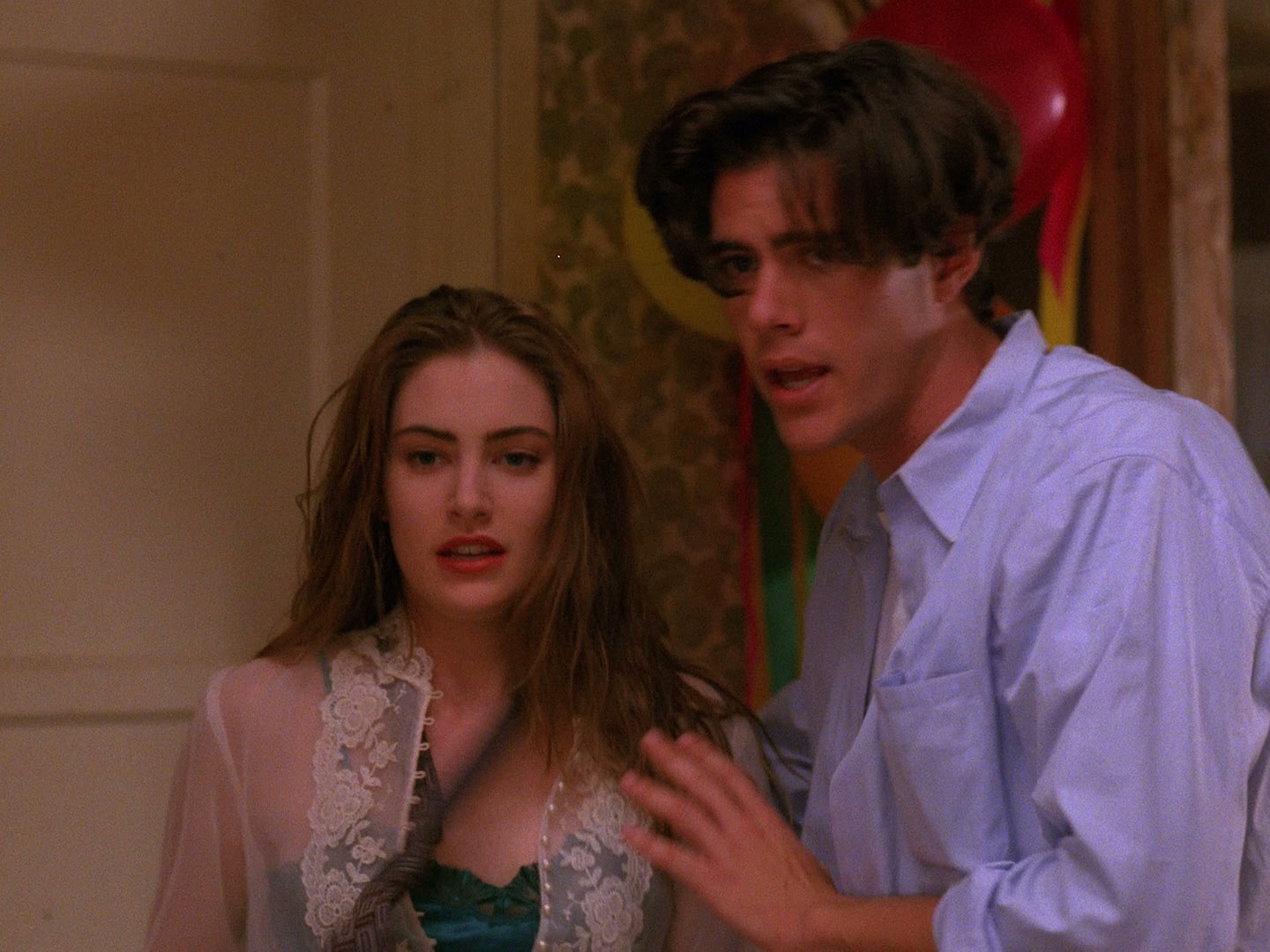
The shift is not a clean reversal from cruelty to compassion. They apologise, invoke therapeutic stimulation and then laugh again when Leo slumps toward the cake. The scene keeps abuse, fear, revenge and economic dependence in the same room. Its discomfort comes from those unresolved relations rather than a simple change in who deserves sympathy.
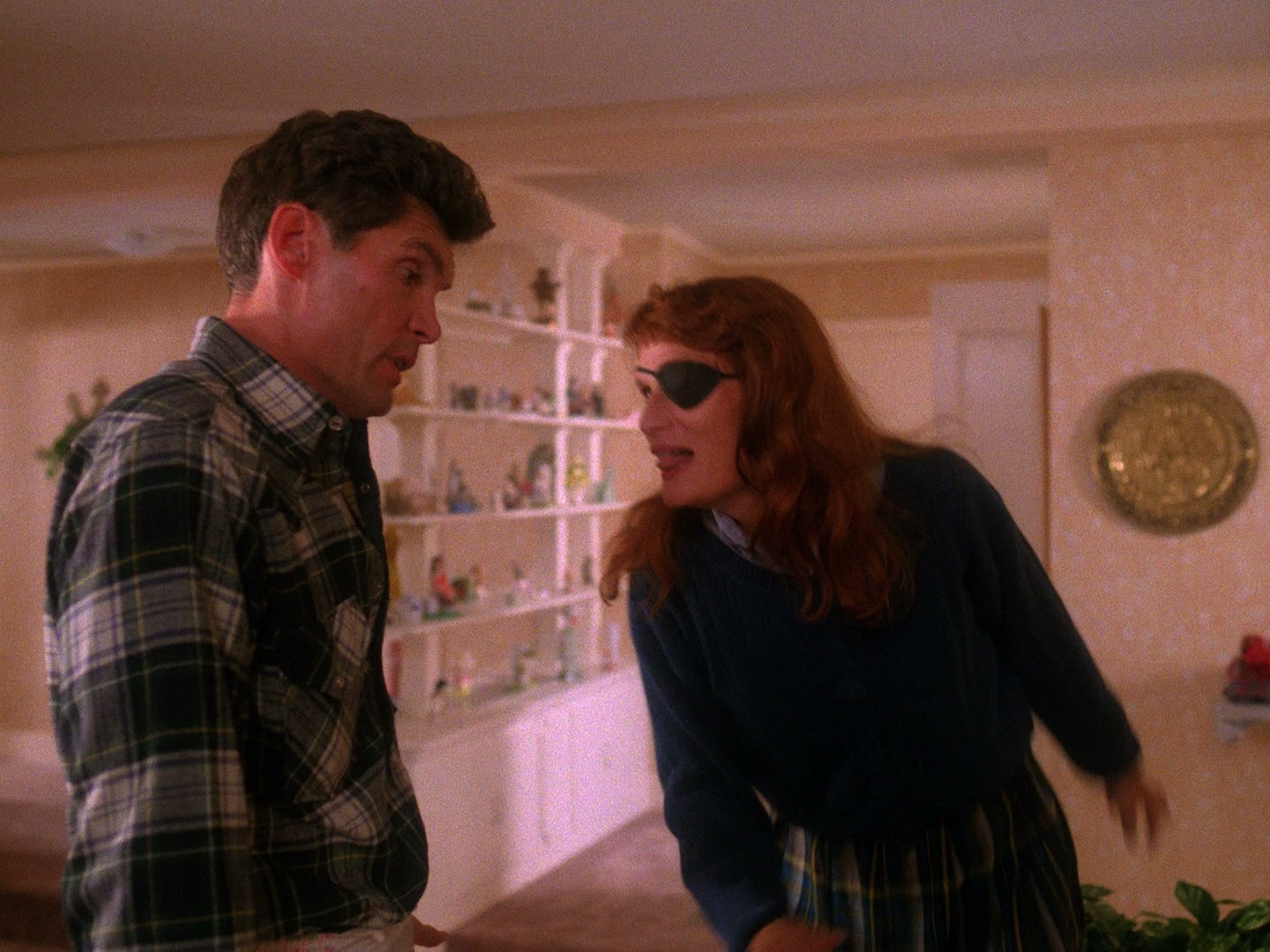
Nadine and Ed offer another unstable domestic picture. She treats their home as an opportunity for teenage romance, while he tries to negotiate a marriage that she no longer recognises as such. The comedy is inseparable from the asymmetry of what they understand about their lives.
Maddy speaks as herself
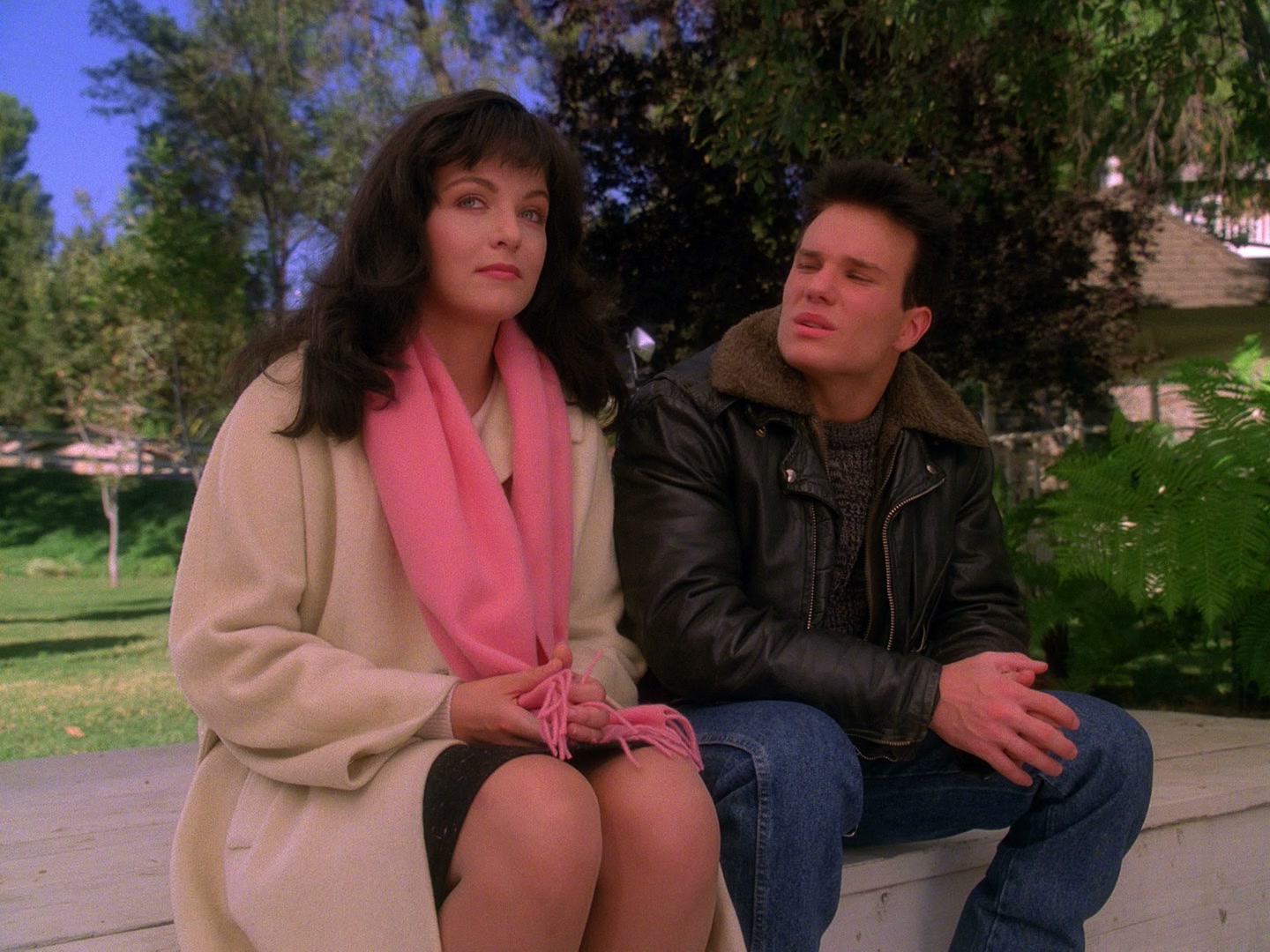
At the lake, Maddy explains the attraction and cost of being seen as Laura. She does not describe resemblance only as something other people imposed. For a time, she enjoyed being someone different. That admission gives her more agency and complexity than the role of an innocent double would allow.
The conversation distinguishes the temporary freedom of another identity from the need to recover her own. She can acknowledge what happened between her and James without treating it as a lasting claim on him. Her decision that he and Donna belong together is followed by a more important decision about herself: she is leaving Twin Peaks.
James wants love to maintain its brightest intensity indefinitely. Maddy’s account accepts change, ambivalence and an ending. The lake setting permits the exchange to unfold through faces and shared space, with no investigation to settle it for them. Her departure is presented as a reasonable return to her own life, which gives the next episode’s failure to let her leave its particular cruelty.

A loud entrance and a private warning
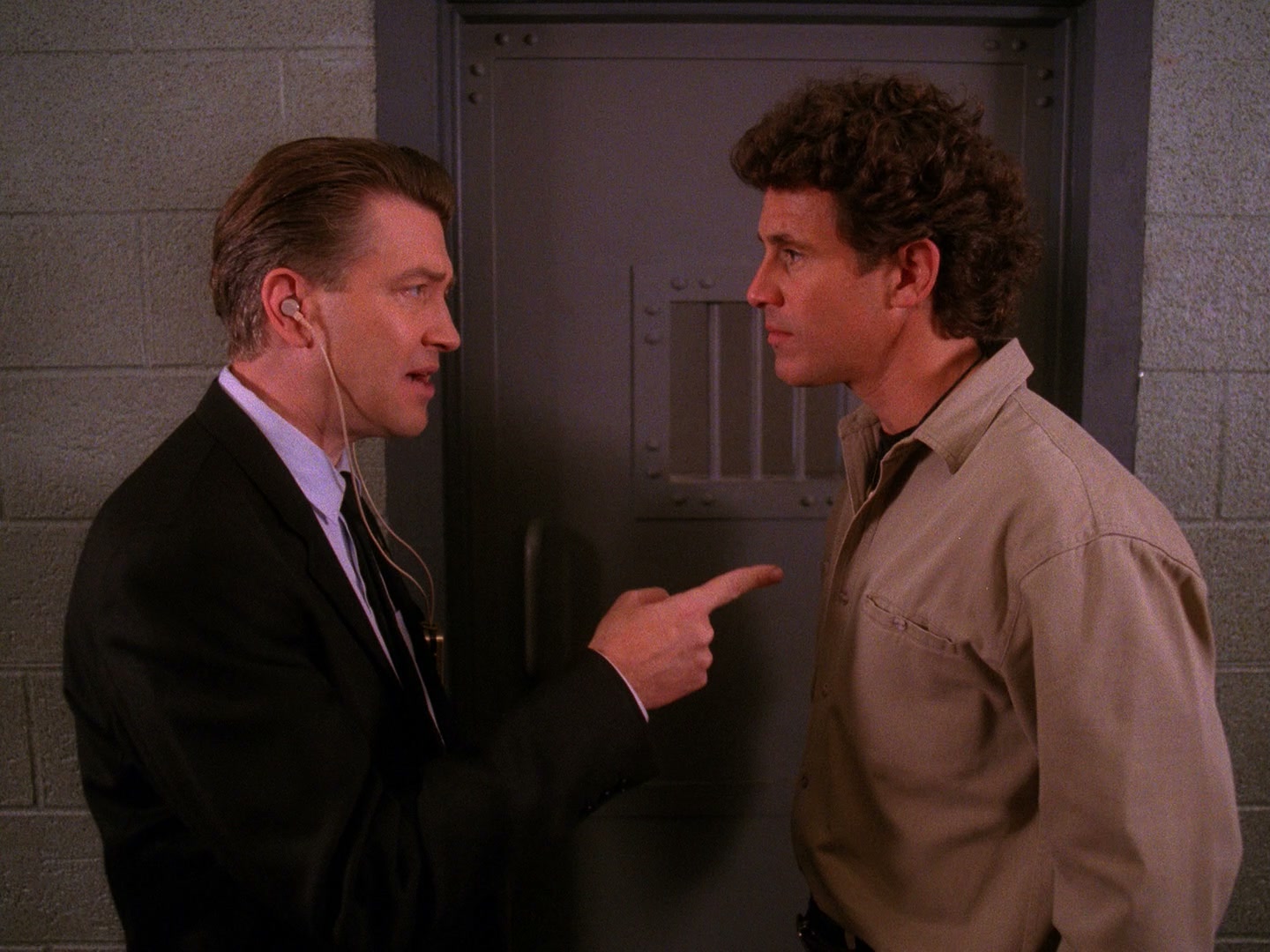
Gordon Cole arrives while Donna is trying to persuade Truman that Harold’s diary matters. Her correction of Harold’s name and insistence that this is not a game meet the practical limits of a busy station. Cole’s entrance brings institutional weight, but also another difficulty in being heard.
The comic exchanges depend on partial reception: a question is answered as a different question, and attempts at courtesy create further misunderstanding. Cole nevertheless delivers consequential findings about the coat fibres, Gerard’s drug and pages from a diary. The report’s importance is not cancelled by the manner of its delivery.
His later request for secrecy is undermined by the volume of the conversation. Yet the warning about Pittsburgh moves beyond a joke. Cole connects professional concern with knowledge of Cooper’s history. Cooper insists that the present case is different; the anonymous chess move then makes that earlier history newly present.
A supervisor, a colleague and a message · 3 images
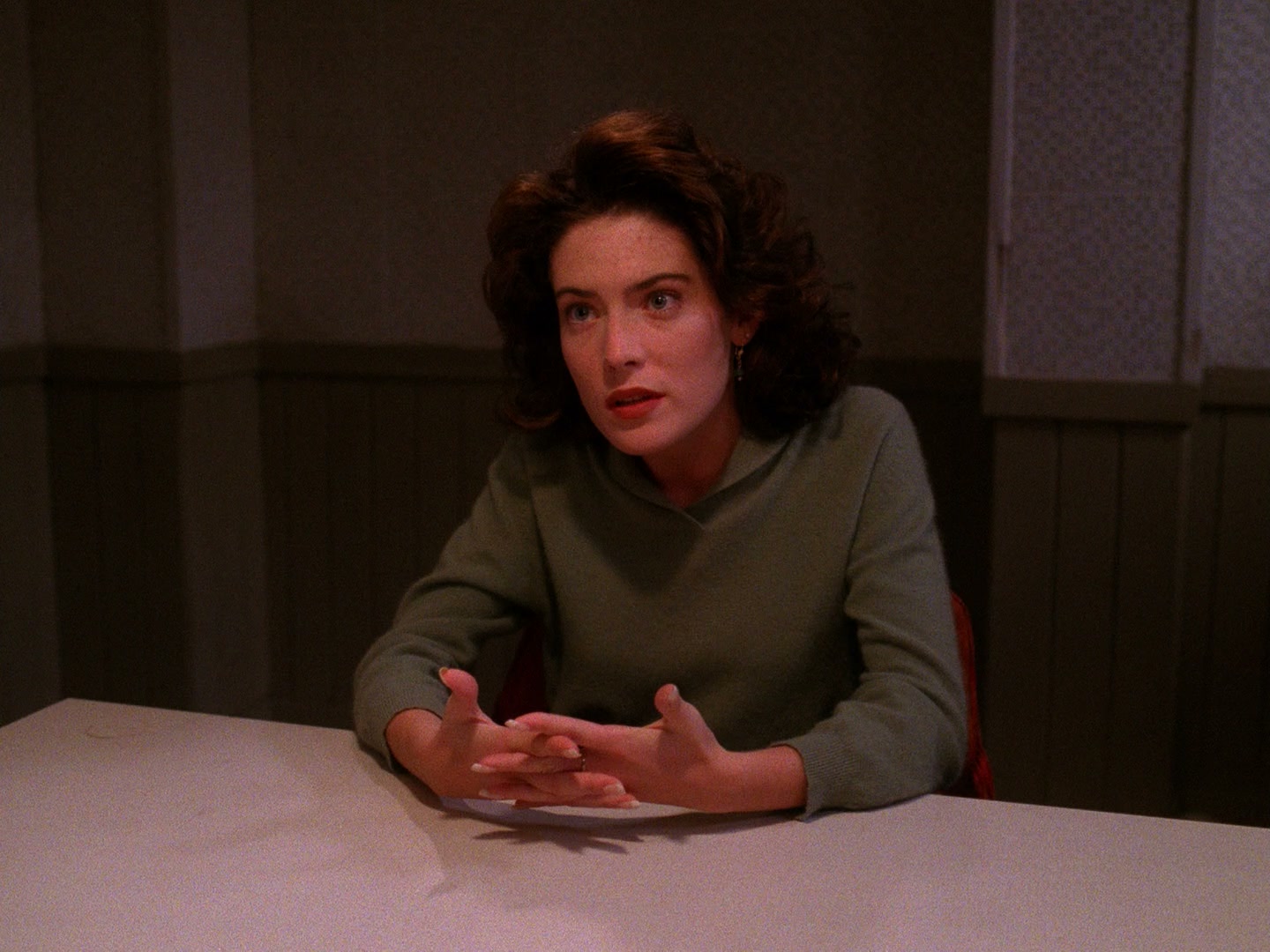
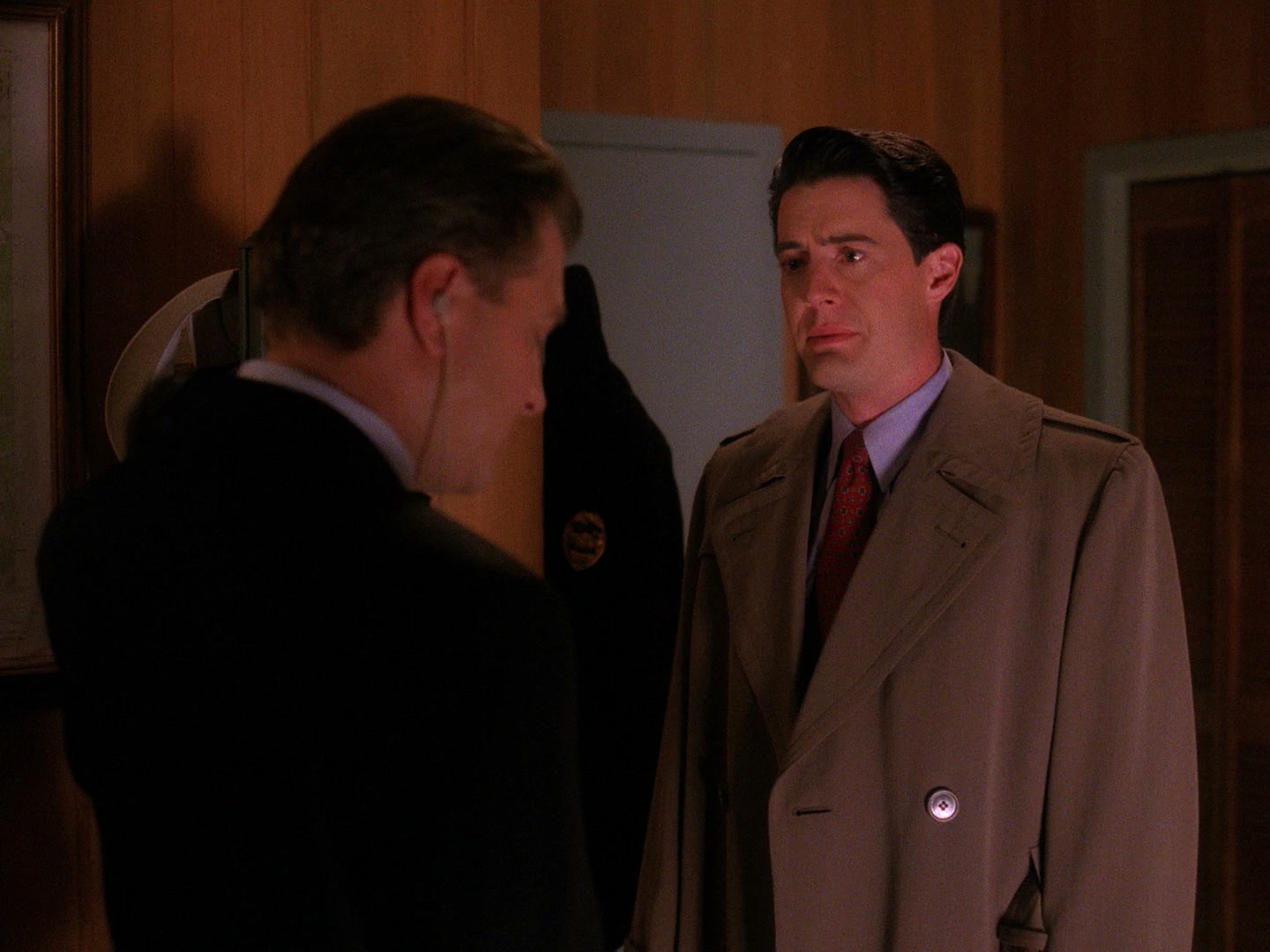
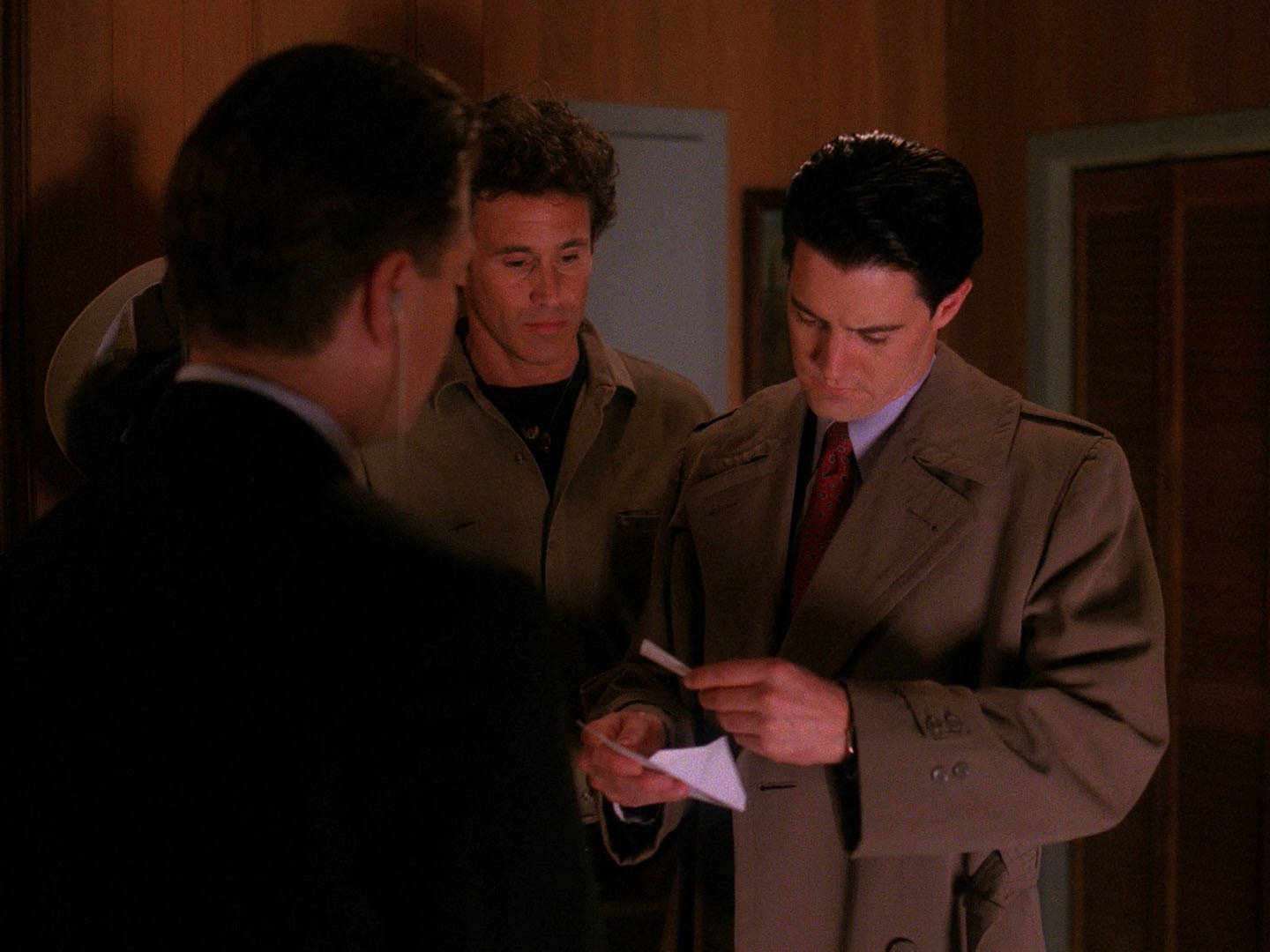
The scene makes an object do the work of a voice. The chess position needs no explanatory letter to be recognised by its intended reader. Naming Windom Earle changes an apparently routine supervisory visit into a warning that Cooper himself is being addressed by an unseen opponent.
The English subtitle track marks Cooper’s raised voice and return to an ordinary speaking voice. Those cues support the discussion of the scene’s verbal staging; they do not establish how any particular soundtrack mix distributes dialogue or ambience.
Contracts, threats and departure
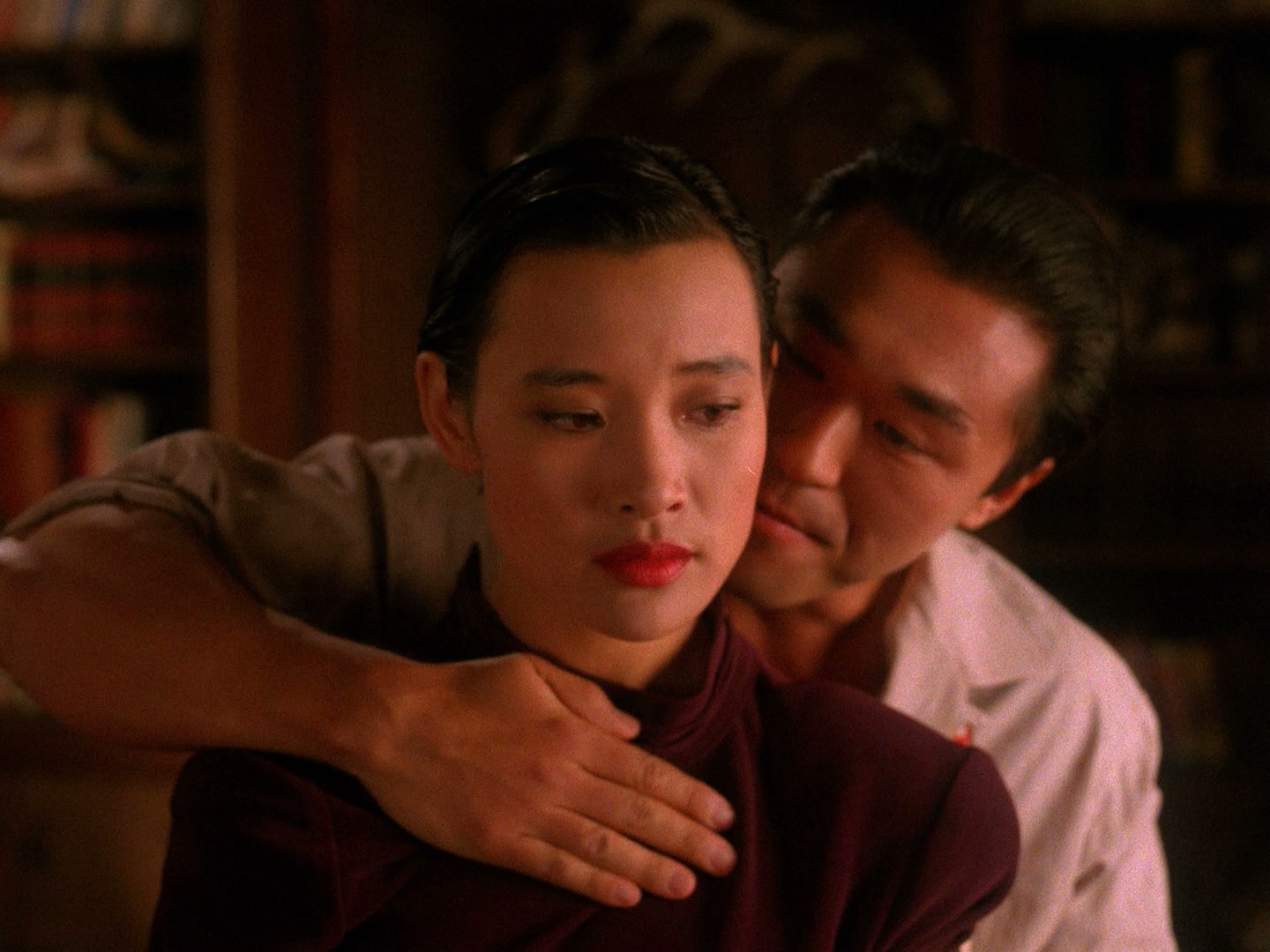
Jonathan’s instructions to Josie begin with the material signs of her life in Twin Peaks: clothing, perfume, jewellery and luggage. Her five-year wait for payment is answered by a departure deadline. When she resists, the threat is redirected toward Truman. The command works by identifying the person she wants to protect.
Josie’s confrontation with Ben is organised around rival stores of evidence. He points to material in his safe concerning Andrew’s death; she describes evidence held elsewhere that will be released if she is harmed. The exchange turns mutual exposure into a temporary balance of power. The money can be obtained, but it does not make her free.
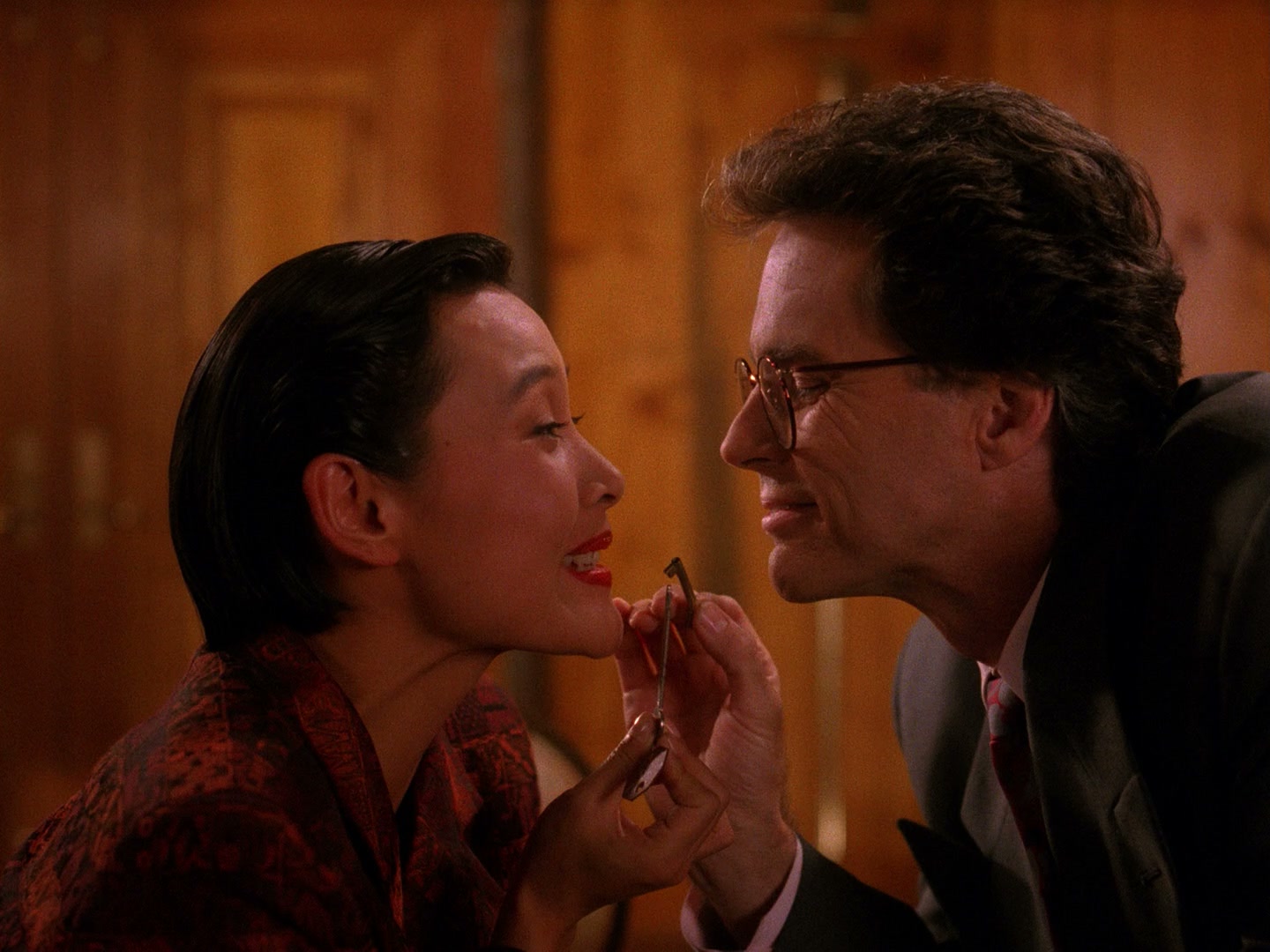
At home, Jonathan is introduced to Truman as an assistant rather than a cousin. The changing description is another attempt to give an imposed arrangement an ordinary social form. Josie’s farewell then makes a distinction between Truman’s love and his office: she asks whether his insistence that she stay is a police instruction.
Her account of the place where she telephoned him is especially revealing. It allowed her to become the person he wanted her to be. That can be read as affection and as an admission of performance at the same time. His declaration of love does not remove the pressures that the audience has already seen.
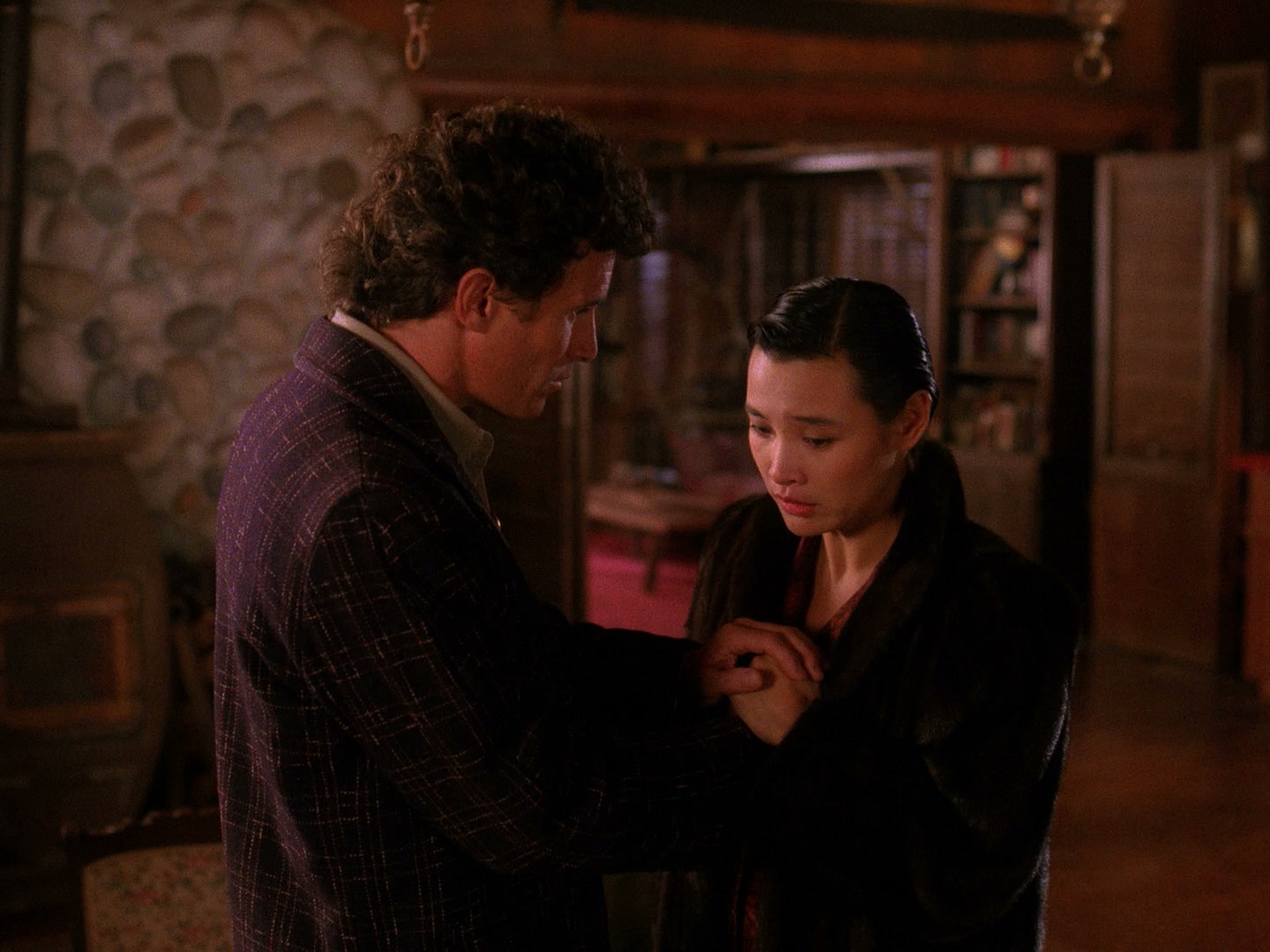
Leland returns to business and the stage
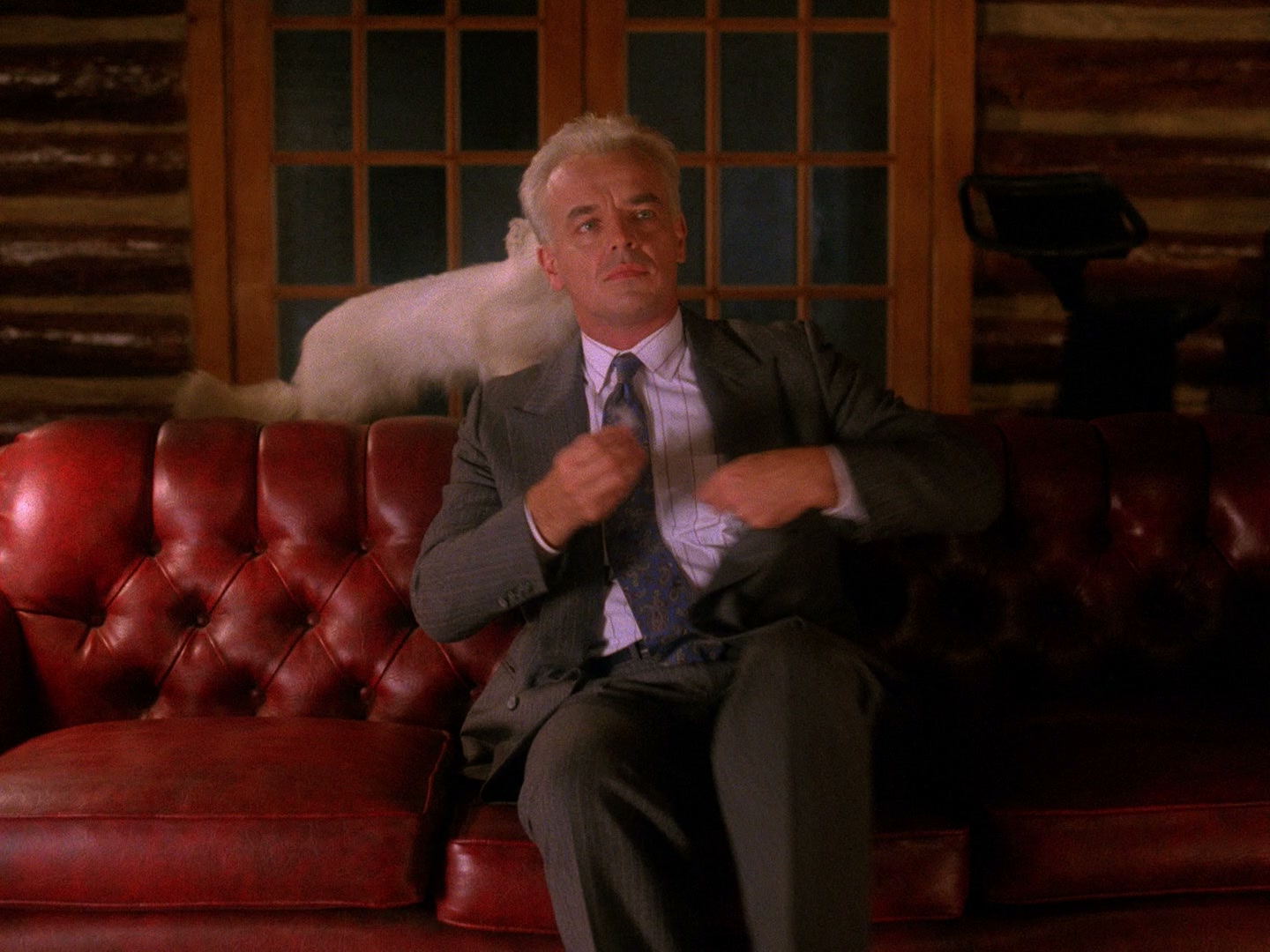
Ben tests Leland’s usefulness through a business problem. Leland answers with delays, inspections and financial manoeuvres. His fluent professional performance persuades Ben that he is back to normal, even while the indictment remains part of their conversation. Competence becomes a reassuring sign that may be less reliable than Ben wants it to be.
The dinner with Tojamura repeats the question of performance in another register. Ben turns delay into civic concern, claiming sensitivity to the community after the fire. Tojamura’s response about Nagasaki punctures the rhetoric with a reference to a different scale of loss.
Leland’s “Getting to Know You” brings Ben into the public act. The song’s invitation to familiarity becomes uneasy beside the episode’s unstable identities and concealed motives. Ben even imagines the audience as possible jurors. Private distress, entertainment and legal reputation are allowed to overlap.
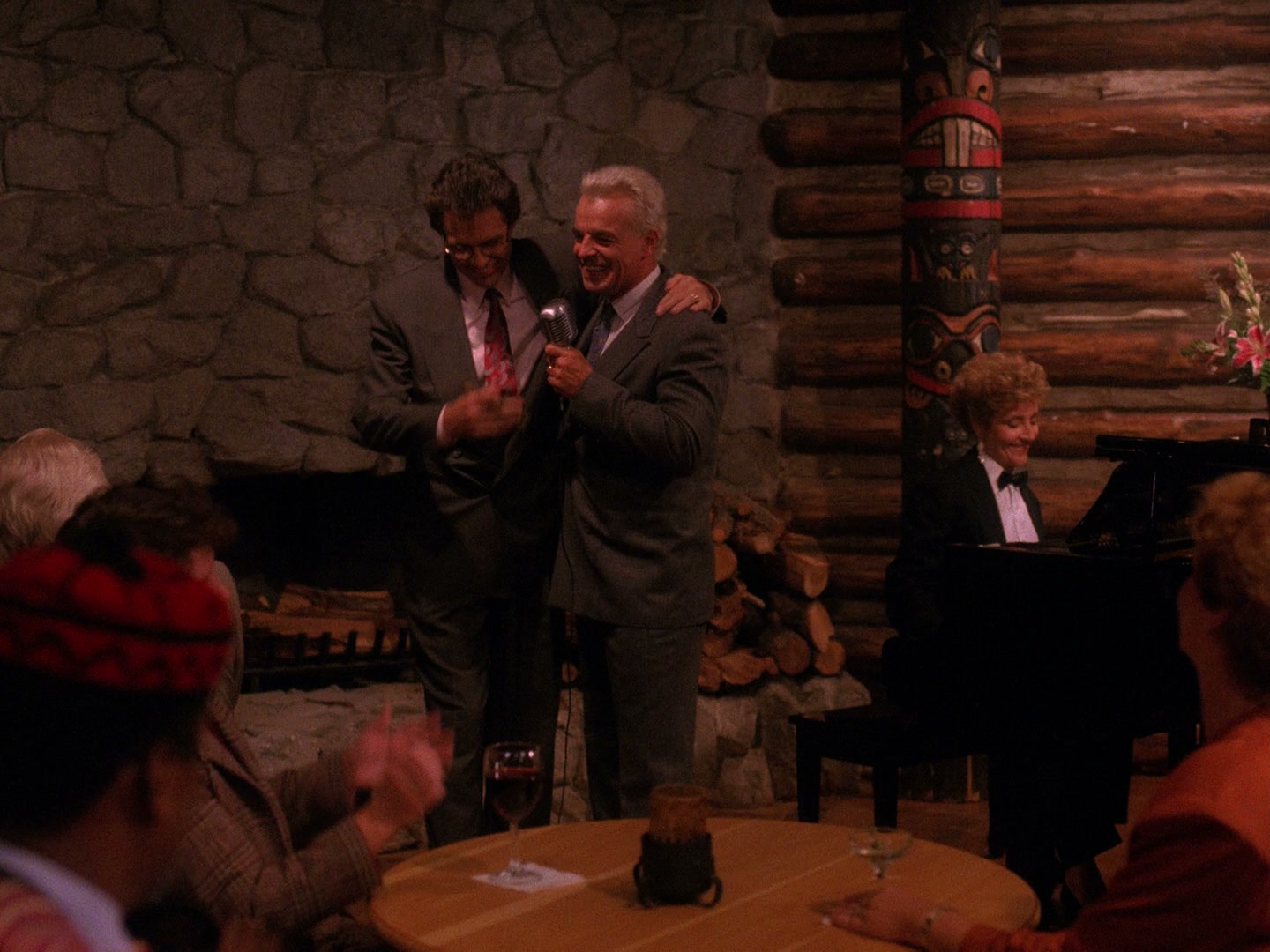
Pete’s ensuing conversation with Tojamura moves from musicals to awkward attempts at hospitality. The scene preserves the friction between a welcoming gesture and an assumption about a stranger. It also places another performance of identity close to Leland’s apparently reassuring return.
The interrogation changes its terms
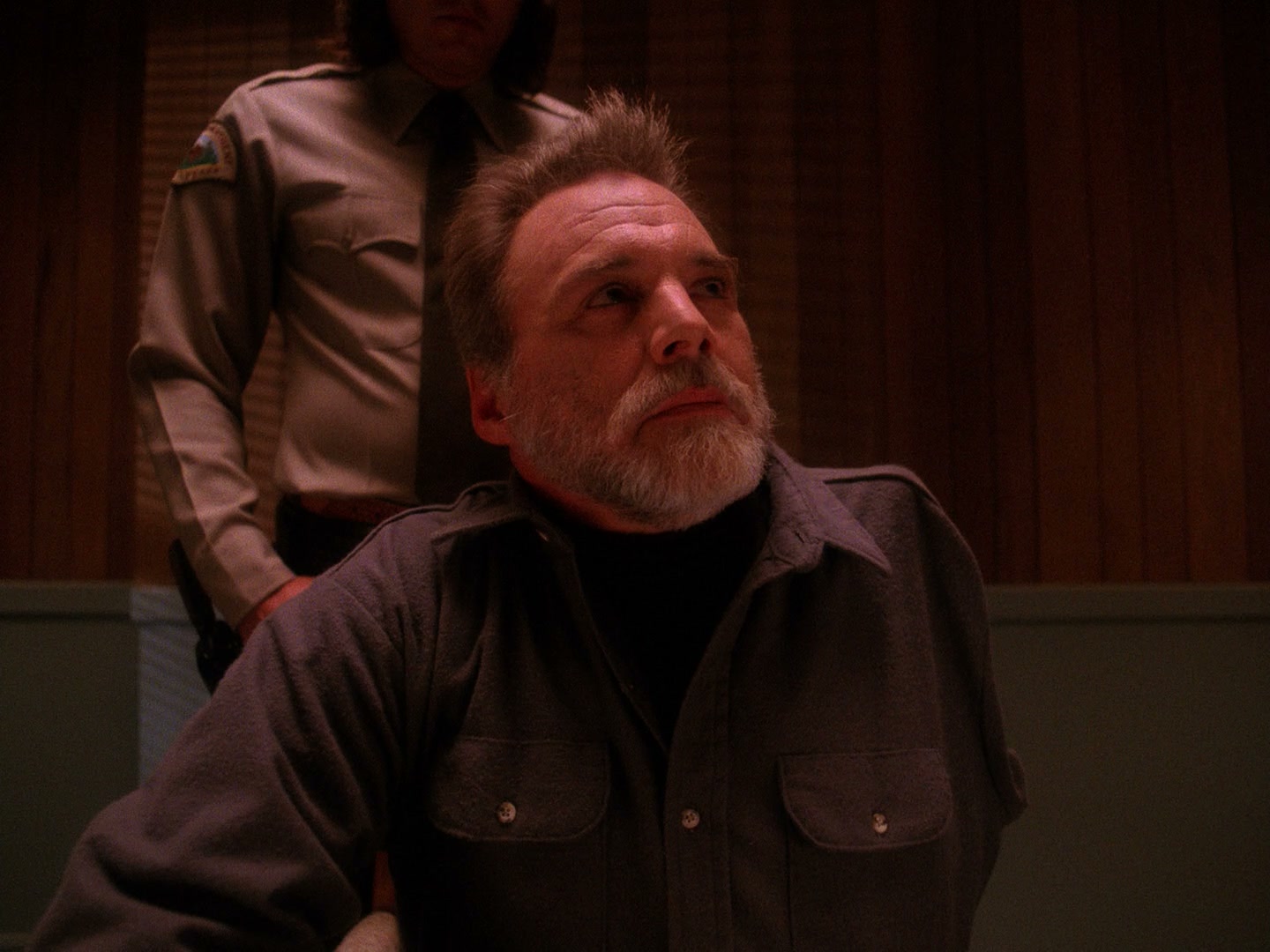
Gerard asks for medicine and says he can feel a change coming. Truman wants the drug administered; Cooper delays it; Cole argues that medication will prevent them seeing the other side. The sequence therefore begins with a dispute over the ethics of obtaining evidence from a distressed person. Its supernatural development does not erase that dispute.
The medical terms offered in the interrogation belong to the characters’ uncertain questioning. Schizophrenia and multiple personalities are mentioned together, but the scene does not provide grounds for treating them as interchangeable diagnoses. Mike’s subsequent account introduces an entirely different explanation: an inhabiting spirit and a human host.
Mike describes Bob through appetite, attachment and dependence on a human being. Cooper connects the speech with his dream; their shared lines turn remembered language into an apparent point of recognition. Mike’s story of purification gives the missing arm a new account, while leaving the viewer to assess testimony that cannot be tested by ordinary interrogation.
The final description of a large wooden house with many similar rooms brings the extraordinary speech back to a familiar place. Cooper names the Great Northern. The episode ends by turning an account of spirits into a practical route for the investigation, a route whose apparent precision the next episode will test.
Hiding from the self
The later Log Lady introduction considers drugs, alcohol and behaviour as ways of escaping the difficulty of being oneself. It is particularly suggestive beside Maddy’s account of becoming Laura, Nadine’s altered identity, Leland’s performance and Gerard’s medication. These are connections for reading the episode, not a licence to treat all four situations as the same condition.
A route through Demons
- Rescue aftermath. Harold destroys the orchids; Audrey receives care.
- Responsibility. Cooper judges the intervention and returns Ben’s money.
- The household. Leo’s arrival exposes the cost of care.
- Being heard. Donna reports the diary; Cole brings new findings.
- Being oneself. Audrey sets a boundary and Maddy prepares to leave.
- Pressure. Josie negotiates payment under a threat against Truman.
- Performance. Leland returns to business and sings for the hotel audience.
- Another voice. Gerard’s interrogation produces Mike’s account and a destination.
Sources and connections
Primary source: Twin Peaks, “Demons,” Season 2, Episode 6 / overall Episode 13, presented in Twin Peaks: From Z to A. The on-screen credits identify writers Harley Peyton and Robert Engels and director Lesli Linka Glatter. Images and scene analysis derive from the episode; dialogue references and captioned sound cues were checked against its English subtitle track.
Companion source: the separately filmed Log Lady introduction for Episode 13, preserved in Twin Peaks: From Z to A. The recap and preview provide separate editorial frames.
Continue reading: The Orchid’s Curse, Lonely Souls, and Bobby and Shelly in unused performance material.