Twin Peaks: Episode 12 — The Orchid’s Curse

1990 · Season 2, Episode 5 · Graeme Clifford
A forgotten note, two hearings and two intrusions. Follow the episode through the different prices of gaining access to another person’s life.
Season 2, Episode 5 / overall Episode 12. Contains episode spoilers.
Explore this episode
A clue recovered by changing position
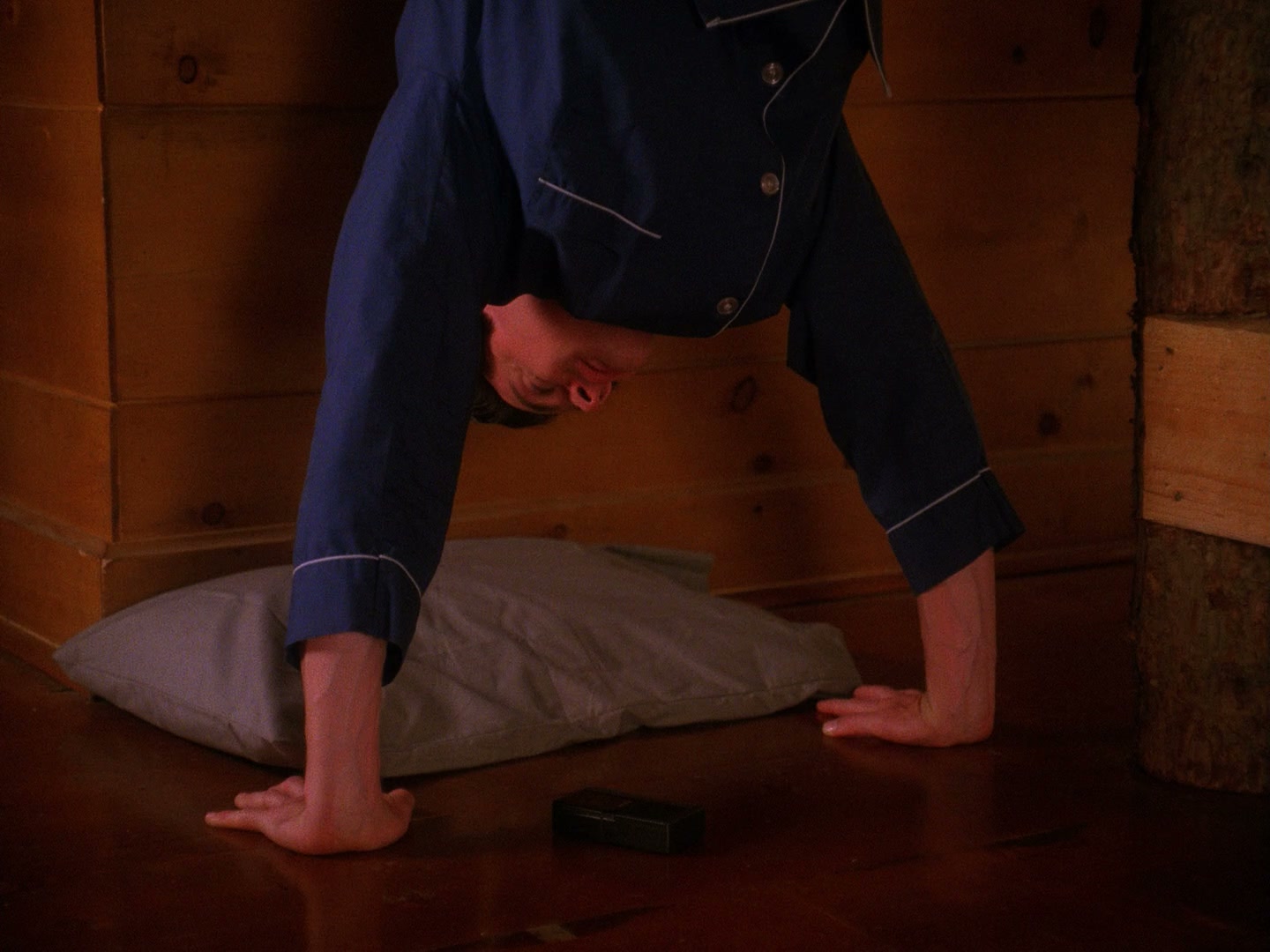
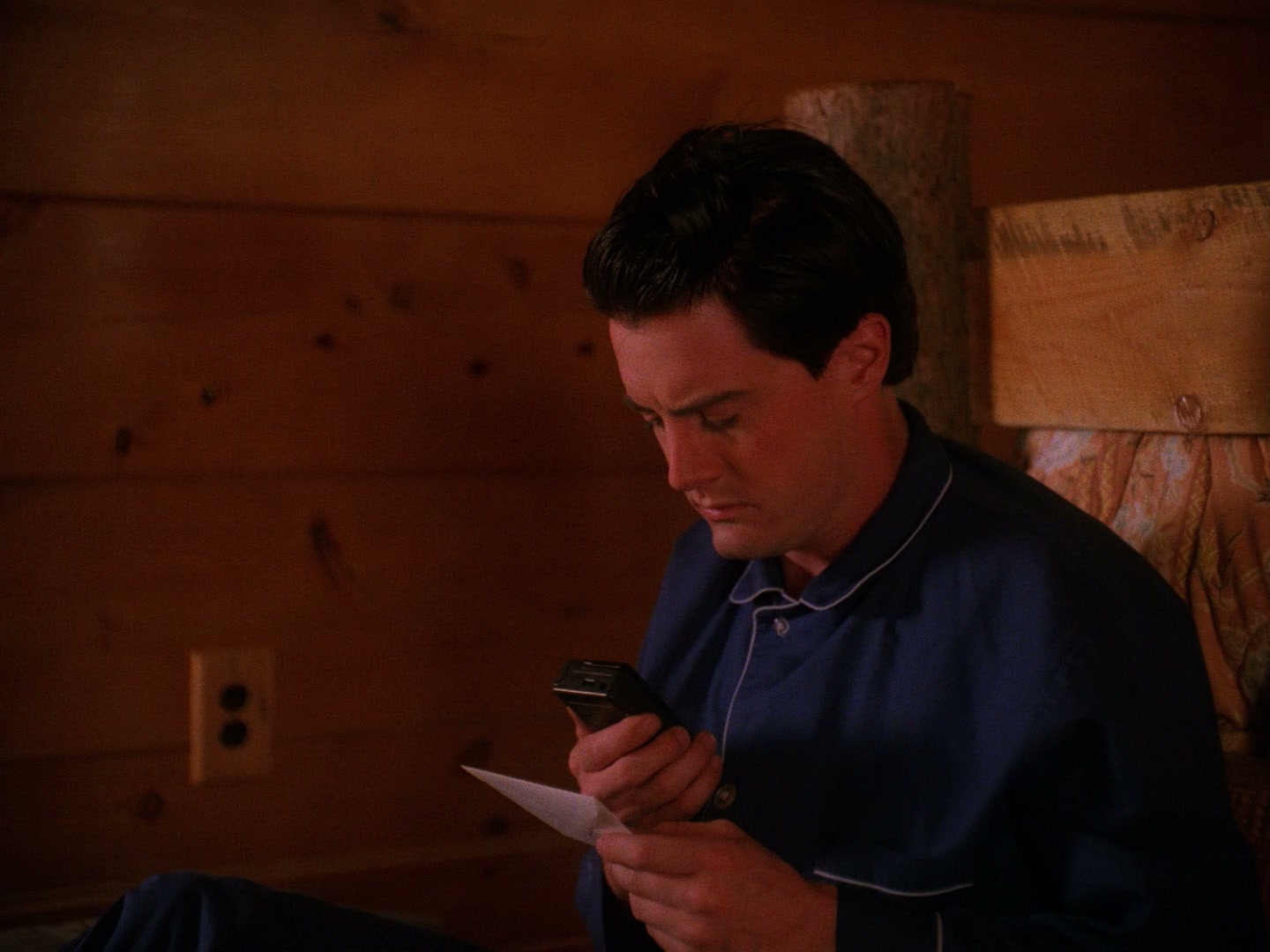
Cooper begins with a story about mistaking an earplug for a gumdrop in his sleep. The comic mistake makes a practical object pass through a dream before returning to its ordinary use. His account to Diane is both self-observation and performance: discomfort, coffee consumption and exercise are organised into the voice of a man trying to resume command of his day.
The headstand gives that wish a visual answer. The room has not changed, but Cooper’s relation to it has. Audrey’s forgotten note becomes available through an altered viewpoint. The Giant’s earlier warning is not replaced by a rational explanation; an eccentric bodily routine allows an ordinary piece of paper to confirm that there was something to remember.
The sequence makes discovery depend on returning to an overlooked object rather than receiving another revelation. It also gives Audrey’s own initiative renewed force. She left a message before she became a person others would plan to rescue. Her handwriting, not Ben’s instructions, supplies Cooper with the useful lead.
Two hearings in the Roadhouse
The Roadhouse temporarily becomes a court, then a place for informal consultation over drinks. Leland’s bail hearing and Leo’s competency hearing occupy the same setting but expose different pressures on legal judgement. In one, the defendant’s place in the community helps secure sympathy. In the other, the community’s demand for resolution is offered as a reason to proceed against a severely impaired man.
Truman speaks for Leland through family roots, public reputation and parental loss. This is a sincere act of loyalty, but its grounds are social and emotional as well as legal. Jacoby’s courtroom sketch introduces another kind of representation: the person being judged can also be turned into an image for the newspaper. The small comic exchange sits inside a process with grave consequences.
The courtroom and the consultation · 4 images
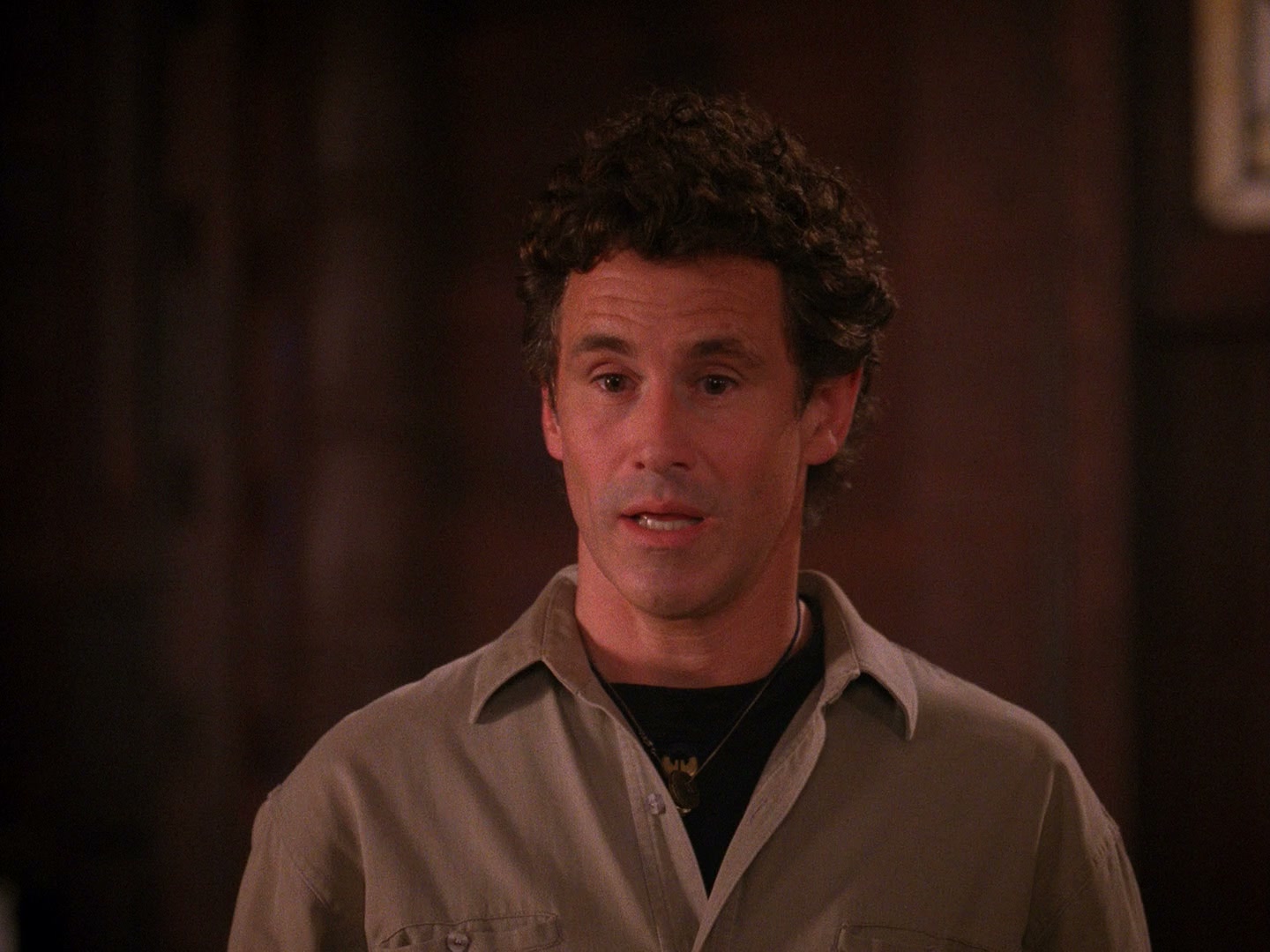
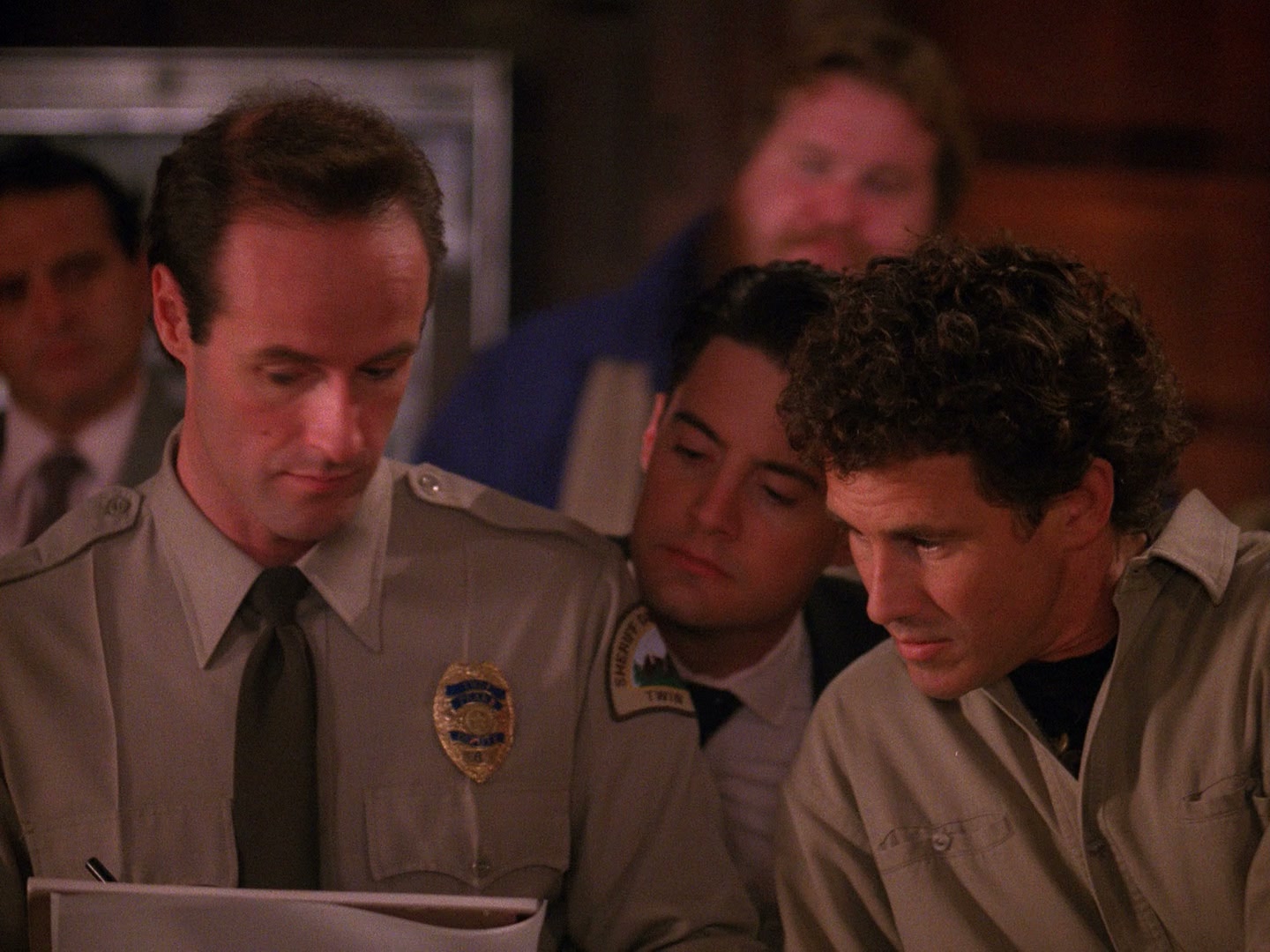
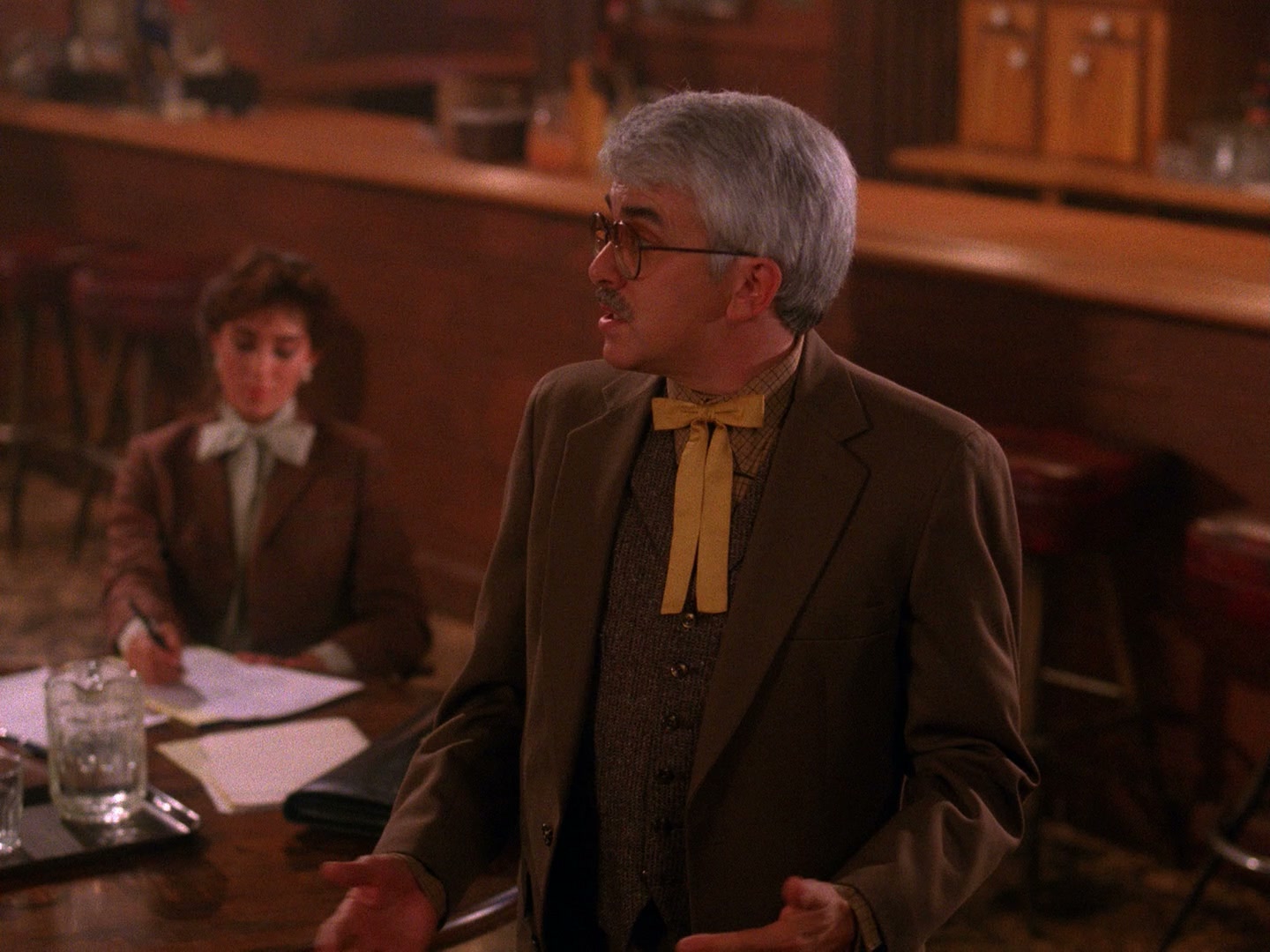
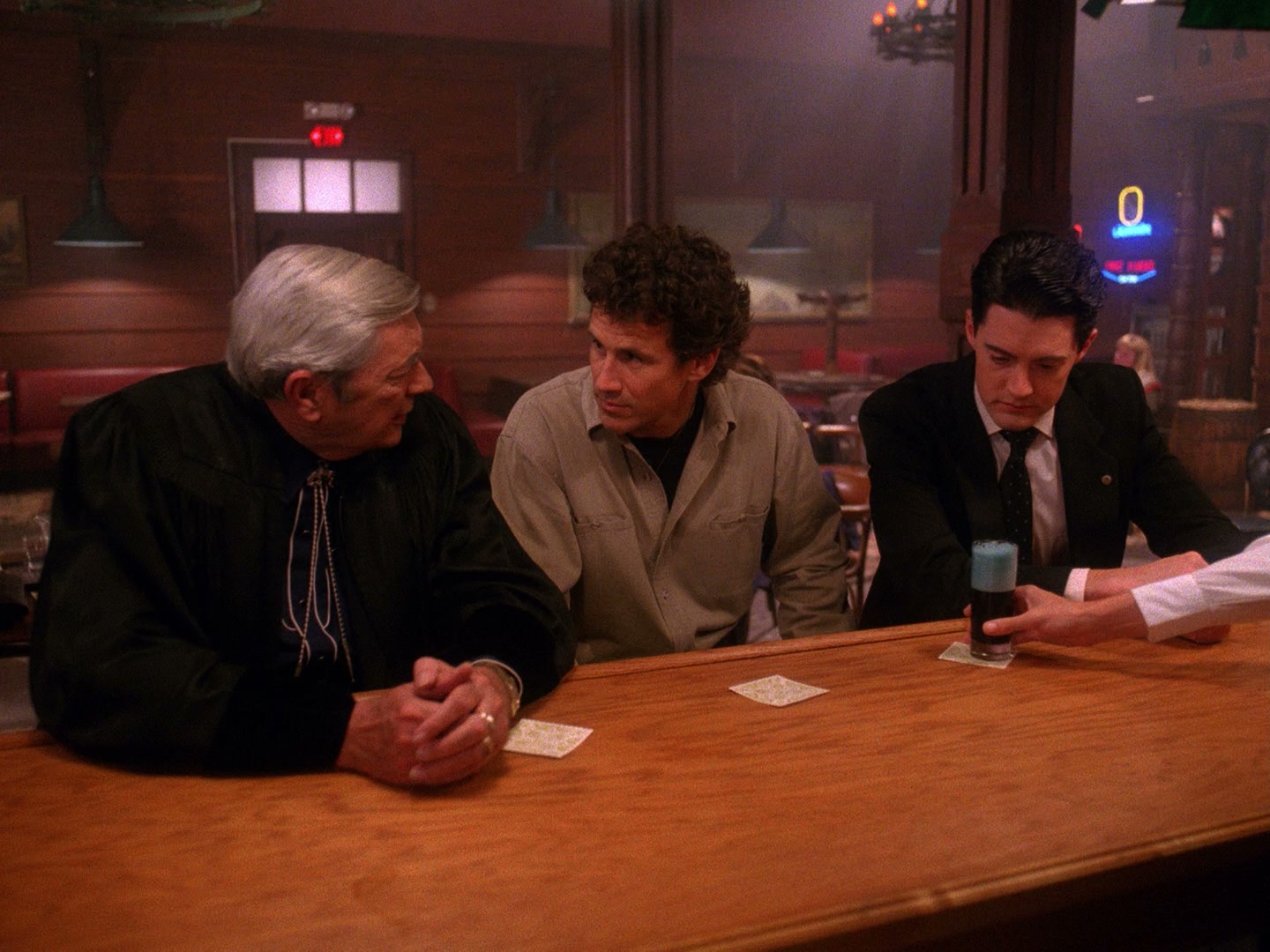
Racine’s medical argument and prosecutor Lodwick’s appeal to a wounded town offer incompatible accounts of what a trial should accomplish. Sternwood asks Cooper directly whether Leo is their man; Cooper does not believe he is. The judge’s decision resists making punishment a substitute for finding the killer.
That humane limit has a cost elsewhere. Leo is to return home, where Shelly will face the work of caring for the man who abused her. The episode connects the bar conversation to her reaction, making a legal disposition a change in somebody else’s daily life. Sternwood’s warning about the woods expands the scene again: the law has made a decision, but the world beyond the hearing remains strange.
Machines, care and the price of a person
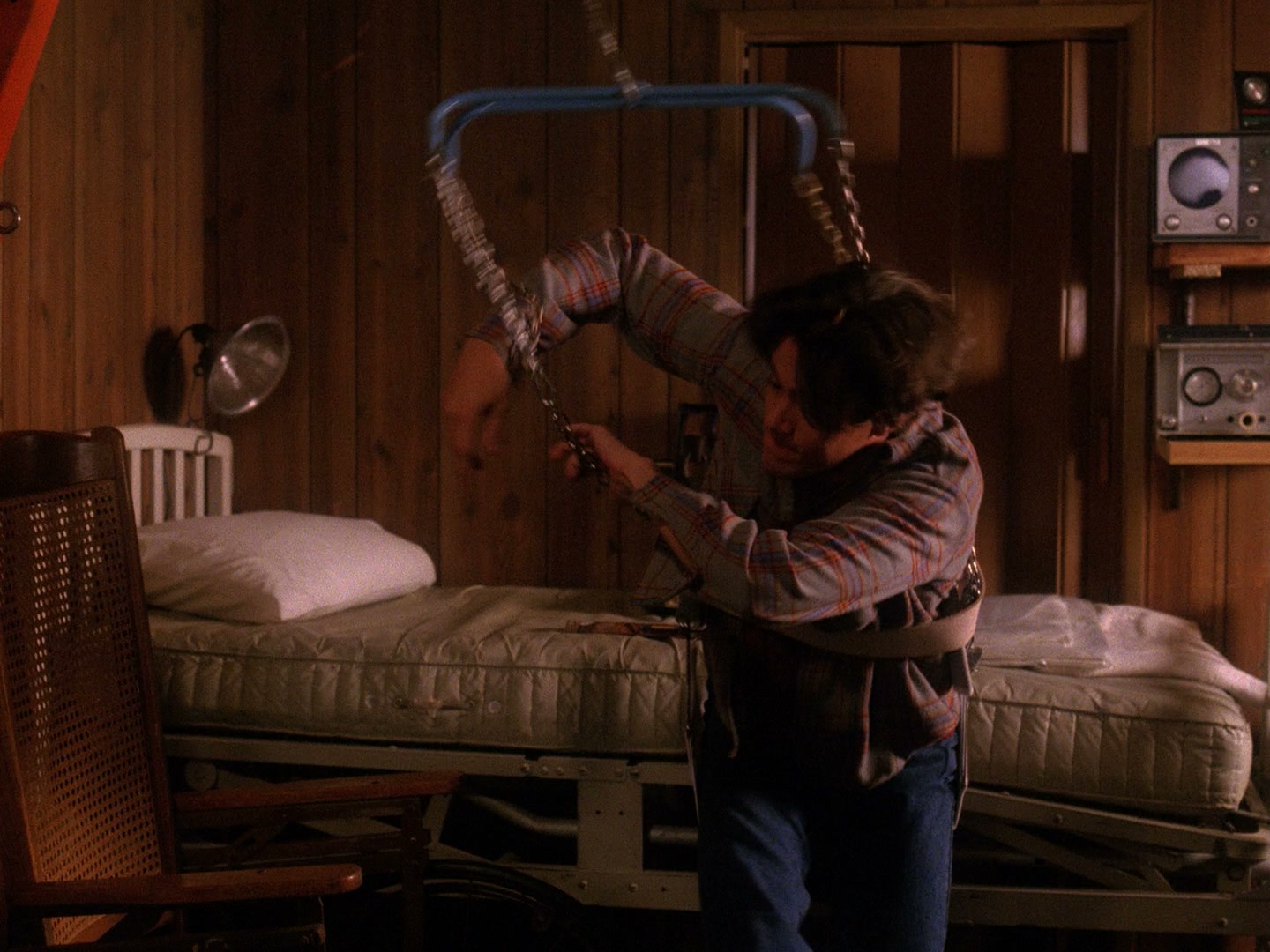
Pinkle’s patient lift promises mobility and access to the outdoors. Its malfunction exposes the distance between that benevolent sales language and the scheme around Leo’s insurance. Bobby tests the apparatus with his own body; once he can leave, Pinkle is left struggling with the mechanism. The gag turns a supposedly helpful machine into a trap without making Leo’s welfare its true centre.
Shelly’s question about a ramp is more practical than the surrounding performance. Access requires an alteration to the house, not merely a device. The scene contrasts her concrete attention with the men’s division of anticipated money and their efforts to make inadequate equipment appear sufficient.
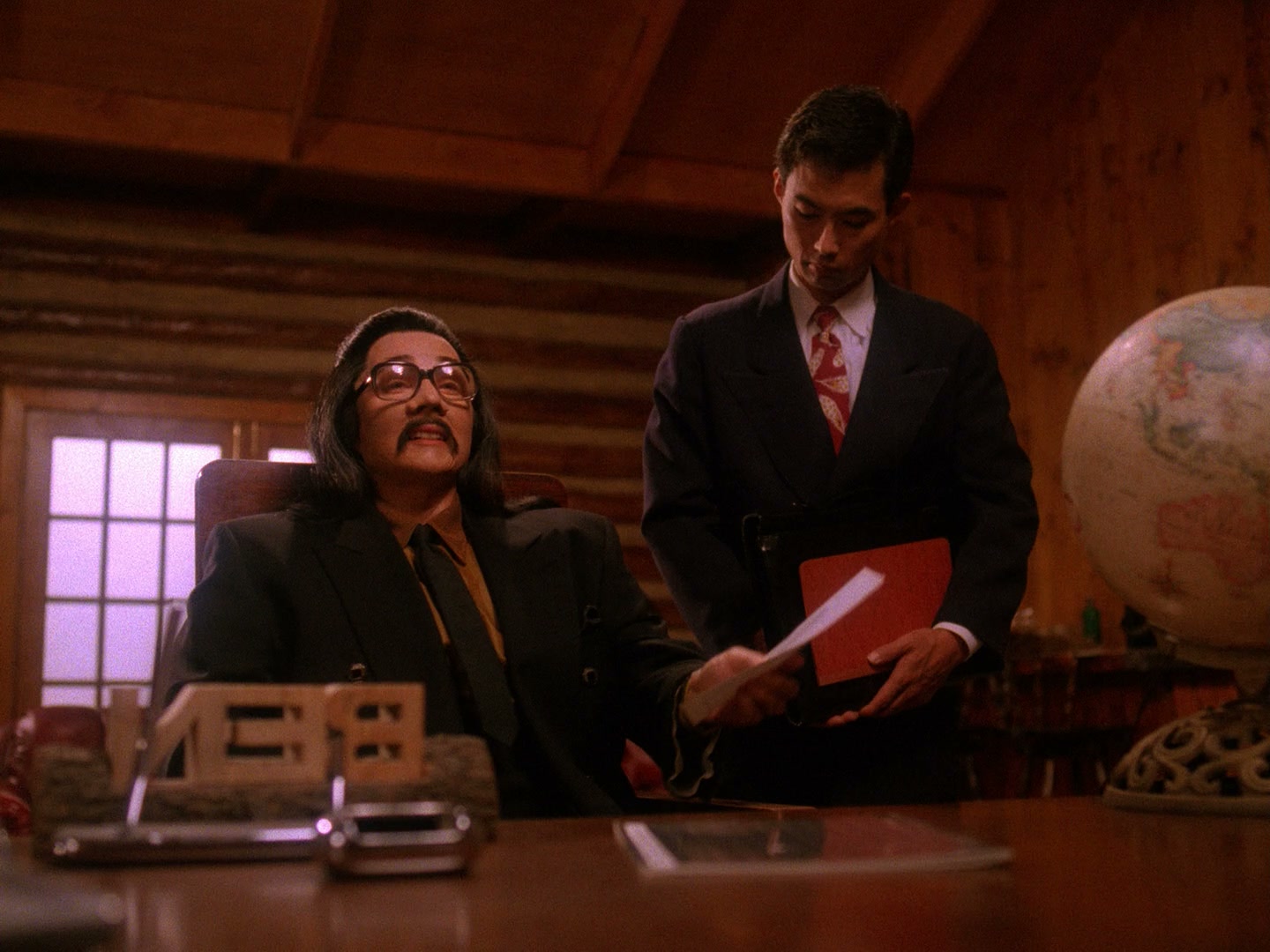
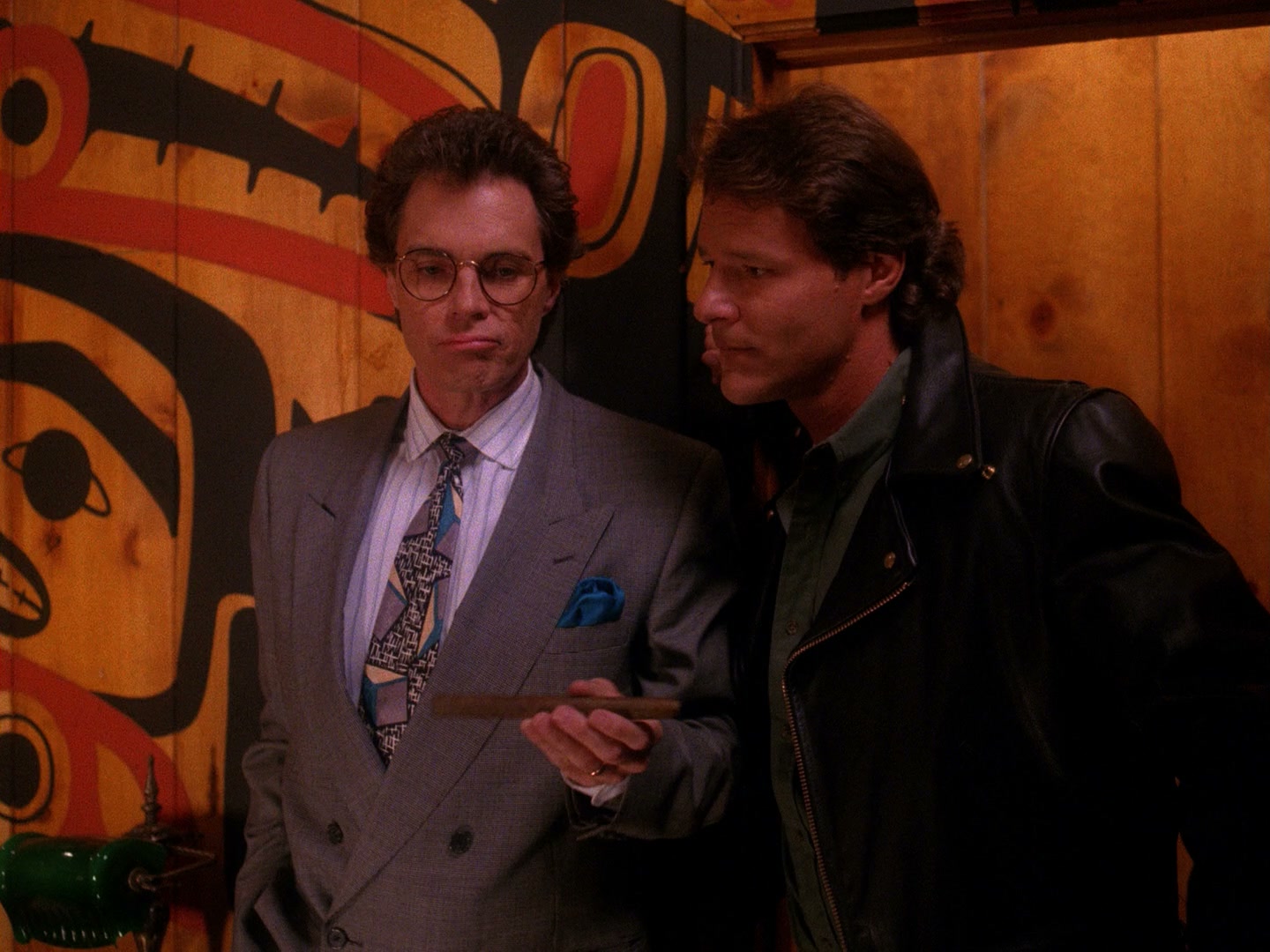
Ben’s later dealings extend the episode’s accounting of human lives. He moves from Tojamura’s investment offer to Audrey’s ransom and the secret instructions he gives Hank. The business opportunities and the rescue are allowed to share an office and a vocabulary of amounts. His instructions reveal that recovering his daughter, eliminating Cooper and recovering the money are interests he is prepared to combine.
Offers and instructions · 2 images
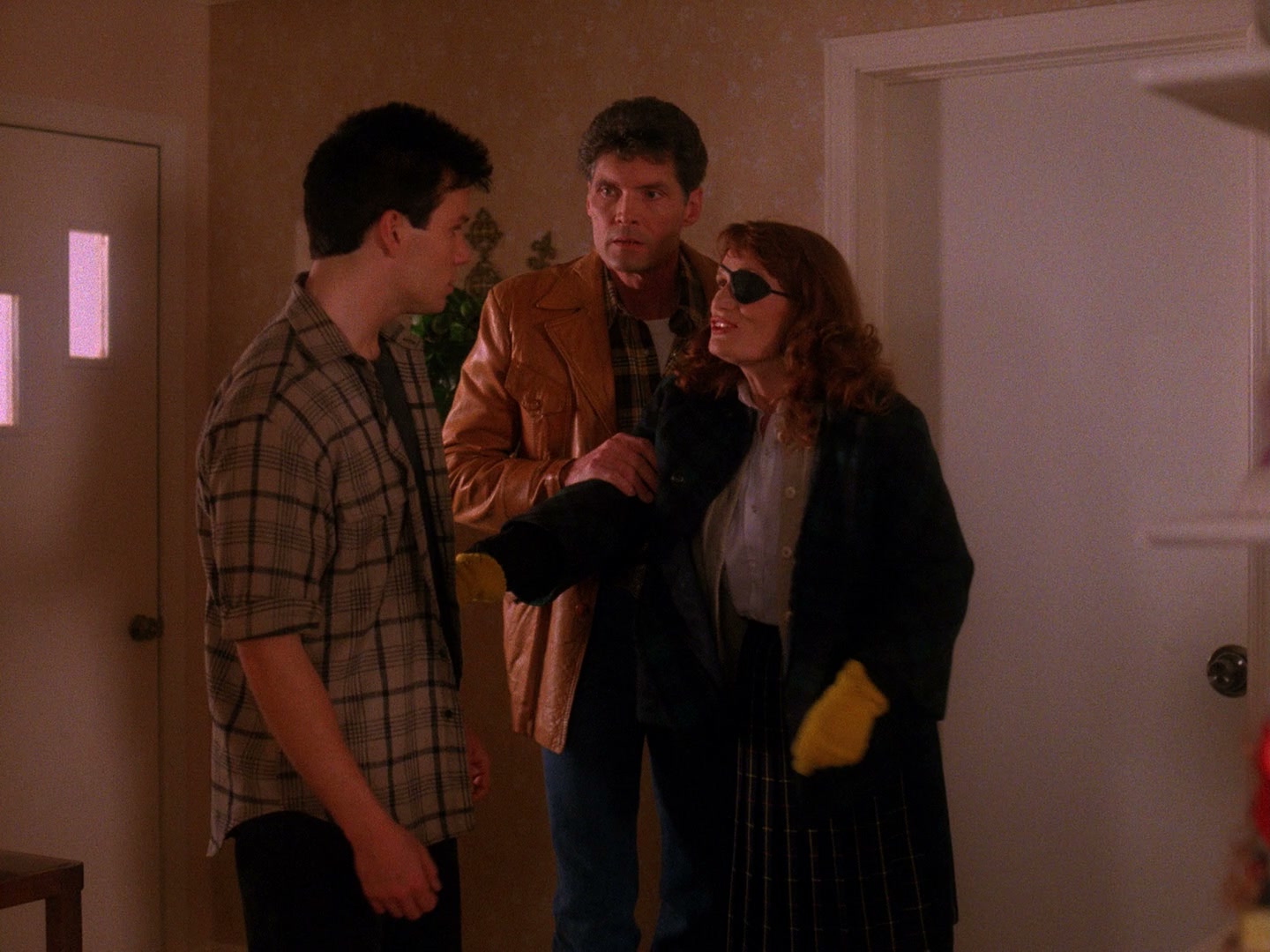
Nadine’s visit to Ed provides a different confusion between present circumstances and an imagined life. Her recognition of Mike as a school contemporary unsettles the adults’ attempts to manage the situation. The metal she breaks makes the mismatch physical: the performance of adolescence belongs to a body whose strength the room cannot comfortably accommodate.
Donna bargains with a life story
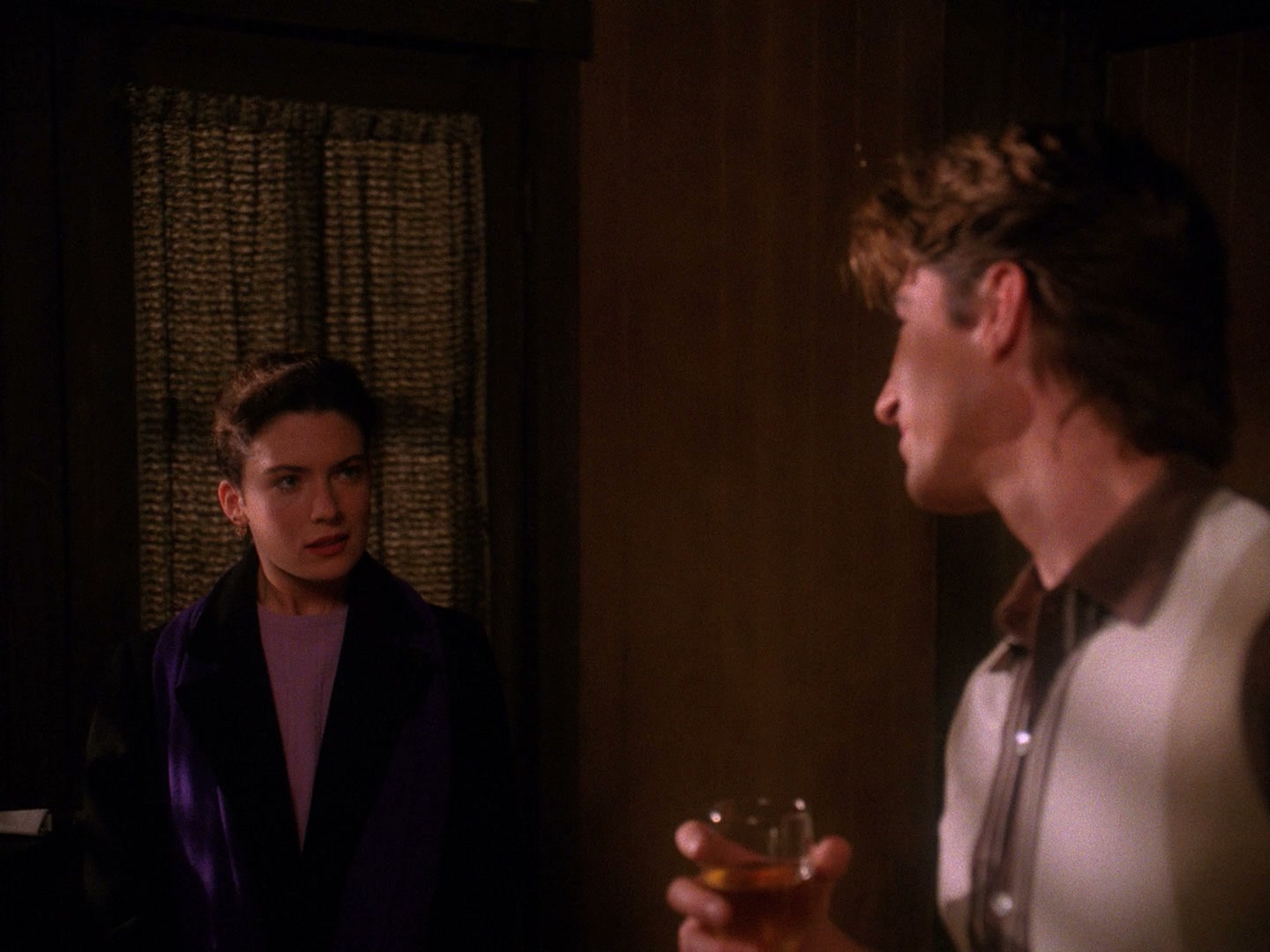
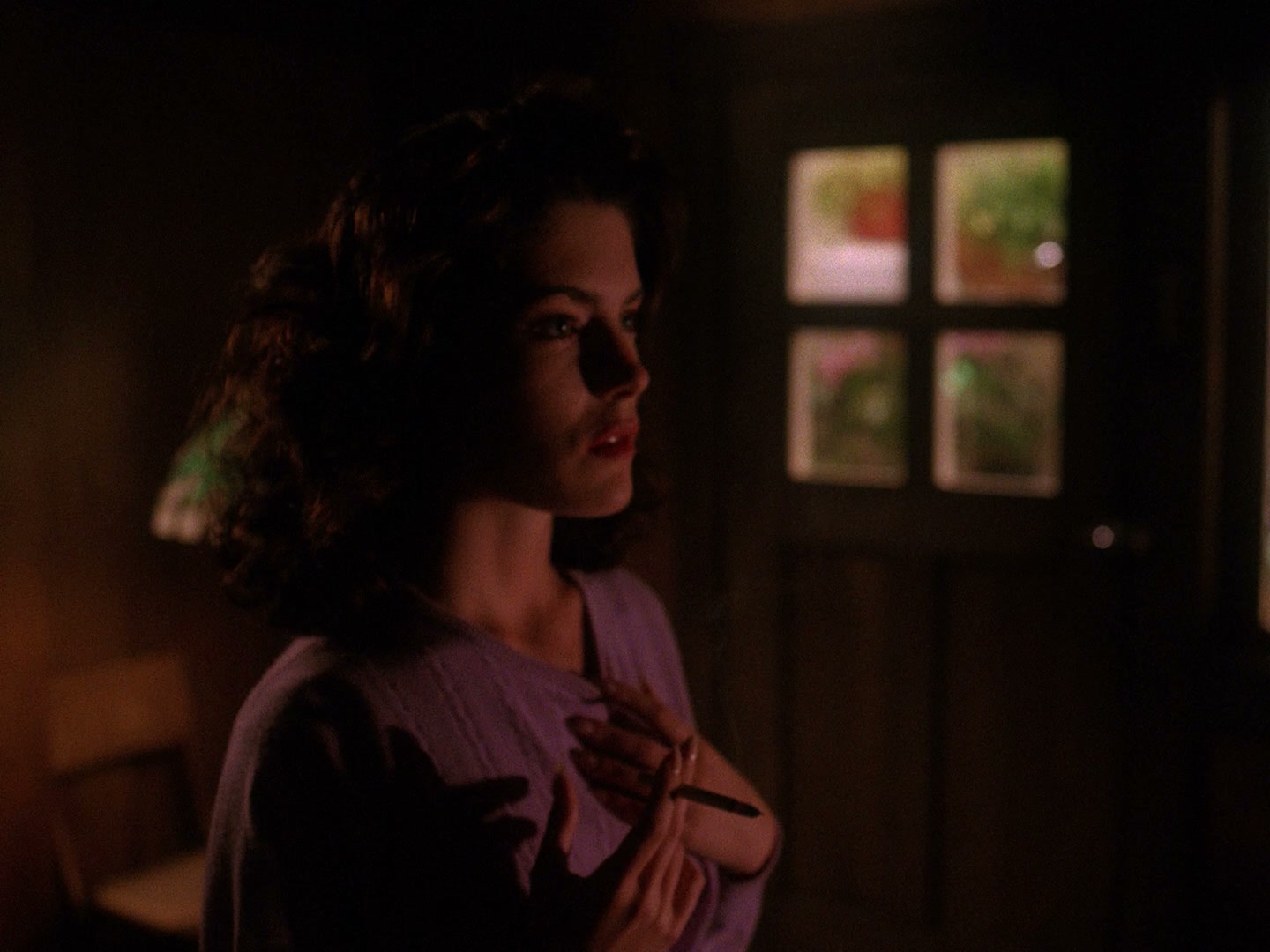
Harold offers a conditional form of access. Donna can exchange her own story for Laura’s diary, but he will read the diary to her and it must remain in the room. The agreement gives him control over the object, the voice that presents it and the conditions of listening. Donna’s response is not simply curiosity; she is negotiating a relationship in which intimacy and evidence are becoming difficult to separate.
Her attempt to carry the diary outside reveals the force of the threshold. Harold cannot follow without distress. Donna’s apology acknowledges that she has caused harm, yet the encounter also teaches her how to arrange the later theft. The episode makes the investigative usefulness of a discovery inseparable from the vulnerability it exposes.
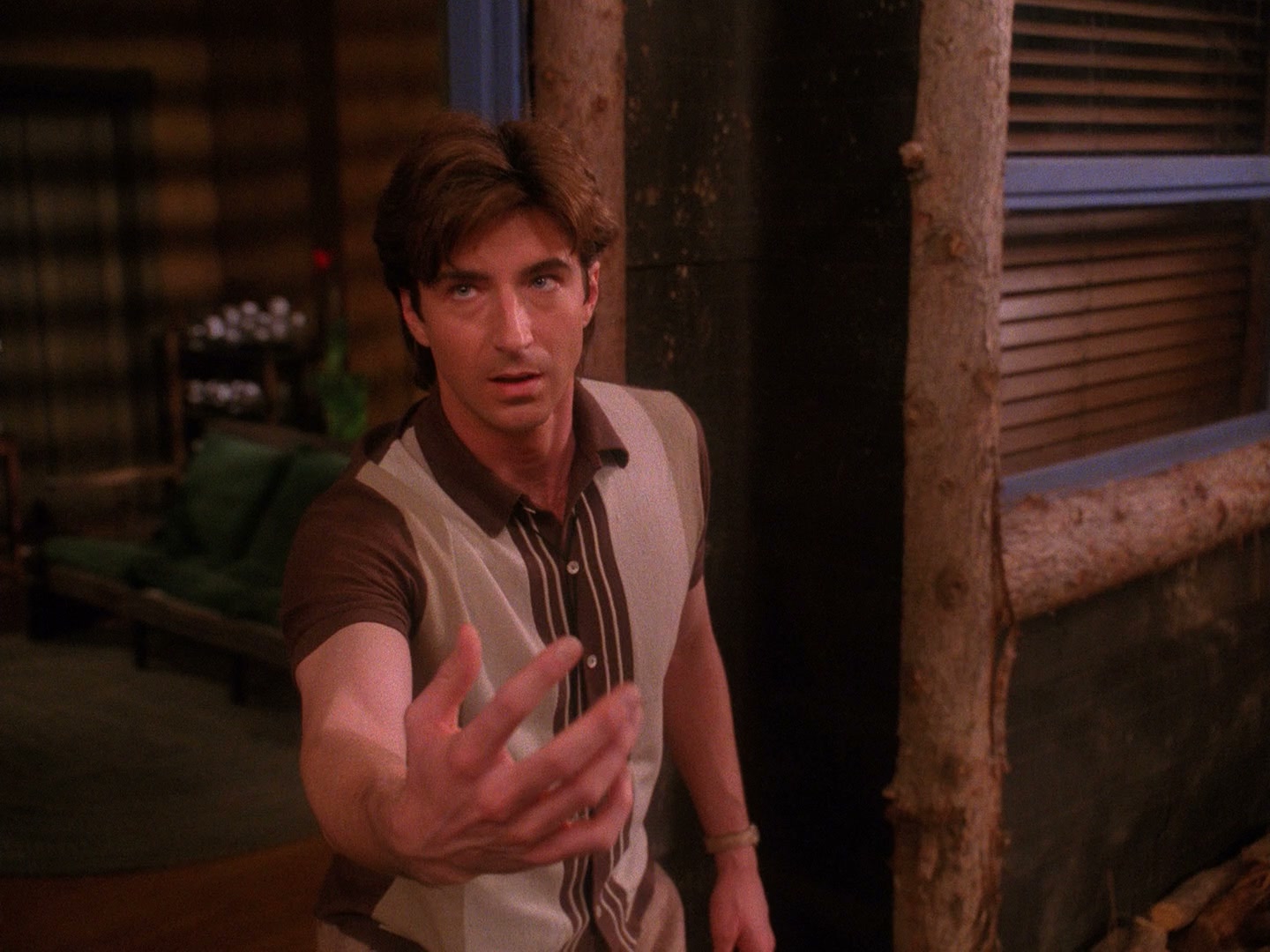
The second session changes the scale of the exchange. Donna tells Harold about an adolescent outing with Laura and older boys, the mixture of fear and rivalry around it, and a first kiss that remains vivid in memory. The camera stays with the teller rather than illustrating the account through a flashback. What matters is the present act of speaking, including the differences between what she remembers feeling and what she can now put into words.
The account makes Laura an active presence without restoring her as an available speaker. Donna’s memory describes their closeness, her own hesitation and her wish to be seen. It is a personal recollection delivered within a plan to distract Harold; that setting complicates its use without proving the story insincere.
Two plans for entering a private room
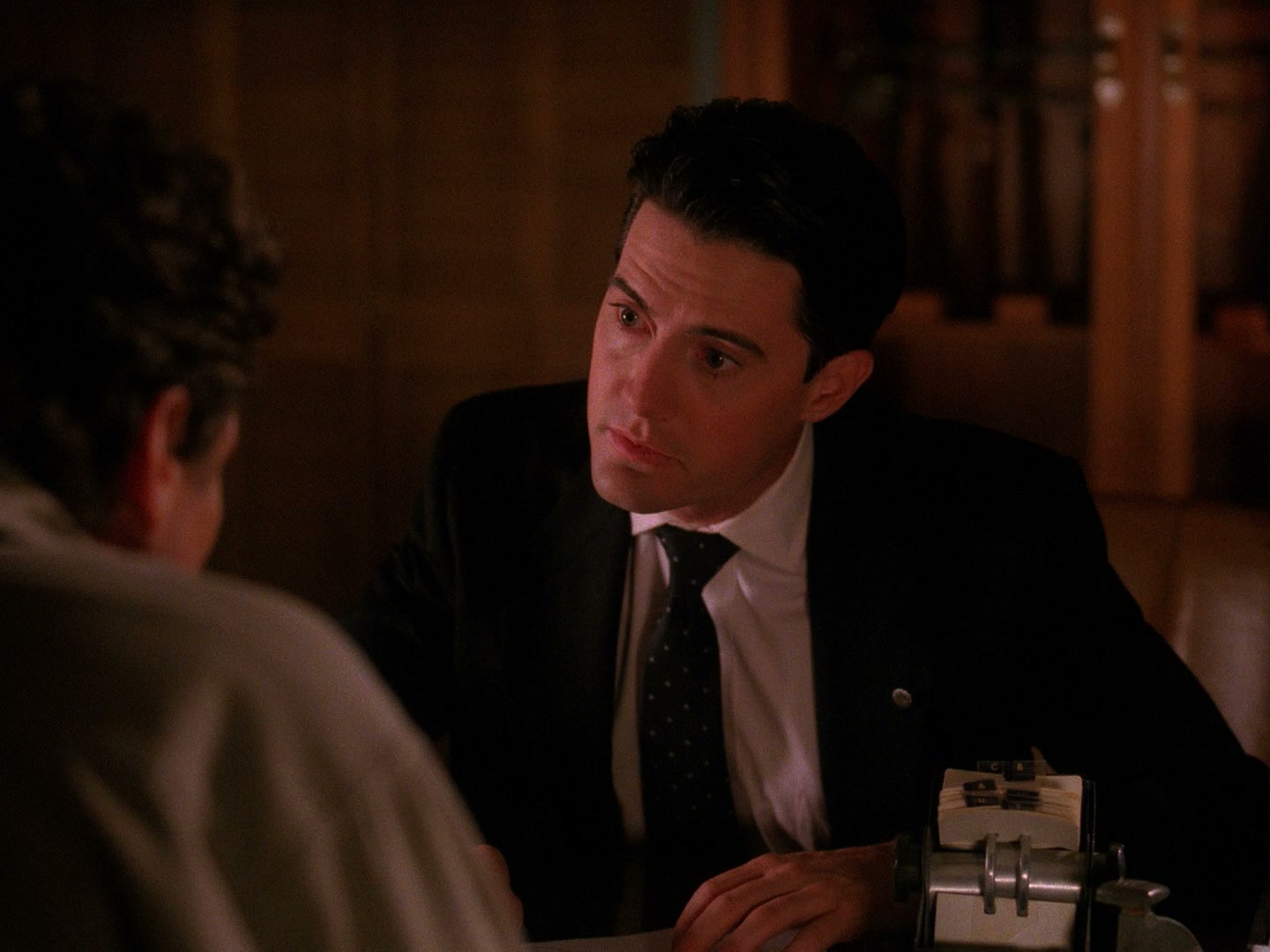
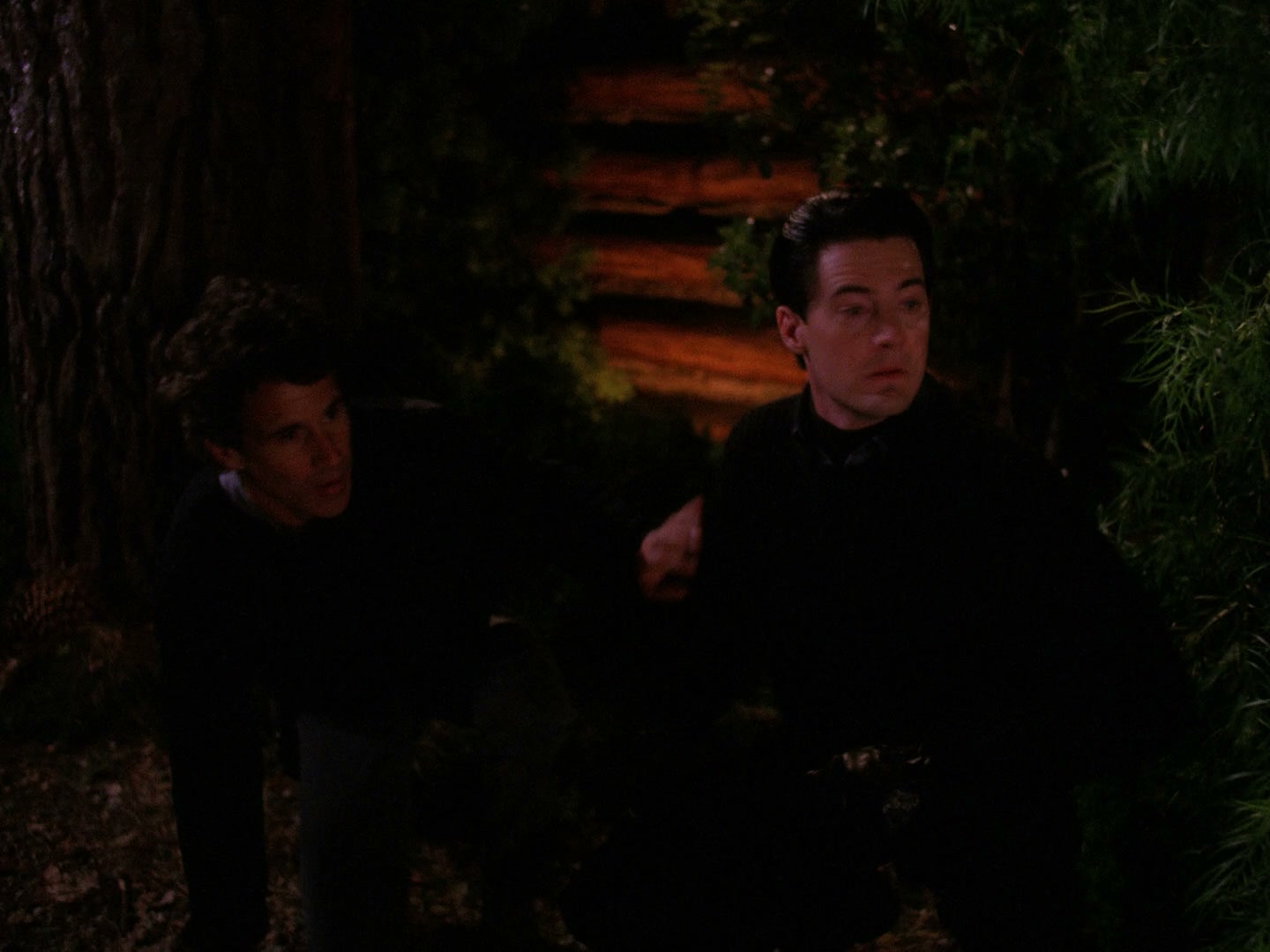
Donna and Maddy map the hidden shelf and arrange a signal. Cooper and Truman study another interior before approaching One Eyed Jack’s. The parallel preparation gives the episode a shared grammar of access: rooms are translated into routes, knowledge becomes a plan, and a person already inside supplies the information that makes entry possible.
The purposes are different. Cooper is trying to recover Audrey from captivity, while Donna wants an object held by somebody whose trust she has cultivated. Cutting between these actions places an apparent rescue and a compromised private investigation near one another without making them morally interchangeable.
Maps, concealment and entry · 4 images
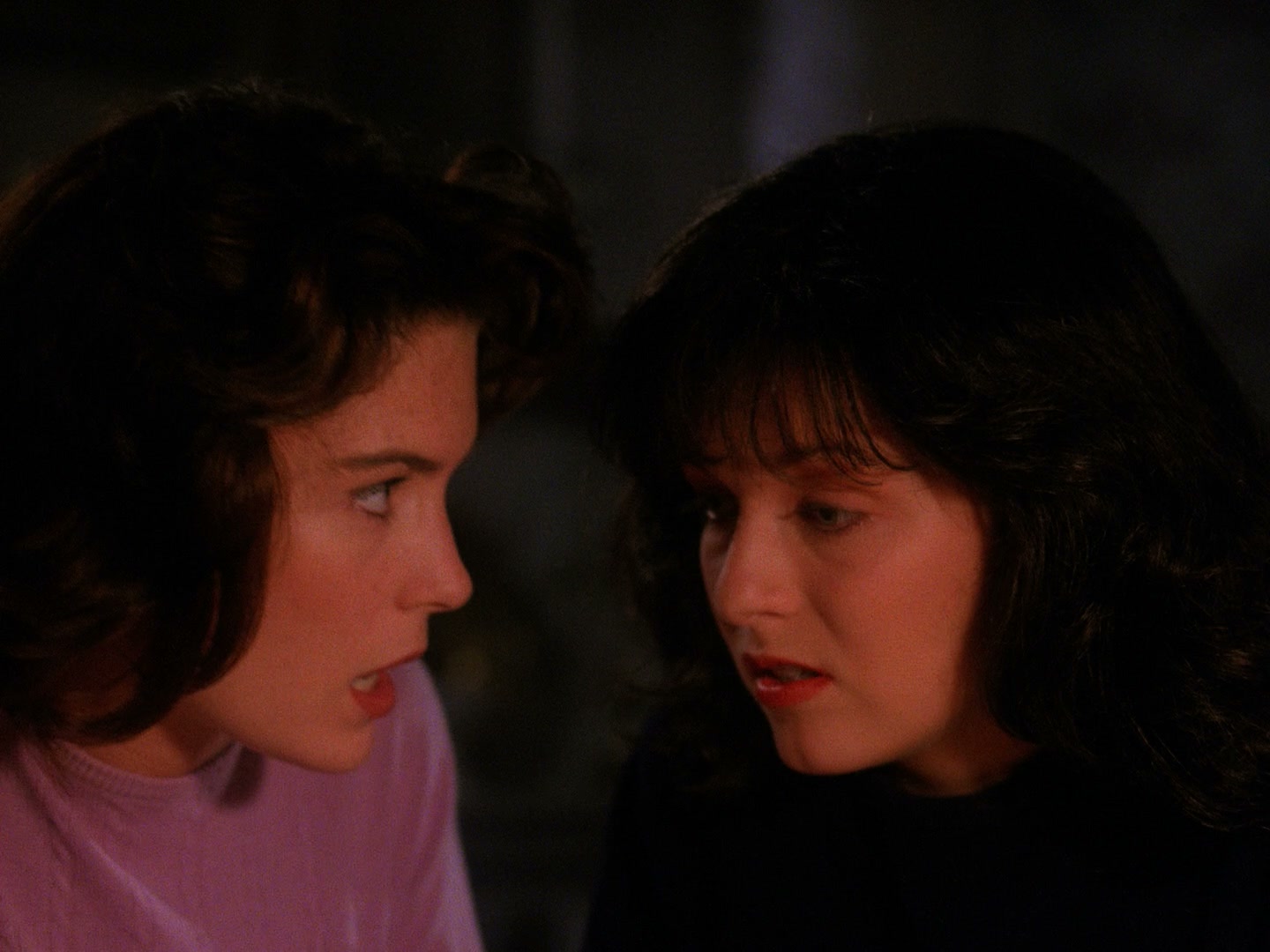
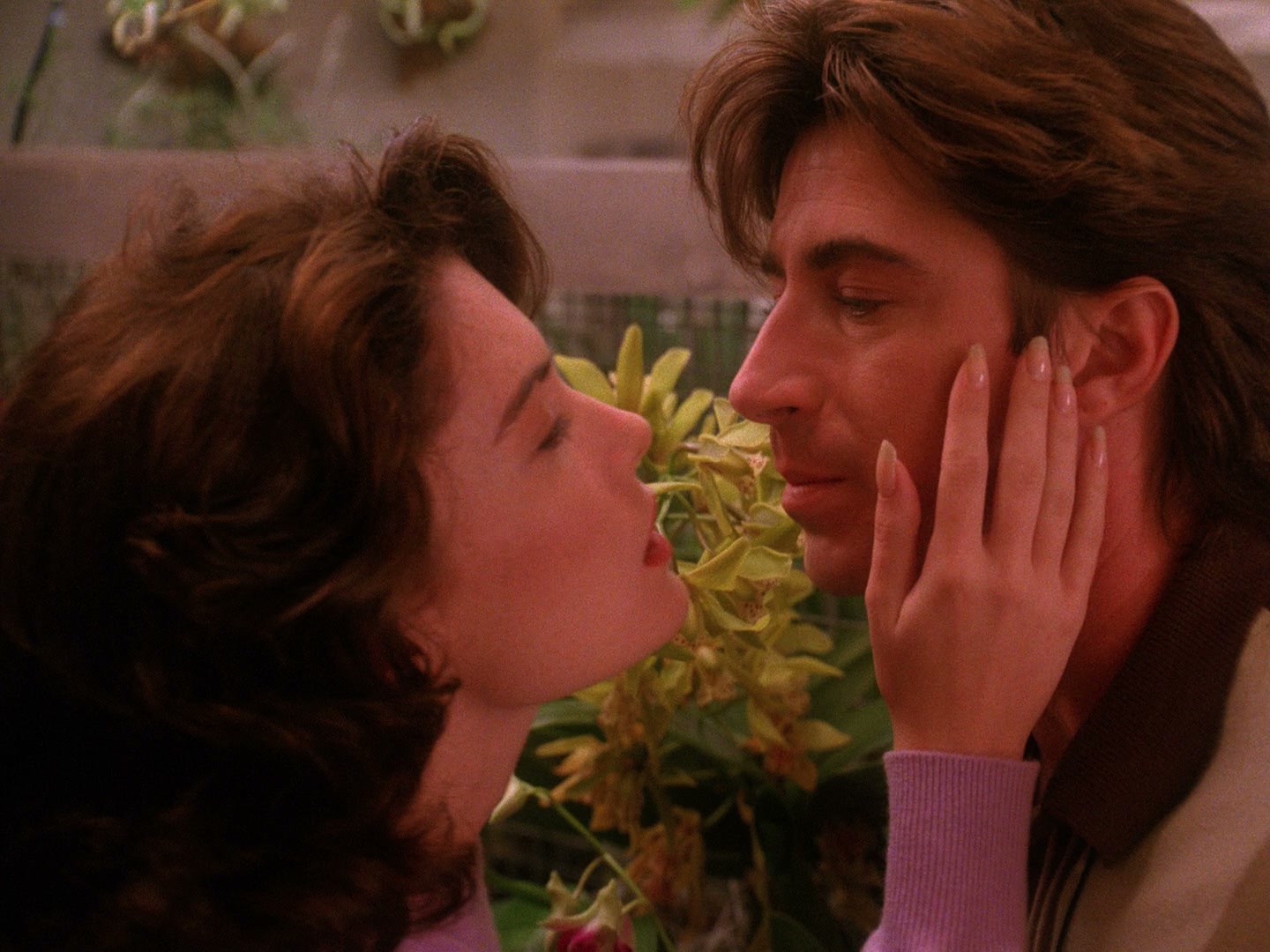
The orchid demonstration is especially revealing. Harold explains cultivation through controlled water, light and humidity, then identifies the flower’s structure. Donna participates in an intimate lesson while maintaining her plan. The room’s carefully managed conditions mirror Harold’s control over how stories and visitors can enter his life. Her touch temporarily appears to make that defended space safe.
At One Eyed Jack’s, Jean’s apparent intimacy with Blackie becomes a means of murder. The warm red room and the proximity of bodies cannot be read as evidence of affection. Elsewhere in the same establishment, Cooper’s attention to the weakened Audrey has a different aim: to get her out. The episode repeatedly asks how a gesture that looks tender can function within an unequal distribution of power.
Intimacy under different conditions · 3 images
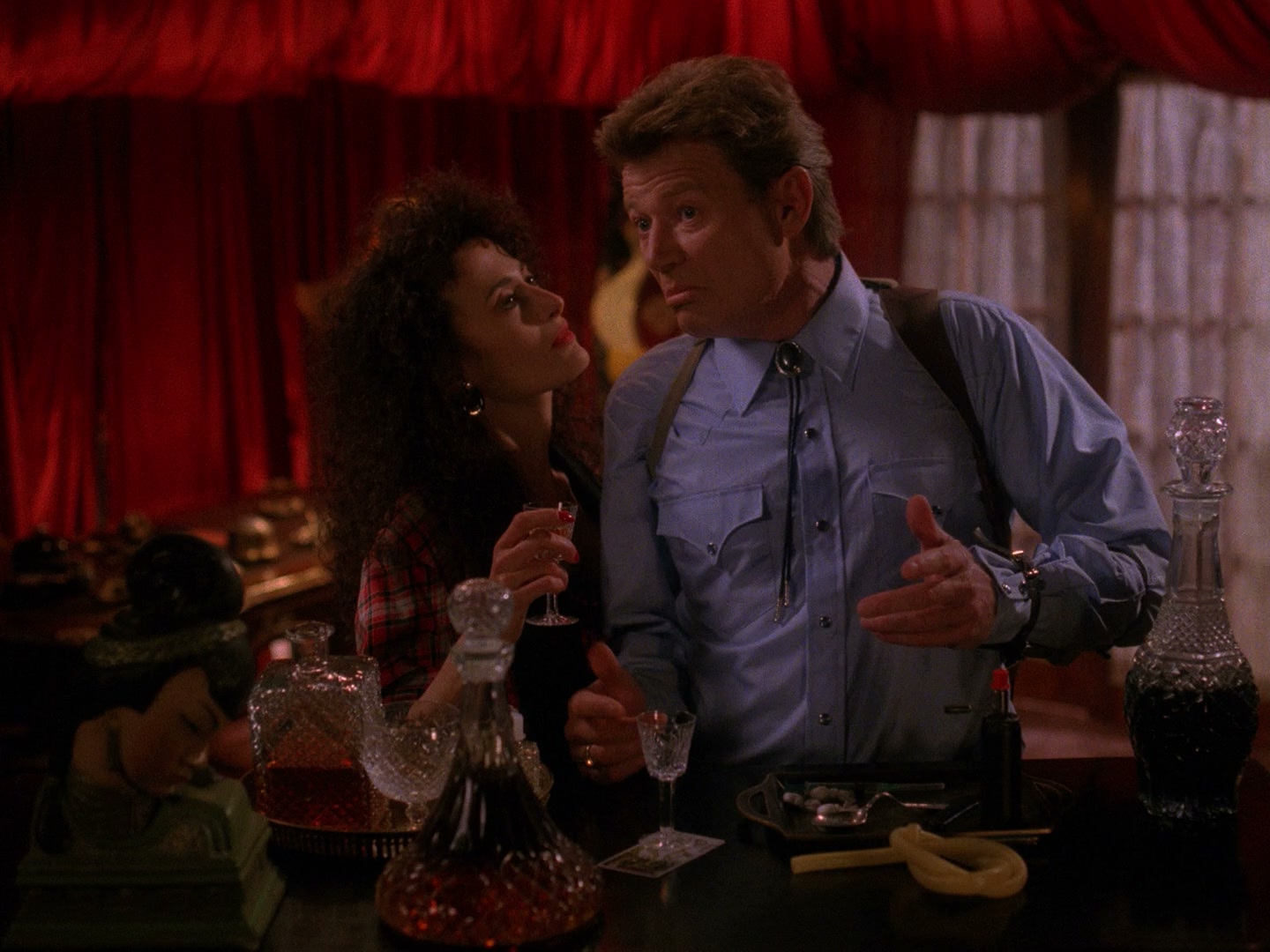
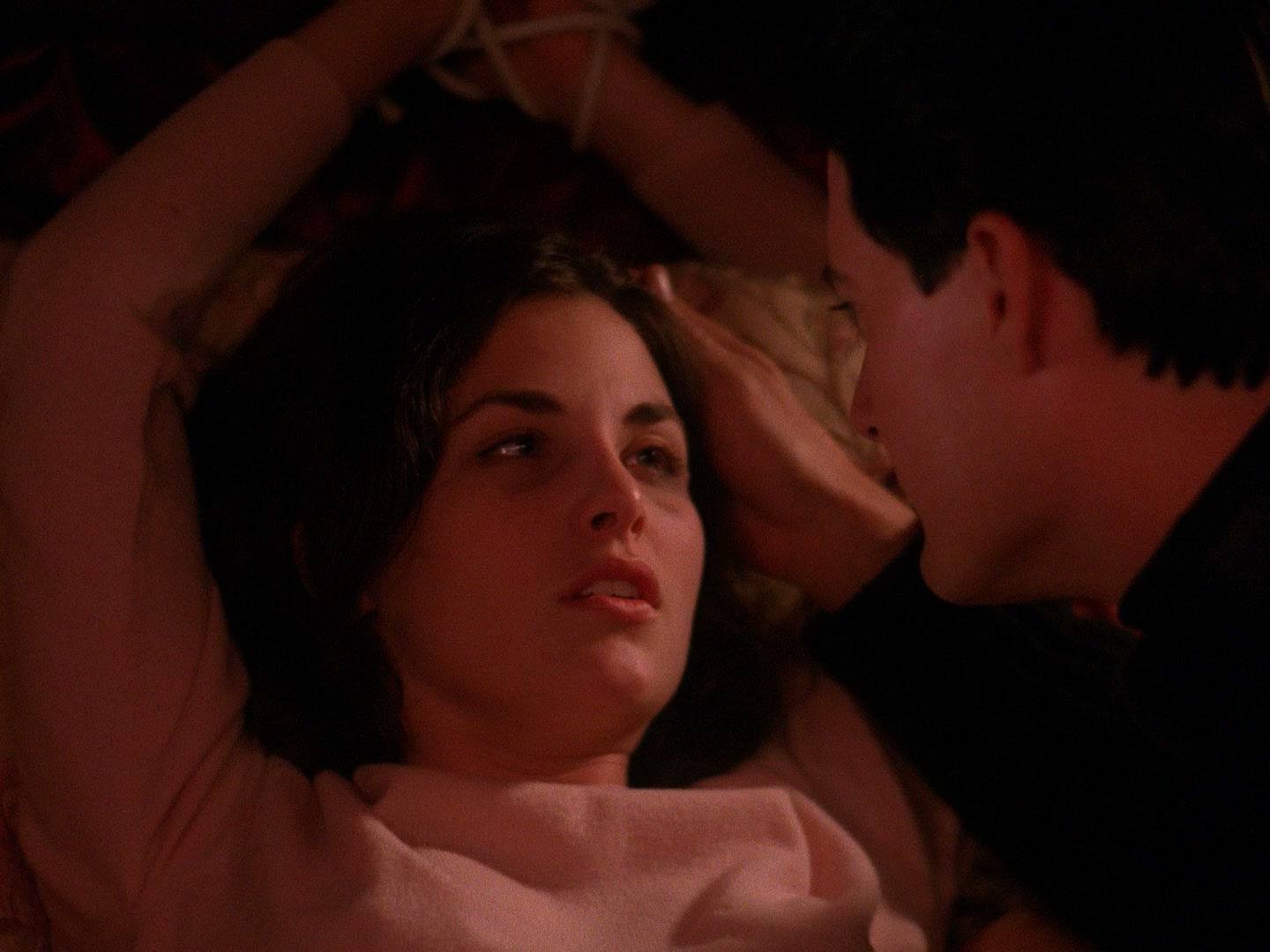
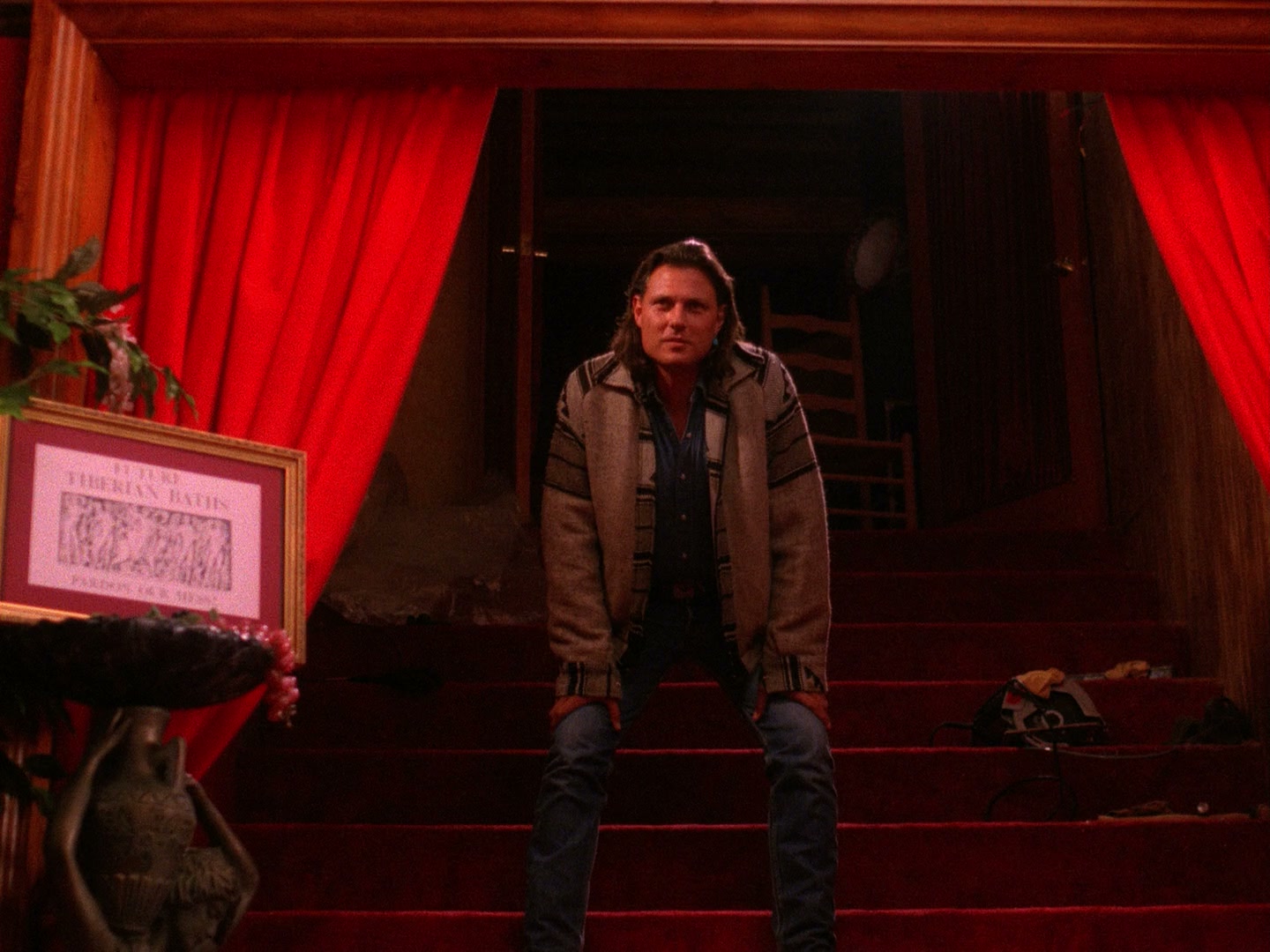
Hawk’s intervention prevents Cooper and Truman’s successful entry from becoming a failed exit. Their rescue is not the achievement of an isolated hero. A colleague who recognises more than they have explicitly told him supplies the decisive help.
The room becomes a confrontation
The successful recovery of Audrey does not provide the episode with a single reassuring conclusion. Harold discovers the intrusion into his own room. His questions about secrets turn the language of curiosity back upon Donna and Maddy. A garden tool, previously compatible with the cultivated interior, becomes the object around which the confrontation is organised.
Harold’s threat of ultimate knowledge and the injury he inflicts on himself make the cliffhanger both physical and relational. Donna and Maddy are frightened, but the scene has also shown the breach of trust that preceded the threat. The violence cannot be reduced to a useful clue or treated as a clinical explanation of Harold. It is the final, destabilising act in an episode concerned with what people do to obtain access.
The confrontation’s change in stakes · 2 images
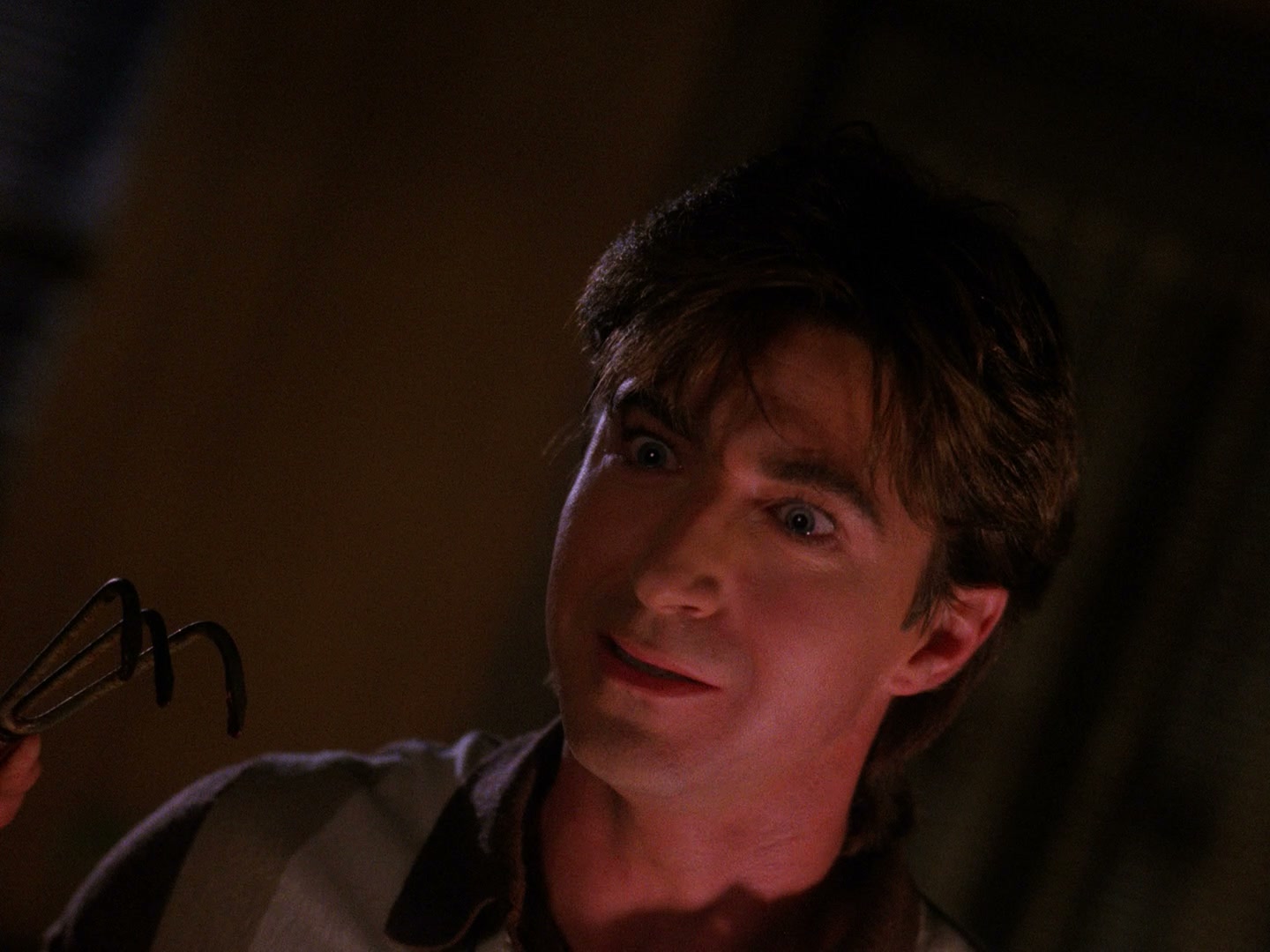
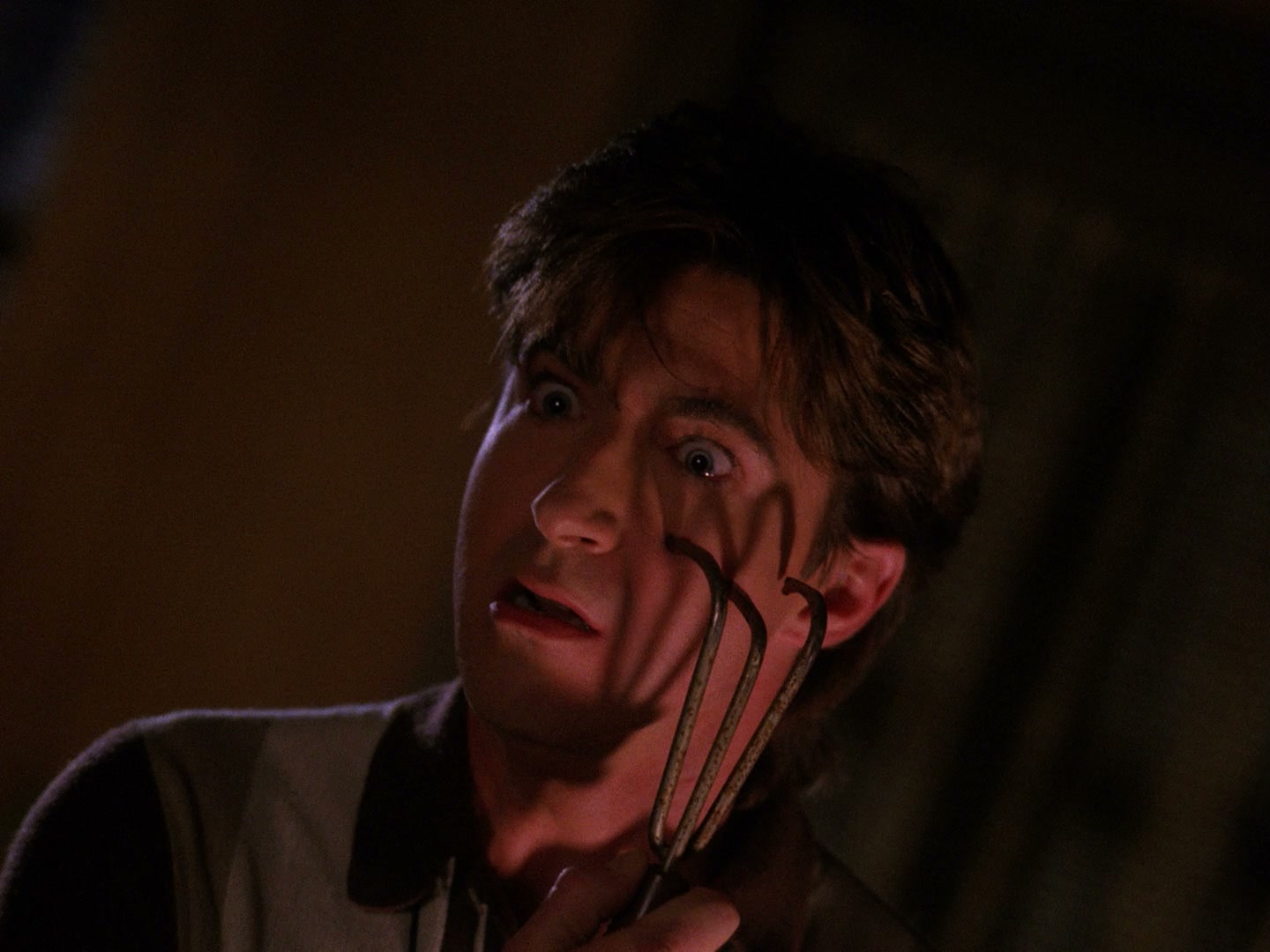
Read this ending beside Donna’s first visit to Harold. The earlier protected room and the later invaded room are the same space, altered by the relationships conducted within it.
Voices that explain, bargain and conceal
Cooper’s address to Diane structures the opening as an account made for an absent listener. Harold’s notebook reverses that arrangement: a listener is physically present and converts another person’s speech into writing. Both scenes turn experience into a record, but the balance of control is different. Cooper chooses his own account; Donna’s account is part of an exchange supervised by Harold.
The hearings gather several public registers of speech: medical demonstration, legal objection, civic reputation and the judge’s informal questions. Their conflict is more precise than a general opposition between reason and emotion. Each speaker proposes a different relationship between evidence, responsibility and the town’s need to feel that something has been done.
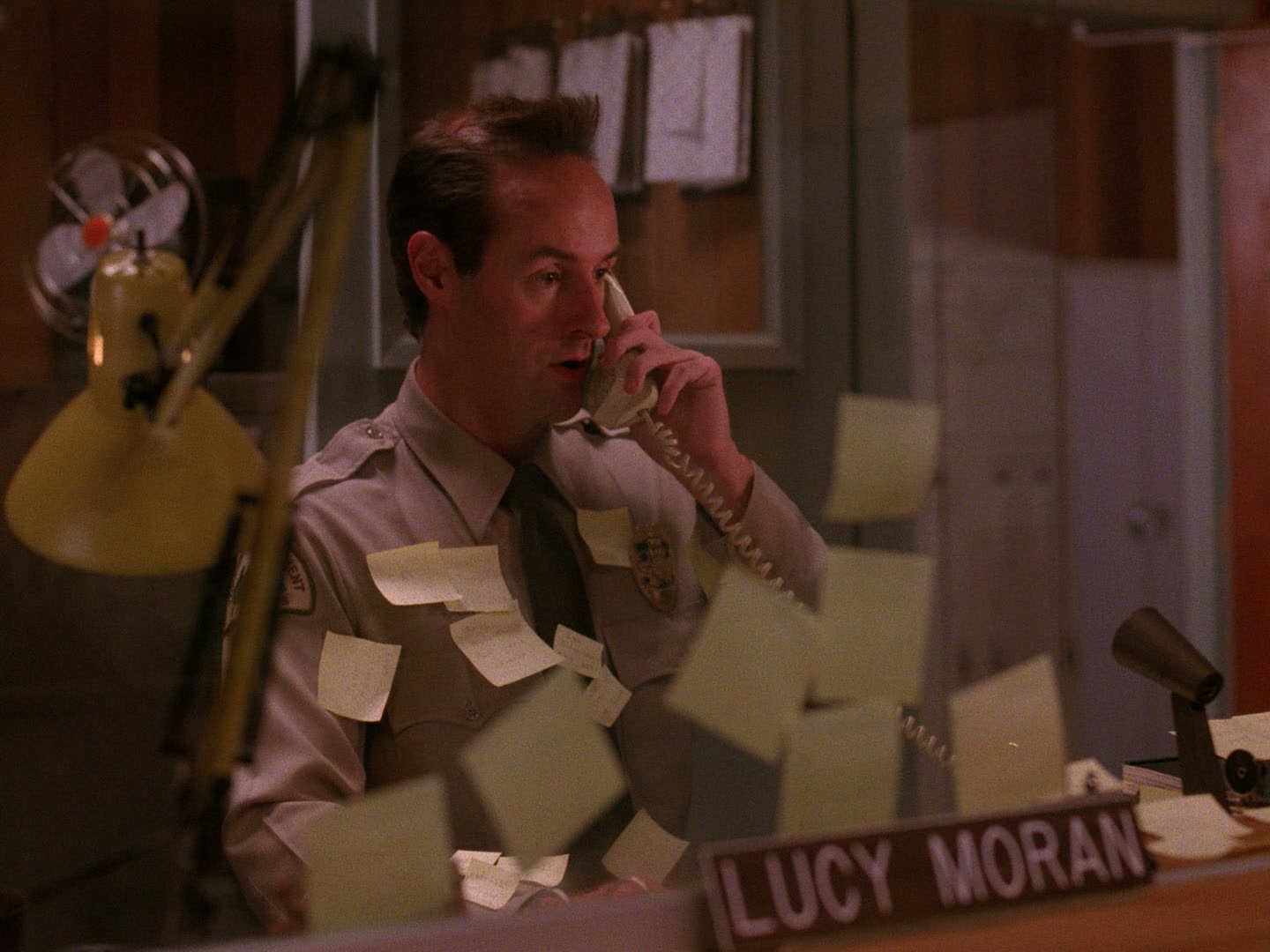
Telephone voices complicate certainty elsewhere. Andy has to ask the laboratory to slow down so he can write down an unfamiliar term. His discovery that an earlier condition has changed is translated into an exuberant metaphor about a whole town; another telephone call abruptly reverses his confidence. The sequence makes comprehension a process, with pauses, repetitions and a new misunderstanding rather than one clean delivery of information.
Jean’s ransom instructions turn an abandoned amusement park into a verbal map. Ben then gives Hank another set of instructions, concealed from Cooper. Words can therefore guide, misdirect or divide a group’s knowledge before anybody reaches the threatened place. These exchanges should be read alongside the two drawn plans rather than treated as mere exposition.
A divided self at the threshold
The separately filmed Log Lady introduction considers the difficult relationship between a person and the self that person must live with. Its two-headed image is a useful accompaniment to the episode’s divided intentions: Donna both likes Harold and plans to deceive him, while Ben speaks as a concerned father and arranges a separate outcome for Cooper.
This is a later frame for the episode, not dialogue from the original broadcast drama. It invites a way of looking without resolving the characters into a single hidden meaning. The preserved recap and preview provide different frames again: they select what the viewer should remember or anticipate, while the episode itself spends time on digressions, hesitation and conflicting motives.
A route through The Orchid’s Curse
- A change of view. Cooper’s morning routine retrieves Audrey’s note.
- Justice and care. The Roadhouse hearings place Leland’s bail and Leo’s return home beside one another.
- A bargain for access. Donna offers Harold a life story in exchange for the diary.
- People and amounts. The patient lift, investment offer and ransom expose competing uses of money.
- Two plans. Donna and Maddy prepare a theft; Cooper and Truman prepare a rescue.
- Cultivation and coercion. An orchid lesson runs beside the dangers of One Eyed Jack’s.
- Unequal endings. Audrey leaves captivity as Harold discovers the betrayal in his room.
Sources and connections
Episode: Twin Peaks, “The Orchid’s Curse,” Season 2, Episode 5 / overall Episode 12, presented in Twin Peaks: From Z to A. Written by Barry Pullman; directed by Graeme Clifford. Both credits were checked on screen. The closing credits identify Jonathan P. Shaw as editor. The episode supplies the images, actions and spoken exchanges discussed here.
Companion material: the Log Lady introduction for Episode 12, the episode recap and the next-episode preview, preserved in Twin Peaks: From Z to A. The introduction is distinguished from the broadcast narrative. Dialogue references were checked against the English subtitle track; this study paraphrases the exchanges rather than reproducing a transcript.
Further connections: the season’s enlarged ensemble, Laura’s care and the Horne family, and Harold’s first encounter with Donna.