Twin Peaks: Episode 11 — Laura’s Secret Diary
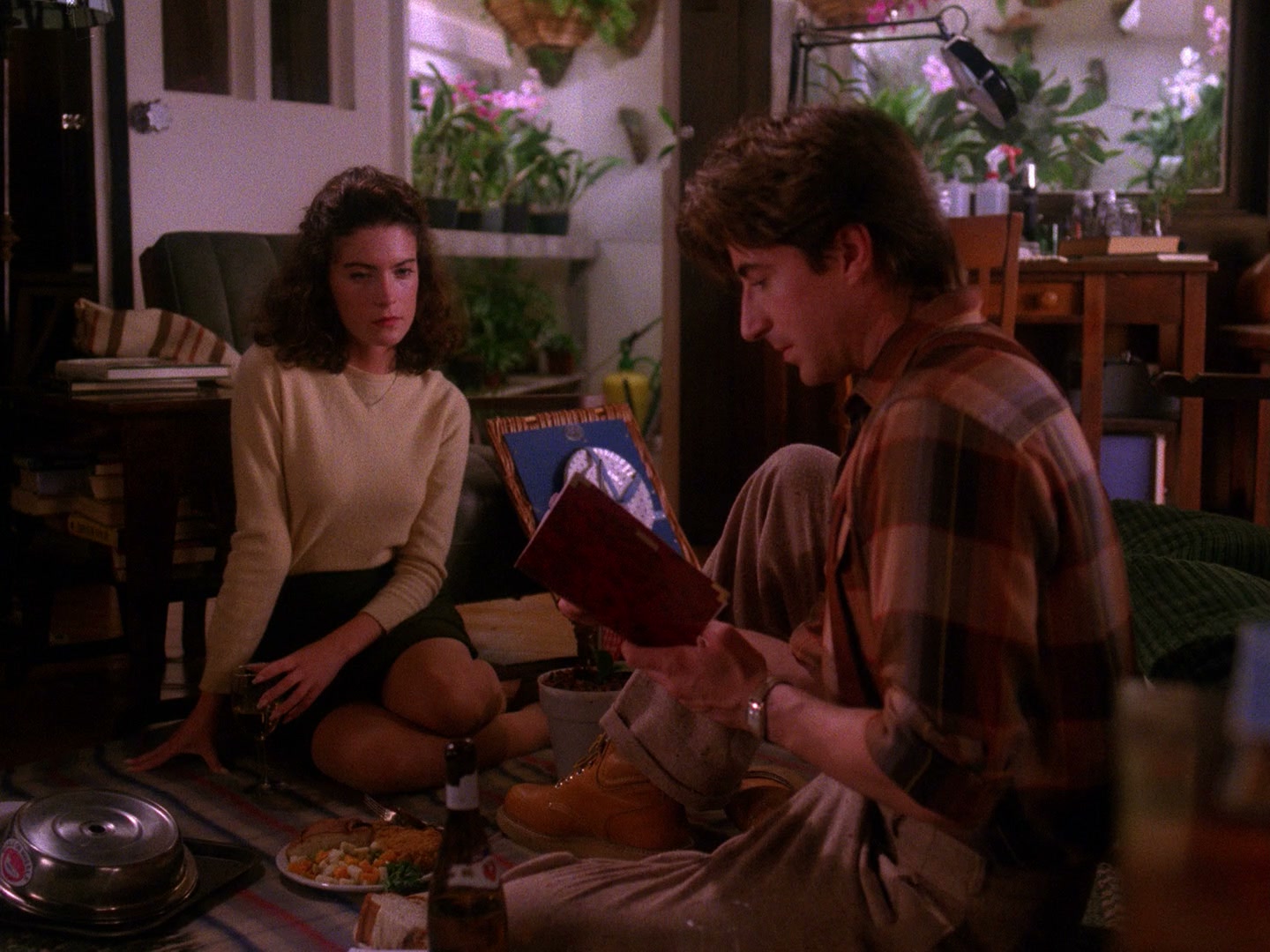
1990 · Season 2, Episode 4 · Todd Holland
A confession, a private diary and a ransom recording. Follow the changing claims people make on one another’s stories.
Season 2, Episode 4 / overall Episode 11. Contains episode spoilers.
Explore this episode
A confession without an explanation
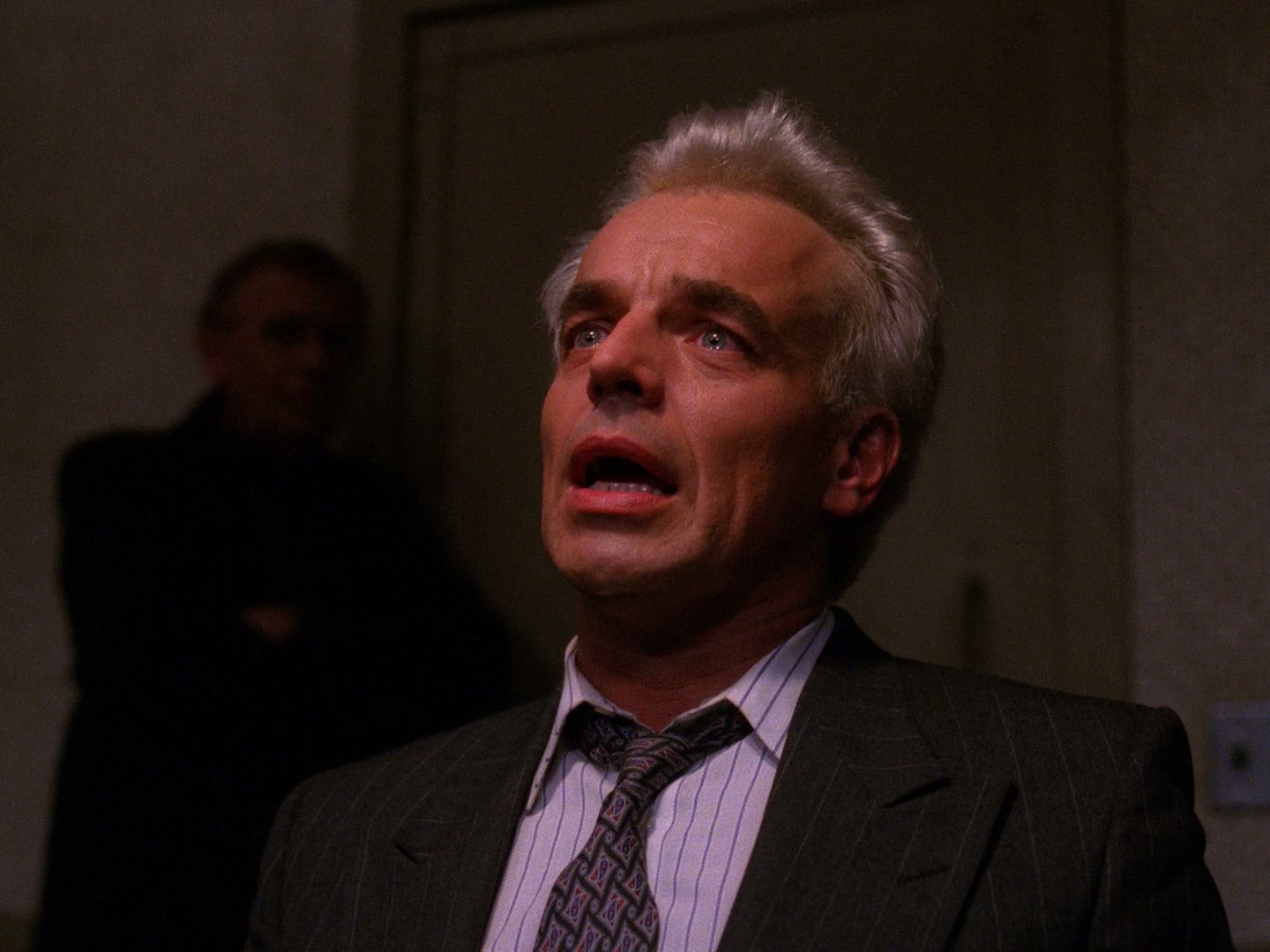
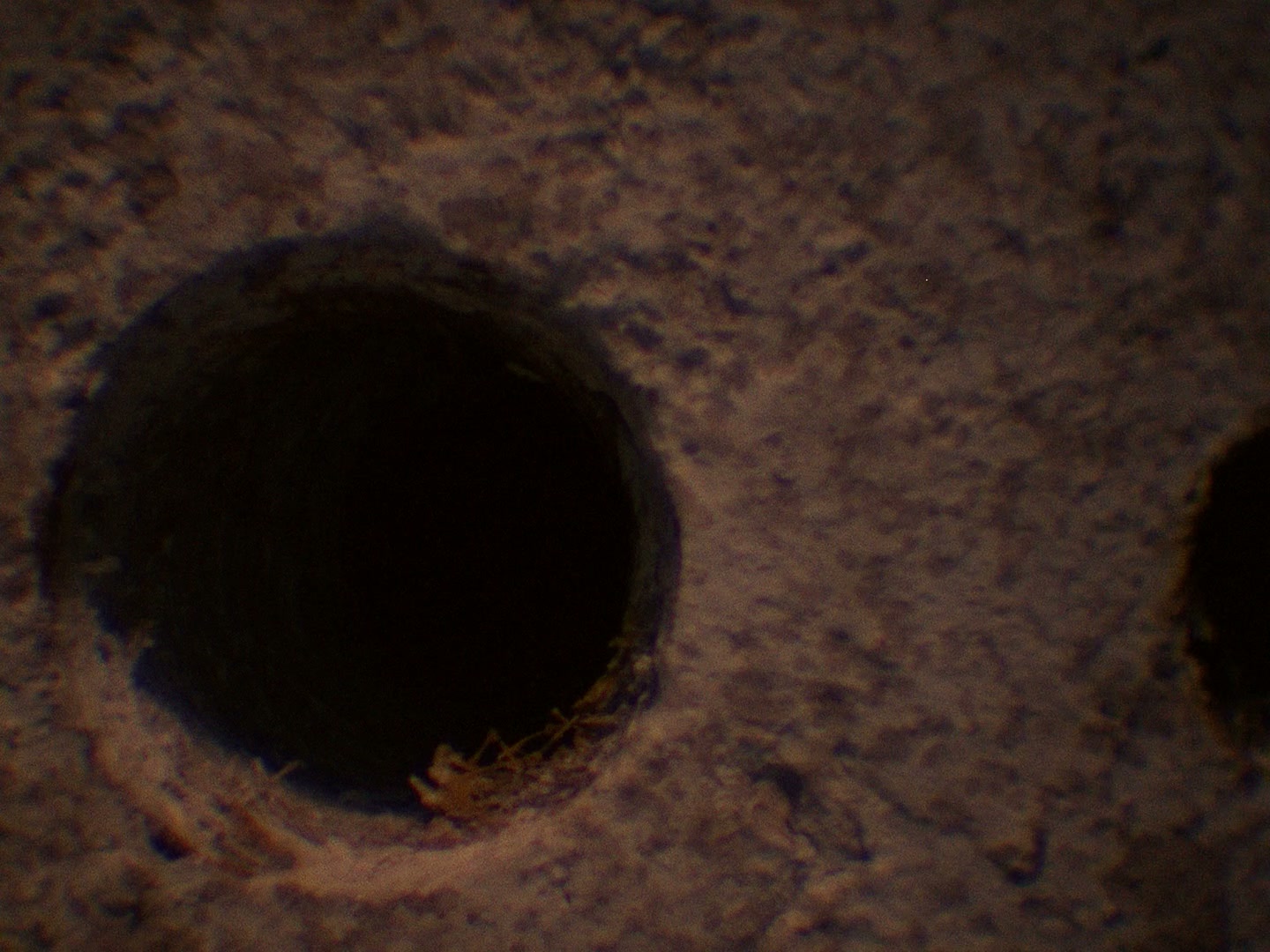
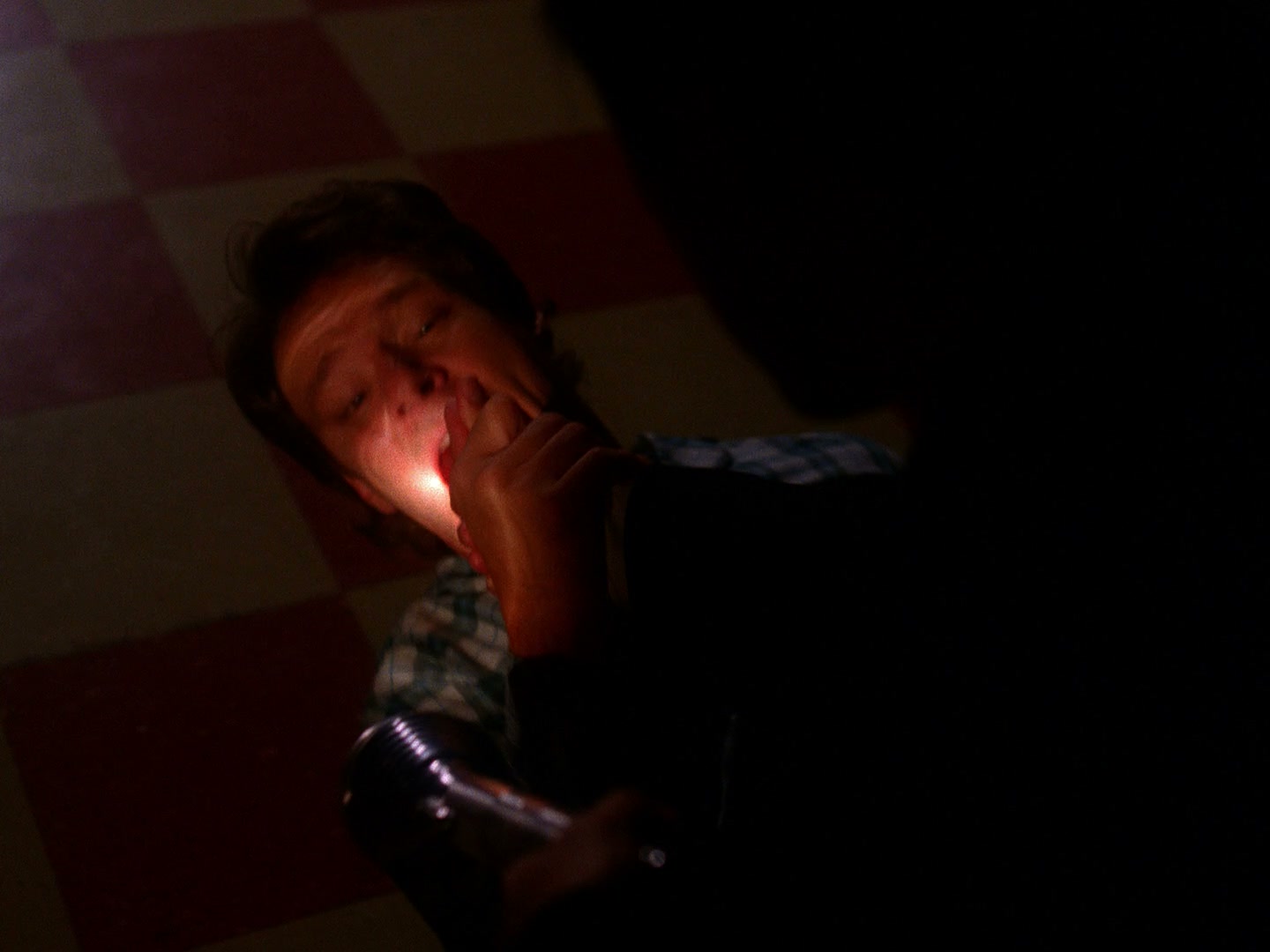
The episode begins inside a dark circular opening. As the view widens, a field of holes becomes recognisable as the acoustic ceiling above Leland. The image delays orientation before the interrogation supplies a person, a room and a set of questions. The English subtitle track identifies a woman’s scream, machine beeps and a girl calling for her father before Truman repeatedly calls Leland’s name. The opening places a disturbed interior experience beside the effort to establish an orderly account.
Truman asks about the hospital visit and Jacques Renault. Leland explains his certainty by referring back to the police: they had arrested Jacques. That reply exposes the danger of treating an arrest as proof. The investigation’s action has become the premise for another crime.
Leland’s description of loss is intensely bodily. Grief occupies every cell and makes other experience inaccessible. His eventual admission confirms that he killed Jacques, but it cannot turn that account of suffering into a complete explanation of Laura’s death. The camera gives his anguish room while keeping Cooper behind him as an observing presence. Sympathy and scrutiny occupy the same image.
From an obscure surface to a named act · 2 images
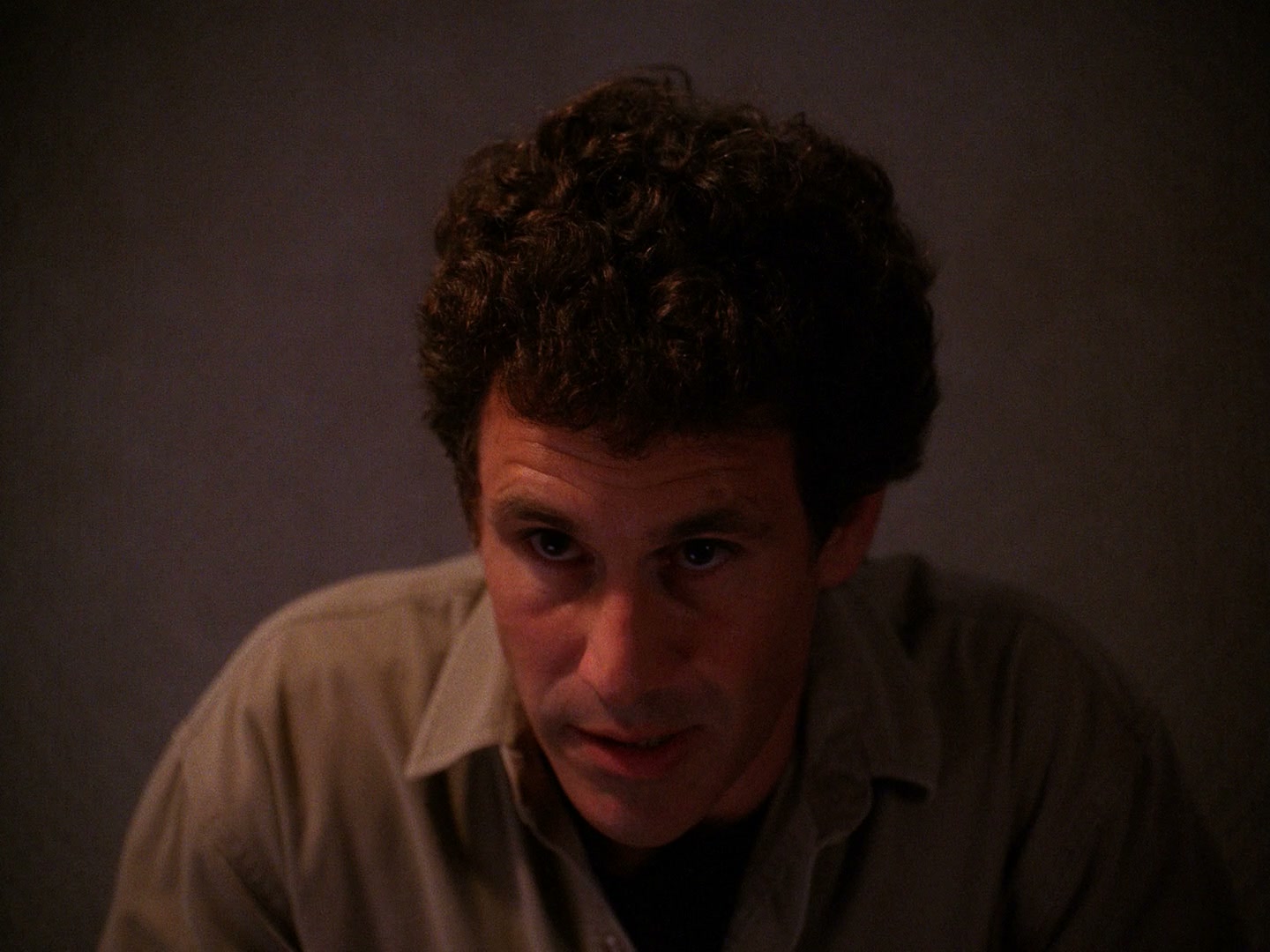
Outside the room, Dr. Hayward speaks as someone who knows the family. Cooper answers with a blunt question about murder. Their disagreement prepares the later hearing: being able to recognise a person’s pain is not the same as deciding what that pain authorises. The scene leaves both obligations in view.
Todd Holland: the room becomes a mind
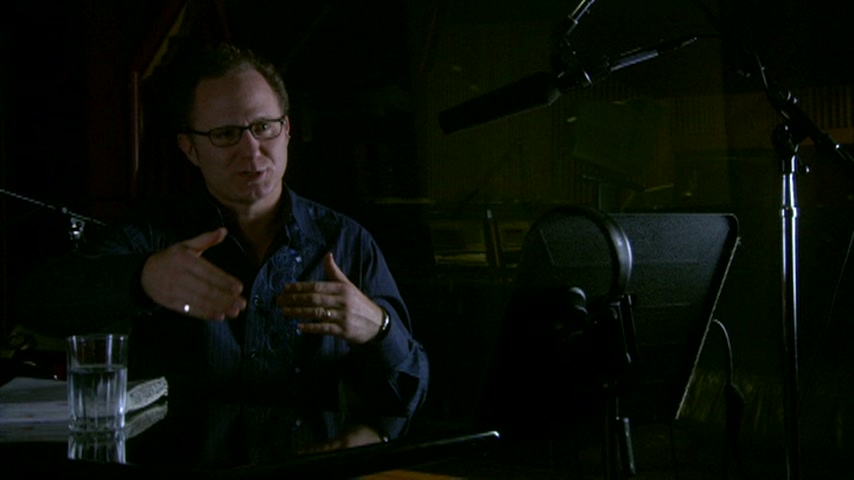
Holland remembers finding the opening by sitting in Leland’s chair on the set. The script began close to Leland, but the acoustic tile facing the actor suggested a different entrance: a twisting, abstract journey that could emerge into the interrogation room. His account connects the sequence’s disorientation to a physical discovery in the filming space, rather than to an effect imposed on an otherwise completed scene.
He says Mark Frost supported the additional expense. Holland also recalls removing a few words from the sound treatment because they approached the Laura Palmer revelation too closely. He does not specify those words. The recollection makes the opening’s sound part of the management of knowledge: the sequence could enter Leland’s troubled experience without prematurely explaining it.
Interview source: Todd Holland, 01:15–03:06; Twin Peaks: From Z to A. Retrospective testimony, identified separately from the finished episode.
Laura’s words, Harold’s voice
Lunch with Harold initially offers Donna a protected space. He proposes a toast to Laura, then produces the second diary and reads a passage about Donna herself. The meeting changes from shared remembrance to an encounter with something Laura could not say directly to her friend.
Harold supplies the voice, pace and selection of the reading. Donna must listen to a description of her own limits as a confidante while the person who wrote it remains absent. Laura’s fear that Donna might reject her is not a simple accusation of cruelty; it records the difficulty of finding words for desires, nightmares and shame within a friendship that also mattered to her.
Donna tries to move the diary into the investigation by calling it evidence. Harold answers through his own reading and the fact that Laura entrusted it to him. They are arguing over two different kinds of obligation: responsibility to a dead friend’s confidence and responsibility to a still-unsolved crime. His claim that the diary contains no solutions is a character’s judgement, not a conclusion the viewer has to accept.
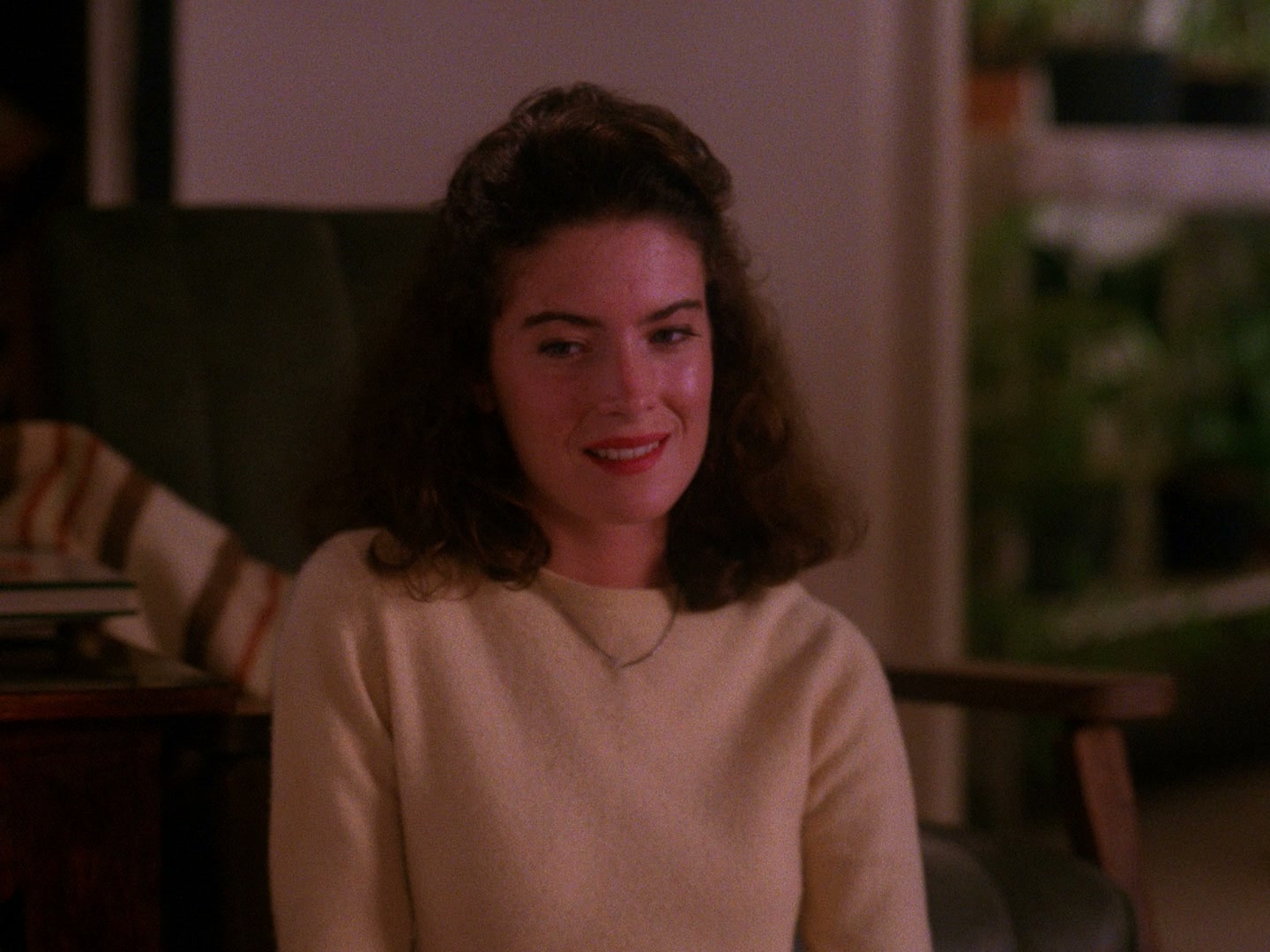
Harold describes gathering visitors’ stories into a larger living novel. The phrase makes him a collector and arranger, not merely a passive recipient of confidences. His invitation that Donna might contribute a story gives intimacy an implied structure: visitors bring the outside world to a room he controls.
Later, Donna approaches Maddy with a decision already forming. Their unresolved friction over James enters the conversation before the diary. Donna’s determination to recover it is therefore both investigative and personal. The next episode’s bargain develops directly from this dispute over who may read, keep and interpret Laura’s words.
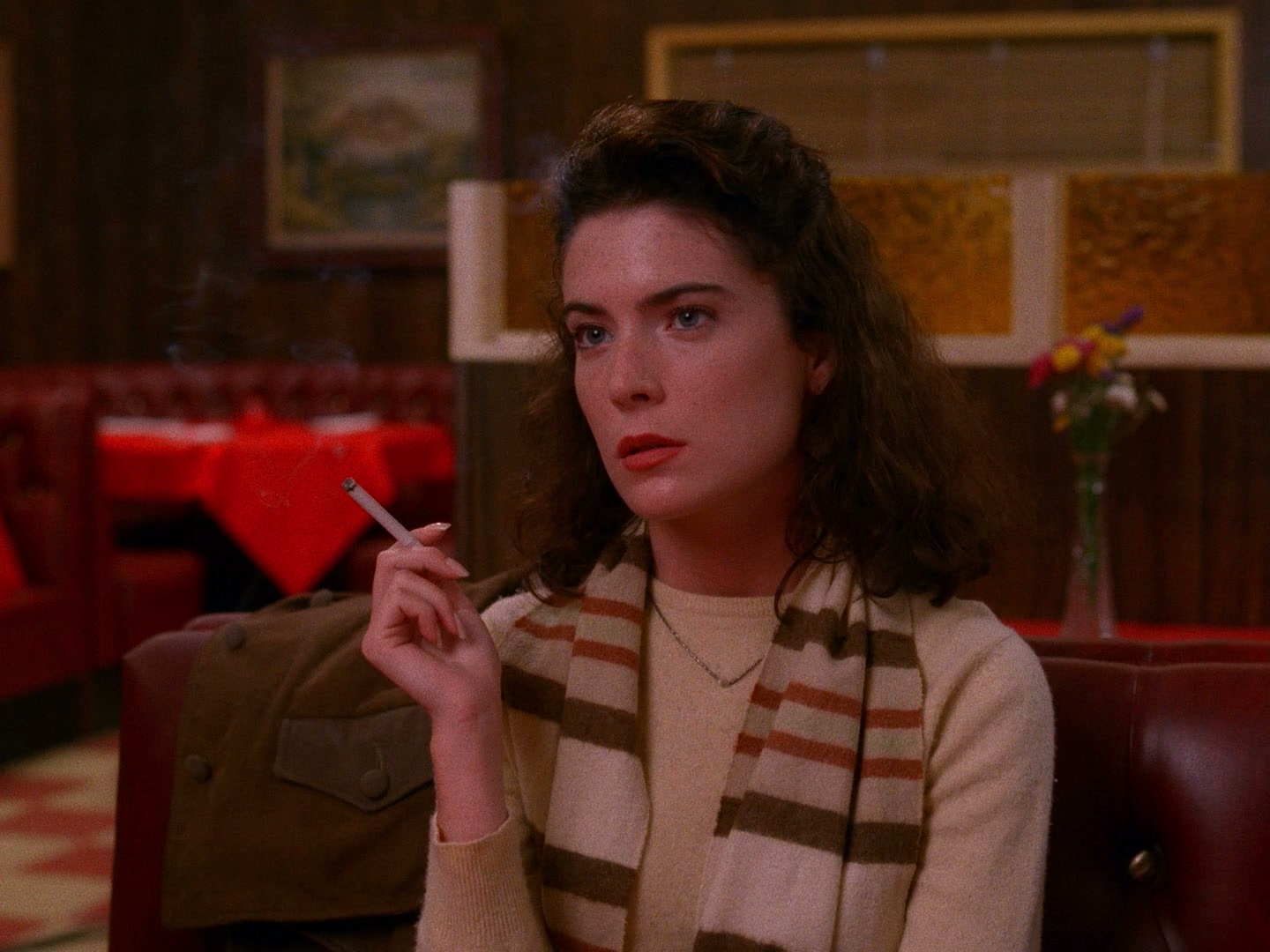
Jennifer Lynch: giving Laura an interior voice
Jennifer Lynch recalls a private meeting with David Lynch and Mark Frost at which she learned the killer’s identity and received a list of people to include in The Secret Diary of Laura Palmer. Within those requirements, she describes considerable freedom to construct Laura’s experience. Her account helps distinguish the published companion book from a simple transcript of material already spoken on television.
She reads Laura’s Meals on Wheels work as an effort to do good while carrying an inner burden, and describes Mrs. Tremond as a figure through whom Laura could imagine forgiveness and a longer life. This is the diary author’s interpretation of Laura, not a definitive explanation supplied by the episode. It belongs beside Harold’s handling of Laura’s words because each gives the absent girl a voice through another person’s mediation.
Interview source: Jennifer Lynch, 00:09–02:58; Twin Peaks: From Z to A. Retrospective testimony, identified separately from the finished episode.
The recording and the promise
Audrey as image, hostage and bargaining point · 3 images
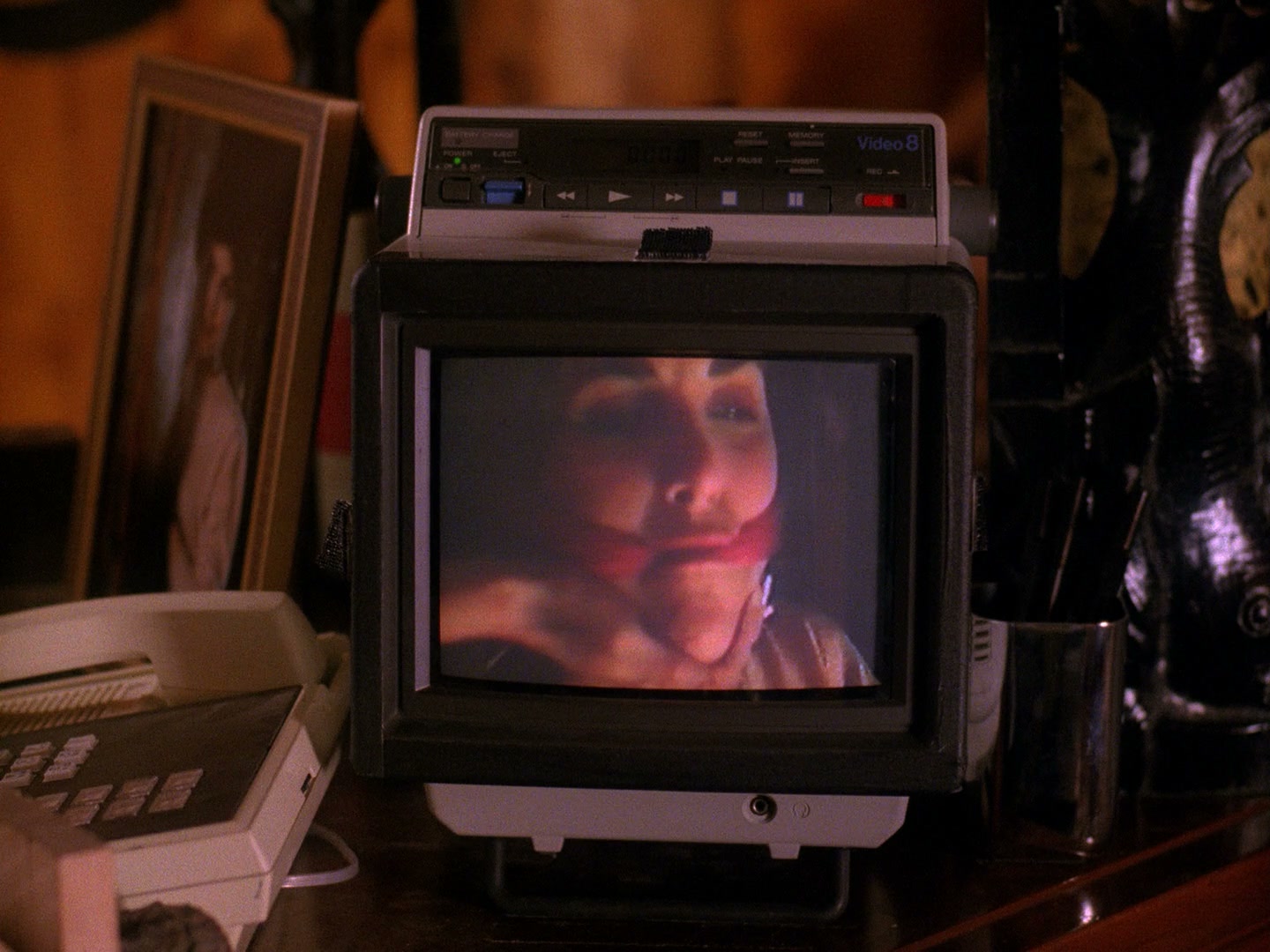
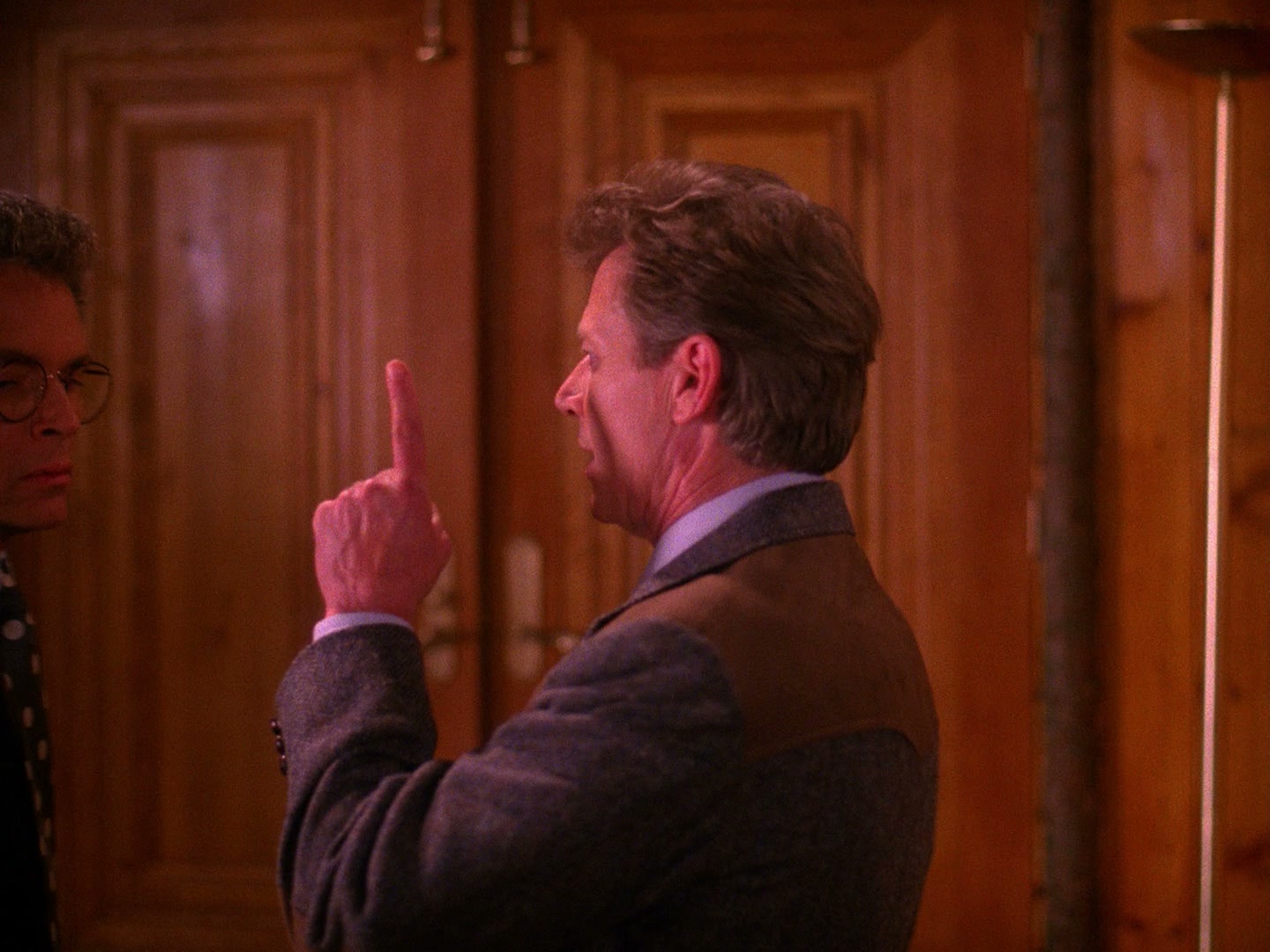
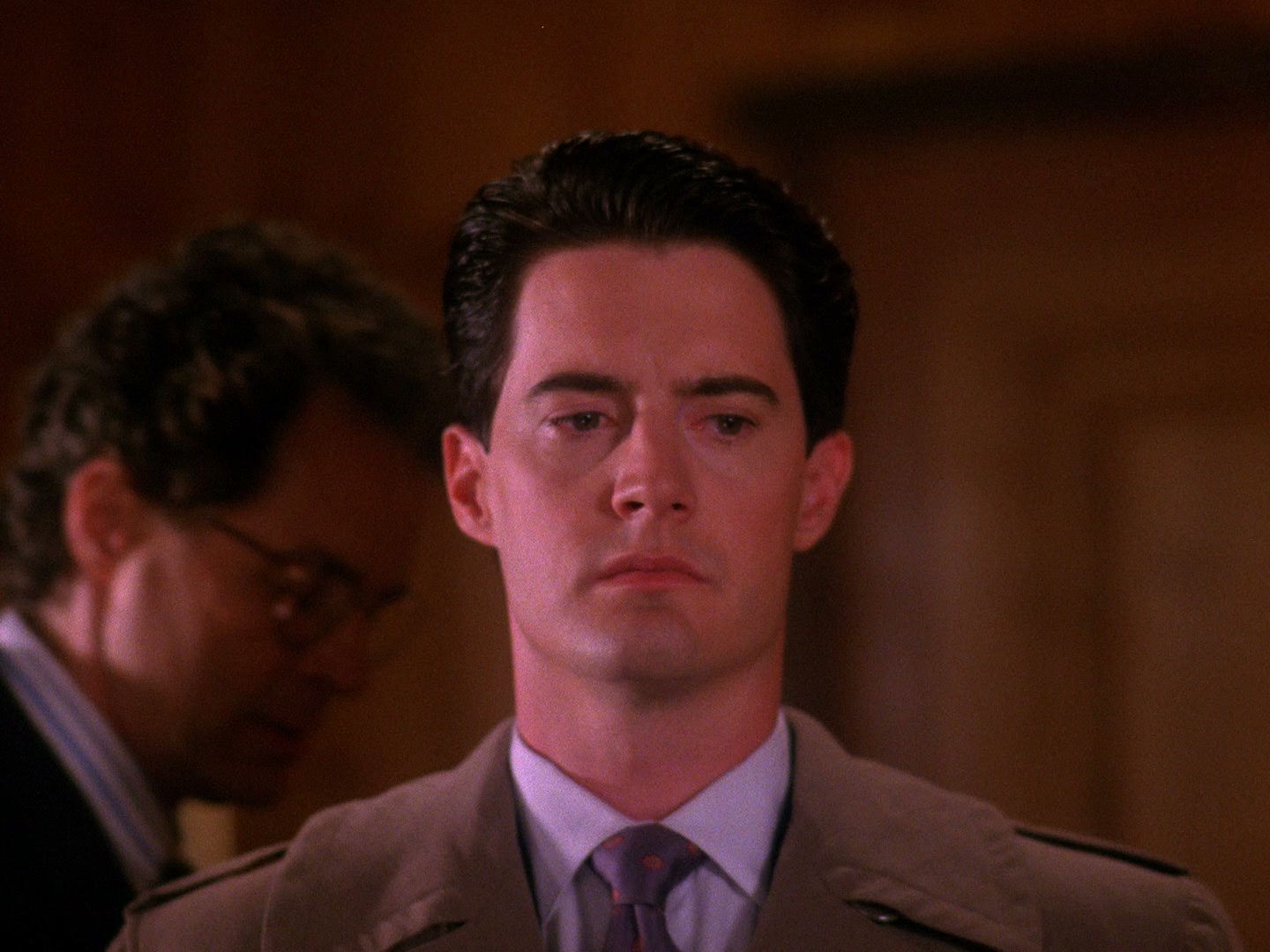
Jean’s visit to Ben turns a captive daughter into recorded evidence and a set of demands. He calls himself a messenger while seeking a stake in the business and insisting that Cooper deliver the money. The negotiation exposes the distance between the language of an equitable exchange and the coercion that makes the exchange possible.
Ben’s subsequent appeal to Cooper selects a different part of the story. He invokes Audrey’s special connection with the agent and argues against ordinary police involvement. The same recording can function as a threat to a father and as a means of recruiting a rescuer. The monitor keeps Audrey present in the office while denying her any control over how the men use her image.
At One Eyed Jack’s, Jean adopts the manner of a protector. He asks whether Audrey has been mistreated and promises safety, then kills the man she has identified as her assailant. His rhetoric about reasonable people is interrupted by the violence that supports his authority. The offer of protection is inseparable from a demonstration of what he can do.
Reassurance inside captivity · 2 images
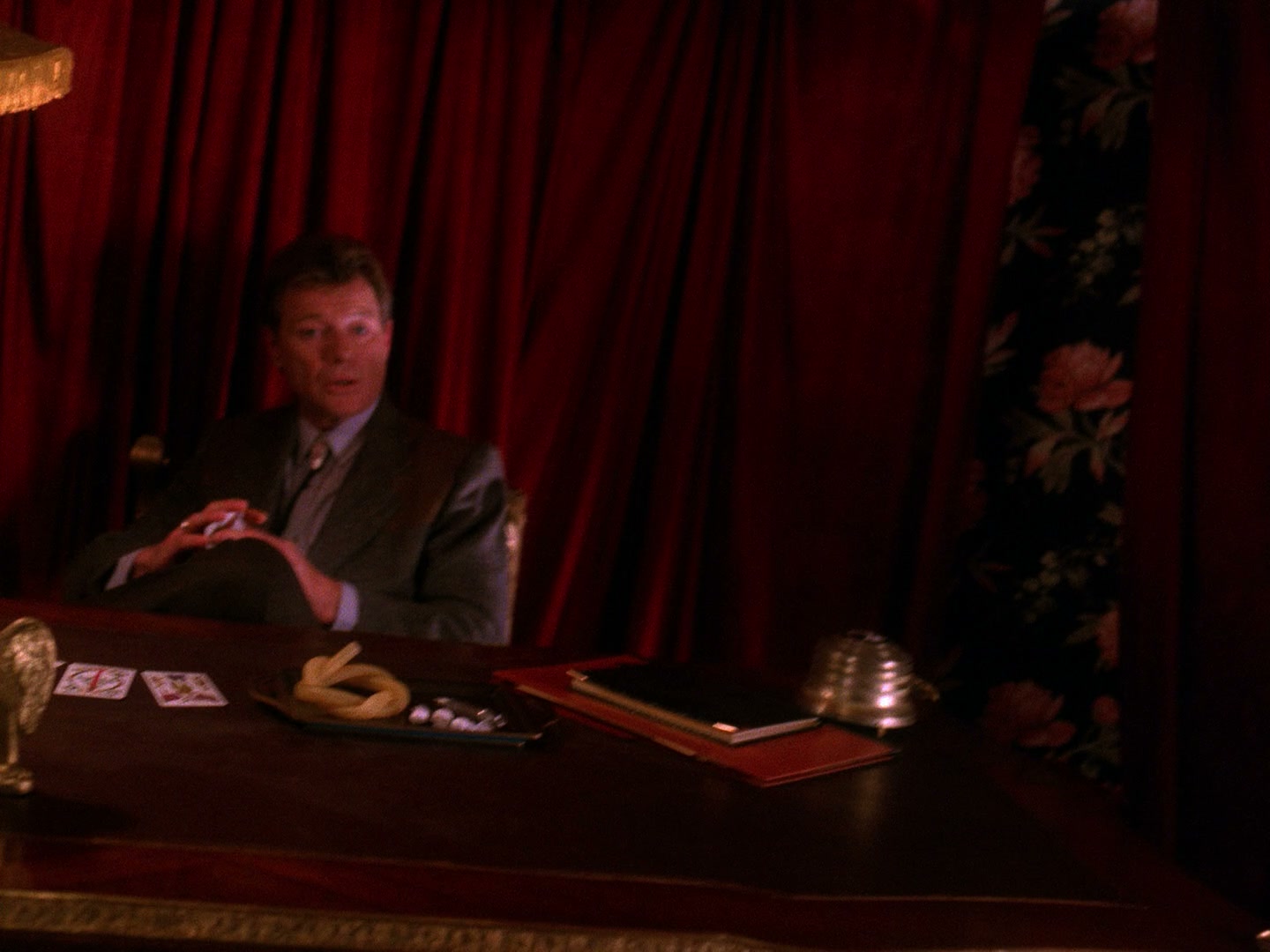

Cooper seeks help outside normal channels and asks for Truman’s best Bookhouse Boy without explaining the danger. Truman later arrives himself. Their quiet encounter at the Roadhouse answers Ben’s manipulative appeal with another kind of trust: a friend assumes the risk rather than delegating it. The rescue has not yet happened, but its ethical and practical conditions are already being established.
Who gets to name Lucy’s problem?

The sheriff’s station contains an investigation that cannot be separated neatly from its staff’s private lives. Andy’s medical question is conducted in a corridor; Lucy sees the magazine connected to his sample; embarrassment and missing context turn an ordinary encounter into another injury. The comedy depends on information being unevenly distributed, not on a lack of feeling.
Cooper tries to help by asking Lucy to explain her relationship with Andy. She begins with small observable habits: exercise, a car, a sports coat. Dick’s apparent difference is equally material. These details are comic, but they also let her speak in her own terms instead of being reduced to the pregnancy around which the men organise their responses.
Her inability to give Cooper a settled answer is allowed to remain an answer. He cannot solve the situation by conducting a better interview. Truman’s comparison with repeatedly repaired potholes deflates the fantasy that personal uncertainty can be permanently tidied away.
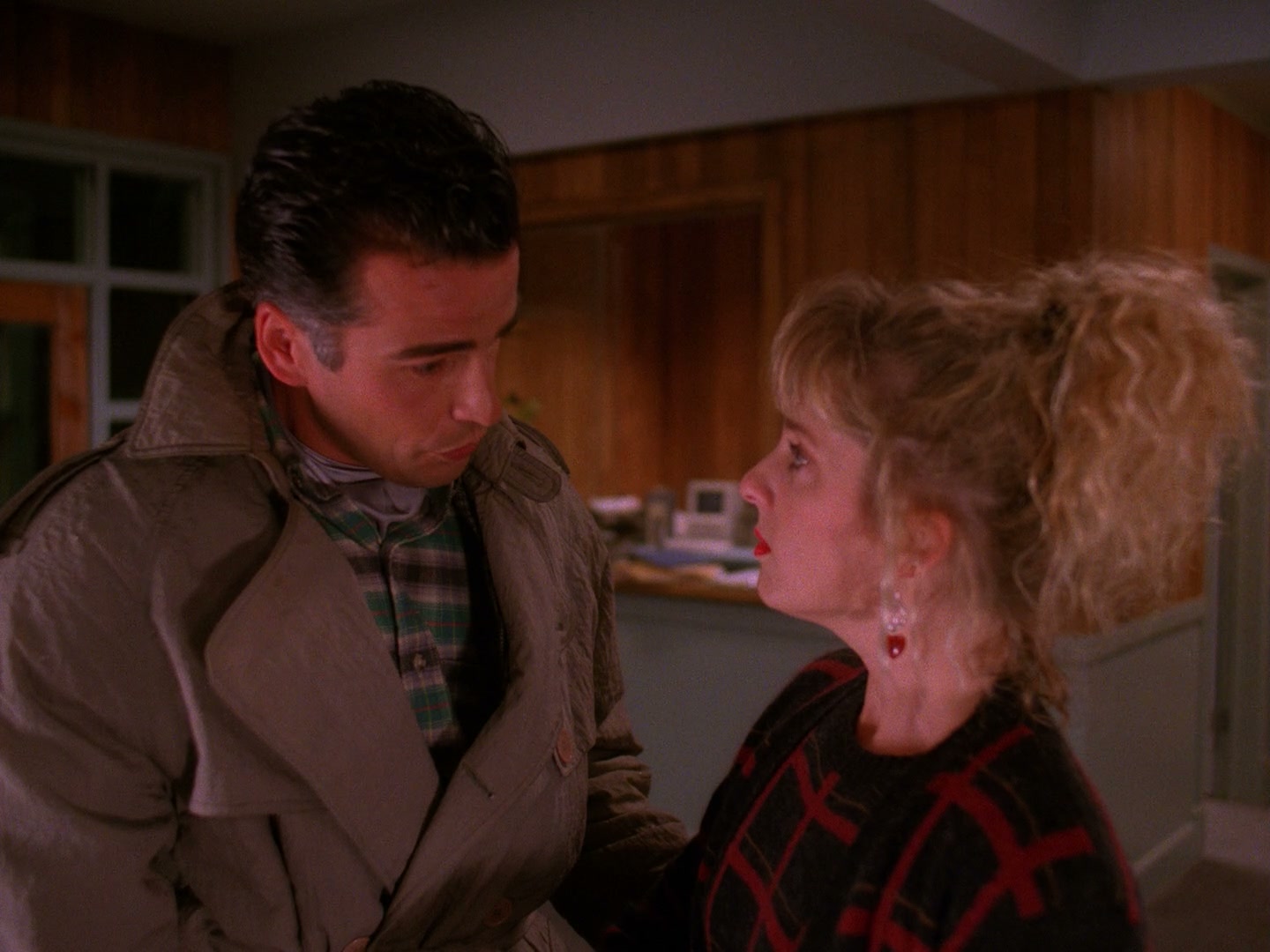
Dick’s later apology appears to offer responsibility until he produces money for an abortion. His evasive wording tries to make the decision small and already arranged. Lucy refuses both the money and his attempt to define the situation for her.
Her response is strikingly precise: she gives him a route out of the building, including the door that sticks. The woman who could not tell Cooper exactly what she wanted can tell Dick exactly what he must do. The distinction matters. Uncertainty about a future does not remove the right to reject somebody else’s solution.
An unknown critic remakes the town
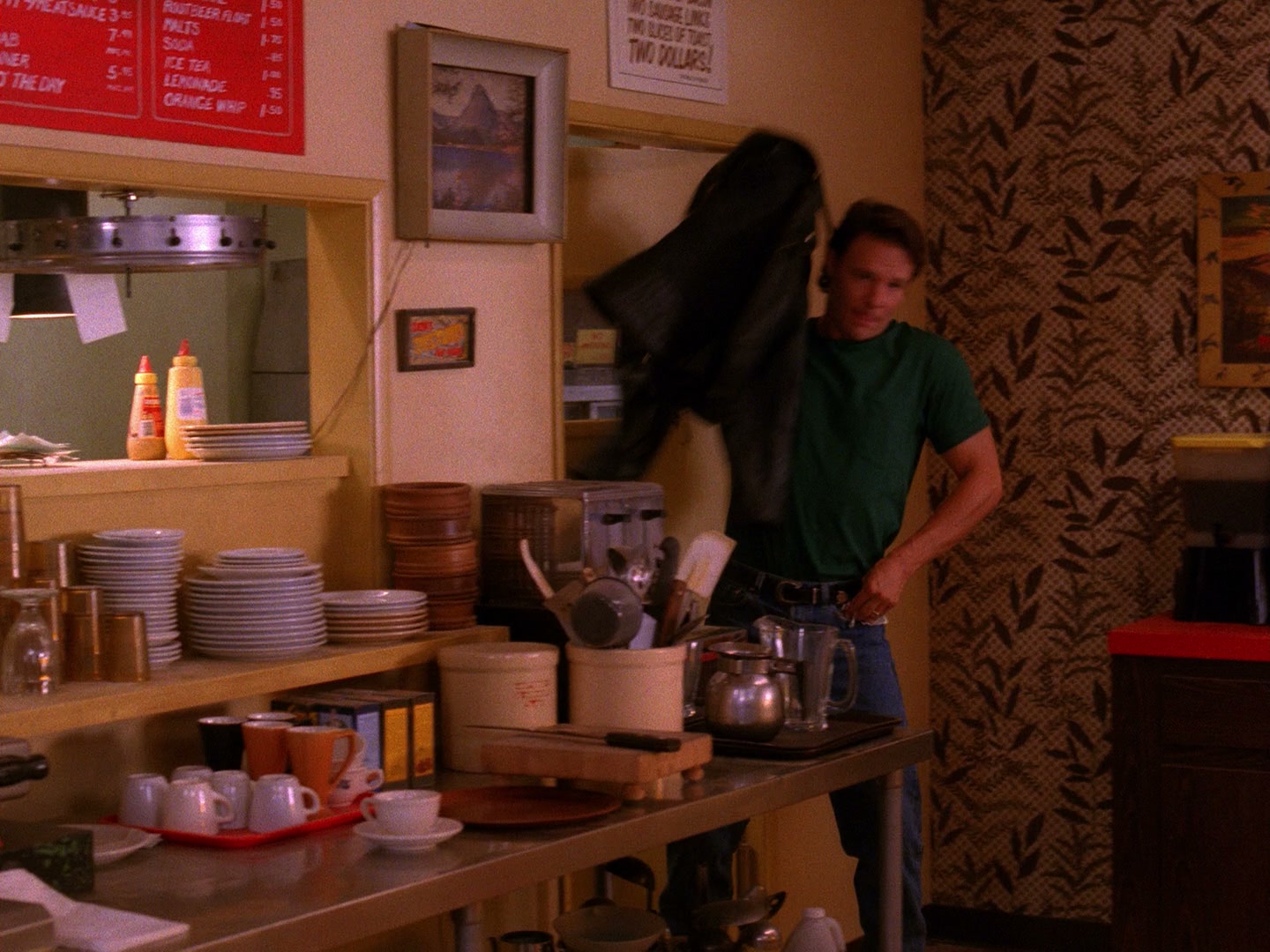
The rumour that M.T. Wentz is visiting sends the hotel and diner into a small competitive panic. The critic’s unknown identity turns routine behaviour into potential evidence. Paying cash or arriving from Seattle becomes enough to support a theory. Suspicion here is commercially hopeful: the town wants to find the hidden observer who might make its reputation.
Norma and Hank decorate the diner, consider new dishes and treat a stranger’s simple order as a possible test. The comic excess exposes a wish to control how ordinary work will appear to an outside judge. Toad’s continued appetite refuses the transformation of the diner into a perfectly managed display.
Candidates for an absent name · 2 images
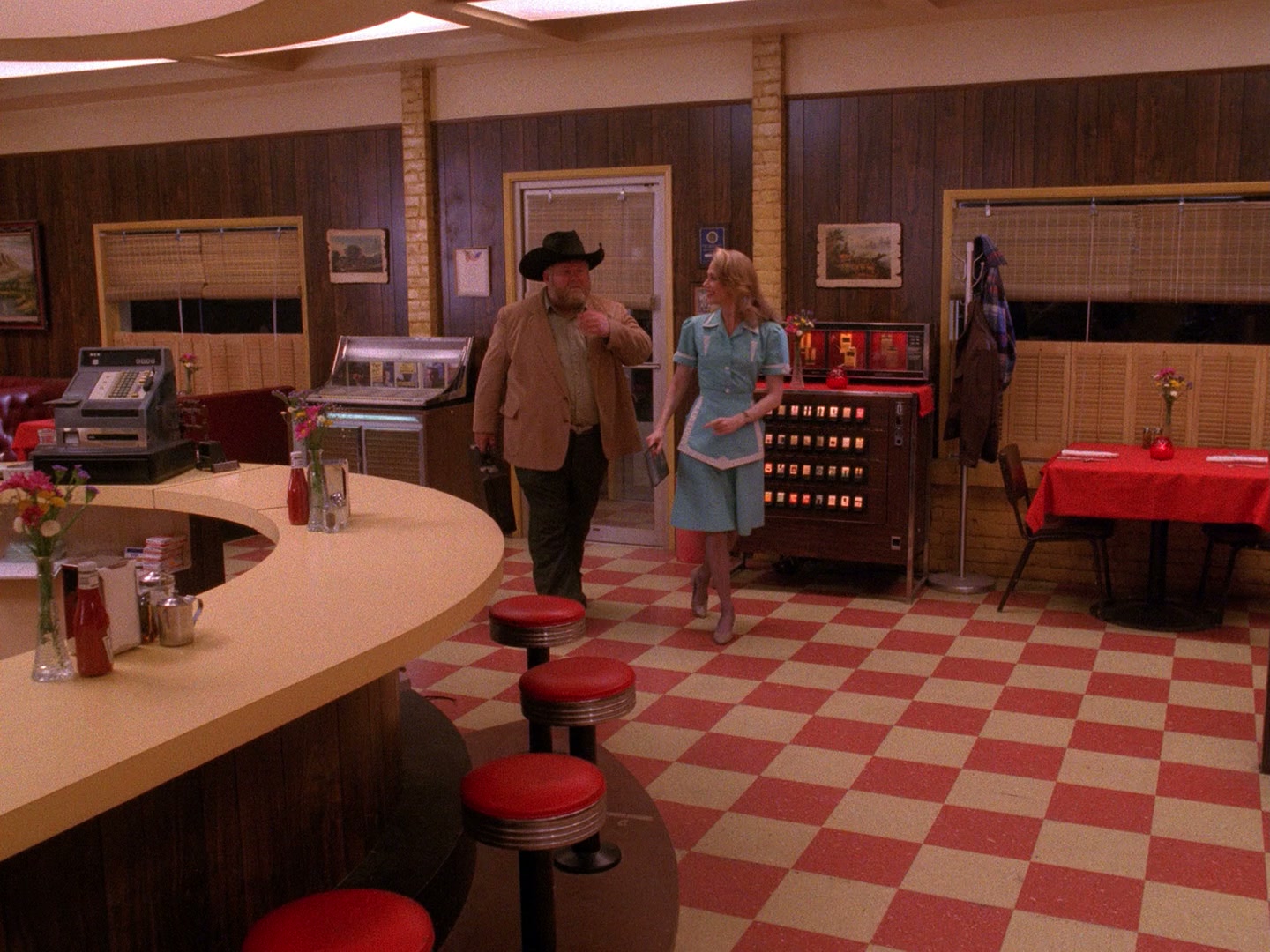
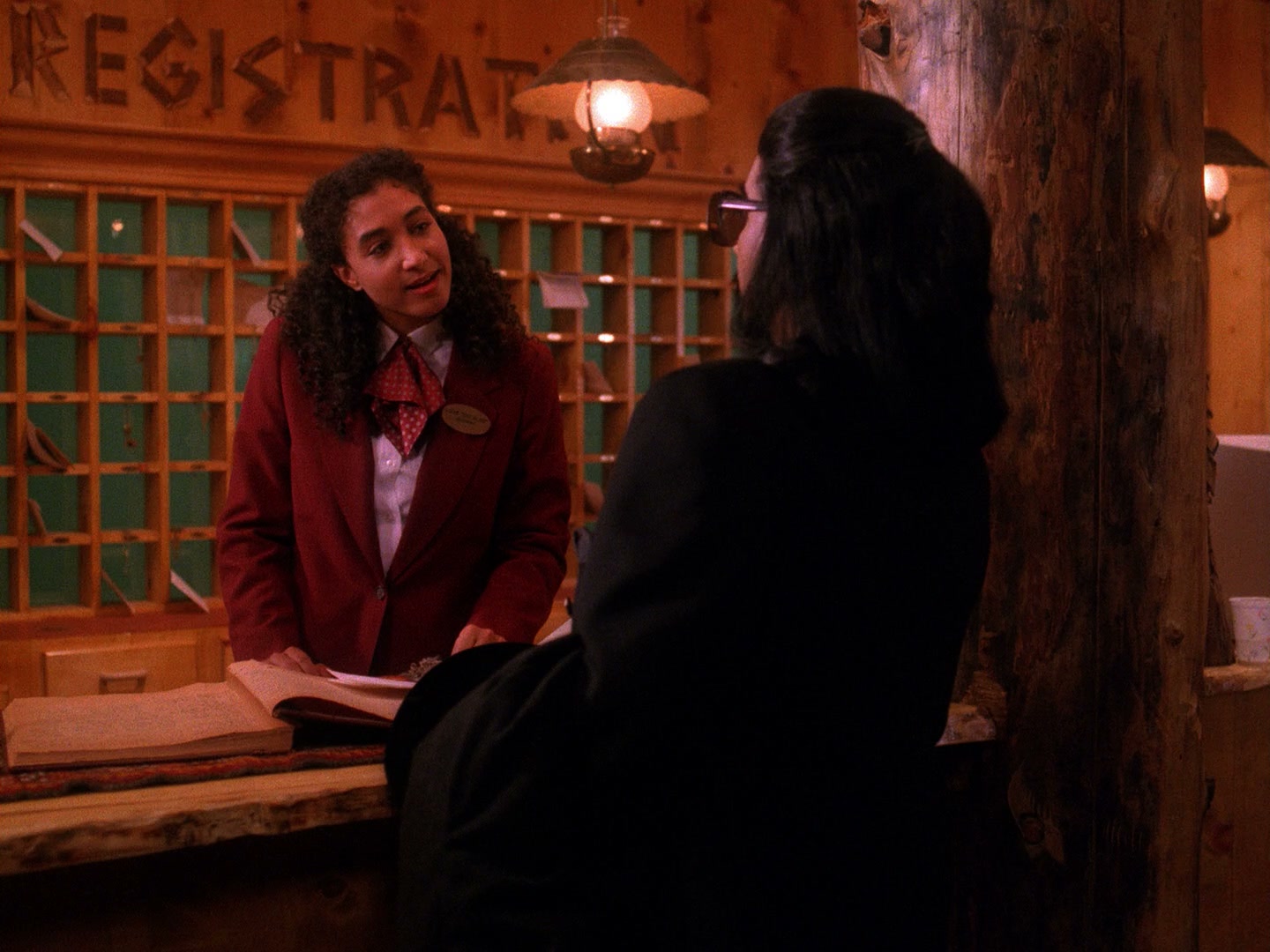
The hotel clerk later reads Tojamura’s cash payment and arrival from Seattle through the same rumour. This is a miniature of the season’s larger problem of identification: a few compatible details become a persuasive story before anyone has established that they belong together. Beside the murder investigation, the critic plot gives mistaken inference a lighter register.
Two accounts of a return
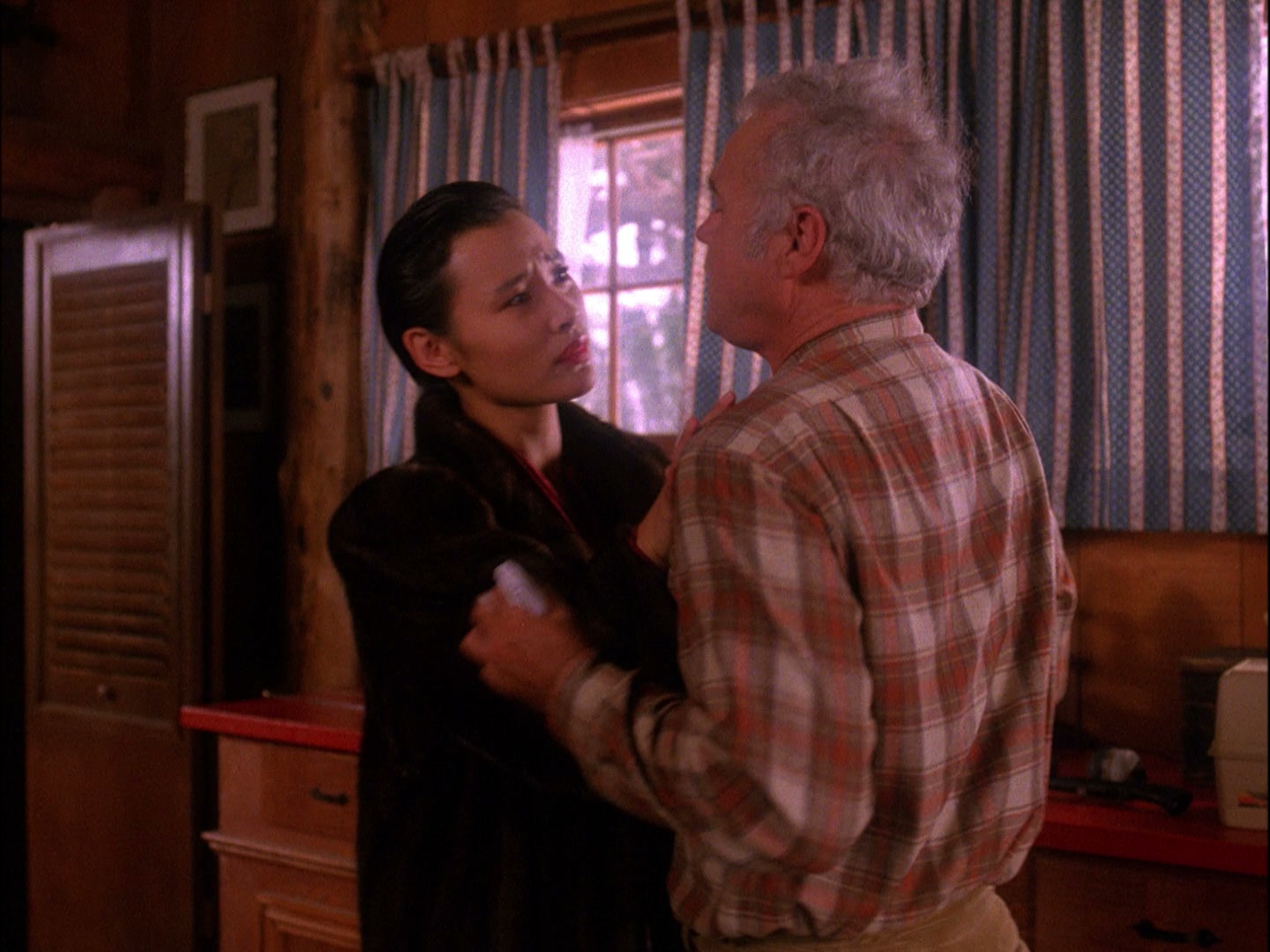
Josie returns to a household trying to make sense of the mill fire. Pete speaks of a funeral without a recovered body. His uncertainty is painfully concrete: even the object of the burial is unresolved. Her expressions of shock belong to a conversation in which the audience cannot simply assume that each participant knows the same things.
Truman’s visit begins with presents and turns toward her unexplained absence. Insurance money and the fire enter a room otherwise arranged for intimacy. Josie’s distress redirects the encounter toward his apparent lack of trust; their embrace interrupts rather than answers his questions.
Intimacy and surveillance · 2 images
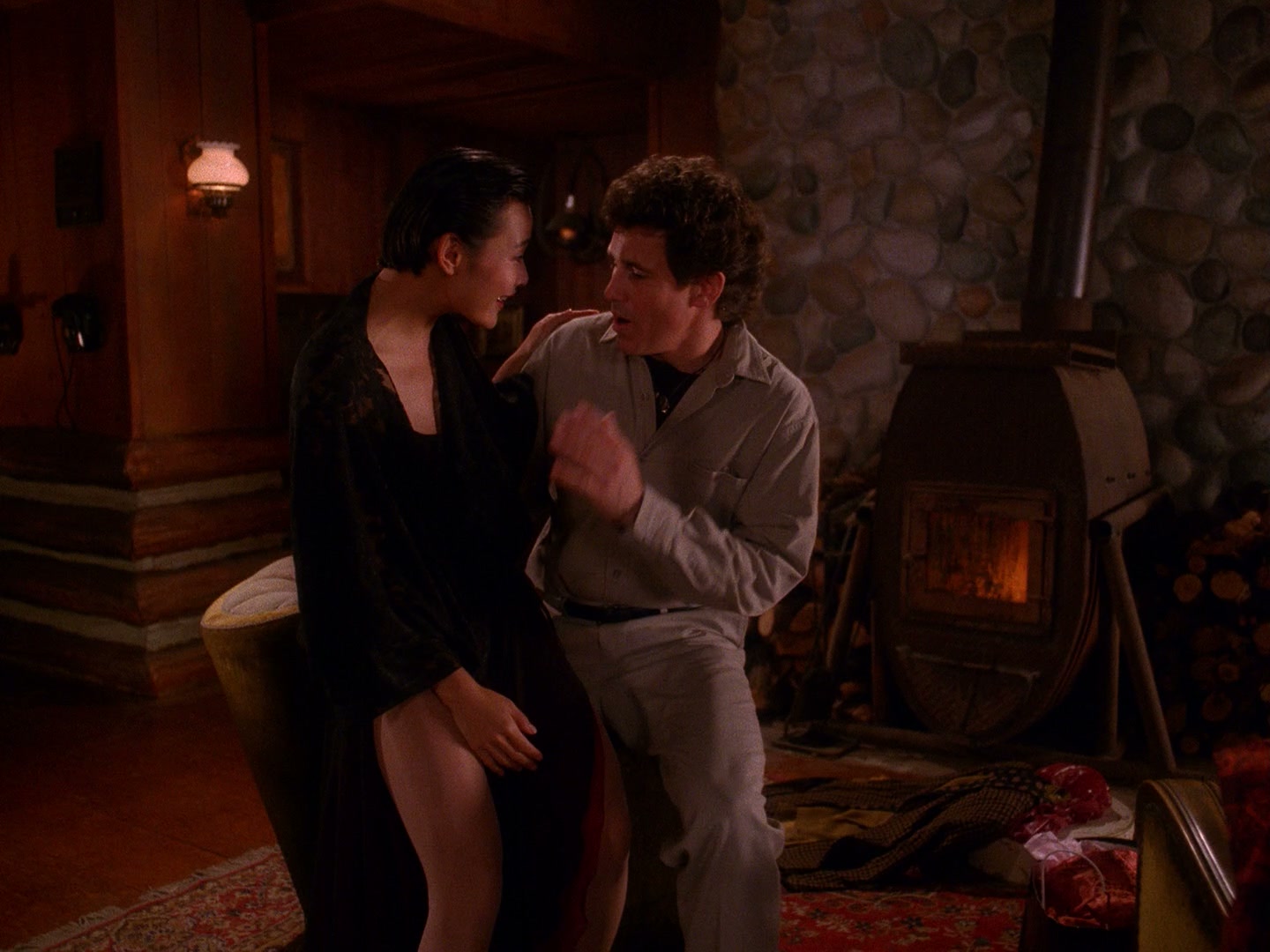
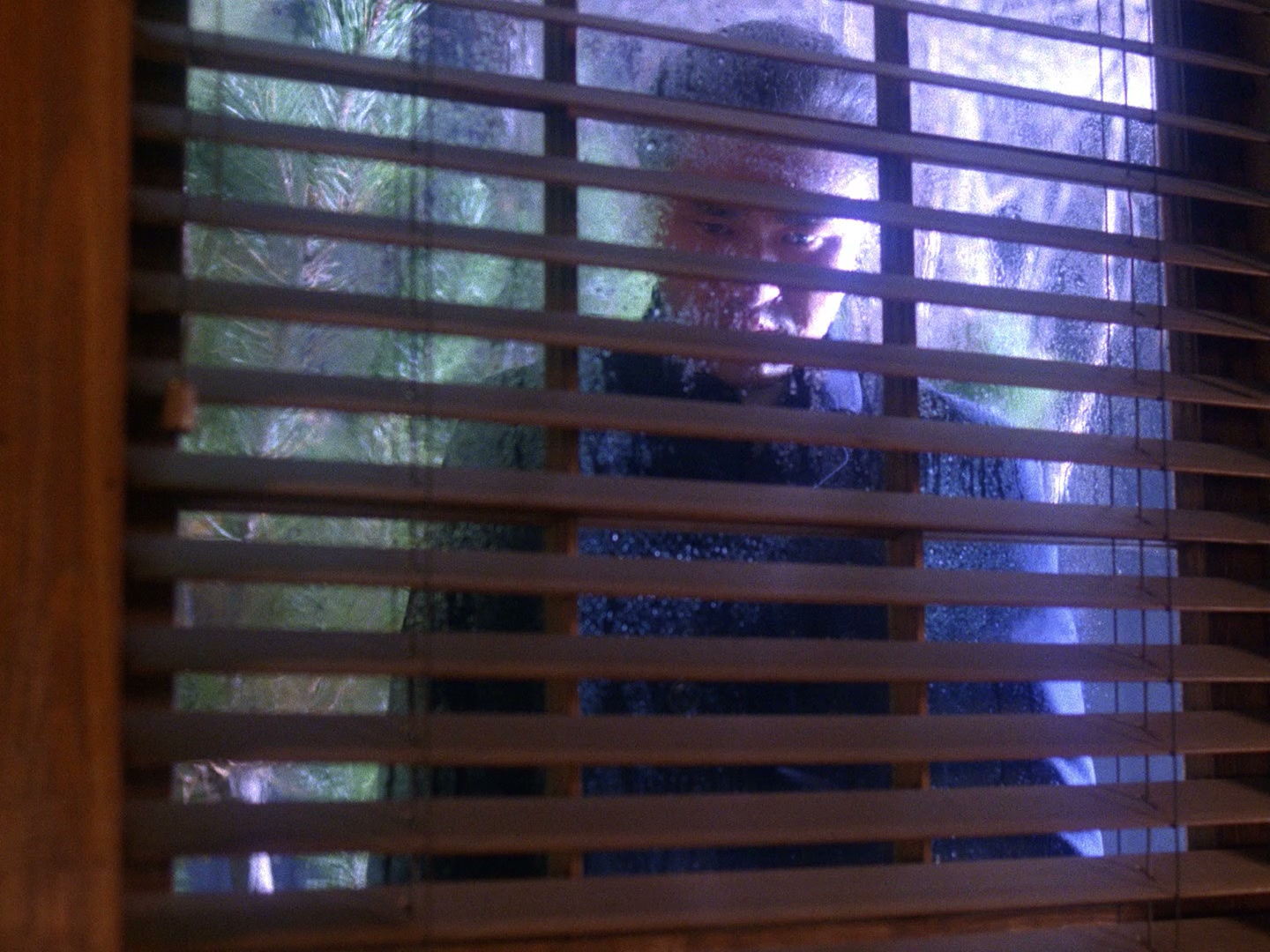
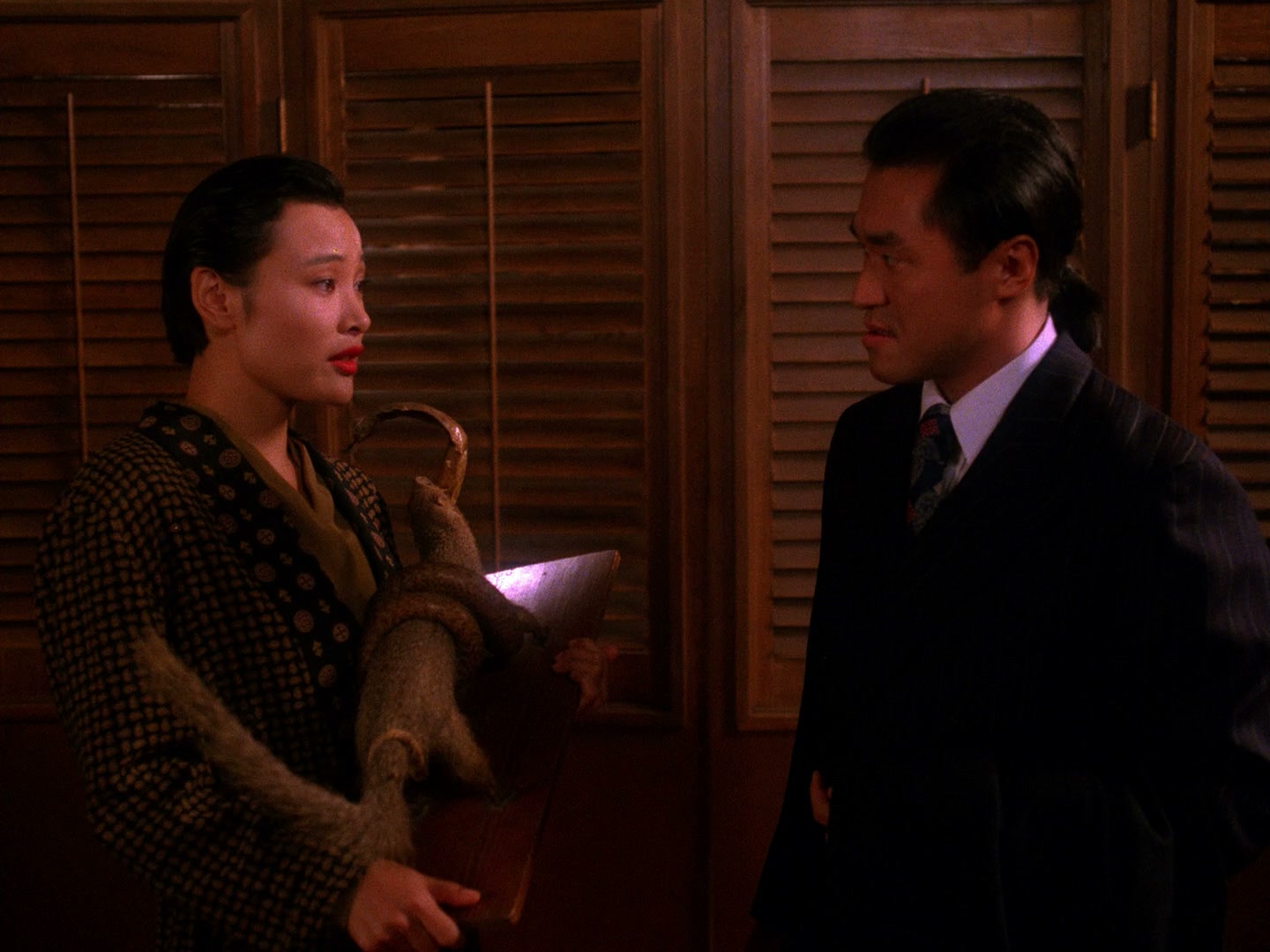
A figure outside the blinds makes the apparent privacy provisional. Later, Josie introduces Jonathan to Pete as a cousin. Once Pete leaves, the conversation changes to contracts, land, Hong Kong and Eckhardt. The switch does not merely supply new plot information. It reveals how the household’s familiar manners have helped conceal another set of obligations.
Jonathan’s attack on Hank at the closed diner provides a final change of register. Earlier transactions used euphemism, hospitality or family language. The warning is now delivered through a beating. The episode ends with a demonstration that the town’s business arrangements extend beyond the stories its residents tell one another.
The concealed business becomes explicit · 2 images
The visitor who brings a court
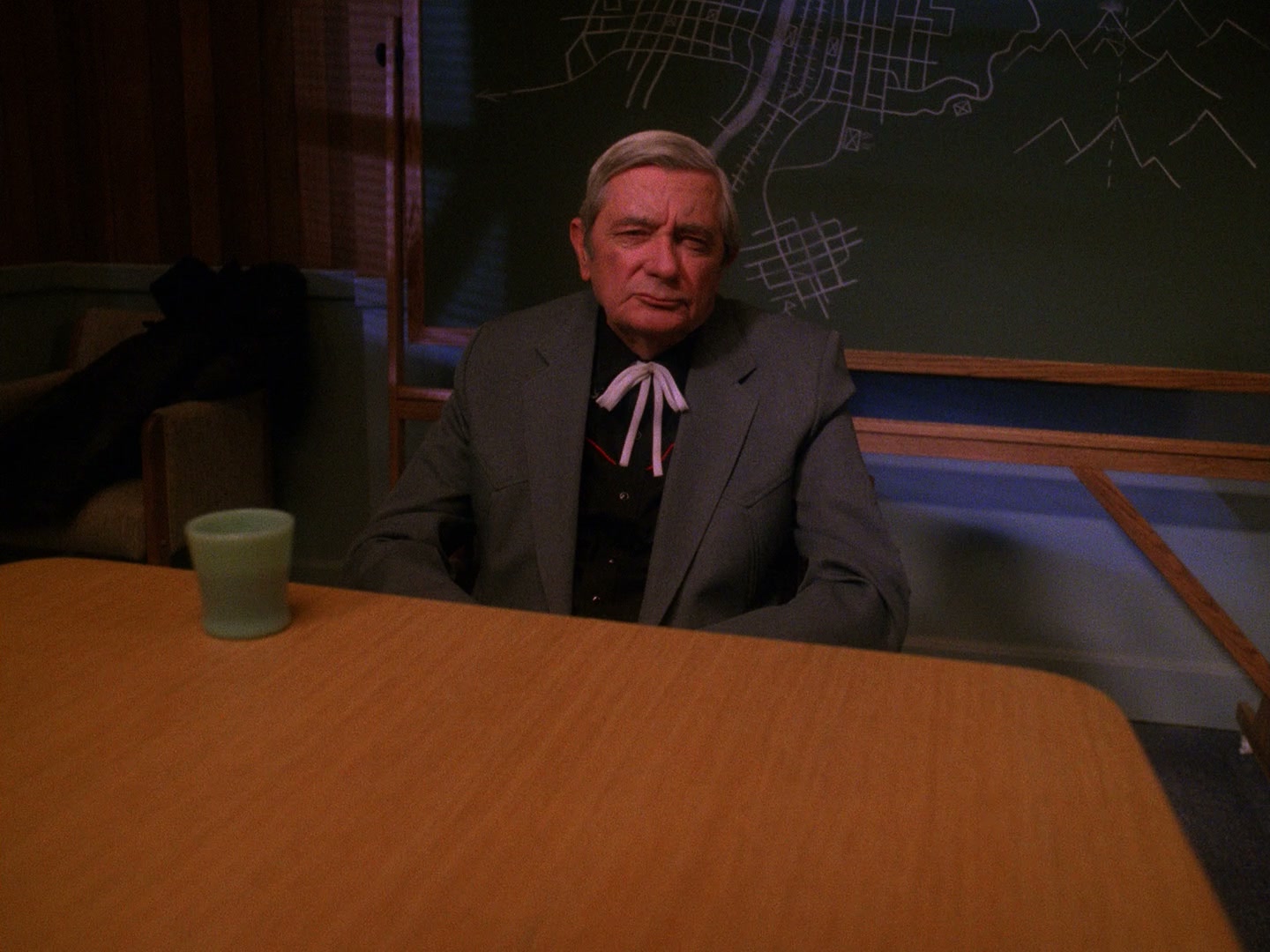
Judge Sternwood arrives with a travelling court, a law clerk and an established familiarity with the town. His greeting to Lucy recognises that she is unhappy without requiring her to submit a full explanation. With Leland, he is both a professional authority and somebody who has known him in another role.
The judge explicitly distinguishes their personal meeting from the roles they must assume in legal procedure. The theatrical language acknowledges that a court is an organised performance, but one with obligations beyond personal sympathy. His condolences do not cancel the need for submission to the process.
Cooper’s description of Twin Peaks as heaven meets Sternwood’s list of arson and killings. The exchange preserves Cooper’s attraction to the place while refusing an innocent picture of it. That balance will be tested in the two Roadhouse hearings.
Anger, illness and interpretation
The later Log Lady introduction moves from miscommunication to argument, anger and several kinds of illness. It is a frame for considering behaviour, not an instruction to diagnose the episode’s characters. Its emphasis on the way feeling spreads into an environment is especially pertinent to Leland’s interrogation and Lucy’s encounters at work.
The episode’s dialogue repeatedly names a problem differently from the person experiencing it: grief and murder, confidence and evidence, protection and captivity, an apology and a proposed payment. Those differences do the dramatic work. The introduction can sharpen attention to them without turning the episode into an illustrated moral lesson.
A route through Laura’s Secret Diary
- Confession. An abstract opening resolves into Leland’s interrogation.
- Misread details. Andy’s embarrassment, a pair of boots and the expected critic redirect attention.
- Private evidence. Harold reads Laura’s diary to Donna.
- The ransom. Ben recruits Cooper while Jean performs protection for Audrey.
- Decisions and refusals. Donna recruits Maddy; Lucy rejects Dick’s money.
- Public roles. Sternwood brings the court to a town he already knows.
- Another network. Jonathan exposes Josie’s obligations and warns Hank.
Sources and connections
Primary source: Twin Peaks, “Laura’s Secret Diary,” Season 2, Episode 4 / overall Episode 11, presented in Twin Peaks: From Z to A. The on-screen writing credit names Jerry Stahl and Mark Frost, Harley Peyton and Robert Engels; the directing credit names Todd Holland. Images and scene analysis derive from the episode. Dialogue references and described sound cues were checked against its English subtitle track.
Companion source: the separately filmed Log Lady introduction for Episode 11, preserved in Twin Peaks: From Z to A. The recap and preview are treated as framing material rather than additional events in the episode.
Continue reading: Donna’s first visit to Harold, The Orchid’s Curse, and Laura’s place in the Horne family’s unseen history.