Twin Peaks: Episode 22 — Slaves and Masters

1991 · Season 2, Episode 15 · Directed by Diane Keaton
Stories become instruments of control. Follow Earle’s cabin, Evelyn’s rehearsed account, Ben’s staged surrender and Caroline’s haunting likeness.
Season 2, Episode 15 / overall Episode 22. Contains episode spoilers; image galleries open on request.
Explore this episode
Evelyn’s veil and Donna’s intervention
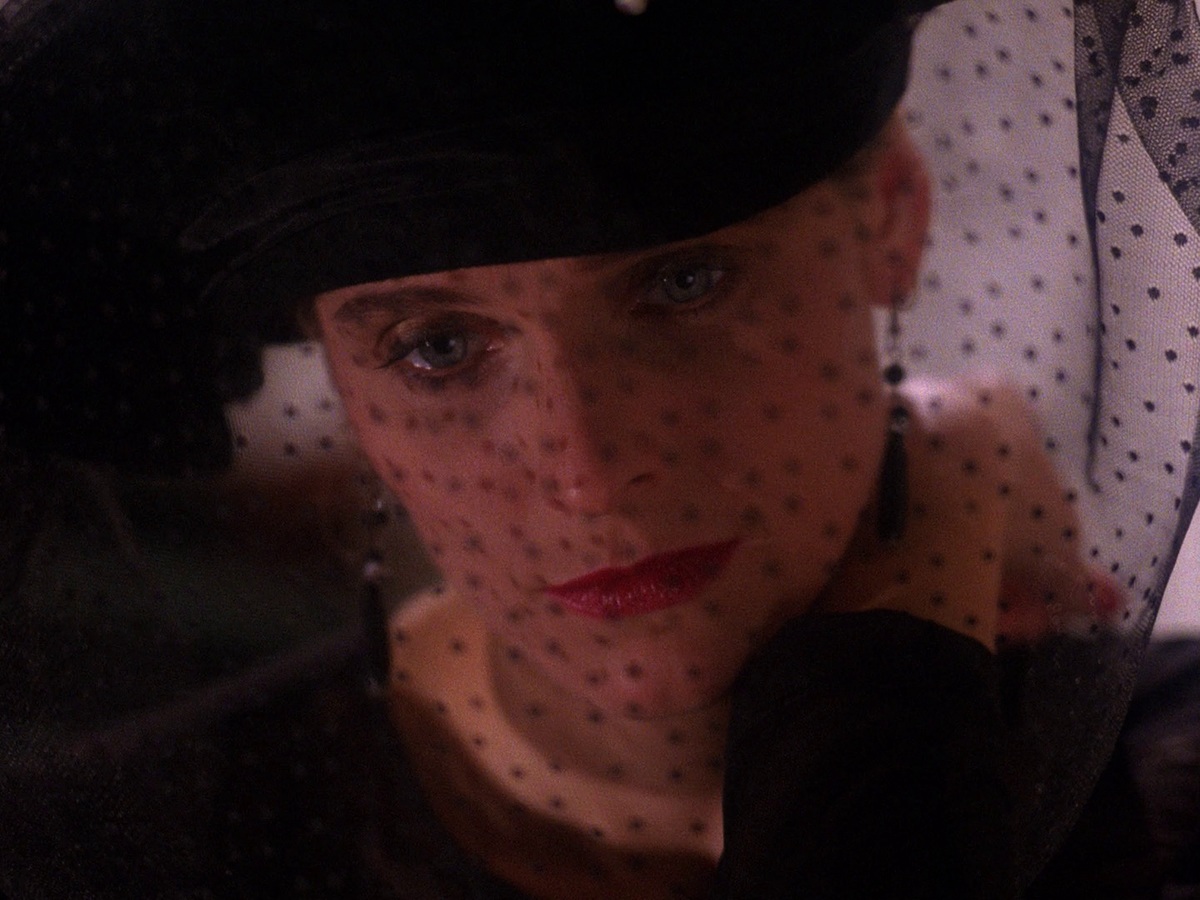
The opening makes Evelyn’s appearance part of the murder investigation. Her dark veil and formal pose offer an immediately recognisable picture of widowhood. Malcolm supplies the police with James’s name and a convenient account of his departure. The pair manufacture a witness statement and an image of innocence together.
Once the officer leaves, Malcolm treats the interview as a successful performance. Evelyn’s unease interrupts his satisfaction without making her innocent. The distinction matters throughout the episode: a participant in the scheme can also be frightened by the person directing it.
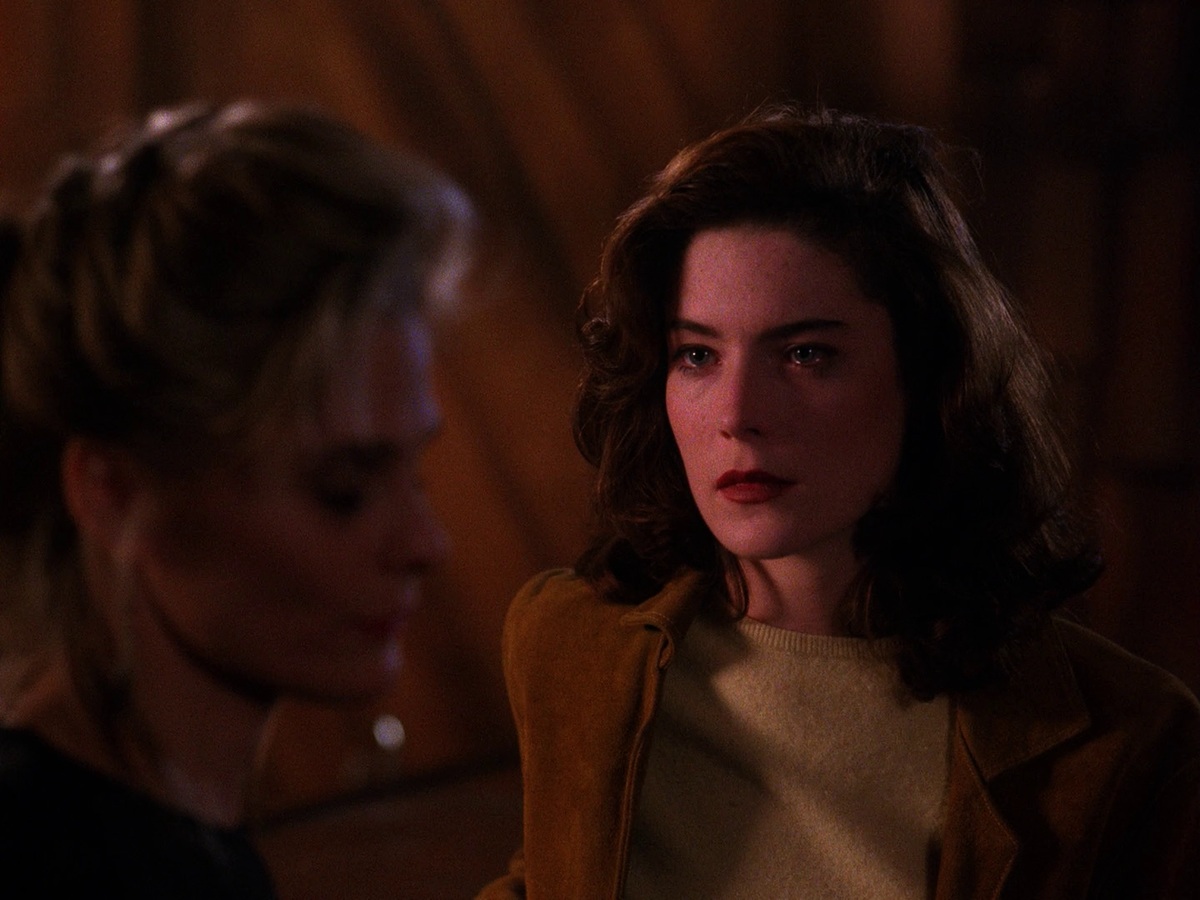
Donna works from a different understanding of evidence. James wants Evelyn to rescue him by telling the truth, while Donna insists that they need outside help. Her interrupted call to Ed turns into a pretended conversation with a friend when the circumstances change. She can improvise a performance too, but hers attempts to protect someone rather than frame him.
Their later encounter places Donna’s insistence on a shared future against Evelyn’s claims that life is already spoiled. Donna refuses to treat cynicism as superior knowledge. Her return to the house will make that refusal practical: she intervenes when Malcolm tries to turn his account of events into a second killing.
Earle makes an instrument of Leo
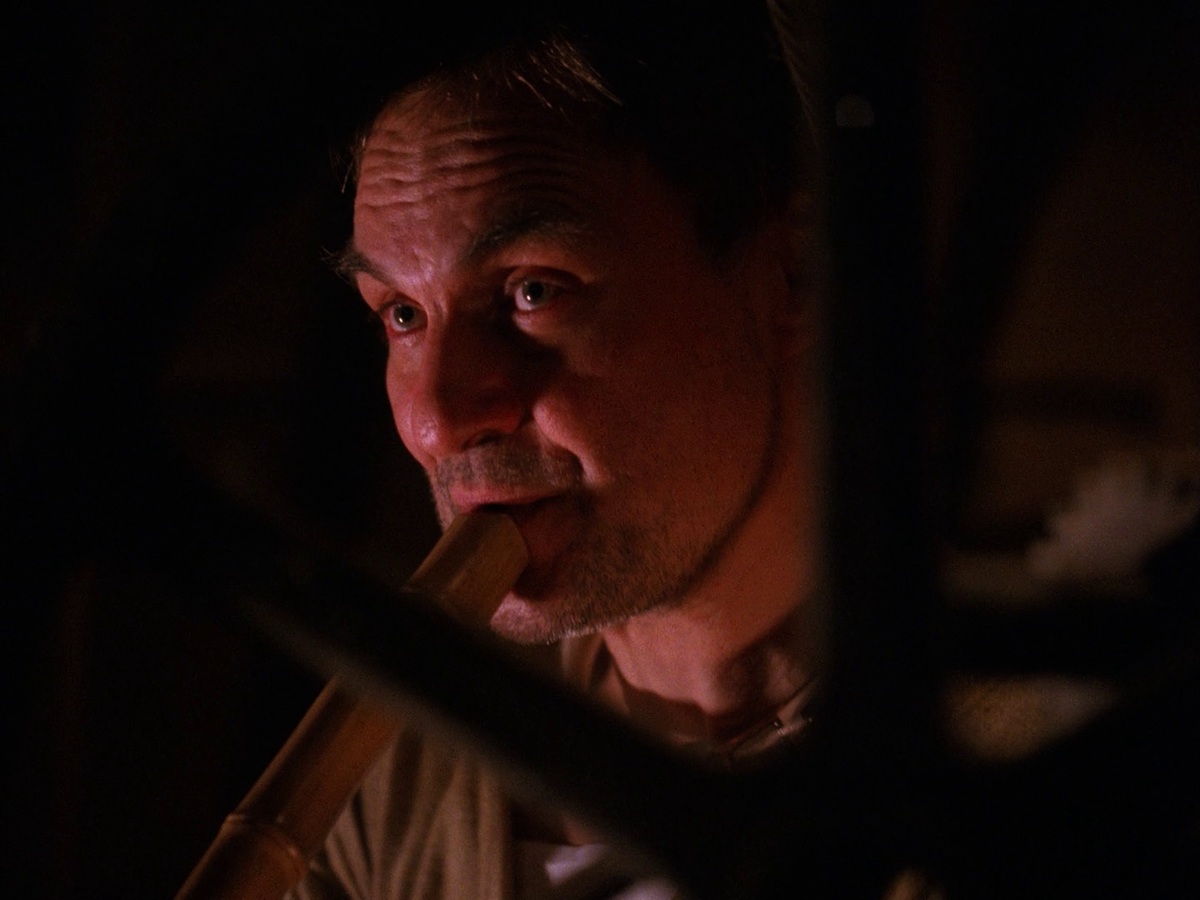
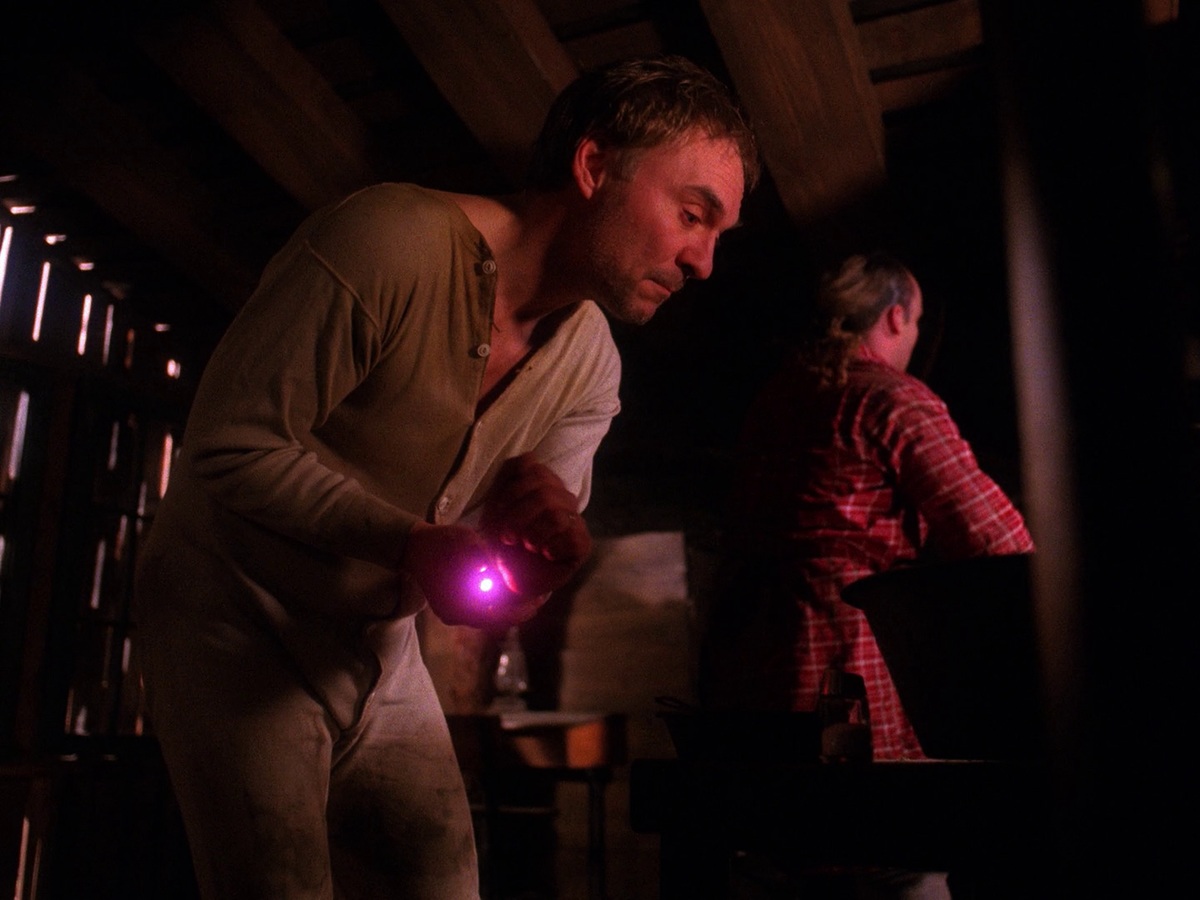
In the woodland cabin, Earle initially presents himself as a benefactor. He has cleaned Leo’s wounds and learned his name and crimes. That knowledge allows him to mix apparent care with the threat of returning Leo to the police. The balance is deliberately unequal before the first visible punishment.
The flute concentrates the scene’s mixture of culture and coercion. Earle plays it, tells a story about its use as a weapon, and makes the object part of his intimidation. His account of samurai history is a character’s performance of knowledge. Its dramatic purpose is to demonstrate that something associated with pleasure can become an instrument of pain.
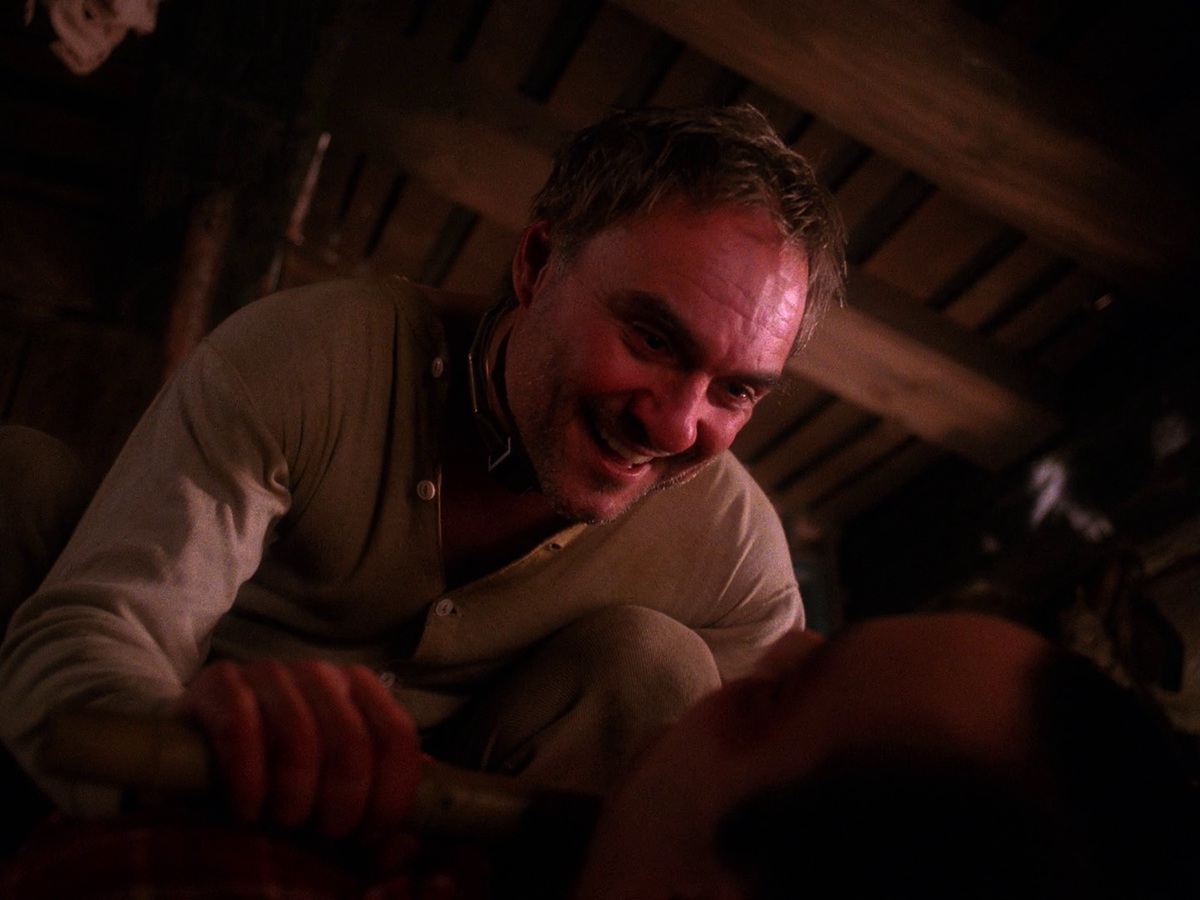
The shock collar gives his authority a remote control. Leo’s attempt to move away is answered with pain, followed by coaxing about food. Earle treats commands, jokes and punishment as parts of the same conversation. The man who terrorised Shelly now finds his own movements regulated by another abuser.
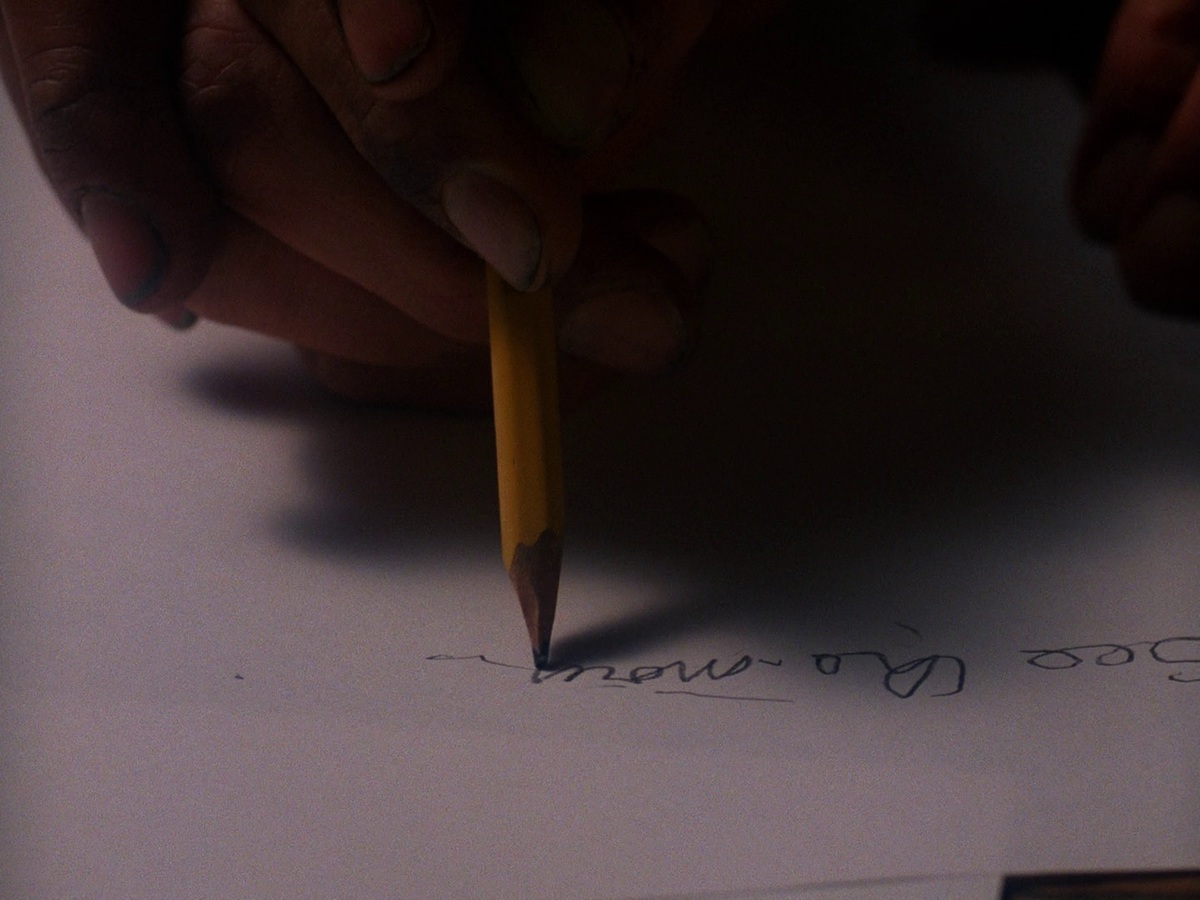
Later, Earle supervises Leo’s handwriting. The close view of pencil and paper makes authorship physical: one person produces the marks while another dictates their purpose. The letters for young women and Earle’s question about a queen extend the chess metaphor into the town’s social life.
Objects of control · 3 images
The years that never became a shared life
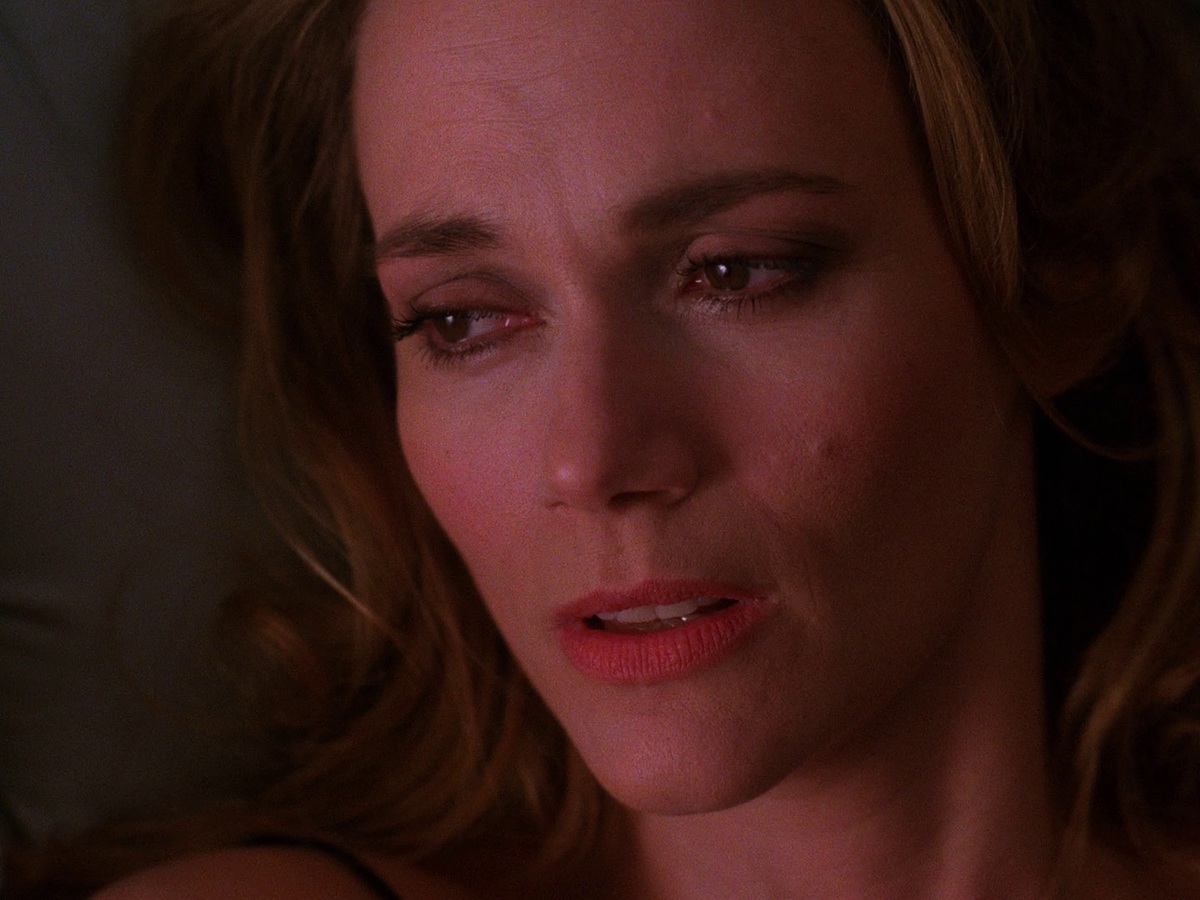
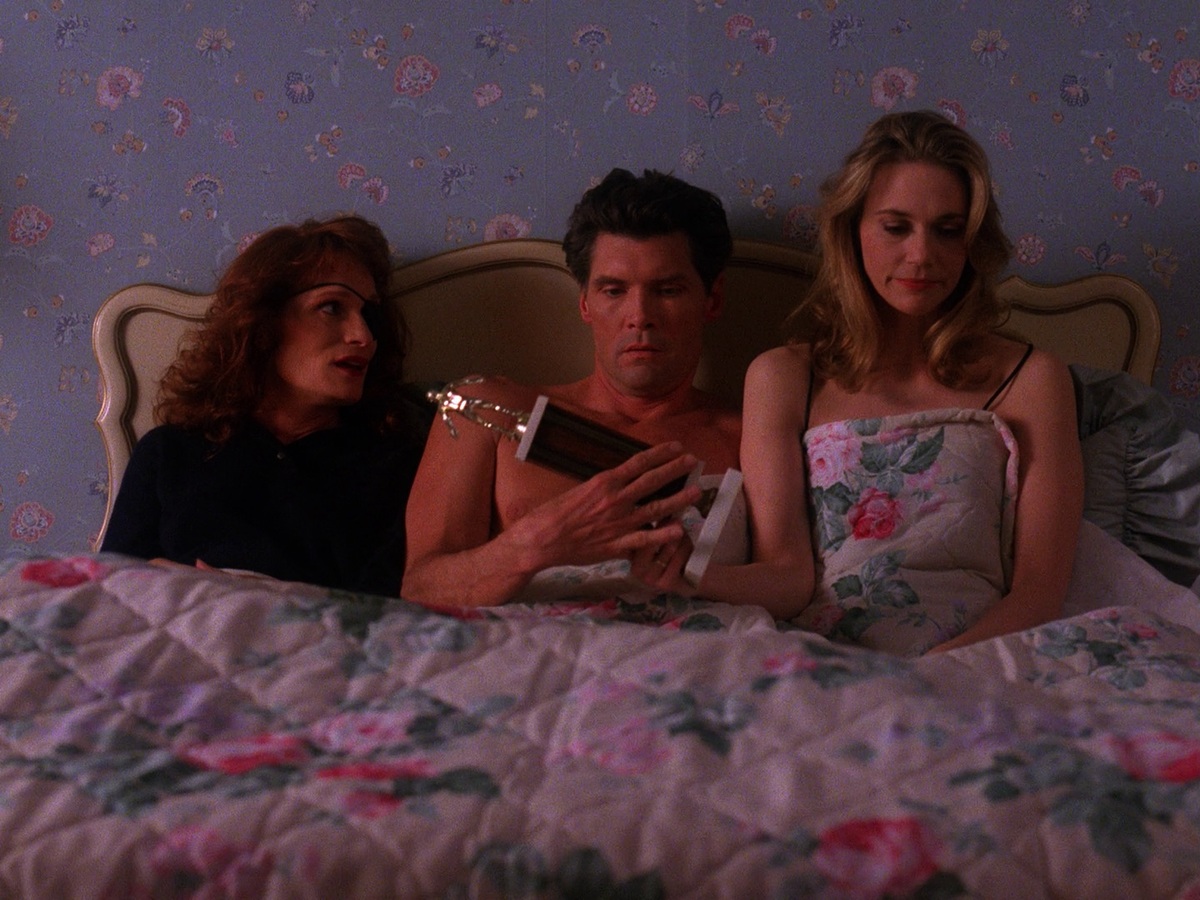
Ed and Norma measure their separation through ordinary missed occasions. Keeping the diner open has allowed Norma to avoid imagining a different life; birthdays and holidays have become days of work. A Christmas present she could not bring herself to deliver gives that lost time a tangible form.
The scene stays close to their faces before Nadine’s entrance changes the composition. She joins them at the bed and speaks with an ease they cannot share. Her schoolgirl account of the wrestling competition and her relationship with Mike belongs to a different understanding of the world, yet it briefly seems to remove the obstacle to Ed and Norma’s future.
Their relief remains entangled with Nadine’s condition. The episode gives the couple an opening without settling what her apparent consent means. The three people in the bed are physically close while occupying incompatible accounts of their relationships.
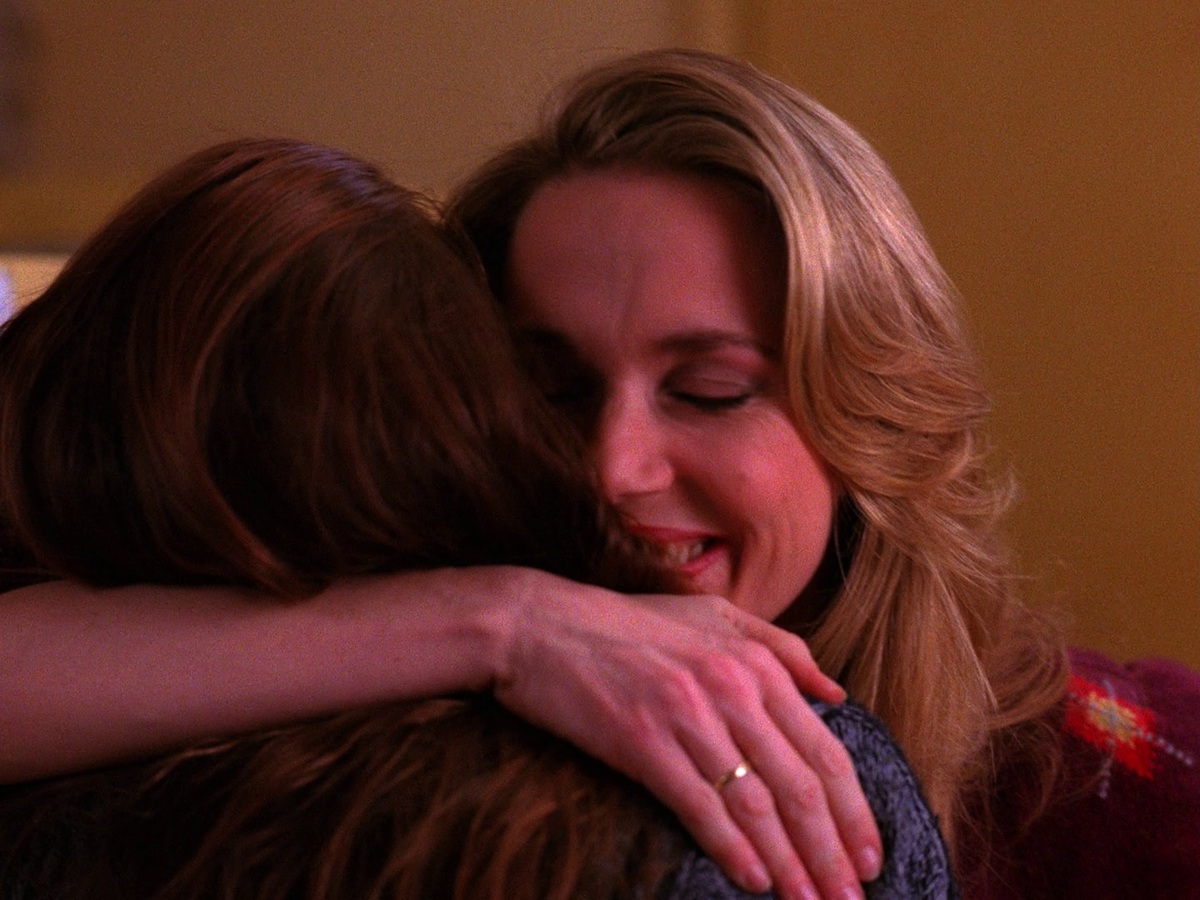
At the Double R, Shelly asks to return to work because she would feel safer there. Norma’s welcome makes the diner a form of protection and belonging. In the same setting, Truman’s news that Hank will face prison offers Norma a possible release. Work can be a refuge, even though she has just described how it helped her postpone a life.
A room and a refuge · 2 images
Josie becomes a picture and a bargaining object
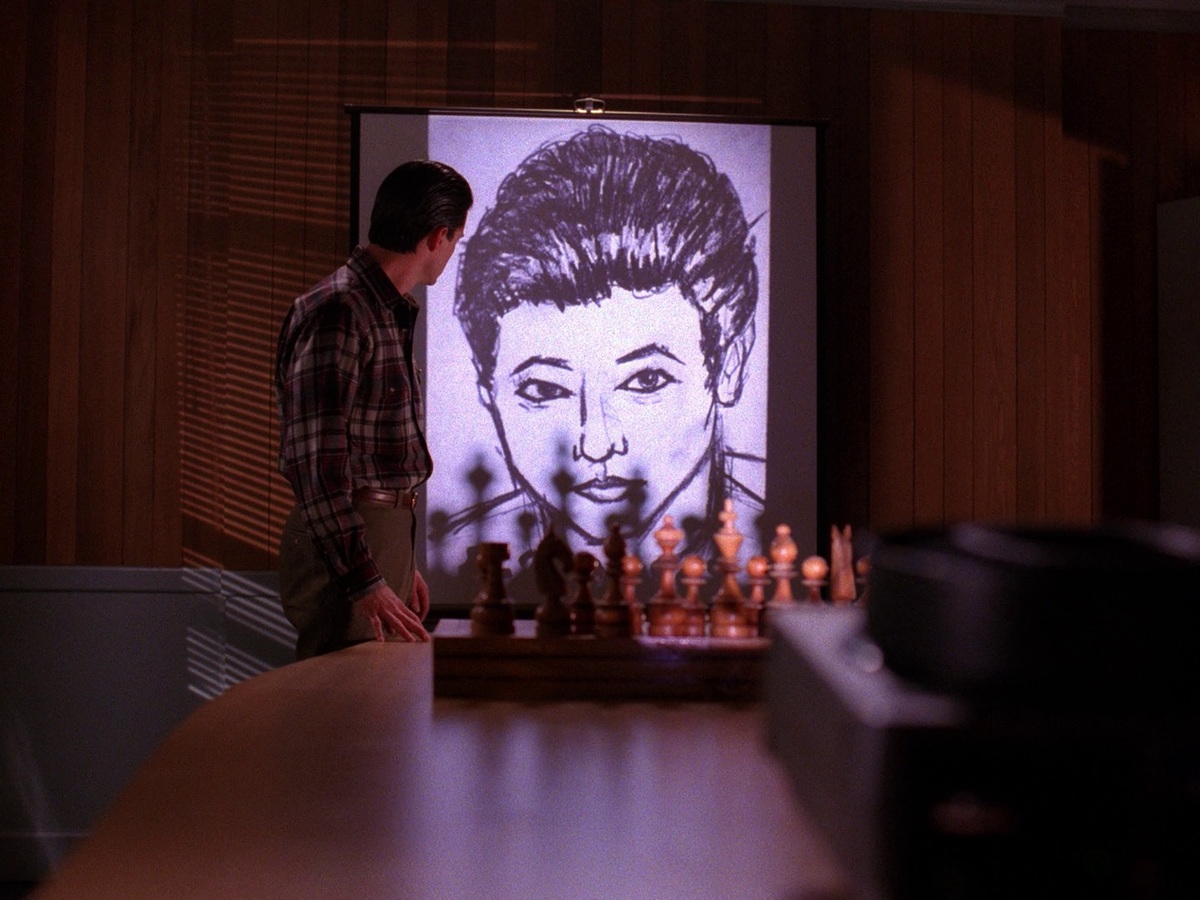
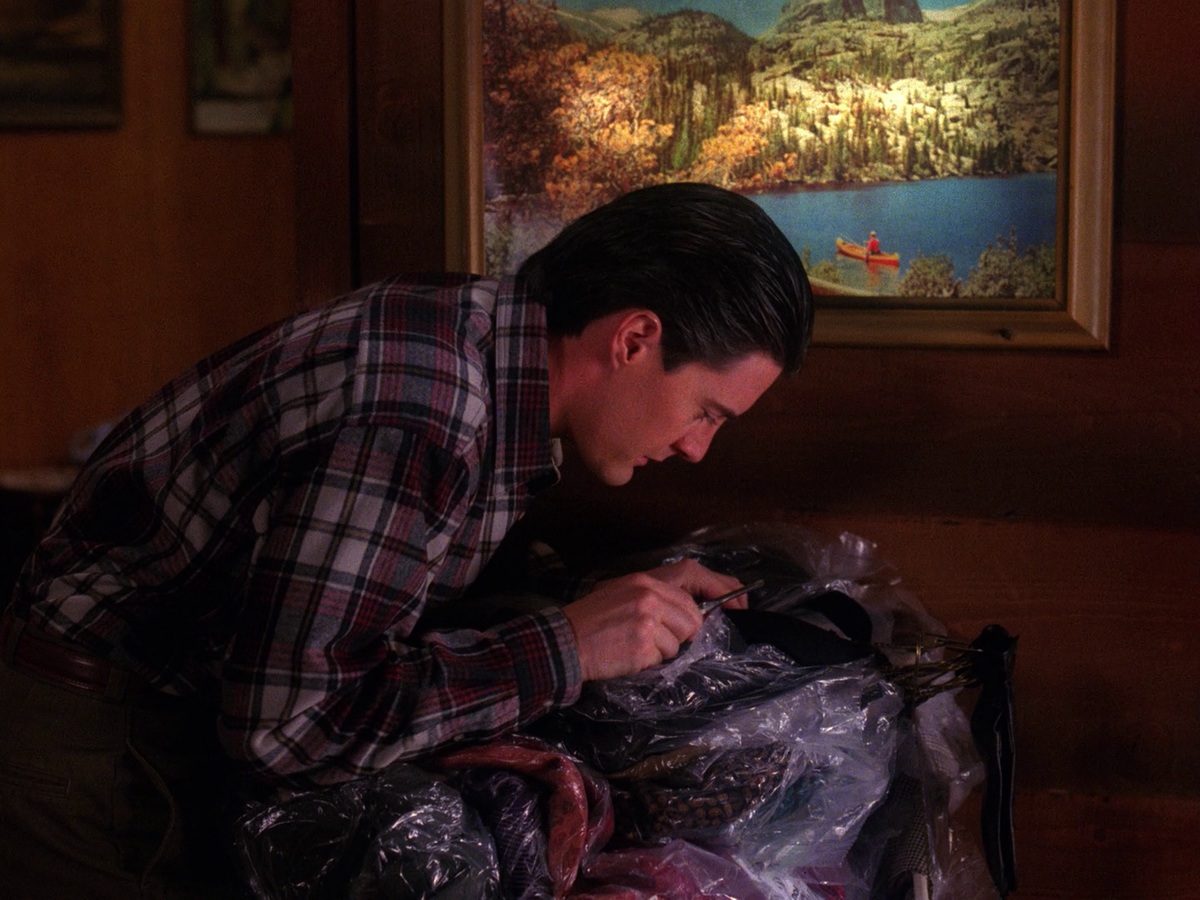
Cooper turns Pete’s bundle of dry cleaning into an opportunity to examine Josie’s clothing. Albert later presents a matching fibre and her projected photograph. Her face fills the station wall while the men discuss whether she shot Cooper. The familiar person has become an enlarged investigative image.
The projection also divides loyalties. Cooper wants certainty before Truman is told, and Albert’s concern for the sheriff briefly softens his usual mockery. Their silence is protective but consequential: the case touches a relationship inside their own institution.
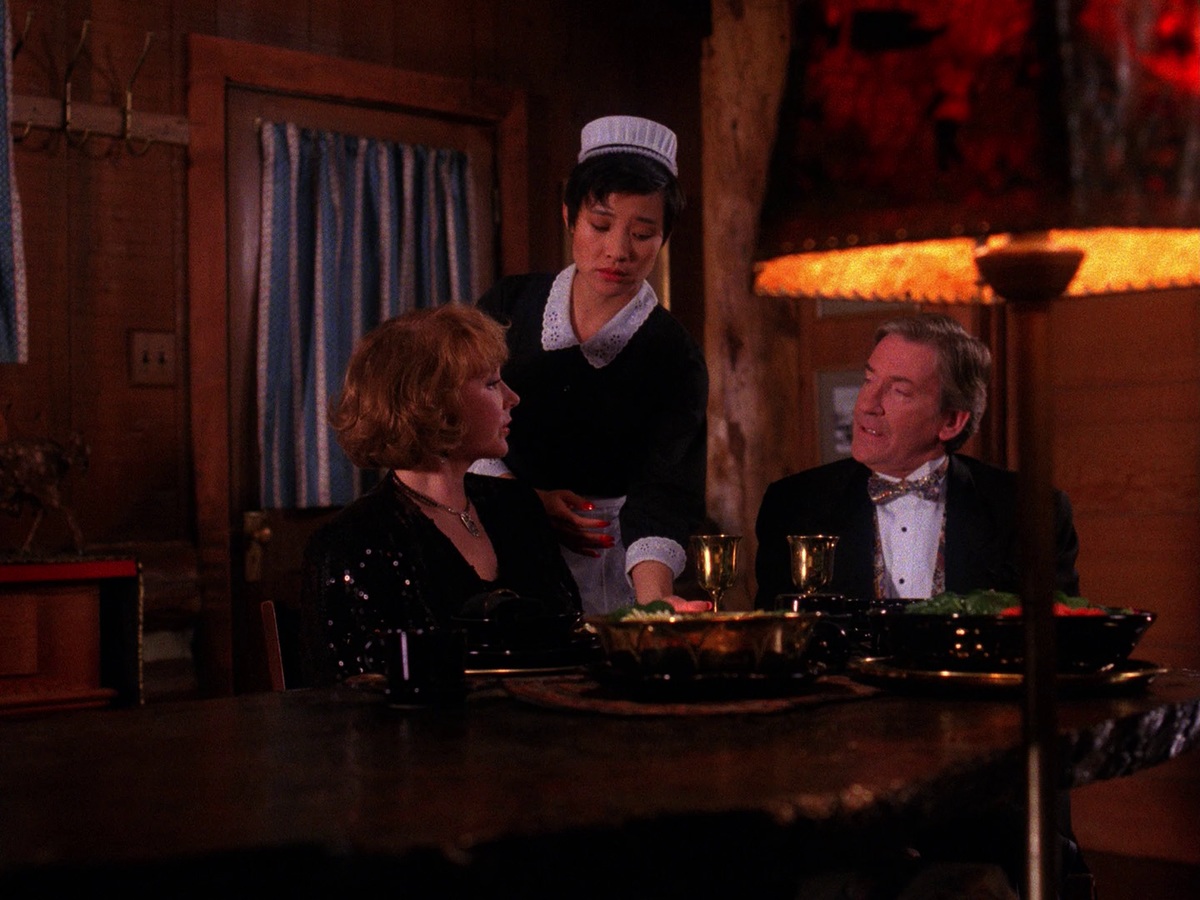
At Catherine’s dinner, Josie is forced to serve while Catherine and Eckhardt discuss her in front of her. The commands to pour wine punctuate a conversation about love, murder and exchange. The maid’s uniform gives Catherine’s account of possession a visible form.
The scene’s cruelty comes from its courtesy. Polite invitations and appreciation of Josie’s hands sit beside the proposal that she can be given away. Her body remains in the room while her ability to participate in the conversation is restricted. This arrangement carries forward the household punishment introduced in The Black Widow.
From clothing to evidence · 2 images
Pete’s skill offers Cooper another way to play
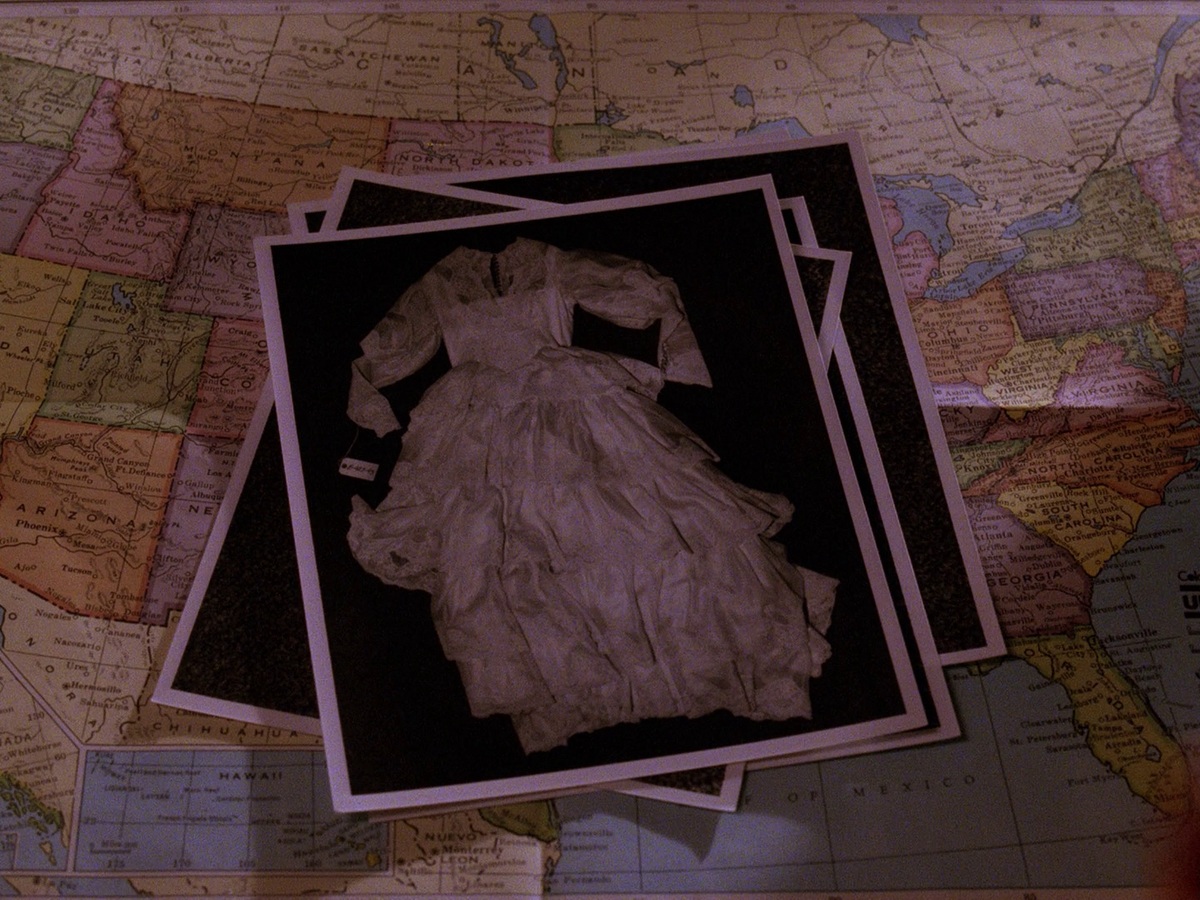
Albert’s report turns Earle’s movements across the country into a distributed message. Packages containing parts of a bridal outfit invoke Caroline without requiring Earle to stand in front of Cooper. A private injury has been routed through police departments and official procedure.
The dead man’s name, Erik Powell, gives Cooper another link to Caroline. Earle’s choice of a name makes the victim both a person with an identity and an element in someone else’s game. Cooper’s fear is now explicit: a lost piece can mean a death.
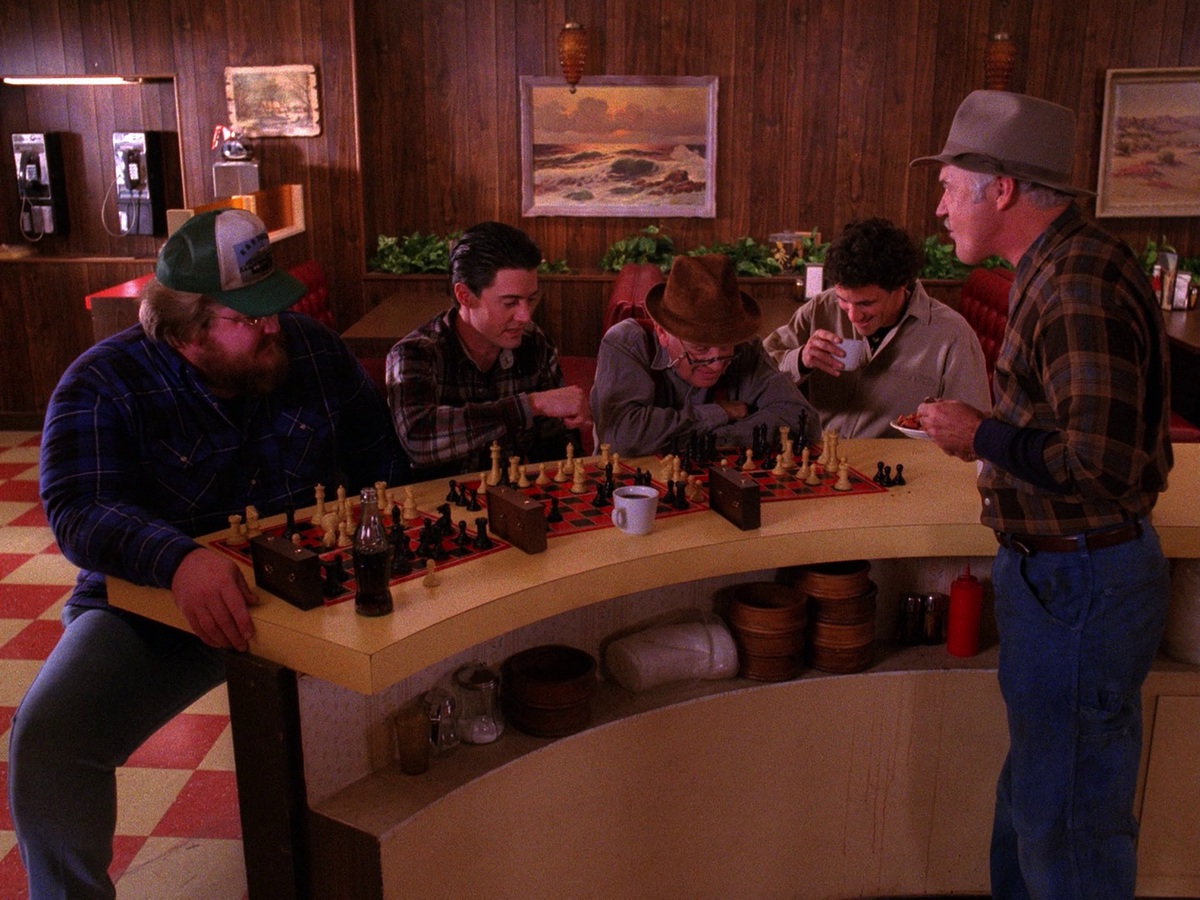
Pete’s simultaneous games introduce an unexpected local resource. His pleasure in chess and admiration for Capablanca belong to a social scene of tables, companions and repeated defeats. Cooper asks him for a stalemate with the fewest possible losses. The aim is preservation rather than a brilliant victory.
That request alters the meaning of expertise. Cooper has admitted that he never beat Earle, so help must come from outside their shared history. Pete’s ordinary enthusiasm offers an alternative to the closed contest that Earle wants.
A theatrical victory brings Ben home
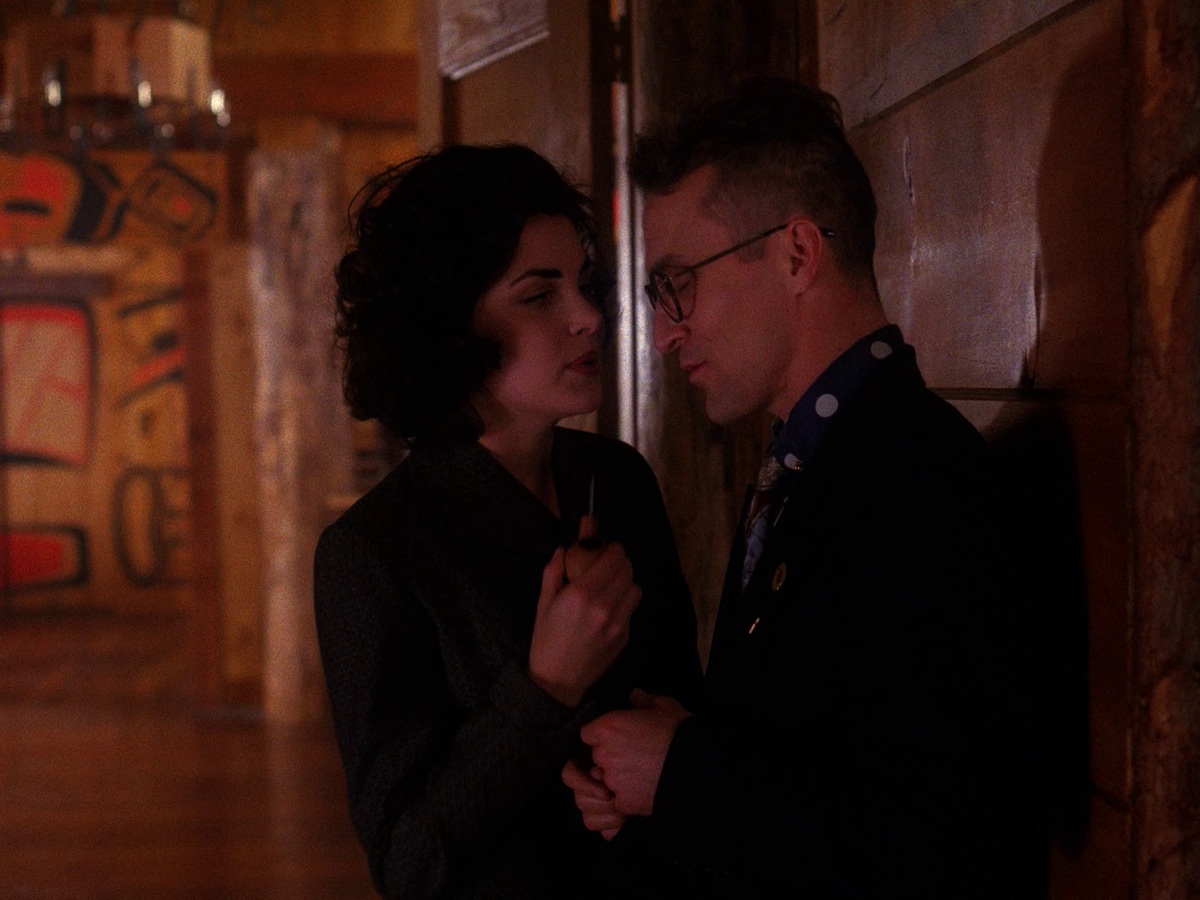
Audrey understands that leaving Ben inside his Civil War fantasy would serve Jerry’s business interests. Her threat to exercise authority over the estate changes his position immediately. A conversation about recovery is also a negotiation over money and succession.
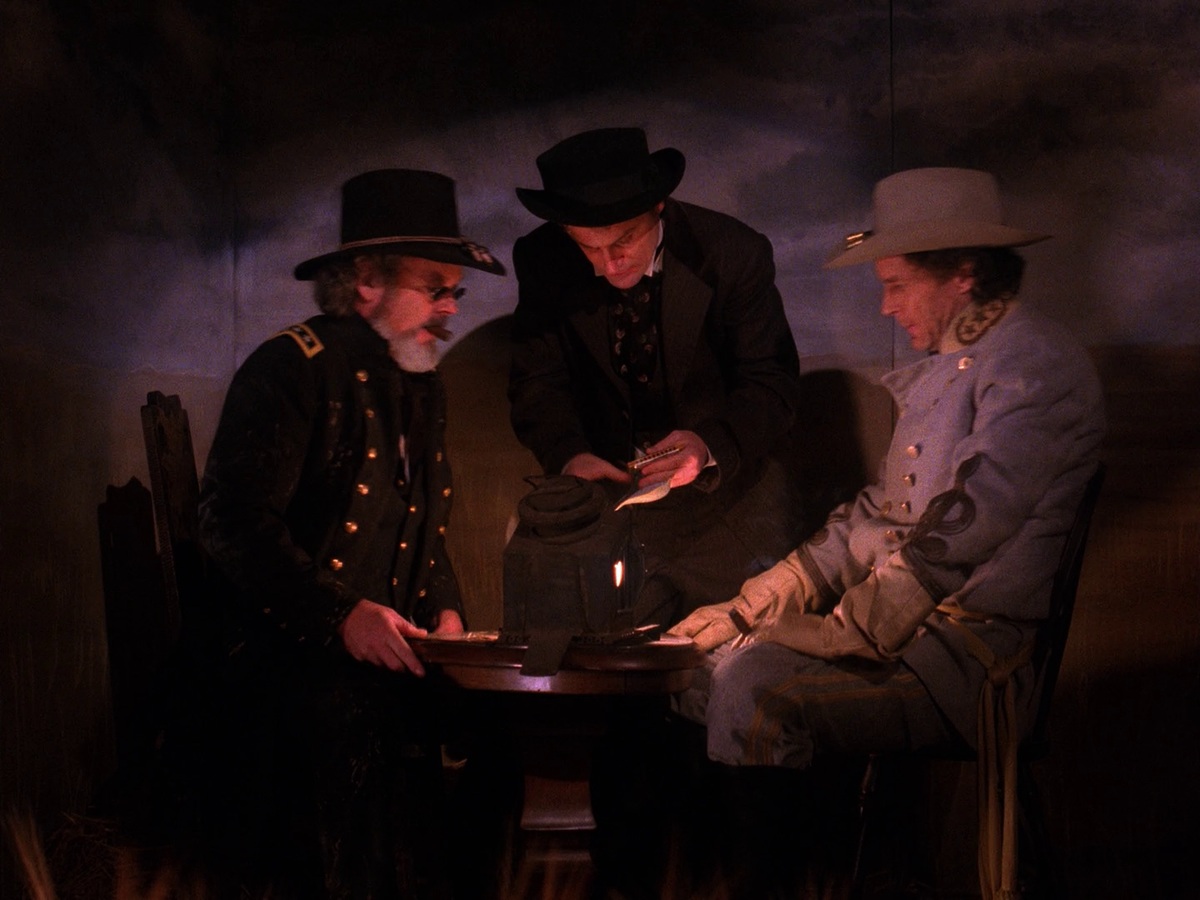
Jacoby’s solution becomes a staged historical reversal. Costumes, scenery, straw and a large Confederate flag transform the office into a performance space. Audrey, Jerry, Bobby and Jacoby take assigned roles around Ben. The theatrical machinery is visible enough that the viewer can see both the supposed military event and the family’s effort to produce it.
The invented surrender gives Ben the victory he needs. His speech about the madness of war sits awkwardly beside the fantasy of Confederate success; the scene supplies no reason to accept that fantasy as a historical judgment. Its immediate concern is the power of a story to reorganise his experience.
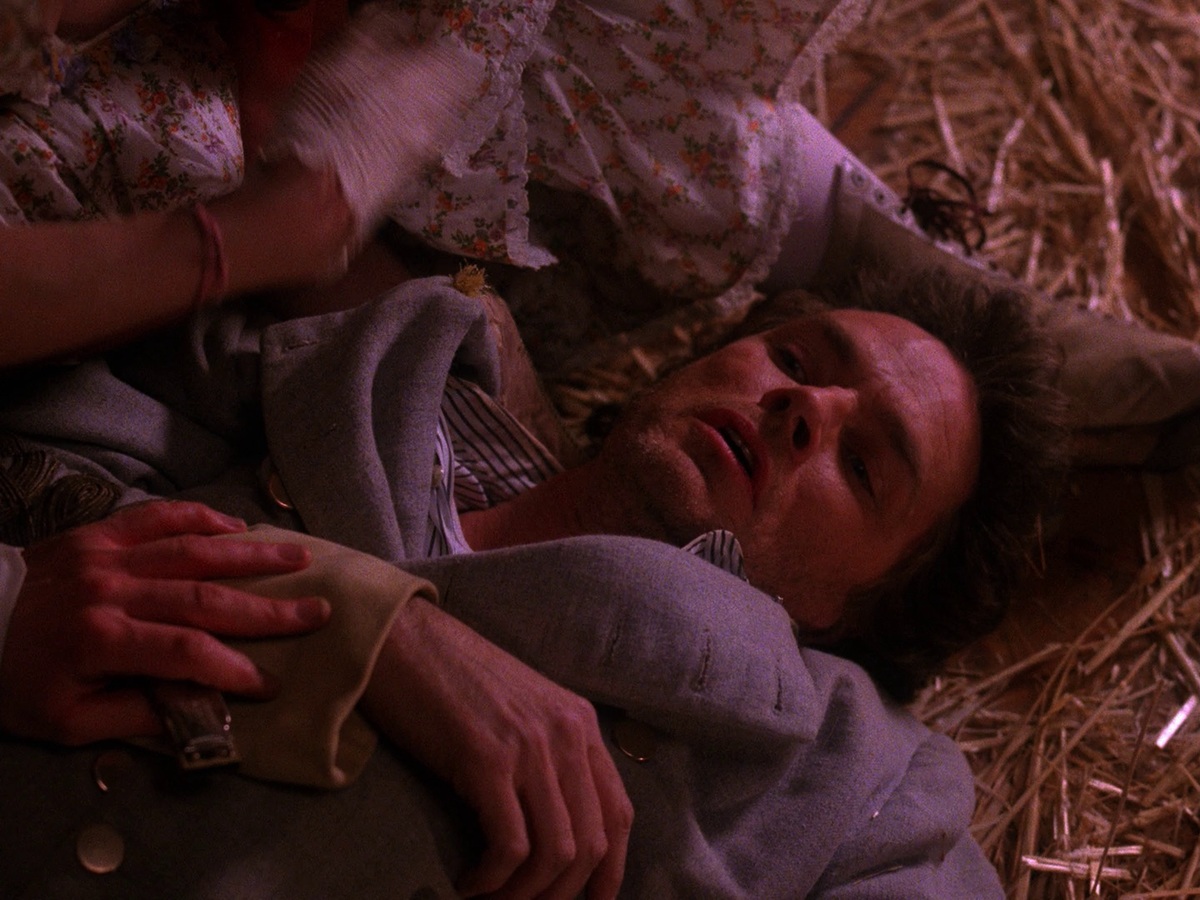
When he collapses and wakes, the participants gather around him. His account of having dreamed them into the war recalls another familiar kind of homecoming narrative. Their costumes remain a comic problem after the illusion has ended. The episode lets the set survive its fiction, revealing the work that went into it.
Staging Ben’s return · 3 images
A rehearsed explanation changes its victim
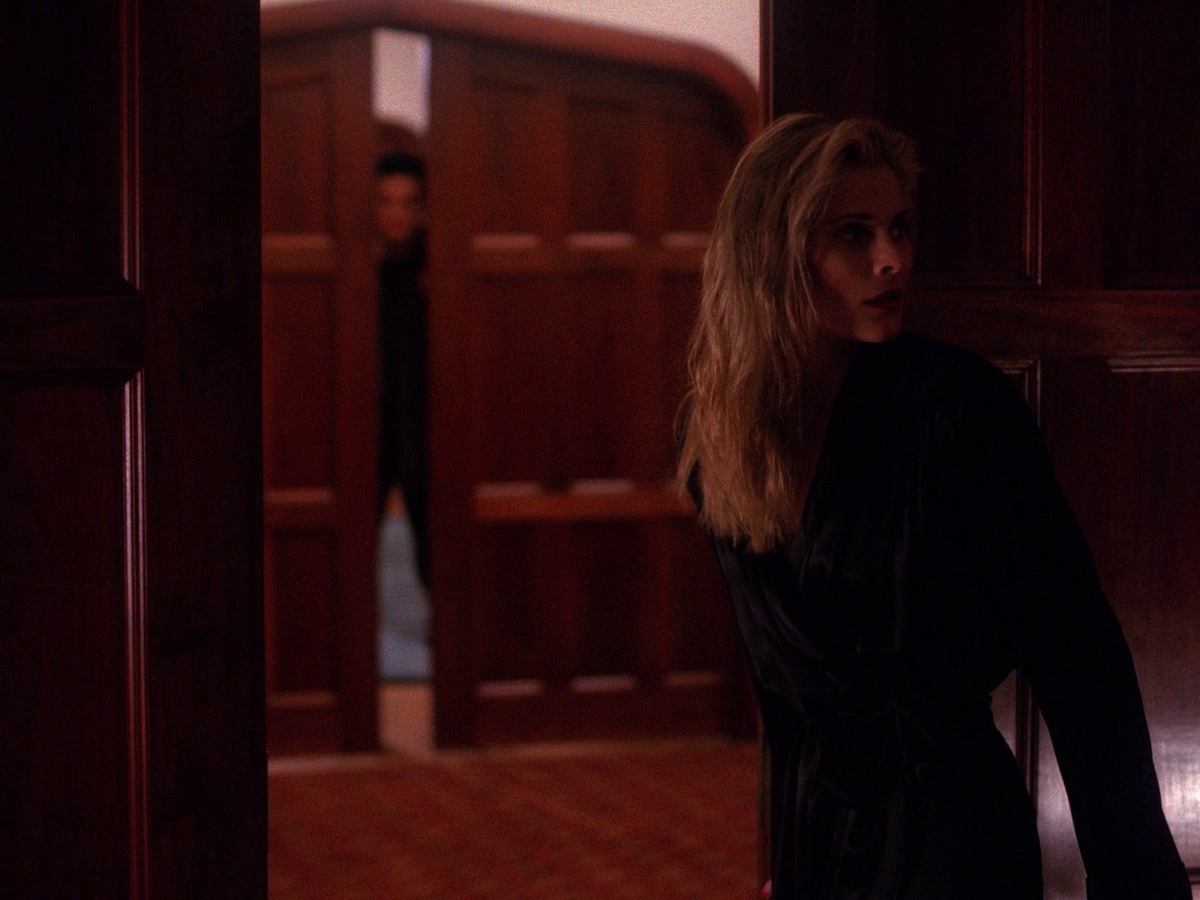
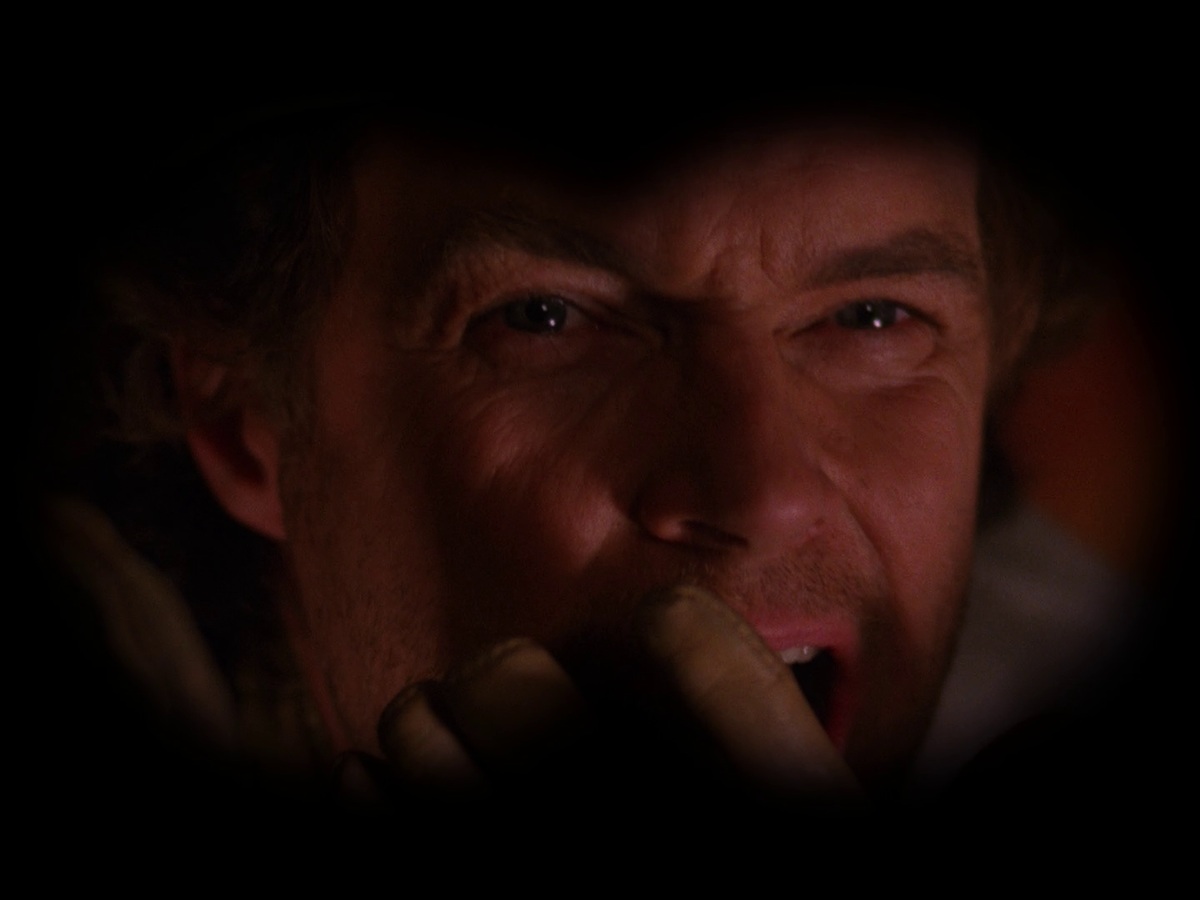
Evelyn admits to James that she helped lure and hold him while Malcolm planned the frame. She names money, fear and desire without reducing them to one clean motive. James’s wish for a hidden innocent person inside the conspiracy cannot absorb that answer.
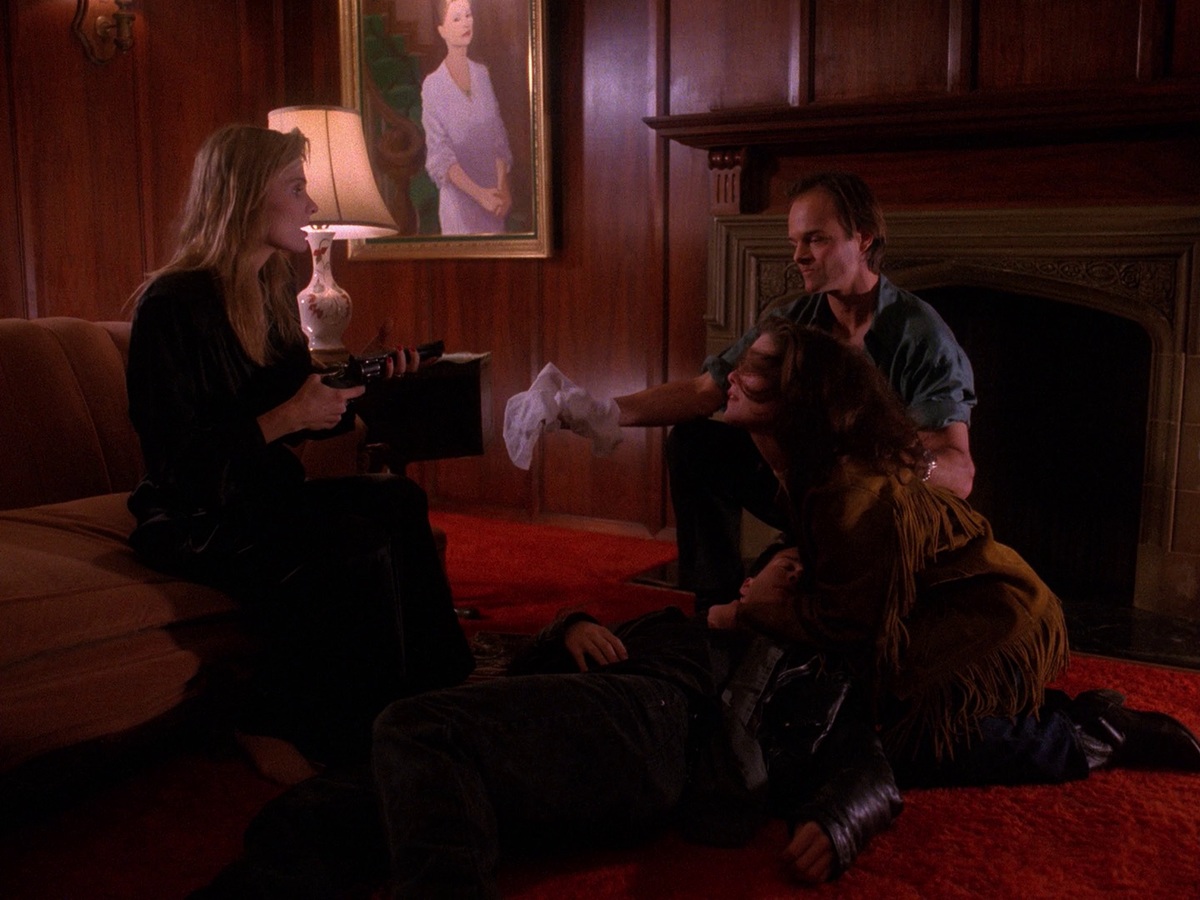
Malcolm then supplies the account that is supposed to follow James’s murder. He speaks the future as if it were already a witness statement: James entered, threatened Evelyn, and was shot. The proposed fingerprints on the gun would make an object corroborate the invented speech.
Donna’s arrival and Evelyn’s refusal break his control of the immediate action. After Malcolm is shot, Evelyn repeats the same explanatory structure with him as its subject. Language survives the reversal. Her words may now describe an act of resistance, but their borrowed form leaves the scene troubling rather than cleanly exonerating everyone involved.
The gallery keeps the confrontation and its aftermath together. It is the transfer of control over the story, as much as the gun, that resolves the immediate danger.
The plan breaks apart · 2 images

A likeness without a living person
Earle moves through the hotel in disguise, delivering a letter while Cooper passes nearby. The two men share a space without sharing recognition. The disguise demonstrates the same imbalance as the packages: Earle chooses when his presence becomes knowable.
In Cooper’s room, Caroline’s likeness occupies the bed. The pale mask combines intimacy with absence. Cooper can hold an image of her face, but Earle’s recorded voice controls the encounter. The room that should offer privacy has been arranged by his opponent.
The voice returns the case to Pittsburgh and their continuing love for Caroline before ordering Cooper to move. The chess challenge is inseparable from bereavement, jealousy and remembered guilt. Earle has made an object and a recording perform an encounter he does not have to attend.
The separate Log Lady introduction reflects on a death mask as a physical likeness without the animating spark of a person. Read beside this ending, its distinction between a preserved face and a living presence becomes especially pointed. The association does not resolve Caroline’s story; it clarifies what the object can and cannot return.
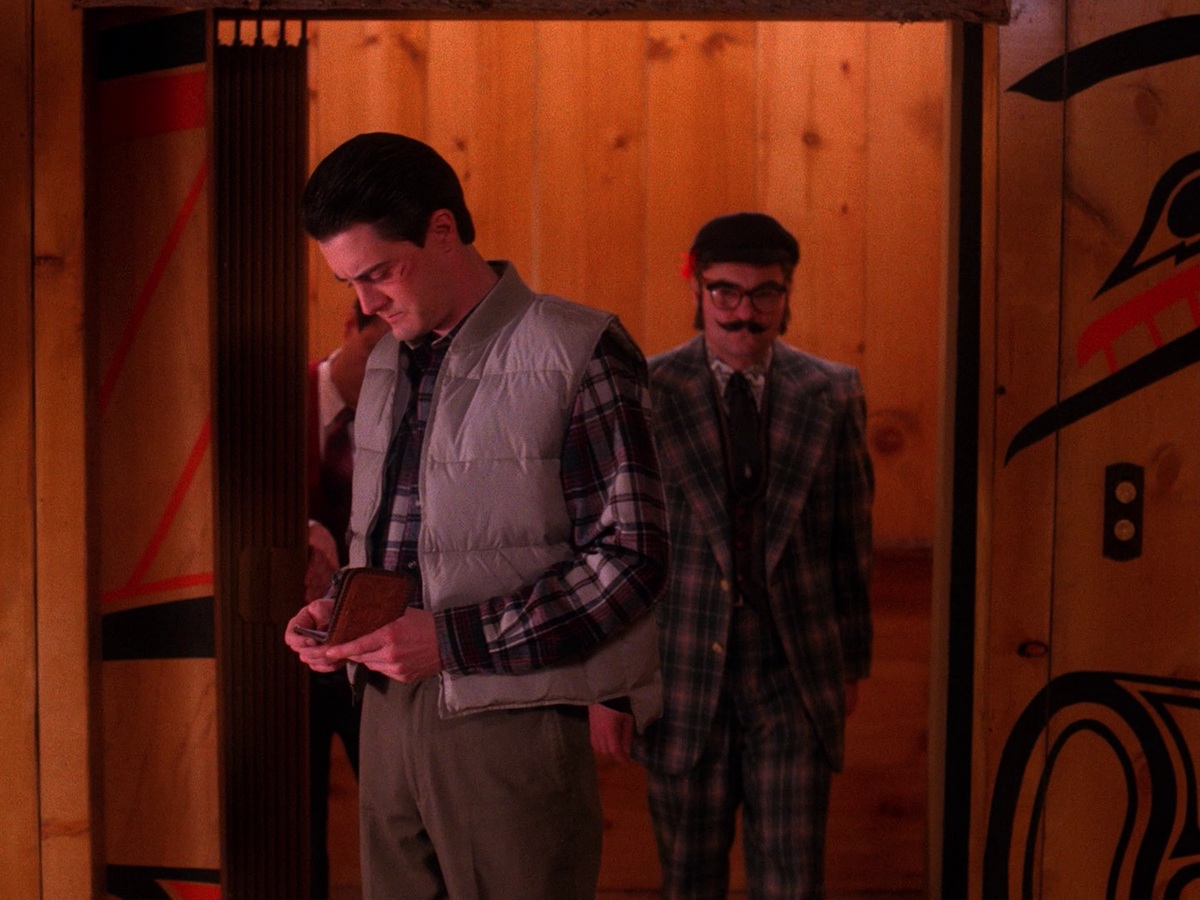
Voices that organise other people
The episode repeatedly gives one person the power to script another: Malcolm rehearses Evelyn’s statement, Earle supervises Leo’s letters, and Jacoby’s group stages a surrender for Ben. Their purposes differ sharply, but all depend on someone else speaking or acting inside a prepared account.
Music and recorded speech belong to those arrangements. Earle’s flute is both a performed sound and a threatening object. The public singing in Ben’s fantasy makes hotel workers participate in its atmosphere. At the end, a recording lets Earle speak from inside Cooper’s room without being there.
The caption track identifies flute playing, screams, singing, horn and harmonica at specific points. These cues help locate the relationship between performance and coercion; they do not establish an exact music cue title or a claim about how the soundtrack was recorded.
A route through Slaves and Masters
- The widow’s account. Malcolm and Evelyn direct police attention toward James.
- The cabin. Earle converts Leo’s dependence into obedience.
- A possible future. Ed and Norma reckon with the years apart.
- An image under investigation. Josie’s coat and photograph become evidence.
- Two kinds of games. Pete helps Cooper while Ben’s family stages a surrender.
- The repeated story. Malcolm’s plan changes its victim.
- The empty likeness. Caroline’s mask and Earle’s recorded voice enter Cooper’s room.
Sources and connections
Primary source: Twin Peaks, “Slaves and Masters,” Season 2, Episode 15 / overall Episode 22, and its Log Lady introduction in Twin Peaks: From Z to A. Diane Keaton’s directing credit is visible in the opening sequence. Dialogue and sound-cue references were checked against the English caption track. Scene interpretations concern the finished images and dramatic situations.
Continue through the Season Two dossier, return to Double Play, or explore the performers’ recollections of joining the series.