Twin Peaks: Episode 21 — Double Play
1991 · Season 2, Episode 14 · Directed by Uli Edel
A corpse becomes a chess move, an unfinished house turns hostile, and Cooper’s former partner steps out of the past. Follow the episode’s dangerous invitations and competing stories.
Season 2, Episode 14 / overall Episode 21. Contains episode spoilers; focused image galleries open on request.
Explore this episode
A body placed for Cooper
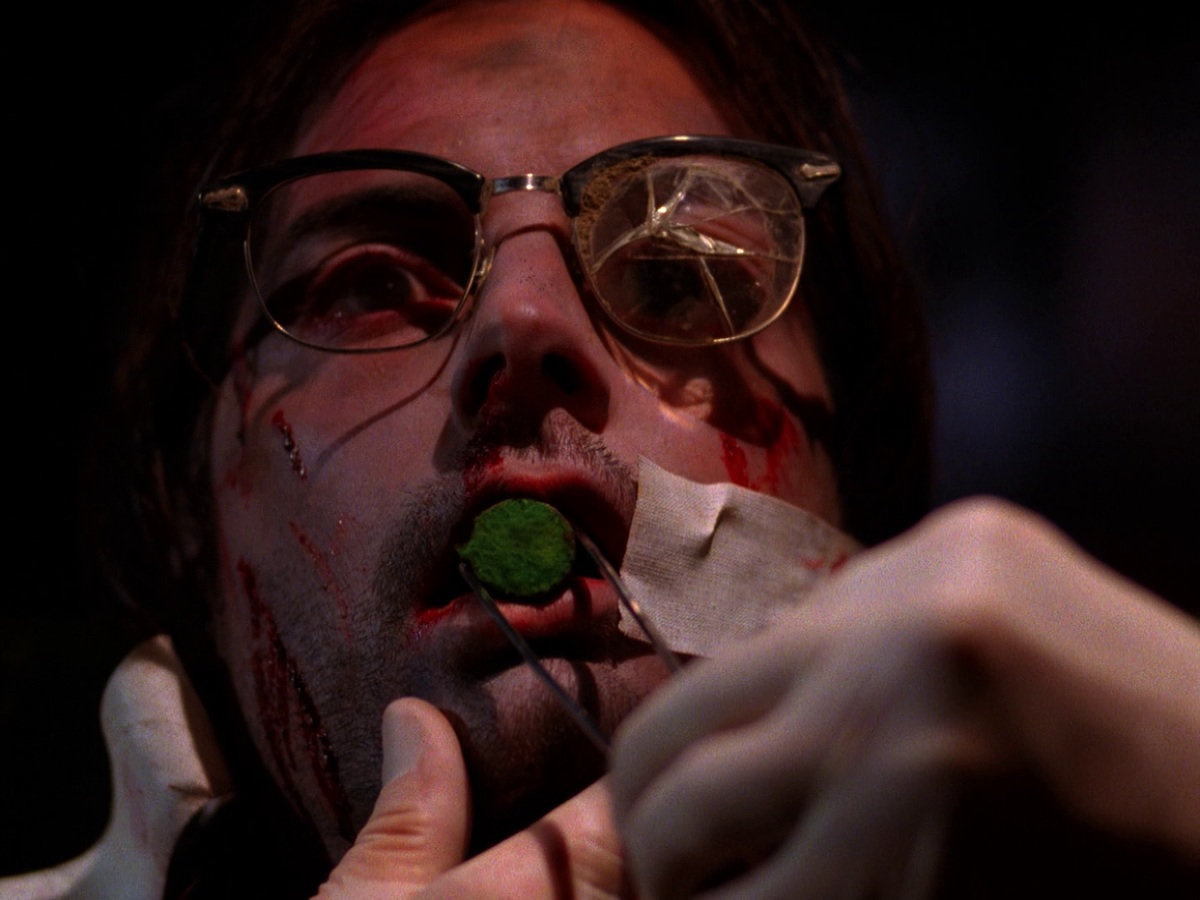
The dead man in Truman’s office has been arranged as a message. A chess piece in his mouth turns a person into a move in Windom Earle’s game. Cooper recognises the method and reconstructs a concealed wound before the examination confirms it. Knowledge that makes him useful to the investigation also identifies him as its intended audience.
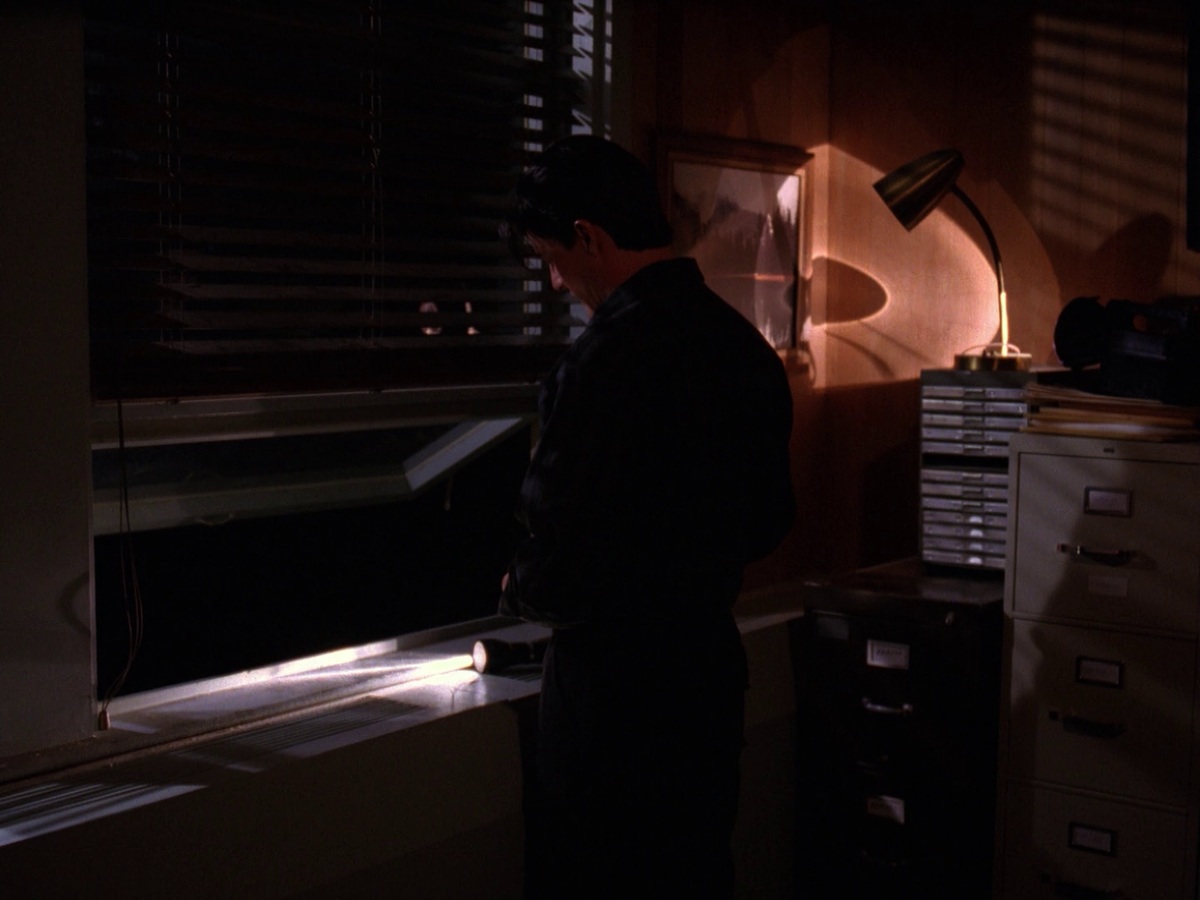
The reconstruction takes the detectives back to the station’s blackout and distraction. Earle has used the disruption around the wedding to enter a building associated with safety and procedure. The window, the office and the position of the body make the threat spatially precise: this adversary can reach the place where the investigation organises itself.
That distinction separates Earle’s challenge from a mystery built only around discovering a name. Cooper already knows whom he fears. The difficulty is preventing someone who knows his habits from choosing the next victim. The anonymous man remains a reminder of the human cost behind an apparently elegant game.
Shelly’s home becomes a trap
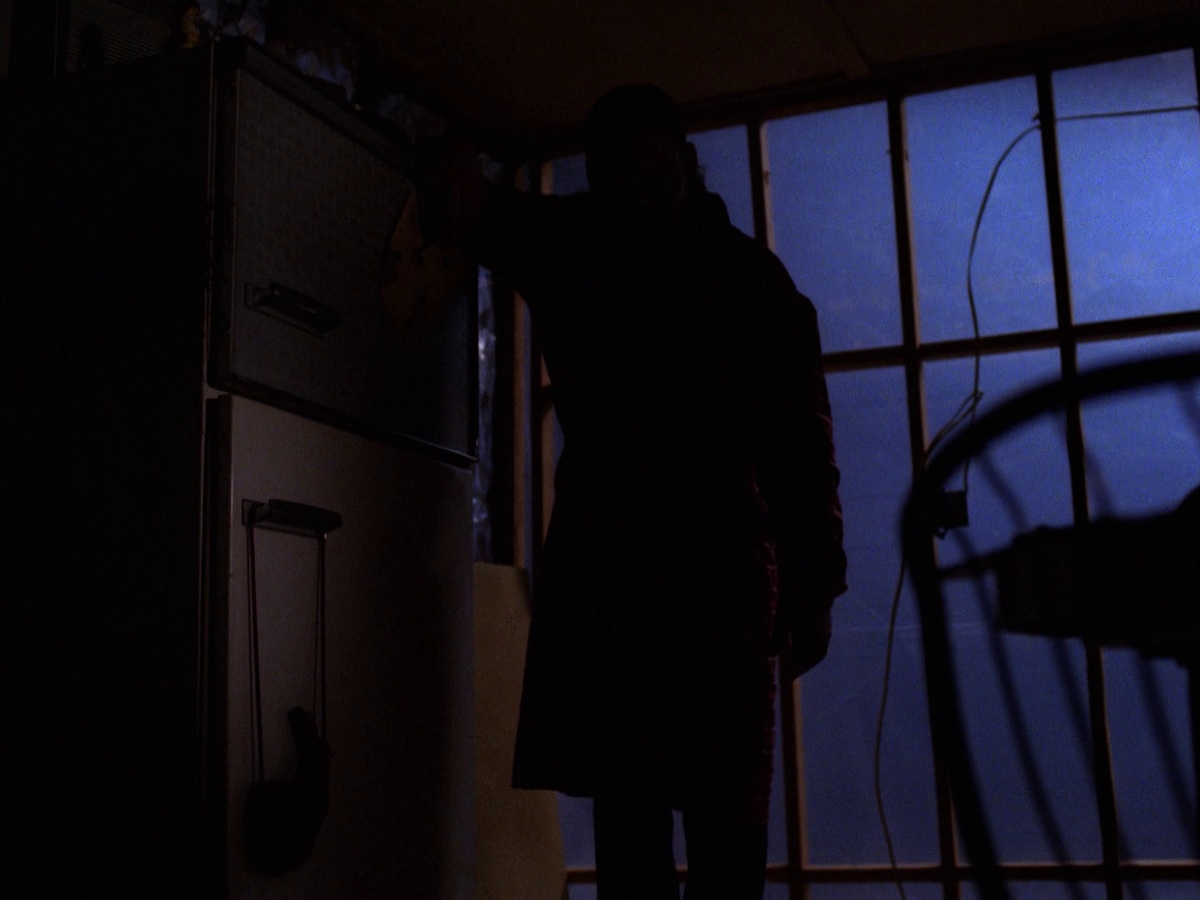
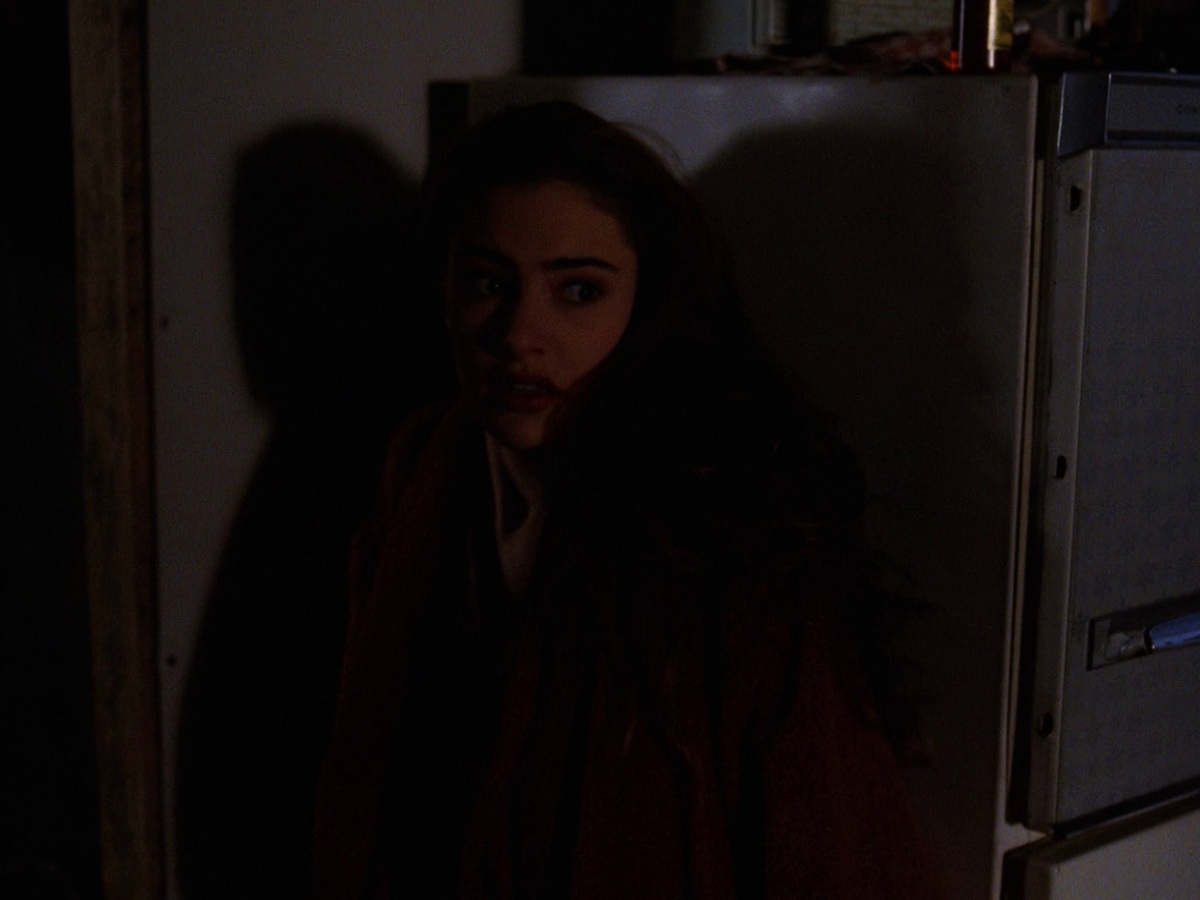
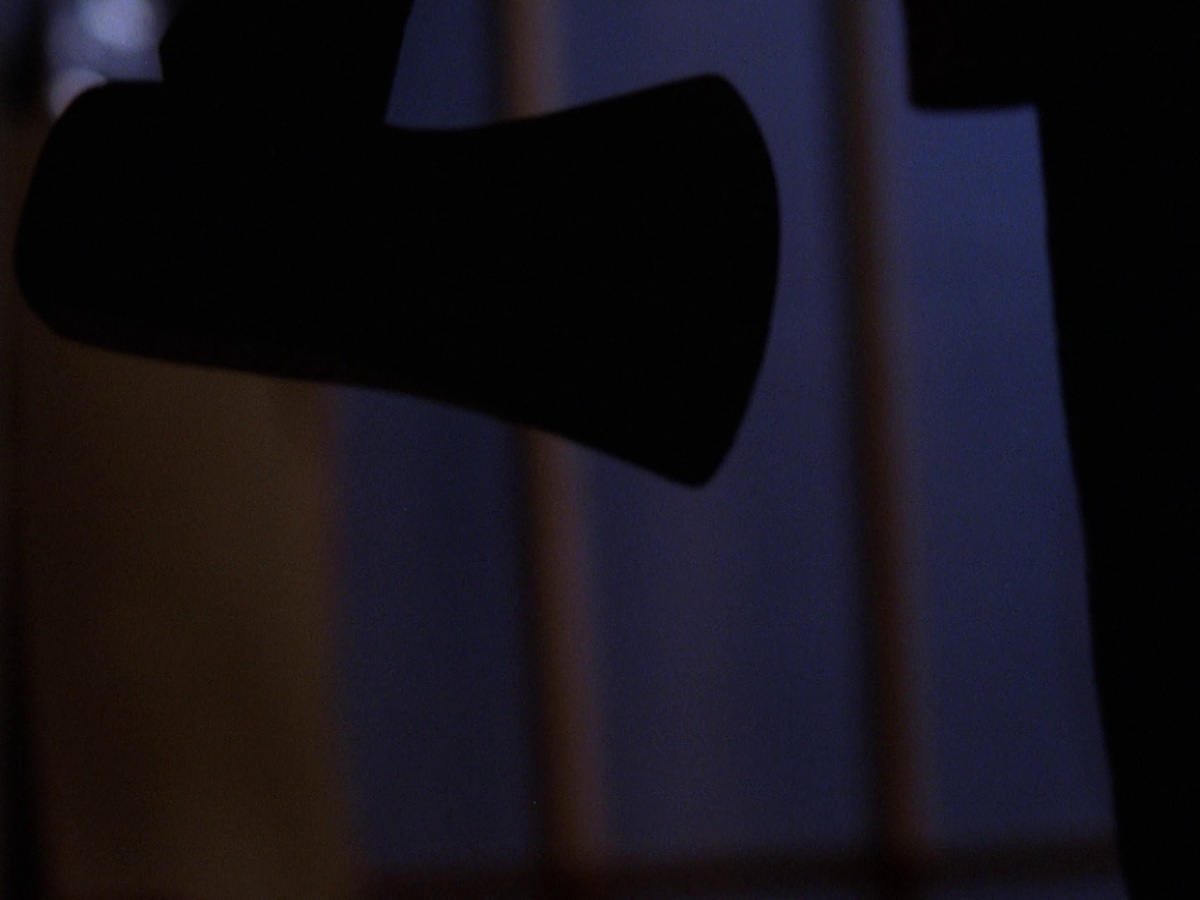
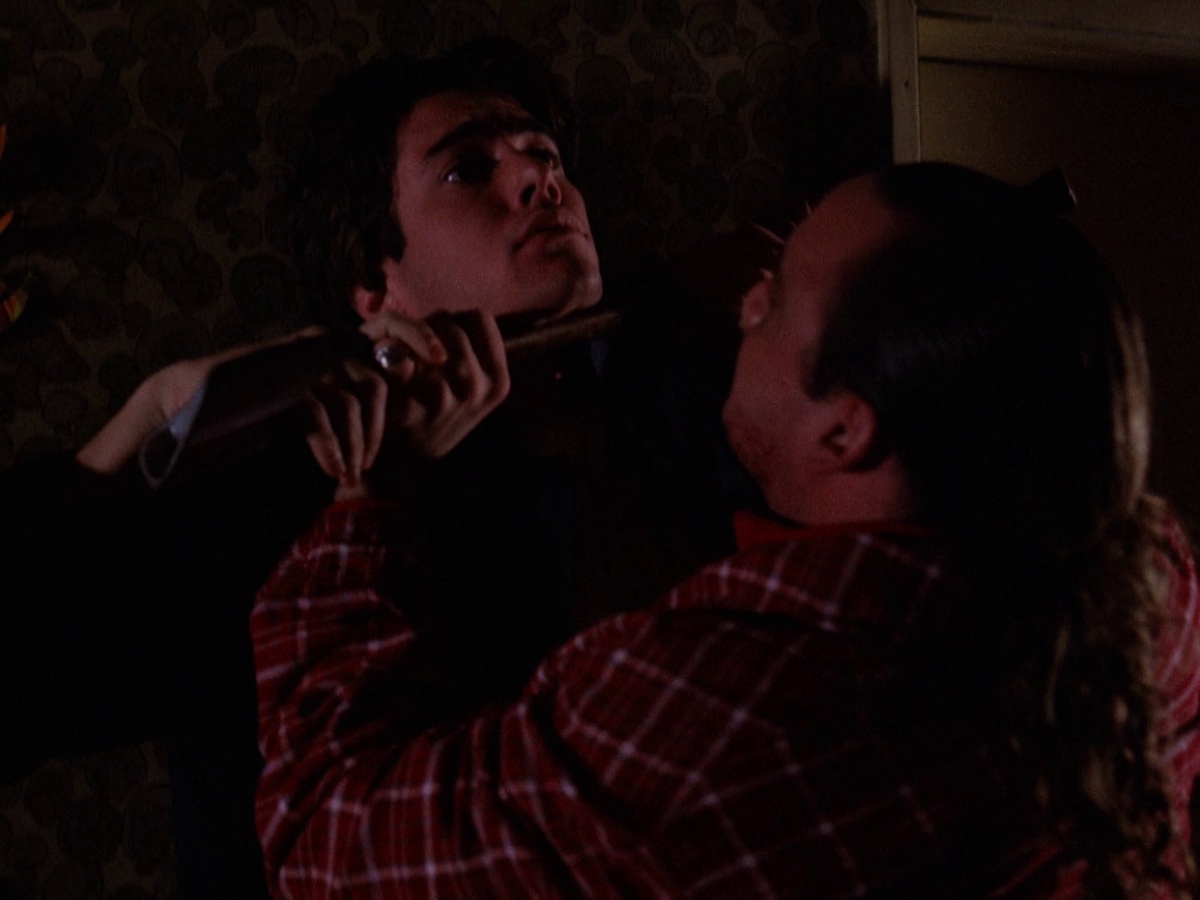
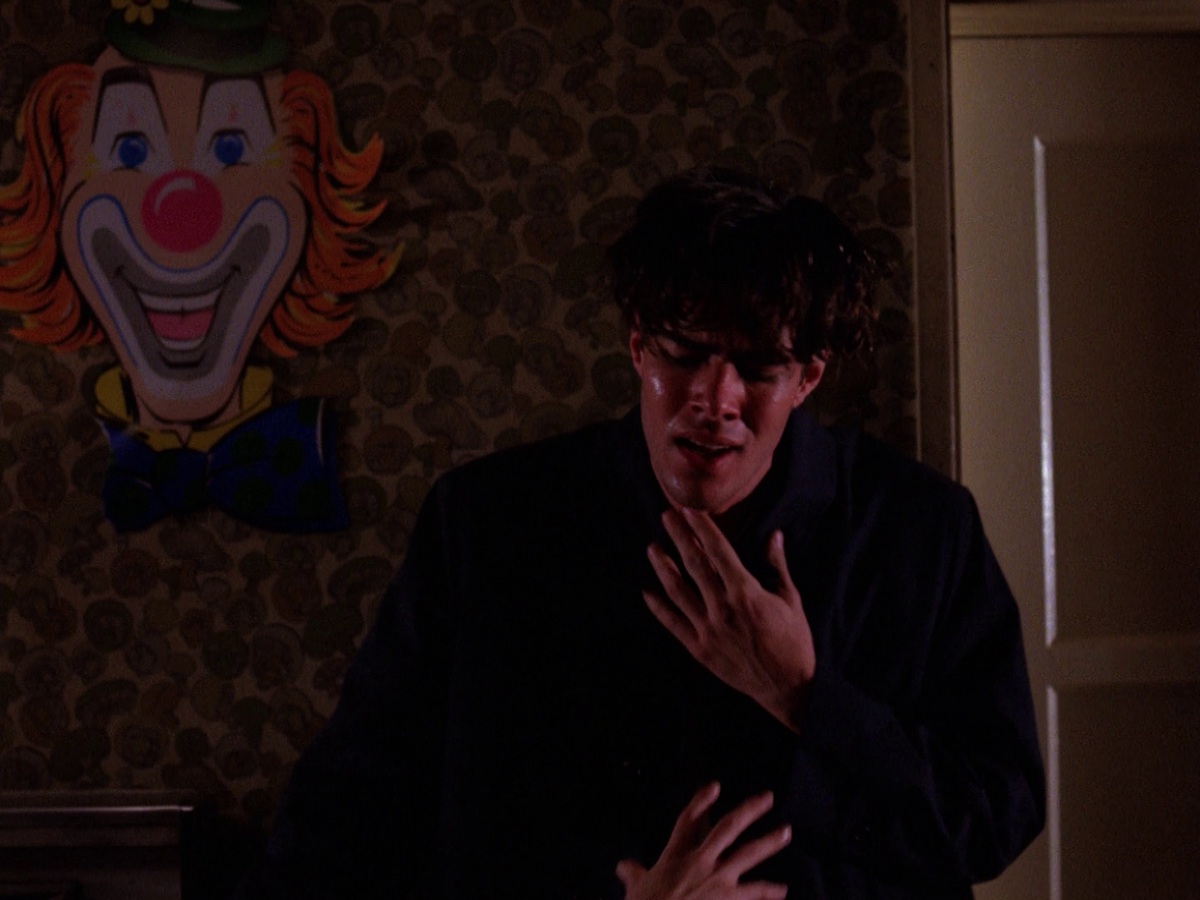
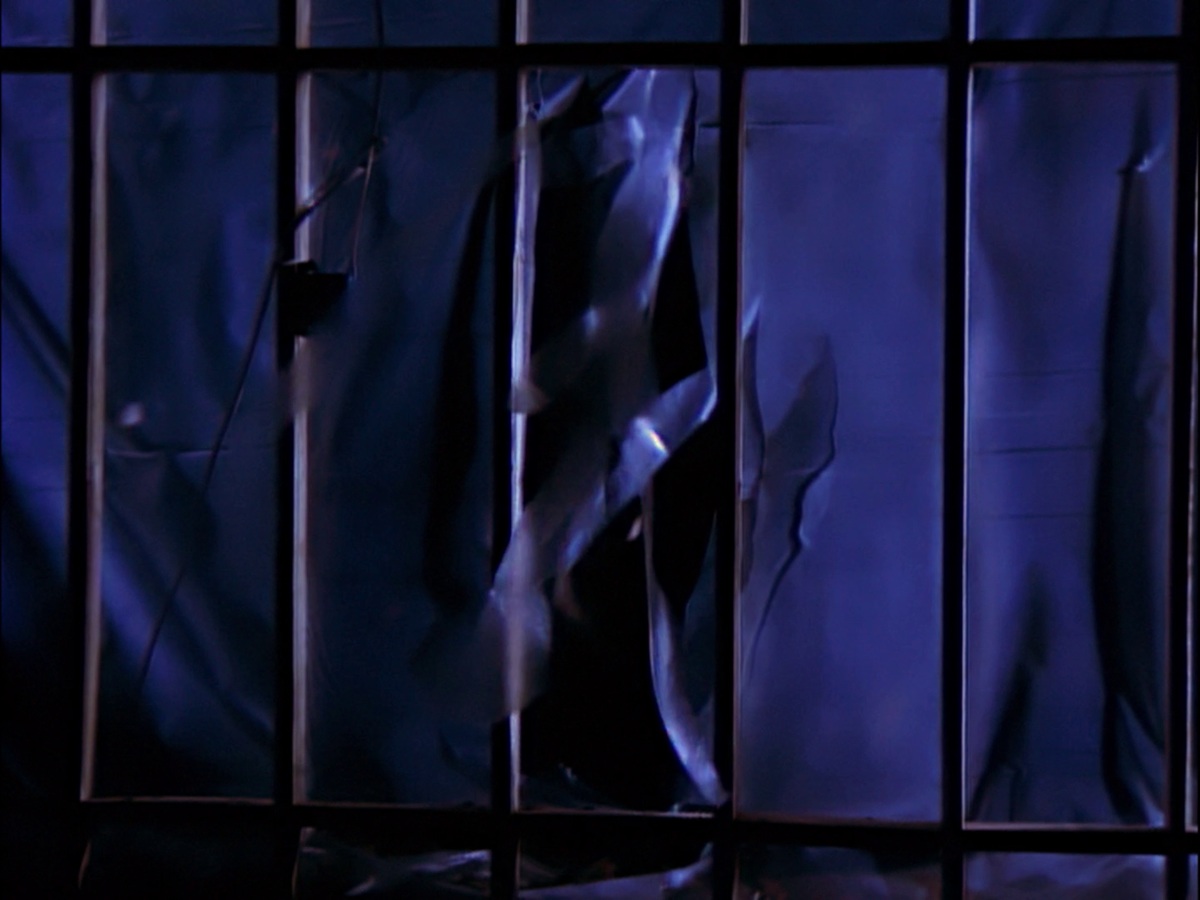
Leo’s return to movement transforms the unfinished house. Shelly has been living with his apparent incapacity; now the open spaces, refrigerator and covered windows become obstacles and routes of approach. Blue light through plastic makes the room look exposed while offering little protection. The red clown image intensifies the contrast between domestic decoration and terror.
The sequence repeatedly changes the apparent route to safety. A doorway can disclose Leo, a window can be interrupted by an axe, and Bobby’s arrival does not immediately end the danger. Leo turns on him, forcing Shelly to act. The dramatic movement depends on changes in the balance between three bodies rather than on treating a single weapon image as the whole scene.
The encounter also reverses the couple’s earlier plan to profit from caring for Leo. The body they had discussed in financial terms becomes violently active, and the house no longer supports their fantasy of a manageable arrangement. Shelly’s resistance remains central: she is not simply the person a visiting man rescues.
The optional gallery follows the staging through the refrigerator, silhouette, axe, struggle and torn window. It records visible action and aftermath; it does not infer a particular stunt rig or effects method from the finished image.
Inside the unfinished house · 6 images
Caroline changes the meaning of the game
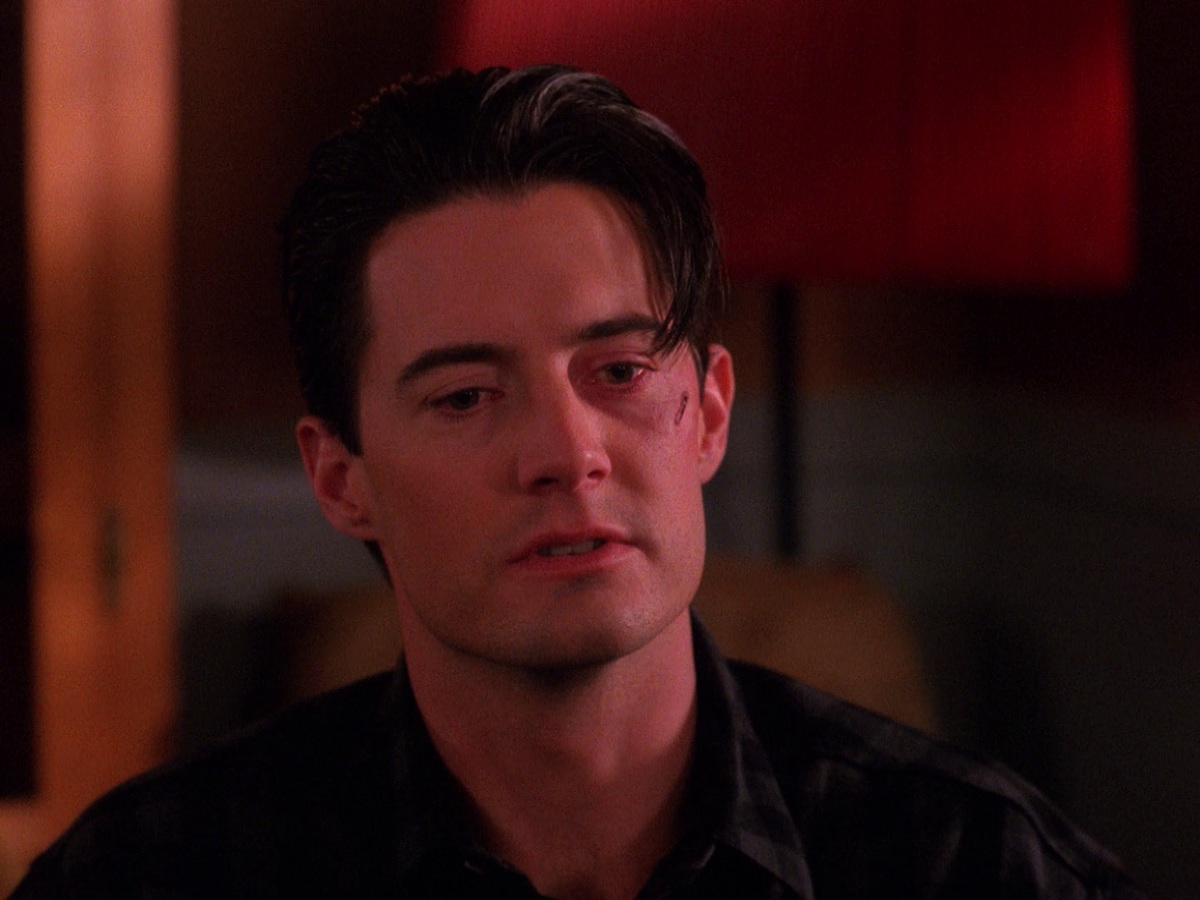
Cooper’s account of Caroline gives the chess challenge an intimate history. She was a witness he was protecting; he fell in love with her, was wounded when he let down his guard, and she was killed. His eventual disclosure that she was Earle’s wife changes the relationship between professional failure and personal grief.
The scene unfolds through Cooper’s sustained explanation to Truman. It is a confession about the limits of his own judgment, not a demonstration of the infallibility he appears to possess beside the body. The earlier procedural confidence and this admission belong to the same character.
Cooper believes Earle killed Caroline and feigned insanity. Those claims are presented as his assessment of his former partner. Keeping that point of view visible matters: the story asks the viewer to understand why Cooper fears Earle without making every part of his retrospective account an independently established fact.
The episode also distinguishes Cooper’s legal position from his professional one. Criminal charges are dropped, but the Bureau suspension remains. Truman can continue to recognise him locally as a deputy. Friendship and local authority support him while the larger institution remains unresolved.
A repaired car and a prepared accusation
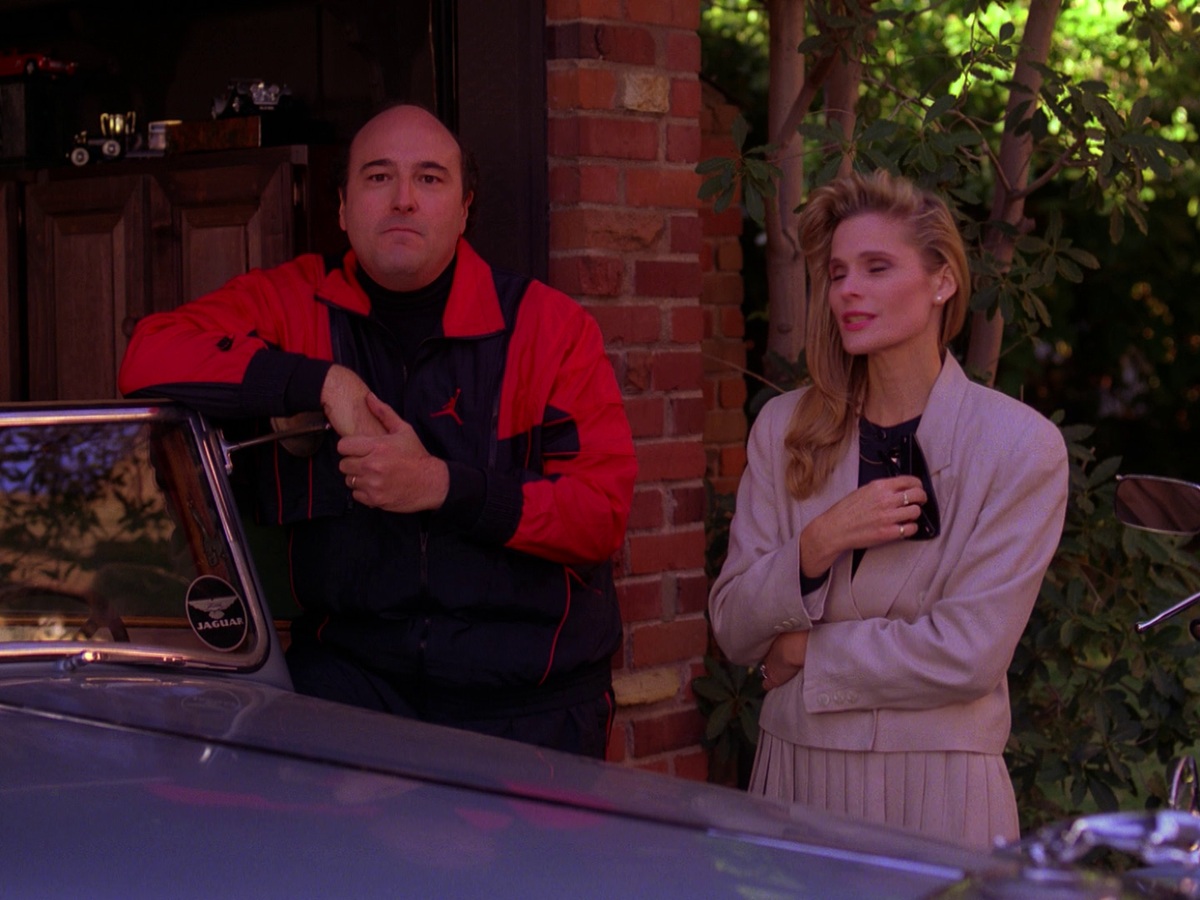
James’s work on Jeffrey’s car gives ordinary competence a terrible vulnerability. He believes he is repairing something; Evelyn and Malcolm have positioned him inside a story they can tell after a death. Jeffrey’s courteous manner complicates the picture of a household that James has received from Evelyn.
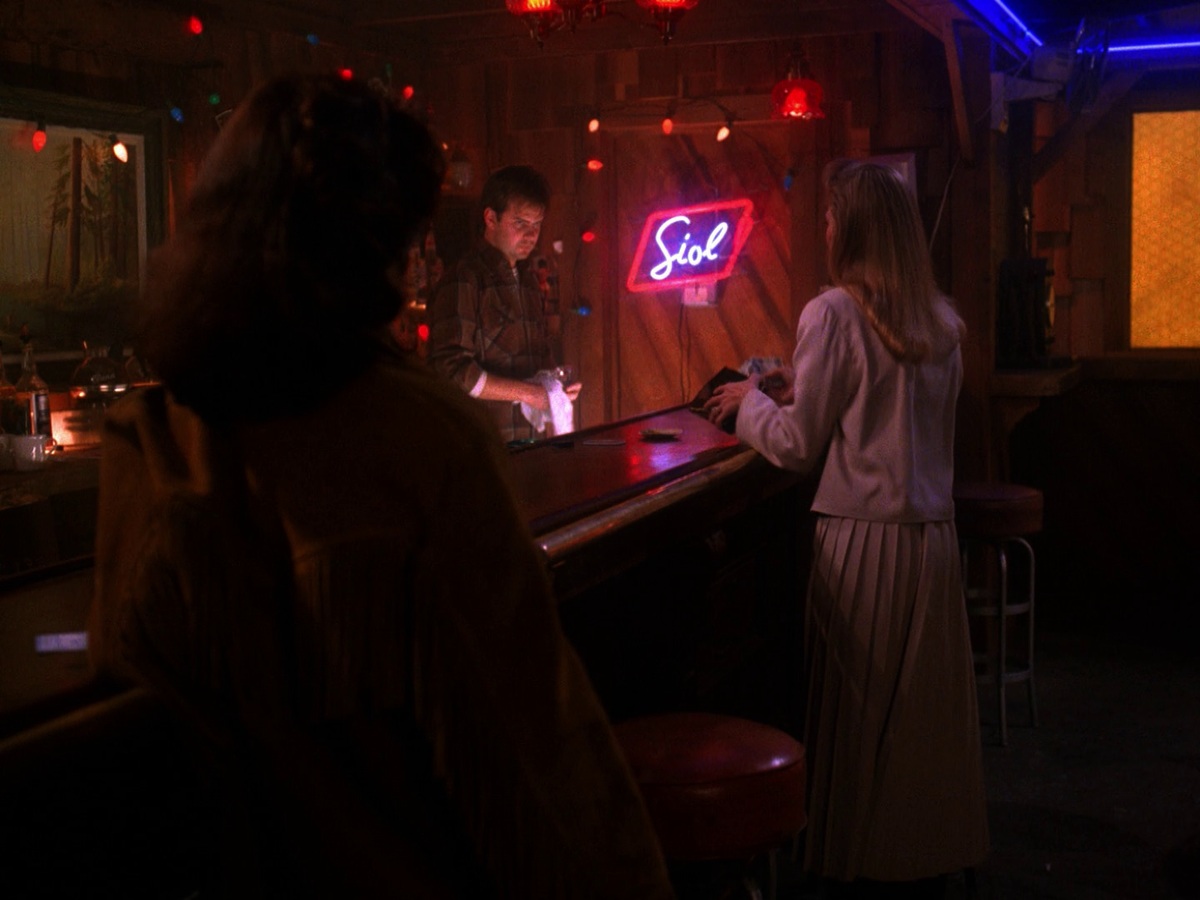
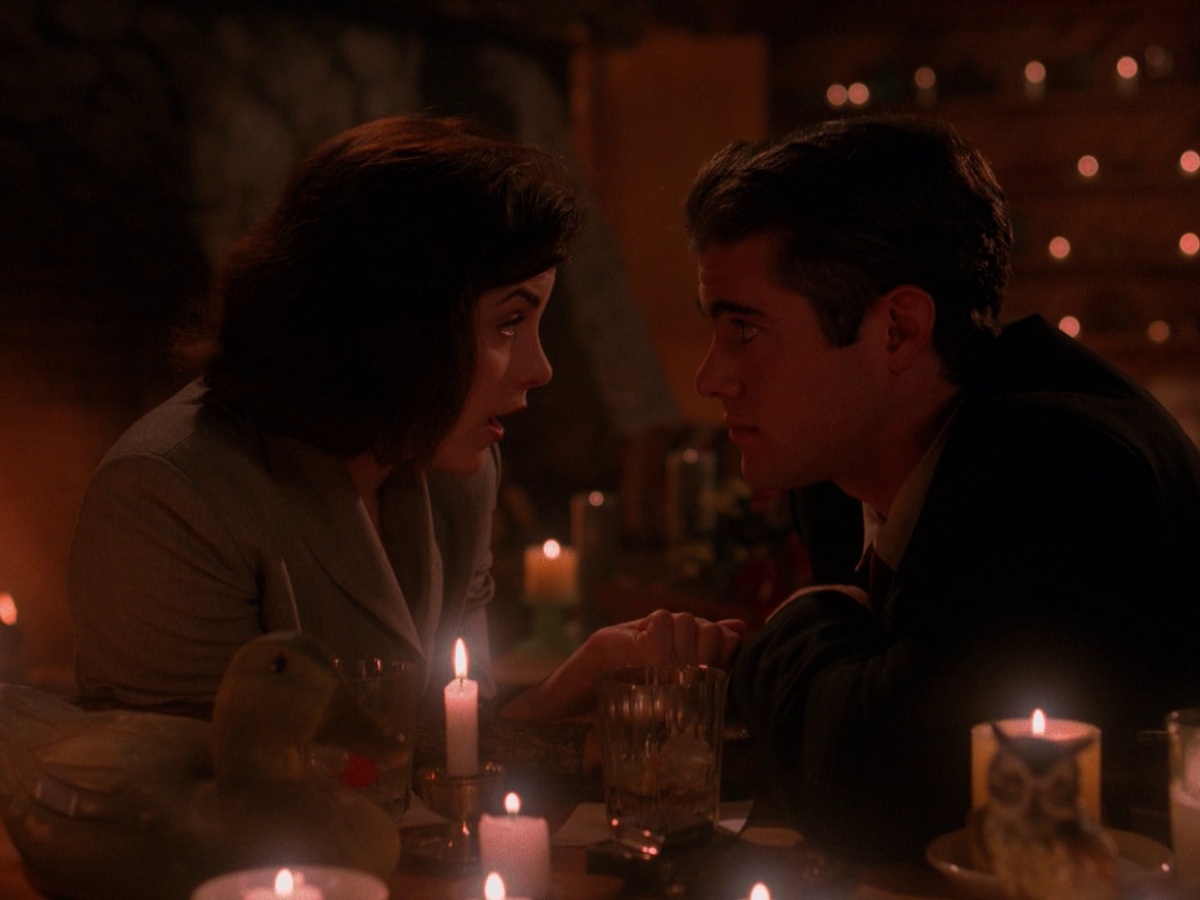
Donna reaches the bar and questions Evelyn, who claims James has gone to Mexico. The scene makes two women’s competing knowledge more important than James’s romantic understanding of the situation. Donna refuses to let an apparently definitive departure close the inquiry.
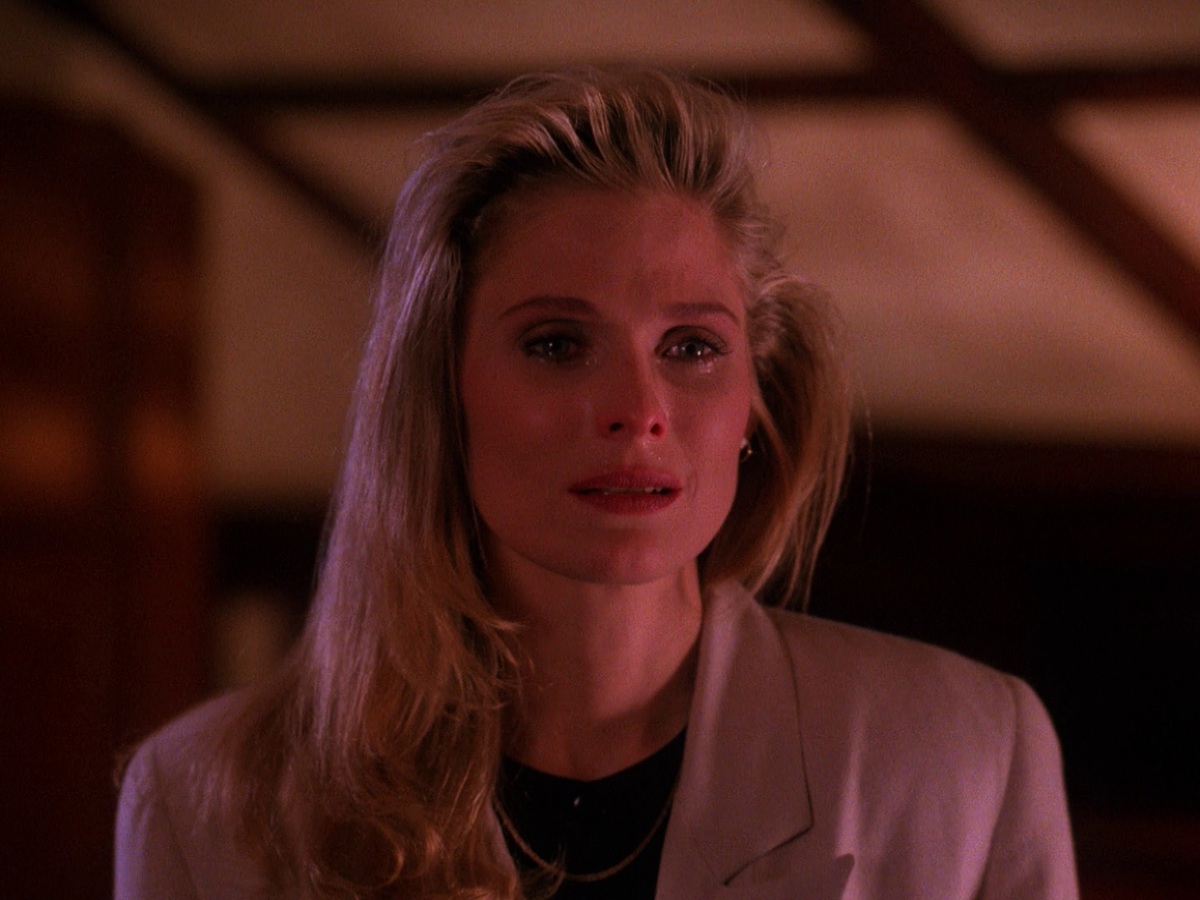
When Evelyn admits the trap, the account changes again: Malcolm is not her brother, and James is to be implicated. The confession does not erase her participation, but it creates an opening for escape. Donna’s intervention turns her from an inconvenient visitor into the person who can get James out of the story written for him.
The story breaks apart · 2 images
Ben’s miniature war
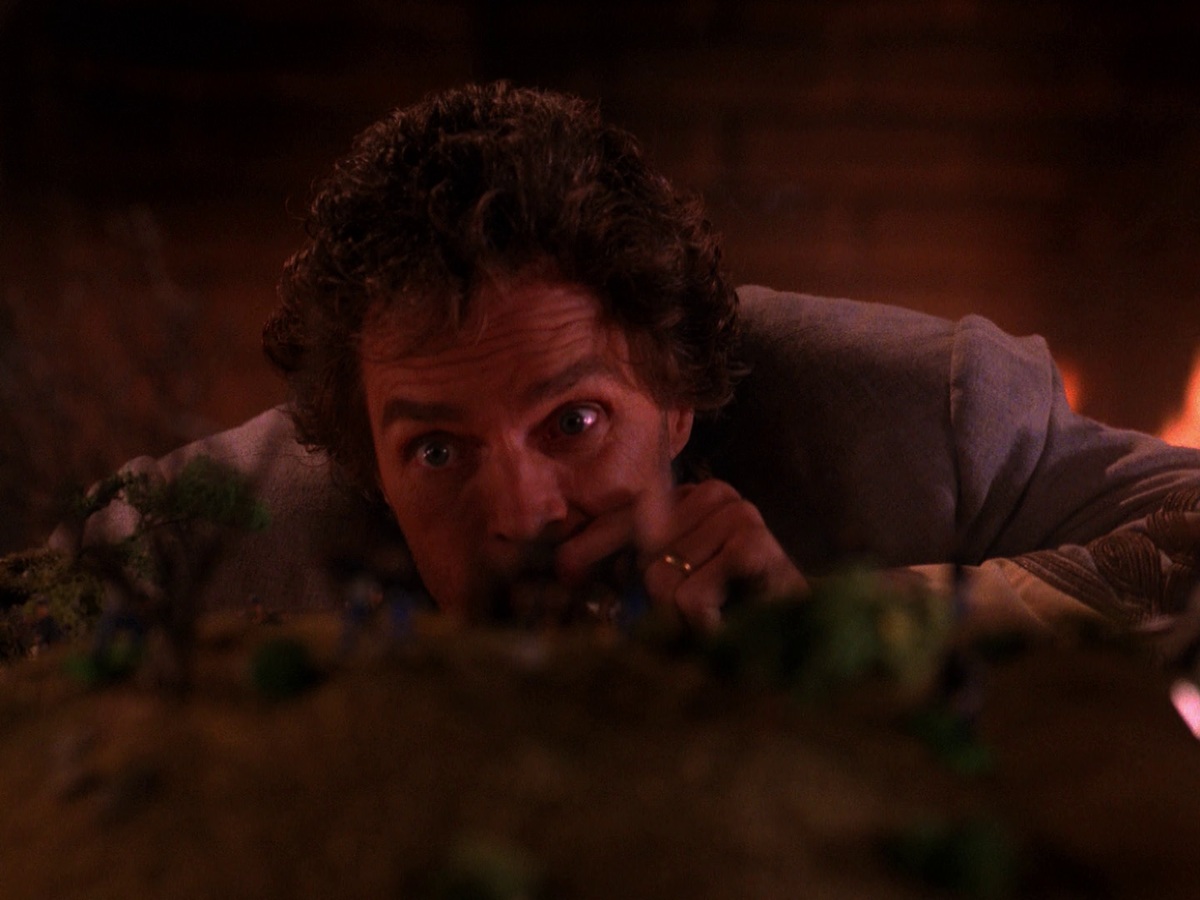
Ben crouches over a model campaign and gives his business environment the language and symbols of the American Civil War. Jerry enters the performance as Jeb Stuart. Jacoby treats the imagined reversal of defeat as a possible way to reach Ben, while the surrounding people must decide how far to participate.
The Confederate flag makes the historical fantasy specific. It should not disappear into a neutral description of a man playing soldiers. Ben wants an altered outcome to a particular war, and the episode places that wish beside his own losses of power and control.
Scale is the visual joke and the psychological problem. A man whose real affairs are escaping him can move through a miniature world as if history were available for correction. Audrey’s handling of Bobby elsewhere offers a contrast: she works with the actual organisation and alters the terms of his employment while her father retreats into an imagined command.
Briggs separates knowledge from confidence
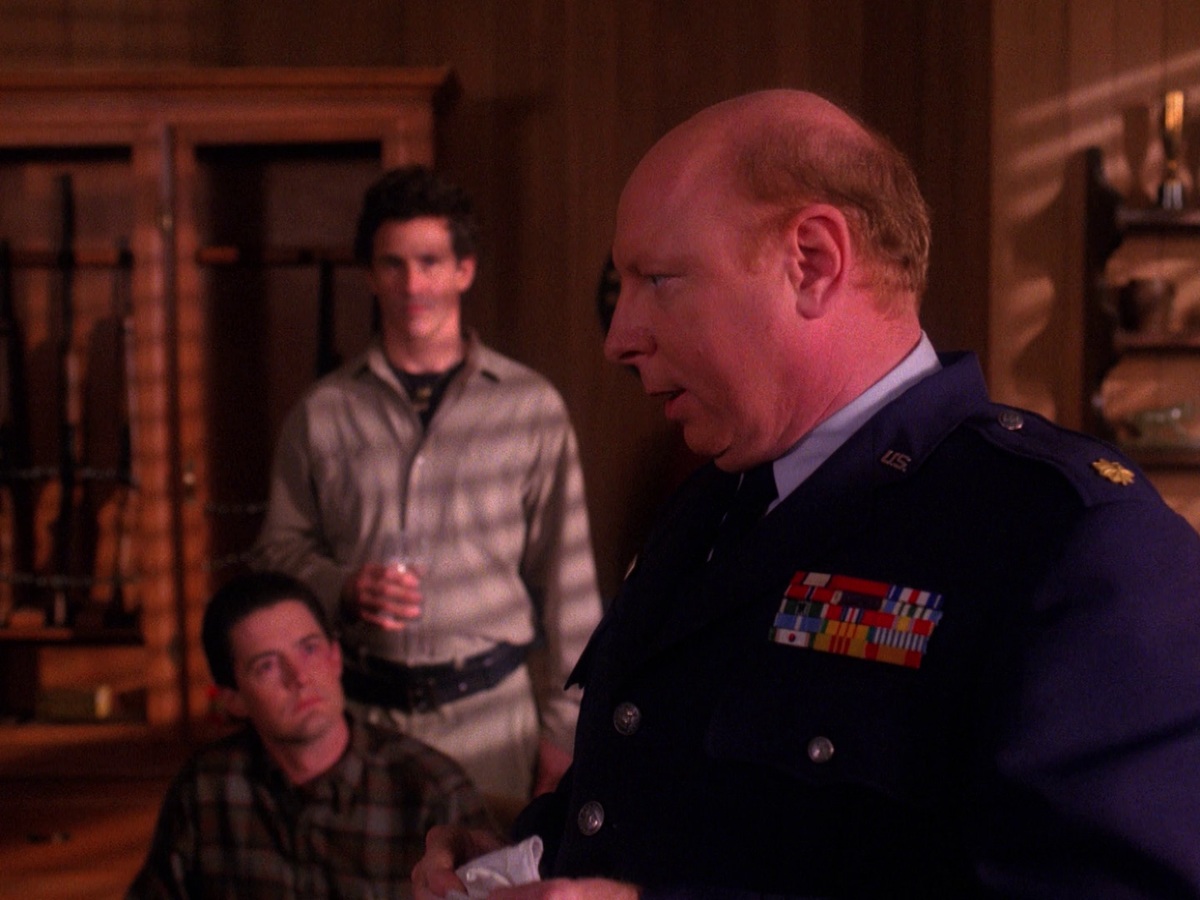
Major Briggs’s conversation with Cooper revisits the difference between an experience and an explanation. He senses a connection to the White Lodge but cannot supply evidence that would make the account secure. The uncertainty belongs to the character’s attempt to understand what happened, not to a missing solution the scene pretends to possess.
His reservations about his superiors give that uncertainty an institutional dimension. Loyalty to a project may no longer mean trusting the motives of everyone who controls it. Read beside Cooper’s account of Earle, the scene places two men inside organisations whose official relationships cannot guarantee safety.
Compare Hawk’s account of the Lodges. The series lets inherited knowledge, official research and personal experience meet without reducing them to a single explanatory voice.
Nicky and the harm of a convincing story
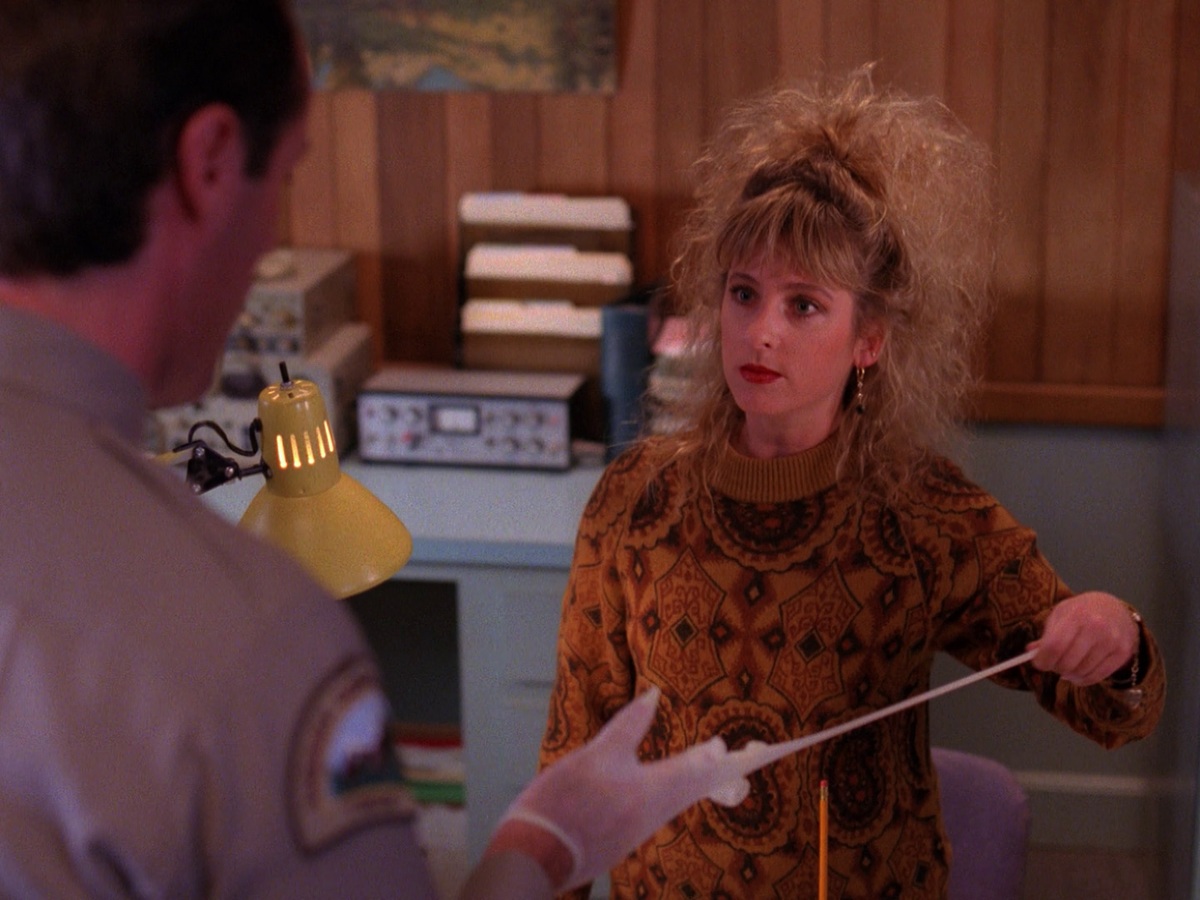
Lucy resists Andy and Dick’s suspicions about Nicky before Dr. Hayward delivers the correction. Their fanciful account has made a vulnerable child into the source of a threat. It is attractive partly because it lets the adults imagine themselves as investigators.
Hayward’s explanation replaces that fantasy with a history of abuse and bereavement: Nicky’s mother died in childbirth, and his adoptive parents died trying to save him. The men’s tearful reaction does not make their earlier behaviour harmless. The comedy turns on the collapse of confidence when the person being discussed finally receives a history.
The episode repeatedly shows stories becoming dangerous when one person controls what another knows. Earle arranges evidence for Cooper; Evelyn supplies James with a false household; Andy and Dick build an accusation around a child. These are very different situations, but each asks what happens when a persuasive interpretation arrives before adequate knowledge.
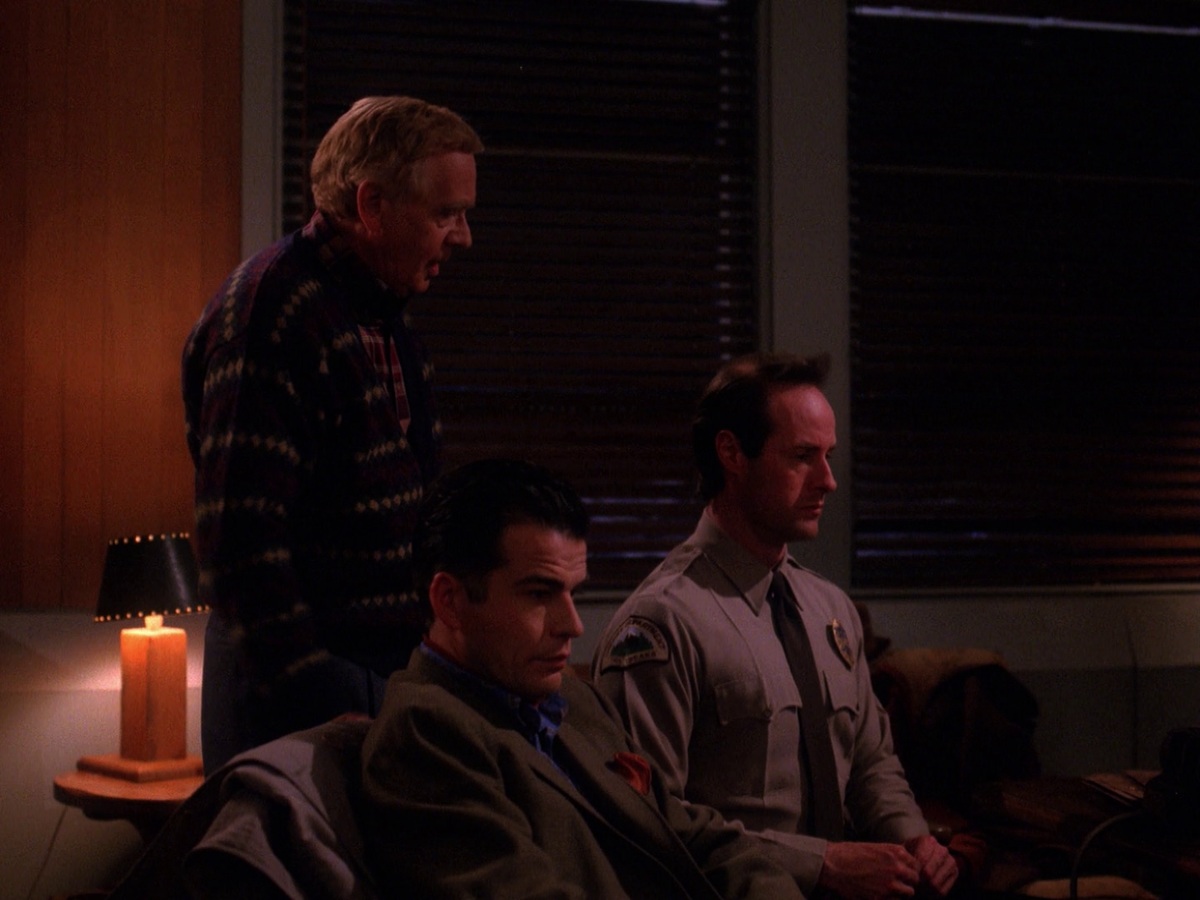
Old relationships return in altered form
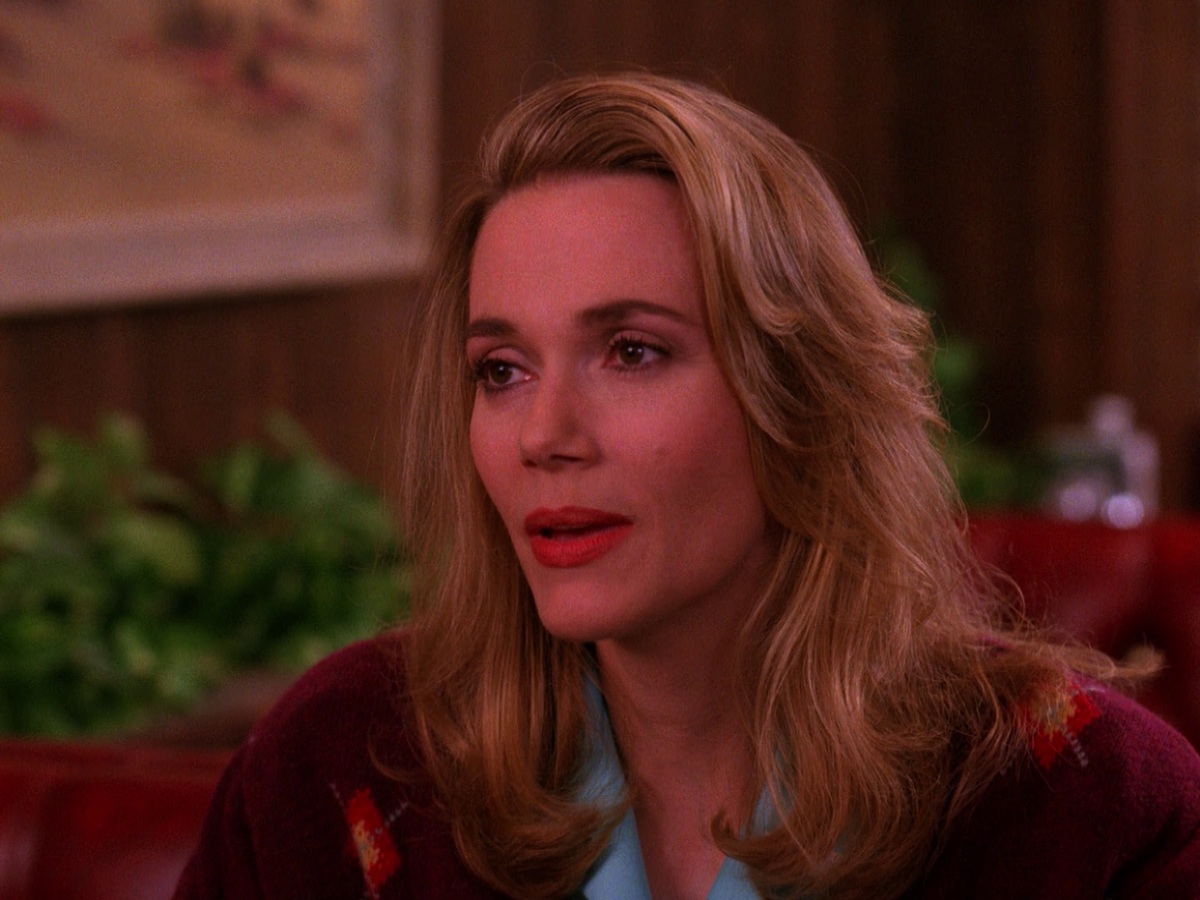
Norma and Ed’s reunion briefly opens a possibility beyond their established marriages. The conversation with Hayward about Nadine’s school life places that hope beside an awkward unresolved responsibility. The episode does not give the lovers a clean new beginning merely because they can now say what they want.
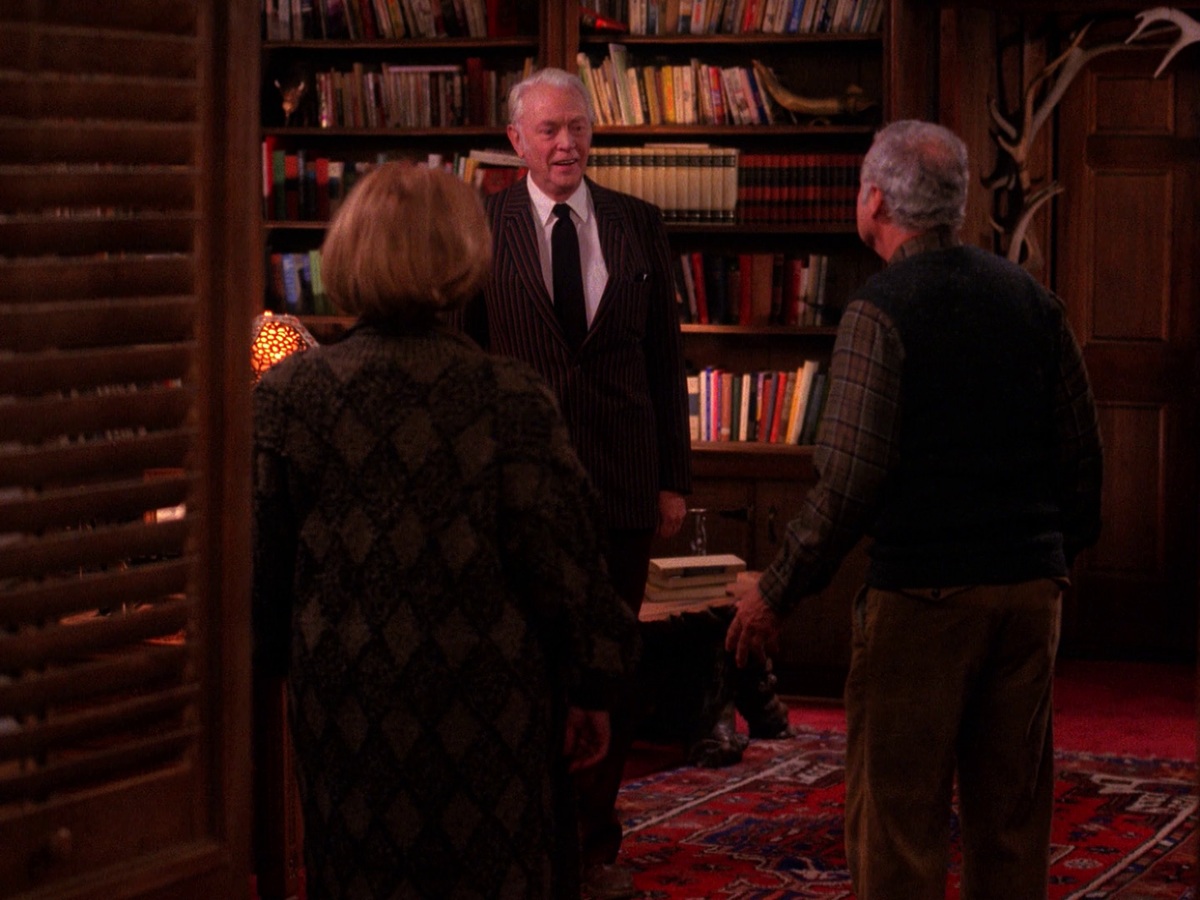
Pete’s introduction to the surviving Andrew Packard turns another supposedly settled relationship into a new problem. A dead man’s return changes Catherine’s advantage and the danger facing Josie. The discussion of Eckhardt mixes family feeling with a plan to use another person as bait.
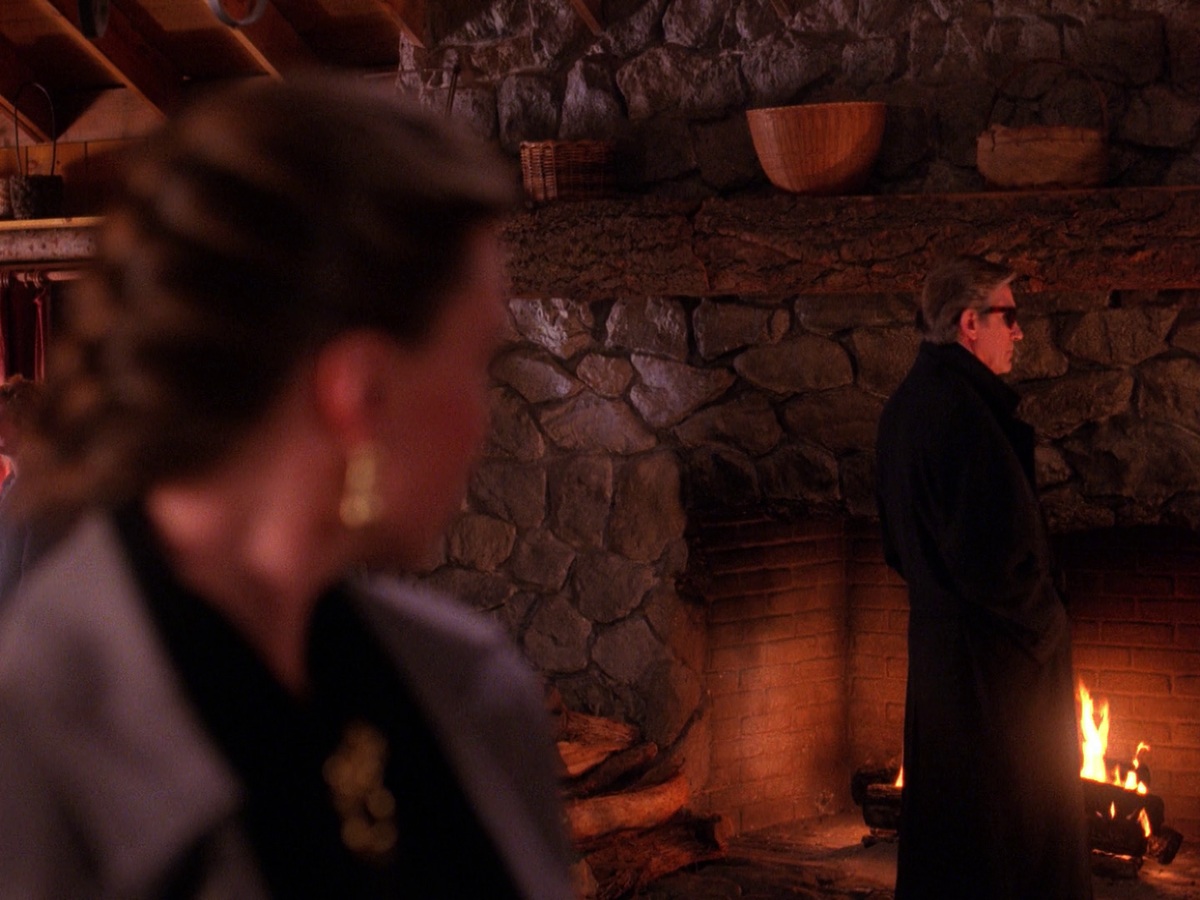
Eckhardt’s arrival at the Great Northern then gives the anticipated threat a physical entrance. The episode moves from other people’s accounts of him to a body occupying the hotel. That transition echoes Earle’s progression from Cooper’s description to the final cabin encounter.
The Packard story reopens · 2 images
Help at the wrong doorway
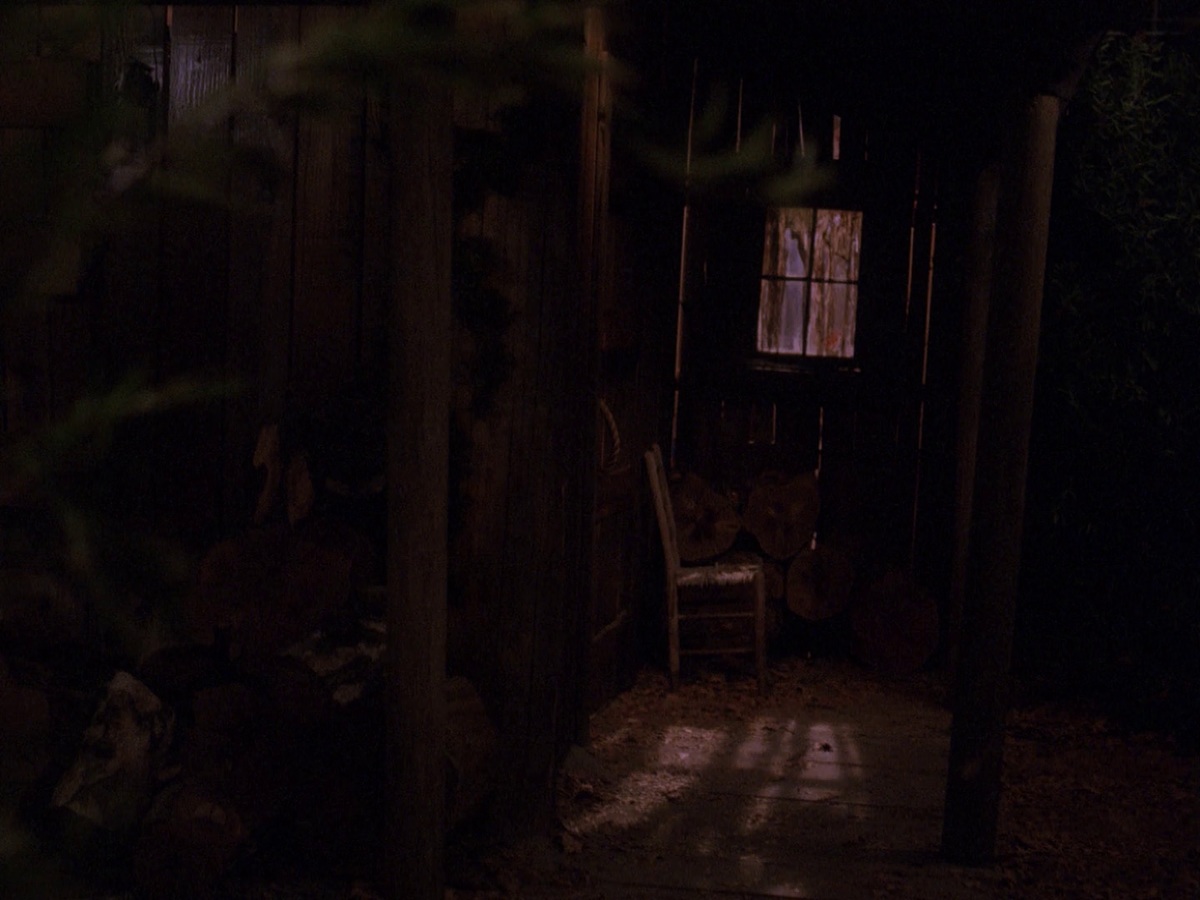
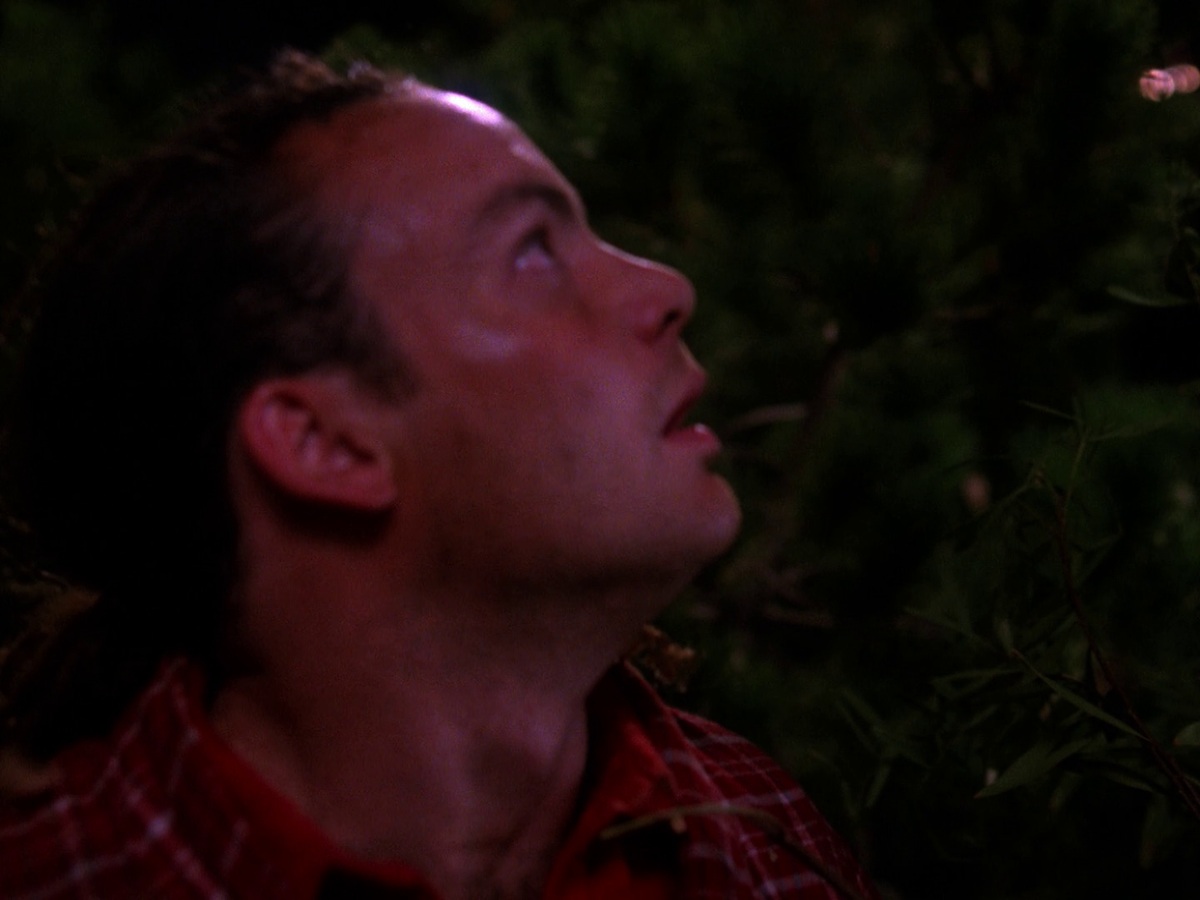
Leo’s movement through the woods changes his scale. In the house he filled doorways and blocked escape; outdoors he becomes a disoriented figure approaching a small source of light. The cabin seems to offer refuge from the dark.
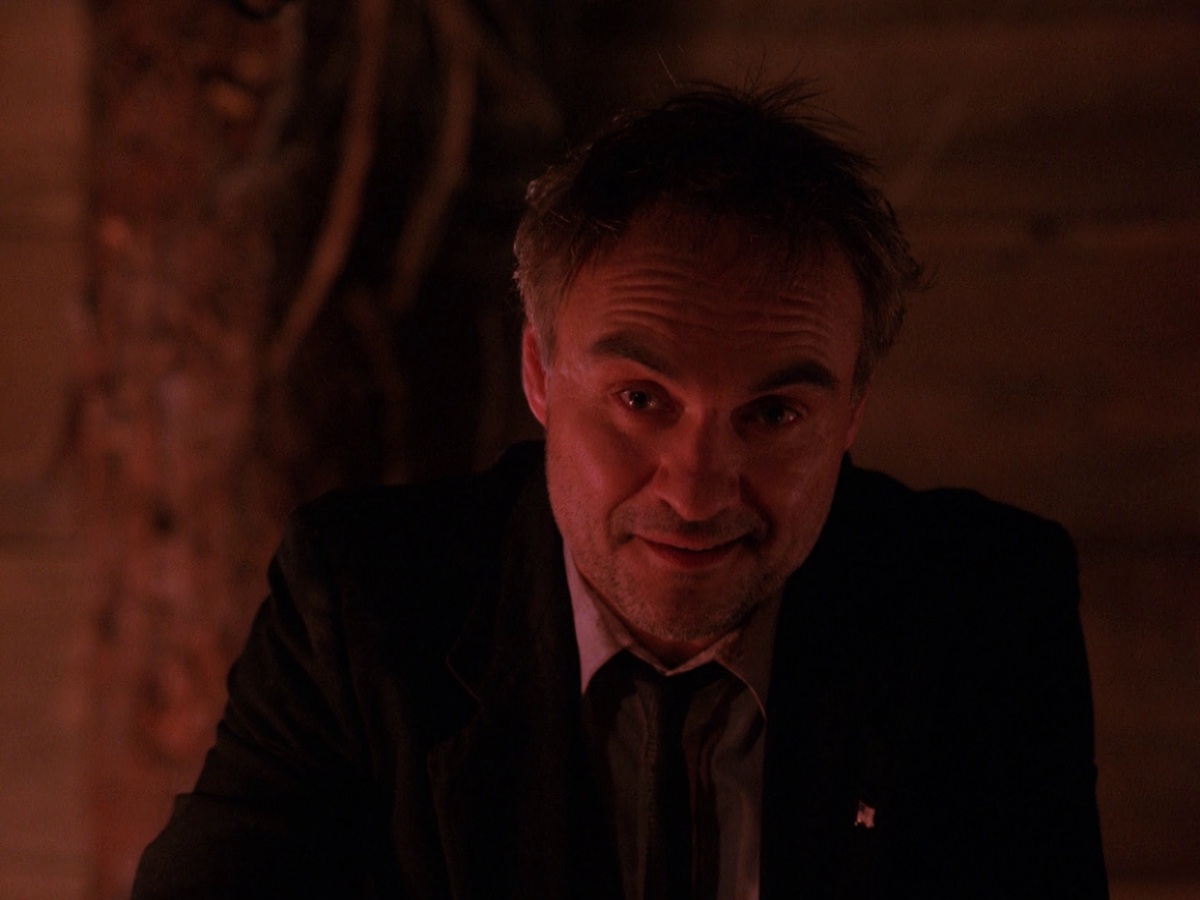
The welcome comes from Windom Earle. A character introduced through an arranged corpse and Cooper’s painful history now appears as a host offering assistance. Leo’s arrival joins two previously separate dangers without making either man’s future role safe or predictable.
The scene ends on the disparity between a reassuring offer and the knowledge the audience brings to its speaker. Hospitality becomes an instrument of control. Compare the invitations and apparently helpful arrangements elsewhere in the episode: an offer can be most effective precisely when its recipient has nowhere else to go.
From the woods to Windom Earle · 3 images
Confession, interruption and the heart
The dialogue gives the episode two sharply different forms of explanation. Cooper slowly exposes his own implication in Caroline’s story; Evelyn discloses a scheme in which she has helped implicate James. Both speeches revise earlier scenes, but they ask for different responses from their listeners: understanding in one case, immediate escape in the other.
The English caption track marks the car-crash sounds outside James’s immediate view. The sound cue allows a disaster to reach him before he can inspect it. In Shelly’s house, cries and impacts locate danger within the unfinished space; the window’s torn covering remains after the struggle has passed.
The associated Log Lady introduction moves between the physical heart and emotional love. Beside this episode, that distinction suggests a way to compare the body arranged as a message with Cooper’s account of Caroline: anatomy can be inspected, while attachment changes how an investigator judges what he sees. The introduction is a separate interpretive piece, not a line spoken inside the episode.
A route through Double Play
- The station. A dead man and a chess piece establish Earle’s next challenge.
- The unfinished house. Leo attacks Shelly and Bobby, then disappears.
- The old wound. Cooper tells Truman what happened to Caroline.
- Two kinds of fantasy. James’s romantic story and Ben’s miniature campaign unravel.
- Contested explanations. Briggs questions motives; Hayward corrects the story about Nicky.
- The returning men. Andrew and Eckhardt reshape the Packard conflict.
- The cabin. Leo accepts a welcome from Windom Earle.
Sources and connections
Primary source: Twin Peaks, “Double Play,” Season 2, Episode 14 / overall Episode 21, in Twin Peaks: From Z to A. The opening credit identifies Uli Edel as director. Scene studies concern the episode’s images and dramatic situations; dialogue and sound-cue references were checked against the English caption track. The Log Lady introduction is identified separately.
Related reading: Season Two; Hawk and the Lodges; Michael Horse on the significance of Hawk; and Everett McGill on becoming Big Ed.