Twin Peaks: Episode 26 — Variations and Relations
1991 · Season 2, Episode 19 · Directed by Jonathan Sanger
A cave drawing becomes a map, an intimate conversation acquires a watcher, and a game piece contains a human cost. Around the Miss Twin Peaks preparations, the episode tests the distance between care and control.
Season 2, Episode 19 / overall Episode 26. Contains episode spoilers. Focused image galleries open on request.
Explore this episode
A drawing shared by enemies
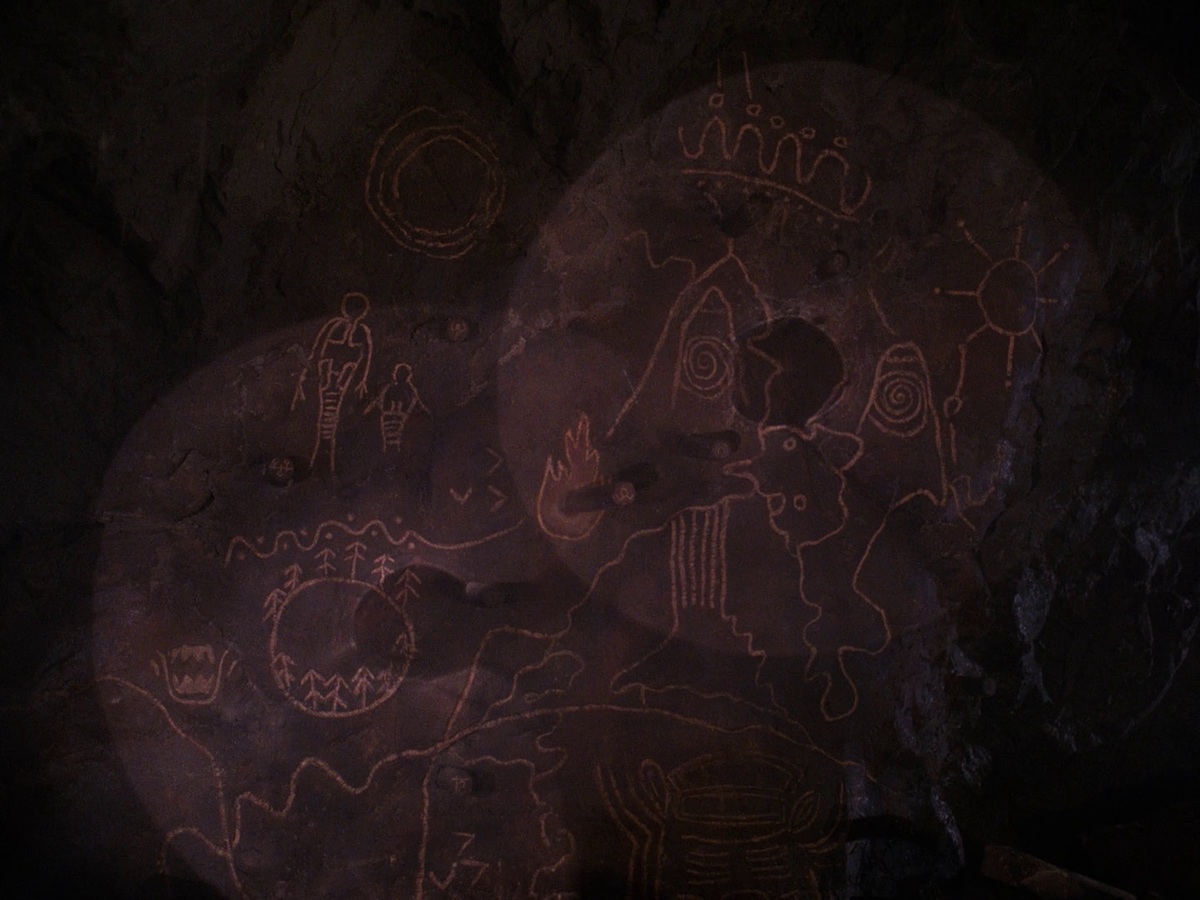
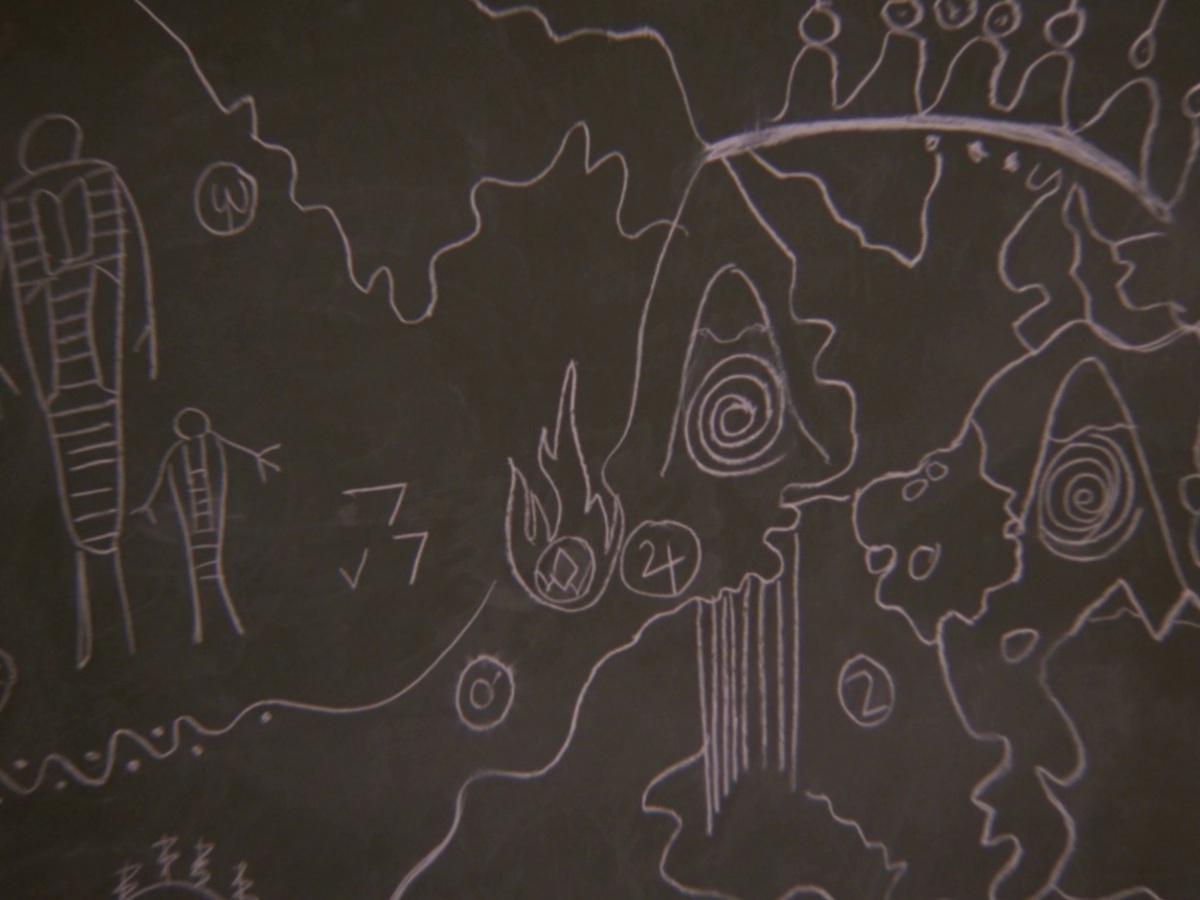
The return to Owl Cave begins after the discovery rather than replaying it. The investigators now face a broad field of figures and connecting lines. Hawk reads the traces of Earle’s visit in the ground while Cooper and Truman try to understand what the alteration has exposed. The image and the footprint offer different kinds of evidence: one asks for interpretation, the other establishes that their adversary has already been there.
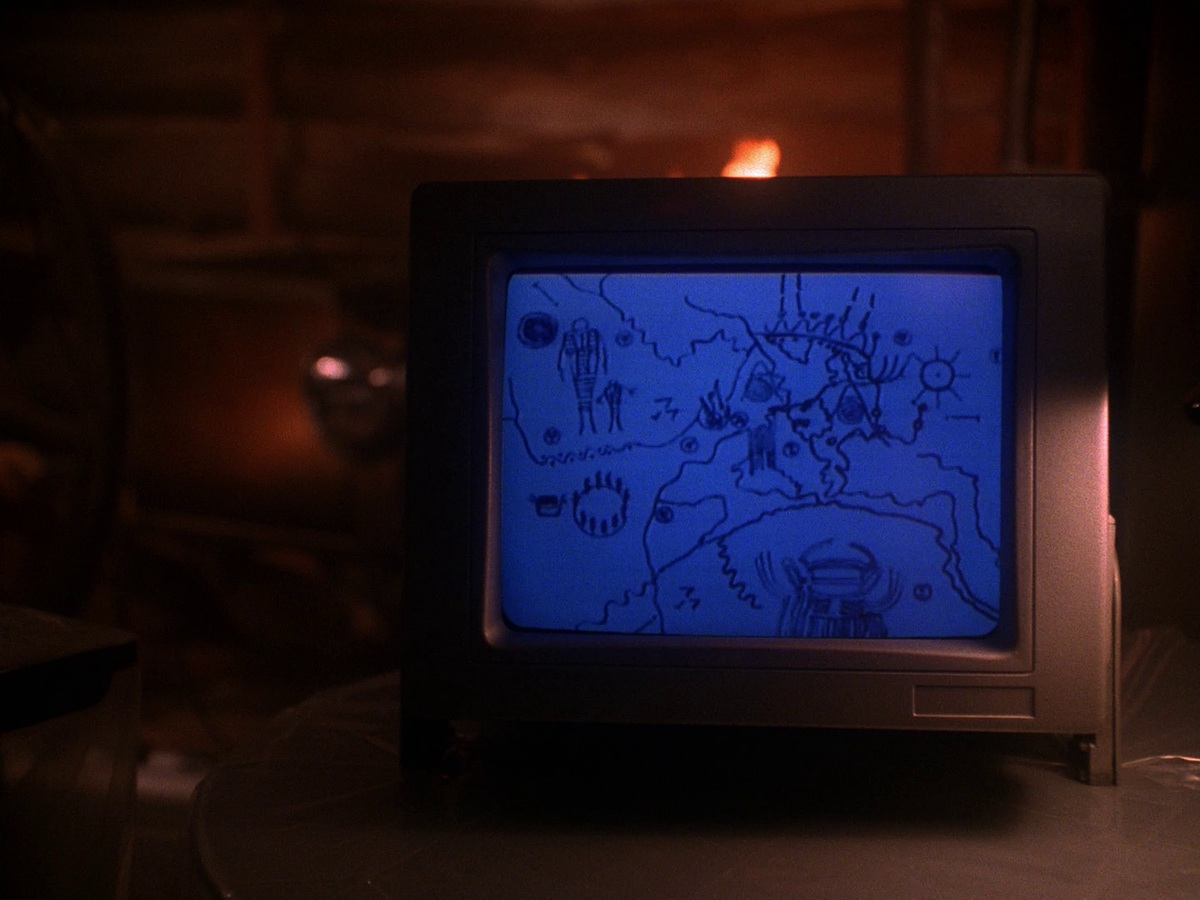
Andy’s careful copy gives the design a second life on the station blackboard. Briggs recognises it from his experience beyond ordinary recollection and supplies a correction. The scene treats drawing as a form of transmission, something that can be carried out of the cave and compared with another person’s knowledge. The image on Earle’s monitor supplies an unsettling parallel. Both sides can work on the same pattern without sharing the same purpose.
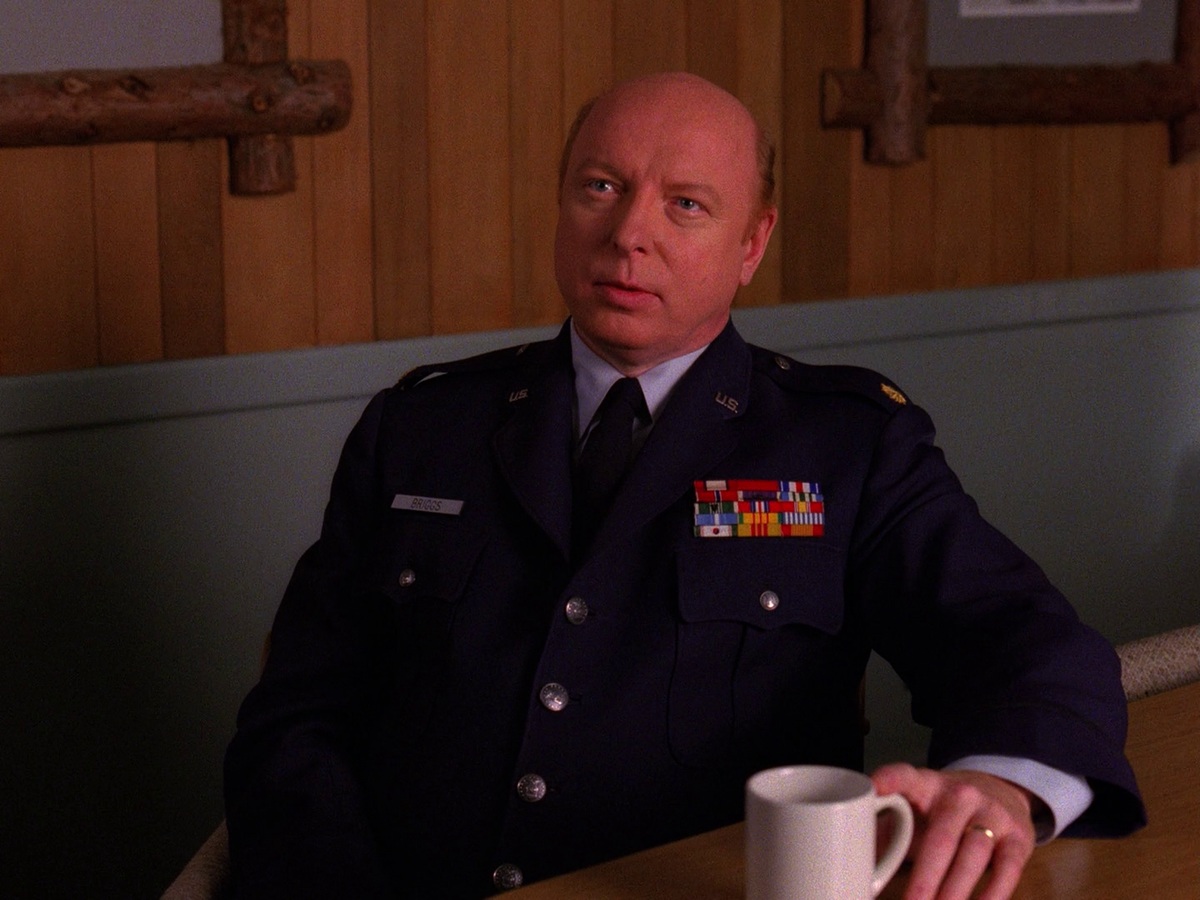
Briggs has lost his security clearance, but the question he raises is moral rather than procedural. Preventing harm now matters more to him than maintaining the boundary around official knowledge. Cooper’s metaphor of separate verses belonging to one song makes that connection tentative: he feels the investigations converging before he can explain how. The drawing is evidence of a relationship, not yet a complete solution.
The image changes surfaces · 4 images
Earle’s story ends in a trap
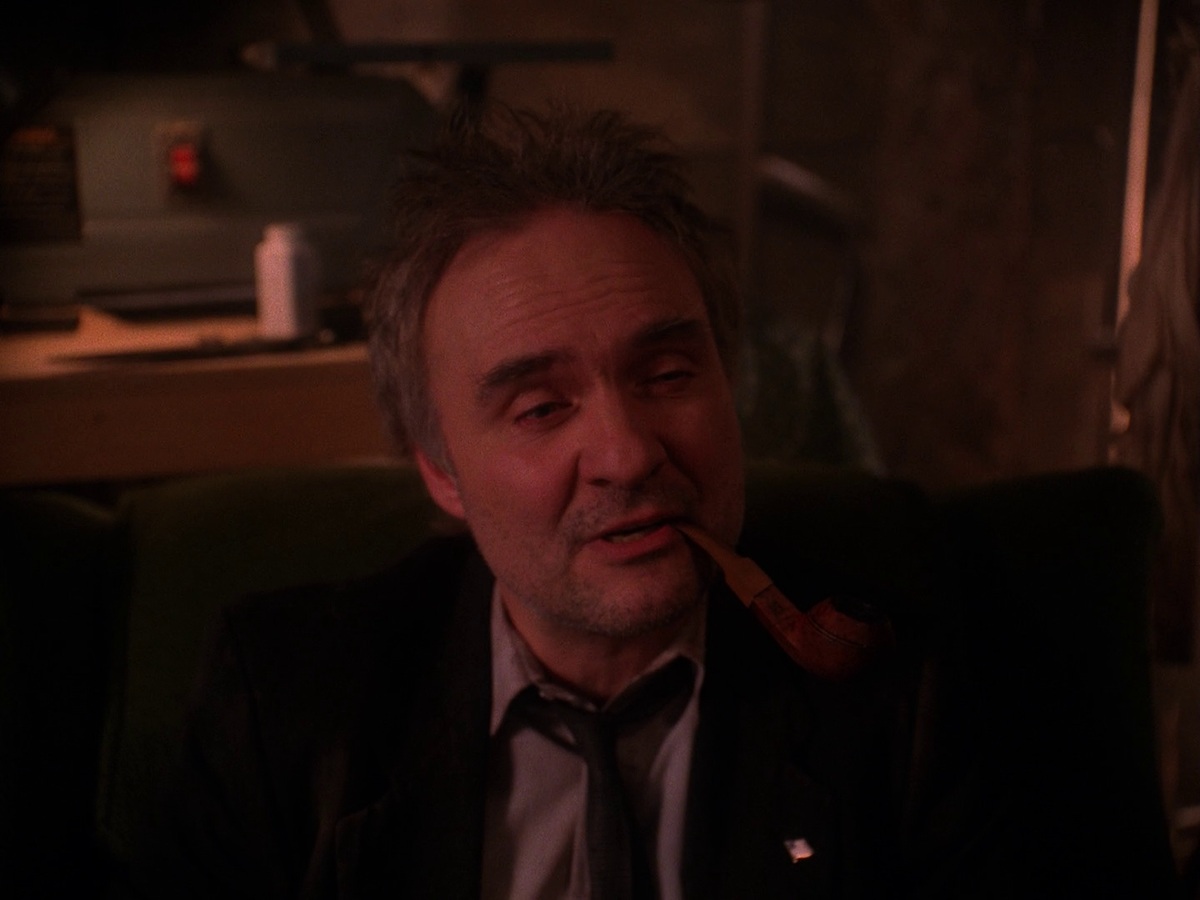
Earle tells his visitor about the White Lodge in the language of an extravagant fairy tale, then announces his contempt for its goodness. The Black Lodge interests him as a source of power. This is a character declaring his desires, not a neutral explanation that resolves the series’ supernatural geography. The account is inseparable from the pleasure he takes in controlling his audience.
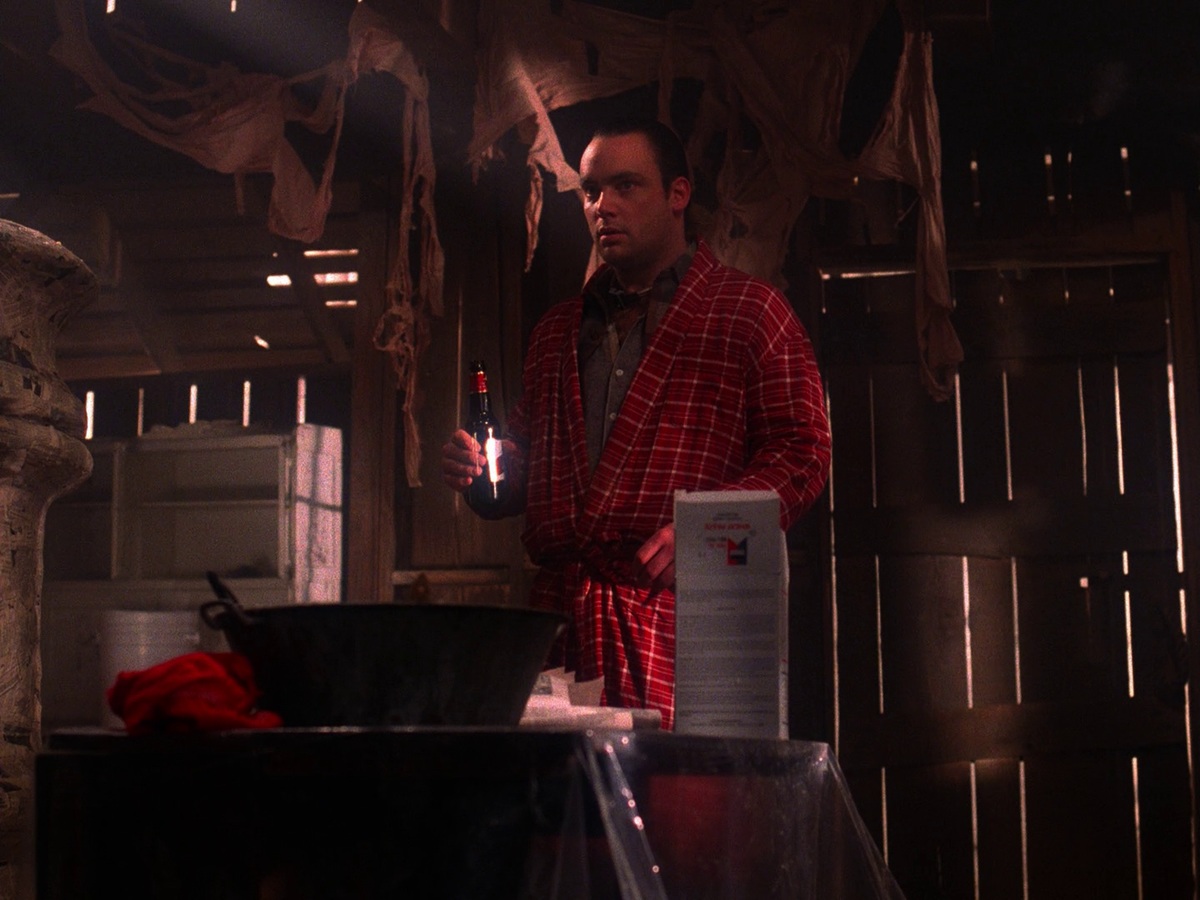
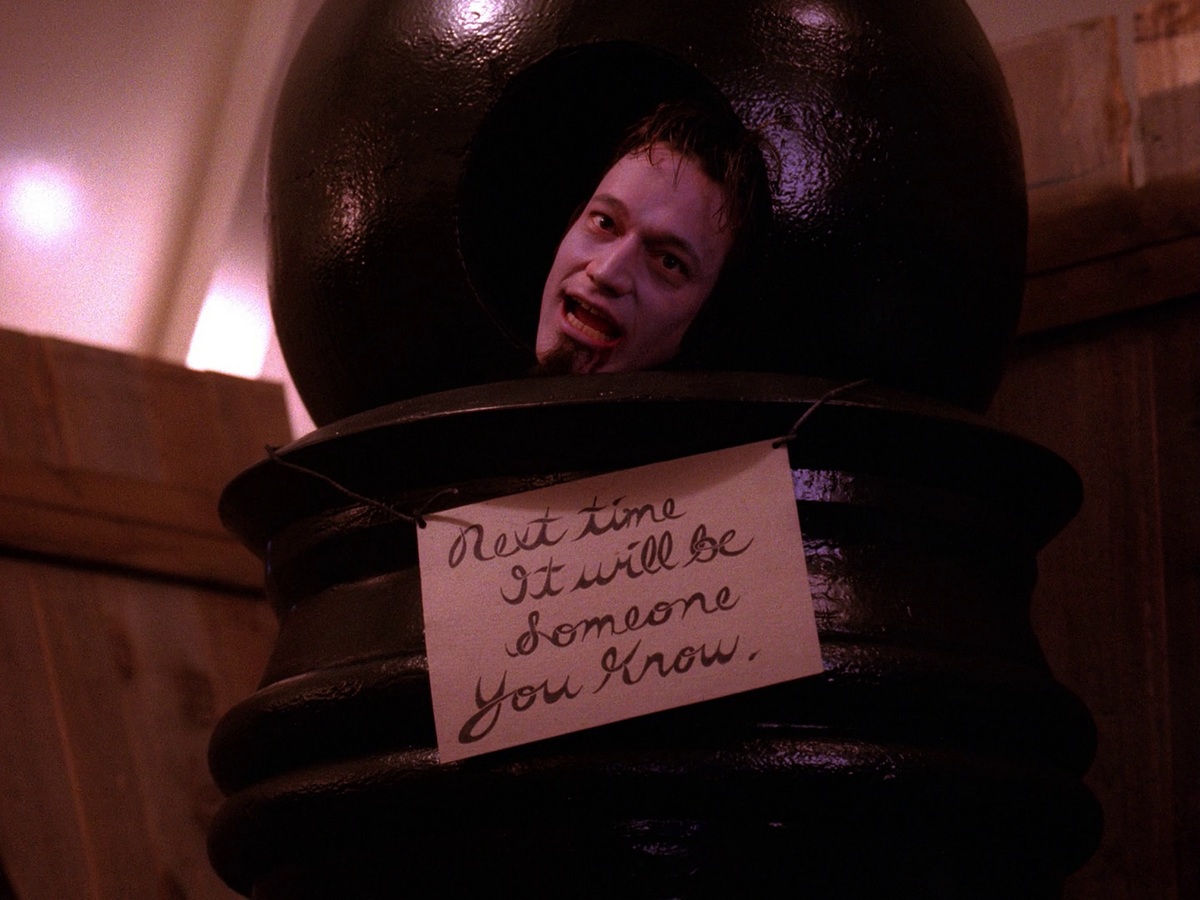
The young man accepts an invitation to a party and ends up confined in an enormous chess piece. The shift is cruelly literal: Earle’s recurring habit of treating people as pieces becomes a physical construction. His conversation about the soul delays the violence and lets him perform the part of an entertaining host while denying his guest any freedom to leave.
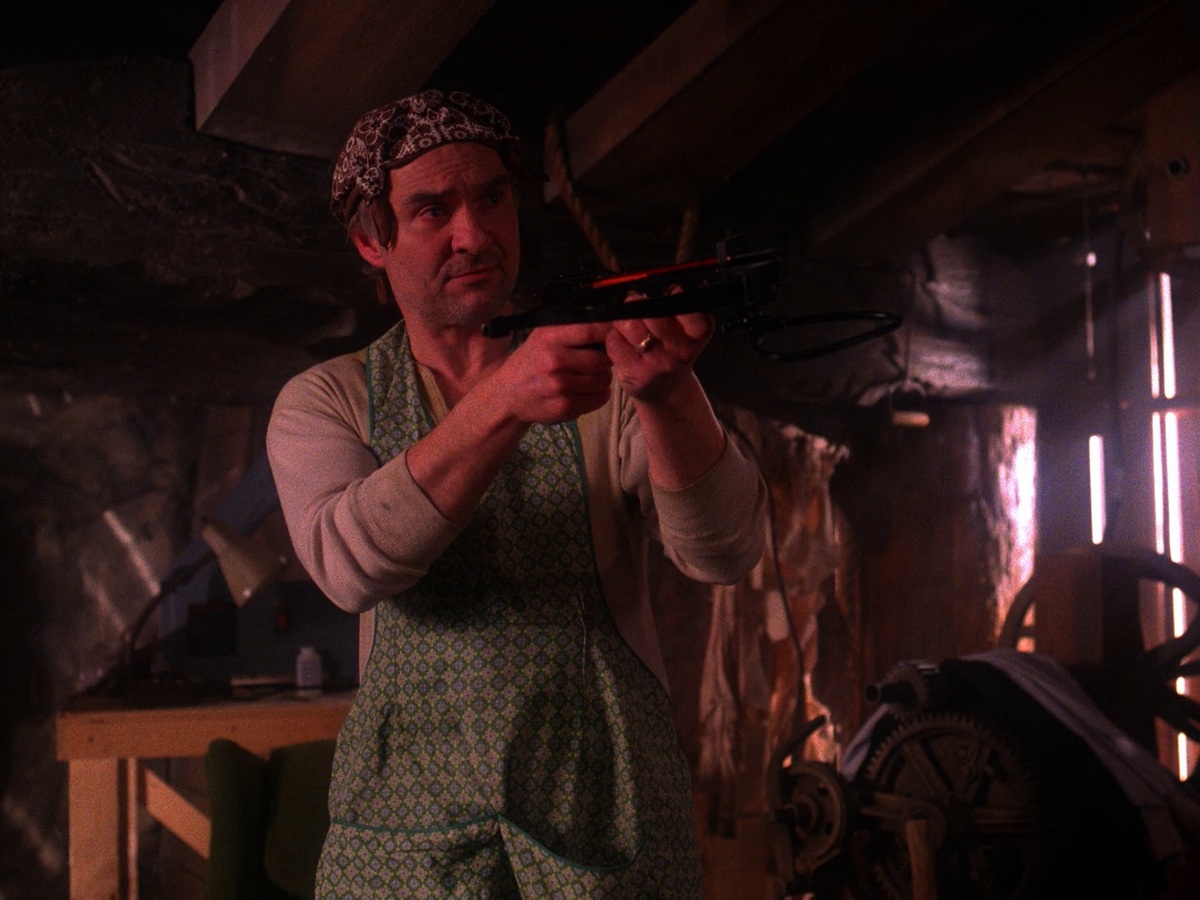
Leo’s refusal to fire the crossbow matters. The man who has inflicted violence elsewhere now resists a command to participate in this killing. Earle punishes him through the electric collar and takes over the weapon himself. The scene makes the hierarchy visible without converting Leo’s moment of resistance into an absolution of his earlier actions.
The final discovery at the gazebo completes the construction. Police first have to consider whether the object is a bomb; when it is opened, the dead man and the message turn an abstract threat into a person. Earle is no longer playing by rules Cooper can safely assume. The episode’s ending insists on the cost hidden inside the metaphor.
The human cost of the game · 3 images
Who gets to define Miss Twin Peaks?
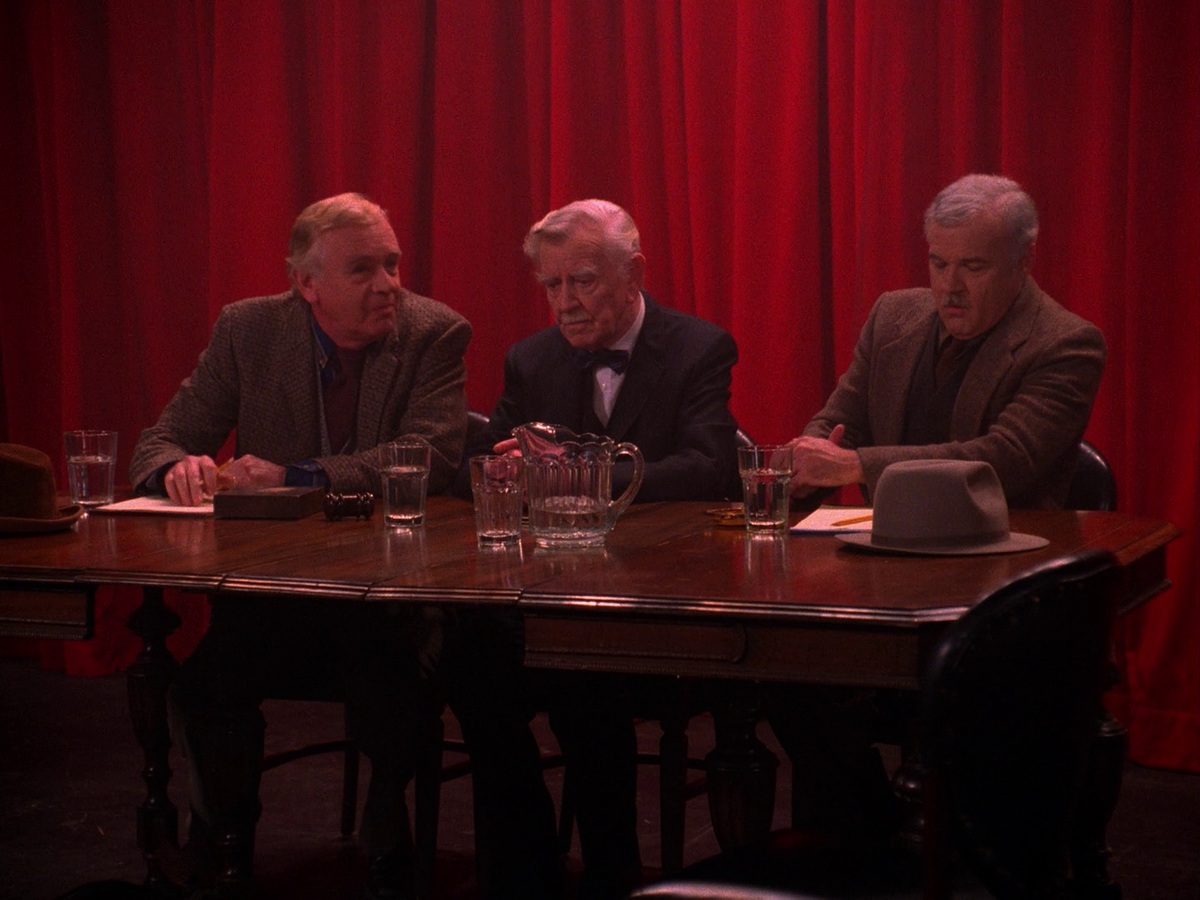
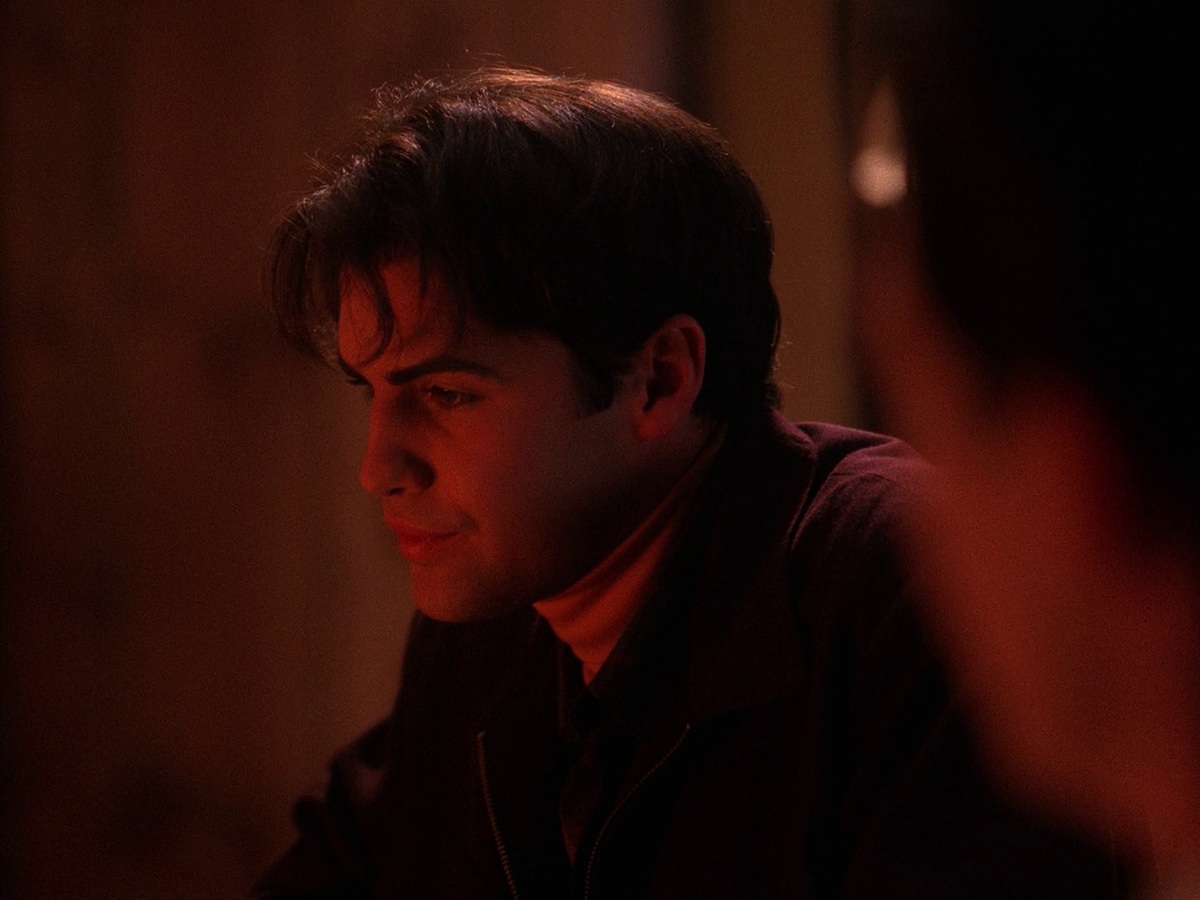
The pageant gathers several incompatible ambitions. Bobby encourages Shelly to enter because beauty might become an economic advantage. Lana wants Dwayne to make victory certain. Ben argues that the contest should be concerned with intelligence, spirit and the future of the forest rather than a display of bodies. None of these positions is detached from the speaker’s interests.
The arrangement of the judges against the red curtains turns the meeting into a small performance of civic authority. Ben stands before them as a reformer, but Pete immediately asks what his environmental campaign would mean for the Packard business. The contest’s elevated language cannot escape the town’s financial relationships. Its theme is already an argument over land, employment and influence.
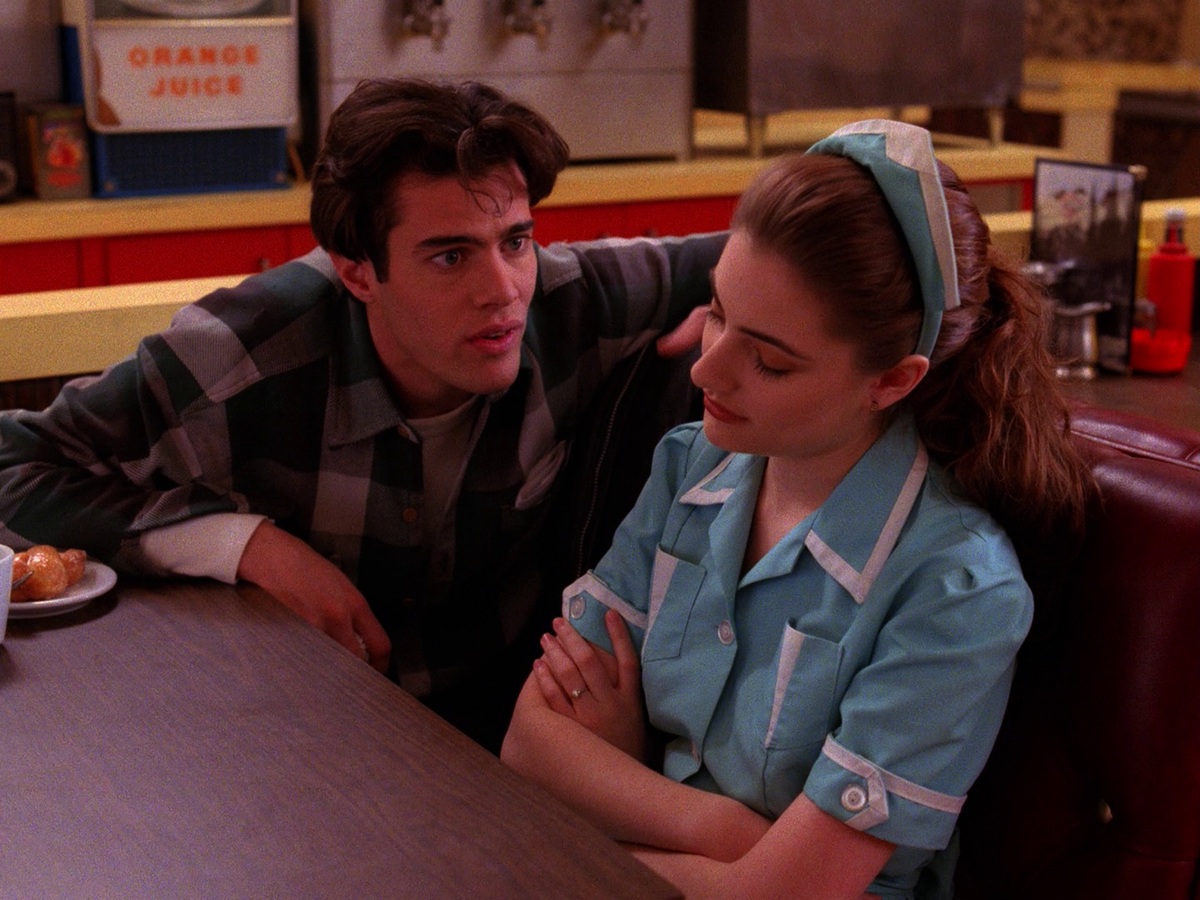
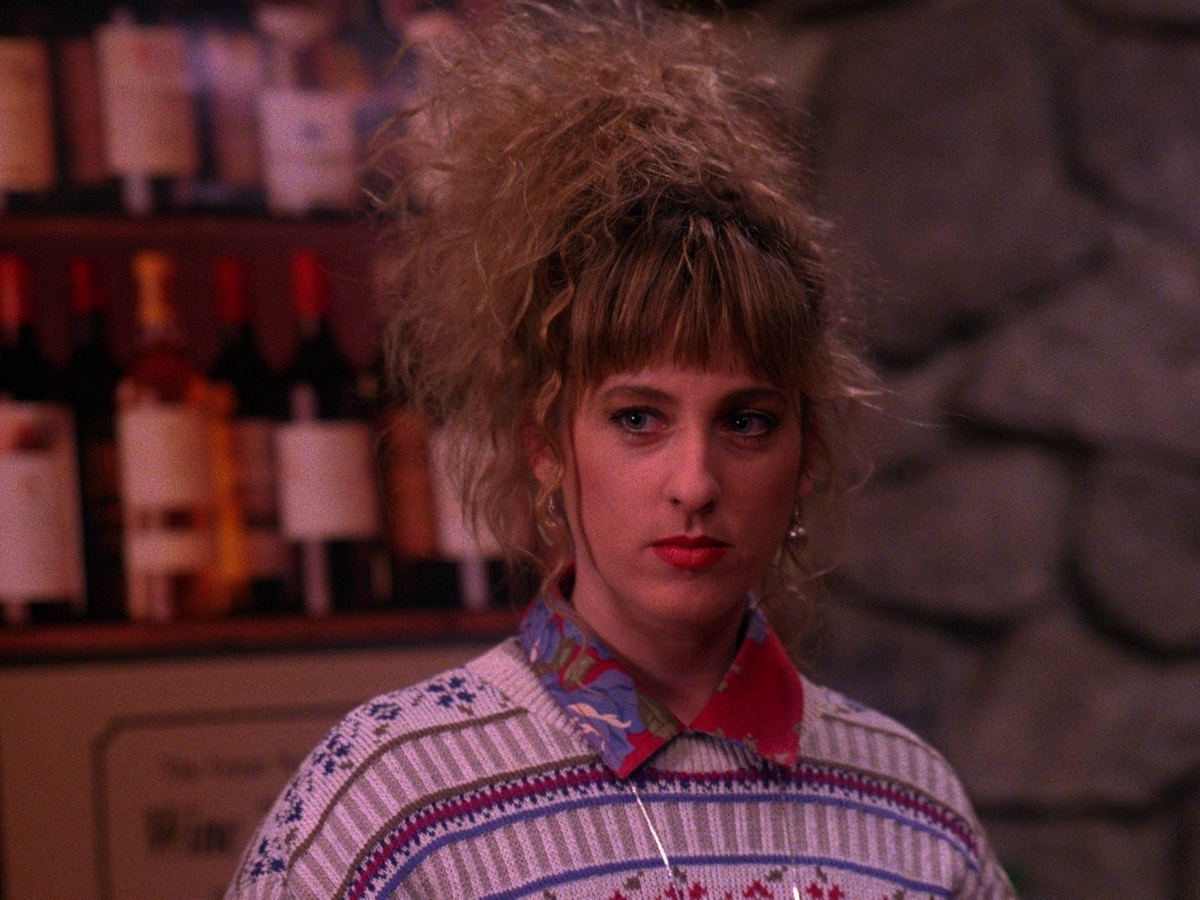
Shelly’s stage fright and Bobby’s offer to write her speech expose another problem: entering a public contest does not necessarily mean speaking in one’s own words. Nadine’s arrival adds a different disruption, bringing her altered sense of age and identity into an event built around categories. The scene keeps asking who is entitled to define a contestant and what she is supposed to represent.
Sherilyn Fenn’s recollection of resisting a conventional pageant display for Audrey becomes especially useful as the preparations develop. Her account belongs to the larger question of performance and agency, rather than serving as evidence that she shaped every scene here. Follow the pageant performance study for her own description of that decision.
Promises, judges and persuasion · 4 images
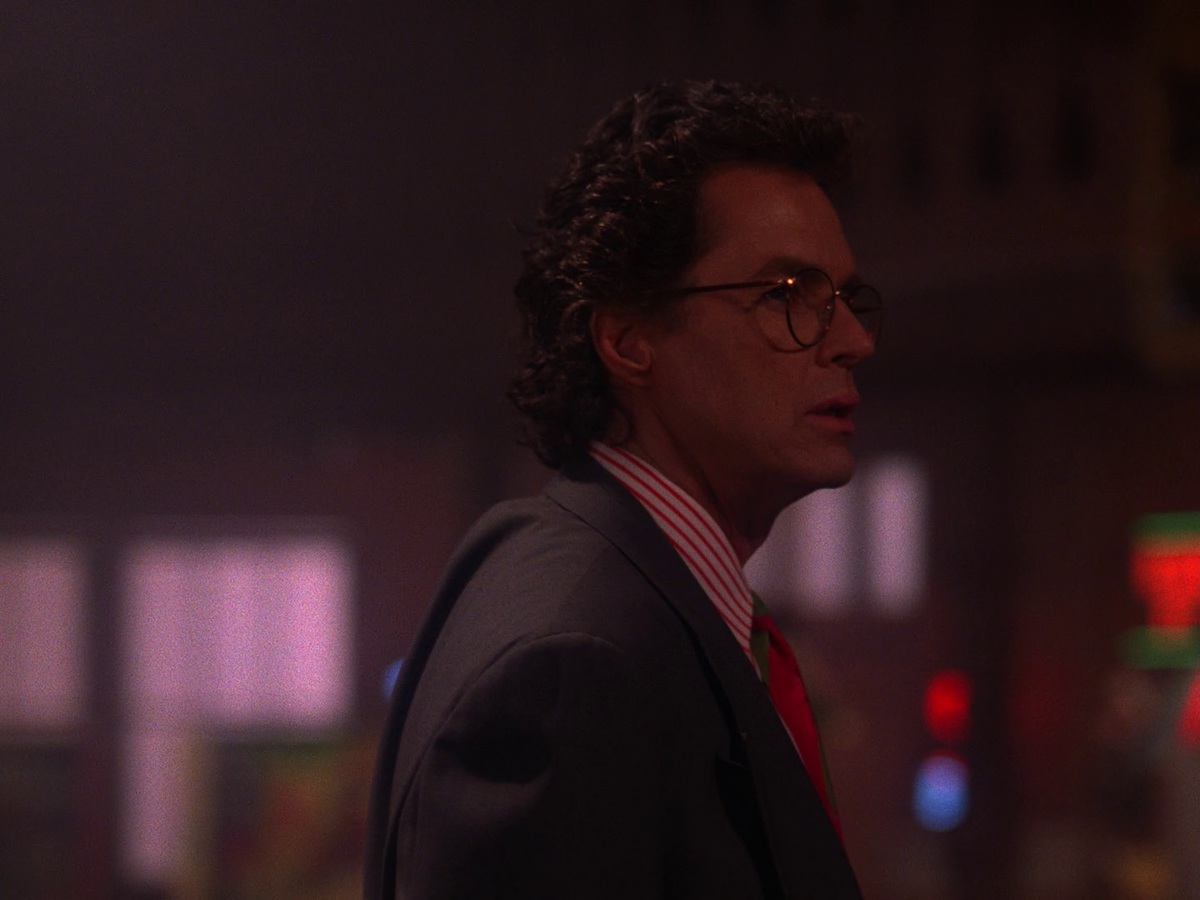
An explanation, then another box
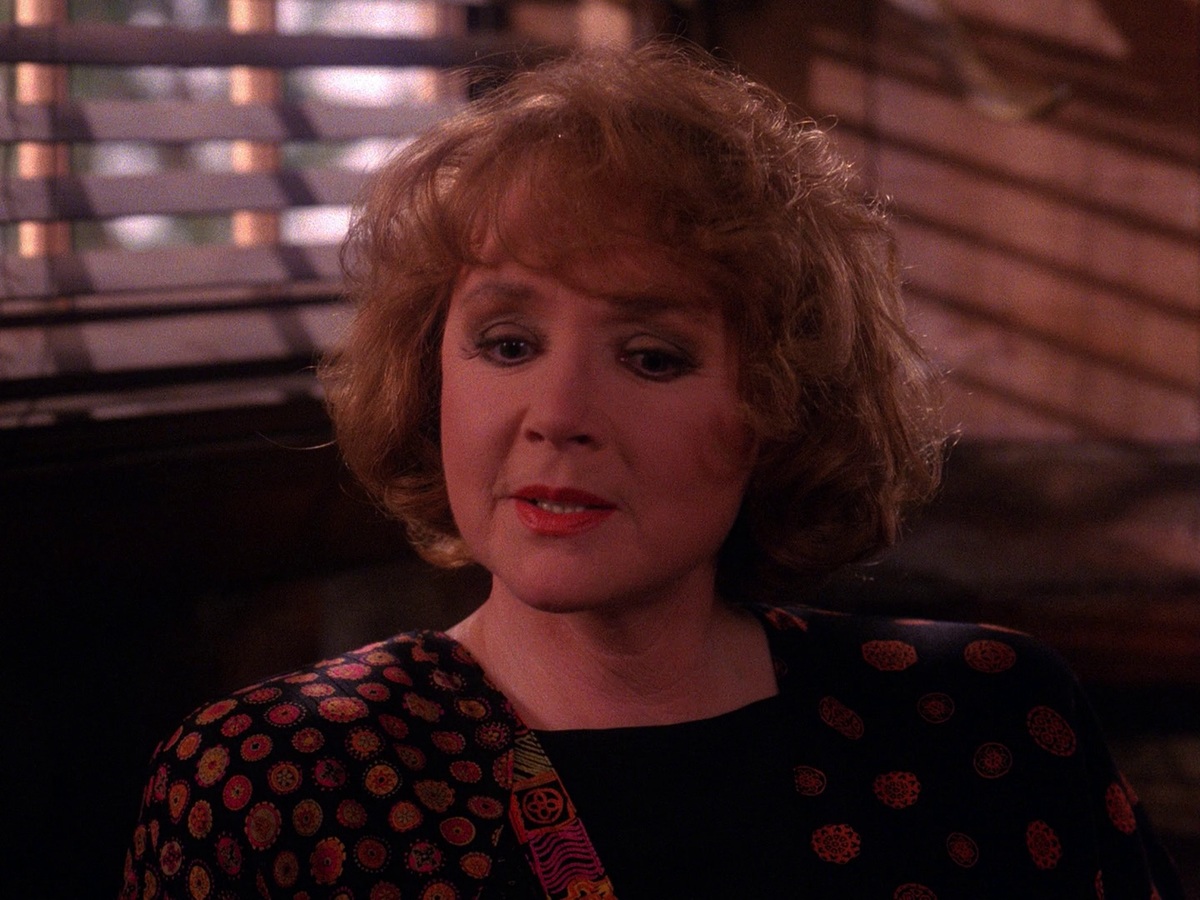
Truman asks Catherine to help him understand Josie. Catherine offers an interpretation of a woman who learned to become what others wanted while keeping something of herself inaccessible. Her fluency does not make the account definitive. It comes from a participant in the same network of manipulation, dependency and competing claims that Truman is trying to untangle.
The conversation follows his grief in Wounds and Scars and his survival in On the Wings of Love. What he wants now is not another piece of evidence alone but a way of reconciling the person he loved with what he has learned. Catherine can supply a model of Josie’s behaviour; she cannot make the relationship transparent.
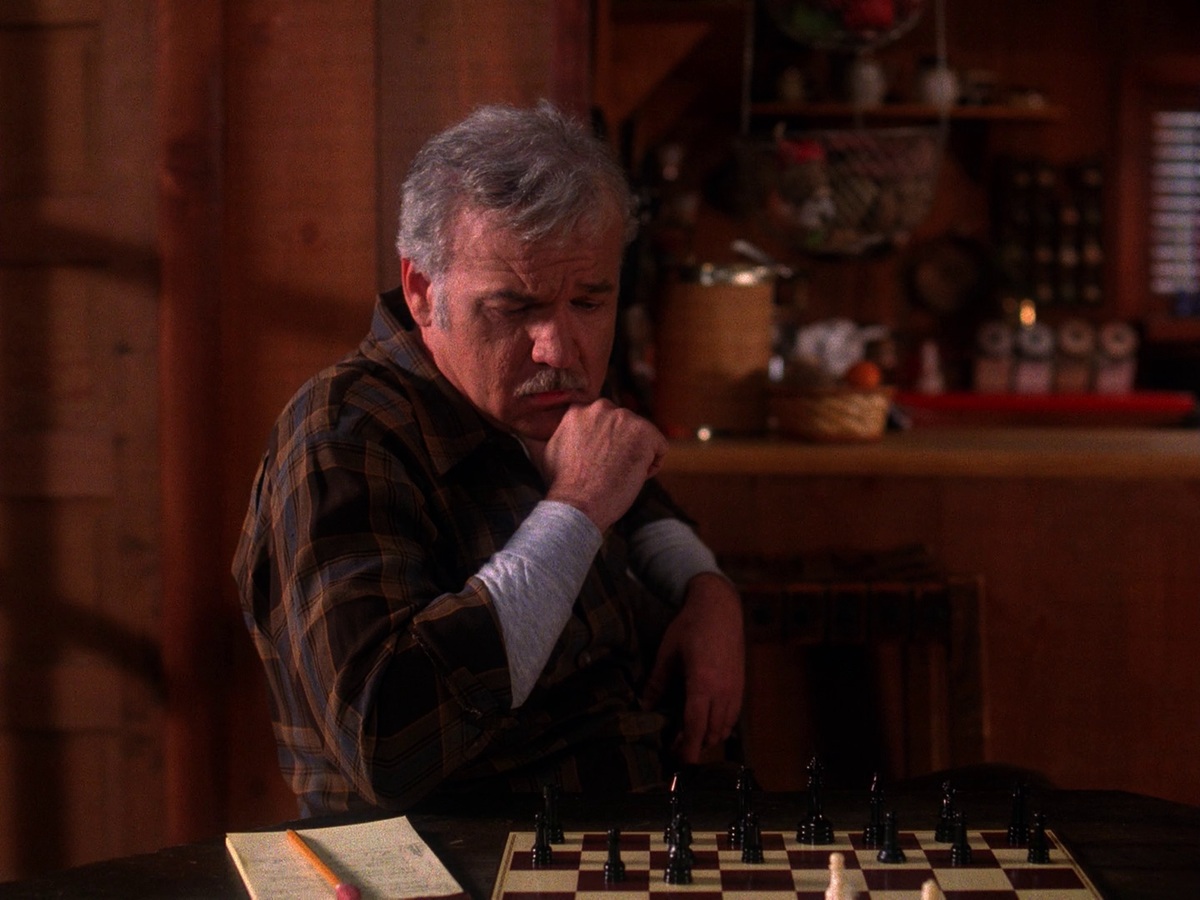
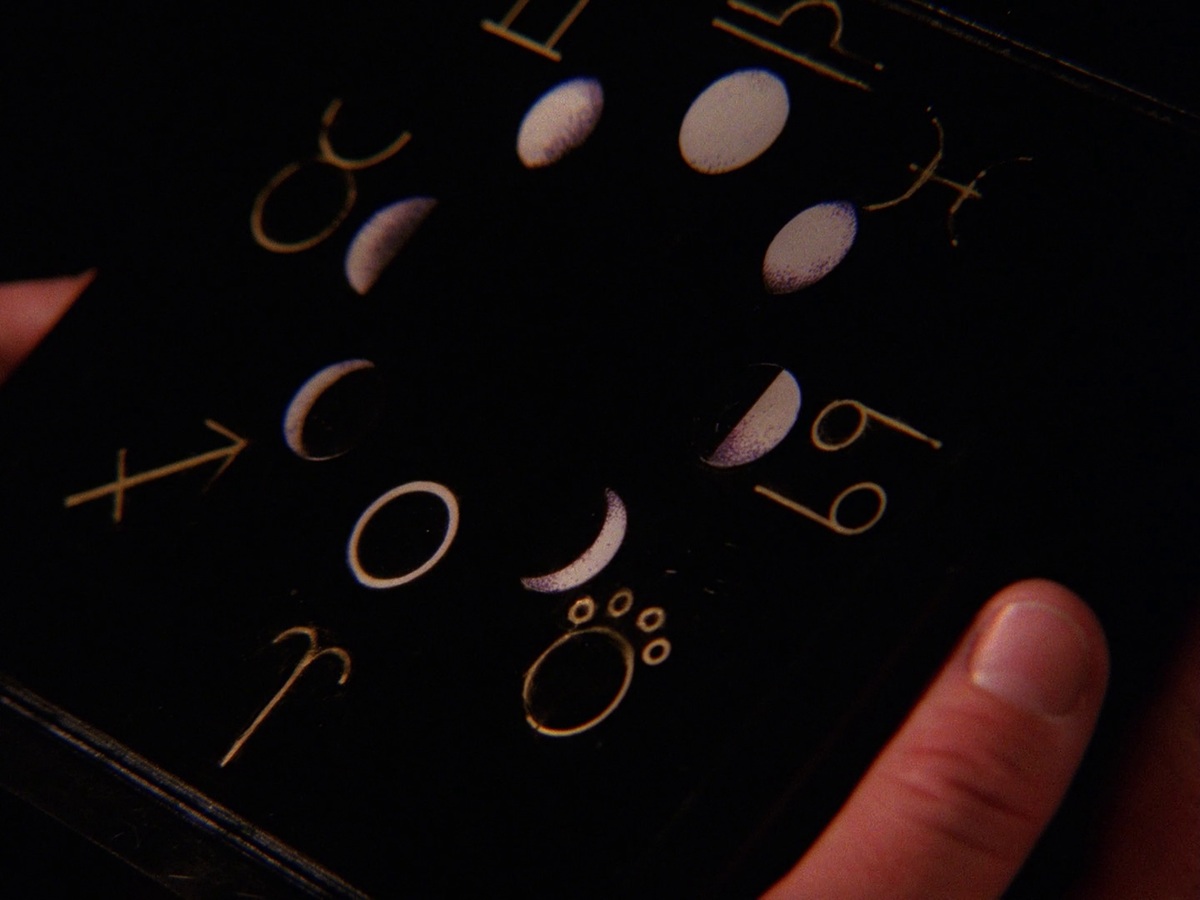
Eckhardt’s box promises a more manageable mystery. Pete’s accidental drop produces an opening that deliberate inspection could not achieve, but the reward is a second decorated object. The sequence makes discovery comic and frustrating at once. A hidden interior does not necessarily contain an answer; it may simply reorganise the question.
Grief and the puzzle object · 3 images
The river scene and its unseen audience
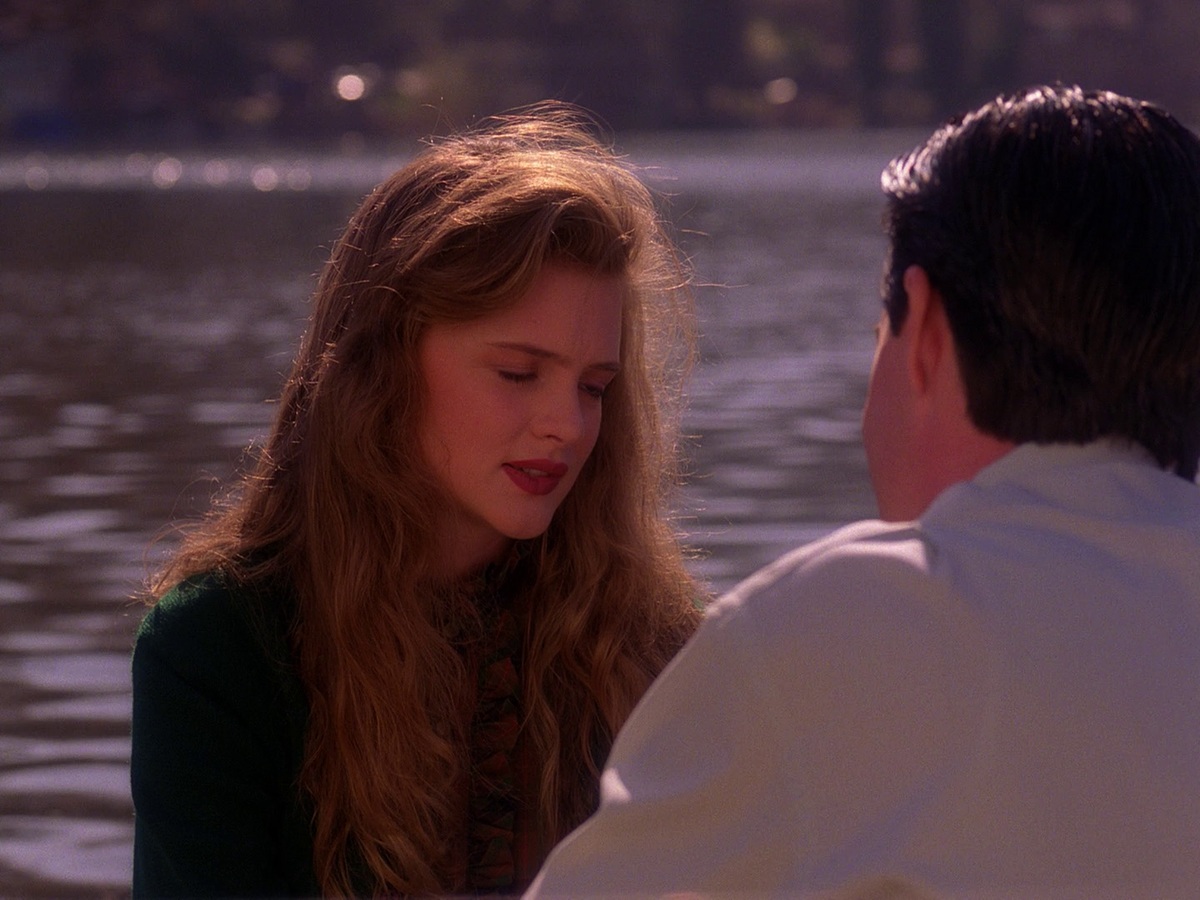
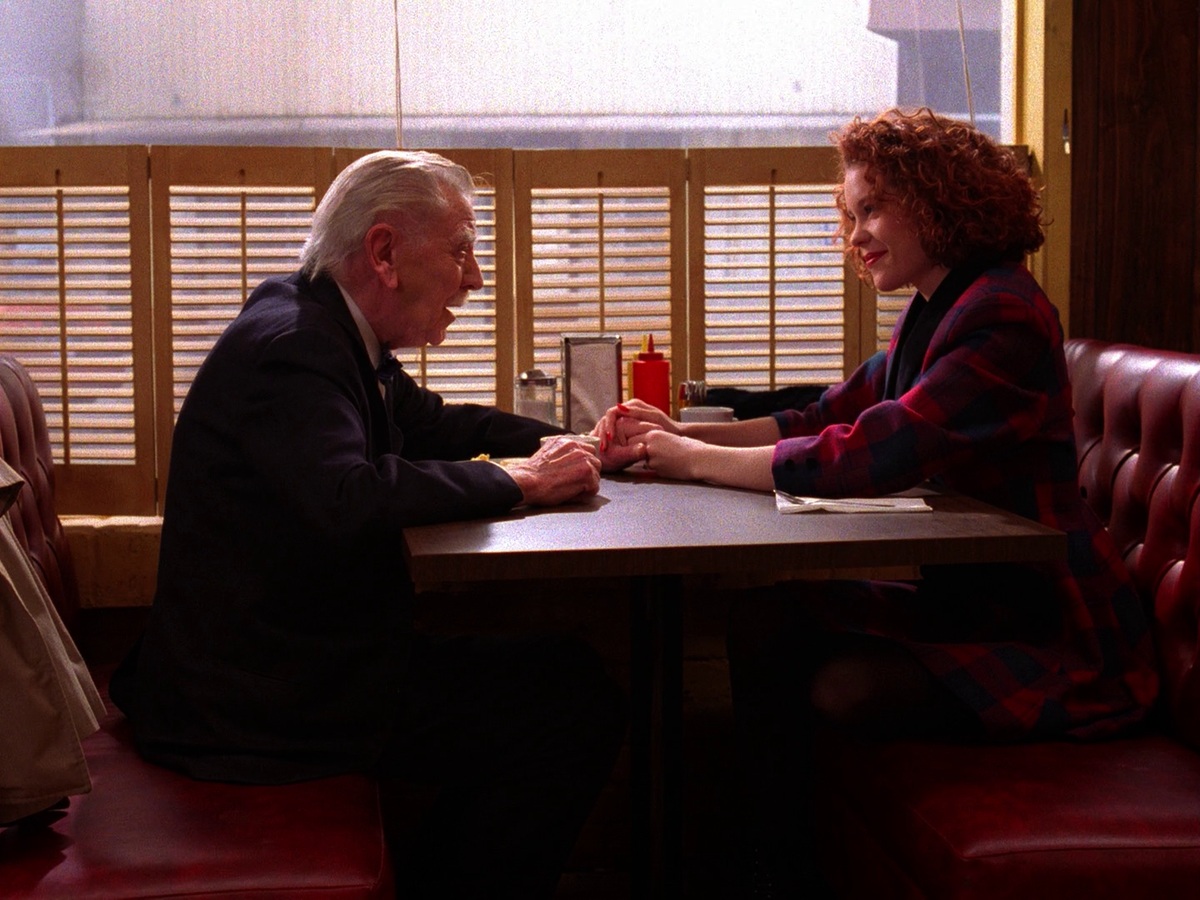
Cooper’s afternoon with Annie takes the relationship outside the crowded places where it began. The water behind them gives the exchange an openness absent from the station’s maps and the hotel’s enclosed conversations. Annie describes her distance from ordinary life and the hurt connected with an earlier relationship. Cooper offers recognition rather than an investigative solution.
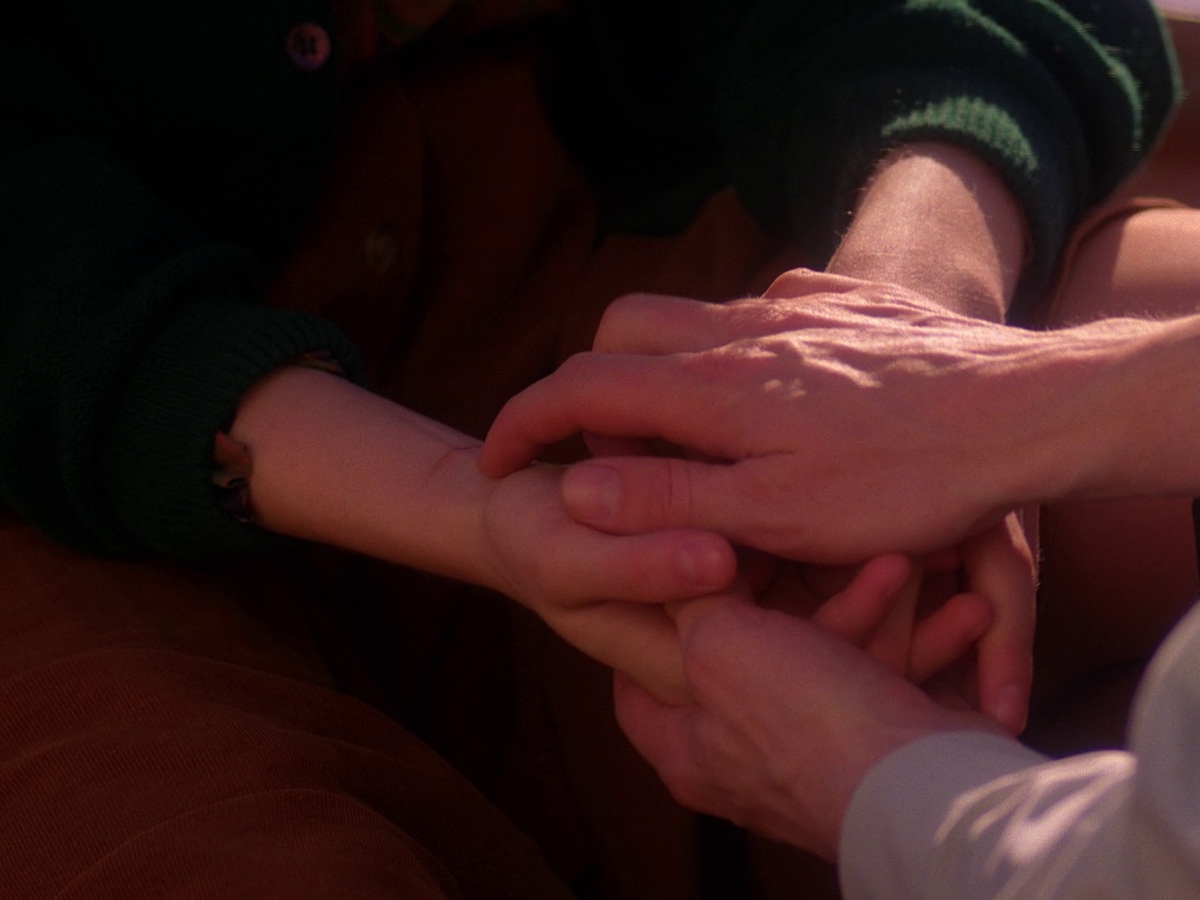
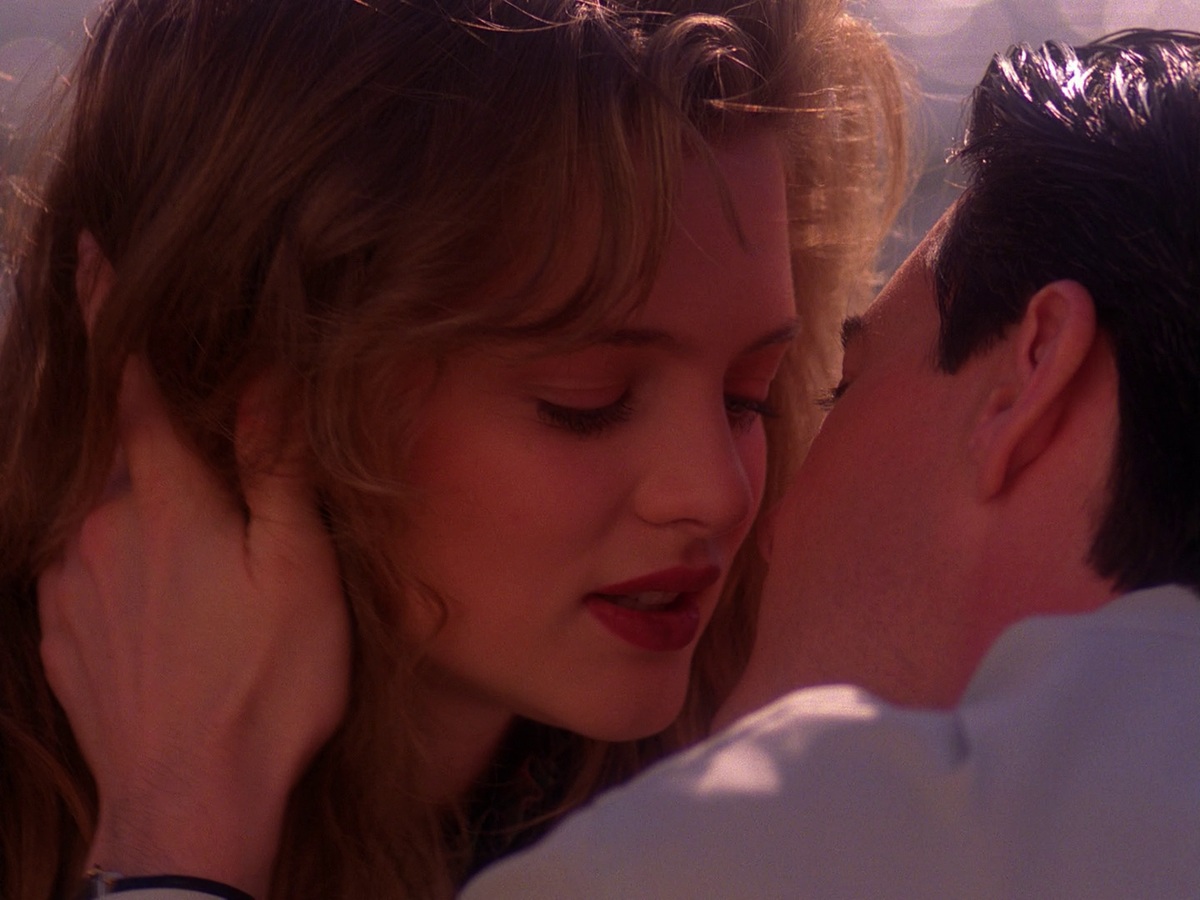
The movement toward their hands changes the scale of the scene. He responds to what she has exposed about herself through touch, then the conversation moves into a kiss. The intimacy depends on allowing uncertainty to remain: neither person arrives with a complete account of how to live after pain.
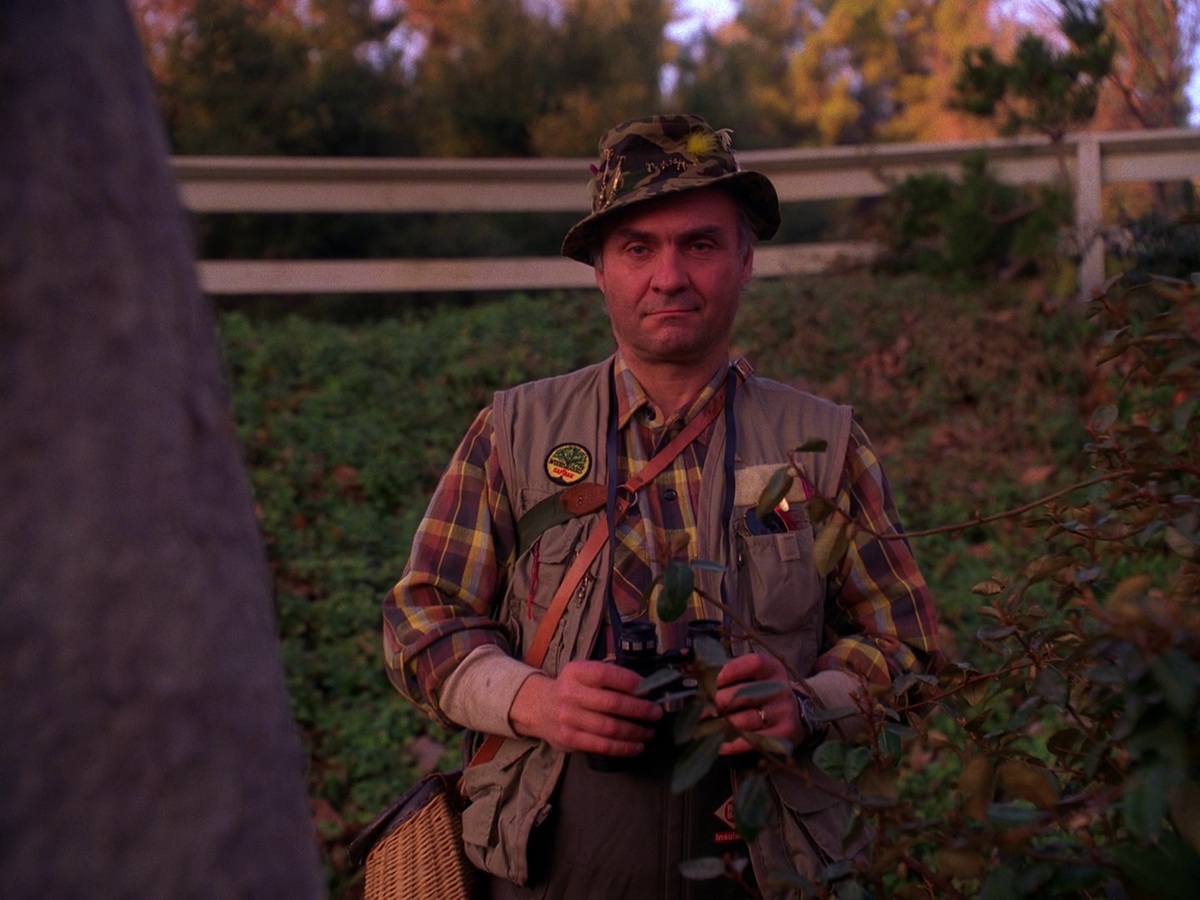
The wider view and Earle’s concealed presence alter the meaning of that privacy. The audience can see the relationship becoming information for someone else. A moment that seems to free Cooper from the case gives the case a new point of entry into his life. The scene does not need an immediate attack to make that vulnerability legible.
Placed beside Earle’s coercion of Leo and the pageant’s bargaining, the river encounter offers a different model of attention. Cooper listens without demanding a performance from Annie. Earle watches in order to acquire leverage. The distinction is ethical before it becomes a mechanism of suspense.
Intimacy and surveillance by the water · 4 images
Hearing, expertise and the things people avoid
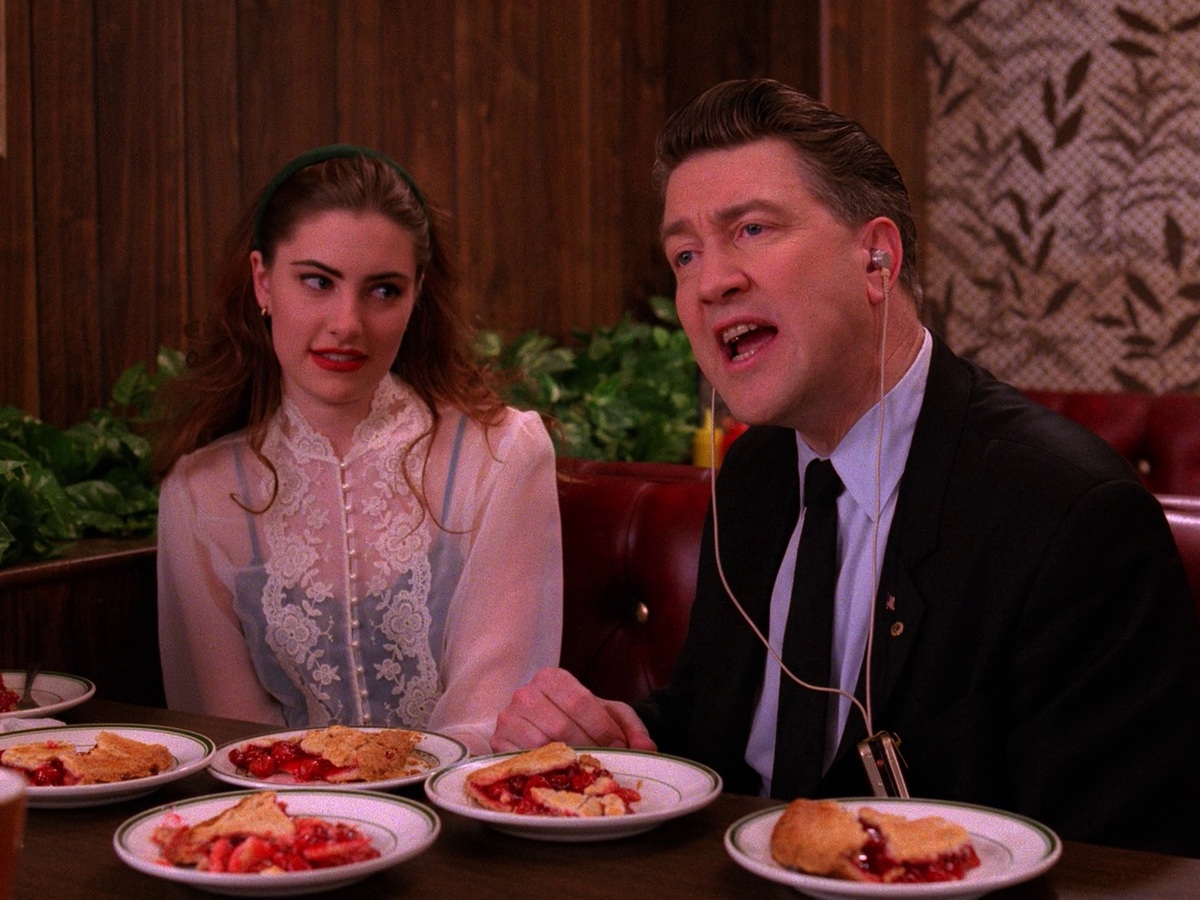
Gordon’s exceptional ability to hear Shelly continues at the Double R. The encounter is now openly affectionate, and Bobby’s arrival gives Cole a new spectator. His description of the kiss as something between consenting adults makes the joke depend on both the action and the brazenly literal account he gives of it. Shelly’s responses keep her from becoming only an object of his amazement.
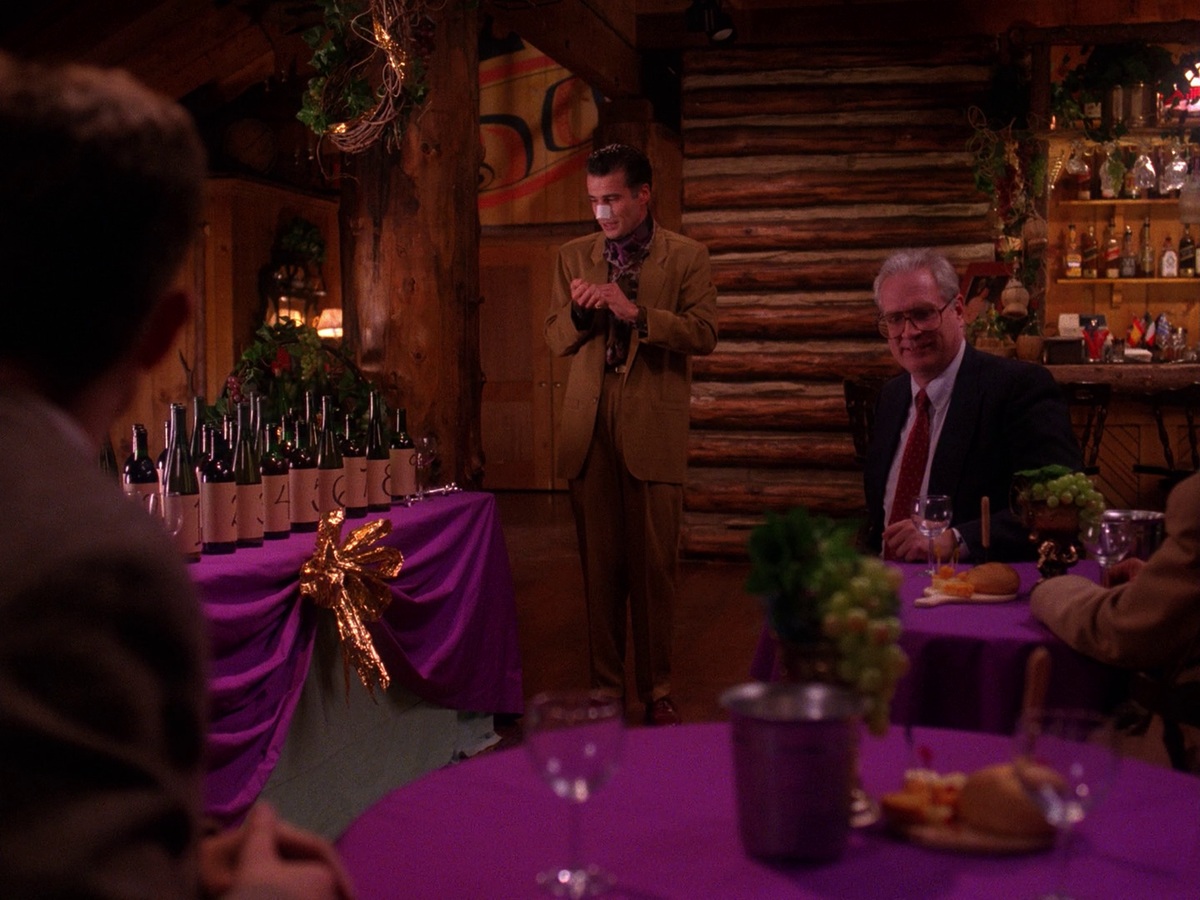
At the wine tasting, Dick performs another kind of expertise. His instructions establish a hierarchy between the person who knows the ritual and those who do not. Andy’s mistakes provide physical comedy, while Lucy’s reason for not drinking exposes a more consequential failure of attention. Dick can speak confidently about the wine while remaining clumsy about the person in front of him.
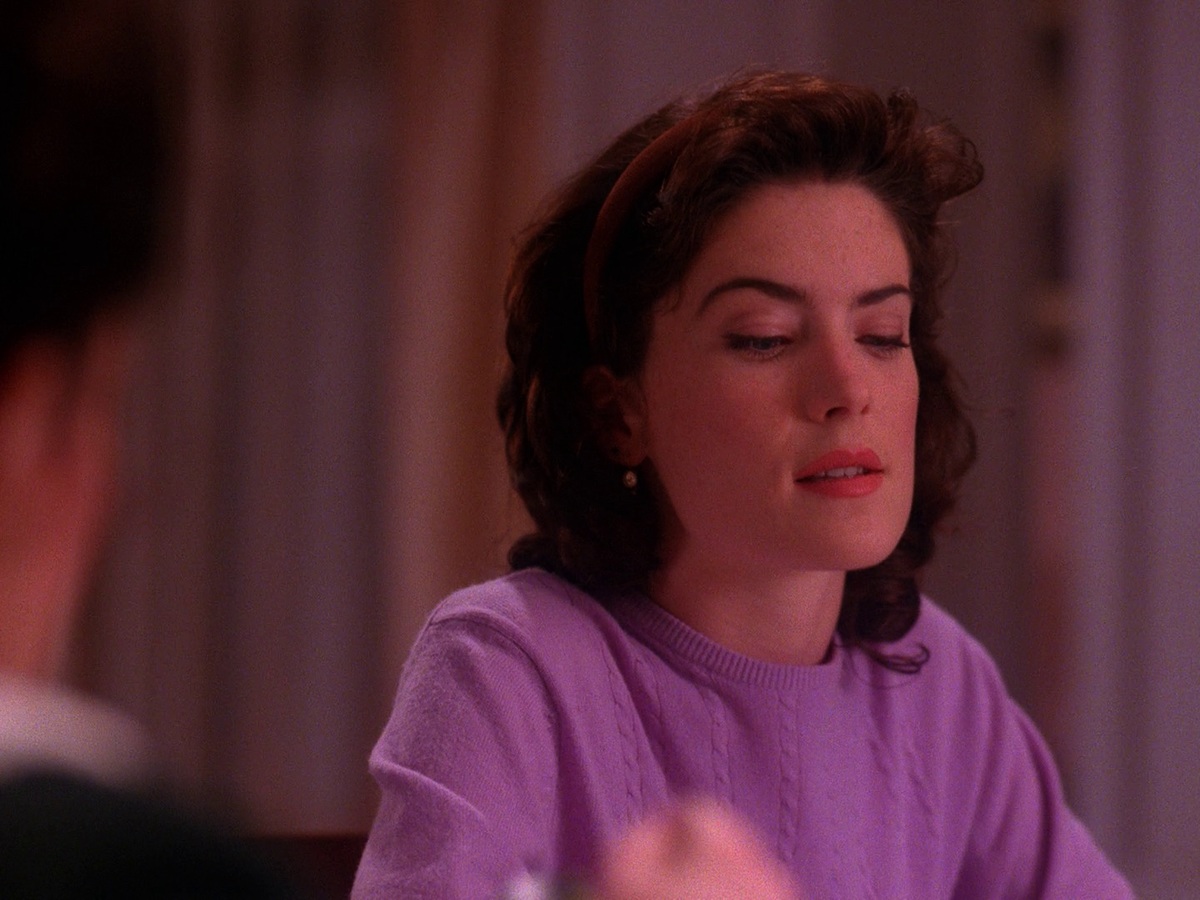
Donna’s questions at dinner turn polite conversation into pressure. The repeated effort to redirect attention toward food cannot erase what she has seen and inferred about Ben and Eileen. The scene’s tension lies in the family’s attempts to maintain a normal exchange while each answer produces another question. Refusal to explain becomes information in its own right.
The hotel-bar conversation between Cooper and Wheeler changes the register again. Their extravagant images for love admit vulnerability beneath masculine composure. A message then interrupts Wheeler’s stay. Across these scenes, fluent speech is not a reliable measure of understanding: people may perform authority, dodge an answer or finally acknowledge what they feel.
Public talk and private stakes · 5 images
A route through Variations and Relations
Owl Cave and Earle’s cabin: the revealed design enters two opposing investigations.
The diner and the station: Cooper approaches Annie; the poem and Briggs’s memory connect scattered clues.
Earle’s cabin: a party invitation becomes a killing and Leo’s refusal is punished.
The Roadhouse: the pageant becomes a contest over beauty, speech, money and civic virtue.
The Packard house: Truman seeks an explanation of Josie; Pete accidentally opens Eckhardt’s box.
The river: Annie and Cooper become closer while Earle observes them.
The wine tasting, diner and Hayward table: performances of expertise and evasions of family truth.
The gazebo: a human victim is revealed inside Earle’s oversized game piece.
Sources and connections
Episode and credits. Overall Episode 26 / Season 2, Episode 19, Variations and Relations. On-screen credits name Jonathan Sanger as director and Mark Frost and Harley Peyton as writers. Images and scene evidence derive from Twin Peaks: From Z to A.
Dialogue. The English captions support the discussions of Earle’s Lodge account, Briggs’s decision, the pageant meeting and the competing conversations. Interpretations of those exchanges are readings of the episode, not claims about an undocumented authorial intention.
Cast testimony. Sherilyn Fenn’s interview in Twin Peaks: From Z to A is discussed in the pageant study. It concerns Audrey’s participation and should not be treated as a production account of every pageant preparation.
Continue with On the Wings of Love, the next episode, or the illustrated Season Two guide.