Twin Peaks: Episode 24 — Wounds and Scars
1991 · Season 2, Episode 17 · Directed by James Foley
A grieving sheriff, a visitor wearing another man’s history, and a newcomer behind the diner counter. Follow the episode’s uneasy encounters between trust, disguise and the possibility of beginning again.
Season 2, Episode 17 / overall Episode 24. Contains episode spoilers. Focused image galleries open on request.
Explore this episode
The sheriff who cannot be consoled
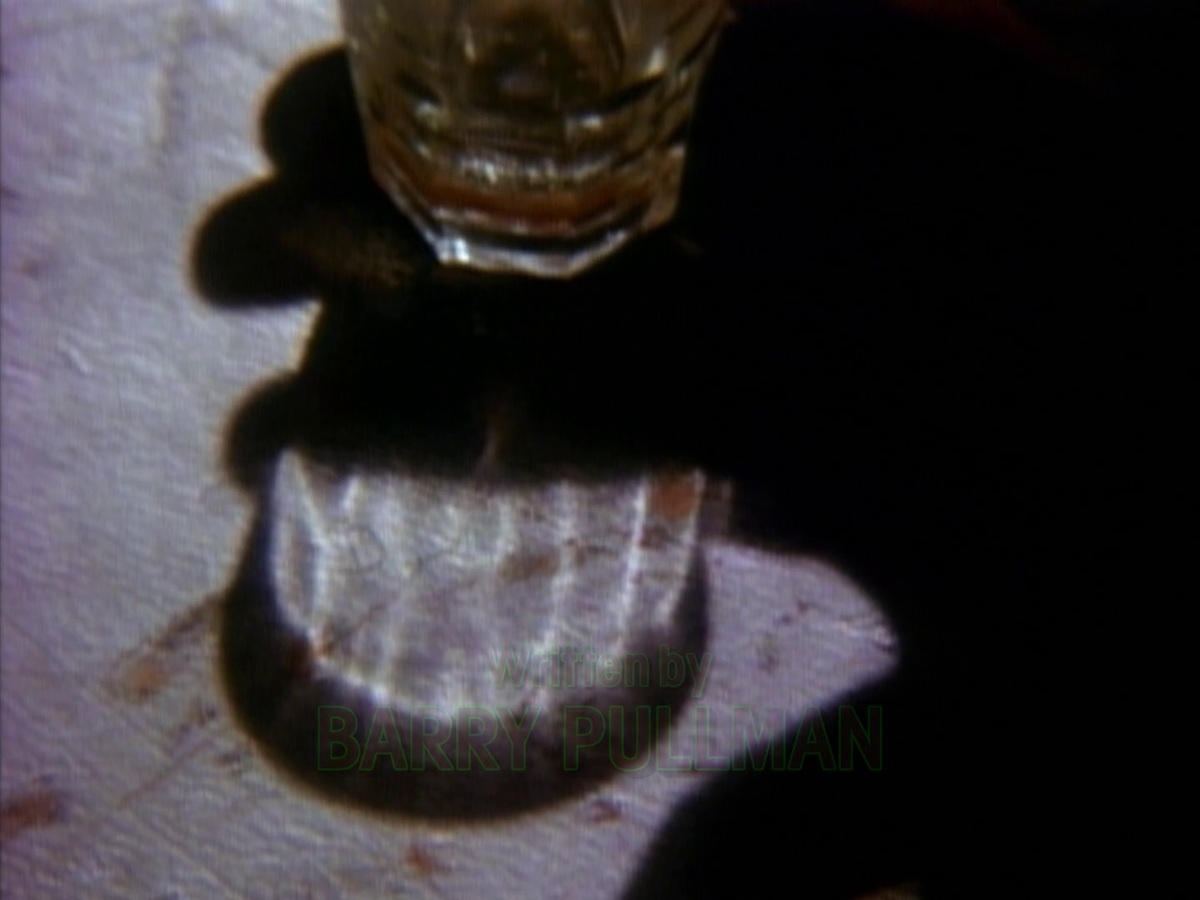
The opening concentrates on a glass and the light passing through it before establishing Truman’s retreat into the Bookhouse. An everyday object carries the disturbance before a face explains it. The sheriff has lost the person he loved, and the room that should offer fellowship has become a place to withdraw from everyone else.
Hawk brings breakfast from Norma; Cooper later brings information from Interpol. Neither offering reaches him. Food proposes ordinary care, while the dossier attempts to replace his attachment to Josie with an account of her crimes. Cooper’s mistake is to assume that knowing more about her will make grief easier. Truman does not need another investigator at that moment.
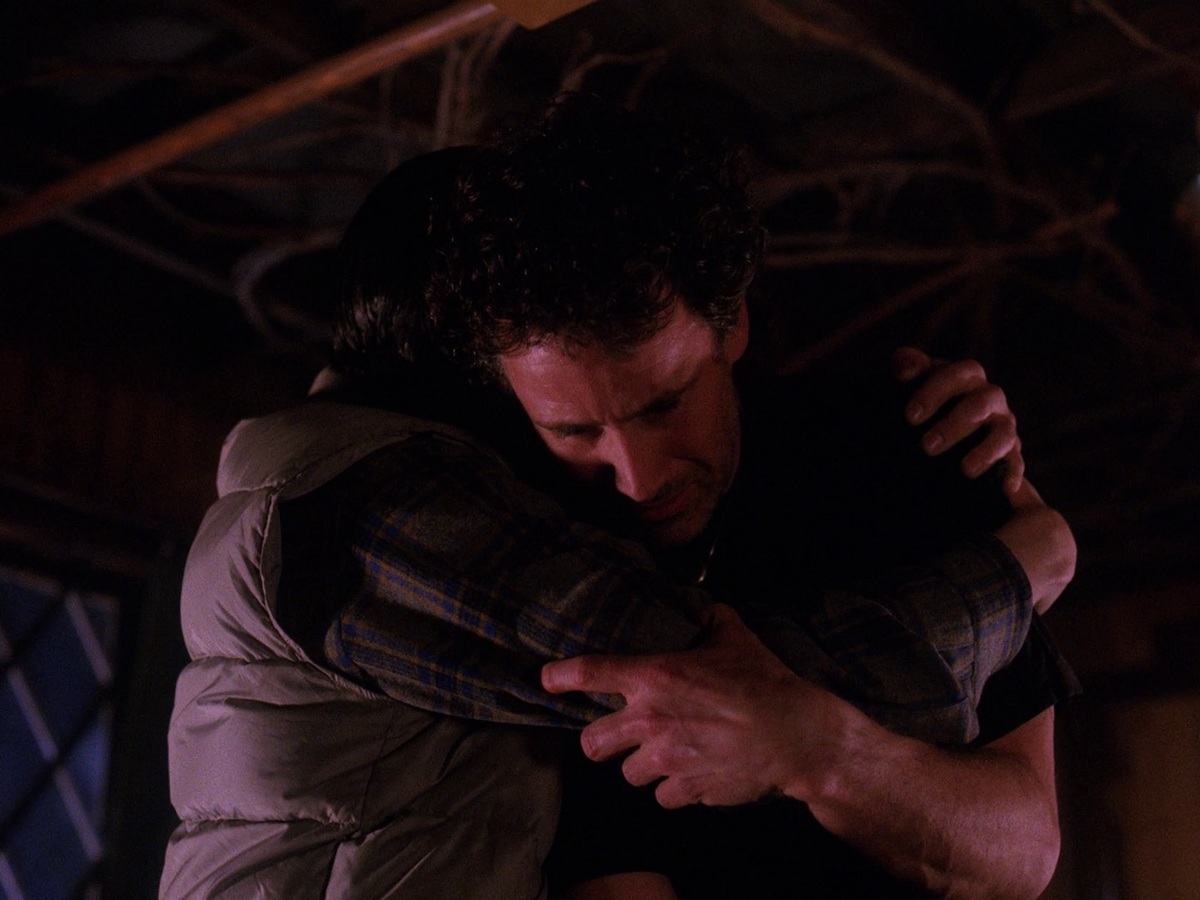
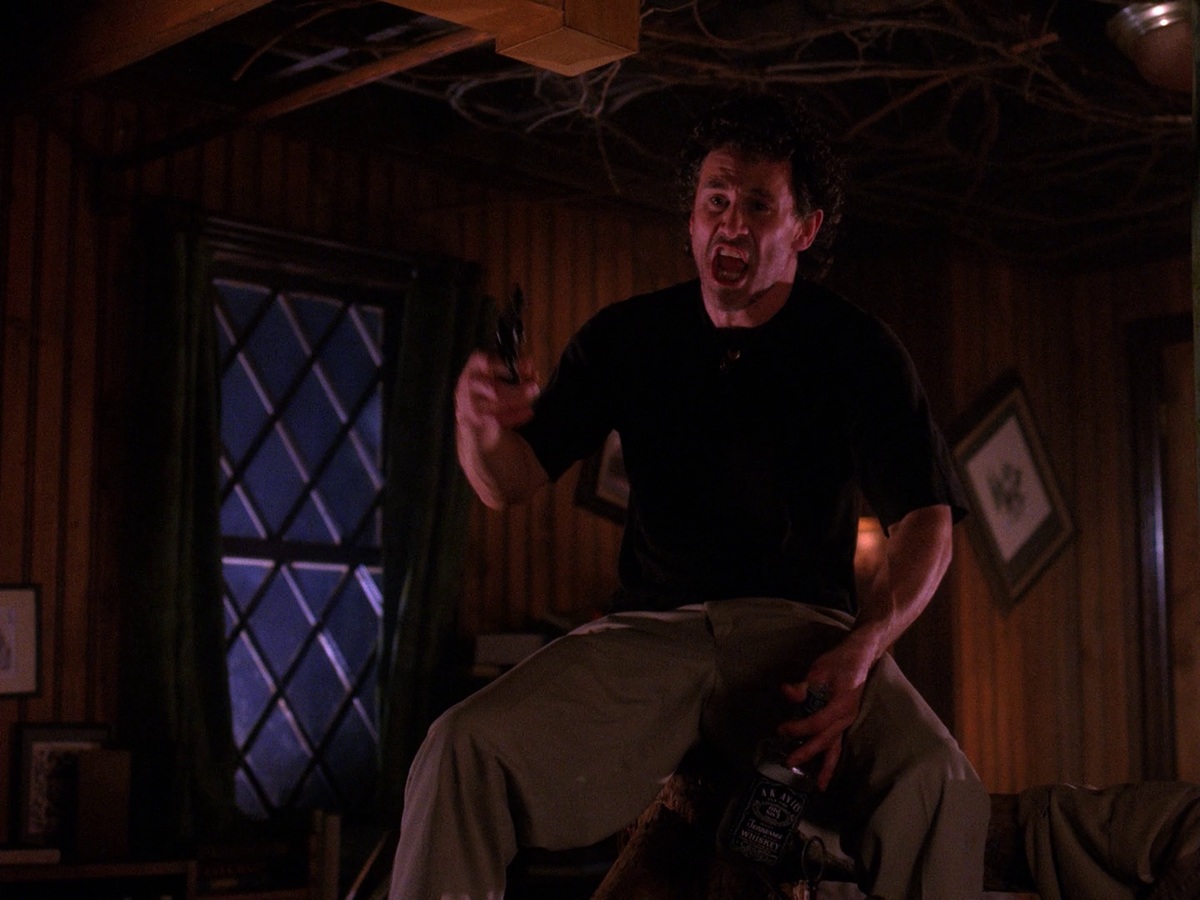
The second visit changes the balance. Broken furniture and a gun make the danger immediate, but the scene does not resolve through a display of superior force. Cooper asks for the weapon, listens to Harry’s sense of failure and finally embraces him. The move from interrogation to physical support is the scene’s decisive action. In an episode full of people speaking under false identities, this encounter depends on allowing a friend to stop performing authority.
Hawk’s comparison of the devastated man to a vanished lake gives the loss a landscape. It is not a diagnosis or a solution. It expresses how alarming it is to discover an absence where something dependable used to be. The final intrusion into the Bookhouse will make that vulnerability dangerous in a different way.
From withdrawal to an embrace · 3 images
Annie arrives in the real world
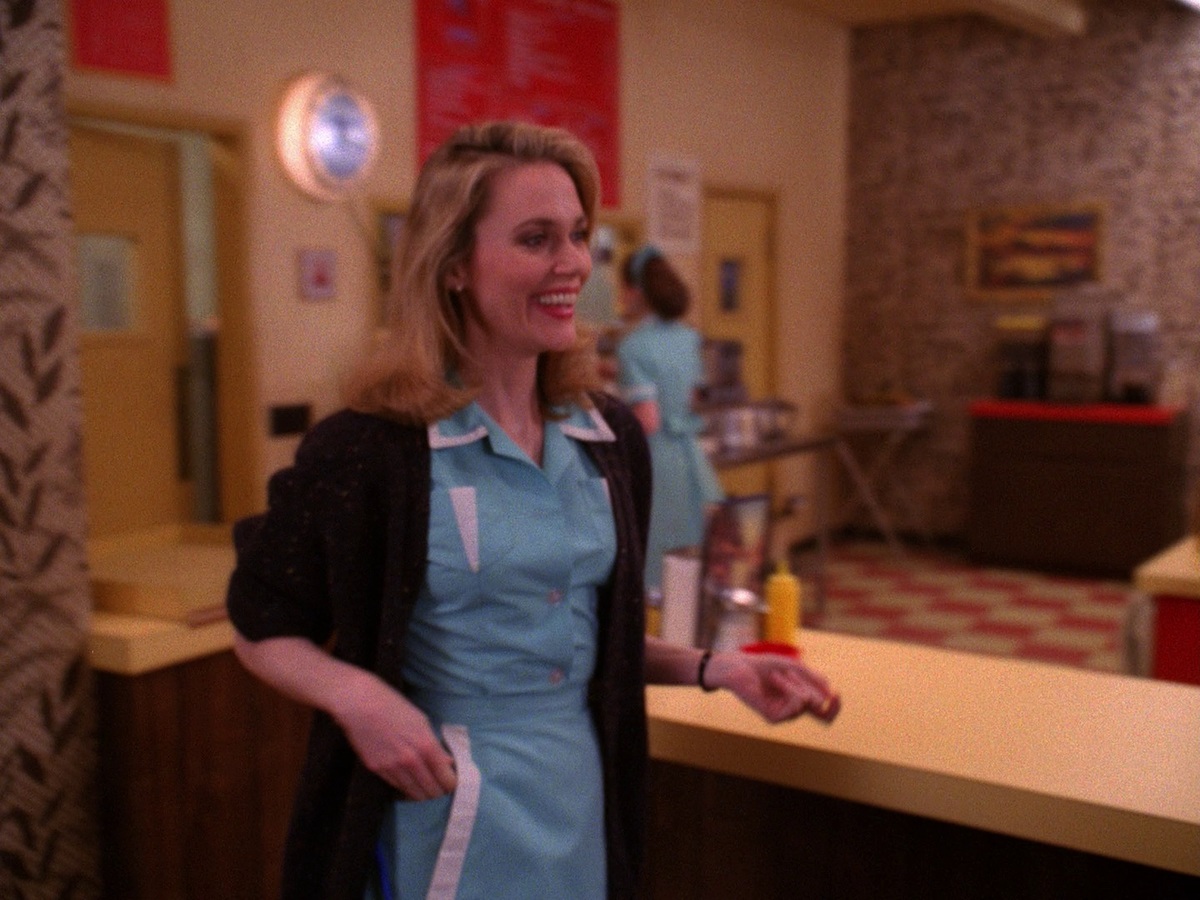
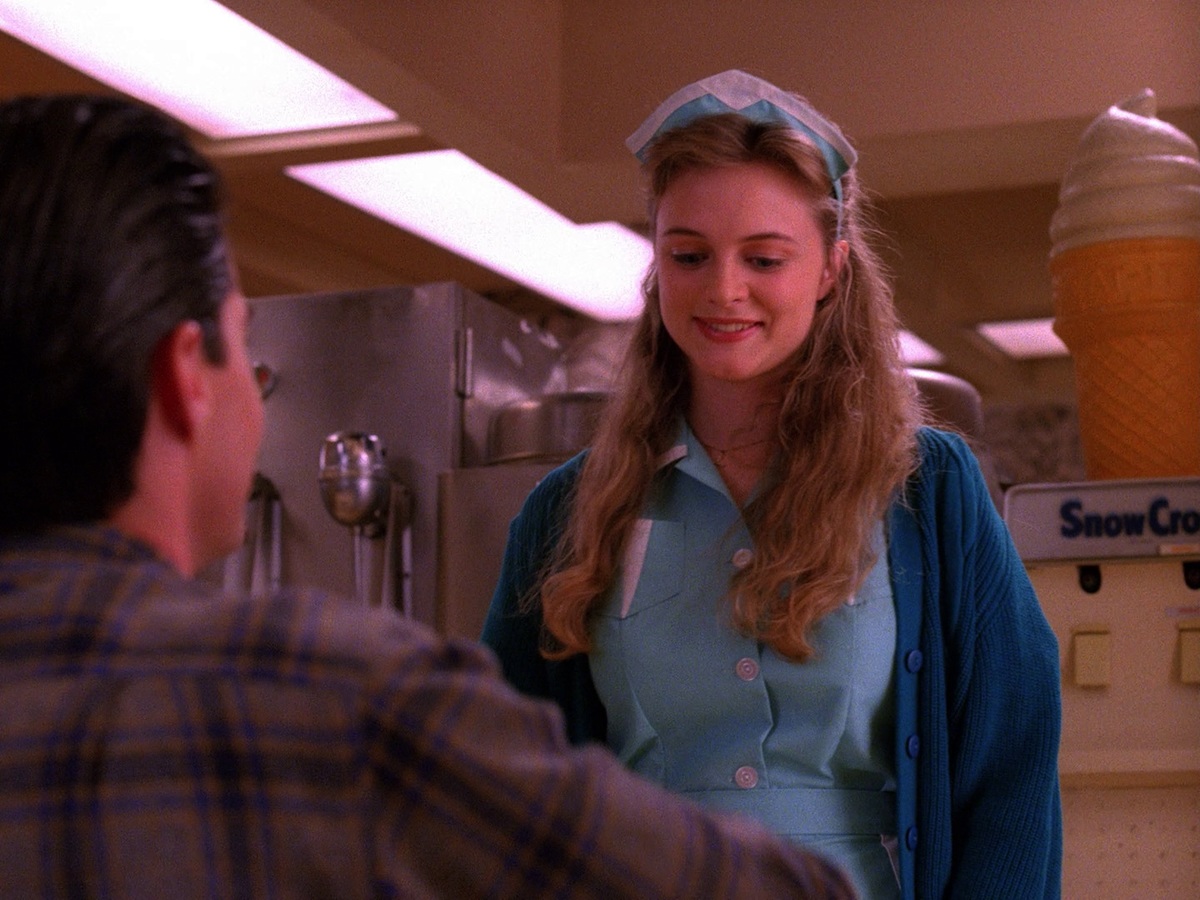
Annie’s reunion with Norma introduces someone for whom the town is unfamiliar again. Her description of convent life makes money, work and casual conversation seem newly learned. The scene establishes both a need for protection and a refusal to be treated simply as a charity case: she asks to work, and Norma answers as an employer as well as a sister.
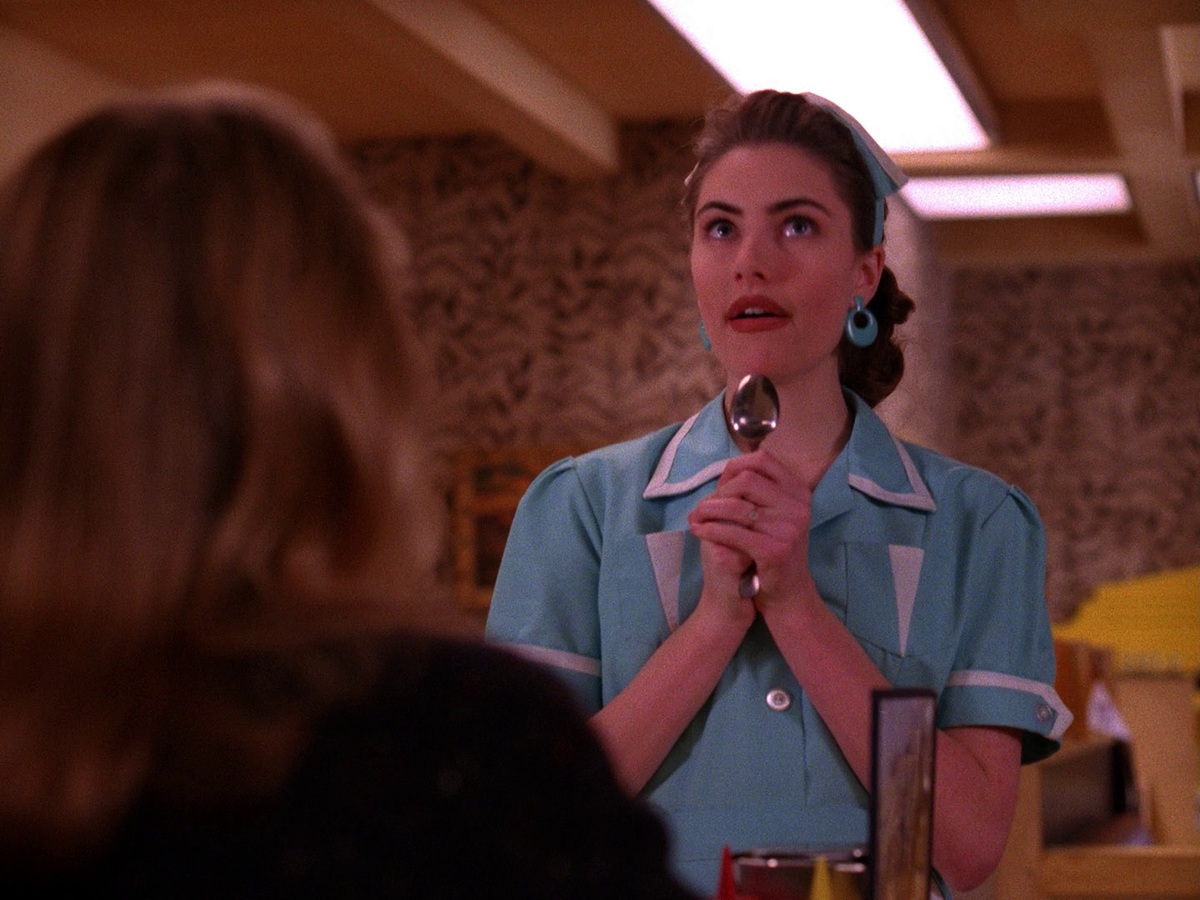
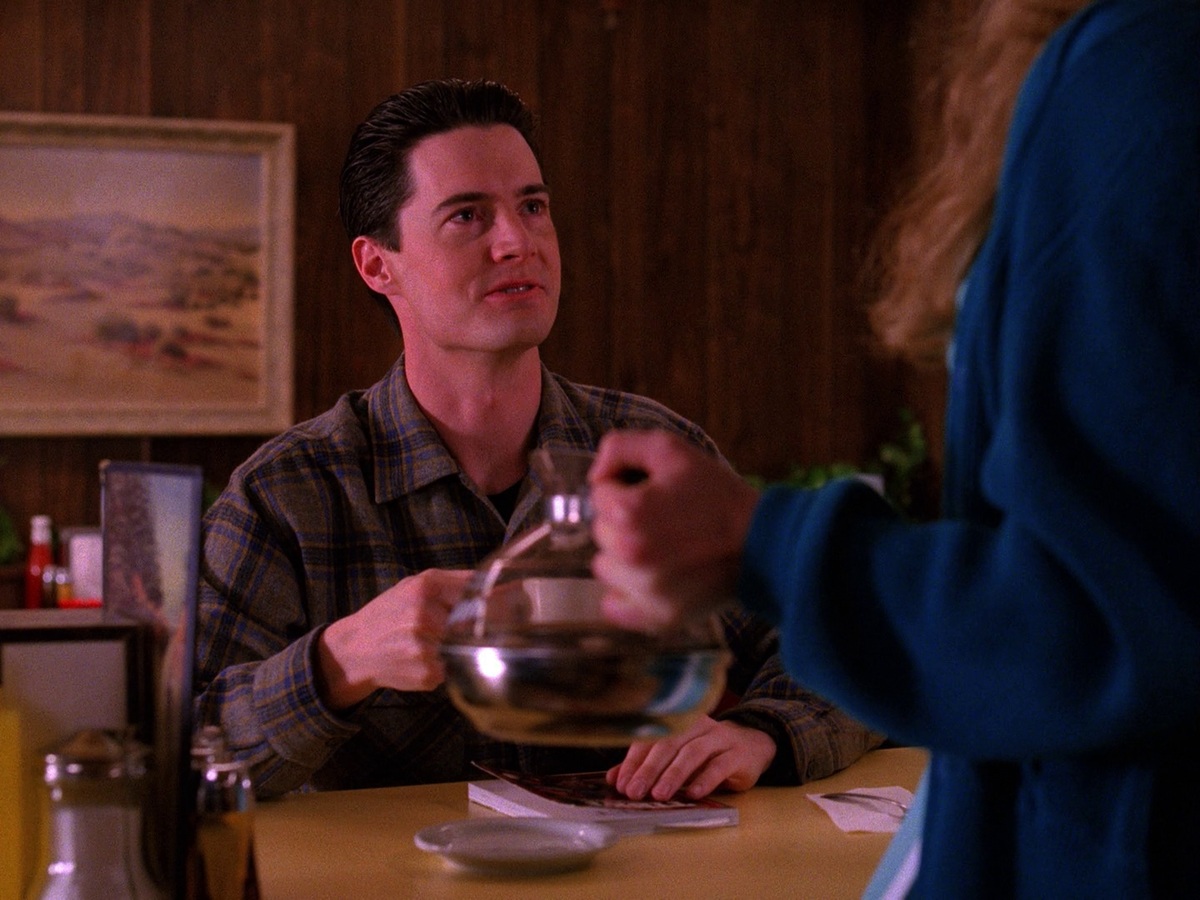
Cooper’s later encounter with her turns the diner counter into a threshold. His coffee order begins as the familiar ritual of a customer; the exchange of names changes its emotional significance. The cup, her attention to its strength and his lingering response give the meeting a scale quite unlike the episode’s grand declarations of love or reform.
Annie is not the only woman whose appearance is being discussed. Norma encourages Shelly to enter Miss Twin Peaks, and Shelly jokingly rehearses an answer about world peace. Her performance briefly makes the pageant into something she can play with. Earle’s praise of her beauty, delivered under another disguise, turns that ordinary conversation into an encounter whose danger she cannot recognise.
Three encounters at the counter · 3 images
Earle borrows the history of a friend
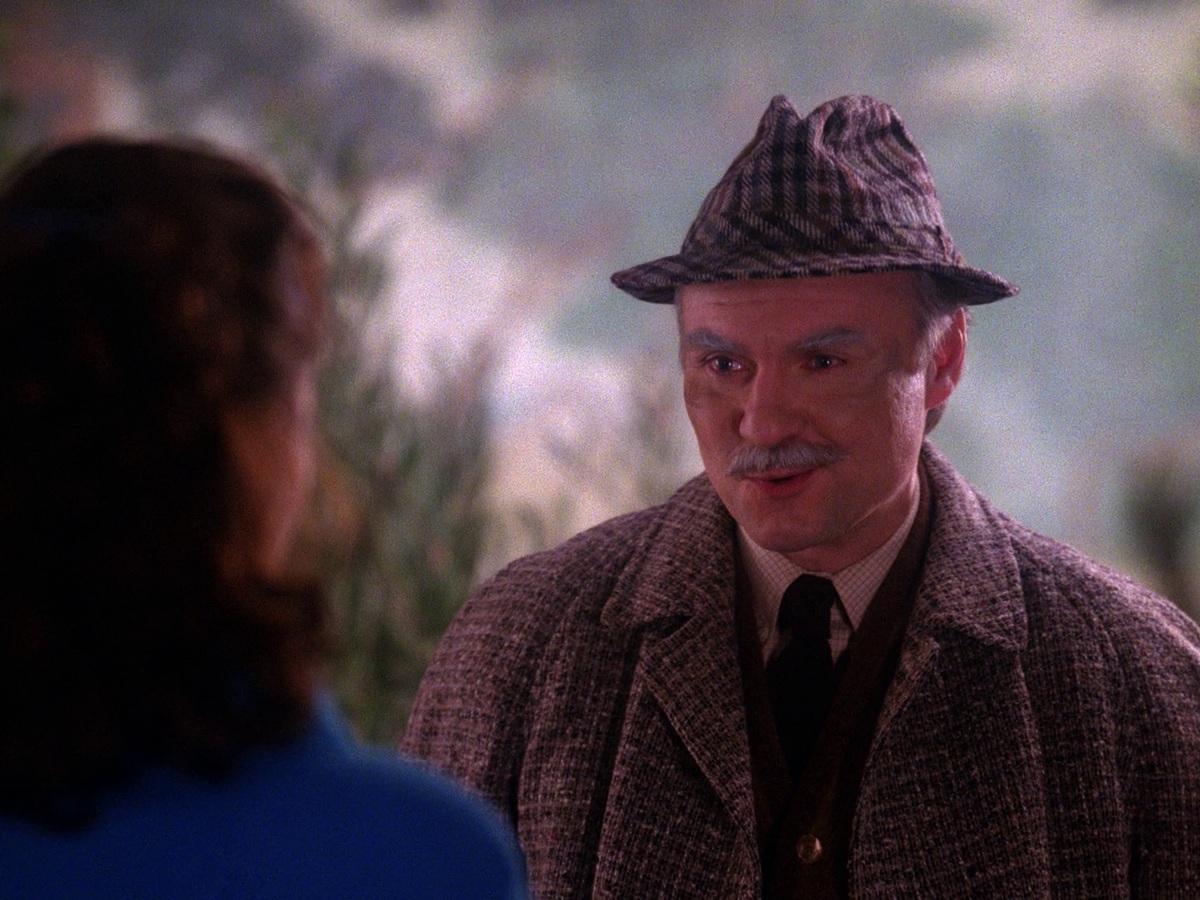
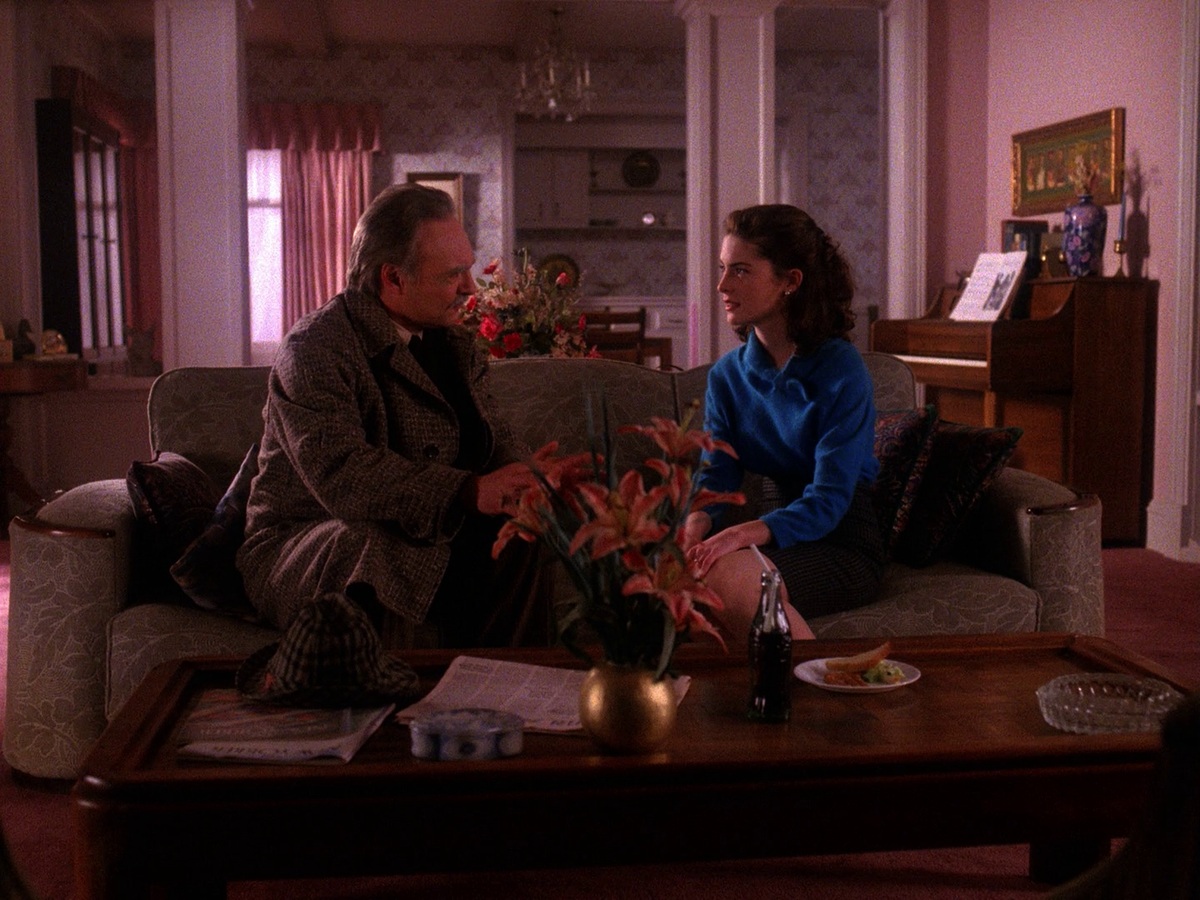
Earle’s visit to the Hayward house is disturbing because it does not initially require violence. He presents himself as Dr. Gerald Craig, an old medical-school friend of Donna’s father, and arrives equipped with the details that make the story convincing. The open door and inviting domestic space become evidence of a trust he knows how to use.
The conversation lets the impostor occupy a paternal position. He discusses school, praises the family and offers reassurance about the future. Donna’s courtesy is not portrayed as stupidity; the intrusion succeeds through knowledge of relationships and conventions that usually make hospitality possible.
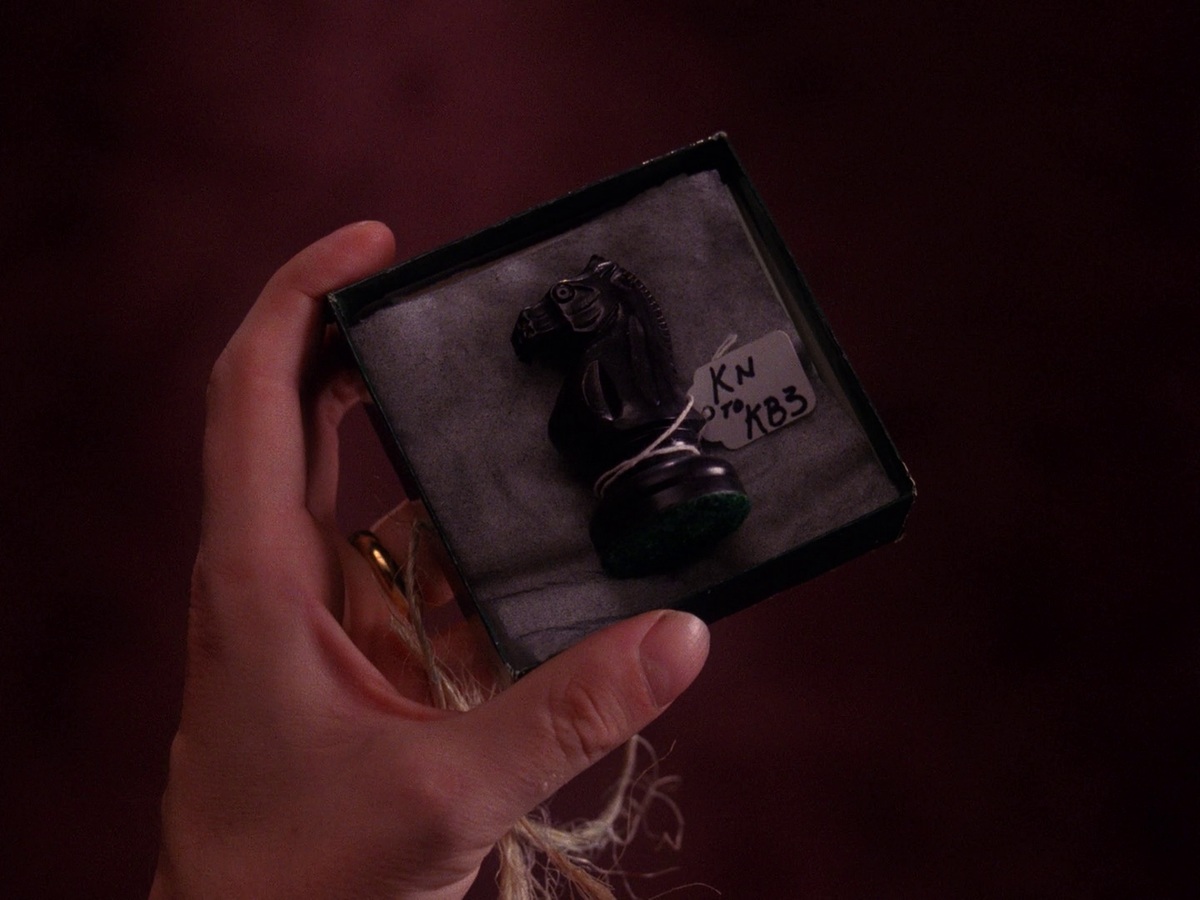
Bill’s return reverses the meaning of everything Donna has just heard. Gerald Craig drowned, and Bill was present when it happened. The gift contains a chess piece and a move intended for Cooper. A recollection of friendship has been made into a delivery mechanism for a threat. The episode keeps the human history behind the borrowed name visible rather than reducing the scene to a clever disguise.
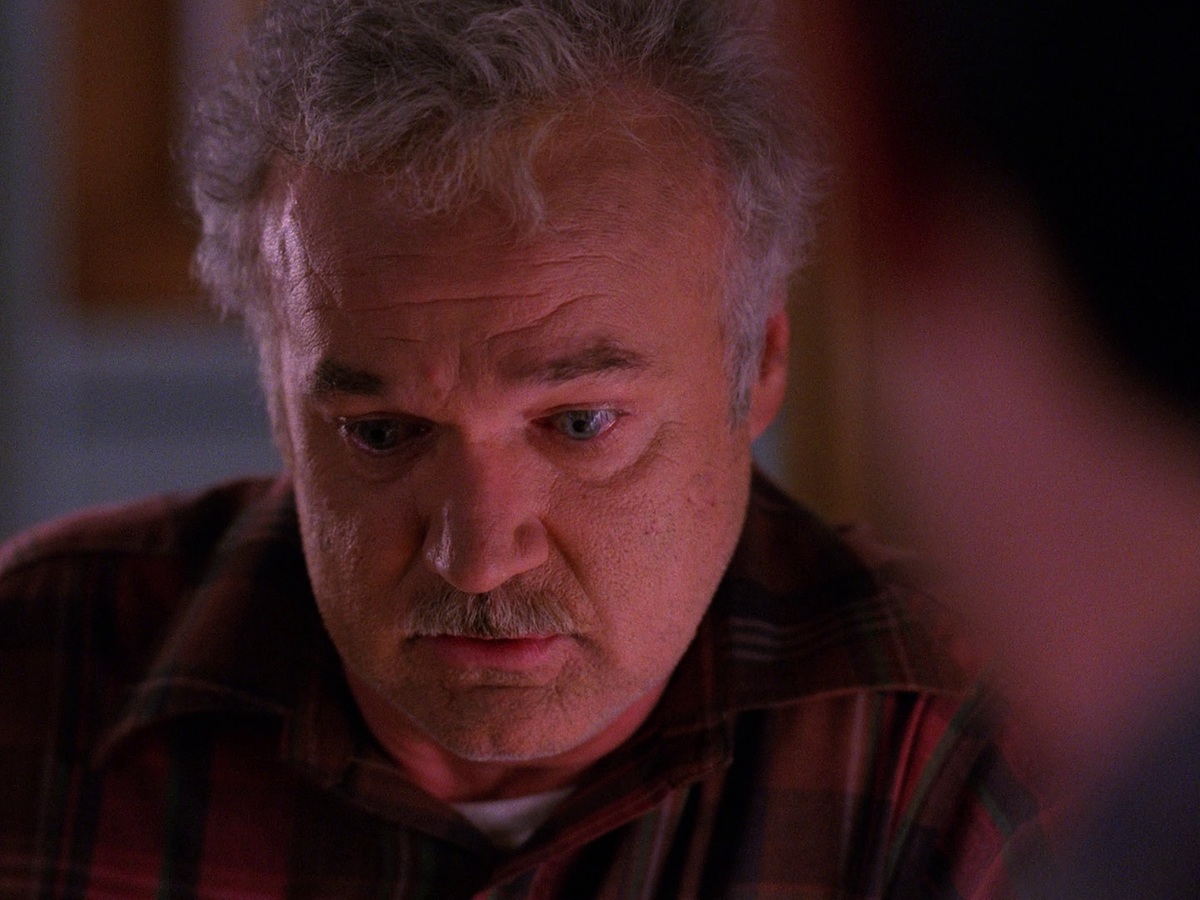
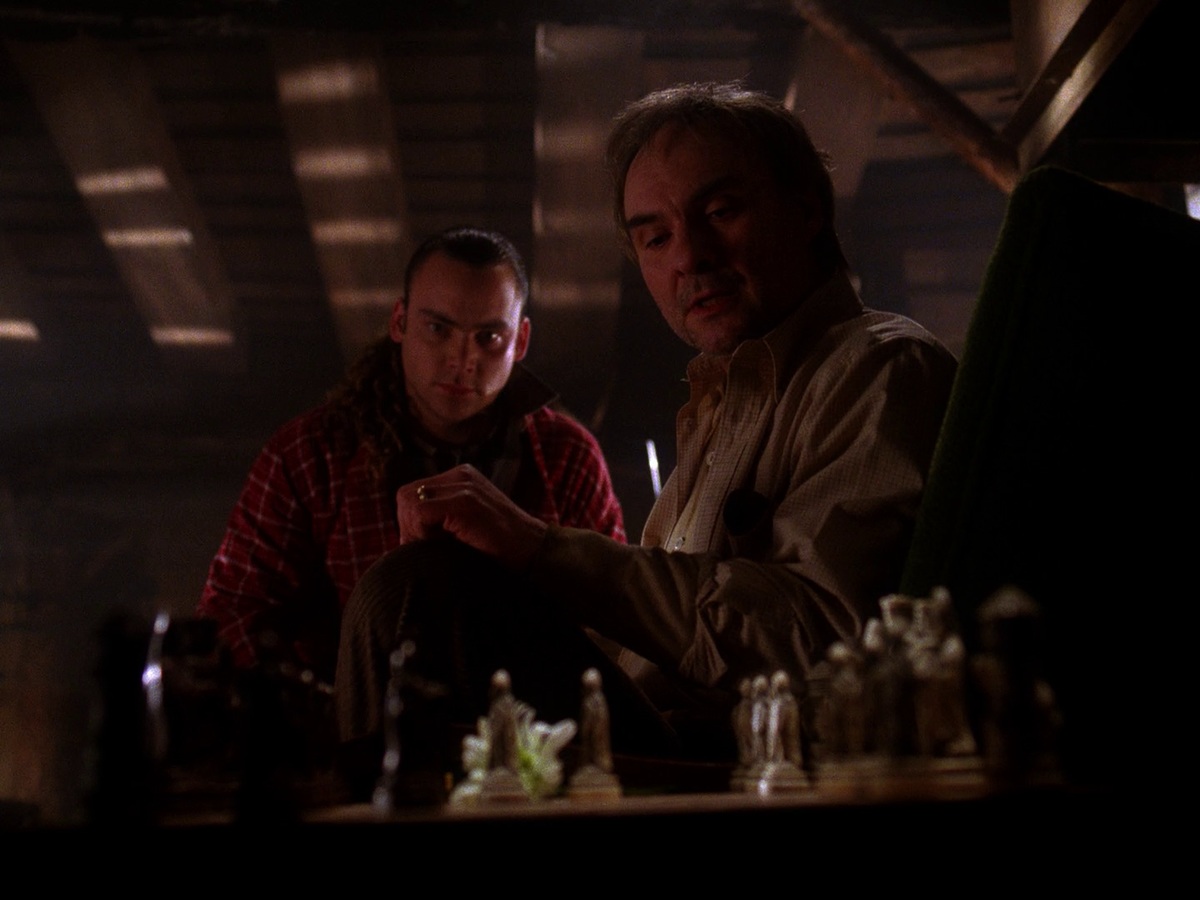
In the cabin, Earle is enraged to recognise that Cooper is receiving chess advice. Pete’s aim is to prevent deaths through stalemate; Earle treats that effort as a violation of his rules. His ideal game requires other people to accept the connection he has imposed between a captured piece and a human life. Leo suffers for frustration directed elsewhere.
Hospitality becomes a message · 4 images
Two marks and a shared memory
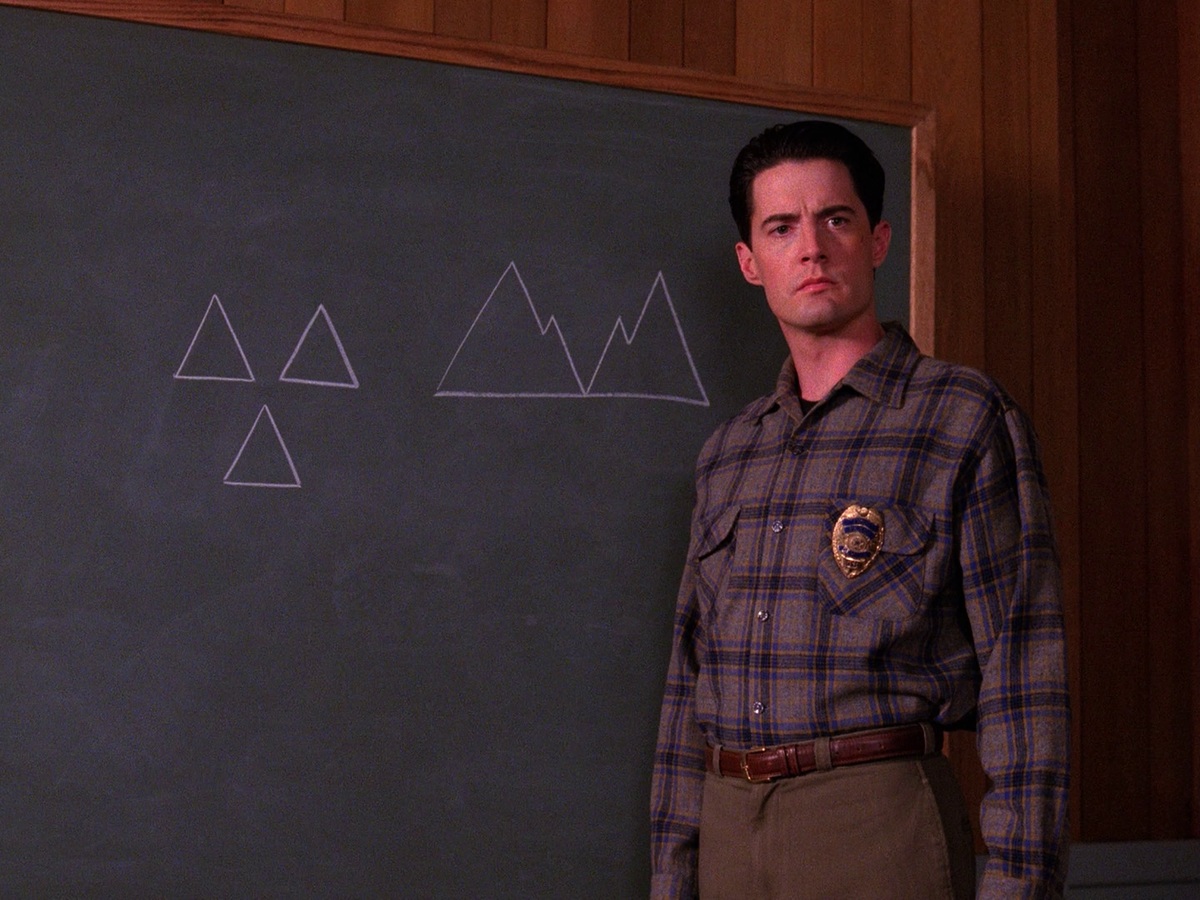
Briggs and Margaret bring the investigation back to experiences that cannot be contained in an official report. His neck bears a mark; she reveals one on her leg and recalls disappearing into the woods as a child. Light and the call of an owl connect their accounts without making the experiences identical.
Cooper draws the marks on the board. The action makes private bodily evidence available for comparison, but the resulting diagram is not yet an explanation. The episode is careful about the distance between recognising a pattern and knowing what caused it. Margaret also connects the light and sound with the time before her husband’s death, extending the question beyond Briggs’s recent disappearance.
Read this beside Hawk’s account of the Lodges. The series places inherited stories, personal memories and investigative procedure alongside one another. None of those voices is simply erased by the arrival of another.
New attachments, unfinished separations
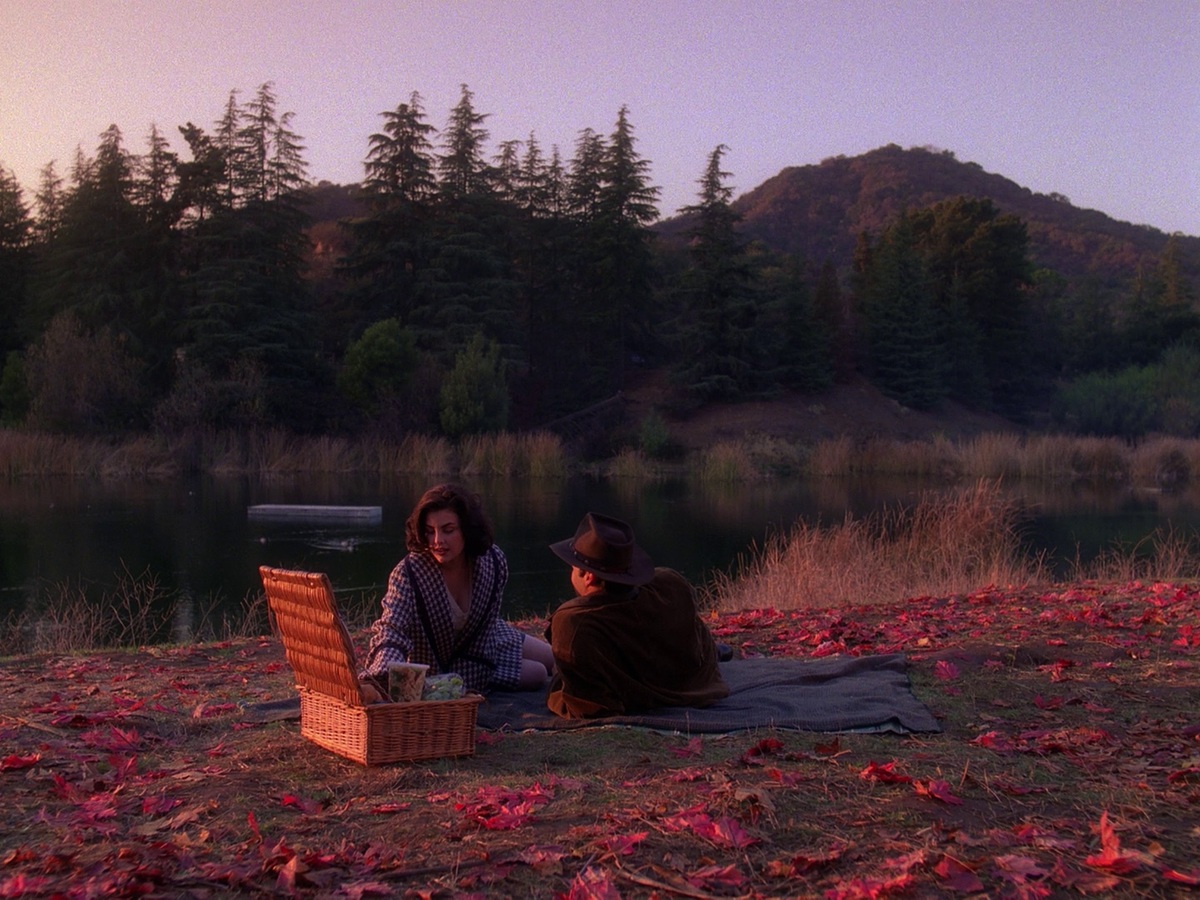
Wheeler’s serenade gives Audrey an unusually quiet scene. The picnic beside the water opens space around her after the business and performance arrangements at the hotel. Their conversation allows her to describe the difference between attracting attention and being known.
Ed and Nadine face a less promising attempt at clarification. Jacoby mediates the proposed divorce, but Nadine interprets the situation through the dating life she believes she is living. His scar-tissue comparison suggests why explanation alone cannot restore a shared reality. The words carry different stakes for each person in the room.
The later hotel arrival under the name Hinkman moves that mismatch into public comedy. As with Earle’s visits, an assumed identity changes what a familiar institution permits. The moral situations are very different, but the episode repeatedly tests how much a name, a role or a convincing manner can secure.
Explore the sequence · 2 images
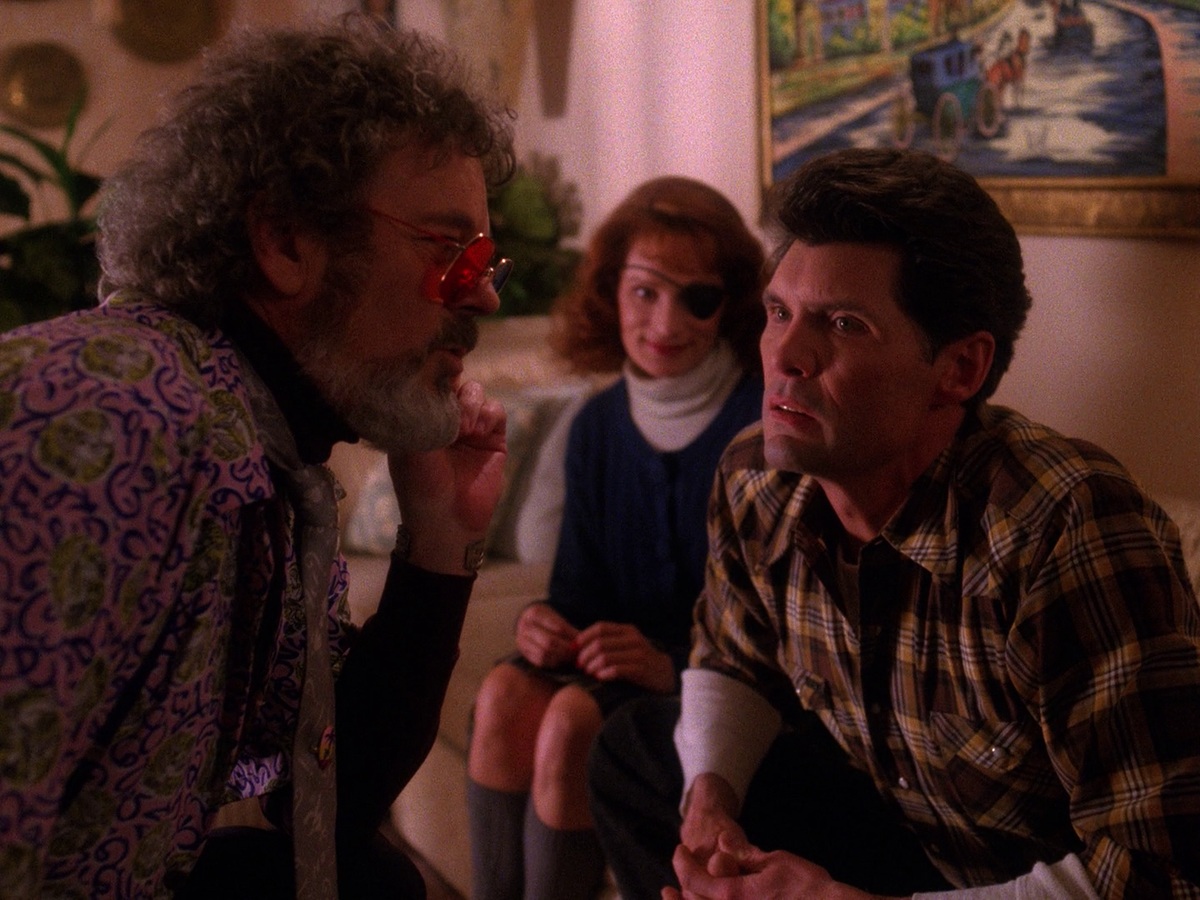
A conservation benefit becomes a spectacle
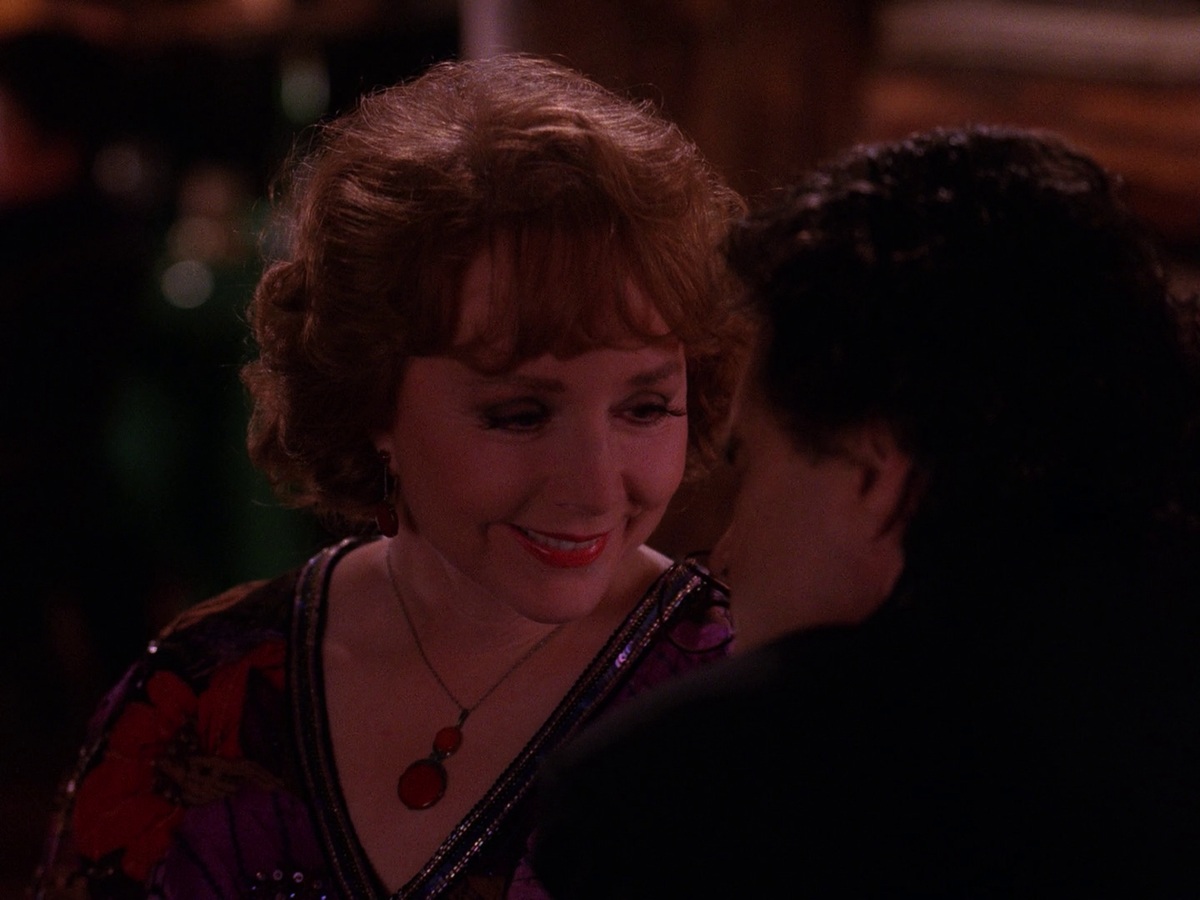
Ben frames the Stop Ghostwood event as an ecological necessity, then introduces a fashion show. Public concern, entertainment and his own reinvention occupy the same stage. Catherine’s scepticism matters because she knows the history his new identity would have to overcome. His appeal to giving ends in a request for her cheque: the old businessman and the apparent convert remain difficult to separate.
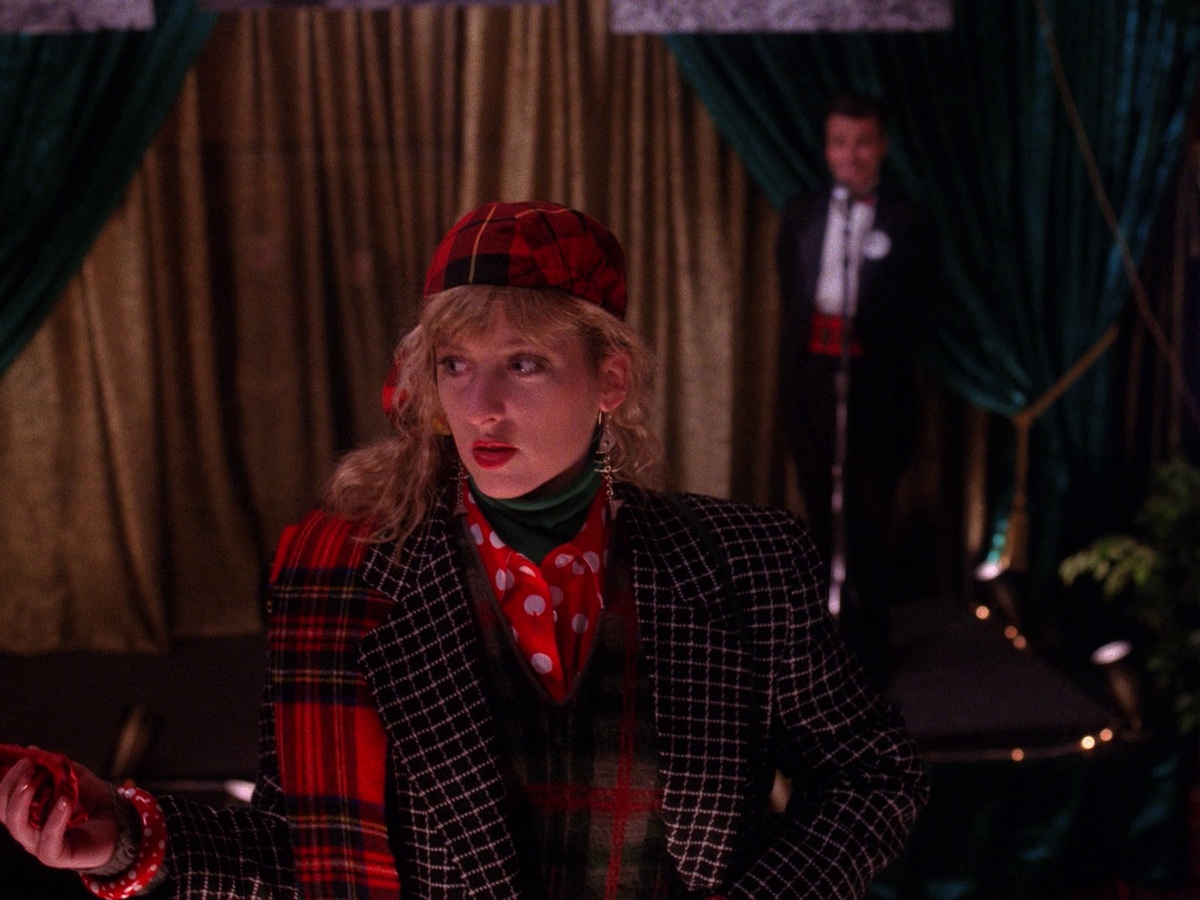
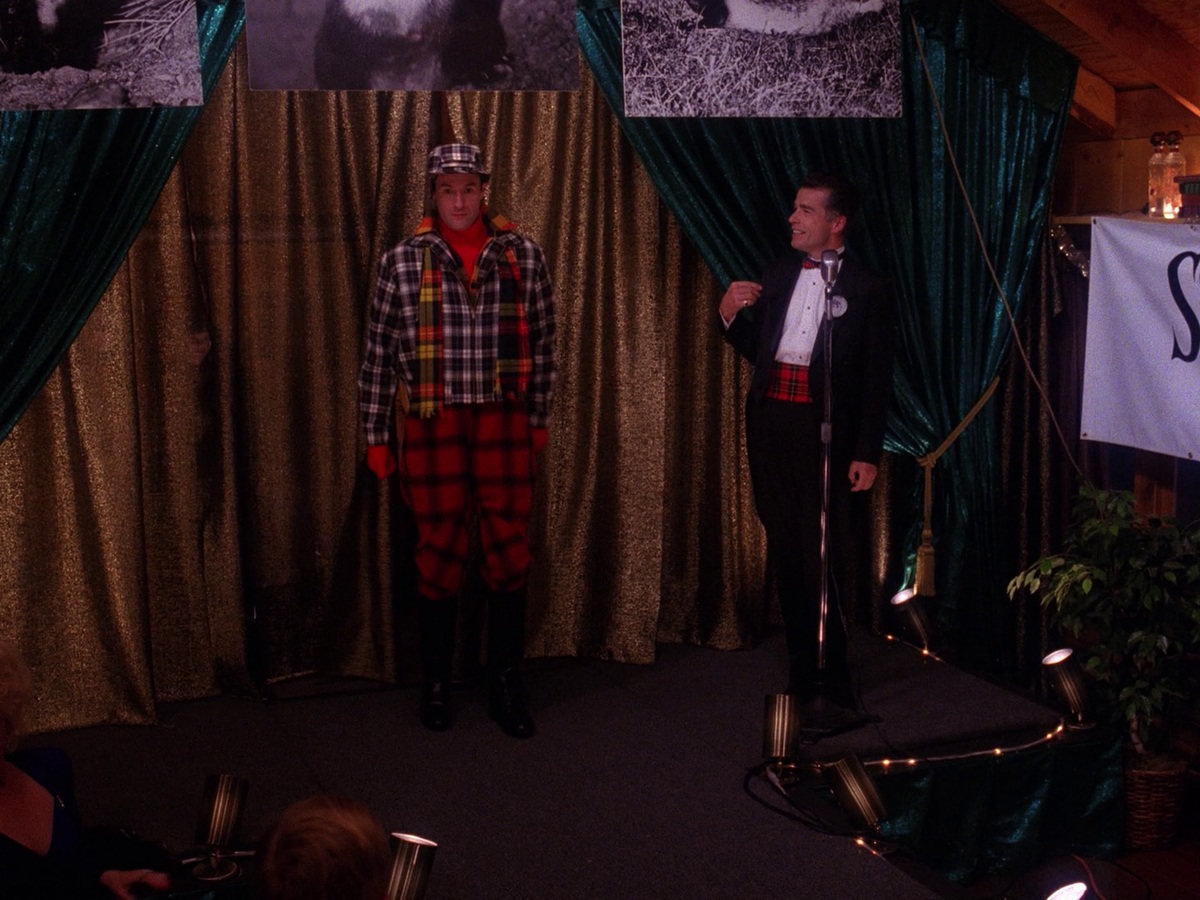
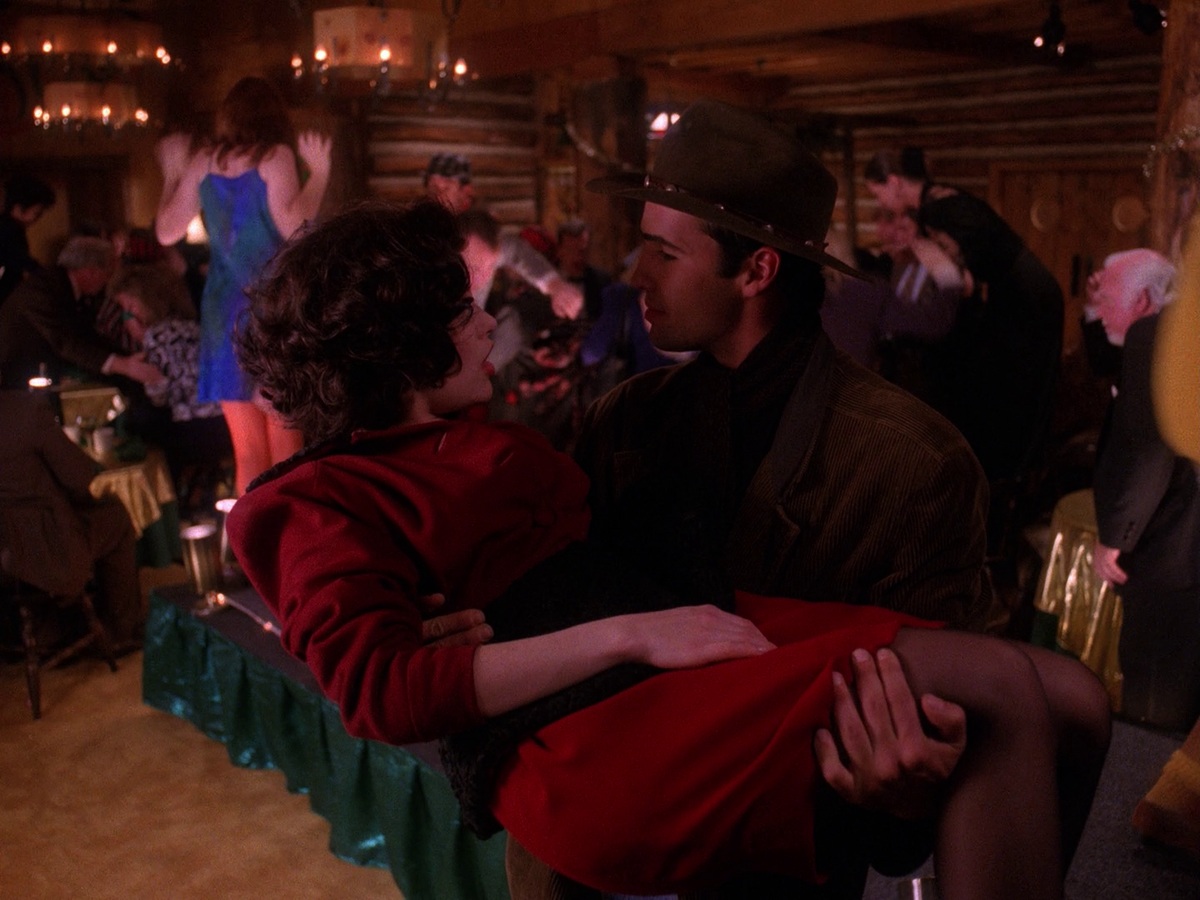
The runway turns local characters into carefully described surfaces. Dick’s elaborate account of Lucy’s and Andy’s outfits contrasts with their discomfort behind the scenes. The show depends on maintaining a polished front while the people wearing the clothes experience heat, impatience and awkwardness.
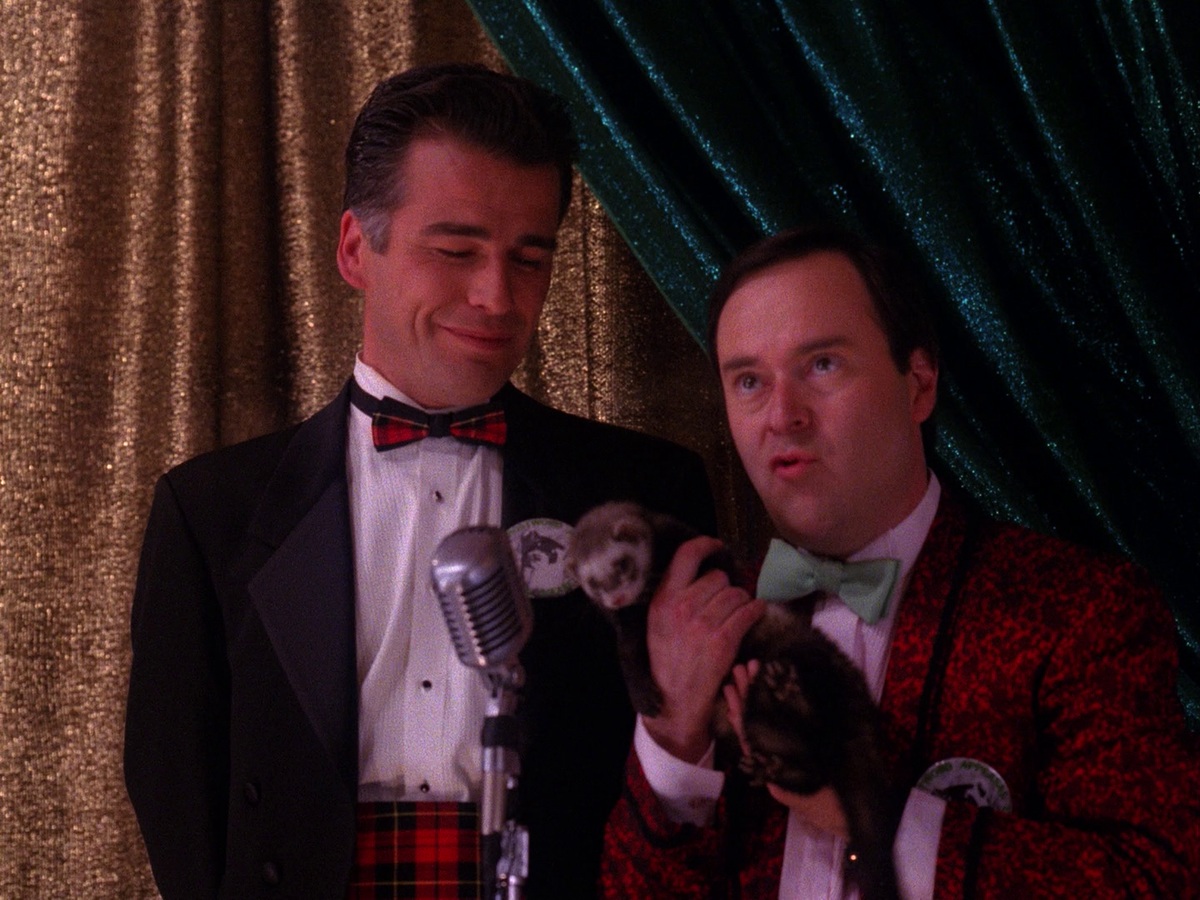
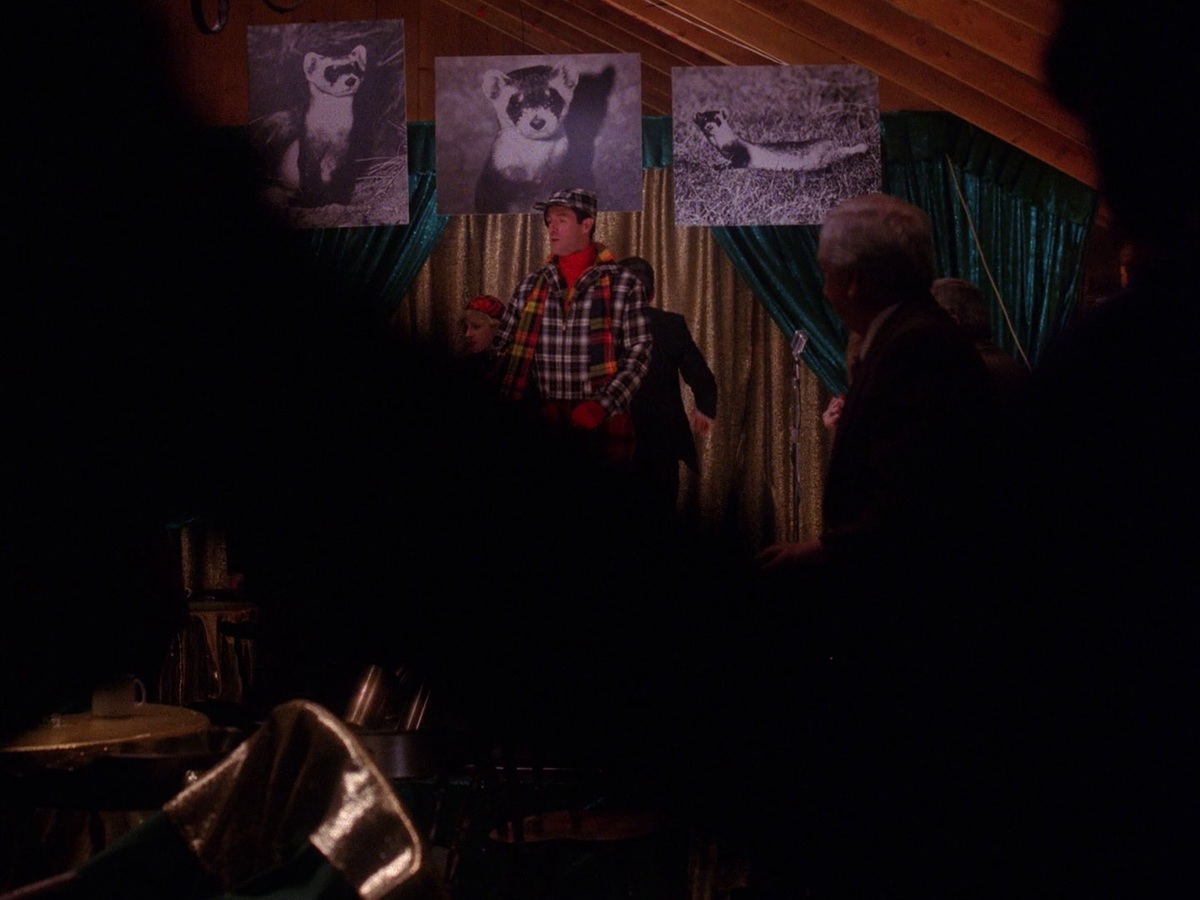
Pinkle’s presentation of the pine weasel destroys that order. The supposedly manageable example of an endangered animal escapes the role assigned to it, and the seated audience becomes a crowd in flight. The sequence develops through introduction, proximity and panic; the joke concerns the collapse of a controlled demonstration rather than merely the sight of an animal.
Audrey and Wheeler find intimacy within the disorder. Their kiss supplies a small private resolution inside an event that has lost its public purpose. The optional gallery follows the changing arrangement of performers and audience without claiming an undocumented animal-handling or effects technique.
From fashion show to commotion · 5 images
A gift, a visit, an unguarded room
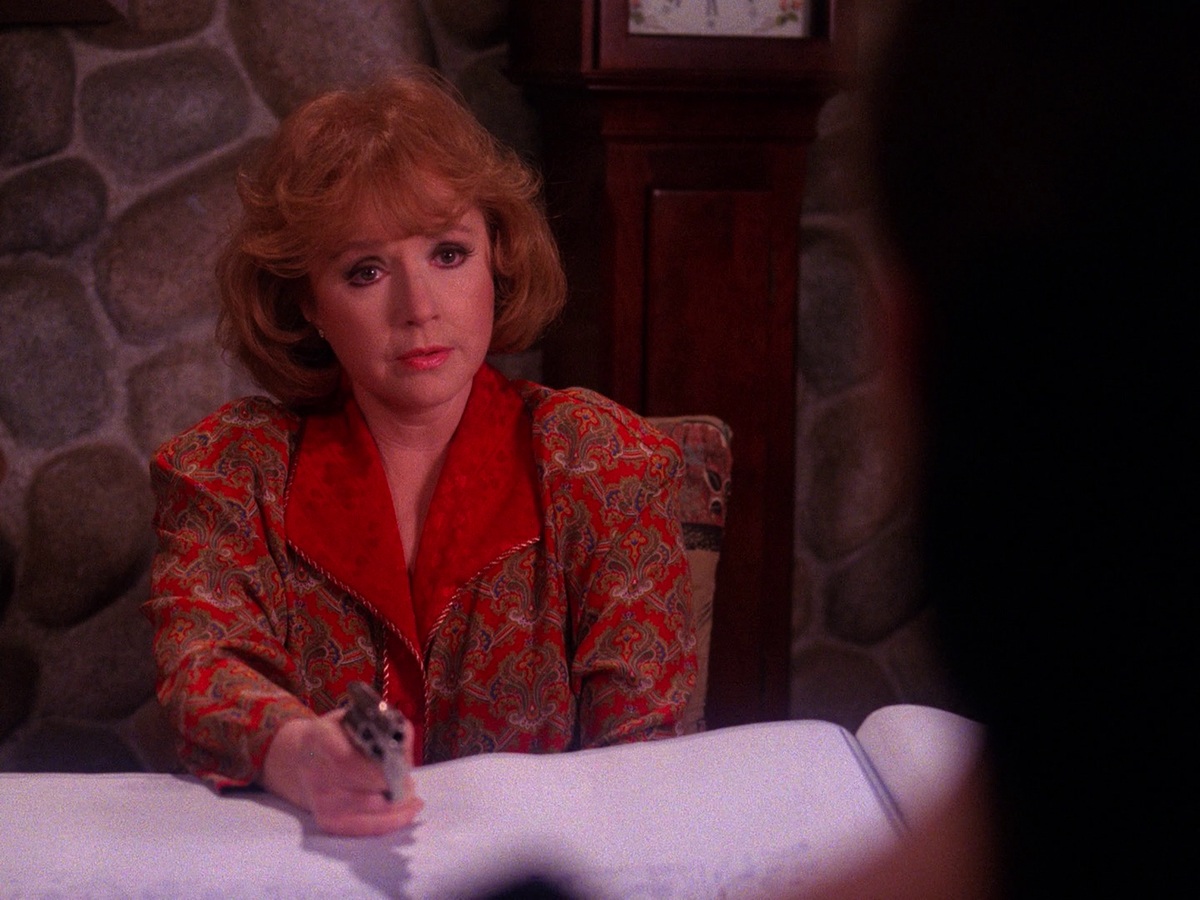
Jones’s call on Catherine combines the language of practical arrangements with an unexplained gift from Eckhardt. Catherine refuses to treat a visitor’s apparently courteous purpose as a sufficient explanation. Her guarded manner contrasts sharply with Donna’s welcome to the supposed doctor.
The ending returns to the Bookhouse, where concern for Truman has produced a watch over him. Jones bypasses that protection and approaches the sleeping sheriff. The episode stops with his private refuge compromised again. An earlier embrace offered care; this bodily approach carries an entirely different intention, which the next episode will expose.
Explore the sequence · 2 images
The limits of reassurance
Several conversations offer reassurance that cannot safely be taken at face value. The false doctor tells Donna that life will work out. Earle praises the pleasures of country living while controlling Leo. Pinkle insists that the animal is harmless as the event collapses. These speeches become meaningful through the gap between what a person says and the situation in which it is said.
The caption track identifies Earle’s flute playing as sombre after his outburst. Wheeler’s cowboy song belongs to an intimate encounter with an identifiable performer, while the fashion-show announcements turn speech into public presentation. Those distinct uses of performance make the quiet conversation between Cooper and Truman more striking: it matters because it finally gives up trying to manage another person through a ready-made explanation.
The separate Log Lady introduction asks about wrong actions, pride and shame. It provides a useful threshold for Ben’s claims of reform and Cooper’s unsuccessful first attempt to help Harry, without serving as an answer key to either scene.
A route through Wounds and Scars
Grief and arrival. Truman withdraws as Annie returns to Norma.
Rules and disguises. Earle rejects stalemate and enters Donna’s home under a borrowed identity.
Marks and memories. Briggs and Margaret compare unexplained experiences with Cooper.
Love and separation. Audrey and Wheeler grow closer while Ed and Nadine cannot agree on their situation.
The benefit. Ben’s public reinvention becomes a fashion show and then a panic.
The Bookhouse. The place of refuge is entered by Jones.
Sources and connections
Primary source: Twin Peaks, “Wounds and Scars,” Season 2, Episode 17 / overall Episode 24, in Twin Peaks: From Z to A. Directed by James Foley; written by Barry Pullman. Scene studies refer to the episode’s images and dramatic situations. Dialogue and named sound cues were checked against the English caption track; the Log Lady introduction is a separate work.
Connections: The Condemned Woman; Hawk and the Lodges; the cast on entering Twin Peaks; and the Season Two dossier.