Twin Peaks: Episode 15 — Drive with a Dead Girl
1990 · Season 2, Episode 8 · Caleb Deschanel
A cheerful drive conceals a terrible fact. Follow Leland’s performance, Catherine’s recorded bargain and the widening gap between what the audience knows and what the police can prove.
Season 2, Episode 8 / overall Episode 15. Includes major mystery spoilers.
Explore this episode
An ordinary morning after an extraordinary crime
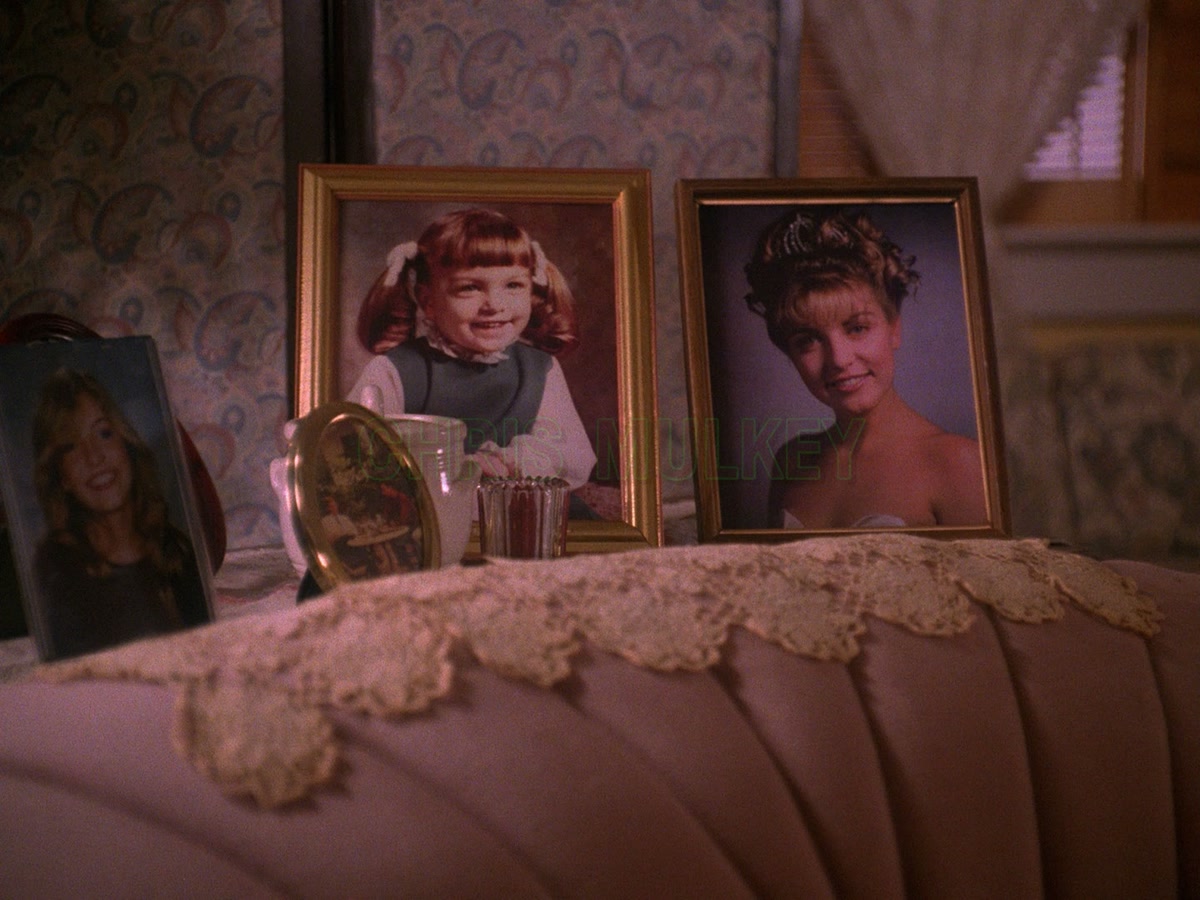
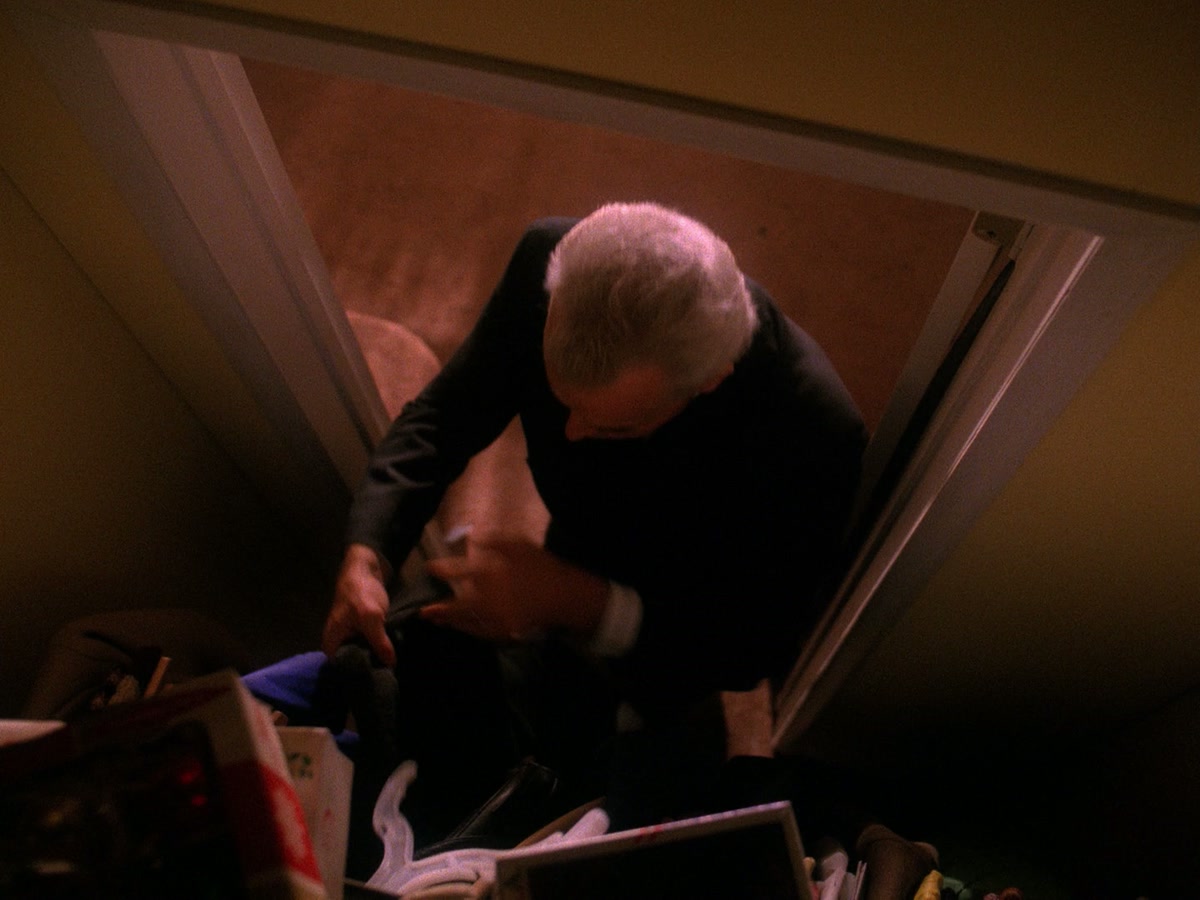
The episode returns to the Palmer house after the audience has seen Maddy’s murder. Night gives way to a morning of putting practice, visitors and plans for a dance. The family photographs preserve a reassuring image of the household before Leland’s handling of the golf bag exposes what that image excludes. An ordinary object can now conceal what the household’s ordinary conversation will not acknowledge.
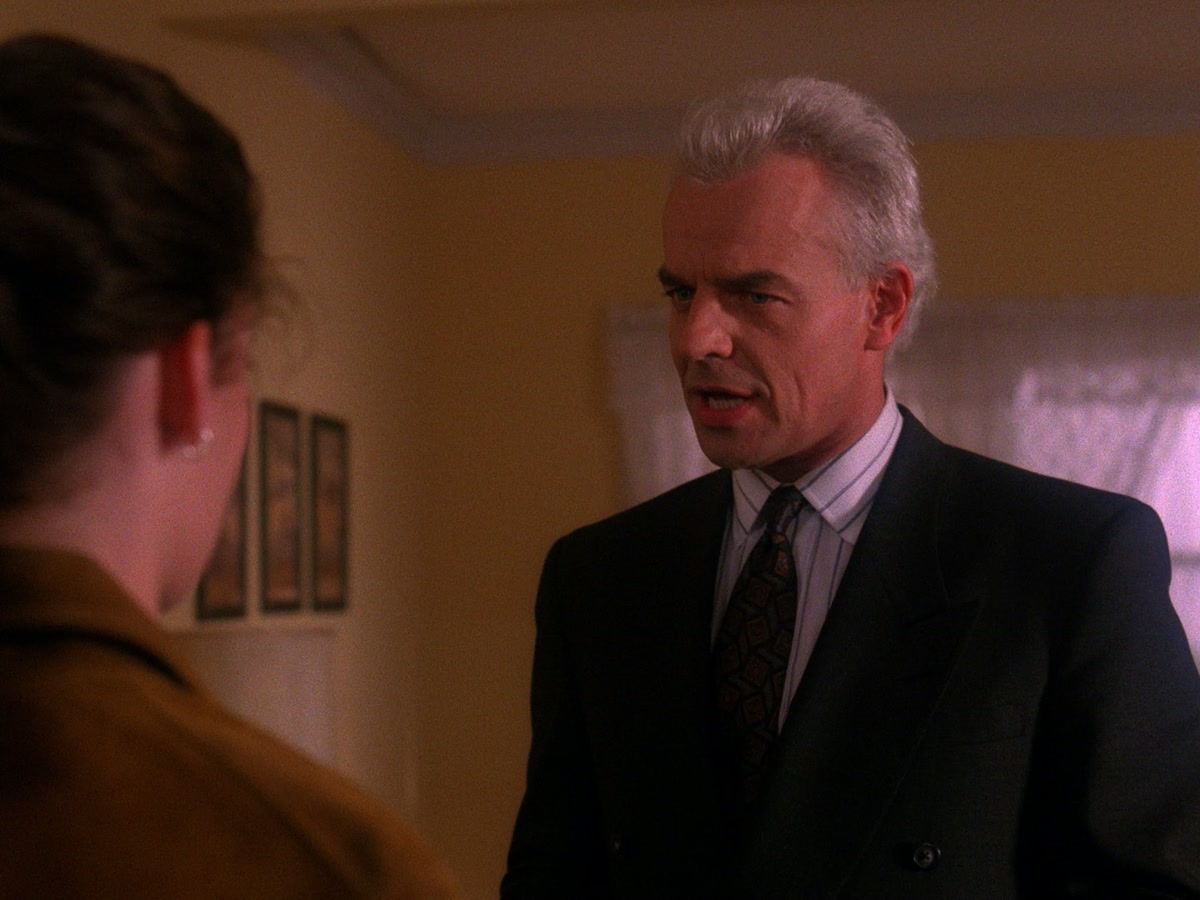
Donna and James arrive expecting to say goodbye to Maddy. Leland supplies a precise, convenient account: he has already taken her to the bus station. The lie works because it resembles the kind of minor disappointment that happens when people miss one another. The young visitors do not yet inhabit the scene the audience is watching.
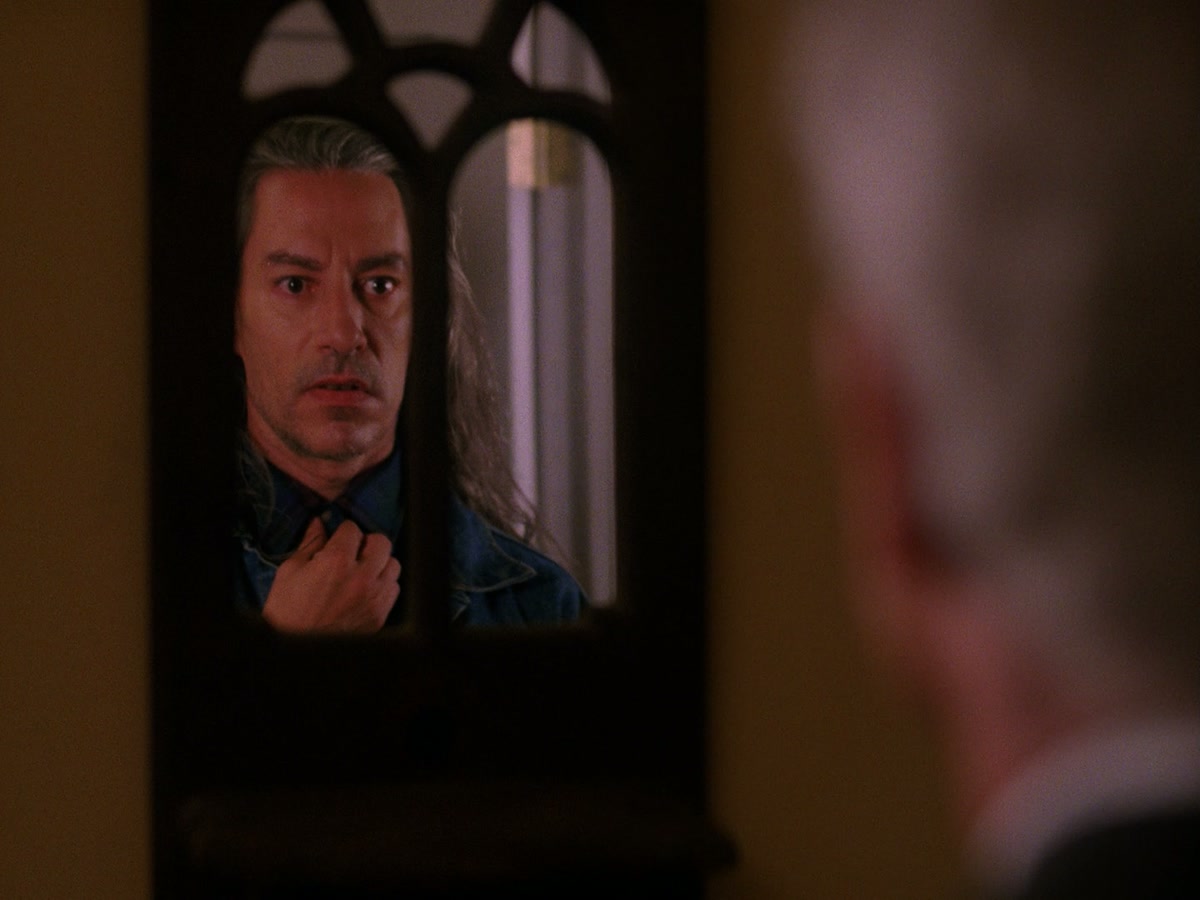
Sarah’s offscreen question about a Glenn Miller evening makes normal life seem available again. Leland’s pause at the hall mirror and his movement of the bag undermine that reassurance. The sequence does not need another murder to create dread. It asks viewers to watch familiar gestures with knowledge that the other characters lack.
The house and the concealed body · 5 images

A childhood memory inside a jail cell
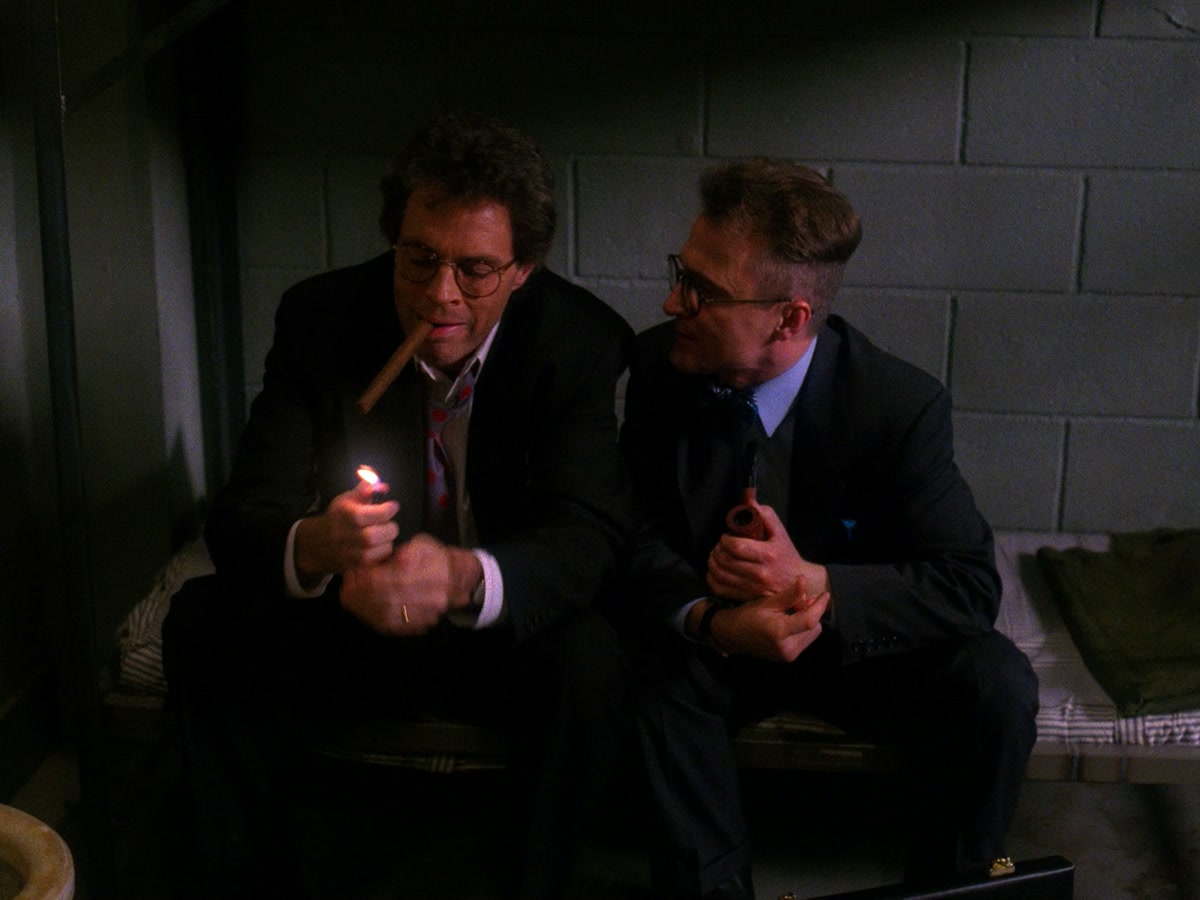
Jerry’s arrival offers Ben family loyalty without much legal competence. Their discussion establishes Catherine as the missing alibi and turns the consequences of her apparent death into an immediate problem for Ben. The brothers cannot repair his position simply by explaining it to one another.
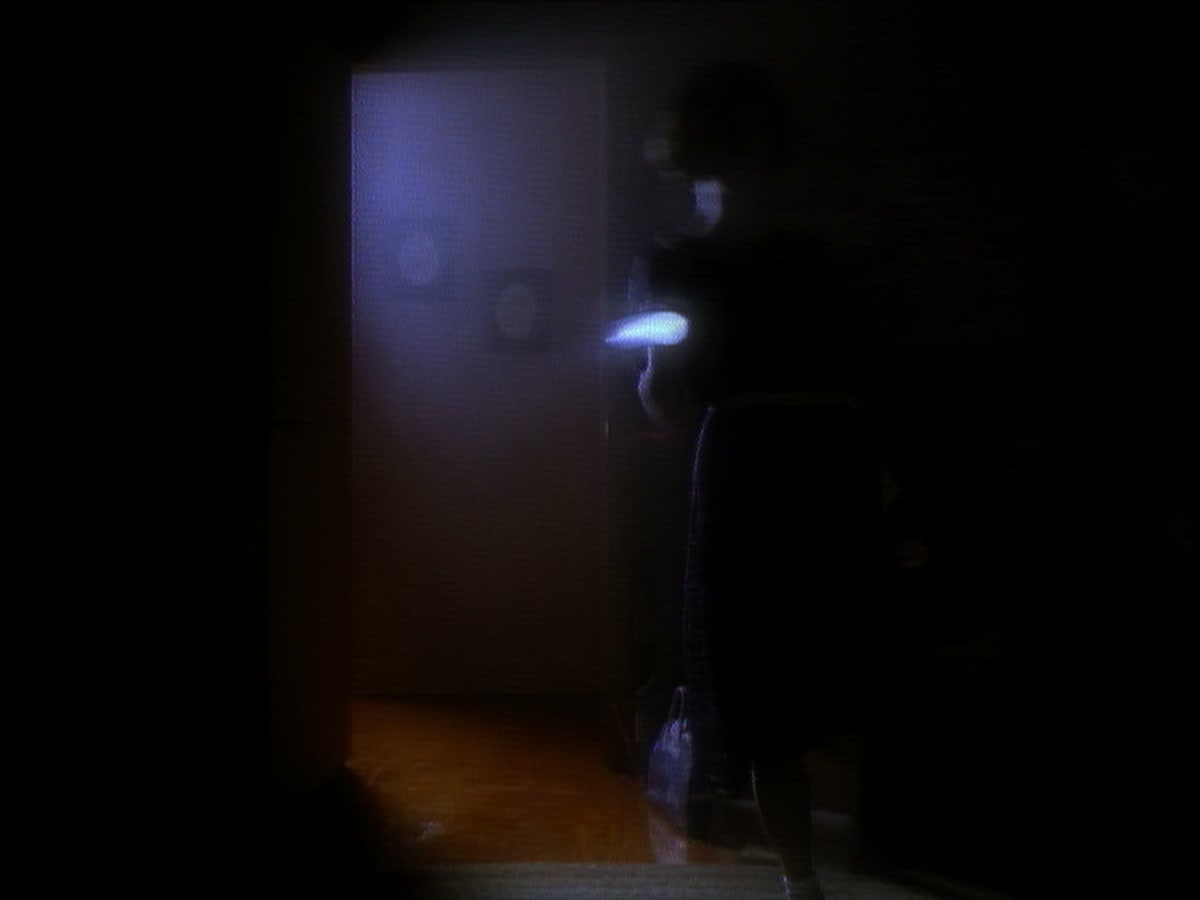
The memory of Louise Dombrowski dancing with a flashlight changes the cell’s emotional register. A confined present opens briefly onto a childhood bedroom, where light and movement produce a private spectacle. The episode lets an apparently comic exchange become a recollection of happiness that neither brother can recover.
This flashback also prepares a later use of childhood imagery. In “Masked Ball,” Ben watches projected family films. Here the past arrives through shared memory; there it becomes an image he can replay. Both sequences interrupt his business persona with a longing that money and control cannot satisfy.
Caleb Deschanel: turning recollection into an image
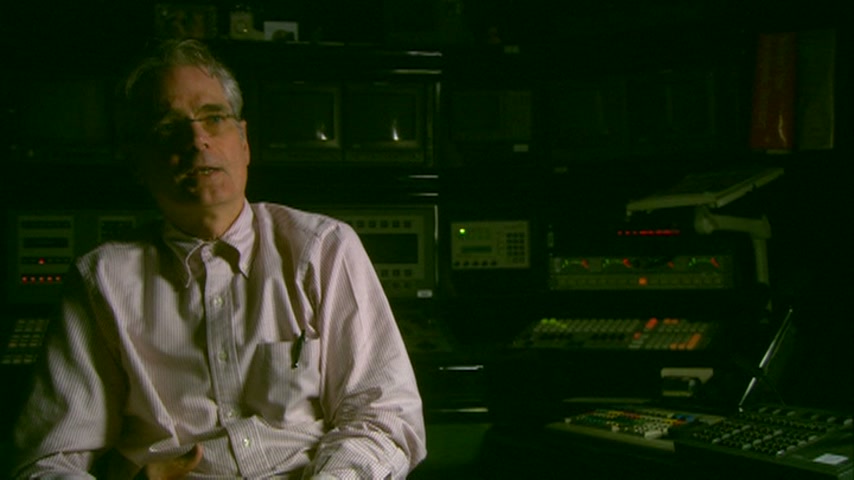
Deschanel recalls that the written scene had Ben and Jerry discussing their childhood without showing it. He proposed the flashback to Lynch, who encouraged the idea. That distinction matters to the sequence’s form: the jail-cell conversation opens into a shared remembered image instead of remaining a verbal anecdote.
He identifies music supervisor Lori Eschler’s involvement in finding music for playback and recalls seeking the feel of an older rock-and-roll number. Emily Fincher, who worked in the production office, performed Louise Dombrowski’s dance. These details locate the memory in collaborative decisions about casting, movement and music, rather than treating its atmosphere as an unexplained signature.
Interview source: Caleb Deschanel, 00:57–02:33; Twin Peaks: From Z to A. Retrospective testimony, identified separately from the finished episode.
A suspect becomes a colleague in the investigation
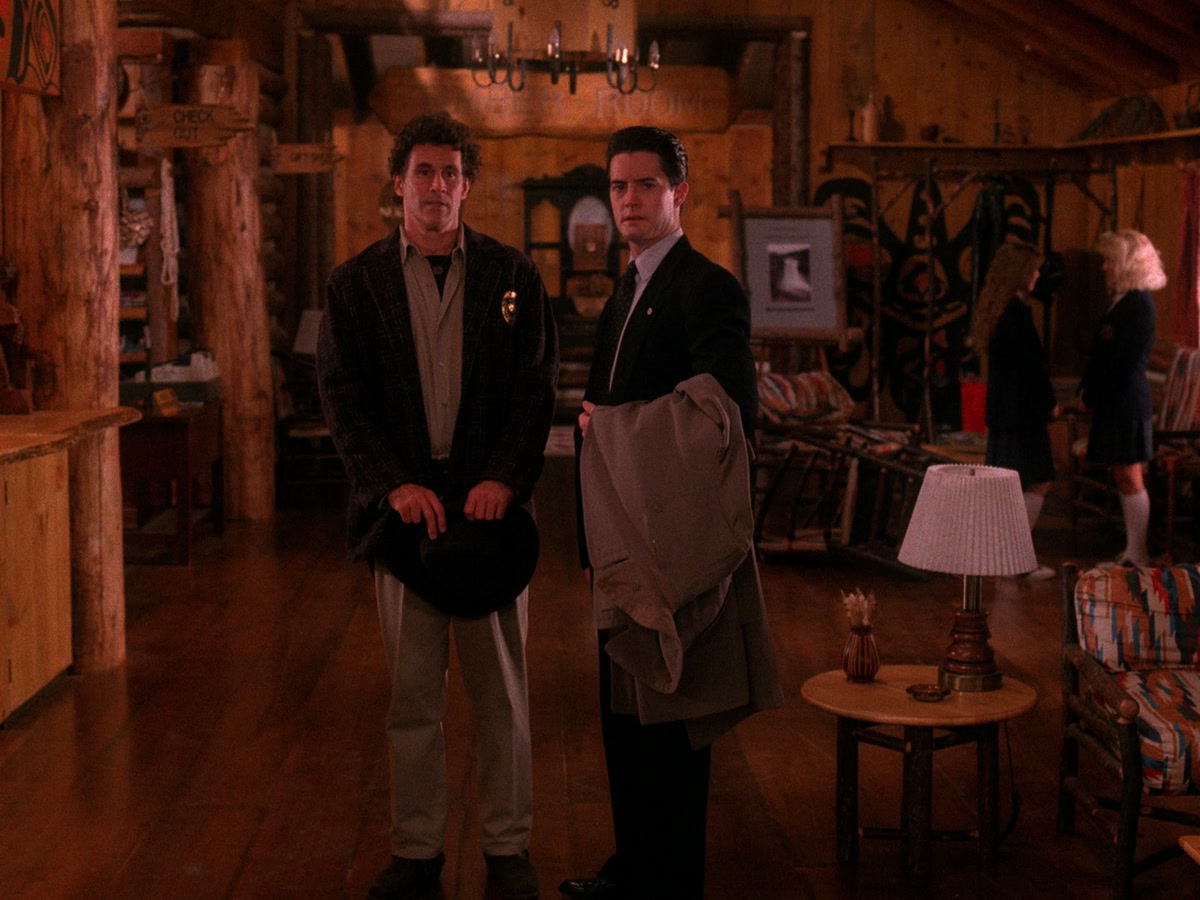
At the Great Northern, Leland learns that Ben has been arrested. His response moves between distress, apparent relief and laughter. Cooper observes the changes, but observation does not immediately become recognition. Leland’s identity as Ben’s lawyer and Laura’s father gives him legitimate reasons to be involved in the case.
When Cooper asks whether Ben has behaved unusually, the question gives Leland an opportunity to redirect attention. The danger is embedded in an ordinary investigative exchange: the detective seeks context from someone whose professional relationship appears useful. Viewers know that the helpful witness is also the man whose actions need explaining.
The later interrogation accumulates facts against Ben, including the diary and his relationship with Laura. Their disturbing character does not make them proof that he killed her. The episode distinguishes knowing that a person has harmed someone from proving the particular crime under investigation.
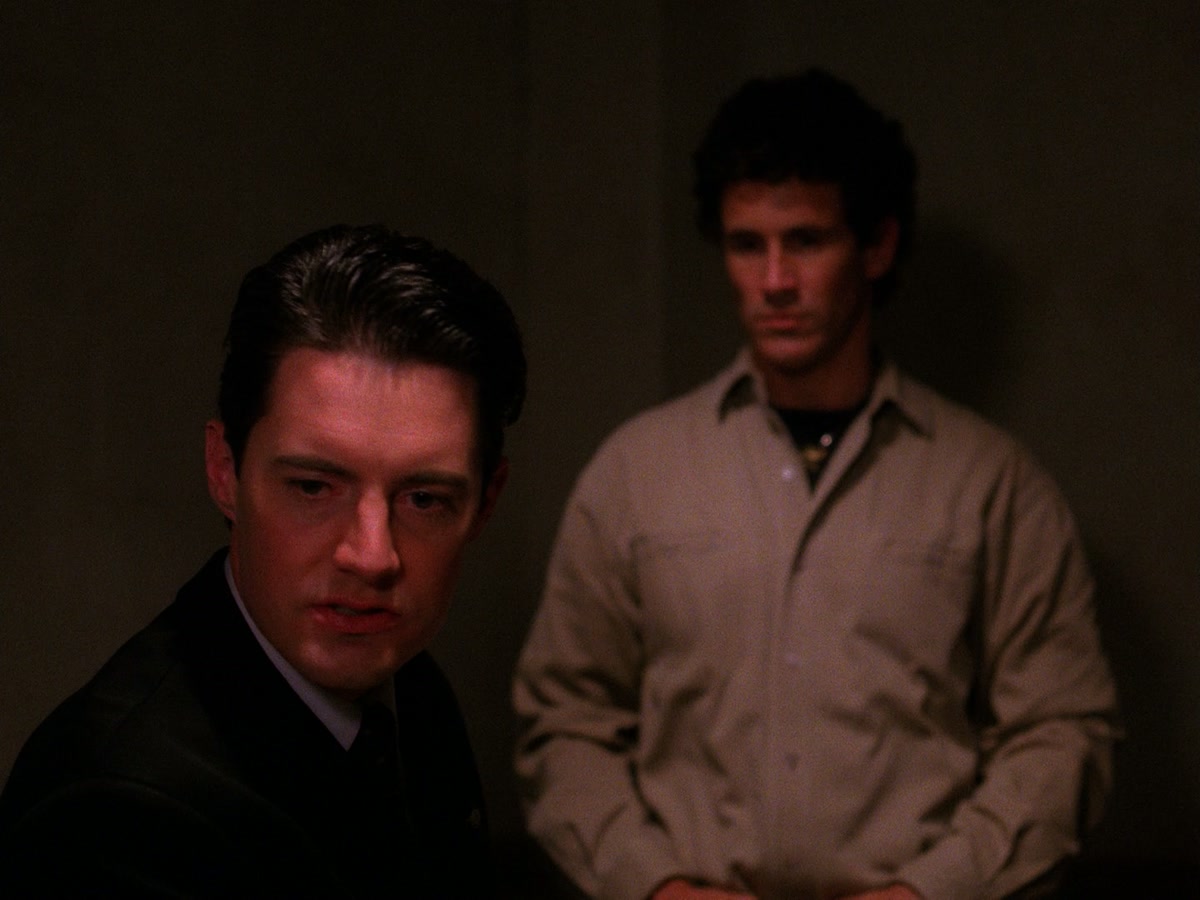
A recording promises a future that care work prevents
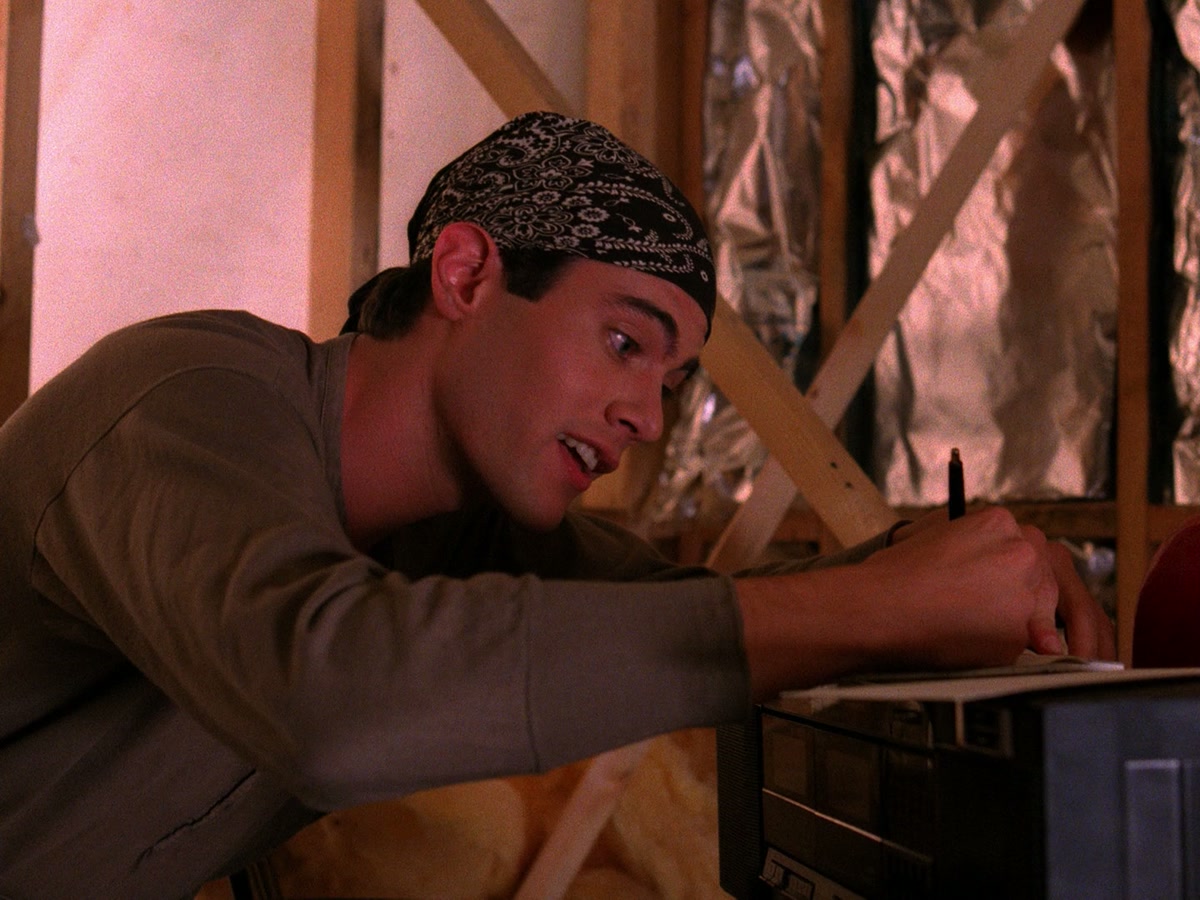
Bobby listens to the recording connecting Ben and Leo to the mill fire. He hears more than potential evidence: the tape looks like an opportunity to enter Ben’s world and turn knowledge into money. His excitement depends on an imagined future beyond the house.
Shelly’s account concerns the present. Leo’s care costs money and keeps her at home; the arrangement that promised income has made her a full-time carer. The scene places two different calculations beside one another. Bobby counts what a secret might be worth, while Shelly counts the work and freedom already lost.
The recording belongs to a wider pattern in the episode. A stored voice can incriminate, bargain or explain, but its owner decides when and to whom it will be played. Bobby’s use of the tape anticipates the much more confident performance Pete gives with Catherine’s message.
Norma’s workplace becomes a family test
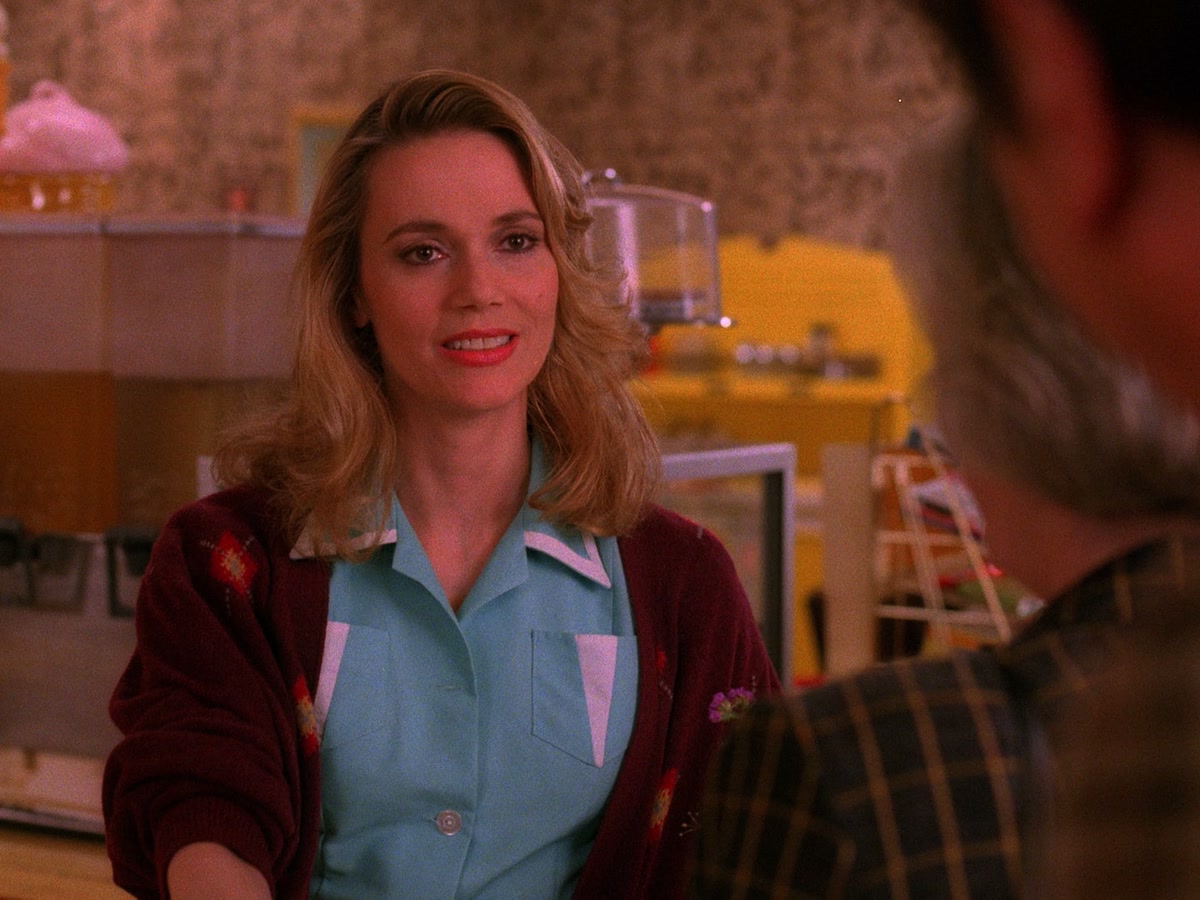
Vivian arrives with a new husband and a series of compliments that repeatedly turn into judgments. The flowers, the uniform and Norma’s figure are all noticed, but the attention does not make the visit comfortable. The diner becomes a place in which Norma must perform hospitality toward someone whose approval is difficult to trust.
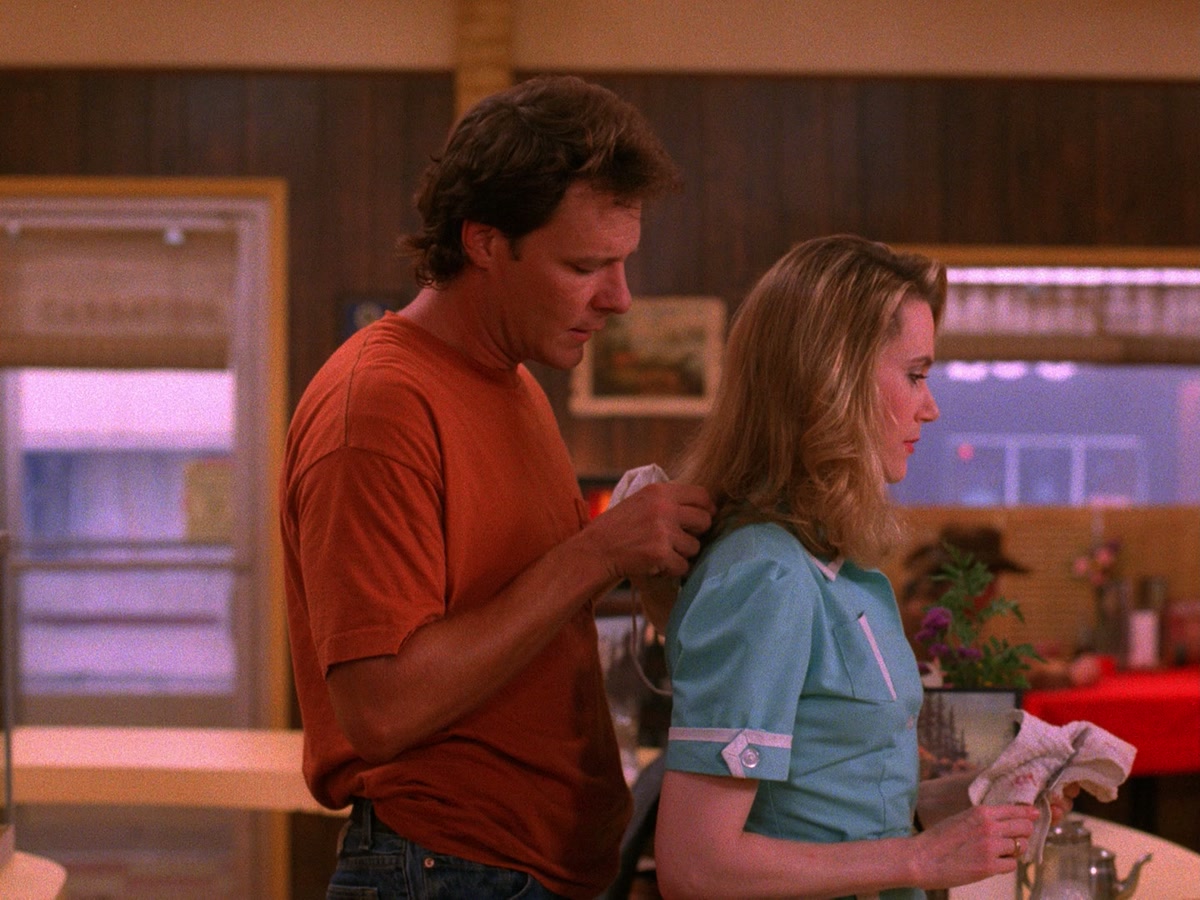
Norma is also preparing for a restaurant critic and managing Hank’s absence. His explanation transforms being missing for two days into a story about persecution by people from his past. She initially insists that work requires showing up; he answers with vulnerability and a request to be understood.
The dinner at the Great Northern exposes a different Hank. He recognises Ernie as a former fellow prisoner and uses the secret against him while maintaining an affectionate public manner. A toast to the newlyweds carries a threat that Vivian and Norma do not share. Like Leland’s golf invitation, an apparently friendly gesture means something else to the informed viewer.
Two performances of reassurance · 2 images
Two men compare incompatible accounts
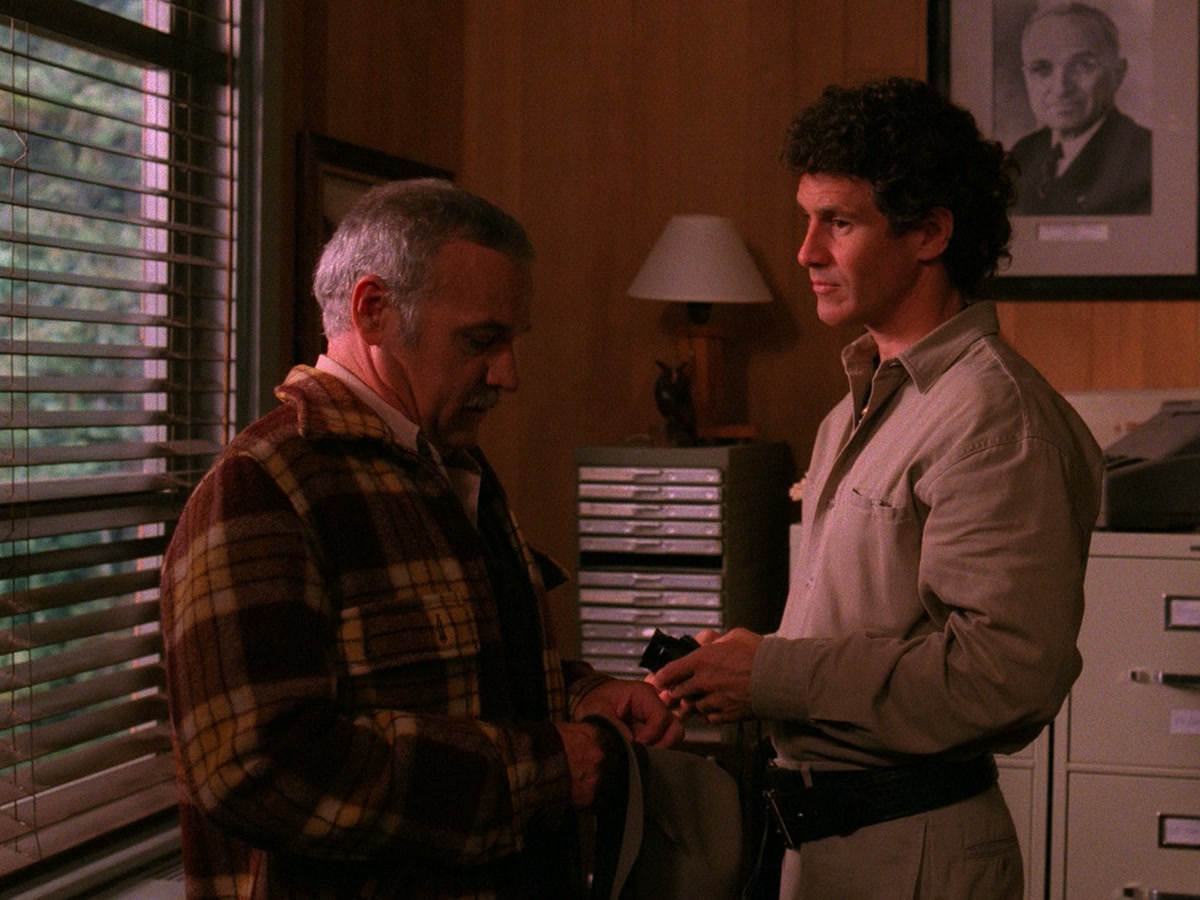
Pete finds Harry watching birds and brings news of Josie’s departure. The exchange begins in a small shared pleasure before reaching loss, the sale of the mill and uncertainty about the man who accompanied her. Harry knows him as a cousin; Pete was introduced to an assistant called Mr. Lee.
The difference is modest but decisive. Neither man possesses an explanation, yet comparing their accounts reveals that Josie has given them different versions of her life. The conversation makes investigation possible through an intimate admission: both loved her, and both may have been deceived.
Their meeting also contrasts with Ben’s interrogation. Nobody needs an elaborate method to discover the contradiction. Two people place what they were told beside what the other heard. The emotional difficulty lies in accepting what the discrepancy implies.
Catherine is absent, but her voice controls the room
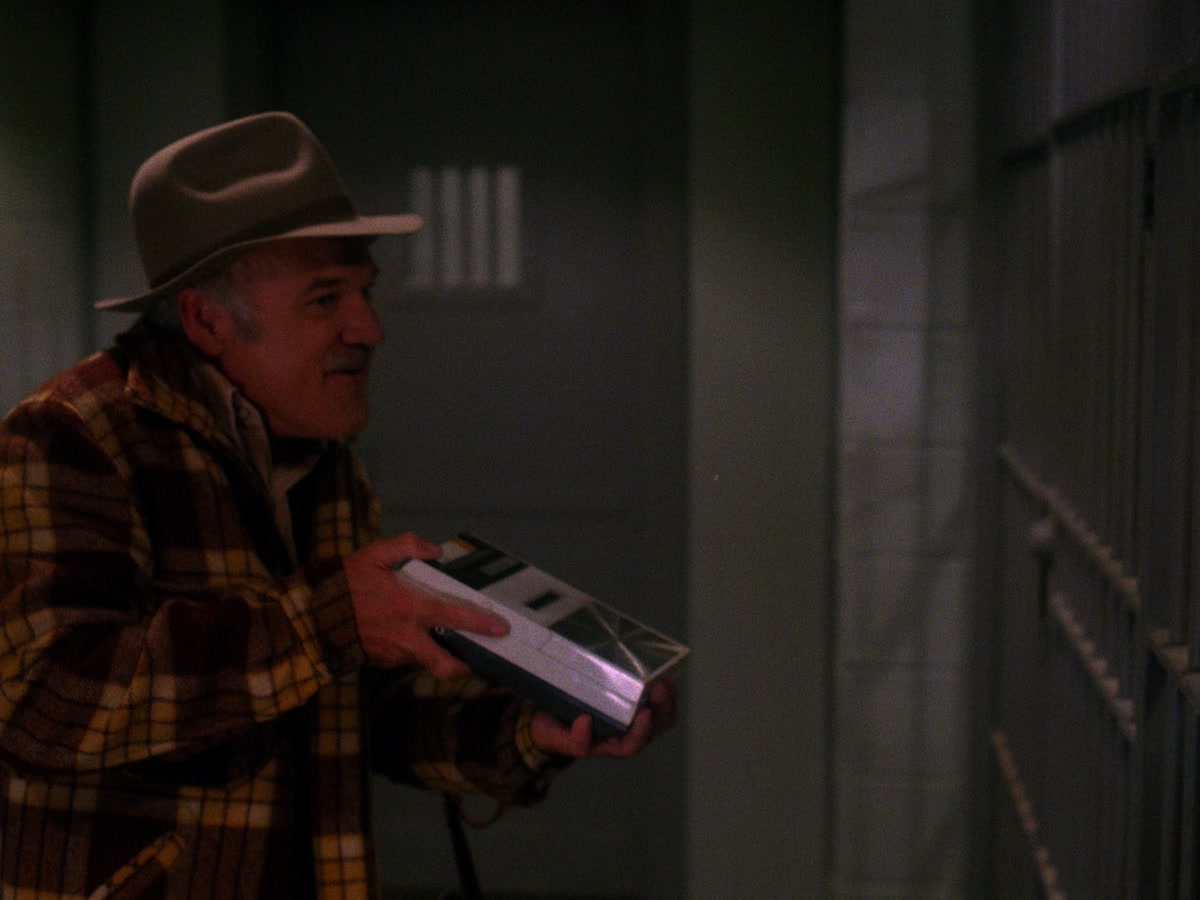
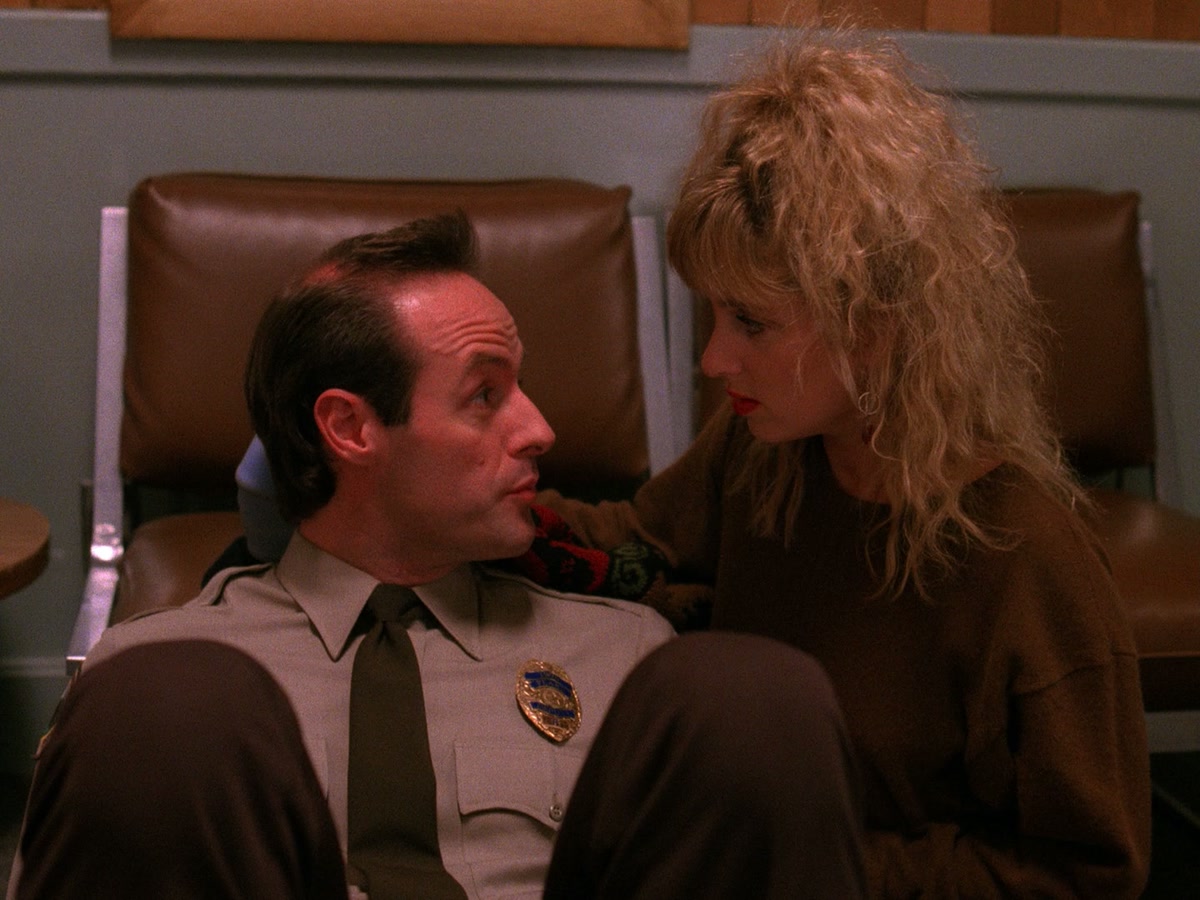
Pete brings a portable player into the cell block. Catherine’s recording first establishes that she is alive, then turns her memory of the night Laura died into a negotiable asset. Ben’s alibi depends on a witness who can choose to remember clearly or profess uncertainty.
The demand joins testimony to property. Catherine wants the mill and Ghostwood interests signed back to her before she helps him. Her absence makes the scene particularly effective: Ben cannot interrupt the speaker, change the conversation or read a face. The recording continues while his responses grow more desperate.
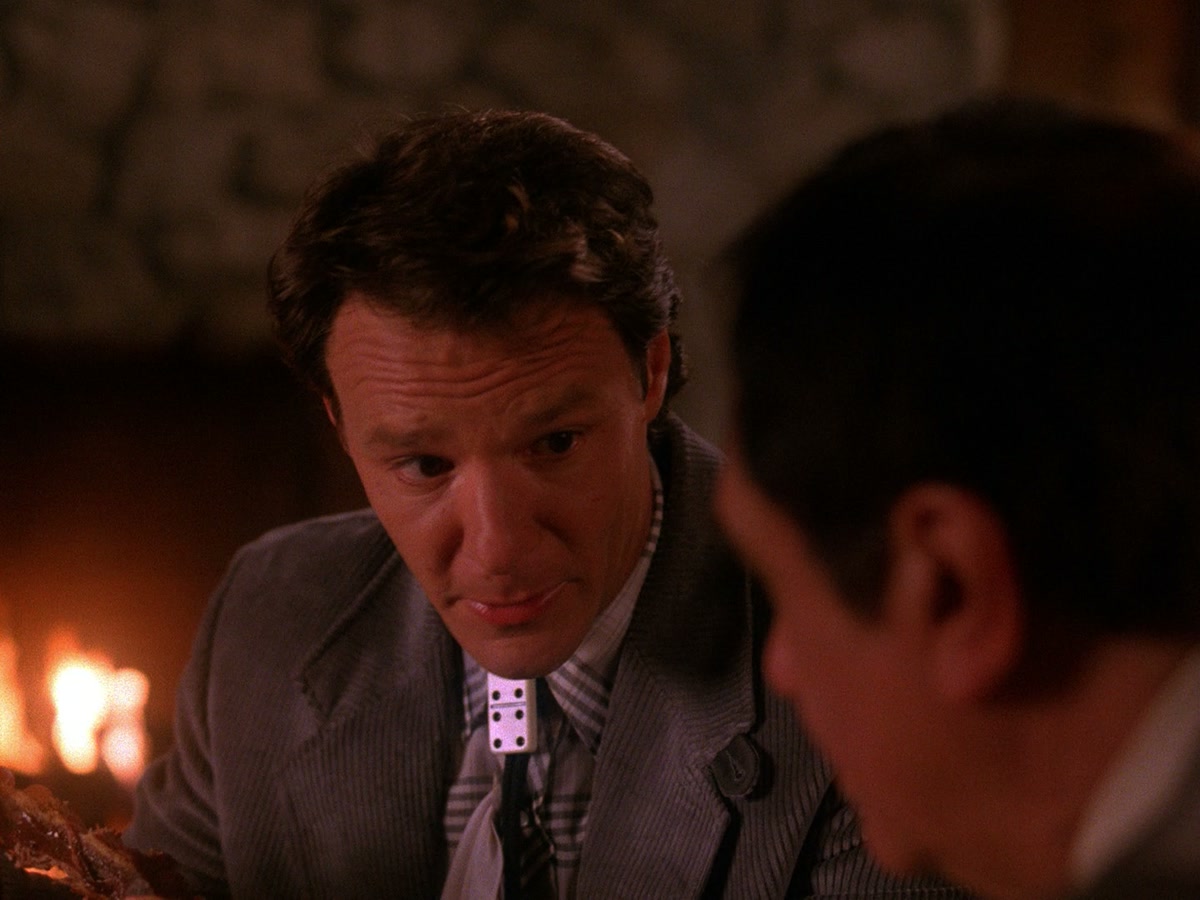
Pete’s enjoyment supplies the other performance. He is not simply a neutral delivery service; his laughter and handling of the machine help stage Ben’s humiliation. The same technology that Bobby treats as a route into business becomes Catherine’s means of taking business back.
The next episode develops the bargain through a face-to-face visit. Read Catherine’s negotiation in “Arbitrary Law” alongside this earlier act of remote control.
The body is almost discovered in plain sight
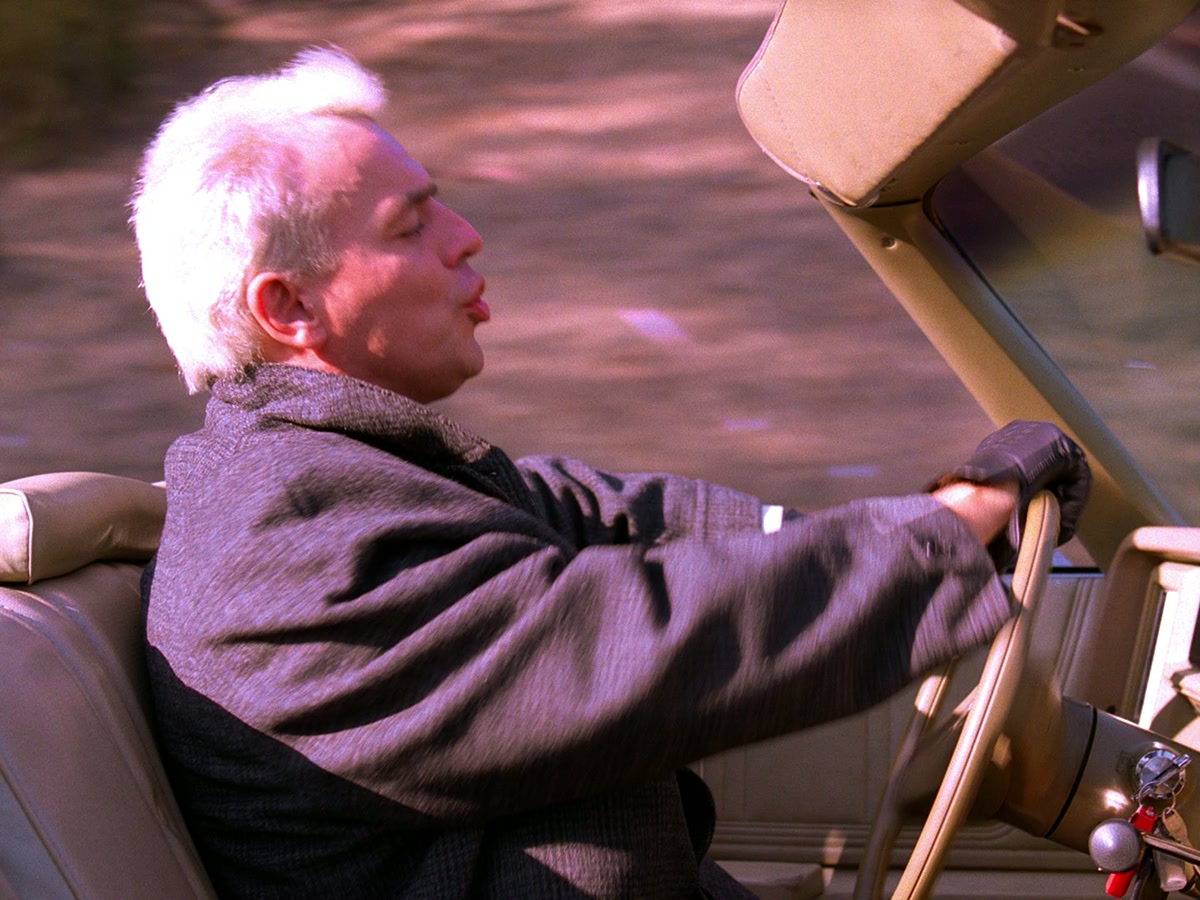
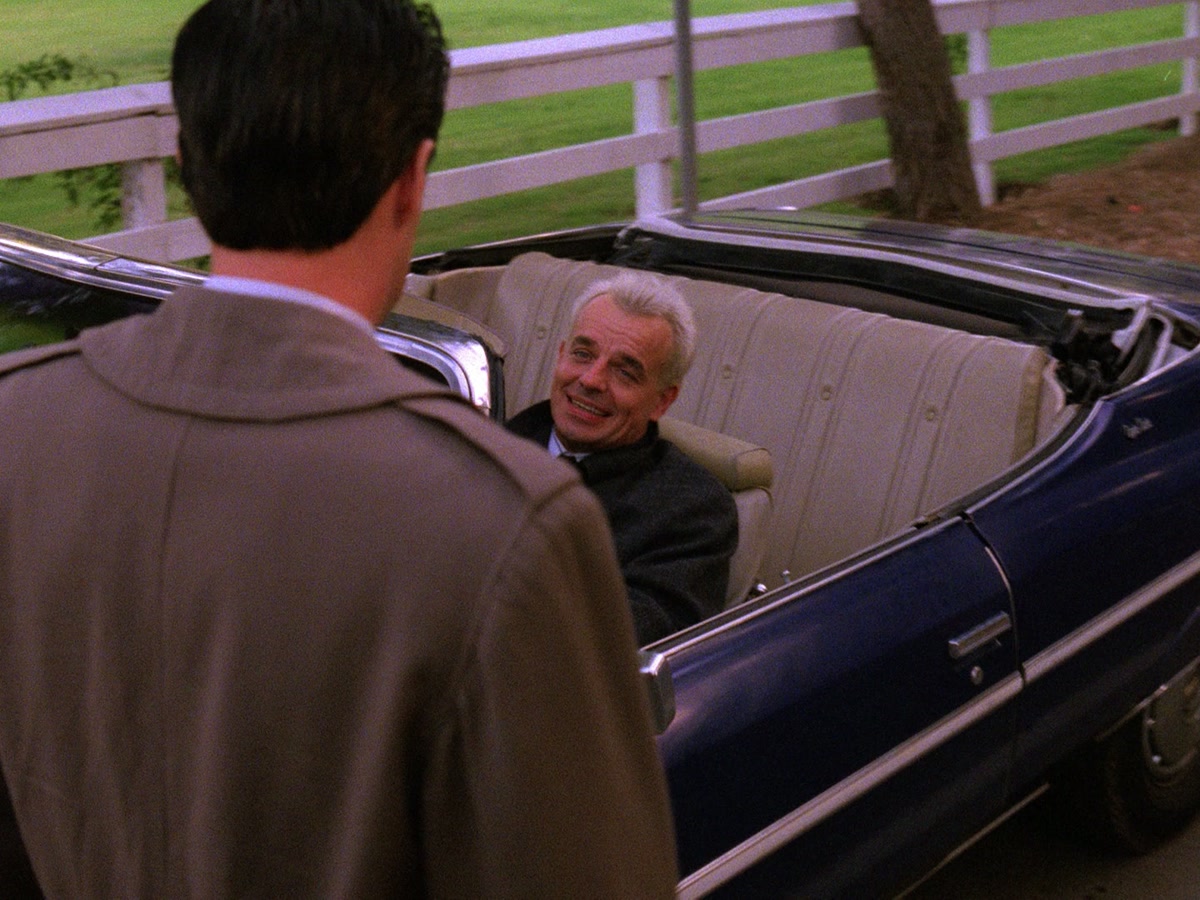
Leland’s drive turns a cheerful show tune into part of the suspense. The English captions identify his singing and whistling of “The Surrey with the Fringe on Top.” The words belong to a promise of a pleasant ride; the car carries Maddy’s concealed body. Their collision is legible without treating the song as a coded confession.
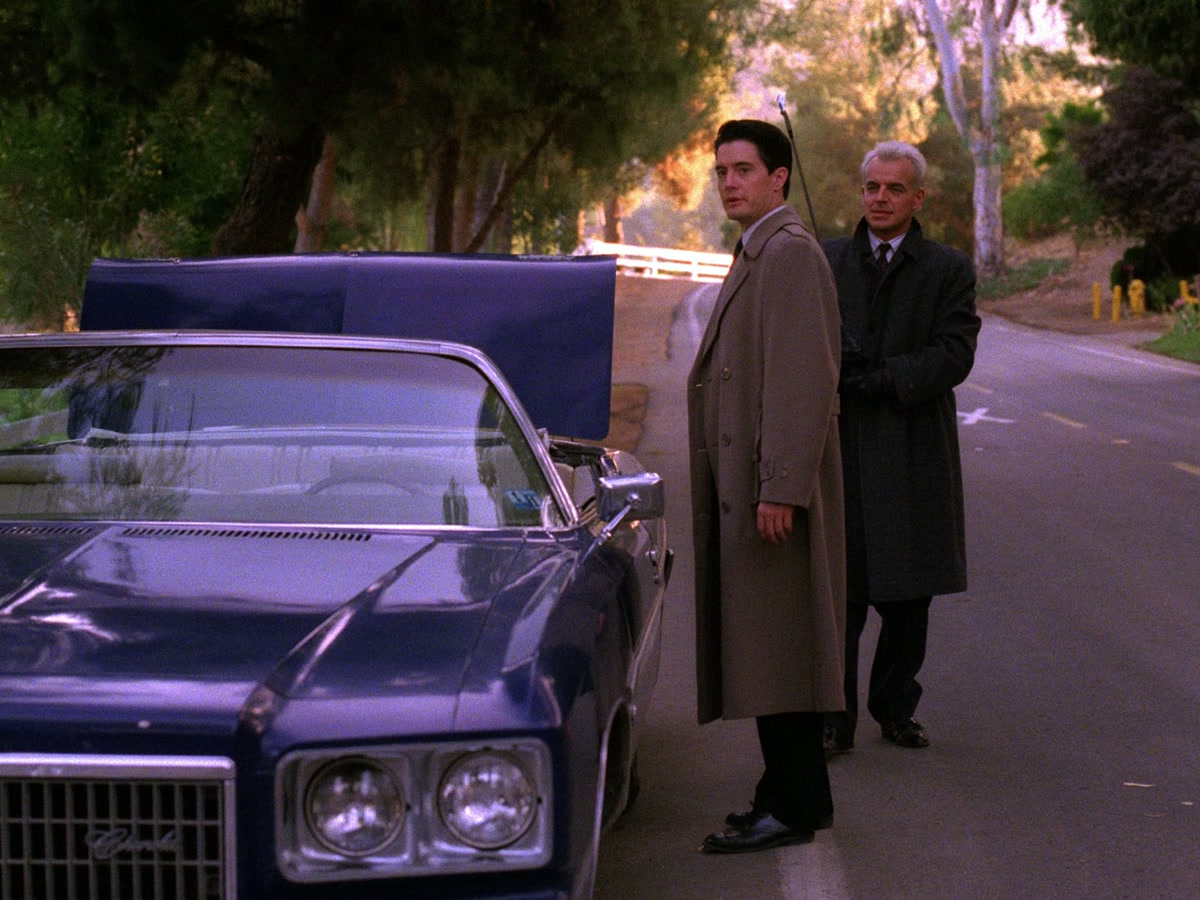
After his erratic driving attracts Cooper and Truman, Leland apologises and offers a story about Ben. He pretends to remember a raised voice and an ambiguous word that Cooper resolves as “diary.” The exchange shows how a witness can invite an investigator to supply the useful part of a claim.
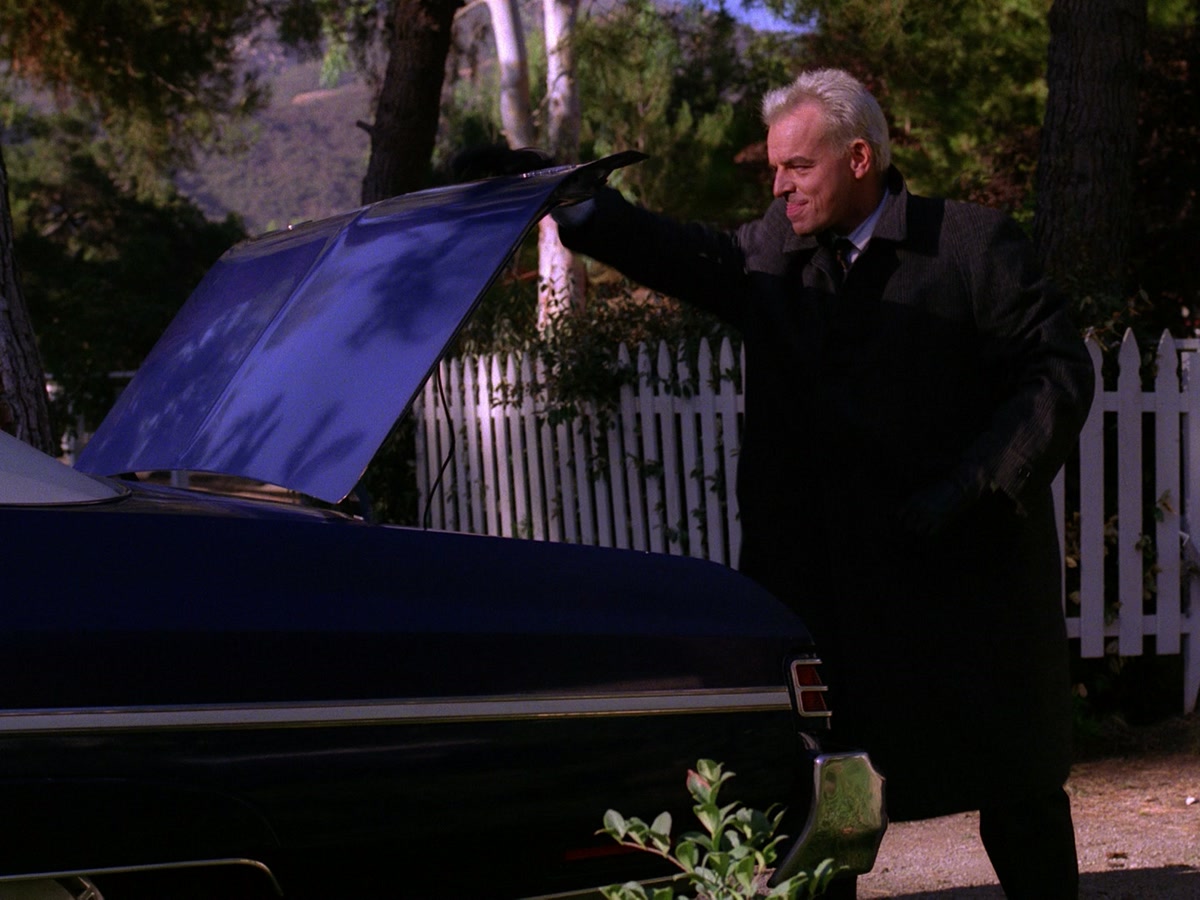
The offer to show Cooper his golf clubs brings the detective close to the trunk. Lucy’s radio message about Gerard interrupts the inspection, and the officers leave. The audience can measure the missed opportunity against the opening scene: the bag has been established, placed in the car and brought to the edge of discovery.
The return of BOB’s face through the narrow opening at the trunk changes the image’s scale and mood. The daylight road, the social invitation and the police procedure have failed to expose what is immediately beside them. A small gap in the car now gives the viewer the recognition the investigators missed.
Planning the road sequence. A production call sheet for episode 2.008 names Caleb Deschanel as director and groups Leland’s singing, the swerving car, Truman’s Bronco and the roadside stop into one location day at Malibou Lake Mountain Club. Its equipment notes include car mounts and a camera car; the props list includes the golf bag, clubs and police radio. The paperwork shows how the apparently casual encounter depended on separately planned vehicle action, dialogue and objects. The same sheet also schedules the recovery of a body from the water. Source: Lynch/Frost Productions call sheet, production 2.008, reproduced in the production-document gallery of Twin Peaks: From Z to A.
The invitation and the interruption · 3 images
The friends disagree over what counts as evidence
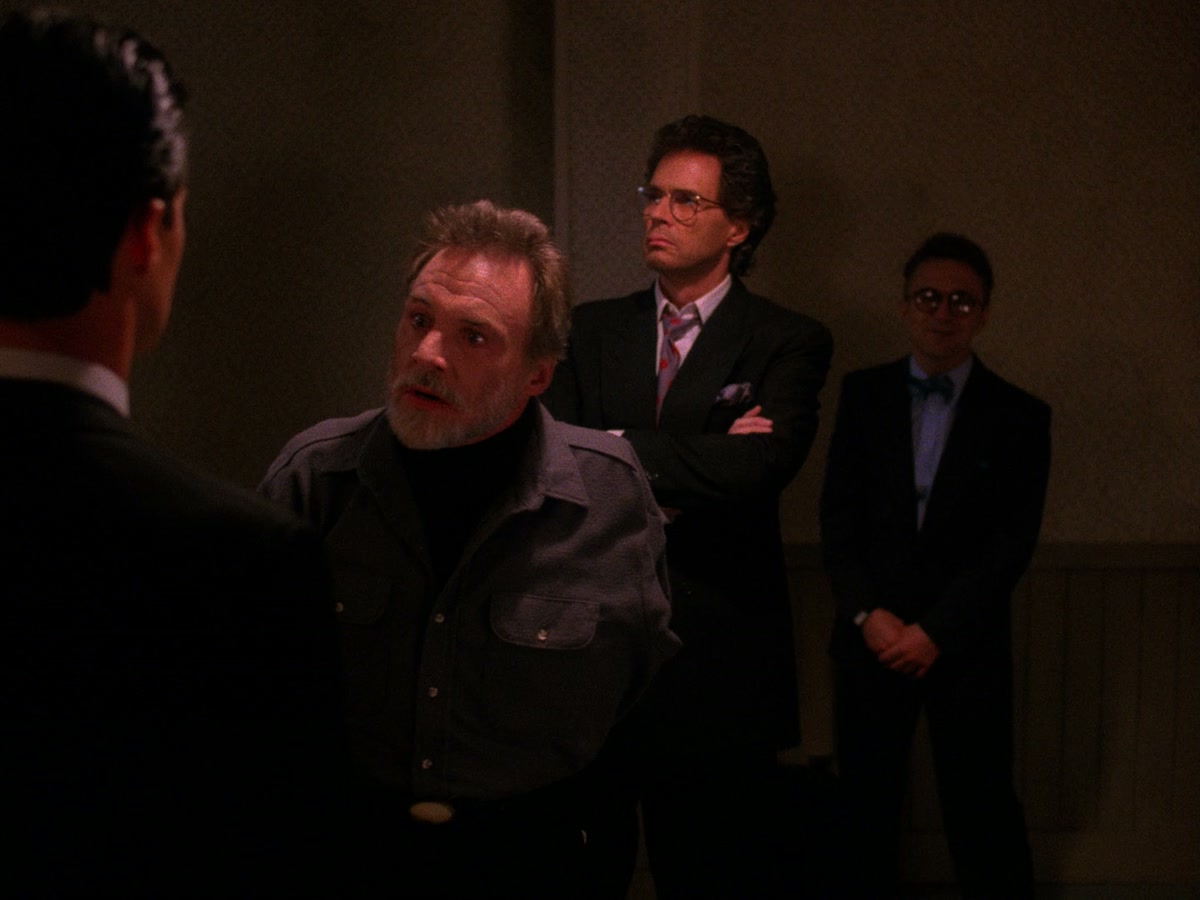
Gerard’s sense of a nearby presence cannot give Truman the clear identification he wants. Ben faces a charging decision while the man brought in to identify BOB remains distressed and difficult to interpret. The scene makes the gap between a supernatural clue and a legal accusation explicit.
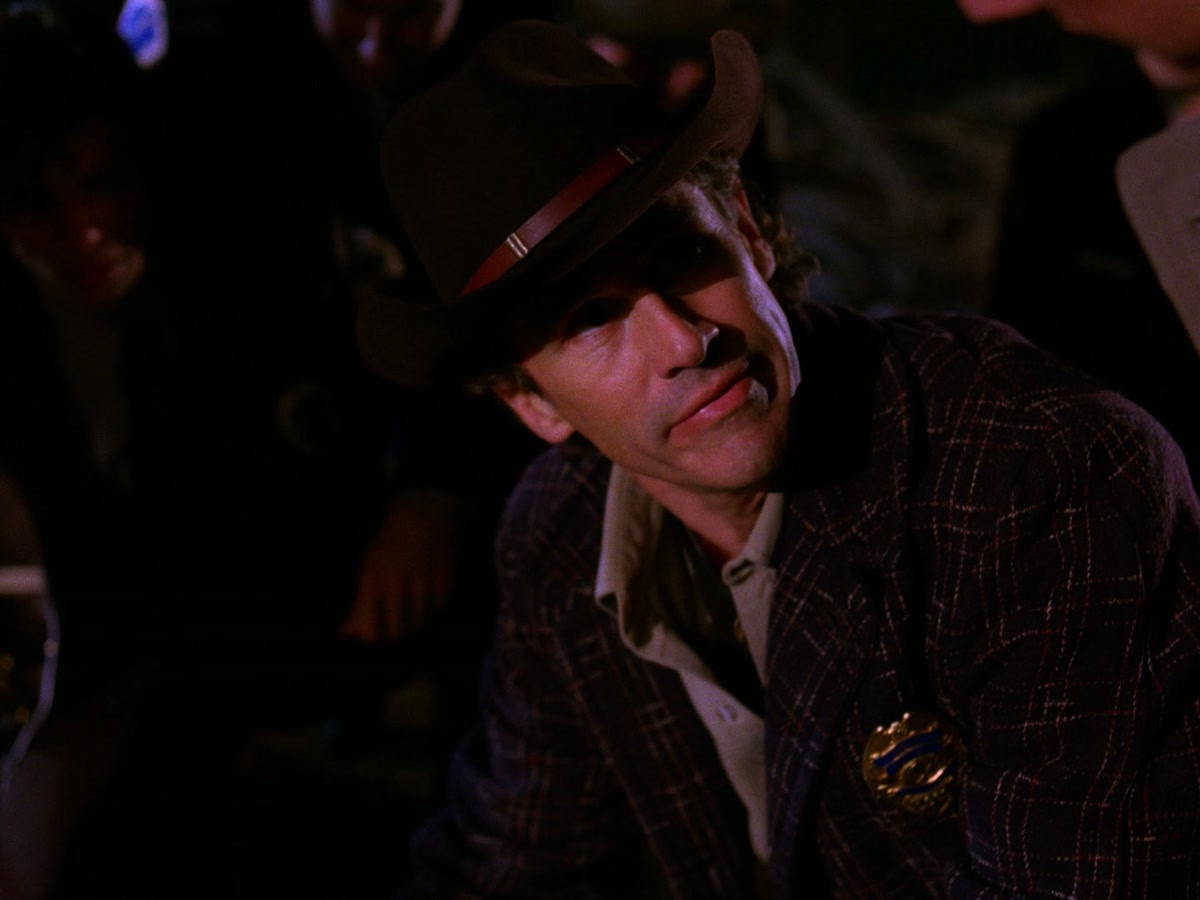
Truman charges Ben, then tells Cooper that he has reached his limit with dreams and visions. Cooper thinks they have moved too quickly but acknowledges the sheriff’s responsibility. Their disagreement matters because it occurs within an established friendship. Truman has repeatedly helped Cooper act on unusual ideas; his objection is not simple hostility toward an outsider.
The viewer’s advantage makes both positions painful. Ben is the wrong suspect, but Cooper cannot yet present the knowledge needed to justify another arrest. The episode suspends the investigation between a plausible institutional action and an intuition that has not found its usable form.
Uncertainty at the station · 3 images
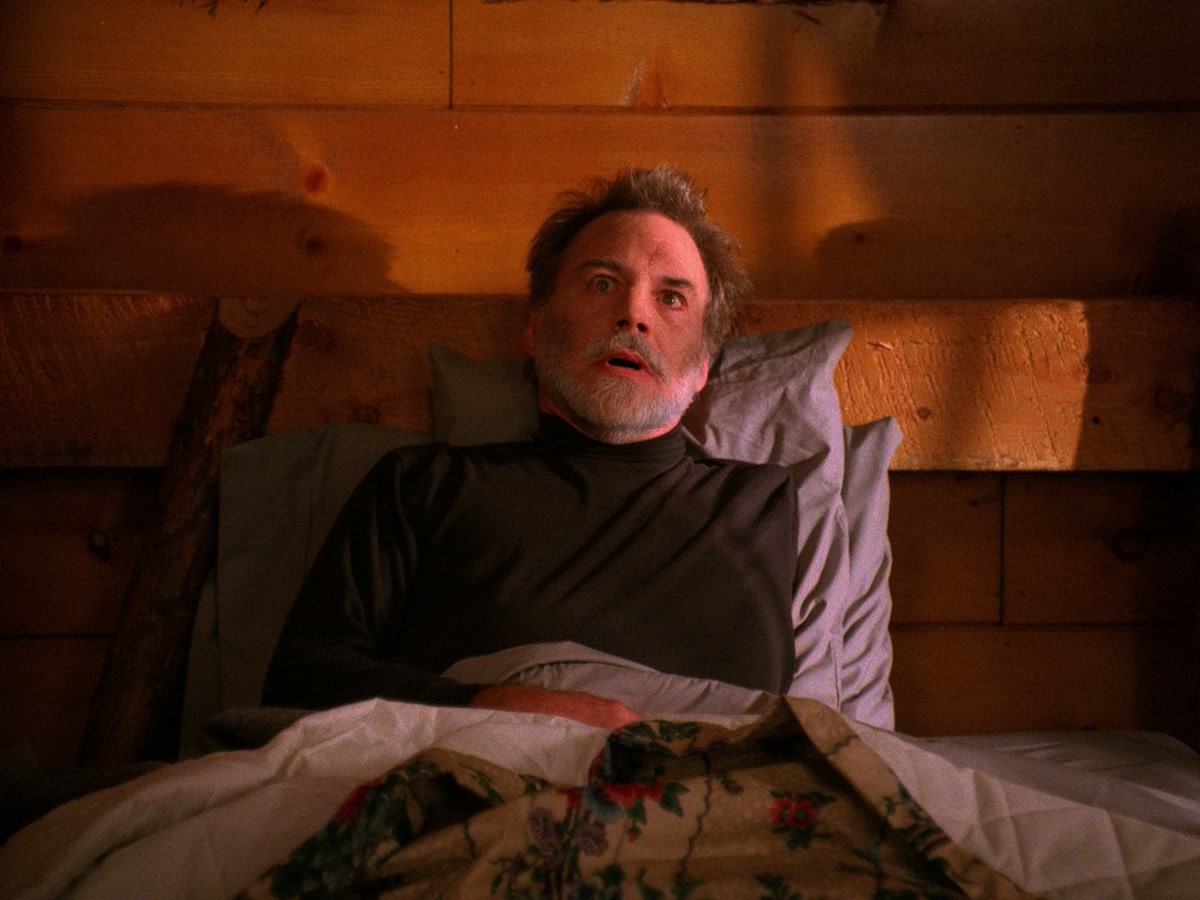
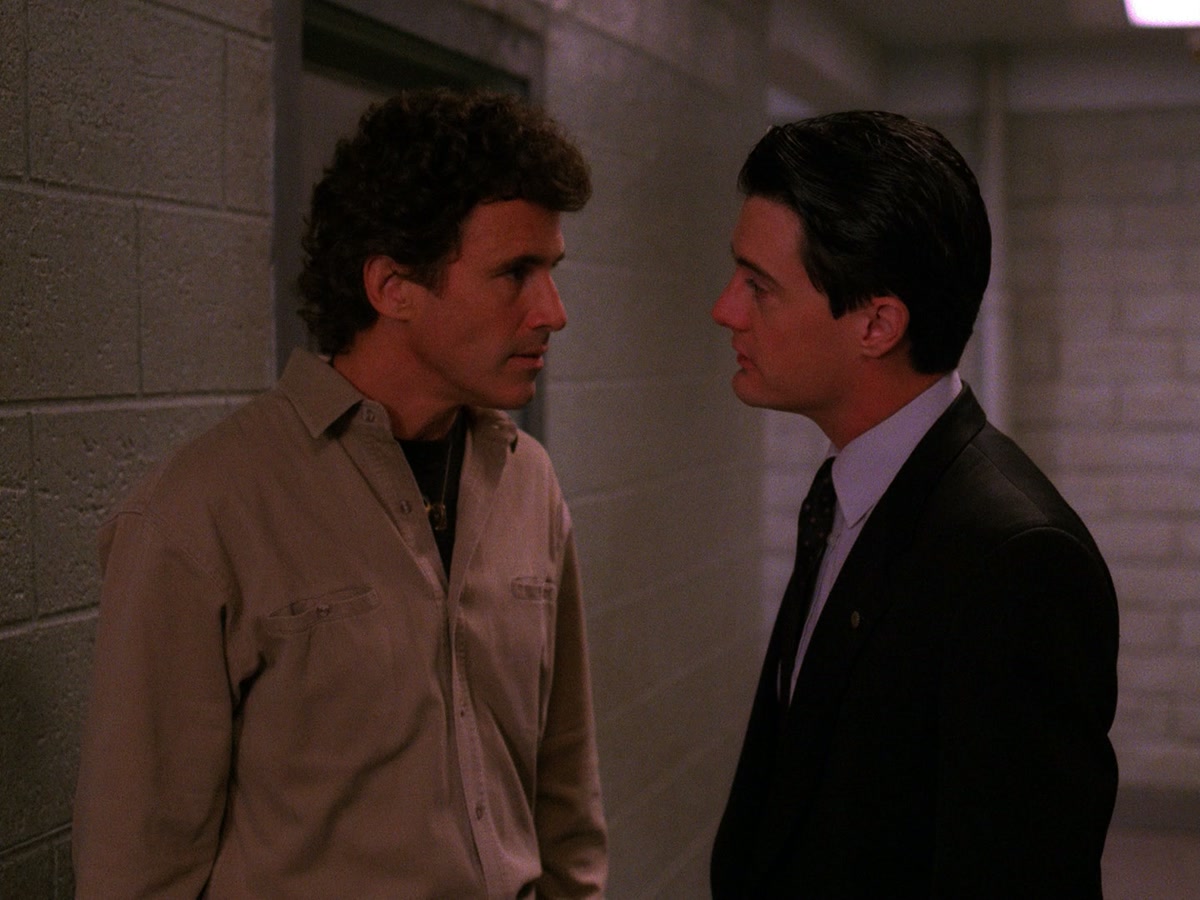
Testimony has a cost inside a family
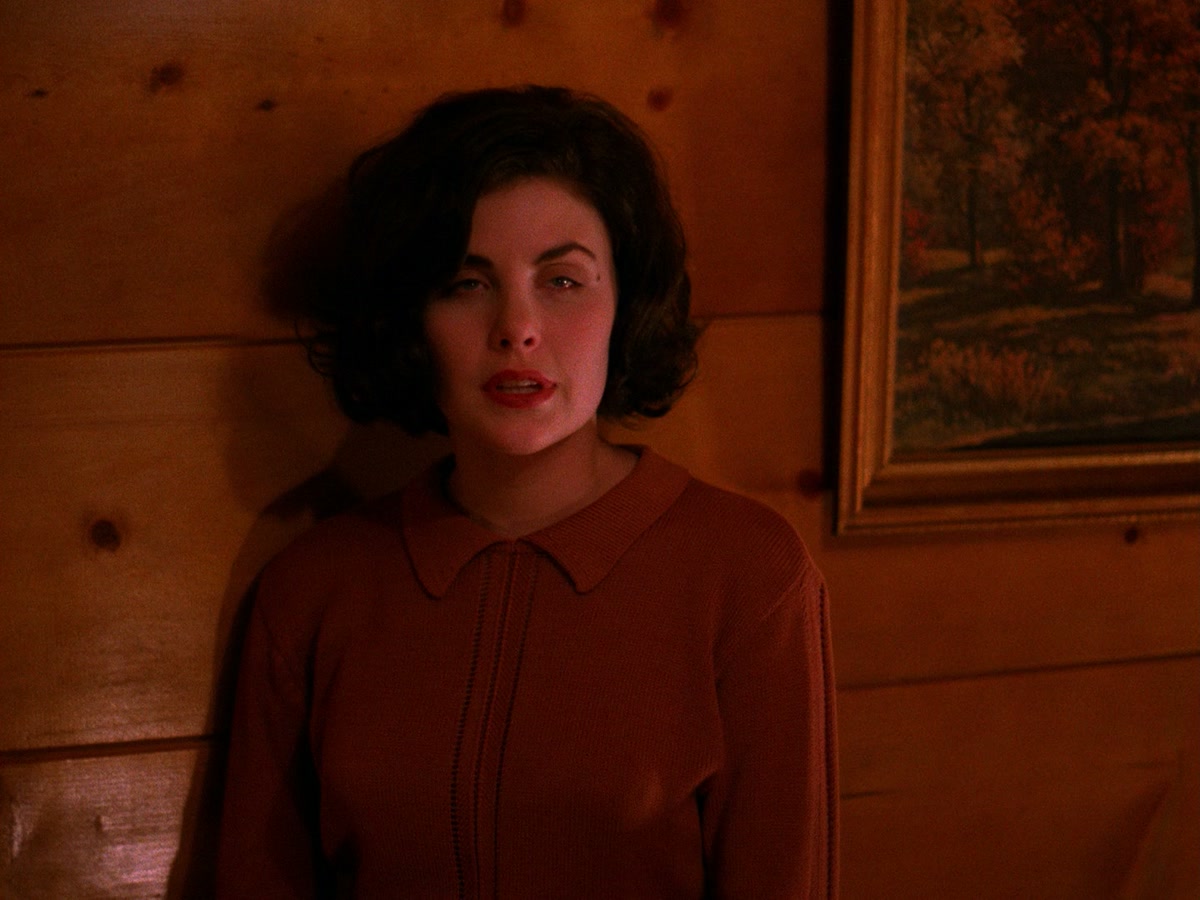
Audrey asks Cooper whether her account helped put her father in jail. Her question moves the investigation away from the satisfaction of supplying a clue and toward the consequences of speaking. She wanted Ben’s love; telling the truth about him has not made that desire disappear.
Cooper tries to reassure her while maintaining the distinction between arrest and judgment. When she begins to explain what happened at One Eyed Jack’s, he stops her from feeling obliged to prove herself to him. The exchange briefly makes room for a person whose experience can otherwise become useful information in someone else’s case.
A telephone call interrupts them. Cooper instructs her to lock her door, and the episode moves to the shore. Truman’s identification of Maddy ends the delay that began with the false story about the bus station. The viewers’ knowledge finally reaches the investigators, but only after another day of misdirected attention.
A route through Drive with a Dead Girl
- Morning at the Palmers. The photographs, missed goodbye, mirror and golf bag.
- Ben in custody. Jerry’s advice, a childhood memory and the narrowing investigation.
- Voices as leverage. Bobby’s tape and Catherine’s recorded alibi.
- Competing accounts. Norma’s visitors, Hank’s explanation and Pete’s news about Josie.
- The roadside encounter. Leland’s song, the offered clubs and the interruption.
- An arrest and a discovery. Cooper and Truman disagree; Audrey asks about her testimony; Maddy is found.
Sources and connections
Primary source: Twin Peaks, “Drive with a Dead Girl,” Season 2, Episode 8 / overall Episode 15, in Twin Peaks: From Z to A. Opening credits identify writer Scott Frost and director Caleb Deschanel. The scene and dialogue studies use the episode and its English subtitle track.
Return to “Lonely Souls”, continue to “Arbitrary Law”, or explore the illustrated Season Two guide.