Twin Peaks: The Return — Part 11
2017 · Twin Peaks: The Return · Episode dossier
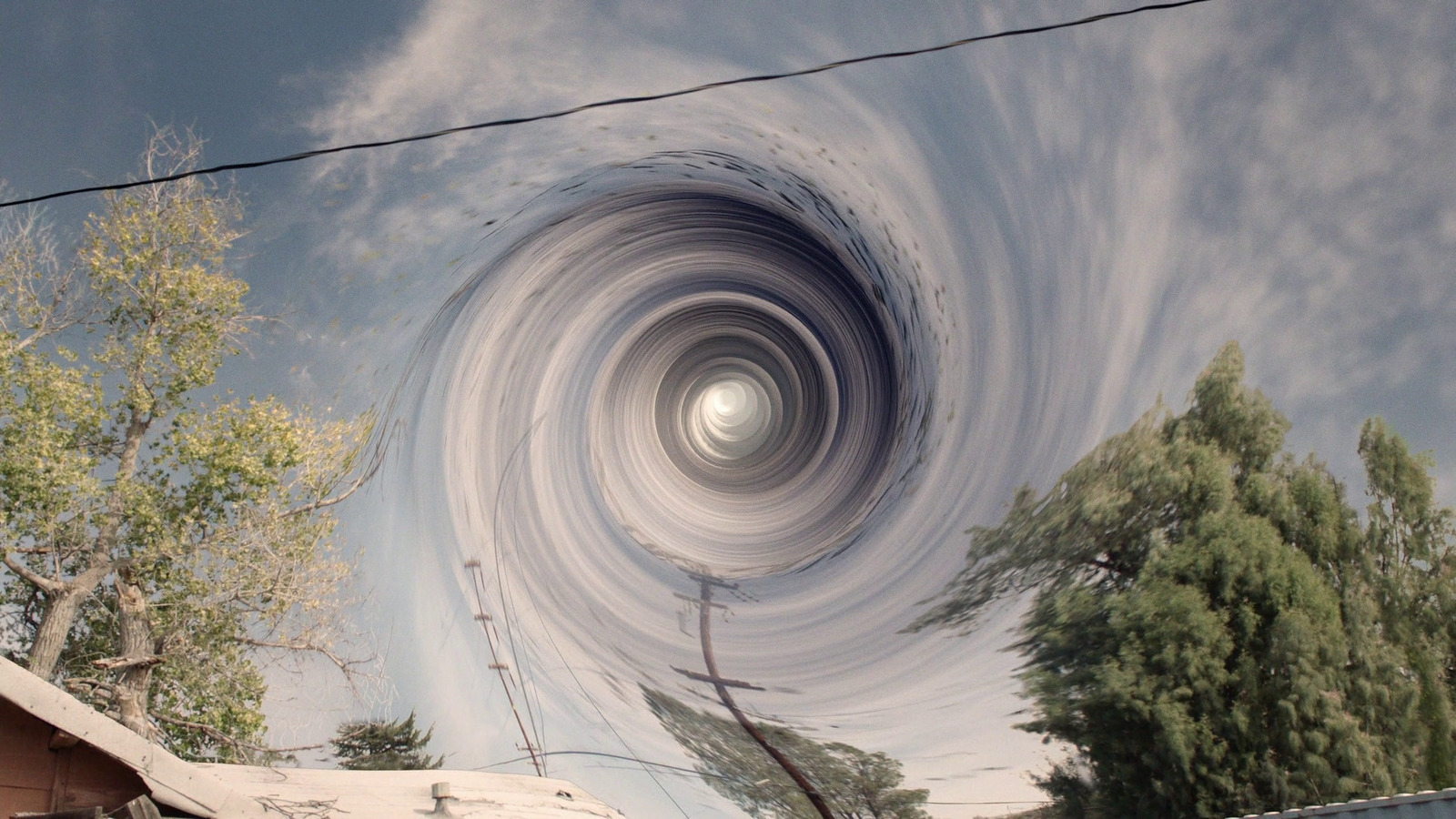
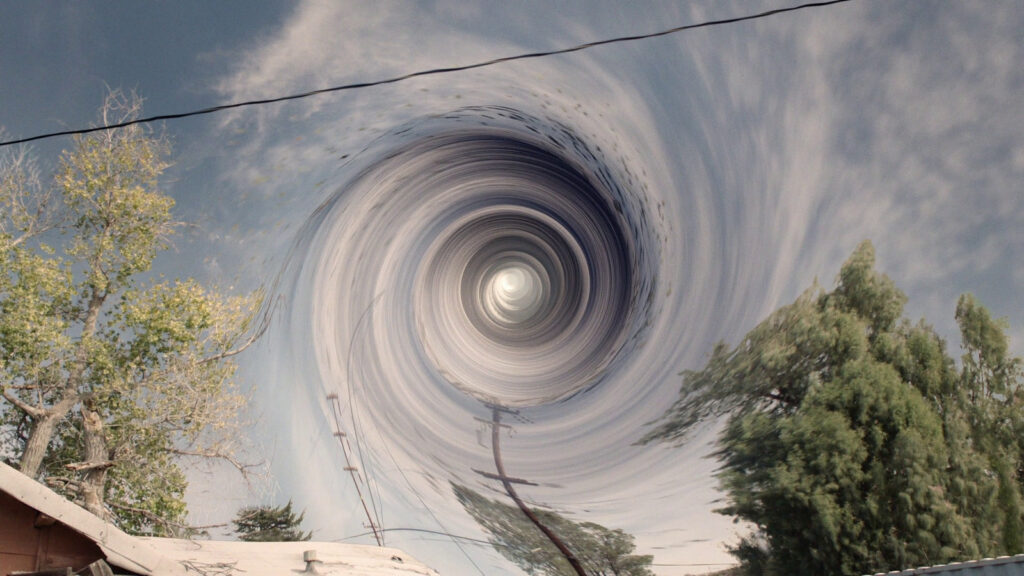
A sky opens above an empty lot. A roadside emergency will not settle. A cherry pie changes the outcome of a planned killing.
Part 11 moves from threatened families and failed protection to an unlikely gathering around a restaurant table. Its objects—fence, gun, map, telephone, check and pie—carry people between systems that do not explain one another.
- Part 11
- There’s Fire Where You Are Going
- Directed by
- David Lynch
- Written by
- Mark Frost & David Lynch
- Standalone presentation
- 00:57:13
The Return overview · Twin Peaks research hub. Timings follow the standalone part and include its opening titles. Presentation and credit notes.
Explore this dossier
What can an ordinary object carry?
Follow the changing uses of familiar things. A baseball leads to an injured witness; a car becomes a danger to a mother; a fence marks the edge of ordinary space; a map and a dream guide action without providing complete knowledge. The episode does not abandon practical matters when the extraordinary arrives. Rescue, bills, claims and meals remain consequential.
The studies distinguish what the finished episode shows from the accounts its characters give. The production note on the vortex comes from BUF, while the interpretation of its placement and effect is Lyncharium’s. Sources and viewing notes.
Illustrated scene studies
- A game discovers a survivor
- Urgency becomes danger
- A small network of practical help
- An empty door absorbs the attack
- A witness brings the agents to a boundary
- The sky opens, but not for everybody
- A body becomes a written record
- Violence inside the guarded car
- Parents, money and the limits of protection
- An old relationship watches a new one
- The disturbance spreads beyond the diner
- Two maps, two kinds of reading
- A warning arrives as a fragile connection
- The ordinary returns without cancelling the strange
- A shared event does not produce a shared account
- An investigation becomes a payment
- A dream interrupts a murder plan
- A small detour changes the destination
- The box changes the terms of the meeting
- Hospitality, memory and an unfinished return
A game discovers a survivor
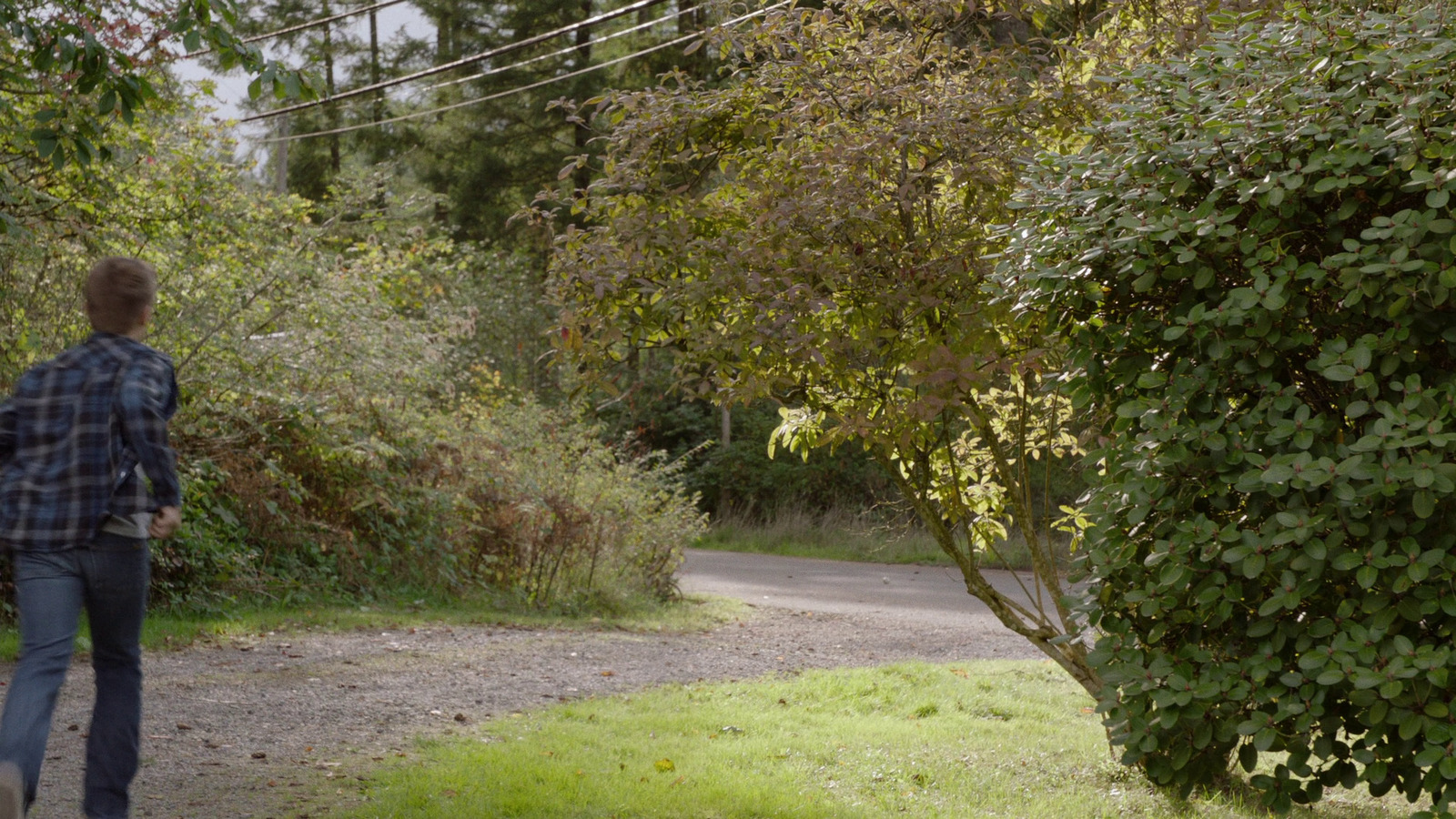
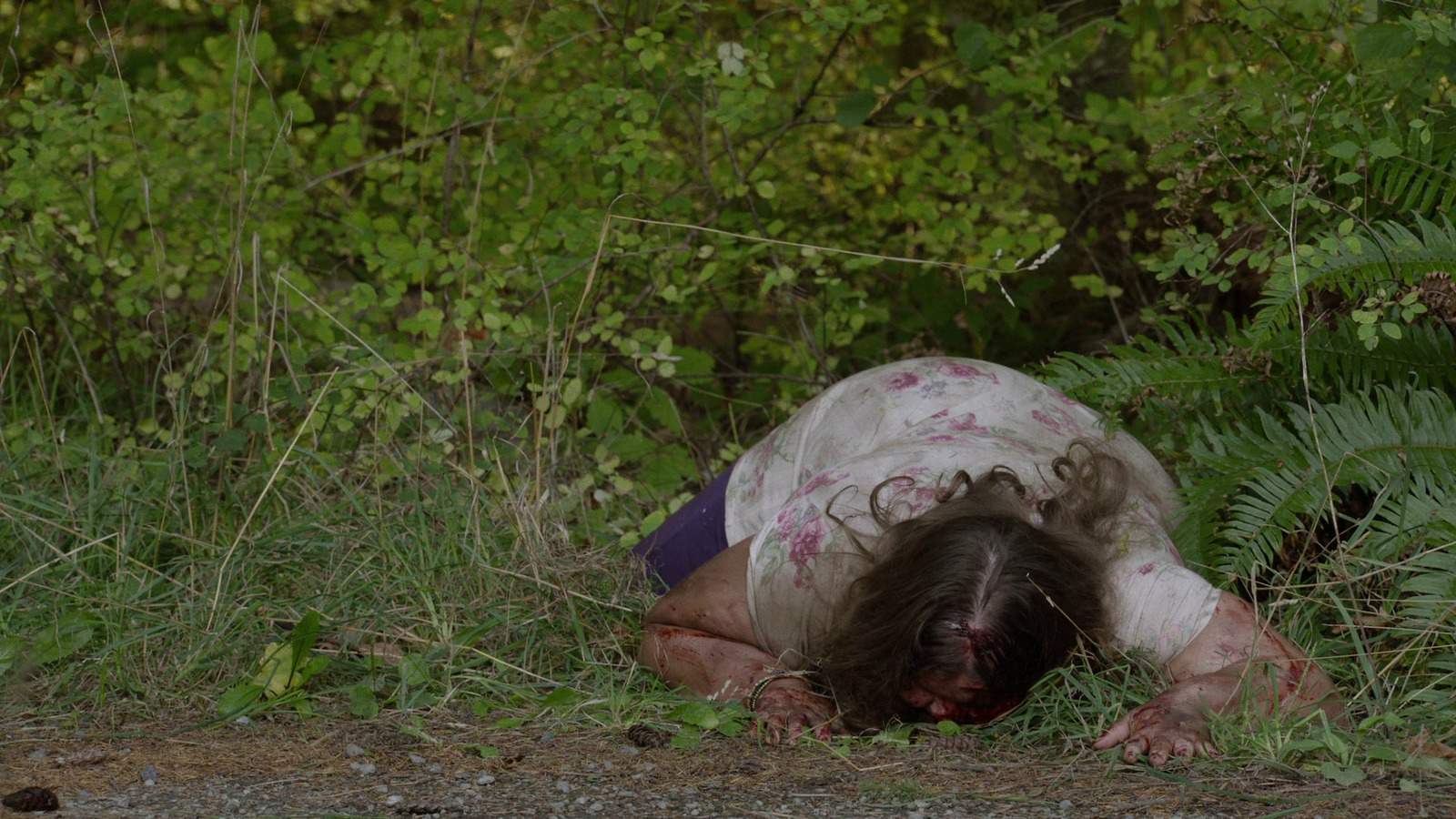
The opening moves from children playing catch to Miriam’s injured body at the edge of the woods. The ball’s ordinary trajectory leads one boy out of the game and toward a person who needs help. The cut does not repeat Richard’s attack; it reveals survival after the attacker has left. The instruction to fetch a parent turns a chance discovery into the beginning of a rescue. This continues Miriam’s story in Part 10.
Open the scene sequence · 1 frame
Urgency becomes danger
Becky’s call pulls Shelly out of the Double R and into her daughter’s crisis. The car then becomes a moving barrier: Becky locks herself in while Shelly clings outside. Tight views of mother and daughter are followed by the violence of the accelerating vehicle. The sequence makes the cost of Becky’s fury bodily and immediate, before the episode explains the relationships behind it.
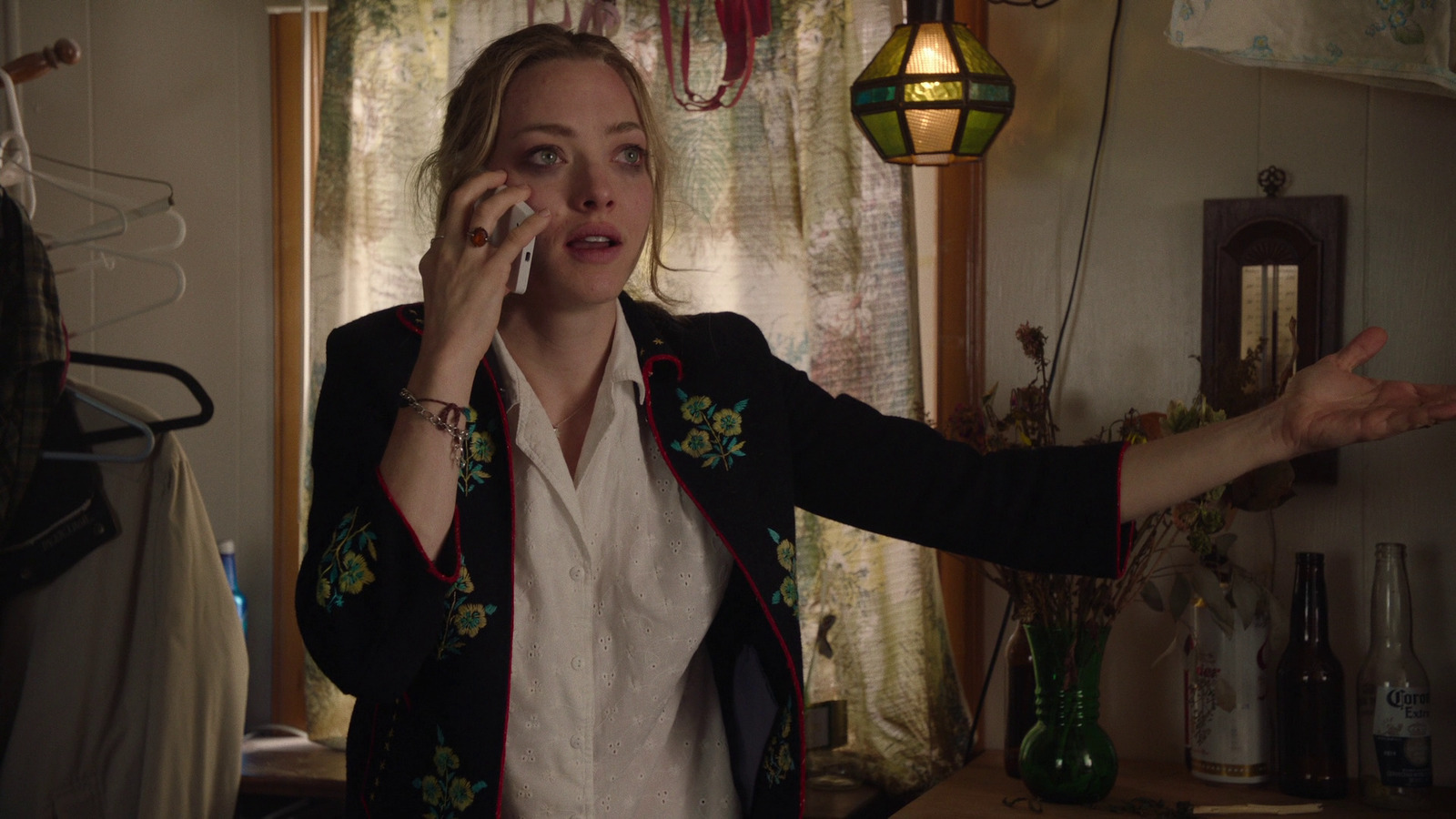
Open the scene sequence · 1 frame
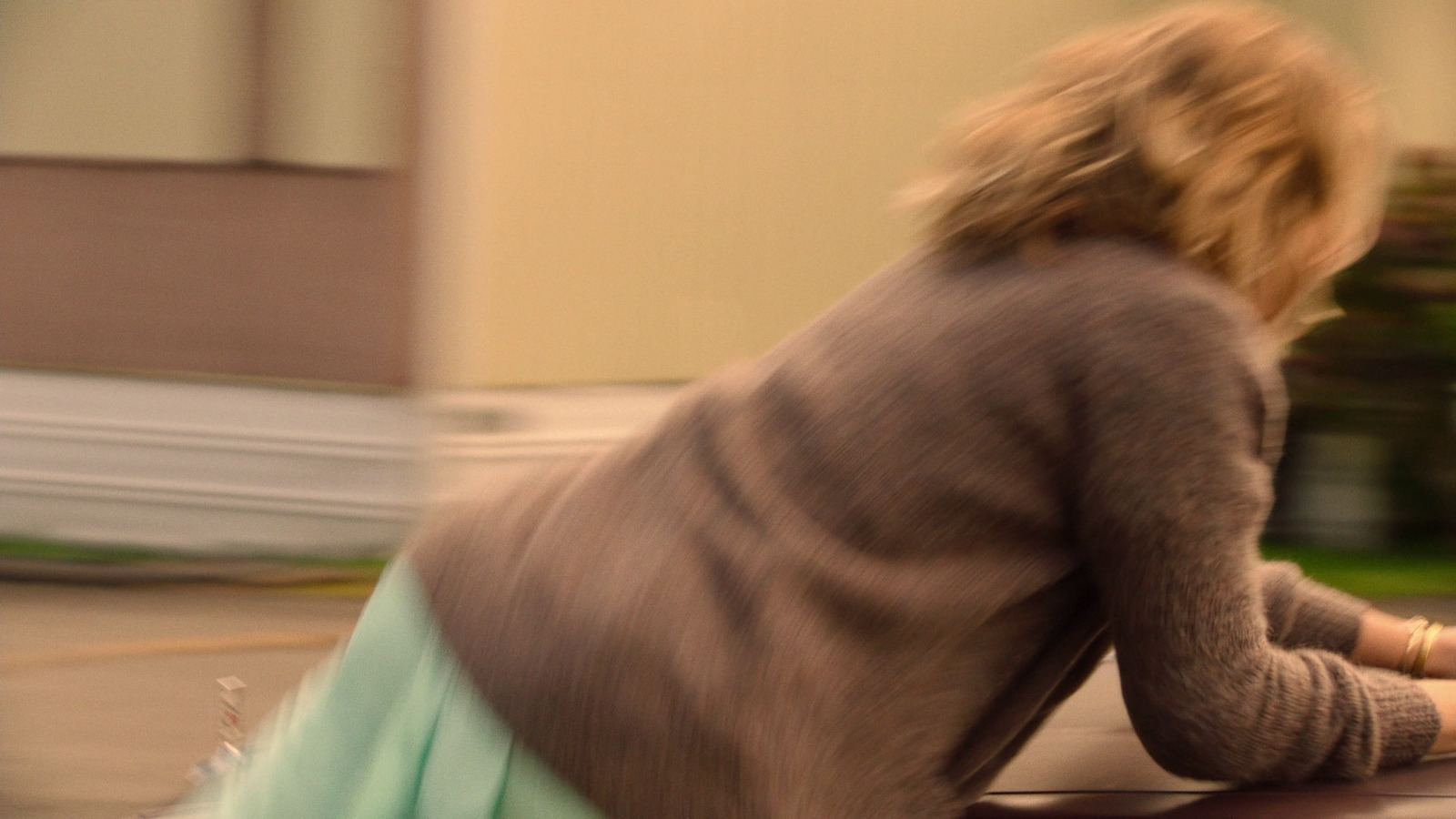
A small network of practical help
Carl reaches Shelly, arranges a ride and uses his radio to connect her with Bobby. The van’s close two-person framing keeps her distress beside his deliberate pace. Phone, radio, dispatcher and family relationship form a working chain of assistance. Carl’s insistence on arriving safely answers the reckless speed of the preceding scene. Help is shown as a series of ordinary actions, not a promise that the crisis has ended.
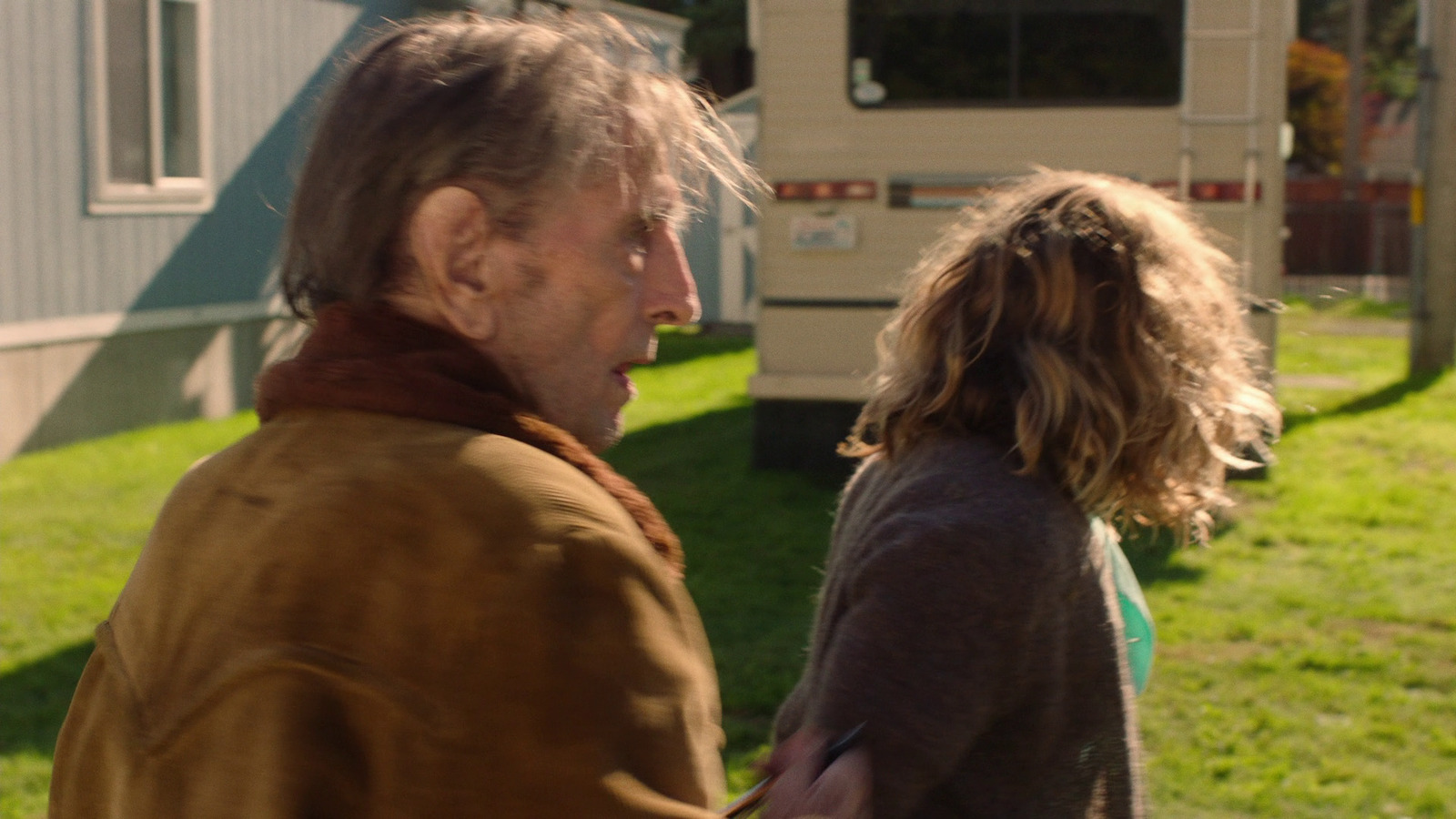
Open the scene sequence · 1 frame
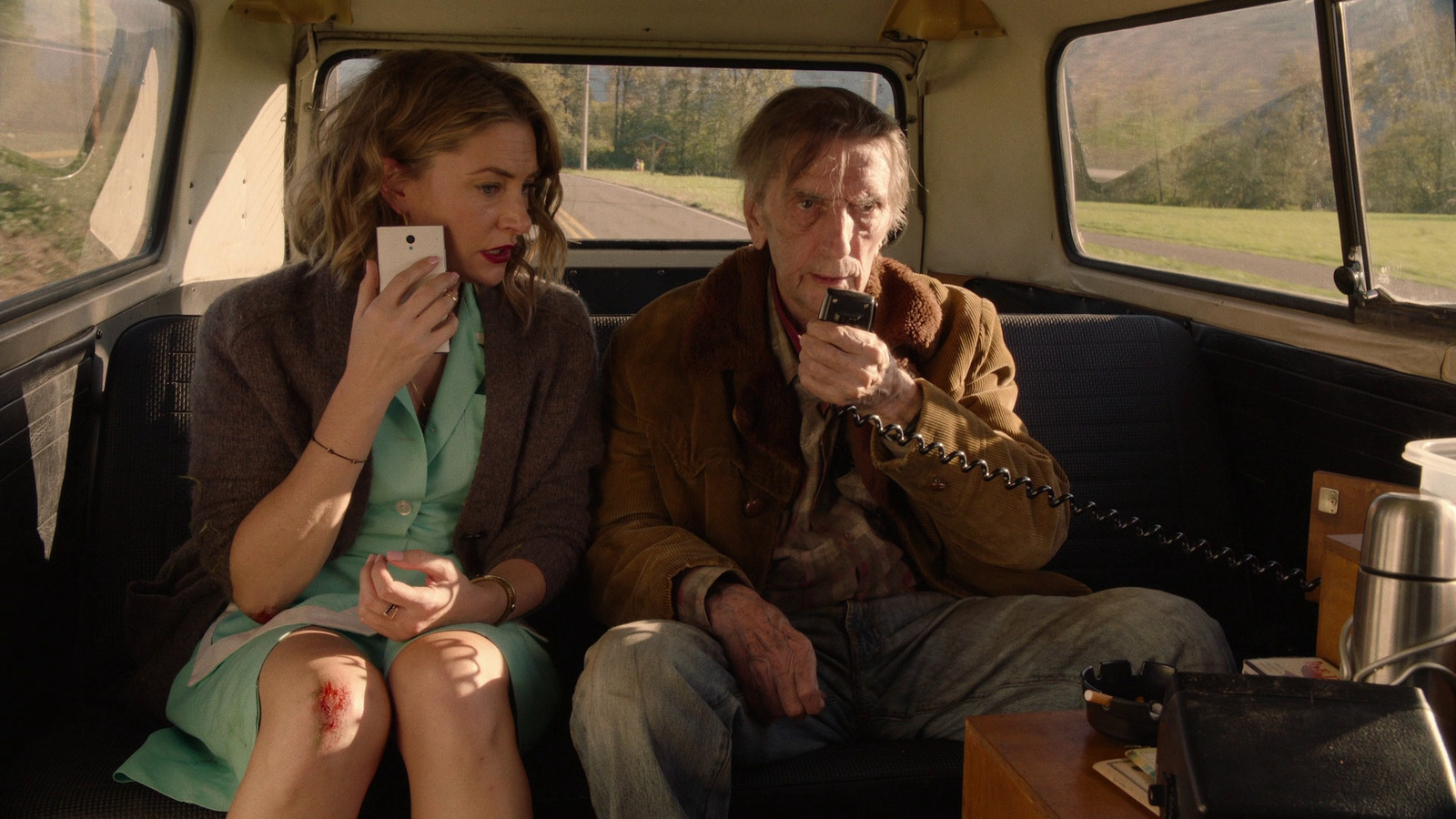
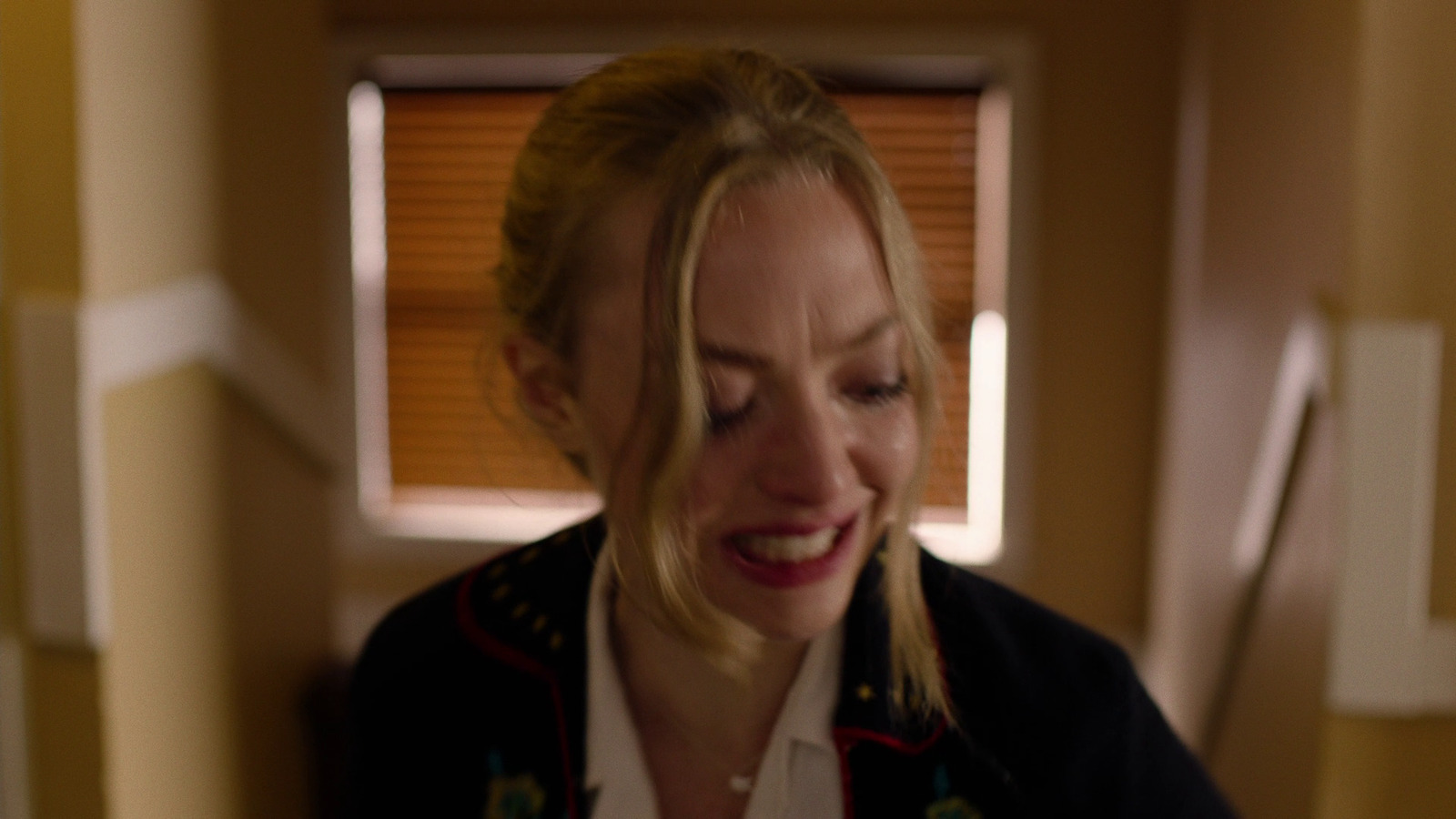
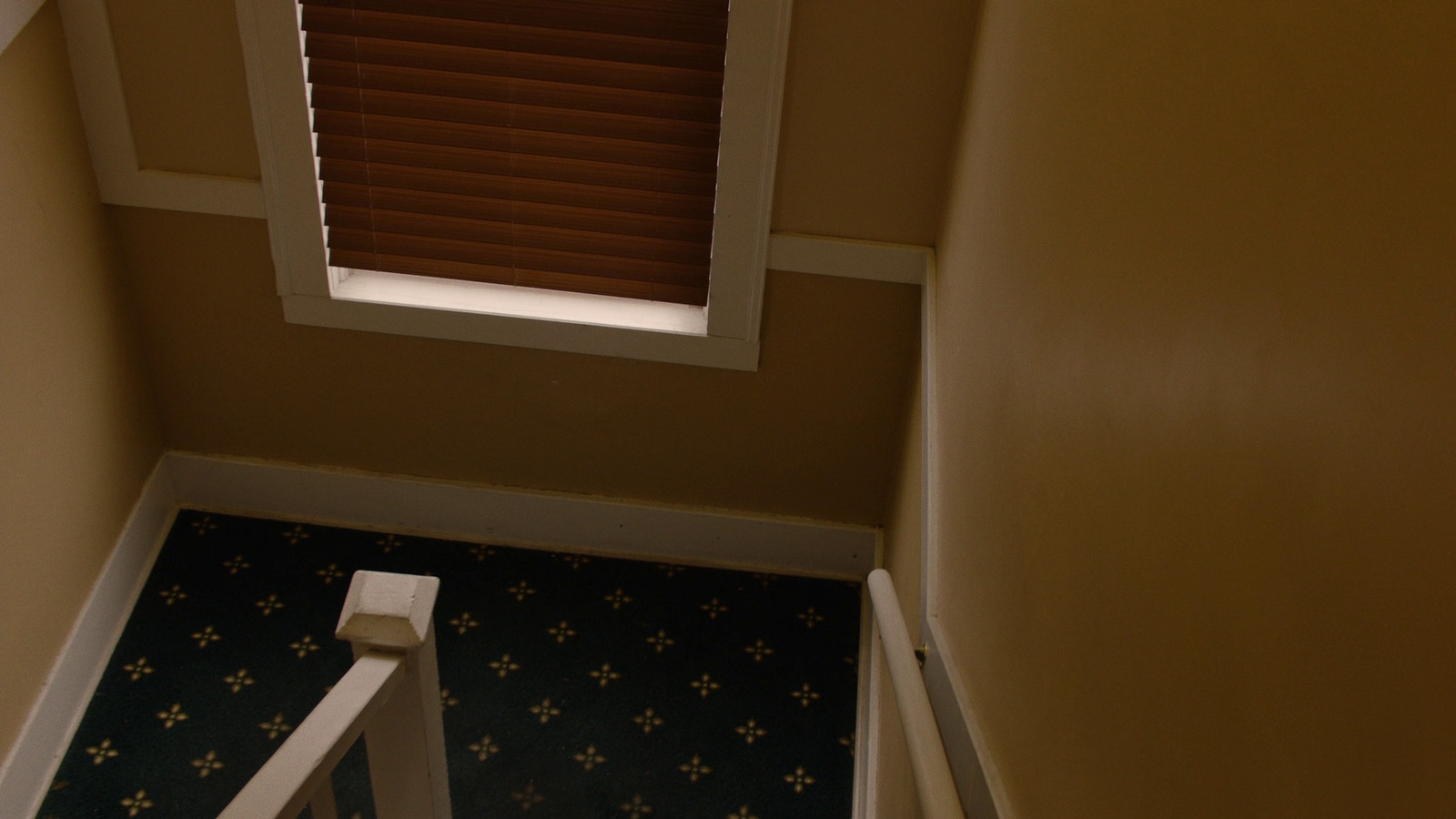
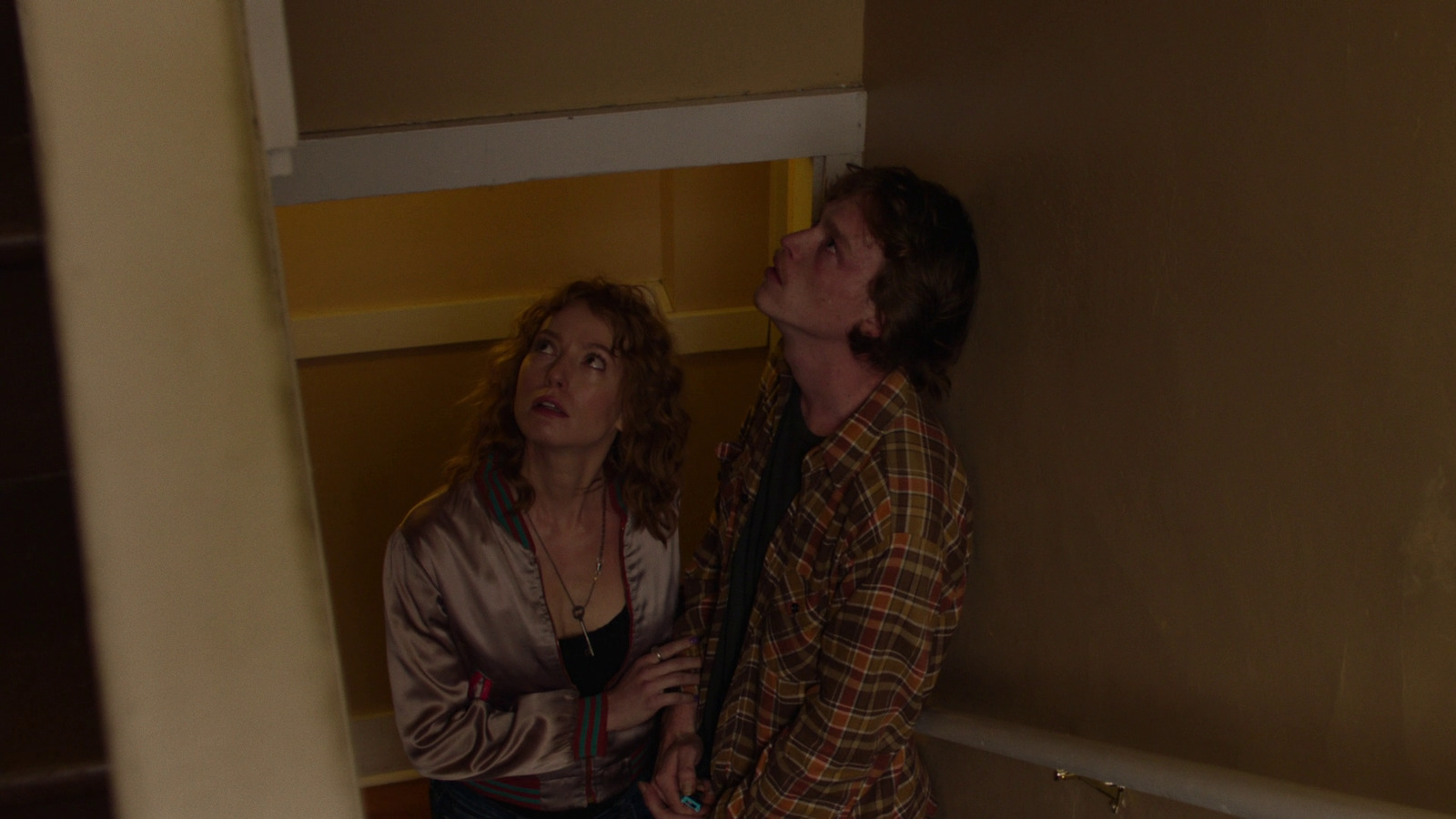
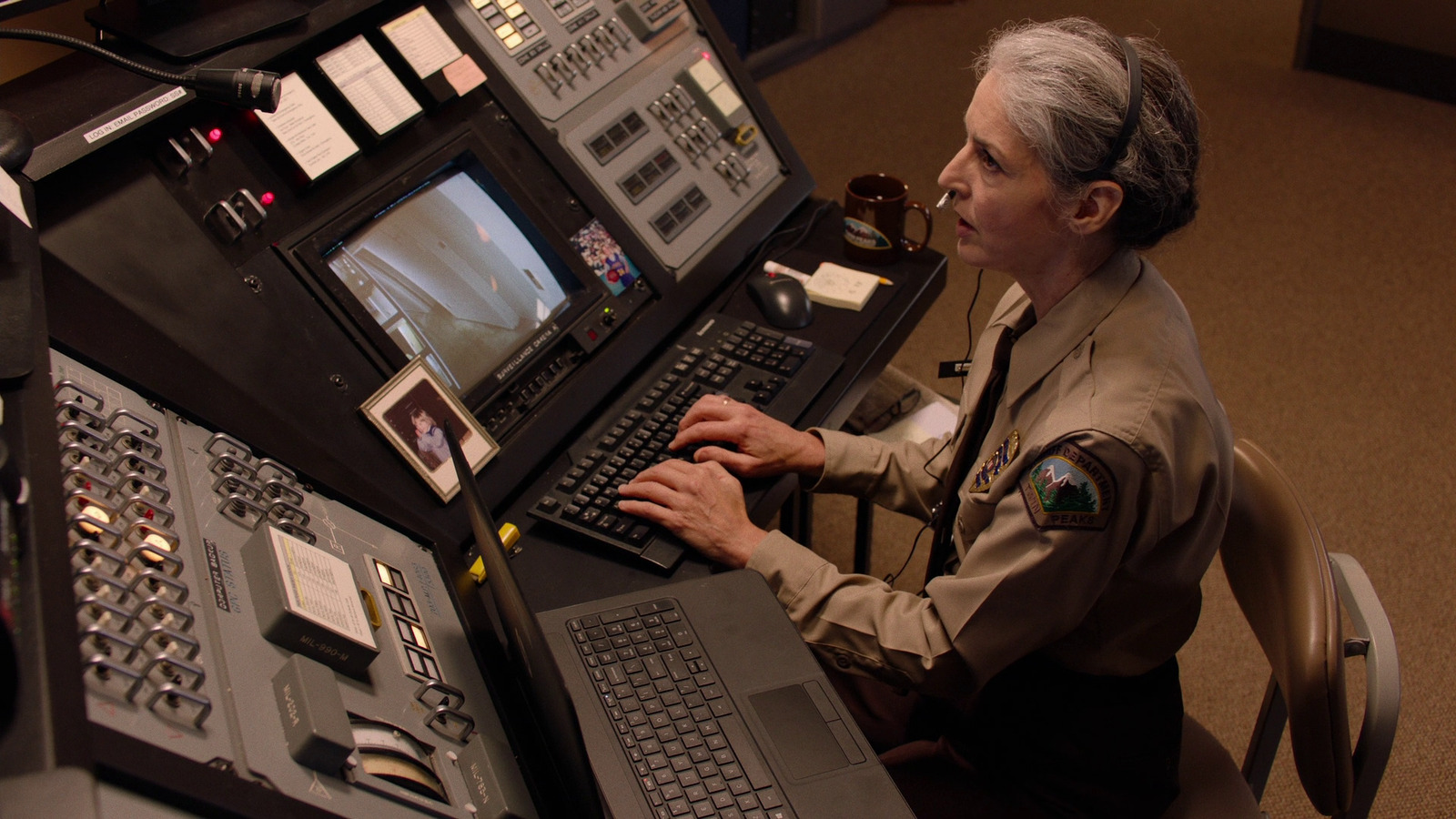
An empty door absorbs the attack
Becky follows Steven to an apartment, rejects a neighbor’s warning that the occupants have gone and fires through the door. The camera then investigates space she cannot see, moving through the stairwell toward the people hiding below. Her certainty and the actual arrangement of the building diverge. Maggie’s repeated emergency responses carry the disturbance into the sheriff’s office, where one private quarrel becomes multiple calls.
Open the scene sequence · 3 frames
A witness brings the agents to a boundary
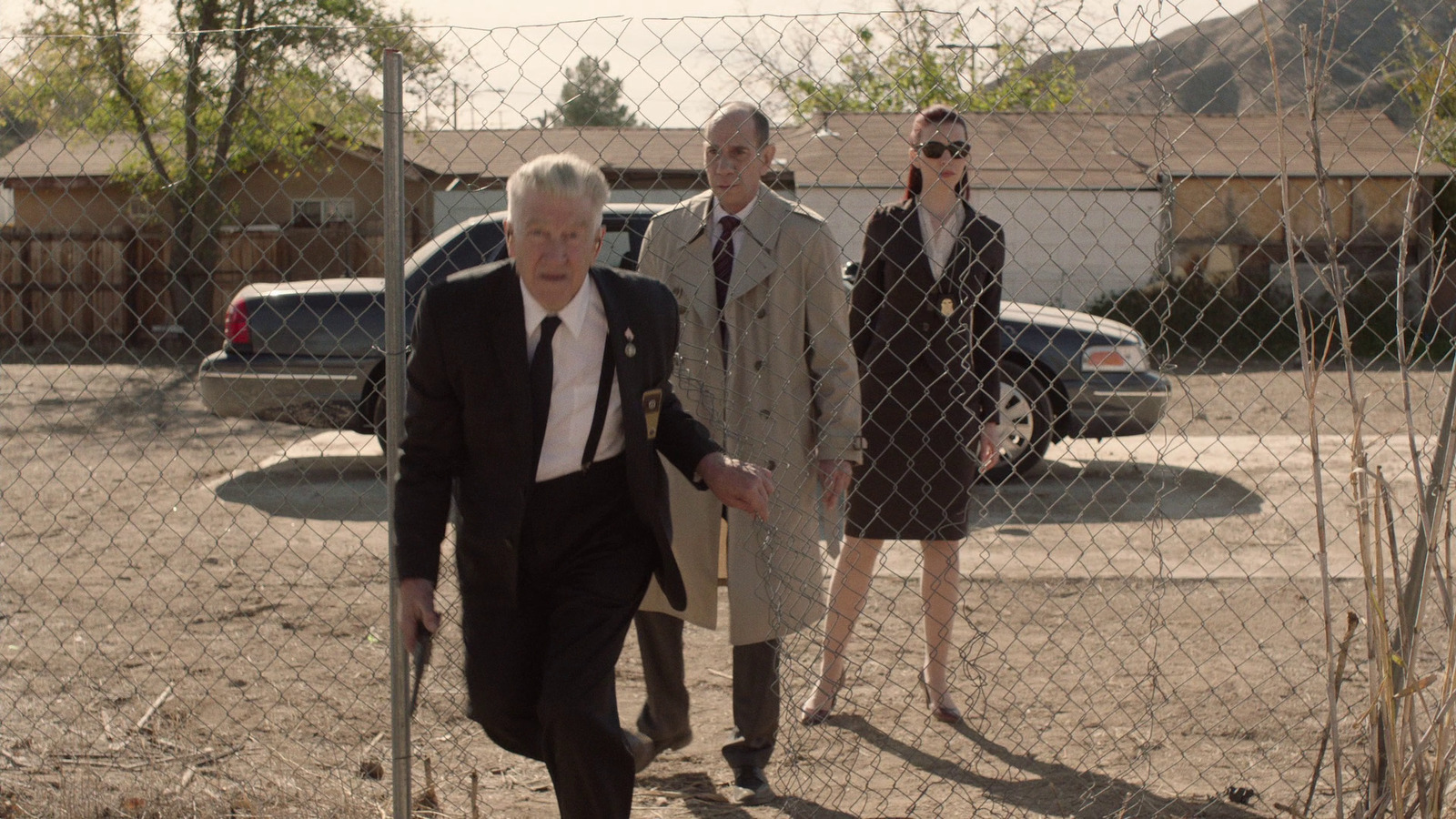
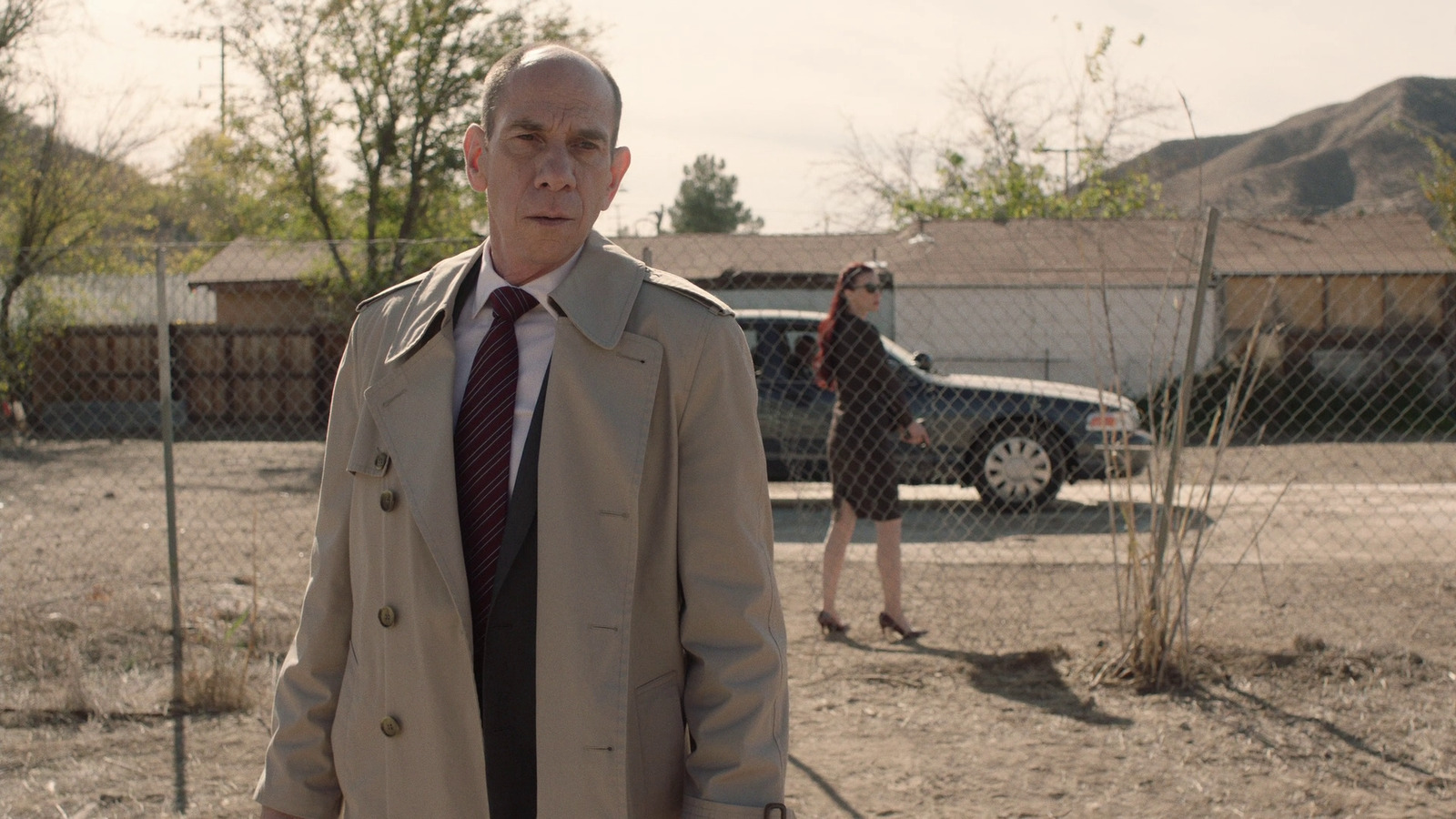
The broad view of the Buckhorn lot gives the investigation a concrete geography: cars, fence, opening and decaying buildings. Hastings can identify where he entered but cannot provide a continuous account of what followed. Tammy translates that limited recollection into directions for the other agents. Gordon’s passage through the fence therefore crosses both a physical boundary and the point where the witness’s explanatory power runs out.
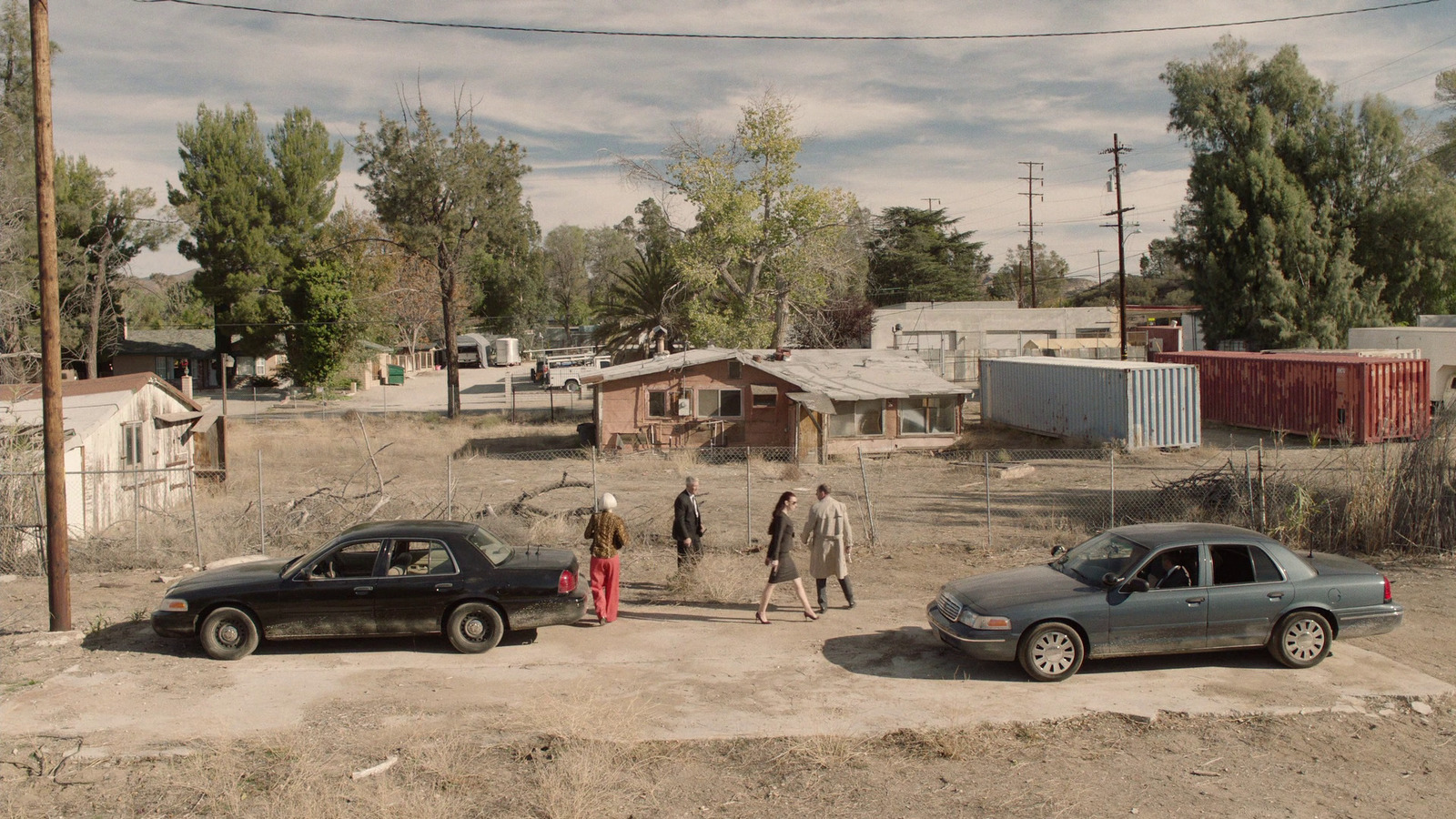
Open the scene sequence · 2 frames
The sky opens, but not for everybody
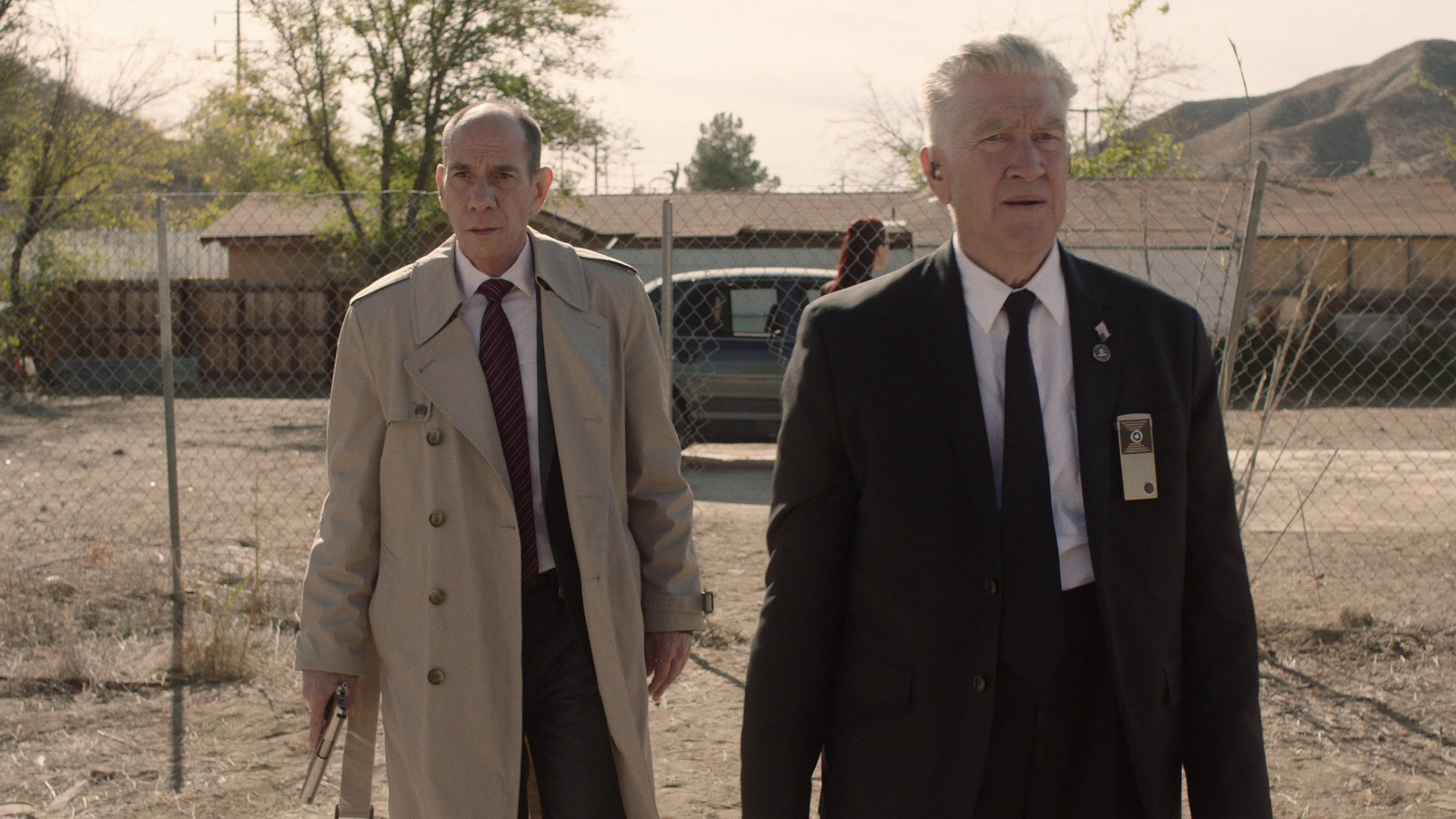
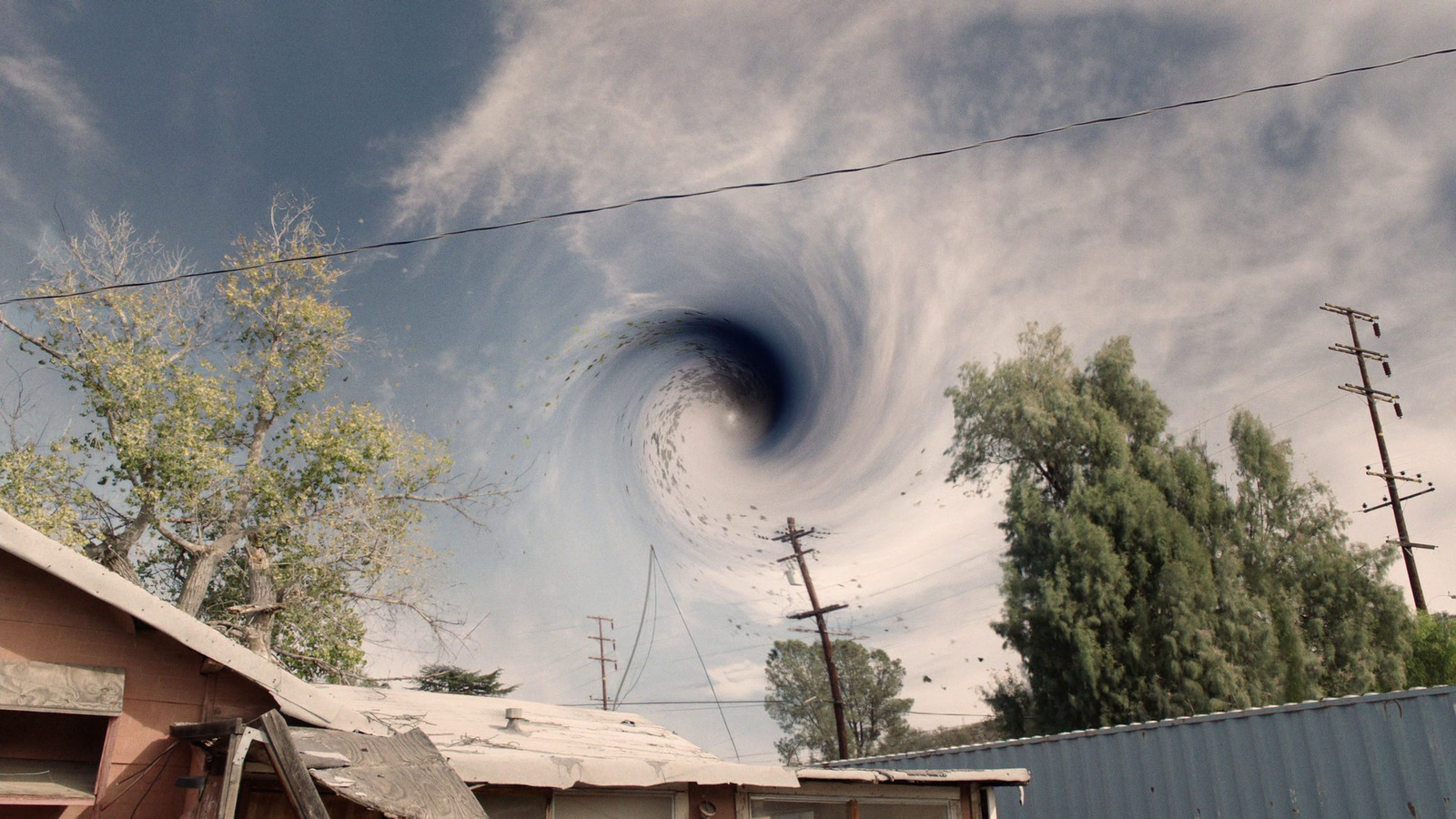
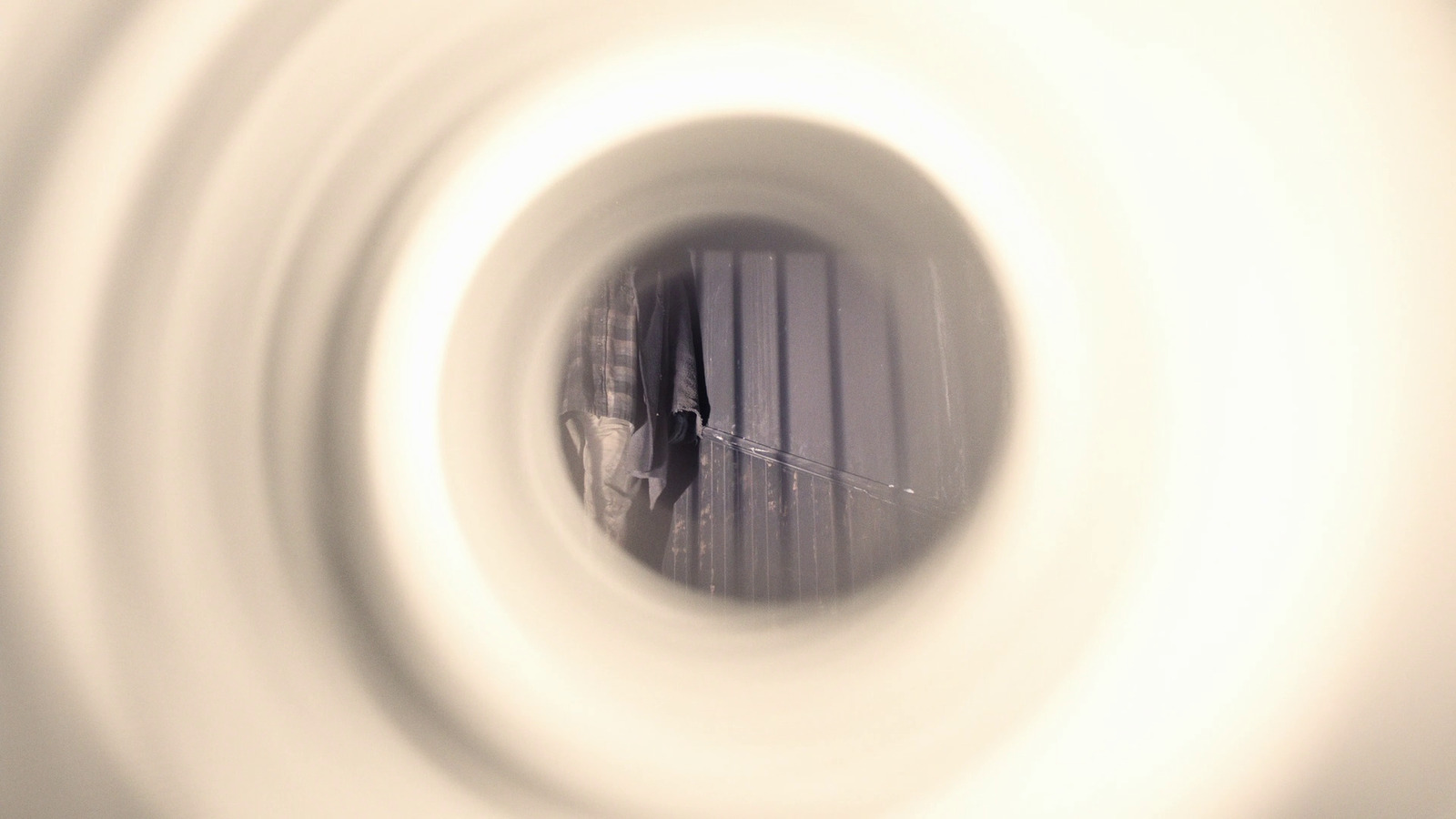
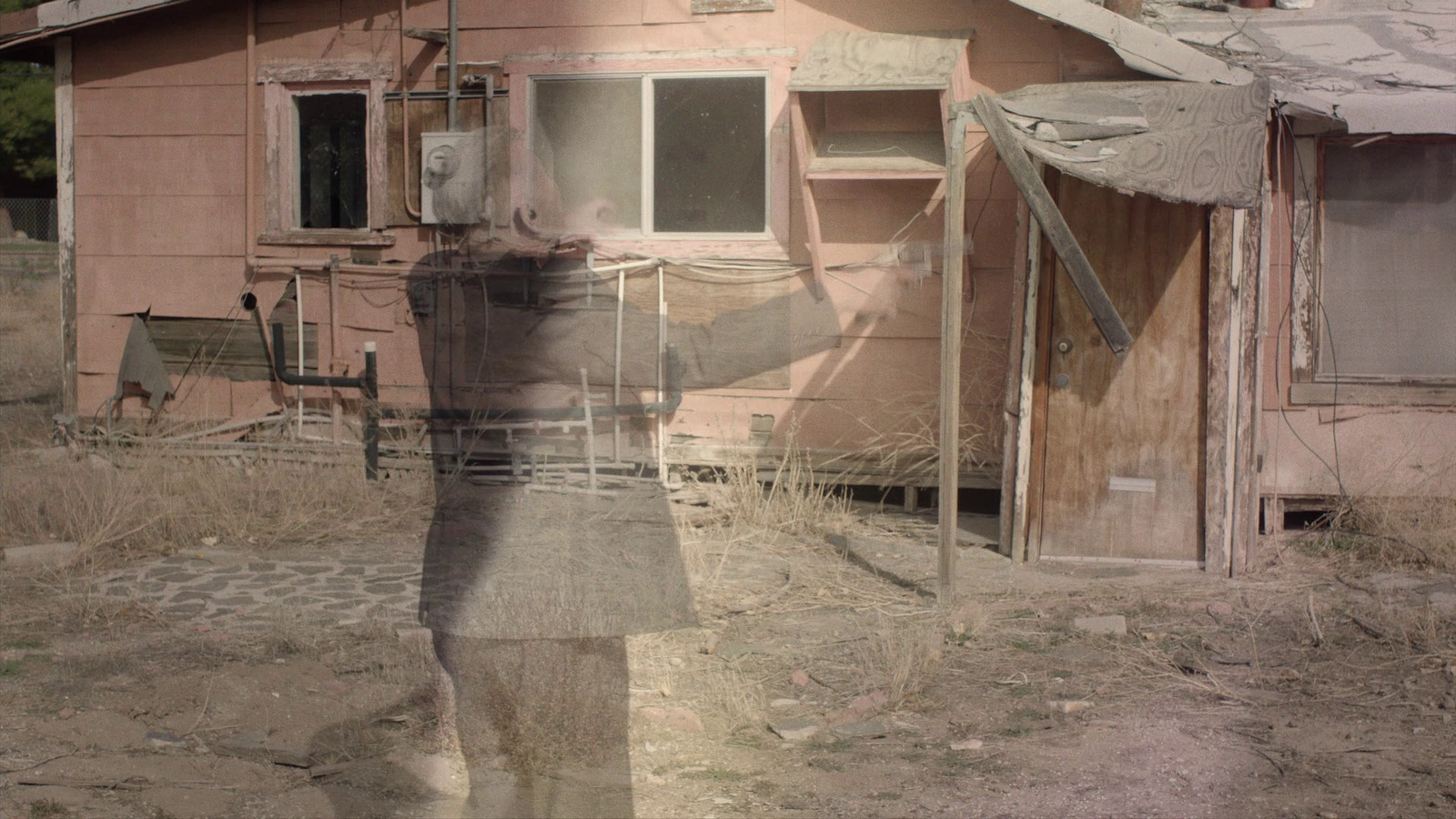
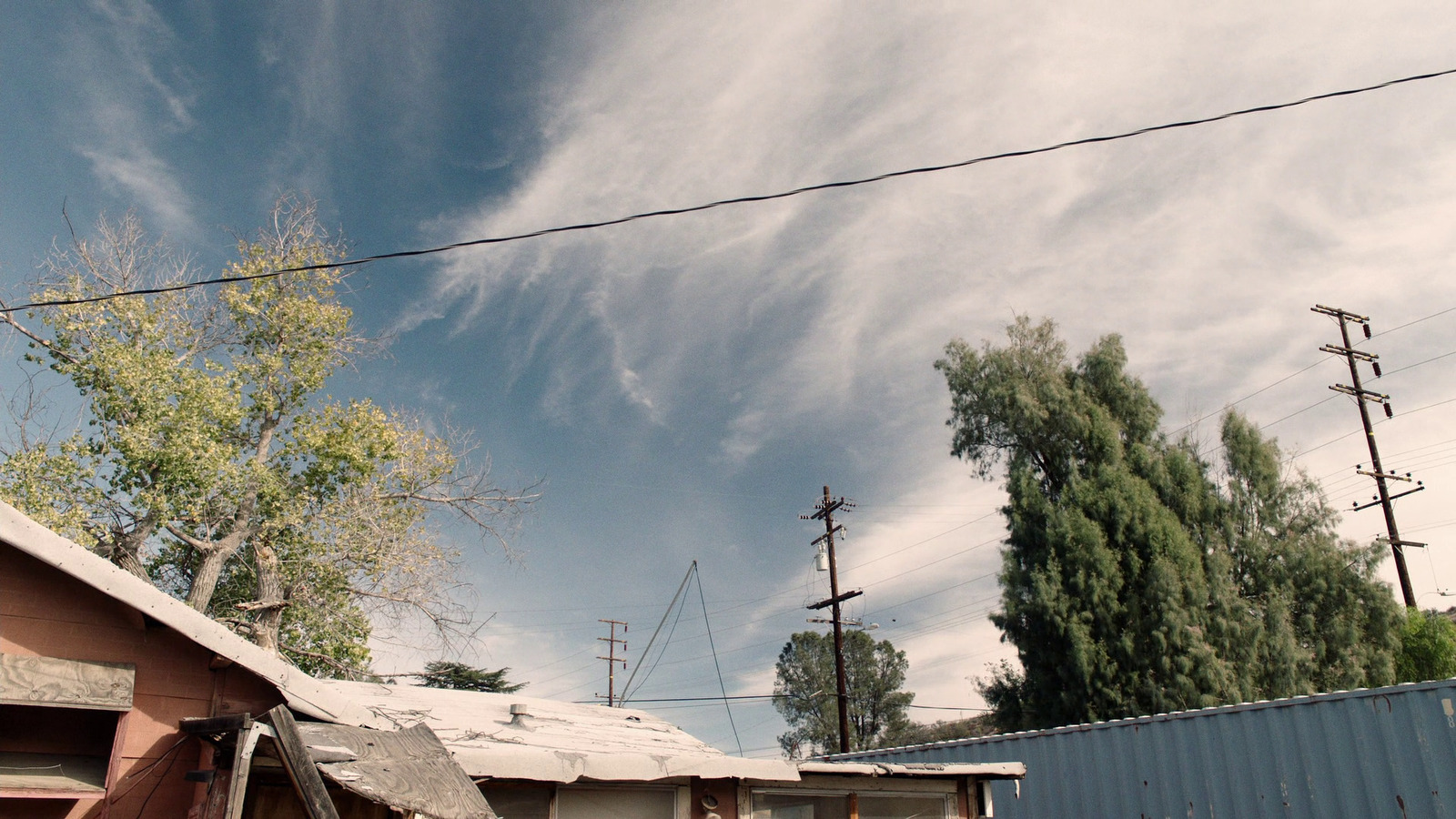
The wires and roofline remain recognizable as the cloud field begins to rotate. Alternating views of Gordon, Albert, Diane and the car make perception uneven: the event is not presented as a single view shared by the entire group. Gordon’s softened image and raised arms lead toward a bright passage with figures in a room. Albert’s intervention restores him to the lot. The return of ordinary sky does not erase what he has seen.
Open the scene sequence · 7 frames

A body becomes a written record
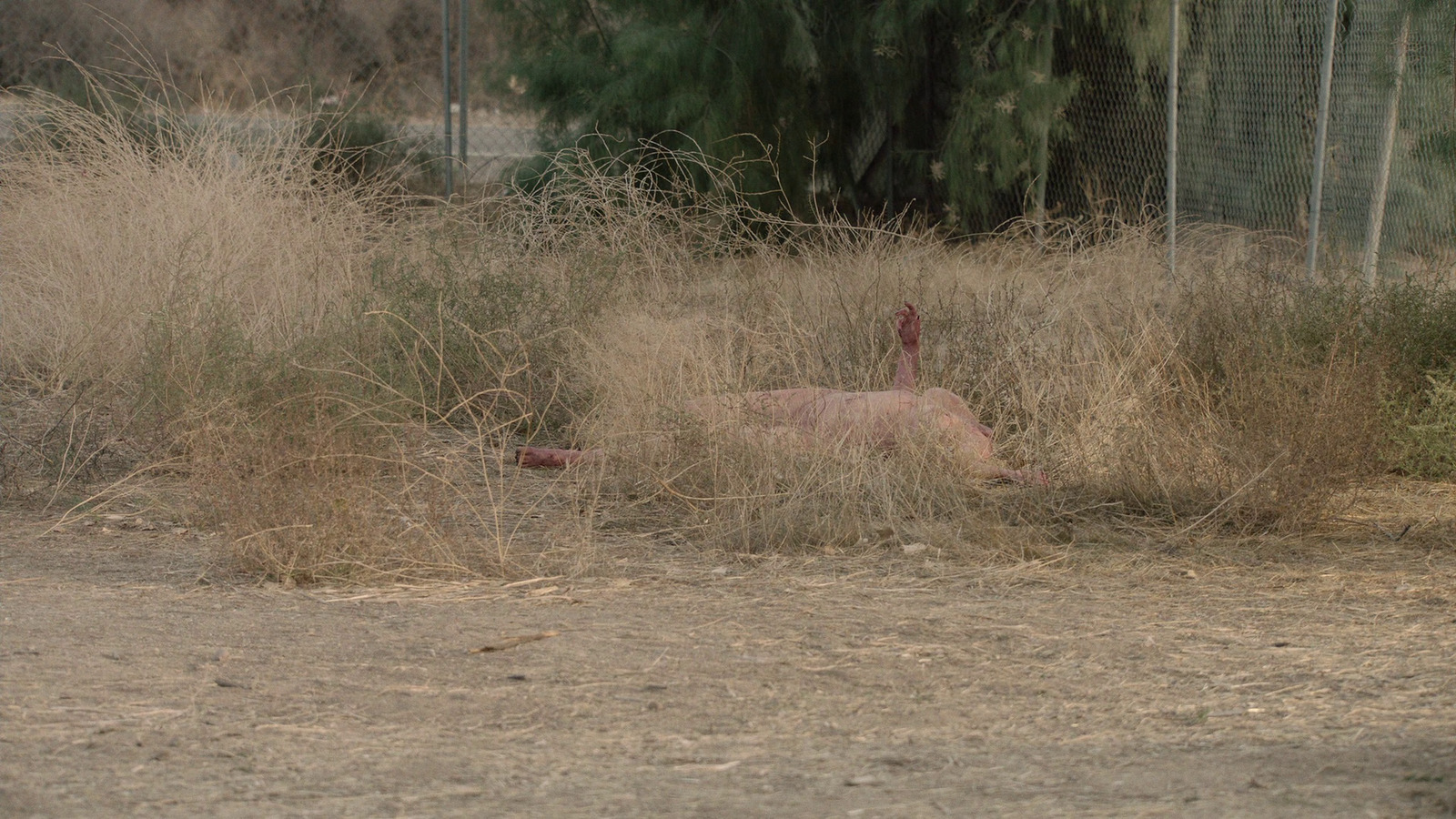
Ruth Davenport’s body is discovered in the grass. Albert photographs the numbers on her arm, carrying information away from a scene that has just resisted stable observation. The camera and the bodily inscription connect this passage to the later discussion of coordinates. The image supplies evidence of a discovery; it does not yet explain the destination or the relationship between Ruth’s body and the missing head of Major Briggs.
Open the scene sequence · 1 frame
Violence inside the guarded car
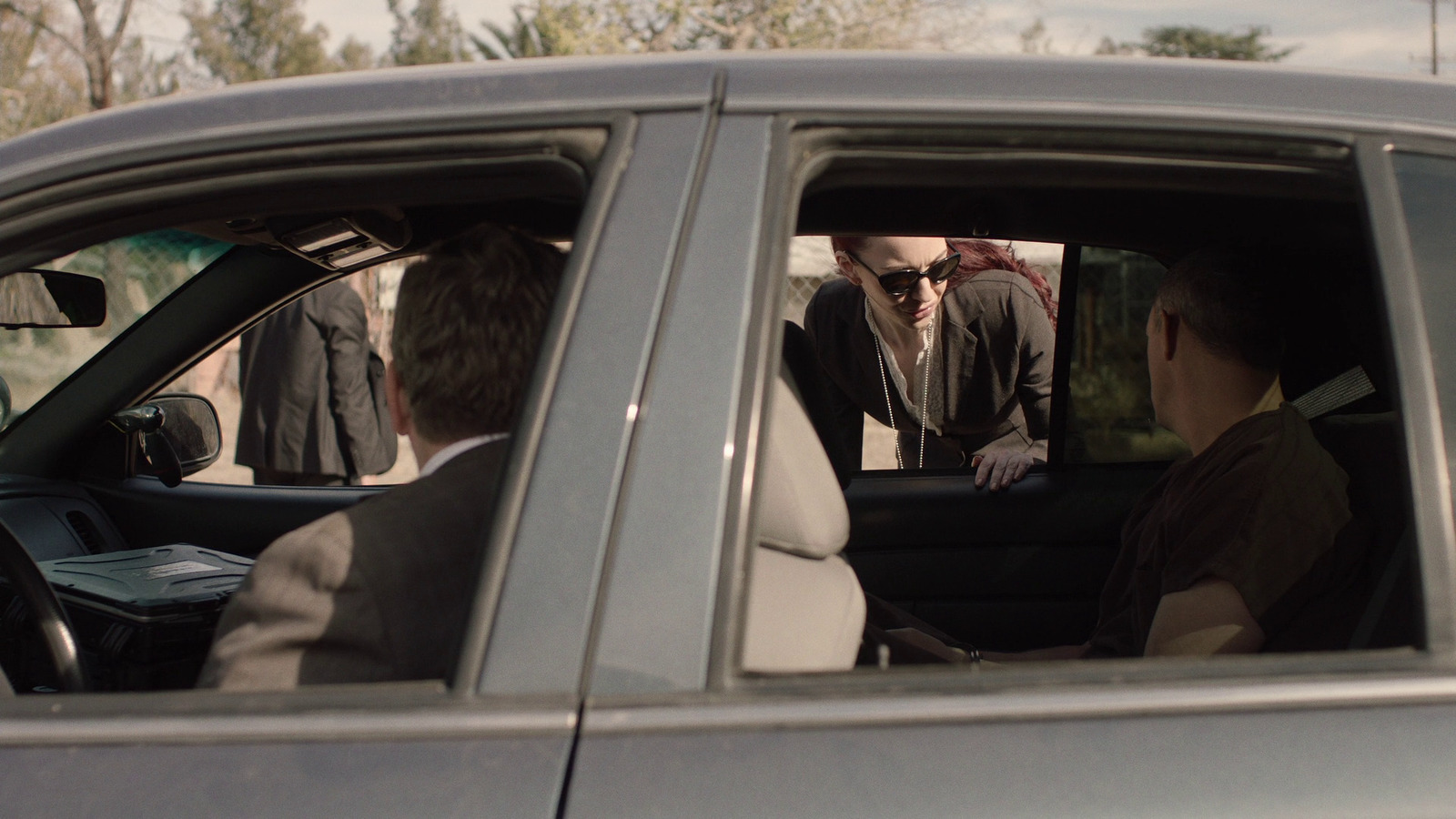
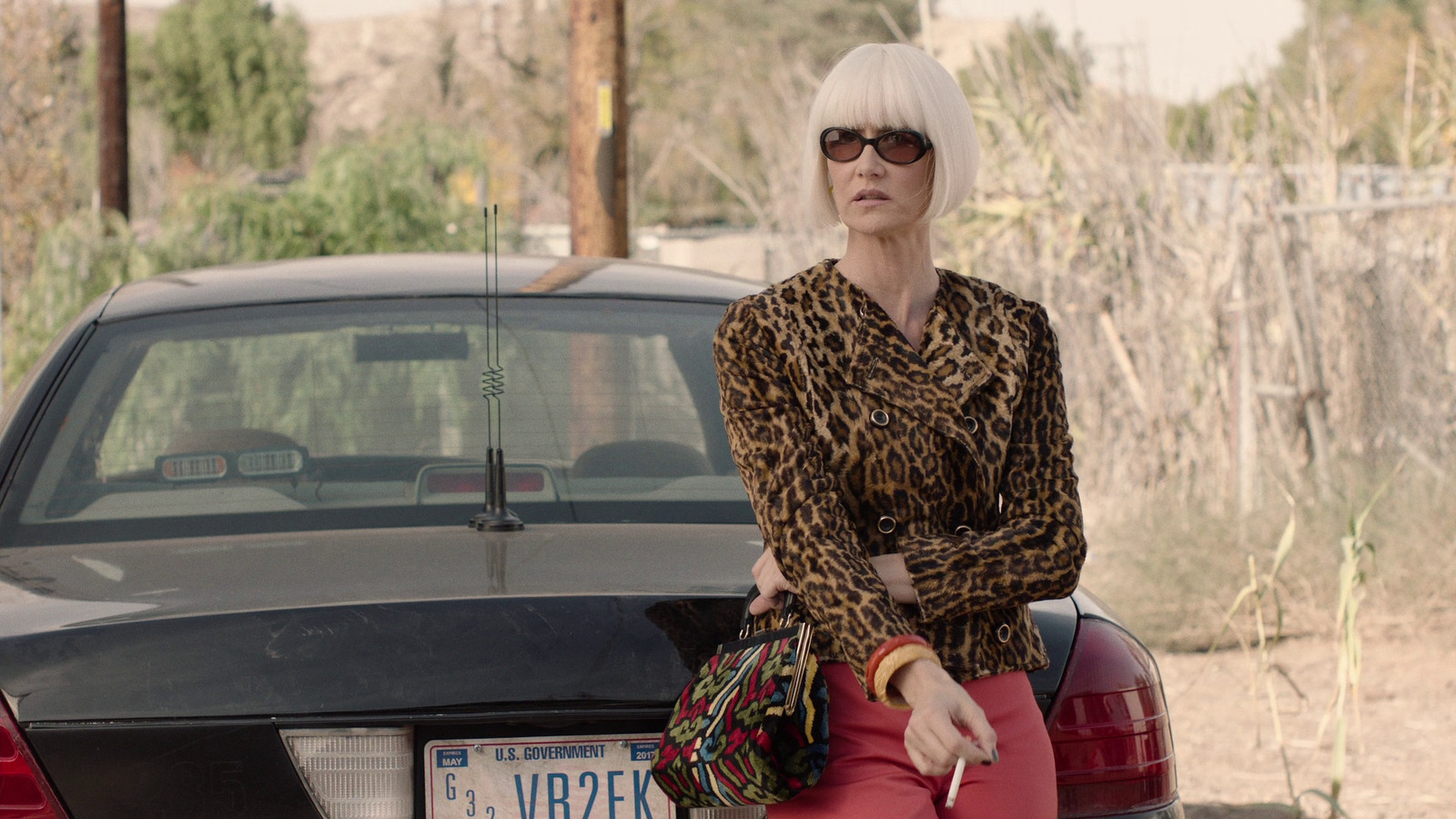
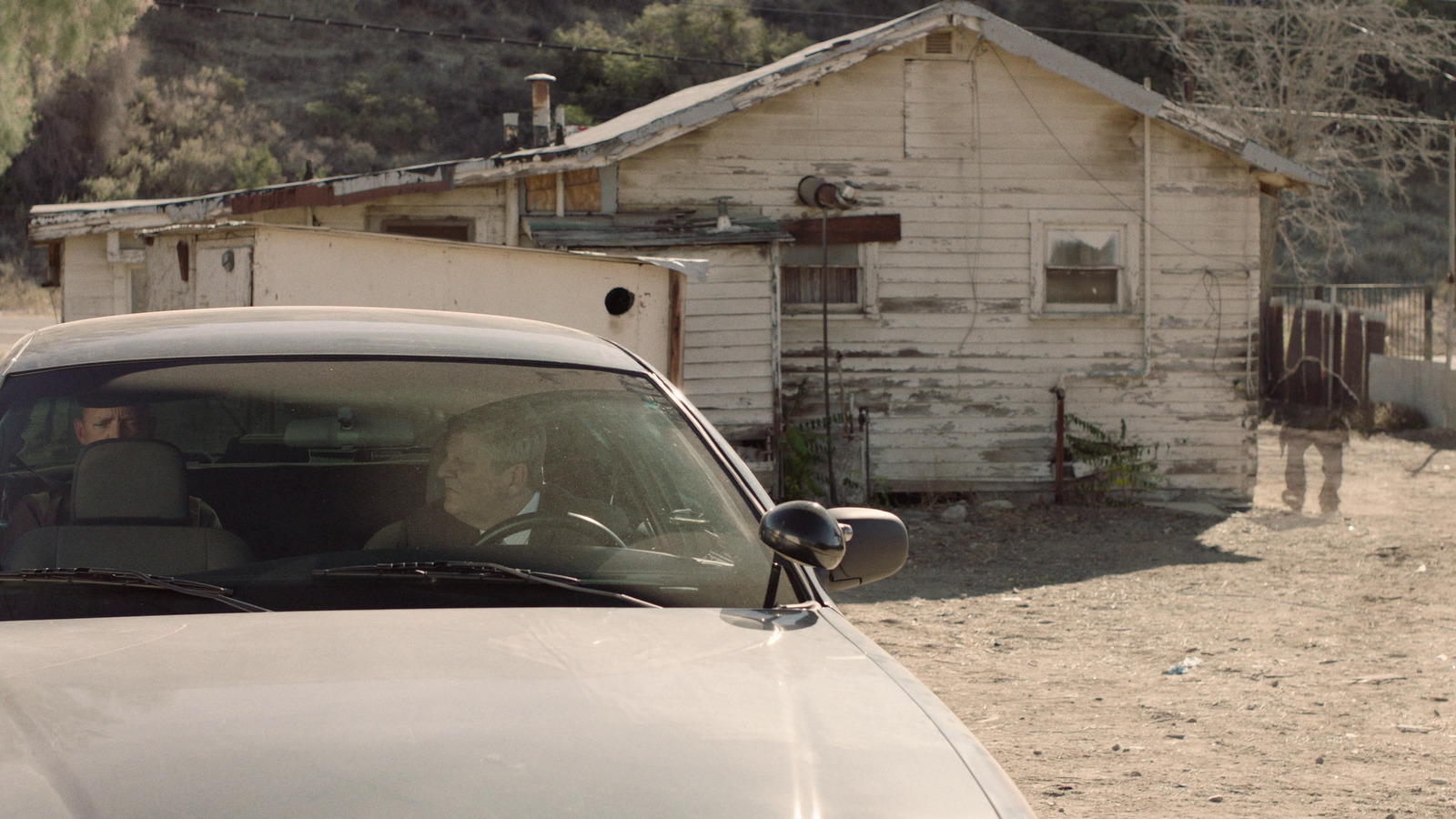
A dark figure appears near the police car before Hastings is killed in the back seat. The destruction is abrupt, and the aftermath is registered through Macklay’s alarm and the other investigators’ approach. Their proximity offers no protection and no agreed view of the attacker. Gordon’s response to the request for backup names the failure of ordinary procedure to match what has happened. The later witness discussion must be read against these unequal lines of sight.
Open the scene sequence · 2 frames
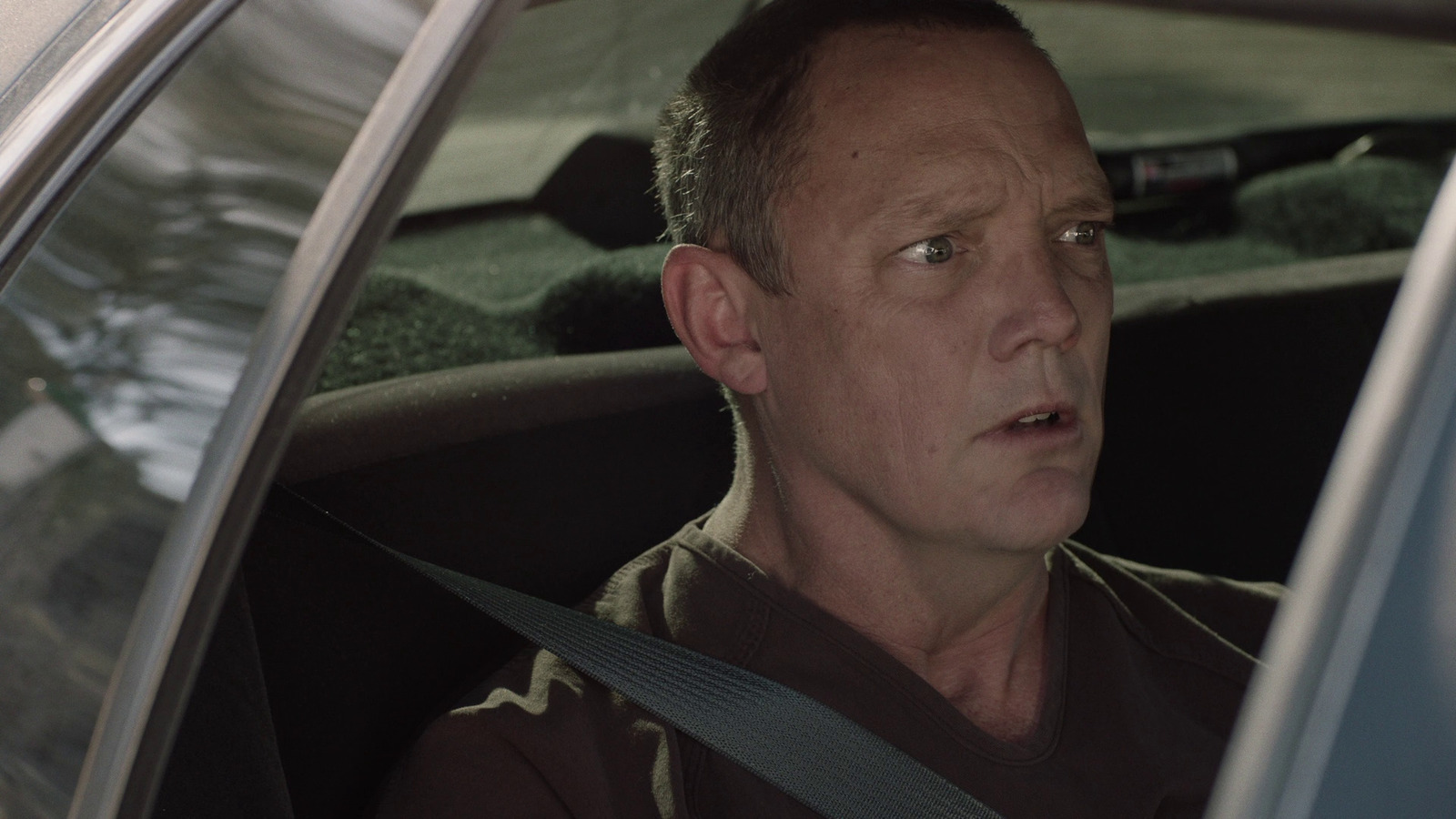
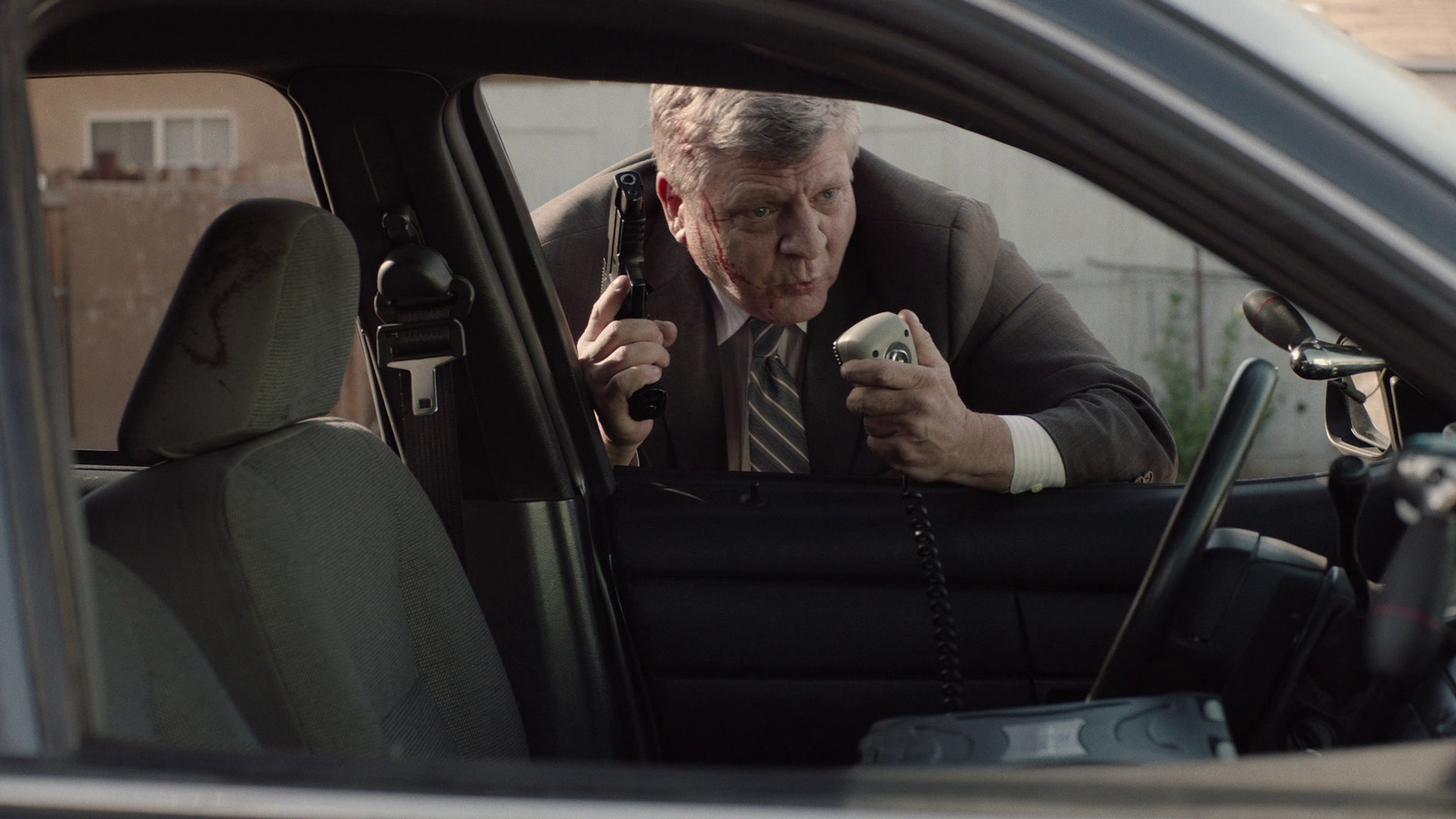
Parents, money and the limits of protection
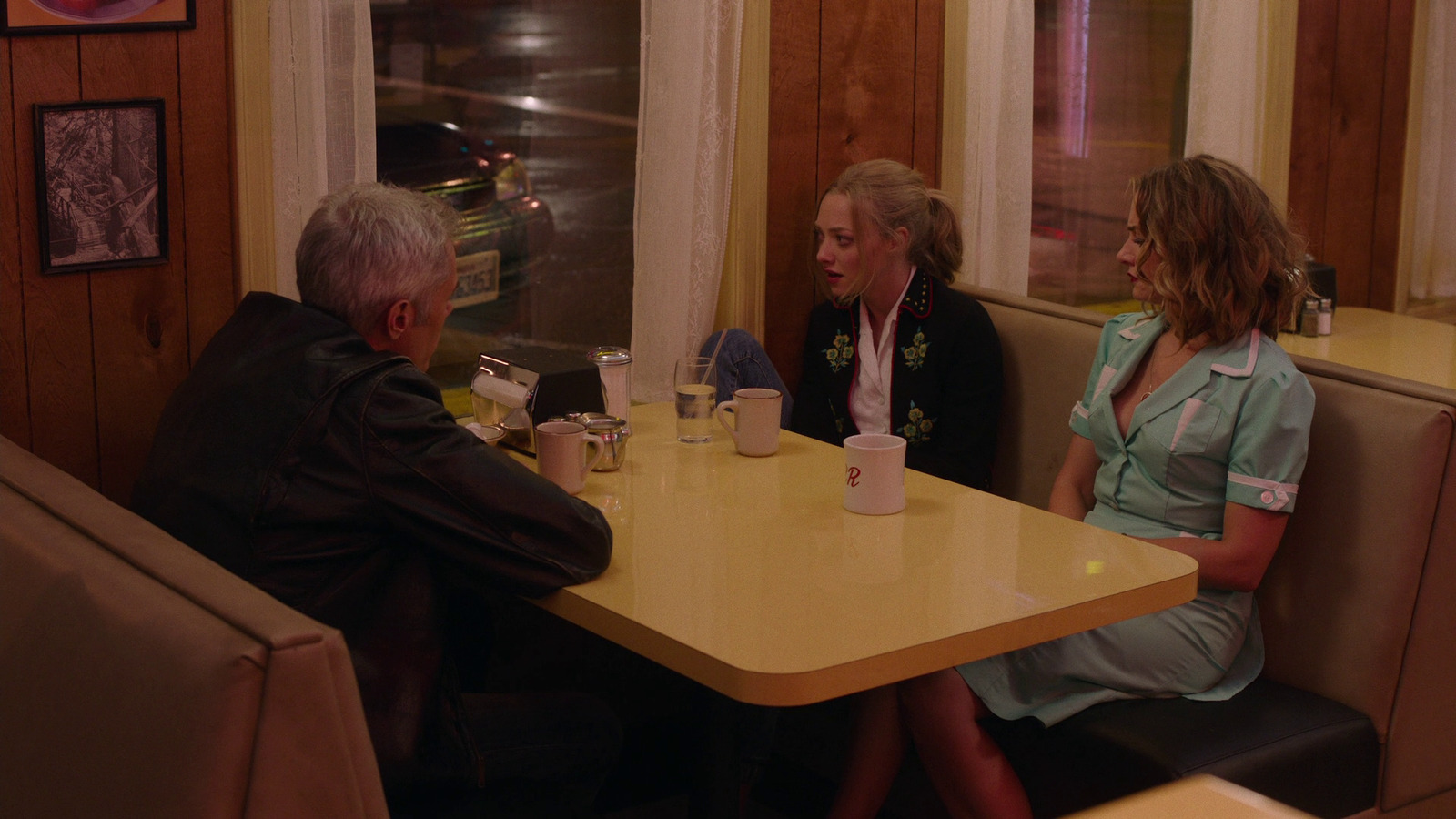
Bobby, Shelly and Becky occupy a familiar diner booth, but the conversation joins emotional loyalty to practical consequences. Becky must pay for the damage; Bobby has already used his position to keep her out of jail. His questions about Steven shift from employment to possible abuse. Becky’s defense of her husband repeatedly interrupts the offer of escape. Norma watches from the counter, extending the scene’s circle of concern without taking over the conversation.
Open the scene sequence · 2 frames
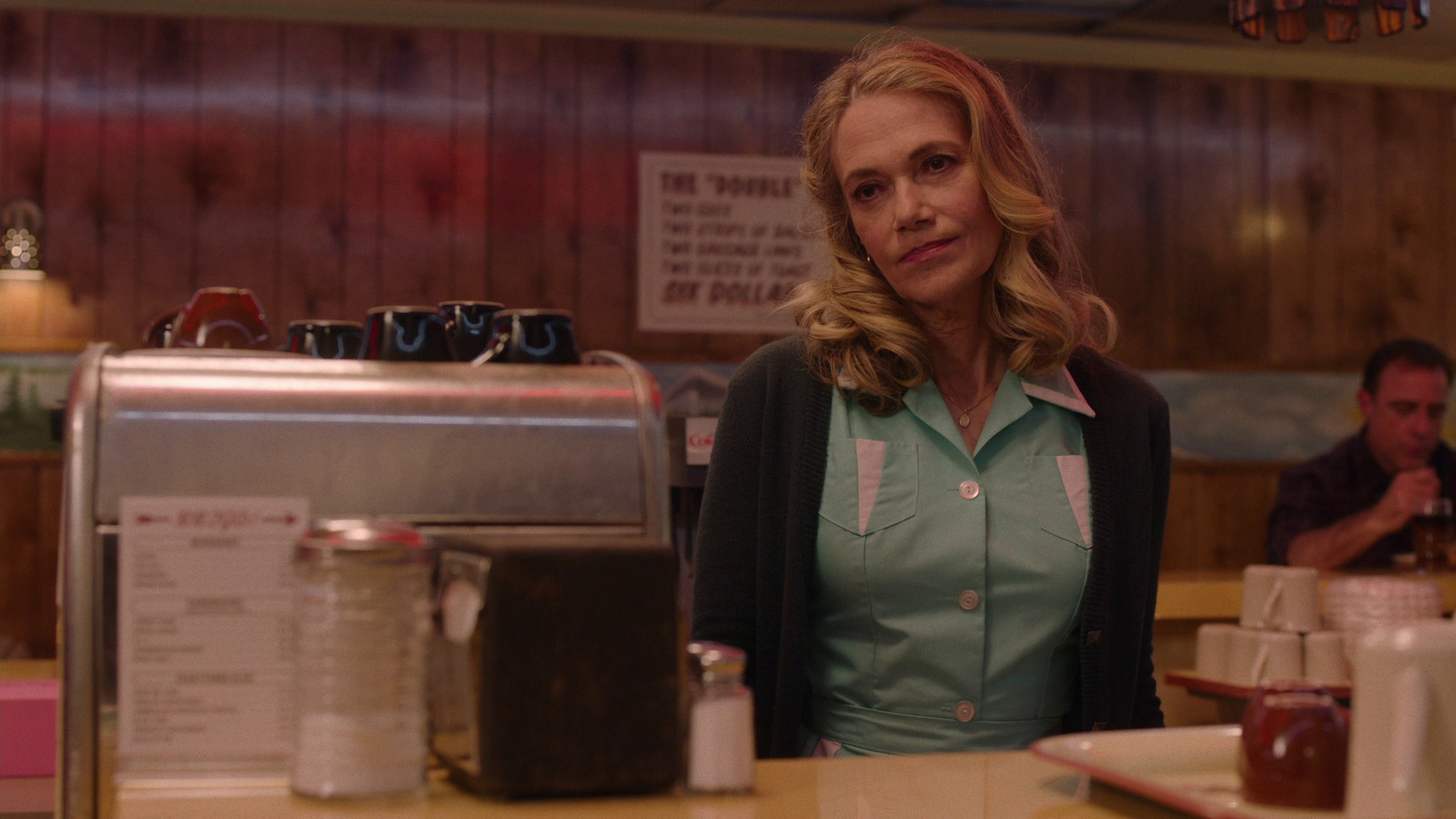
An old relationship watches a new one
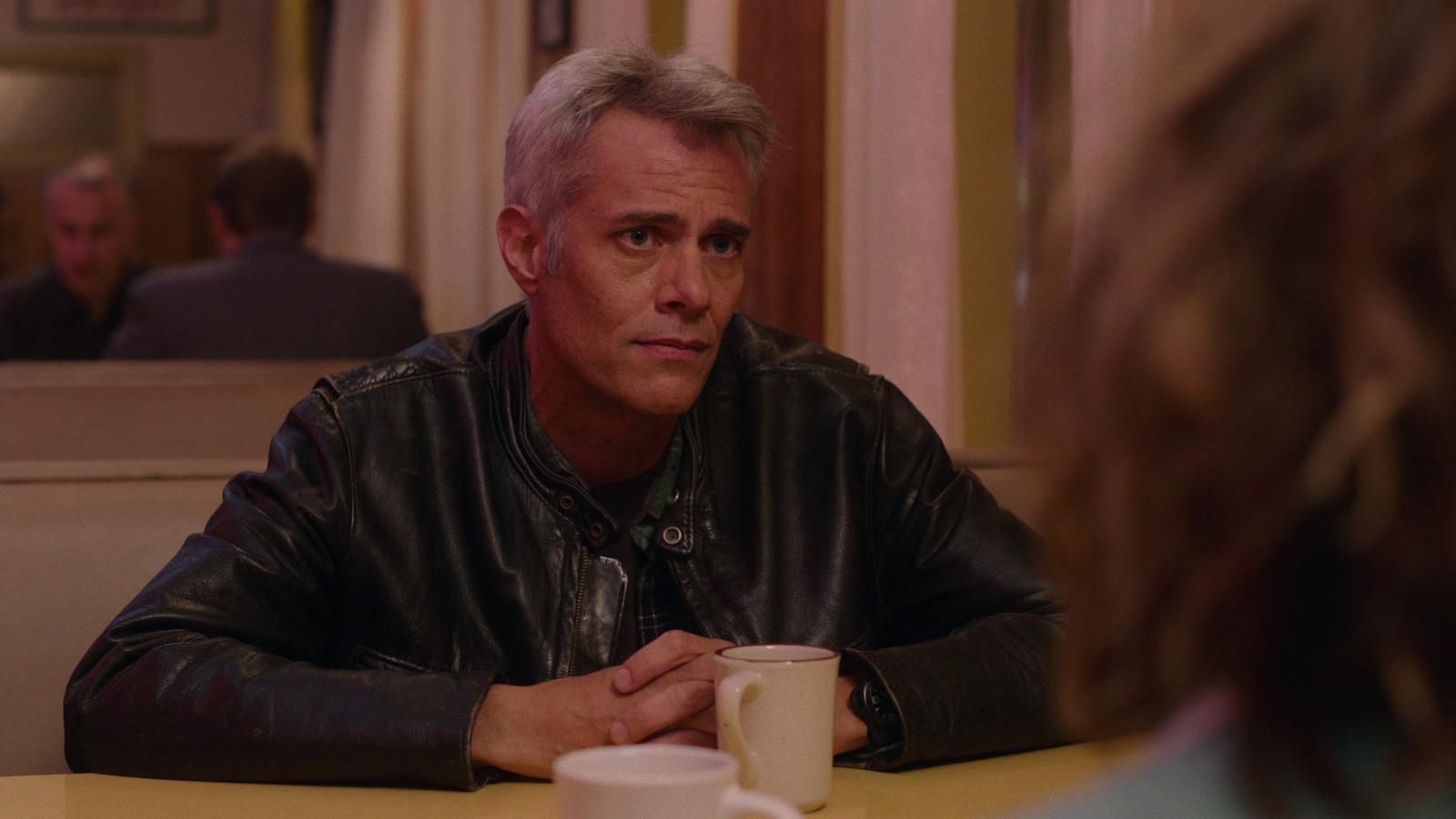
Shelly leaves the difficult family conversation to greet Red outside. Bobby stays seated, watching her departure and return. The contrast lies in movement and attention: the mother who has just pleaded for her daughter’s safety becomes briefly absorbed in her own romantic excitement. The sequence allows an uncomfortable resemblance between generations without claiming that their circumstances are identical.
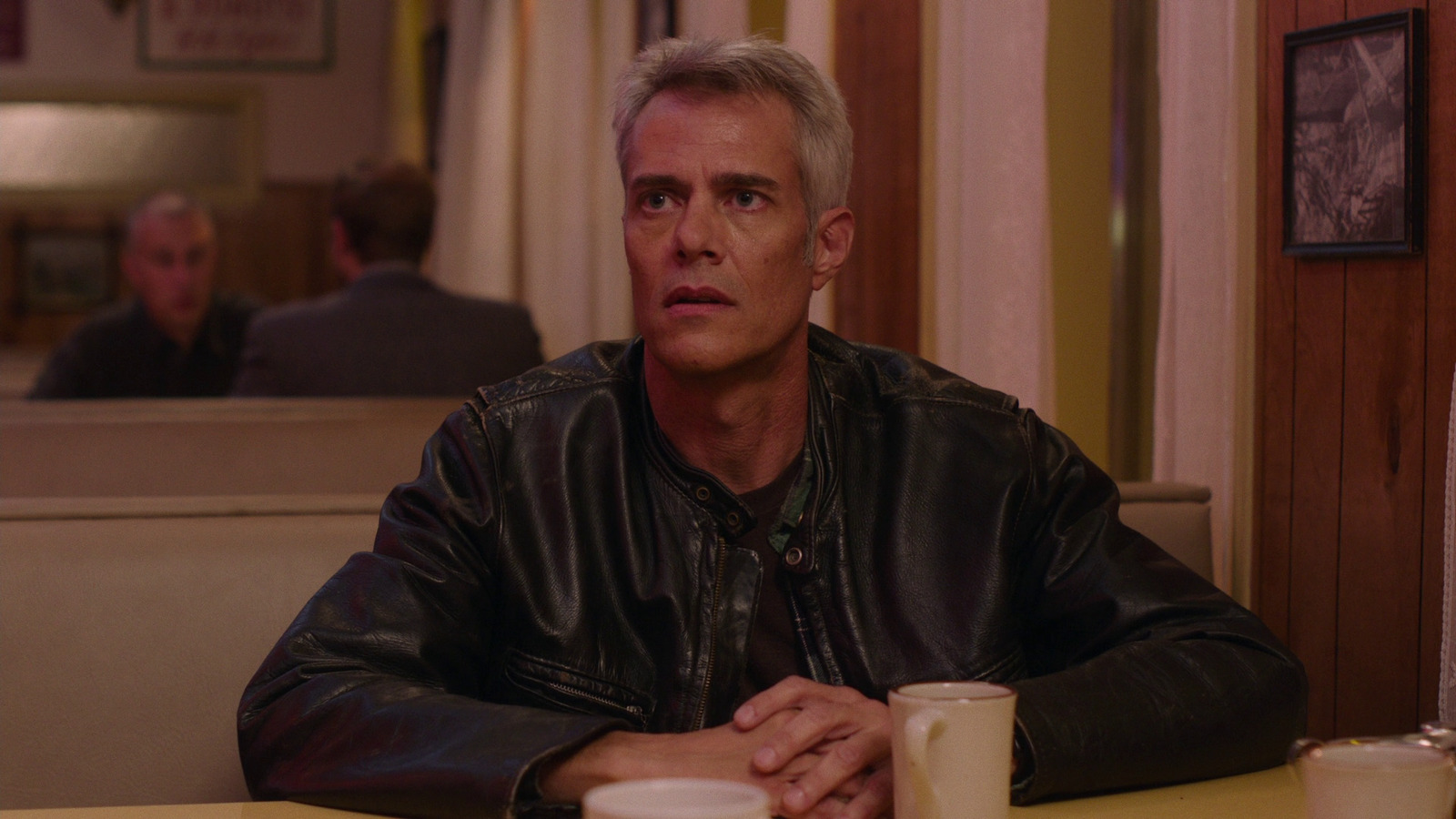
Open the scene sequence · 1 frame
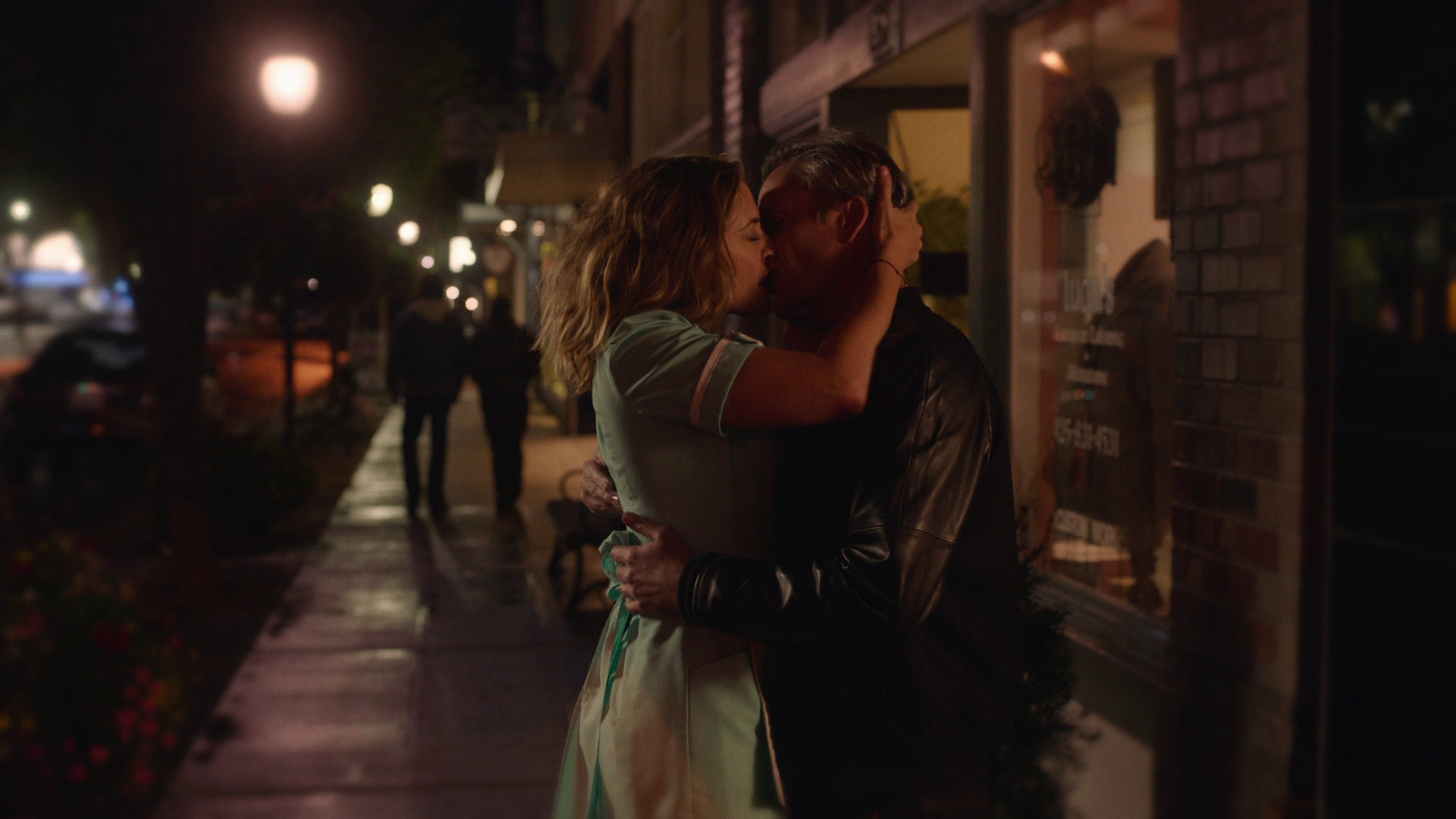
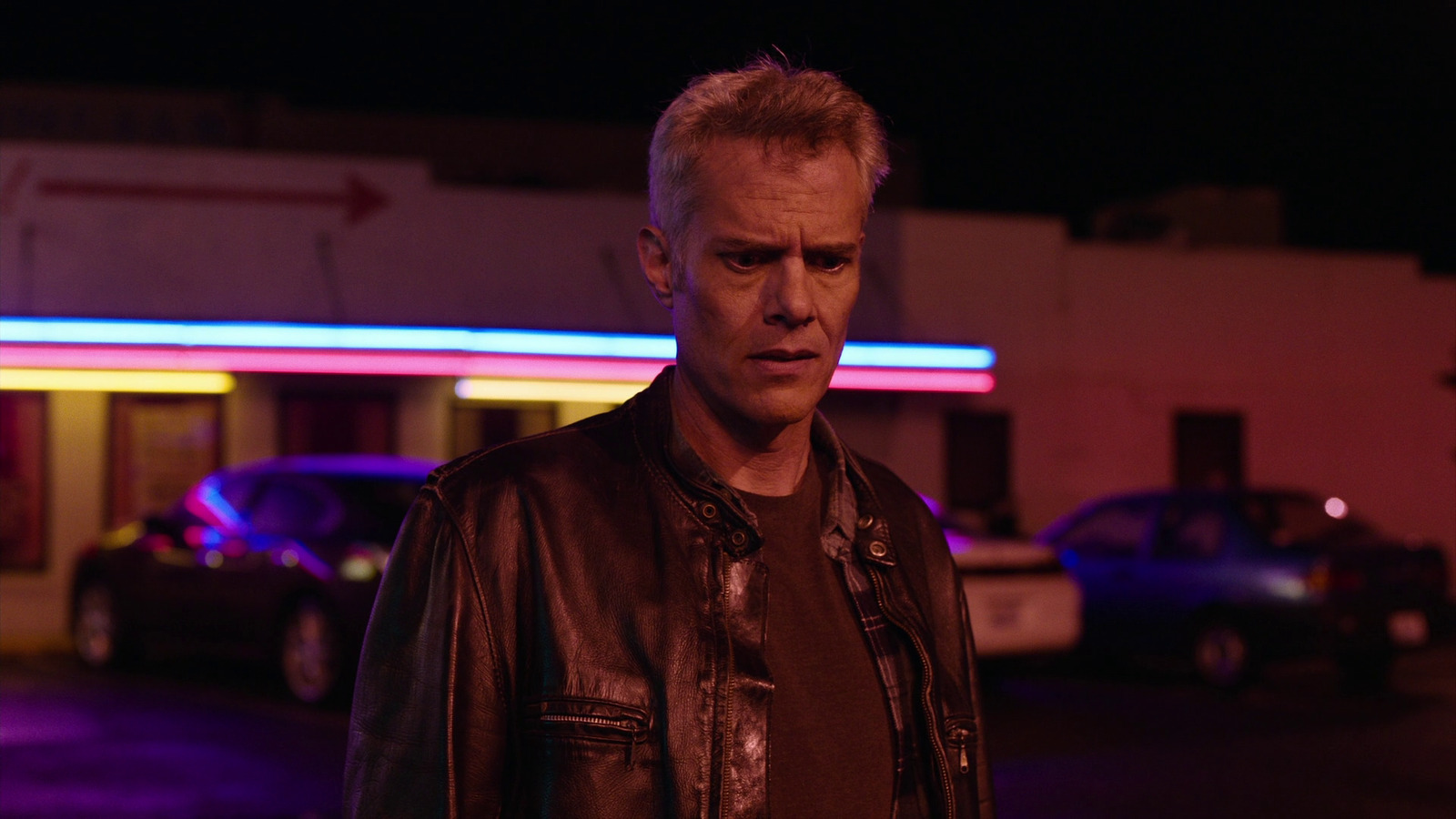
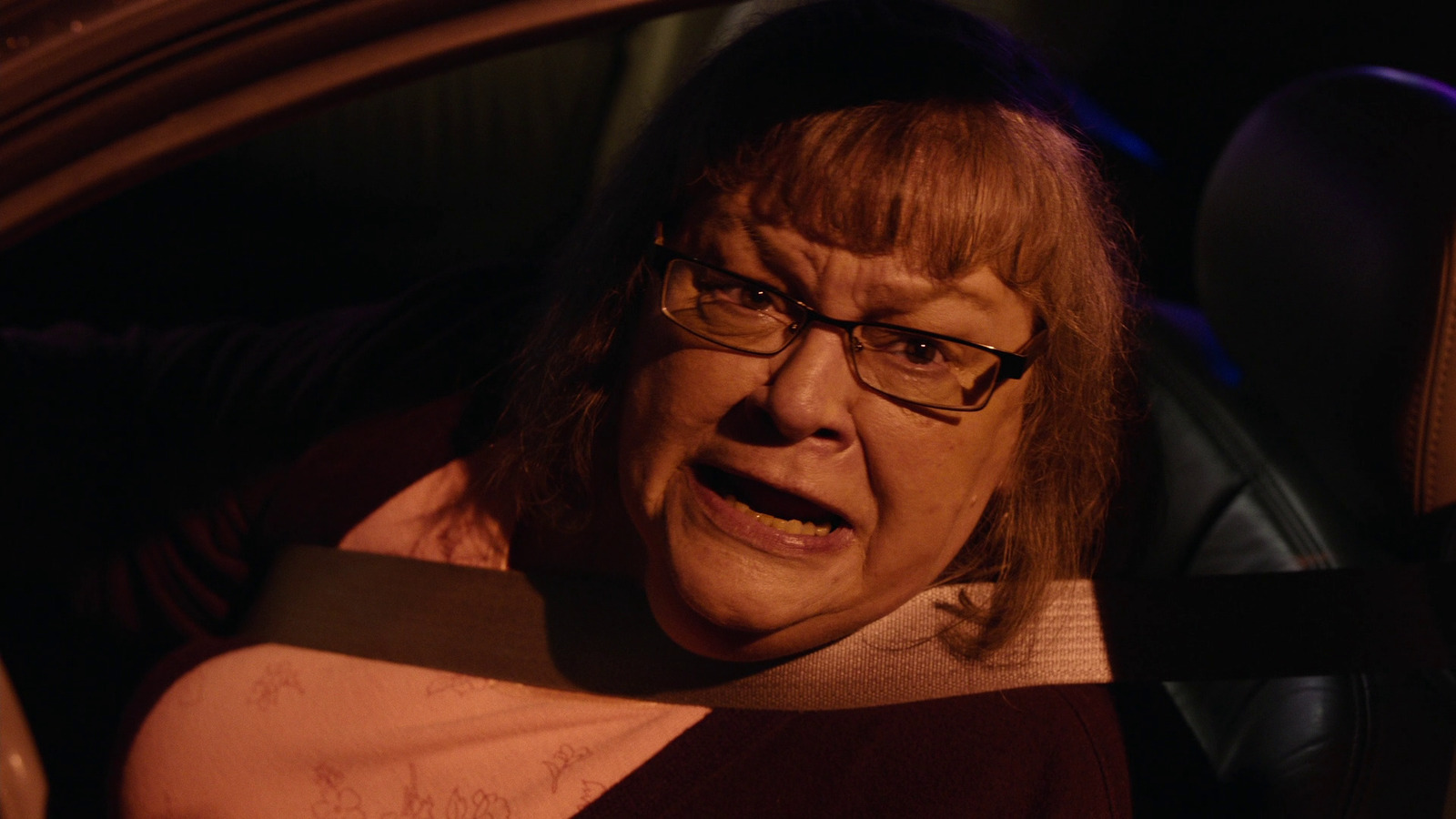
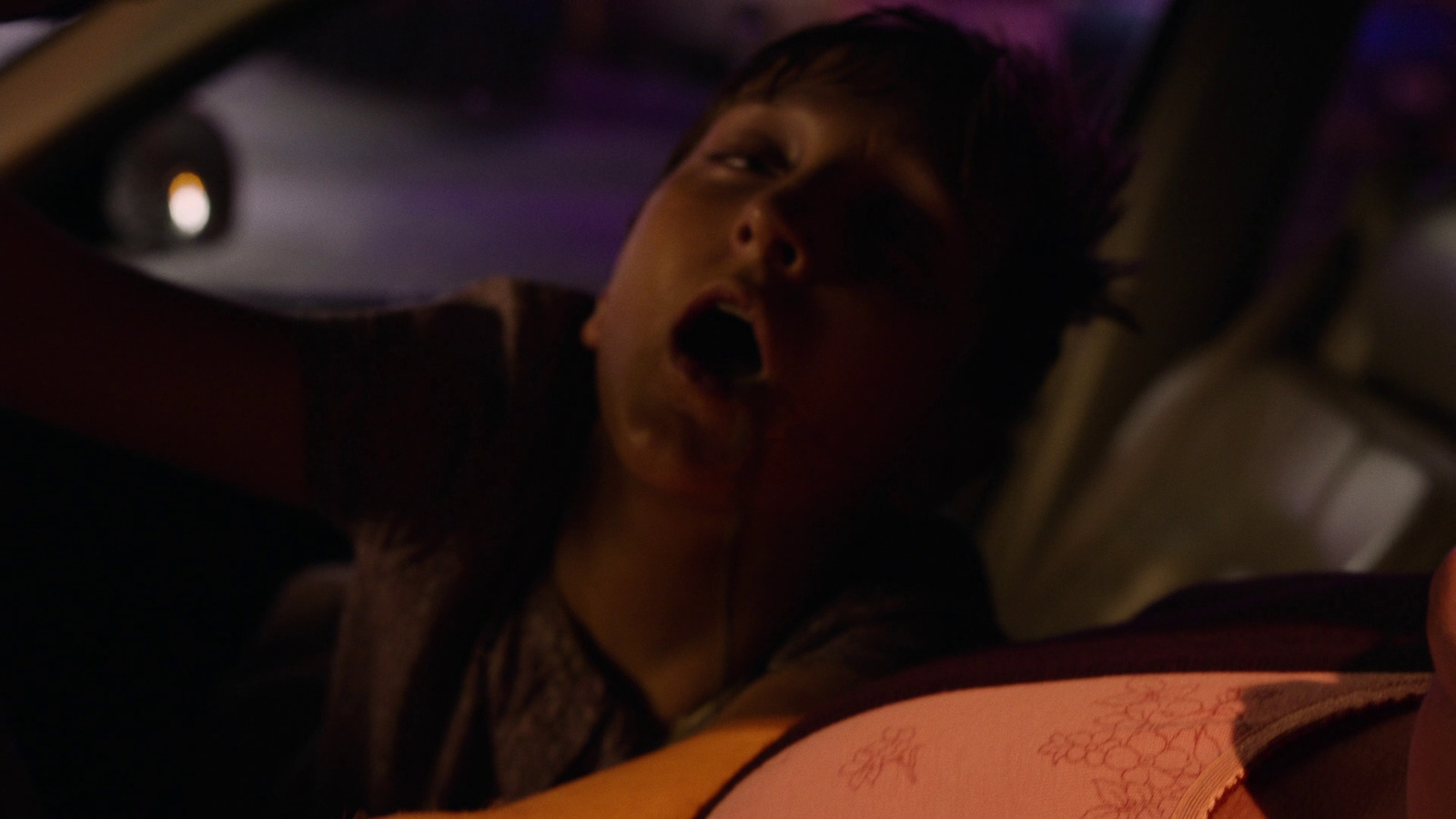
The disturbance spreads beyond the diner
Gunshots abruptly reorganize the Double R into a place of concealment and emergency. Outside, Bobby encounters a child with a gun, arguing adults and a growing line of honking cars. One driver’s insistence on reaching dinner gives way to the sight of a sick girl rising beside her. The scene keeps adding demands that cannot be neatly prioritized. Its horror comes partly from the refusal of any one explanation to make the street manageable.
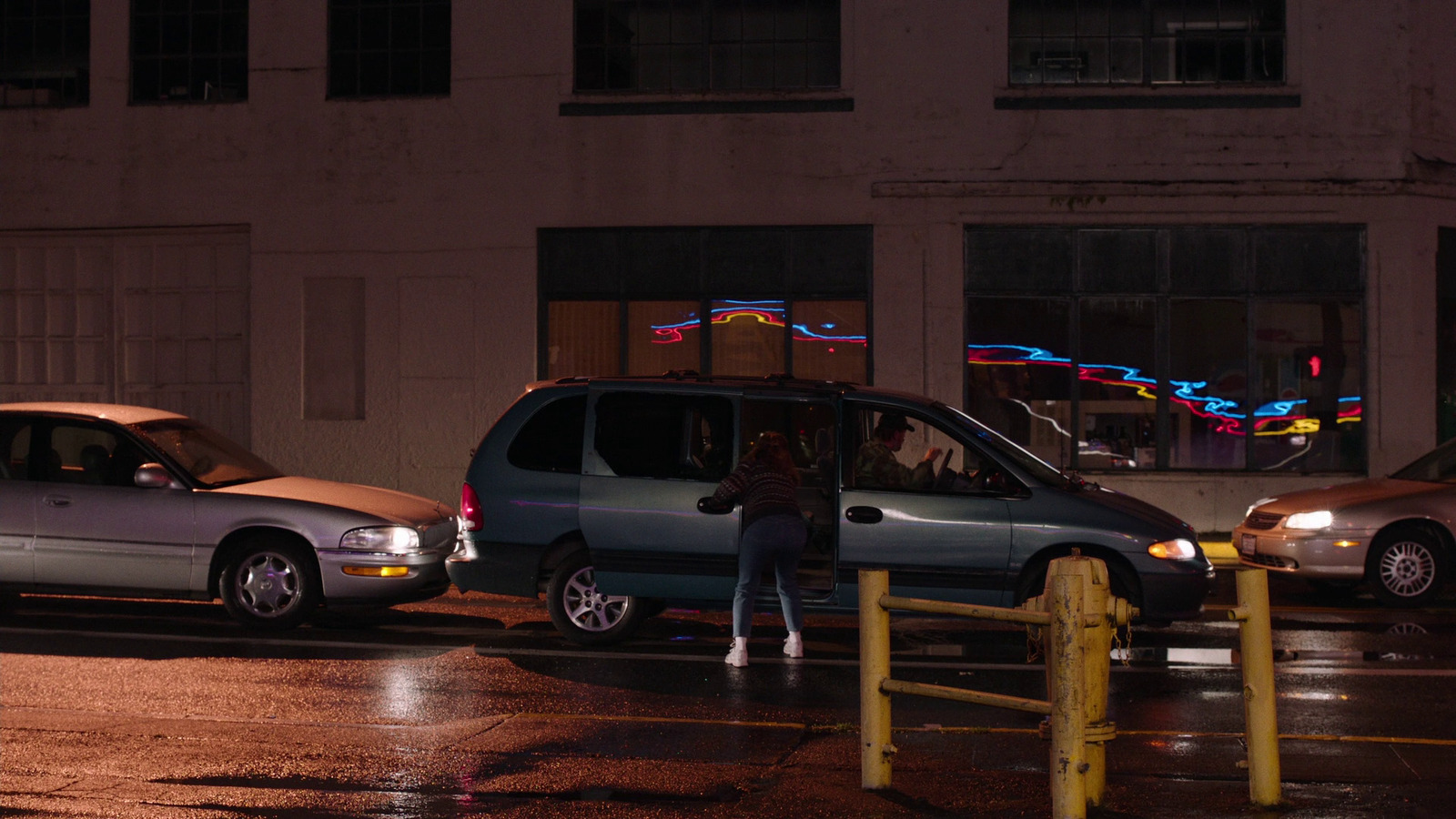
Open the scene sequence · 3 frames
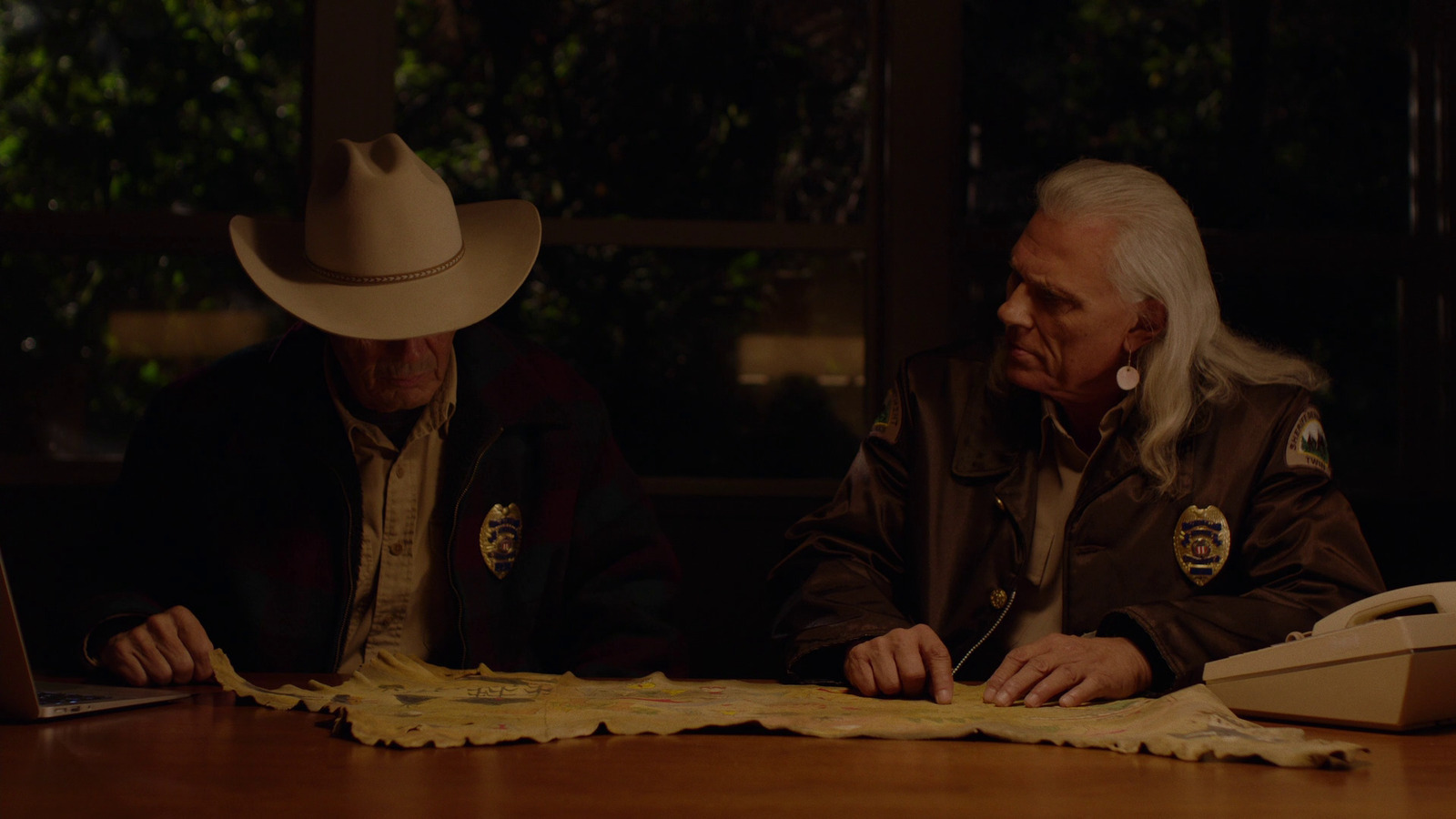
Two maps, two kinds of reading
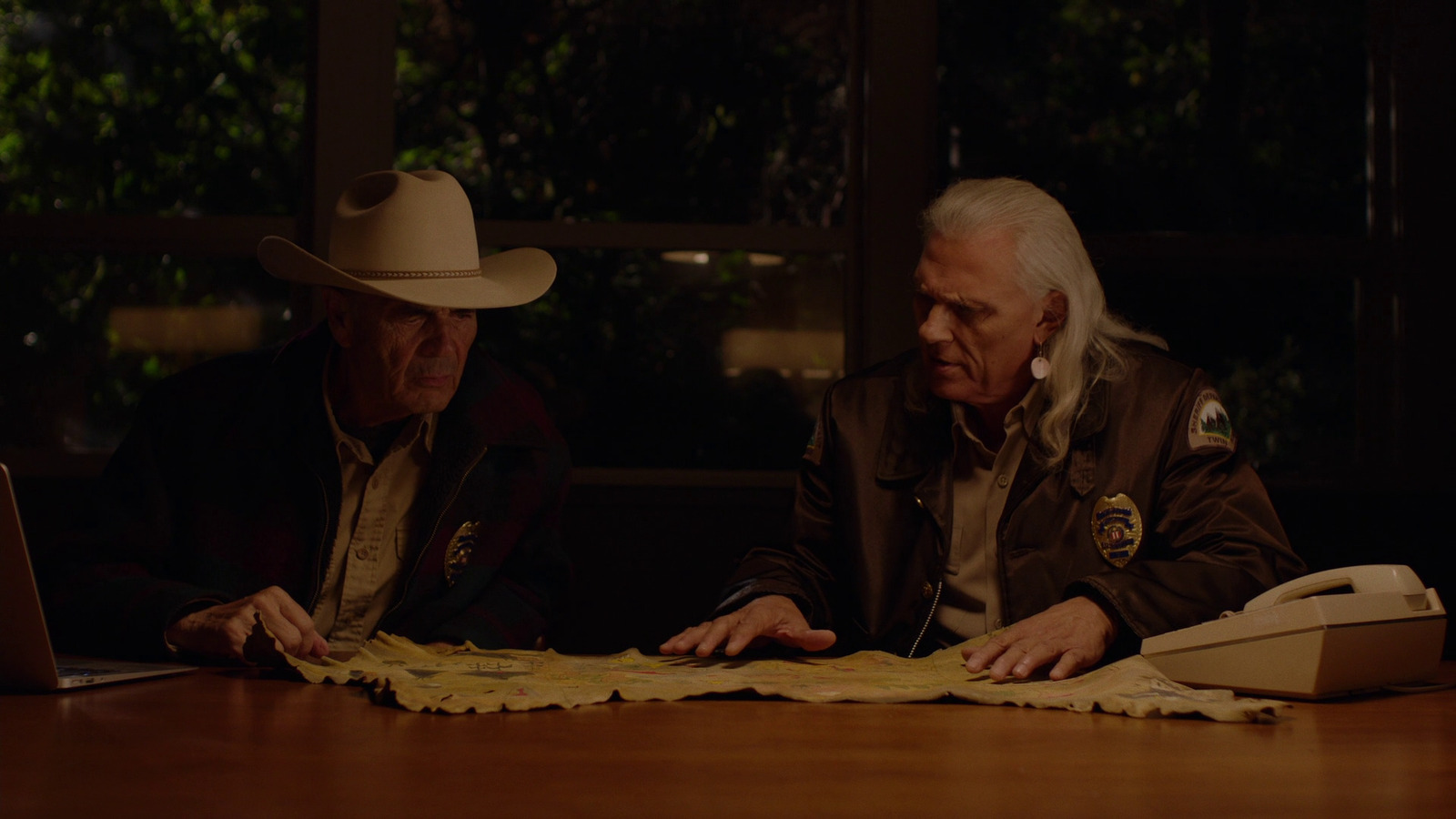
Frank’s digital map gives a route whose road has disappeared. Hawk spreads another map on the desk and describes a living relation among place, date, fire and intention. His explanation changes fire from a simple pictorial object into a force whose character depends on use. When Frank points to the unsettling symbol repeated from Briggs’s message, Hawk refuses to explain it. The scene’s fictional symbolism should be read within the series, not presented as a general account of Indigenous belief.
Open the scene sequence · 1 frame
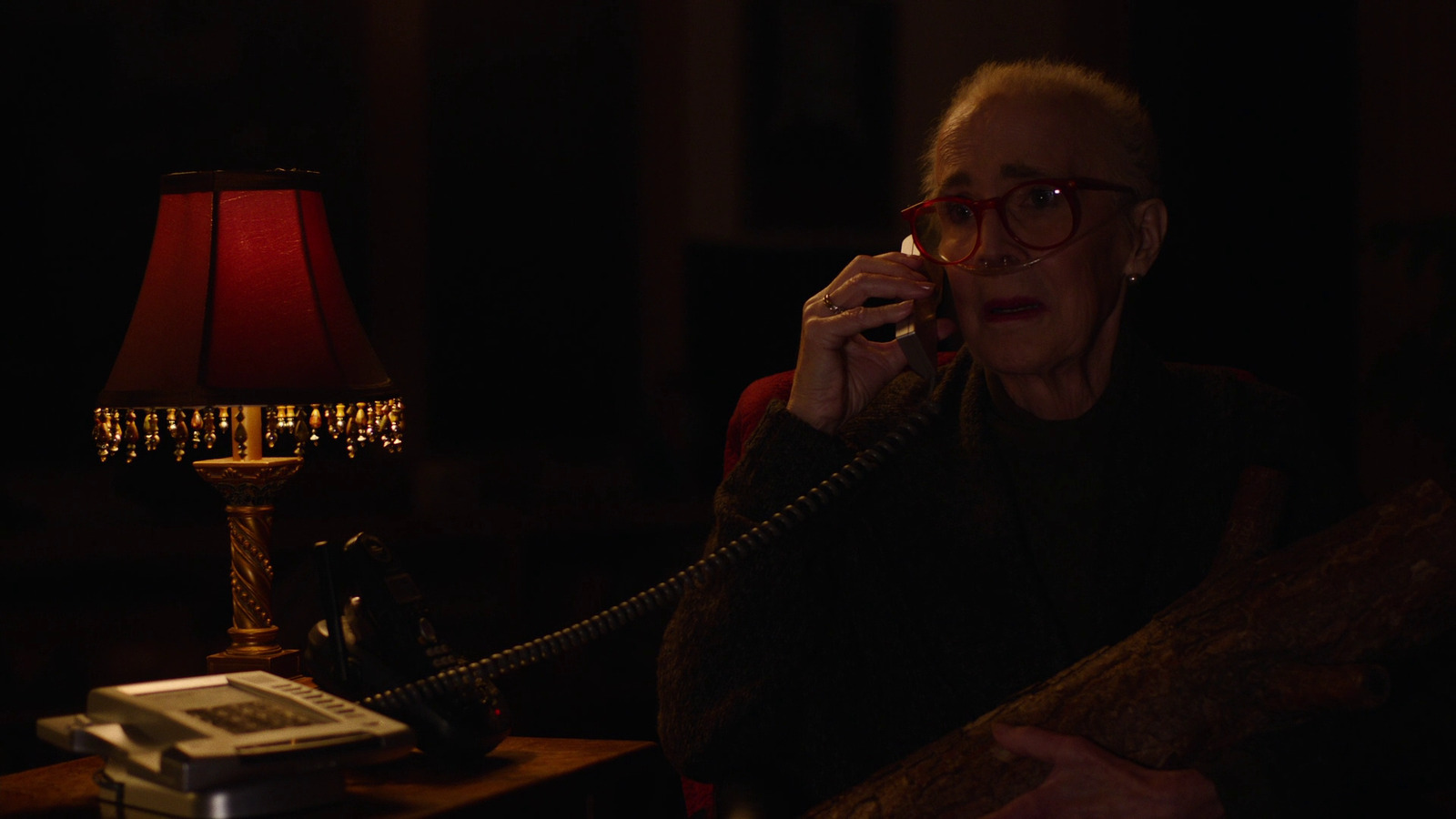
A warning arrives as a fragile connection
Margaret first asks whether Hawk can hear her. That repeated request makes the telephone connection feel like something that must be sustained, rather than assumed. She knows that he has found something, but he will not disclose it. Her warning about fire gives the investigation direction without providing a safe route. The reciprocal goodnight leaves care and danger in the same exchange.
Open the scene sequence · 1 frame

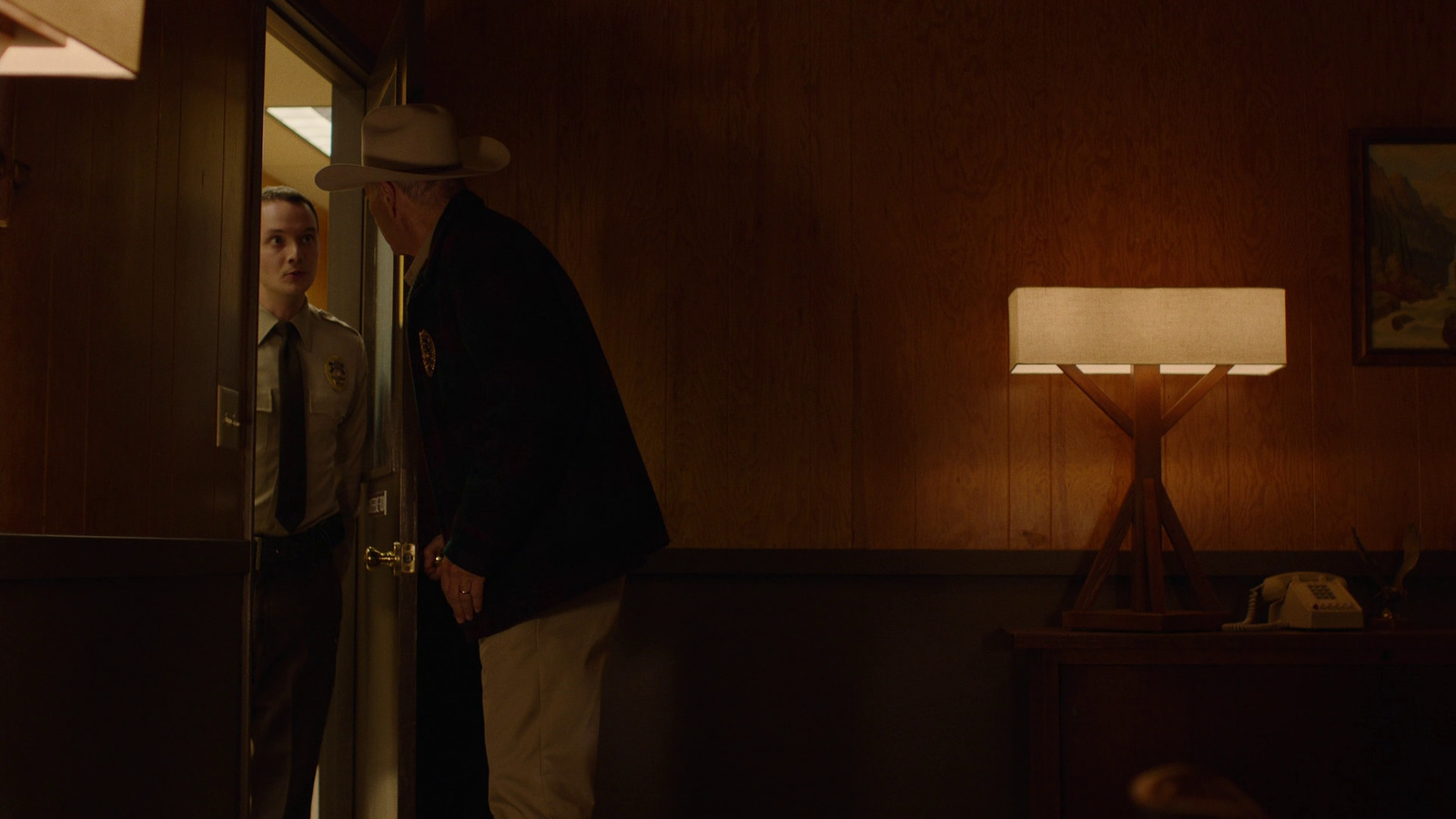
The ordinary returns without cancelling the strange
Jesse interrupts the meeting to ask whether Frank wants to see his new car. The small request follows Margaret’s grave warning, changing scale without changing location. Frank postpones it politely. The sheriff’s office must accommodate personal enthusiasm as well as extraordinary investigation, and the pause gives both activities a place in the town.
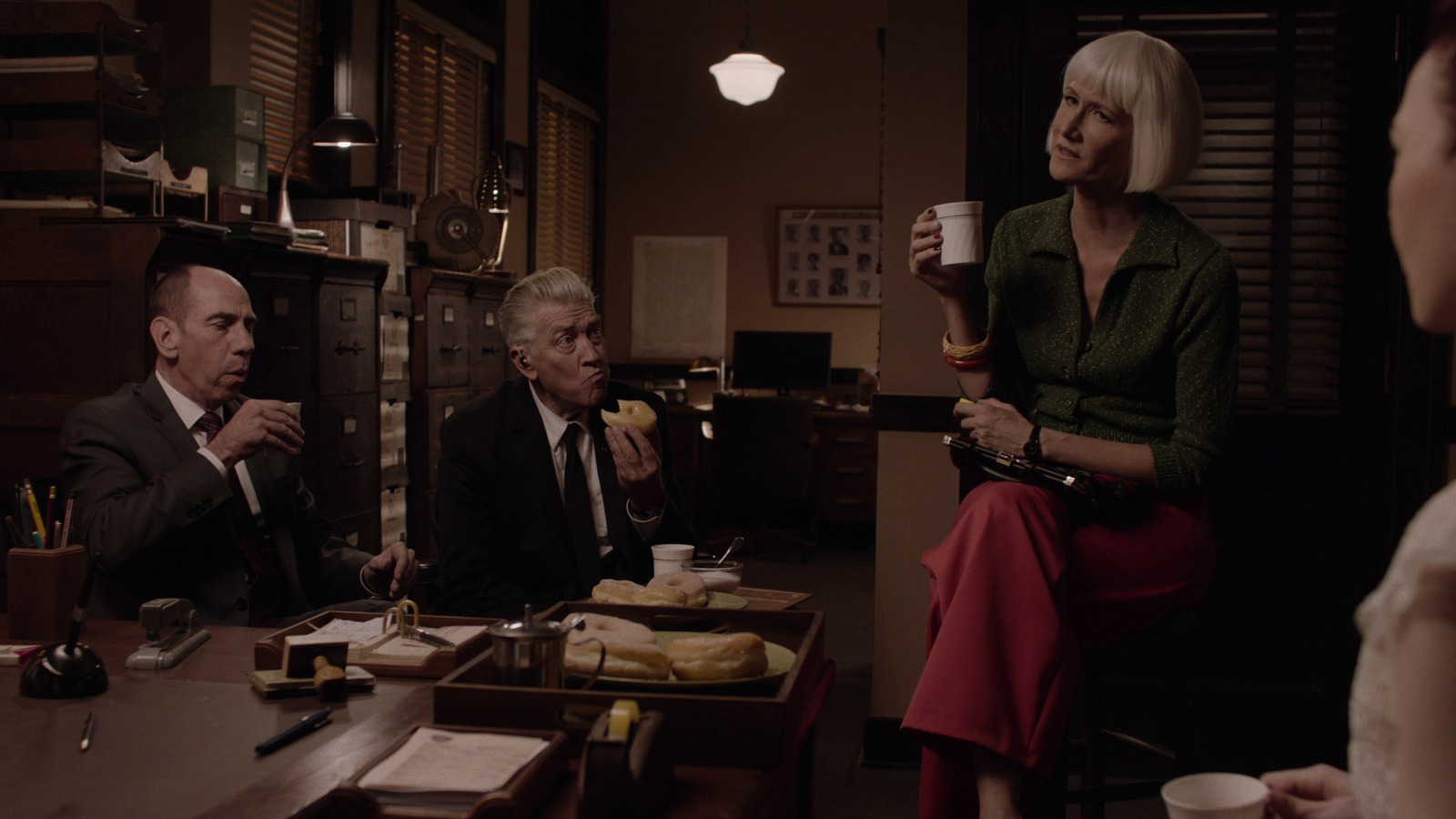
A shared event does not produce a shared account
Coffee, cigarettes and a joke circulate while the investigators compare what they saw. Diane tentatively reports a figure leaving the car; Macklay and Tammy did not see it. Gordon recovers the image of bearded men in a room. These statements are not interchangeable with the images shown earlier. The scene makes the work of recalling and reporting an event visible, including hesitation, denial and unequal access.
An investigation becomes a payment
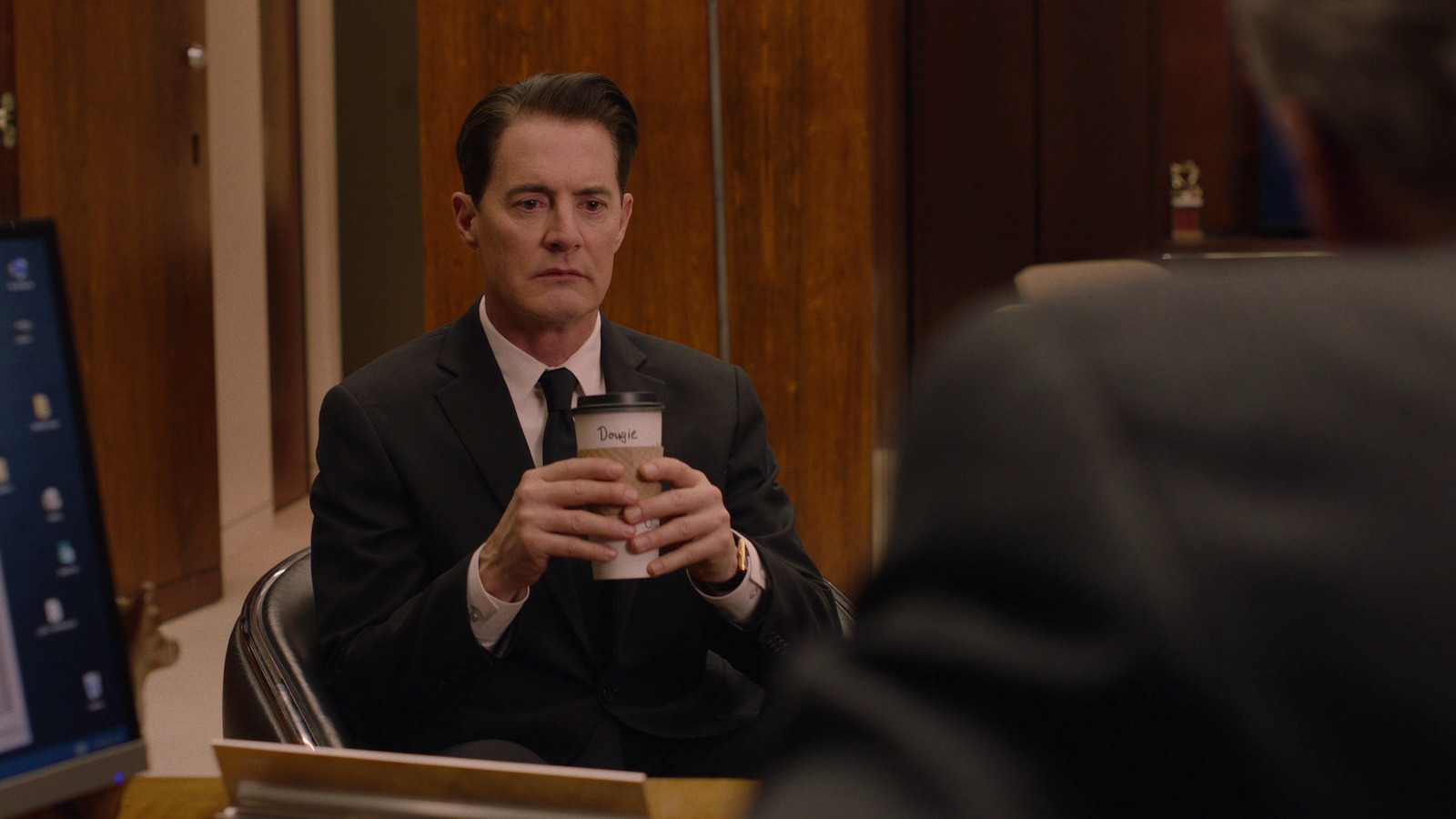
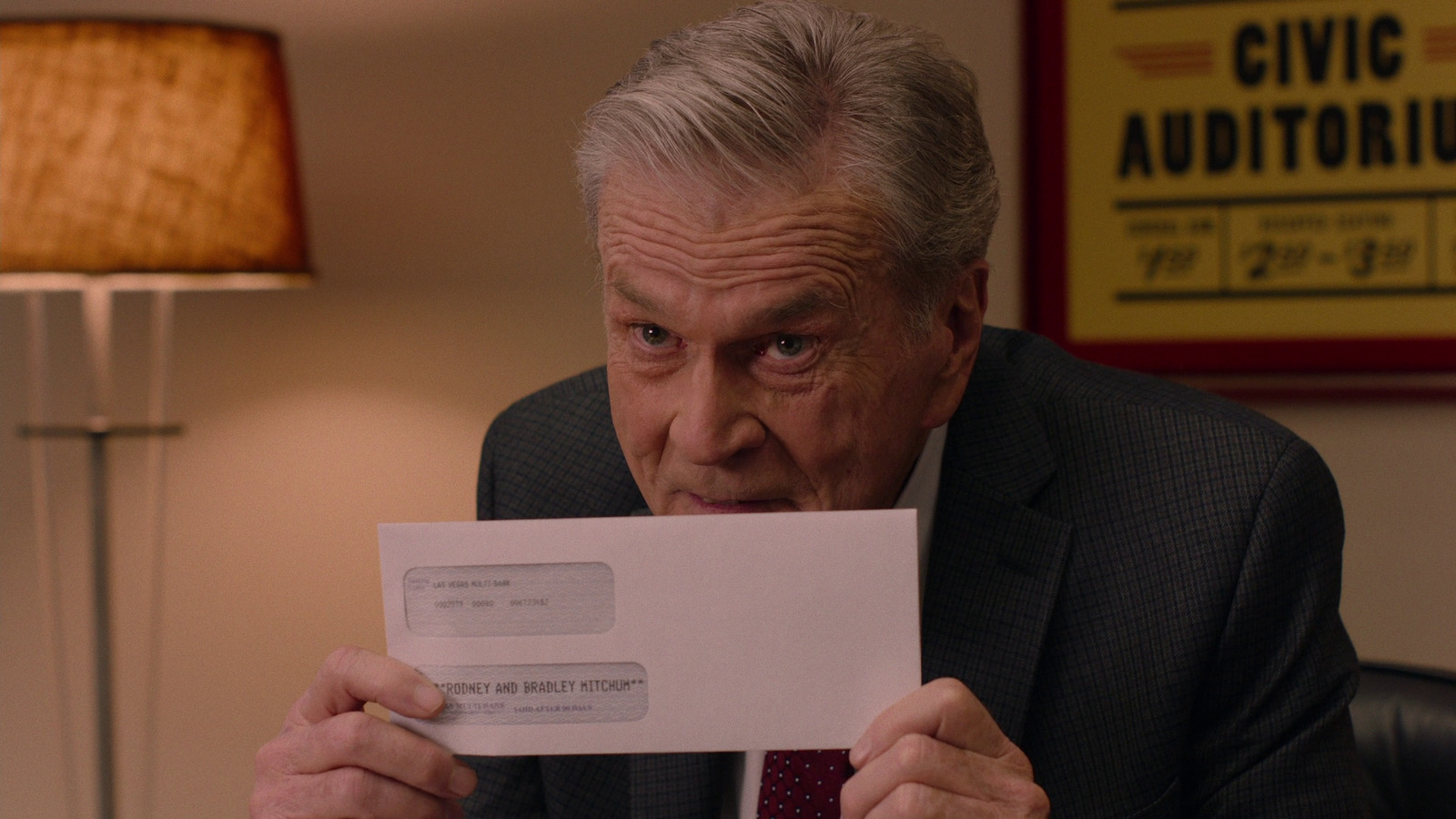
Bushnell translates Cooper’s marks into an account of fraud and corruption. He also reverses the meaning of the Mitchums’ loss: their claim is valid, and a secondary policy protects the firm. The check is both an administrative result and the object that can change Cooper’s immediate future. Bushnell’s boxing language gives his confidence a personal rhythm while Cooper continues to echo fragments.
Open the scene sequence · 1 frame
A dream interrupts a murder plan
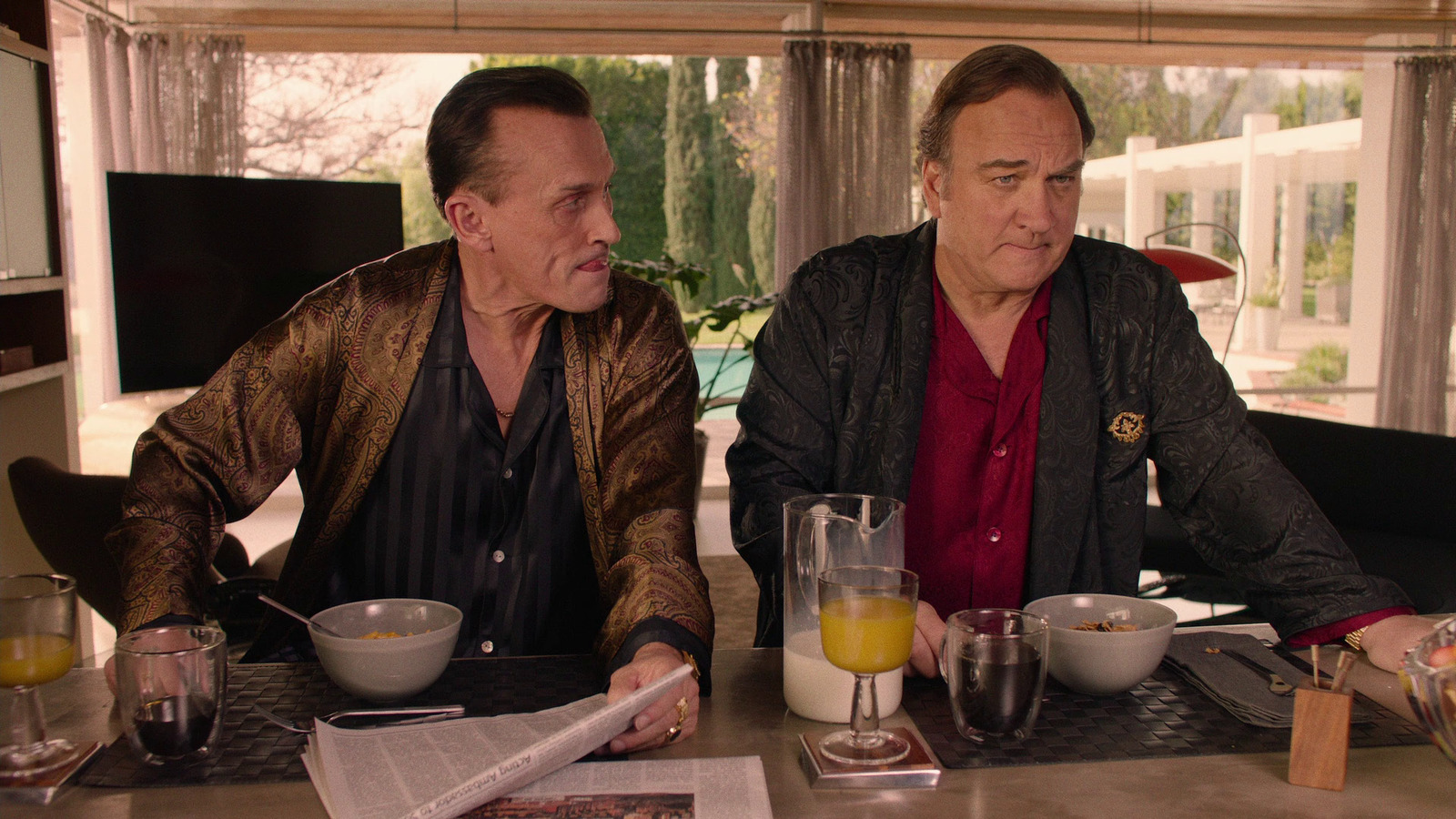
At breakfast Bradley introduces a dream into the brothers’ plan to kill Douglas Jones. On the desert journey, the vanished cut on Rodney’s forehead gives one detail of that dream a visible test. His recollection is incomplete, but it begins to alter how they evaluate the man they are about to meet. The dream does not remove their violence; it creates a condition under which they might refrain from it.
Open the scene sequence · 1 frame
A small detour changes the destination
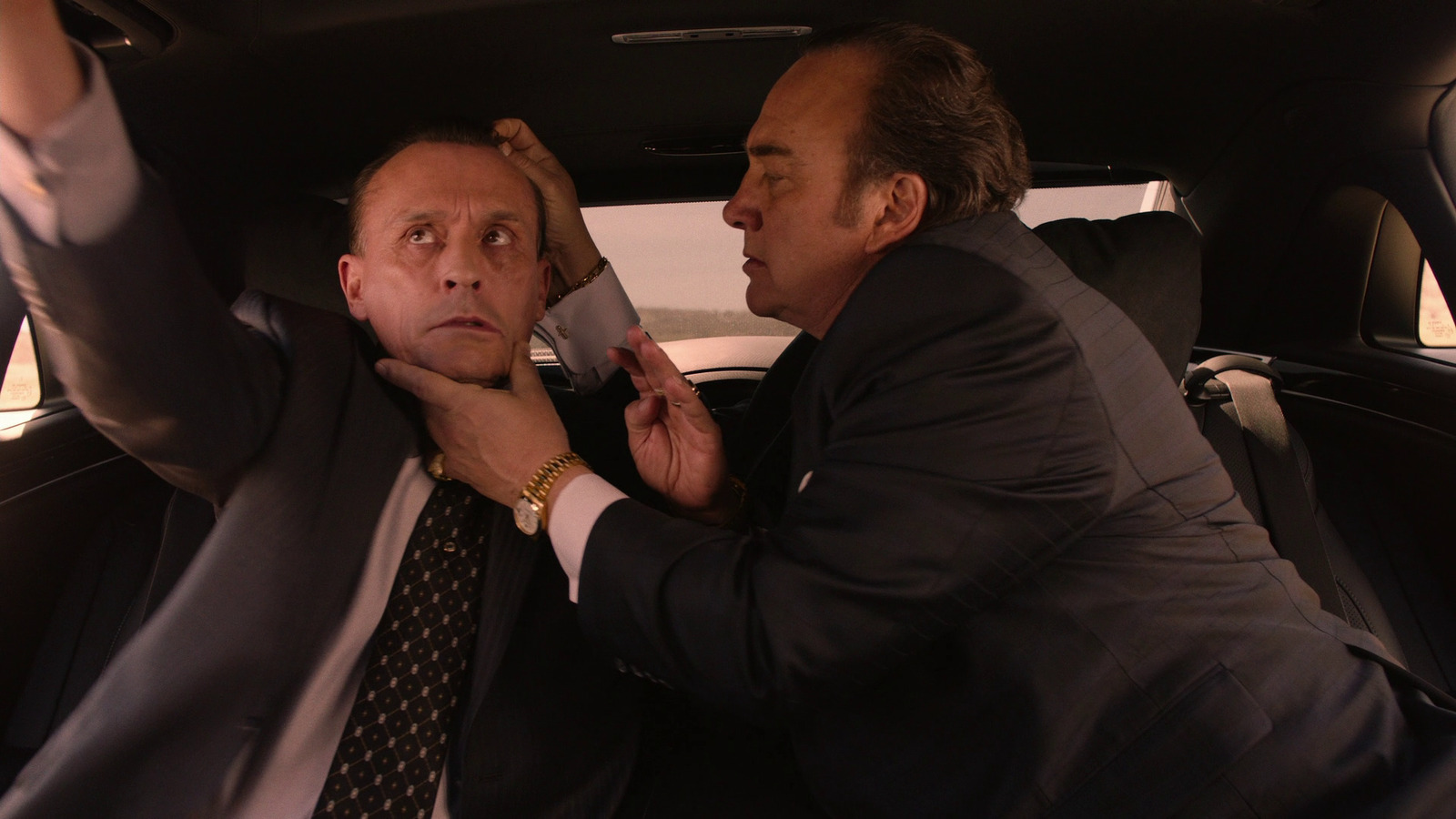
Cooper is drawn away from the waiting car toward an apparition near the café. He returns carrying a box whose importance has not yet been explained. The journey then shifts from the busy Strip to an isolated desert road. The roomy limousine keeps him visually separate and vulnerable, while the ordinary cardboard package becomes the hinge between his movement and Bradley’s dream.
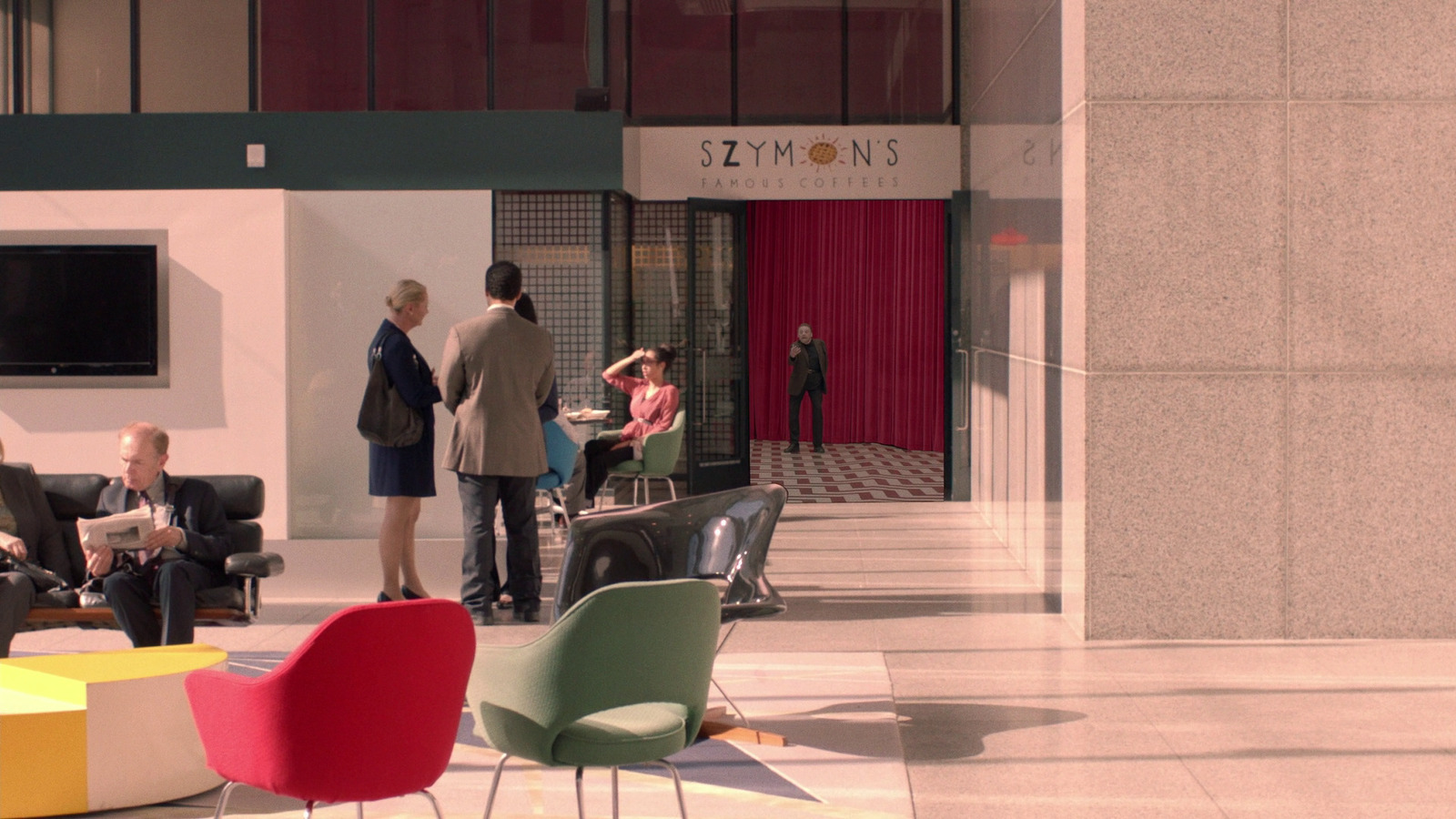
Open the scene sequence · 2 frames
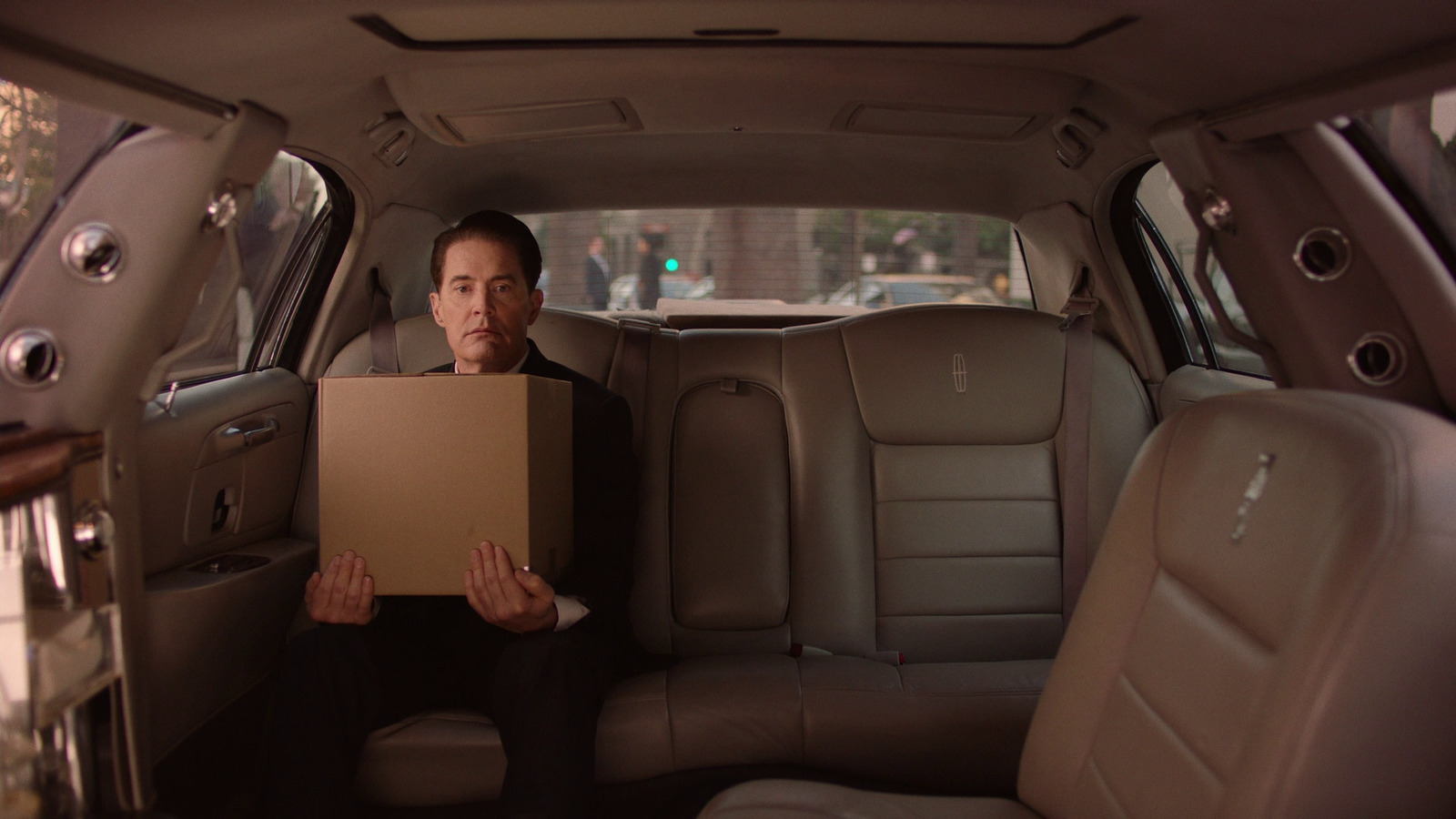
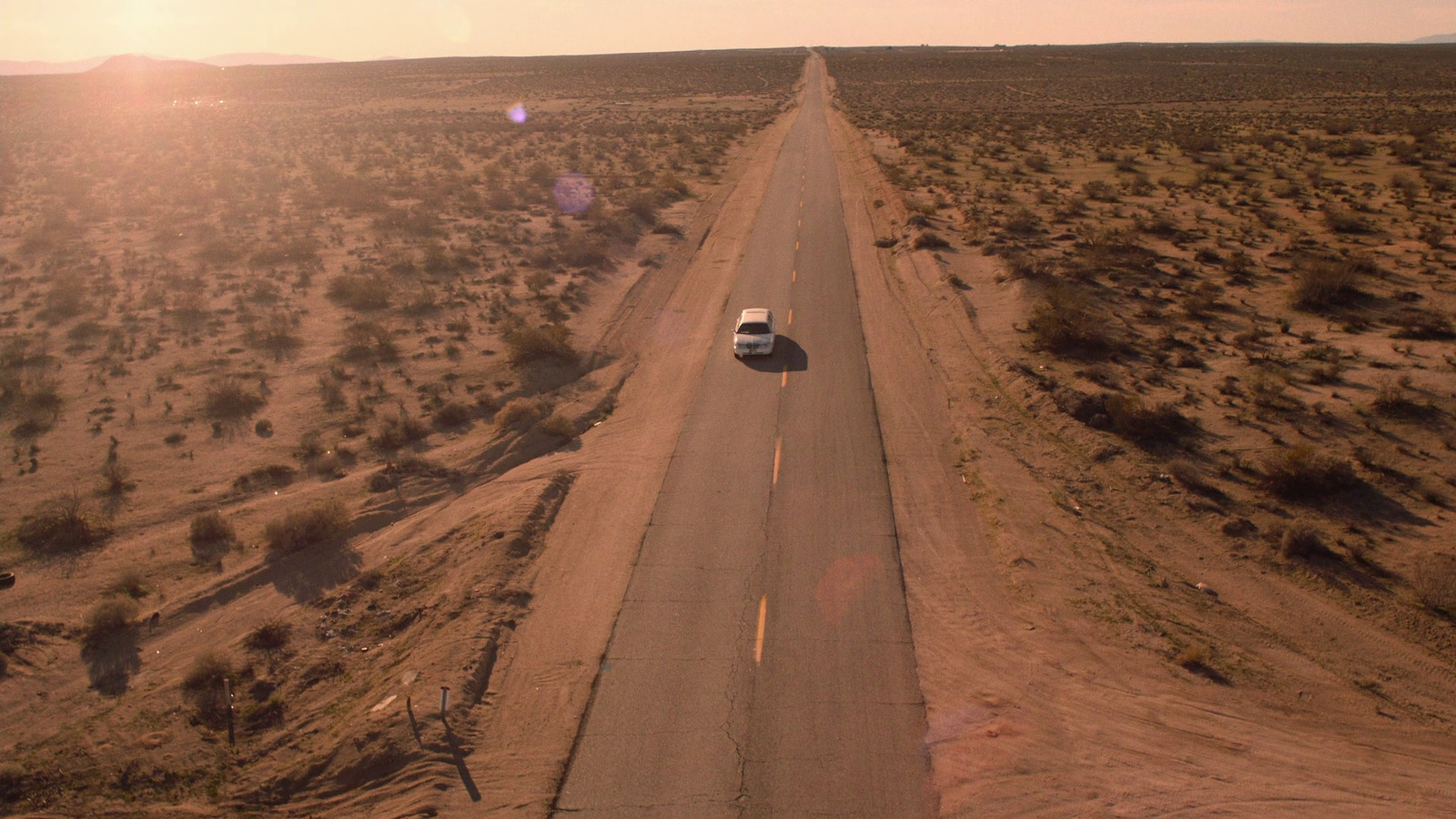
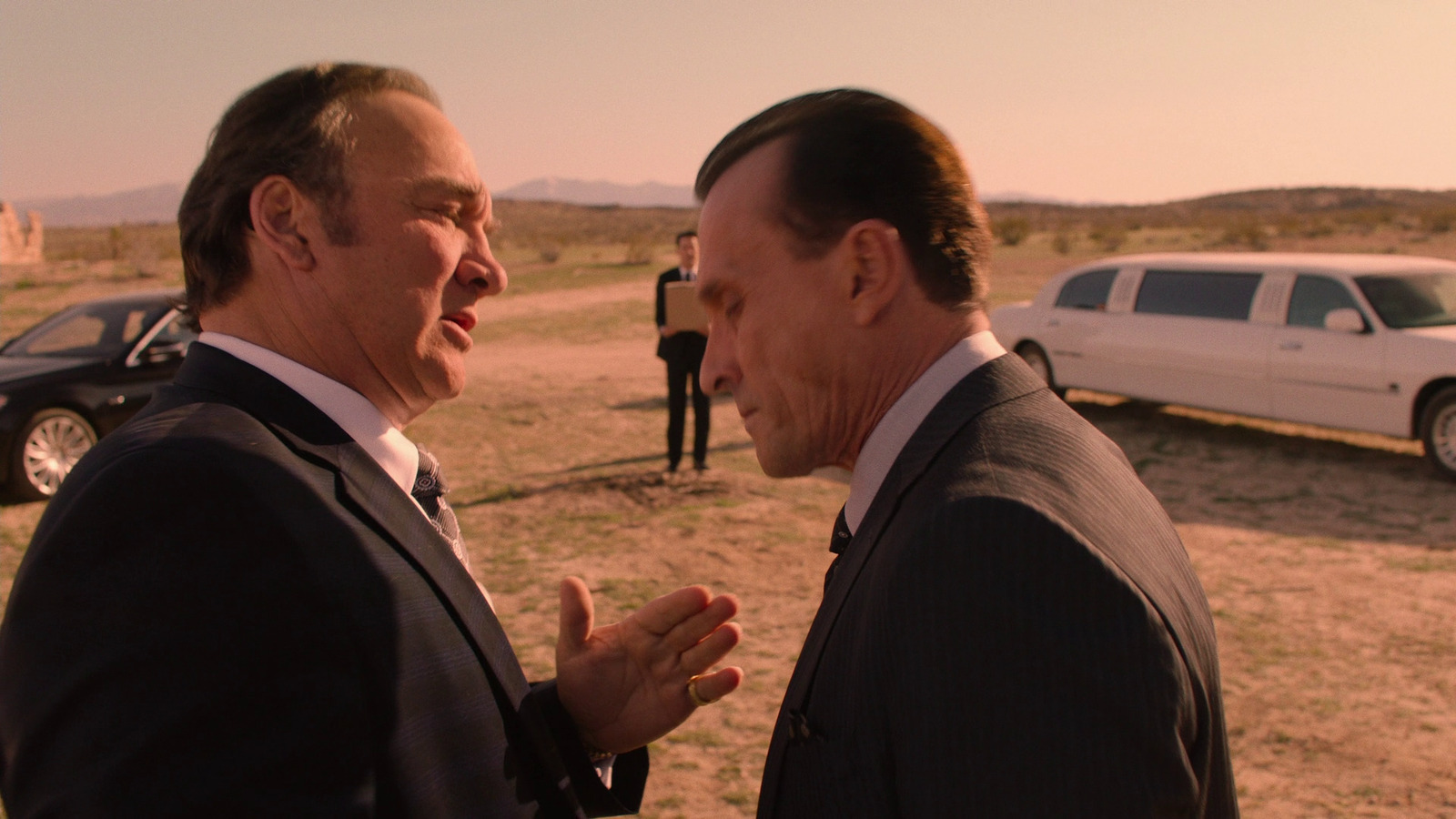
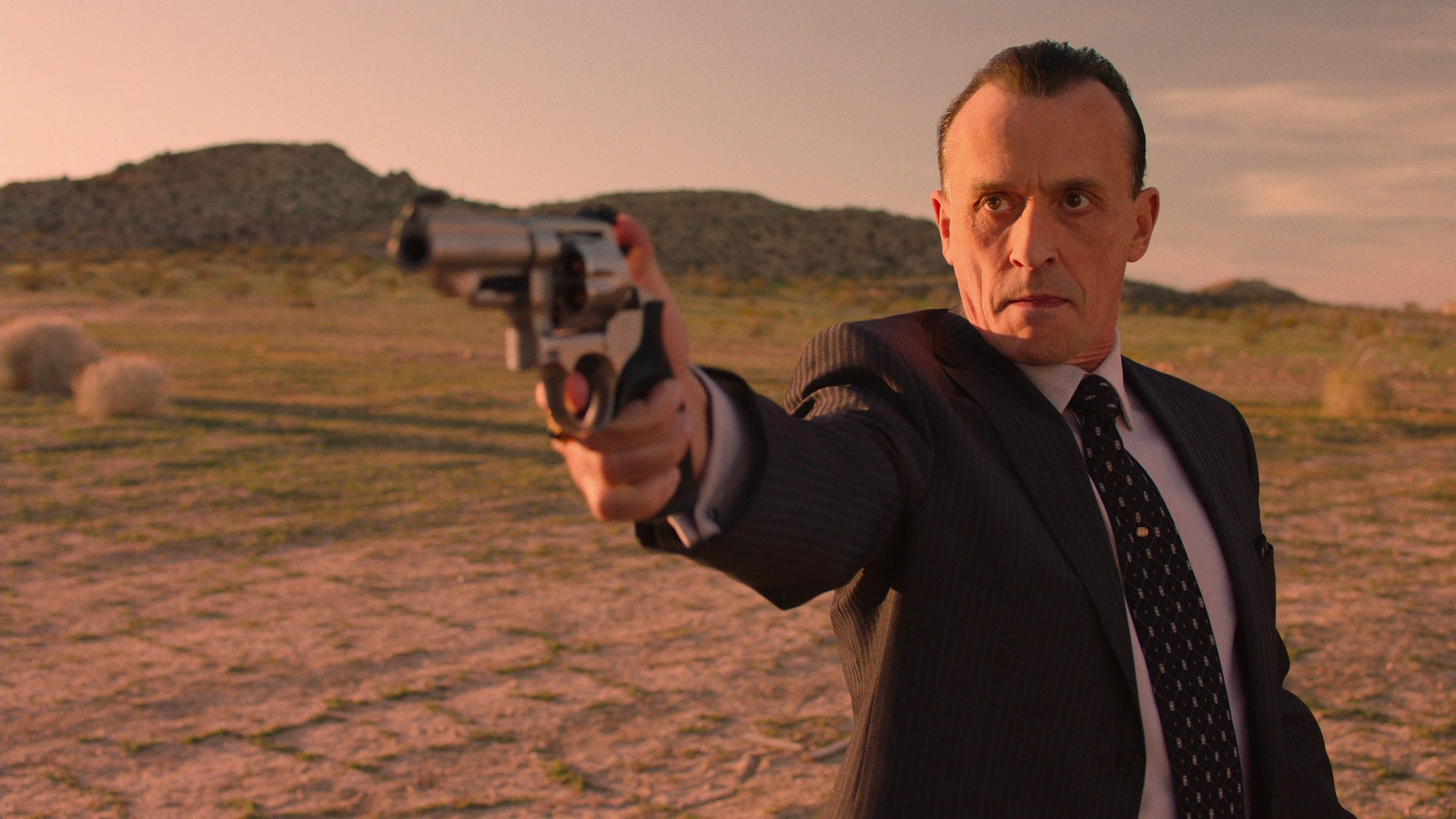
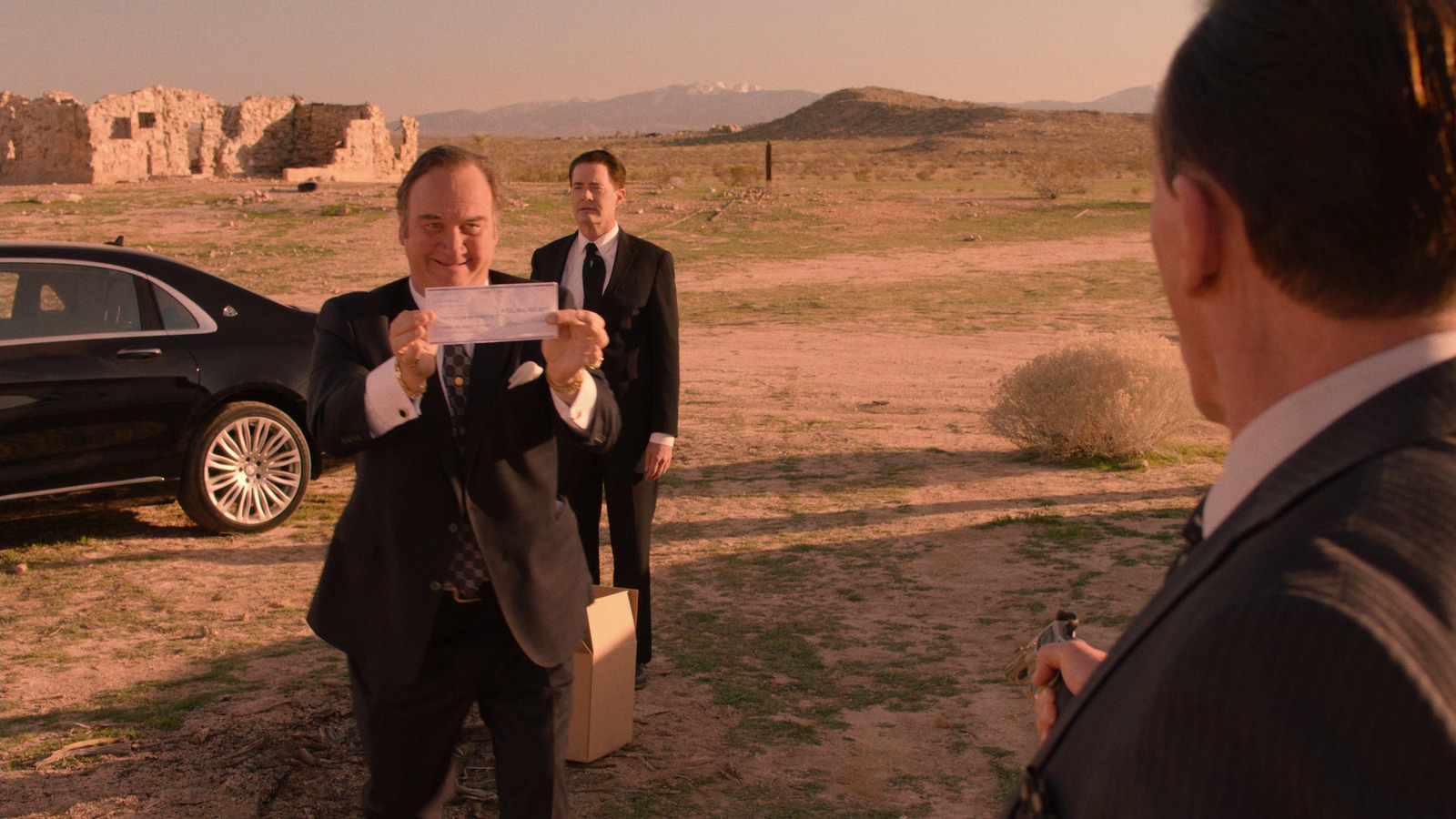
The box changes the terms of the meeting
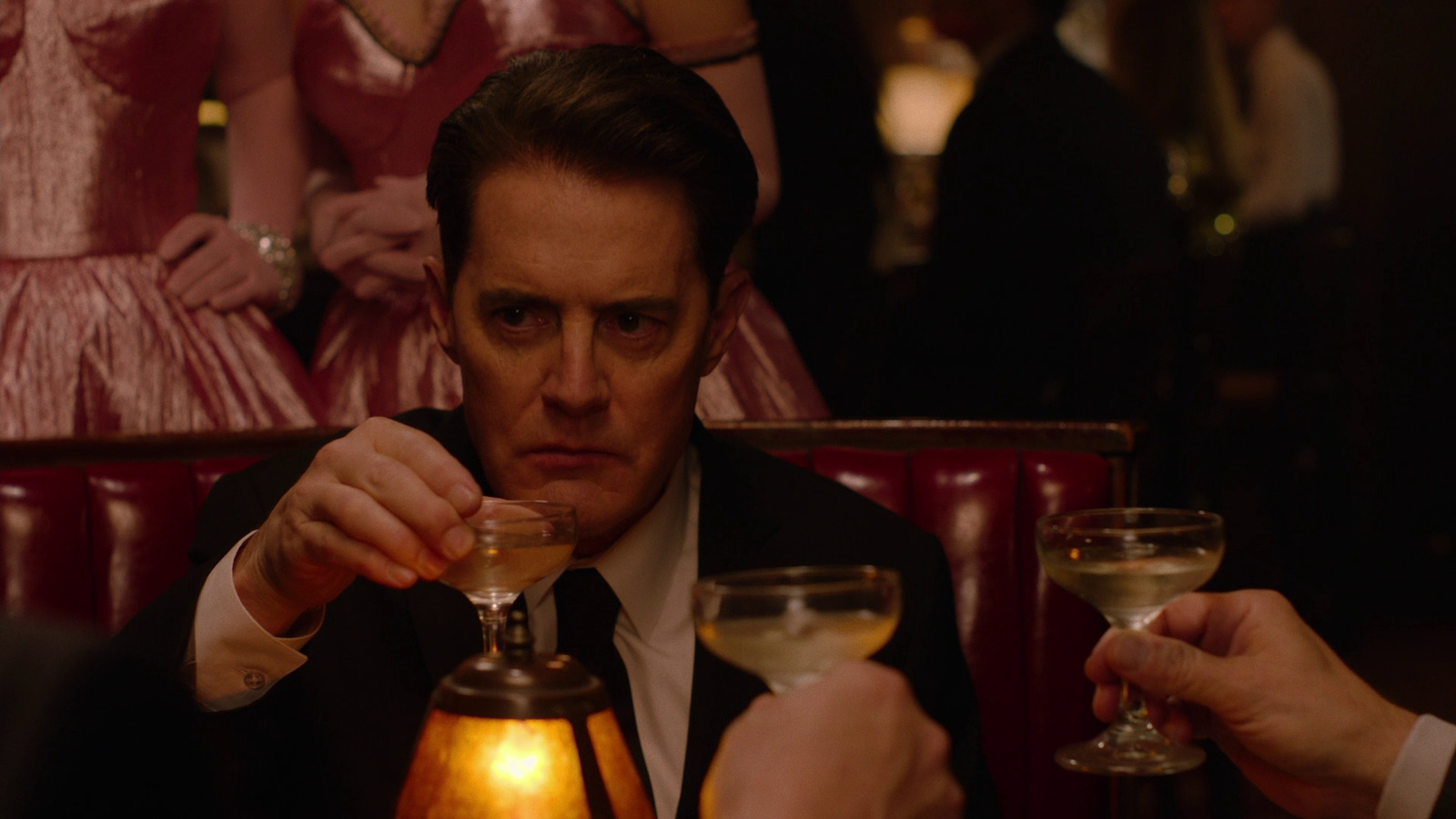
The two cars and three men make a spare arrangement in the desert. Bradley persuades Rodney to accept a test: the box must contain the object from his dream. The cherry pie satisfies it, but Rodney’s gun remains in play until the search produces the insurance check. The scene turns a killing into a greeting through two different forms of confirmation, one dreamed and one bureaucratic.
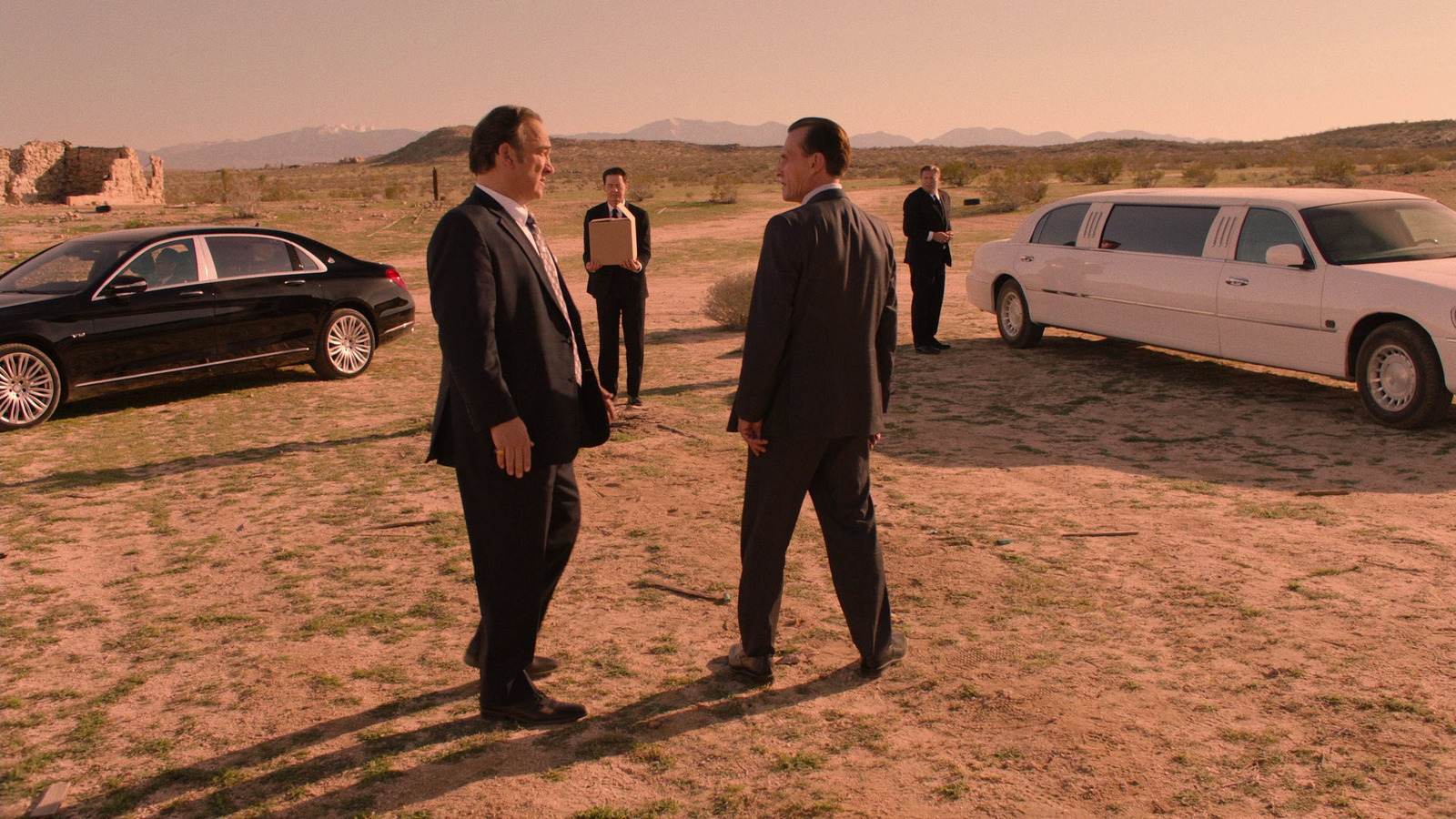
Open the scene sequence · 3 frames
Hospitality, memory and an unfinished return
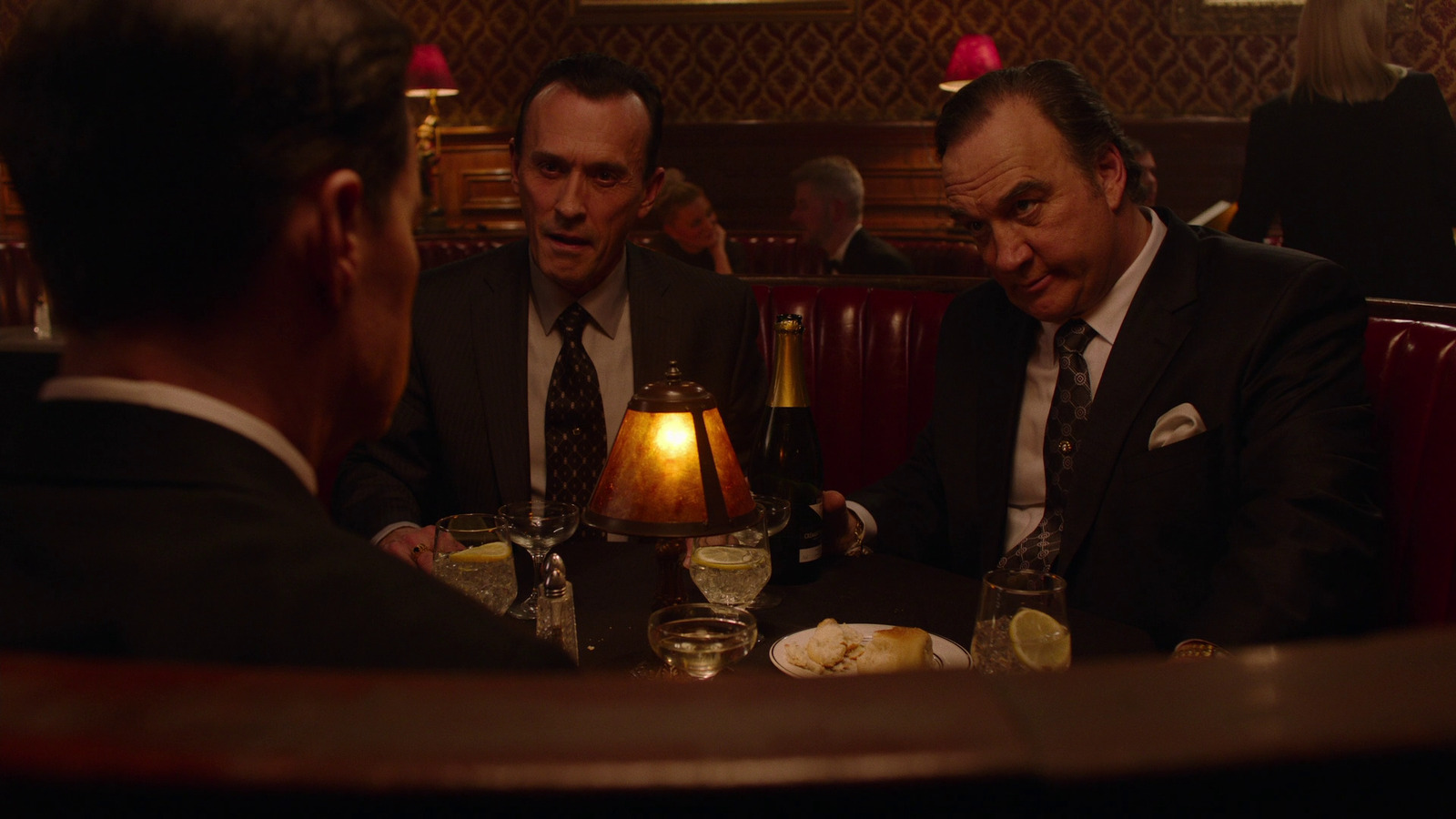
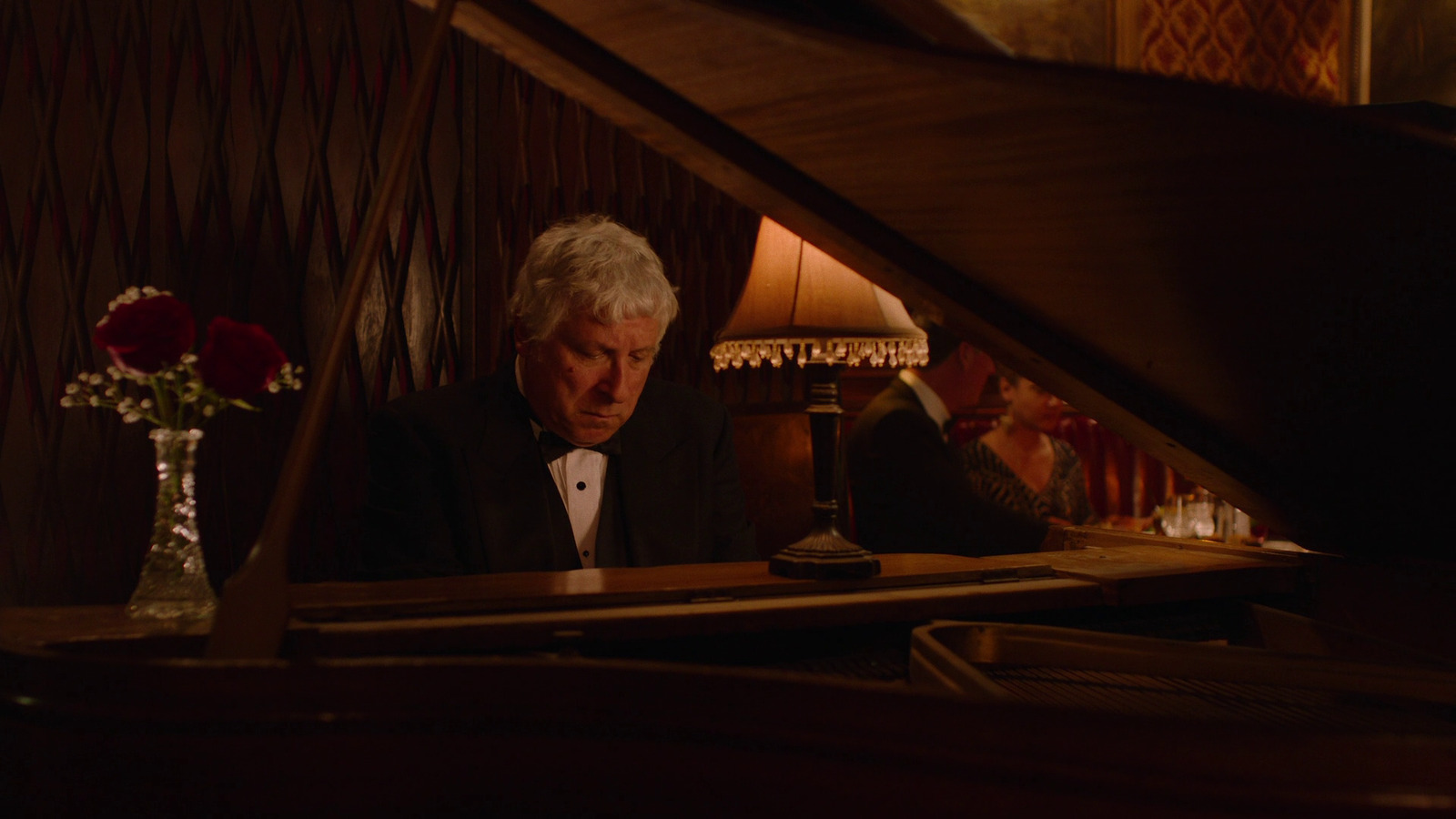
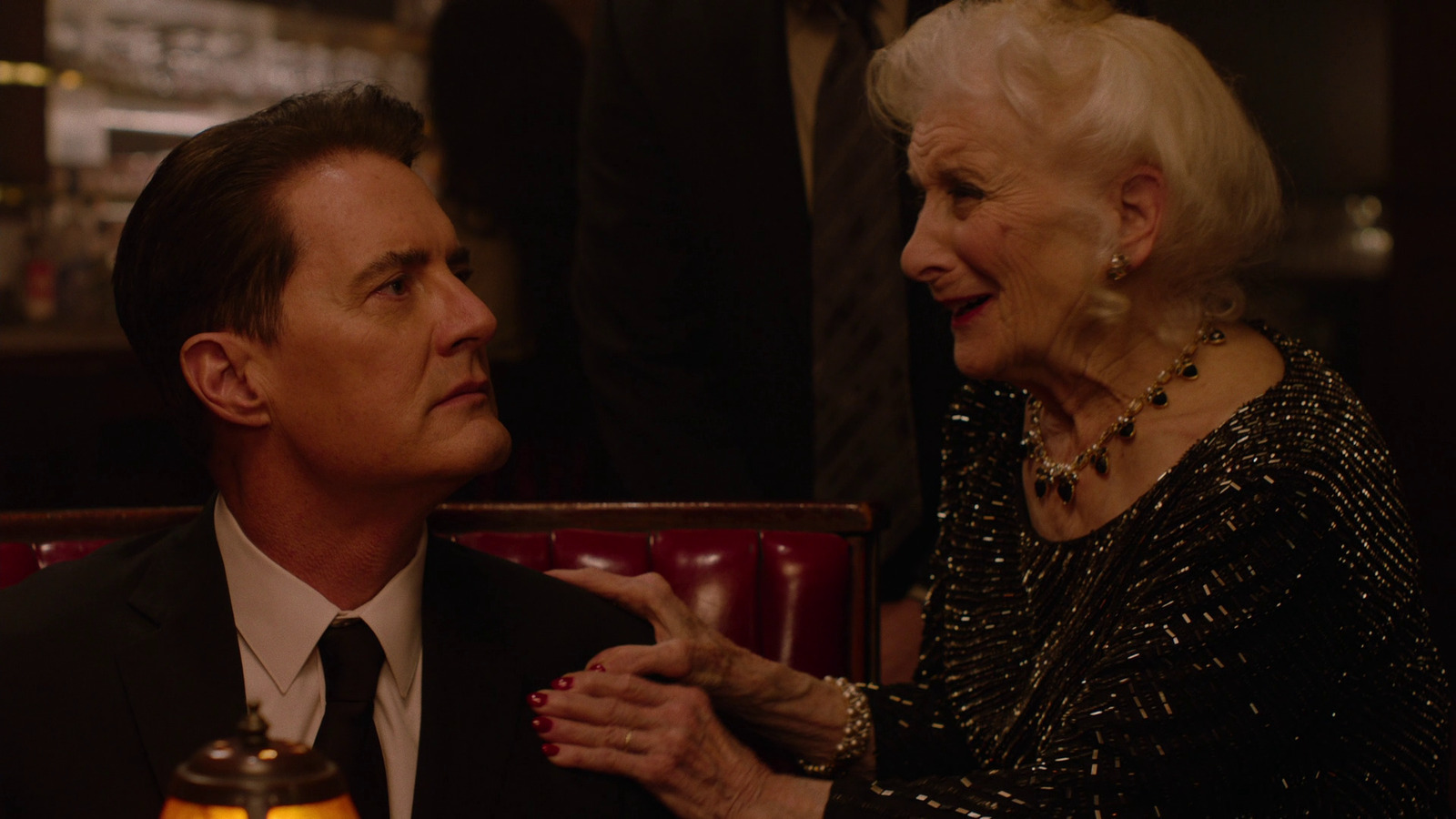
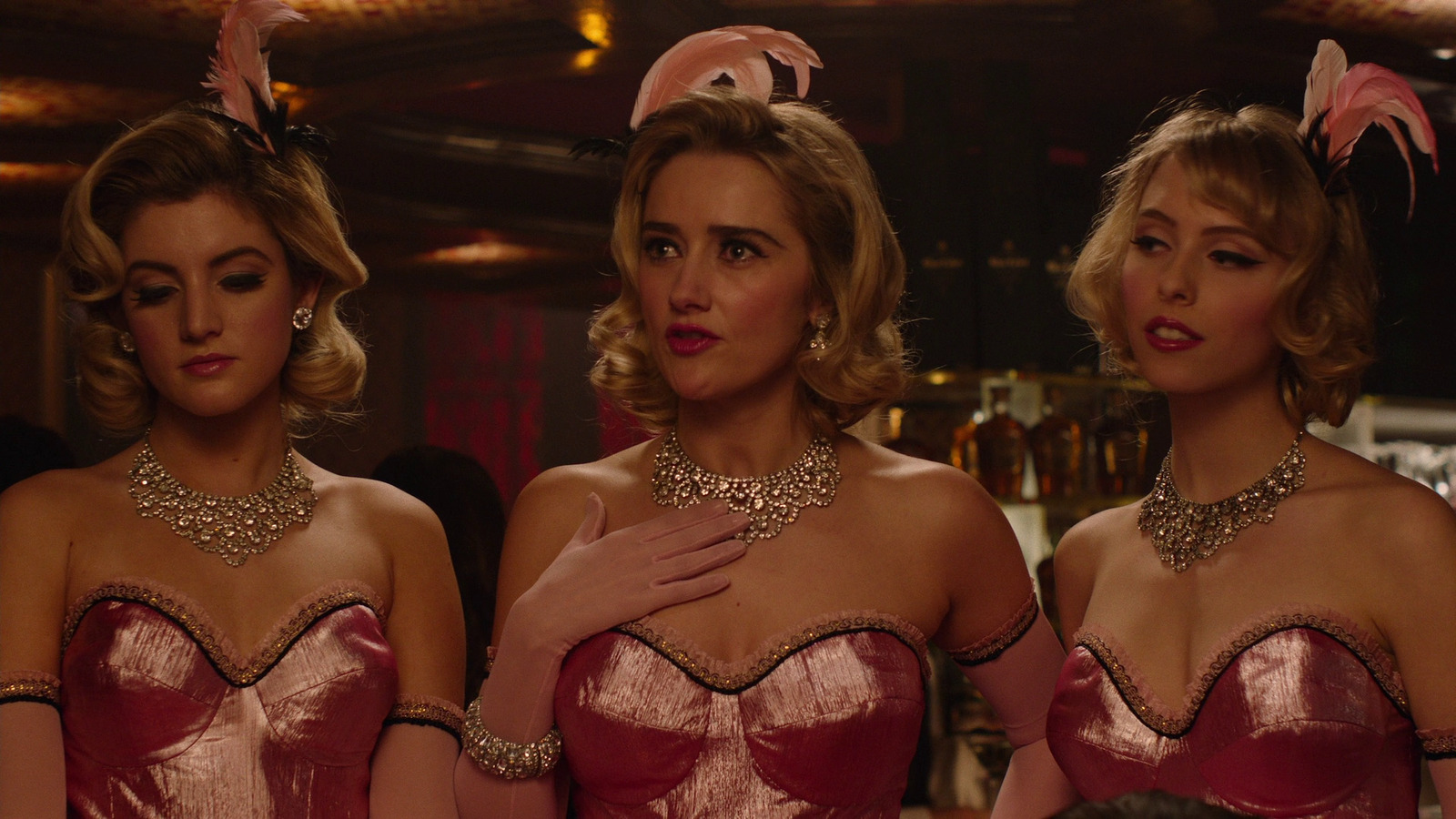
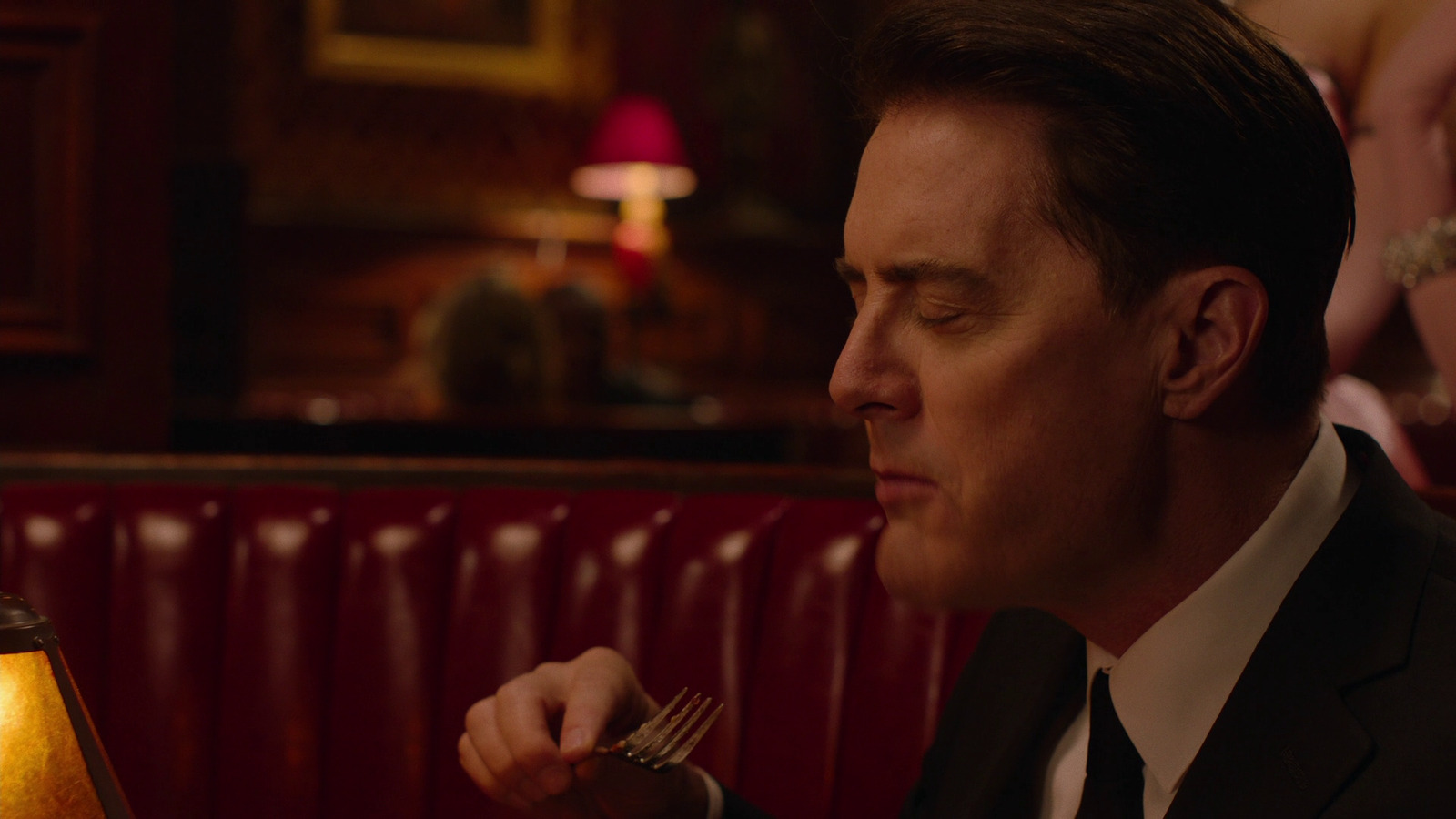
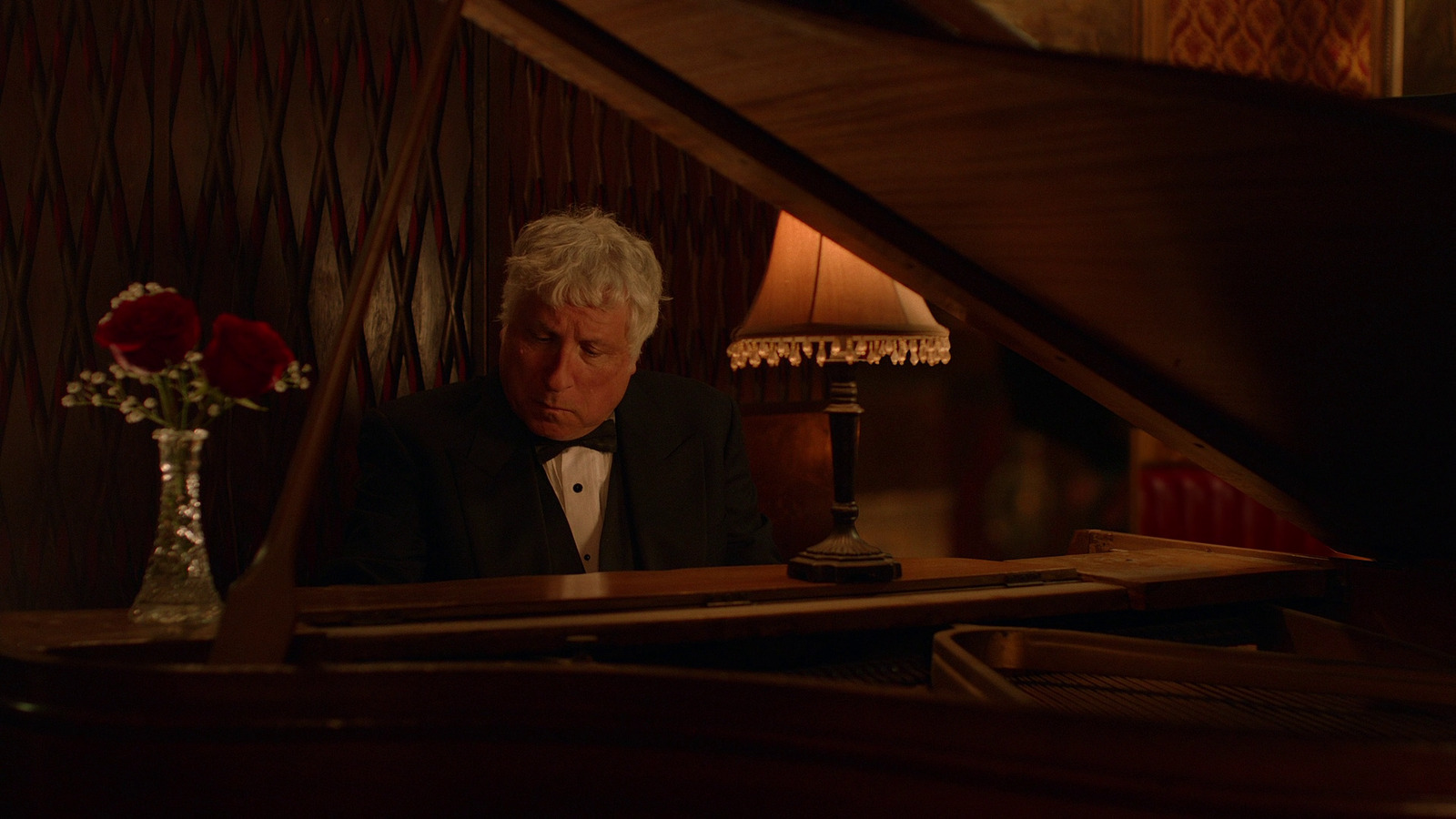
The restaurant replaces the desert’s distance with a close table and shared food. A former casino patron recognizes Cooper as the man who changed her life and describes a renewed connection with her son. The pianist’s changing material accompanies the movement between celebration and inward attention. Cooper responds to familiar tastes and language without delivering a complete return to his former self. The final image gives the pianist the space normally occupied by a Roadhouse performance.
Open the scene sequence · 6 frames
Warnings, competing voices and a piano at the end
The Buckhorn passage is organized around electrical crackle, a rising whoosh and the abrupt return of the ordinary outdoor setting. The English captions identify these sound events, including the thunderous reverberation at the end of the opening. Cutting to the people outside Gordon’s immediate experience changes what the sequence allows us to know; it does not establish that every witness hears or sees the same thing.
Outside the Double R, the horns continue beneath arguments, police instructions and the driver’s escalating distress. Her timetable for dinner is overtaken by gurgling and screaming from the passenger side. The layered demands prevent Bobby from becoming the simple center of a resolved emergency. Earlier, the dispatch scene had already turned the apartment shooting into overlapping demands for response.
Hawk and Margaret’s call begins with a check on audibility and ends with thanks. The warning is intimate in delivery even as it points toward a dangerous place. Compare Briggs’s message in Part 9: both passages transmit directions through an incomplete account, asking the listener to act without possessing the whole story.
The restaurant contrasts a brisk piano figure with a slower, reflective passage. Cooper’s attention shifts as the former casino patron approaches; later, the camera remains with the pianist through the credits. The closing music credits distinguish Angelo Badalamenti’s compositions and performance from the actor seen at the instrument. No song lyrics are needed to follow how this change of pace alters the room.
Focused effects and image-sequence studies
Buckhorn: a rupture in an otherwise ordinary location
The roofline, wires, trees and fence hold the location together while the sky changes. Gordon’s distorted close view, the bright passage and his partly transparent body then shift the effect from landscape to person. BUF’s production account explains its work on vortices and live-action plates; it does not assign every effect in this sequence to a single method. Production source.
Open the Buckhorn vortex sequence · 8 frames
The road outside the Double R becomes a nightmare
The sequence develops by widening the emergency. A gunshot draws Bobby outside; the traffic supplies a continuing sound pressure; a passenger who was barely visible becomes the center of the final disturbance. The frames emphasize staging and revelation. No undocumented prosthetic or compositing method is inferred from their appearance.
Open the roadside sequence · 4 frames
From threatened killing to a shared table
Compare the distances between bodies in the desert with the restaurant’s close grouping. The box, check and food supply a series of concrete changes in the relationship. The stills preserve that movement without treating the dream as a complete explanation of the episode.
Open the cherry-pie sequence · 8 frames
A map, a withheld symbol and a warning
Hawk’s gestures direct Frank’s attention across the map, then stop short of explaining one symbol. Margaret’s call changes the manner of instruction again: the warning arrives through a voice in another room. The sequence joins pictured signs, spoken interpretation and deliberate silence.
Open the map and telephone sequence · 4 frames
Making the images, shaping the performances
BUF describes creating two vortices and accompanying passages across six shots, integrating them with filmed material and drawing leaves and clouds toward the openings. The company reports testing the appearance of the effect before settling on its form. That account helps explain the Buckhorn image’s combination of recognizable location and altered sky. The six-shot figure covers the company’s two vortex sequences collectively; it is not a count of the shots in this episode. BUF’s account.
The restaurant also continues the physical characterization of Candie. Her delayed answer occupies the space between an ordinary question and the brothers’ impatience. Amy Shiels’s account of developing the performance belongs beside this behavior without turning the actor’s private backstory into a settled fact about the character.
The pianist and the music were made at different times
Robert “Smokey” Miles told Pieter Dom that Lynch directed his uncredited appearance through imagined scenes, asking for the mood of soft, romantic Italian music and a performance with closed eyes. Miles recalled completing it in a few takes, before Badalamenti had composed the restaurant music. The account separates the filmed acting from the finished soundtrack: Lynch established a physical and emotional performance that could later meet the music in the edit. Miles’s account.
Performance, sound and the working image
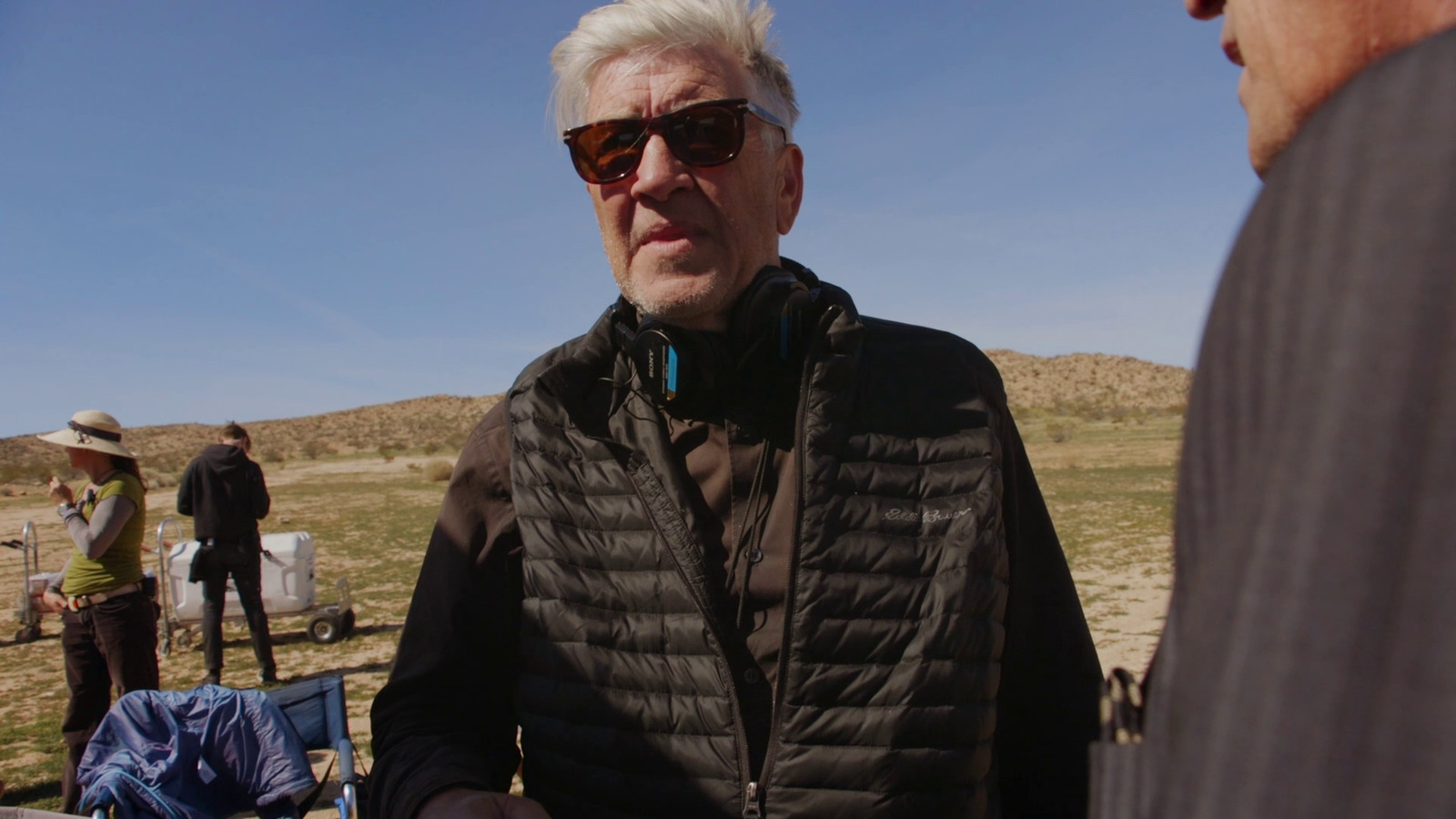
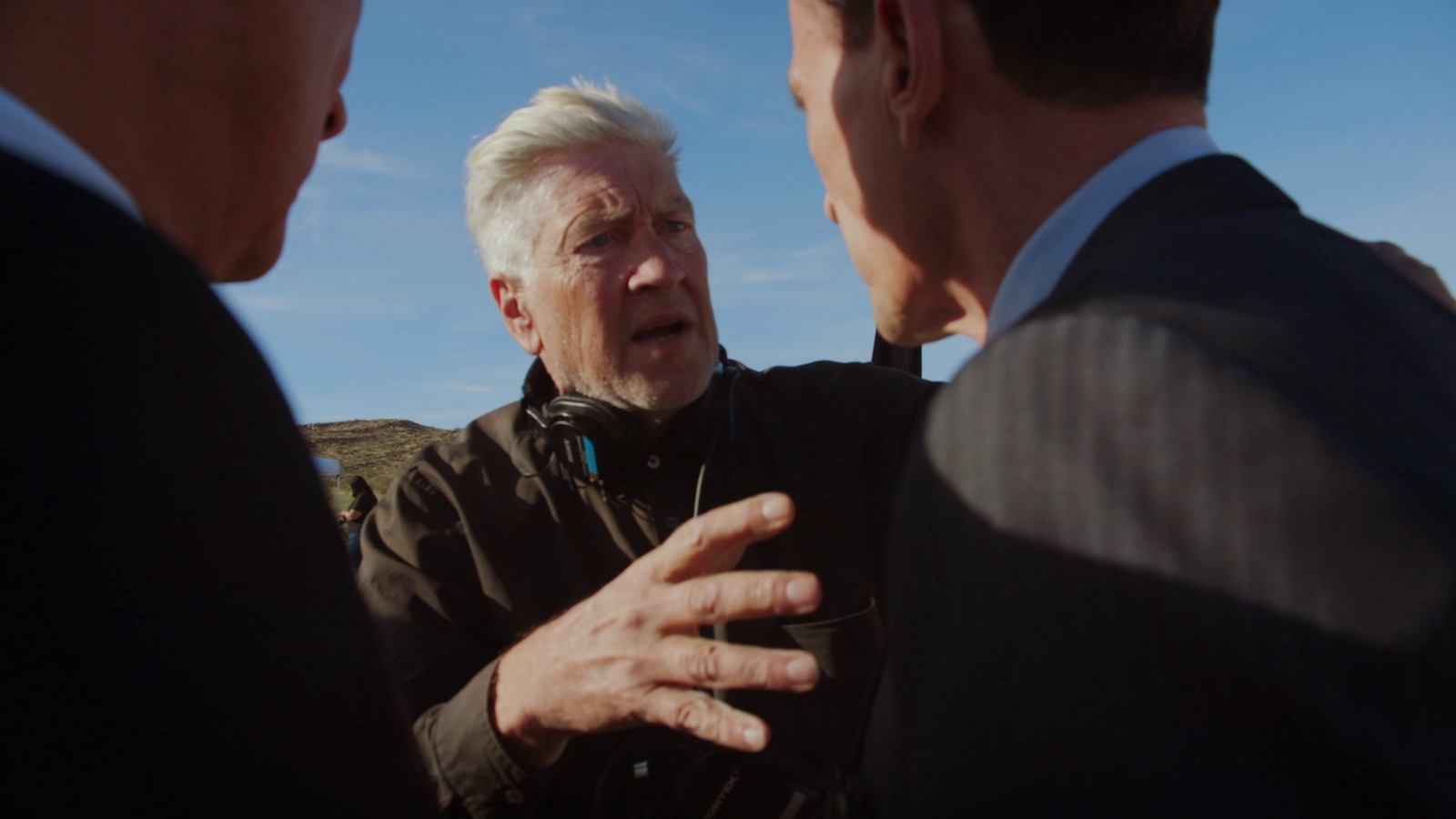
The production footage in Jason S.’s Impressions: A Journey Behind the Scenes of Twin Peaks adds another view of the scenes: directions spoken on set, rehearsals, material experiments and choices still being worked out.
Bradley remembers in stages
On the desert location, Lynch tells Jim Belushi that Bradley’s dream has troubled him since breakfast. Its details return unevenly: the healed cut first, then the box and the pie. Robert Knepper’s Rodney must register his brother’s mood before he can understand its cause. The dream is played as a pressure already present in the car, not a convenient explanation invented when Dougie arrives.
The discovery of the check is paced separately. Bradley waits for permission to open it and then approaches his brother slowly with the evidence. Suspense gives way to delight through a sequence of recognitions, each one changing what the brothers believe they are about to do.
Open the desert performance study · 2 frames
Playing the brothers’ warmth before their hostility
In a telephone briefing, Lynch explains Bradley’s dream as something remembered in fragments until its significance arrives at the last moment. At the restaurant, he apologizes to Jim Belushi and Robert Knepper for shooting out of story order and supplies the relationship they have not yet performed: the man they wanted dead has become someone they welcome as family.
Knepper proposes a remembered separation between the brothers. Lynch allows that as an acting possibility while affirming their shared parentage and lasting partnership. This is rehearsal work, not an additional scene in the narrative. It helps the performers locate the generosity of the celebration without erasing the characters’ earlier menace.
Open the Mitchum briefing study · 2 frames
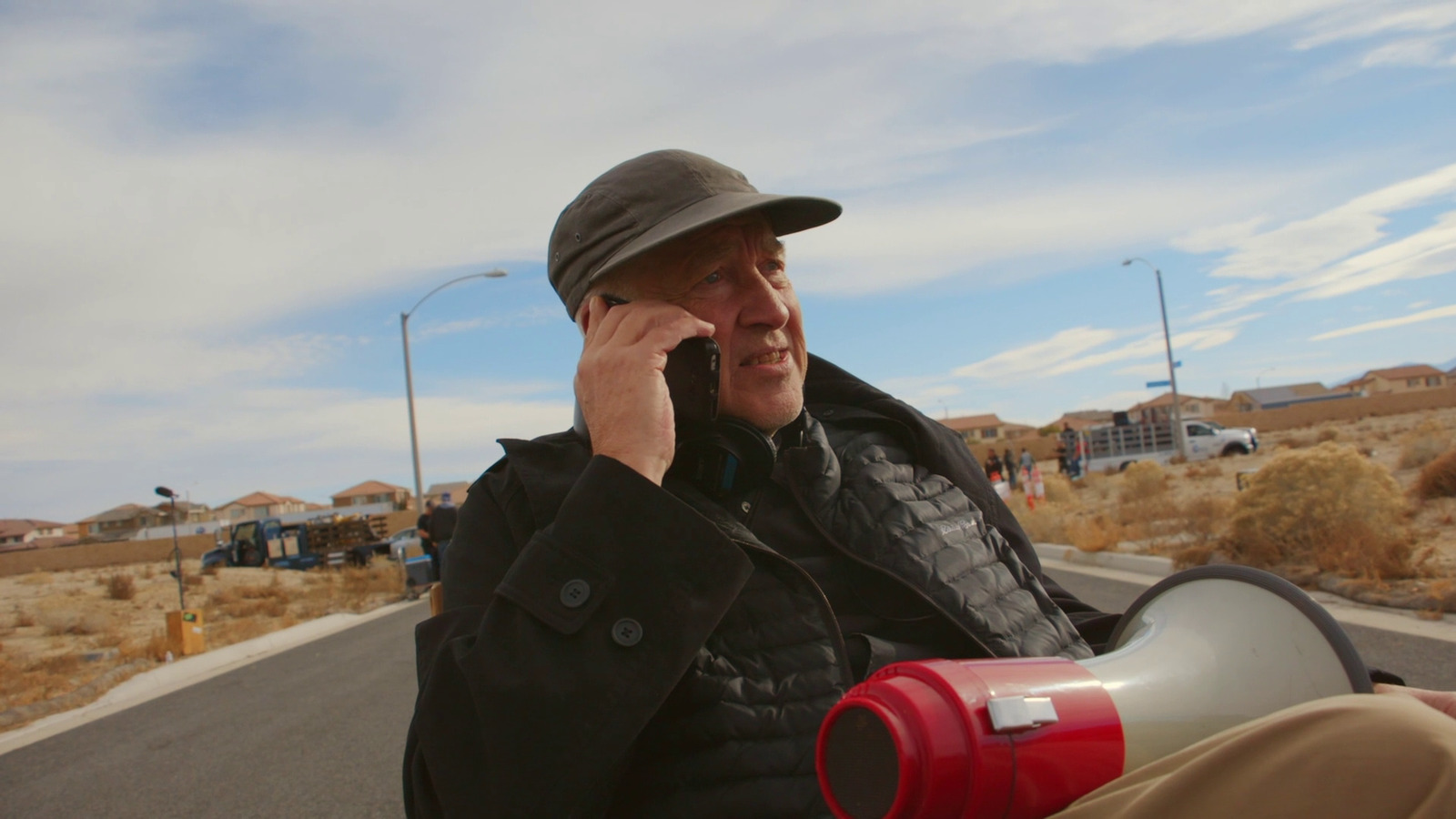
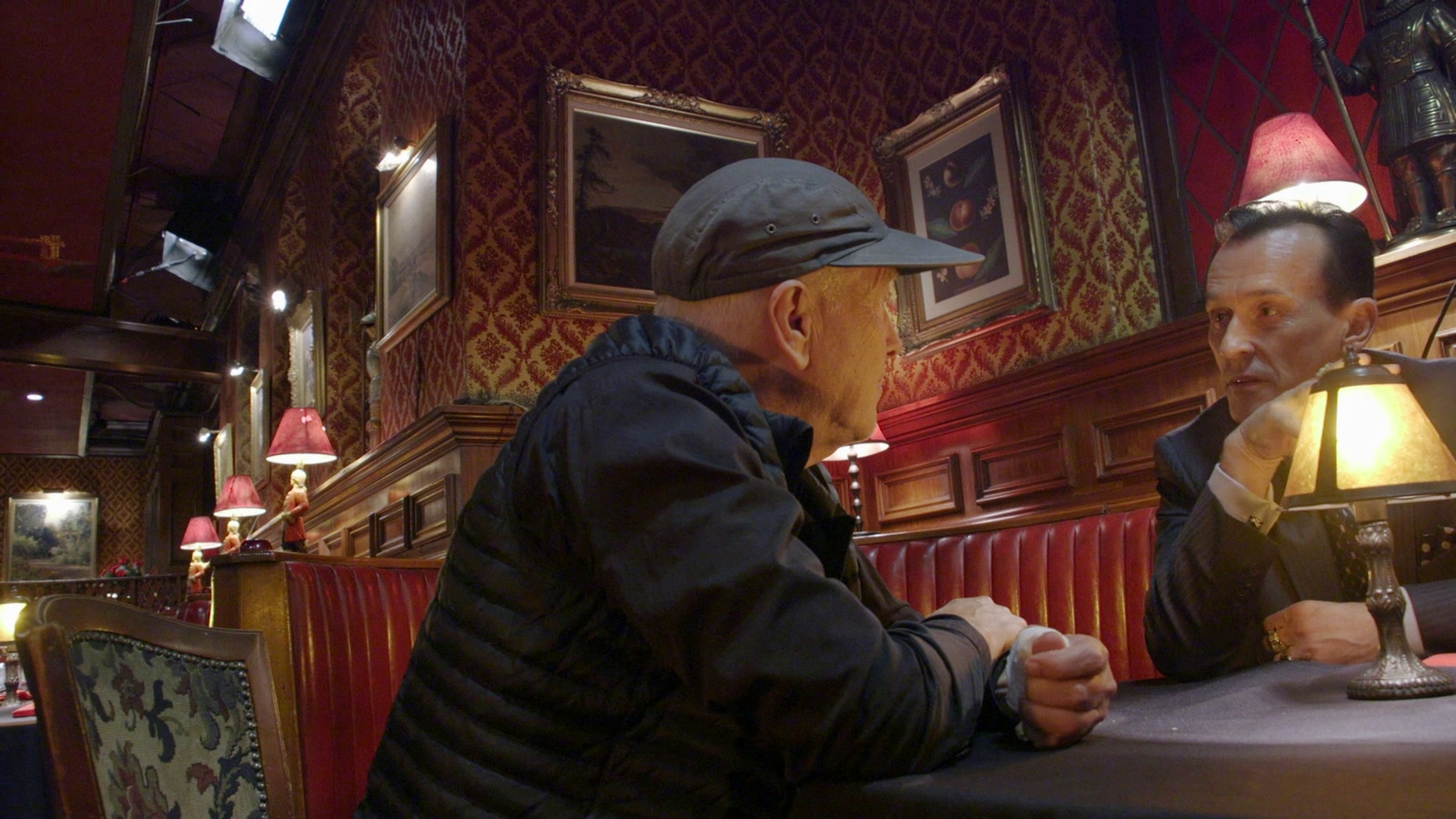
Rehearsal, performance and the working set
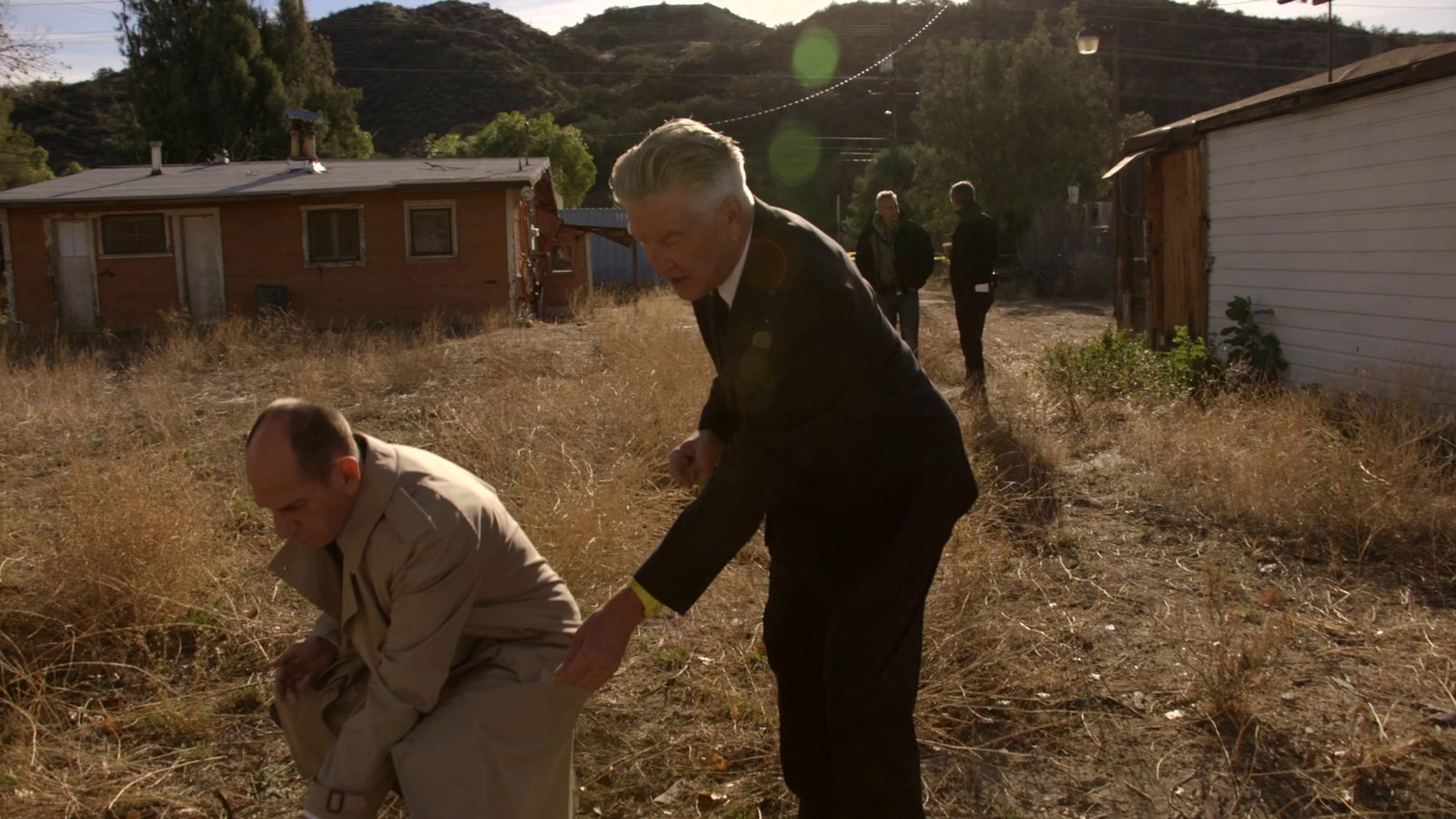
The vortex begins with fixed views and unequal sightlines
Lynch and Deming establish the vortex’s approximate position before it exists in the photographed location. The discussion calls for locked-off views, a separate sky or cloud image, Gordon’s view into the room and Albert’s view of Gordon. Albert then enters his own point-of-view setup to pull Gordon back by the arm.
Diane is placed where she can observe both the agents and the car’s back seat. This gives the figures different access to the event instead of making the whole group see an identical spectacle. Read beside BUF’s account, the footage separates the location photography and performed rescue from the later vortex construction, while showing that their positions were designed to work together.
Open the vortex and rescue preparation · 2 frames
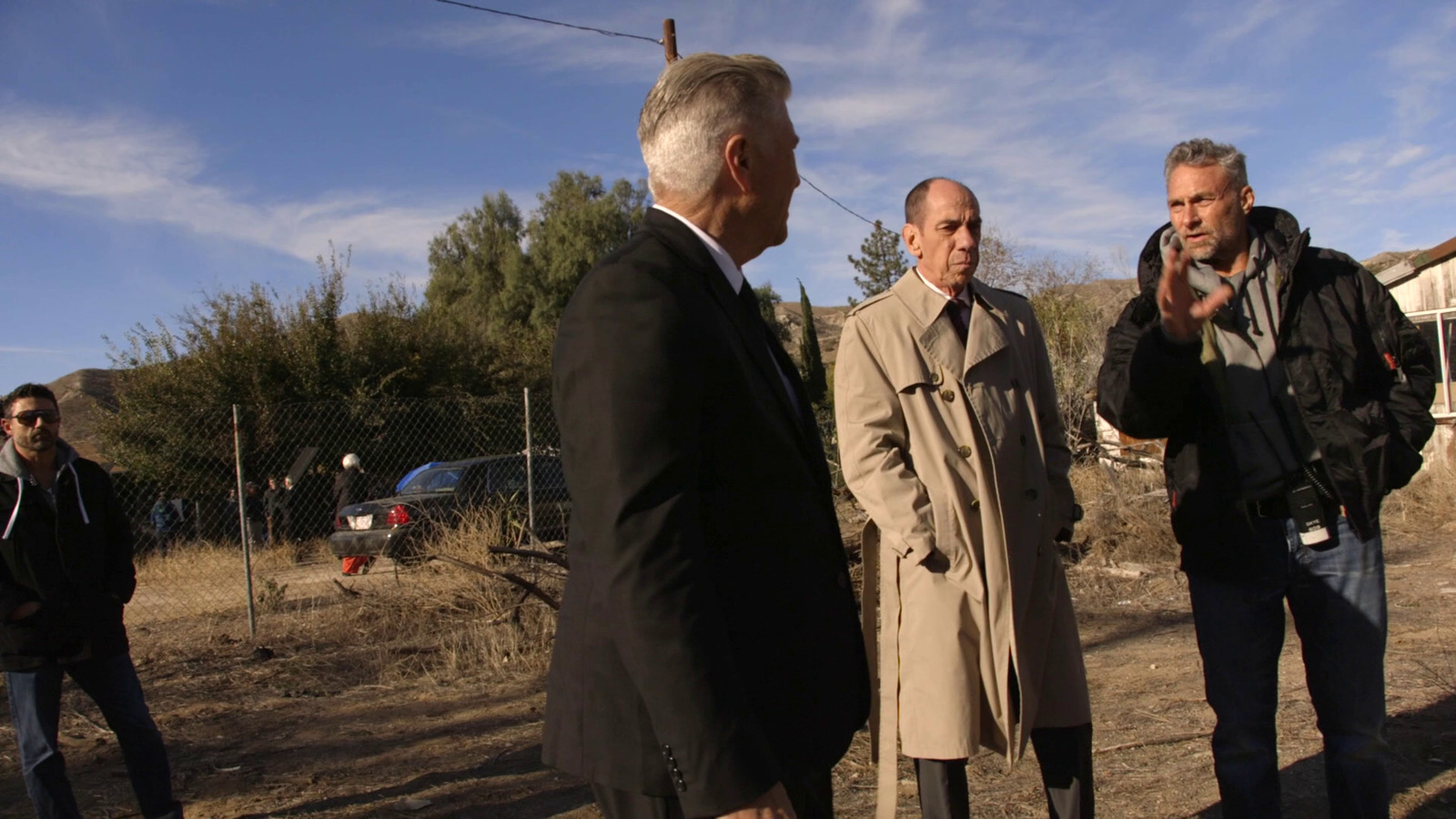
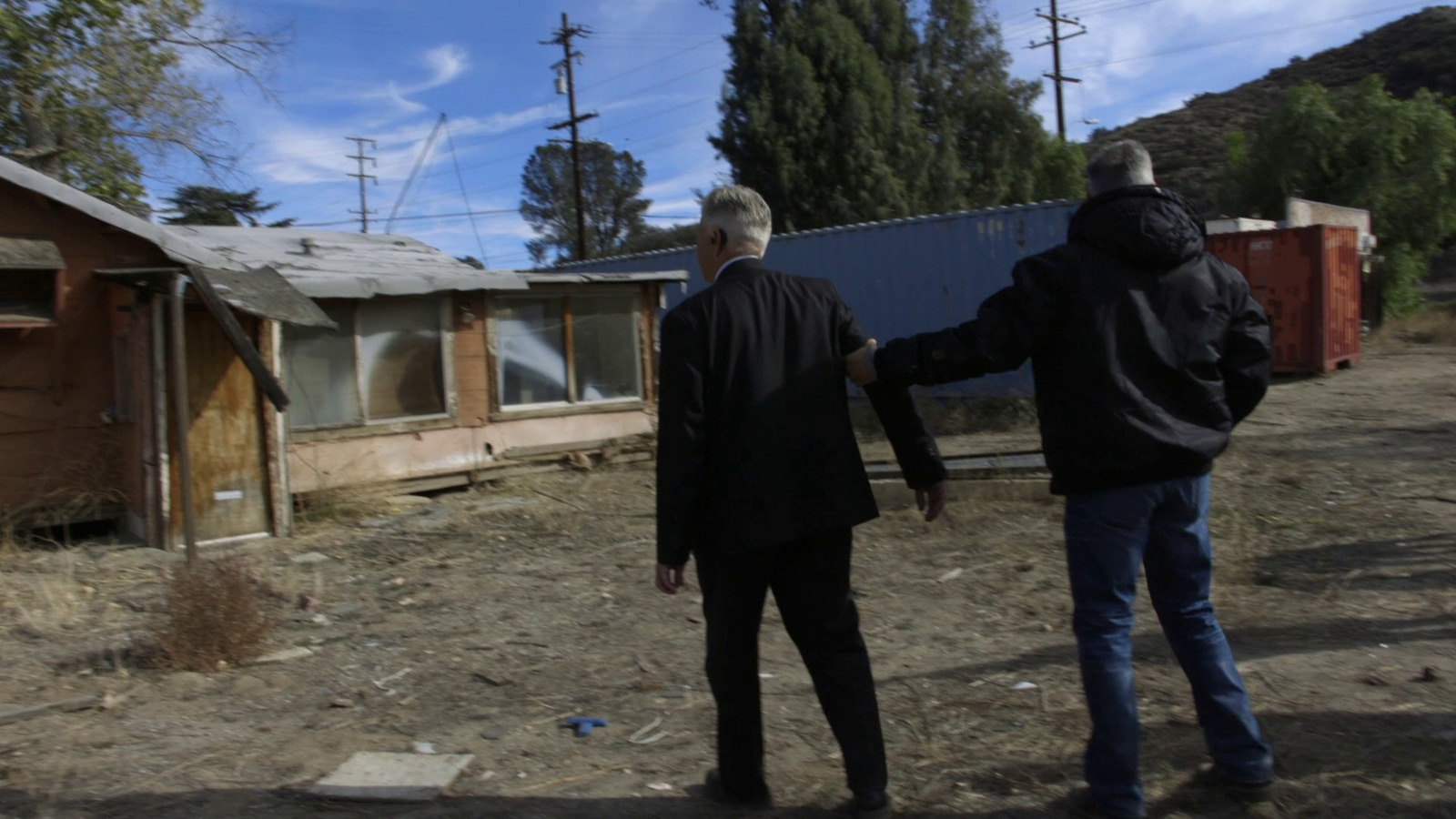
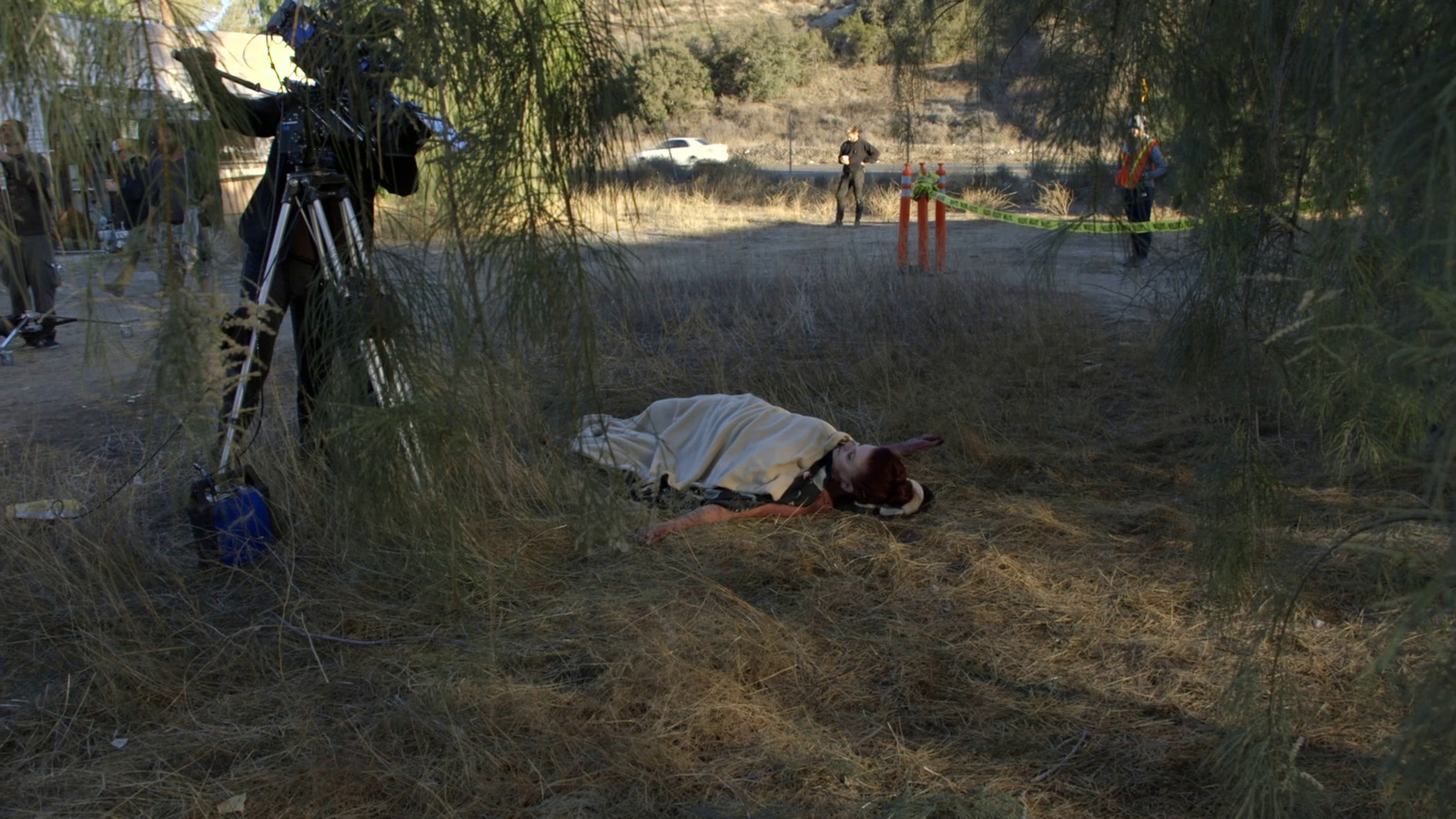
Ruth’s discovery requires the grass without the body
For the discovery in the weeds, Lynch specifies matching views of the grass before the performer is placed in the shot. The discussion distinguishes two setups needing those background plates from another in which the head can be hidden by positioning. The absent head is therefore prepared through more than one photographic arrangement.
Albert’s handling of the arm is rehearsed as a separate action that brings the written information into view for a photograph. This makes the body both an effects construction and a piece of evidence. The notes document how the required elements were prepared; they do not identify an individual compositor or make every final shot the product of one technique.
Open the body and background-plate study · 2 frames
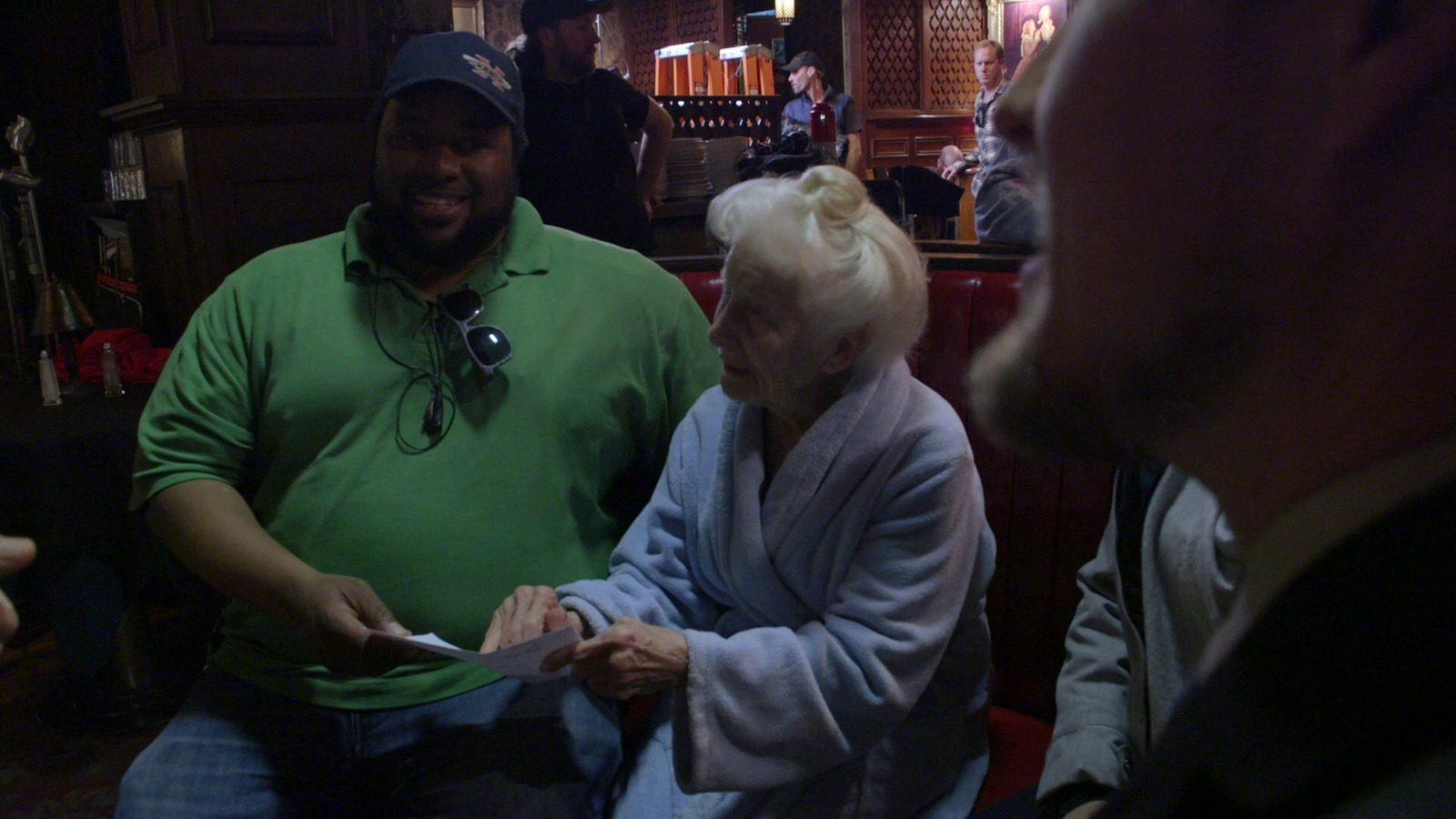
Gratitude continues even when Cooper barely responds
Lynch gives Linda Porter a changed life to bring into the restaurant: the winnings have become an opportunity she has used carefully, and her son is back with her. Recognition should gather speed until she calls out and goes straight to the man she believes saved her. The director adjusts the approach, the embrace and the enthusiasm of the thanks.
Cooper’s limited response is part of the arrangement. Porter is asked to keep thanking him as though he hears everything, even while his attention appears elsewhere. The scene’s warmth does not require an ordinary exchange of acknowledgments. It lets the consequences of his presence return to him in a form he cannot fully explain or reciprocate.
Open the gratitude performance study · 2 frames
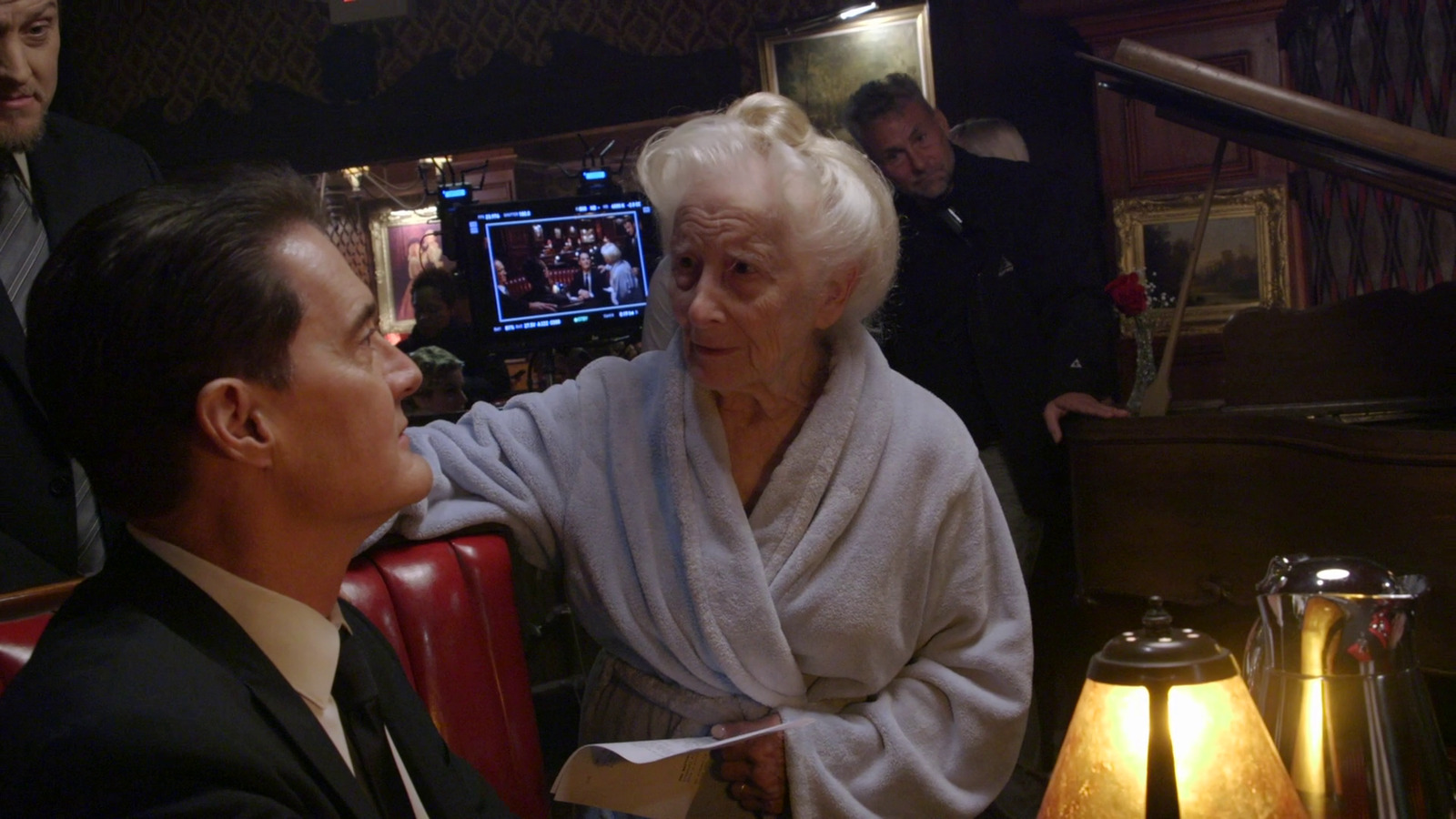
Music and memory redirect attention at the table
MacLachlan is told to turn slowly toward the beauty of the music. The instruction gives the restaurant’s musical passage a bodily response to meet. It complements Robert Miles’s account of performing the pianist before the finished composition existed: the sequence brings separately prepared responses and music into a shared emotional space.
Candie’s answer is worked through differently. She first looks at Rodney, then seems to remember the traffic as though recalling a dream. Lynch and Amy Shiels try the pace and a slightly raised gaze. The pause is filled with a change of attention, keeping her delayed account distinct from Cooper’s musical absorption even though both disturb the table’s ordinary conversational rhythm.
Presentation, music and credits
The standalone presentation runs approximately 57 minutes 14 seconds, including opening and closing material. Timings follow that presentation. The opening and end credits identify David Lynch as director and Mark Frost and David Lynch as writers.
The cast includes Amanda Seyfried as Rebecca (Becky) Burnett, Mädchen Amick as Shelly Briggs, Dana Ashbrook as Deputy Bobby Briggs, Harry Dean Stanton as Carl Rodd, and Catherine E. Coulson as Margaret Lanterman. The credits identify Alicia Witt as Gersten Hayward, connecting the hidden apartment companion to a named returning character rather than leaving the identification to resemblance alone.
BUF receives a visual-effects credit; KNB EFX Group, Carey Jones and Vincent Van Dyke Effects appear in the makeup-effects credits. These are episode-level credits, not proof of who made a particular image. David Lynch is credited for sound design, with Ron Eng and Dean Hurley supervising and mixing sound.
The music credits identify “Heartbreaking” as composed and performed by Angelo Badalamenti, “Viva Las Vegas” as performed by Shawn Colvin, “Frank 2000” as performed by Thought Gang, and Penderecki’s Threnody for the Victims of Hiroshima in the Warsaw National Philharmonic recording conducted by Witold Rowicki.
Sources and viewing notes
- Twin Peaks: The Return, Part 11. Directed by David Lynch; written by Mark Frost and David Lynch. Standalone presentation in Twin Peaks: From Z to A; picture, English captions and closing credits examined, with focused checks of key dialogue and sound passages. Scene readings are Lyncharium’s analysis.
- BUF, Twin Peaks production account ↗, “Vortex” section. Primary account of the company’s visual-effects work. Its two-vortex/six-shot description is collective rather than an episode-specific shot list.
- Pieter Dom, “The Story Behind Angelo Badalamenti’s ‘Heartbreaking’ And The Pianist Playing It In Twin Peaks Part 11” ↗, Welcome to Twin Peaks, 26 July 2017. Direct account from Robert “Smokey” Miles of Lynch’s direction and the timing of filming.
- The Polish Accountant, directed and photographed by Jason S., in Impressions: A Journey Behind the Scenes of Twin Peaks (2017), viewed in Twin Peaks: From Z to A. Passages: 12:37–18:44. Picture and English captions examined, with targeted speech checks. Rehearsal proposals and production observations are distinguished from interpretation of the finished episodes. Documentary narration and its music are not treated as unscripted statements by Lynch.
- Tell It Martin, directed and photographed by Jason S., in Impressions: A Journey Behind the Scenes of Twin Peaks (2017), viewed in Twin Peaks: From Z to A. Passages: 13:54–16:44; 23:13–27:35. Picture and English captions examined, with targeted speech checks. Rehearsal proposals and production observations are distinguished from interpretation of the finished episodes. Documentary narration and its music are not treated as unscripted statements by Lynch.
- Behind the Curtain, Part 11. Photographed by Jason S.; edited by Jonathan Angus, with editorial assistance by Robert Lay and additional photography by Charles de Lauzirika (2019). Viewed in Twin Peaks: From Z to A. Timed passages: 00:46–04:15; 04:17–06:20; 16:28–21:47; 17:53–18:05; 22:15–23:27. Timings refer to the documentary, not the episode. On-set directions and retrospective recollections are distinguished from Lyncharium’s interpretation of the finished scenes.