Twin Peaks: The Return — Part 12
2017 · Twin Peaks: The Return · Episode dossier
People offer help, ask for answers and wait for somebody else to respond. Part 12 makes the delay itself part of the drama.
Tammy joins the Blue Rose investigation, Sarah struggles with the ordinary world, Ben receives news about Richard, and Audrey returns to a room that refuses to explain itself. The episode places acts of care beside failures of communication.
- Part 12
- Let’s Rock
- Directed by
- David Lynch
- Written by
- Mark Frost & David Lynch
- Standalone presentation
- 00:54:53
The Return overview · Twin Peaks research hub. Timings follow the standalone part and include its opening titles. Presentation and credit notes.
Explore this dossier
Who is allowed to know?
Follow the movement of knowledge between rooms, phones and people. Albert opens an institutional history to Tammy; Sarah cannot make her warning intelligible at the checkout; Frank brings Ben unwelcome news; Charlie receives an answer that Audrey cannot hear. These are different situations, not clues to one universal solution. Their arrangement makes access to another person’s experience the episode’s recurring problem.
The scene readings below are critical interpretations of the finished episode. The production account from Clark Middleton is identified separately and does not supply a definitive explanation of Audrey’s circumstances. Viewing source.
Illustrated scene studies
- An invitation with a history of disappearances
- A second invitation, a different answer
- A person almost lost in the landscape
- The shop becomes unfamiliar
- Care becomes money and rent
- A family game without reciprocity
- Help stops at the threshold
- A surviving witness in intensive care
- A question reaches Diane
- Bad news reaches the family office
- A souvenir becomes an investigative connection
- A memory beside an unpaid bill
- The exit that takes its own time
- Surveillance, a joke and a touch
- Murder on the way to a meal
- A sales pitch finds its audience
- A return without an establishing explanation
- An answer kept on one side of the call
- A location takes shape on the phone
- Stories continue beyond the people we know
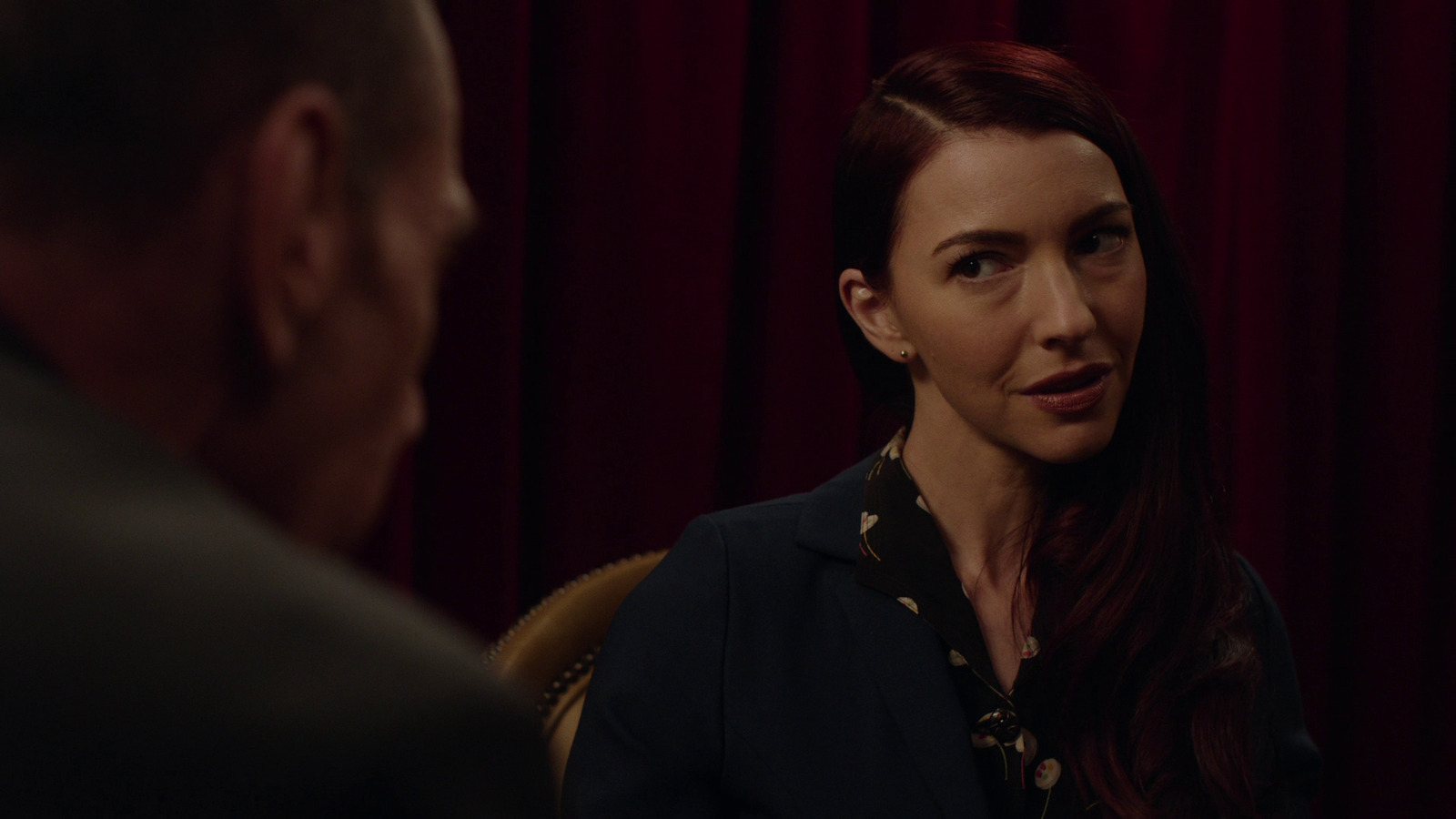
An invitation with a history of disappearances
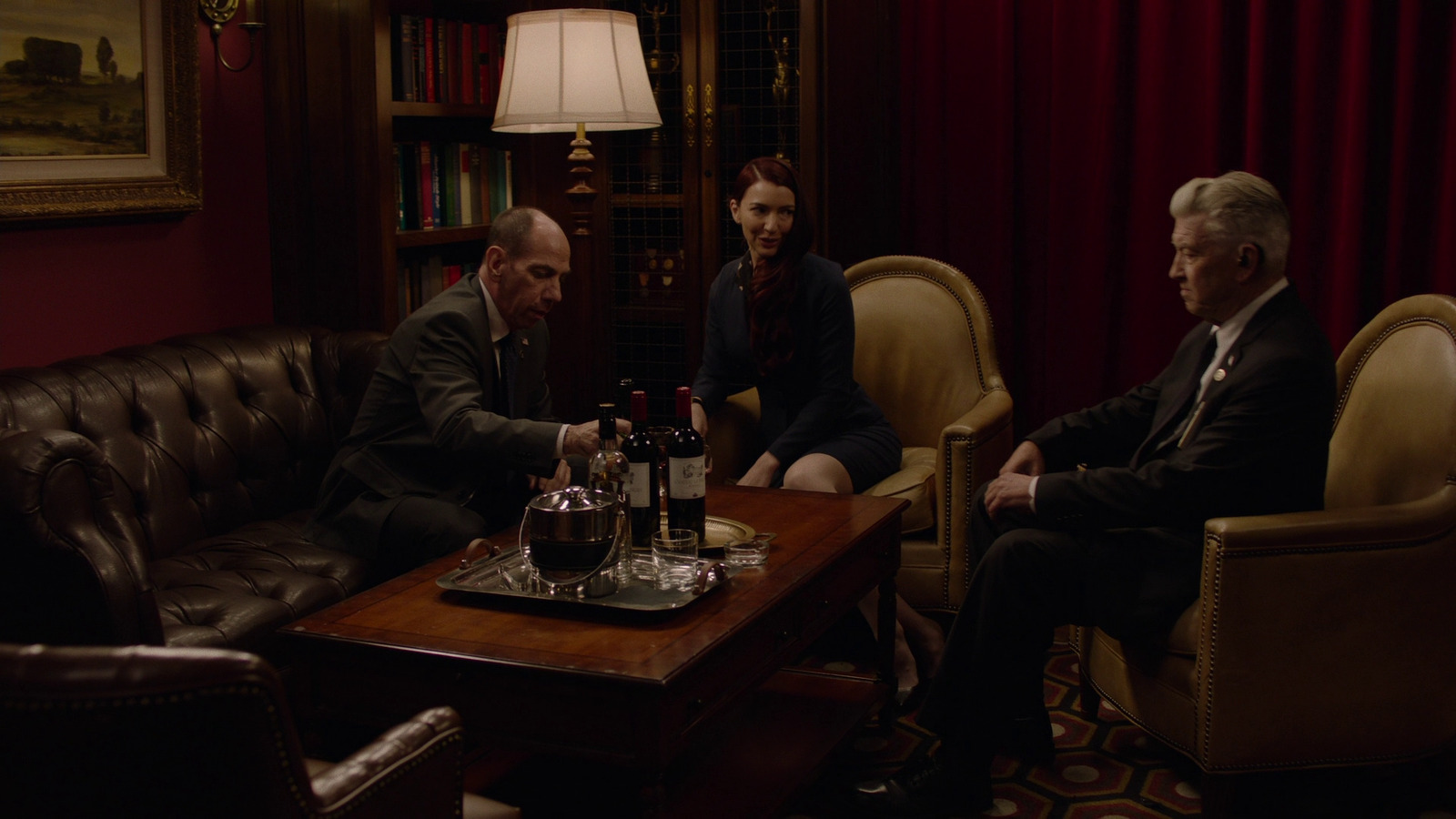
The hotel-room drinks make an institutional initiation look almost domestic. Albert’s account of the Blue Rose task force moves from official explanation to the unresolved: the very agents recruited to investigate disappearances have themselves vanished. Tammy’s invitation is therefore both recognition and exposure to danger. The alternating close-ups give her acceptance weight, while Gordon’s hearing adjustment makes the conditions of listening part of the scene. Albert’s account belongs to the series’ fictional history; its language of government cover-up should not be mistaken for documentary evidence.
Open the scene sequence · 2 frames
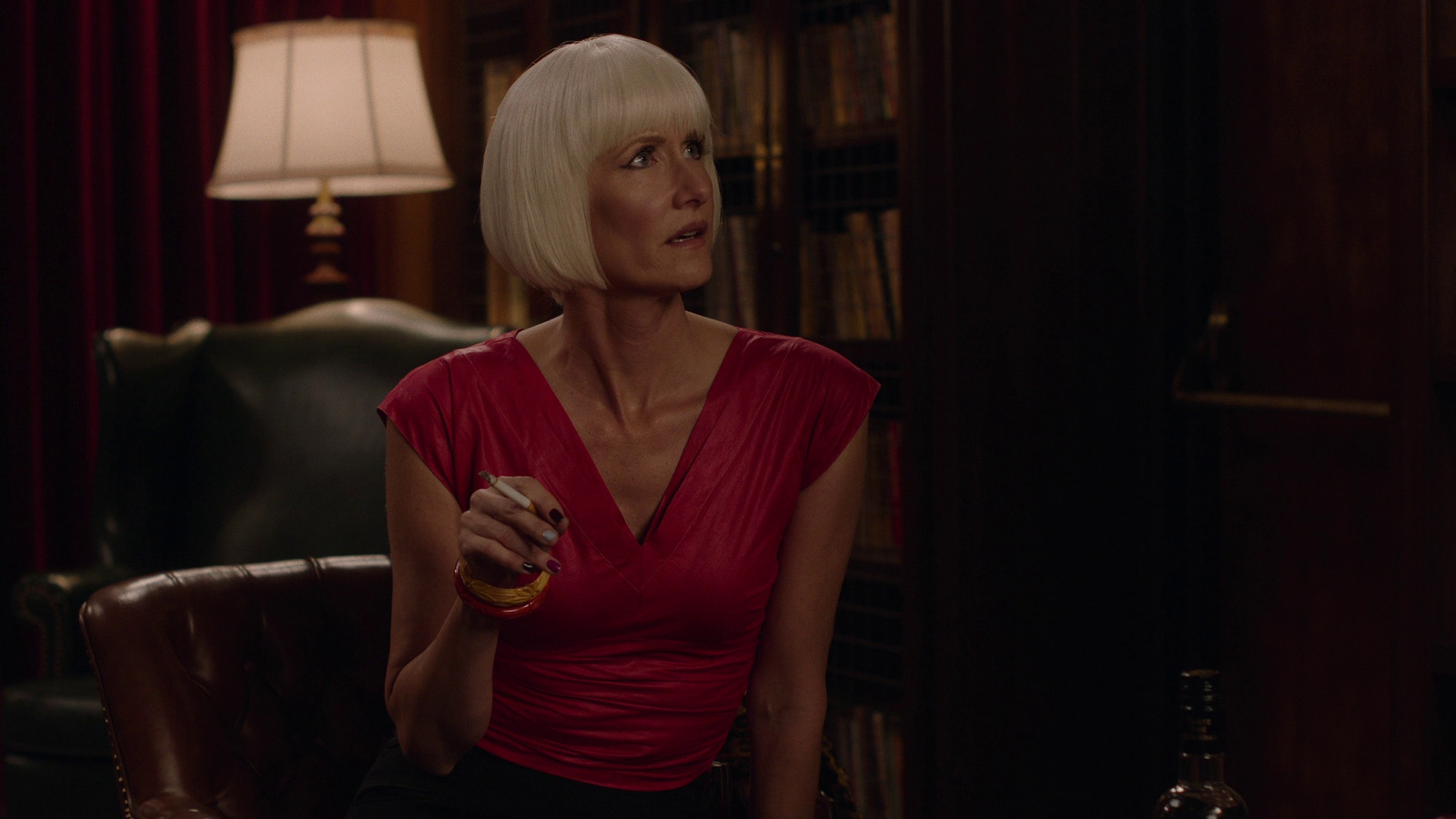
A second invitation, a different answer
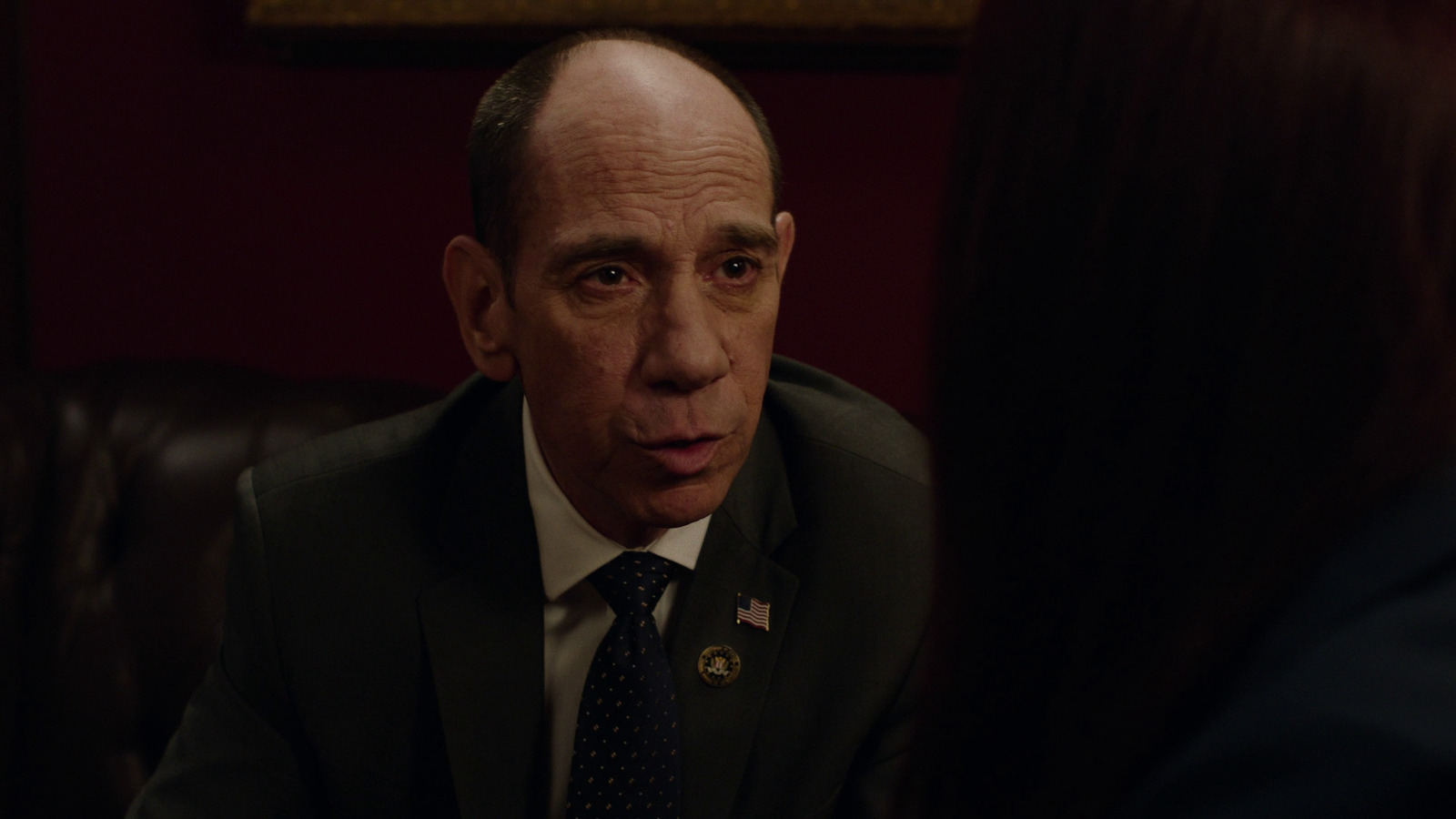
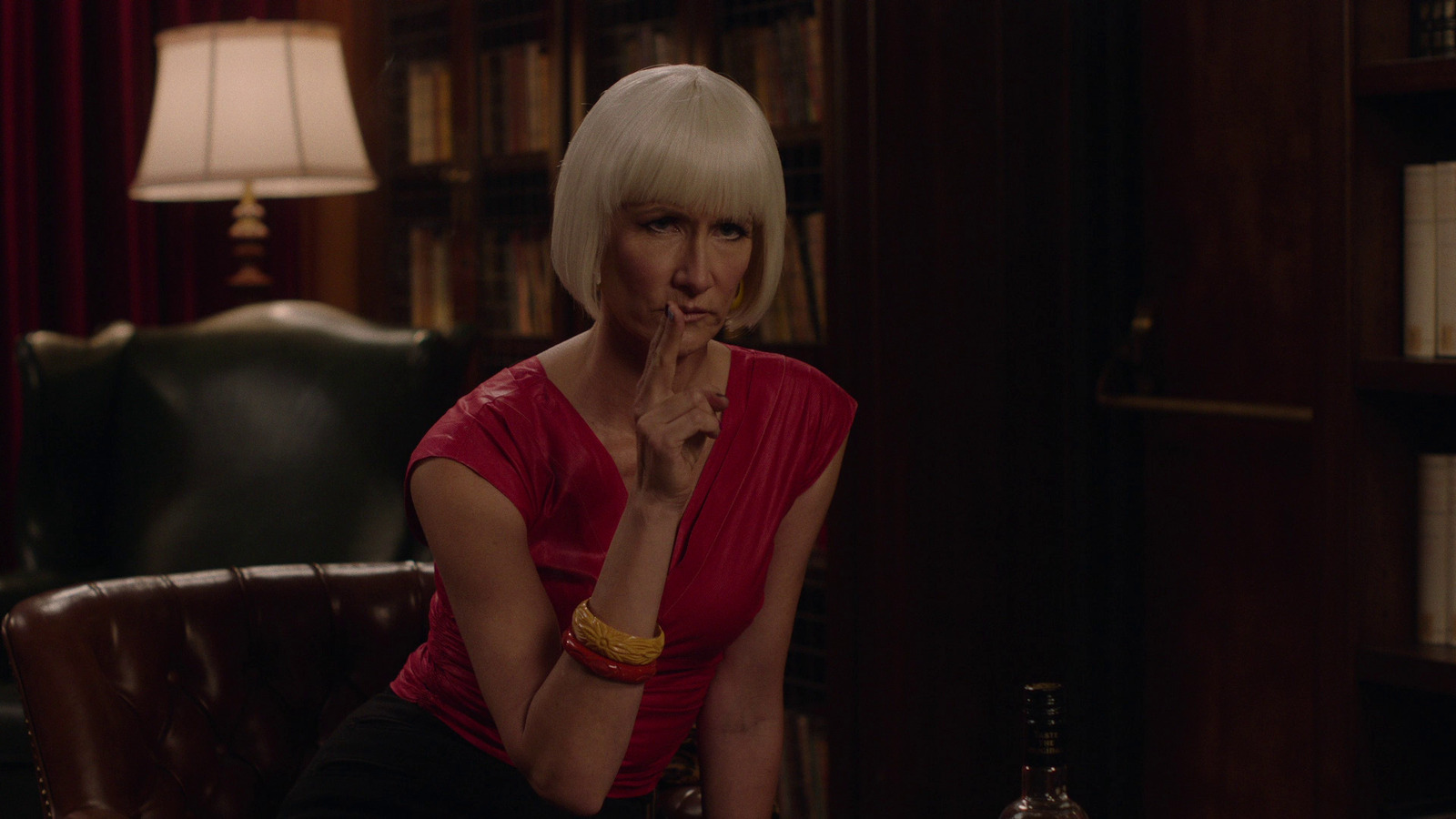
Diane enters an already established group but is seated separately, facing its scrutiny. The preparation of her drink delays the offer of temporary involvement. Where Tammy accepts a new professional identity, Diane asks what the arrangement offers her. Her final phrase recalls the words on the abandoned car in Fire Walk with Me. That recurrence creates an unsettling connection without explaining Diane’s intentions.
Open the scene sequence · 1 frame
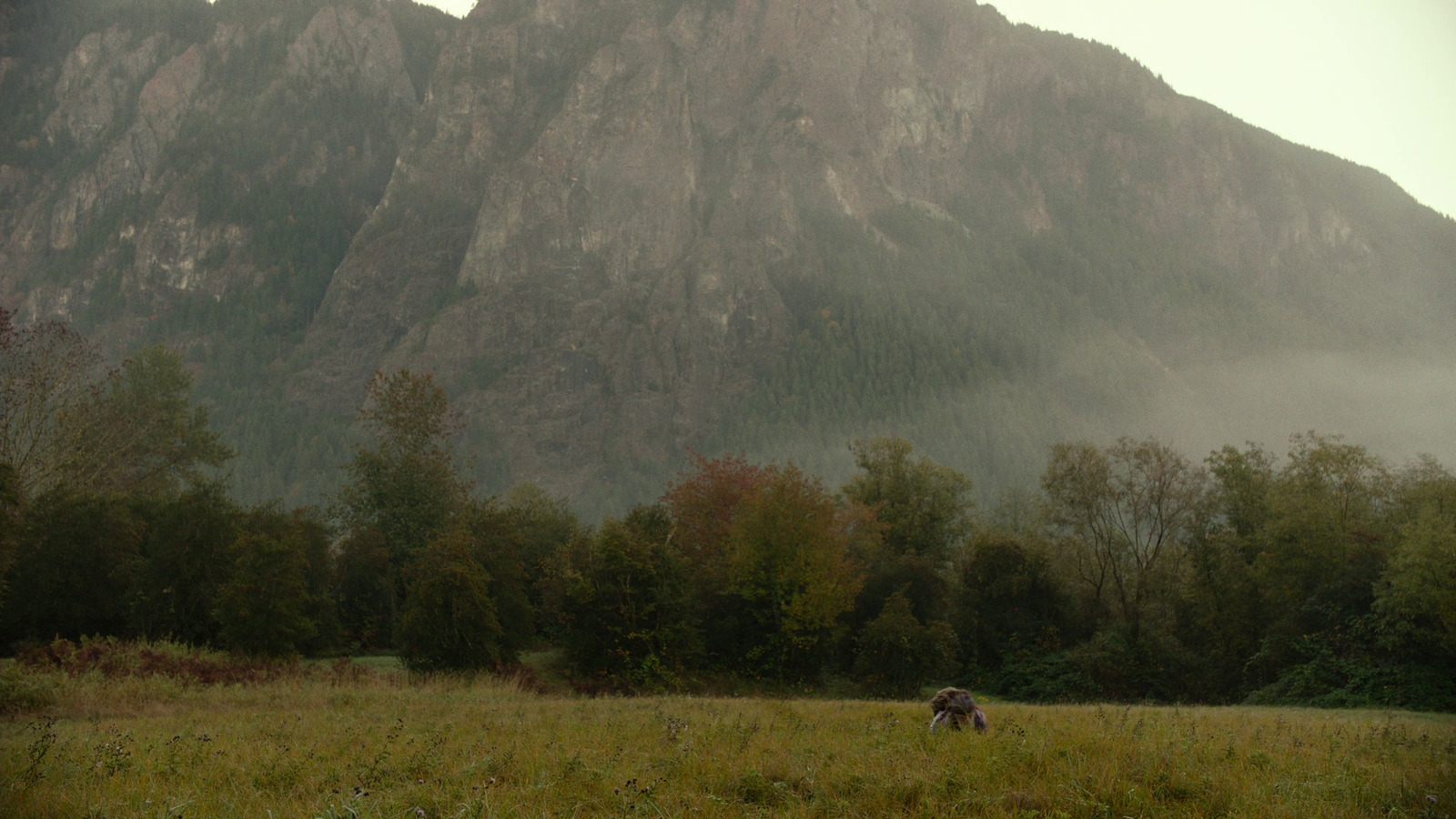
A person almost lost in the landscape
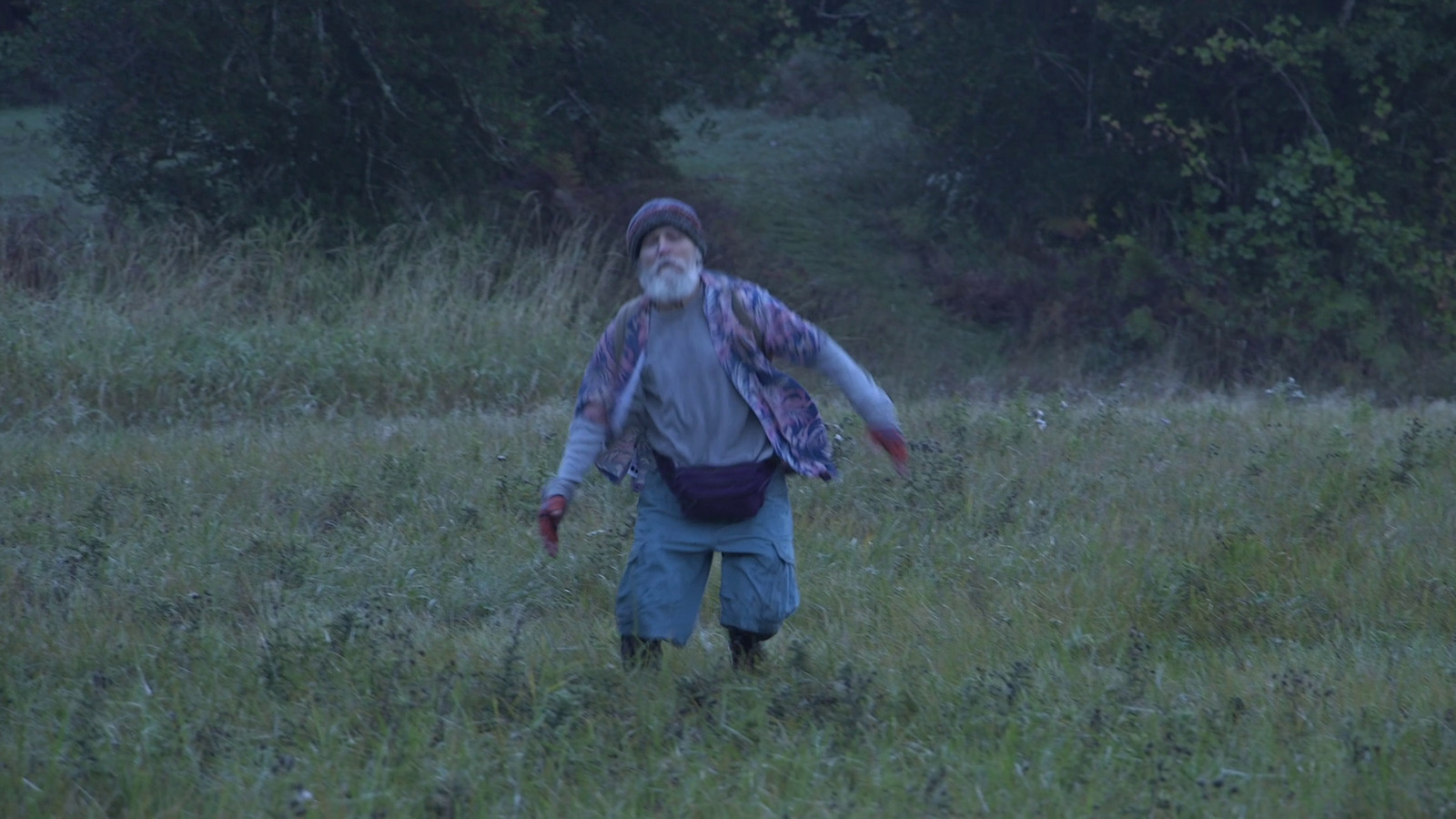
Jerry’s brief emergence into a meadow follows the enclosed hotel conversation. The mountain and open ground make the human figure seem very small. His movement remains disoriented even outside the woods: reaching an open space does not produce a confident sense of direction. The passage continues the bodily uncertainty of his earlier forest sequence without turning it into an investigative clue.
The shop becomes unfamiliar
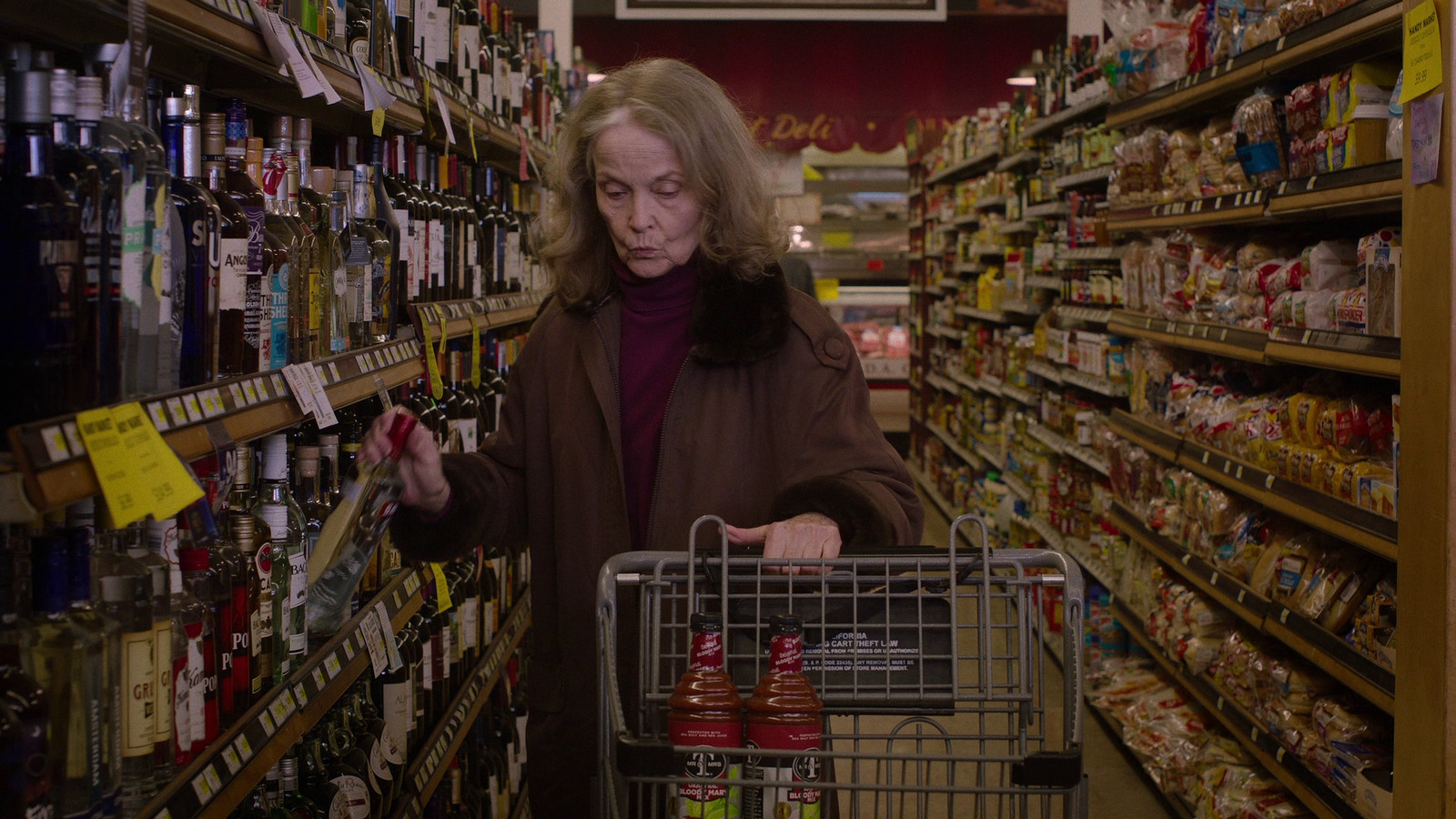
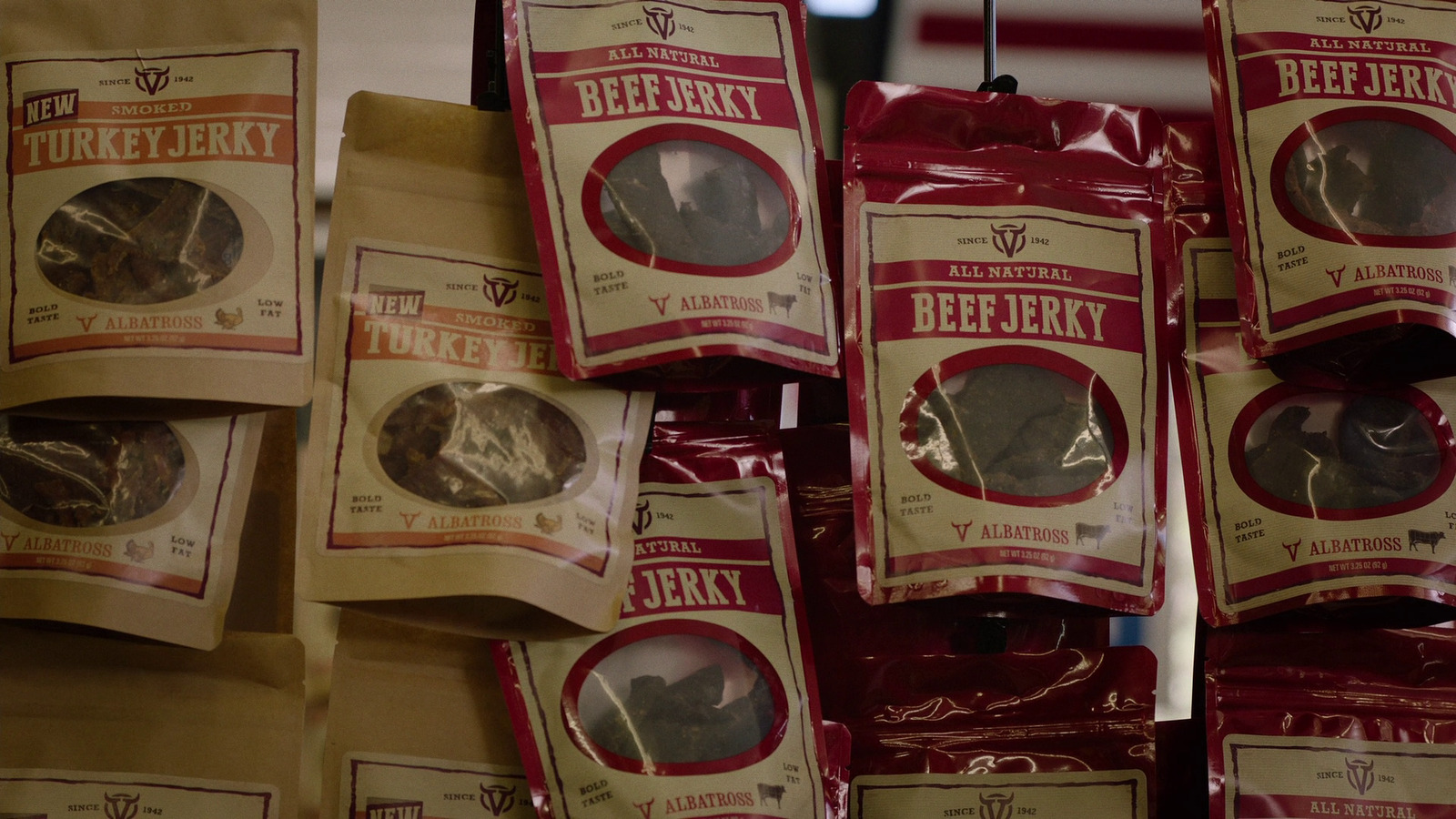
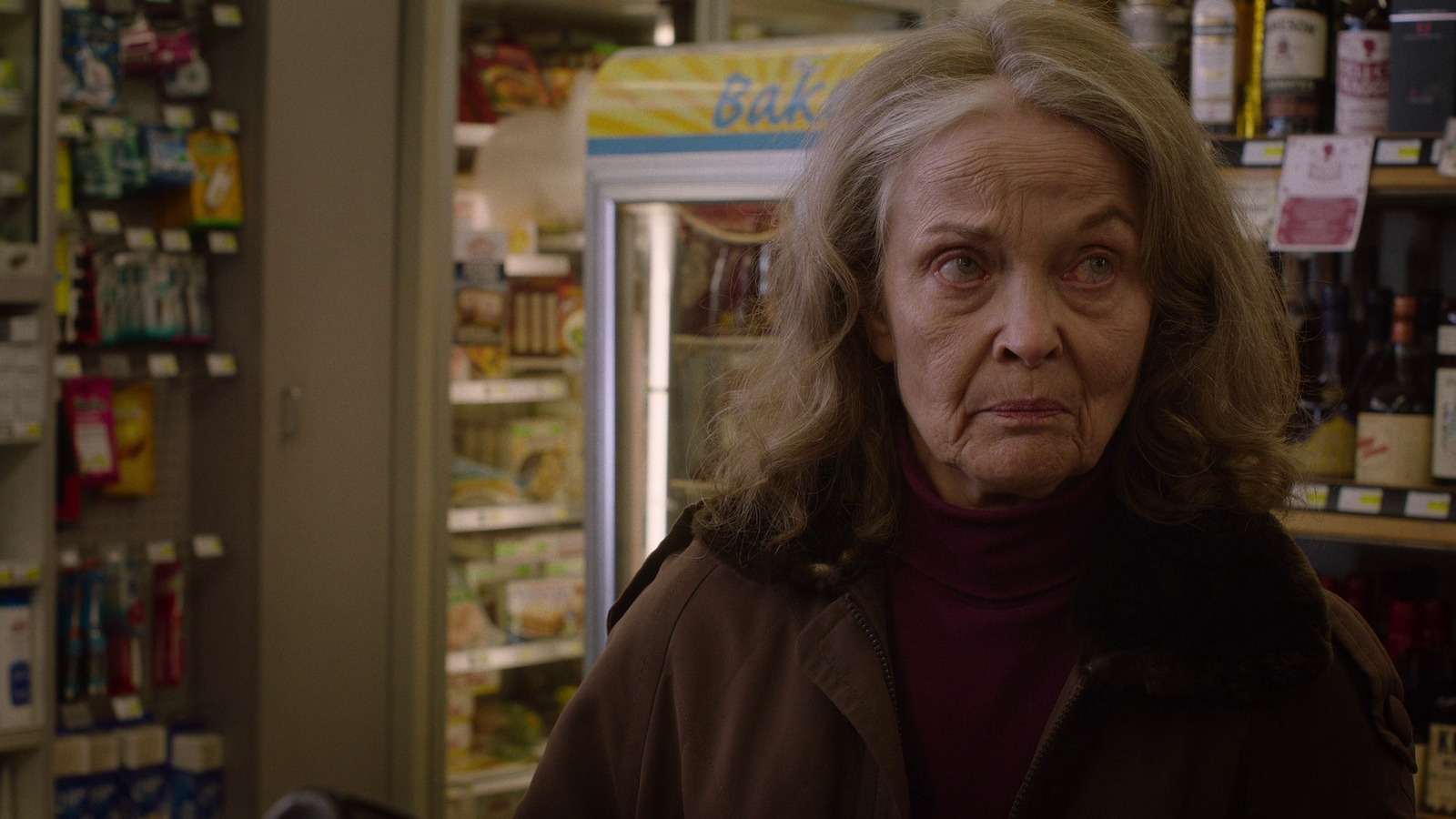
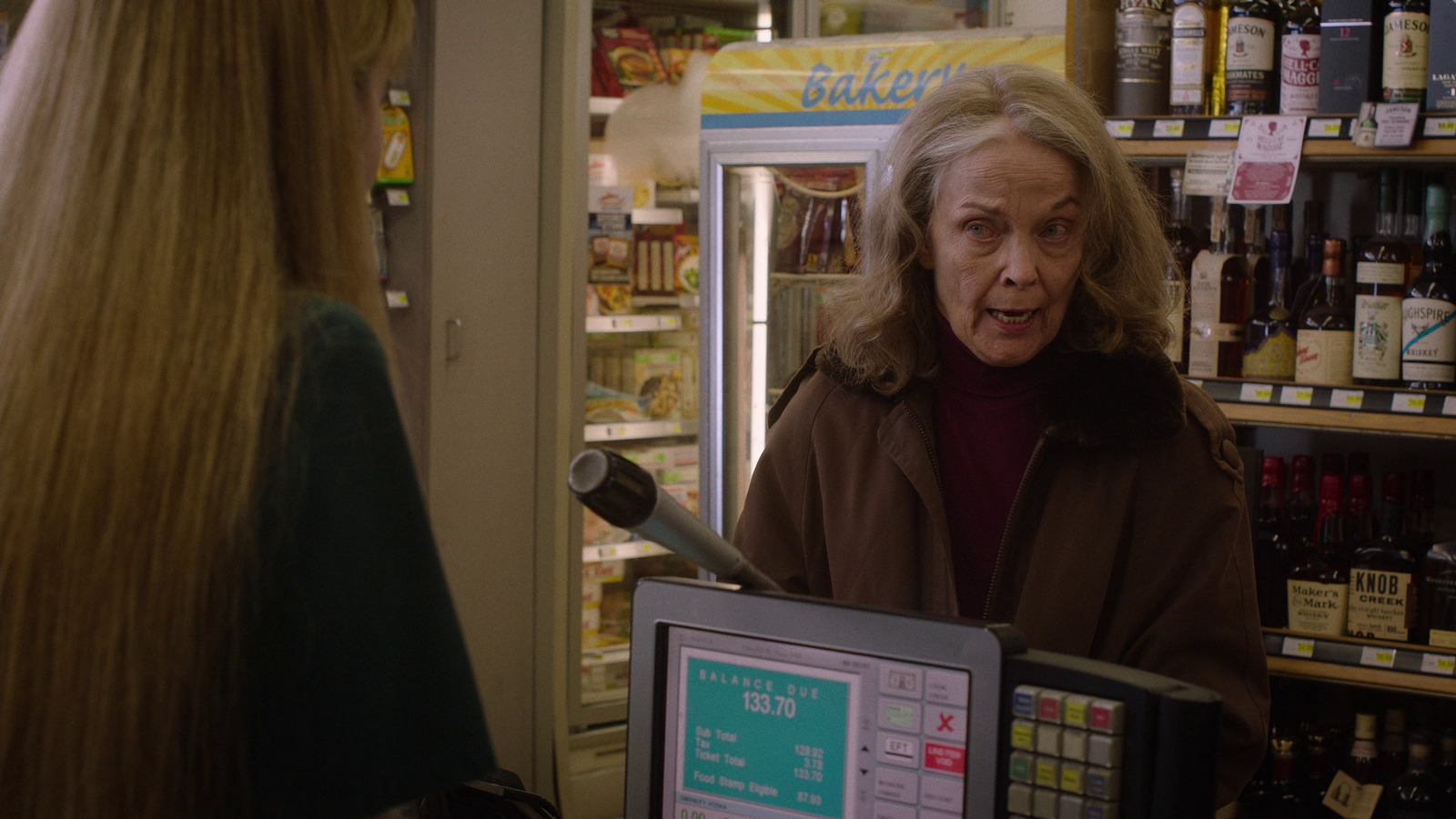
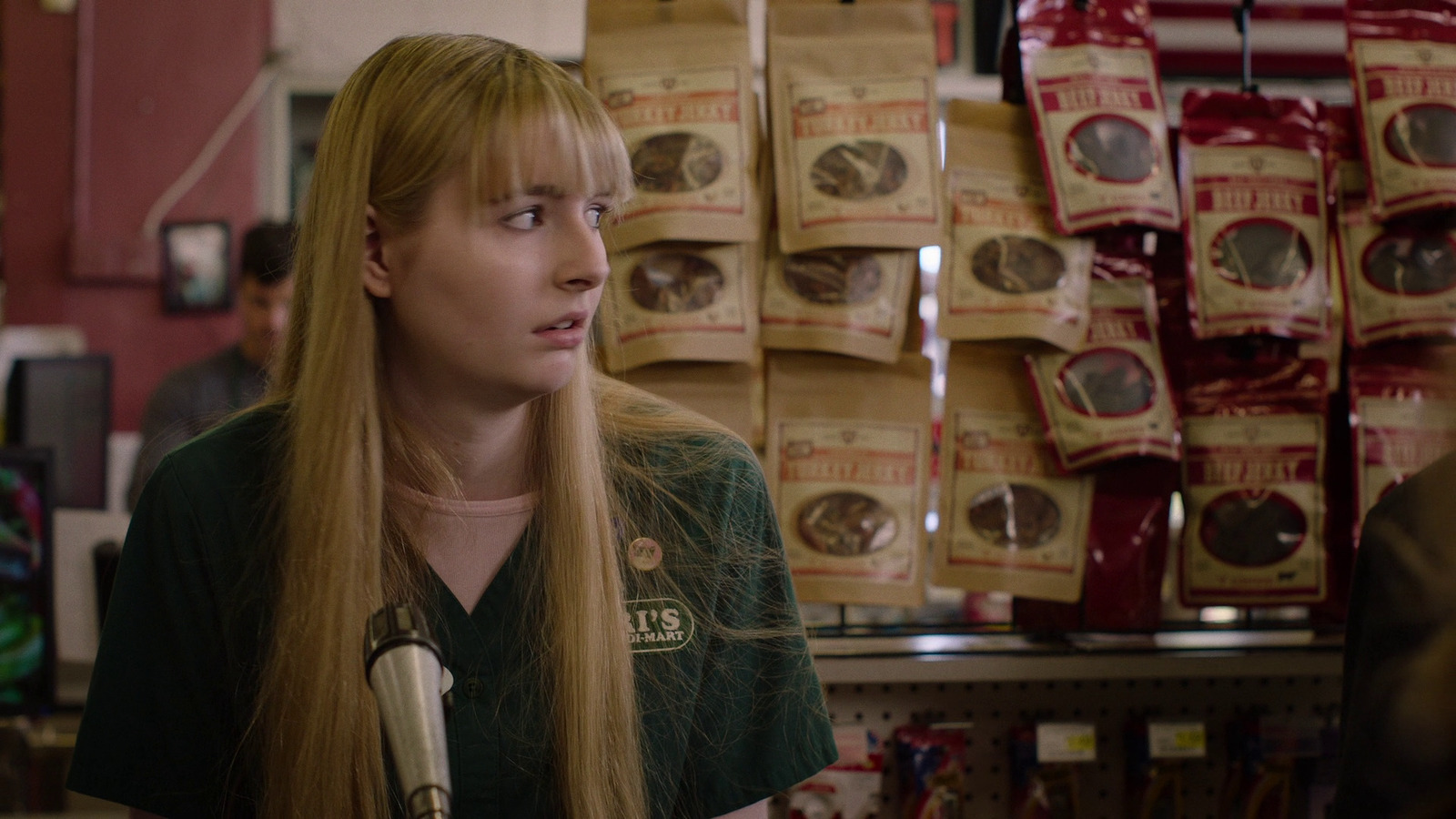
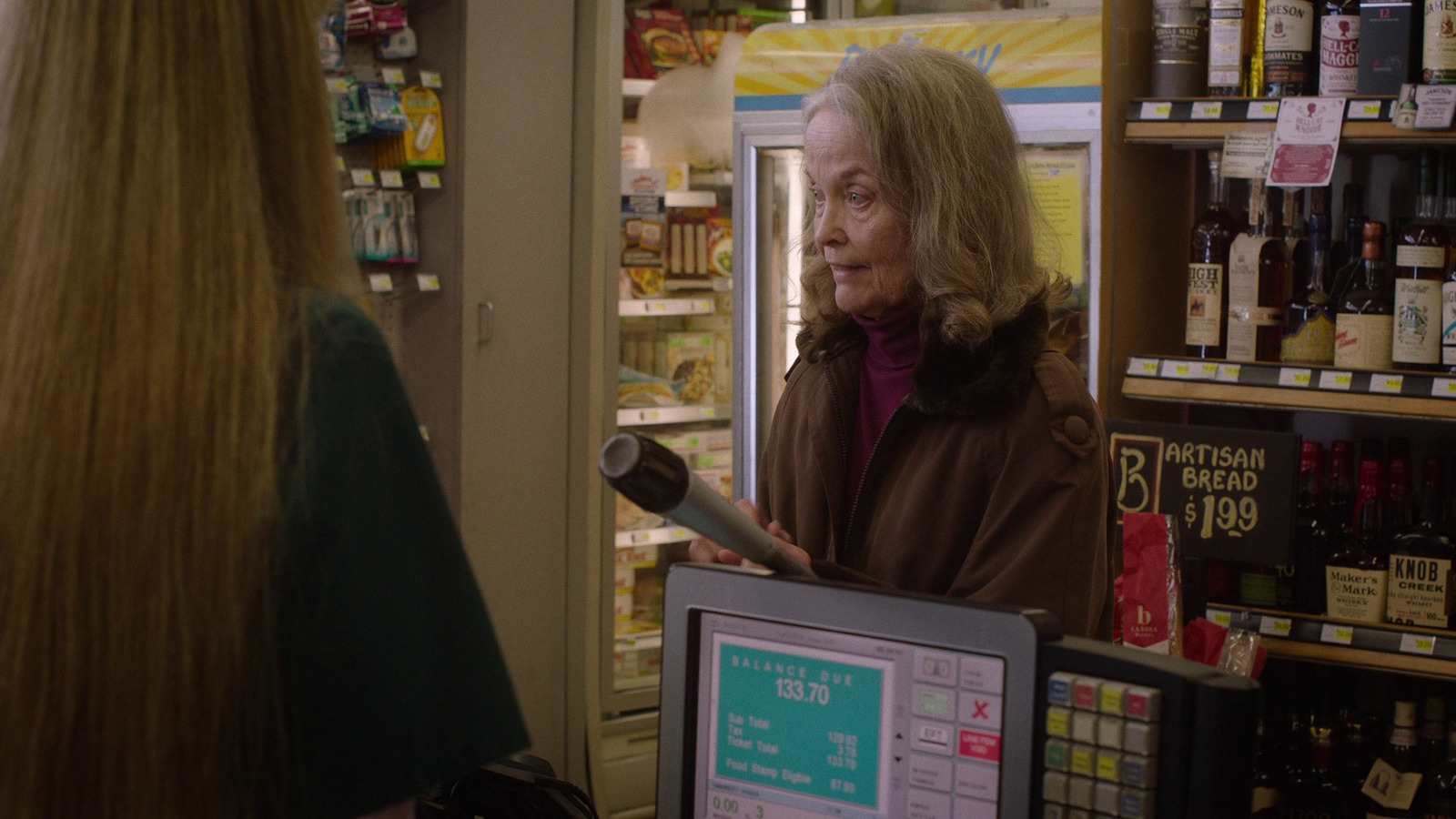
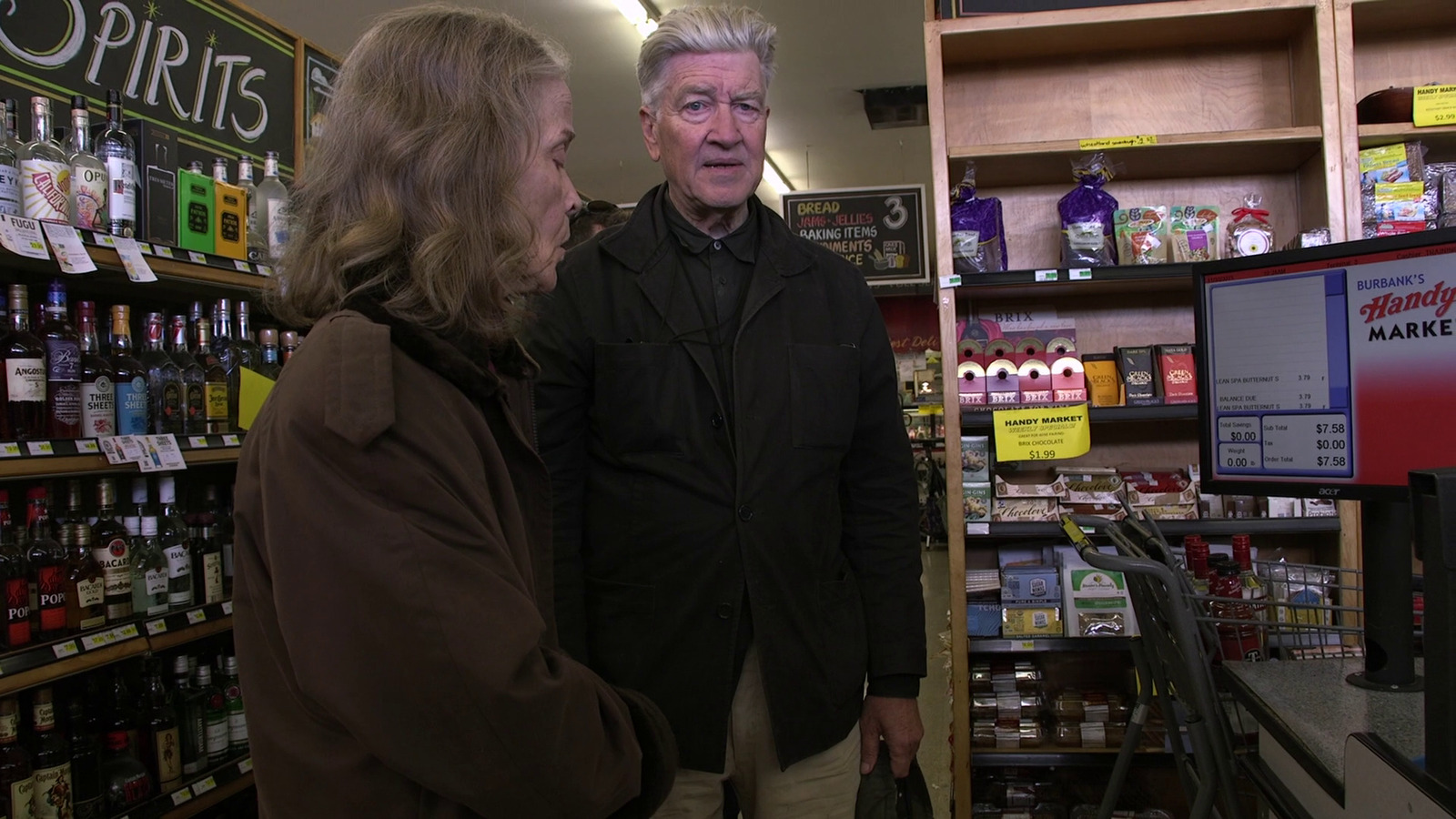
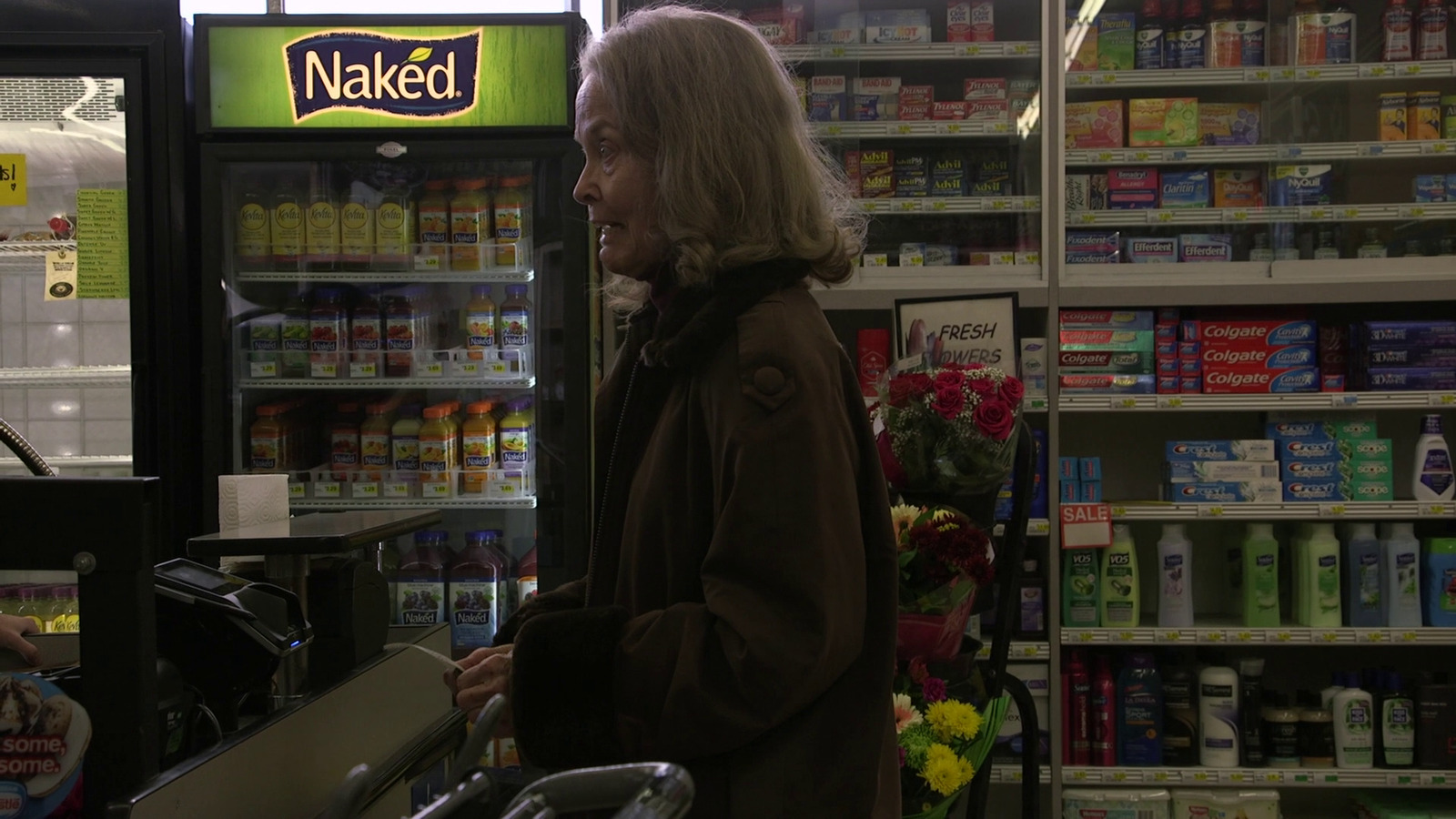
A shopping routine is disrupted by an unremarkable product display. The jerky packets receive their own insert, but the real change unfolds in Sarah’s face and language. Questions about stock become a warning about approaching men; then she speaks instructions to herself. The cashier tries to keep the encounter within ordinary possibilities, including the offer to call a doctor. The sequence preserves both perspectives. Sarah’s fear is evident, but the images do not certify the cause she appears to perceive.
Open the scene sequence · 5 frames
Care becomes money and rent
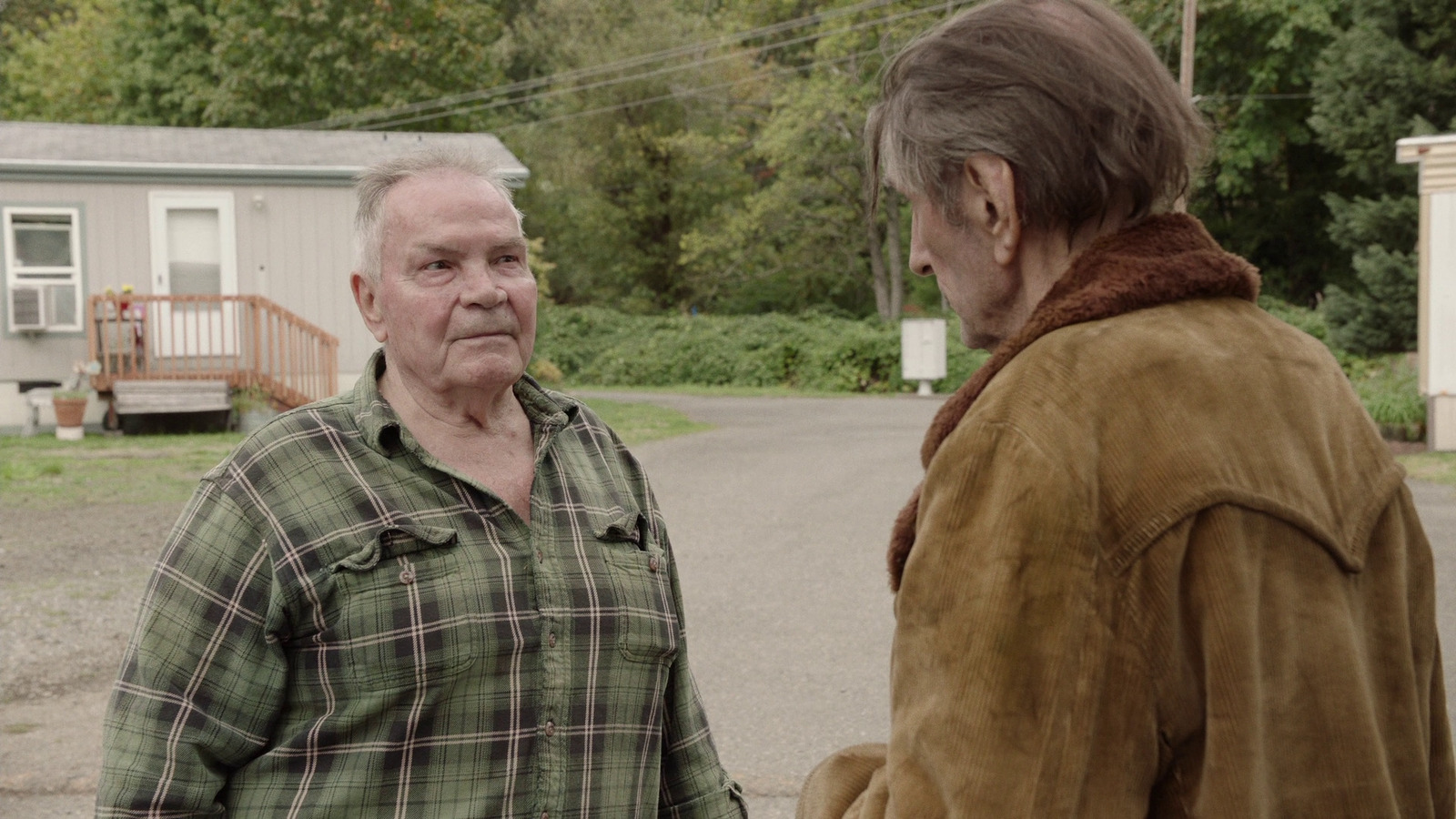
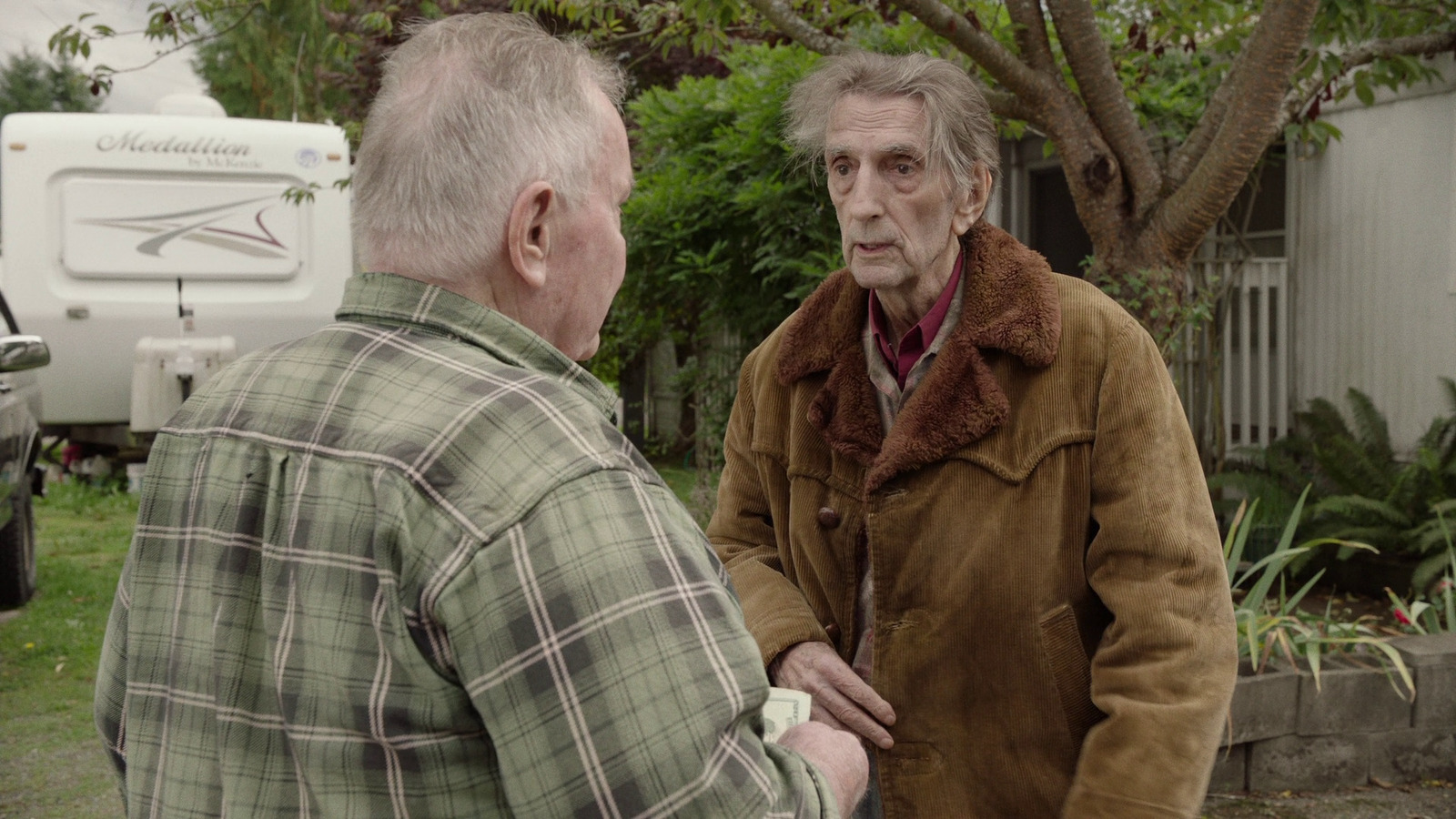
Carl discovers that Kriscol has been selling his blood while doing unpaid work around the trailer park. His response is specific: payment for the work and relief from the next rent bill. The scene gives solidarity a material form, complementing his presence beside the bereaved mother in Part 6. Their shared outdoor space and handshake place this exchange within a lived community rather than an abstract declaration of goodness.
Open the scene sequence · 1 frame
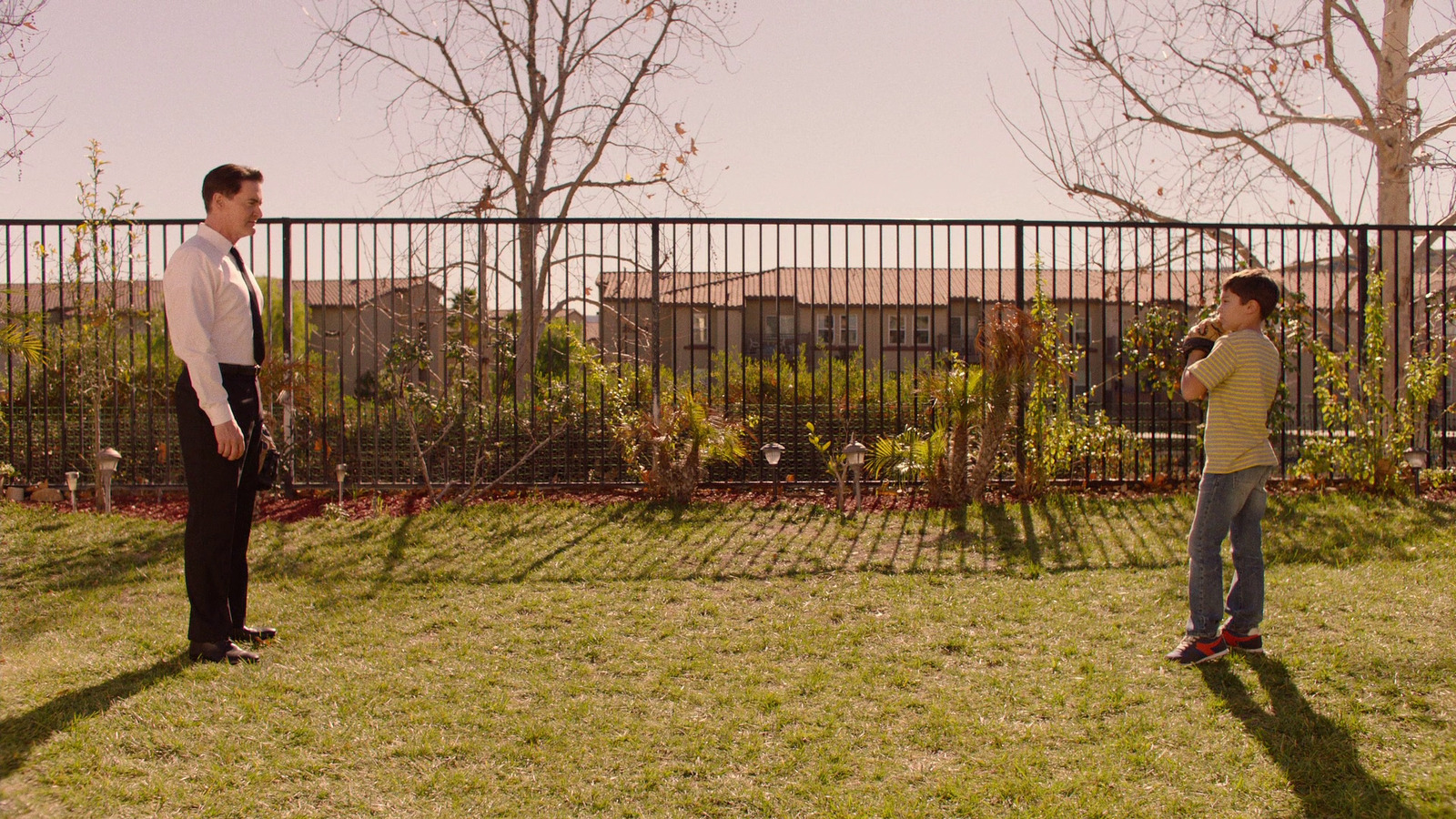
A family game without reciprocity
Sonny Jim positions Cooper for a game of catch. The wide garden composition keeps both bodies visible, making Cooper’s failure to respond a matter of timing and distance. The conventional picture of father and son briefly becomes an experiment in communication: the child understands the rules, while the adult occupies his place without joining the exchange.
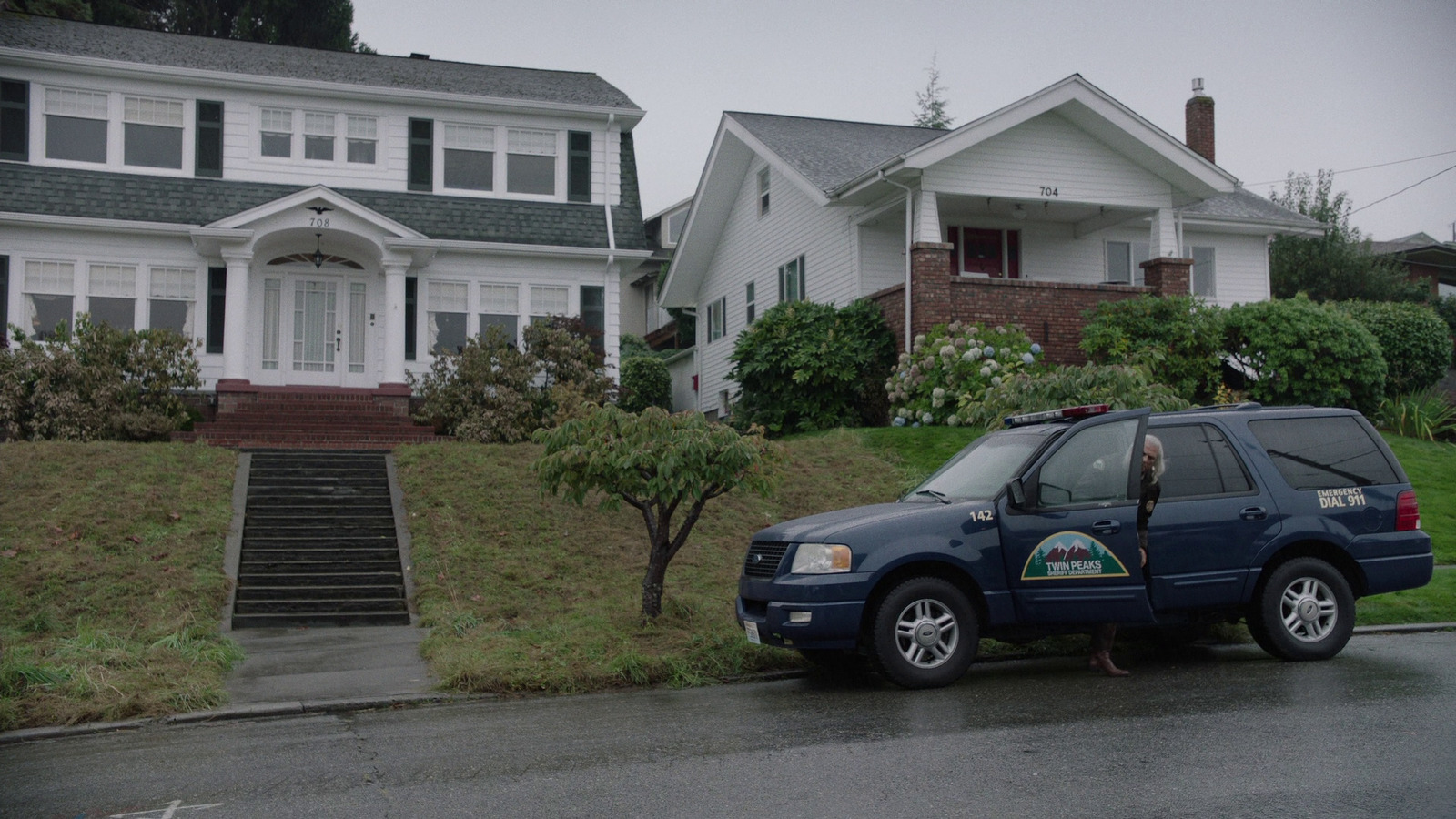
Help stops at the threshold
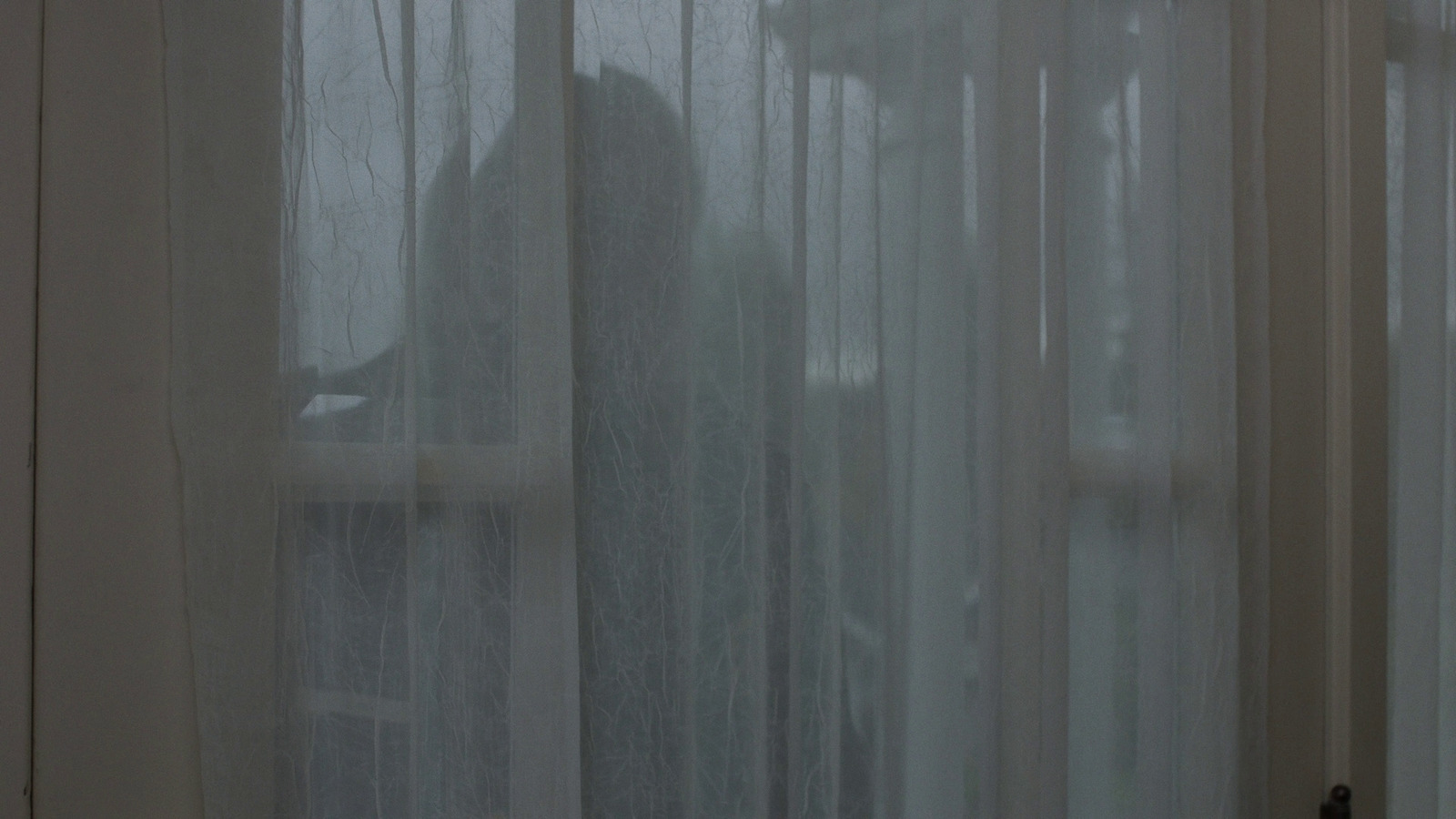
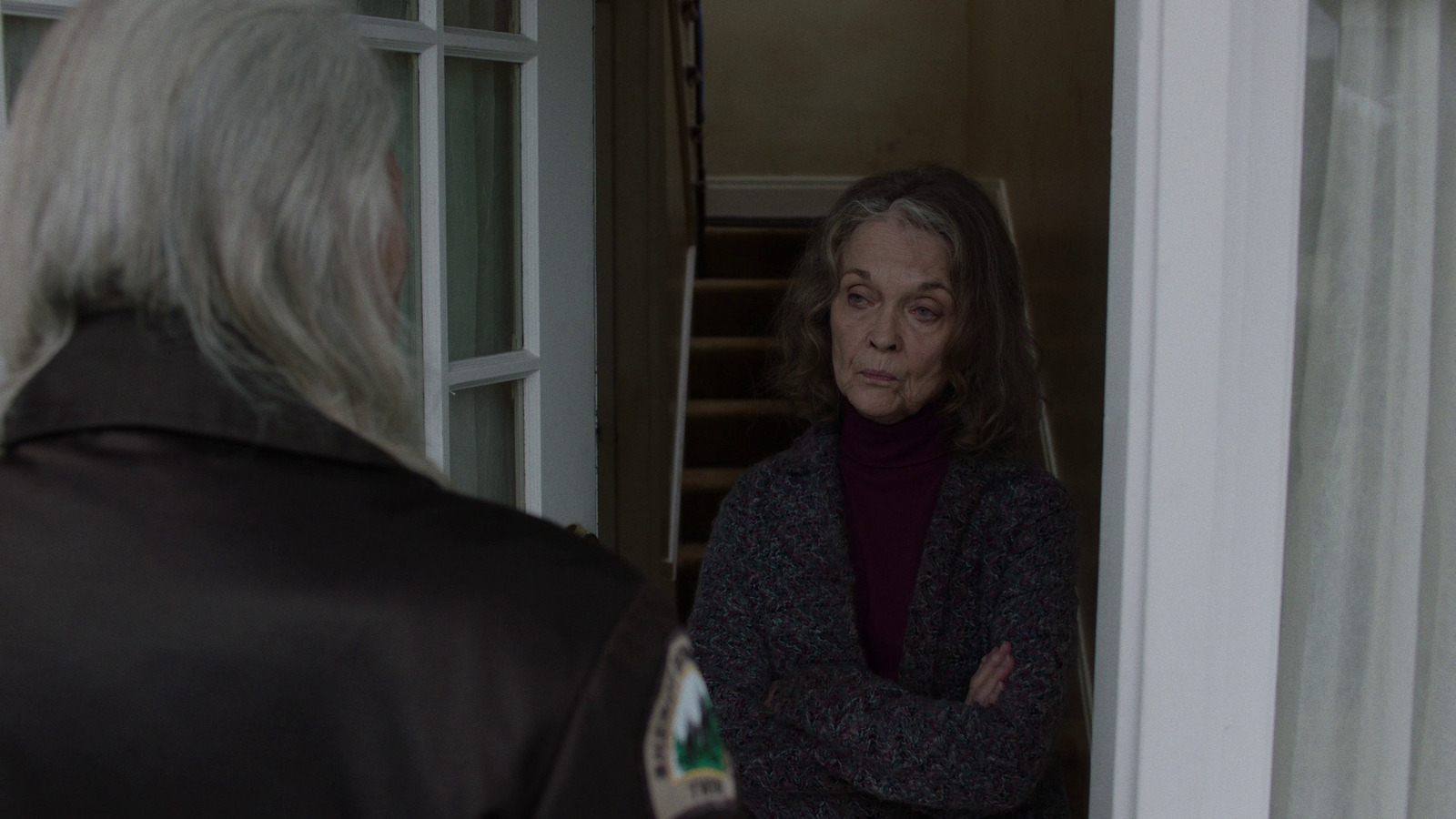
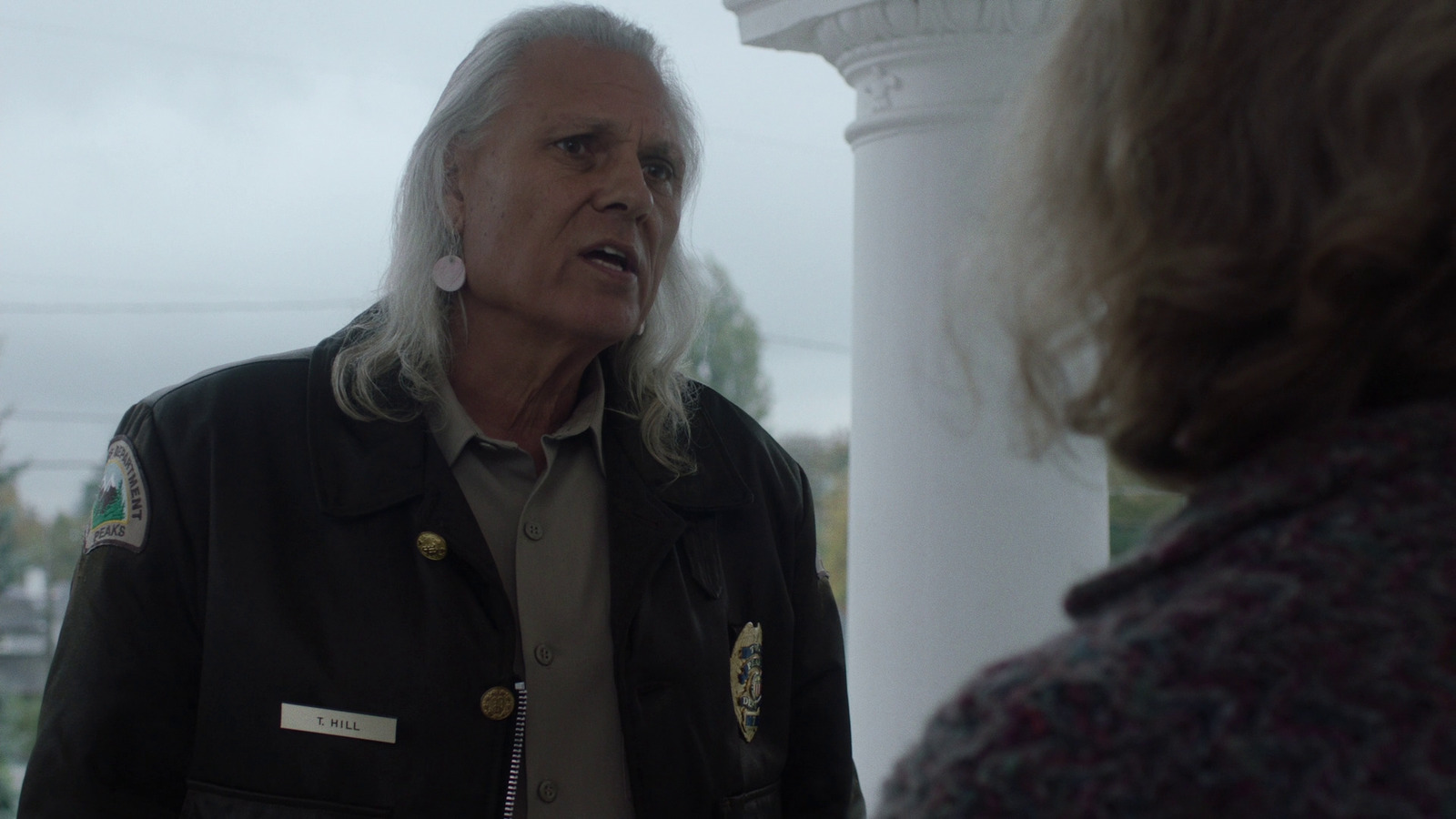
Hawk’s approach returns us to the Palmer house, its front steps and the curtained door. Sarah acknowledges the incident at the store but insists that she is now fine. A noise from inside prompts a question about another person; her answer redirects attention to something in the kitchen without allowing entry. The threshold holds. Hawk offers assistance without forcing an explanation, and the house remains a space whose interior is withheld.
Open the scene sequence · 3 frames
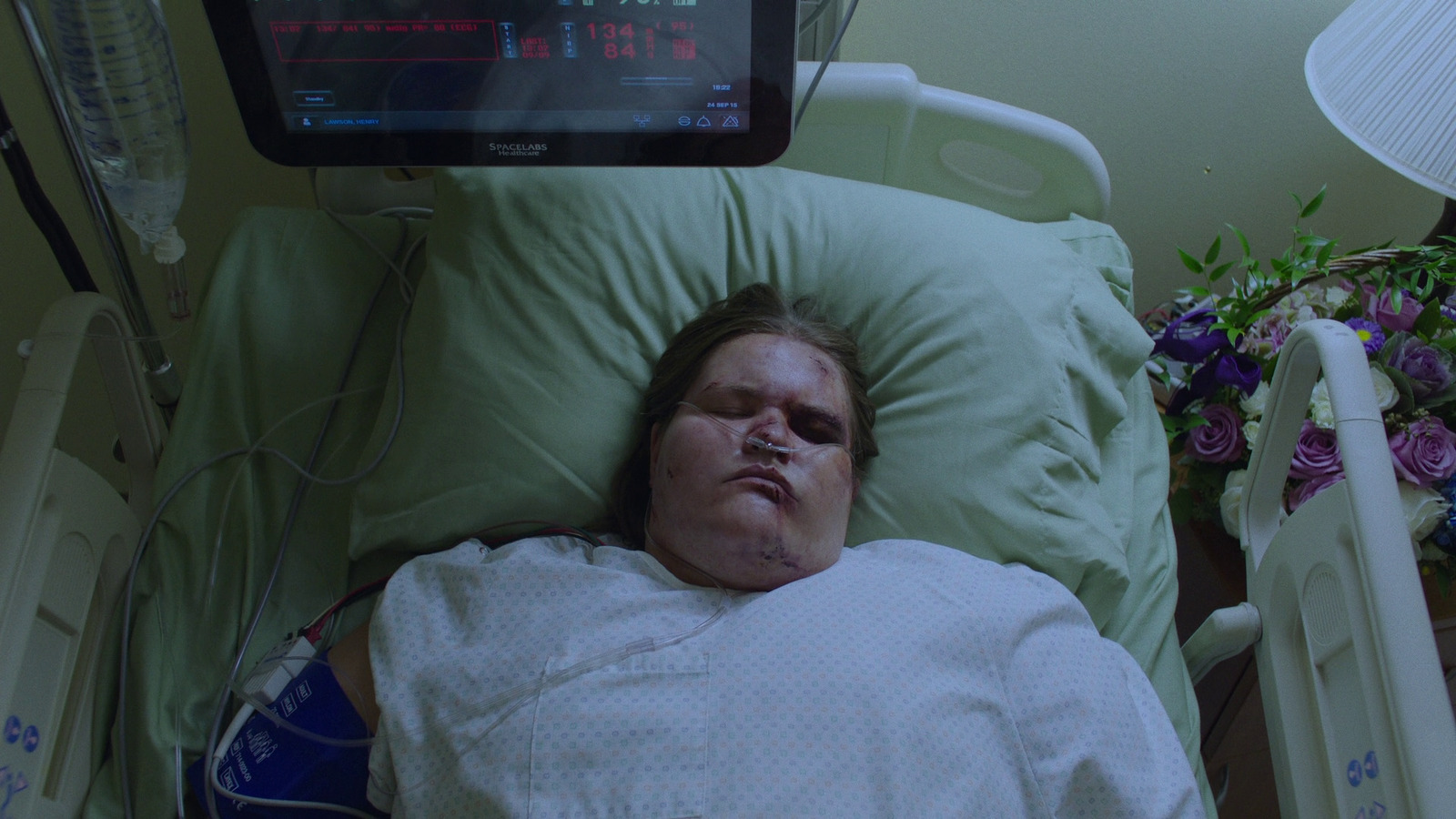
A surviving witness in intensive care
The brief hospital passage makes Miriam’s survival visible before Frank reports the practical consequences of her injuries. The corridor leads to a still body surrounded by medical equipment. This is an aftermath image: the attack from Part 10 has not ended merely because Richard has left the scene. It continues as bodily damage and a need for care.
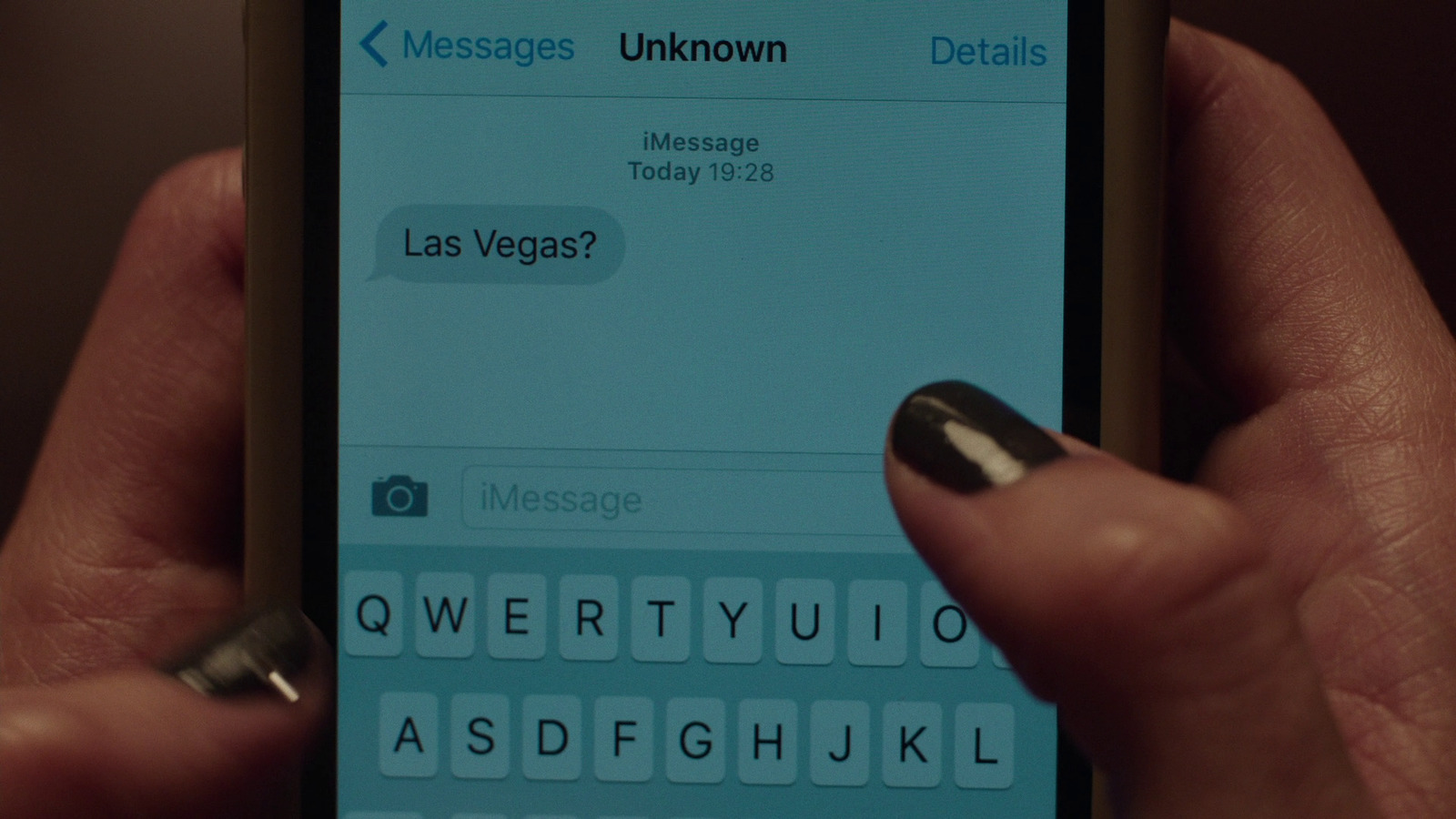
A question reaches Diane
The close view of Diane’s phone gives a short message disproportionate importance. Las Vegas appears as a question from an unidentified contact. Her barroom isolation differs from the earlier deputization: an official invitation and a private channel coexist without becoming a shared conversation. Later, Albert will reveal that the investigators are monitoring this exchange.
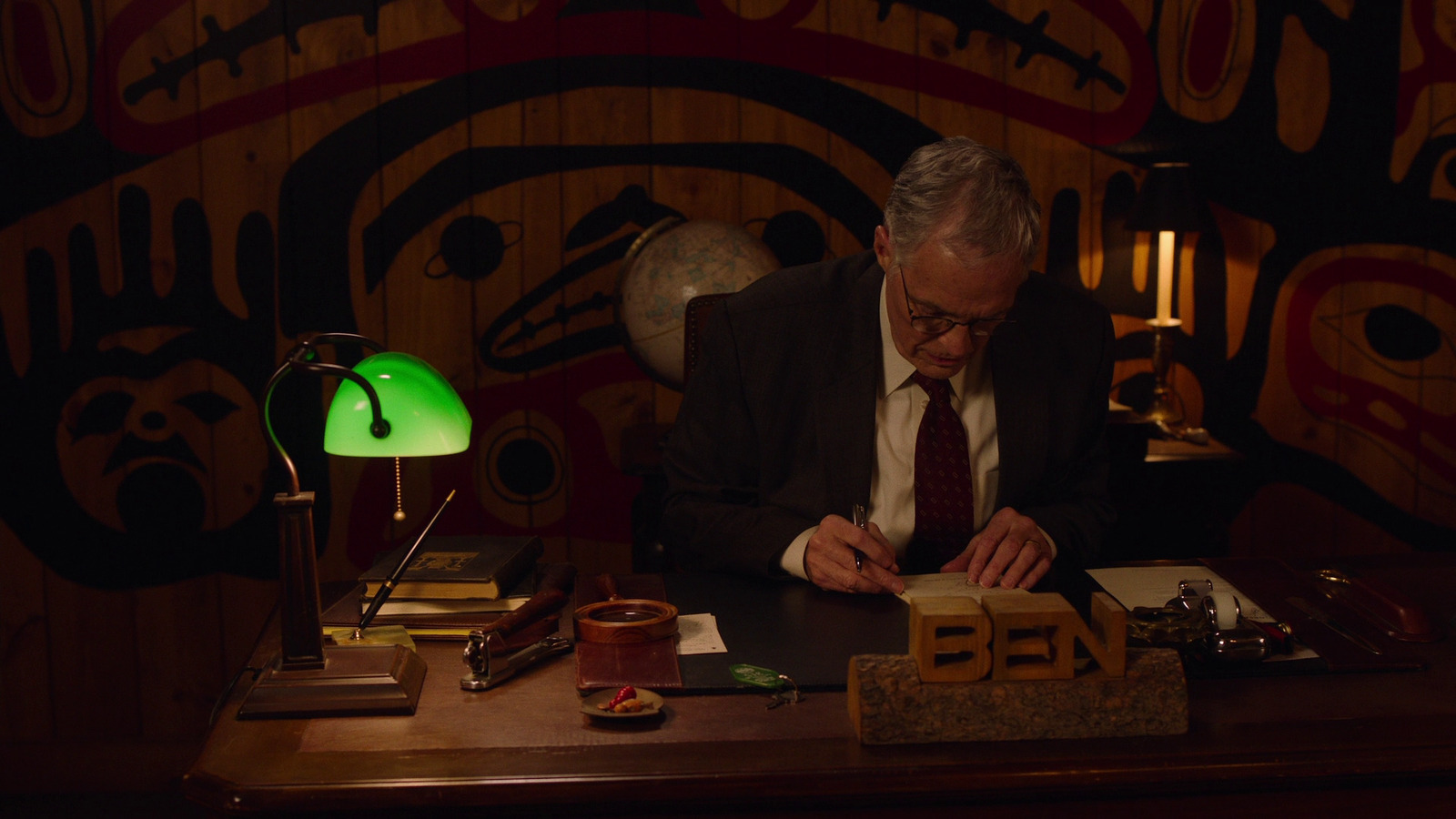
Bad news reaches the family office
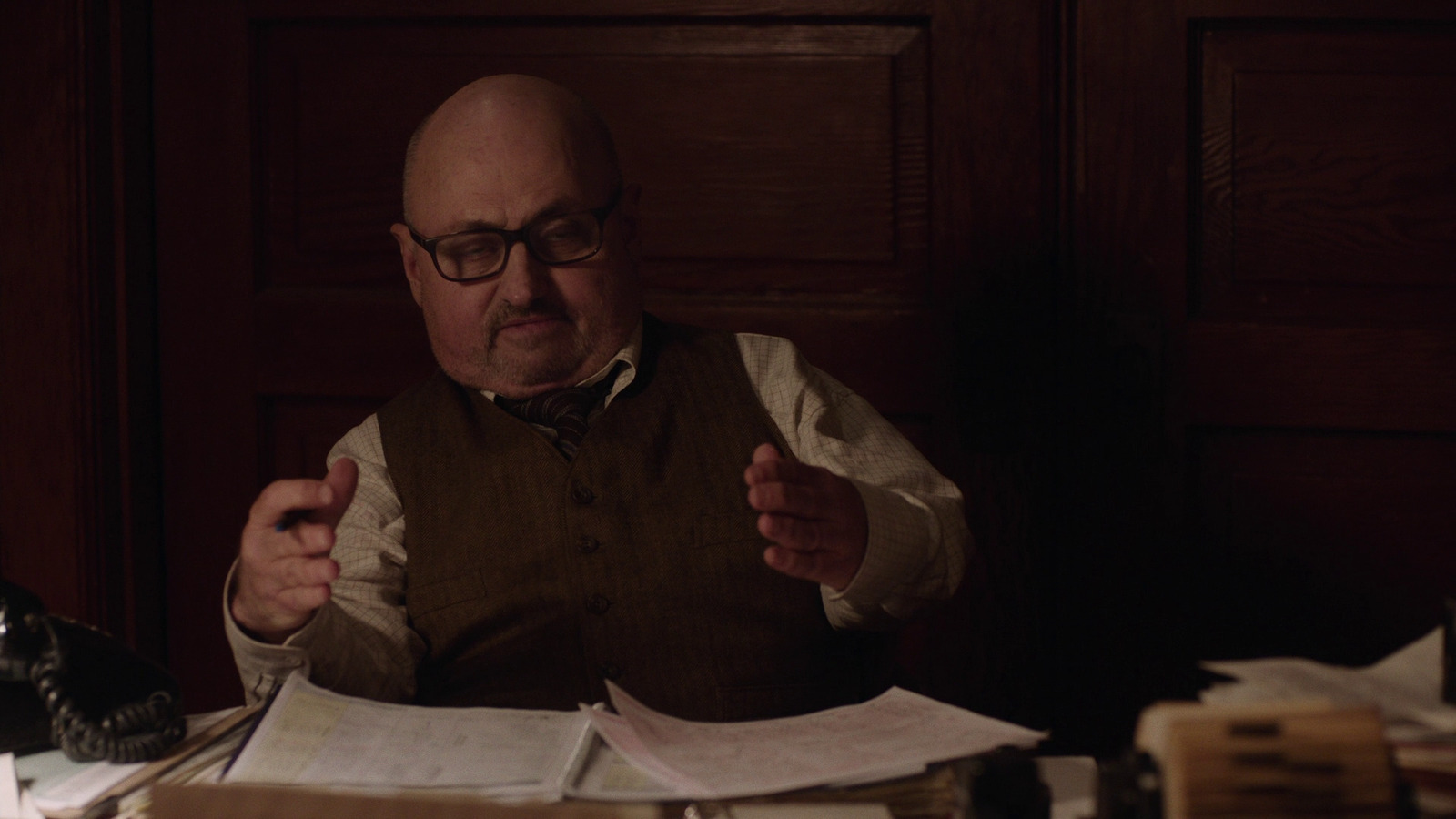
Frank tells Ben that Richard killed the child and attacked the witness. The large desk initially maintains a familiar arrangement of authority and visitor; the information then makes Ben’s position uncomfortable. His agreement to pay for Miriam’s operation is immediate, but it cannot undo the events Frank describes. The conversation also keeps absent people present: Harry is ill, Richard is missing, and the injured woman remains elsewhere.
Open the scene sequence · 1 frame
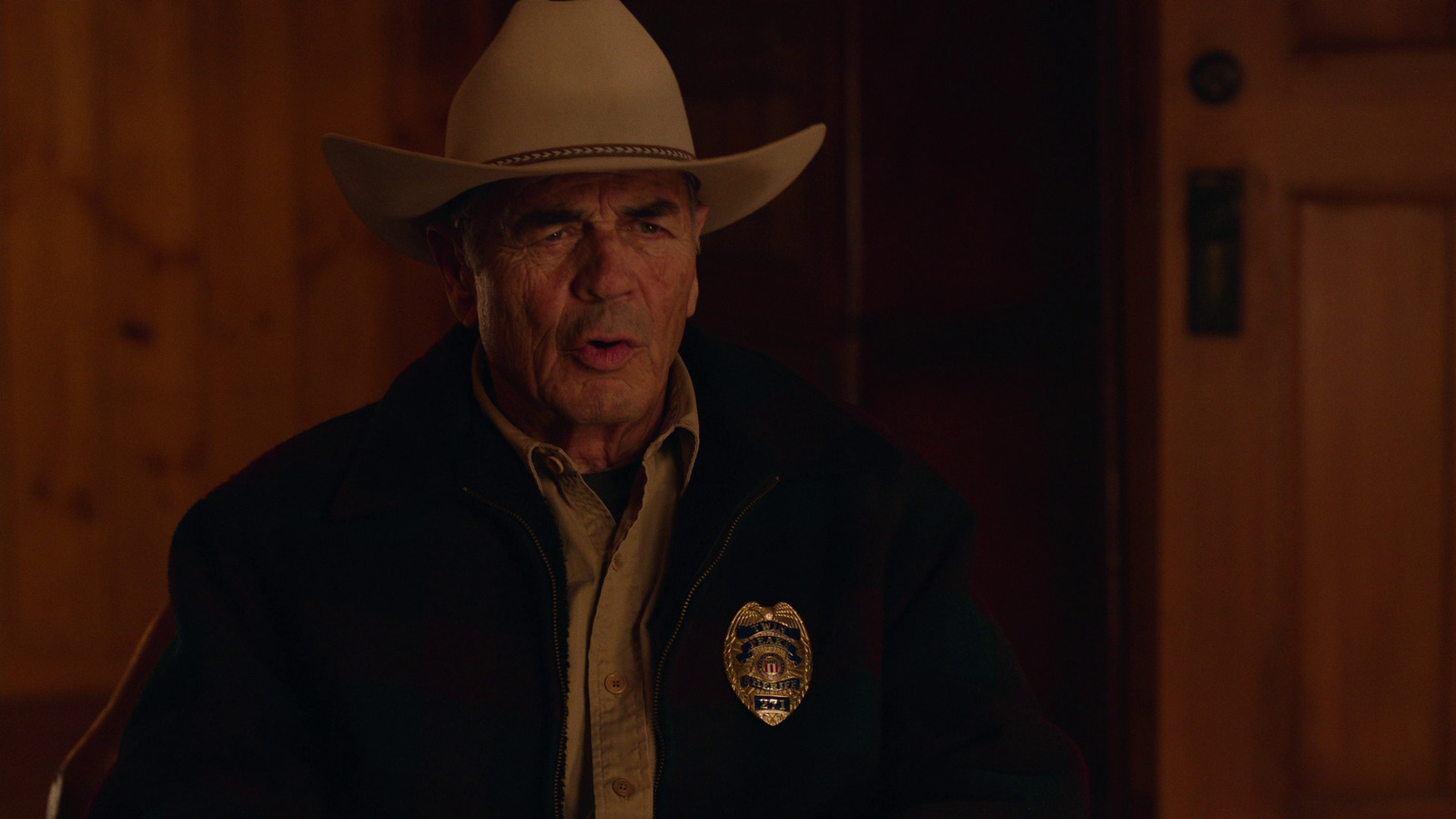
A souvenir becomes an investigative connection
Ben produces the old key to Cooper’s room. For him it is a memento to send to Harry; for Frank it coincides with renewed attention to Cooper’s case. The same small object therefore carries private feeling and investigative value. Its long journey from Las Vegas brings the two story regions together through handling, mail and recognition rather than a dramatic reunion.
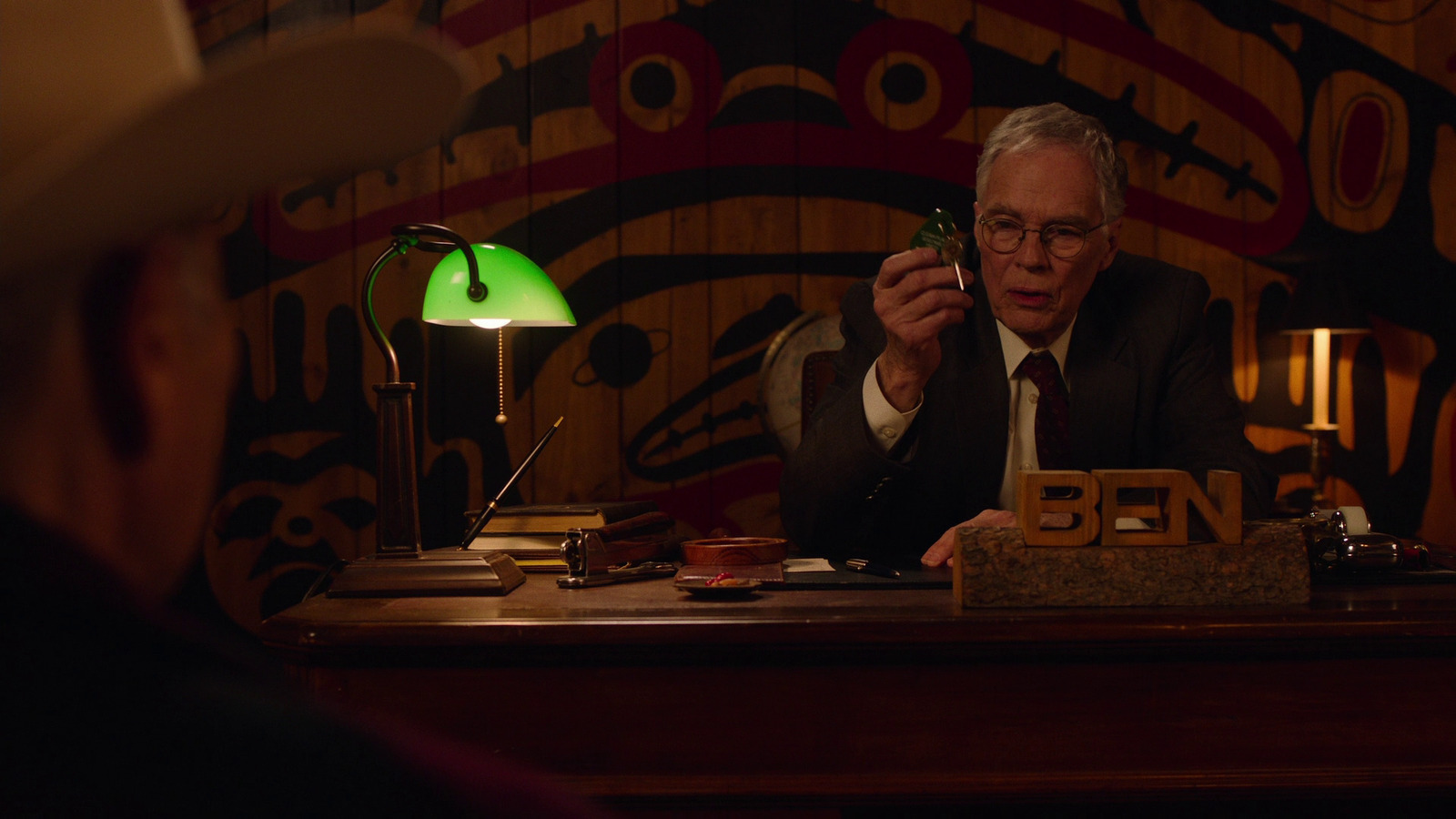
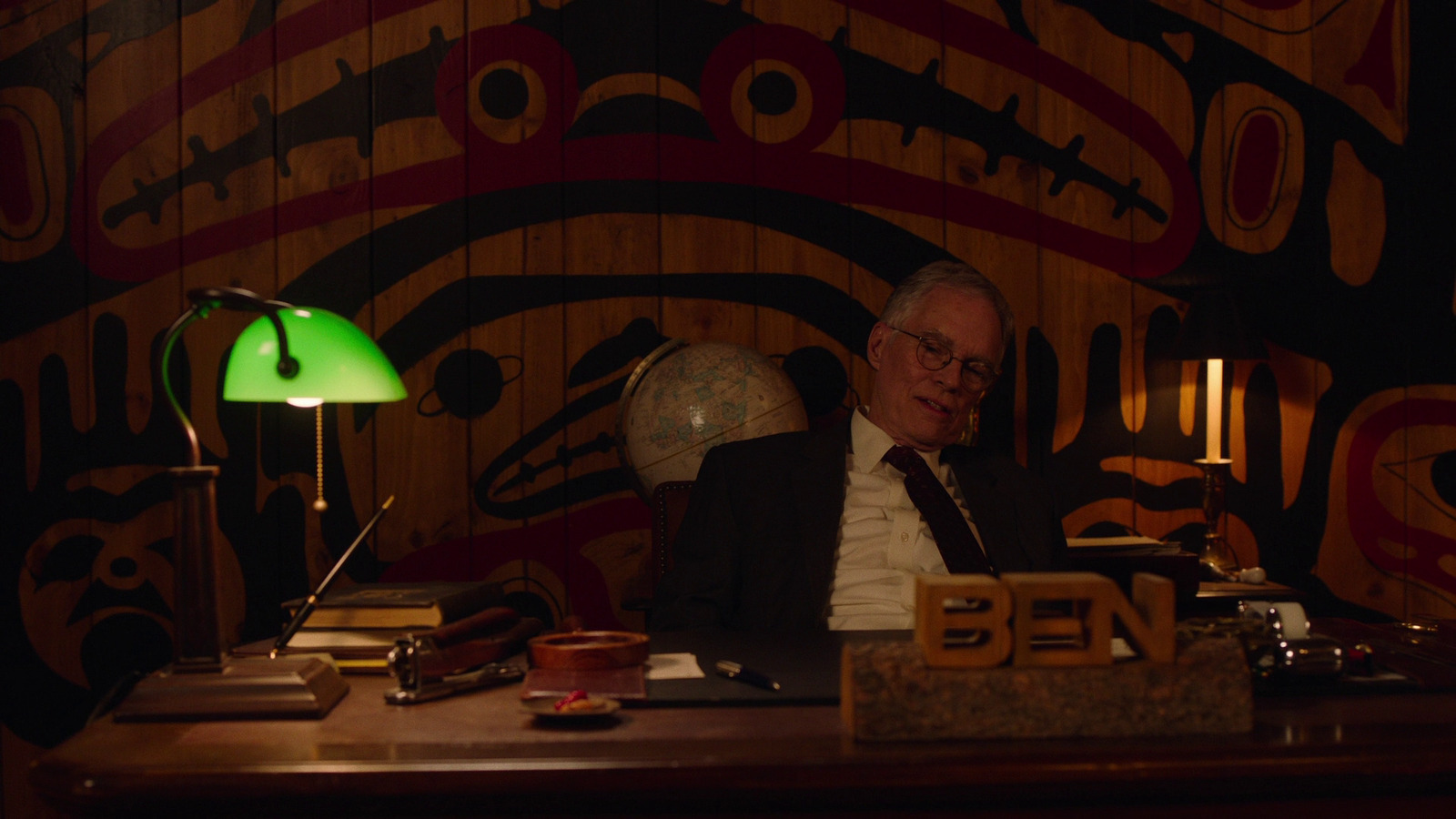
A memory beside an unpaid bill
After Frank leaves, Ben turns from Richard’s absent father to a precise memory of his own: a secondhand bicycle repainted in two greens. Richard Beymer gives the recollection room to develop through pauses and repeated returns to the bike. The episode does not turn memory into an excuse. Ben instructs Beverly to arrange Miriam’s medical payment, placing a practical responsibility beside his longing for a remembered act of paternal care.
Open the scene sequence · 1 frame

The exit that takes its own time
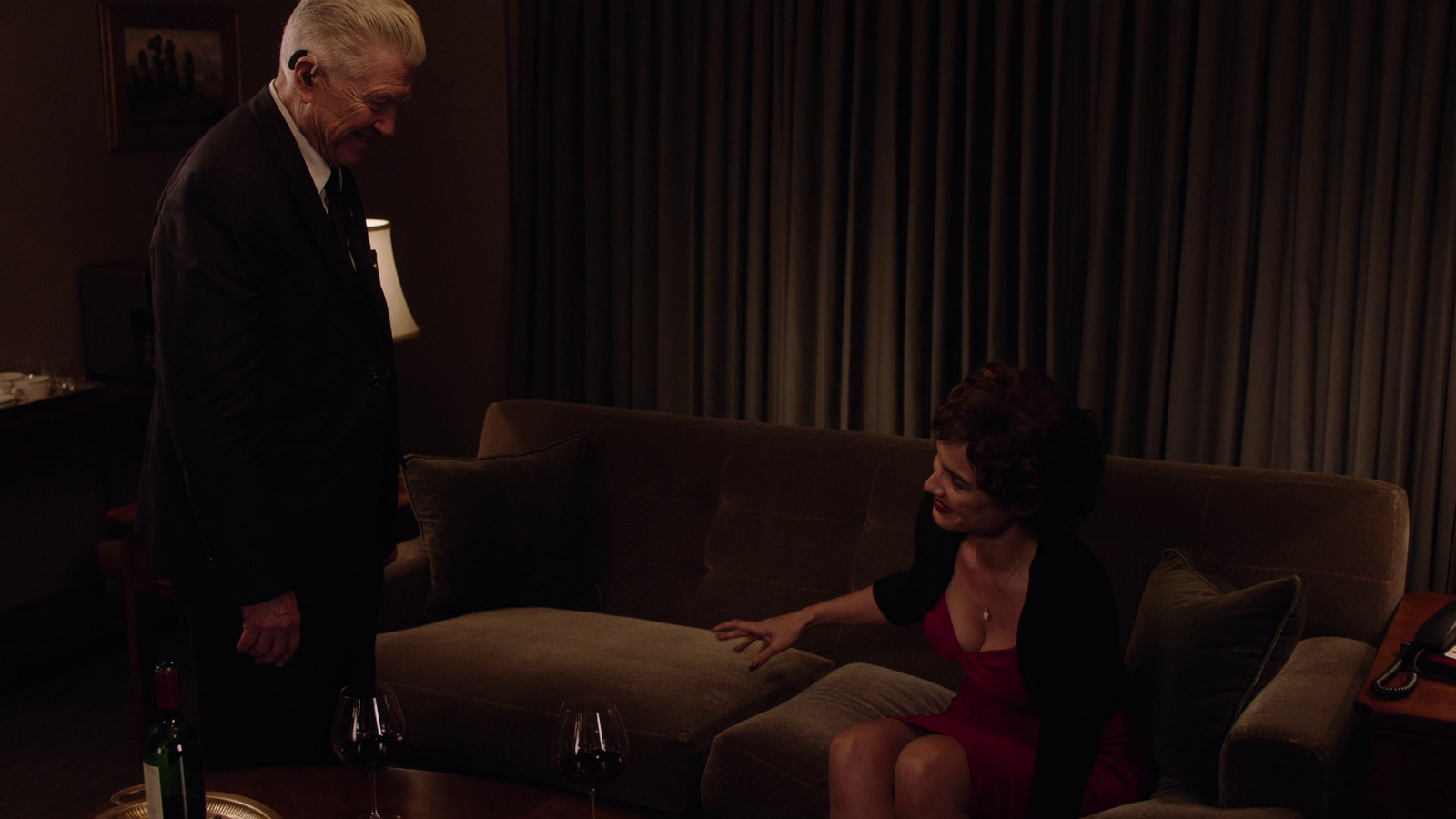
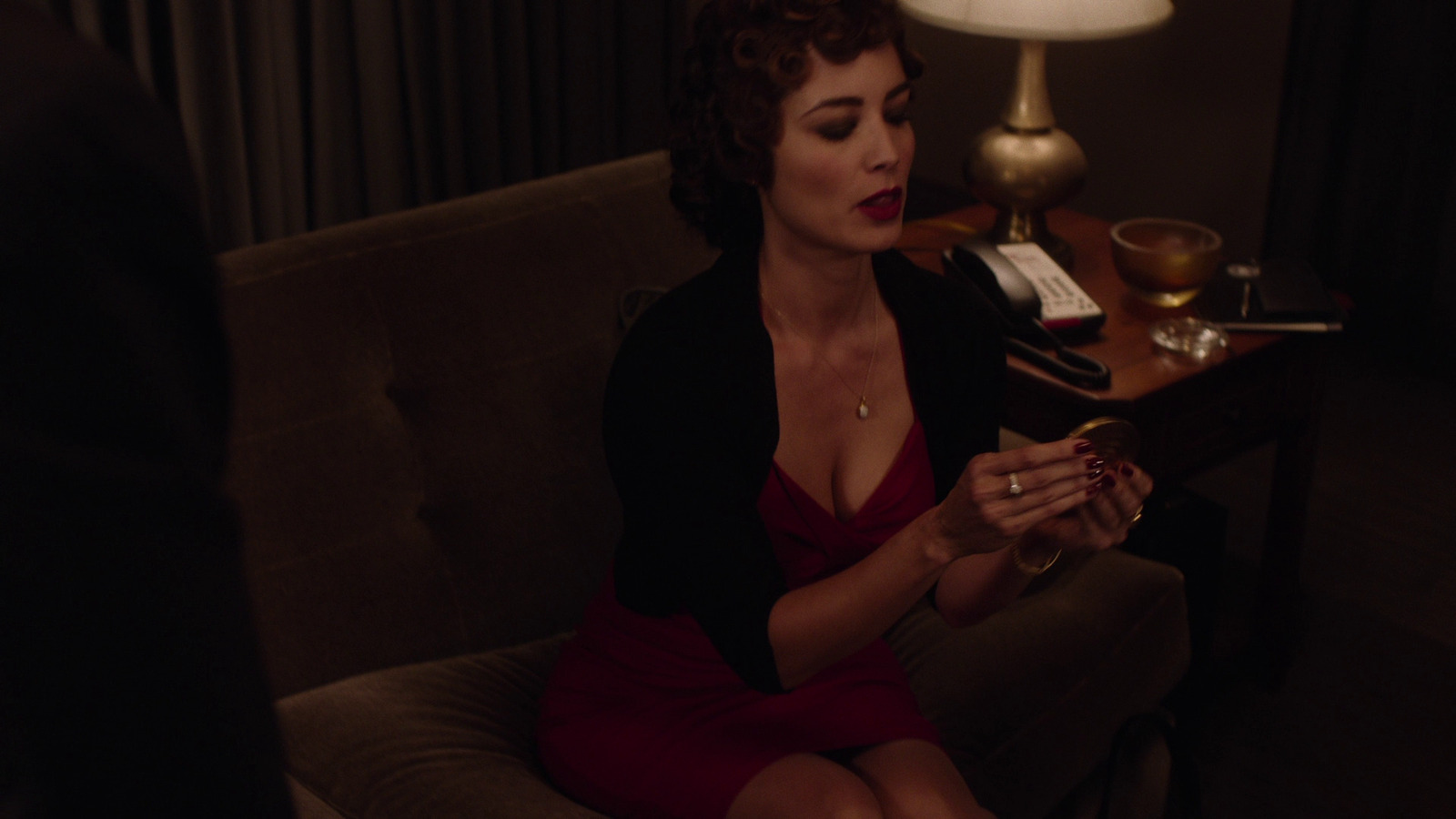
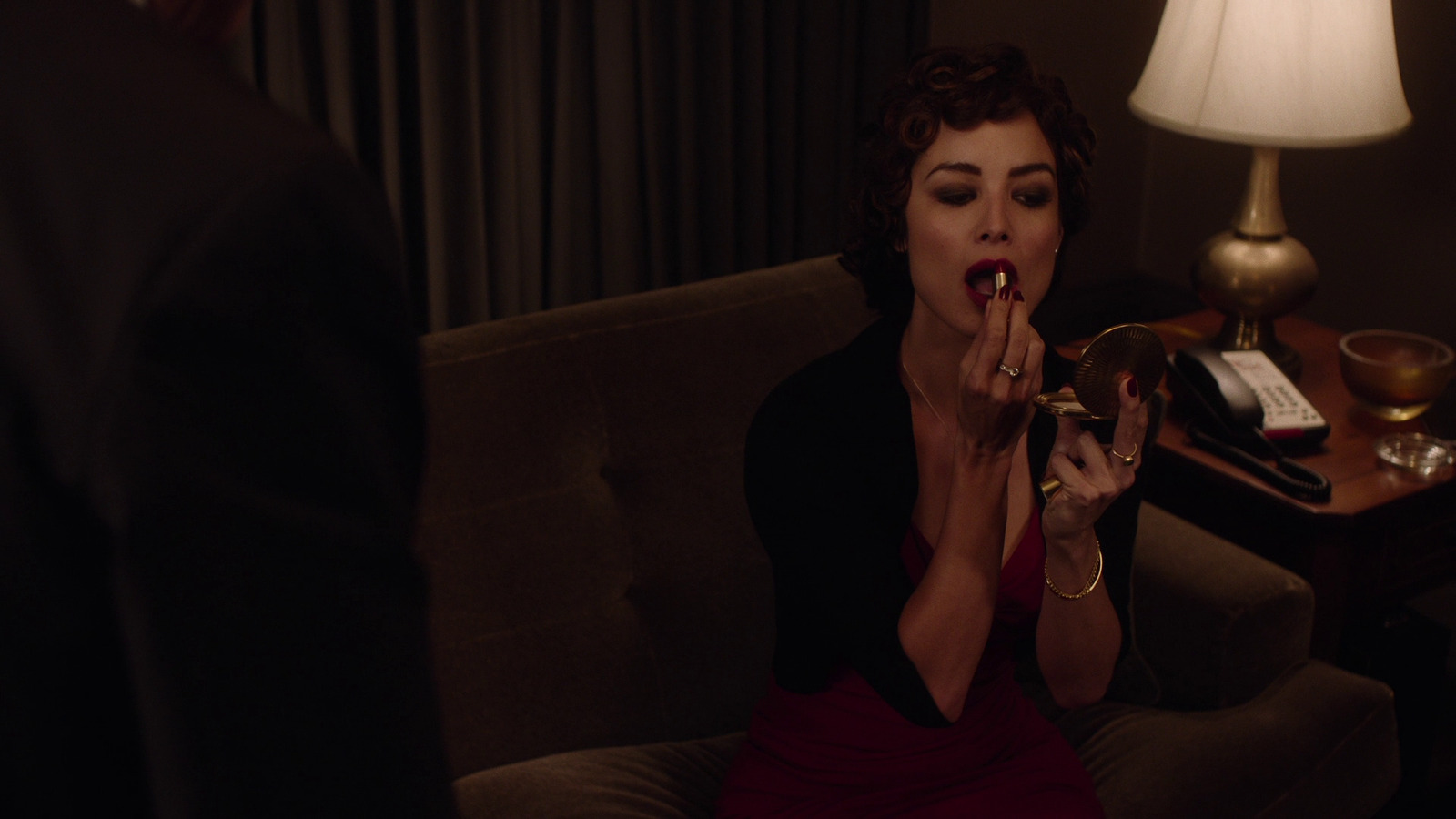
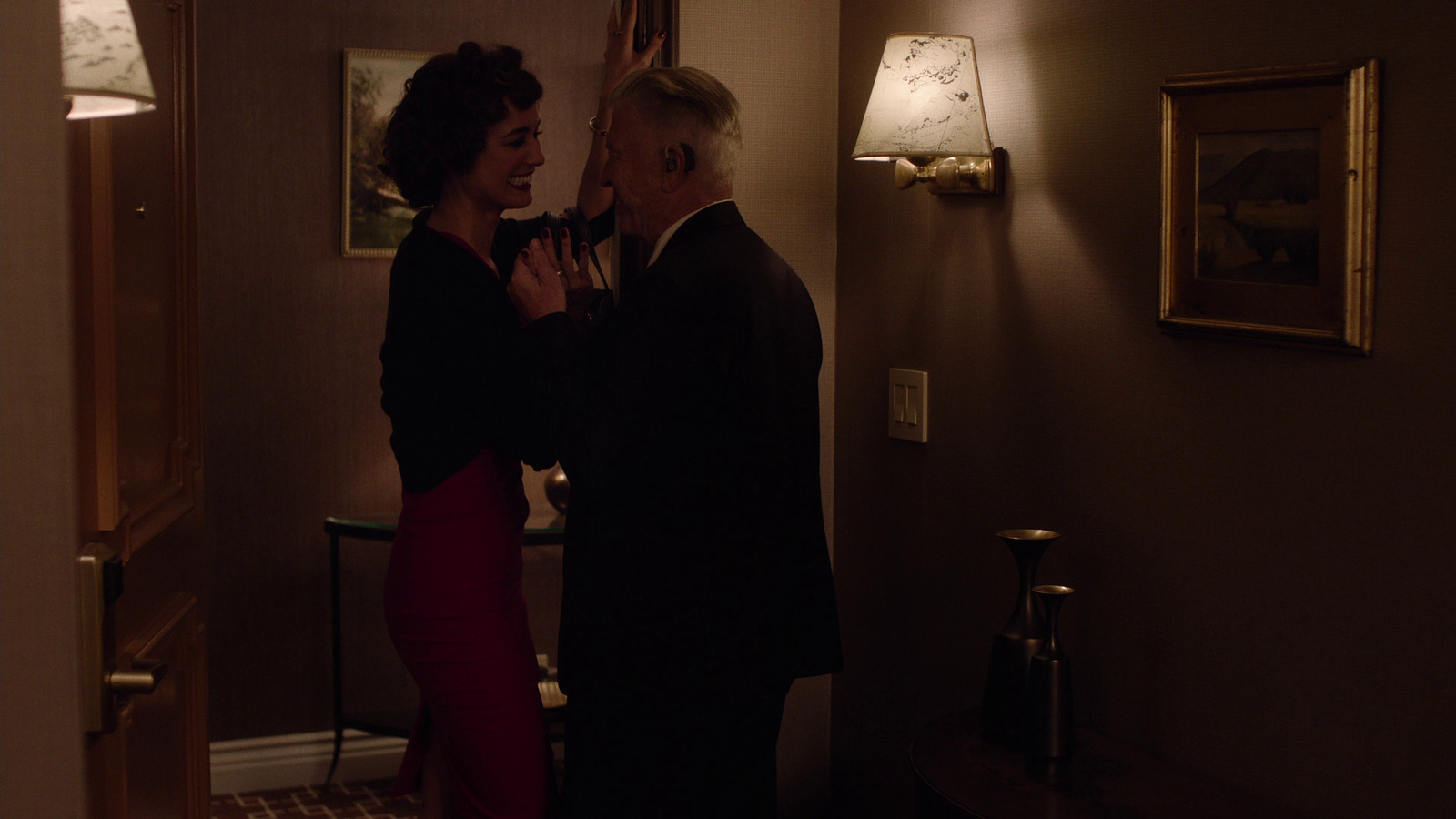
Albert arrives with information, but Gordon’s guest does not simply disappear to make way for the plot. Shoes, compact, lipstick, bag and a lingering farewell become a sequence of small actions. Albert’s waiting supplies the comic counterpoint. Each gesture remains legible, and the room’s symmetry emphasizes how long the interruption lasts. The scene asks the viewer to occupy the inconvenient duration of another person’s departure.
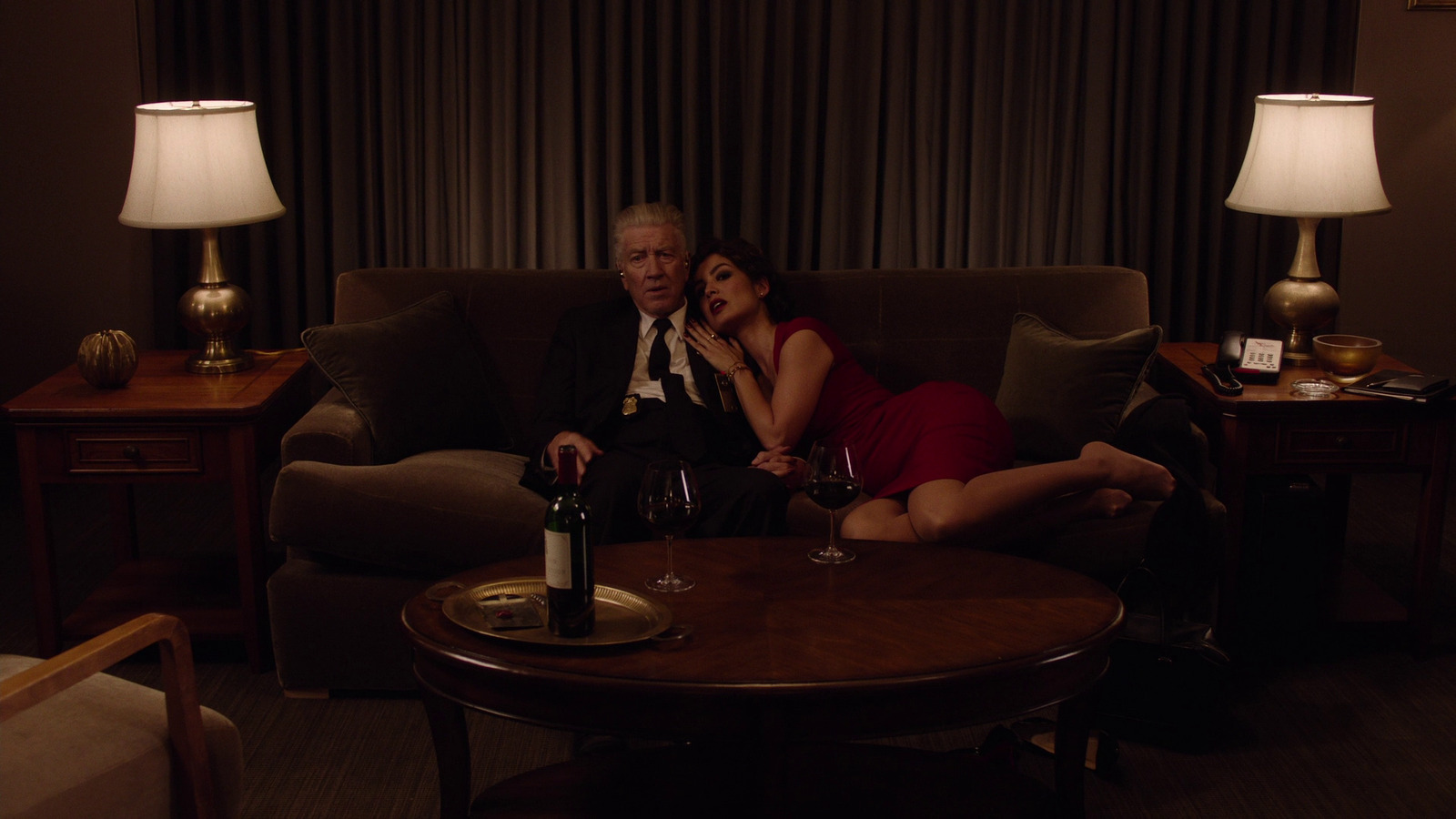
Open the scene sequence · 4 frames
Surveillance, a joke and a touch
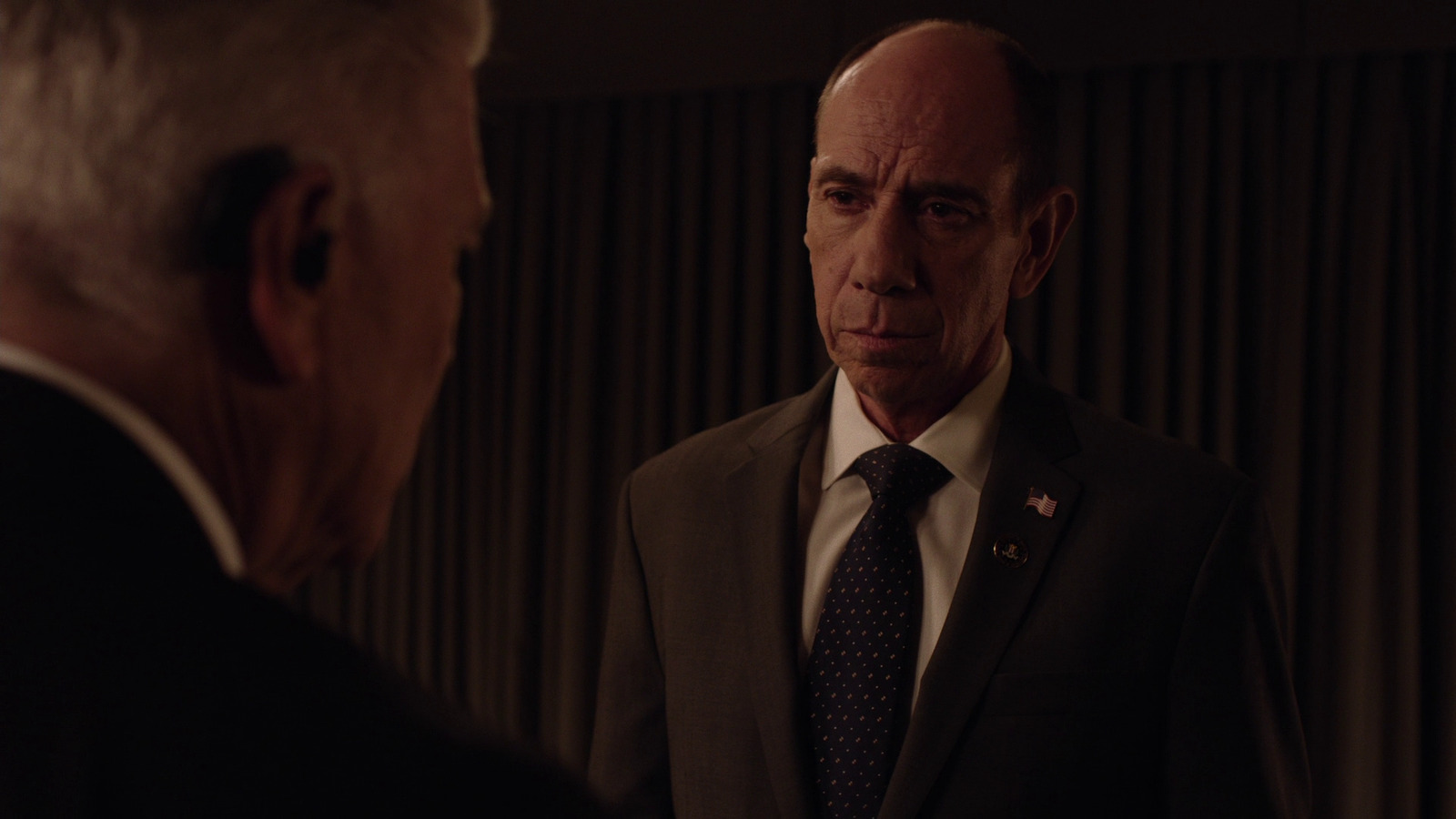
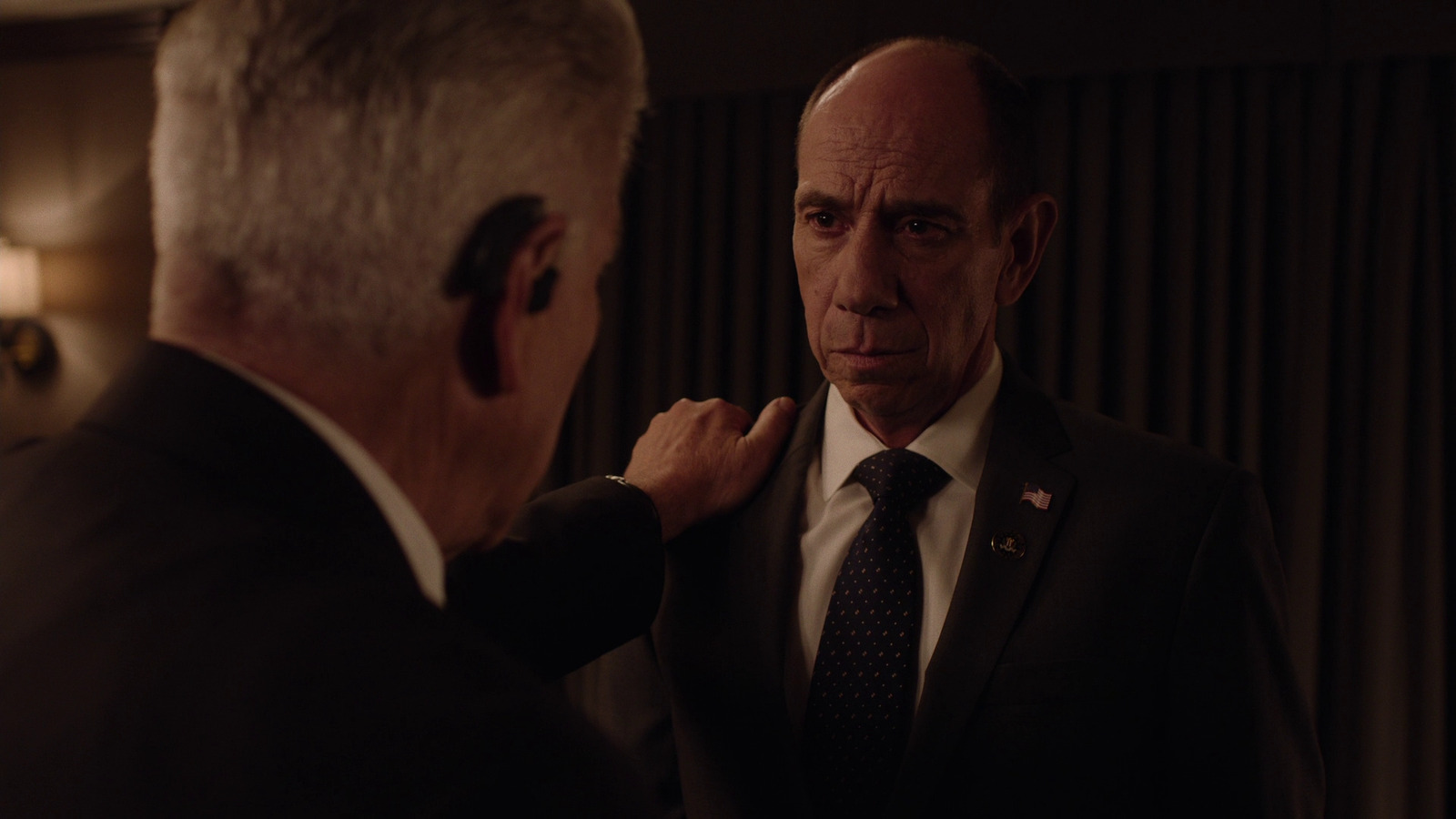
Albert reports Diane’s messages, but Gordon continues to divert the exchange through a story, a failed pun and a misunderstanding about wine. The pauses do more than postpone the next clue. Gordon’s touch on Albert’s face and expression of concern momentarily displace the roles of superior and subordinate. Information and affection occupy the same scene without settling into the same rhythm.
Open the scene sequence · 1 frame
Murder on the way to a meal
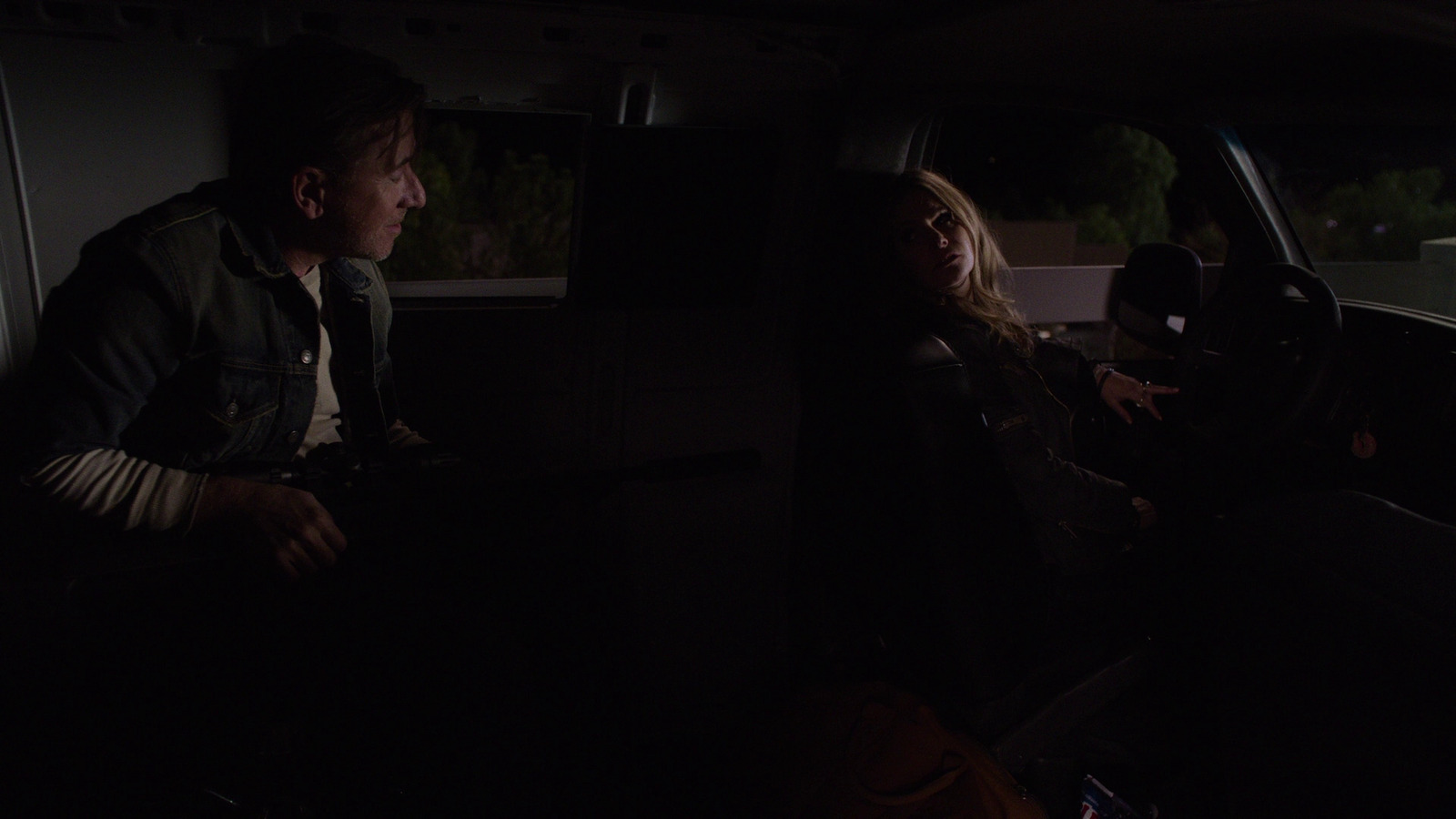
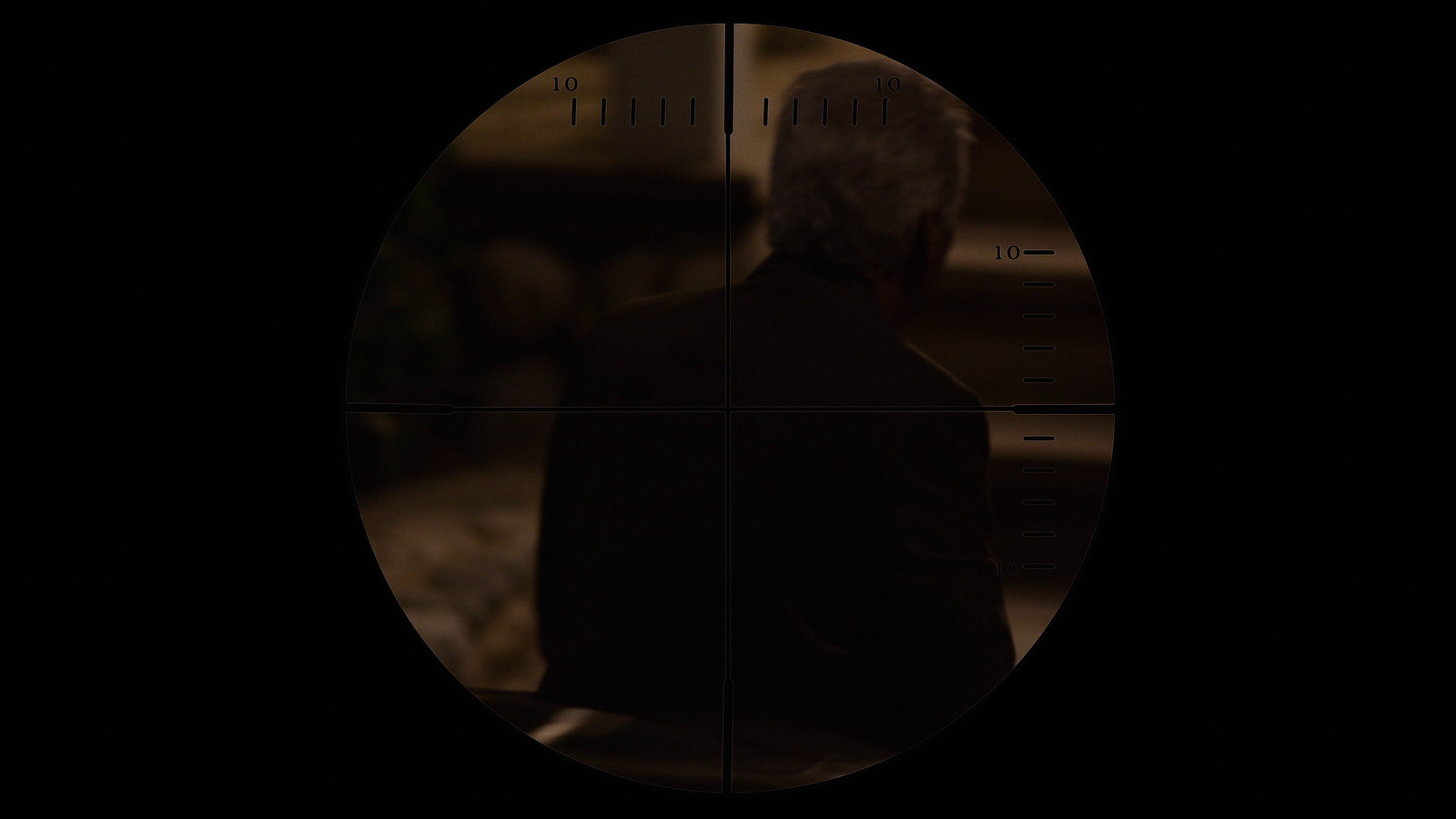
Hutch and Chantal discuss torture and fast food while watching the warden’s home. The view through the rifle sight makes him a target before the attack occurs. Their casual exchange is interrupted by the child’s cries after the shooting, introducing a consequence the killers immediately drive away from. The sequence links administrative power, hired violence and domestic loss while refusing to let the perpetrators’ appetite define its whole meaning.
Open the scene sequence · 1 frame
A sales pitch finds its audience
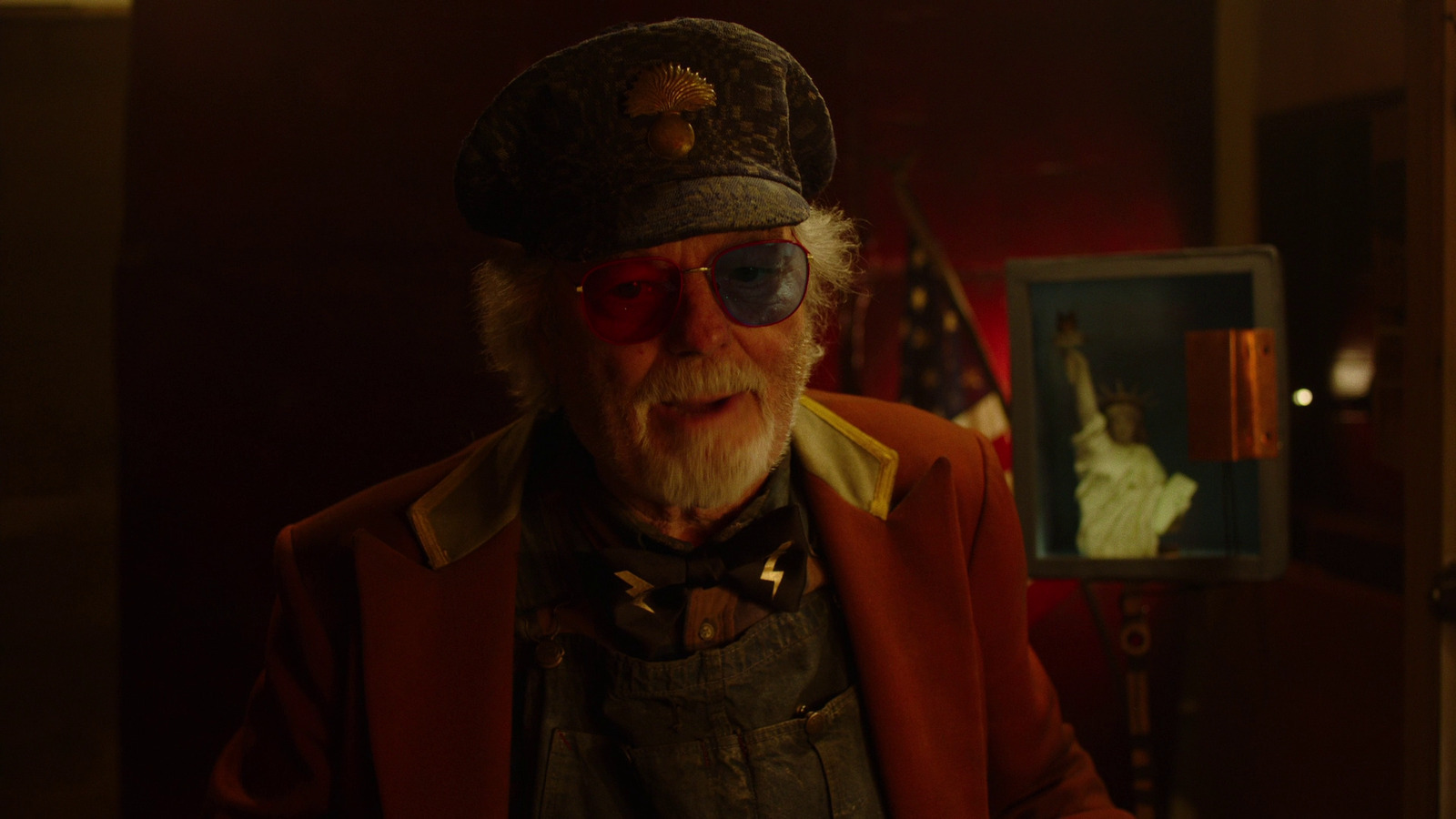
Dr. Amp’s broadcast alternates political denunciation with the advertisement for his painted shovels. Nadine watches from her desk and answers the promise of personal escape. Cutting between speaker and viewer makes the broadcast an active relationship. Its claims, price and theatrical apparatus remain visible together; the episode neither erases the commercial transaction nor dismisses the listener’s investment in it.
Open the scene sequence · 1 frame
A return without an establishing explanation
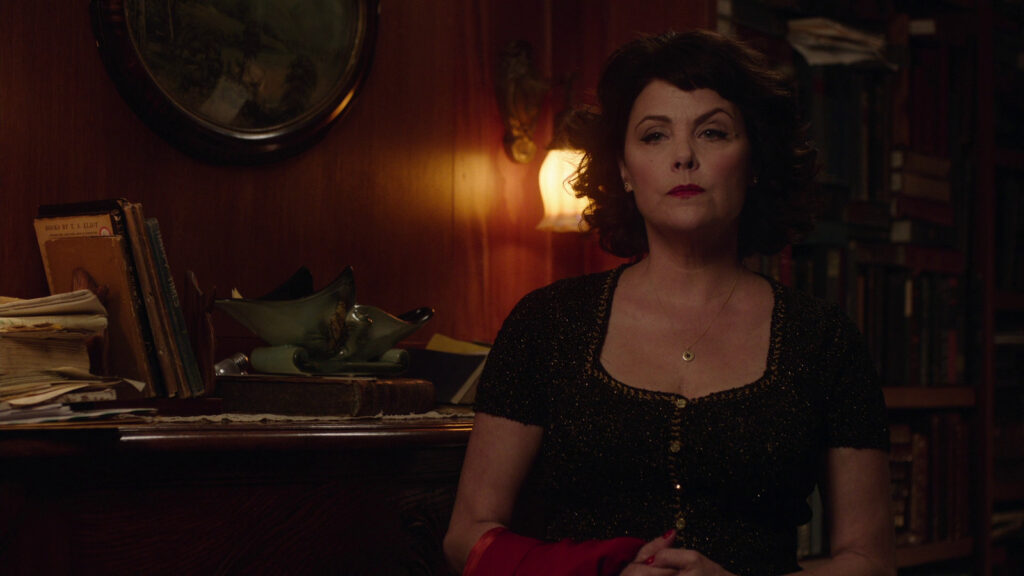
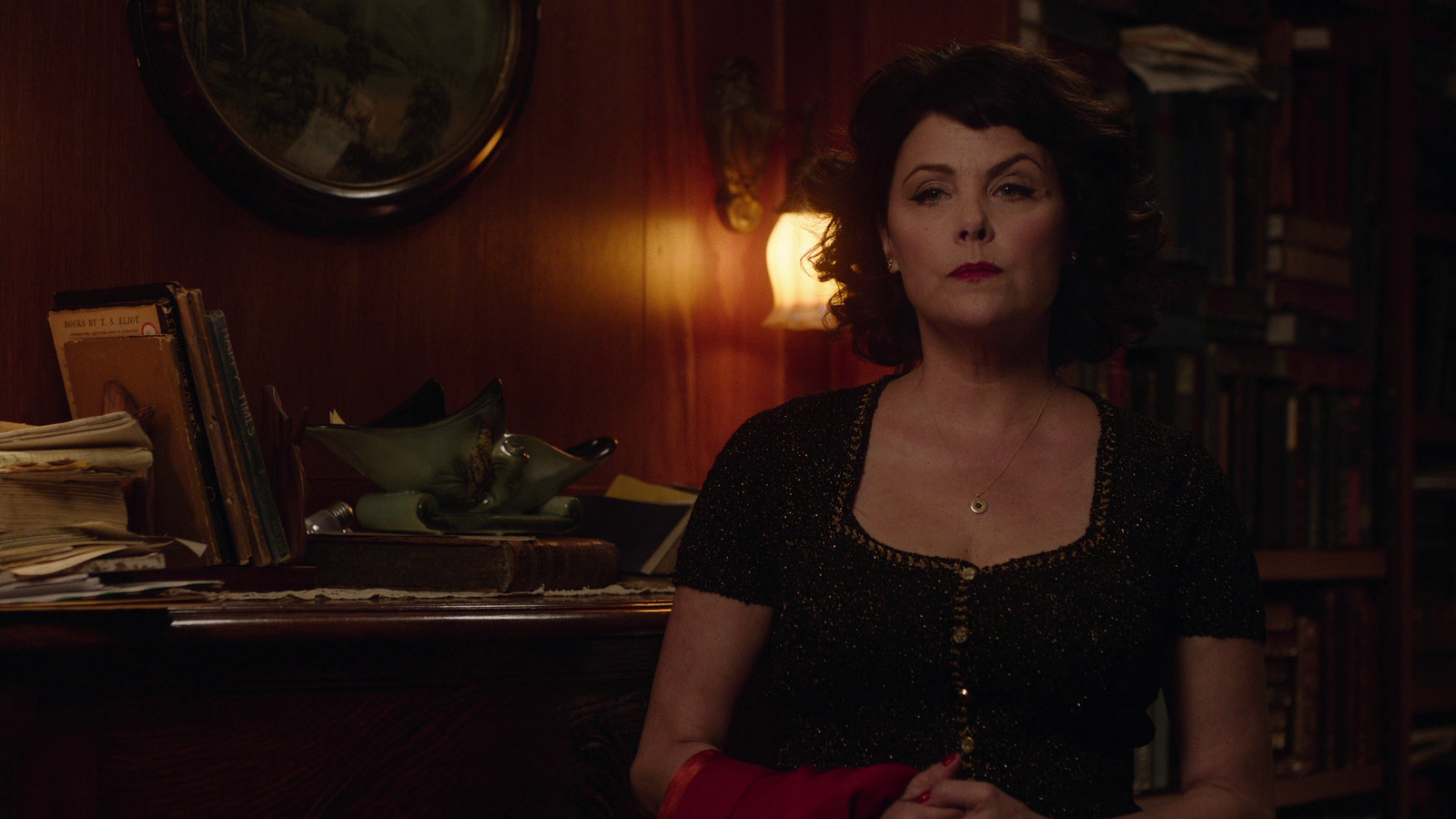
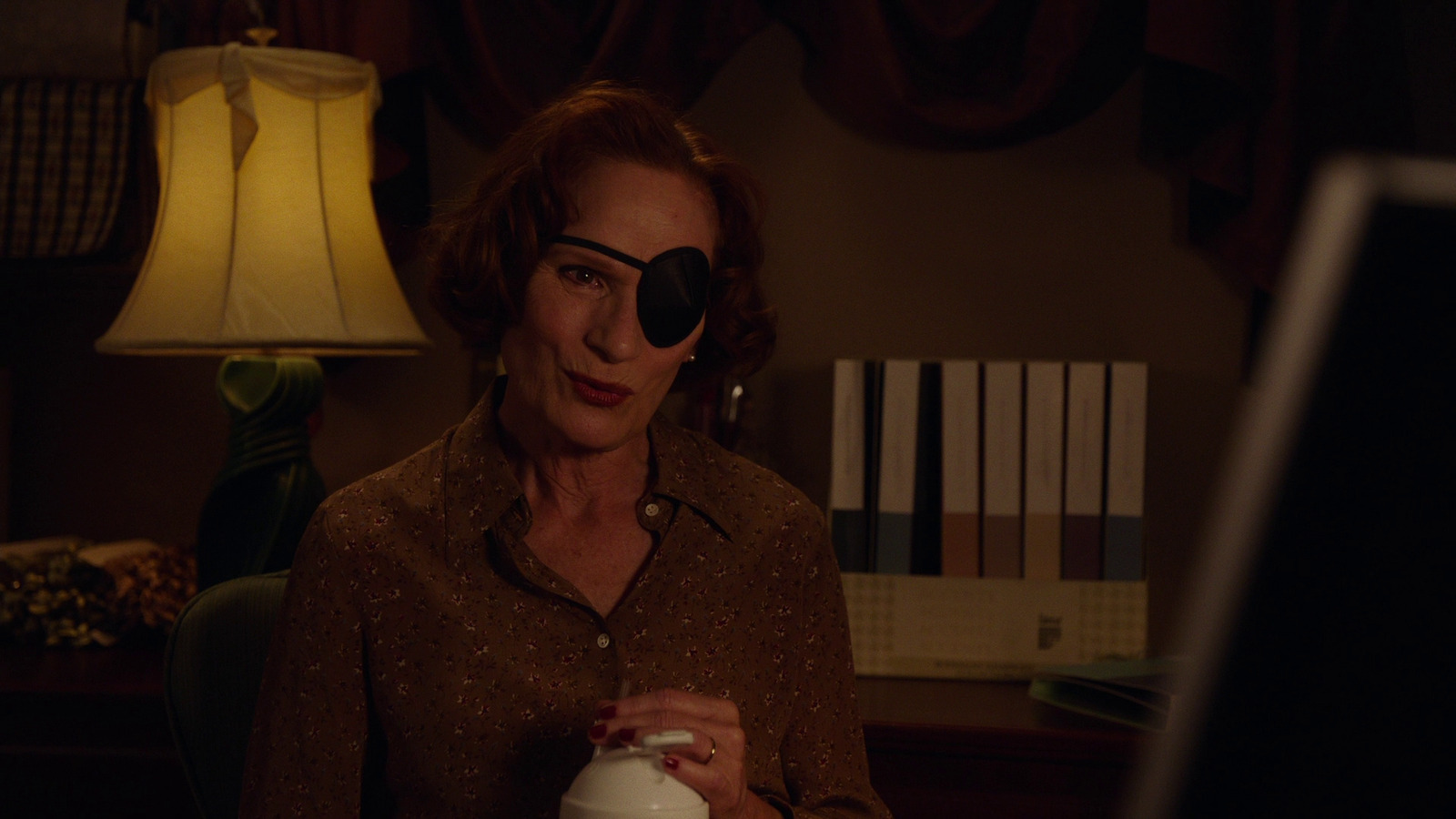
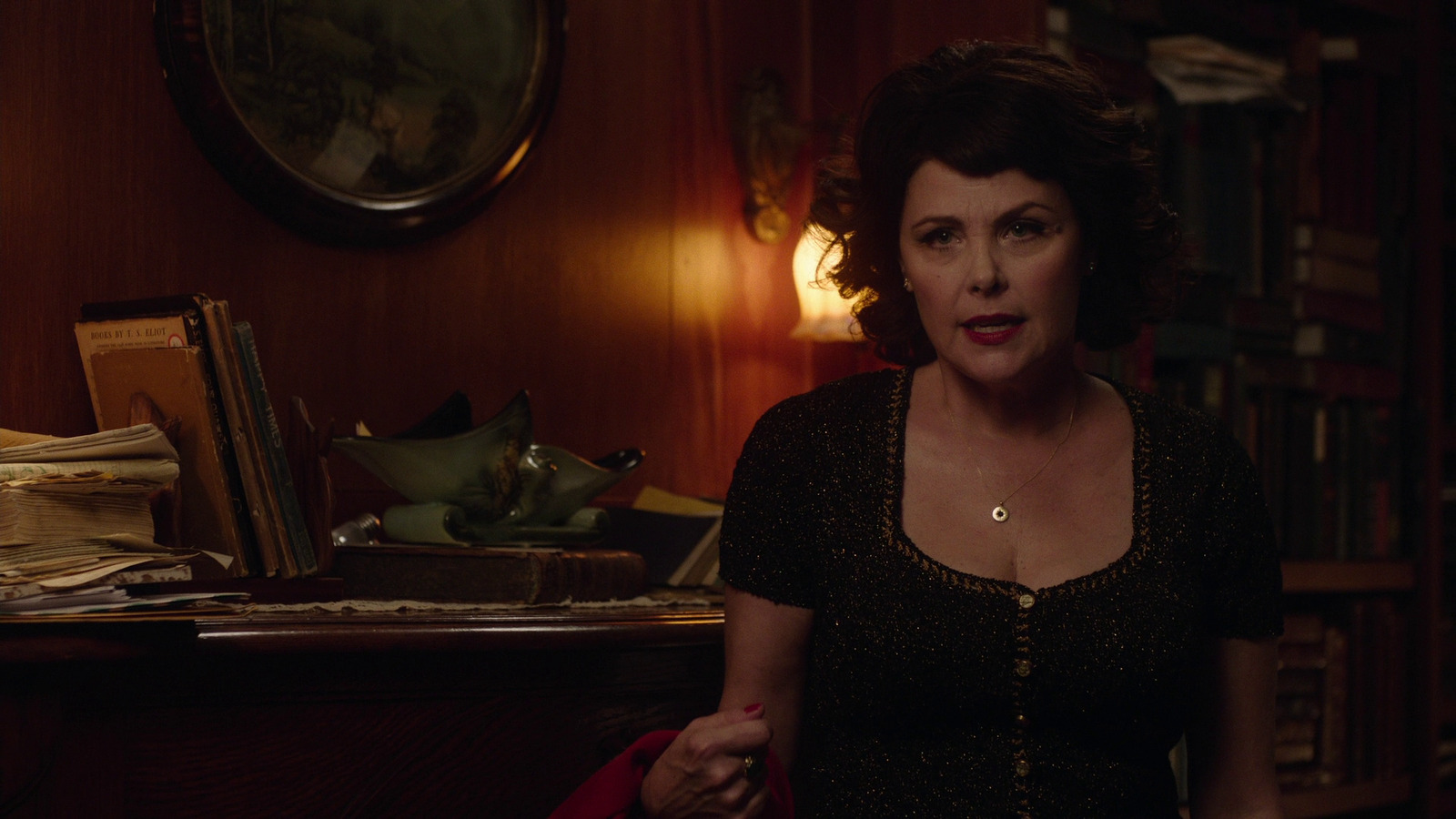
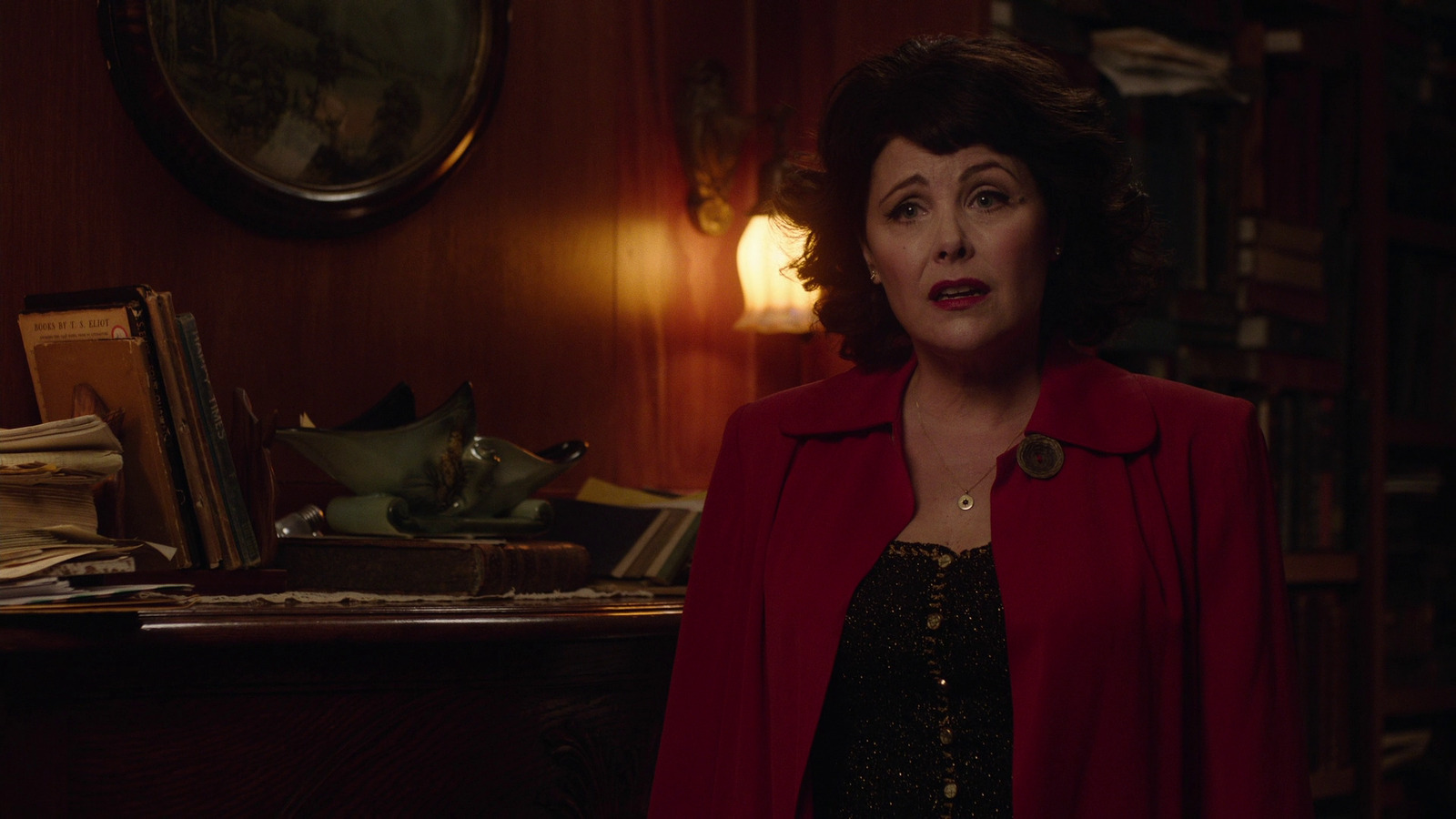
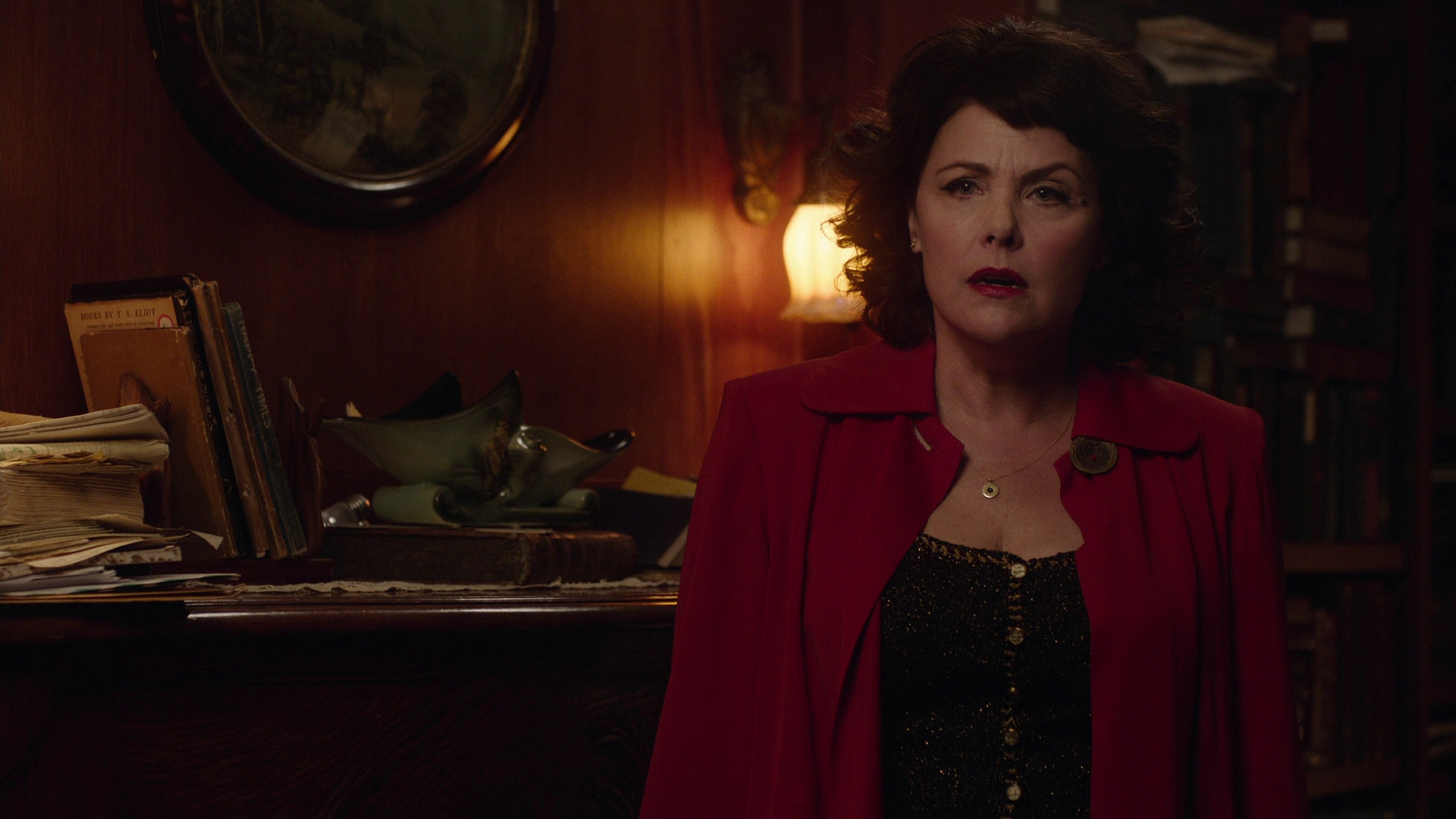
Audrey reappears in a room dense with papers, books, a globe and a rotary telephone. The episode gives no establishing account of how she came to be here. She wants Charlie to accompany her to the Roadhouse to find Billy; he invokes fatigue, work and a deadline. Names and disputes accumulate without accompanying images of the people being discussed. Her red jacket marks a readiness to leave, while the desk and Charlie’s seated posture keep the scene fixed in place.
Open the scene sequence · 3 frames
An answer kept on one side of the call
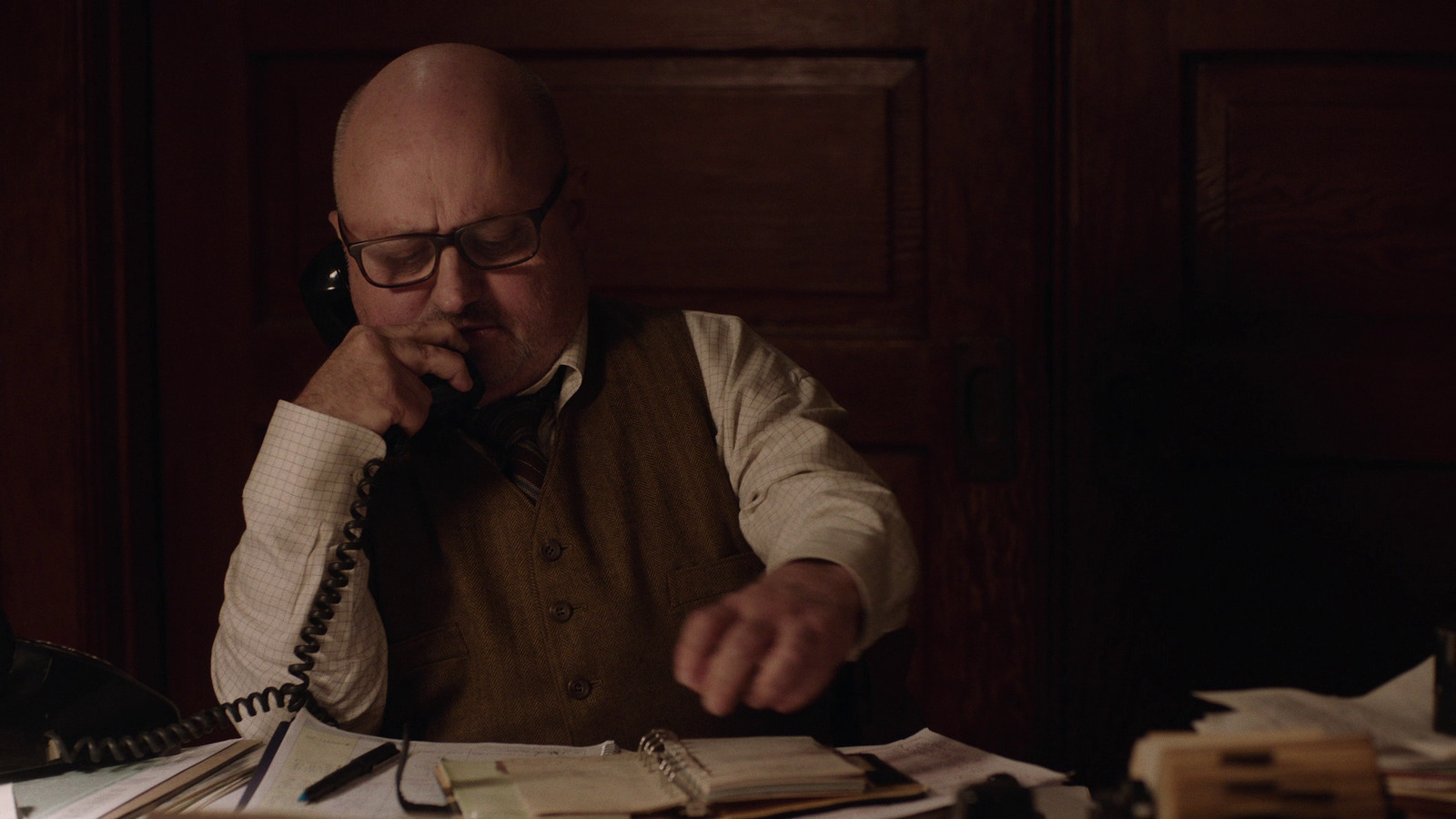
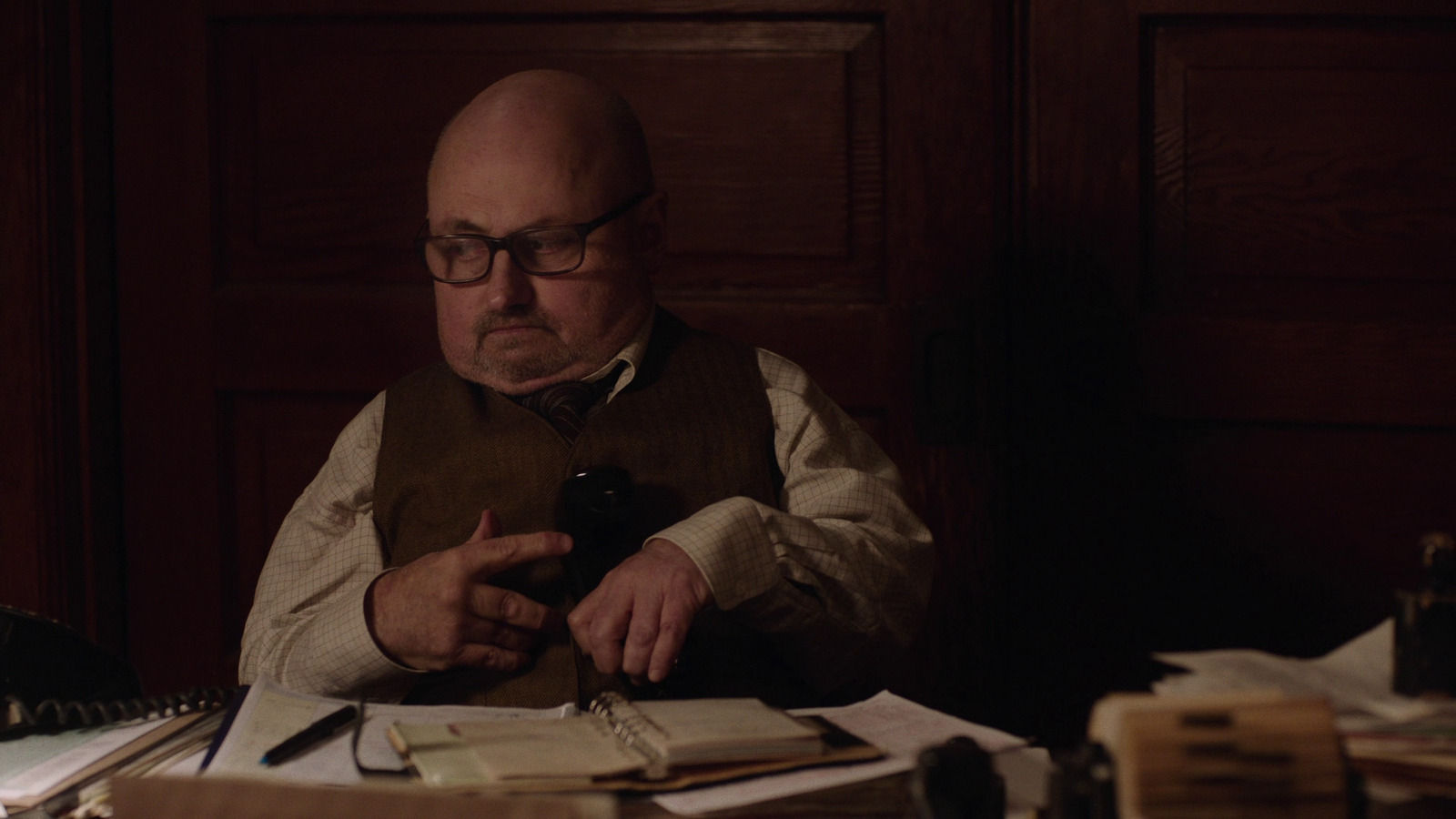
Charlie finally calls Tina. The mechanical work of dialing and the stretches of listening promise access to the missing information. Yet we receive only his responses and Audrey’s attempts to read them. He puts the receiver down without reporting the conversation. Audrey’s repeated question names the structure we have just experienced: an answer may exist, but the scene denies it to both her and the viewer. This is an exact use of an ordinary telephone, without requiring a supernatural explanation for the device.
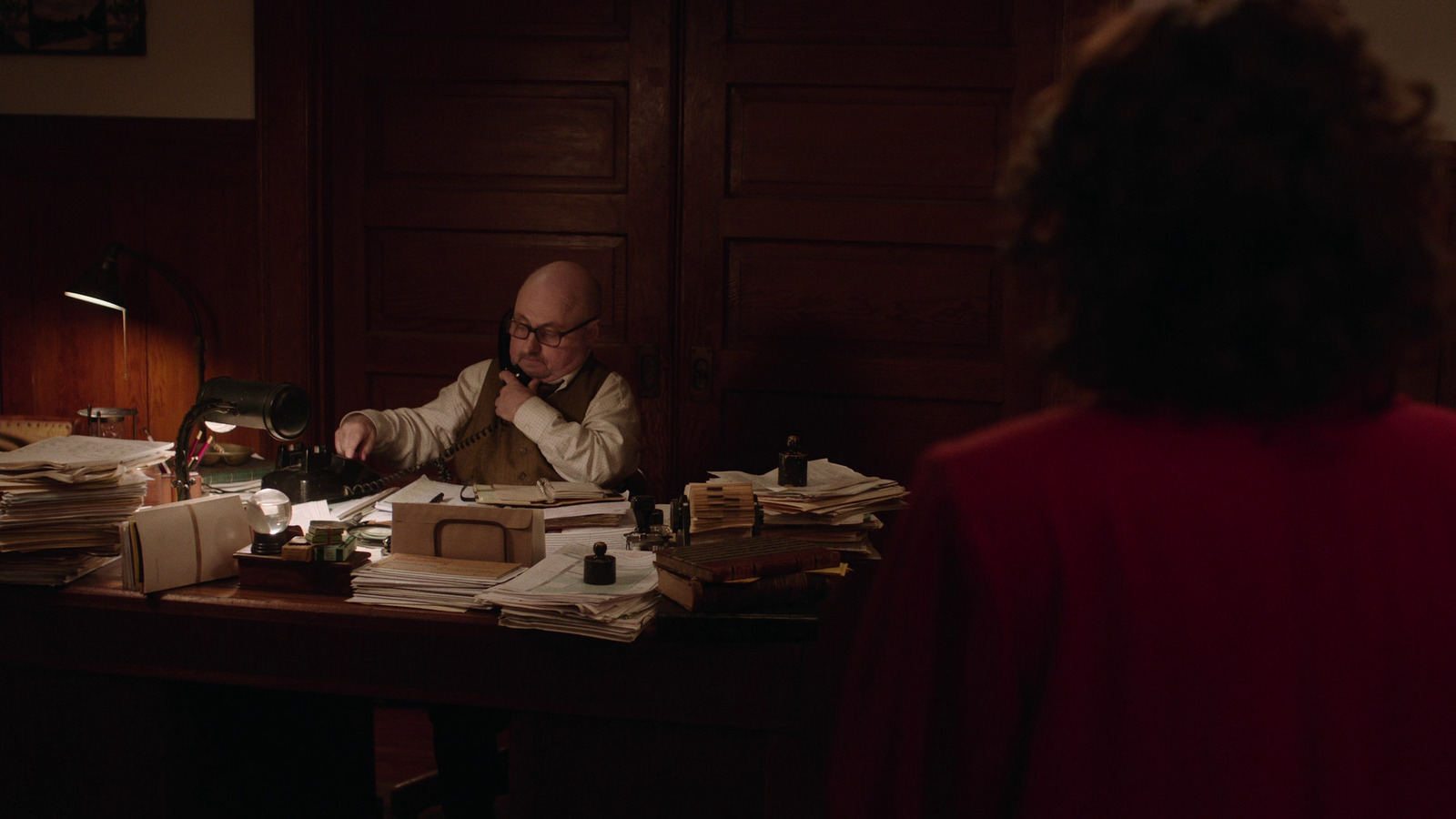
Open the scene sequence · 4 frames

A location takes shape on the phone
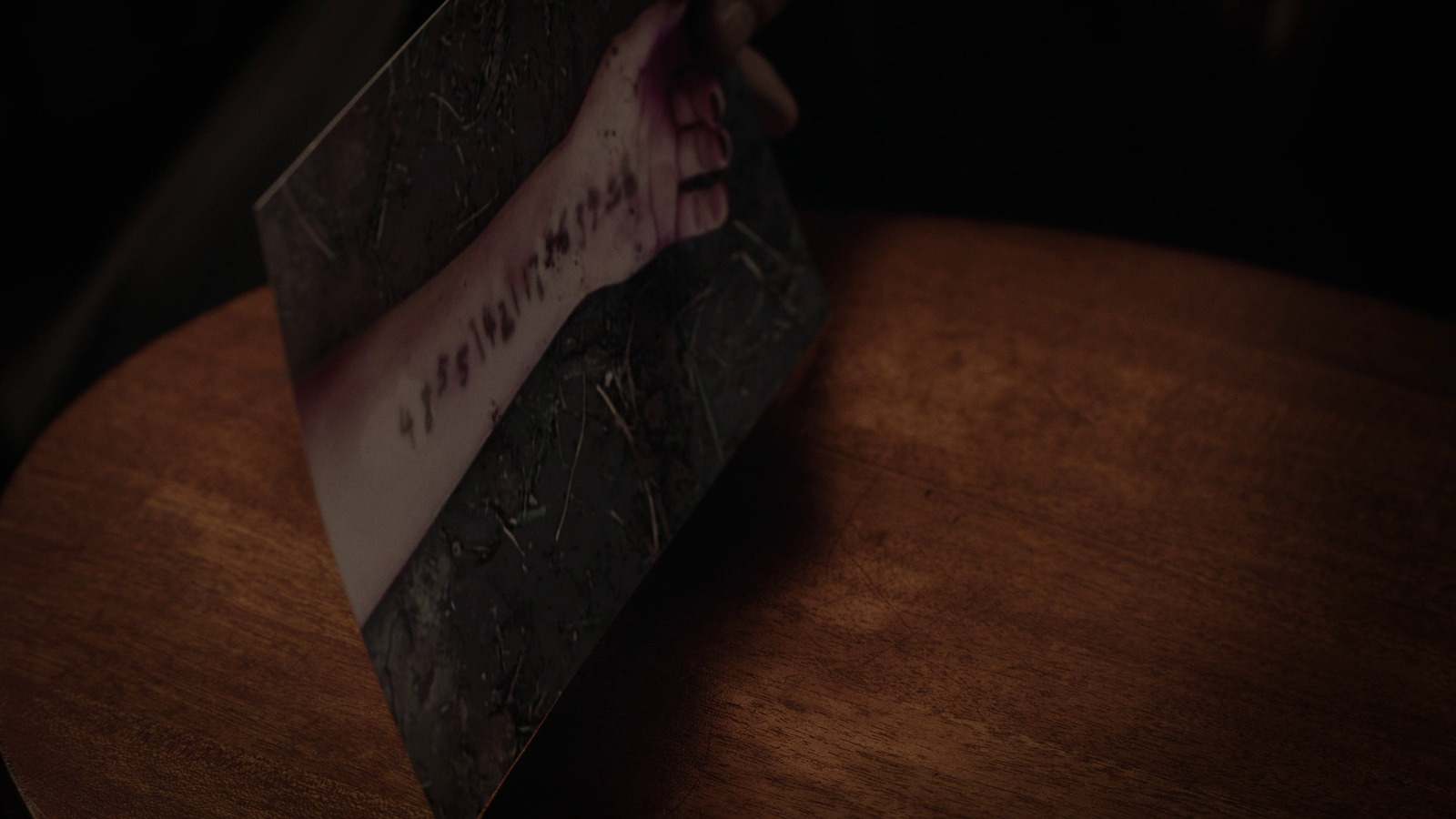
Diane studies the photographed numbers on Ruth Davenport’s arm and consults her phone. A bodily inscription becomes navigable information. The recognition of Twin Peaks joins the Buckhorn investigation to a familiar place, but the scene remains private: the viewer sees the connection being made without witnessing a complete explanation passed to the other investigators.
Stories continue beyond the people we know
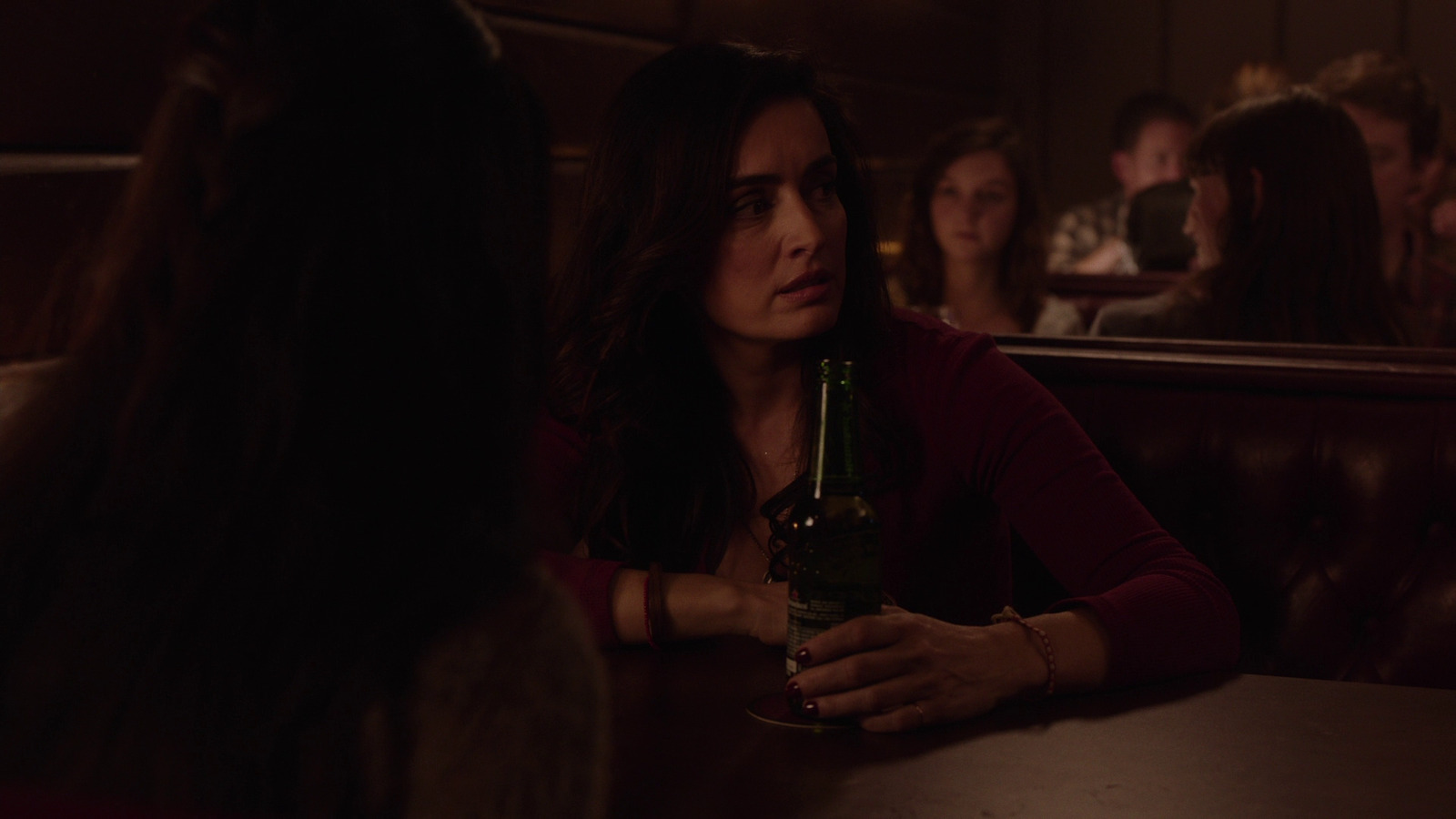
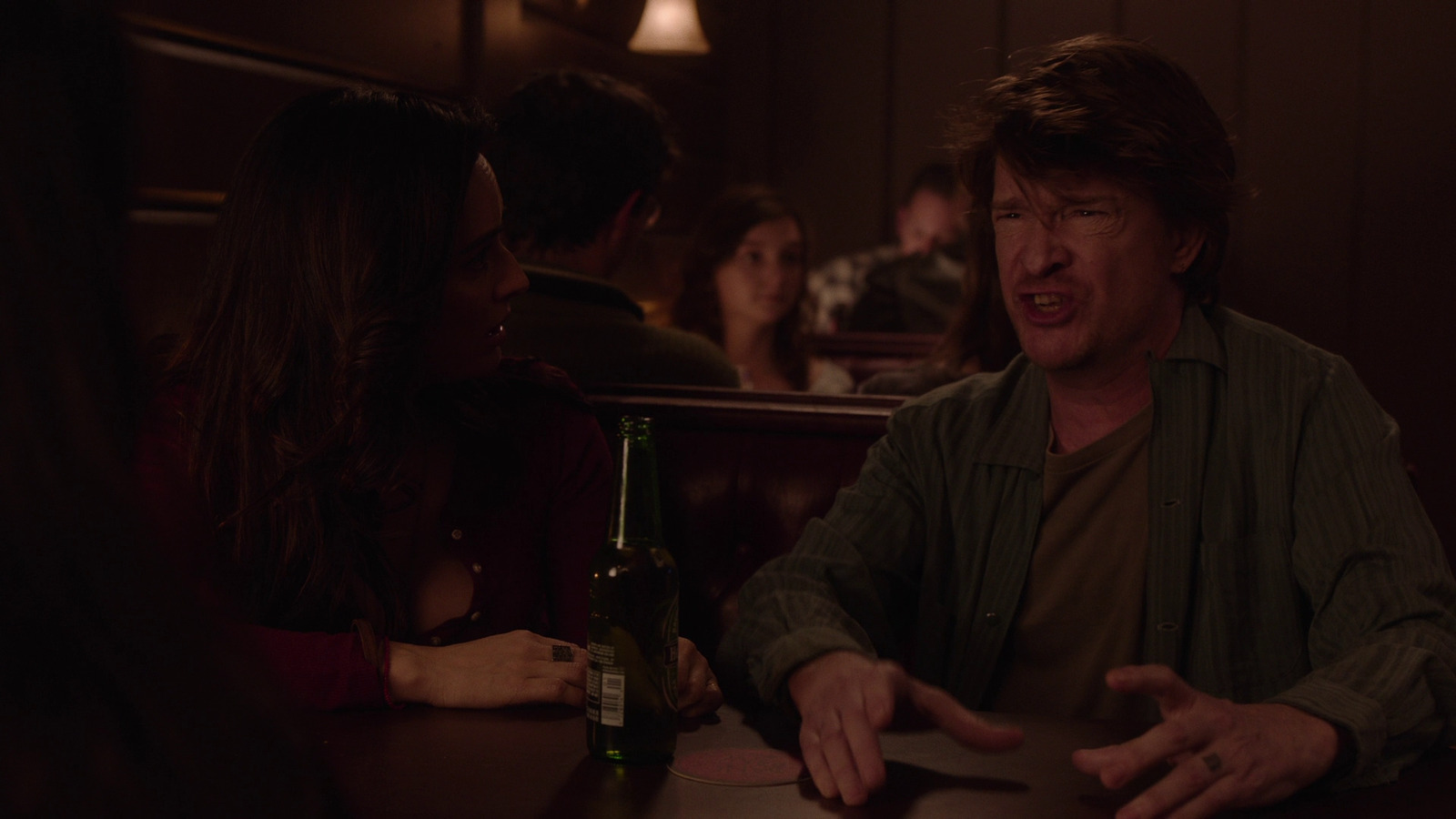
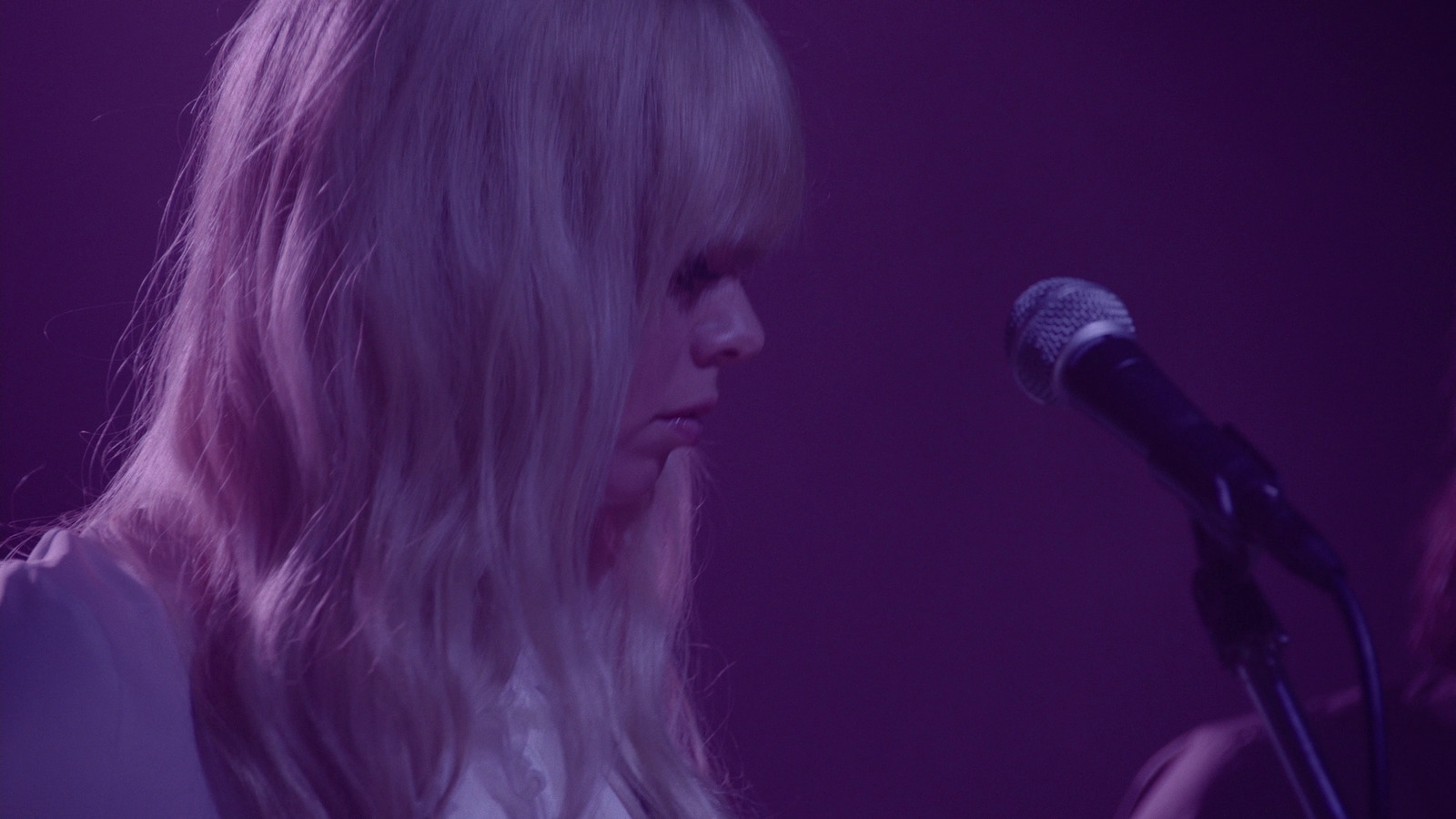
Chromatics perform while Abbie and Natalie discuss absent friends, jealousy and precarious mental health. Trick arrives with another story of danger, this time from the road. Their conversation adds names and concerns rather than resolving Audrey’s missing-person account. The town exceeds the main investigation. The camera returns to Ruth Radelet and the band, allowing the performance to continue beneath the credits after the conversation has run its course.

Open the scene sequence · 3 frames
Voices, gaps and sounds from the next room
The Blue Rose briefing depends on Albert’s sustained delivery and on Gordon’s explicit adjustment of his hearing. The scene draws attention to clarity while describing cases that resist ordinary explanation. Sarah’s checkout conversation moves in the opposite direction: familiar questions about merchandise give way to warnings and instructions addressed to herself. The English captions also identify a distorted musical texture during the change. The study treats the voice and the visible reactions as evidence of distress, not as a diagnosis.
At the Palmer house, the interior is suggested by the fan and the faint rattle of bottles rather than opened to view. Hawk hears enough to ask whether somebody is inside. Sarah’s reply does not settle what made the sound. Compare the withheld interior with the Palmer-house passages in Fire Walk with Me, where architecture and sound likewise make private danger palpable.
Ben’s bicycle memory is carried by pauses, repetitions and shifts between recollection and immediate instruction. It needs no flashback illustration. By contrast, Charlie’s telephone sequence supplies the clicks, ringing, replies and final disconnection of a call while withholding the other participant’s words. A machine can connect two people without allowing a third person to understand them.
The closing performance is Chromatics’ “Saturday.” Conversation occupies the foreground before the band returns to the center of attention for the credits. Dr. Amp’s broadcast uses “The Stars and Stripes Forever,” giving his private studio the sound of public ceremony. Both music identifications are confirmed in the closing credits. Episode and credit record.
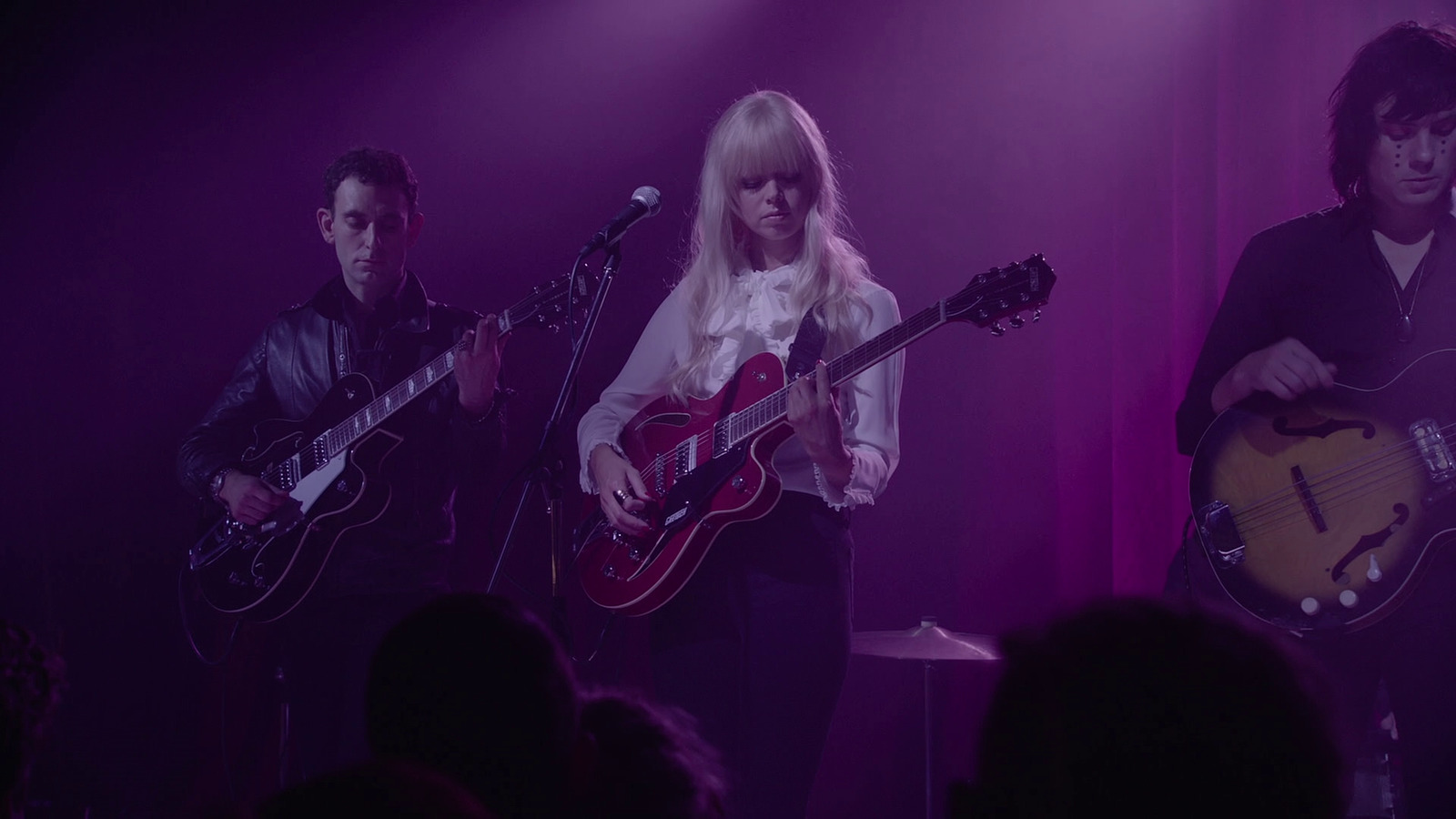
A closer view of the Roadhouse performance
Chromatics — Saturday
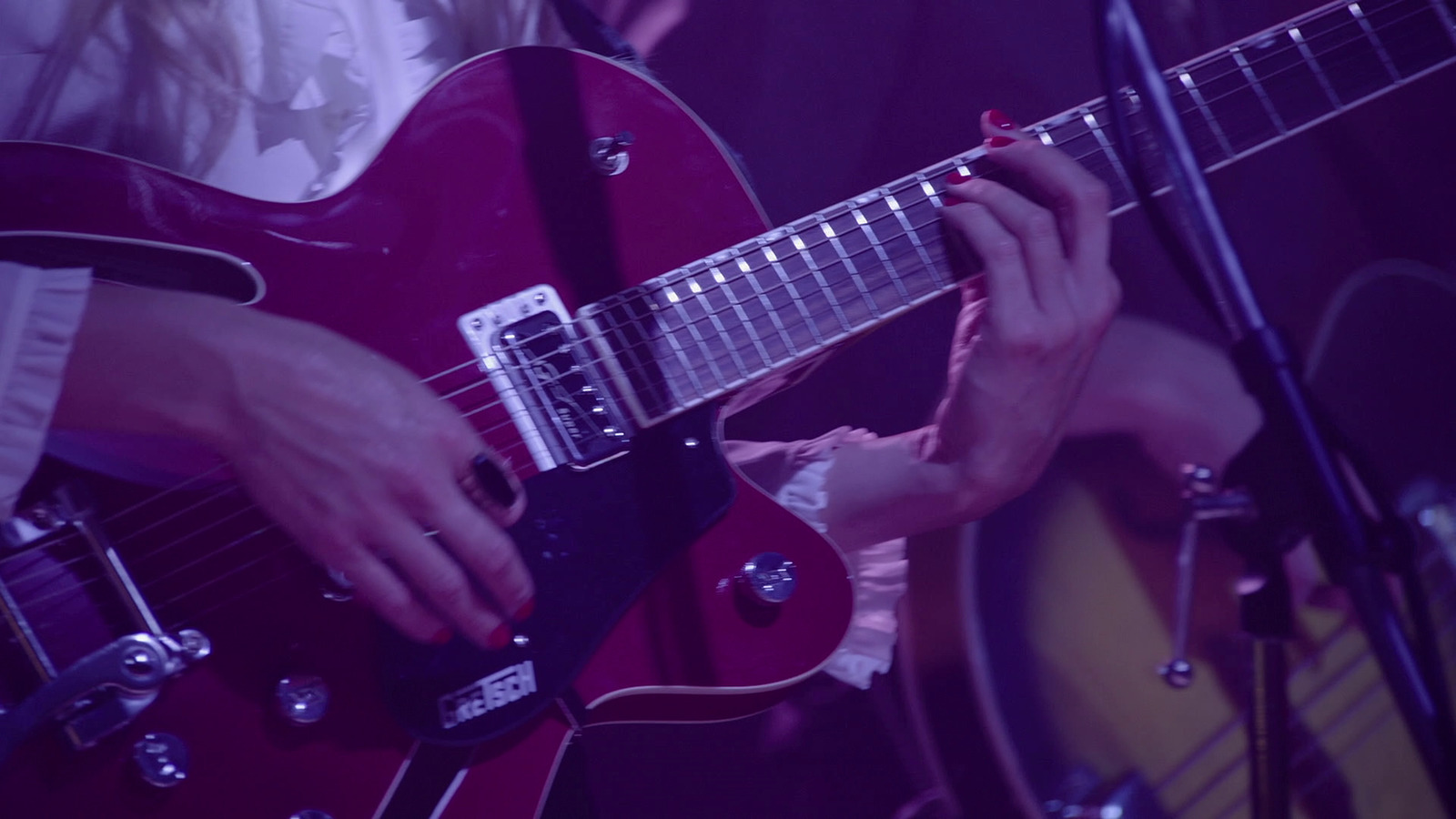
In “Saturday,” Ruth Radelet plays guitar at the centre of the band. Violet light replaces the strong blue of “Shadow,” and the camera repeatedly emphasizes the instruments: the red guitar, playing hands and the relationships among the musicians. The return of Chromatics does not simply reproduce the earlier performance’s image.
Open the Saturday performance study · 2 frames
Read the full performance comparison →
Source: Roadhouse Music — Chromatics — Saturday, 00:00–03:15, in Twin Peaks: From Z to A. These timings identify the separate performance edit; the episode context is examined above.
Focused image and performance studies
Sarah: the public counter and the private door
Compare the brightly stocked shop with the partly opened front door. The first location makes Sarah visible to strangers; the second lets her control how much can be seen. Framing and performance create the instability. The gallery does not treat her behavior as proof of a specific possession or medical condition.
Open the Sarah Palmer sequence · 7 frames
Small gestures make a long exit
The departure is built from a chain of recognizable tasks rather than a single action. Watch the difference between the guest’s attention to herself, Gordon’s participation and Albert’s obligation to wait. These frames preserve the stages of that construction; the time between them is as important as the poses.
Open the delayed departure sequence · 6 frames
The telephone as a barrier to knowledge
The desk organizes two incompatible positions: Charlie has the receiver and can hear Tina; Audrey can only watch. Close-ups do not overcome the separation. They make its emotional cost more legible. The end of the call produces no release of information.
Open the Audrey and Charlie sequence · 8 frames
Making the images, shaping the performances
Clark Middleton told Hanh Nguyen that he received only his own scenes and did not know their position within the larger story or how many episodes would contain them. He prepared from those pages, and departed from his usual practice by not discussing the characters’ relationship with Sherilyn Fenn. He also described Lynch’s direction as brief but capable of changing a performance. This is useful evidence about the working conditions behind the ambiguity: Middleton made acting choices without offering those private choices as an authoritative explanation for viewers. Middleton’s account.
That distinction matters in the room with Audrey. Charlie’s exhaustion, insistence on paperwork and delayed disclosure can be examined as performed behavior before a theory is assigned to the setting. Fenn’s shifting posture and eventual jacket make the wish to leave tangible even though the scene never grants the departure.
Performance, sound and the working image
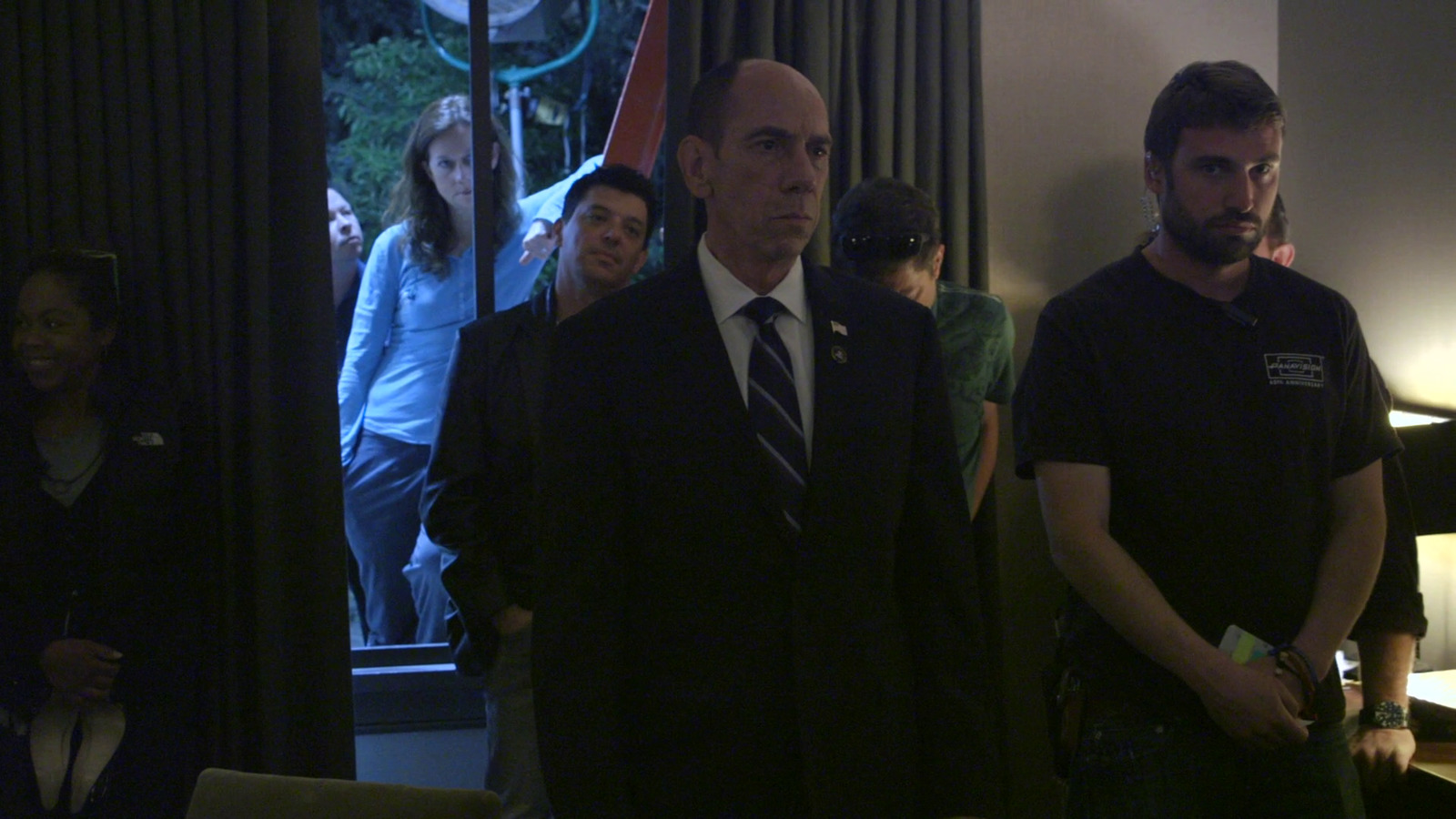
The production footage in Jason S.’s Impressions: A Journey Behind the Scenes of Twin Peaks adds another view of the scenes: directions spoken on set, rehearsals, material experiments and choices still being worked out.
The assassination and the child’s point of view
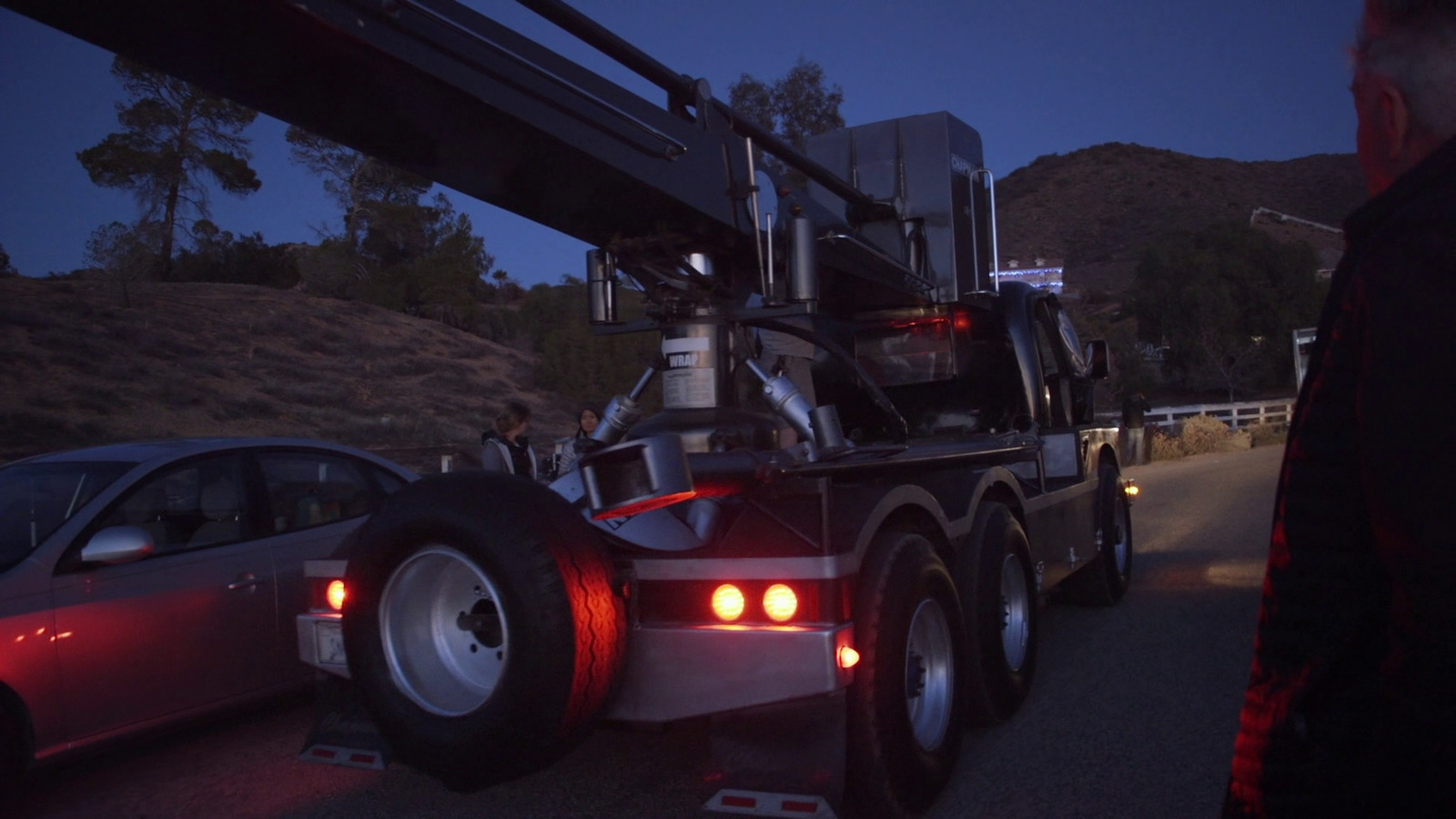
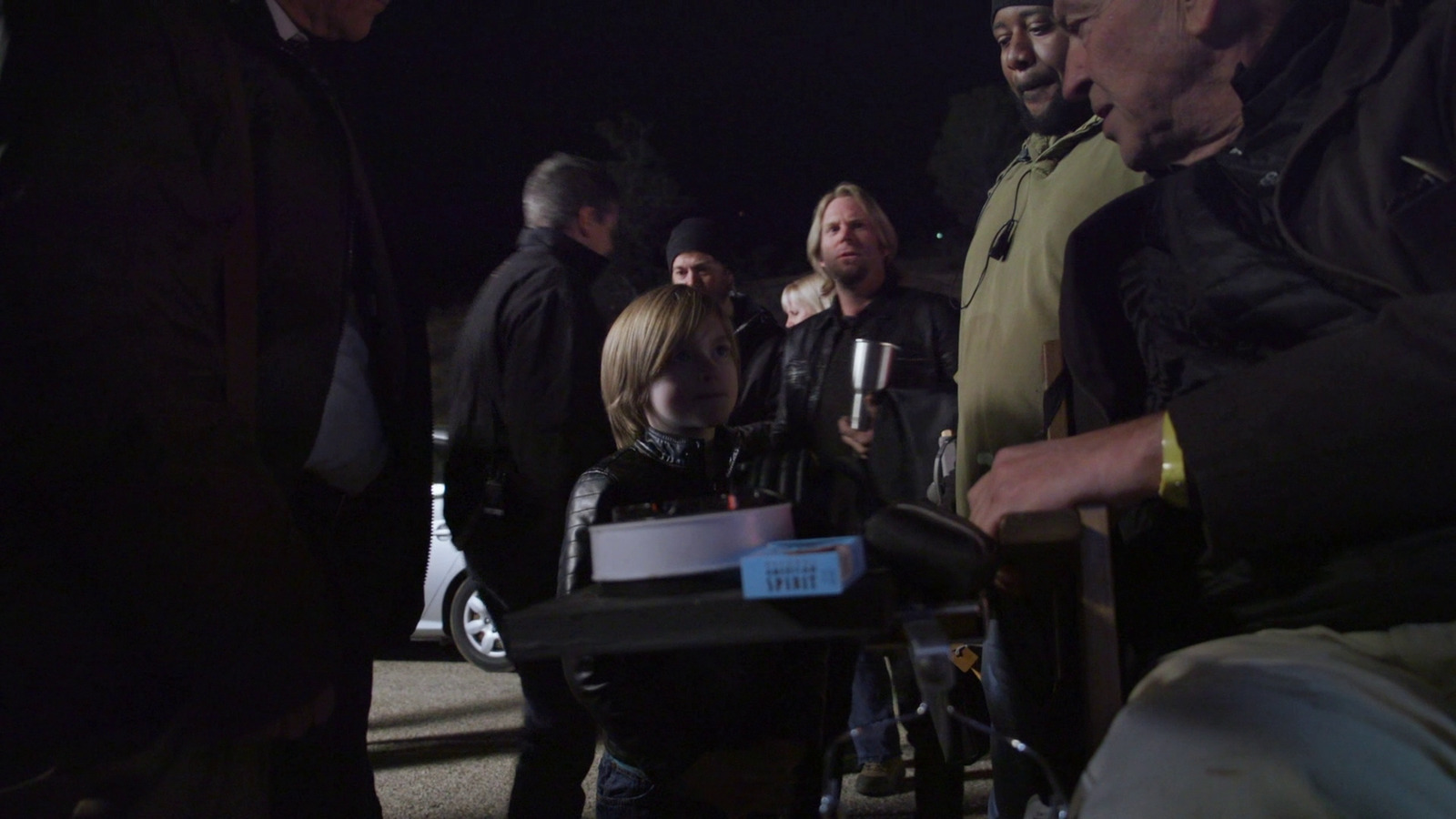
The assassination is planned across several positions: the van, the rifle’s sightline, the house and an establishing camera move. This separates the killers’ efficient procedure from the domestic space that receives its consequences. The child’s entrance gives that space its terrible scale.
Before filming, Lynch introduces himself to the young performer, praises the test and explicitly explains that the event is not real even though it will look real. He gives a simple playable sequence: call for his father, run out, kneel and try to wake him. The contrast between that careful explanation and the finished scene’s abrupt cruelty is part of the production history worth retaining.
Open the location and performance study · 2 frames
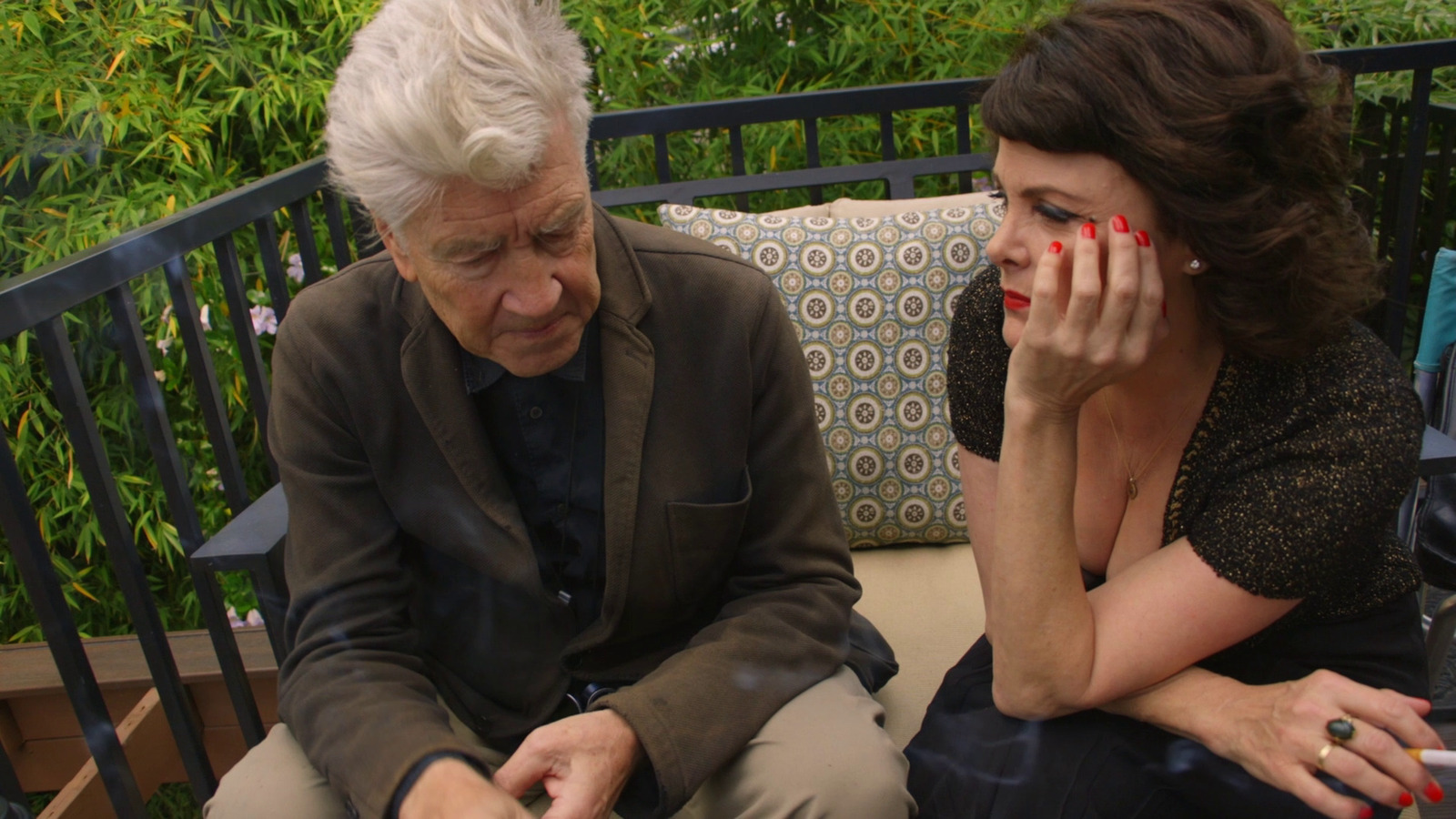
The dream has been with Audrey all day
Working through the scene with Sherilyn Fenn, Lynch connects Audrey’s anger at Charlie to her concern for the missing Billy. The dream of blood from his mouth and nose is not something she suddenly remembers during the argument. It has been pressing on her throughout the day and intensifies the need to leave.
The discussion also moves between needing Charlie’s help and resenting his lack of urgency. This gives Fenn a changing relationship to play inside the long exchange. It clarifies the pressure of the scene while leaving the status of Audrey’s room and the people she names open to the larger narrative.
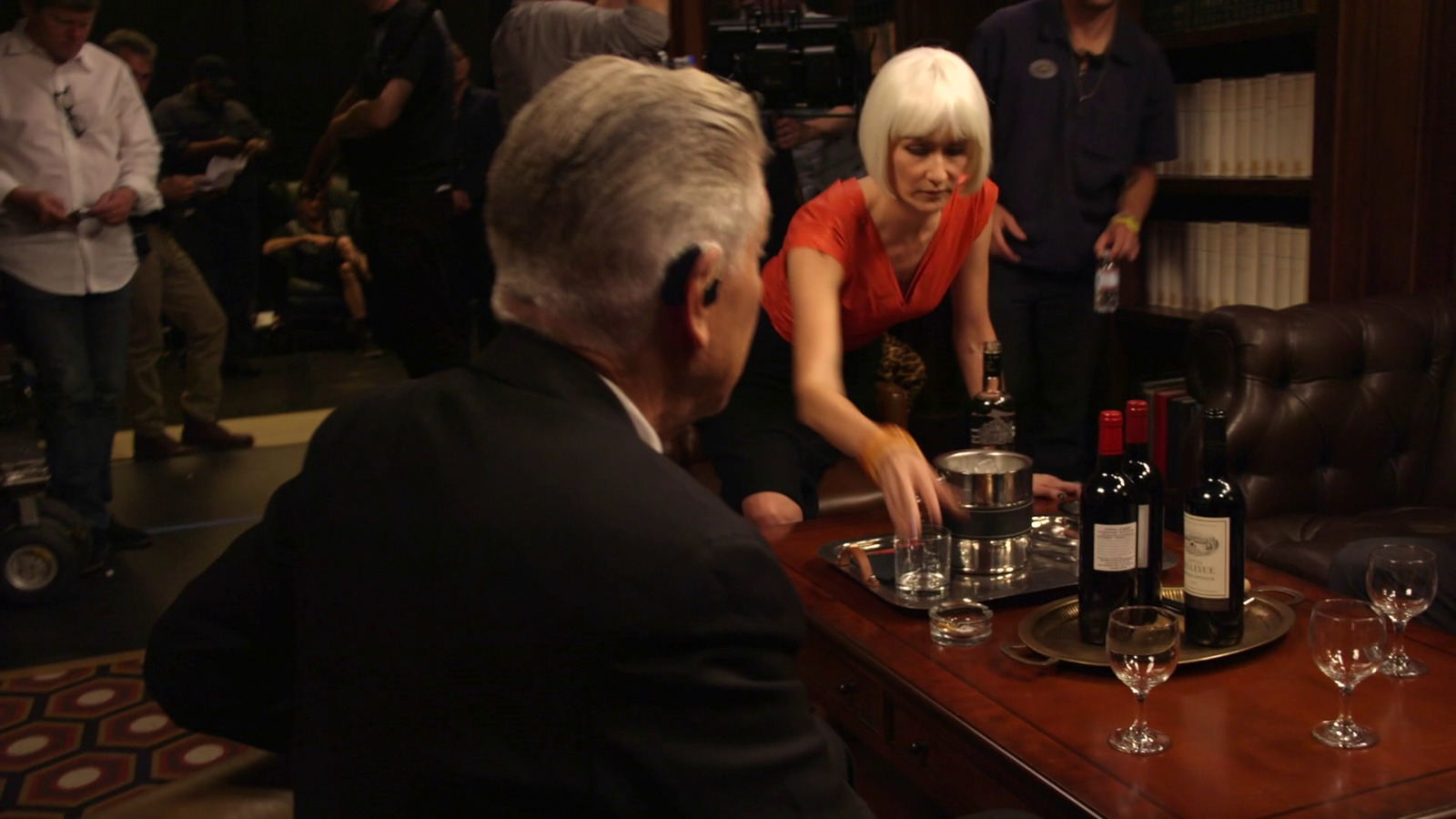
Rehearsal, performance and the working set
The Blue Rose briefing has a social choreography
The briefing is rehearsed around glasses, the toast, Gordon’s phone and Diane’s entrance. Albert’s longer explanations can be skipped while the team settles who moves or speaks when. Laura Dern weighs the drink against the cigarette as the action accompanying Diane’s declaration; Lynch prioritizes the line, rather than multiplying business around it.
This preparatory separation is useful when reading the scene. The large amount of information does not float free of the room: drinking, invitation and teasing establish a temporary circle of trust. Albert’s offer of a cocktail can carry an edge precisely because the actors have considered the hostility inside the courtesy.
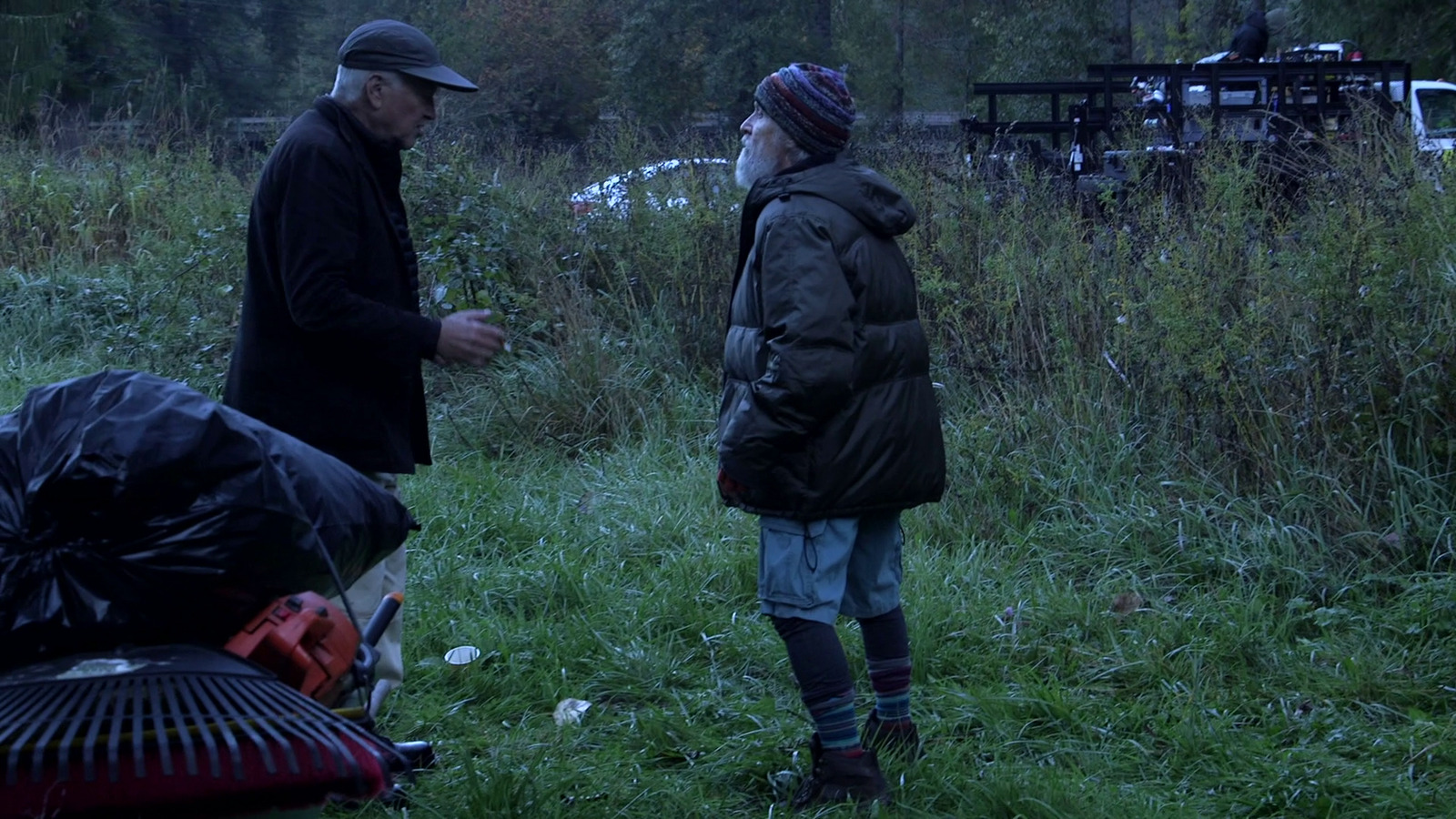
Jerry runs toward an answer he cannot name
In the meadow, Lynch gives David Patrick Kelly a direction of attention before a physical route. Jerry is to look outward, keep moving and search for an answer somewhere ahead. The high steps through the grass follow that drive. A second adjustment brings his gaze just above the cameras, with wide and close views prepared together.
Kelly recalls an earlier piece of direction to Harry Dean Stanton on Wild at Heart and asks for a similarly useful idea here. The exchange shows an actor seeking something to play, rather than an explanation of the story’s mysteries. When the crew watches the descent, Lynch himself compares the movement to The Cowboy and the Frenchman. The connection is a remark made during filming, not proof that Jerry belongs to a shared fictional world.
Open the meadow performance study · 2 frames
Sarah’s panic starts with an ordinary purchase
Before the alarming speech, Lynch asks Grace Zabriskie to take her time at the checkout and become absorbed in the jerky display. The cashier receives a small complementary adjustment: look back at the product before answering whether it is smoked. The exchange is meant to proceed naturally, with attention temporarily caught by an unremarkable item.
The recorded take then turns from that shopping rhythm toward Sarah’s warning and her attempt to command herself to leave. Because the ordinary transaction has been given time, the disturbance has a recognizable world to break into. The production footage supports a close reading of the change in behavior without identifying the force behind it or reducing Sarah’s experience to a diagnosis.
Open the supermarket rehearsal study · 2 frames
The visitor’s departure is pleasure, not deliberate obstruction
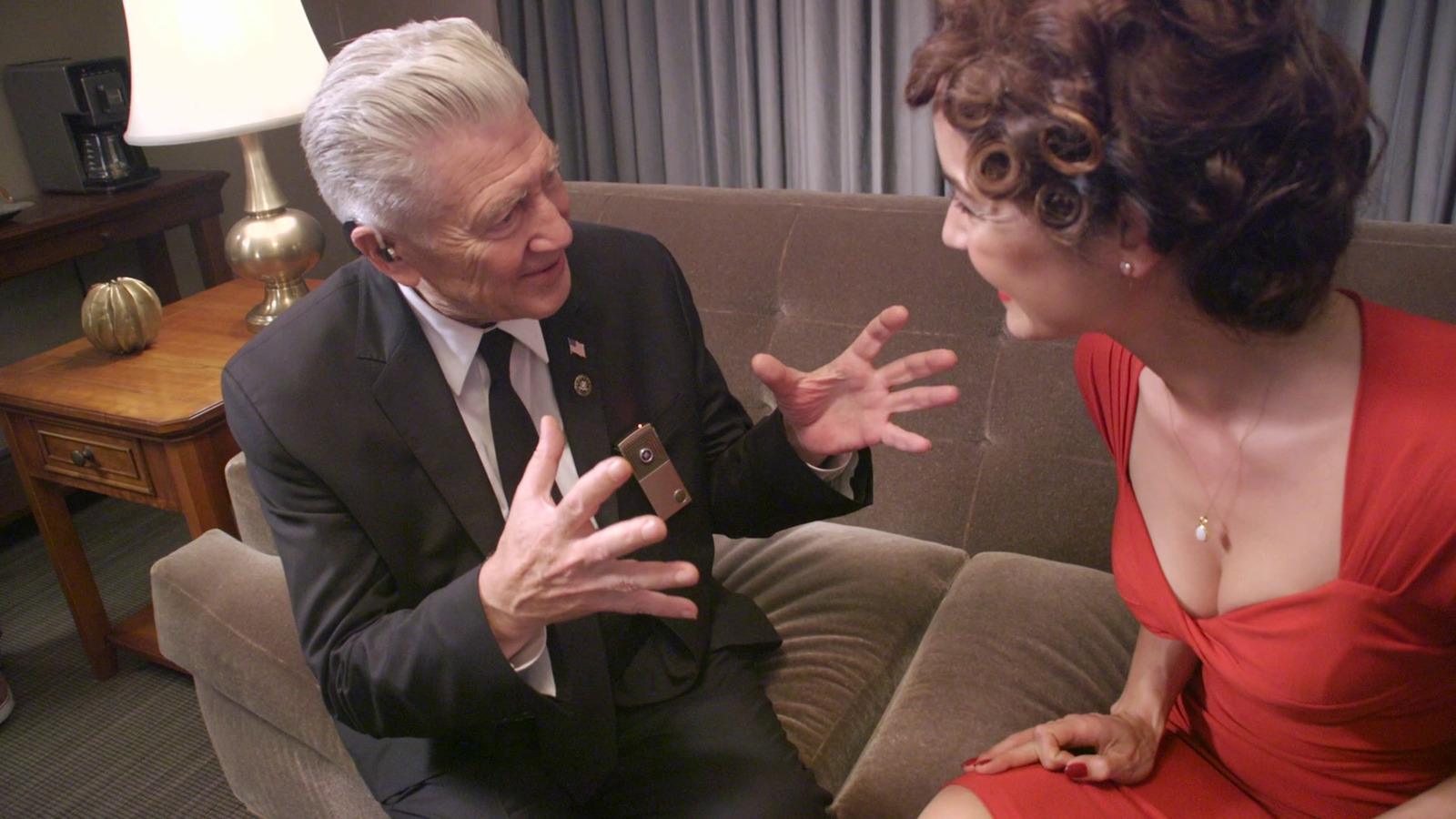
Planning coverage, Lynch specifies Albert’s view of Gordon and the visitor, Albert’s watching face, and the farewell at the door. The sequence is built around someone forced to observe a private exchange. Its duration therefore belongs to both the departing woman and the man waiting for her to finish.
Lynch then gives Bérénice Marlohe a precise distinction: she is not trying to take a long time. Each small task is something she enjoys sharing with Gordon, through a smile or a glance. Even the last sip of wine is an irresistible pleasure rather than a tactic to delay Albert. This gives the slow exit a playable emotional continuity while Albert experiences the same actions as an obstacle to his urgent business.
Open the departure and reaction study · 2 frames
Presentation, music and credits
The standalone presentation runs approximately 54 minutes 53 seconds, including opening and closing material. All scene timings refer to this presentation.
The cast roll identifies Grace Zabriskie as Sarah Palmer, Sherilyn Fenn as Audrey Horne, Clark Middleton as Charlie, Richard Beymer as Benjamin Horne, Robert Forster as Sheriff Frank Truman and Sarah Jean Long as Miriam Sullivan. Bérénice Marlohe is credited as the French Woman. These names distinguish the performers and roles from theories about their circumstances.
The credits name David Lynch for sound design and Ron Eng and Dean Hurley for sound supervision/re-recording. “Saturday” is performed by Chromatics and credited to Adam Miller and Johnny Jewel; the march is credited to Sousa and performed and arranged by the U.S. Army Band. The credit roll supplies production attribution; it does not by itself identify how any individual shot was made.
Sources and viewing notes
- Twin Peaks: The Return, Part 12. Directed by David Lynch; written by Mark Frost and David Lynch. Standalone presentation in Twin Peaks: From Z to A; picture, English captions and closing credits examined, with focused checks of key dialogue and sound passages. Timings include opening material. Scene readings are Lyncharium’s analysis.
- Hanh Nguyen interviews Clark Middleton ↗, IndieWire, 4 September 2017. Firsthand account of restricted script access, preparation, direction and the decision not to explain the character relationship. The interview’s first page was consulted; its discussion of later events is not used to resolve this episode.
- Do Not Pick Up Hitchhikers, directed and photographed by Jason S., in Impressions: A Journey Behind the Scenes of Twin Peaks (2017), viewed in Twin Peaks: From Z to A. Passages: 13:16–16:00. Picture and English captions examined, with targeted speech checks. Rehearsal proposals and production observations are distinguished from interpretation of the finished episodes. Documentary narration and its music are not treated as unscripted statements by Lynch.
- The Man with the Gray Elevated Hair, directed and photographed by Jason S., in Impressions: A Journey Behind the Scenes of Twin Peaks (2017), viewed in Twin Peaks: From Z to A. Passages: 18:54–23:01. Picture and English captions examined, with targeted speech checks. Rehearsal proposals and production observations are distinguished from interpretation of the finished episodes. Documentary narration and its music are not treated as unscripted statements by Lynch.
- Behind the Curtain, Part 12. Photographed by Jason S.; edited by Jonathan Angus, with editorial assistance by Robert Lay (2019). Viewed in Twin Peaks: From Z to A. Timed passages: 00:07–04:42; 04:43–08:31; 08:39–14:21; 14:22–20:14. Timings refer to the documentary, not the episode. On-set directions and retrospective recollections are distinguished from Lyncharium’s interpretation of the finished scenes.