Twin Peaks: The Return — Part 13
2017 · Twin Peaks: The Return · Episode dossier
A contest of strength becomes a display of control. A cup of coffee becomes an offer of forgiveness. A familiar song returns to a changed room.
Part 13 sets two versions of Cooper beside contrasting systems of power, loyalty and care. Its gifts, games, food and repeated sounds reveal how people assign meaning to acts they do not fully understand.
- Part 13
- What Story Is That, Charlie?
- Directed by
- David Lynch
- Written by
- Mark Frost & David Lynch
- Standalone presentation
- 00:59:19
The Return overview · Twin Peaks research hub. Timings follow the standalone part and include its opening titles. Presentation and credit notes.
Explore this dossier
Who gets to decide what an action means?
Compare the warehouse and the café. In one, a body is controlled until its owner submits; in the other, a touch is understood as kindness and produces a voluntary confession. Around these encounters, money, food, television and music acquire different values for different people. The episode’s changes of tone are part of that comparison.
The scene studies follow the episode’s order. They do not force its references to earlier events into a single reconstructed timetable. Character testimony, visible action and critical interpretation remain distinct. Sources and viewing notes.
Illustrated scene studies
- A public procession of gratitude
- The same success produces an ultimatum
- An illuminated playground and a new car
- The visitor enters a room already watching him
- A hierarchy explained as a game
- Strength becomes a lesson in control
- A coerced account with unresolved names
- A small object connects incompatible spaces
- Correct information becomes a discarded mistake
- Corruption just outside the station
- Casual conversation between hired killers
- A killing plan undone by an ambiguous kindness
- Another offer of pie makes room for a conversation
- Remorse must become testimony
- Making room, then moving aside
- What is lost when a pie becomes a formula?
- A broadcast acquires a face-to-face audience
- The room continues while the television repeats
- The proposed journey cannot begin
- An old song finds a different audience
- The episode stays with the person left alone
A public procession of gratitude
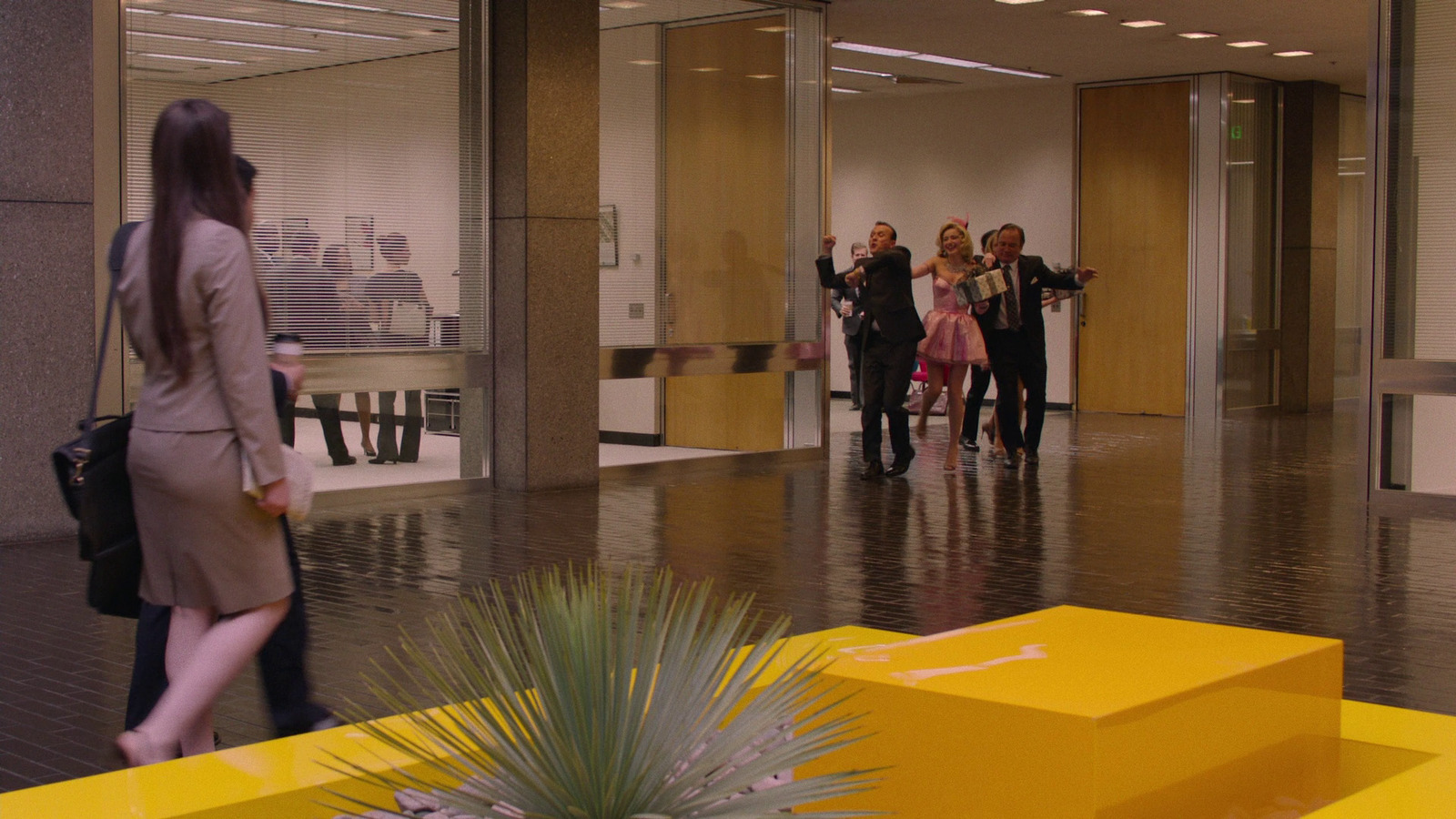
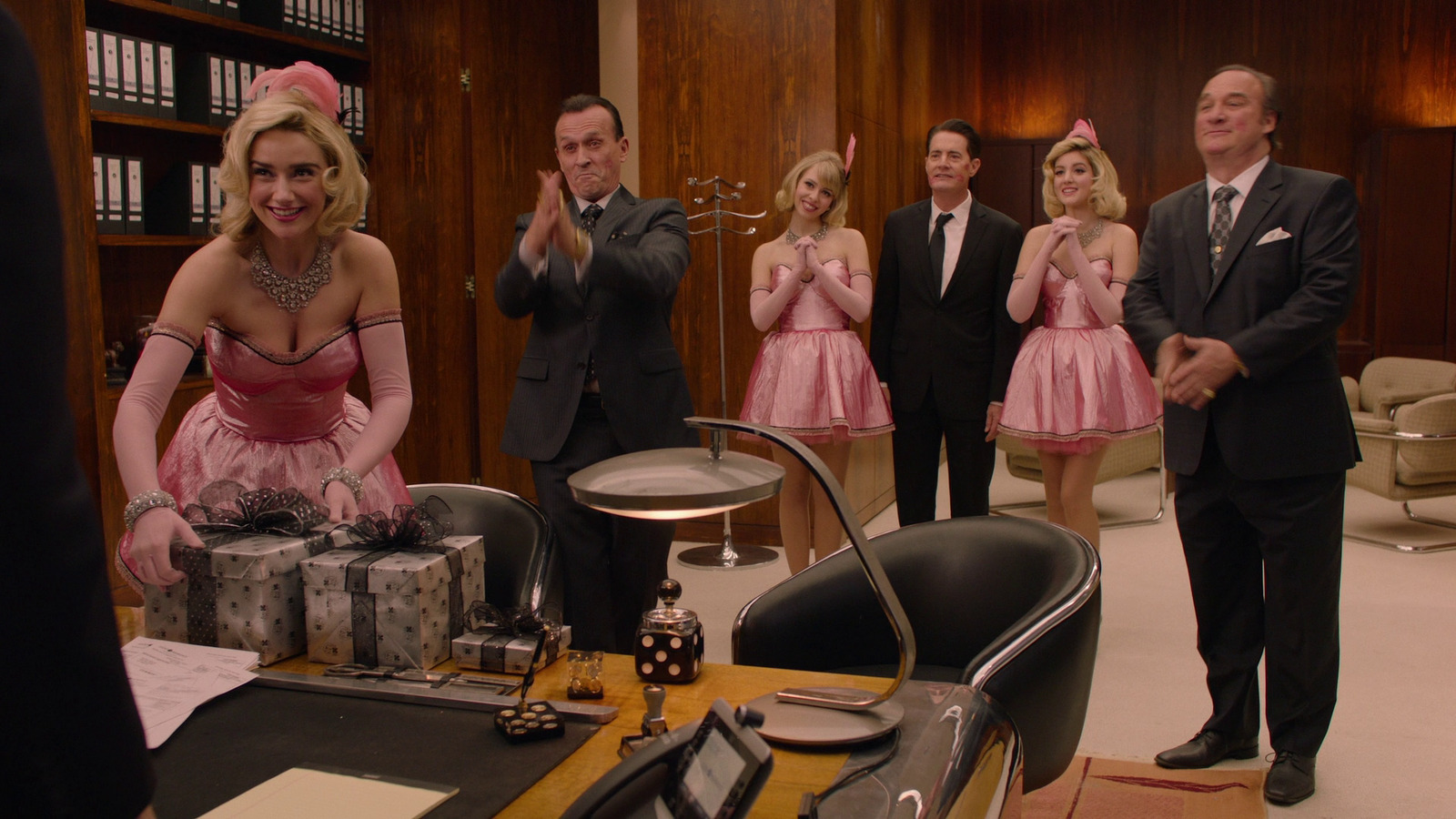
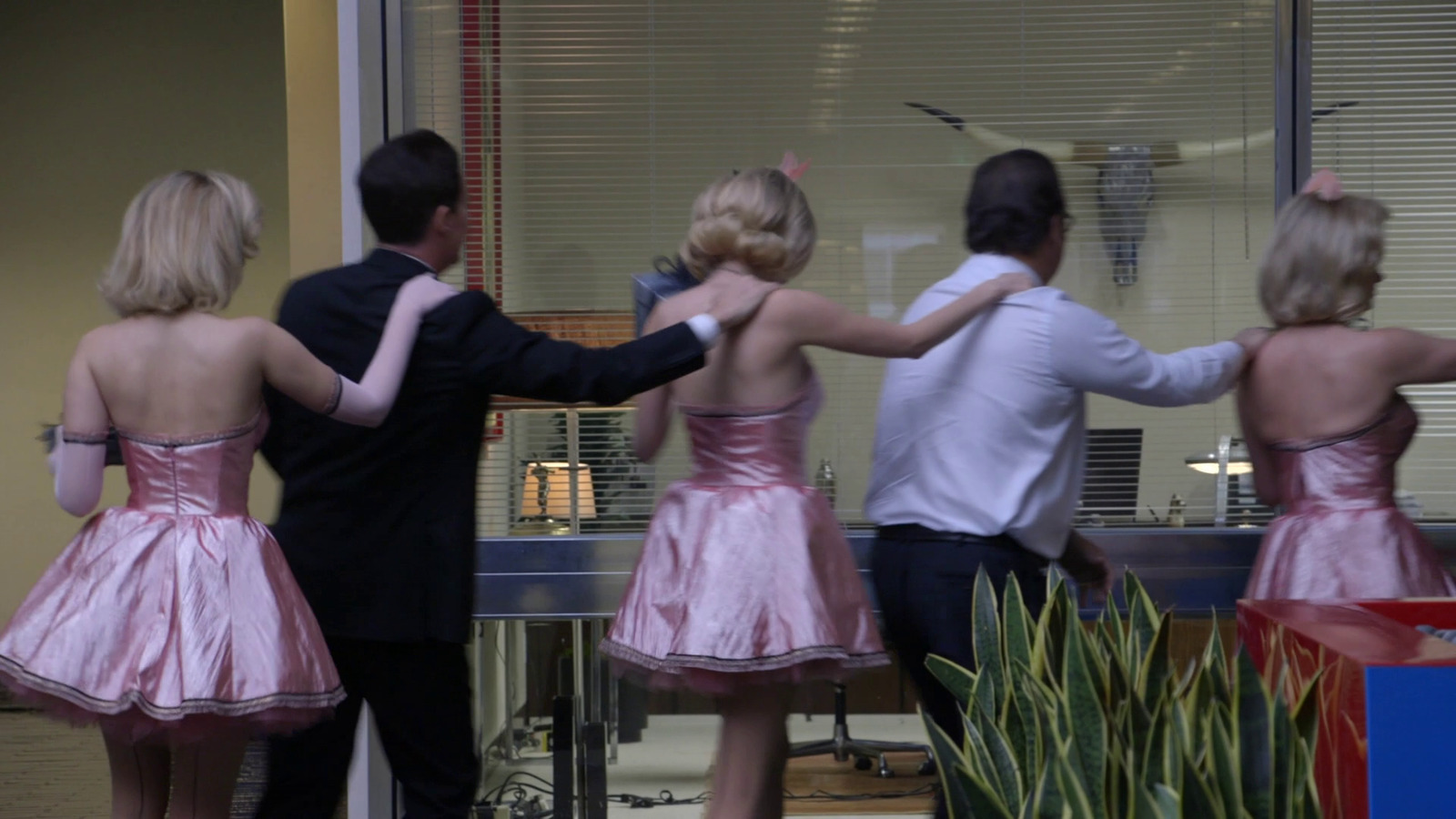
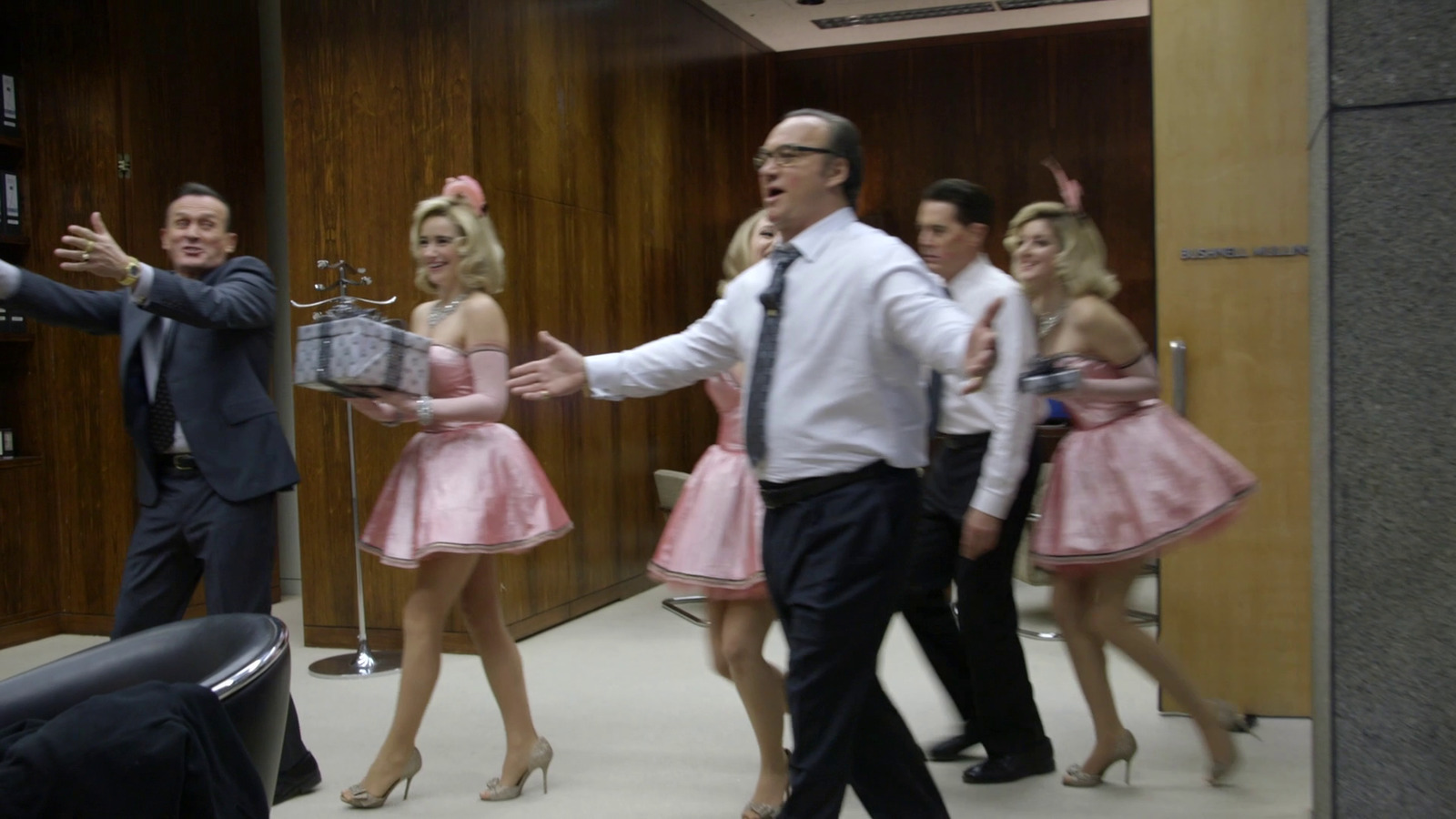
The Mitchums enter Lucky 7 in a line of movement, applause and pink dresses. The office’s glass partitions let the celebration be seen before the group reaches Bushnell. Gifts turn the restored insurance claim into a social event. Anthony’s isolated view through the blinds supplies the counter-image: what the others celebrate has destroyed his plan. The sequence continues the restaurant reconciliation in Part 11.
Open the scene sequence · 1 frame
The same success produces an ultimatum
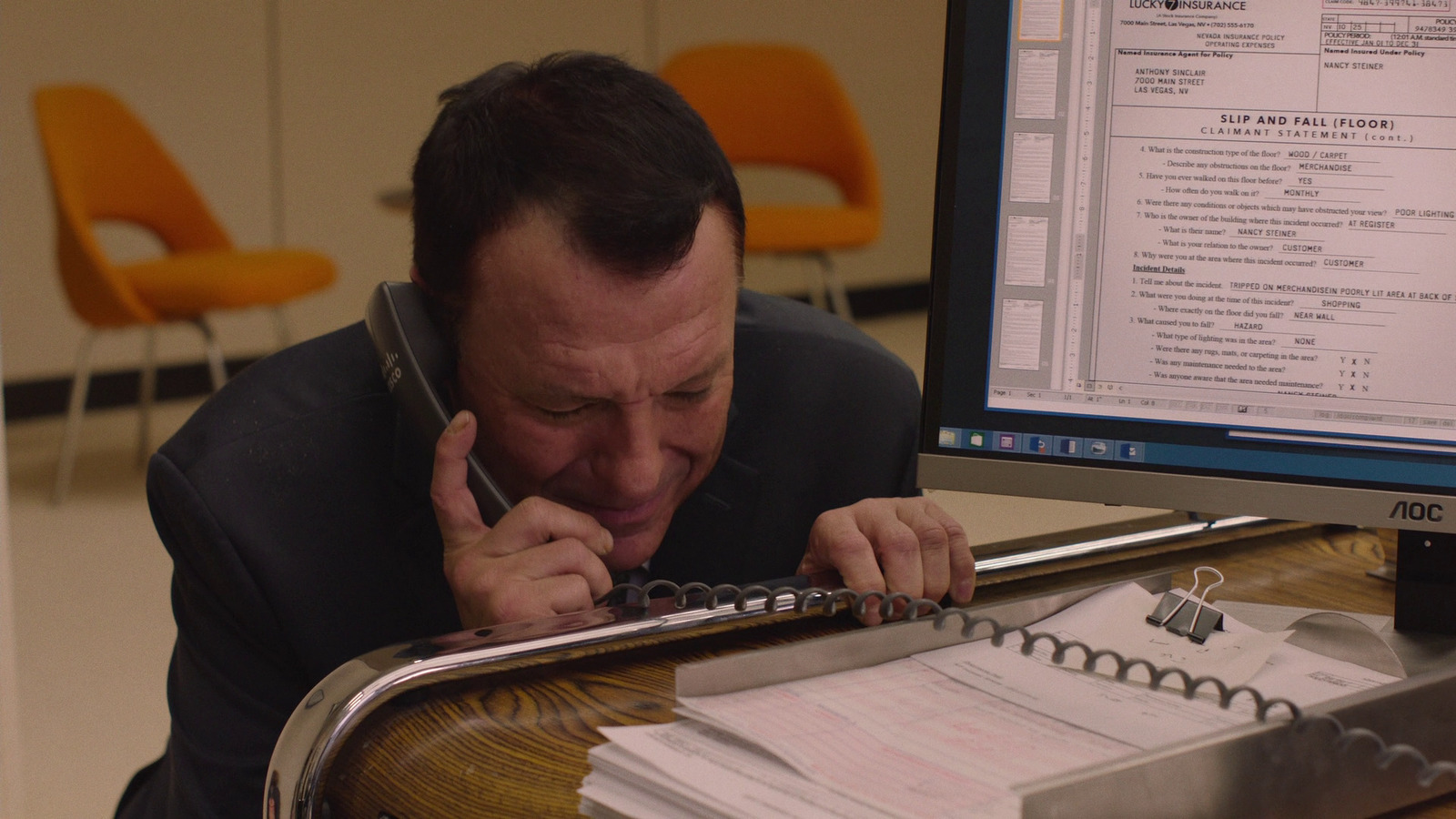
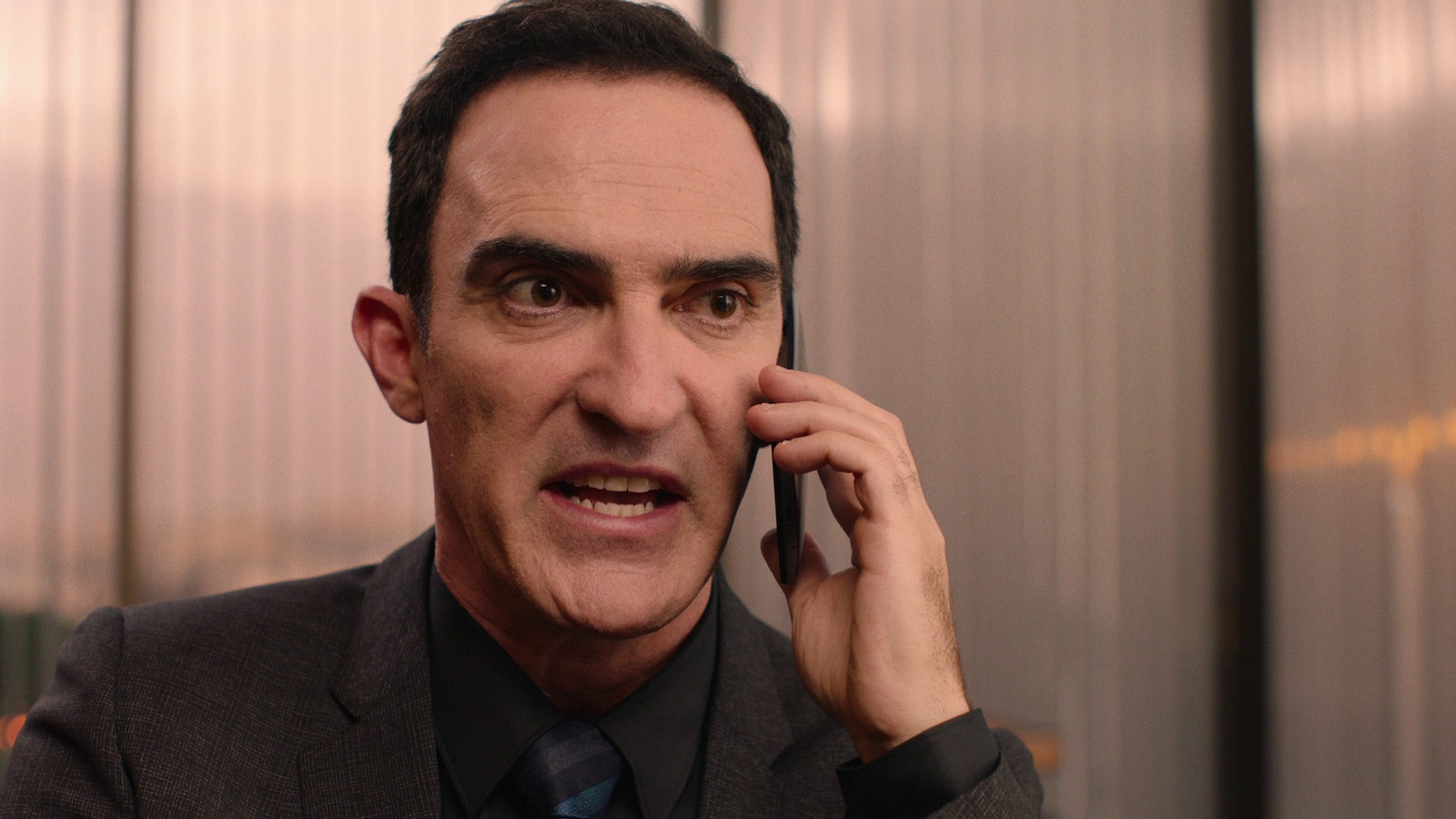
Anthony folds over the desk while Duncan Todd reduces the time available to repair his failure. The phone links two rooms with sharply different performances: Todd’s clipped control and Anthony’s mounting distress. The shortening deadline gives the next attempt urgency. It also reveals a hierarchy beneath the ordinary office, where the insurance business and a murder order occupy the same working day.
Open the scene sequence · 1 frame
An illuminated playground and a new car
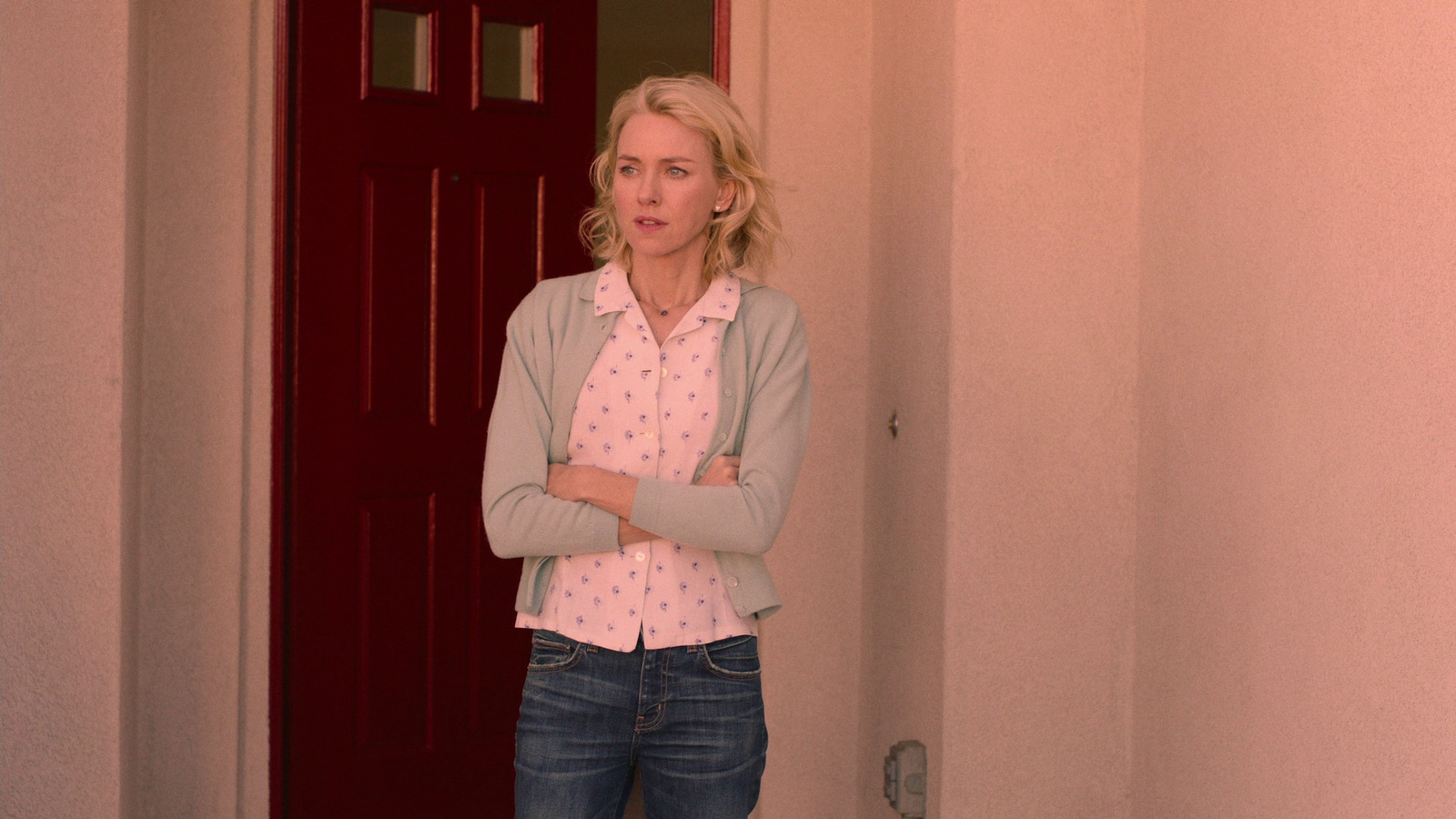
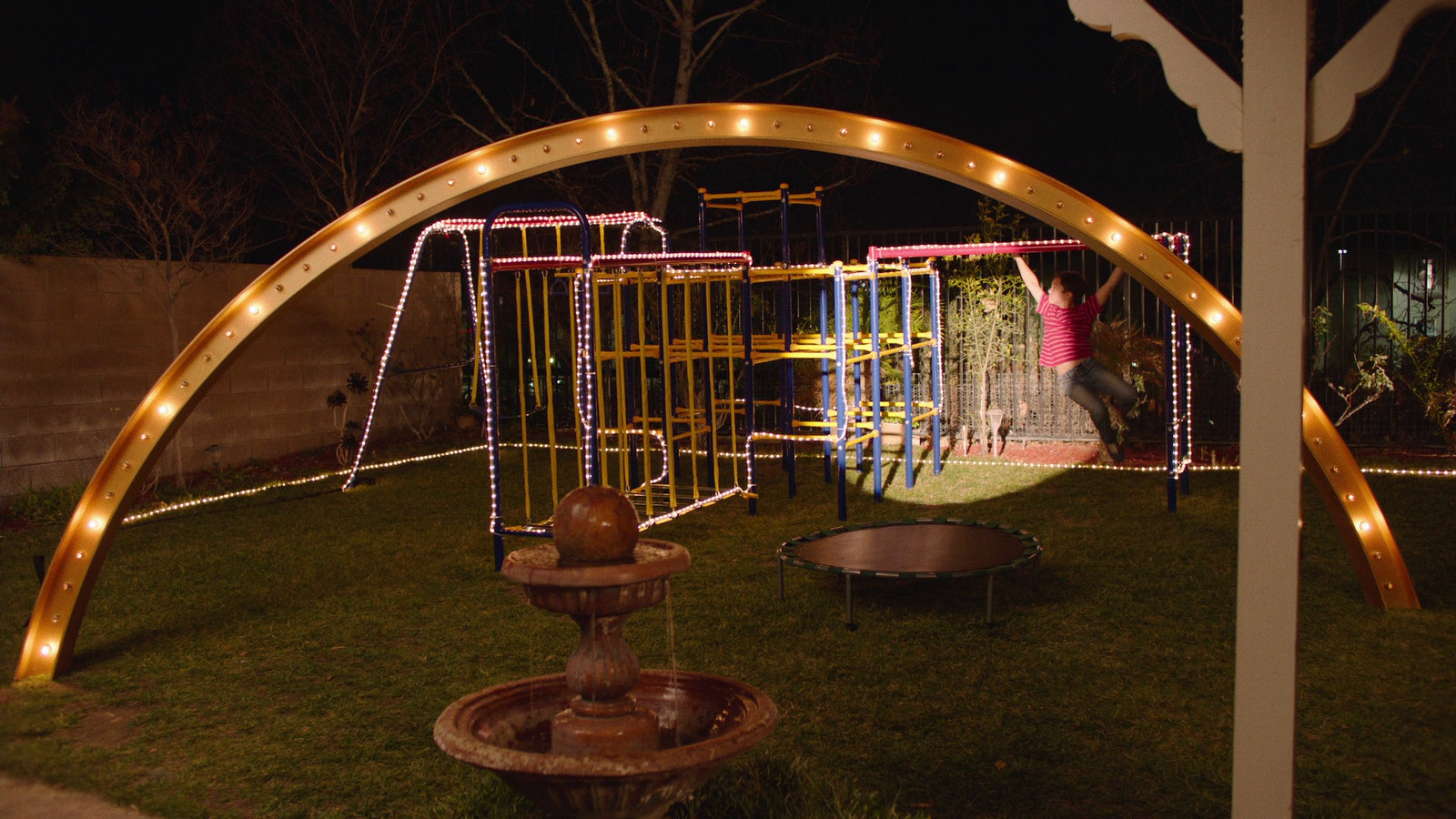
The Mitchums’ gratitude reaches the Jones household as material abundance. Janey-E’s questioning at the door gives way to the nighttime spectacle of Sonny Jim’s gym set. Lights trace its arches while the child moves within them, and the parents watch together from the house. Tchaikovsky’s “Dance of the Swans,” identified by the captions and music credits, makes the display feel staged as a small domestic performance. Janey-E reads the gifts as evidence of Dougie’s care.
Open the scene sequence · 2 frames
The visitor enters a room already watching him
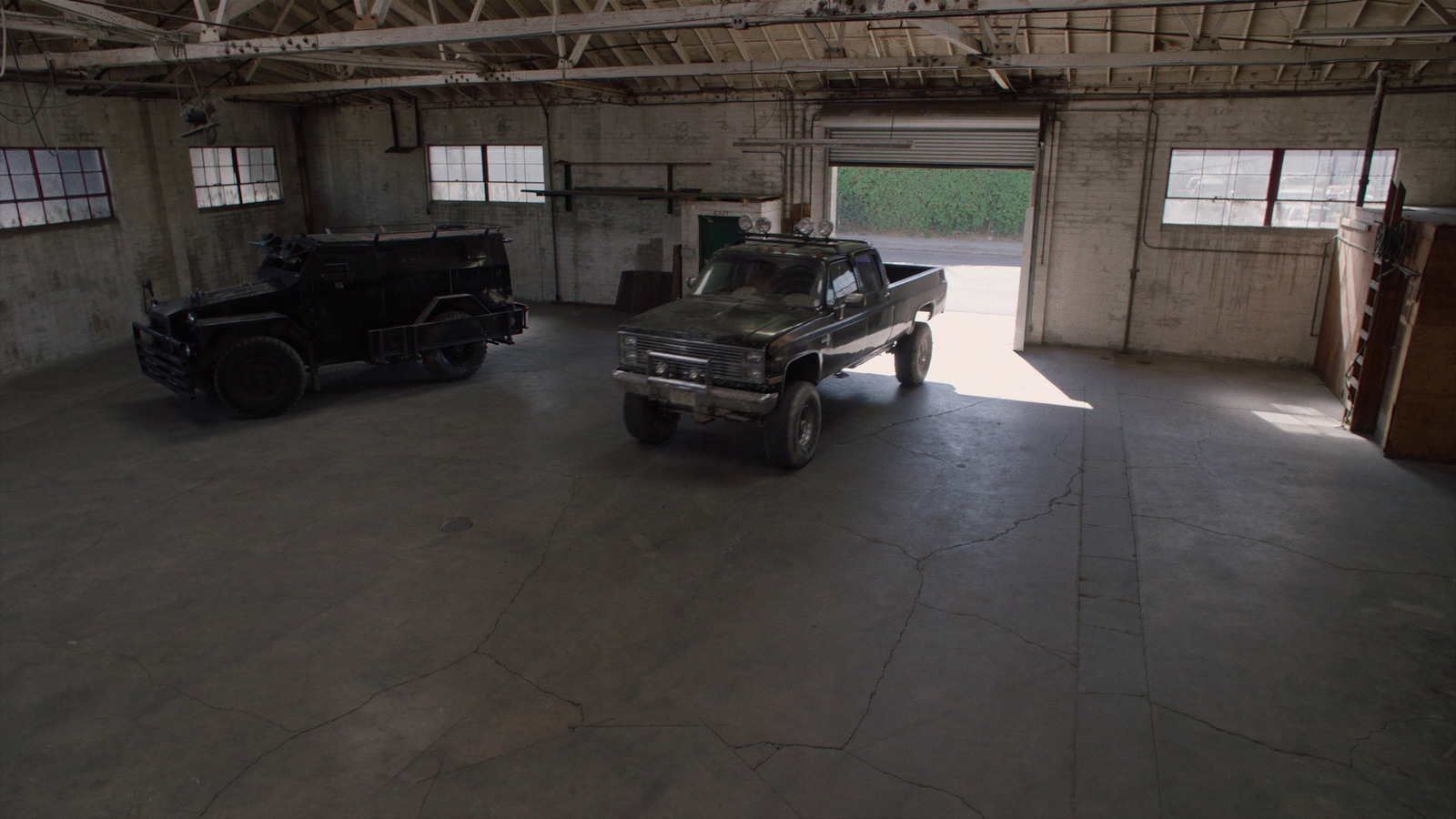
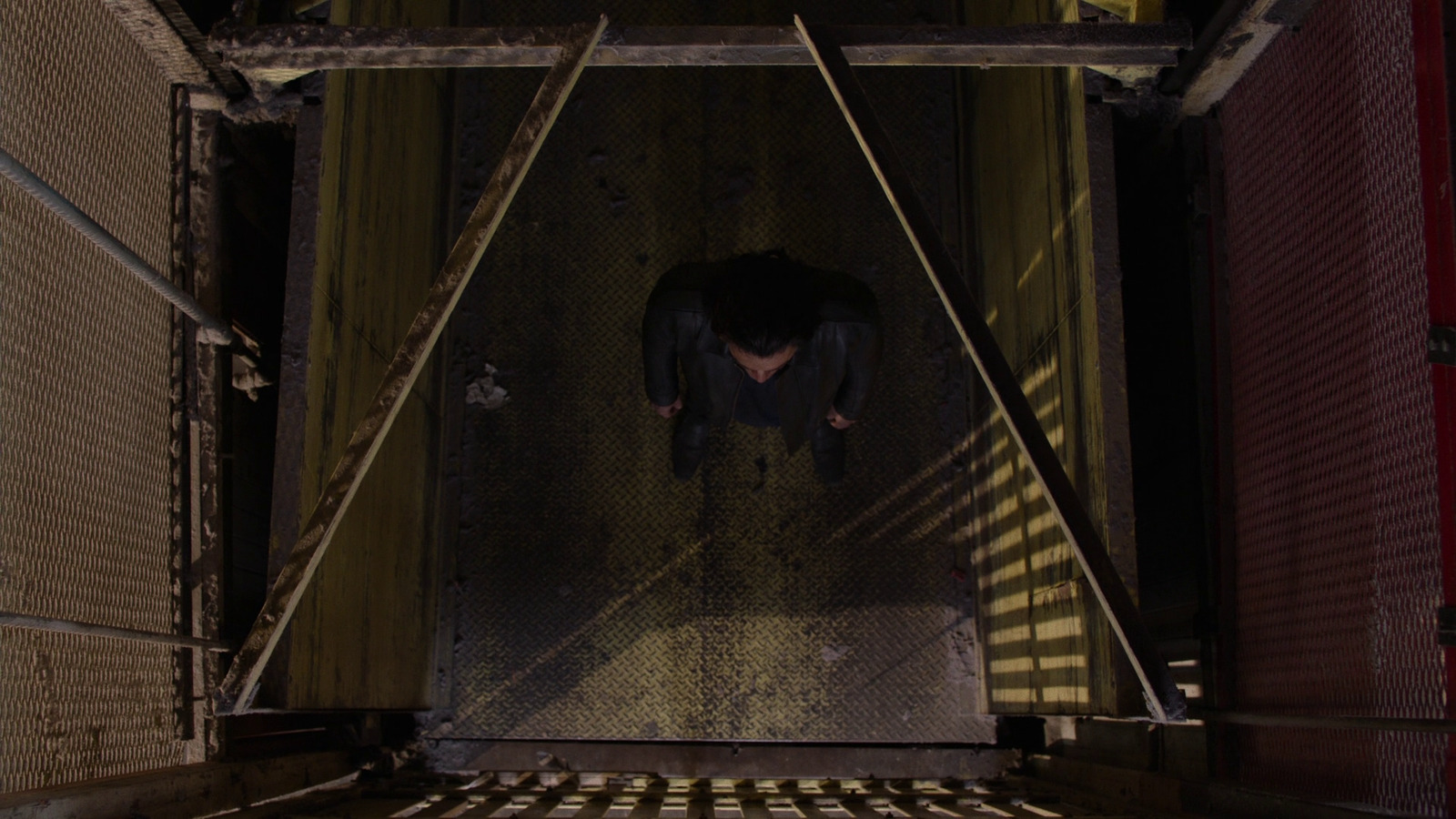
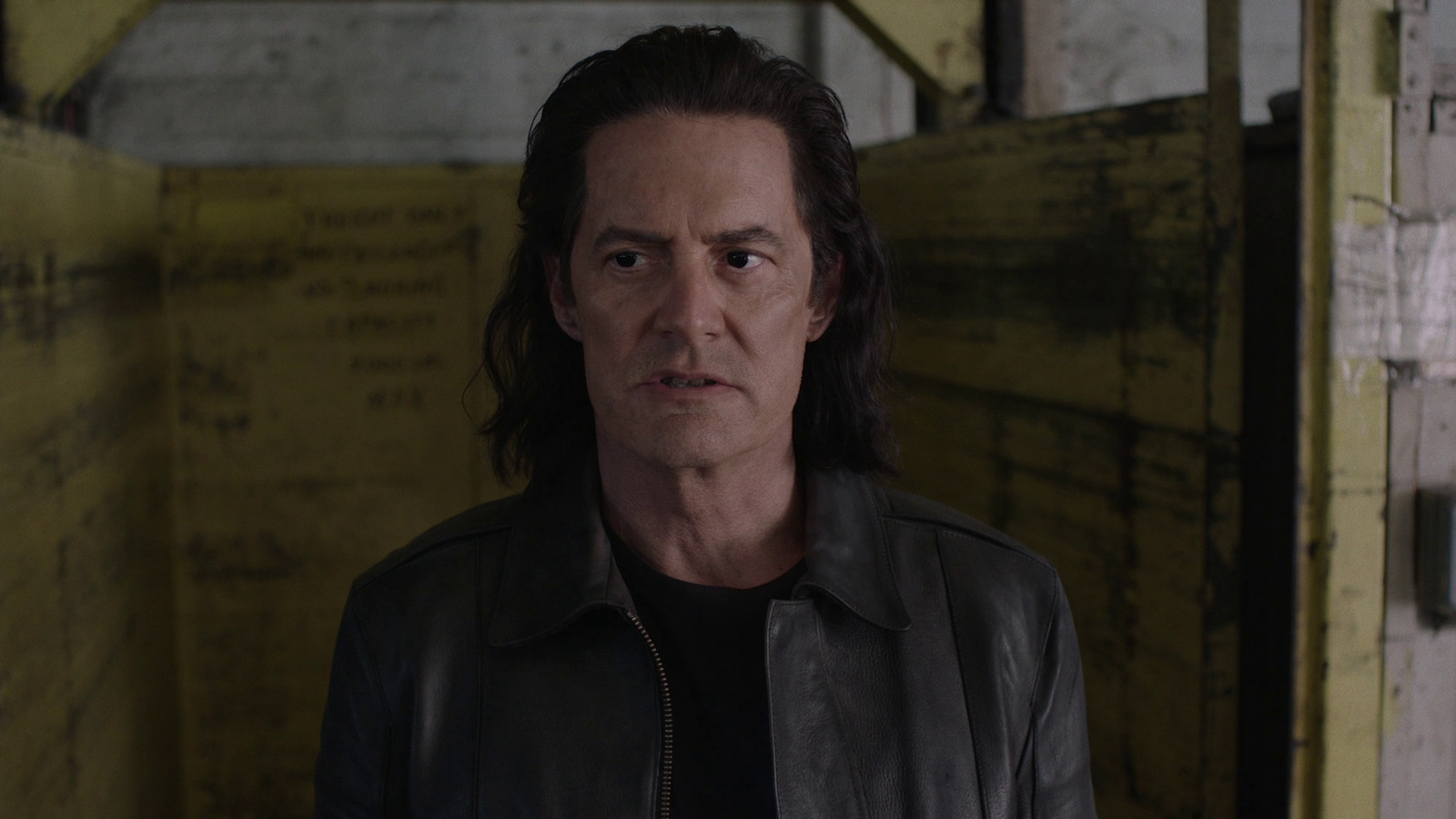
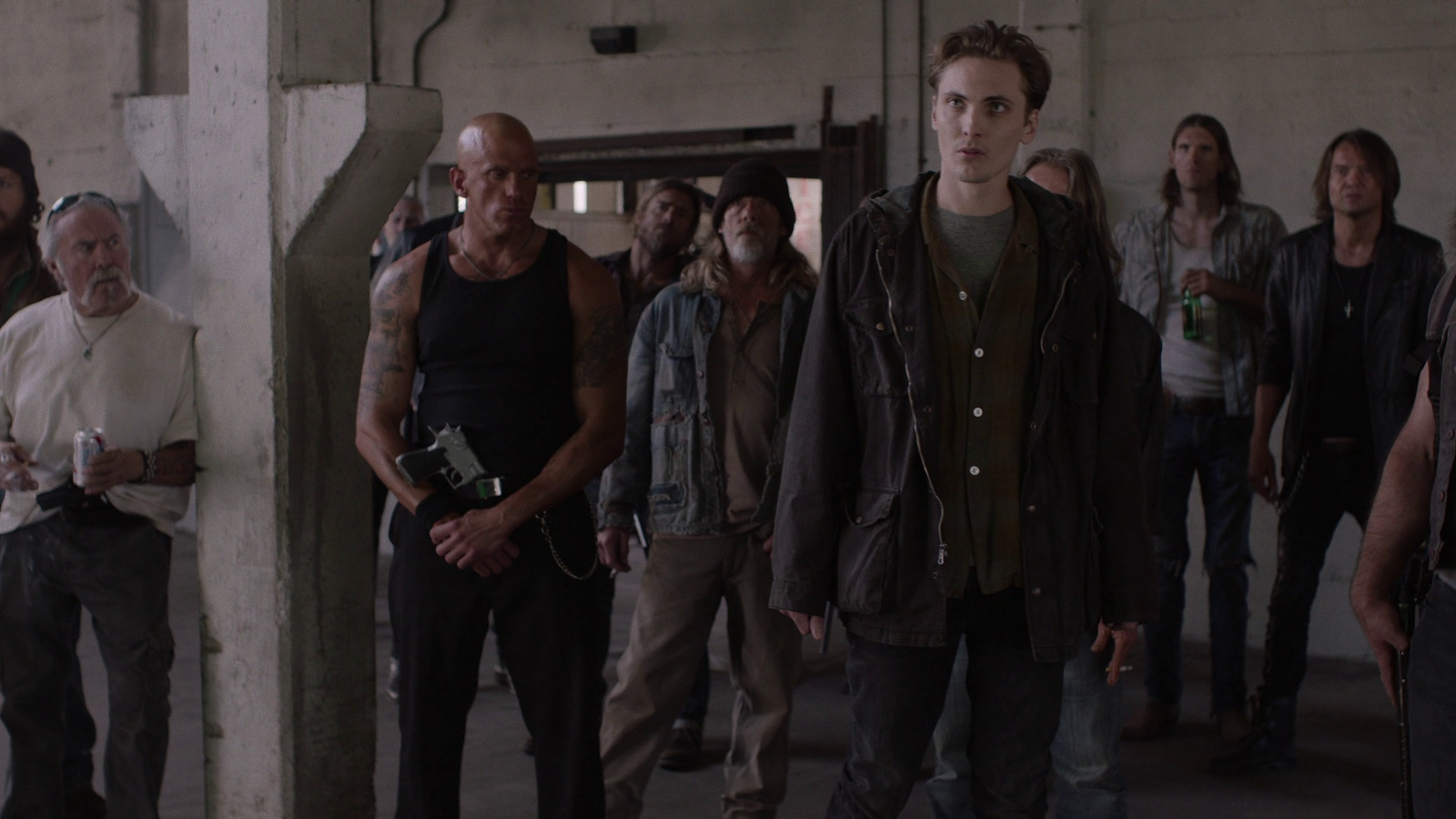
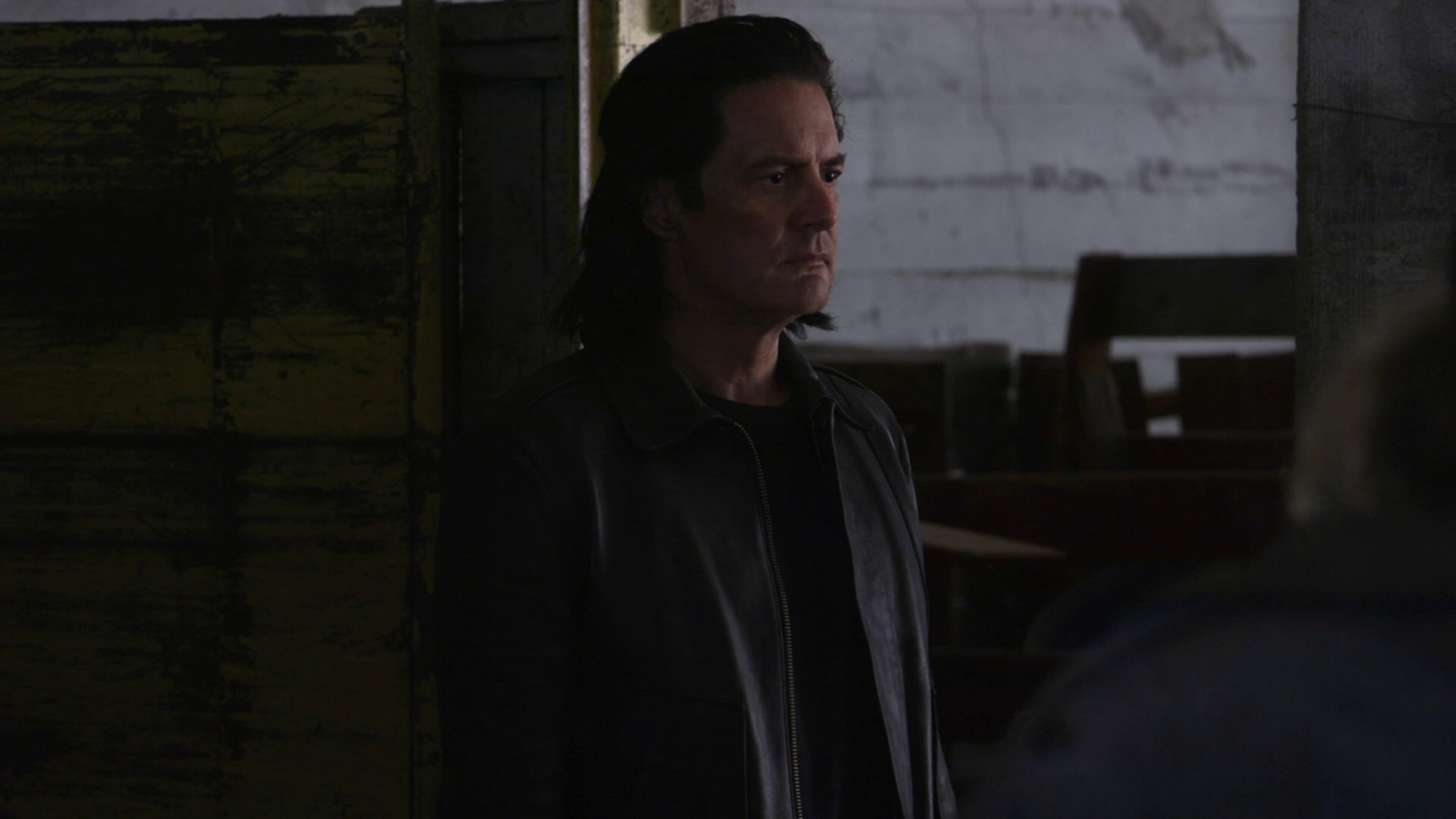
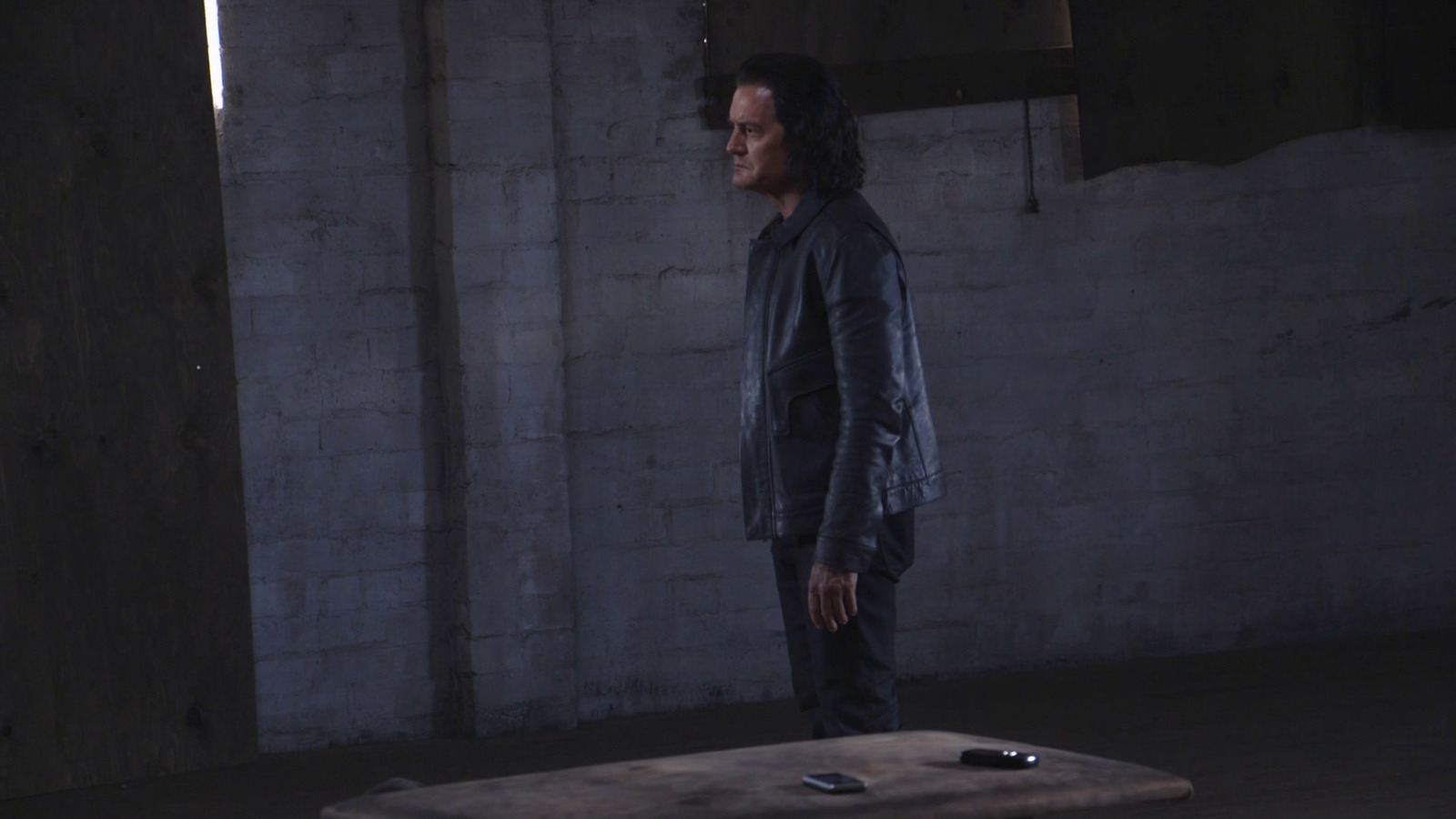
Ray recognizes the man he believed he had killed. Doors, an intercom and an industrial lift divide the warehouse into levels of access. The overhead view of Cooper’s double inside the lift briefly makes him look contained, but his composed arrival disrupts the confidence of those waiting above. The gang’s ability to watch and control entry does not mean that it understands the visitor.
Open the scene sequence · 2 frames
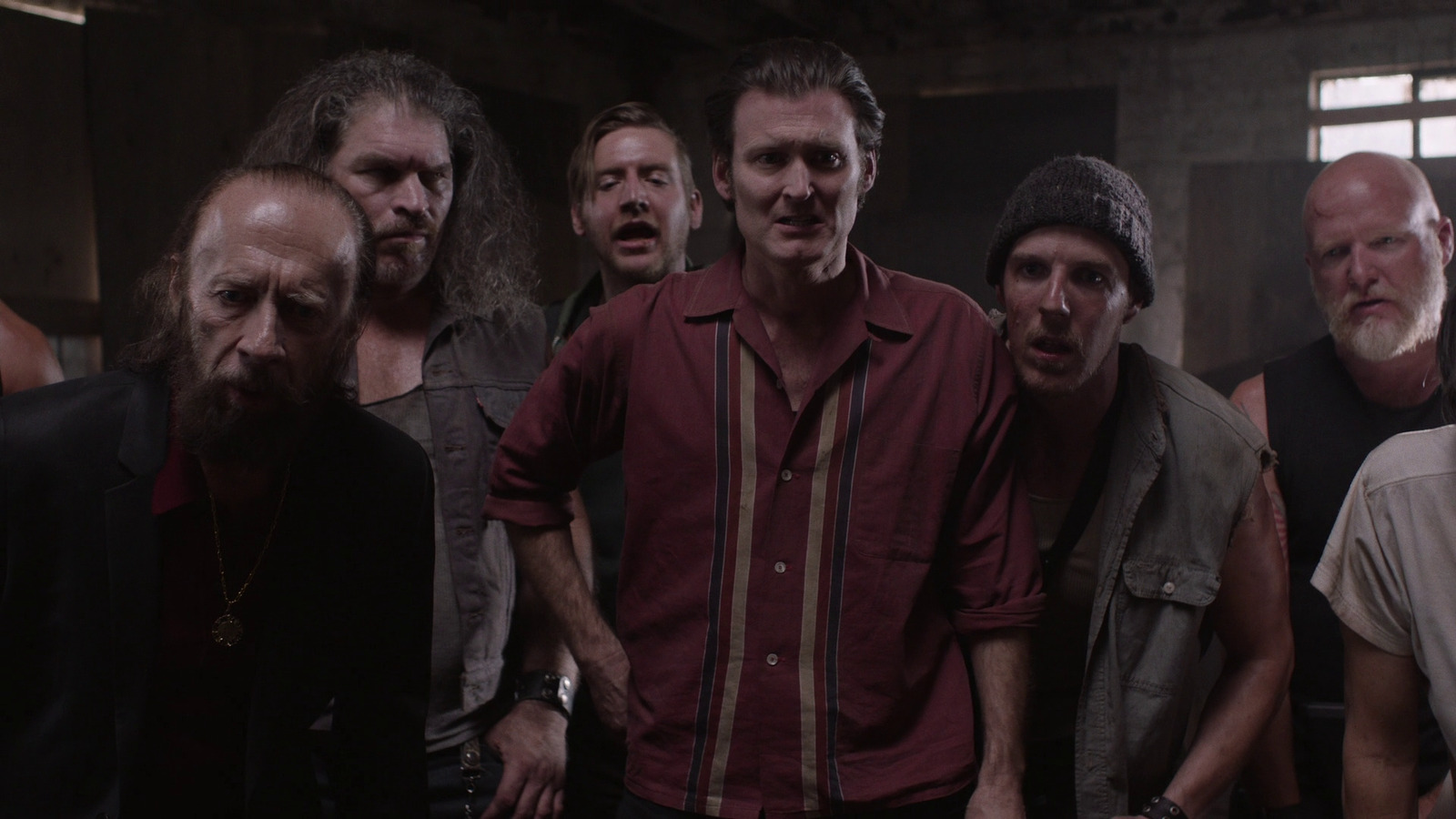
A hierarchy explained as a game
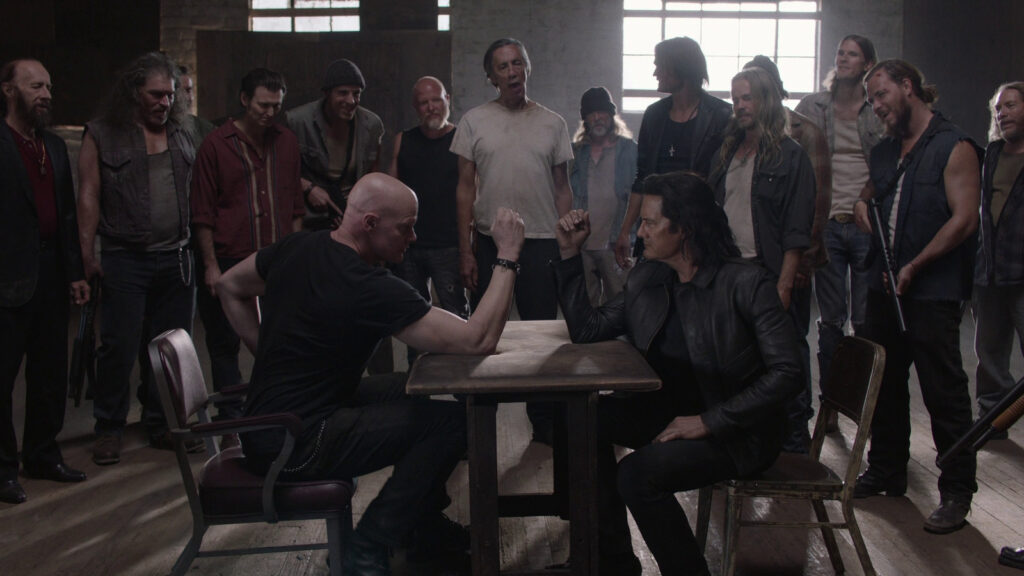
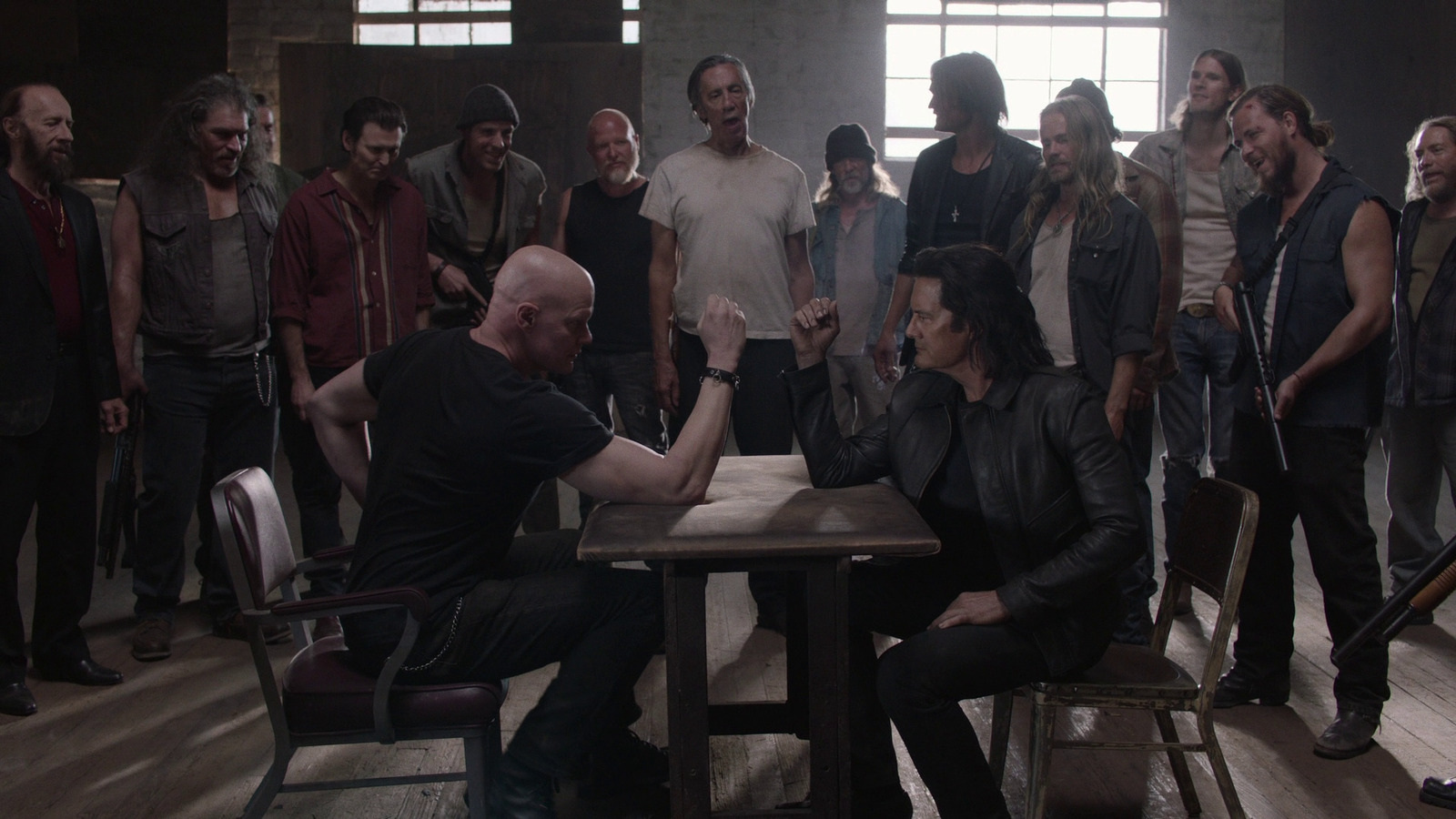
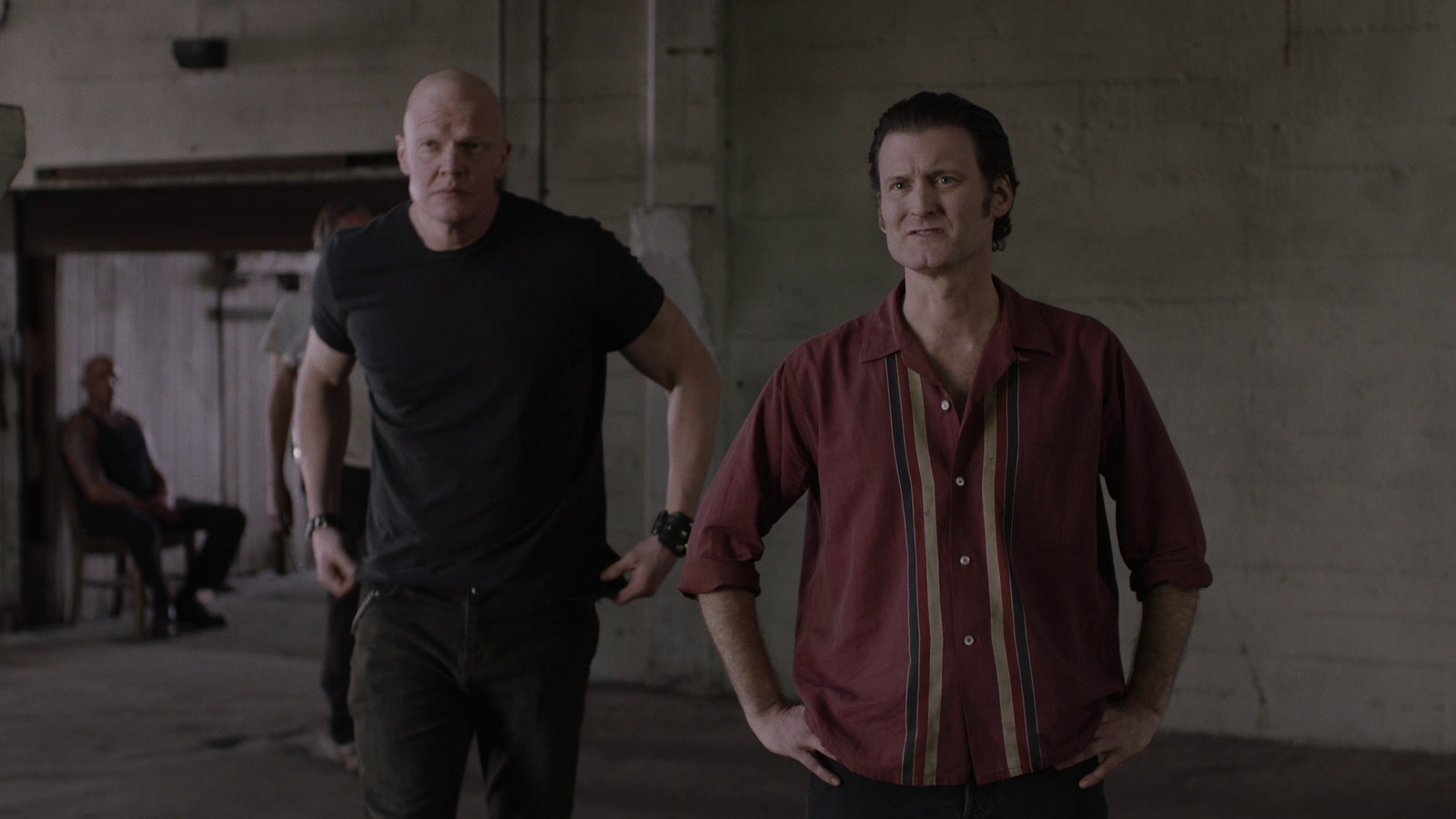
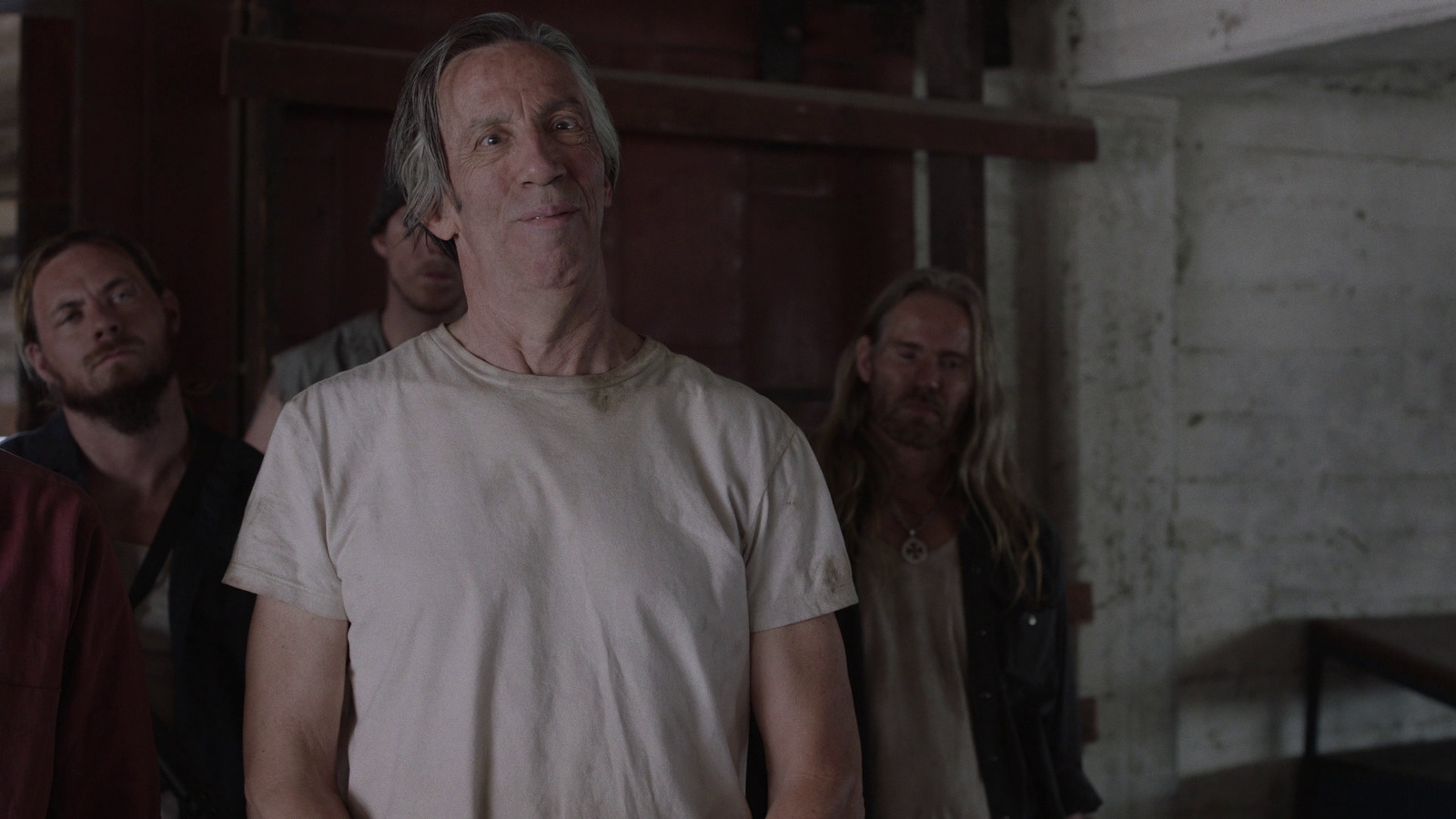
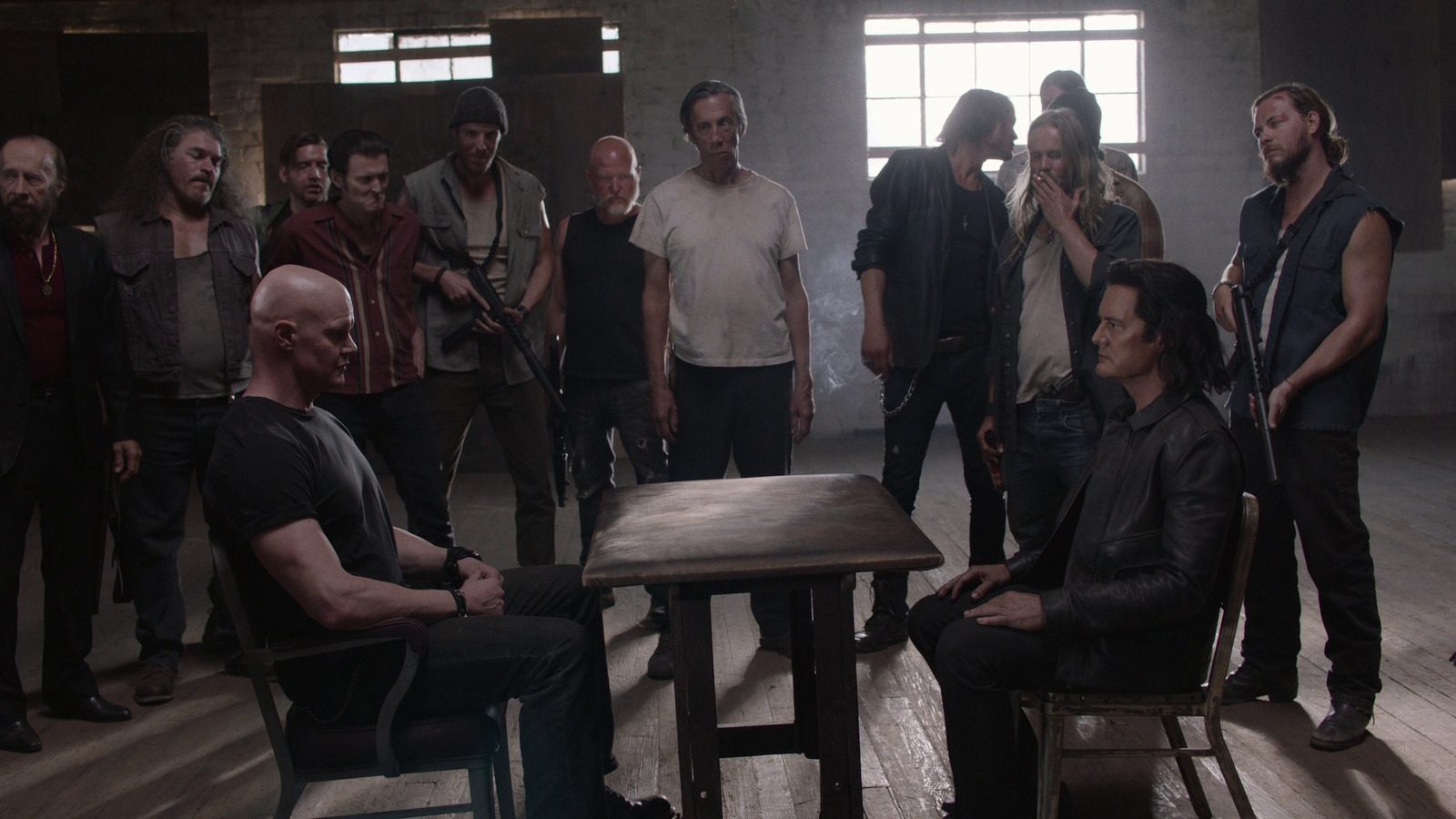
Muddy describes Renzo’s authority as the outcome of an undefeated arm-wrestling record. The explanation makes obedience depend on physical victory, with death as the penalty for refusing the result. Cooper’s double declines the offered leadership and asks only for Ray if he wins. The extended setup—table, chair, elbow, grip and instruction—makes the rules unusually concrete before the contest exposes their inadequacy.
Open the scene sequence · 3 frames
Strength becomes a lesson in control
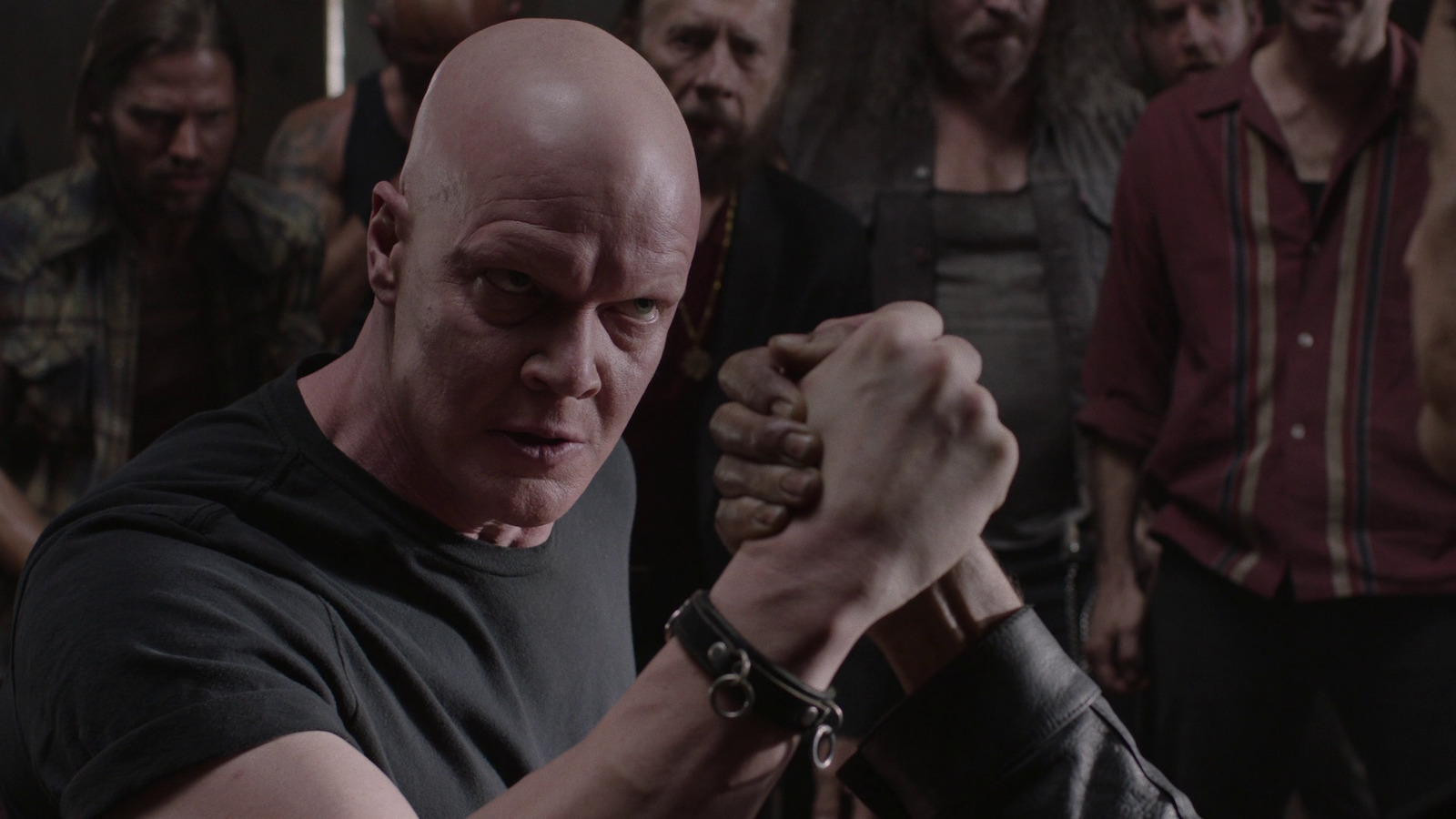
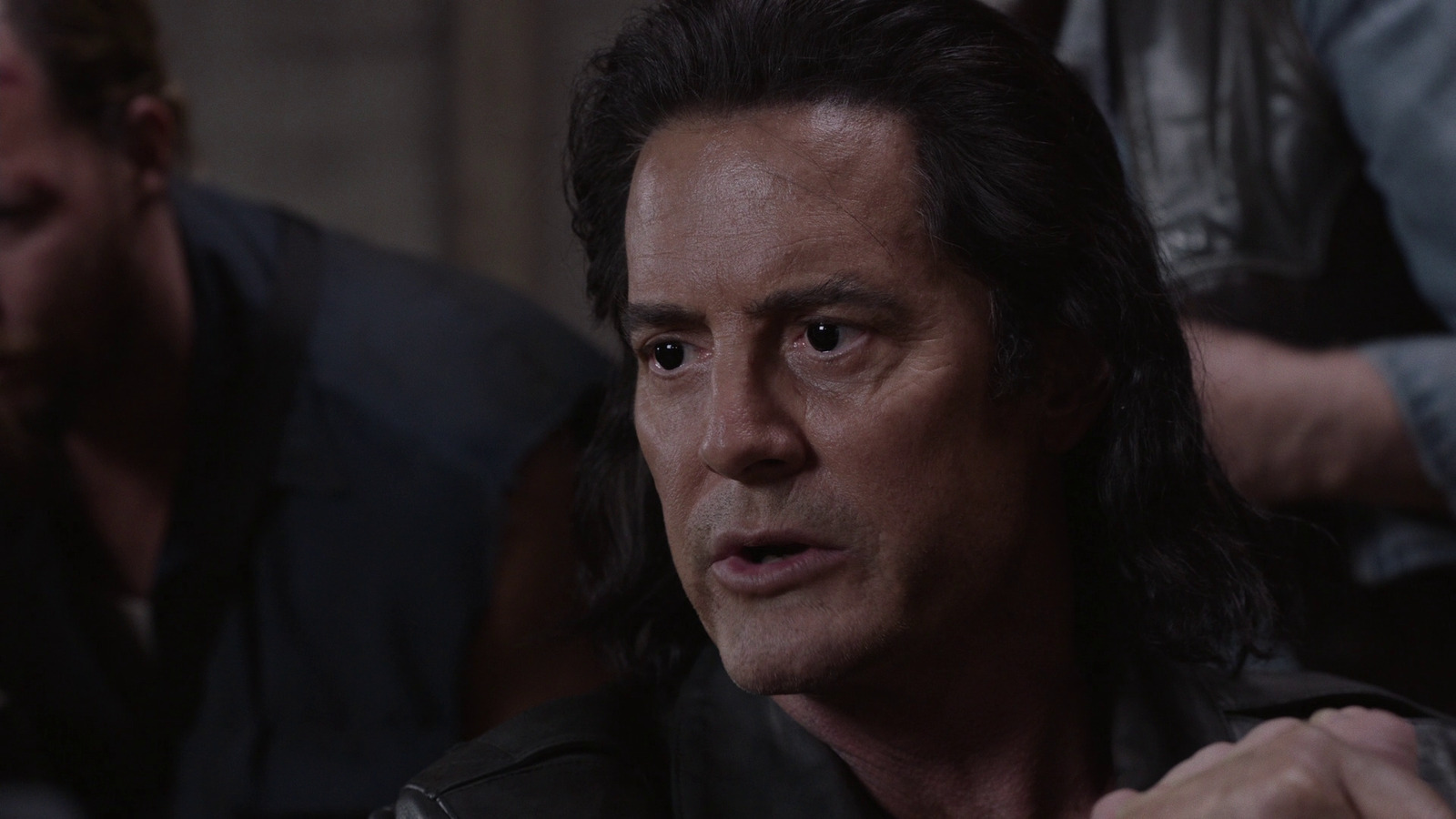
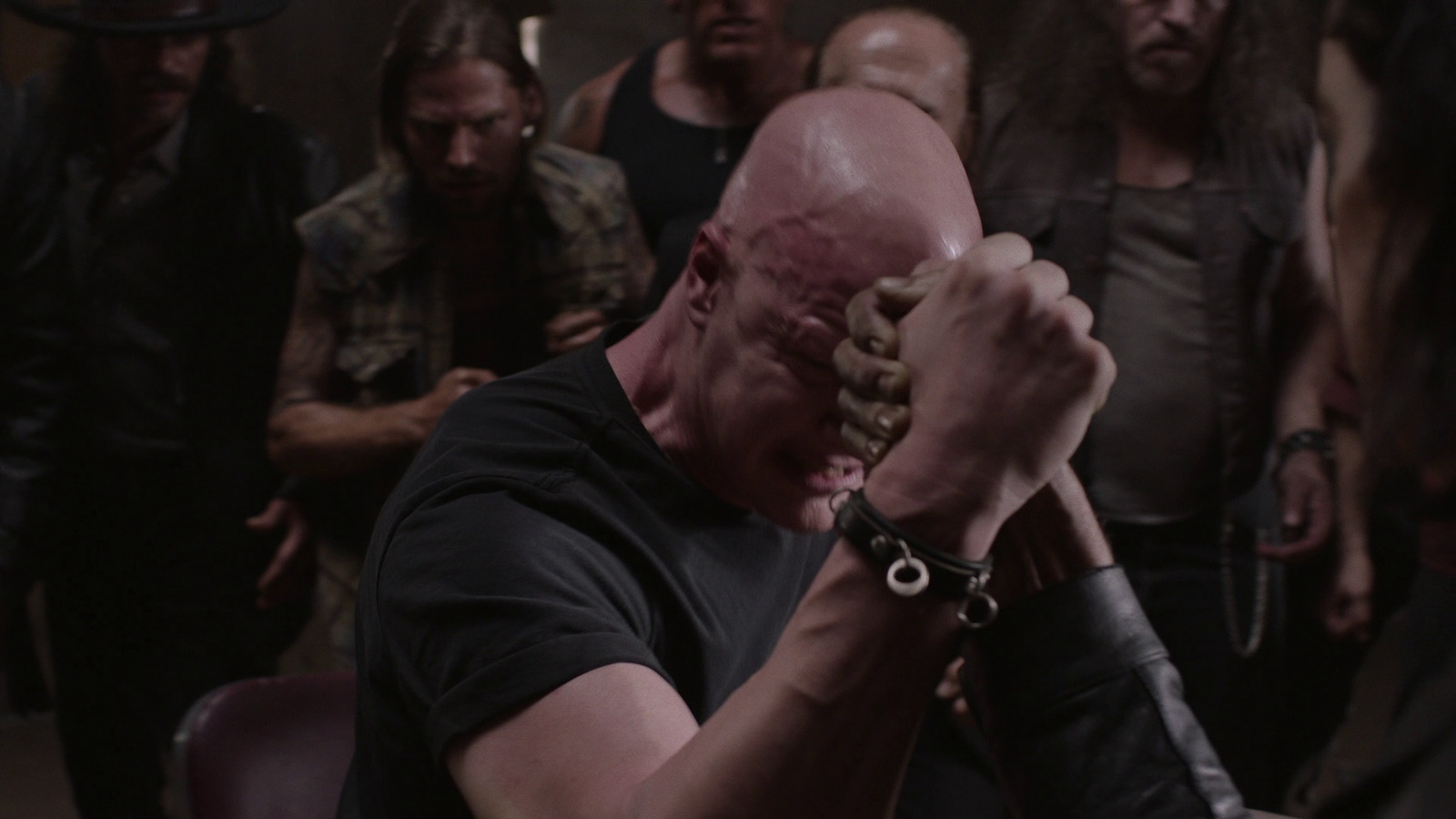
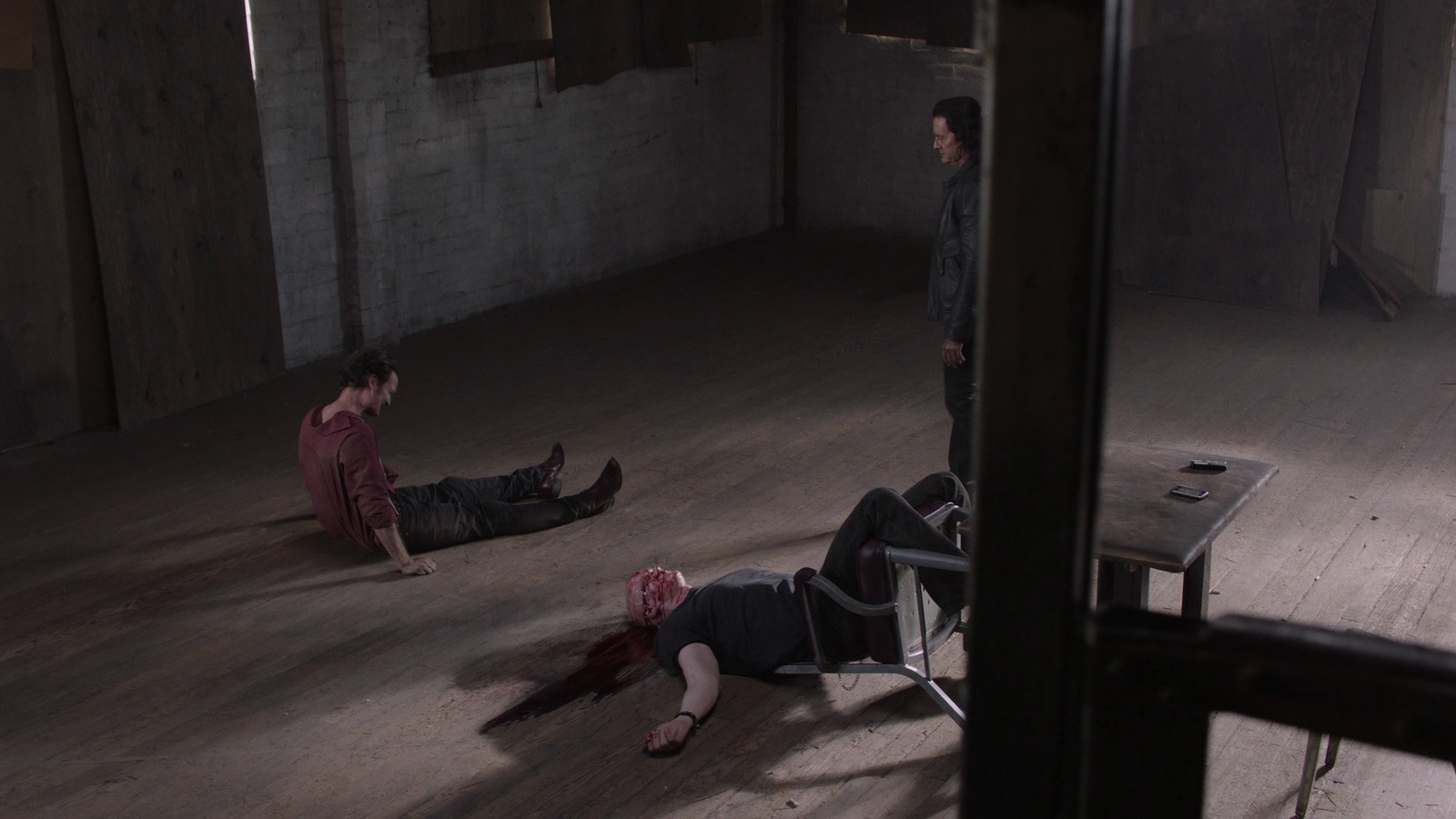
The contest repeatedly returns to its starting position. Renzo’s strain and the crowd’s changing encouragement contrast with his opponent’s conversational calm. Cooper’s double demonstrates that he can choose the direction, duration and intensity of the struggle. The sudden break and fatal blow end a long delay in seconds. The spectators immediately address the victor as their boss, showing how quickly their loyalty follows the rule they have just explained.
Open the scene sequence · 4 frames
A coerced account with unresolved names
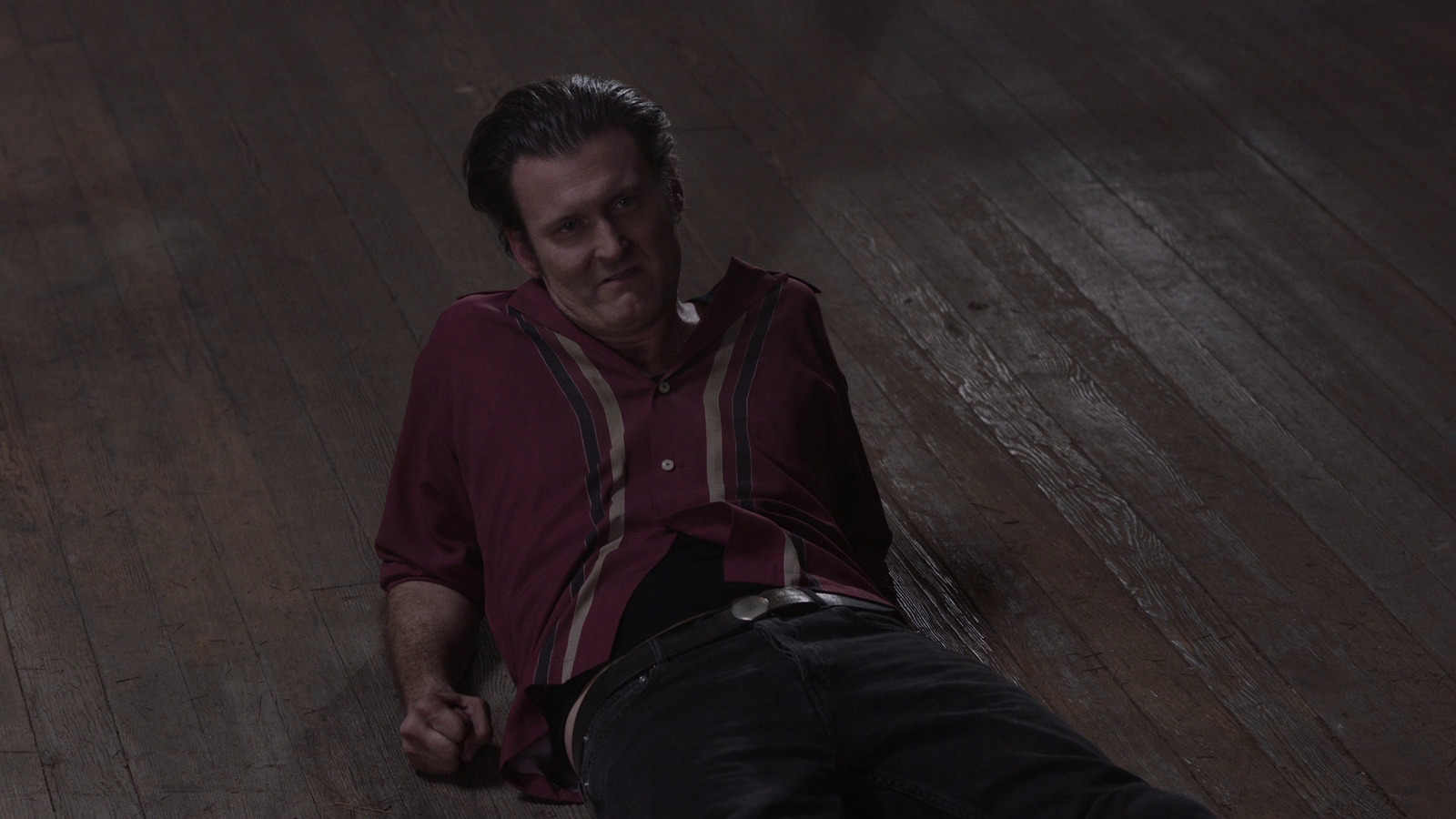
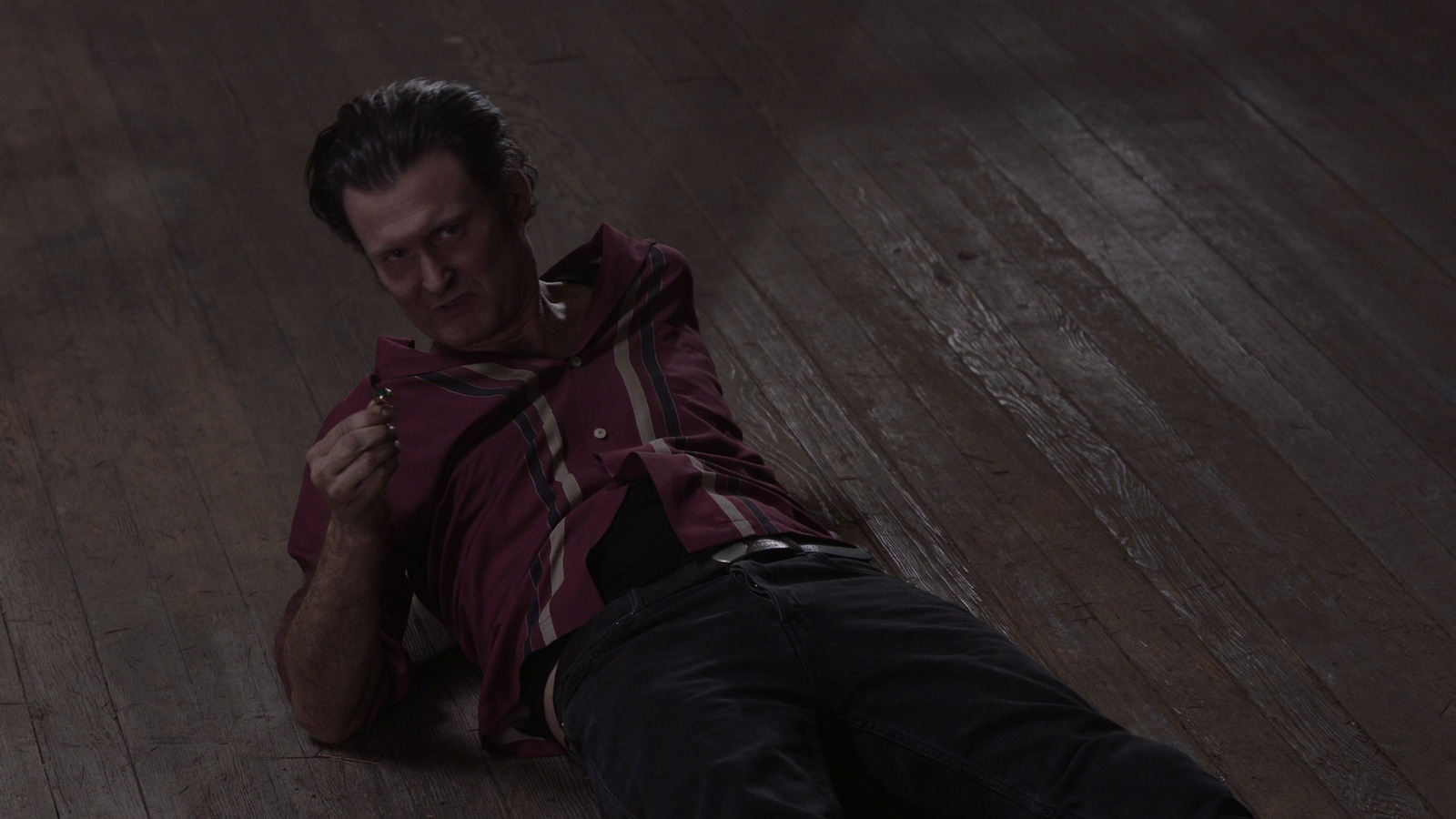
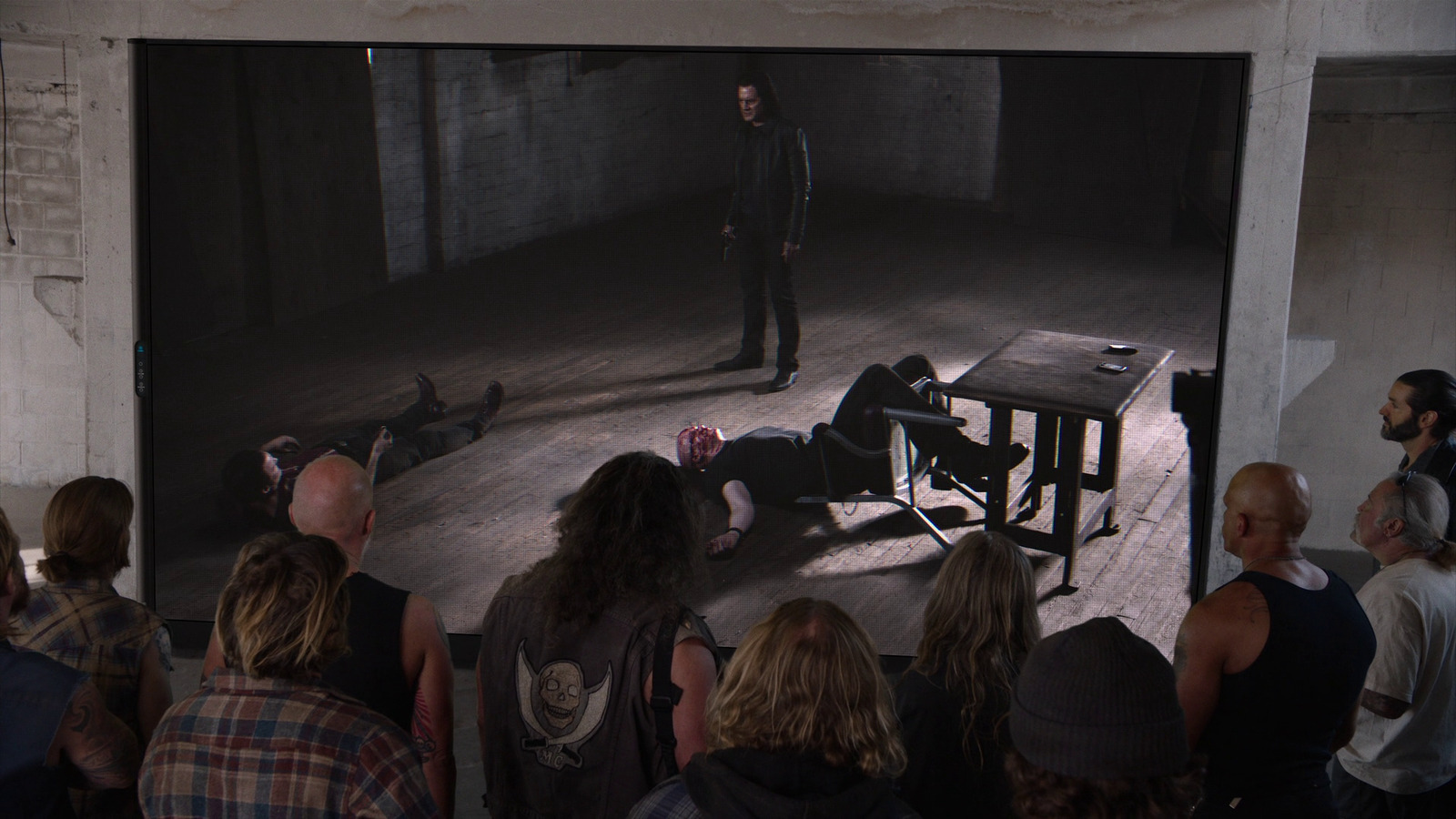
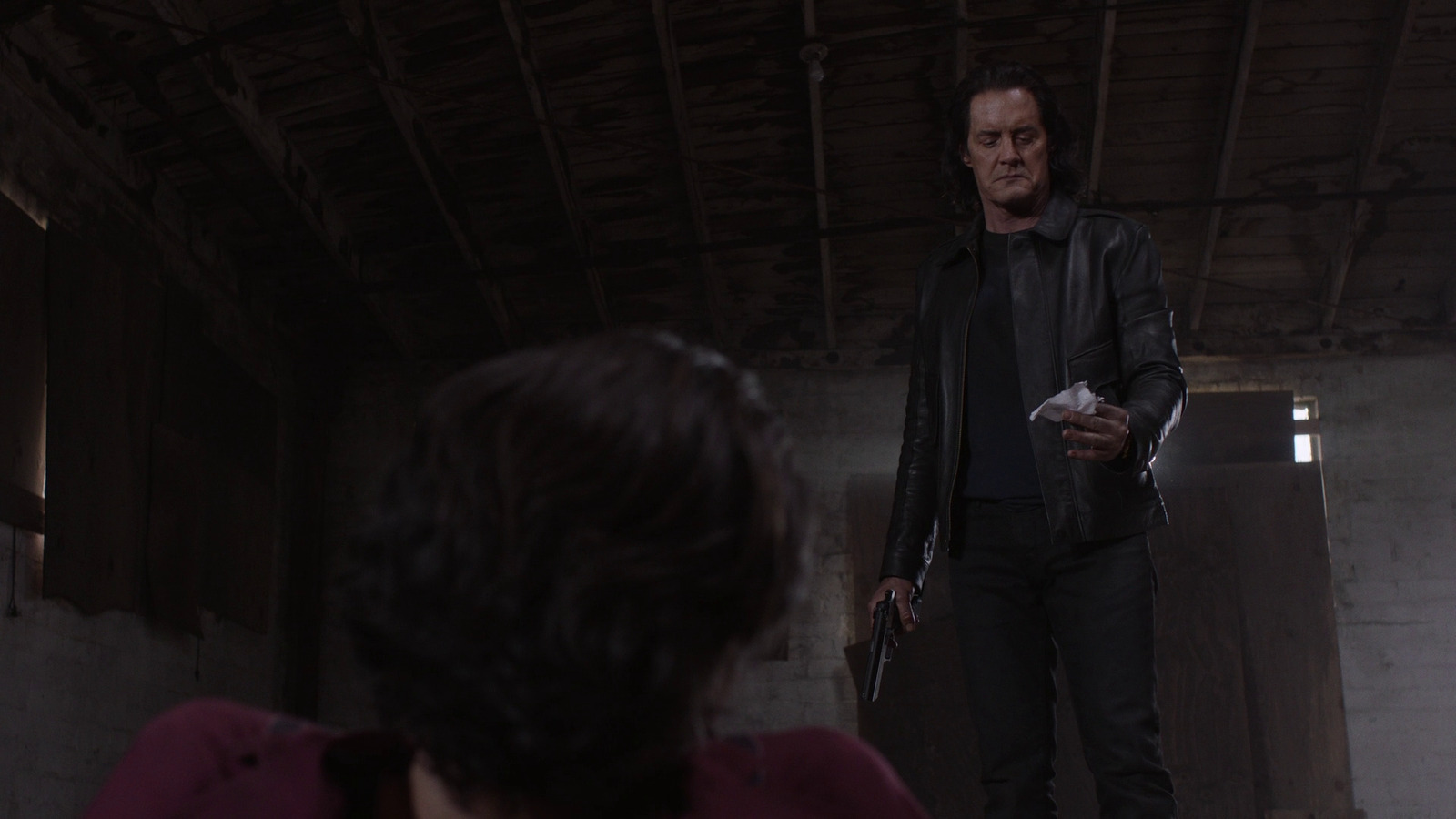
Ray is left wounded on the floor while Cooper’s double stands above him. His account links the attempted killing to a caller using Phillip Jeffries’s name, Warden Murphy, a ring and the coordinates associated with Hastings’s secretary. Ray explicitly says he never met the caller. The distinction matters: his testimony supplies a route through the conspiracy without verifying the caller’s identity. The gang watches on a large monitor, and Richard Horne joins that audience.
Open the scene sequence · 4 frames
A small object connects incompatible spaces
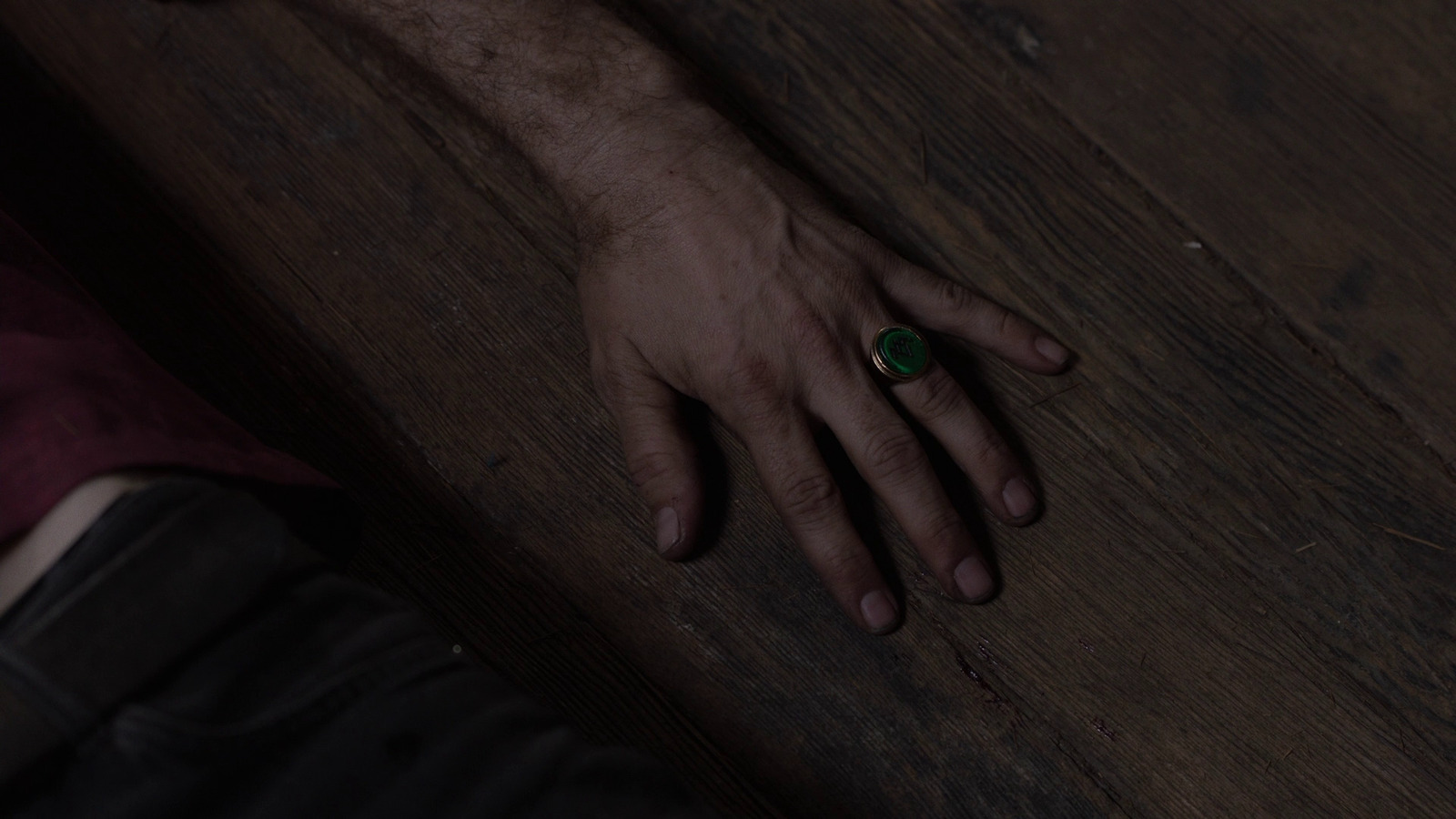
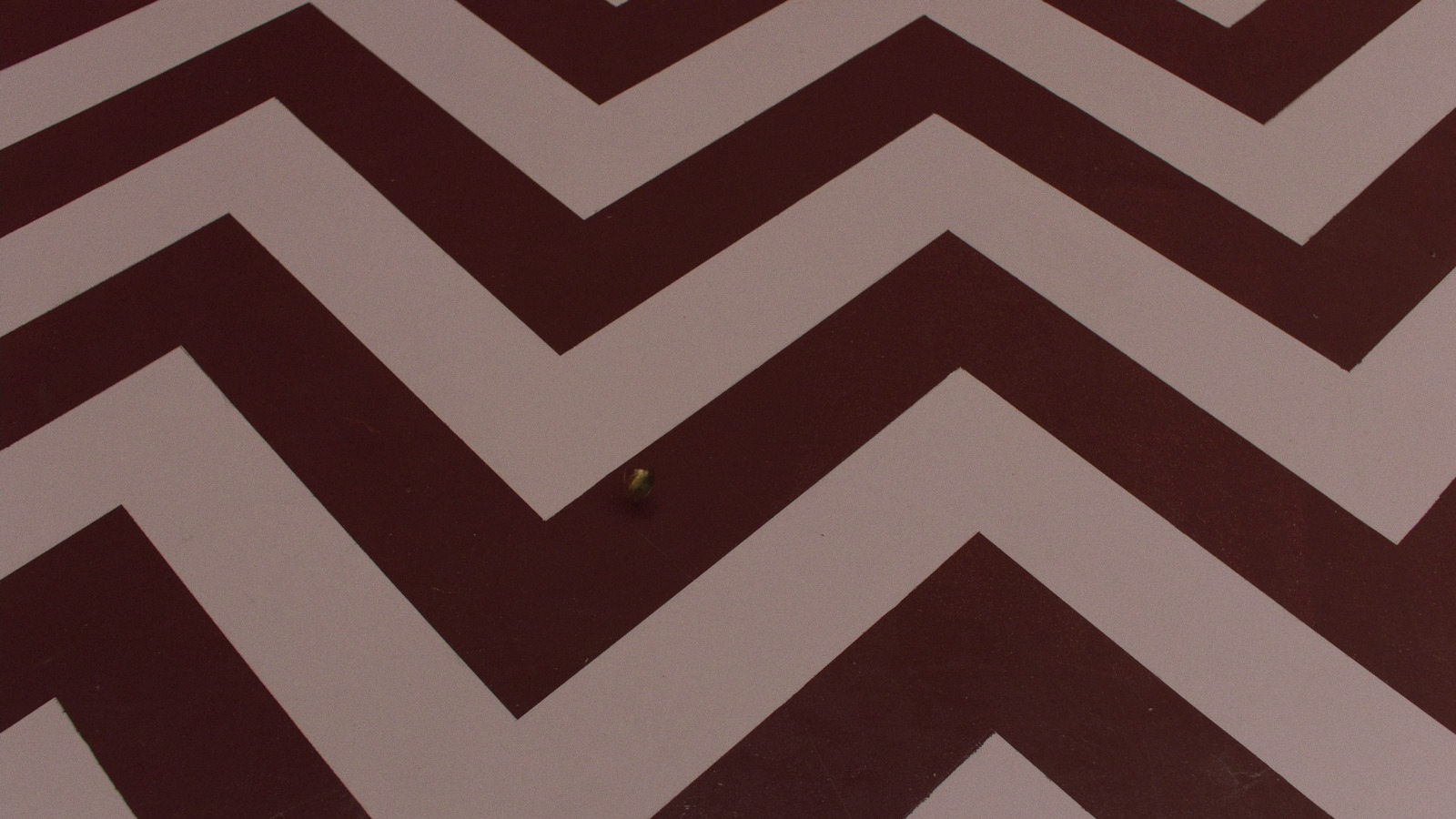
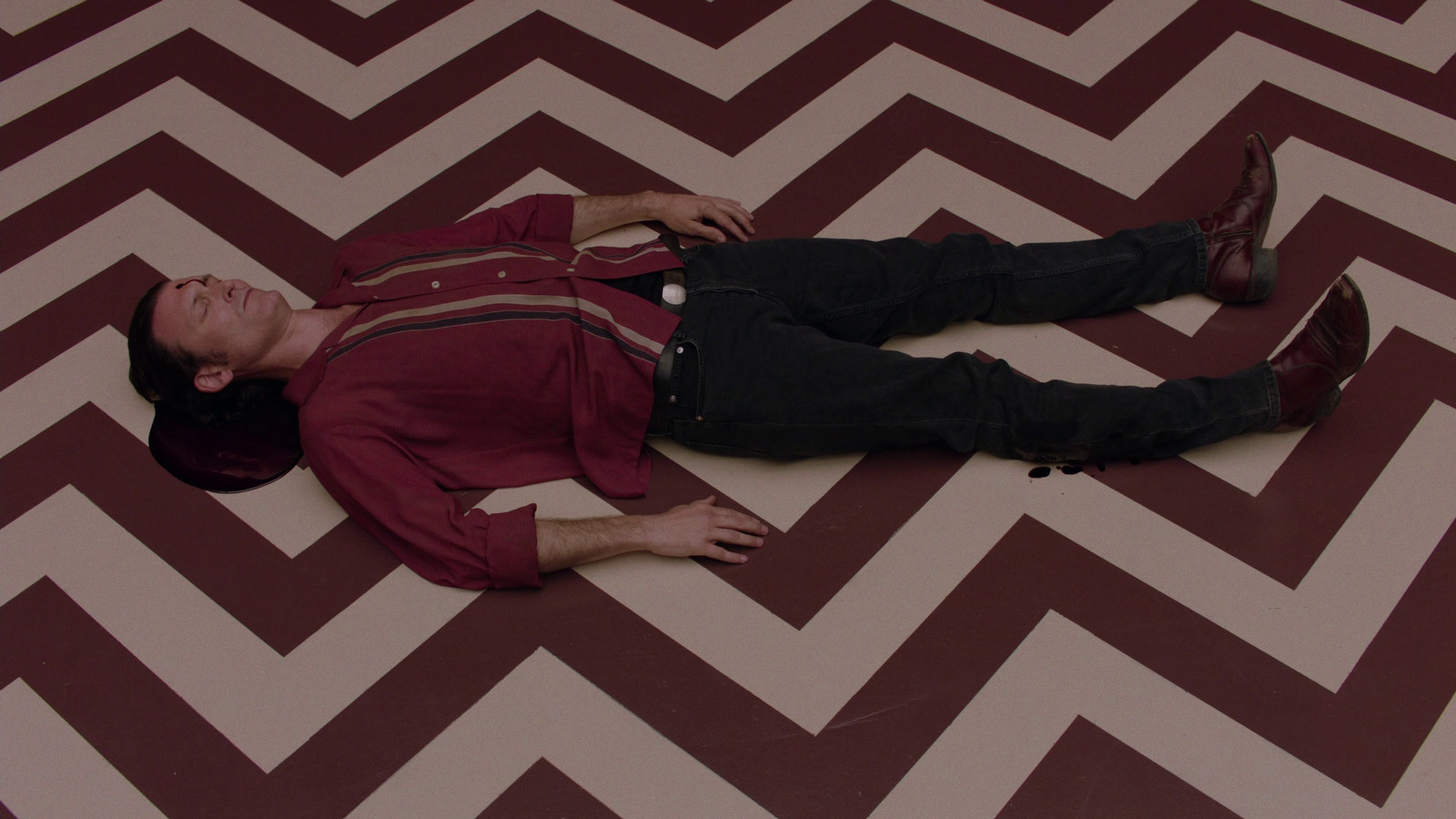
After Ray is shot, attention shifts to the green ring on his hand. The ring’s fall is completed on the Red Room’s patterned floor, and Ray’s body is subsequently shown there. The cut makes the change of location legible through a familiar object instead of explaining its rules. Surveillance continues in the warehouse, but it does not provide the gang with the same sequence the viewer receives. This passage extends the ring’s importance in Fire Walk with Me.
Open the scene sequence · 2 frames
Correct information becomes a discarded mistake
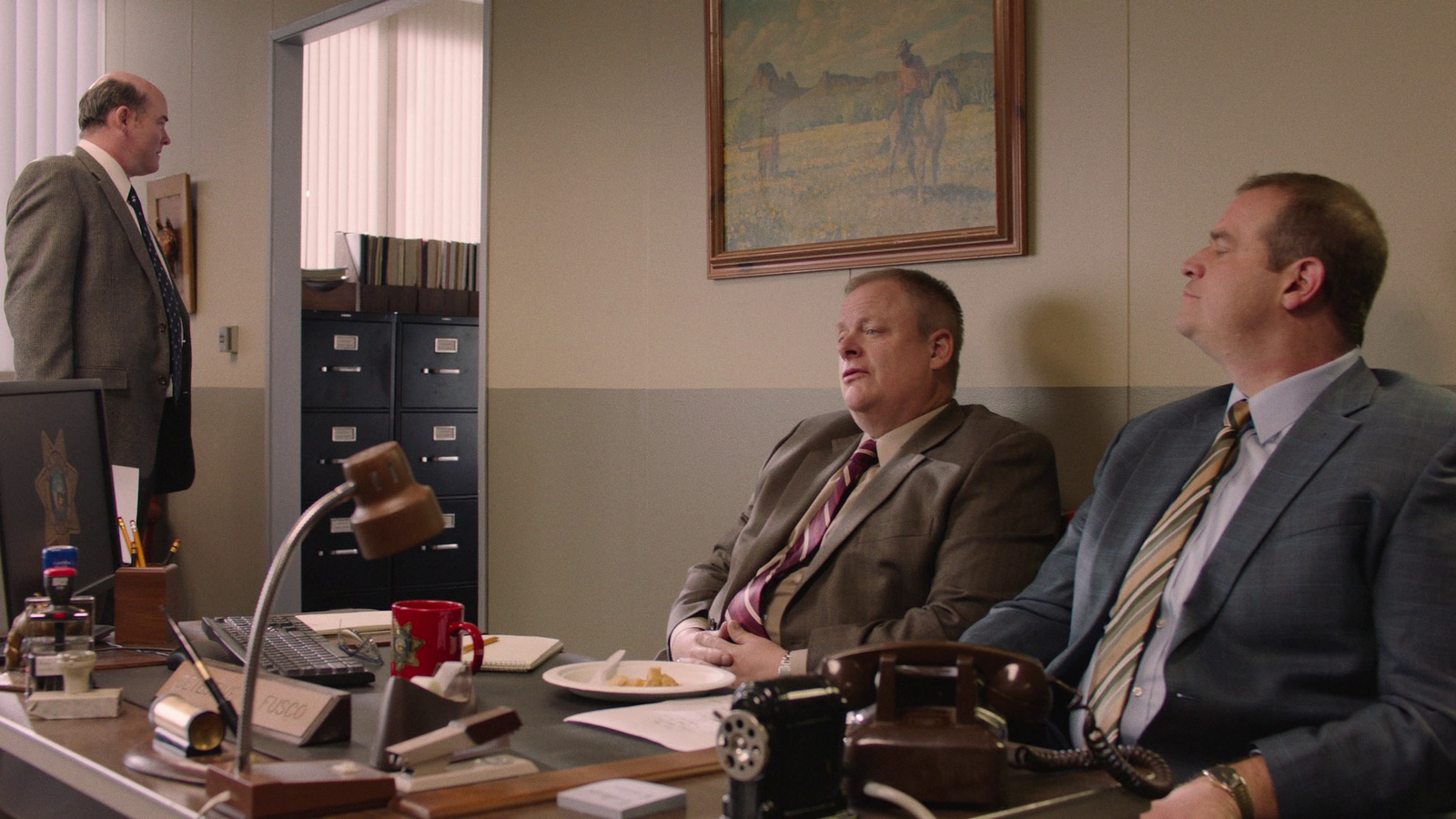
The Fuscos receive a fingerprint match that identifies both a missing FBI agent and a recent escapee. They dismiss the result because it seems incompatible with the man they know as Douglas Jones. A crumpled report becomes an object for a casual wager. Offscreen commotion in the station competes with their conversation, making institutional activity audible while an important connection is thrown away in plain sight.
Corruption just outside the station
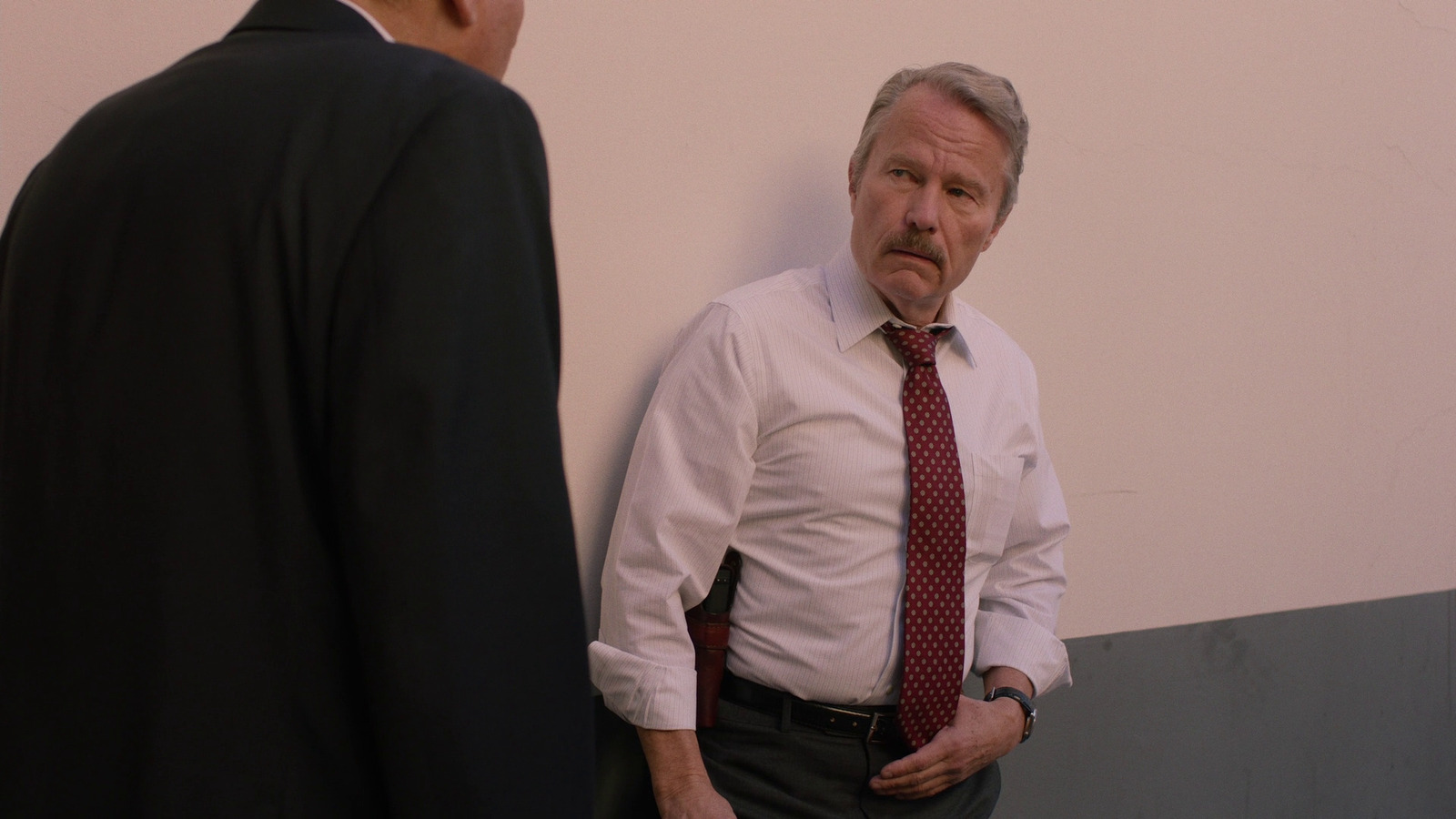
Anthony seeks help from Detective Clark behind the building. The policeman’s contempt and demand for money expose a second relationship beneath the official workplace. After Anthony leaves, Clark tells his partner that he is cracking and proposes contacting Todd. The arrangement denies Anthony a private escape route: the person he approaches for help is already connected to the authority threatening him.
Casual conversation between hired killers
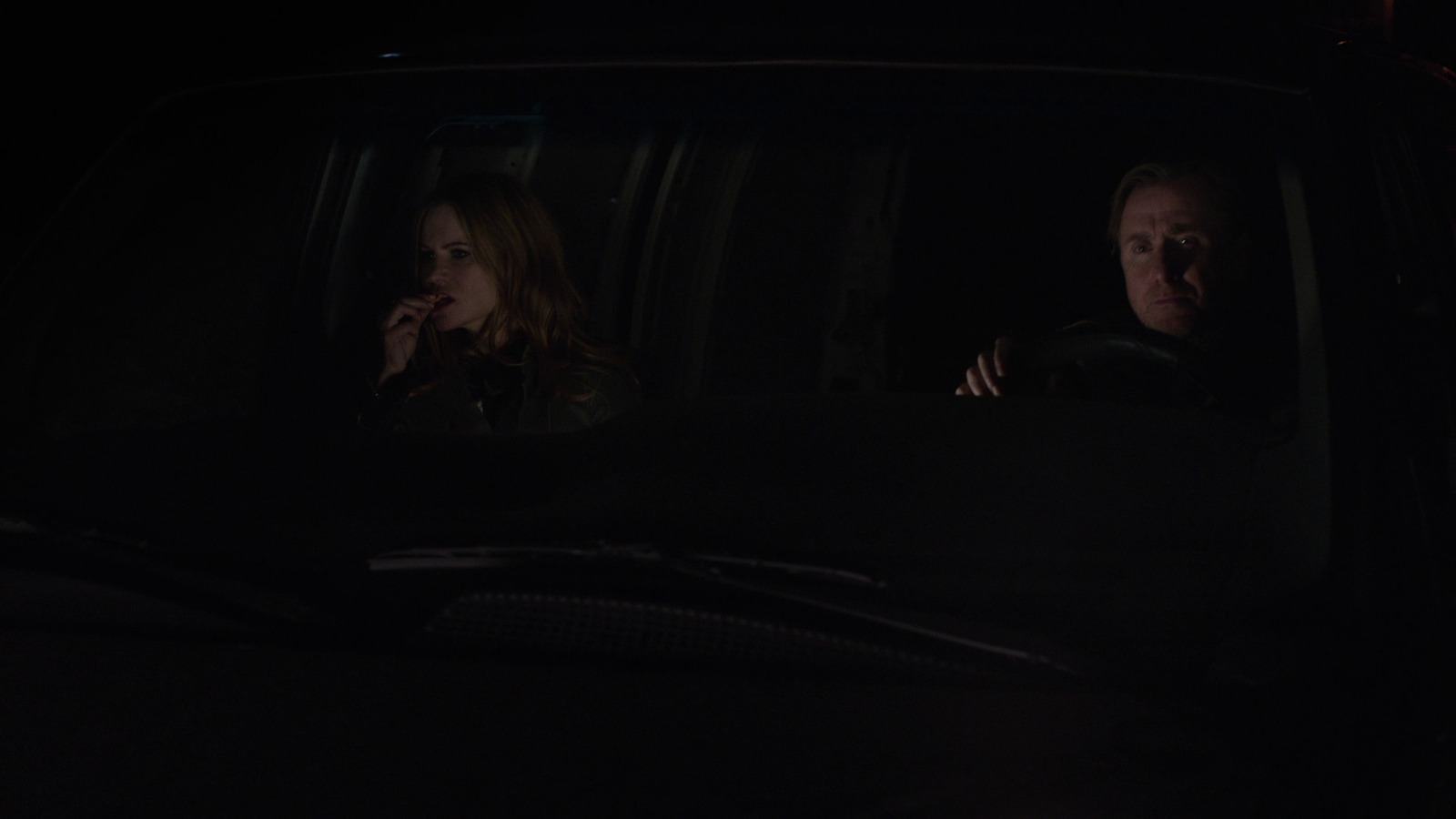
Chantal and Hutch sit in a dark vehicle eating and talking about Utah. The ordinary rhythm of snacking and speculation sits beside the violent work established for them earlier. Their remarks about other people are character dialogue, not a factual account of a religion or community. The interval delays the Las Vegas crisis while showing how little urgency the pair display in comparison with Anthony.
A killing plan undone by an ambiguous kindness
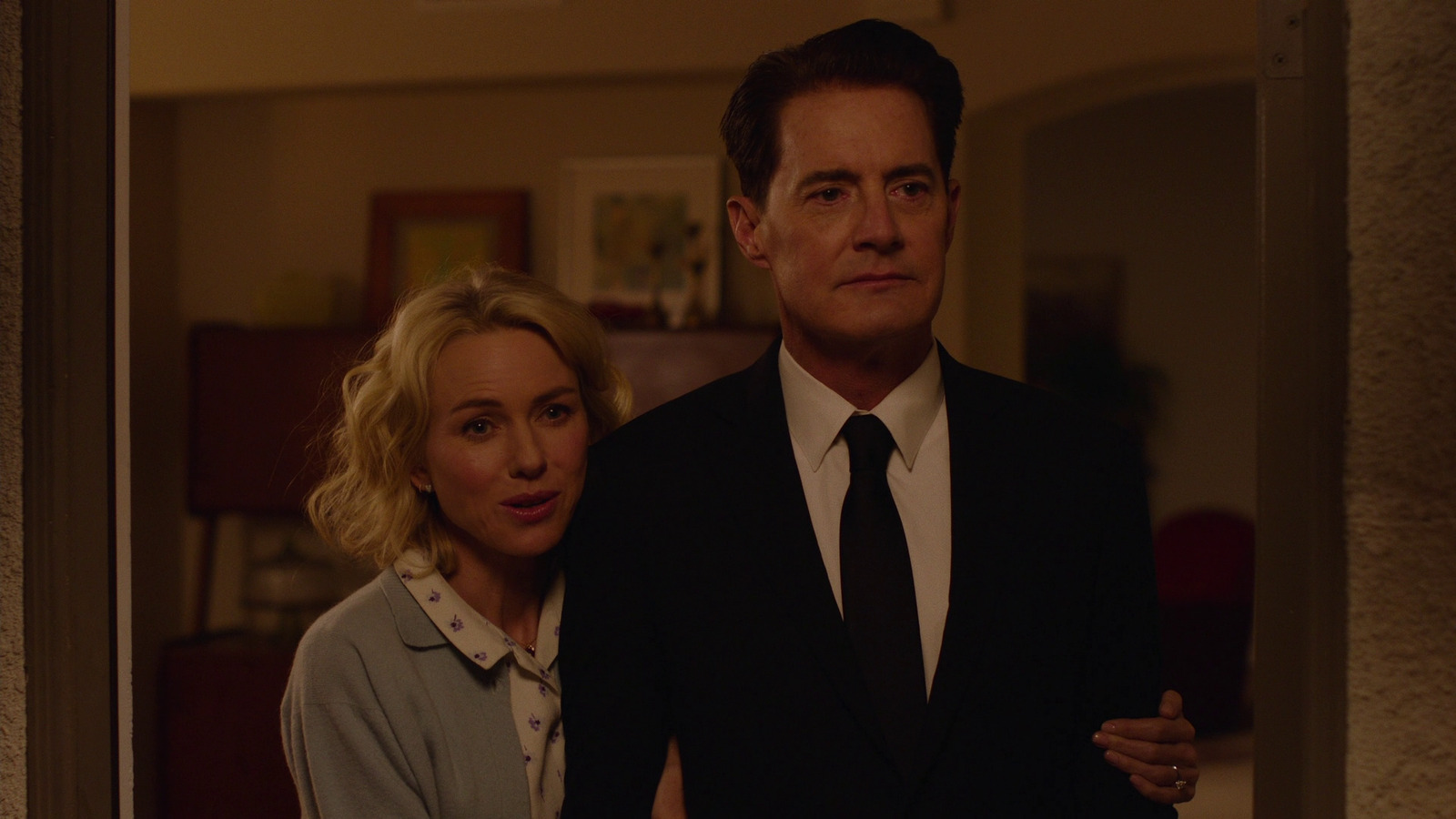
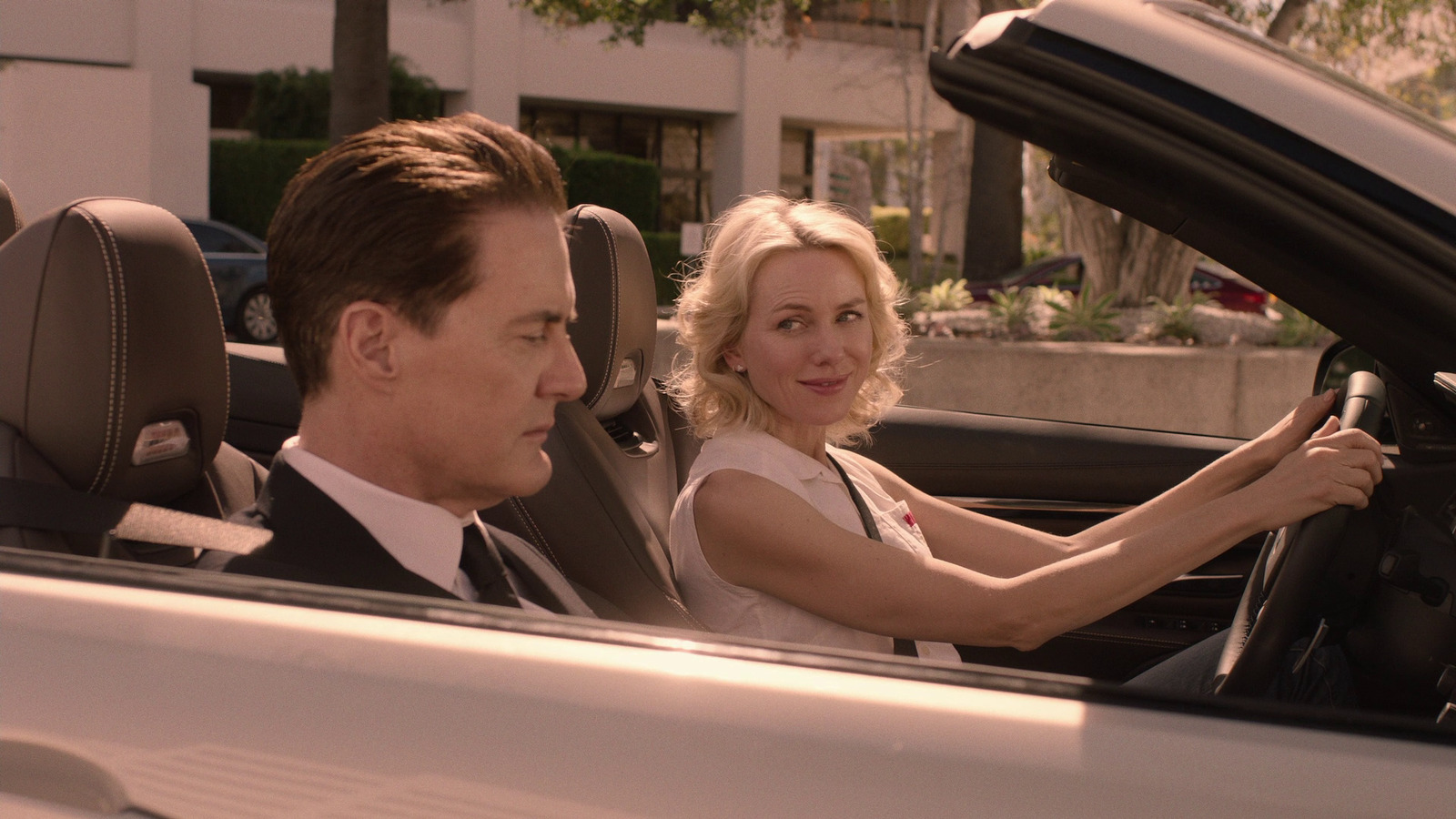
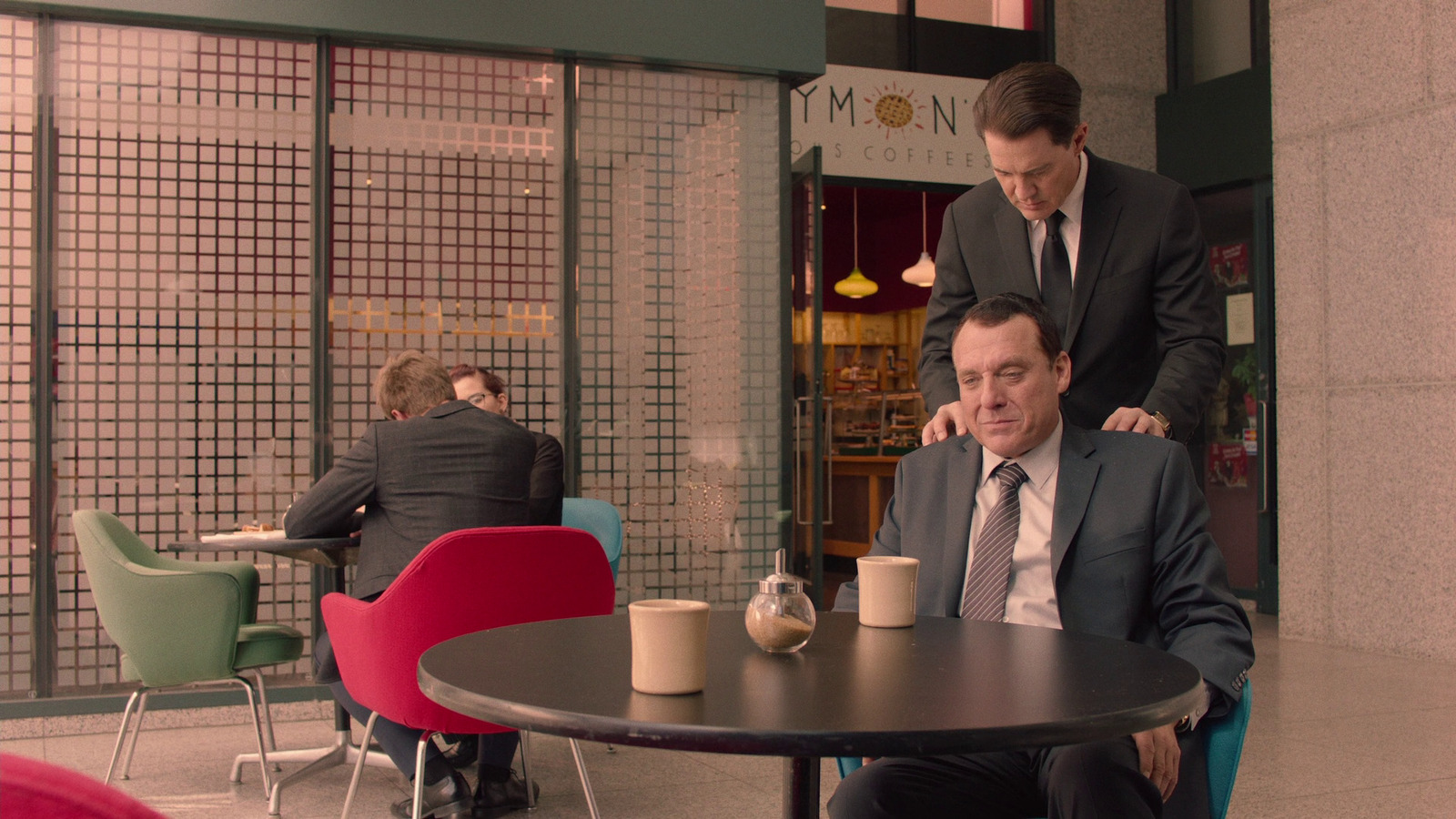
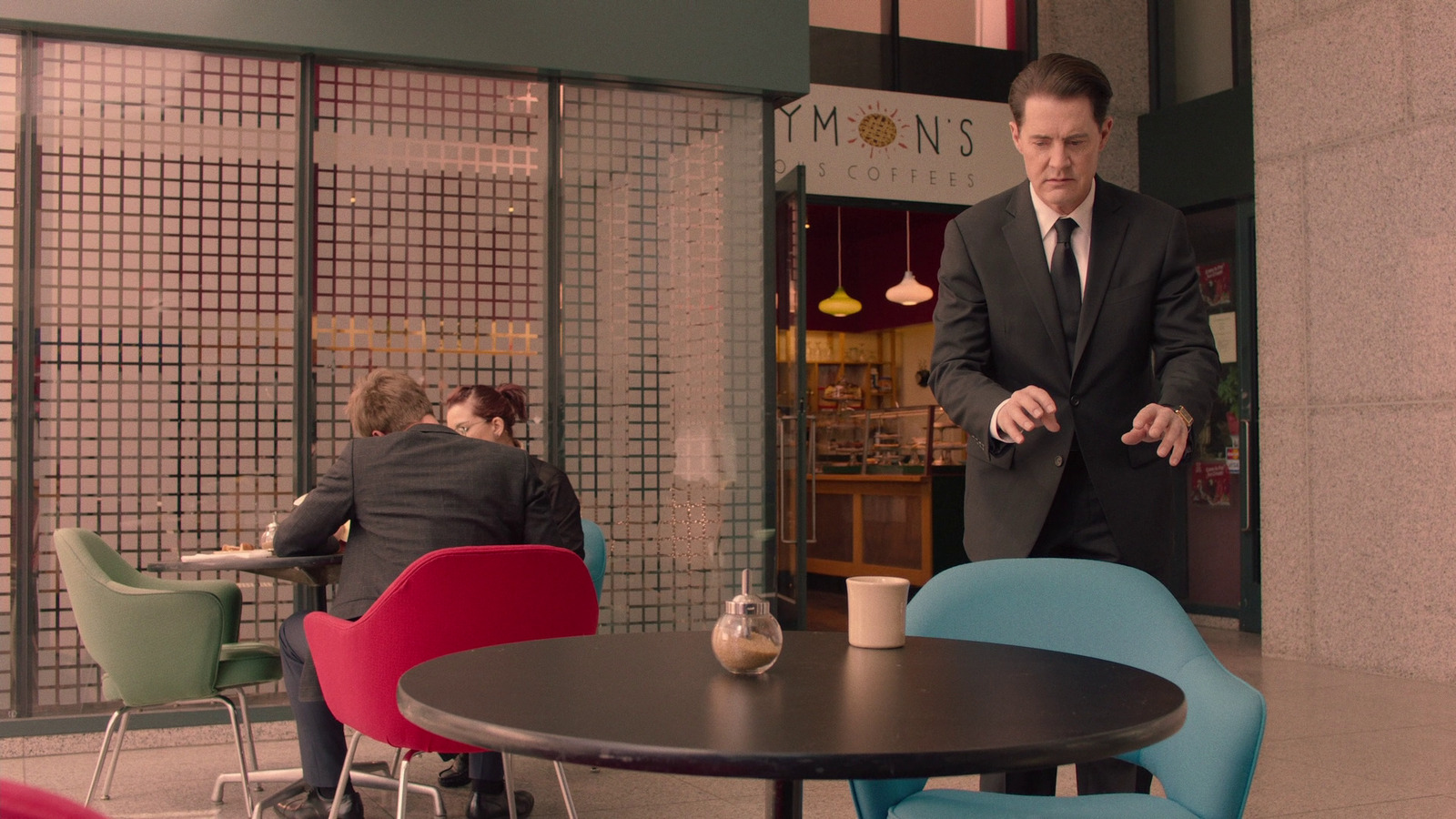
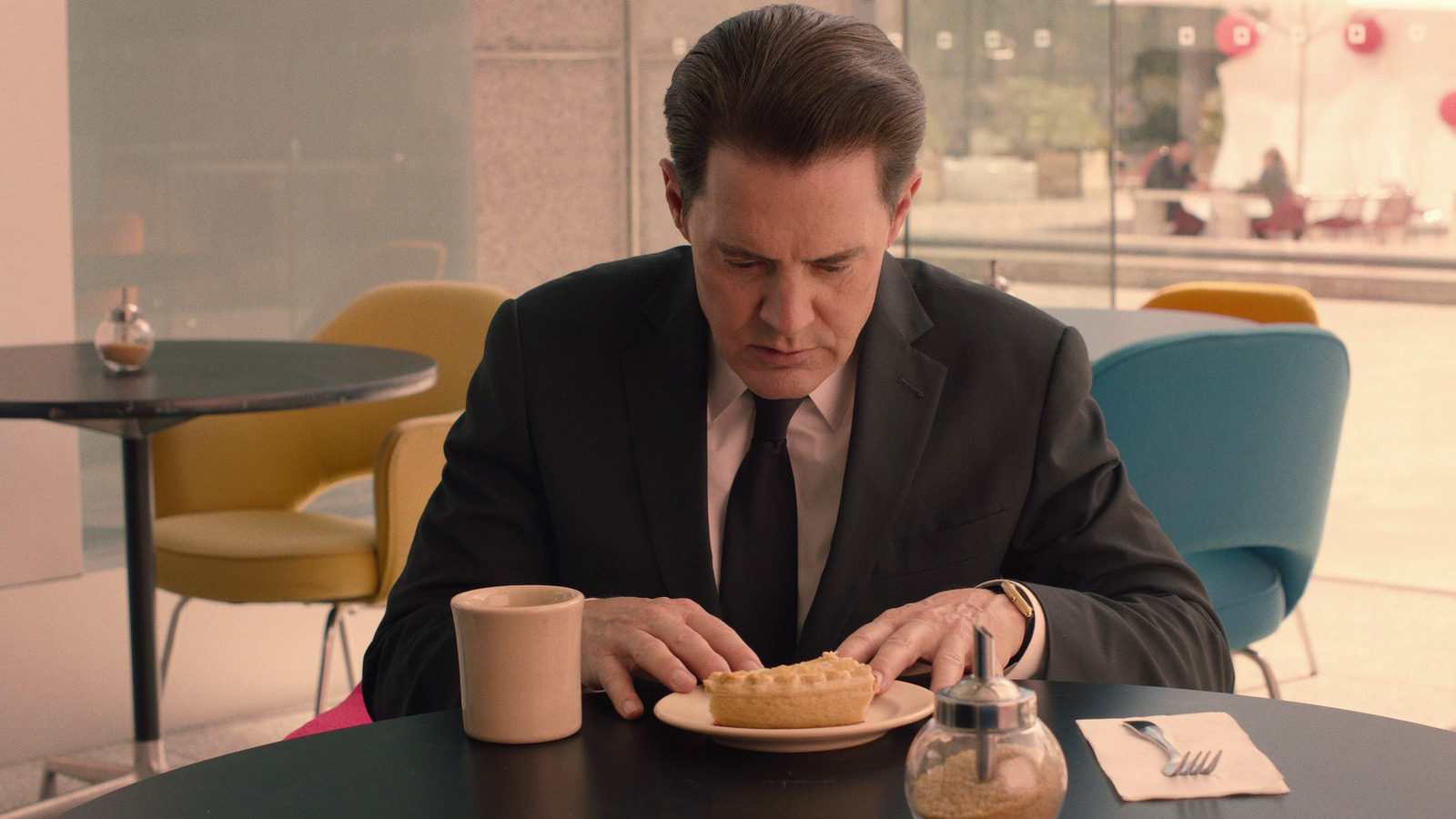
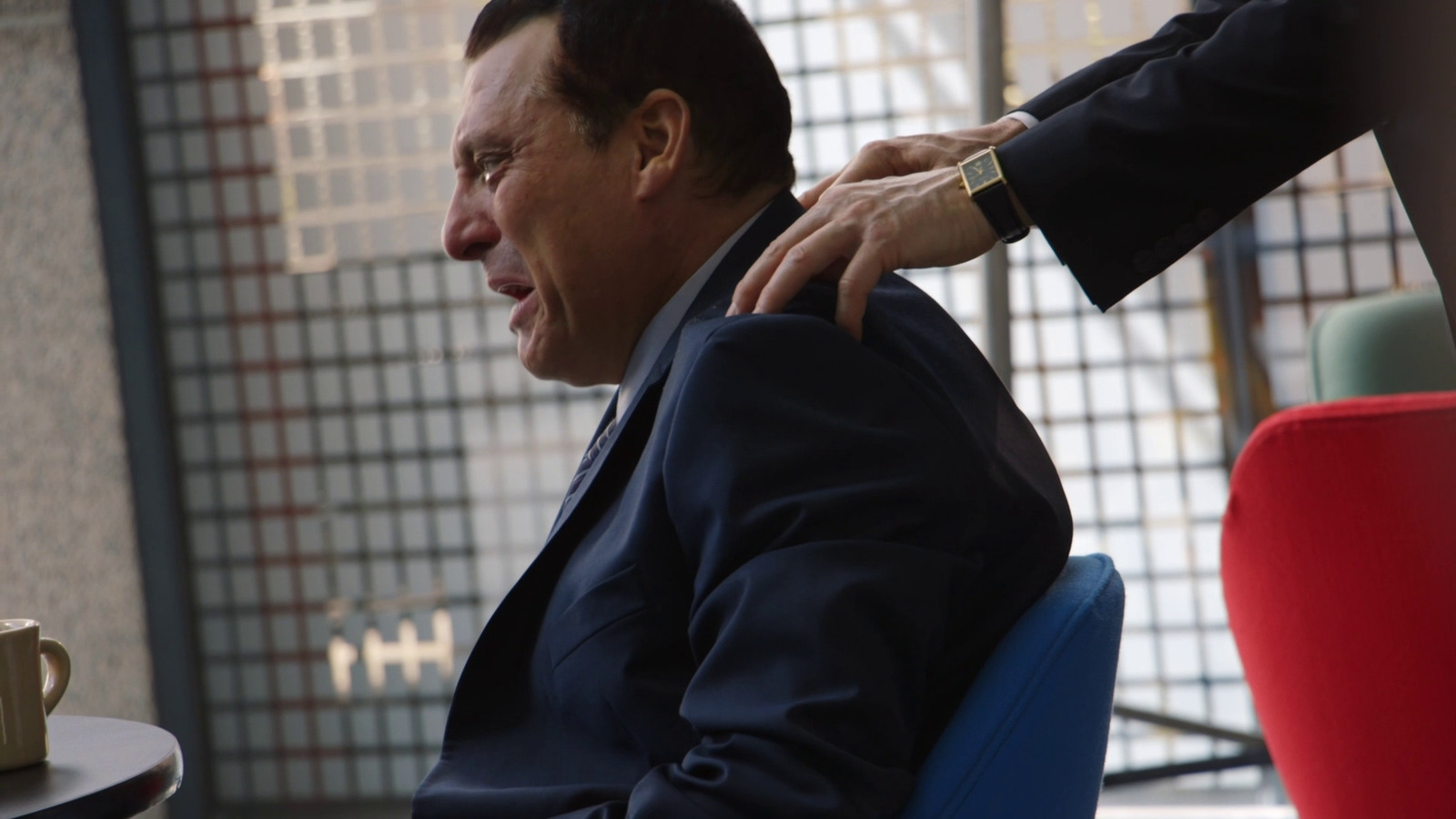
Janey-E delivers Cooper in the new car, after which Anthony offers him coffee at Szymon’s. Pie draws Cooper away from the table. His return behind Anthony turns a potentially dangerous arrangement into a different kind of contact: hands rest on shoulders, Anthony begins to cry, and he takes the threatened cup away. The scene shows the gestures before Anthony later interprets them as extraordinary kindness. It does not establish how much Cooper consciously understands.
Open the scene sequence · 7 frames
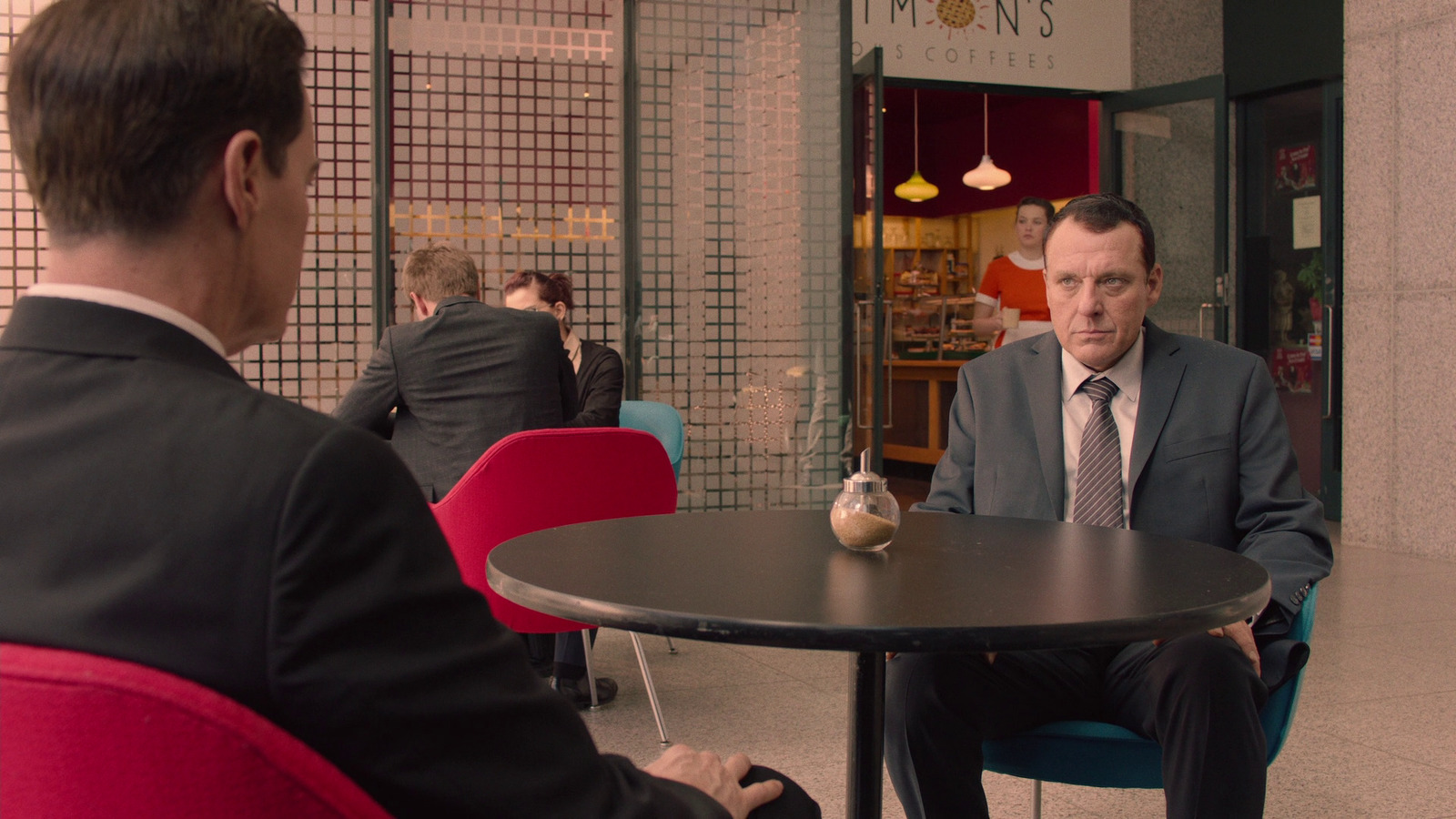
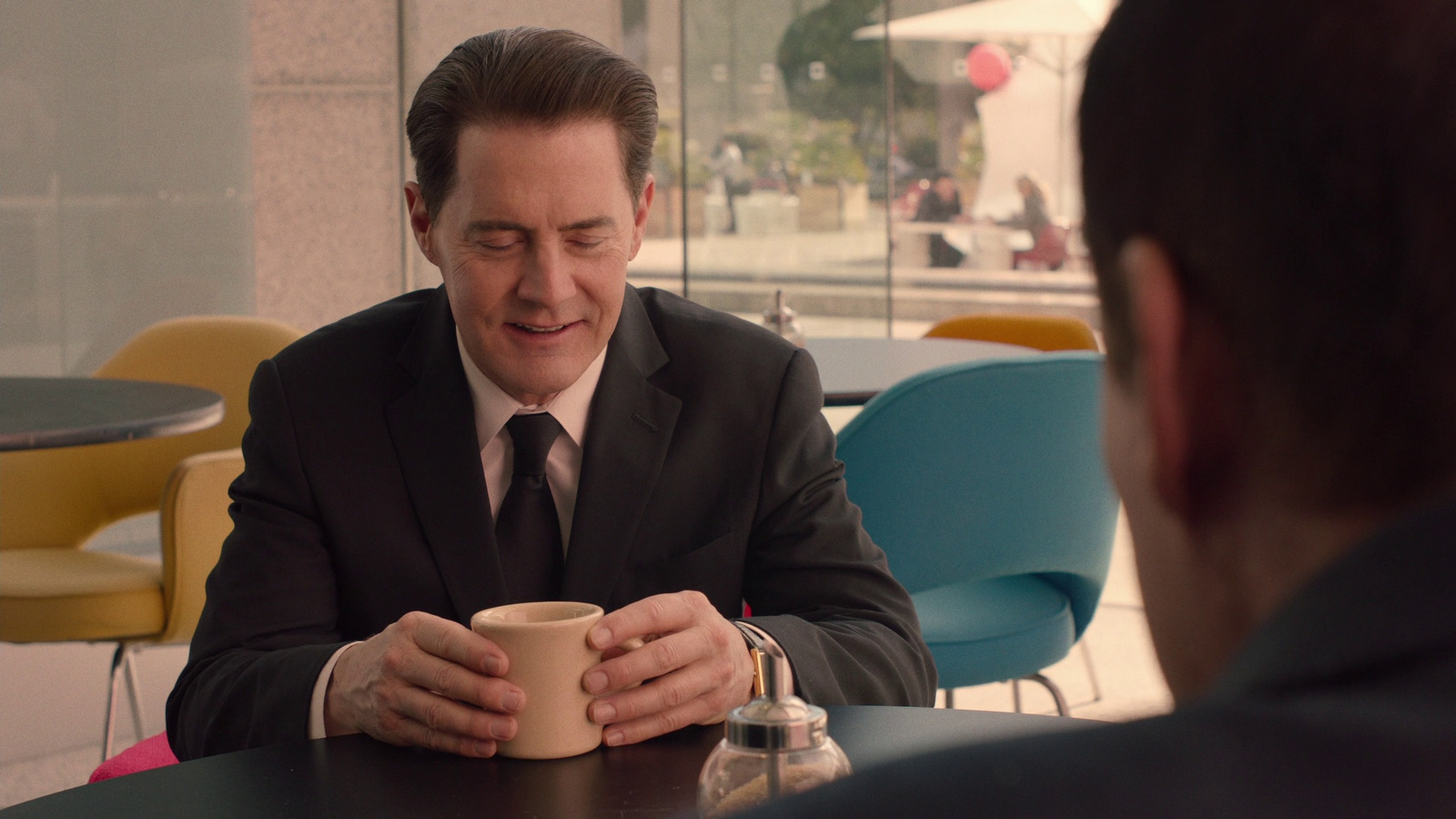
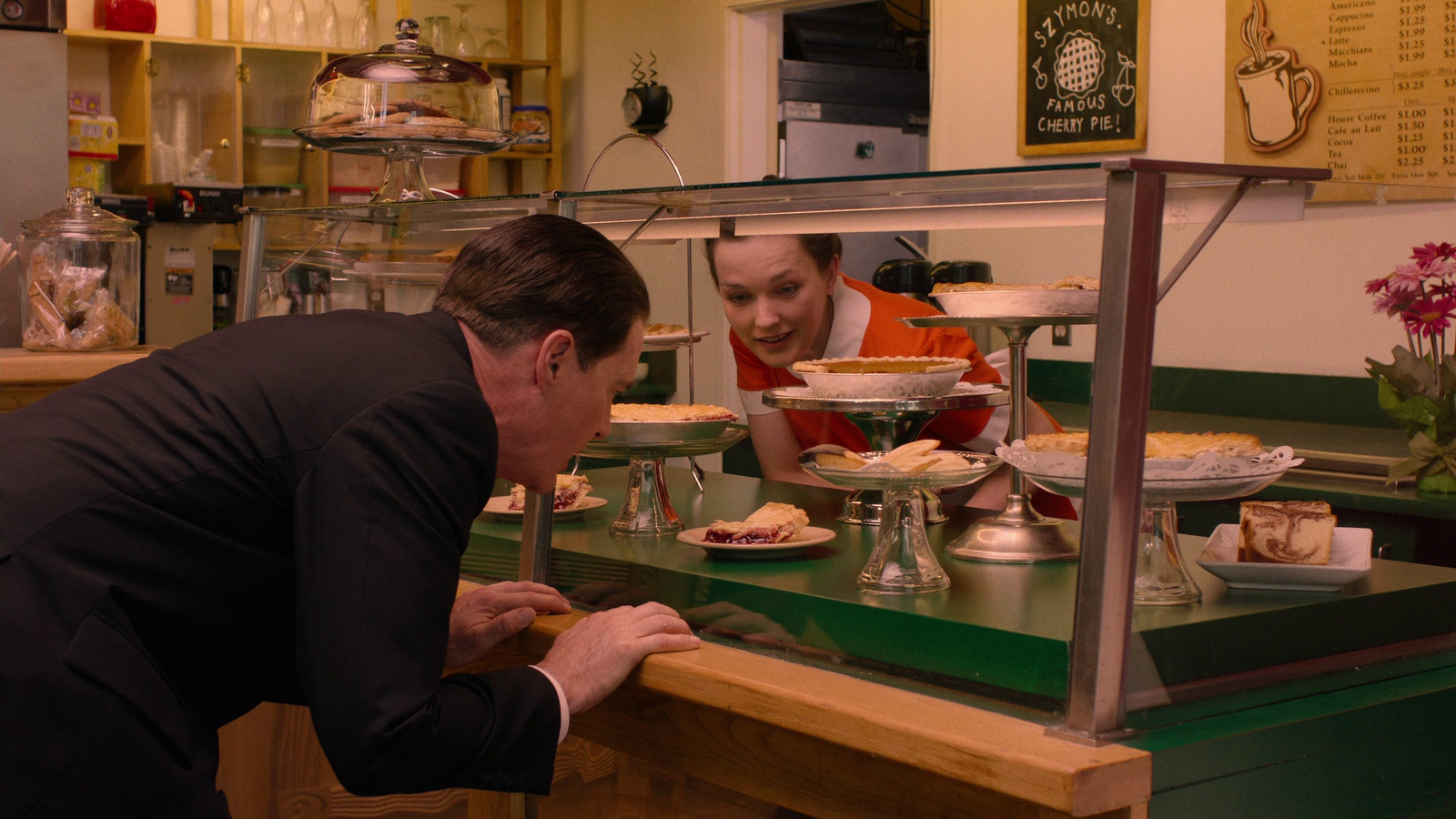
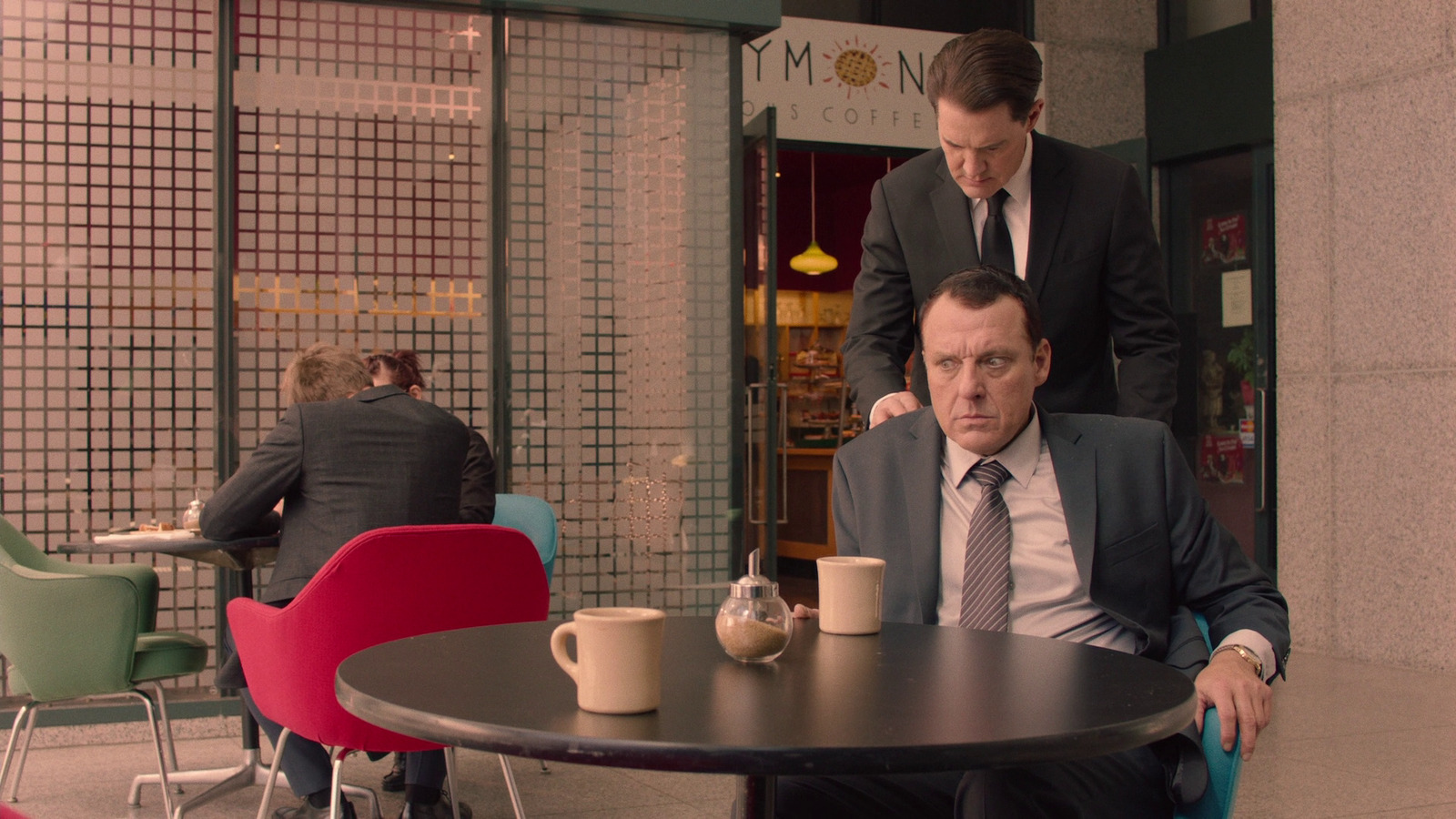
Another offer of pie makes room for a conversation
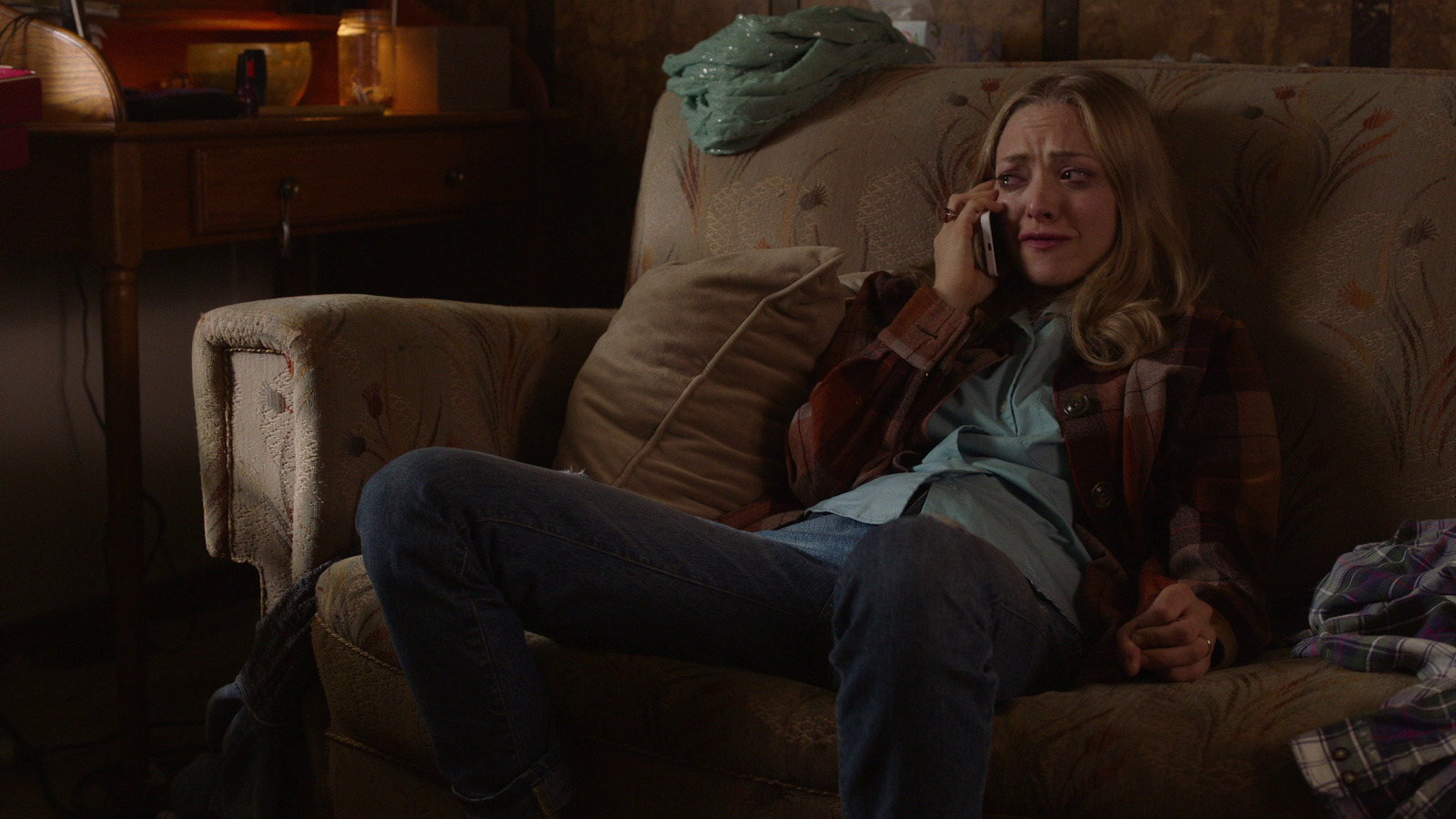
Becky tells Shelly that Steven has been absent for two nights. Shelly initially postpones the conversation because the diner is busy, then changes her response and invites Becky to come in. The promised pie, ice cream and whipped cream are concrete acts of welcome. Placed after the café scene, the call gives food another protective use without suggesting that the underlying danger has disappeared.
Open the scene sequence · 1 frame
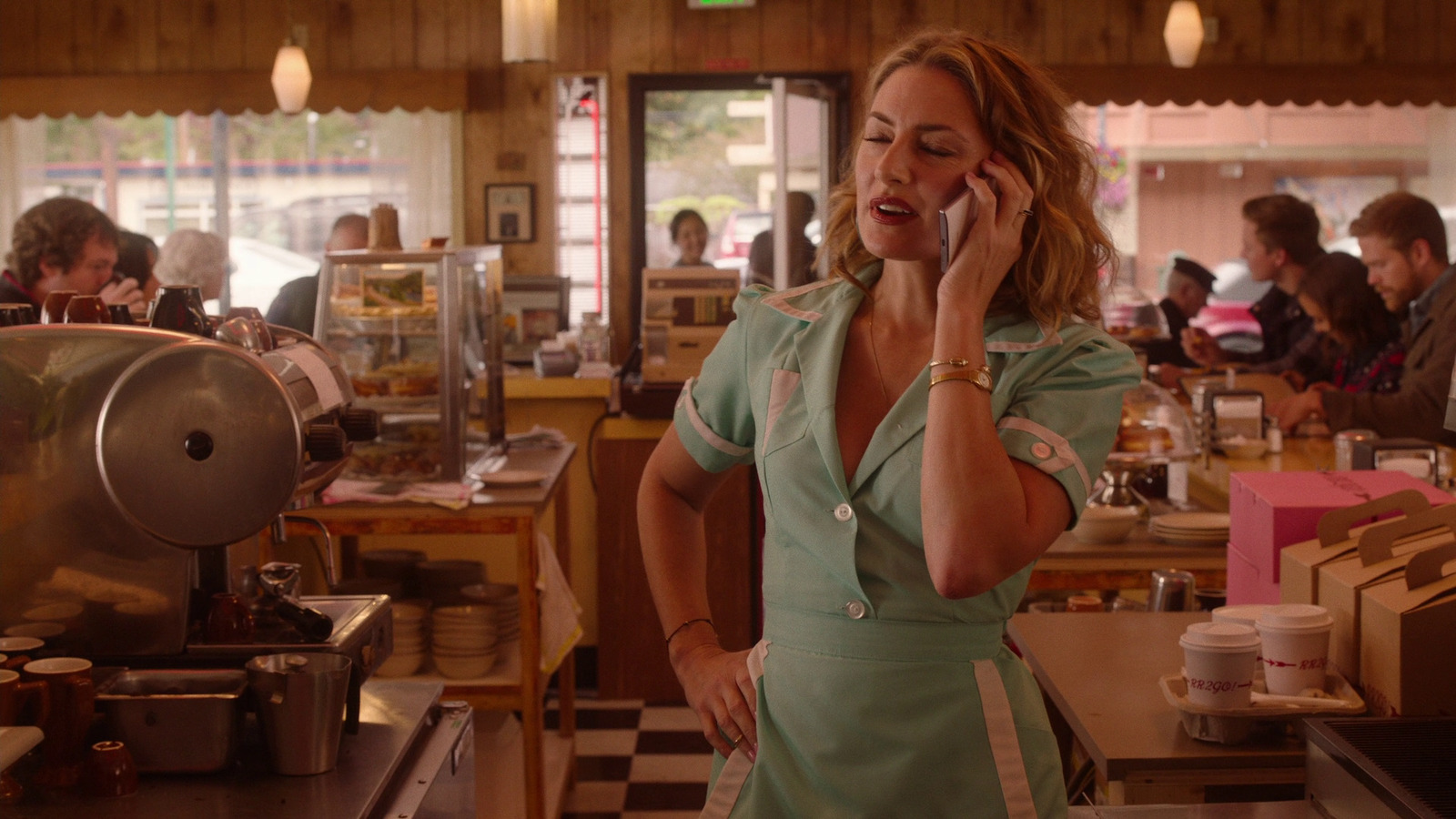
Remorse must become testimony
Anthony’s confession turns the café encounter into a story about being seen through and forgiven. Bushnell already understands the fraudulent claims, but his response changes when Anthony admits them. Forgiveness remains tied to action: Anthony must testify against Todd and identify the corrupt policemen. Cooper’s echoed fragments take on moral weight because the people around him hear them as guidance. The scene contrasts sharply with Ray’s confession under force.
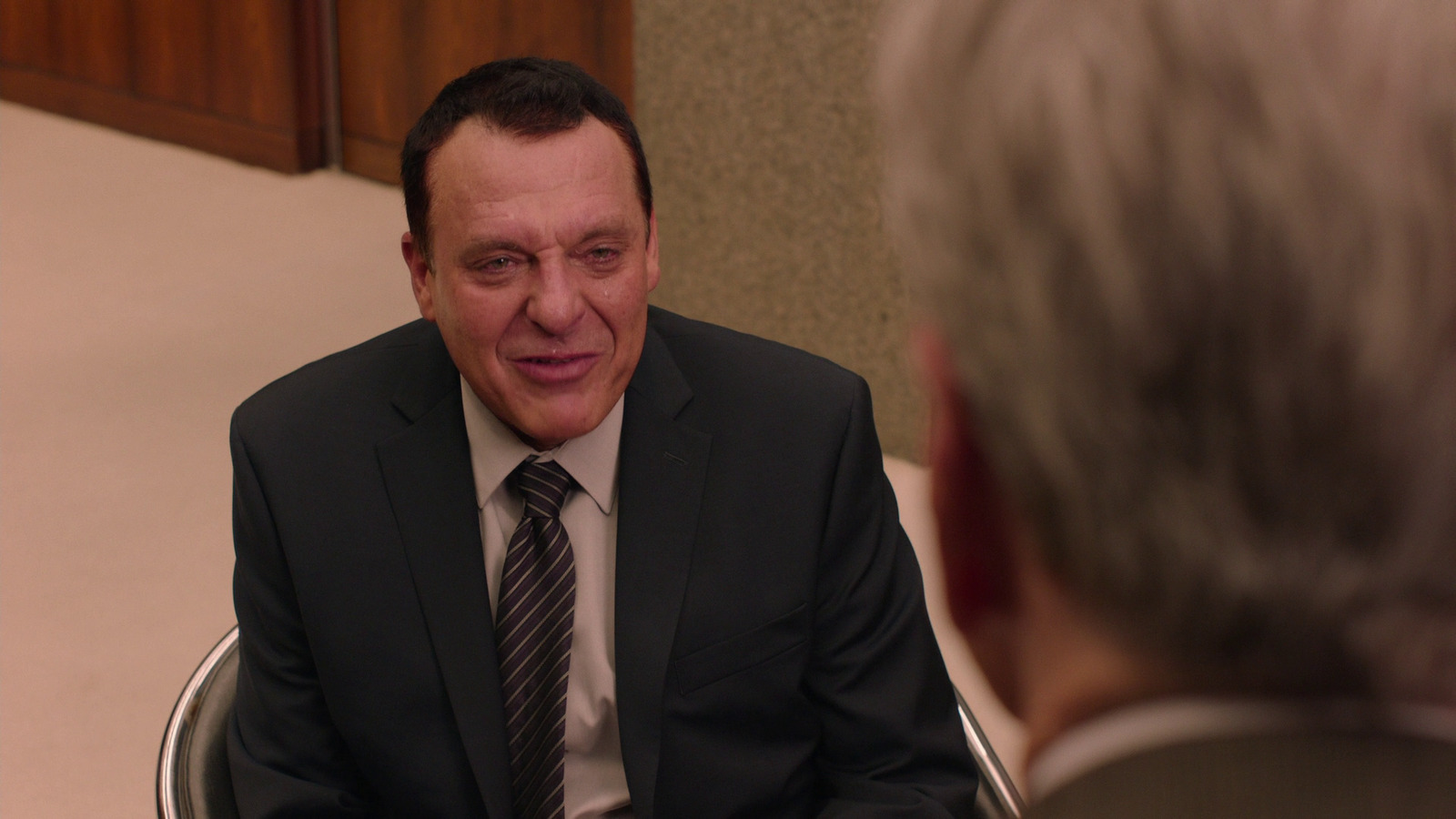
Open the scene sequence · 1 frame
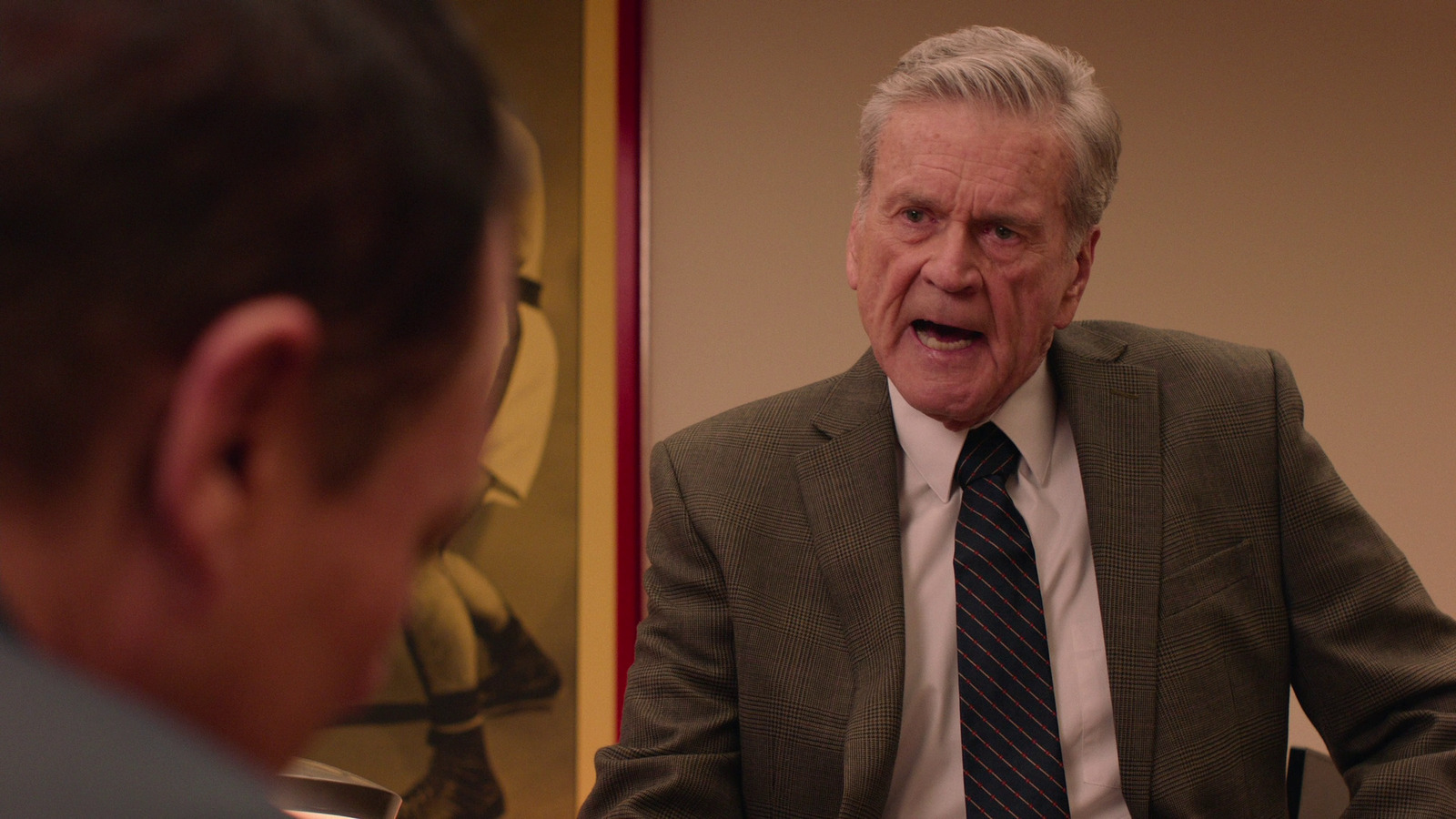
Making room, then moving aside
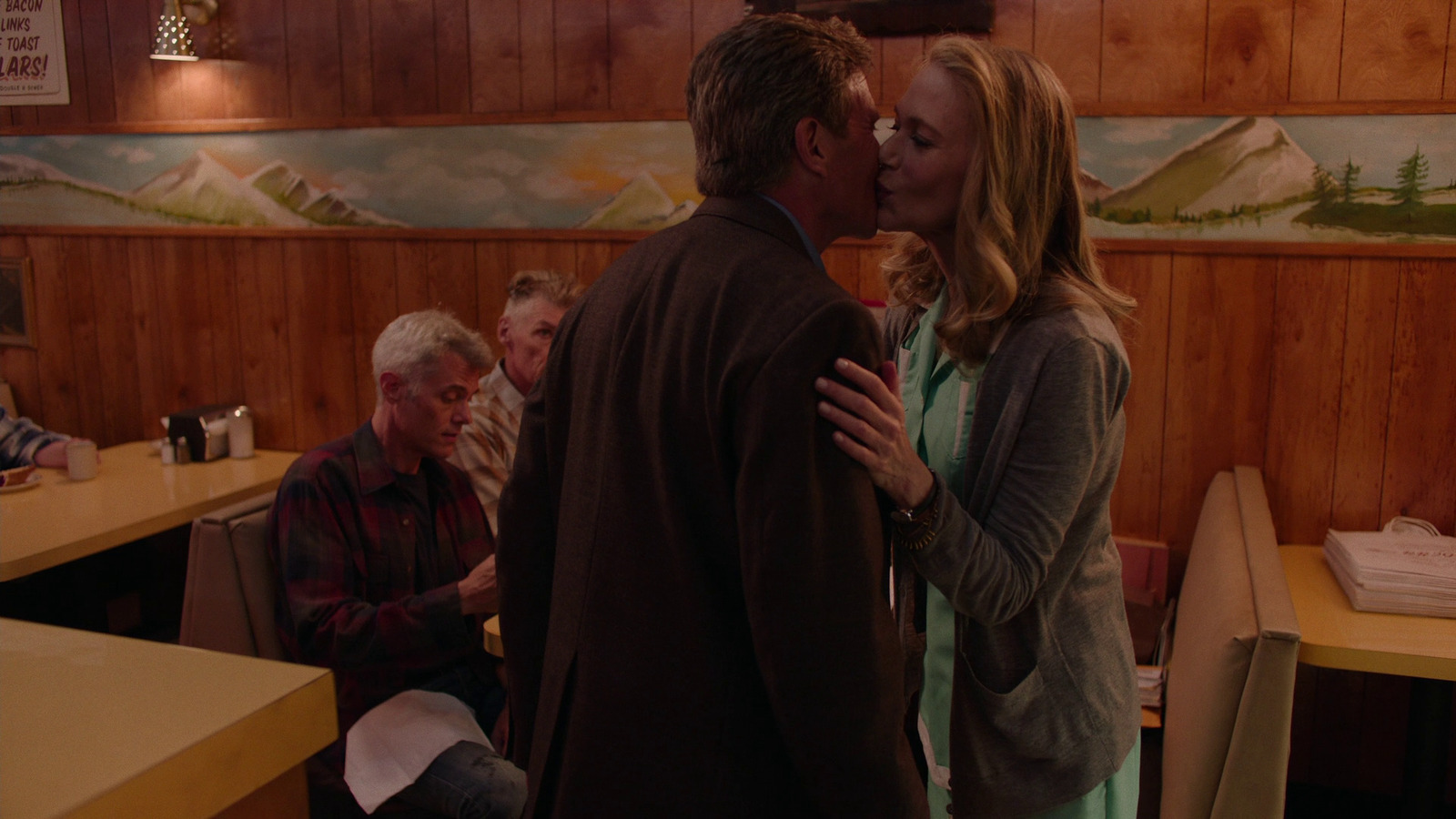
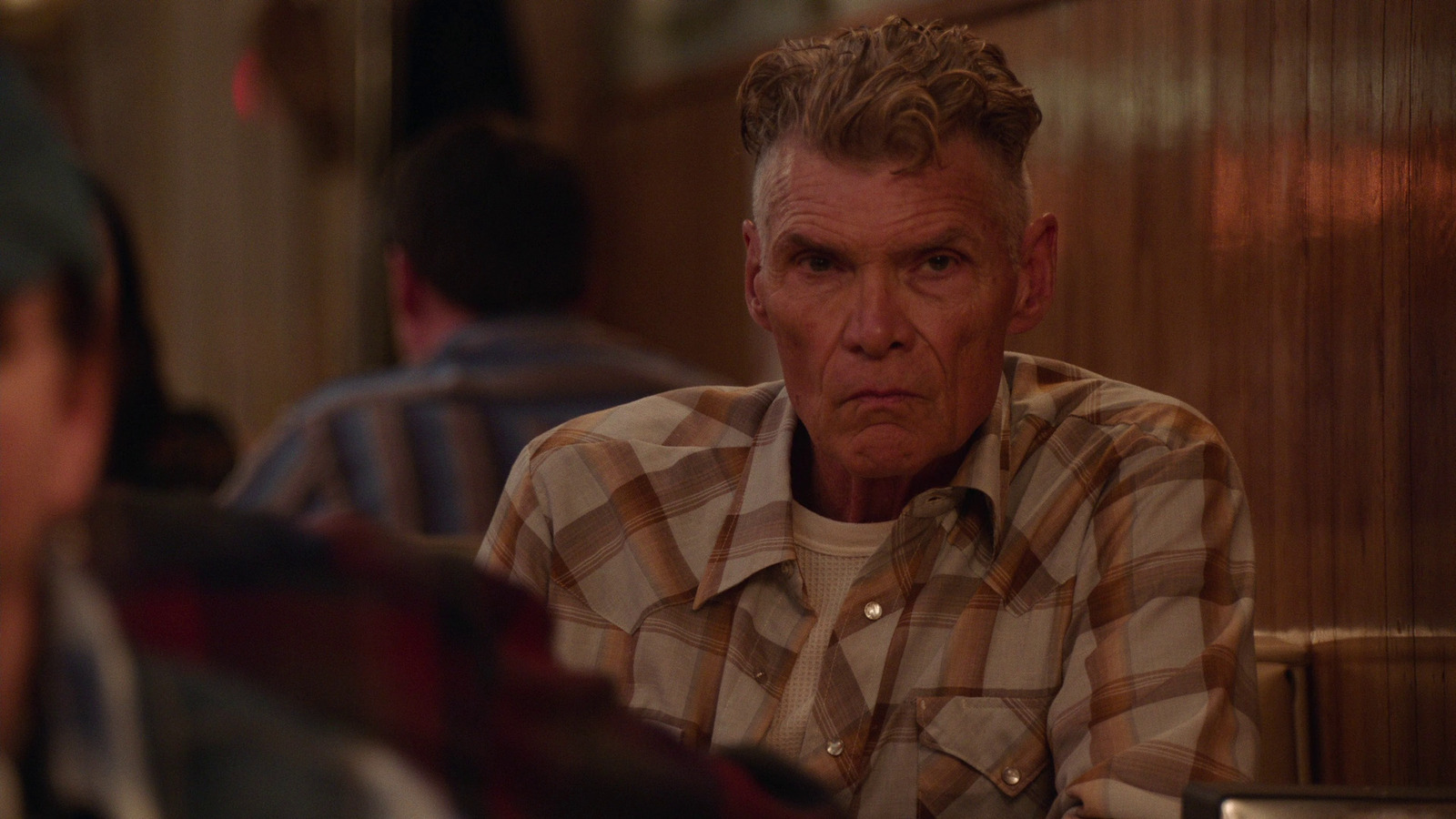
Ed and Norma invite Bobby into their booth rather than letting him eat alone. His mention of his father’s clues reconnects the diner to the investigation. Walter’s arrival changes the seating arrangement again, and Ed and Bobby withdraw. The quiet rearrangement carries the emotional information: companionship is briefly available, then the person Ed wants to remain beside becomes occupied with someone else.
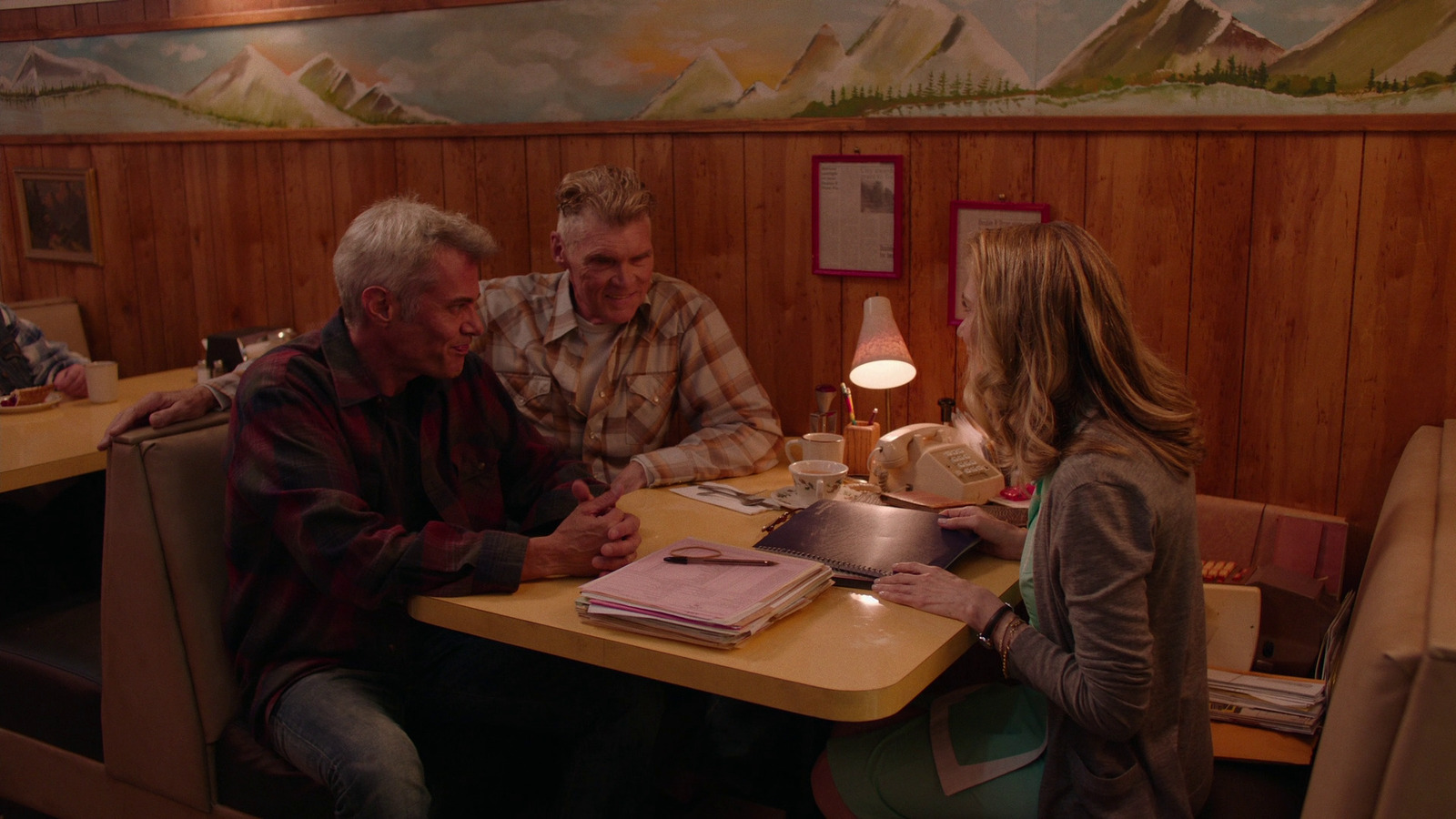
Open the scene sequence · 1 frame
What is lost when a pie becomes a formula?
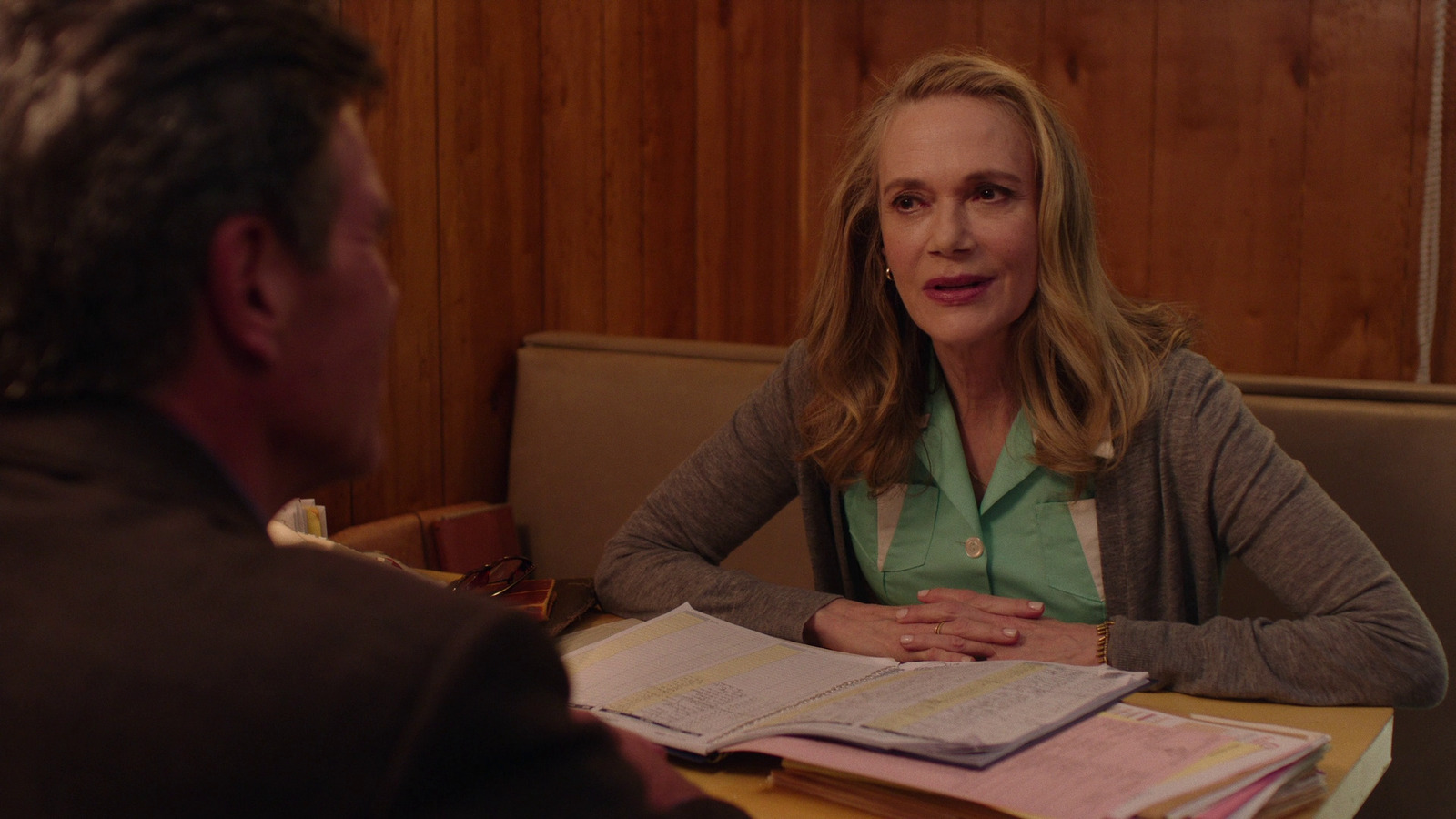
Walter’s report praises the franchise while treating the original diner’s ingredients and prices as problems. Norma distinguishes the recipes from the quality of what goes into them, and resists replacing the Double R’s familiar name. The discussion brings the episode’s generous gifts and comforting food into contact with a different measure of value. Cuts to Ed listening elsewhere in the room give the business exchange a personal cost that Walter’s figures cannot describe.
Open the scene sequence · 1 frame
A broadcast acquires a face-to-face audience
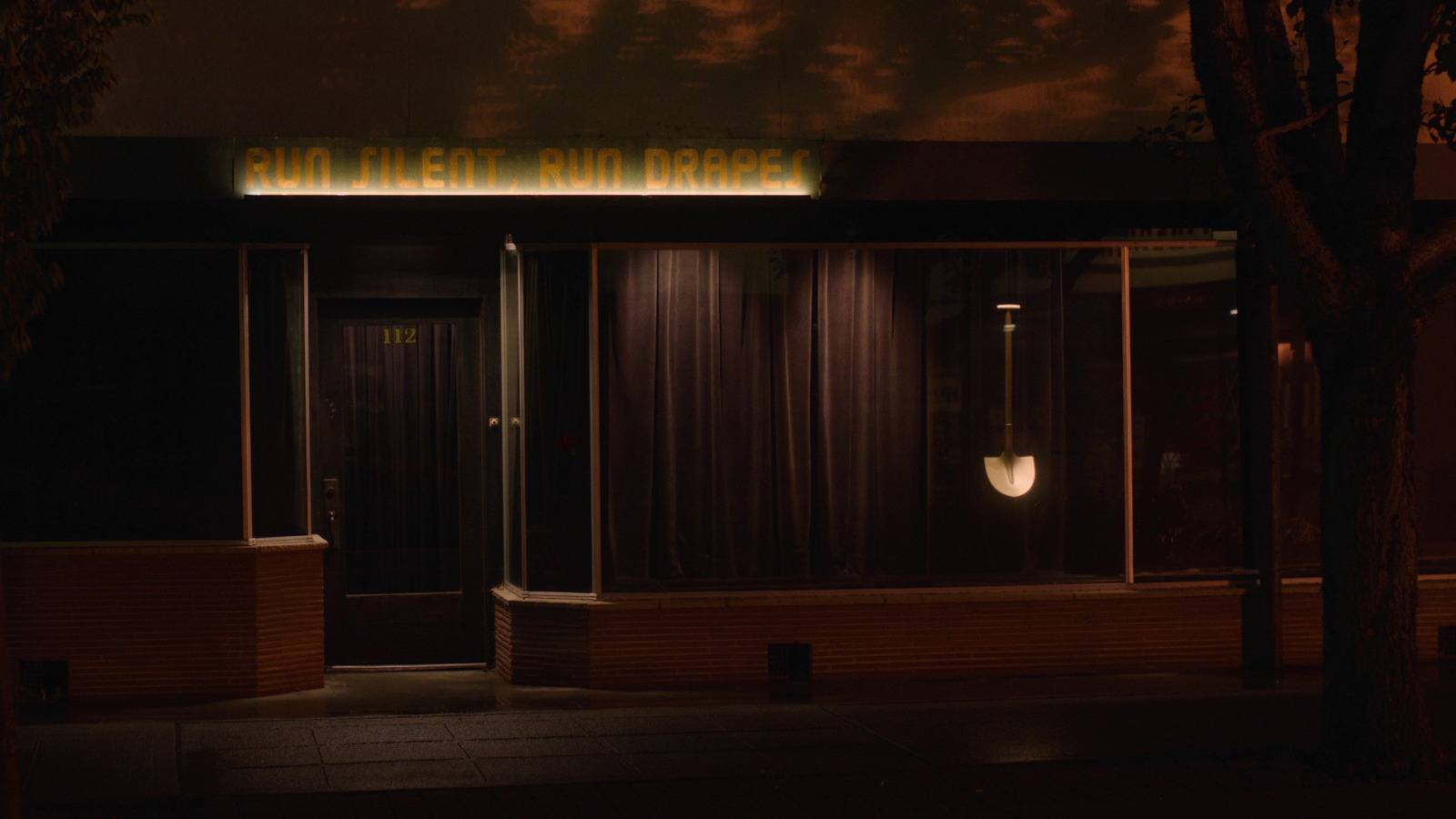
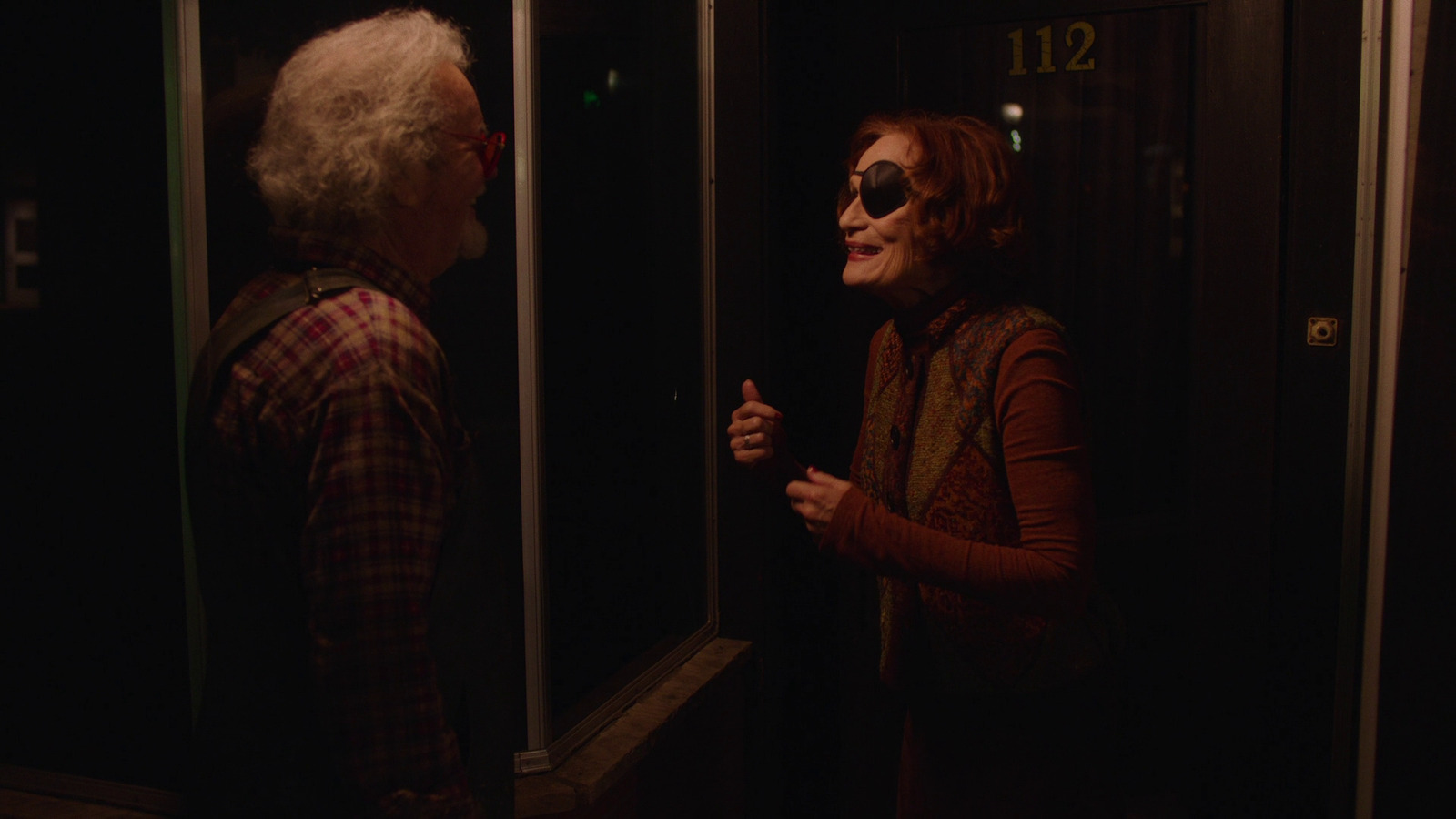
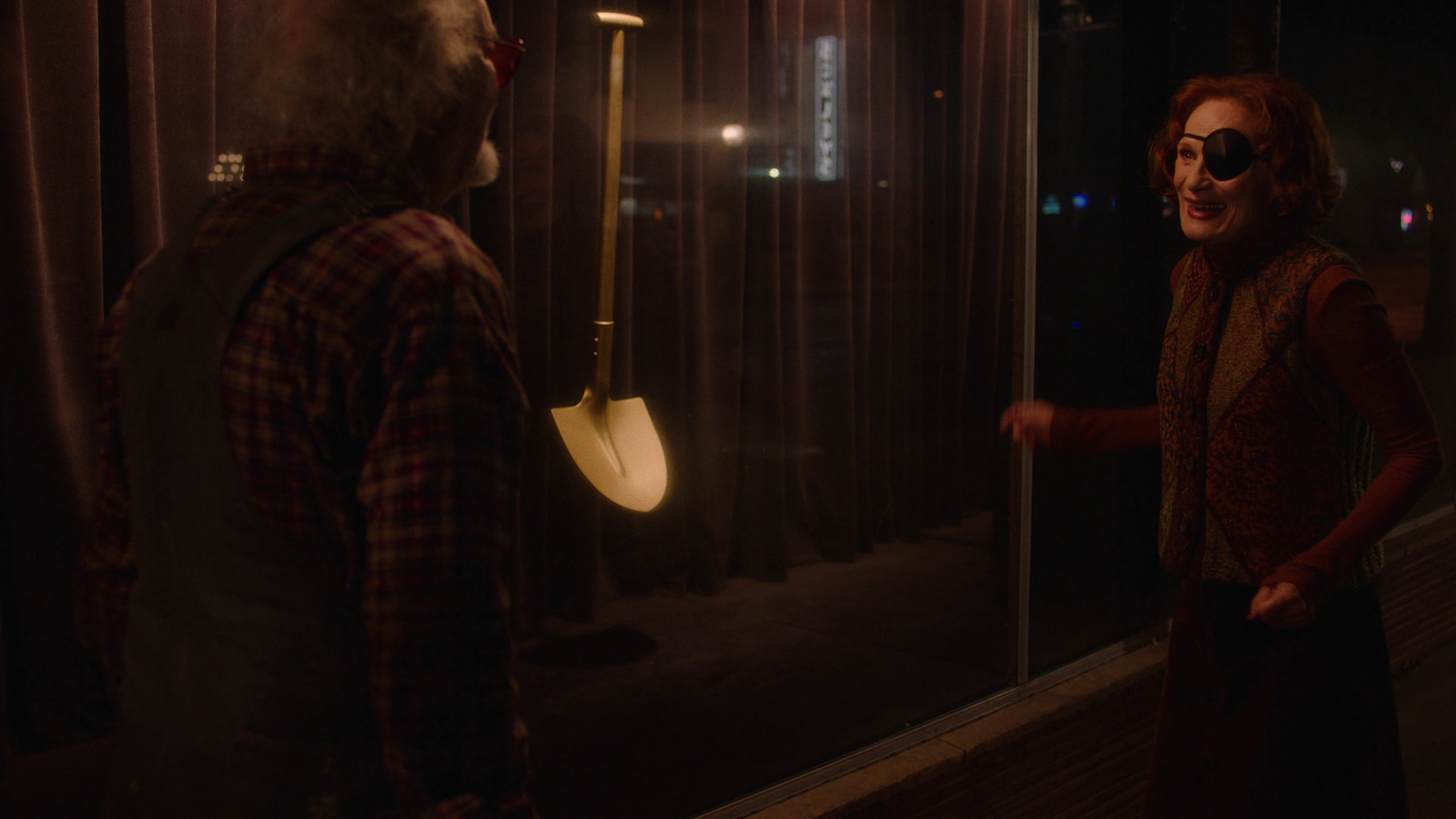
Jacoby notices the gold shovel displayed in Nadine’s shop window. Their meeting turns the broadcast’s command into a personal exchange: she presents the display as a tribute and describes the encouragement she has taken from his programme. Silent drapes and the shovel share the window, joining two long-running objects in her life. His memory of a dropped potato brings the encounter back to a small, specific incident rather than a public slogan.
Open the scene sequence · 2 frames
The room continues while the television repeats
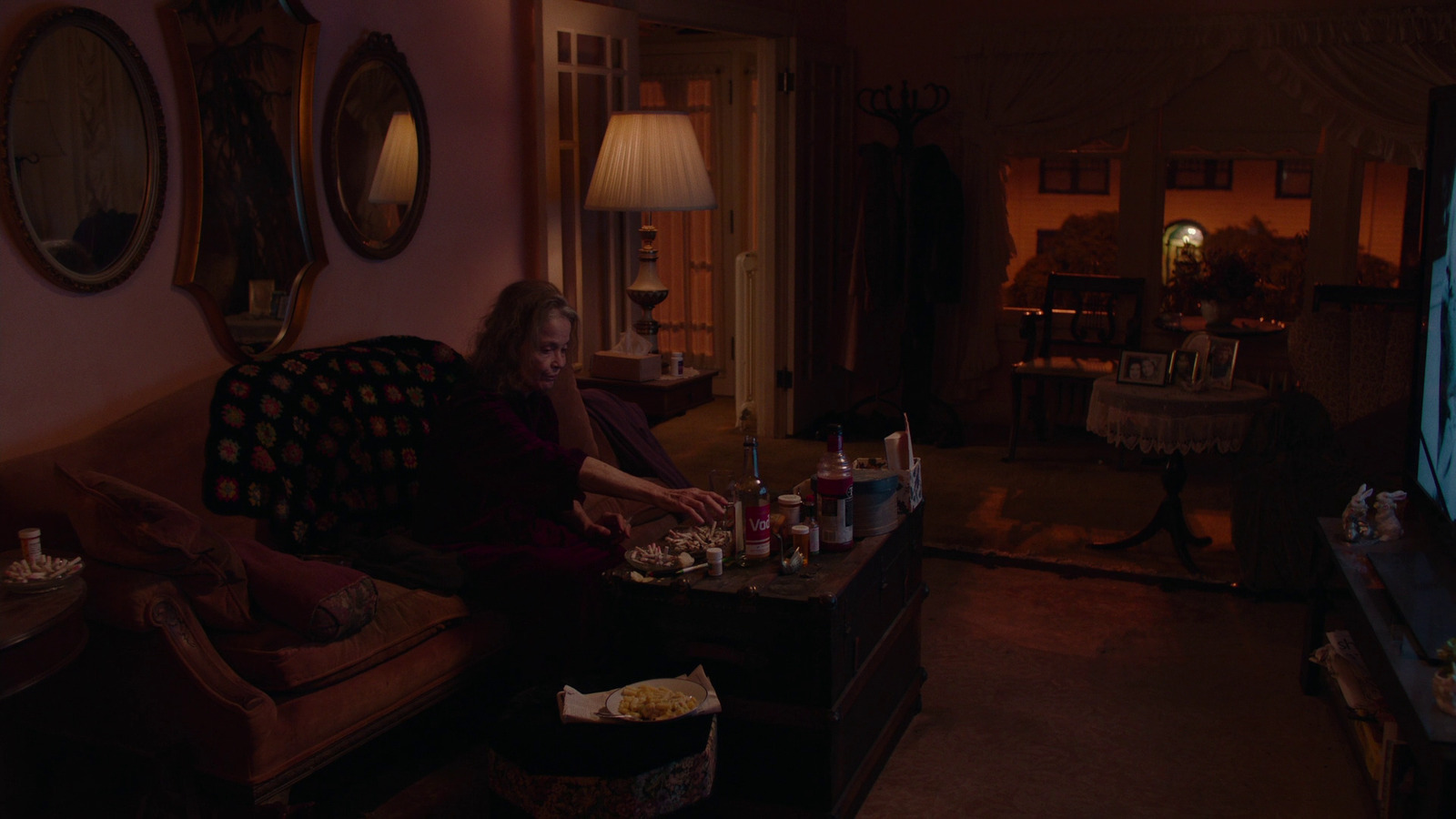
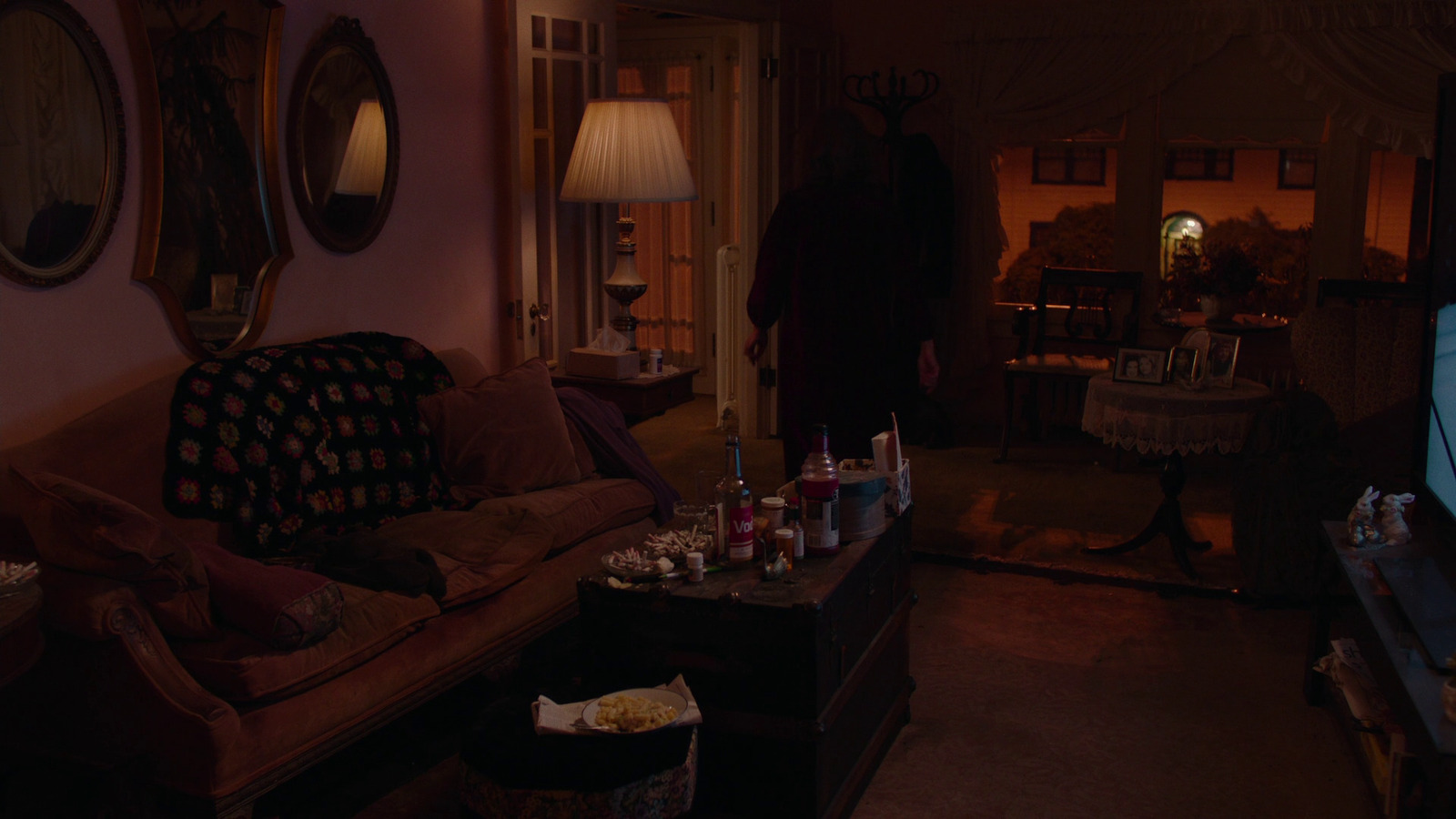
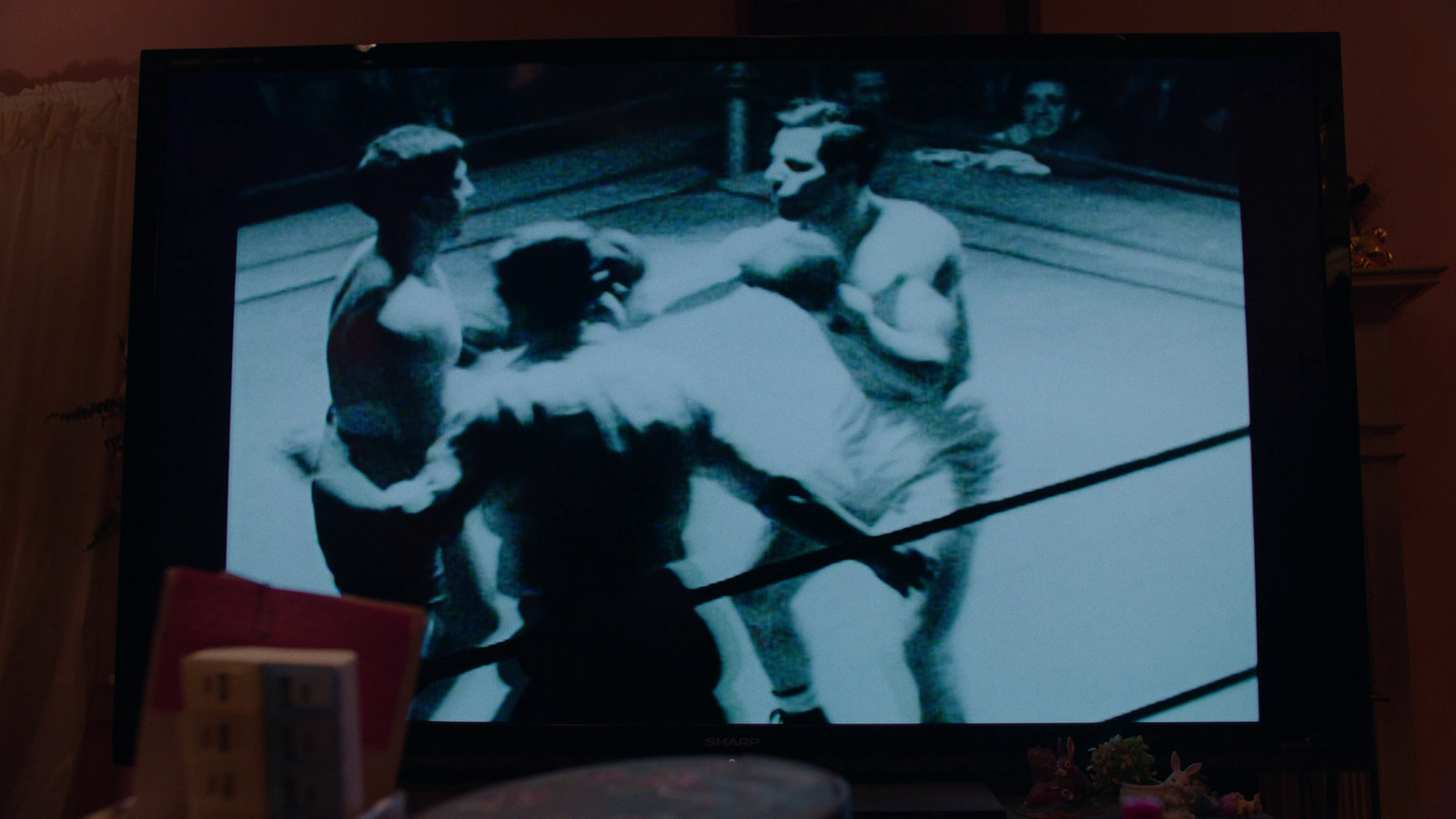
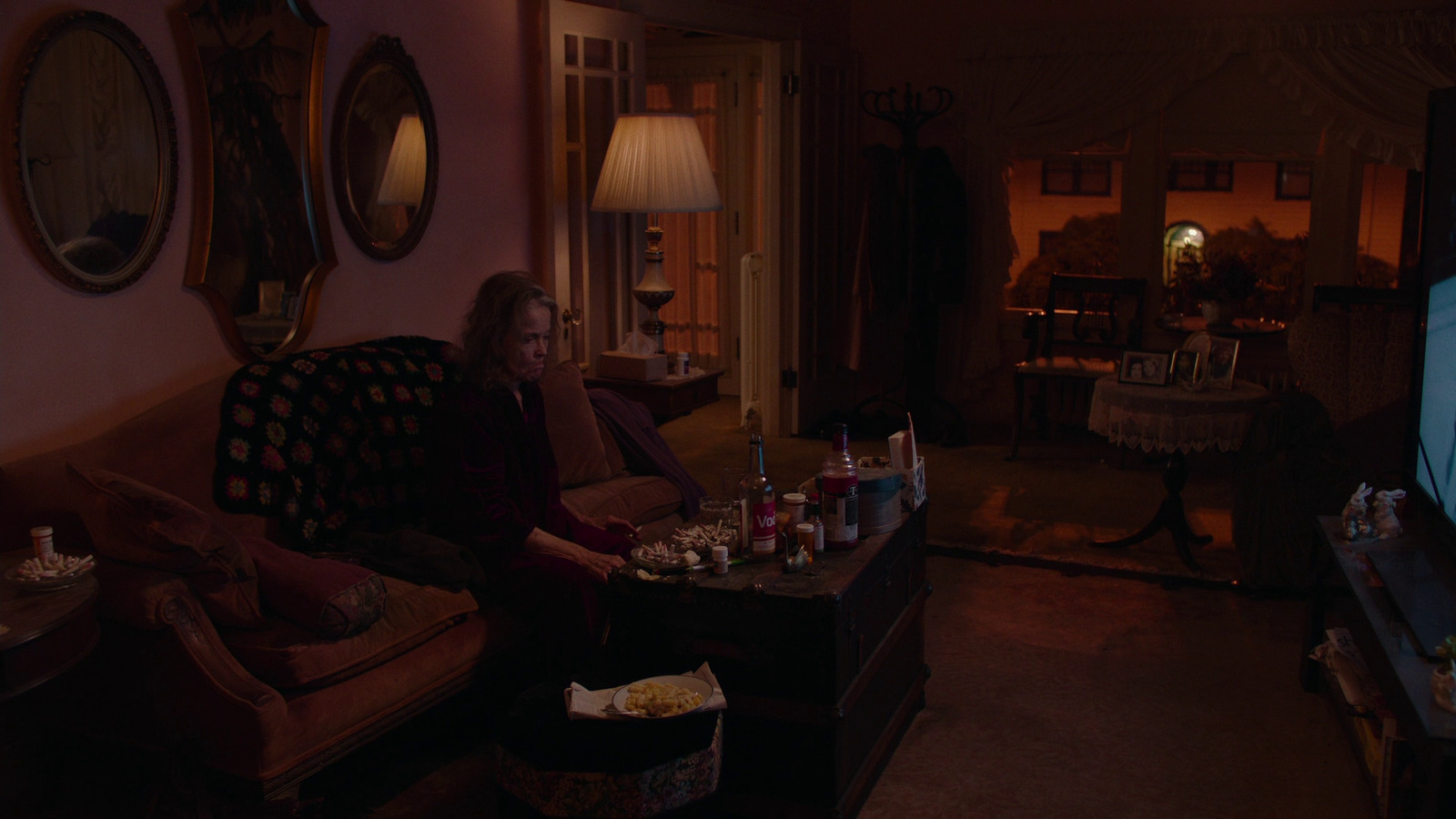
A fragment of boxing commentary restarts again and again while Sarah sits, moves away and returns. Wide views allow the room’s ordinary activity to continue beneath a soundtrack that cannot progress. Inserts of the television identify the repeated image, but no one explains the malfunction or reacts to it as a new event. The scene develops the disturbance around Sarah in Part 12 through duration and repetition rather than a fresh revelation.
Open the scene sequence · 3 frames
The proposed journey cannot begin
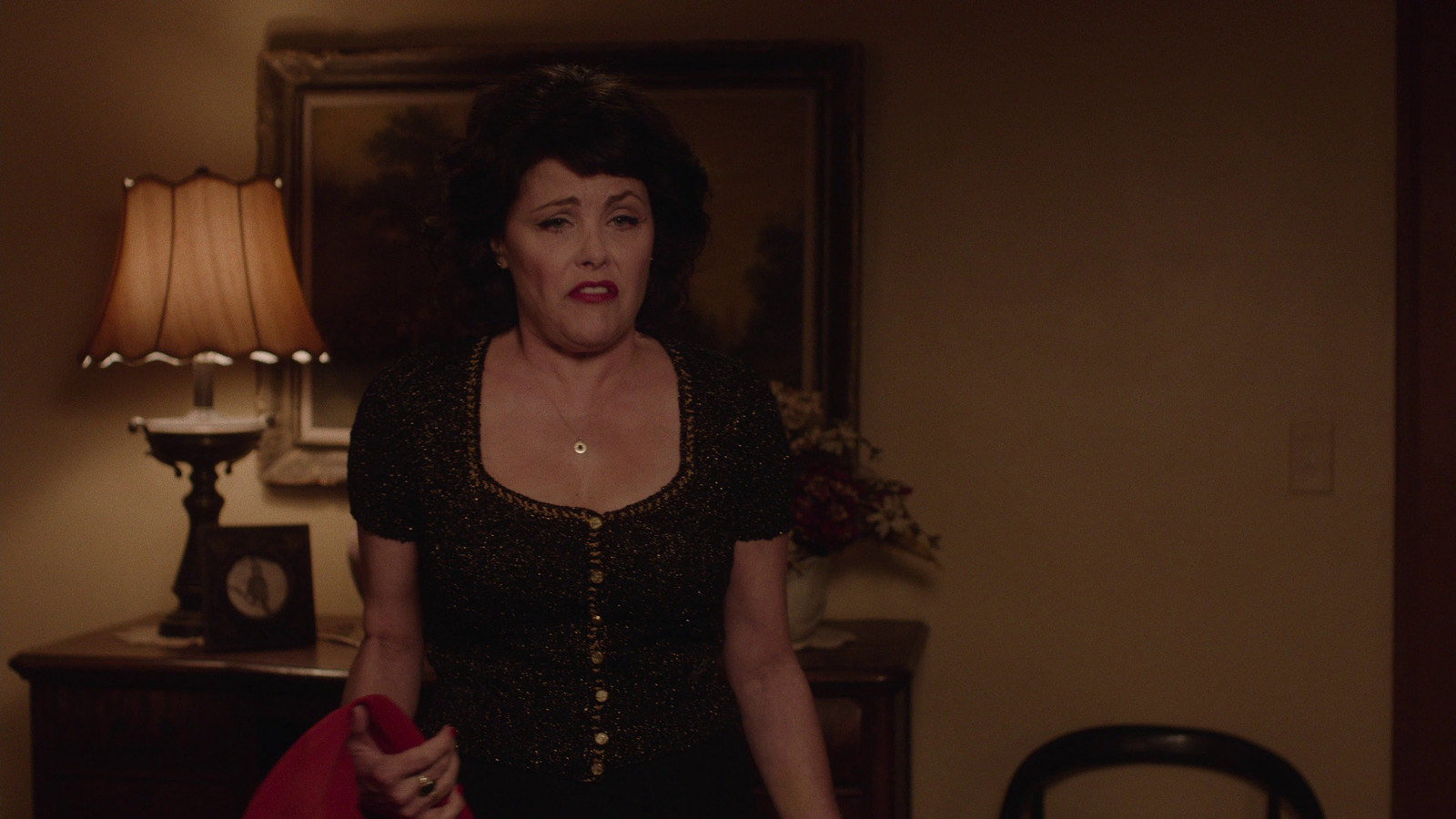
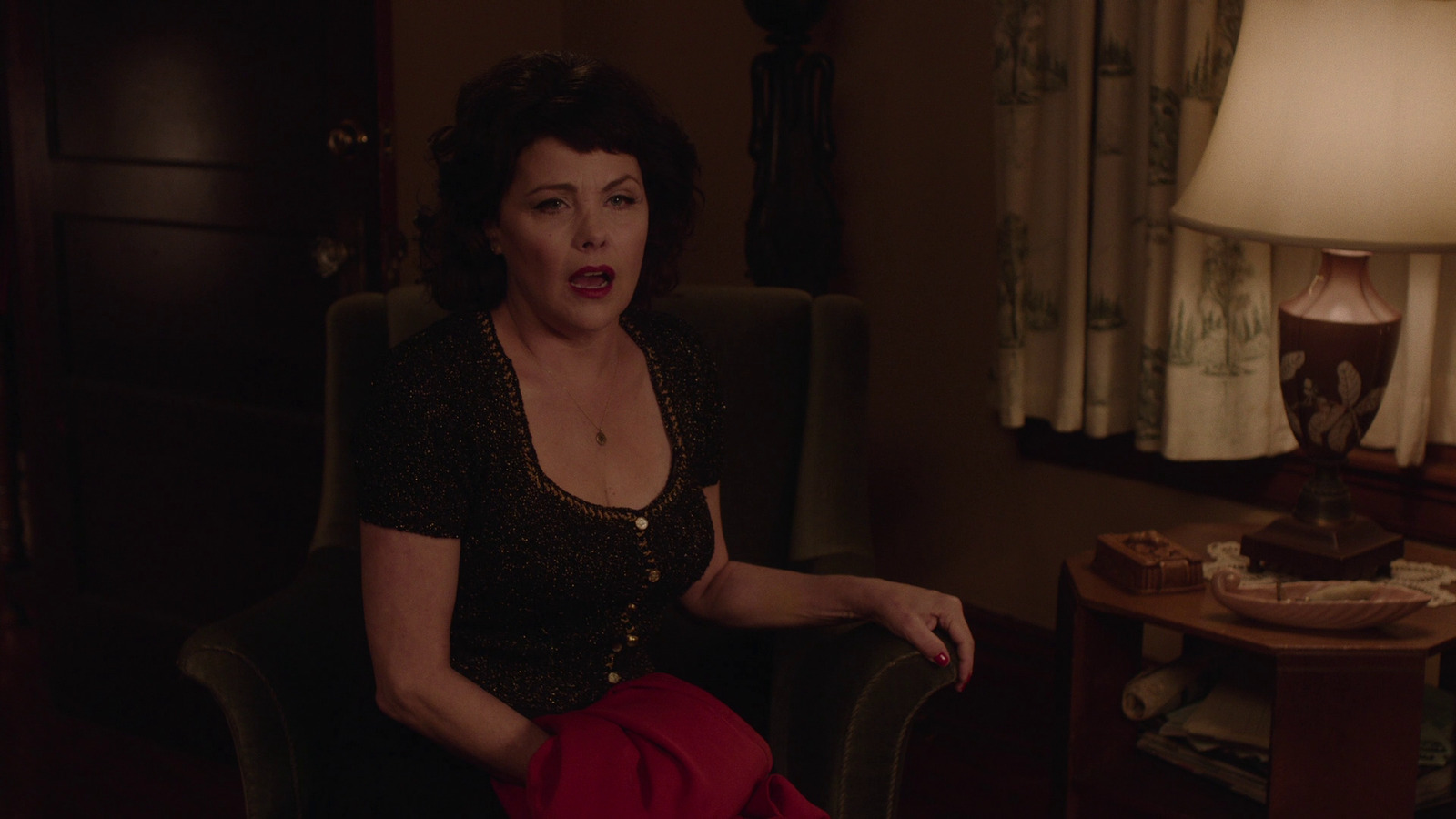
Audrey’s uncertainty now concerns her own identity and location, not simply Charlie’s refusal to disclose a conversation. His assured manner intensifies her distress. The Roadhouse is named as a destination but seems difficult for her to place, and his threat to end her story turns an ordinary disagreement toward something more disturbing. The scene ends with her wanting both to stay and to go. Those contradictory desires are explicit; a definitive explanation of her circumstances is not.
Open the scene sequence · 2 frames
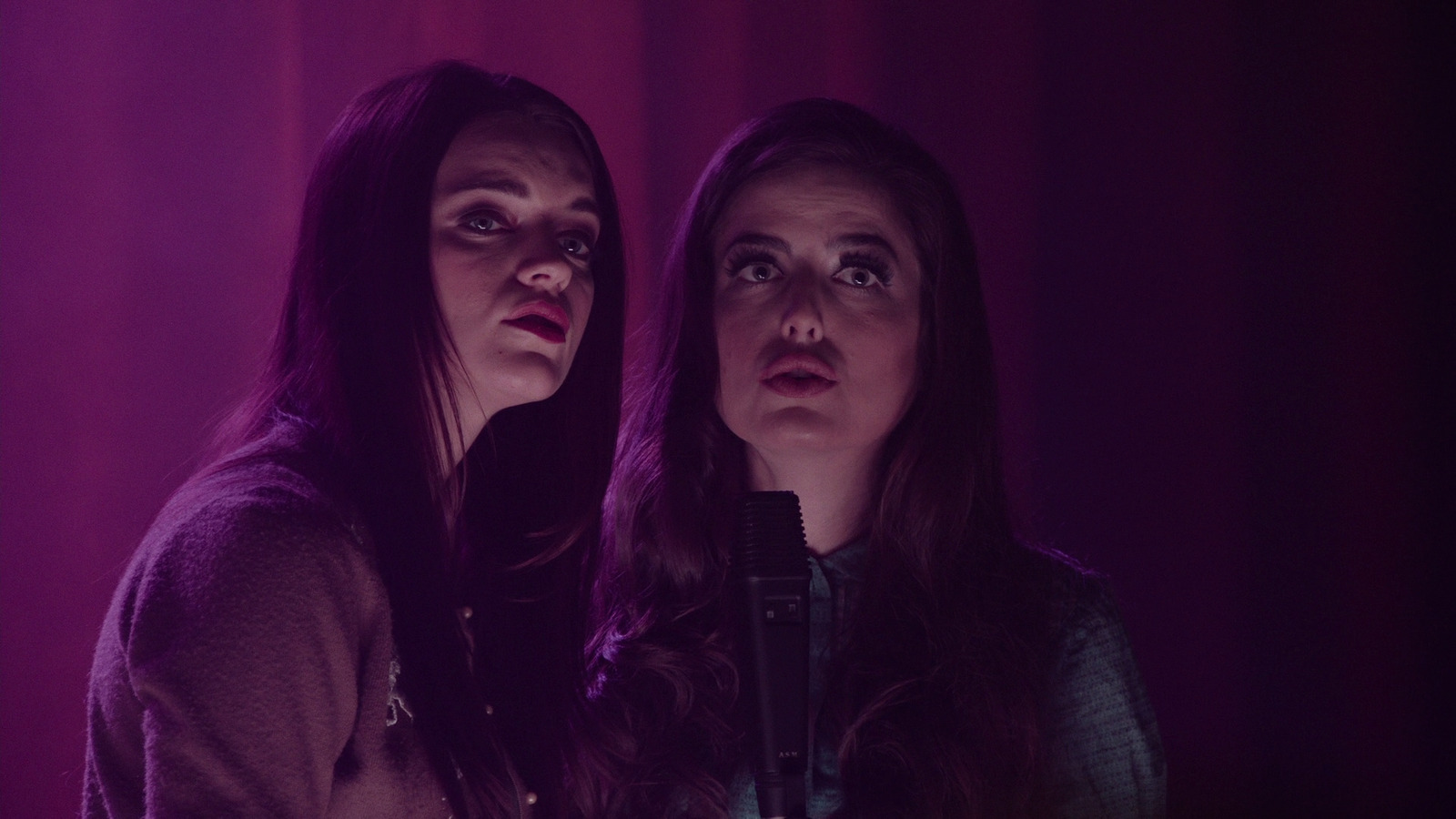
An old song finds a different audience
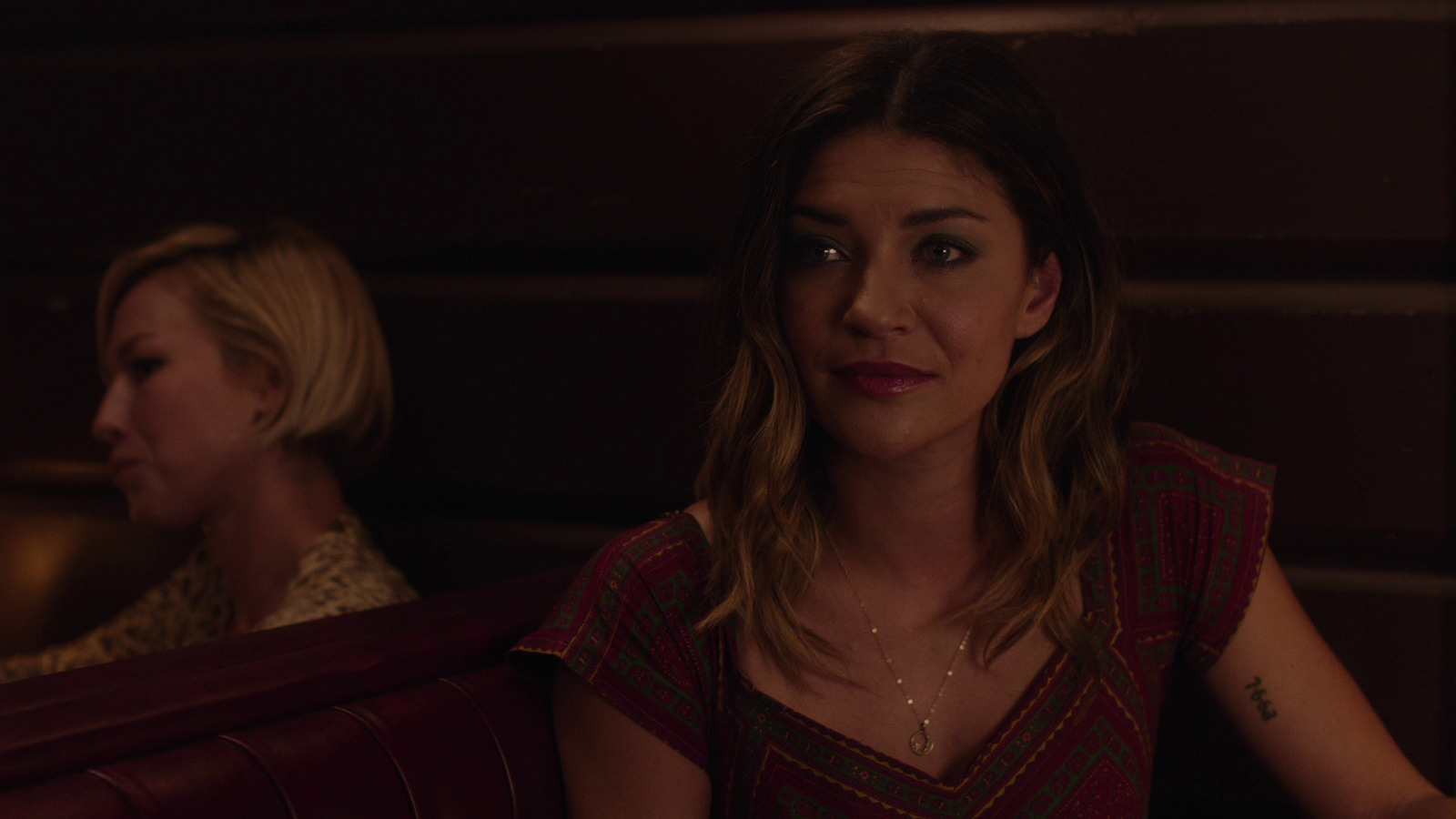
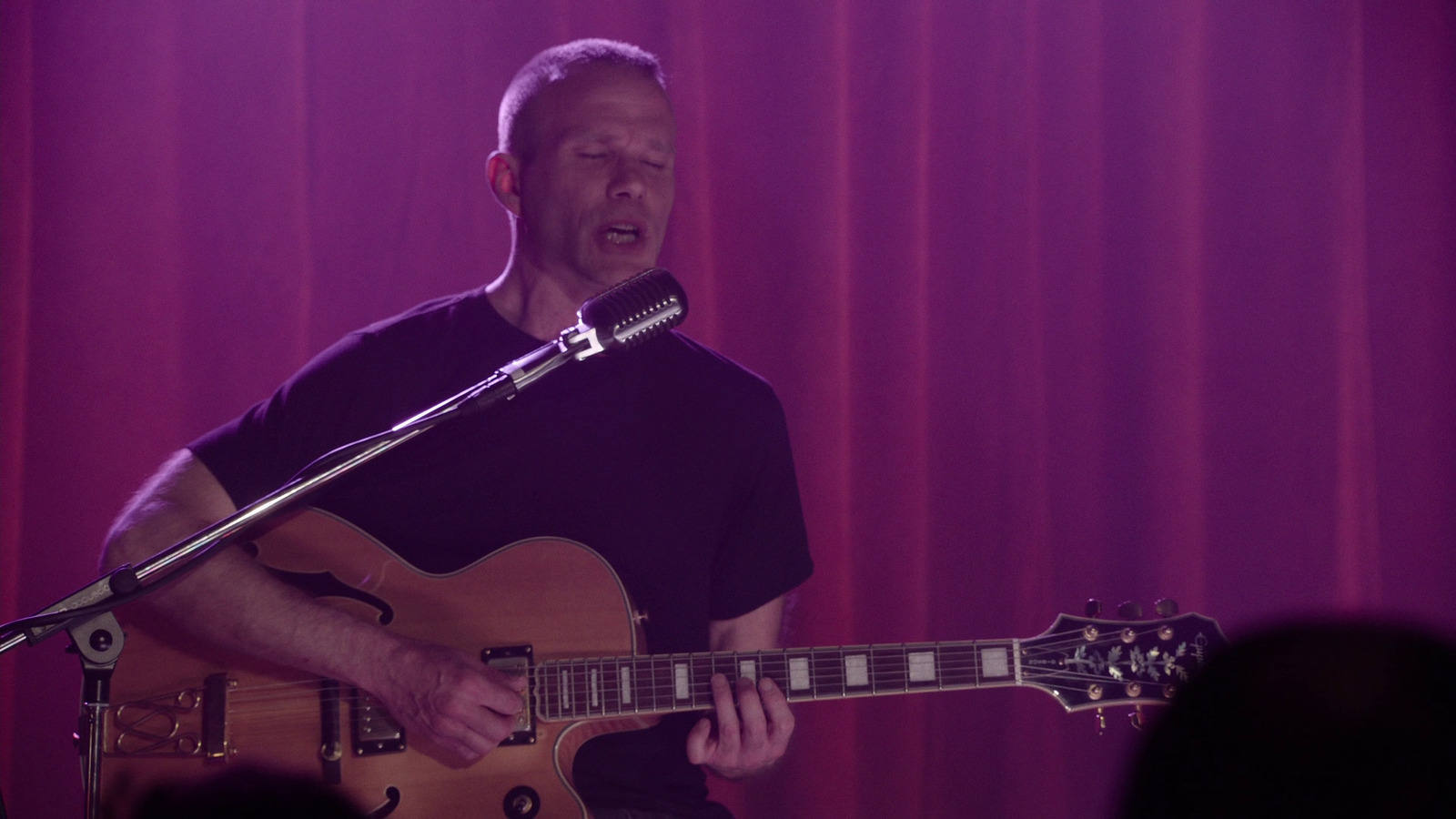
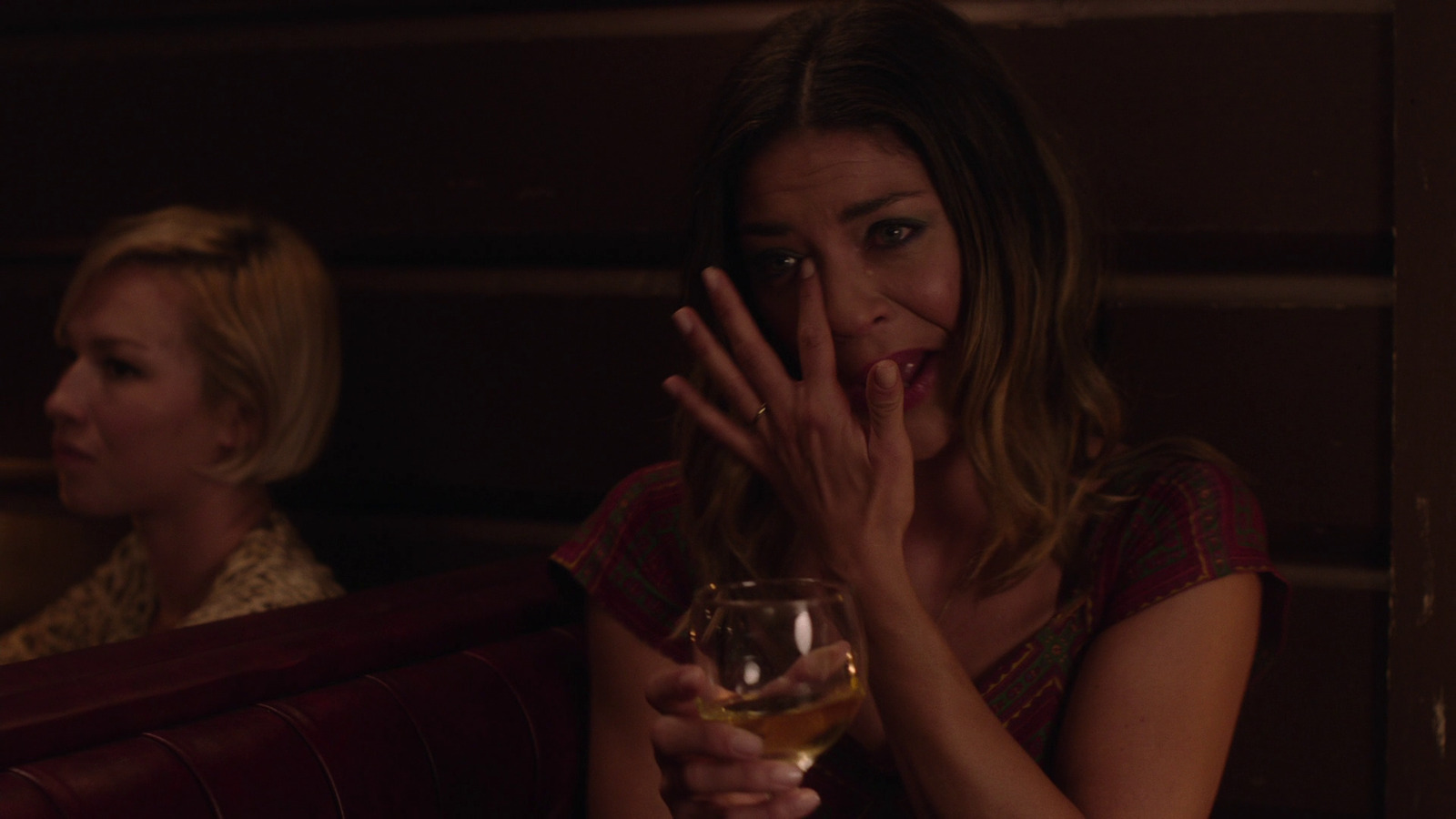
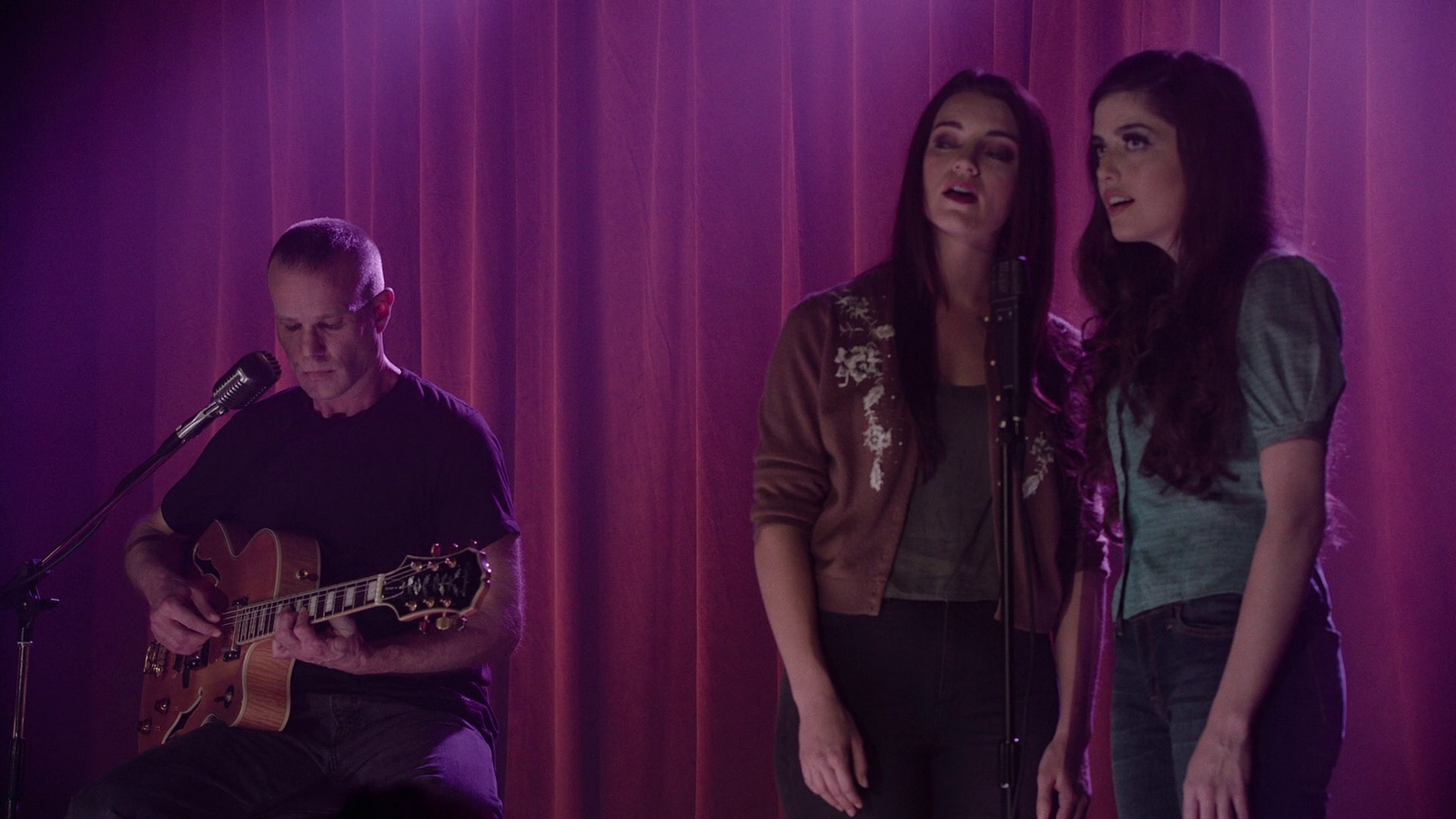
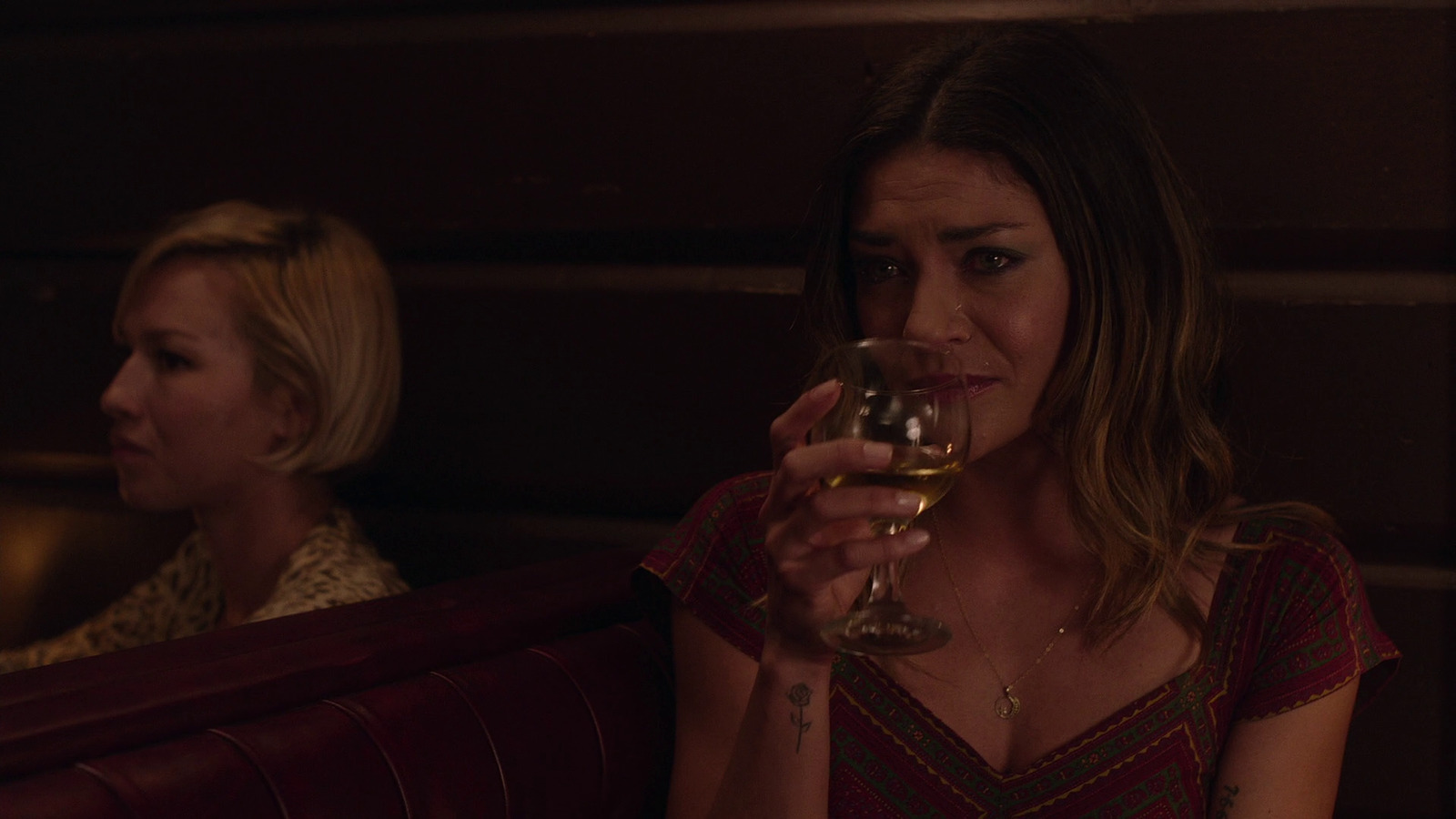
The MC introduces James Hurley by name. James and two backing singers perform before violet curtains, while cuts to Renée make listening part of the event. The familiar song returns in a public venue with a changed arrangement of bodies and gazes. Her emotional response belongs to the scene’s present moment; it need not be reduced to a single explanation of what she remembers or wants. The applause closes the performance, but not the episode.

Open the scene sequence · 4 frames
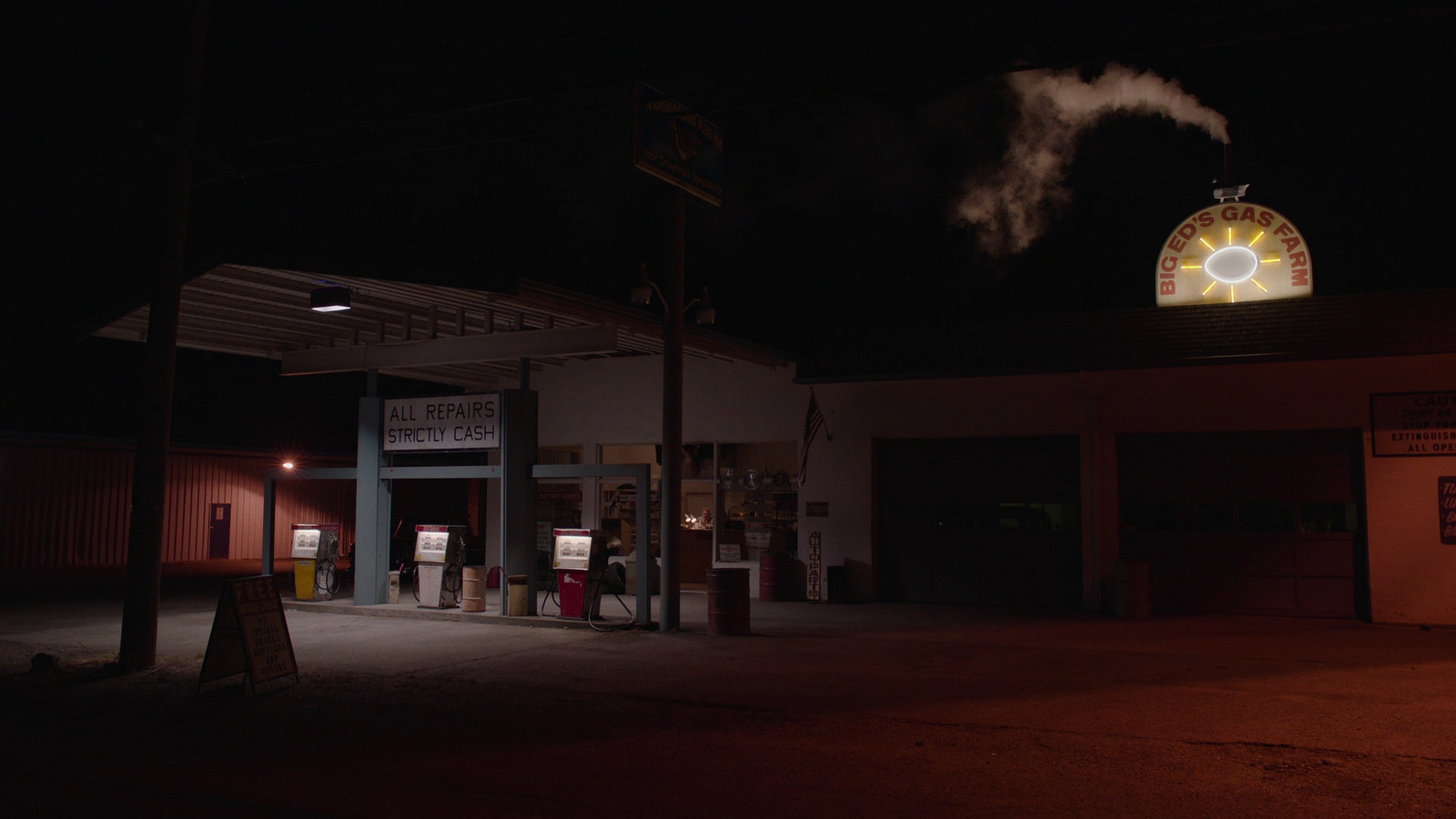
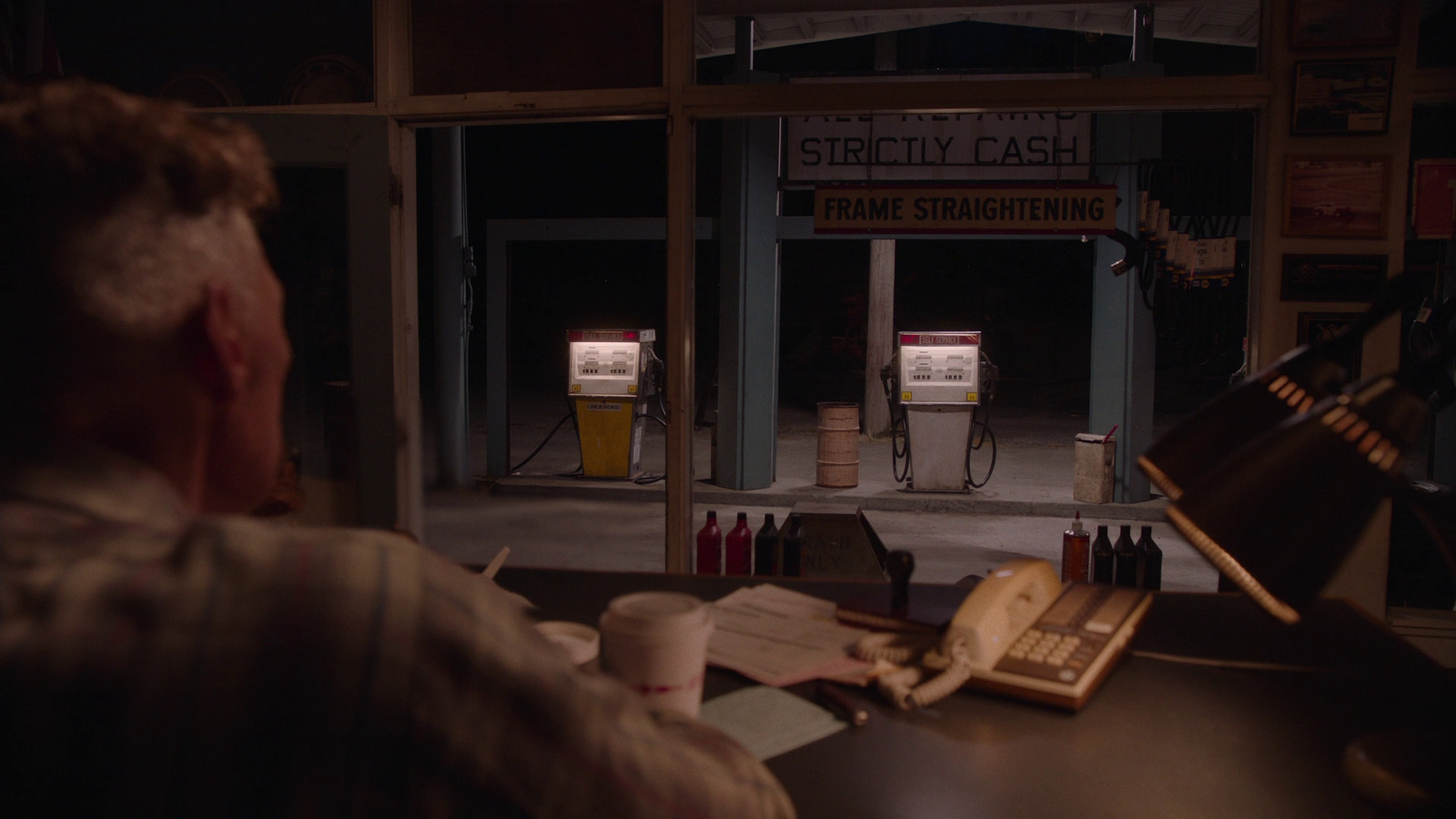
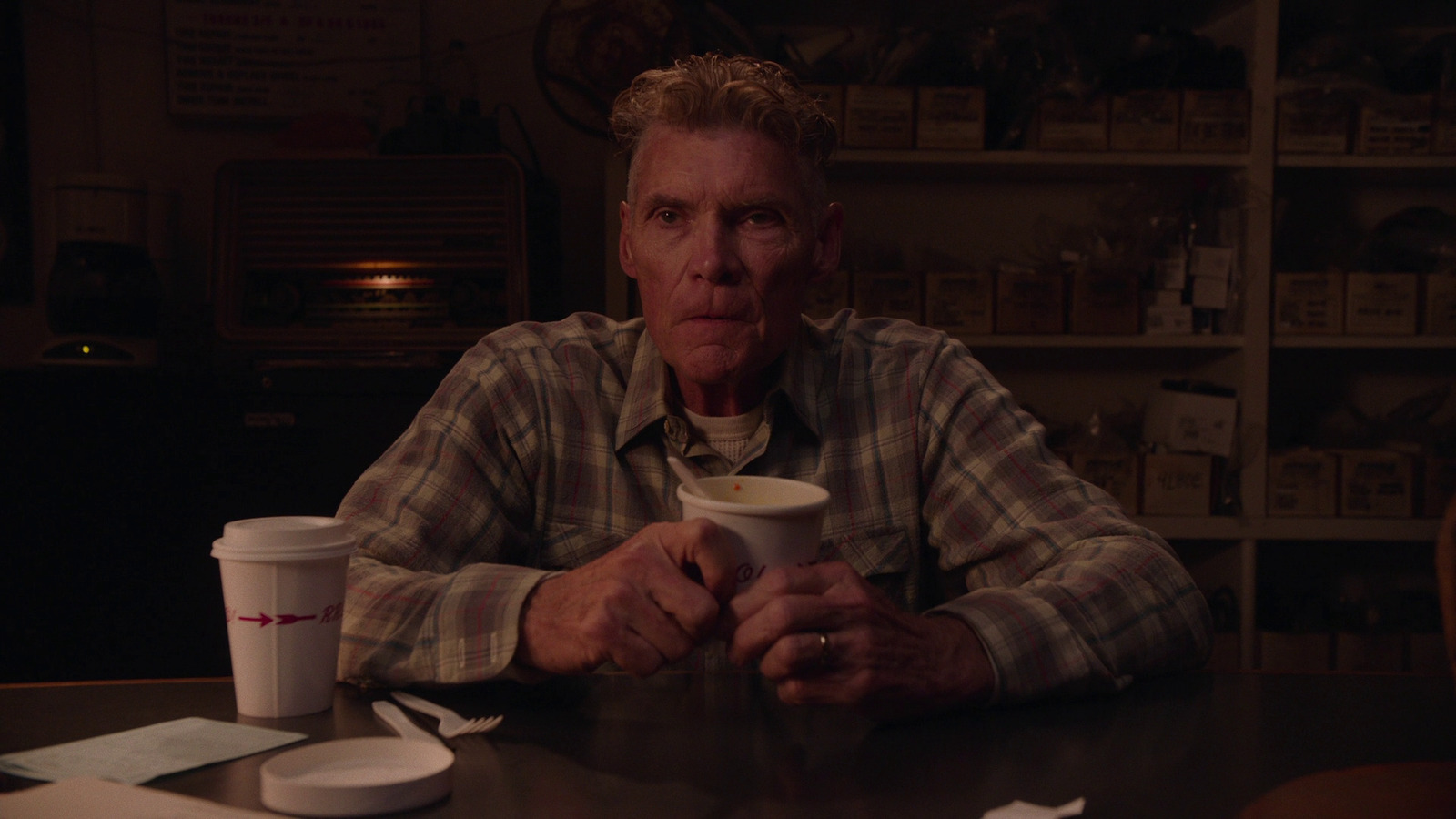
The episode stays with the person left alone
After the Roadhouse, Ed remains at the Gas Farm with takeaway food, a cup and the view toward the pumps. The closing credits continue over his small movements instead of replacing him with a separate performance. The long hold gives the earlier displacement at the diner time to settle. Against the opening procession and the Jones family’s illuminated yard, this modest pool of light becomes the episode’s final image of company withheld.
Open the scene sequence · 2 frames
Sound, repetition and the meaning of a voice
Instructions and interruptions
The warehouse contest turns a short phrase about the starting position into a repeated demonstration of control. Crowd encouragement becomes less secure as Renzo’s face and body show strain. The spoken account of pain is delivered with a calmness at odds with the contest’s violence. The rule-giving voice and the spectators’ shouts establish the hierarchy before the impact breaks it.
A confession heard as a response
Anthony gives Cooper’s gestures a meaning that Cooper does not explain himself. The café’s sparse exchange leads to a much more verbal confession in Bushnell’s office. Cooper’s repetitions can sound like prompts because Anthony and Bushnell supply the context. The dossier therefore separates the visible touch from Anthony’s subsequent belief that Dougie understood and forgave him.
A television passage that will not finish
Sarah’s boxing commentary repeatedly circles back to the same fall and the resumption of the match. Bell sounds and bursts of static mark its returns. The captions and focused audio check identify the repetition independently of the wide room view. The loop gives the scene a measurable form of recurrence without establishing whether its cause is technical, supernatural or subjective.
Music, applause and the road outside
“Dance of the Swans” accompanies Sonny Jim’s brightly lit play. “Just You” returns as a named Roadhouse performance, with the music credits identifying Angelo Badalamenti, David Lynch and James Marshall. After the applause, the shift to insects and passing traffic leaves Ed in an ordinary night environment. The move away from the stage is as consequential as the song’s return.
A closer view of the Roadhouse performance
James Marshall as James Hurley — Just You
James’s seated guitar performance is framed with two backing singers under violet light. The edit moves between his face, the three performers together and the crowd. It also retains views of the women at their table, including the visibly emotional response near the end. The standalone number therefore remains connected to people within the story.
Open the Just You performance study · 2 frames
Read the full performance comparison →
Source: Roadhouse Music — James Marshall as James Hurley — Just You, 00:00–03:20, in Twin Peaks: From Z to A. These timings identify the separate performance edit; the episode context is examined above.
Focused image, effects and performance studies
The contest: repetition before the break
The wide table view establishes the rules and the surrounding audience. Closer views isolate strain, calm and changing reactions. The aftermath shows the abrupt result of a sequence built around delay. These frames analyze staging and performance; they do not assign the effect to a particular technician without evidence.
Open the warehouse sequence · 7 frames
The ring crosses the cut
Follow the object from Ray’s account to his left hand, the Red Room floor and the body’s altered location. The link is constructed through continuity of the object across incompatible spaces. No explanatory shot supplies a route between them.
Open the ring transition · 4 frames
A change in the use of hands
The seated exchange, attraction to the pie display, hands on Anthony’s shoulders and removal of the cup make a small chain of actions. Anthony’s tears give that chain its emotional consequence before he explains it in words.
Open the café performance sequence · 7 frames
A room moving against a sound loop
Compare Sarah’s changing position with the television image. The stills make the room’s continuity visible; the sound discussion above records the repeating commentary. A sequence of stills alone cannot establish the loop’s exact rhythm.
Open the Palmer-house sequence · 4 frames
Performance and listening in the same scene
The stage, the shared backing microphone and Renée’s changing expression form an exchange across the room. The images follow that relation rather than reducing the sequence to a performer portrait.
Open the Roadhouse performance sequence · 5 frames
Making the images, shaping the performances
Two performances by Kyle MacLachlan
The warehouse and café make a precise comparison available without explanatory dialogue. The double controls another man through a joined hand, a fixed gaze and an unnaturally prolonged contest. Cooper’s distracted attention moves toward food and then to Anthony’s shoulders. MacLachlan’s different rhythms let the two sequences share the idea of physical contact while producing opposite responses. This is a reading of the finished performances, not a claim about an undocumented direction on set.
Audrey and Charlie: uncertainty as a working condition
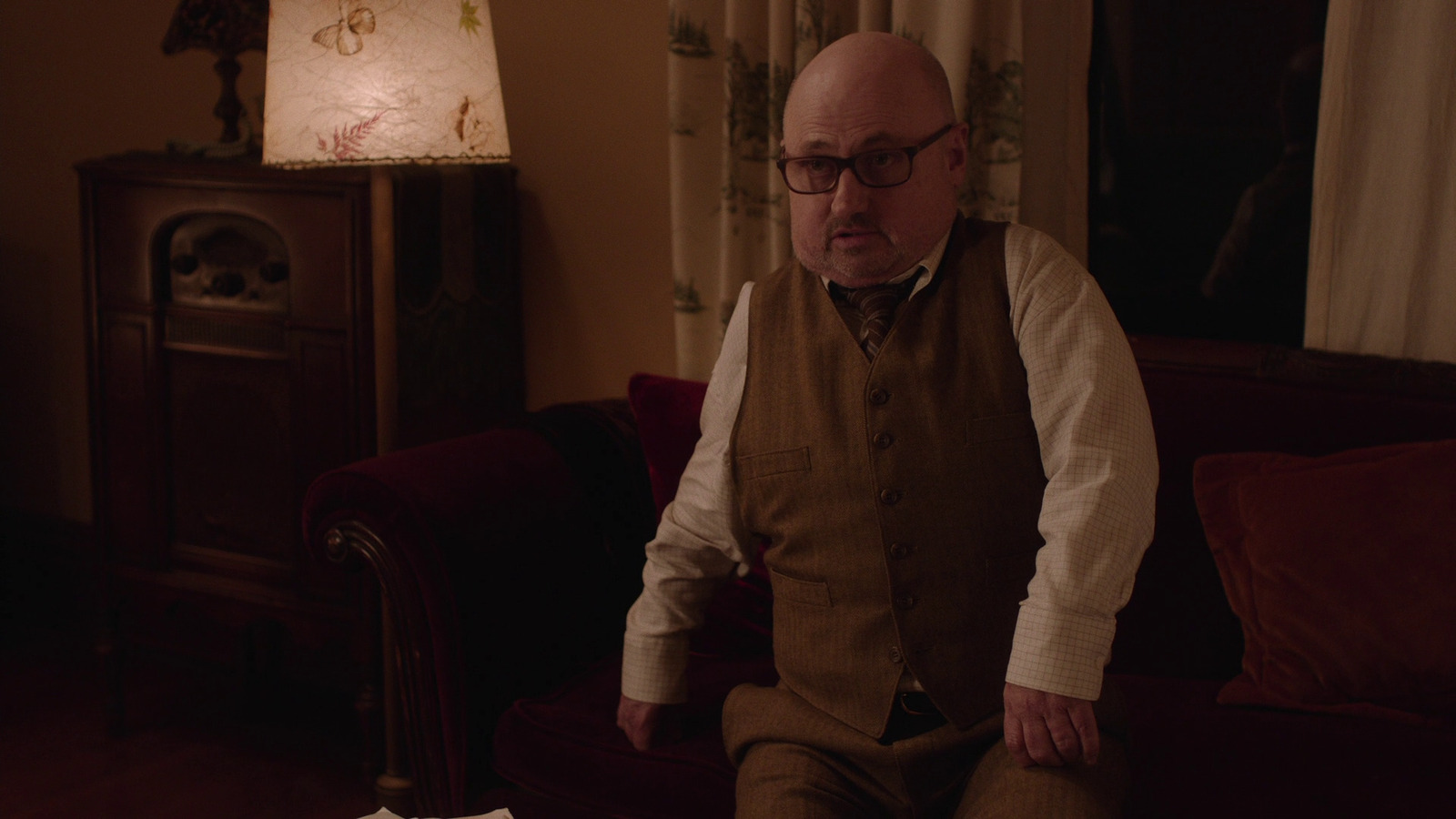
Clark Middleton’s account of preparing Charlie describes an actor working with limited narrative context. That account is useful beside the exchange here: the performance can be specific while the larger situation remains withheld. It does not authorize a single explanation of Audrey’s identity or location.
The stage performer and the credited recording
The cast credits name James Marshall as James Hurley and Kelsey Bohlen and Rachael Bower as the backing singers. The music credit separately assigns “Just You” to music by Angelo Badalamenti, lyrics by David Lynch and performance by James Marshall. Keeping those credits distinct avoids treating what appears on stage as a complete account of the recording process.
MacLachlan on the double’s composure
Asked specifically about the arm-wrestling confrontation, Kyle MacLachlan described finding Mr. C through the look, wardrobe, dialogue and Lynch’s confidence in him. Committing to the role brought a surprising freedom and calm, which he connected to the character’s quiet power. This firsthand account supports attention to composure in the warehouse scene without turning the actor’s preparation into a literal description of supernatural possession. MacLachlan interview.
Ray’s second floor: building the disappearance’s destination
I Had Bad Milk in Dehradun shows George Griffith placed on the Red Room floor while the crew prepares Ray’s blood pool. Before putting the actor into position, the team discusses moving the camera to its mark, holding it still and recording a clean view of the floor. That supplies a specific production basis for the transformation studied above: an unobstructed background and an actor-and-blood setup are made as separate elements. 09:48–11:56.
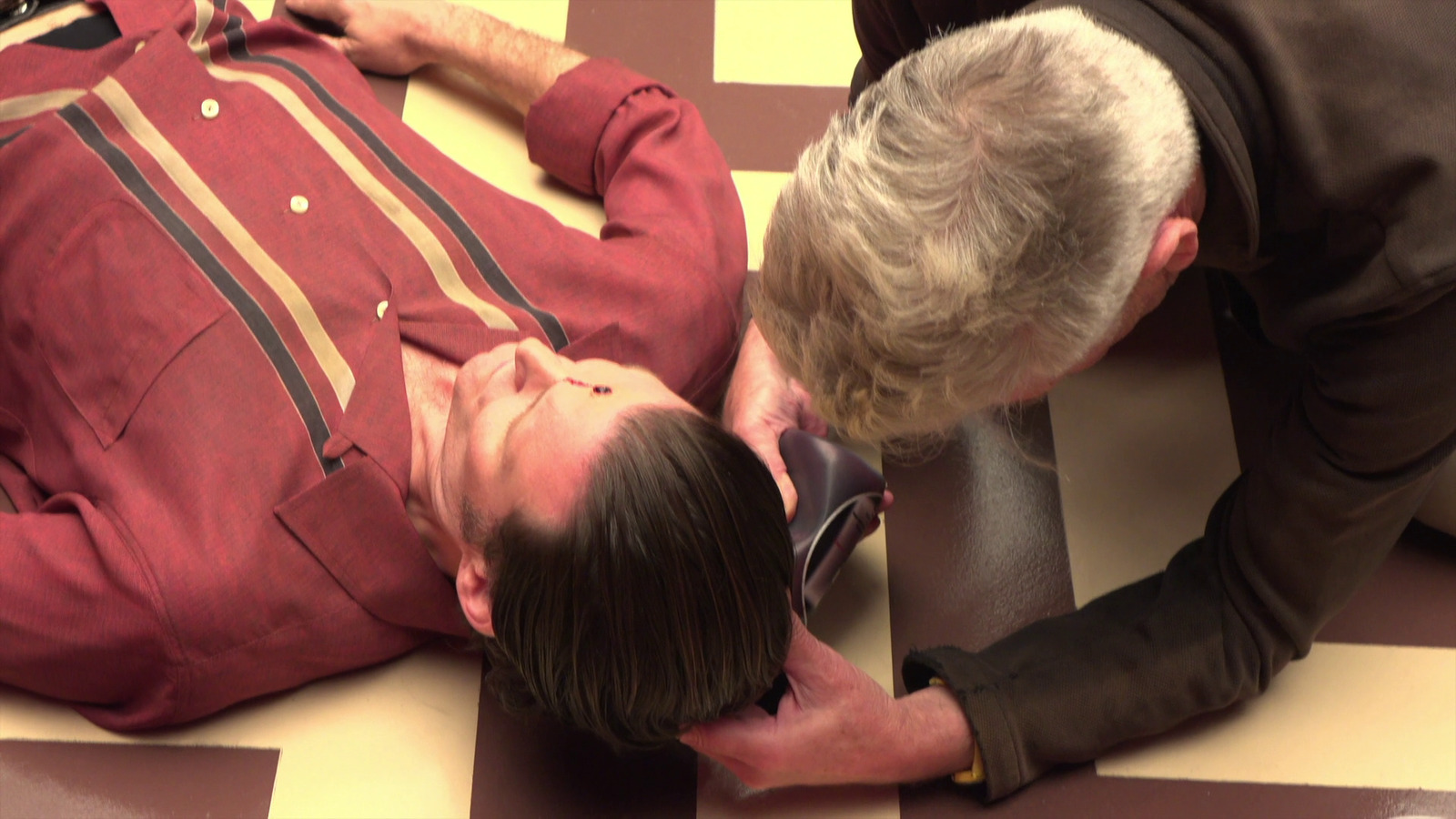
The discussion also distinguishes this new pool from the previous location’s blood pattern. The body has entered another space; continuity is not being treated as the mechanical duplication of every stain. This is a practical conversation about constructing the shot, not proof of a complete mythology of the Lodge. The contrast between a carefully prepared floor and the episode’s abrupt relocation helps show how material work produces the apparent impossibility.
Performance, sound and the working image
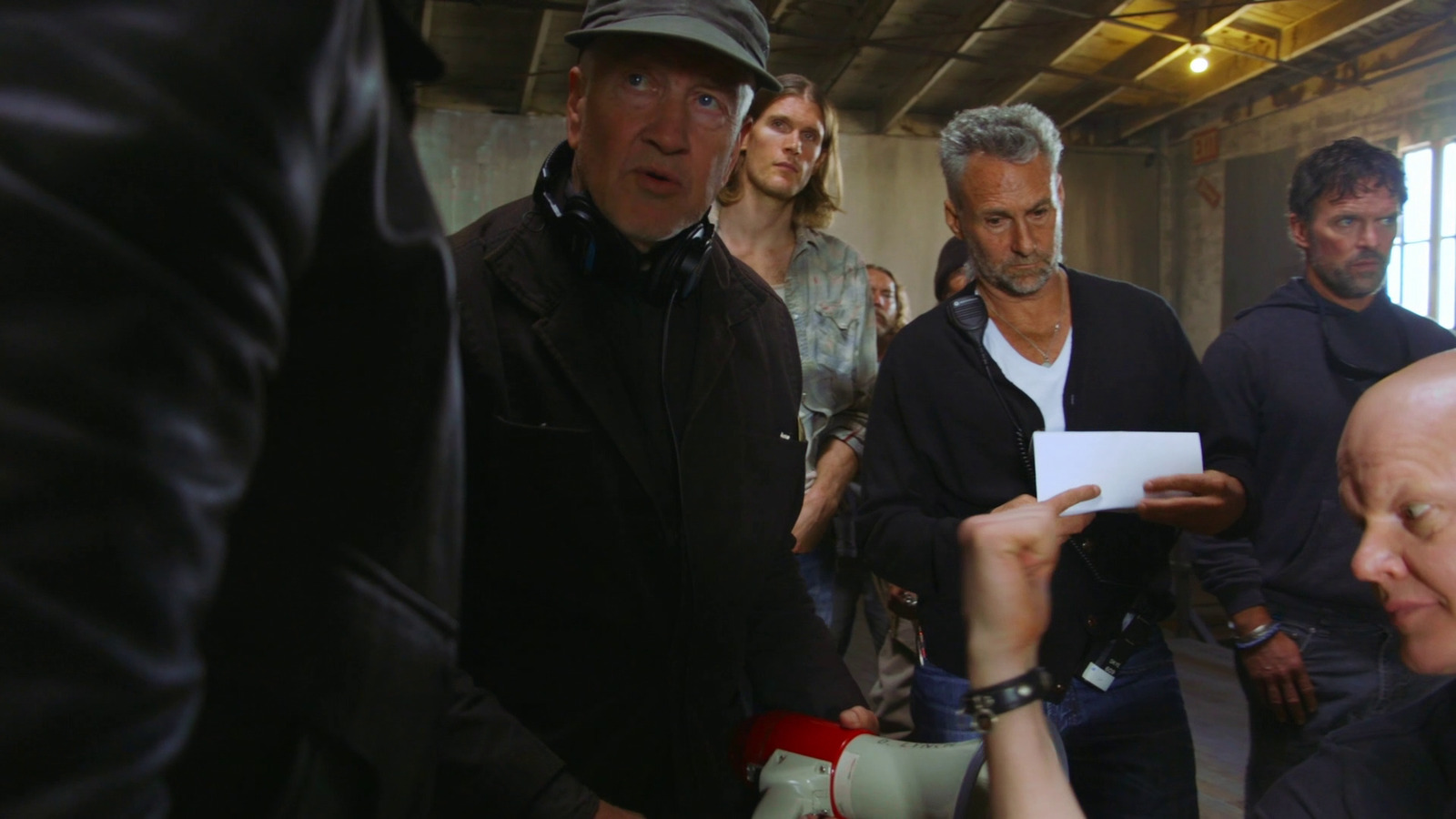
The production footage in Jason S.’s Impressions: A Journey Behind the Scenes of Twin Peaks adds another view of the scenes: directions spoken on set, rehearsals, material experiments and choices still being worked out.
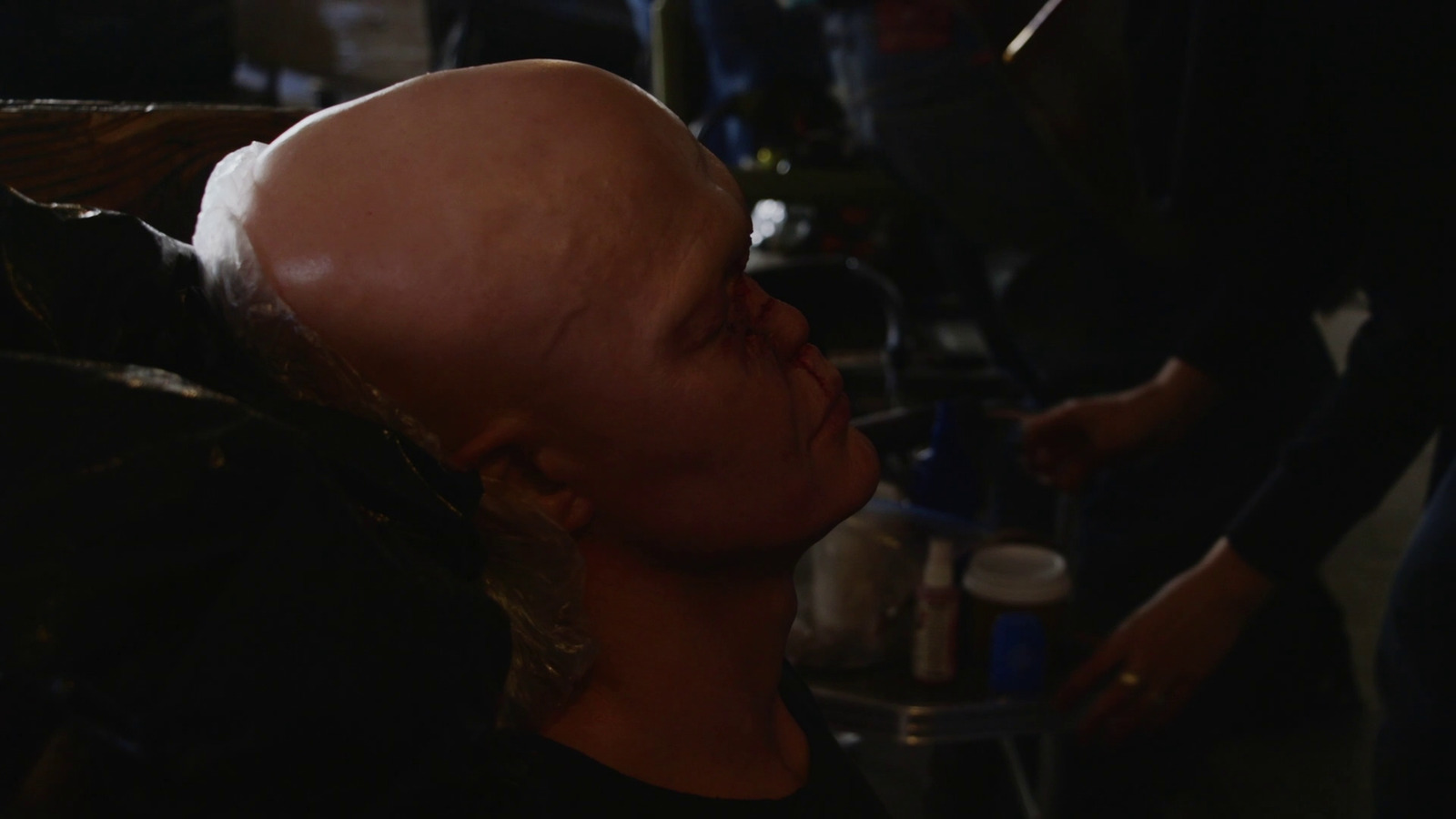
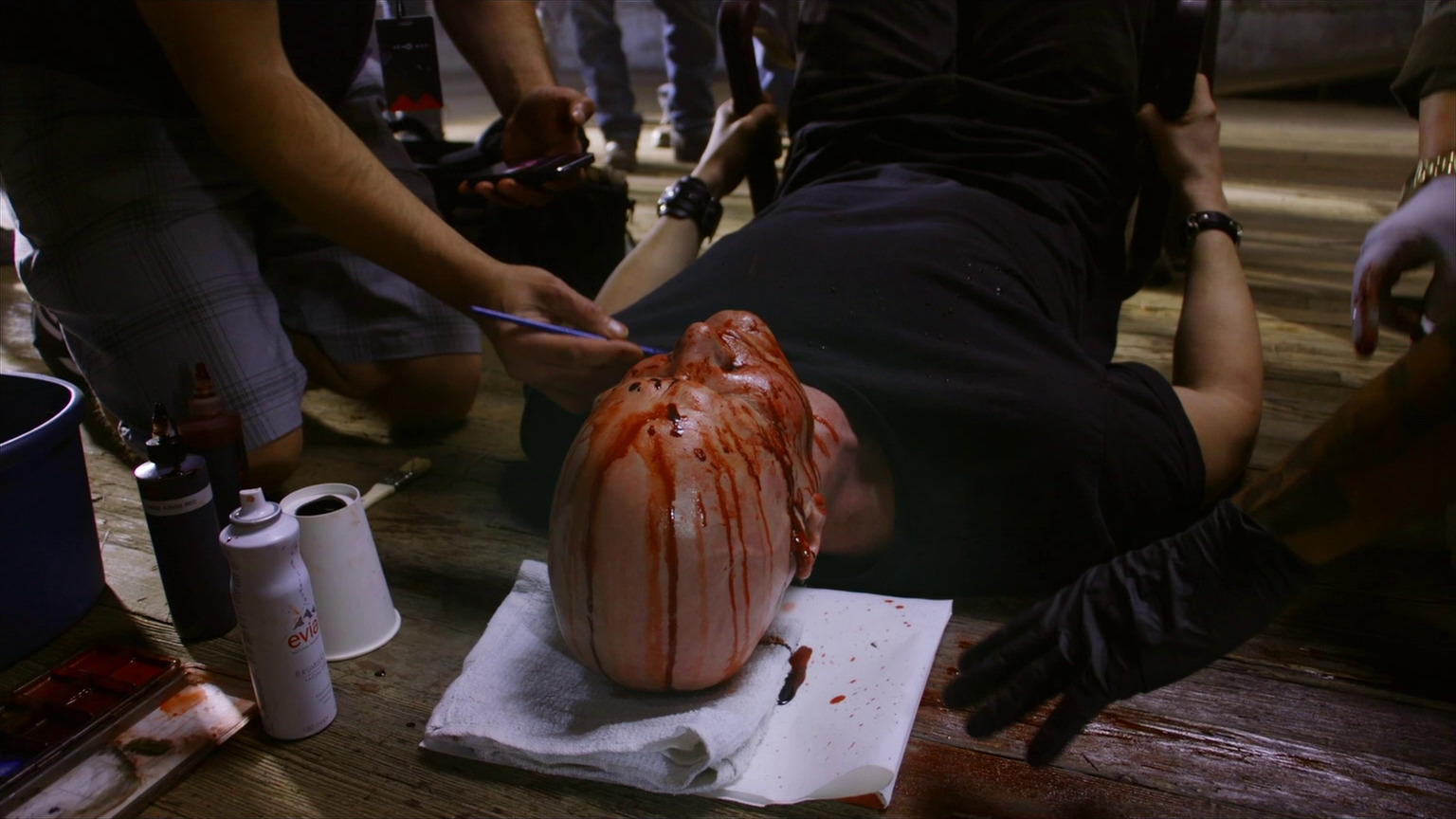
Renzo’s fall has to carry weight
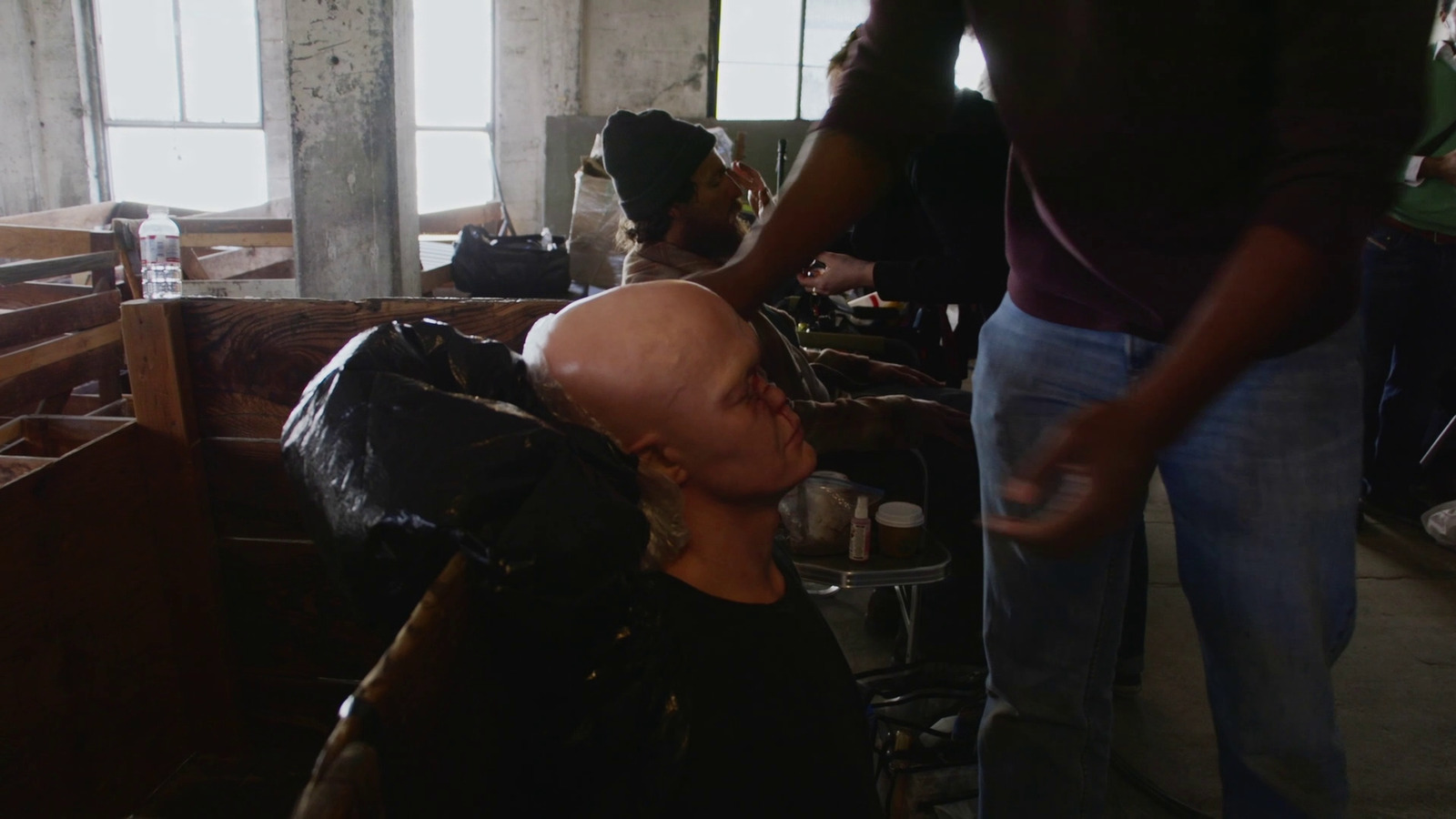
The effects demonstration shows a stand-in with a blood supply leading toward the nose, a pivot at the waist and a deliberately heavy body. Its fall is meant to land with a convincing thud. The demonstration connects the face, the strike and the body’s weight before the confrontation is filmed.
Lynch’s later direction carries that material force into the room: the punch is imagined as passing beyond its immediate target, while the surrounding men withdraw and Muddy reacts to the new balance of power. Renzo’s defeat is therefore more than a damaged head. The sound and weight of the fall, followed by the crowd’s rearrangement, make Mr. C’s authority visible.
Open the Renzo practical-effects study · 4 frames
A mistaken gesture becomes a moral turning point
Lynch blocks the café scene as a chain of displaced attention: pie takes Dougie away from the coffee, Anthony adds the poison, and dandruff draws Dougie’s hand toward Anthony’s shoulders. Anthony receives that touch as sympathy. The audience can hold both motivations at once.
Tom Sizemore is asked to reach genuine remorse and to let the collapse develop rather than arrive fully formed. The joke does not cancel the moral event. A gesture that Dougie does not consciously offer as forgiveness nevertheless gives Anthony a reason to stop what he is doing.
Audrey’s uncertainty is played toward another person
In rehearsal, Lynch moves Sherilyn Fenn into a more direct position before Charlie and asks her to look at him while describing the feeling of being somewhere, and someone, else. A question about the coat is answered as a change of time between scenes. These are practical instructions about continuity and attention, not a declaration of the room’s ultimate reality.
Clark Middleton’s replies give Fenn something specific to confront even as Audrey’s account of herself becomes unstable. The production view preserves the distinction between making the exchange precise and making its larger circumstances certain.
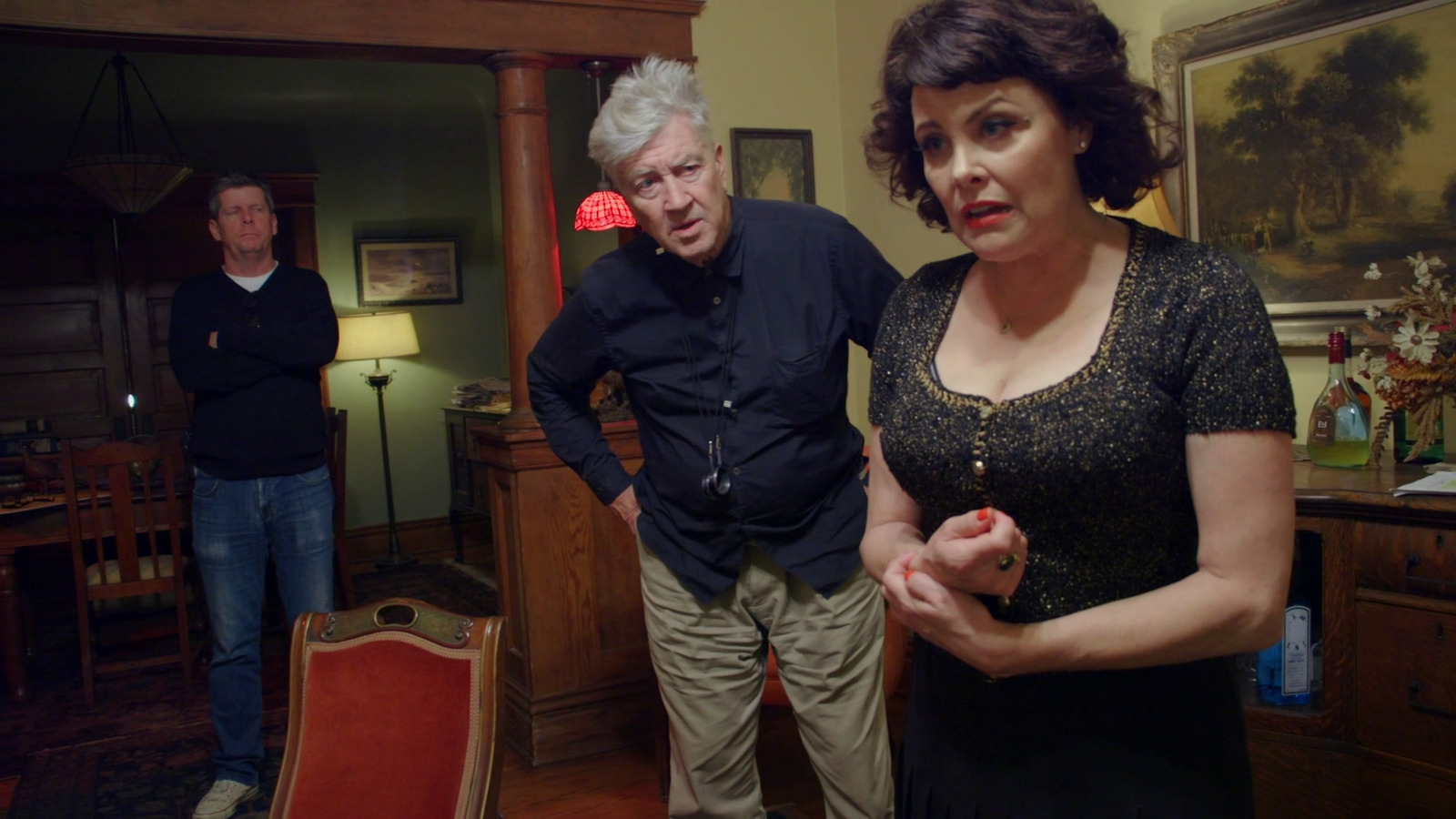
Inside the final movements: performance and production
The conga line: disorder with a precise route
The office celebration is choreographed as apparently untidy movement. Lynch assigns the gifts to one hand so that the other can stay on the next dancer’s shoulder, redirects the line around a narrow gap and asks MacLachlan to remain unresponsive within the party. The group has been celebrating all night; the instruction is to avoid making its arrival too smooth.
The rehearsal also exposes an editing join. Lynch proposes photographing the entrance and departure together: the dancers can deposit their gifts, assume the conversation inside the office has happened, then form up again and leave. In the separate office passage, he emphasizes the Mitchums’ overflowing gratitude to Bushnell for the insurance settlement. The finished sequence’s sudden abundance is therefore supported by very specific traffic, prop and emotional instructions.
Follow the gifts and the line · 2 frames
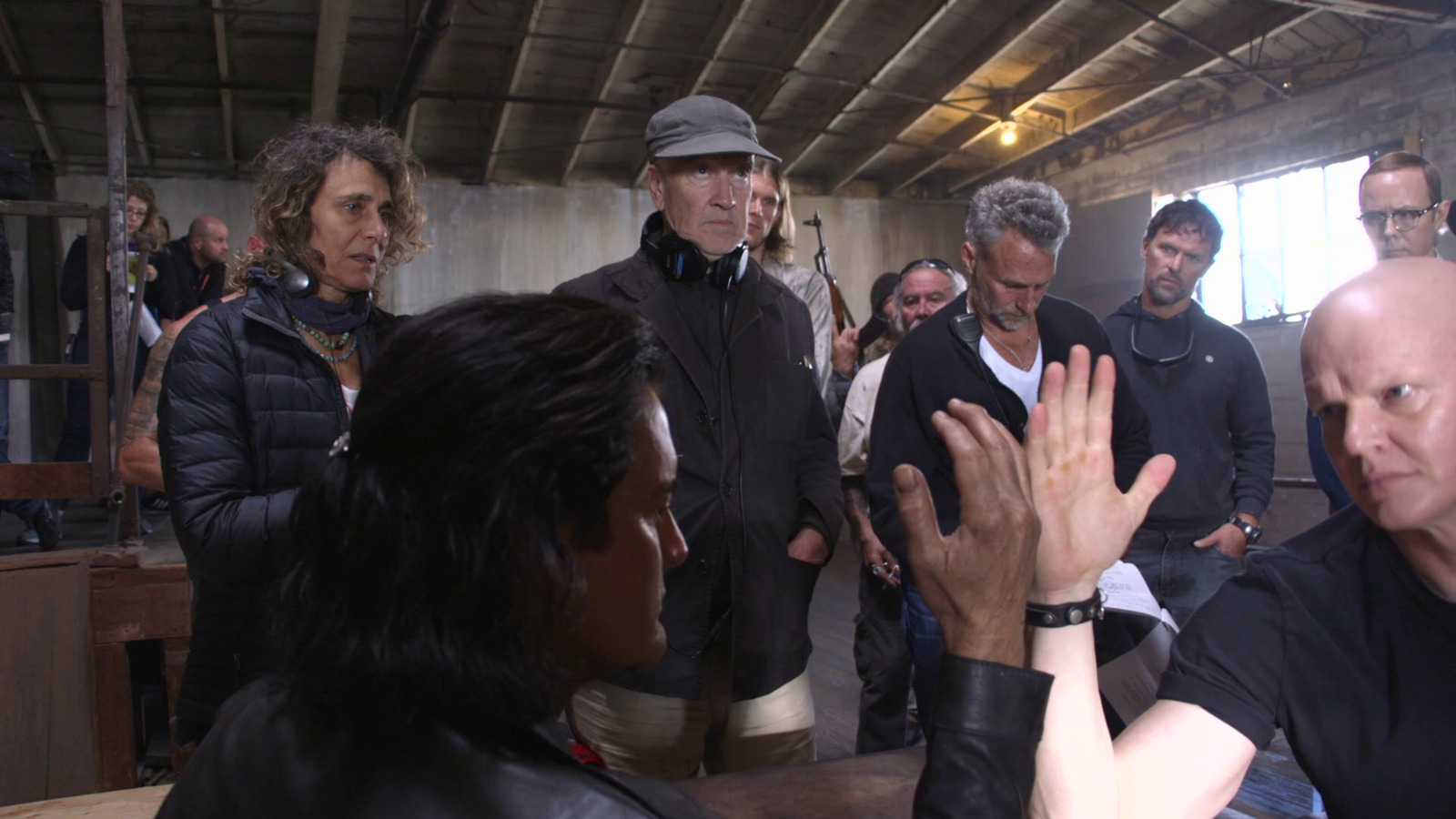
The arm-wrestling audience changes sides before it moves
Lynch gives Mr. C a fixed visual target: he is to keep looking at Renzo even when that means looking at the back of his head. The surrounding men are organized separately, gathering and settling before the rules are delivered. This divides the scene into an almost motionless challenger and a room that advertises its confidence in the champion.
During the repeated returns to the starting position, Lynch asks the spectators to keep cheering while letting worry enter their faces. Ray’s attempted withdrawal is blocked within the same crowded space. This is useful evidence for reading the bout as a transfer of authority: the witnesses must begin to understand the danger before Renzo’s defeat makes it explicit.
Compare challenger and spectators · 2 frames
An accountant interrupts the silence
After the contest, Lynch slows the men’s departure and keeps Mr. C watching them, making the warehouse grow quiet around the impending interrogation. He then identifies the accountant’s offer of money as a deliberate break in that tension. Ray is instructed to register what is happening around him while retaining strength in his delivery.
The interruption is small, but it changes the scale of the scene. Money and routine business briefly survive inside a room whose power structure has just been destroyed. The production footage makes that shift a matter of timing and reactions rather than an incidental comic line.
Presentation, music and credits
The standalone presentation runs approximately 59 minutes 19 seconds, including opening and closing material. Timings in the studies follow that presentation. The work is directed by David Lynch and written by Mark Frost and David Lynch.
The cast credits identify Derek Mears as Renzo, Frank Collison as Muddy, Tom Sizemore as Anthony Sinclair, John Savage as Detective Clark, Jessica Szohr as Renée and Everett McGill as Big Ed Hurley. The music credits list Tchaikovsky’s “Dance of the Swans” from Swan Lake, Dean Hurley’s “Eastern European Symphonic Mood No. 1,” and “Just You.”
BUF is credited for visual effects, while KNB EFX Group, Carey Jones and Vincent Van Dyke Effects appear in the makeup-effects credits. These episode-level acknowledgments are not a shot-by-shot attribution of the ring transition or the warehouse violence.
David Lynch receives the sound-design credit, with Ron Eng and Dean Hurley credited as sound supervisors and re-recording mixers.
Sources and viewing notes
- Twin Peaks: The Return, Part 13. Directed by David Lynch; written by Mark Frost and David Lynch. Standalone presentation in Twin Peaks: From Z to A; picture, English captions and closing credits examined, with focused checks of important dialogue and sound passages. Scene readings are Lyncharium’s analysis.
- Part 12: sources and performance research. Includes Hanh Nguyen’s interview with Clark Middleton, IndieWire, 4 September 2017. The actor’s account informs the linked performance discussion rather than supplying a plot solution.
- Jeff Jensen, Kyle MacLachlan discusses Twin Peaks, Entertainment Weekly, 5 September 2017. Written Q&A, specifically the question about Mr. C and the arm-wrestling scene; the embedded audio interview is not claimed as reviewed.
- I Had Bad Milk in Dehradun, a film by Richard Beymer; production footage viewed in Twin Peaks: From Z to A, 09:48–11:56. Images and English captions inspected; key speech passages cross-checked where needed. Production observations are distinguished from interpretation of the finished scene.
- Two Blue Balls, directed and photographed by Jason S., in Impressions: A Journey Behind the Scenes of Twin Peaks (2017), viewed in Twin Peaks: From Z to A. Passages: 08:05–12:38. Picture and English captions examined, with targeted speech checks. Rehearsal proposals and production observations are distinguished from interpretation of the finished episodes. Documentary narration and its music are not treated as unscripted statements by Lynch.
- A Bloody Finger in Your Mouth, directed and photographed by Jason S., in Impressions: A Journey Behind the Scenes of Twin Peaks (2017), viewed in Twin Peaks: From Z to A. Passages: 08:43–12:26. Picture and English captions examined, with targeted speech checks. Rehearsal proposals and production observations are distinguished from interpretation of the finished episodes. Documentary narration and its music are not treated as unscripted statements by Lynch.
- Bad Binoculars, directed and photographed by Jason S., in Impressions: A Journey Behind the Scenes of Twin Peaks (2017), viewed in Twin Peaks: From Z to A. Passages: 01:04–05:27. Picture and English captions examined, with targeted speech checks. Rehearsal proposals and production observations are distinguished from interpretation of the finished episodes. Documentary narration and its music are not treated as unscripted statements by Lynch.
- Behind the Curtain: Part 13. Photographed by Jason S.; edited by Jonathan Angus, with editorial assistance by Robert Lay (2019). Viewed in Twin Peaks: From Z to A. Timed passages: 00:41–06:53; 11:05–16:28; 20:00–22:18. Timings refer to the documentary, not the episode. On-set directions and retrospective recollections are distinguished from Lyncharium’s interpretation of the finished scenes.