Twin Peaks: The Return — Part 14
2017 · Twin Peaks: The Return · Episode dossier
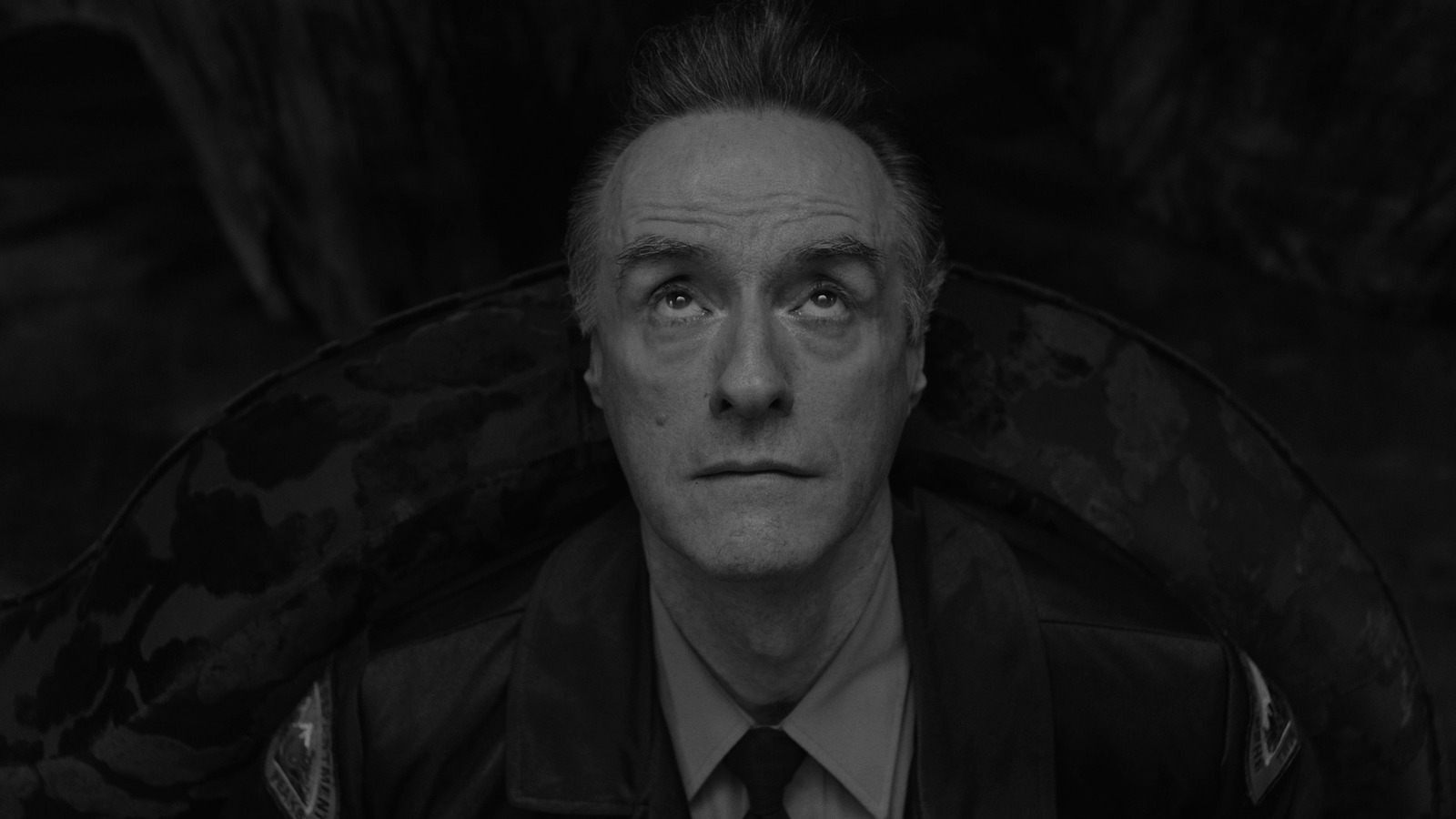
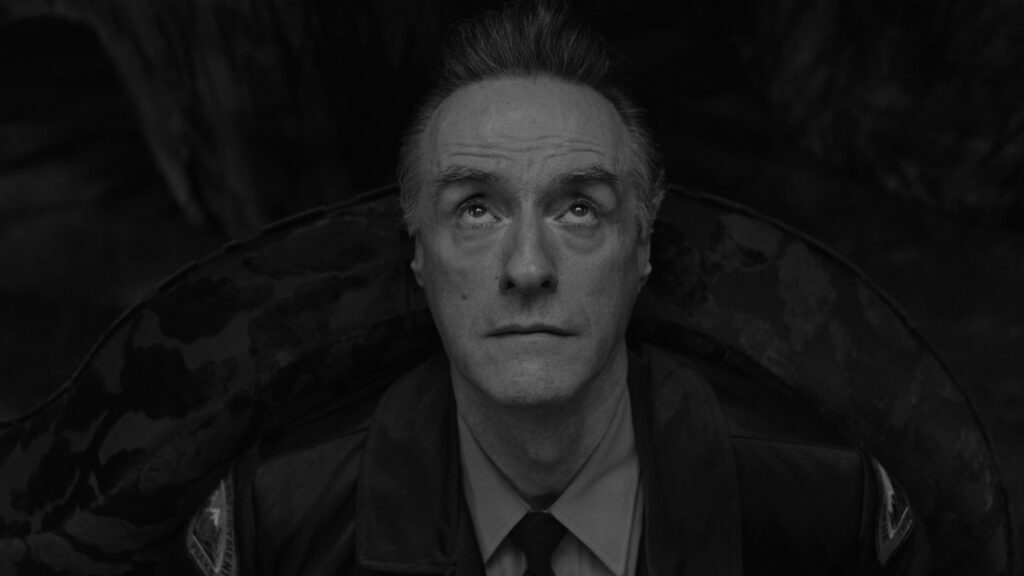
A dream looks backward. A forest opens upward. Andy returns knowing whom to protect, while Sarah’s face conceals a different kind of interior.
Part 14 connects investigations through testimony, memory and visions. Its disclosures are uneven: the Blue Rose receives a case history, Diane names a family connection, and the audience sees things the people in the story cannot yet explain.
- Part 14
- We Are Like the Dreamer
- Directed by
- David Lynch
- Written by
- Mark Frost & David Lynch
- Standalone presentation
- 00:56:15
The Return overview · Twin Peaks research hub. Timings follow the standalone part and include its opening titles. Presentation and credit notes.
Explore this dossier
What a vision asks someone to do
The episode offers several ways of acquiring knowledge: a telephone report, an agent’s lesson, an estranged sister’s recognition, a narrated dream, a childhood memory and a succession of images. They do not yield the same kind of certainty. Andy’s experience is especially revealing because its first result is practical care, not a speech that explains the mythology.
These scene studies follow the whole part. Expanded galleries isolate the dream’s transitions, the forest opening, Andy’s vision and Sarah’s face. Production testimony is cited separately from close reading, and uncertain identities remain uncertain. Sources and viewing notes give the basis for the analysis.
Illustrated scene studies
- A telephone reconnects two investigations
- A case history becomes a test of interpretation
- The window cleaner enters Cole’s hearing
- A ring connects Diane to Las Vegas
- A name multiplies into a practical problem
- Paris looks back toward Philadelphia
- The station removes an obstruction
- Bobby becomes the guide
- Childhood play becomes an instruction
- The clearing contains a person before a portal
- The canopy becomes an opening
- Andy receives a name and an object
- A sequence of images becomes a responsibility
- Knowing enough to protect someone
- Protection changes the sound of the jail
- A destiny is told beside the loading dock
- James follows the building’s other register
- Sarah asks to be left alone
- The face opens onto darkness
- Sarah performs the surprised witness
- Billy remains a story someone tells
- A performance carries the room into the credits
A telephone reconnects two investigations
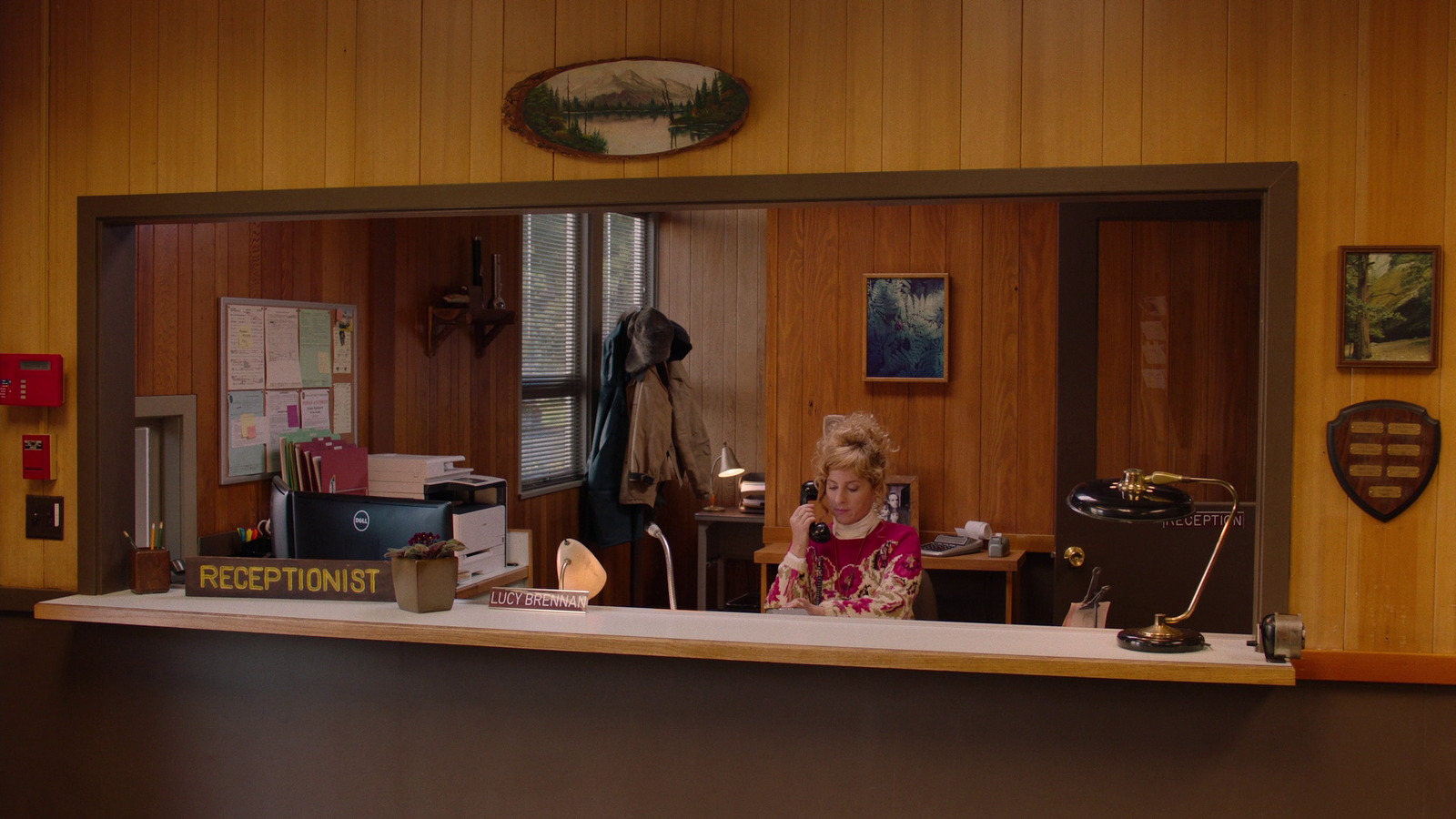
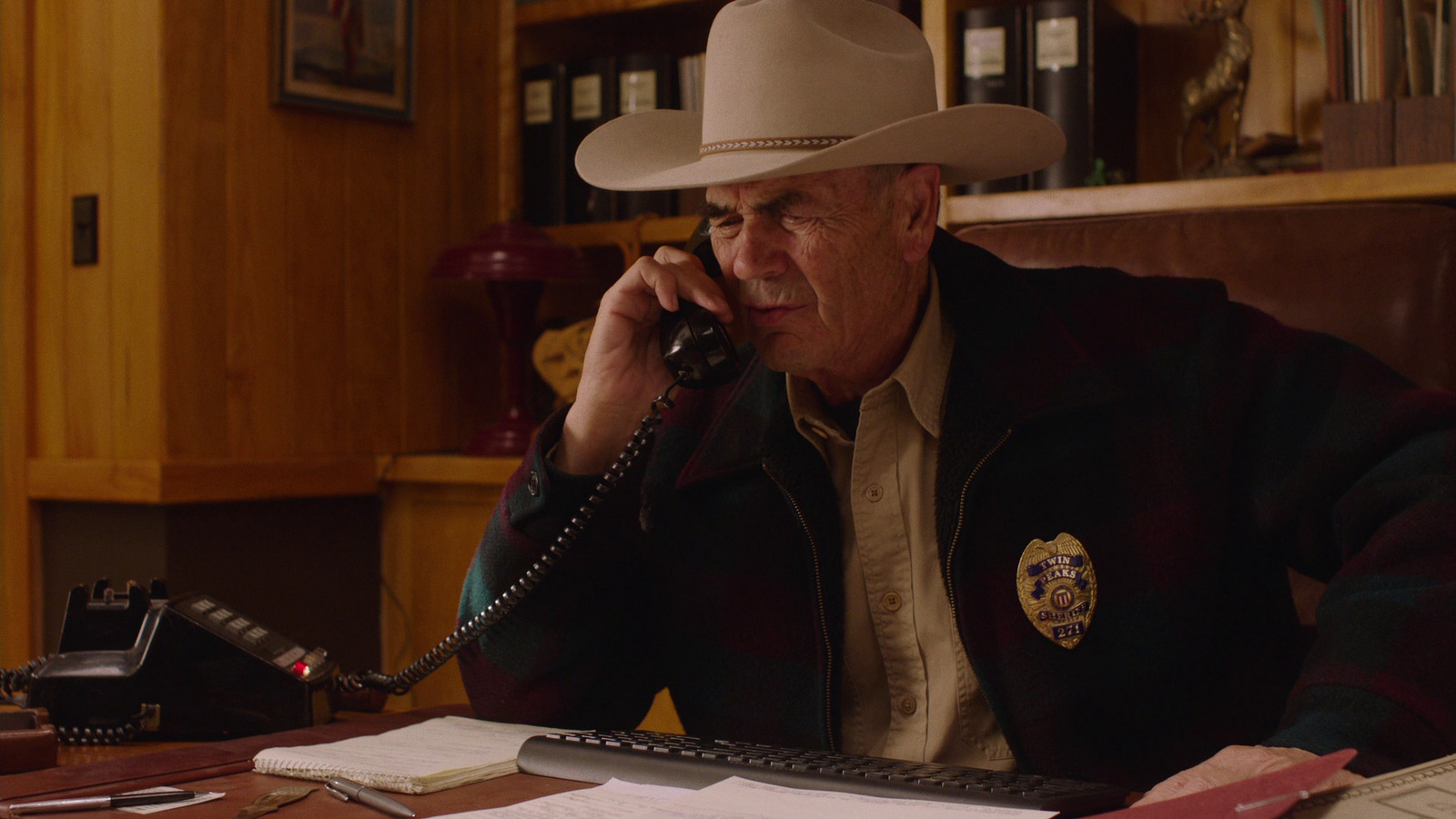
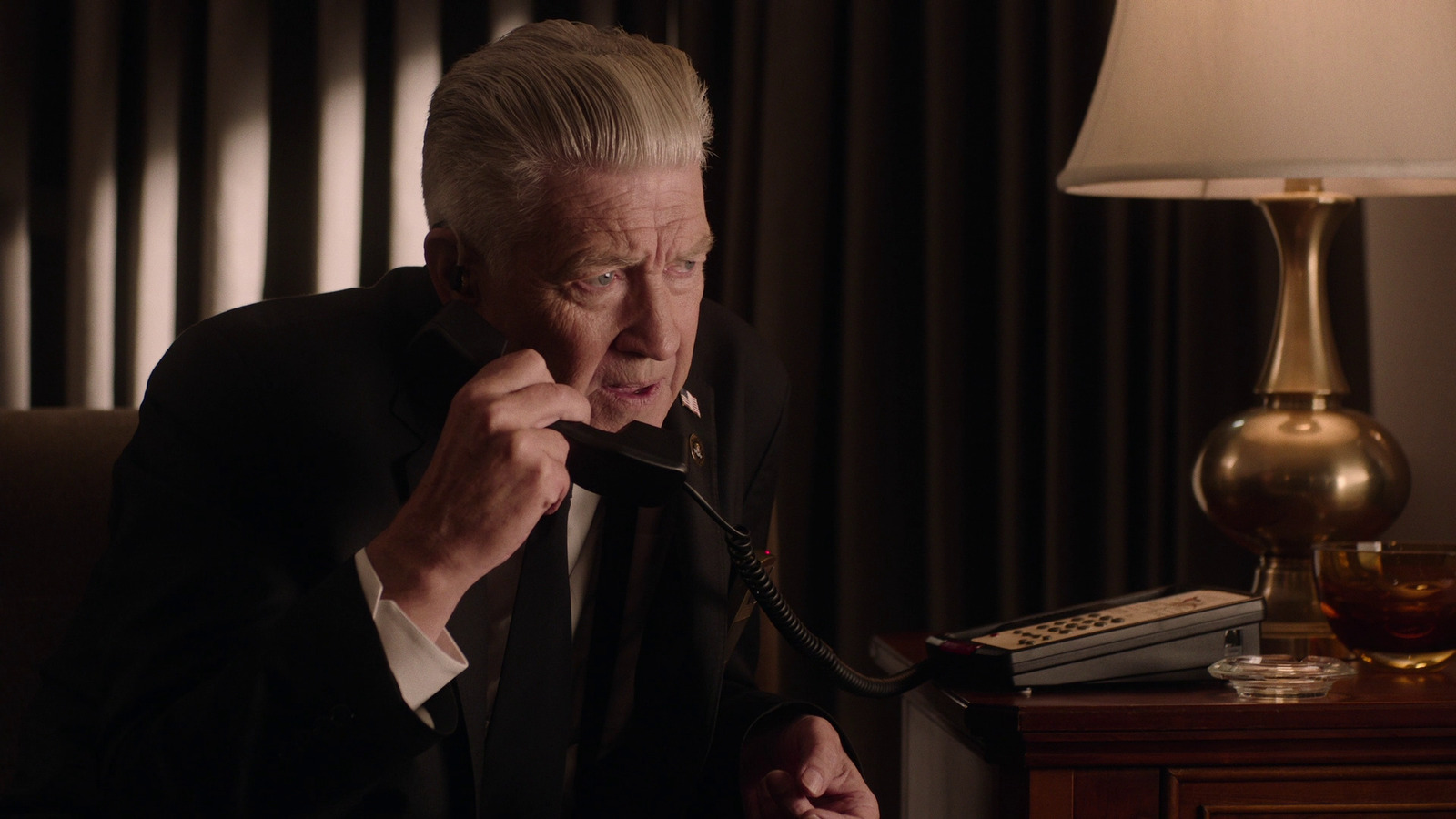
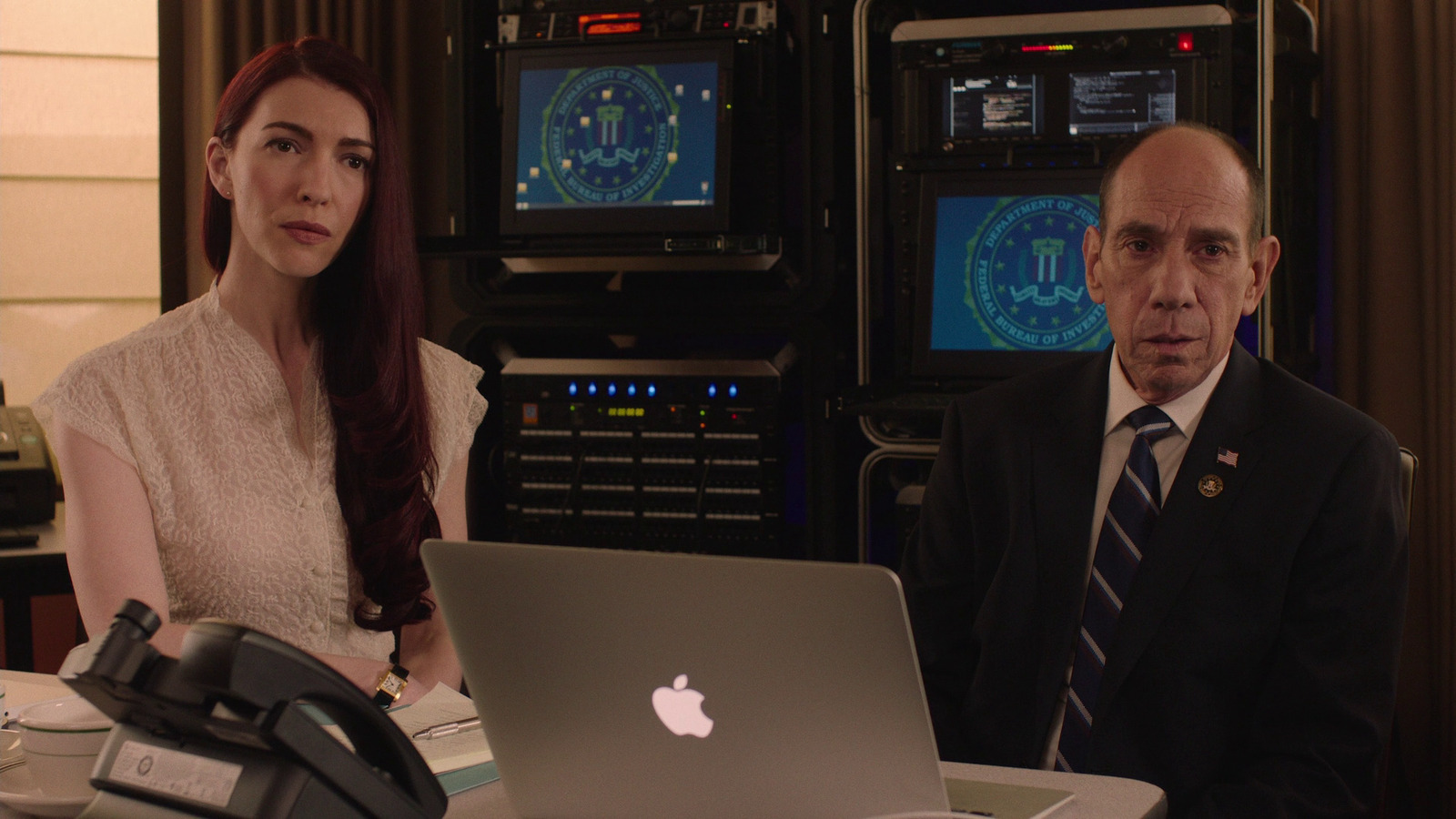
Lucy answers Cole with the literal precision that makes ordinary conversation in the station a small obstacle course. Her account of the intervening years briefly interrupts his urgency. Once Frank takes the call, the subject becomes Laura’s diary and the possibility of two Coopers. Cole receives this as significant information, but the conversation does not instantly unite everything each investigation knows. The telephone closes a geographical distance while preserving an uneven distribution of knowledge. Lucy’s comic duration also keeps the town’s familiar rhythms present inside a larger federal inquiry.
Open the scene sequence · 2 frames
A case history becomes a test of interpretation
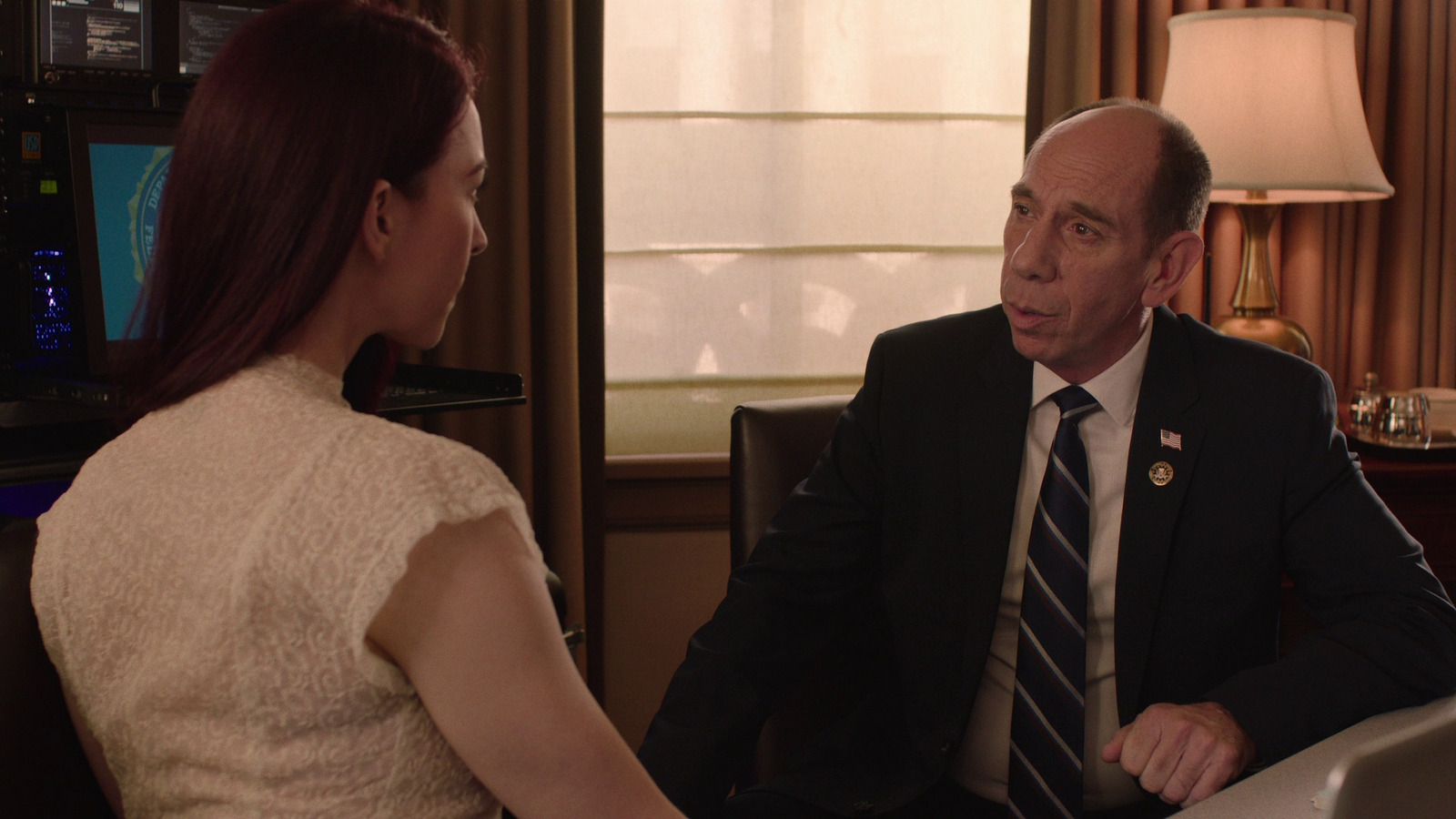
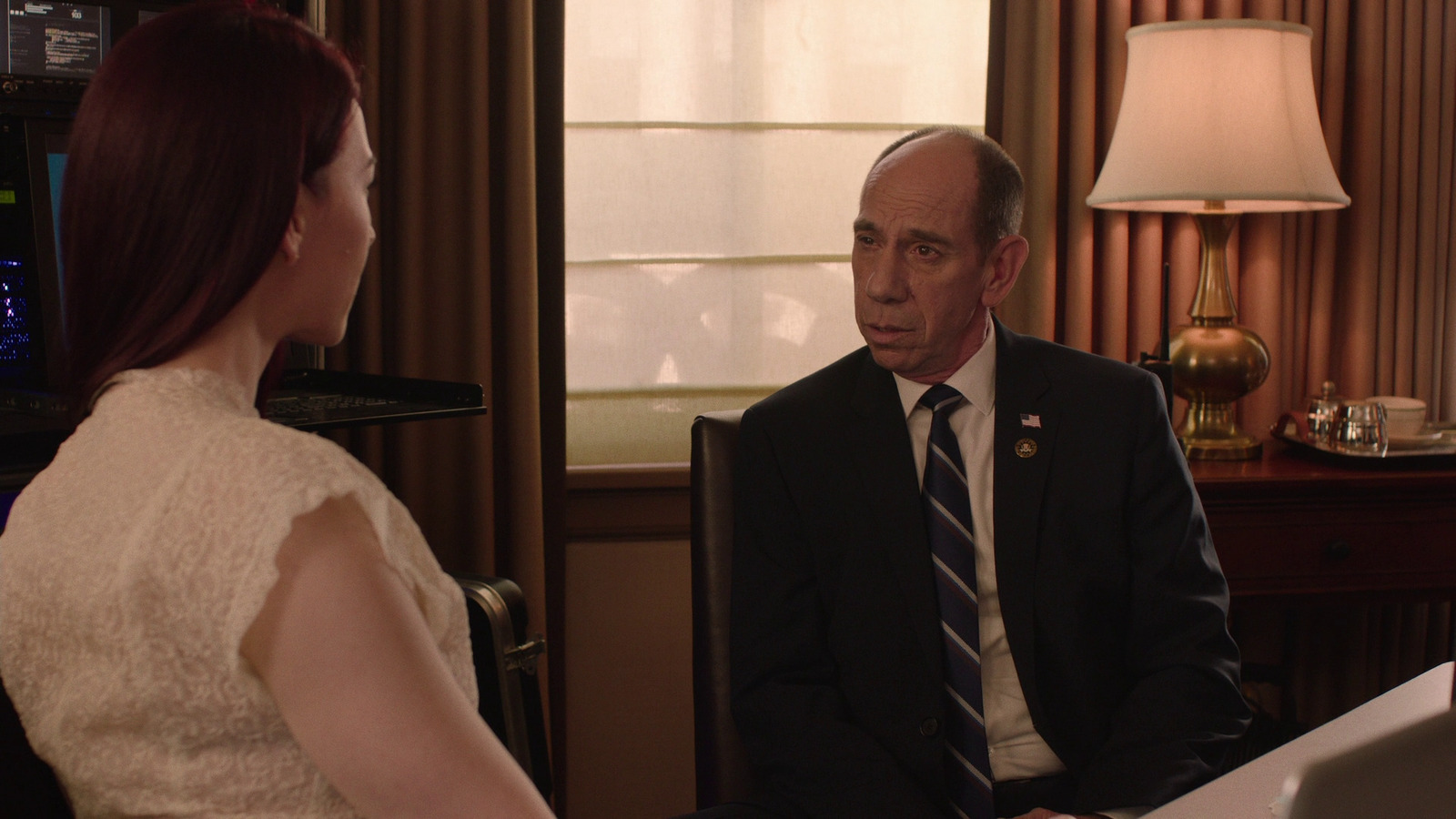
Albert tells Tammy about Lois Duffy: two apparently identical women, one dying and disappearing, the other subsequently taking her own life. The account names Cole and Jeffries as the investigators. No flashback illustrates it. Instead, the camera watches a senior agent teach a listener how to move from a strange phrase to a working concept. Tammy supplies the idea of an unnatural double, and the term tulpa enters the discussion. This is a case history told by a character, not a universal explanation attached to every resemblance in the series. Its immediate function is to train Tammy’s attention.
Open the scene sequence · 2 frames
The window cleaner enters Cole’s hearing
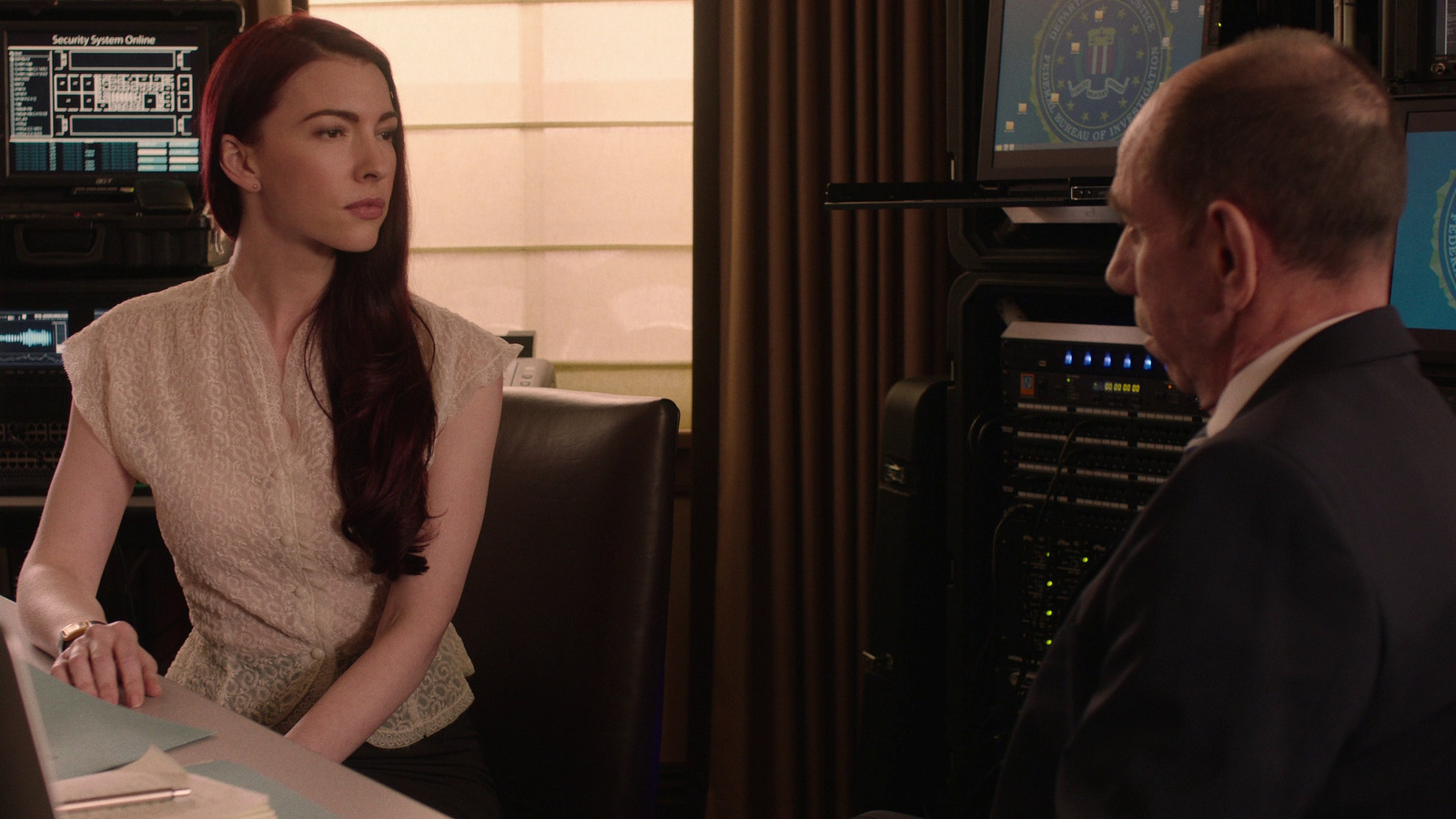
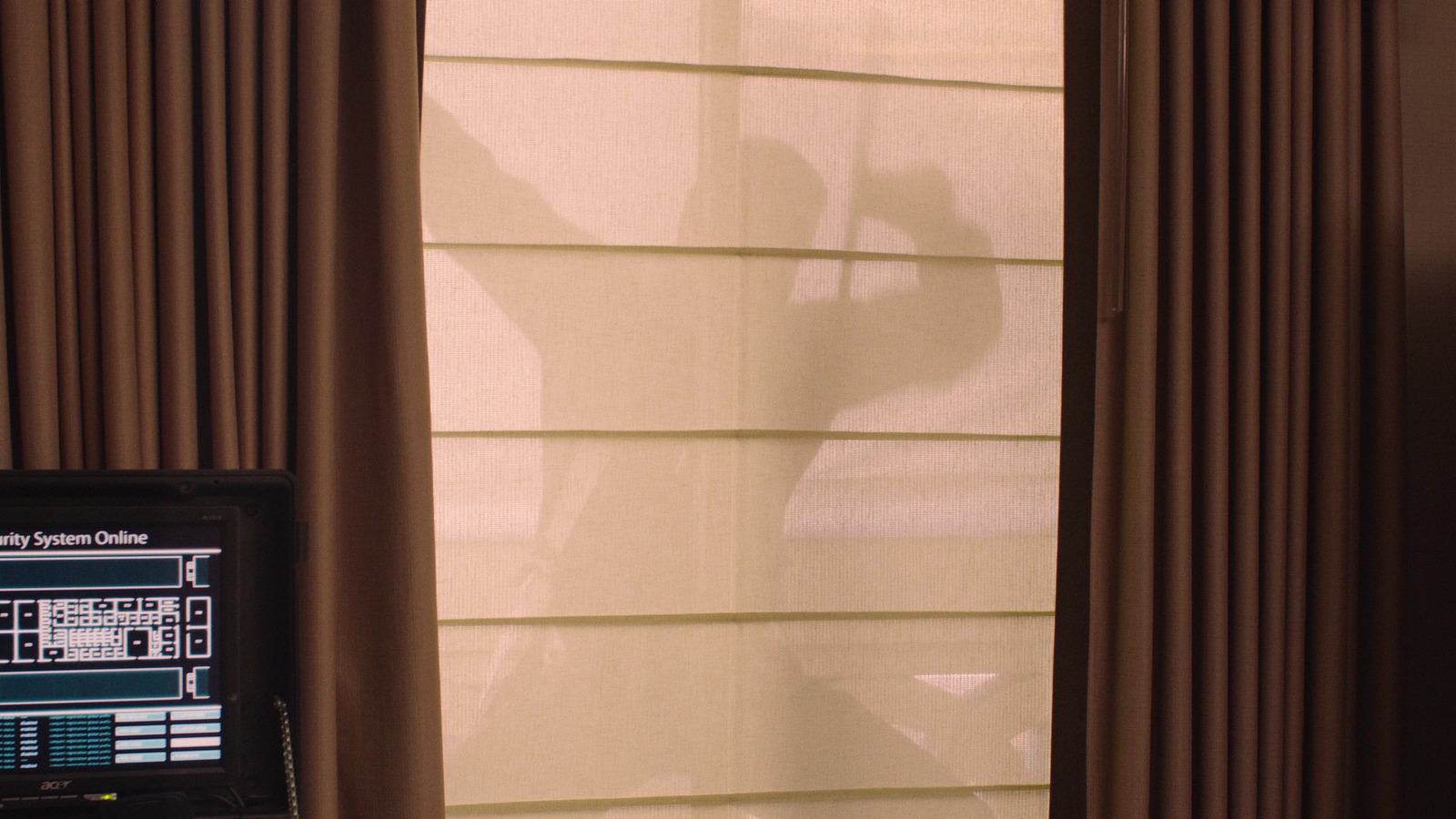
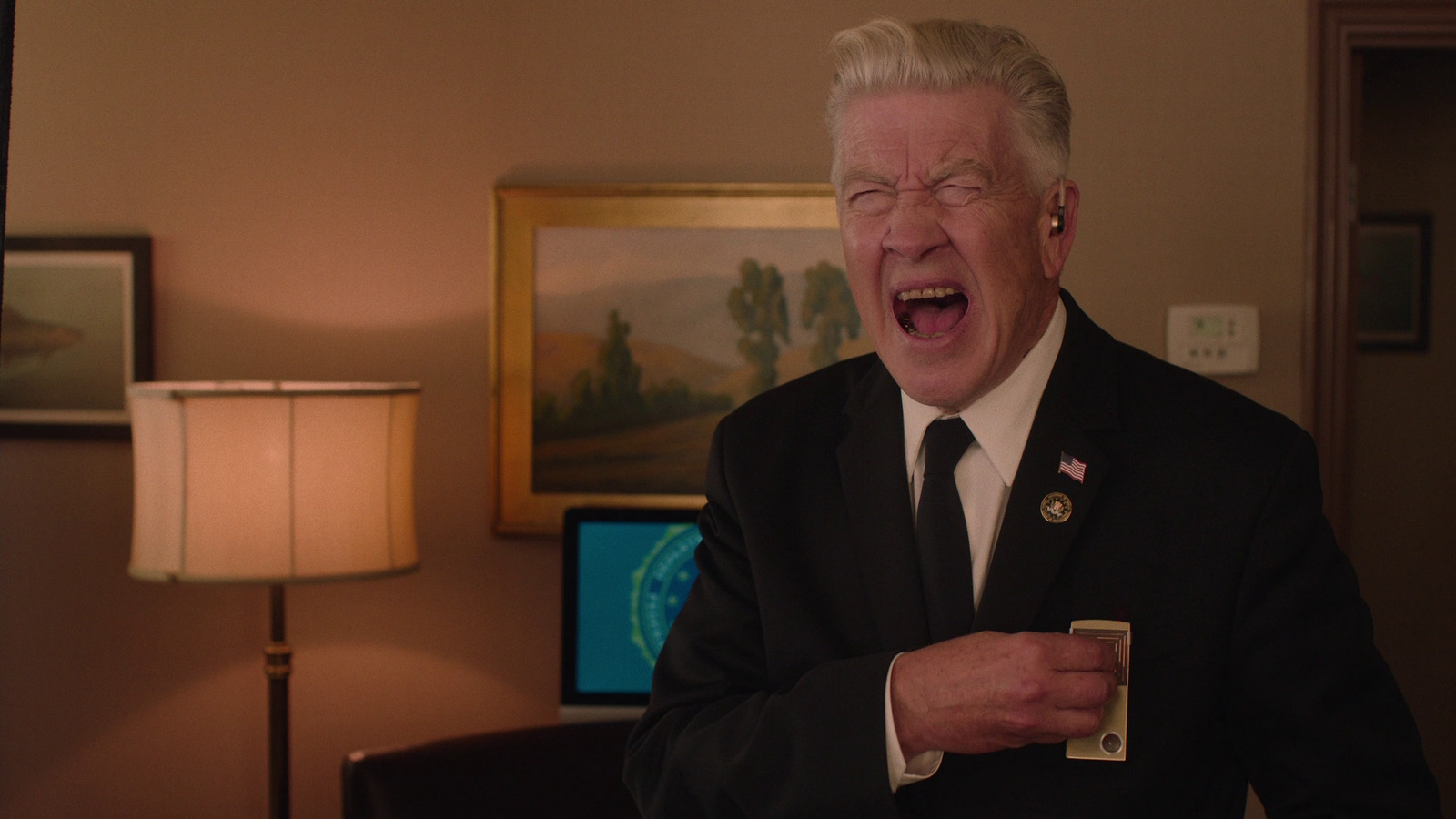
A mundane task outside the window produces an intrusion through Cole’s hearing equipment. The squeaking action and his physical adjustment make the sound a problem of mediation: the environment is not necessarily changing, but the way it reaches him is. The comic discomfort follows a discussion of impossible bodies. That juxtaposition makes the listener’s apparatus part of the investigation rather than an incidental character trait. It is also a reminder that apparently disproportionate sound can have a precise point of audition.
Open the scene sequence · 1 frame
A ring connects Diane to Las Vegas
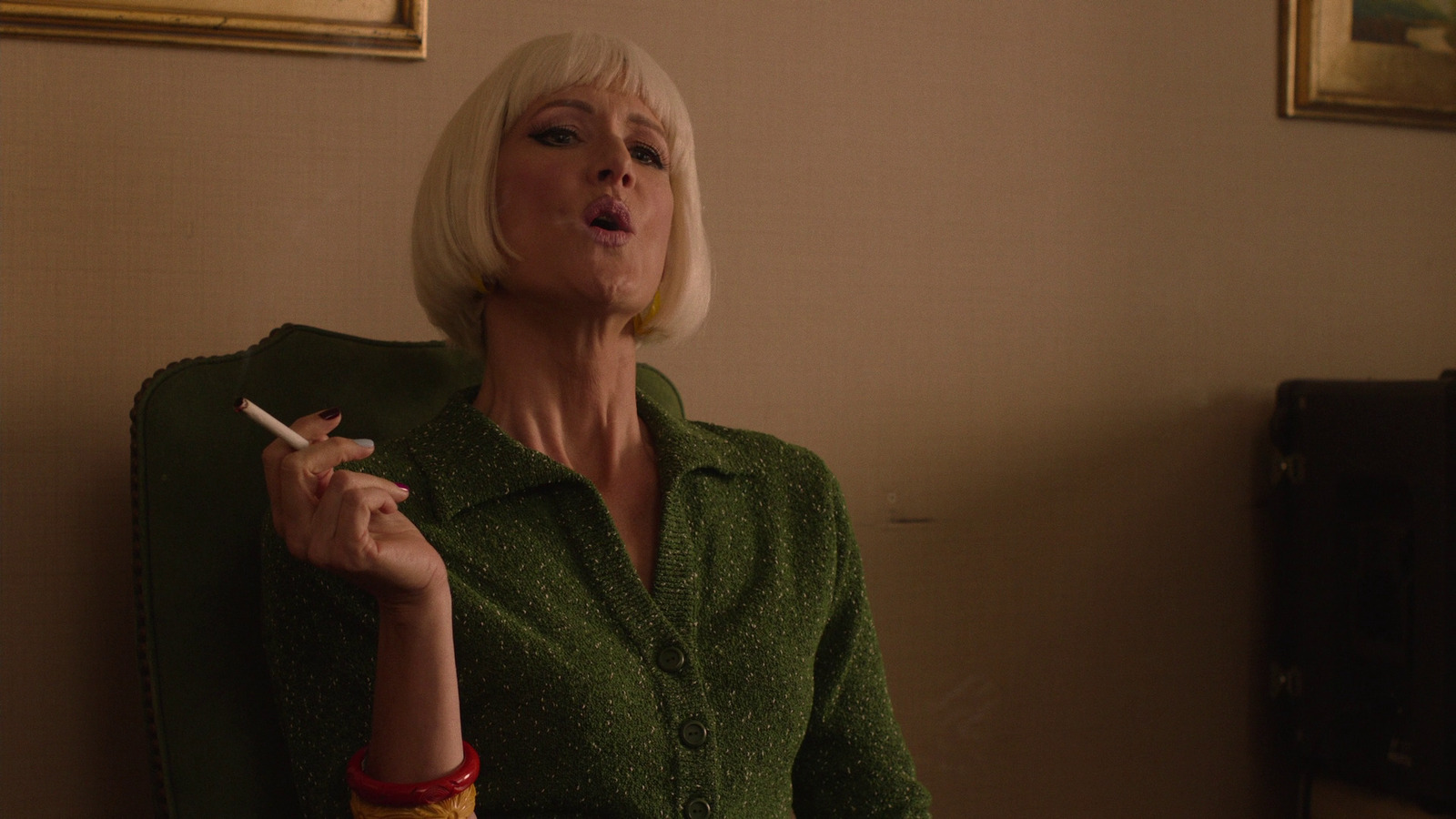
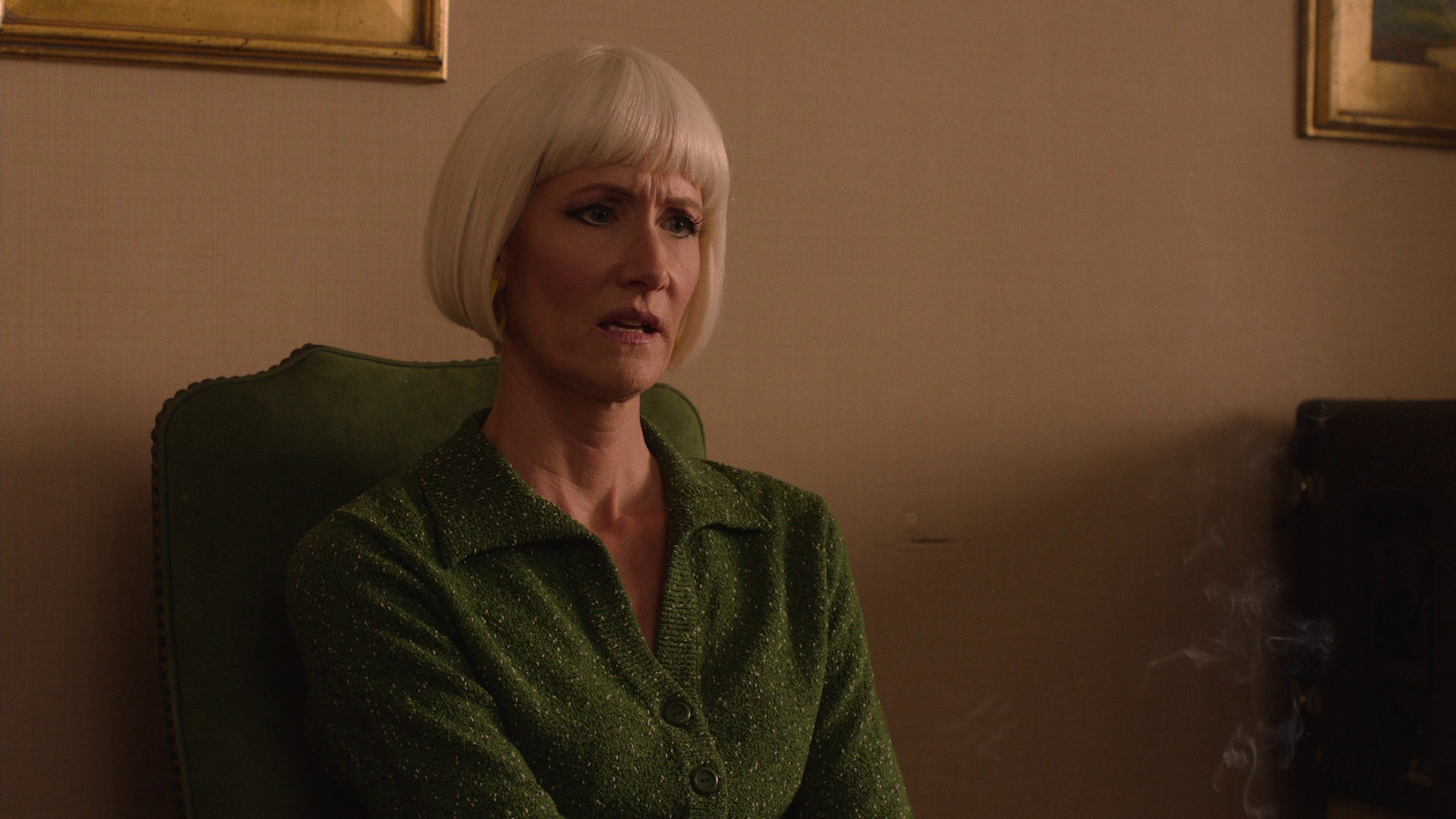
Diane resists returning to the night Cooper visited her. The agents narrow their request to whether he mentioned Major Briggs, but the exchange retains the pressure of a personal boundary. The inscription on a ring then produces a different disclosure: Janey-E is Diane’s estranged half-sister, married to Douglas Jones. Laura Dern’s abrupt recognition changes the status of an object already circulating through the investigation. The family connection supplies a destination, yet Diane’s statement that she hates her sister prevents that connection from being mistaken for emotional closeness.
Open the scene sequence · 2 frames
A name multiplies into a practical problem
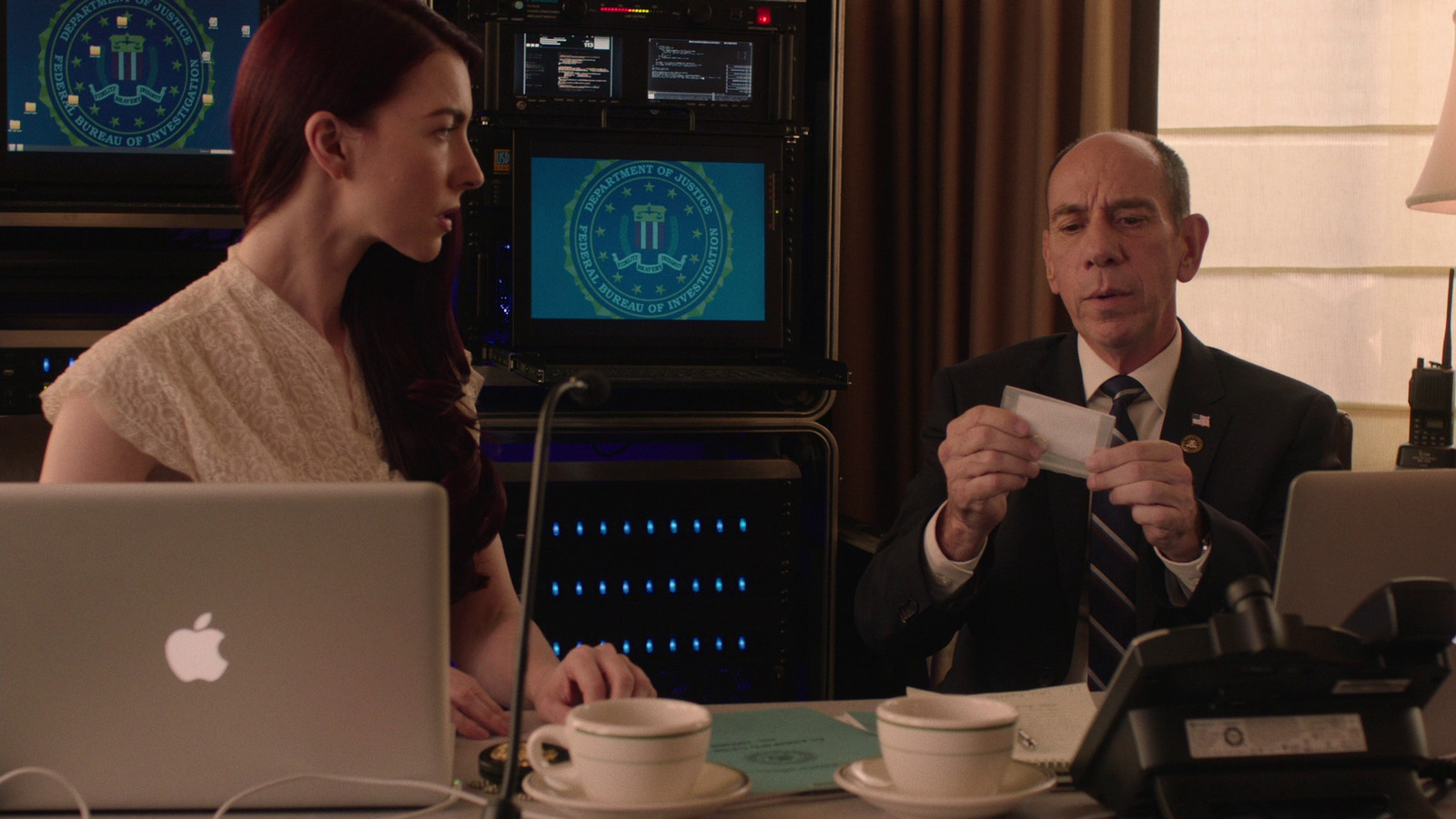
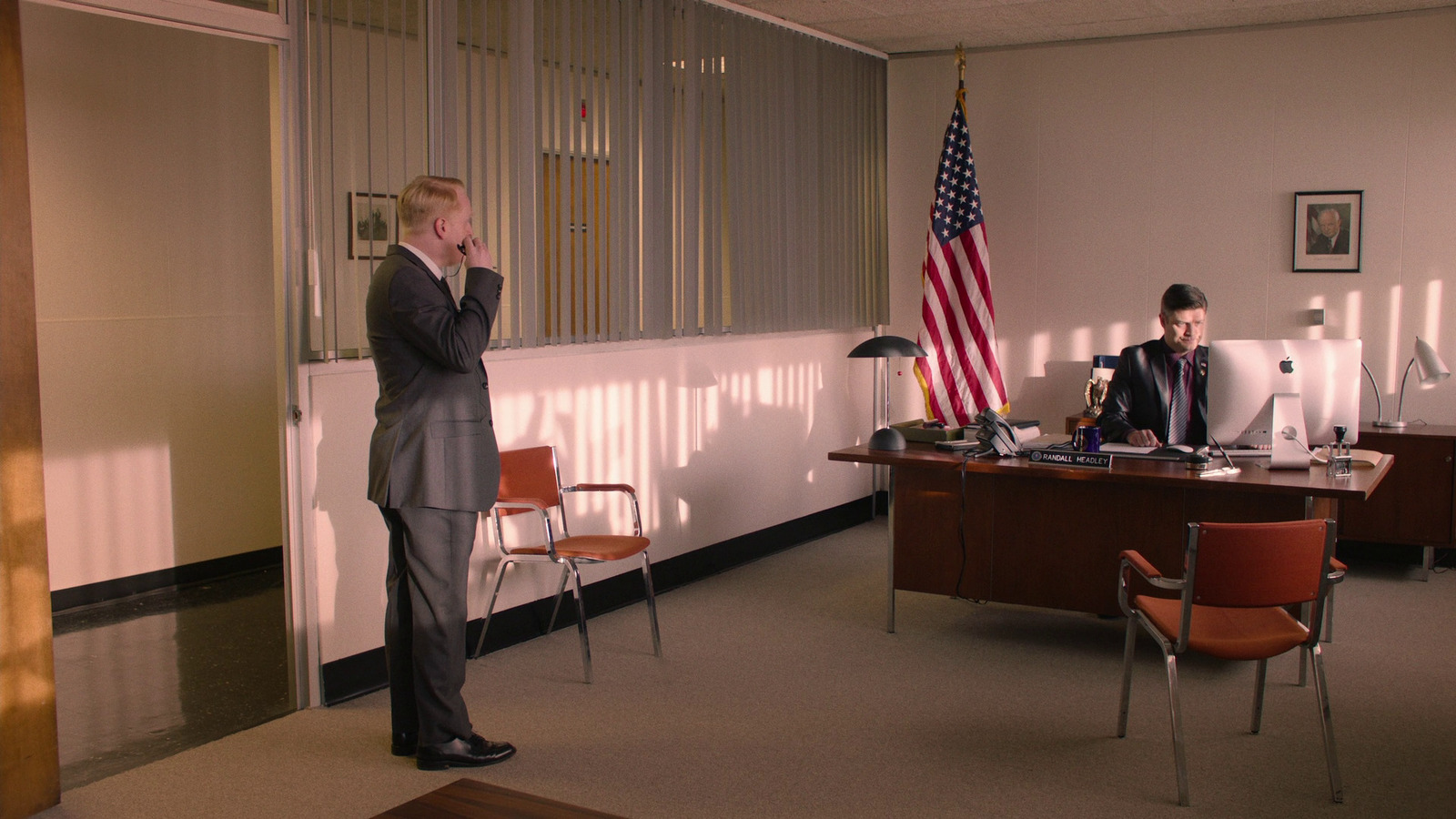
The Las Vegas office receives a seemingly straightforward instruction to find Douglas Jones. Wilson’s count of matching names turns it into a workload, and Headley’s fury turns that workload into comedy. The outburst is not a clue to an occult design; it exposes the friction between a name’s apparent specificity and the ordinary systems needed to locate its owner. The scene keeps the investigation’s practical machinery visible just as Cole is about to describe a form of recognition that bypasses such machinery altogether.
Open the scene sequence · 1 frame
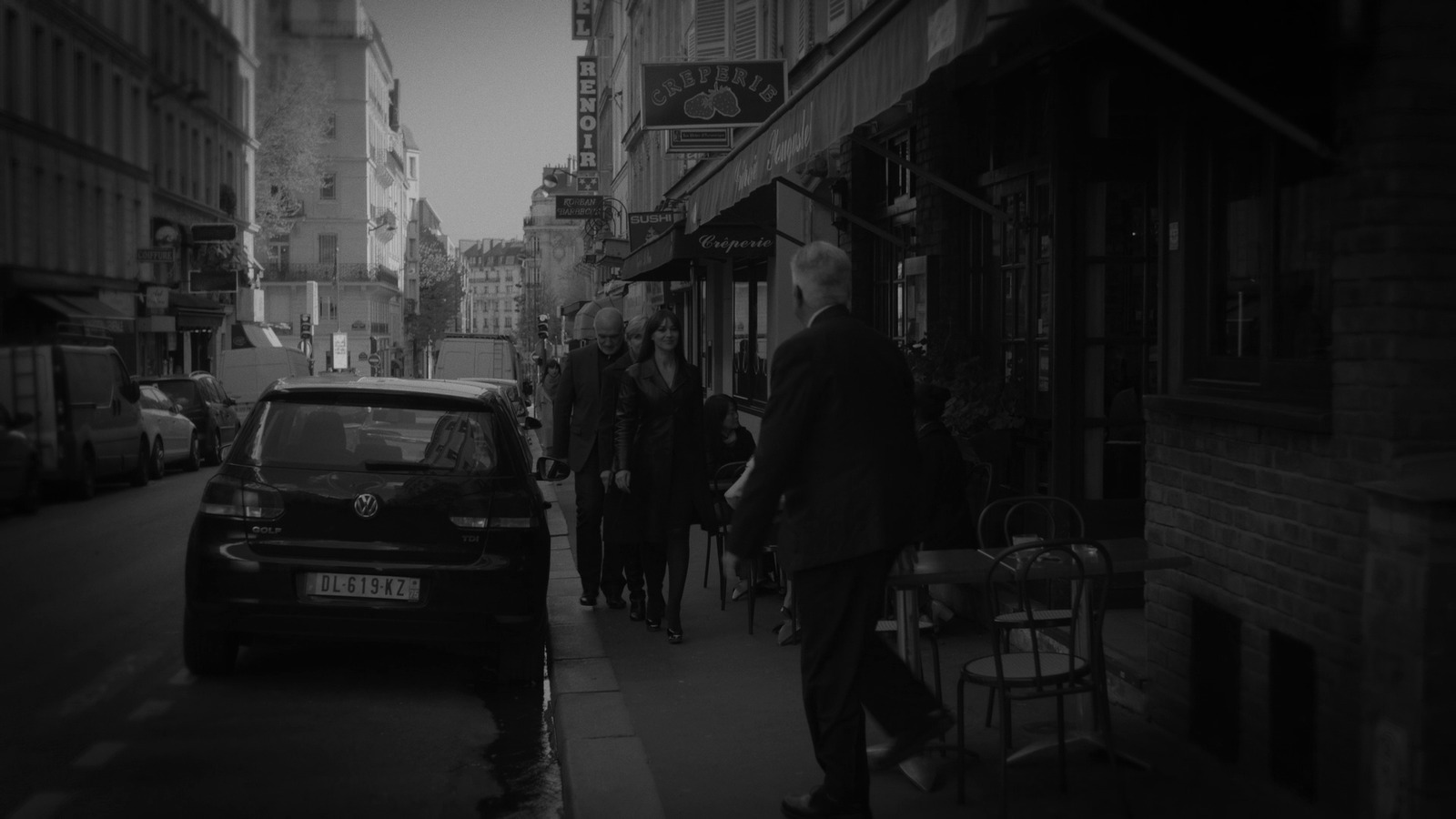
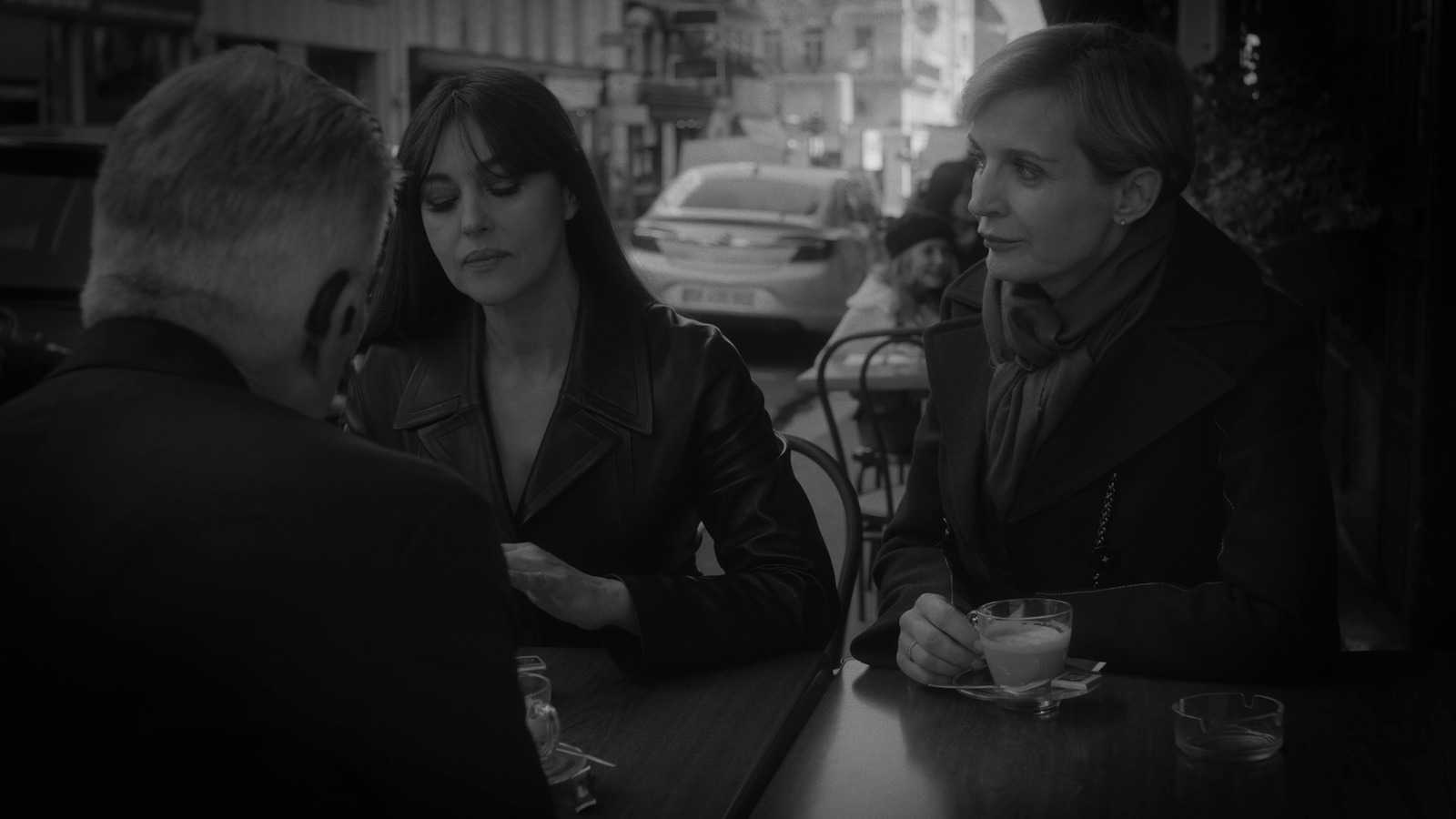
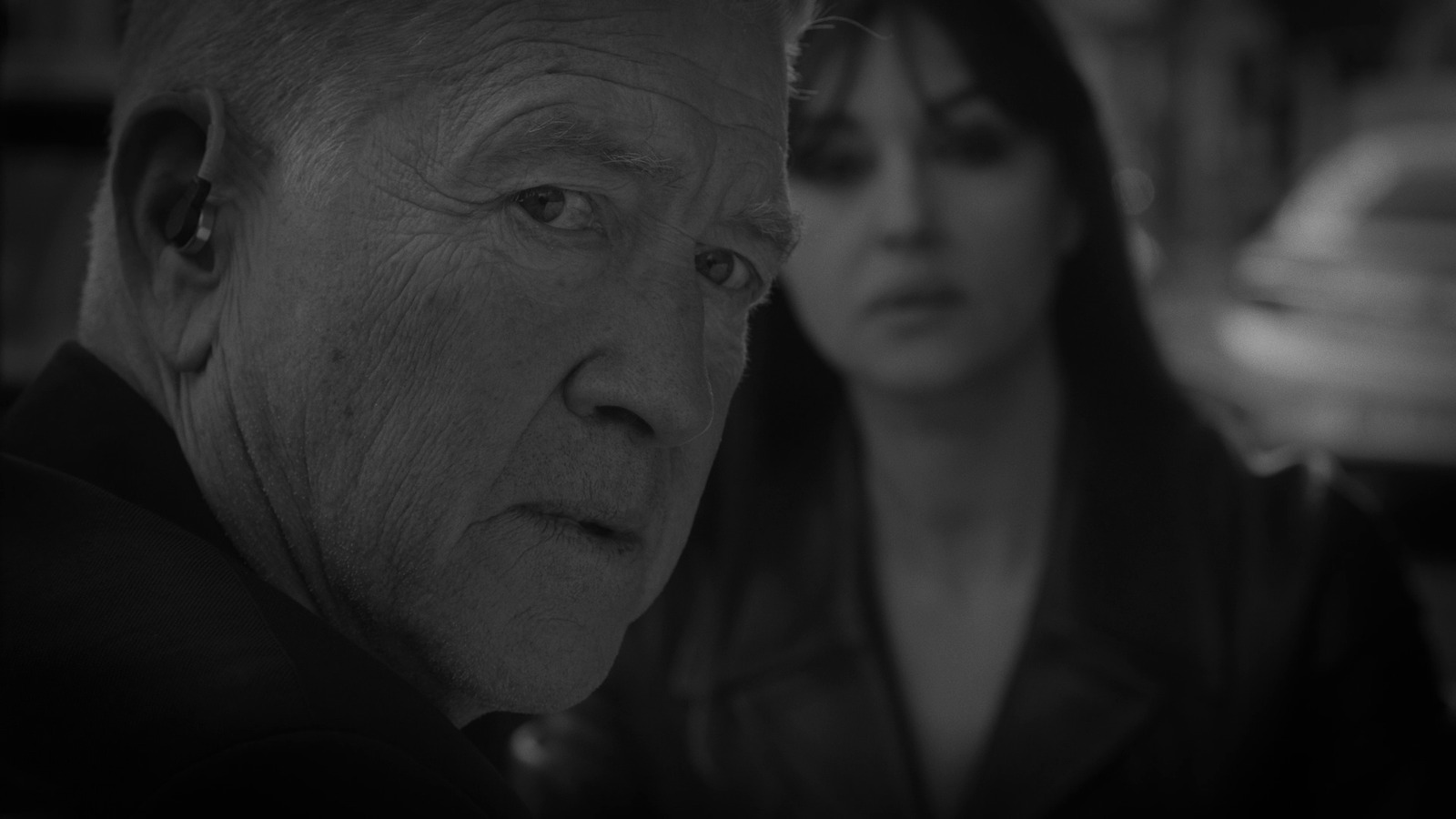
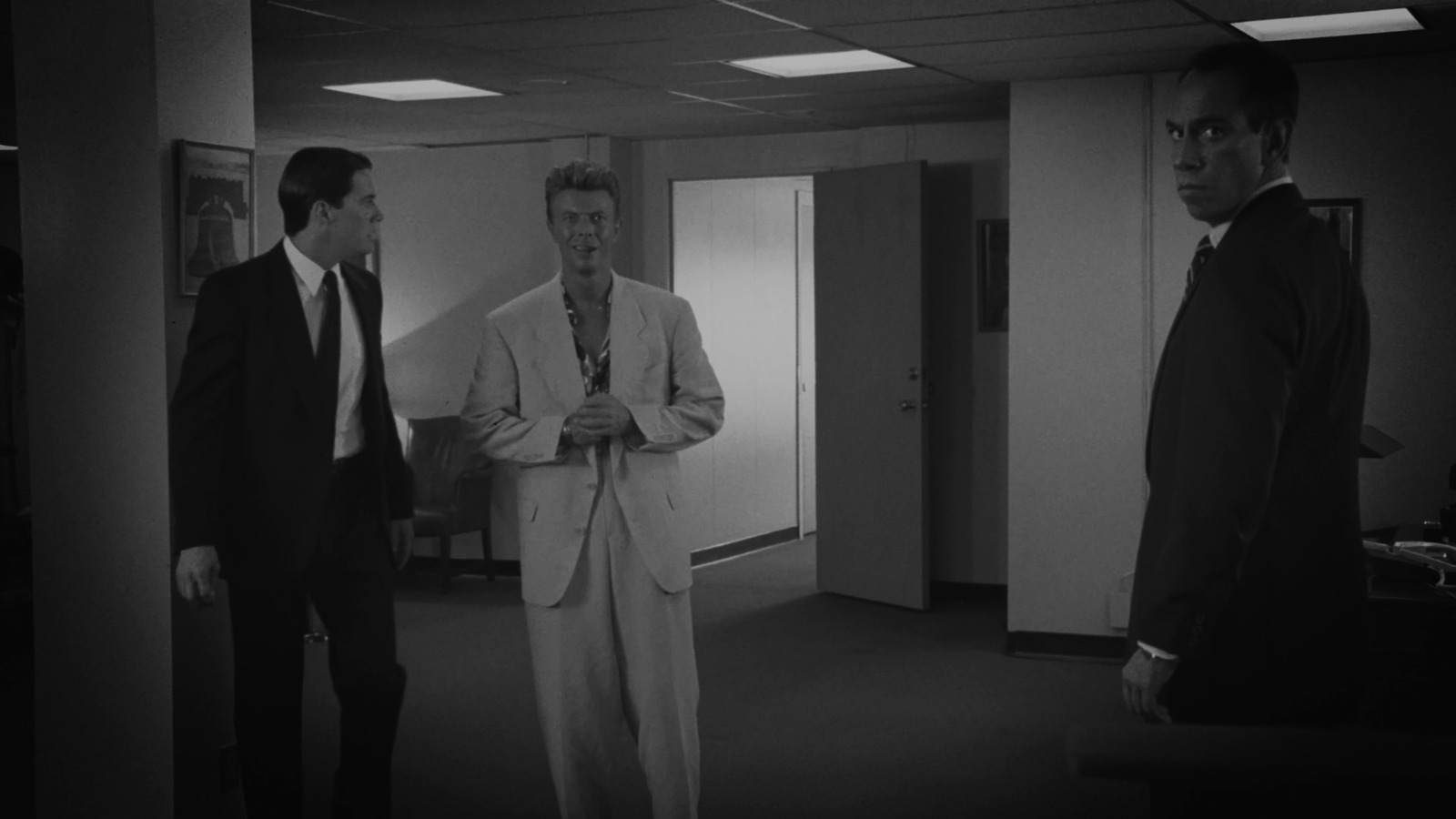
Paris looks back toward Philadelphia
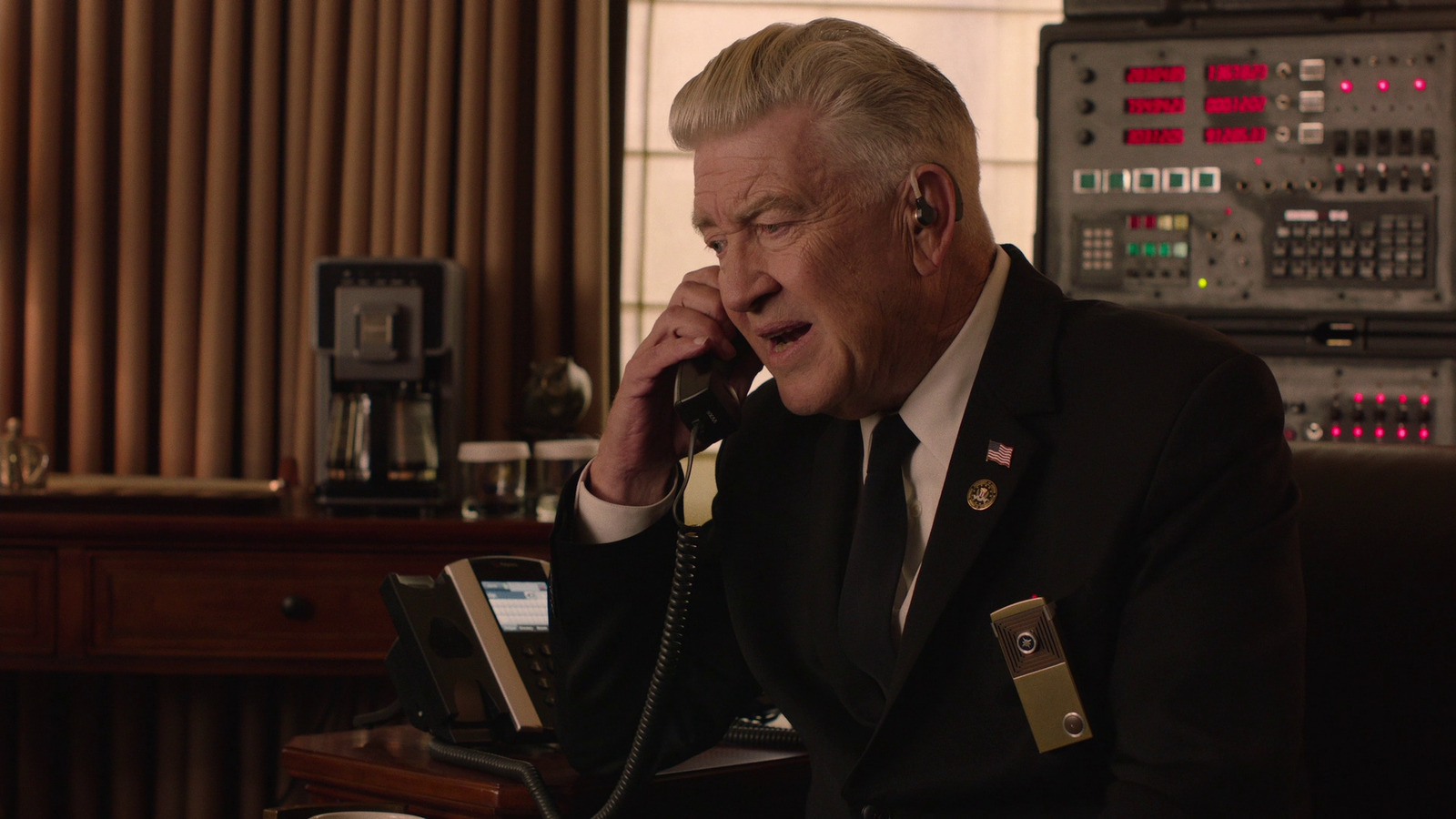
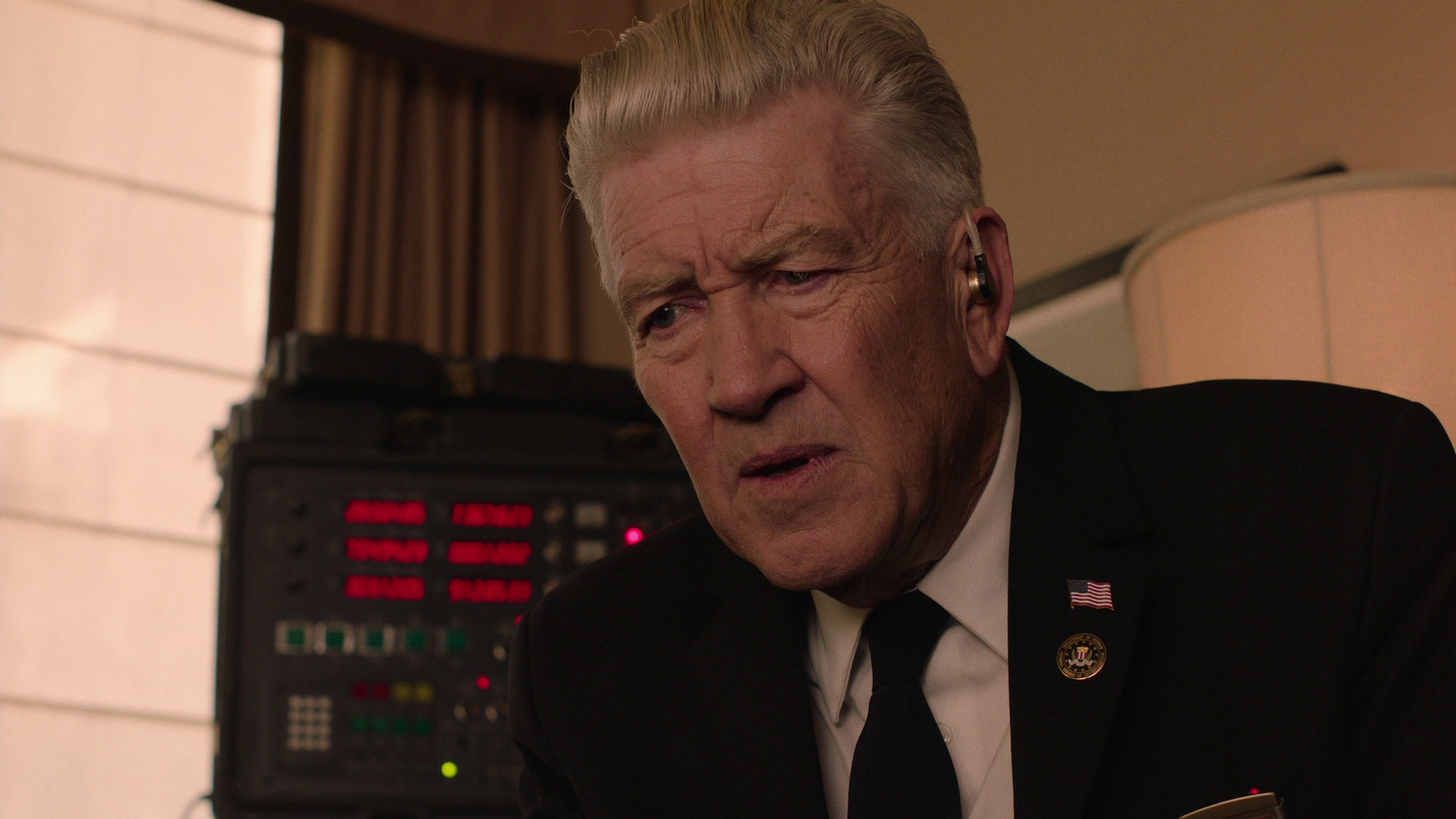
Cole narrates a dream in which Monica Bellucci asks him to meet in Paris. Black-and-white street and café images make the account visible, while Cooper’s turned-away presence withholds the face Cole expects to see. Bellucci’s question about the dreamer redirects his attention behind him. The film then returns to the Philadelphia encounter in Fire Walk with Me: Cooper’s warning about a dream, Jeffries’s arrival and his question about Cooper. Albert’s recognition on returning to the present gives the recollection a second witness. The sequence turns a familiar scene into newly active evidence; it does not settle the identity of a single dreamer for the whole series.
Open the scene sequence · 5 frames
The station removes an obstruction
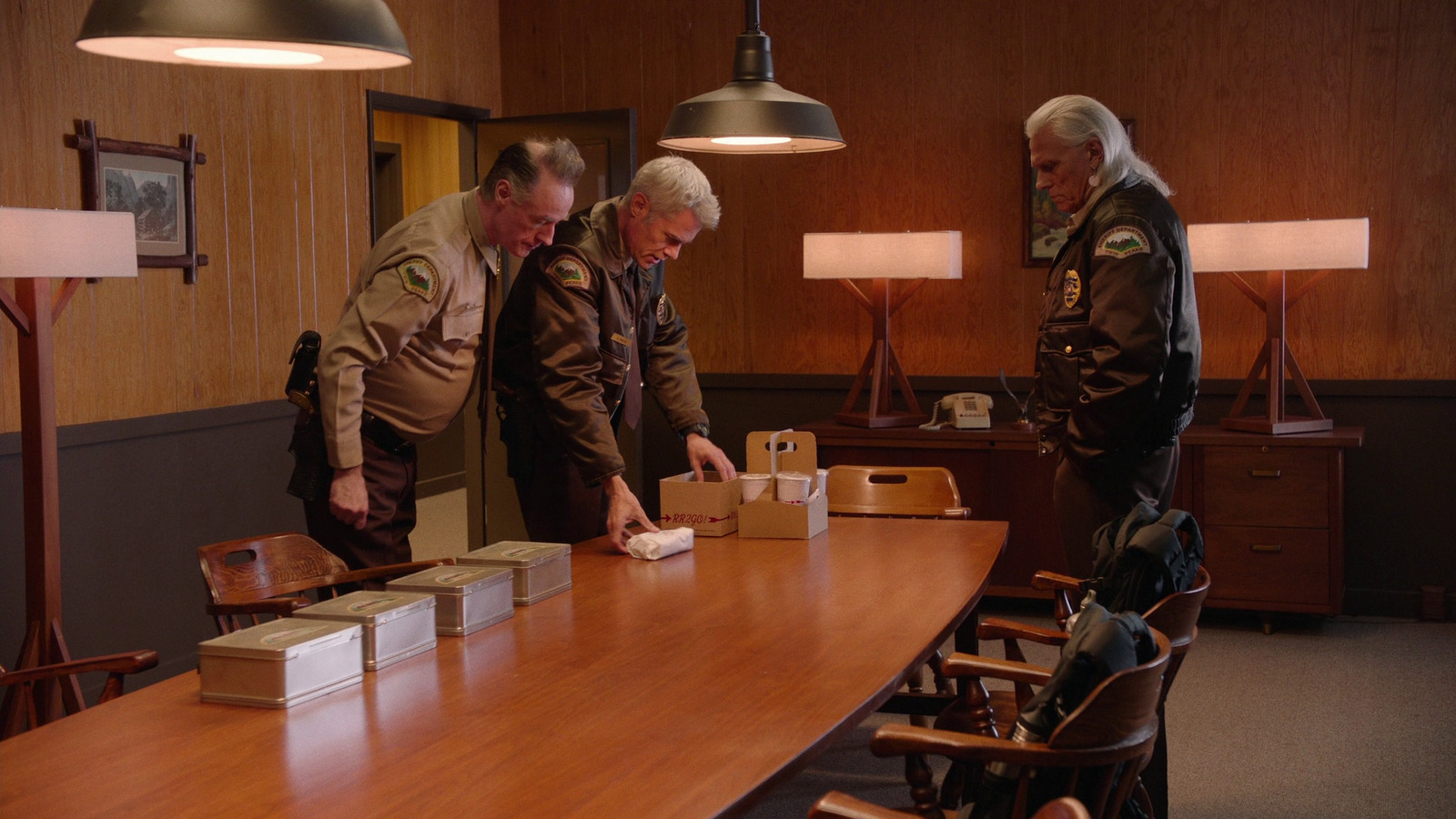
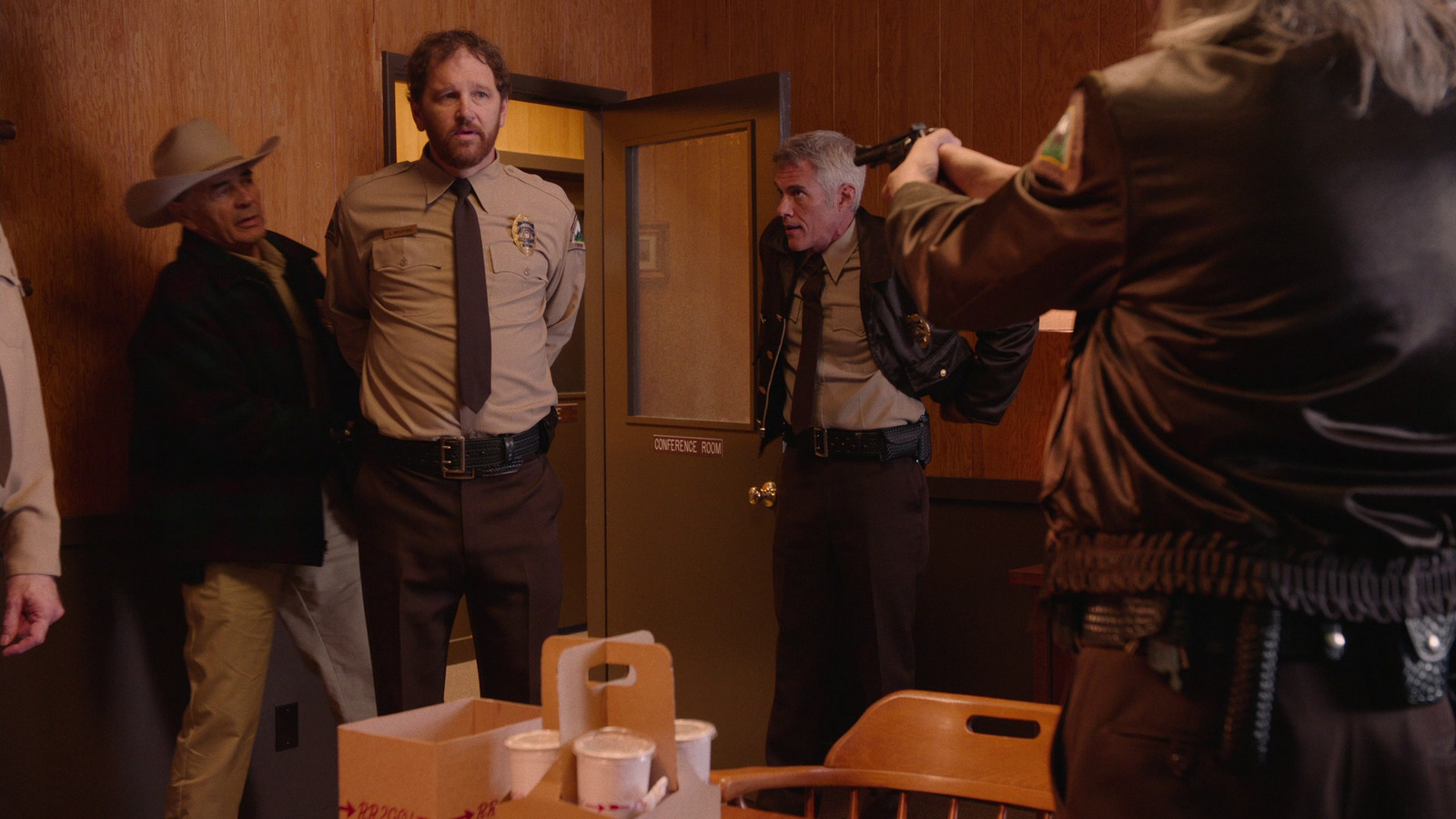
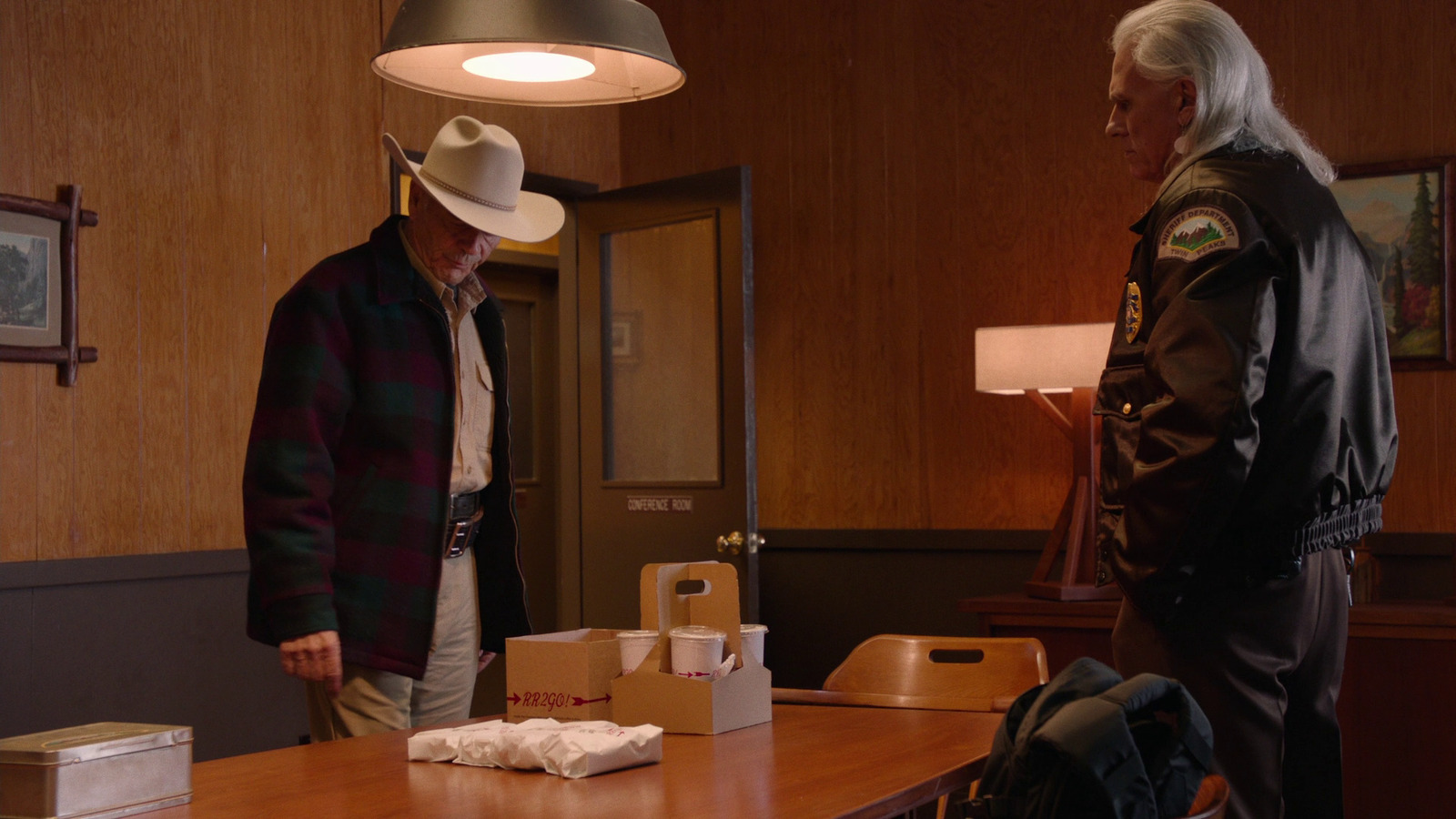
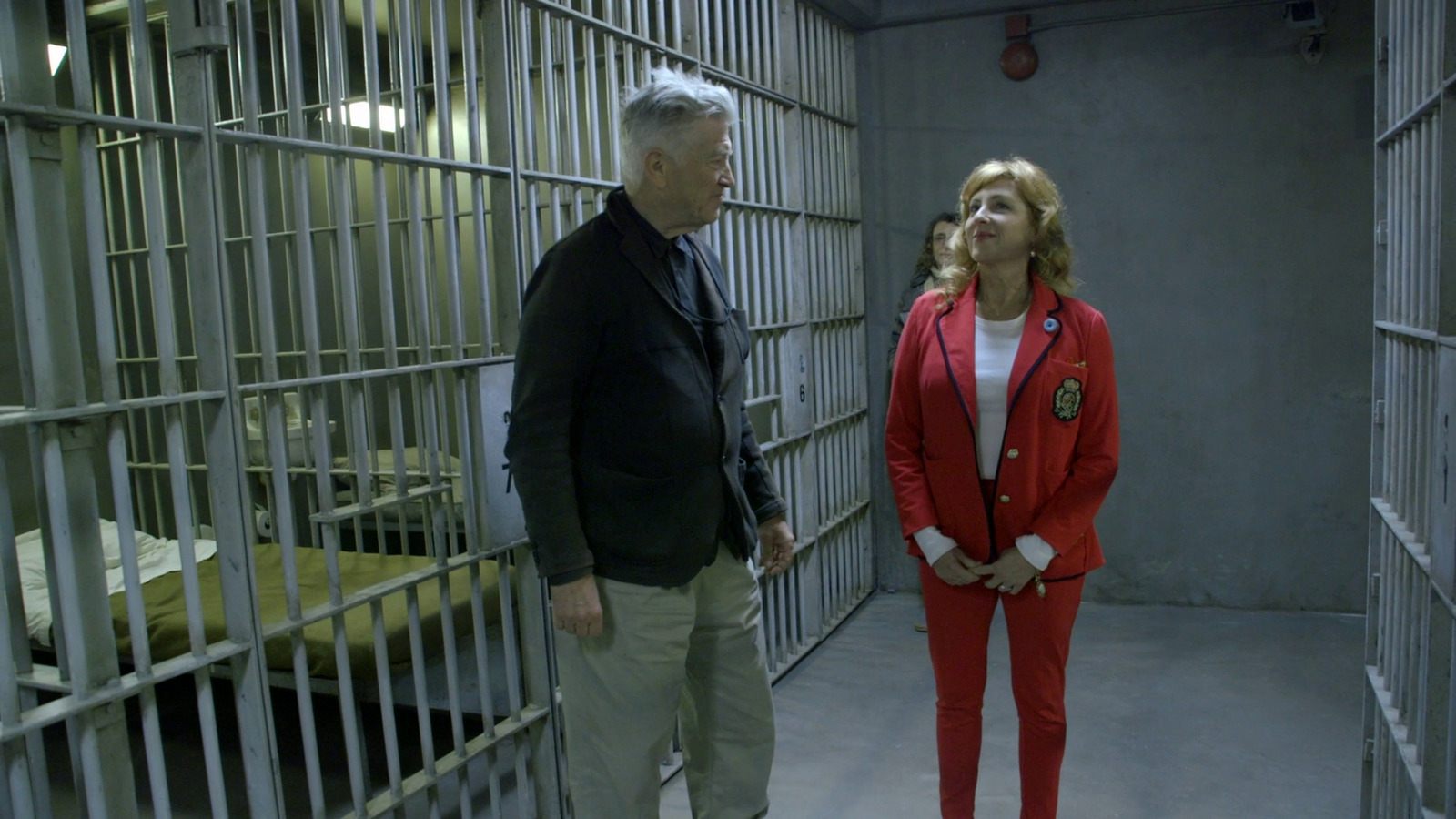
Chad is eating when Frank and the other officers confront him. The sandwiches and ordinary room make the arrest pointedly unceremonious. Frank says they have been watching him for months; the removal of his badge changes his place within the institution rather than revealing a sudden discovery made in this scene. Sending him downstairs clears the working group before its journey into the woods. The sequence is a practical assertion of responsibility, and the later cell scenes will test whether that responsibility extends to a vulnerable stranger.
Open the scene sequence · 2 frames
Bobby becomes the guide
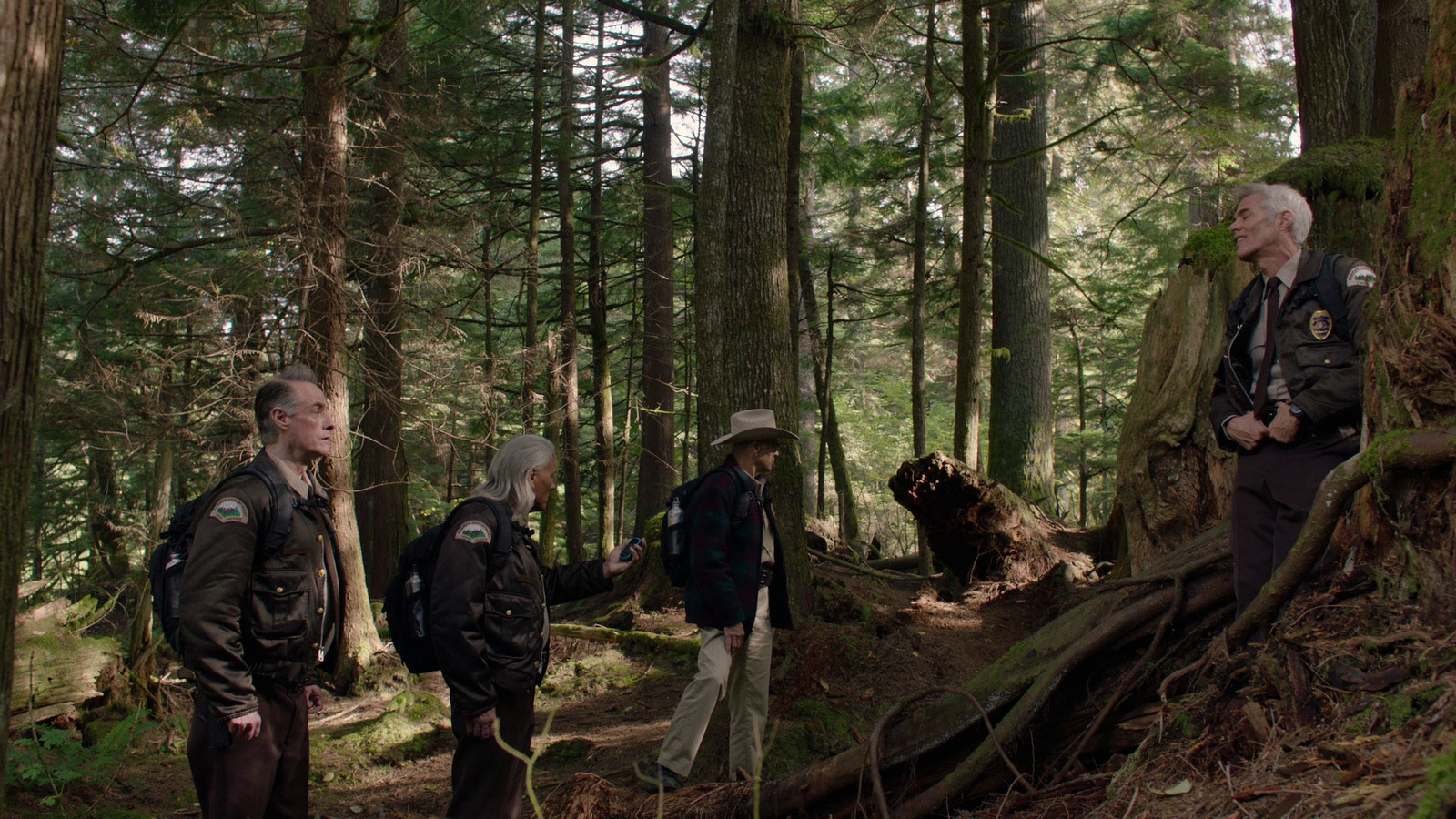
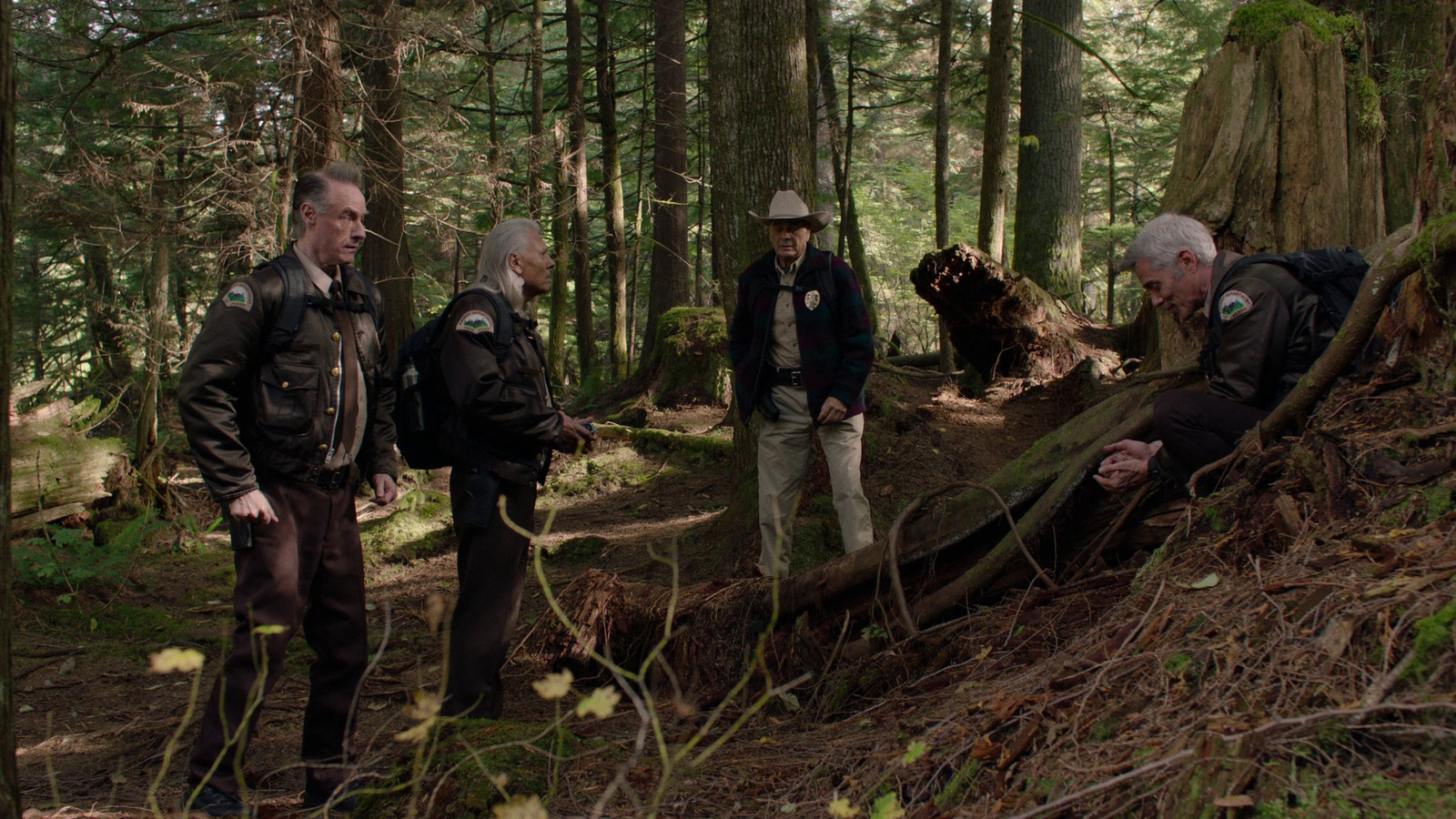
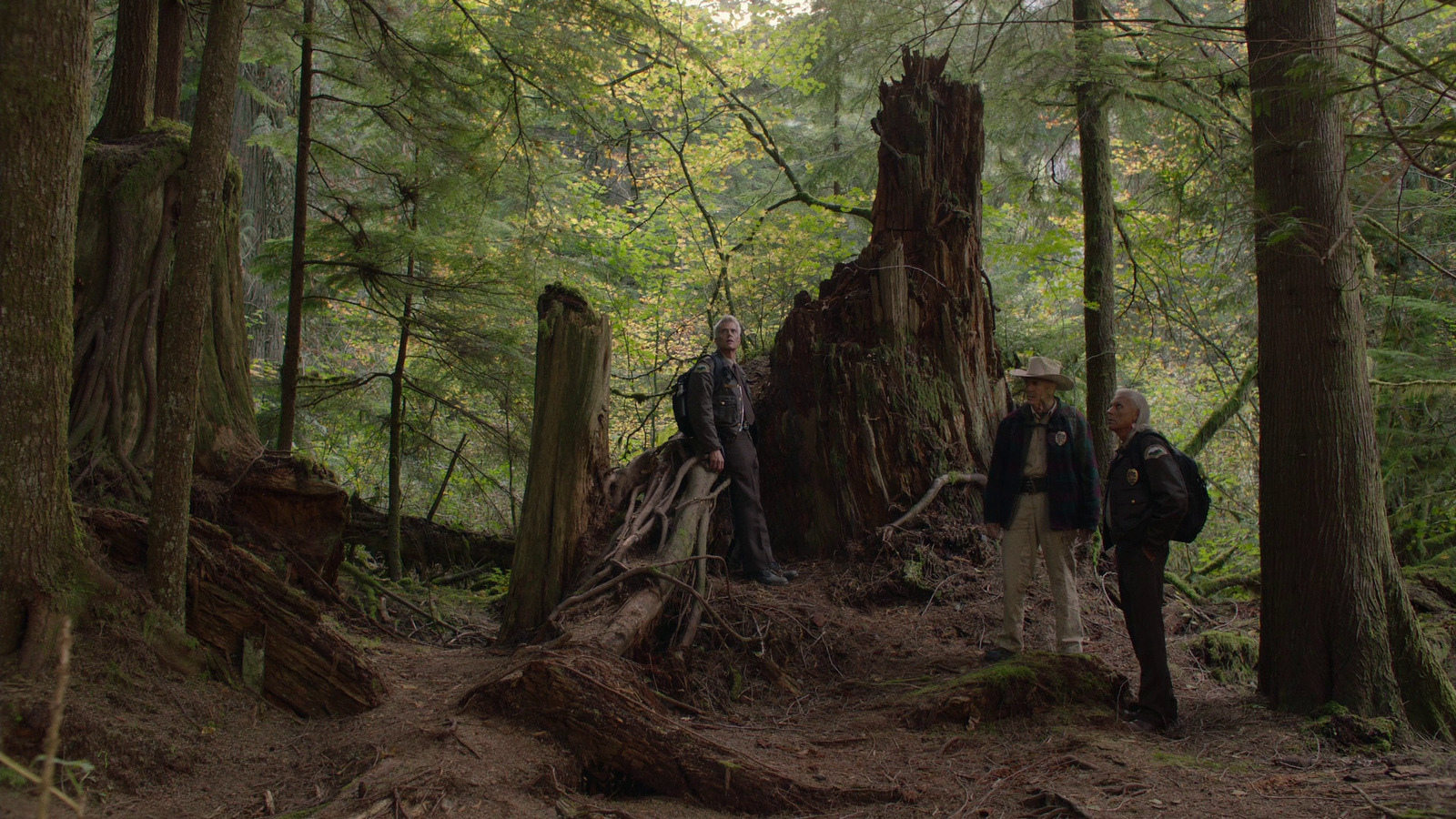
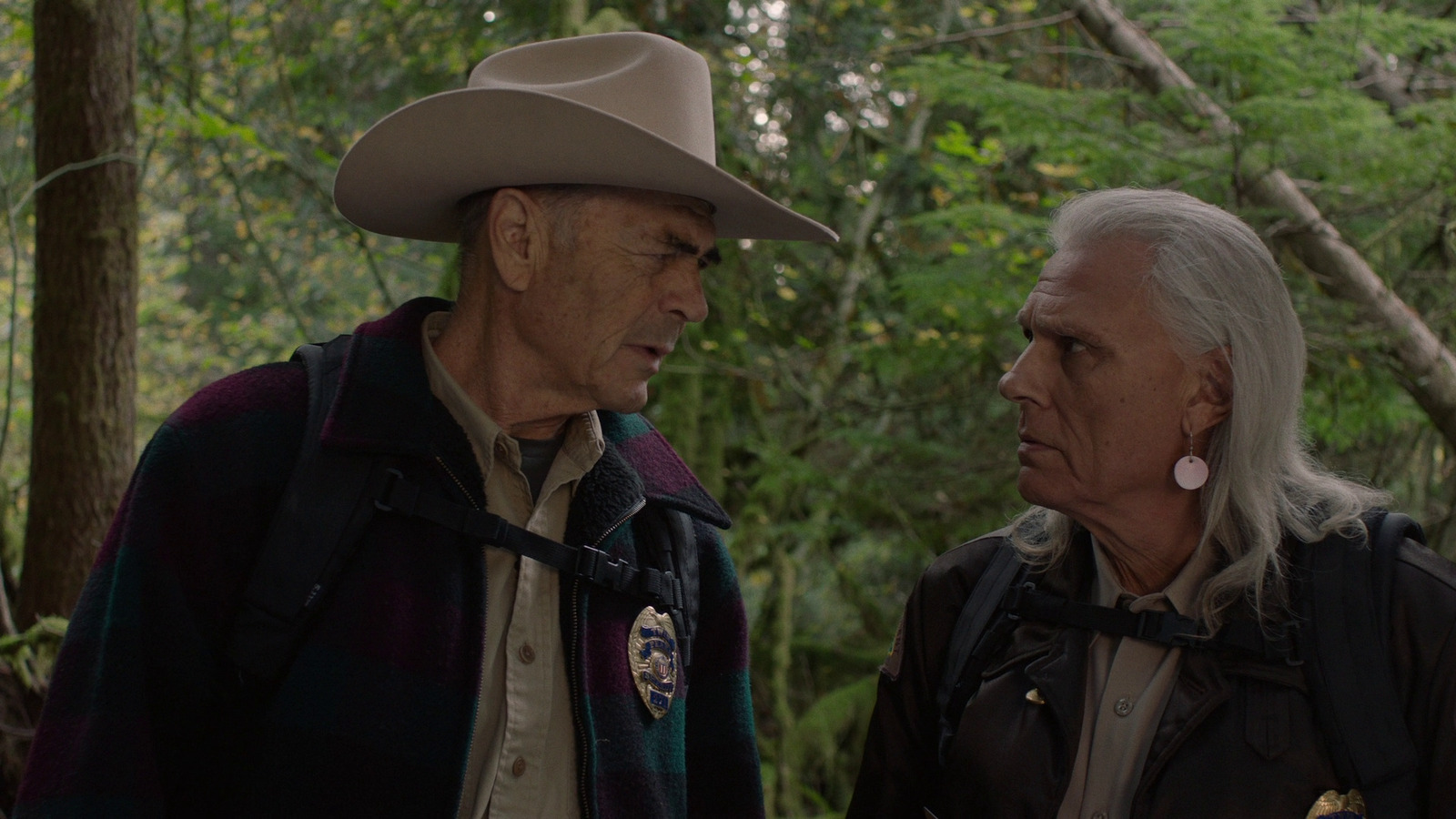
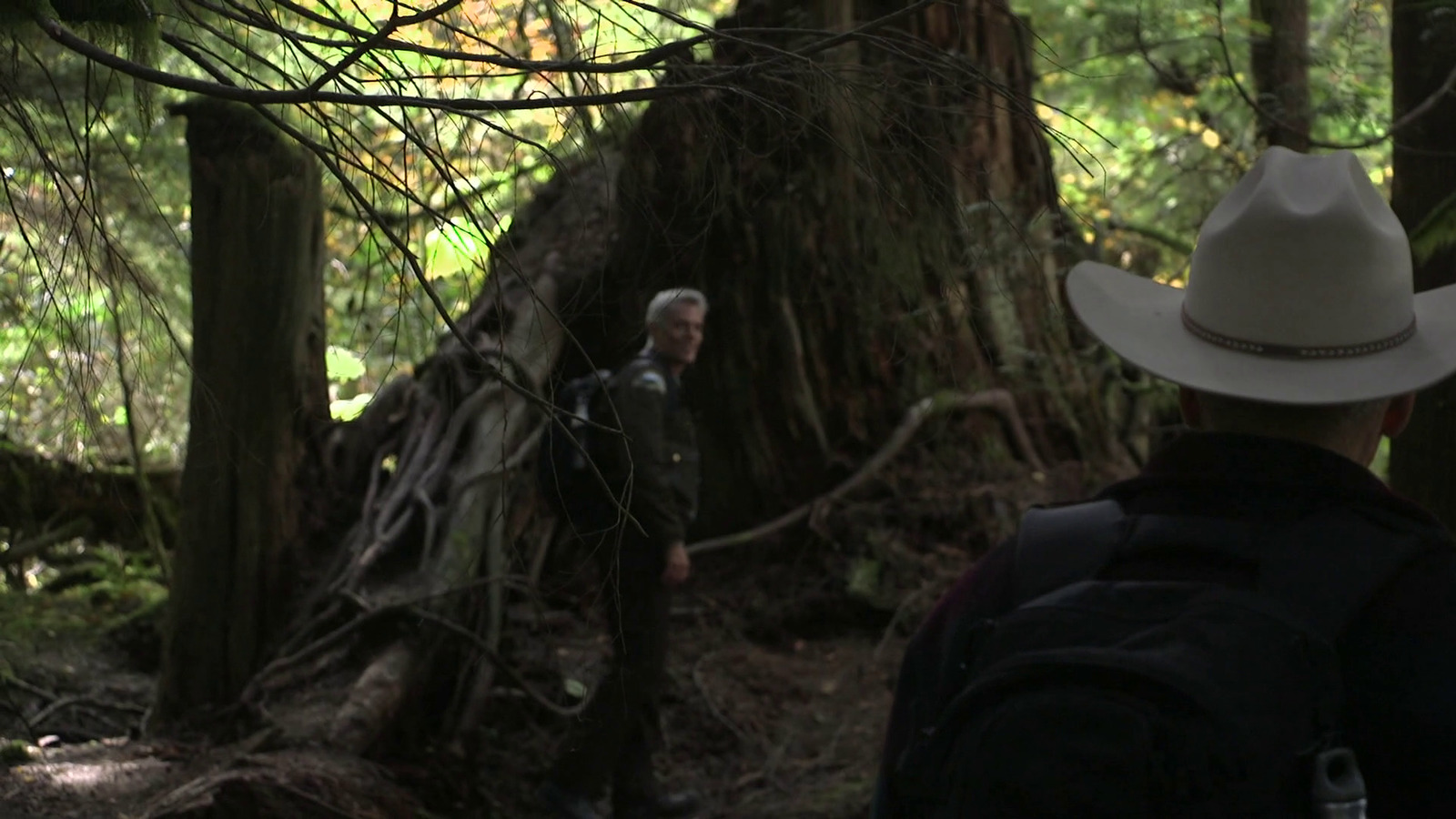
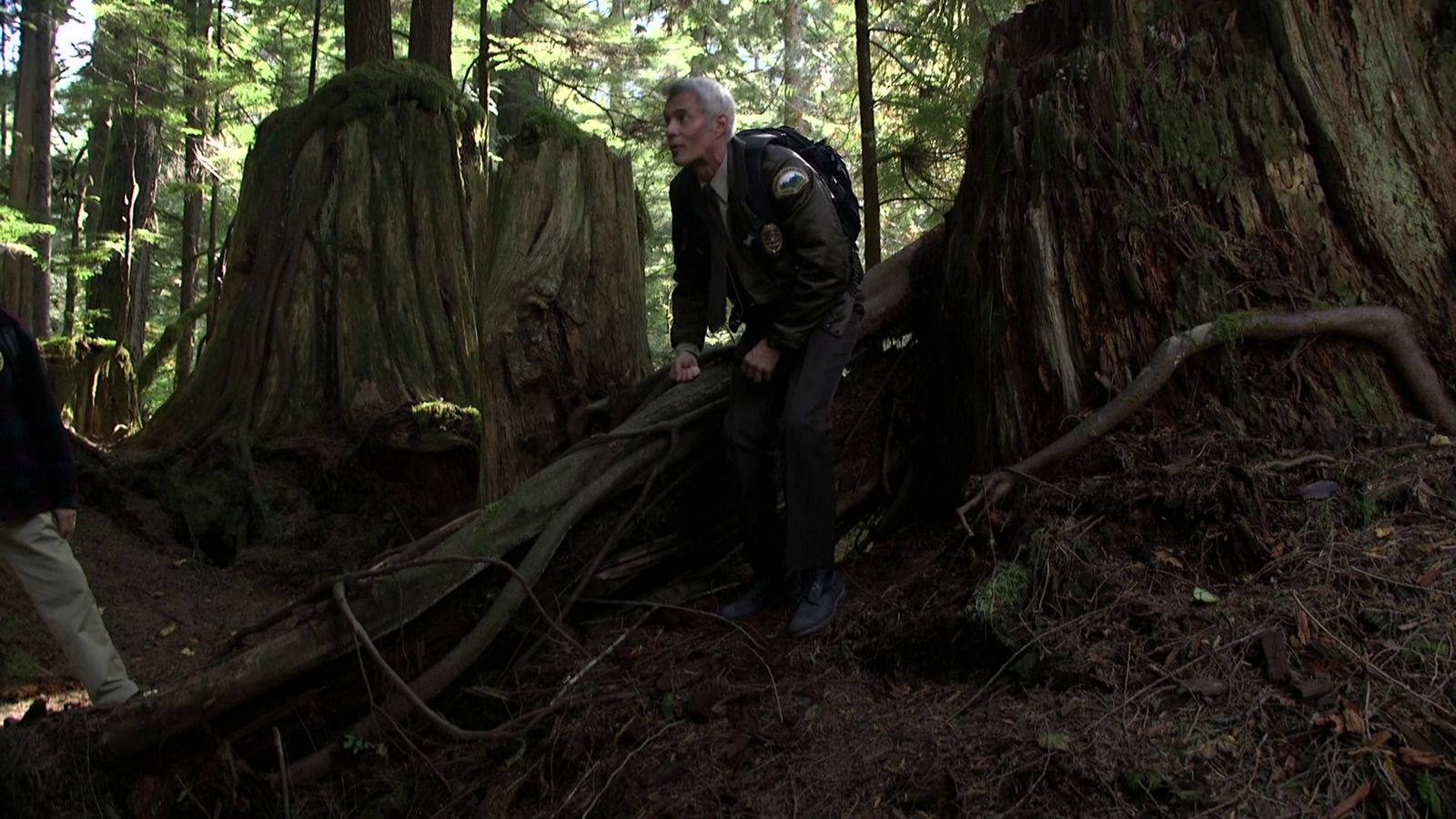
The journey gives the woods time to become a place rather than a transition. Bobby identifies the old road and recalls the listening post associated with his father; recollection supplies the group with a route that a conventional evidence map could not provide. Long views, creek crossings and changes in the canopy make the walk bodily. His knowledge is neither dismissed as childhood fantasy nor translated entirely into official expertise. A remembered family landscape has become the terrain in which the sheriff’s department must work.
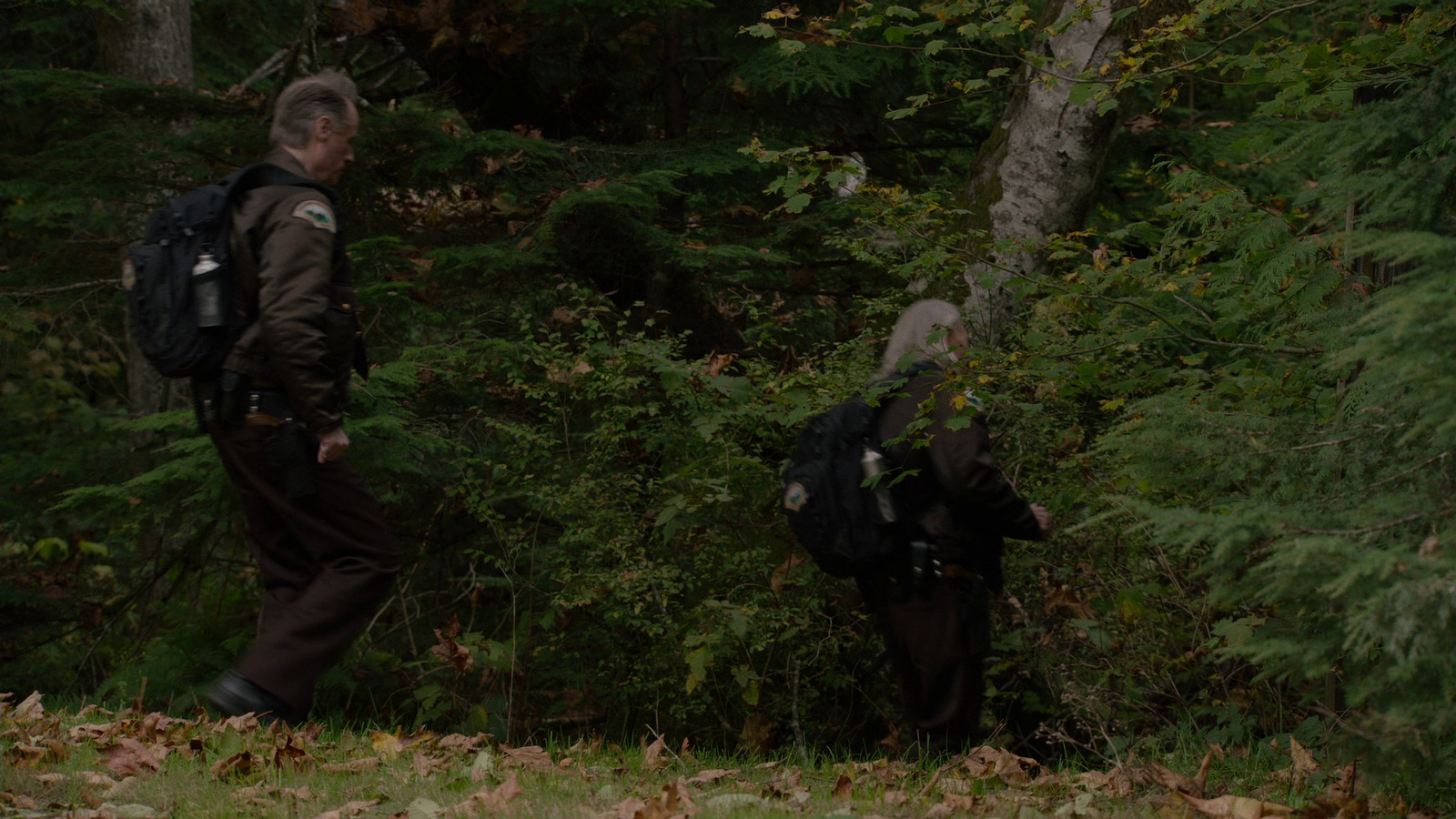
Open the scene sequence · 2 frames
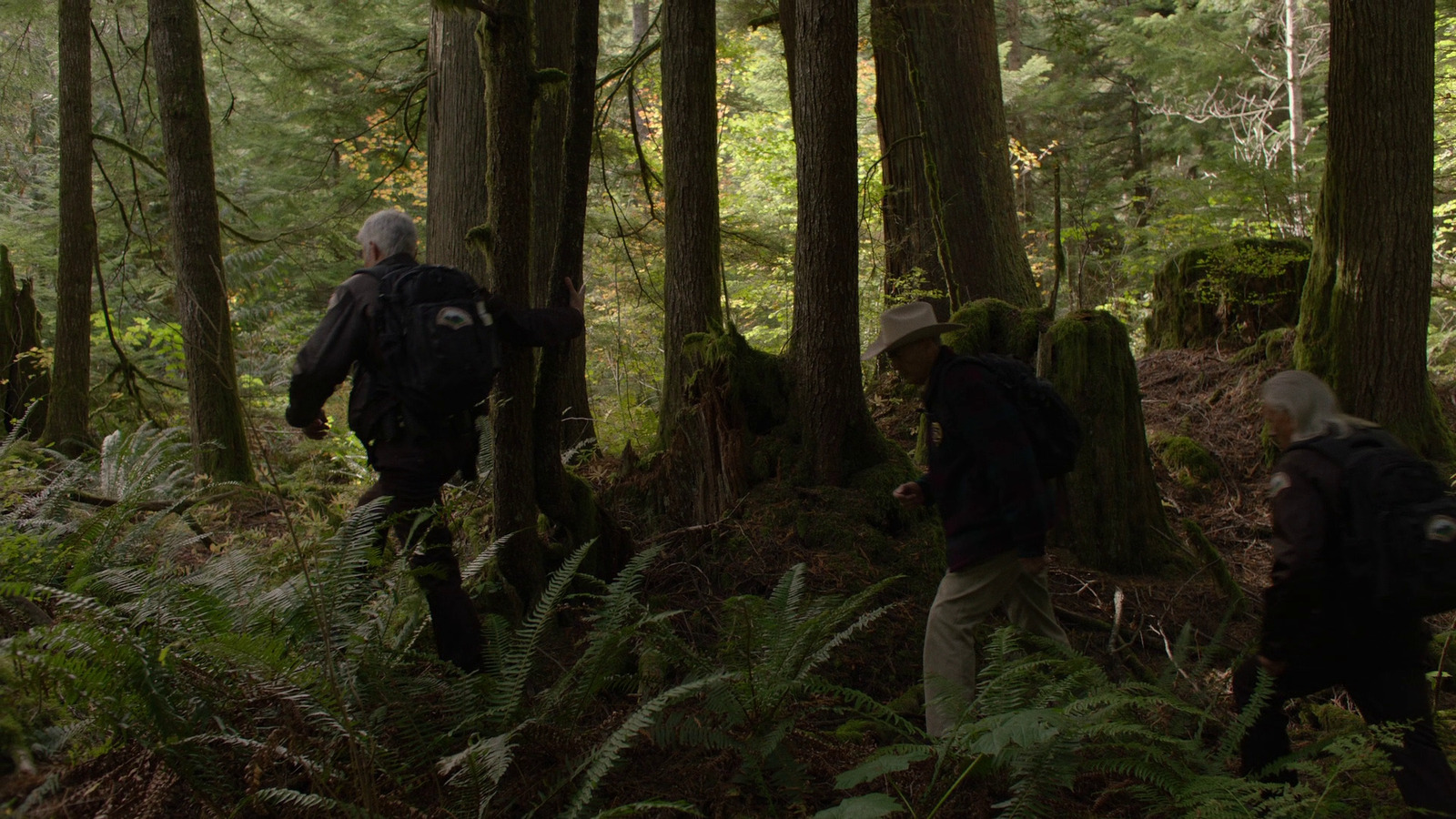
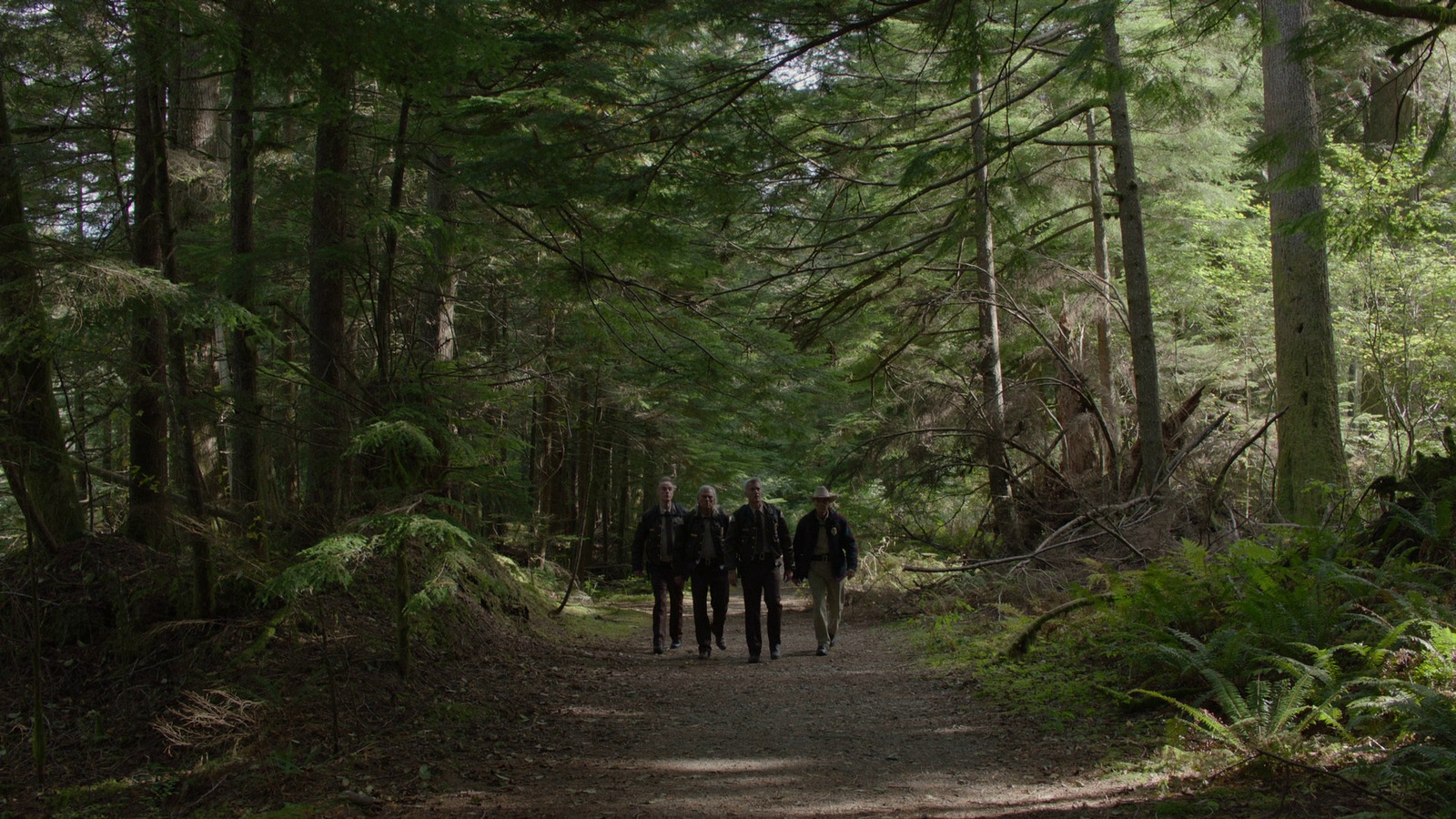
Childhood play becomes an instruction
Jack Rabbit’s Palace is a stump with a name, anchored in stories Bobby and his father made together. The instructions to take soil and travel a measured distance east give that remembered place an operational role. The officers comply with actions that would look absurd without the context of Briggs’s message. The scene does not prove that imagination created the landscape. It shows personal memory, precise measurement and trust being used together when no single method is sufficient. The soil in their pockets gives an otherwise elusive encounter a material point of return.
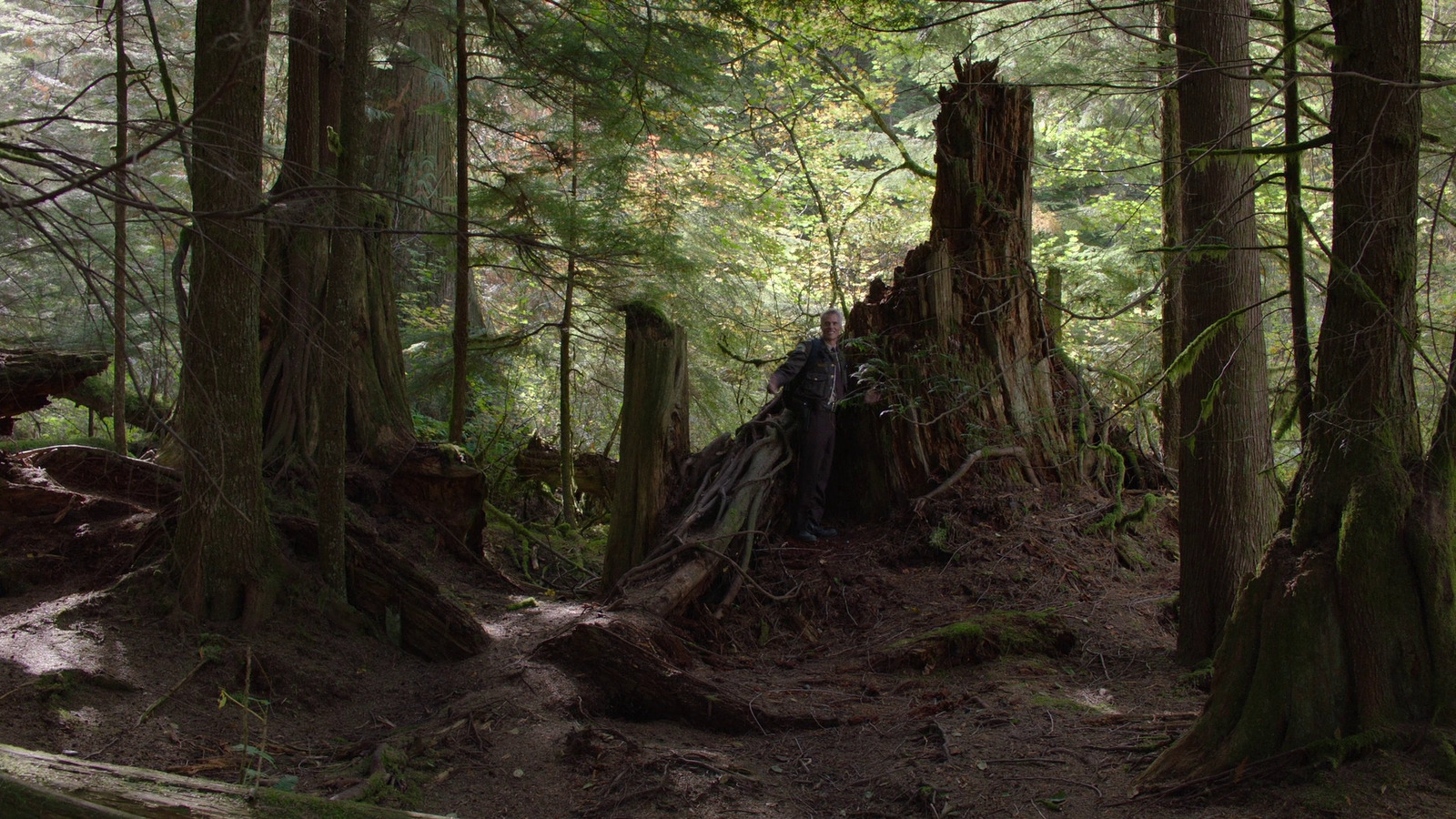
Open the scene sequence · 2 frames
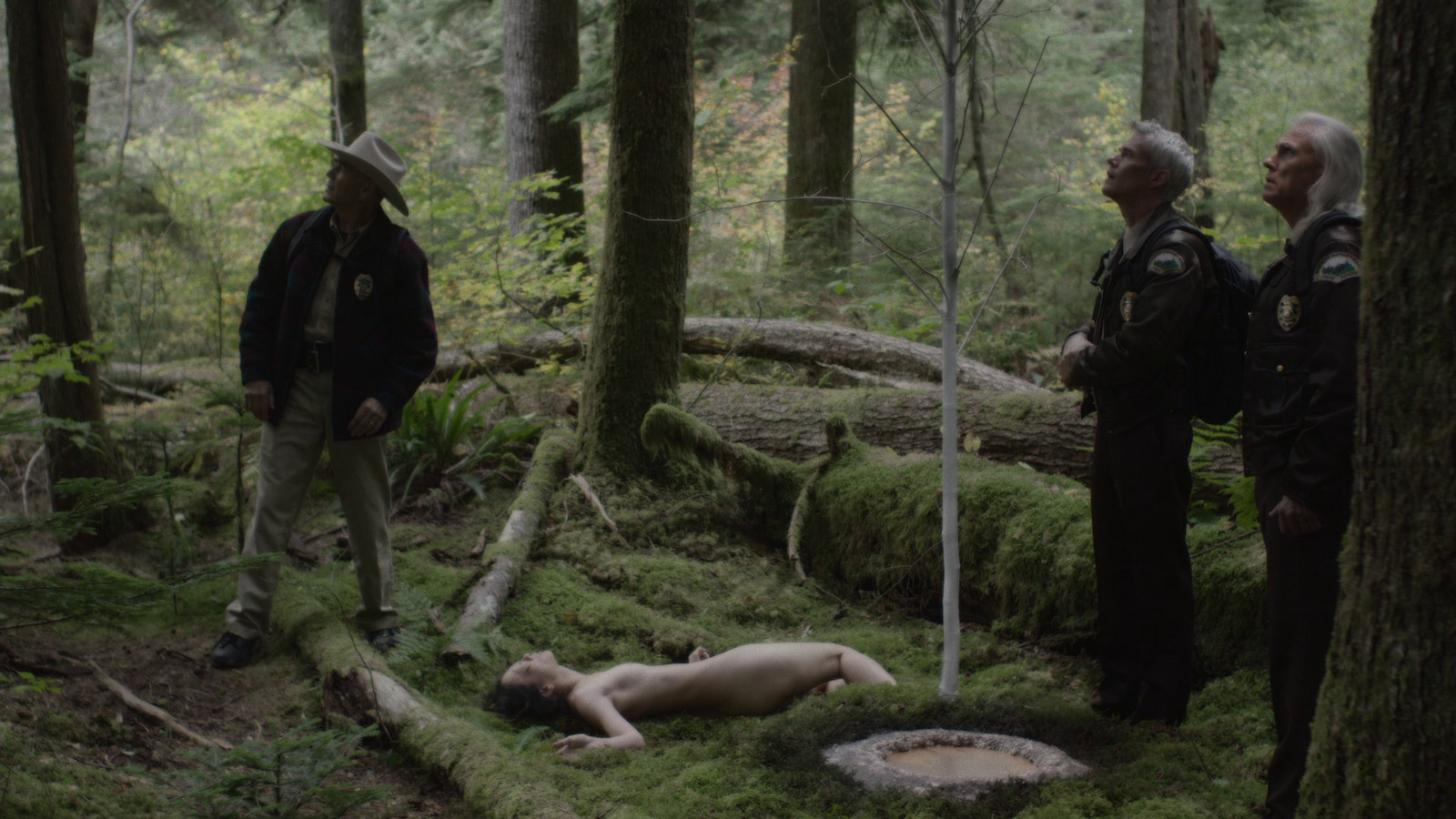
The clearing contains a person before a portal
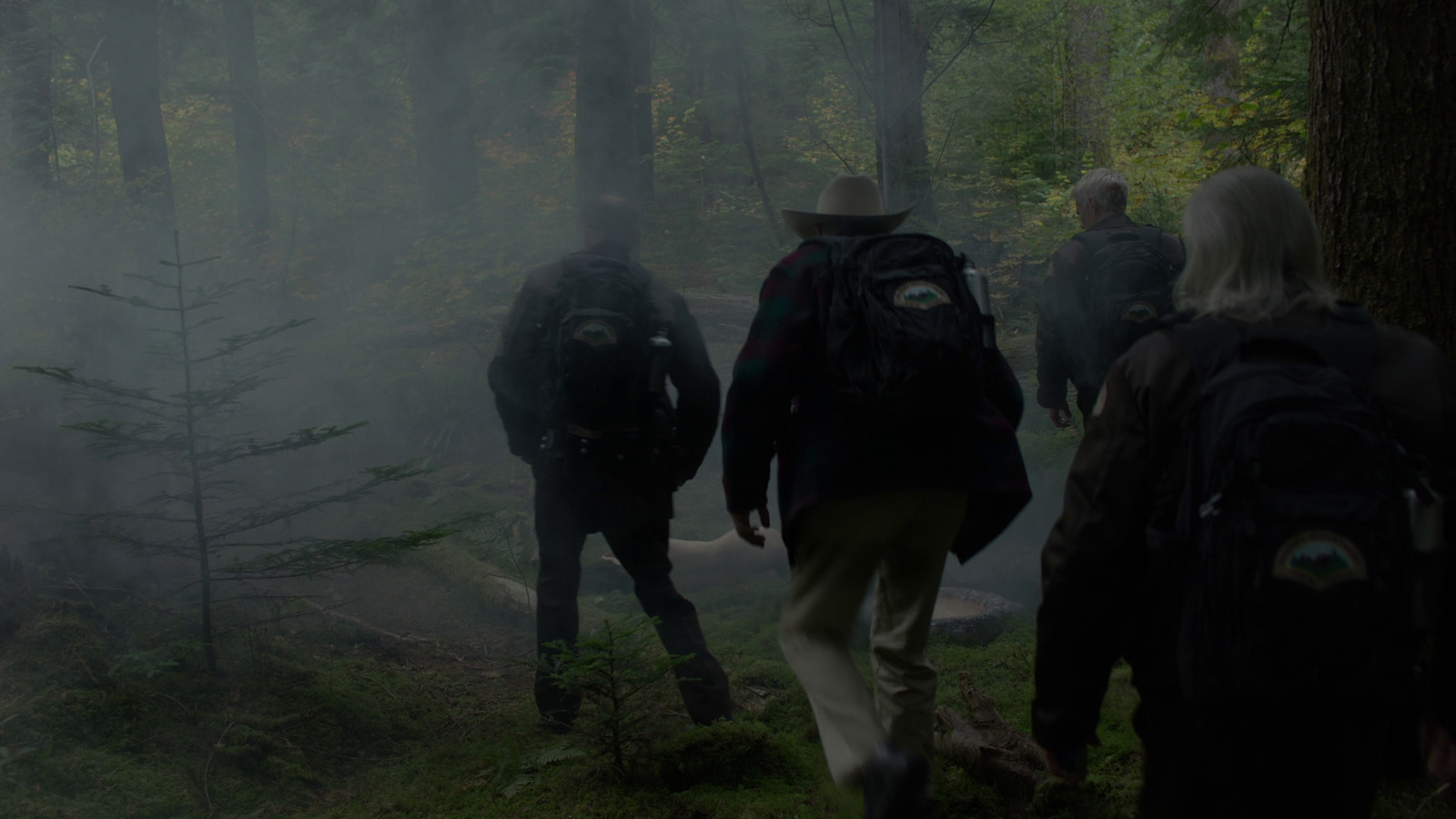
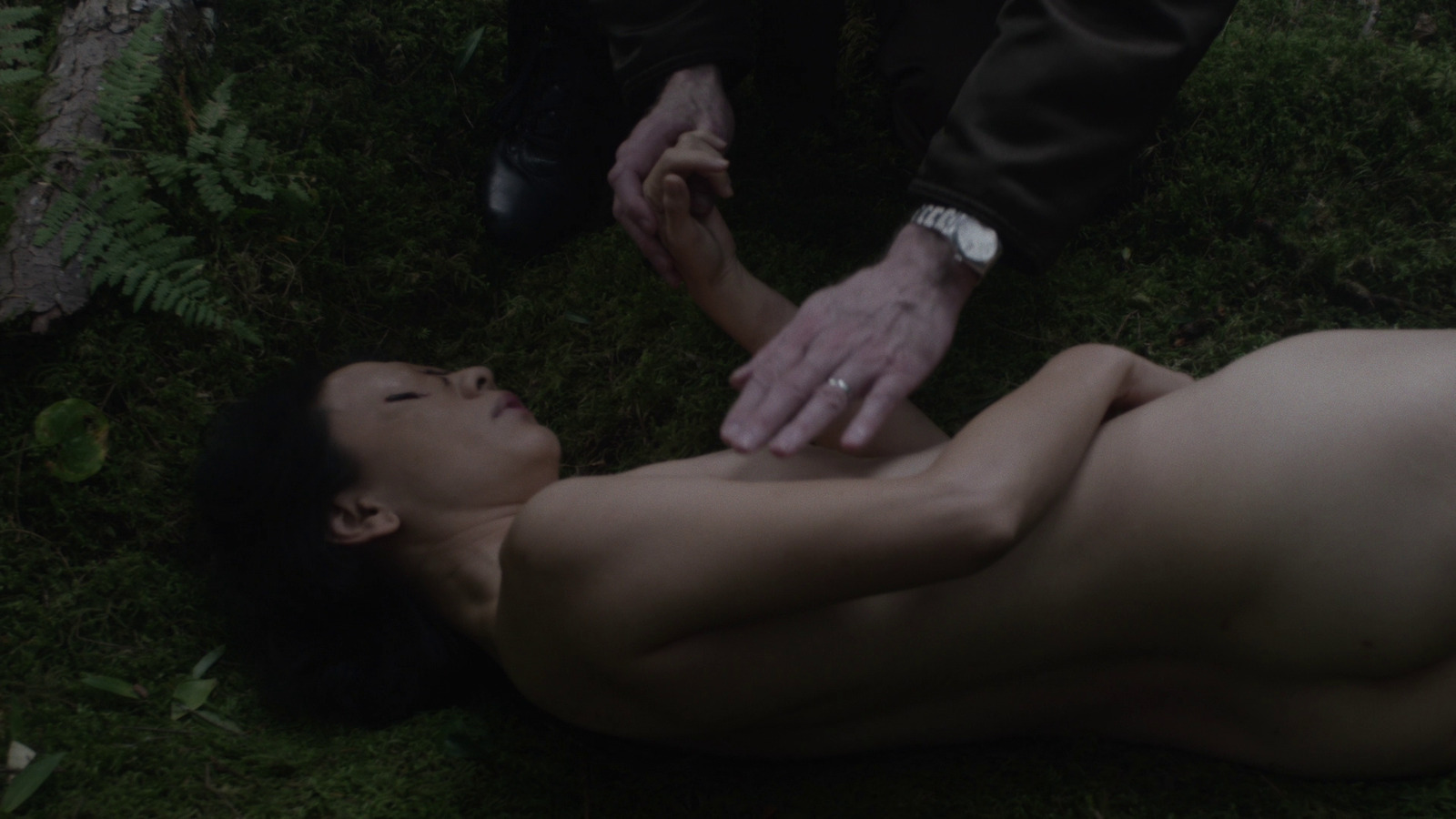
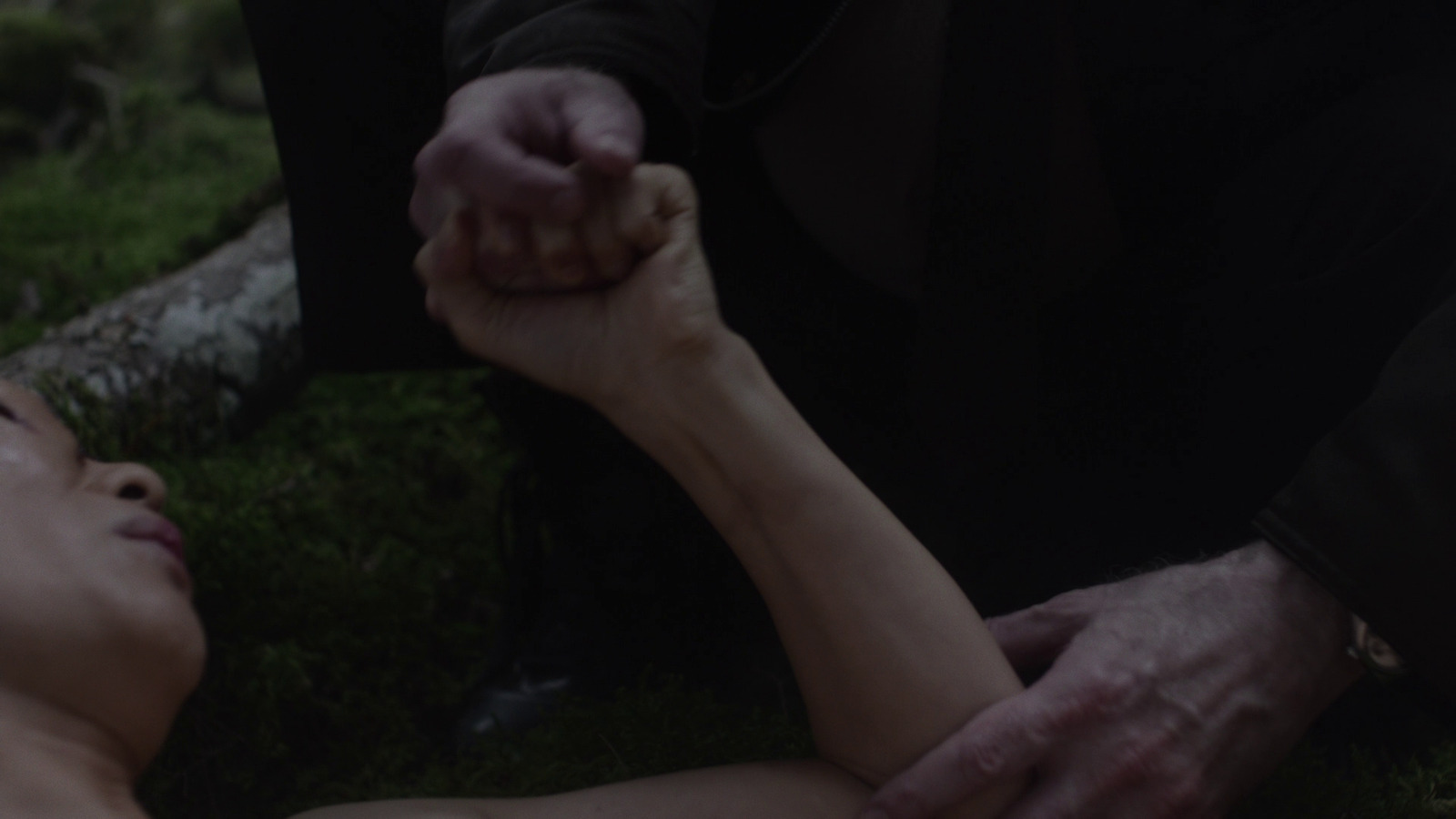
The forest becomes darker and mistier before the group reaches the clearing. Naido is found on the ground, and Andy kneels to check and comfort her. This order matters: the supernatural spectacle does not arrive before the obligation to help. A nearby pool and the waiting officers draw attention toward the appointed time, but Andy’s contact gives the sequence an immediate human purpose. The person whom the group cannot understand is still someone whose vulnerability can be recognized.
Open the scene sequence · 2 frames
The canopy becomes an opening
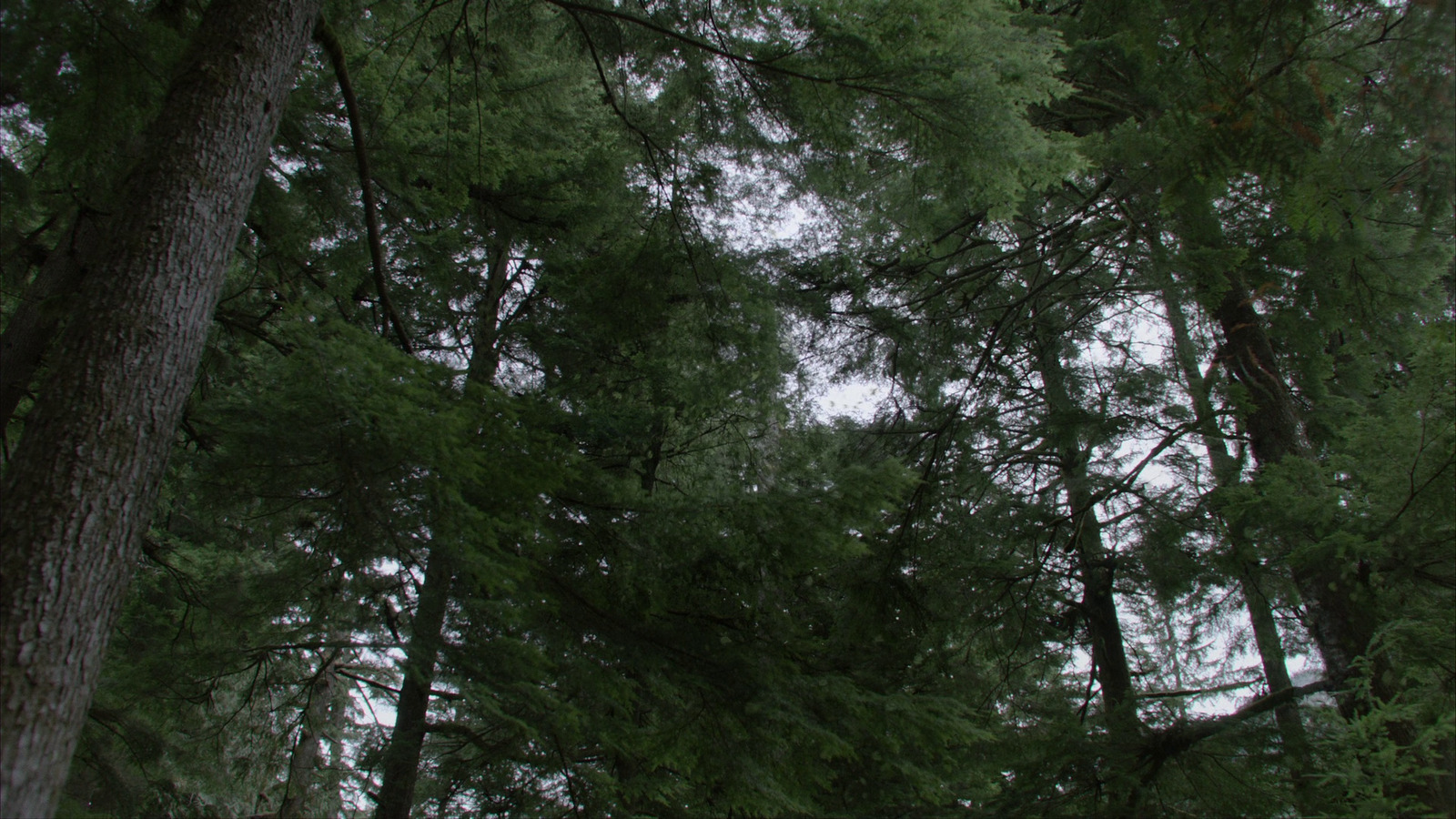
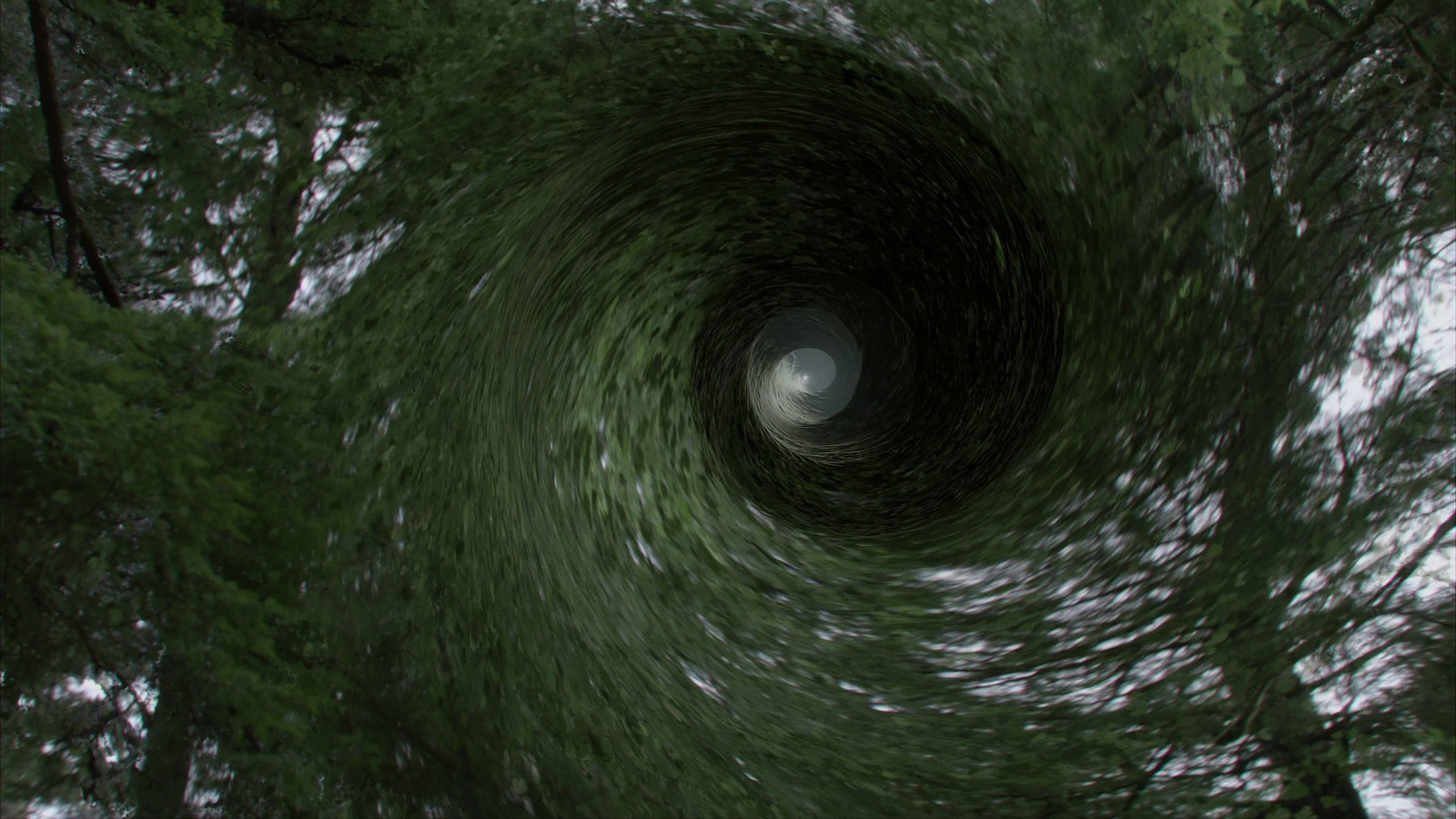
The watch fixes attention on 2:53. Above the clearing, the ordinary canopy becomes the boundary of a rotating opening. The sequence alternates between the group below and an image that seems to transform the depth of the sky itself. Andy continues holding Naido’s hand before the white disturbance and his disappearance. The effect is legible because the forest and the people have first been established as stable reference points. The gallery follows the visible transition; the precise distribution of photographed and composited elements is not inferred from appearance alone.
Open the scene sequence · 3 frames
Andy receives a name and an object
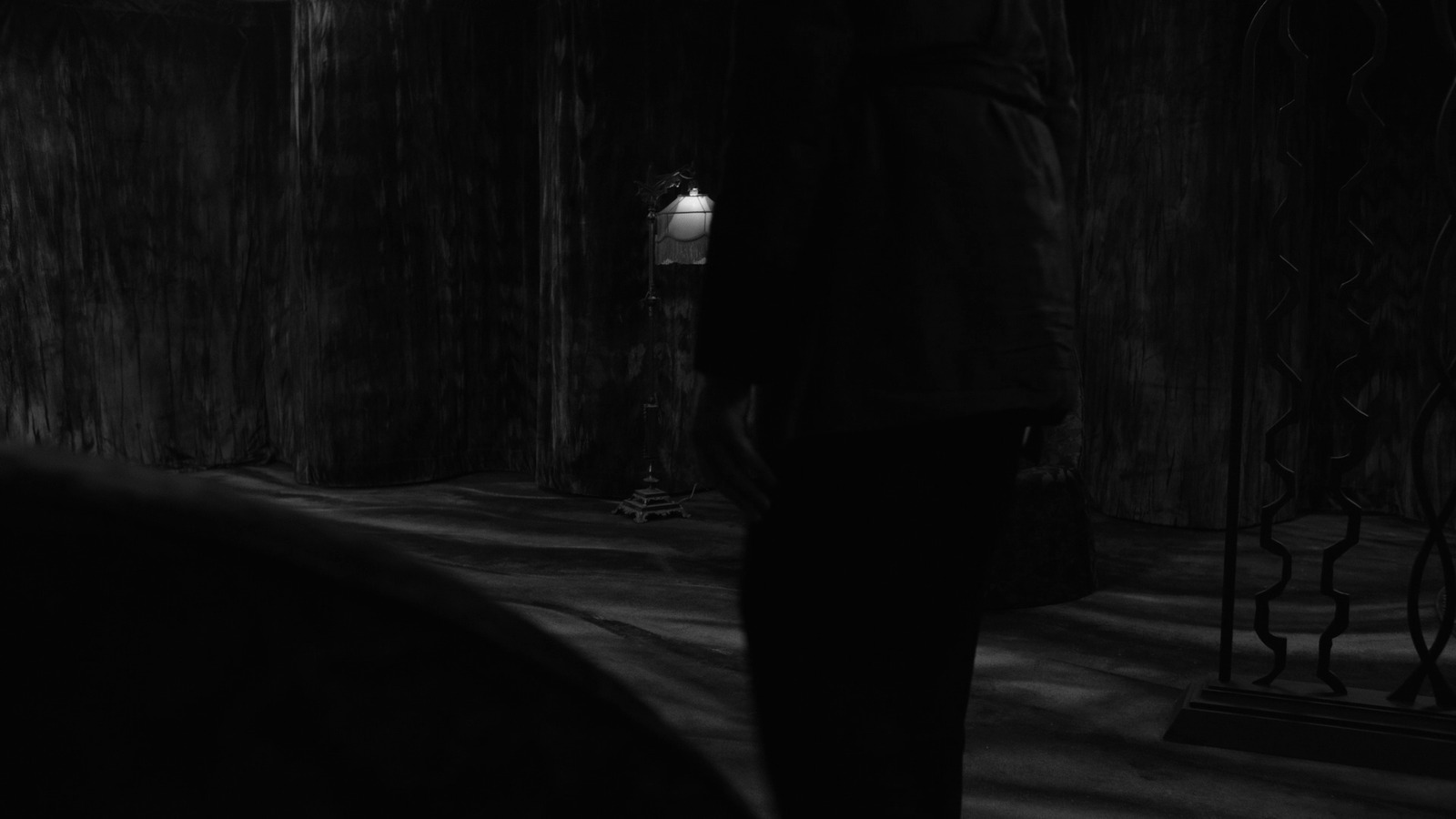
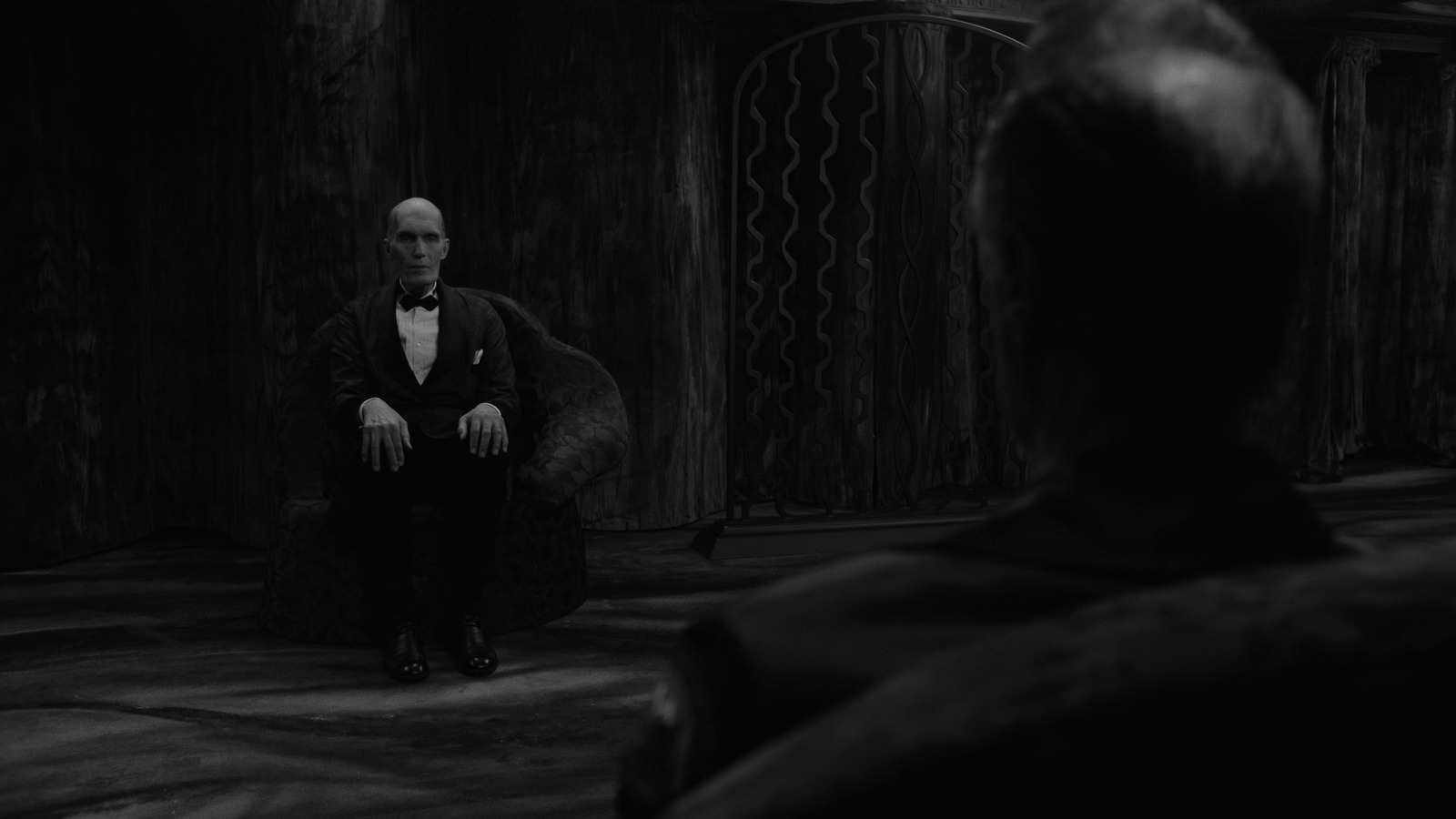
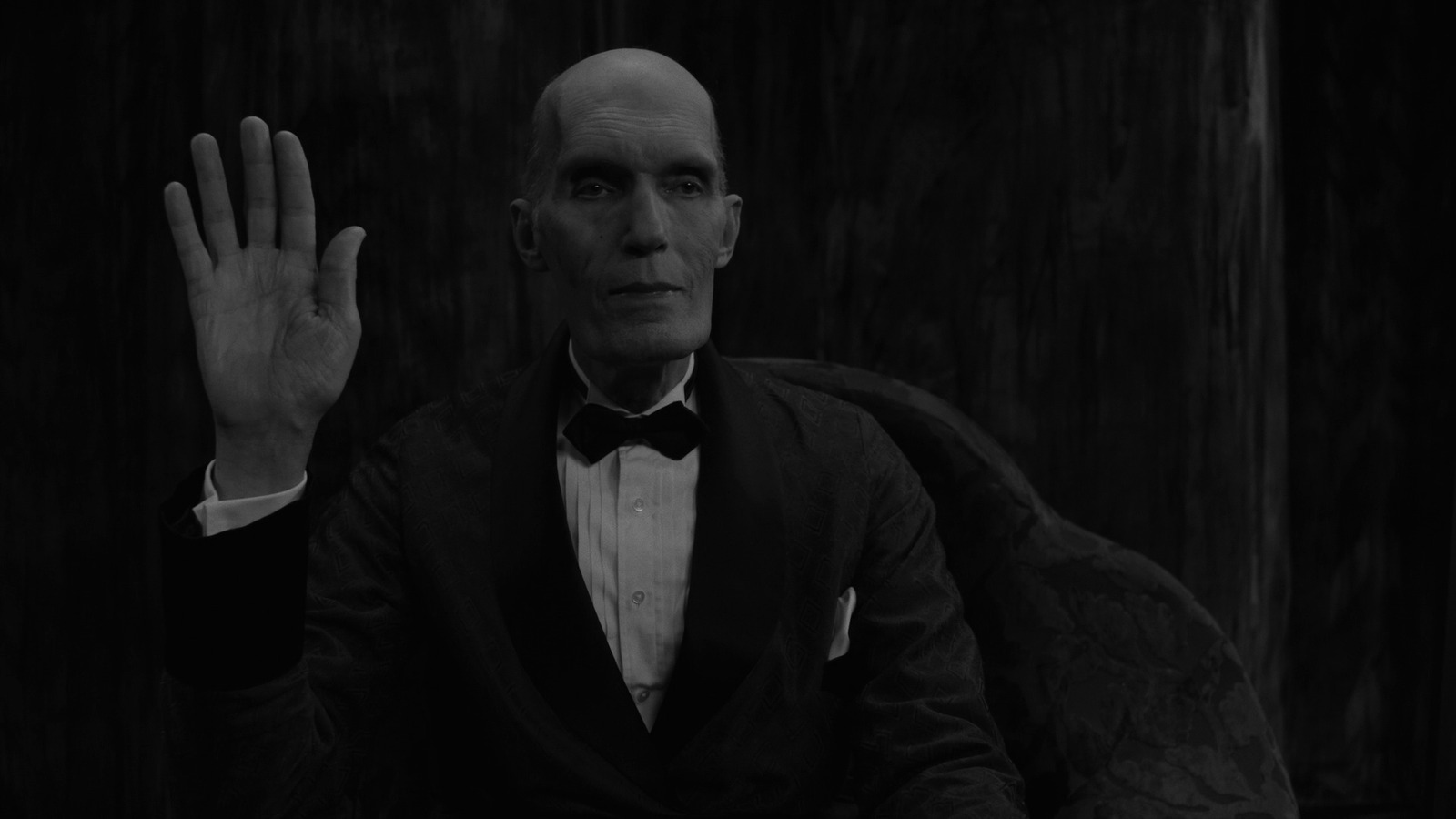
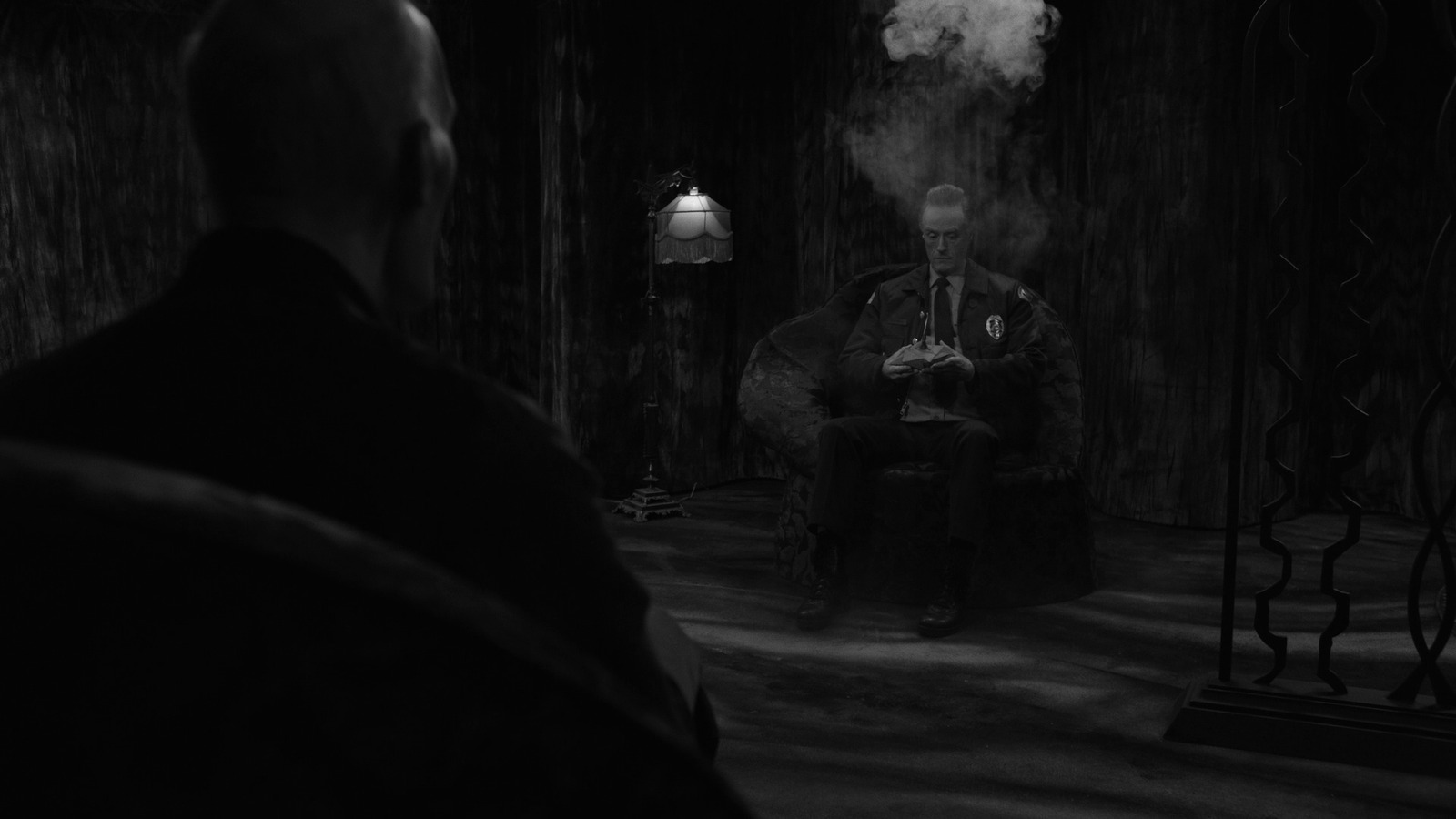
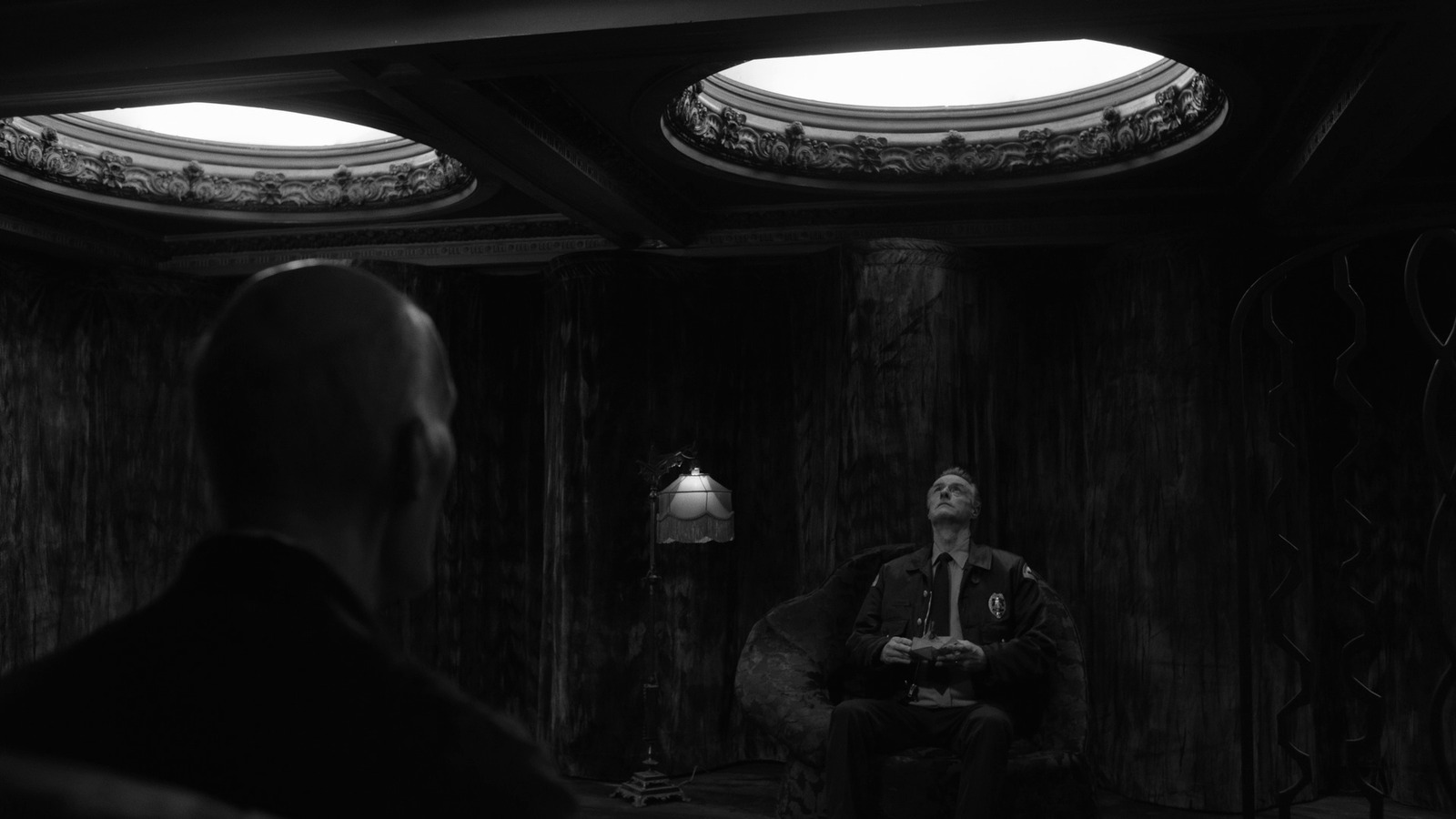
Andy is already seated when the tall figure approaches him in the monochrome chamber. The figure identifies himself as the Fireman, a name also confirmed by the end credits. The altered speech and on-screen text make the utterance both audible and something to read. A gesture and a small faceted object organize the exchange without a conventional explanation. Vapor rises, and Andy looks upward. His open attention is the scene’s central performance: the episode entrusts an extraordinary experience to the officer so often treated as comic or slow.
Open the scene sequence · 3 frames
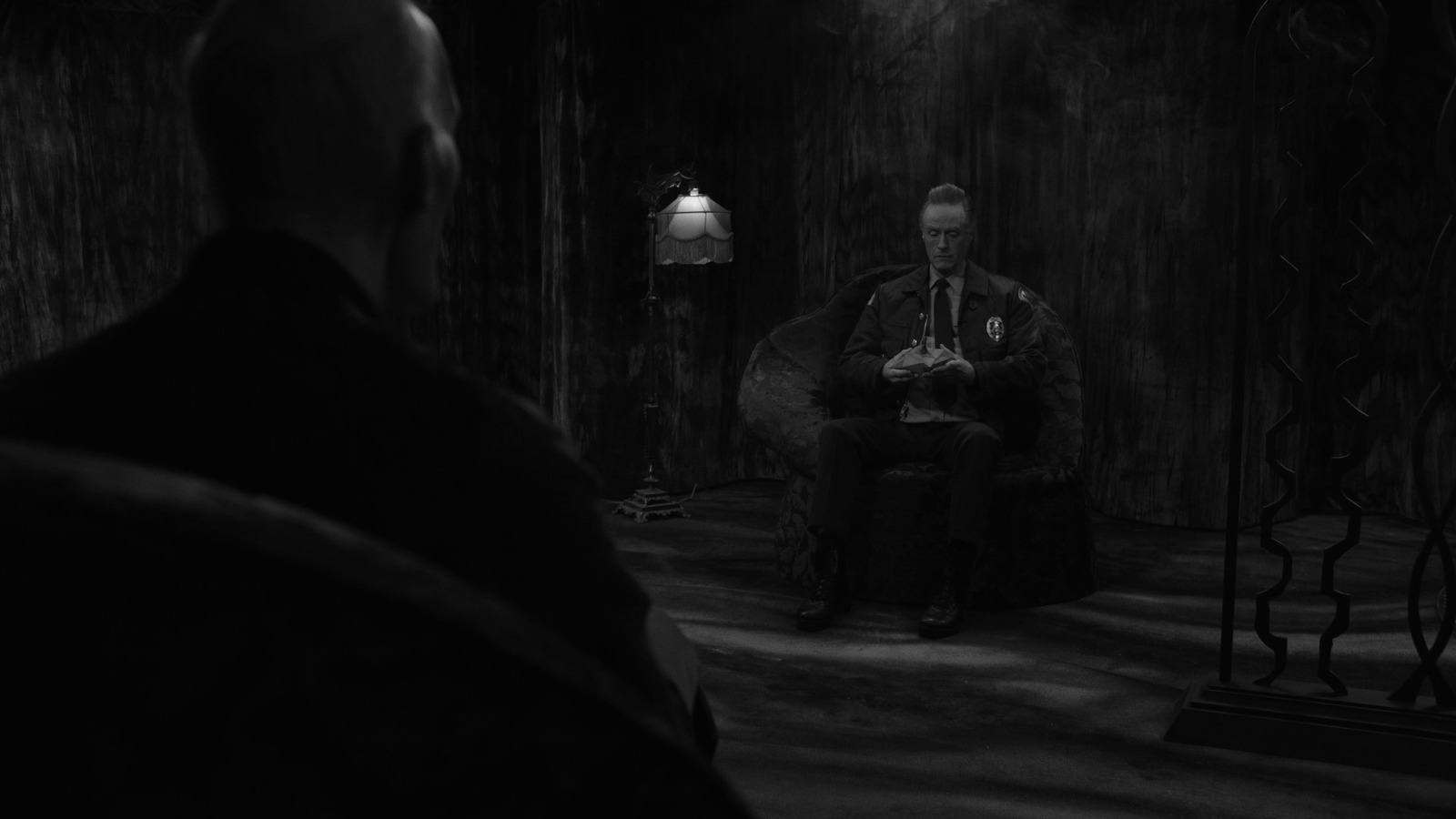
A sequence of images becomes a responsibility
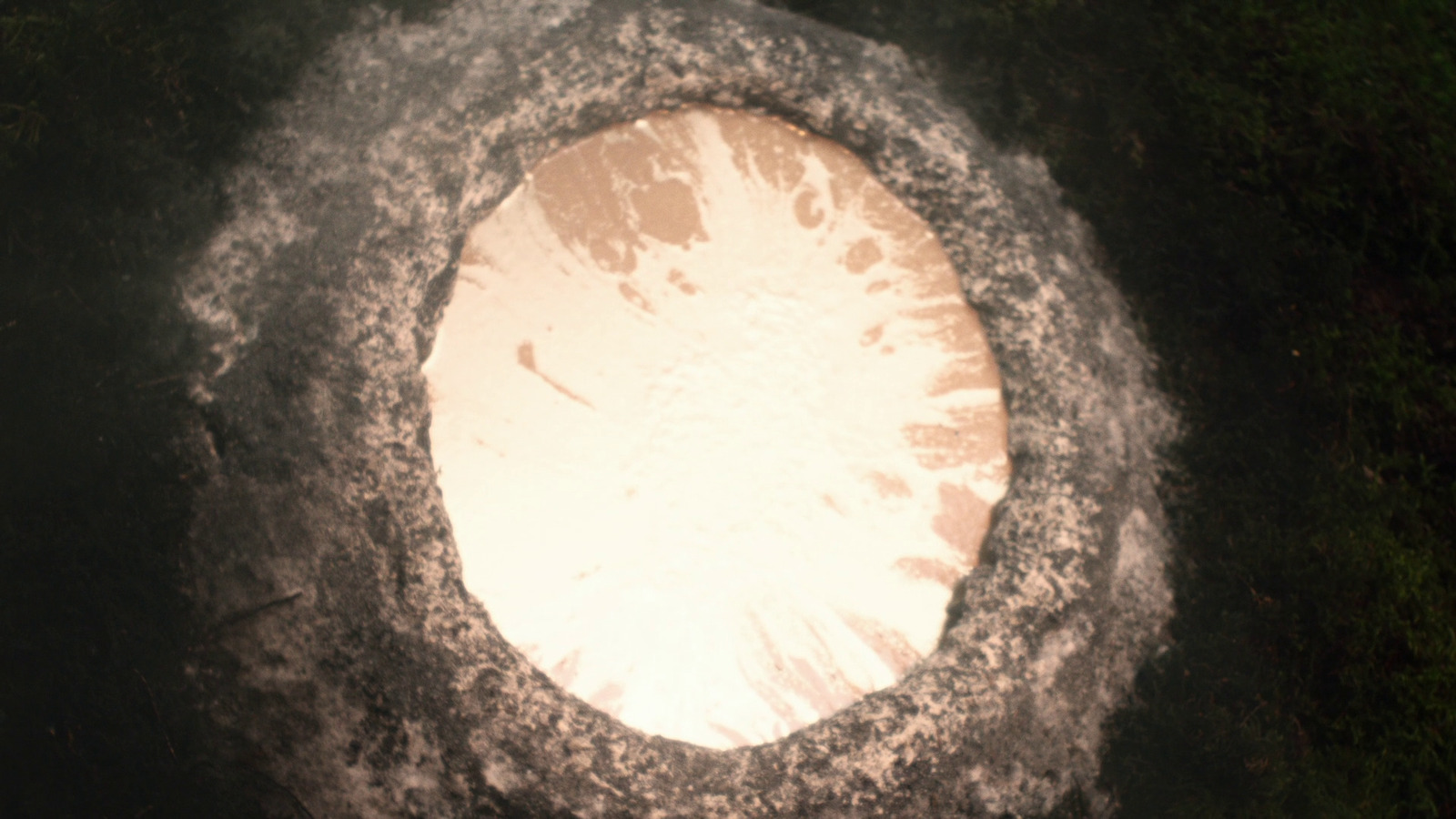
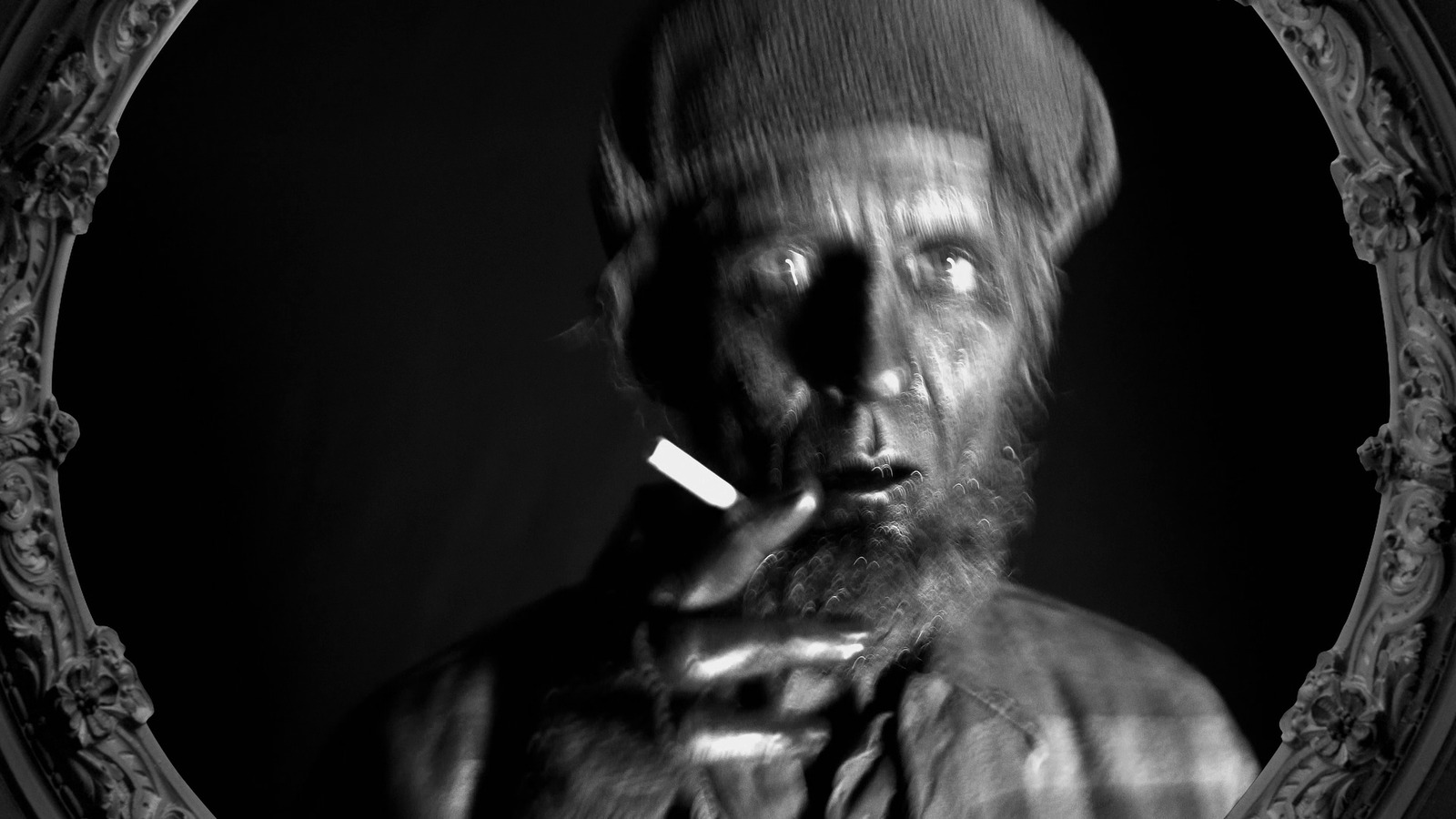
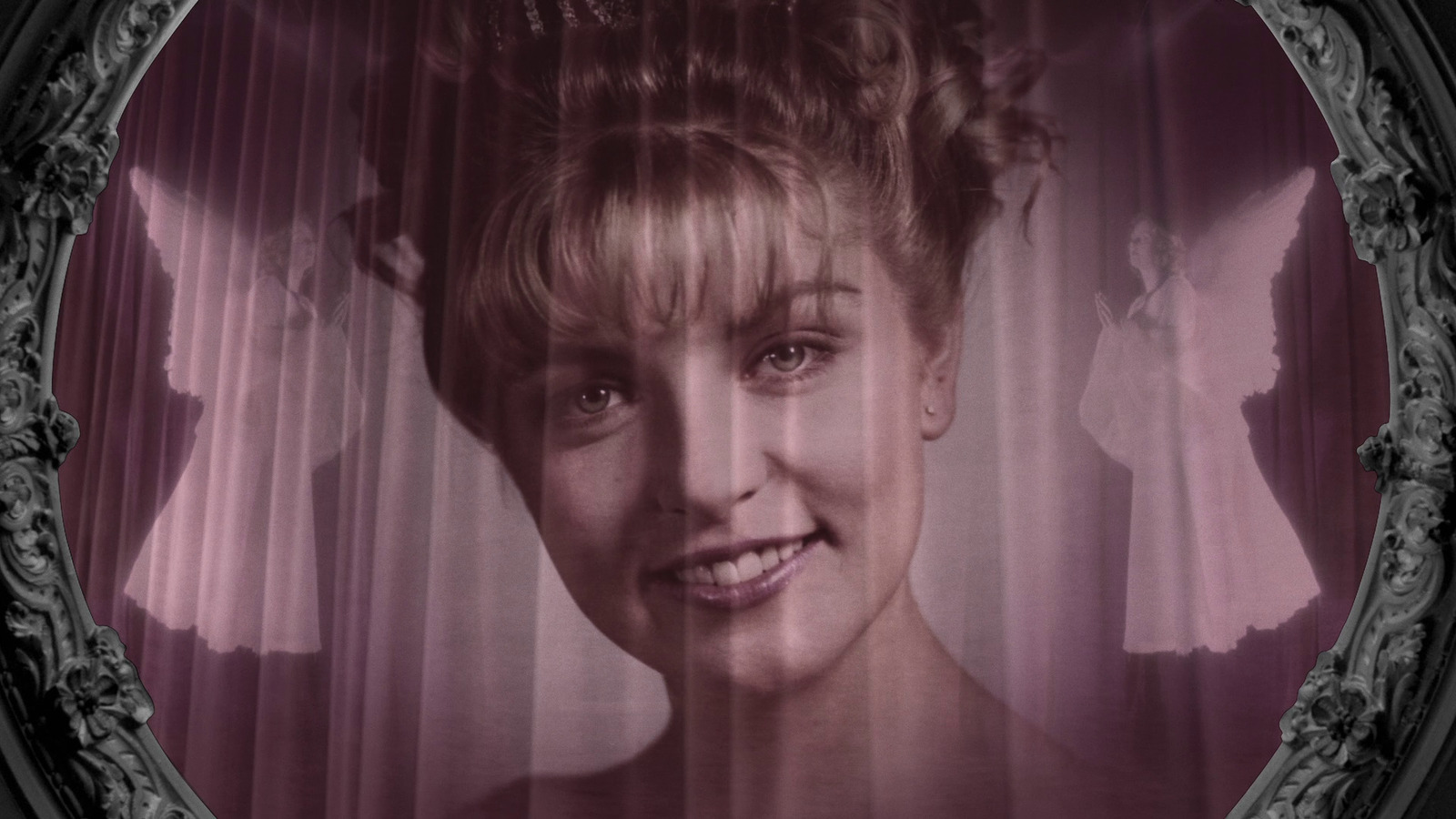
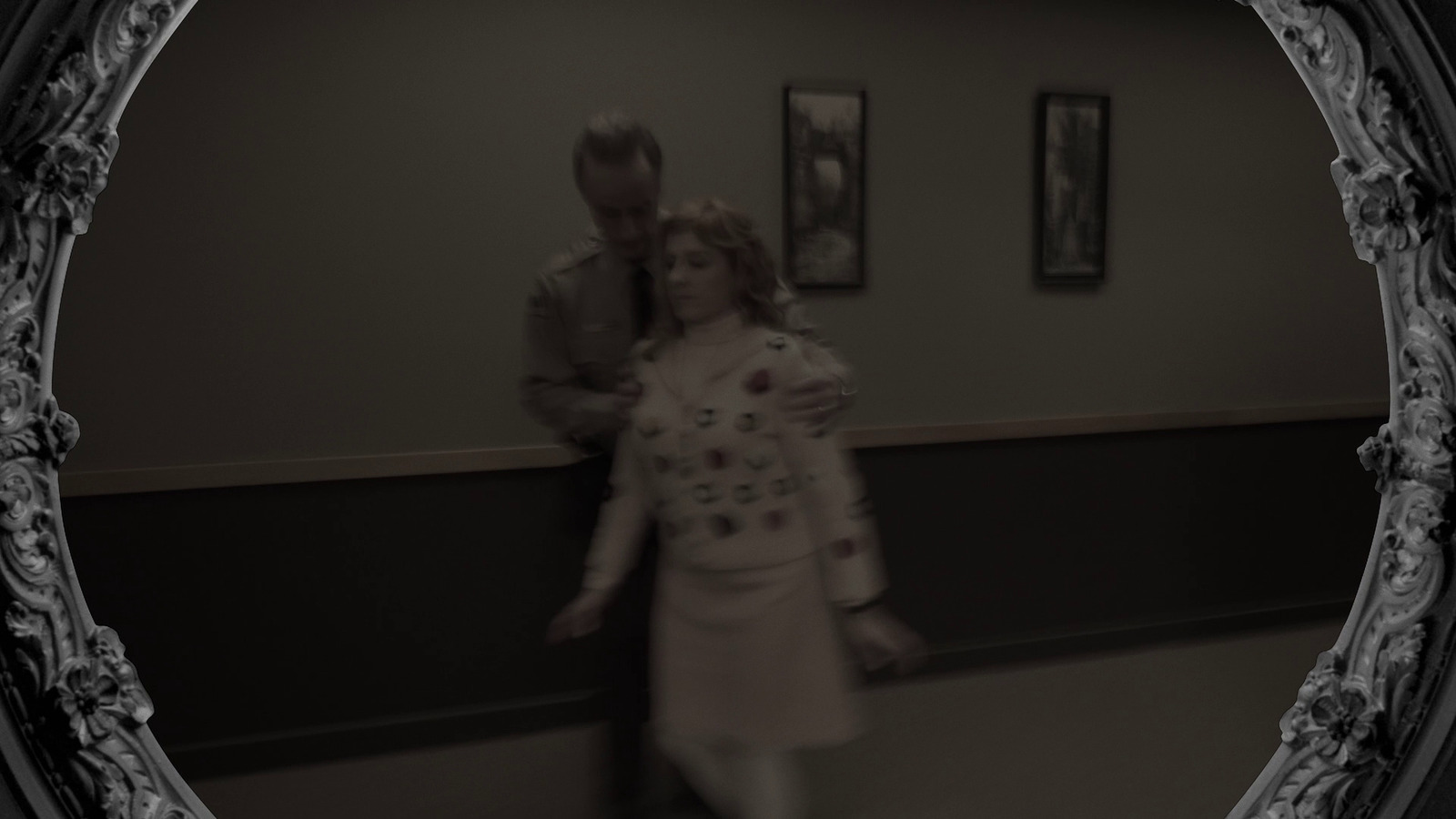
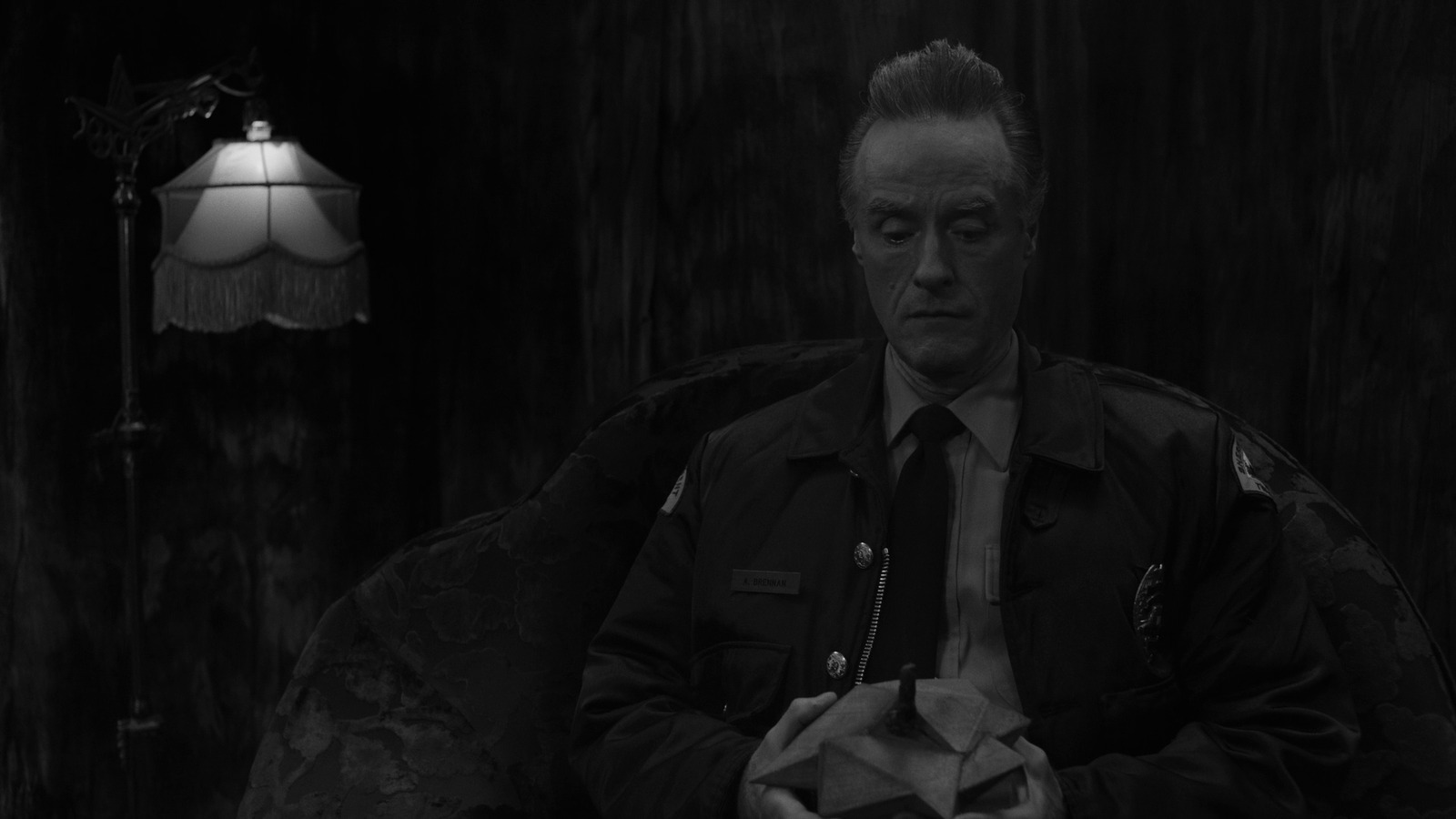
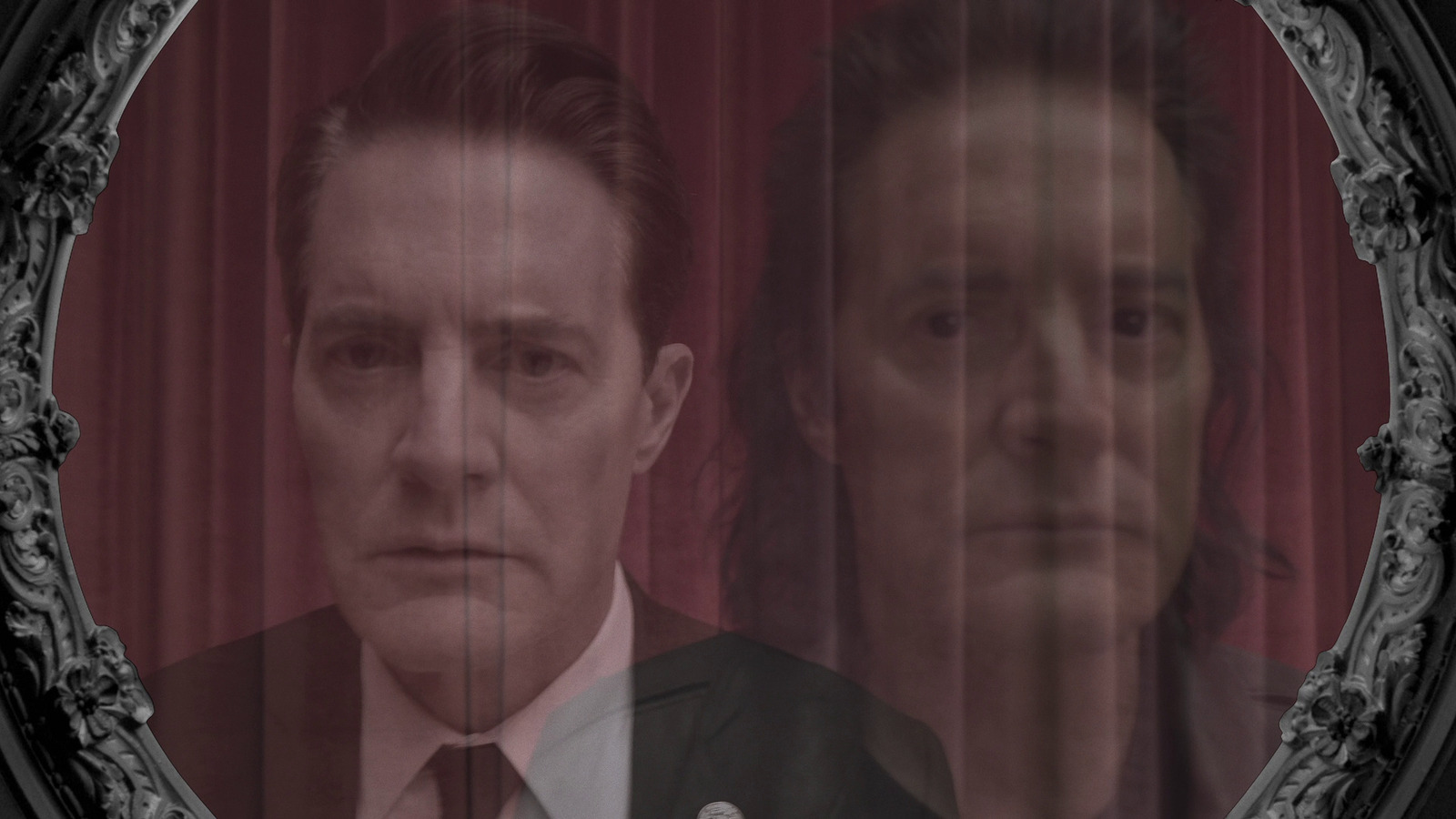
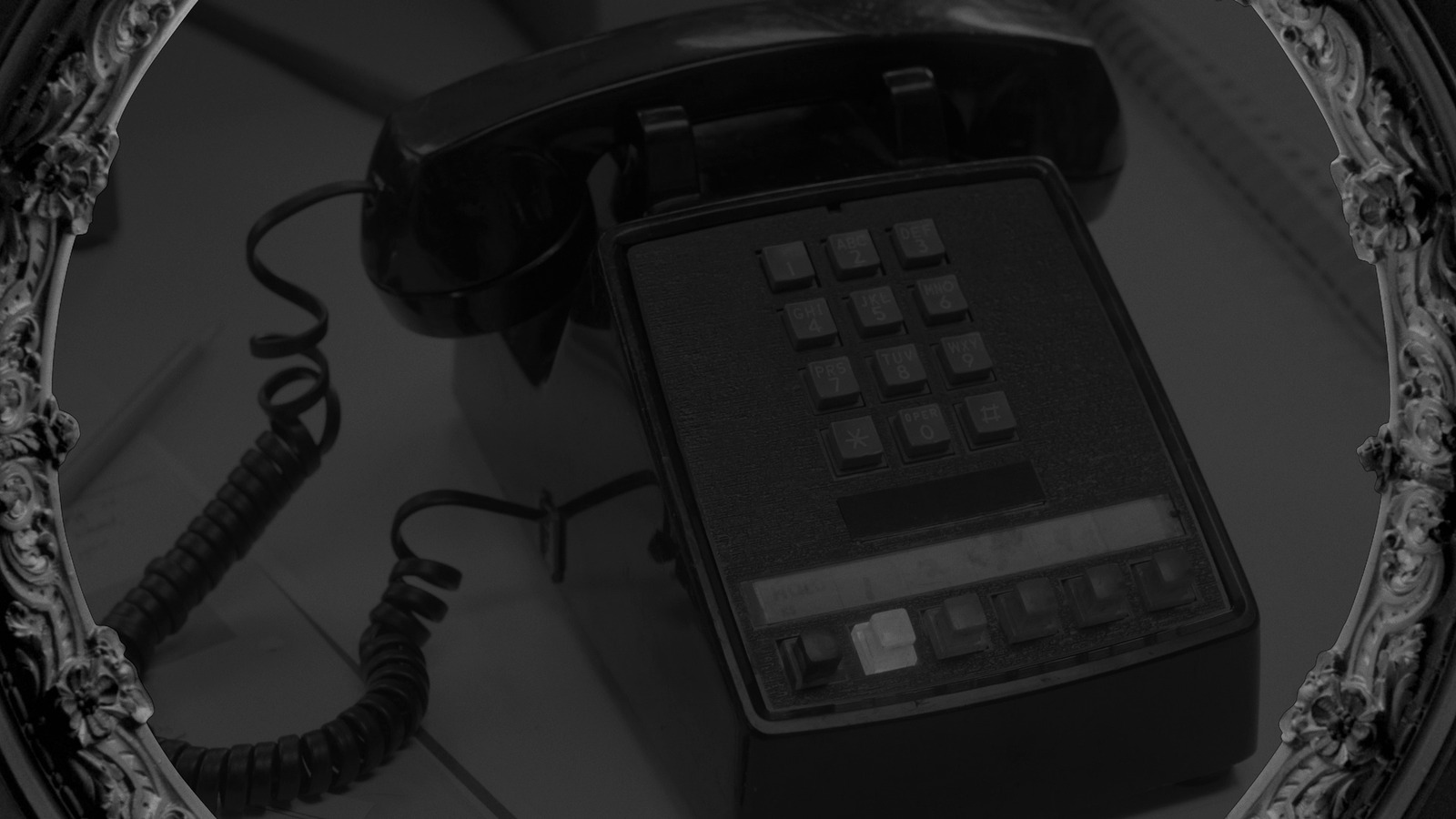
An oval field presents images connected with the Experiment, the convenience store, the Woodsmen, Laura, Naido, Cooper and his double, and a telephone. It also shows Andy and Lucy in the station. The field’s black surrounds are part of the presentation, not empty letterboxing. These images do not arrive with a key that fixes their chronology or meaning. Their arrangement connects past events, doubles and a possible task. Andy’s response after the vision gives the montage its clearest immediate consequence: he knows that Naido must be protected. His attention becomes an obligation rather than a display of superior explanatory knowledge.
Open the scene sequence · 8 frames
Knowing enough to protect someone
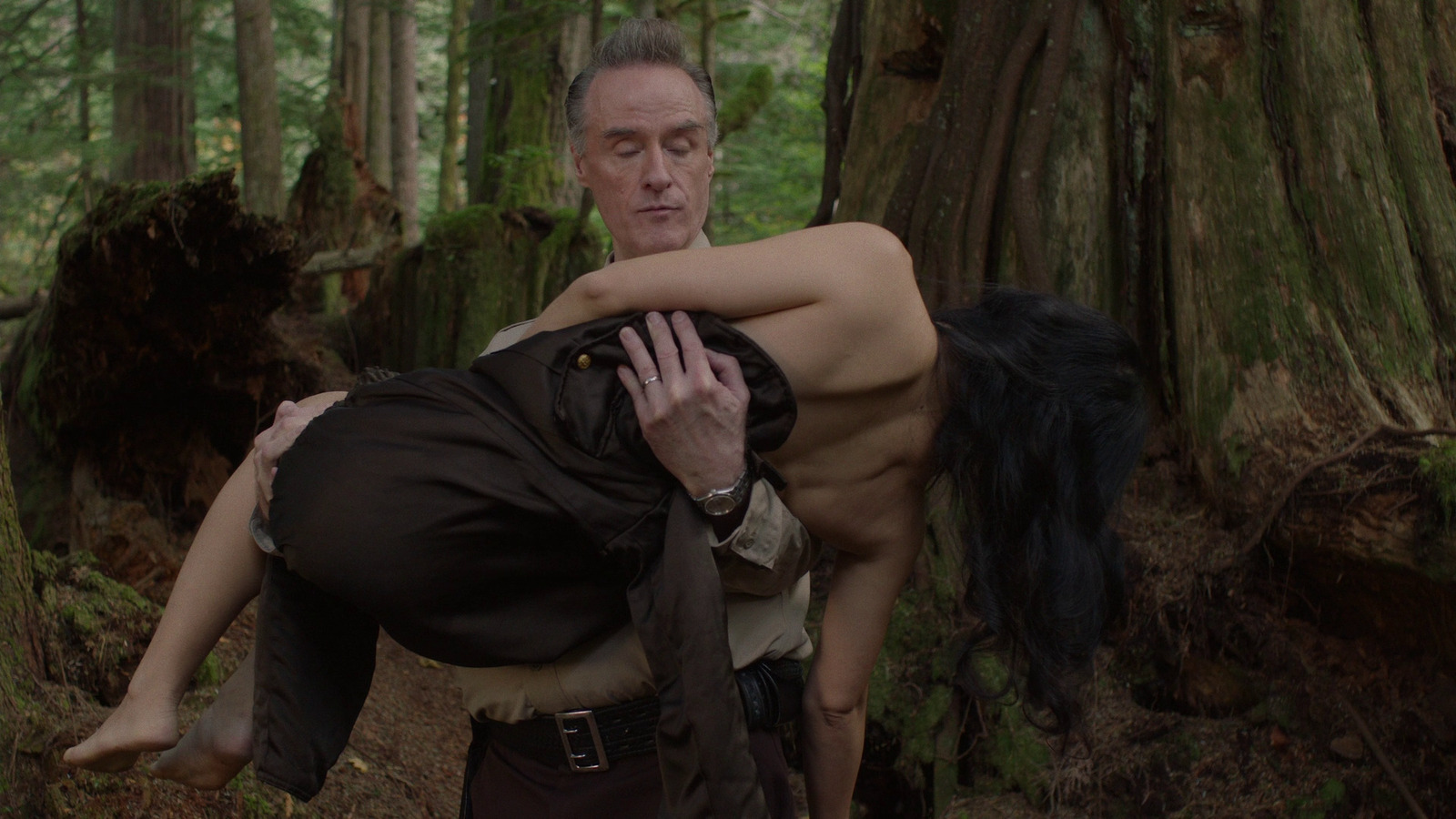
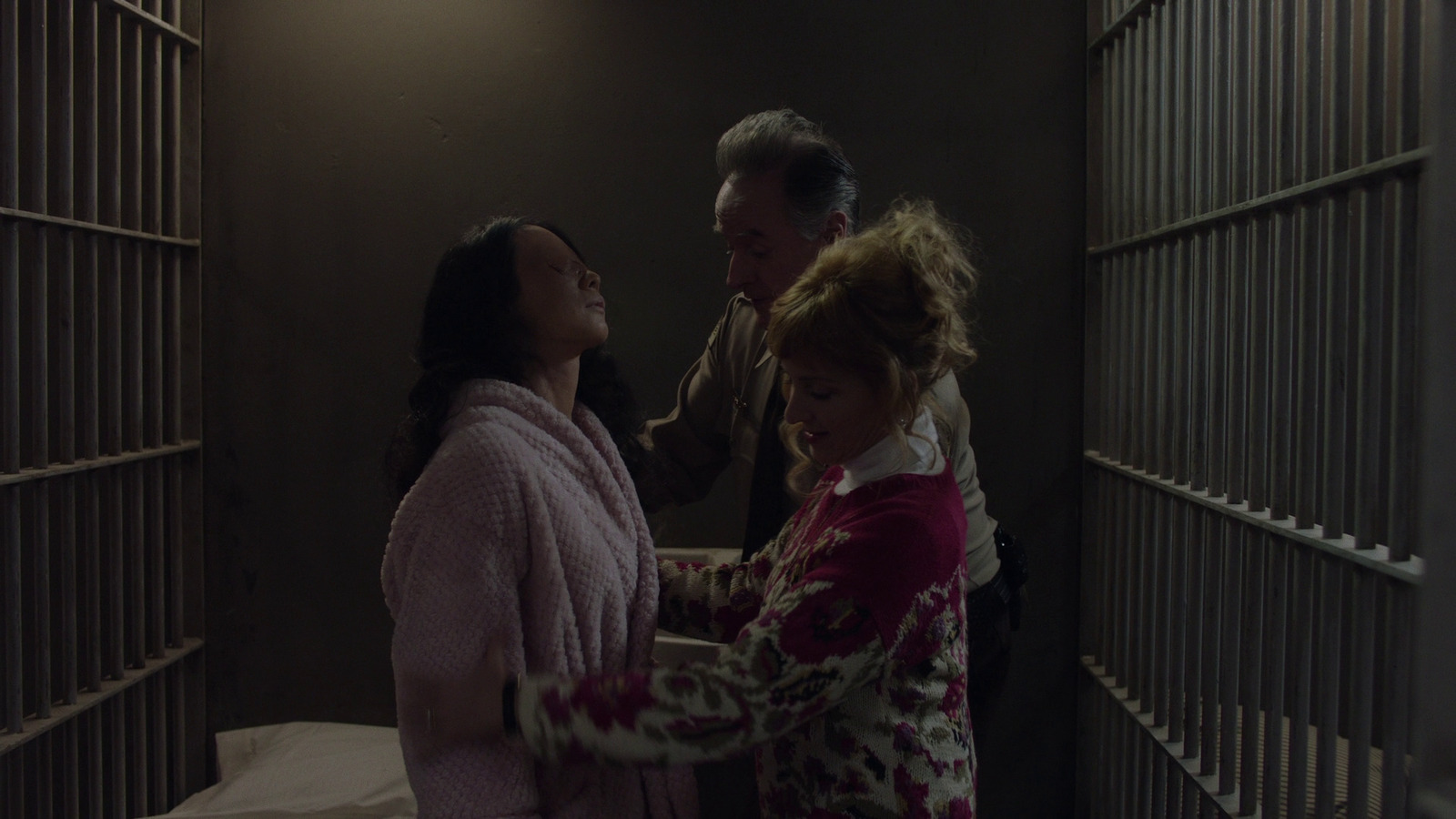
The group returns to the Palace, and Andy carries Naido. The others cannot supply a full account of what has happened, but he can state what must be done next. This asymmetry is important: the episode does not make shared comprehension a prerequisite for care. Andy’s certainty concerns her safety, a secure cell and keeping the situation quiet. The image of him carrying her converts the extraordinary seated vision into physical work in an ordinary world.
Open the scene sequence · 2 frames
Protection changes the sound of the jail
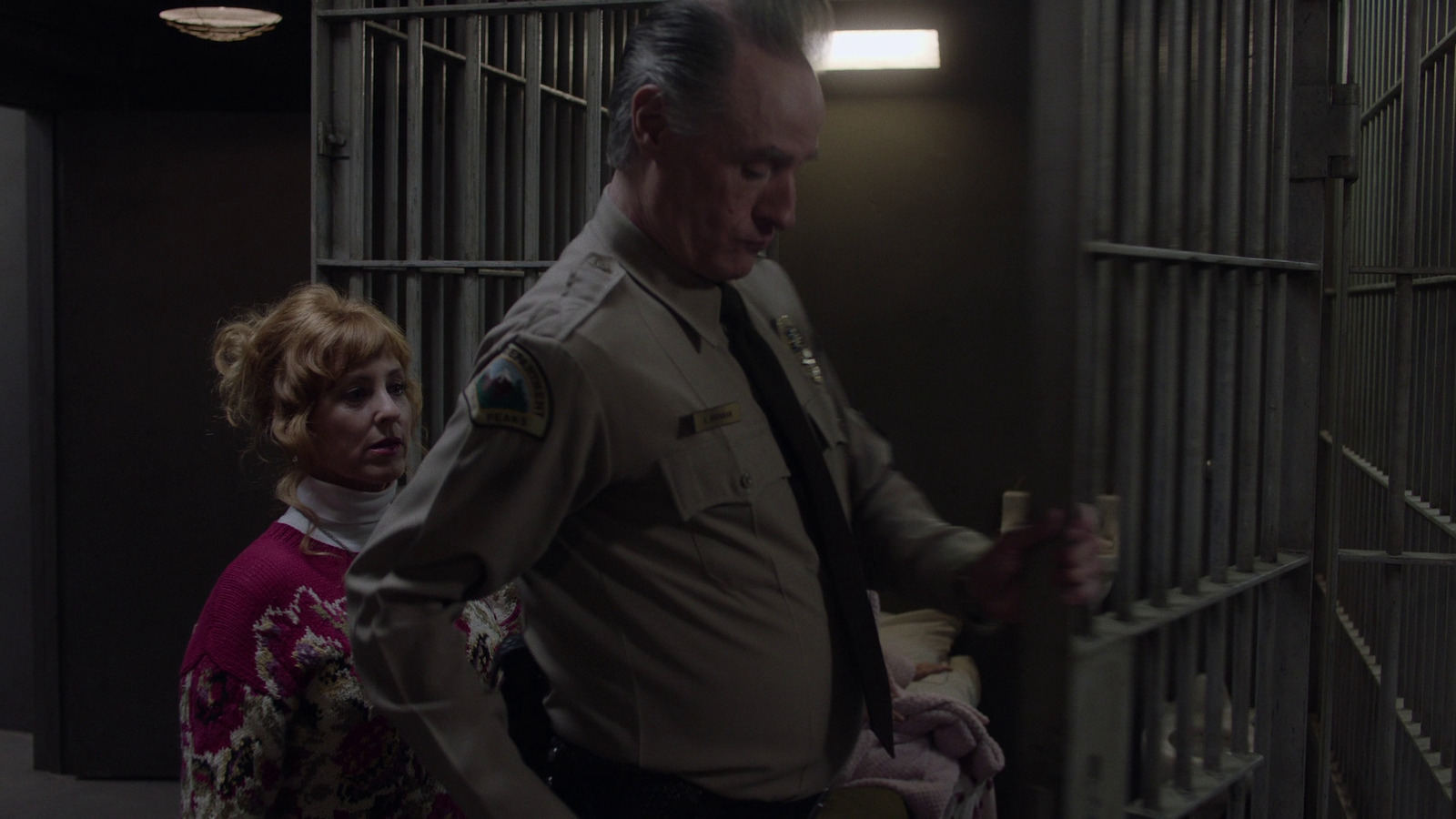
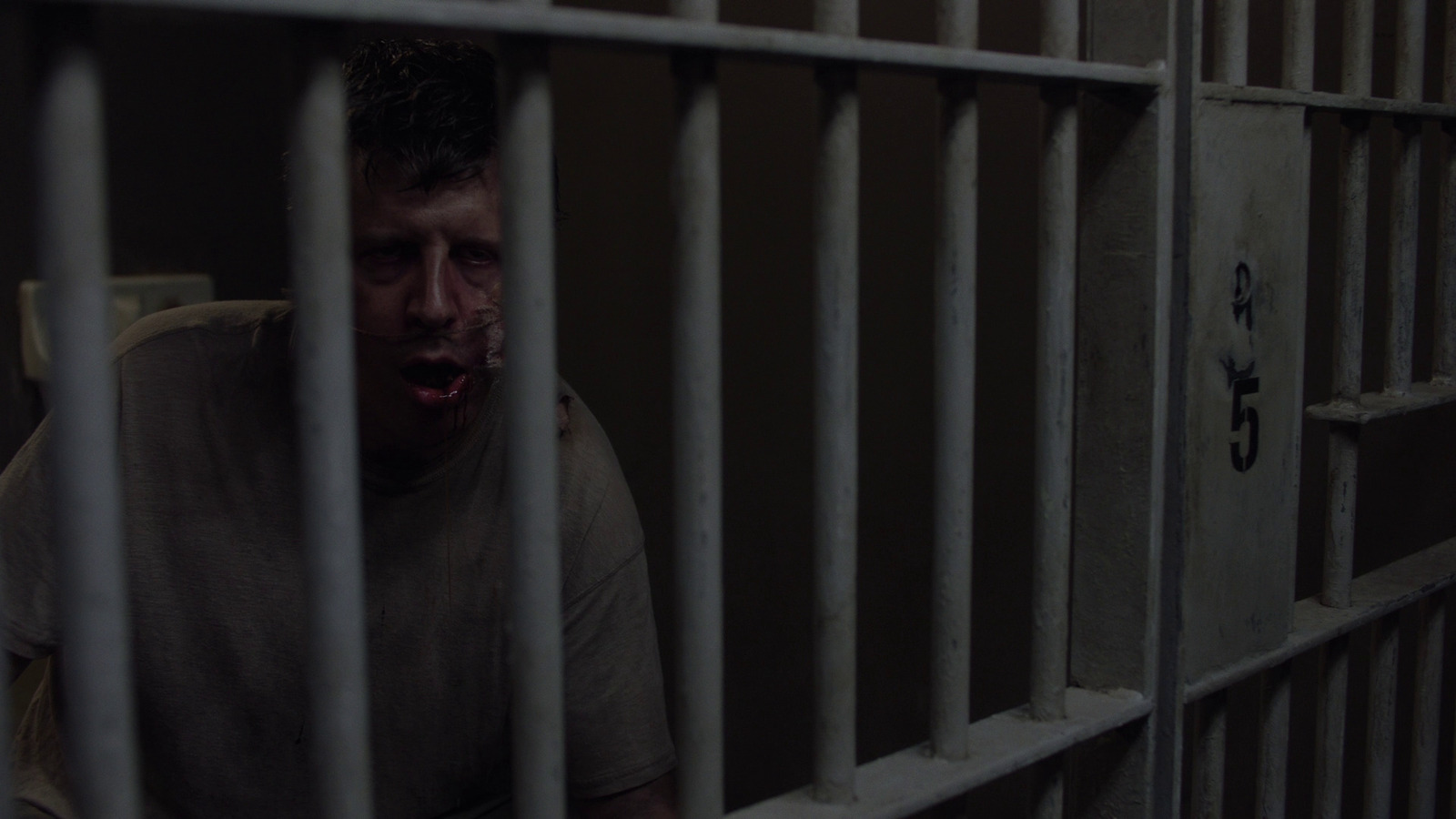
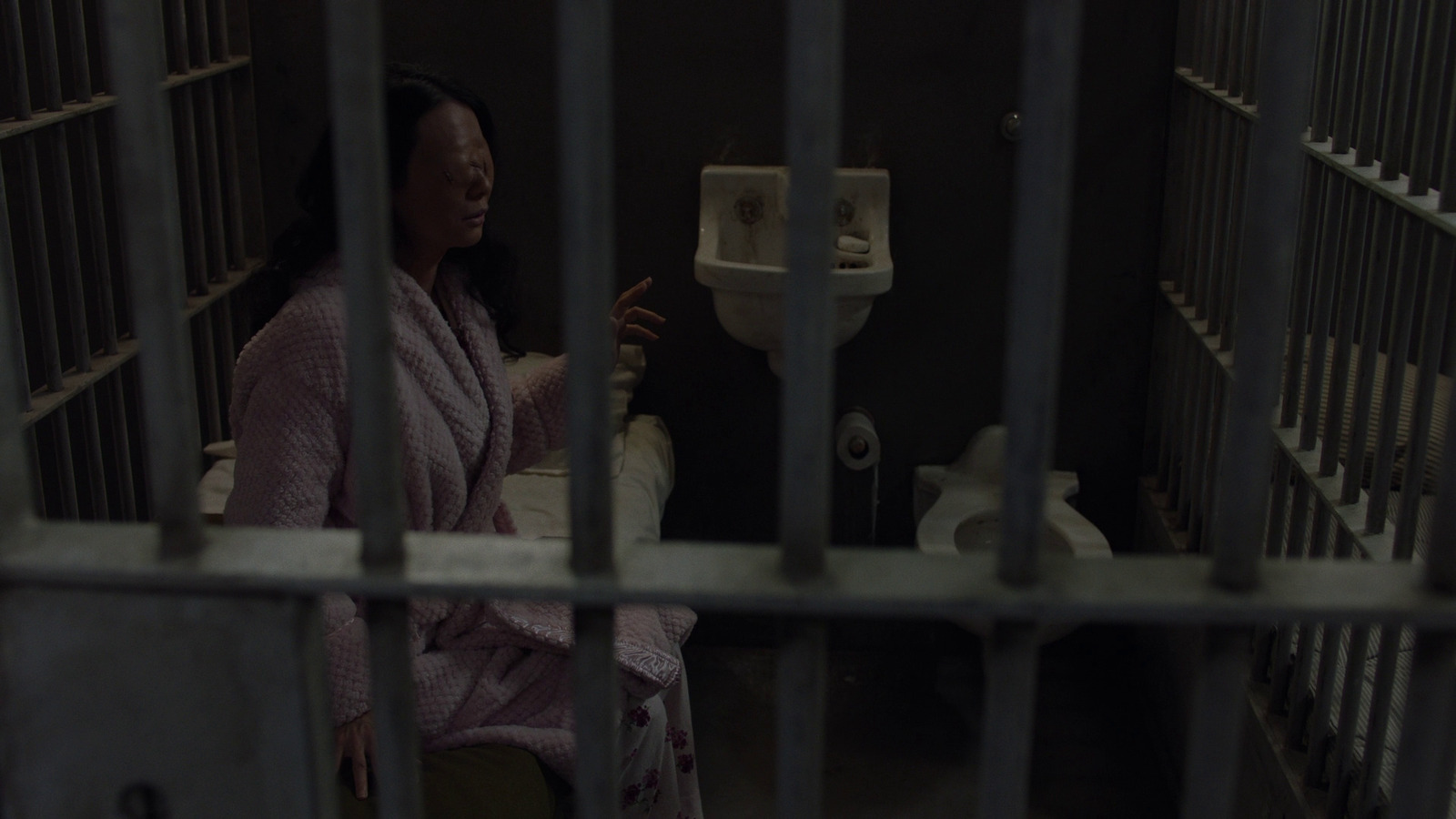
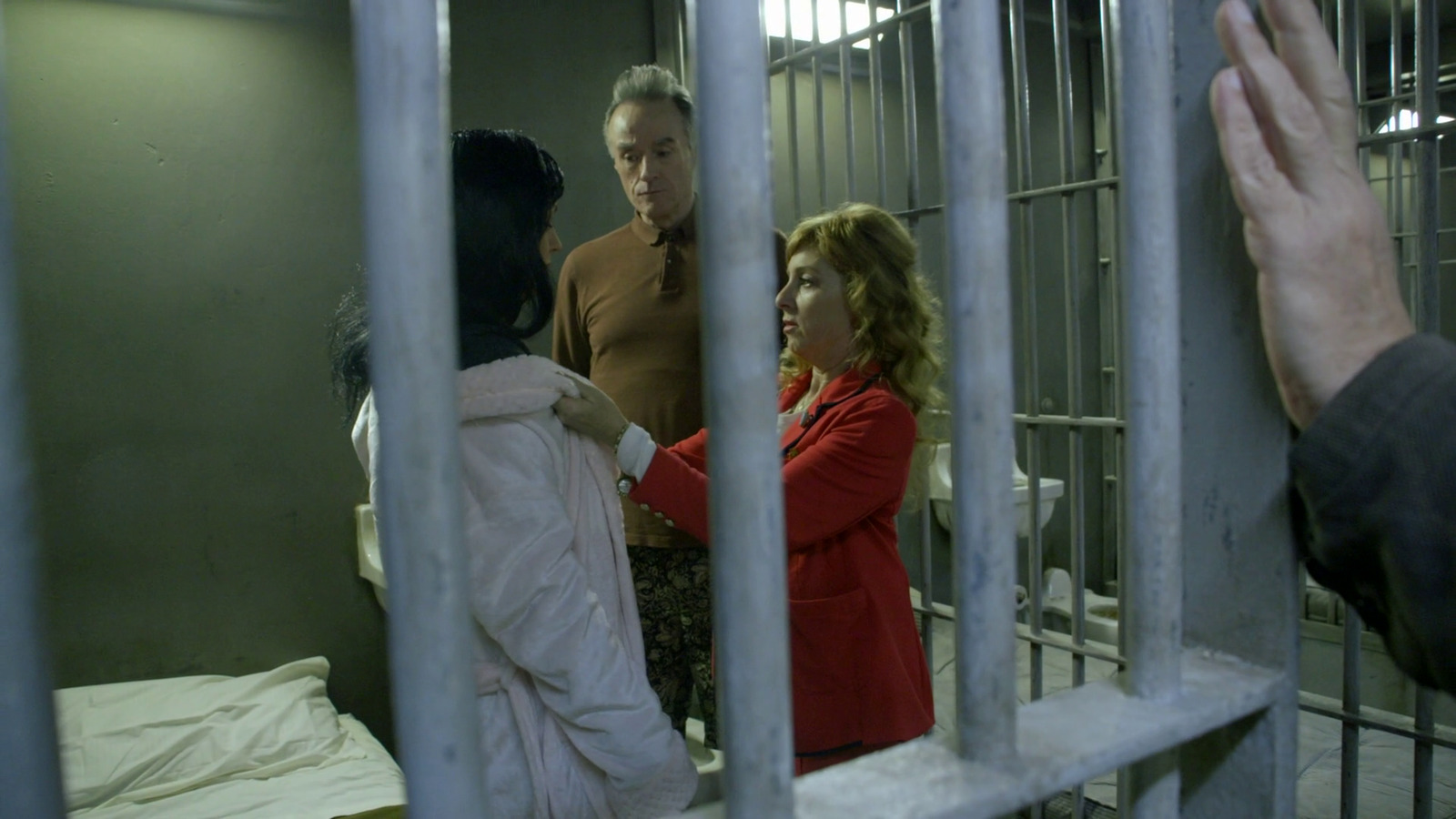
Lucy helps Naido into clothing and supports Andy’s decision. Chad’s contempt now comes from inside a cell, while the wounded man’s repetitions and Naido’s vocalizations create a disturbing exchange across the room. The scene continues after its practical information has been delivered. That duration makes the jail an acoustic space in which speech, mockery and involuntary sound can become difficult to separate. The wounded man is credited as Drunk; the episode does not identify him as Billy. An apparent resemblance to a later story should remain a question rather than an asserted identity.
Open the scene sequence · 3 frames
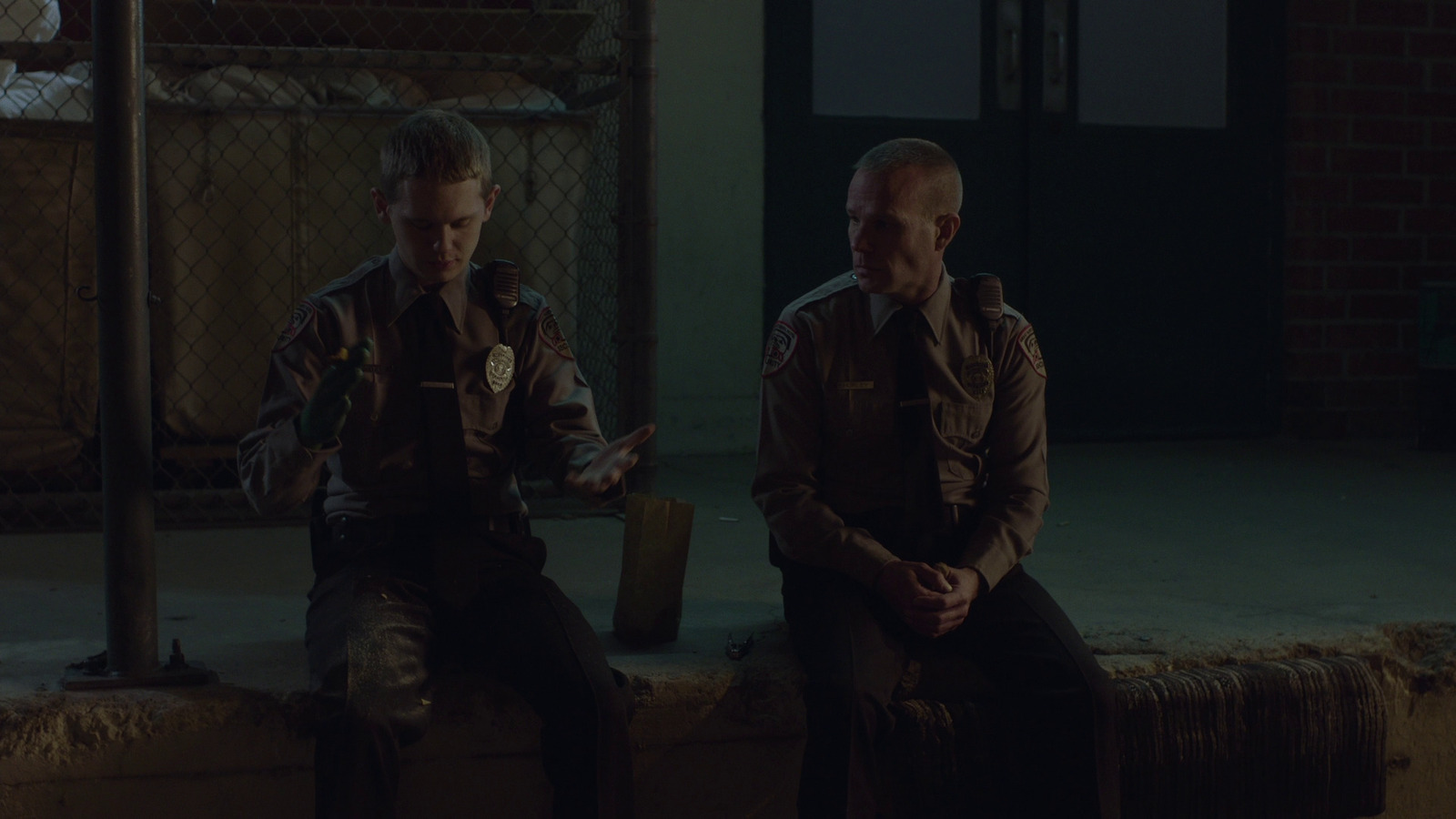
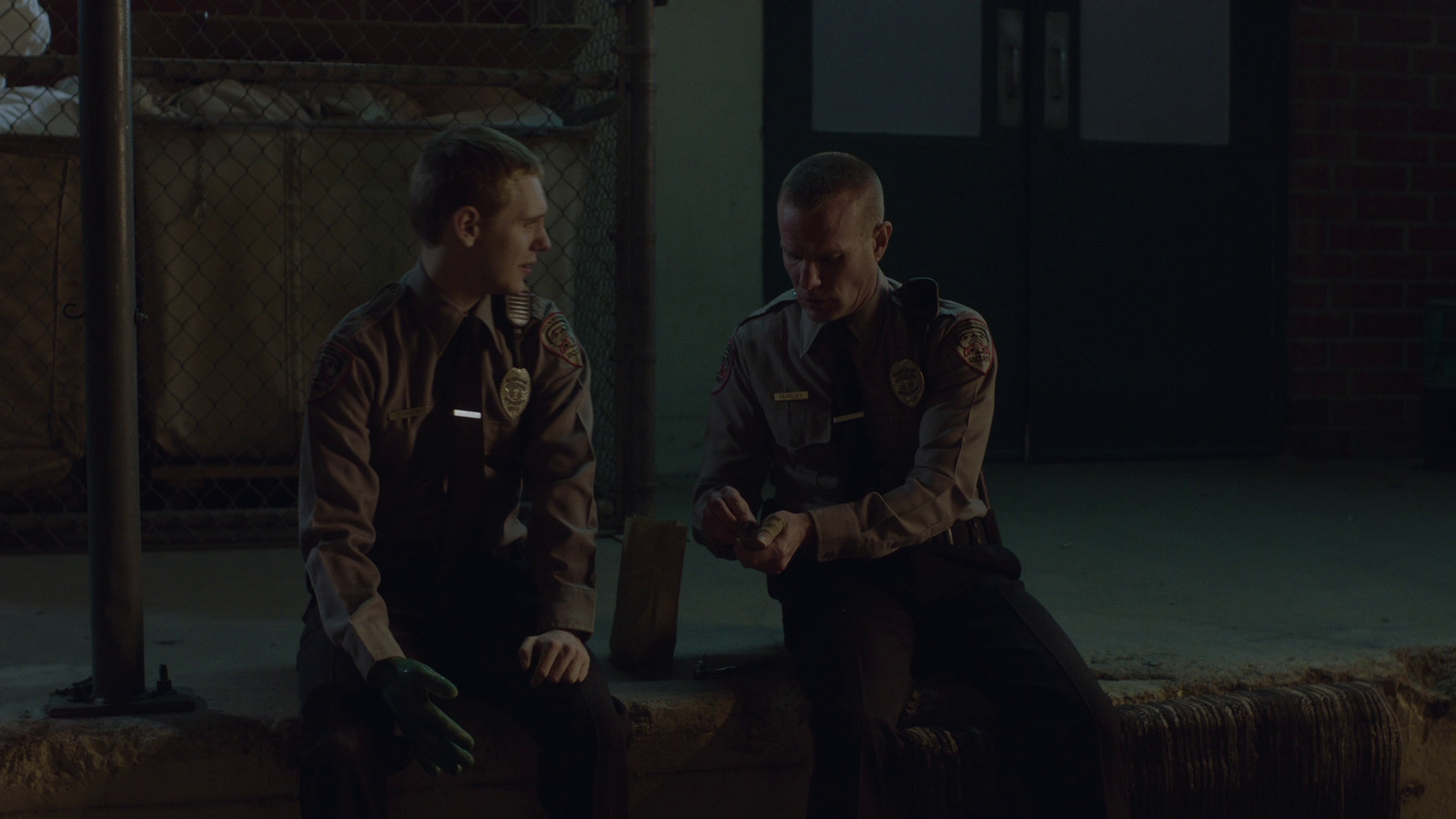
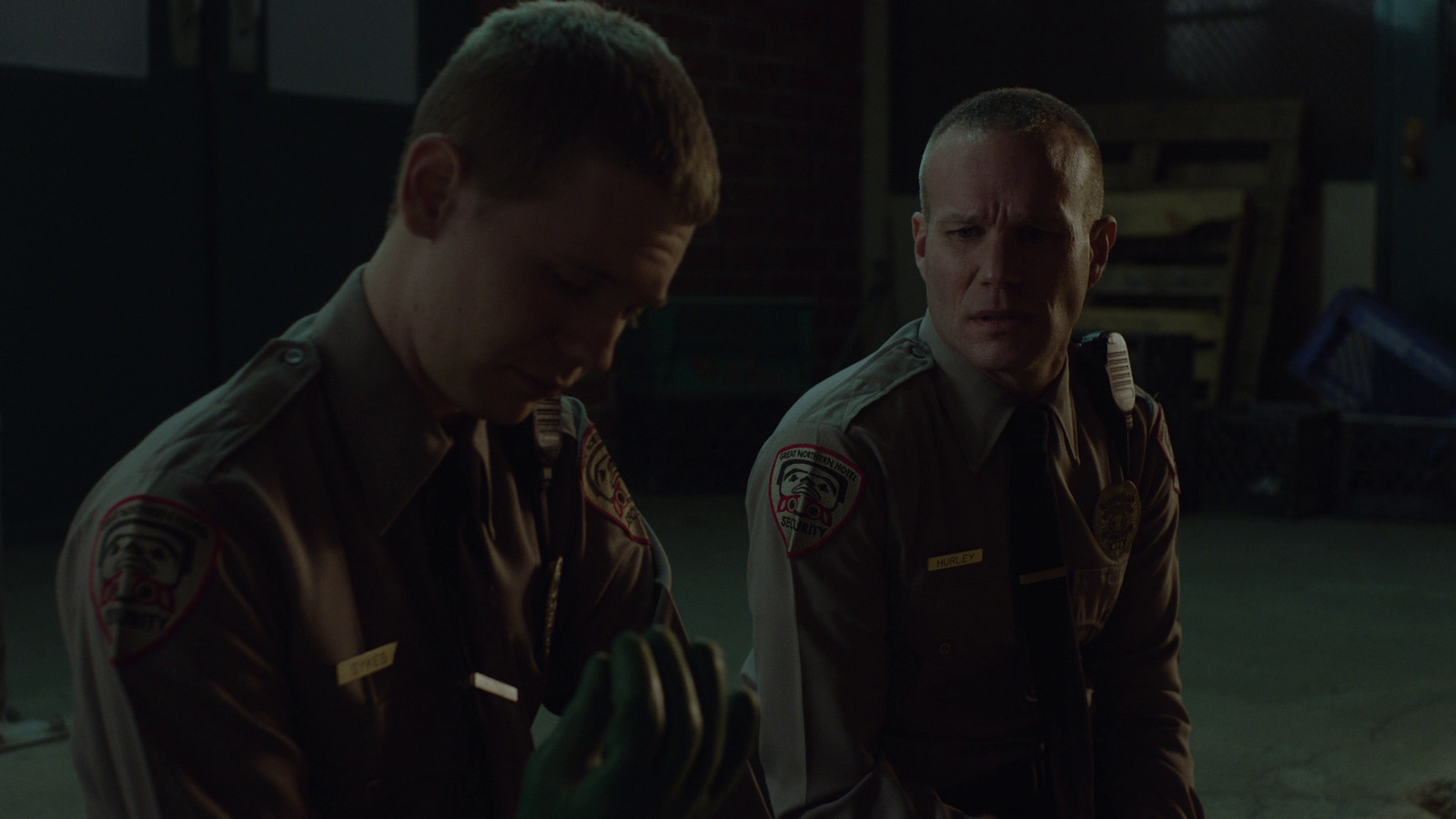
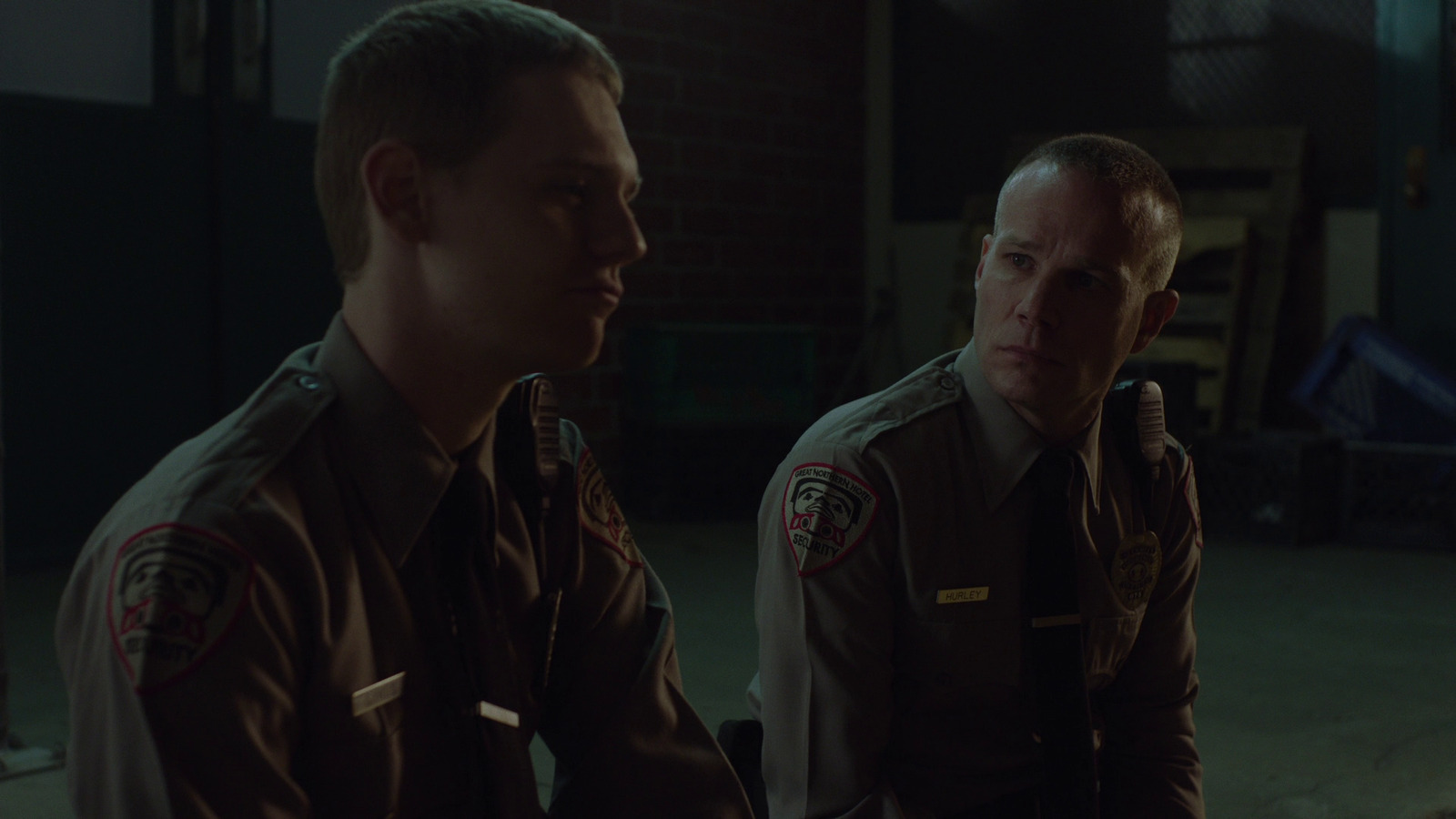
A destiny is told beside the loading dock
James’s birthday provides the occasion for Freddie to explain the green glove. The account moves from dissatisfaction in East London to a vortex, the Fireman’s instructions, a hardware-store dispute and a frightening blow. Jake Wardle’s rhythms let a miraculous commission coexist with the comic specificity of an obstructive shopkeeper. The story is not illustrated as a flashback. James listens, the glove remains visible and the audience has to weigh the telling against the small demonstration of force already offered with a nut. Freddie’s desire to help people is complicated by his fear that he seriously injured someone.
Open the scene sequence · 4 frames
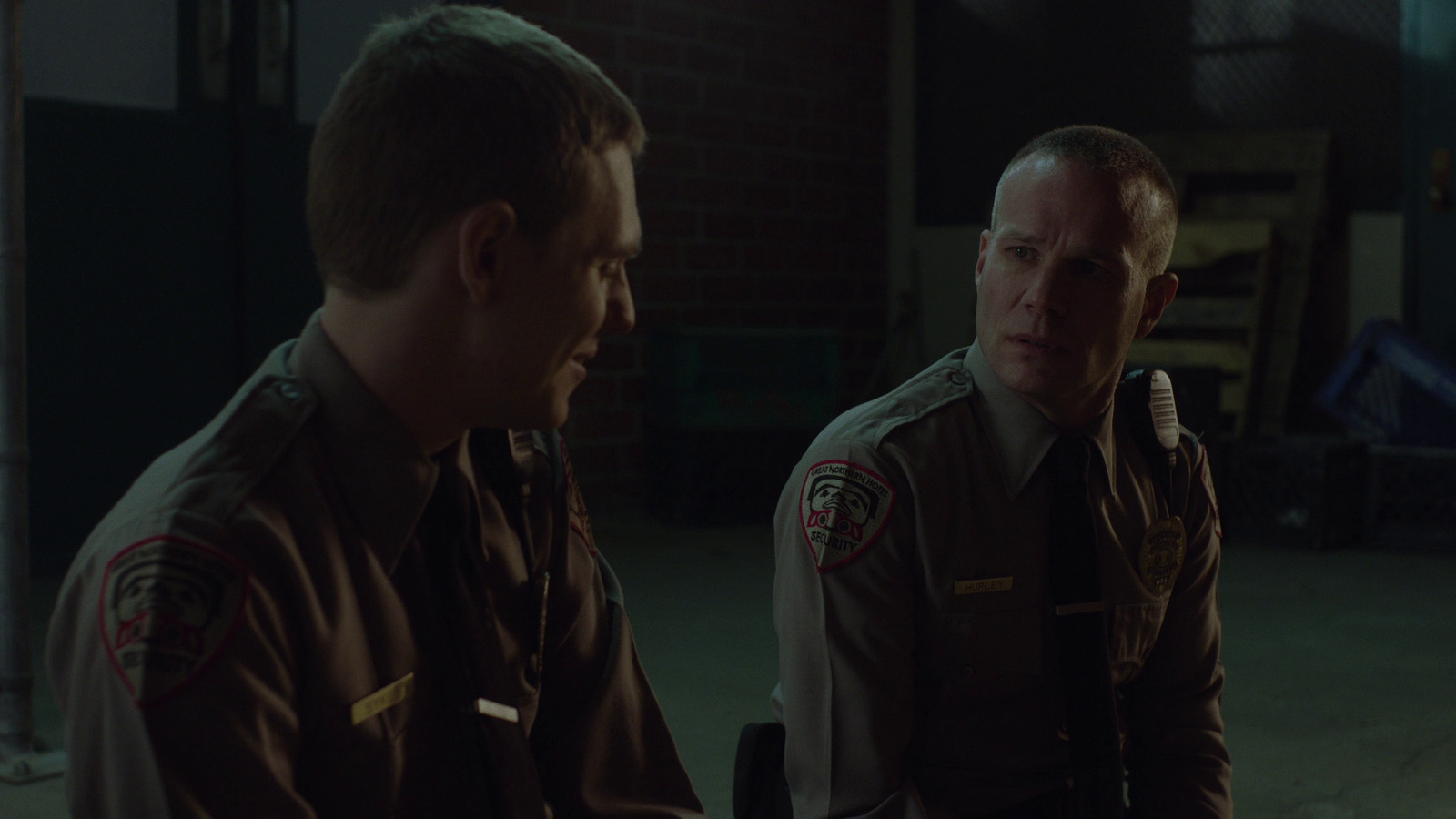
James follows the building’s other register
Leaving the conversation, James enters the Great Northern’s service spaces. Doors, pipes and a long corridor exchange the loading dock’s social world for a passage organized by mechanical and sustained high sounds. His movement gives the unexplained hum a listener and a route. The closed door is a destination without a disclosed interior. Later associations may enrich it, but this sequence itself does not establish that every nearby threshold is a proven entrance to Jeffries’s location. The uncertainty belongs to the scene’s construction.
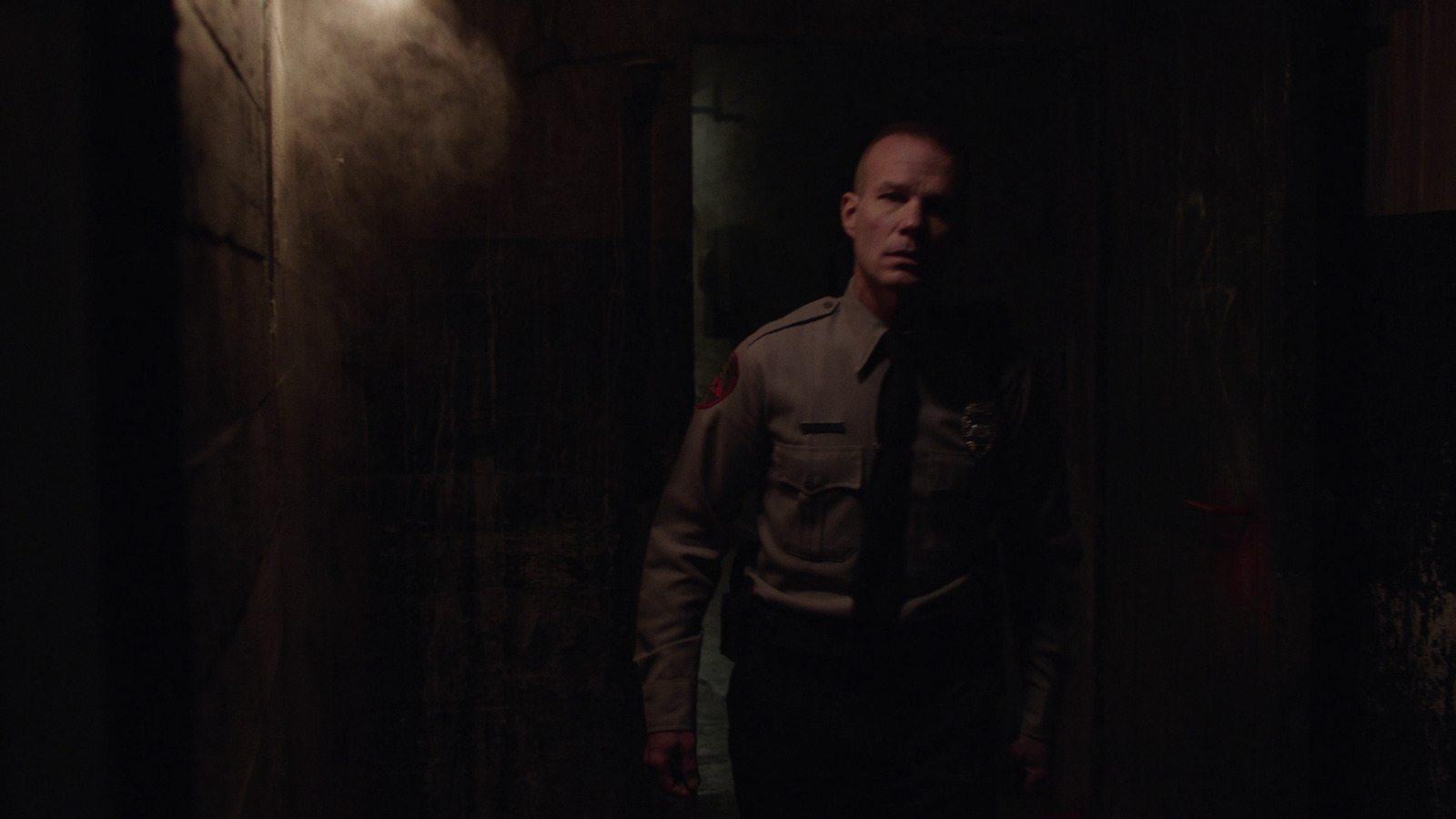
Open the scene sequence · 2 frames
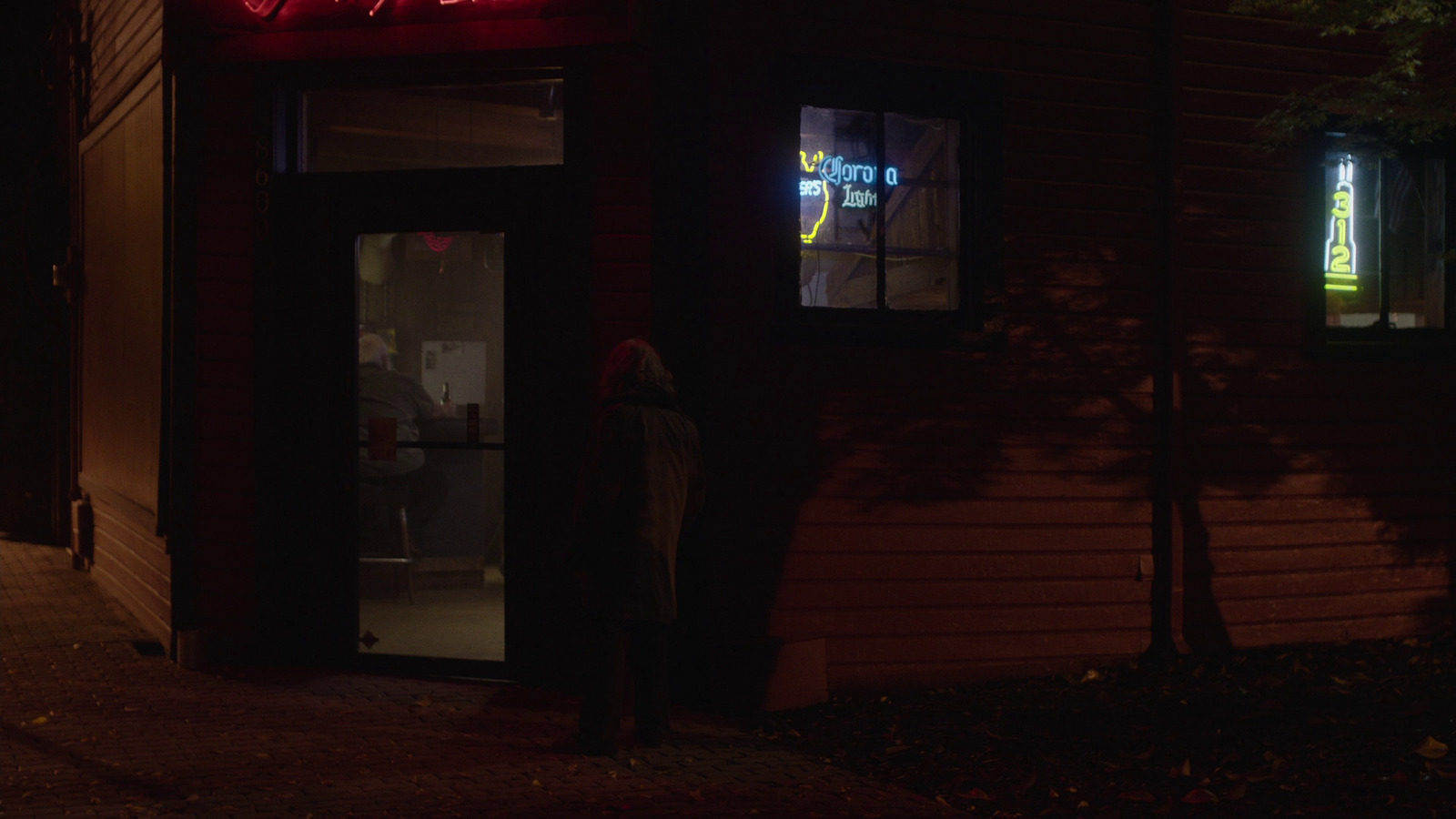
Sarah asks to be left alone
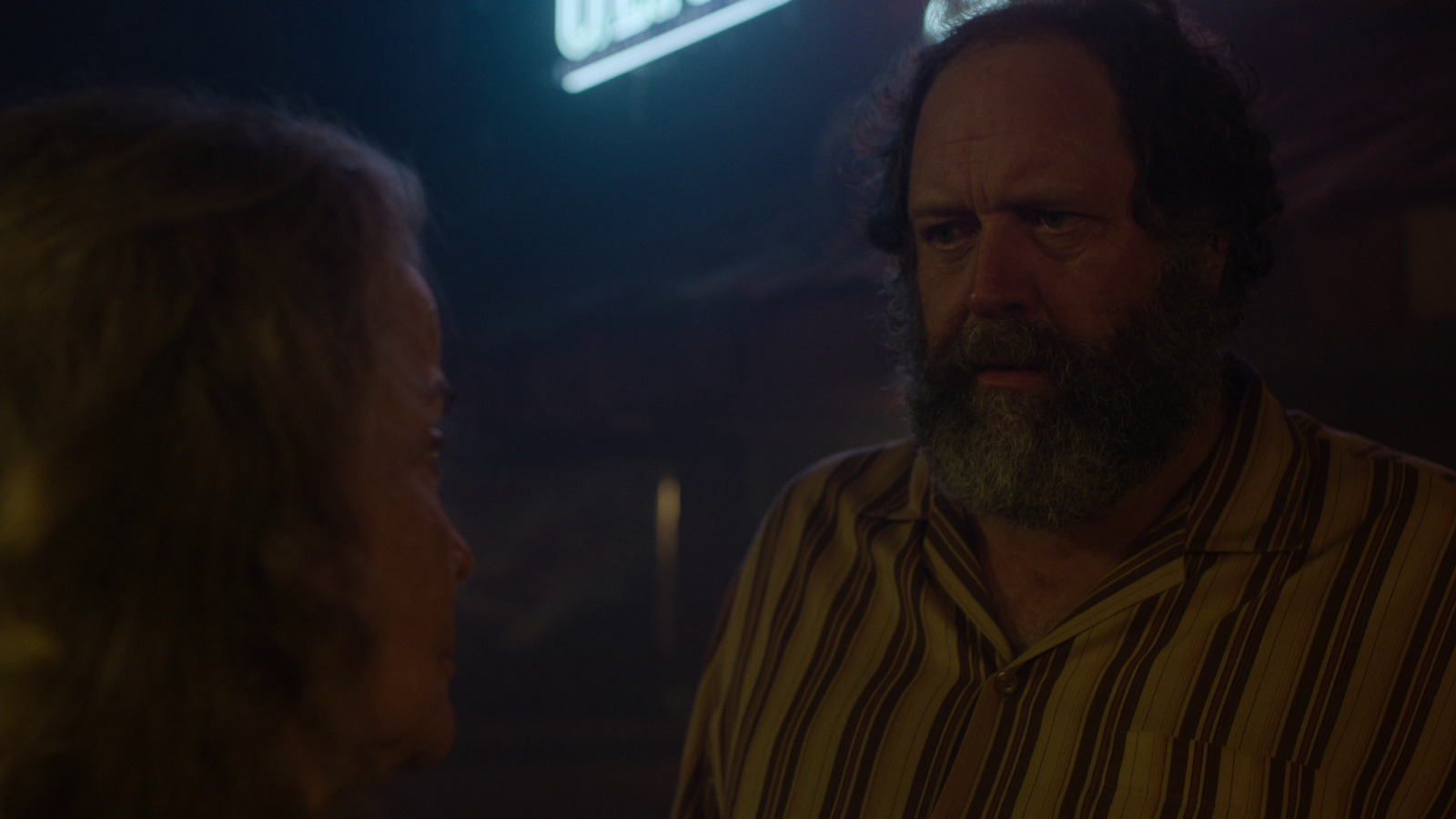
Sarah’s arrival at the Elk’s Point bar is given a long approach and a drink order before the trucker intrudes. She repeatedly asks him to leave her alone. His refusal, escalating insults and threats make the social violence explicit before any supernatural act occurs. Grace Zabriskie’s restrained delivery and stillness keep Sarah’s attention difficult to read, but the man’s behavior is not ambiguous. The episode grounds its impossible revelation in a recognizable failure to respect another person’s boundary.
Open the scene sequence · 2 frames
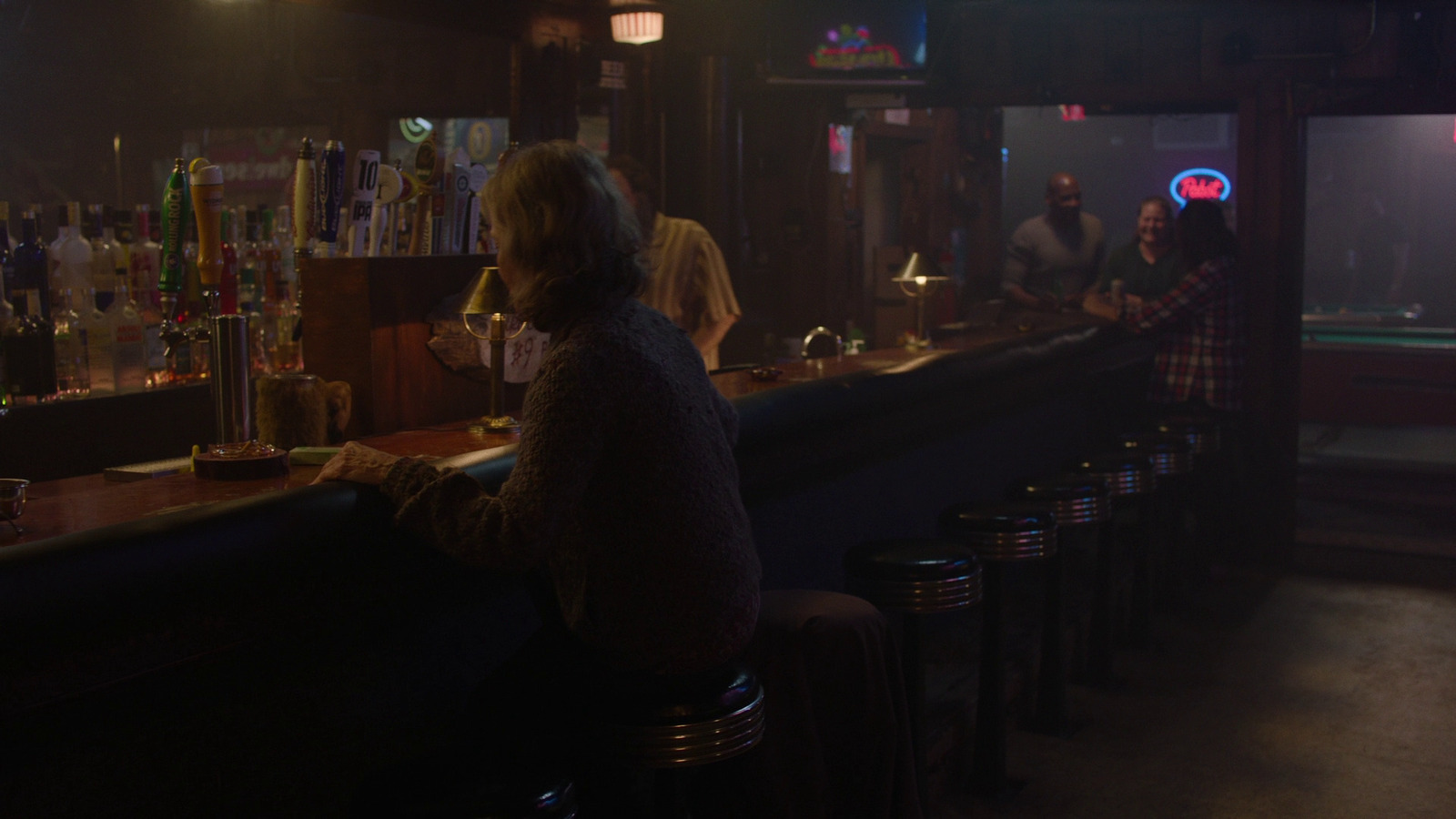
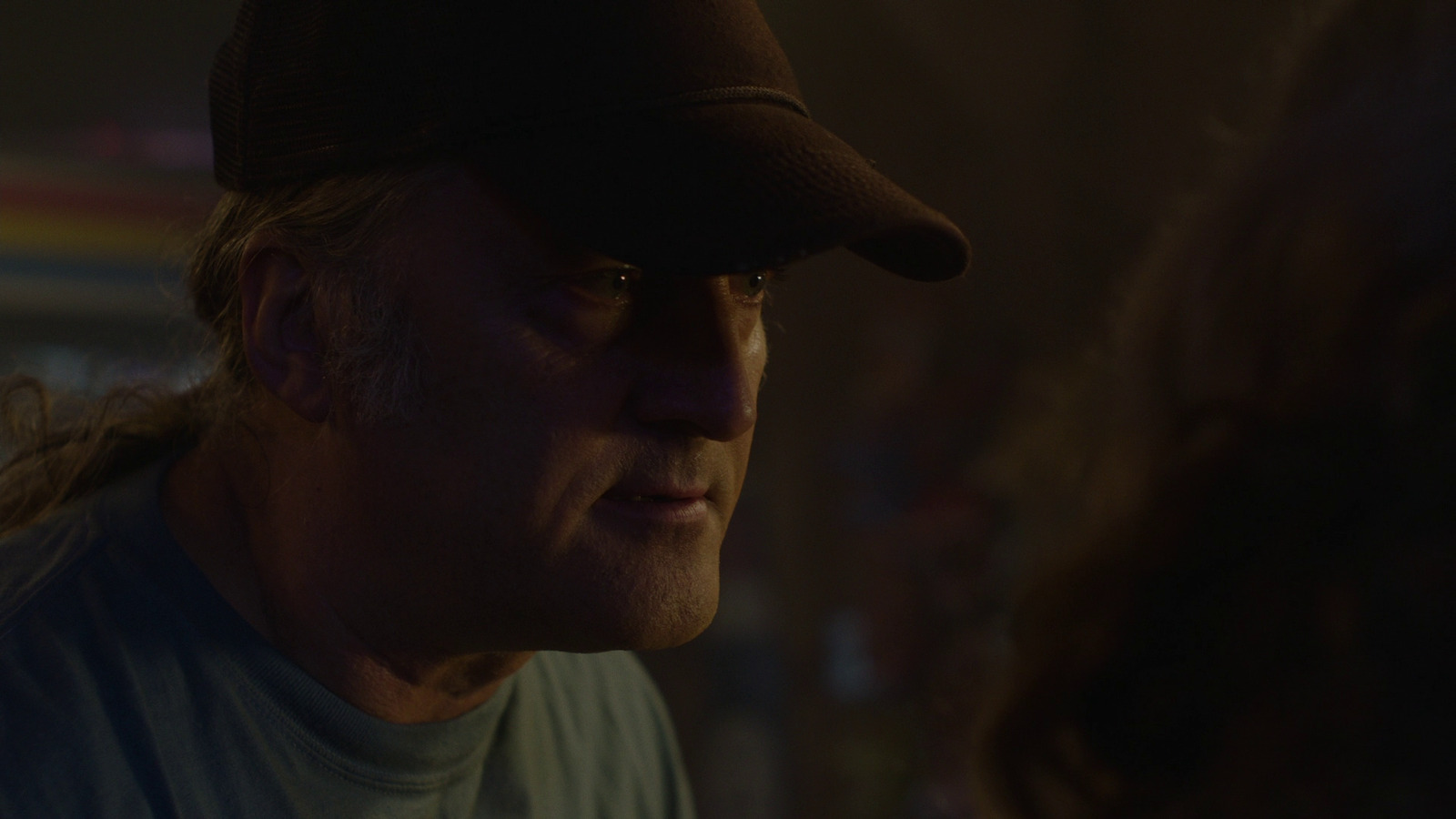
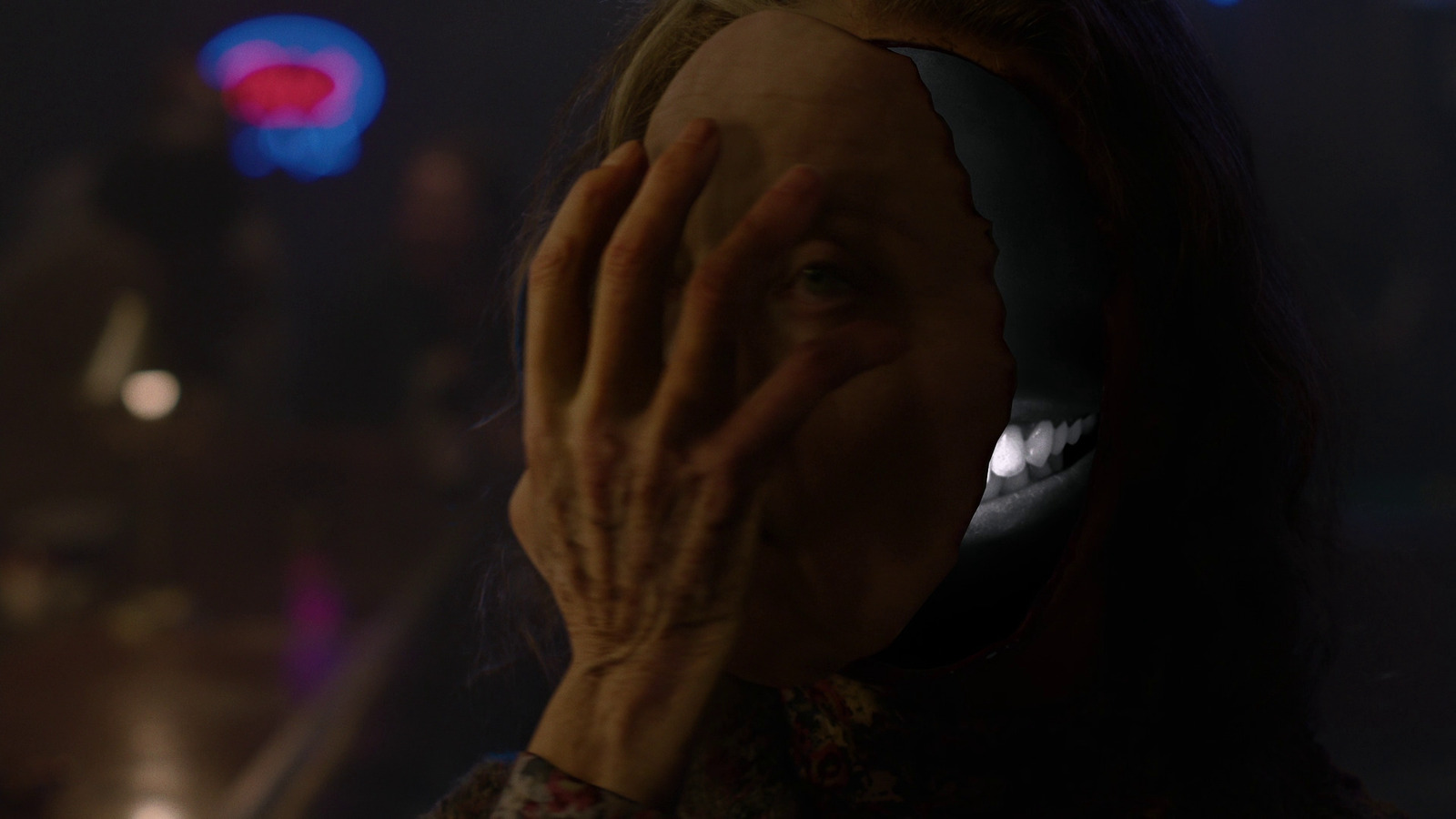
The face opens onto darkness
Sarah’s hand covers her face, which opens like a displaced surface onto a black interior. A pale hand and a mouth appear within the darkness before her ordinary face returns. The attack is then registered through the trucker’s throat injury and collapse. The alternation matters: the episode does not leave Sarah permanently transformed into a creature for the camera to inspect. She passes between an apparently ordinary face, an impossible interior and a sudden act. The sequence invites comparison with Laura’s opening face in Part 2, while its darkness reverses the earlier image’s bright disclosure.
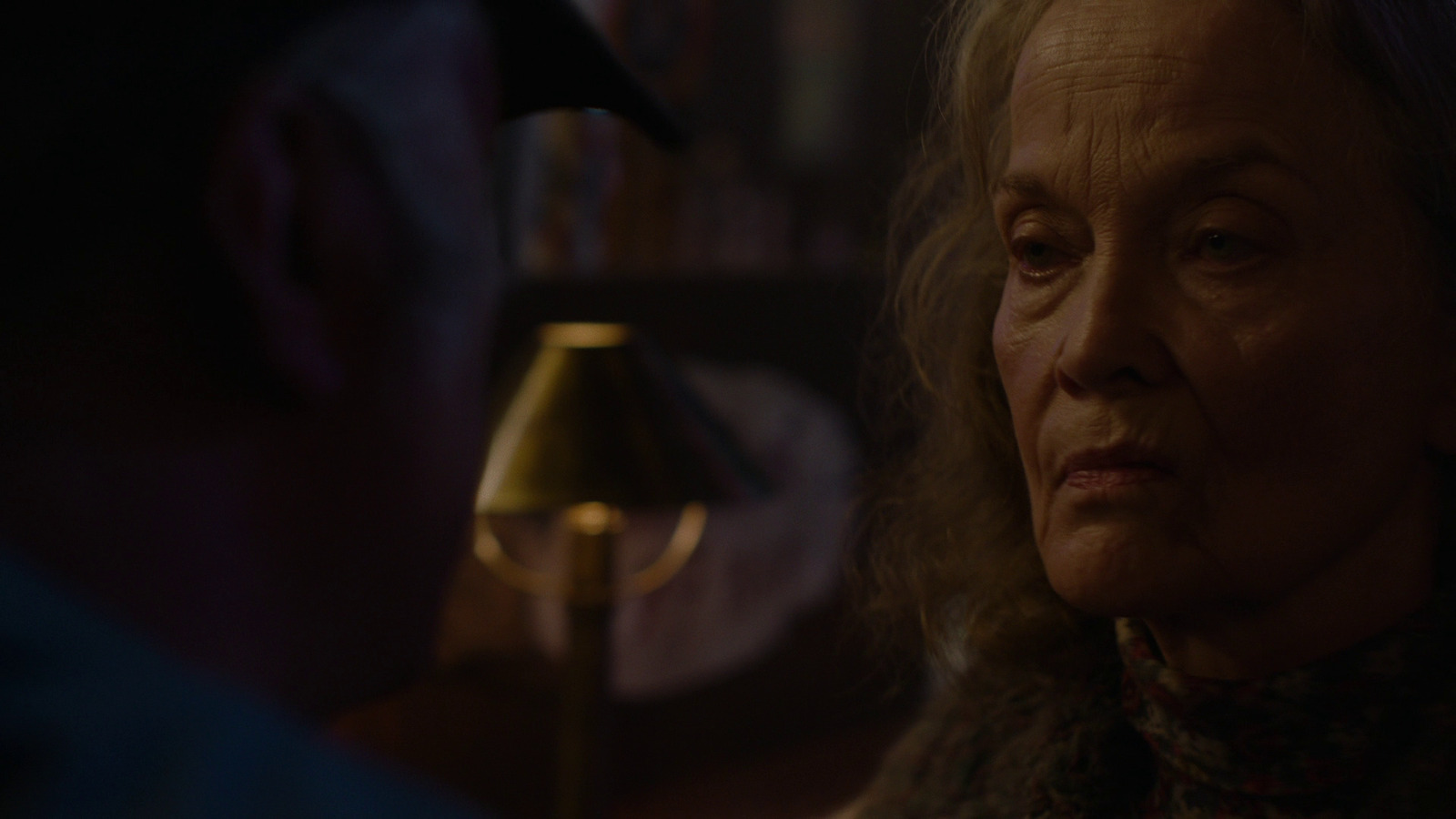
Open the scene sequence · 6 frames
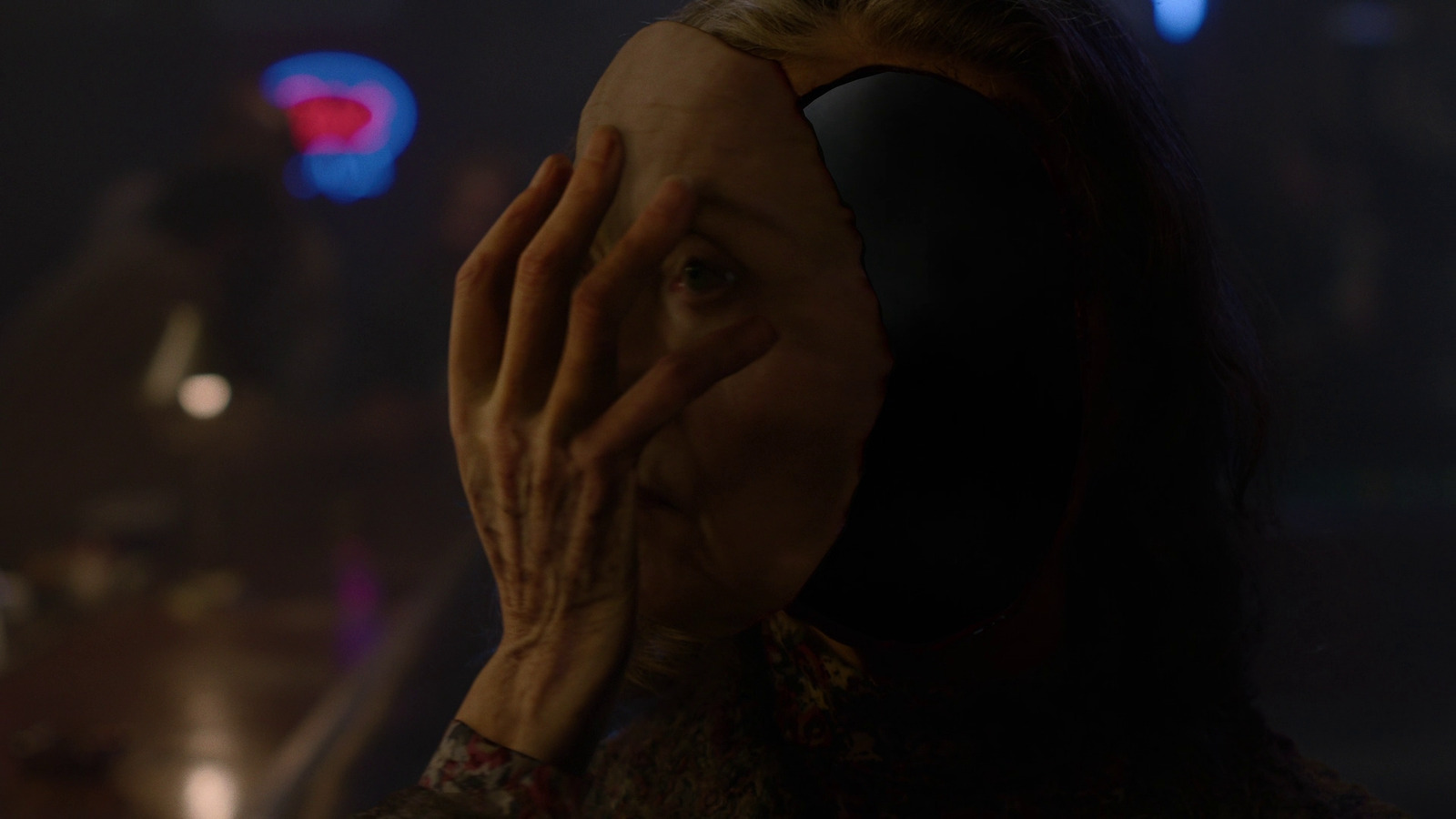
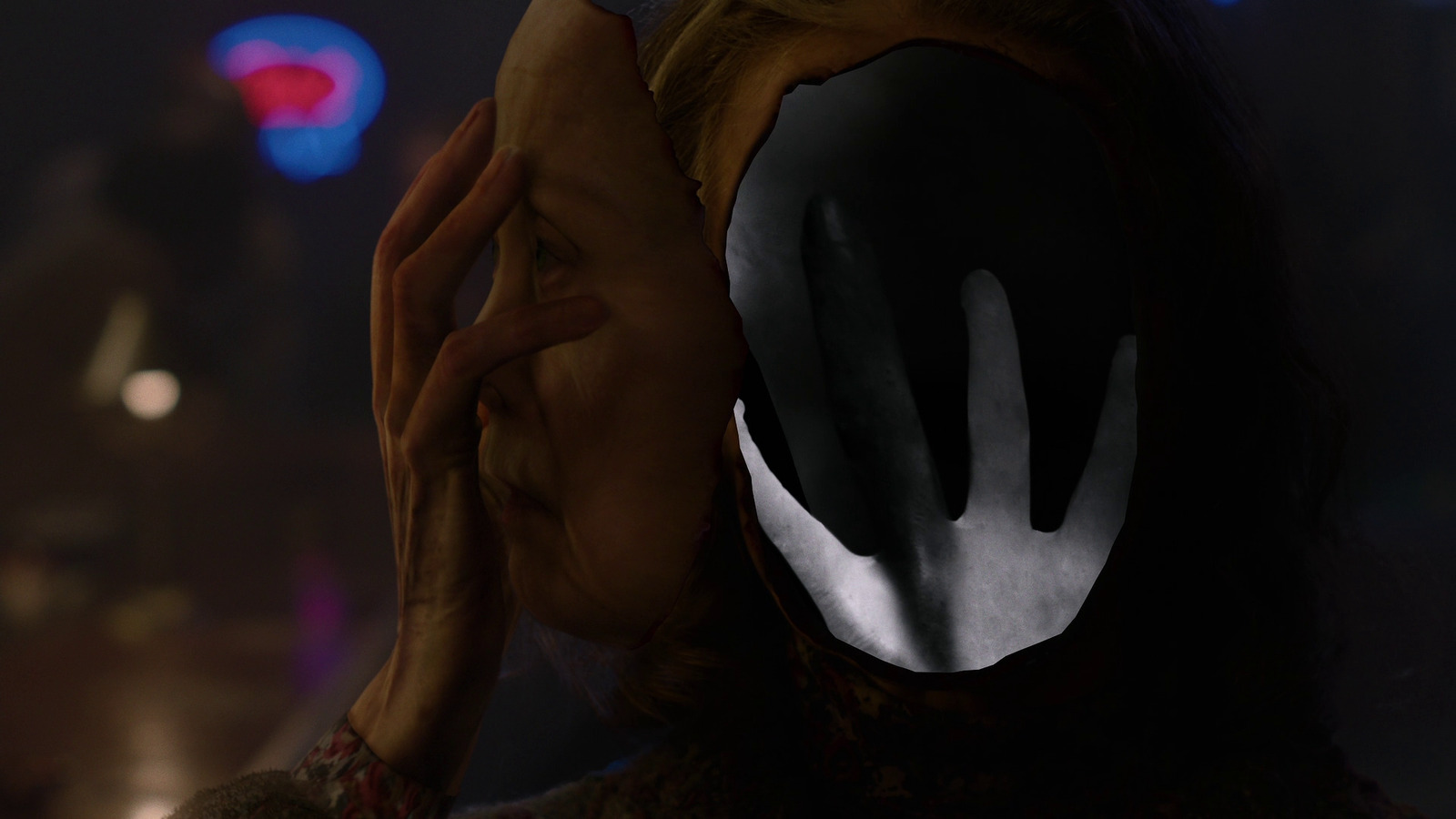
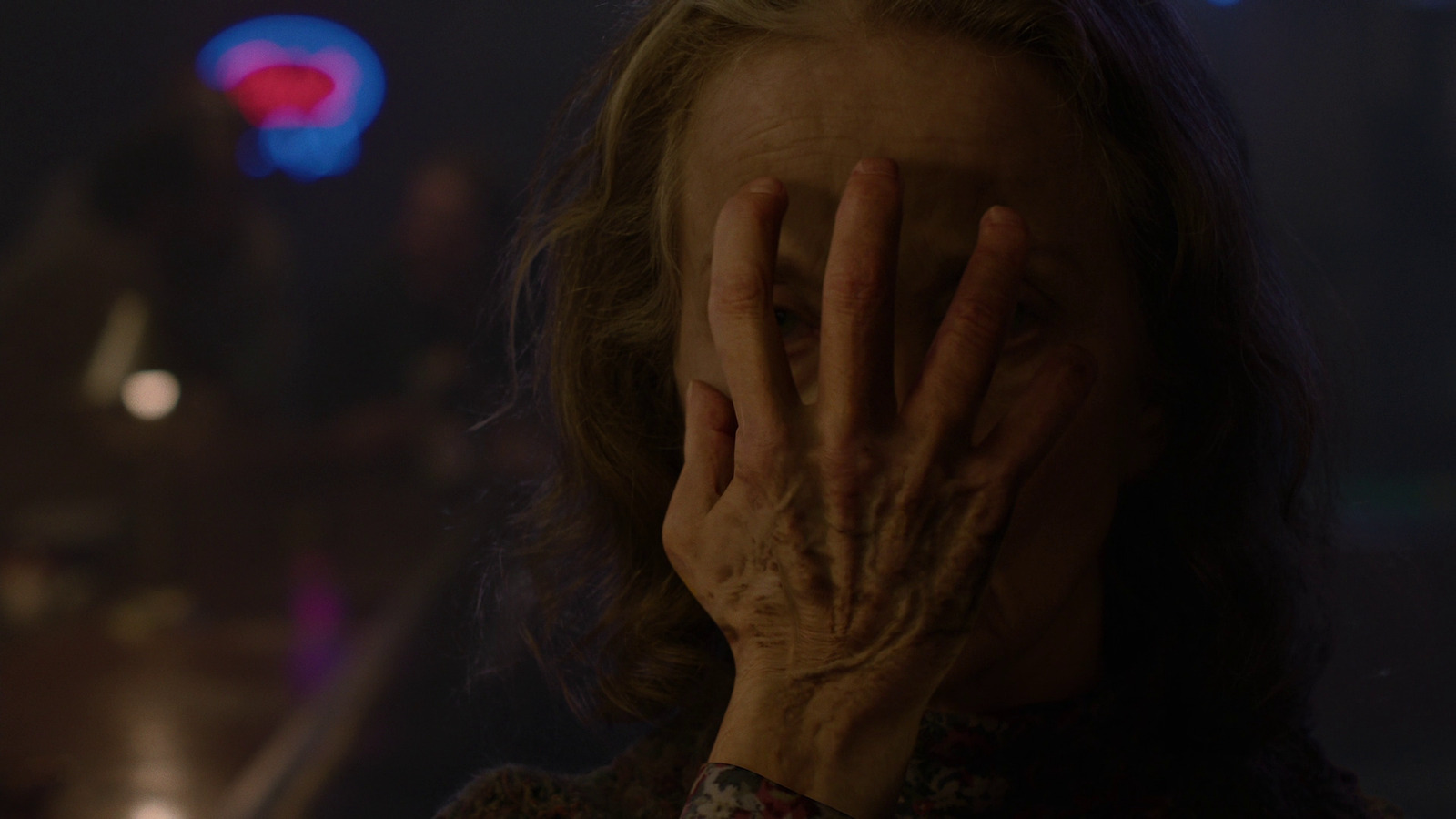
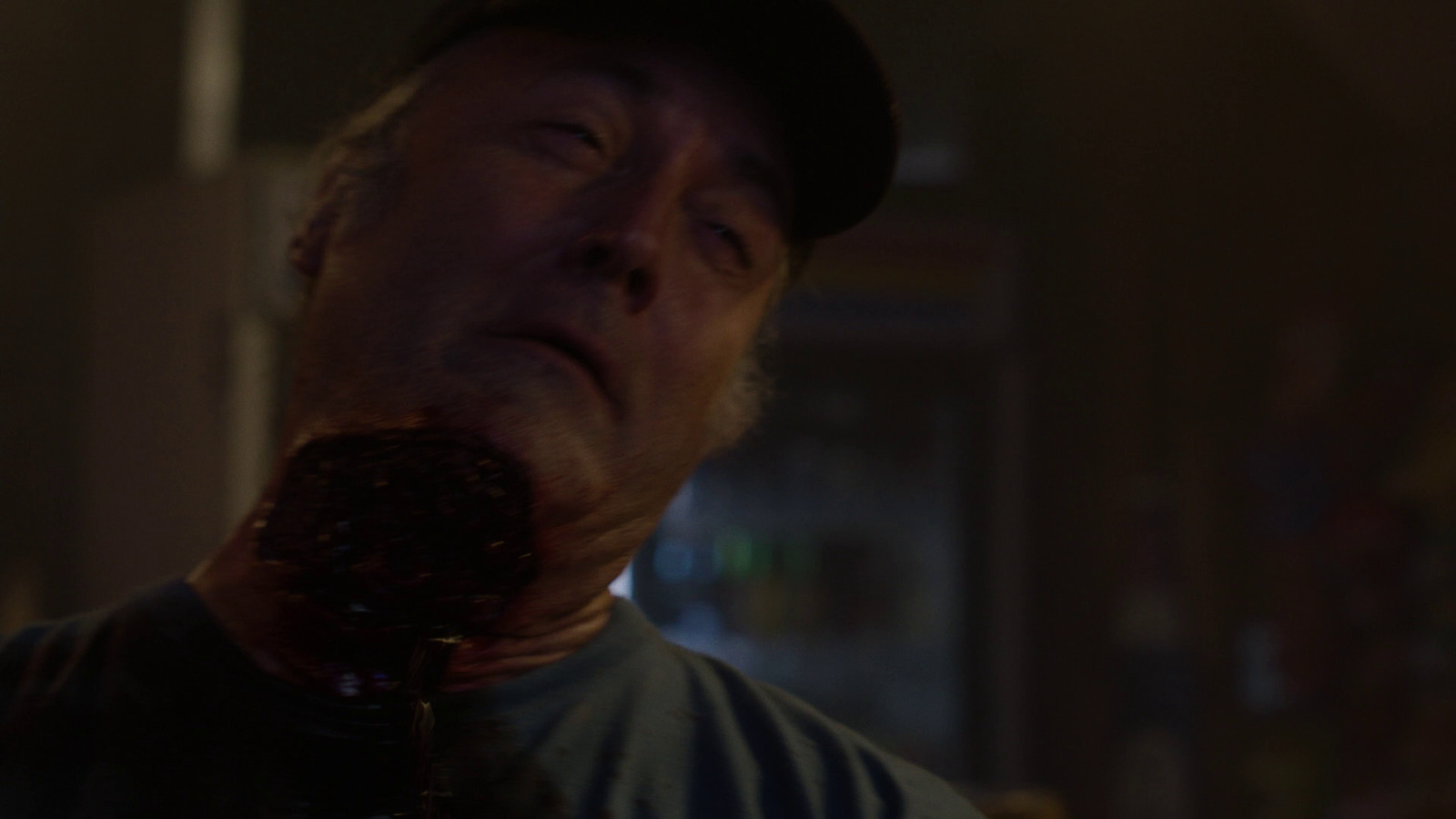
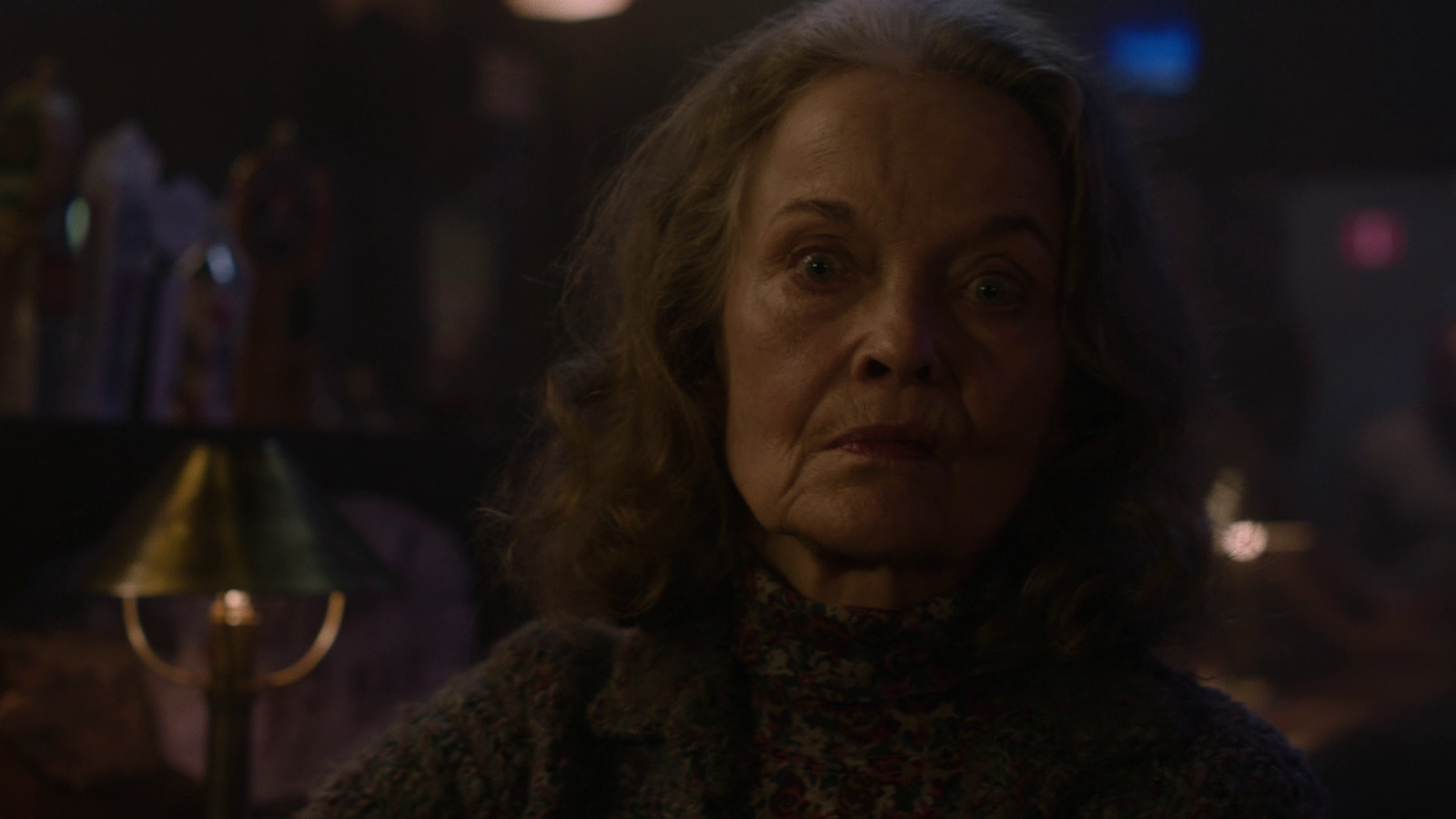
Sarah performs the surprised witness
After the man falls, Sarah’s alarm gives the bartender a version of events in which she was merely having a drink. The viewer has seen enough to reject that account, but the room has not shared the same access. Her final invocation of mystery is therefore cruelly double-edged. The scene dramatizes the difference between what an image has disclosed to us and what another character can establish. It does not, by itself, name the presence inside her or settle how Sarah understands it.
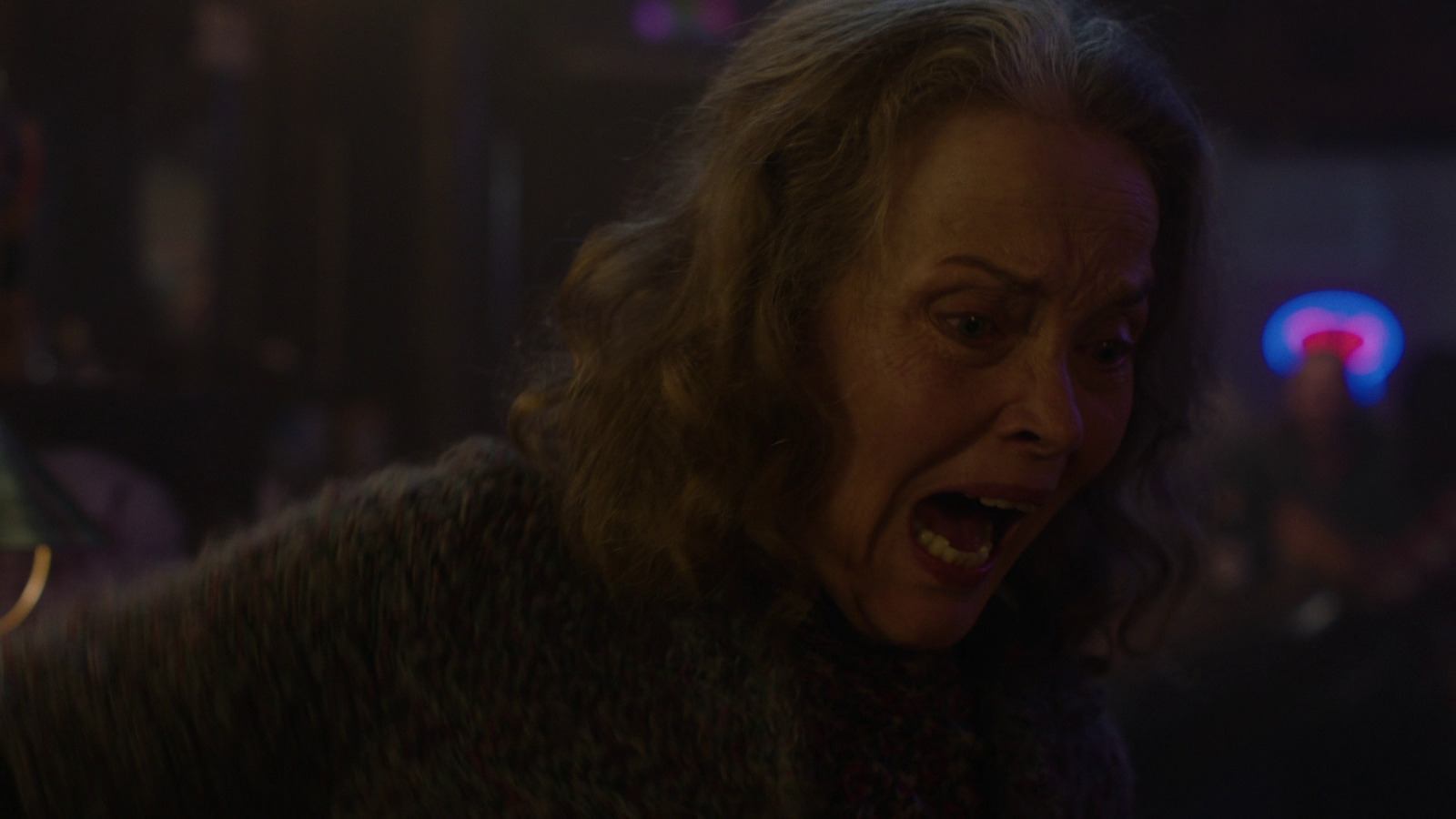
Open the scene sequence · 1 frame
Billy remains a story someone tells
Sophie asks Megan about Billy. Megan describes his sudden appearance, blood from his nose and mouth, and a departure almost as quick as his arrival. She cannot reliably place her uncle in the scene; her mother’s name, Tina, produces a noticeable pause in the exchange. The account brings names from Audrey’s conversations into another social setting, but Billy remains unseen. The uncertainty is in the testimony itself. Treating it as a solved diagram of simultaneous events would discard the hesitations that make the conversation distinctive.
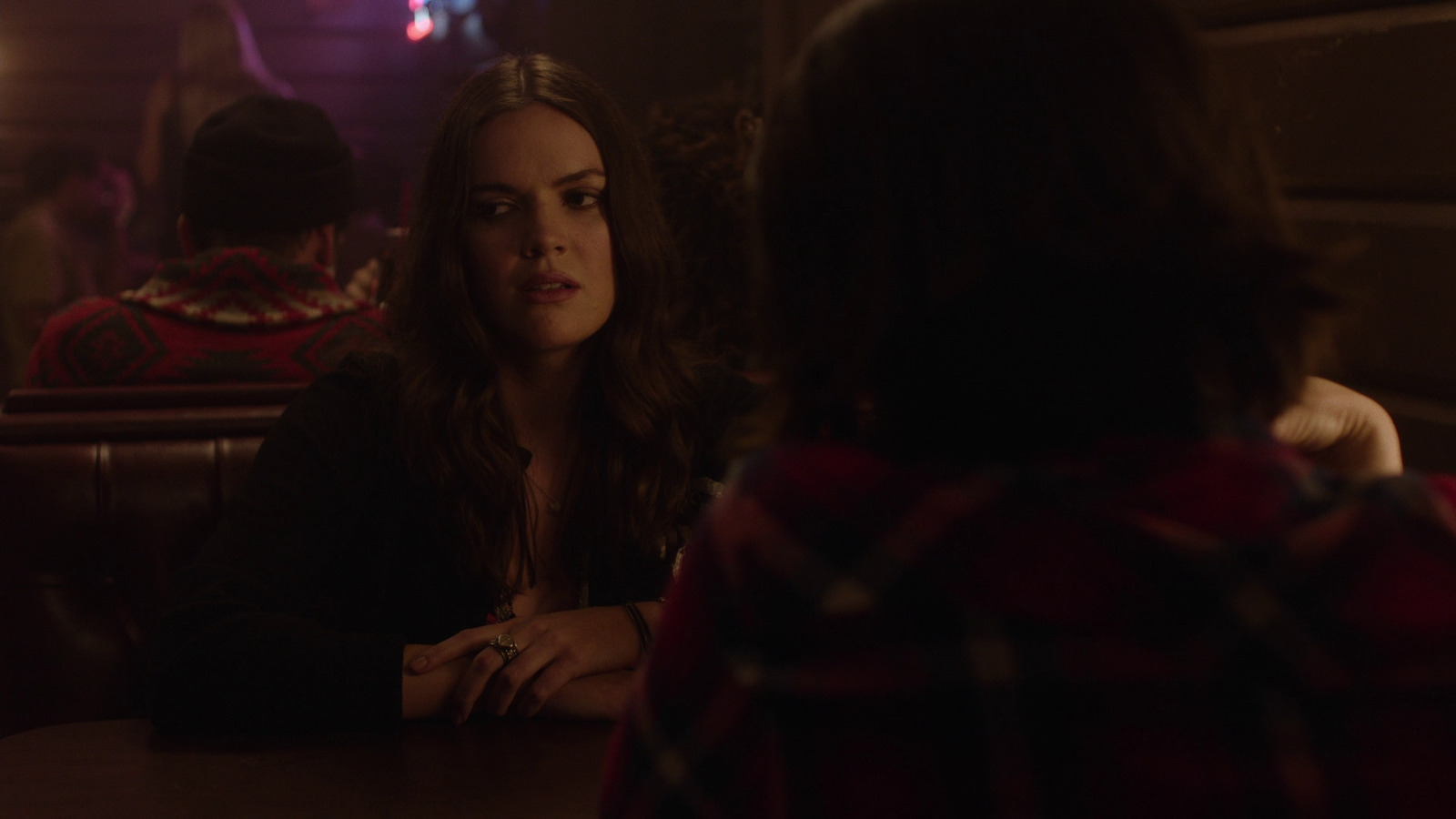
Open the scene sequence · 2 frames
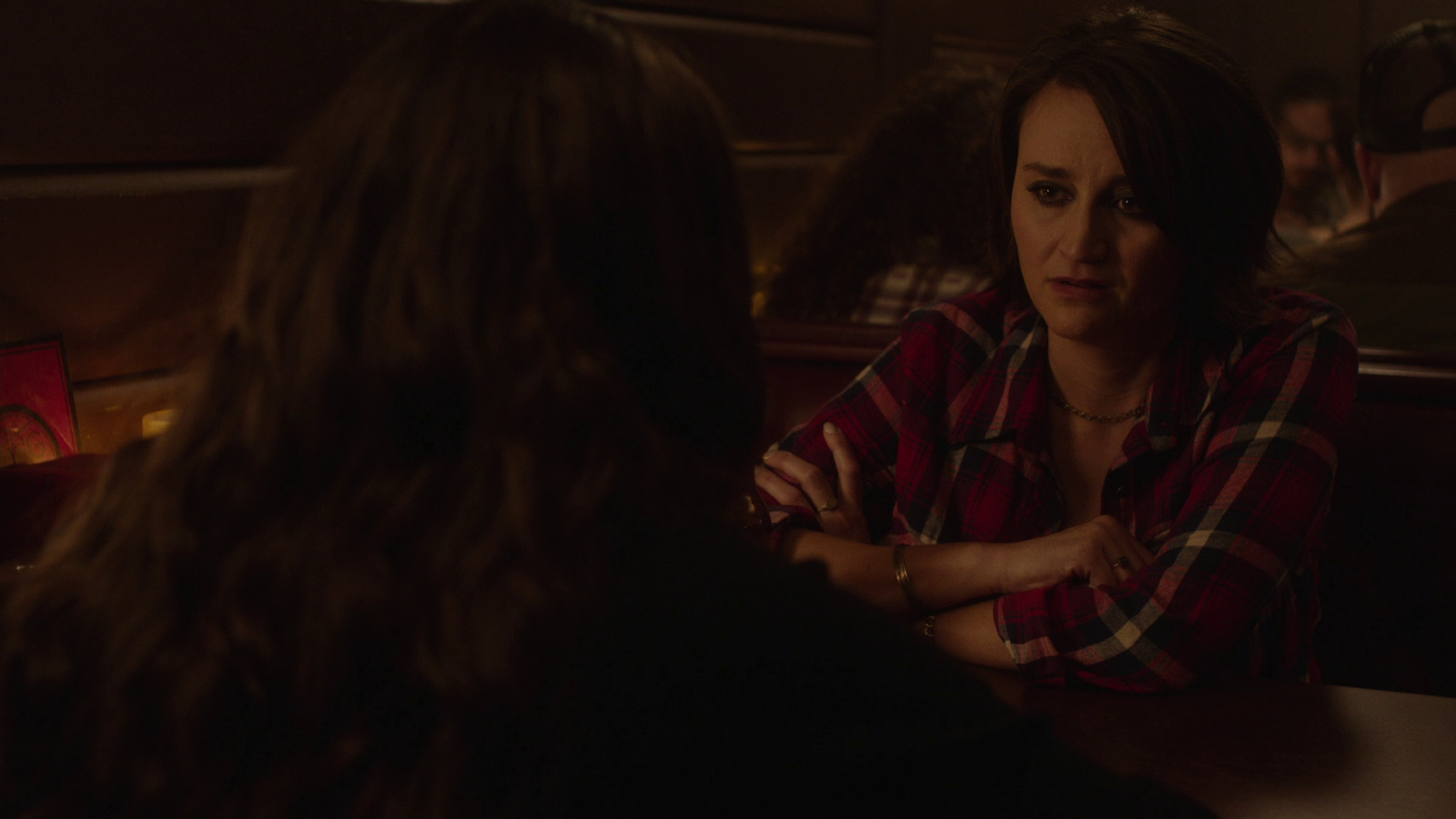
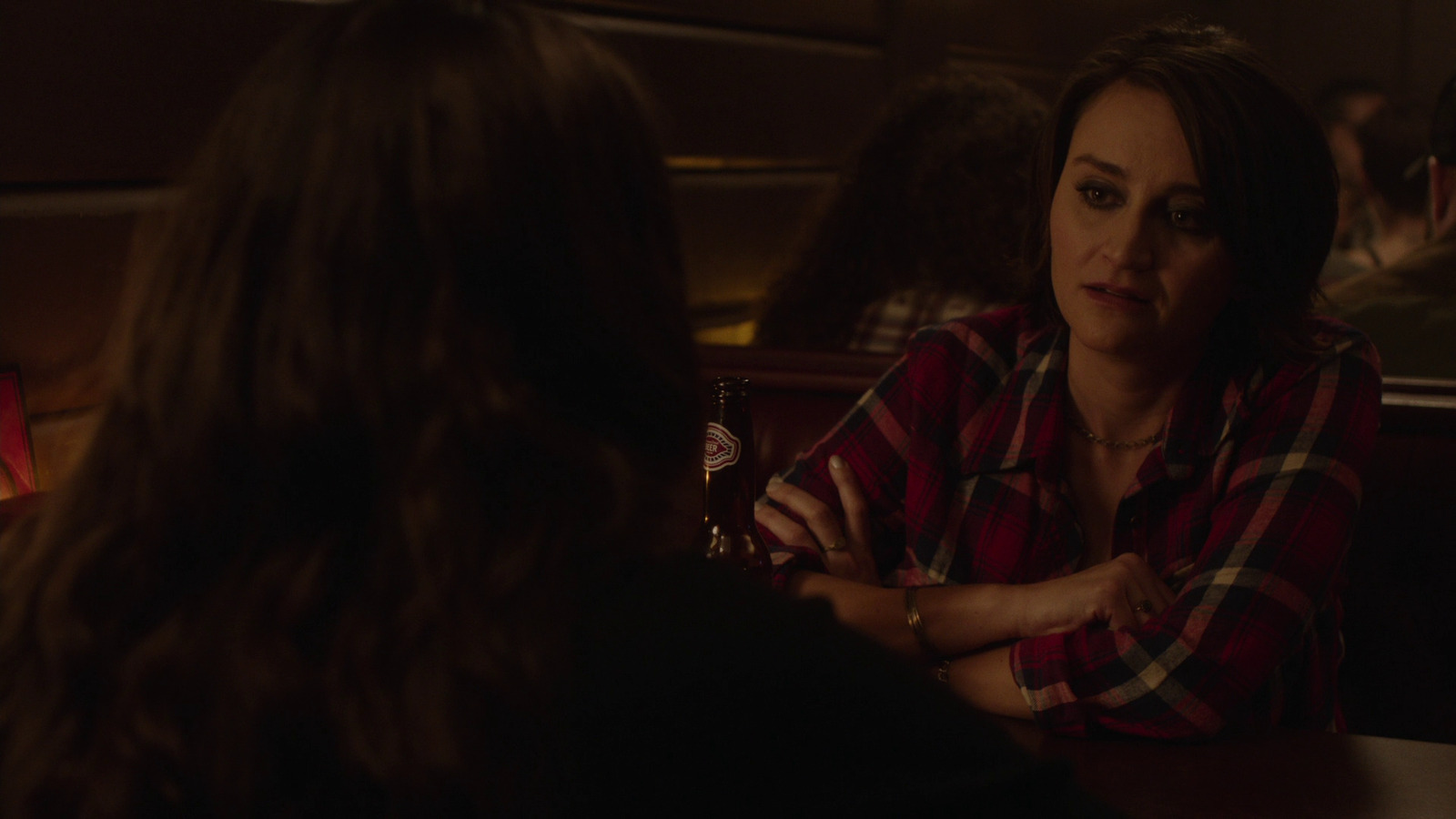
A performance carries the room into the credits
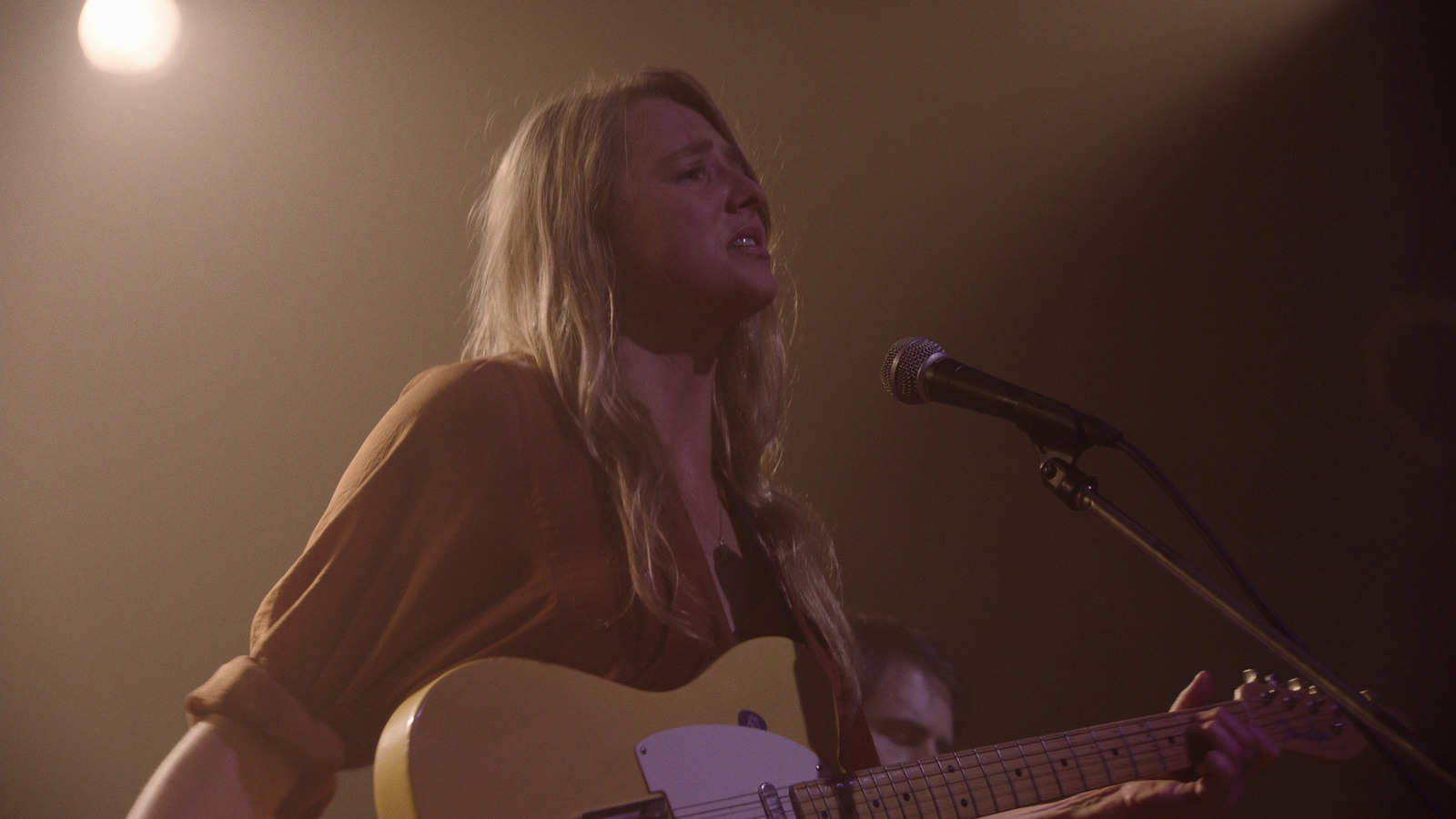
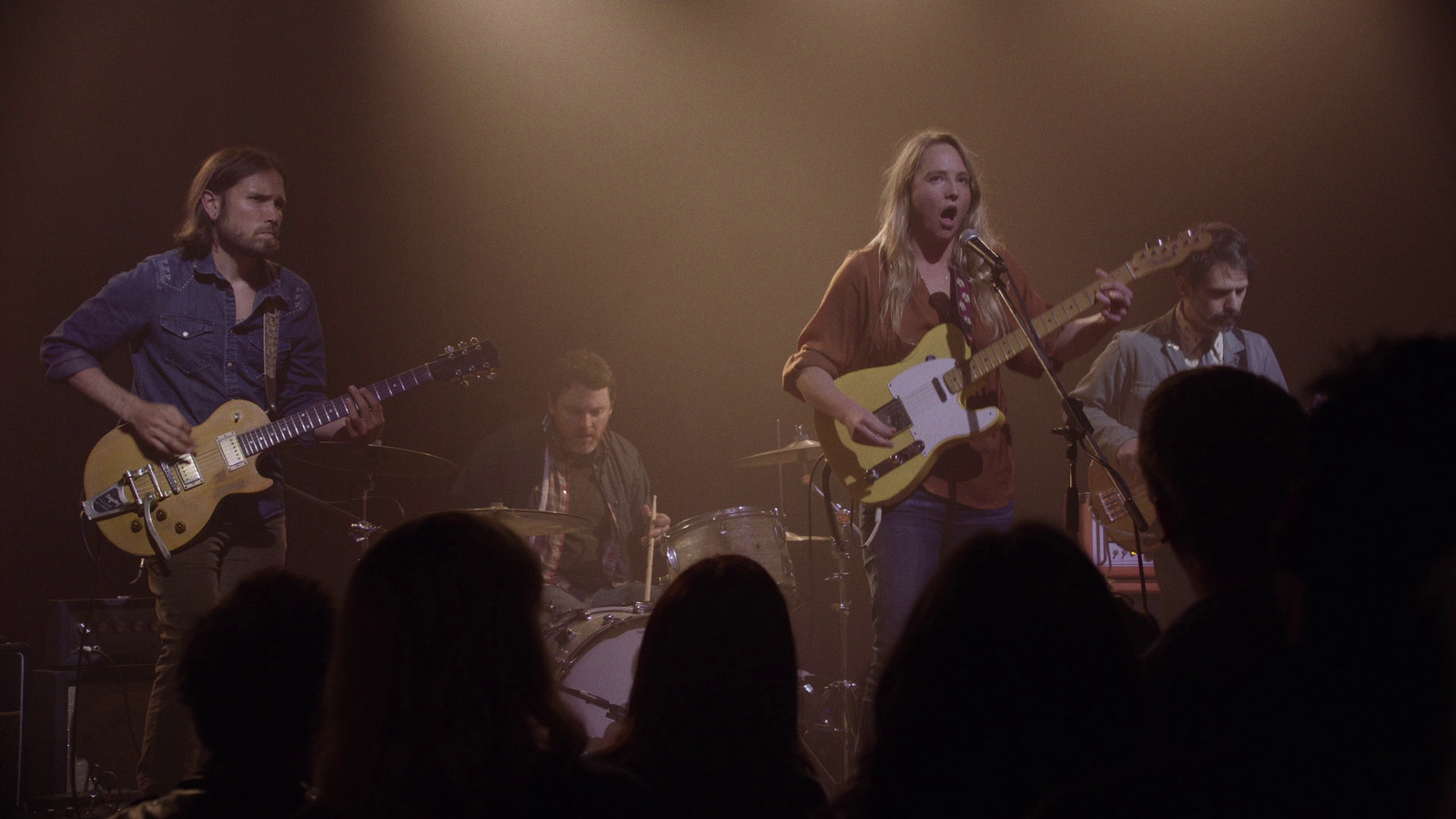
The MC introduces Lissie, and the camera moves from the remaining conversation toward the band performing “Wild West.” Megan’s last look keeps the social scene briefly present as the song takes over. Stage light and the musicians’ physical energy provide a change of scale after the close, uneasy testimony at the table. The music is a performance within the Roadhouse rather than a code that automatically explains the preceding events. The closing dedication to David Bowie places another kind of remembrance alongside the episode’s return to Jeffries.
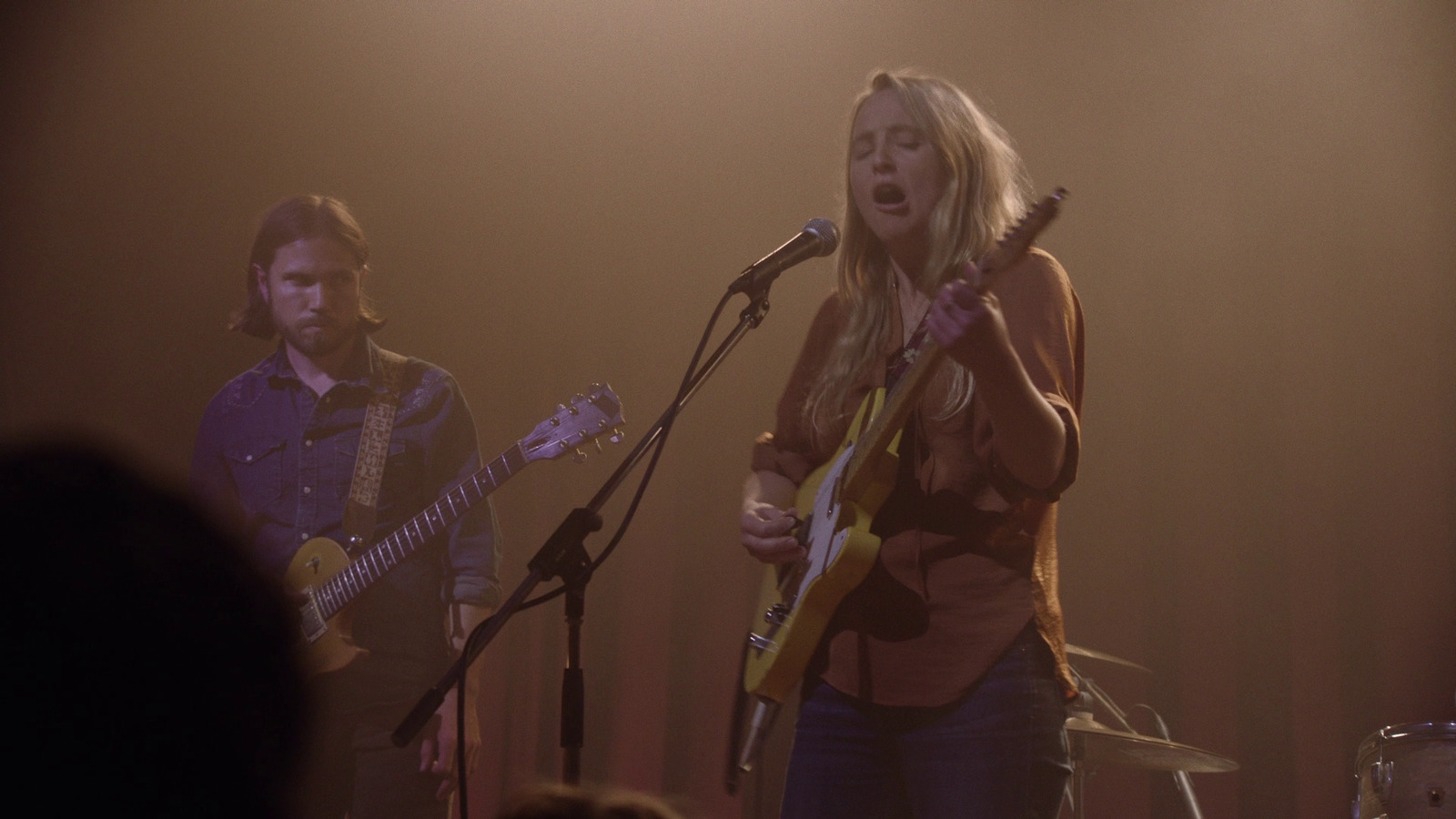
Open the scene sequence · 2 frames
Telling, overhearing and sounds without an answer
Three stories with different listeners. Albert’s case history tests Tammy’s interpretation; Freddie’s account answers James’s curiosity; Megan’s story tries to convey panic she cannot fully organize. None becomes an illustrative flashback. Pace, hesitation, interruptions and the listener’s response therefore carry information that a plot summary would erase.
Cole’s hearing and the dream’s languages. The window-cleaning intrusion foregrounds his apparatus, while the dream moves between Monica Bellucci’s French speech and Cole’s narrated English recollection. The repetition is part of the scene’s form. It places a proposition at a distance from the person repeating it, rather than presenting an anonymous authorial maxim.
The Fireman’s voice needs its image. The altered utterance is supported by on-screen text and the credit identifying the Fireman. Its processing should not be mistaken for ordinary indistinct speech. Andy’s relative silence leaves the object, the upward look and the vision to carry the encounter.
Two institutional interiors become strange. Naido’s vocalizations and the wounded man’s echoes prolong the jail scene beyond the exchange of useful information. At the Great Northern, James follows a sustained sound through a service corridor. In each case, a familiar building contains an acoustic problem that its ordinary function cannot explain.
Sarah’s voice changes with her audience. Her requests for distance, the threat, the silent face revelation and the subsequent performance of alarm form distinct stages. The bartender receives the last stage as testimony; the viewer has already witnessed the contradiction. Lissie’s “Wild West” then restores a public performance space without resolving that contradiction.
A closer view of the Roadhouse performance
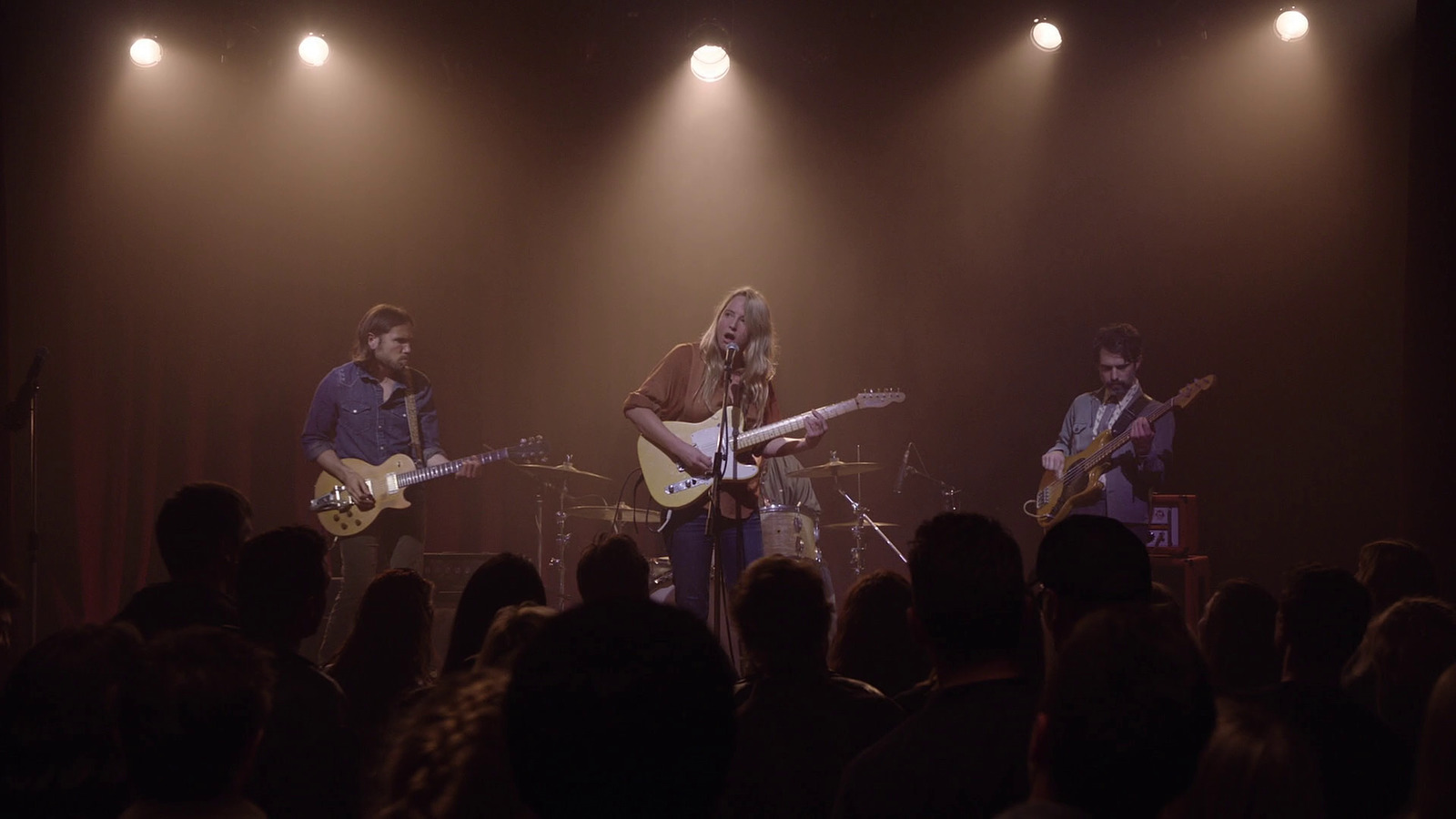
Lissie — Wild West
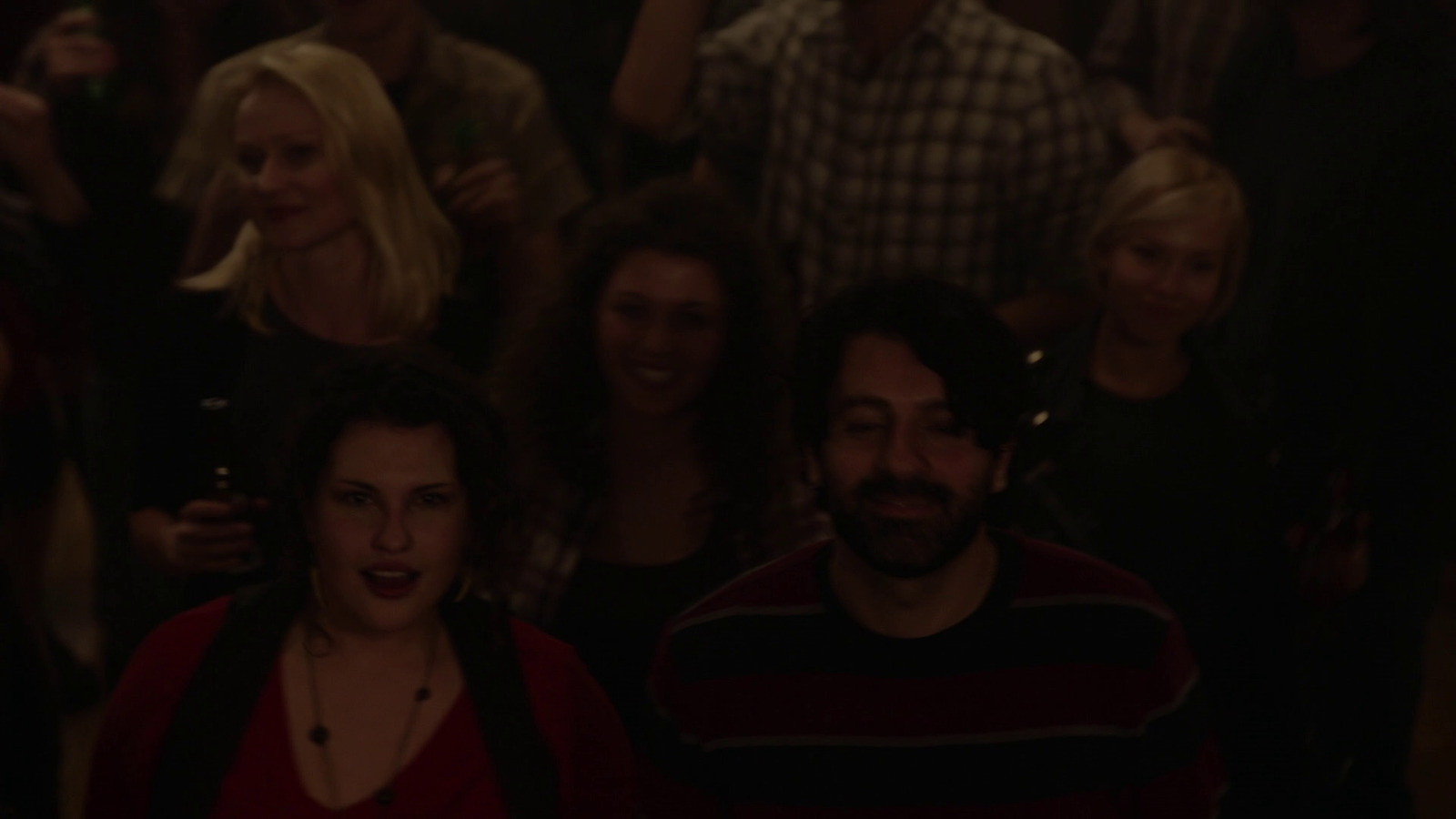
Lissie’s guitar and microphone occupy the centre of a four-person band, under warm overhead light. The edit alternates her animated delivery with wider views of the musicians and the crowd; individual audience faces emerge briefly before the image returns to the stage. The performance presents the Roadhouse as a populated, functioning venue.
Open the Wild West performance study · 2 frames
Read the full performance comparison →
Source: Roadhouse Music — Lissie — Wild West, 00:00–03:53, in Twin Peaks: From Z to A. These timings identify the separate performance edit; the episode context is examined above.
Focused effects and vision studies
A dream that reopens an earlier film
Follow the monochrome café, Cole’s turn and the return to Philadelphia. The effect depends on editing and reframing remembered material as much as on any isolated visual trick. Jeffries’s earlier image is newly connected to the problem of Cooper’s identity.
Open the dream transitions · 6 frames
From forest canopy to rotating threshold
The watch, the people below and the sky provide the before-and-after coordinates. BUF’s production account documents vortex work for the series, but its aggregate shot count is not treated as a count belonging solely to this scene. [2]
Open the forest threshold sequence · 7 frames
Andy’s oval field of images
The object, rising vapor, upward look and oval display make viewing itself an event inside the episode. The gallery preserves the oval’s surrounding darkness, which is integral to the composition. Images of Cooper and his double, the telephone and Andy with Lucy are held together without adding an invented chronological key.
Open Andy’s vision sequence · 13 frames
Sarah’s face: surface, void, hand and mouth
BUF describes the contrast between Laura’s bright interior and Sarah’s dark, fleshy one, and explains the use of digital head and hand work grounded in photographed reference. Its account supports a production comparison between the two faces; it does not identify the entity within Sarah. The frames follow the visible opening, internal fragments and reclosure. [2]
Open the face-opening sequence · 9 frames
Making the images, shaping the performances
Jake Wardle and Freddie’s telling. In his interview with Oliver Webb, Wardle recalls that a video demonstrating accents led to contact through Lynch’s circle, followed later by the Twin Peaks opportunity. He describes Freddie’s East London background and the strong Cockney voice as a specific choice, rather than his everyday manner of speaking. He also recalls reading scenes with James Marshall and rehearsing with Lynch. That account helps locate the monologue’s apparent spontaneity in preparation and partnership. Wardle’s own comparison between being summoned to America and Freddie’s journey is an actor’s analogy, not evidence that the character explains the production. [3]
Two opening faces, deliberately different. BUF’s account treats Laura’s and Sarah’s facial revelations as related effects with opposed interior qualities. Read alongside the images, that supports a formal comparison between disclosure and concealment. It leaves the story’s larger identification questions open. [2]
Jeffries’s image and voice. The end titles credit David Bowie as Phillip Jeffries and Nathan Frizzell as Voice. Lynch’s later account of reusing Bowie’s footage and replacing the voice is discussed in the Part 15 production study, where the machine and extended conversation make that distinction especially important.
A strange report delivered plainly
In Behind the Red Curtain, Robert Forster films Frank Truman’s call to Gordon about the diary pages and the possibility of two Coopers. Lynch’s direction asks him to communicate information that is strange even to Frank, while still making the report. The surrounding view reveals camera, microphone, desk and people supplying the other side of the conversation. 02:49–04:53.
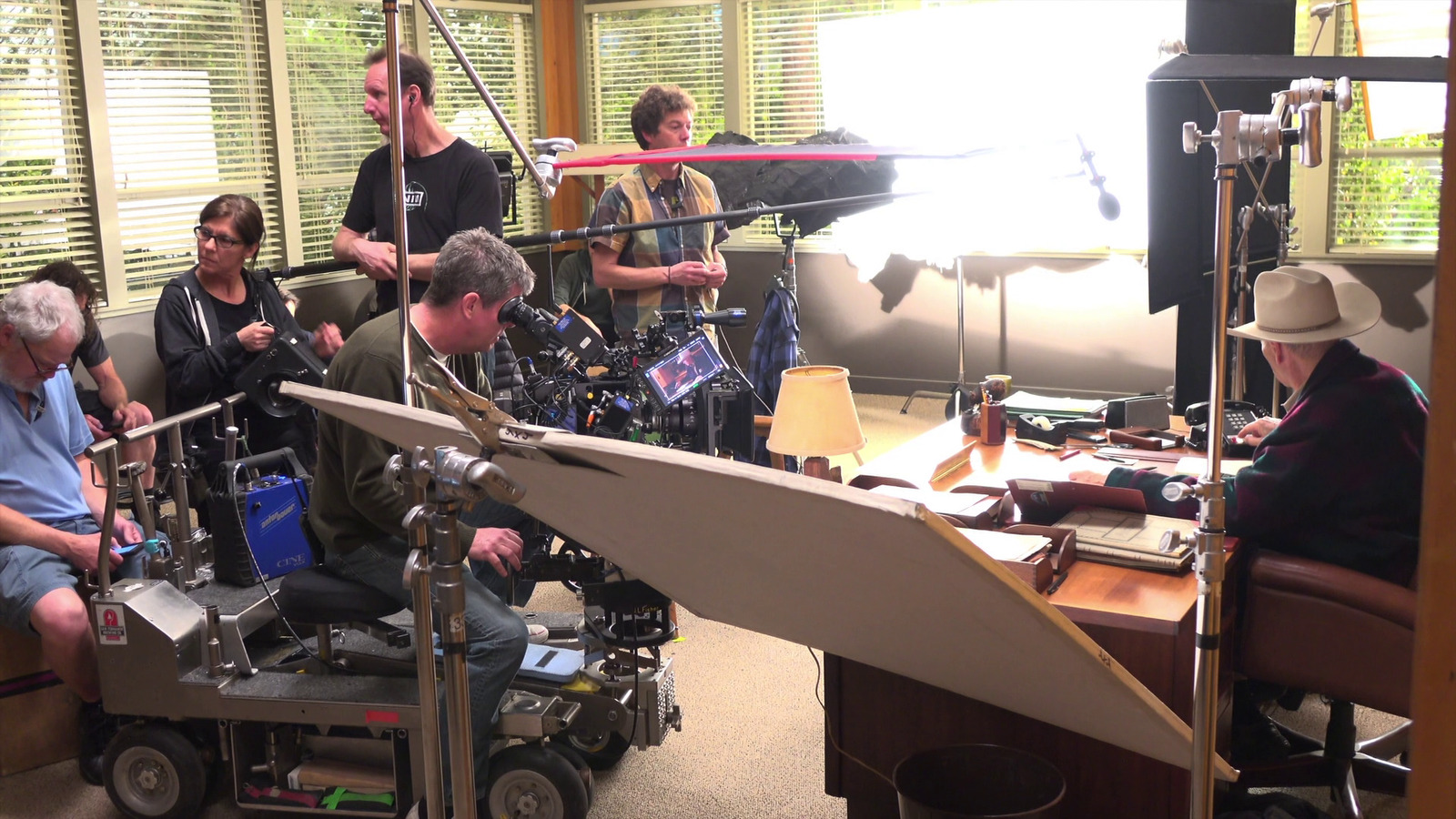
Forster’s restraint is therefore a shaped performance rather than an absence of interpretation. Frank has a duty to pass the information on before he can make it ordinary. The scene’s measured delivery allows an extraordinary claim to travel through an institutional channel; Gordon’s response can then enlarge its significance without Frank performing the revelation for him.
Performance, sound and the working image
The production footage in Jason S.’s Impressions: A Journey Behind the Scenes of Twin Peaks adds another view of the scenes: directions spoken on set, rehearsals, material experiments and choices still being worked out.
Gordon’s volume is also a physical event
The Las Vegas telephone scene is rehearsed through the listeners’ bodies: receivers move away from ears, Headley springs upright and both agents respond to Gordon’s call with exaggerated urgency. Lynch compares Wilson’s excitement to having a major star on the telephone, while warning Headley’s performer not to exhaust his voice during rehearsal.
The comedy is built into posture, distance from the receiver and the interruption of speech. Gordon’s loudness is something the other actors have to encounter, not simply a level added to the soundtrack afterward.
Naido’s surface, touch and voice are developed together
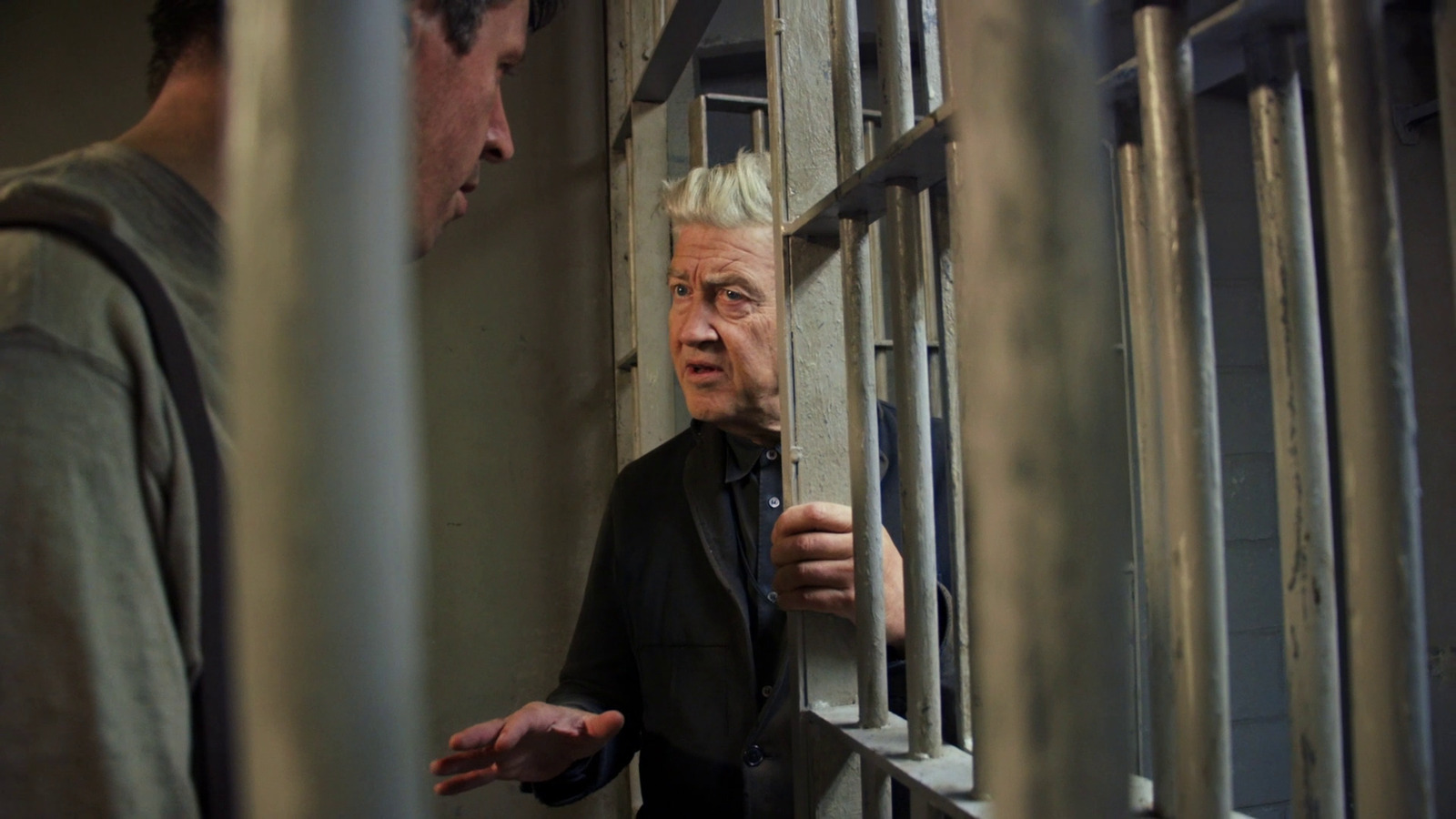
The makeup discussion considers a dark, bloody recess beneath the stitches and how the surface should remain clean between Naido’s appearances. Later, in the cell, Lynch asks Nae Yuuki to feel the bed and nearby objects, make small sounds and extend her neck with an insect-like quality. The character’s altered face is only one part of a performance built around uncertain access to the space.
Jay Aaseng is separately asked to listen and repeat her noises in a drunken, poorly articulated manner. The cell’s sound therefore develops as a disturbing exchange: one person searches through touch and voice, another sends a degraded version back. Andy’s care and Lucy’s pride in him are rehearsed within that same arrangement, giving the scene a counterweight to its cruelty.
Open the Naido makeup and performance study · 4 frames
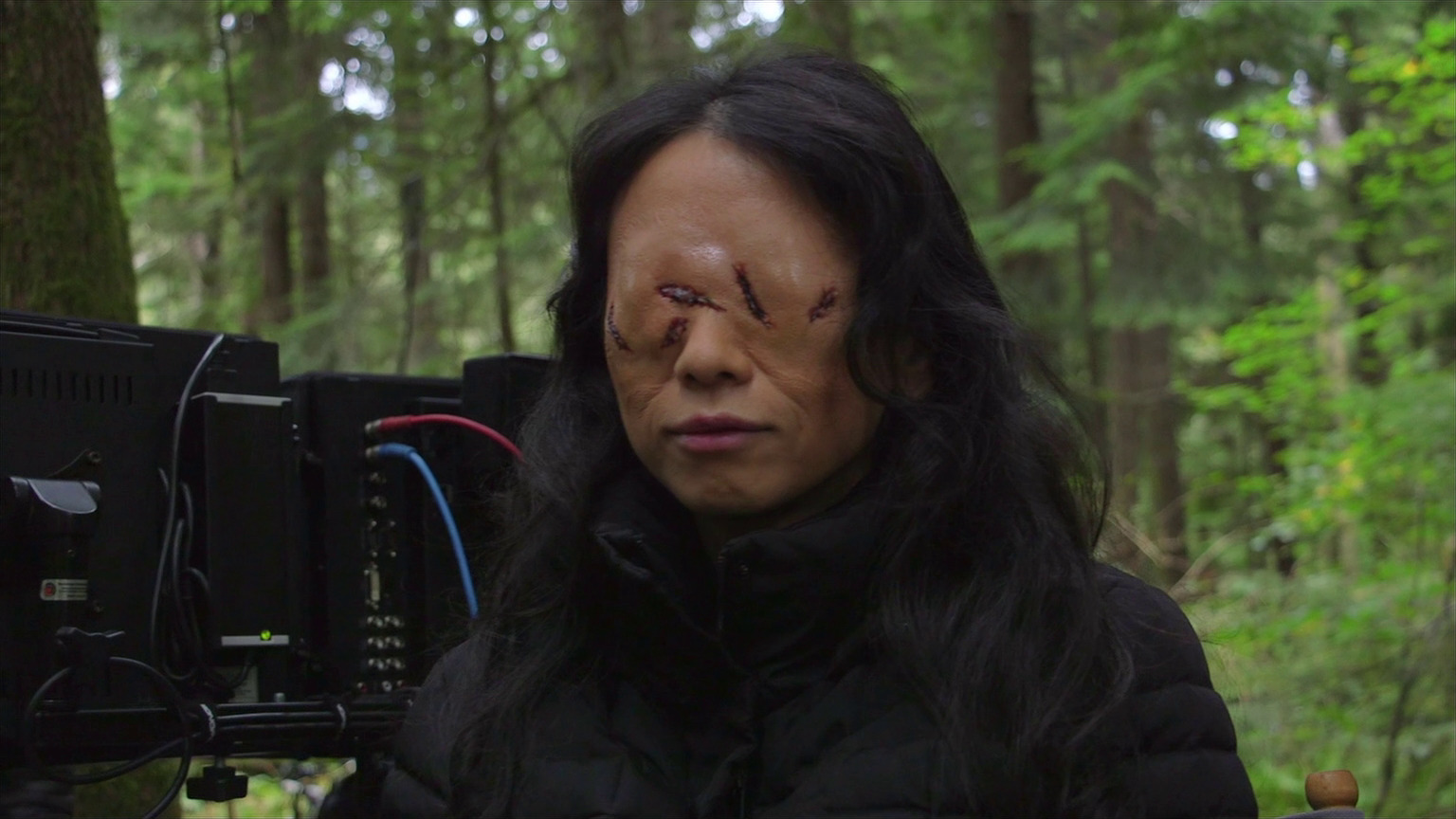
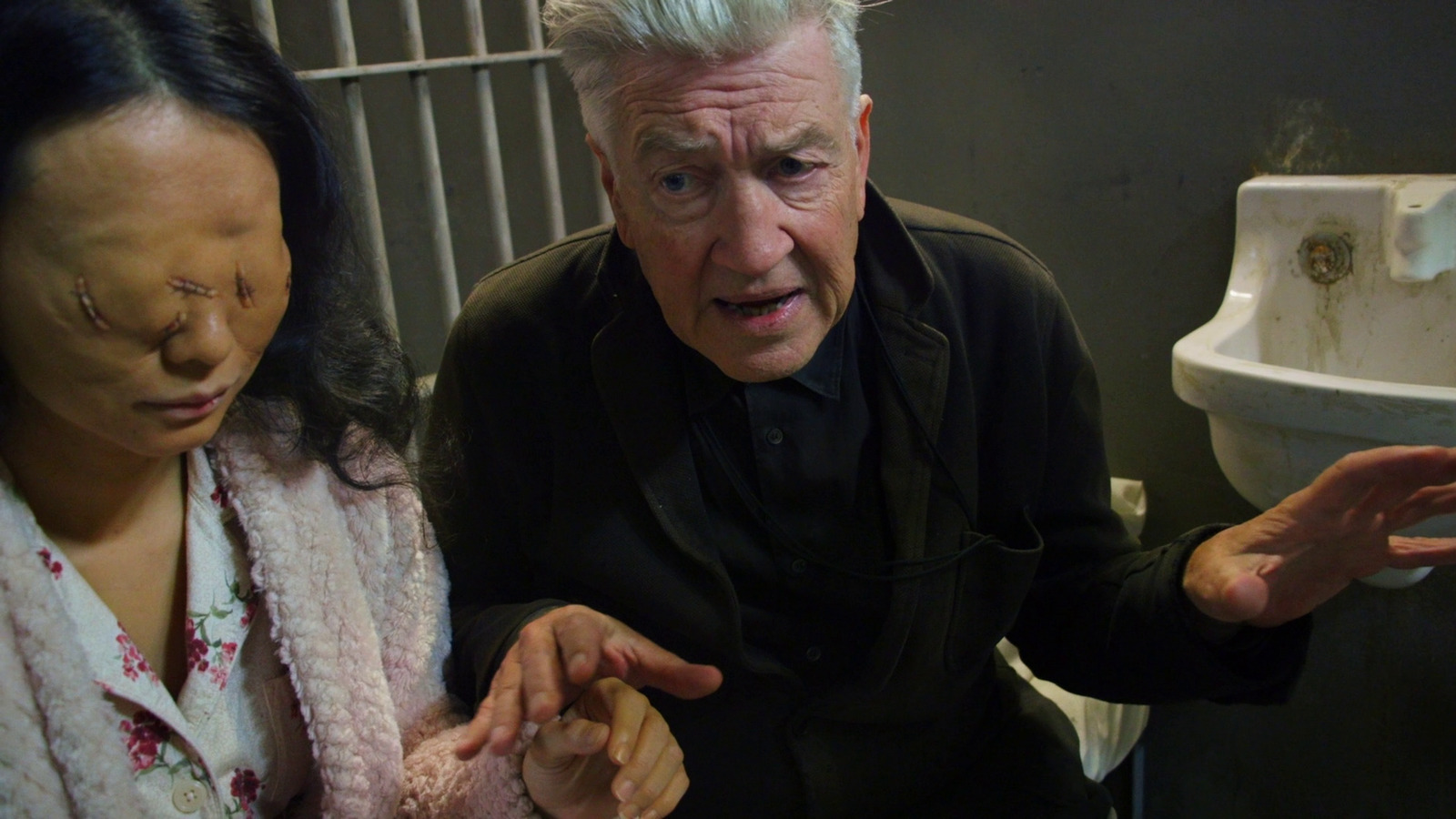
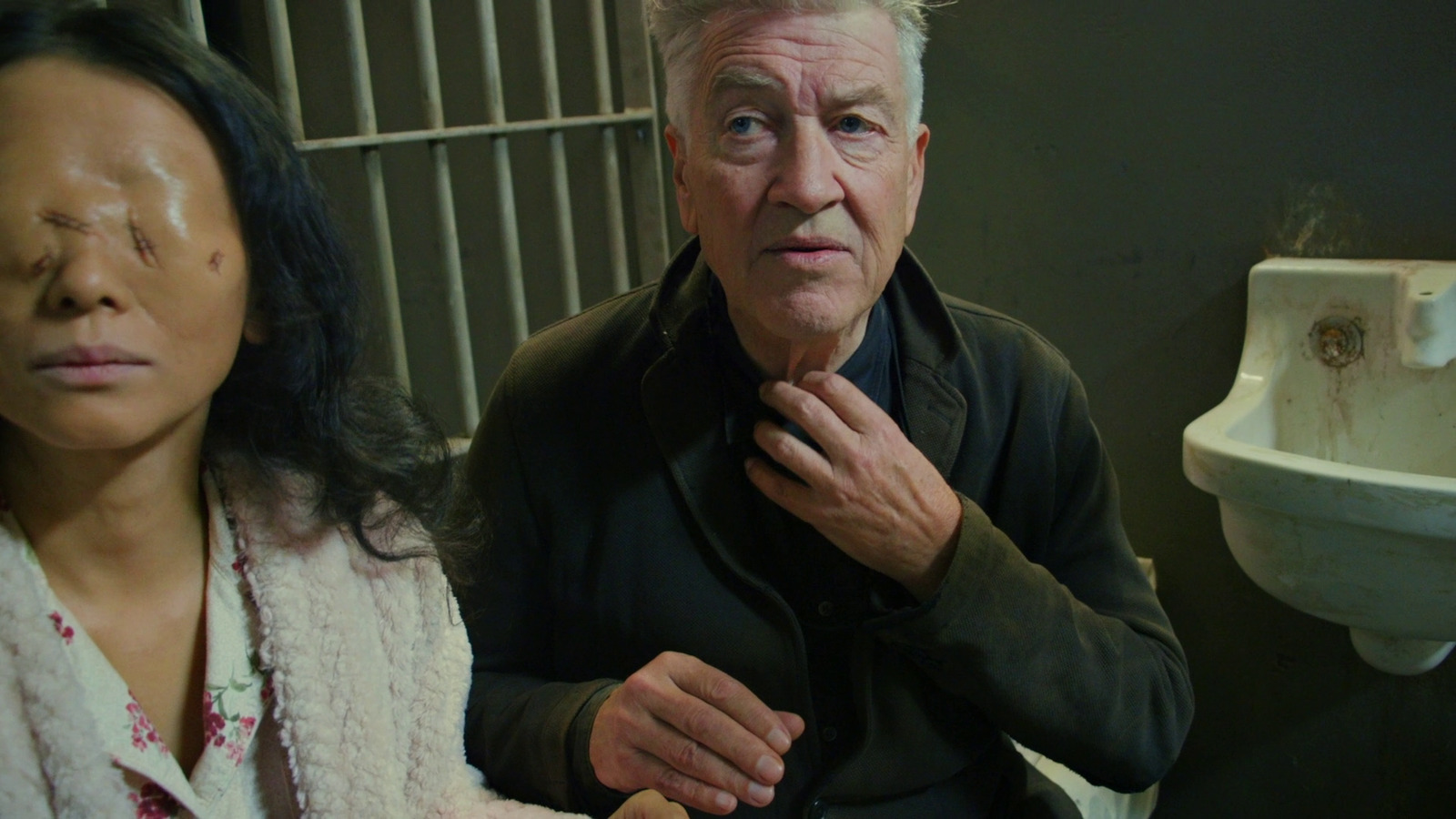
A hand, an eyeline and an absent funnel
The woodland encounter is read aloud and then worked through physically. Lynch asks Nae Yuuki to extend her hand along the moss, respond to Andy’s touch, lengthen her neck and try to see while making small mechanical sounds. He draws the positions of the group, then explains the enormous funnel, noise and lightning that will transform their shared field of vision.
The documentary places an intimate exchange of hands beside preparation for a large unseen effect. It also shows material being poured into the circular woodland marker. The final sequence combines a real location and tangible objects with a precisely cued response to things the performers cannot yet see.
Open the woodland staging and effects study · 4 frames
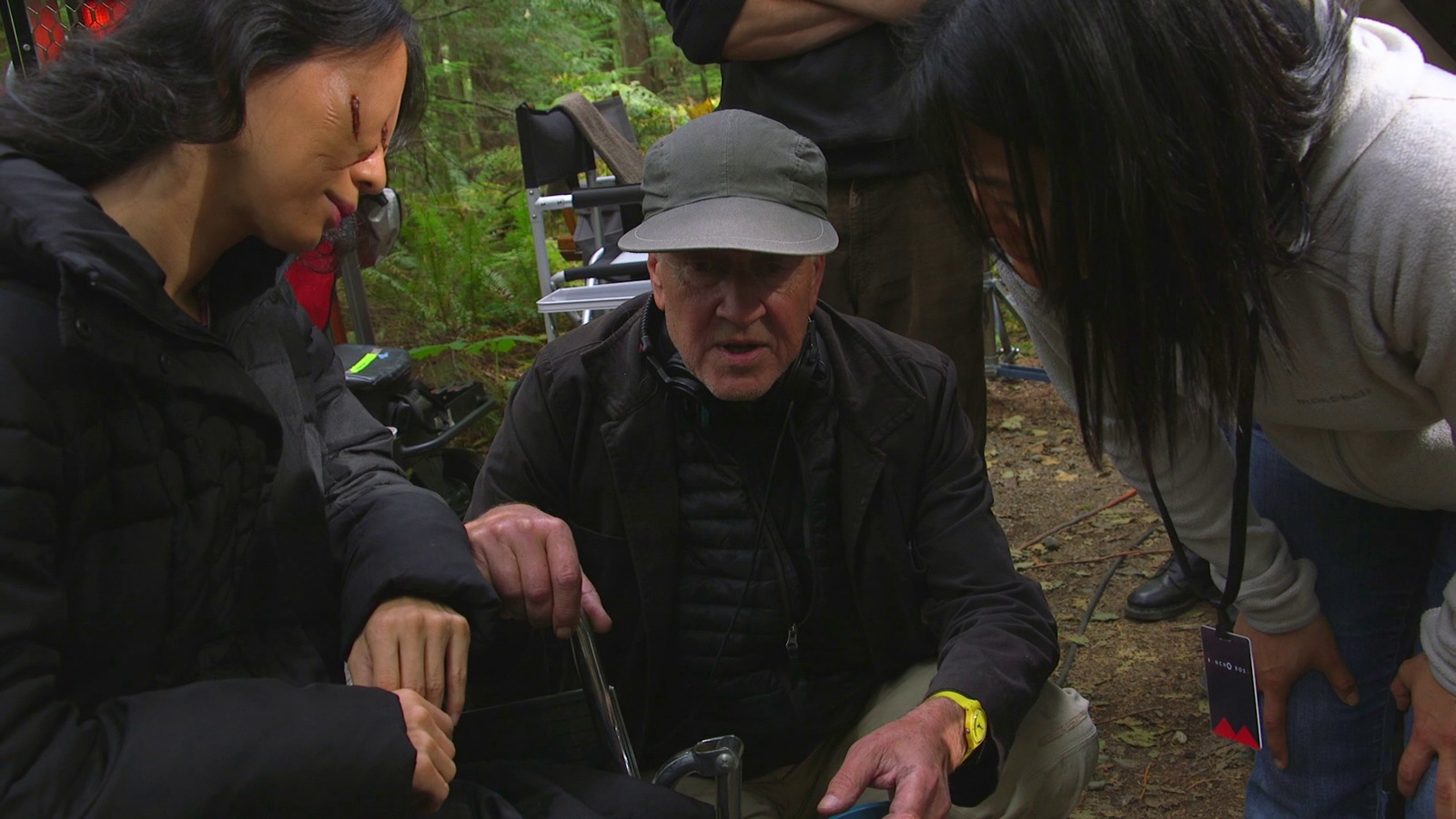
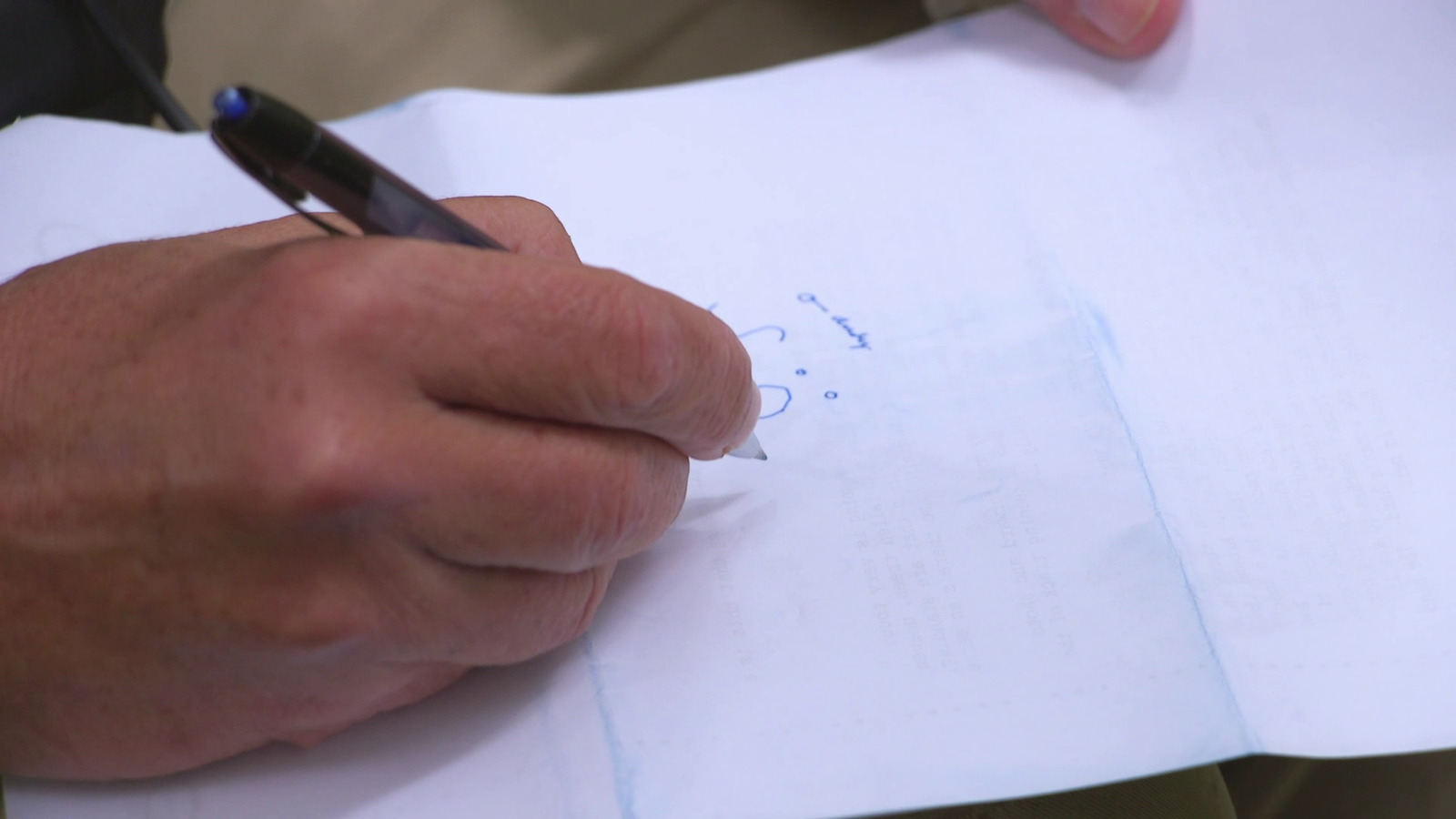
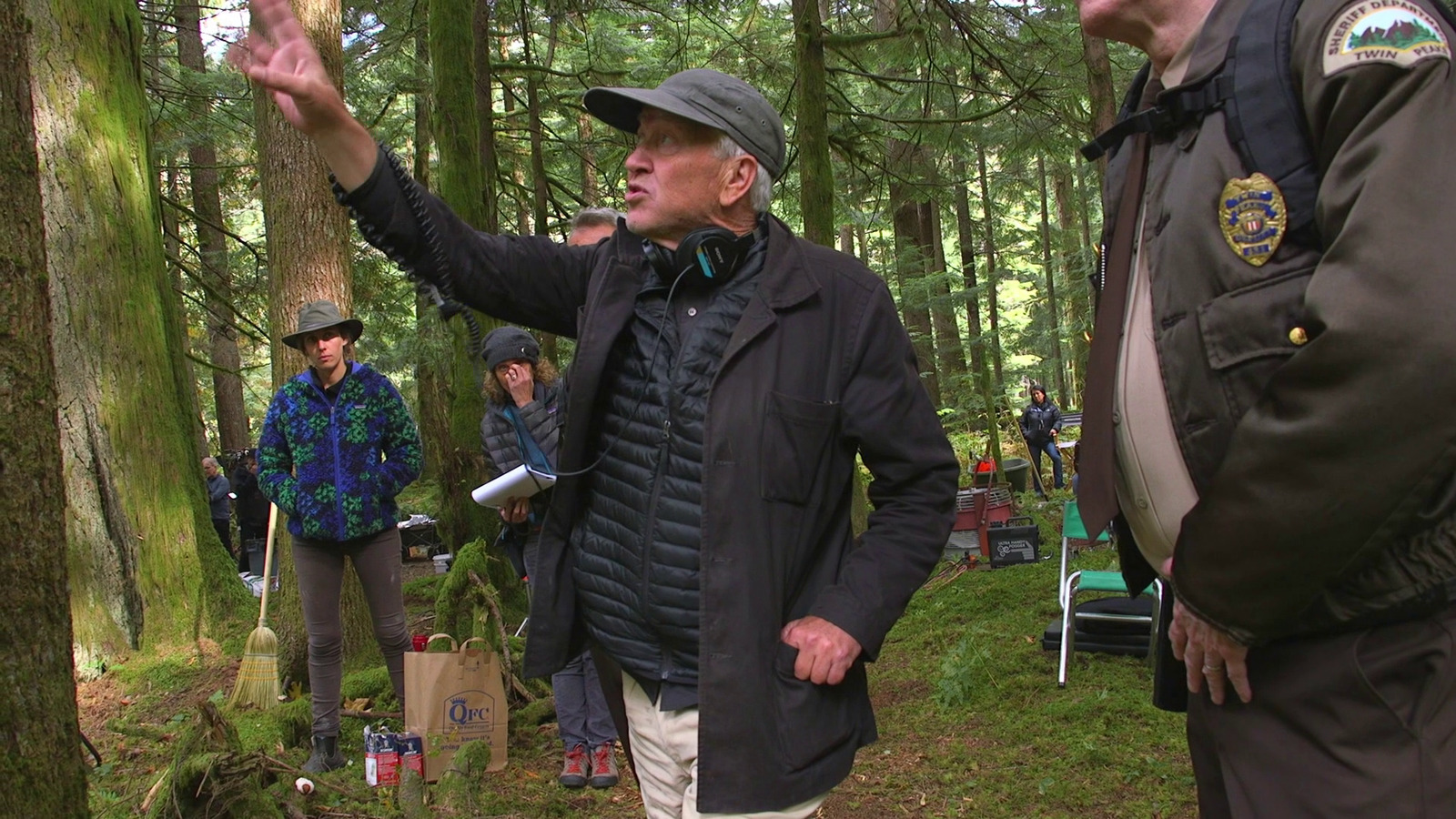
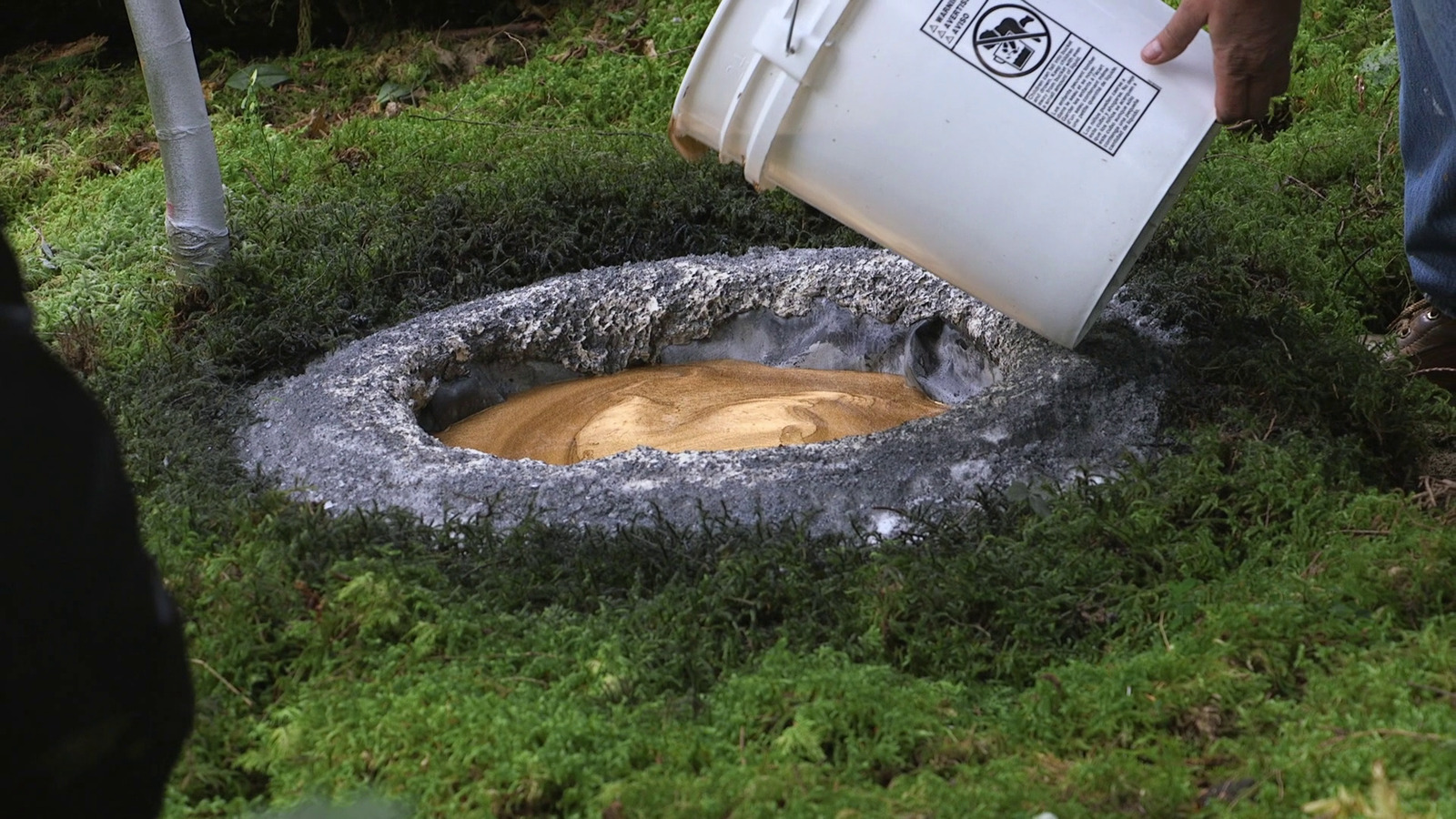
The Man with the Gray Elevated Hair, 07:59–10:35; 11:39–12:18.
Inside the final movements: performance and production
Bobby’s memory determines the route
The walk to Jackrabbit’s Palace is rehearsed around Bobby’s knowledge of the place. Lynch identifies the old road to his father’s listening post, has the other officers gather close enough to hear him and tells Bobby to leave the road first. He presents the tree to them; they enter after him, and only once they have arrived does he continue the childhood recollection.
That order matters to the episode’s treatment of inheritance. The others encounter the landscape through Bobby’s memory rather than treating him as another man following instructions. The soil-taking and departure are also blocked as continuous physical actions, giving the fantastic journey an ordinary route that the performers can walk.
Follow Bobby into the clearing · 2 frames
Andy’s authority begins with care
In the jail rehearsal, Lynch explicitly puts Andy in charge of helping Naido into the robe while Lucy assists. Naido is directed to be only slightly uneasy because Andy is taking care of her. Before leaving, he reassures her physically; even on the way out, his attention is to remain on her.
The confrontation with Chad grows out of that responsibility. Lynch positions Andy at the cell to rebuke him, then tells Lucy to show pride that Andy has stood up for himself. These directions connect the episode’s altered Andy to practical protection and moral confidence. They do not require a definitive explanation of everything the Fireman has shown him.
Care, confrontation and Lucy’s response · 2 frames
Presentation, music and credits
The primary viewing source is the standalone Part 14 presentation in Twin Peaks: From Z to A. Timings include the opening titles. The images preserve the original composition, including intentional darkness and the vision’s oval field. Dialogue observations use the English presentation and its English captions; selected passages receive closer sound and image comparison. These notes do not claim a separate commentary track.
The credits identify Carel Struycken as The Fireman, Jake Wardle as Freddie Sykes, Nae Yuuki as Naido, Jay Aaseng as Drunk, Monica Bellucci as Herself, Emily Stofle as Sophie and Shane Lynch as Megan. The wounded man’s credit is retained rather than silently replacing it with a speculative identity. David Bowie is credited as Phillip Jeffries, with Nathan Frizzell credited as Voice.
The end titles credit Lissie’s “Wild West,” written by Elisabeth Maurus and Curt Schneider, and include visual-effects work by BUF alongside the wider effects and makeup teams. Those general credits should not be used to assign an undocumented individual shot to a particular artist. The closing dedication reads “In Memory of David Bowie.”
Sources and viewing notes
- Twin Peaks: The Return, Part 14, “We Are Like the Dreamer” (2017), directed by David Lynch, written by Mark Frost and David Lynch. Primary picture, English presentation, English captions and end titles examined from Twin Peaks: From Z to A. Full-duration image and caption survey with focused sequence and sound checks; interpretation is distinguished from credited testimony.
- BUF, Twin Peaks production account. Primary company account of facial effects, vortices and other work. Counts cover the sequences described by the company, not necessarily this part alone.
- Oliver Webb, “An Interview with Jake Wardle,” Closely Observed Frames, 9 July 2020. First-person account of casting, accent, scene preparation and working with Lynch and James Marshall.
- Behind the Red Curtain, a film by Richard Beymer; production footage viewed in Twin Peaks: From Z to A, 02:49–04:53. Images and English captions inspected; key speech passages cross-checked where needed. Production observations are distinguished from interpretation of the finished scene.
- A Bloody Finger in Your Mouth, directed and photographed by Jason S., in Impressions: A Journey Behind the Scenes of Twin Peaks (2017), viewed in Twin Peaks: From Z to A. Passages: 12:42–15:39. Picture and English captions examined, with targeted speech checks. Rehearsal proposals and production observations are distinguished from interpretation of the finished episodes. Documentary narration and its music are not treated as unscripted statements by Lynch.
- Bad Binoculars, directed and photographed by Jason S., in Impressions: A Journey Behind the Scenes of Twin Peaks (2017), viewed in Twin Peaks: From Z to A. Passages: 11:57–12:54; 21:48–24:27. Picture and English captions examined, with targeted speech checks. Rehearsal proposals and production observations are distinguished from interpretation of the finished episodes. Documentary narration and its music are not treated as unscripted statements by Lynch.
- The Man with the Gray Elevated Hair, directed and photographed by Jason S., in Impressions: A Journey Behind the Scenes of Twin Peaks (2017), viewed in Twin Peaks: From Z to A. Passages: 07:59–10:35; 11:39–12:18. Picture and English captions examined, with targeted speech checks. Rehearsal proposals and production observations are distinguished from interpretation of the finished episodes. Documentary narration and its music are not treated as unscripted statements by Lynch.
- Behind the Curtain: Part 14. Photographed by Jason S.; edited by Jonathan Angus, with editorial assistance by Robert Lay (2019). Viewed in Twin Peaks: From Z to A. Timed passages: 00:21–06:12; 21:45–25:24. Timings refer to the documentary, not the episode. On-set directions and retrospective recollections are distinguished from Lyncharium’s interpretation of the finished scenes.