Twin Peaks: The Return — Part 9
2017 · Twin Peaks: The Return · Episode dossier
The past survives in furniture, paper, a body and a voice struggling to explain what it has seen.
After Part 8’s vast departure, the investigation resumes through small acts of handling and listening. Betty Briggs has preserved an instruction for decades; Bobby remembers how to open it. Hastings tries to make an impossible experience fit the questions of an interview.
- Part 9
- This Is the Chair
- Directed by
- David Lynch
- Written by
- Mark Frost & David Lynch
- Standalone presentation
- 00:58:20
The Return overview · Twin Peaks research hub. Timings follow the standalone part and include its opening titles. Presentation and credit notes.
Explore this dossier
What makes a message readable?
Part 9 distributes knowledge among people who need one another. An institution can identify a body but cannot account for its age. A container can be held and inspected without revealing how it opens. A place name becomes useful because someone remembers inventing it with his father. The episode treats memory and affection as practical components of investigation.
The studies follow the standalone presentation and distinguish the witnesses’ statements from independently established events. Hastings describes an encounter the episode does not replay for us. His testimony is important evidence within the story, but its distress and specificity do not make every detail an omniscient account. Viewing source.
Illustrated scene studies
- A wounded man returns to daylight
- An investigation changes its route
- Treatment and murder share a conversation
- A familiar employee with a missing history
- Hospitality becomes a sampling method
- Flag, shoes, outlet
- A telephone message meets a corridor of police
- Giving way without losing the choice
- An impact beyond the empty hall
- A promise kept until the right visitors arrive
- A body that does not fit its history
- The nearest thing becomes unfamiliar
- Making a place for the investigation
- Bobby knows the action that the object requires
- A private place name becomes a route
- A shared habit holds an uneasy history
- Testimony cannot contain the experience
- A sound draws two people together
- A conversation with damage at its edge
- The room continues after the conversation
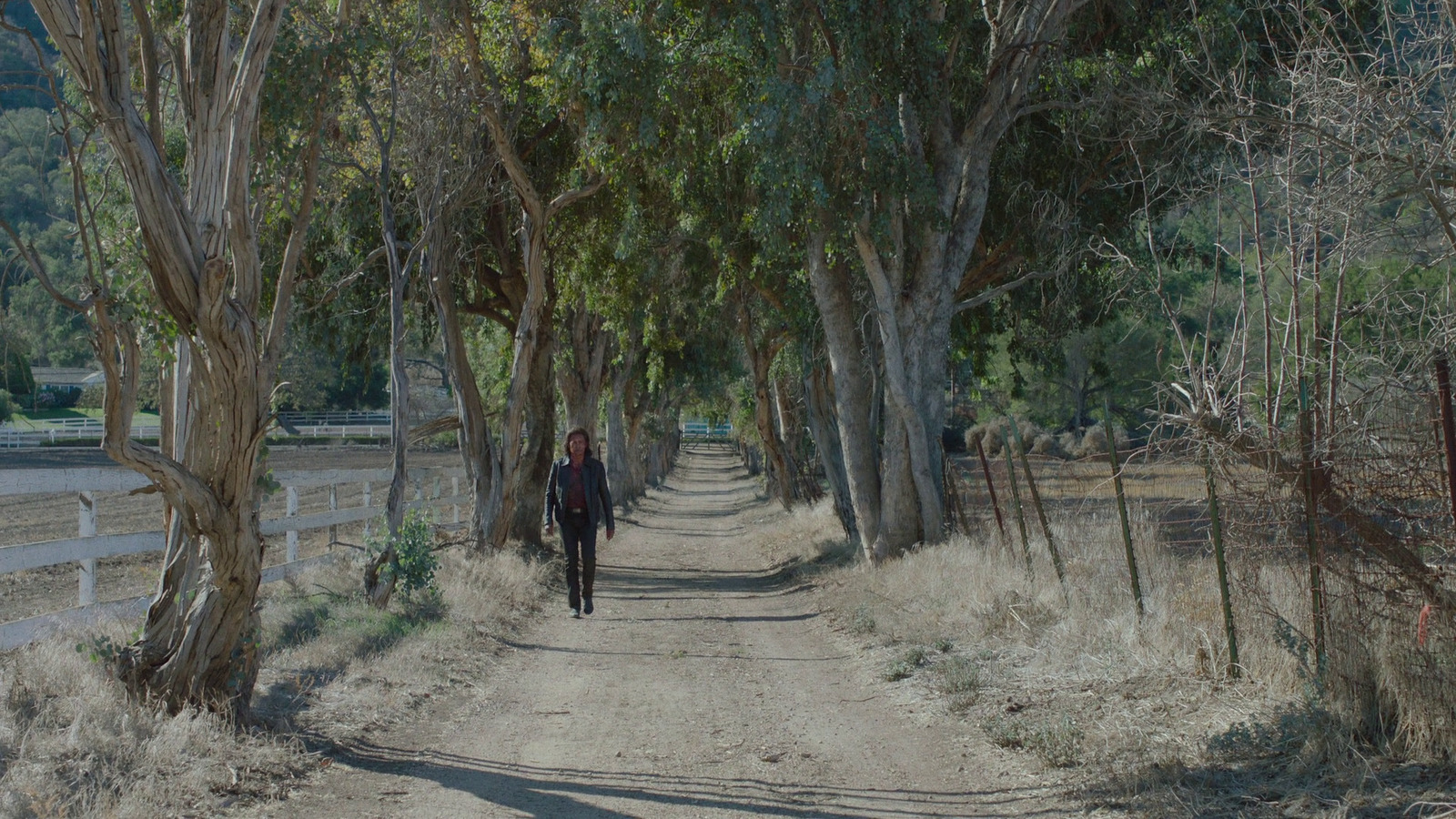
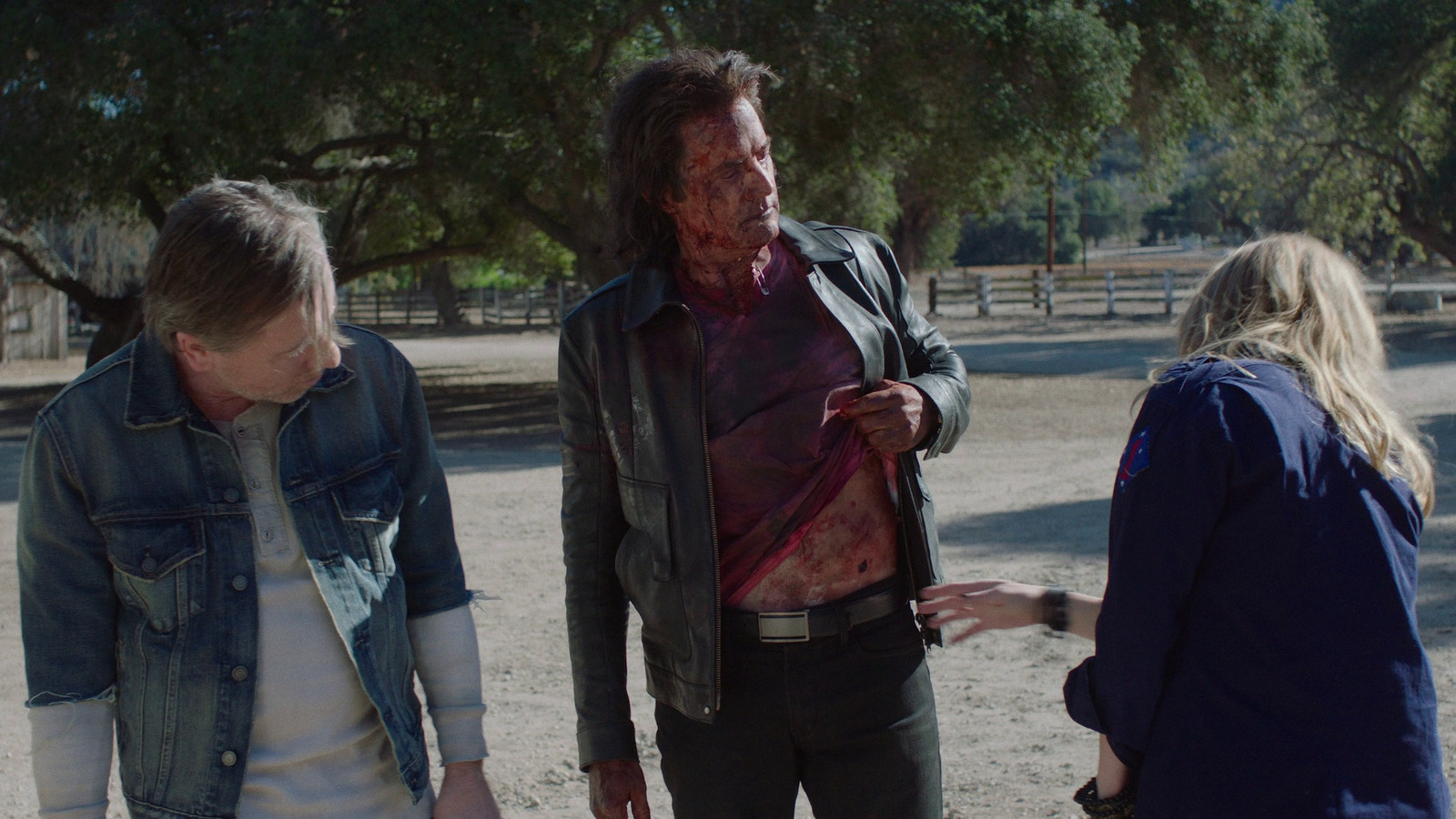
A wounded man returns to daylight
Mr. C’s walk through the trees resumes the body left behind by Part 8. Daylight and a farm replace the night’s unstable roadside images. Hutch’s casual welcome makes the bloodied arrival part of an existing arrangement. Their exchange reveals a support network whose ordinary practical language can accommodate extreme violence without surprise.
Open the scene sequence · 1 frame
An investigation changes its route
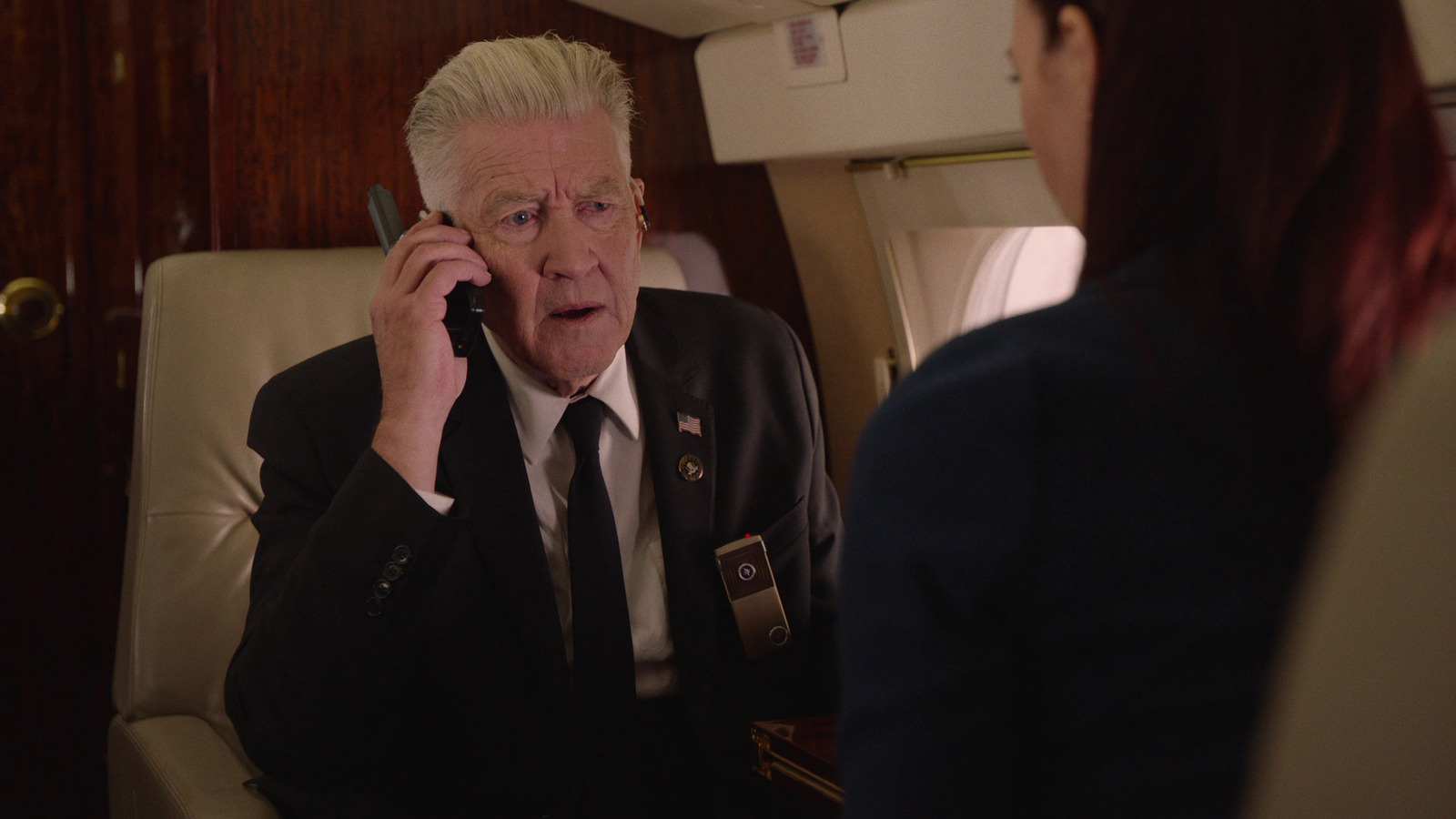
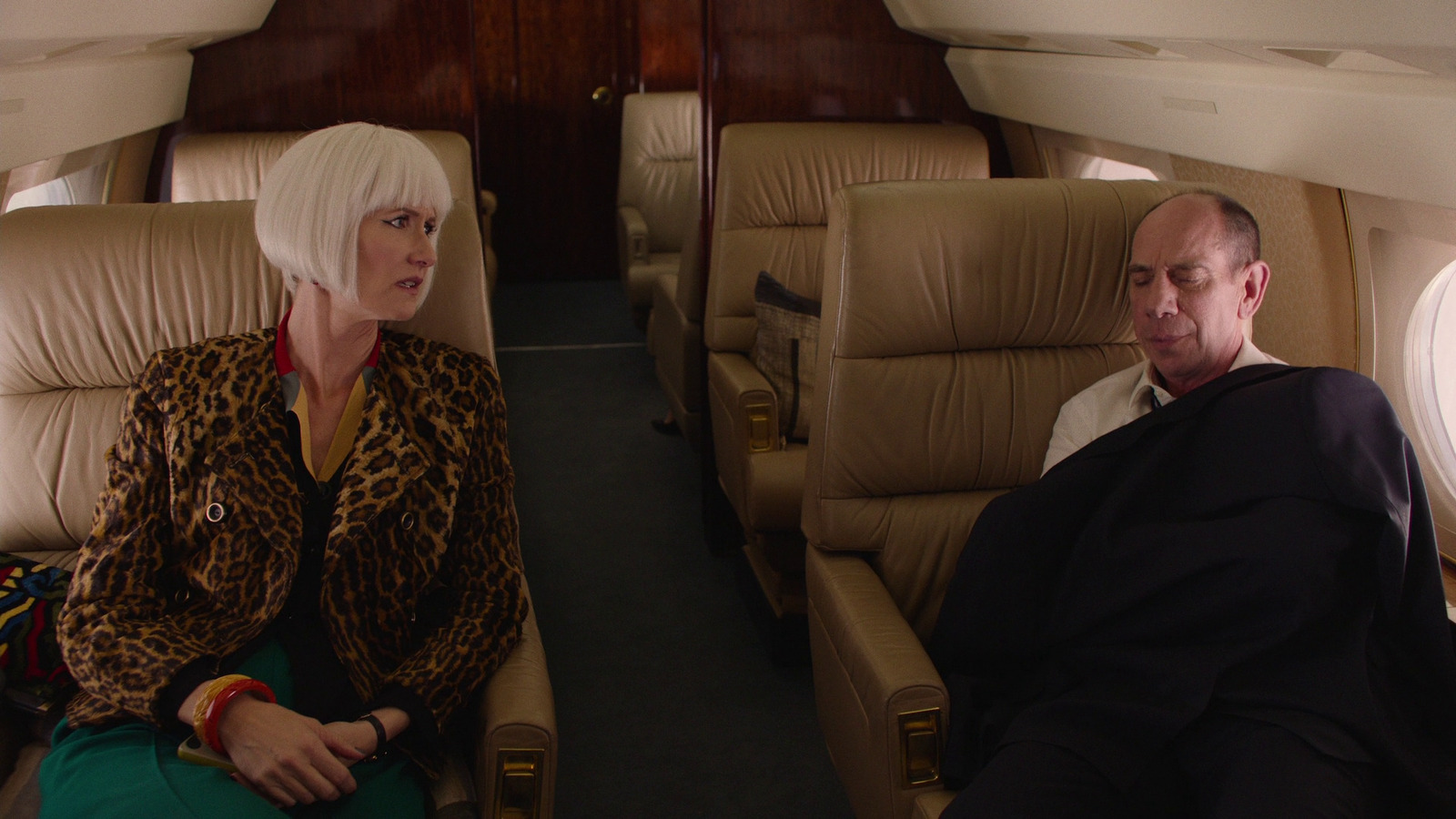
The Pentagon call redirects Gordon’s party toward Buckhorn. The spelling-out of Knox’s name, Gordon’s hearing and the place-name misunderstanding make information transfer laborious and comic. Diane’s refusal to be agreeable does not prevent the journey. Albert anticipates her response, showing the history among them through the timing of a line rather than an explanatory flashback.
Open the scene sequence · 1 frame
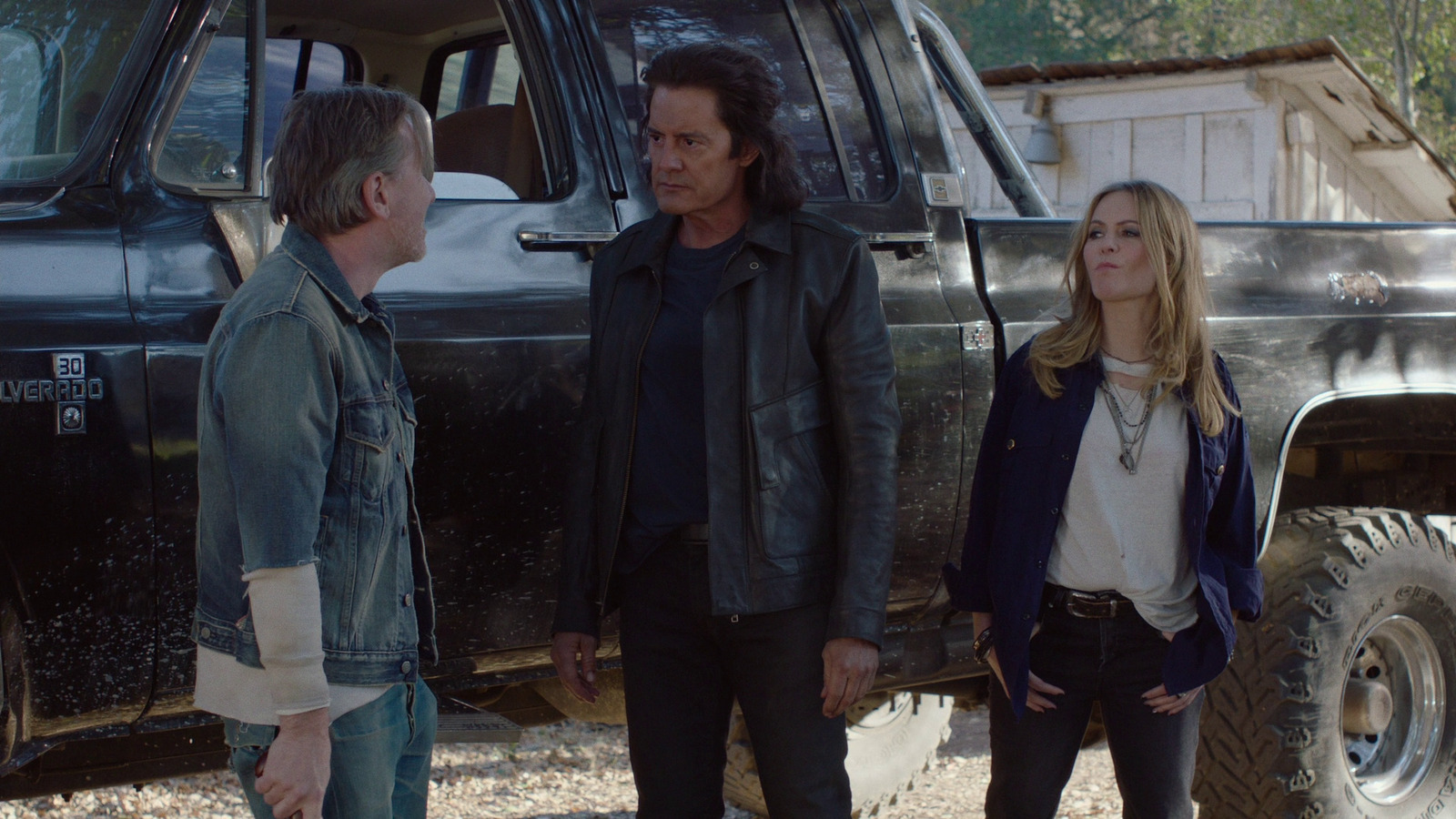
Treatment and murder share a conversation
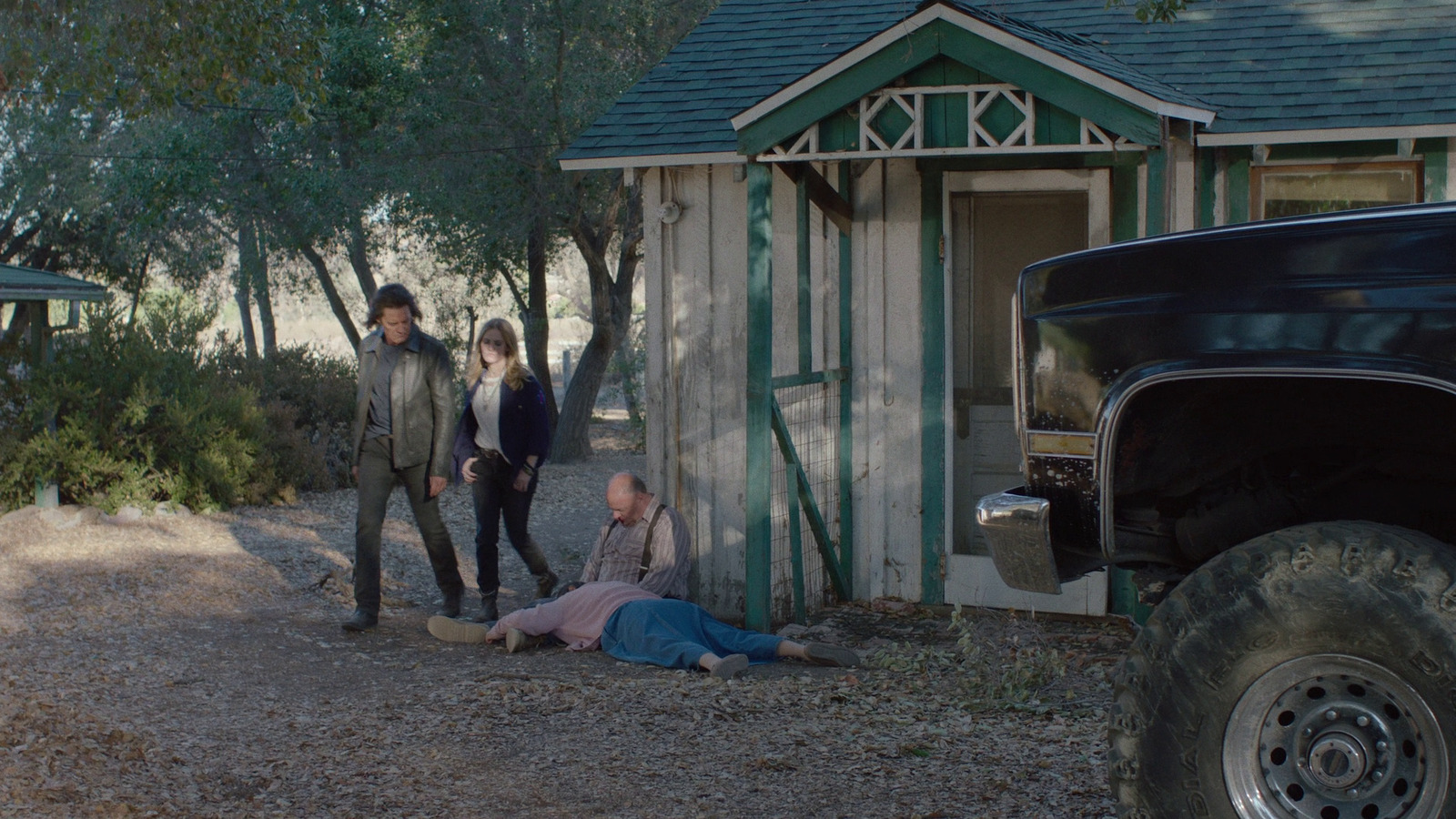
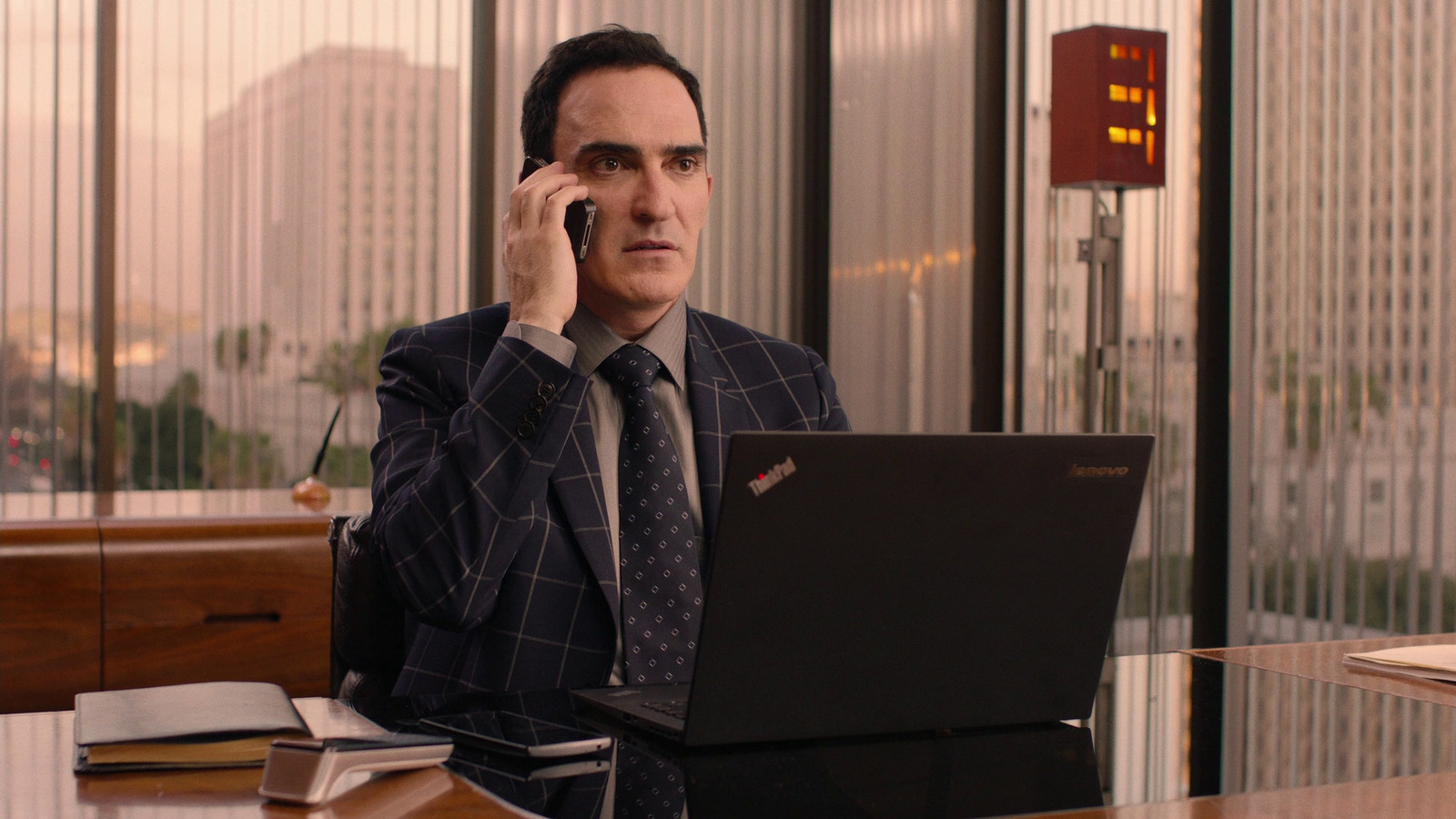
The farm provides phones, wound treatment, food and killers. Mr. C’s call to Todd and instructions to Hutch extend his reach while his body is still recovering. The threatened deaths are discussed as assignments with deadlines and destinations. The prone figures by the building undermine any reassuring reading of the hospitality, while Chantal’s affection makes the group’s cruelty more disquietingly domestic.
Open the scene sequence · 2 frames
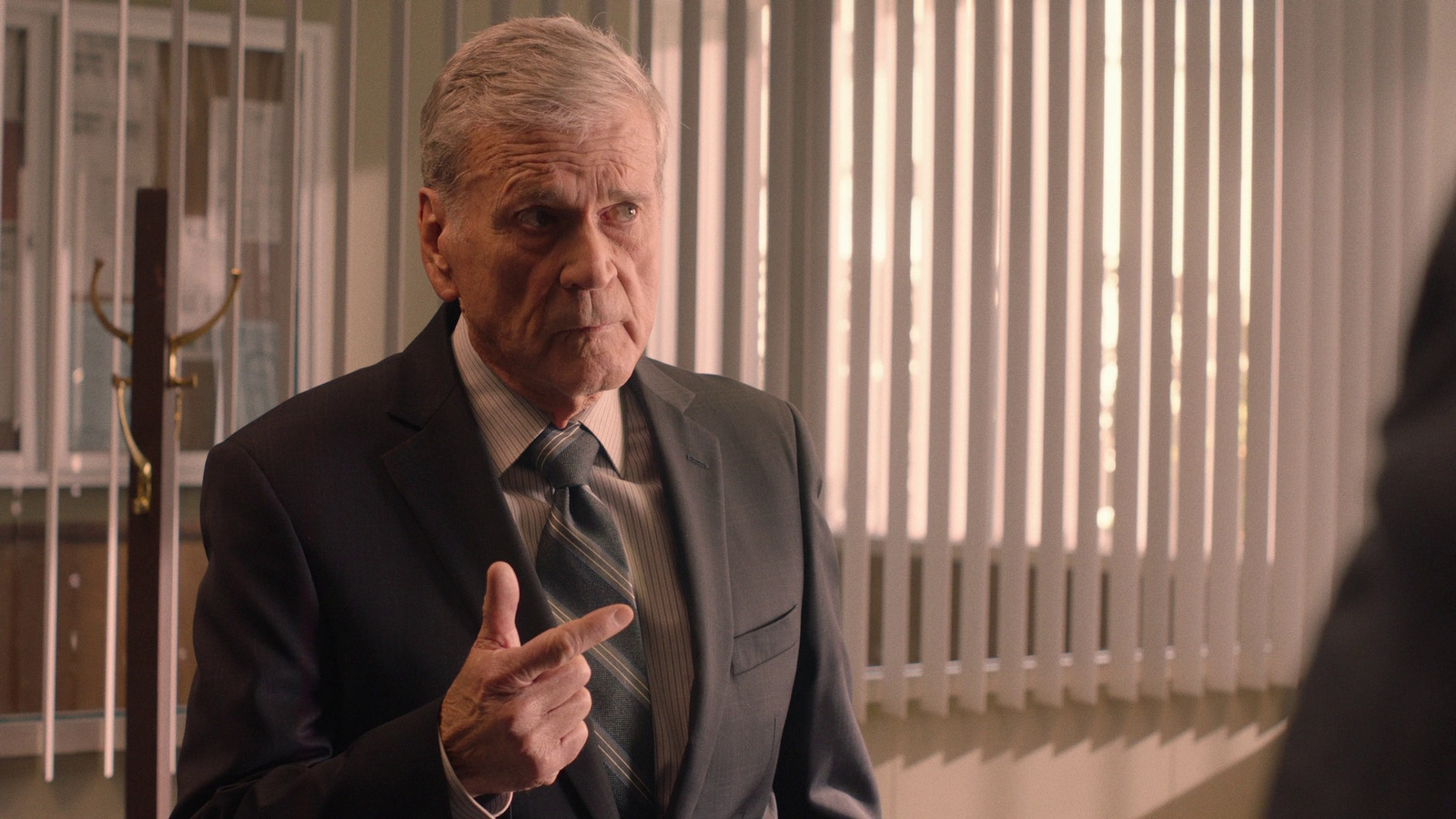
A familiar employee with a missing history
Bushnell offers the detectives the continuity of a workplace relationship. The Fuscos later find that Douglas Jones’s records do not extend before 1997. These are different forms of knowledge: a person can be familiar to colleagues while remaining administratively impossible. The detectives’ jokes and detours do not erase the discovery, but they make the process feel contingent rather than ceremonially important.
Open the scene sequence · 1 frame
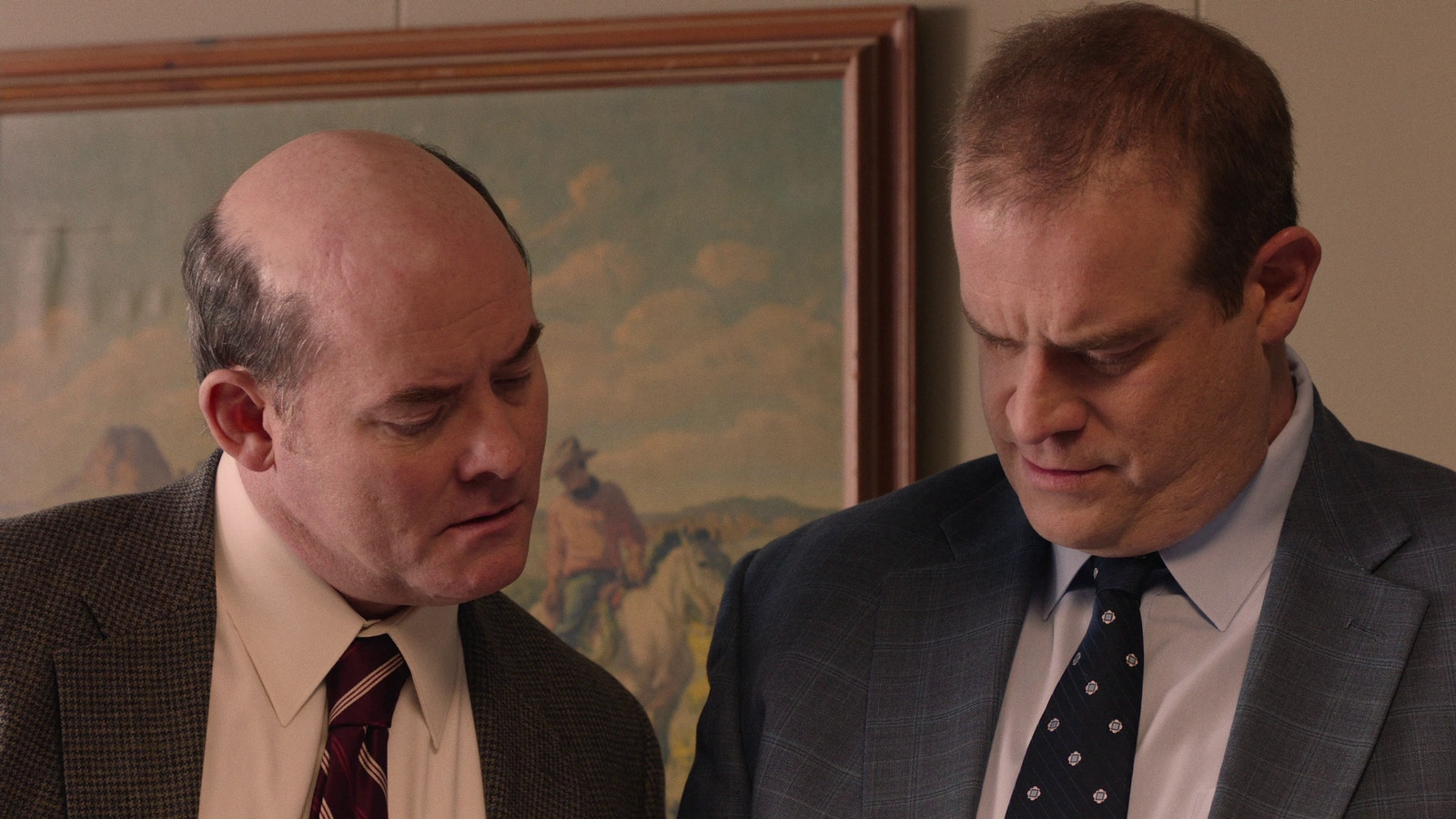
Hospitality becomes a sampling method
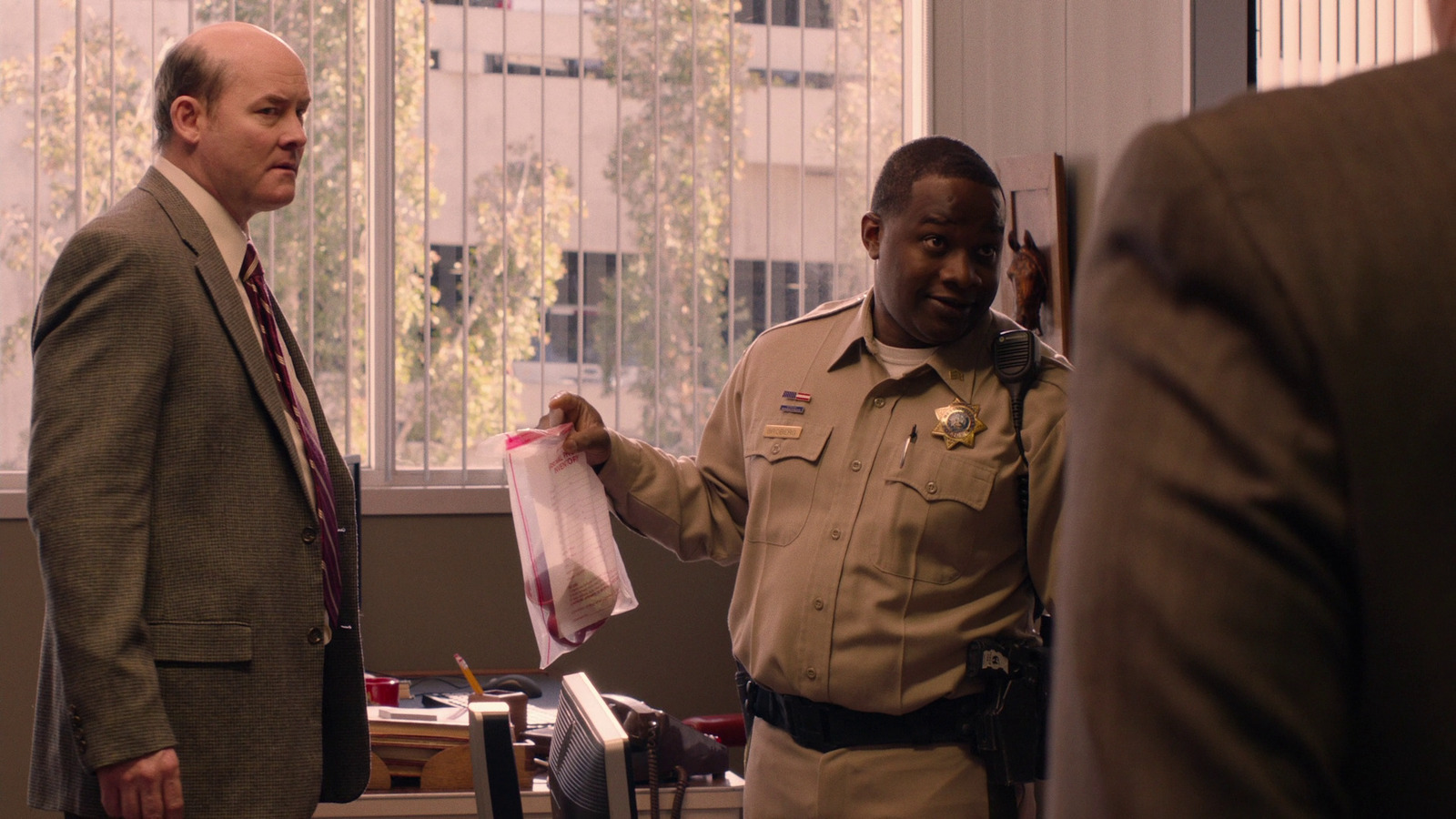
A replacement cup allows the detectives to collect the old one for prints and DNA without relying on Cooper’s verbal cooperation. Coffee remains an object of pleasure for him while serving as evidence for someone else. The arrival of the palm-print result connects this small maneuver to a more immediate police operation against Ike.
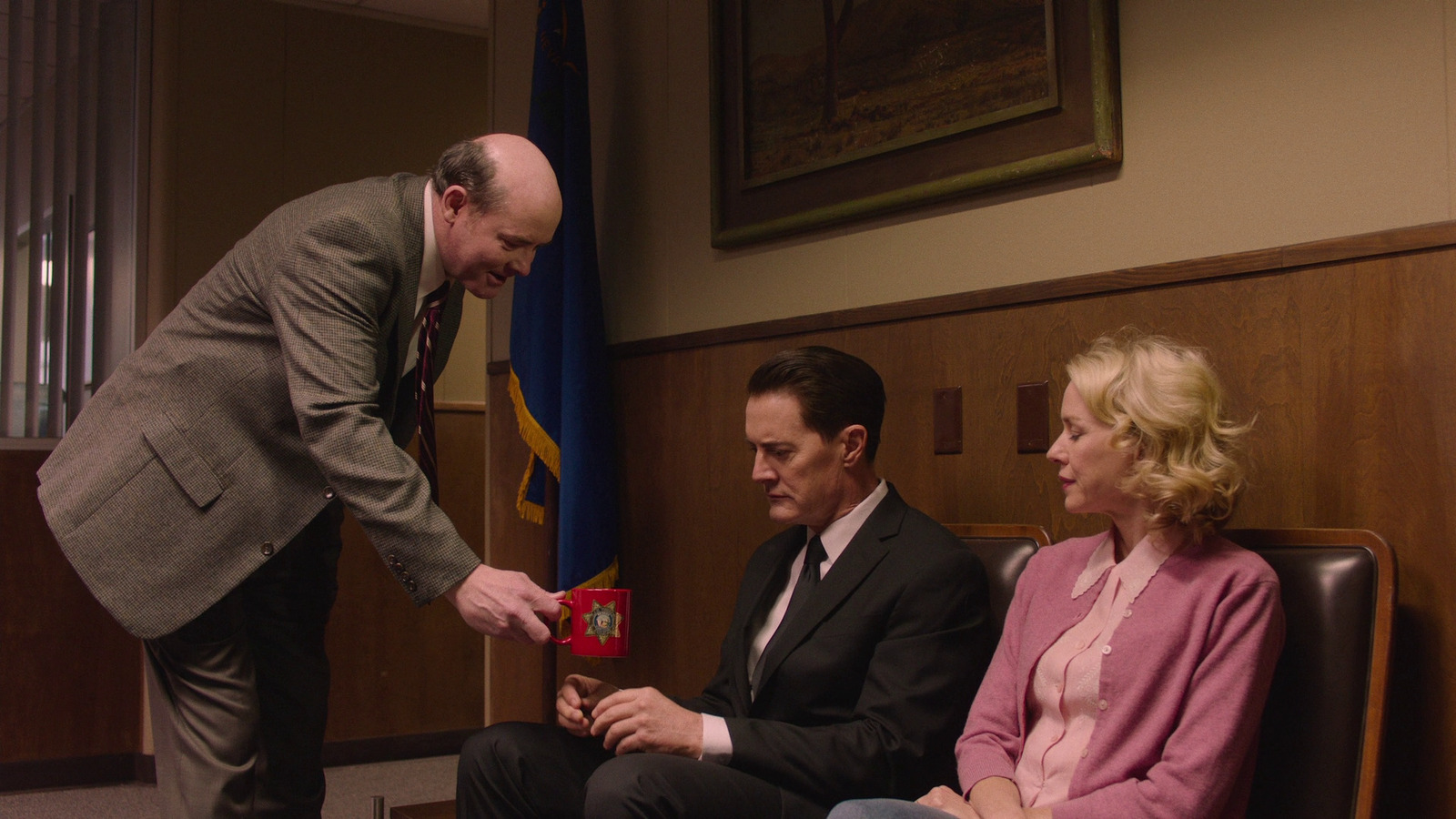
Open the scene sequence · 1 frame
Flag, shoes, outlet
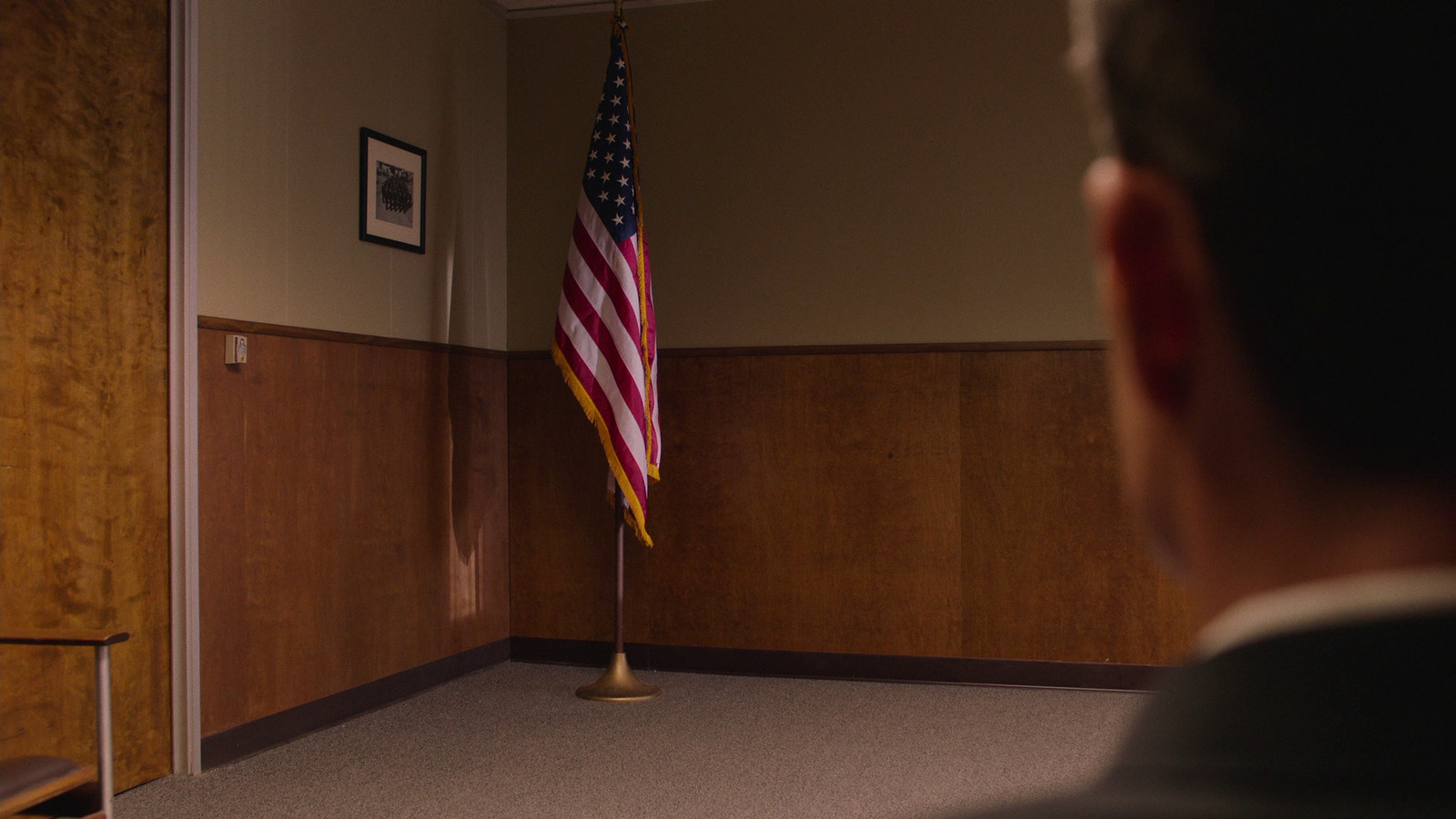
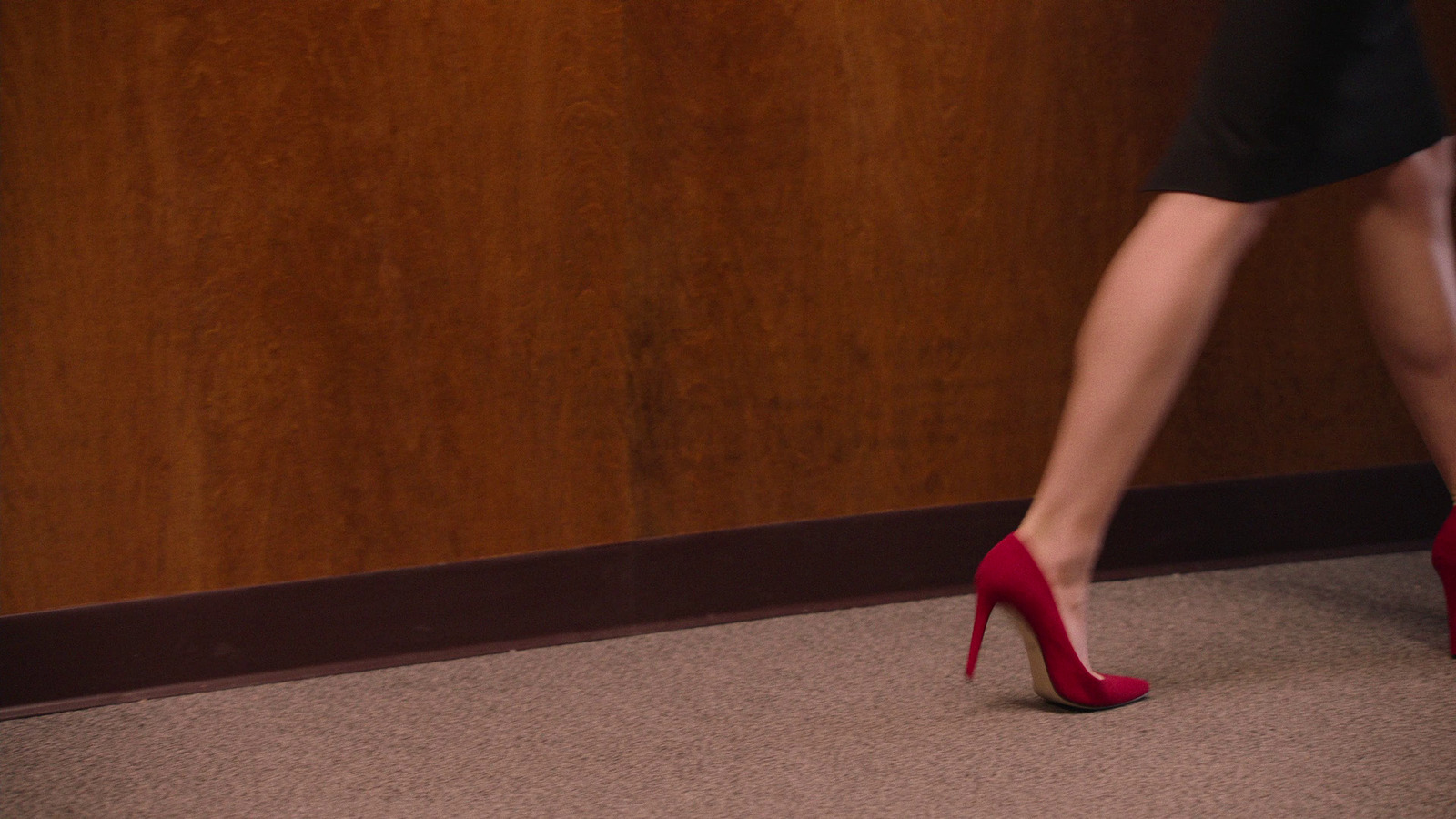
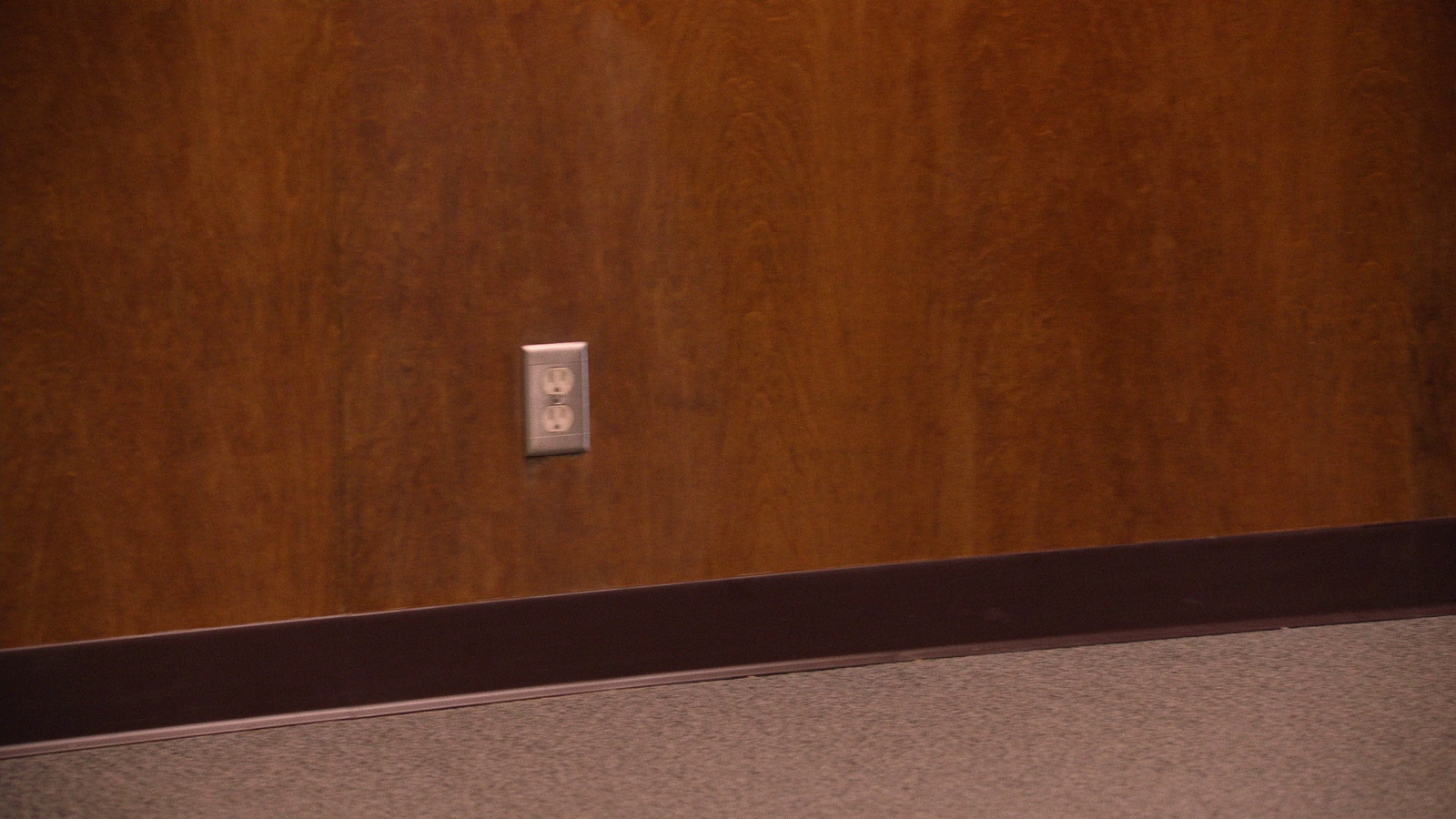
Cooper’s attention moves through the waiting area. “America the Beautiful” accompanies the flag; a passing woman’s red shoes then draw the gaze toward an electrical outlet left in view. The sequence does not announce a recovered memory. It lets recognition seem close through the relation among objects, the held face and the cut. His silence leaves the viewer to experience the attraction without assigning it a complete thought.
Open the scene sequence · 2 frames
A telephone message meets a corridor of police
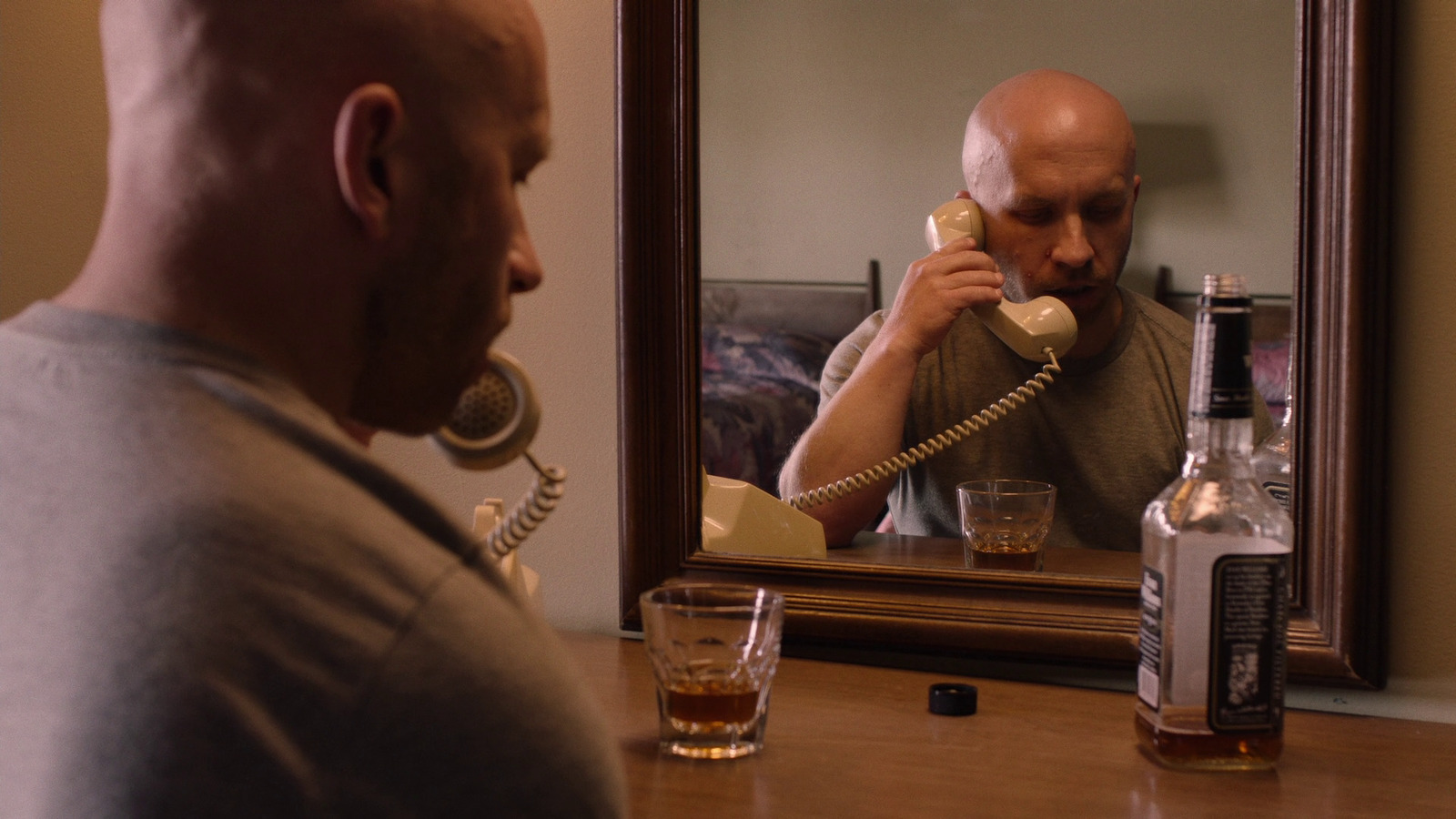
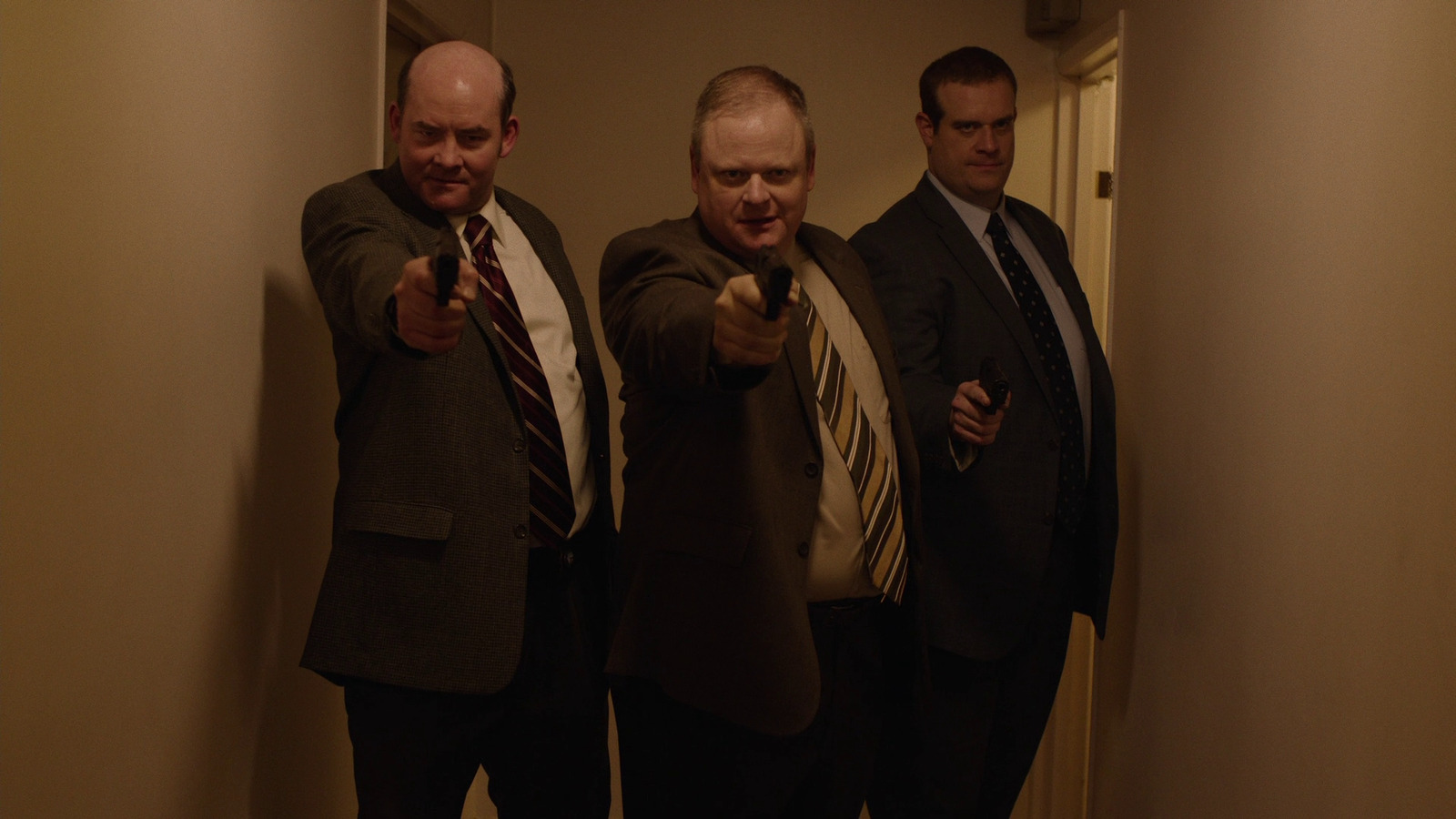
Ike’s motel call describes his failure through evasive professional language. The mirror doubles his cramped position before the police approach. Once he enters the corridor, the exits become a problem of framing: officers occupy the route ahead, and his ability to improvise narrows. The Fuscos turn his injured palm into a joke about unusually complete evidence.
Open the scene sequence · 1 frame
Giving way without losing the choice
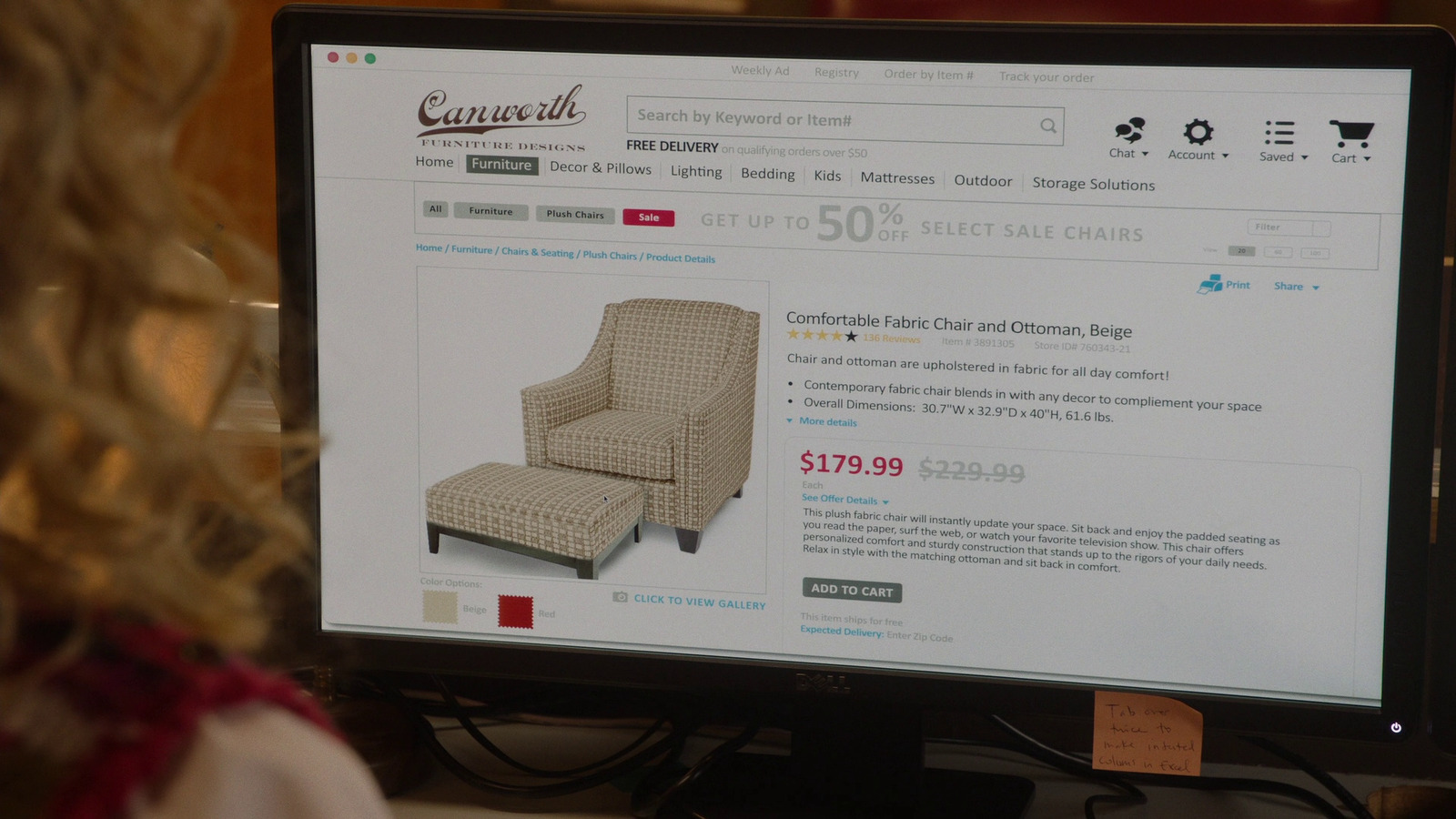
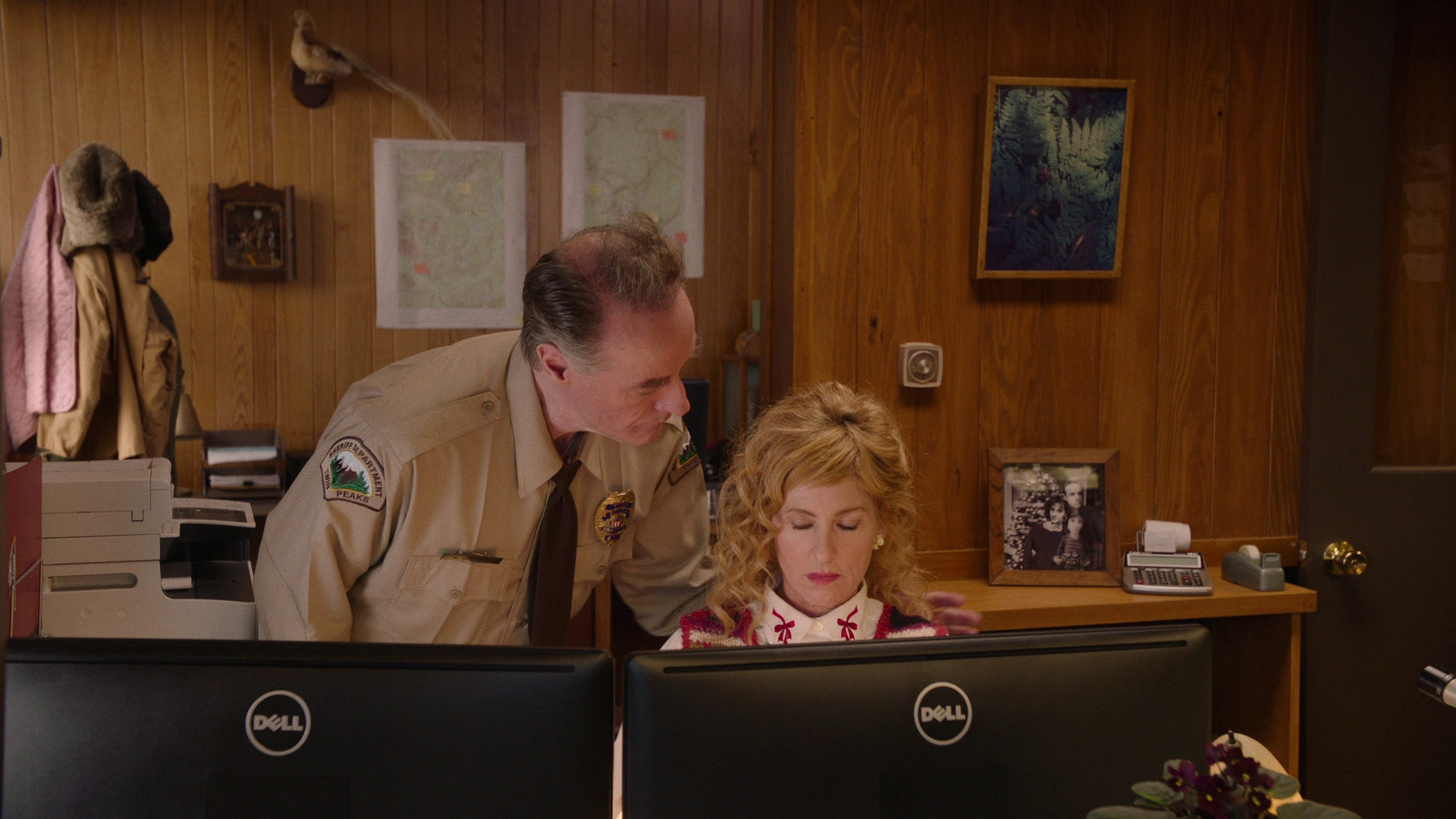
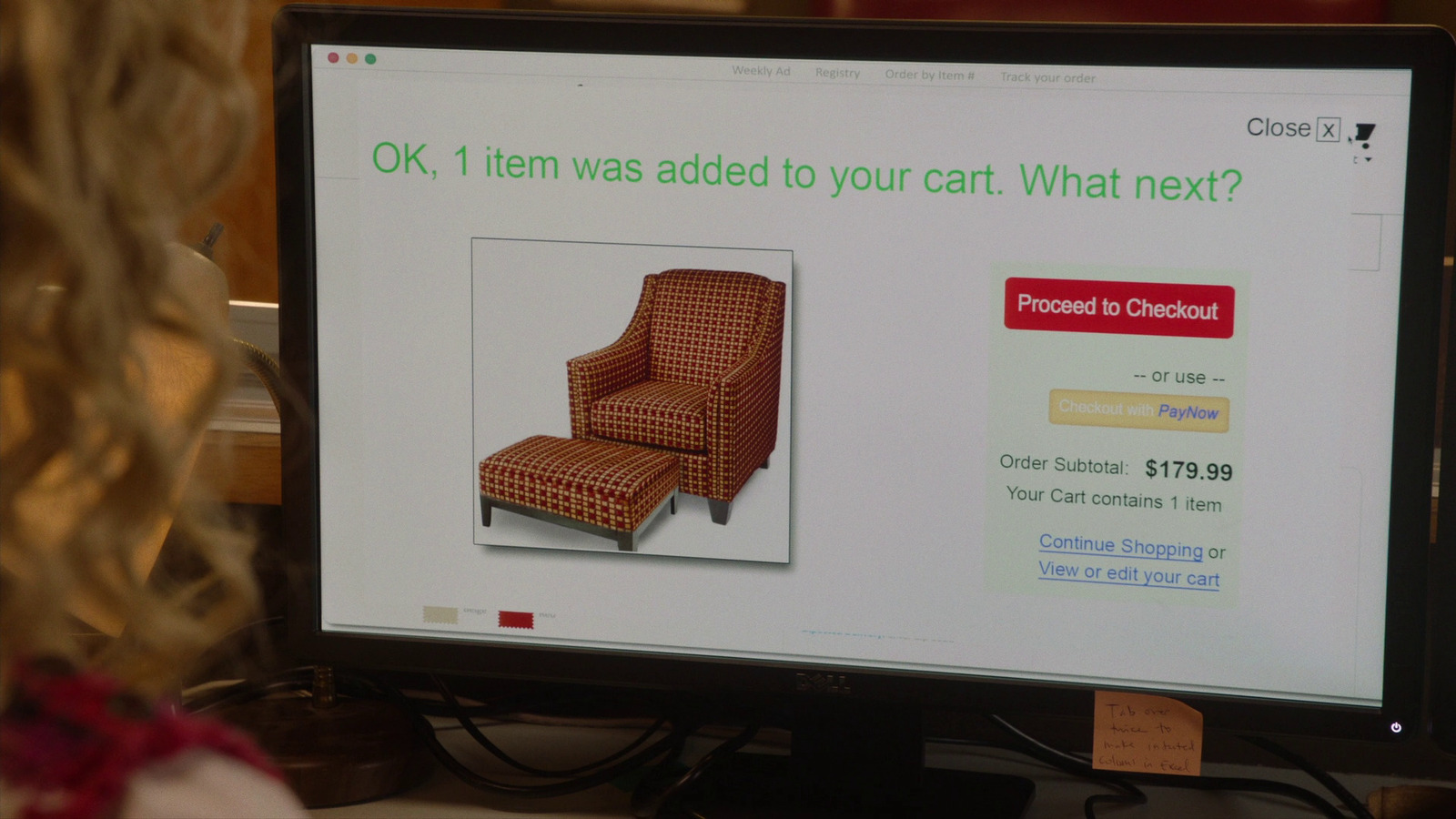
Lucy and Andy disagree over chair colors, with pauses long enough to make each preference feel stubbornly separate. Andy finally yields. Lucy’s subsequent click selects the color he wanted, converting the apparent impasse into a small act of generosity. The scene gives a domestic object emotional significance before another chair becomes a container for an extraordinary message.
Open the scene sequence · 2 frames
An impact beyond the empty hall
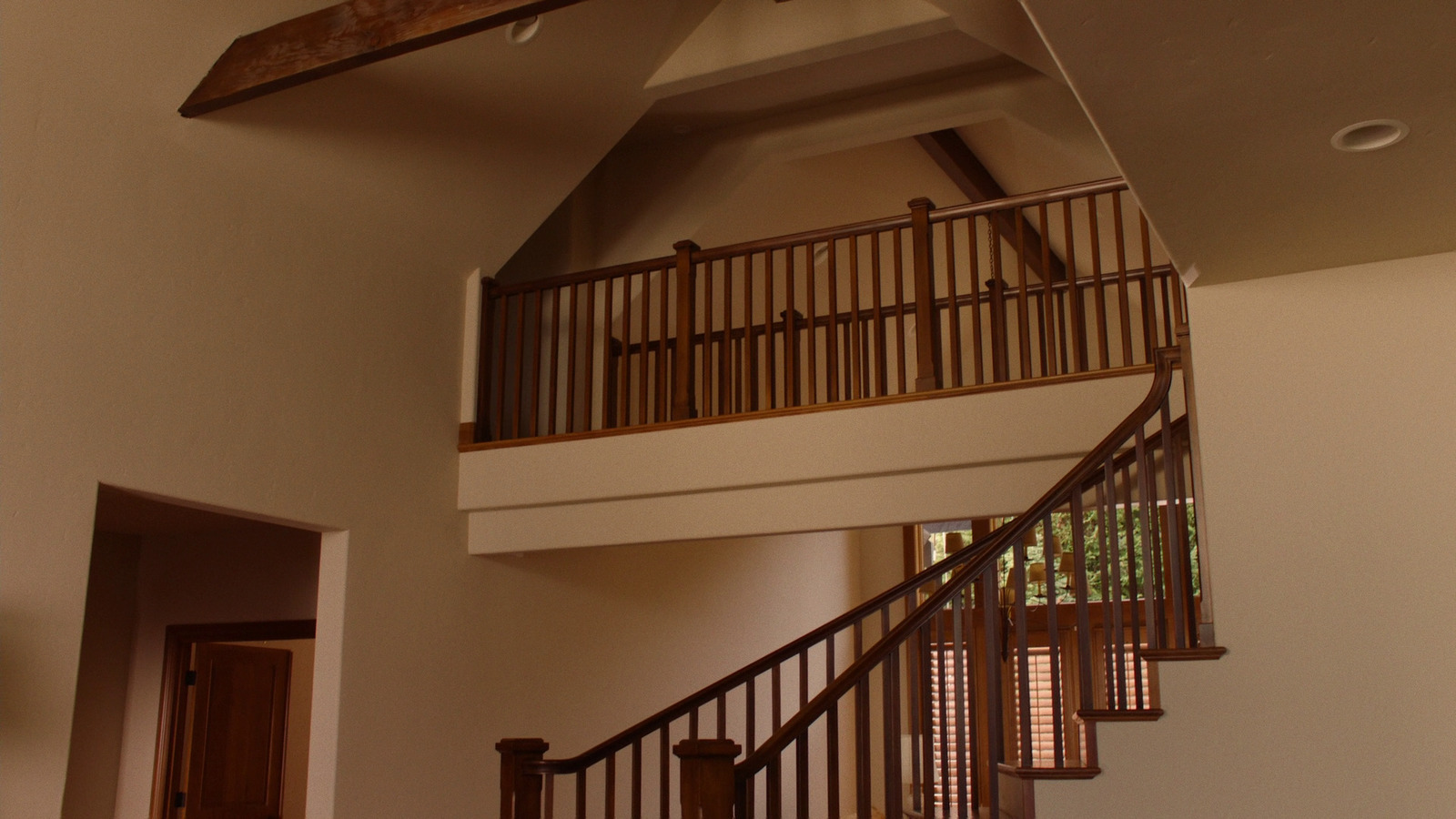
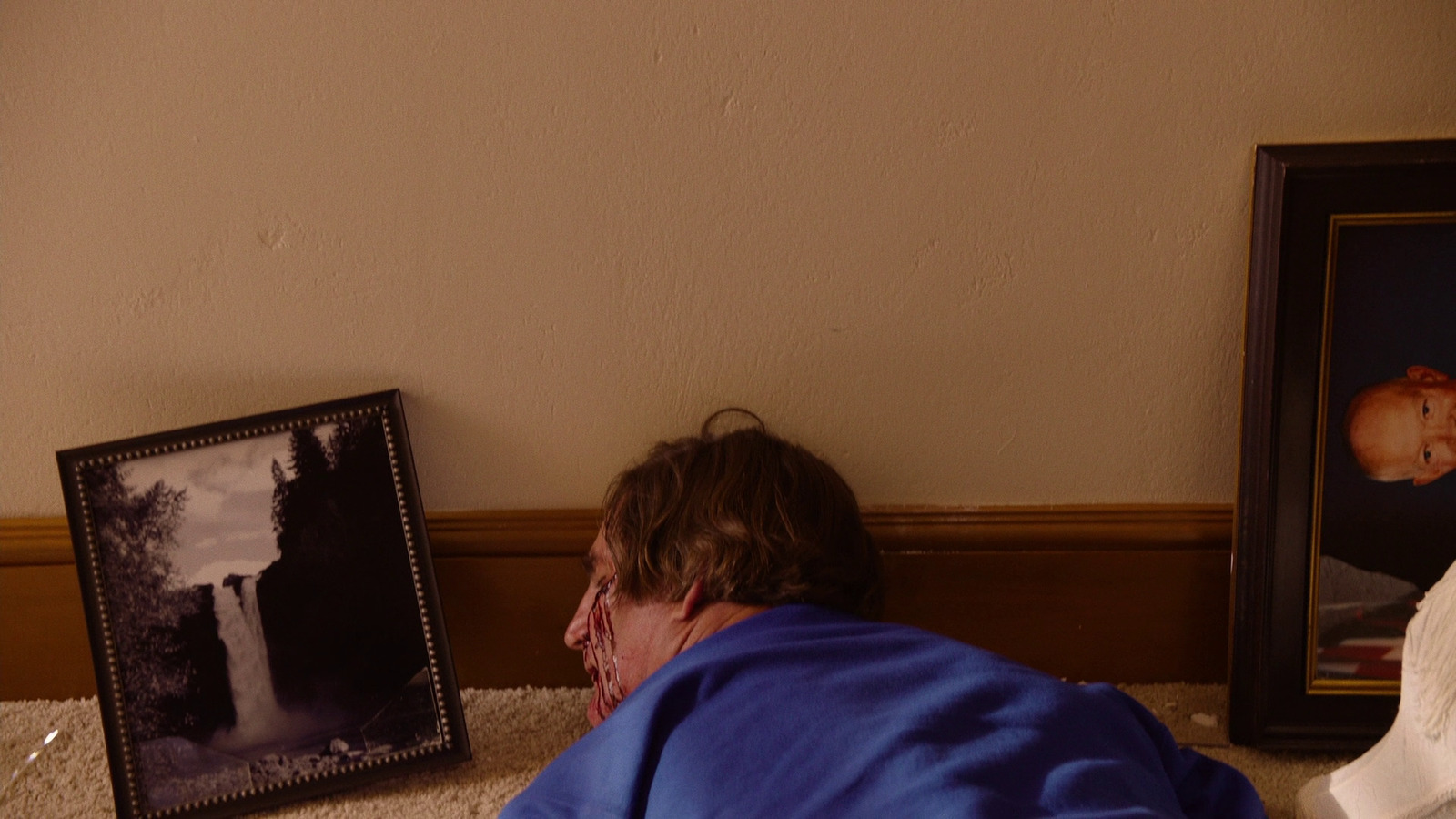
Footsteps and Sylvia’s calls animate the house before the camera reaches Johnny. The held staircase and hallway do not display a spectacular collision; the crash and breakage are heard, and the aftermath follows. This separation of sound from impact directs attention toward vulnerability and failed supervision. Johnny’s injured position matters more than a demonstration of the physical stunt.
Open the scene sequence · 1 frame
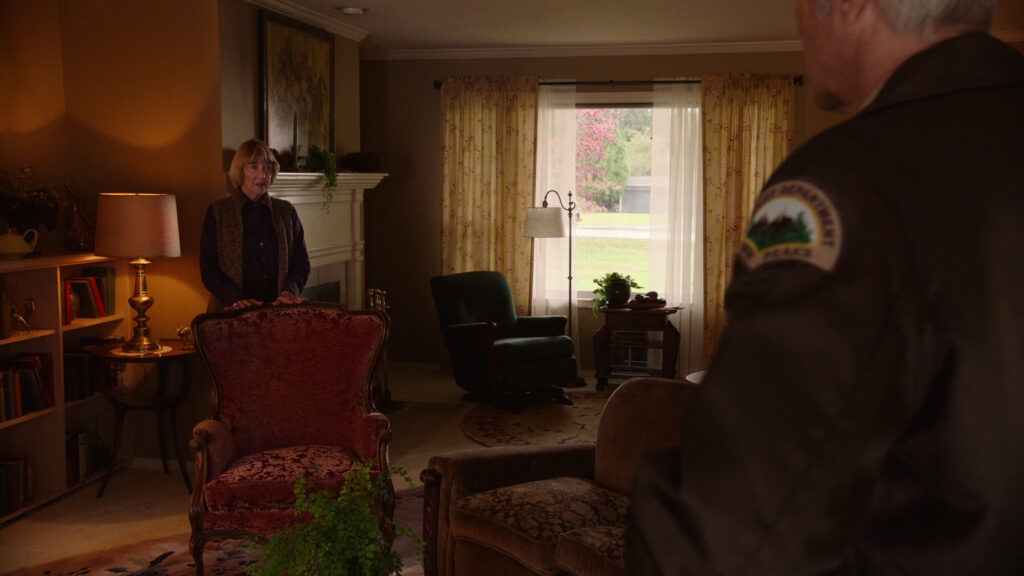
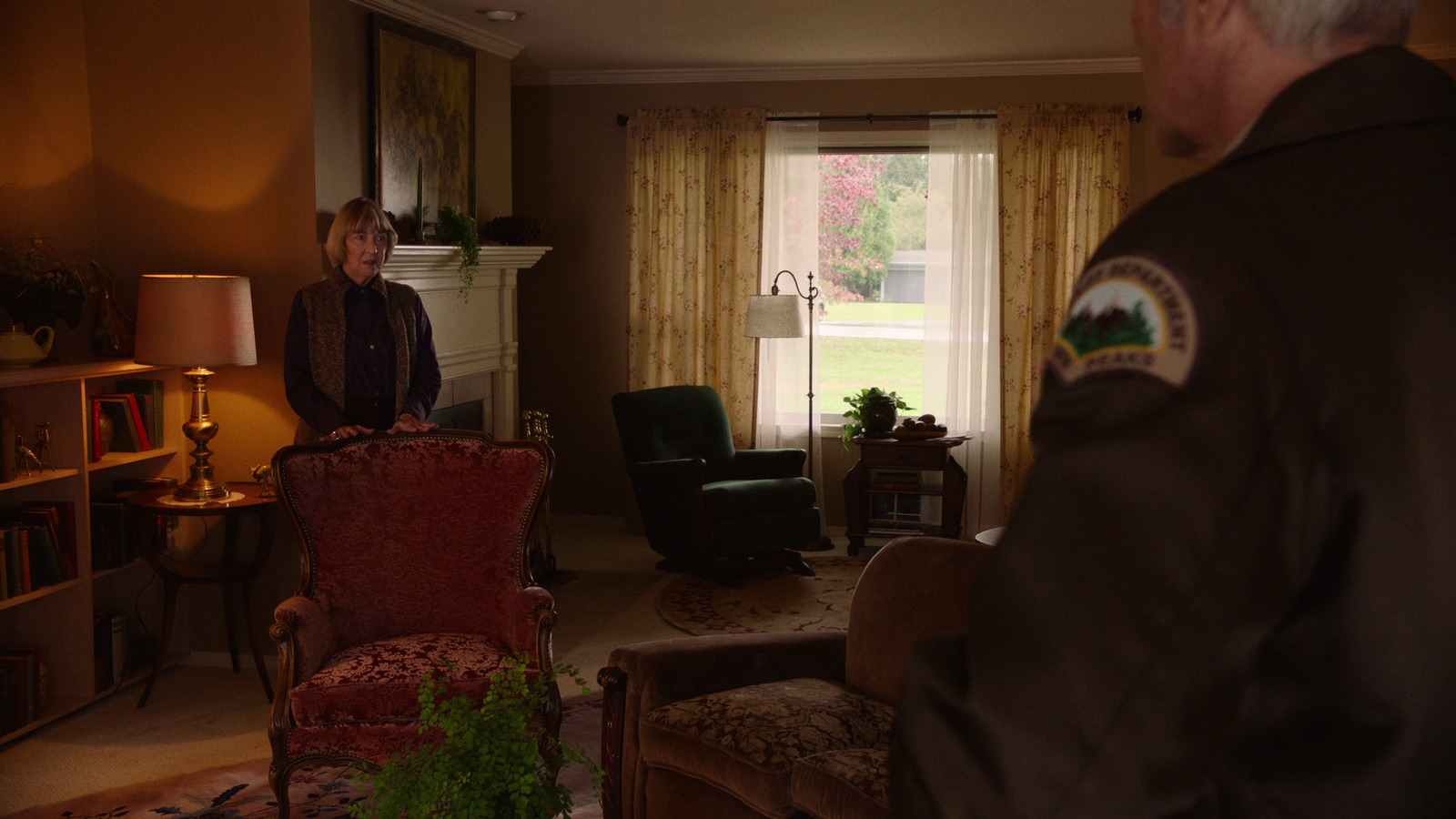
A promise kept until the right visitors arrive
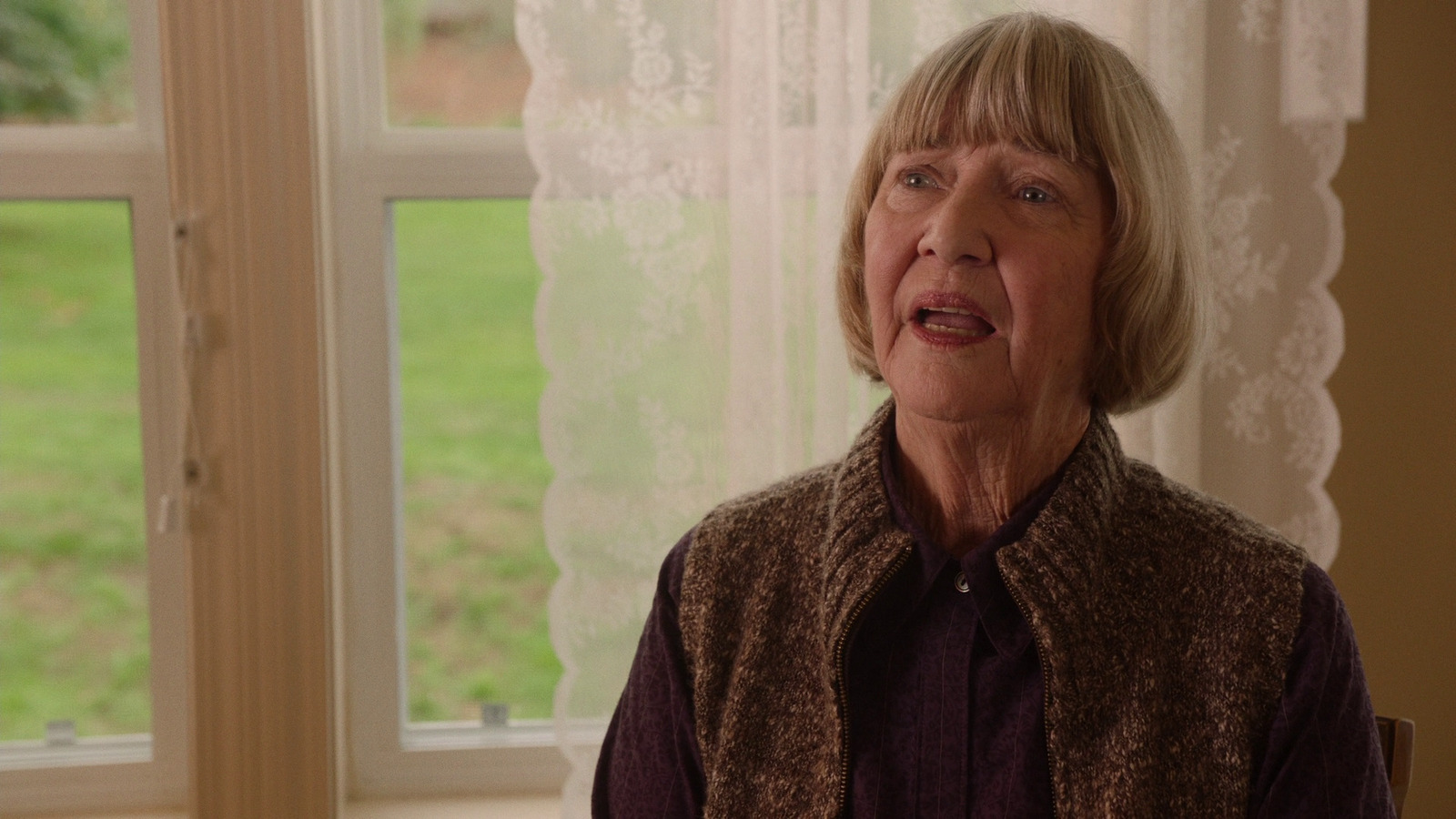
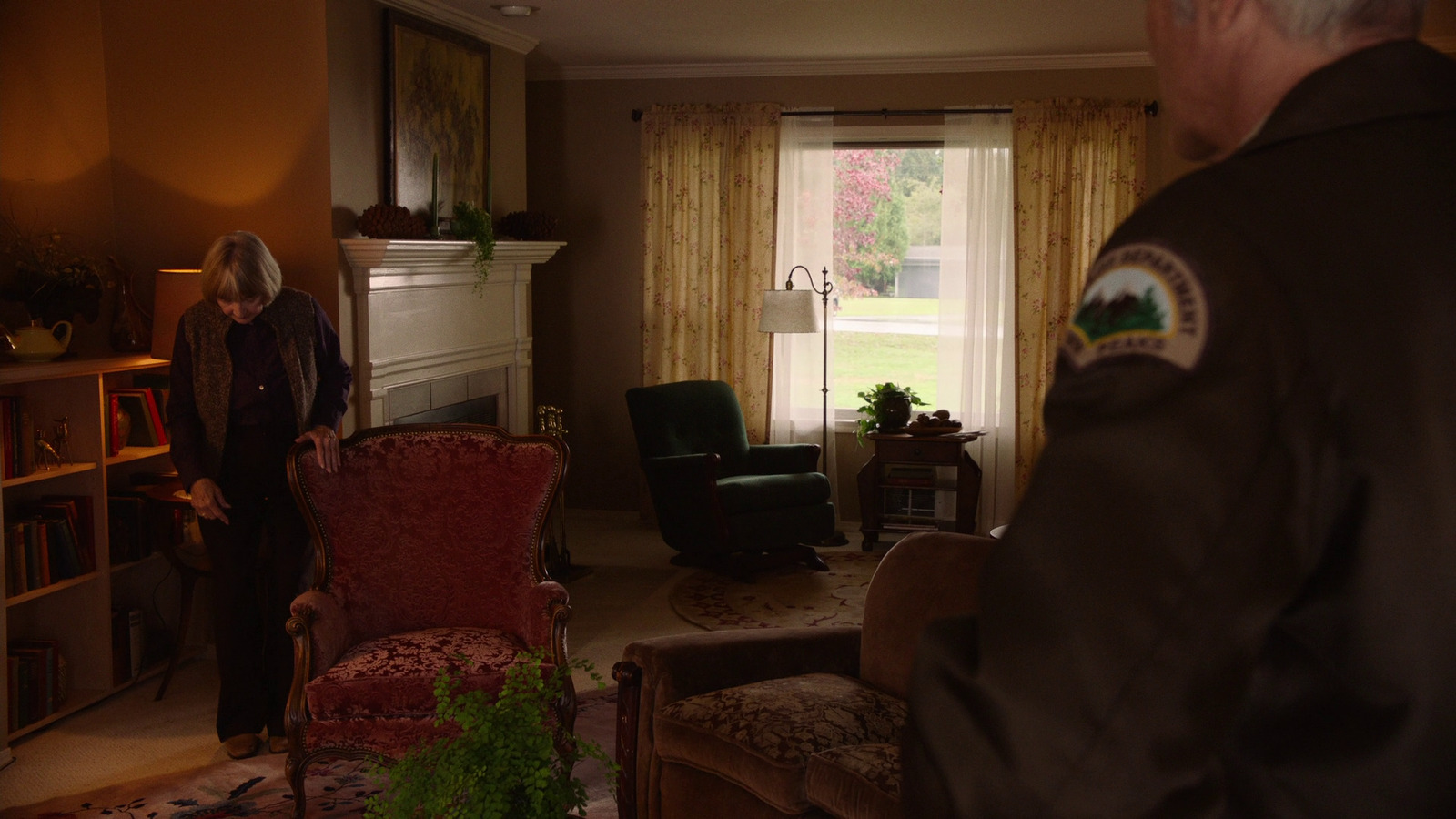
Betty has not merely stored an object. She has preserved Garland’s instructions about who would come and what they would ask. Her recognition of this Sheriff Truman acknowledges change within the long wait. At the chair, practical disclosure becomes an account of a father’s confidence in his son. Bobby’s emotion is part of the scene’s knowledge: he is hearing that his present life was once imagined for him.
Open the scene sequence · 3 frames
A body that does not fit its history
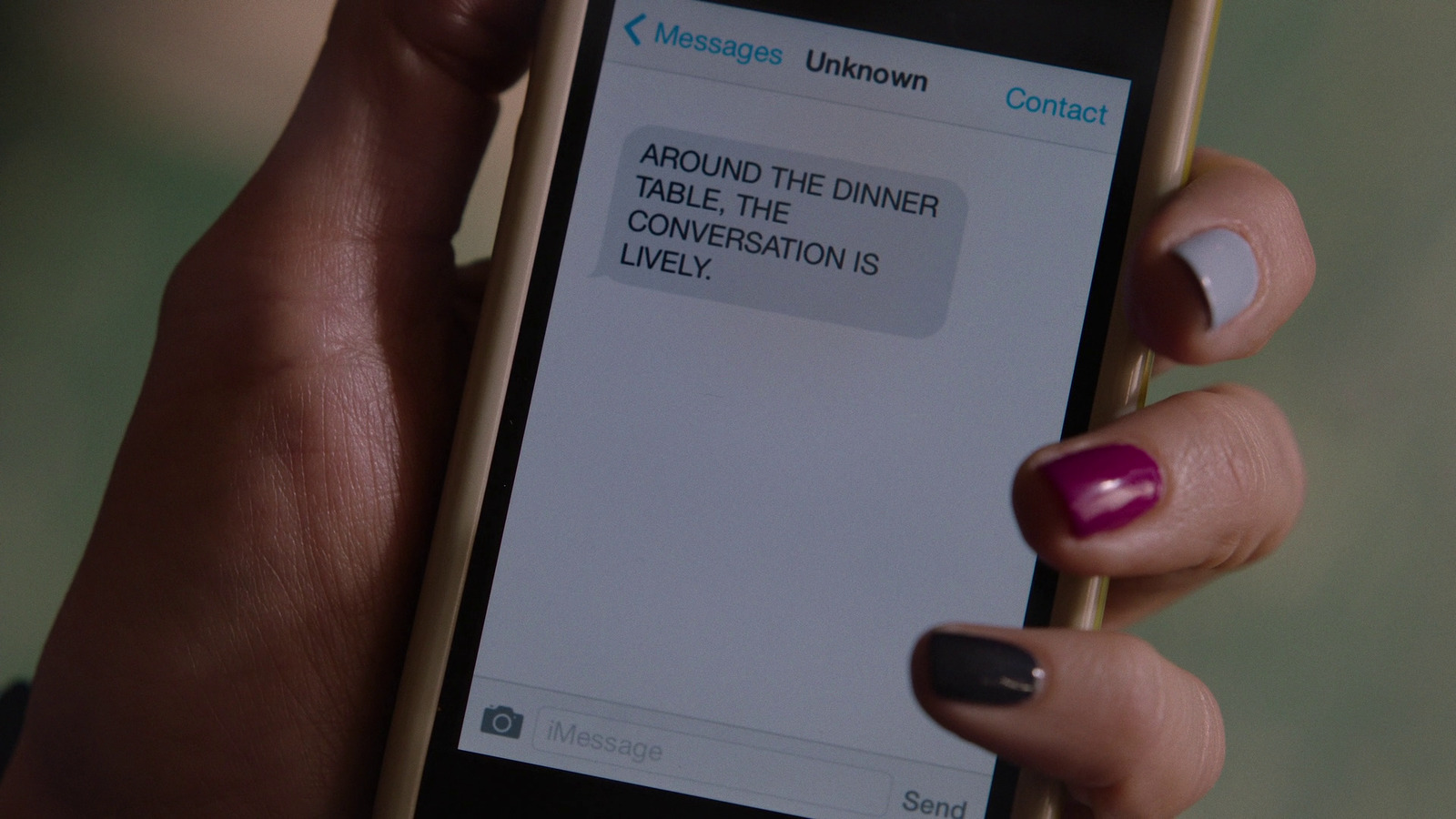
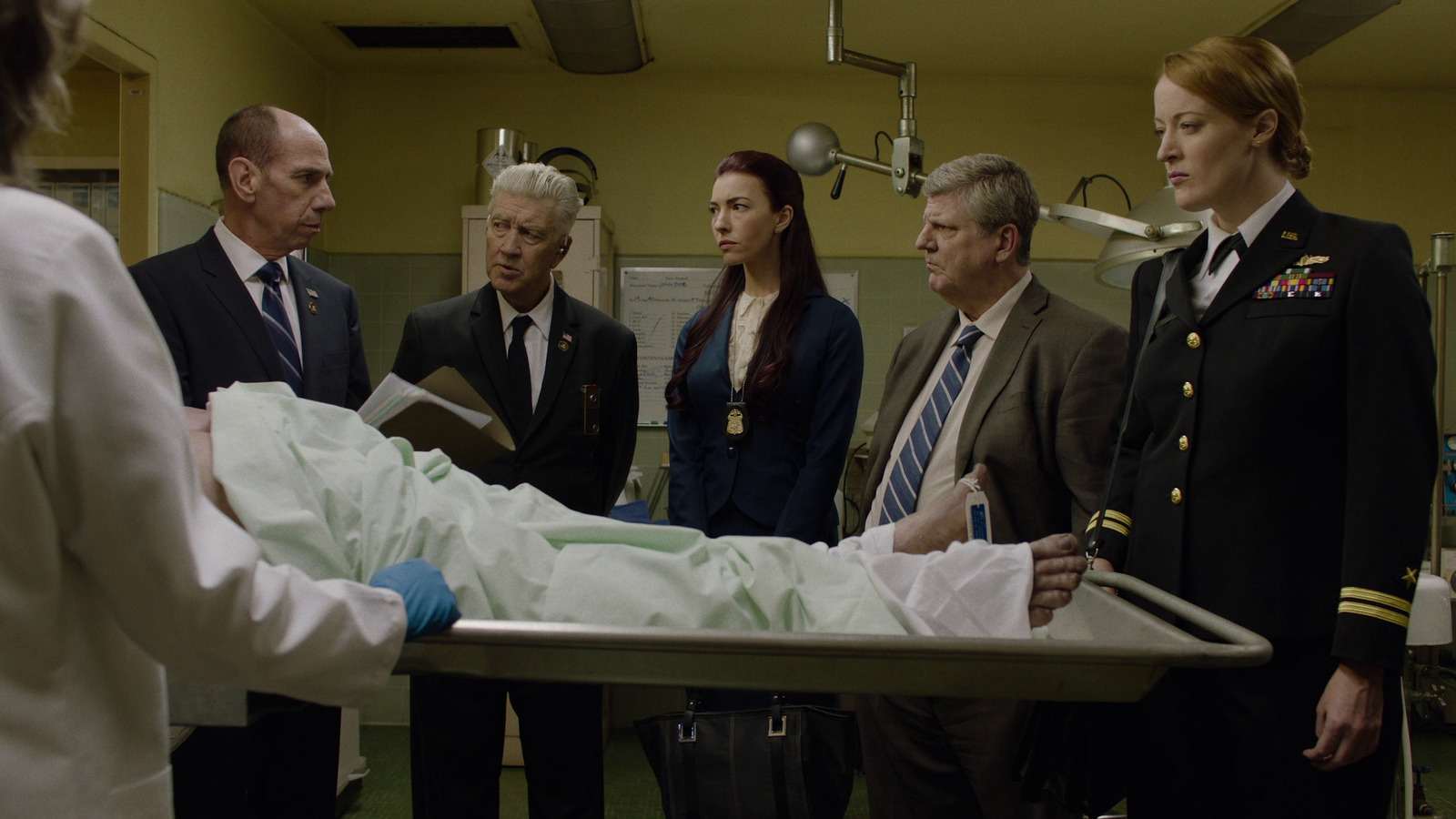
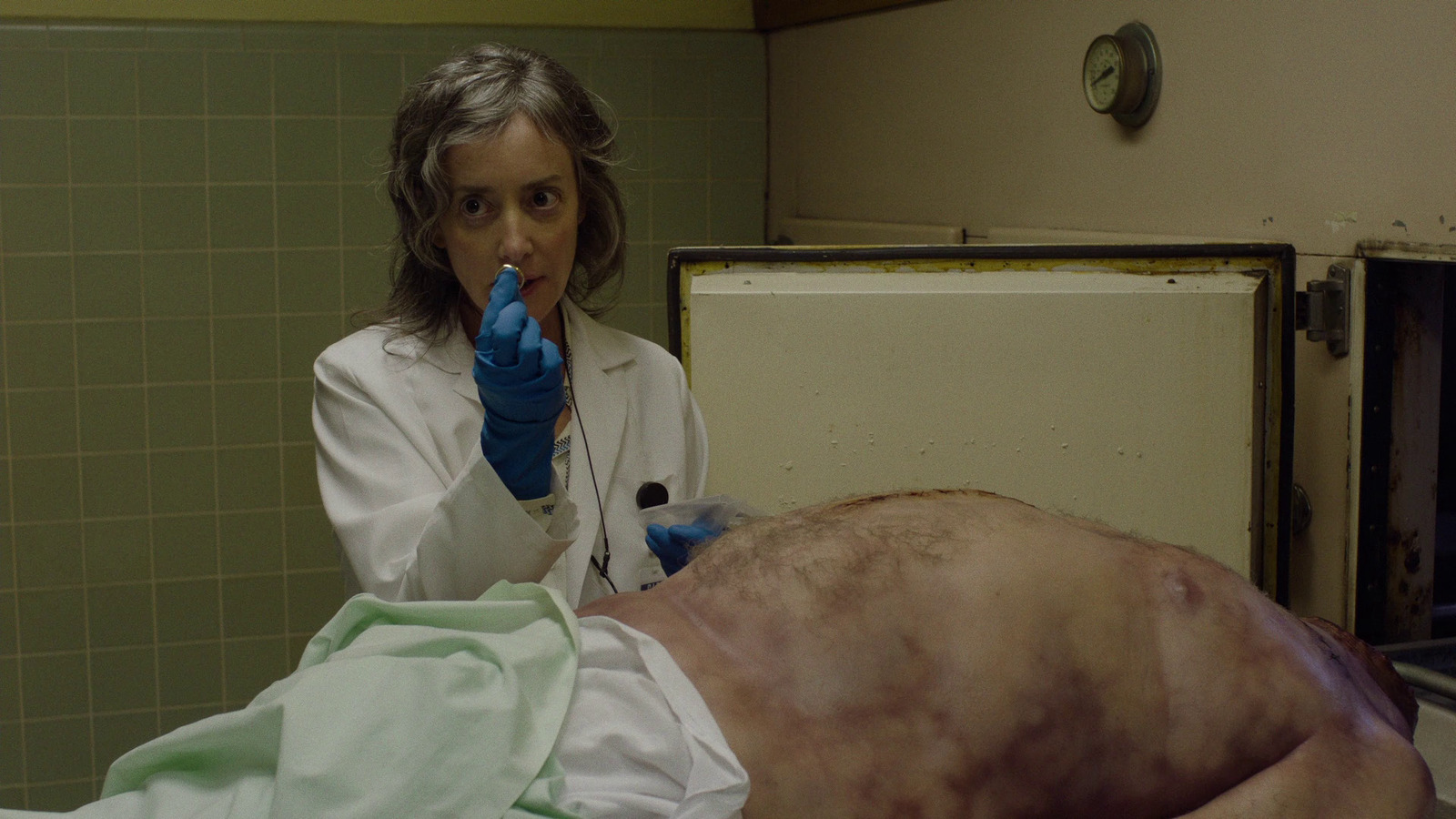
Diane remains outside and receives a cryptic message while the investigators compare the body, Hastings’s account and the accepted history of Major Briggs. The age discrepancy resists a simple identification. Constance’s ring adds a domestic inscription to the forensic problem, carrying Dougie and Janey-E into a room where the Las Vegas story is not yet understood. These connections accumulate without producing a single complete explanation.
Open the scene sequence · 2 frames
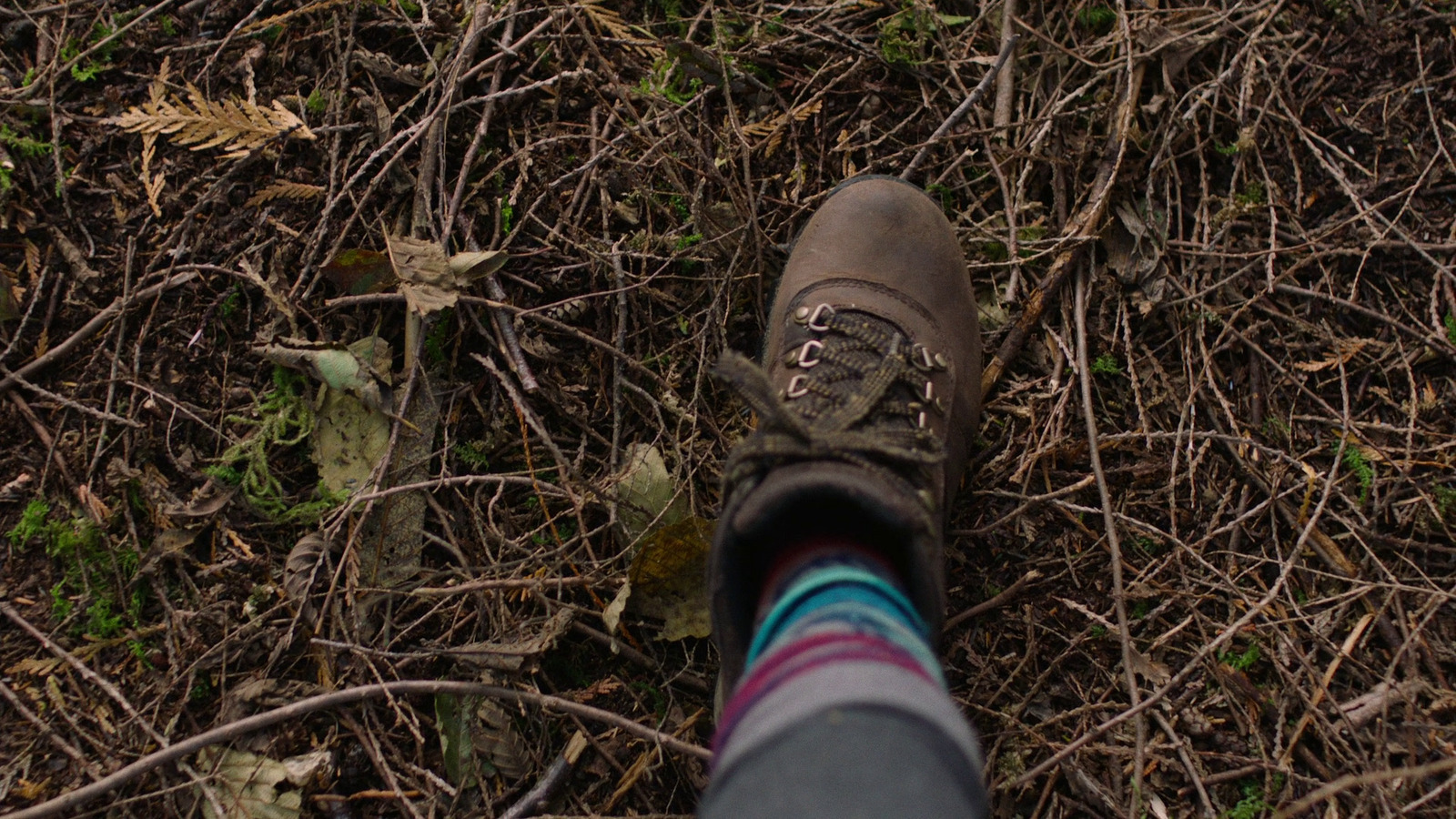
The nearest thing becomes unfamiliar
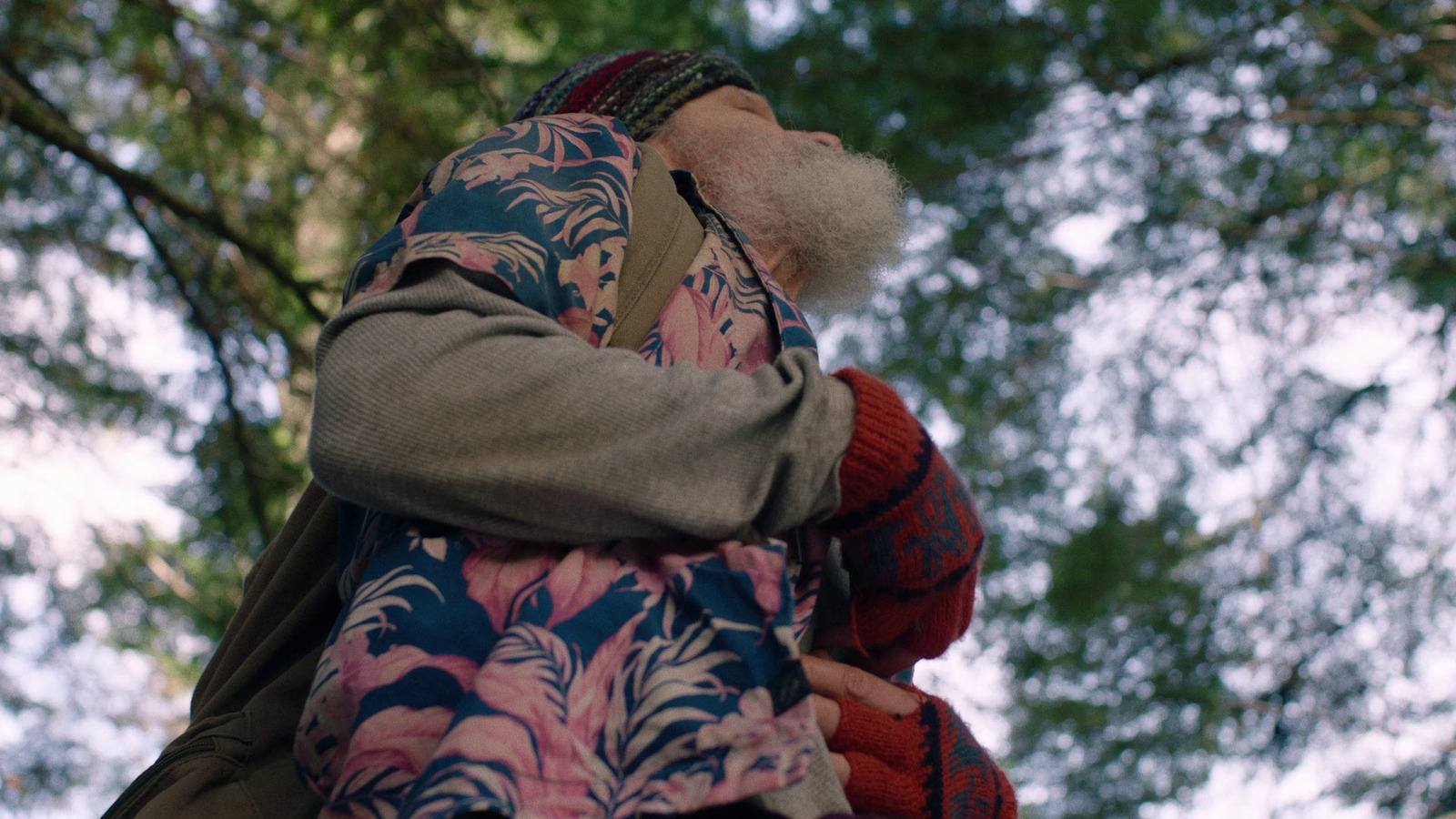
Jerry’s downward attention isolates his boot from the rest of his body. His distressed gestures, gasps and attempts to address the situation turn an everyday bodily relation into a confrontation. The sequence offers a comic counterpart to the investigators’ identification problems: uncertainty has moved from a distant corpse to something attached to oneself. The scene does not establish a separate physical creature at his feet.
Open the scene sequence · 1 frame
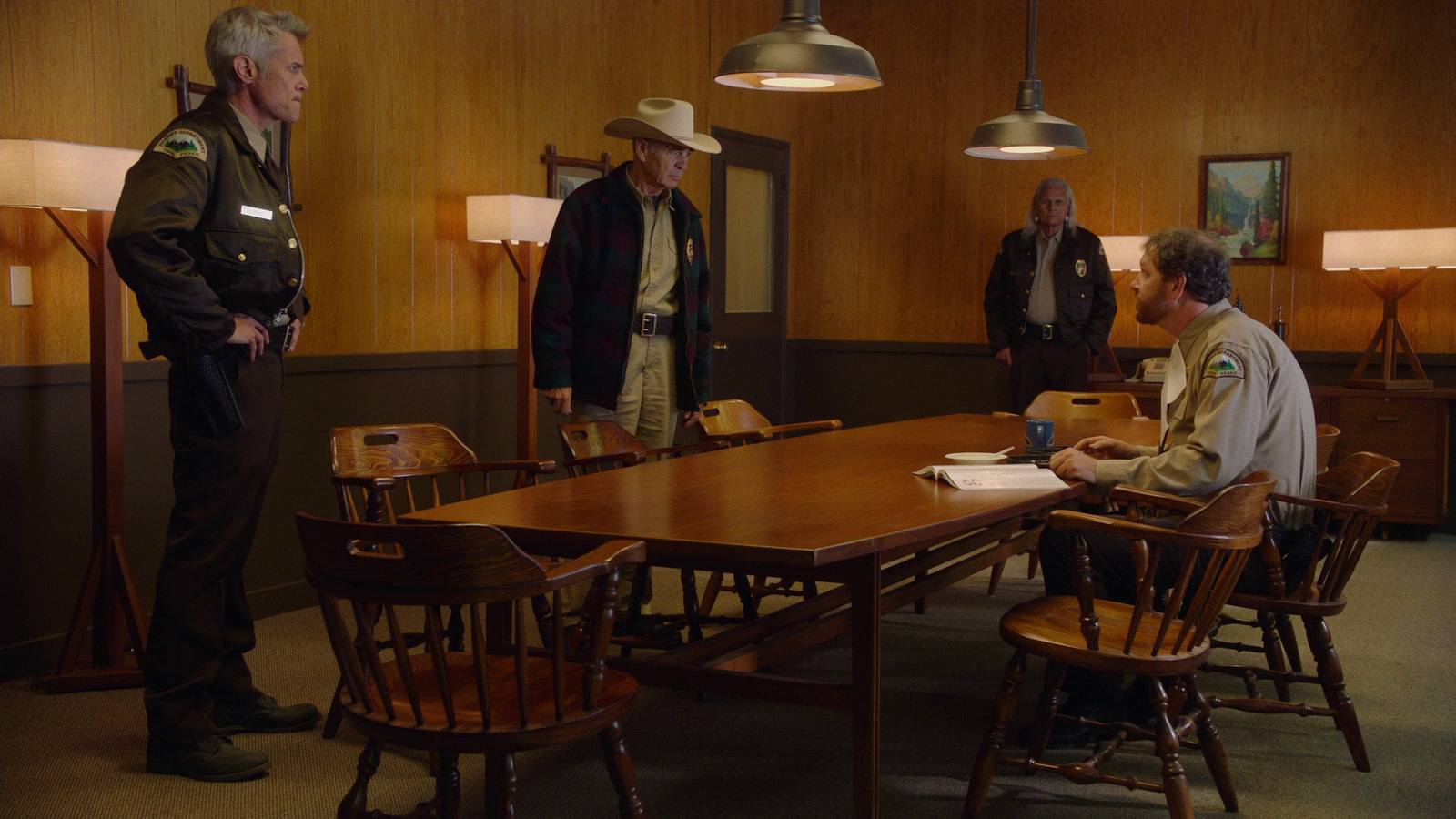
Making a place for the investigation
Chad’s lunch occupies the conference room needed by Frank, Hawk and Bobby. Their request and his lingering departure delay the important object’s examination. The open window gives the interruption a material afterlife. Such ordinary irritations make the sheriff’s office a working environment rather than a neutral space in which clues conveniently announce themselves.
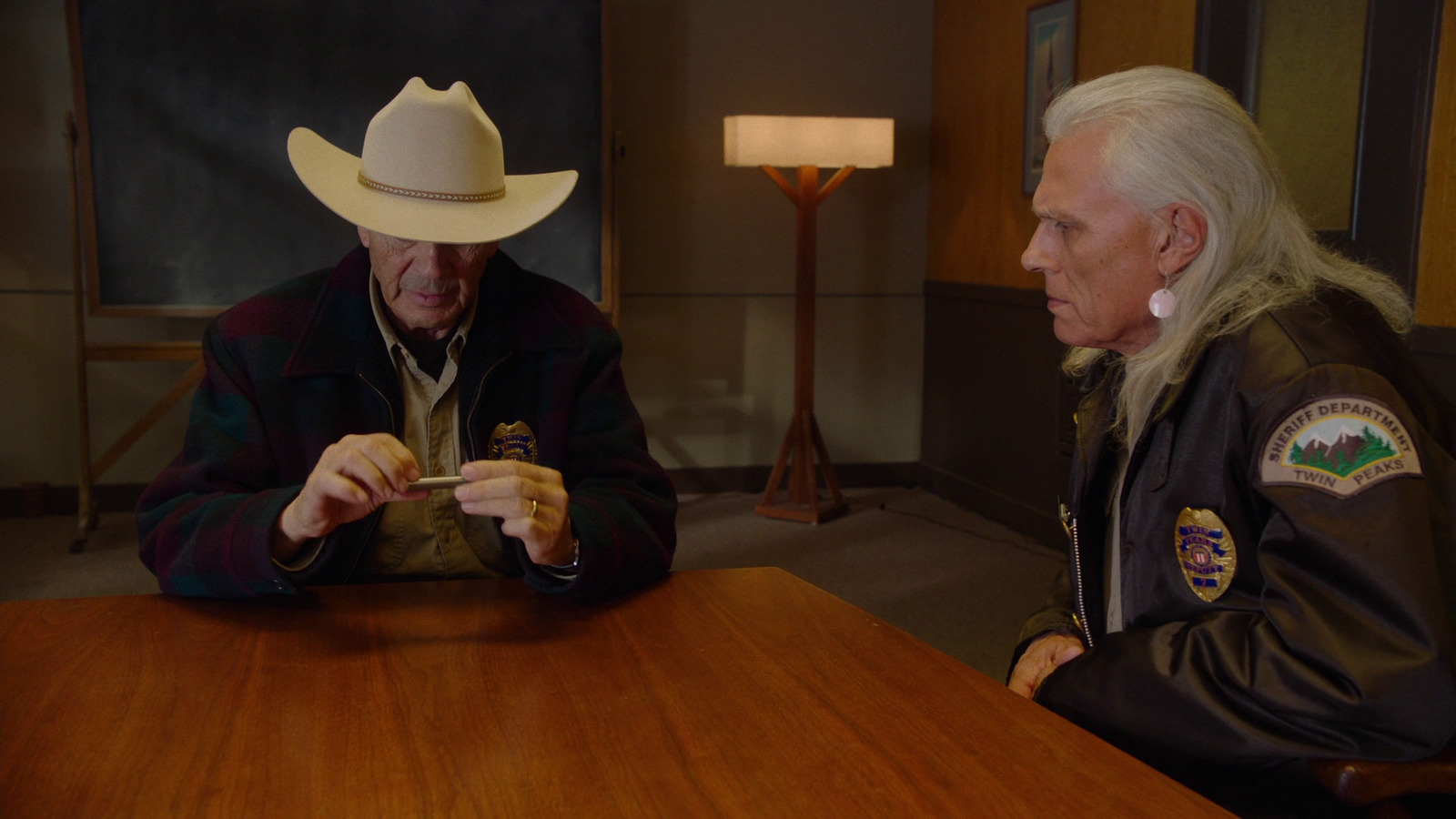
Bobby knows the action that the object requires
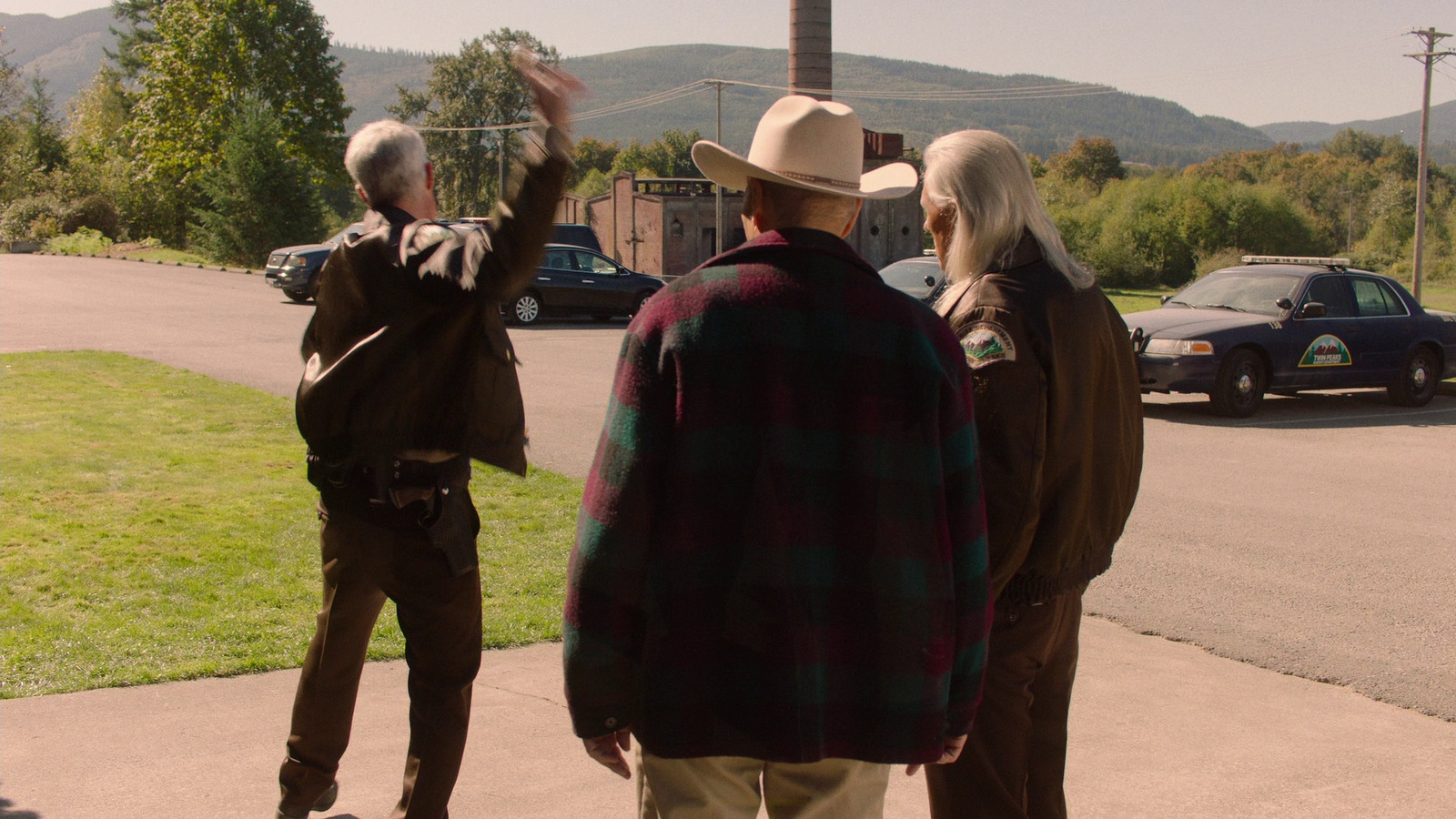
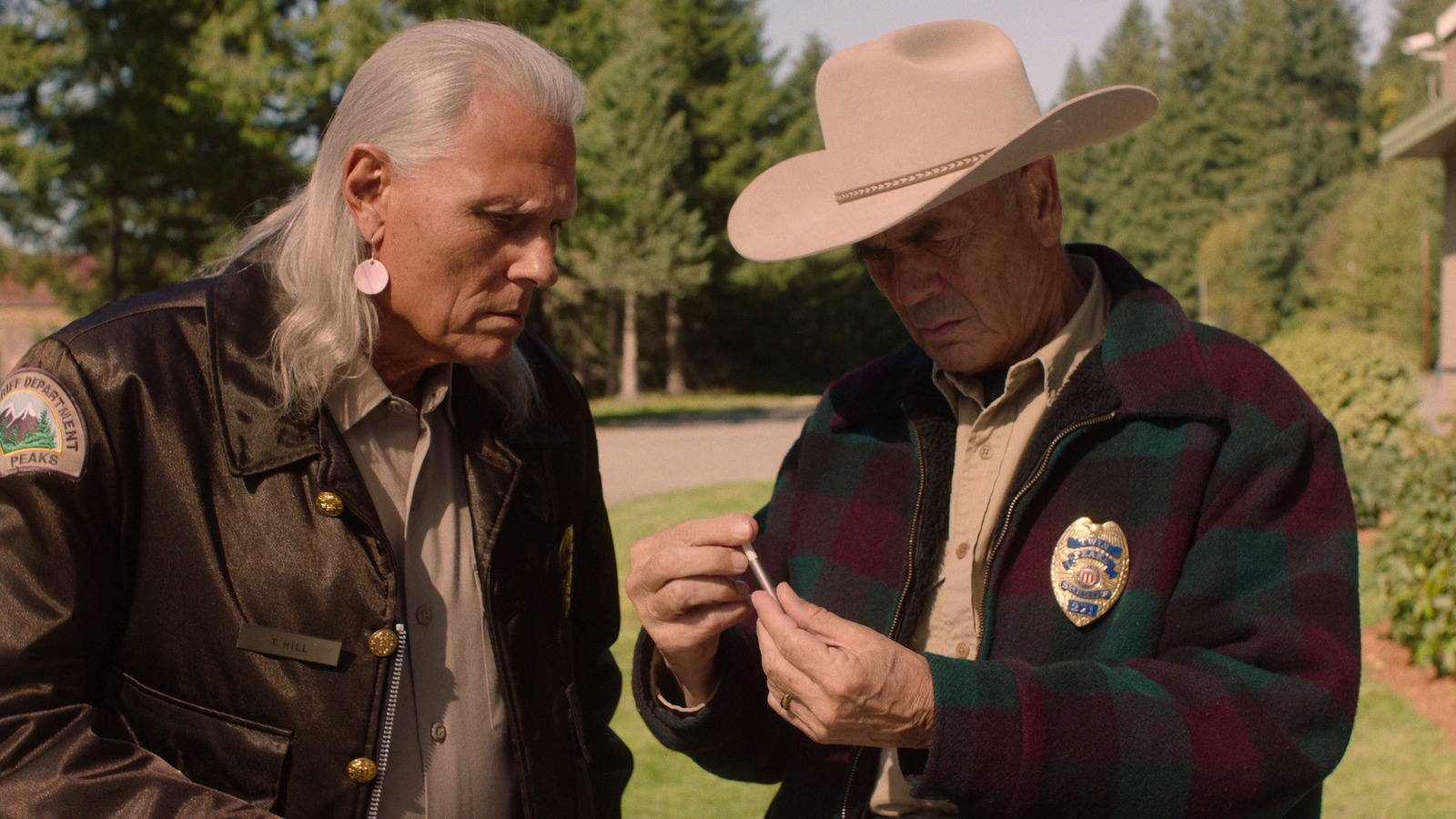
Frank and Hawk inspect the apparently seamless container. Bobby recognizes it from childhood and takes them outside. Striking it, listening to its hum and waiting form a procedure that cannot be deduced from its smooth surface alone. The opening depends on embodied memory: he knows not just what the object is, but what to do and when to stop.
Open the scene sequence · 3 frames

A private place name becomes a route
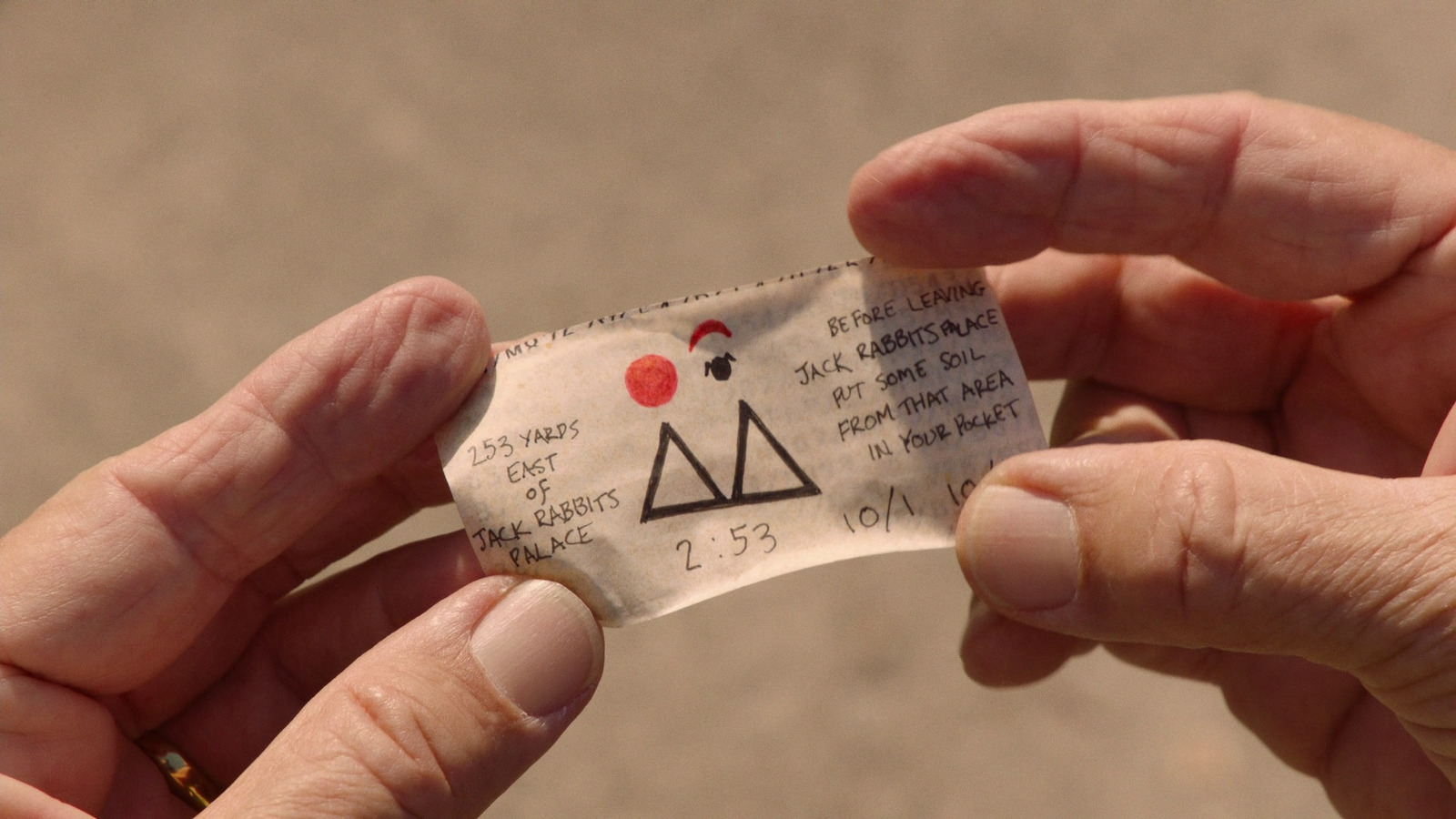
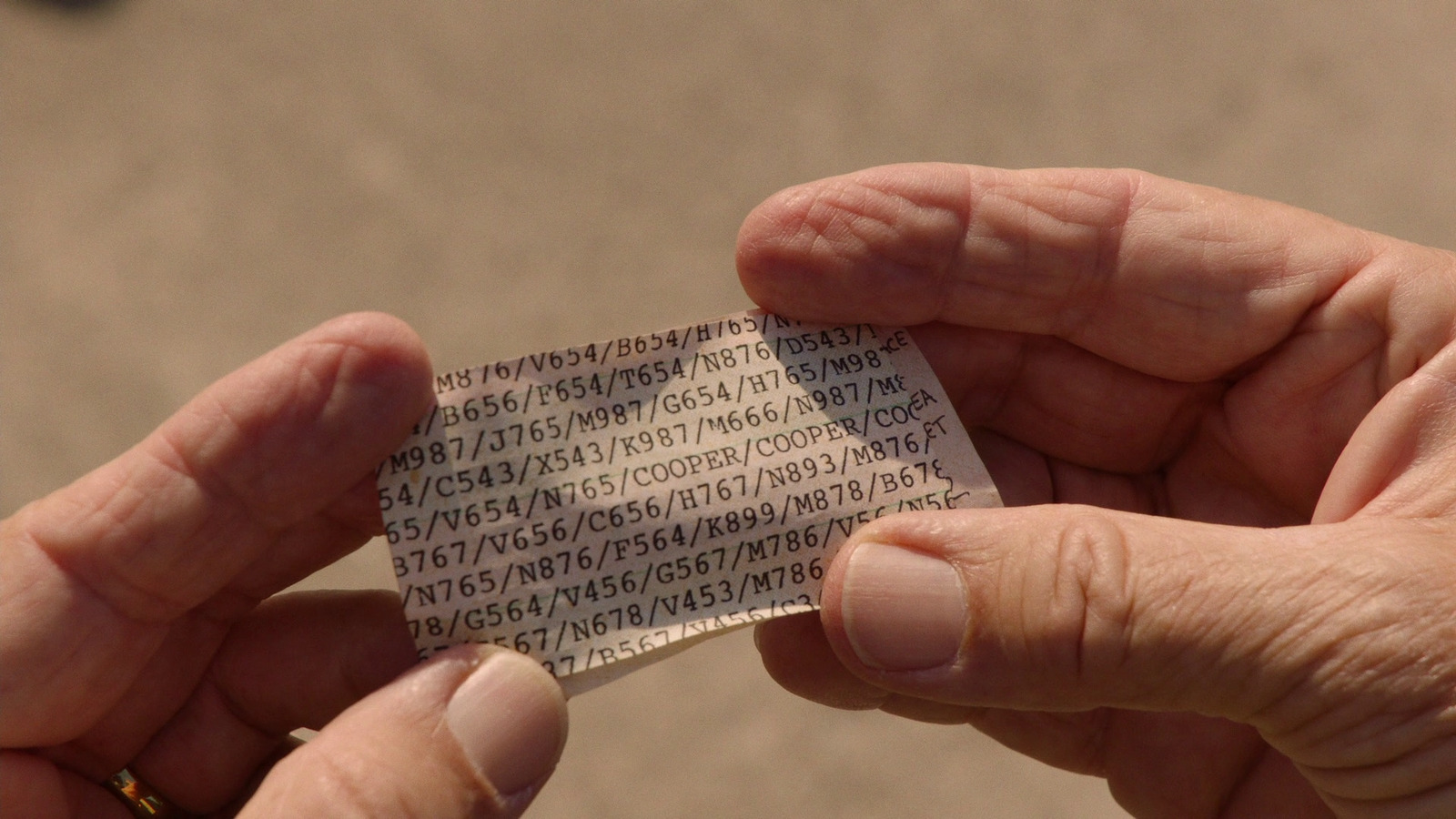
The papers combine directions, dates, a time and Cooper’s repeated name. Jack Rabbit’s Palace is initially meaningless to Frank, but Bobby knows the place because he named it during childhood play with Garland. The scene joins measurement to imaginative memory. A father and son’s invented geography becomes usable by the investigation, while the duplicated name makes another discrepancy explicit.
Open the scene sequence · 2 frames
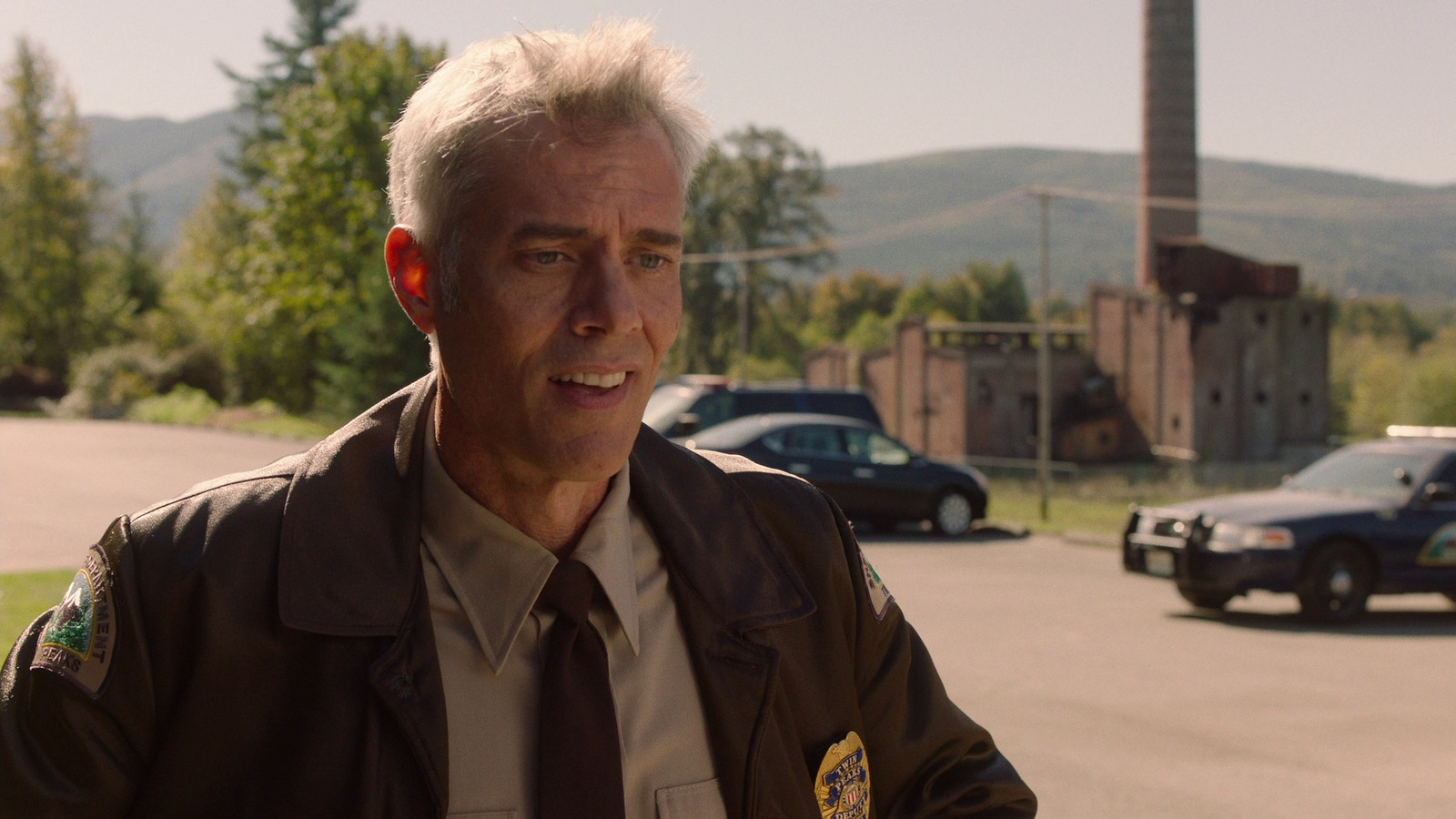
A shared habit holds an uneasy history
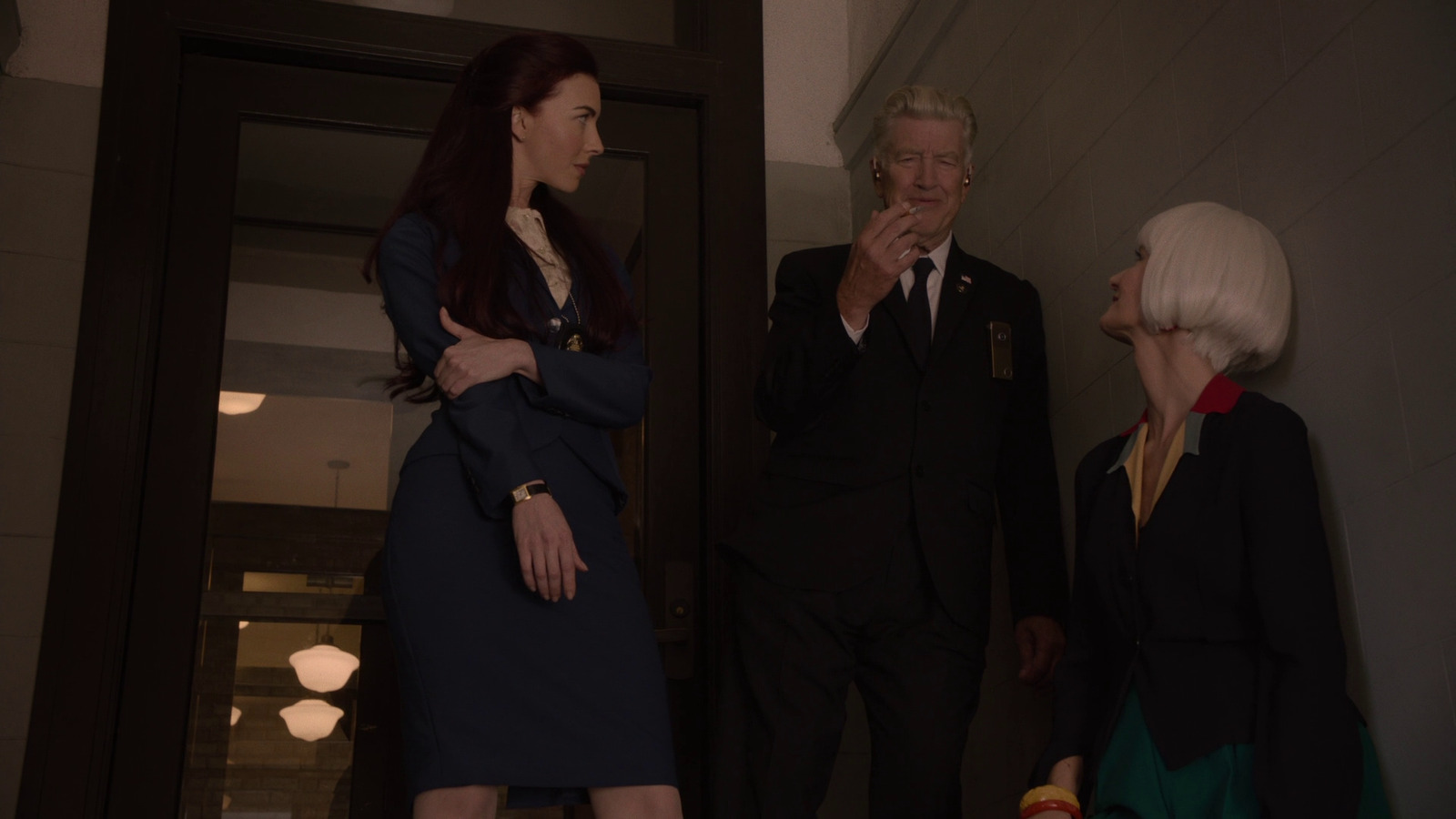
Gordon’s interest in Diane’s cigarette becomes a prolonged negotiation of glances, waiting and a shared drag. Tammy is present but does not possess the same history. The eventual recollection of smoking together gives the pauses a past without making the relationship easy. The scene allows familiarity and suspicion to remain in the same space.
Testimony cannot contain the experience
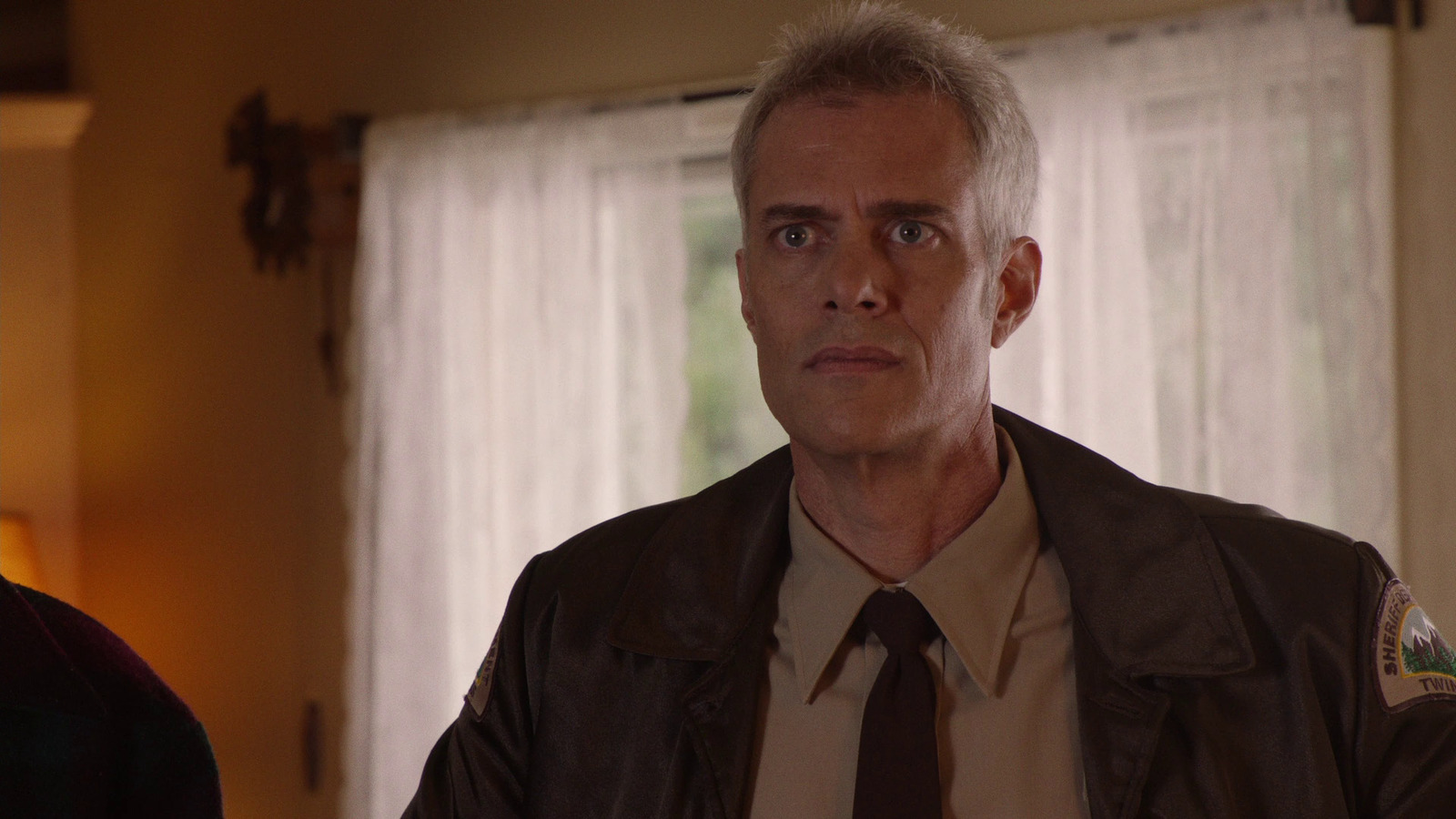
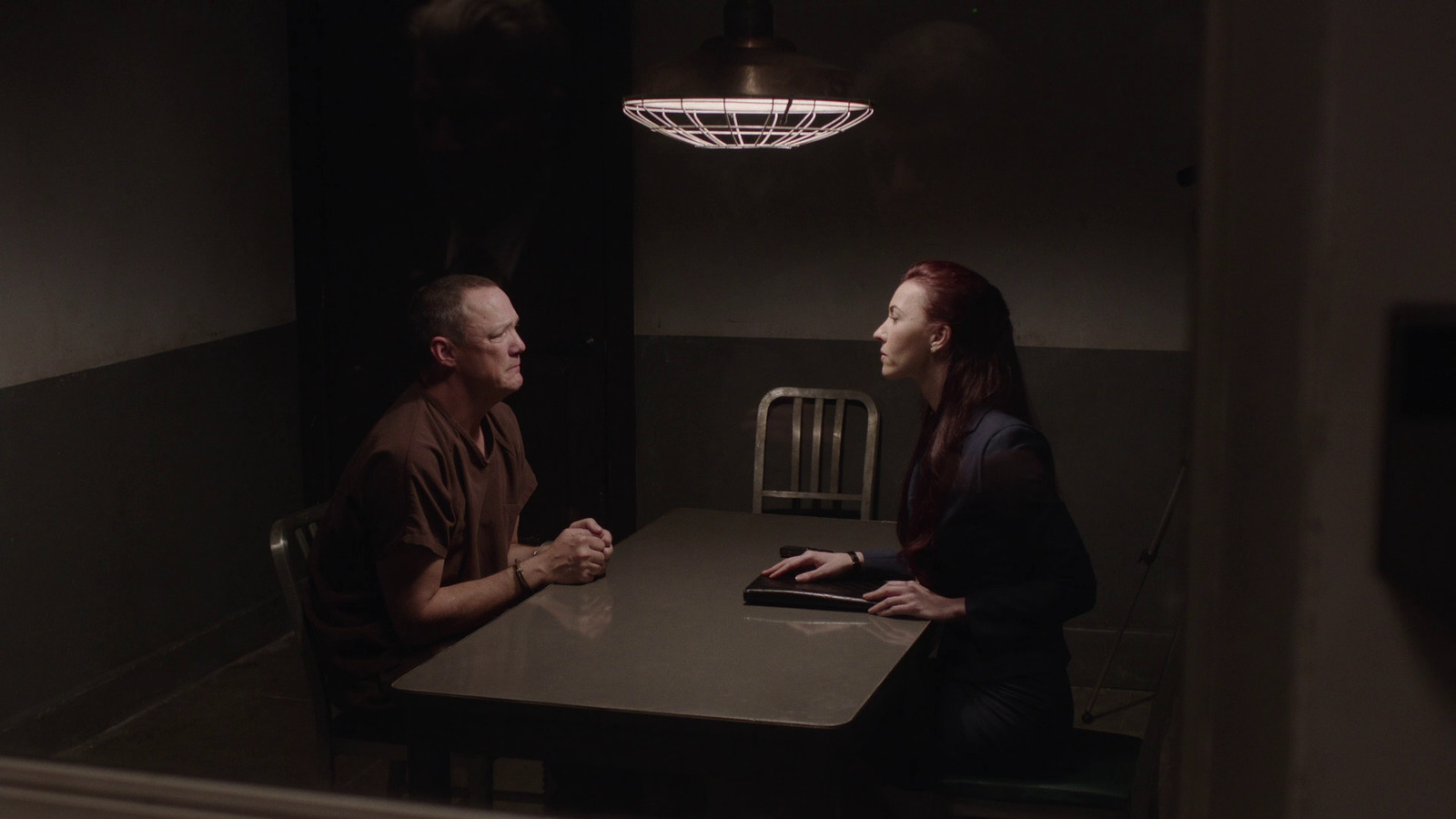
Tammy asks about the blog, the Major and the coordinates, turning Hastings’s story into a recorded account. He moves between factual answers, fear, wonder and grief. The photographic identification briefly gives the interview a firm procedural result; his account of floating and disappearance then exceeds ordinary description. His imagined holiday with Ruth brings the loss back to a painfully modest future. Cuts to the observers create a second scene of listening, with their reserve set against his collapse.
Open the scene sequence · 4 frames
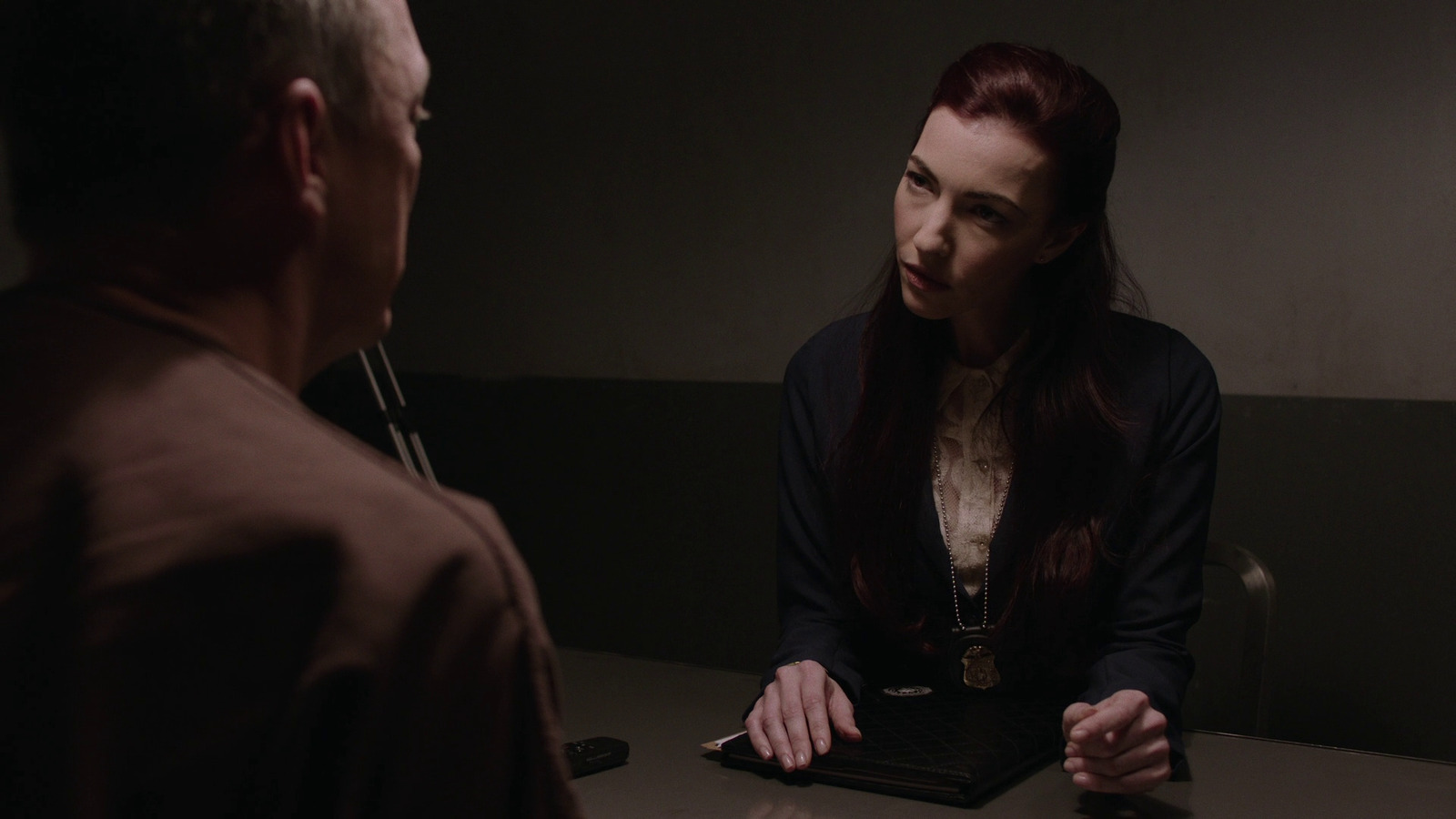
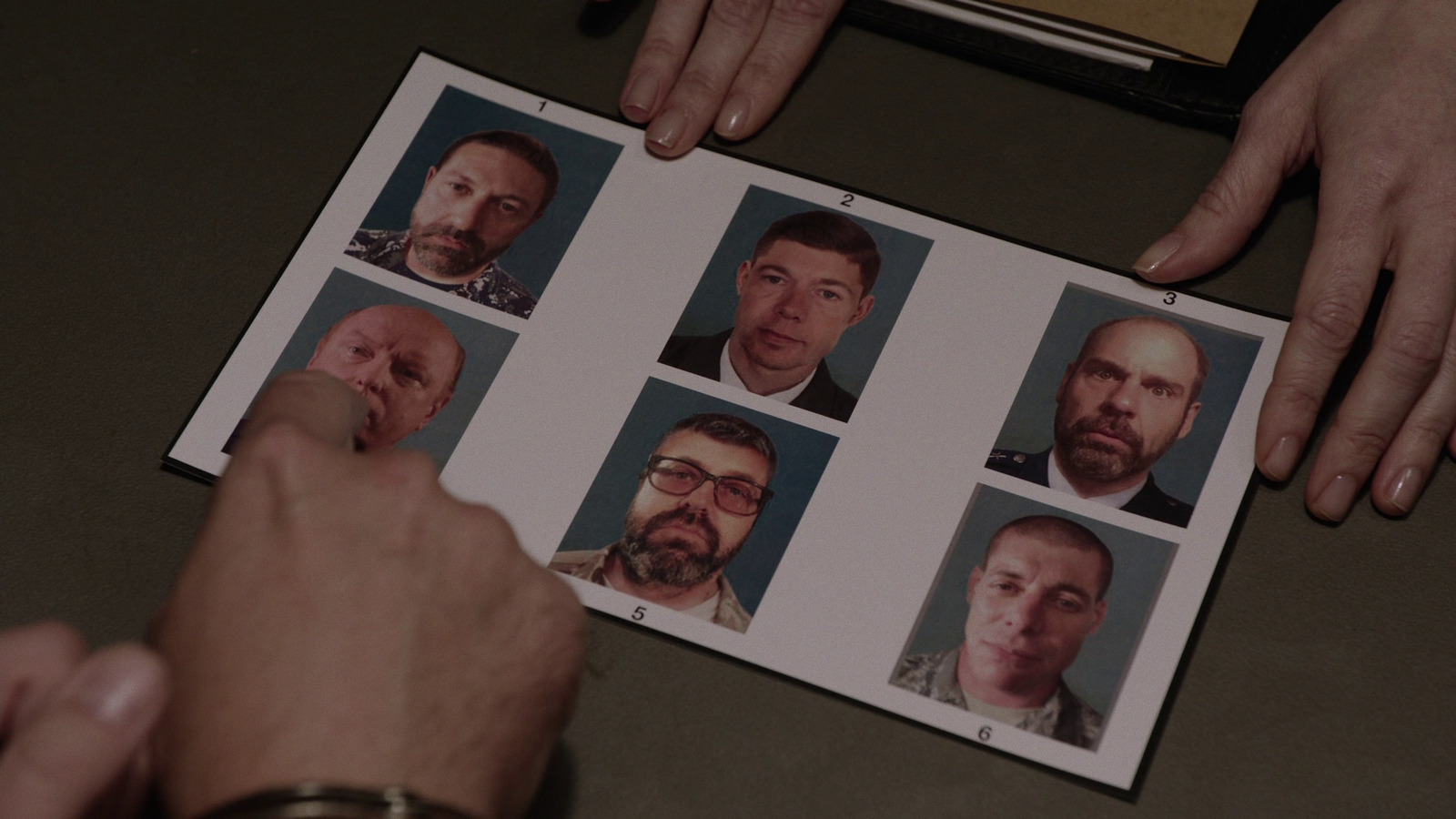
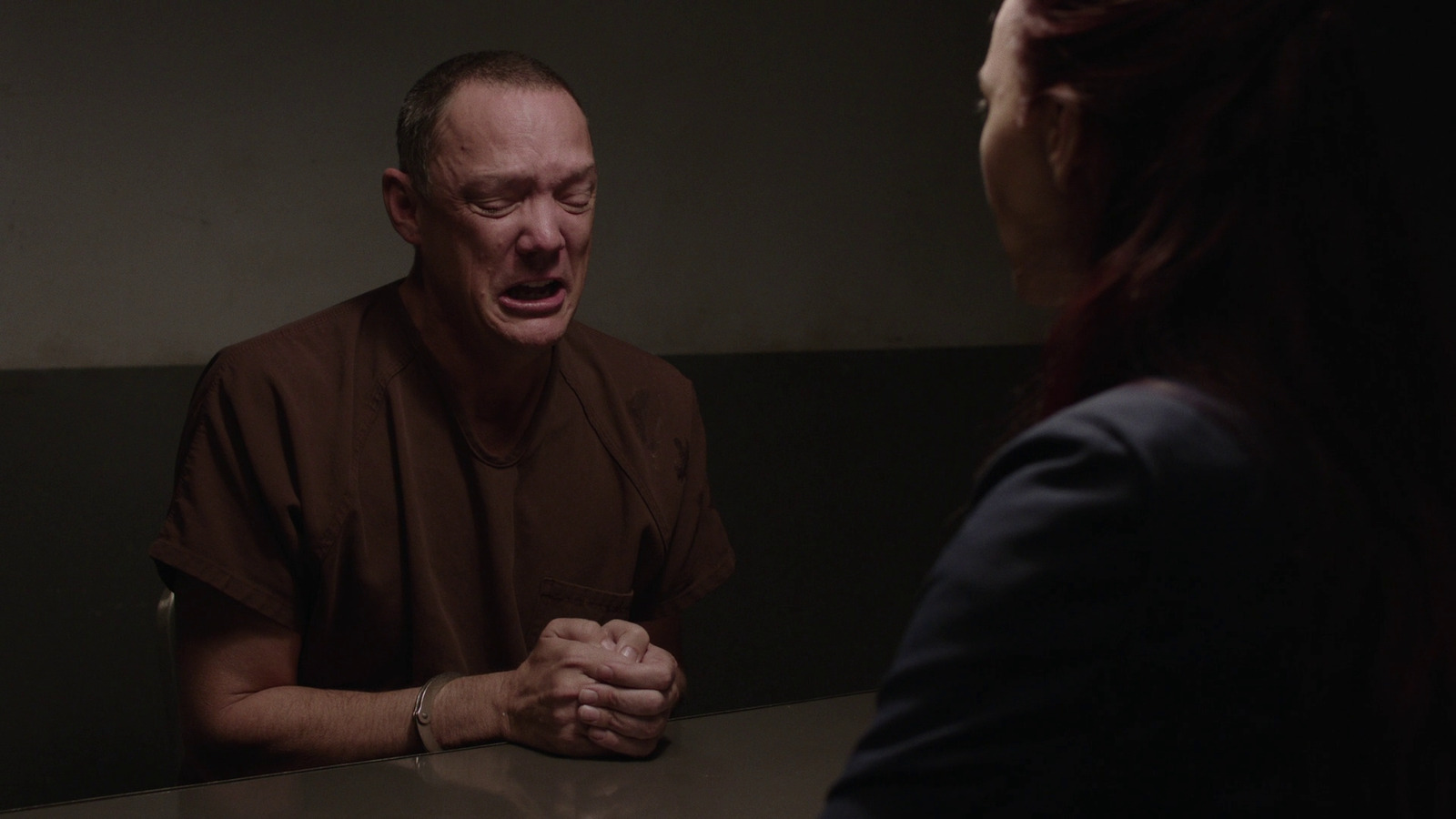
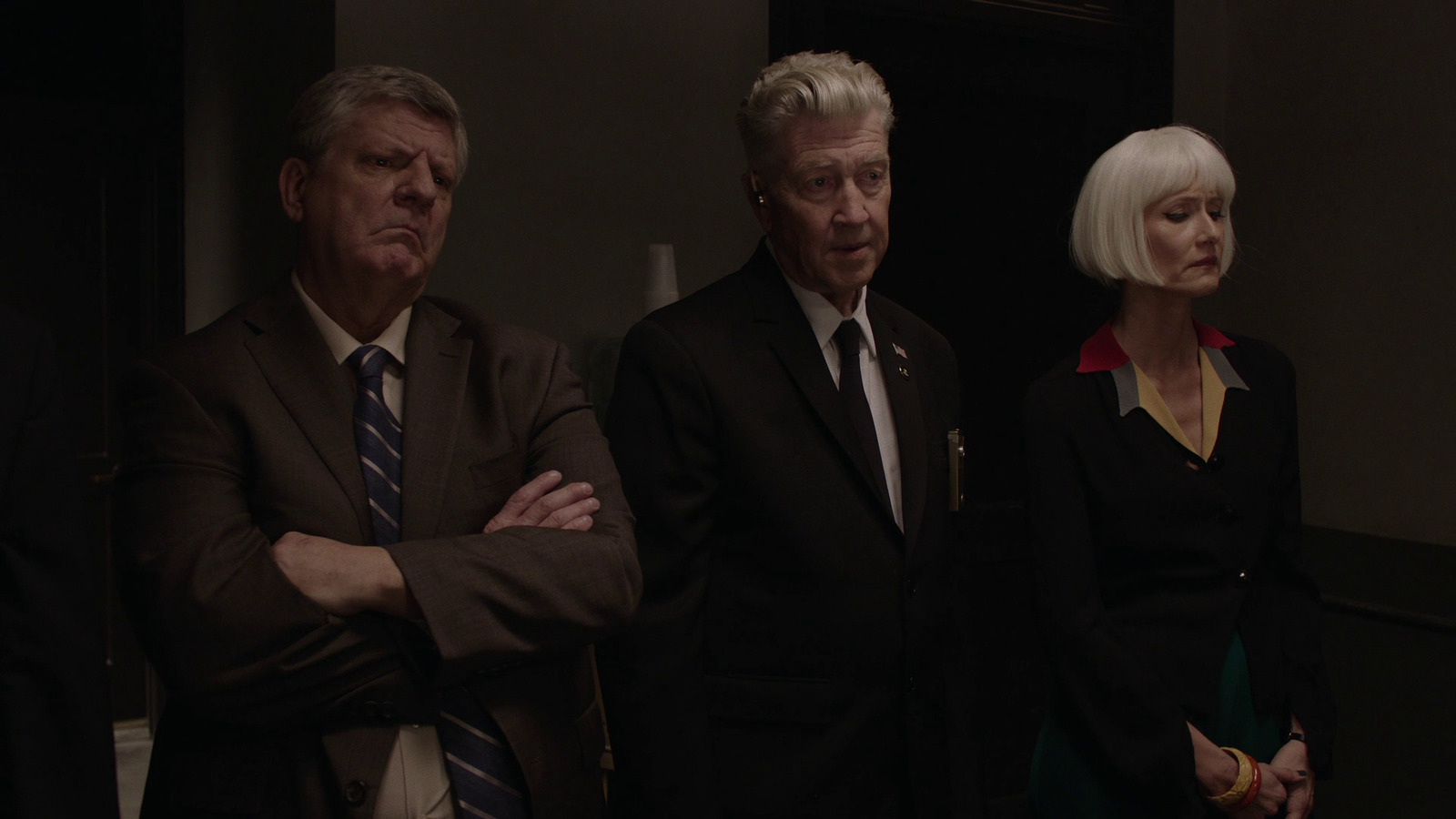
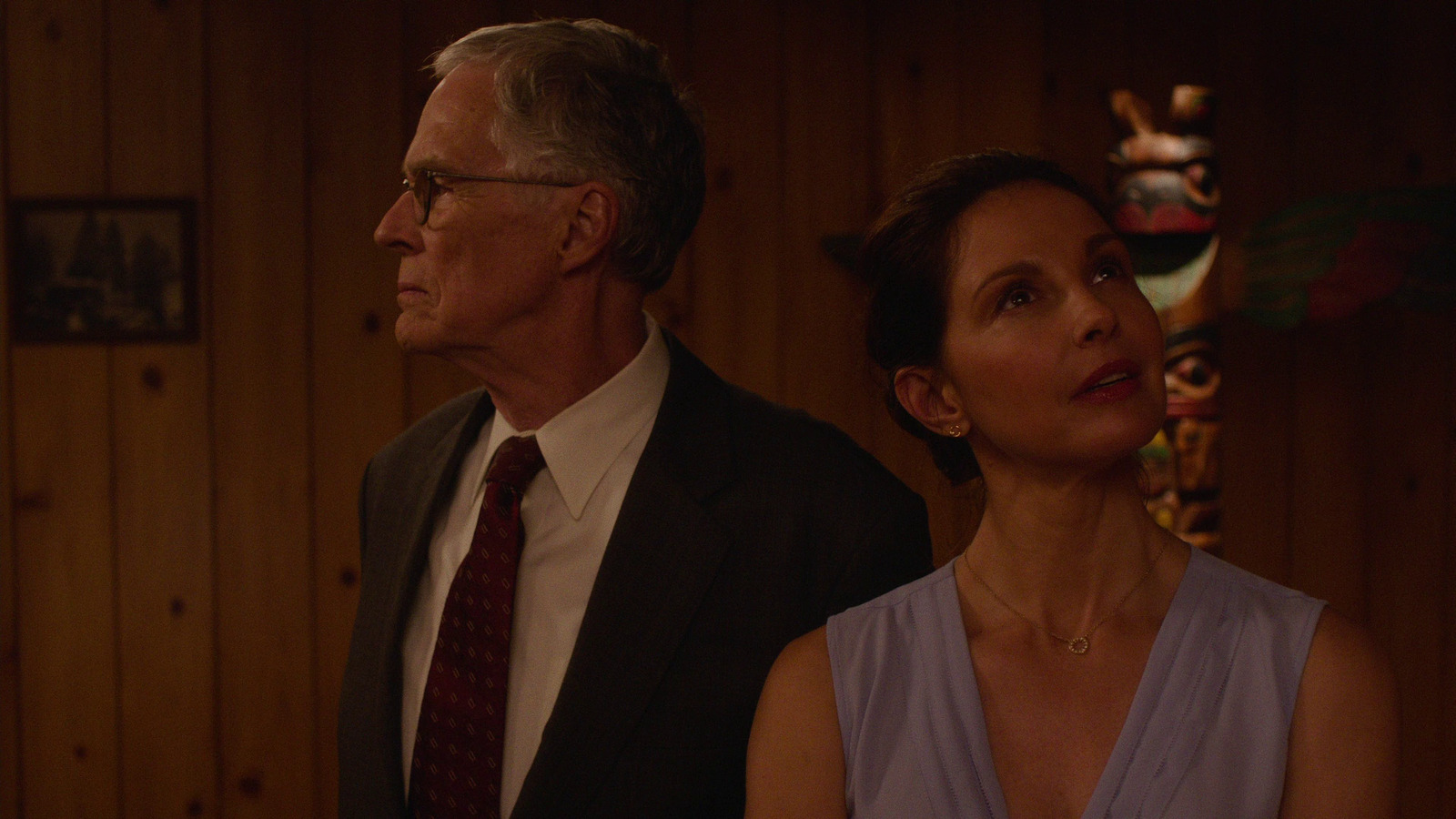
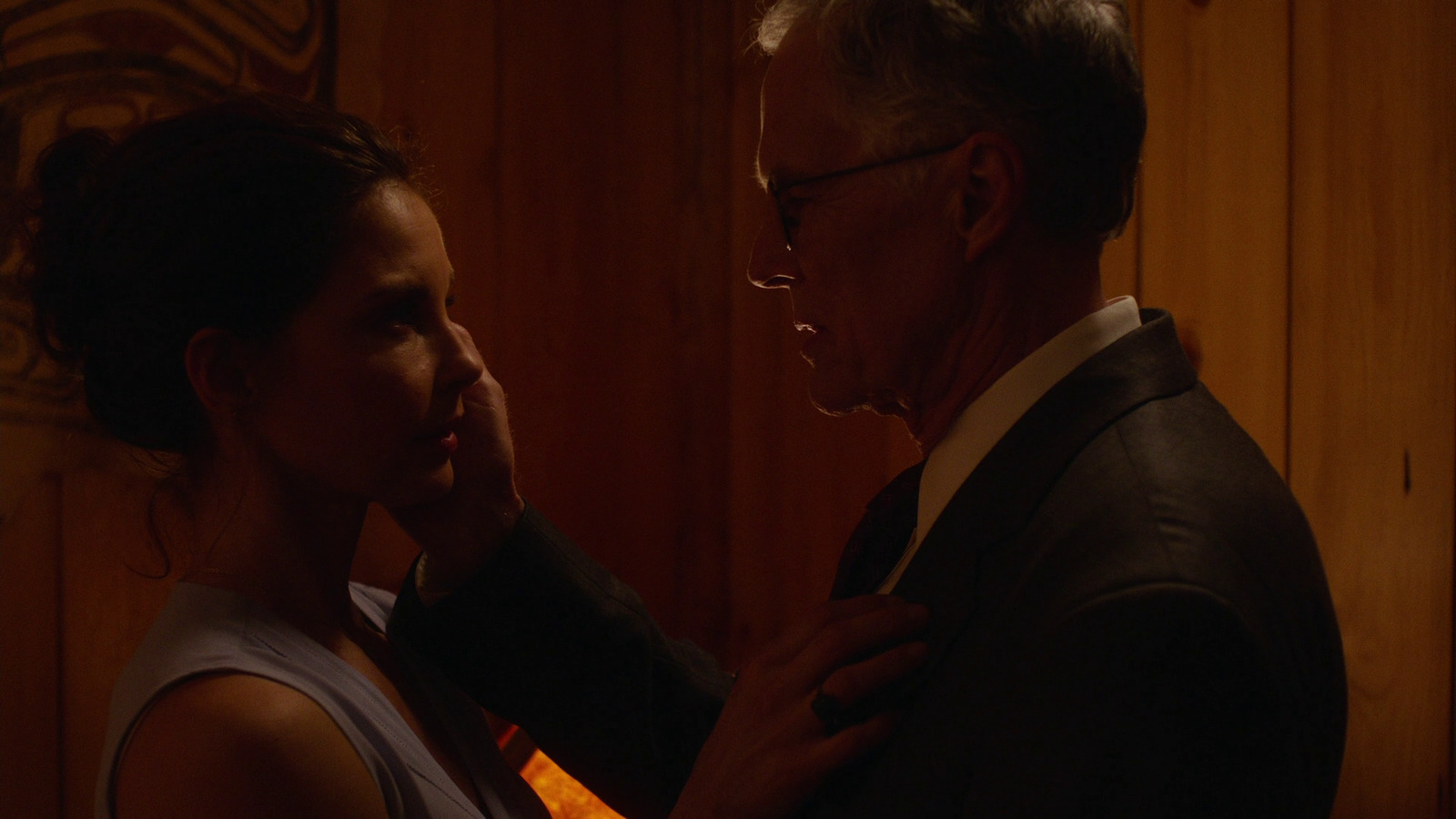
A sound draws two people together
Ben and Beverly search for the persistent tone but cannot locate a source. Their shared listening becomes physical proximity. Ben’s comparison with a monastery bell gives the sound a contemplative association; his decision to stop the intimate encounter supplies a boundary the search itself has not found. The tone remains unresolved after the human decision.
Open the scene sequence · 1 frame
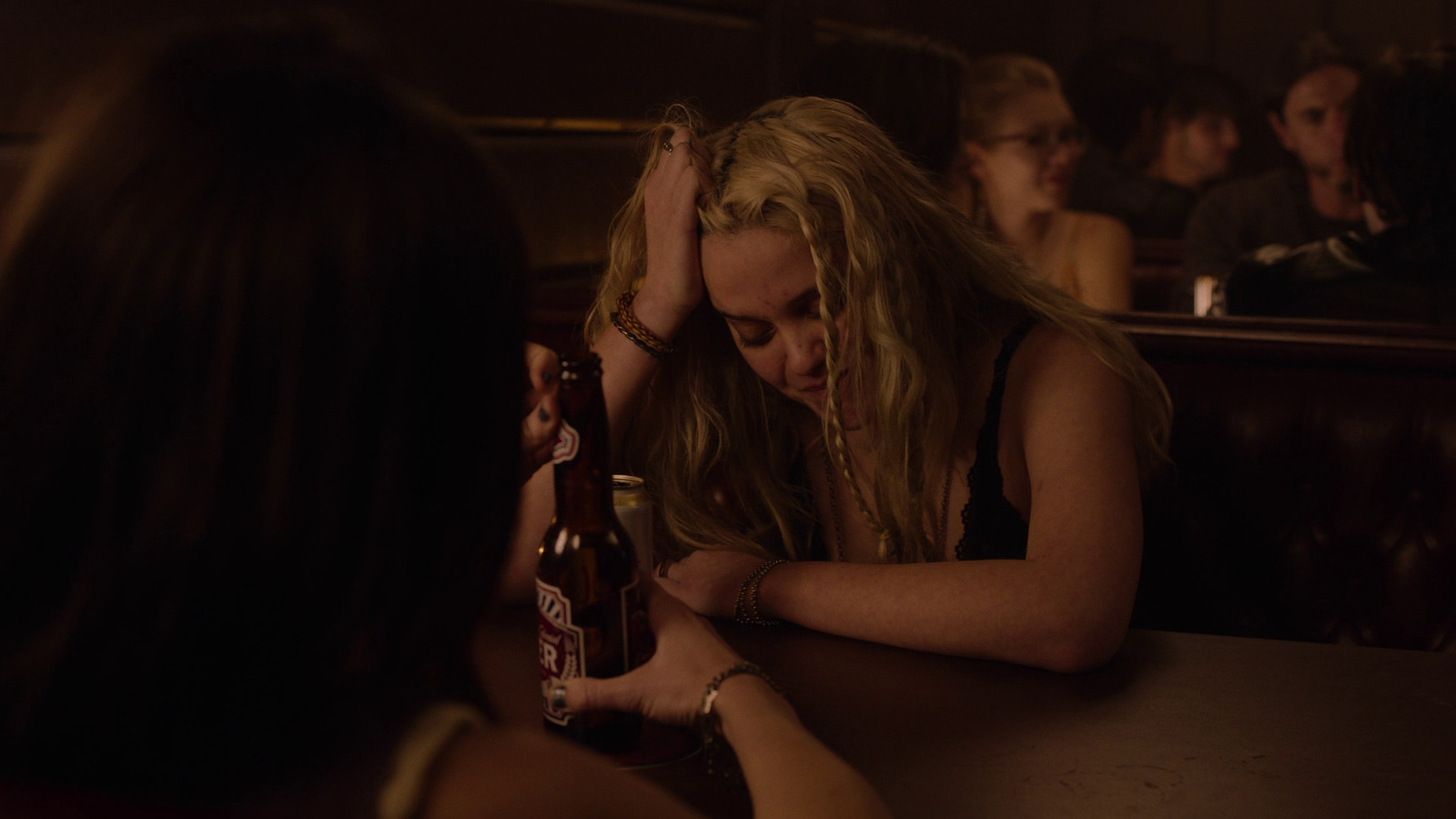
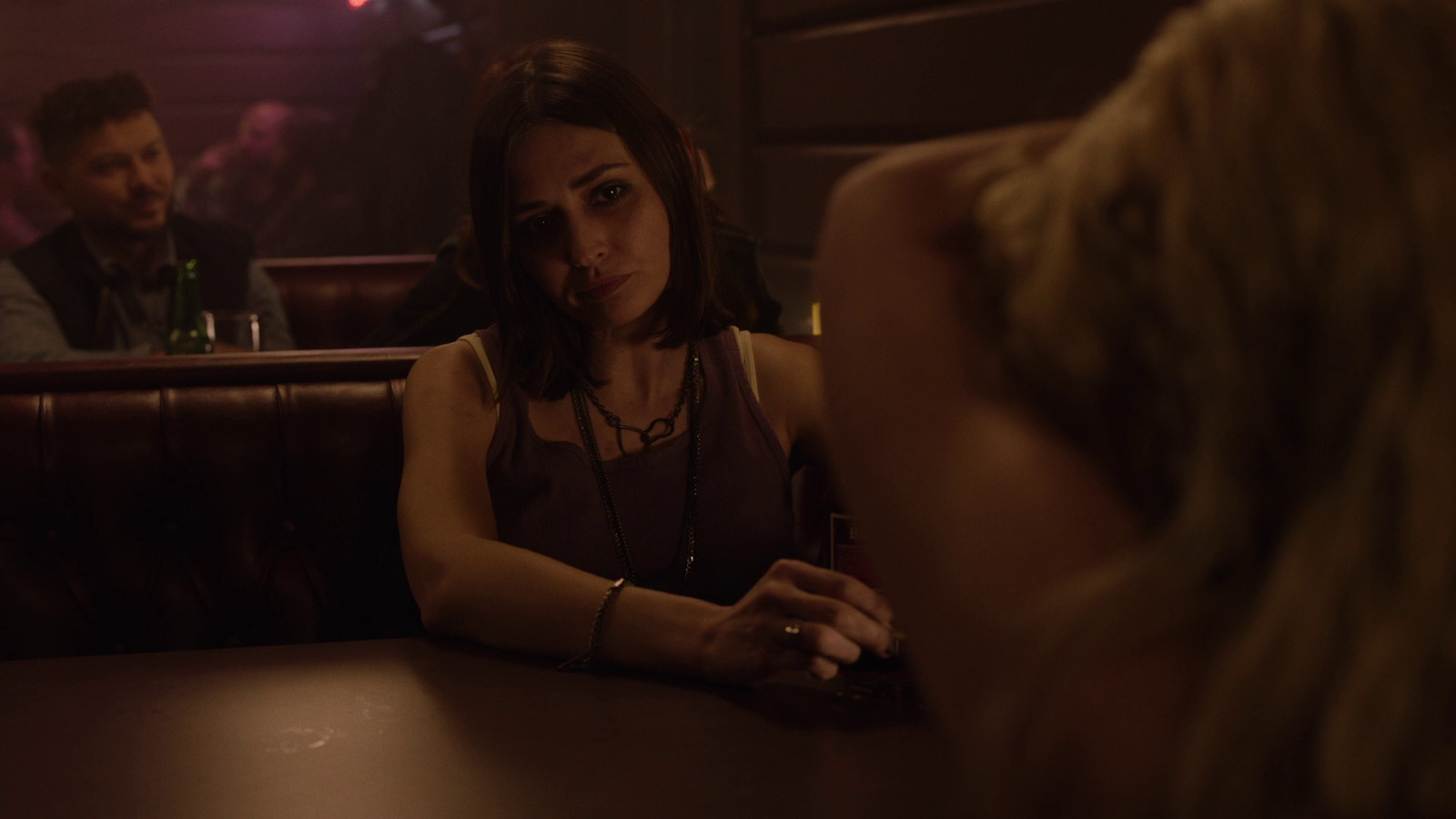
A conversation with damage at its edge
The Roadhouse returns with electronic music and a booth conversation. Ella’s account of losing one service job and finding another nearby has the rhythm of a minor social update. Her uncertainty, repeated scratching and the oddly specific animal remarks prevent it from settling into harmless chatter. The scene introduces people whose lives continue beyond the central investigation rather than immediately converting them into solved clues.
Open the scene sequence · 2 frames
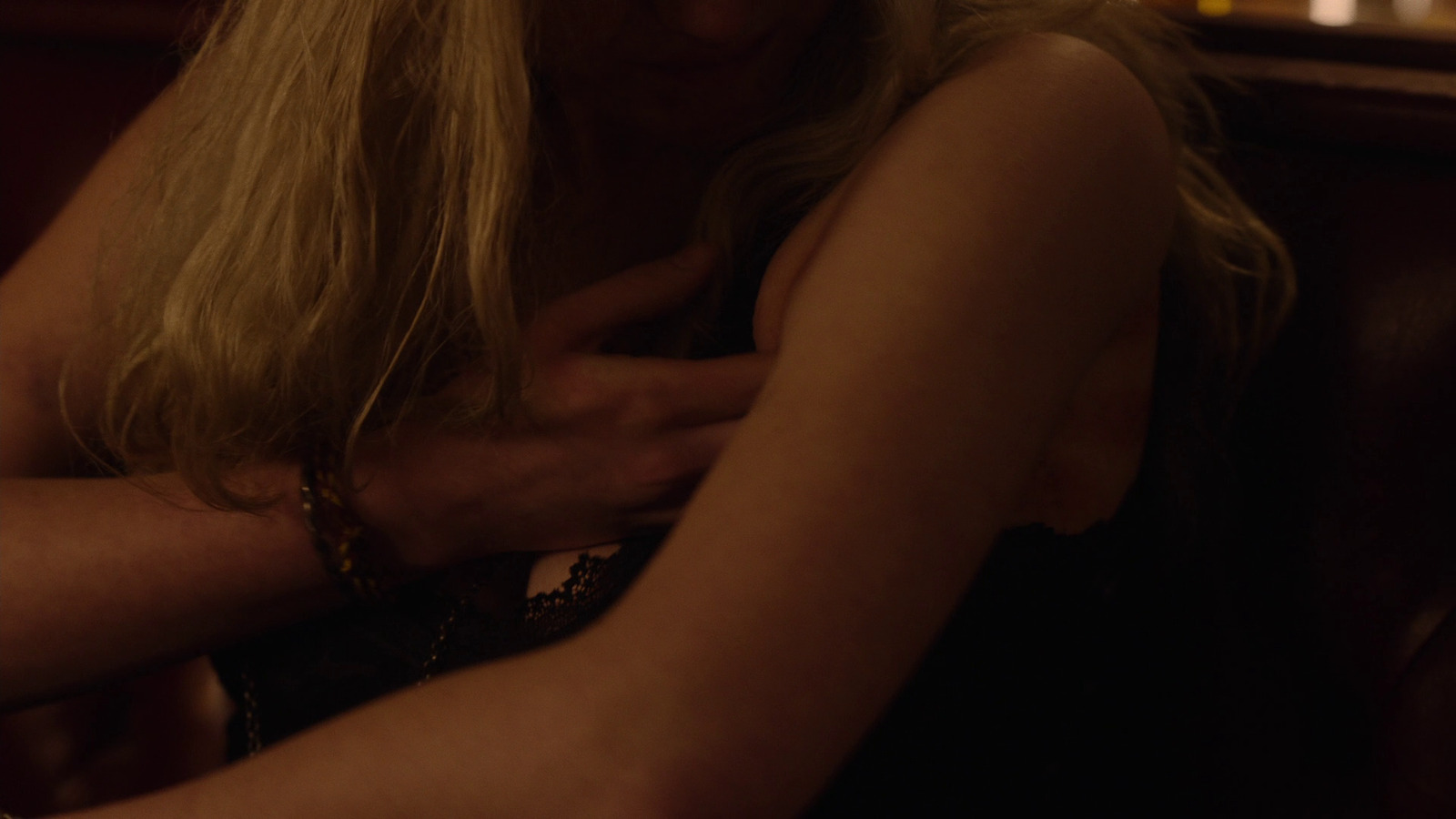
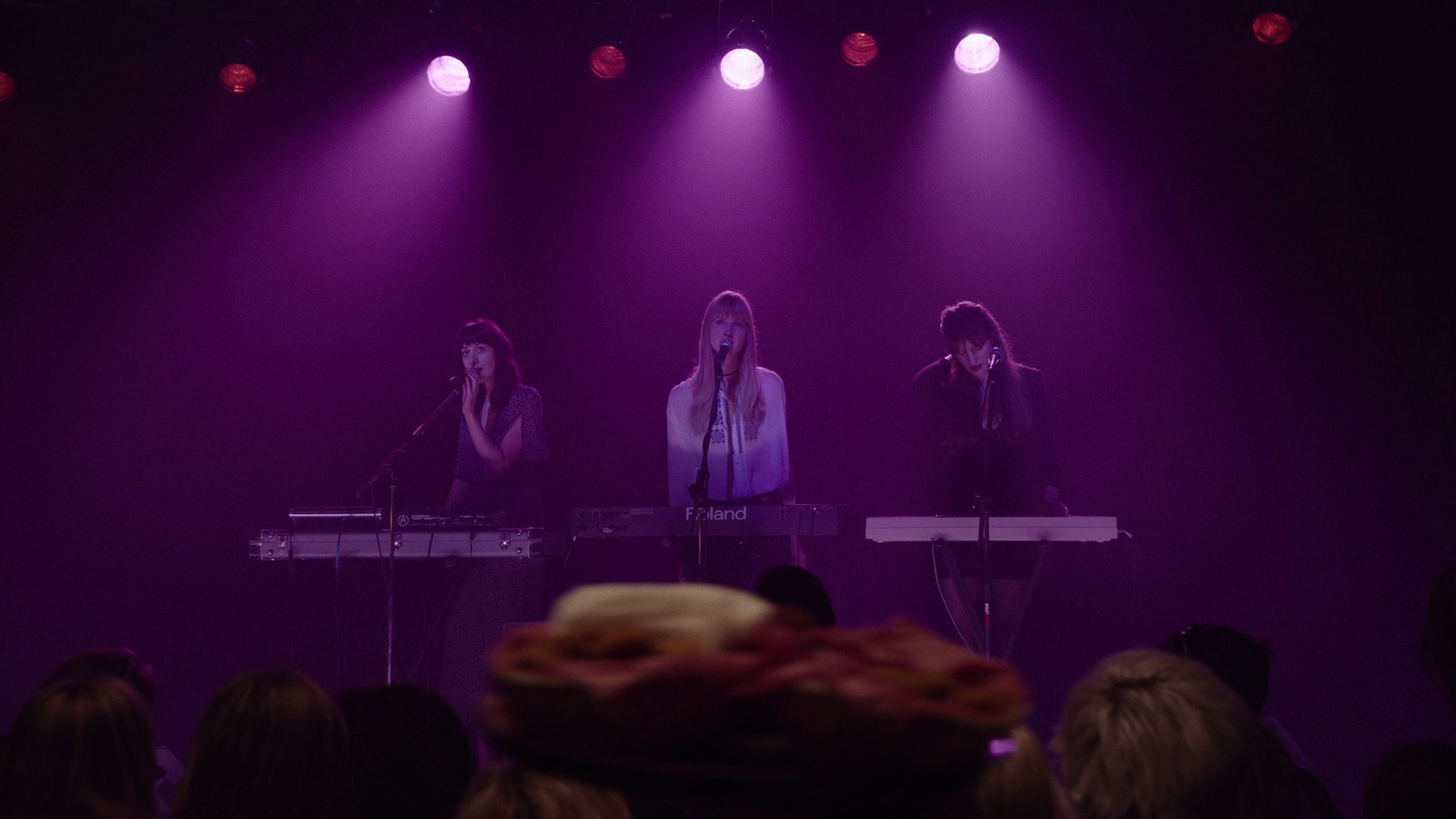
The room continues after the conversation
Au Revoir Simone’s performance begins while the booth exchange is still ending, then occupies the stage and closing credits. The overlap makes the venue feel inhabited by simultaneous activities. After an episode filled with phone calls, reports and withheld understanding, the sustained song does not resolve the information. It carries the audience out through a shared public space.
Remembered procedures and voices under strain
An object that must be heard. Bobby’s handling of the container gives the hum a practical role. The others must stop and attend to it before the object opens. The scene’s pauses are part of the procedure, and the papers’ later explanation does not replace the importance of that acoustic interval.
A tone without an identified source. At the Great Northern, Ben and Beverly likewise listen closely, but the search provides no opening mechanism or conclusive result. The comparison with the container is useful precisely because the outcomes differ: one sound participates in a remembered action, the other prolongs uncertainty and proximity.
A voice exceeds the form. Hastings’s sobbing, broken phrases and sudden emphases continually interrupt the orderly interview. Tammy maintains specific questions while his account shifts between the Major, Ruth and their abandoned holiday. The words about an ordinary future make the loss legible without simplifying the extraordinary events he claims to have seen.
Attention without speech. The flag, red shoes and outlet sequence relies on music, looking and cuts rather than Cooper explaining himself. Elsewhere, Johnny’s unseen impact is communicated through running, a crash and Sylvia’s response. Both make hearing and framing carry information that dialogue cannot conveniently supply.
Music in distinct spaces. The credits identify the U.S. Air Force Band’s arrangement and performance of “America the Beautiful,” Angelo Badalamenti’s “The Chair,” Hudson Mohawke’s “Human” and Au Revoir Simone’s “A Violent Yet Flammable World.” These cues connect institutional space, family memory and the Roadhouse without making them emotionally interchangeable.
A closer view of the Roadhouse performance
Au Revoir Simone — A Violent Yet Flammable World
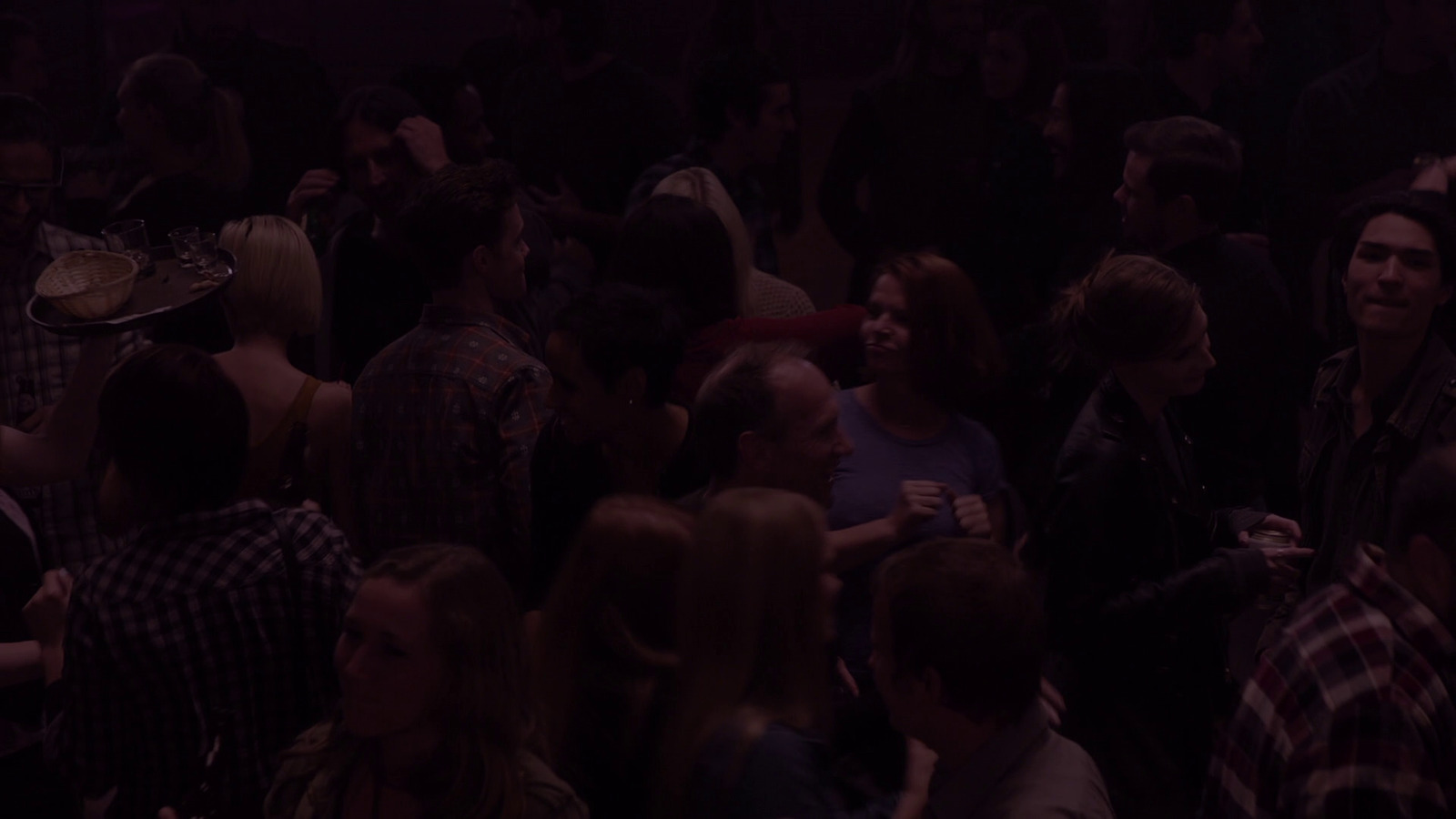
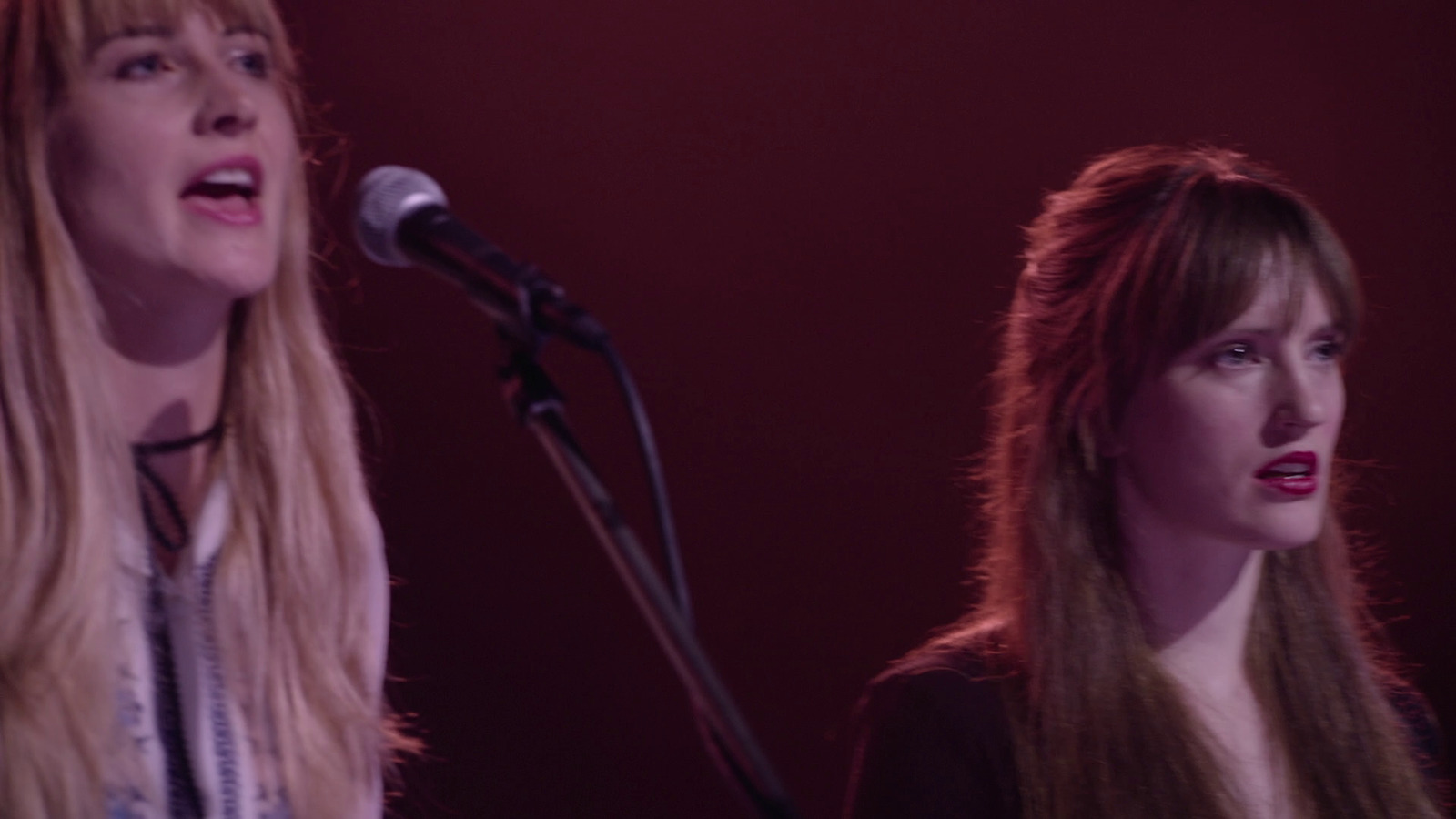
The familiar row of keyboards returns, but the separate edit of “A Violent Yet Flammable World” repeatedly opens onto the audience. Faces and moving bodies interrupt the stage views; the musicians then reappear as a three-person formation or in paired and individual close images. The audience is a visible participant in the performance’s changing scale.
Open the A Violent Yet Flammable World performance study · 2 frames
Read the full performance comparison →
Source: Roadhouse Music — Au Revoir Simone — A Violent Yet Flammable World, 00:00–05:01, in Twin Peaks: From Z to A. These timings identify the separate performance edit; the episode context is examined above.
Hudson Mohawke — Human
Hudson Mohawke stands alone behind an electronic setup, with the audience’s heads forming a dark foreground. Wide views preserve a considerable distance between the solitary performer and the room; closer views concentrate on his hands, face and equipment. There is no singer at the front of this particular performance.
Open the Human performance study · 2 frames
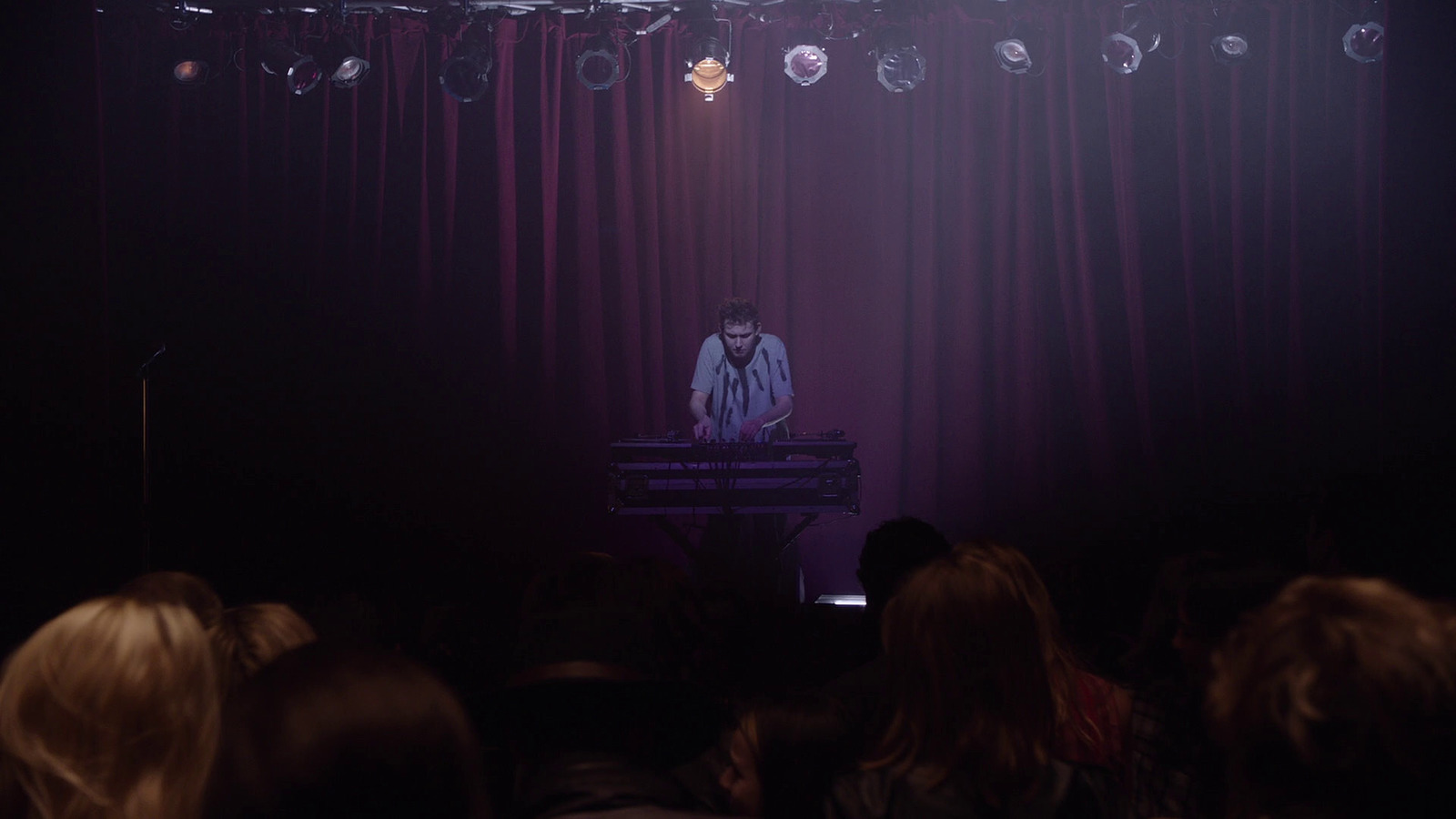
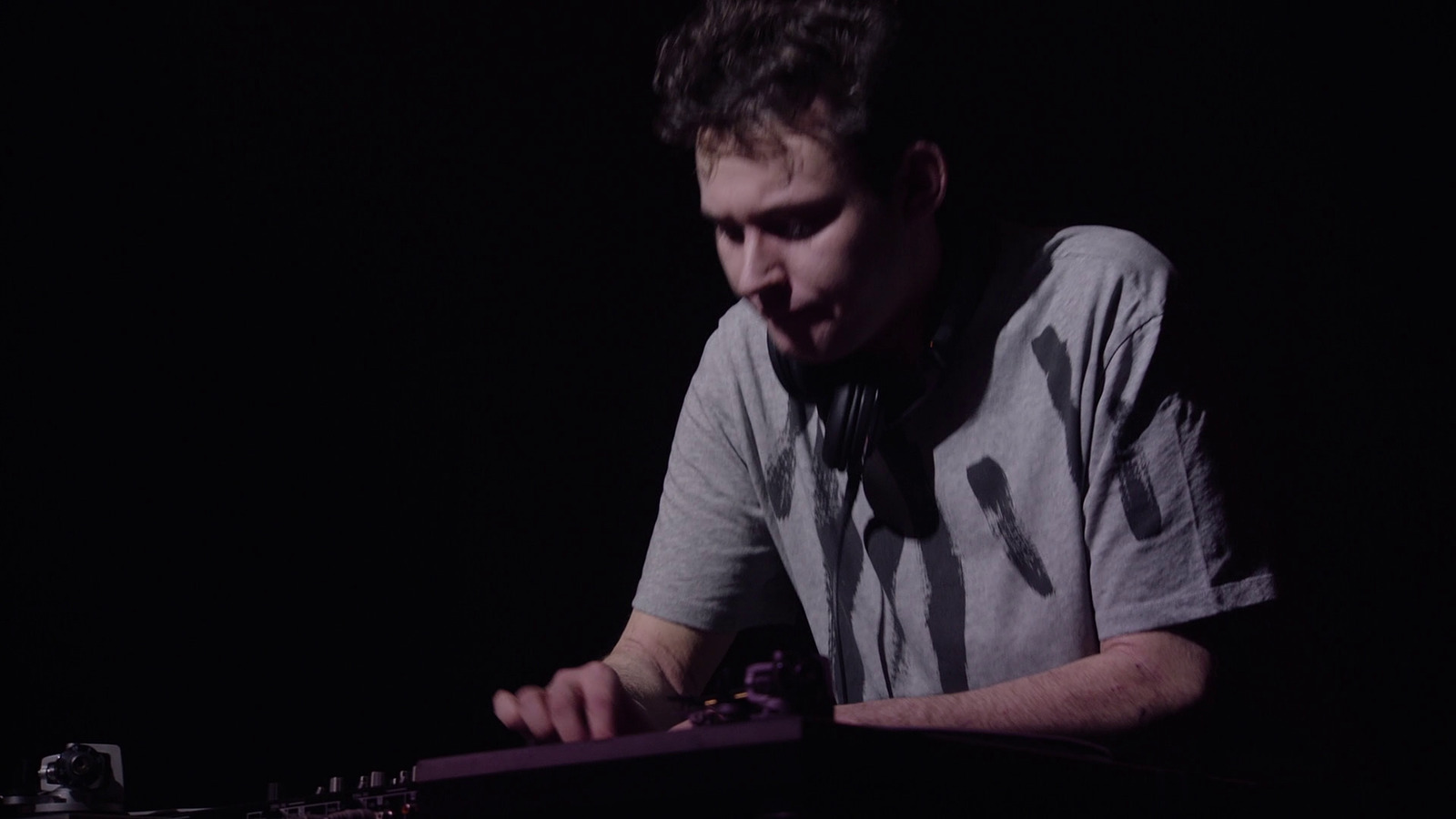
Read the full performance comparison →
Source: Roadhouse Music — Hudson Mohawke — Human, 00:00–03:42, in Twin Peaks: From Z to A. These timings identify the separate performance edit; the episode context is examined above.
Focused prop, image and performance sequences
From concealed prop to readable document
The chair compartment, seamless tube, outdoor handling and unfolded papers form a series of material thresholds. Each asks for a different kind of knowledge: keeping a promise, remembering an action, recognizing a childhood name and reading a pattern. The gallery documents the visible construction without inventing a workshop account of how the prop was engineered.
Open the hidden-message sequence · 8 frames
Three objects, one silent movement of attention
The flag establishes a recognizable institutional image, the red shoes create a passing attraction, and the outlet remains after the movement has gone. The cuts produce a possible connection while withholding a verbal confirmation of memory. Compare what is physically visible with what the surrounding story encourages us to anticipate.
Compare the flag, shoes and outlet · 3 frames
The performance and the people watching it
The room’s wide view, Tammy’s measured questioning, the identification sheet and Hastings’s close expressions give testimony several different forms. Cutting to the observers makes their response part of how the audience receives his distress. This is a focused performance and editing study; the event Hastings describes is not recreated within the scene.
Open the interrogation study · 5 frames
Making the images, shaping the performances
In Carli Velocci’s 2017 interview, Matthew Lillard describes committing fully to Hastings’s emotional state while knowing only the material supplied for his own scenes. He recalls that the observer-room cutaways were outside his knowledge during the performance, with related material absent from his script. Watching the completed scene produced a mixture of laughter and distress for him. His account is useful because it separates the actor’s immediate task from the larger structure created by filming and editing. Lillard interview.
The finished sequence can therefore sustain several responses at once. Hastings experiences catastrophe, Tammy conducts an interview, and the observers assess the account from another room. Lillard’s commitment does not require every other character—or every viewer—to share his emotional position. The tension is built into the sequence, rather than evidence that the performance should be dismissed as a joke.
Charlotte Stewart and Dana Ashbrook’s scene works through a different balance. Betty’s clear recollection and Bobby’s restrained reaction let the information arrive with emotional consequence. The chair’s secret would be a clue without them; their exchange makes it a preserved act of faith.
Performance, sound and the working image
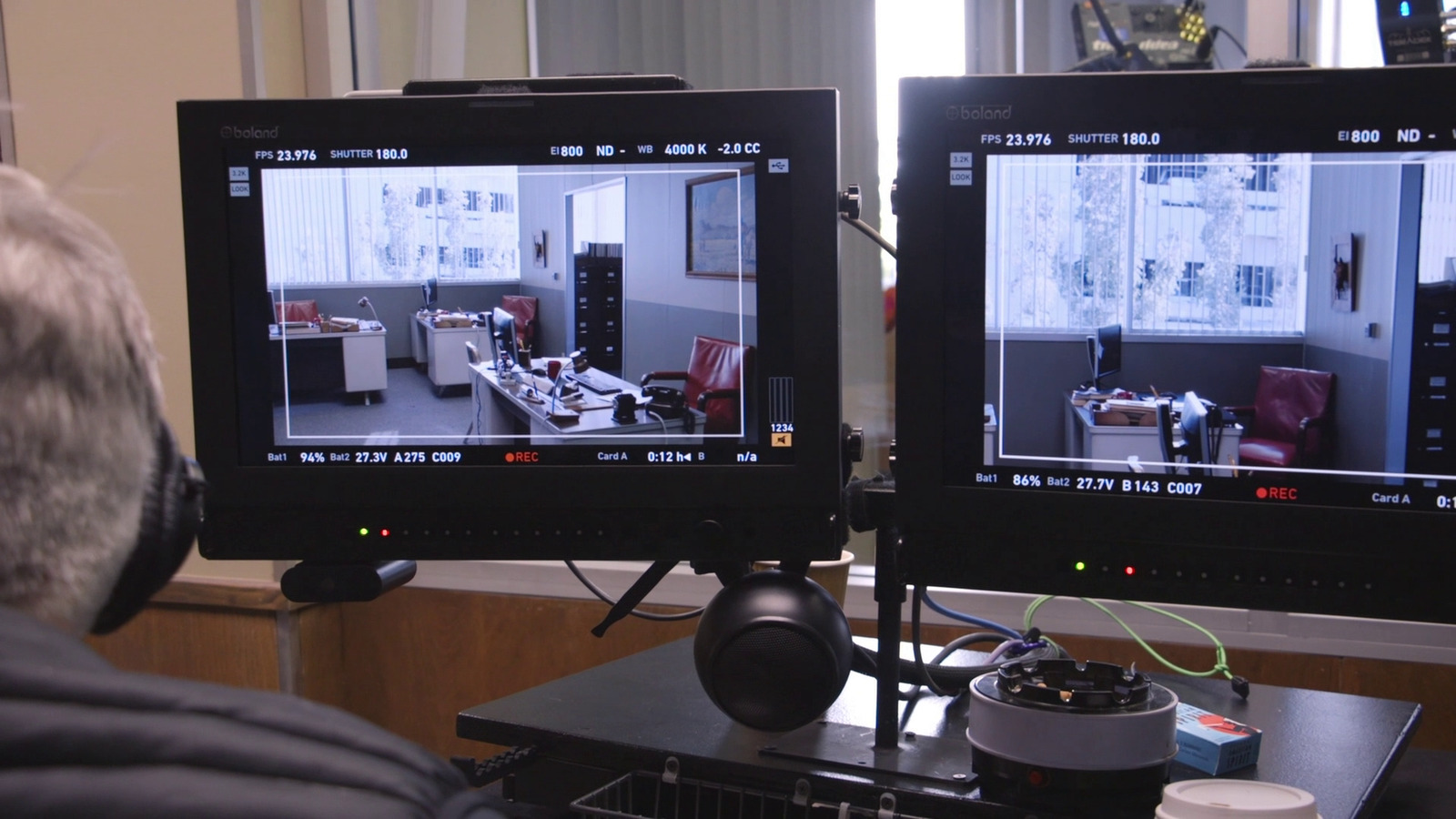
The production footage in Jason S.’s Impressions: A Journey Behind the Scenes of Twin Peaks adds another view of the scenes: directions spoken on set, rehearsals, material experiments and choices still being worked out.
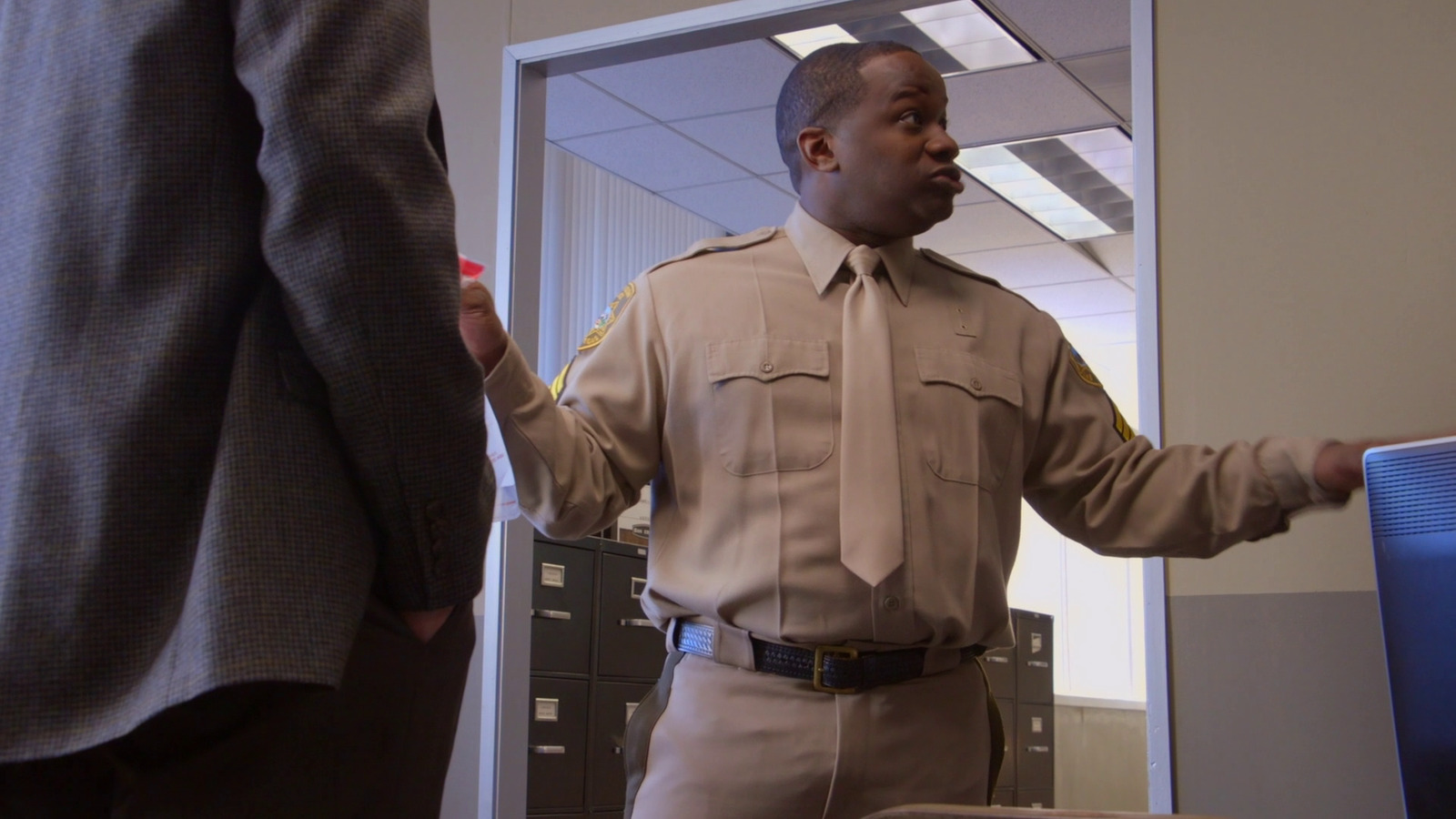
Evidence enters as a comic performance
The palm-print announcement is developed through a broad hand gesture, a lowered stance and an emphatic delivery. Lynch also coordinates the Fusco brothers’ shared response and the pause before the next piece of information. Forensic work acquires the timing of a small ensemble routine.
This does not make the evidence irrelevant. The scene lets real investigative progress coexist with the office’s peculiar social rhythm. A clue can be correct even when its presentation refuses the solemnity of a conventional breakthrough.
Open the police-office rehearsal · 2 frames
The Fuscos become a family and a sound
A production discussion begins with Lynch asking whether the two detectives can become three because he wants to hire the man with the distinctive laugh. The conversation develops the idea that the detectives are brothers and share the name Fusco. The naming problem becomes a comic opportunity: someone calls the name from another room and all of them turn.
This is valuable evidence of a group taking shape through casting, vocal character and a simple piece of business. The discussion includes provisional names and character ideas; those working possibilities should be distinguished from the credits and behavior of the finished episodes.
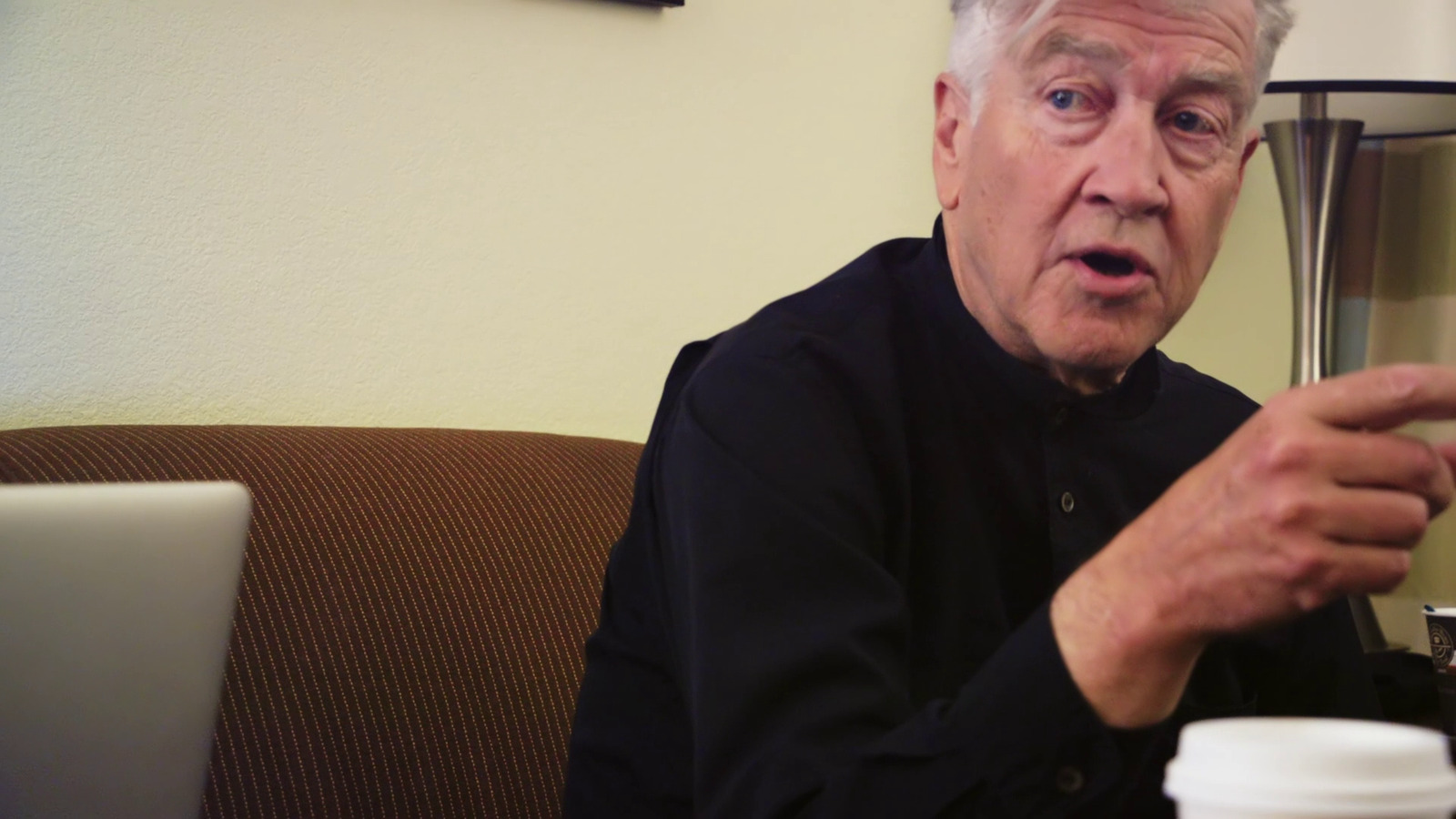
Rehearsal, performance and the working set
The blood has to carry elapsed time
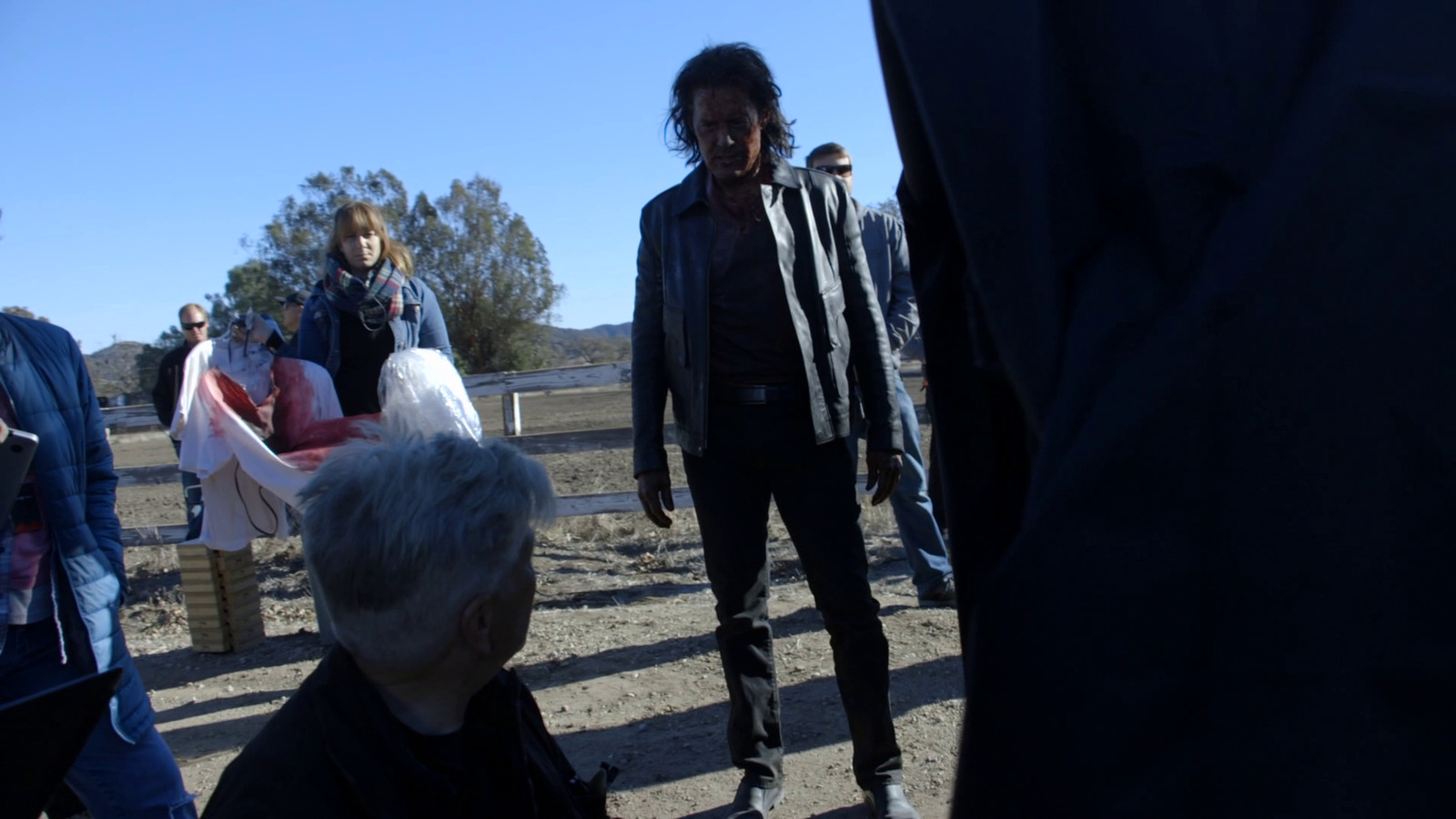
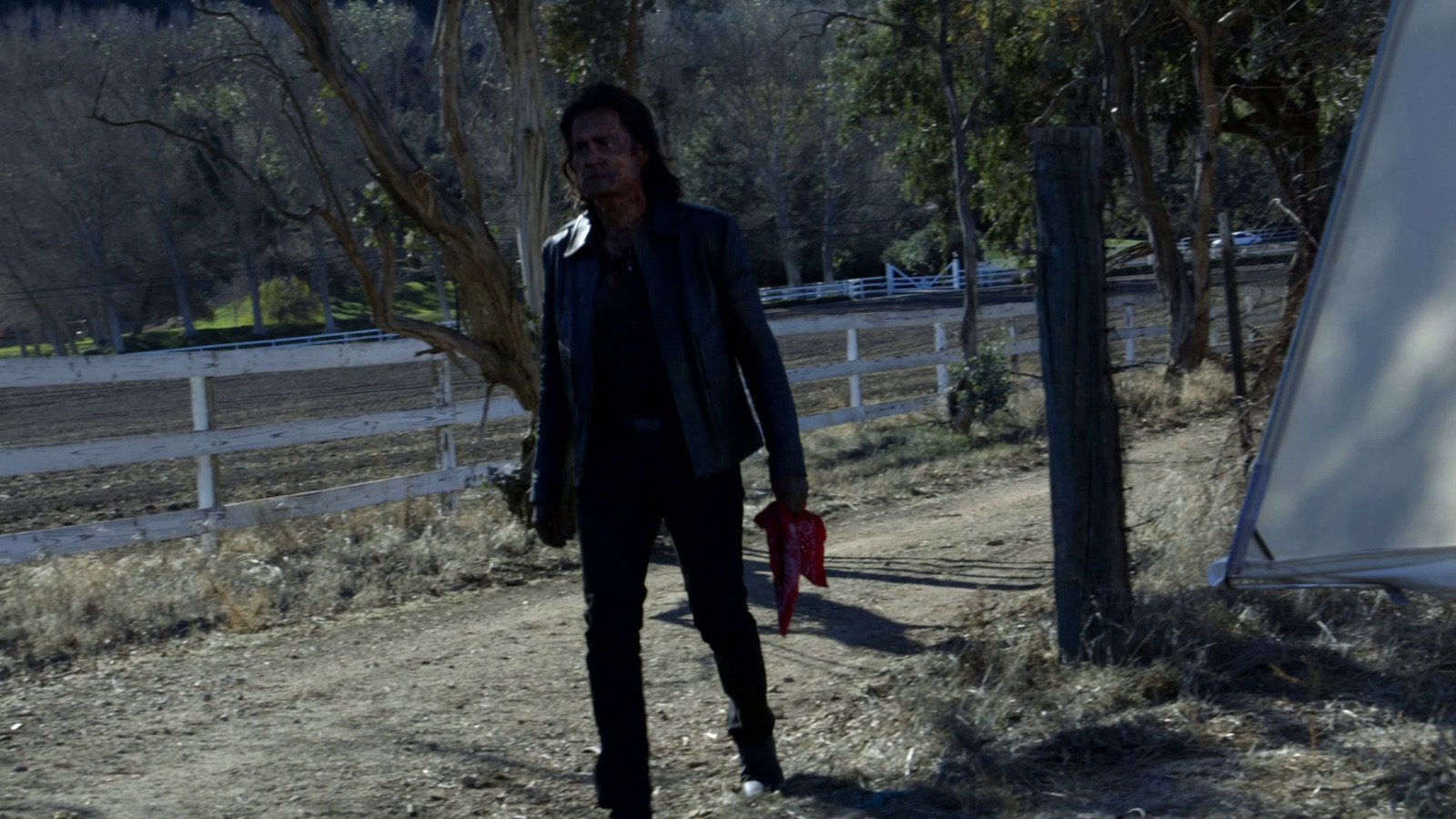
Inspecting MacLachlan before Mr. C’s approach to the farm, Lynch asks for the blood on his face to lose its sheen. Some should appear to have dried and cracked away. The adjustment gives the aftermath a material history: this is residue carried from an earlier event, rather than a fresh injury introduced by the present shot.
He also directs the approach around a recognizable destination. Mr. C surveys the ground for Hutch or another contact while moving into the right place. The damaged appearance and purposeful behavior work together, keeping vulnerability from becoming disorientation.
Open the makeup and arrival study · 2 frames
The ring needs an audience before it becomes evidence
The morgue rehearsal gives the ring a precise handling rule: Constance keeps the tweezers on it. Later Lynch delays its presentation until Gordon and Albert have returned to the group. Everyone who must receive the information needs to be in place before the object is shown.
That small timing change connects two kinds of recognition. The investigators encounter an inscription that unsettles the case; the viewer recognizes names from the Las Vegas story. The prop’s movement, the group’s arrangement and the spoken inscription make those discoveries coincide.
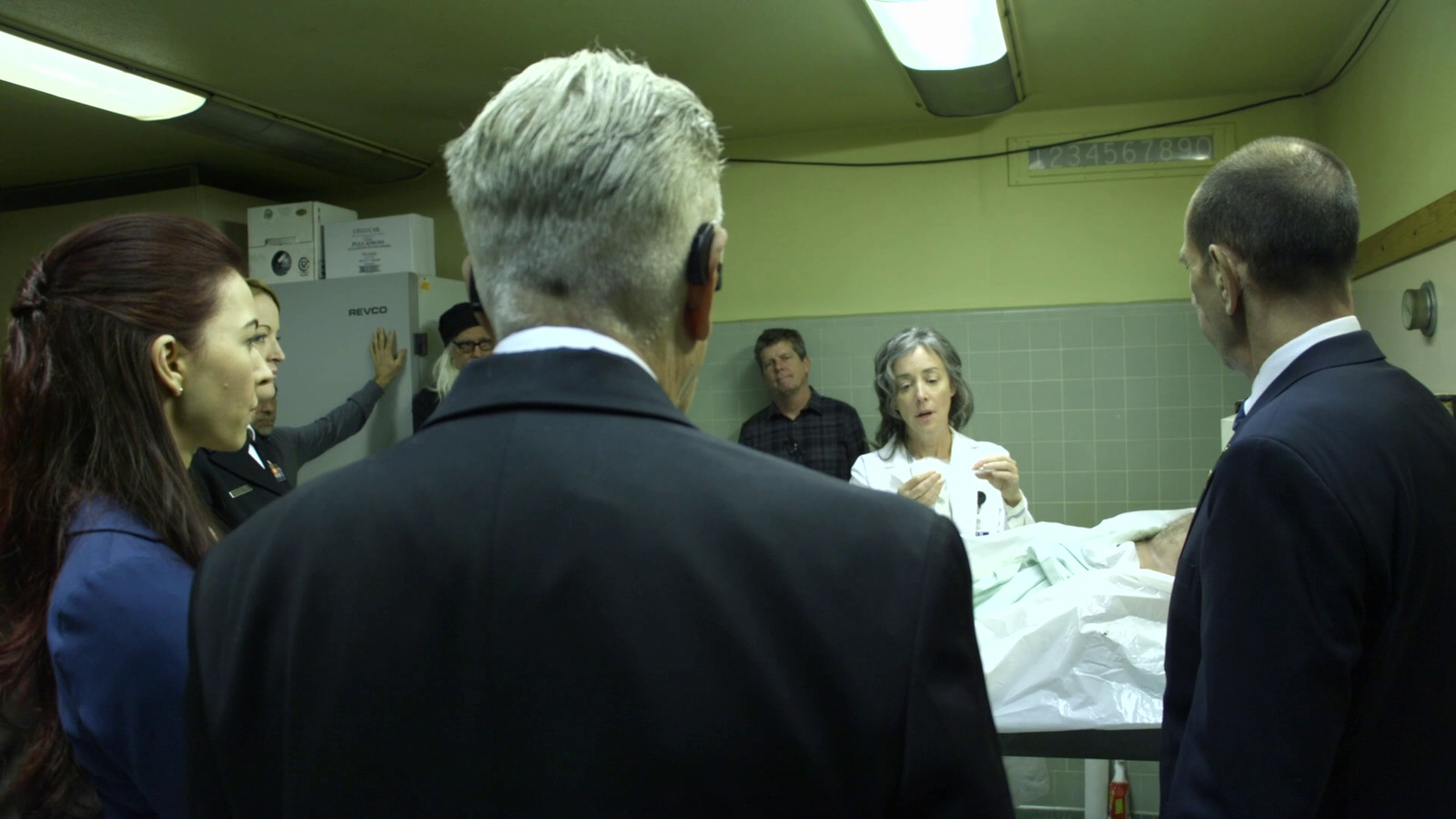
Behind the Curtain, Part 9, 05:40–11:00, especially 08:30–08:38 and 10:25–10:55.
Jerry’s foot is played as an animal that might bite
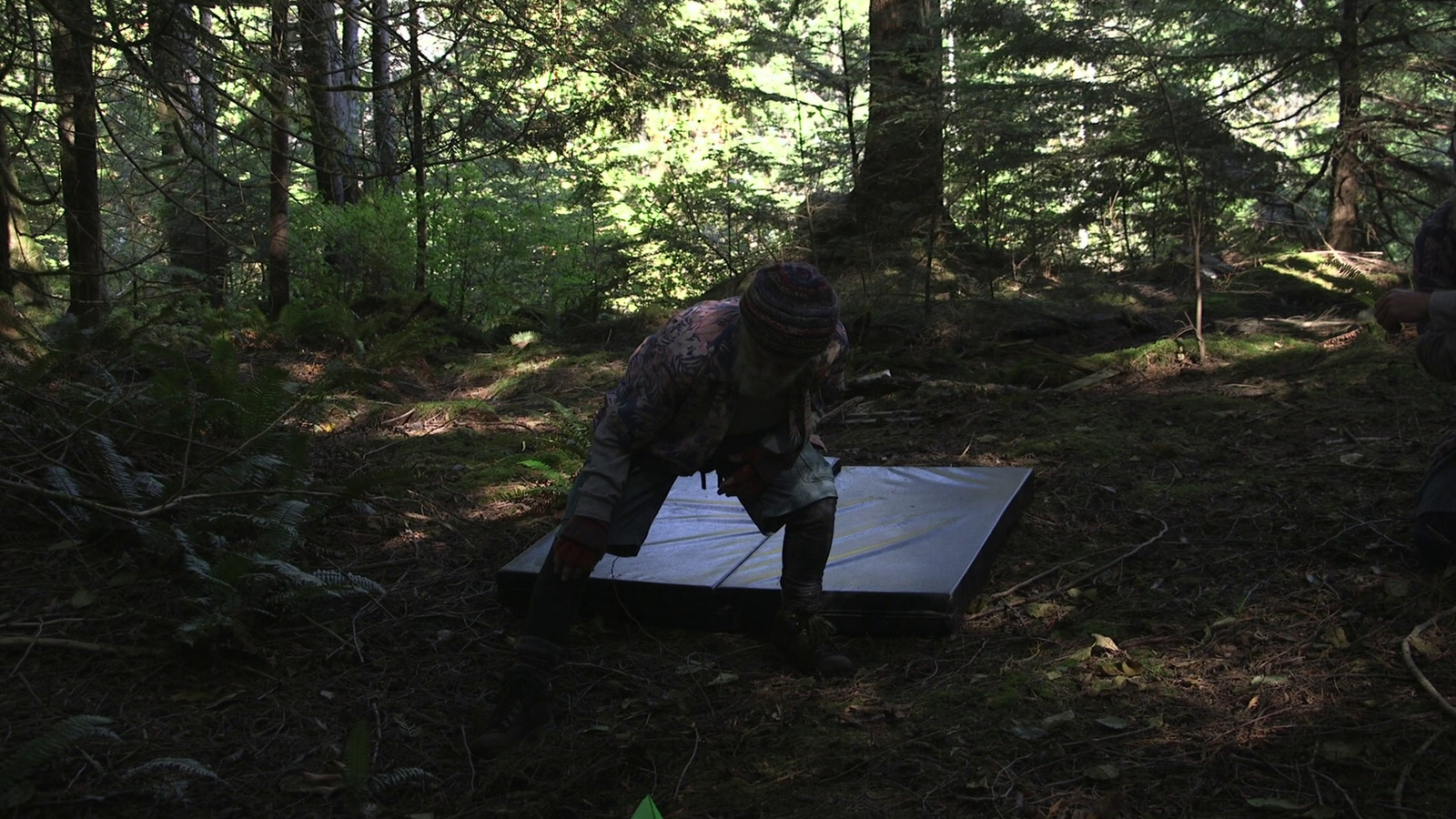
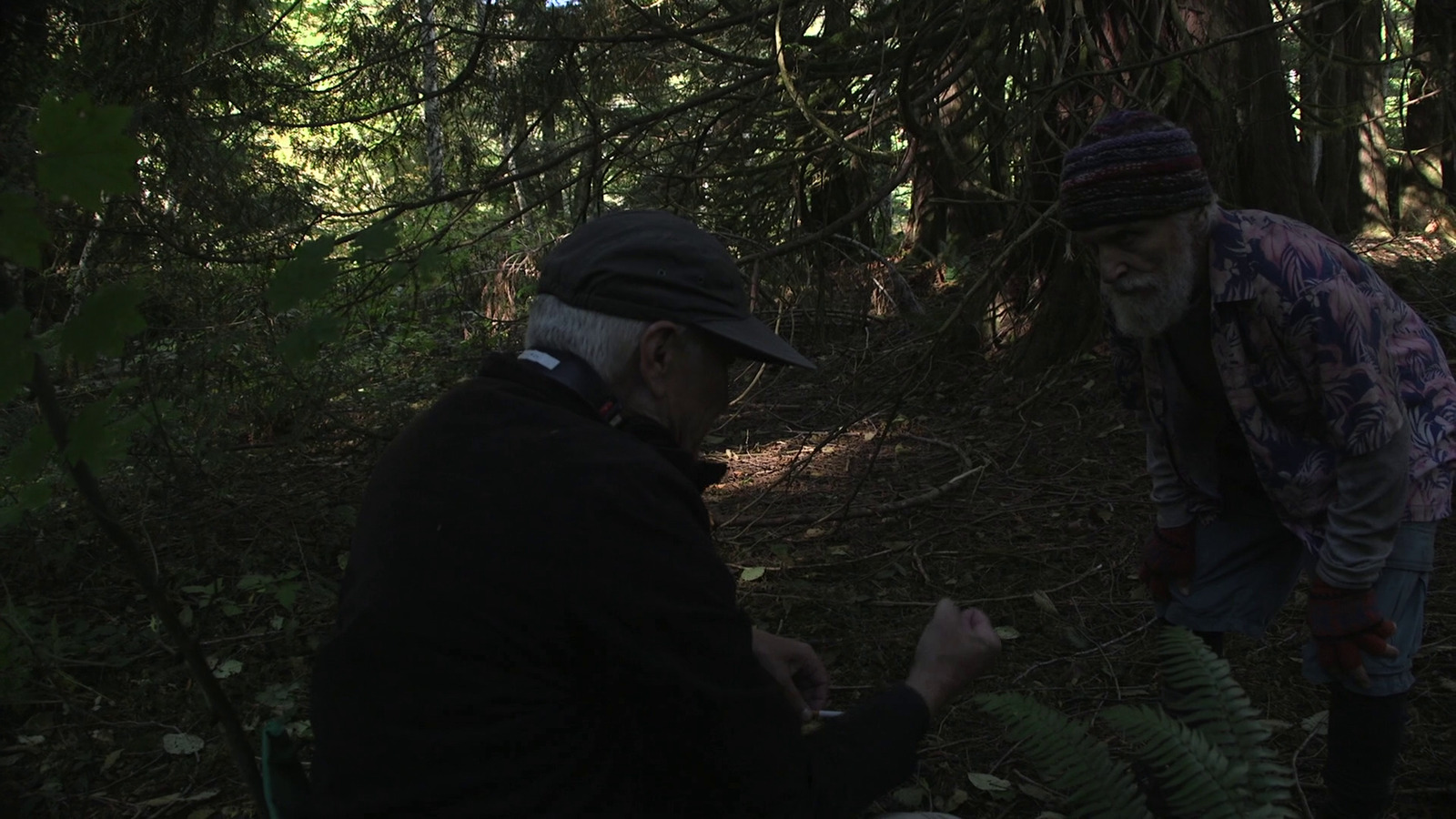
Lynch asks David Patrick Kelly to regard the foot as something he does not recognize as his own. It might kill him. Reaching toward the toe should provoke an imagined bite, followed by another attempt, recoil and finally the effort to throw the thing away. A long, fearful look precedes those faster actions.
The physical fall is discussed separately. Kelly is to bring the action as far as he can; a wider view with a stunt performer is proposed for the more extreme backward movement. The footage includes rehearsal on a mat and the later movement in the trees. The absurdity is assembled from a sincerely played threat and practical bodily work, rather than from a performer merely signalling that Jerry is confused.
Open the foot performance and stunt study · 2 frames
The sound draws Ben closer; care makes him stop
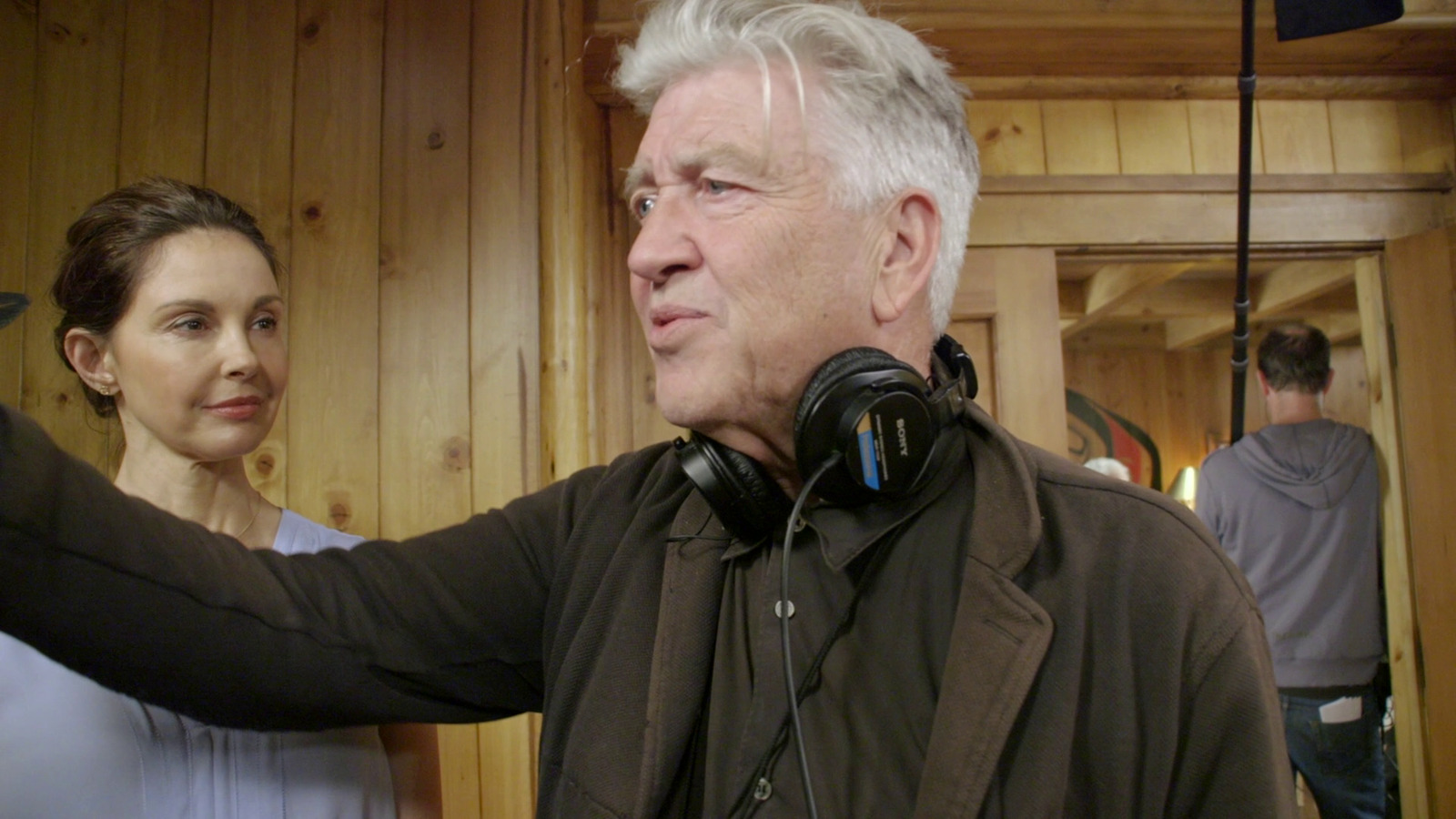
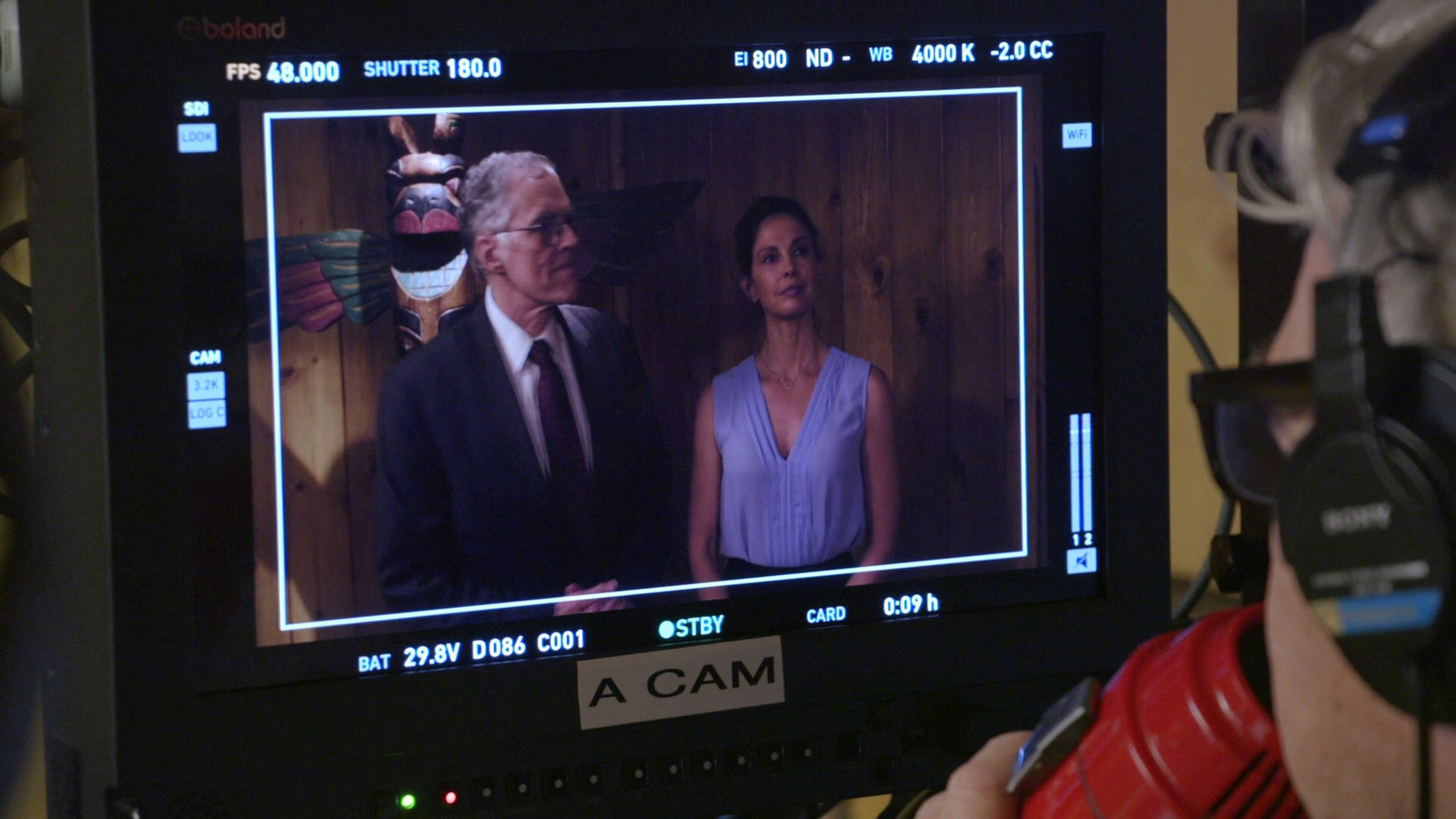
The production footage follows rehearsals of Ben and Beverly listening, turning and moving closer together. Their attention is directed toward an unheard source, then toward each other. The sound’s attraction is expressed through a shared route and synchronized changes of position before its finished presence is supplied to the viewer.
For the later exchange, Lynch asks Beymer to let the refusal hurt. He describes a moral change from Ben’s earlier pursuit of women and stresses that the character cares about Beverly and does not want to put her in a bad position. This is a concrete instruction for the performance, not a guarantee of Ben’s complete redemption. It gives the hesitation a conflict to express, rather than treating it as indifference or an unexplained pause.
Open the listening and restraint study · 2 frames
Behind the Curtain, Part 9, 15:56–21:04, with the later exchange at 19:08–21:04.
Presentation, music and credits
The standalone presentation runs approximately 58 minutes 20 seconds. David Lynch directs, with Mark Frost and Lynch credited for writing. The cast roll identifies Charlotte Stewart as Betty Briggs, Dana Ashbrook as Deputy Bobby Briggs, Matthew Lillard as William Hastings, Chrysta Bell as FBI Agent Tammy Preston, Jane Adams as Constance Talbot, Sky Ferreira as Ella and Karolina Wydra as Chloe. Tim Roth is credited as Gary “Hutch” Hutchens and Jennifer Jason Leigh as Chantal Hutchens.
The inspected music roll credits Samuel A. Ward for “America the Beautiful,” with the U.S. Air Force Band performing and arranging; Angelo Badalamenti as composer and performer of “The Chair”; Hudson Mohawke as writer and performer of “Human”; and Heather D’Angelo, Erika Forster and Annie Hart as writers and performers of “A Violent Yet Flammable World.” David Lynch receives sound-design credit, with Ron Eng and Dean Hurley among the re-recording mixers. These credits are kept distinct from interpretations of individual sounds.
Sources and viewing notes
- Twin Peaks: The Return, Part 9. Directed by David Lynch; written by Mark Frost and David Lynch. Standalone presentation in Twin Peaks: From Z to A. Picture, English captions and closing credits examined, with focused checks of Betty’s account, the container, Hastings’s testimony and the hotel sound sequence. Timings include opening material. Scene readings are Lyncharium’s analysis.
- Carli Velocci interviews Matthew Lillard about his Twin Peaks performance ↗, TheWrap, 18 July 2017. Firsthand testimony about emotional commitment, limited scene information and discovering the observer-room material in the finished episode.
- Do Not Pick Up Hitchhikers, directed and photographed by Jason S., in Impressions: A Journey Behind the Scenes of Twin Peaks (2017), viewed in Twin Peaks: From Z to A. Passages: 18:20–21:23. Picture and English captions examined, with targeted speech checks. Rehearsal proposals and production observations are distinguished from interpretation of the finished episodes. Documentary narration and its music are not treated as unscripted statements by Lynch.
- Tell It Martin, directed and photographed by Jason S., in Impressions: A Journey Behind the Scenes of Twin Peaks (2017), viewed in Twin Peaks: From Z to A. Passages: 17:10–20:16. Picture and English captions examined, with targeted speech checks. Rehearsal proposals and production observations are distinguished from interpretation of the finished episodes. Documentary narration and its music are not treated as unscripted statements by Lynch.
- Behind the Curtain, Part 9. Photographed by Jason S.; edited by Jonathan Angus, with editorial assistance by Robert Lay (2019). Viewed in Twin Peaks: From Z to A. Timed passages: 00:08–01:50; 05:40–11:00, especially 08:30–08:38 and 10:25–10:55; 11:05–14:29; 15:56–21:04, with the later exchange at 19:08–21:04. Timings refer to the documentary, not the episode. On-set directions and retrospective recollections are distinguished from Lyncharium’s interpretation of the finished scenes.