Twin Peaks: The Return — Part 18
2017 · Twin Peaks: The Return · Episode dossier
A journey home becomes a crisis of recognition. Names, places and familiar faces survive while the connections between them become uncertain.
Follow the return to the Red Room, the 430-mile crossing and the journey from Odessa to the Palmer house through scene studies, sound cues and a close comparison of the finale’s transformations.
- Part 18
- What is your name?
- Directed by
- David Lynch
- Written by
- Mark Frost & David Lynch
- Standalone presentation
- 00:57:06
The Return overview · Twin Peaks research hub. Timings follow the standalone part and include its opening titles. Presentation and credit notes.
Explore this dossier
The evidence of an unsettled ending
Part 18 changes the scale of the investigation. A manufactured double can reach a loving home, while Cooper’s attempt to bring Laura home ends with an unanswered question about time. The episode repeatedly separates a recognisable image from the history that would normally make it intelligible.
This dossier distinguishes what the episode shows and sounds from possible explanations. Follow the order of the transitions, notice who recognises whom, and compare Cooper’s stated purposes with Carrie’s reasons for travelling. Spoilers include the ending of the original series and Fire Walk with Me.
Illustrated scene studies
- Burning, making, returning
- The hand that loses Laura
- A return with a missing occupant
- The whisper and the renewed instruction
- “Is it really you?”
- A precise number, an uncertain threshold
- Diane sees Diane
- A love song without reassurance
- Richard and Linda: names left behind
- Authority becomes frightening
- An identity brought to the wrong door
- The crime Cooper walks past
- The duration of going home
- A familiar house, a different account
- The year, the call, the scream
- An ending that returns to listening
Burning, making, returning
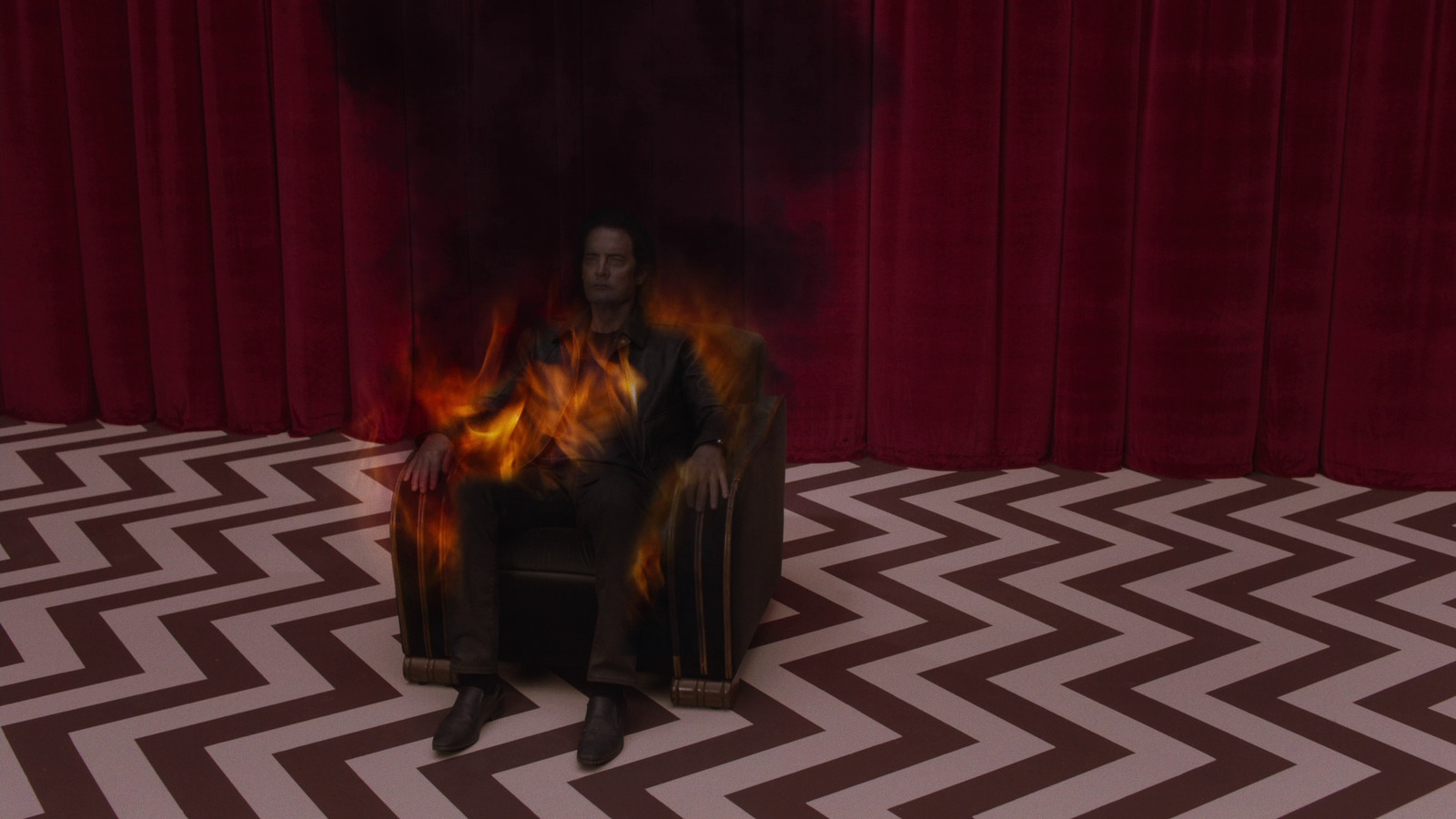
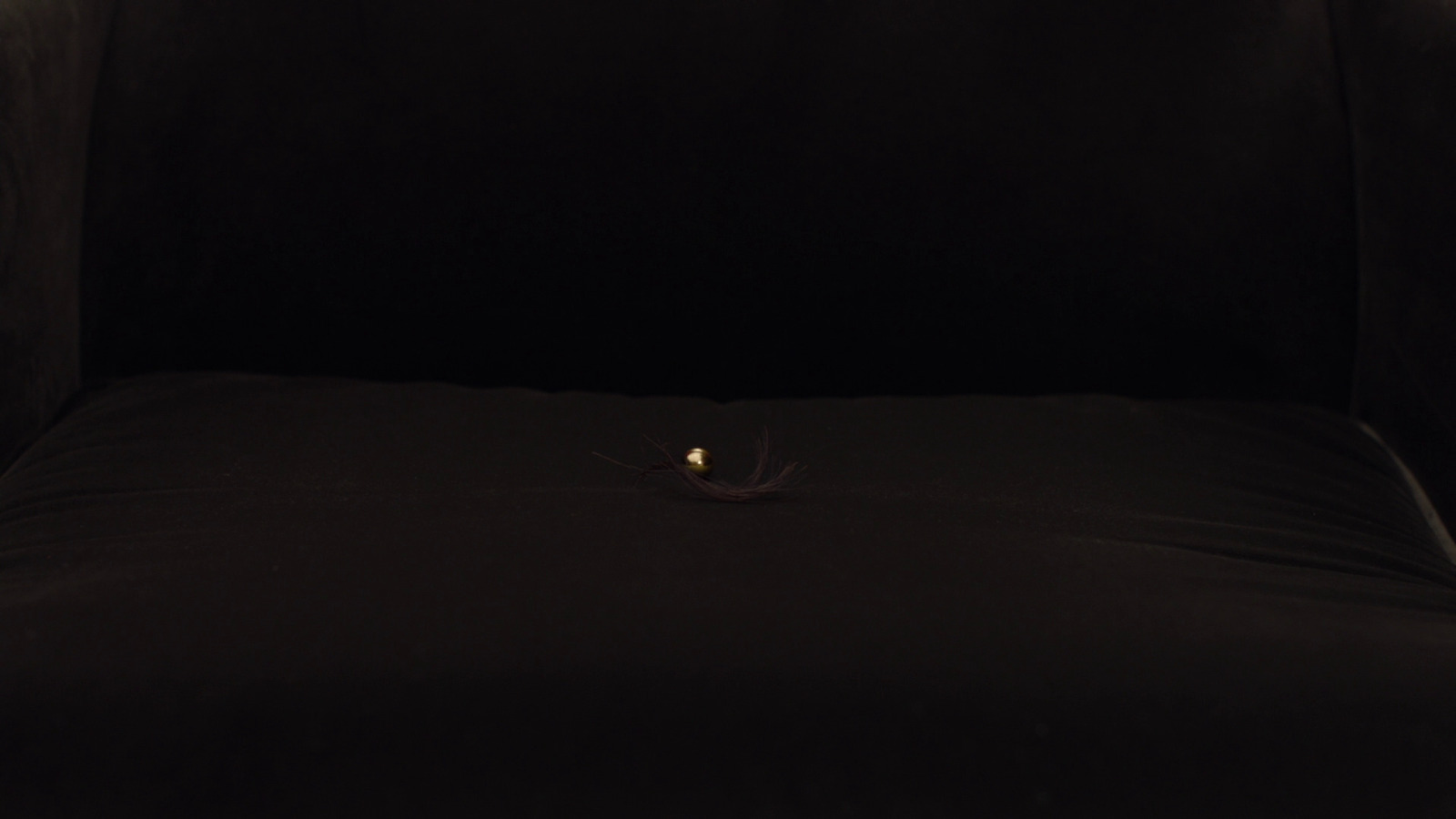
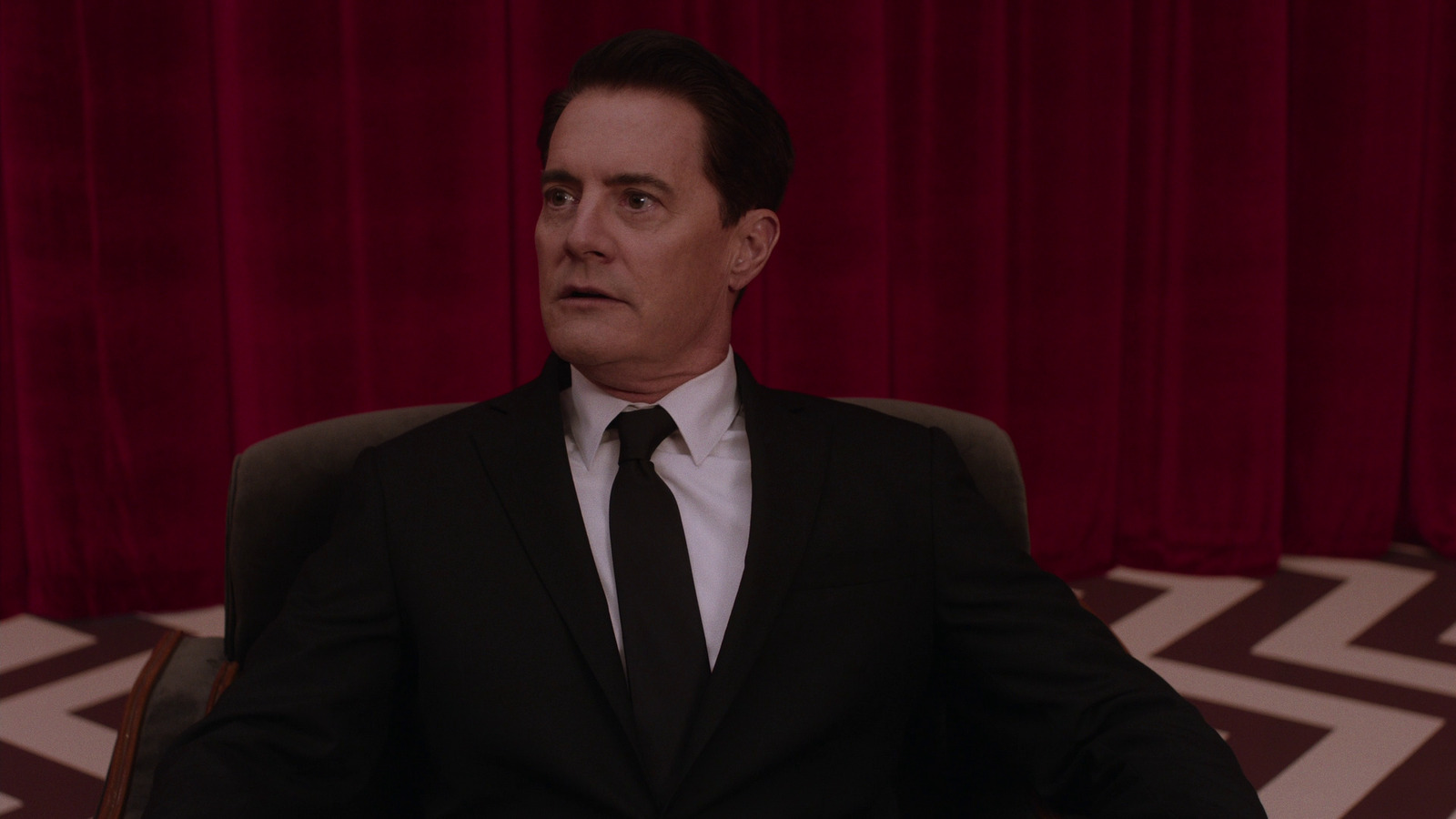
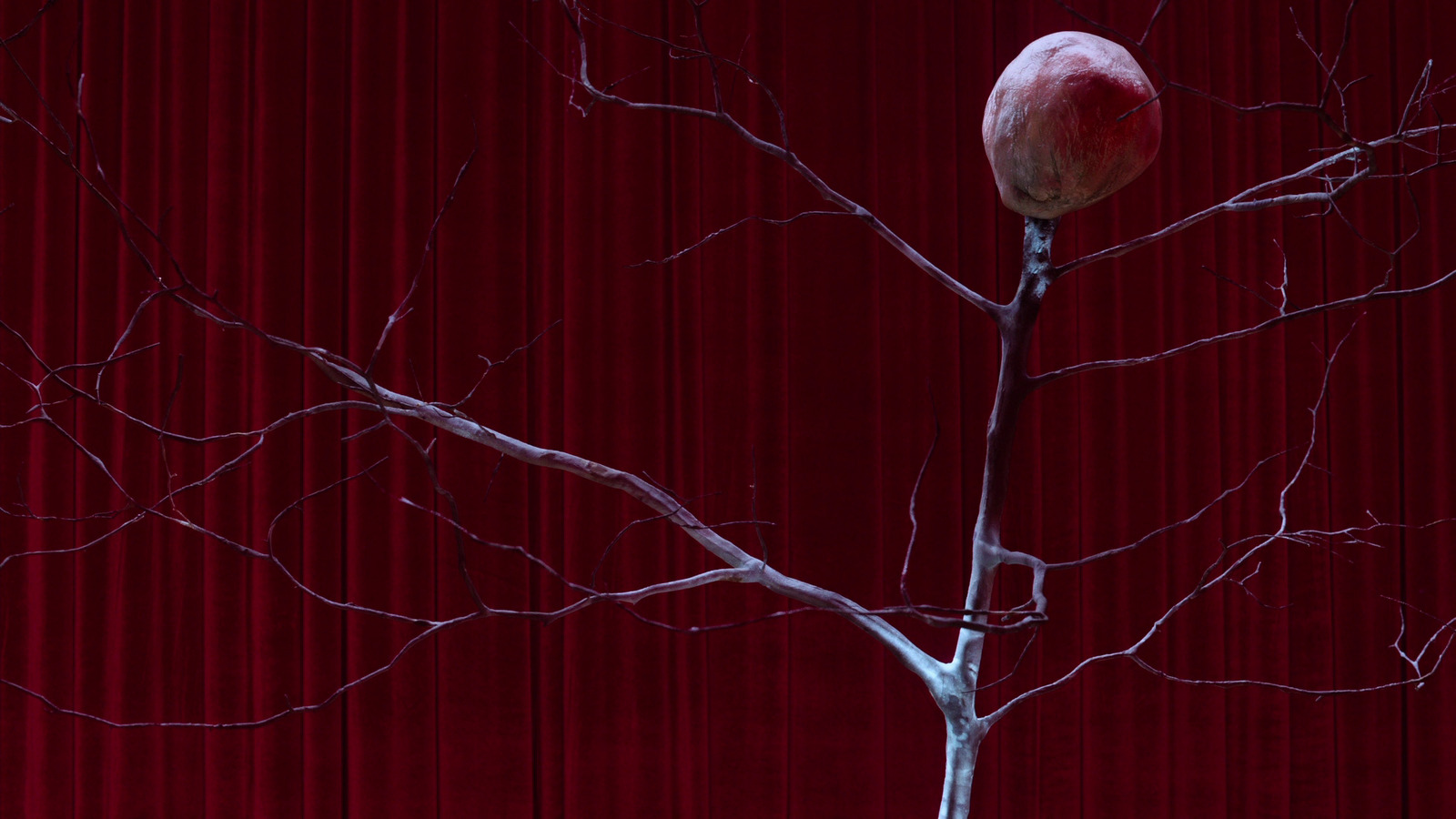
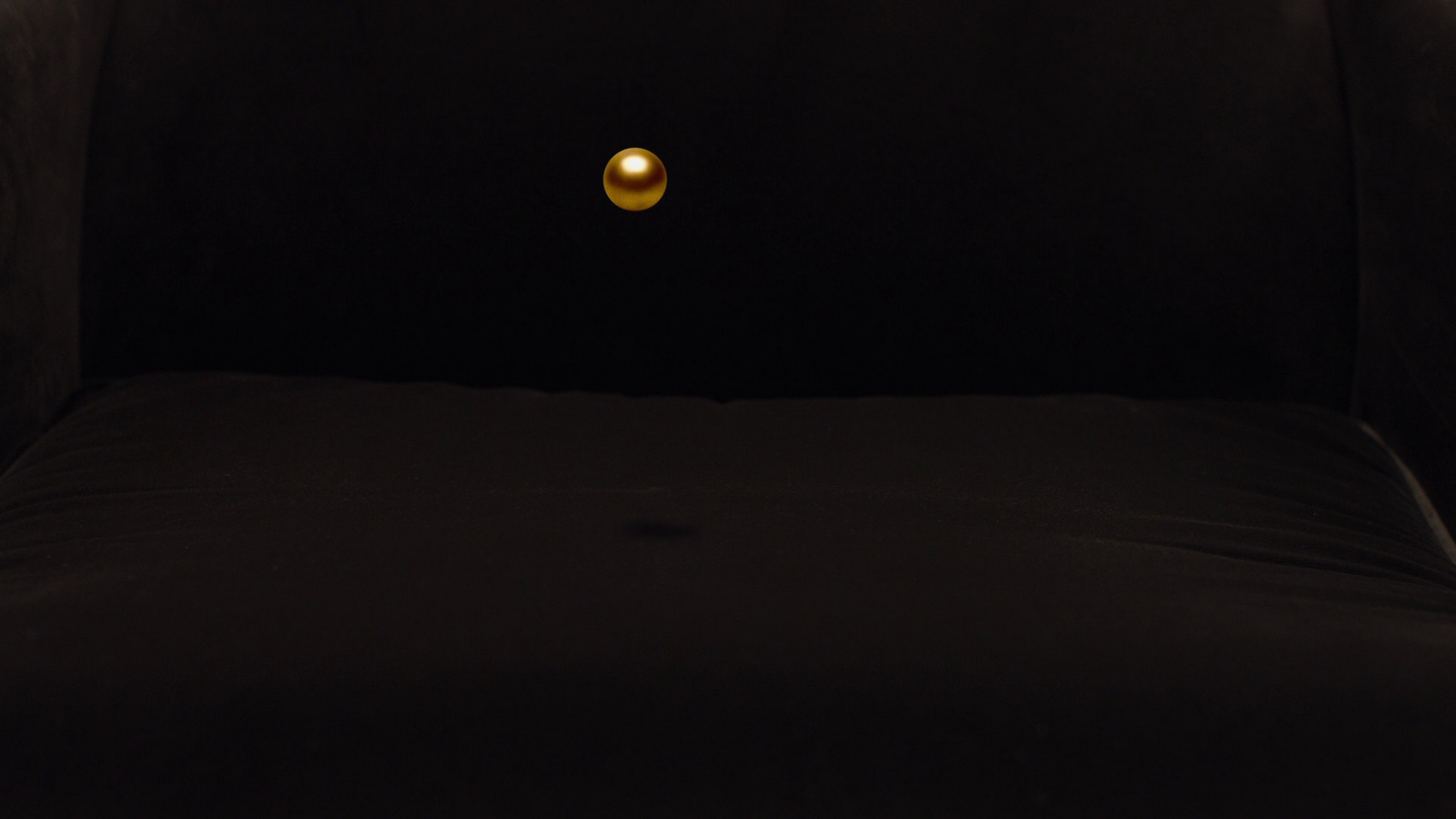
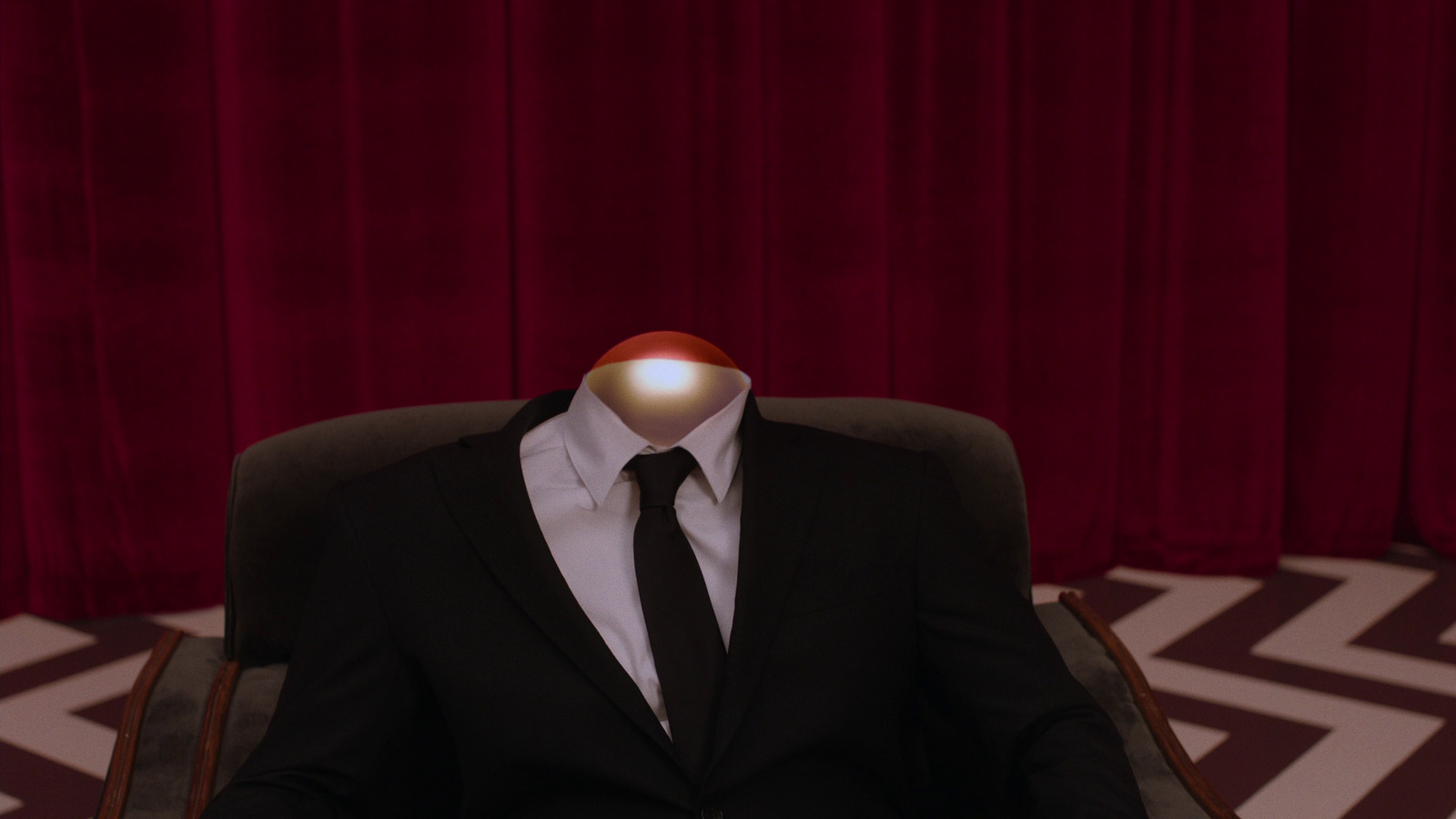
The opening separates destruction from replacement. Mr C burns in the red-curtained room; a gold seed and a strand of hair then occupy an otherwise empty chair. The new figure is assembled through a few distinct states: object, rising sphere, suited torso and breathing face. The costume makes the identity legible before the face completes it.
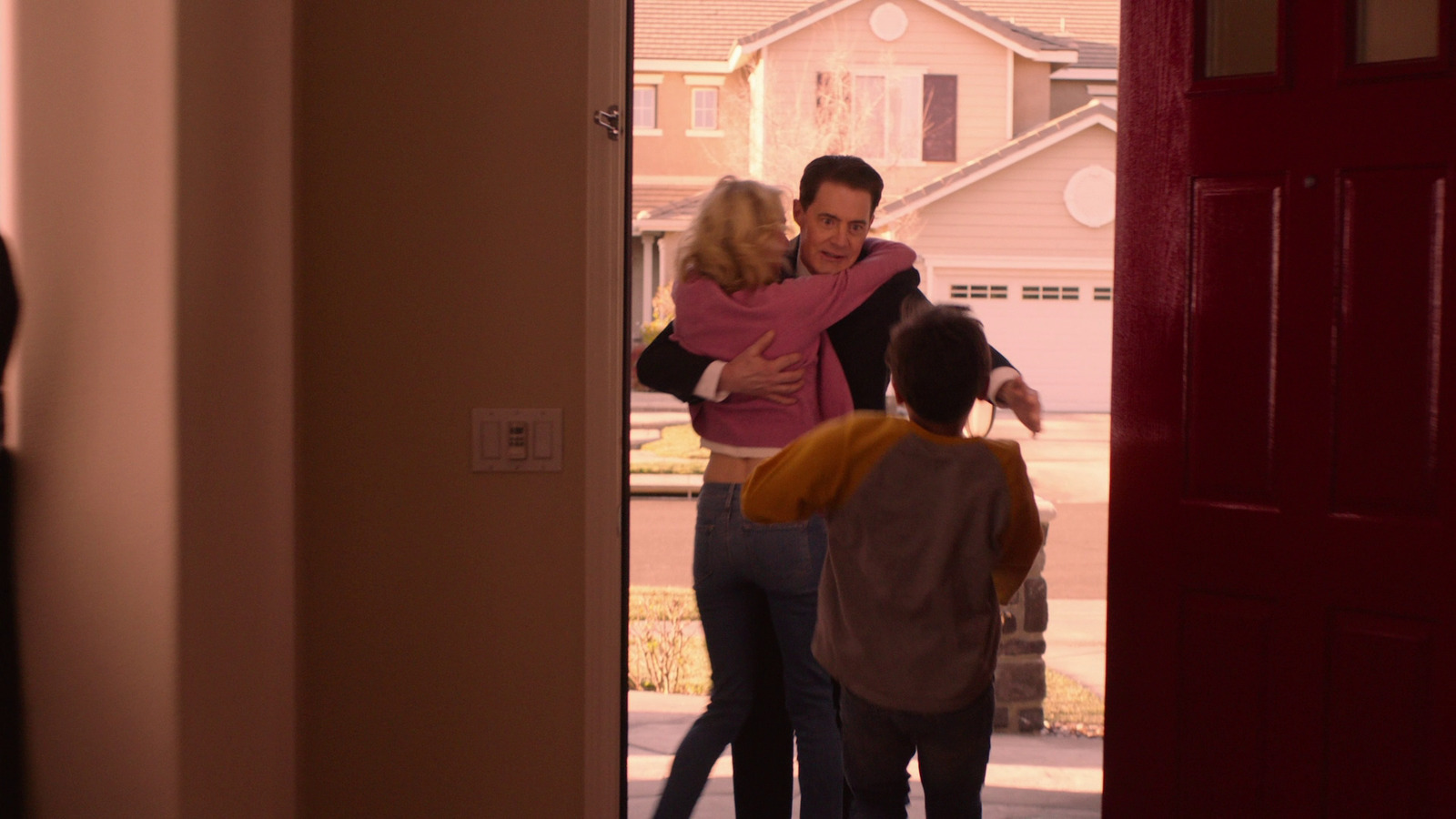
The cut to the Jones home gives that manufacture an emotional destination. Janey-E and Sonny Jim respond with recognition; the returned figure says “Home.” This compact resolution fulfils the family promise established earlier, but it does not resolve what Cooper will do next. Part 16’s request for another copy is the immediate point of comparison.
Open the scene sequence · 3 frames
The hand that loses Laura
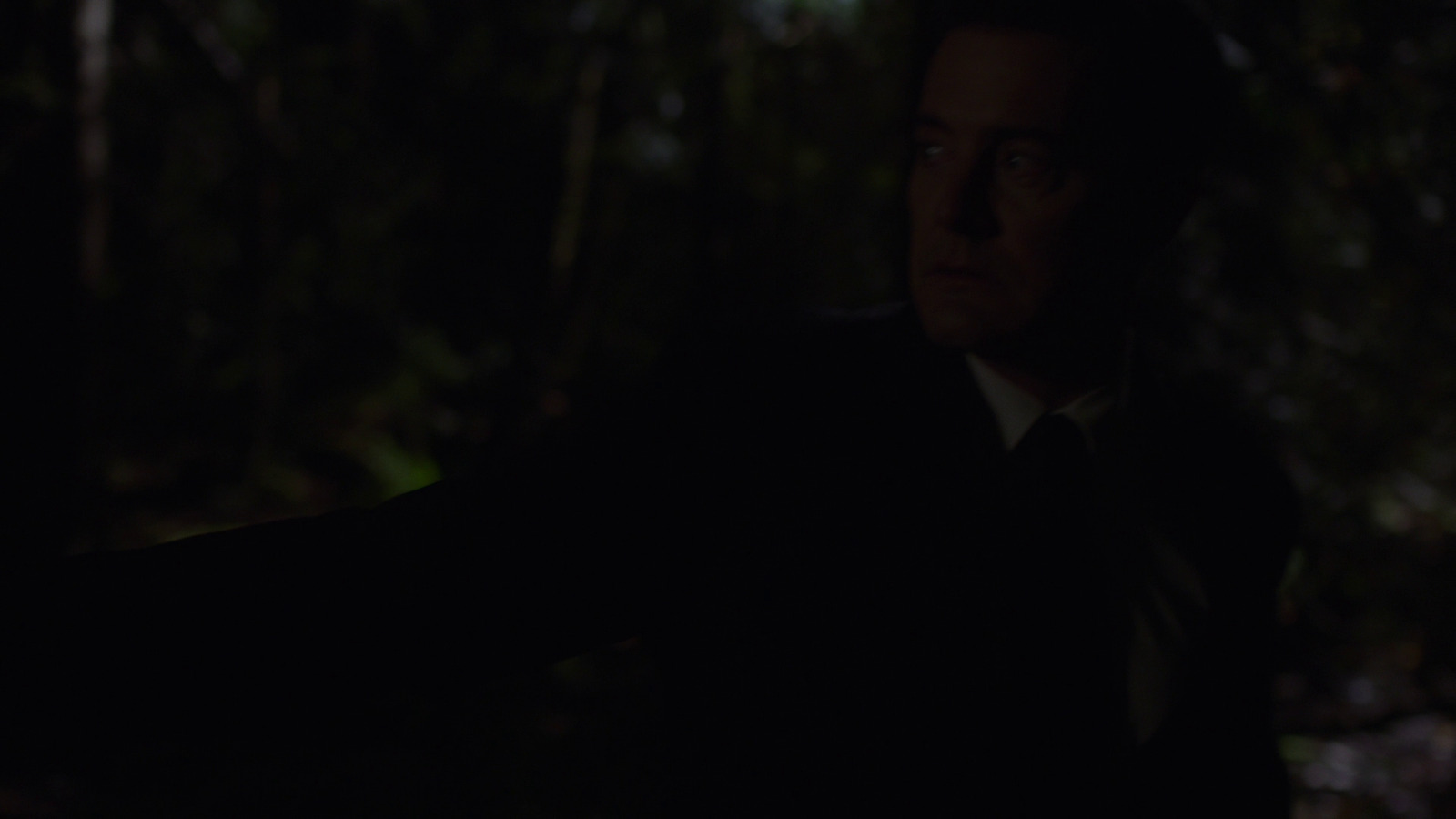
The forest passage resumes the ending of Part 17. Cooper walks as a guide, but the guiding action gives way to listening and looking behind him. Clicking, scratching and rising wind precede Laura’s scream; the empty path offers no replacement explanation.
The sequence matters because the camera does not show a successful arrival followed by a new problem. The loss occurs inside the rescue itself. An account of Cooper’s plan has to allow for that interruption, rather than treating the preceding intervention as an uncomplicated victory.
Open the scene sequence · 1 frame
A return with a missing occupant
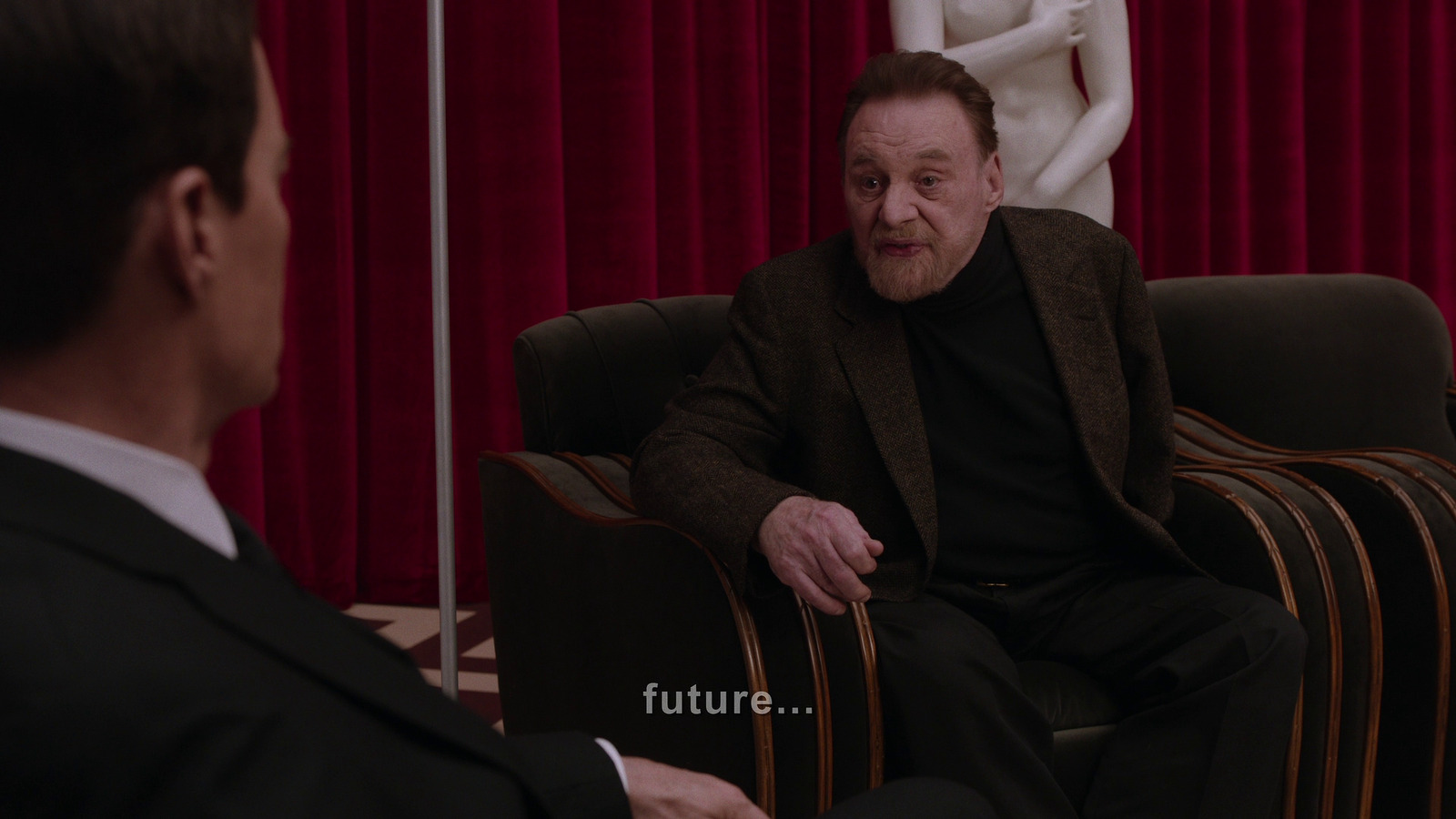
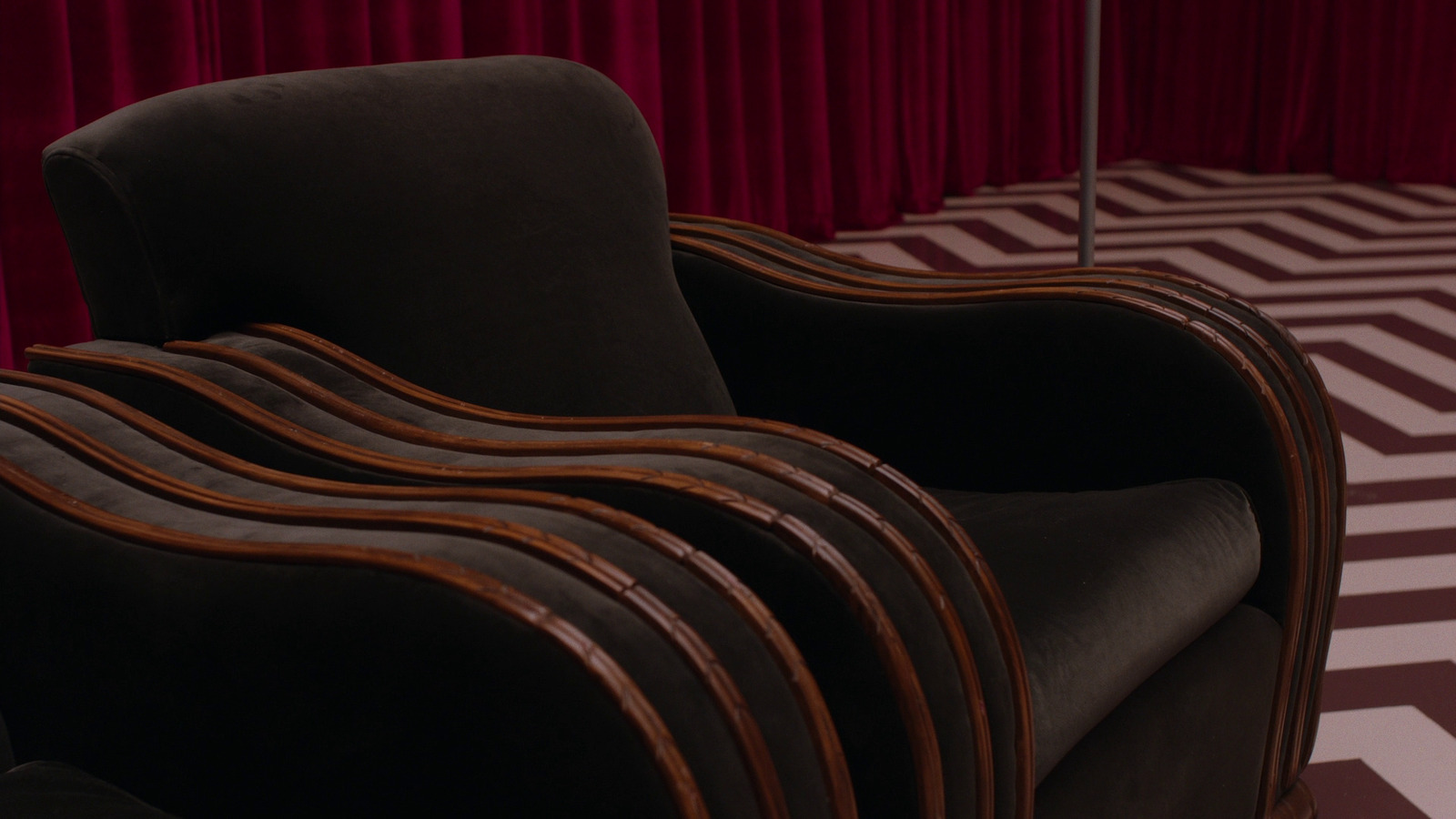
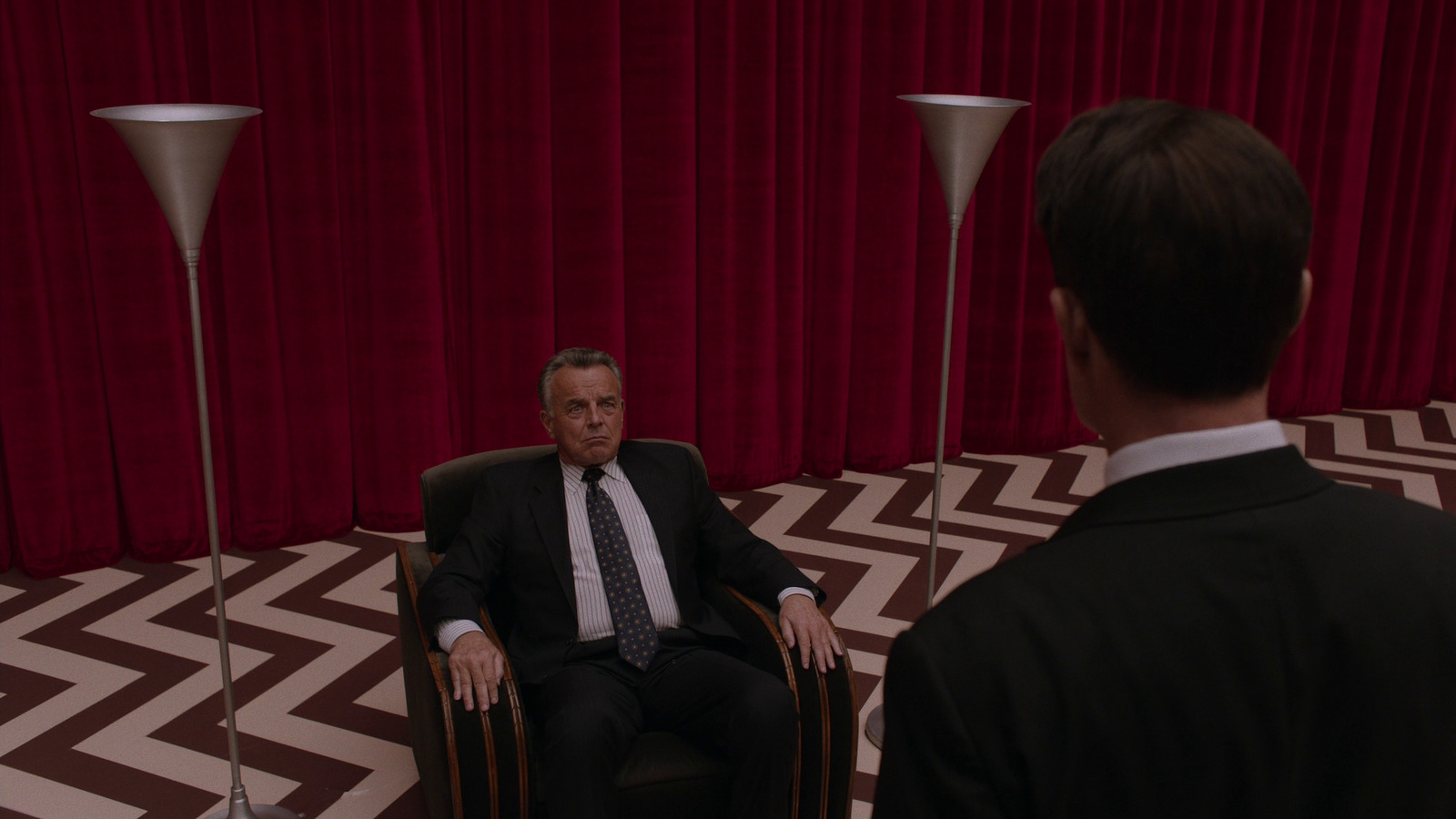
Gerard’s question about past and future takes Cooper back into a recognisable arrangement. The empty chair, however, becomes an image to wait with. Familiarity supplies expectations that the shot does not immediately satisfy.
The Arm’s question about the little girl down the lane changes the pattern. It also recalls language heard from Audrey in Part 13. The recurrence is a connection in the text; by itself it does not establish that Audrey and Cooper occupy the same place or that one scene explains the other.
Open the scene sequence · 2 frames
The whisper and the renewed instruction
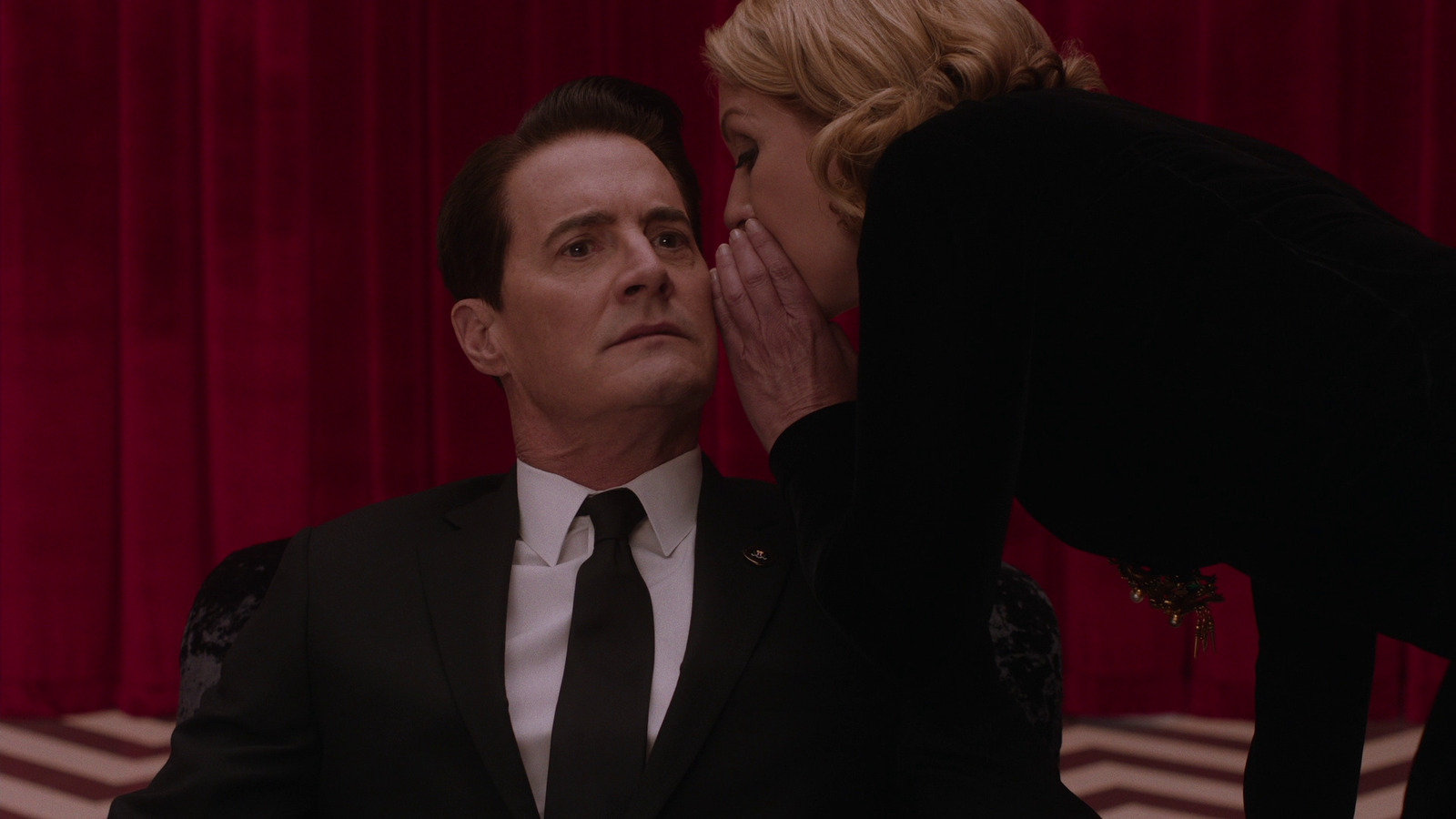
Laura’s proximity promises an intimate disclosure, but the audience receives Cooper’s response and her removal rather than a usable statement. Leland’s request to find Laura then supplies an instruction without supplying a route. Knowledge and purpose remain unevenly distributed.
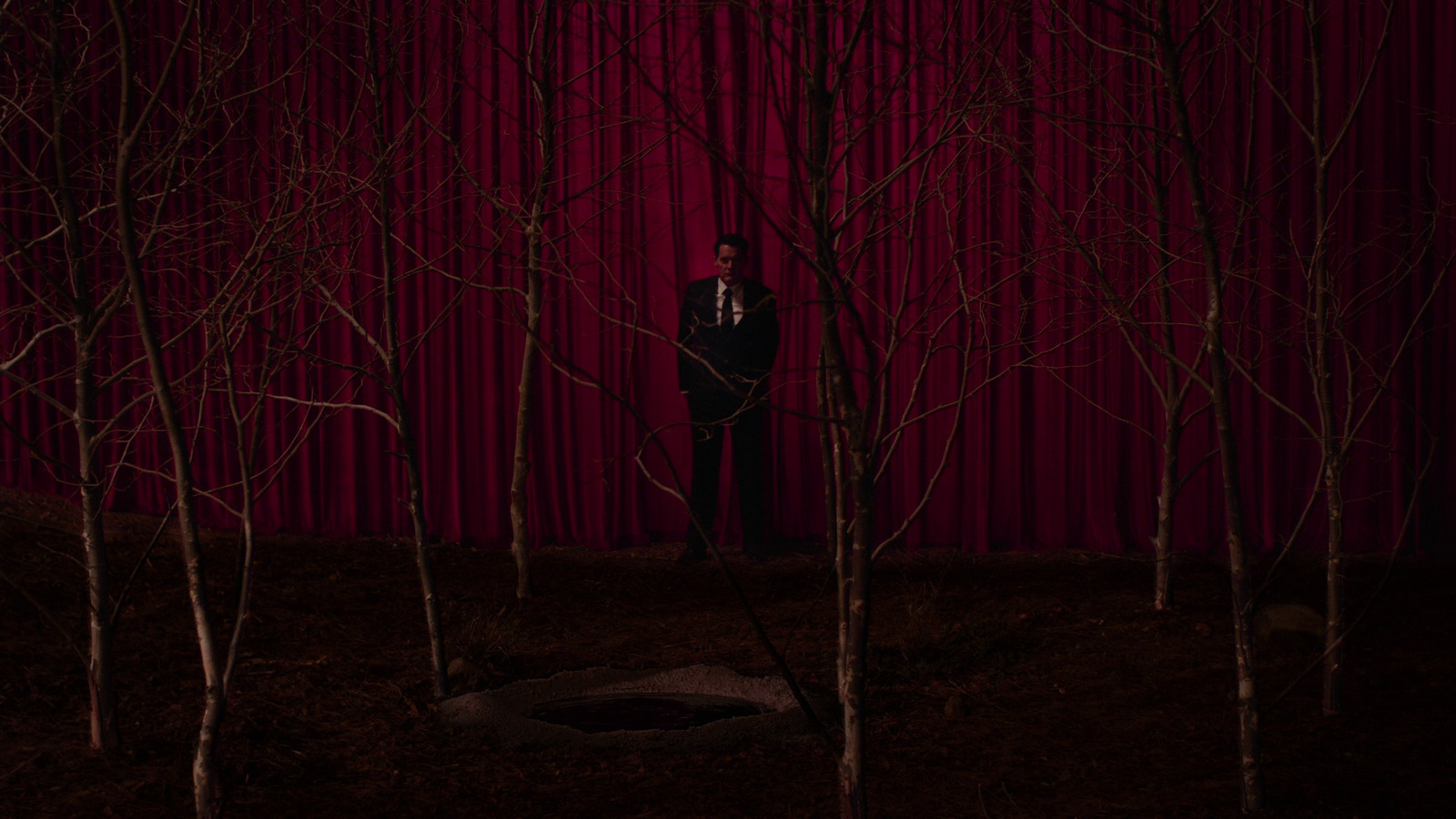
The new exit opens the curtain onto trees. Compare the bodily preparation and reverse-speech rehearsal in the Part 2 production study: the return of these images carries both a narrative memory and a carefully directed physical performance.
Open the scene sequence · 2 frames
“Is it really you?”
Diane and Cooper ask for recognition before proceeding. The exchange is mutual: she is not merely there to certify his identity. After the doubles, manufactured bodies and substitutions of the preceding parts, recognition has become an action the characters must perform.
The warmth of the reunion does not remove doubt. The subsequent car journey places an increasingly precise destination beside uncertainty about what will happen on arrival. The episode lets intimacy and apprehension exist together.
A precise number, an uncertain threshold
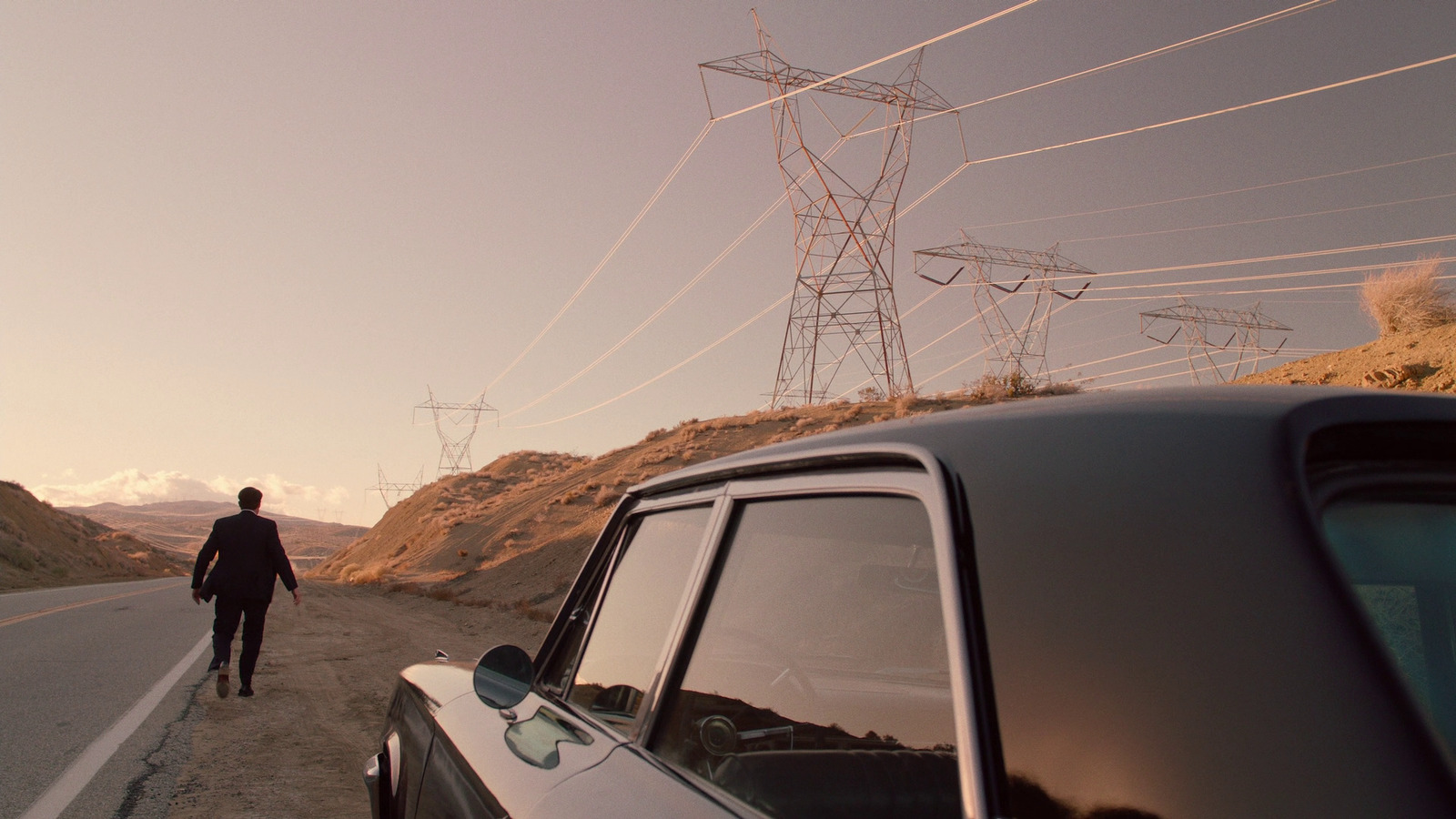
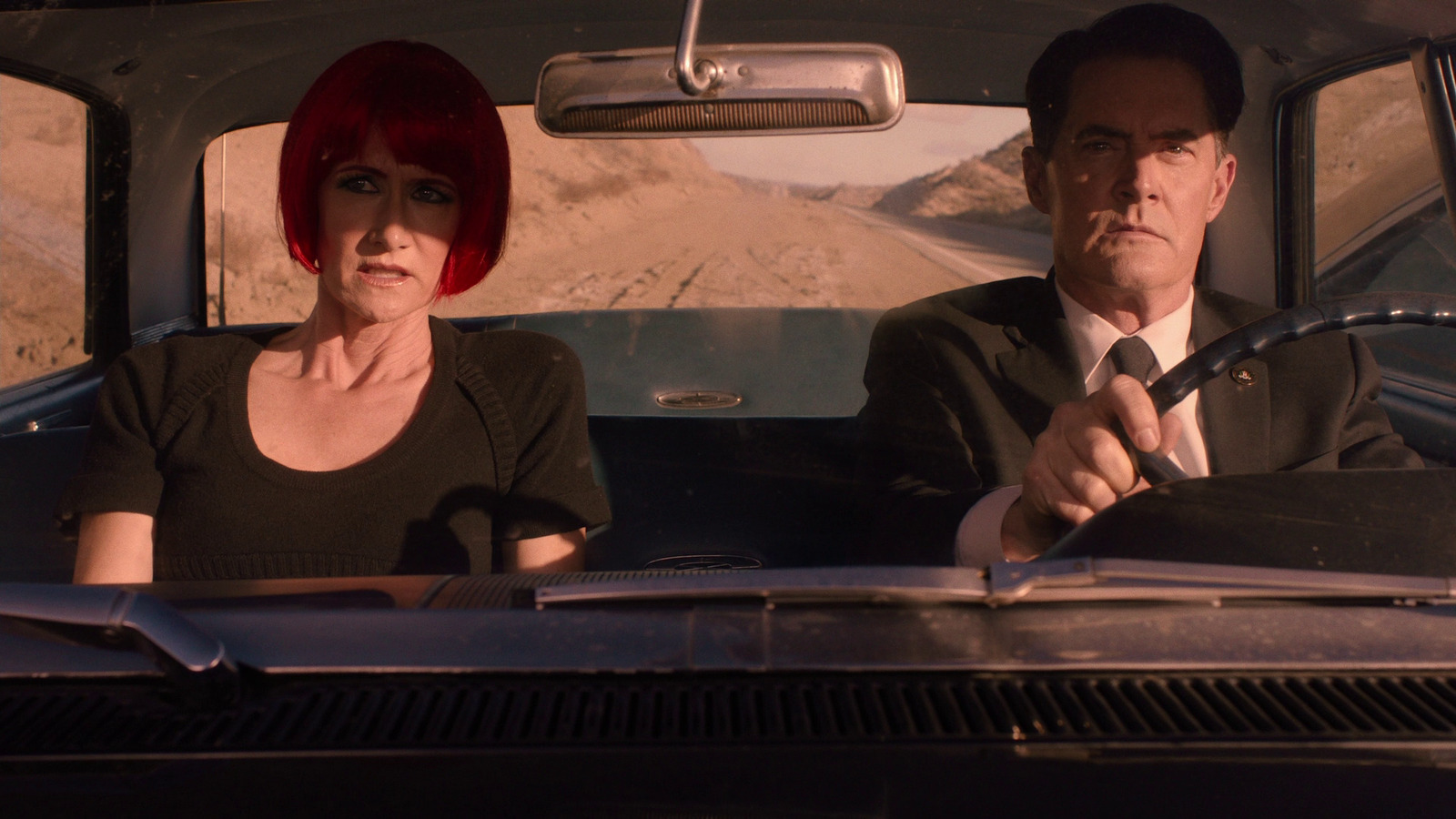
The odometer-like precision of 430 miles gives Cooper’s journey a measurable endpoint. He stops beneath pylons and leaves the car to inspect the place. Electrical crackling and distant birds establish a charged environment before the visible transition.
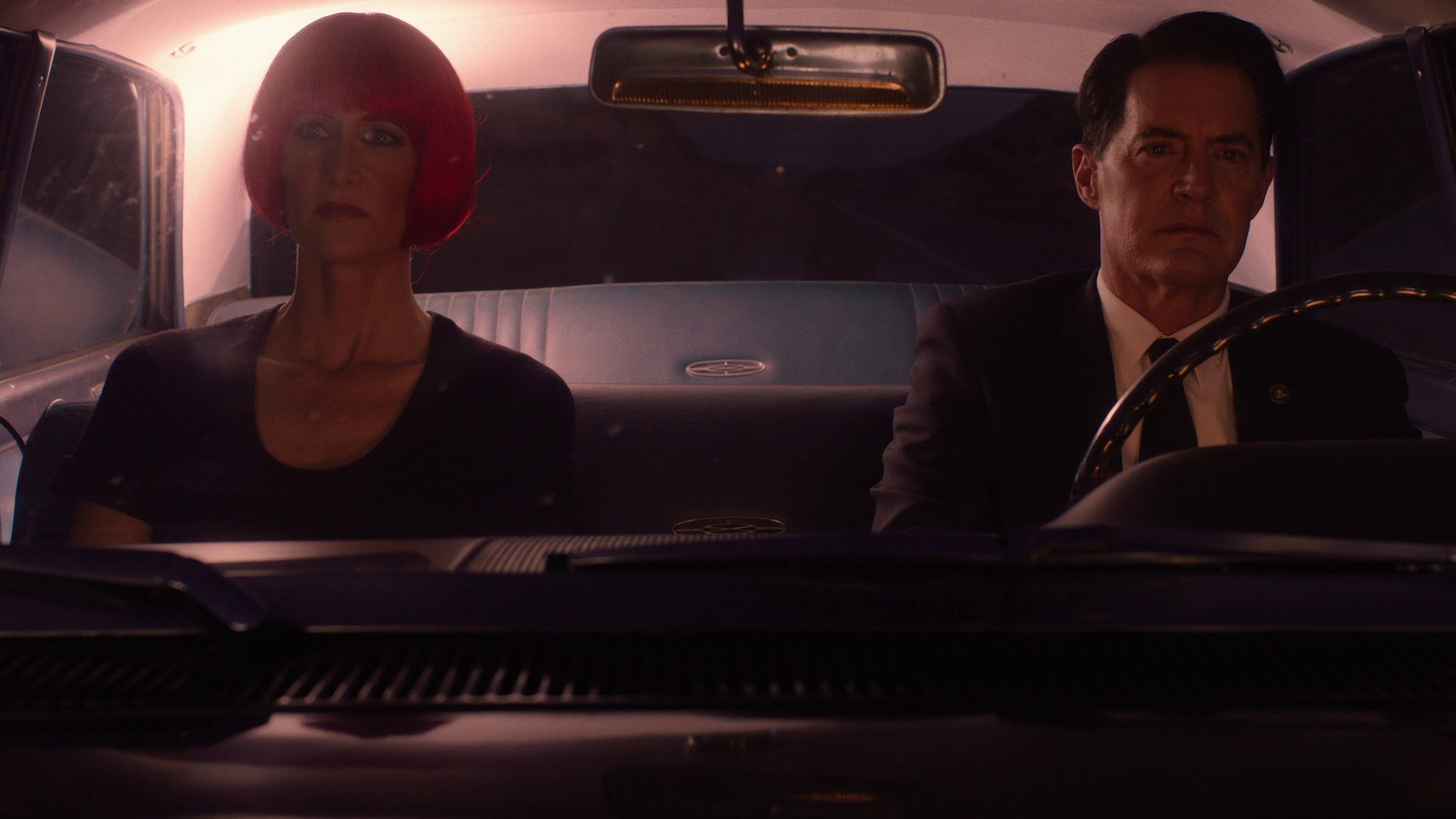
Diane warns that crossing may change everything. The frontal car image then holds the pair while flaring light and disturbance cross the windshield; a dark road follows. The number has located a boundary, but it has not explained the rules on the other side. The Fireman’s earlier instructions gain an application without becoming a complete key.
Open the scene sequence · 3 frames
Diane sees Diane
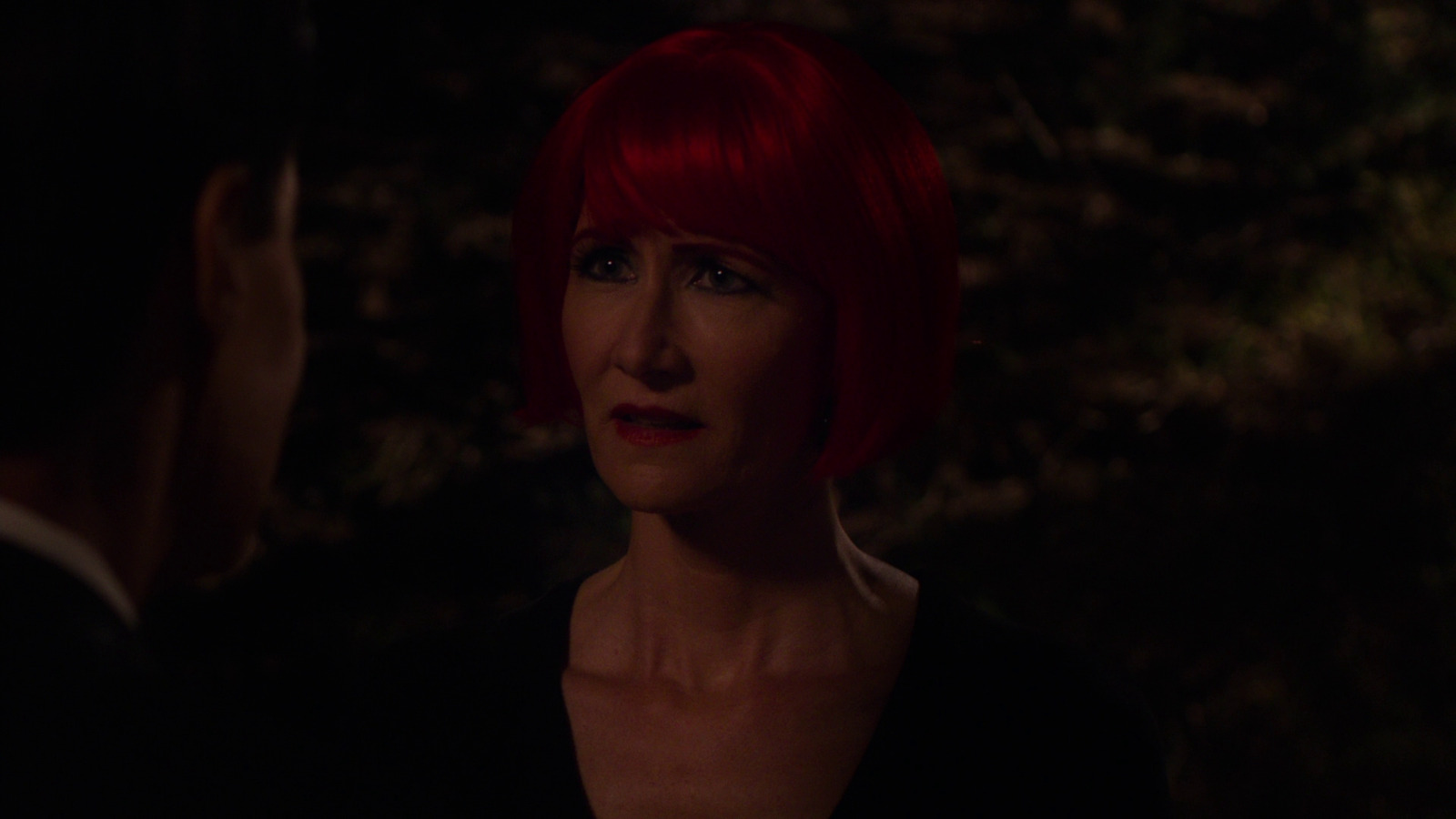
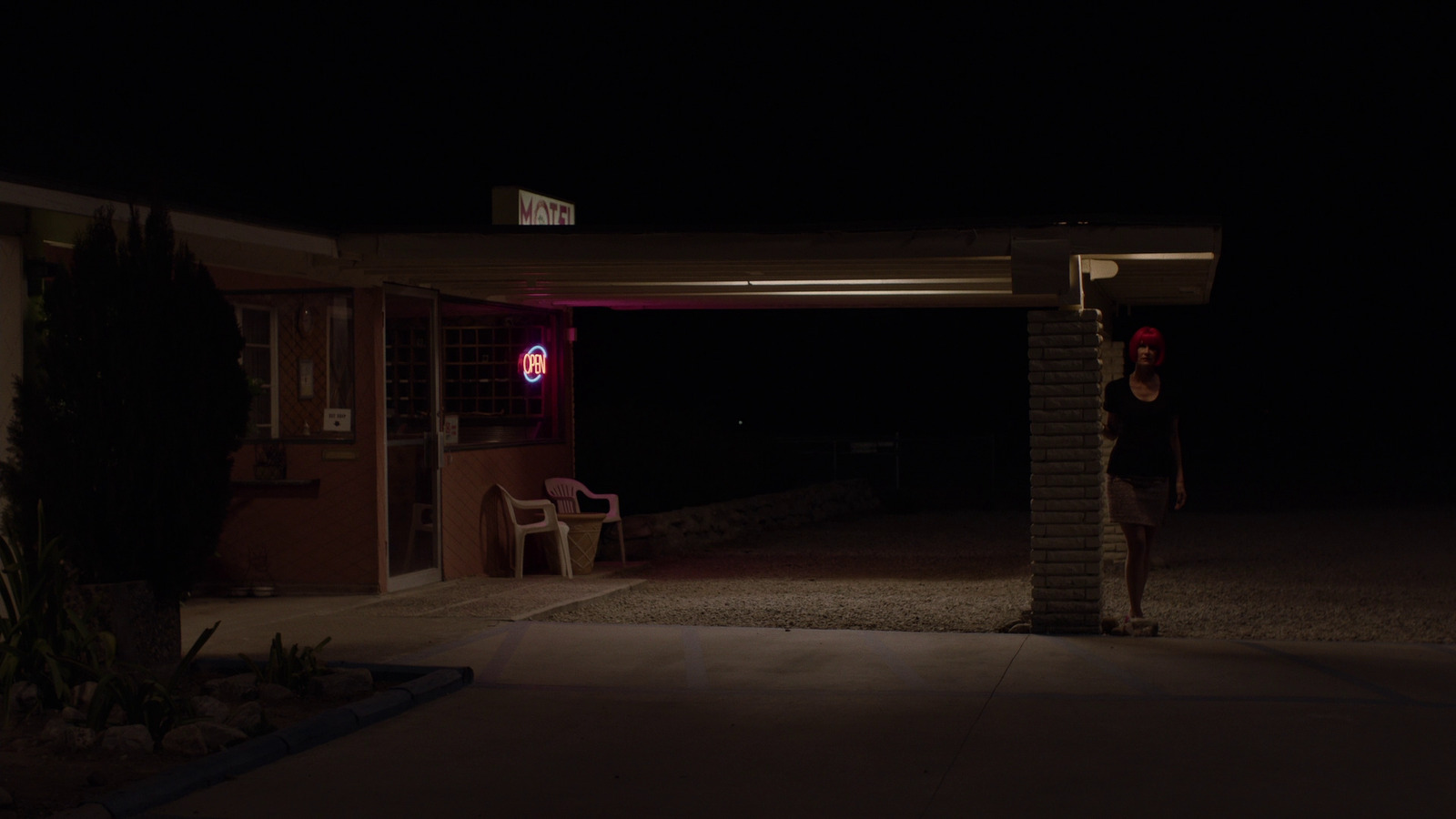
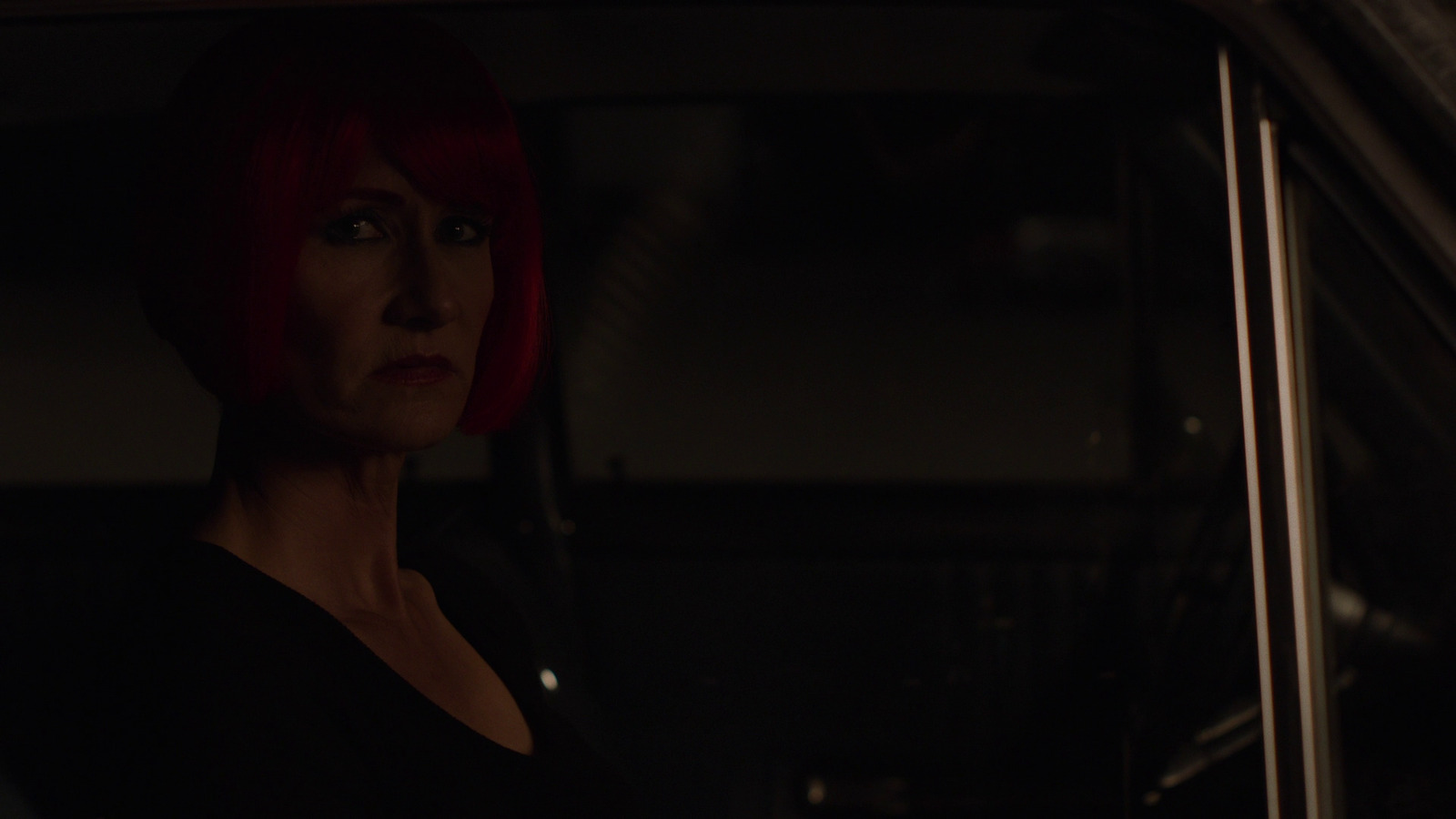
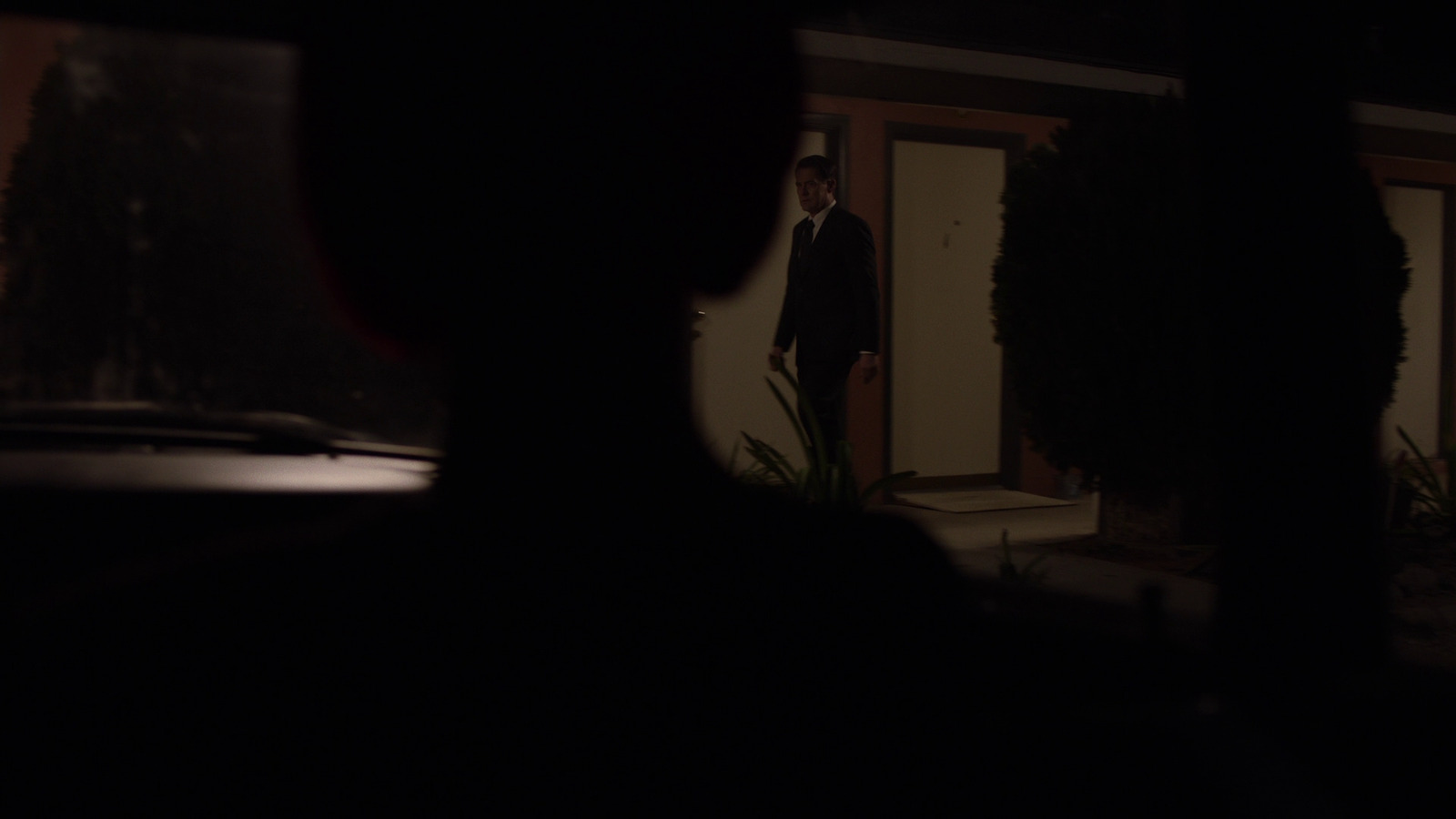
While Cooper enters the motel office, Diane looks out from the parked car. The second Diane appears in the space she is watching, with the first woman’s silhouette still helping to frame the view. The arrangement makes the sight a problem of looking before it becomes any problem of explanation.
There is no explanatory exchange when Cooper returns. The duplicate does not receive the plot machinery of an identification scene or a chase. Laura Dern’s sustained attention leaves the event active in the encounter that follows.
Open the scene sequence · 2 frames
A love song without reassurance
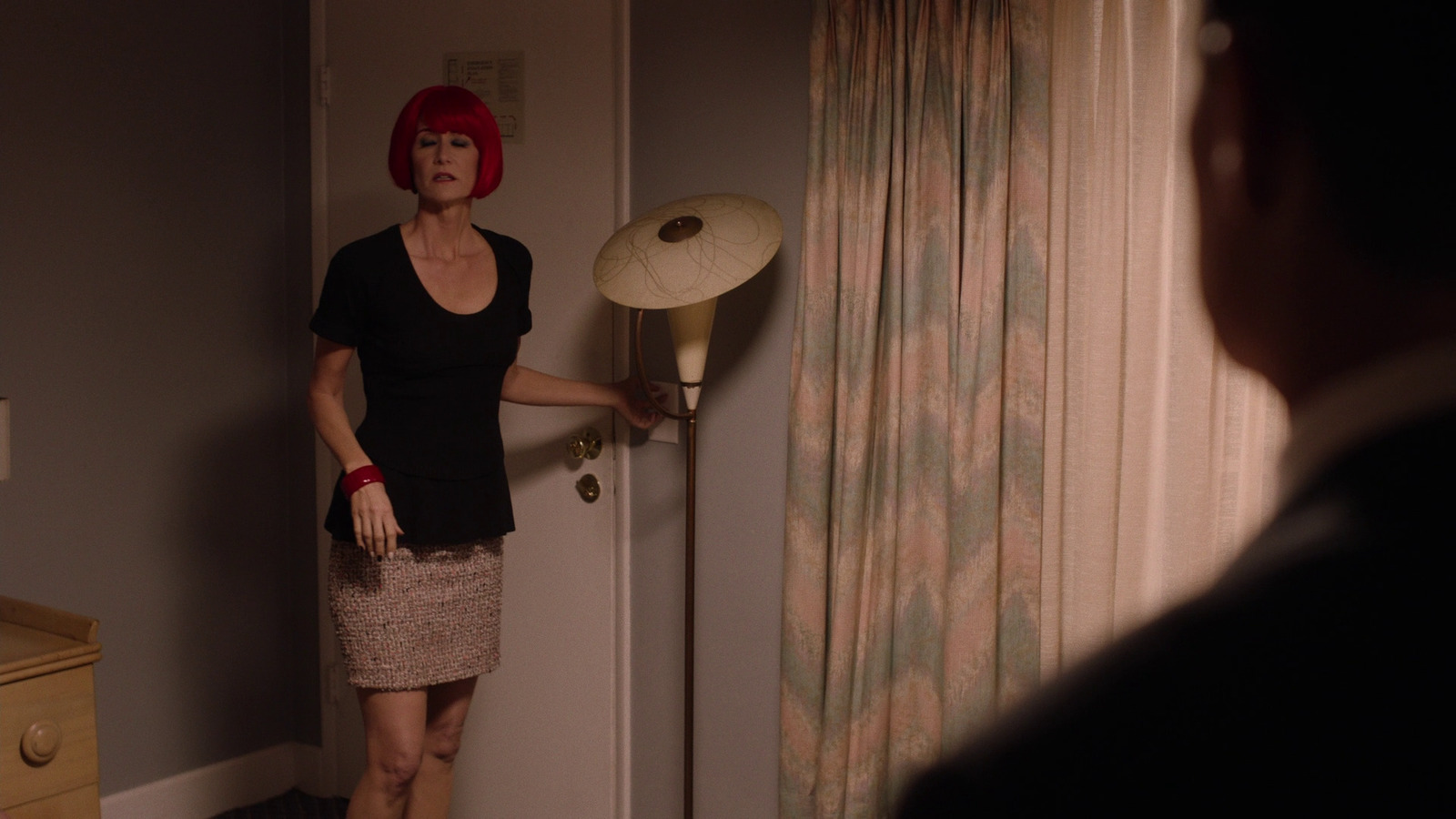
The room’s sparse furniture and restrained dialogue narrow attention to the two performers. During the intimate encounter, Diane’s hands obscure Cooper’s face and her distress complicates any simple reading of reunion. The sequence makes a familiar face difficult to see at the moment closeness should confirm it.
The Platters’ “My Prayer” brings its earlier use in Part 8 into this room. The recording carries romantic assurance while the image sustains discomfort. That tension is more specific than saying that an old song makes the scene nostalgic.
Richard and Linda: names left behind
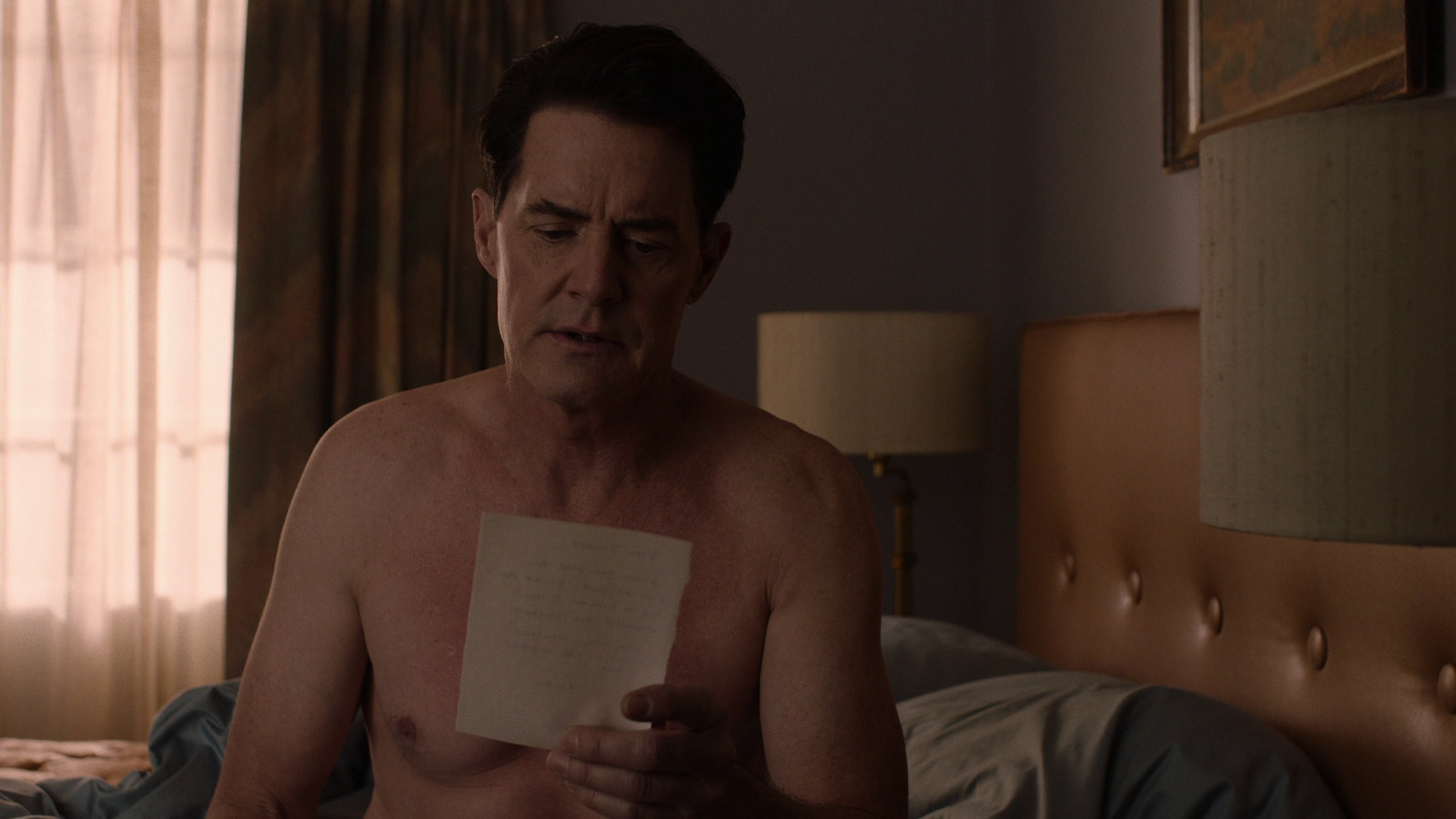
Cooper wakes alone and calls for Diane. A letter supplies different names: Richard as its addressee and Linda as its writer. His repetition of those names makes reading an act of disorientation rather than immediate understanding.
The uncertainty extends into the exterior. The morning motel and the car differ from those seen on arrival. No single reaction shot resolves whether the people, the environment or their relation to one another has changed. The visible discontinuities are evidence; a definitive cosmology is an interpretation.
Open the scene sequence · 2 frames
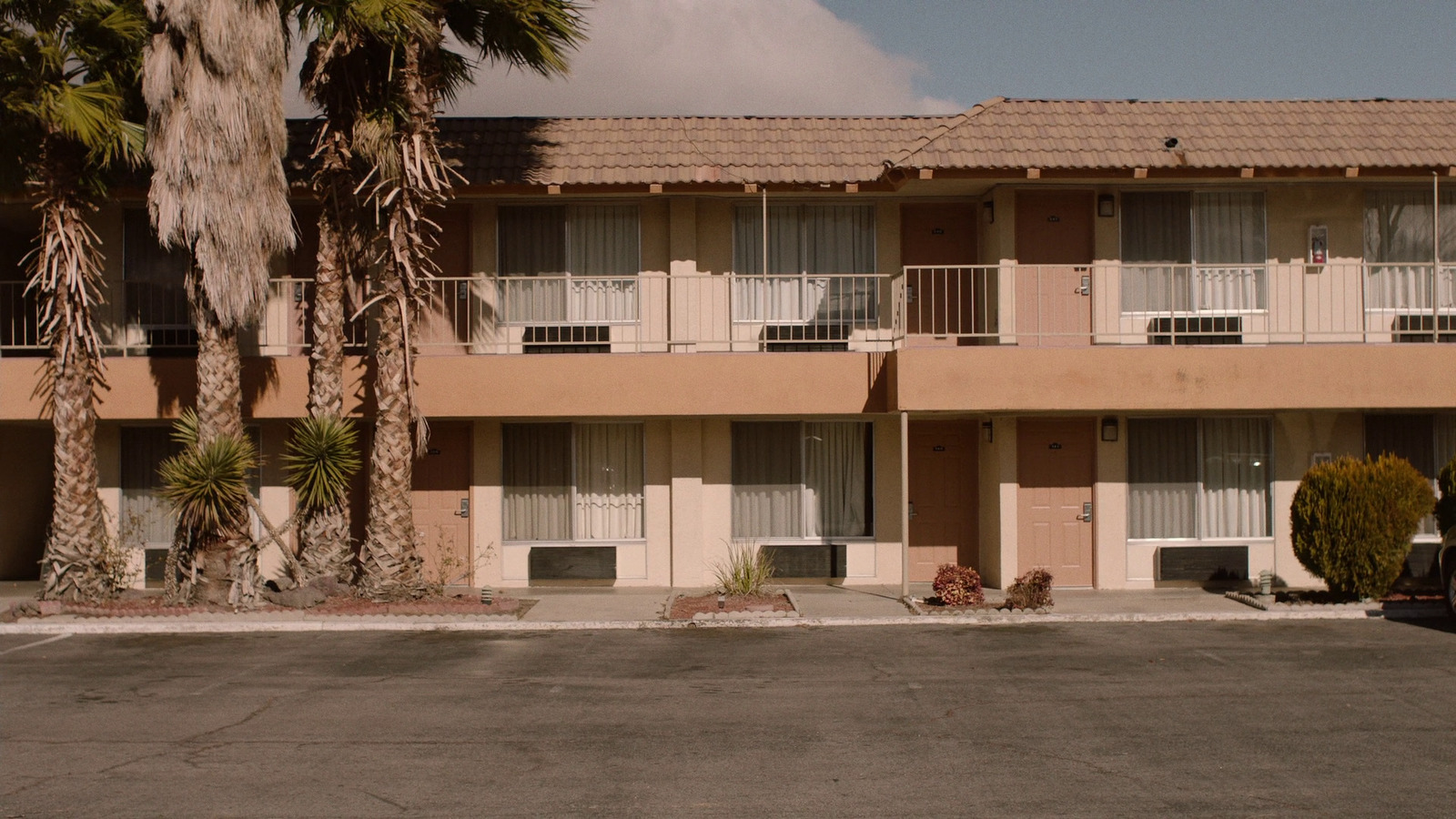
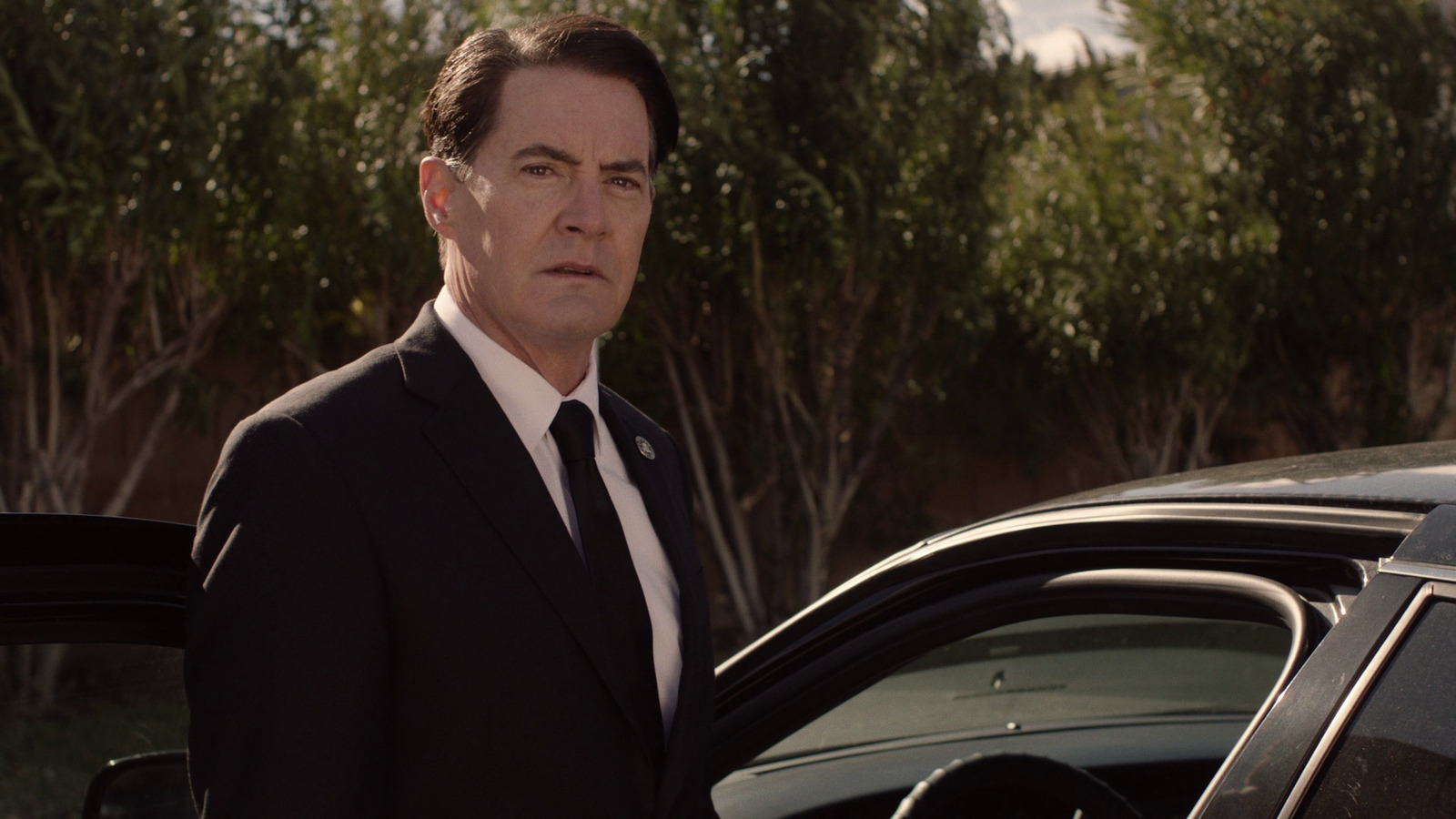
Authority becomes frightening
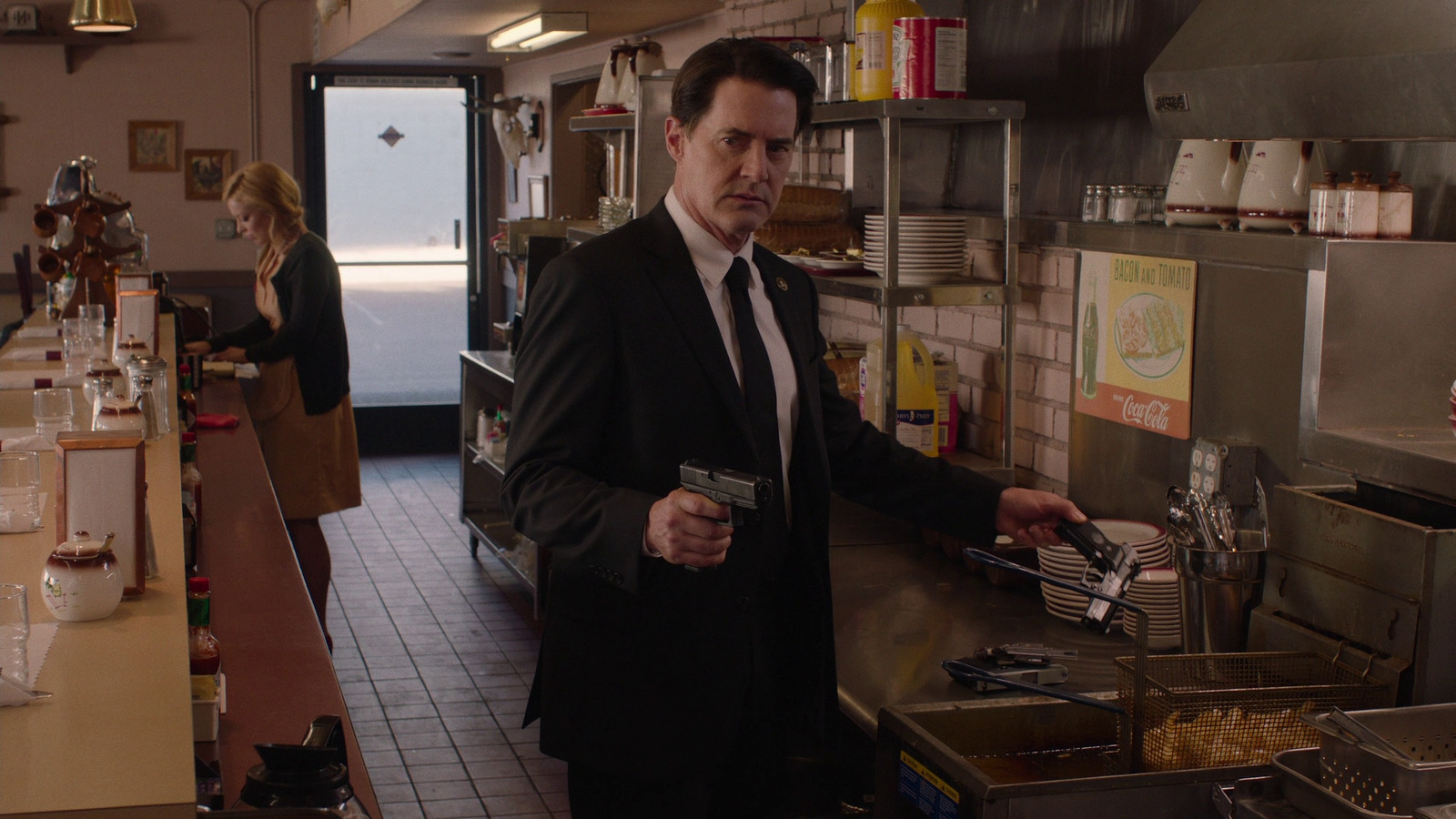
At Judy’s, Cooper seeks the absent waitress while intervening against the men harassing Kristi. His efficiency is recognisable, but the encounter has little of the sociable curiosity that once made his authority reassuring. The room is organised by commands, weapon positions and the men’s forced stillness.
Placing the guns in hot oil removes them from the men’s hands while creating a further hazard, which Cooper announces before leaving. The detail prevents the scene from functioning solely as a clean display of heroic competence. Francesca Eastwood’s Kristi must manage both the original harassment and the aftermath of his intervention.
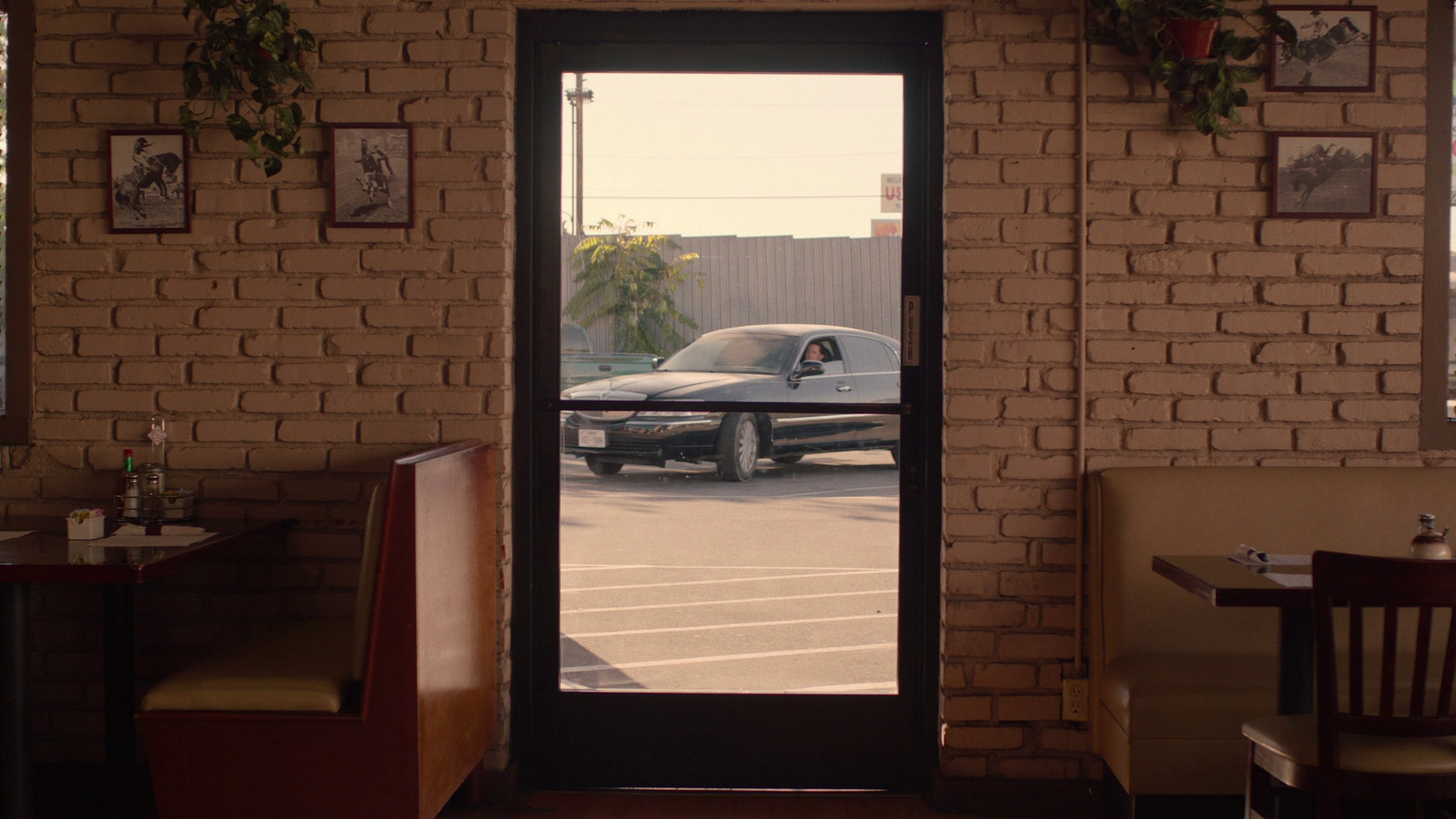
Open the scene sequence · 2 frames
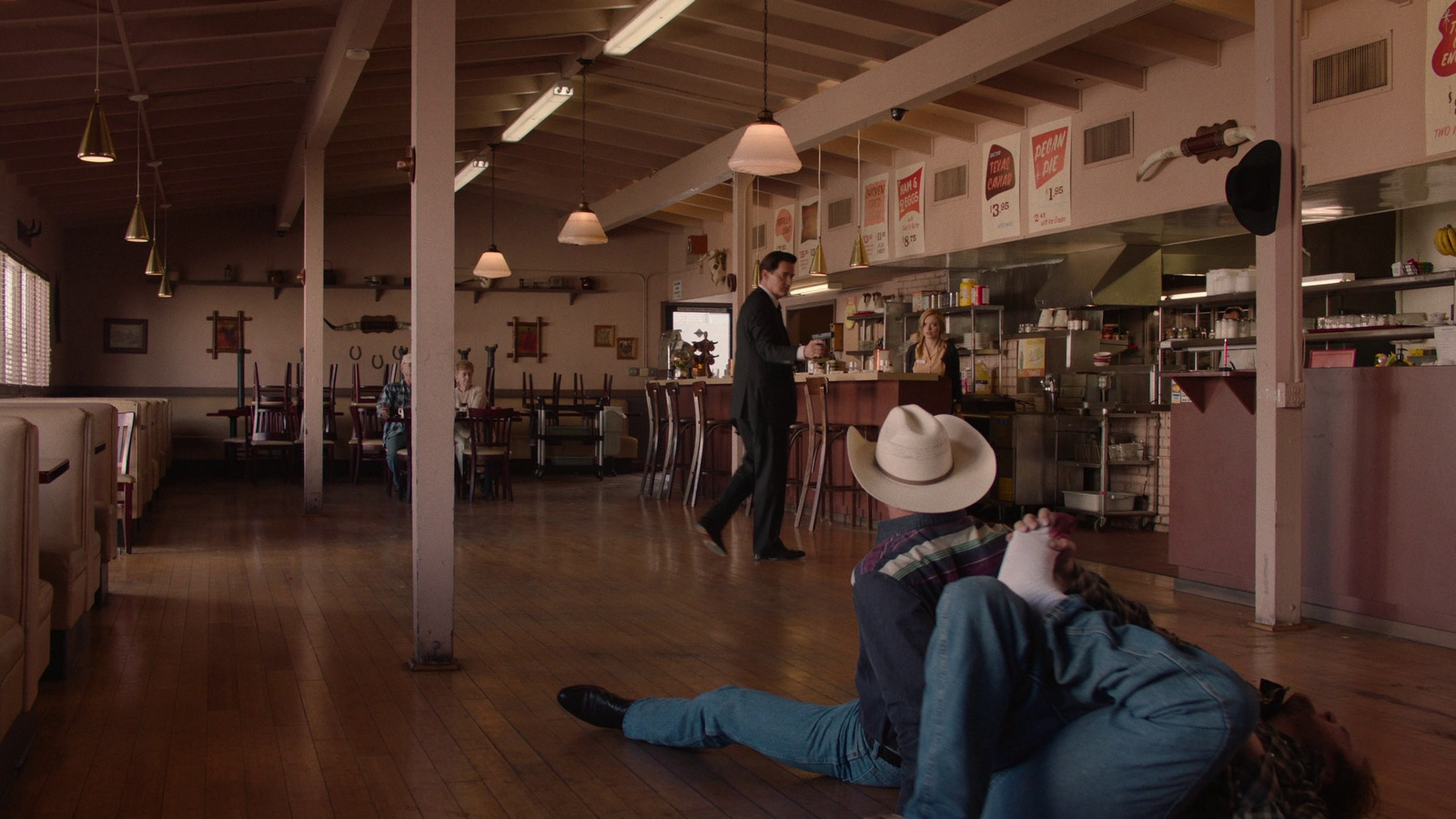
An identity brought to the wrong door
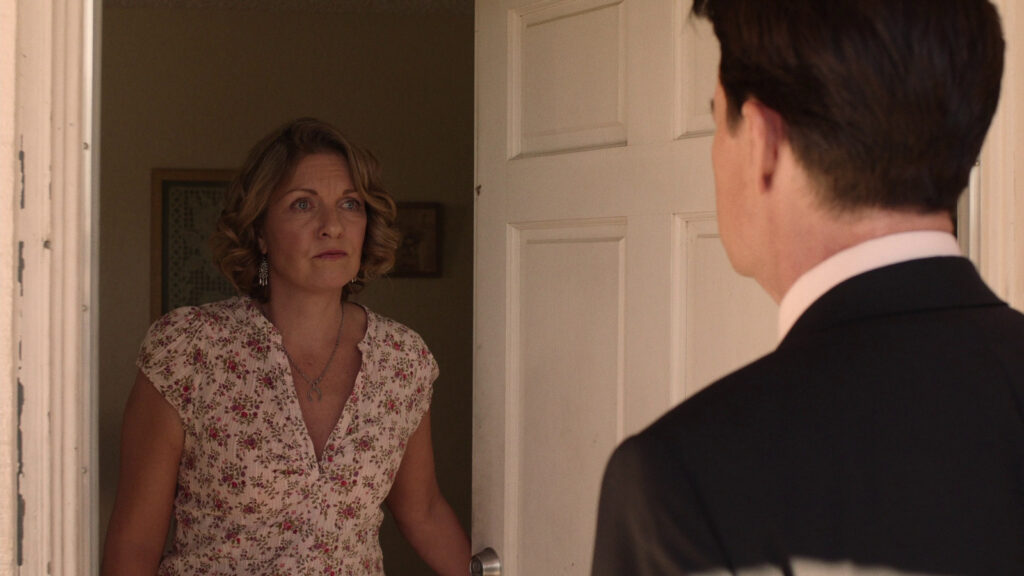
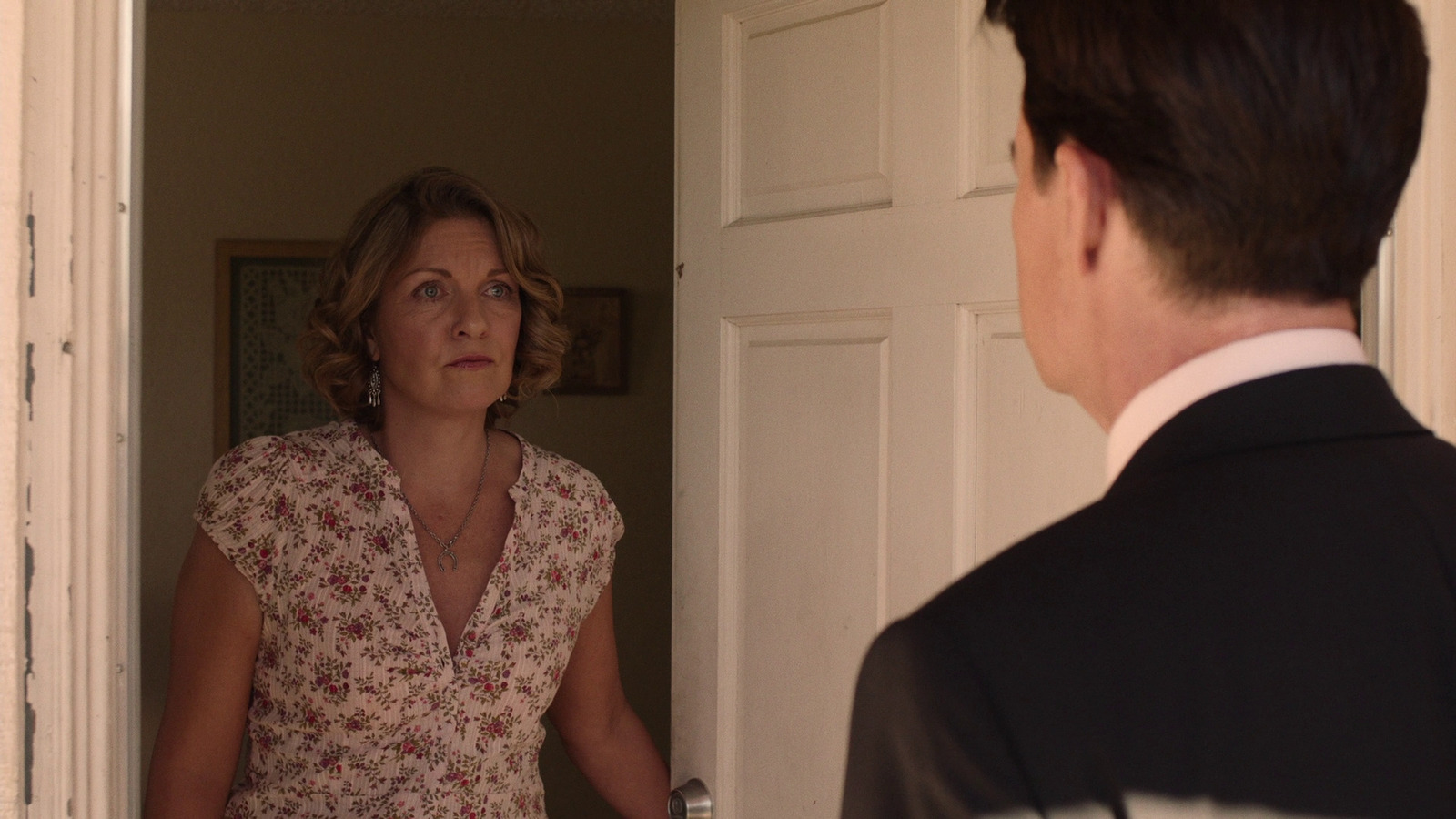
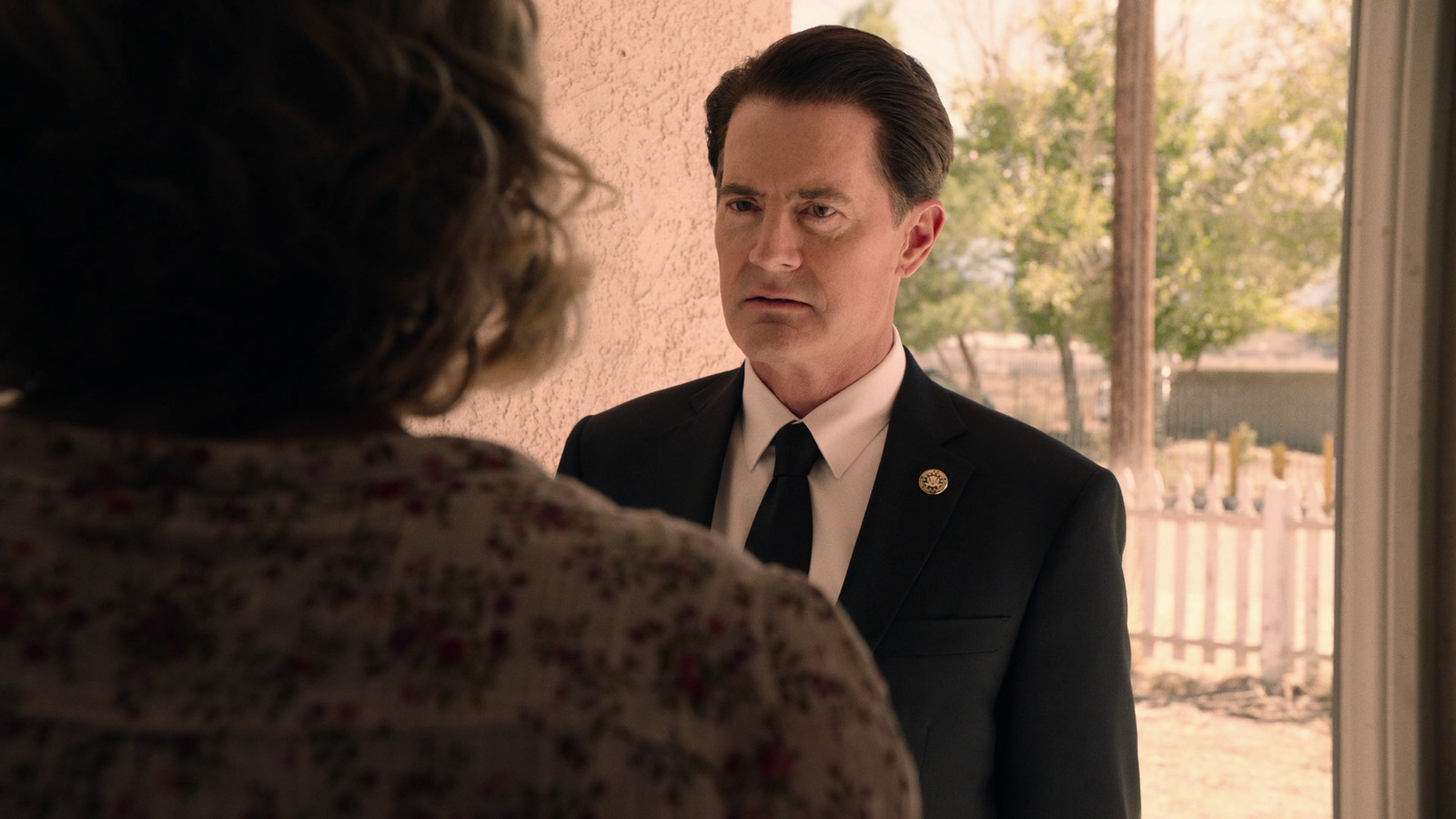
Cooper arrives with a name and a history. The woman at the door answers with another name: Carrie Page. Sheryl Lee’s performance does not simply replay Laura’s emotional register. Carrie is impatient, practical and concerned with a danger Cooper has not investigated.
His mention of Sarah produces a pause and a change of attention, but not a confession of identity. Carrie agrees to leave because she wants to get out of Odessa and thinks an FBI escort might help. Cooper’s rescue narrative and her immediate purpose overlap without becoming the same story.
Open the scene sequence · 1 frame
The crime Cooper walks past
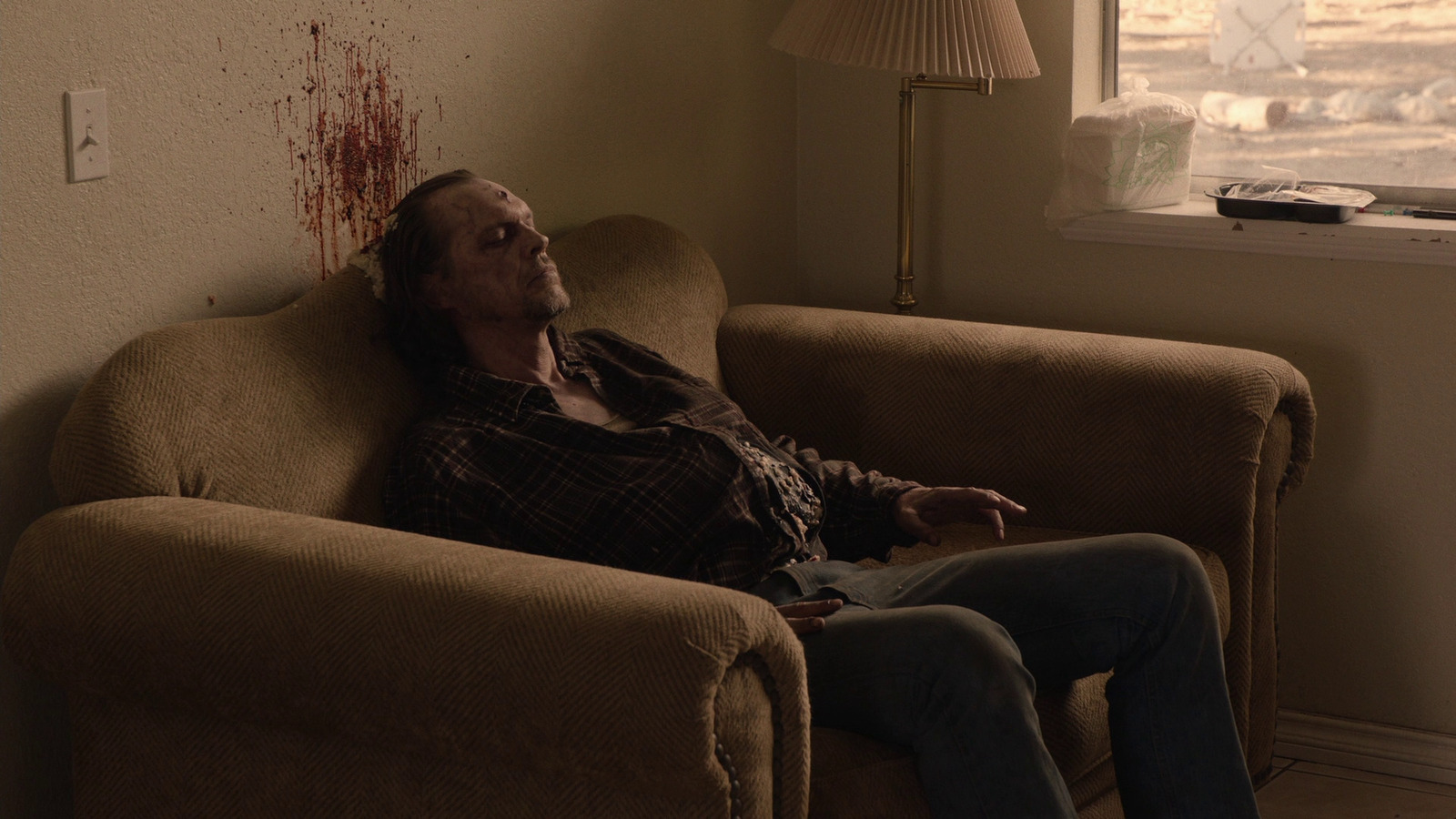
The dead man on the sofa is a substantial piece of information that receives no corresponding investigation. The camera permits the body, buzzing flies, ringing telephone and ordinary preparations for departure to coexist. Cooper’s stated mission directs him past another scene that might ordinarily stop an FBI agent.
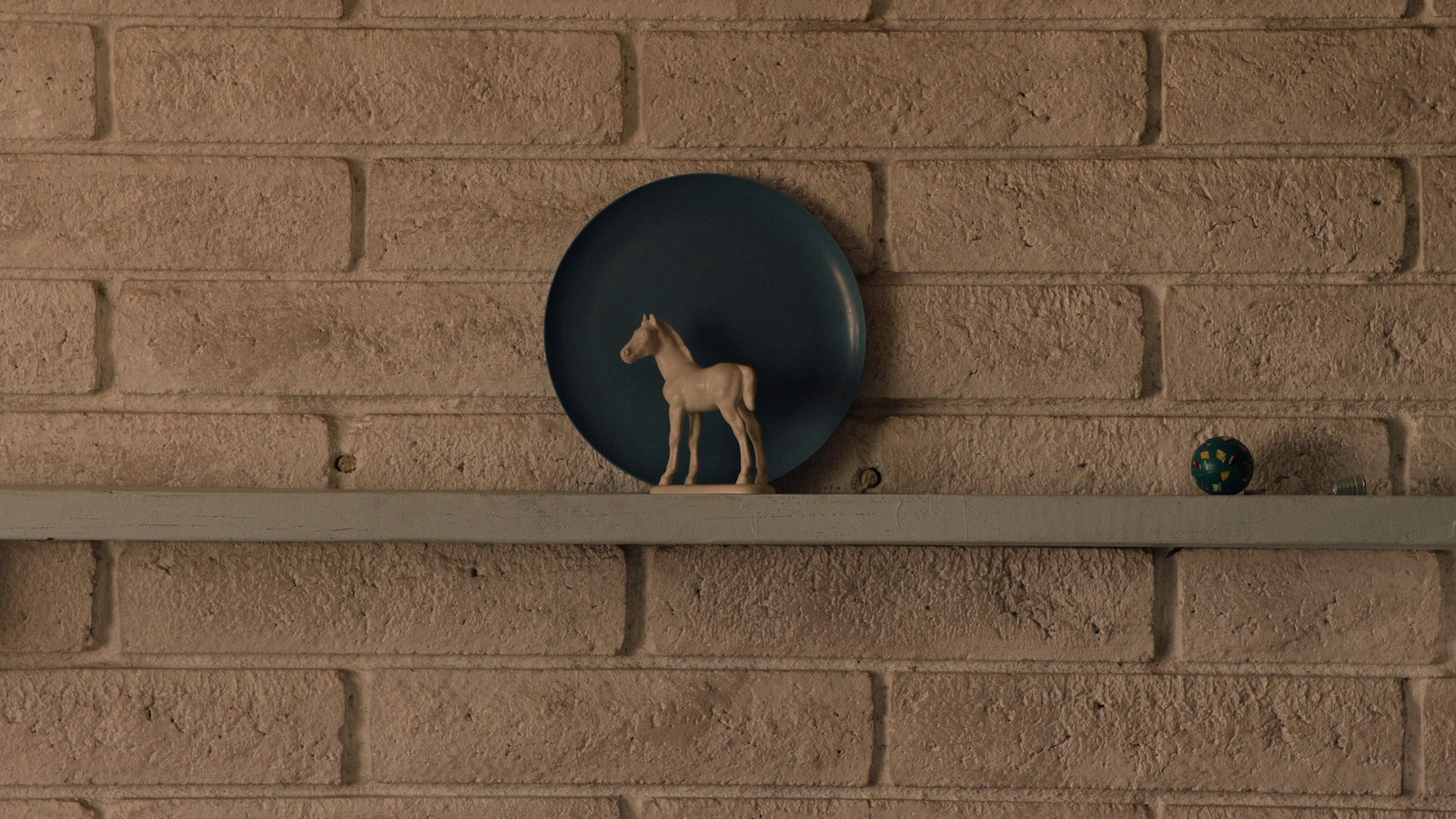
The small white horse on the mantel is a different kind of clue. Its resemblance to the series’ recurring horse images invites comparison, while its material status remains that of an ornament. Both the body and the ornament resist the assumption that every noticed detail will receive an explanation before the characters leave.
Open the scene sequence · 1 frame
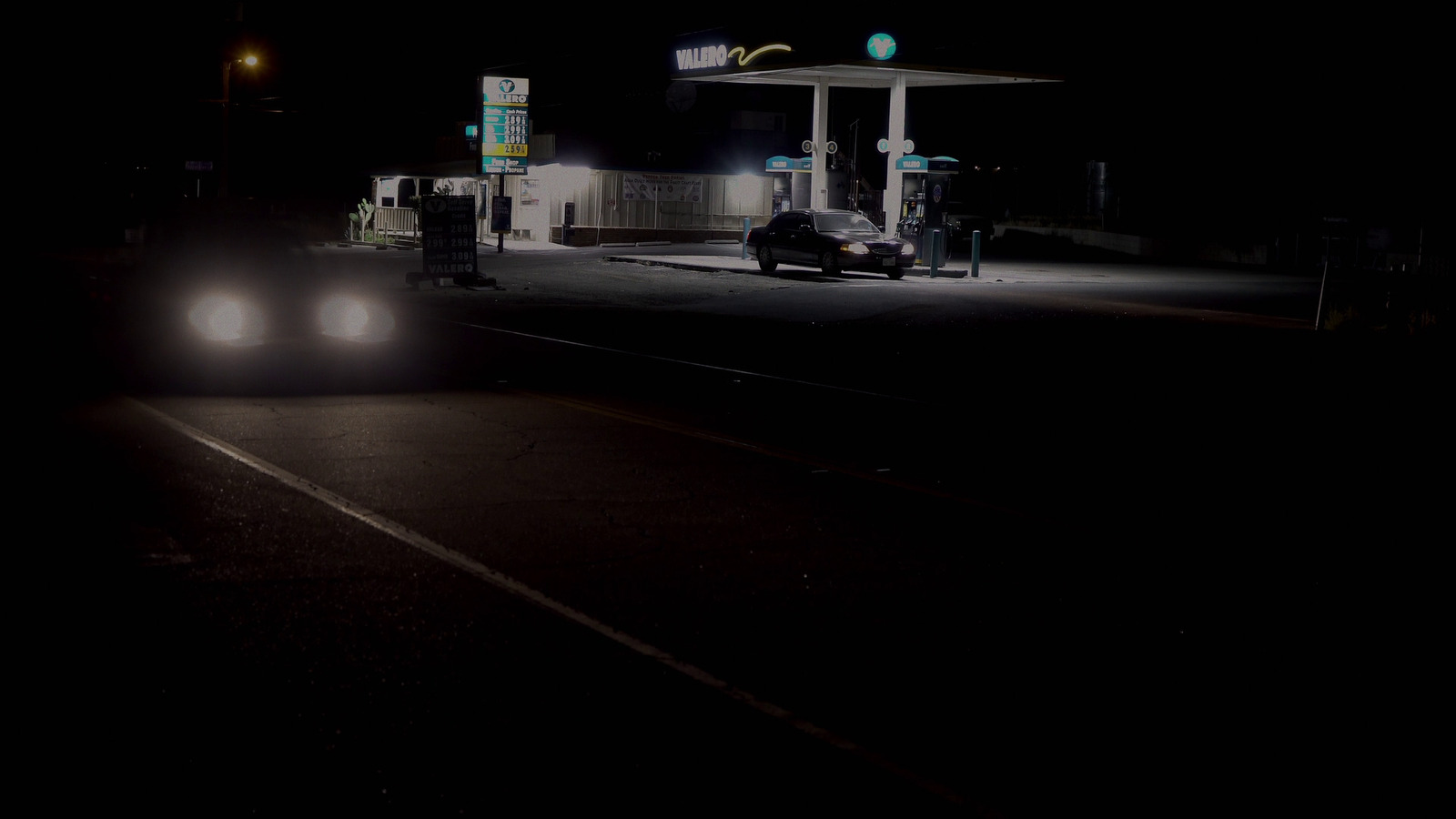
The duration of going home
The long drive preserves silence, approaching headlights, small questions and a service-station stop. These stretches make the journey felt as time spent with someone whose history remains unclear. When a car approaches, Carrie’s concern briefly turns an ordinary traffic event into a possible pursuit.
Near the destination, Cooper asks whether she recognises anything. She does not provide the recognition on which the journey seems to depend. The night photography allows faces to recede into the car; brightening the images indiscriminately would change the sequence’s distribution of attention.
Open the scene sequence · 1 frame
A familiar house, a different account
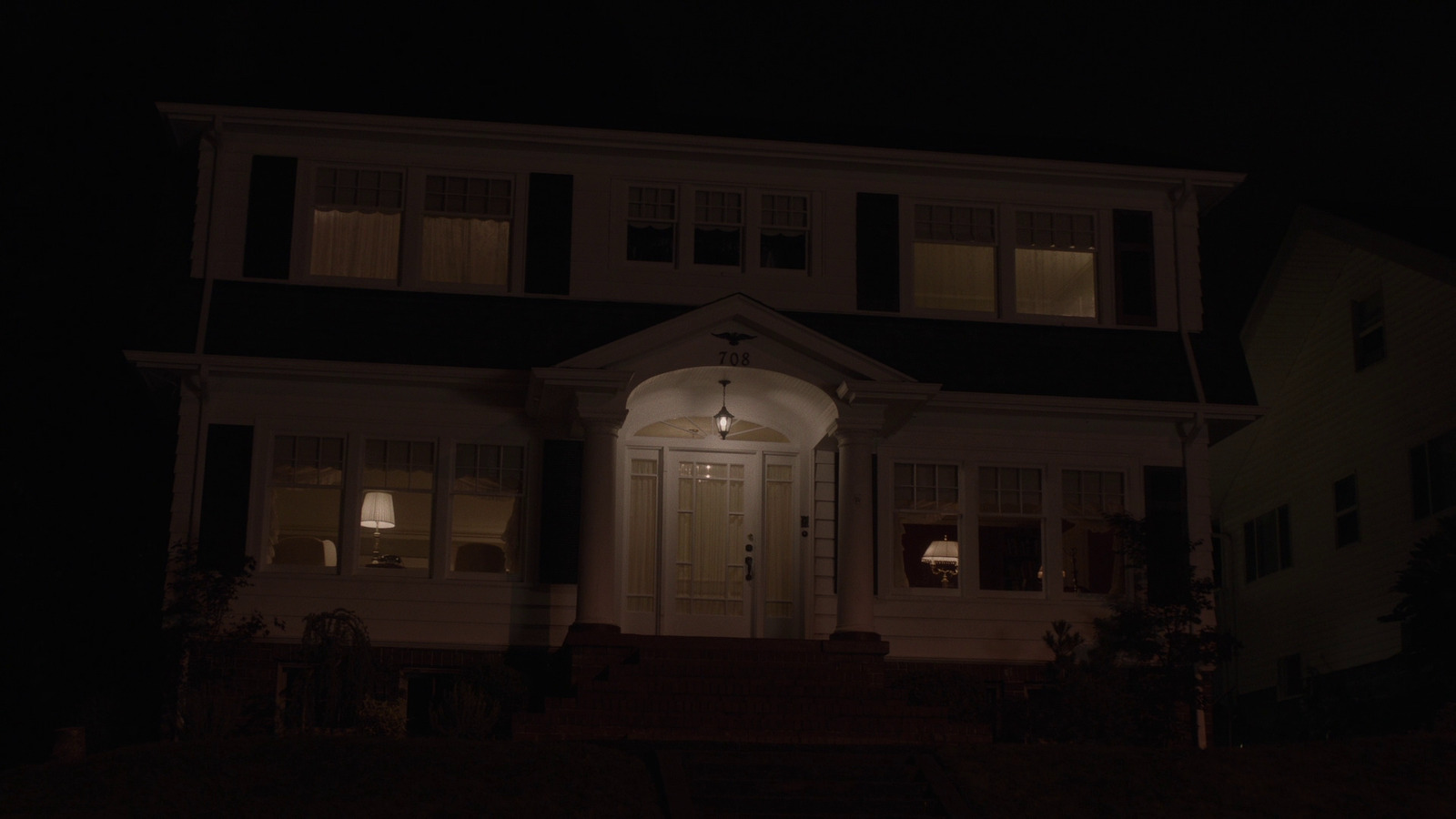
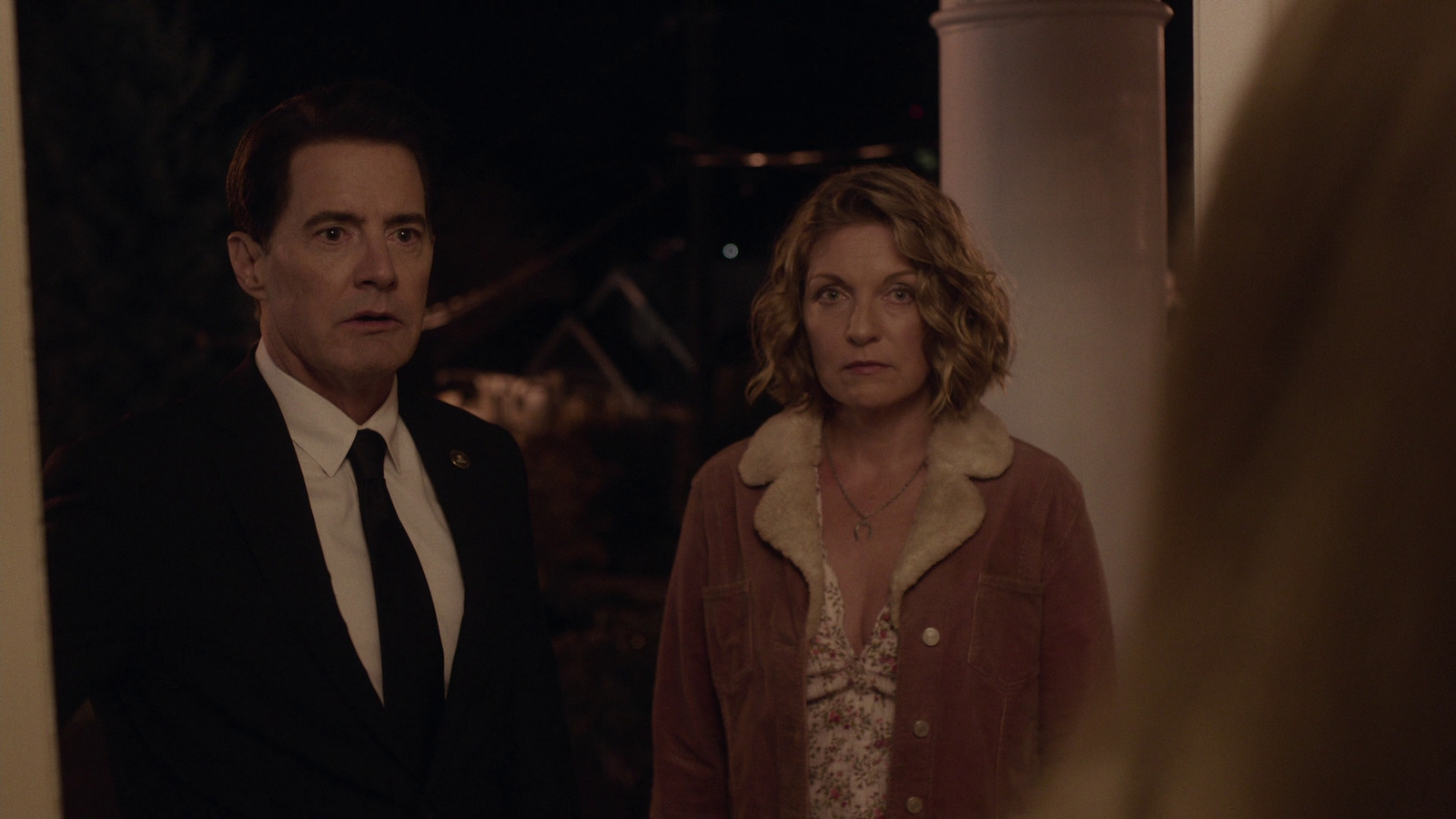
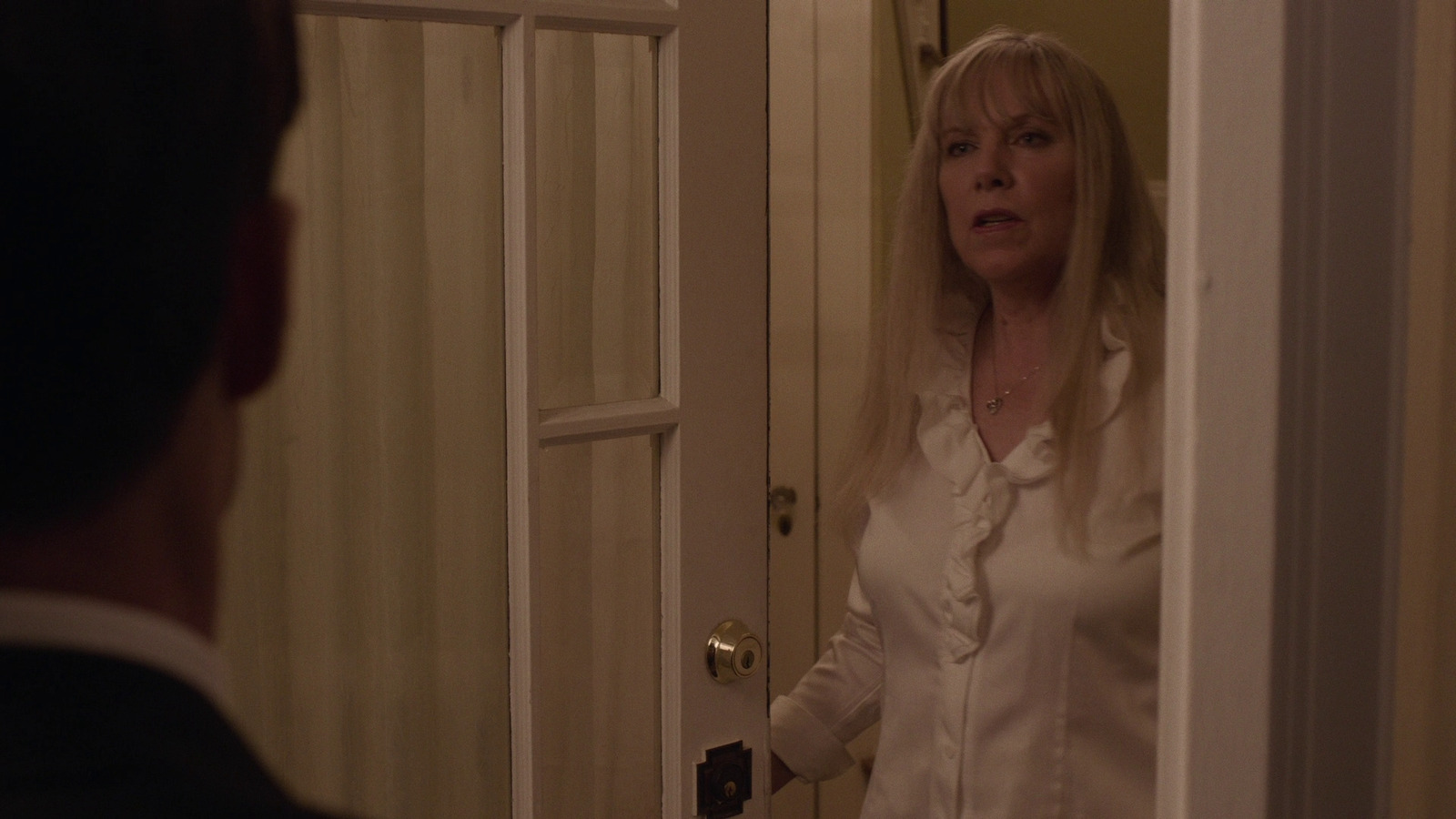
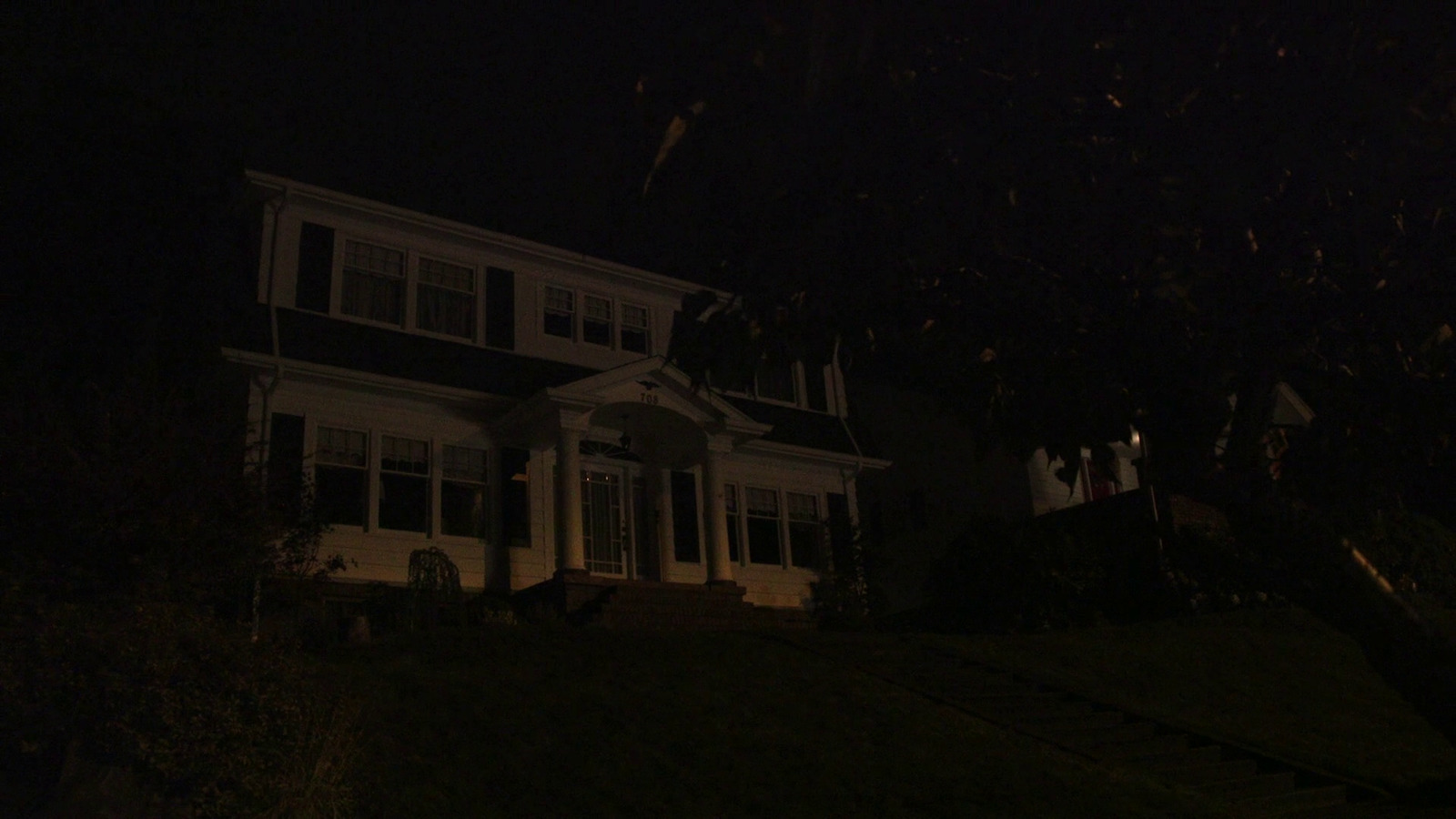
The house is visually recognisable, but the conversation at its door does not confirm Cooper’s memory. Alice Tremond says that Sarah Palmer does not live there and identifies the previous owner as Mrs Chalfont. The recurrence of those surnames recalls earlier encounters without establishing exactly who controls this place.
Cooper shifts from asking for Sarah to asking about ownership and prior owners. That procedural habit cannot reconcile the building with the story he has brought to it. Carrie stands beside him as a participant in a conversation that is supposed to concern her home but supplies no secure place for her.
Open the scene sequence · 2 frames
The year, the call, the scream
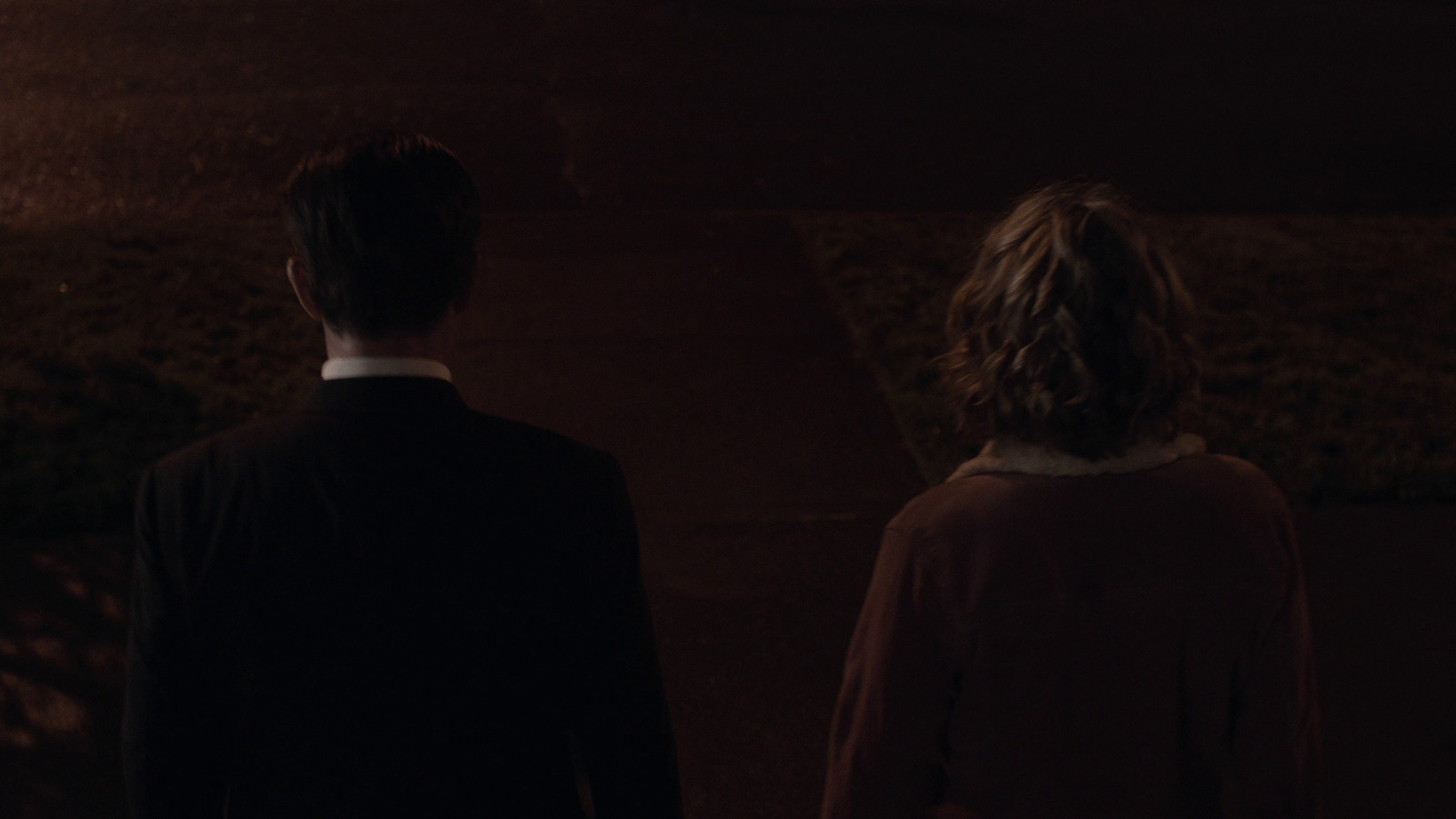
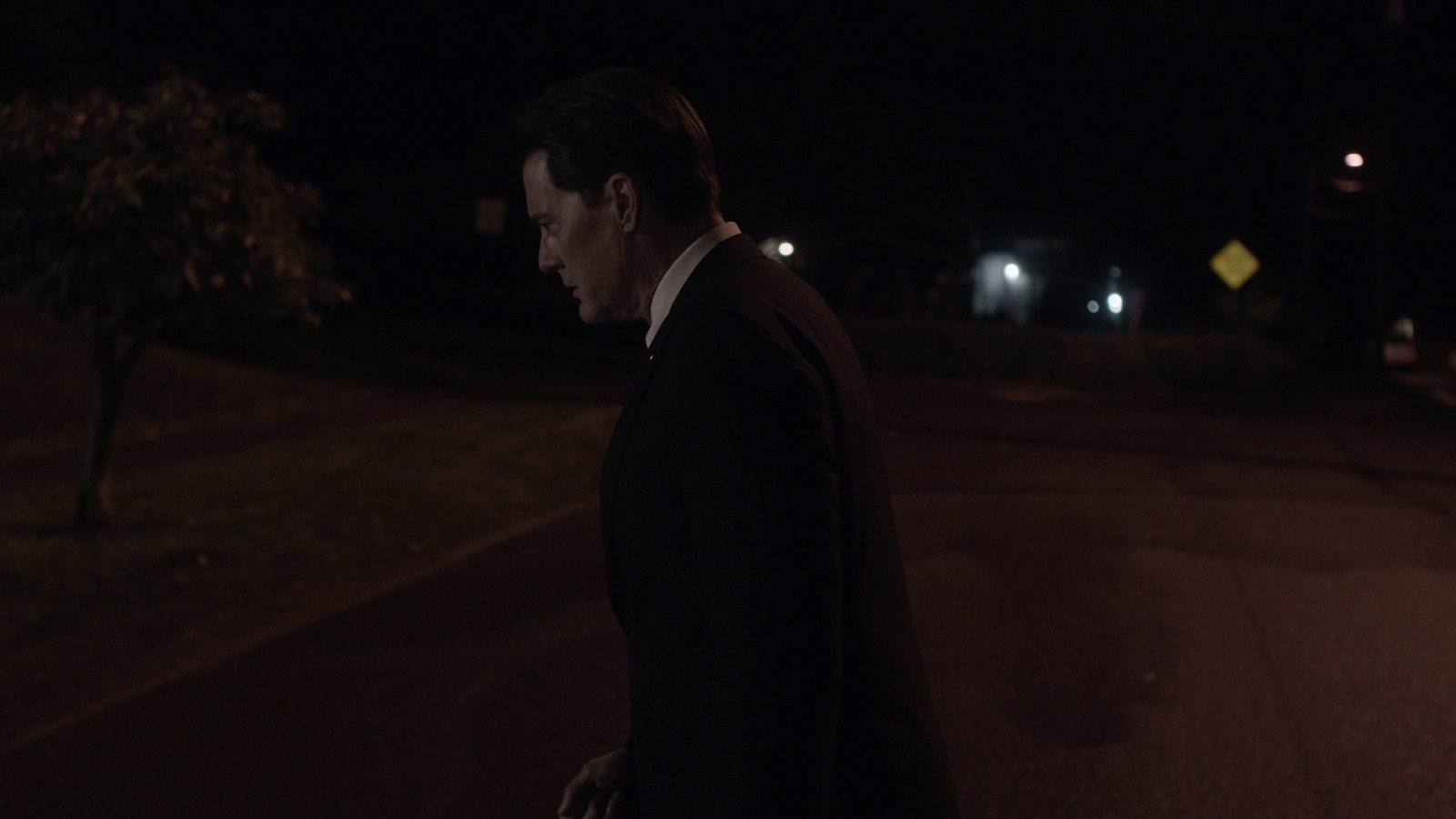
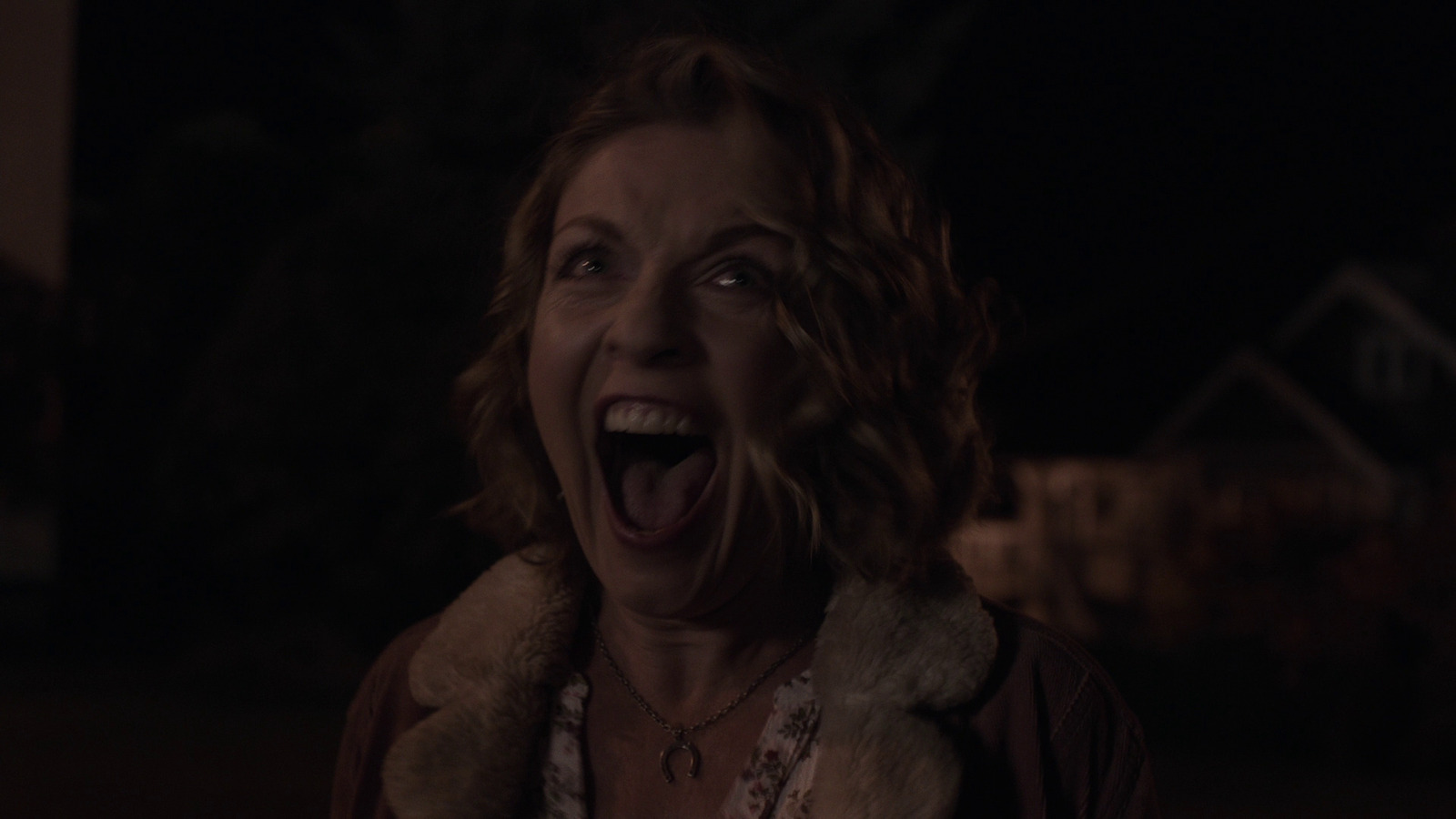
The door closes and the pair retreat. Cooper’s final question asks what year it is. The question exposes a failure more basic than finding the wrong person at the right address: even the temporal location of the investigation can no longer be assumed.
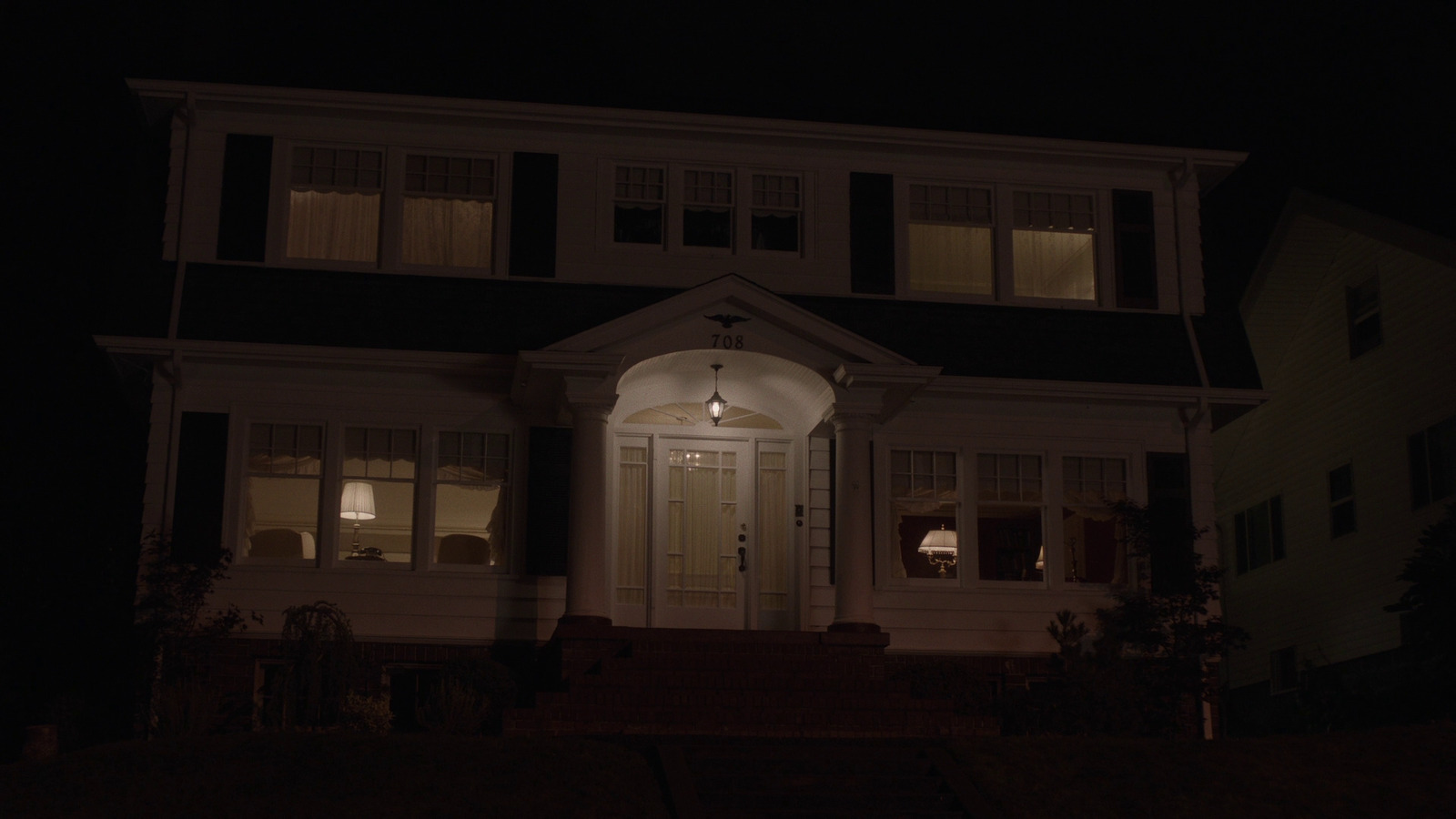
A faint call of Laura’s name precedes Carrie’s scream. The house’s illumination vanishes and the image gives way to black while the scream persists. Sound outlasts the visual destination. The sequence can be described precisely without deciding whether it represents awakening, recognition, defeat or another crossing.
Open the scene sequence · 3 frames
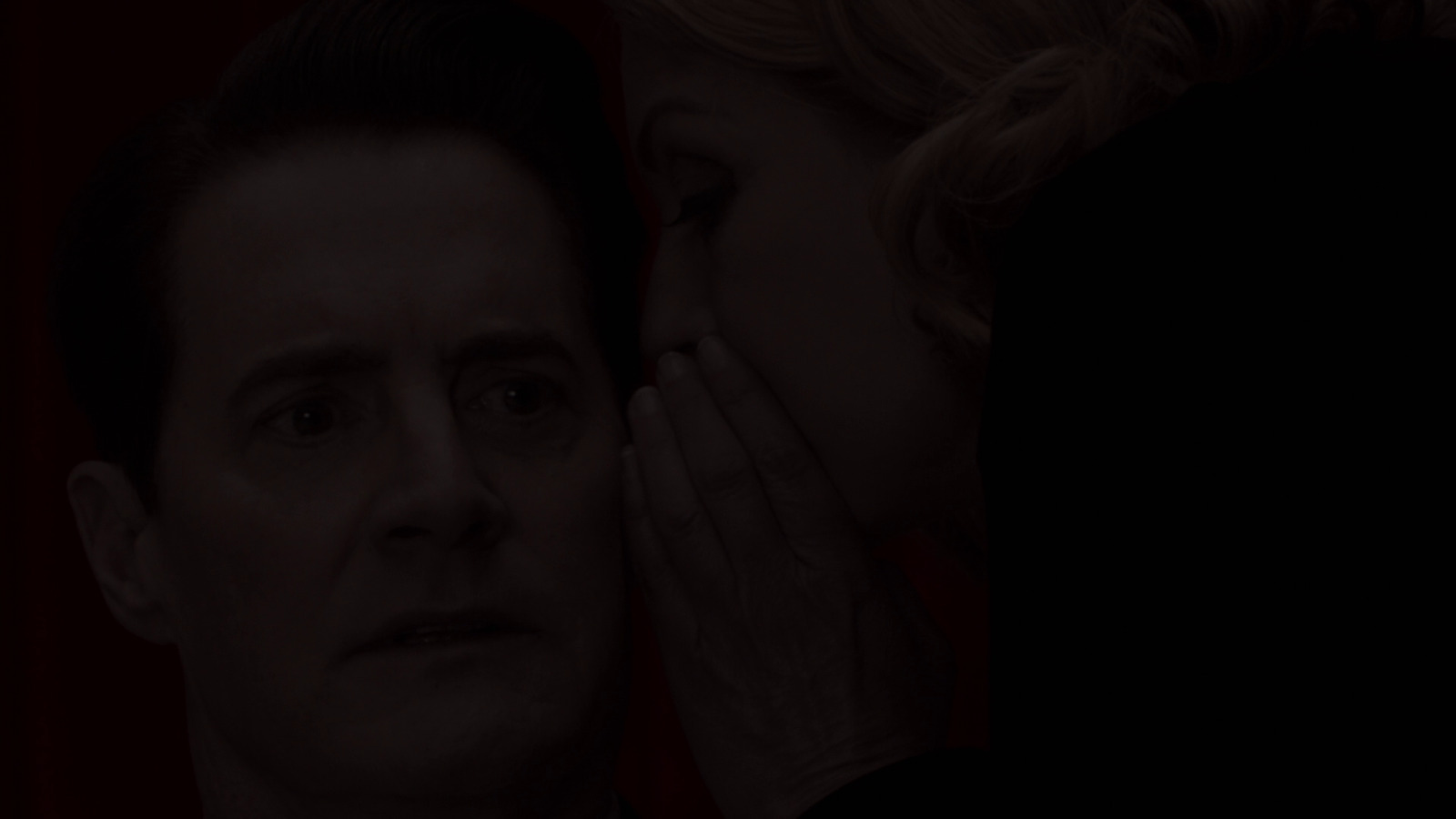
An ending that returns to listening
The credits bring back Laura at Cooper’s ear. Instead of offering a new location or an explanatory epilogue, the final image returns to a private act of communication whose contents remain withheld from the audience.
The shot redirects the ending from the answer to a question toward the experience of receiving something that cannot be passed on. The image also makes a useful final comparison with the opening parts: repetition changes what a familiar gesture can mean.
Sound, dialogue and the limits of recognition
Electrical boundaries
The opening transformation combines Gerard’s spoken cue with crackle, a sustained tone and the new body’s breath. At the roadside, electrical noise is already present before the car crosses. These are staged transitions with preparation and aftermath, not simply identical noises used as a universal explanation.
Names with different kinds of authority
Diane and Cooper mutually confirm recognition; Linda’s letter assigns names without allowing a reply; Carrie rejects the identity Cooper supplies; Alice describes the house through ownership. These exchanges use ordinary forms of speech to reveal incompatible accounts of the situation.
A recording carried across the series
The end credits identify “My Prayer,” performed by the Platters and written by Georges Boulanger and Jimmy Kennedy. Its use here recalls the radio sequence in Part 8, but the new staging changes the relationship between the song’s emotional promise and the image. No lyrics need to be decoded for that contrast to work.
The final call
The English caption track identifies a faint call of Laura’s name before the scream. Its placement matters: the call is not a response supplied by the person at the door. The image ends before the vocal aftermath. The closing whisper, by contrast, remains private; this dossier does not invent words for it.
Silence does not mean the actors have nothing to do
Recalling the night drive, MacLachlan describes Lynch asking for prolonged quiet. Lee rejects the suggestion that this left the actors with nothing to do: given these characters and their situation, the silence felt full even without dialogue or conspicuous physical action. MacLachlan adds that viewers bring memory and anticipation to the journey.
Their testimony supports hearing the drive as sustained performance and a space for the audience’s accumulated knowledge. It does not identify Carrie’s inner thoughts or provide a definitive explanation of her relationship to Laura.
A Talk with Kyle MacLachlan and Sheryl Lee, 71:52–73:29. The performers’ later recollections are read alongside the finished work and other production evidence.
Focused effects studies
A body assembled in a few states
Compare the seed and hair, the floating sphere and the partially formed torso. The fixed chair and curtains supply continuity across a radical change of scale. Richard Beymer’s production footage separately shows the direction of the new Cooper’s performance; it does not by itself document every compositing step. Production source.
Open the seed-to-body comparison · 4 frames
A threshold made from light and a cut
The sequence needs no visible gate. The stable car composition allows the flare and changed exterior to register as a break in the environment. Read these frames alongside the rising electrical sound rather than treating a single frame as the entire effect.
Open the crossing sequence · 3 frames
The duplicate as a point of view
The figure outside is framed by the woman watching from the car. Alternating the view and Diane’s response keeps the duplication attached to an act of perception. These images establish the finished arrangement, not a claim about an undocumented production method.
Open the motel sightline comparison · 3 frames
Withdrawing the destination
The house remains readable just before the scream; the sequence then removes its illumination and the image itself. The gallery stops at the visible reaction. The subsequent black image is an intentional ending, not a missing still or a black border to crop away.
Open the final visible sequence · 4 frames
Making the images, shaping the performances
Making another Cooper
In I Had Bad Milk in Dehradun, approximately 05:39–06:44, Lynch directs MacLachlan’s new-Cooper gesture, including the relation of the raised thumb to the white shirt. The conversation also refers to the seed and the electrical action. The scene’s final economy is supported by precise attention to silhouette, timing and a gesture that has to read clearly. [2]
Repetition is performed
Beymer’s Red Room films show actors practising reversed speech with recordings and receiving small adjustments to gaze, hands and reactions. Ray Wise’s Leland passage in I Had Bad Milk in Dehradun, about 14:41–16:13, is a useful comparison with the brief request to find Laura. See the more extensive rehearsal study in Part 2 and the series production overview. [2]
The last scene was not the last scene filmed
In his post-finale interview with Entertainment Weekly, Kyle MacLachlan recalled filming the house sequence early and experiencing the location as unfamiliar on his first visit. His account stresses its unsettled feeling rather than supplying a definitive explanation. The performance should not be treated as evidence that the actor possessed a single authoritative solution to the ending. [3]
Performance, sound and the working image
The production footage in Jason S.’s Impressions: A Journey Behind the Scenes of Twin Peaks adds another view of the scenes: directions spoken on set, rehearsals, material experiments and choices still being worked out.
The motel scene is built in pieces
The production discussion explicitly divides the motel material into pieces: Cooper’s waking, the absence of Diane, the discovery of the note, and the earlier arrival and approach. With MacLachlan and Dern, Lynch works out entrances, the light switch, the move into a close two-shot and the timing of a kiss.
The later directions concentrate on hands moving toward the shoulders, neck and head, and on a rhythm that remains strange to the participants. The briefing contains possibilities that should not be treated as a shot list of the final cut. Its value is the separation of a carefully organized physical performance from the scene’s unresolved identities and emotional disturbance.
Open the motel performance study · 2 frames
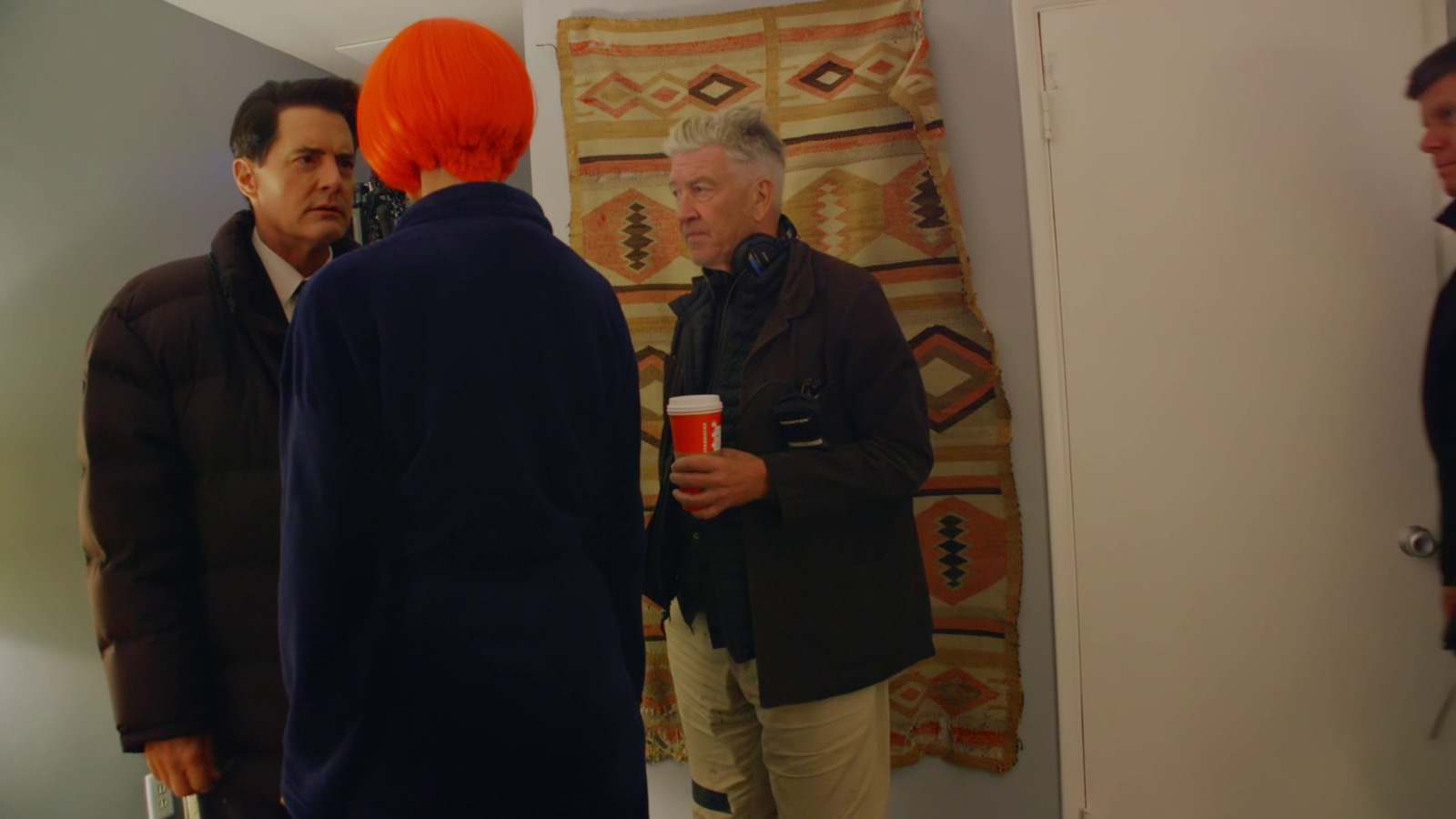
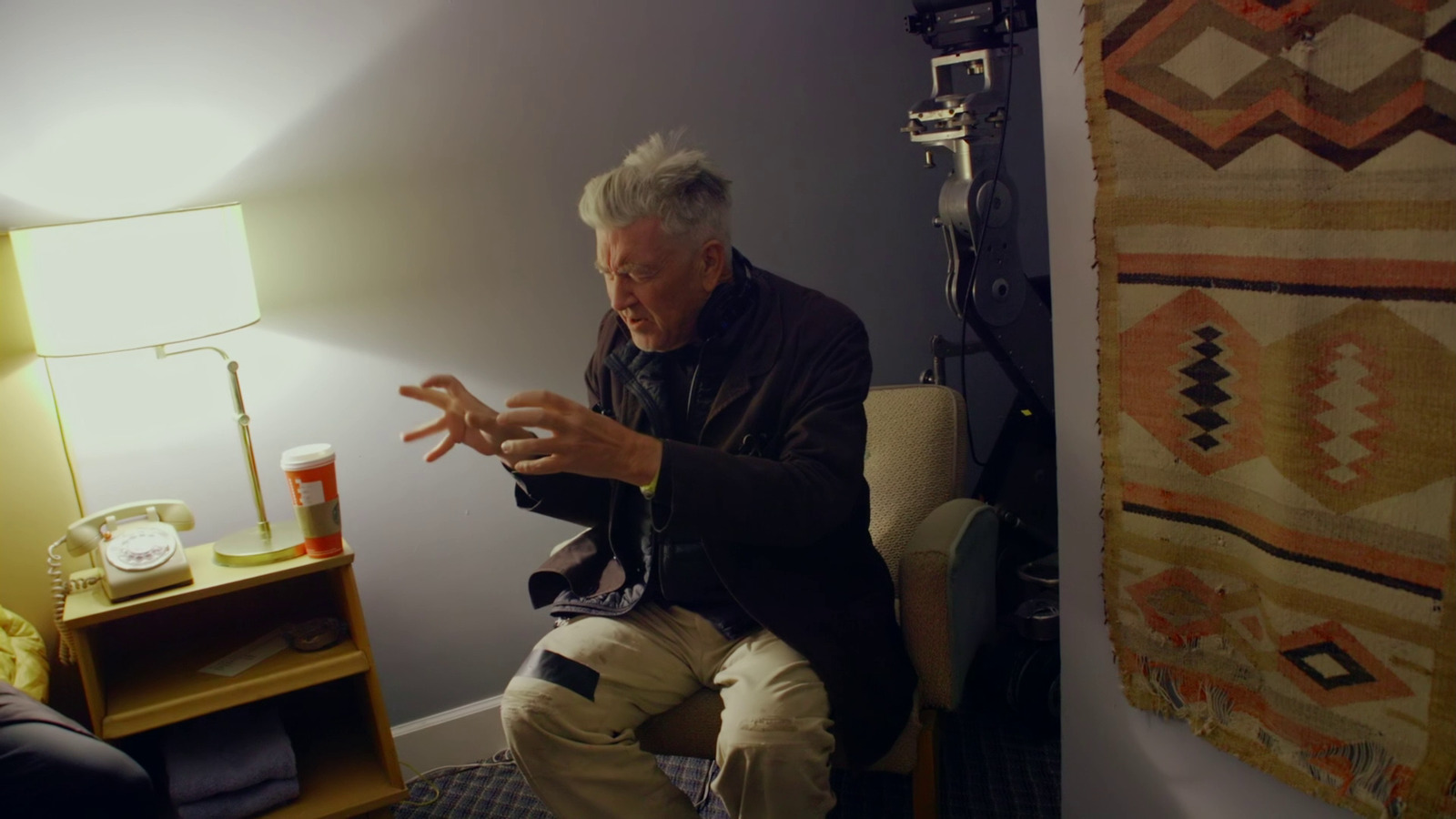
Inside the final movements: performance and production
Judy’s diner: ordinary irritation before extraordinary violence
The waitress’s account of her absent colleague is rehearsed as a change of thought. Lynch asks her to look at the stranger before answering, then let the realization that this is the third missed day turn into irritation: she is carrying the workload. The cowboys, meanwhile, are to expect an easy victim and a little entertainment, only reaching for a gun when the encounter begins to feel different.
These instructions give the diner a working life before Cooper dominates it. The gun collection and fryer business are then mapped carefully through hands, props and positions, with his attention remaining on the men as he obtains the address. The frightening speed of his intervention emerges from a scene initially organized around routine service, harassment and complacency.
From the waitress’s pause to the fryer · 2 frames
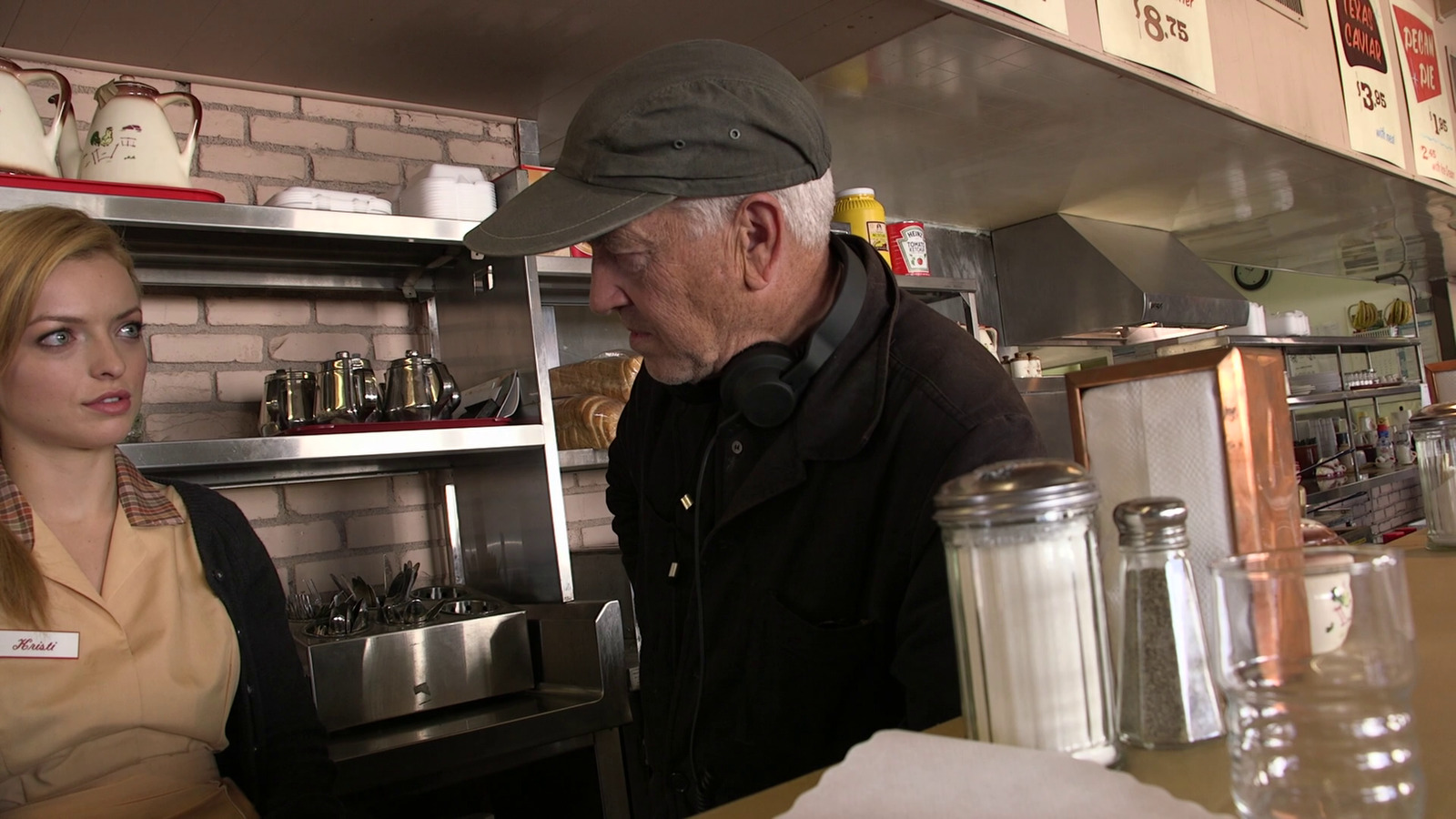
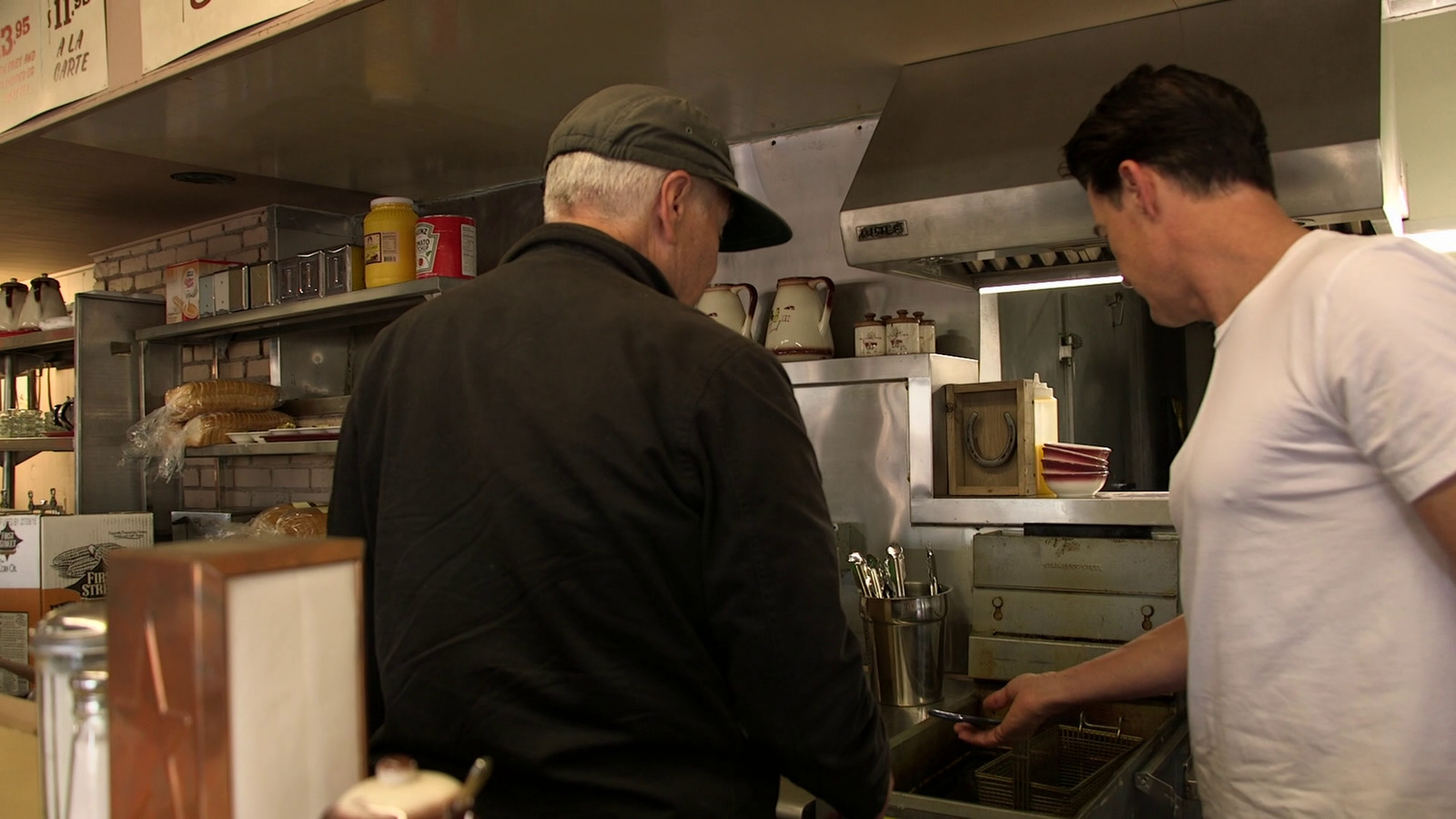
Carrie’s house: what Cooper notices and leaves behind
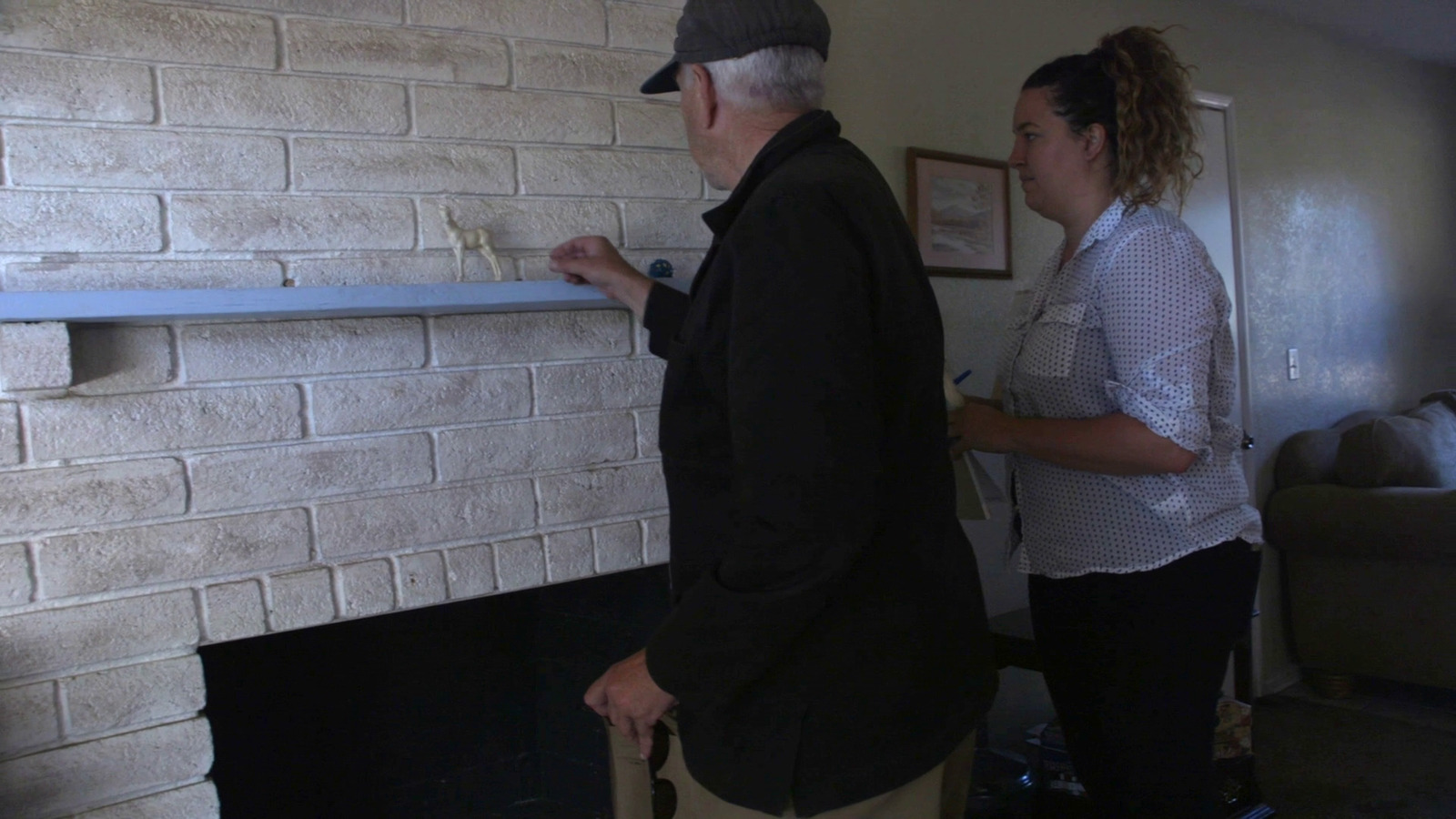
At Carrie’s door, Lynch reduces repeated attempts to close it to one decisive movement on her declaration that she has to go. Inside, he singles out two things for Cooper to notice: the dead man on the couch and the small horse. The choreography then returns to Carrie’s bag, coat and departure, including a brighter response to the promise of food.
When MacLachlan jokes about leaving the corpse behind, Lynch accepts the scene’s refusal to stop and deal with it. The direction establishes selective attention and forward motion; it does not identify the dead man or settle the horse’s meaning. That distinction is valuable: the footage confirms the objects’ intended prominence without turning an unresolved image into a solved clue.
Surveying the room and rehearsing the departure · 2 frames
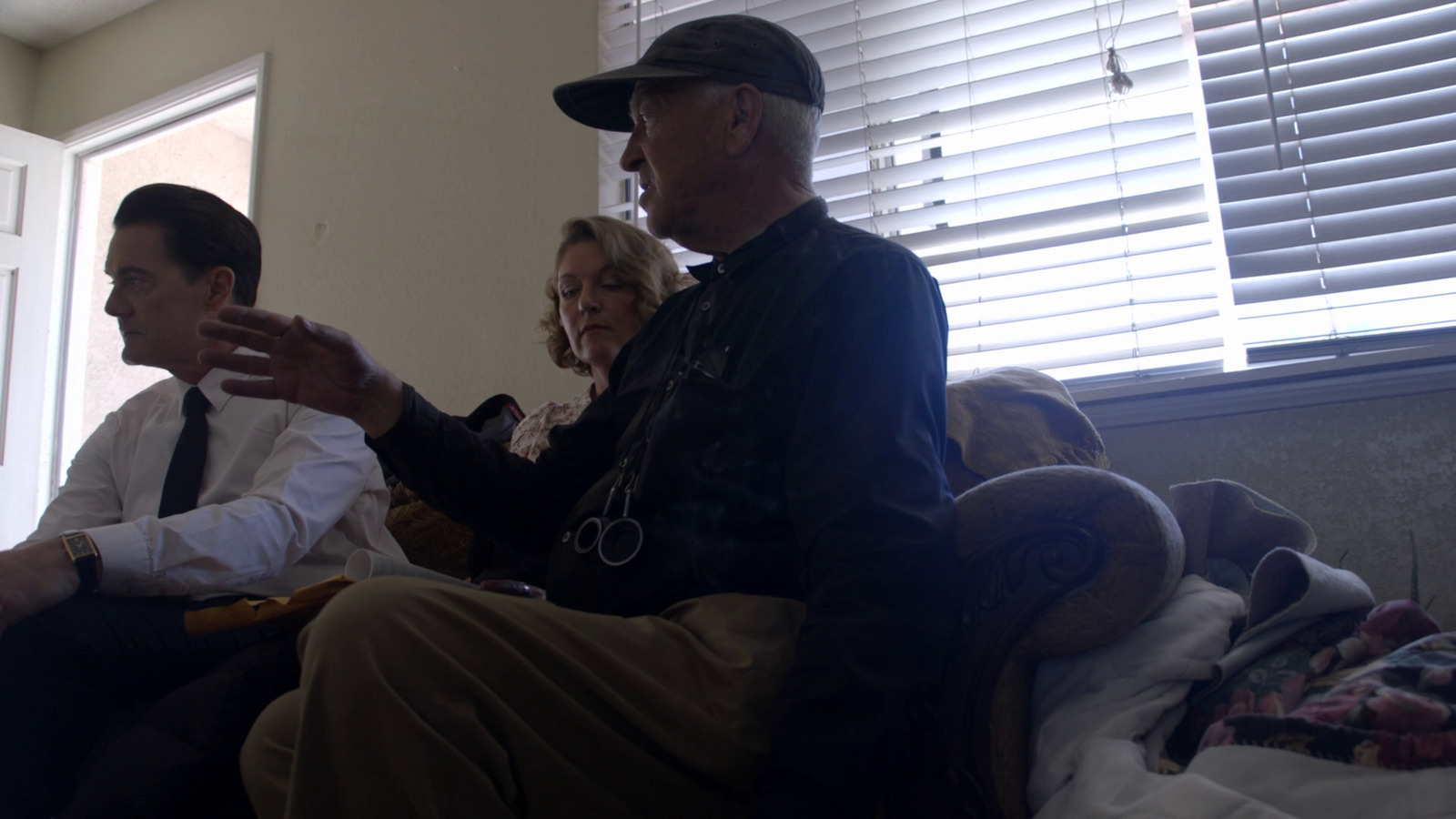
The final question, the pauses and the scream
At the Palmer house location, Lynch asks Mary to wear her own clothes and directs unusually long pauses in the doorstep conversation, explaining that they can be shortened in editing. The exchange should feel formal and strangely paced. Cooper’s descent from the house combines caution, worry and repeated looks towards Carrie and the building.
For the final question, Lynch has MacLachlan drift forward, crouch slightly and think down towards the ground. Asked whether the question is an answer, he describes it as being on the way to one. Lee is given a sequence of internal and physical changes: hear the question, register it again inwardly, turn towards the house and see it differently as knowledge returns. These are acting directions, not a definitive identification of the story’s reality.
The sound is also built through alternatives. Lee performs a long scream and is then asked for a series of shorter ones. Lynch describes screaming through the extinction of the house lights, potentially continuing into darkness, and counts the lighting cue during the take. This documents the relationship being sought between voice, recognition and blackout, while leaving the finished edit’s exact sound construction to be assessed separately.
Question, scream and extinguished house · 3 frames
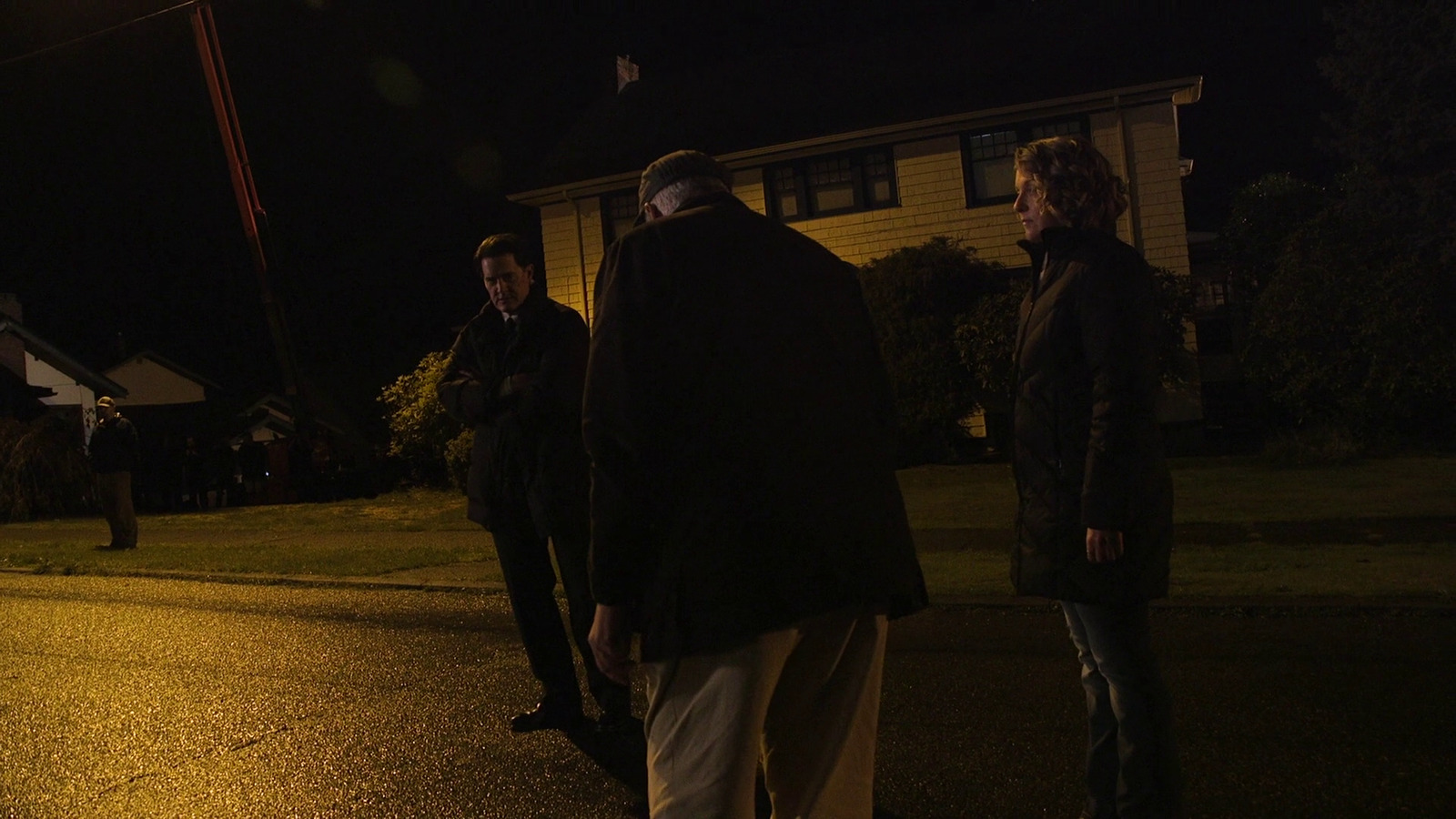
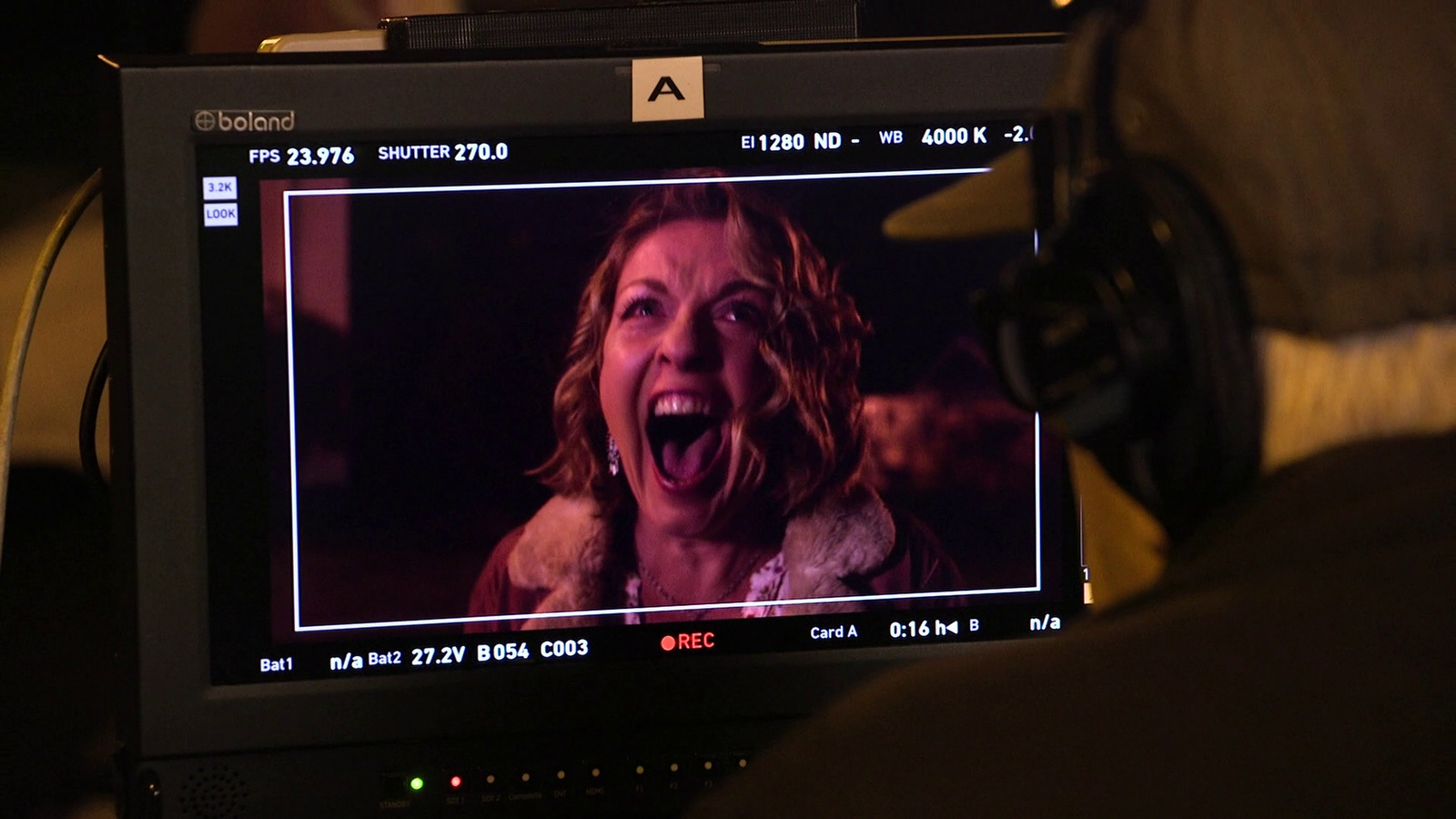
The final scream in recollection and on-set evidence
Lee describes her screams as newly performed from different emotional positions, rather than one recording repeatedly supplied for every scene. Discussing the ending later in the conversation, she emphasizes the understanding developed over years with Lynch and says that she knew what the scream needed to be without extensive verbal explanation. MacLachlan recalls precise movement directions and interprets Cooper’s posture as an unusual state of uncertainty.
Placed beside the Behind the Curtain footage, these memories show why different sources should be read together. The production record contains spoken instructions for the scream’s duration, alternative takes and its relation to the lights; the conversation emphasizes the shared emotional understanding that made those practical adjustments possible. Neither source establishes that all screams heard in the finished series are unique, unedited recordings.
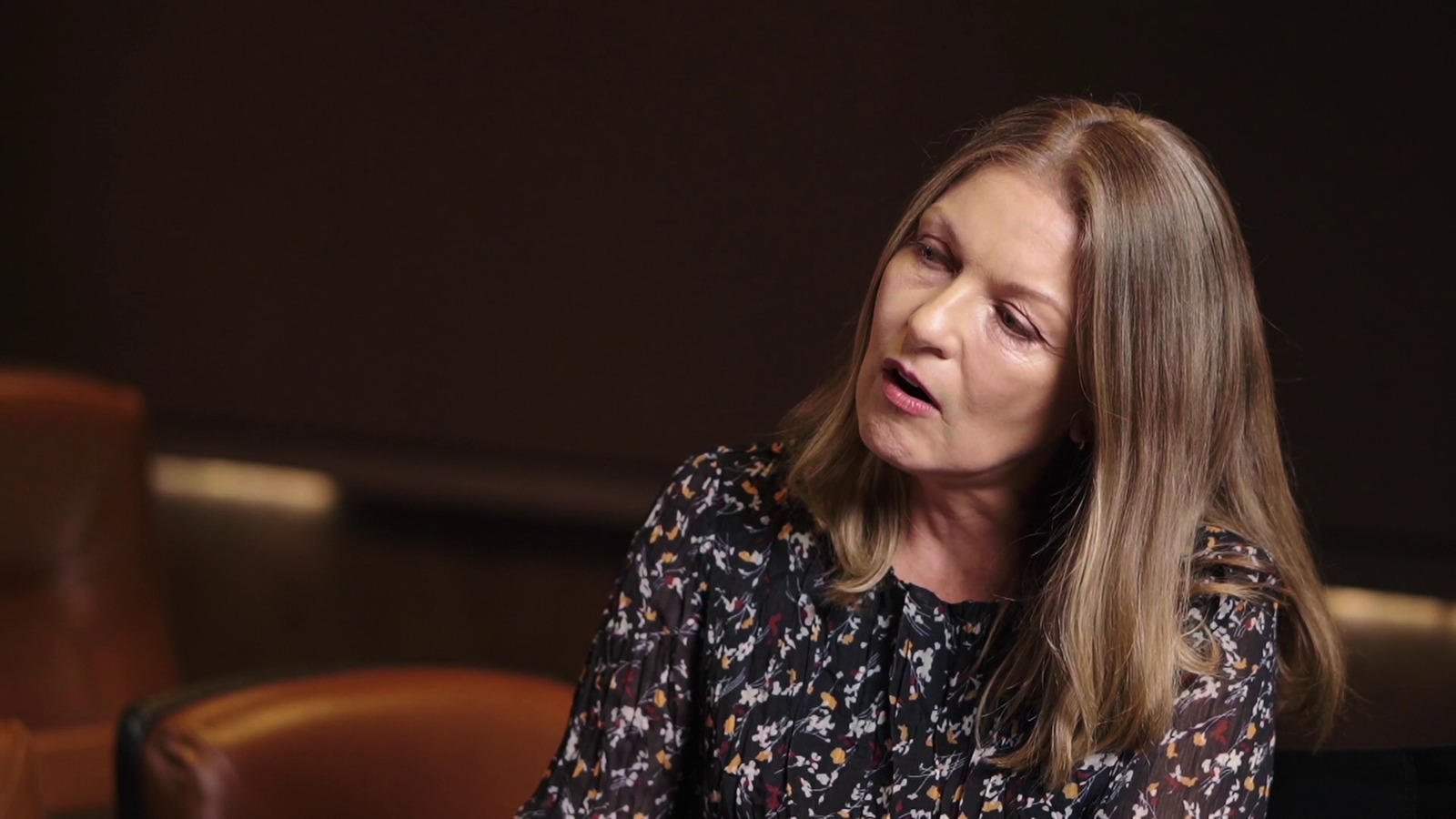
A Talk with Kyle MacLachlan and Sheryl Lee, 23:36–24:28; 78:31–80:19. The performers’ later recollections are read alongside the finished work and other production evidence.
Presentation, music and credits
The standalone presentation runs approximately 57 minutes 7 seconds, including opening and closing material. The combined Parts 17–18 presentation has a different continuous locator; timestamps here start with Part 18. The image is presented at 16:9. Still selections retain the episode’s deliberate night-time darkness.
Directed by David Lynch; written by Mark Frost and David Lynch. The end roll identifies Sheryl Lee as both Laura Palmer and Carrie Page, Laura Dern as Diane Evans, Mary Reber as Alice Tremond, Francesca Eastwood as Texas waitress Kristi, and Al Strobel as Phillip Gerard. It credits David Lynch for sound design, Ron Eng and Dean Hurley for sound supervision/re-recording, and BUF for visual effects. Department credits are not assignments of every individual shot.
The release’s episode audio is the programme soundtrack; no episode commentary is listed in the examined audio/menu inventory. Production discussions are treated as separately identified documentary sources.
Sources and viewing notes
- Twin Peaks: The Return, Part 18, directed by David Lynch, written by Mark Frost and David Lynch (2017). Primary episode image, English dialogue captions and end credits, consulted in Twin Peaks: From Z to A. Full-duration visual/caption survey with denser checks of the transformations, crossing and ending; selected dialogue passages checked against locally extracted speech. This is a focused scene and sound review, not a claim of continuous listening to every audio channel.
- Richard Beymer, I Had Bad Milk in Dehradun and Behind the Red Curtain, production documentaries, in Twin Peaks: From Z to A. Relevant passages and their film-relative locators are identified above. Rehearsals, proposals and the finished episode are distinguished.
- Kyle MacLachlan interview, Entertainment Weekly, 5 September 2017: MacLachlan on the final scene. Retrospective performer testimony; not presented as a canonical explanation of the ending.
- The Man with the Gray Elevated Hair, directed and photographed by Jason S., in Impressions: A Journey Behind the Scenes of Twin Peaks (2017), viewed in Twin Peaks: From Z to A. Passages: 23:59–27:43. Picture and English captions examined, with targeted speech checks. Rehearsal proposals and production observations are distinguished from interpretation of the finished episodes. Documentary narration and its music are not treated as unscripted statements by Lynch.
- Behind the Curtain: Part 18. Photographed by Jason S.; edited by Jonathan Angus, with editorial assistance by Robert Lay (2019). Viewed in Twin Peaks: From Z to A. Timed passages: 04:09–11:38; 12:07–15:46; 16:23–27:23. Timings refer to the documentary, not the episode. On-set directions and retrospective recollections are distinguished from Lyncharium’s interpretation of the finished scenes.
Further performer testimony: A Talk with Kyle MacLachlan and Sheryl Lee. Produced and directed by David Naylor; edited by Michael Frost (2019). Viewed in Twin Peaks: From Z to A. Timed passages: 71:52–73:29; 23:36–24:28; 78:31–80:19. Timings refer to the conversation. Retrospective testimony is attributed to its speaker and distinguished from analysis of the finished scenes.