Twin Peaks: The Return — Part 17
2017 · Twin Peaks: The Return · Episode dossier
A crowded reunion gives way to a solitary intervention in Laura Palmer’s last night. The apparent resolution becomes a question about what it means to change the past.
Follow the redirection of Mr C, Lucy’s decisive call, Freddie’s confrontation and Cooper’s attempted rescue through scene studies, sound cues and focused effects comparisons.
- Part 17
- The past dictates the future.
- Directed by
- David Lynch
- Written by
- Mark Frost & David Lynch
- Standalone presentation
- 00:59:24
The Return overview · Twin Peaks research hub. Timings follow the standalone part and include its opening titles. Presentation and credit notes.
Explore this dossier
The victory and the passage beyond it
Part 17 gathers people and objects that have travelled through separate stories, then sends Cooper beyond that convergence. Its movement is from an overcrowded office to a hand held in a dark wood. What looks like a conclusion becomes the beginning of another, less controllable action.
Read the station sequence, the return to 1989 and the altered pilot morning as distinct stages. The episode makes changes visible without explaining every rule that governs them. The comparisons below distinguish finished-image observation, production testimony and interpretation. Spoilers include Fire Walk with Me and the original series.
Illustrated scene studies
- An explanation that admits uncertainty
- Small institutions before the convergence
- A destination changed on a screen
- Hospitality offered to the wrong Cooper
- The glove changes the jail’s geometry
- A voice identifies the body in the room
- Do not touch the body
- A collective climax with an unlikely fighter
- Two small objects after the battle
- A reunion already seen through another face
- Recognition emerges through a changed face
- The clock and the enlarged face
- A familiar key opens an unfamiliar route
- A date located in steam
- Entering a scene that already exists
- Recognition, removal, home
- Pete goes fishing
- An image that will not yield
- The rescue loses its second person
- The Roadhouse after the failed arrival
An explanation that admits uncertainty
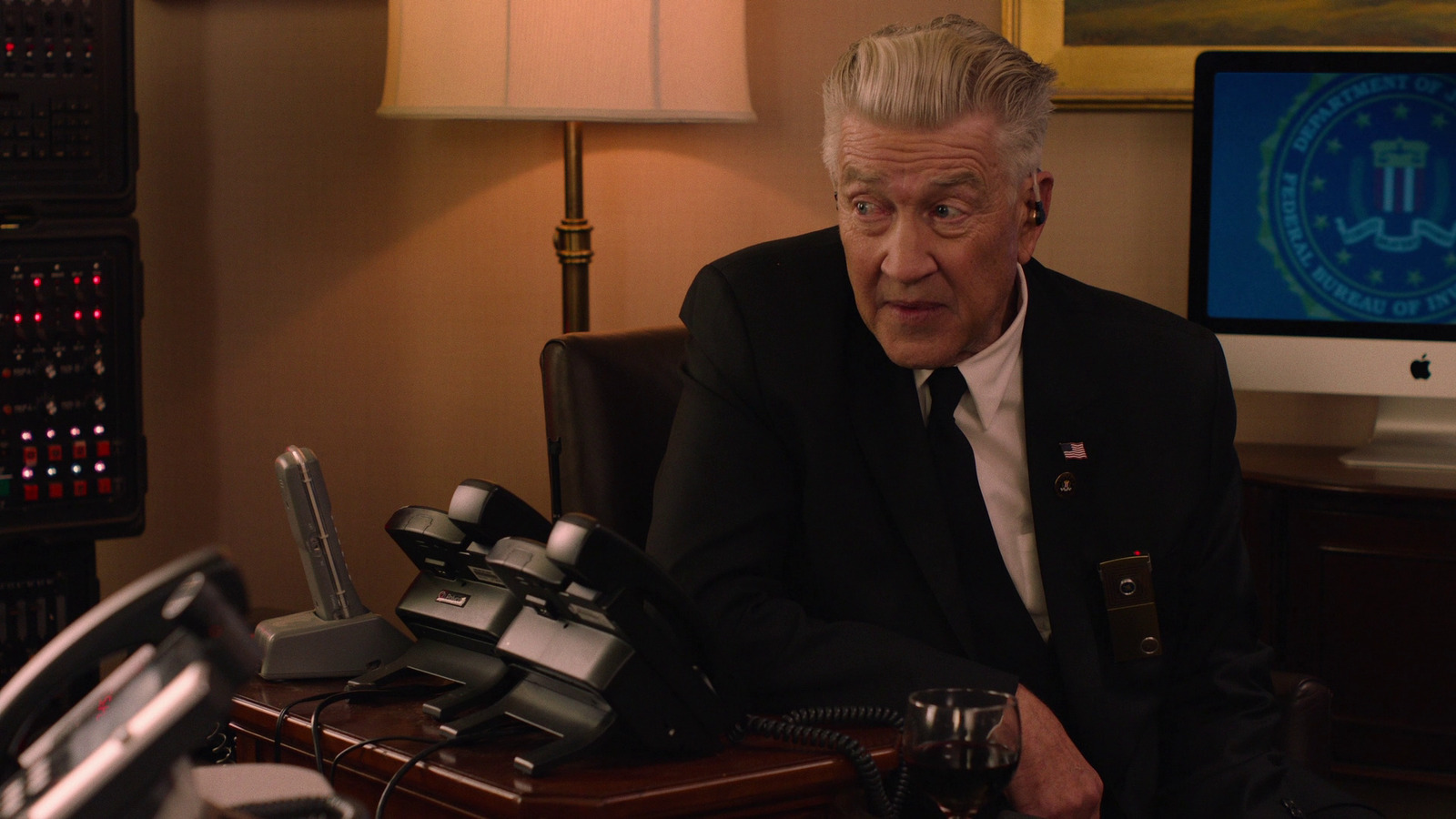
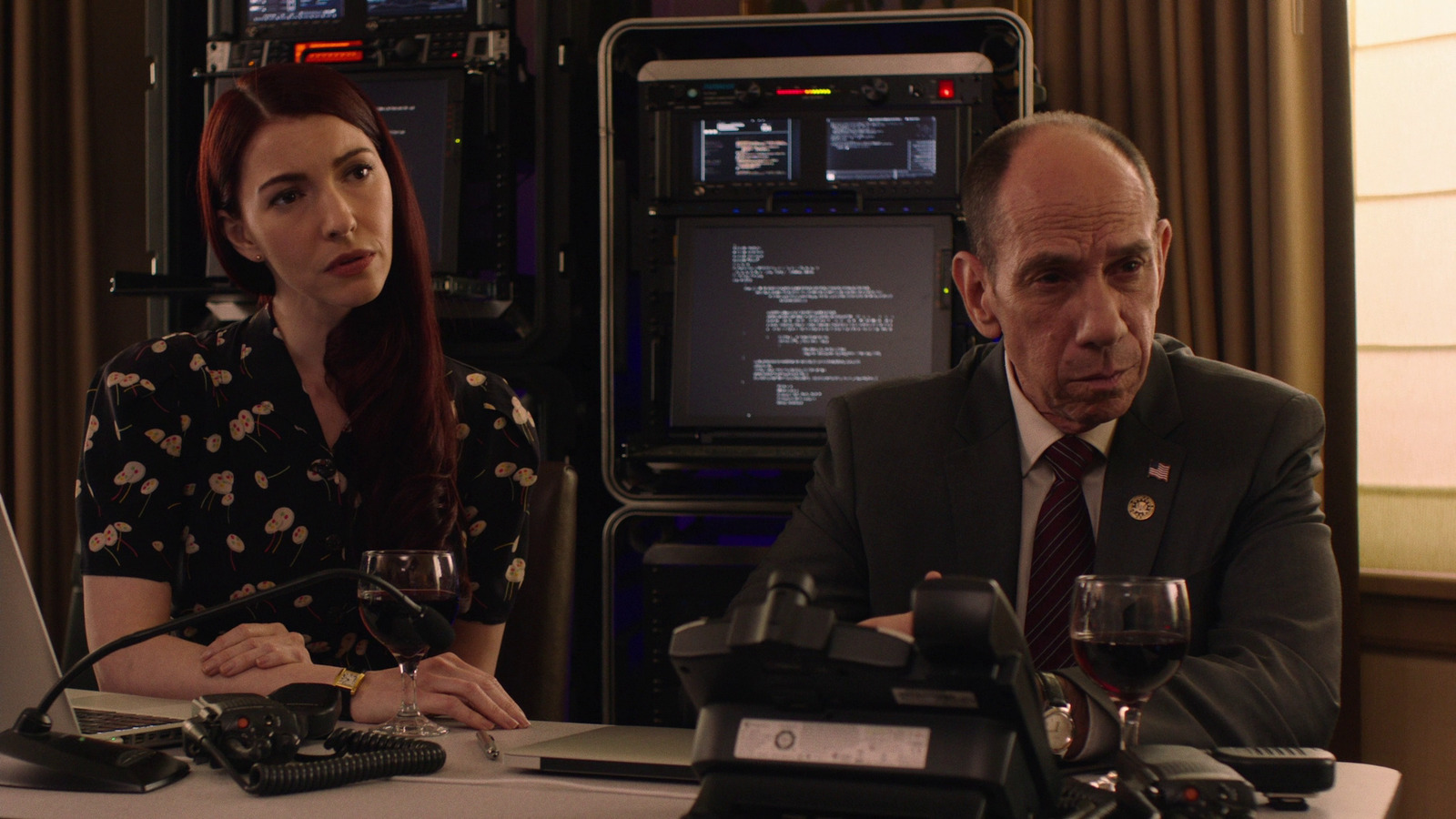
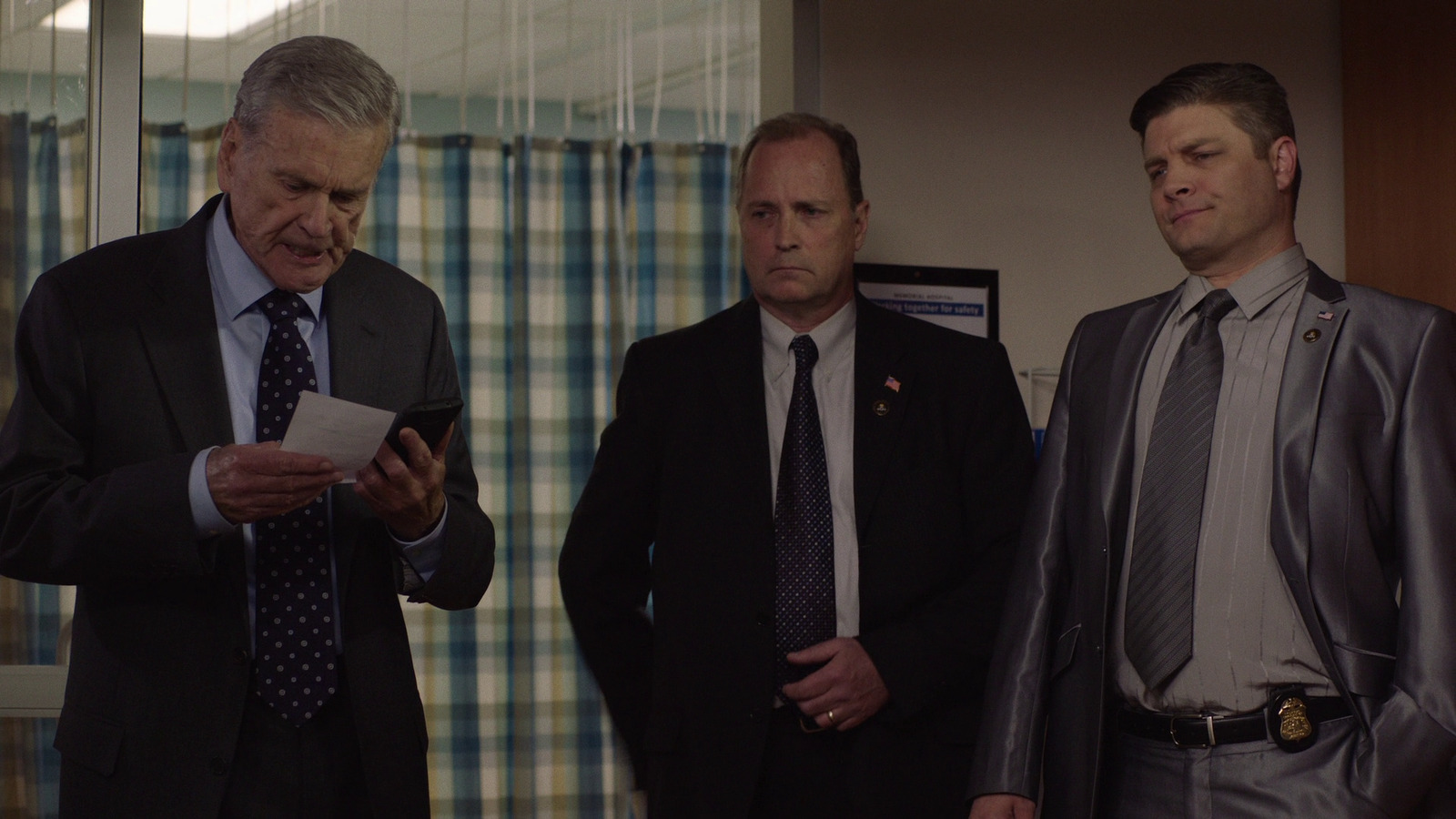
Gordon’s account gives the scattered investigation a retrospective shape. Briggs, Cooper and Gordon had a plan concerning the entity now called Judy; Jeffries and Ray Monroe connect that plan to disappearances, doubles and coordinates. But Gordon also says that he does not know whether events are unfolding properly. The speech supplies history without guaranteeing control.
The apology to Albert matters alongside the mythology. Information has been withheld from a trusted colleague for decades. Albert accepts the explanation, while Gordon repeats his regret. The subsequent calls turn exposition into a network of people passing incomplete information: Bushnell can relay Cooper’s message, and Tammy can summarise Dougie’s extraordinary trail, without either possessing the whole story.
Open the scene sequence · 2 frames
Small institutions before the convergence
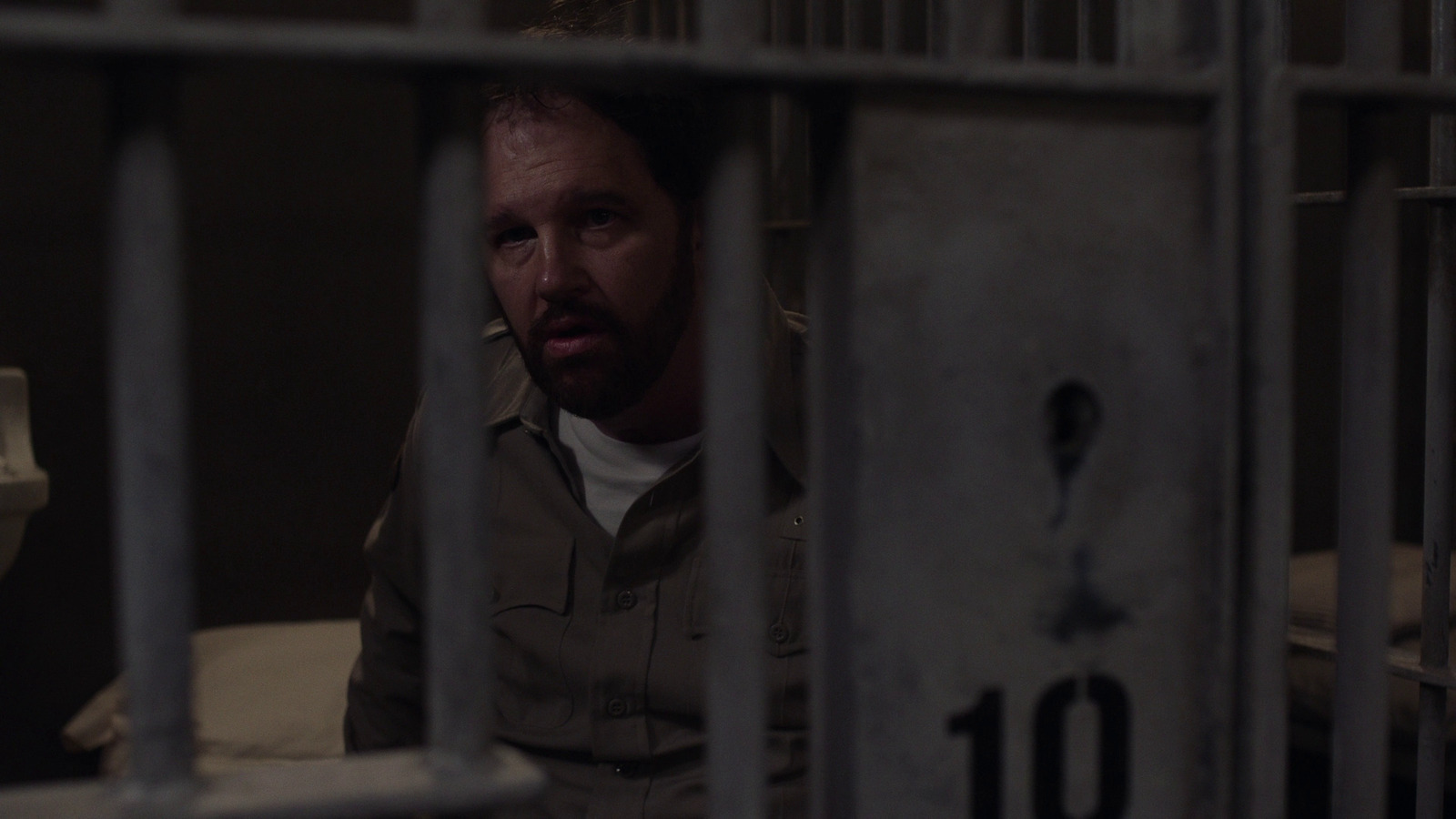
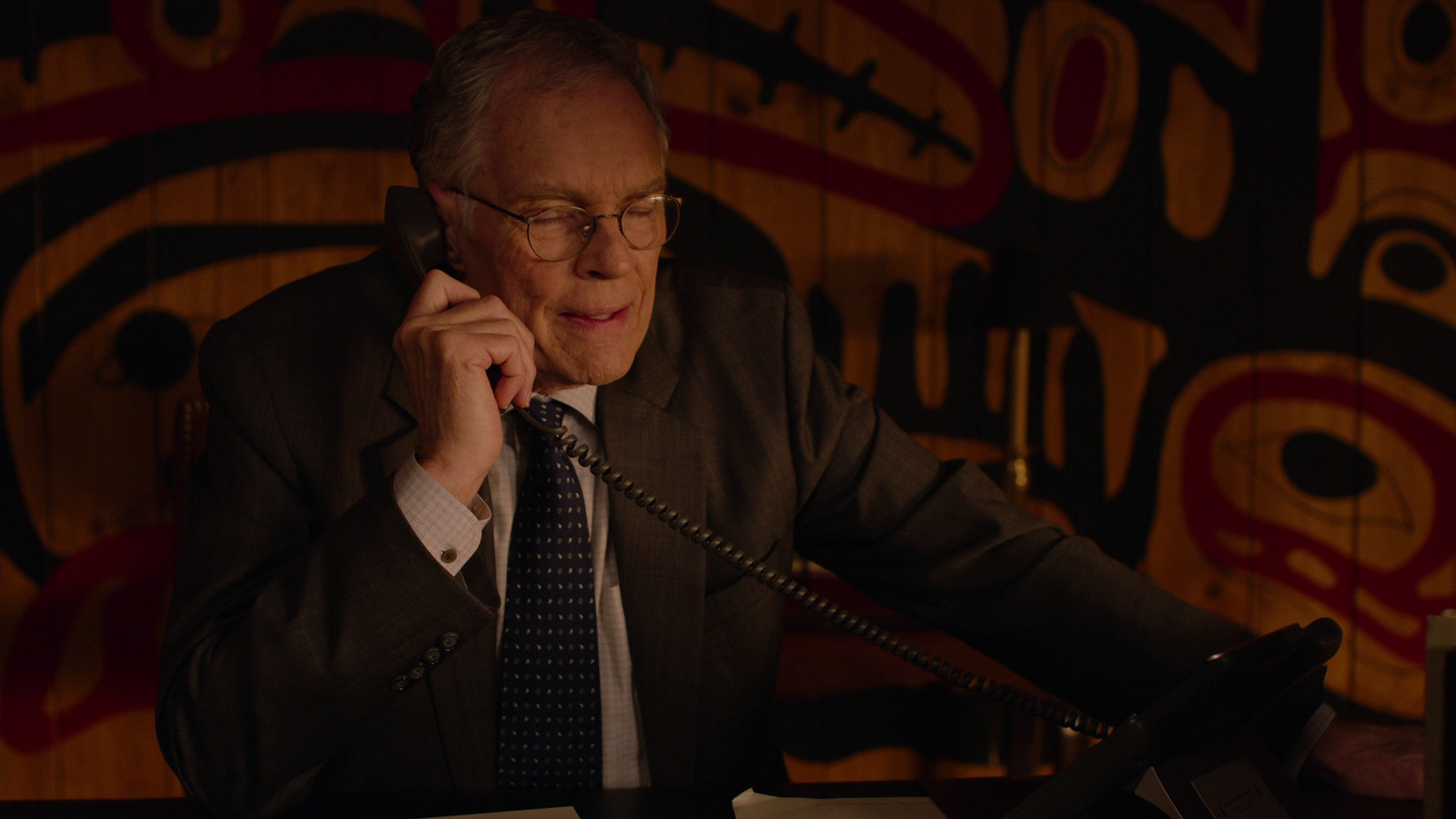
The jail and Ben Horne’s office interrupt the apparent rush toward a single destination. Chad watches for an opportunity while Naido and the injured prisoner create a pattern of cries, imitation and irritation. Ben receives news of Jerry’s naked appearance in Wyoming and his claim about murderous binoculars.
The scenes keep consequences circulating through mundane systems: custody, a telephone call, a relative asked to collect someone. The fantastic does not replace ordinary administration. These detours also delay Cooper’s arrival long enough for a false version of his return to enter the station first.
Open the scene sequence · 1 frame
A destination changed on a screen
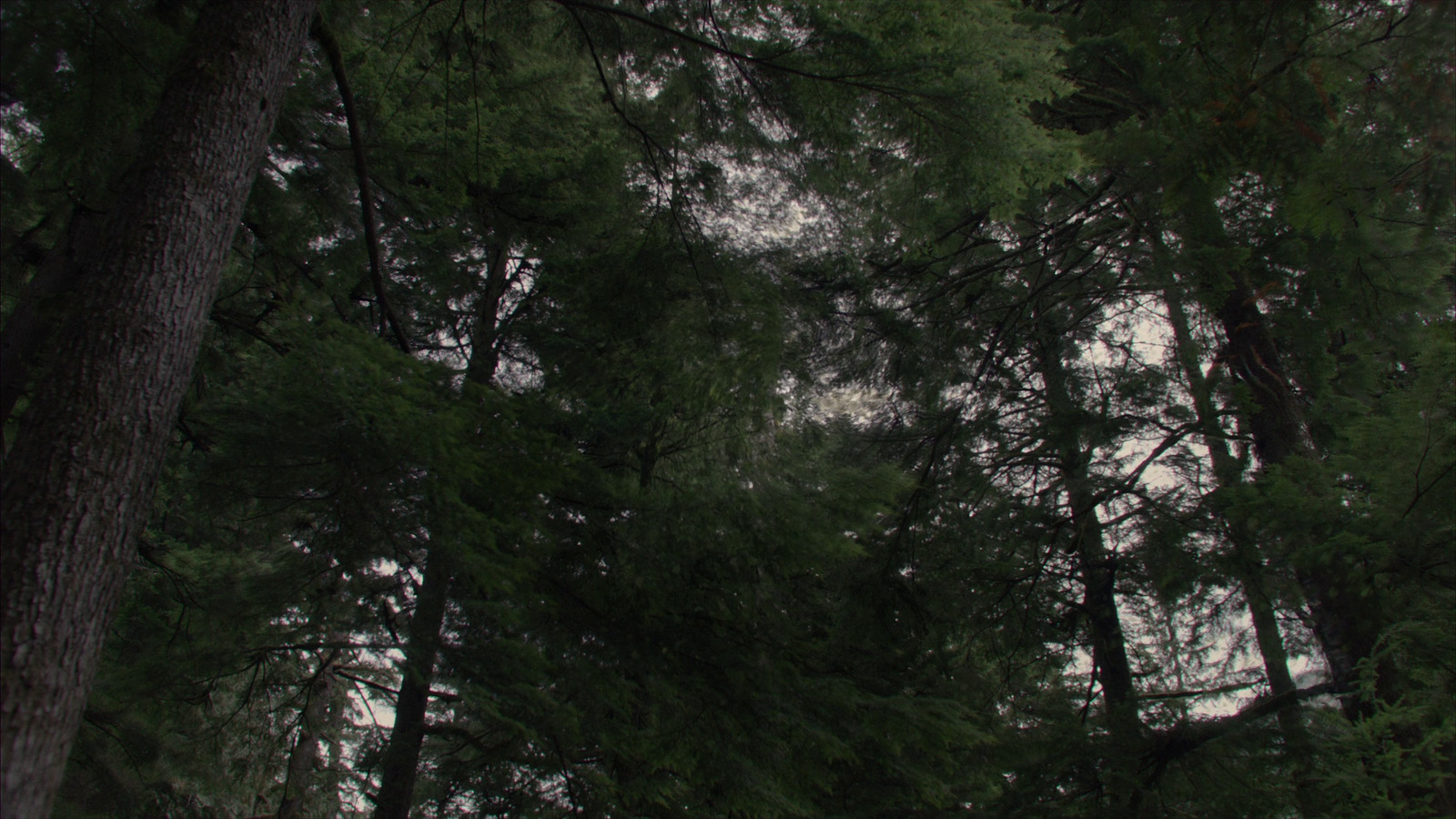
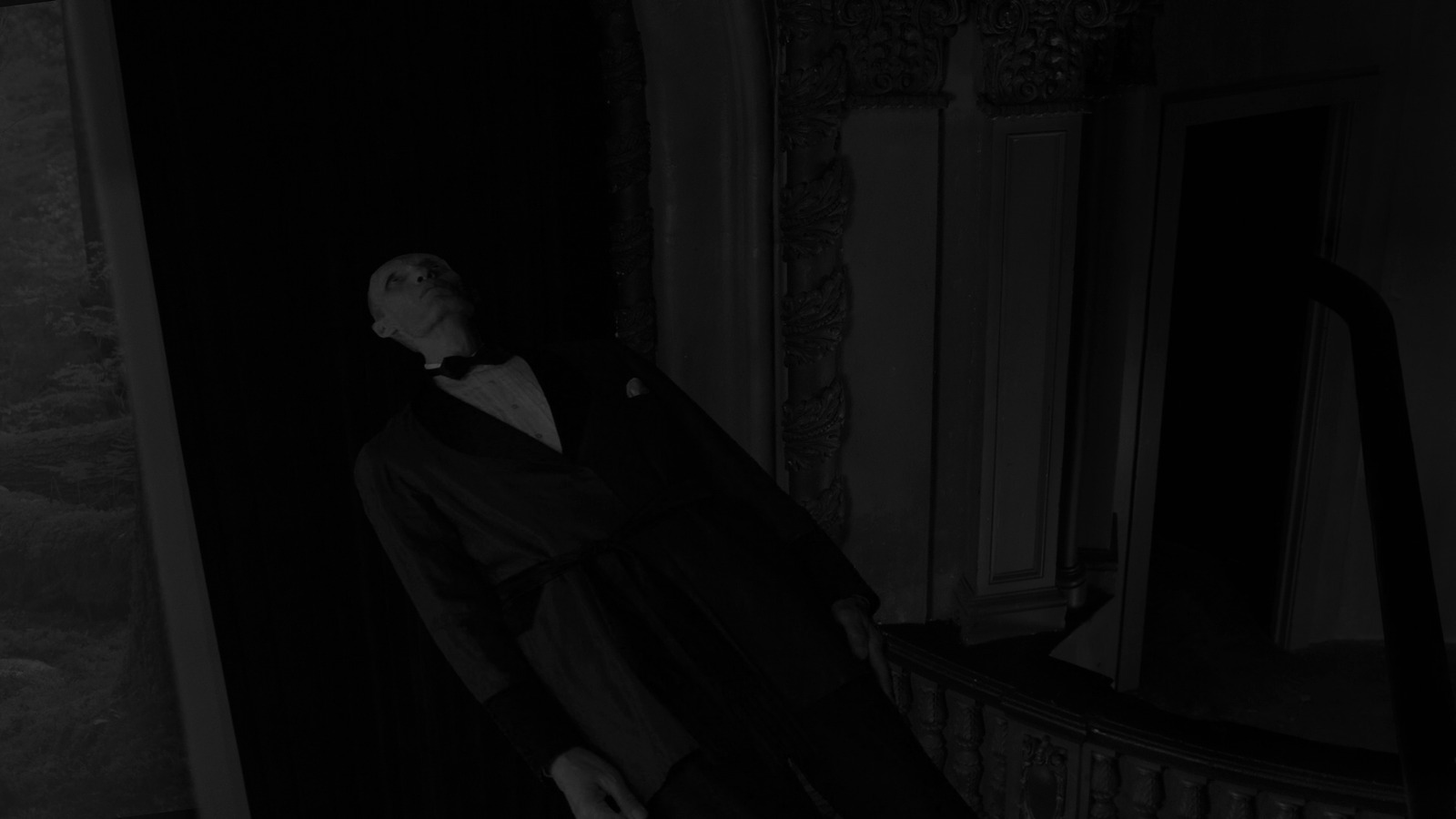
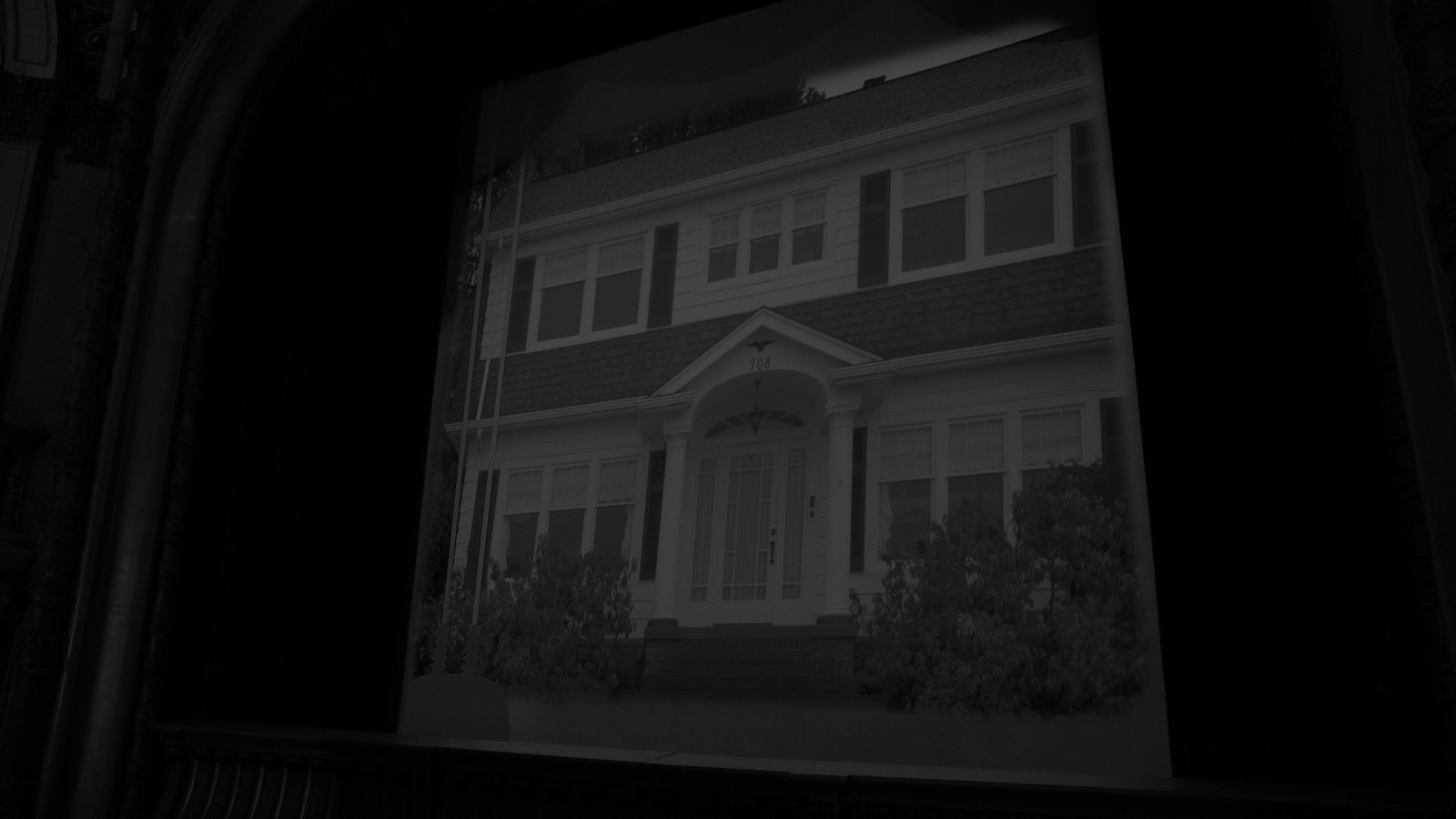
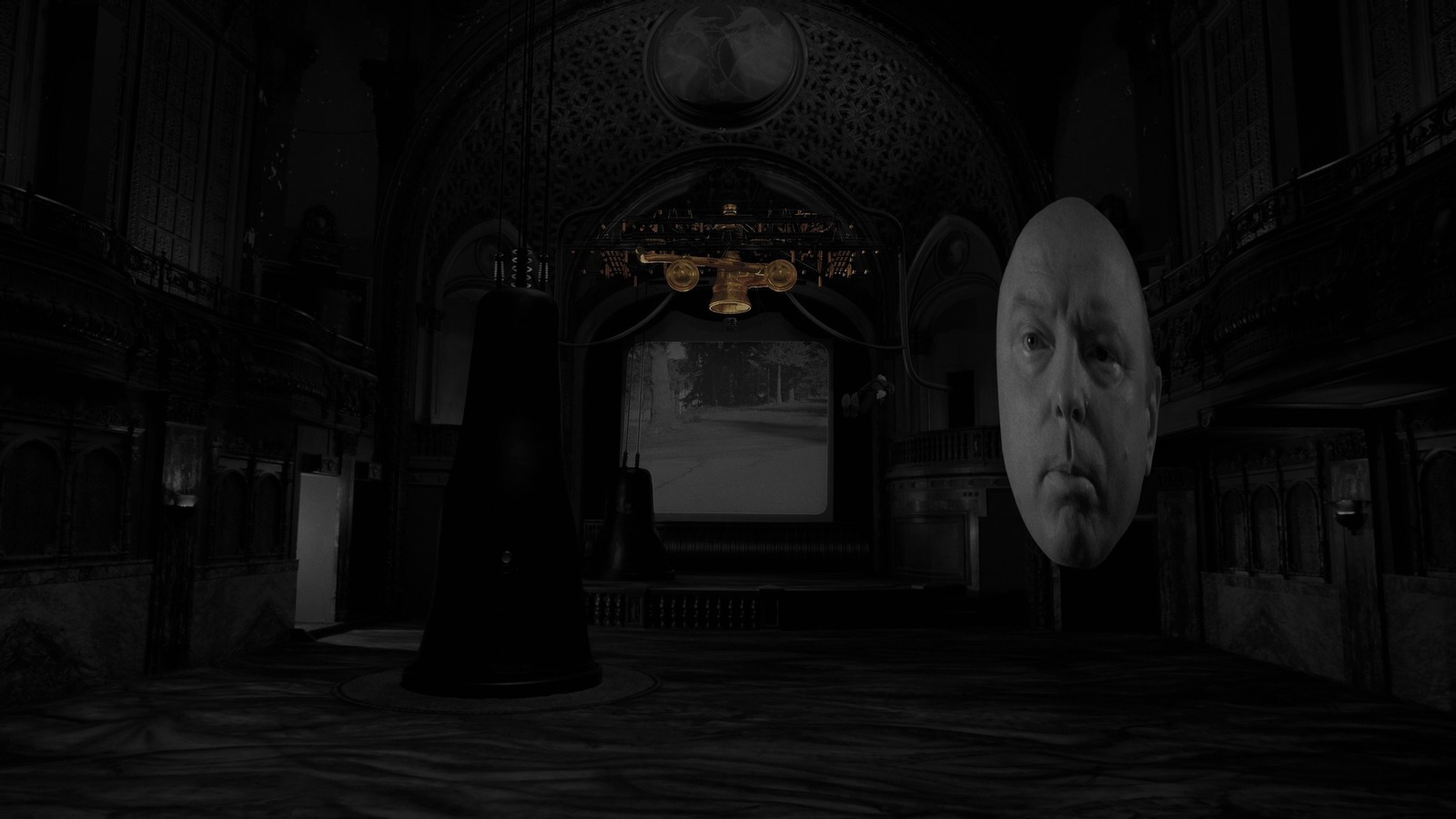
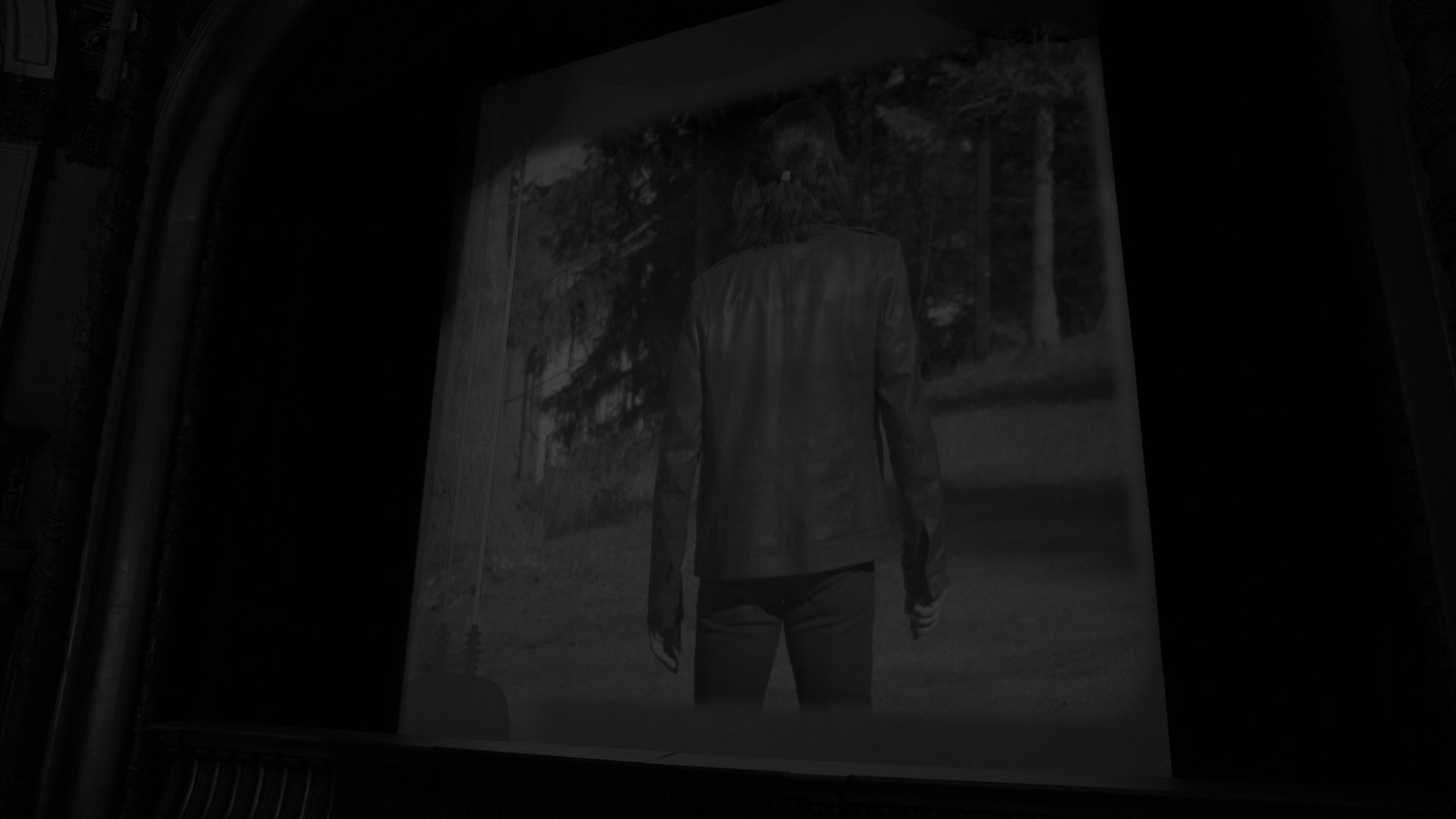
Mr C reaches the forest coordinates, but arrival does not give him command of the route. The vortex leads into a monochrome chamber where he appears confined while images of destinations occupy a large screen. The Palmer house gives way to the sheriff’s station; the subsequent exterior places him at that substituted destination.
The scene makes watching and routing into visible actions. The Fireman’s chamber can be read as an intervention in Mr C’s movement, but the images do not disclose every rule of the apparatus. Compare Part 8’s screen and projection and Andy’s visit in Part 14. The recurrence establishes a visual system without reducing it to a diagram of good and evil.
Open the scene sequence · 6 frames
Hospitality offered to the wrong Cooper
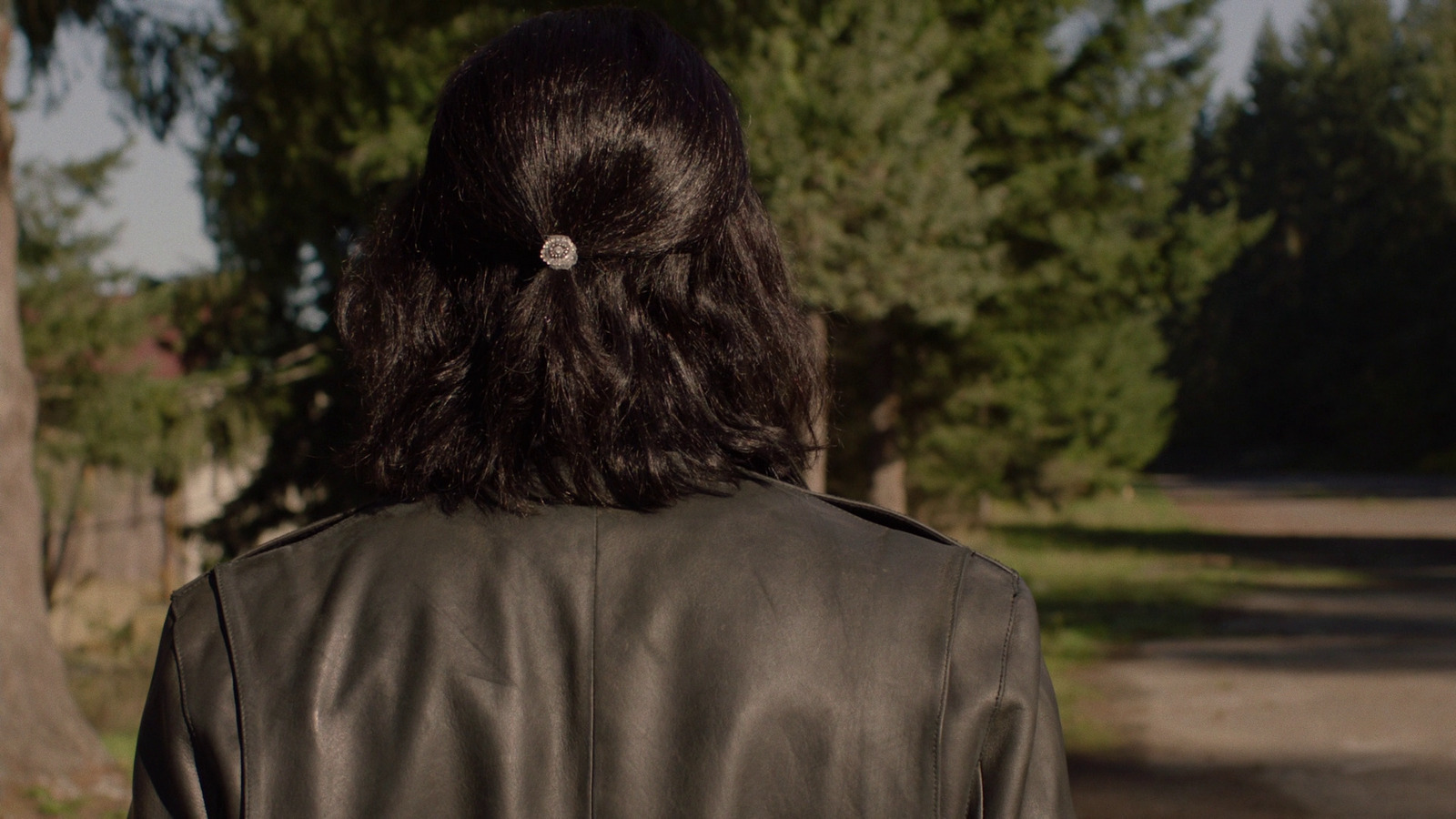
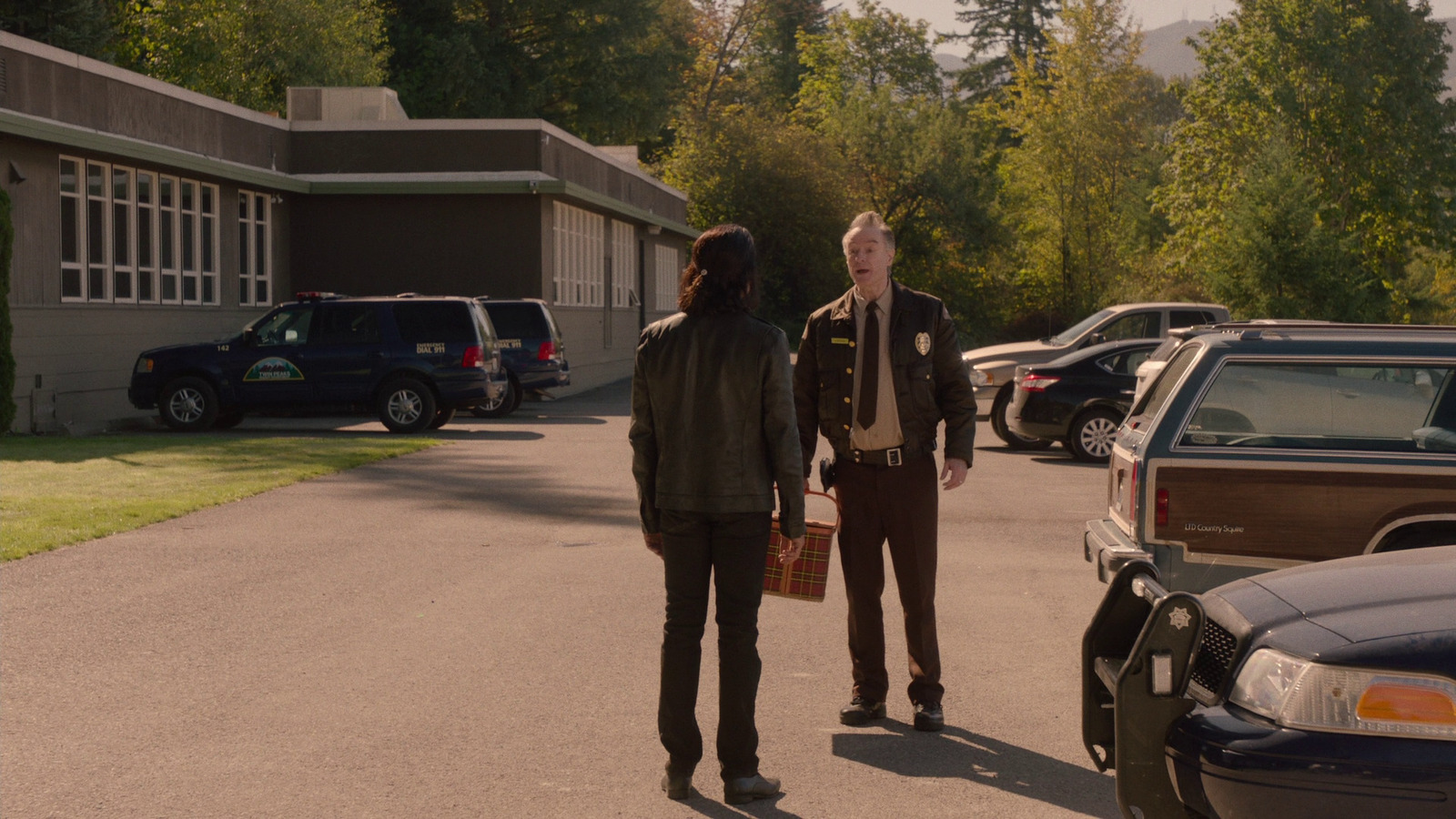
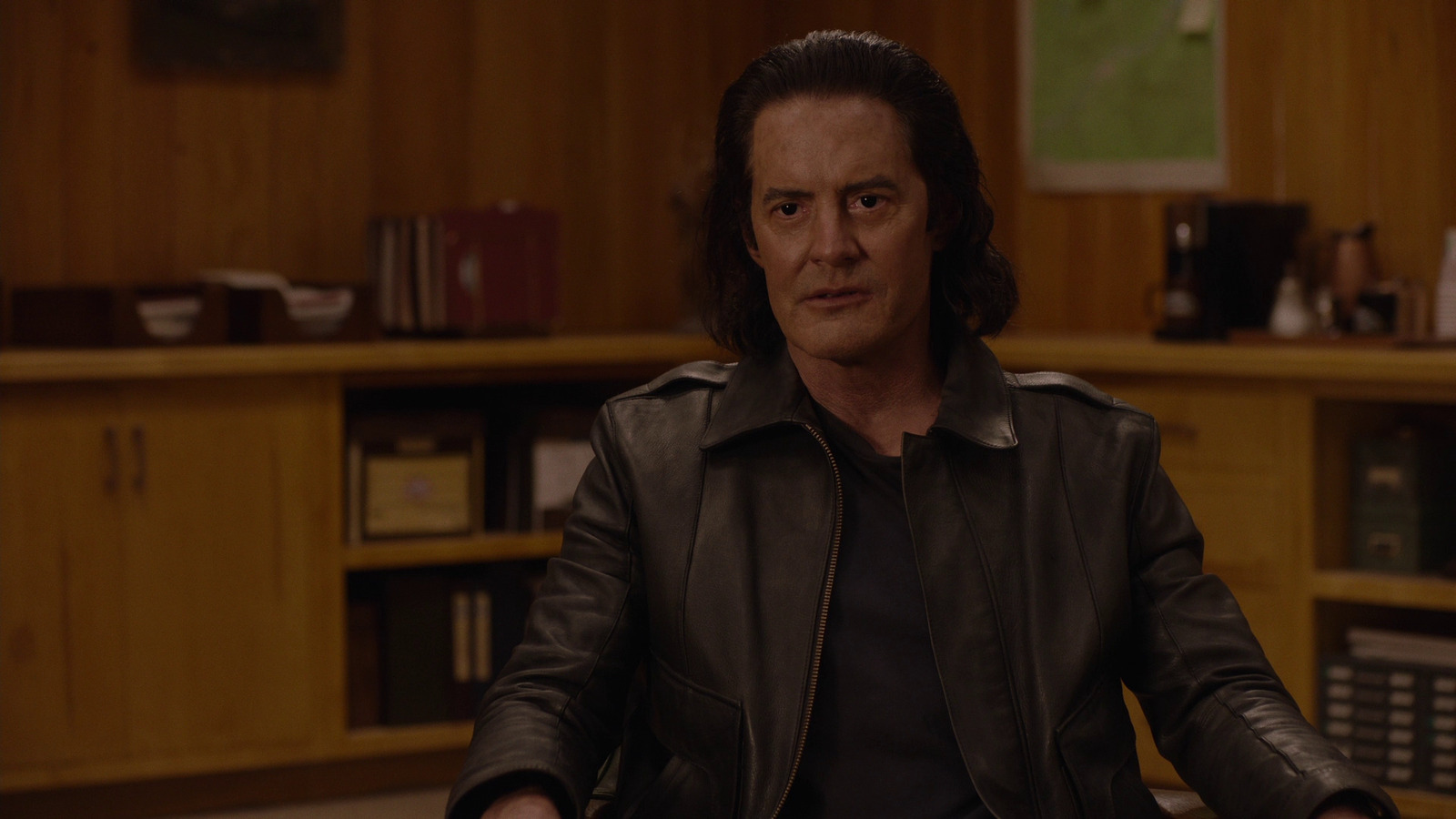
Andy’s greeting and the offer of coffee give Mr C the social welcome the audience has anticipated for Cooper. The body and face are enough to activate that welcome. Frank, who knows Cooper through other people, has an additional reason to rely on appearances.
MacLachlan’s stillness makes the mismatch visible. Mr C occupies the office without entering its warmth. The repeated cuts to the cells and Naido’s distress offer another register of recognition, one that does not depend on a conventional introduction or a familiar face.
Open the scene sequence · 1 frame
The glove changes the jail’s geometry
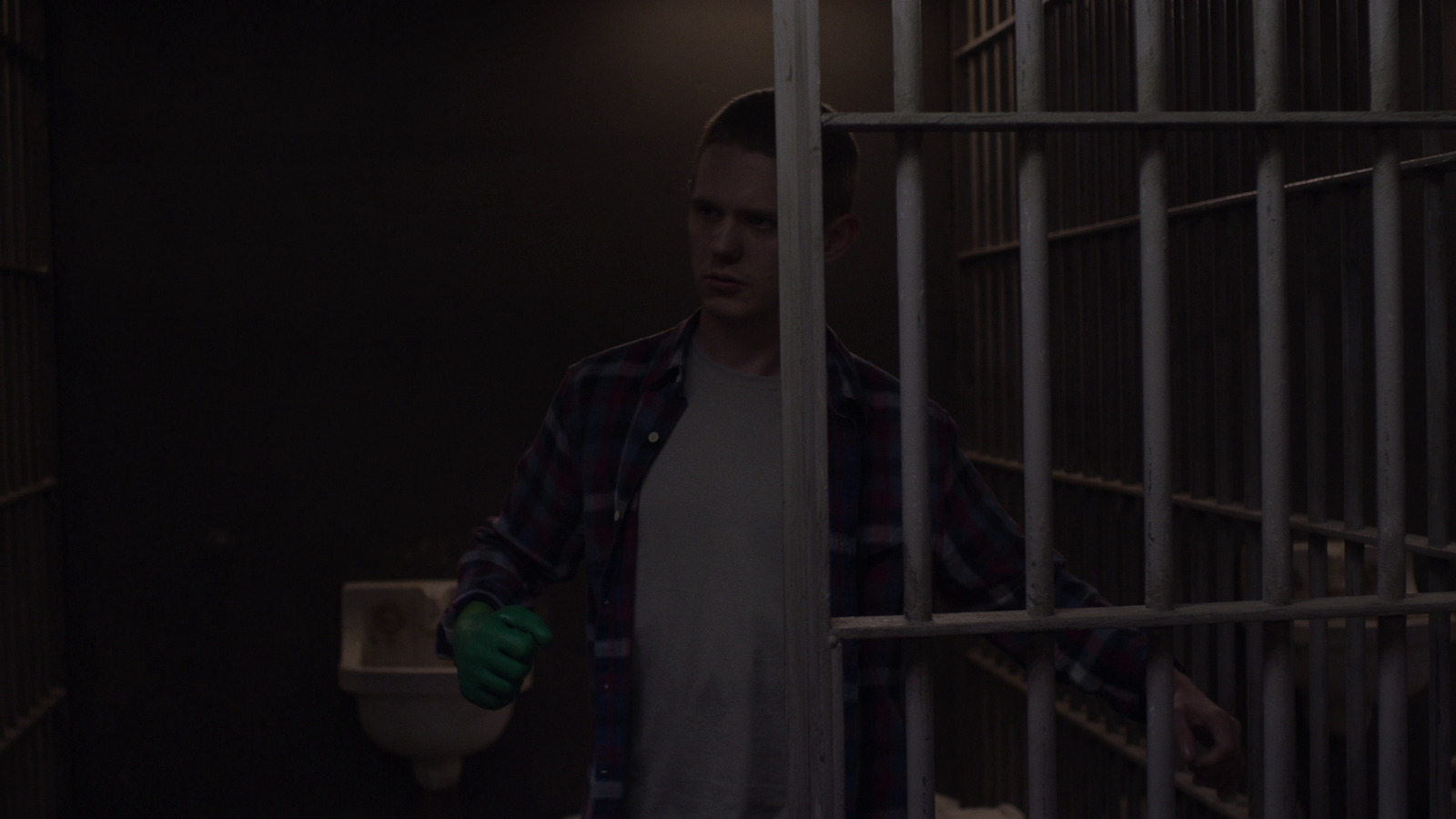
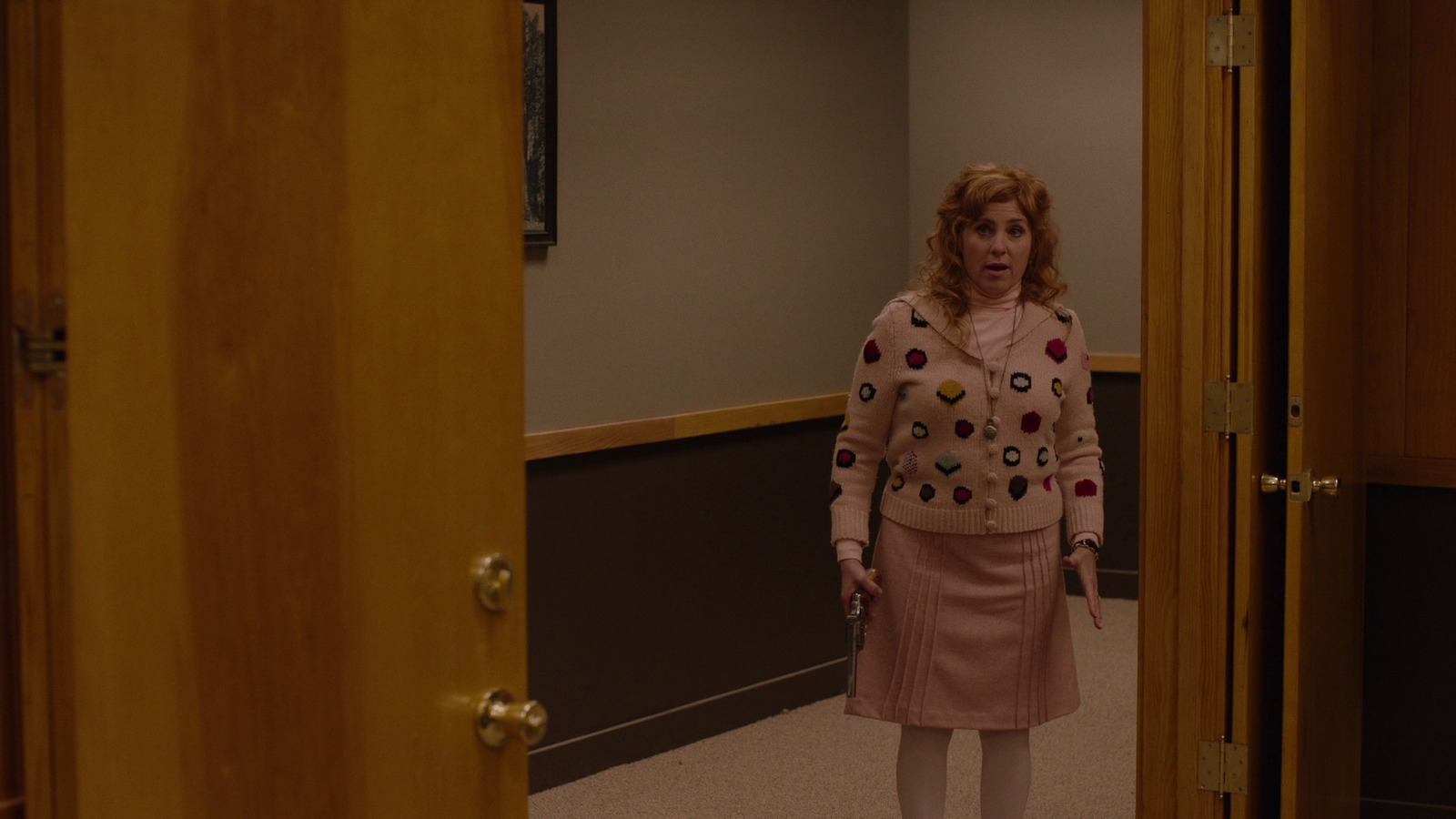
Chad’s escape puts Andy in the line of a gun. Freddie’s intervention works through the cell door itself: confinement becomes the means of disarming the man who has escaped it. The green glove turns a barred boundary into an instrument of action.
This is a practical rehearsal for the later confrontation. Freddie does not begin as the centre of the assembled group’s attention; the episode first demonstrates what his hand can do in an immediate, local emergency. The earlier story of his journey in Part 14 now acquires a physical consequence.
A voice identifies the body in the room
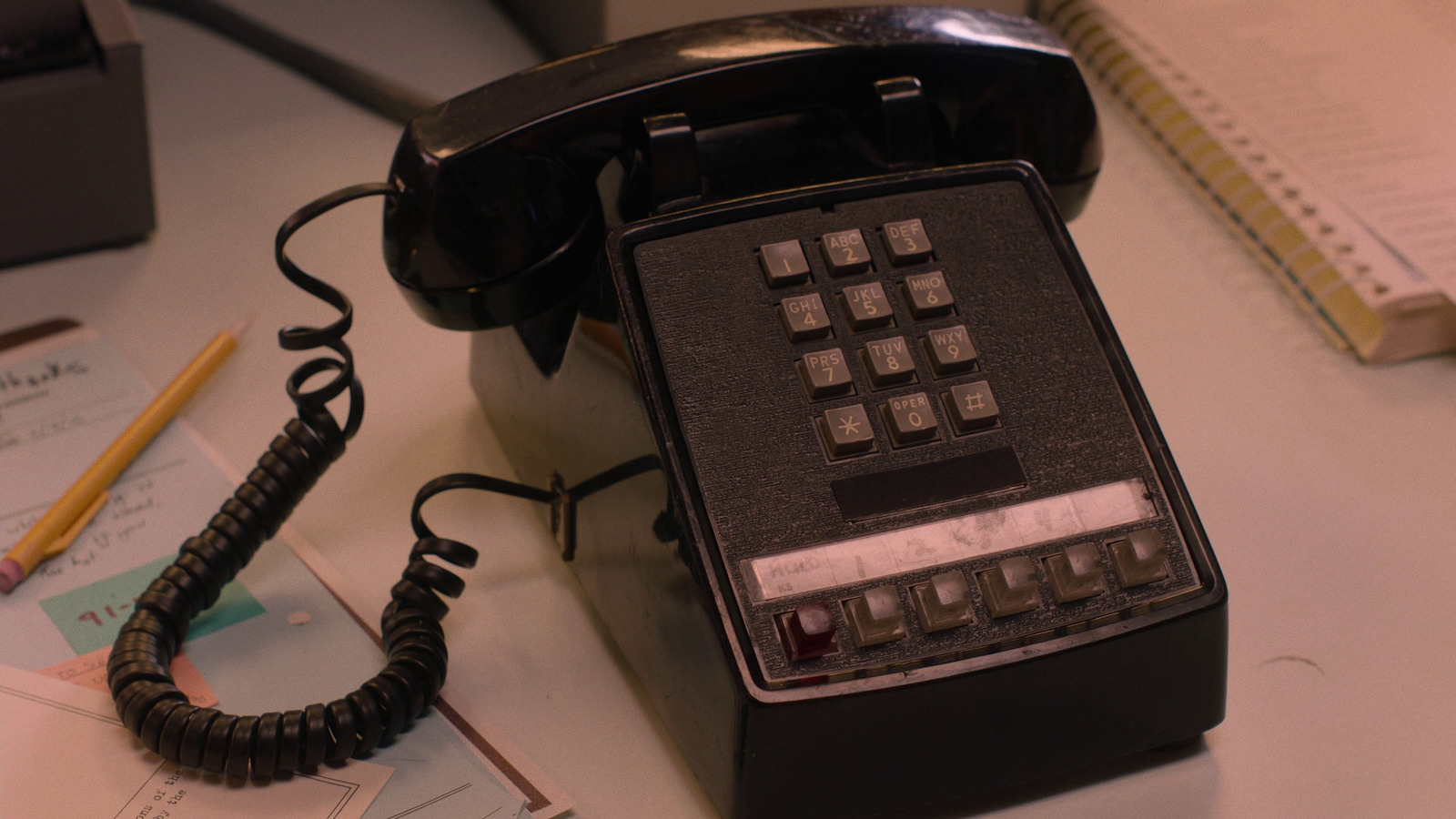
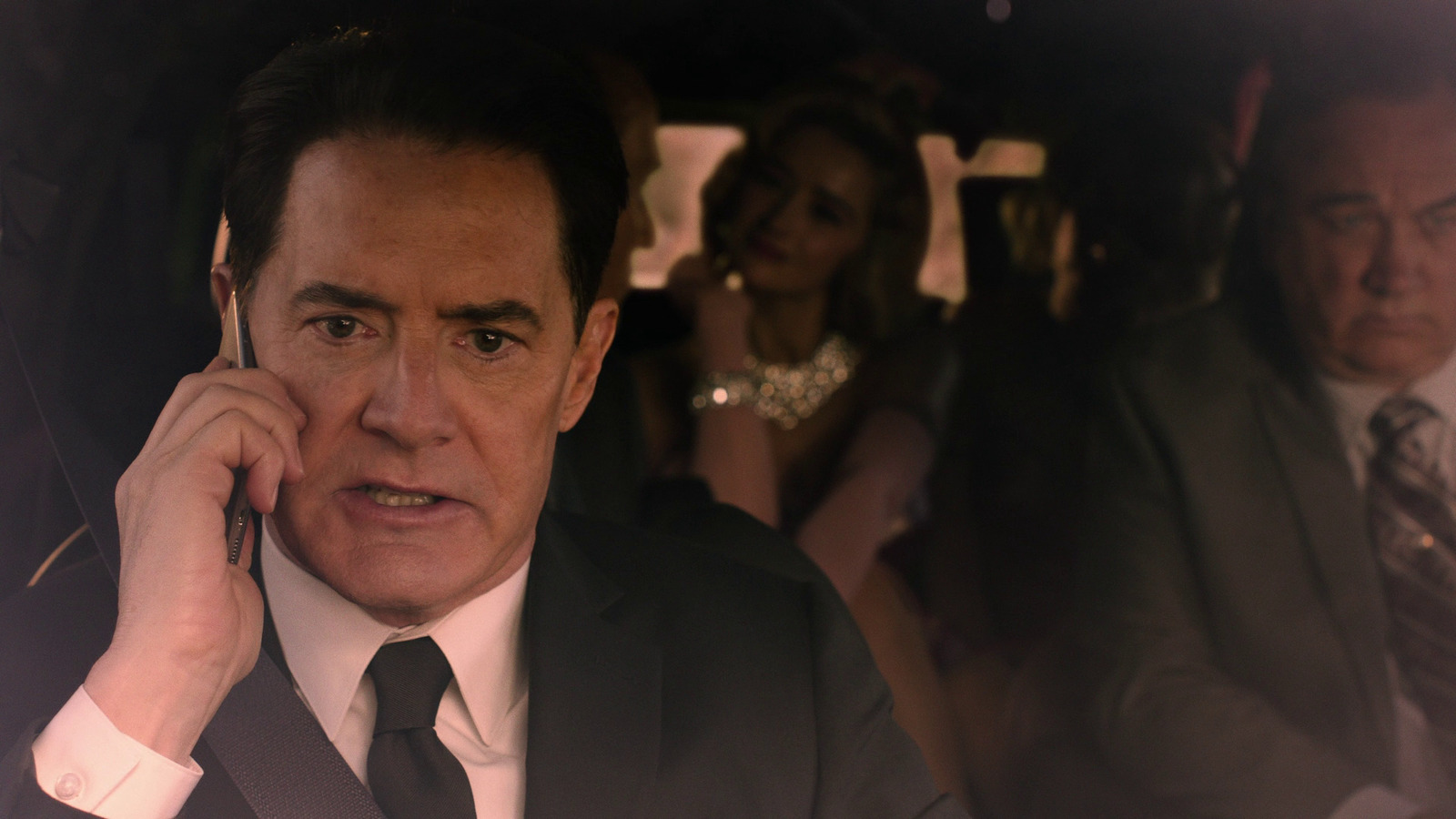
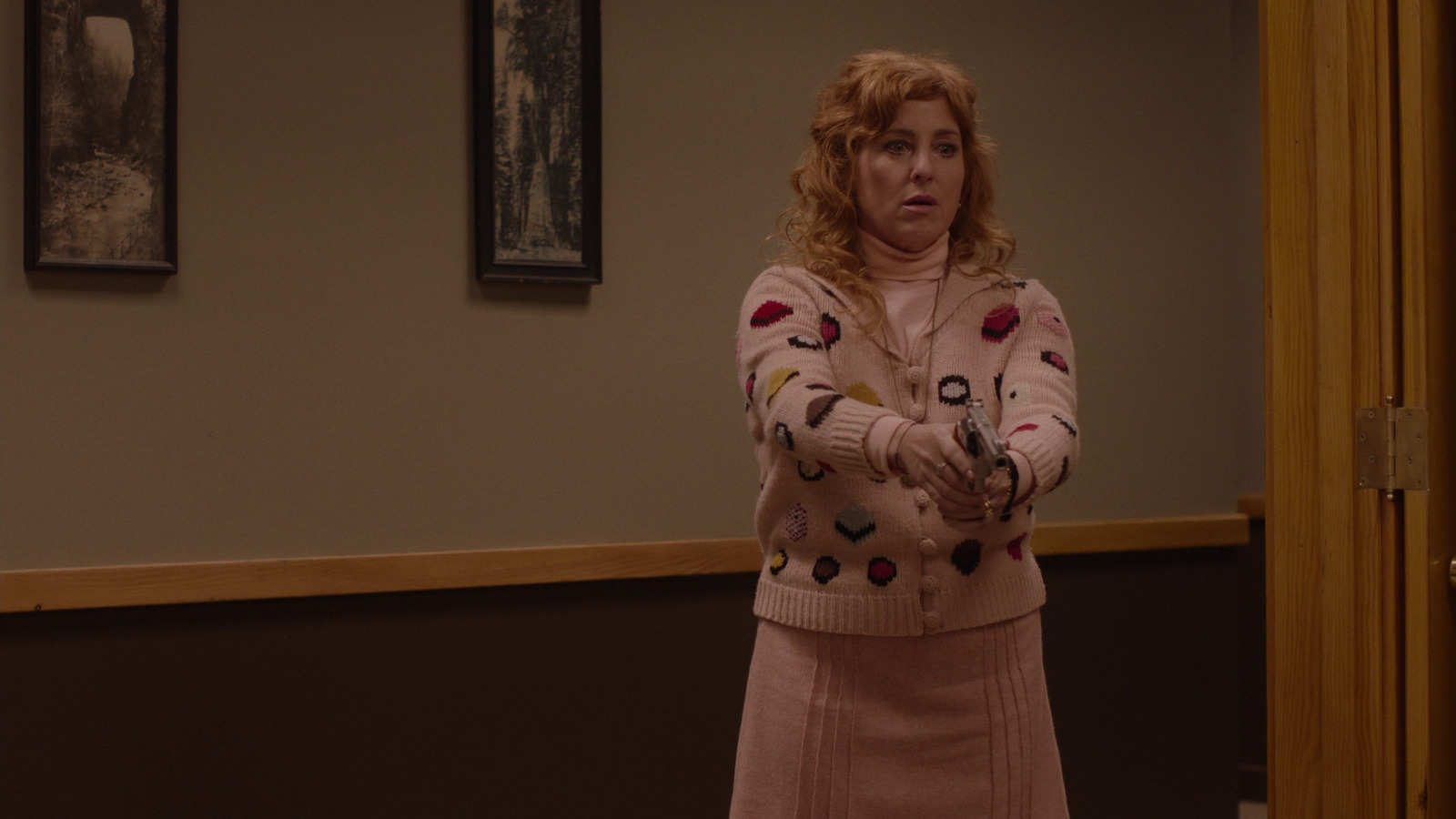
The telephone establishes two incompatible Coopers at once. Frank looks at the man in his office while hearing the other announce that he is entering town. Mr C’s claim of unfinished business becomes a threat before the audience receives a long explanation.
Lucy’s shot resolves the immediate danger. Her subsequent statement that she understands cellular phones gives an earlier comic difficulty an unexpected dramatic endpoint. The telephone is no longer simply a joke about location: it makes location decisive evidence. Lucy’s hesitant return to the doorway lets the action register as a human shock, not only a clever payoff.
Open the scene sequence · 3 frames
Do not touch the body
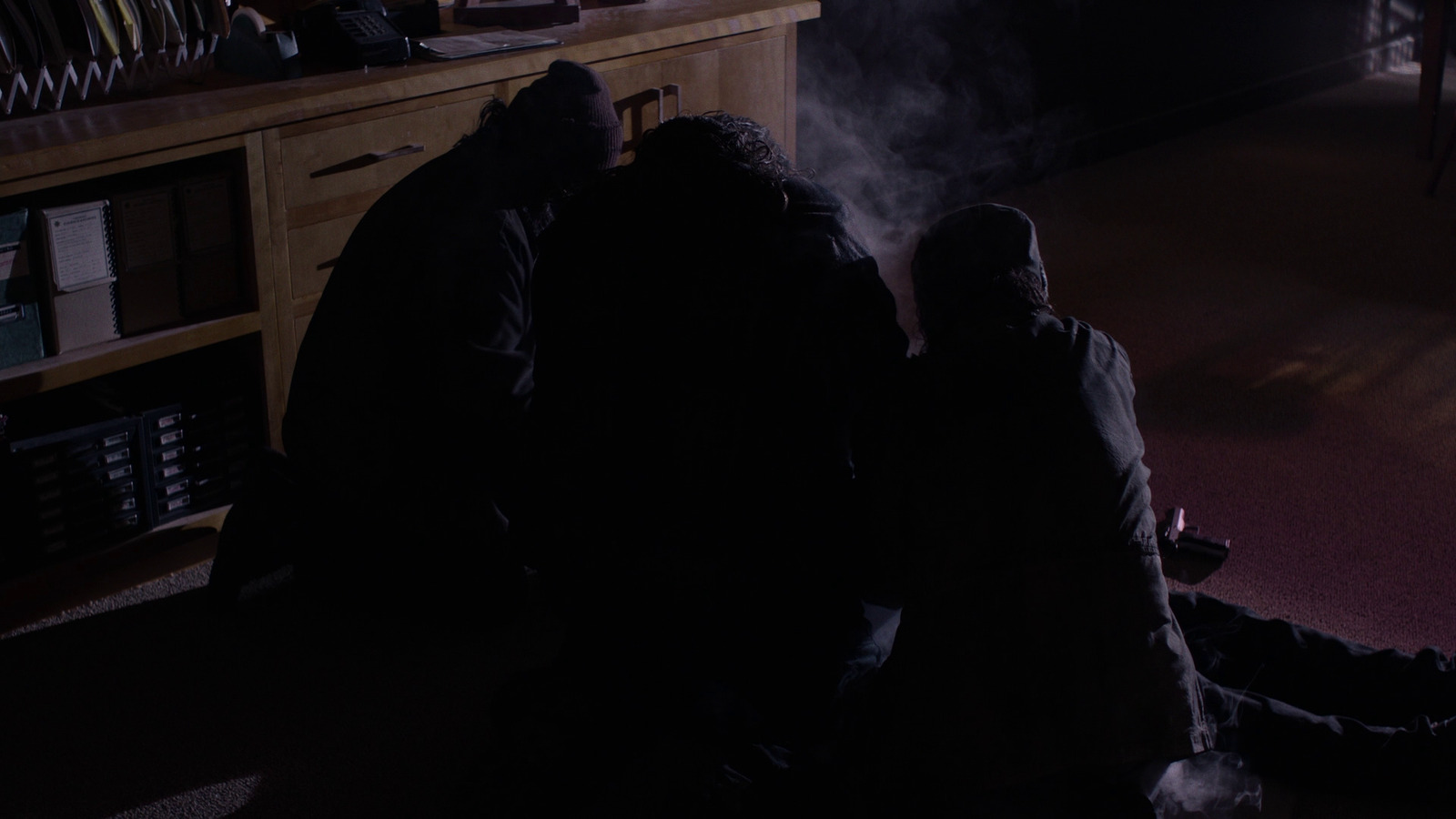
Cooper’s warning makes the fallen double dangerous even after the shooting. The Woodsmen gather around him as the office darkens and ordinary institutional space becomes a site of another intervention. Cooper arrives in time to witness a process already underway.
The separation of Mr C and BOB becomes visual rather than merely verbal. The body on the floor and the mobile sphere are distinct centres of attention. Read the action with the earlier roadside tending of Mr C; the repeated handling of the body changes meaning when the surrounding witnesses and outcome change.
Open the scene sequence · 2 frames
A collective climax with an unlikely fighter
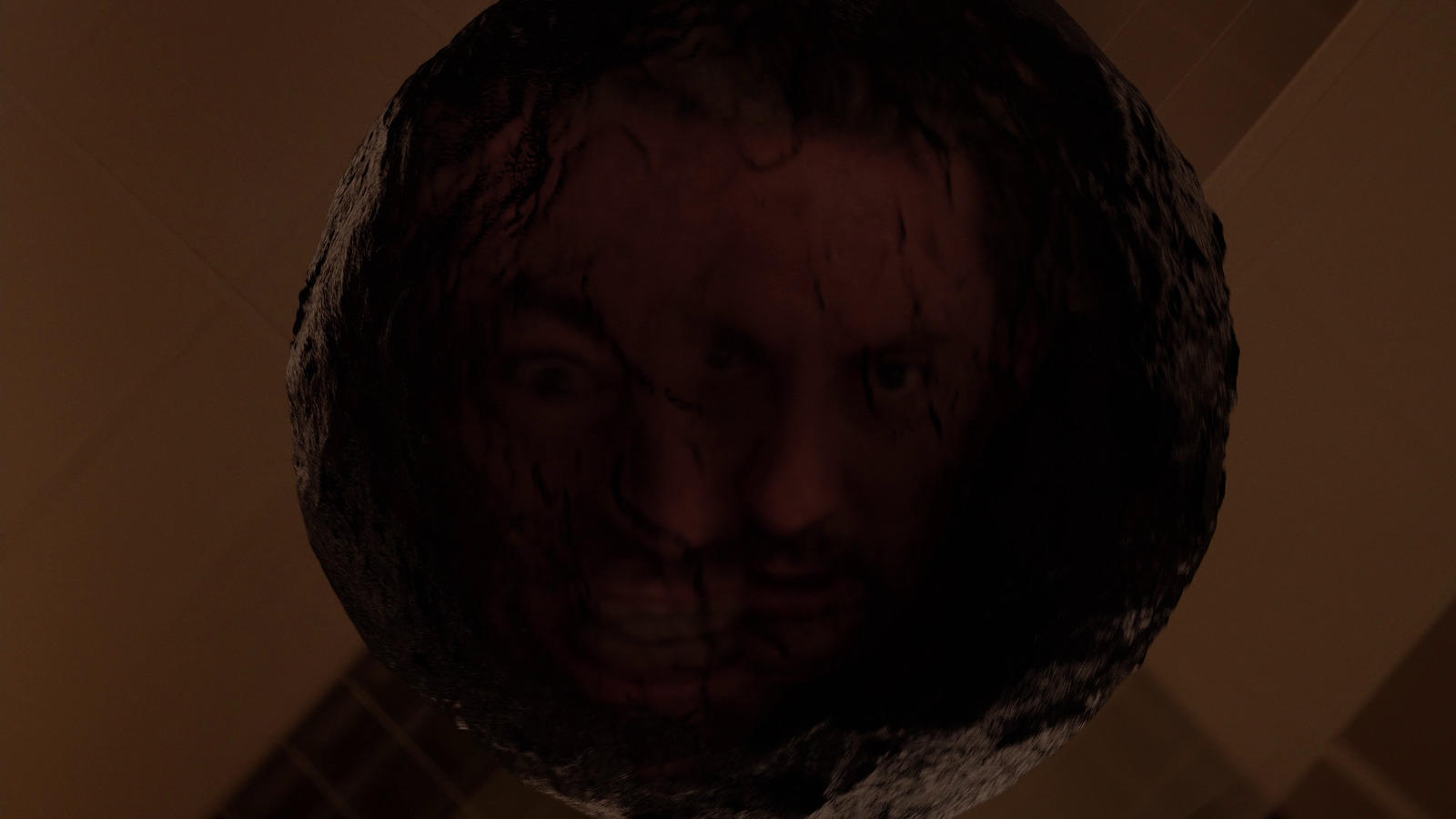
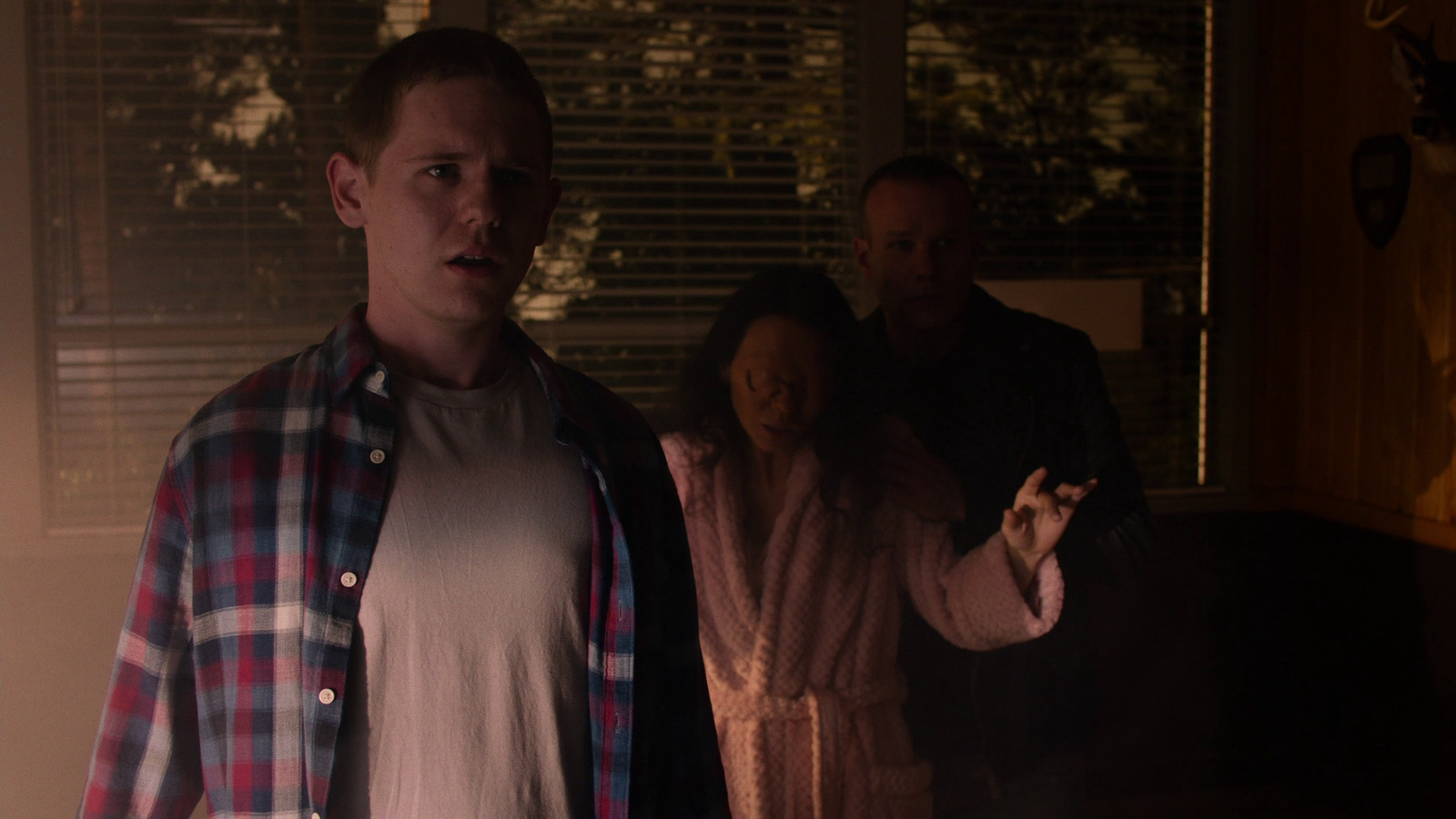
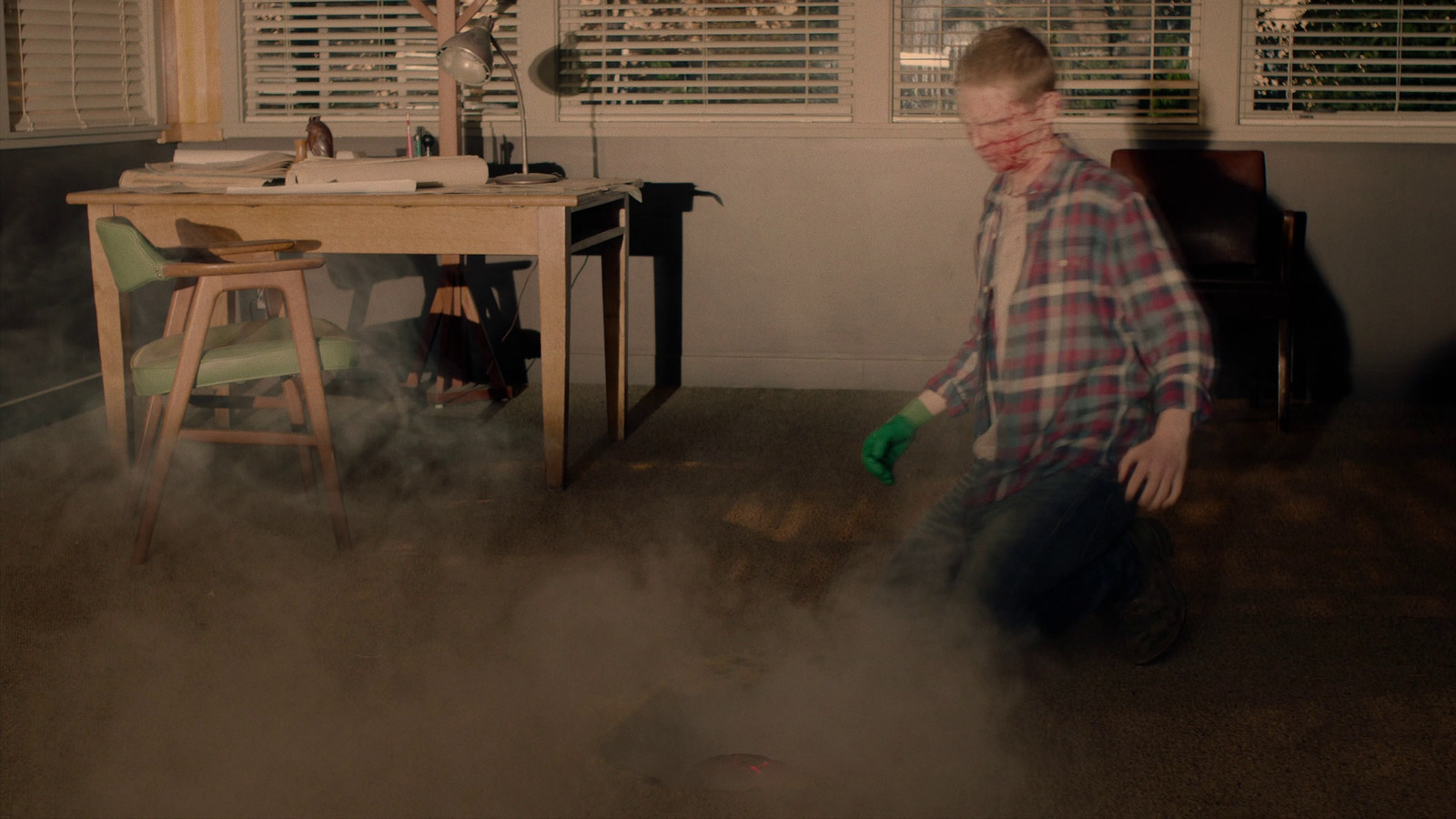
Cooper recognises Freddie’s role, but Freddie performs the physical confrontation. The sphere moves above, toward and through the room while the green glove delivers the force that can answer it. Falls, smoke and returns interrupt any simple rhythm of one blow and victory.
The witnesses remain important. Lucy, Andy, the officers and the visiting strangers form a group that can watch but cannot all perform the same action. The scene distributes the resolution across people assembled from widely separated storylines. It is both an extravagant battle and an oddly crowded office event.
Open the scene sequence · 3 frames
Two small objects after the battle
The ring and the Great Northern key return the episode from large effects to objects that fit in a hand. Cooper puts the ring on the double; the ring subsequently appears on the Red Room floor. Frank then supplies the key that has travelled back to Twin Peaks through a much more ordinary chain of custody.
The objects lead in different directions. One completes the removal of the body; the other opens the next passage. Their small scale makes them easy to overlook beside the spectacle, but the editing gives each a distinct job in moving the story onward.
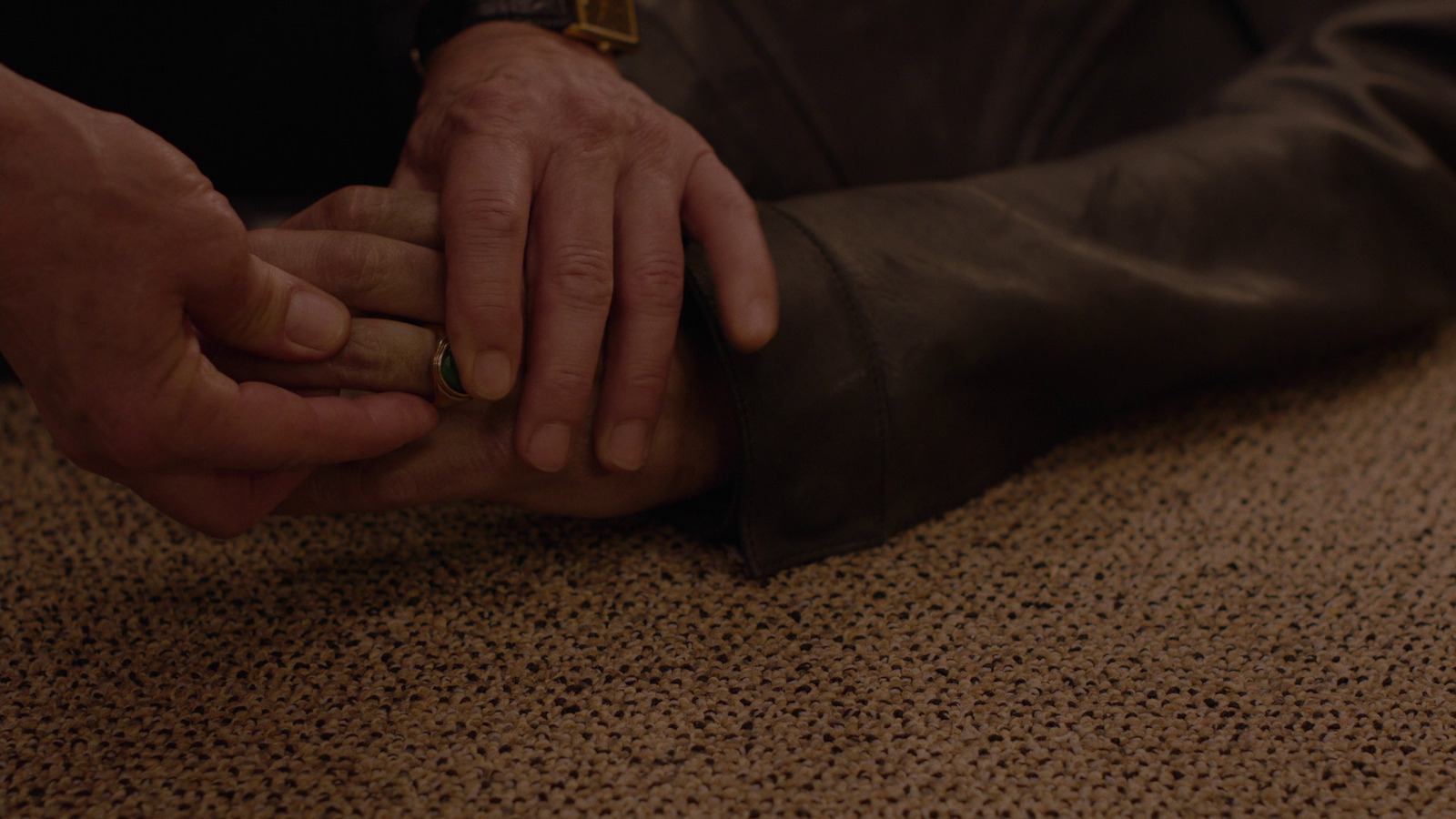
Open the scene sequence · 2 frames

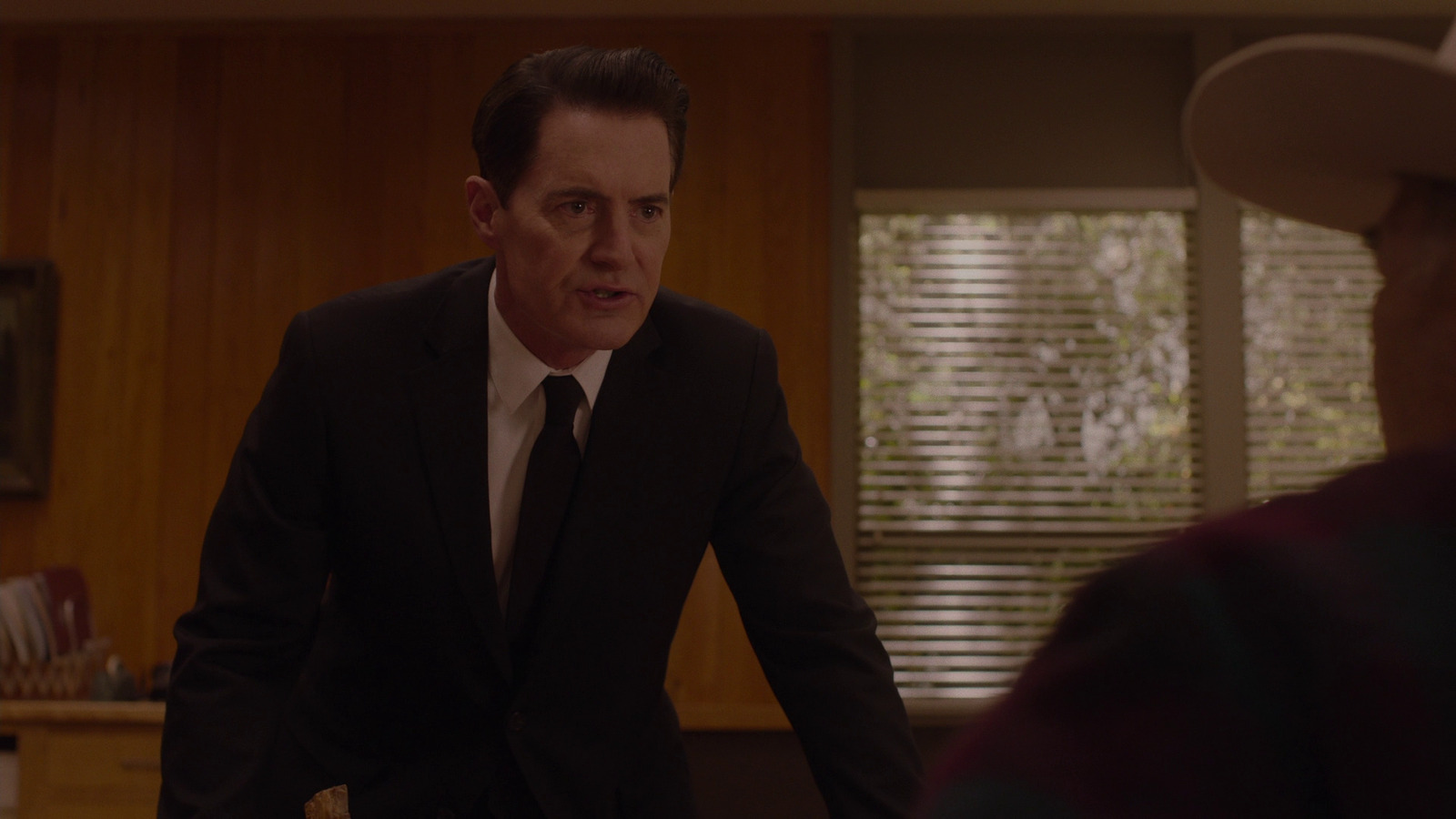
A reunion already seen through another face
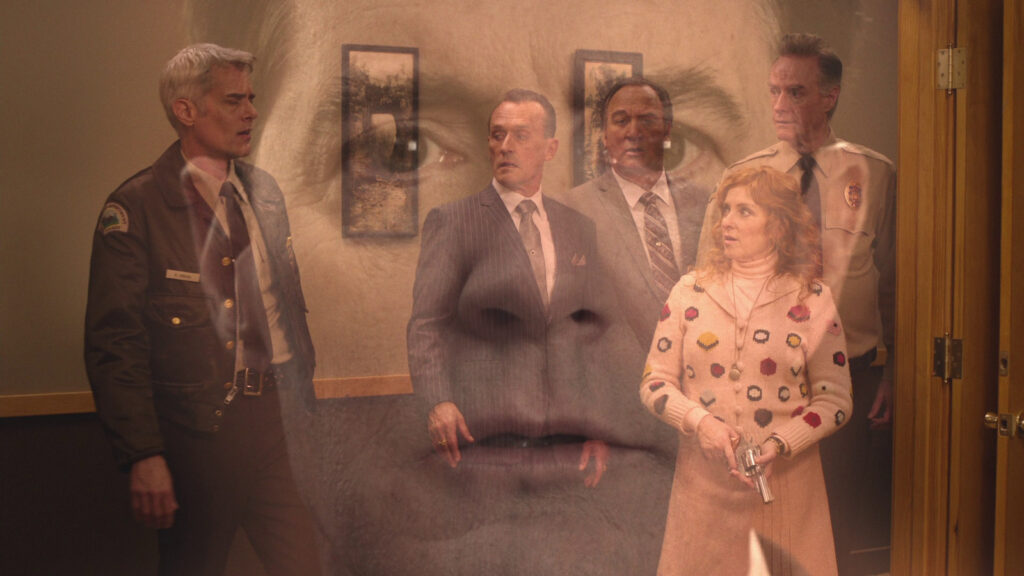
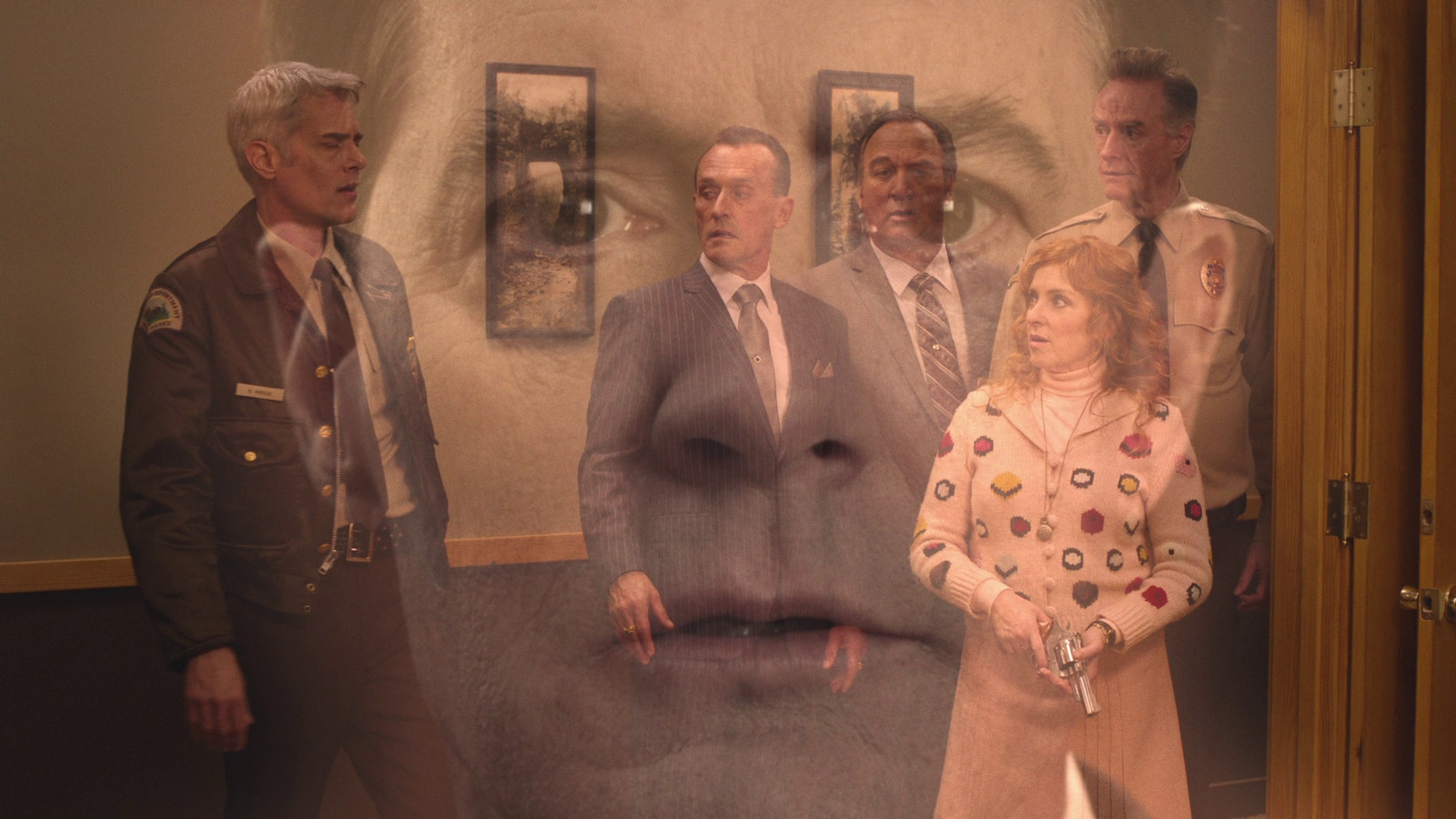
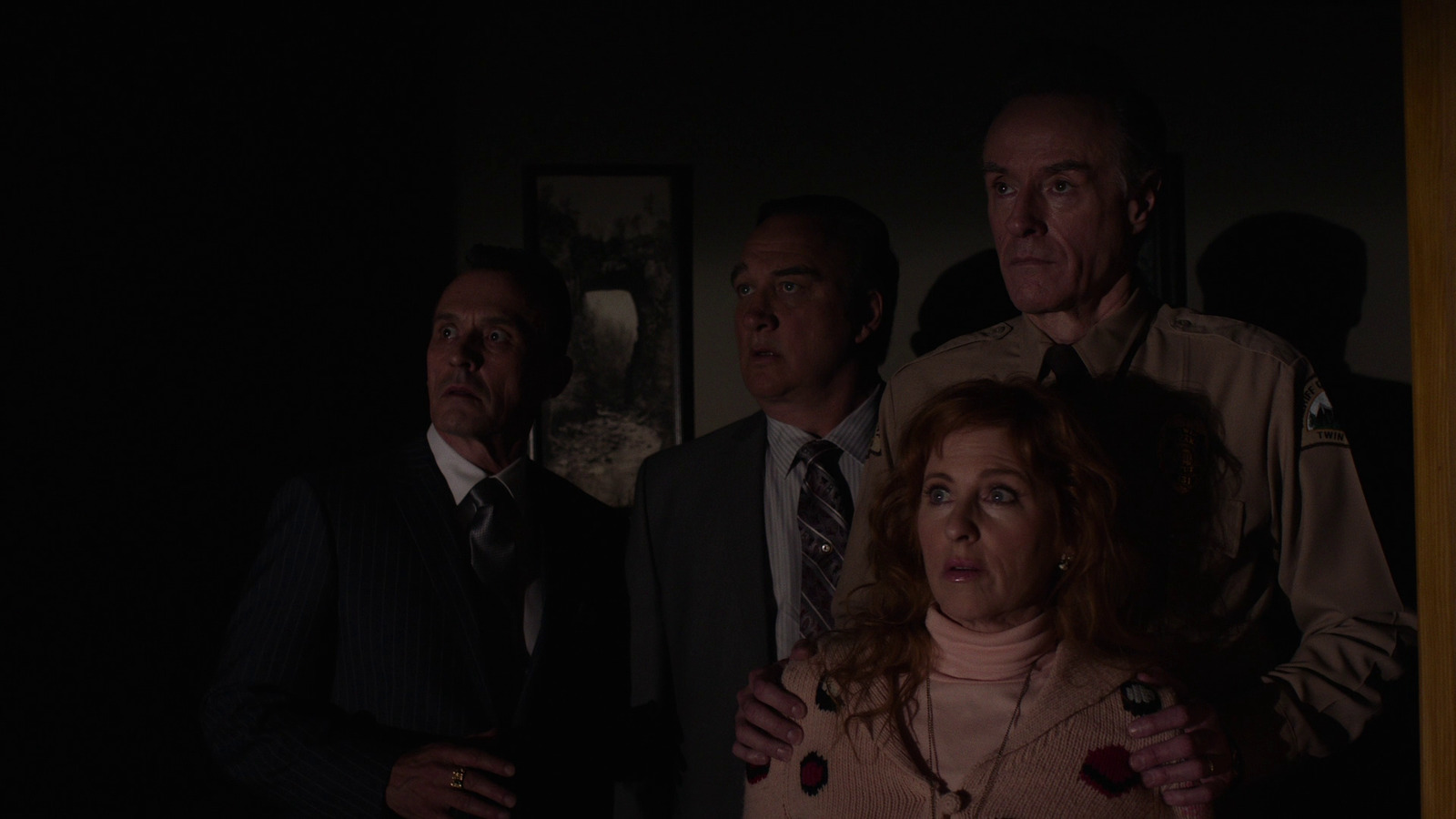
The arrival of Gordon’s party gathers the investigation into one room. Cooper links Briggs’s information to the present meeting and warns that things will change. The Mitchums’ concern about sandwiches persists inside the announcement, preserving an ordinary social need at the edge of the extraordinary.
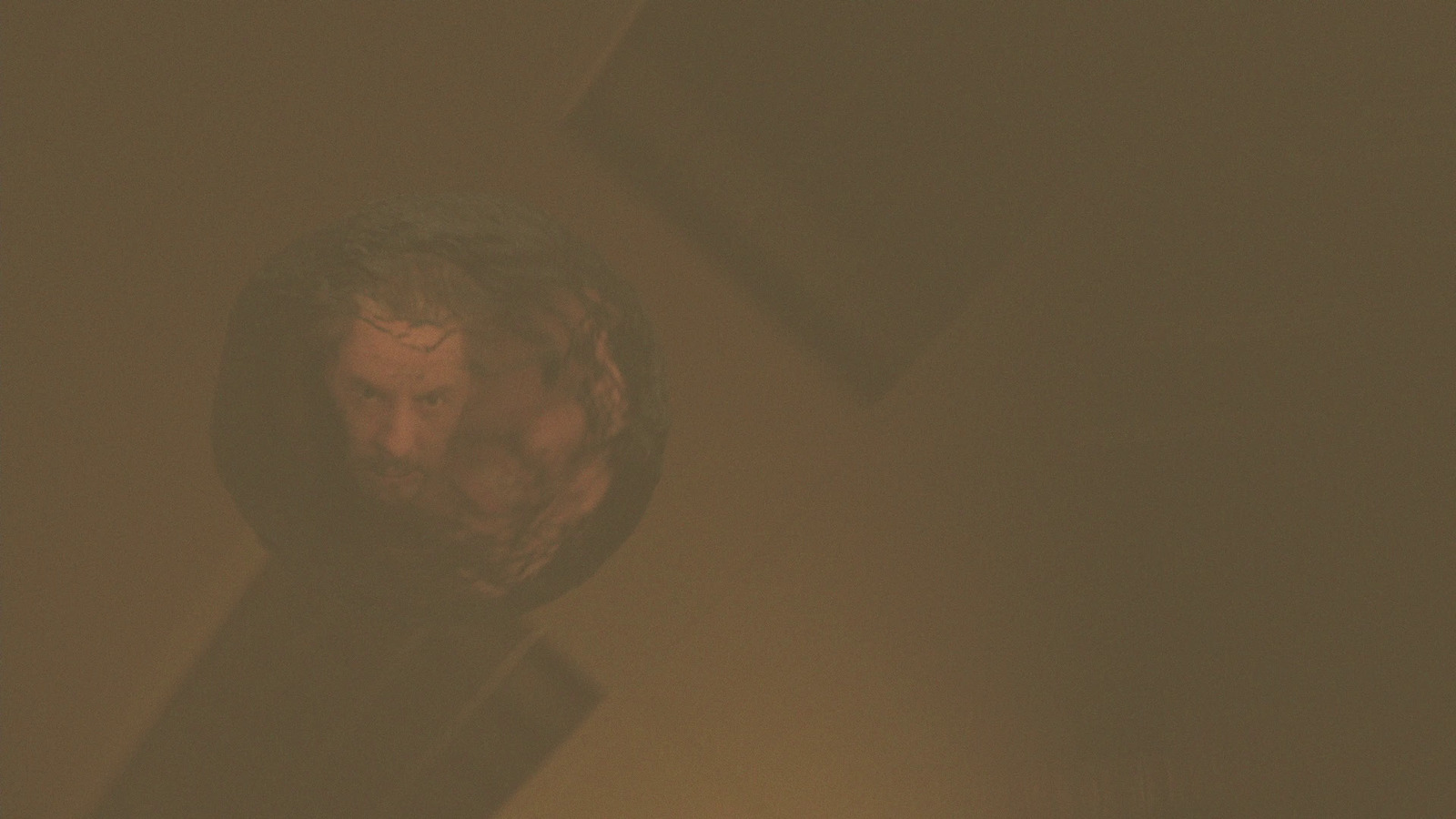
A large translucent Cooper face overlays the group. This does not simply illustrate a speaker: it places another scale and duration of looking over the event. The reunion can be seen, but it no longer appears to occupy a single uncomplicated layer of time or perception.
Open the scene sequence · 1 frame
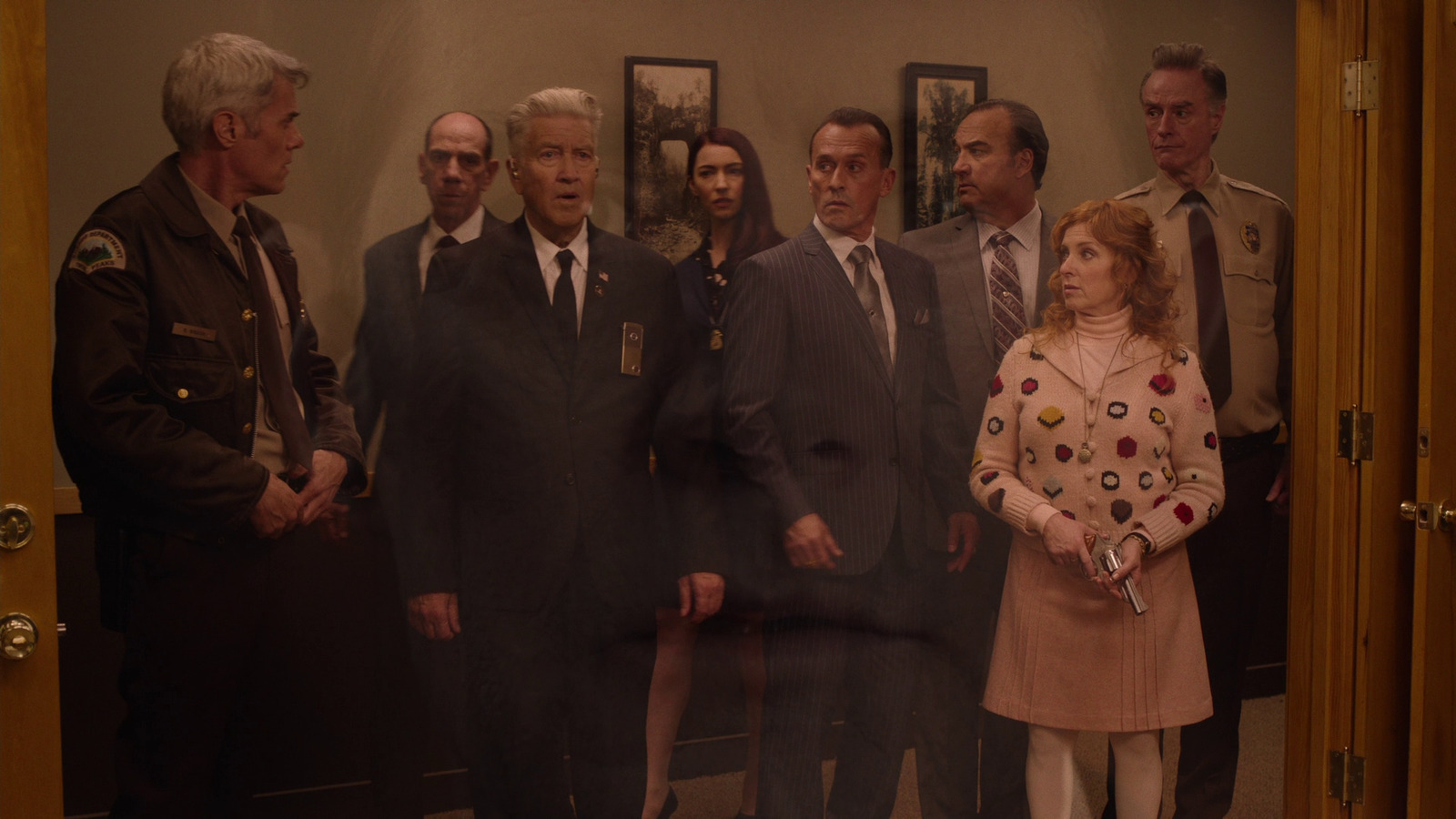
Recognition emerges through a changed face
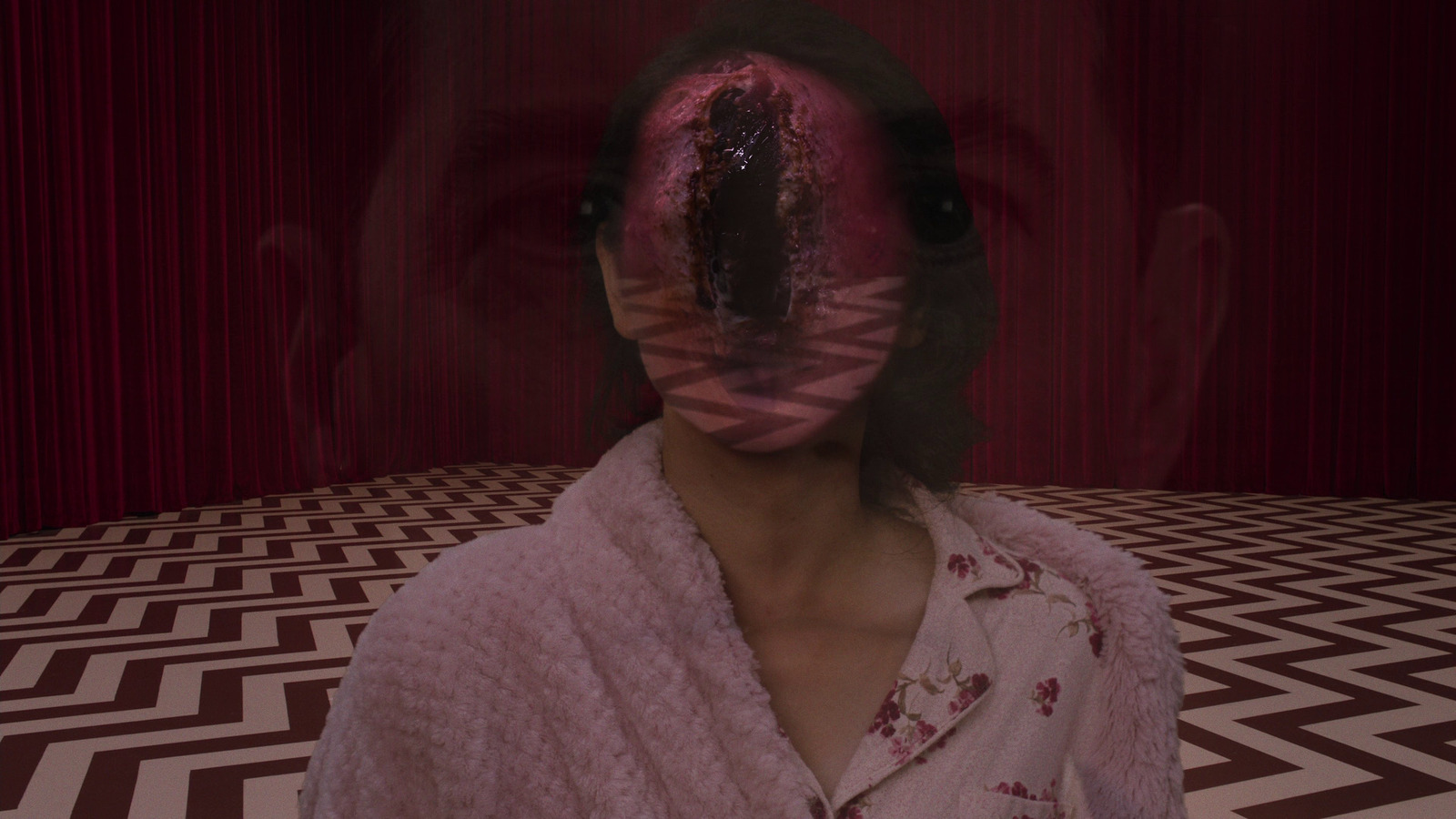
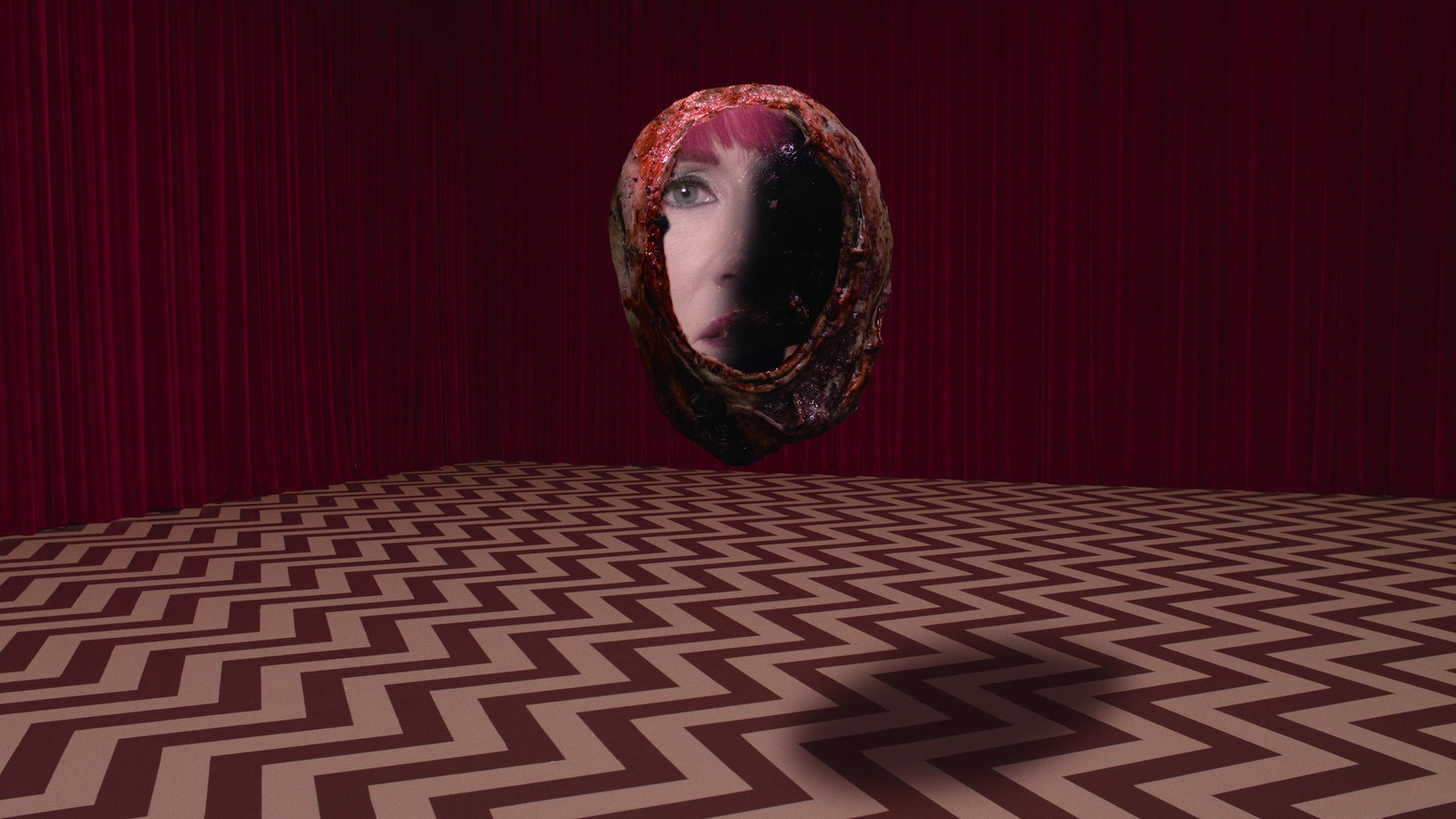
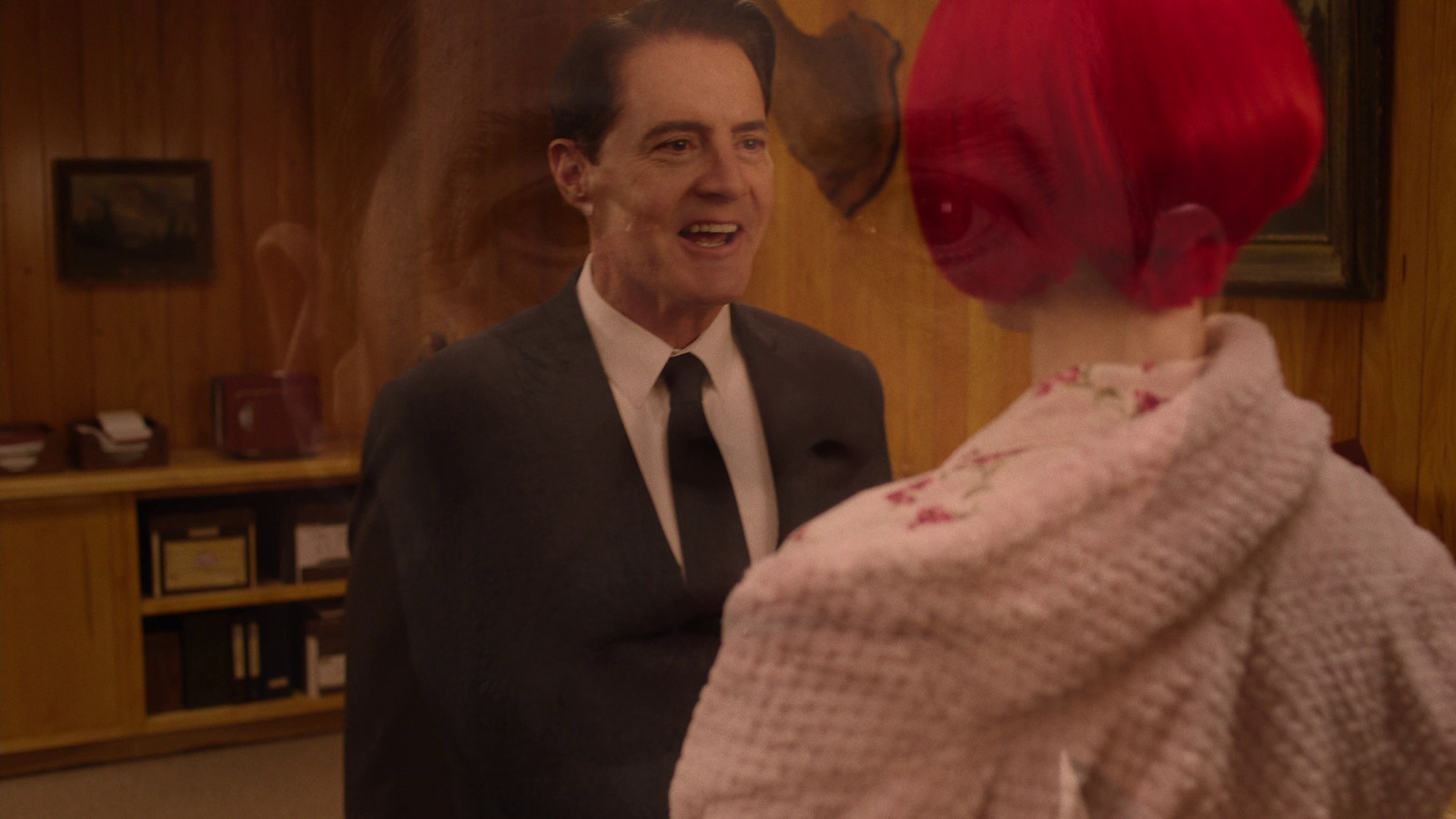
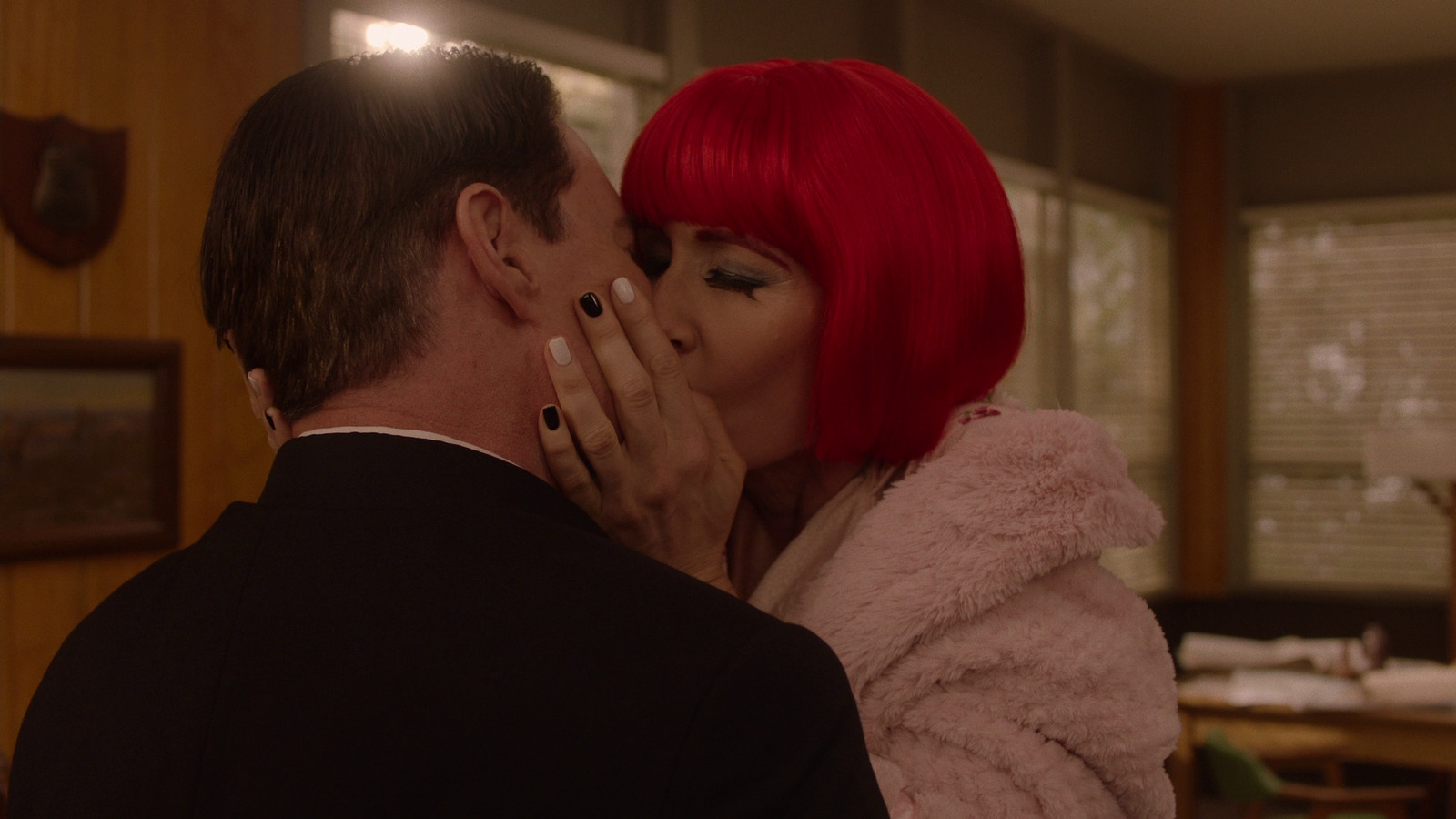
Cooper approaches Naido. The transformation passes through an opening face, the Red Room and an isolated image of Diane before returning to the office. The setting participates in the change; it is not merely a face being replaced against a stable background.
Diane and Cooper then recognise one another through touch and speech. Their exchange about remembering everything supplies confirmation between the characters, without making the audience privy to all that memory. Compare the manufactured Diane in Part 16 and the repeated recognition question in Part 18.
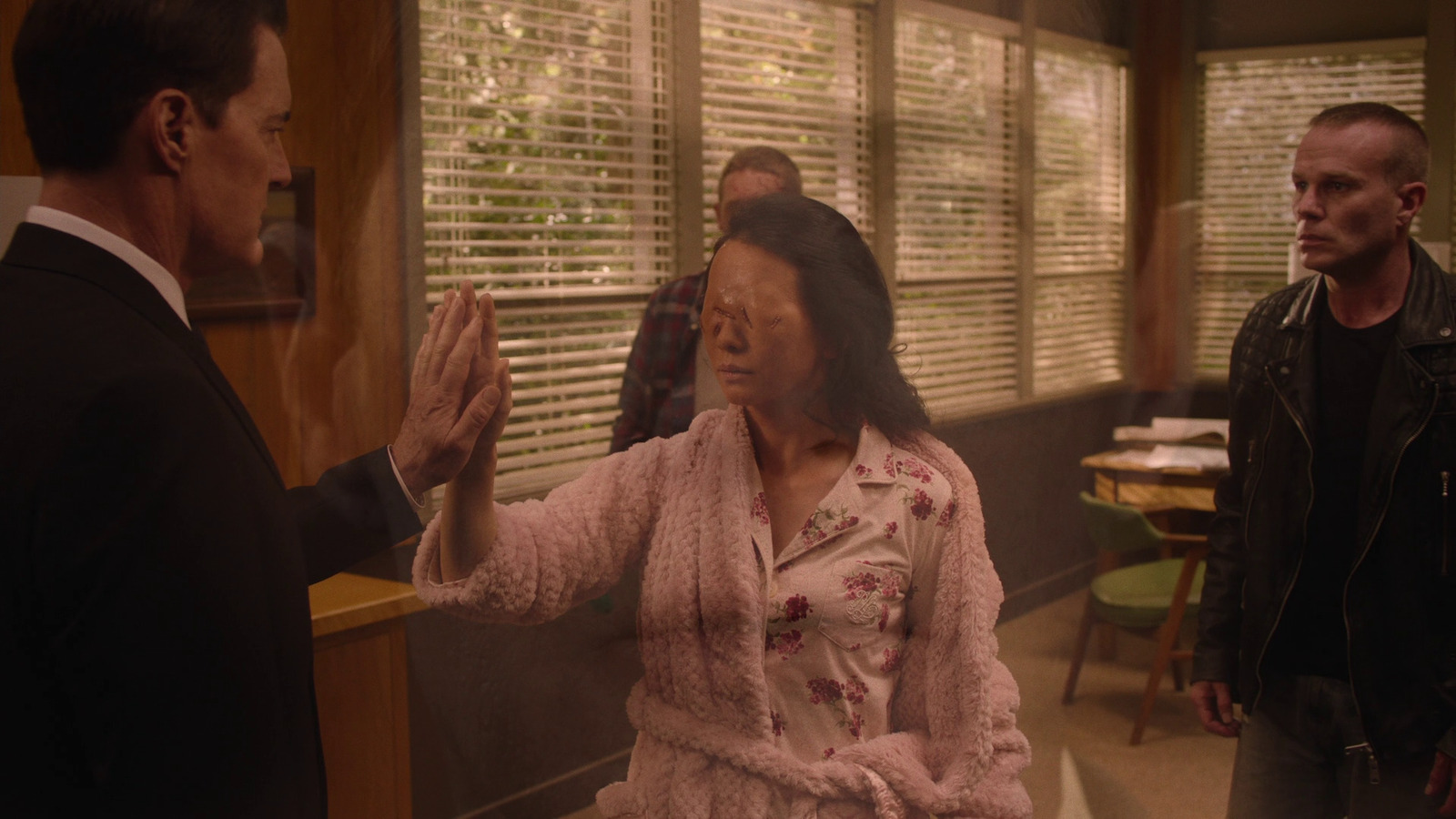
Open the scene sequence · 4 frames
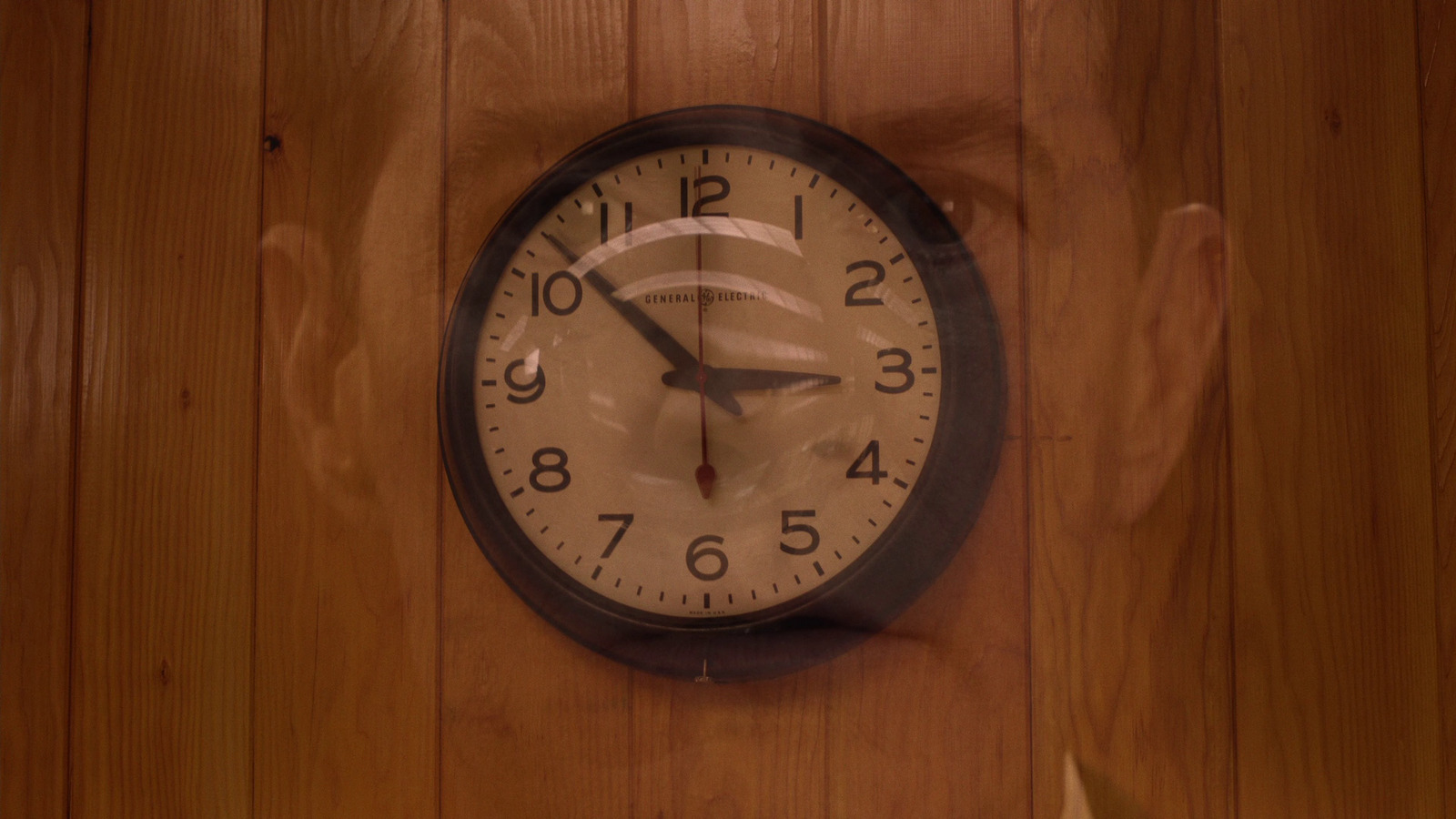
The clock and the enlarged face
The clock concentrates the scene around an unstable approach to the hour. Cooper’s enlarged face and the statement “We live inside a dream” prevent the reunion from settling into a conventional final group portrait.
The line changes the status of what we are watching without identifying a dreamer or providing a complete explanation. Darkness and the disappearance of the group lead into another passage. The episode offers a provisional convergence, then makes that convergence something from which Cooper must depart.
Open the scene sequence · 1 frame
A familiar key opens an unfamiliar route
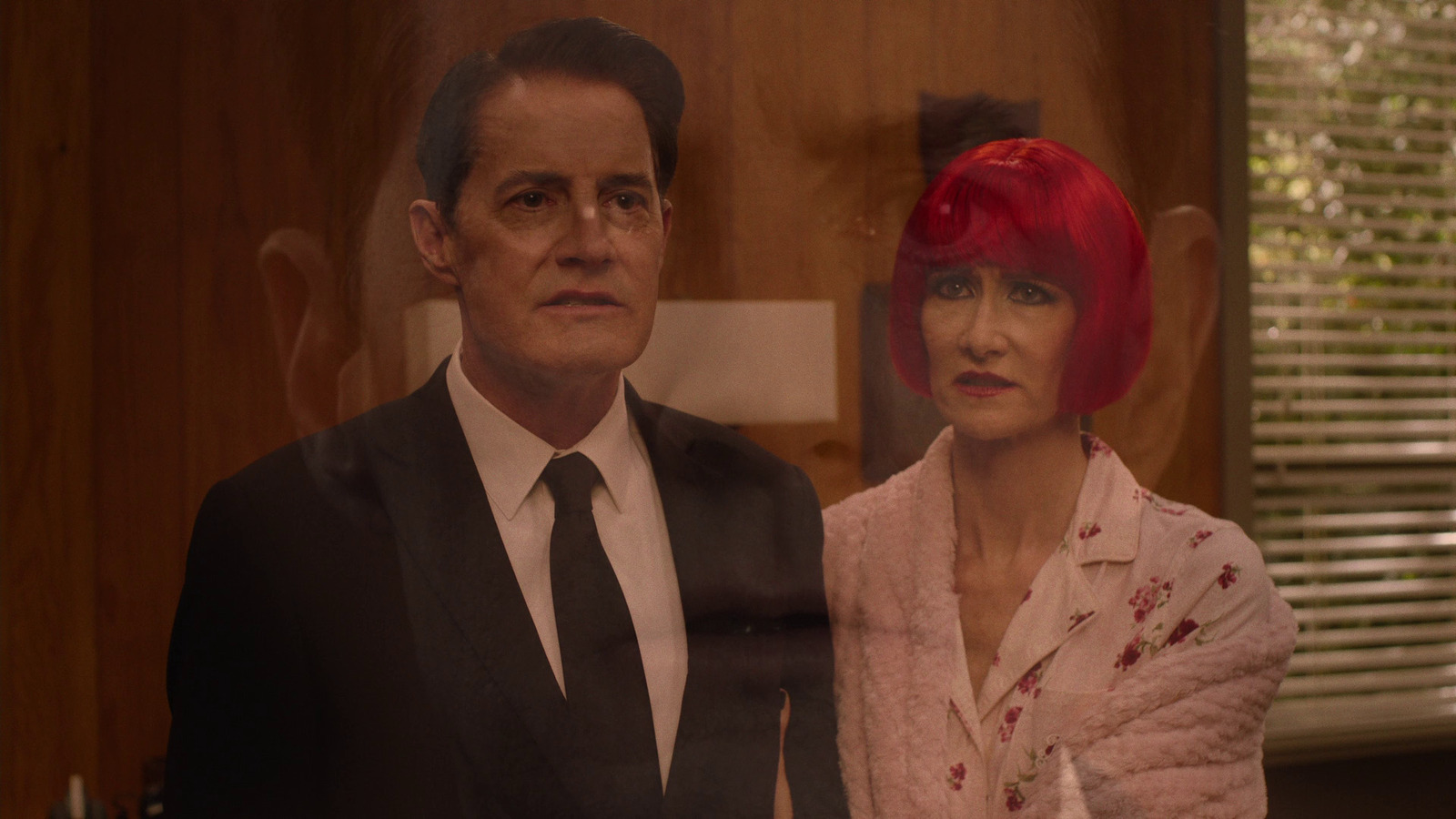
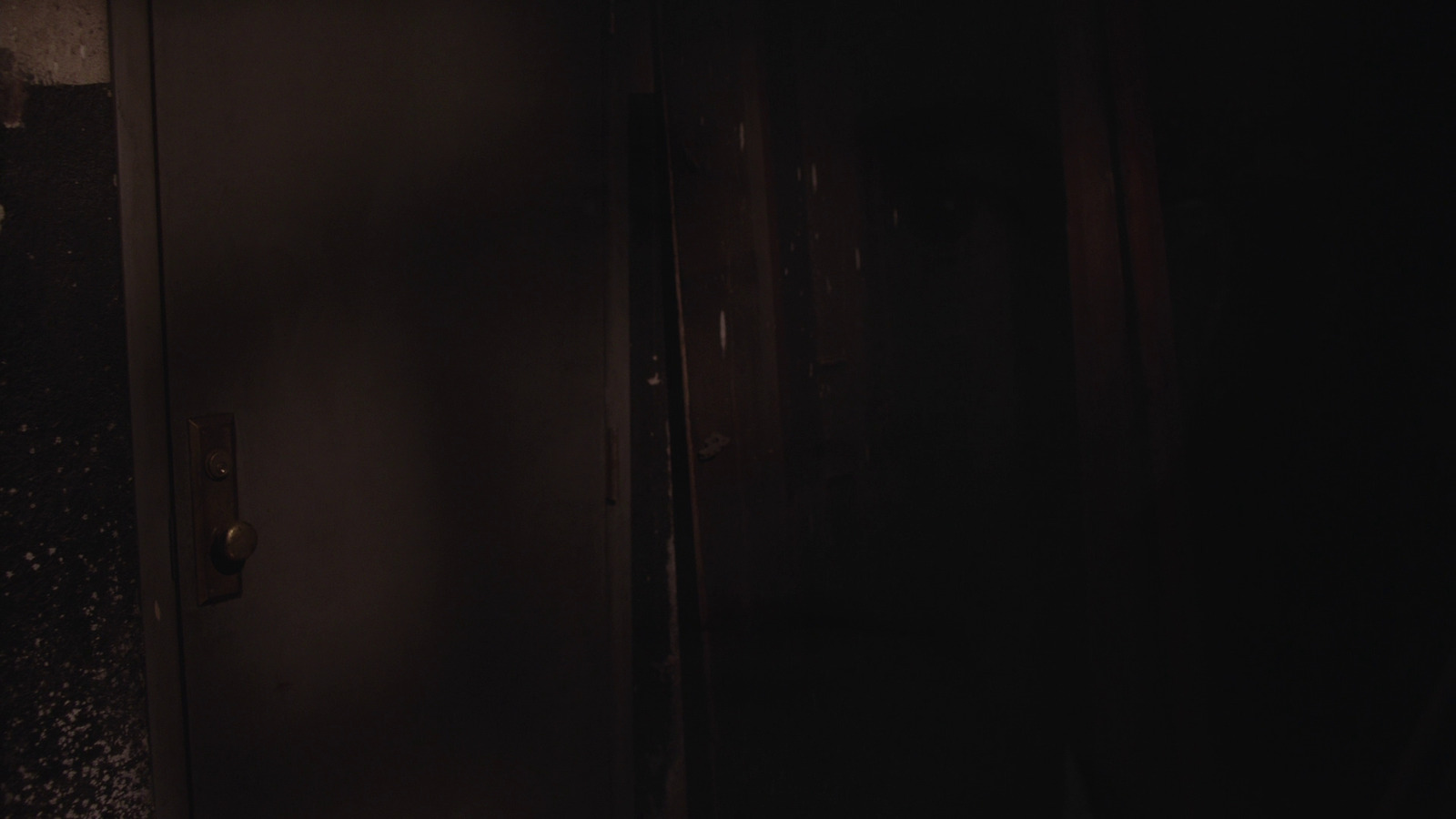
The Great Northern’s humming sound leads toward a door in darkness. Cooper tells Gordon and Diane not to follow. A kiss and a promise of another meeting give the separation the shape of a farewell while leaving its practical terms uncertain.
Gerard’s spoken invocation and the journey through stairs and industrial space replace the social density of the station with sparse encounters. The contrast is structural: after an office full of recognised people, Cooper moves through places that require guides, thresholds and instructions.
Open the scene sequence · 3 frames
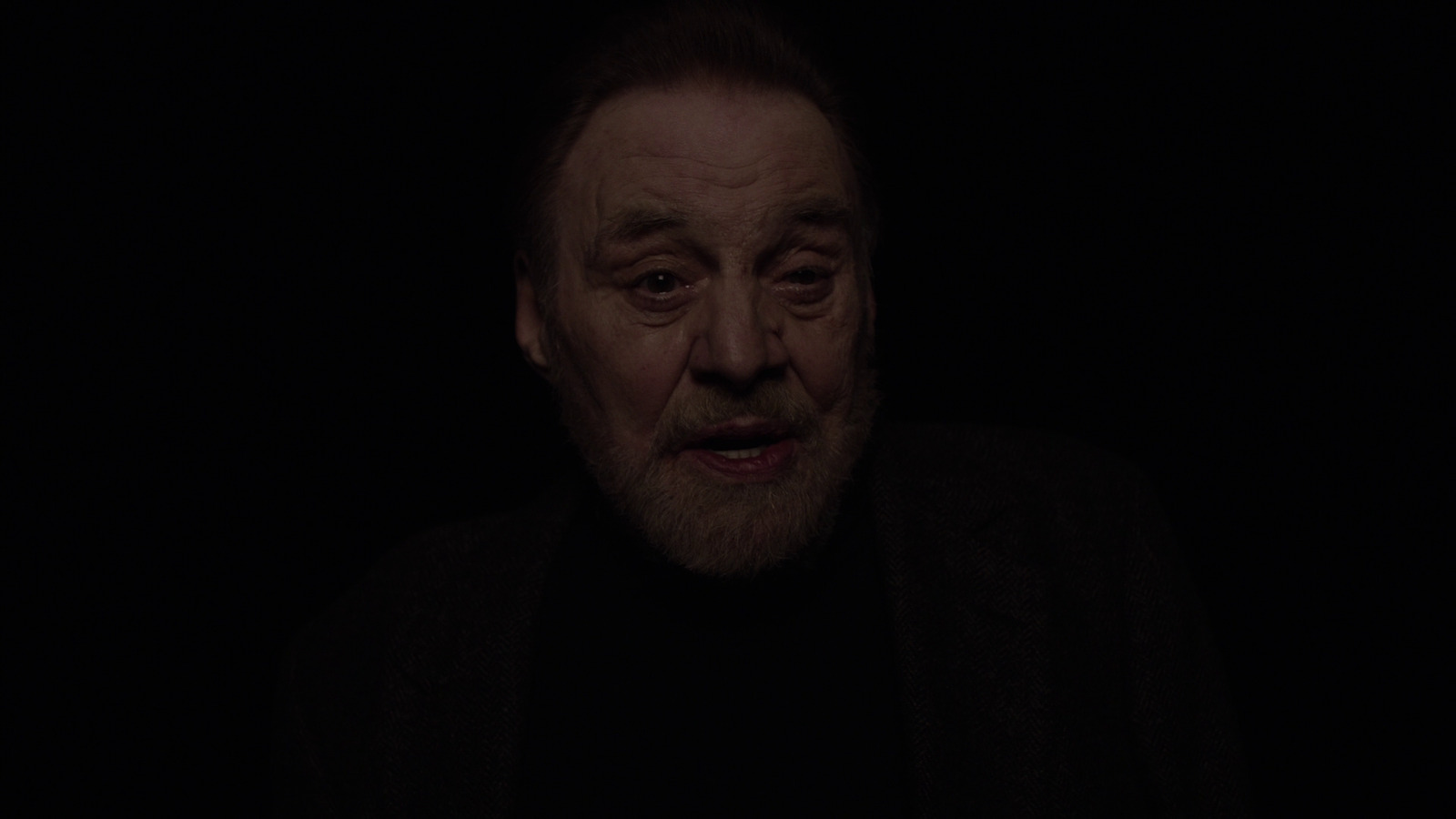
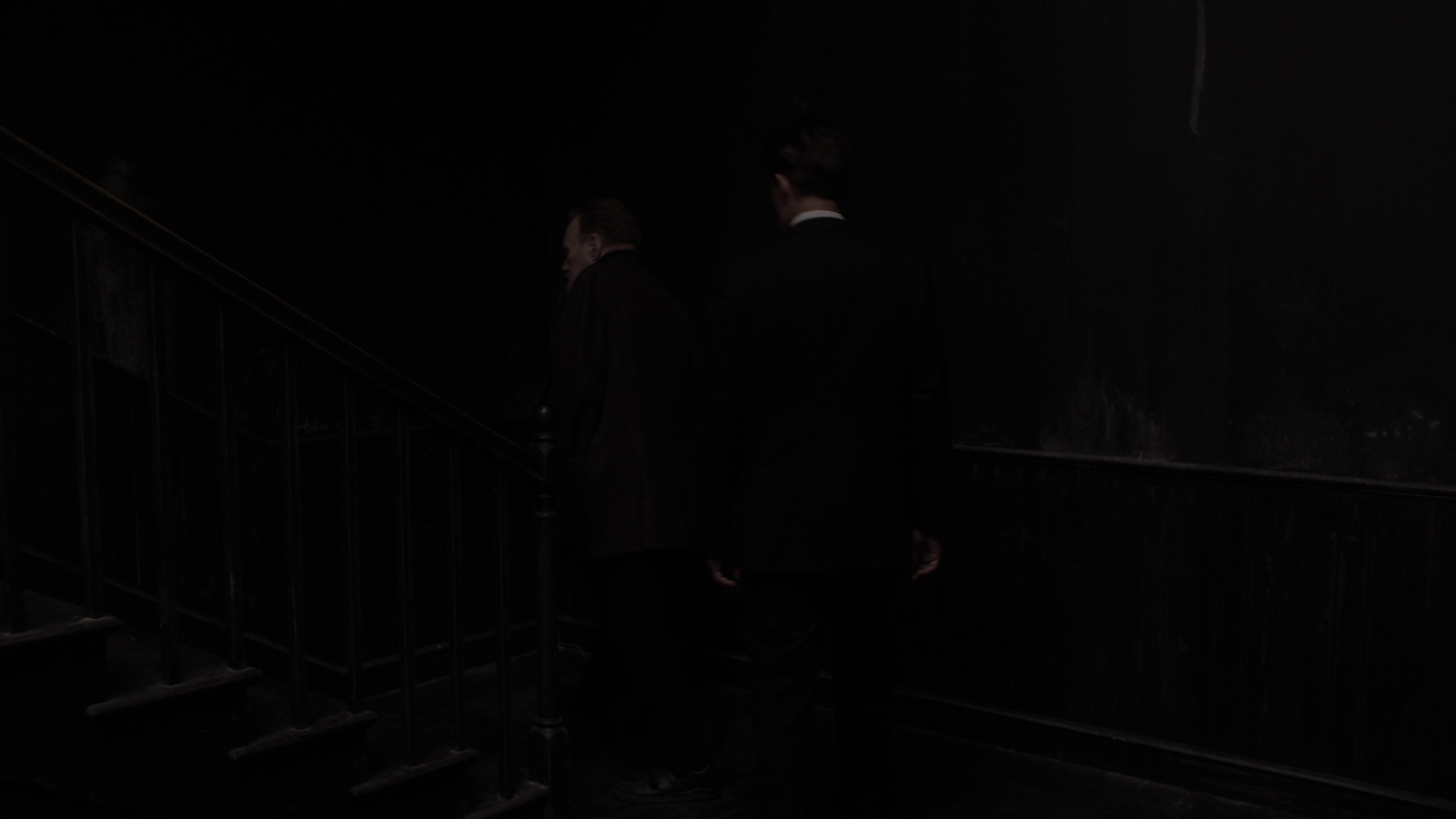
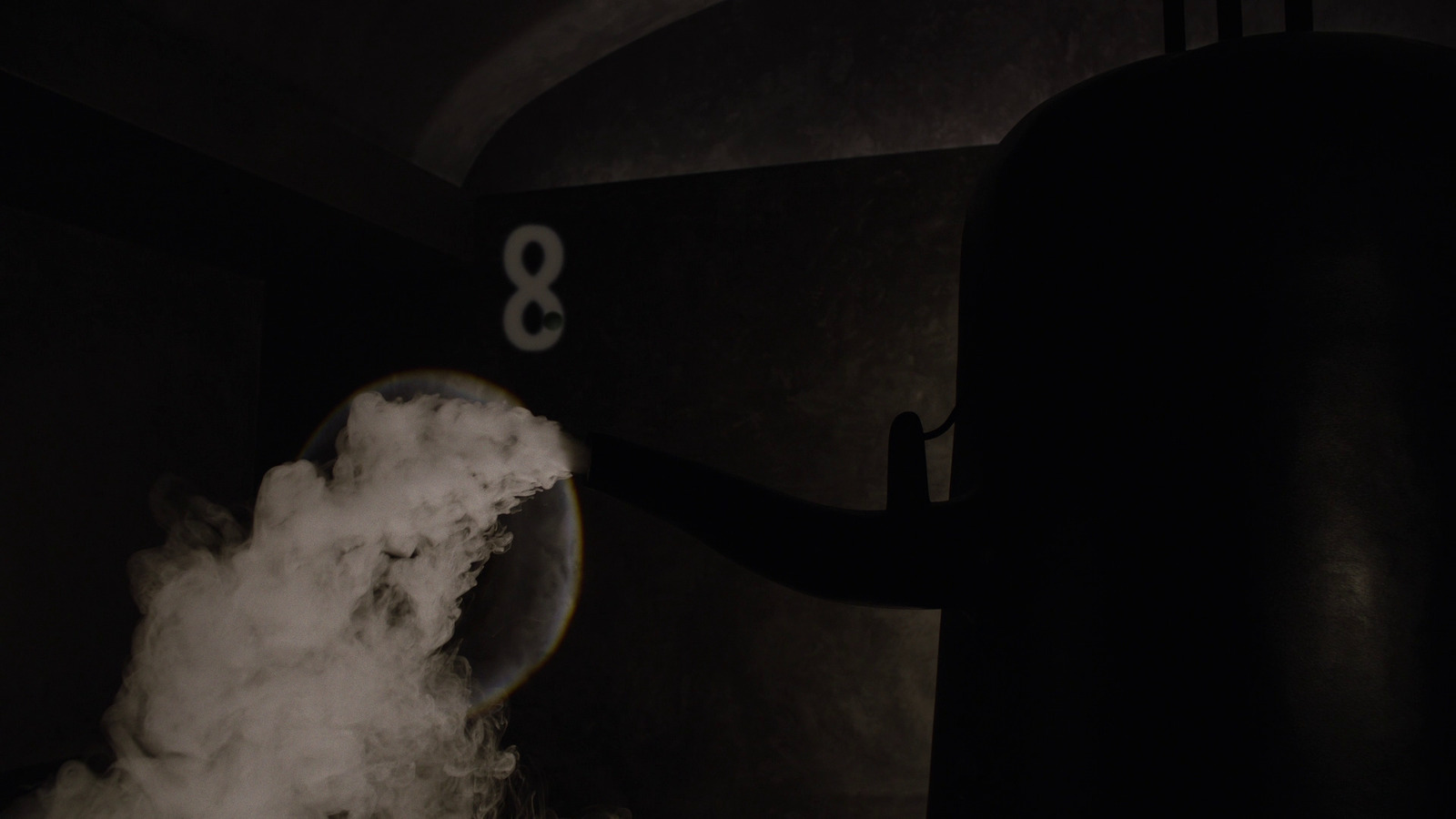
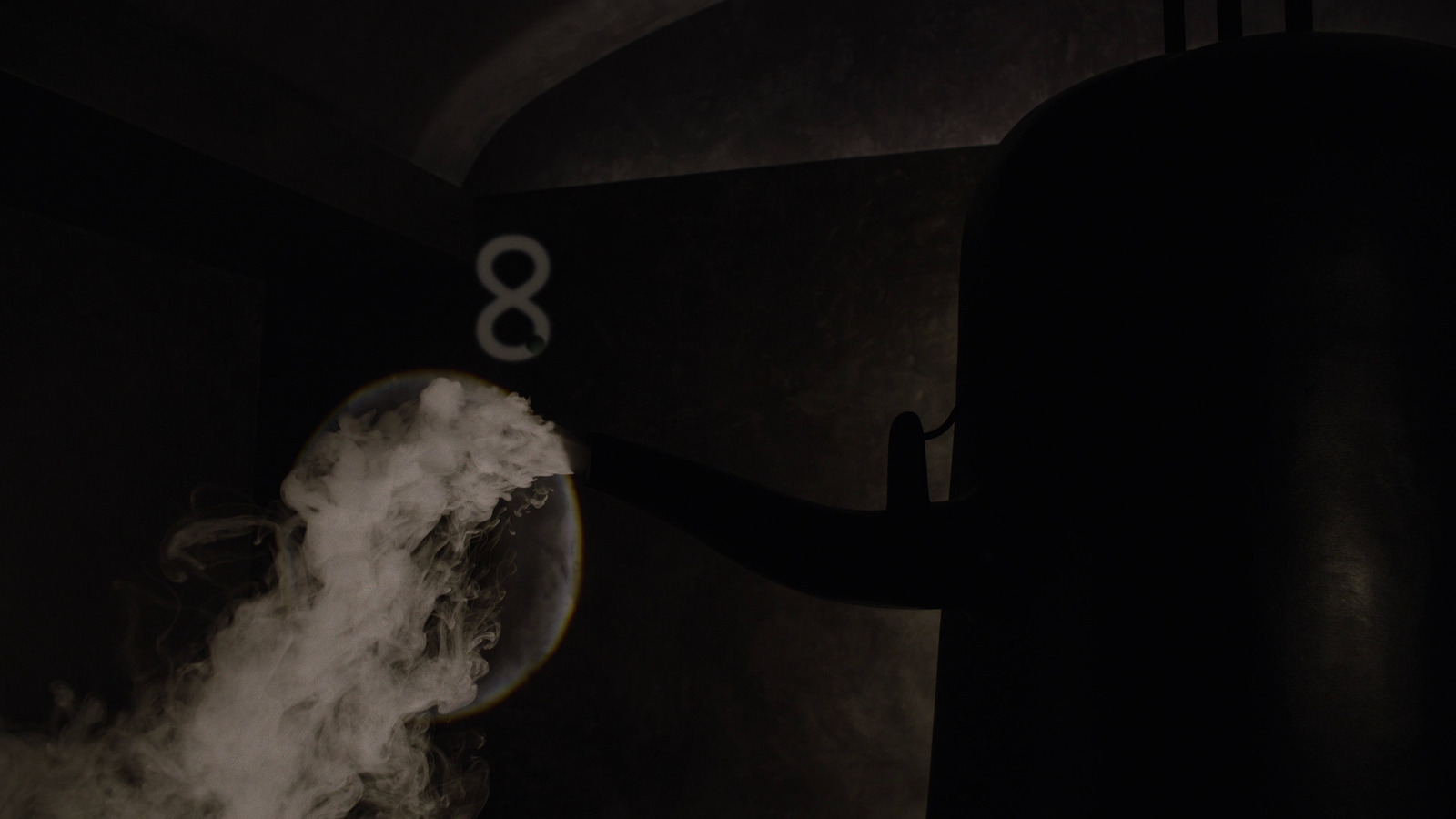
A date located in steam
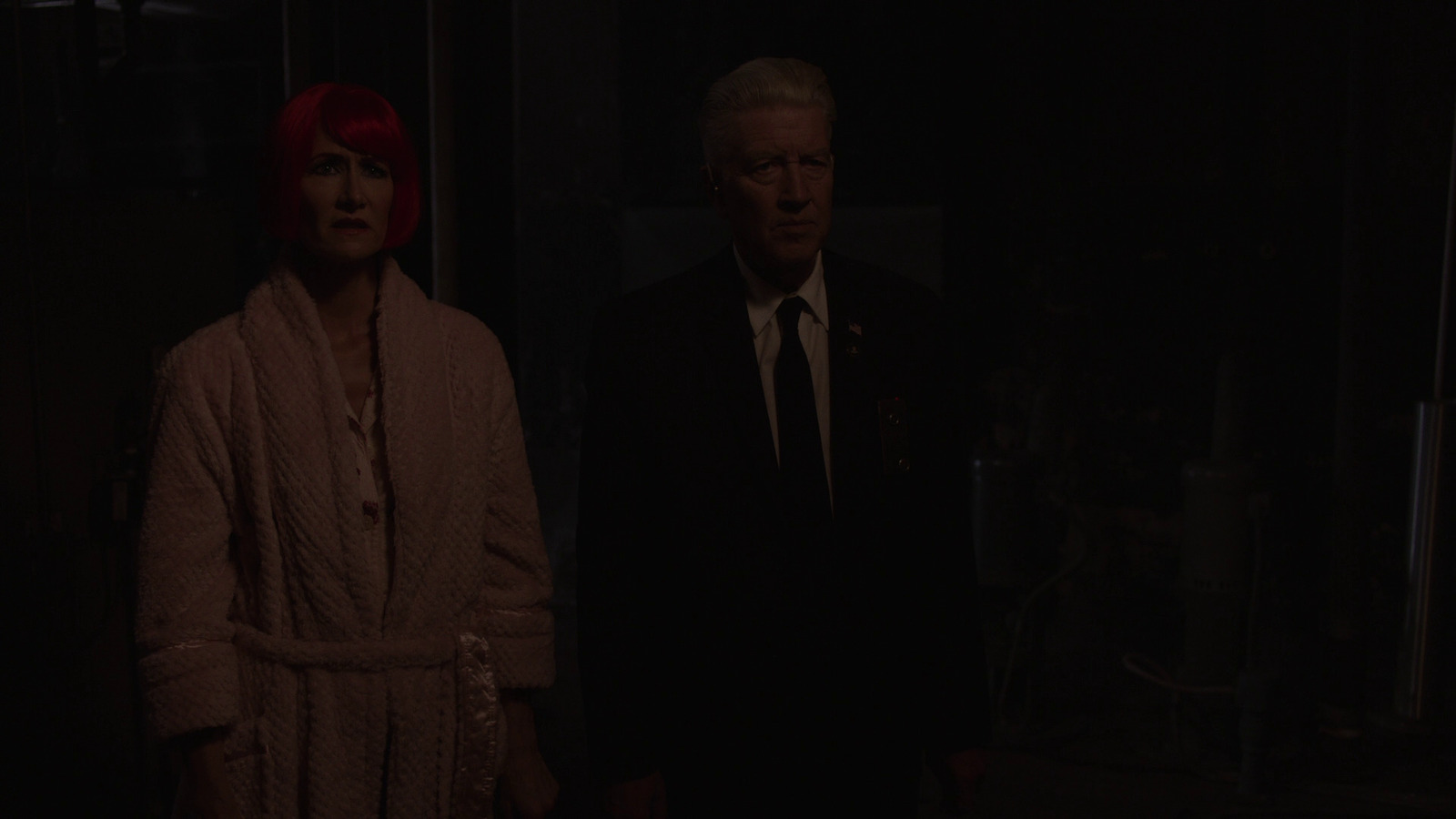
Cooper asks Jeffries for February 23, 1989. The exchange includes the idea that Gordon will remember an unofficial version, making memory and competing accounts part of the journey before the past visibly changes.
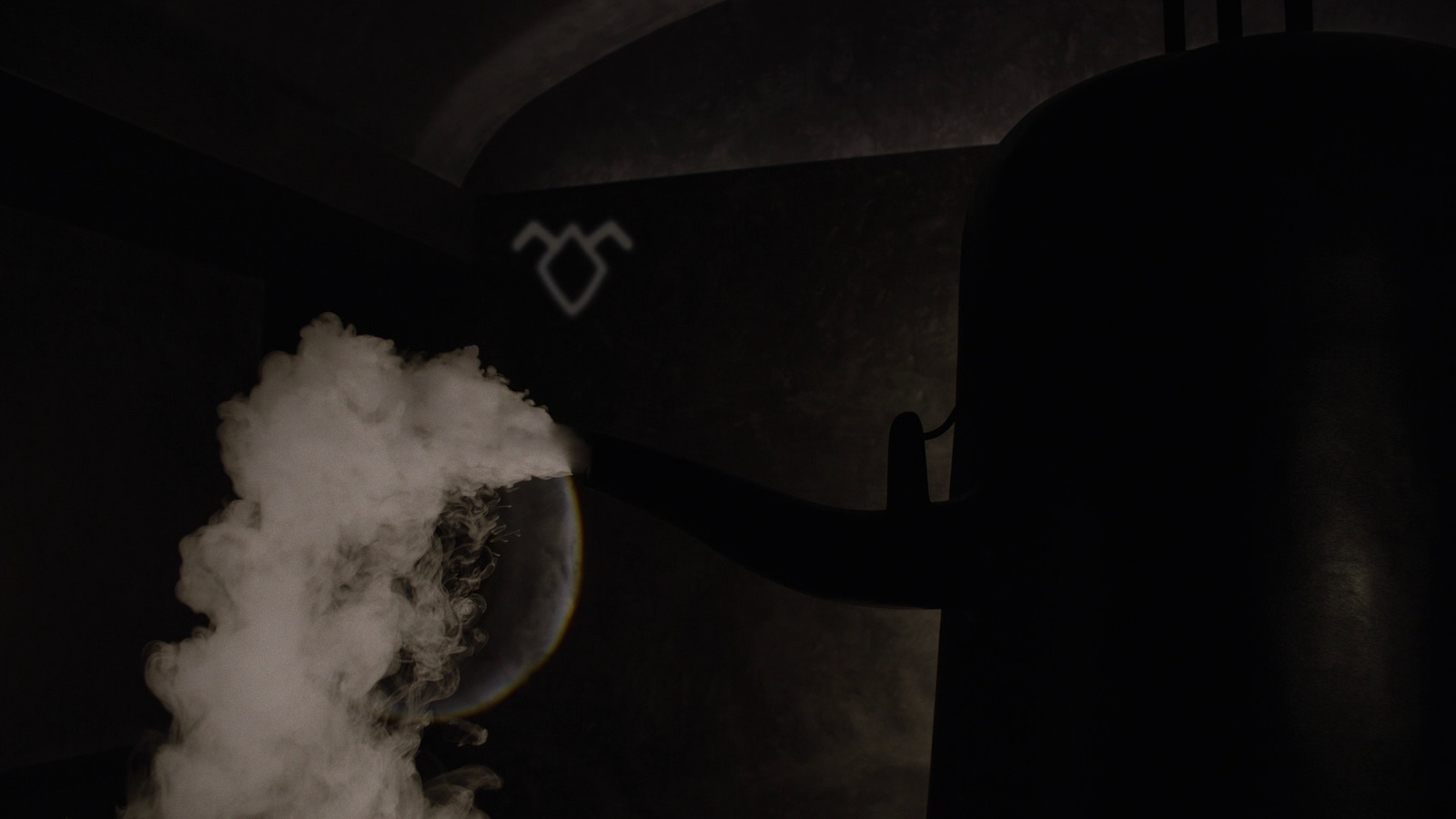
The angular sign becomes a looping figure eight, then a marked point. Date, diagram, sound and camera movement converge into a transition. The image offers a location within a figure rather than an ordinary map. Its exact cosmological meaning remains open; its immediate function is to send Cooper toward Laura’s last night.
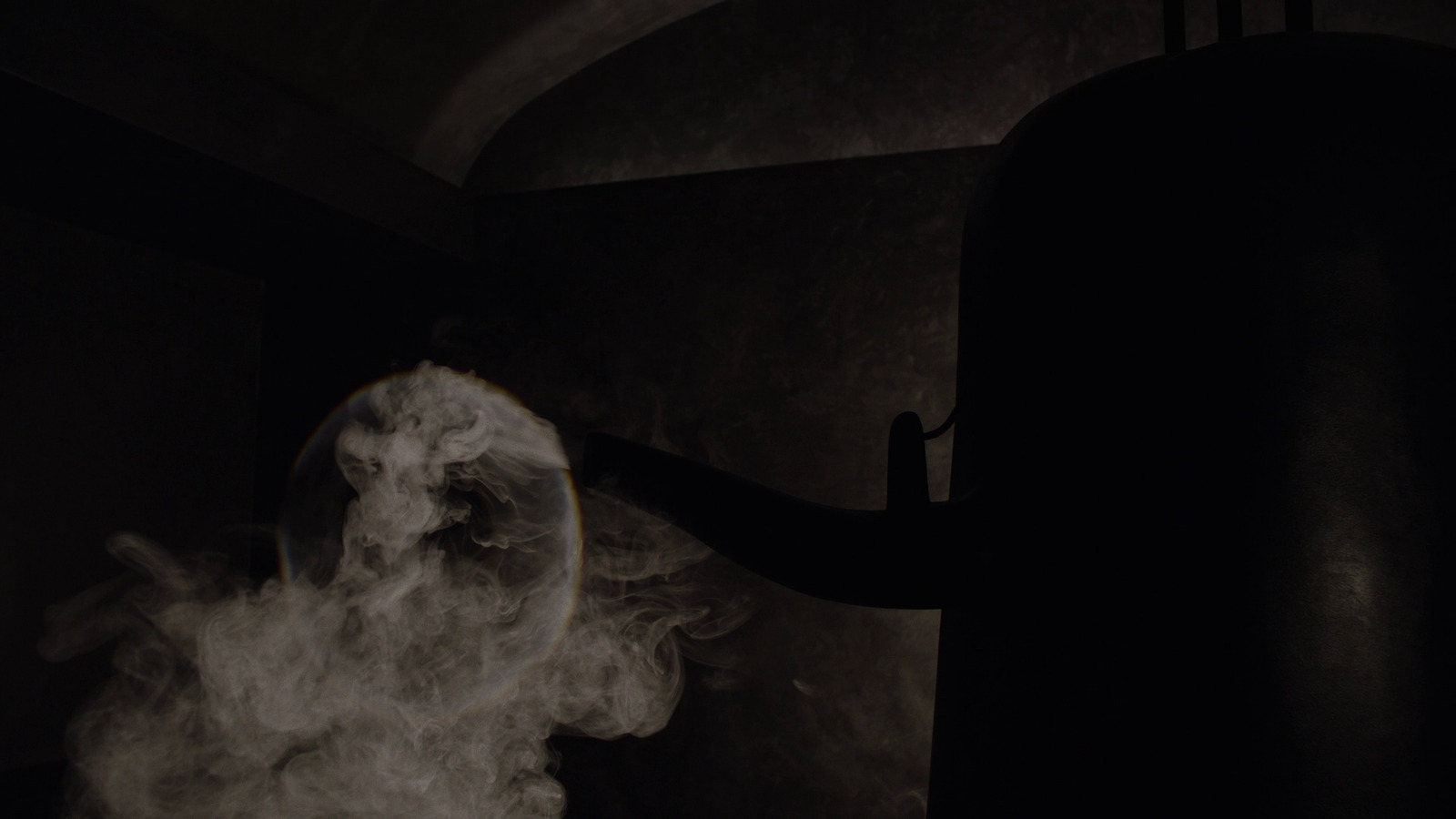
Open the scene sequence · 3 frames
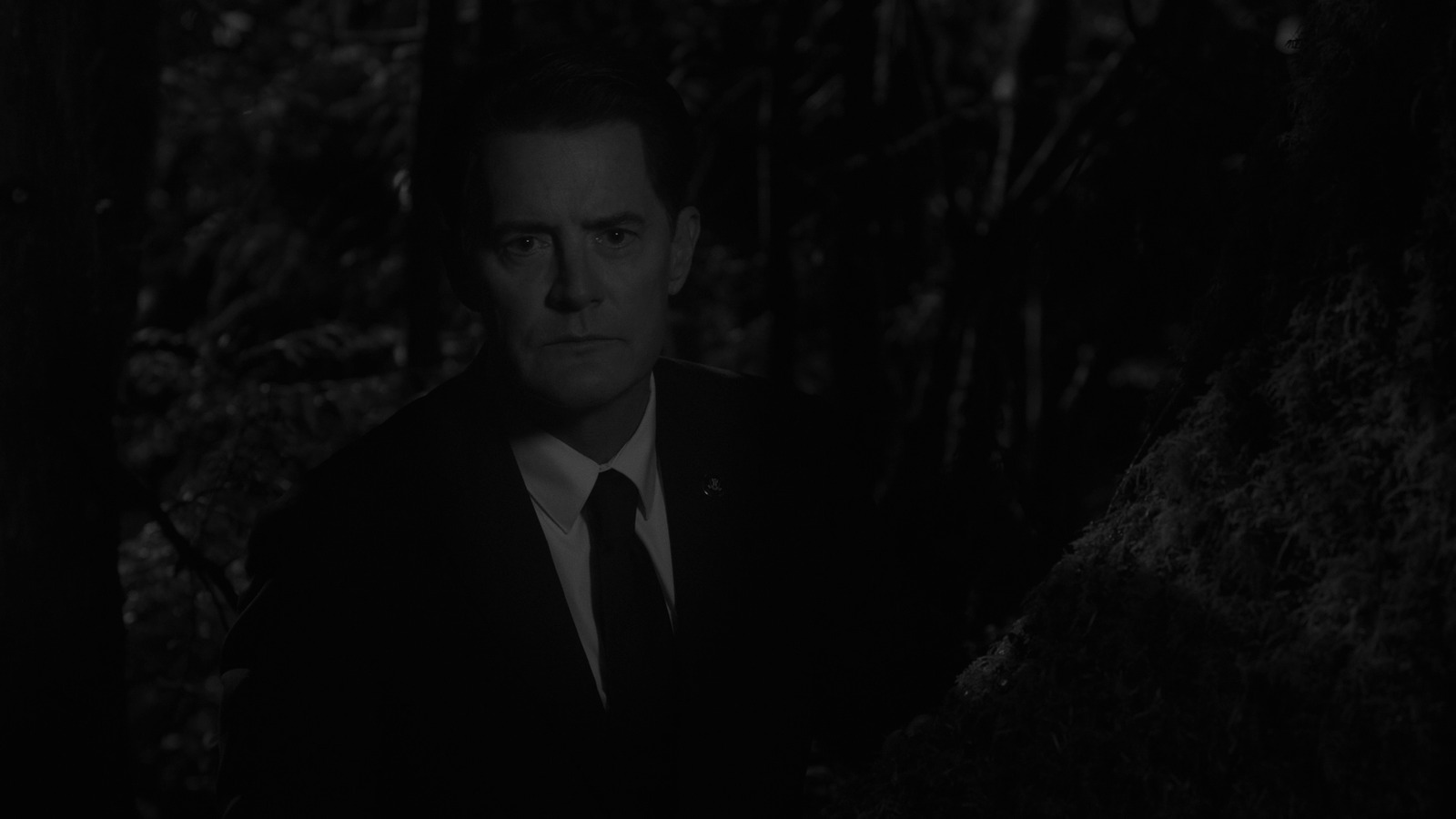
Entering a scene that already exists
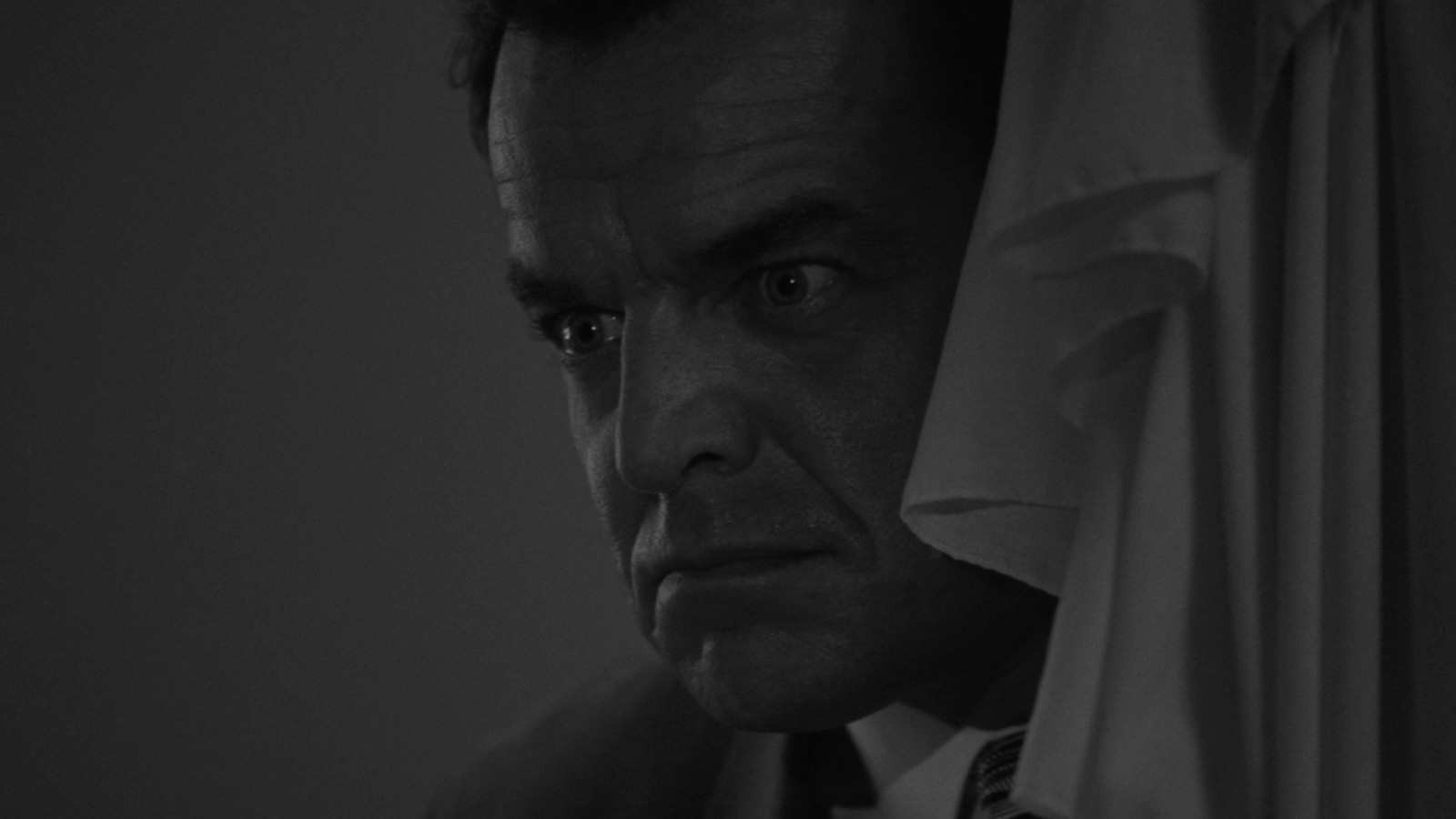
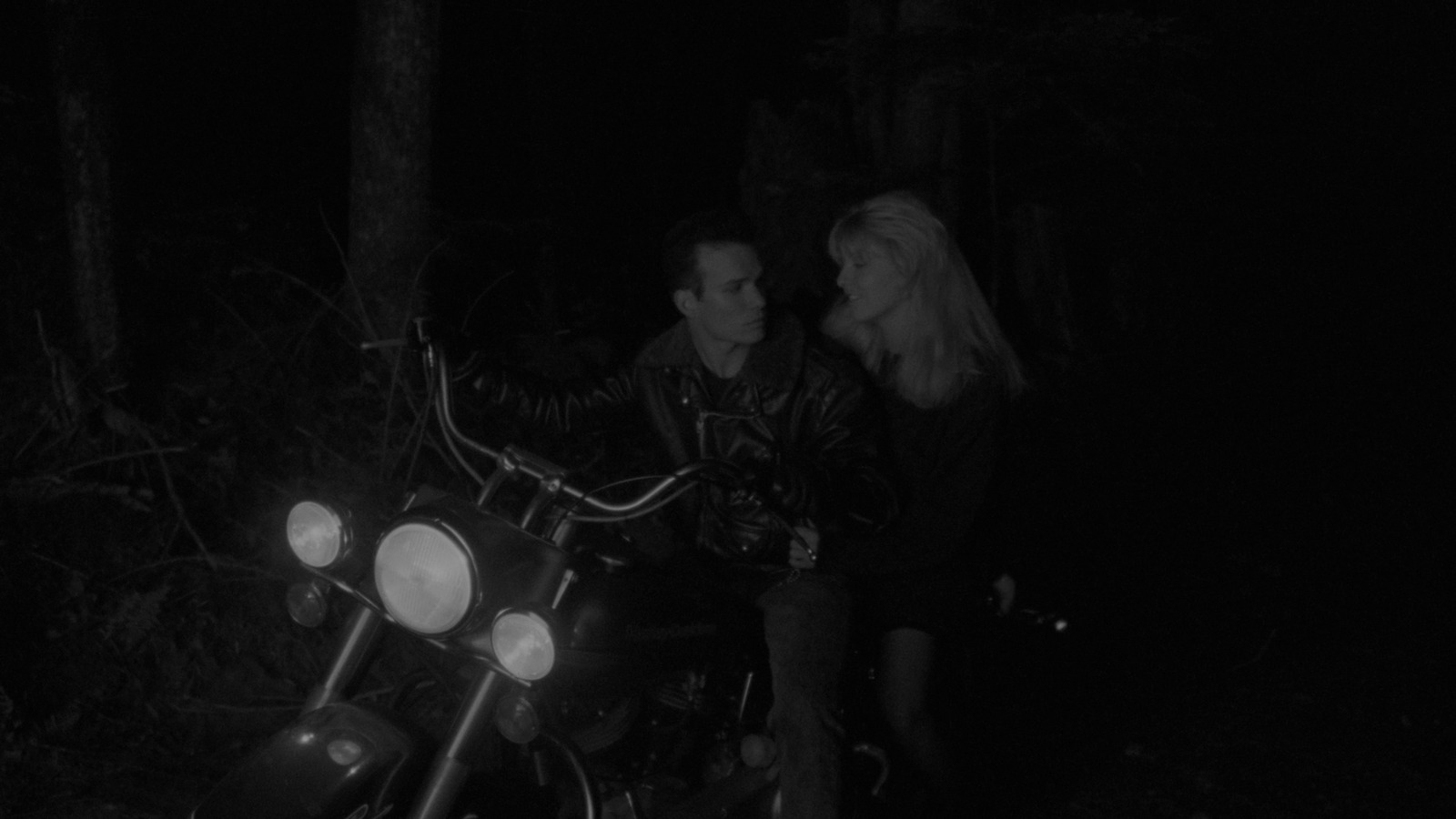
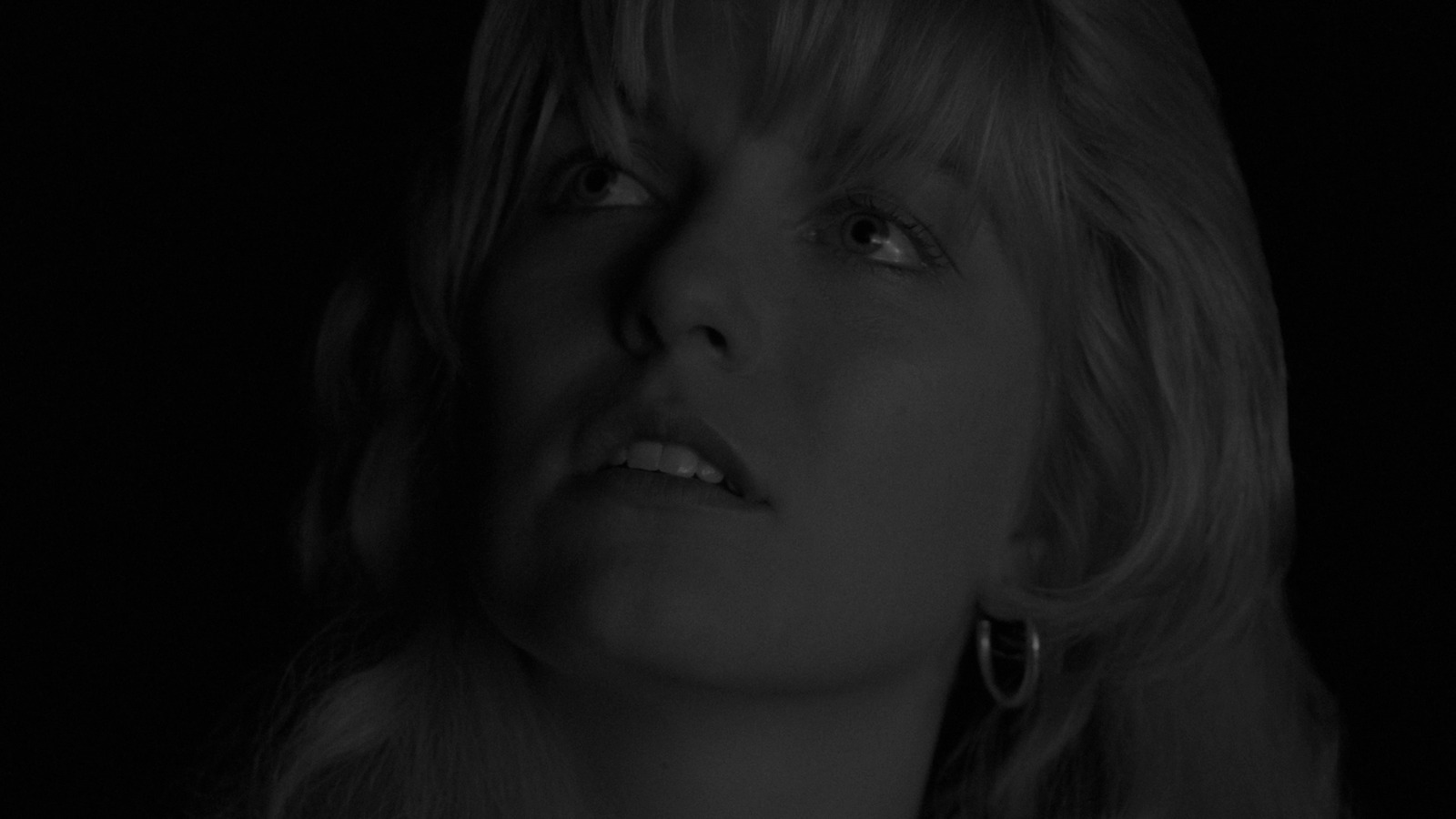
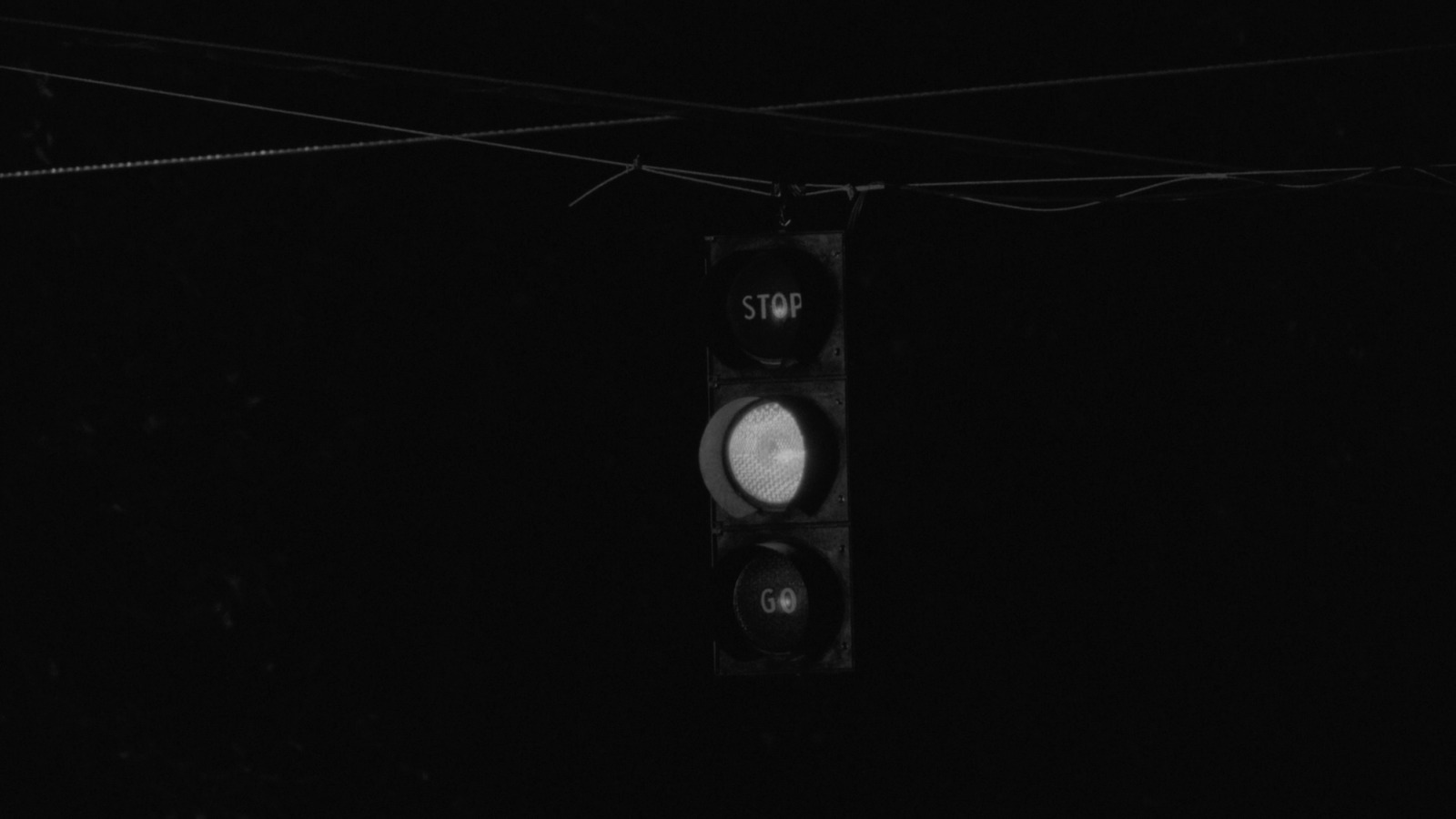
The episode returns to Fire Walk with Me in monochrome: Leland at the window, James and Laura in the woods, the motorcycle and the traffic light. Cooper is inserted as an observer of a scene whose emotional history is already established.
Laura’s speech resists being treated as a simple clue-delivery mechanism. Her fear, anger, longing and insistence that James cannot understand remain active even when the returning investigator gives the scene a new purpose. The passage asks the viewer to remember the feature’s experience of Laura, not only the series’ investigation of her death.
Open the scene sequence · 4 frames
Recognition, removal, home
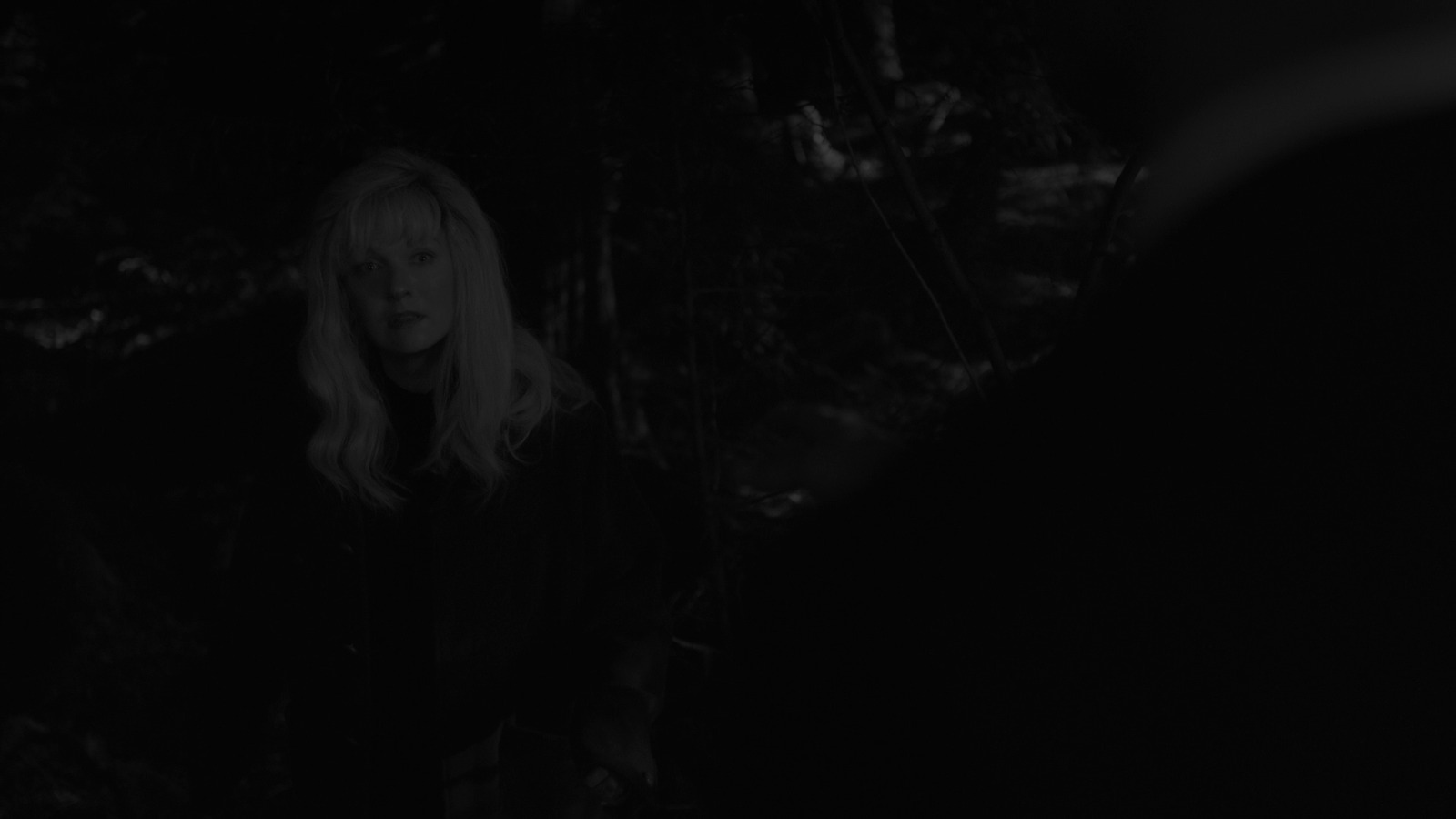
Laura encounters Cooper and recognises him from a dream. The exchange gives his intervention an uncanny familiarity from her side, rather than making him an entirely new rescuer arriving from outside her experience.
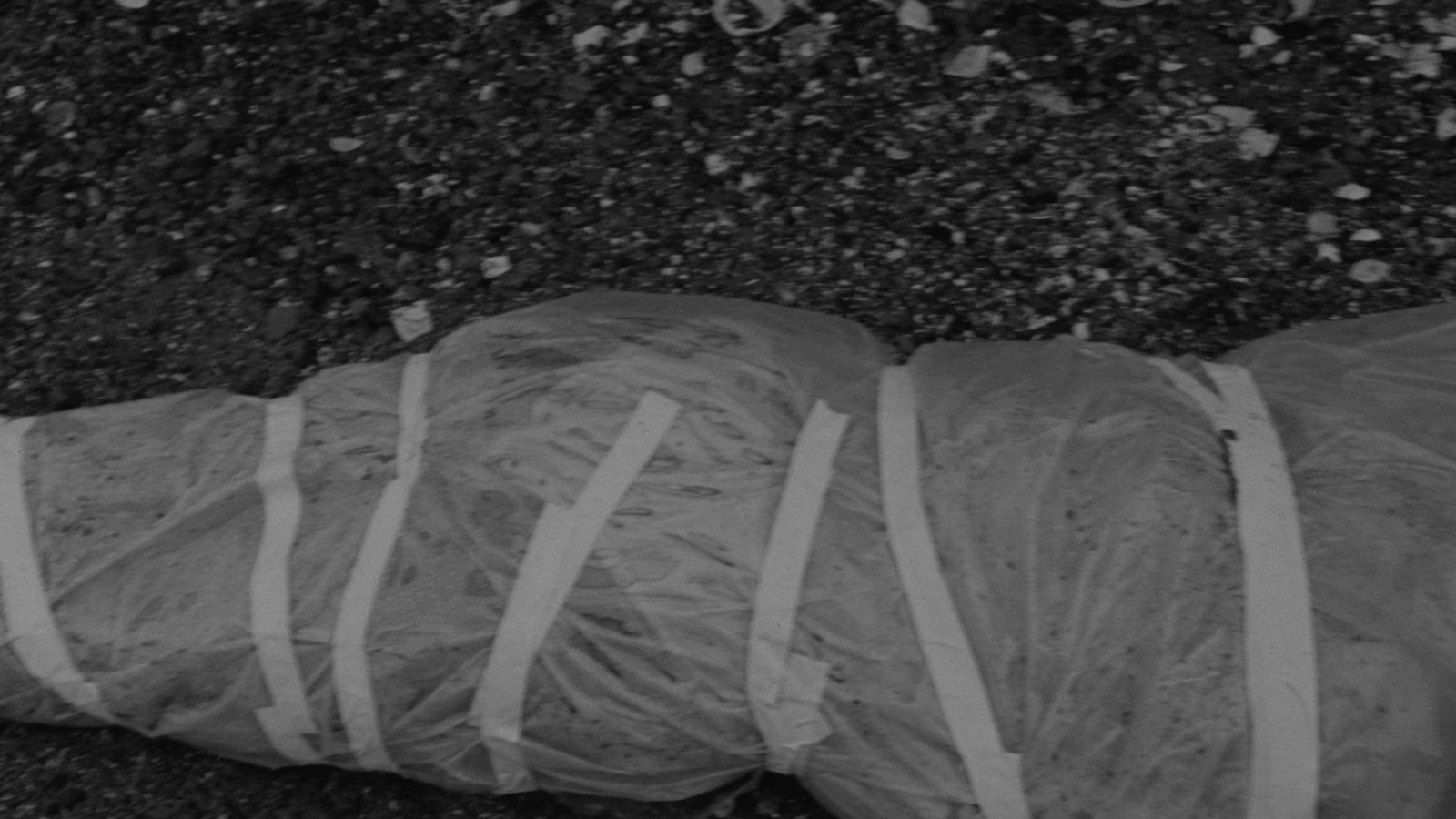
The wrapped body disappears from the shoreline image. Cooper’s promise of going home then accompanies a return to colour. The sequence shows a concrete alteration to a familiar image, but alteration is not the same as a completed rescue. The rest of the episode tests the distance between removing the death we know and bringing a person safely to a destination.
Open the scene sequence · 3 frames

Pete goes fishing
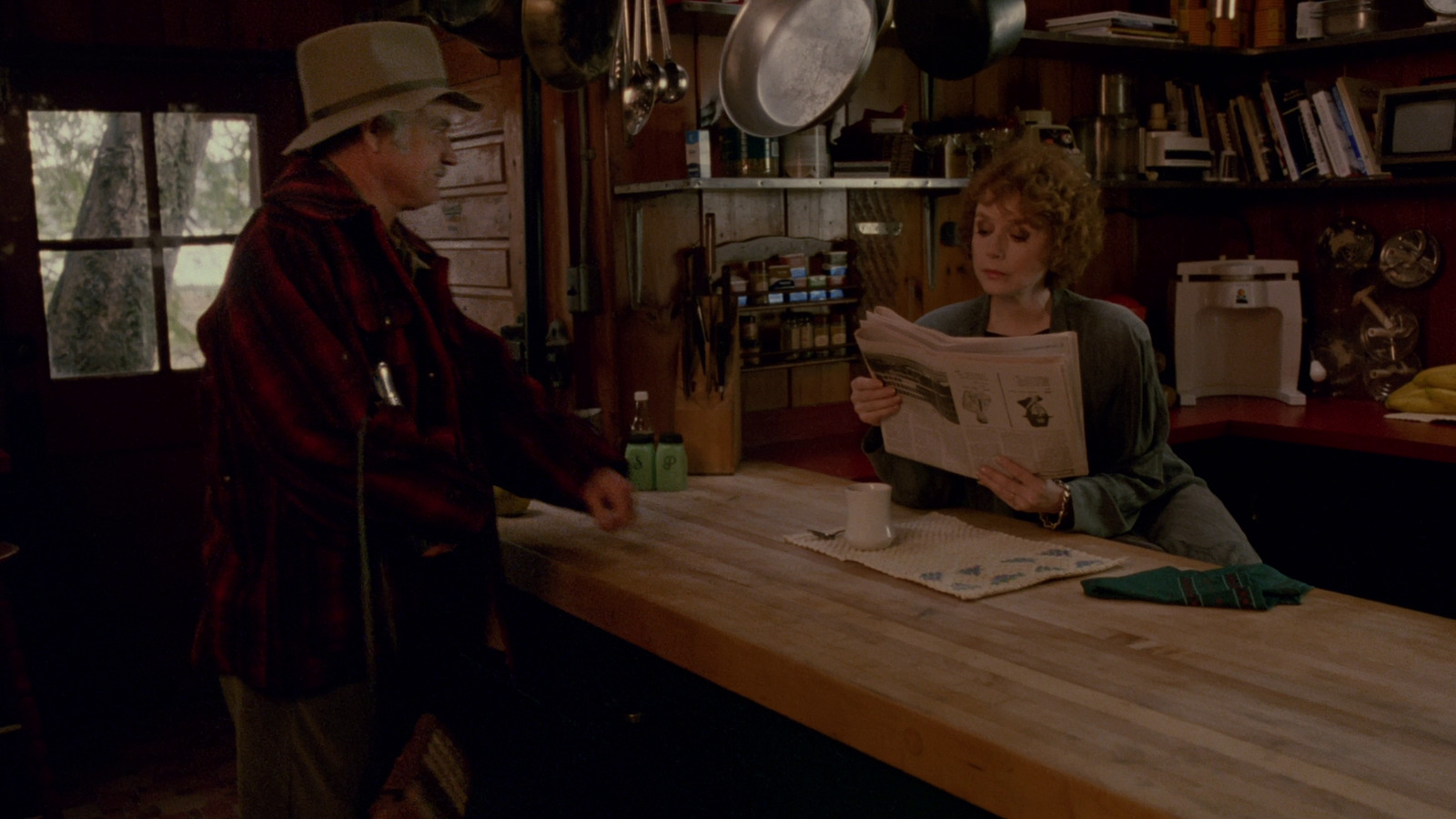
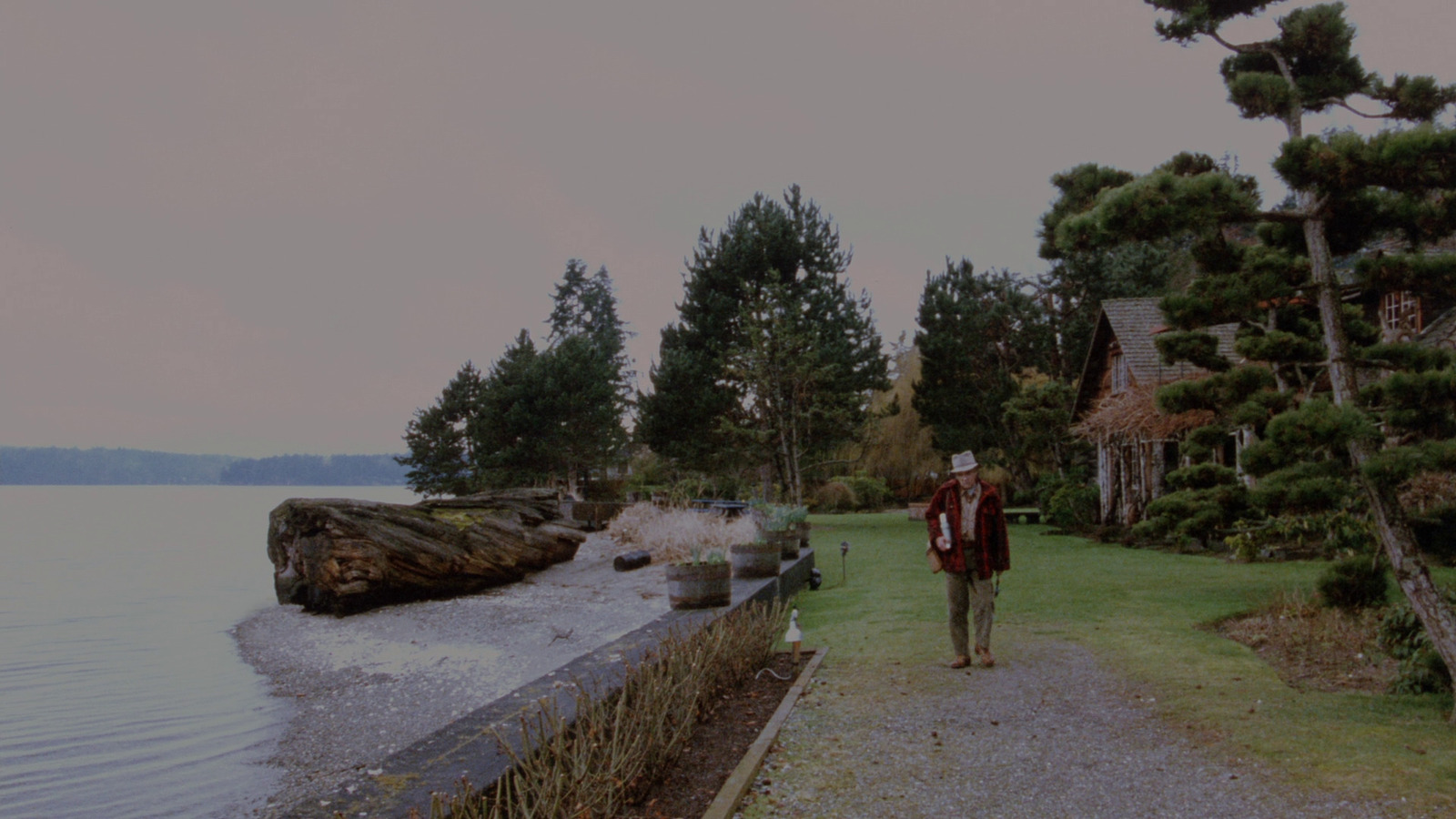
The pilot’s morning returns: Josie at the mirror, Catherine with the newspaper and Pete leaving to fish. Without the body on the shore, his walk continues instead of becoming the discovery that once set the series in motion.
The change is expressed through a missing interruption. An ordinary action is allowed to remain ordinary. This quiet extension is a more exact measure of the intervention than an explanatory speech announcing that history has been repaired.
Open the scene sequence · 1 frame
An image that will not yield
Sarah’s sounds fill the Palmer house before her attack on Laura’s framed photograph. Repetition in the blows and the image’s resistance make the scene difficult to read as a single continuous act of domestic destruction.
The portrait remains the object of attention even as glass and force become insistent. Set beside the emptied shoreline, the scene makes two very different operations on Laura’s image: an erasure from one remembered view and an assault on another. Their relation is suggestive, not a fully explained cause-and-effect chain.
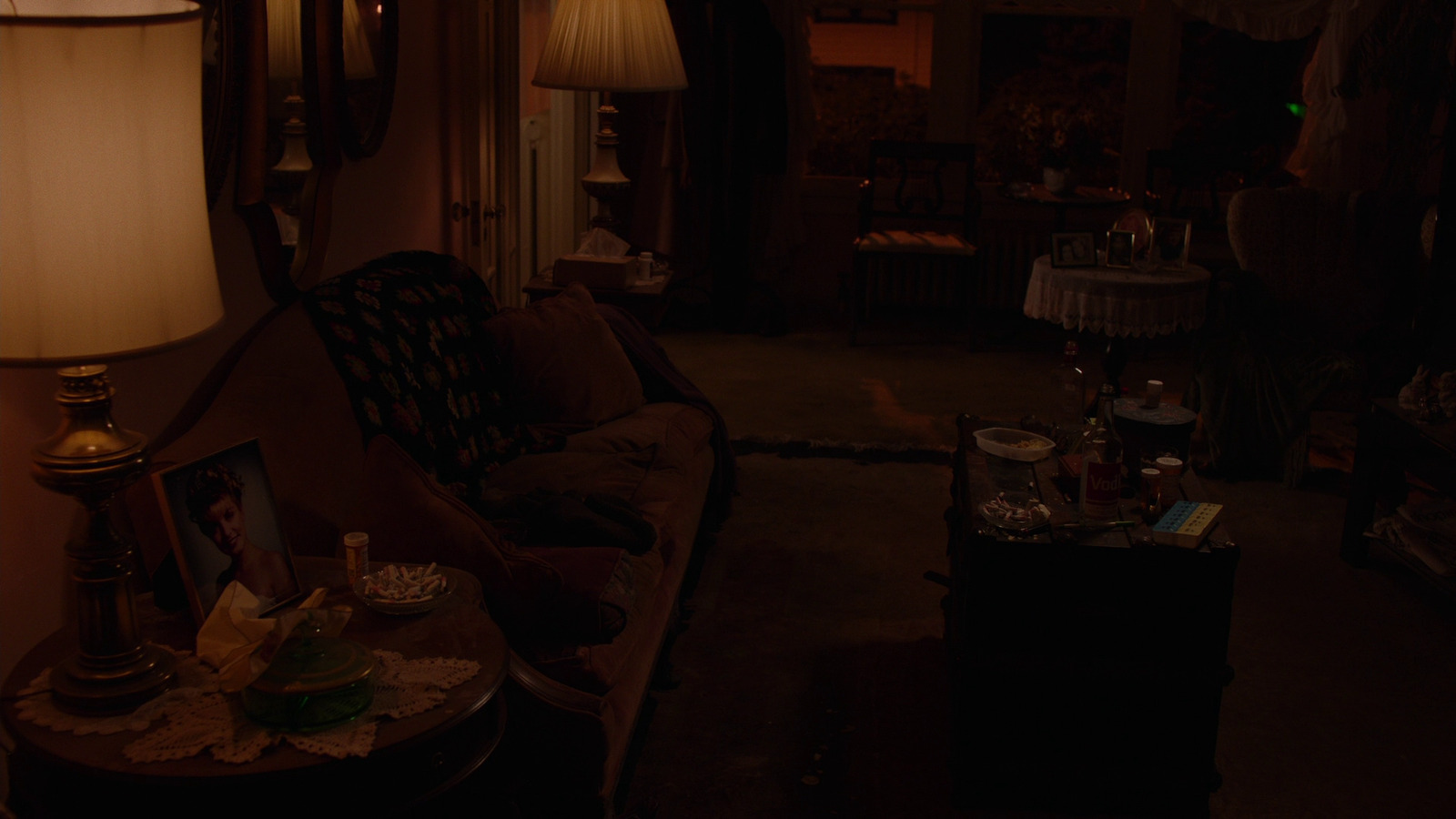
Open the scene sequence · 1 frame
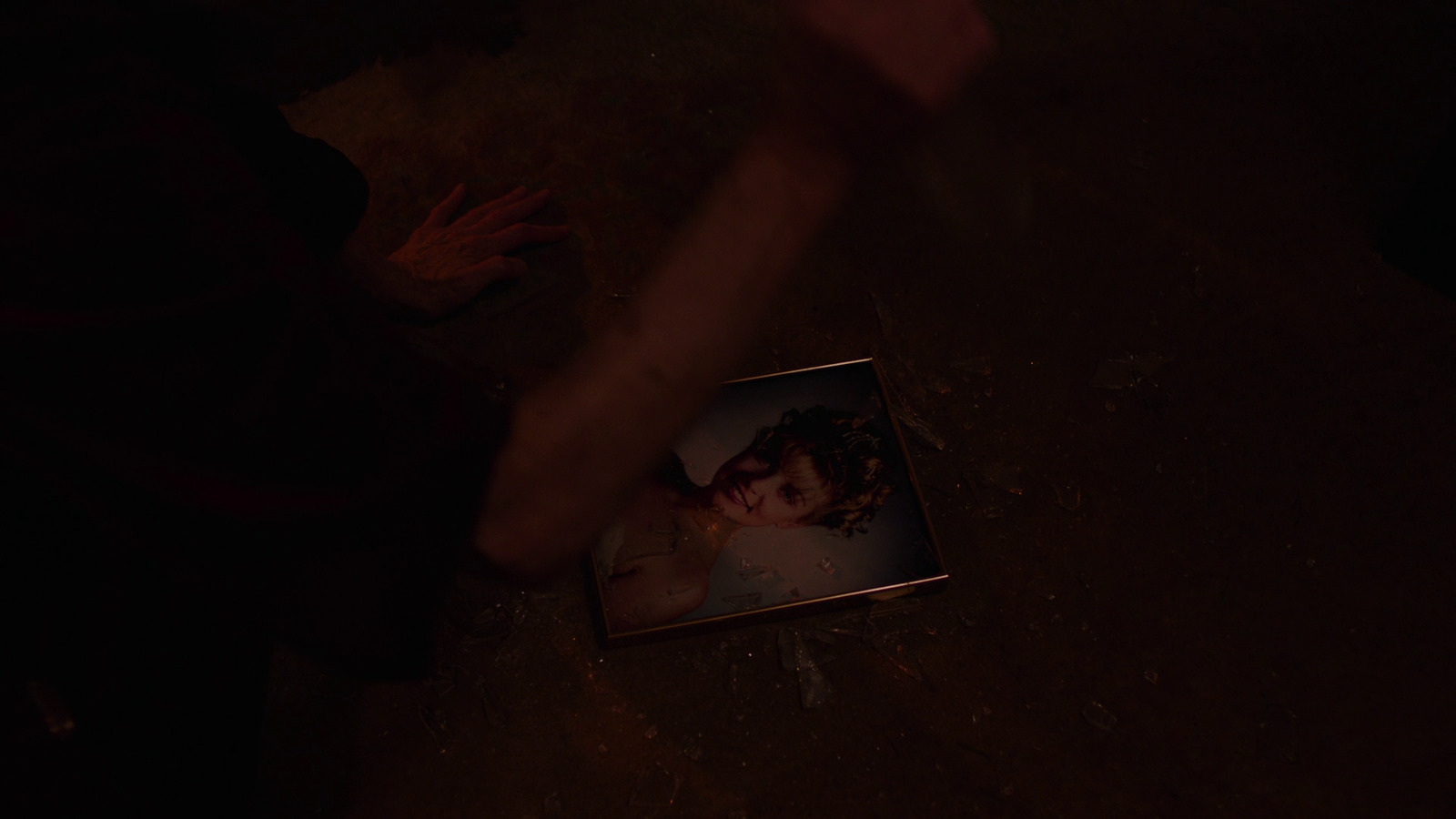
The rescue loses its second person
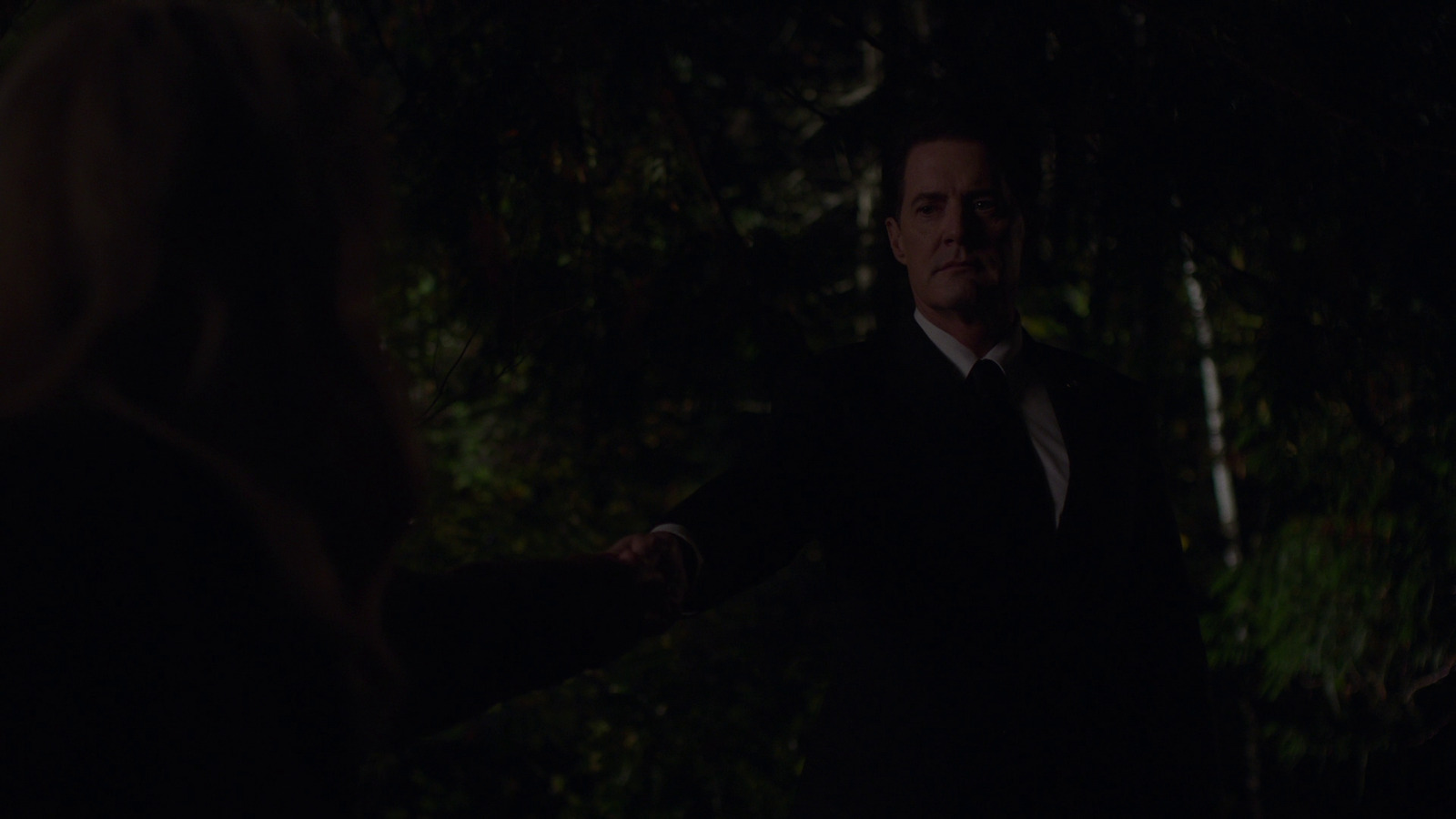
Cooper leads Laura by the hand through the woods. Scratching and electrical disturbance interrupt the journey; her scream is followed by the discovery that she is no longer behind him. The action that organised the rescue—one person guiding another—has lost the person being guided.
The empty space matters as much as the reaction. The episode does not show Laura arriving home and then departing again. The loss occurs during the passage. Part 18 resumes this break, so the two parts should be read together without treating the first as an independently secure happy ending.
Open the scene sequence · 1 frame
The Roadhouse after the failed arrival
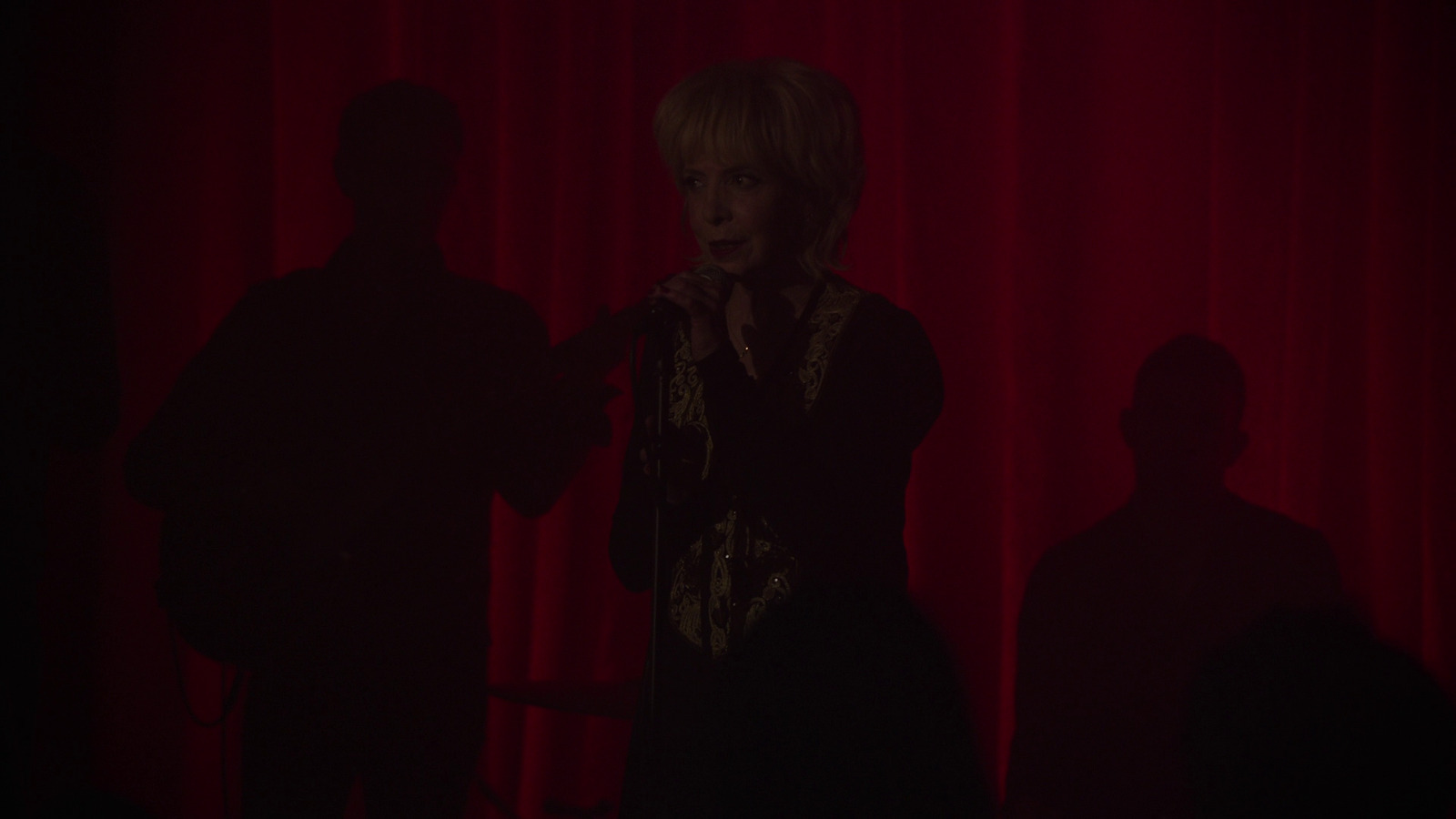
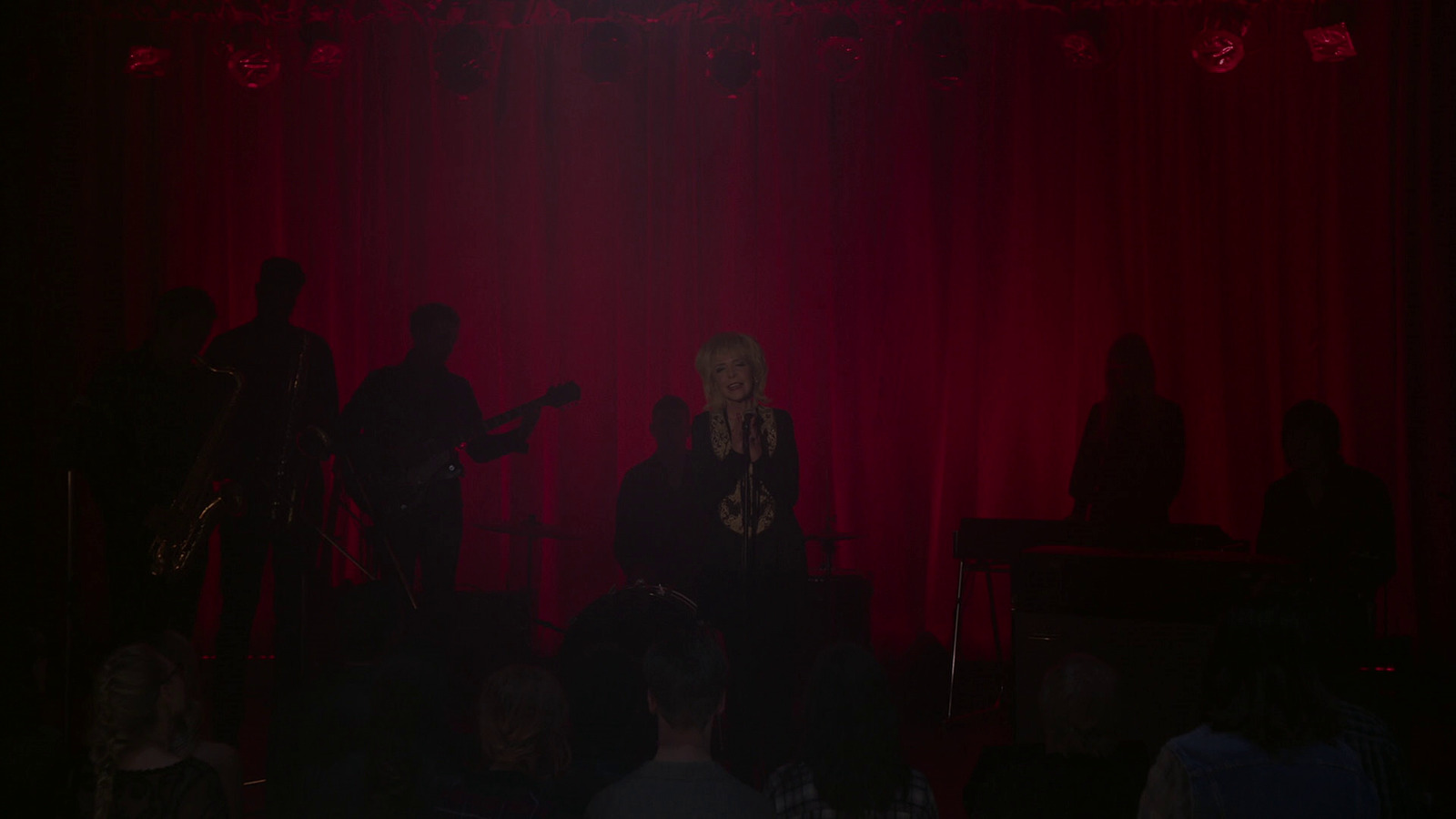
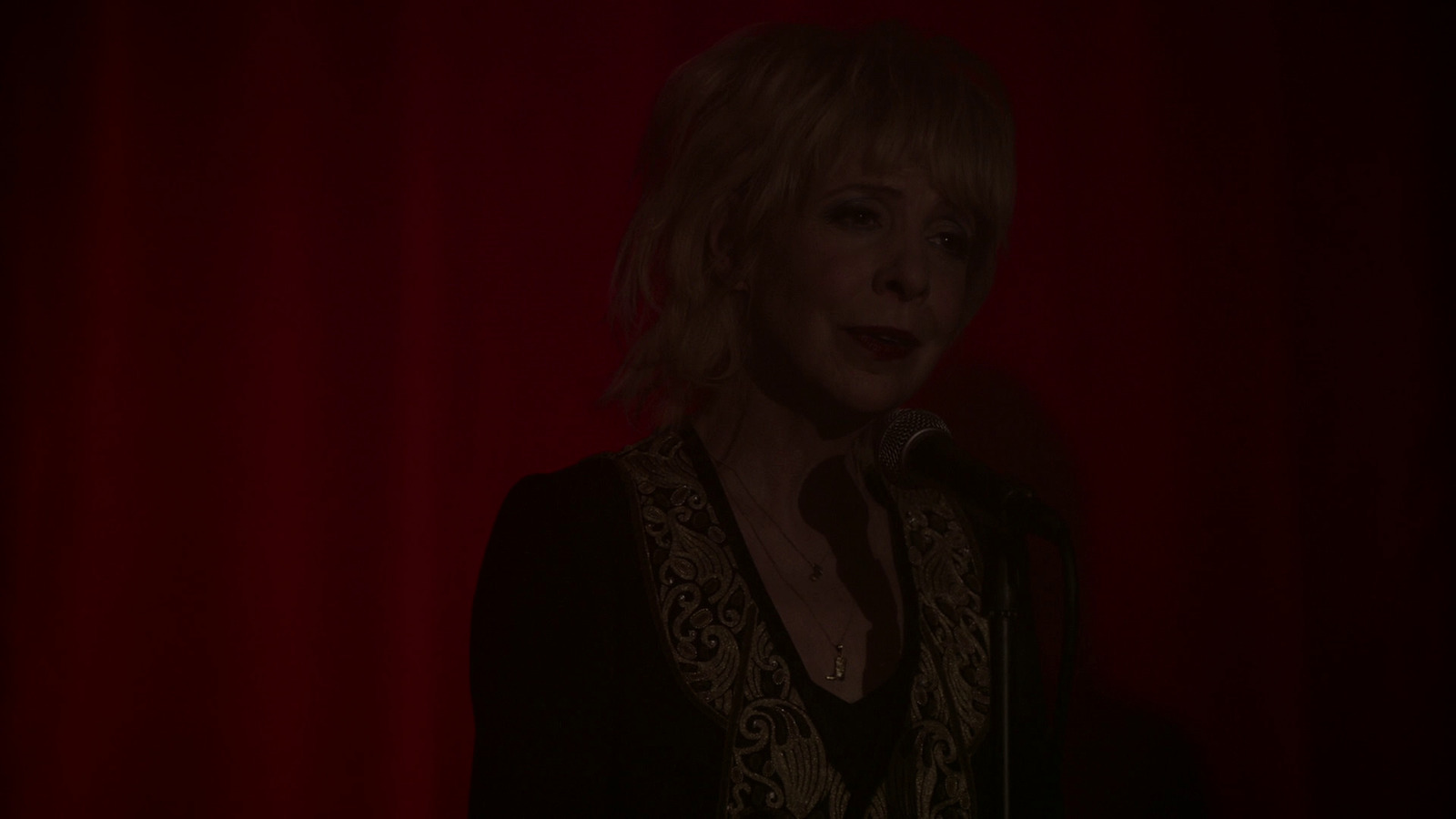
Julee Cruise performs “The World Spins” as the closing credits unfold. The return of her voice and the Roadhouse carries the memory of earlier Twin Peaks into the aftermath of the forest sequence.
The song supplies continuity of feeling where the plot has withdrawn continuity of destination. The credit image is therefore part of the ending’s construction, not merely an interchangeable musical exit. The final part will move from this familiar performance space toward a much less reassuring form of homecoming.
Calls, instructions and the sound of losing someone
The voice on the telephone
Frank’s conversation with the approaching Cooper makes the man sitting opposite him impossible to accept at face value. The sequence turns a sound arriving from elsewhere into practical evidence. Lucy’s later statement about cellular phones completes this small history of learning to connect voice and location.
Exposition with limits
Gordon names the earlier plan but admits that he cannot tell whether it is working. Jeffries introduces an unofficial version without explaining all its consequences. Cooper announces changes and the importance of the past. These speeches are consequential, but none should be expanded into an omniscient account that the episode itself does not supply.
Different kinds of repetition
The injured prisoner repeats speech in the cells; the enlarged Cooper face introduces a statement about dreams over the reunion; Jeffries’s exchange sends Cooper into a scene already known from a feature film. Repetition can be irritating, destabilising or an actual route through the narrative. It is not one uniform device.
The forest interruption
The captioned scratching and electrical sounds prepare the scream before Cooper looks back. His reaction and the empty path register a loss that the camera does not explain by showing a visible captor. Compare the resumed passage in Part 18 rather than assigning the sound a source that the image has not established.
Music and credits
The end roll identifies “The World Spins,” music by Angelo Badalamenti, lyrics by David Lynch, performed by Julee Cruise; it also credits “Sub Dream,” written and performed by David Lynch and Dean Hurley. The closing performance brings a recognisable voice back after the attempted homecoming has failed.
A closer view of the Roadhouse performance
Julee Cruise — The World Spins
The separate performance gives Julee Cruise a sustained presence before the red curtain. Much of the band remains in silhouette. The edit moves between her face and gestures, the complete stage and the audience, allowing the room to persist around a singer whose place in Twin Peaks reaches back to the original series.
Open The World Spins performance study · 2 frames
Read the full performance comparison →
Source: Roadhouse Music — Julee Cruise — The World Spins, 00:00–06:53, in Twin Peaks: From Z to A. These timings identify the separate performance edit; the episode context is examined above.
Focused effects studies
Changing the destination
The cage, screen and substituted destination separate Mr C’s intention from his arrival. This is a comparison of the finished spatial construction; it does not assume that the chamber is a literal control room with fully disclosed rules.
Open the destination comparison · 5 frames
BOB’s sphere: an image given violent movement
BUF describes 56 shots for the BOB sphere sequence. Its account identifies a CG tar-like sphere, the use of available Frank Silva footage and animation planning for its violent trajectory. That production evidence helps distinguish the surviving face image from the newly constructed moving object. [4]
The room supplies scale: ceiling, floor, glove and observers repeatedly locate the otherwise unstable object. The raised set floor is discussed separately in the production notes below.
Open the BOB confrontation sequence · 6 frames
A face opens onto another space
The transition through Naido’s face is spatial as well as bodily. The Red Room replaces the office before Diane becomes visible and the office returns. Reading the intermediate states prevents the sequence from being reduced to a single before-and-after identity swap.
Open the Naido-to-Diane transformation · 5 frames
A sign becomes a route through time
The sign, loop and moving point give the dialogue’s date a visible counterpart. The steam anchors the changing graphic to a physical apparatus. Richard Beymer’s footage documents the preparation of this encounter; the finished diagram remains the episode’s own construction.
Open the Jeffries diagram sequence · 4 frames
Removing the body, extending the morning
The shoreline comparison makes the alteration legible through an absence. Pete’s subsequent uninterrupted walk extends that change into the pilot’s familiar action. BUF’s separate account of work on young Laura describes ten shots using two-dimensional morphing, hand-painted keyframes and optical-flow work; that is evidence about the new Laura material, not a claim that all reused footage received the same treatment. [4]
Open the altered-history comparison · 6 frames
The portrait and the interrupted rescue
Sarah’s attack and Cooper’s loss of Laura place damage and disappearance in separate spaces. The gallery preserves their order without turning proximity in the edit into a definitive explanation of causation.
Open the portrait-and-forest sequence · 4 frames
Making the images, shaping the performances
Cooper arrives without feeling the missing years
Charles de Lauzirika’s A Very Lovely Dream: One Week in Twin Peaks, approximately 17:58–20:20, records work on Cooper’s station arrival. Around 19:33–19:46, Lynch directs MacLachlan on the basis that no time has passed for Cooper. This is a performance instruction for the arrival, not a definitive explanation of the series’ timeline. It helps account for the tension between Cooper’s directness and the emotional weight of the reunion for everyone else. [2]
An office built to break open
In David E. Williams’s ASC interview, cinematographer Peter Deming recalls raising the sheriff’s-office set to accommodate effects beneath it. That construction gives the floor a practical role in the confrontation. His account of the Red Room also describes a double-diffused softbox and lighting grid designed around Lynch’s desired brightness. These are concrete production choices behind spaces that the story makes unstable. [5]
Steam, a date and a camera movement
In I Had Bad Milk in Dehradun, approximately 16:19–20:07, Beymer follows preparation around Gerard, Cooper and Jeffries. Discussion addresses the steam, the spoken date February 23, 1989, and the planned camera transition. The footage shows people coordinating performance and apparatus before the final passage makes them appear to form a continuous route. A proposal heard during preparation should not automatically be labelled the exact method of every finished shot. [3]
A role carried across the series
The confrontation depends on Freddie having reached this room. His earlier account and the production context around Jake Wardle belong with the Part 14 dossier; the Red Room performance work is developed in Part 2. The documentary evidence becomes more useful when attached to those specific scenes rather than repeated as a list of supplements.
Performance, sound and the working image
The production footage in Jason S.’s Impressions: A Journey Behind the Scenes of Twin Peaks adds another view of the scenes: directions spoken on set, rehearsals, material experiments and choices still being worked out.
The BOB confrontation joins a spoken plan to physical texture
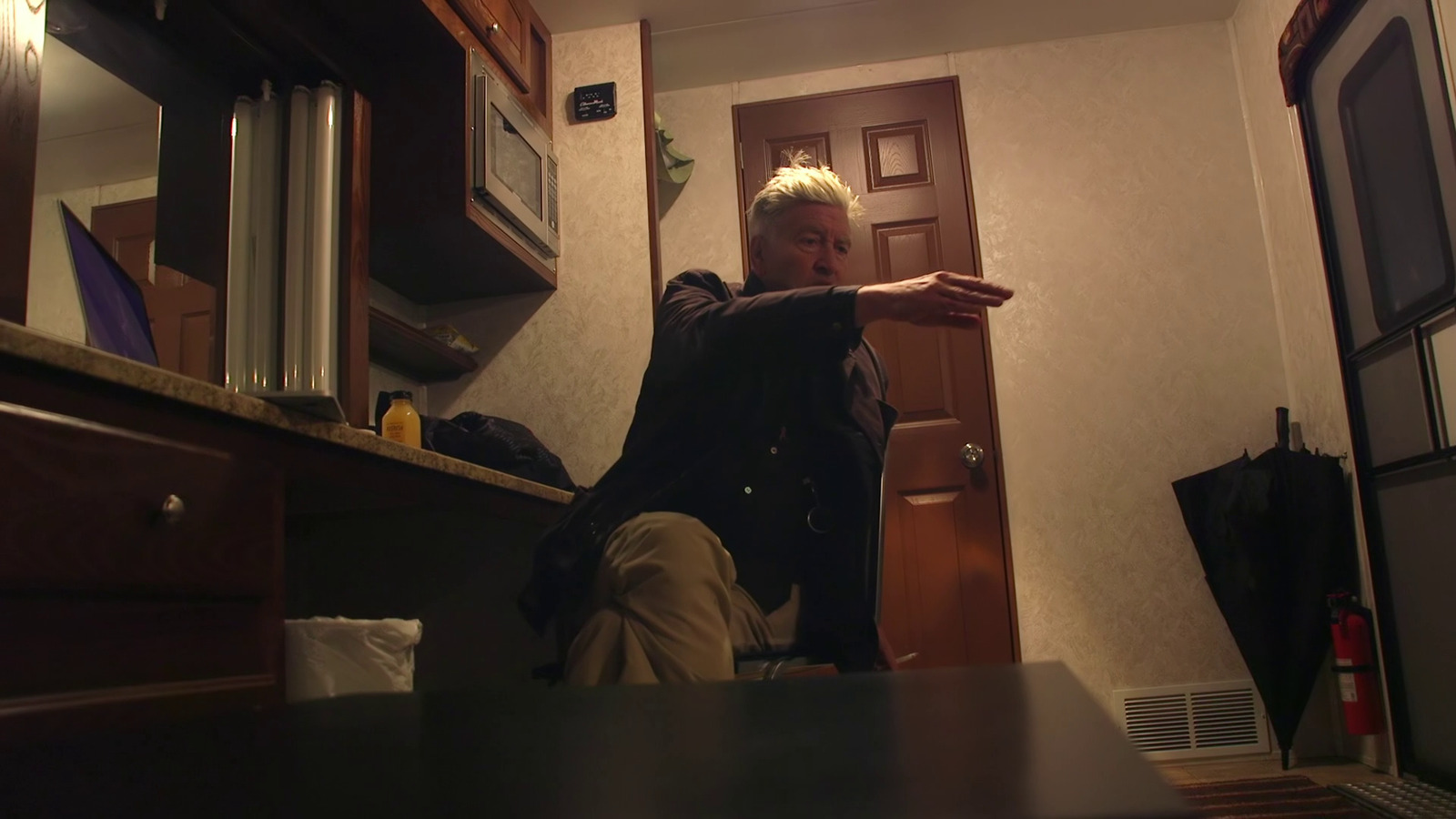
Lynch describes the confrontation as a sequence of movements and changing light: the dark orb, its attacks on Freddie, the green glove catching illumination, the floor opening and the final fragmentation. Some possibilities in the briefing are provisional. The account is evidence of planning, not a claim that every described detail survives unchanged in the finished scene.
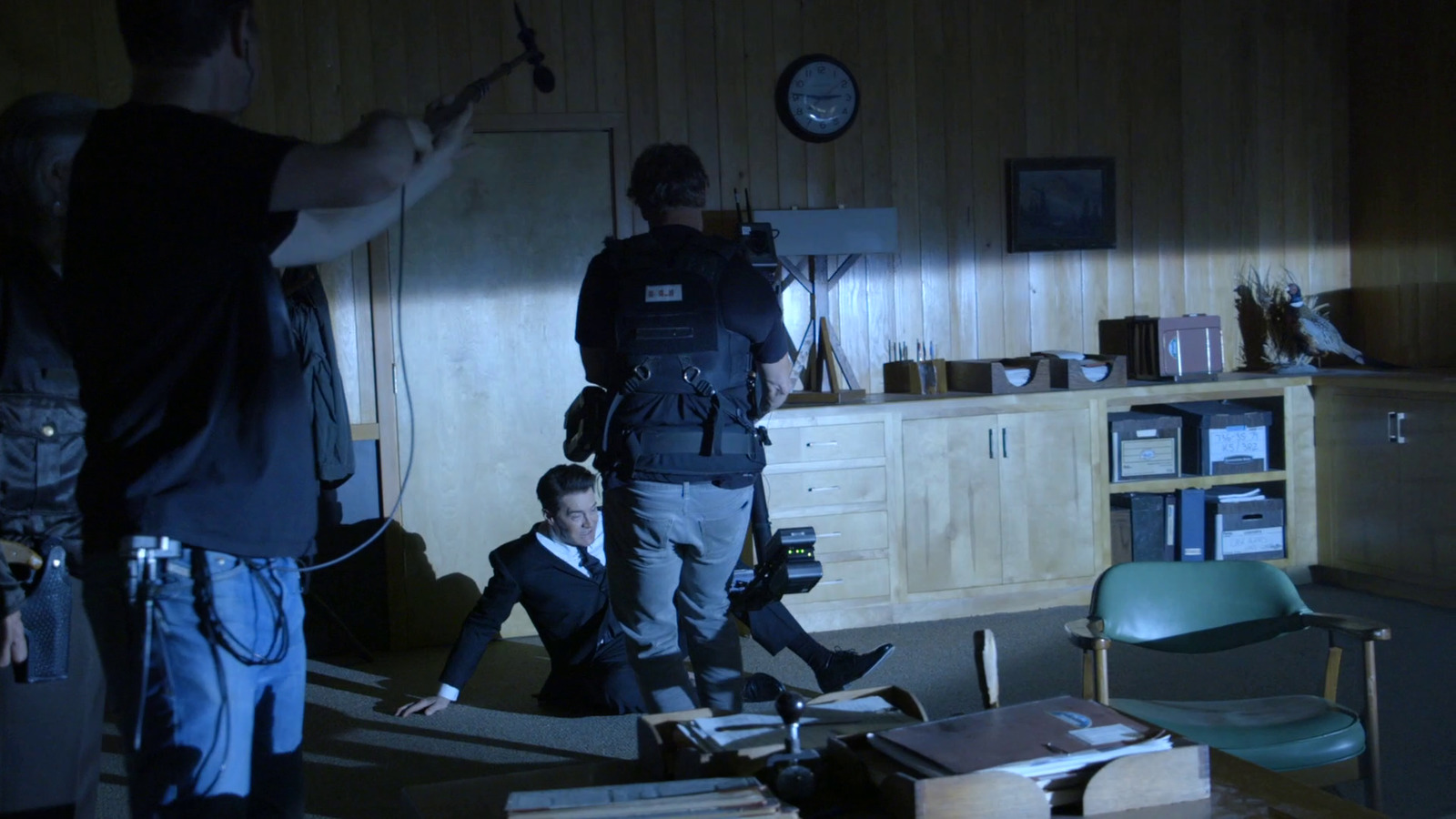
The footage then shows the floor opening being dressed by hand. Eggs and creamed corn are requested, followed by black tempera and more water. Everyday substances provide the wet, unstable surface around a supernatural event. Elsewhere, Lucy is directed toward wide-eyed shock and a slow look at the fallen body; the room’s human reactions are built alongside the larger effect.
Open the finale’s practical-effects study · 4 frames
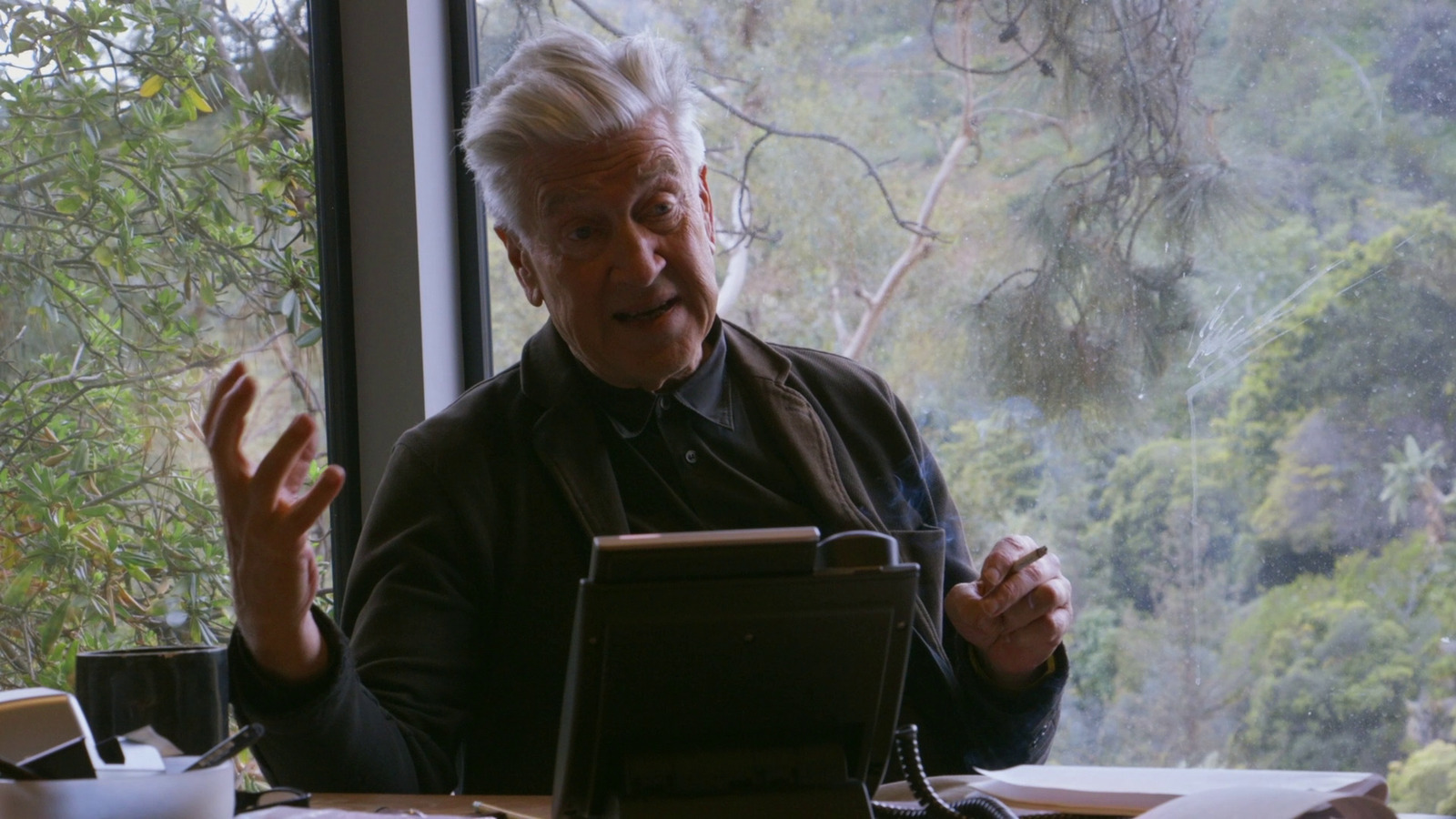
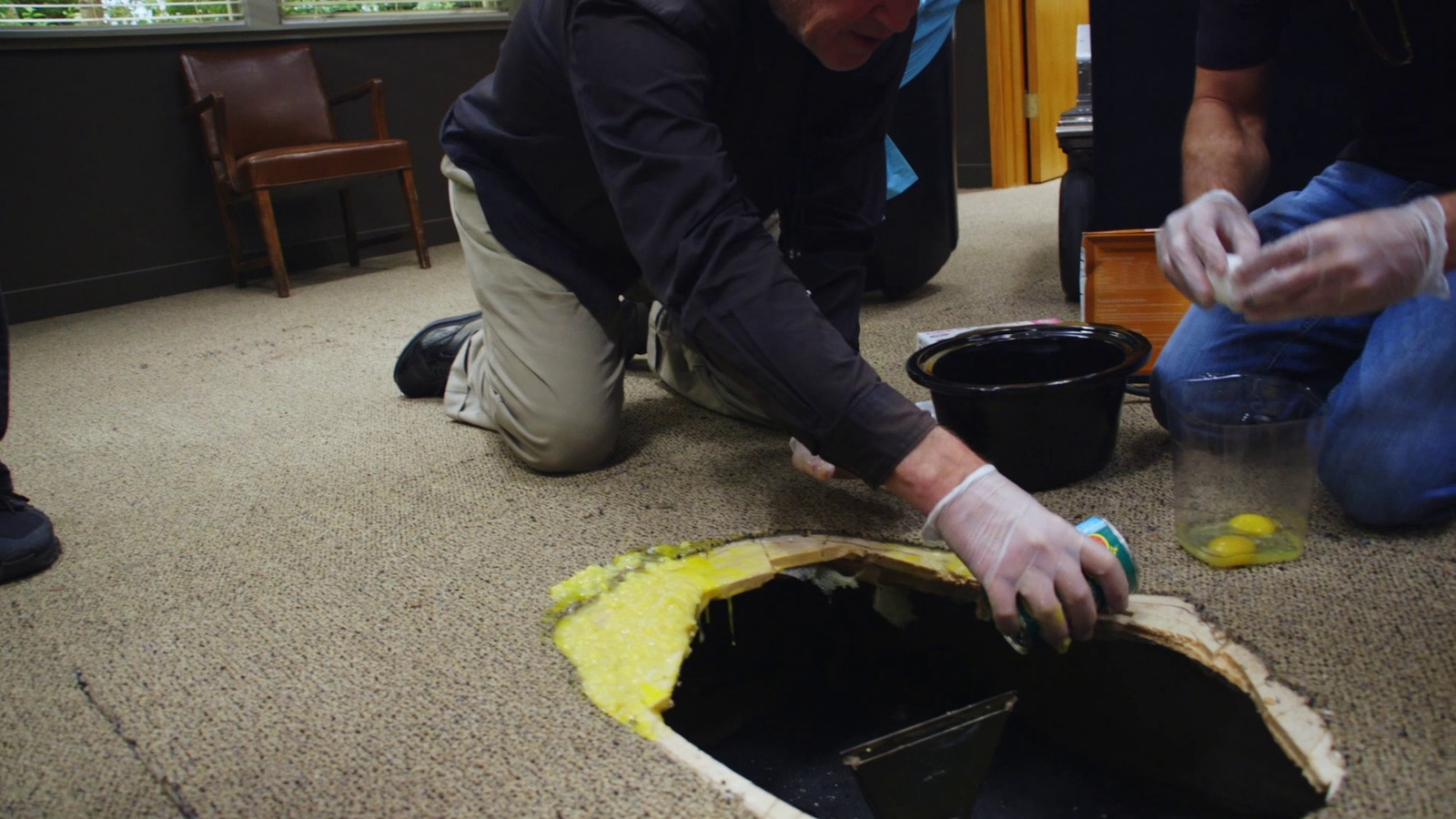
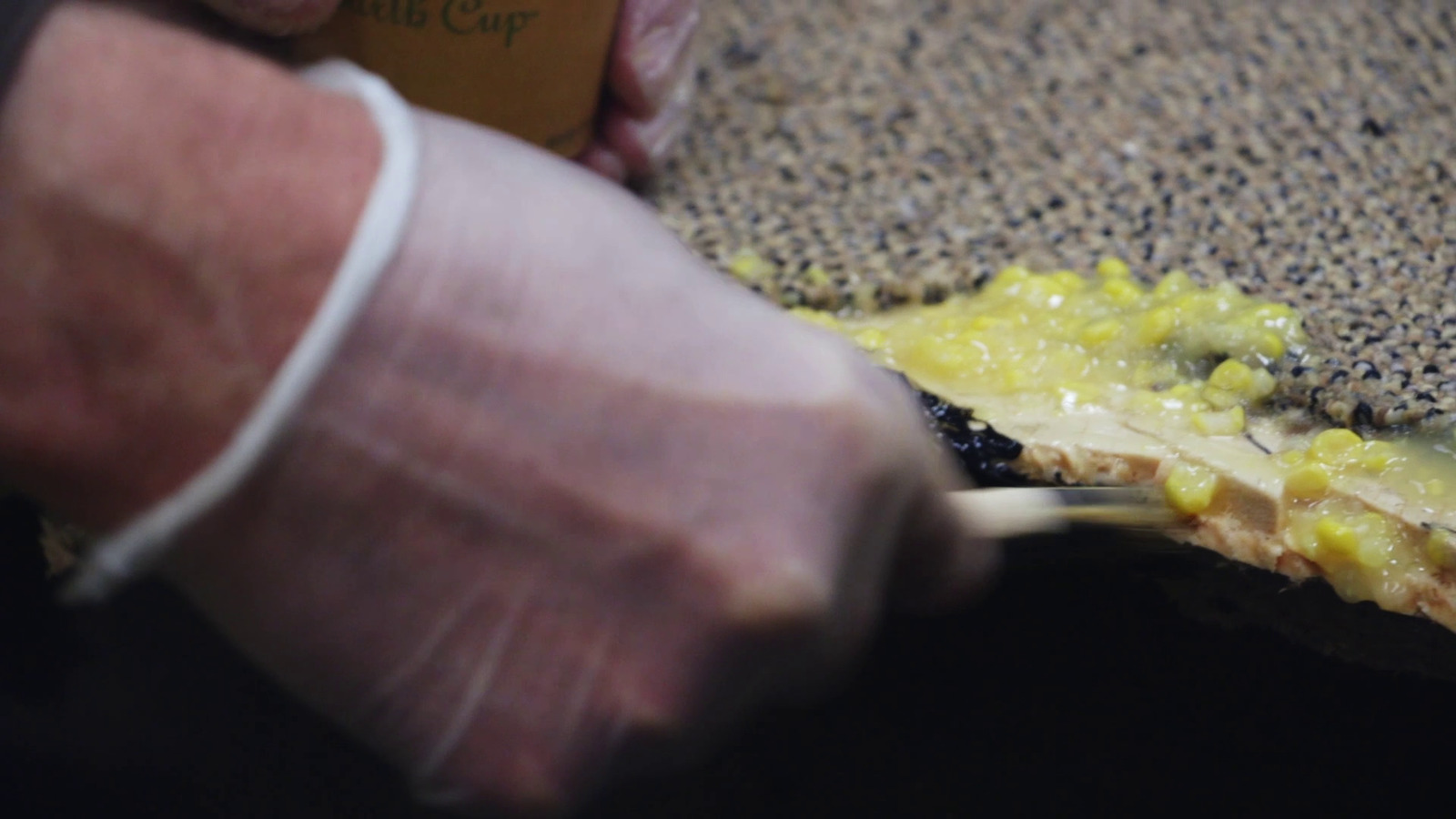
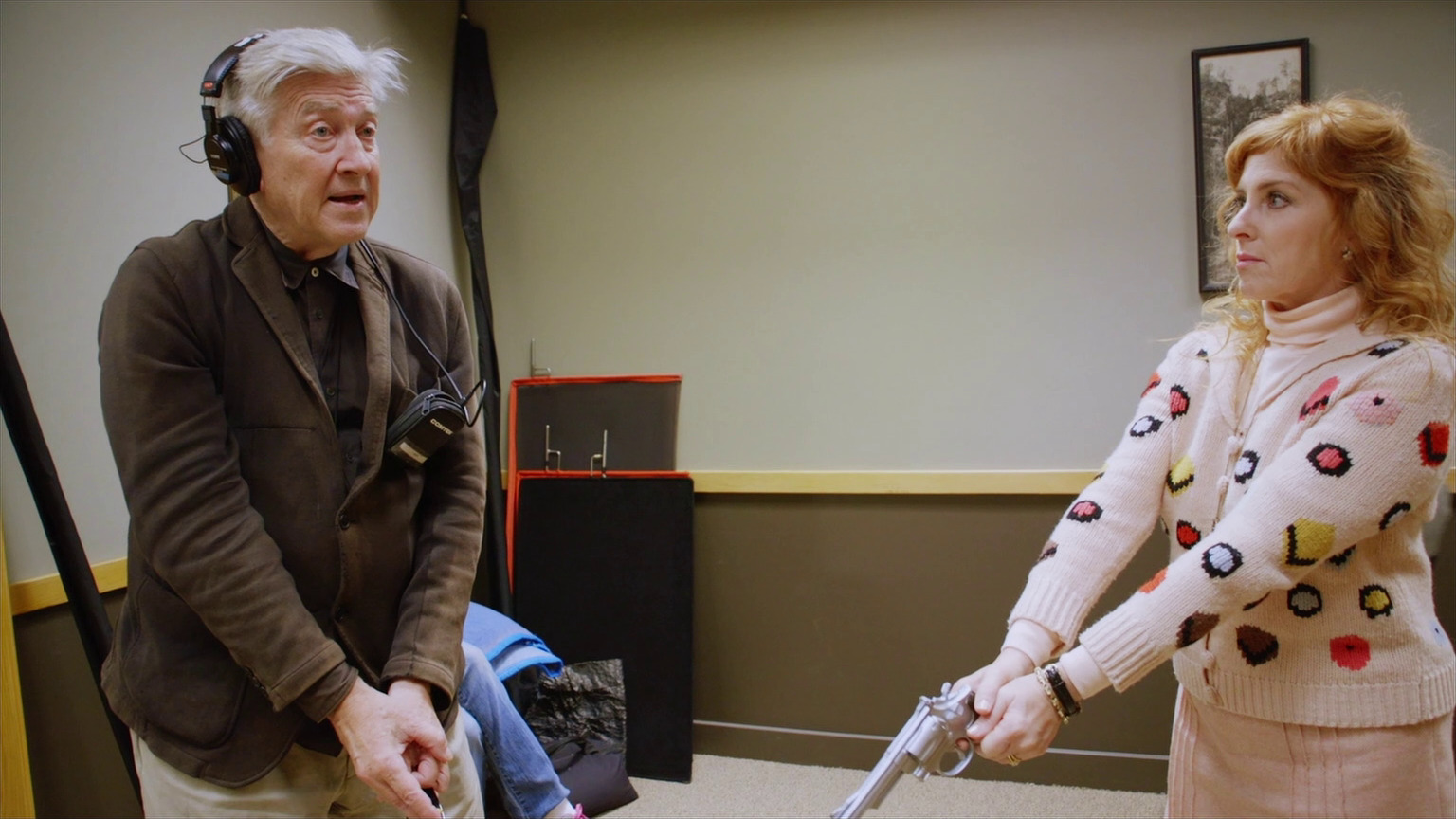
The Number of Completion, 10:10–13:20; 15:08–15:32; 16:17–17:30.
Recognition, the clock and the returning tone
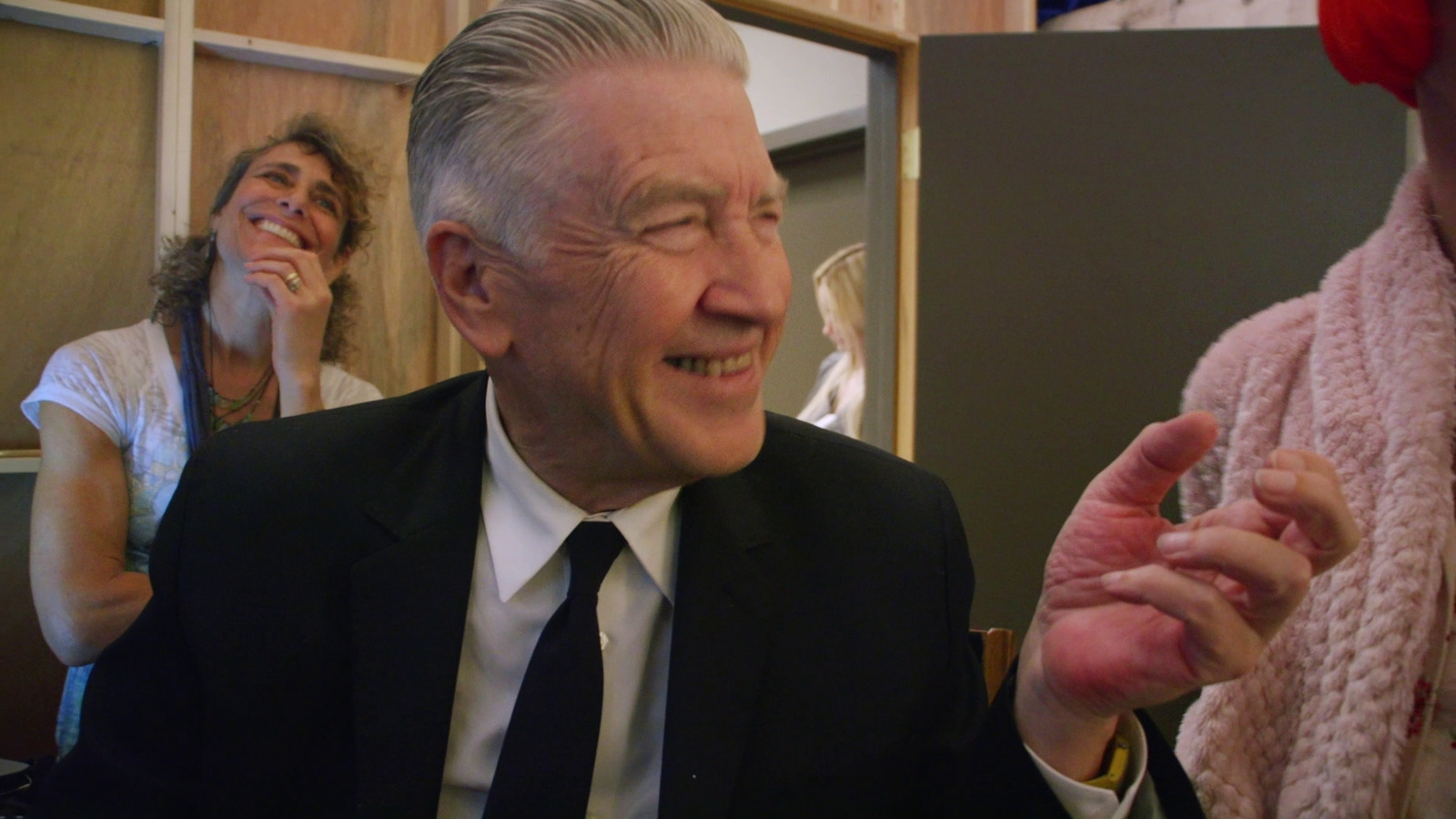
The reunion is explained to Kyle MacLachlan and Laura Dern as recognition after twenty-five years apart. Lynch asks for a kiss that is deep but not prolonged, followed by a slow separation with a dreamlike quality. The instructions give the encounter an emotional history while leaving the surrounding reality unsettled.
For the clock at 2:53, Lynch explicitly connects the sum of the digits to ten and describes it as completion. He tells the actors that an opening is holding for Cooper and that the tone associated with the Great Northern is arriving at the sheriff’s station. This is a specific production account of the transition, not a universal key that resolves the episodes that follow.
Open the reunion and transition study · 2 frames
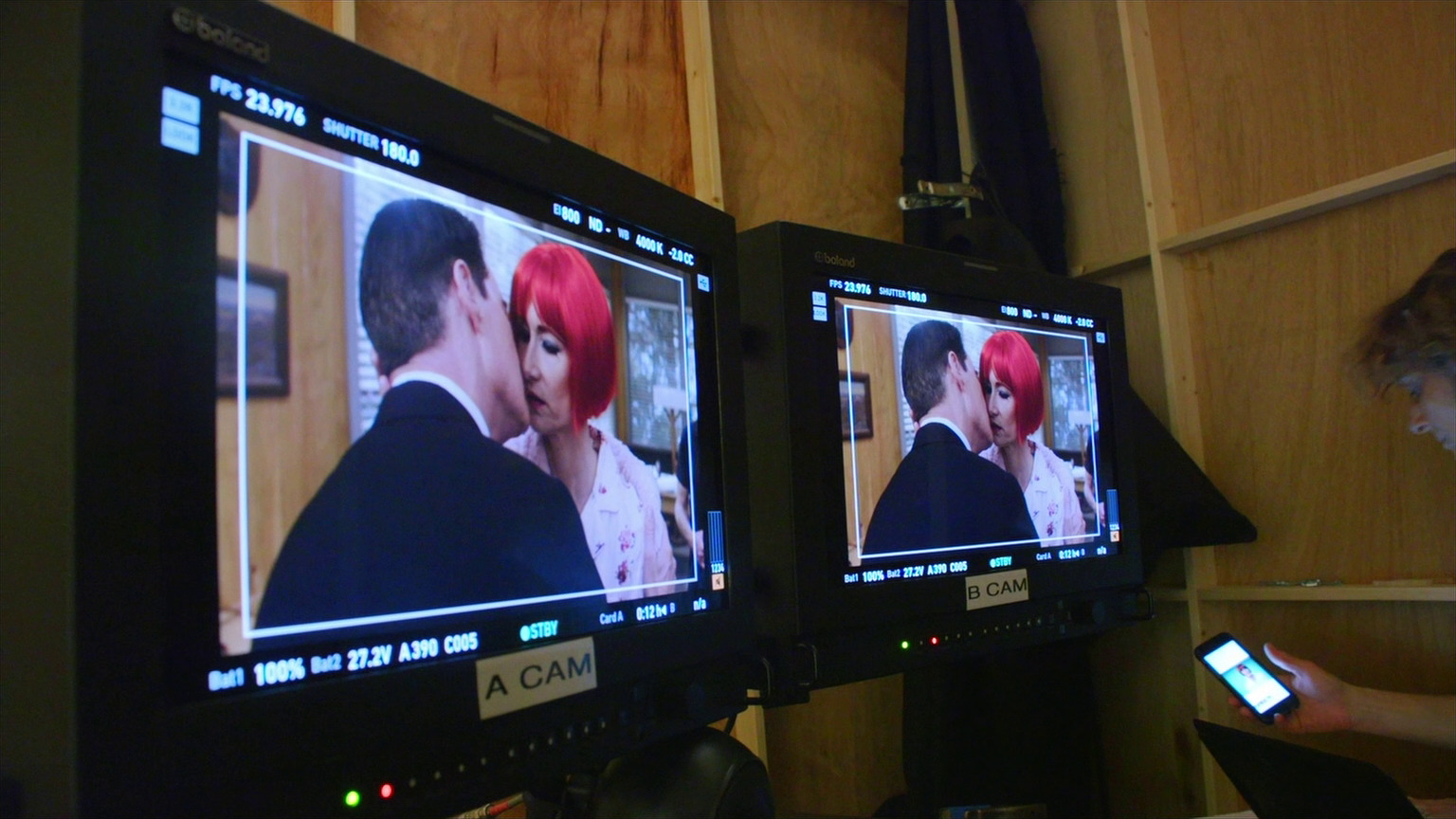
Laura recognizes a feeling of trust
Lynch prepares Sheryl Lee for the woodland encounter by describing Laura as distressed, intoxicated and already crying. The route is concrete: a log, an incline and Cooper above her. Initial alarm gives way to the remembered dream and, more particularly, a feeling that this man can be trusted.
The promise of going home is directed as producing a strange feeling, not a simple release from fear. The briefing helps explain the encounter’s mixture of recognition and uncertainty. It establishes the performance’s immediate emotional movement without certifying that Cooper’s larger intervention has succeeded.
Sarah’s violence is prepared beside the ordinary act of watching
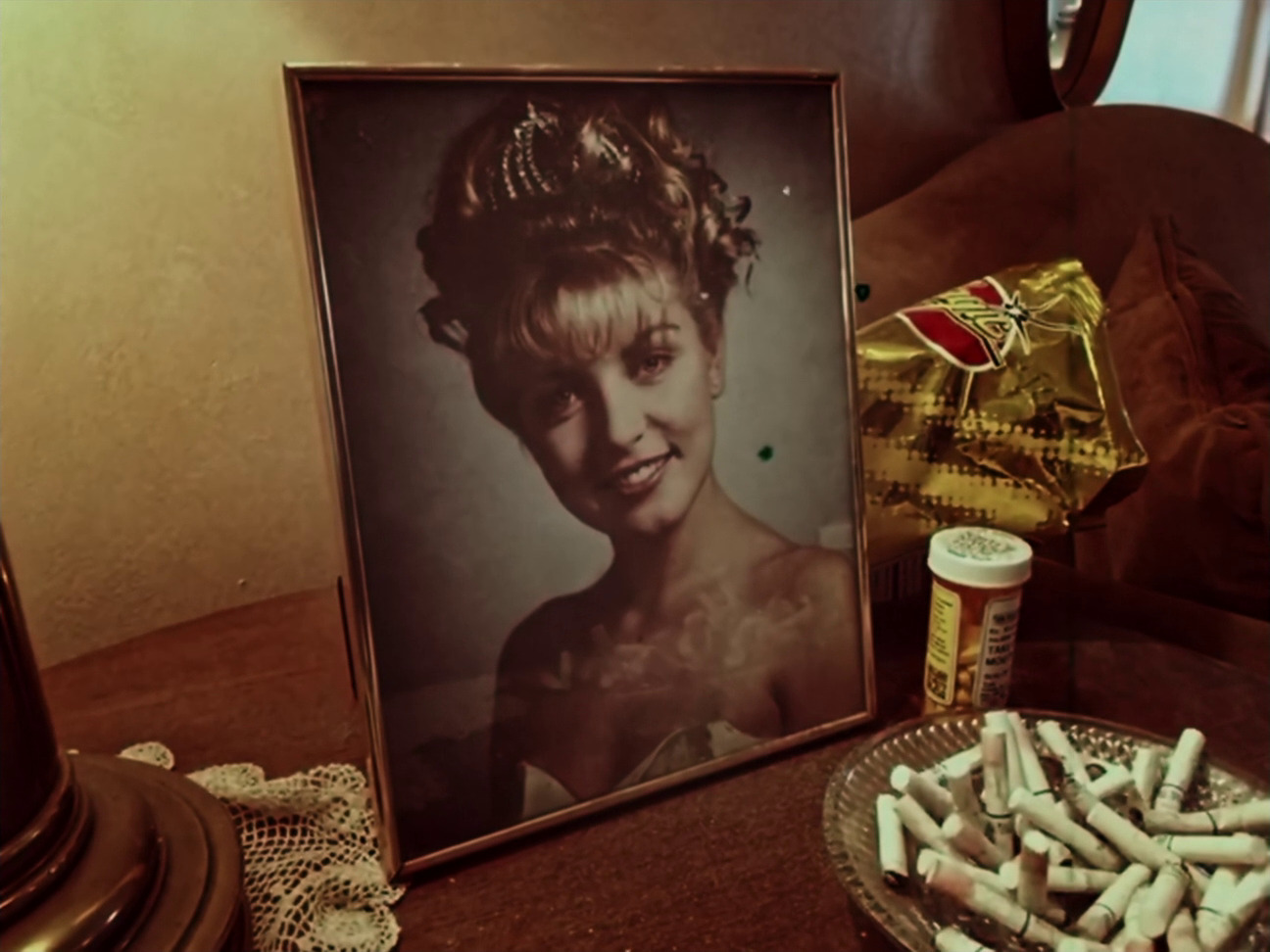
In a quiet conversation with Grace Zabriskie, Lynch moves between Sarah watching animal predation on television, her drinking and a proposed passage through empty bottles. He then describes the attack on Laura’s photograph: Sarah on her hands and knees, screaming at it and striking it with a bottle.
For the watching scene, he asks for a state between relaxation and tension: settled in, but continuously thinking. The directions place the later outburst beside a sustained inward activity. Some discussed business remains a proposal; the testimony is useful for the performance’s preparation without turning every suggestion into an event that must have happened offscreen.
Inside the final movements: performance and production
The Woodsmen: hands, blood, smoke and light
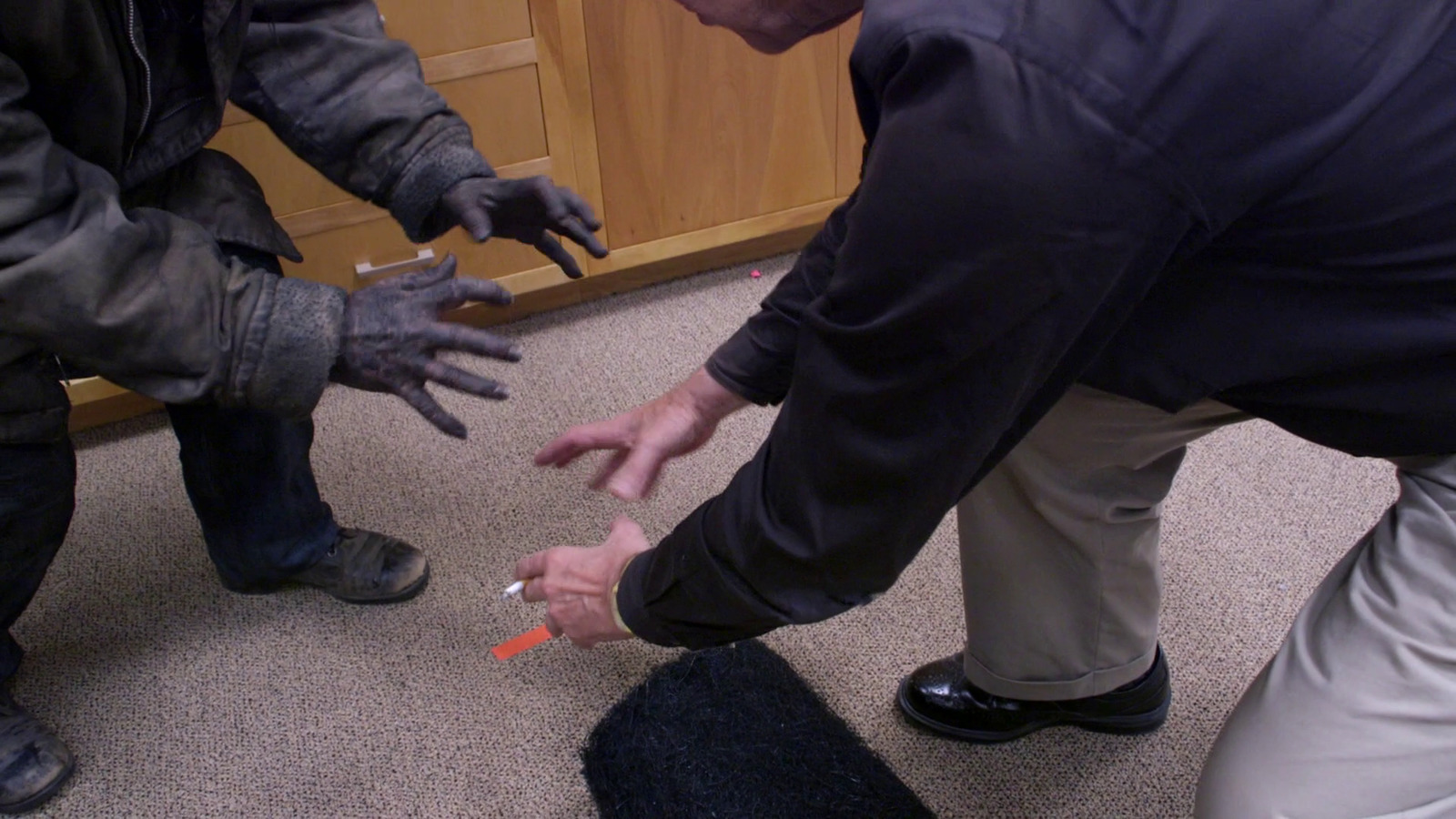
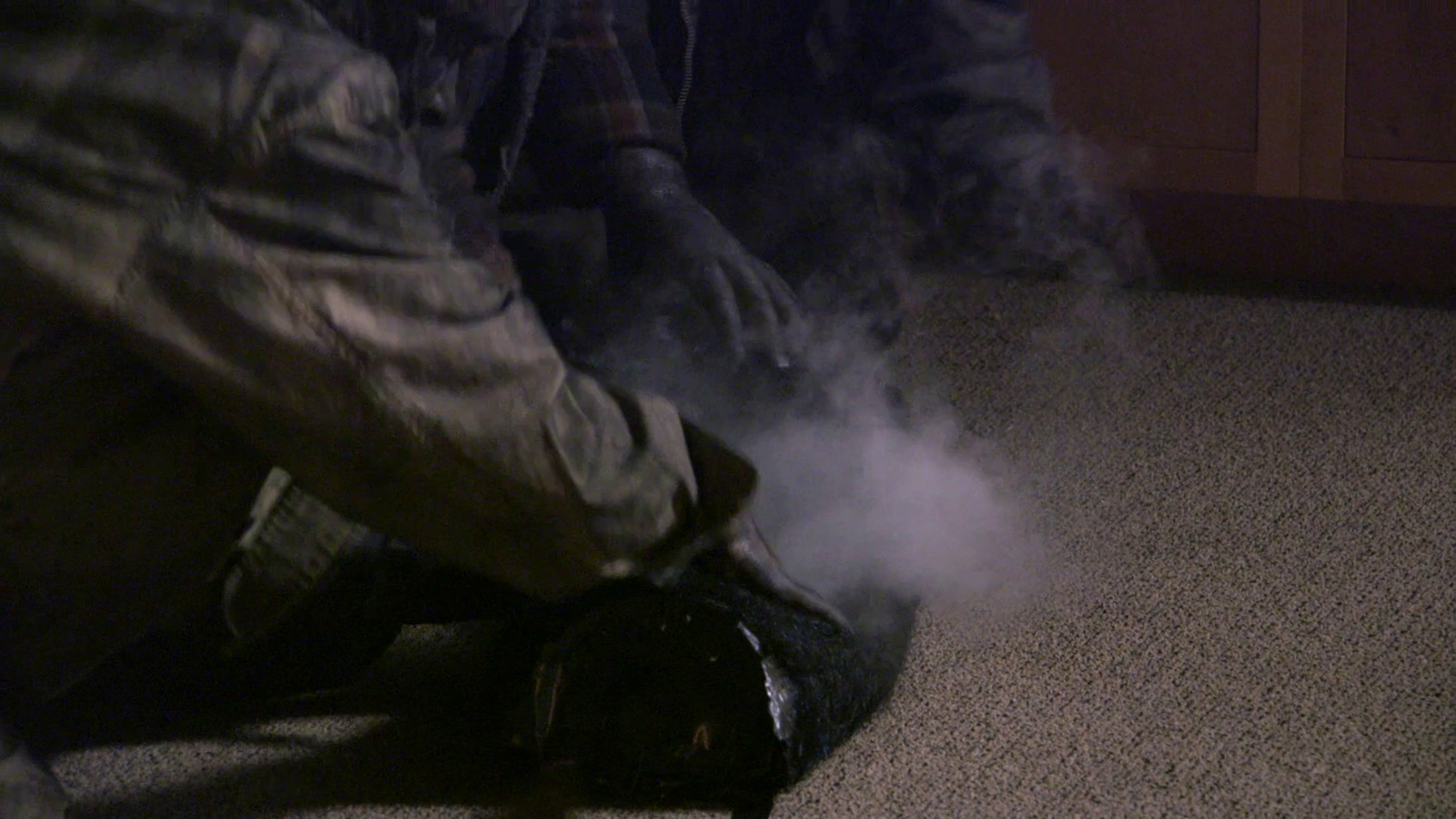
The Woodsmen’s work on Mr. C begins as a division of physical tasks. Lynch assigns the head and chest to different performers, demonstrates the rubbing motion and accelerates their movements during rehearsal. Smoke and changes of light are called separately; Lynch also applies blood to MacLachlan before the next take.
The footage makes the scene’s material foundation visible: several pairs of hands, a prone performer, surface blood and timed atmospheric effects. It documents elements photographed on the set, rather than supplying a complete account of the finished composite. The ambiguity of what the Woodsmen are doing survives the practical clarity of how their actions are coordinated.
Coordinating the Woodsmen’s work · 2 frames
Freddie’s opponent is also a camera movement
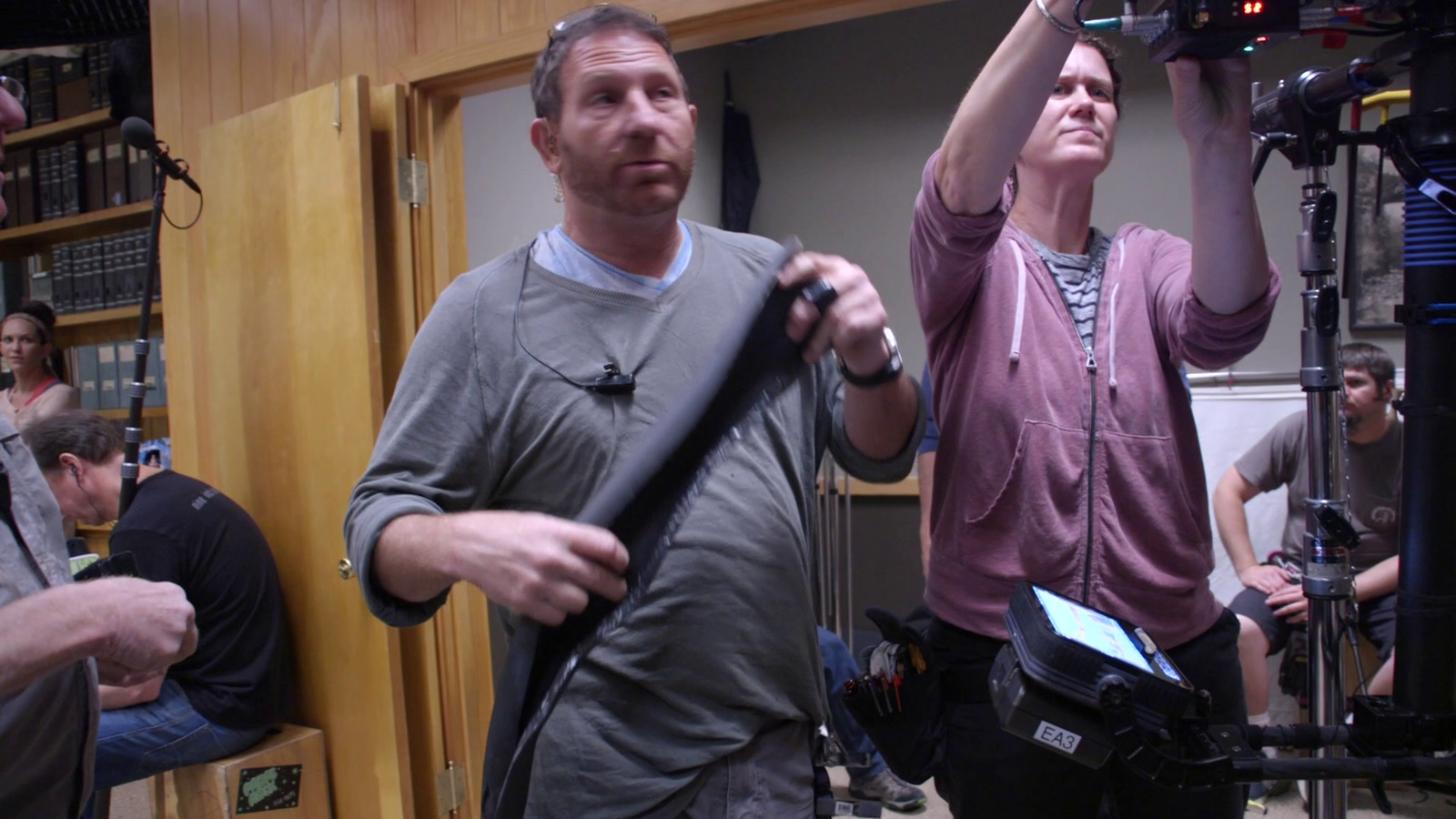
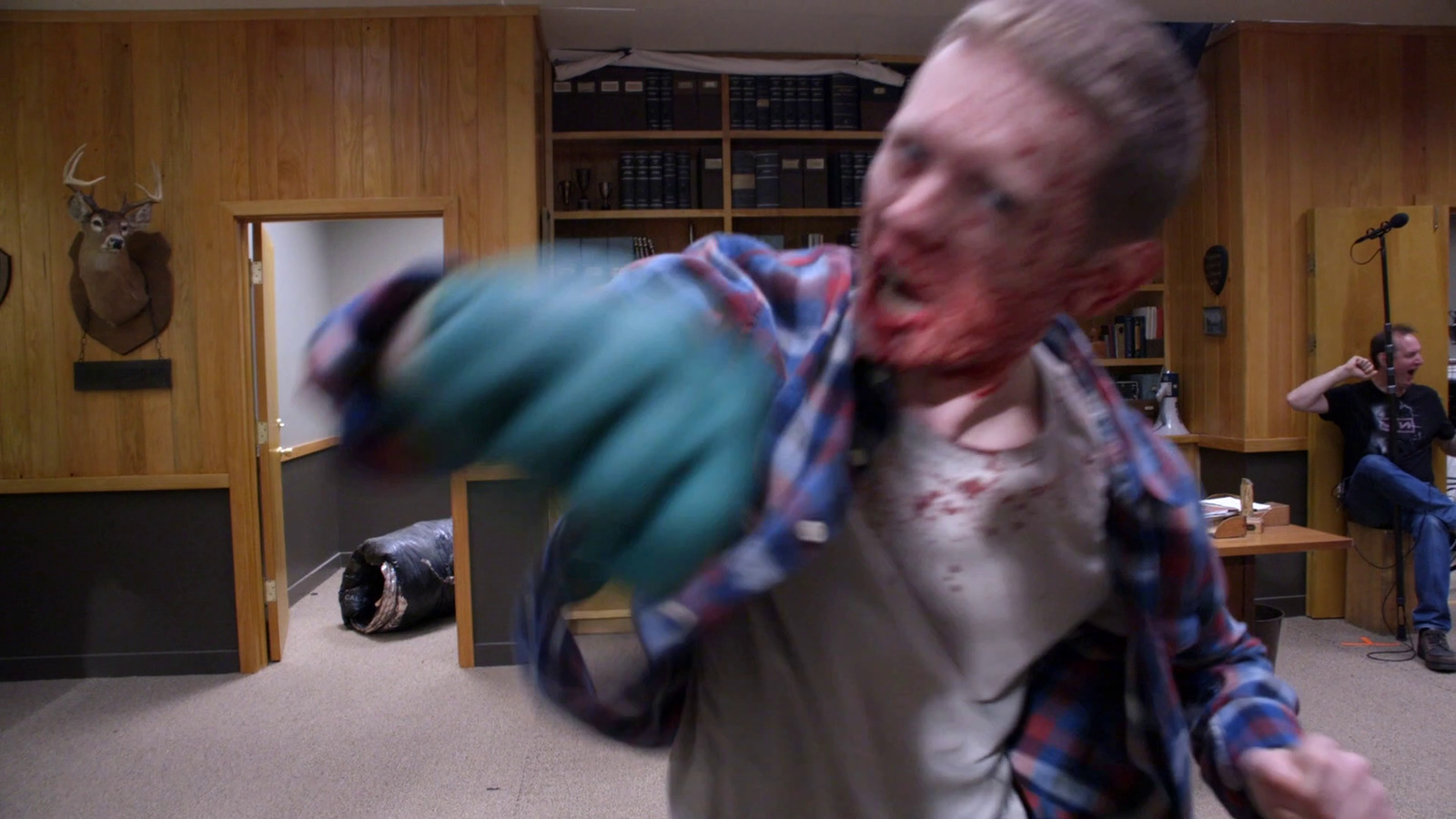
Jake Wardle rehearses punches towards the lens, with a protective panel in front of the camera and explicit instructions about avoiding injury. Lynch gives the camera an opposing performance: advance while Freddie struggles to rise, use a zoom to knock him back, approach again to receive a punch, then retreat rapidly.
Later passes coordinate these movements with bursts of light. The orb’s attack is being organized partly through the changing distance between camera and performer, before its final screen appearance is assembled. This gives the fight a useful double reading: Freddie strikes a supernatural antagonist in the story, while Wardle and the camera operator produce the exchange through carefully matched movement.
The protective panel, the punch and the lighting cue · 3 frames
Matching two faces for Naido’s transformation
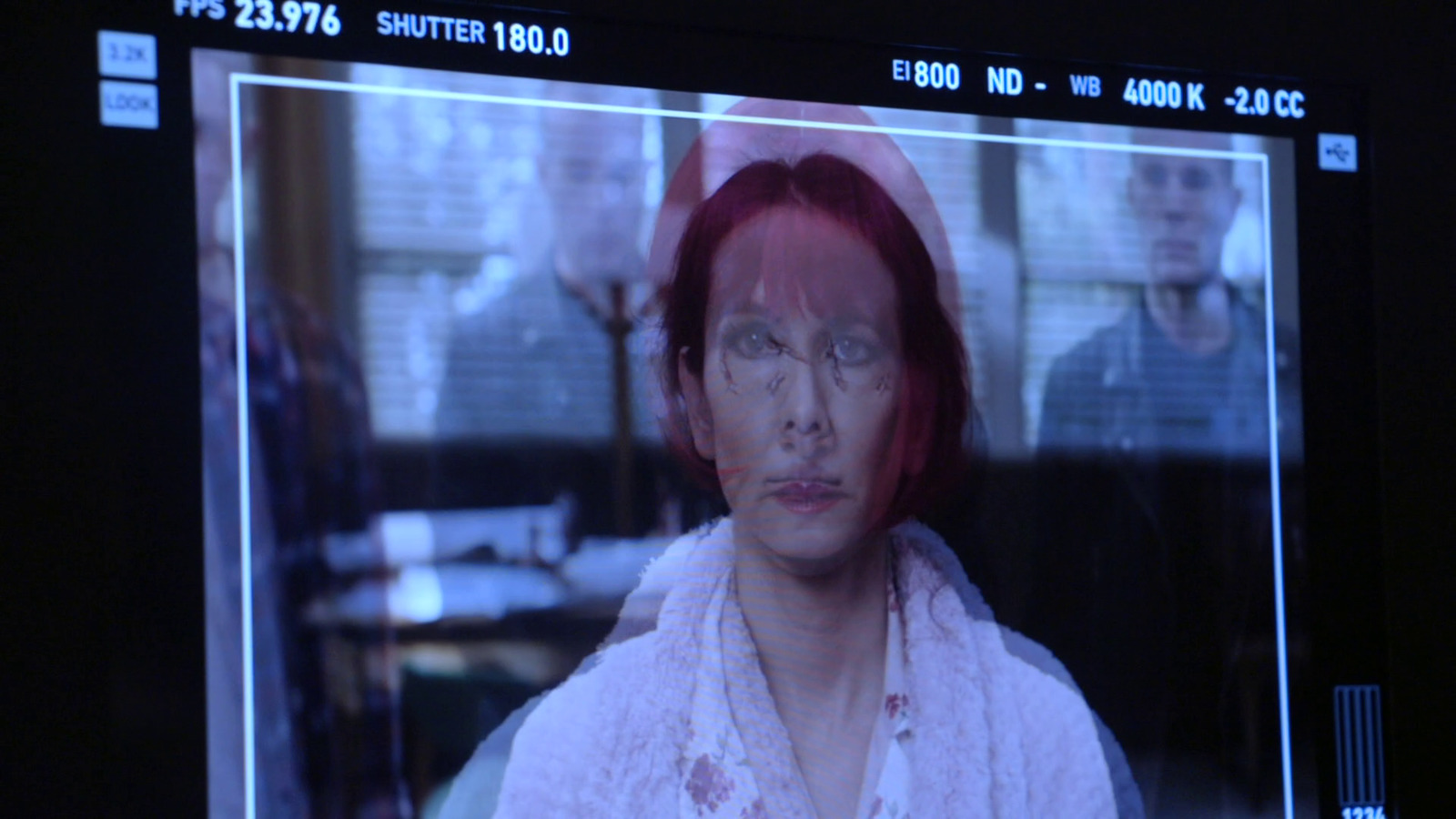
The transformation is prepared through exact correspondence between separate performances. After one setup, Lynch asks for the robe and position to be held. Laura Dern’s height, head tilt, chin and neck are then adjusted in small increments while the crew checks the alignment on a monitor.
Nae is photographed against a blue background with the robe secured at her shoulder. The monitor’s superimposed faces and the repeated positional corrections show the importance of matching the photographed material. These preparations explain part of the effect’s construction; they do not settle the larger question of how the story connects Naido and Diane.
Aligning faces and securing the robe · 2 frames

Presentation, music and credits
The standalone presentation runs approximately 59 minutes 24 seconds, including titles and closing material. The combined Parts 17–18 presentation uses a continuous locator; the times here start with Part 17. The image is 16:9. The forest and industrial passages are deliberately dark; their shadow structure is retained in the stills.
Directed by David Lynch; written by Mark Frost and David Lynch. The end roll credits Julee Cruise’s Roadhouse performance, Frank Silva as BOB, Jack Nance as Pete Martell and Andrea Leal as Mandie. It identifies David Lynch for sound design, Ron Eng and Dean Hurley for sound supervision/re-recording, BUF for visual effects, and Gary D’Amico/Philip Bartko for special effects. The final dedication is to Jack Nance. A department credit is not an attribution of each individual effect.
The examined episode audio and menus contain the programme soundtrack, with its lossless surround stream and compatibility audio; no episode commentary is listed. The production documentaries are separately attributed research sources.
Sources and viewing notes
- Twin Peaks: The Return, Part 17, directed by David Lynch, written by Mark Frost and David Lynch (2017). Primary episode image, English dialogue captions and end credits, consulted in Twin Peaks: From Z to A. Full-duration sampled image/caption review, denser checks of transformations and transitions, and selected dialogue passages checked against locally extracted speech. This is focused scene and sound analysis, not a claim of uninterrupted listening to every channel.
- Charles de Lauzirika, A Very Lovely Dream: One Week in Twin Peaks, production documentary in Twin Peaks: From Z to A. Station-arrival material approximately 17:58–20:20; performance direction approximately 19:33–19:46.
- Richard Beymer, I Had Bad Milk in Dehradun and Behind the Red Curtain, in Twin Peaks: From Z to A. Jeffries preparation approximately 16:19–20:07 in the former; rehearsal and proposed procedures distinguished from finished-shot evidence.
- BUF, Twin Peaks visual-effects project account. Primary vendor descriptions of the BOB sphere and young Laura work; cited for the specified procedures rather than as a complete interpretation of the scenes.
- David E. Williams, “Twin Peaks: Dreams, Doubles and Doppelgängers,” American Society of Cinematographers, 11 July 2018. Peter Deming’s production testimony on sets, lighting and photography.
- The Number of Completion, directed and photographed by Jason S., in Impressions: A Journey Behind the Scenes of Twin Peaks (2017), viewed in Twin Peaks: From Z to A. Passages: 10:10–13:20; 15:08–15:32; 16:17–17:30; 18:21–21:37. Picture and English captions examined, with targeted speech checks. Rehearsal proposals and production observations are distinguished from interpretation of the finished episodes. Documentary narration and its music are not treated as unscripted statements by Lynch.
- The Man with the Gray Elevated Hair, directed and photographed by Jason S., in Impressions: A Journey Behind the Scenes of Twin Peaks (2017), viewed in Twin Peaks: From Z to A. Passages: 02:46–05:23; 15:56–18:23. Picture and English captions examined, with targeted speech checks. Rehearsal proposals and production observations are distinguished from interpretation of the finished episodes. Documentary narration and its music are not treated as unscripted statements by Lynch.
- Behind the Curtain: Part 17. Photographed by Jason S.; edited by Jonathan Angus, with editorial assistance by Robert Lay (2019). Viewed in Twin Peaks: From Z to A. Timed passages: 06:21–09:15; 13:36–16:23; 18:36–19:32; 23:56–26:20. Timings refer to the documentary, not the episode. On-set directions and retrospective recollections are distinguished from Lyncharium’s interpretation of the finished scenes.