Twin Peaks: The Return — Part 7
2017 · Twin Peaks: The Return · Episode dossier
A familiar face becomes evidence against itself. A recovered page brings an old warning into the present.
Part 7 gathers fingerprints, handwriting, eyewitness memory and bodily instinct. Its discoveries promise a clearer investigation, yet its most powerful recognitions arrive through an uncertain sound, a wounded response and a movement that precedes thought.
- Part 7
- There’s a Body All Right
- Directed by
- David Lynch
- Written by
- Mark Frost & David Lynch
- Standalone presentation
- 00:57:34
The Return overview · Twin Peaks research hub. Timings follow the standalone part and include its opening titles. Presentation and credit notes.
Explore this dossier
Recognition is more than a match
Three investigations now touch the same problem: what establishes that a person is who they appear to be? Hawk and Frank read Laura’s diary; Tammy compares fingerprints; Diane faces a man whose appearance cannot restore her trust. In Las Vegas, Cooper remains unable to conduct an ordinary conversation, but his body responds to an attack with startling accuracy. The part separates recognizable features from continuity of feeling, memory and action.
This is also an episode about interrupted access. Harry can be reached by telephone but is too ill to work. Doc Hayward appears through a computer. A witness arranges a meeting and does not arrive. The Great Northern offers a sound without an identifiable source. These scenes turn waiting, listening and incomplete contact into the substance of investigation. Scene timings below include the standalone opening titles. [1]
Illustrated scene studies
- A telephone cannot locate Jerry
- Three pages, one missing
- A brother’s illness interrupts police work
- The witness who needs another place
- Doc Hayward on a small screen
- A fingerprint match with the wrong age
- An old acquaintance refuses the assignment
- The reversed mark and the spoken sentence
- Diane looks beyond the face
- A few names open a prison
- Questions move around a silent man
- Reflex before recovery
- The event becomes competing accounts
- A hotel heard before it is understood
- Another room, another obligation
- Two minutes of work, then an ugly transaction
- Release, then ordinary life continues
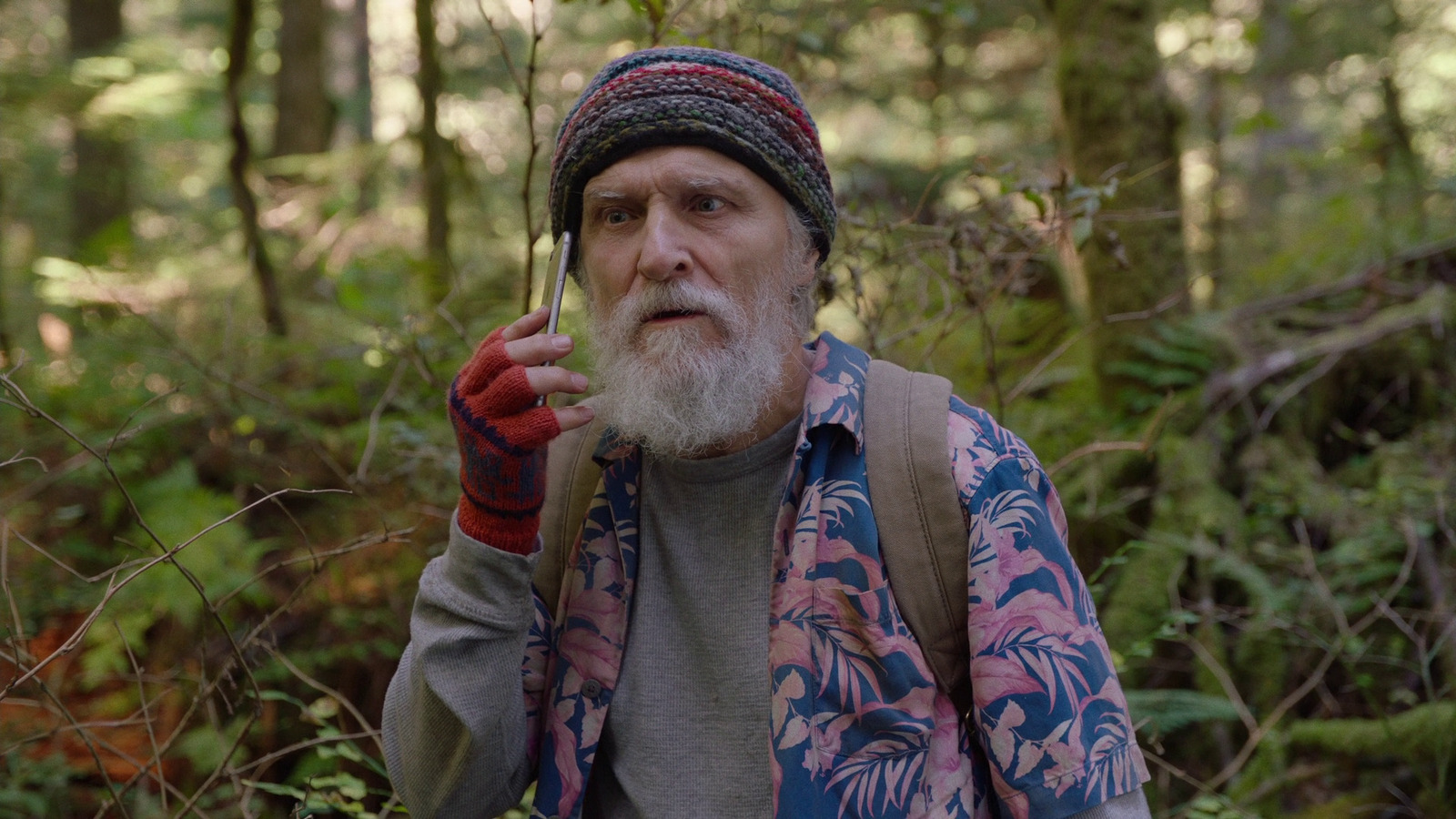
A telephone cannot locate Jerry
Jerry stands among the trees, repeatedly trying to explain that his car has been stolen. Ben remains behind his desk. The telephone connects two voices without giving the brothers a shared understanding of where Jerry is or what has happened. Repetition and pauses make the exchange comic, but the picture also leaves Jerry genuinely stranded: communication is available while orientation is not.
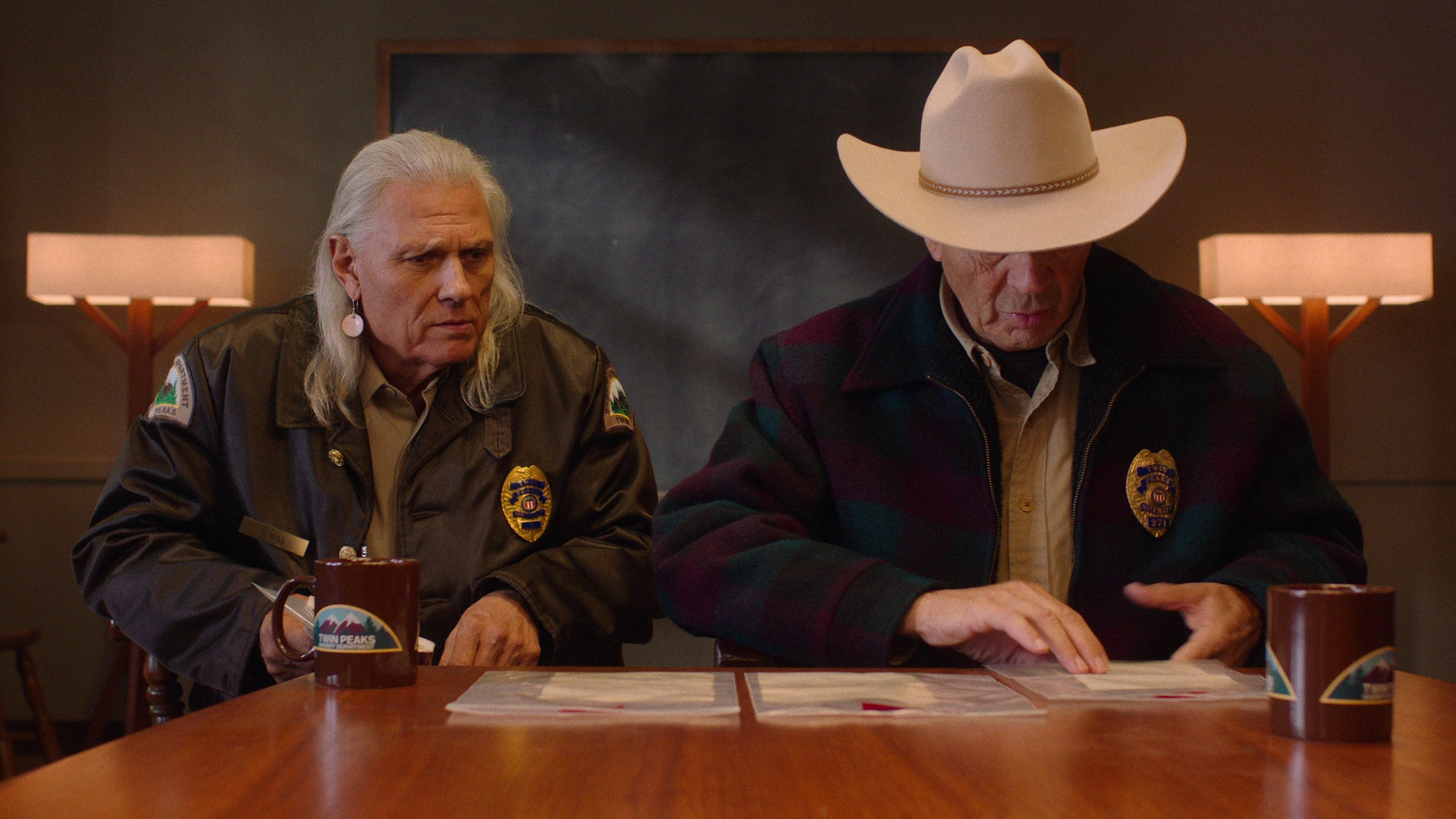
Three pages, one missing
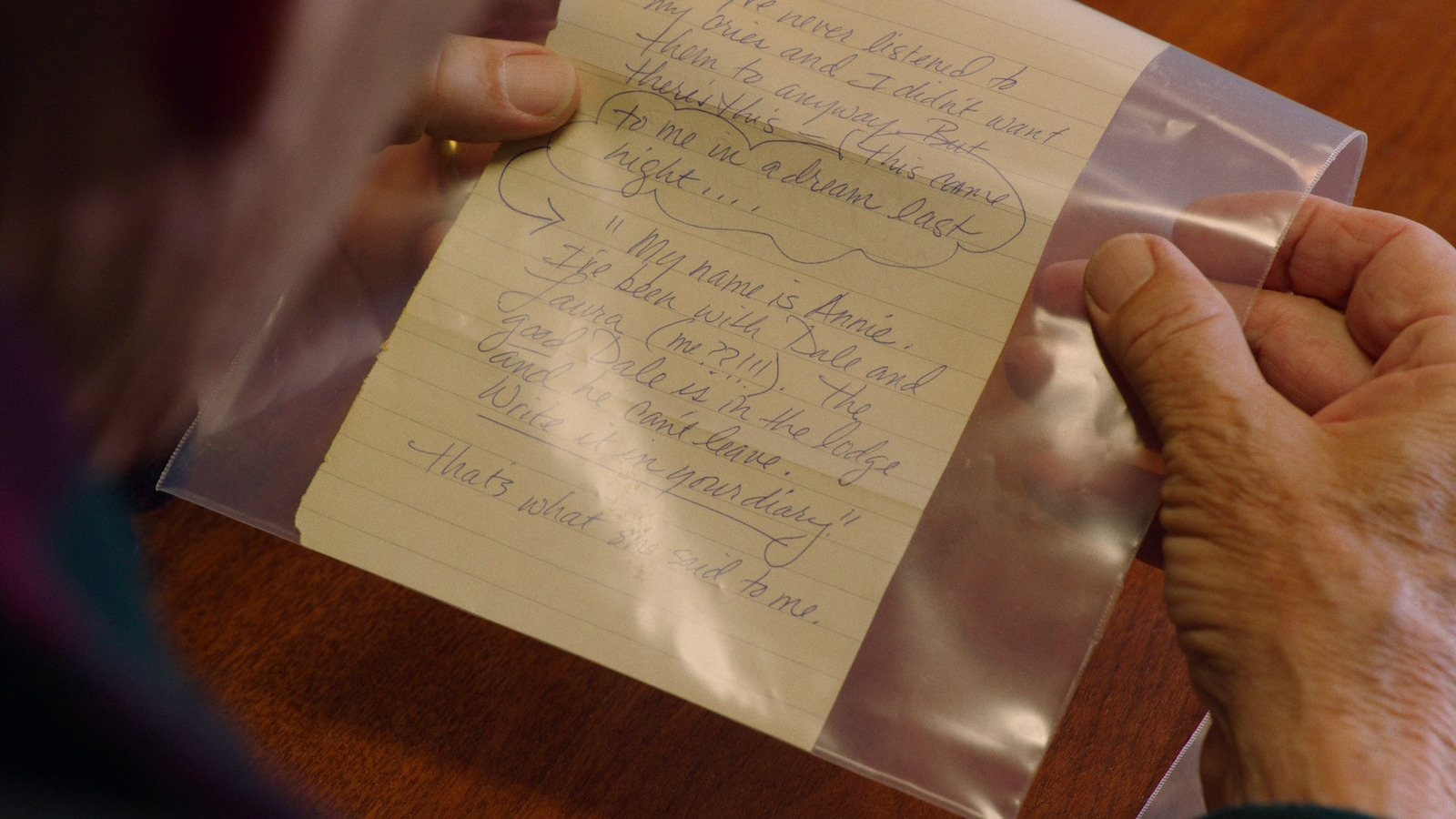
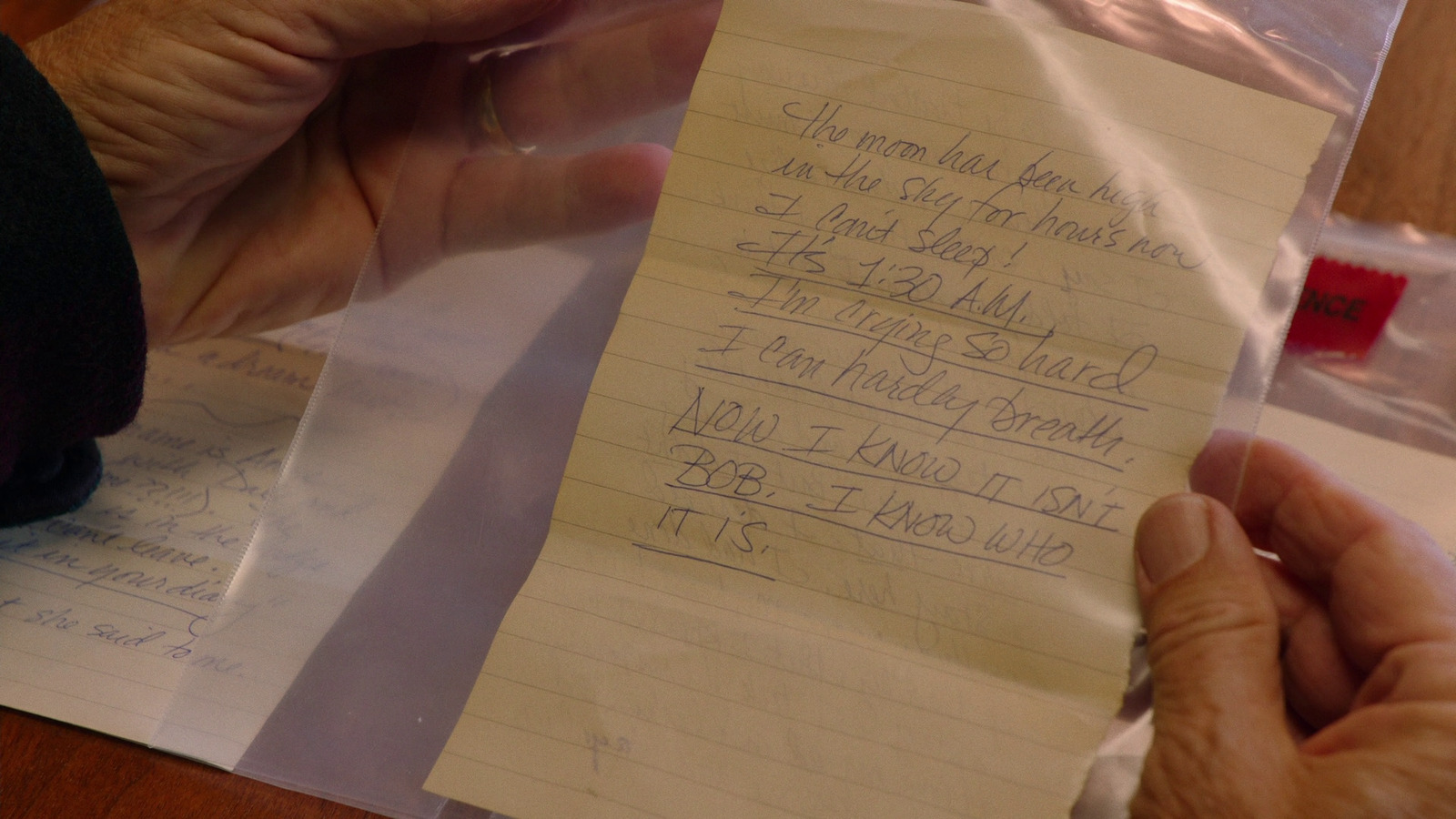
The recovered sheets sit on the conference table as physical objects before their implications become clear. Frank reads Annie’s message; Hawk identifies three of the four missing pages and connects the warning to Cooper’s departure from the Lodge. Their reasoning has limits. Hawk proposes that Leland concealed the pages during a visit to the station; the episode does not show that act or turn his reconstruction into an independently witnessed event. The surviving fourth-page gap matters just as much as the information recovered. Fire Walk with Me supplies the earlier encounter with Annie that the diary carries forward.
Open the scene sequence · 2 frames
A brother’s illness interrupts police work
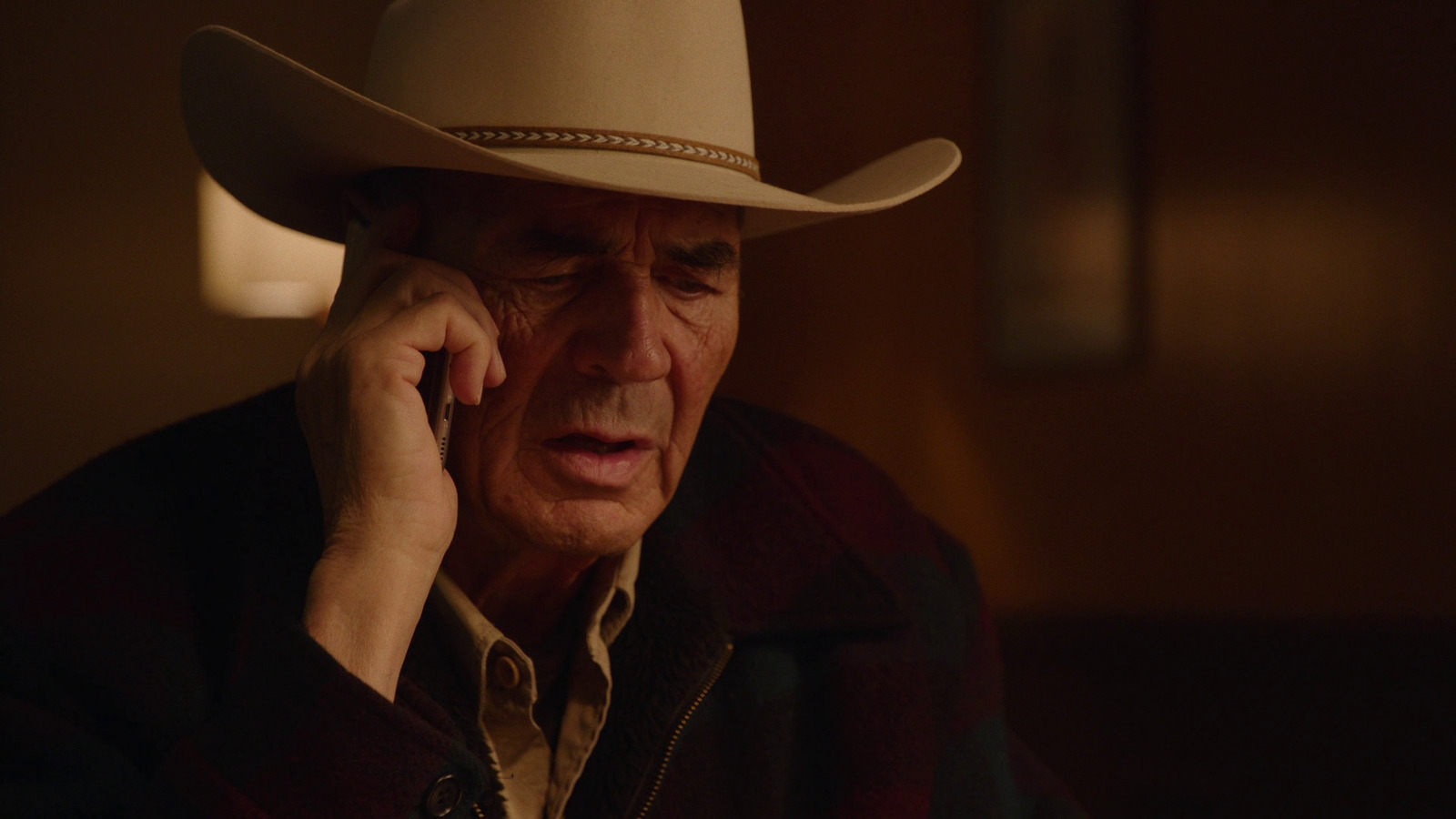
Frank begins with an investigative purpose but changes register when he reaches Harry. The scene stays with Frank: his pauses, softened voice and request that his brother overcome the illness. Information about Cooper gives way to care for someone beyond the frame. Harry’s absence is made emotionally present without an explanatory hospital scene.
The witness who needs another place
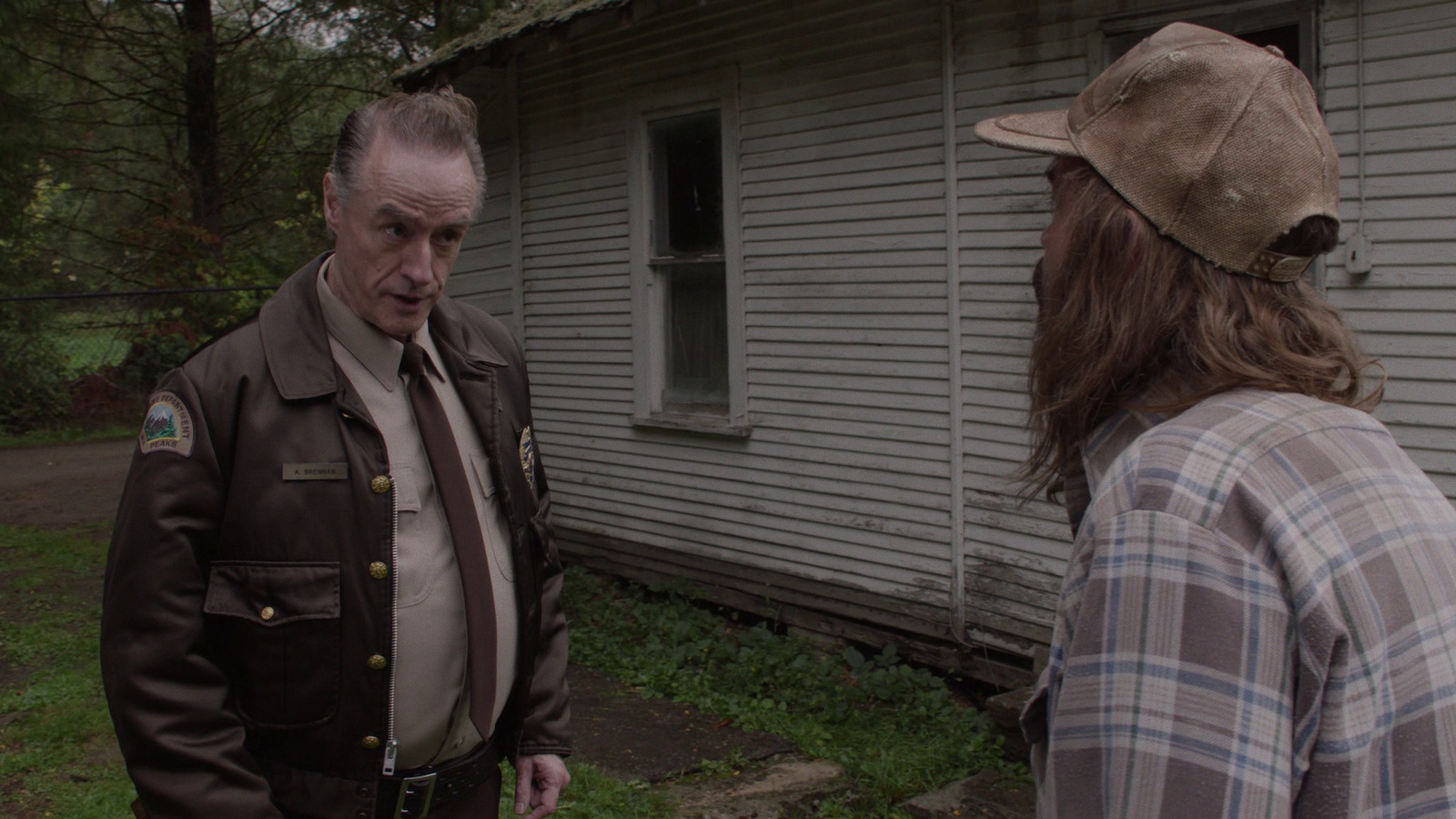
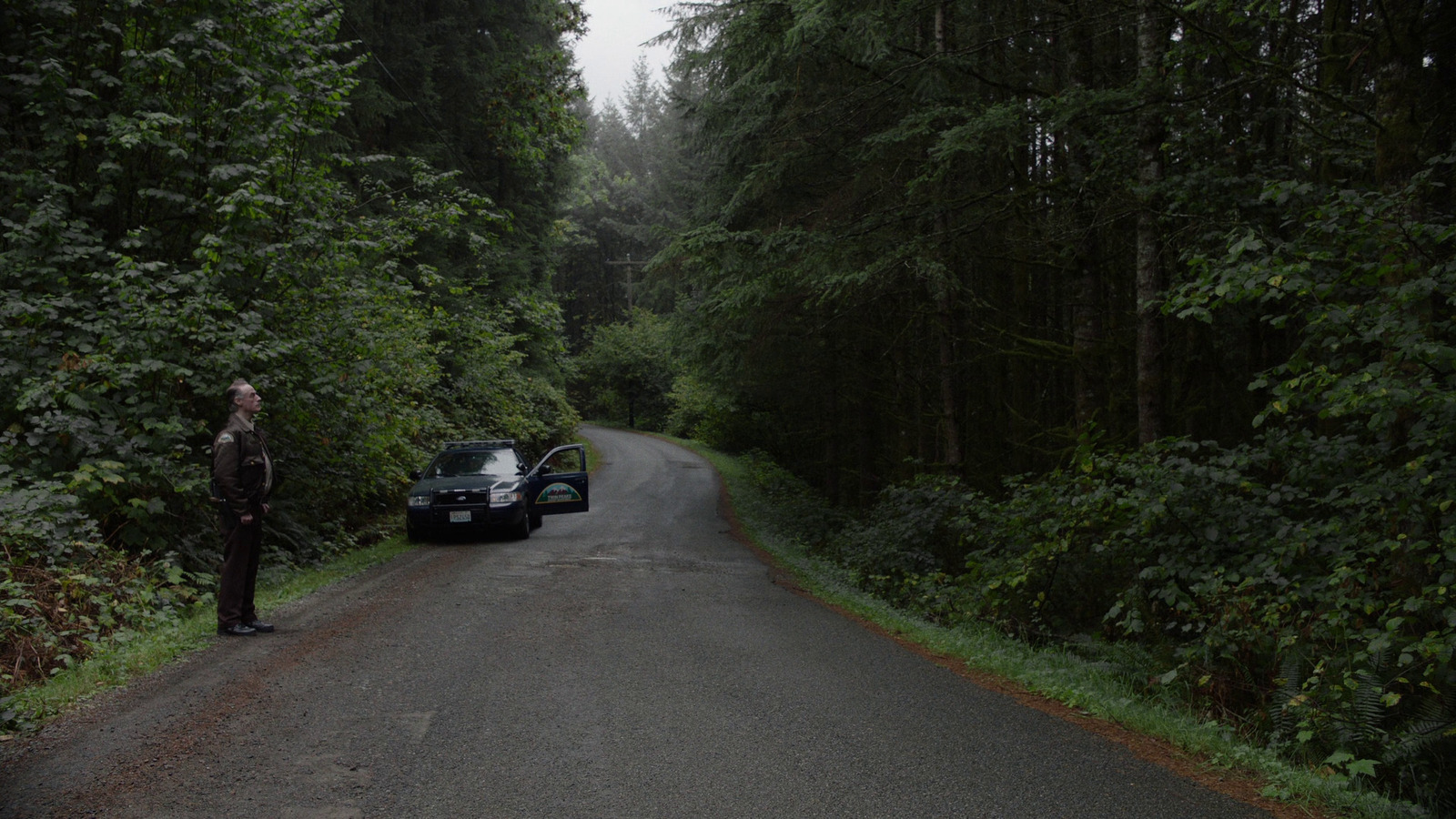
Andy meets the truck’s owner outside his house. The man’s urgency is directed towards getting Andy away, not supplying an immediate account. Their agreed meeting on a logging road promises a safer exchange. When the episode returns, the empty road and Andy’s waiting replace the promised testimony. The missing witness becomes a narrative fact without the film showing what prevented him from coming.
Open the scene sequence · 1 frame
Doc Hayward on a small screen
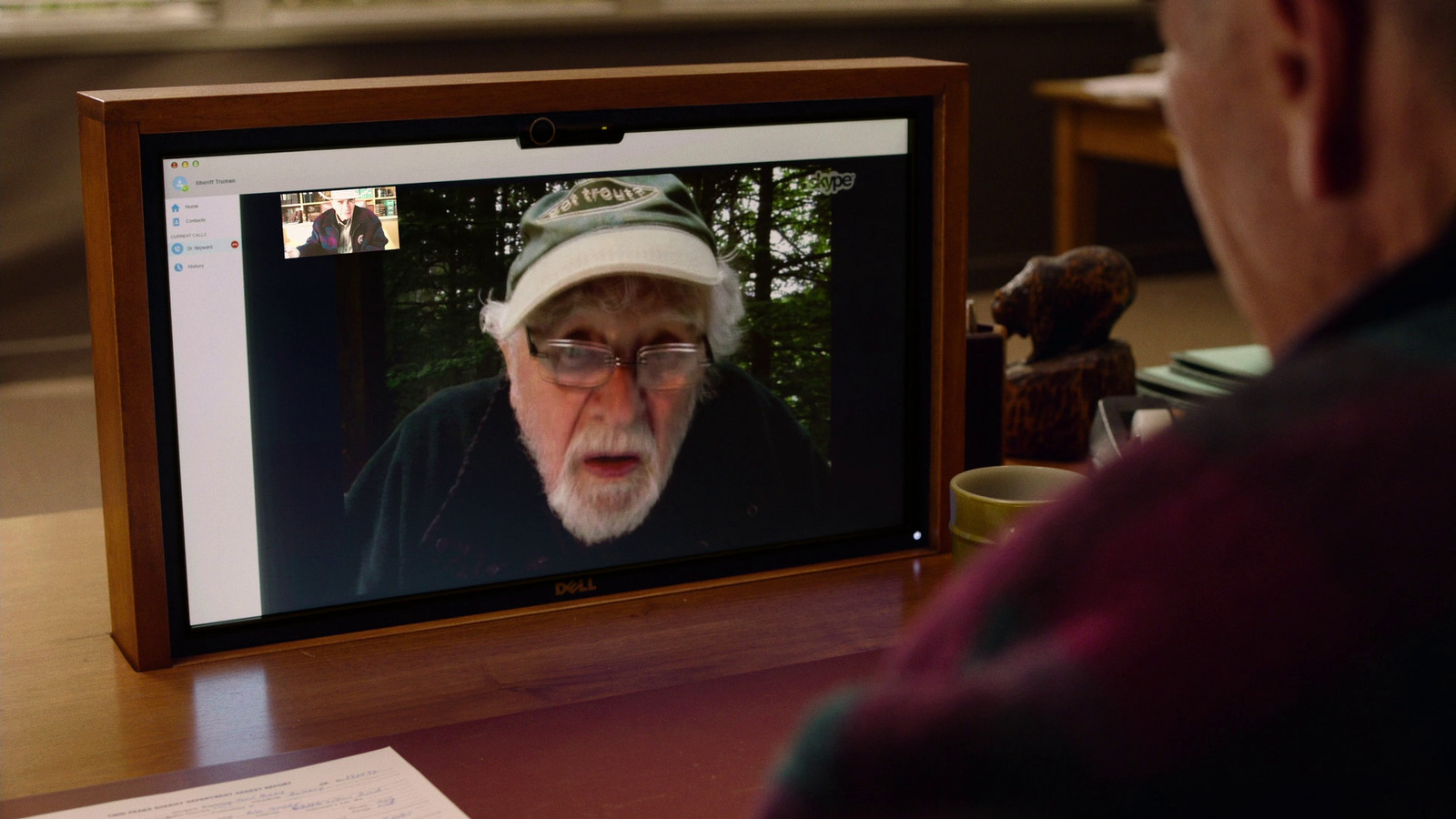
Frank raises his monitor and makes a video call. Doc Hayward remembers Cooper’s strange manner after the Lodge and his departure from intensive care. He thought Cooper might have been visiting Audrey, then in a coma; this is explicitly his recollection and supposition, not a scene the viewer is shown. The exchange then opens into fishing, breakfast and a shared joke. Warren Frost’s face is allowed ordinary warmth alongside disturbing testimony. The closing dedication to Frost gives this brief return a further resonance.
A fingerprint match with the wrong age
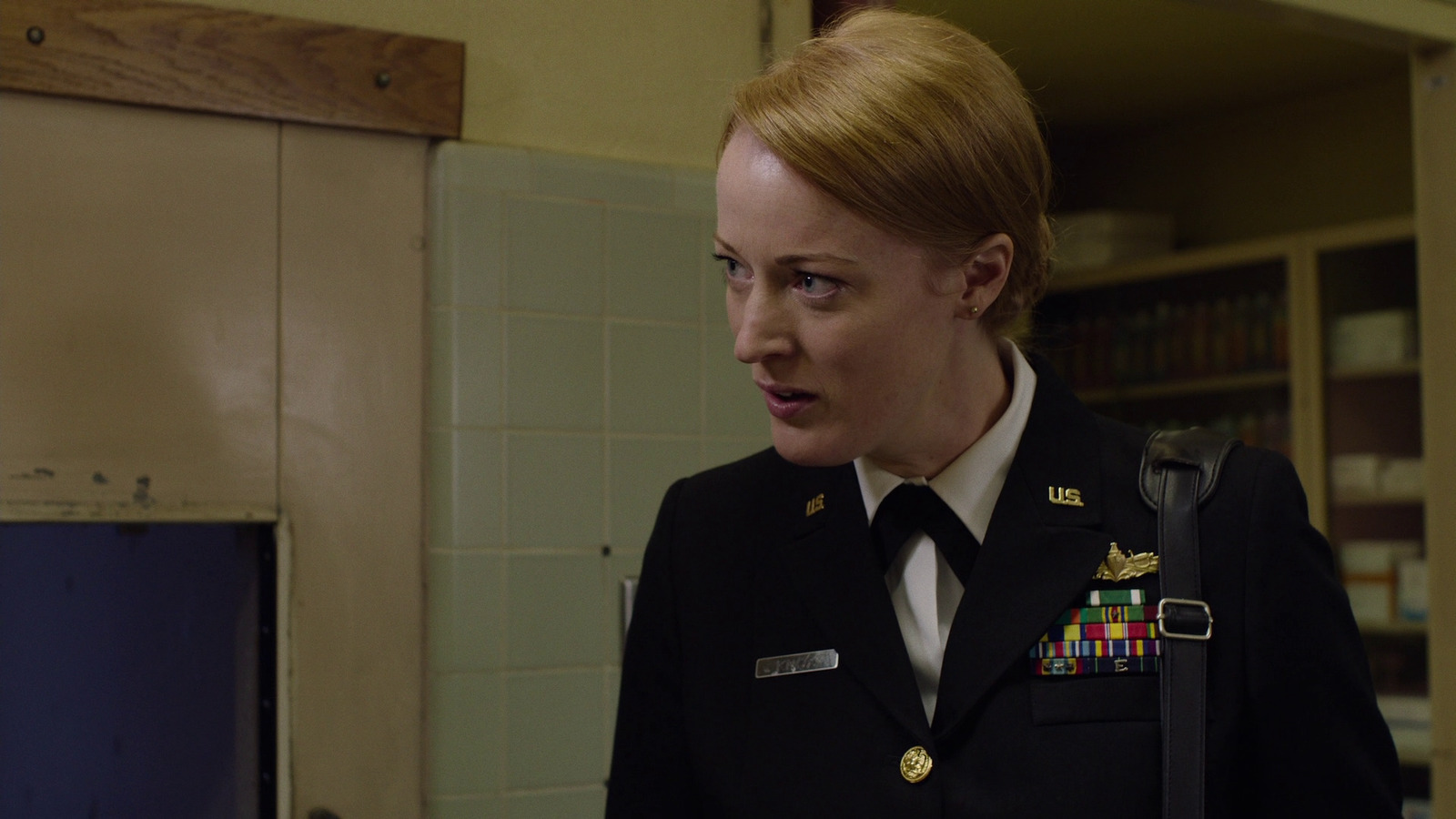
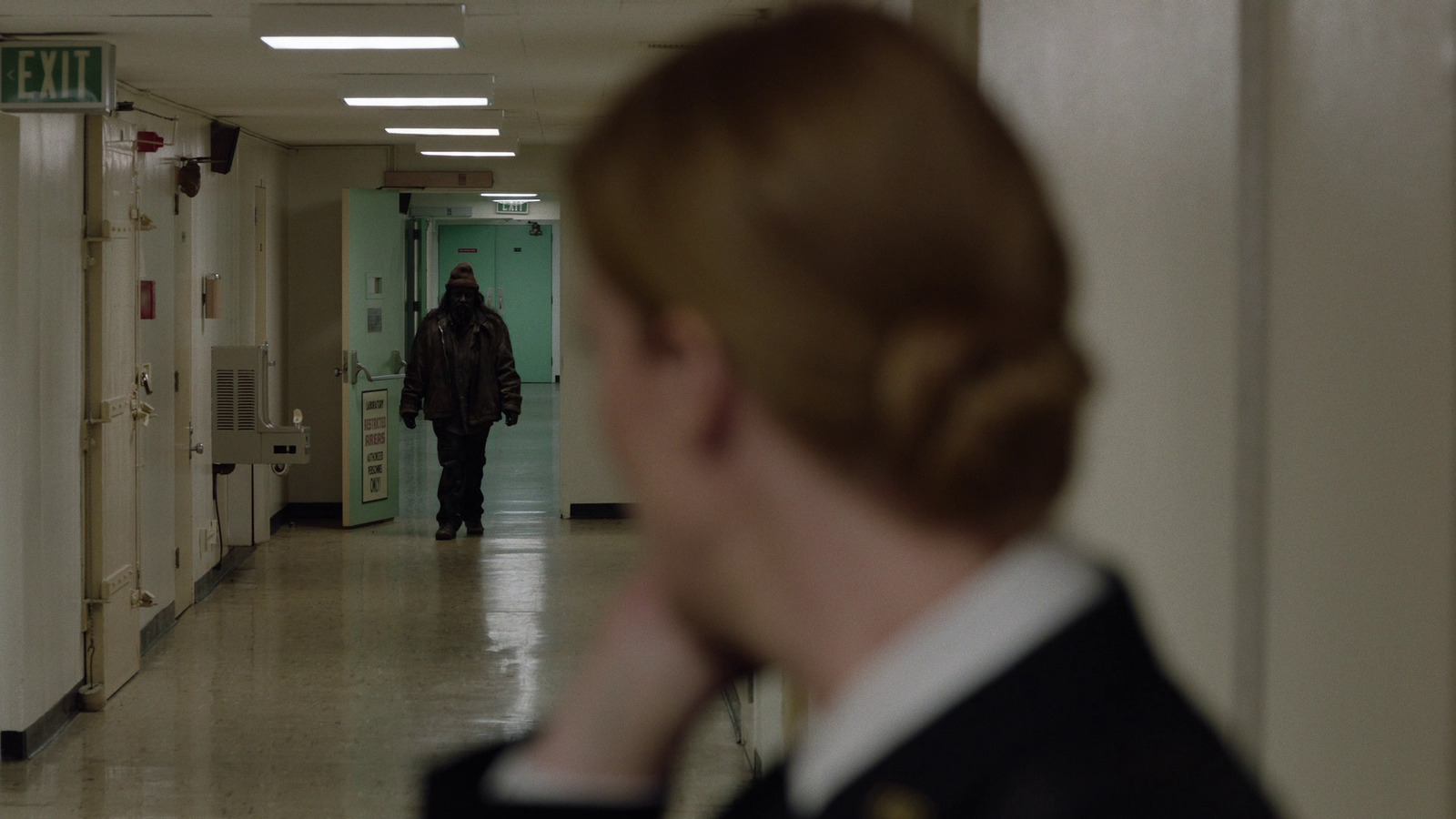
Lieutenant Knox expects a routine verification and encounters a headless body. The prints point to Major Briggs, but the recent death and apparent age refuse the expected chronology. Constance’s practical manner and Knox’s increasingly careful questions keep the impossible inside the language of professional procedure. A dark figure passes in the corridor behind Knox during her call. The image adds a disturbance that the conversation does not explain.
Open the scene sequence · 1 frame
An old acquaintance refuses the assignment
Albert’s report to Gordon turns a failed visit into clipped comic dialogue. At Diane’s home, the agents’ familiar rituals—coffee, courtesy, appeals to professional duty—meet a refusal that cannot be treated as mere bad manners. Diane controls the terms of conversation before eventually agreeing to travel. Her cigarette, posture and direct responses give a long-unseen character a distinct presence that exceeds her former role as the recipient of Cooper’s recordings.
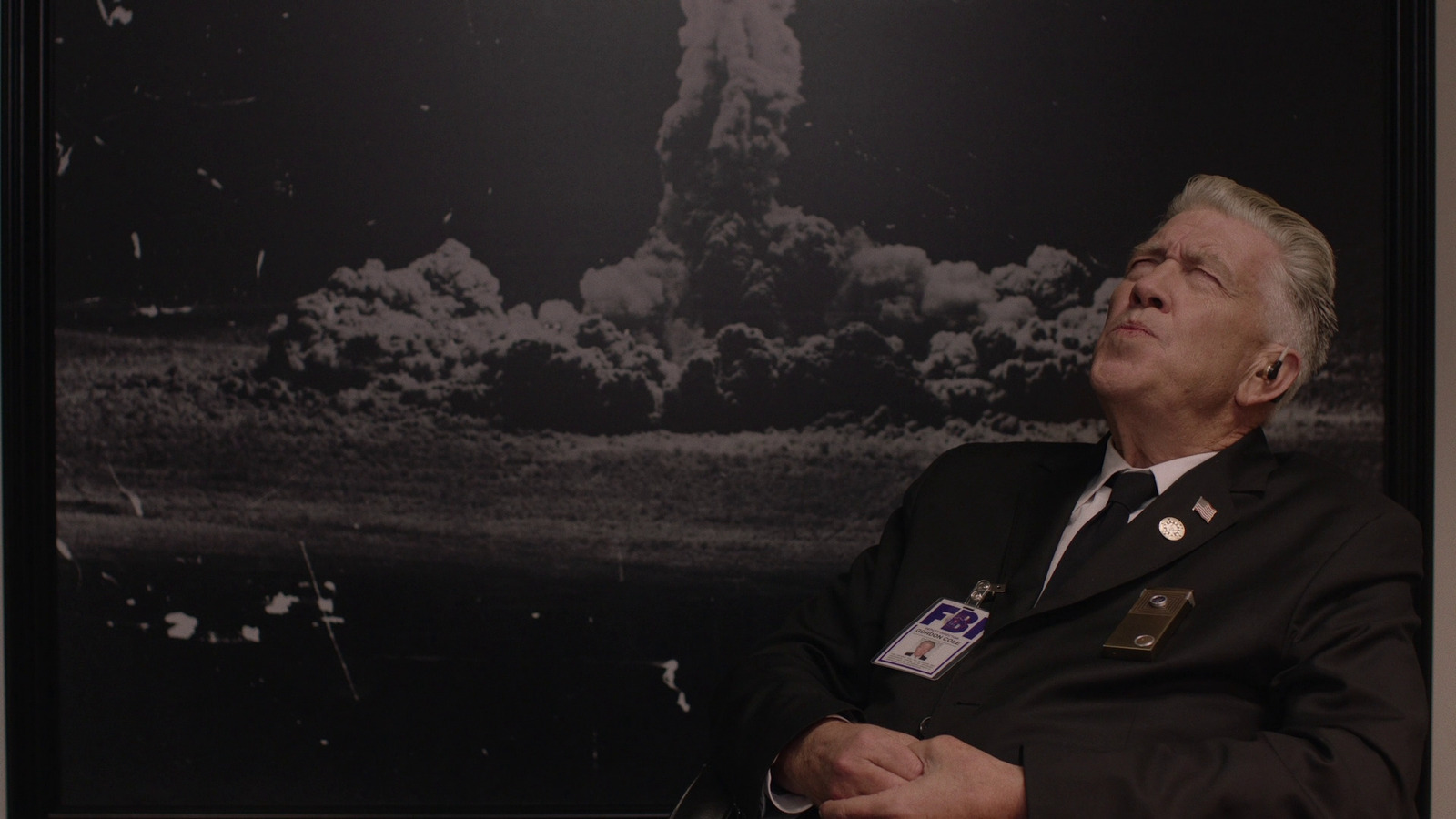
Open the scene sequence · 1 frame
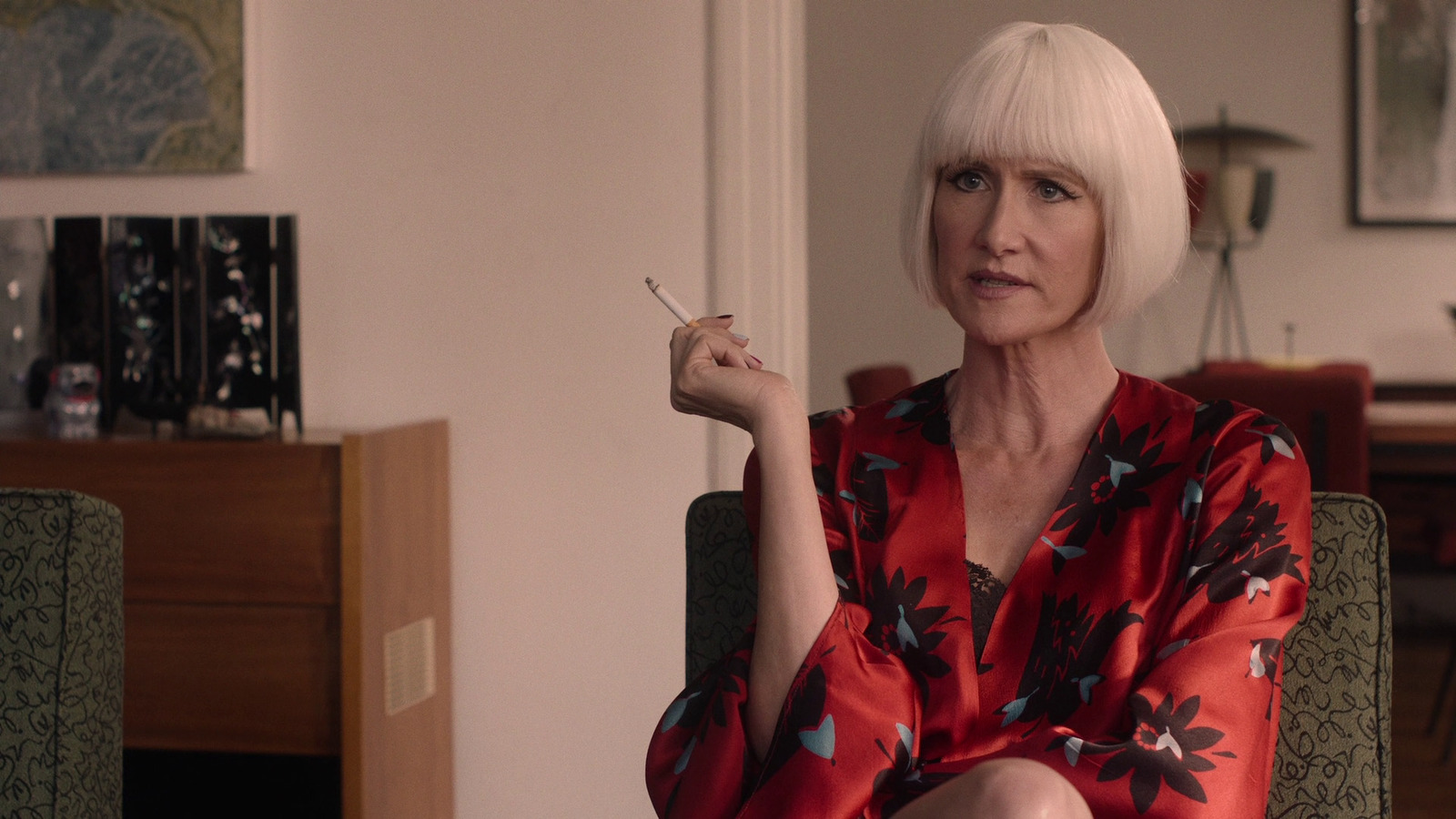
The reversed mark and the spoken sentence
Tammy’s comparison reveals that the prison print has been reversed to align with the earlier record. Gordon connects this visual reversal to the anomalous word in the prison greeting, then marks out the sentence on Tammy’s fingers. The scene moves from reproducible records to a more esoteric interpretation of the hand. Keeping those stages separate helps: the displayed discrepancy is evidence; Gordon’s explanation of its larger meaning is a character’s proposed reading.
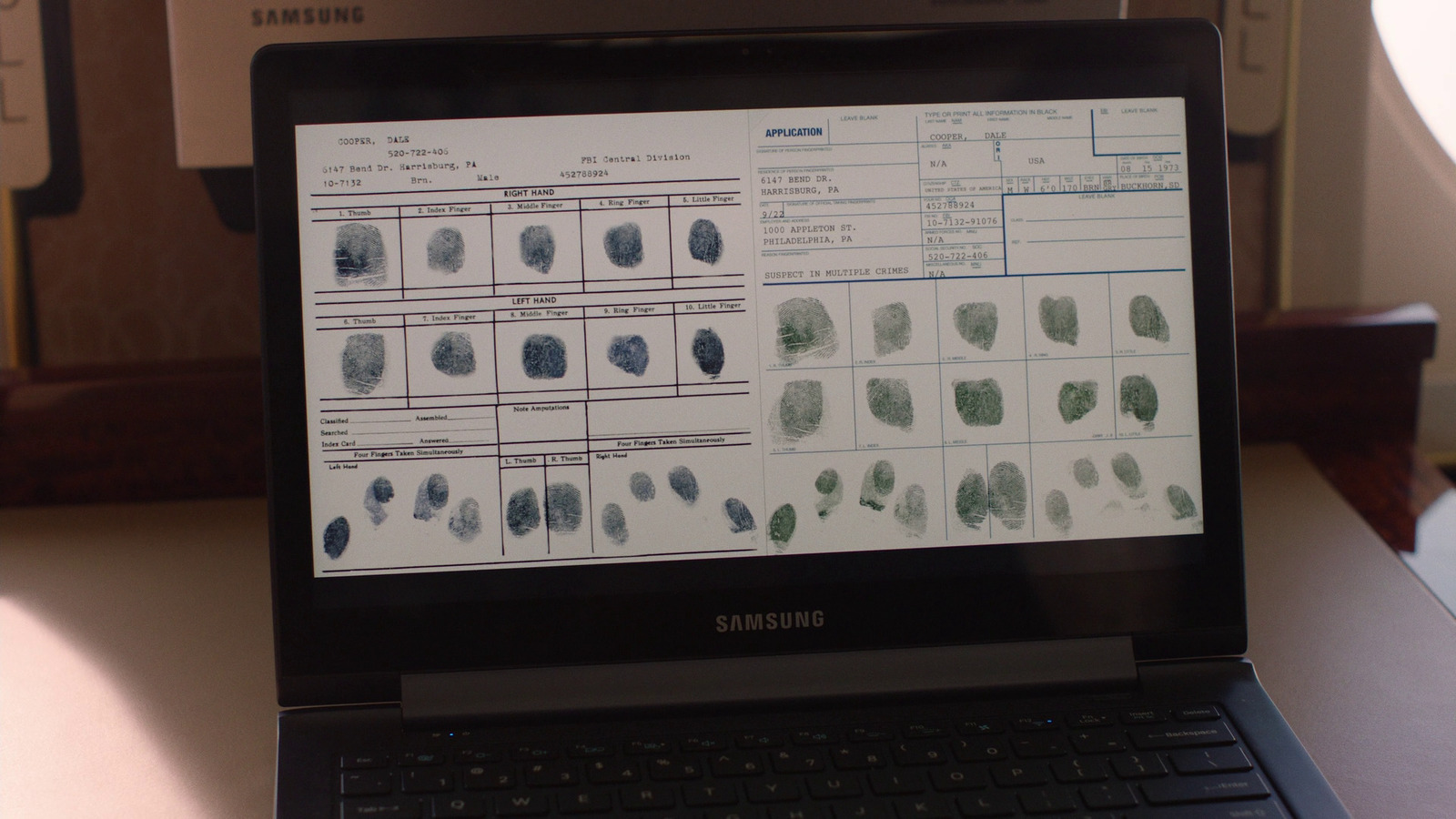
Open the scene sequence · 1 frame
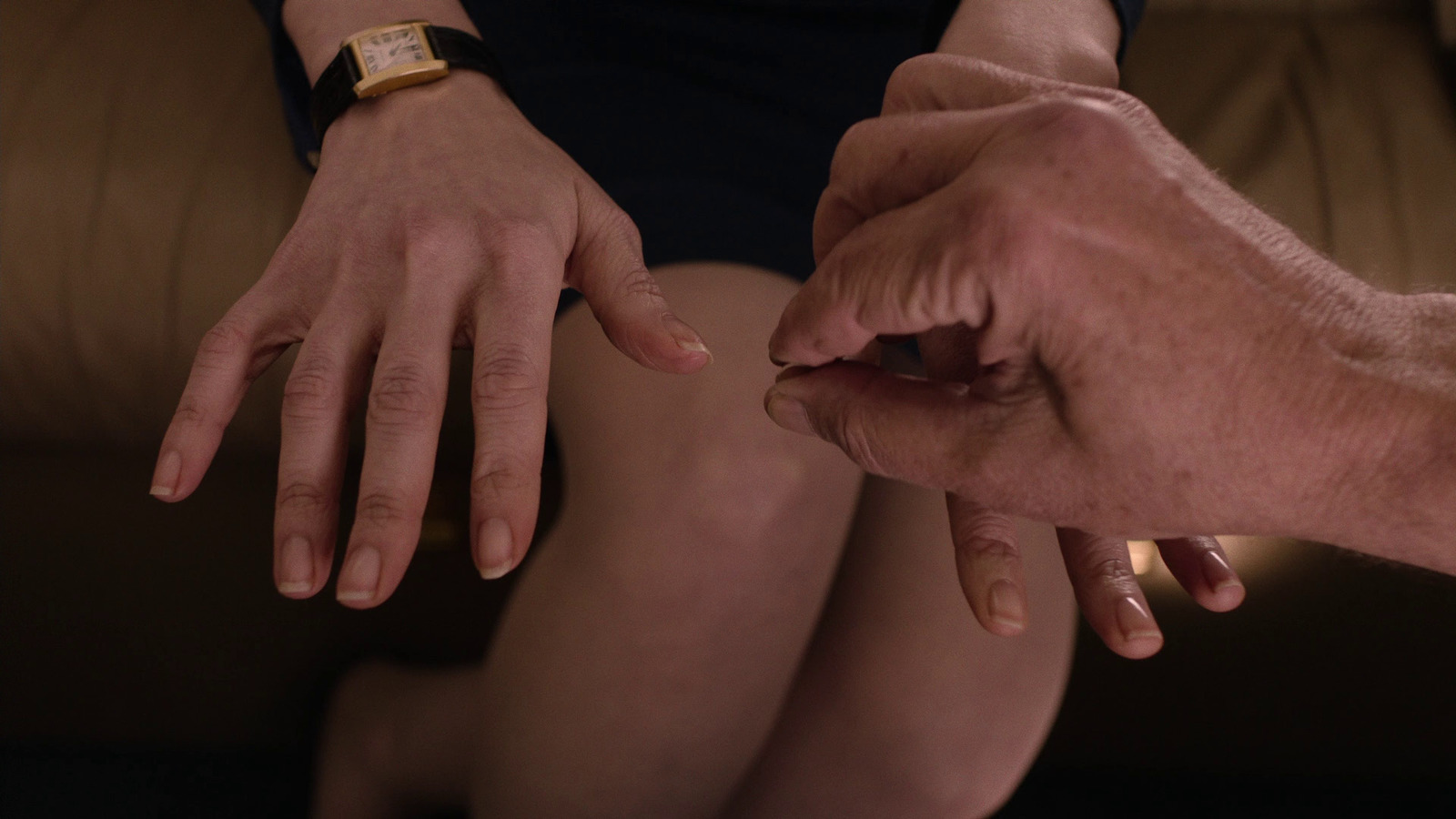
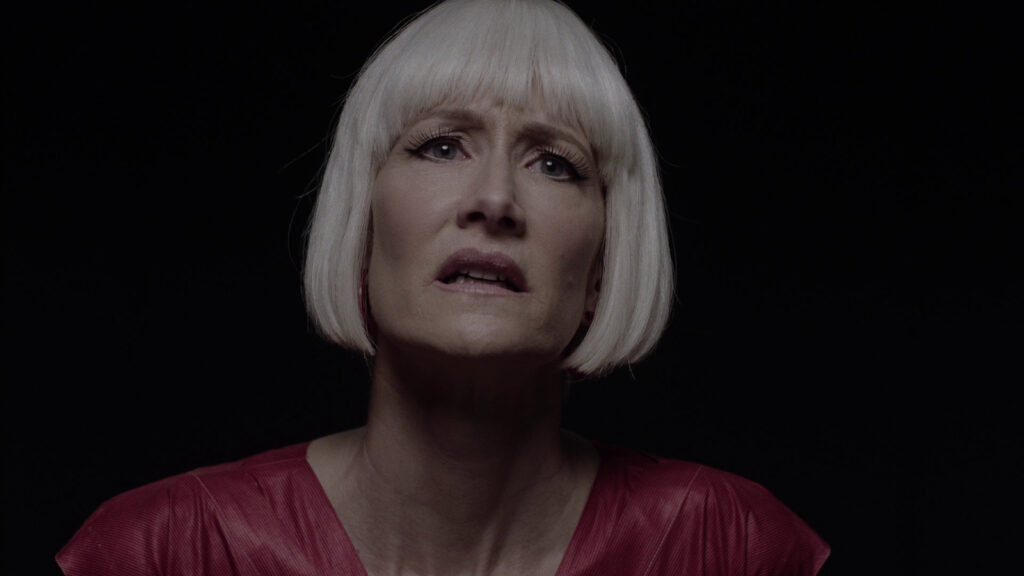
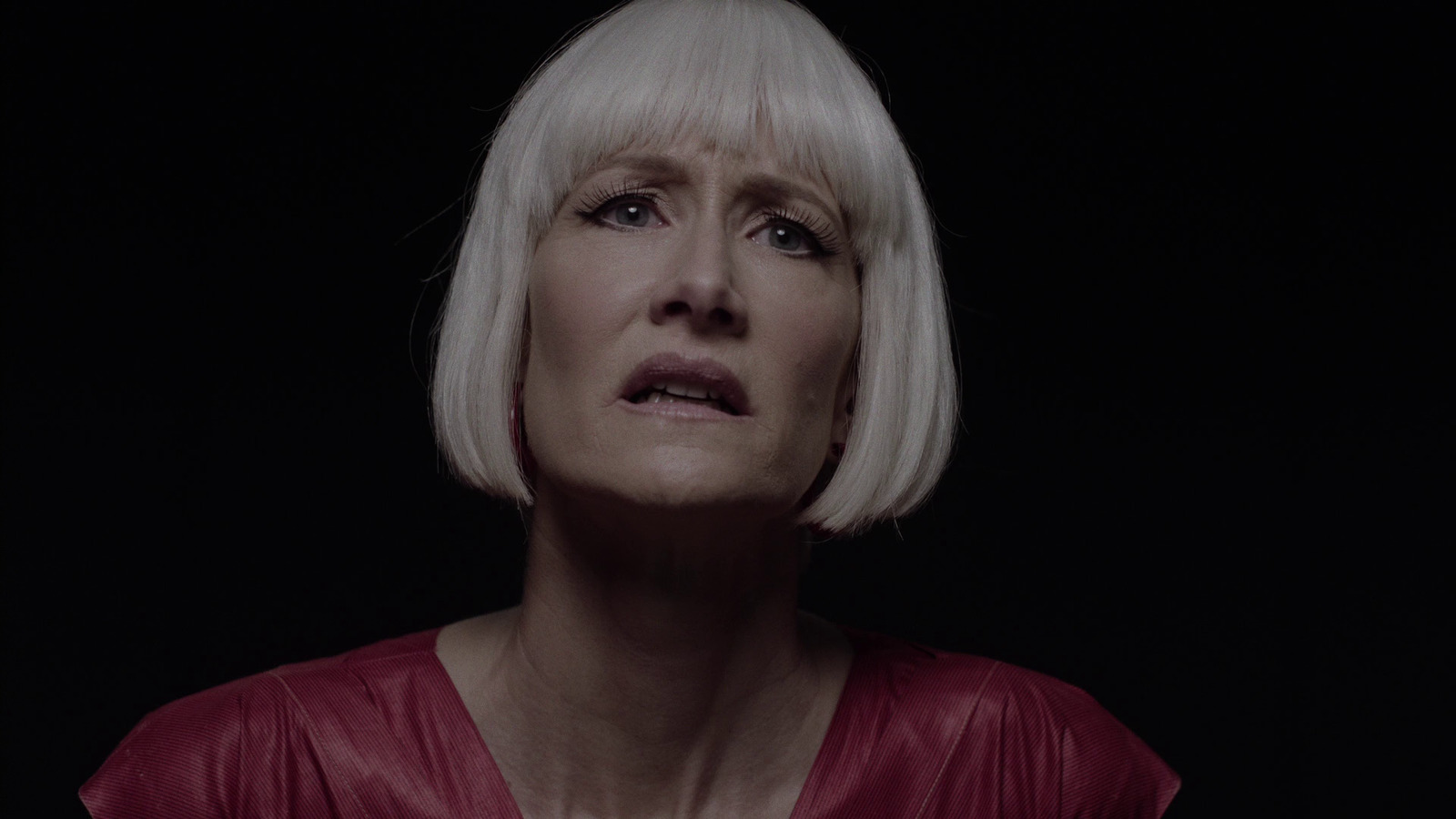
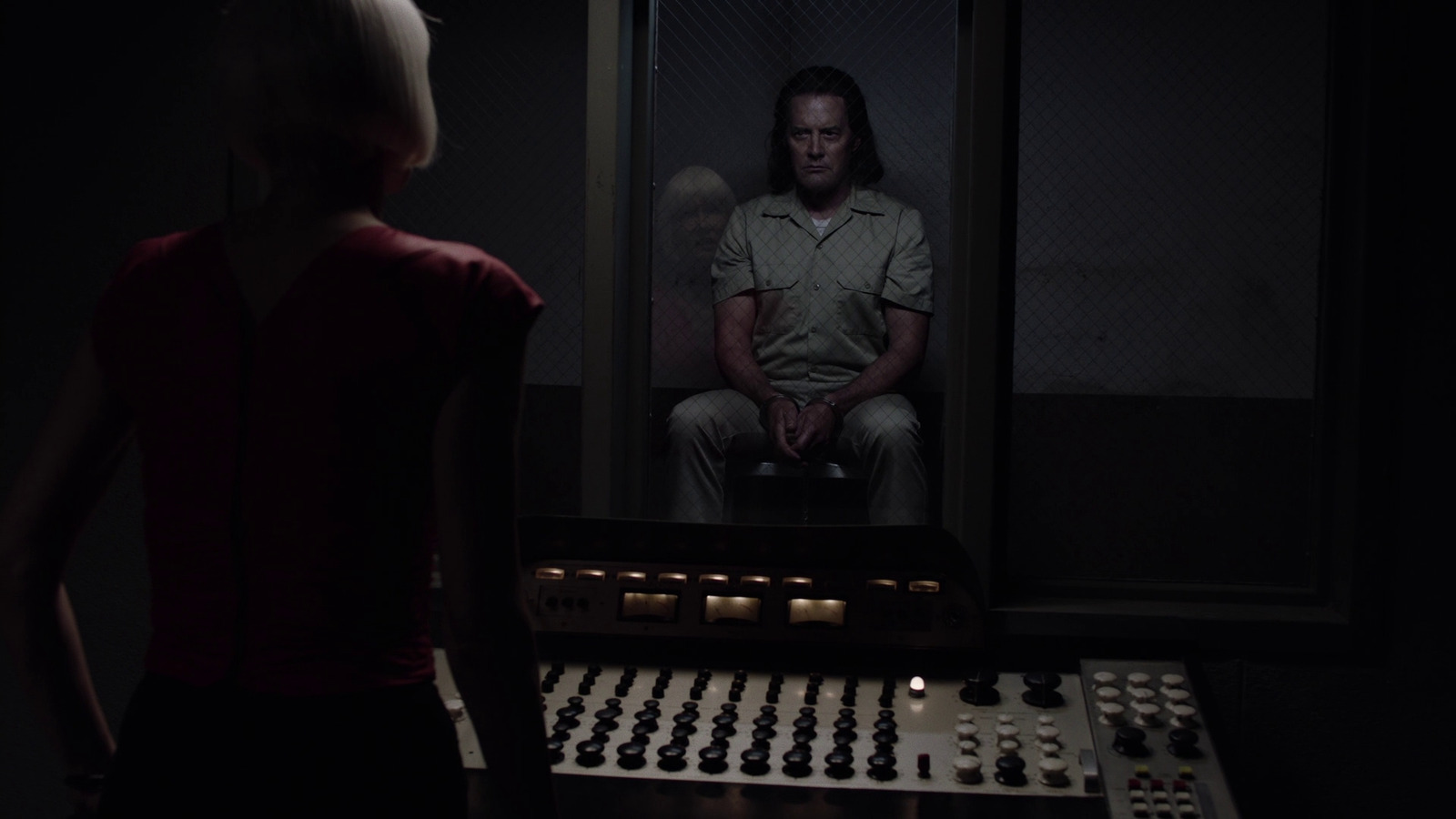
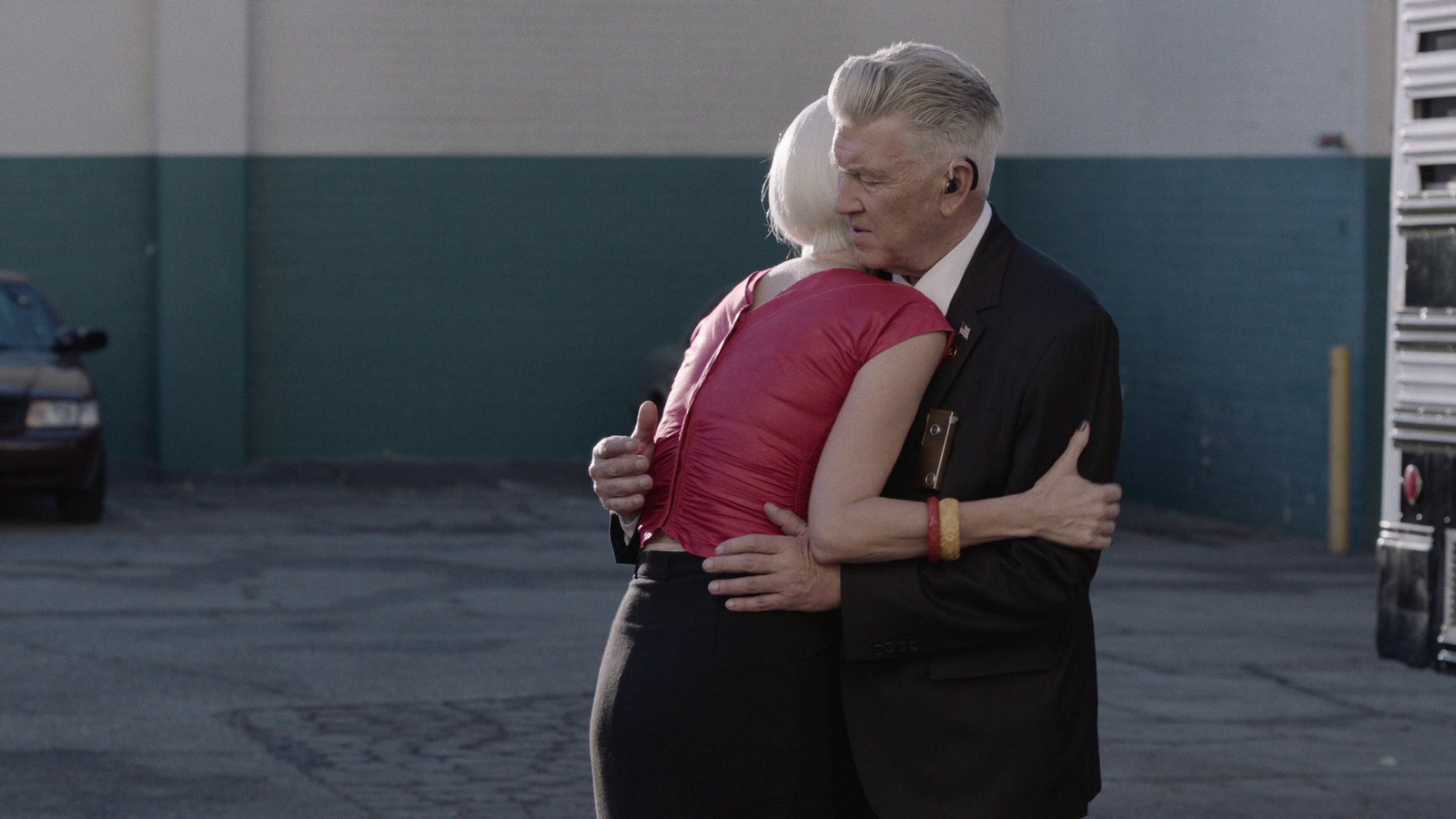
Diane looks beyond the face
Diane insists on privacy and control of the interview’s duration. Glass, shutters, microphone and console turn access to the prisoner into a visible mechanism. His calm responses invoke a shared night; her questions become increasingly direct, and her face registers distress that his composure does not answer. Outside, she tells Gordon that the difference is not simply age or appearance. He accepts that recognition before receiving the private history behind it. The part leaves that history withheld; later revelations should not be silently imported into this scene’s immediate experience.
Open the scene sequence · 2 frames
A few names open a prison
The prisoner’s message about a strawberry is enough to secure a private meeting. Once the cameras are off, he uses a dog leg and the names Joe McCluskey and Mr. Strawberry as pressure points. The viewer is not given a complete account of the warden’s wrongdoing. The scene works through the asymmetry between our limited knowledge and Murphy’s unmistakable fear. A cheap rental car, Ray’s release and a weapon become the practical consequences of that fear.
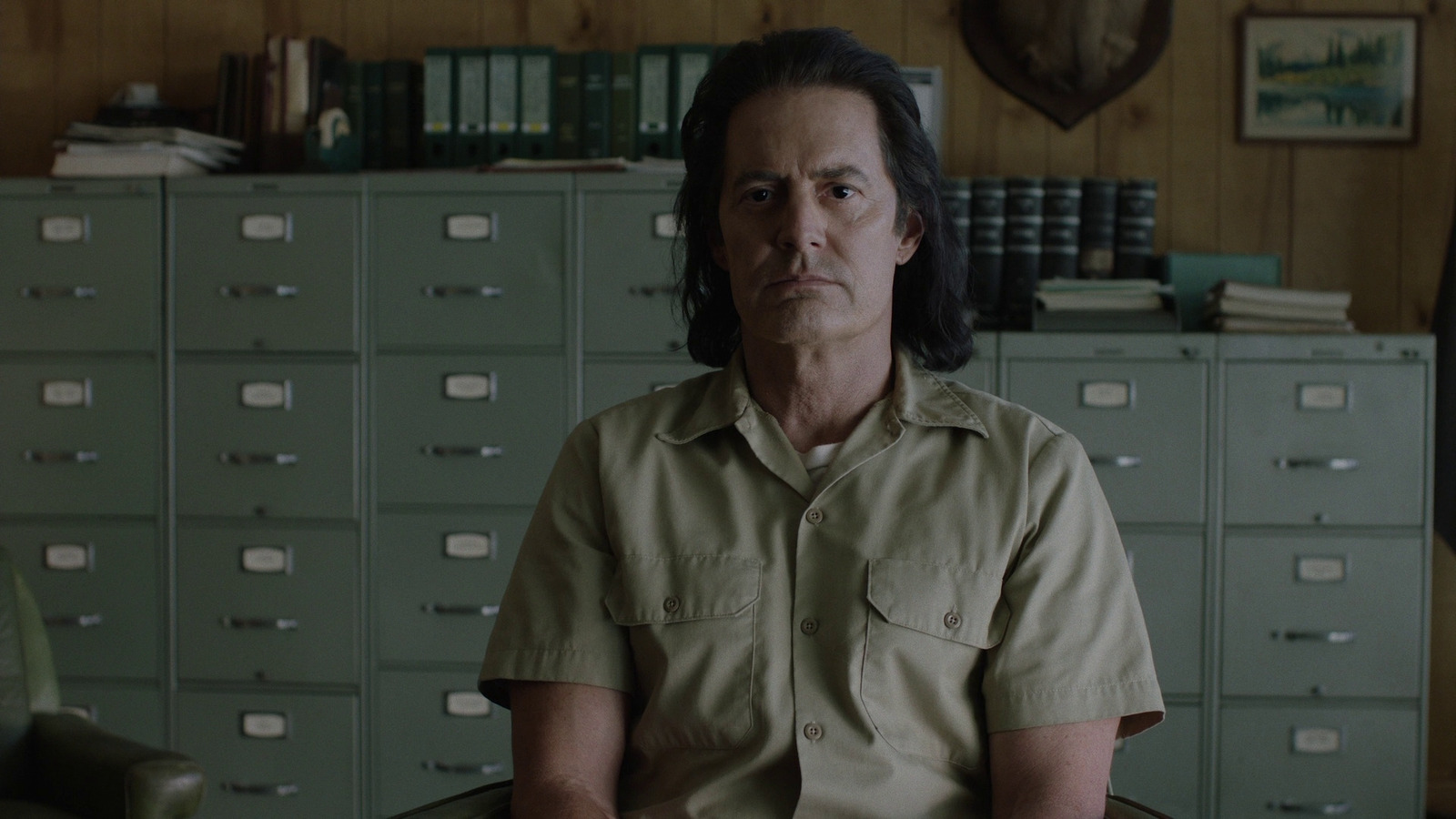
Questions move around a silent man
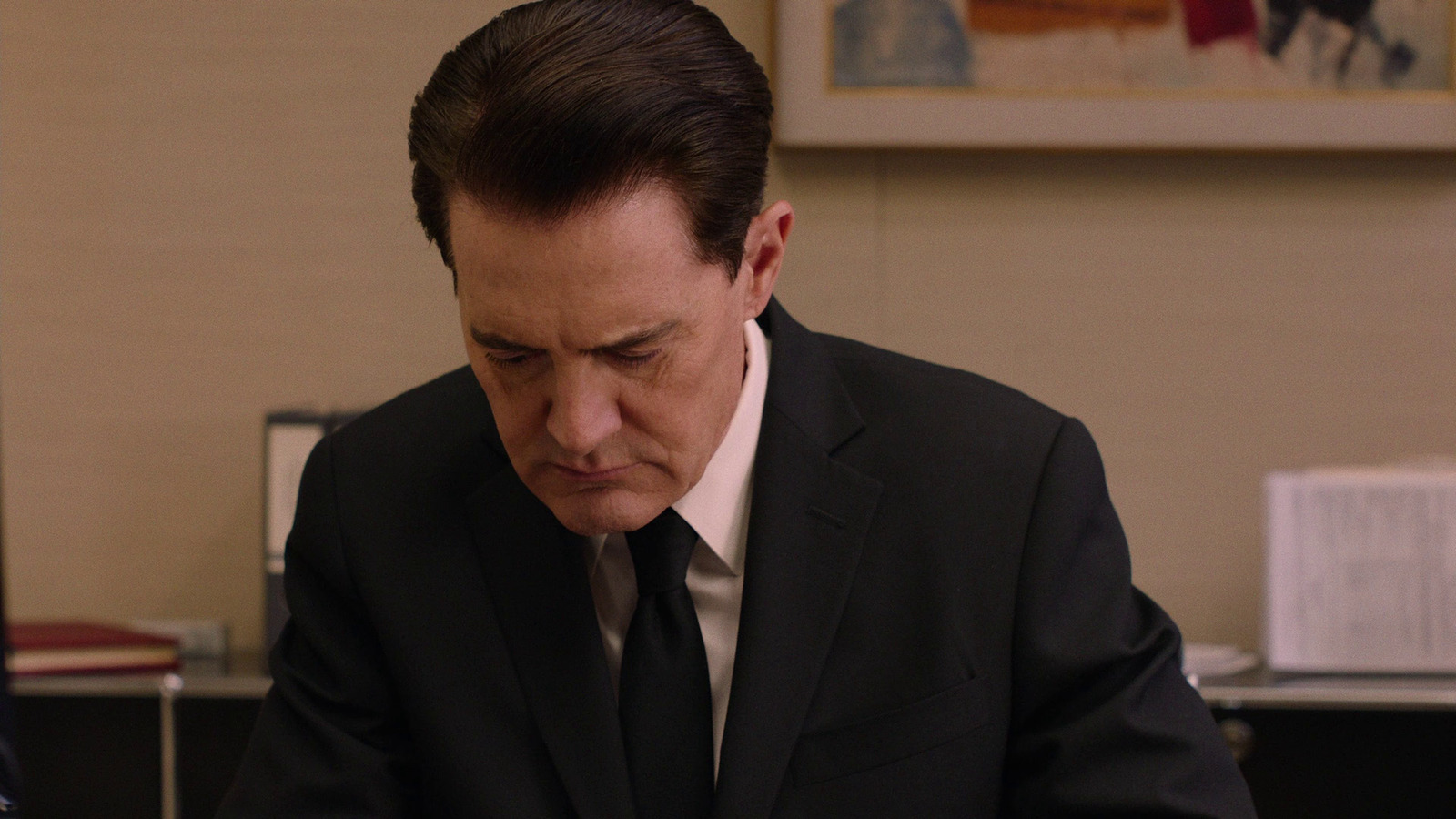
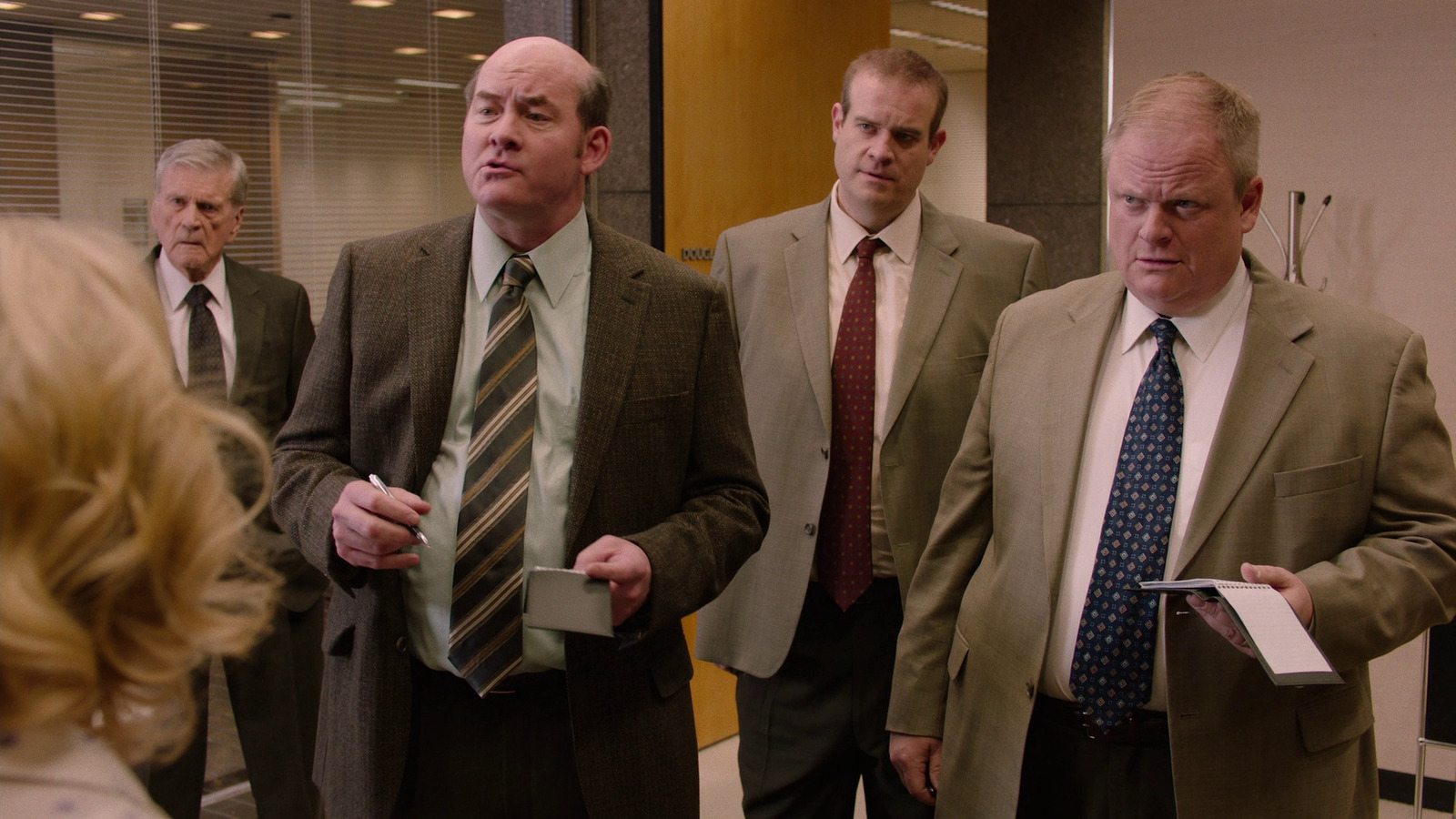
Anthony questions Cooper while he continues drawing. The Fusco detectives arrive about the missing car, and Janey-E takes over an exchange that Cooper cannot manage. Her rapid explanations push against their procedural questions; Bushnell cuts through to the information they have withheld, the car’s explosion. Cooper contributes fragments, while the other people assemble a socially workable account around him. Competence is distributed among his protectors before it returns to his own body.
Open the scene sequence · 1 frame
Reflex before recovery
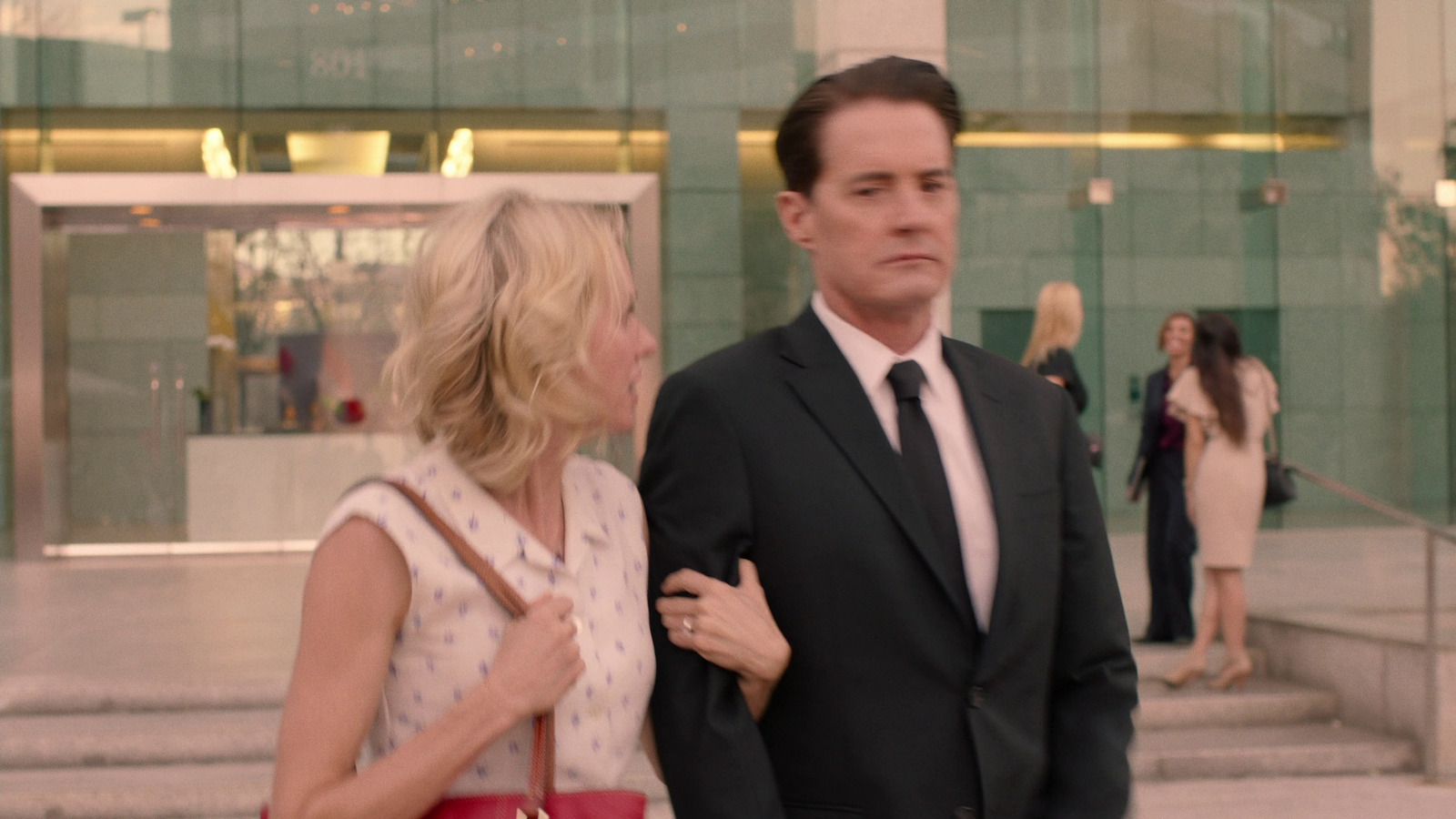
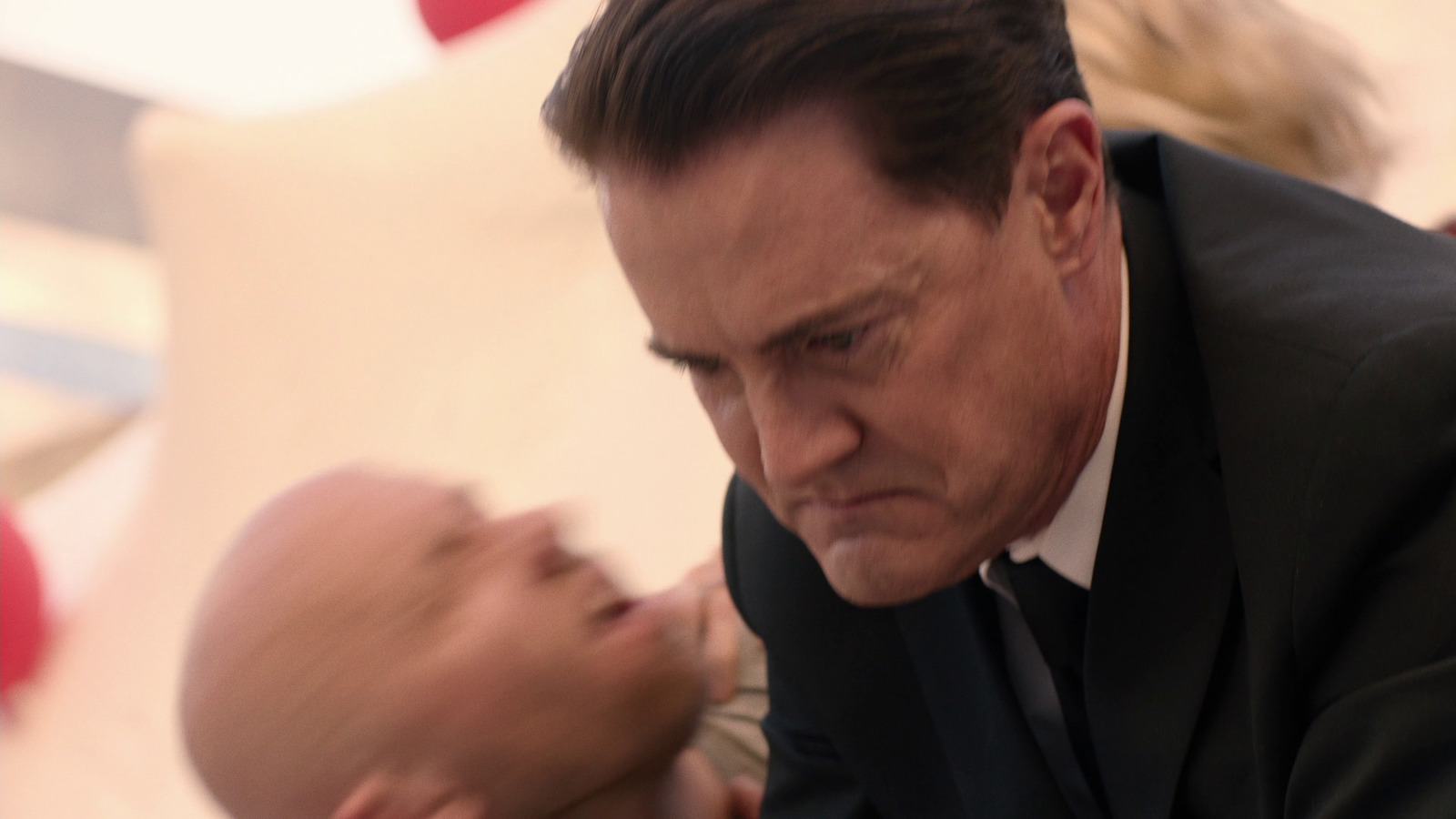
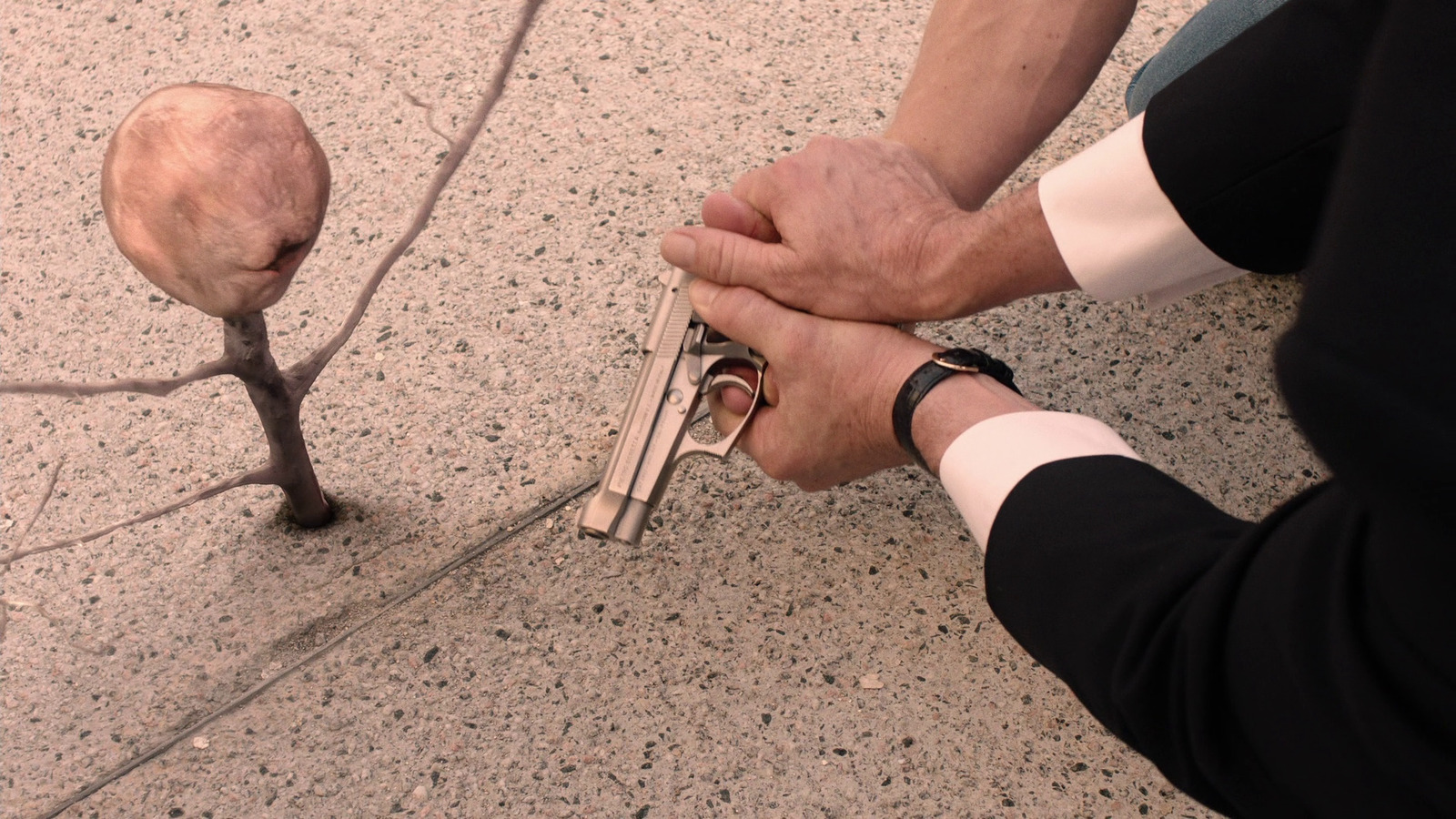
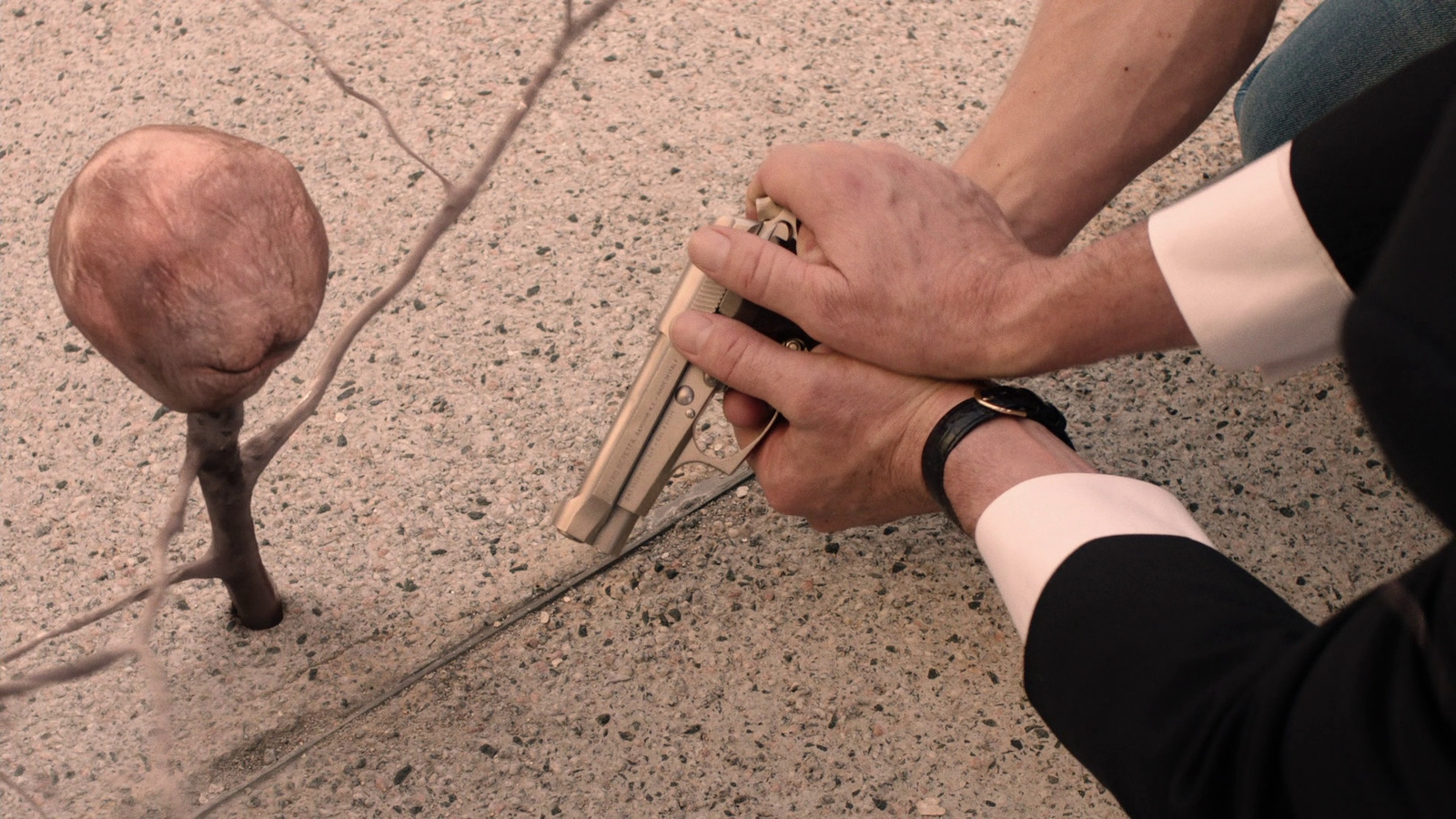
Janey-E continues discussing money as the pair leave the office. A gun interrupts the conversation. Cooper turns, redirects the attack and restrains Ike with a speed absent from his ordinary interactions. The editing abruptly compresses time after the office’s protracted exchanges. A small version of the Arm appears beside the struggle and repeats an instruction. Physical competence returns in this emergency, but the scene does not establish that Cooper’s memory or conversational agency has fully returned.
Open the scene sequence · 2 frames
The event becomes competing accounts
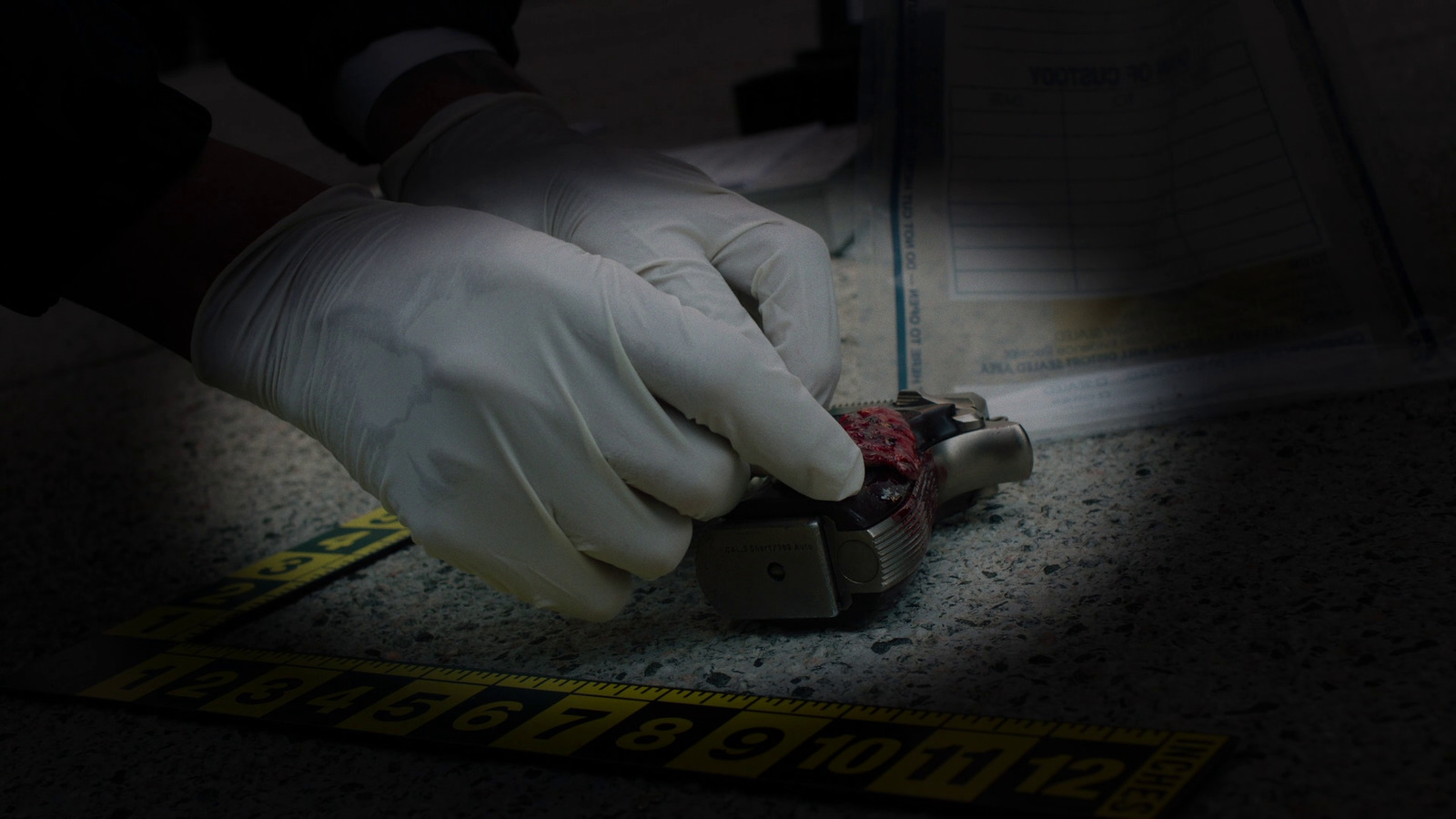
Police, a reporter and witnesses turn the attack into a public story. Janey-E celebrates Dougie’s intervention; another witness describes his speed. These accounts emphasize different aspects of an event the audience has just seen. The close view of tissue on the recovered gun adds a material trace to the fantastic interruption. An impossible adviser and ordinary forensic procedure occupy successive shots.
A hotel heard before it is understood
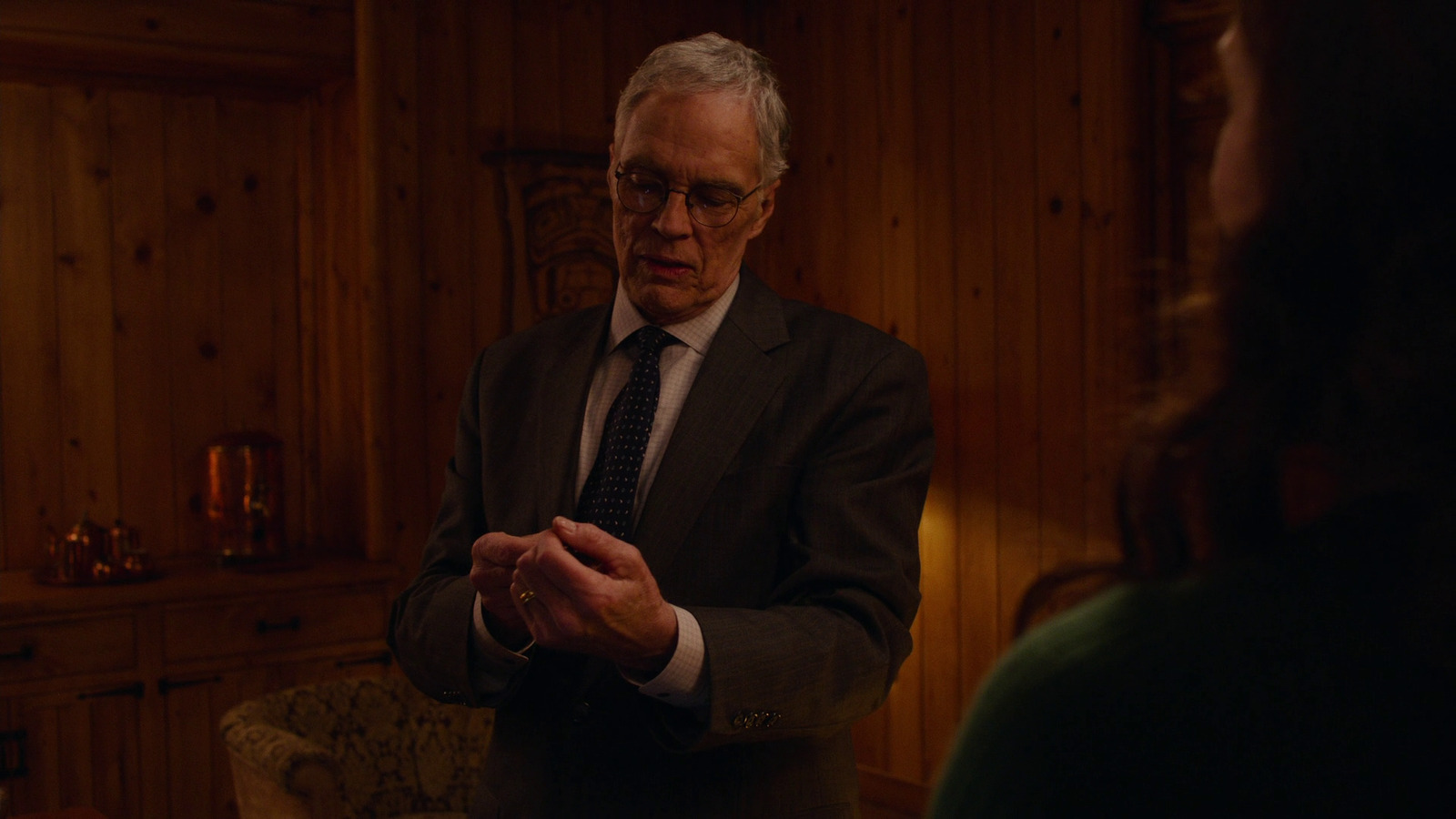
The camera examines the Great Northern’s wood, furnishings and empty spaces before Ben and Beverly try to locate the tone. Listening makes them pause, move and approach one another. The sound seems to change position, while the room key returned by mail offers an object with a readable history. Beverly’s questions about Cooper and Laura reveal that a place can retain its past without every person working there knowing it. Ben postpones the hum’s investigation until morning; neither he nor the dossier can yet name its source.

Open the scene sequence · 1 frame
Another room, another obligation
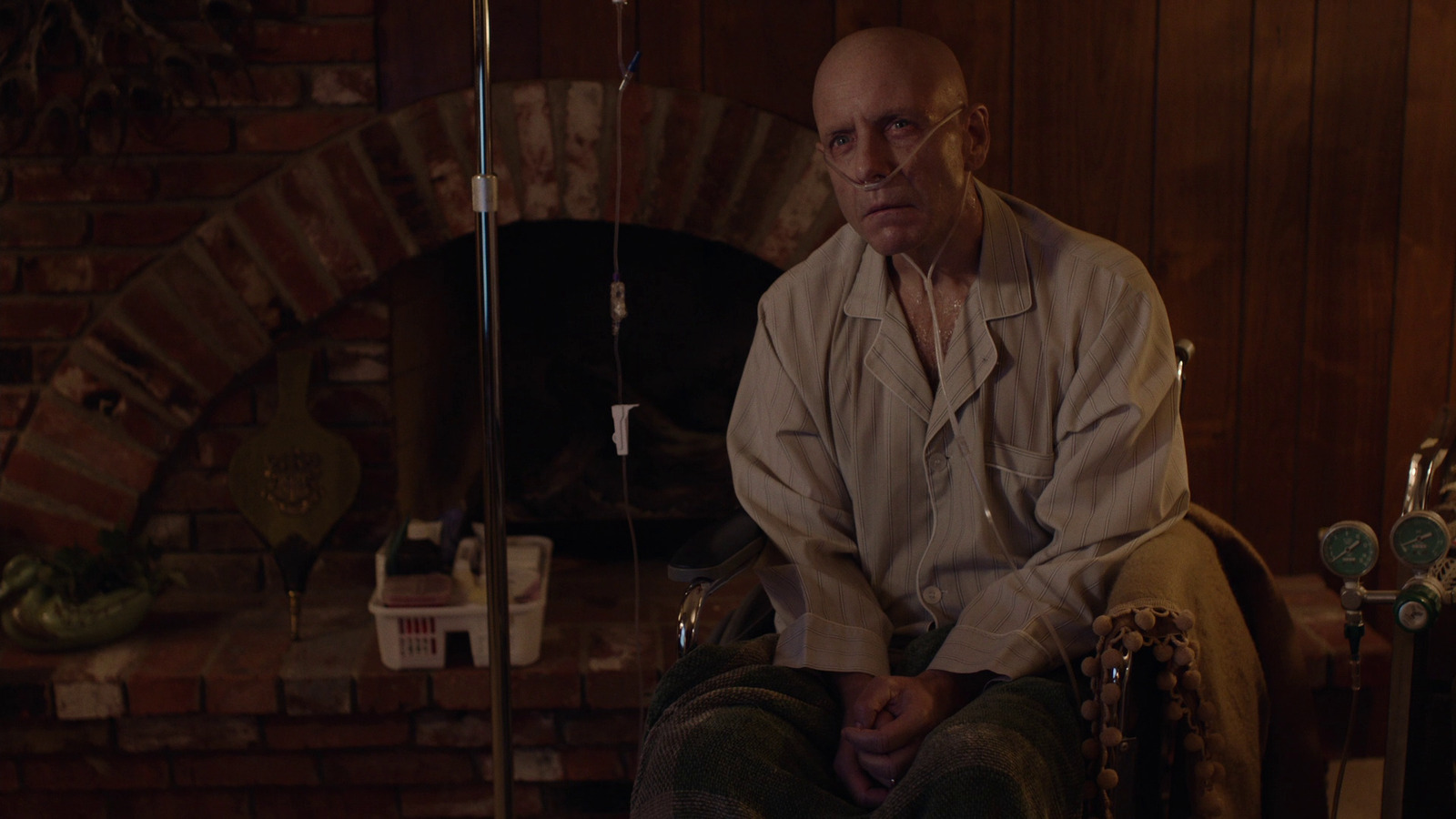
Beverly’s return home changes the meaning of the time spent at the hotel. A carer reports on Tom’s pain and medication; his questions about her lateness meet her anger and financial anxiety. The episode does not reduce either person to a clue in a romance. Illness, dependence, work and resentment are all present in the domestic room, giving the preceding charged encounter a material cost.
Two minutes of work, then an ugly transaction
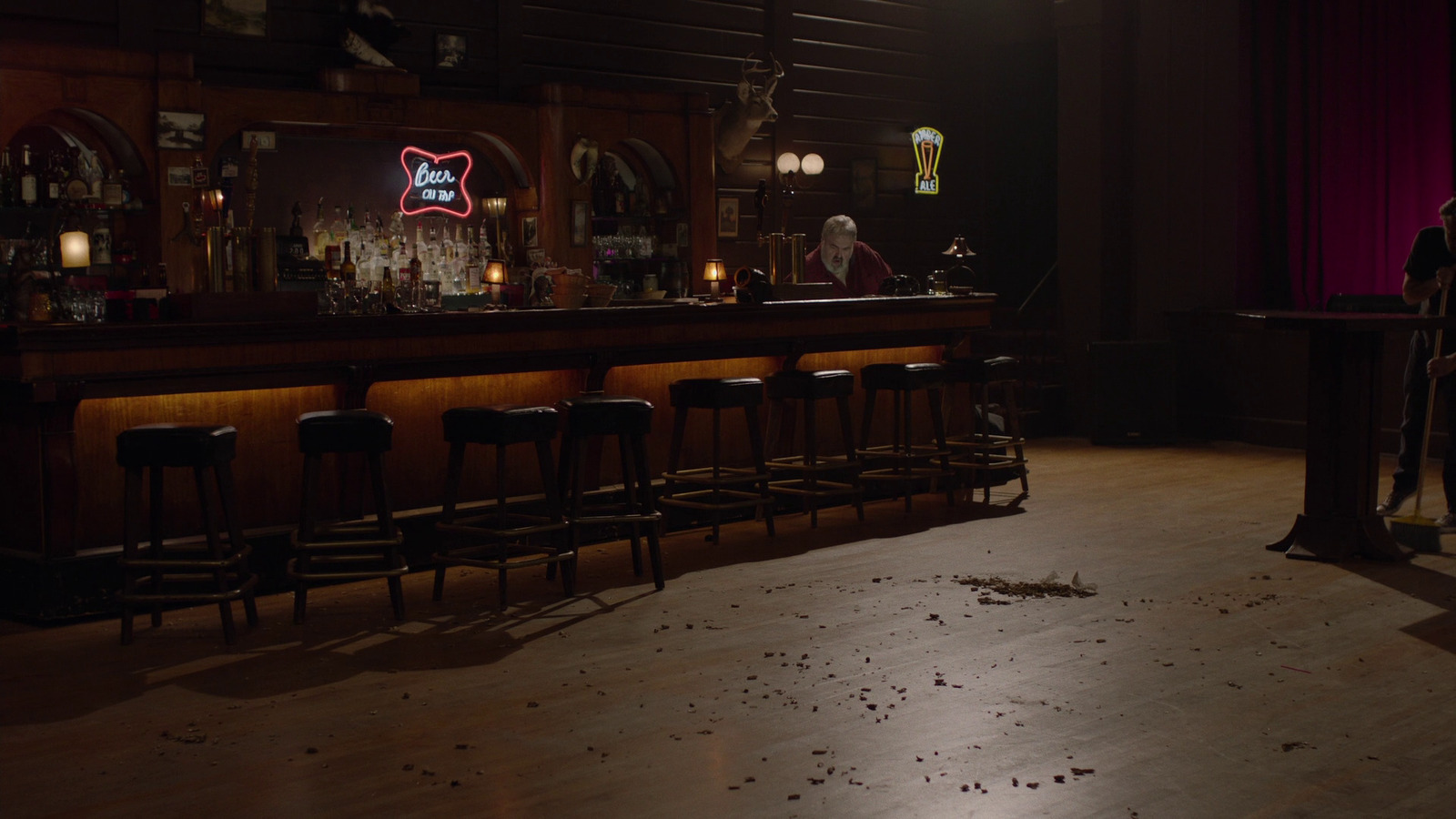
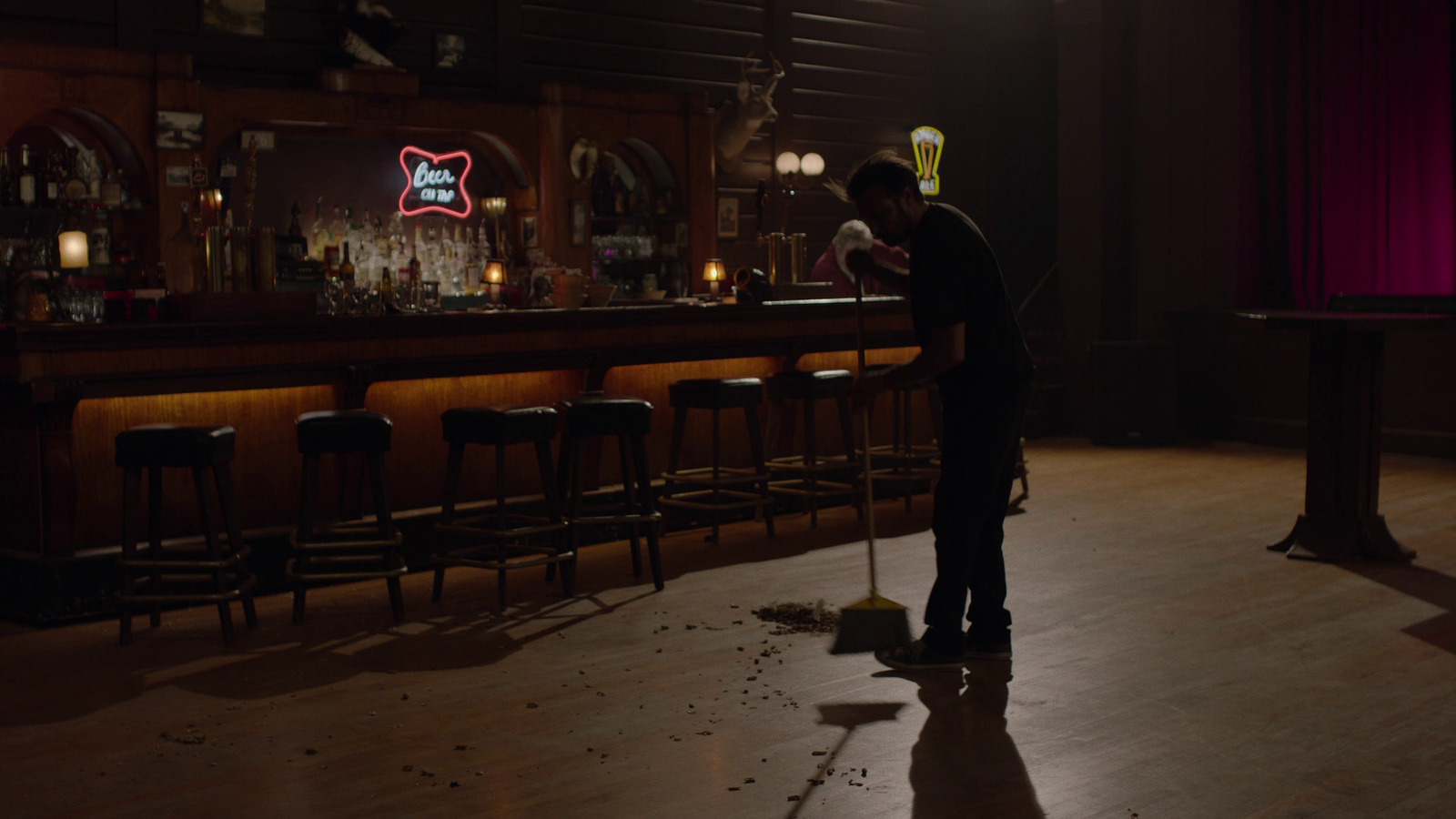
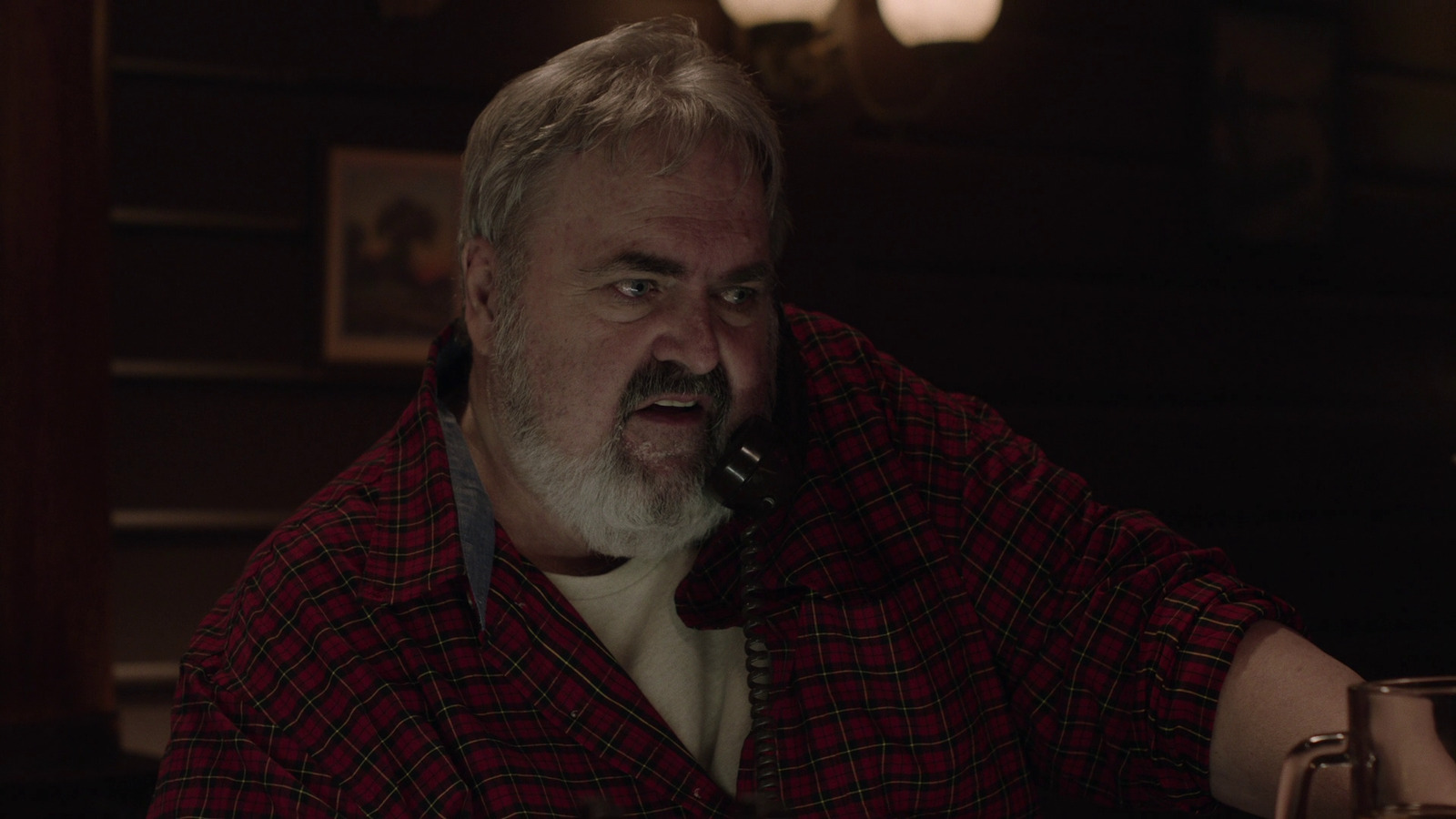
A worker gathers debris from the Roadhouse floor while “Green Onions” plays. The sustained wide view makes progress small but visible: the scattered fragments become a pile. A telephone call then changes the scene’s register. Jean-Michel Renault discusses the exploitation of two underage girls and protects the business through evasions and contempt. The passage allows a seductive atmosphere and routine labour to coexist with continuing abuse. It is not simply a comic pause in the mystery.
Open the scene sequence · 2 frames
Release, then ordinary life continues
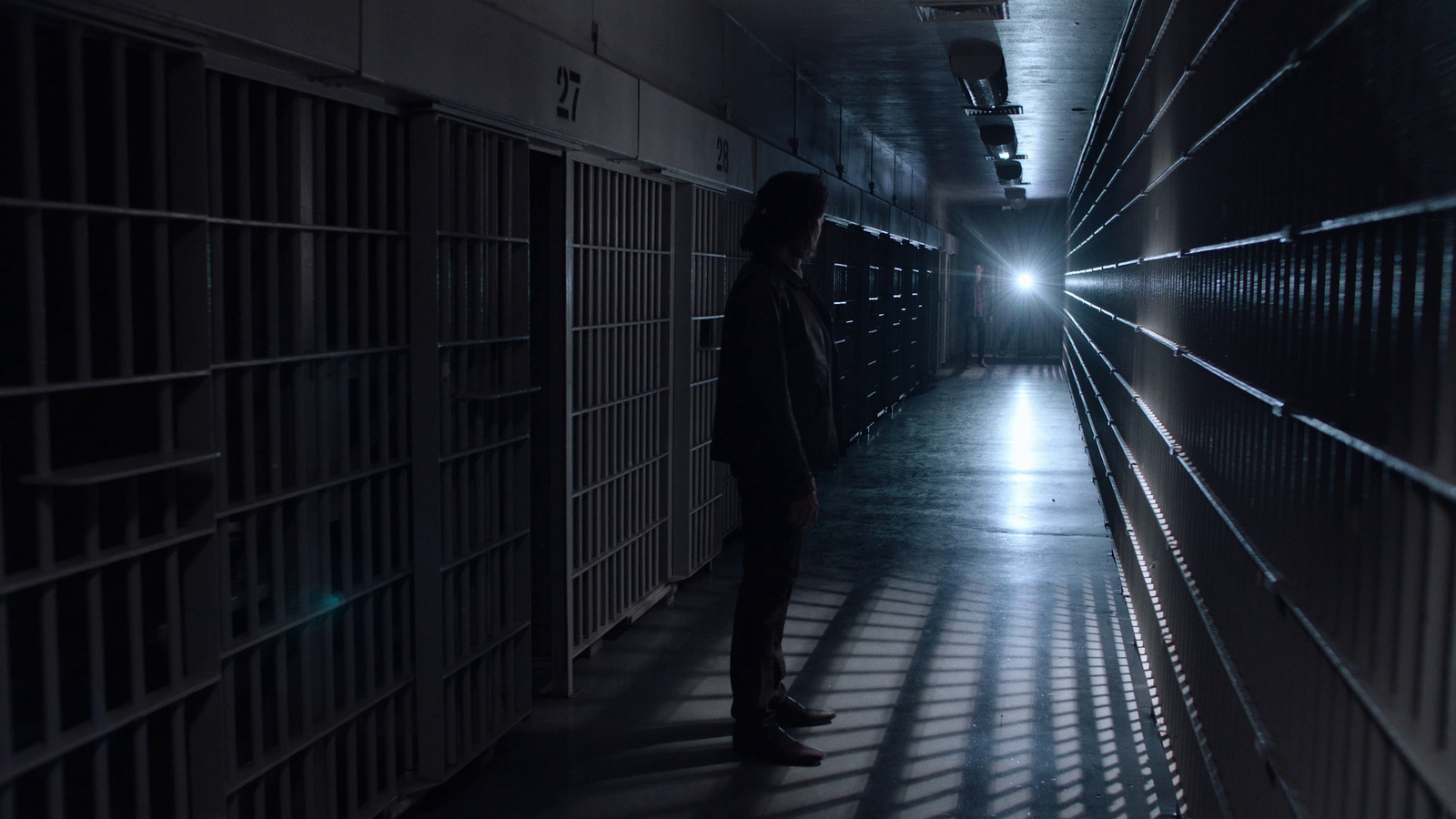
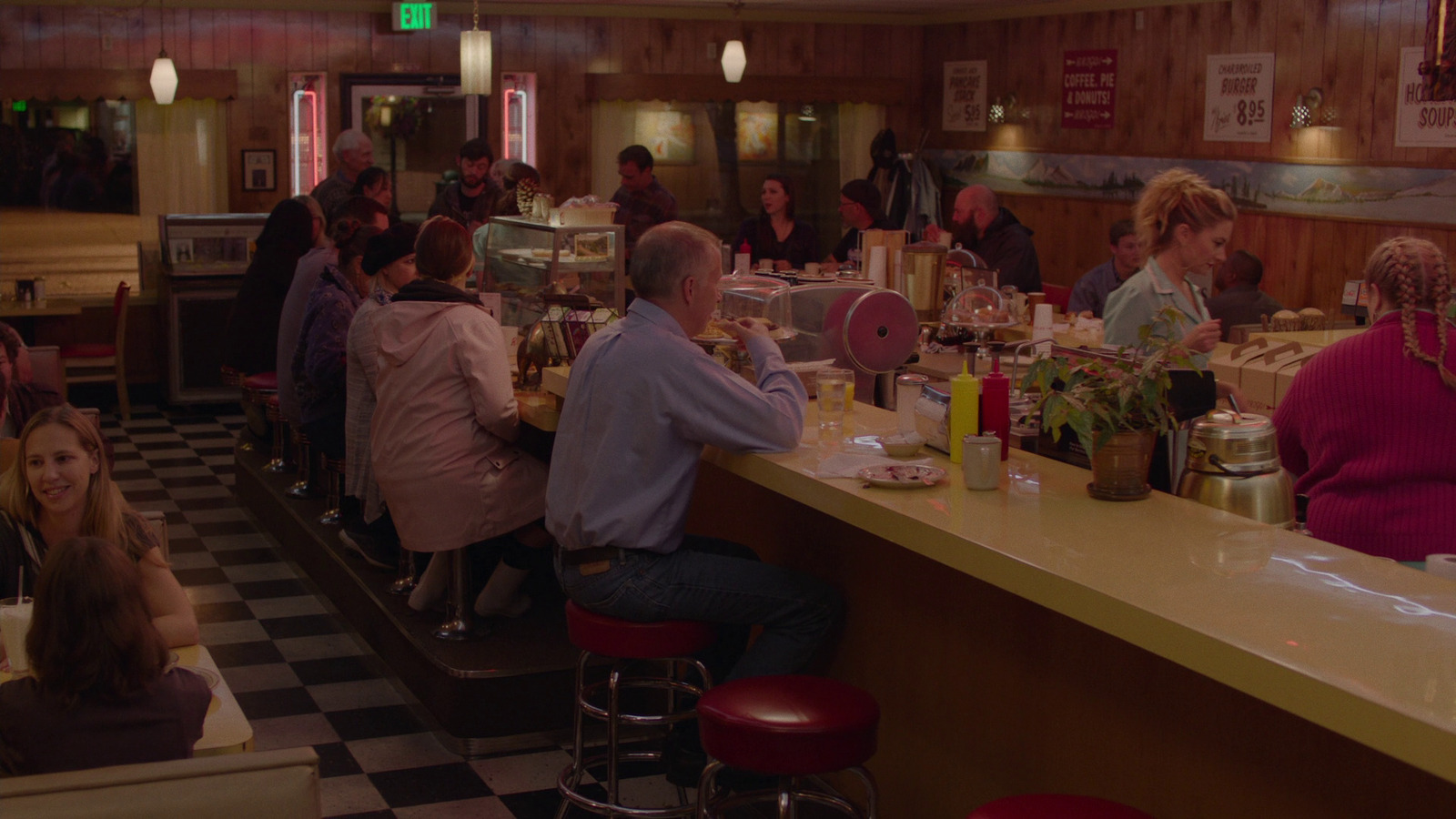
The prison’s gates and corridors stage Mr. C’s departure as a controlled procession. The warden watches; the agreement has overridden the FBI’s request to hold the prisoner. The final move to the Double R offers no equivalent climax. A man calls for Billy, and the diner resumes its activity beneath the credits. “Sleep Walk” accompanies a familiar public space that continues to generate stories beyond the investigation’s current field of view.
Open the scene sequence · 1 frame
Voices, microphones and an unlocated hum
Diane’s interview: the shutter and microphone make listening an arrangement she can interrupt. The scene’s pauses and breathing matter alongside the exchange of questions. Outside, Gordon’s acceptance changes the mode of the conversation: she is no longer required to keep demonstrating her distress. The private night remains unspoken in full.
Commands and repetition: Cooper’s ordinary speech consists largely of echoes, while the Arm’s repeated instruction accompanies exact physical action. The warning is not evidence that everyone around him sees the same figure. The later witness accounts describe what those observers can register, while the viewer has been given an additional layer.
The Great Northern: a sustained ringing tone is both an event in the story and an instruction to the audience to attend to the room. Ben and Beverly’s difficulty placing it organizes the camera’s attention to walls, corners and empty space. The dialogue identifies when it began and how it seems to move; it does not establish a source or a technical explanation for the sound.
Two recordings and two public rooms: “Green Onions” gives the sweeping scene a steady accompaniment before Jean-Michel’s call exposes the business operating behind the familiar setting. “Sleep Walk” carries the Double R into the credits. Their titles and performers are checked against the end credits; the interpretation of their placement is this dossier’s reading. [1]
Focused image and effects studies
The Arm enters the pavement
The short sequence moves from a recognizable physical struggle to an impossible intervention placed beside the gun and hands. Its scale is crucial: this is a compact adviser at ground level, not a return to the full Red Room tree composition. Compare the concentrated human action, the inserted figure and the forensic residue. The frames document the finished effect; they do not by themselves identify how each element was made. [1]
Open the attack and effects sequence · 5 frames
Handwriting becomes a scene
The diary’s inserts let a private written voice enter a conversation between investigators. The close views connect words, paper and the readers’ hands. Preserve the difference between the page’s message, Hawk’s inference about its concealment and the remaining missing sheet.
Open the diary-page study · 3 frames
The changing floor inside a held view
Two separated moments show the work accomplished during the Roadhouse’s extended shot. The comparison is about composition and elapsed time, not a hidden-effects claim. Looking at the debris, the sweeper’s path and the light on the floor makes the duration legible.
Open the duration comparison · 2 frames
Making the images, shaping the performances
In a July 2017 interview, Kyle MacLachlan explained that he had not imagined a specific person when Cooper addressed Diane in the original series: the recordings helped Cooper order his thoughts. Laura Dern’s arrival supplied a personality and a relationship that had previously been left undefined. That recollection is useful context for the gap between the reassuring recorded address and Part 7’s painful face-to-face encounter. [2]
The episode’s credits name BUF for visual effects and Pierre Buffin and Stéphane Vogel as visual-effects supervisors. BUF’s own production account describes a digital tree derived from photographs of a sculpture supplied by Lynch, with separate behaviour for its different forms. That establishes a documented design lineage for the evolving Arm; the exact construction of the pavement shot should not be inferred solely from that general account. [1] [3]
Warren Frost’s return as Doc Hayward is framed through a working video call, complete with the sheriff’s setup and the doctor’s everyday conversation. The end-credit dedication explicitly memorializes Frost. Keeping both elements in view lets the scene remain a character encounter as well as a farewell.
Performance, sound and the working image
The production footage in Jason S.’s Impressions: A Journey Behind the Scenes of Twin Peaks adds another view of the scenes: directions spoken on set, rehearsals, material experiments and choices still being worked out.
A threat organized around a desk
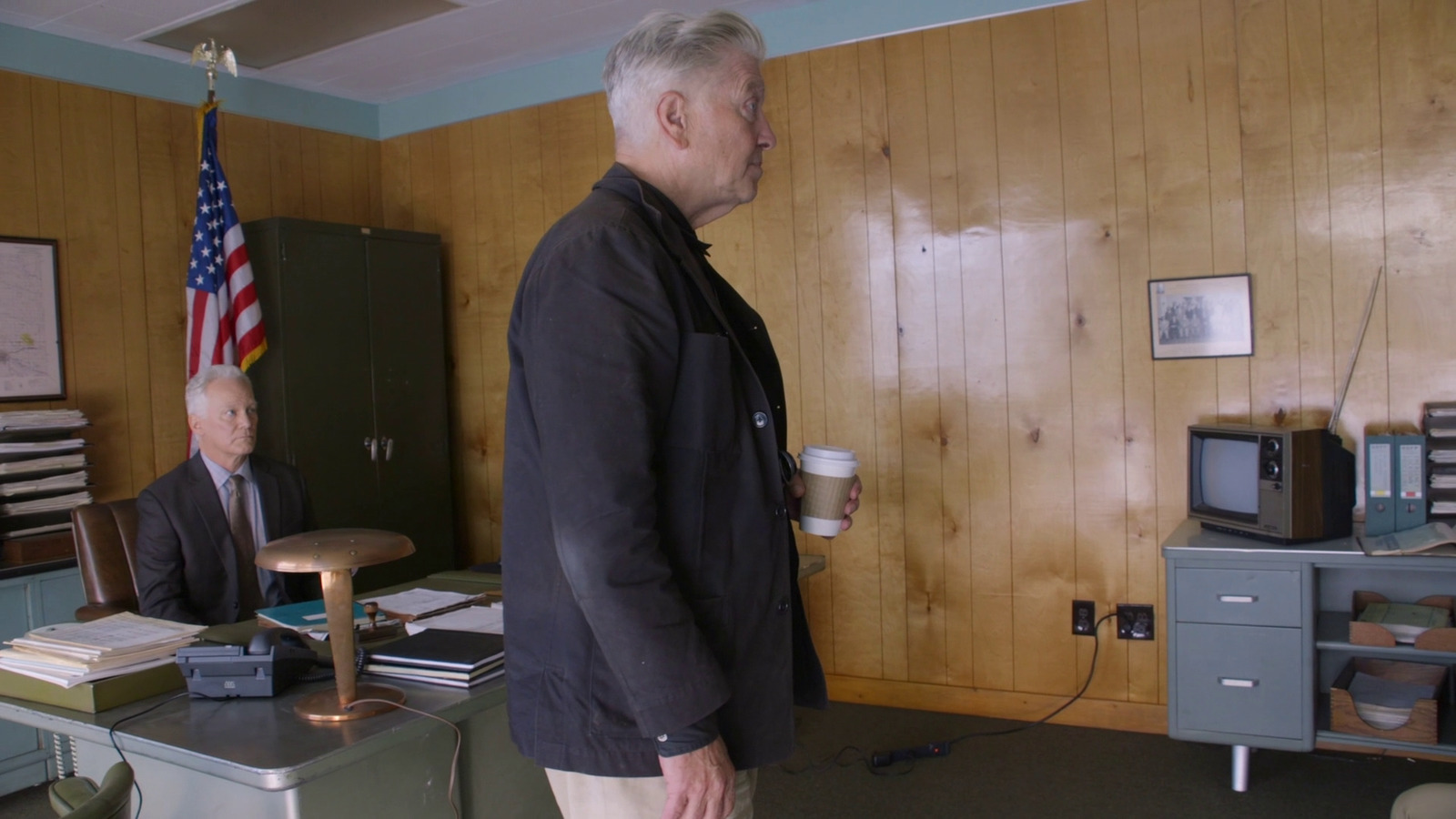
The warden’s office rehearsal joins dialogue to the handling of a gun, the placement of bodies and the order of coverage. Lynch works through the exchange with Kyle MacLachlan and James Morrison, seeking a smooth physical action before moving from a wider view toward closer shots. The threatening names are not isolated verbal clues: they operate inside a room whose authority is being quietly transferred.
Morrison remains attached to the office and its desk while the visitor determines what can happen next. The production view makes that reversal concrete, revealing how little overt movement is needed to dismantle the warden’s control.
Janey-E arrives with a history of irritation
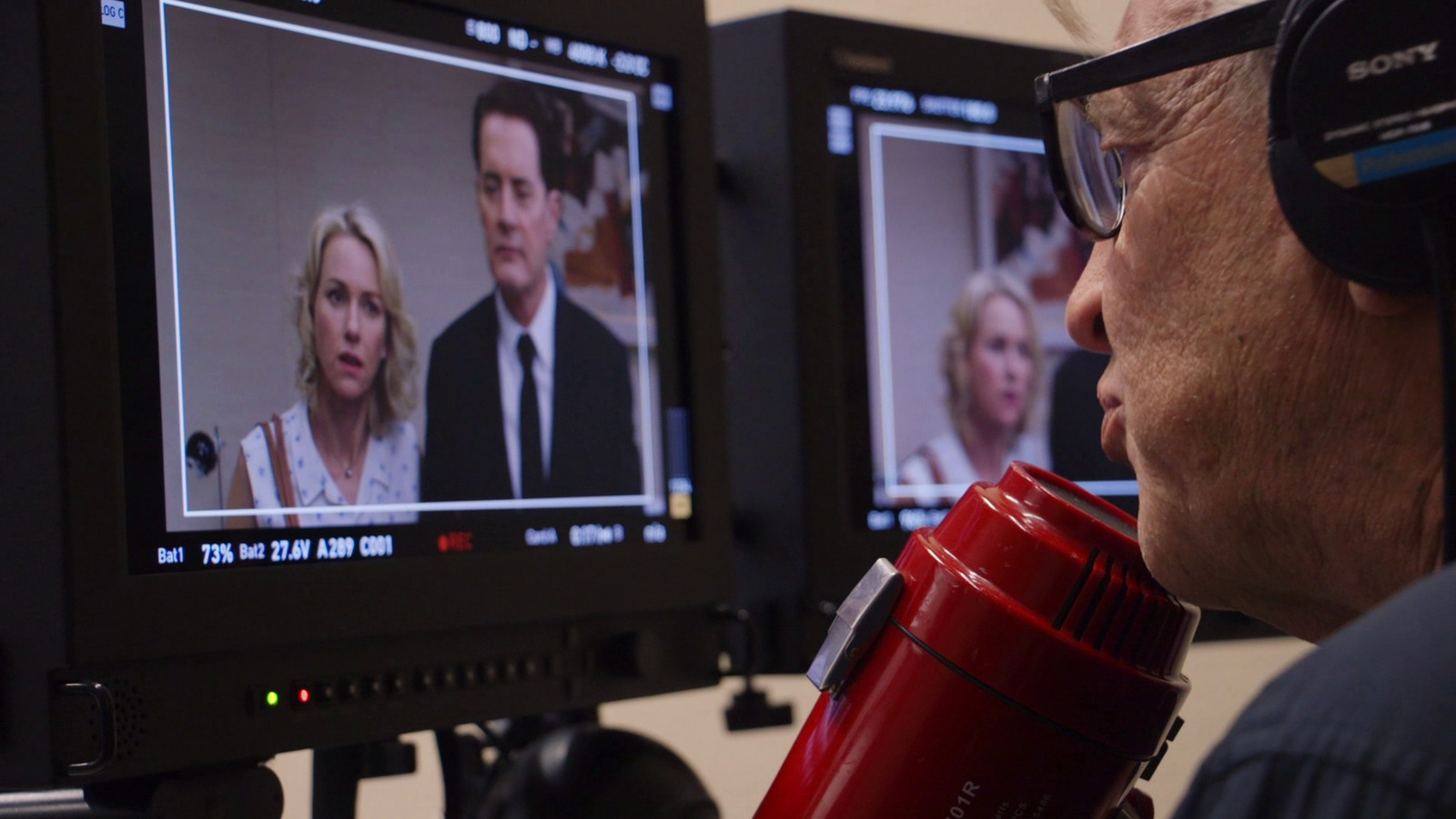
Lynch gives Naomi Watts a sequence of reasons for Janey-E’s state: she has been waiting, Dougie is late, and now detectives have entered his office. Her anger at the unreliable car shifts into suspicion that information has been withheld and then into the possibility of an insurance replacement. The performance keeps changing its target while maintaining its pressure.
The detectives receive a different instruction: a car has exploded and people have died, so they must investigate seriously, read the couple’s behavior and then ease the confrontation. Lynch continues directing through the lines and saves a closer two-shot for the finer adjustments. The comedy comes from competing, specific understandings of the same encounter.
Rehearsal, performance and the working set
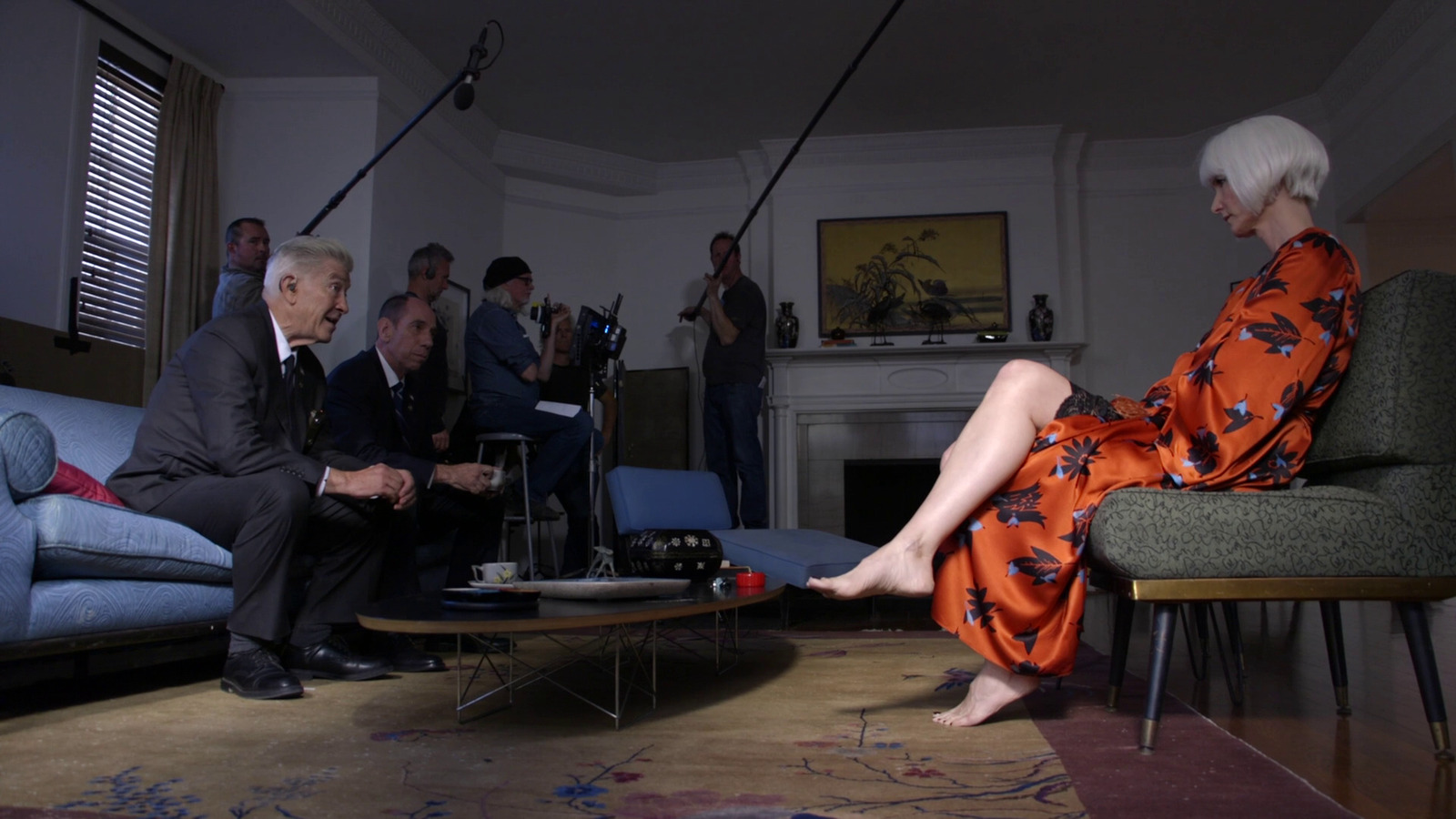
Diane makes the agents enter her territory
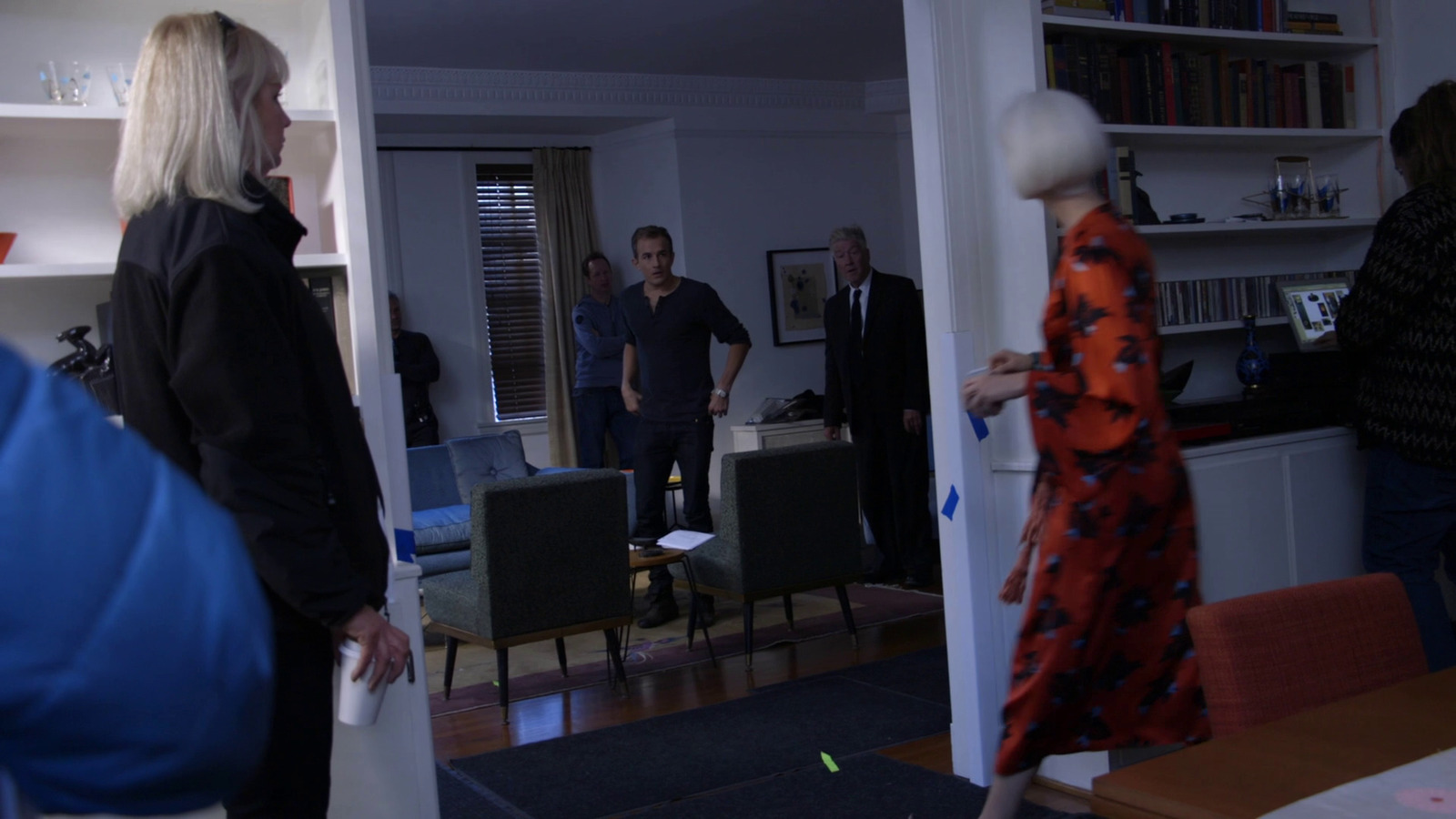
The apartment rehearsal starts with geography: Jesse answers the door, Diane speaks from the back of the room, and only then comes to the doorjamb. Lynch makes the agents visitors in a home where their presence is unwelcome. Dern’s resistance is attached to the space before the argument begins.
The run-through carries that resistance into the coffee and cigarettes exchange, then into the request to visit Cooper. Gordon’s appeal does not erase the earlier hostility; the scene has to travel through it. The footage gives a physical foundation to the changed relationship between the familiar address to Diane and the woman now answering it.
Open the apartment rehearsal · 2 frames
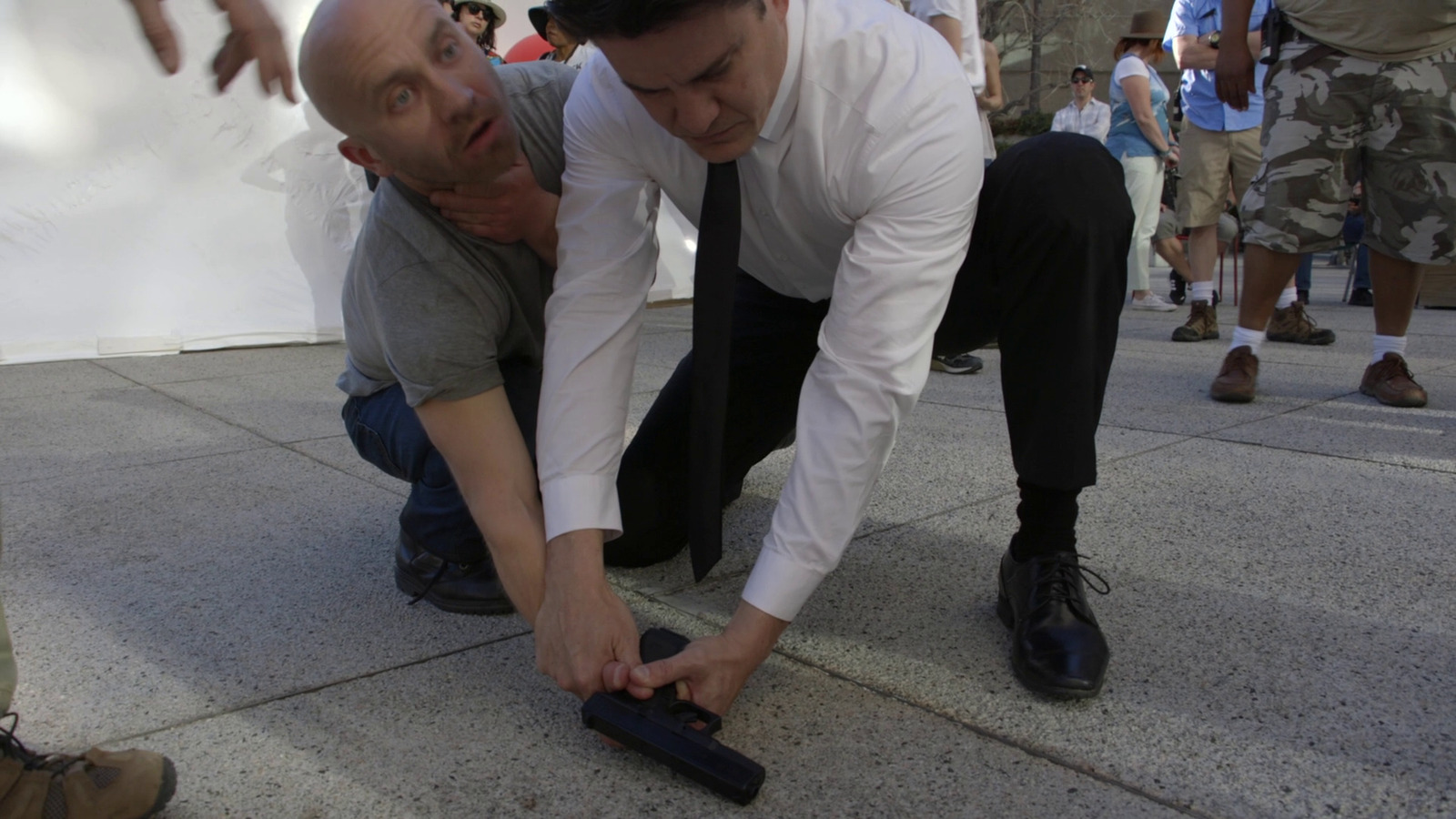
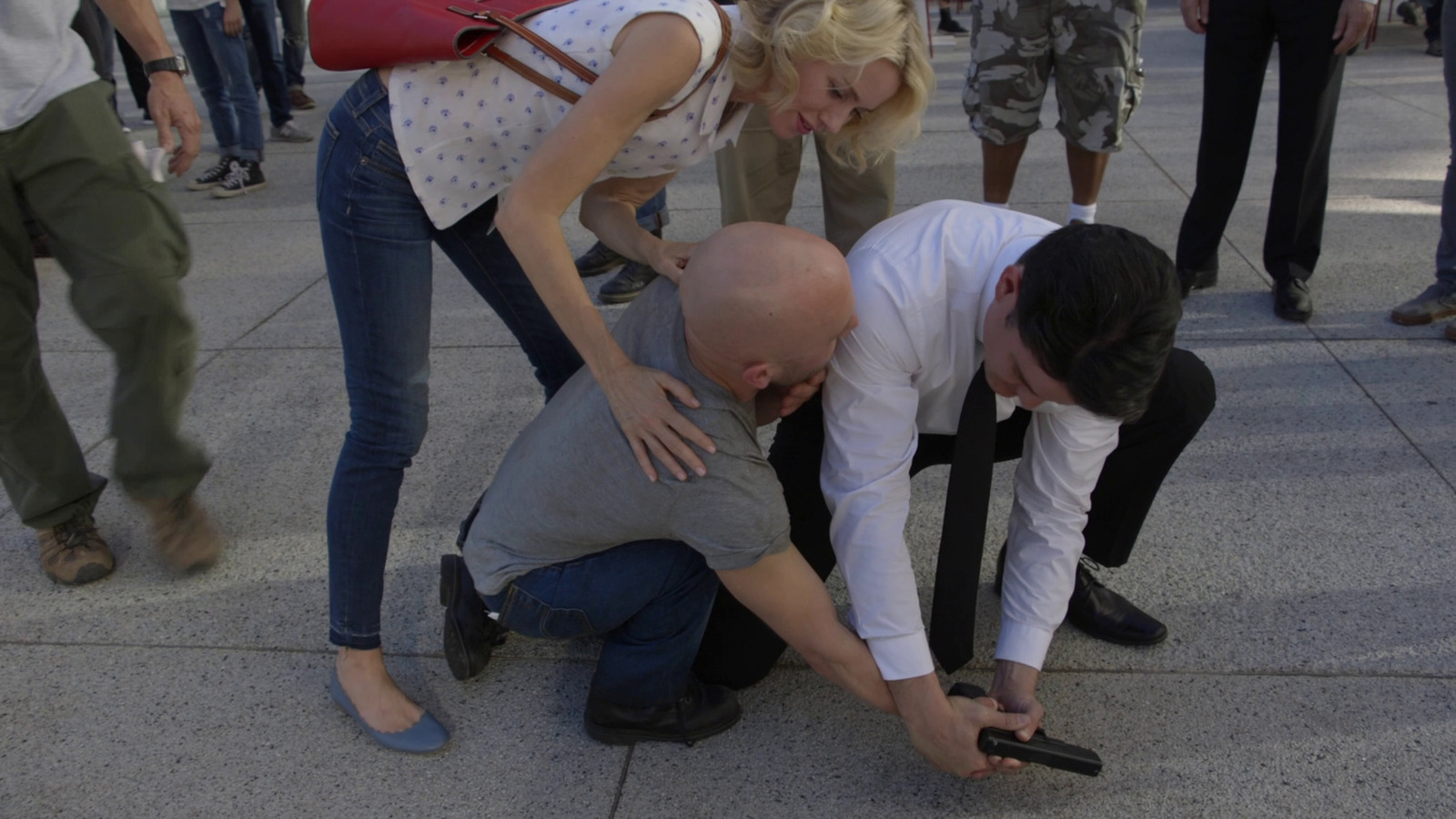
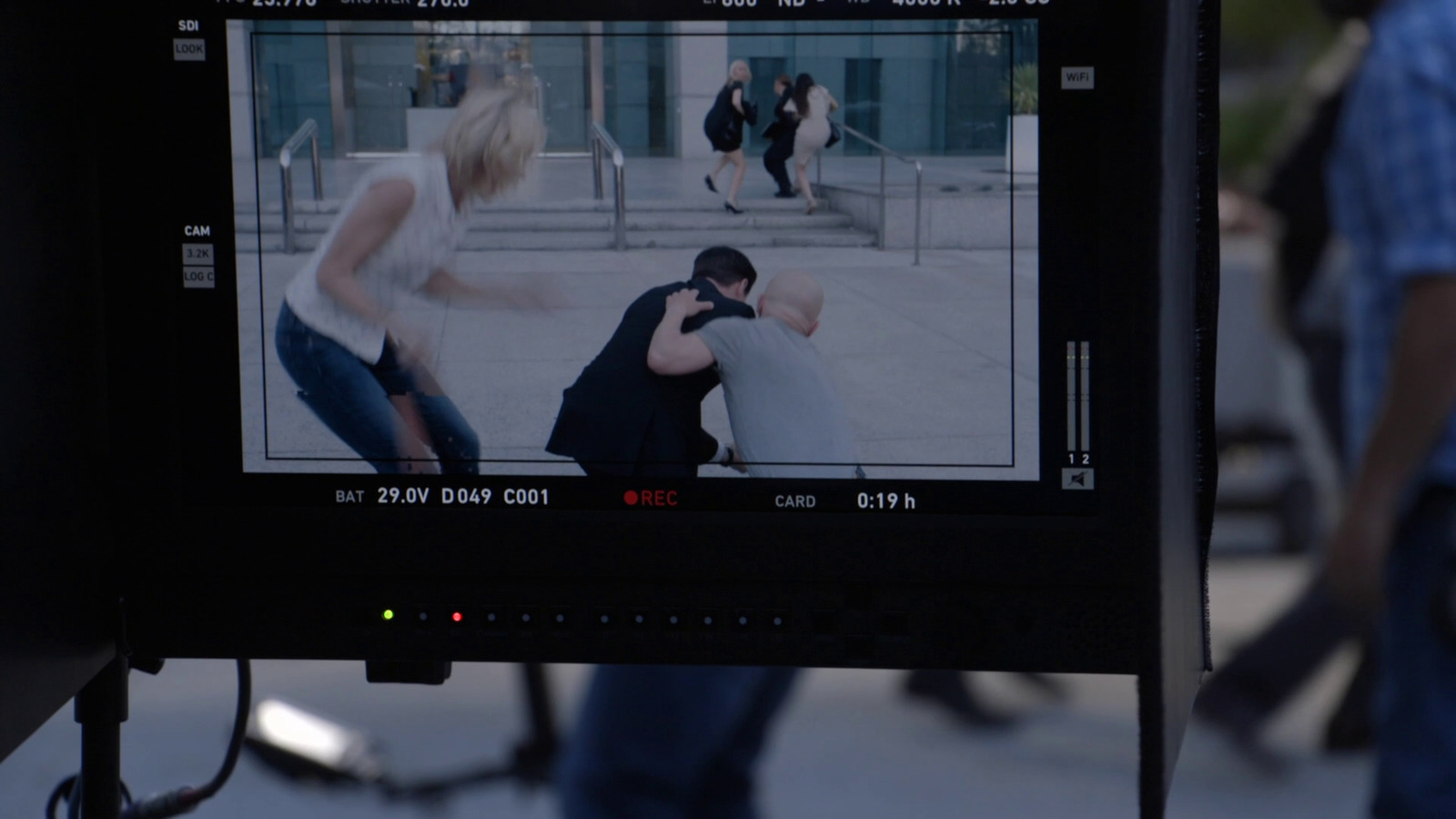
The pavement attack is built from coordinated beats
The rehearsal divides the attack into the approach through pedestrians, Cooper’s sudden response, Janey-E’s intervention and Ike’s escape. Stand-ins demonstrate the action before MacLachlan and Christophe Zajac-Denek work through it. The injured hand is also planned as a visible detail in the retreat, linking a practical blood piece to the movement out of frame.
Sound is part of that coordination. Naomi Watts tests audible cues so Zajac-Denek can time his reactions while she is behind him. Lynch also leaves room for the scream to be altered later and checks that the gunshot is present during playback. The finished burst of violence grows out of rehearsed cues and controlled repetitions, not simply a single spontaneous movement.
Open the attack rehearsal and effects study · 3 frames
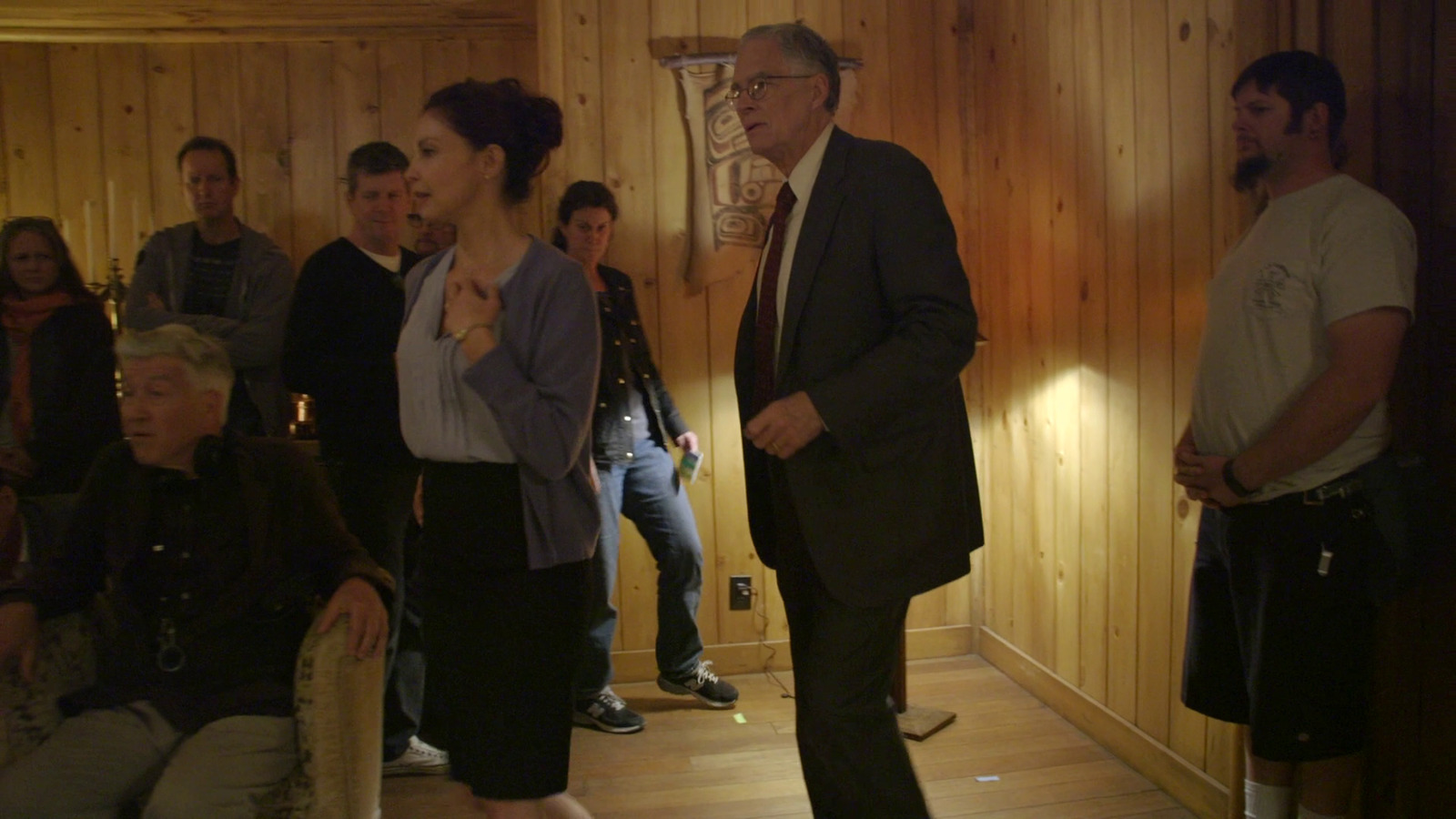
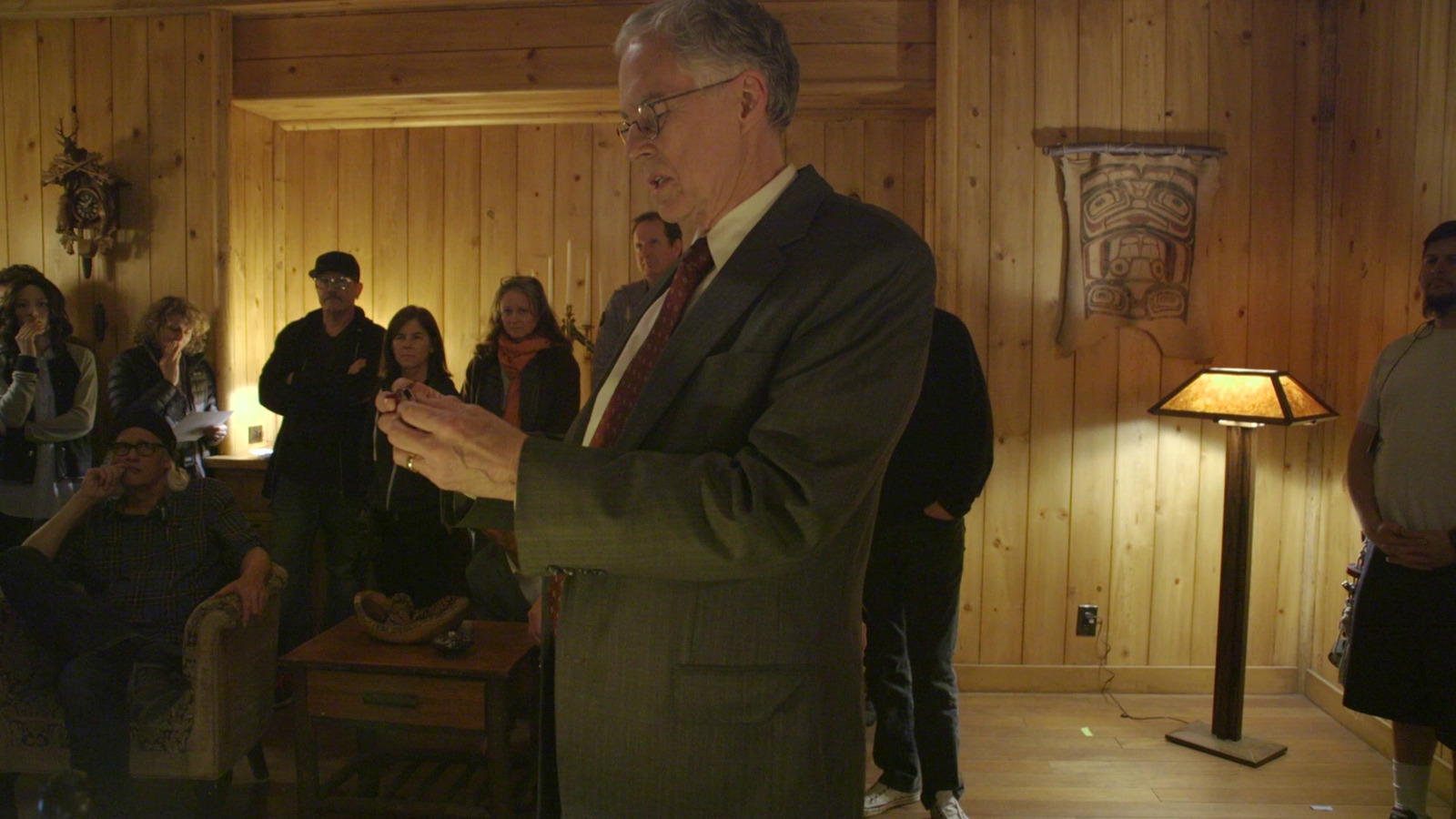
Listening leads to an object that changes the scene
Lynch asks Ben and Beverly to keep listening as they move around the office. The search becomes playful until Beverly notices the returned key and remembers that she meant to show it to him. The object changes the rhythm: the room number should give Ben an immediate, unsettling feeling.
Beverly is asked to let the reference to Laura Palmer register before asking who she is. An awkward interval follows Ben’s recollection, and the decision to call maintenance closes down their shared search. A proposed point-of-view shot moves toward the corner without either performer in frame. That camera move gives the uncertain sound somewhere to lead the viewer while keeping its source unresolved.
Open the hum and key study · 2 frames
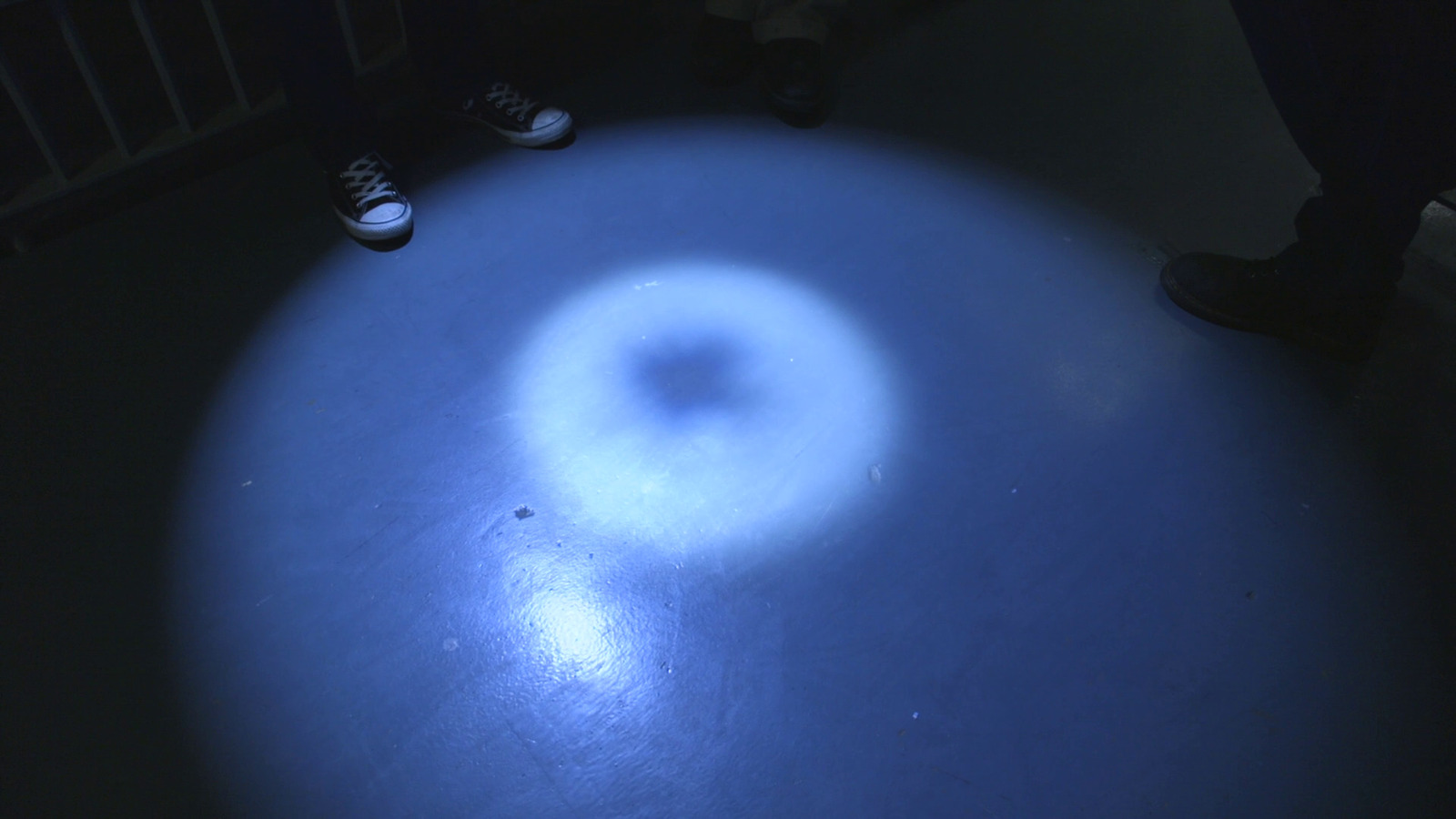
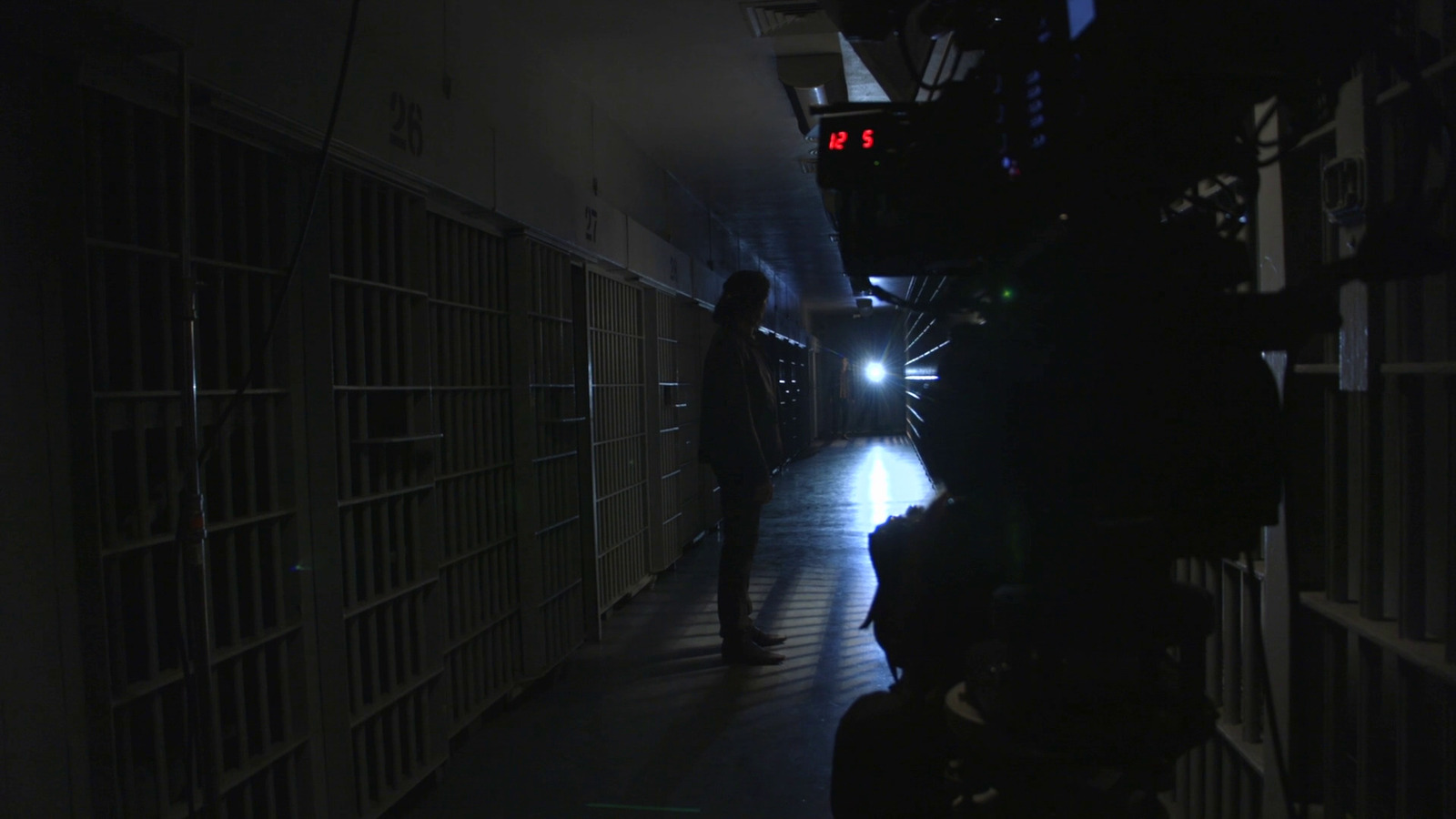
The prison exit begins with a beam and an empty corridor
The crew tests flashlight choices on the location floor, checking the pattern of the beam before fixing the setting. Lynch asks for an ordinary walking speed while following the prisoner. The preparation treats the light as a moving part of the composition rather than a generic indication of darkness.
The take is cued from a held view of the empty corridor: Mr. C’s door opens first, then Ray’s farther down. The delayed entries make the space and the order of release readable before the figures move through it.
Open the corridor lighting study · 2 frames
Presentation, music and credits
This study follows the standalone Part 7, running approximately 57:35 including opening and closing branding. The viewing source is Twin Peaks: From Z to A, with its English programme soundtrack and English captions. Images retain the full active 16:9 composition. Timestamps locate the programme, not a physical disc number.
The end credits identify “Sleep Walk,” performed by Santo and Johnny, and “Green Onions,” performed by Booker T. and the M.G.s. They also credit costume designer Nancy Steiner, BUF’s effects team, dialogue editors David A. Cohen and Kerry Dean Williams, and include “In Memory of Warren Frost.” The source offers the episode soundtrack rather than an alternate commentary track.
Sources and viewing notes
- Twin Peaks: The Return, Part 7, directed by David Lynch, written by Mark Frost and David Lynch (2017), standalone presentation in Twin Peaks: From Z to A. Primary picture, English soundtrack, captions and end credits. Scene readings are Lyncharium’s analysis; dialogue and credit references are checked against the programme.
- Josh Wigler, “‘Twin Peaks’ Star Kyle MacLachlan Promises ‘Everything Will Make Sense’”, The Hollywood Reporter, 6 July 2017. Primary interview; Diane discussion used here. The linked article discusses later material through Part 8.
- BUF, “Twin Peaks” production account. Primary effects-company testimony on the tree design and animation. The page also discusses later episodes. Its general account is not treated as a shot-by-shot specification for every appearance.
- Do Not Pick Up Hitchhikers, directed and photographed by Jason S., in Impressions: A Journey Behind the Scenes of Twin Peaks (2017), viewed in Twin Peaks: From Z to A. Passages: 04:19–07:45. Picture and English captions examined, with targeted speech checks. Rehearsal proposals and production observations are distinguished from interpretation of the finished episodes. Documentary narration and its music are not treated as unscripted statements by Lynch.
- A Bloody Finger in Your Mouth, directed and photographed by Jason S., in Impressions: A Journey Behind the Scenes of Twin Peaks (2017), viewed in Twin Peaks: From Z to A. Passages: 19:28–24:36. Picture and English captions examined, with targeted speech checks. Rehearsal proposals and production observations are distinguished from interpretation of the finished episodes. Documentary narration and its music are not treated as unscripted statements by Lynch.
- Behind the Curtain, Part 7. Photographed by Jason S.; edited by Jonathan Angus, with editorial assistance by Robert Lay (2019). Viewed in Twin Peaks: From Z to A. Timed passages: 01:26–06:49; 09:13–17:20; 17:29–22:34; 22:47–24:49. Timings refer to the documentary, not the episode. On-set directions and retrospective recollections are distinguished from Lyncharium’s interpretation of the finished scenes.