Online Works
THE ONLINE WORKS / WEBSITE, WEB SERIES & DAILY PRACTICE
A studio with its door open. A world encountered one visit at a time.
David Lynch’s internet work includes a subscription website, short films and serial experiments, conversations with members, a documentary project he presented, and the later David Lynch Theater channel. Their connecting subject is the relationship between making something and returning to it: a room, an unfinished object, another person’s story, the next morning.
This dossier follows the platforms and the encounters they made possible. Individual film studies remain in Short Films; recordings and directed promotional films have their own Music and Music Videos routes.
The website was a work in progress
In March 2002, Bill Bernat interviewed Lynch and managing consultant Eric Bassett for Streaming Media. His report distinguishes a site available with limited functionality for a few months from a fuller public release. Bassett handled technical implementation; Lynch supplied creative material. That is firmer evidence than flattening development, early availability and launch into a single unexplained year. Contemporary launch report ↗
The environment extended beyond a video shelf. Bernat describes member chat, experiments, photographs, cartoons and hidden telephone-booth material. Visitors could navigate an authored place and communicate with one another. “Member Areas” ↗
By November, Lynch was more qualified about the medium’s immediate reach. Speaking to Yaron Gat in Paris on 12 November 2002, he welcomed the freedom to make fragments and the rapid response to Rabbits 8, while observing that the internet was slower and less convenient for entertainment than television. His enthusiasm and his frustration belong together. A platform could be artistically productive before it became a frictionless way to watch. Lynch’s 2002 account ↗
The most useful unit of this work is sometimes the visit. A visitor might meet a new film, encounter an older experiment and return to a conversation. Saving the videos preserves essential works, but it does not automatically preserve the sequence of choices through which an original member encountered them.
The time it takes to make a visit
In his reading from Room to Dream, Lynch describes the practical strain behind the website’s abundance: creating material could occupy months, while a visitor might move through it in an afternoon. He recalls the switchboard interface, work on Out Yonder and Rabbits, and the continuing value of weather reports and conversation with subscribers. This later first-person account adds a production perspective to the 2002 reporting. The site’s freedom depended on the labour of continually making something for people to return to. Room to Dream reading, 01:40–04:19
The same recollection follows this online workshop toward Inland Empire’s first written and filmed scenes. The connection is a working practice as much as a movement of images between platforms.
Films, serials and the life of an extract
The online work belongs inside Lynch’s artistic development. Zoran Samardzija’s 2010 study examines the relationship between digital experiments, authorship and the spectator, including the movement of Rabbits into Inland Empire and a later DVD presentation. His argument helps explain why a web series, a feature extract and a compilation should be catalogued separately. It does not make their images interchangeable. Scope, pp. 2, 5–7 ↗
| Work or collection | How to approach it |
|---|---|
| Rabbits | Follow the original serial, the later compilation and the feature reuse as related versions. Episode numbers alone do not establish equivalent contents. |
| Dumbland | Bernat’s launch-period report describes a planned nine-episode project, recording the ambitions surrounding the series’ early development. |
| Dynamic:01 | MK2 lists seven films or film groups, plus Member Questions. The collection gives a route from website material to an authored disc programme. |
| Axxon N. | Bernat reports a proposed series with scouting still ahead. Treat this as a documented plan, not evidence that the promised series was released. |
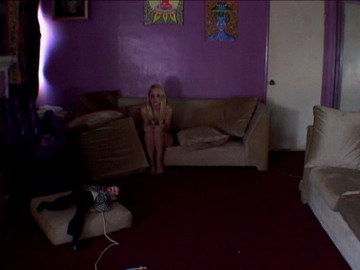
MK2’s current record names The Darkened Room, Boat, Lamp, Out Yonder: Neighbor Boy, Industrial Soundscape, Bug Crawls and Intervalometer Experiments. It labels the collection 2006 and 95 minutes. These are distributor catalogue fields, not timings measured from a disc. Collection contents ↗
A film about making a lamp and an abstract soundscape need not be preliminary exercises for a feature. They allow craft, duration and curiosity to be subjects in themselves. The compilation’s inclusion of Member Questions also retains a trace of the exchange around the work. It is a useful bridge to the workshop visits of David Lynch Theater, without requiring us to pretend the two platforms offered the same experience.
Continue into Inland Empire ↗ · Explore furniture and making ↗
Interview Project: whose journey, whose voice?
Interview Project needs a precise credit boundary. IDFA’s 2009 record names Austin Lynch and Jason S. as directors, with Sabrina Sutherland producing for Absurda. It also names Dean Hurley and Stoll Vaughan for music. David introduces the project; calling every film “directed by David Lynch” would erase the team’s authorship. Festival credits ↗
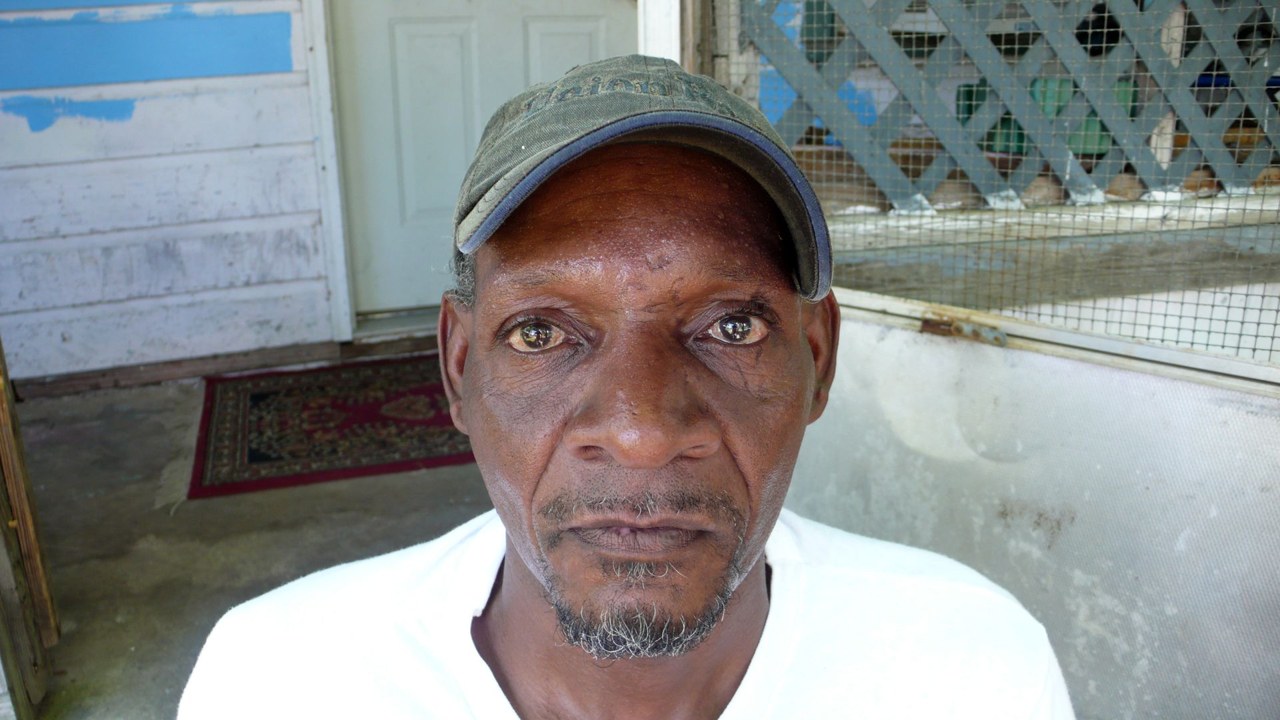
IDFA describes 121 interviews gathered during a seventy-day American road journey, with a new interview appearing every three days from 1 June 2009. Its 45-minute runtime describes the festival entry, which included a cinema presentation by Austin Lynch; it is not the duration of the entire online series. Programme description ↗
Tamara Krinsky’s contemporary report from AFI DigiFest records Austin explaining that the team could not know in advance who would agree to speak. The report describes a seventy-day, approximately 20,000-mile journey and about 120 interviewees. Those rounded figures are compatible with a festival synopsis giving a more specific total; they should not be treated as proof of a different cut. Participant account at AFI DigiFest ↗
The serial release turns a road journey into repeated acts of attention. The viewer meets one person before moving on to another, rather than receiving a single argument about “America.” That promise also creates responsibilities for the archive: identify the interviewer and editor, preserve an interview’s context, and distinguish an individual’s account from facts independently established about their life. The series should not become a catalogue of supposedly “Lynchian” people.
David Lynch Theater: the artist, the object, the audience
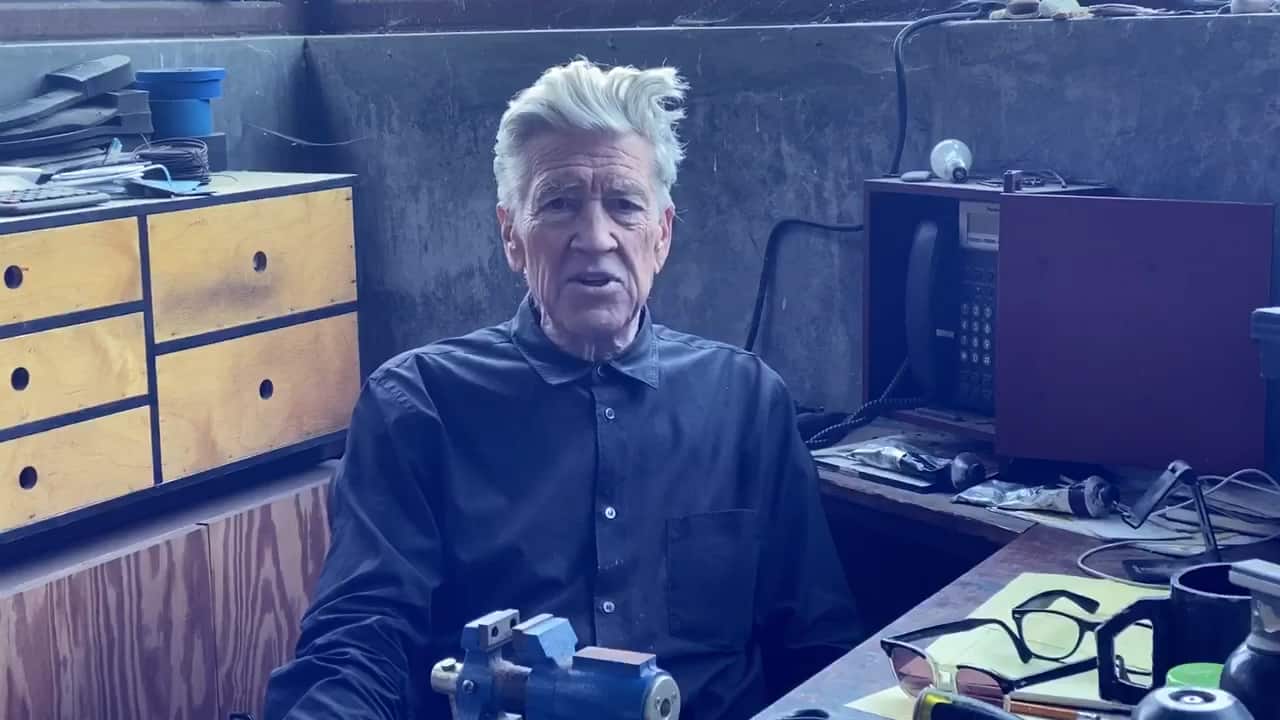
The official channel’s Weather Report 5/11/20 provides a concrete starting point for the 2020 revival. The player identifies David Lynch Theater as an Official Artist Channel and displays a 32-second video. The inspected automatic transcript moves from date and weekday to local conditions, temperatures and a parting wish. This pass checked that record and transcript; it did not complete a listening audit of the channel. Original upload and inspection note ↗
Tandem Press, which has worked with Lynch as a printmaker, described the returned reports as a morning ritual at a basement desk, including his glance toward the window. It also connects them to the earlier website reports. The online presence thus intersects with the working artist already documented in the Art dossier. Tandem’s contemporary note ↗
Weather Reports
Place, date and address to the viewer supply a repeatable structure. Compare individual reports before claiming an unbroken daily run or a complete calendar.
What Is David Working on Today?
Workshop updates bring materials and unfinished objects into view. Keep an object’s appearance in a video separate from a proven completion date or exhibition history.
Today’s Number Is…
The daily draw develops another small ritual. A number’s appearance is observable; a hidden system or intended prophecy requires evidence.
Zac Dracek’s September 2020 essay documents an early viewer’s response to these formats, including the workshop series and the jar used for the number draw. He describes the channel as a source of steadiness during the pandemic. This is valuable reception evidence: one critic’s account of what repeated viewing did for him, rather than a measurement of what every subscriber felt. Contemporary reception ↗
The channel also carries films, questions and later music-related releases. Its identity as an official home does not mean that every upload originated in 2020, or that David personally performed every production task. A useful record needs the work’s own credits, its creation or performance date when established, and the separately recorded upload date. Explore the official channel ↗
One morning, revisited
The first revived report makes a good entry point because its scale is modest enough to notice the whole structure. The automatic transcript locates the greeting at 0:01, the Los Angeles reference at 0:08, the temperature at 0:15 and the closing wish at 0:28. Those are transcript locators, not manually measured speech timings. Open Weather Report 5/11/20 on the official channel ↗
The report combines information that quickly expires with an address that survives. The forecast is about one morning; the invitation to have a good day can reach a viewer years later. The workshop photograph matters for the same reason: the desk and tools place the greeting inside a continuing practice of making.
Lyncharium’s Today with David feature above offers an archival return to that presence. Its report belongs to its original recorded year; a matching month and day does not make the weekday or forecast current. The tribute retains that distance rather than creating new words or a simulated performance.
What does it mean to preserve an online work?
Preservation has several separate tasks. The video file is one object; the page surrounding it is another. A transcript preserves words but not pace, voice or sound. A playlist can preserve an order that an upload grid no longer shows. A screenshot can document an interface without recovering its interactive functions.
Our catalogue therefore distinguishes creation, first availability, upload and reissue. It also distinguishes a work by Lynch from a work he presents, a site he commissioned, and a fan’s preservation copy. Where a later release assembles fragments differently, the relationship should be described rather than silently normalised.
It will preserve dates, credits, durations, revisions, transcript status and access limitations.
Explore further
Follow the sources below, explore the museum collection, or continue through the Reading Room. New archival discoveries and contributions enrich the record of Lynch’s work.
Sources and further reading
These notes distinguish records read, images inspected, participant accounts and uncompleted viewing. All web sources were checked on 18 October 2026. Linked catalogue information does not establish the contents of an unseen edition.
- Bill Bernat, See David Lynch Stream (1 March 2002) ↗Contemporary interview/report; launch, Member Areas and Genesis sections read. Plans are distinguished from completed releases.
- Yaron Gat interviews David Lynch, Paris, 12 November 2002 ↗Published interview text inspected. Lynch’s account of fragments, audience response and the medium’s limitations; no interview recording inspected.
- Zoran Samardzija, DavidLynch.com: Auteurship in the Age of the Internet and Digital Cinema (2010) ↗Scope 16; PDF pp. 2 and 5–7 read. Scholarship and edition leads, not independent viewing of the works discussed.
- MK2 Films: Dynamic:01 ↗Distributor description, list and still inspected. Catalogue dates and durations have not been measured against a disc.
- IDFA 2009: Interview Project ↗Dutch synopsis, credits and programme image inspected. The festival entry and complete web series are separate objects.
- Tamara Krinsky, AFI DigiFest 2009: Storytelling Everywhere ↗International Documentary Association; Interview Project section read, including Austin Lynch’s account. No original interview footage inspected.
- David Lynch Theater: Weather Report 5/11/20 ↗Official Artist Channel identity and 32-second player checked. Complete automatic English transcript inspected (0:01–0:28); not a manual full audiovisual audit.
- Pieter Dom, report on the weather-report revival (11 May 2020) ↗Contemporary report, original-video link and header still inspected. Later updates are present on the same page.
- Tandem Press: Watch David Lynch’s Weather Reports ↗Print publisher’s contemporary note on the returned daily practice; not an episode inventory.
- Zac Dracek, Surviving Absurdity Through Rituals of the Mundane (9 September 2020) ↗Film Cred essay read. Used as contemporary reception and a guide to the channel’s formats, not a production log.
Another doorway
Continue exploring
Short films
Short Films
Explore David Lynch’s short films, from The Alphabet to Rabbits and Fire, with production histories, collaborators, sound studies and viewing guides.
Art
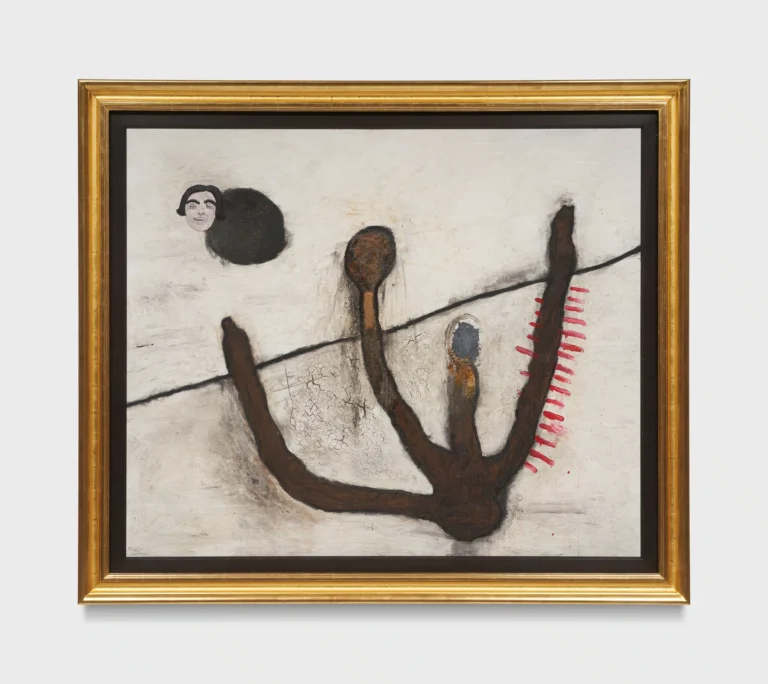
Art
Explore David Lynch’s paintings, lithographs, sculpture and photography through close readings, exhibition histories, credited images and documented sources.
Films
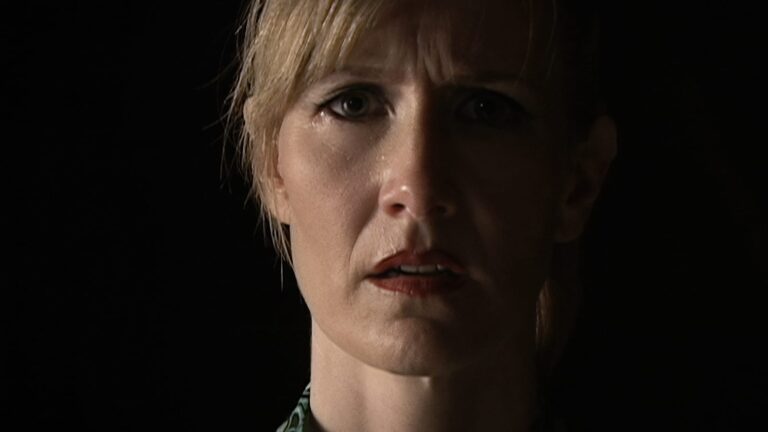
Inland Empire
Explore David Lynch’s Inland Empire through Laura Dern’s performance, its evolving production, digital photography, sound, restoration and critical reception.
Image credits and sources accompany each linked guide.