Furniture Design
Art and design / Objects to live with
A table holds a cup. A chair changes a room.
David Lynch’s furniture makes ordinary actions newly visible: putting down a drink, taking a seat, looking toward a light. A wooden surface meets a steel support; a comfortable cushion rests above a tangle of lines. This guide follows that work from small tables to the furnishings of Silencio and the monumental chair at the centre of the 2024 Thinking Rooms.
Start with the objects. Three illustrated studies lead into the rooms, collaborators and material choices behind Lynch’s furniture, connecting workshop prototypes, manufactured editions and gallery installations.
In the workshop: the idea changes as it is built
In Stuart Swezey’s Winter 1997 Filmmaker interview, Lynch connects furniture-making to childhood time in his father’s shop, a later need for tables, and the pleasure of construction. He says new ideas arrive during building. He also confirms making some things for Fred Madison’s house in Lost Highway. Read the furniture exchanges
A design can therefore be a sequence of decisions, rather than an image simply delivered to a fabricator. An edge, a joint or an unexpectedly heavy component may alter what comes next. Our reading of the tables begins with the way their parts meet. It does not assume that a steel cable is a metaphor, or that every asymmetry must conceal a story.
The preserved English transcript of Kathrin Spohr’s form interview gives a complementary argument: Lynch preferred small, low tables because large ones consumed a room. He wanted an initially small production series that could grow. Those preferences are statements made in 1997, not measurements of every subsequent design or a universal limited-edition policy. Spohr interview.
For film-specific design research, continue to Lost Highway. For the movement between a static object and a projected image, begin with the Art dossier’s Philadelphia section. The routes connect practices while keeping their evidence separate.
A table made for Fred Madison
Toby Keeler’s Pretty as a Picture supplies a filmed counterpart to the 1997 interview. Lynch introduces a table he is building for Fred Madison’s house in Lost Highway, shows its components and talks about tools and the pleasure of working in the shop. The sequence moves between construction, surfaces and finished furniture.
This is a specific production object within the broader design practice. It should not be assigned the name or manufacturer of another table simply because its maker is the same. See the illustrated workshop study → · Pretty as a Picture, 46:18–48:07
Espresso table: support becomes the subject
Object study 01
A particular example, with a particular record
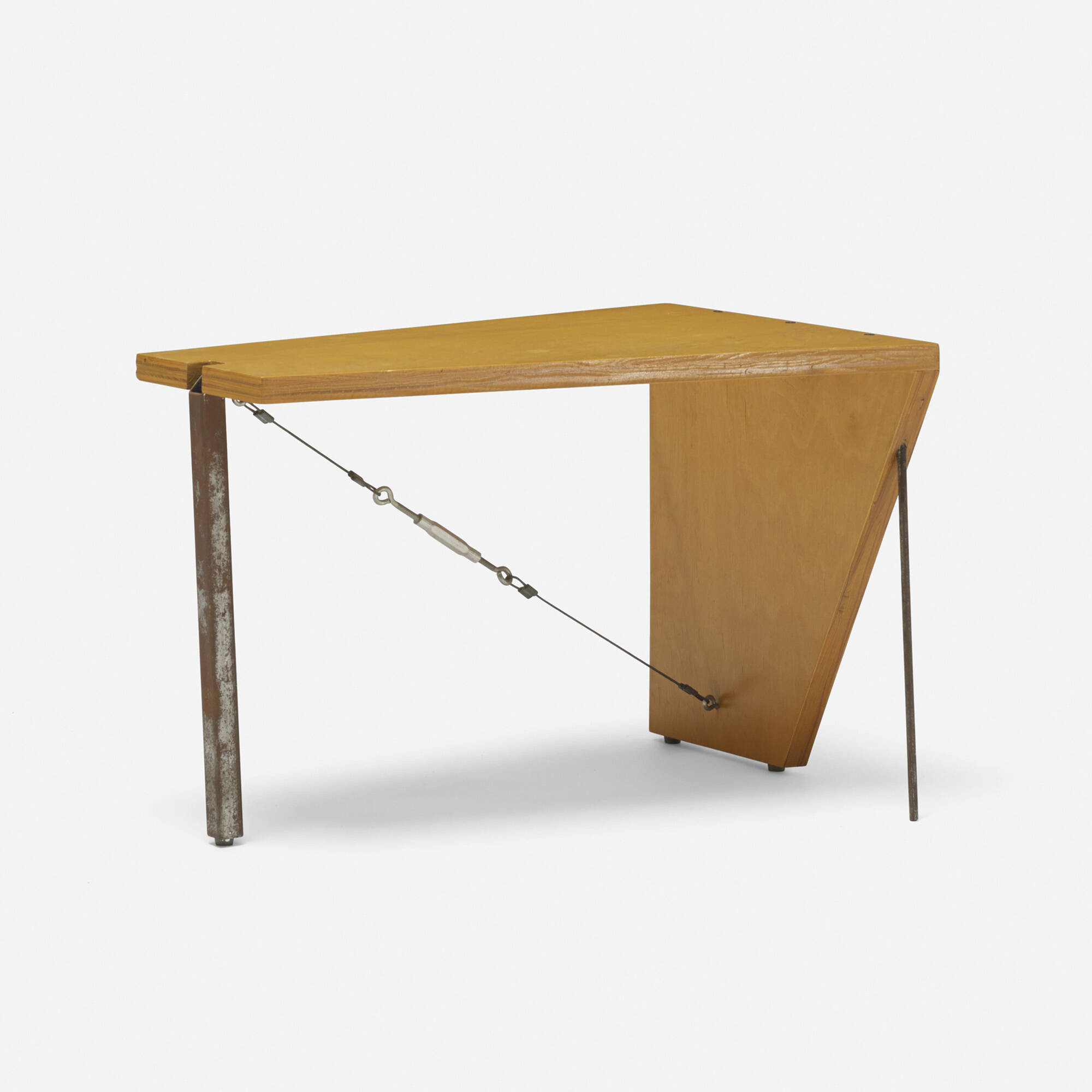
Wright’s 2014 catalogue describes birch plywood, steel and steel wire with a turnbuckle, measuring 18 W × 13 D × 13 H inches. It records a Skank World label, the impressed number 0001 and a dedication; its stated provenance is direct acquisition from the artist. The same entry calls this number one of an edition of approximately one hundred. These are attributed auction claims, not an independently checked production census. Catalogue, PDF p. 126.
Close reading of the photograph: the broad wooden support at the right is balanced visually by thin steel legs and a diagonal cable. The tabletop appears simple until the eye follows its underside. Support is exposed as a composition of unequal parts. The turnbuckle draws attention to adjustment: a small piece of hardware becomes one of the table’s most conspicuous features.
Thickness, direction and apparent balance give the table its character. The substantial top and unconventional supports turn an everyday piece of furniture into an encounter with weight and tension.
In the preserved 1997 Spohr transcript, Lynch calls the Espresso design about five years old, pointing approximately to 1992. Neither record establishes whether these refer to the same stage of development. We retain both rather than choose a convenient date. FUR-01.
From a Hollywood prototype to a Swiss production
A 9 September 2002 release issued by Living Art announced a Zürich display of Lynch furniture for 12 September–3 October. It describes prototypes designed and made in his Hollywood workshop, with Veit Rausch producing furniture for Switzerland. Later wording credits Lynch’s ideas and Rausch’s designs. That variation makes the translation from prototype to manufacture a research subject: it does not justify erasing either participant. An exhibition announcement also does not prove that every advertised item was installed. Organizer’s release.
The City of Absurdity preserves a four-model list with prices attributed to Casanostra in June 1997. It records the names, materials and proportions through which the furniture entered the market. Dimensions below follow the source’s sequence. Historical model list
| Model | Listed dimensions | Listed materials | Research distinction |
|---|---|---|---|
| Espresso Table | 46 × 32 × 33 cm | Stained pine; raw steel | Do not substitute this description for Wright’s birch-plywood Skank World example. |
| Steel Block Table | 40 × 40 × 33 cm | Stained pine; raw steel | Part of the four-model Casanostra range documented in the June 1997 list. |
| Floating Beam Table | 90 × 69 × 45 cm | Stained pine; raw steel | The apparent suspension needs a documented construction record before mechanical claims are made. |
| Club Table | 24 × 24 × 69 cm | Stained pine; raw steel | Compare the differently described Casanostra object below; equivalence is not assumed. |
The collection invites a different scale of attention from a conventional dining suite. Names suggest a cup, a drink or a small social ritual. Instead of filling a room with interchangeable surfaces, each object seems to propose a particular encounter. This is a reading of the model group, not proof of how owners actually used it.
The Club table question: one name is not one history
Object study 02
A cabinet reduced to a small ritual
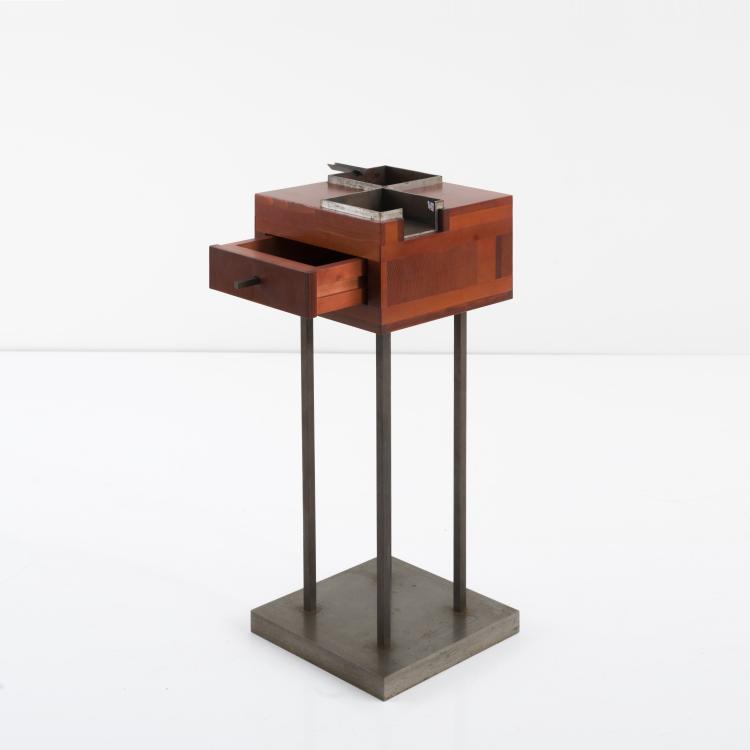
Quittenbaum calls this a Whiskey and Cigars side table, dates it to the 1980s, and records metal and stained Douglas fir, H 60 × 24 × 24 cm. The entry identifies a Casanostra/David Lynch plaque. It attributes the claim that six copies were made to the manufacturer. Object record
Close reading: a shallow drawer projects from the little wooden box. Metal fittings interrupt its upper surface; four narrow uprights leave the body hovering above a broad base. The open drawer makes the object look momentarily occupied even without a person beside it. Storage, surface and support are compressed into a small vertical arrangement.
The auction height of 60 cm differs from the historical Club Table list’s final dimension of 69 cm. The wood descriptions also differ. These may reflect variants, measurement conventions or catalogue errors; we cannot decide from these records alone. A shared maker and similar form are reasons to compare the objects, not sufficient grounds to merge their identities. Follow the variant investigation.
Wire chair: a quiet seat above a restless drawing
Object study 03
Comfort and visual complication
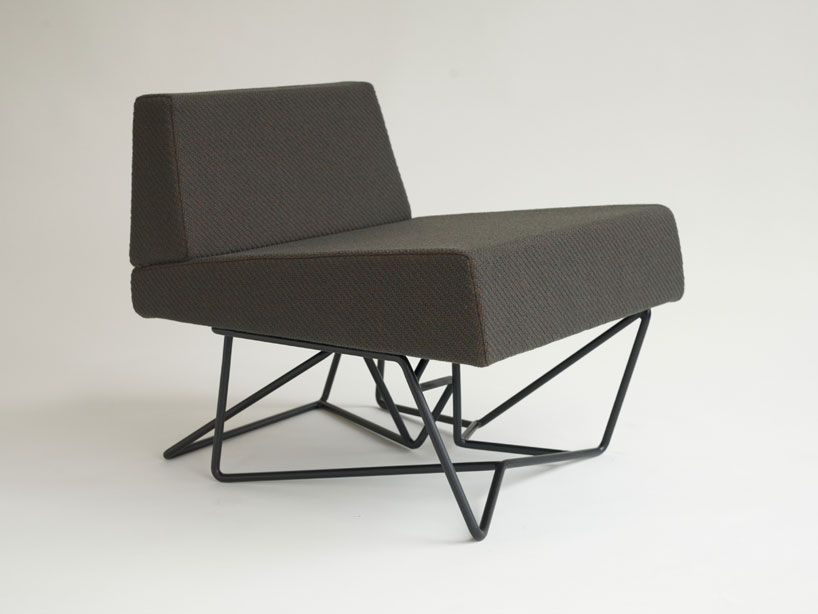
PIASA’s 29 April 2015 sale records a pair of Wire chairs designed in 2011, produced by Domeau & Pérès in fabric and metal, numbered 11/25 and 3/25. The listed dimensions are H 61 × W 56.5 × D 70 cm. This supports a record for two numbered examples; it does not establish every upholstery variant or artist’s proof. The publicity photograph here is not identified as either auctioned chair. PIASA, lot 141.
Close reading: the upholstered seat and back present two calm, broad planes. Beneath them, metal rods turn, cross and change direction. The eye keeps searching for a regular set of legs. That contrast gives the chair its tension: the place intended for the body looks quiet, while the structure below behaves like a drawing that will not settle.
The complete chair brings the tangled base into a relationship with the seat above. Its visual energy depends on that meeting between a sculptural structure and the familiar invitation to sit.
Silencio: furniture within a collaborative interior
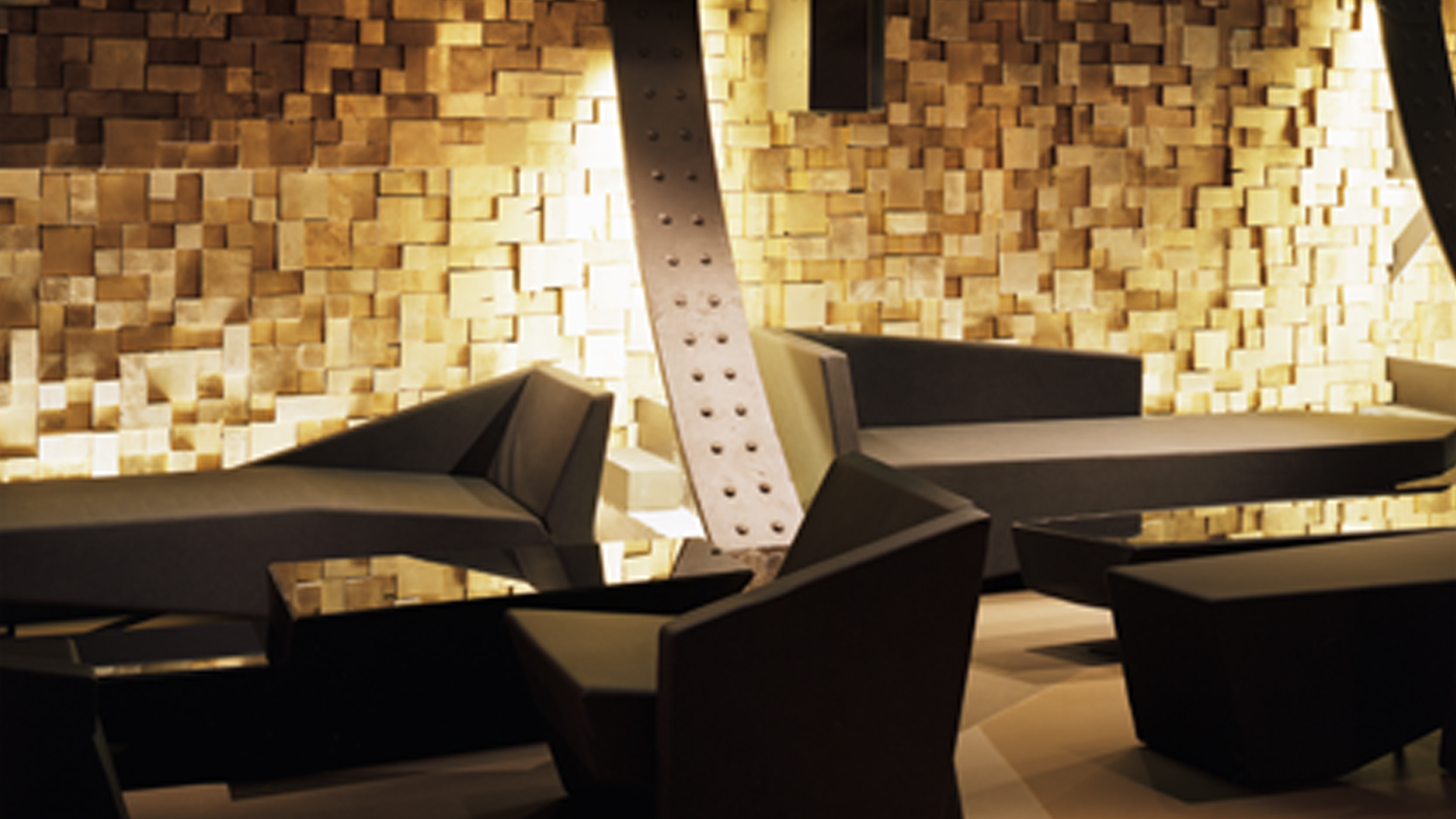
Enia dates Arnaud Frisch’s invitation to Lynch to 2009 and the delivered project to 2011. Its credits separate Lynch’s artistic direction from enia’s architecture and interior work with Raphaël Navot; the lighting credit names Ingélux / Thierry Dreyfus. The project adapted a second-basement space at 142 rue Montmartre for a club, cinema, bar and lounges. The room is a collaboration, and a responsible furniture history keeps that team visible. Architects’ technical record.
Asked by Matt Diehl about Mulholland Drive, Lynch distinguished the origin of the name from the design of the actual club. He described wanting visitors to feel good, emphasized warm surfaces and gold-covered wood blocks, and discussed the cinema, smoking room and a specially designed sink. His account gives the room a practical ambition as well as an atmosphere. Lynch’s 2012 interview.
Reading the installation photograph: the seating’s dark, angular forms sit against a luminous, fragmented wall. Warm light makes the blocks feel closer; the low furniture leaves much of that surface exposed. Unlike the isolated chair photograph, this view shows furniture organizing intervals between people, a wall and circulation space.
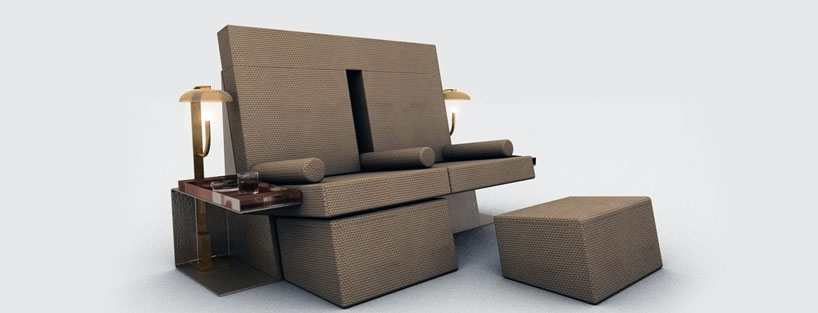
Contemporary designboom coverage identifies Domeau & Pérès with the Wire series and Quinette with the cinema seats. It describes the latter as providing a footrest, tray and lamp, with space around each viewer. That difference matters: a library chair and a cinema seat answer different kinds of attention. The article’s ergonomic language is a reported design intention, not a comfort test performed by Lyncharium. Furniture subsections.
The Mulholland Drive dossier examines the film’s Club Silencio sequence. The Paris interior belongs beside that study as a later design project with its own commission, makers and users.
When a useful object becomes a source of light
The boundary between furniture and sculpture stayed permeable. Sperone Westwater’s Squeaky Flies in the Mud, 1 November–21 December 2019, brought furniture and lamp sculptures into an exhibition with paintings and works on paper. It is an exhibition record, rather than a complete inventory of everything Lynch made for use. Gallery announcement.
Pace’s 2022 Big Bongo Night list is more specific about individual lamps. Ladder Lamp combines cold-rolled steel, plaster and resin; Mappa Burl Top Lamp combines steel, mappa burl and plexiglass. The listed heights are 153 cm and 156.2 cm. White Table Top Lamp, in steel, plaster and resin, is only 34.9 cm high. Distinct scales and materials support distinct object records. Featured Works.
A lamp has a shape and changes the appearance of everything around it. Lynch’s illuminated objects operate on both levels, giving light a sculptural presence within the room. Art dossier’s illustrated lamp section
The Thinking Rooms: a chair large enough to become a place
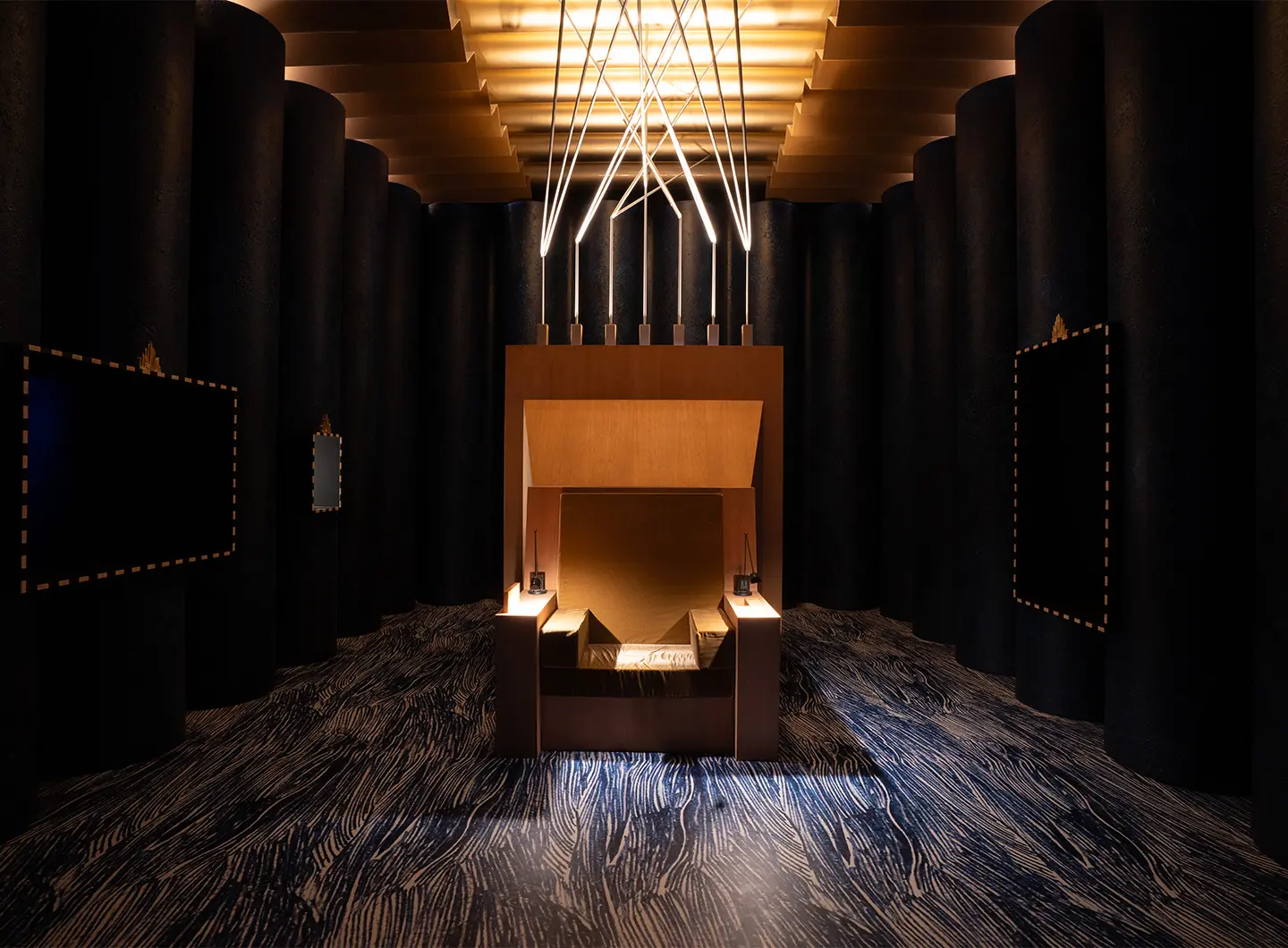
Interiors by David Lynch. A Thinking Room was presented at the Salone del Mobile.Milano on 16–21 April 2024. The organizer describes two rooms centred on a large wooden chair equipped for writing, drawing and painting. Seven cylinders connect the chair toward the ceiling; mirrors, a clock and selected images complicate the apparently empty enclosure. Event record.
In the pre-opening interview, curator Antonio Monda describes increasingly precise drawings and remote collaboration. Piccolo Teatro di Milano handled executive design and staging; Lombardini22 designed the positioning and surrounding architectural approach. Monda explicitly says Lynch designed the work rather than building these rooms himself. He also distinguishes a place for thinking from one defined solely by meditation. March 2024 project interview.
Close reading of the opening photograph: the chair sits on a strong central axis, but the illuminated rods above it cross that order. The floor’s repeated marks lead inward. Dark side walls make the wood and the ceiling’s gold tones feel unusually concentrated. The seat becomes both a destination and a boundary: a person would sit within a composition larger than their own body.
This reverses the encounter with the Espresso table. There, the small object asks the viewer to notice its supports. Here, a large seat gathers the room around itself.
The opening image is a completed installation photograph from the organizer’s opening-day coverage, not the earlier rendering reproduced on its event page. The distinction matters when tracing a design into a built object. Plans show an intention; photographs show a selected view of what was realized; neither alone reconstructs an entire visit. Opening-day coverage · Installation investigation.
Useful, strange, or both?
John Powers’s 2001 office-visit account in LA Weekly describes the Espresso, Club and Floating Beam tables, but doubts their practical appeal, comparing their effect to Magritte. That is a critic’s response, not a measured usability finding. It usefully unsettles the easy assumption that everything a filmmaker designs should be praised for looking like a film. Powers’s account.
Set that response beside Lynch’s wish for smaller tables and his later emphasis on feeling comfortable inside Silencio. A productive question emerges: does an unusual support interfere with an ordinary action, or make us notice it afresh? A chair can look unsettled while providing a stable seat. Conversely, a formally quiet chair can be uncomfortable. The images invite the question; use records and physical inspection would help answer it.
A business-history discrepancy. Powers reports that Casanostra had gone out of business. The 2002 Living Art release describes Casanostra production and Rausch’s role. The guide does not turn either passage into a settled closure date. FUR-02.
The interviews, auction entries and institutional releases serve different purposes. An interview reports a participant’s memory or intention. A sale catalogue describes a particular consigned object. An exhibition text frames an encounter. Reading them together is useful precisely because they do not automatically say the same thing.
How to research a Lynch furniture object
Separate design from example
Record the title used by the source, designer, fabricator, design date and the example’s manufacture date. Add materials, dimensions with labelled axes, marks, edition number and photographs of all sides. A maker’s label is evidence to document, not a substitute for a provenance history.
Separate an image from an experience
Keep a drawing, publicity photograph, auction photograph and installation view distinct. Note which surfaces are visible, whether a lamp is switched on, and whether dimensions belong to a particular example. Record repairs and replacements where the evidence supports them.
An object owned by Lynch is not automatically an object designed by him. A chair seen in his film is not automatically his design. Likewise, an auction’s estimate or historical result is not a current valuation. This page is a research guide, not an offer of furniture for sale. For methods of tracking editions and custody, continue to the Museum and the Reading Room.
Explore further
Follow the sources below, explore the museum collection, or continue through the Reading Room. New archival discoveries and contributions enrich the record of Lynch’s work.
Sources and image records
- Stuart Swezey with David Lynch — Filmmaker, Winter 1997 interview ↗Publisher’s online republication, final furniture exchanges: childhood shop, need for tables, building and Fred Madison’s house. Read through web retrieval; direct download restricted. The webpage’s republication date is not used to date the original interview.
- Kathrin Spohr with David Lynch — The World Reveals Itself, form 158 (1997) ↗English transcript preserved by The City of Absurdity, read in full. Interview identity and original pp. 44–45 corroborated by Nieland’s publisher abstract; original magazine and authorized book reprint not collated. Preserve approximate dates and intentions as testimony.
- Justus Nieland — David Lynch, Interviews with David Lynch ↗University of Illinois Press/Oxford chapter abstract only, pp. 161–170, 2012; identifies Spohr’s interview in form 158, no. 2, pp. 44–45. No claim to have read the full chapter or monograph.
- Wright — Espresso table, Design, 27 March 2014, lot 370 ↗Public lot metadata, object photograph and original catalogue PDF page 126 inspected; catalogue page rendered and checked. Materials, measurements, approximate date, edition and provenance are the auction house’s descriptions of this example, not independent authentication.
- Wright — Design, 27 March 2014, original catalogue ↗PDF page 126, lot 370 at upper left and table photograph below. Unrelated lots and the remainder of the catalogue are not research evidence for this guide.
- The City of Absurdity — Furniture: Pictures & Prices ↗Fan-maintained historical transcription of four Casanostra model specifications and a June 1997 price list. Useful lead, below a manufacturer sheet in evidential weight. Dimension sequences are preserved as printed without inventing axis labels.
- Living Art mlt GmbH — Zürich furniture exhibition announcement, 9 September 2002 ↗German organizer-issued release: planned 12 September–3 October exhibition, Hollywood prototypes, Veit Rausch and Casanostra. Its inconsistent authorship phrasing and production claims are retained as questions, not silently harmonized.
- Quittenbaum — Whiskey and Cigars side table, 30 June 2021, lot 571 ↗Object entry and photograph: dimensions, materials, plaque and the manufacturer’s reported production of six copies.
- PIASA — Wire chair pair, Limited Edition, 29 April 2015, lot 141 ↗Full live lot opened and read: 2011 design, fabric and metal, Domeau & Pérès, 11/25 and 3/25, H 61 × W 56.5 × D 70 cm. A separately indexed catalogue PDF was inaccessible and was not relied on as an inspected document.
- Enia architectes — Silencio Club, Paris, 2011 ↗Architects’ project record and lounge photograph: 2009 invitation, delivered 2011 project, separate architectural/interior/artistic/lighting credits. Not a current visitor-access guide or full specification set.
- Matt Diehl with David Lynch — Interview, 7 January 2012 ↗Opening craft exchange and Silencio questions read. Lynch distinguishes the name from the film’s actual club and describes warmth, gold-coated wood, cinema, smoking room and sink. Erroneous awards language in the editorial introduction is not adopted.
- Andy Butler — David Lynch: Silencio Club, designboom, 6 September 2011 ↗Contemporary illustrated report, furniture subsections and image credits: Wire by Domeau & Pérès; cinema seats by Quinette. Its street-number typo is not adopted. Ergonomic claims are publicity, not our testing.
- Sperone Westwater — Squeaky Flies in the Mud, 2019 ↗Gallery release and installation page; exhibition 1 November–21 December 2019 includes furniture and lamp sculptures.
- Pace — Big Bongo Night, 2022 ↗Featured Works records for Ladder Lamp, Mappa Burl Top Lamp and White Table Top Lamp, and exhibition dates. Material lists apply to named objects; no operational or conservation inspection.
- Alessandro Ronchi with Antonio Monda — Salone del Mobile, 25 March 2024 ↗Pre-opening interview: drawings, remote collaboration, Piccolo Teatro’s construction, Lombardini22’s surrounding layout, and thinking/meditation distinction. Renderings and announced intentions distinguished from the completed installation.
- Salone del Mobile — Interiors by David Lynch. A Thinking Room, 16–21 April 2024 ↗Italian organizer event record: two rooms, central chair, writing/drawing tools, seven cylinders, mirror, clock and collaborators. Interpretive claims are the organizer’s framing; no site visit claimed.
- Salone del Mobile — All the news and events, 16 April 2024 ↗Opening-day report and completed interior photograph used in the hero. The interior image has no individual photographer attribution beside it in the inspected page; adjacent exterior credit is not transferred.
- John Powers — Getting Lost Is Beautiful, LA Weekly, 17 October 2001 ↗Office-visit passage on the three tables and a bed, including Powers’s skeptical account of practicality and his claim that Casanostra had closed. That business-history claim conflicts with the 2002 organizer release and remains unresolved.
Another doorway
Continue exploring
Art
Art
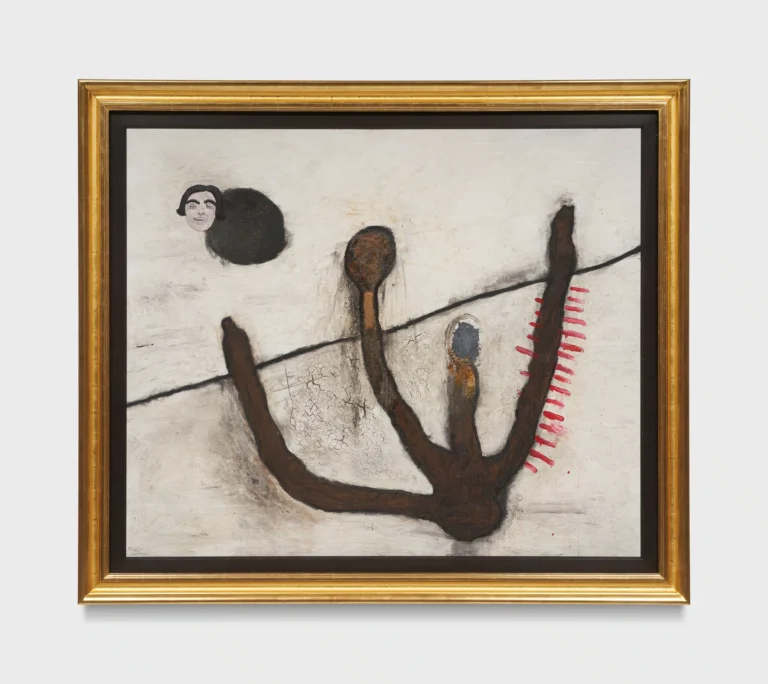
Explore David Lynch’s paintings, lithographs, sculpture and photography through close readings, exhibition histories, credited images and documented sources.
Films
Lost Highway
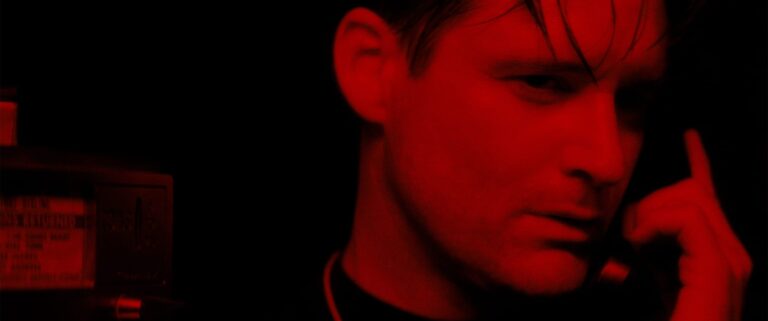
Explore Lost Highway (1997) through 36 illustrated scenes, dialogue and song studies, sound credits, Tim Lucas’s commentary and edition research.
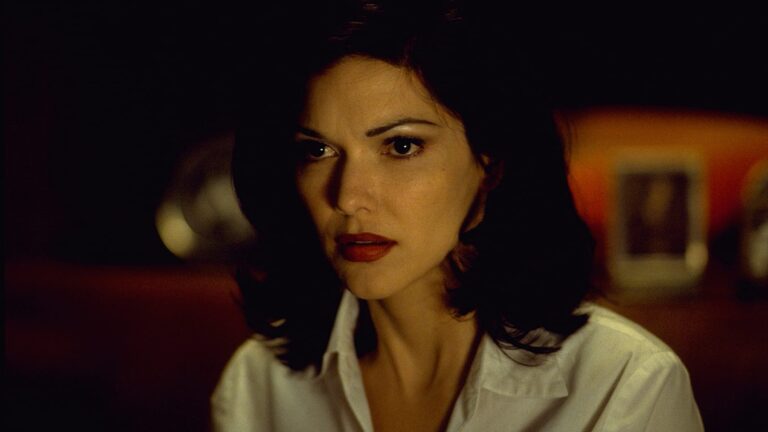
Films
Mulholland Drive
Explore Mulholland Drive through 45 illustrated scenes, dialogue studies, music and sound credits, Club Silencio, production history and edition research.
Image credits and sources accompany each linked guide.