On the Air
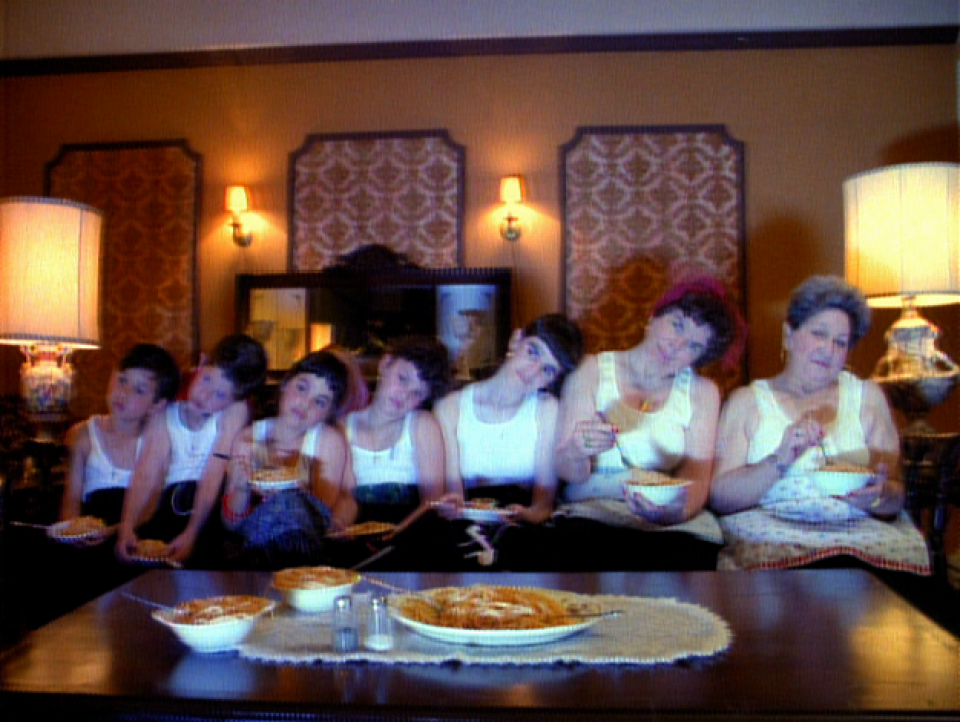
Television / 1992 / David Lynch & Mark Frost
The show must go on. The machinery has other ideas.
On the Air turns the making of television into a comedy of failed control. Inside the fictional Zoblotnick Broadcasting Company, a variety programme promises polished entertainment and delivers something far stranger. Its stars, technicians and executives cannot agree on what an audience wants—or keep the performance from escaping their plans.
- Created by
- Mark Frost & David Lynch
- Made / shown on ABC
- 7 episodes / 3
- Fictional setting
- Television, 1957
- Lynch directs
- The pilot
Television turns the camera on itself
The premise contains two audiences: the people watching The Lester Guy Show within the fiction, and the people watching On the Air. An accident can be disastrous for a performer yet delightful for a viewer. That division makes the series more interesting than a collection of incompetent characters. The institution cannot reliably tell the difference between a failure of its plan and a success of its entertainment.
The Beacon’s retrospective programme reproduces Lynch’s account of thinking of people whose attempt at success goes wrong while mixing Twin Peaks. It also identifies its own presentation as a pilot screening combined with other television work. Programme and attribution
Placing this disorder inside a 1950s variety show gives every technical task a dramatic consequence. A voice has to arrive at a microphone; a performer must enter through a working door; an effect must follow a cue. The comedy asks what happens when those ordinary agreements fail. The entertainment industry’s claim to manufacture spontaneity becomes a contradiction the characters must inhabit.
It is also a useful companion to Lynch and Frost’s other television collaboration. Here, the institution under pressure is a broadcaster, and the recurring structure is a performance that must reach its viewers. The series deserves attention on those terms rather than being judged only by how closely it resembles the mystery of Laura Palmer.
An ensemble built around unequal power
Ian Buchanan’s Lester Guy supplies the programme’s name and star status; Marla Rubinoff’s Betty Hudson unsettles his position. Miguel Ferrer plays network executive Bud Budwaller. Nancye Ferguson’s Ruth Trueworthy helps communications make their way through the production, while David L. Lander’s director and Marvin Kaplan’s producer give authority increasingly precarious forms. Mel Johnson Jr. and Tracey Walter belong to the sound-effects team. Cast and role guide.
Those jobs offer a way to read the comedy. Lester’s fame cannot ensure that he is the person worth watching. Betty’s uncertainty does not prevent her from reaching an audience. The person best able to manage other people need not be the person highest in the hierarchy. Each failed attempt to protect Lester’s position makes the gap between rank and usefulness wider.
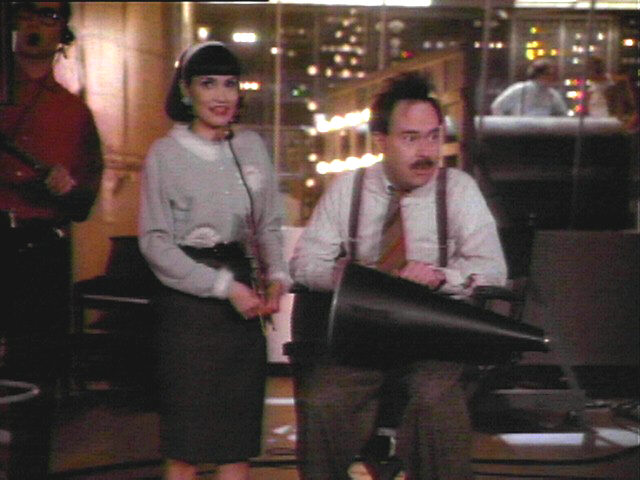
The image above offers a small but concrete visual study: the machinery occupies the foreground while performers must share the space around it. A control room ought to organize what other people see. Here it is itself a crowded stage.
Seven episodes, with an order warning
The episode map follows Epguides/TVmaze, placing the three ABC broadcasts first. Descriptive story labels make it easy to match episodes across the different broadcast and complete-series arrangements.
01 / Pilot · ABC: 20 June 1992
The performance that fails into success
The first broadcast falls apart through missed cues, faulty props and misplaced effects. Betty’s song succeeds where Lester’s planned showcase does not. The plot establishes the recurring struggle over who gets to define a good performance. Episode record.
Reading: Betty’s intervention changes the value of the preceding disorder. An executive may want a repeatable product, but an audience can respond to an unplanned moment. The pilot’s crucial contrast is therefore between managing attention and earning it. Its exact rhythms—how long a failure is held, when a reaction interrupts it—belong to the forthcoming viewing study.
02 / Zoblotnick dinner · ABC: 27 June 1992
The star, the owner and the wrong instructions
Betty’s popularity wins her an invitation from the network owner. Lester and his allies try to ruin the meeting by making her afraid of him and supplying damaging advice. Their scheme founders when the owner enjoys the behaviour intended to offend him. Episode record.
Reading: the story relocates performance anxiety from the studio to a social encounter. Sabotage requires an accurate prediction of somebody else’s response; the conspirators possess neither that knowledge nor the humility to recognize its absence. Betty’s literal understanding exposes the artificial roles around her.
03 / Quiz show · ABC: 4 July 1992
Knowledge becomes another unreliable machine
A rigged quiz is supposed to embarrass Betty opposite Professor Answer. Her former teacher, a sound cue and the producer’s allergy treatment disrupt the intended result. Episode record.
Reading: a quiz promises an unusually clean television logic: a question, a correct answer, a reward. This plot dismantles that promise. Expertise must survive the conditions of a live performance; a supposedly objective test can conceal a personal grudge. The sound cue matters because it changes what a participant can do, not merely how a joke is decorated.
04 / Stan Tailings and Doodles
The guest performer meets live television
Lester brings in a respected performer whose unreliable voice cannot meet the demands of a live show. Meanwhile Betty befriends a duck intended for a sketch, with a grim result when the crew tests another prop. Episode record.
Reading: professional prestige does not transfer automatically between media. The subplot also puts a limit on the notion that every mishap is harmless. Betty understands an animal as a companion while the production treats it as something usable. That disagreement introduces cruelty into the backstage farce rather than leaving its consequences entirely weightless.
05 / Sylvia Hudson and Mr. Peanuts
Celebrity is a bad substitute for cooperation
The arrival of Betty’s domineering sister Sylvia promises prestige. Her treatment of colleagues, including children’s entertainer Mr. Peanuts, instead produces another crisis. A malfunctioning entrance helps undo the guest star’s authority. Episode record.
Reading: the recurring machinery of failure makes a moral distinction possible. An entrance designed to flatter a celebrity becomes the thing that humiliates her; other performers then have to keep the programme alive. The contrast is between insisting on one’s importance and accepting responsibility for a shared performance.
06 / The Great Presidio
When a stage illusion changes the rules
A troubled magician anticipates a dog associated with transformation. Lester and Nicole turn that fear into another scheme; its outcome restores the magician’s power and rebounds on them. Episode record.
Reading: most backstage comedy depends on revealing how a trick is done. This story allows the trick to become more powerful than the people attempting to exploit it. The distinction between technical malfunction and impossible event begins to dissolve.
07 / The Woman with No Name
A voice cannot stay under control
A visiting beatnik performer, Betty’s difficulty remembering her mother’s name and a device intended to damage Betty’s voice collide. The sabotage reaches the wrong target, while the performance opens toward a shared musical event. Episode record.
Reading: the voice is both an intimate possession and an object that broadcast technology can manipulate. The episode’s connection between remembering, singing and joining others points beyond the workplace contest. It also returns to the pilot’s question: what can an audience receive that the people managing the show did not know how to plan?
Making chaos takes preparation
Ferguson remembers Johanna Ray bringing her to the project, a conversation with Lynch rather than a conventional audition for him, and later network approval. She distinguishes a pilot shoot in the Valley from subsequent work on the CBS lot in Studio City. Her estimate is a longer pilot schedule followed by four-day episode shoots. She also recalls improvisation and a pilot speech written on the set. These are a participant’s memories, published in 2008, rather than verified call-sheet dates. Casting and production testimony.
This combination is instructive: comic disorder need not imply disorderly filmmaking. A production can require carefully placed performers and equipment while leaving room for a new speech or gesture. Script comparison would help distinguish a rehearsed chain of failures from a gag found during shooting. It would also prevent the convenient but unsupported assumption that every unusual detail originated with one person.
Authorship is distributed across the series. The episode map preserves directors and writers beyond Lynch and Frost; the indexed production record also names Ron Garcia and Peter Deming for photography and Angelo Badalamenti for music. Its contradictory episode numbering means it is a starting point for a credit audit, not a definitive departmental ledger. Production-record caveat.
Sound, surfaces and the architecture of a gag
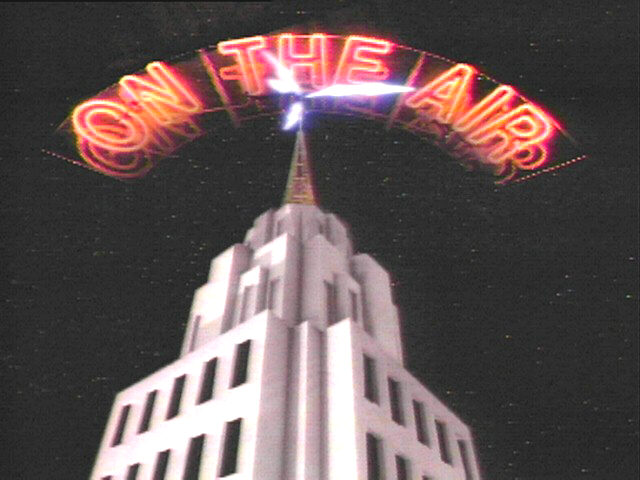
The title image builds a vertical fantasy of broadcasting: light, lettering and a tower promise reach and authority. The control-room frame offers the opposite experience, with bodies pressed among consoles. Read together, these images place the institution’s grand public face beside the physical labour that must sustain it.
Sound is similarly more than atmosphere in the episode descriptions. A cue can destabilize a quiz; a machine can tamper with a voice; singing can redirect attention. These are three different functions—disruption, coercion and connection. The music dossier supplies the wider collaborative context; it does not substitute for this series’ cue sheets.
For editing, the important distinction is between the simulated continuity of a live show and the constructed continuity of the sitcom depicting it. A cut to a technician or spectator can reorganize a joke without changing what the fictional broadcast transmits.
A brief broadcast life is not a complete critical verdict
Contemporary set reporting preserves the cast’s frustration over the summer Saturday slot and perceived lack of support. It also records ABC’s reply that review tapes and promotions were being provided. Both sides belong in the history. 18 June 1992 report
David Hiltbrand’s People review welcomed the ensemble and pilot while doubting how easily the comic pileups could be sustained. That is a useful distinction between admiring an individual episode and believing in an indefinitely repeatable series. 22 June 1992 review
For Lyncharium, the question is not whether obscurity automatically proves greatness. The seven stories offer variations in performance, social sabotage and the limits of a governing format. Evaluating those variations requires seeing the complete work, including contributions by other directors. The three-episode ABC run should not quietly become the boundary of the research.
The surviving series: a better research route
UCLA’s April 2025 programme presented the complete series in an approximately 165-minute DCP newly digitized from studio tape masters. The screening brought the seven episodes together in a new archival presentation. Read the programme record
Numbers on screening listings need context. The Beacon’s 120-minute event combined the pilot with other rare television work. Treating that duration as the length of On the Air would create a false missing-footage problem. Likewise, a half-hour schedule slot is not a measured episode runtime. Mixed-programme description.
Country, distributor, packaging, episode order, language, subtitles and runtime give each On the Air edition its identity. Explore the Japanese LaserDisc’s sleeve, obi and programme map in the Museum.
Explore further
Follow the sources below, explore the museum collection, or continue through the Reading Room. New archival discoveries and contributions enrich the record of Lynch’s work.
Sources and further reading
Sources distinguish institutional records, participant recollection, contemporary criticism and later catalogue information. An archive description establishes a lead, not the contents of an unseen file. Access limitations are recorded beside the relevant source.
- Mark Quigley, UCLA Film & Television Archive: On the Air marathon, 4 April 2025 ↗Official programme read: complete seven-episode DCP, approximately 165 minutes, newly digitized from studio tape masters. Frost's withdrawal is explicitly noted.
- Graeme Larmour interviews Nancye Ferguson, Twin Peaks Archive, July 2008 ↗Full published interview read. Casting, production schedule and improvisation are retrospective participant testimony. The hoped-for DVD is not proof of a release. Frame reproductions inspected.
- Los Angeles Times set report, 18 June 1992, preserved by Lynchnet ↗Indexed excerpts checked: cast concerns, network response and summer scheduling.
- David Hiltbrand, People review, 22 June 1992, preserved by The City of Absurdity ↗Indexed review text checked.
- The Beacon: David Lynch: On the Air, past screening programme ↗Programme read. Its 120-minute running time describes a mixed bill including other television work, not the complete series. Quotations attributed to Lynch are secondary reproductions.
- Epguides: On the Air, airdate guide ↗Guide and all seven linked TVmaze episode records read. Secondary numbering and credits are presented as a catalogue map, pending end-credit and broadcast-log collation.
- TVmaze: Episode 1, pilot ↗Synopsis and listed writer/director inspected; not a viewing record.
- TVmaze: Episode 2, Zoblotnick dinner ↗Synopsis and listed credits inspected. This numbering differs from some complete-series lists.
- TVmaze: Episode 3, quiz show ↗Synopsis and listed credits inspected; broadcast-order index labels it the third ABC showing.
- TVmaze: Episode 4, Stan Tailings and Doodles ↗Synopsis and listed credits inspected.
- TVmaze: Episode 5, Sylvia Hudson ↗Synopsis and listed credits inspected.
- TVmaze: Episode 6, the Great Presidio ↗Synopsis and listed credits inspected.
- TVmaze: Episode 7, the Woman with No Name ↗Synopsis and listed credits inspected. Lynch/Engels and Jack Fisk are the credits in this numbering; some filmographies call Lynch's second writing contribution episode six.
- The City of Absurdity: On the Air production record ↗Indexed credits checked. Internally inconsistent episode numbers are not silently normalized. Ron Garcia, Peter Deming and Angelo Badalamenti provide crew leads requiring an end-credit audit.
Another doorway
Continue exploring
Television
Hotel Room
Explore Hotel Room: Tricks, Getting Rid of Robert and Blackout, with story guides, cast, production history, scripts and stills.
Television
Twin Peaks
Explore Twin Peaks: viewing order, Lynch and Frost, Laura Palmer, music, photography, The Return, pilot versions and companion books.

Music
Music
Explore David Lynch’s albums and collaborators, from Julee Cruise and Thought Gang to Chrystabell, with recording histories, edition notes and sources.
Image credits and sources accompany each linked guide.