Twin Peaks: Episode 6 — Realization Time
1990 · Written by Harley Peyton · Directed by Caleb Deschanel
A bird, a recorder and a false Laura. Explore the episode’s borrowed identities, Audrey’s investigation and the images that persuade people to believe.
Regular Episode 6 · Often listed as Season 1, Episode 7. Contains episode spoilers.
Explore this episode
Cooper draws a boundary
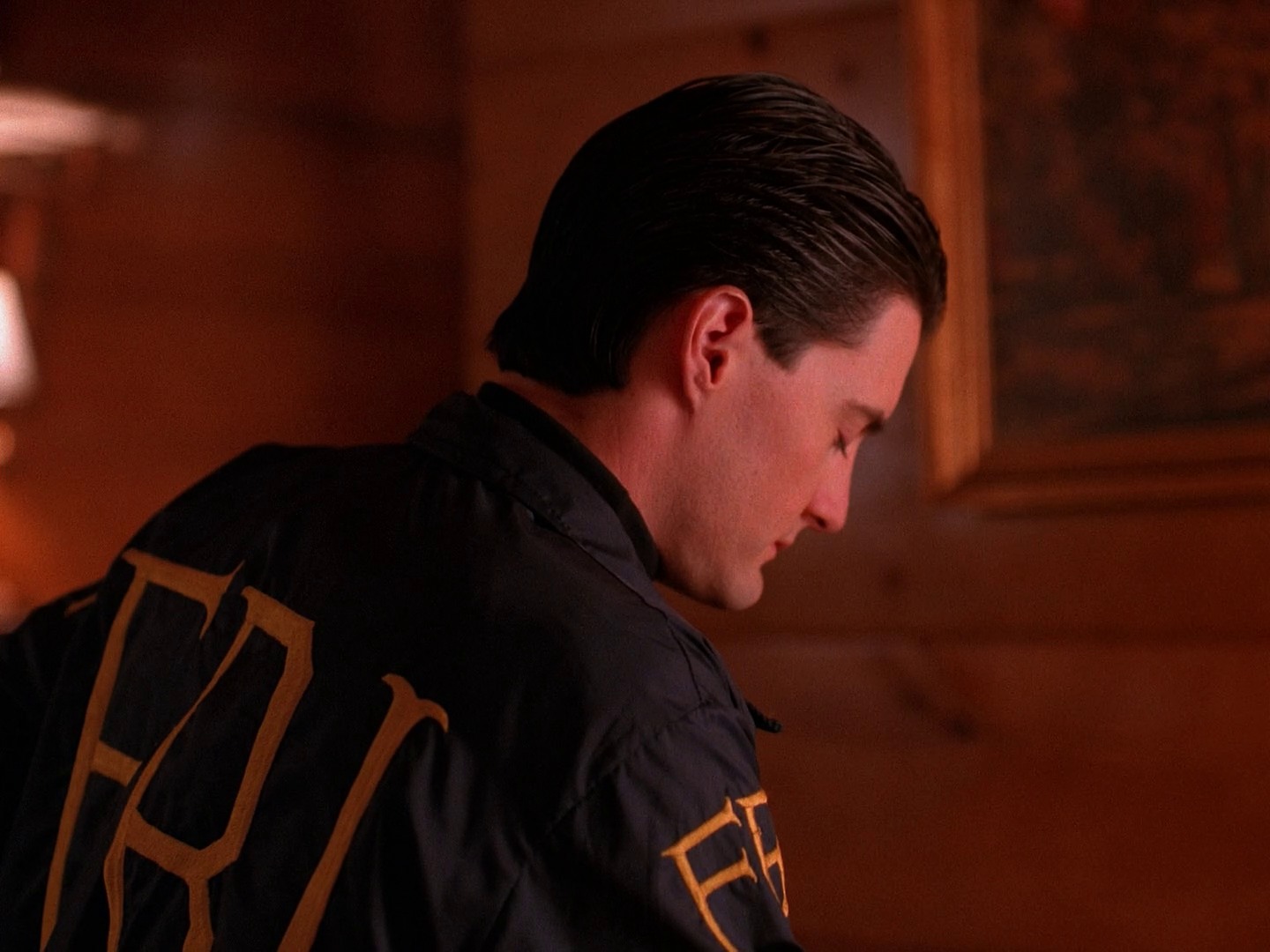
The opening resolves an encounter that the previous episode left suspended. Audrey has placed herself in Cooper’s bed; he refuses to let that situation define their relationship. His FBI jacket, turned back and position at the edge of the bed make the separation visible. The scene gives him time to negotiate care without accepting the role Audrey has offered.
His alternative is companionship and conversation. Audrey’s desire to help remains active, but the terms are changed. This matters because the rest of the episode is crowded with people who accept false identities when those identities answer their wishes. Cooper begins by resisting an attractive misreading of another person.
Lucy’s treatment of Andy supplies a smaller boundary at the sheriff’s station. Her formal address turns their workplace into a space in which personal access has been withdrawn. The switchboard is surrounded by communication equipment, yet the person standing before her cannot obtain the explanation he wants.
A voice survives its witness
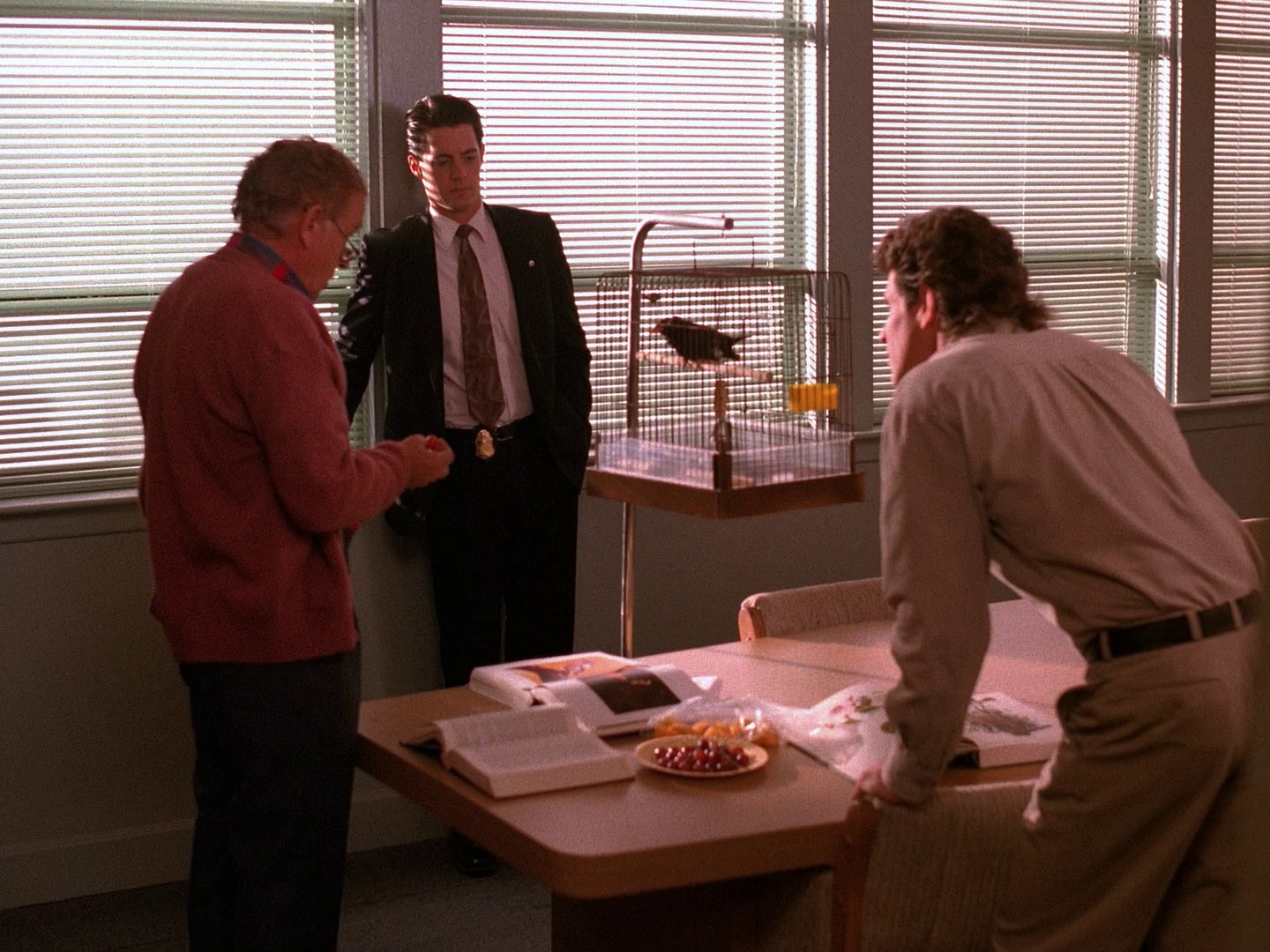
Waldo changes the investigation’s relationship to speech. The bird can repeat words without supplying the understanding, intention or chronology expected from a human witness. A voice-activated recorder creates a second layer: a machine will preserve the mimic’s speech even when the investigators are elsewhere. Knowledge is distributed across living memory, imitation and recording.
When the shot through the station window kills Waldo, the recording outlasts the body. The investigators must listen to a sequence in which ordinary speech and disturbing phrases share the same carrier. A repeated name is powerful evidence, but the recording does not furnish an unobstructed view of what happened. The episode makes the technical survival of a voice both useful and frightening.
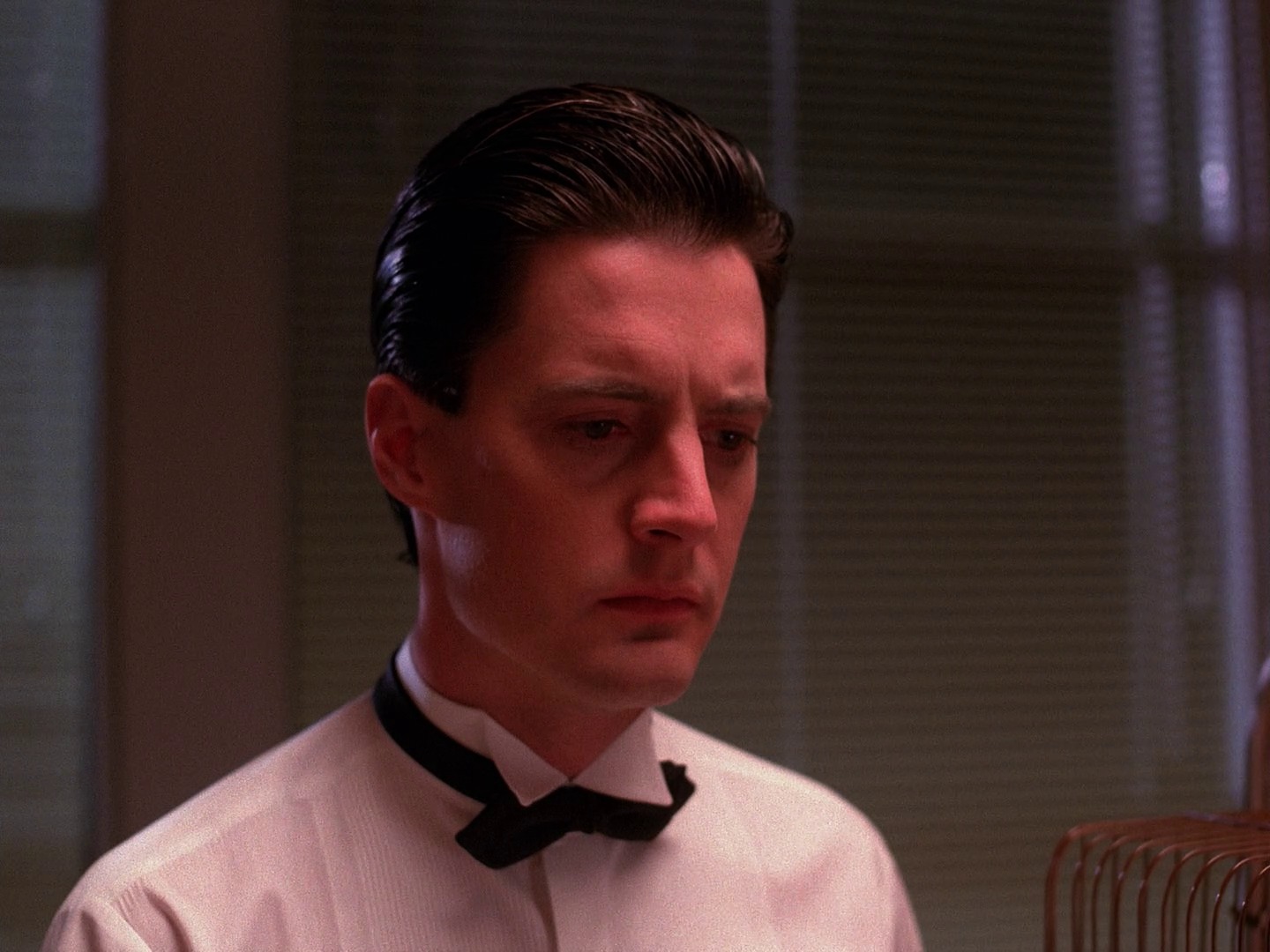
Laura’s tapes enter a parallel chain. Donna, James and Maddy search for what is missing from the collection, turning absence into a reason to investigate Jacoby. Their next step will manufacture a new recording rather than simply discover an old one. By the end of the episode, recorded speech has moved from preserved testimony to deliberately constructed bait.
The store behind the store
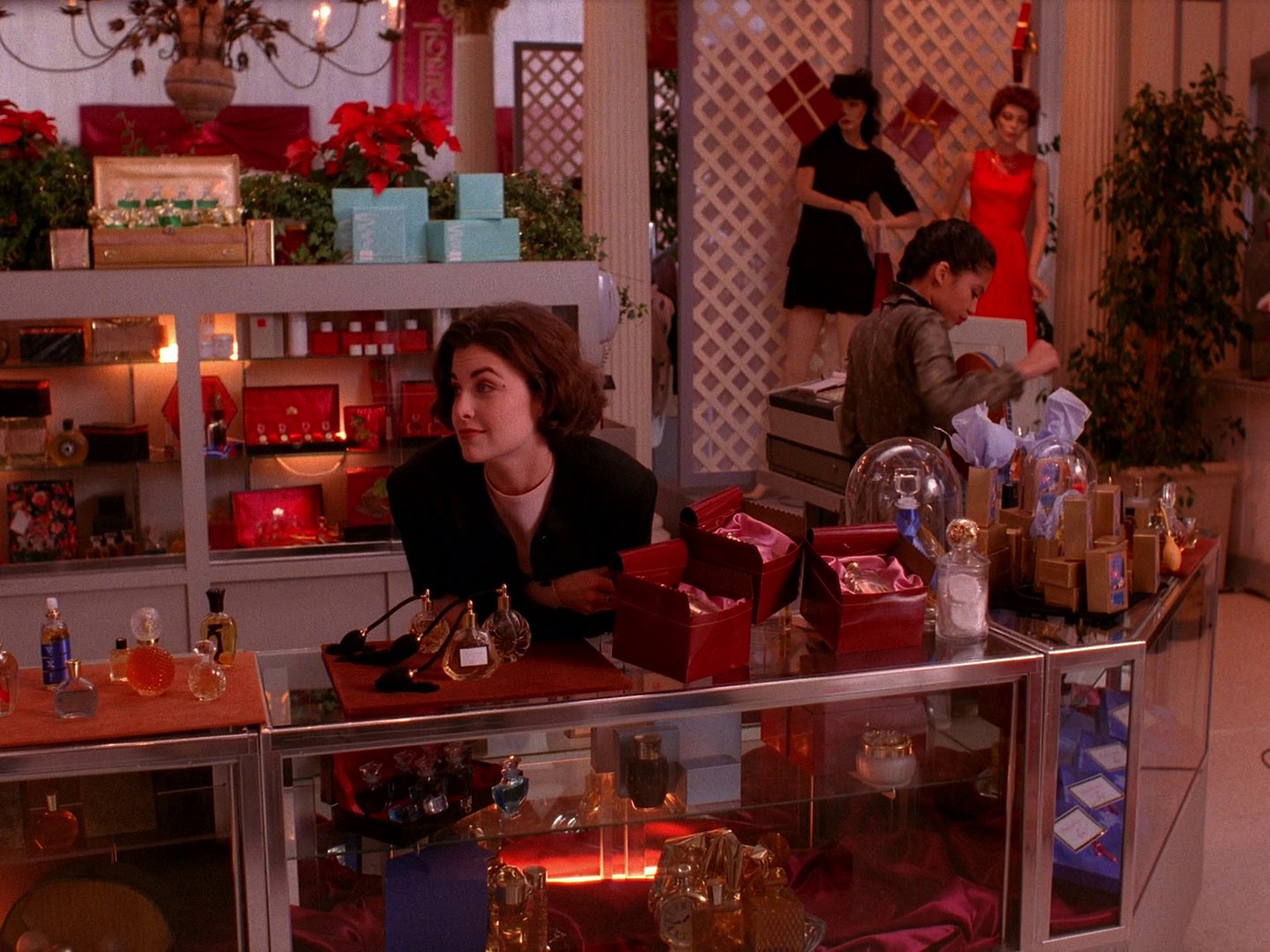
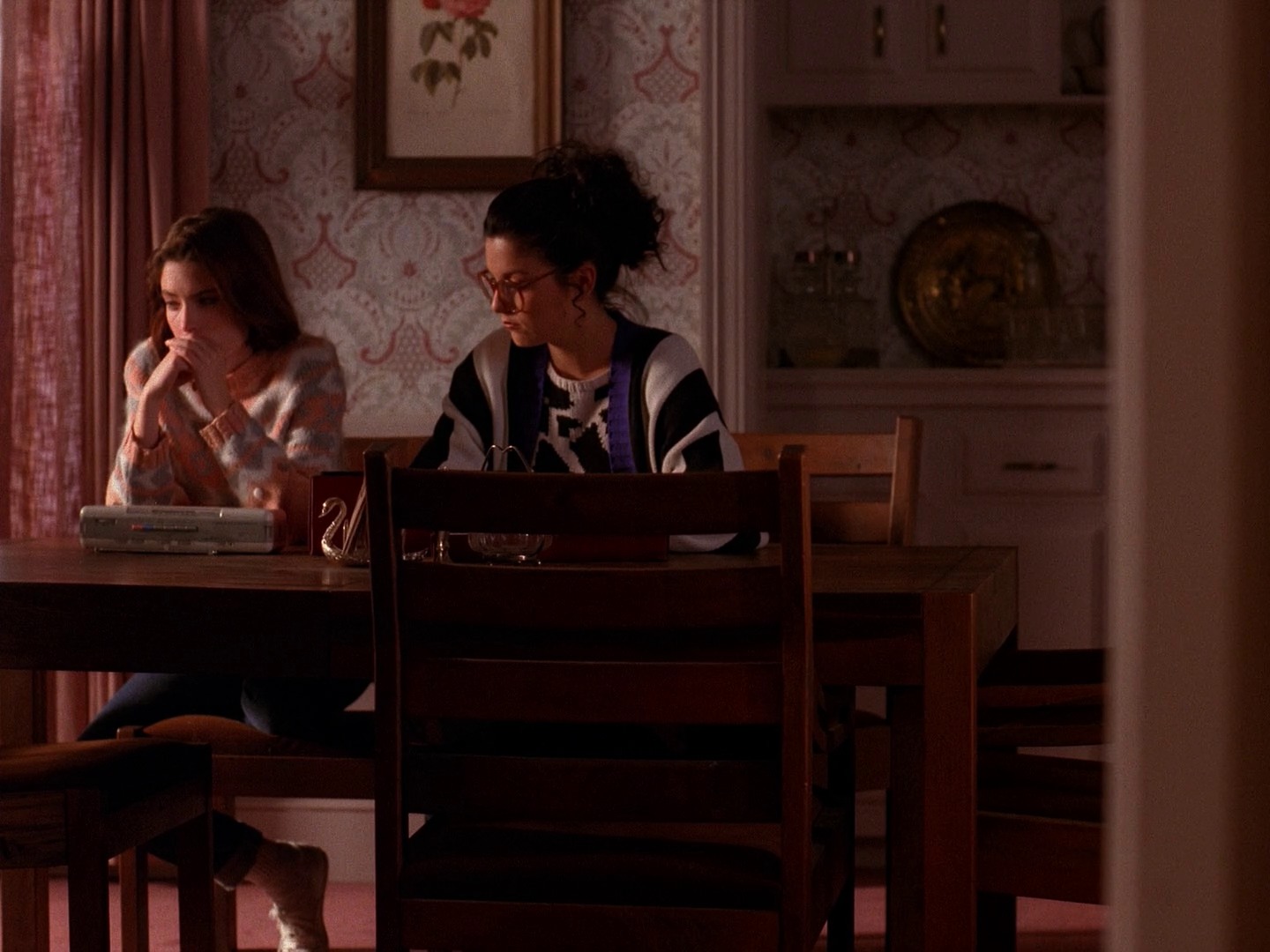
The perfume counter offers Audrey a public role and a reason to be present. The office behind it discloses another economy. Battis’s conversation with Jenny links the store to One Eyed Jack’s through language that presents recruitment as opportunity. The respectable workplace and the sexual marketplace are connected by ordinary managerial procedures.
Audrey’s hiding place changes the image itself. Slats, darkness and the edge of the opening obstruct her view. The restrictions are part of the drama: this is information obtained from a vulnerable position, not a neutral establishing view. Alternating between what she can see and her face keeps the risk of discovery present throughout the conversation.
A concealed view of the office · 4 images
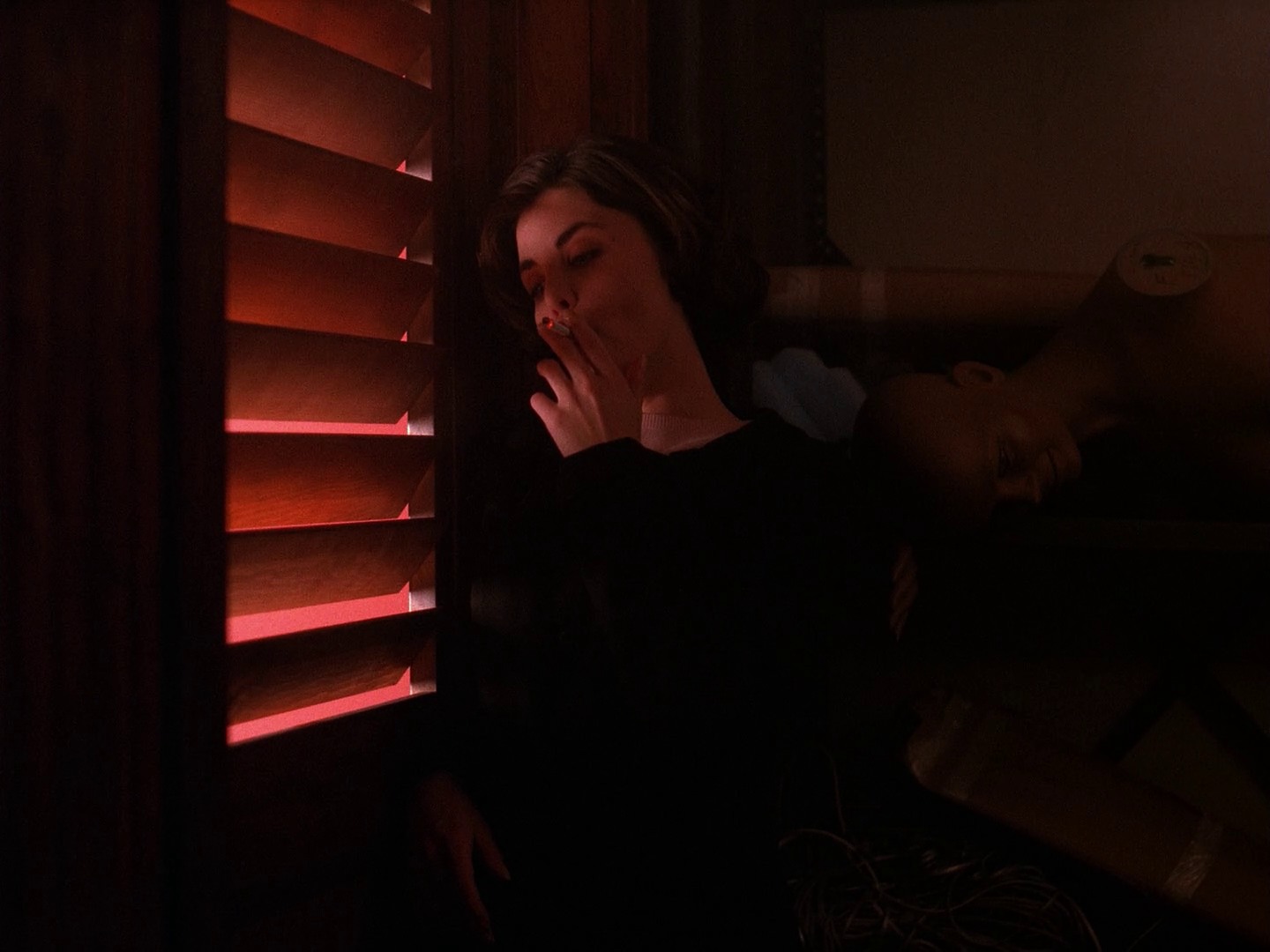
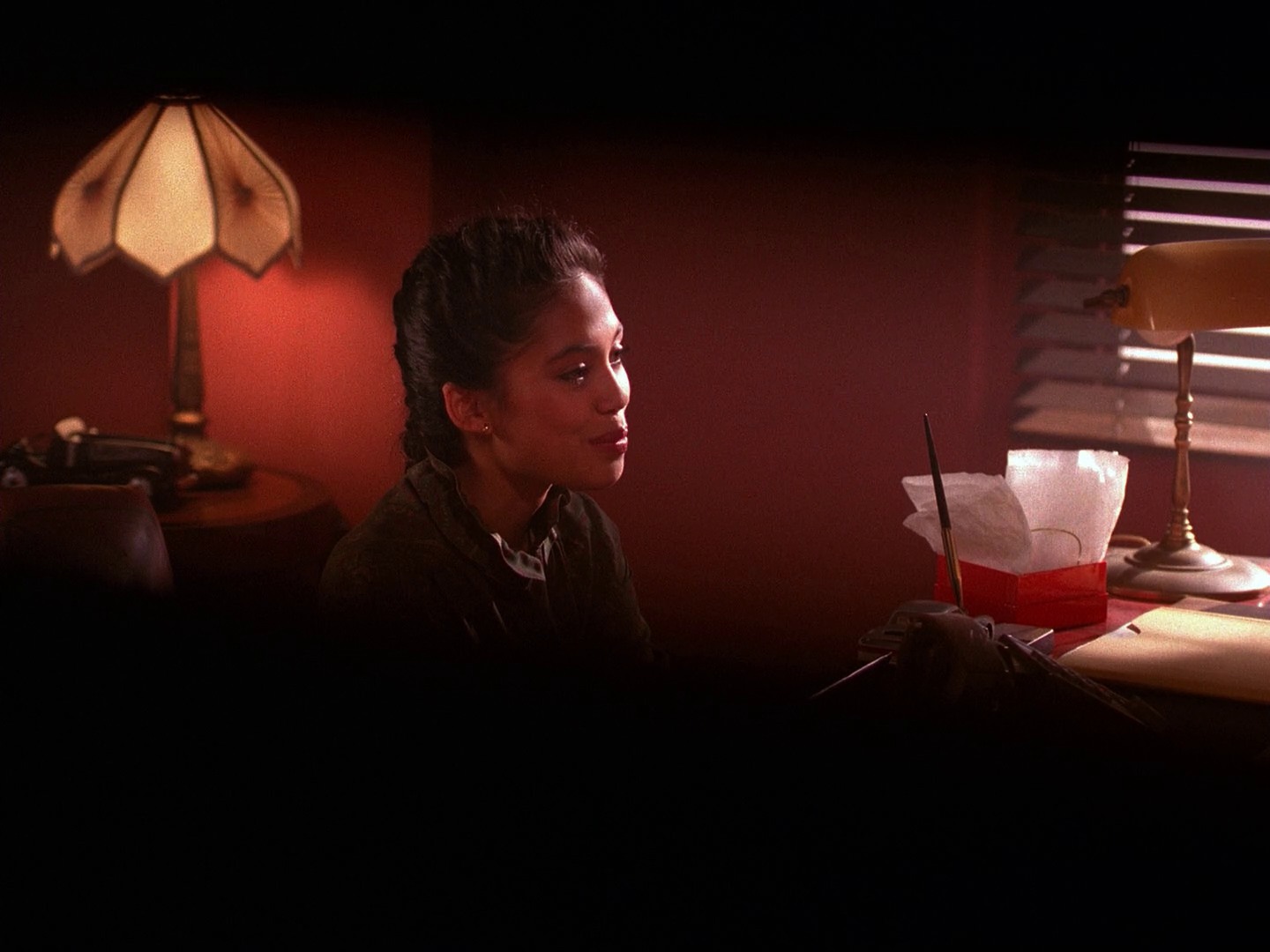
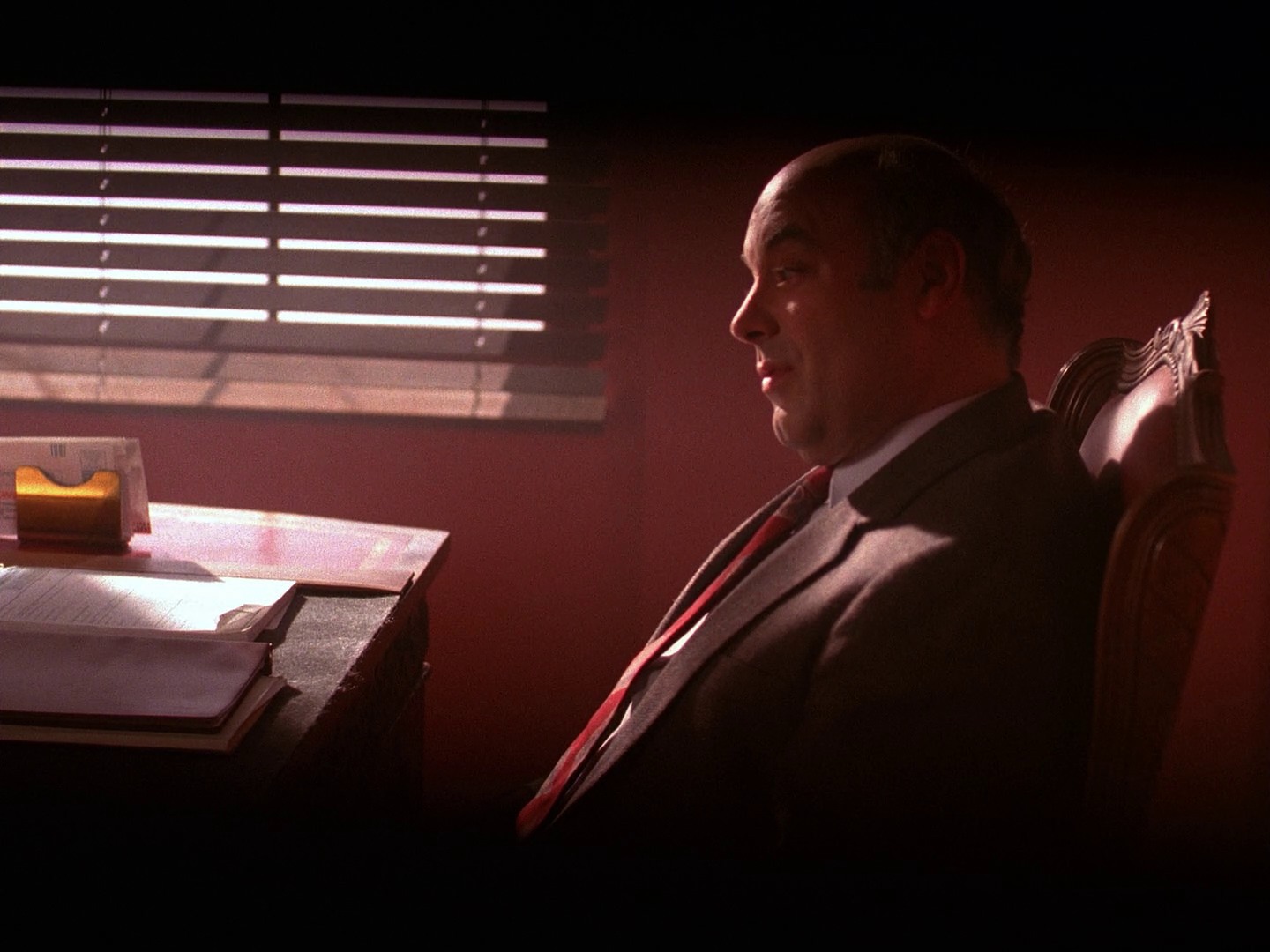
Objects carry coded meanings as well as dialogue. The unicorn is discussed as a sign of purity within a transaction that makes the word deeply compromised. Audrey learns how the system describes itself, not merely where it is located. Her later performance for Blackie uses that knowledge while exposing her to the system she is entering.
Trust, translation and borrowed identities
Hank’s return to the diner stages rehabilitation as a public performance. Work, familiarity and charm help make his presence appear ordinary again. Cooper’s moment of pleasure over coffee briefly interrupts the business of questioning. Such interruptions keep the investigation embedded in a town whose routines continue whether or not they are safe.
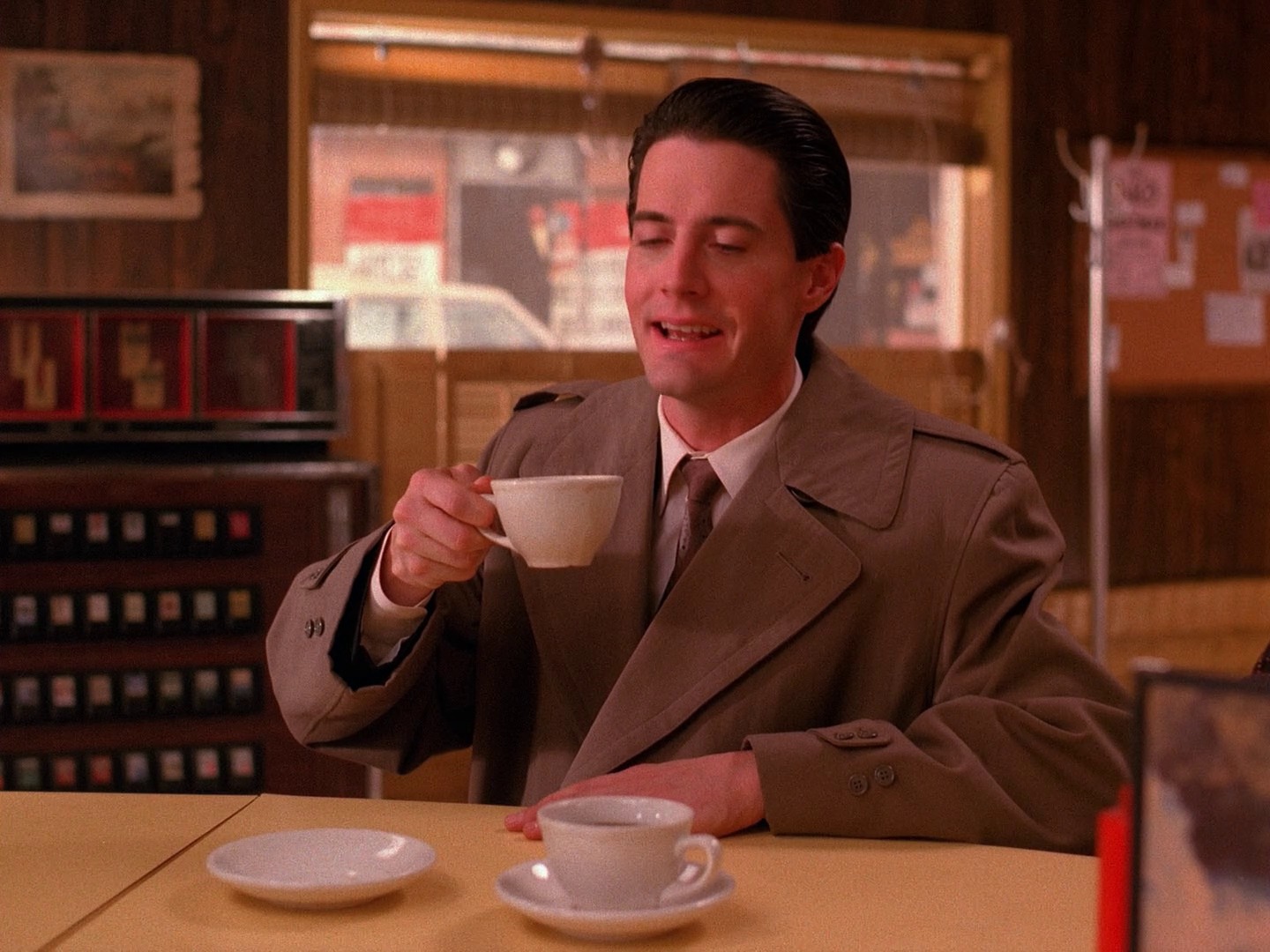
Pete’s disappointing taxidermy story makes “translation” comic: what returns is not what he believes he sent away. Nearby, Josie’s photographs offer Truman a more consequential act of interpretation. An image can be factual while the story attached to it remains selective. His affection for Josie affects how the evidence is received.
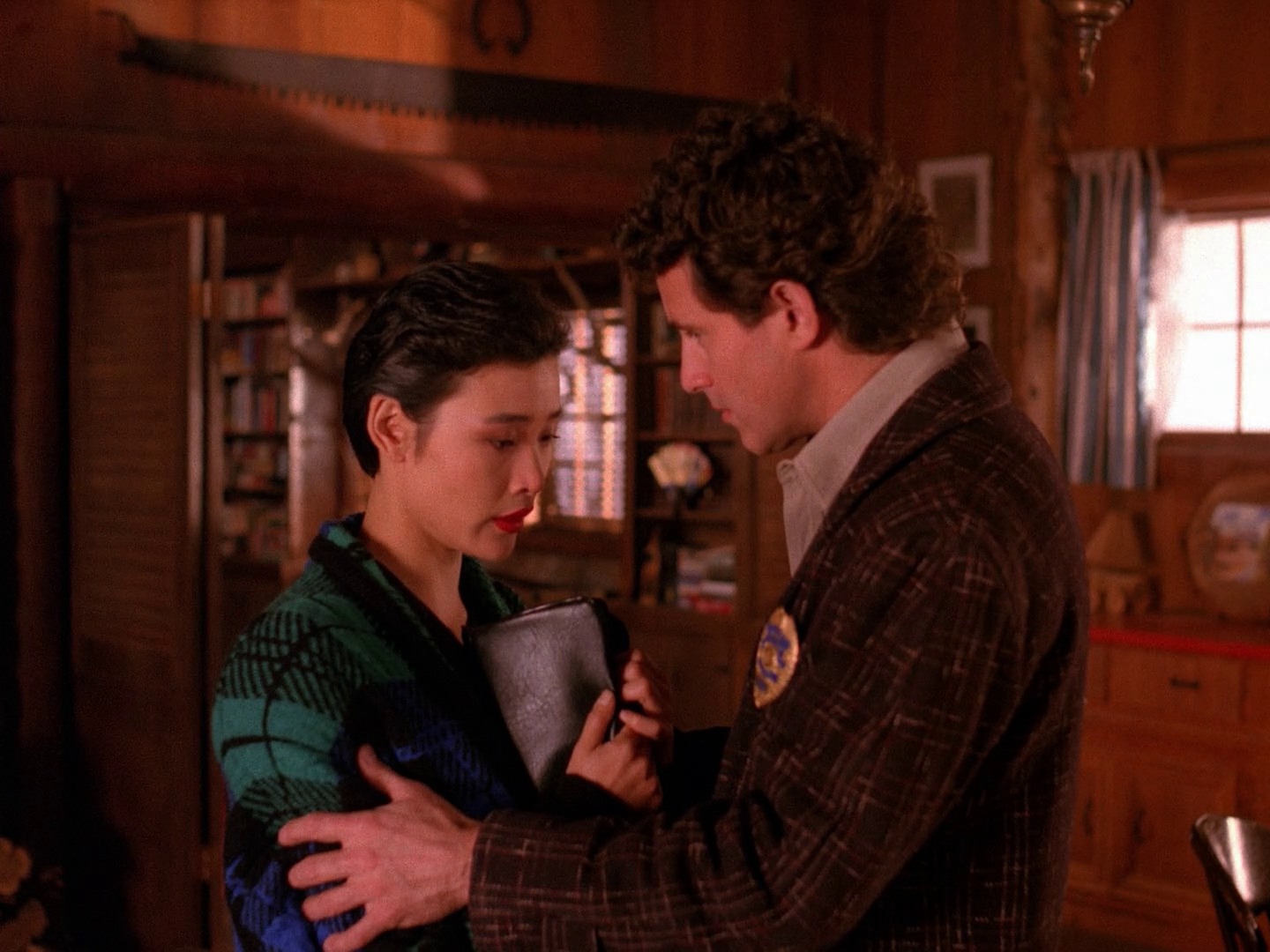
Catherine’s conversation with the insurance agent likewise turns on controlled information and delayed paperwork. The discovery of who stands to benefit changes her understanding of the mill scheme. Business documents are as dangerous in this episode as costumes and concealed weapons.
Cooper and Ed then enter One Eyed Jack’s under assumed identities. Their respectable professional cover is a performance vulnerable to the wrong answer. Ed’s difficulty maintaining it makes the deception comic without removing the danger. The audience can recognise the masquerade while watching other characters decide whether to believe it.
Audrey changes the terms of the test
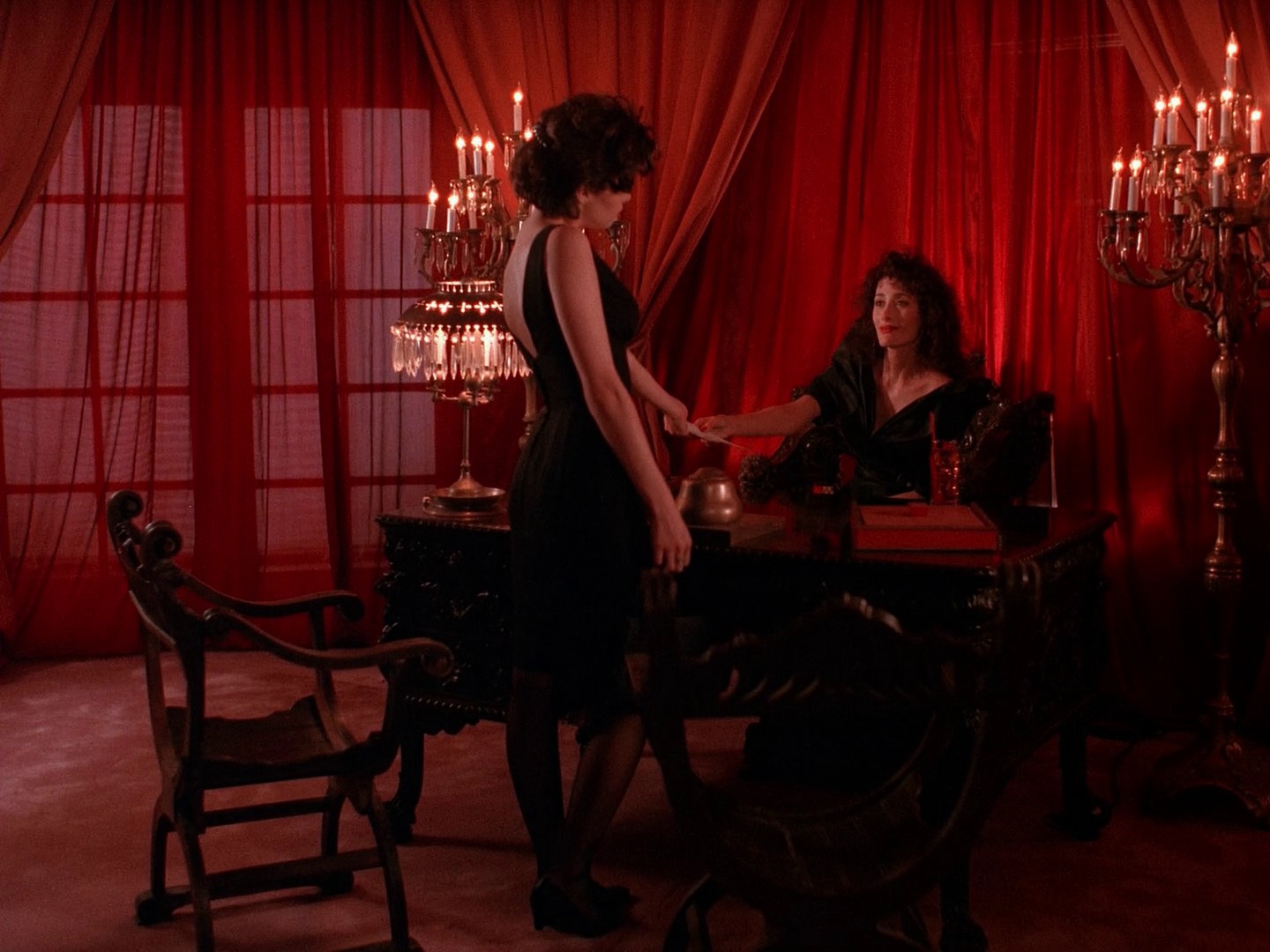
Blackie’s interview tests Audrey’s invented biography. The chosen name, Hester Prynne, makes literary knowledge part of the contest. Audrey’s claim can be punctured by someone who recognises where the name comes from. Language has failed to establish the identity she wants to sell.
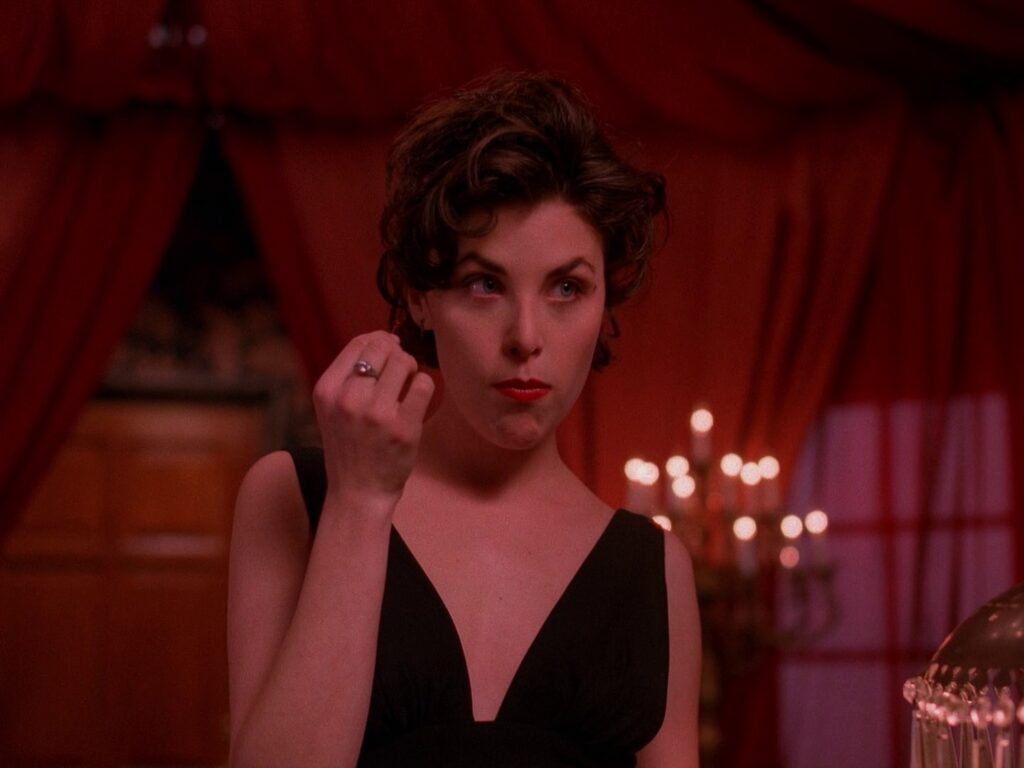
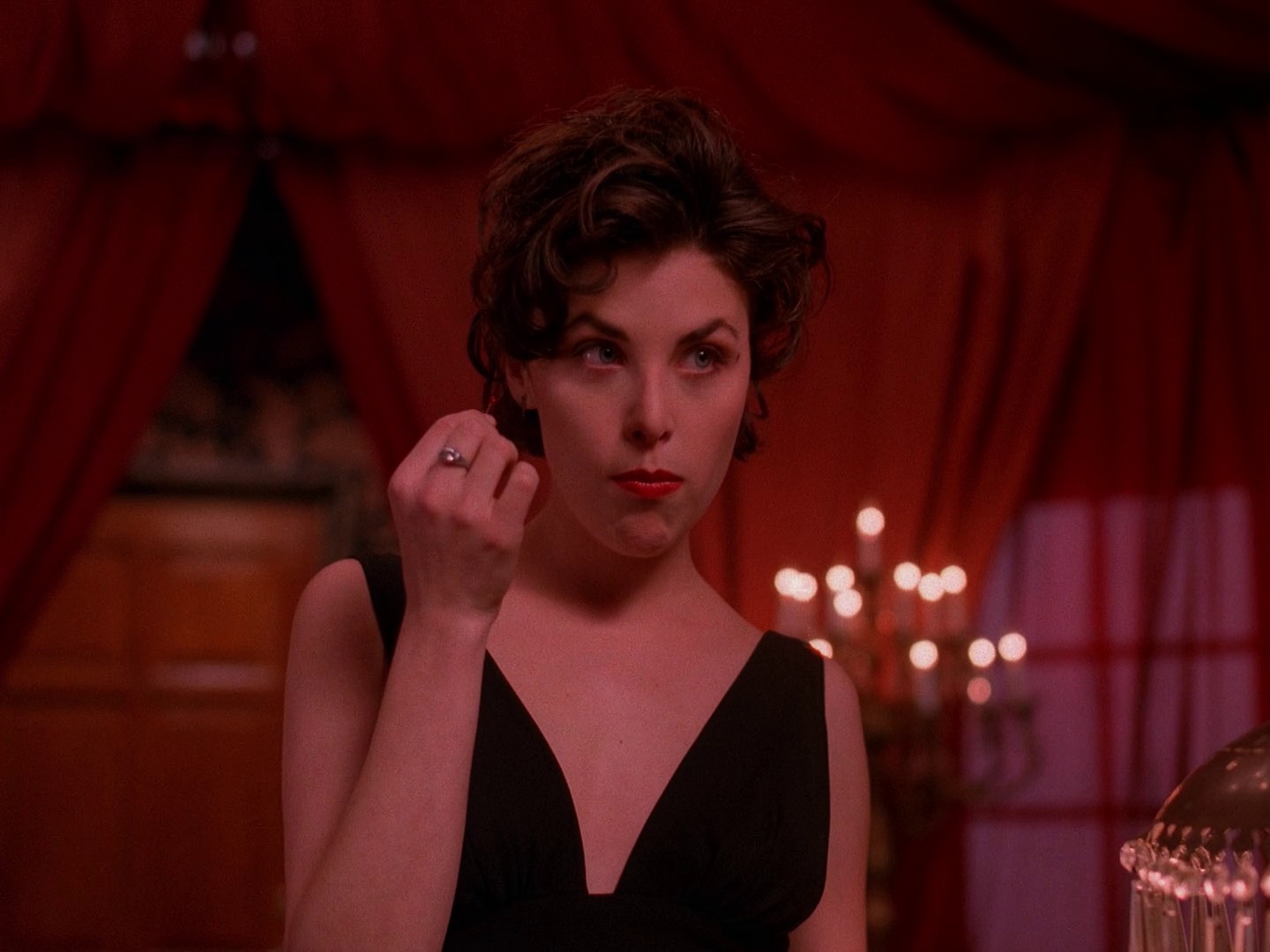
She changes medium. The cherry and its stem turn the interview into a demonstration, with Audrey controlling the pause and Blackie watching. The camera moves from the social arrangement of desk and chairs to the hand, mouth and face. The prop is small enough that the sequence can concentrate on waiting, looking and the withheld result.
The interview becomes a performance · 4 images
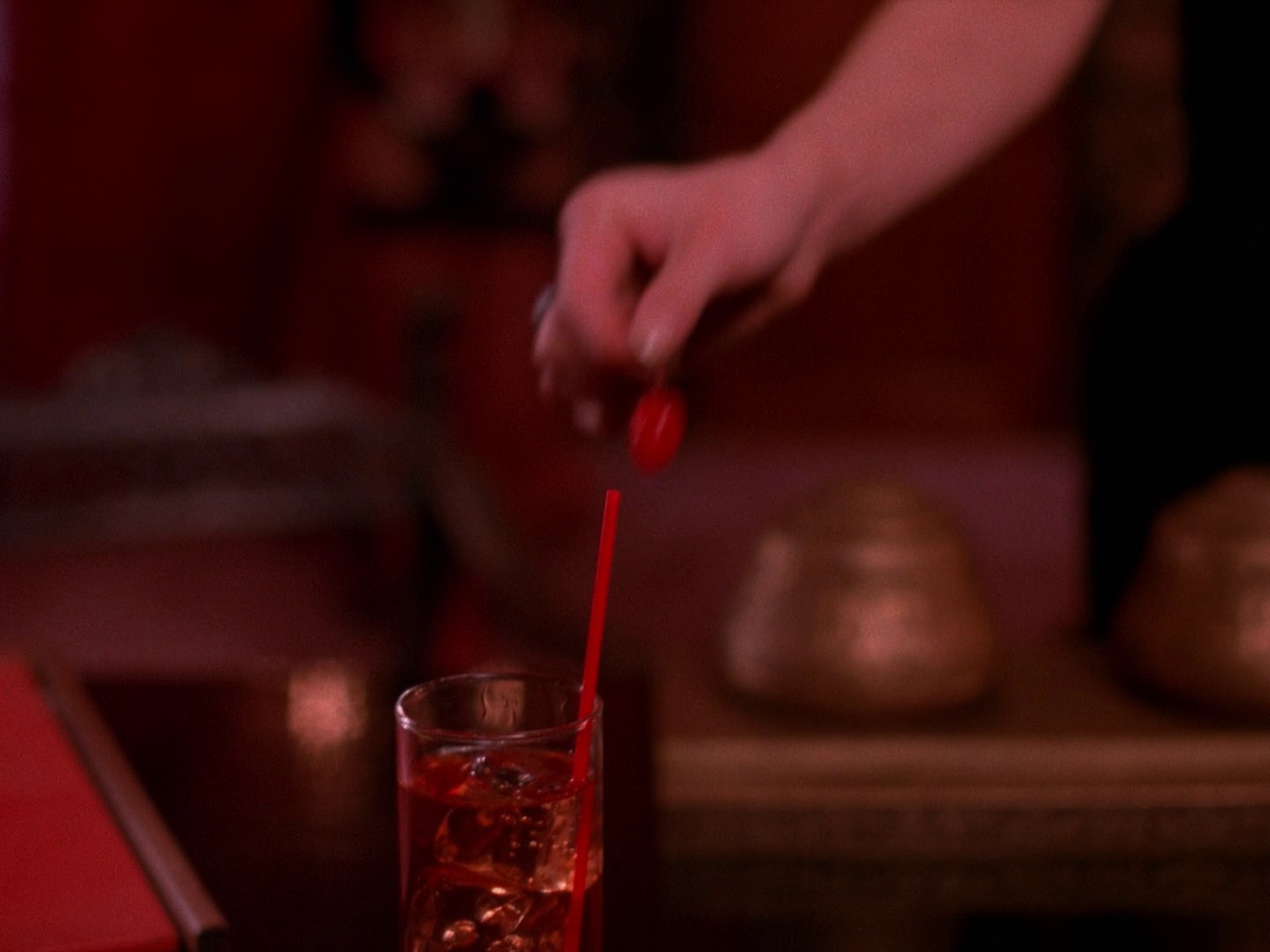
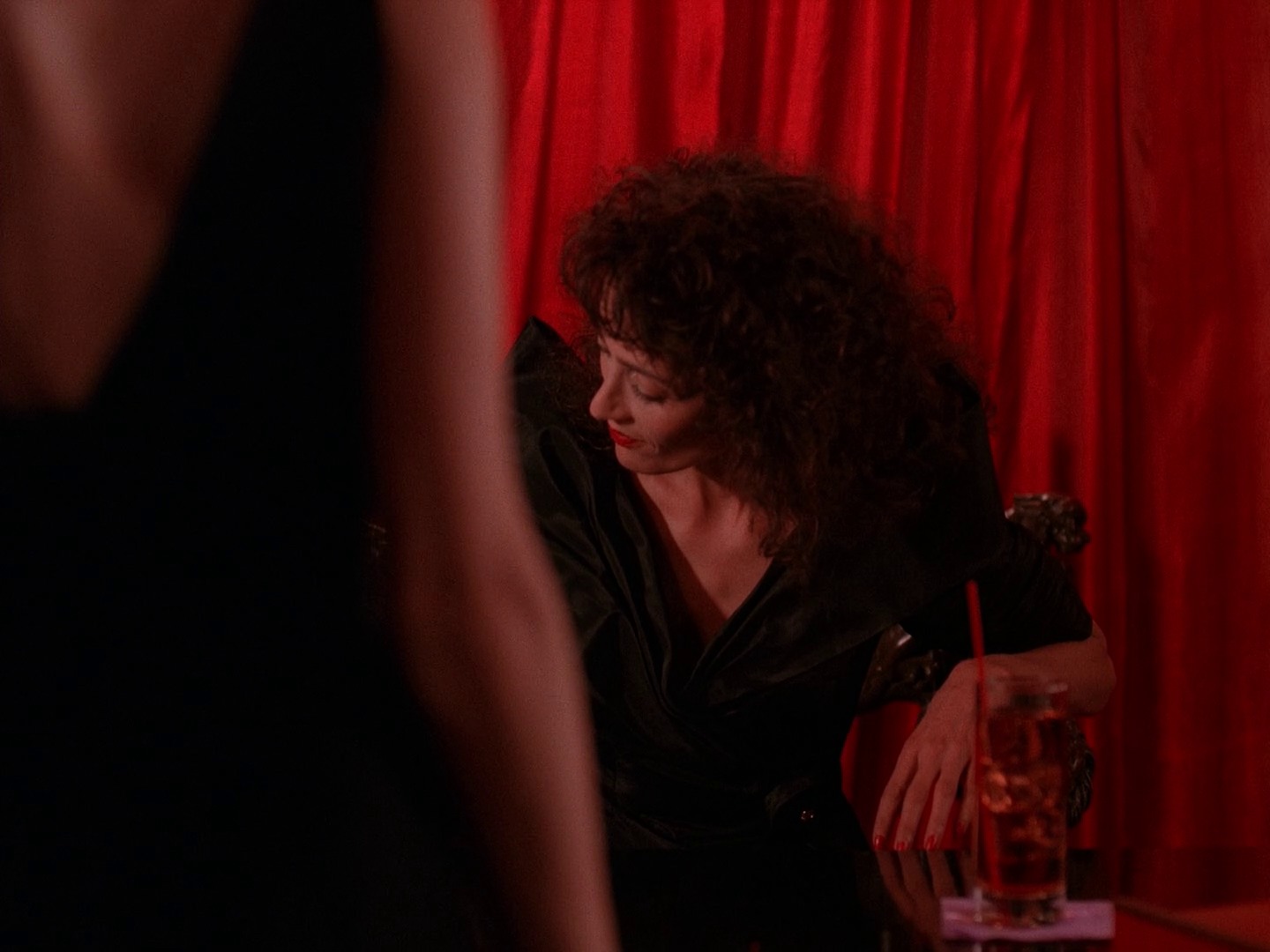
The action gives Audrey temporary leverage, but it does not make her situation safe. She wins recognition inside a system that is evaluating her as a commodity. The scene’s fascination lies partly in that contradiction: ingenuity and exposure increase together. Its red curtains connect seduction to a deliberately staged space, quite different from the obstructed office she watched earlier.
Making Laura appear again
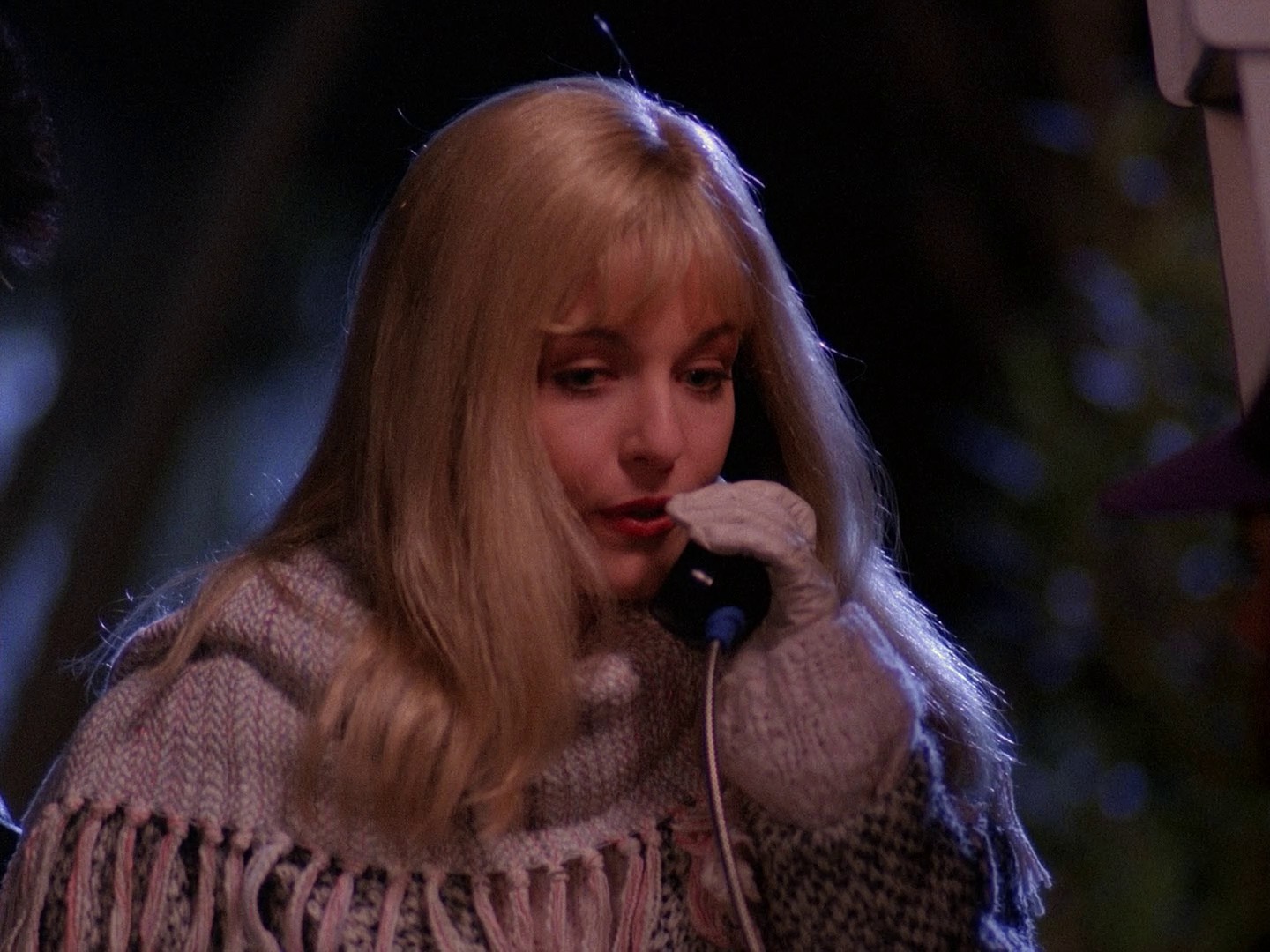
Maddy’s resemblance becomes an active instrument. A blonde wig, telephone voice and videotape create a Laura who can address Jacoby after Laura’s death. Donna and James exploit an emotional recognition they know he may be unable to resist. The investigation now repeats the very problem it is trying to solve: a familiar image seems to promise access to someone’s hidden life.
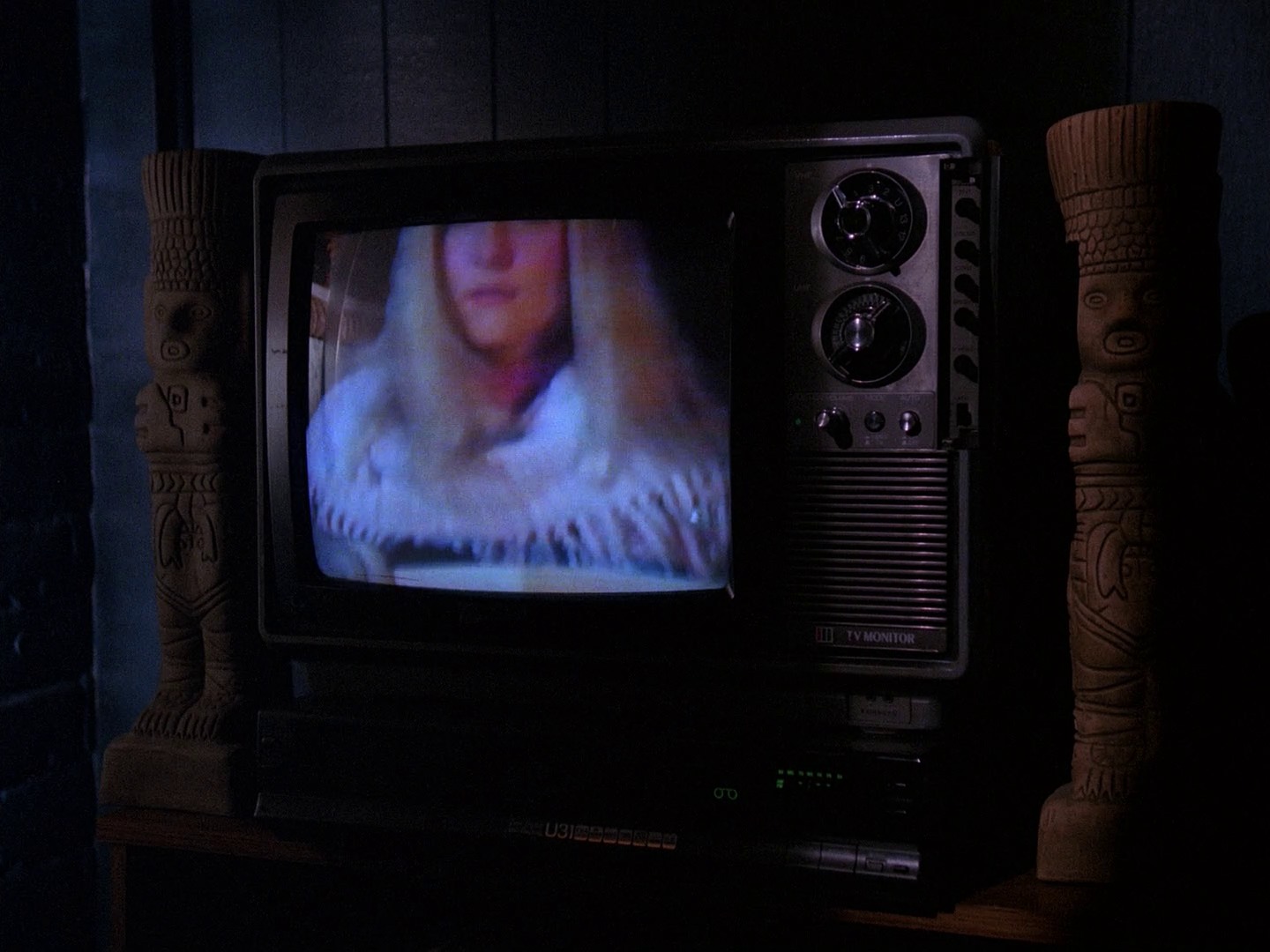
The television supplies a frame within the frame. We see Jacoby confronted by an image whose production we understand better than he does. The separation between the recorded body and the living performer allows the plan to work, but it also breaks the group apart physically. The camera follows the movements and watchers that the deception has set in motion.
Bobby’s action at James’s motorcycle introduces another fabricated piece of evidence. While one group constructs an appearance to expose a secret, another constructs an appearance to incriminate someone. The closing movements bring those strategies together without resolving them. It is a fitting endpoint for an episode in which voices, documents and images become dangerous because people can make them say more than they actually prove.
Margaret’s introduction
The Log Lady introduction separates outward beauty from the condition of the soul. That framing is particularly suggestive beside the episode’s costumes and false appearances. The recap assembles Waldo, the cabin, the tapes, the mill scheme and Audrey’s arrival in Cooper’s room. The short preview directs attention towards the danger awaiting Shelly. The collaborators’ testimony also preserves Deschanel’s recollection of changing episode assignments; it is separate retrospective testimony.
Voices, sound and dialogue
Listening as a promise
Cooper offers Audrey friendship in specifically conversational terms: someone who will listen, food to share, and time to tell her troubles. The exchange opposes her attempt at seduction to an offer of attention. Yet he also distinguishes her secrets from Laura’s, which he treats as part of his professional task. The conversation does not dissolve that boundary merely because it becomes sympathetic.
Elsewhere, Emory’s recruitment speech uses the reassuring language of rewards, exclusivity and opportunity. The progression from hostess to hospitality girl gradually discloses the work he is selling. Audrey’s investigation depends on hearing how that invitation is constructed, not just obtaining a telephone number.
A recording outlives its witness
The sequence around Waldo carefully distinguishes the bird from the tape. After the shooting, the first playback catches Ed asking what happened and Truman answering. Rewinding passes Lucy offering fruit before reaching Waldo’s earlier repetitions of Laura’s name and words of distress. The recorder has preserved ordinary care, violent aftermath and the fragment the police need within the same continuous record.
That order makes the search itself part of the scene. A recording is not a statement waiting at a convenient starting point; somebody has to locate and interpret it. Waldo’s mimicry can preserve words while leaving their speakers and original circumstances uncertain. Its force is considerable, but it is not equivalent to a witness explaining an event.
Laura’s private address becomes a script
On her cassette, Laura says that speaking into the recorder makes disclosure easier. Her familiarity with Jacoby also turns the recording into an intimate exchange, despite his absence. The others later borrow that manner of address for Maddy’s telephone performance. Jacoby initially refuses to accept the caller as Laura; the accompanying image and current newspaper provide additional persuasion. The trick needs both voice and visual evidence.
The episode therefore places two very different uses of recording beside each other: preserving testimony after a death and helping someone manufacture an apparent return. The finale extends that tension through a false caller and a background sound that seems to authenticate his location.
A route through Episode 6
- The hotel room. Cooper refuses Audrey’s invitation and proposes a different relationship.
- The switchboard. Lucy keeps Andy at a formal distance.
- Waldo and the recorder. The investigation prepares to preserve the bird’s repeated words.
- Watching Leo. Bobby’s spying and his promises to Shelly connect jealousy to the case.
- The missing tape. Donna, James and Maddy form a plan around Laura’s recordings.
- The perfume counter. Audrey moves from the public store to a concealed place in the office.
- The diner. Hank resumes work; Cooper encounters an unexpected cup of coffee.
- Calls and disappointments. Audrey secures a route to One Eyed Jack’s; Nadine’s hopes collapse.
- Josie’s account. Photographs and Truman’s trust become part of the mill intrigue.
- Preparing the disguise. Cooper and Ed organise their undercover visit.
- Insurance. Catherine questions the arrangements surrounding the mill.
- The silenced bird. A shot kills Waldo, but the recorder retains his voice.
- One Eyed Jack’s. Cooper and Ed perform their cover story; Audrey faces Blackie.
- The hotel scheme. Ben’s public hospitality coexists with his private arrangements.
- The cherry. Audrey replaces an unreliable biography with a controlled demonstration.
- The false Laura. Maddy’s telephone call and videotape draw Jacoby away.
- Converging watchers. Bobby approaches James’s motorcycle while the impersonation leaves Maddy exposed.
Credits, introductions and connections
Dialogue and sound-cue references in the voice study follow the episode’s English SDH subtitles; interpretations are Lyncharium’s.
Primary screen source: regular Episode 6, Twin Peaks: From Z to A. The on-screen credits identify Harley Peyton as writer and Caleb Deschanel as director. Angelo Badalamenti is credited for composing and conducting the music; Frank Byers is credited for cinematography. The scene readings are Lyncharium’s analysis of the episode.
This is regular Episode 6, following the pilot. Services that count the pilot as the first instalment list it as Season 1, Episode 7. The season index supplies both numbering systems and the distributor’s episode titles. Continue through the introductions, recaps and previews.