Twin Peaks: Episode 28 — Miss Twin Peaks
1991 · Season 2, Episode 21 · Directed by Tim Hunter
The town assembles for an evening of speeches, dancing and coronation. Behind its public rituals, a prisoner escapes, a daughter demands the truth, and Windom Earle prepares to turn a celebration into an abduction.
Season 2, Episode 21 / overall Episode 28. Contains episode spoilers. Focused image galleries open on request.
Explore this episode
Leo opens a way out
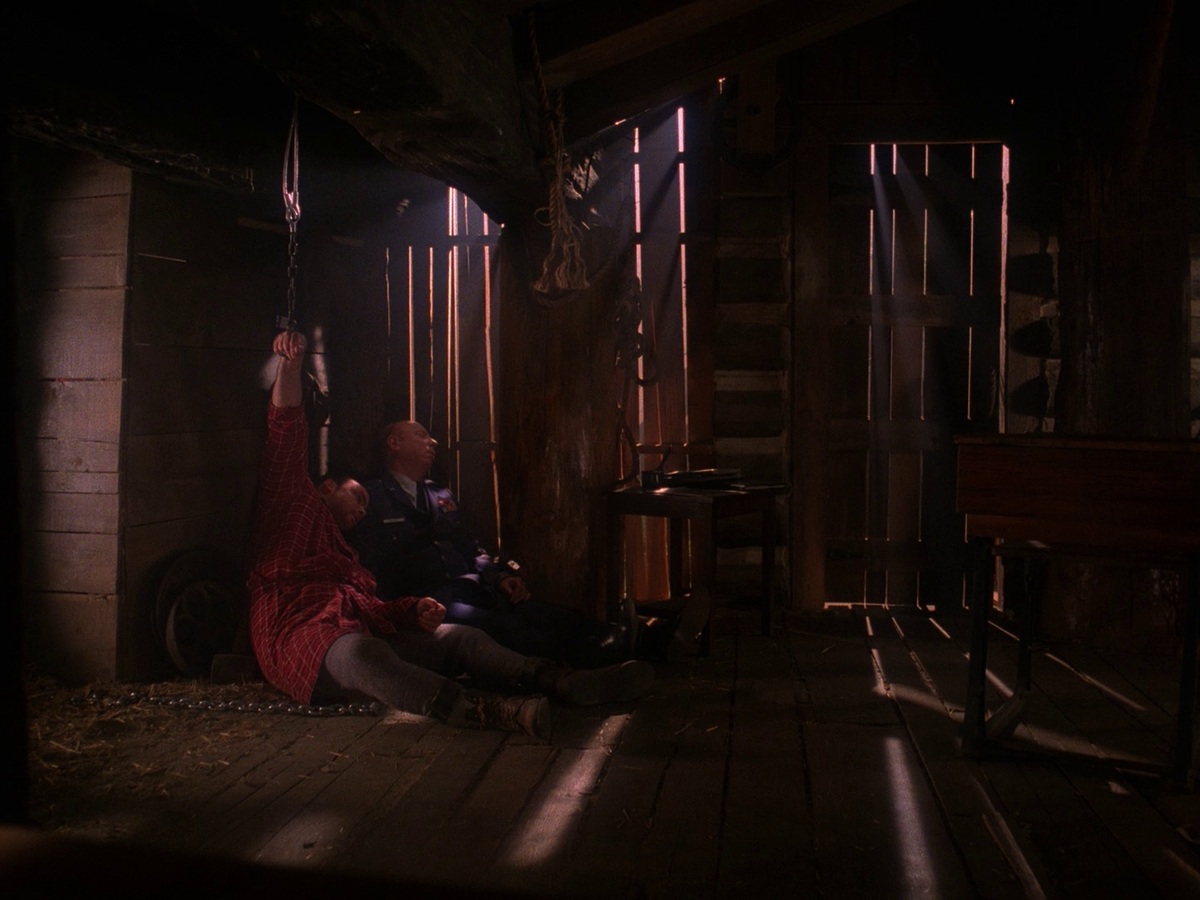
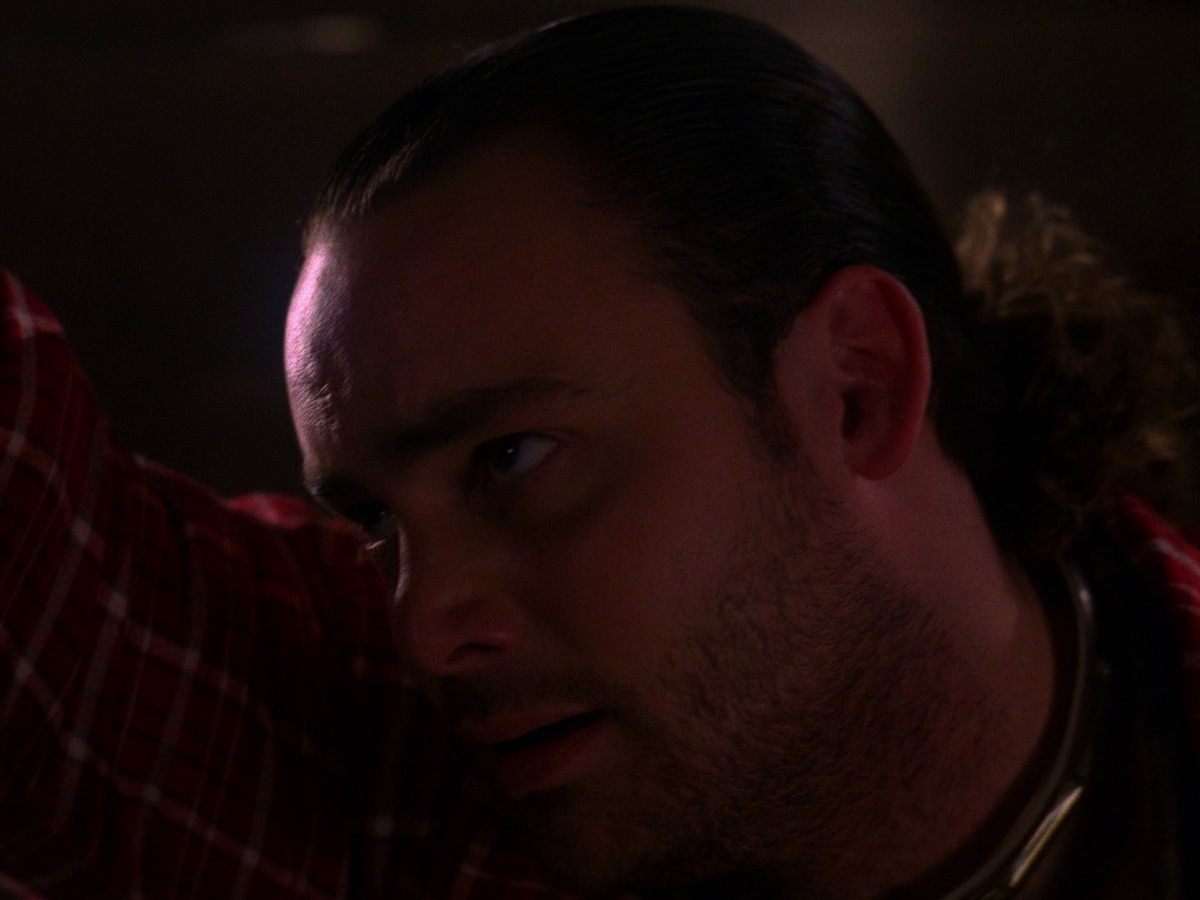
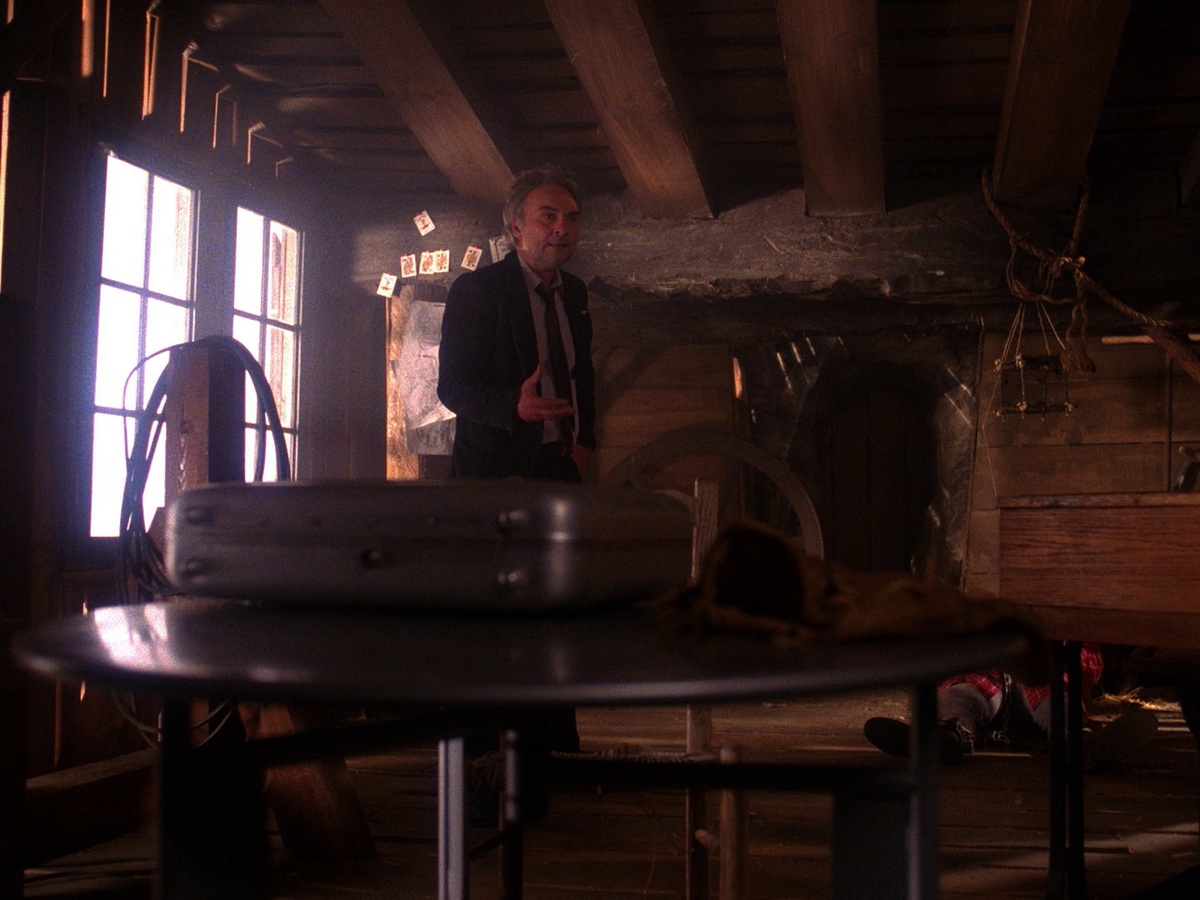
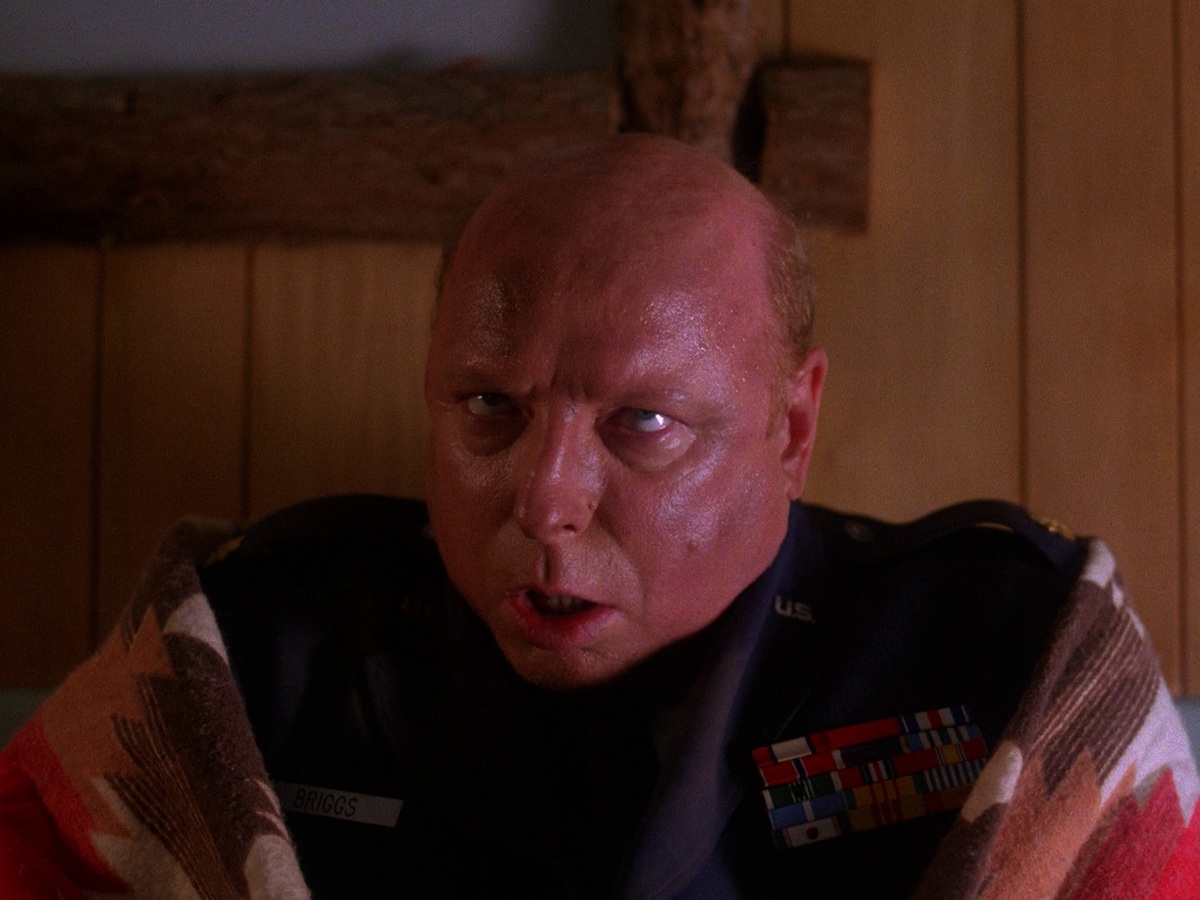
The opening remains with the two prisoners in Earle’s cabin before it gives the town its day of celebration. Leo strains towards the mechanism holding Briggs. The sustained physical effort makes the act legible before the brief instruction that follows: Briggs is to save Shelly. A man who has inflicted fear on his wife now acts to interrupt another man’s plan against her.
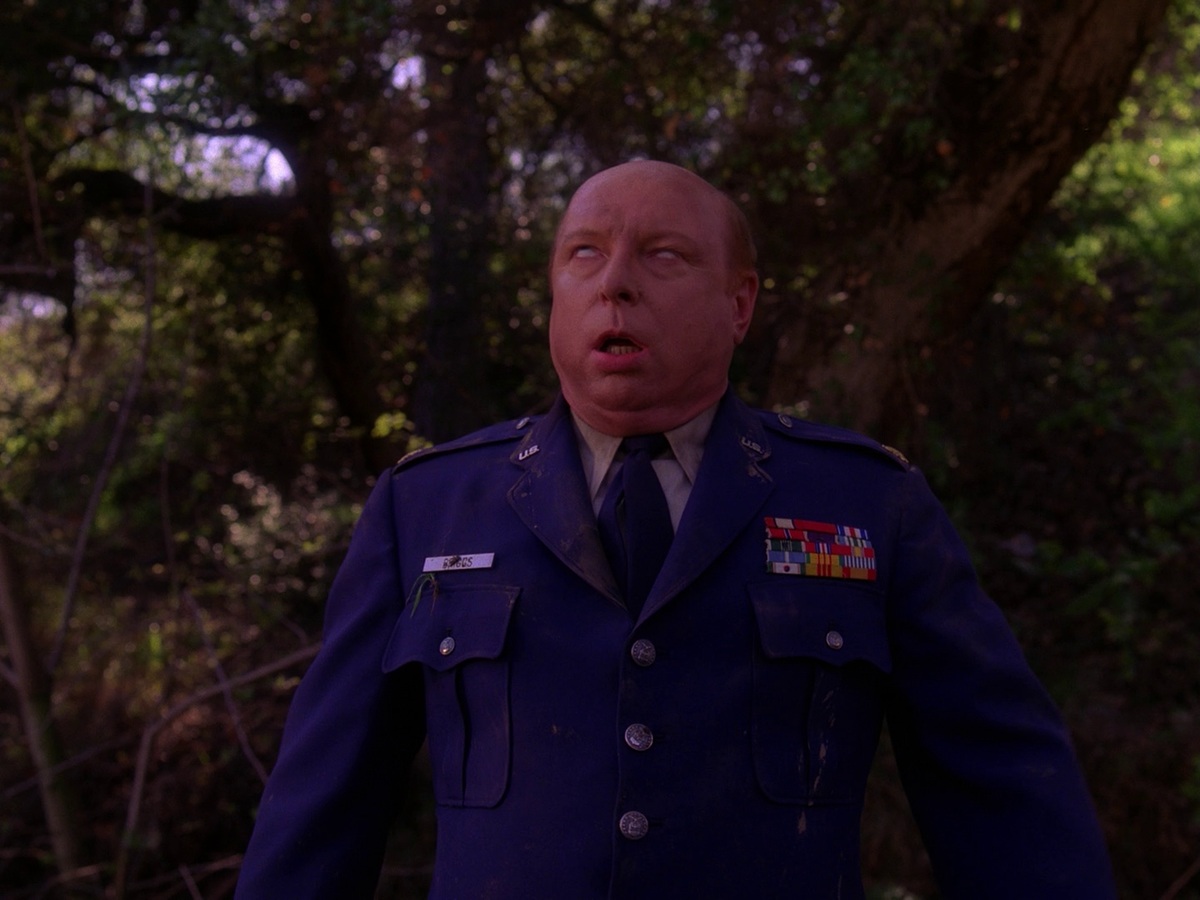
Briggs’s escape is not an immediate return to mastery. He leaves disoriented, and the effects of his treatment remain visible when Hawk finds him. Freedom from the cabin and recovery of coherent speech are separate events. That delay matters because the investigators need him to explain what Earle already knows.
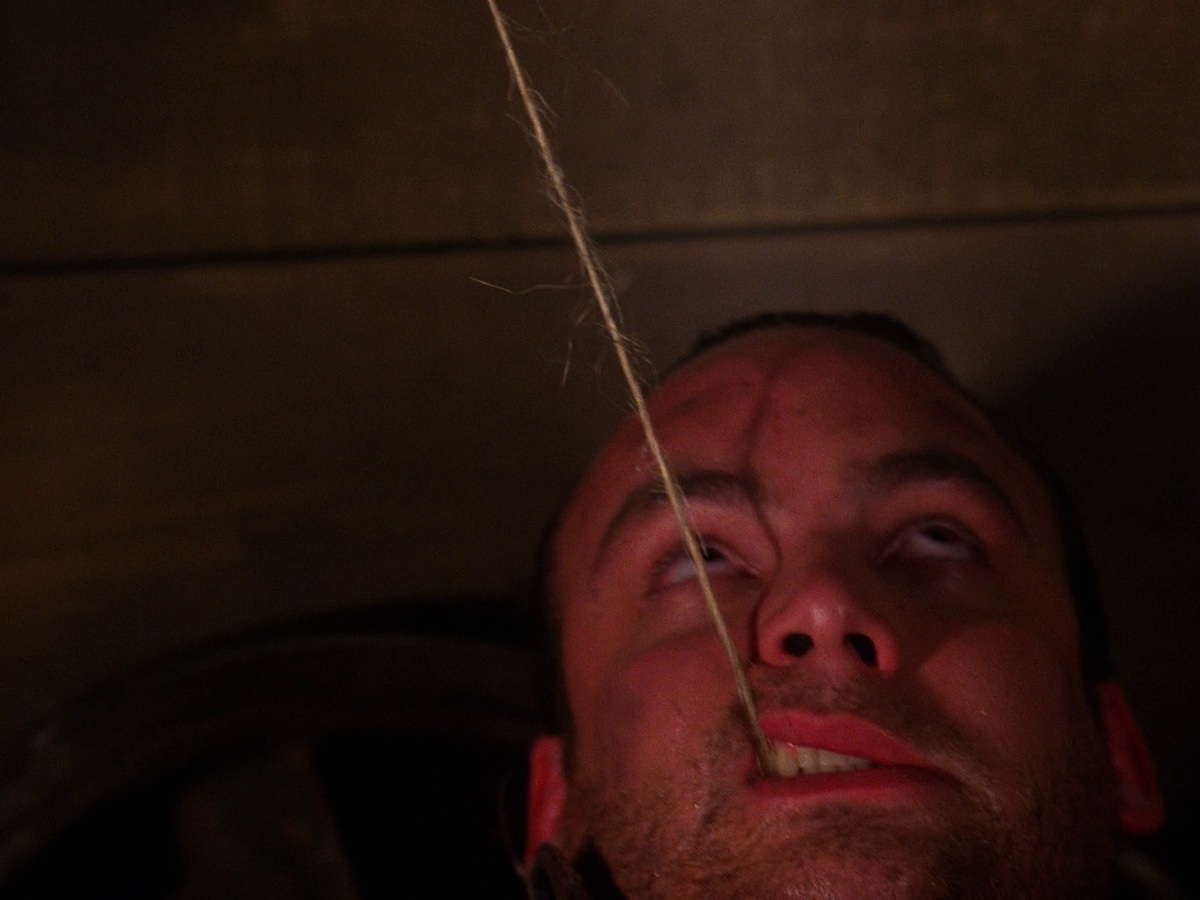
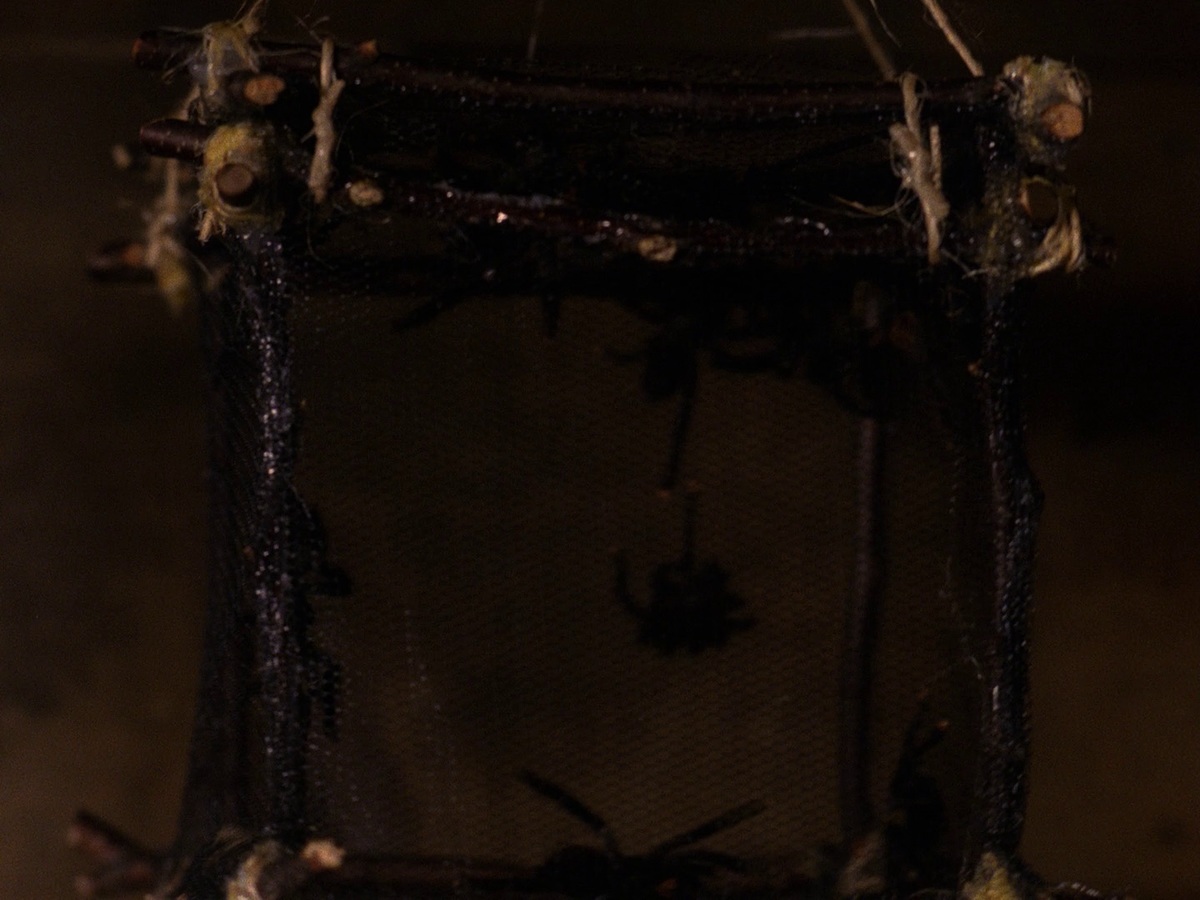
Earle’s return makes Leo’s attempt at protection the occasion for a new punishment. A cord held in Leo’s mouth connects him to the suspended cage of spiders. The arrangement forces him to sustain his own restraint. The episode leaves him in that predicament: it does not show a completed death, leaving the threat unresolved.
Escape and renewed confinement · 4 images
The investigators have an audience
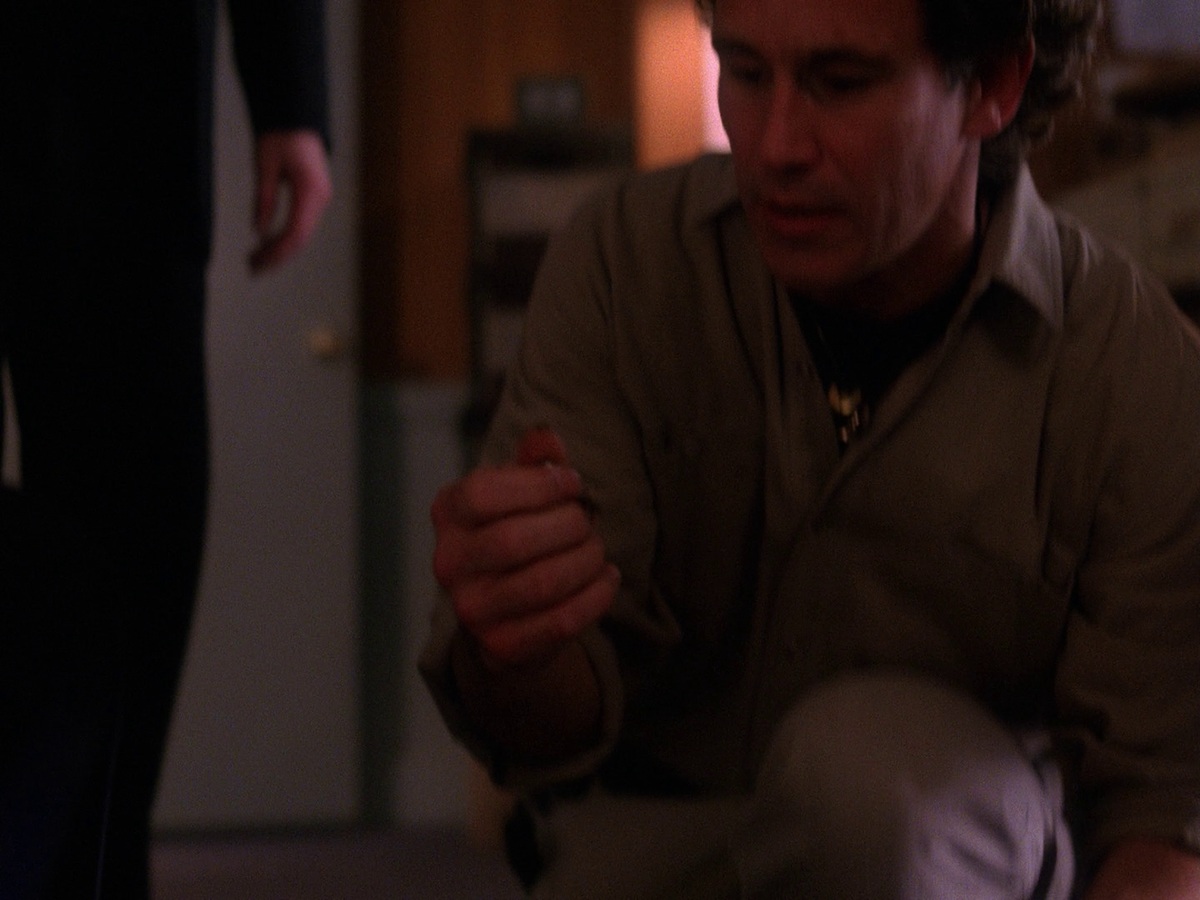
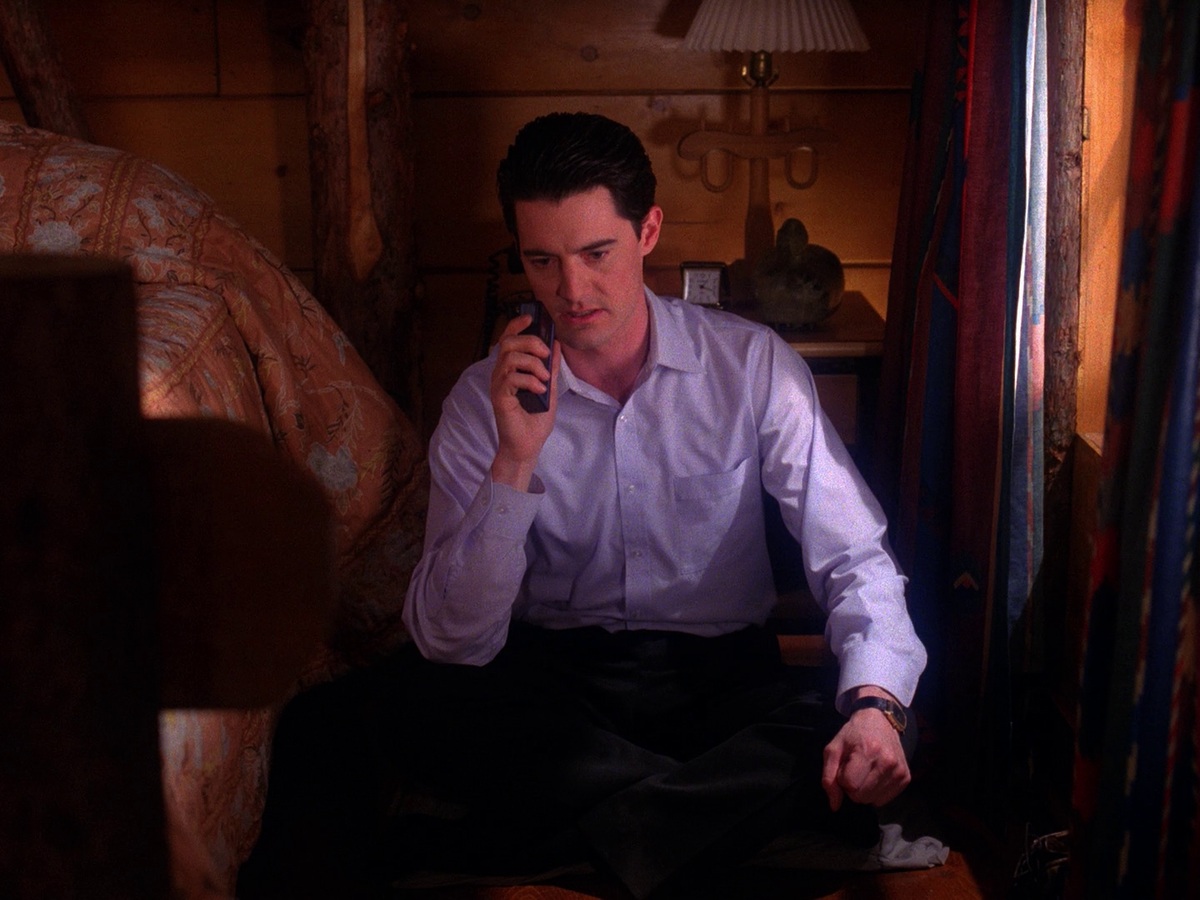
Cooper cautiously tells Truman what he saw at Josie’s death. The conversation returns to a revelation withheld because of his friend’s grief. His new hypothesis connects BOB’s appearance with her fear, then places the Black Lodge behind the evil already associated with the woods. These are Cooper’s inferences at this moment, not a detached explanation supplied by the programme.
The listening device makes the scene doubly consequential. While Cooper reasons aloud, Earle receives the discovery as the missing key to his own plan. The same speech that advances the police investigation advances the threat. Cutting between the station and the cabin turns a conversational achievement into a failure of privacy.
Briggs returns with broken phrases that the others cannot immediately place. His later association of fear and love with doors helps Cooper distinguish routes into the two Lodges. The effort to assemble those fragments overlaps with the recognition of Jupiter and Saturn in the drawing. The episode presents astrological language as part of its fictional puzzle; the dramatic issue is the time pressure it creates.
Andy’s attempted contributions are repeatedly deferred. His apparent confusion about the symbols proves useful to Cooper’s thinking, but his larger discovery has to wait. The bonsai finally falls and exposes the microphone. The plant’s innocent appearance has allowed Earle into the centre of the investigation. Their rival has not merely stolen a conclusion; he has been present for its production.
Clues, interruptions and the concealed listener · 5 images
What does the town want from a queen?
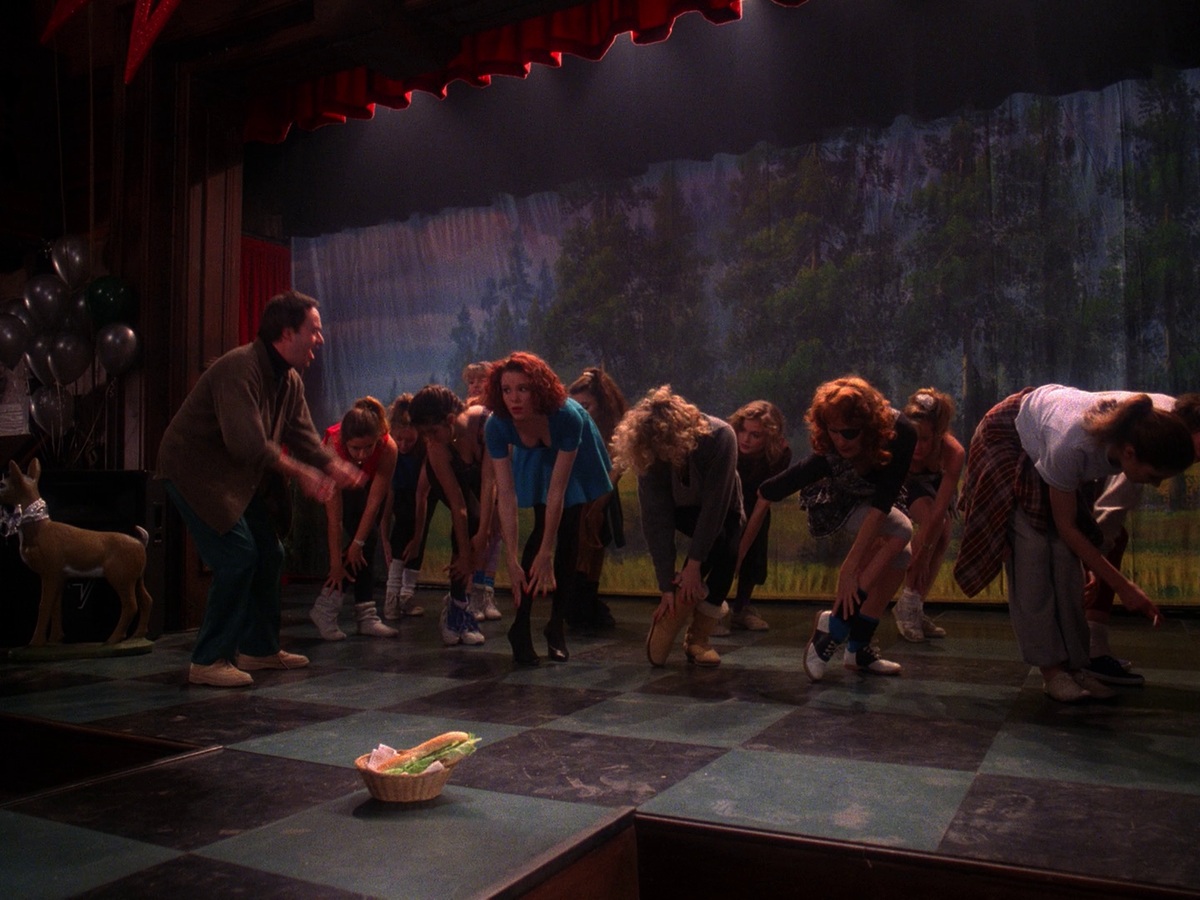
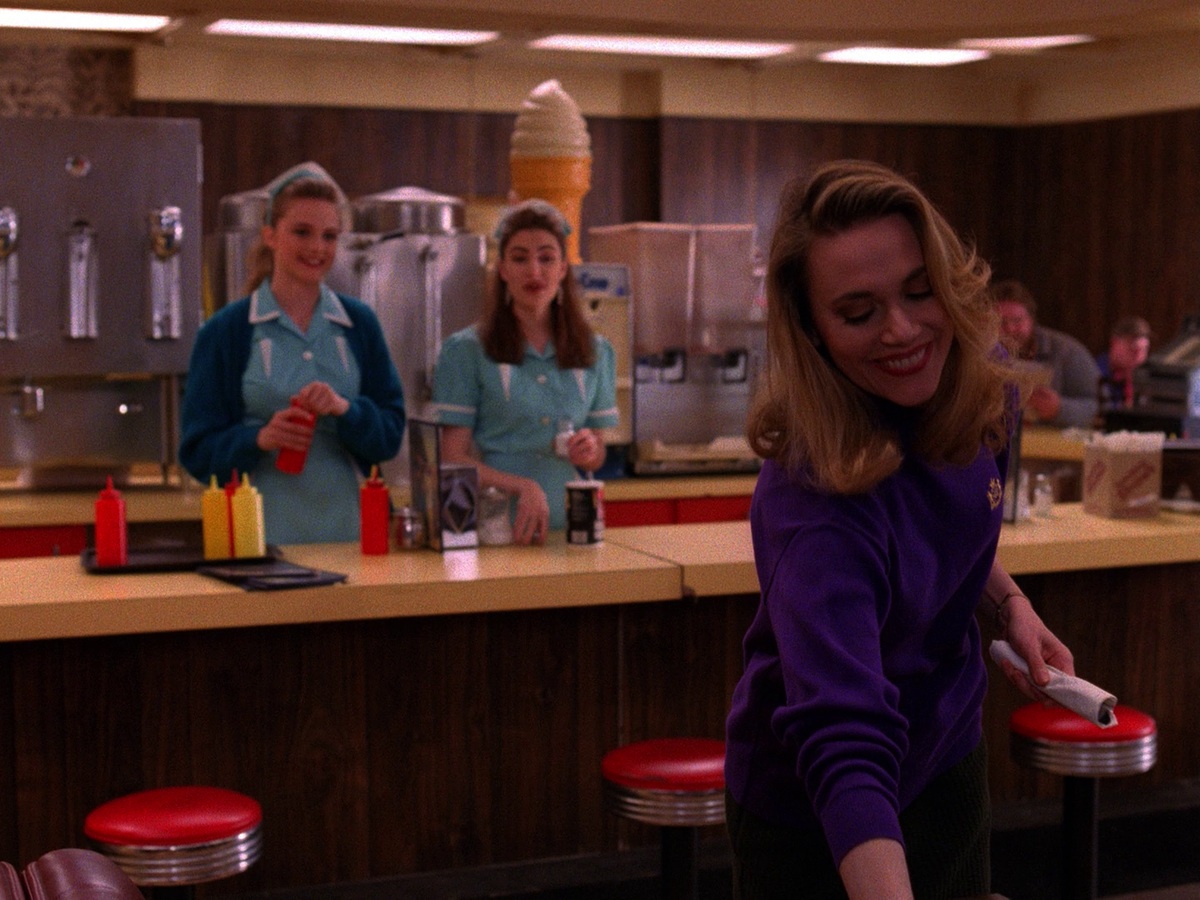
Norma treats the pageant as an opportunity for healing after Laura. Her former title gives that hope a personal history. Shelly’s reply that recovery needs more than a day prevents the occasion from becoming a simple civic cure. The contest offers a gathering place; it cannot guarantee what the gathering will accomplish.
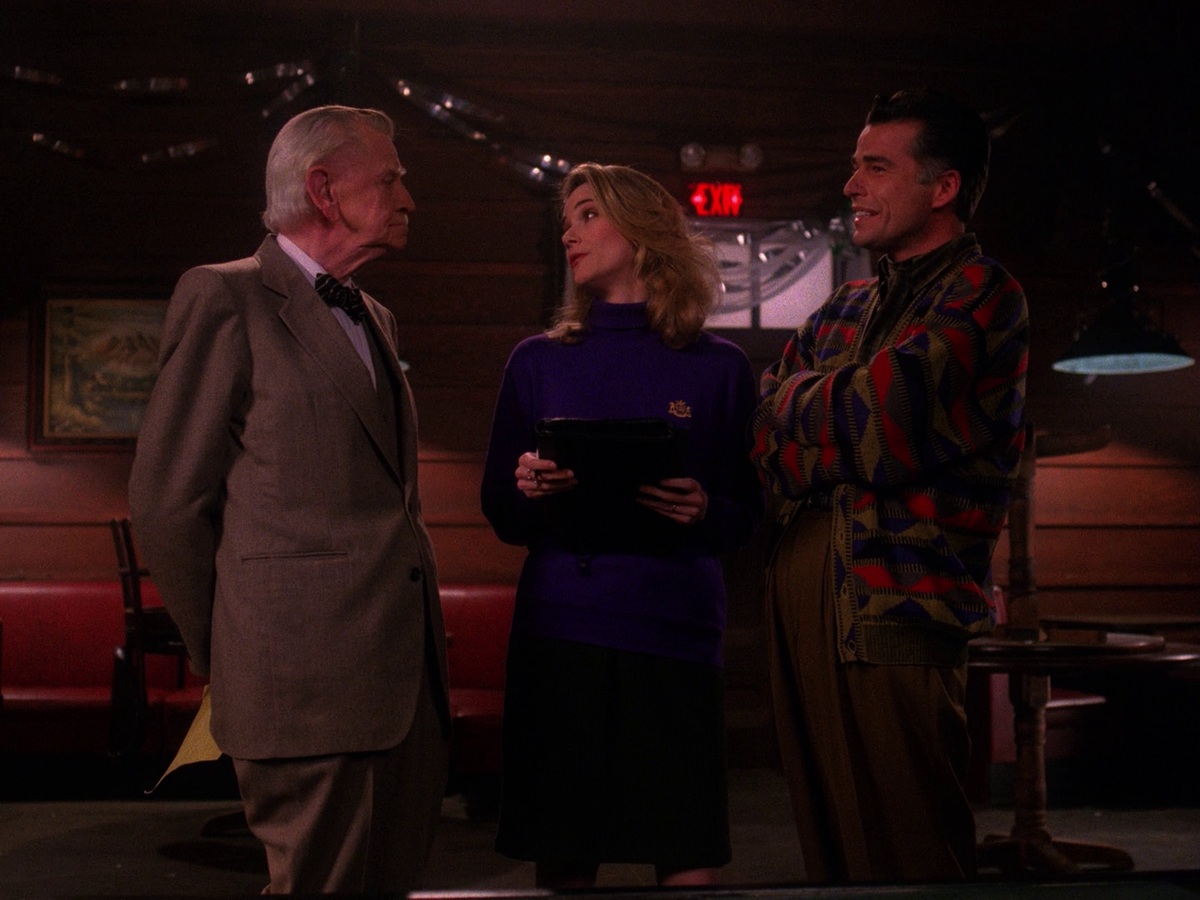
The rehearsal reveals another set of expectations. Pinkle wraps his choreography in the language of nature and artistic authority, while the women question what the movements are meant to celebrate. The judges then try to agree on criteria. Norma’s interest in originality sits alongside the men’s preferred combinations of beauty, power, style and breeding. The apparent unity of the ceremony conceals different standards of value.
Ben asks Audrey to use the contest as a political platform against Ghostwood. She has already done investigative work on the bank’s financing and does not want to be reduced to a local beauty. His argument makes the public microphone seem usable, even within a format she dislikes. It also anticipates her next move towards the Savings and Loan.
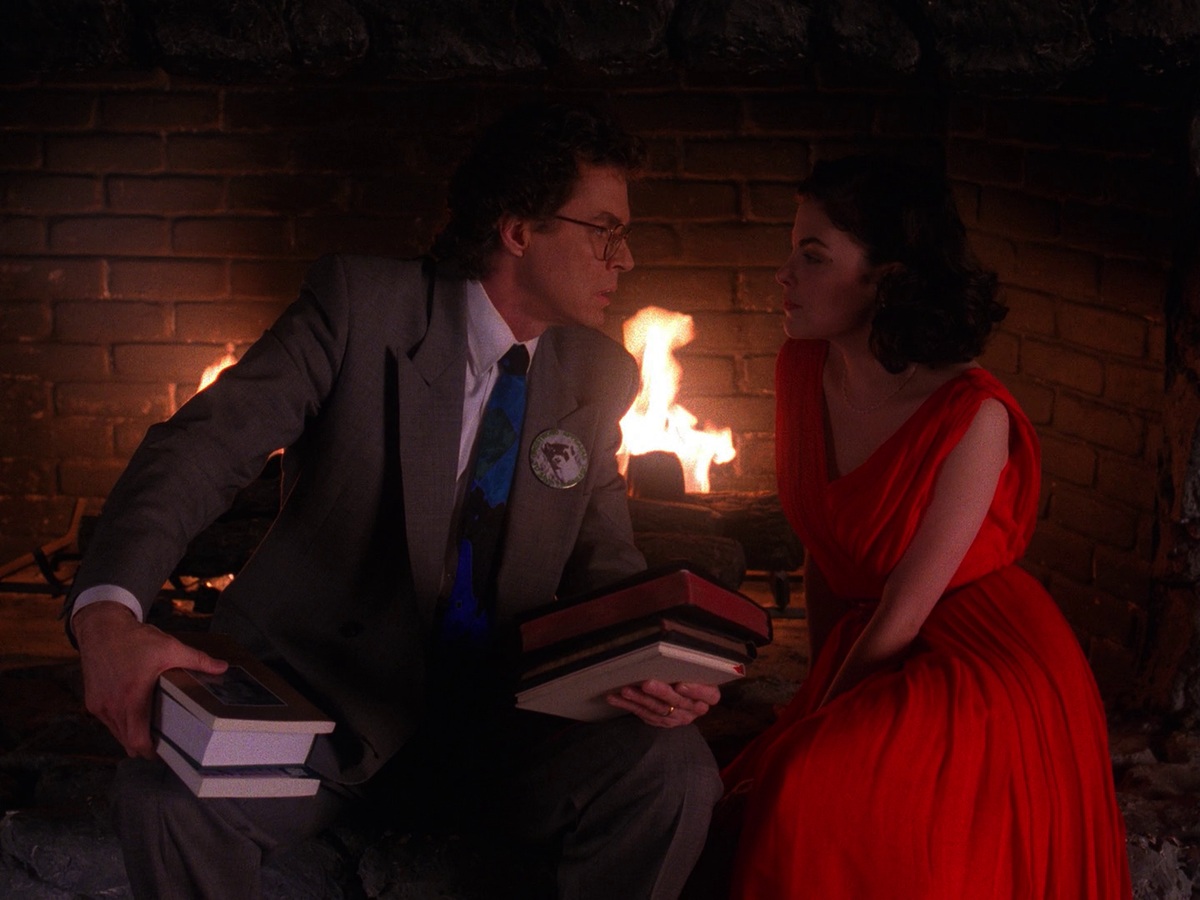
Ben’s stack of religious and philosophical books supplies a comic image of his search for goodness. His attempt to comfort Audrey over Wheeler is more modest and more affecting than the grand project. She accepts his wish to help while refusing a promise he cannot make. Knowing the right maxim and knowing what another person needs remain different skills.
Preparing the public spectacle · 5 images
The truths behind the speeches
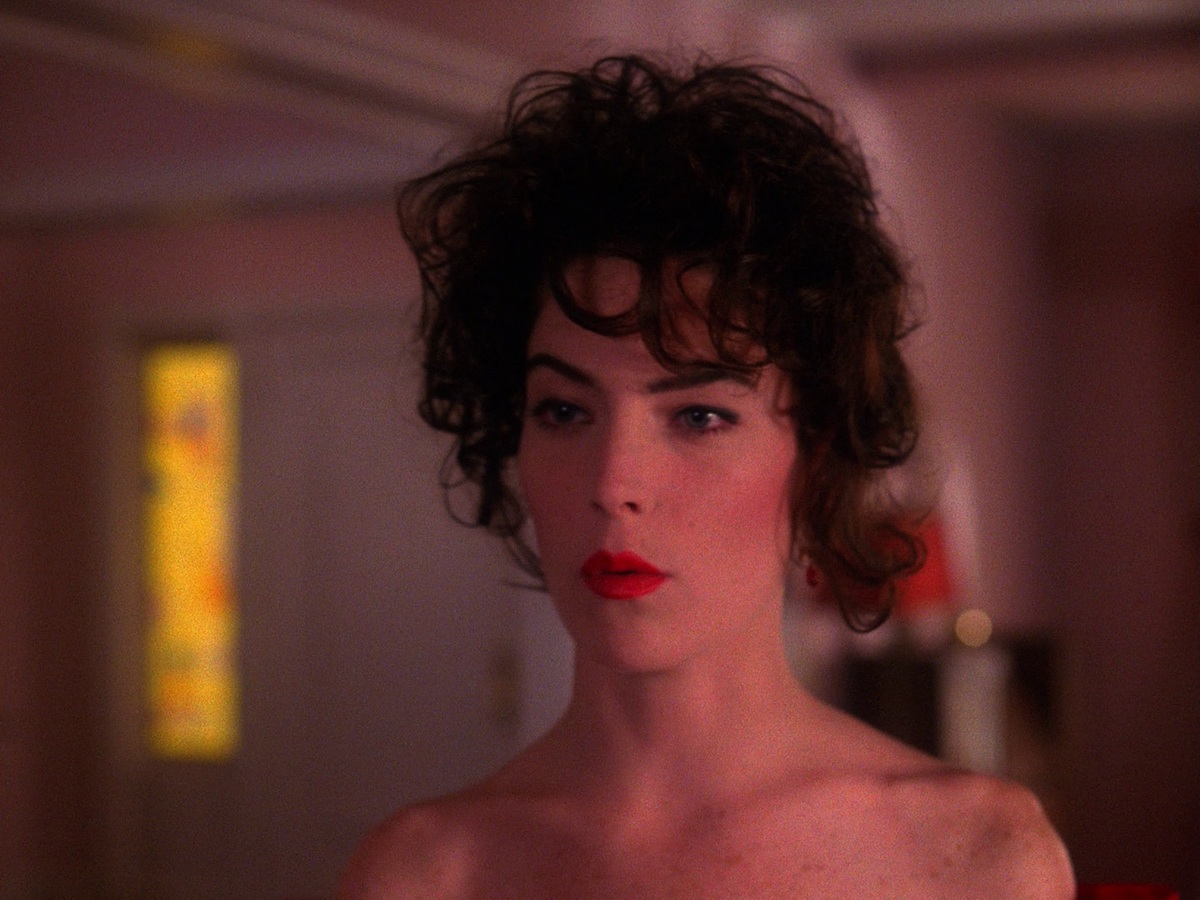
Donna refuses to rehearse her pageant speech at home and asks about Ben instead. She argues from the standard her parents taught her: truthfulness cannot be a rule applied only to children. Her dress makes her ready for a public performance, but the scene she insists on having is a private confrontation. The doorway and staircase frame her departure from a household that has stopped answering her questions.
The later backstage encounter gives the confrontation another enclosure. Ben tries to defer the discussion; Donna sets out the photographs, letters, bonds and missing name on her birth certificate. His inability to complete an answer allows her to formulate the conclusion. The crowded public evening does not prevent an intensely private disclosure from taking place just beyond the stage.
Cooper and Annie begin with a speech problem too. Their discussion of the forest turns into an account of damaged lives and attempts to grow again. Cooper’s earlier dictation had described his renewed feeling since Caroline’s death. Annie’s visit turns that private account into an encounter with someone who can respond, disagree and express desire. The scene moves from rehearsal to mutual vulnerability.
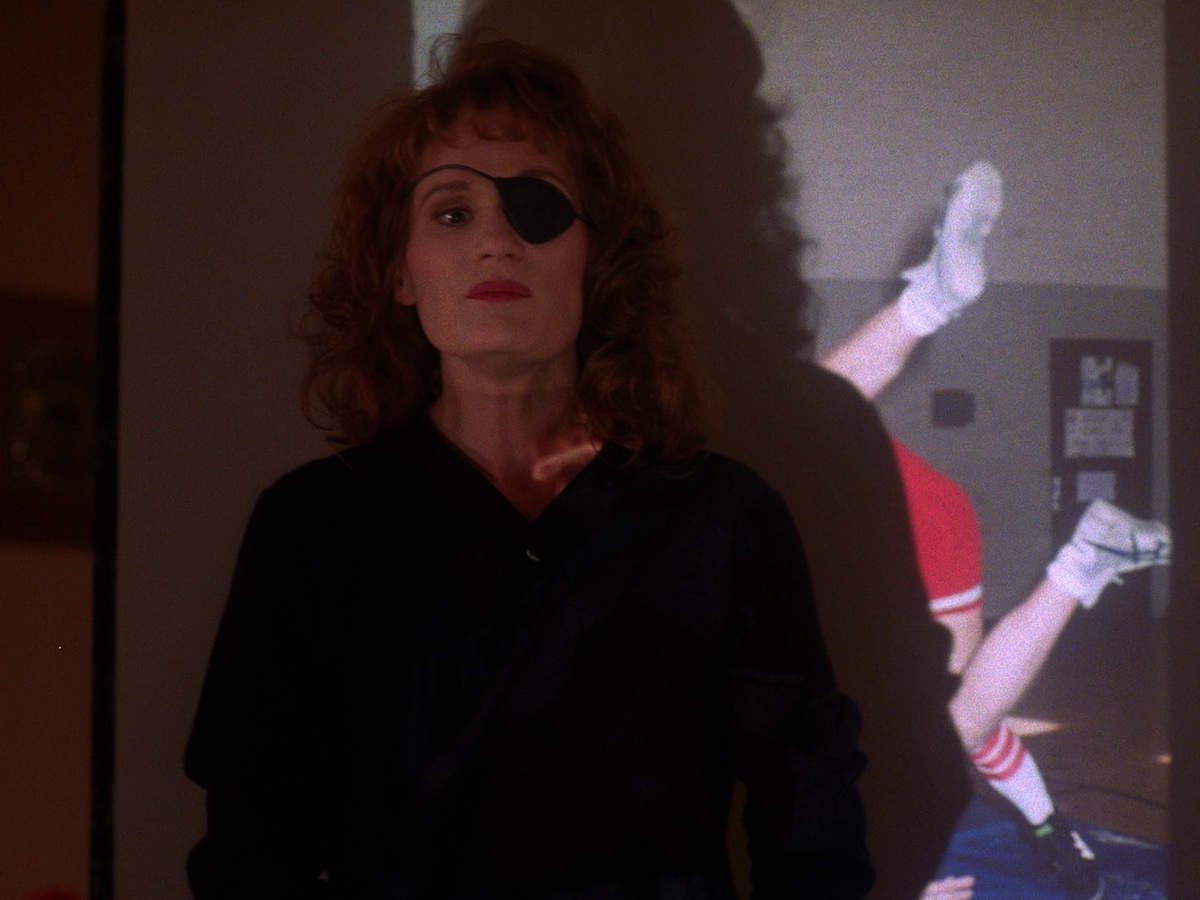
At Jacoby’s gathering, Nadine begins with projected images of her athletic success. The photographs give her present identity visible proof before Ed announces his plan to marry Norma. Her delighted counter-announcement about Mike does not produce the balanced resolution the meeting sought. Other people’s lives are being rearranged by a certainty they do not share.
Lucy makes a clearer distinction between biology and responsibility when she chooses Andy as her child’s father. Dick’s relief and Andy’s gratitude give the decision different emotional meanings. Andy’s urgent need to return to Cooper then interrupts the promised private moment. The episode keeps making one person’s apparent ending the starting point of another unfinished task.
Private decisions around a public event · 6 images

A key is not yet an answer
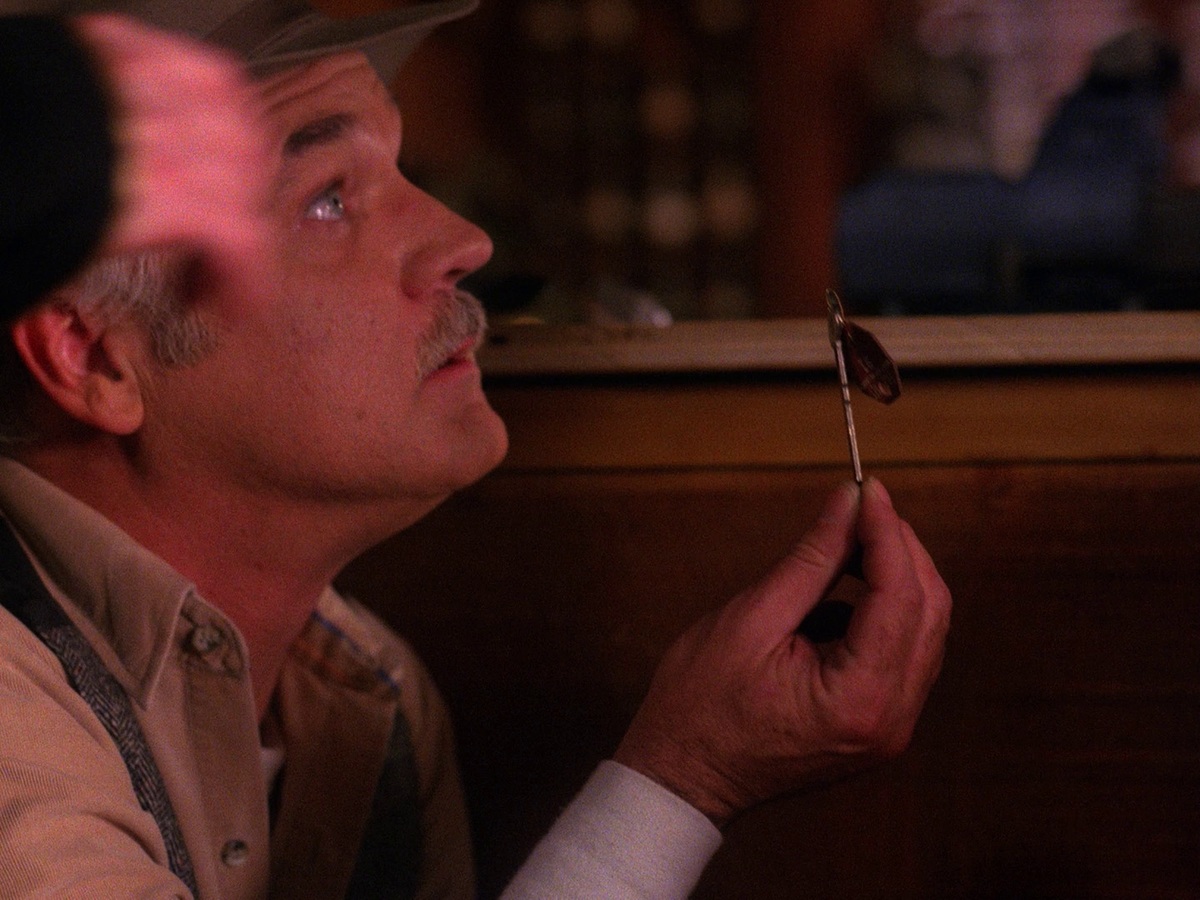
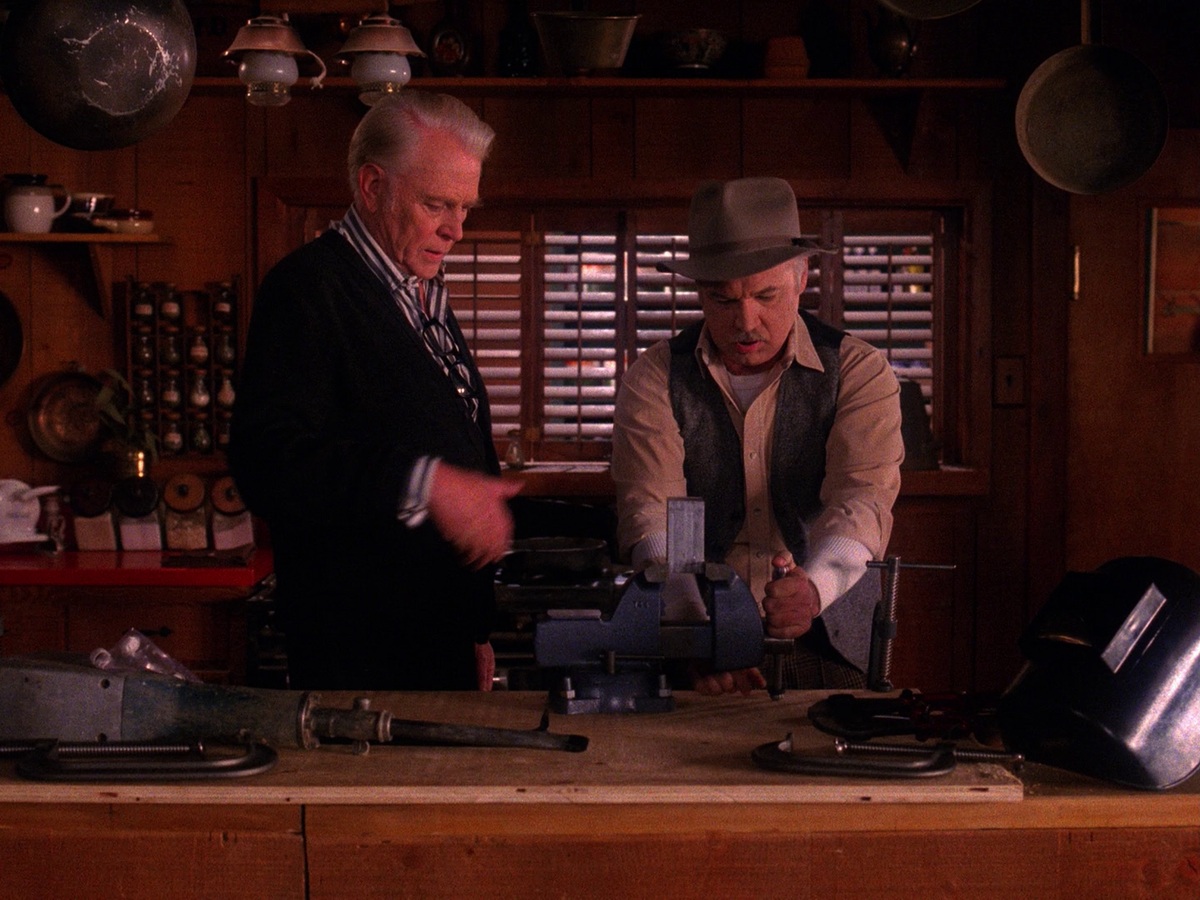
Andrew, Pete and Catherine reach the last small enclosure of Eckhardt’s puzzle. The vise fails to yield an answer, and Andrew substitutes gunfire for patient interpretation. The sudden change of method resolves the immediate mechanical problem but leaves the key’s purpose open.
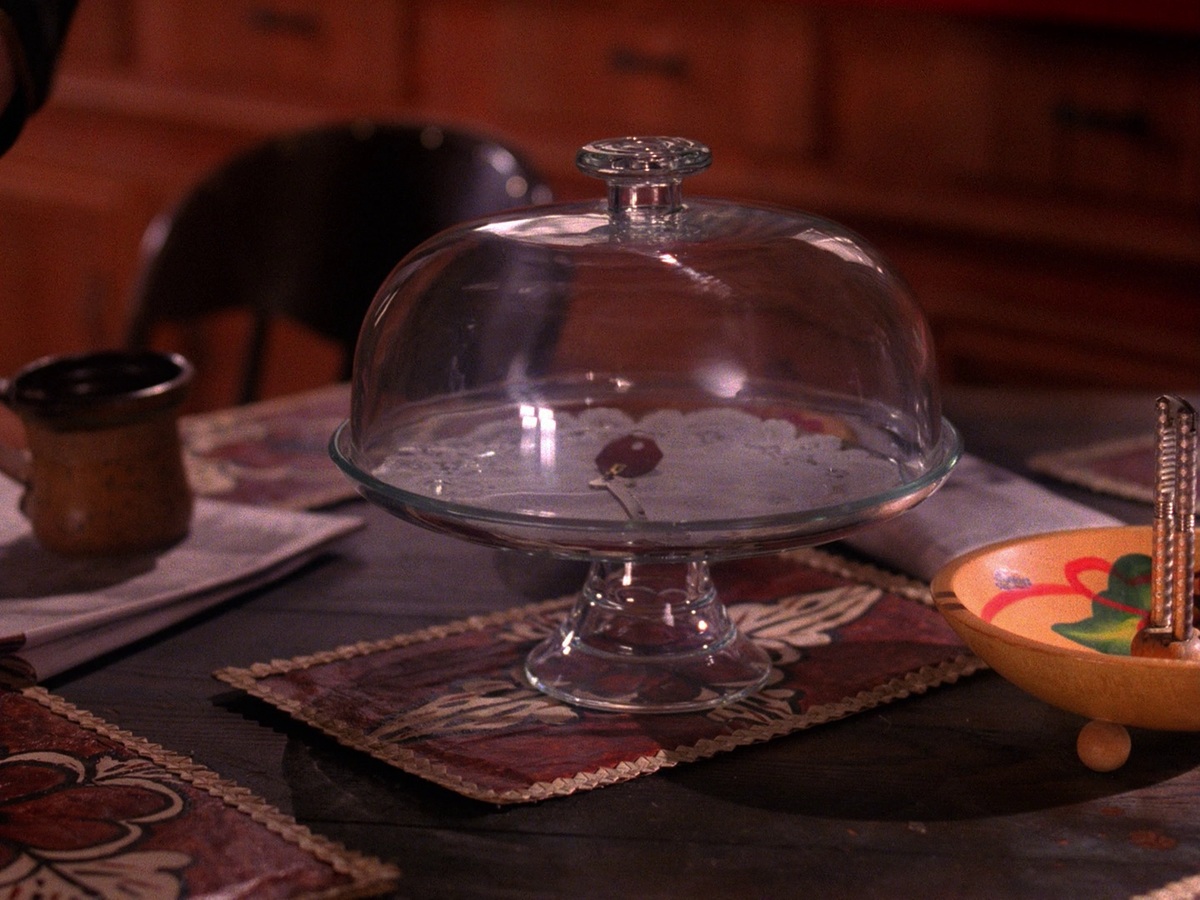
The agreement to keep it in plain sight turns distrust into a domestic arrangement. The cake saver becomes an improvised display case for an object nobody is prepared to leave entirely in someone else’s keeping. The scene’s comedy depends on the disproportion between the elaborate effort and the very small result.
Placed beside the Lodge investigation, the key provides a concrete counterpart to Cooper and Earle’s language of entrances and locks. Finding an instrument of access does not establish what waits behind the door. The next episode will make the confidence of opening something especially dangerous.
The final box and the concealed purpose · 3 images
The pageant: a stage becomes a trap
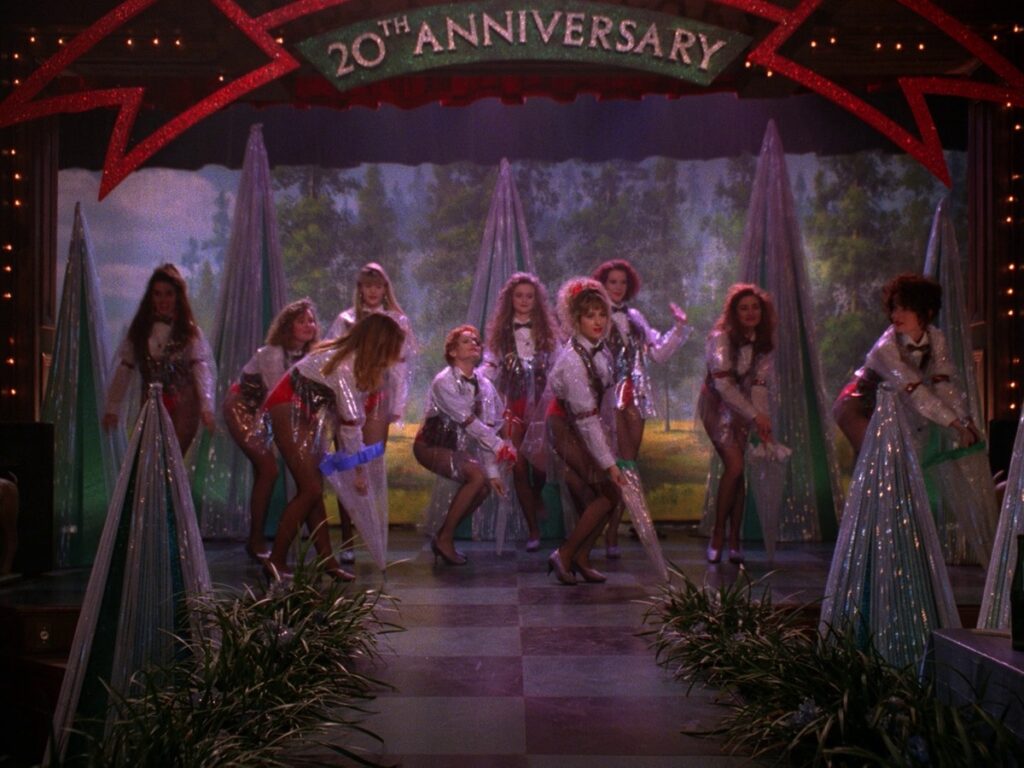
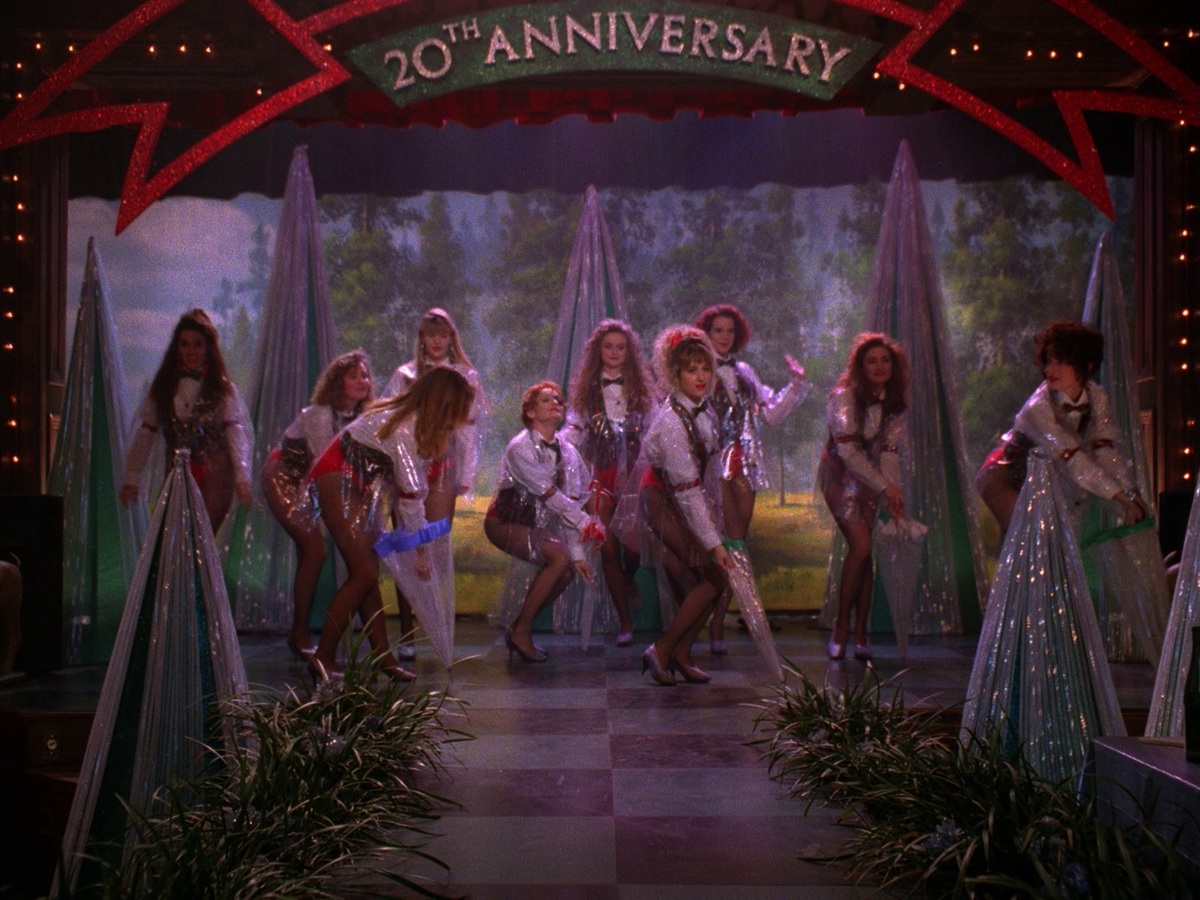
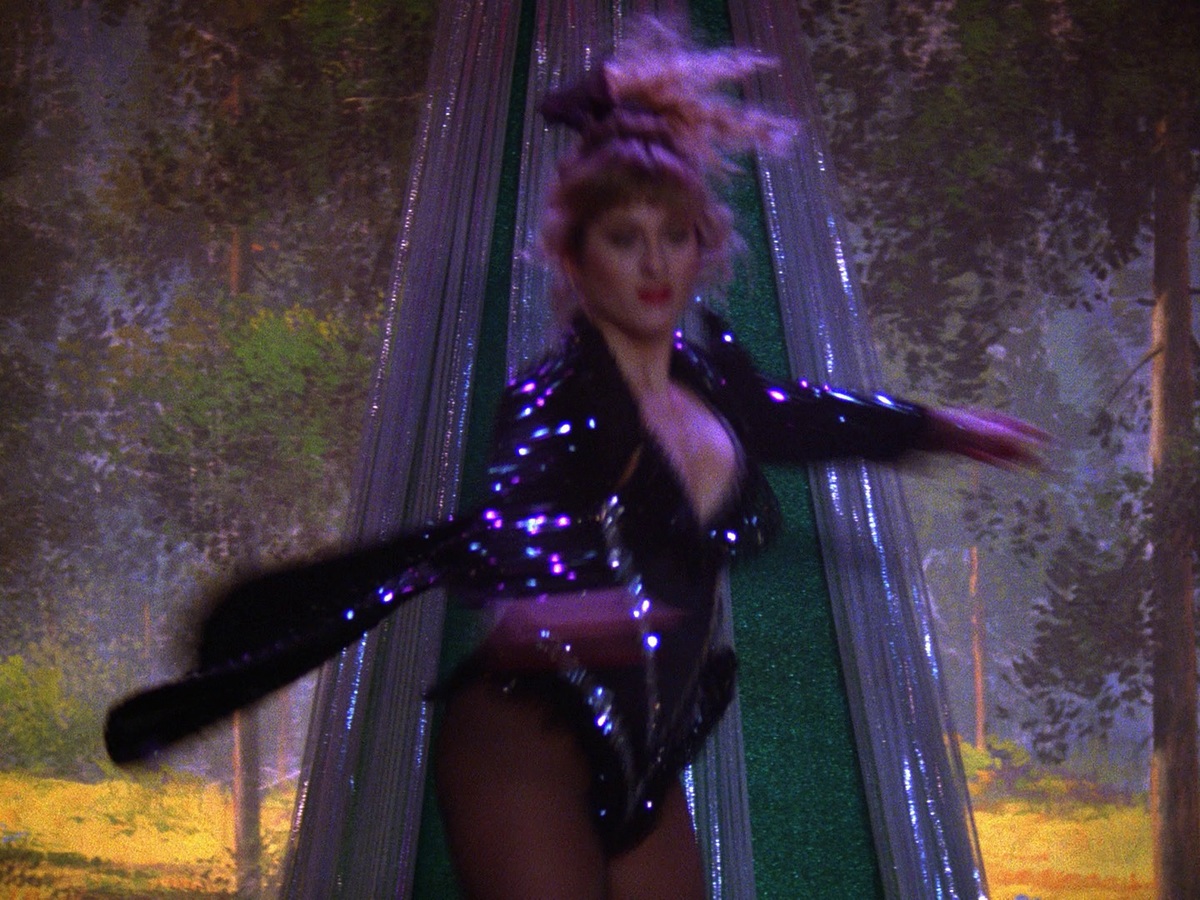
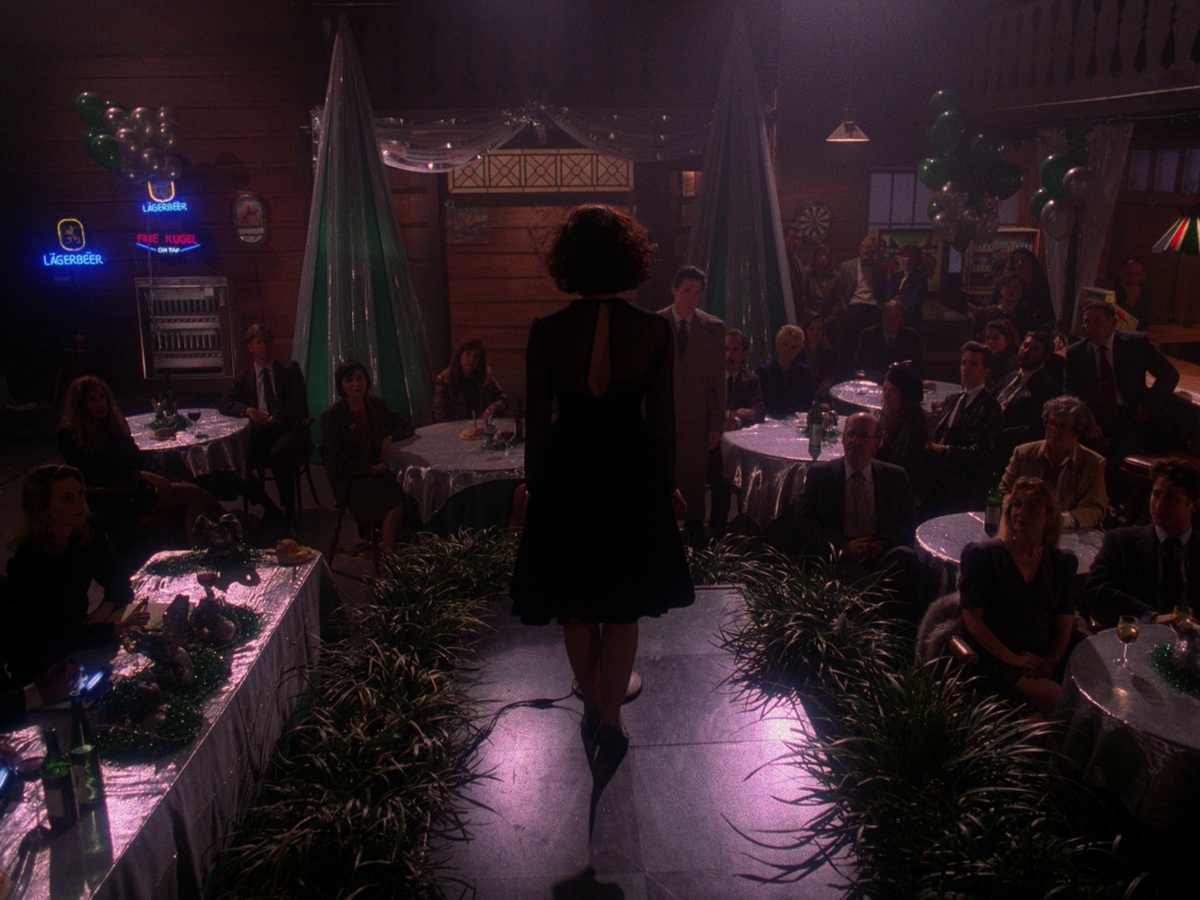
The completed pageant transforms the Roadhouse with a forest backdrop, reflective costumes, pointed scenic forms and coloured lights. The ensemble dance gives way to individual numbers, speeches and the judges’ table. The range of performances keeps changing what it means to watch: an appreciative audience, an interested boyfriend, a judge and a policeman are all looking at the same stage for different reasons.
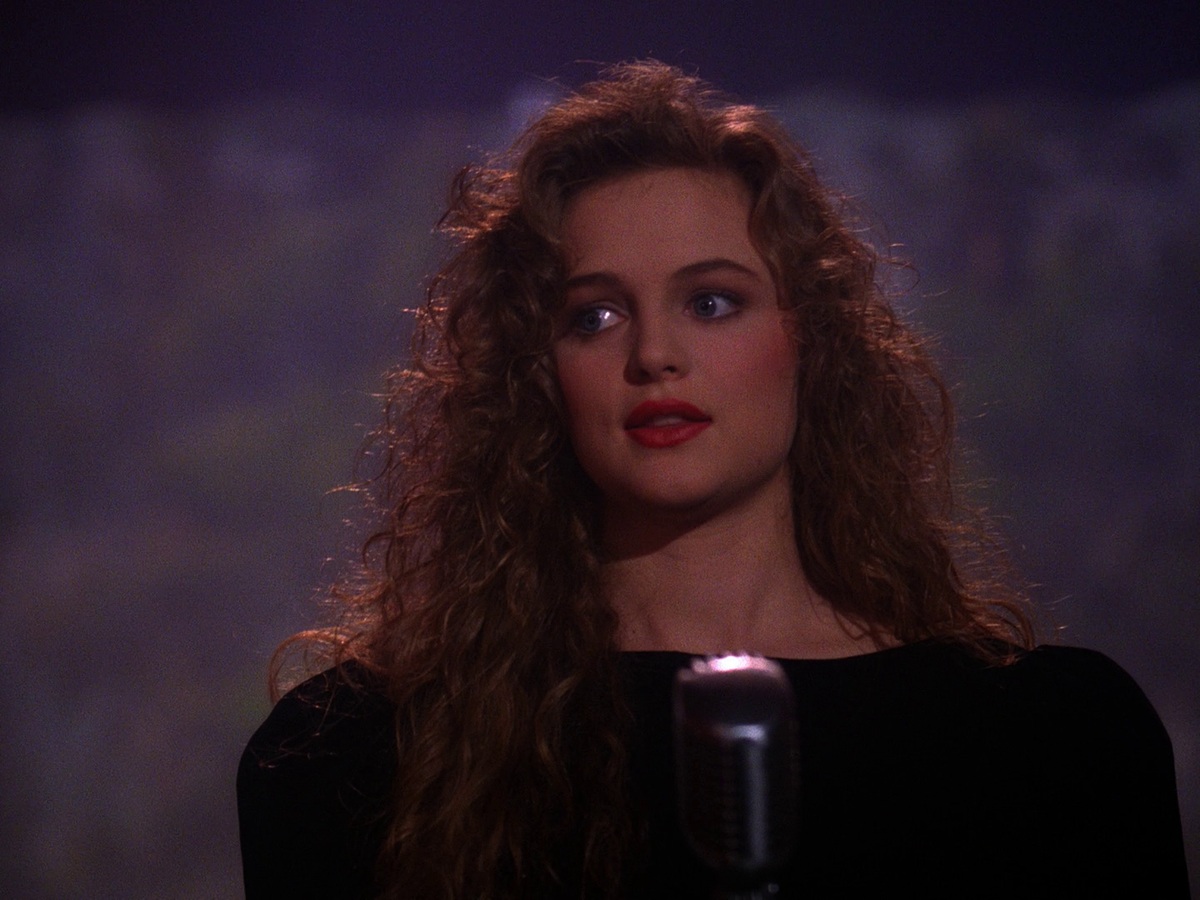
Lucy’s dance is intercut with reactions away from the stage. Lana’s number brings the judges’ susceptibility into the foreground. Audrey then uses the microphone to argue for active protection of what matters. Annie’s speech links the living forest to the inward feelings people neglect. The words she attributes to Chief Seattle are part of her speech within the episode, rather than an independently verified historical quotation presented by this dossier.
The programme’s English sound captions mark big-band music from the speakers, applause, a drum roll and, later, screams. These public cues help organise the event: they tell the room when to attend, celebrate and expect a decision. The same crowd that has been coordinated by entertainment becomes difficult to control once the lights, smoke and sudden disturbance break that shared attention.
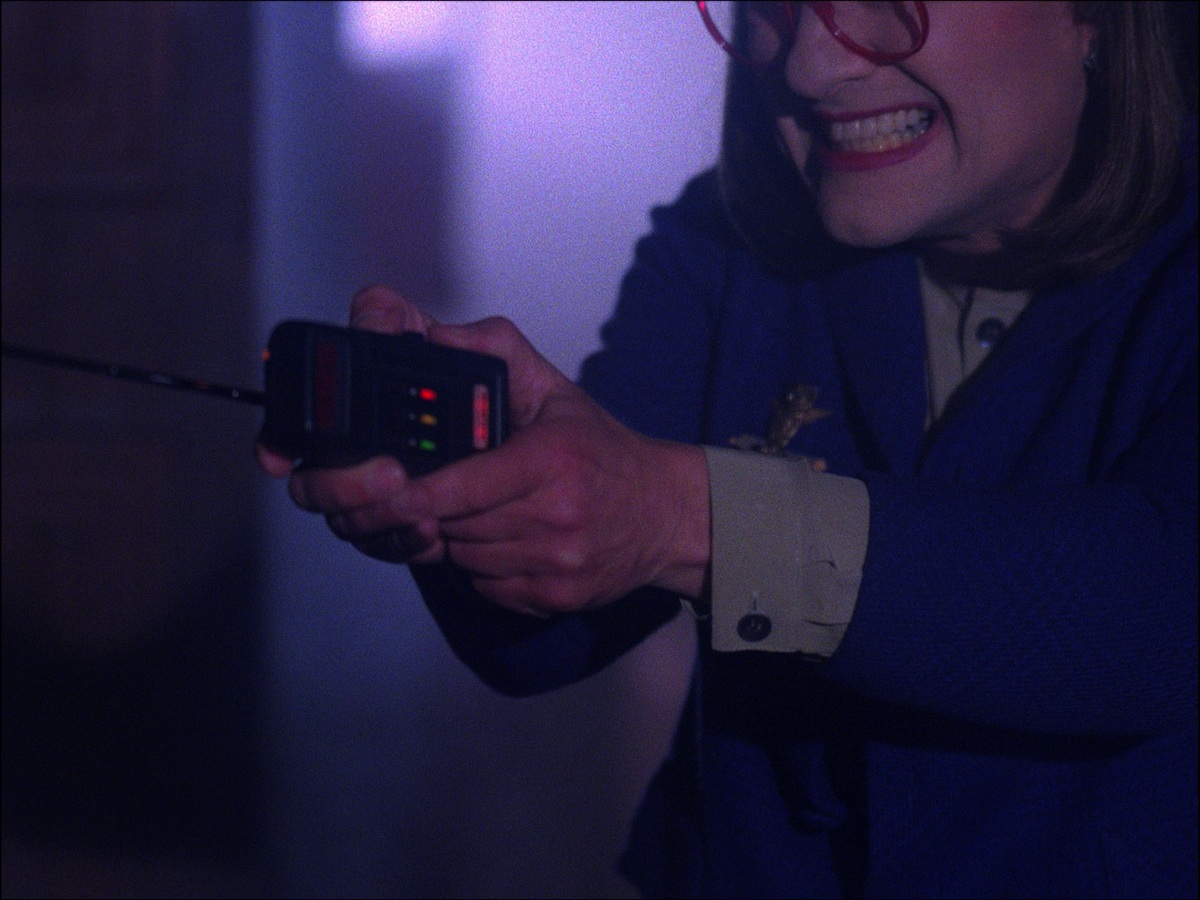
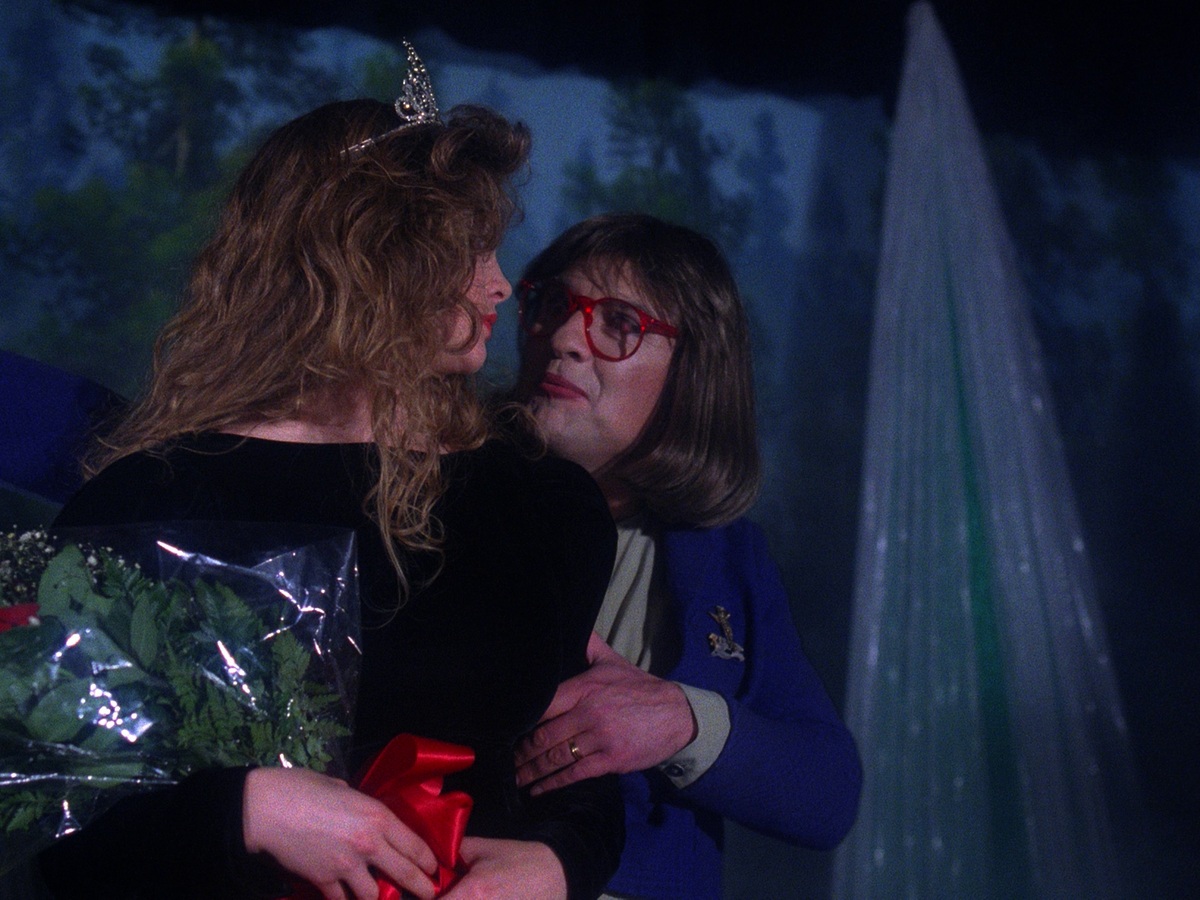
Earle has made a familiar figure into camouflage. His Log Lady disguise moves through a room where Margaret herself is present. The resemblance creates an immediate problem of recognition before the wider narrative of doubles reaches the Red Room. He does not need to control every spectator; he needs the confusion to last long enough to reach Annie.
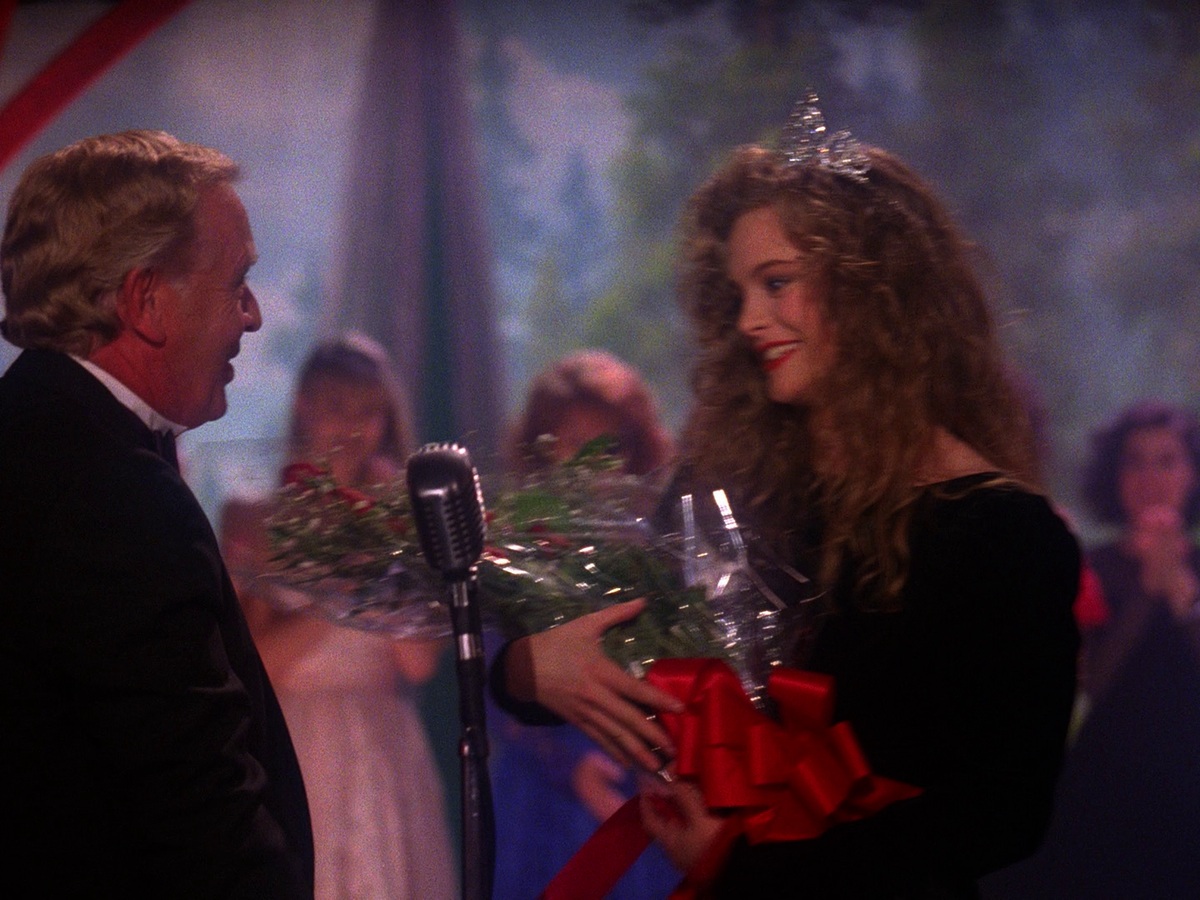
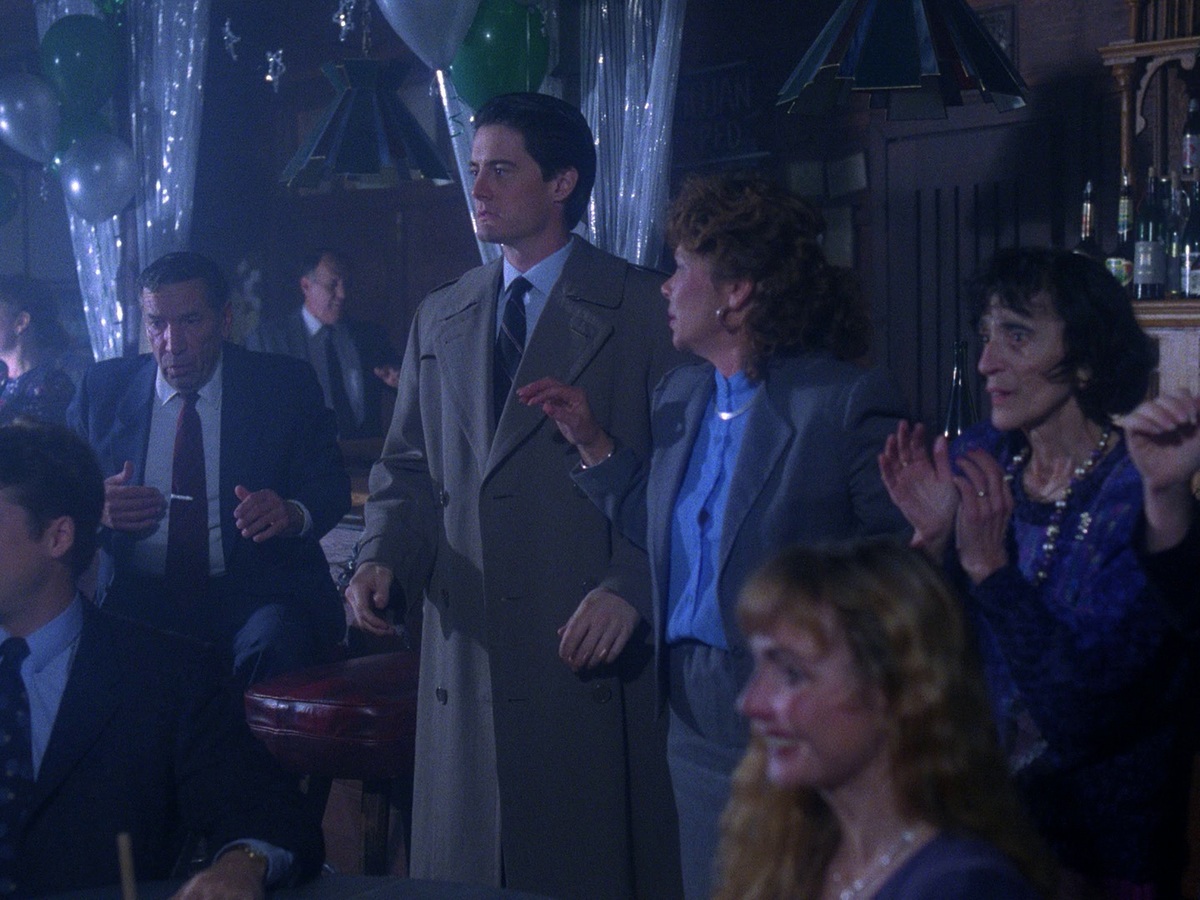
Annie’s victory turns Cooper’s proposed security arrangements into an urgent practical test. The rupture arrives before they can establish protection around her. Fragmented light interrupts the continuity of the room, falling scenery produces another threat, and Earle’s offer to help becomes the means of leading her away. A ceremonial escort has been replaced by an abductor’s guidance.
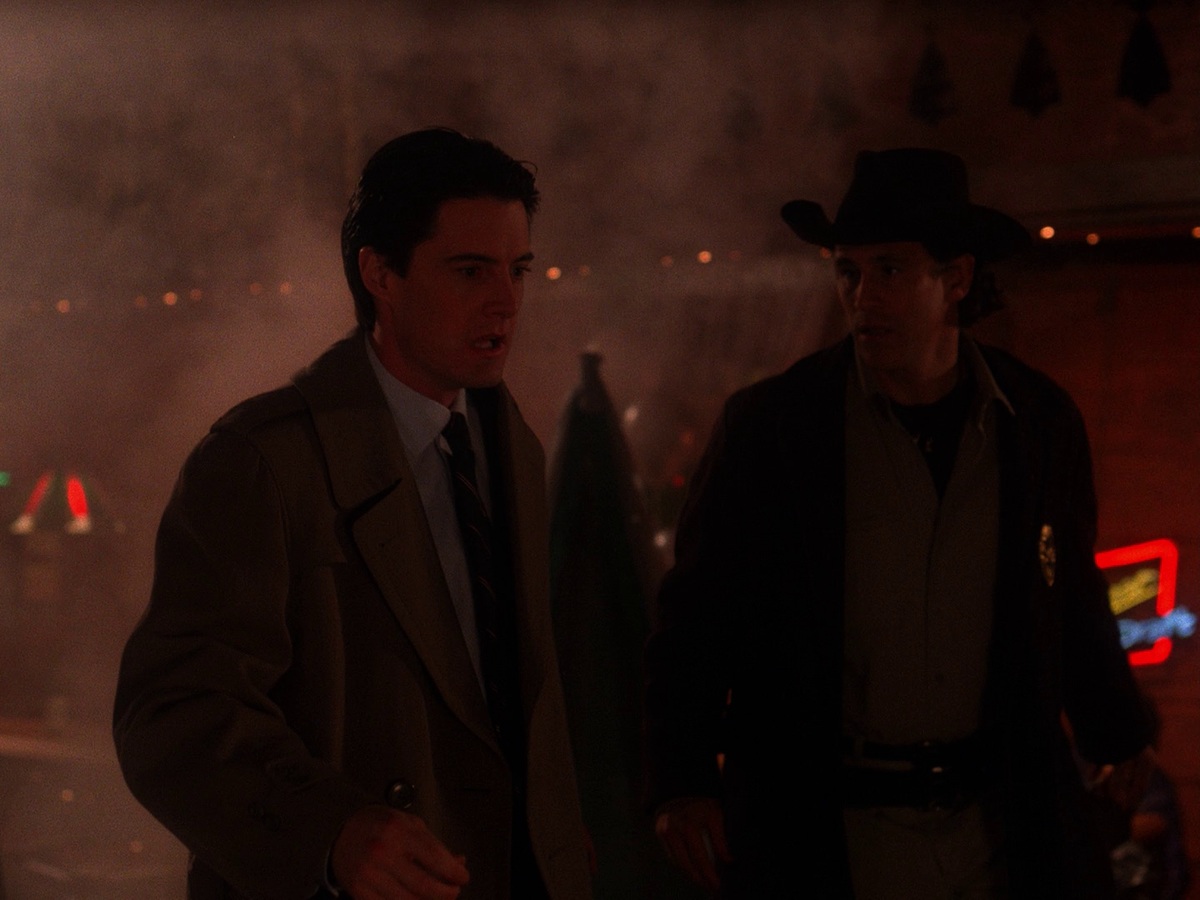
From the opening dance to the abduction · 9 images
Andy finally gets to speak
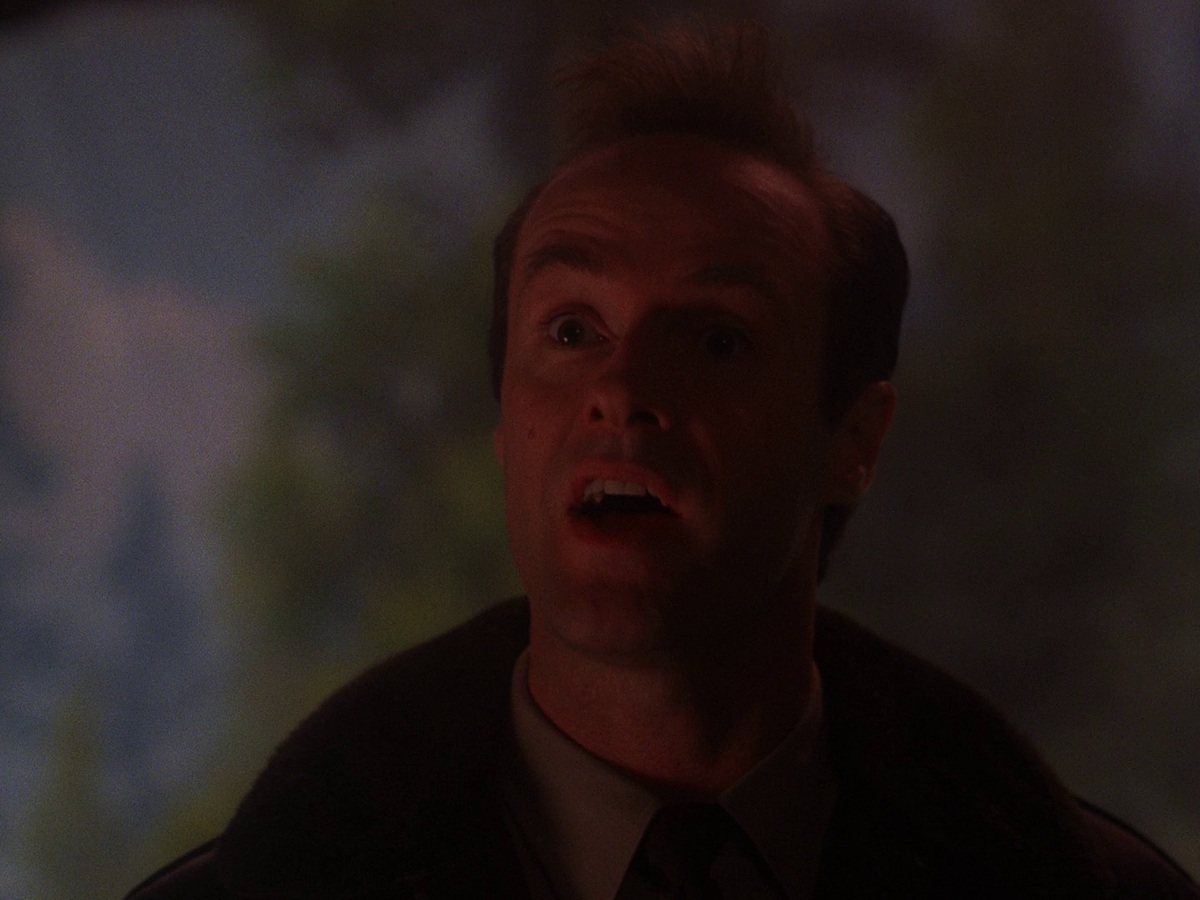
Cooper’s repeated calls for Annie register the immediate failure of the rescue. Truman answers with confidence in a conventional perimeter and pursuit. Andy, who has spent the evening trying to make himself heard, insists that his information is important even as he is directed elsewhere.
His discovery changes the status of the cave drawing. What has been treated as a puzzle has a geographical use: it is a map. The line answers the episode’s repeated failure of attention. Interpretation was not only a matter of intelligence or supernatural receptiveness; it also depended on allowing the overlooked colleague to finish speaking.
The episode ends with a route rather than a recovery. The audience knows that a door can be found, but the abduction has already supplied Earle with the person through whom he can draw Cooper towards it. Continue to Beyond Life and Death for the journey through that threshold.
After the disappearance · 2 images
A route through Miss Twin Peaks
The cabin: Leo frees Briggs and asks him to save Shelly; Earle prepares a new punishment.
The diner and hotel: Norma’s hopes for the pageant; Audrey’s grief, bank research and political speech.
The station and cabin: Cooper links fear, BOB and the Lodge while Earle listens.
Rehearsals and private rooms: Pinkle, the judges, Lana’s manoeuvre, Cooper and Annie, and Jacoby’s gathering.
The road and station: Briggs returns; fragments about the doors gradually become useful.
The Packard and Hayward homes: a box gives up its key; Donna refuses another evasion.
The station: the planetary symbols, the queen and the planted microphone.
The Roadhouse: performances, speeches, Donna’s discovery, Lucy’s decision and Annie’s coronation.
Darkness and disruption: Earle takes Annie; Andy identifies the map.
Sources and connections
Episode and credits. Overall Episode 28 / Season 2, Episode 21, directed by Tim Hunter. Scene evidence and selected images derive from Twin Peaks: From Z to A; the English captions were checked for the dialogue passages and the identified performance cues.
Margaret’s introduction. The associated Log Lady introduction considers the rings and awareness of her log, her boarded fireplace and her husband’s ashes. Its insistence on a history held in wood gives the pageant’s forest language a more personal counterpart, and makes Earle’s imitation of her especially hollow.
Broadcast context. The Season Two broadcast note examines the special announcement presenting the concluding episodes as a two-hour event.
Follow The Path to the Black Lodge, Beyond Life and Death, or the illustrated season guide.