Commercials
The commissioned image / Advertising, promotion and brand worlds
A minute can open a whole other world.
David Lynch’s advertising is a meeting between two kinds of authorship: a filmmaker’s way of seeing and a client’s reason for commissioning an image. Perfume, pasta, coffee, a games console and a luxury handbag ask very different things of a film. Following those differences makes this work more interesting than a collection of miniature “Lynchian” oddities.
Explore Lynch’s commissions through their briefs, collaborators, images and cultural afterlives. These campaigns connect the practical demands of advertising with a distinctive cinematic imagination. Continue with Music Videos and Short Films.
What does the commission buy?
It buys an association as well as a piece of screen time. A director can make a product seem desirable by placing it in a recognizable emotional world; a brand can also make the director’s name part of the attraction. Those are useful questions to bring to these films, rather than conclusions to impose on all of them.
Cinzia Bianchi’s study treats the work as a negotiation between brand discourse and directorial style. Her catalogue reaches beyond conventional spots to packaging, promotional events and longer web films, while expressly warning that individual authorship and completeness are difficult to establish. Bianchi, pp. 17–21 ↗
Each film brings together a client, agency, director and production team. Following those collaborators reveals how a commercial’s practical brief becomes an opportunity for Lynch’s images, humour and atmosphere.
The spot
A short delivery format with a particular product and transmission context. Compare the actual length, language and end slate before treating two circulating copies as the same object.
The wider campaign
A film may sit beside still photography, a teaser, an event or a specially designed object. The surrounding material helps explain the assignment, but needs its own credits.
A selected campaign map
Explore the campaigns through their films, creative teams and release histories. Award dates, broadcasts and later online releases are recorded separately.
| Work or campaign | Record and research route |
|---|---|
| Calvin Klein · Obsession | Chronology under investigation; compare the separate dating leads below. |
| Georgia Coffee | 1991. Four Twin Peaks advertisements for the Japanese campaign, catalogued by Lynchnet. |
| Public-service campaigns | We Care About New York and an American Cancer Society spot are listed in the specialist catalogue. Original sponsor, date and transmission records are needed. |
| Barilla France · Le Cafe’ | 1993, recorded by Barilla’s own archive. |
| Sci-Fi Channel / Clearblue | 1997 entries in Lynchnet: channel identity and product demonstration are different assignments. |
| PlayStation 2 · The Third Place | HAT dates its item 2000–2001; British Arrows records its 2001 awards. |
| Nissan Micra | 2002 in Bianchi’s chronology; full campaign and production-credit audit deferred. |
| Gucci by Gucci | 2007 in Bianchi’s chronology. Keep perfume name, film and later uploads distinct. |
| Dior · Lady Blue Shanghai | 2010; a longer film within a multi-director online campaign. |
| Rouge Louboutin | A 2014 launch film, covered in the contemporary design press. |
Obsession: the date is part of the object
Lynchnet identifies an Obsession group built around texts by Flaubert, Fitzgerald, Hemingway and D. H. Lawrence and dates it to 1988. Catalogue entry ↗ Contemporary reporting describes another Lynch campaign in August 1990. 1990 report ↗
The campaign’s published dates differ. Matching each film’s author text, performers and product branding distinguishes the individual spots and their release histories.
Literature offers fragrance advertising a vocabulary for an experience that the screen cannot transmit directly. A quotation can place the product inside a pre-existing culture of desire. The valuable question is how each film gives the words a body, a face and a duration—not simply whether it contains shadows or resembles a feature film.
Le Cafe’: a specific place, a specific client
Giancarlo Gonizzi’s biography for the Archivio Storico Barilla identifies a 1993 commercial made for Barilla France, titled Le Cafe’, filmed in Piazza Navona, Rome, with Gérard Depardieu. These details make a firmer starting point than the generic label “Lynch’s pasta commercial.” Archive biography, final paragraph ↗
The distinction between a French commission and an Italian location matters. A setting can be part of what a brand sells: an imagined place, a social occasion, an idea of hospitality.
Barilla’s advertising archive brings films together with corporate correspondence, opening a route from the finished commercial to the commission and its production history. Archive holdings ↗
The Third Place: the brand enters the dream
The strongest surviving paper trail here connects Sony’s PlayStation 2 with TBWA and a 2001 British Arrows award record. That record names Lynch and Trevor Beattie as writers, Bil Bungay as art director, Terry Wordingham as producer, Scott Billups as lighting cameraman and Tim Fulford as editor. It also credits music to Lynch. The awards include Gold for Miscellaneous Durables and three Silvers. Awards and credits ↗
In Pieter Dom’s 2014 article, TBWA’s Kieron Monahan recalled that Beattie approached Lynch with the voice-over rather than a fully prescribed film. He also recalled months of attention to the brand’s black-and-blue colours, followed by an accepted black-and-white cut. This is useful participant testimony about negotiation; it is not an original brief or a contemporaneous edit log. Monahan interview excerpts ↗
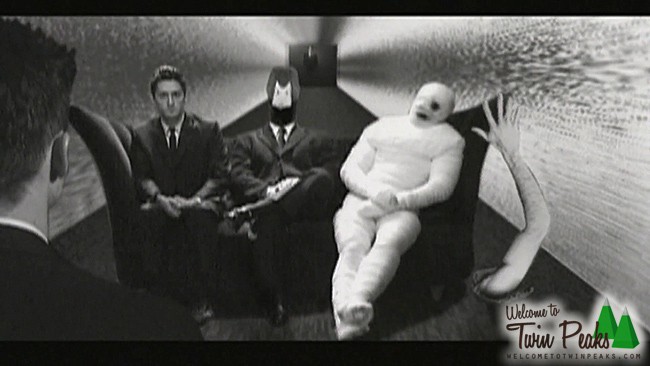
Looking at the opening frame: the sofa supplies an almost ordinary social arrangement, but its occupants make that arrangement impossible. A recognizable human figure sits beside a duck-headed one and a bandaged body. The group appears to await the approaching figure. The familiar furniture and frontal staging give the extraordinary bodies somewhere comprehensible to belong.
For a console advertisement, this is a productive proposition: the product promises entry into an experience. Bianchi reads the closing “third place” phrase as an interpretive anchor for the otherwise disorienting images. Bianchi, pp. 29–30 ↗ The film can be discussed as a sales argument without reducing its images to a catalogue of game features.
A credit problem worth keeping visible
The History of Advertising Trust describes item HAT59/025/002/001 as one minute, dated 2000–2001, and labels its colour field “Colour.” It names Alex Barber for camera/lighting and Tracie Stokes as agency TV producer. Those fields differ from the British Arrows record. HAT catalogue ↗ A shots trade entry supports the Billups/Fulford/Croll grouping, while the WTTP article’s credit list supplies a different editor. Trade entry ↗ Retrospective credit list ↗
The records differ in their crew and format descriptions. Each entry retains its source, keeping the versions and credited production roles distinct.
Lady Blue Shanghai: the advertisement becomes a destination
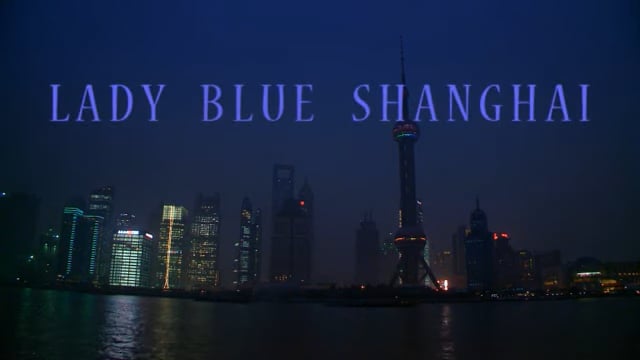
Lady Blue Shanghai stars Marion Cotillard and belongs to the third chapter of the Lady Dior online handbag campaign. Contemporary coverage presents it as a mysterious film in its own right, while keeping the handbag campaign visible. Vanity Fair, May 2010 ↗ Bianchi records a sixteen-minute film and a separate poem teaser, It Holds the Love. Bianchi, pp. 31–33 ↗
Coilhouse’s contemporary article reproduces remarks attributed to Lynch’s interview with Nicola Copping in the Financial Times: the assignment required the handbag, the Pearl Tower and some old Shanghai. The original linked interview was inaccessible in this pass, so this remains a specifically attributed, mediated account of the brief. Contemporary requotation ↗
Those requirements give a useful way to think about commissioned storytelling. A product, a landmark and an idea of the past are ingredients that need a relationship. The title image reproduced here already puts the film’s name over a recognizable city skyline. Its blue light joins brand identity to location before any account of the story is supplied.
The launch also had a physical setting. Fifi Abou Dib’s contemporary report describes the Shanghai presentation alongside Dior’s cruise collection. L’Orient-Le Jour ↗ The film therefore belongs to an event and an online campaign as well as to Lynch’s short-form work. A programme, teaser, launch photograph and final film can illuminate one another while remaining different objects.
There is a rewarding route from this hotel setting to Hotel Room, and from the film’s advertised mystery to Inland Empire. These are invitations to compare the treatment of space, performance and uncertainty; they do not establish shared production methods or a secret continuity between stories.
People, sound and the limits of a still image
Advertising often circulates under one famous name. A research dossier should make room for the account team, agency creatives, producer, cinematographer, art department, editor and sound collaborators whose work turns a commission into a finished film. The conflicting PS2 records make that obligation particularly clear.
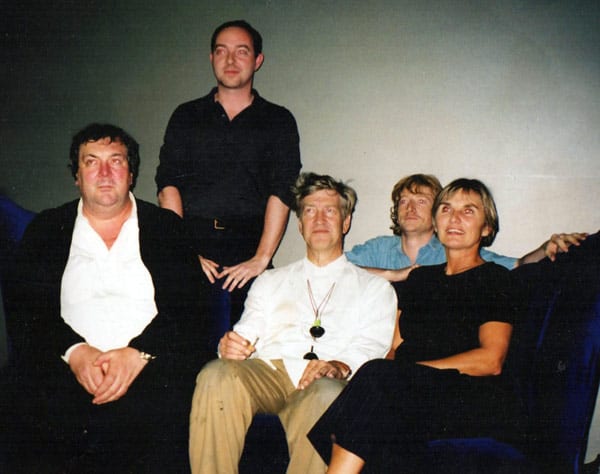
The production photograph brings the crew back into the image: lighting, equipment and the people behind the finished commercial share the same frame.
Reception is more than recognition
The Arrows record shows professional recognition in advertising; the contemporary Dior reports show how the campaign was introduced to audiences. Neither establishes how many people saw a specific version, how they understood it, or what it achieved for the client. Those are separate historical questions. A later viral upload can also make a film famous in a different context from its original transmission.
Bianchi’s chapter supplies a scholarly route beyond the “strange commercial” compilation. Its argument can be tested against named versions, production records and territorial reception. The aim of the next pass is to add that evidence, not simply extend the list of brands.
Continue through sound
Music videos follows another kind of commission: an image made in relation to a song, an artist or a performance.
Continue through objects
Visual art, furniture design and the museum distinguish the film, the designed object and the later collectible.
Explore further
Follow the sources below, explore the museum collection, or continue through the Reading Room. New archival discoveries and contributions enrich the record of Lynch’s work.
Sources and further reading
Artist statements, production accounts, institutional collections and contemporary reporting trace the works and their collaborations. Explore the references below.
- Cinzia Bianchi, “David Lynch e la pubblicità” (2019) ↗In David Lynch: mondi intermediali, edited by Nicola Dusi and Cinzia Bianchi, FrancoAngeli. Author-hosted chapter scan; printed pp. 17–21 and 29–33 inspected, including visual verification of pp. 18–19. Its corpus is expressly provisional.
- Lynchnet: television commercials catalogue ↗Specialist catalogue of campaign titles, credits and contemporary trade-report extracts.
- Washington Post, August 1990 ↗Indexed report.
- Giancarlo Gonizzi: David Lynch — Archivio Storico Barilla ↗Brand archive biography, final paragraph inspected in Italian. Identifies Le Cafe’, 1993, Barilla France, Piazza Navona and Gérard Depardieu. It does not supply a complete crew or version inventory; unrelated biographical assertions have not been adopted.
- What the Archive holds — Archivio Storico Barilla ↗Institutional holdings description inspected. Advertising and corporate records establish a concrete research route; the stated original-film holding period must not be extended to the Lynch shoot without confirmation.
- British Arrows: The Third Place, 2001 awards record ↗Awards and named creative/production credits inspected. The award year is not used as an exact first-transmission date.
- History of Advertising Trust: The Third Place, HAT59/025/002/001 ↗Indexed catalogue record inspected; direct page download returned an access challenge. Its 2000–2001 date span, one-minute duration, colour field and crew fields are catalogue evidence.
- Sony PlayStation 2: The Third Place — shots ↗Trade archive entry dated 6 October 2004, including visible credits. Supports Billups/Fulford/Croll; its webpage date is not the campaign premiere. Restricted additional material was not accessed.
- Pieter Dom: making The Third Place — Welcome to Twin Peaks, 5 May 2014 ↗Kieron Monahan interview excerpts, credited group photograph and reproduced frames. The group caption identifies the participants from left to right.
- Nadya Lev: Lynch + Galliano + Cotillard — Coilhouse, 21 May 2010 ↗Contemporary article inspected. Reproduces Lynch remarks attributed to Nicola Copping in the Financial Times; the linked FT original was inaccessible. The brief is therefore identified as a mediated quotation, not an independently inspected interview.
- Fifi Abou Dib: Shanghai ensorcelé par Christian Dior — L’Orient-Le Jour, 21 May 2010 ↗Contemporary French-language account of the Shanghai presentation. Used for event context, not confirmation of every publicity claim or a measurement of commercial success.
- Dior’s Lady Blue Shanghai, Chapter 3 — Vanity Fair, 26 May 2010 ↗Contemporary release coverage inspected: Cotillard, Lynch and the third Lady Dior online chapter. Its short critical response is one reception sample.
- Lady Marion — 1.4, 2 February 2015 ↗Fourth gallery item explicitly labels Lady Blue Shanghai and David Lynch. Source of the reproduced title frame; the surrounding article chiefly discusses a different Cotillard film.
- Here’s What Happens When David Lynch Directs an Ad for Louboutin Nail Polish — Fast Company, 25 July 2014 ↗Contemporary indexed design coverage of the Rouge Louboutin launch film. Used as a dated catalogue lead; production records and the complete film remain unchecked.
Another doorway
Continue exploring
Music
Music Videos
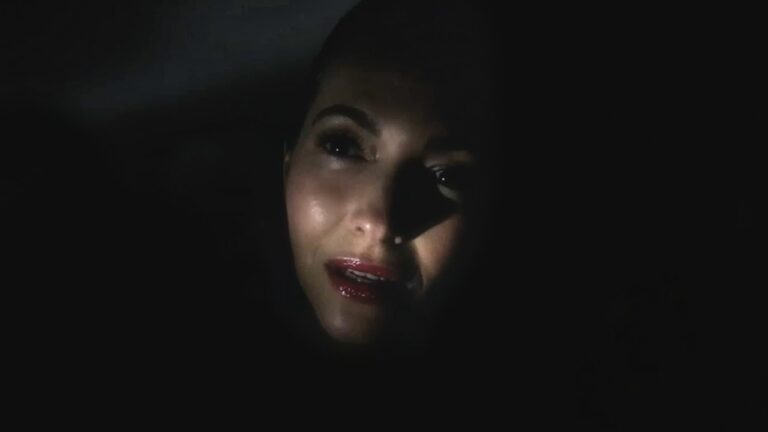
Explore David Lynch’s music videos, from Chris Isaak and Moby to Nine Inch Nails and Chrystabell, through the artists, images and collaborations.
Short films
Short Films
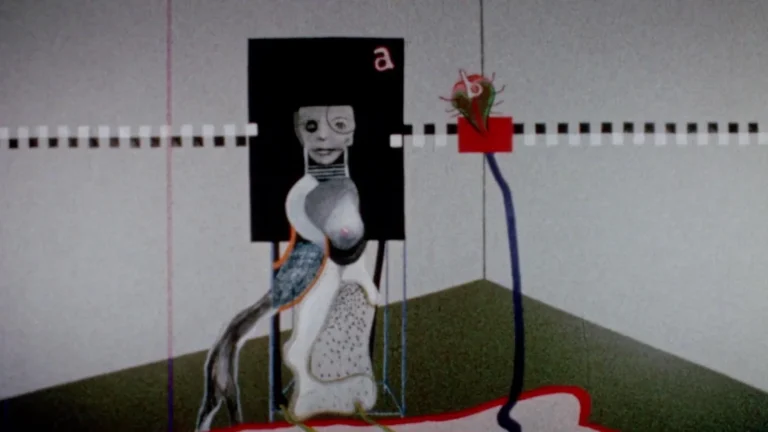
Explore David Lynch’s short films, from The Alphabet to Rabbits and Fire, with production histories, collaborators, sound studies and viewing guides.
Art
Art
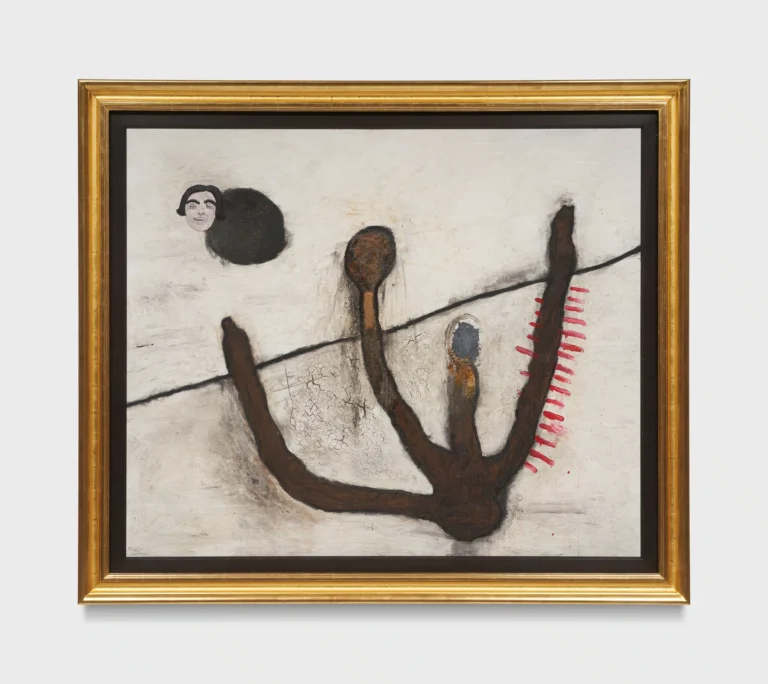
Explore David Lynch’s paintings, lithographs, sculpture and photography through close readings, exhibition histories, credited images and documented sources.
Image credits and sources accompany each linked guide.