Twin Peaks: Episode 4 — The One-Armed Man
1990 · Written by Robert Engels · Directed by Tim Hunter
A sketch, a mirror, a case of shoes. The investigation advances through mistaken expectations, private alliances and objects whose meaning can be manipulated.
Regular Episode 4, after the pilot. Often listed as Season 1, Episode 5. Contains episode spoilers.
Explore this episode
A remembered face becomes a drawing
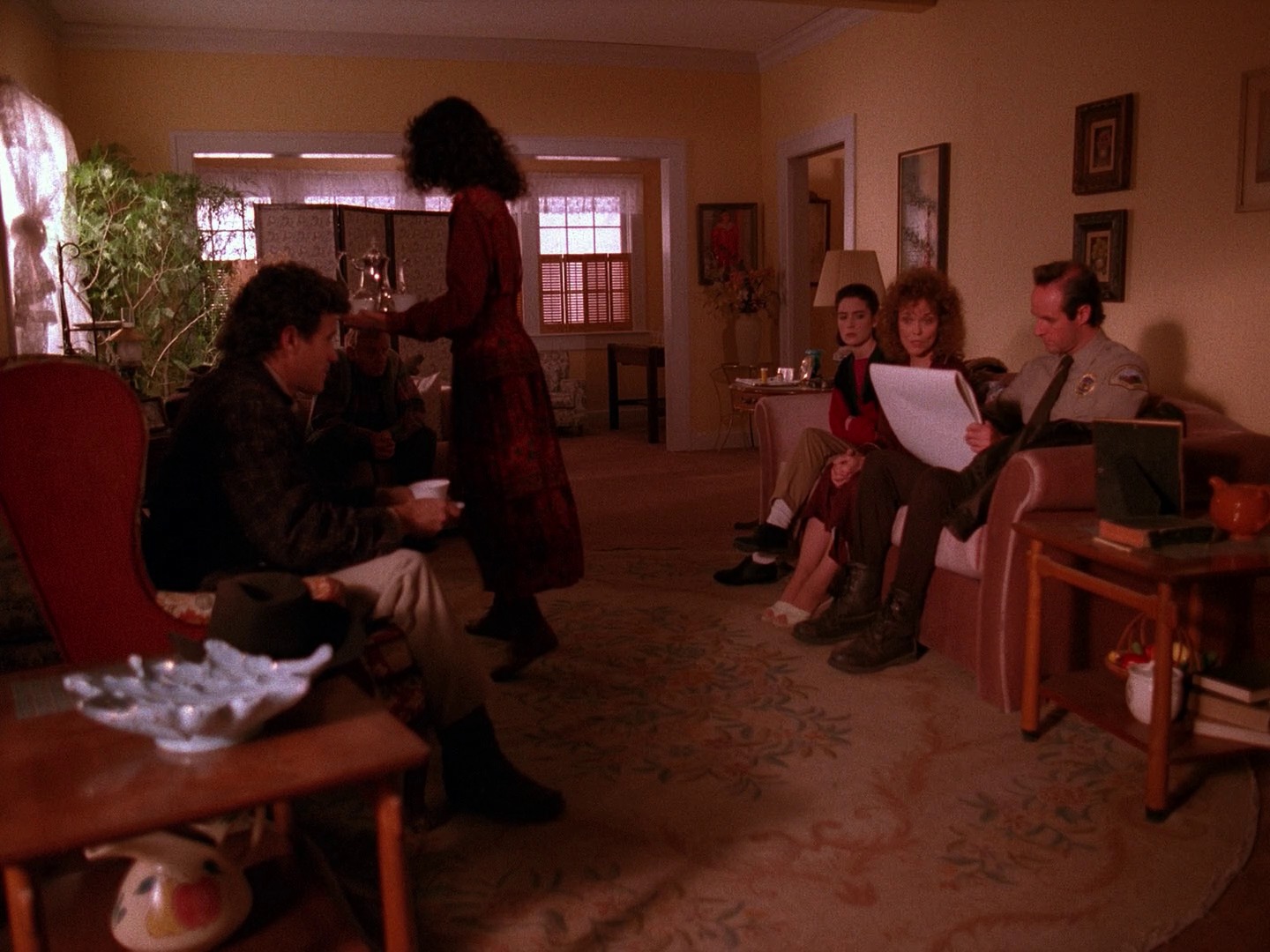
Sarah describes the face she saw while Hawk turns her account into a sketch. Leland interrupts with a dismissive account of her other vision, but Donna recognises its significance: the burial of the necklace was supposed to be private. The same conversation therefore contains incompatible judgements about what Sarah’s knowledge is worth.
The drawing gives a troubling experience a portable form. It can be shown, compared and passed between people who were not present in the room. Cooper later recognises the face from his dream, but he stresses that he did not supply Sarah with it first. The scene makes independence of testimony part of the argument, rather than treating resemblance alone as unquestionable proof.
Lucy’s account of Invitation to Love adds another level of narrative confusion at the station. Truman wants information about the office; she is absorbed in the television serial. Her detailed reconstruction is accurate to the wrong immediate task. The joke belongs to an episode preoccupied with how information is organised and what a listener thinks a speaker is describing.
Jacoby, Gordon Cole and competing authorities
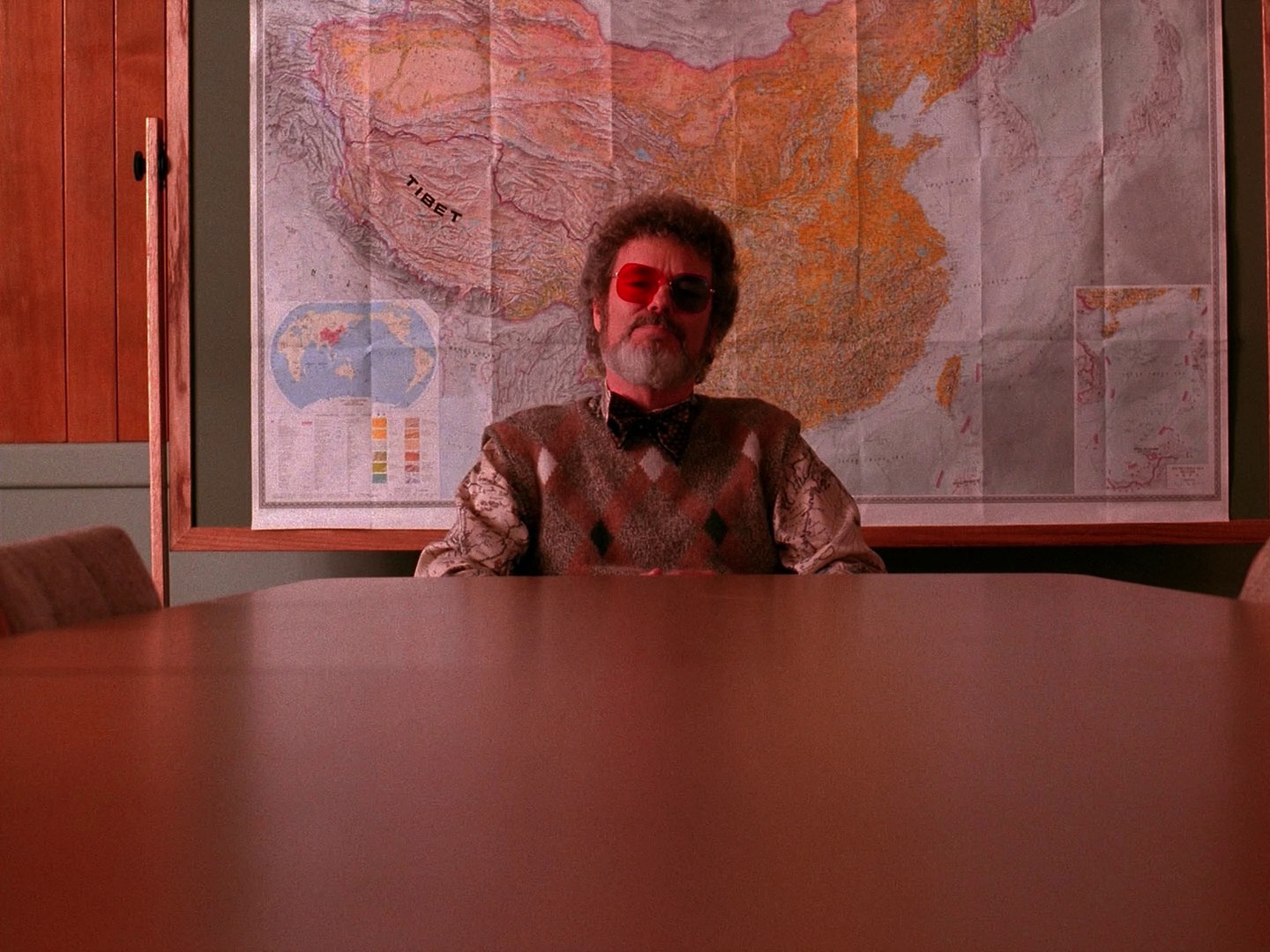
The long conference table makes Jacoby’s interview a spatial contest. Cooper and Truman question someone whose authority comes partly from having been trusted with secrets. Jacoby invokes confidentiality while admitting that Laura penetrated his own defences. The distance between them makes his apparently candid personal disclosures remain difficult to evaluate.
The red Corvette is a useful lead, but the interview is also about the limits of a therapist’s account. Jacoby can describe an encounter without supplying a complete or disinterested explanation of Laura. His self-exposure does not erase the fact that the officers need verifiable information.
Gordon Cole’s telephone report changes the form of authority again. Material findings arrive through a remote voice: bindings, an animal-related clue and the plastic fragment can be compared with what has been found locally. Cooper’s defence of Truman during the exchange keeps professional evidence and professional relationships intertwined. The enquiry advances through a chain of people who do not share the same manner or assumptions.
The one-armed man and the wrong Bob
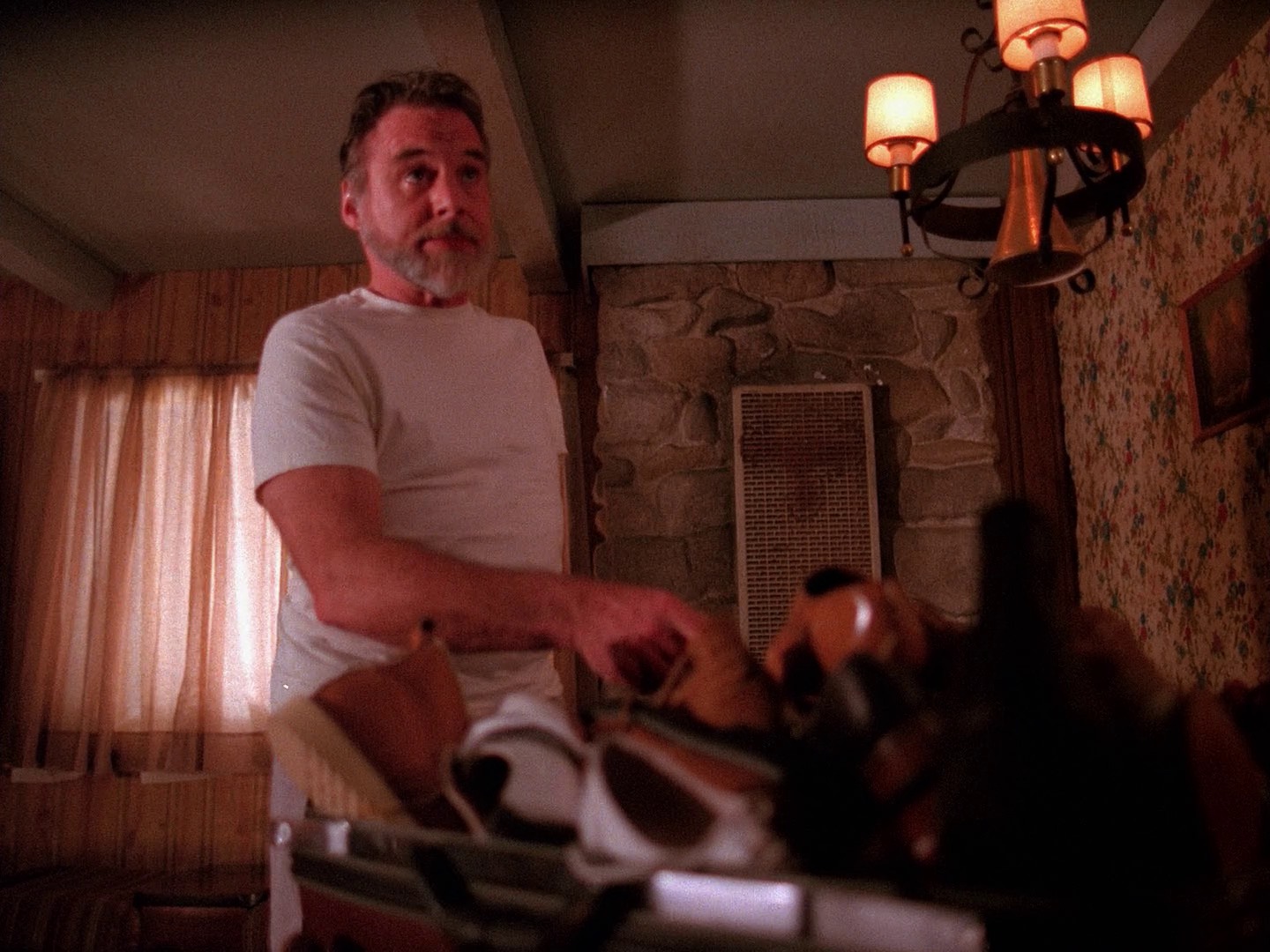
The motel raid promises a spectacular confirmation of Cooper’s dream. Andy’s accidental gun discharge disrupts the officers’ control before the interview begins. Gerard’s explanation then replaces the expected revelation with an ordinary occupation: he is a shoe salesman, and his case contains samples.
Gerard’s friend Bob is veterinarian Bob Lydecker. His account of losing his arm and his description of the former tattoo fail to match the dream’s apparent narrative. These differences should not be tidied away. The scene’s interest lies in the gap between an investigator’s powerful expectation and a person’s mundane account of himself.
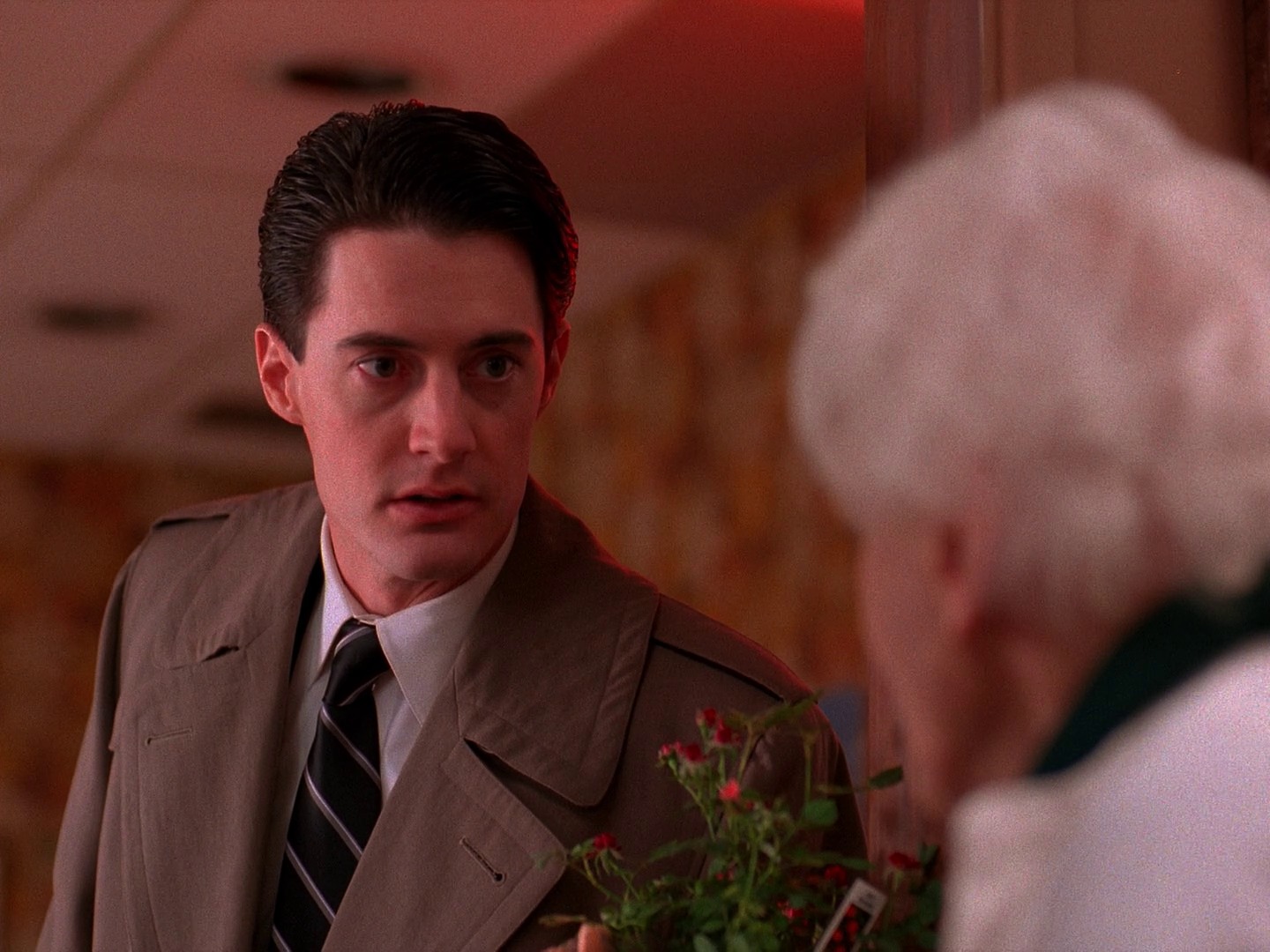
The visit to Lydecker’s practice produces a new route through the case. A nearby convenience store and the purchase of twine keep dream associations in play, while the veterinary files offer a much more conventional search. The episode does not settle the dream’s status. It lets it redirect attention towards evidence that still has to be sorted.
That sorting becomes comic when Lucy organises the files by the animals’ names. She has followed a perfectly intelligible rule, simply not the rule the investigators expected. Waldo’s record eventually provides the connection to Jacques Renault. An administrative misunderstanding becomes part of the route to a significant discovery.
Audrey and Donna make their own investigation
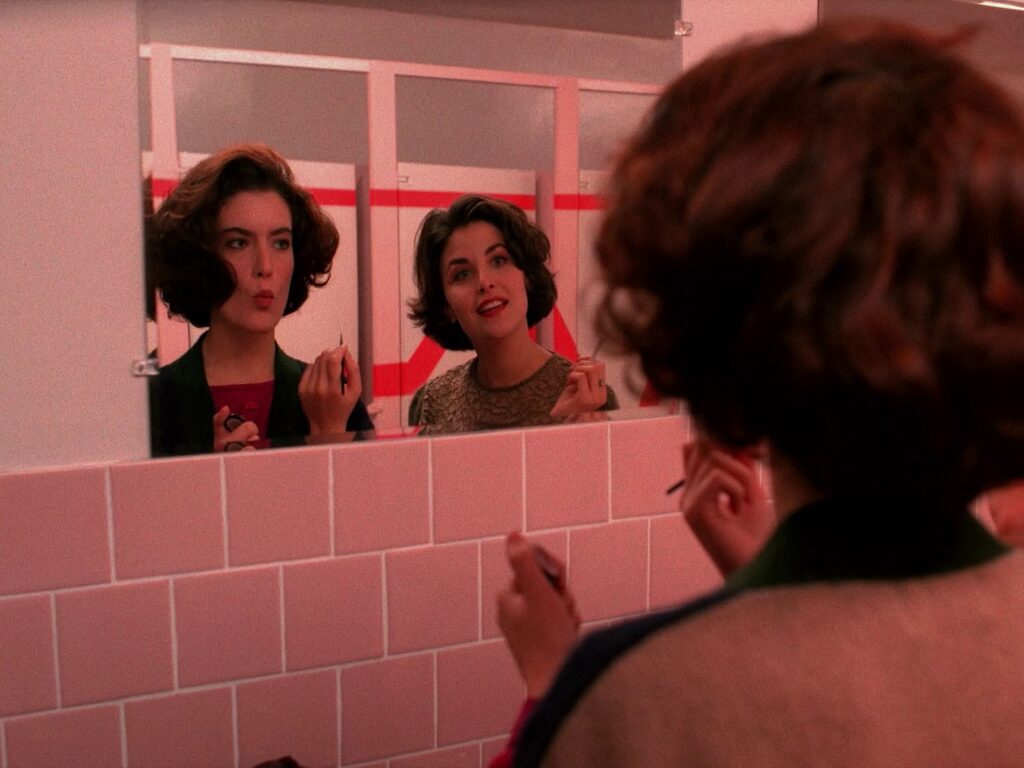
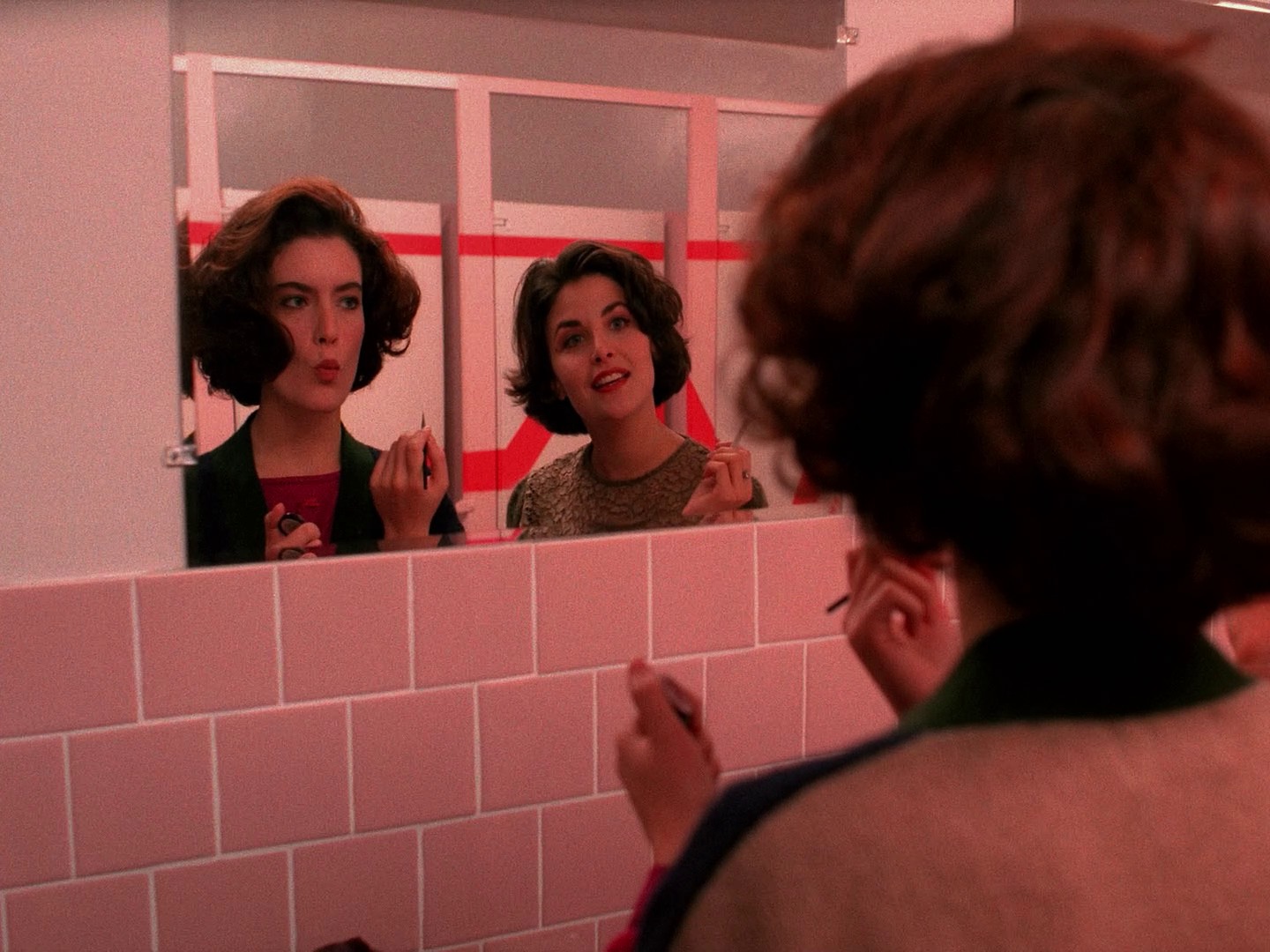
The school bathroom gives Audrey and Donna a private meeting place inside a public institution. Mirrors keep faces, reflections and the room’s bright surfaces in the same composition. Their alliance develops through looking as well as disclosure: each measures what the other knows, what she wants and how far she is prepared to go.
Two investigators at the mirror · 2 images
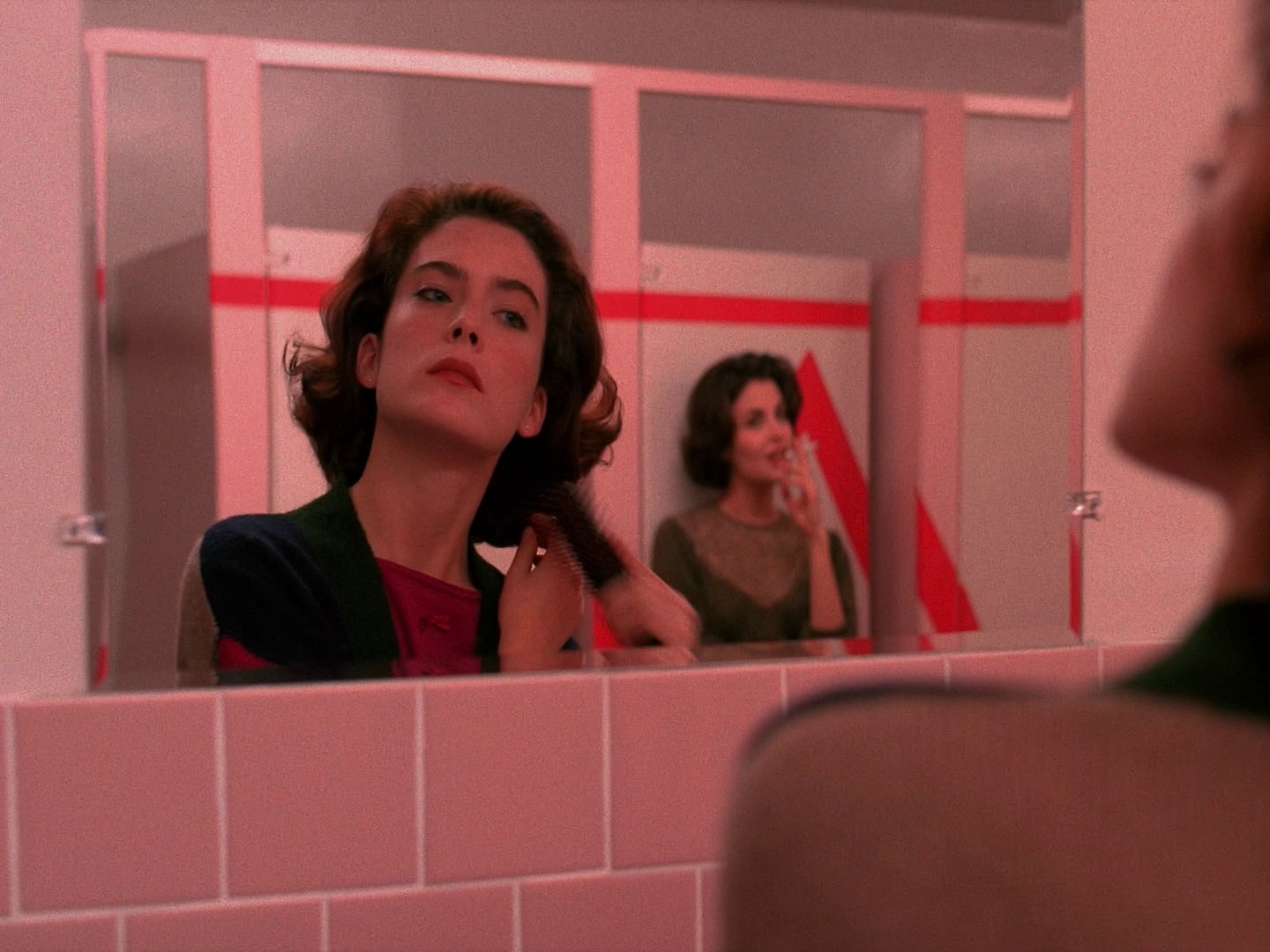
Laura’s connection to the perfume counter offers Audrey an entry point into her father’s business. Donna brings a different relationship to the dead girl and to Jacoby. They do not possess interchangeable knowledge. The scene begins a partnership whose strength lies in combining access, while its danger lies in mistaking enthusiasm for protection.
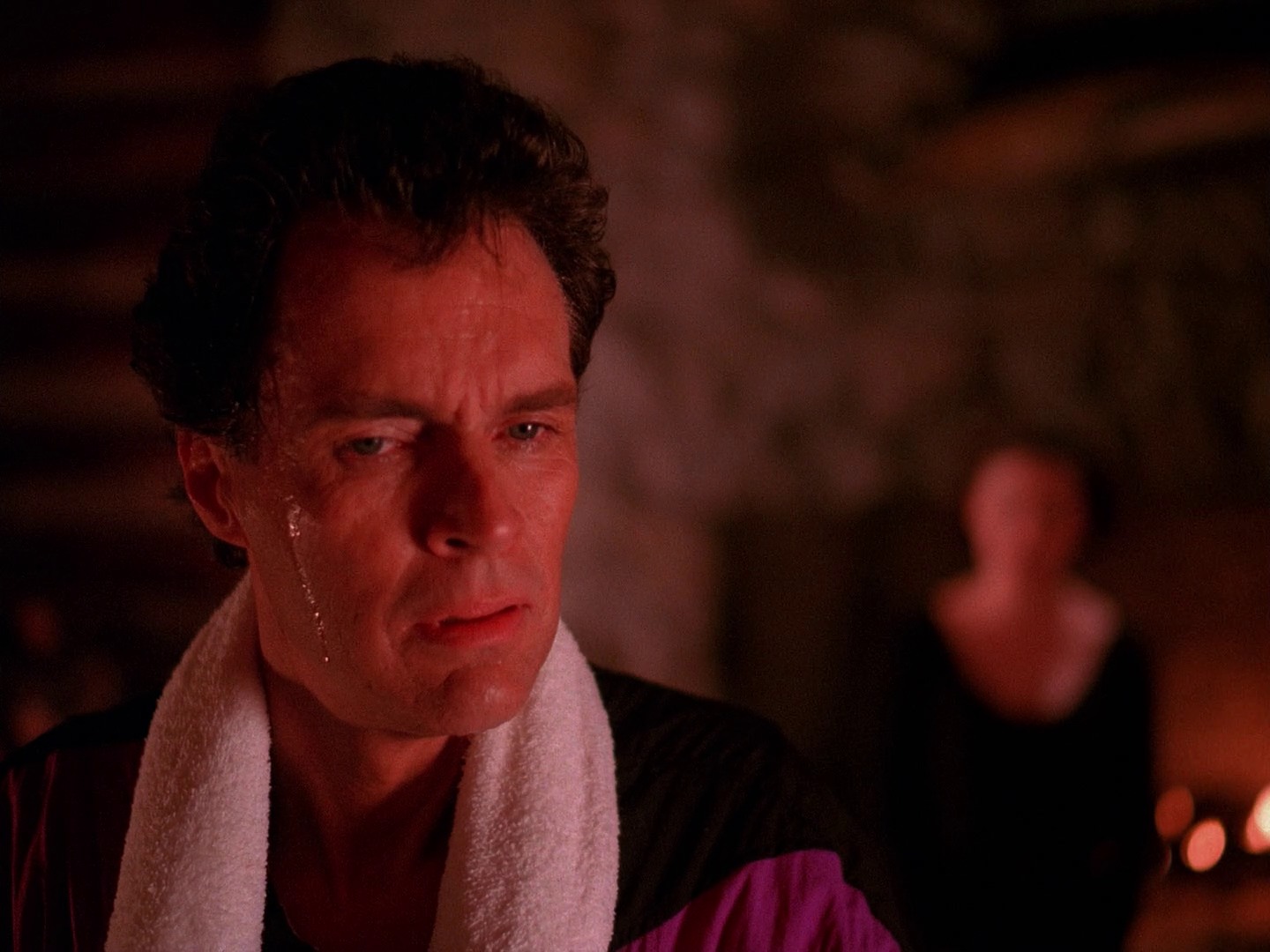
Audrey’s later appeal to Ben turns family language into an investigative tactic. She presents herself as a daughter seeking a place in the business. The scene also permits a moment of apparent feeling from Ben, so the exchange cannot be reduced to a perfectly controlled trick. Audrey uses a real emotional absence to gain practical access. A telephone interruption returns the office to business before that absence can be resolved.
James’s encounter with Maddy at the diner introduces another possible ally. Her resemblance to Laura attracts attention, but her knowledge of her cousin is incomplete. The investigation is gradually becoming a network of people who each knew a different Laura.

Margaret’s introduction
The Log Lady introduction asks what happens when a mirror fails to offer a stable image, then turns towards dream, smoke and conflict. Read it beside Sarah’s sketch and the bathroom mirrors as an invitation to comparison, not a definitive explanation.
Parole, violence and the language of change
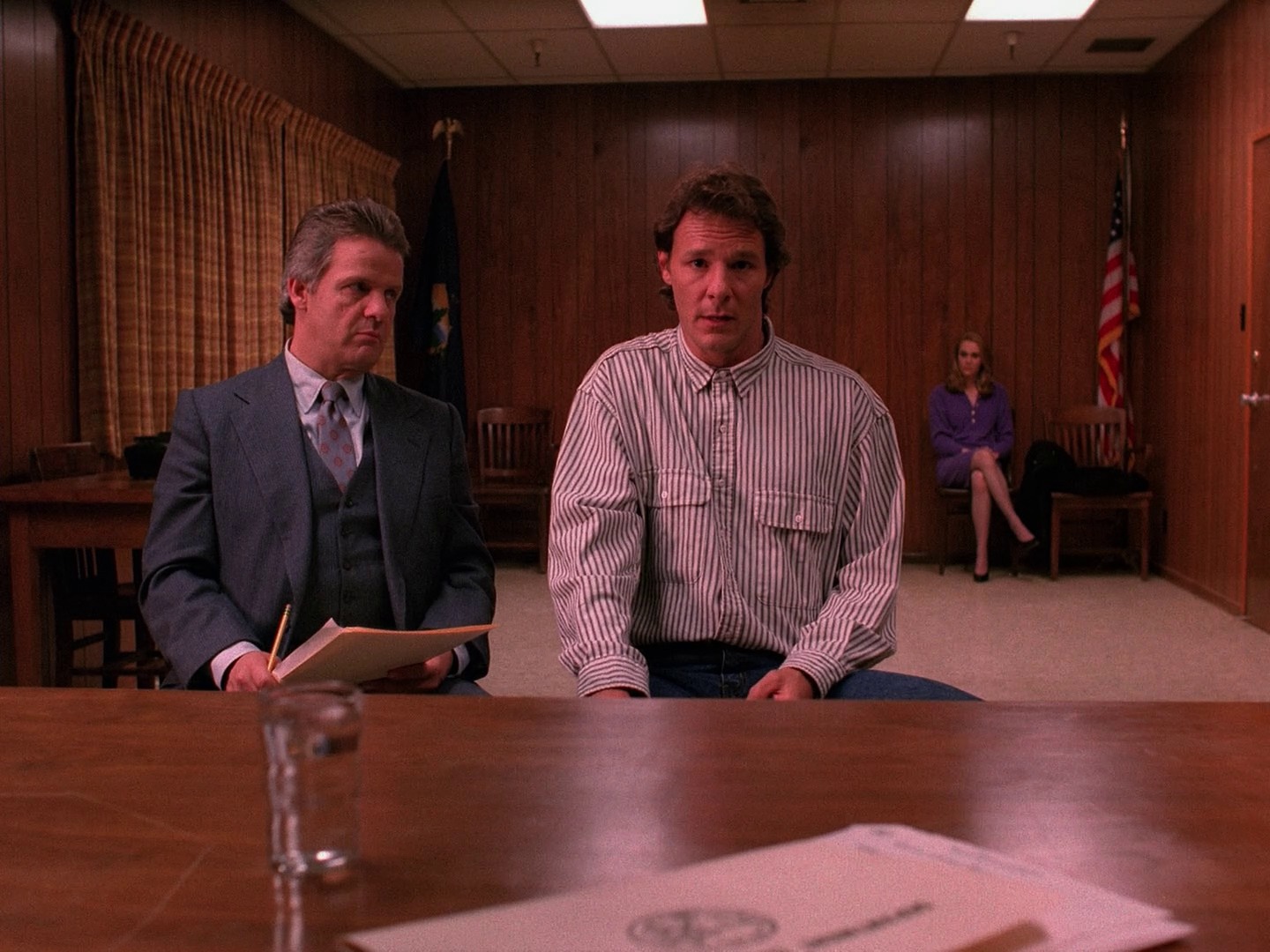
Hank’s parole appearance is a performance before an audience with the power to judge him. He describes the fatal event in language that shifts attention towards circumstance. The board pushes him back towards responsibility. The prospect of work with Norma gives the promised reformed life a concrete address, but it also makes her workplace the site of his return.
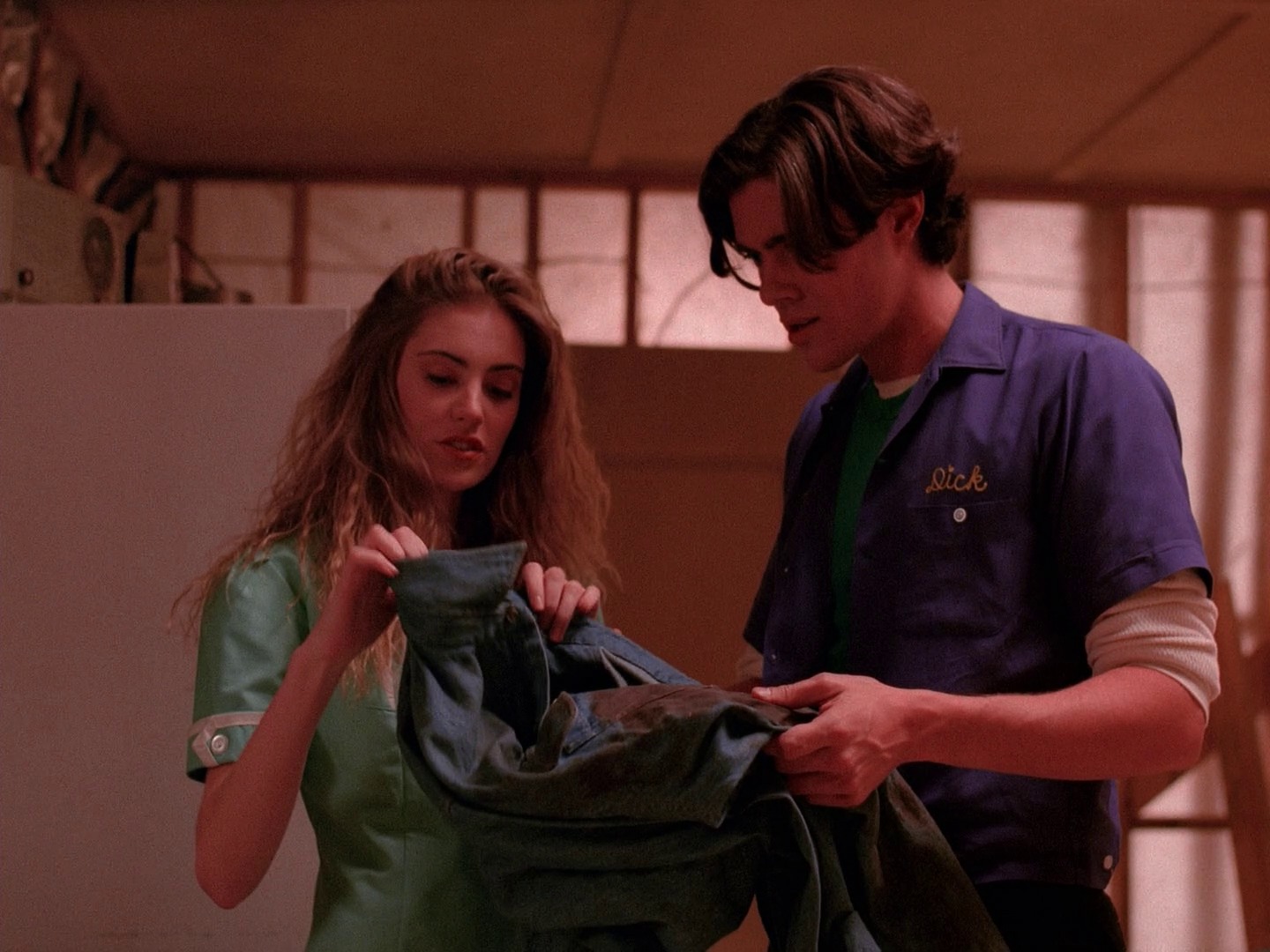
At Shelly’s home, Leo’s shirt passes into Bobby’s hands and becomes something he can use. Shelly also asks for help with the gun. These objects belong to immediate questions of danger and self-protection before they become pieces in Bobby’s plan. The episode keeps the precariousness of her home visible behind his confidence.
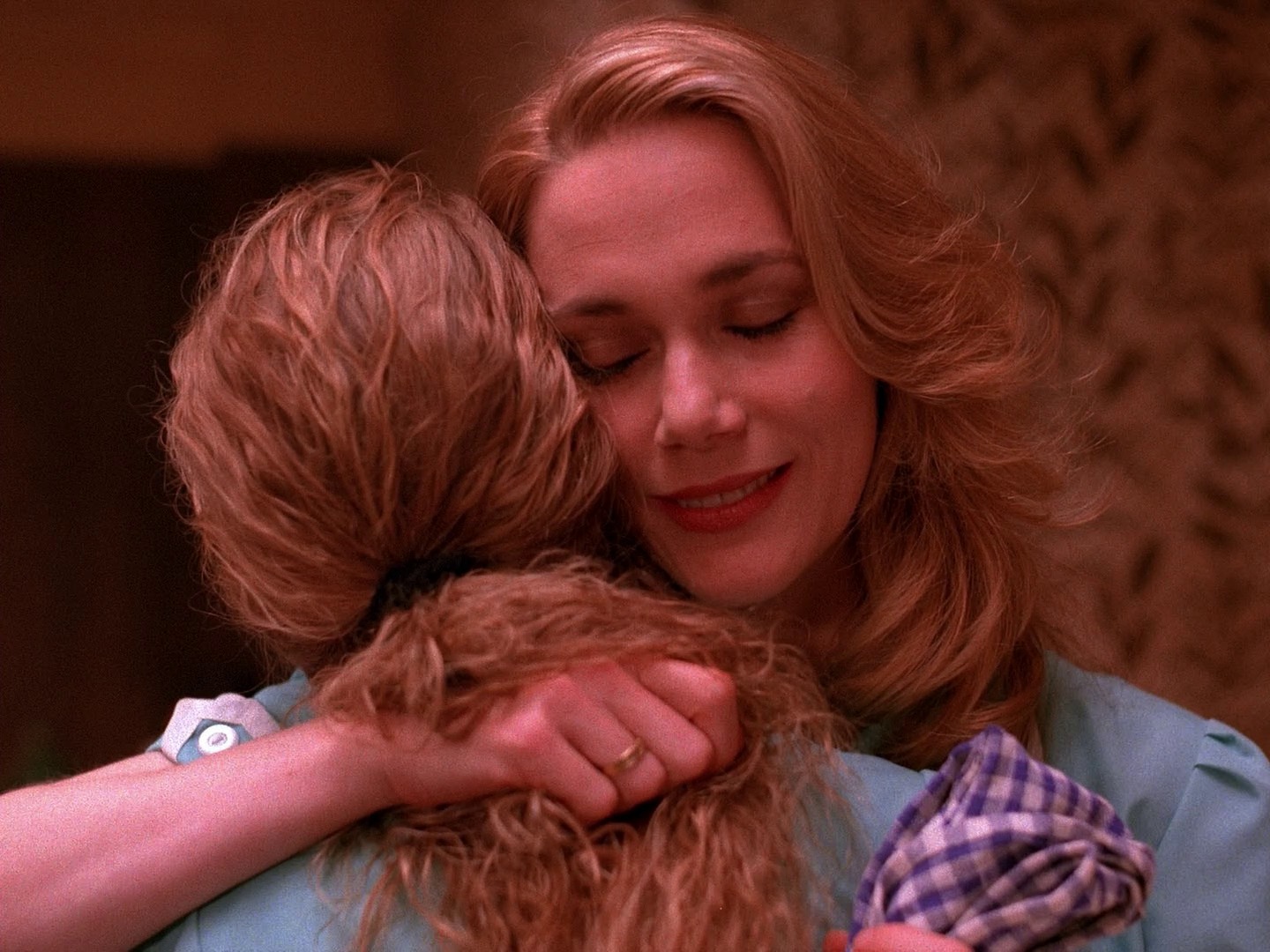
Shelly’s conversation with Norma makes the violence speakable. Norma offers comfort and the possibility of time together. Their exchange provides a form of recognition absent from Hank’s formal account of himself: one person acknowledges another’s suffering without demanding a polished narrative of improvement.
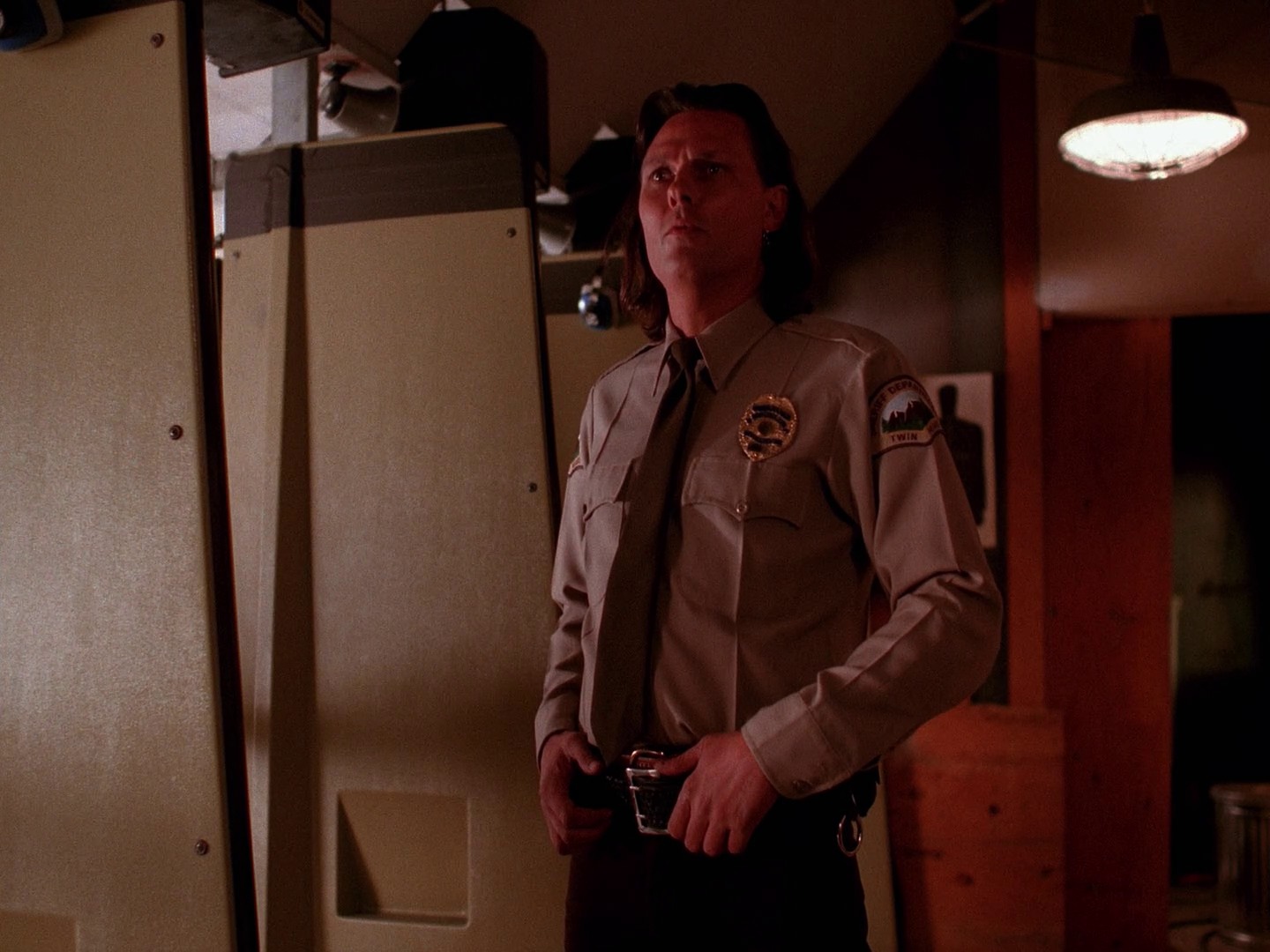
At the firing range, talk about women moves between generalisation, personal disappointment and Hawk’s specific account of the woman in his life. The contrast matters. Cooper’s romantic wound is acknowledged without being fully narrated; Hawk’s response interrupts the assumption that every relationship must fit the same unhappy formula. The scene gives the investigators lives that do not disappear when they pick up their weapons.
Two ledgers, a planted shirt and a domino
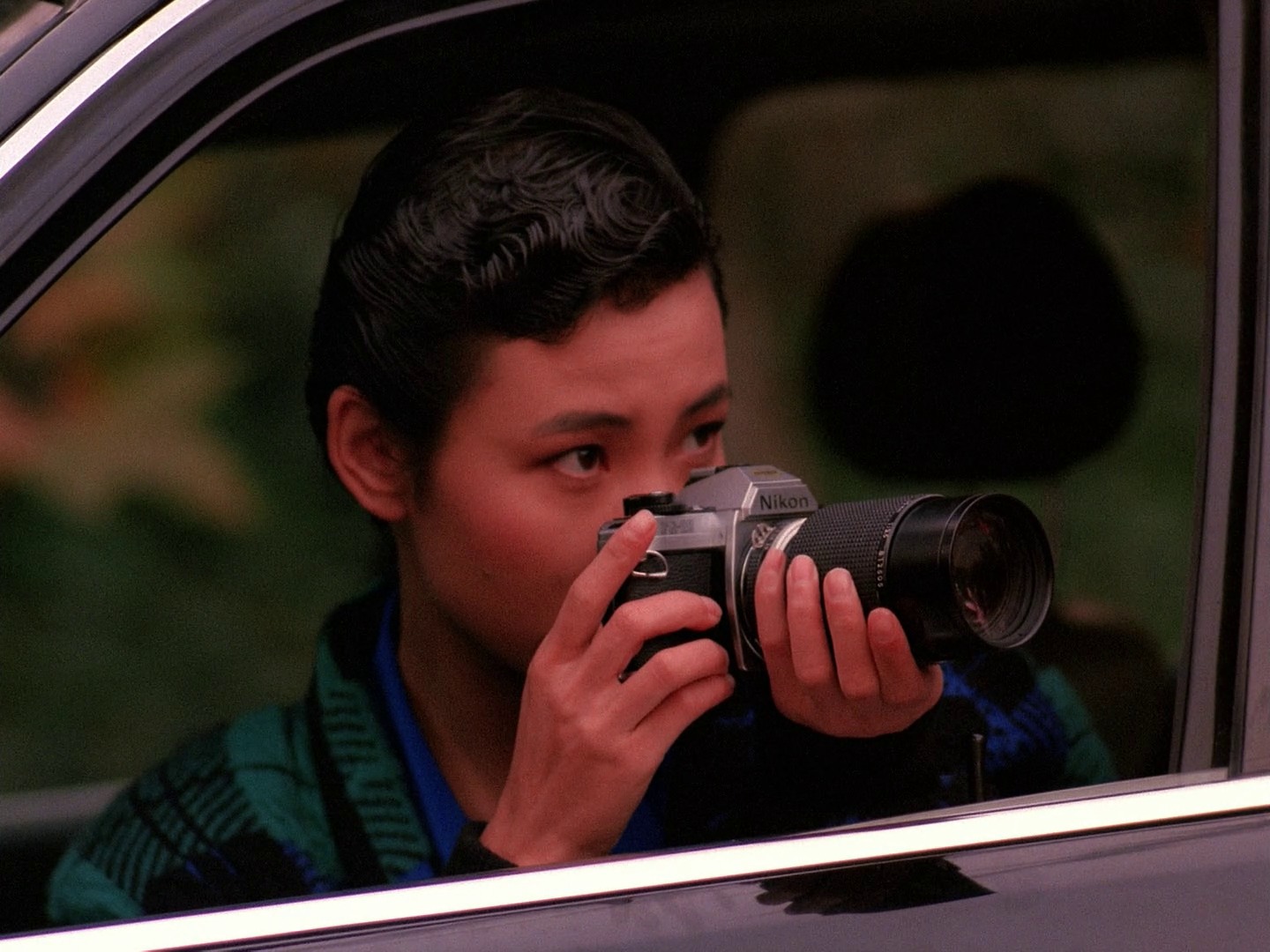
Josie’s camera records Ben and Catherine’s motel meeting. Their intimate arrangement and the plan for the mill become visible through surveillance from outside. Photographic evidence can establish a meeting without automatically explaining all the transactions behind it; Josie’s own dealings will make that limitation important.
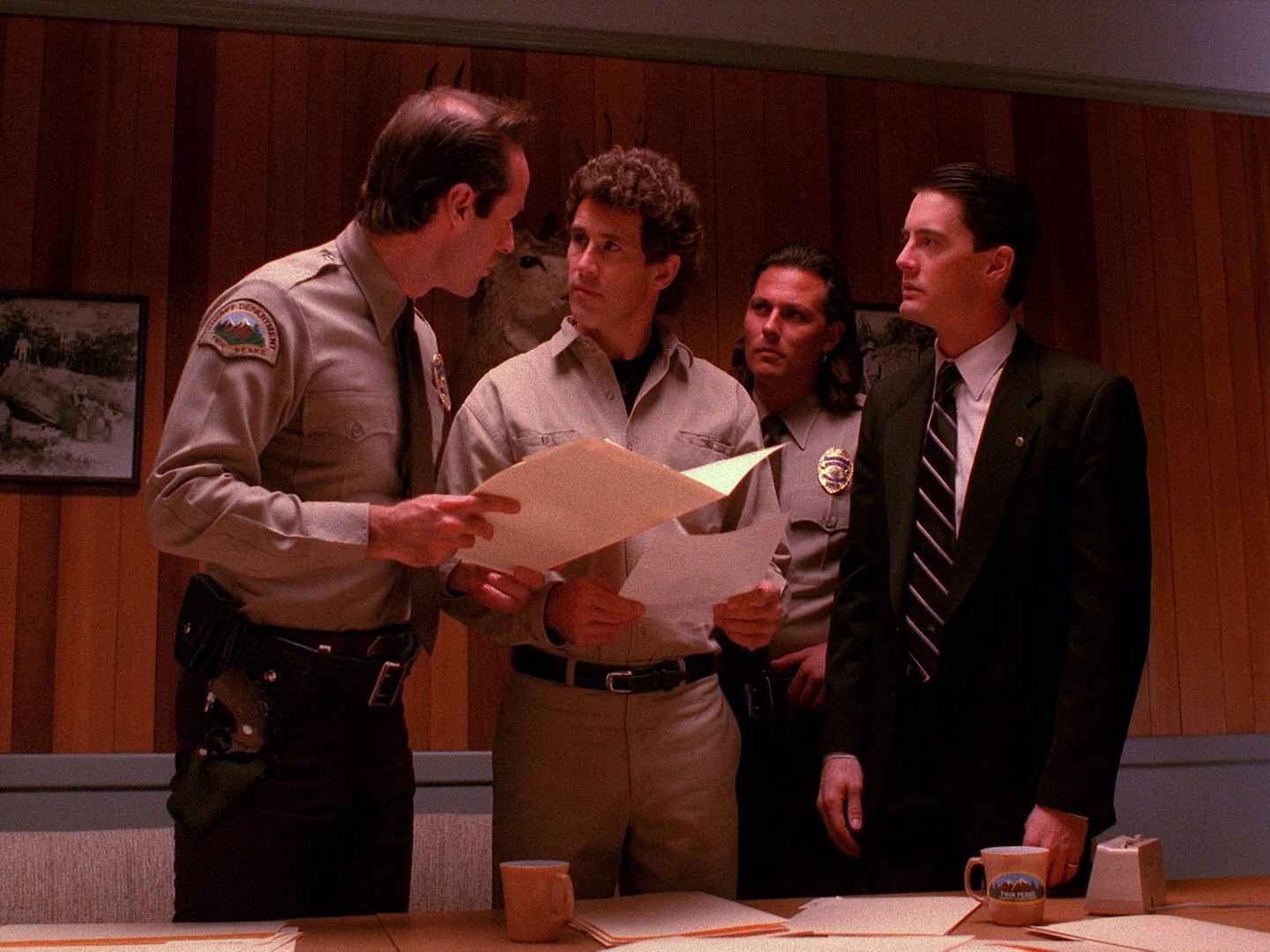
The Waldo connection sends the investigators towards Jacques’s apartment just as Bobby plants Leo’s shirt there. This is a sharp warning about evidentiary appearance. An object can genuinely belong to one person and still be deliberately placed to create a misleading relationship with someone else’s room.
Ben’s meeting with Leo brings the mill conspiracy and the violence around Bernard into the same exchange. A crime that appears local and immediate is being enlisted in a larger commercial project. At the same time, James and Donna discover that the necklace is no longer where they buried it. Their attempt to preserve a private truth has made an important object unavailable to the official enquiry.

The owl above the search produces an image of watchfulness without assigning a simple explanation to it. The scene does not tell us to replace investigation with a symbolic answer. It enlarges the feeling that the characters’ private actions are being observed from outside their own frame of knowledge.
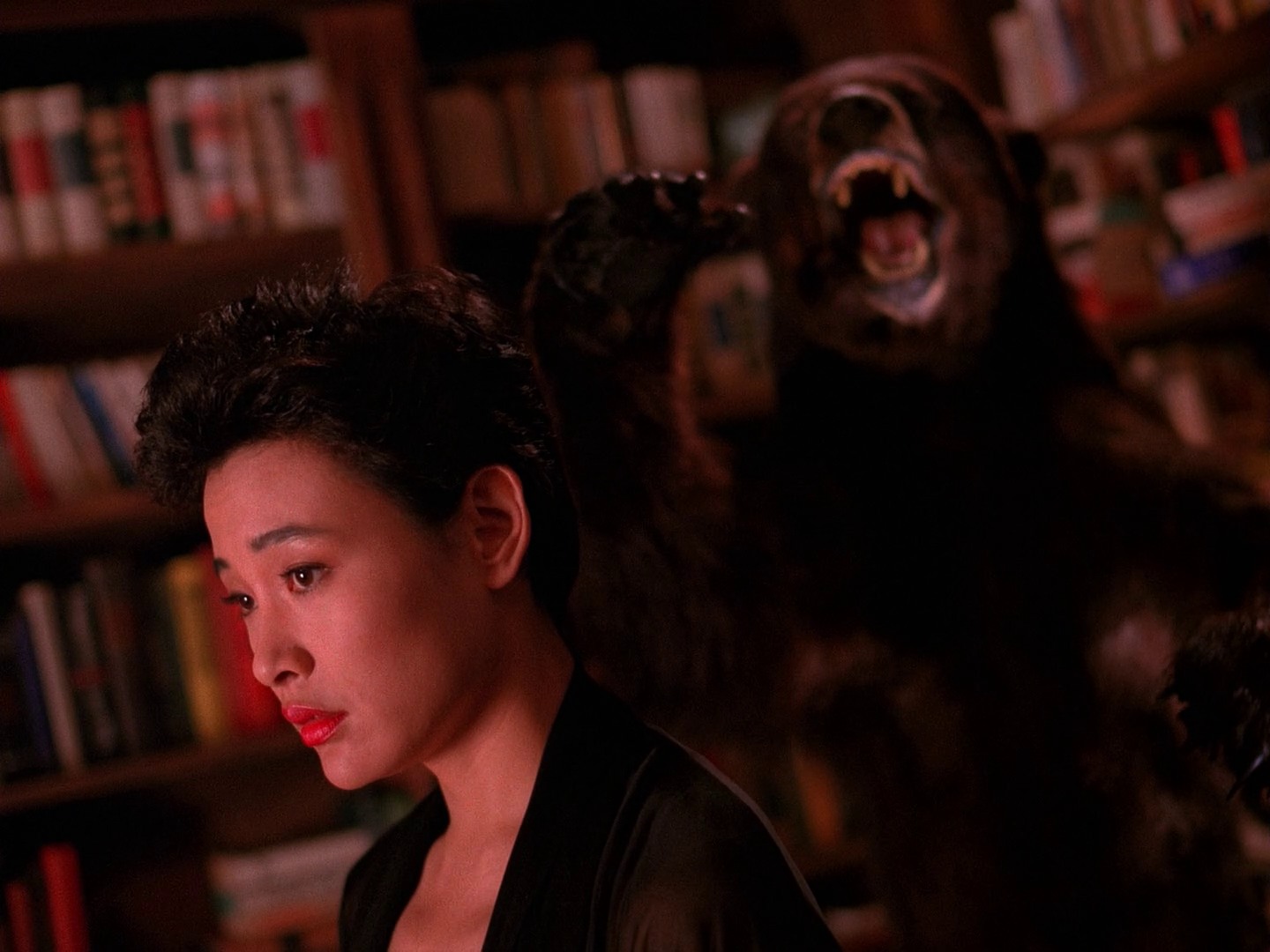
The final message to Josie makes the domino a sign of an existing relationship. Hank’s telephone call is effective because the object has already arrived. Written image and spoken demand work together: a small token can carry enough shared history to alter the meaning of a room.
Voices, sound and dialogue
Lucy’s two kinds of report
When Truman asks what is happening, Lucy gives him a detailed account of Invitation to Love: the altered will, competing sisters and threatened killing. He has to narrow his question to what is happening at the station. The exchange is funny because her answer is coherent and attentive, but addressed to the wrong story. It also makes the audience conscious of how many plots a listener is expected to retain.
Later, her report over the station’s public-address system exposes a practical misunderstanding. The veterinary files are alphabetised by pet name, not sorted into a convenient bird file. The detectives’ confident instructions cannot make the records obey their assumptions. Lucy’s eventual discovery of Waldo gives that apparently comic administrative obstacle an investigative payoff.
A gunshot before an explanation
At the motel, the gunshot arrives before Andy’s later account of dropping his weapon. The immediate alarm belongs to the search for Gerard; the subsequent explanation relocates the danger within the investigators’ own preparation. The firing-range scene then combines professional instruction with personal disclosures about Lucy and commitment. It develops Andy’s vulnerability while establishing the practice that matters when he protects Truman in the finale.
The same farewell becomes a threat
After the parole hearing, Hank’s casual farewell to Norma belongs to the language of an approaching reunion. At the episode’s end, he uses the same farewell after asking whether Josie received his message. Nothing in the words alone has become more explicit; the domino message and the identity of the recipient change their force. The telephone lets a familiar, everyday expression carry a threat without spelling out the agreement behind it.
Gordon’s speakerphone reports offer another contrast. They bring forensic information into the station while also carrying Albert’s complaint against Truman. Official channels deliver both evidence and institutional friction; Cooper has to decide what to act on and what to contest.
A route through Episode 4
- The Palmer house. Hawk’s sketch, Sarah’s necklace vision and Donna’s recognition.
- The station. Lucy’s television account; Jacoby’s interview; Cole’s report and the drawing.
- The motel. Josie photographs Ben and Catherine; the officers question Gerard.
- Private plans. Audrey and Donna meet at the mirror; Hank appears before the parole board.
- Objects and records. The veterinary practice, twine, Leo’s shirt and the gun.
- Different forms of intimacy. The firing range; Norma and Shelly; James and Maddy.
- The perfume-counter route. Audrey speaks to Ben; Waldo’s file identifies Jacques.
- Converging deceptions. Bobby plants the shirt; the apartment is searched; Ben meets Leo.
- Missing objects and messages. The necklace search, the owl, Pete and Josie, then Hank’s call.
Credits, introductions and connections
Dialogue and sound-cue references in the voice study follow the episode’s English SDH subtitles; interpretations are Lyncharium’s.
Primary screen source: regular Episode 4, Twin Peaks: From Z to A. The opening credits identify Robert Engels as writer and Tim Hunter as director. The scene and dialogue readings are Lyncharium’s analysis of the episode, distinct from production testimony.
Regular Episode 4 follows the pilot; services that count the pilot first list this as Season 1, Episode 5. See the episode index and the separate introductions, recaps and previews.