Twin Peaks: Episode 3 — Rest in Pain
1990 · Written by Harley Peyton · Directed by Tina Rathborne
A funeral cannot contain the town’s grief. Follow the competing claims on Laura’s body, Bobby’s accusation and the secret community inside the Bookhouse.
Regular Episode 3, after the pilot. Often listed as Season 1, Episode 4. Contains episode spoilers.
Explore this episode
An answer that cannot be remembered

Audrey’s breakfast visit gives Cooper an actionable lead: Laura and Ronette both worked at the perfume counter. Her questions about his dream place a much less manageable kind of information beside it. Cooper can describe an extraordinary experience, but the solution he believed he possessed on waking is no longer available as a straightforward statement. Certainty has survived longer than recall.
At the station, Truman and Lucy become the audience for Cooper’s reconstruction. Lucy’s practical questions resist the authority that his confident delivery might otherwise claim. The detective must turn a private dream into a public account, and that translation exposes its gaps. The scene continues Episode 2’s dream study: an apparent answer becomes material for future investigation.
Audrey’s information and Cooper’s recollection do not cancel one another out. The episode lets ordinary employment history coexist with a dream that needs interpretation. That mixture is characteristic of the investigation at this stage: a clue can originate in a conversation, an object, a forensic test or an unstable memory, but it still has to be followed.
Who has a claim on Laura’s body?
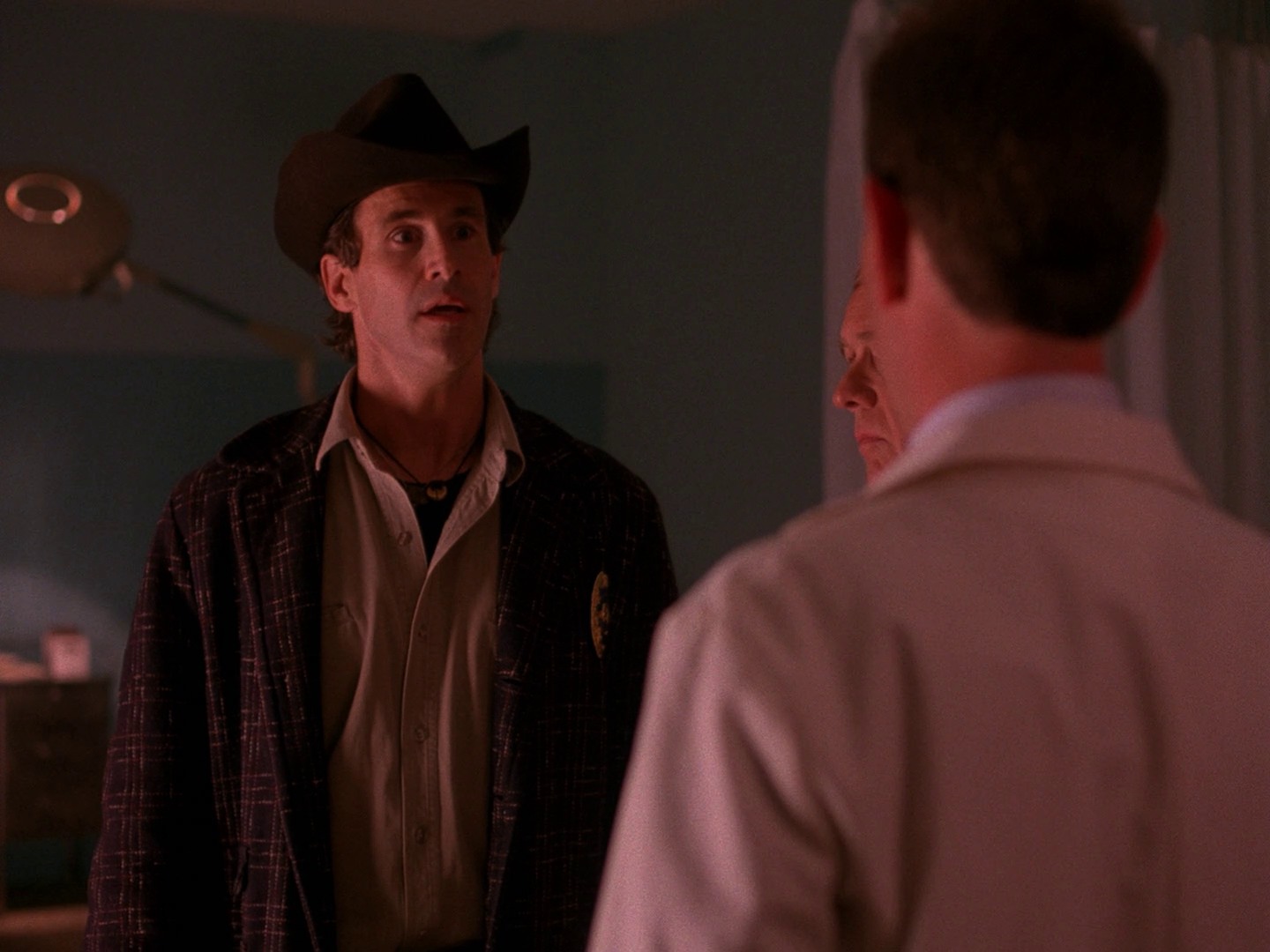
The morgue dispute is about time as well as authority. Albert wants to continue his examination; the family and town need the body released for burial. Neither need is imaginary. His contempt for the people around him makes the disagreement explosive, and Truman’s punch converts an argument about professional conduct into a physical disruption of the examination room.
Cooper’s intervention does not require him to discard Albert’s evidence. Later, Albert reports cocaine, differing restraints and material associated with Laura’s injuries. His reconstruction remains useful even while Cooper refuses to endorse the complaint against Truman. The episode separates the value of information from the ethics of its delivery.
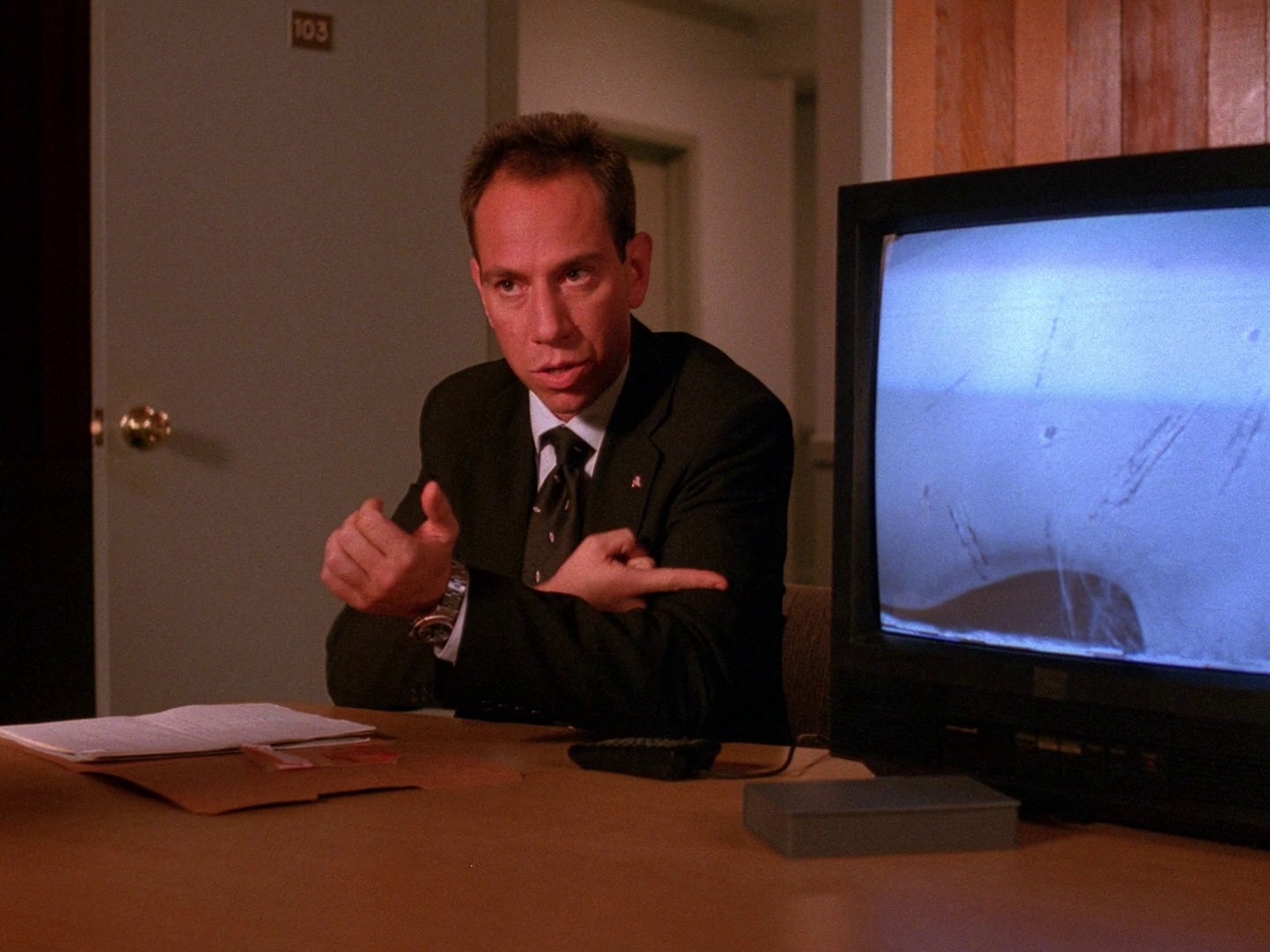
The plastic fragment marked with a J is especially important as an object whose meaning has not yet settled. Its evidentiary value depends on a later comparison. Read forward to the cabin and poker-chip discovery, where a small fragment begins to acquire a larger context. The dossier should not let later knowledge make the first appearance seem self-explanatory.
Cooper’s enthusiasm for the town also becomes visible here. His rejection of Albert’s manner and his interest in local property reveal how quickly an investigator can become emotionally invested in a place. That affection is attractive, but it complicates the idea that he occupies a perfectly detached position.
The households before the funeral
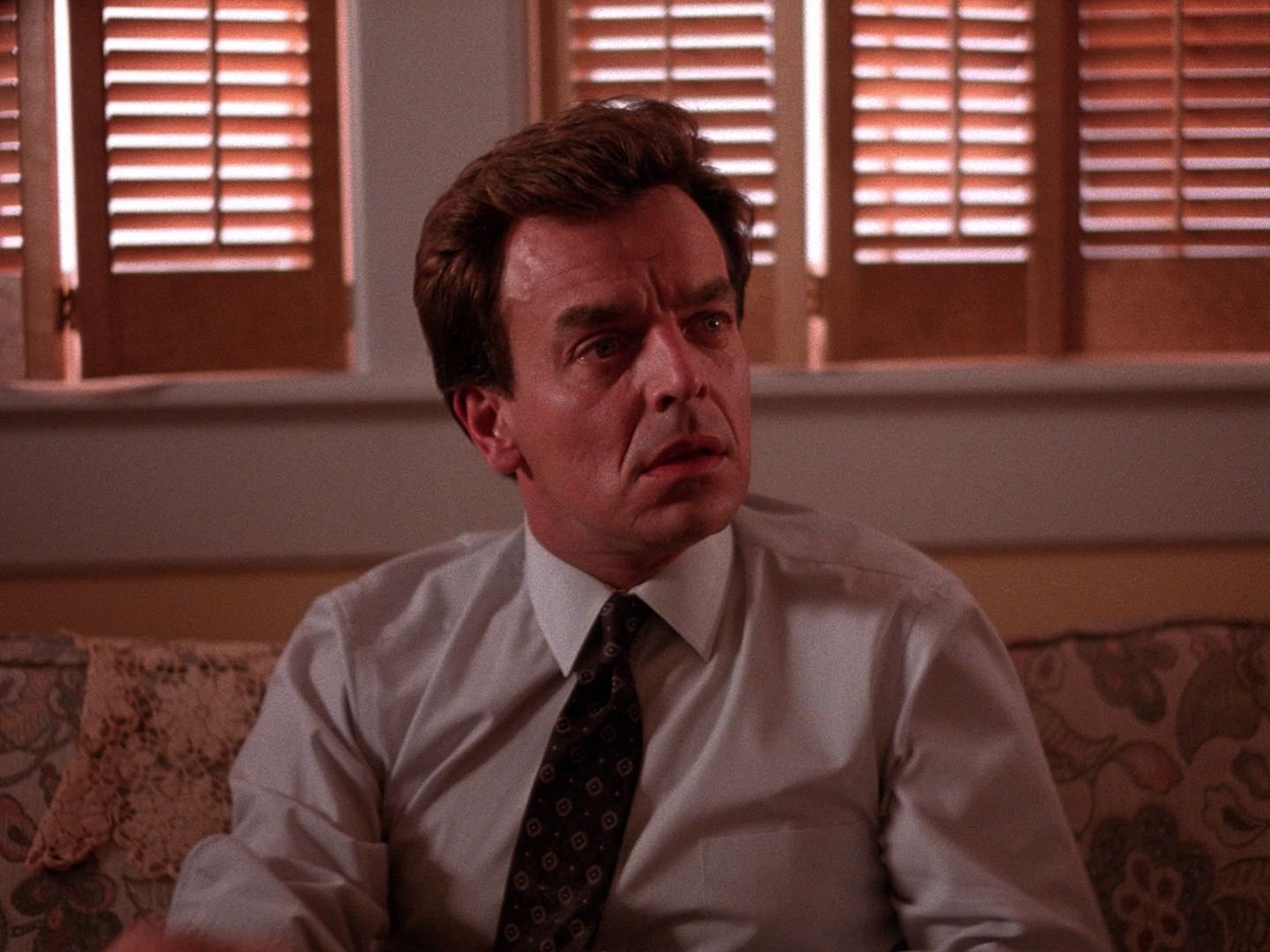
Maddy’s arrival brings Laura’s likeness back into the Palmer house through another person. Leland has just been absorbed in the television melodrama Invitation to Love, where family crisis is already being performed for a viewer. The movement from televised drama to a startling family resemblance layers fiction, grief and recognition without making Maddy merely an extension of Laura.
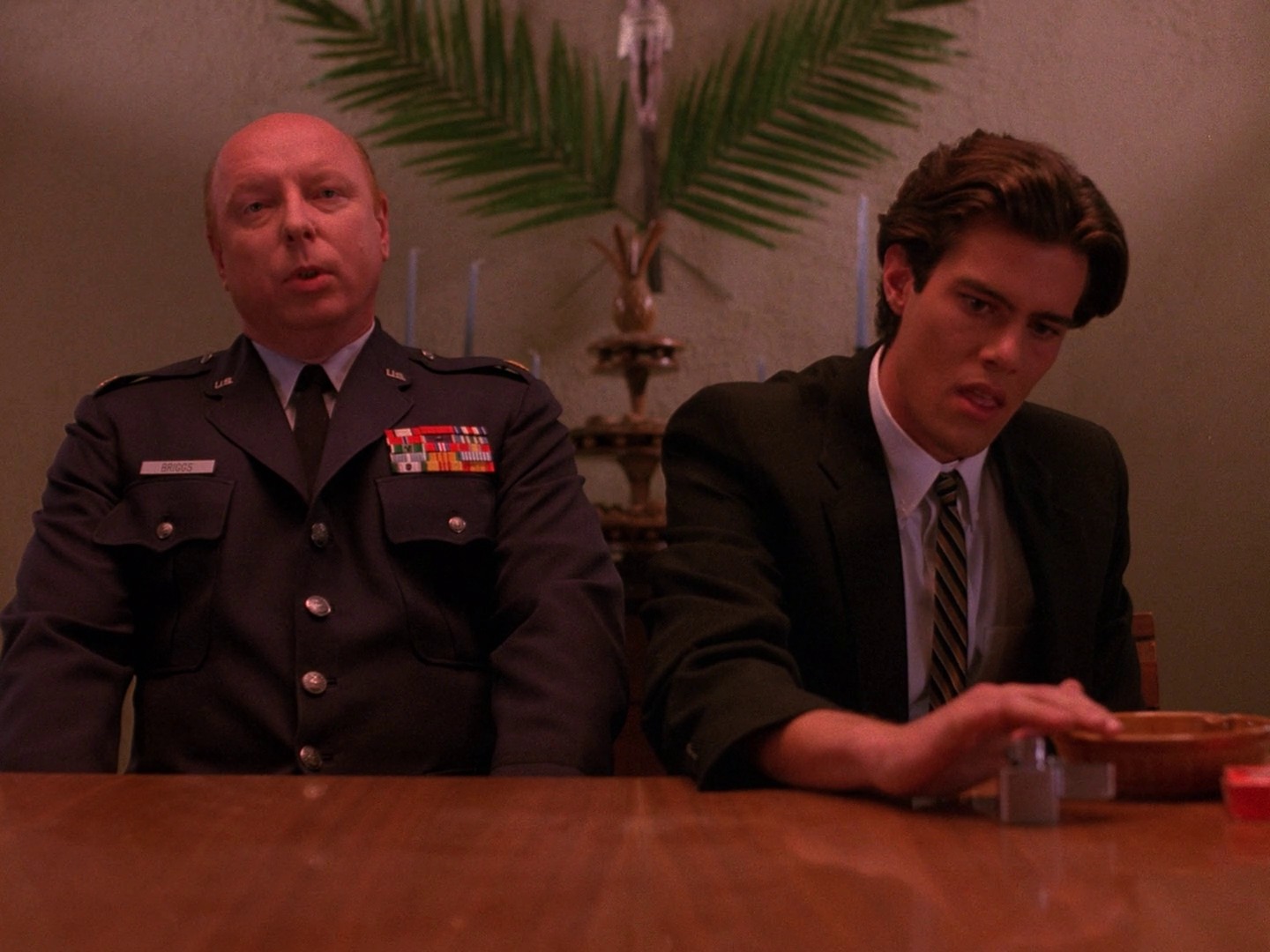
Major Briggs asks Bobby to understand his attendance at the funeral within a larger account of responsibility. Bobby’s resistant posture makes the family table an uncomfortable rehearsal for his later public confrontation. His behaviour at the graveside has a social preparation: he is already struggling with the forms through which adults expect grief to be expressed.

Nadine and Ed’s private exchange is gentler. Her vulnerability and their physical closeness interrupt the temptation to treat the drape-runner story as nothing but a comic detour. The episode pauses over people preparing to leave home, letting the funeral gather emotional conditions that existed before anyone reached the cemetery.
Audrey watches another family dispute through a concealed opening at the hotel. The circular viewing aperture belongs to the scene’s point of view. It is a purposeful restriction of vision, not empty framing around the image: the architecture allows her to witness an argument while keeping her apart from it.
Laura’s funeral: a community loses its composure
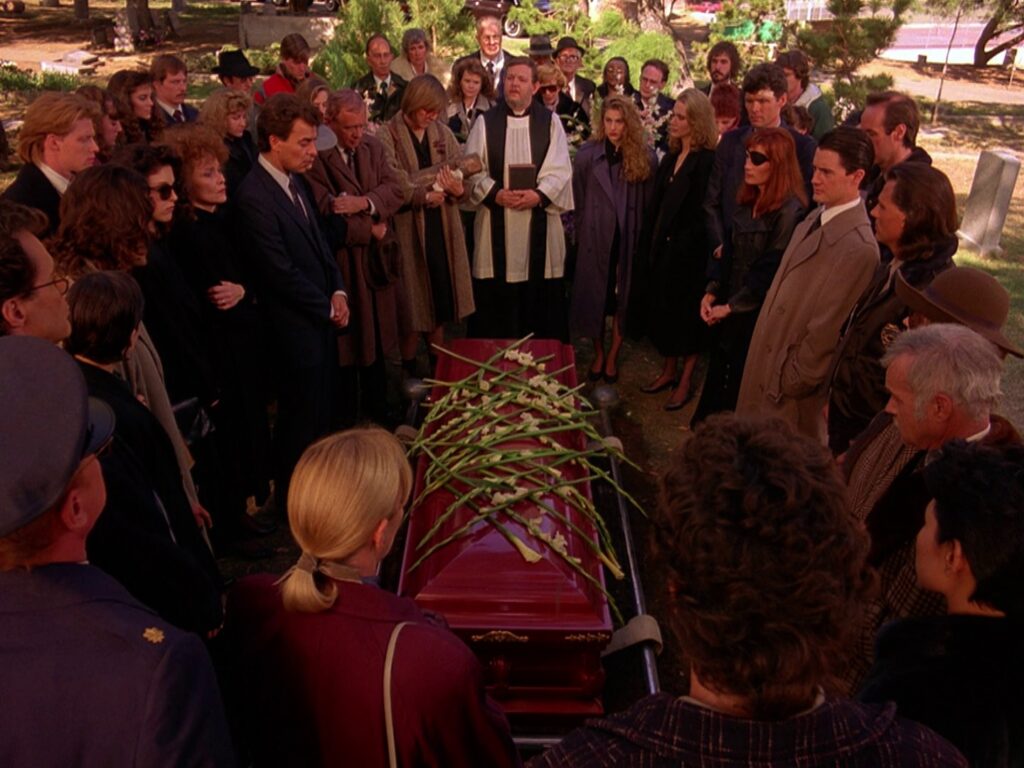
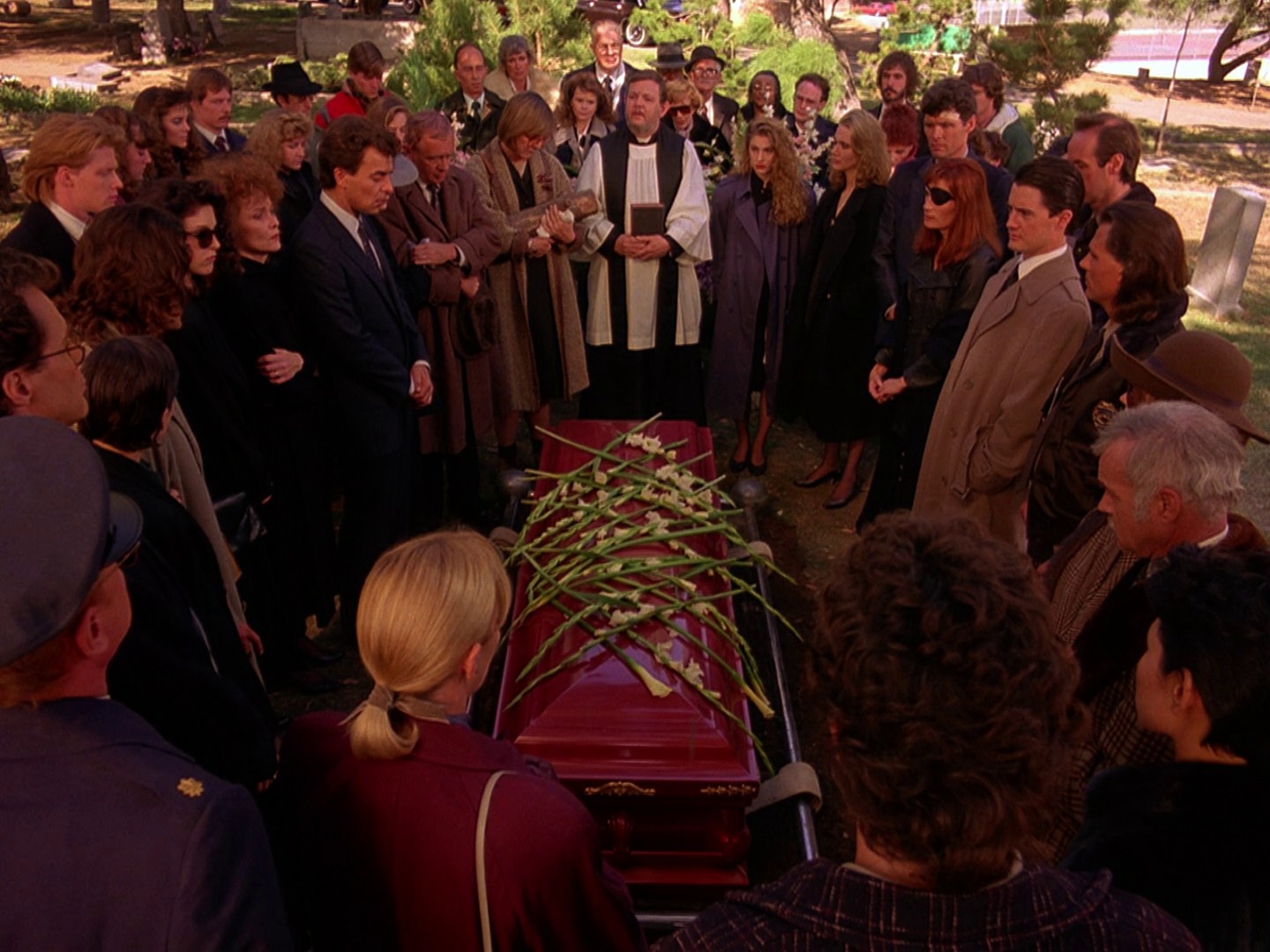
The funeral first presents an organised gathering. The coffin, minister and surrounding mourners establish a shared centre; reaction shots then divide that apparent unity into individual experiences. James remains apart before approaching. Audrey watches. Bobby’s face carries a different pressure from the formal words being spoken over the grave.
Bobby’s accusation changes the scale of responsibility. He does not provide a literal confession on behalf of the town. He accuses the people present of failing to recognise Laura’s distress while she was alive. The outburst challenges the comforting idea that a community can prove its care simply by assembling after a death.

James’s movement towards Bobby threatens to turn the service into a confrontation between the young men. Leland’s leap onto the coffin then changes the scene again. Grief becomes a bodily action that the ceremonial machinery cannot accommodate. The repeated movement of the coffin makes the moment agonising and grotesquely comic at once.
The funeral and its witnesses · 4 images
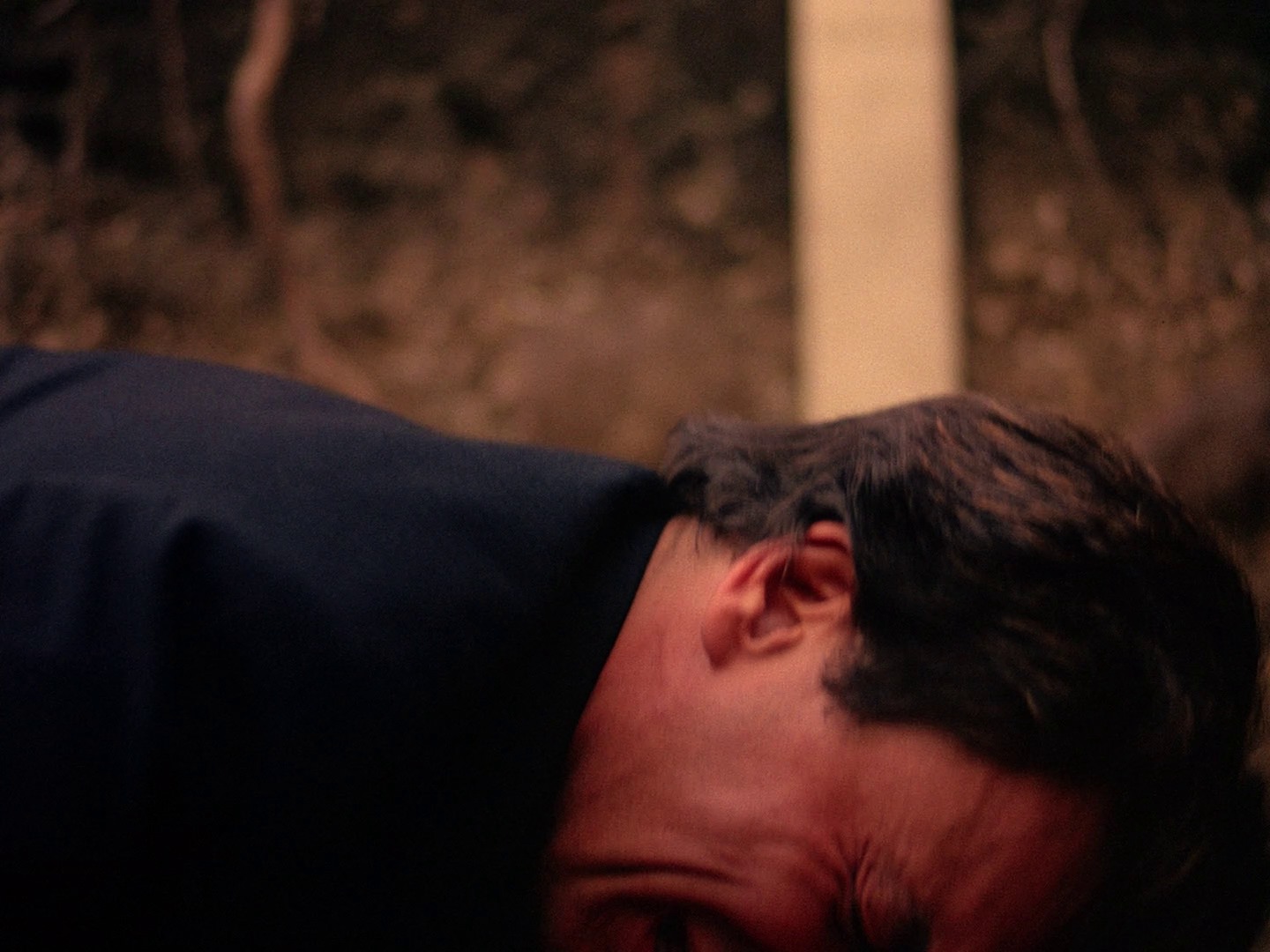
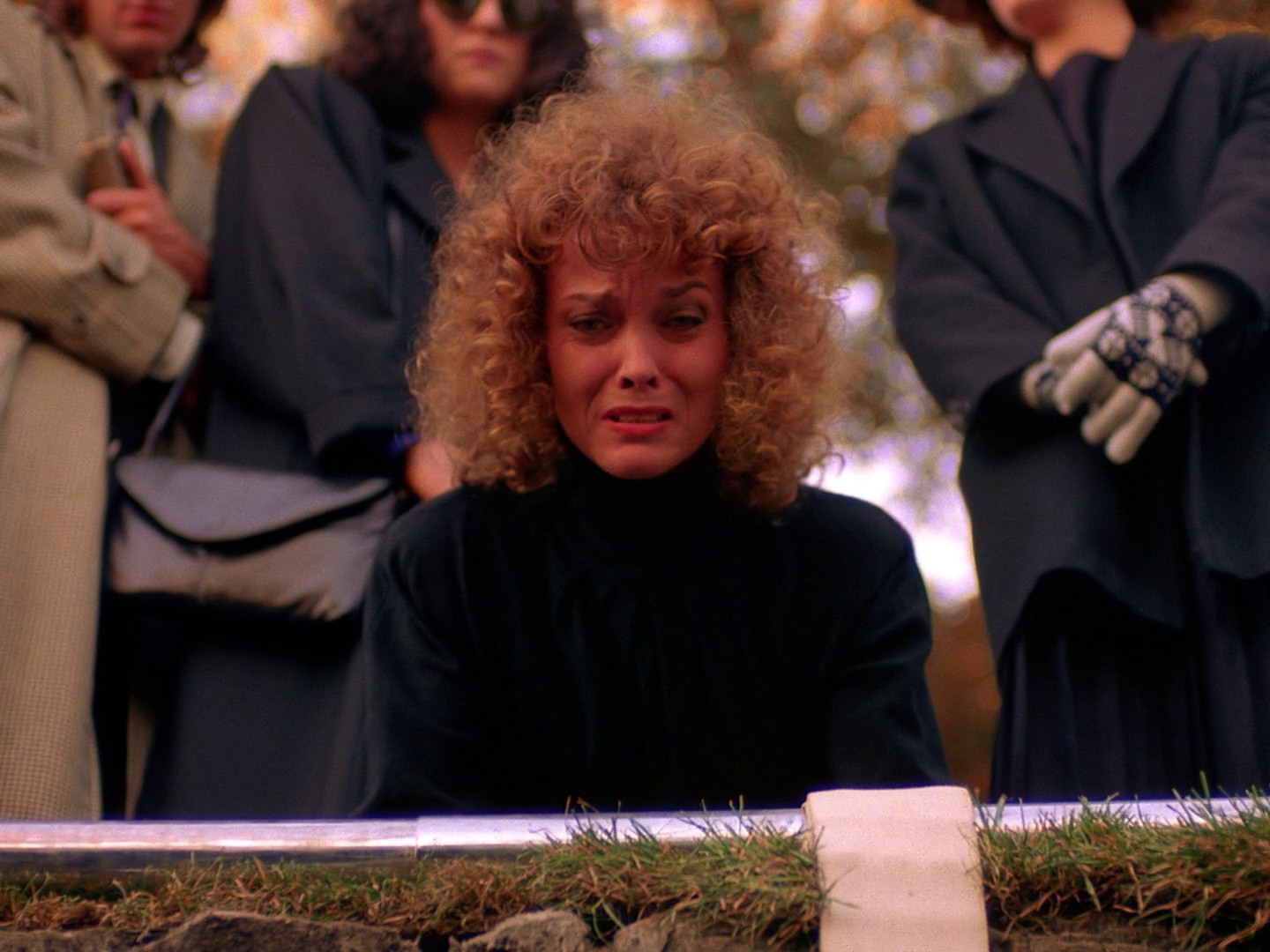
Sarah’s reaction matters as much as the extraordinary action at the centre. Cutting back to her prevents the malfunction from becoming an isolated comic effect. The scene is about the people forced to watch, their inability to stop what is happening, and the failure of a public ritual to contain a private loss.
Shelly later retells the incident at the diner, and its movement becomes an anecdote that can amuse someone who was not there. The series does not supply one permanent tone for the funeral. It shows an event being transformed by the person recounting it and the audience receiving it. That is a useful companion to the later hotel party, where Leland’s distress is again absorbed into other people’s entertainment.
Margaret’s introduction
The Log Lady introduction links truth, ignorance, beauty and tears. Its attention to the act of crying is especially suggestive beside the funeral’s different witnesses. For the director’s retrospective account of returning to the production, see Tina Rathborne’s recollection.
Pie, secrecy and the Bookhouse Boys
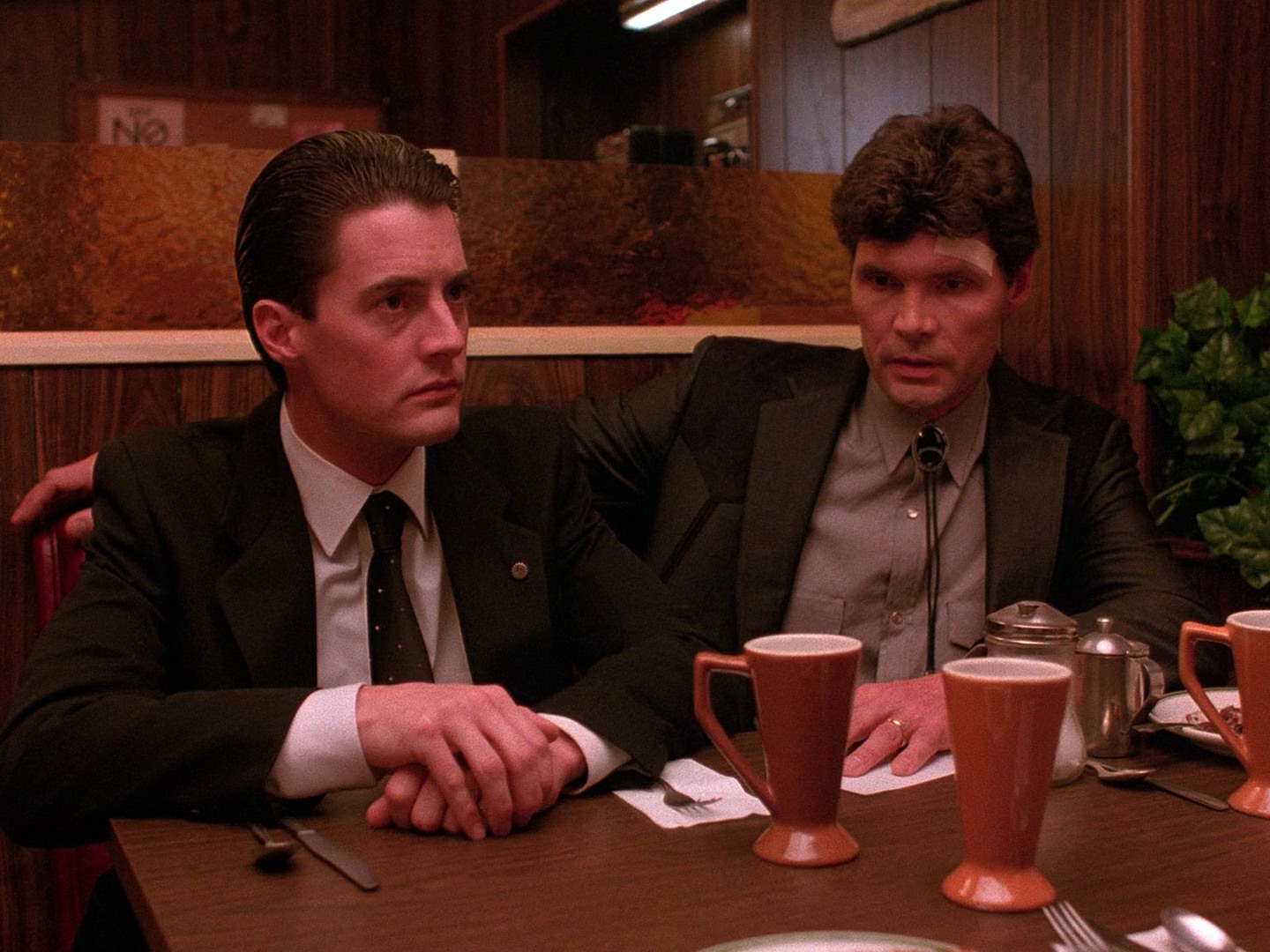
Cooper’s conversation with Truman, Hawk and Ed moves from food and sociability towards the town’s concealed organisation. The transition is important: the Bookhouse Boys are introduced through people whom Cooper is beginning to trust. Their unofficial work grows out of the same local attachment that Albert has dismissed.
Truman describes an evil in the woods that predates the current investigation. His speech is a character’s account of what the town confronts, not a complete supernatural rulebook. The reference changes the scale of the case while leaving the immediate work—drugs, routes, names and suspects—intact.
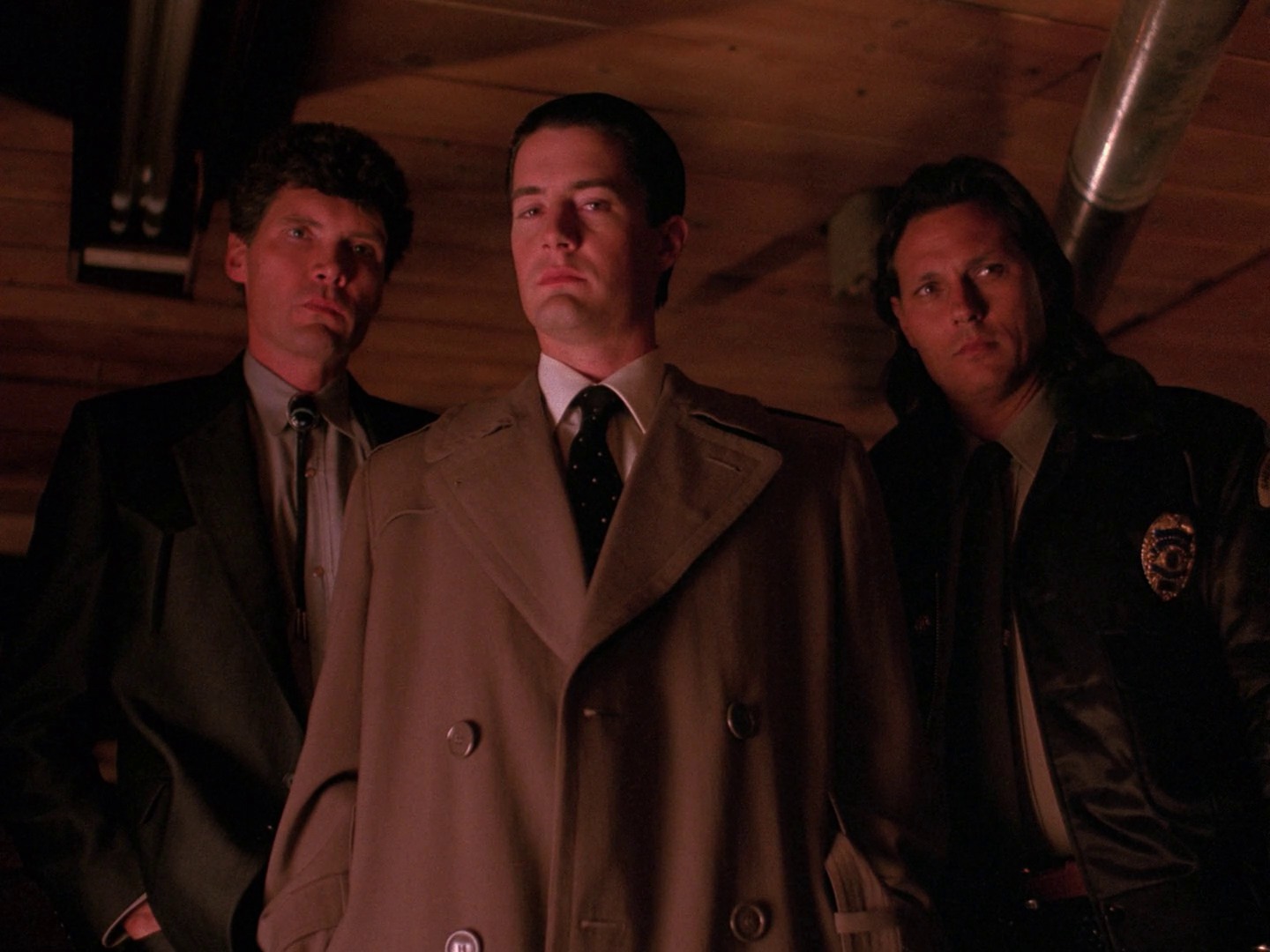
The Bookhouse itself combines sheltering books and a restrained suspect. Its appearance complicates the reassuring account just given at the diner. Bernard Renault’s interrogation reveals an organisation able to act outside ordinary procedure. Cooper notices how the warning arrangements might expose Bernard’s brother; informal local knowledge can be productive without becoming ethically simple.
The surrounding plots continue that uncertainty. Leo’s movements and calls connect him to the Renault investigation. Shelly conceals a gun. Josie’s discovery of competing ledgers turns accounting into a material record of deception, while Catherine hides the book that could contradict her. The episode distributes danger through familiar rooms rather than keeping it at the edge of the woods.
After the mourners have gone
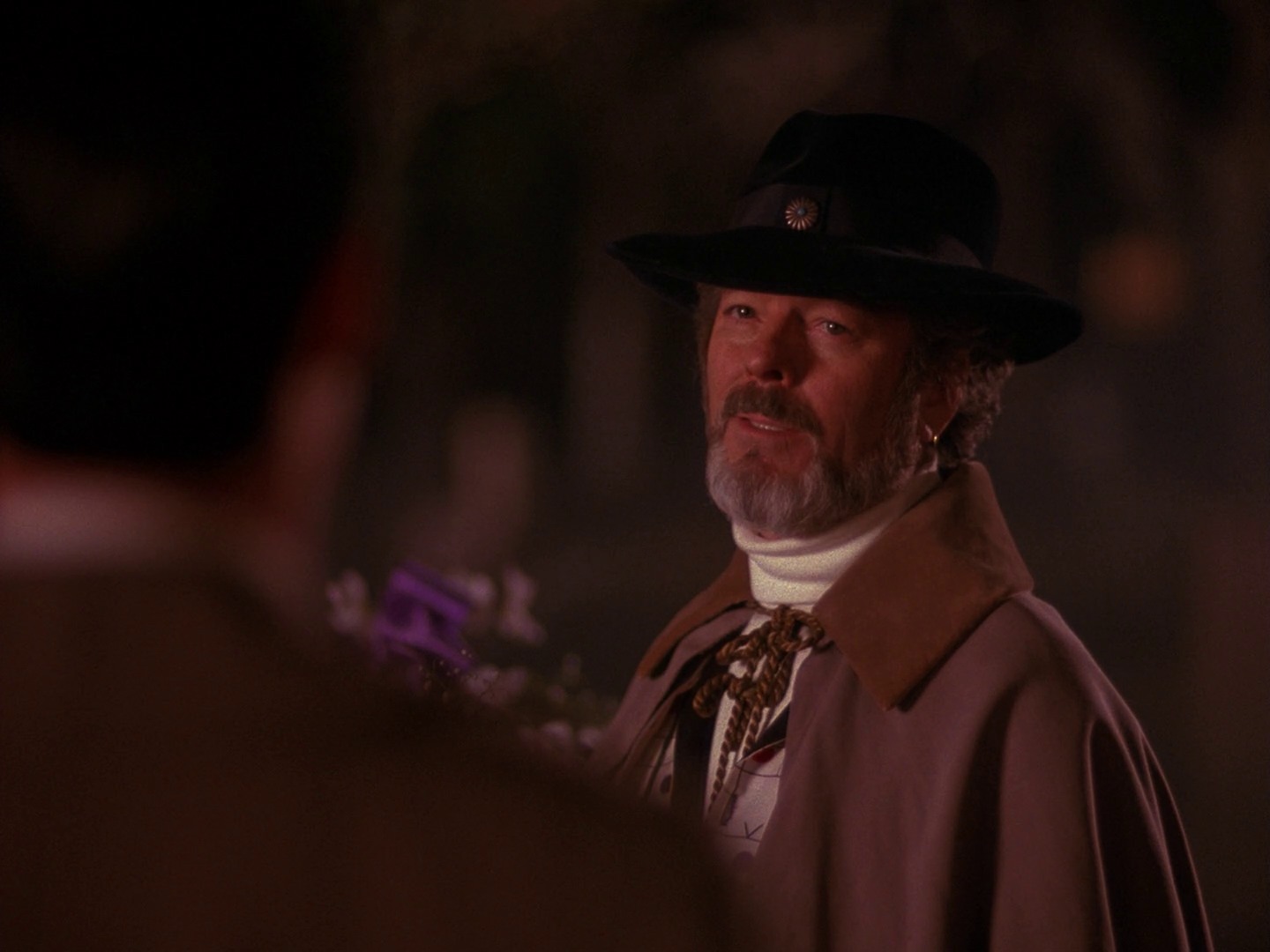
Jacoby’s late visit to the grave separates private mourning from the public service. Questioned by Cooper, he acknowledges a failure that his professional position cannot repair. The scene should not be flattened into a clue about a suspicious psychiatrist: his account also concerns how Laura unsettled the emotional defences of someone who was supposed to help her.
At the Roadhouse, Hawk and Cooper discuss the soul. Hawk offers an account associated in his dialogue with Blackfoot belief; its dramatic role is to bring a different conception of death into the evening. It remains a character’s formulation within the programme, rather than an independent ethnographic source.
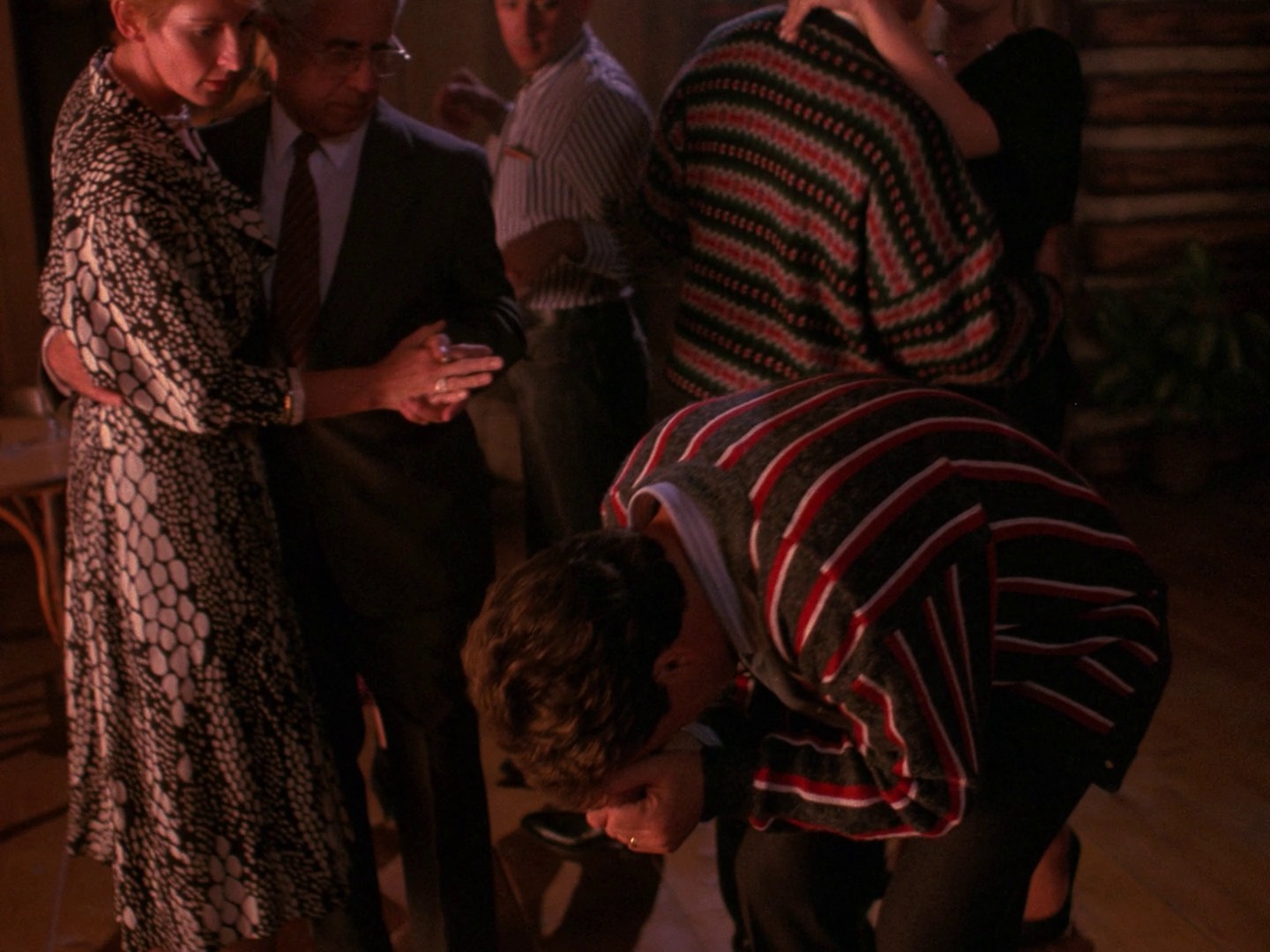
Leland’s dance makes the discussion physical. A social rhythm continues around a man whose grief repeatedly exceeds the forms available to him. Cooper and Truman move to help. The episode ends after an official burial has taken place, but the town has acquired no corresponding emotional closure.
Voices, sound and dialogue
Two calls into the Palmer house
Maddy’s arrival has a precise verbal double. As she calls for her uncle, Jade calls for her father on Invitation to Love. The episode’s subtitles place the two speakers together: a niece entering the Palmer household and a fictional daughter trying to reach the man behind a door. The resemblance between Maddy and Laura is therefore accompanied by another resemblance, between two appeals for a father figure’s attention. Leland is watching a family crisis when his own family interrupts it.
Who gets to speak at the funeral?
The minister’s account of Laura makes room for Johnny’s repeated assent before Bobby challenges the entire gathering. Those interventions do different things: Johnny participates in the ritual; Bobby disputes its reassuring account of the community. Earlier, Major Briggs has described ceremony as a route towards understanding and continuity. Bobby’s promise to overturn the funeral makes his later outburst an explicit rejection of that lesson.
When Leland clings to the coffin, the subtitles identify the motor’s whine and grinding. The mechanism adds an impersonal response to his repeated use of Laura’s name. At the diner, Shelly imitates his crying and her listeners laugh. A distressing event becomes something another speaker can reproduce for a different audience. The shift is in the act of retelling as much as in the event itself.
The dance that cannot become a conversation
At the Roadhouse, the subtitle cue identifies upbeat jazz while Leland repeatedly asks someone to dance with him. Ordinary invitations fail to secure the companionship he needs. Cooper’s intervention finally offers a different action: taking him home. Leland repeats that word rather than supplying a settled response. Compare the hotel party in Episode 5, where another dance is absorbed into the surrounding social performance.
A route through Episode 3
- Breakfast and dream recall. Audrey’s employment lead; Cooper tries to reconstruct the answer from his dream.
- The morgue. Albert, Truman, Hayward and Ben argue over the body’s release.
- Before the service. Maddy arrives; Norma faces the parole inquiry; Leo is questioned; the Briggs family prepares.
- Evidence and households. Albert reports his findings; Ed and Nadine speak; Audrey watches from concealment.
- The funeral. The service, Bobby’s accusation, James’s movement and Leland on the coffin.
- The town retells the event. Shelly’s diner account; Cooper meets the Bookhouse Boys.
- Parallel concealments. Bernard’s interrogation, Leo’s call, Shelly’s gun and the missing ledger.
- After dark. Jacoby at the grave; Josie and Truman; Hawk’s conversation and Leland’s dance.
Credits, introductions and connections
Dialogue and sound-cue references in the voice study follow the episode’s English SDH subtitles; interpretations are Lyncharium’s.
Primary screen source: regular Episode 3, Twin Peaks: From Z to A. The opening credits identify Harley Peyton as writer and Tina Rathborne as director. The scene and dialogue readings are Lyncharium’s analysis of the episode, distinct from production testimony.
Regular Episode 3 follows the pilot; services that count the pilot first list this as Season 1, Episode 4. See the episode index and the separate introductions, recaps and previews.