Twin Peaks: Episode 10 — The Man Behind Glass
1990 · Season 2, Episode 3 · Lesli Linka Glatter
Rooms protect and imprison. Donna meets Harold, Albert surprises Truman, and Jacoby’s recollection changes the investigation.
Season 2, Episode 3 / overall Episode 10. Contains episode spoilers.
Explore this episode
Harold’s room and the difficulty of leaving

Donna enters Harold Smith’s room carrying a task inherited from Laura’s routine. Plants, controlled light and Harold’s careful hospitality make the interior feel cultivated and defended. His inability to go outside changes the meaning of the visit: Donna can move between this room and the town, while he relies on people and stories coming to him.
The orchid intended for Laura’s grave gives the relationship an object that can cross that boundary. Donna is asked to carry something into a place Harold cannot visit. This is a form of trust, but it is also the beginning of a struggle over access to Laura. A person who stayed away from the public life of the town may hold knowledge unavailable to her closest friends.
The final discovery of a second diary makes that uneven distribution explicit. A familiar object does not simply return with extra pages. Its existence reveals that an earlier record could not be taken as the whole of Laura’s private writing.
Albert’s declaration changes the confrontation
The station briefing gathers recognitions of BOB alongside forensic details. Boots, cocaine, a magazine and a weapon belong beside accounts of dreams and sightings. The investigators are trying to make different kinds of evidence coexist without a settled hierarchy that can explain all of them.
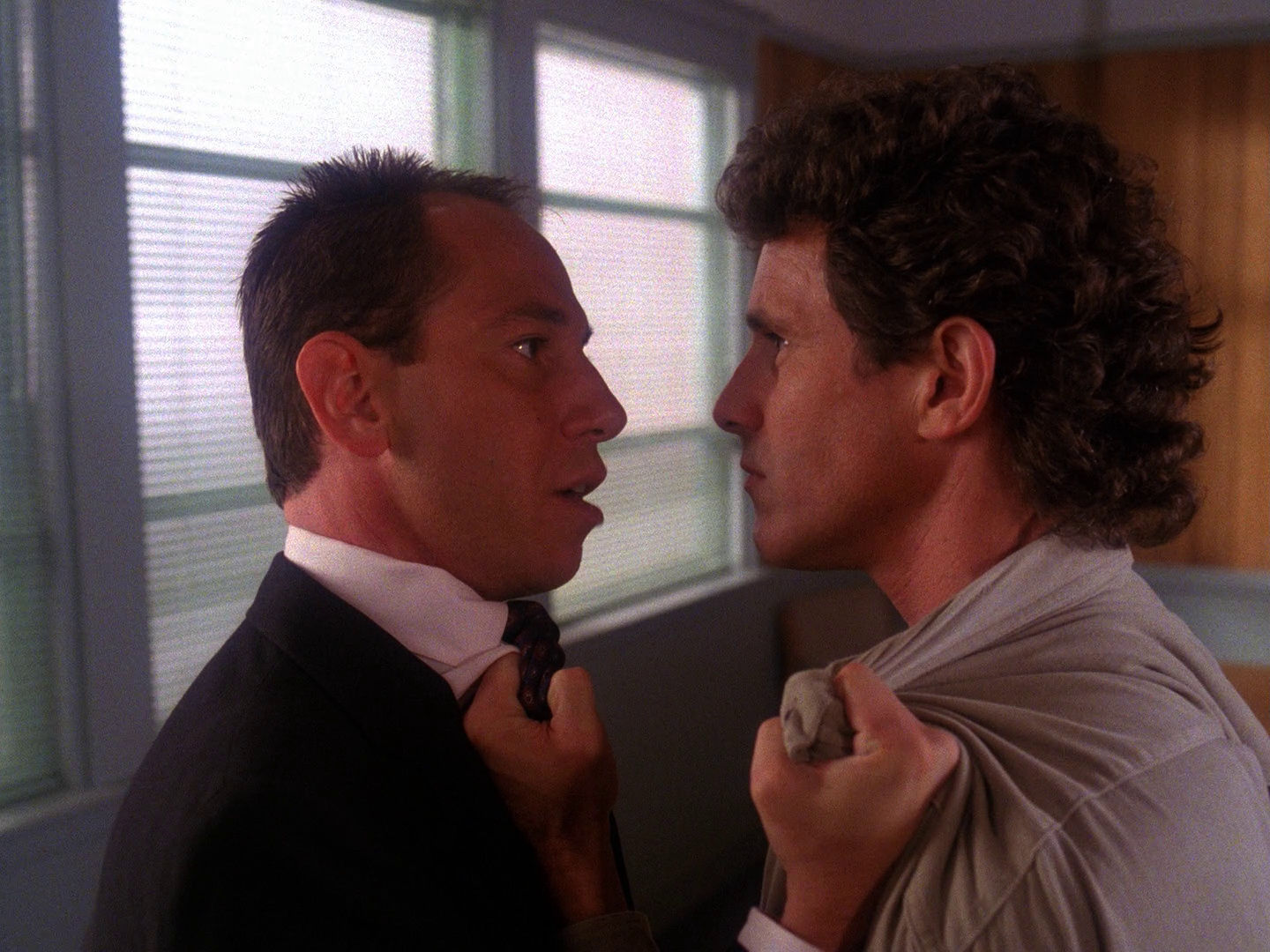
Truman’s physical confrontation with Albert appears to repeat their established antagonism. Albert’s answer changes the terms. He describes a commitment to nonviolence and invokes Gandhi and King, ending with an unexpected profession of love. The scene does not retroactively make every insult benign. It reveals that an abrasive manner and a declared ethical position can inhabit the same person.
Cooper’s delighted response recognises the surprise without dissolving the conflict that preceded it. The moment is funny because it arrives where another exchange of threats was expected. Its seriousness comes from offering a language of restraint inside a story increasingly organised around coercion.
Care that protects, care that controls
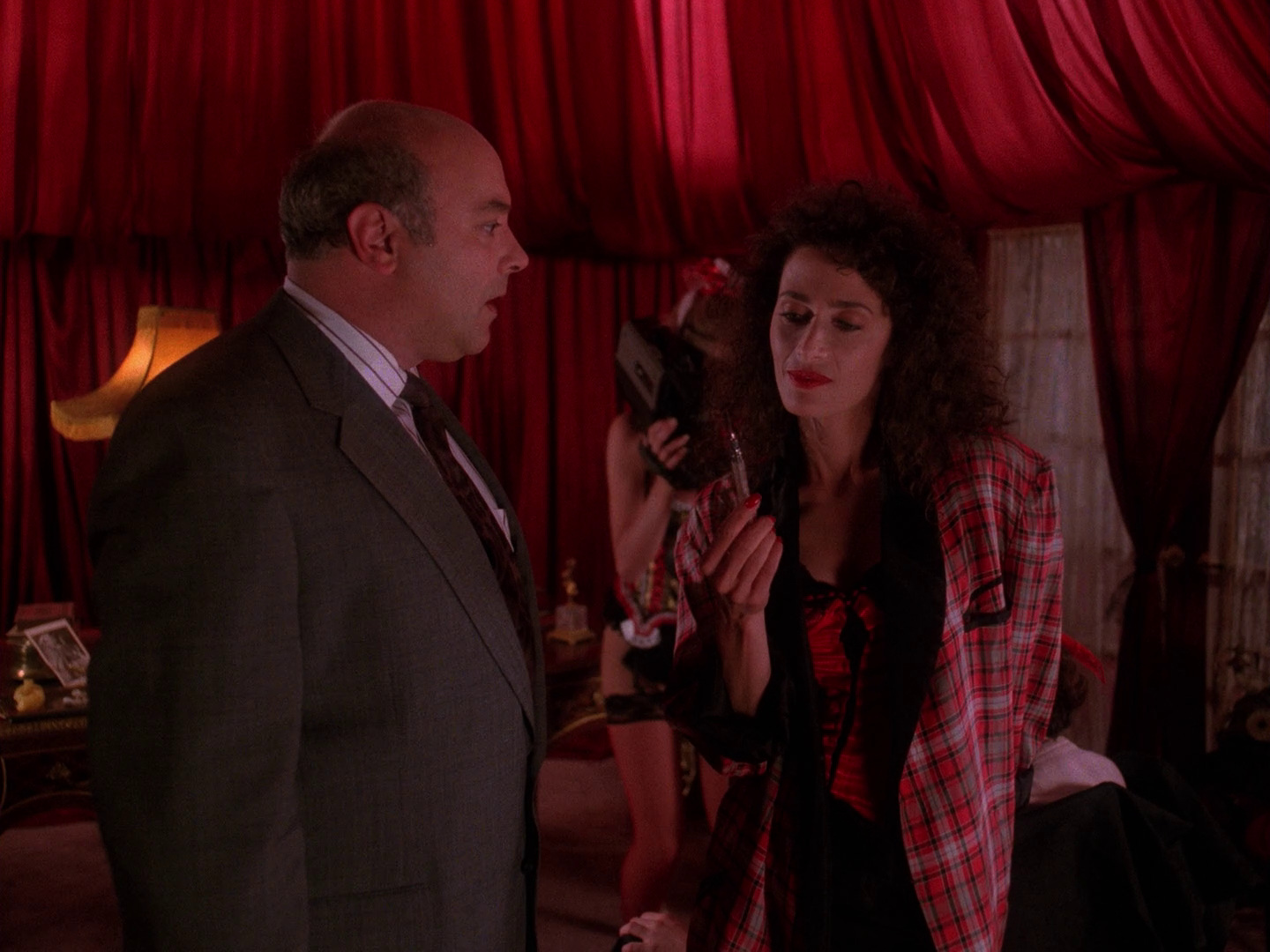
Jean Renault’s treatment of Audrey is staged as gentleness: he feeds her a caramel and attends to a person weakened by drugs. The apparent kindness is inseparable from the plan to use her in a ransom scheme and reach Cooper. The scene asks the viewer to read care as an action whose meaning depends on the power around it.
The appearance of kindness · 3 images
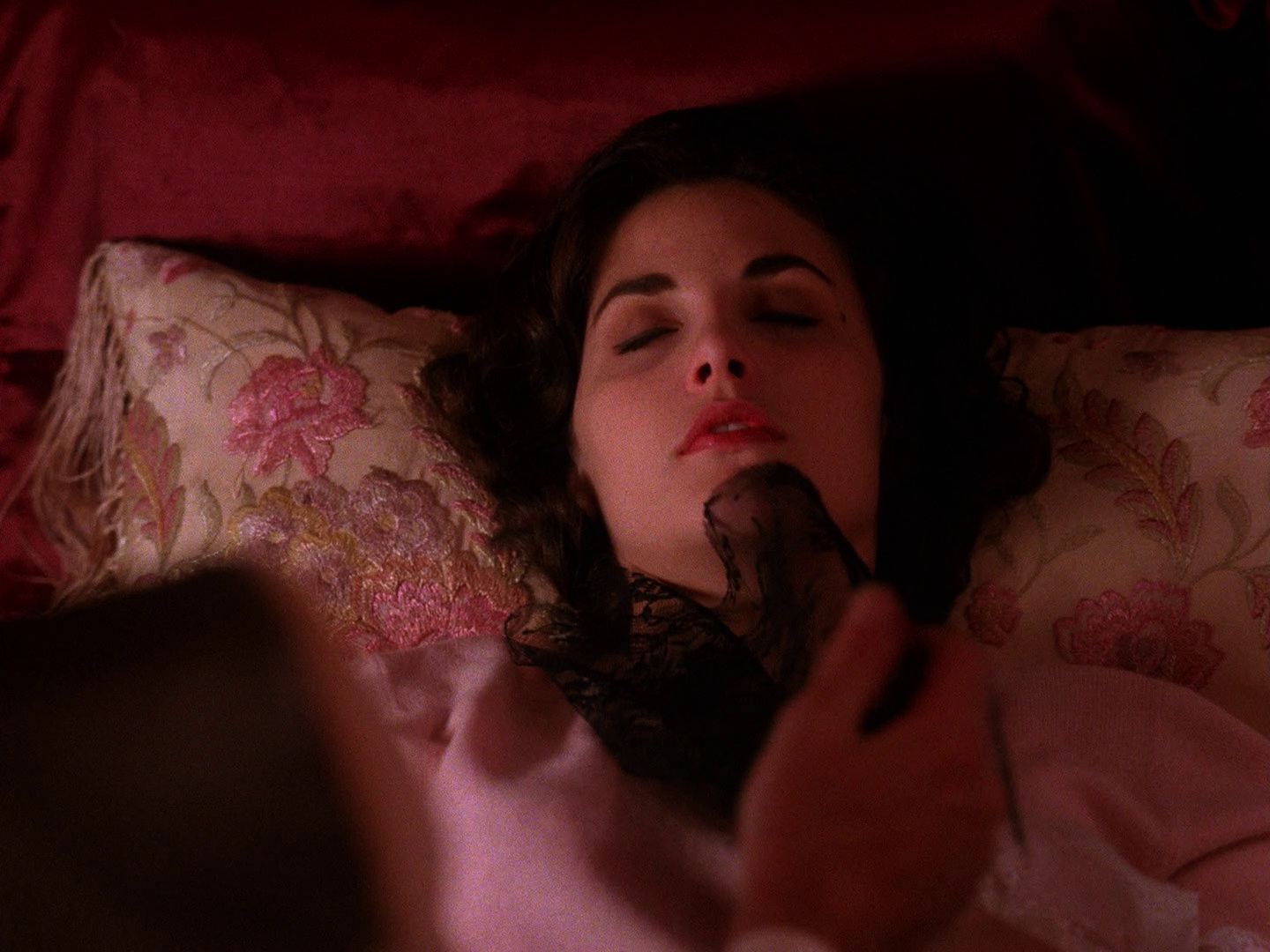
Ben’s conversation with Cooper provides a related failure of parental responsibility. Audrey’s danger is diverted into questions of inconvenience and reputation. The physical intimacy of Jean’s gesture and Ben’s evasive language are different forms of a system in which Audrey’s welfare is subordinated to other purposes.
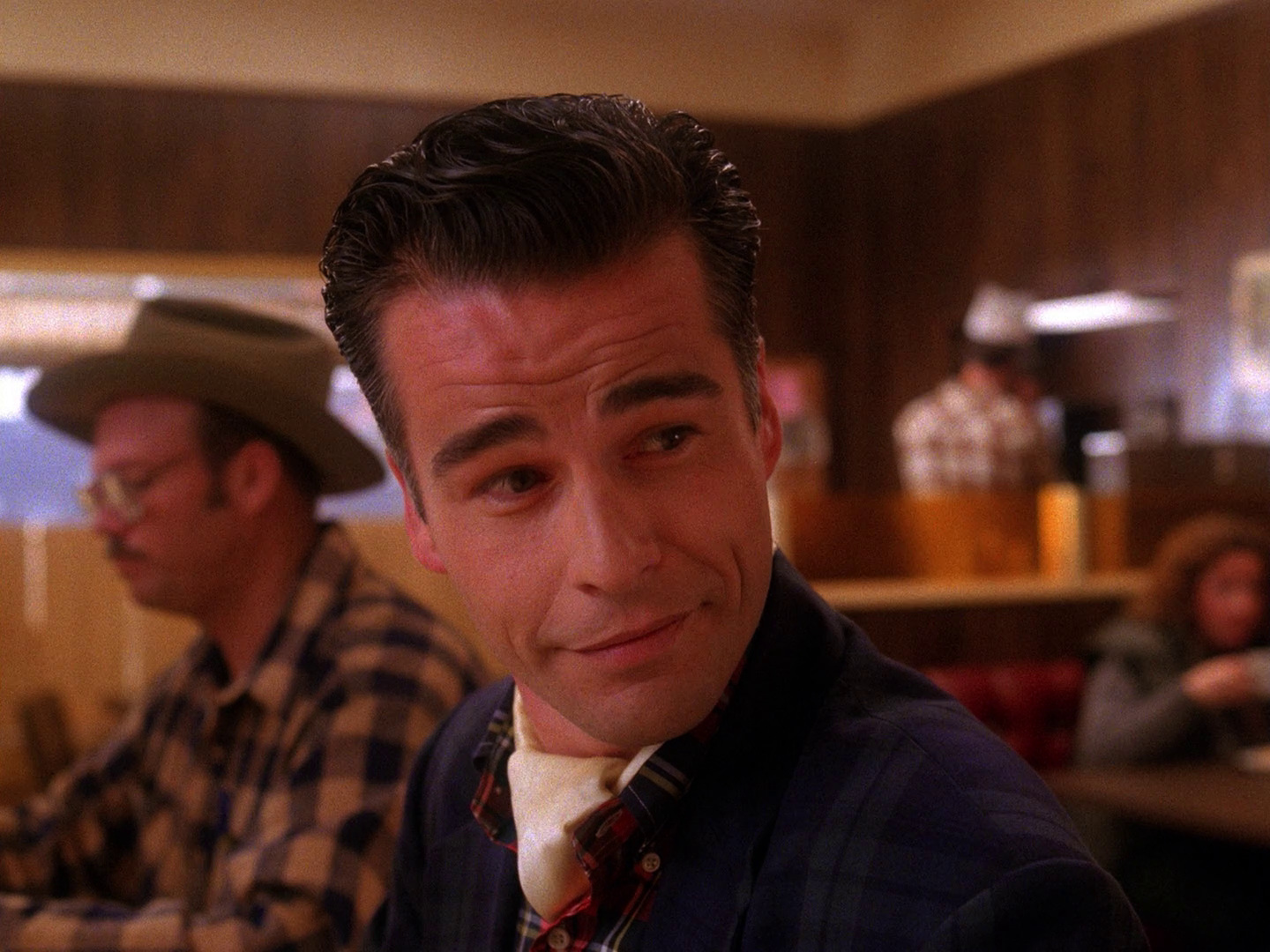
Lucy’s disclosure to Dick at the diner puts responsibility into an apparently lighter register. His earlier salesmanship and professional manner do not prepare him to respond adequately to the news. A pregnancy cannot be managed as another neat transaction.
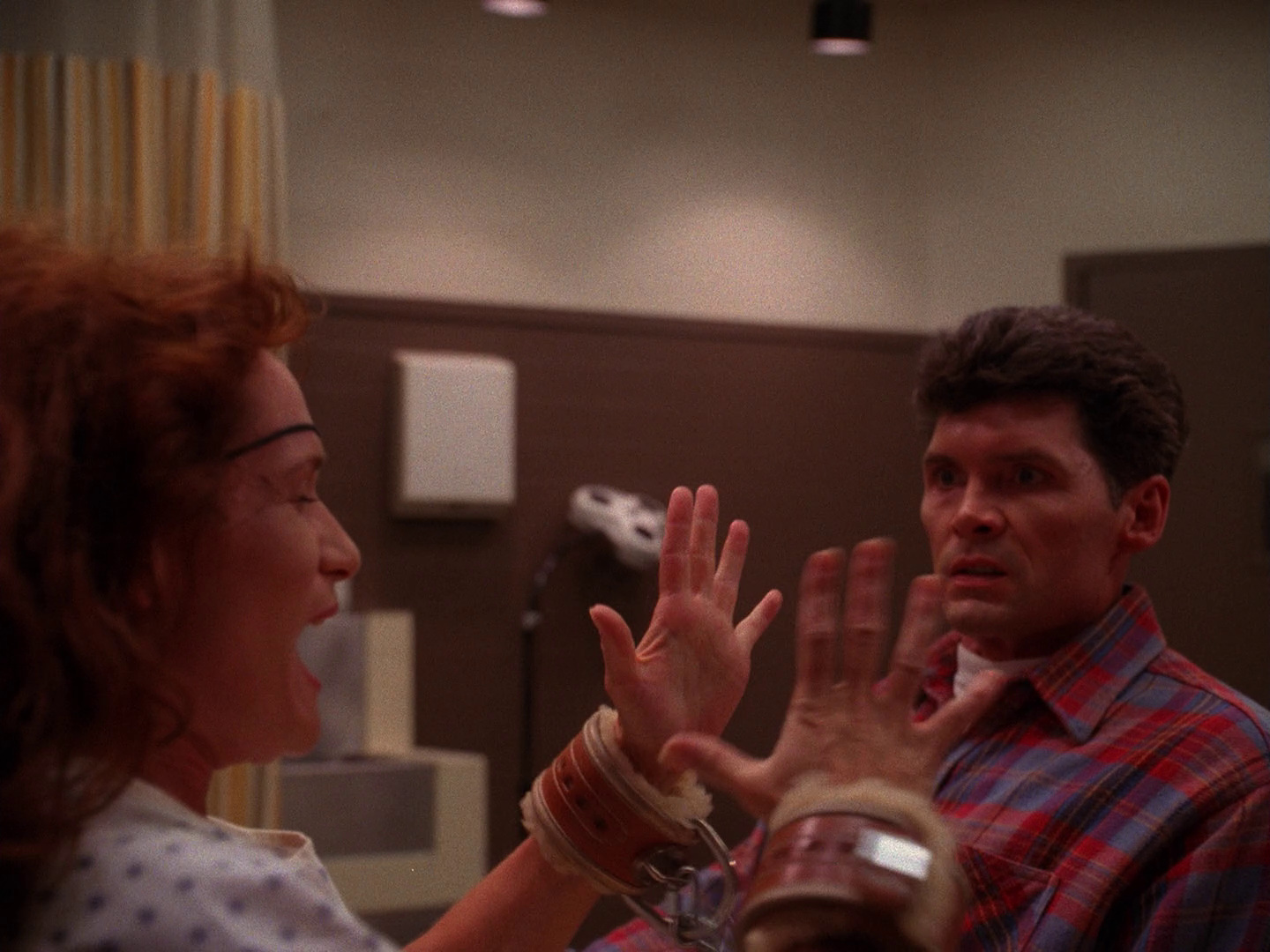
Nadine’s awakening introduces a different discontinuity. Her physical strength and her conviction that she is a young cheerleader make the hospital’s idea of recovery unstable. Ed’s efforts to reassure her cannot simply restore the life she inhabited before her collapse.
A bathroom becomes a threshold
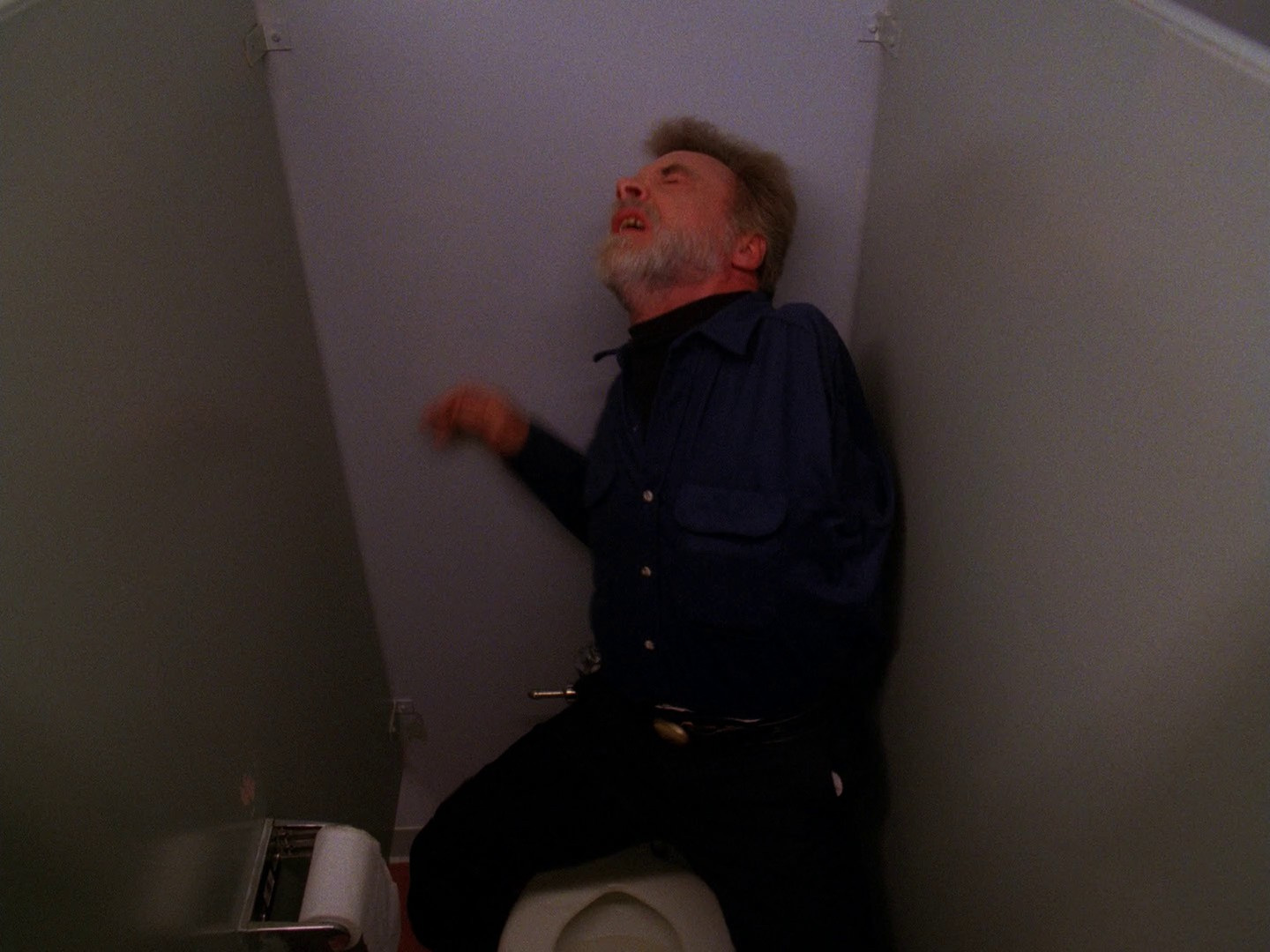
Gerard arrives in the everyday role of a shoe salesman. His condition worsens, medication becomes urgent, and the station bathroom separates him from the official questioning outside. A utilitarian room becomes the place where an account of BOB breaks through that public identity.
The episode does not provide the investigators with a complete explanation merely because the viewer has seen this change. His disappearance and the subsequent attention to medication leave a trail of material facts around an experience that resists the station’s usual categories.
Ronette’s tampered intravenous line at the beginning supplies an especially severe counterpart. A hospital apparatus intended to sustain life has become a possible means of attack. Across these scenes, institutional interiors fail to guarantee protection or clarity. Their objects can be turned to purposes other than those assigned to them.
Jacoby’s trance: assembling the conditions of memory
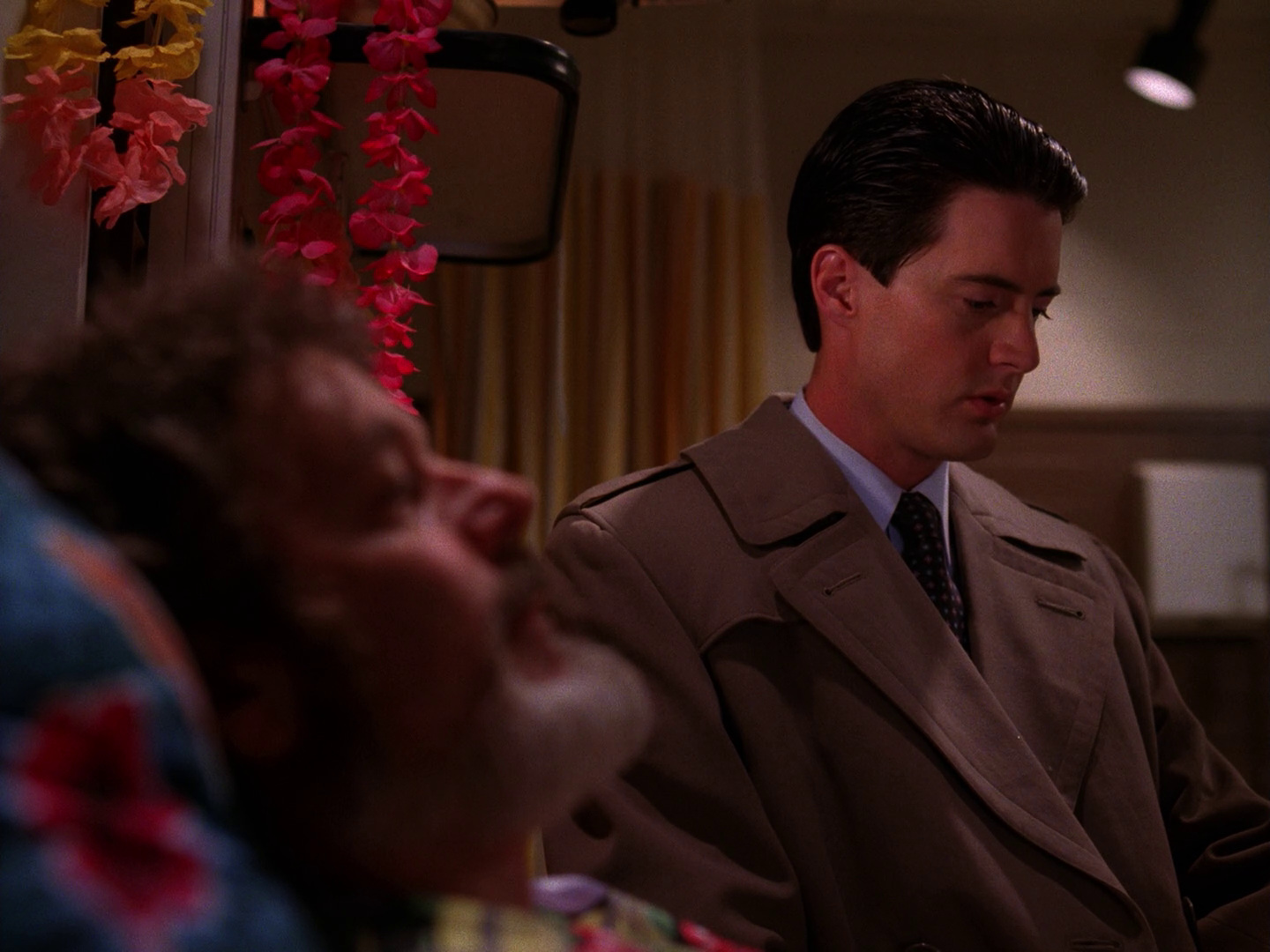
Jacoby’s recollection is approached through an elaborate reconstruction of conditions. Recorded waves, the golf setting, his wife’s presence and Cooper’s guidance help organise the exercise. Truman participates physically rather than remaining a detached observer. Memory becomes something staged and prompted in a room.
The questions distinguish two locations and two experiences. The smell of scorched engine oil belongs to the earlier park encounter. The later hospital memory concerns the killing of Jacques. Keeping these routes separate matters: the same witness can carry more than one fragment of the night without those fragments forming a single uninterrupted account.
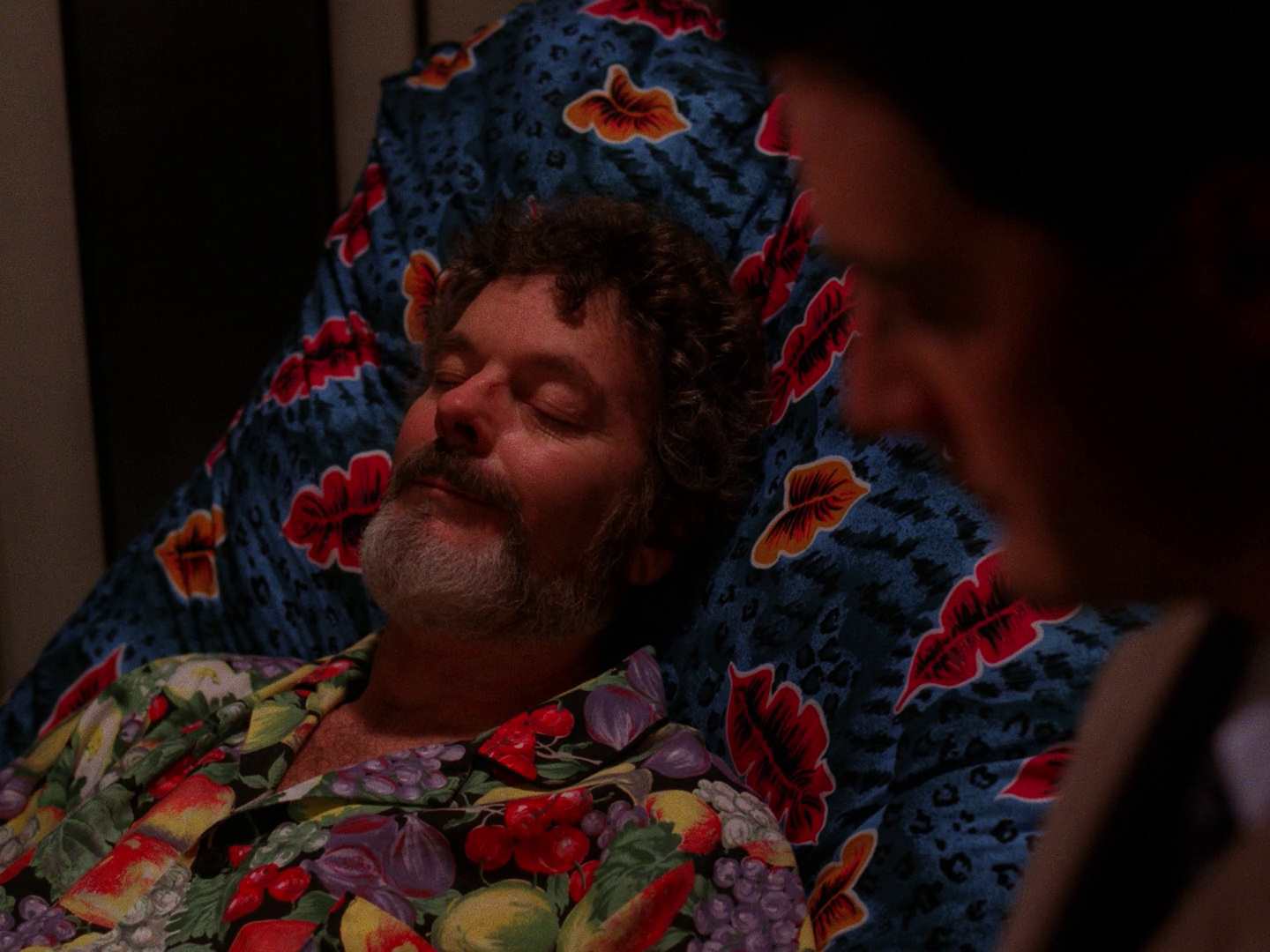
The scene delays the name that would turn recollection into an arrest. It offers the viewer the process and the strain before the consequence. When Truman later reaches Leland, the story has moved from an apparently eccentric therapeutic performance to an official act. That transition invites scrutiny of how knowledge acquires institutional force.
Margaret’s introduction
The Log Lady introduction considers letters, words and misunderstanding. Read it beside the episode’s drawings, medication clues, prompted recollection and newly discovered writing. The next episode remains accessible through the season’s episode guide.
Donna speaks to someone who cannot answer
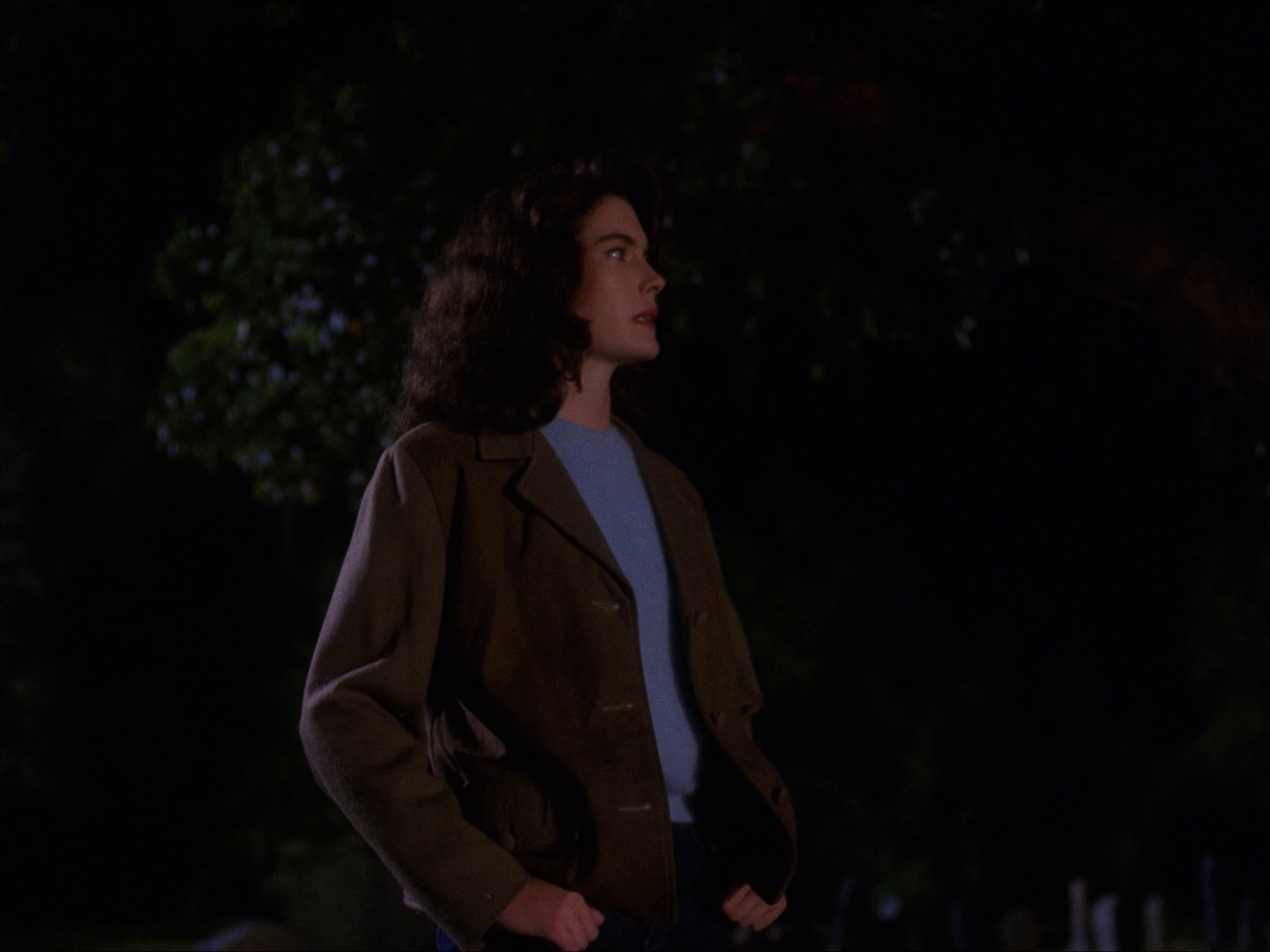
Donna’s visit to the grave allows affection and anger to remain together. Her address does not make Laura into a comforting moral example. The dead friend has left relationships, secrets and practical difficulties that the living still have to negotiate. Donna can miss her and resent the conditions in which she has been left.
The scene gives her a listener who cannot interrupt, defend herself or supply an explanation. That freedom makes the speech revealing, but not authoritative about everything Laura was. It is Donna’s account at a moment of hurt. The discovery of James and Maddy’s intimacy intensifies the feeling that Laura continues to organise relationships even in absence.
Leland’s comfort of Maddy then tests the distinction between resemblance and replacement. She looks like Laura but is not Laura; the conversation requires that difference to be spoken. His arrest for Jacques’s murder interrupts the household at precisely the point when comfort seems possible.
From the family room to the second diary · 3 images
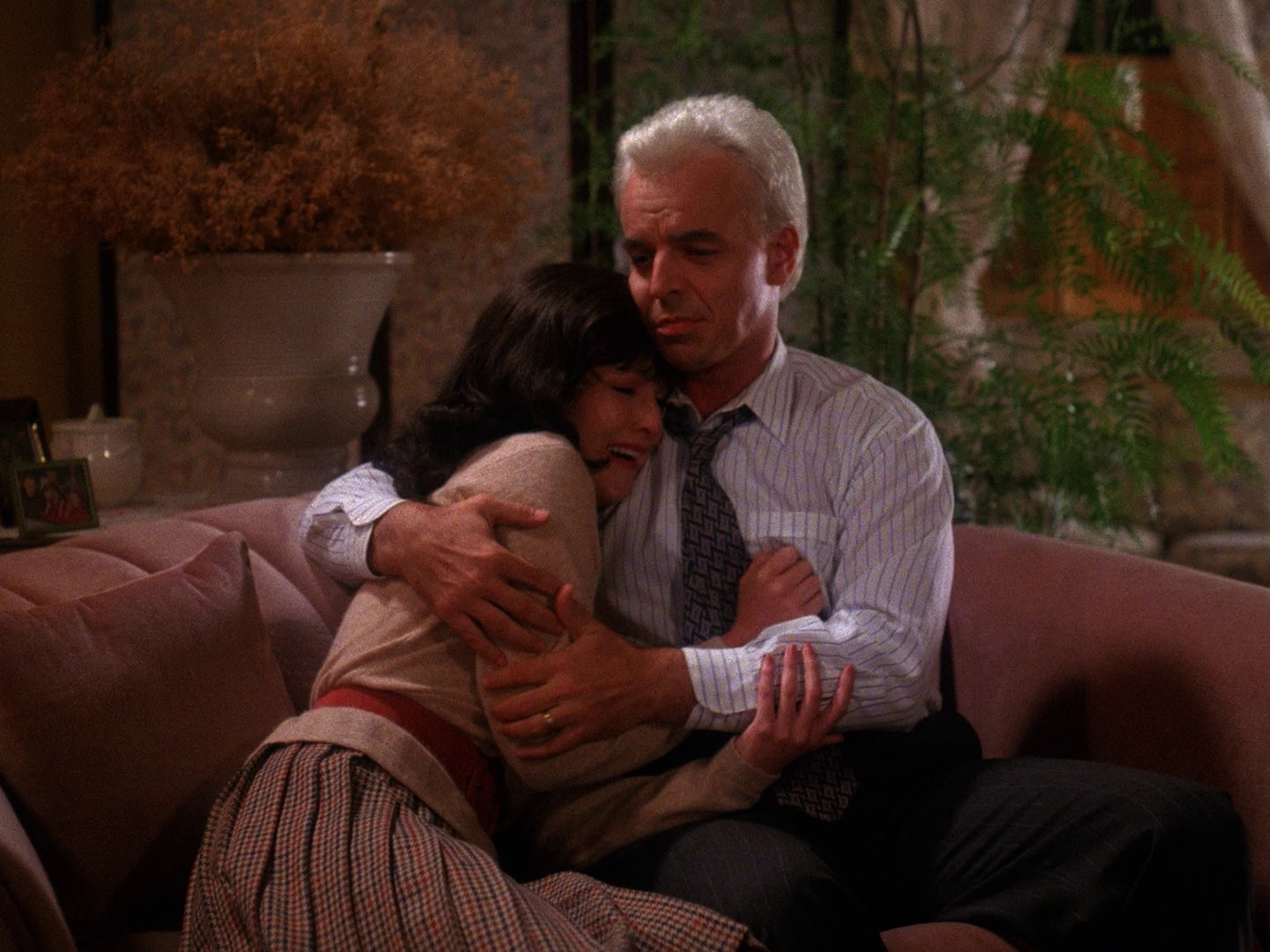
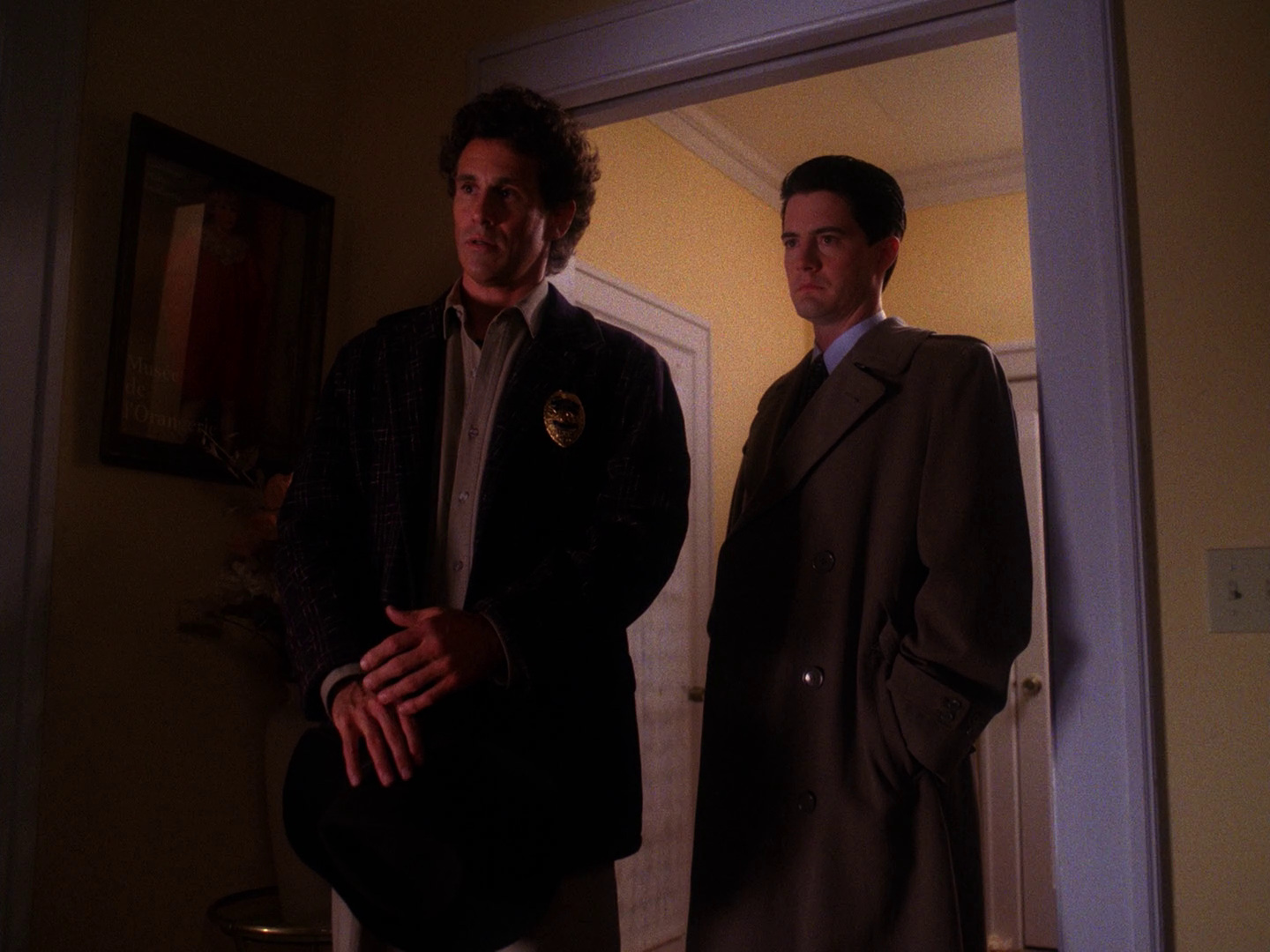

Donna’s return to Harold closes the episode by turning consolation back into discovery. The second diary changes the question from what the known evidence means to what has not yet been available to read. The episode ends with another Laura record, preserving the gap between a person and the documents others assemble around her.
Voices, persuasion and the limits of understanding
Cooper describes a voice; Albert changes his argument
Asked about the Giant’s voice, Cooper describes it as soft and distinct, resisting Albert’s image of a booming fairy-tale visitor. Later, Albert answers Truman’s threatened punch with an explicit rejection of retaliation. His appeal to Gandhi and King changes the terms of the exchange: verbal aggression and a stated commitment to nonviolence coexist in the same character. The speech asks Truman—and the viewer—to reconsider what Albert’s abrasiveness has seemed to mean. Return to Albert and Truman.
Scripts of care can become instruments of pressure
Shelly refuses to give evidence against Leo and insists that she loves him. Cooper answers by imagining the recovery of the same husband from whom she has suffered. His courteous words put pressure on the account she is offering. At One Eyed Jacks, Jean combines an apparent gesture of comfort towards Audrey with a negotiation that treats her as a means of capturing Cooper. Neither conversation permits the language of concern to stand as proof of another person’s intentions. Follow the episode’s competing forms of care.
A voice leads a witness through memory
Jacoby supplies an autosuggestion programme; Cooper reads a golf-course visualisation before moving to questions about the hospital. The spoken landscape prepares a change of attention rather than providing evidence itself. Jacoby distinguishes the smell of engine oil in the park from the hospital scene, then recalls ripping tape, a pillow and the victim’s sounds. The scene moves through several kinds of verbal material—prepared script, questions, dream and recollection—before a recognition can become an accusation. Explore the hypnosis scene.
Laura remains an addressee
Donna speaks to Laura at the grave as though an argument between friends can continue. Affection does not displace resentment: she objects to the way Laura’s problems still occupy everyone else’s lives. Harold later repeats a private saying associated with Laura, revealing an intimacy Donna did not know about. These encounters give Laura two different forms of continuing presence: the person Donna needs to answer her, and the person whose words someone else has preserved. Return to Donna, grief and the diary.
Source: episode dialogue and English subtitles, Twin Peaks: From Z to A. Margaret’s separate introduction asks how letters become language and whether language produces understanding; see the framing study.
A route through The Man Behind Glass
- A threatened witness. Ronette’s treatment and the failure of the hospital guard.
- A protected room. Donna visits Harold and receives the orchid for Laura’s grave.
- Competing explanations. The briefing, Albert’s declaration and Leland’s childhood memory.
- Care and control. Lucy’s news, Audrey’s captivity and Jean’s deceptive tenderness.
- A change behind a door. Gerard’s distress and disappearance.
- The recovery of memory. Nadine wakes; Jacoby revisits the hospital through a guided trance.
- Laura’s remaining lives. Donna at the grave, Maddy with Leland, the arrest and the second diary.
Sources and connections
Primary source: Twin Peaks, regular Episode 10, in Twin Peaks: From Z to A. Written by Robert Engels and directed by Lesli Linka Glatter, as credited on screen. The episode supplies the images, dramatic action and dialogue discussed here. The separately authored Log Lady introductions and publicity films are identified as such.
Continue through the season’s production and craft research and its broadcast and reception history, where collaborators’ accounts sit alongside published interviews and criticism.