Twin Peaks: Episode 29 — Beyond Life and Death
1991 · Season 2, Episode 22 · Directed by David Lynch
Cooper follows Annie into the woods and passes through the red curtains. Around his disappearance, the town’s unfinished lives reach violent turning points. The season ends by making the familiar face of its investigator the most troubling image of all.
Season 2, Episode 22 / overall Episode 29. Contains episode spoilers. Focused image galleries open on request.
Explore this episode
A map, a smell and a way into the woods
Lucy’s account of the pageant begins with practical fear: darkness would make the hand signals useless, and a future failure of light might leave her giving birth in an elevator. Andy answers with a promise of care. Their exchange gives the finale a brief image of reassurance before Cooper and Truman face a disappearance that ordinary policing has not resolved.
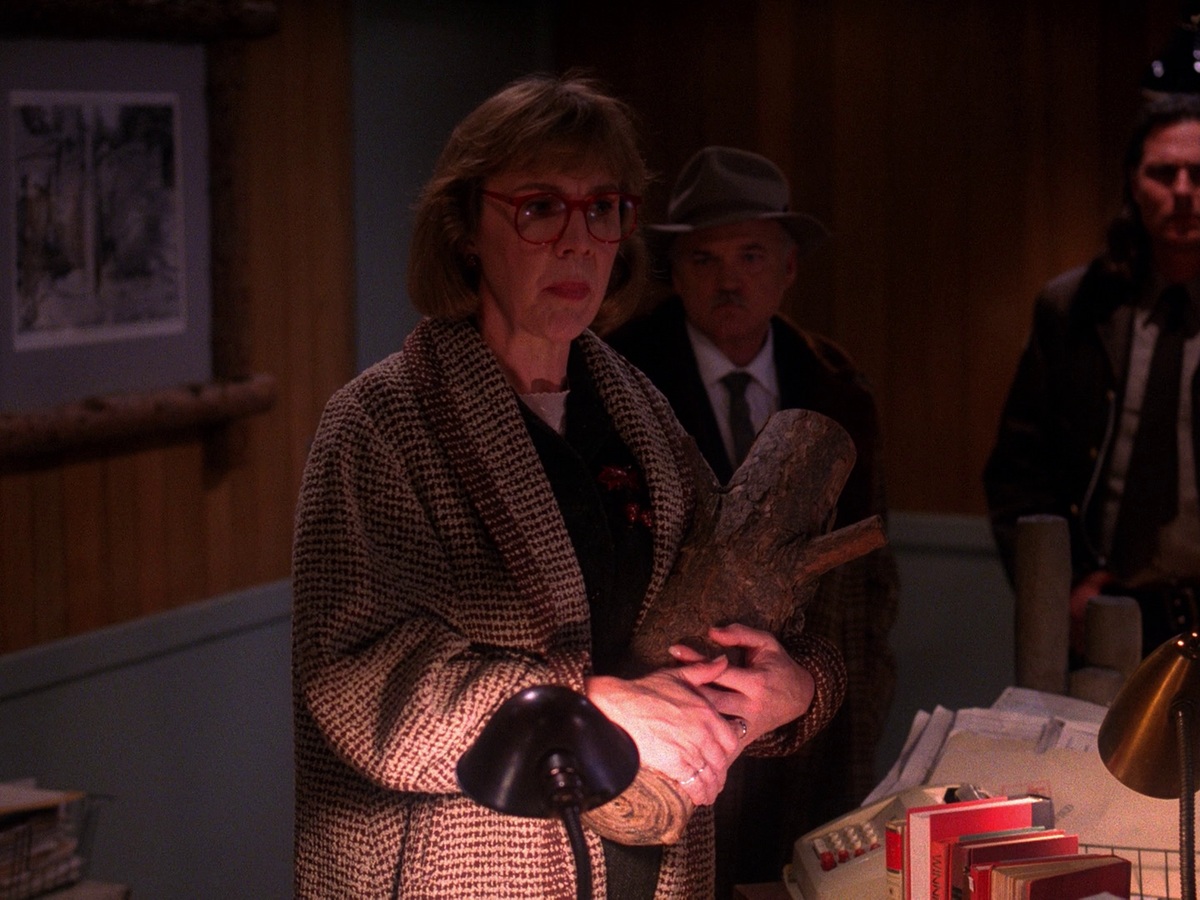
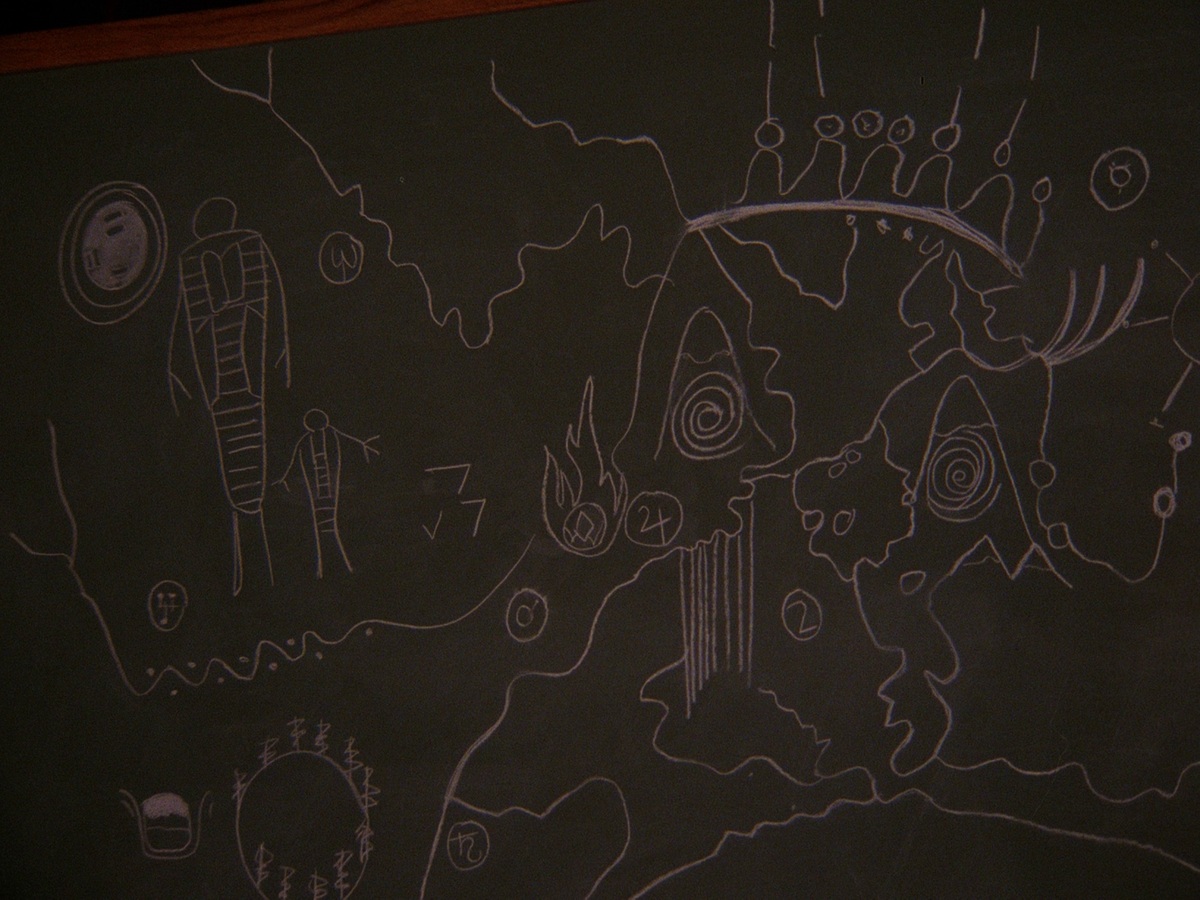
Cooper reads the cave drawing as a meeting of figures, fire and trees. Pete’s complaint about the stolen truck adds a direction of travel. His insistence that the thief was the Log Lady is corrected before Margaret arrives with the oil. The investigation advances through a mixture of observation, error, memory and Cooper’s uncanny anticipation. No single item supplies the whole answer.
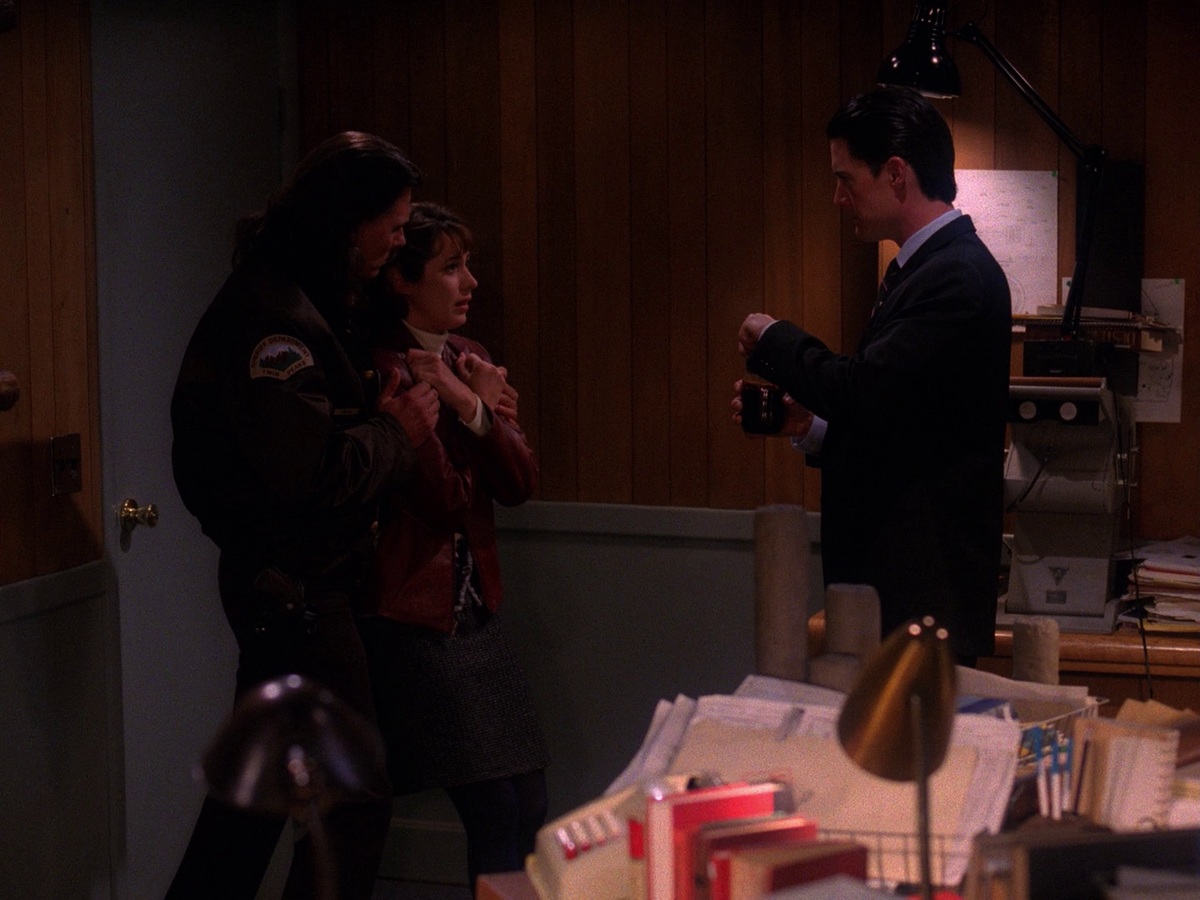
Margaret’s oil carries her husband’s warning about a gateway. Ronette’s recognition connects its smell to the night Laura was killed. The scene gives a sensory trace the evidential force usually reserved for a visible object. A survivor’s recognition joins the current search to the original crime, bringing Laura’s history back into the effort to find Annie.
Hawk identifies Glastonbury Grove and its circle of twelve sycamores. Cooper’s King Arthur association produces Pete’s literal geographical objection. Even at this threshold, the programme lets ordinary conversation resist a grand symbolic explanation. The name is a clue within the story, but its use does not make every participant share the same understanding.
The clues converge · 4 images
The curtains in the trees
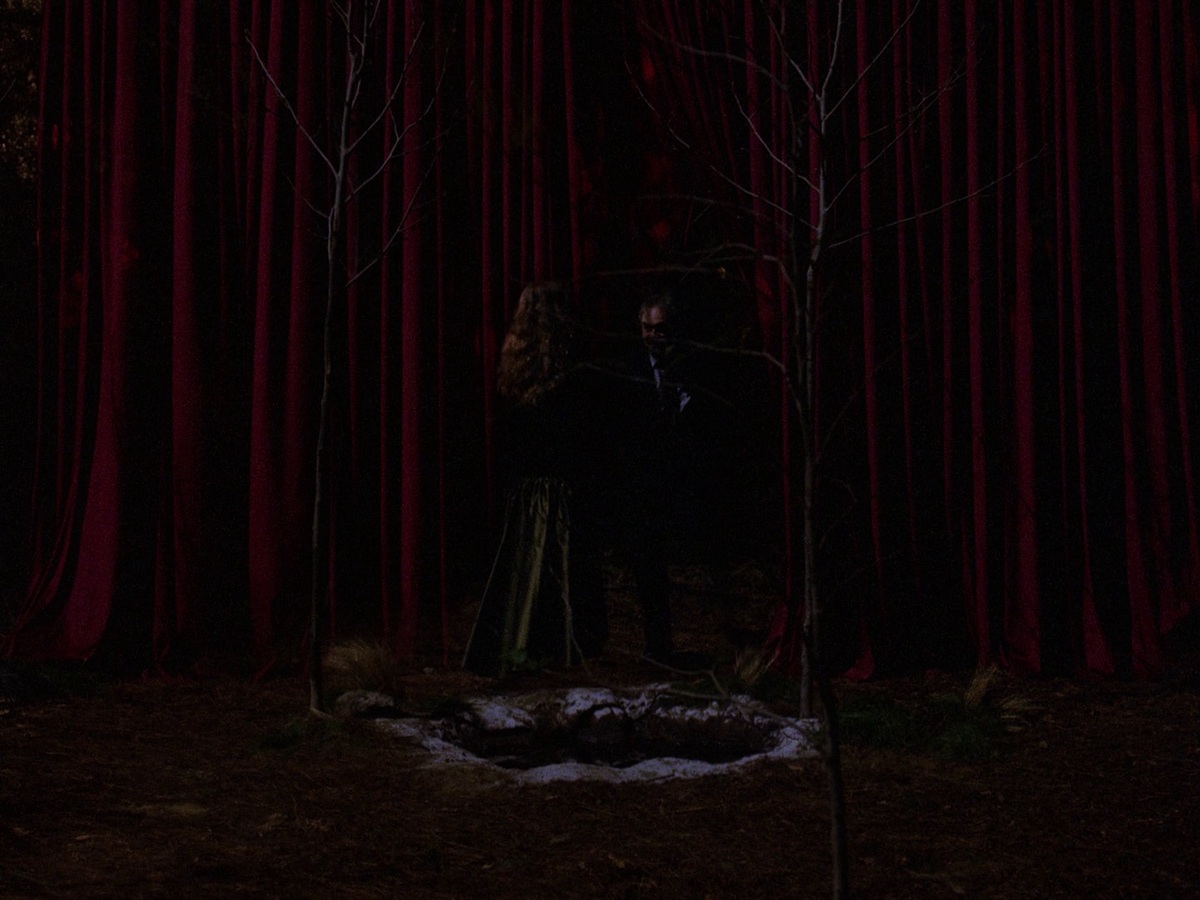
Earle removes his disguise in the truck and takes Annie into the woods. Her prayer gives her a form of speech that is not an answer to his taunting. He describes her through Caroline’s history and Cooper’s earlier loss, trying to make the new encounter repeat an old injury. Annie’s own insistence that Cooper will come is set against the story Earle wants to control.
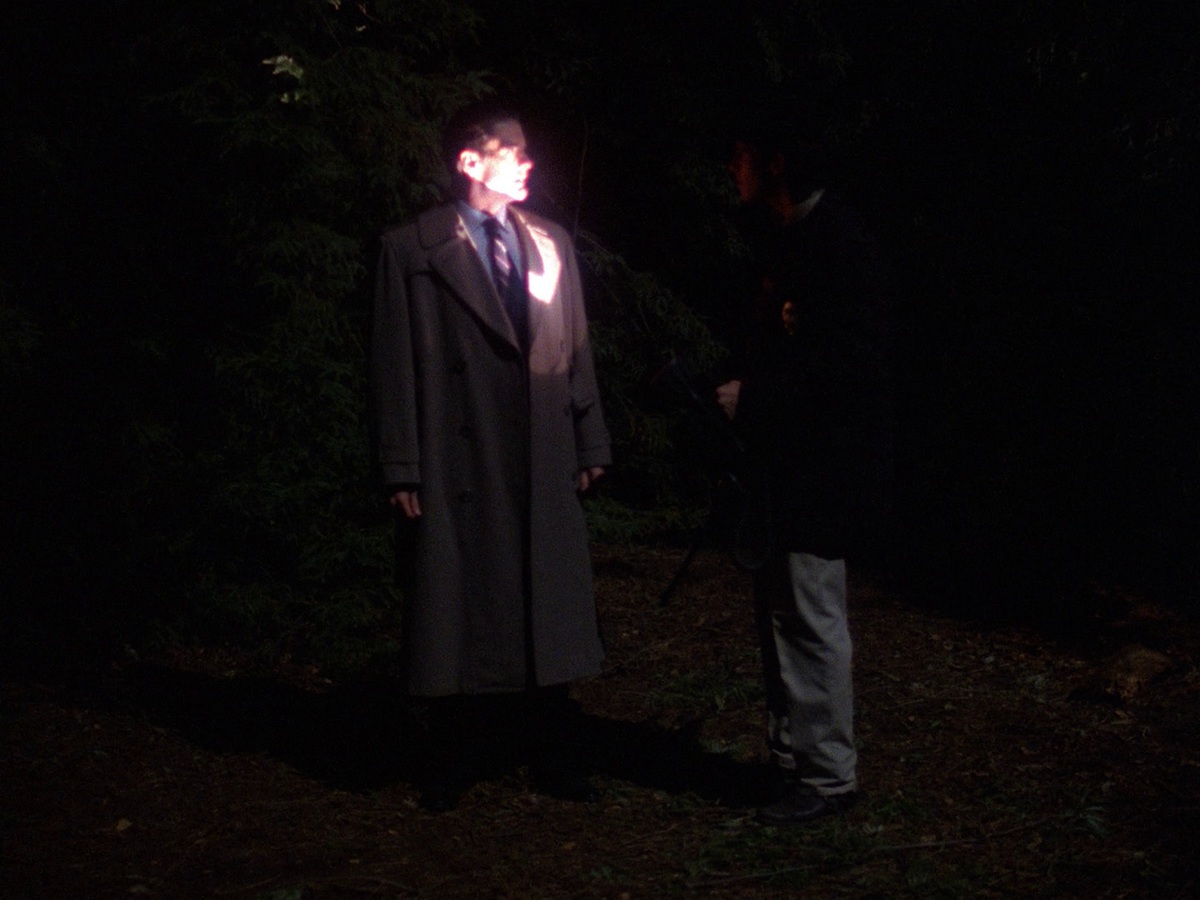
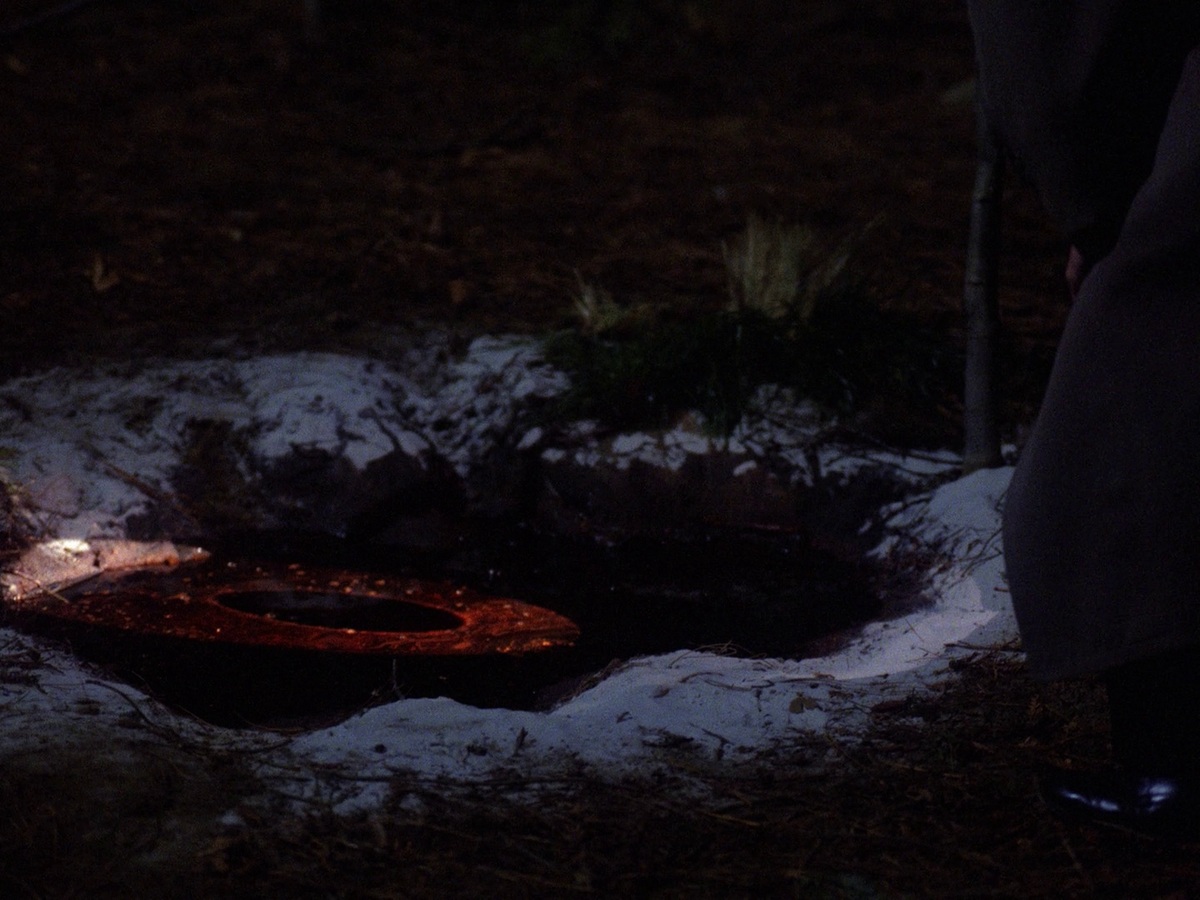
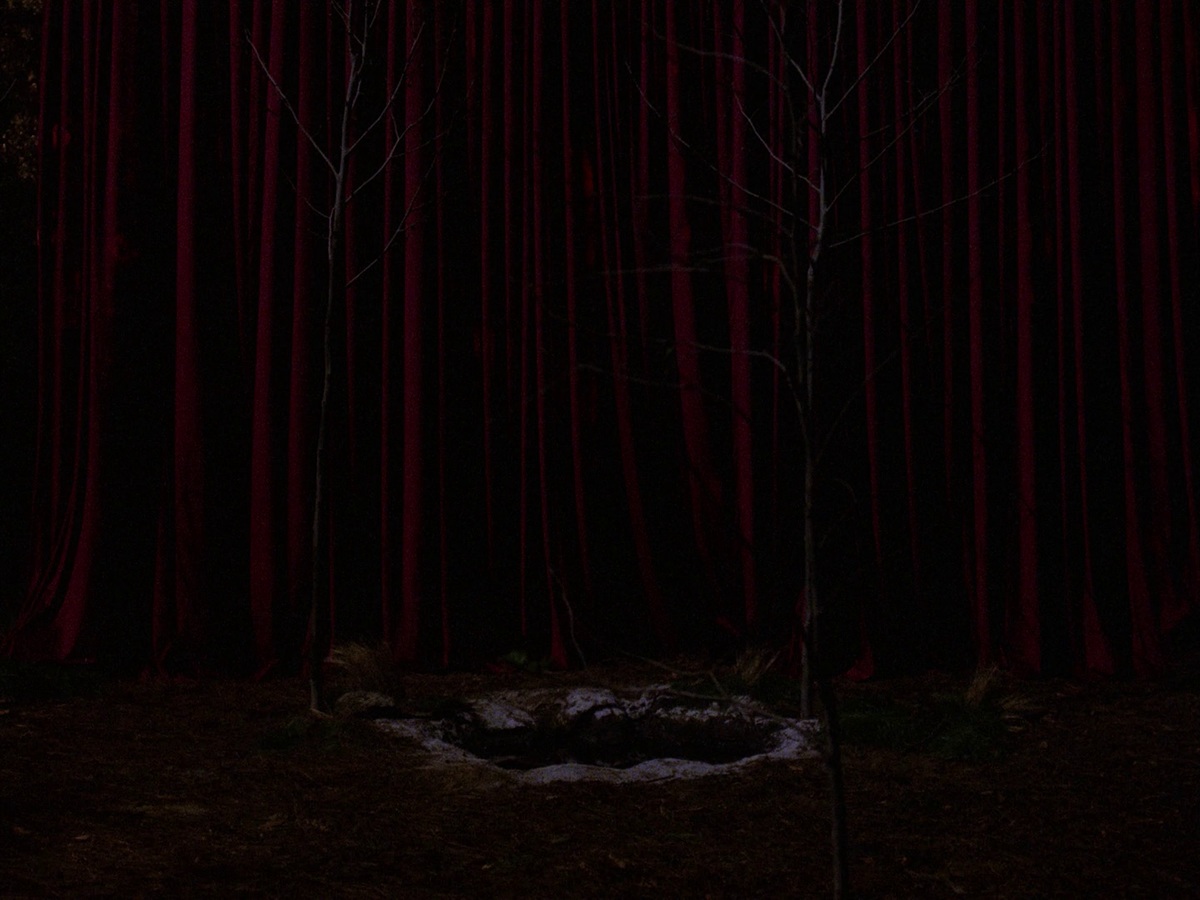
The circle of trees turns the drawing into a place. Red curtains appear within the forest rather than replacing it with an entirely separate setting. The image holds two incompatible spaces together: the bark, soil and pool remain around an entrance made from theatrical fabric. Earle’s confidence at this point will not survive what lies beyond it.
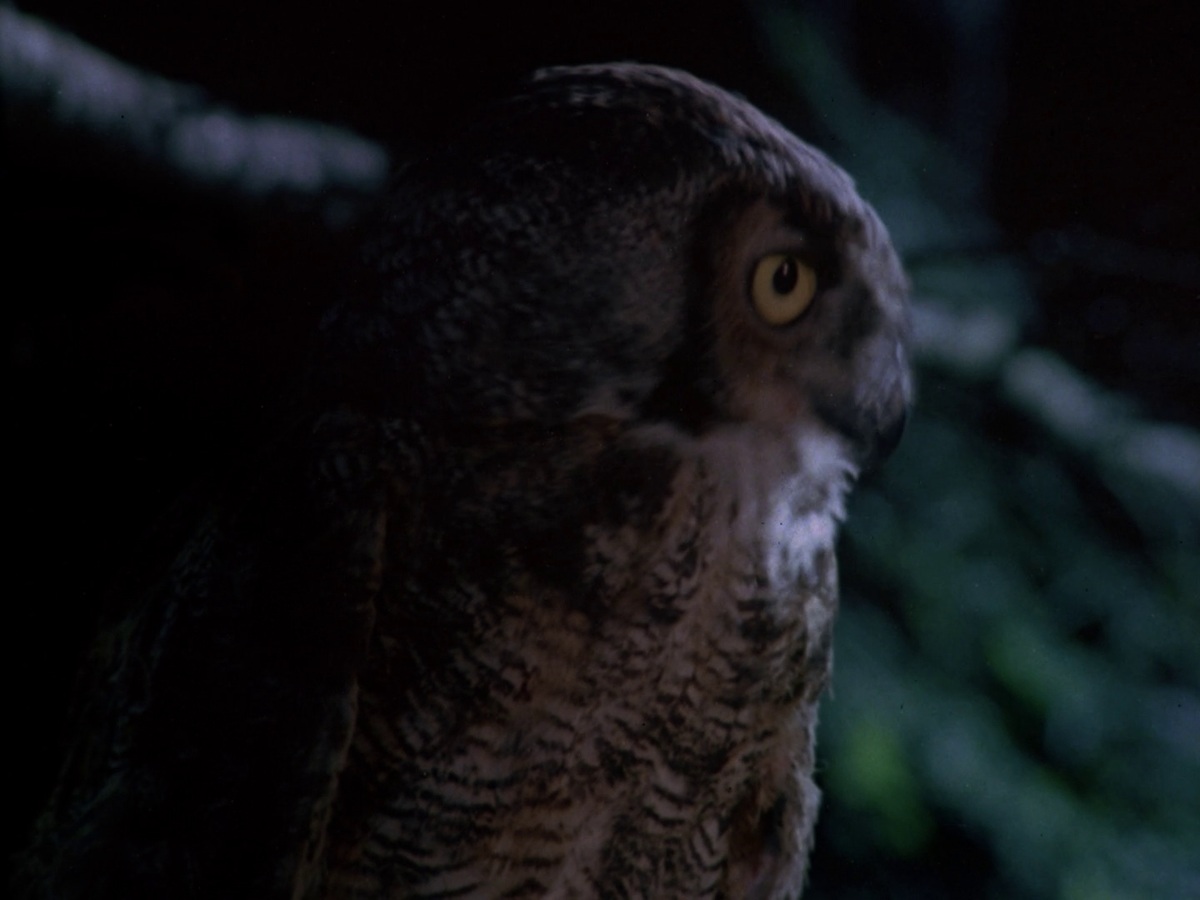
Cooper tells Truman that he must continue alone. Their separation changes the sheriff from companion to witness. The flashlight, owl, footprints and pool lead Cooper towards an opening Truman cannot enter with him. Once Cooper passes through, the curtains close and the grove becomes an ordinary-looking place in which a friend has vanished.
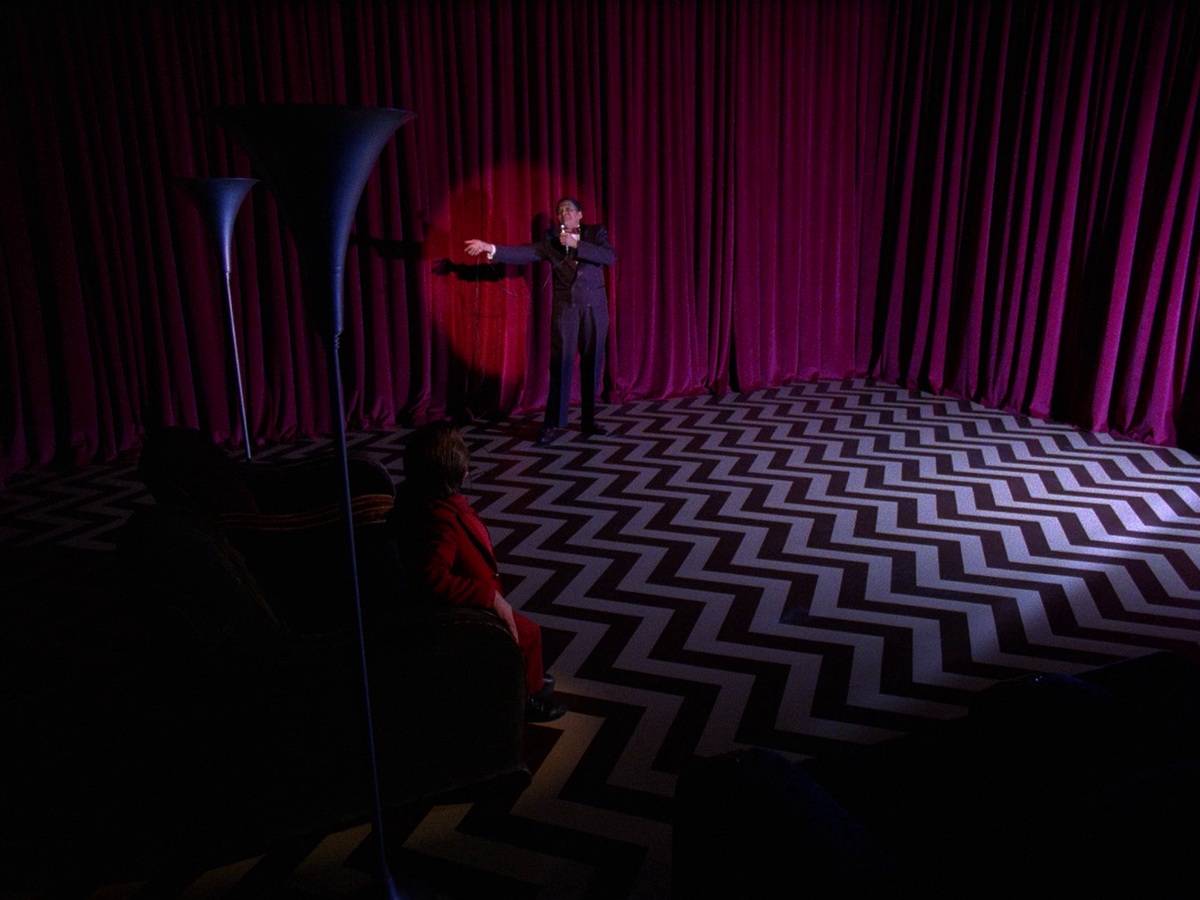
The first Red Room passage is an entrance into performance. A corridor leads to a seated gathering and a singer held in a small pool of light. The song’s recurring tree imagery carries the grove into the room without explaining its geography. Cooper is made an audience before he can act as an investigator.
From the grove to the Red Room · 8 images
The town does not wait for Cooper
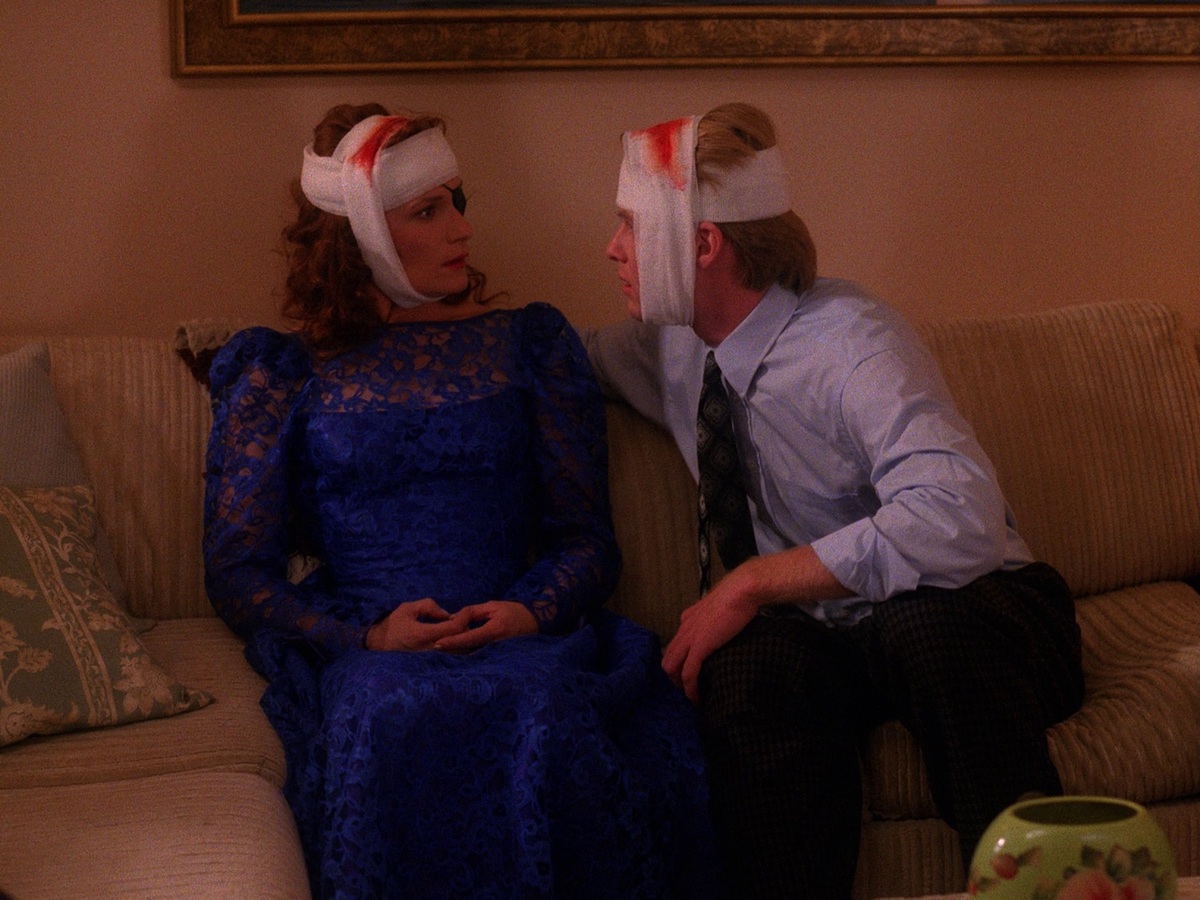
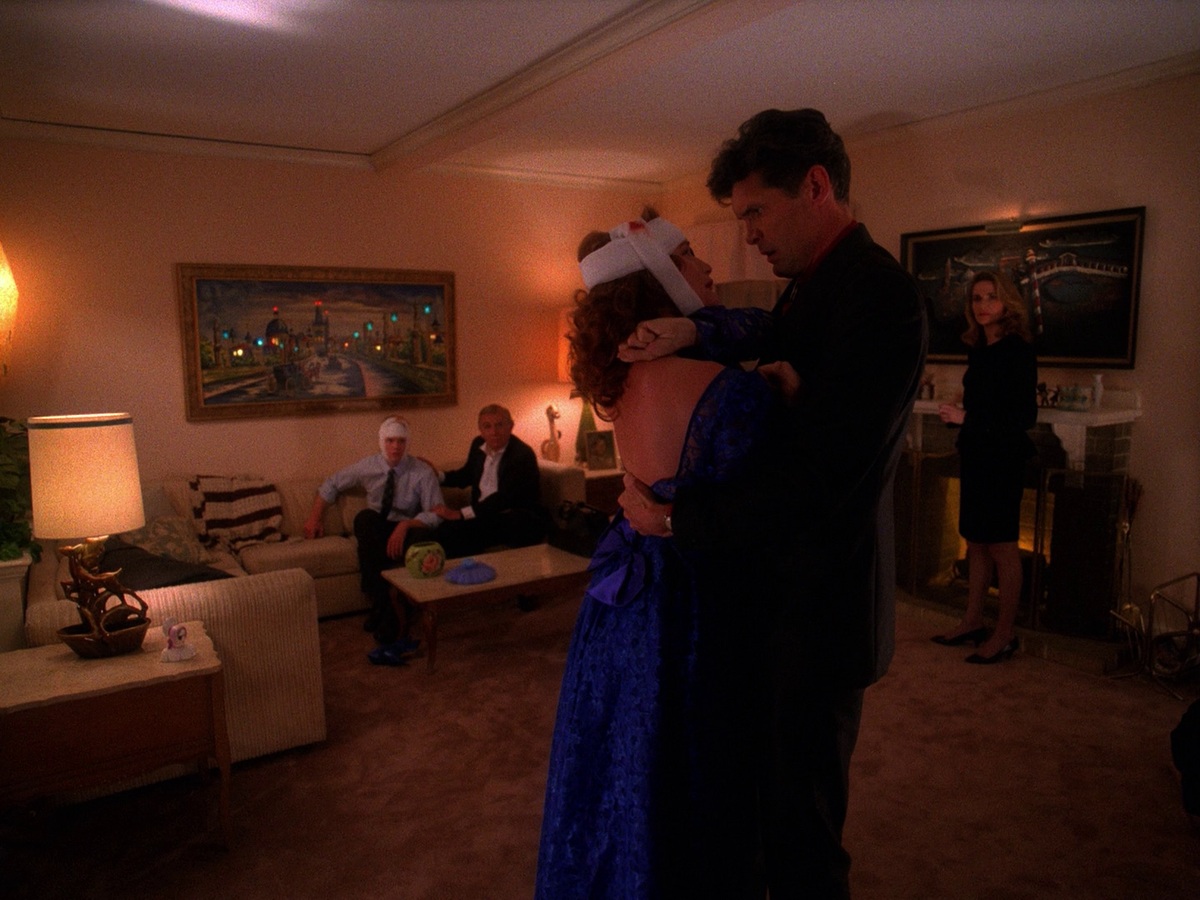
Nadine’s return to her adult age undoes the provisional arrangement around Ed, Norma and Mike. The bandages initially make Nadine and Mike look like a pair, but her inability to recognise him breaks that appearance. Her demand for the drape runners brings an earlier domestic preoccupation back into the room. Recovery for one person becomes loss for several others.
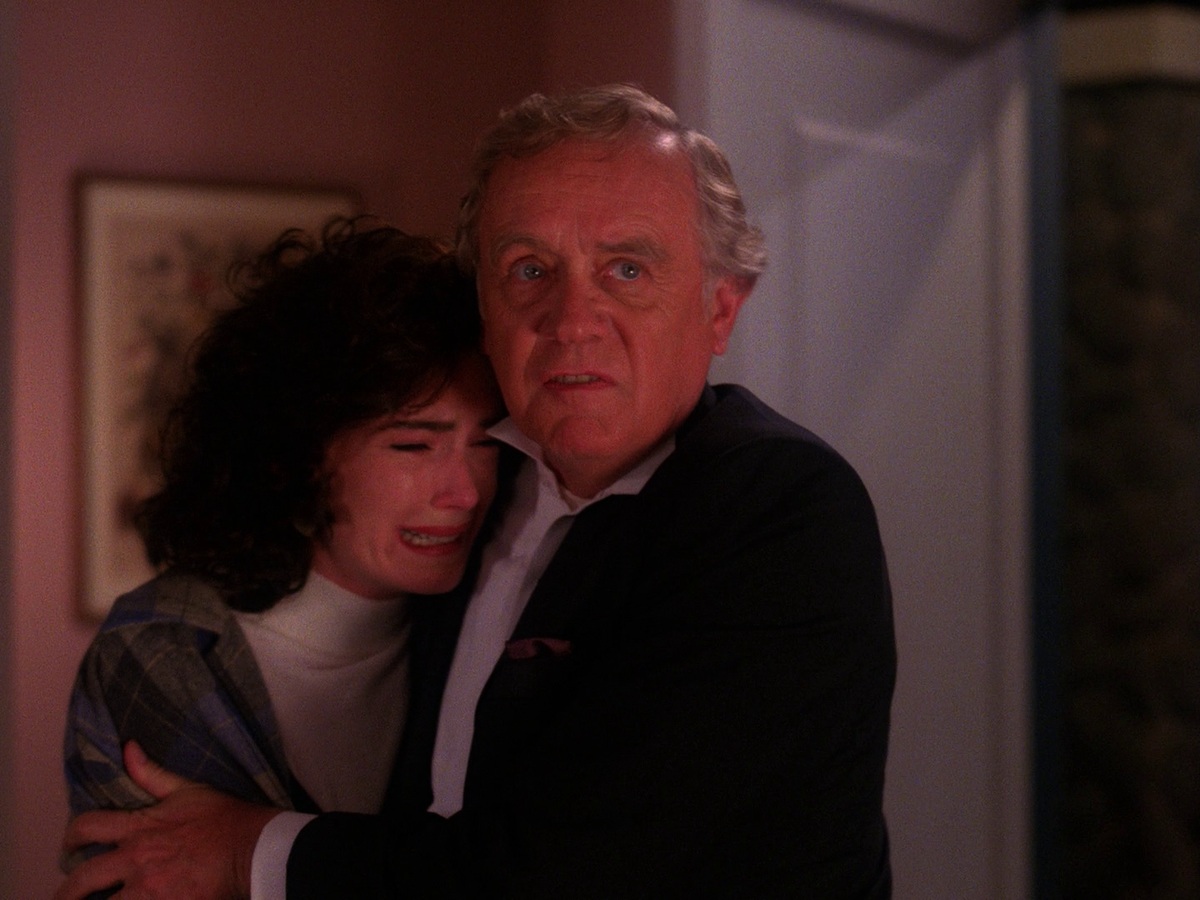
At the Haywards’, Ben’s wish to do good meets the damage caused by his disclosure. Donna embraces Will and insists on their bond while Ben asks for forgiveness. The scene refuses to let confession count automatically as repair. Will’s blow and Ben’s fall turn the dispute into another unresolved emergency. The episode does not supply a medical outcome for Ben.
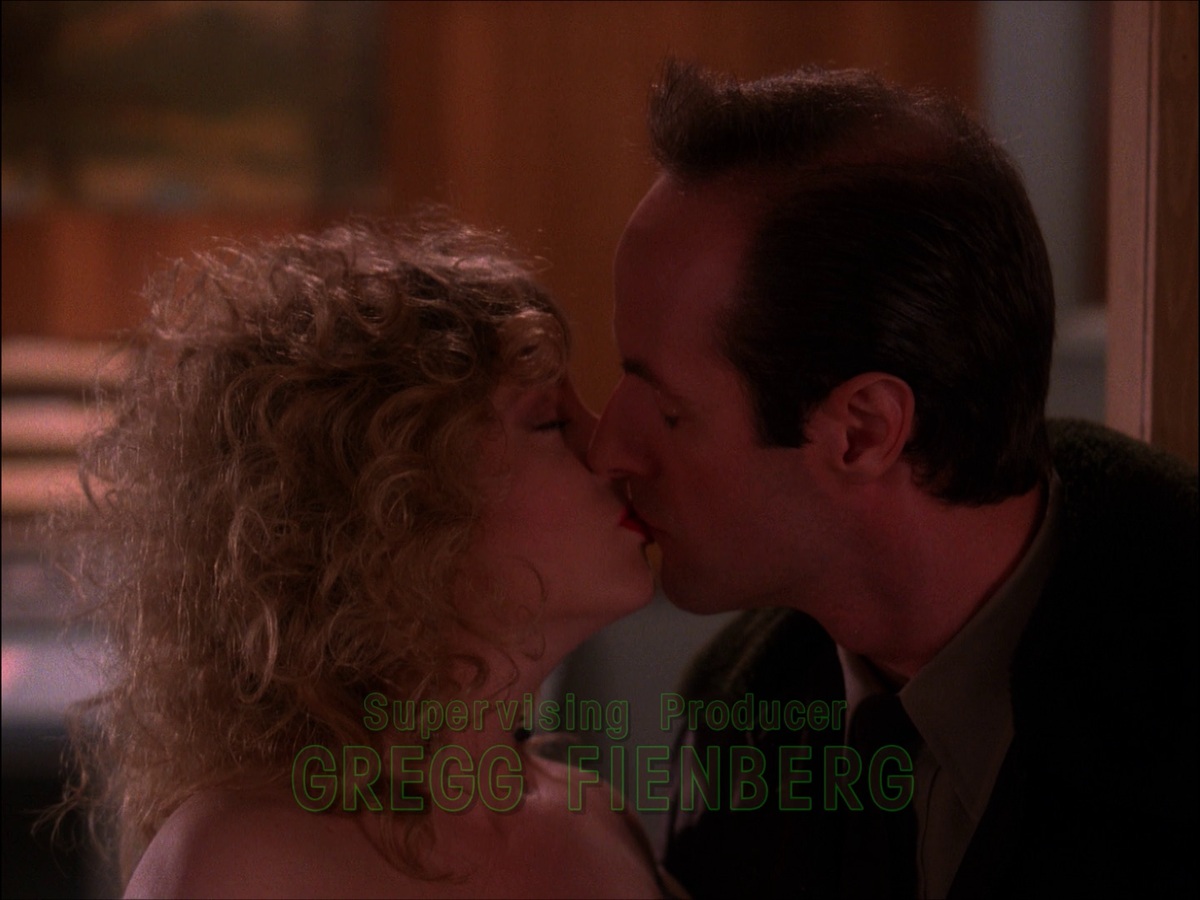
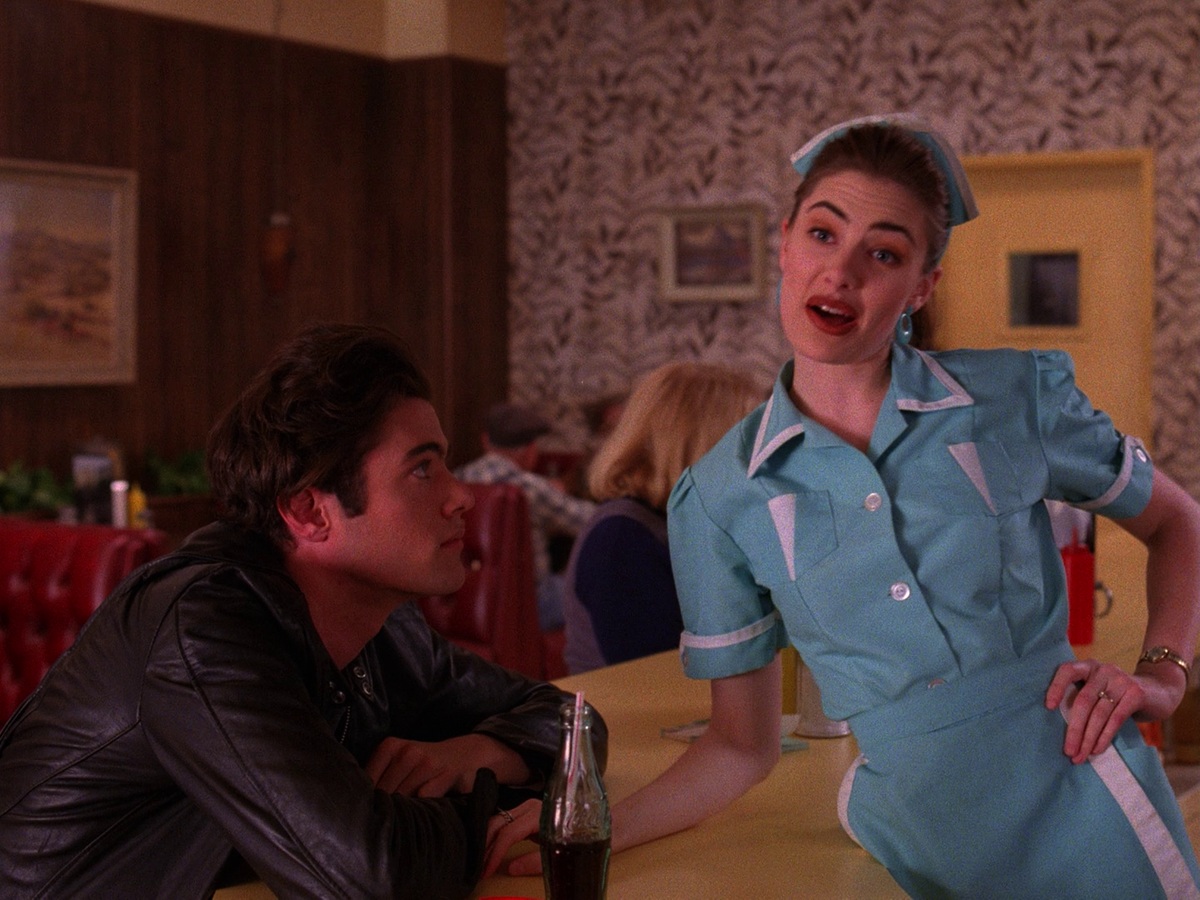
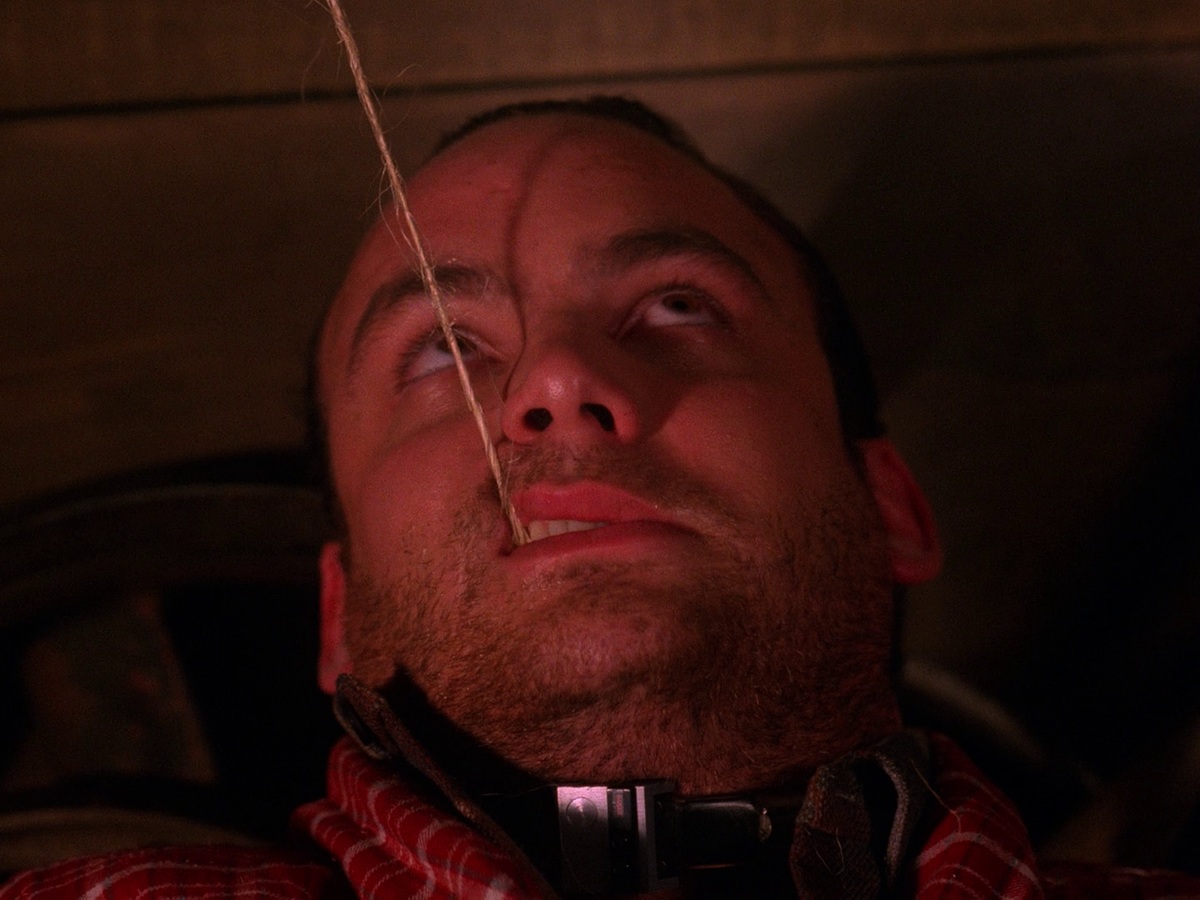
The diner later offers a deceptively familiar rhythm. Bobby proposes marriage; Shelly raises the continuing fact of Leo’s ring. Heidi’s arrival and the joking about her lateness recall the social pattern of the pilot. The repetition is not a restoration of innocence: the cut back to Leo holding the spider-cage cord makes Bobby’s breezy speculation about him sharply inadequate.
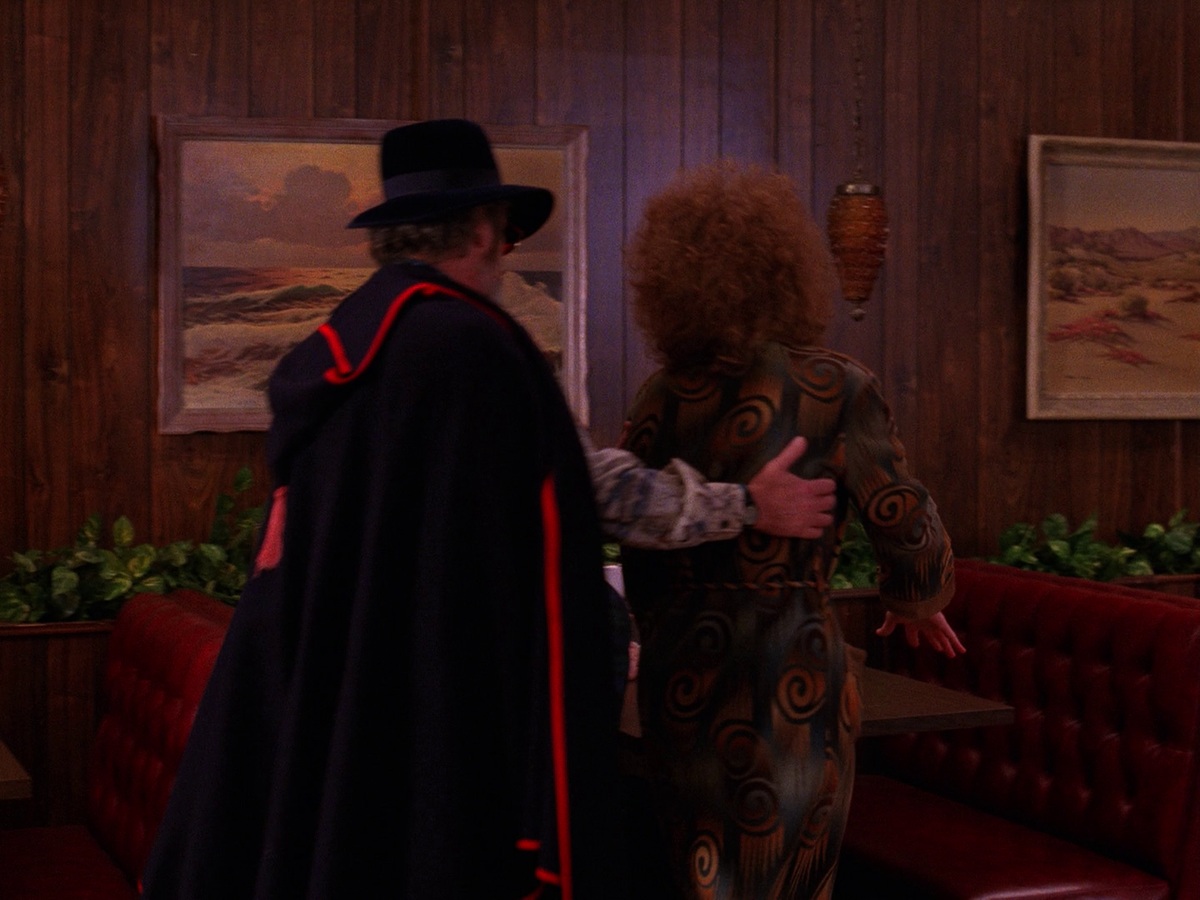
Briggs’s reunion with Betty gives the diner a further moment of relief, interrupted when Jacoby brings Sarah to their table. Her distorted declaration places her voice in the Black Lodge with Cooper. The public room has become a channel for an elsewhere it cannot see. This is a message delivered through Sarah, not a conventional report of something she has witnessed and can explain.
Interrupted endings in the town · 7 images
The bank: waiting becomes suspense
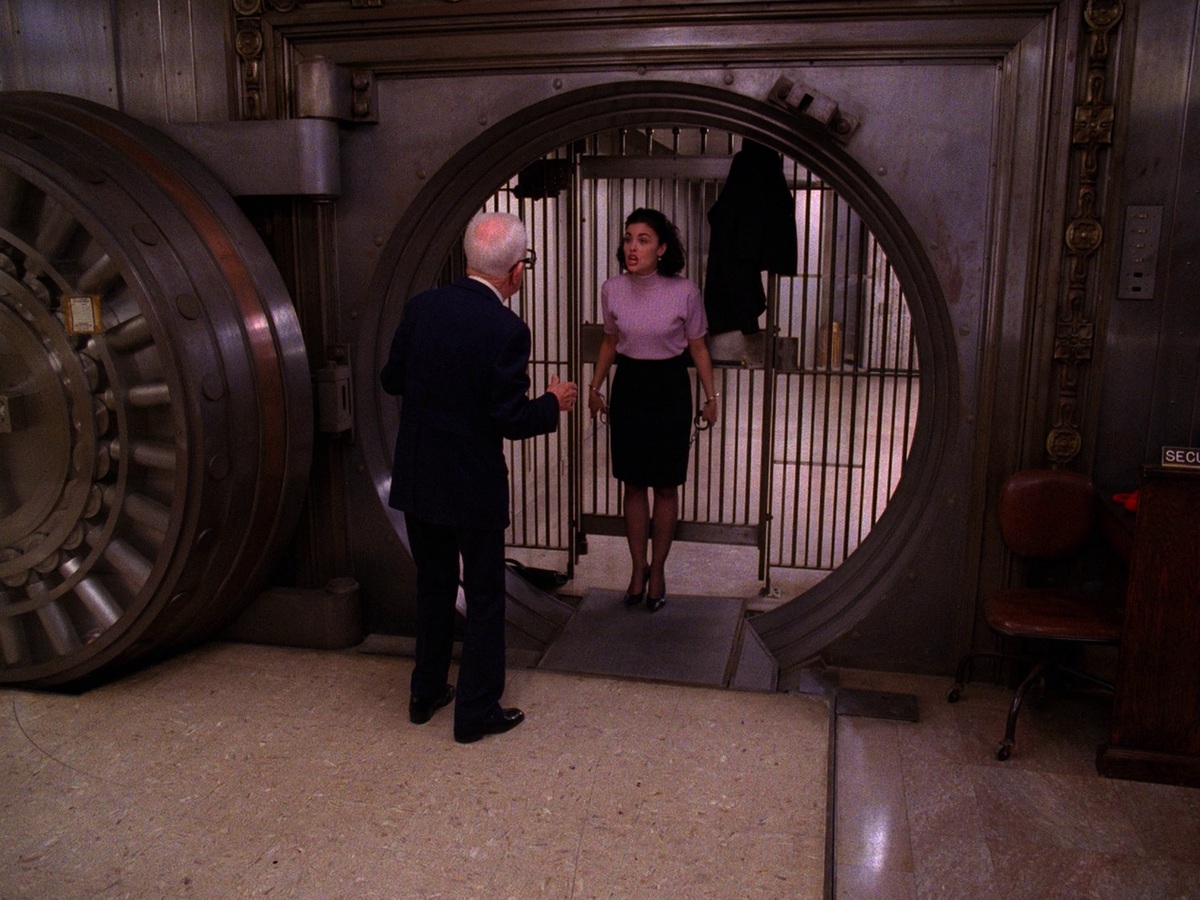
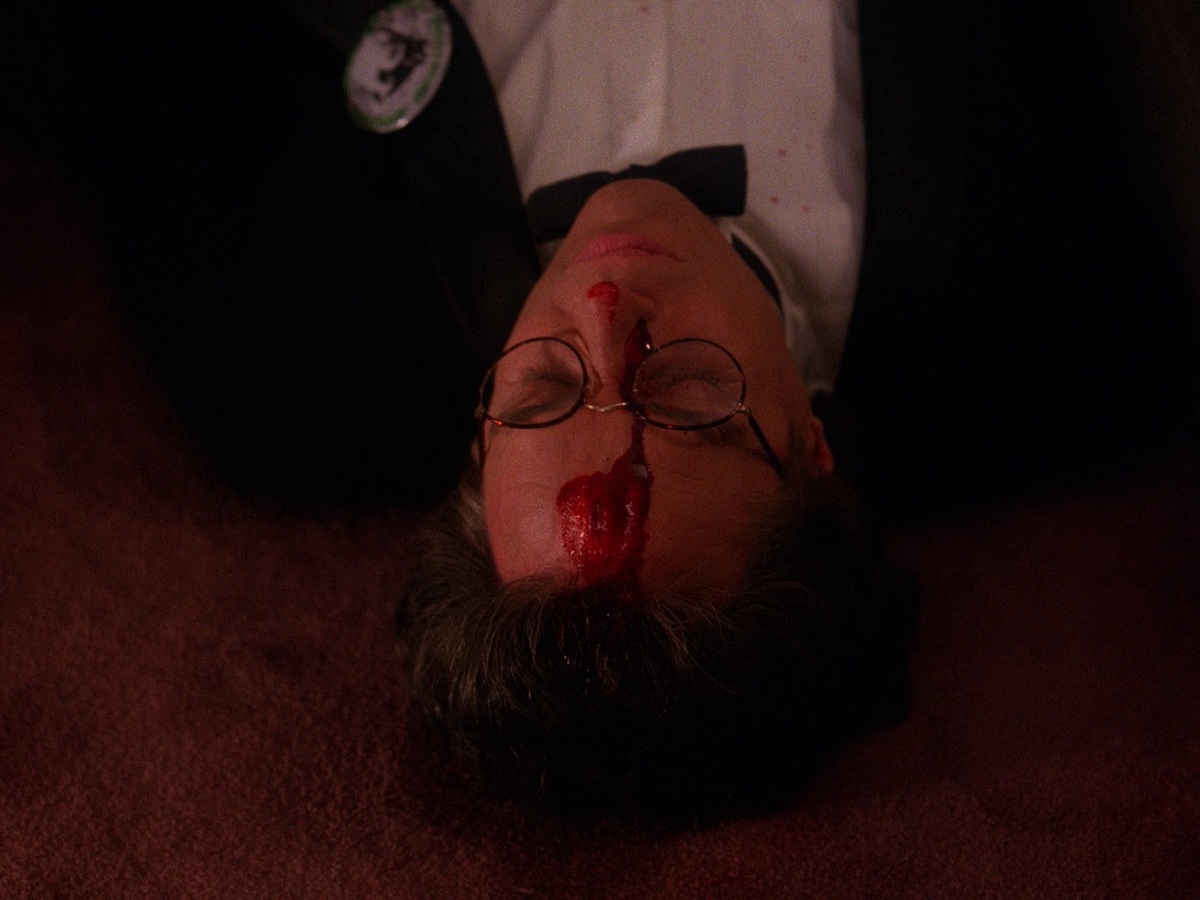
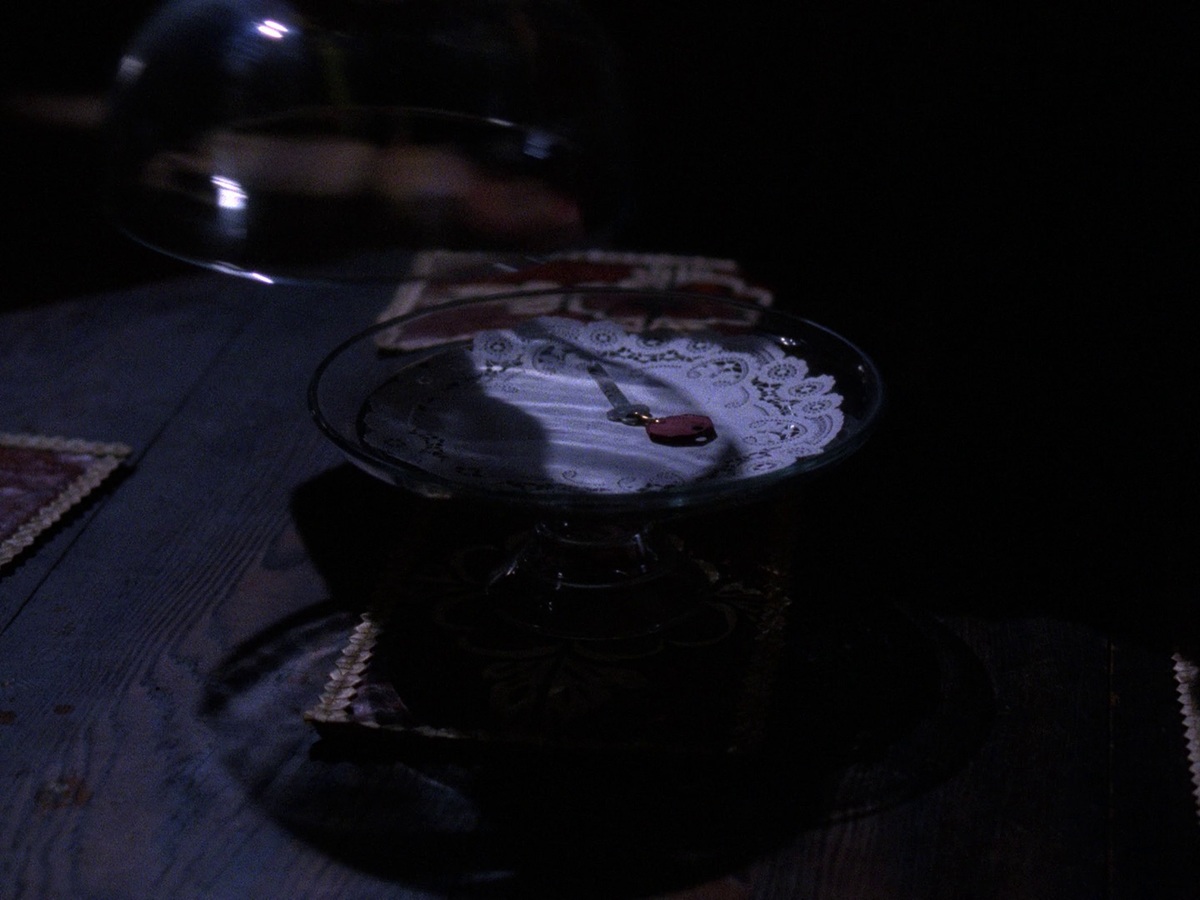
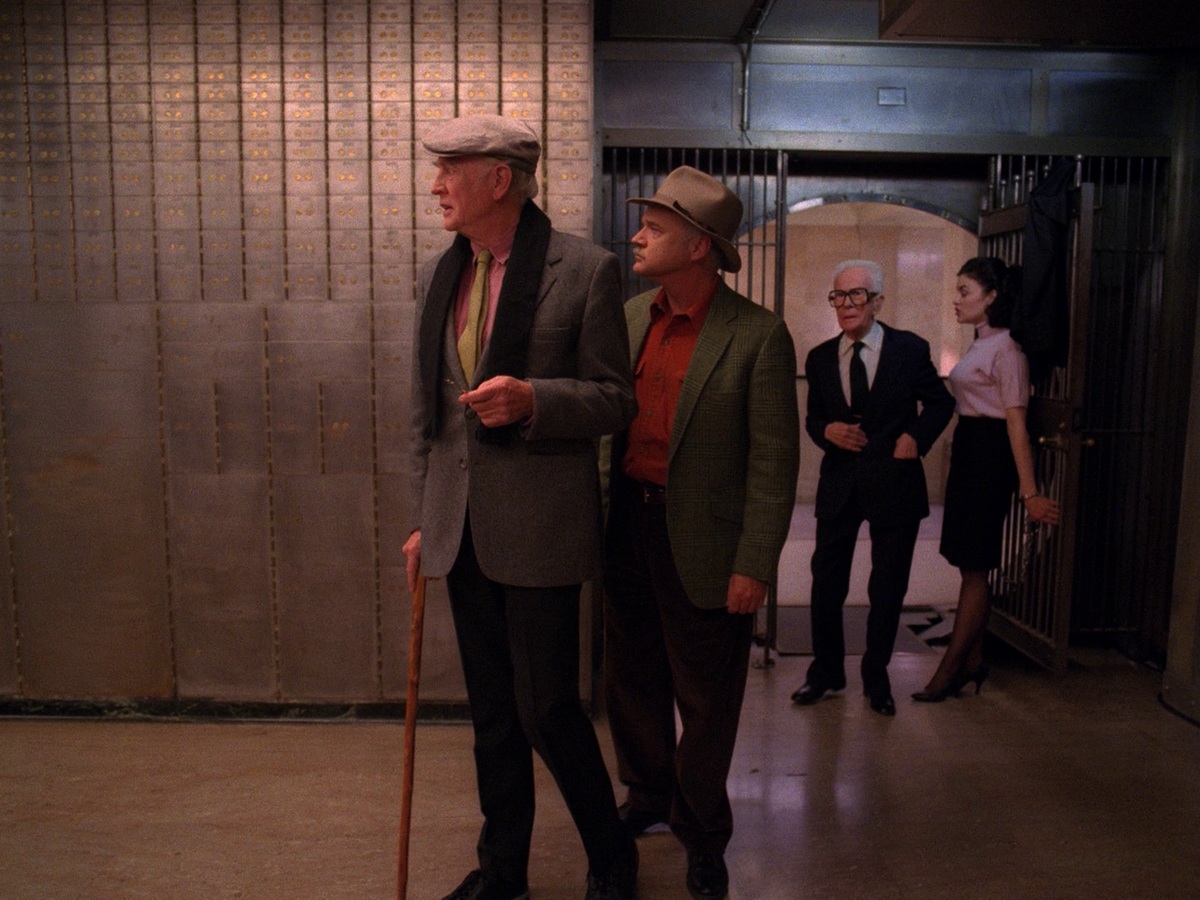
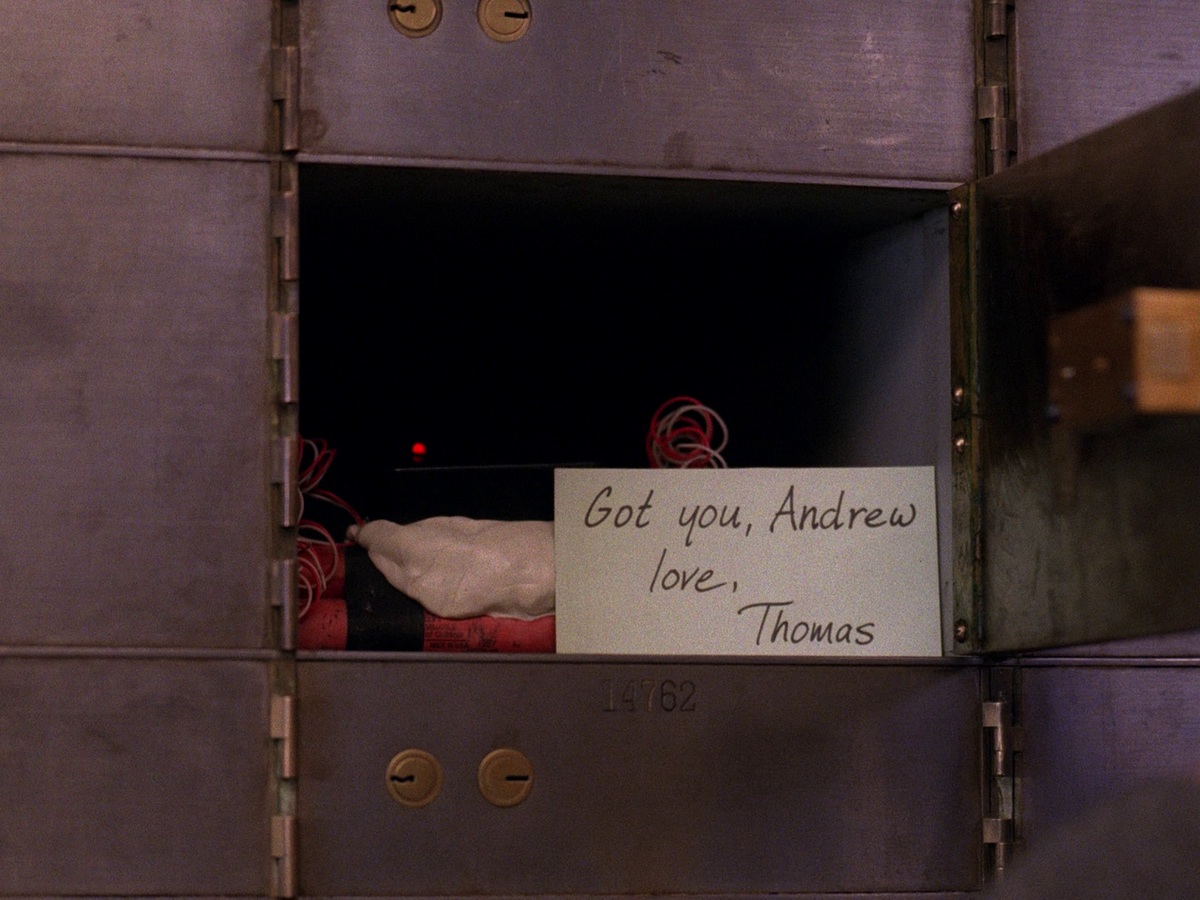
Andrew substitutes another key beneath the cake saver and sets off with Pete. The key links their private pursuit of Eckhardt’s legacy to Audrey’s public protest at the Savings and Loan. She has chained herself to the vault to draw attention to the bank’s financing of Ghostwood. Her demand for a newspaper call is intended to turn an isolated gesture into a public event.
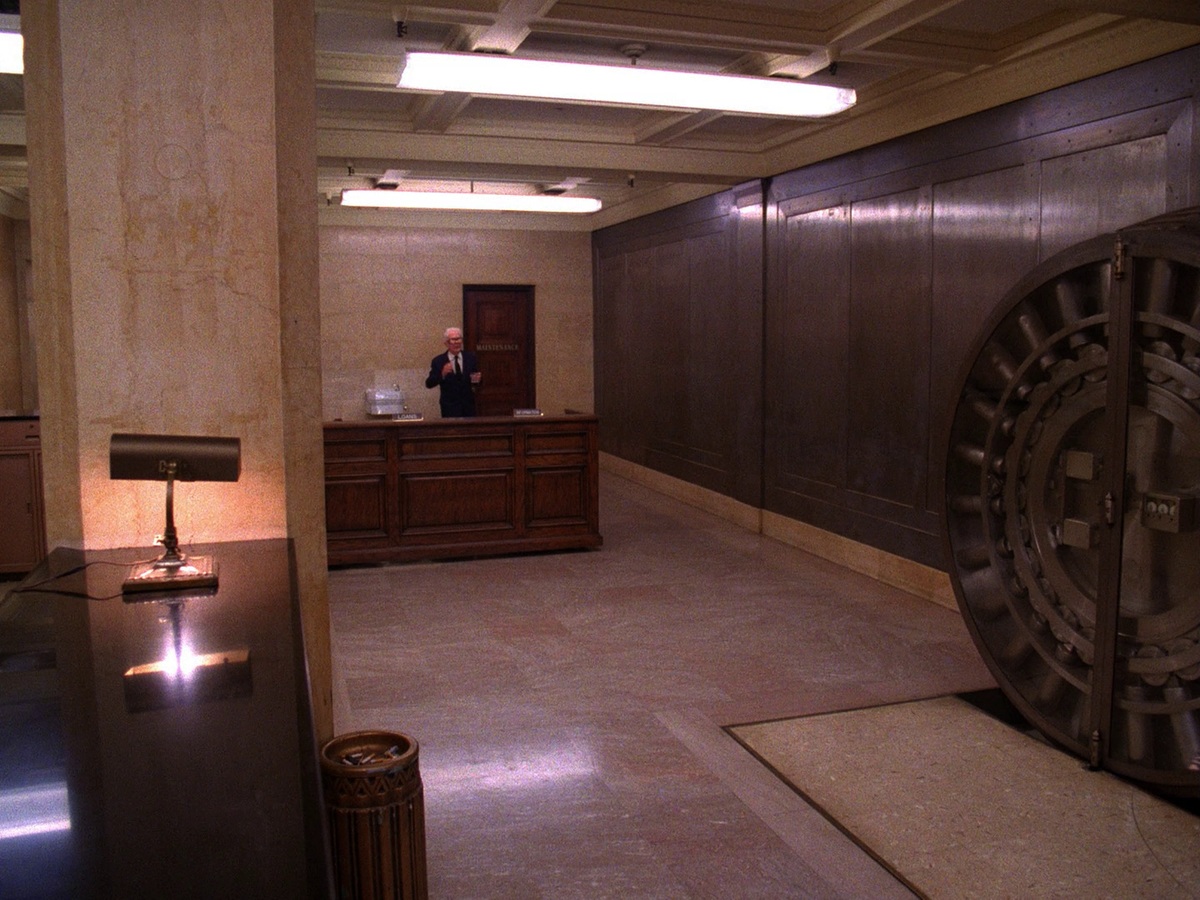
Dell Mibbler’s slow movements make time conspicuous. The wide views hold the marble room, counter and circular vault opening while the business of bringing water and admitting customers unfolds. Audrey can state an urgent case, but she cannot make the institution move at her pace. The comedy of delay also forces the viewer to wait for the key’s destination.
Andrew’s enthusiasm gives the approach to the box a false sense of completion. The long journey through nested containers appears to have reached its reward. Instead, the greeting inside and the beeping mechanism reverse the meaning of access. The safe enclosure is a trap, and the confidence of possessing its key has helped deliver its victims.
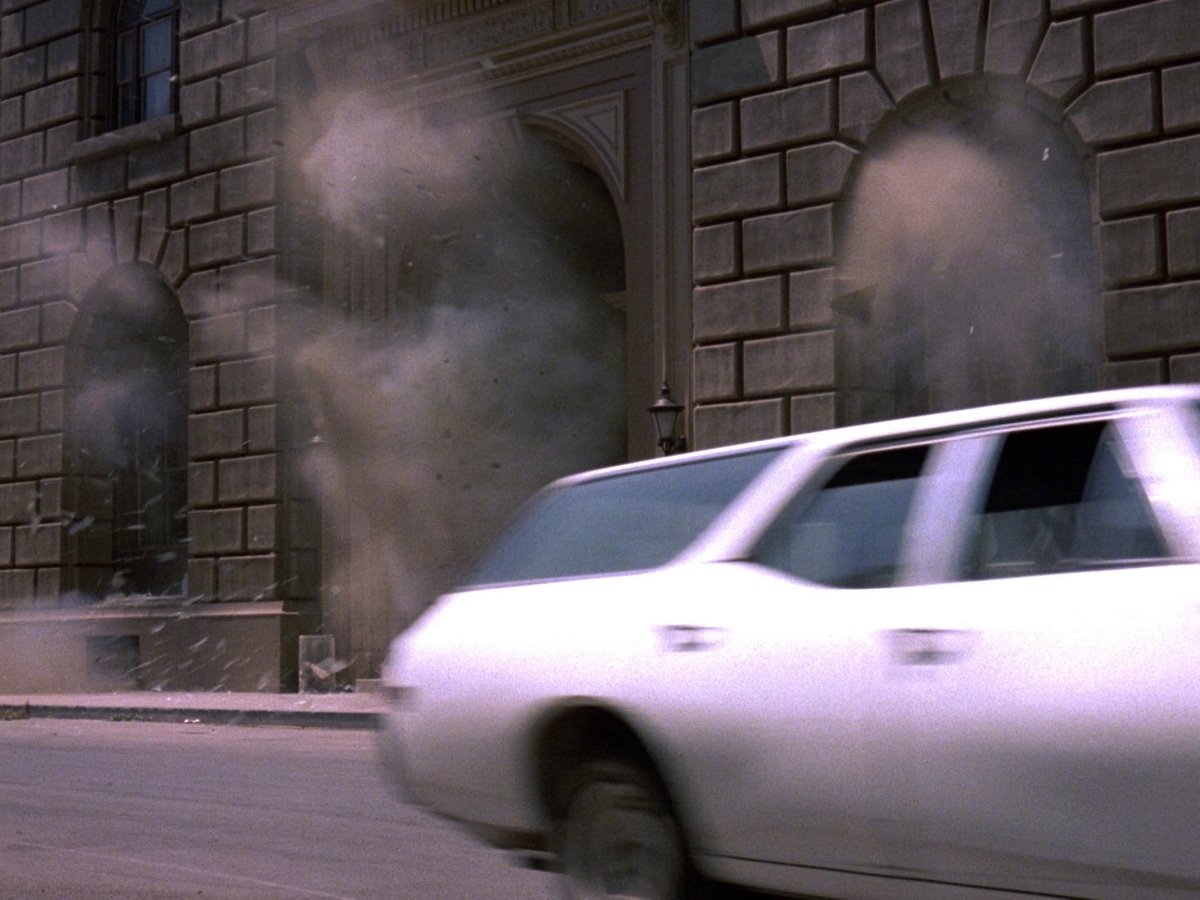
The explosion ends the carefully extended interior scene with an abrupt exterior rupture. Audrey, Pete and Andrew are caught within the sequence, but the episode does not pause to resolve their individual fates. The final season hour keeps producing aftermaths it will not let the audience settle into.
The vault, the box and the blast · 6 images
Coffee in the waiting room
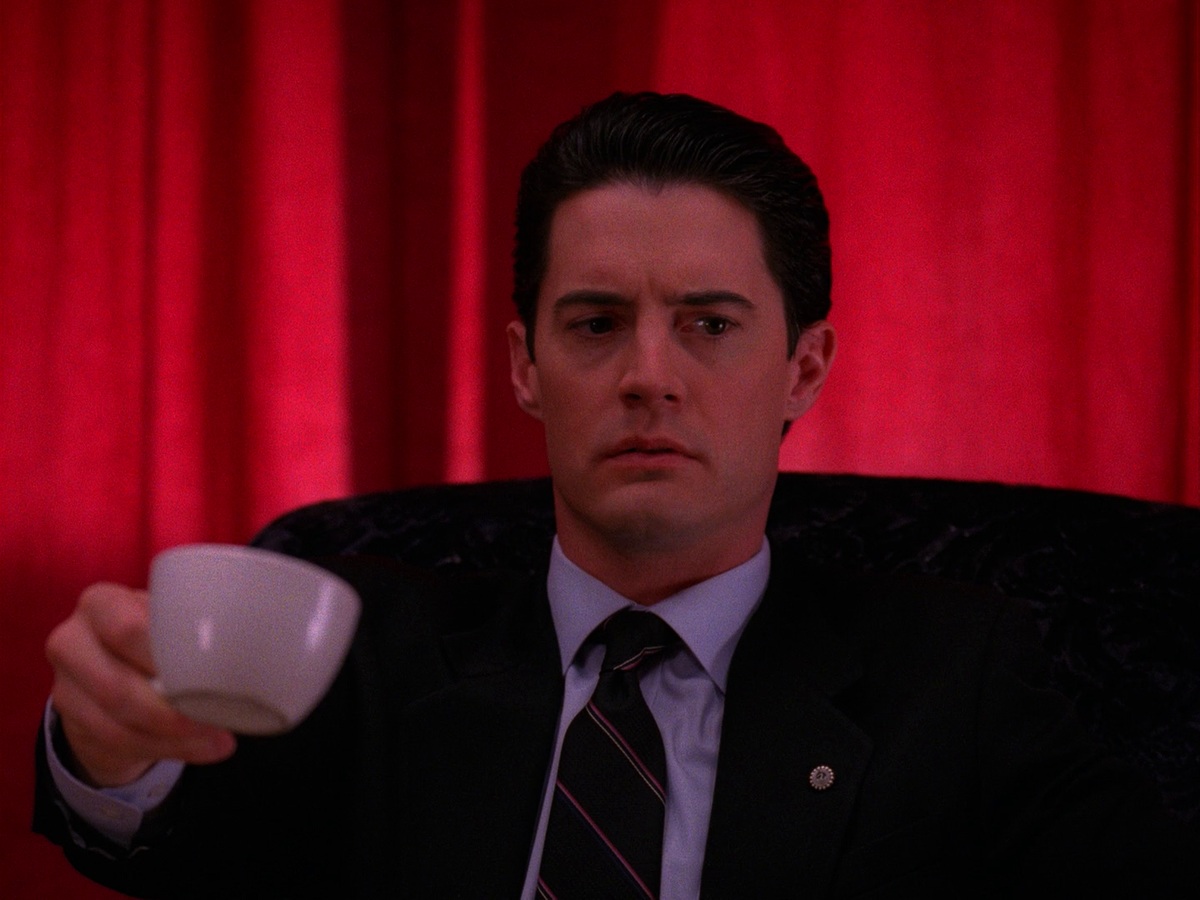
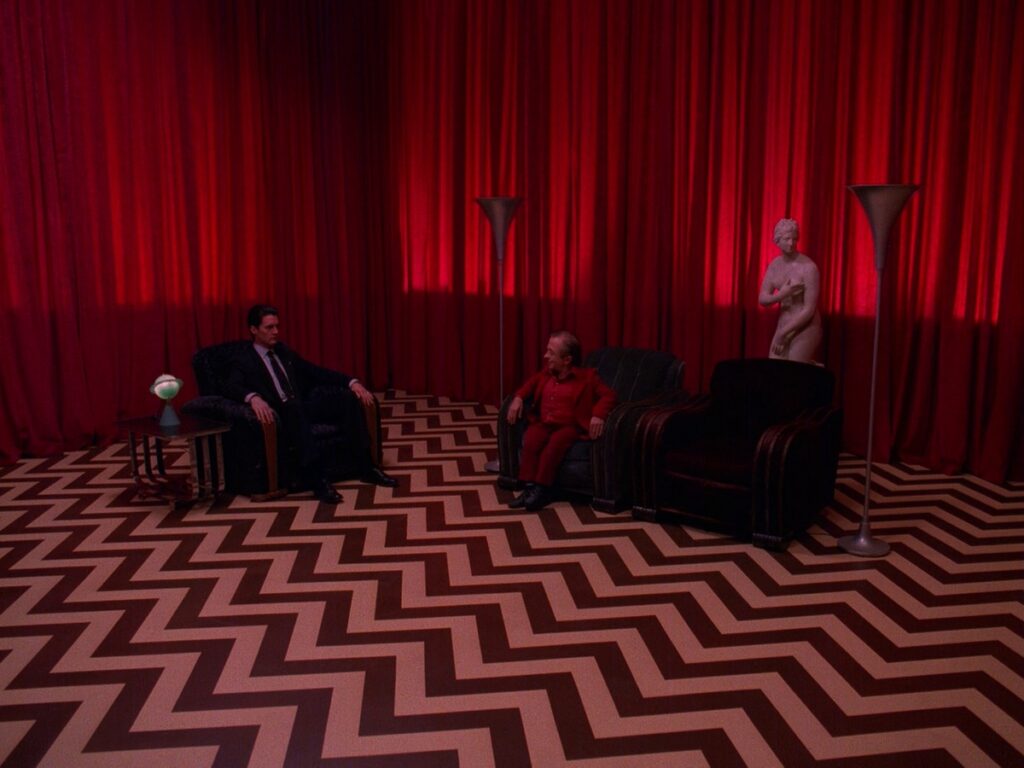
Outside, daylight arrives and Andy offers Truman coffee, a meal and pie. The repeated questions meet distracted answers. Inside, the Man from Another Place also offers Cooper coffee. A familiar ritual of hospitality connects the two spaces while their measures of time diverge: Truman can count the hours; Cooper cannot establish a stable sequence of encounters.
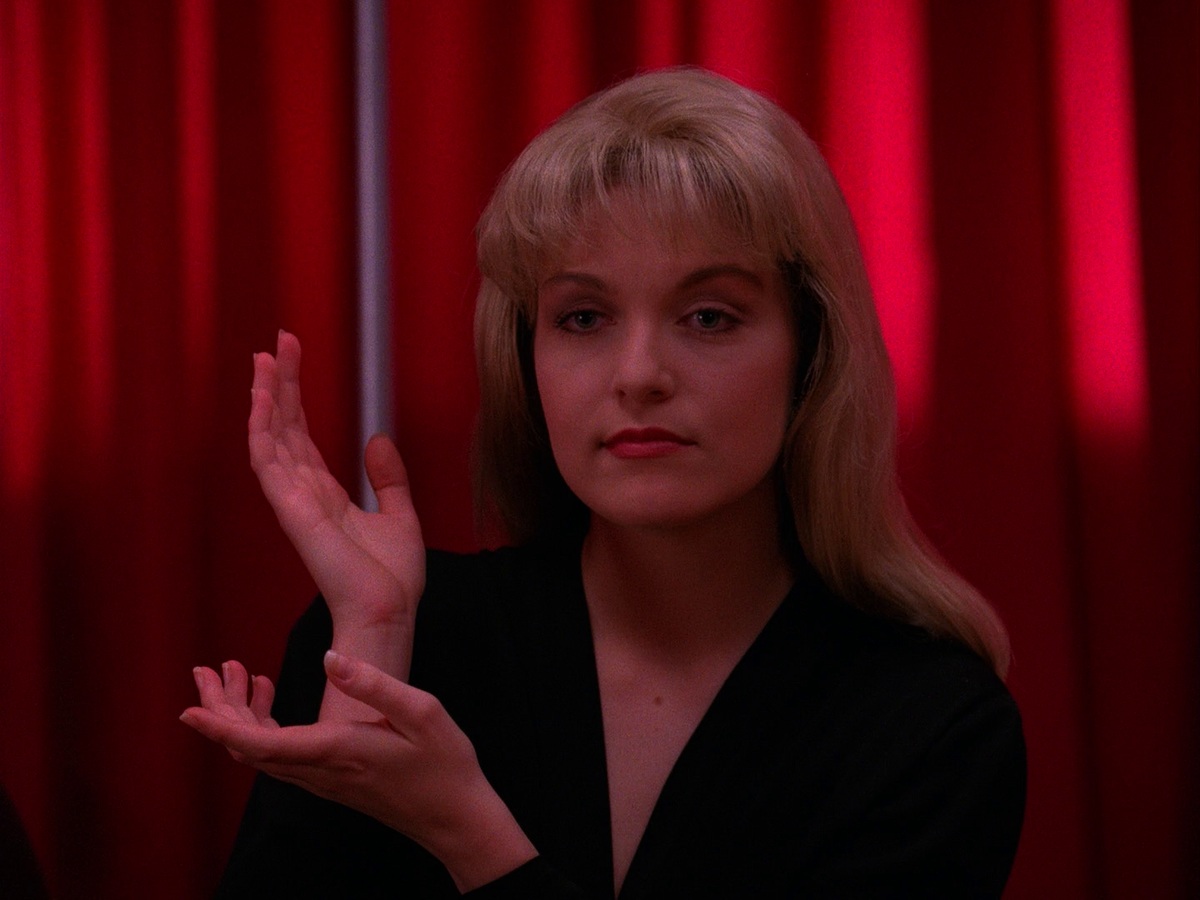
The Man from Another Place identifies a waiting room and warns that a later appearance will not be the same presence. Laura arrives smiling and speaks of seeing Cooper again in twenty-five years. She does not provide the explanation his investigation would normally seek. Her promise introduces another scale of time into an episode already separating the grove’s passing hours from the room’s repetitions.
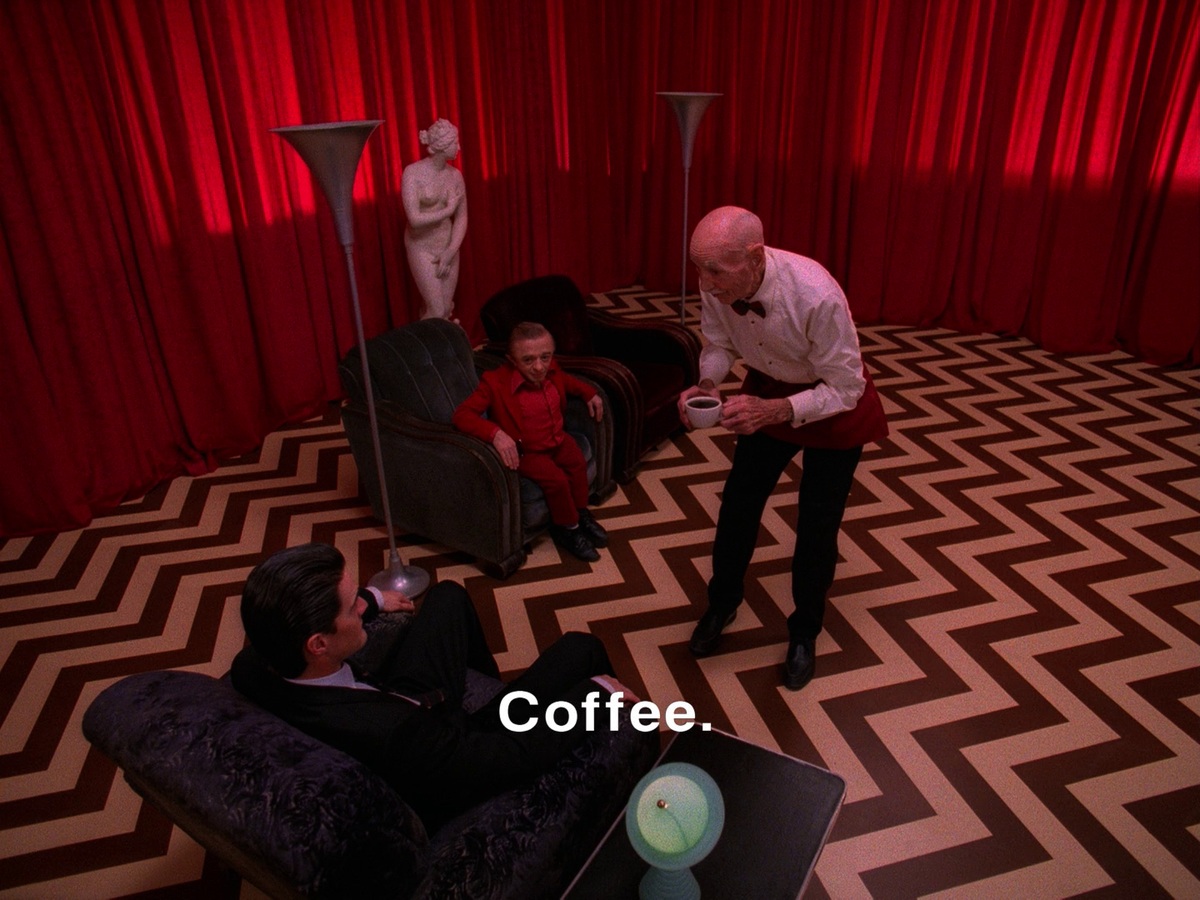
The elderly waiter’s coffee service is followed by the Giant, whose statement links two appearances. The cup then ceases to behave as an ordinary object: Cooper examines its contents, attempts to drink and reacts to their alteration. Coffee has often confirmed his delighted confidence in the town. Here its familiarity gives him no reliable physical rule.
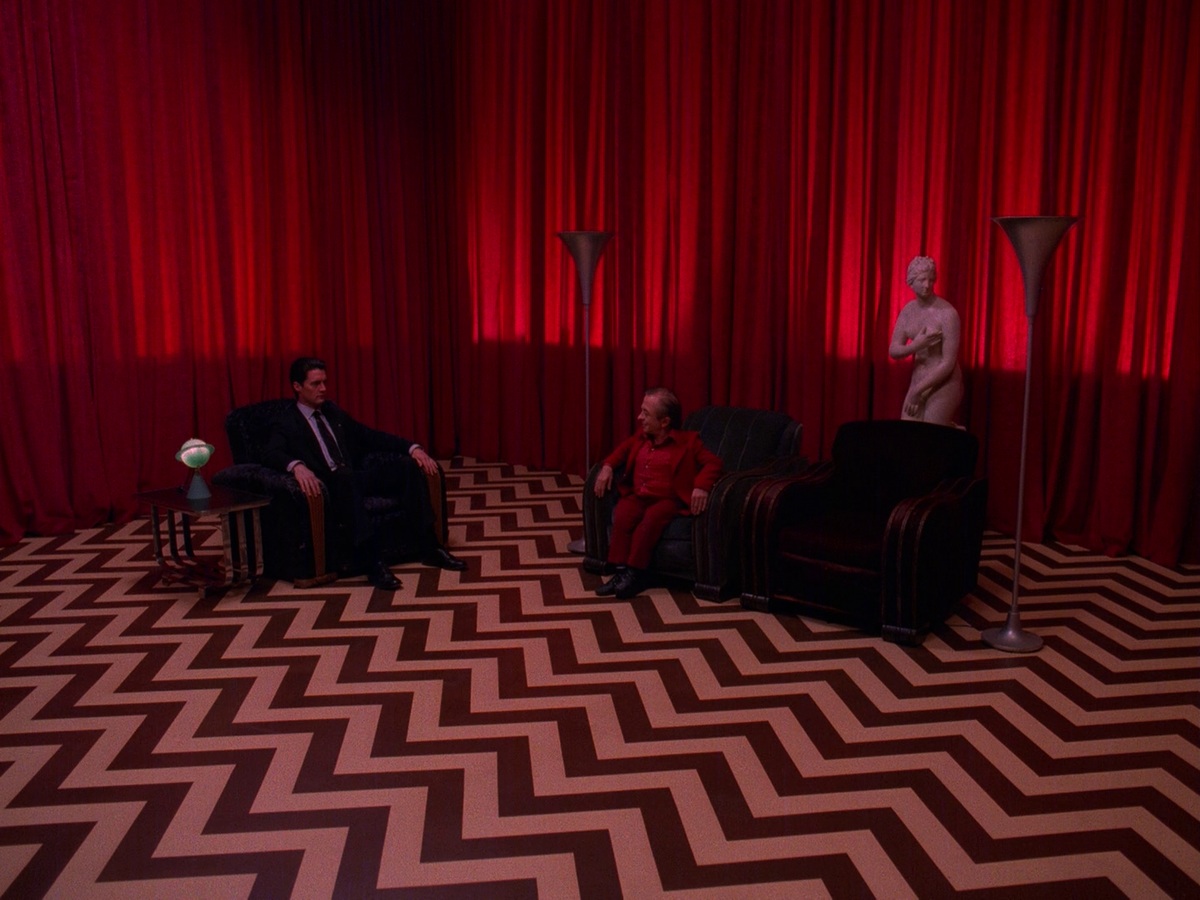
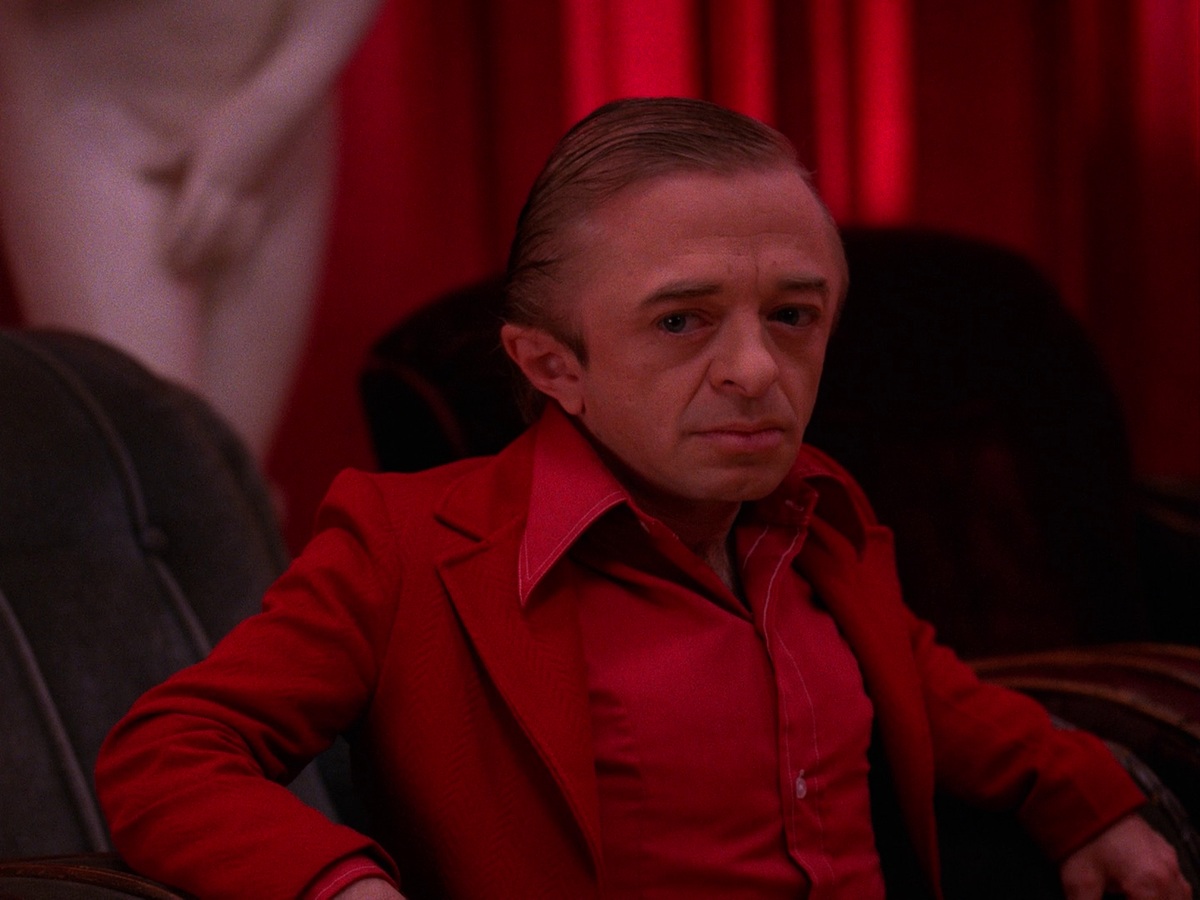
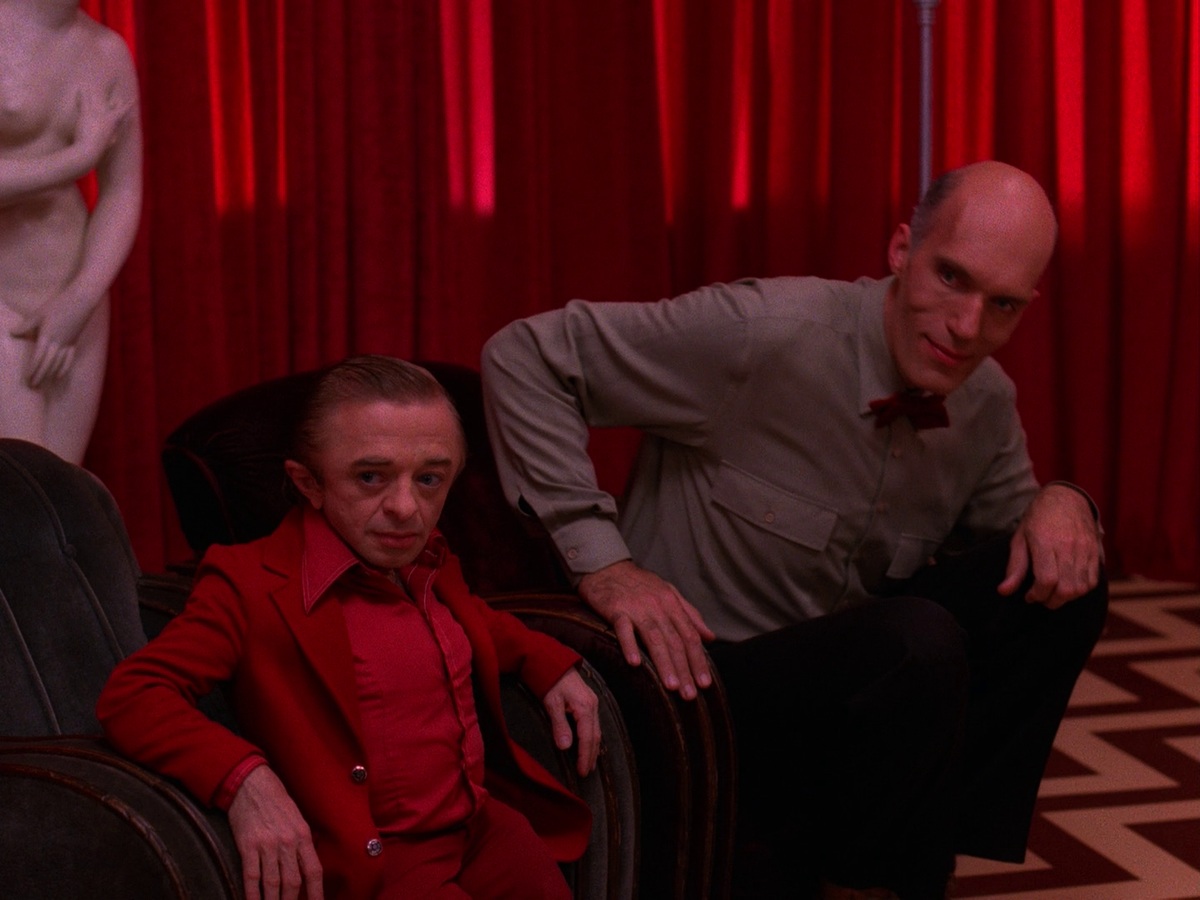
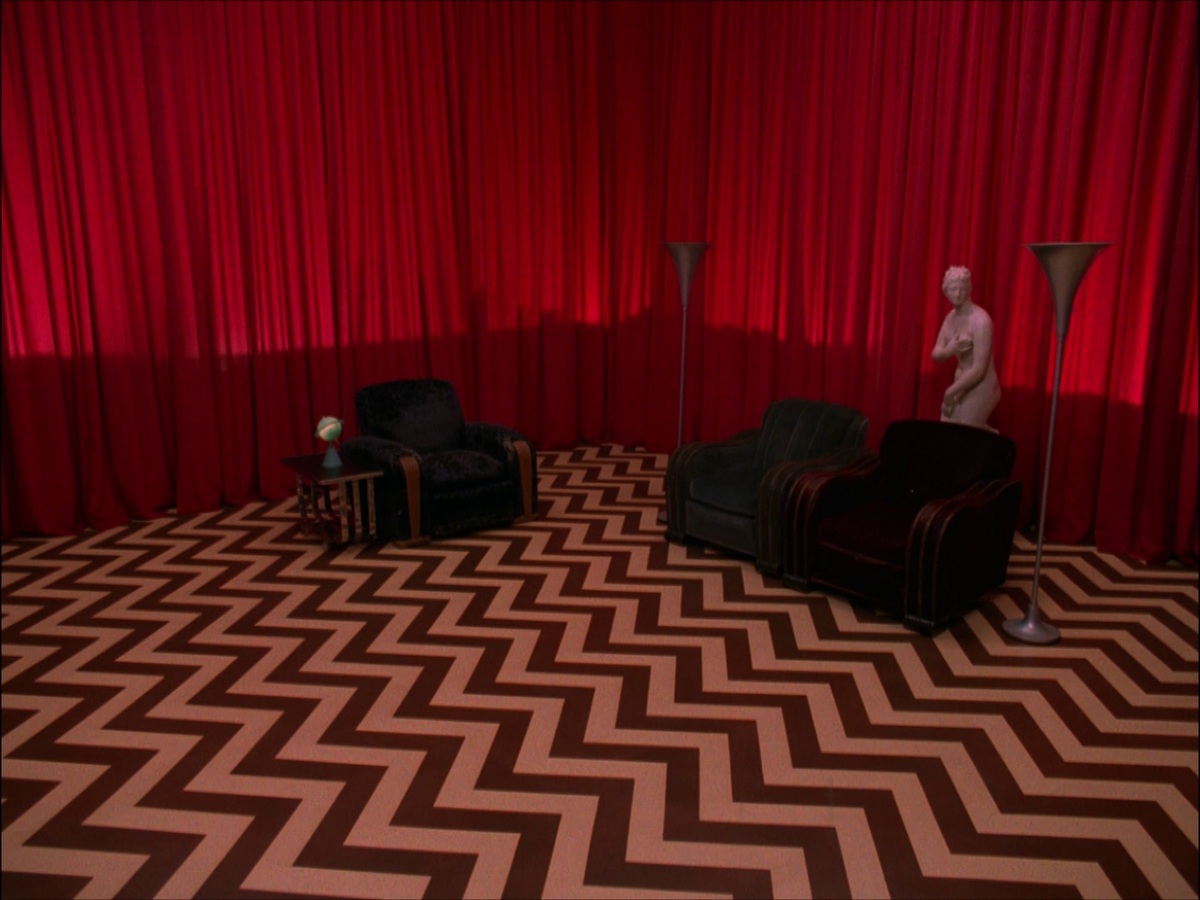
The room’s seating, lamps, statue, curtains and patterned floor remain sharply legible. The difficulty is not visual vagueness. It is that recognisable objects and faces no longer guarantee continuity. A room can be seen clearly while its relations of identity, duration and direction remain unstable.
Hospitality and unstable appearances · 6 images
The rooms repeat; the faces change
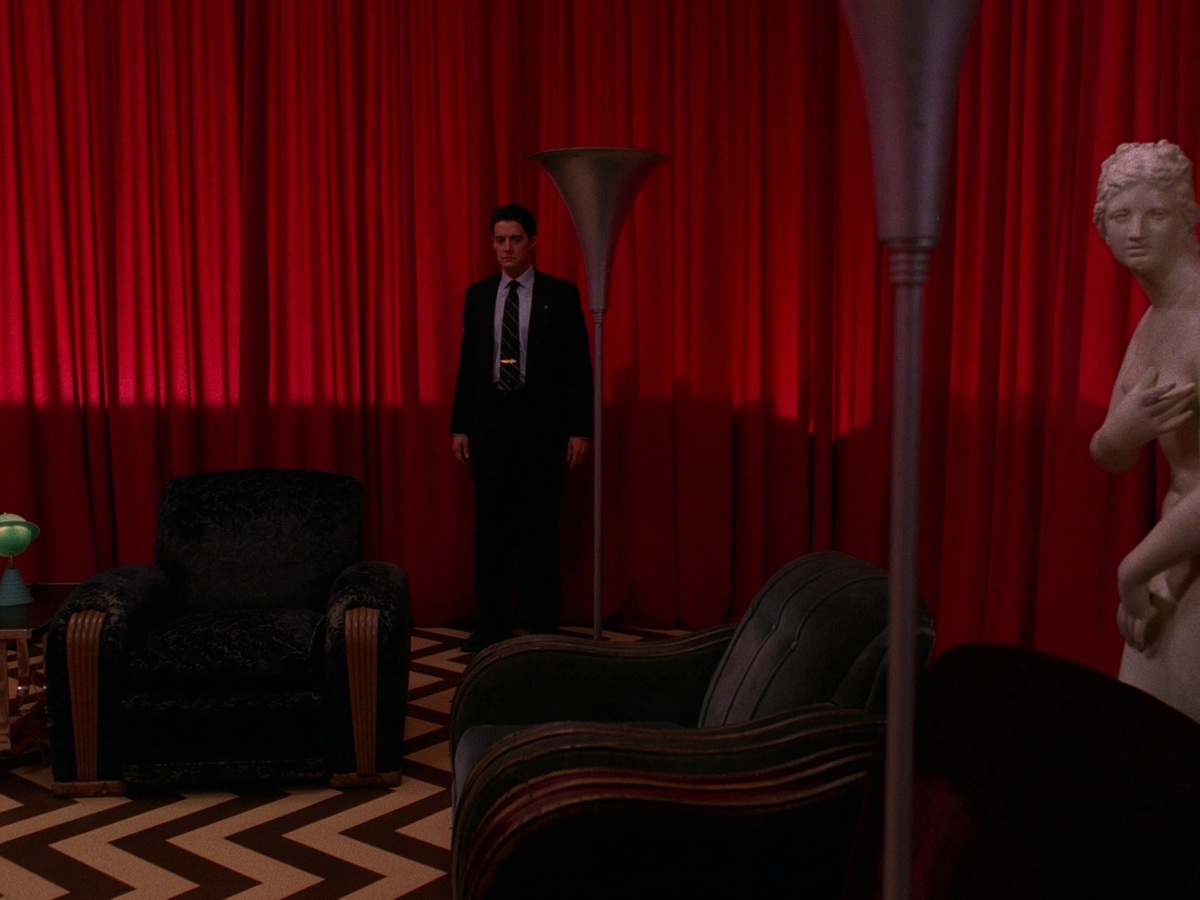
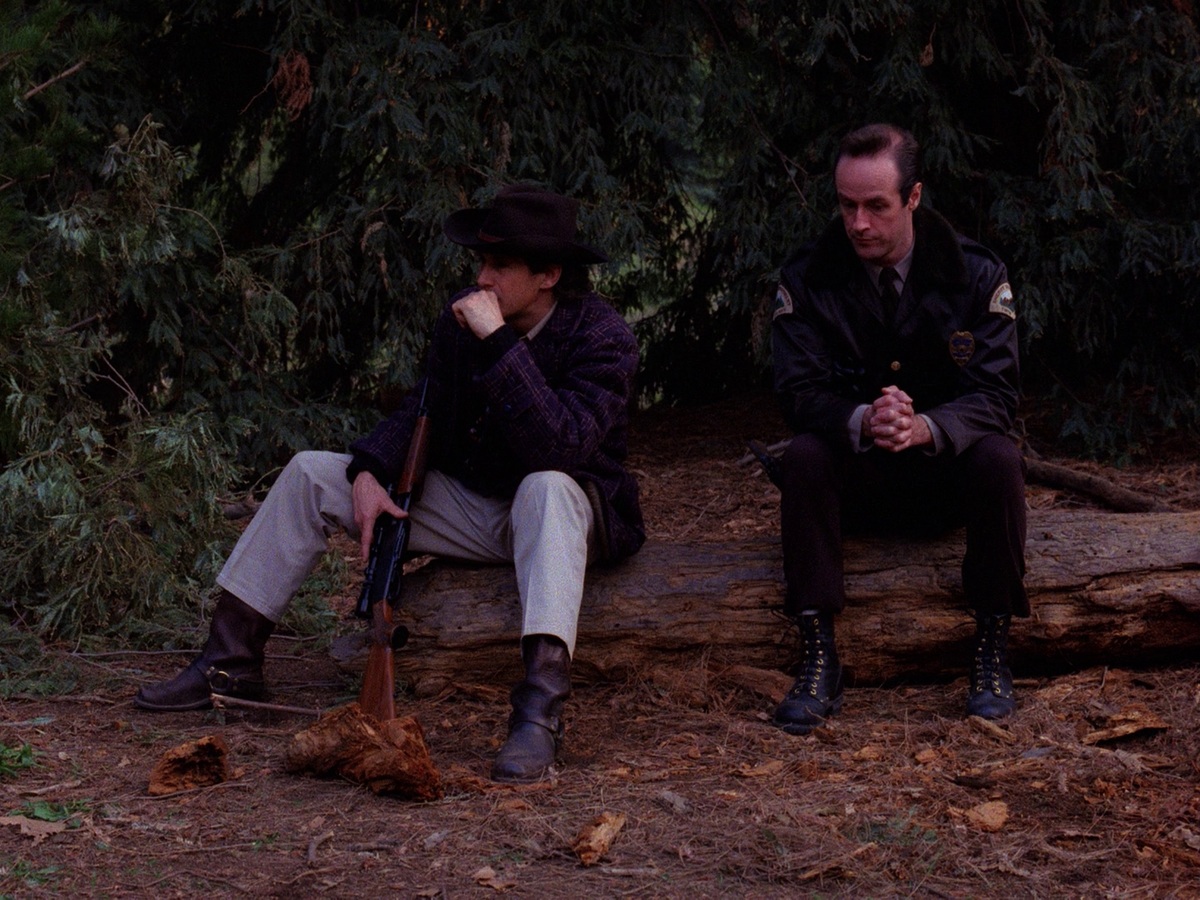
Cooper passes between similar rooms and corridors, lifting curtains that promise a next space but do not give him a dependable route. The repeated furniture makes each arrival comparable with the last. Recognition becomes a source of anxiety because a familiar arrangement may now contain someone else, or no one at all.
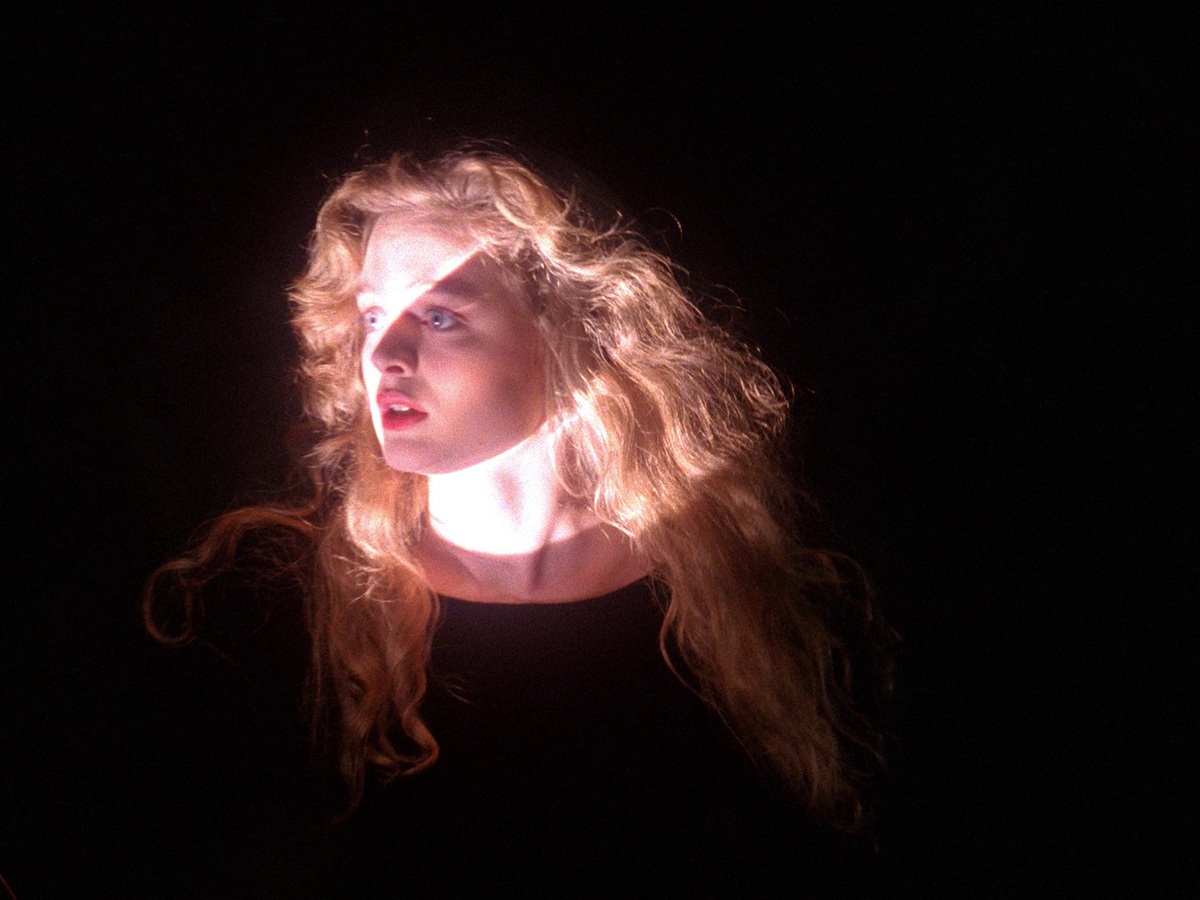
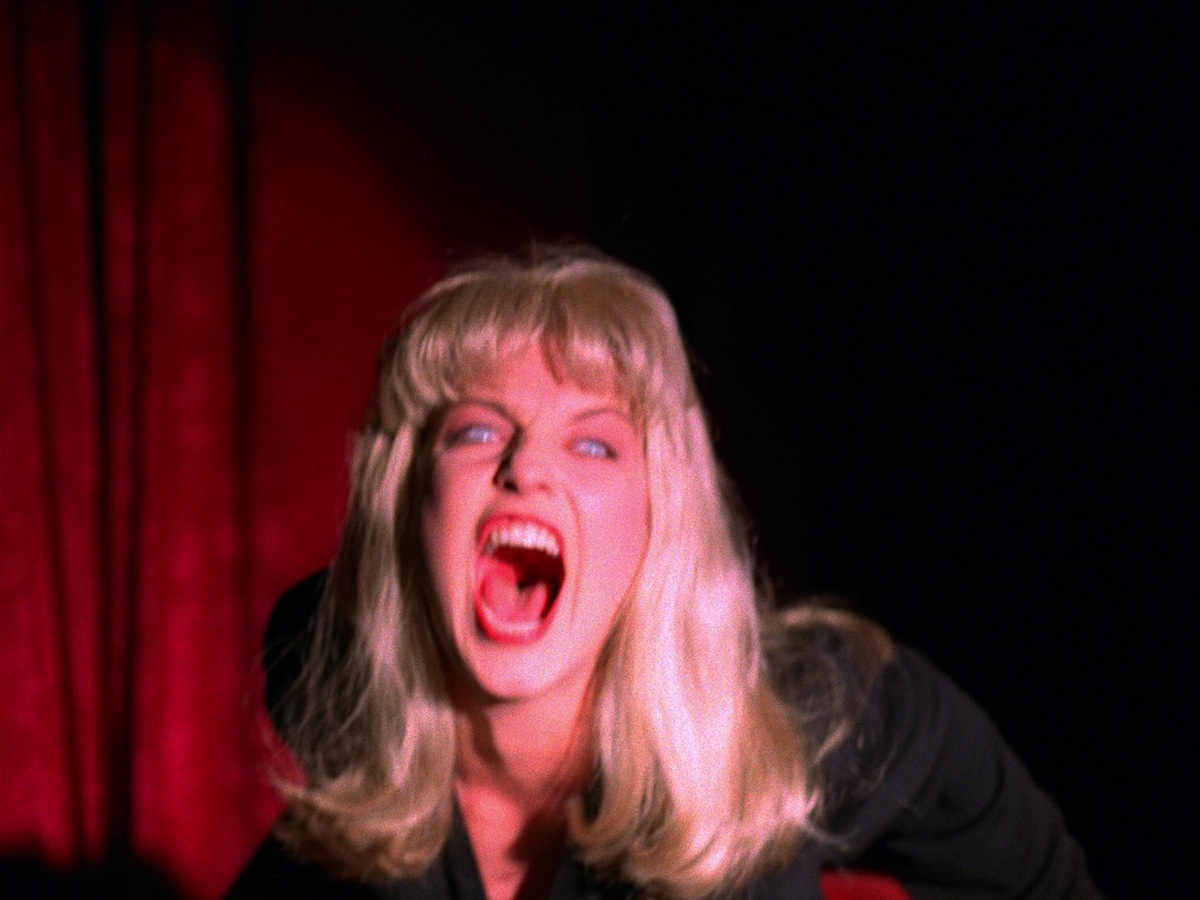
Maddy’s warning about her cousin gives way to a terrifying Laura apparition. The restrained face of the earlier greeting returns in another register: altered eyes, an opened mouth and a scream. The episode makes Sheryl Lee’s contrasting performances central to its uncertainty. A shared face cannot settle which presence Cooper is encountering.
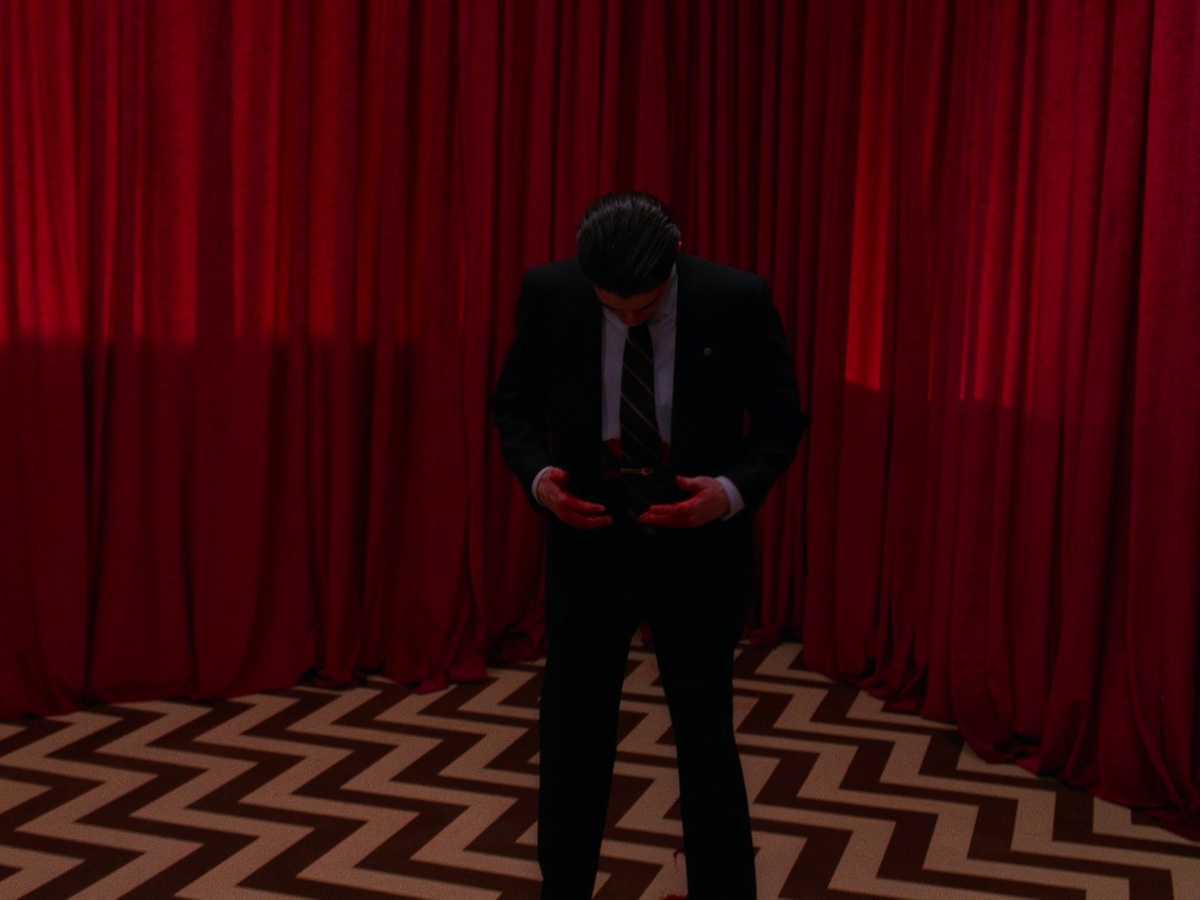
Cooper’s attention is then directed to his own wounded body and to figures on the floor. Annie and Caroline replace one another within a scene of injury and accusation. His spoken attempts to name the woman do not stabilise her identity. The old failure that Earle has invoked outside the Lodge becomes an immediate problem of recognition within it.
Earle proposes a bargain: Cooper’s soul for Annie’s life. Cooper accepts, but BOB interrupts the transaction and rejects Earle’s authority to make it. The apparent master of the preceding game is displaced by another power. Winning a contest against Earle would not have been equivalent to understanding the place into which he has led them.
Leland appears with another version of Cooper. The double’s grin and pursuit turn the investigator into the object of the danger he has been trying to interpret. The corridors are no longer simply an environment he must read. They now contain a competing image of himself, able to follow the same route.
Repeated rooms and changing identities · 12 images
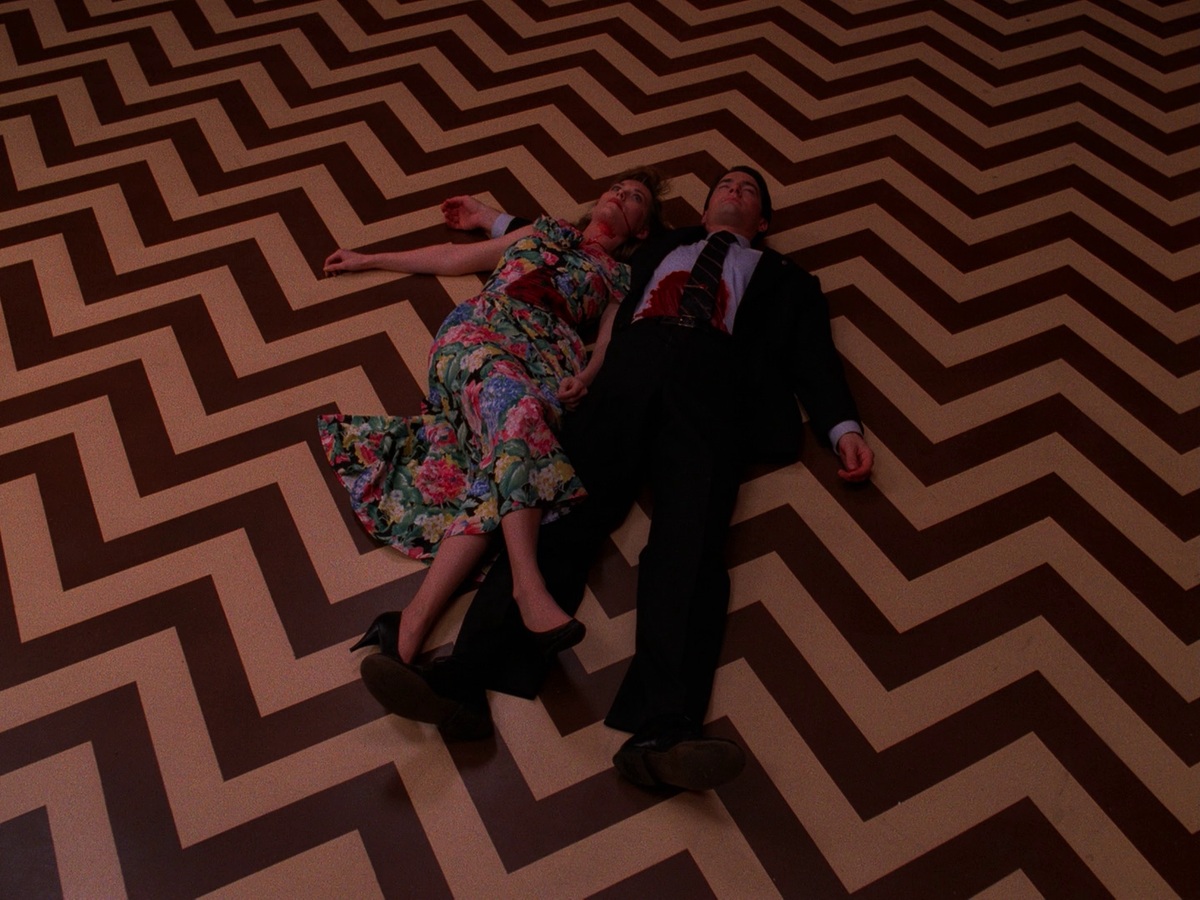
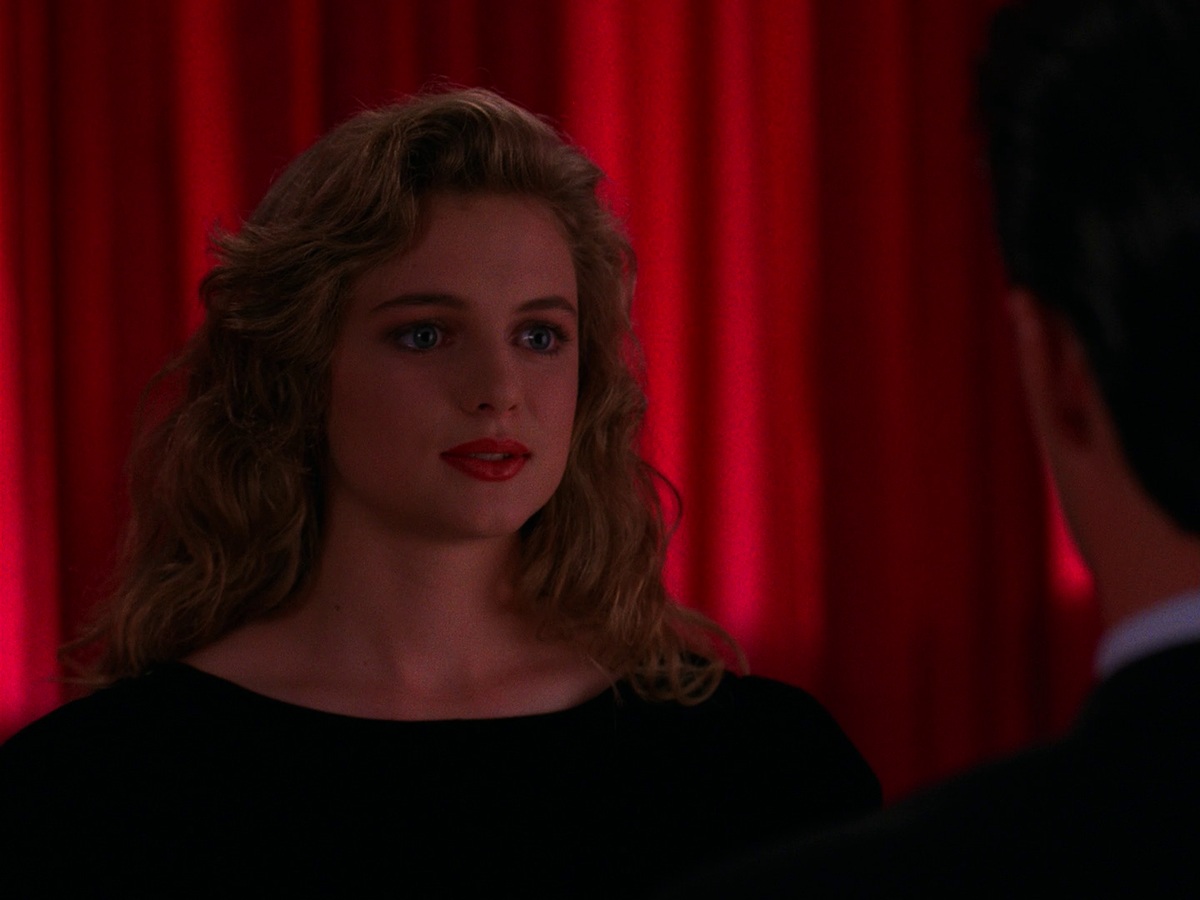
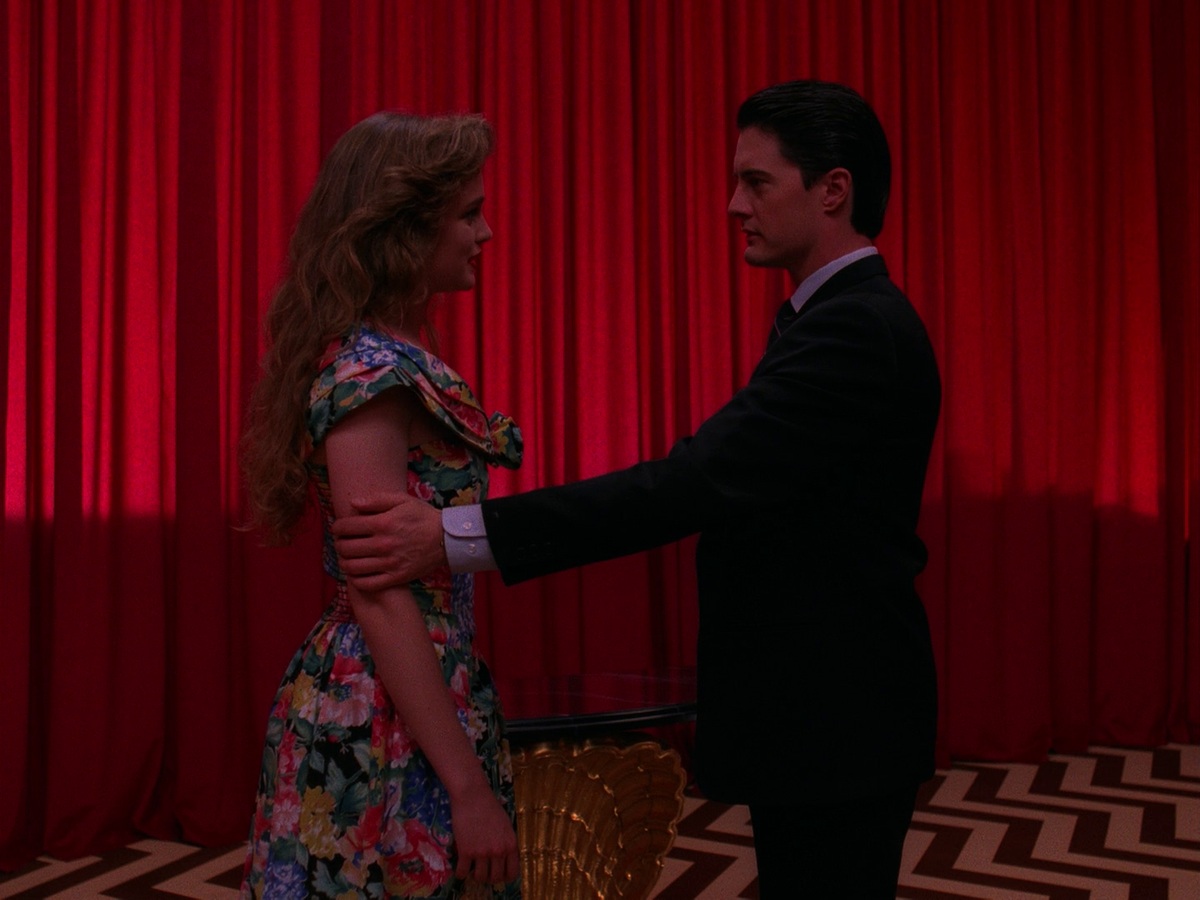
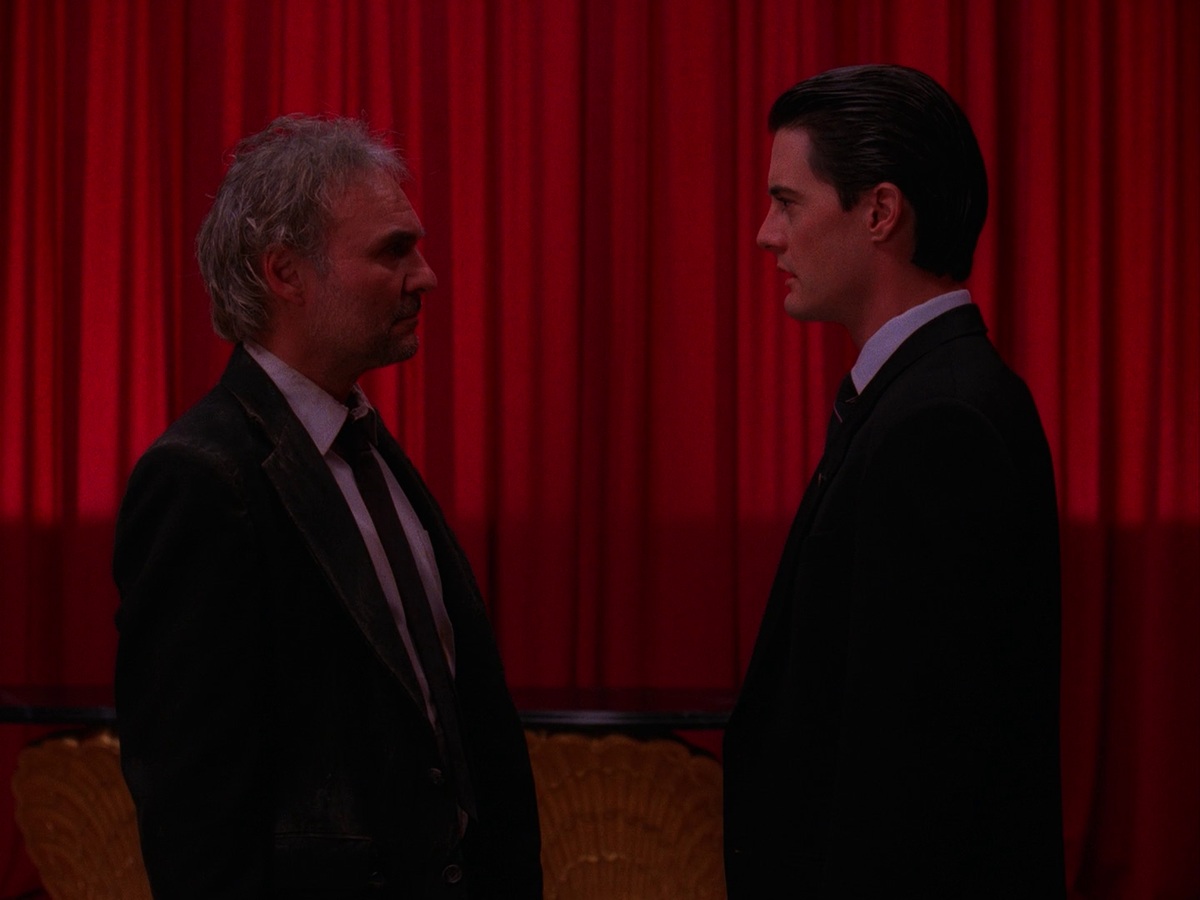
How the actors performed the impossible
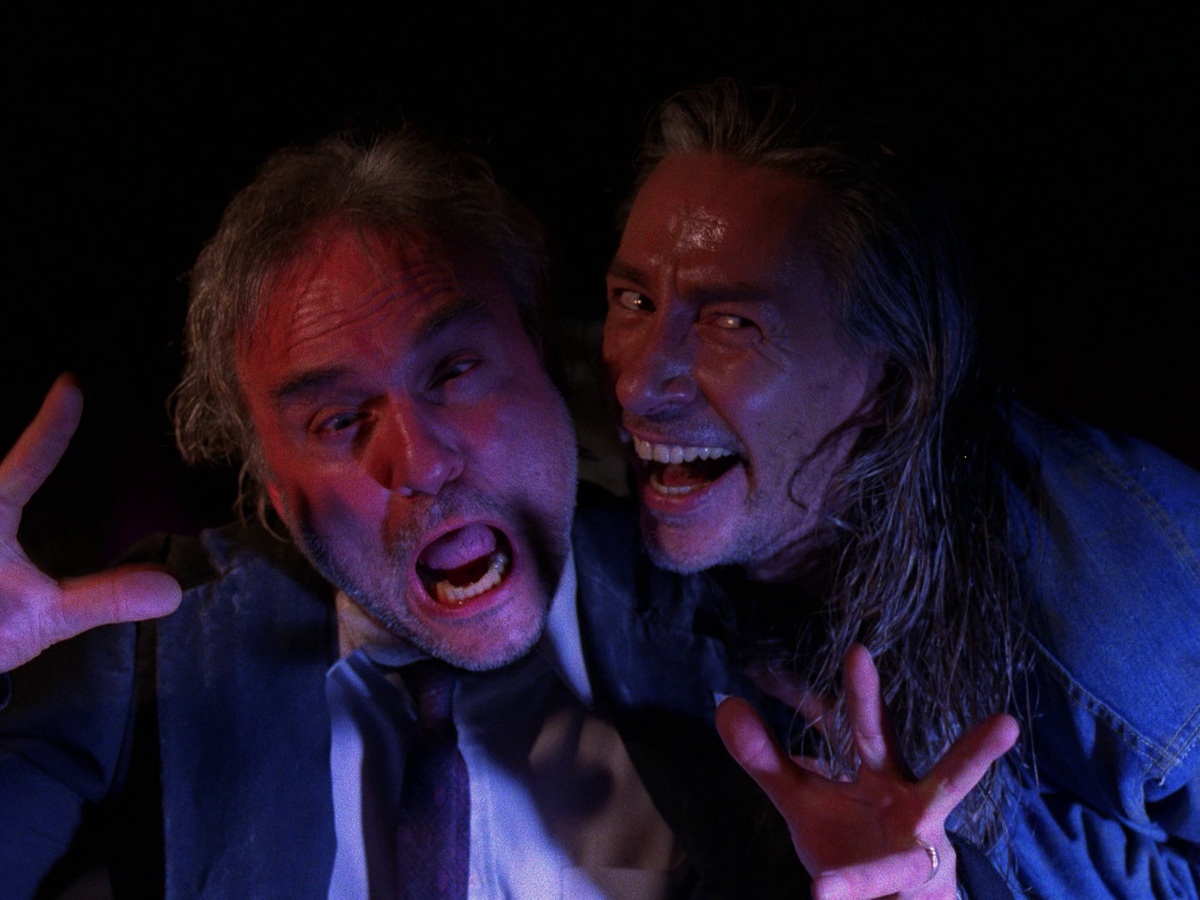
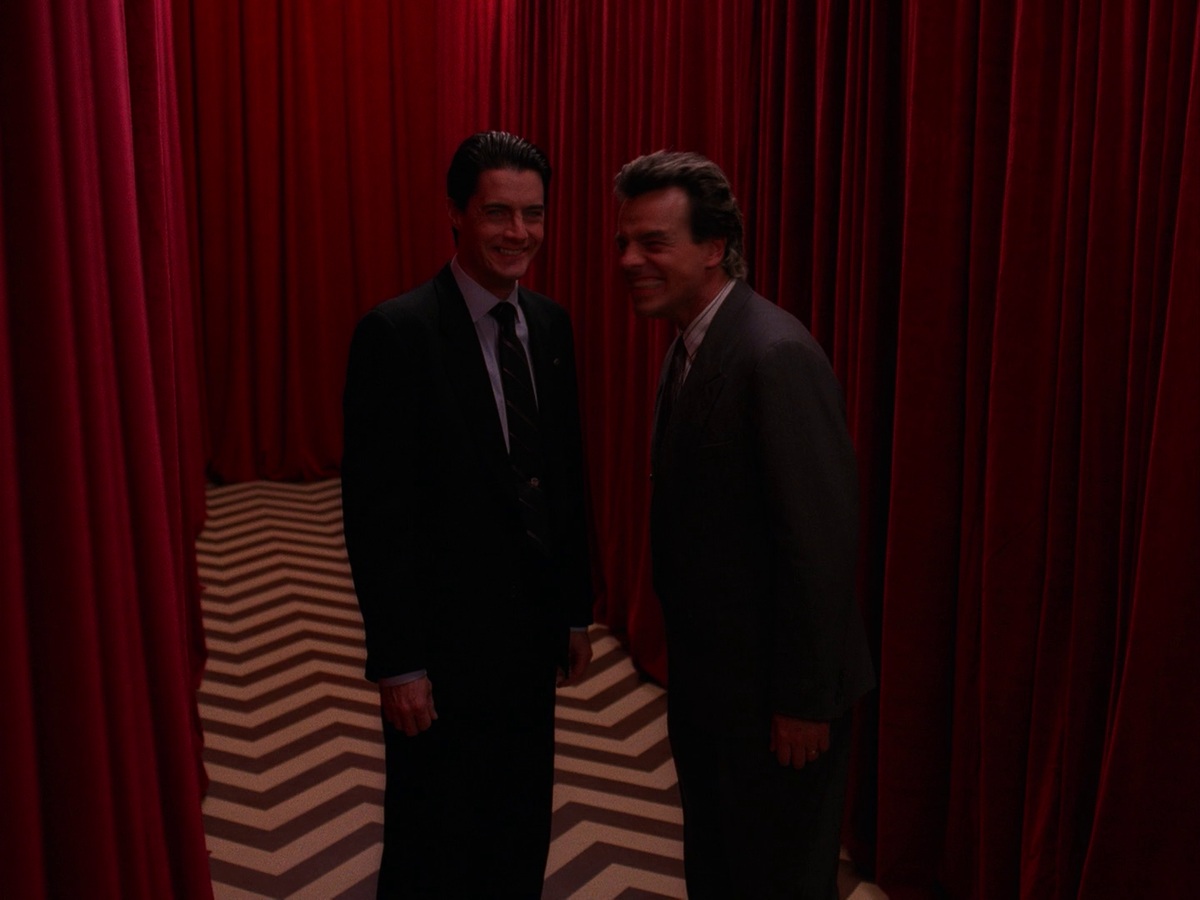
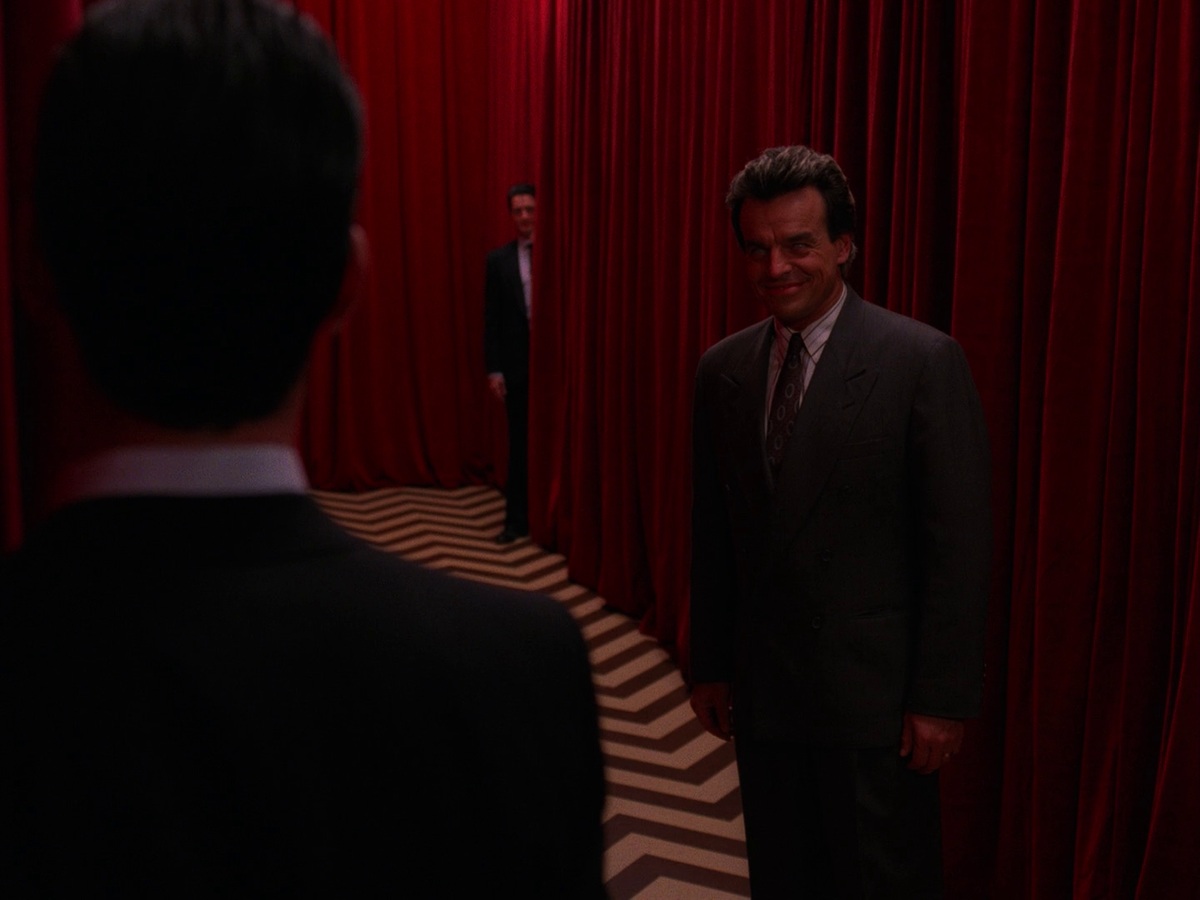
The retrospective Into the Night: Creating Season Two supplies a practical counterpart to the finale’s strange speech and movement. Kenneth Welsh recalls Michael J. Anderson helping the actors with reversed speech, including the difficulty of reversing the component sounds inside a vowel. The result depends on a constructed vocal performance, not simply on an ordinary sentence played backwards.
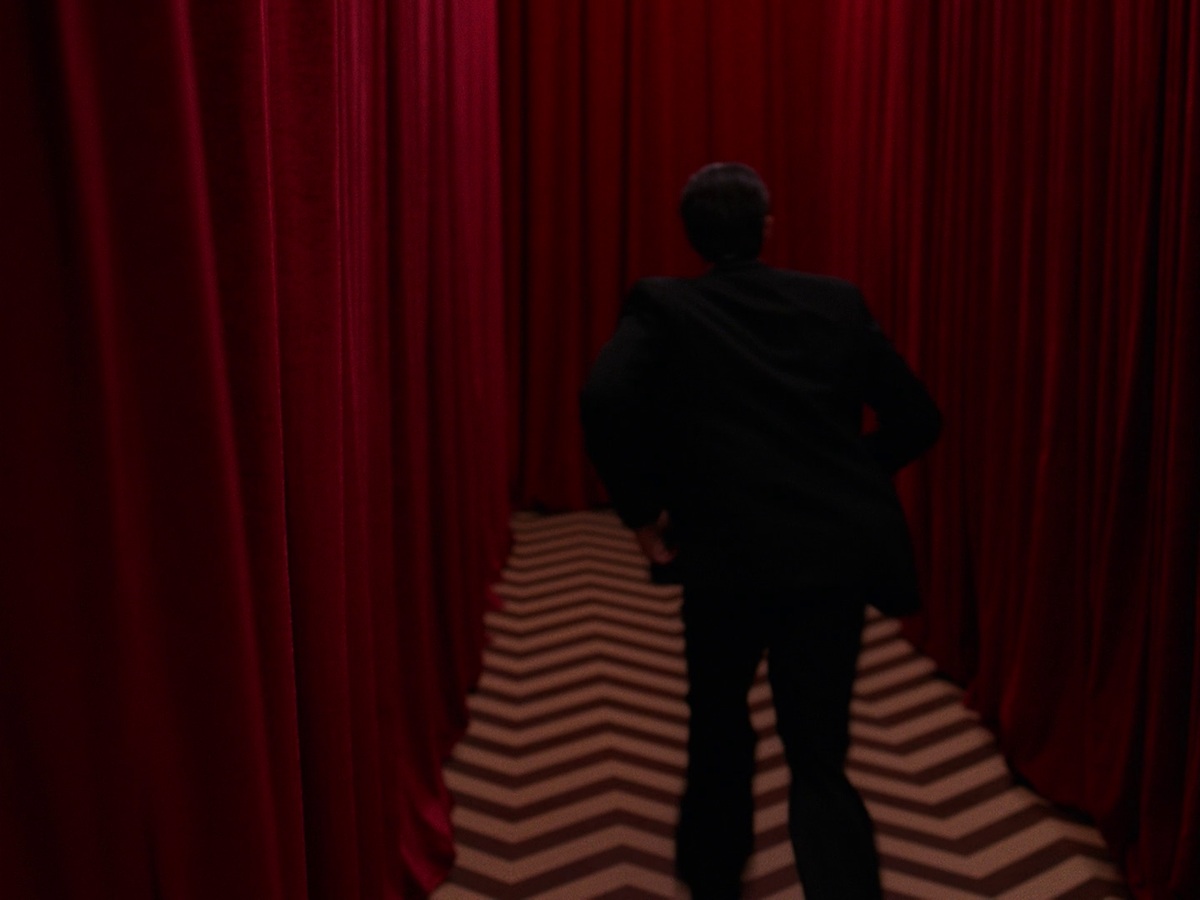
Kyle MacLachlan describes the blocking as a mental puzzle: he had to work backwards through positions and actions while keeping the intended result in mind. His account makes the body as important as the line. Speech, gesture and movement through the curtains all had to become usable material for the reversal.
Carel Struycken remembers an overnight shoot and describes the experience as exceptionally free and surprising. His impression was that it was improvised. Robert Engels, speaking from the writing side, recalls the finished episode being very different from the script the writers had assembled. These accounts describe different positions within the production; neither by itself establishes that every action was invented without preparation.
Placed beside the finished scenes, the testimony helps explain why the room feels physically wrong while its objects remain clear. The actors perform deliberate tasks that are difficult to execute naturally, and the reversed result preserves traces of that effort. The disruption belongs to bodies and voices as well as editing and design.
The question changes in the mirror
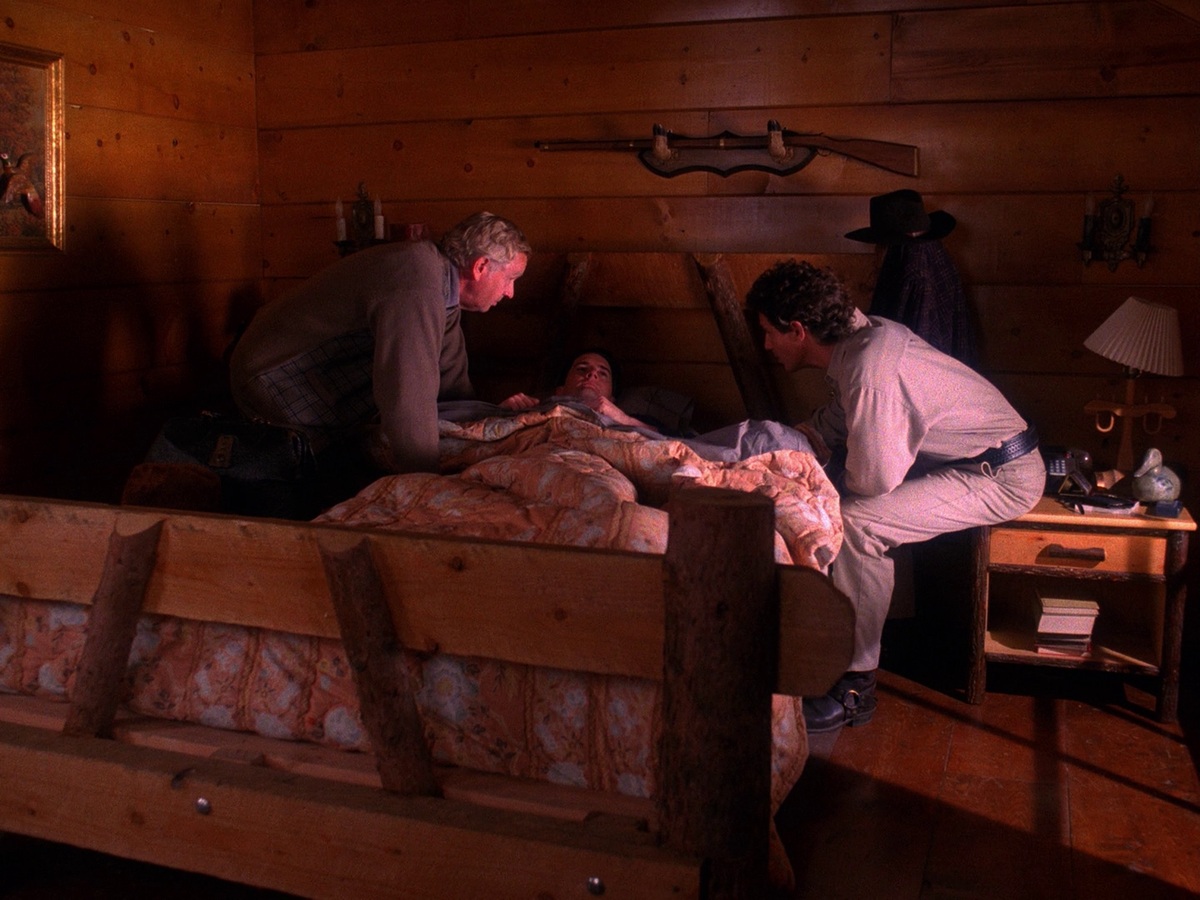
Cooper and Annie are found outside the curtains. The hotel room initially offers the form of a recovery scene: familiar attendants, a bed, reassurance that Annie is in hospital and an apparently mundane wish to brush his teeth. The ordinary task gives Cooper a reason to move out of their direct view.
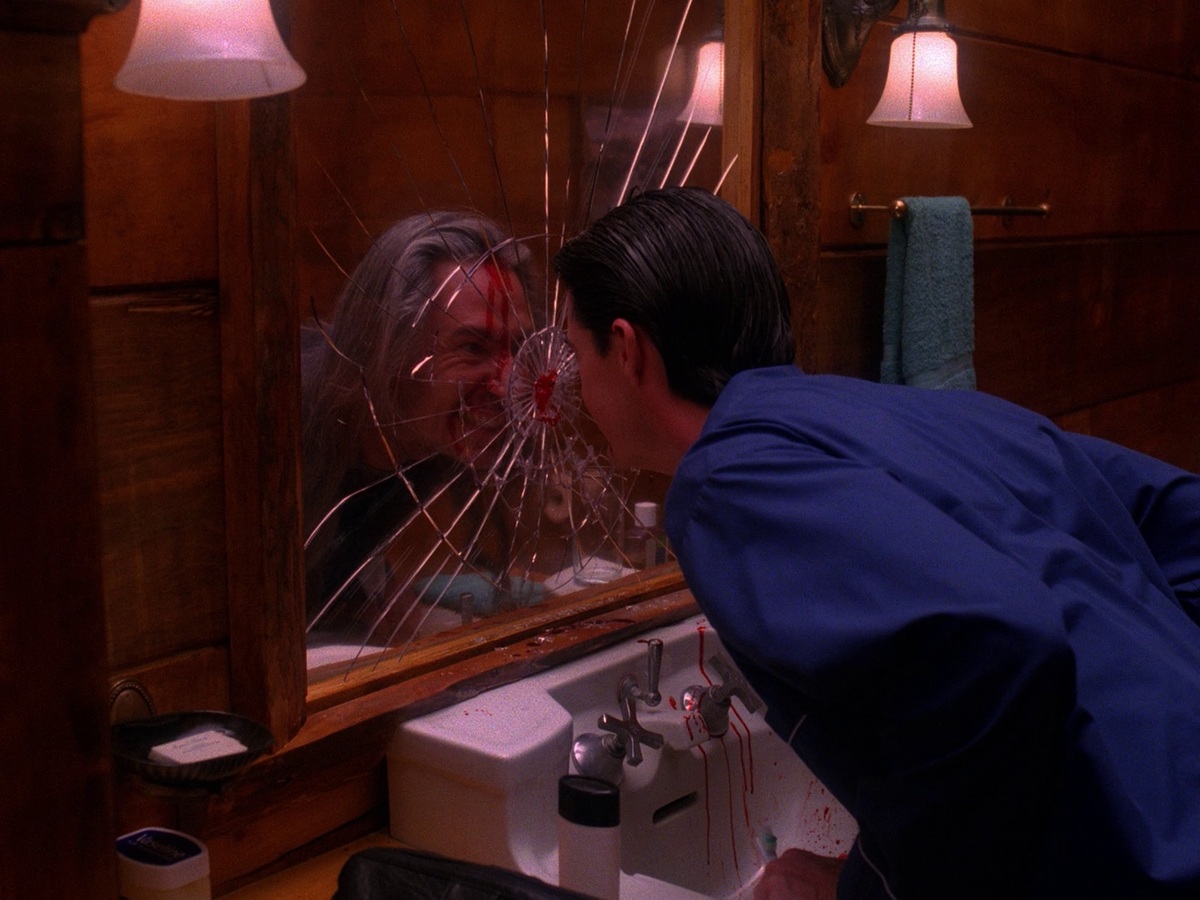
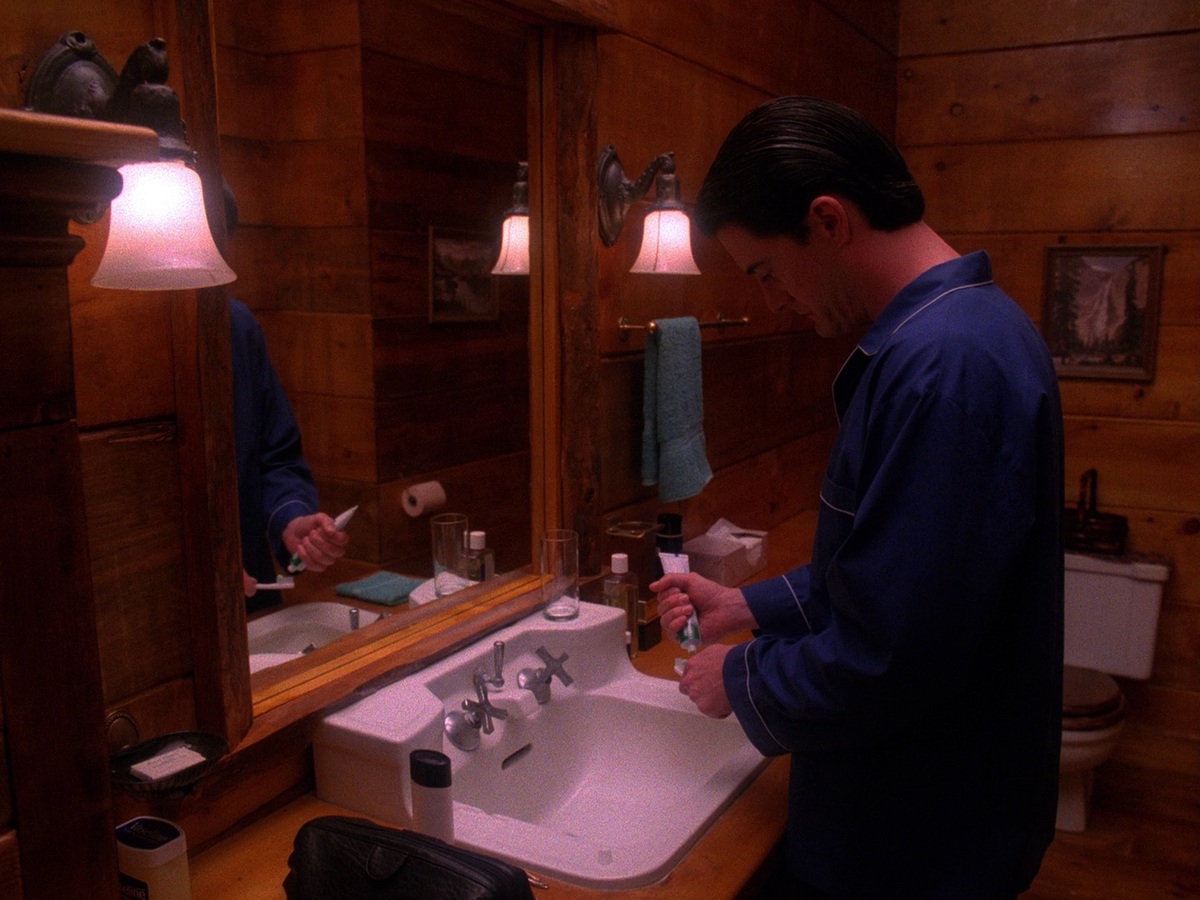
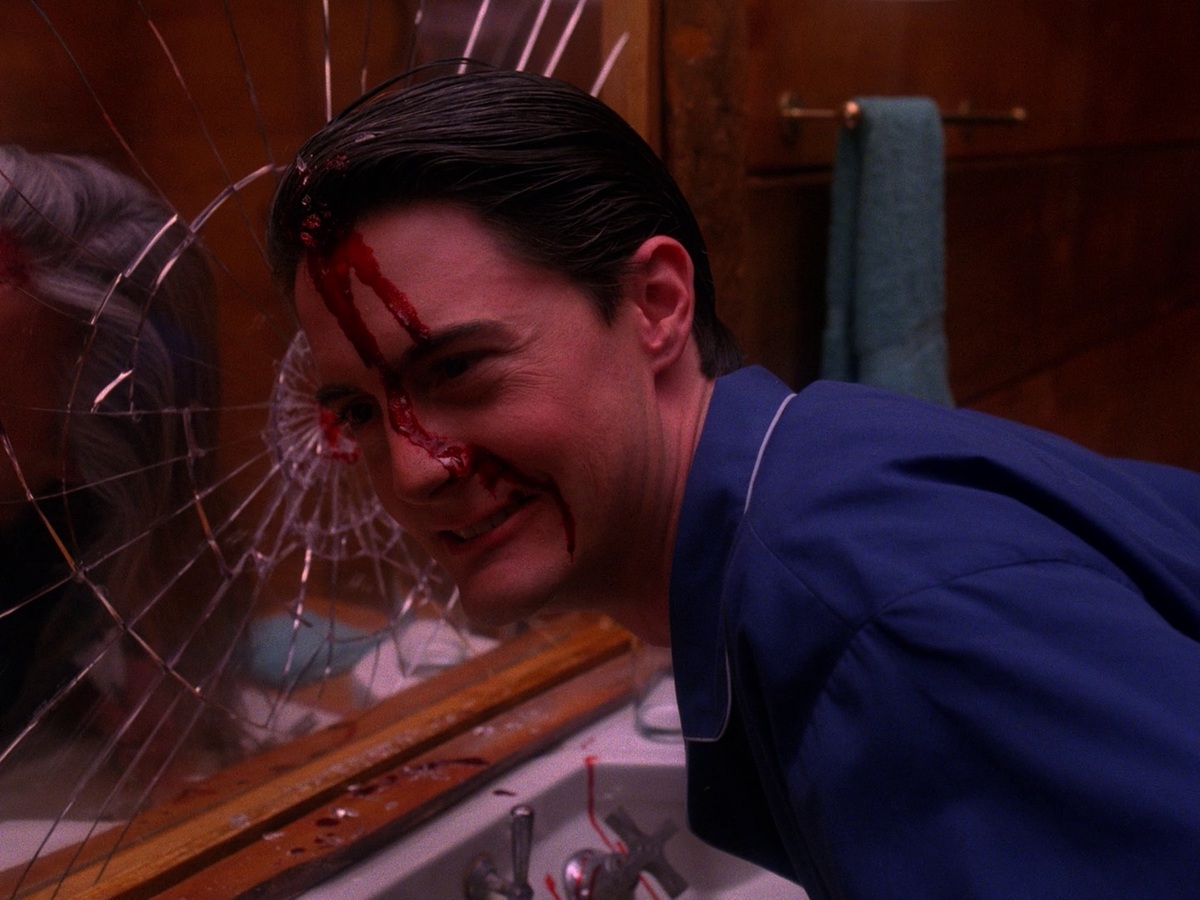
At the bathroom sink, the toothpaste and toothbrush continue that domestic expectation. The mirror breaks it. BOB’s reflected face and Cooper’s violent contact with the glass make the return itself a source of danger. Truman is just outside, calling to a man whose familiar appearance has ceased to be reassuring.
The repeated question about Annie changes its force. At the bedside it can be heard as concern; by the mirror it becomes an imitation delivered through a grin and laughter. Repetition does not preserve a line’s meaning when the speaker’s performance has changed. The ending places that difference at the centre of the viewer’s uncertainty.
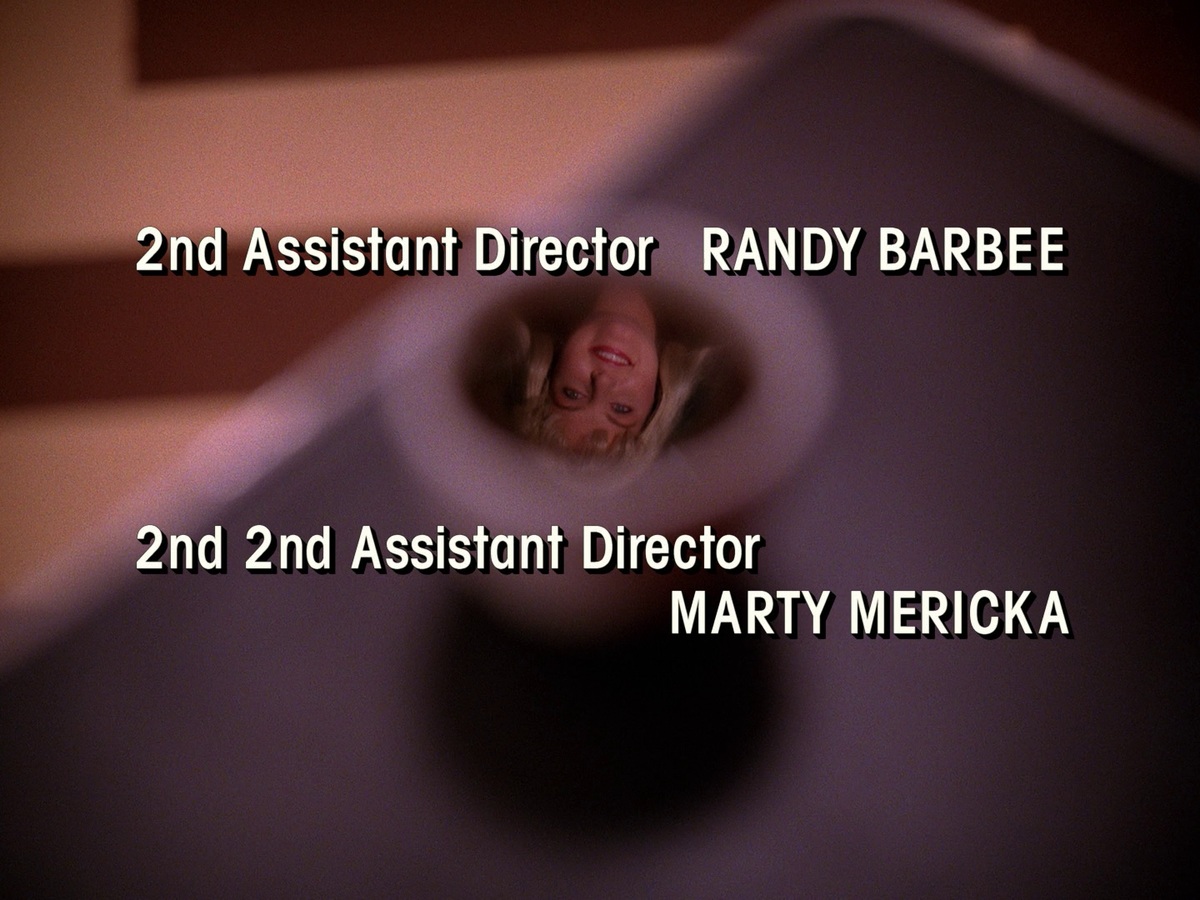
The credits replace the customary Laura portrait with an image of coffee and her face. The programme’s memorial figure and Cooper’s favourite everyday object are brought together after an ending that has made both newly unstable. The final image extends the episode’s work of returning familiar things in a changed form.
Mark Frost’s retrospective account imagines an unrealised continuation confronting Cooper with darkness within himself. That recollection belongs to the history of plans after the original run. It should not be read as a synopsis of the much later 2017 continuation, which develops its own structures of doubling, delay and return.
From the bedside to the broken reflection · 6 images
A route through Beyond Life and Death
The station: Lucy and Andy; the map, Pete’s truck, Margaret’s oil and Ronette’s recognition.
The woods: Earle and Annie reach the sycamores and the red curtains.
Domestic reversals: Nadine’s memory returns; Donna, Ben and the Haywards confront the family secret.
Cooper’s entrance: the grove, the curtain corridor, the seated gathering and the singer.
A day outside: Truman waits; Audrey protests; Andrew and Pete open the box at the bank.
The diner: familiar jokes, a proposal, Leo’s continuing danger and Sarah’s message to Briggs.
The Red Room: Laura, the waiter, the Giant and the changing coffee.
Repeated rooms: Maddy, Laura’s apparition, Annie and Caroline, Earle’s bargain and Cooper’s double.
The return: a hotel recovery scene becomes the mirror’s revelation; Laura and coffee remain beneath the credits.
Sources and connections
Episode and credits. Overall Episode 29 / Season 2, Episode 22, directed by David Lynch. Scene evidence and selected stills: Twin Peaks: From Z to A. English captions and the Red Room’s on-screen subtitles were checked for the discussed dialogue; the image studies follow the episode’s visible staging and sequence.
Production testimony. Secrets from Another Place: Creating Twin Peaks (2007), produced and directed by Charles de Lauzirika; Part IV, Into the Night: Creating Season Two, approximately 22:25–26:37. Struycken describes the overnight shoot; Welsh and MacLachlan explain reversed performance; Engels recalls the transformation of the written episode; Frost discusses an unrealised third season.
Margaret’s introduction. The associated Log Lady introduction considers reflection and doubling, ending with the camera’s eye and a white image. Its questions belong beside the finale’s uncertain distinction between a familiar appearance and the presence behind it.
Follow Miss Twin Peaks, return to the illustrated Season Two guide, or explore Michael J. Anderson’s earlier account of reversed speech.