Hotel Room
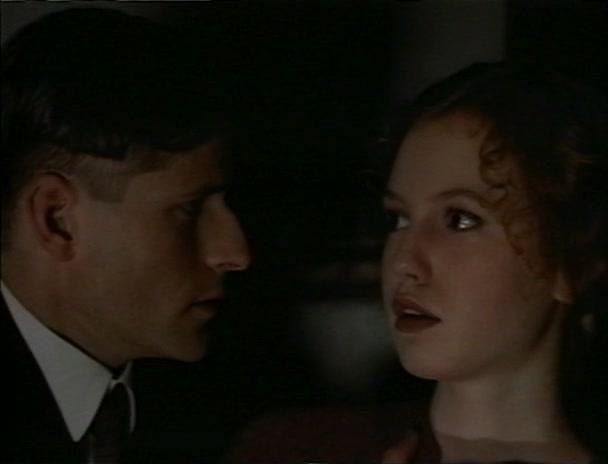
Television / 1993 / Three stories, one room
The guests leave. The room keeps its history.
Hotel Room gathers strangers into the same New York hotel room in three different years. A sexual encounter becomes a struggle over identity; a planned breakup becomes a contest of power; a couple’s conversation opens onto grief. The premise makes a rented interior a place where private lives can briefly become impossible to contain.
- Original broadcaster
- HBO / 1993
- Anthology
- 3 stories
- Lynch directs
- Tricks · Blackout
- Middle story
- James Signorelli / Jay McInerney
Room 603: a place that outlasts its occupants
The basic arrangement is economical: a particular room, different visitors and dates, and hotel staff who connect otherwise separate stories. A reproduced extract from Gifford’s preface describes the permitted space as the room, its adjoining corridor and the lobby. The limitation was therefore more specific than “anything happening in a hotel,” but not literally an absolute prohibition on leaving the room. Preface excerpt and production notes
A hotel room is a ready-made stage for unstable identity. People arrive with temporary possession of a space already used by others. They can conceal a meeting, rehearse a decision or try to interrupt an ordinary life. Yet the furniture, telephone and door remain impersonal. The room grants privacy without promising safety or permanence.
The stories are arranged as 1969, 1992 and 1936. That order sends the final movement backward rather than offering a straightforward progression toward the present. Read as a whole, the anthology makes recurrence more important than a simple historical sequence. The dates identify the fictional situations; they do not establish filming dates or the production’s physical location. Story settings.
Its recurring interior also makes authorship unusually legible. Changes in tone cannot be explained entirely by a change of location. The middle story’s different writer and director become part of what the work asks us to notice. A useful dossier needs room for that difference rather than treating everything inside the programme as interchangeable “Lynch.”
A commission changes shape
In his 2021 interview with Matt Fagerholm, Barry Gifford attributes the hotel-room concept to Monty Montgomery and Lynch. He recalls being asked for another story after a proposed Mamet contribution was rejected, and writing Blackout in two days. His account also describes a mismatch between HBO’s expectations and what he and Lynch wanted to make. Gifford’s account
That history makes the screenplay an especially important missing primary source. “Written quickly” describes the time available to a writer; it says nothing by itself about the concentration or preparation of the eventual performance. Nor does rejection of one proposal tell us what the surviving version of it contained. The proposed Mamet script belongs to development history, not to the writing credits of an aired episode.
The shared production includes executive producers Montgomery and Lynch and producer Deepak Nayar. The episode divisions should remain explicit: Gifford wrote Tricks and Blackout, directed by Lynch; Jay McInerney wrote Getting Rid of Robert, directed by James Signorelli. Credit record. The collaboration extends the Gifford relationship explored in Wild at Heart and later Lost Highway, without making the three projects equivalent kinds of adaptation.
Gifford’s hotel childhood
In the outtakes from Toby Keeler’s Pretty as a Picture, Barry Gifford describes growing up in hotels and listening to the adults around him talk. He connects that experience directly to Lynch’s invitation to write the Hotel Room plays. A temporary room was familiar territory for the writer before it became the anthology’s recurring setting.
Gifford also describes the surprise of seeing Lynch translate his writing into images and sound. That recollection makes the collaboration a process between two forms: the writer supplies a world through speech and situation; the director gives it a specific physical and temporal life. Pretty as a Picture outtakes, 10:26–12:25 · source guide →
First story / 1969
Tricks: who owns a life?
The encounter brings two men and a sex worker into the room, then makes the men’s relationship and their claims on personal identity increasingly uncertain. The publisher’s description of the play itself asks whether they might be divided parts of a personality. That is a proposed reading, not a settled explanation delivered by the production. Publisher’s account of the play.
The distinction matters. If the question becomes only “which man is real?”, the power exercised over Darlene can disappear beneath a puzzle. A stronger approach keeps both issues visible: how the men’s assertions reorganize the encounter, and what that instability does to the person caught between them. Ambiguity does not erase the practical consequences of someone else taking command.
The room works like a provisional courtroom without a reliable judge. A person can claim a history, a relationship or an identity, but the presence of another voice can unsettle it. The hotel’s ordinary promise—that a guest can close a door and occupy a defined private space—becomes fragile when the person doing the occupying is himself in question.
The later identity disruptions of Lost Highway make this story a productive comparison. That connection is a critical route, not proof that Tricks was conceived as a rehearsal for the later film. Script chronology and direct testimony would be needed to establish a specific developmental relationship.
Stanton, Jones and Headly also warrant attention as a three-person performance. Their cast identities are documented; the precise gestures, pauses, vocal contrasts and cuts must await the identified-edition viewing. Keeping that work open avoids converting an evocative synopsis into invented close analysis. Cast record; .
Second story / 1992
Getting Rid of Robert: a different kind of cruelty
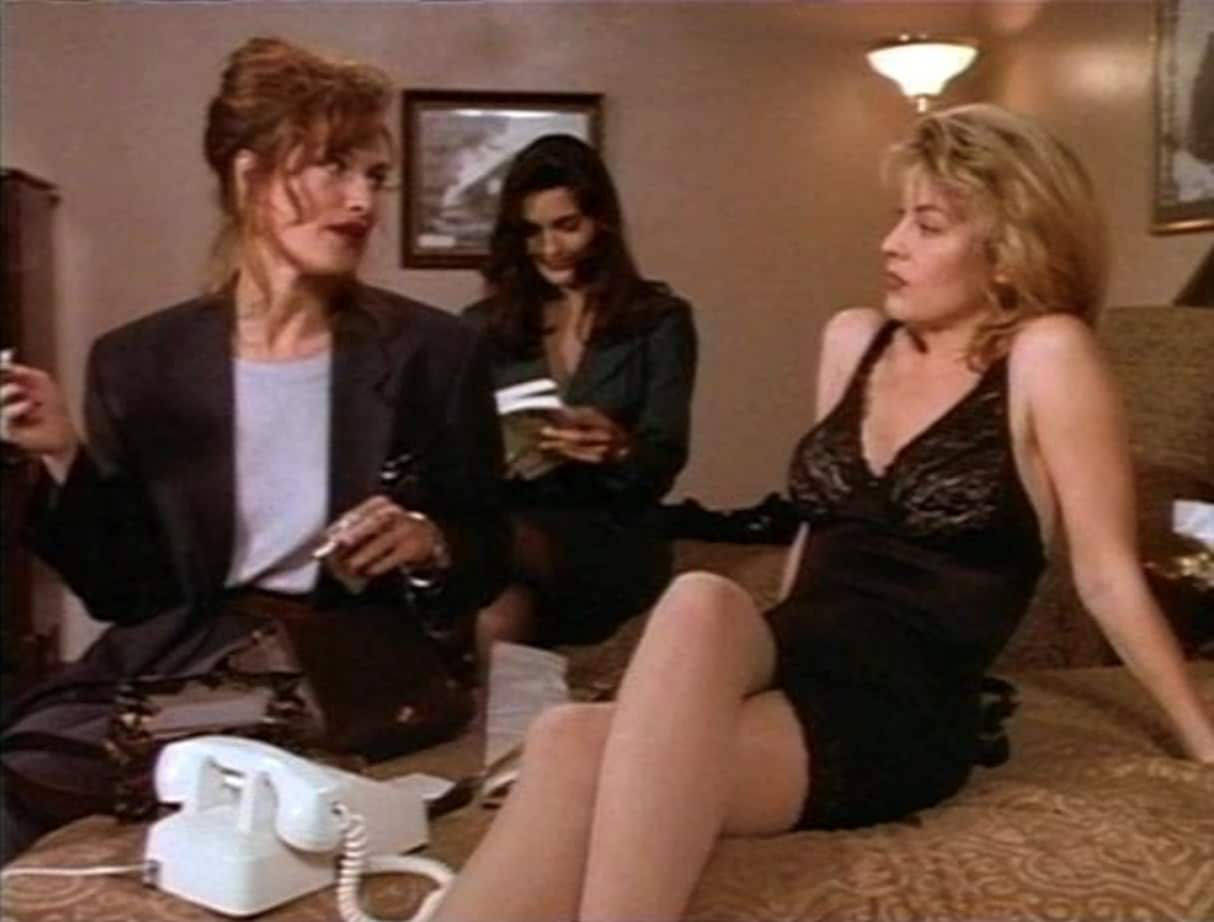
The middle story concerns Sasha’s intention to end a relationship with Robert and the reversals surrounding that encounter. Its cast and authorship deserve to remain visible in an account often dominated by the two Gifford/Lynch contributions. Episode record; retrospective context.
The foreground telephone, occupied bed and different positions of the three women make the supposedly private room look like a place for social strategy. One person reclines, another sits forward, and another reads behind them.
The story’s difference can be a strength of the anthology form even when a viewer finds the transition awkward. A fixed room can host several dramatic languages. If we value only scenes that resemble Lynch’s other work, we cannot fairly evaluate what McInerney and Signorelli attempted. The relevant questions concern the balance of social satire and emotional cruelty, and the way a planned breakup changes the participants’ positions.
Gifford’s later dissatisfaction with the tonal fit is one participant’s assessment. Contemporary criticism was not uniformly dismissive of this contribution: even Terry Kelleher’s disappointed Newsday review singled out its ending as effective black comedy. His judgment complicates the convenient retrospective story that the middle episode was simply an agreed failure. Participant recollection; 1993 review excerpt.
Third story / 1936
Blackout: the work of listening
Danny and Diane’s conversation turns around the loss of their child and the difficulty of living afterward. The publisher’s account identifies grief as the play’s central condition. Gifford recalls originally imagining older people; Lynch wanted the couple younger. That recollection supplies a specific production choice without determining how every viewer must understand their relationship. Play description; Gifford on casting.
The blackout gives the surrounding world less power to distract from the encounter. Unlike a mystery built to reveal who committed an act, the emotional problem cannot be solved by supplying one missing fact. The loss is already part of the couple’s life. The dramatic question is whether they can remain present to one another when speaking about it does not make it reparable.
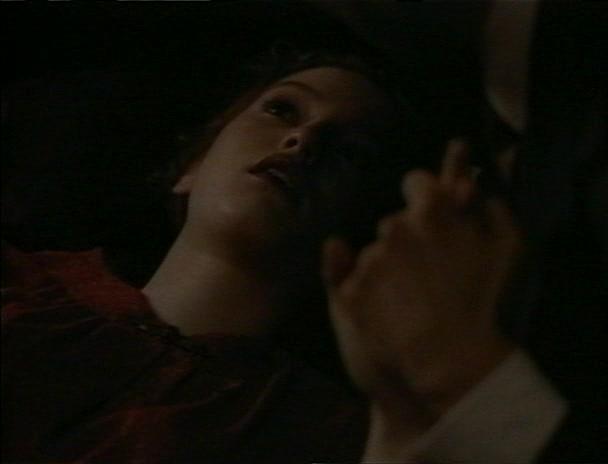
Glover’s 2025 interview offers unusually concrete performance testimony. He says that he and Witt rehearsed extensively on their own before filming, that two cameras were used with Lynch operating one, and that they performed long takes extending through a film magazine. He recalls roughly twelve-minute takes and is uncertain about the gauge. This is valuable eyewitness recollection, not a camera report. Rehearsal and camera exchange.
His account shifts attention from the myth of spontaneous strangeness to an actor’s preparation. Long takes are not automatically the same as long shots in the finished edit: simultaneous cameras can preserve options for cutting while allowing a performance to continue. The distinction helps explain why rehearsal, photography and editing should be researched together.
The still above also makes a modest but useful point. Danny’s nearer profile partly occupies the space through which we see Diane. Looking and listening are pictured as a relationship, not as two isolated portraits.
Making one room carry three worlds
Peter Deming’s photography, Patricia Norris’s production design, Angelo Badalamenti’s music and Lynch’s sound design shape the room. Mary Sweeney, David Siegel and Toni Morgan are credited across the editing work. Department credits
Each story transforms the room’s surfaces, doors and objects. The bed suggests intimacy, negotiation or vulnerability; the telephone connects guests to an outside world that can intrude on their privacy.
Costumes and furnishings give the recurring room its different periods. Across the three stories, the interior becomes a fixed stage for changing social expectations, gestures and relations between people.
Sound gives the room another dimension. In Blackout, what can be heard becomes especially important as the surrounding world recedes. Follow the Music dossier for Lynch’s wider musical collaborations.
Disagreement, survival and a life on stage
Chris Willman admired Blackout and found the anthology rewarding for Lynch devotees. Los Angeles Times, 8 January 1993.
Kelleher’s review on the same date was markedly less enthusiastic, although its praise for the middle story’s ending resists a simple good-Lynch/bad-other-director division. Newsday review excerpt
Louis Merrion’s 2023 Dazed retrospective prizes Blackout while finding the anthology’s tonal changes difficult. Its quoted account of production comes from the earlier Gifford interview. Repetition in a later article does not make that account independent confirmation. More importantly, the retrospective’s enthusiasm is evidence of later reassessment, not proof of what viewers thought in 1993. Retrospective.
The work also survived through other settings. The Gene Siskel Film Center scheduled Tricks and Blackout with Gifford in October 2013. Teatrul Odeon’s record documents a stage production directed by Alexandru Dabija that includes those plays and Mrs. Kashfi. Its adaptation chronology is unreliable, so the record is used here for the theatre production itself. Screening programme, p. 9; theatre record.
These afterlives change the terms of access. Watching two stories in a cinema, reading three plays and seeing a staged trilogy are distinct encounters. A research archive should connect them while preserving what each actually contains.
Three screen stories are not the same three plays
The HBO anthology
- Tricks — Gifford / Lynch
- Getting Rid of Robert — McInerney / Signorelli
- Blackout — Gifford / Lynch
Gifford’s published Trilogy
- Tricks
- Blackout
- Mrs. Kashfi
The third text is not the anthology’s middle episode.
The 2024 Seven Stories edition is listed at 76 pages, ISBN 9781644213940. Its contents make the distinction above explicit. A complete book-to-screen comparison must therefore obtain McInerney’s text separately; the Trilogy cannot silently be treated as the complete shooting script for the broadcast. Publisher record.
Stanford’s Barry Gifford Papers, M0927, offer a concrete archival route. The finding aid’s printed pages 34–35 identify Trilogy drafts and galleys in Box 19, folders 13–23; Tricks teleplay versions in folders 25–27; and an annotated Blackout typescript in folder 28. Box 20 includes publisher correspondence and television reviews. These are catalogued holdings, not manuscripts examined by Lyncharium. Finding-aid entries.
There is a separate version problem on screen. The Siskel programme lists Tricks at 31 minutes and Blackout at 47, under “various formats.” Those are useful identifiers for that event, not proof that every copy shares those lengths. Without matched editions, differences might reflect editing, frame rates, credits or simply catalogue errors. No cut-by-cut comparison or definitive restoration claim is made here. Programme evidence.
Explore the episode guide, published stories and production history together, then follow the sources for edition and screening records.
Explore further
Follow the sources below, explore the museum collection, or continue through the Reading Room. New archival discoveries and contributions enrich the record of Lynch’s work.
Sources and further reading
Sources distinguish institutional records, participant recollection, contemporary criticism and later catalogue information. An archive description establishes a lead, not the contents of an unseen file. Access limitations are recorded beside the relevant source.
- Matt Fagerholm interviews Barry Gifford and Lili Taylor, RogerEbert.com, 2021 ↗Indexed Hotel Room interview exchanges read; direct page returned 403. Gifford's recollections about commissioning, casting and HBO remain attributed; no ratings files inspected.
- Matt Fagerholm interviews Crispin Glover, Indie Outlook, 20 October 2025 ↗Published Hotel Room exchanges read, especially rehearsal, two cameras and long takes. His uncertainty about film gauge is retained.
- Seven Stories Press / Penguin Random House: Hotel Room Trilogy, 2024 edition ↗Includes Mrs. Kashfi, not McInerney's Getting Rid of Robert.
- Stanford Libraries, Barry Gifford Papers M0927, finding aid, printed pp. 34–35 ↗Indexed folder descriptions checked: Box 19, folders 13–29; Box 20, folders 1–5.
- Gene Siskel Film Center Gazette, October 2013, p. 9 ↗PDF text and rendered page inspected. Scheduled Tricks (31 minutes) and Blackout (47 minutes) with Gifford. Listed runtimes are not measured print comparisons.
- Louis Merrion, Hotel Room: the secret history, Dazed, 12 January 2023 ↗Retrospective read and header image inspected: it shows Getting Rid of Robert, not Blackout. Its Gifford quotations repeat the 2021 interview; not independent confirmation.
- IMDb: Hotel Room full cast and crew ↗Secondary credits read. Some role names conflict with other catalogues; unverified character spellings and role assignments omitted.
- IMDb: Getting Rid of Robert ↗Episode identity and cast record checked; independent middle episode retained in the dossier.
- IMDb: Blackout image record ↗Published frame reproductions inspected.
- Chris Willman, Los Angeles Times, 8 January 1993 ↗Contemporary review.
- Terry Kelleher, Newsday, 8 January 1993, preserved review ↗Indexed contemporary review excerpts checked. Newspaper page and complete mirror unavailable in this pass; criticism remains narrowly summarized.
- Teatrul Odeon: Hotel Room Trilogy production record ↗Theatre's cast and director record read. Its account misdates Lynch's adaptation; used only for the documented stage production and its three play titles.
- The City of Absurdity: Hotel Room production and teleplay notes ↗Indexed production notes and reproduced Gifford preface excerpt checked; obvious actor/role and title errors are not copied.
Another doorway
Continue exploring
Television
On the Air
Explore David Lynch and Mark Frost’s On the Air: all seven episodes, its cast, backstage comedy, production history and distinctive visual world.
Films
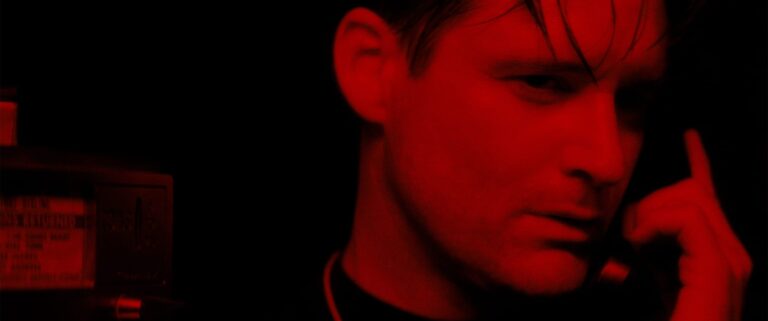
Lost Highway
Explore Lost Highway (1997) through 36 illustrated scenes, dialogue and song studies, sound credits, Tim Lucas’s commentary and edition research.
Films
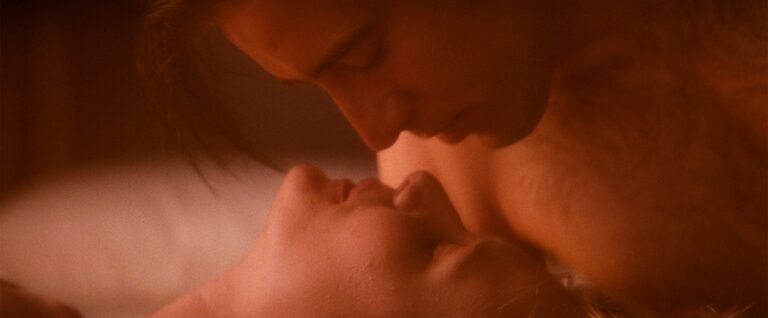
Wild at Heart
Explore Wild at Heart (1990) through 32 illustrated scenes, 14 dialogue and song studies, screenplay research, sound credits and release history.
Image credits and sources accompany each linked guide.