The Elephant Man
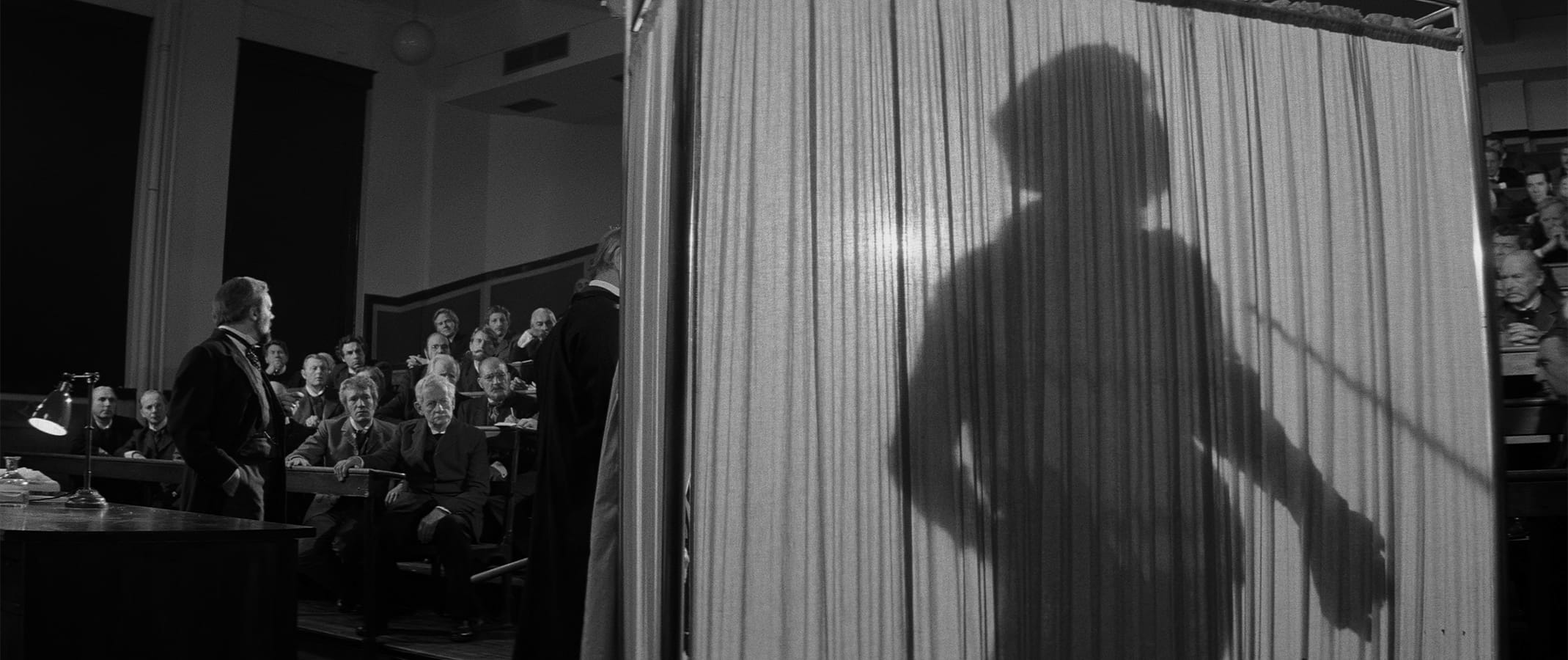
The feature films / 1980 / Expanded research dossier
A person, a performance, and the uneasy act of looking.
David Lynch’s second feature follows John Merrick and surgeon Frederick Treves through a Victorian London in which care and public display are difficult to separate. John Hurt and Anthony Hopkins anchor a film about the possibility of friendship—and the power held by the people who tell another person’s story.
- Film year
- 1980
- Listed runtime
- 123 min
- Image
- Black and white
- Edition ratio
- 2.35:1
Edition specifications: Criterion Collection. Explore the film’s adaptation, performances, photography, sound and reception below.
The film in close view
A life seen through other people’s eyes
Move from the fairground and the hospital to friendship, captivity, the theatre and the final room. The scene studies connect performance and composition to the production accounts below. Select a still to enlarge it.
Browse all 36 scene studies
From show to hospital
02:24A face before a story04:12Entering a world of displays07:31The body and the machine10:01Following Treves through the city15:00The spectator becomes the image18:10An examination conducted through a covering22:15A second kind of exhibition28:00A refuge reached by stairs31:56A doorway and a withheld viewLearning to be heard
36:30The hospital after dark41:00The first answer43:30Ownership challenged51:00Beyond the prepared answers53:00One letter, different audiences59:30A place at the table1:01:30An image he chooses to show1:03:10Making what cannot be seen1:08:30Reading becomes an encounter1:11:30Respectability comes to visit1:13:00Care as workAn uncertain refuge
1:15:30The city returns in a dream1:17:40The doctor questions himself1:21:50A decision altered by rank1:24:30A home and a personal possession1:28:30The room becomes a show1:32:05An absence among unfinished things1:36:30The exhibition repeats1:41:30Fellow performers open the cage1:44:30Questions without permission1:47:00A declaration against the crowdScene studies / 01
From show to hospital
Curiosity, concealment and the first attempts at refuge.
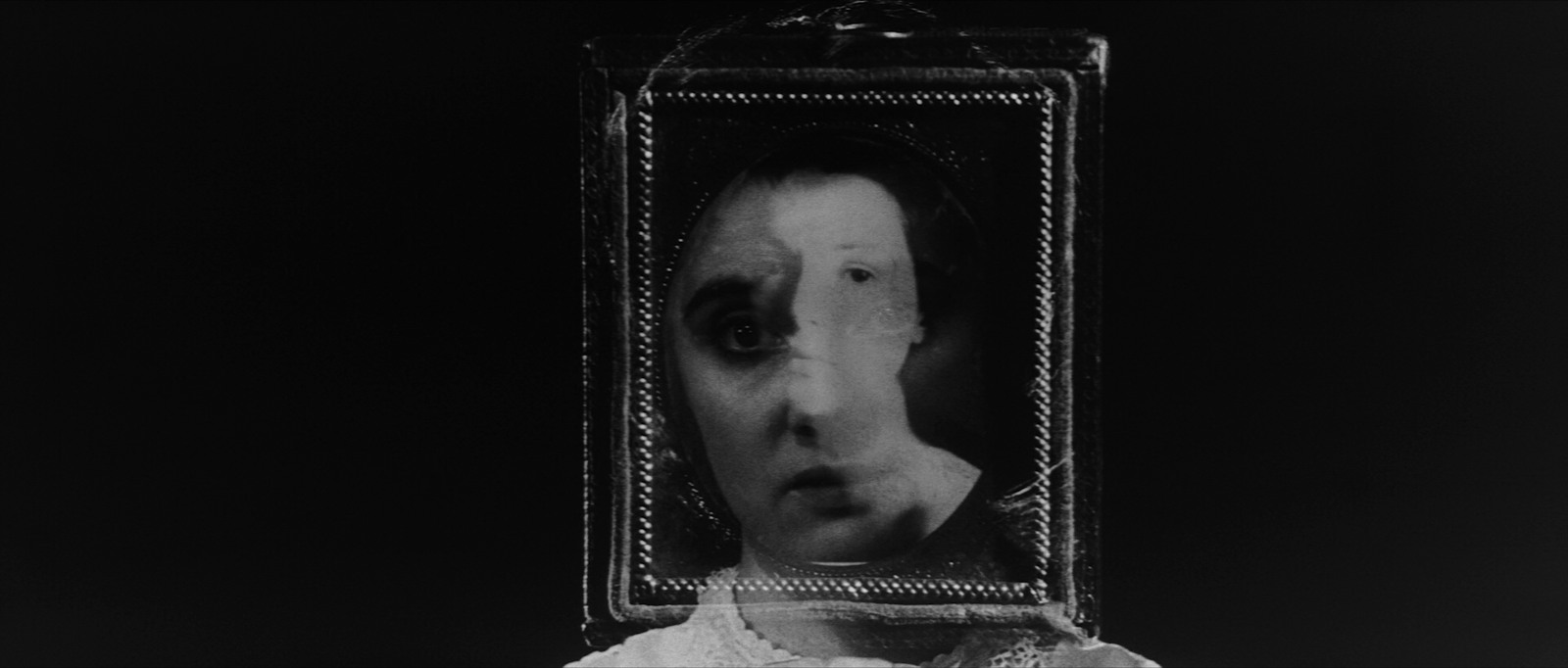
A face before a story
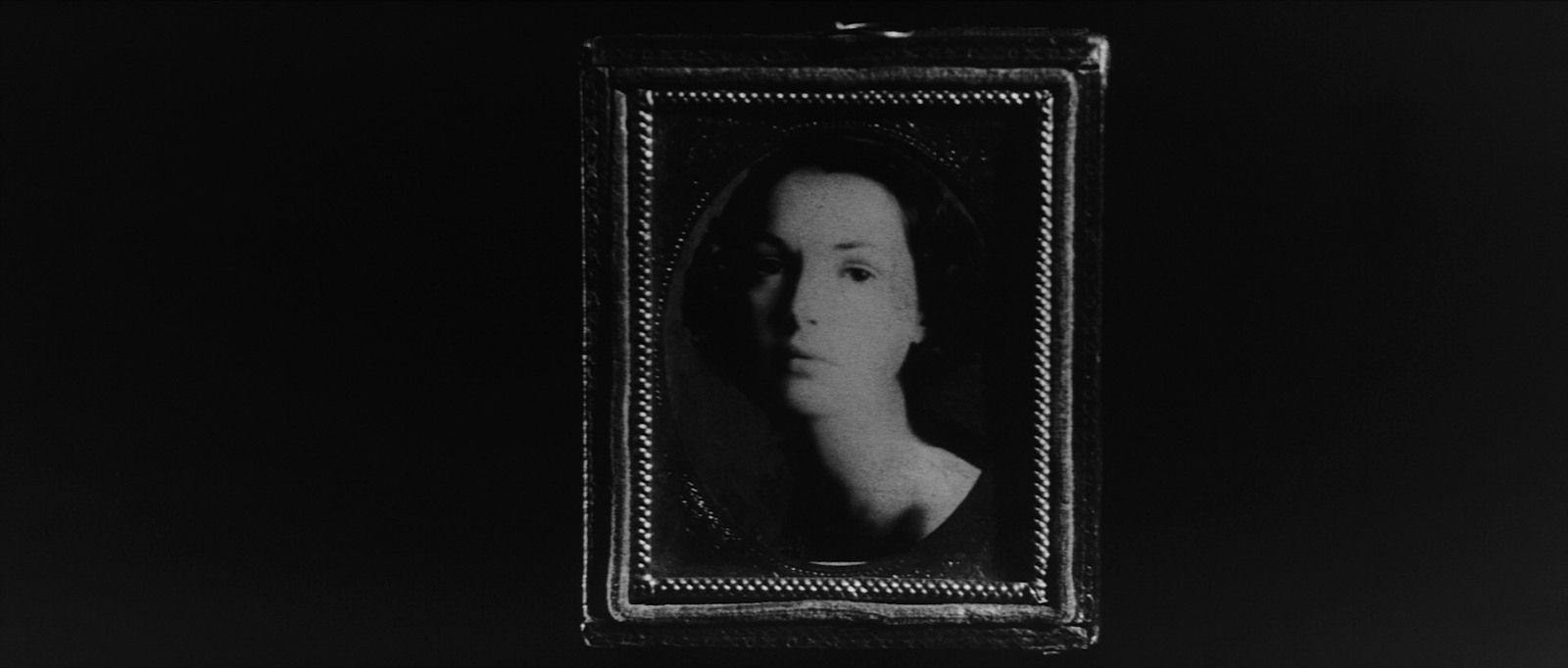
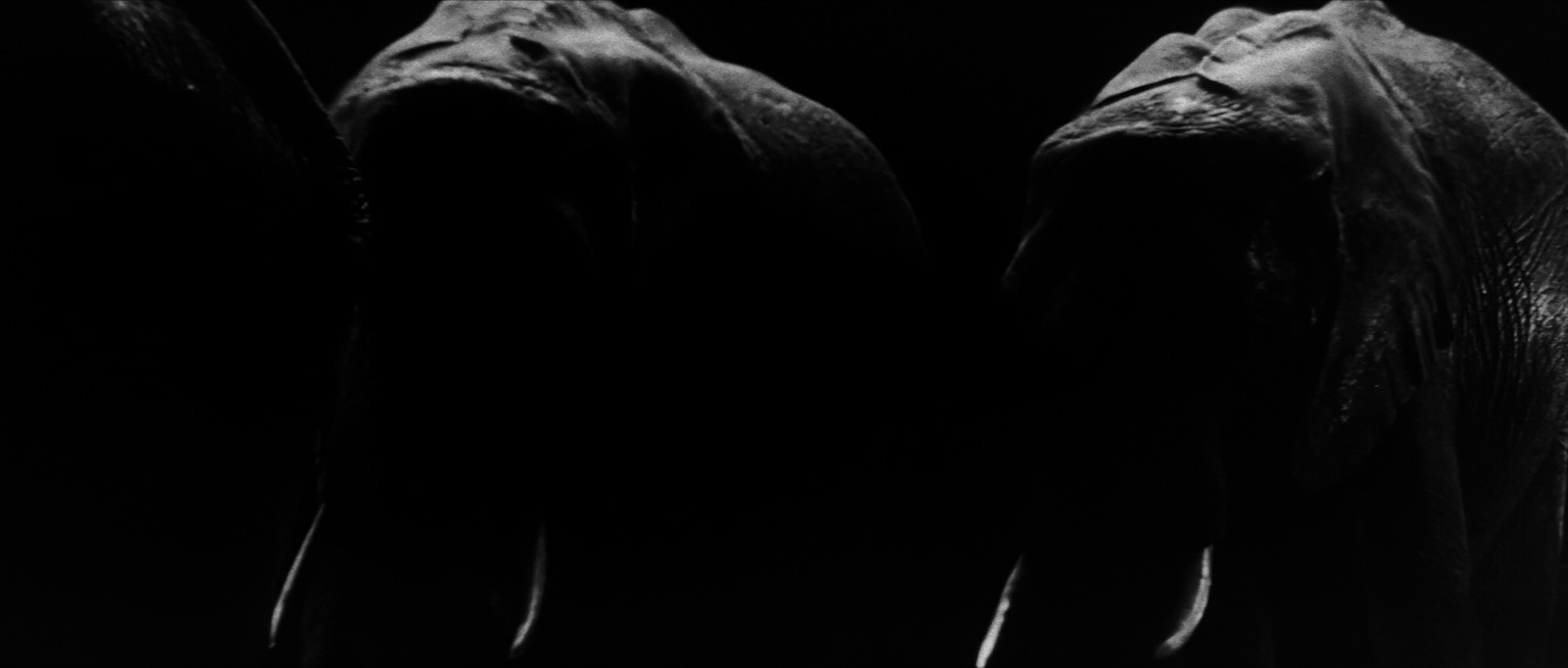
02:24The film begins with a woman’s eyes, then draws back to a framed portrait. Her face returns as a moving image among elephants, black intervals and smoke. This is an imagined origin, later echoed in Bytes’s sales pitch; it should not be read as a medical explanation of Merrick’s condition. The portrait will acquire a different intimacy when Merrick shows it to Anne Treves.
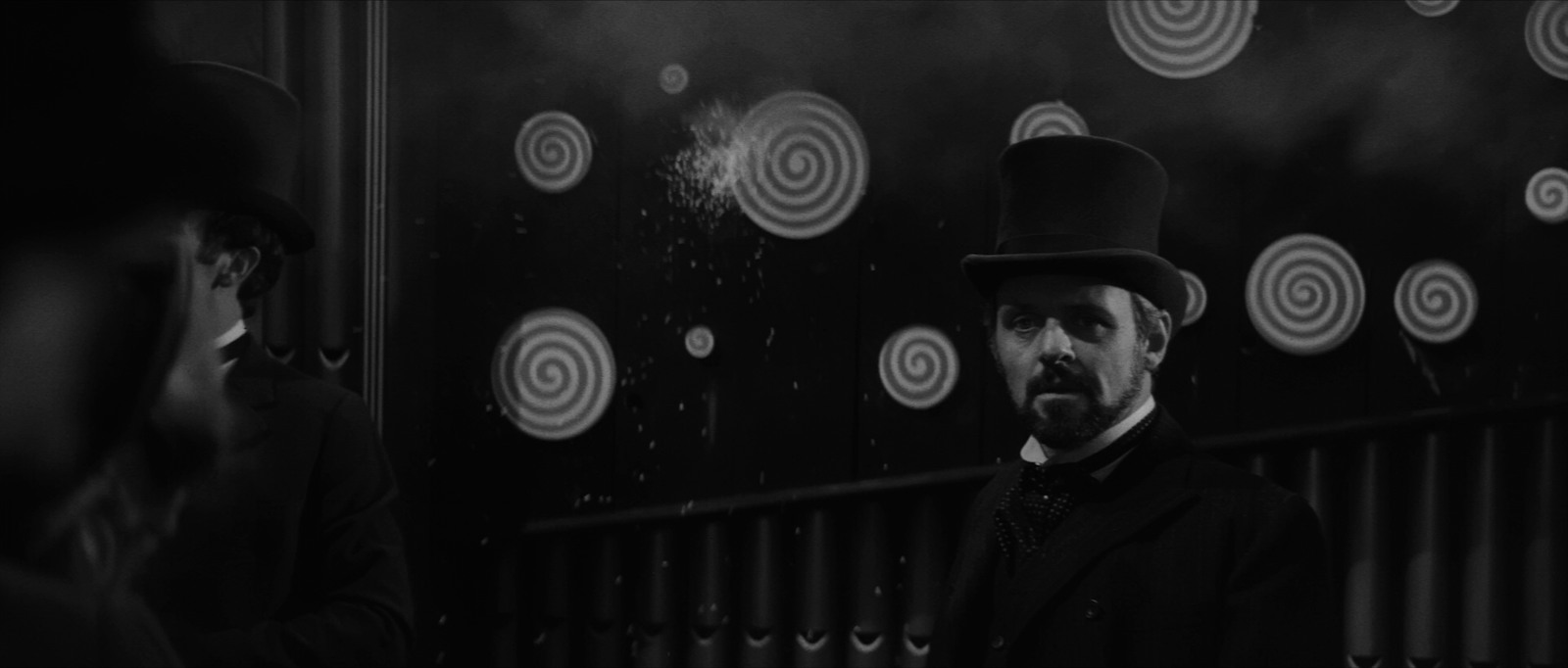
Entering a world of displays
04:12Treves first appears among attractions, patterned fronts, crowds and smoke. The fairground makes looking a transaction before he meets Merrick. His curiosity carries him past other bodies and objects put on show. When the police close Bytes’s exhibit, their objection concerns what spectators can tolerate as much as the welfare of the person exhibited.
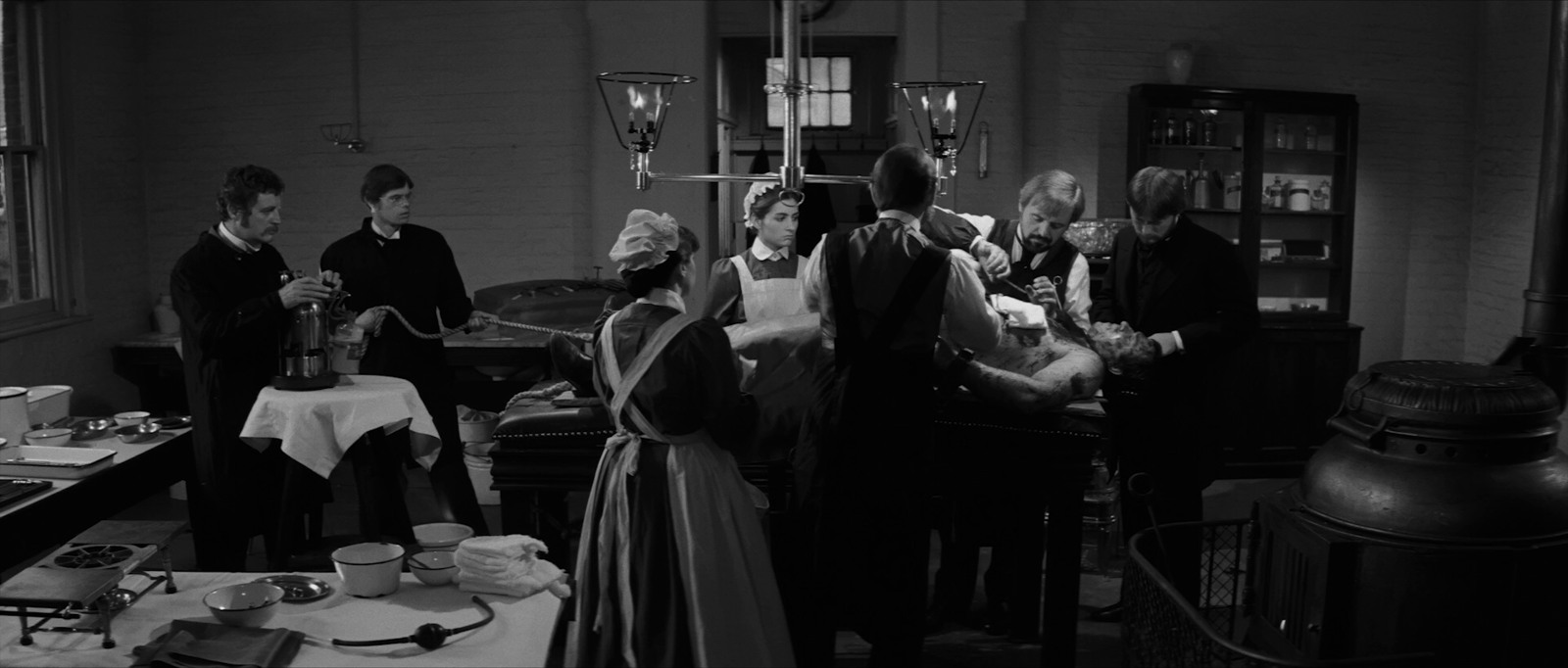
The body and the machine
07:31The operation places another injured body before a professional audience. Treves’s complaint about machine accidents connects the hospital to the industrial streets outside. Instruments, assistants and the surgeon’s directions establish a practical world of treatment, but the scene also prepares the troubling resemblance between medical inspection and the fairground’s arrangements for looking.
Following Treves through the city
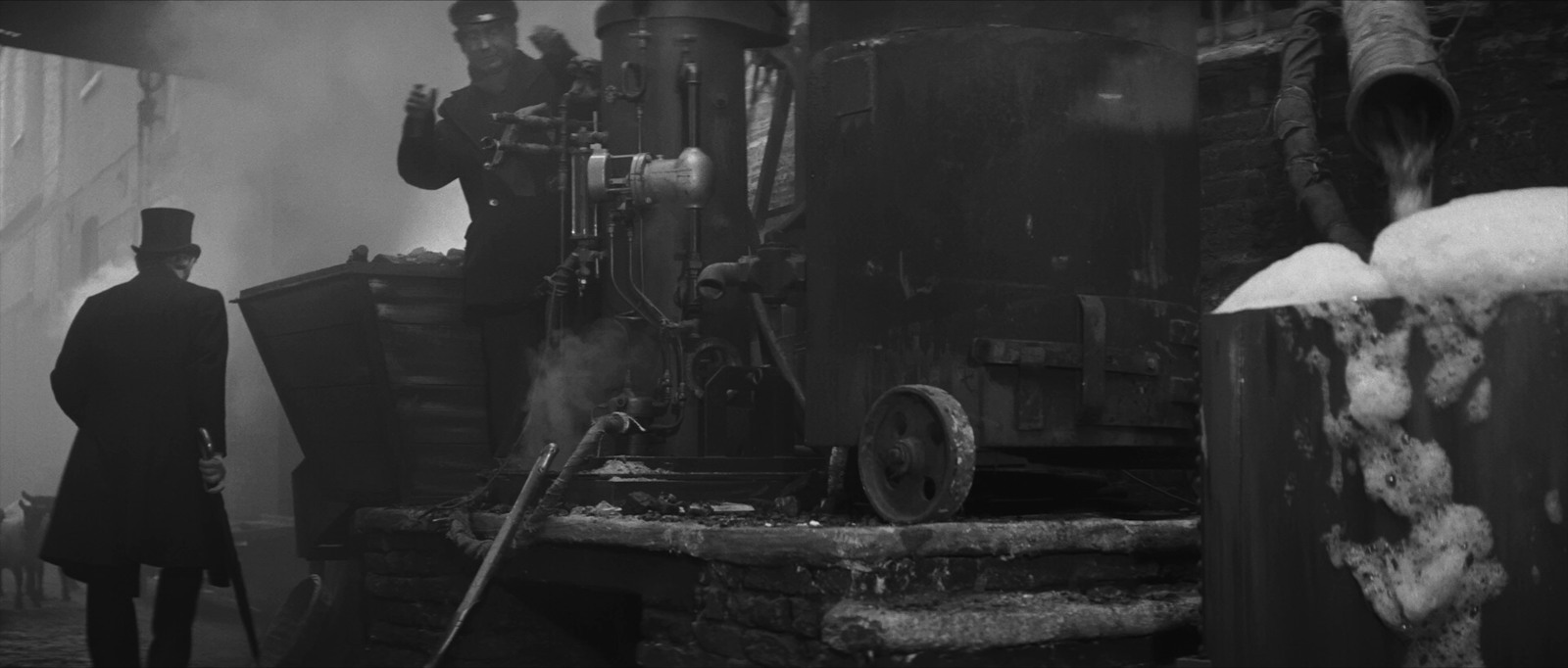
10:01The journey to Bytes runs through smoke, water, machinery and constricted passages. Treves’s dark silhouette is small within the working city. The setting gives bodily vulnerability an environment: the same world that advertises curiosities also produces injured workers. Lynch’s recollections of finding a Victorian atmosphere in derelict locations give this passage a useful production counterpart.
The spectator becomes the image
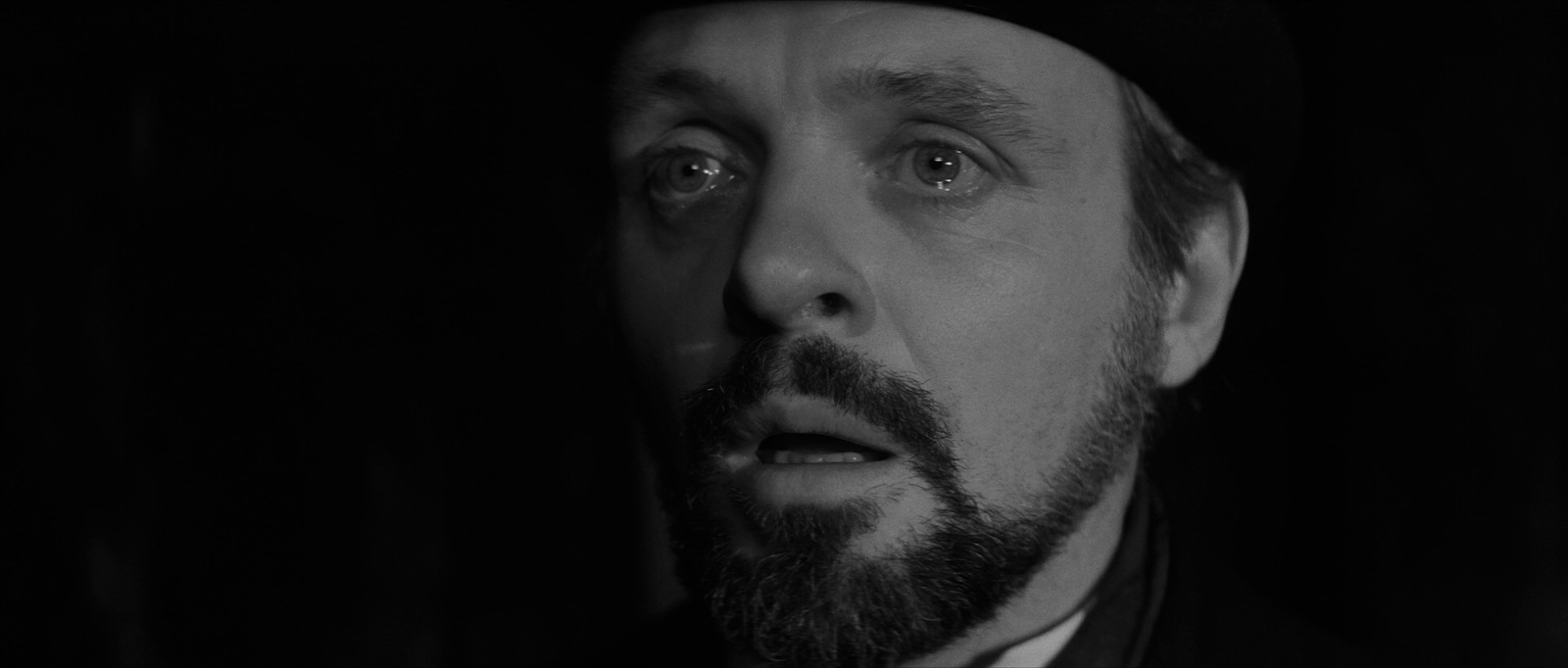
15:00Bytes describes an origin story and orders Merrick to stand and turn. The film gives us Treves’s response instead of an uncomplicated view of the exhibit. Hopkins’s tear makes the watcher the principal image. In the AFI discussion, Lynch remembers that tear arriving during the camera move rather than being prescribed in the screenplay.
An examination conducted through a covering
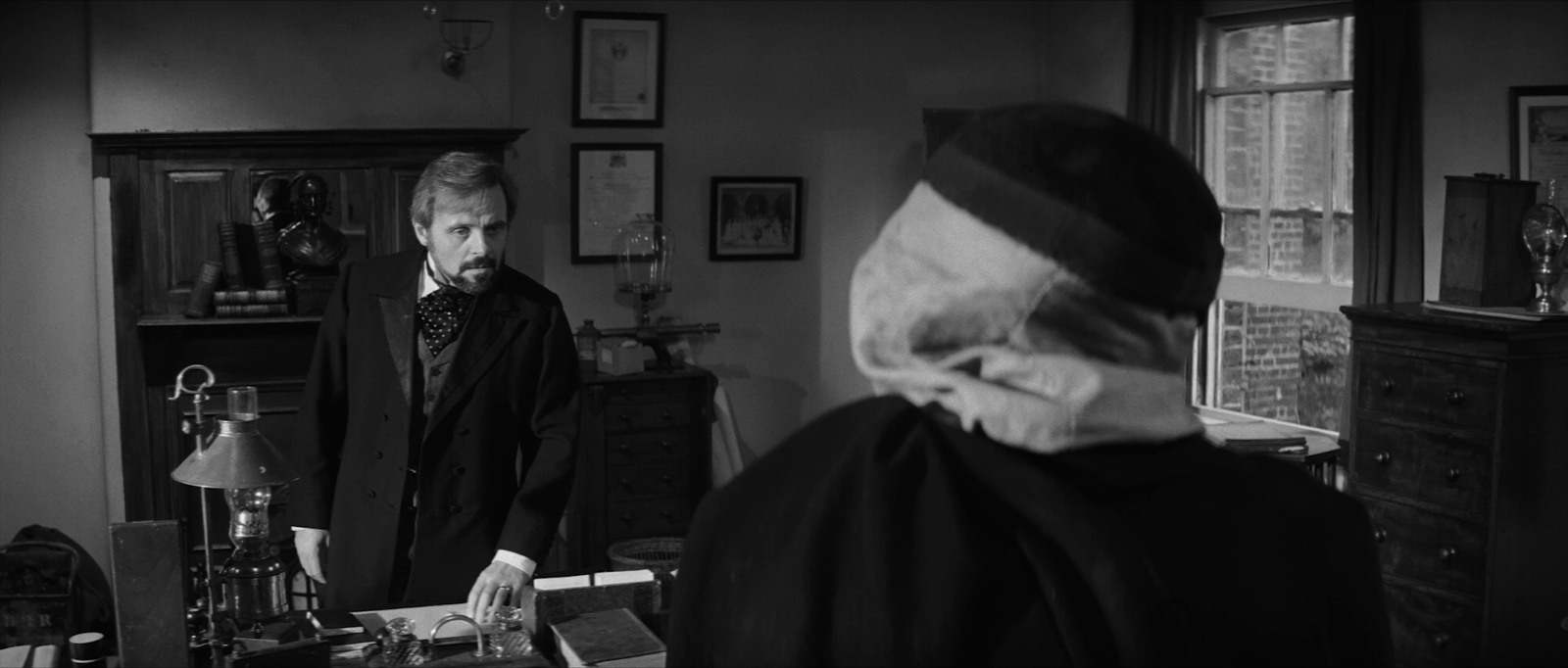
18:10The wide composition keeps doctor and visitor together while the hood prevents a conventional exchange of looks. Treves starts with questions, then substitutes nods for answers. His correction from calling Bytes an owner to describing him as a caretaker exposes the vocabulary he has inherited. Merrick’s silence is mistaken for an absence of understanding.
A second kind of exhibition
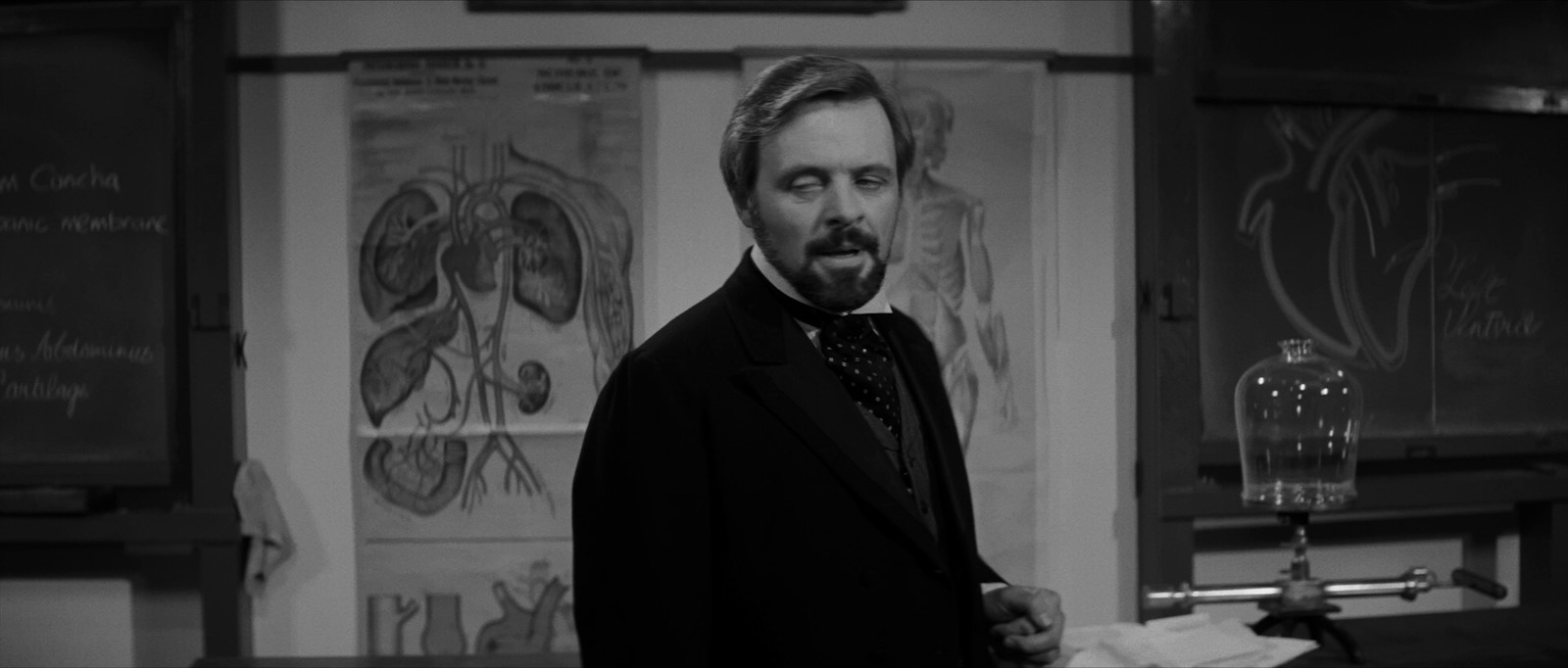
22:15The lecture replaces Bytes’s pitch with clinical terminology, a screen, diagrams and a seated audience. Commands to turn recur in a more respectable setting. Merrick remains the subject spoken about rather than a participant in the discussion. The later discovery of his literacy challenges the confidence with which Treves first describes his mental life.
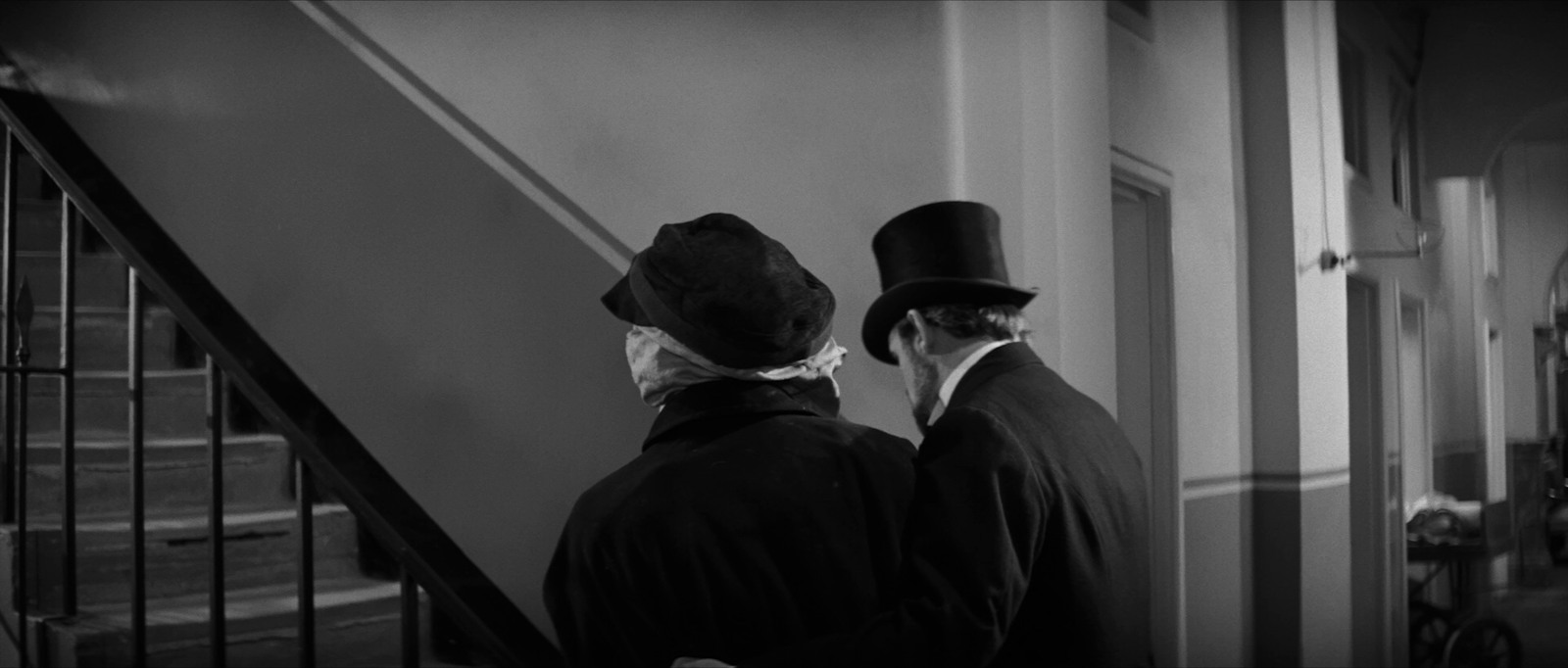
A refuge reached by stairs
28:00After Bytes’s violence, Treves brings Merrick into the hospital. Corridors and stairs offer protection while also separating him from the ordinary wards. The subsequent discussion of admitting an incurable patient shows that refuge is conditional. The doctor must negotiate an institution whose rules do not automatically accommodate the person he has brought inside.
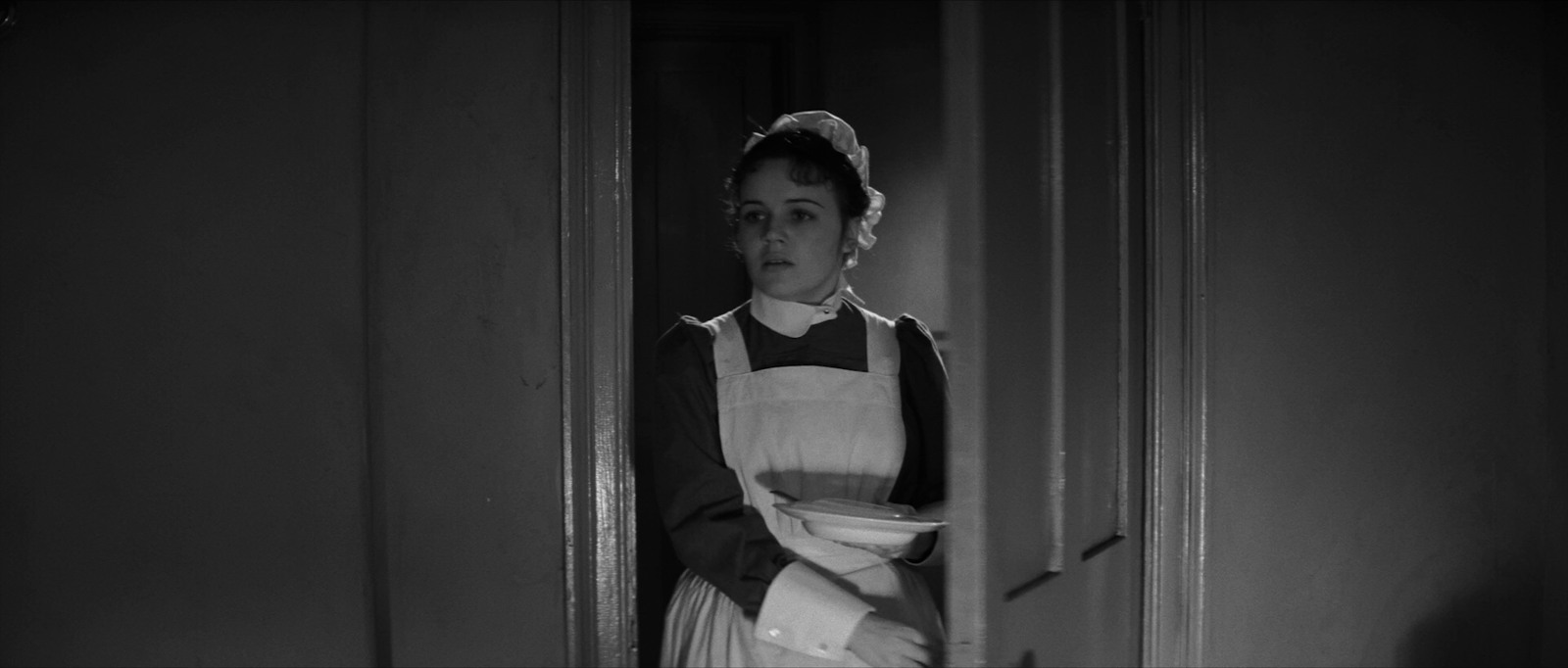
A doorway and a withheld view
31:56Breakfast becomes an encounter the nurse has not been prepared for. The film cuts between the hospital’s administrative conversation and her approach to the room, then makes her fear part of the delay in showing Merrick. Treves apologizes for failing to warn her. His reassurance to Merrick follows a scene in which someone else’s reaction has again determined the encounter.
Scene studies / 02
Learning to be heard
Speech, domestic friendship, imagination and the work of care.
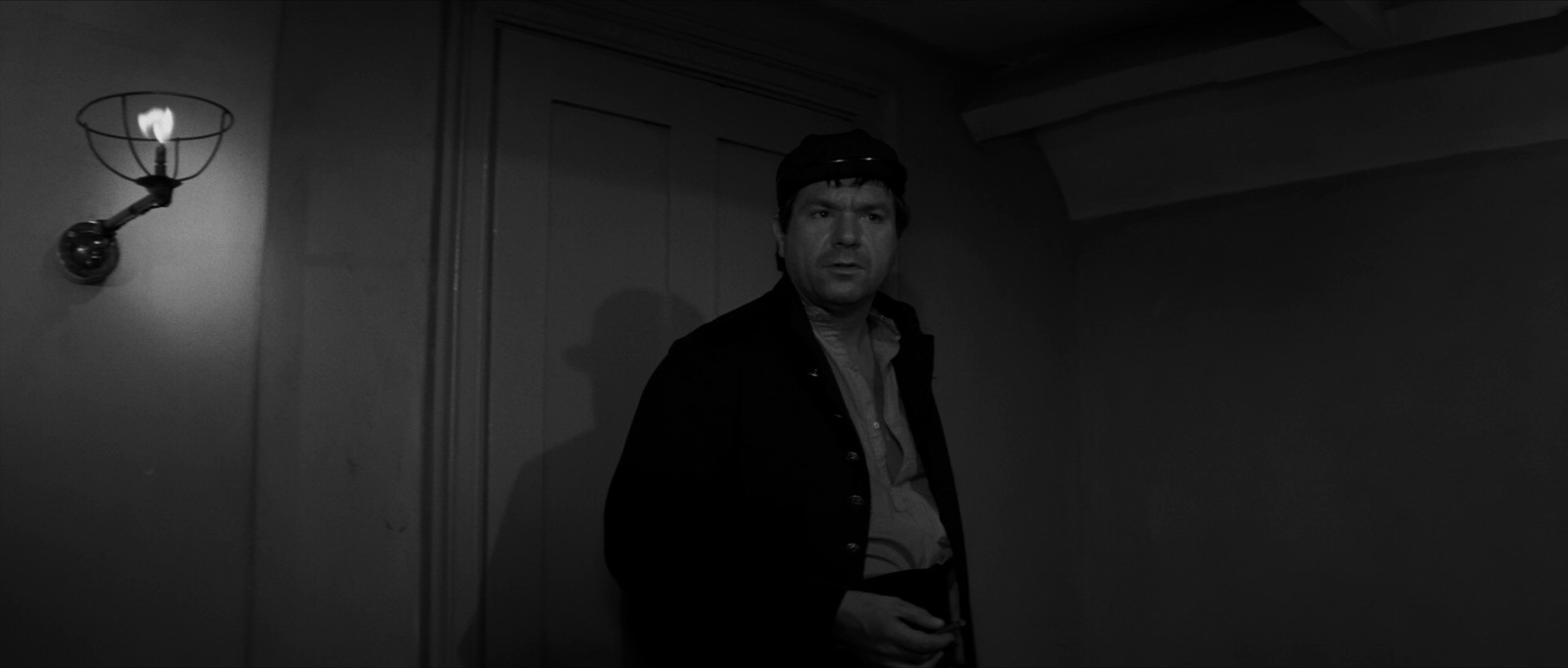
The hospital after dark
36:30The route through the sleeping hospital changes the meaning of access. Footsteps, keys and the doorway precede the porter’s offer of a drink and promise to bring friends. His proposed friendship is a threat disguised as sociability. Walls and professional rules have not prevented the fairground’s economy from finding another entrance.
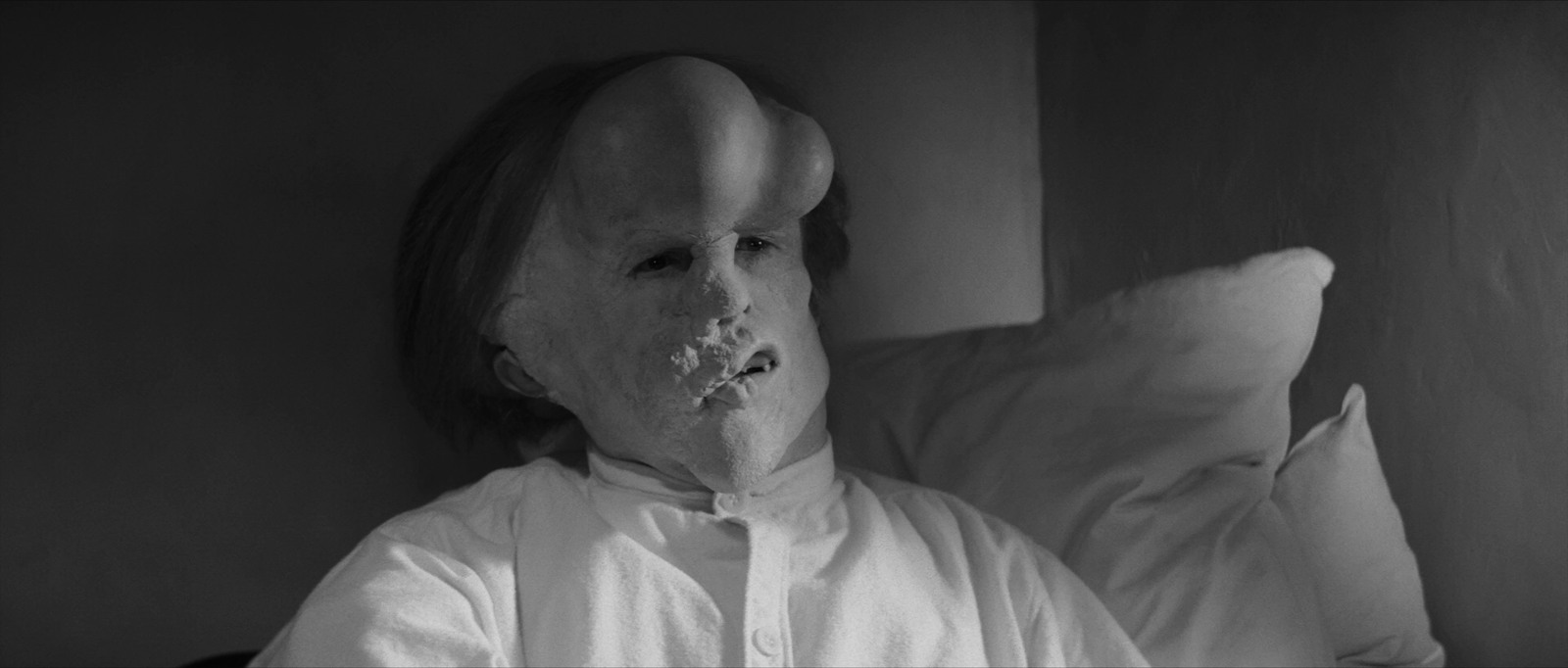
The first answer
41:00Treves asks for a single affirmative word, then a name and greeting. The exchange gives Hurt’s mouth, breath and pauses a dramatic task. It also reveals the doctor’s change of attention: he needs to hear how Merrick speaks before he can recognize what Merrick already understands. The speech is a performance shaped by prosthetics, as Hurt and Tucker explain in the workshop interview.
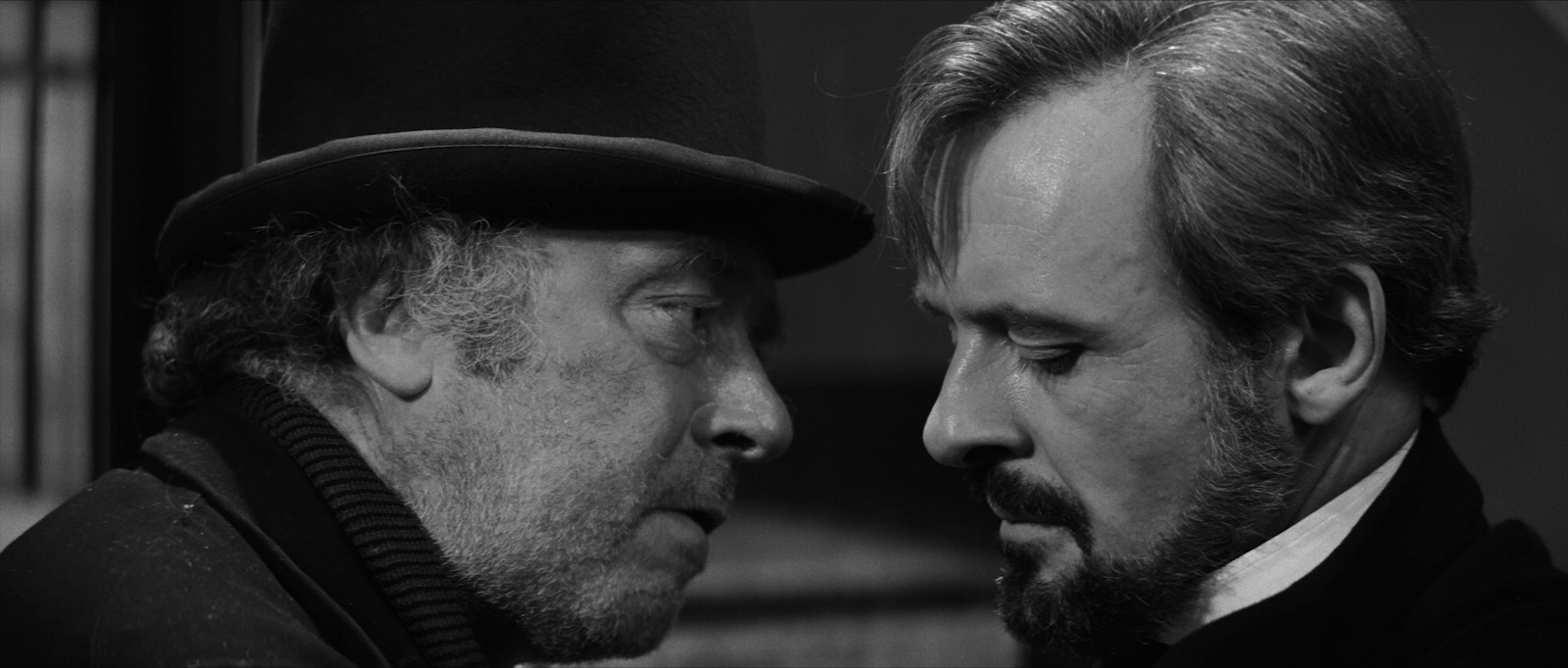
Ownership challenged
43:30Bytes demands his livelihood back and accuses Treves of seeking professional distinction through the same man. The charge does not make their conduct equivalent, but it cannot simply be dismissed. Treves can now insist on a patient’s protection; later he will question his own motives. Jones gives the argument a mixture of injured entitlement, business calculation and dependency.
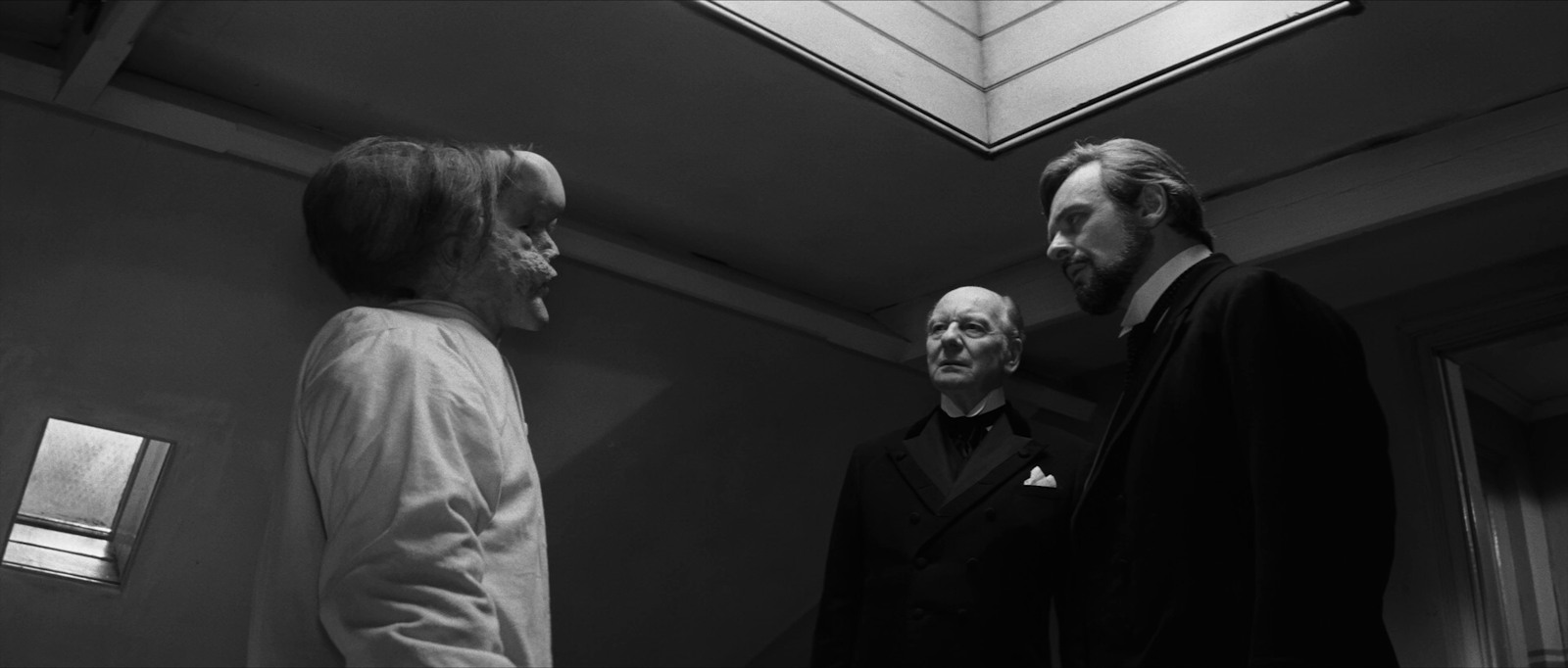
Beyond the prepared answers
51:00The rehearsed interview breaks down when Carr Gomm asks questions outside the script. After the men leave, Merrick continues the psalm beyond the portion Treves taught him. His voice reaches the corridor and draws them back. The discovery is not that a doctor has supplied intelligence, but that fear and circumstance concealed a reader’s existing knowledge.
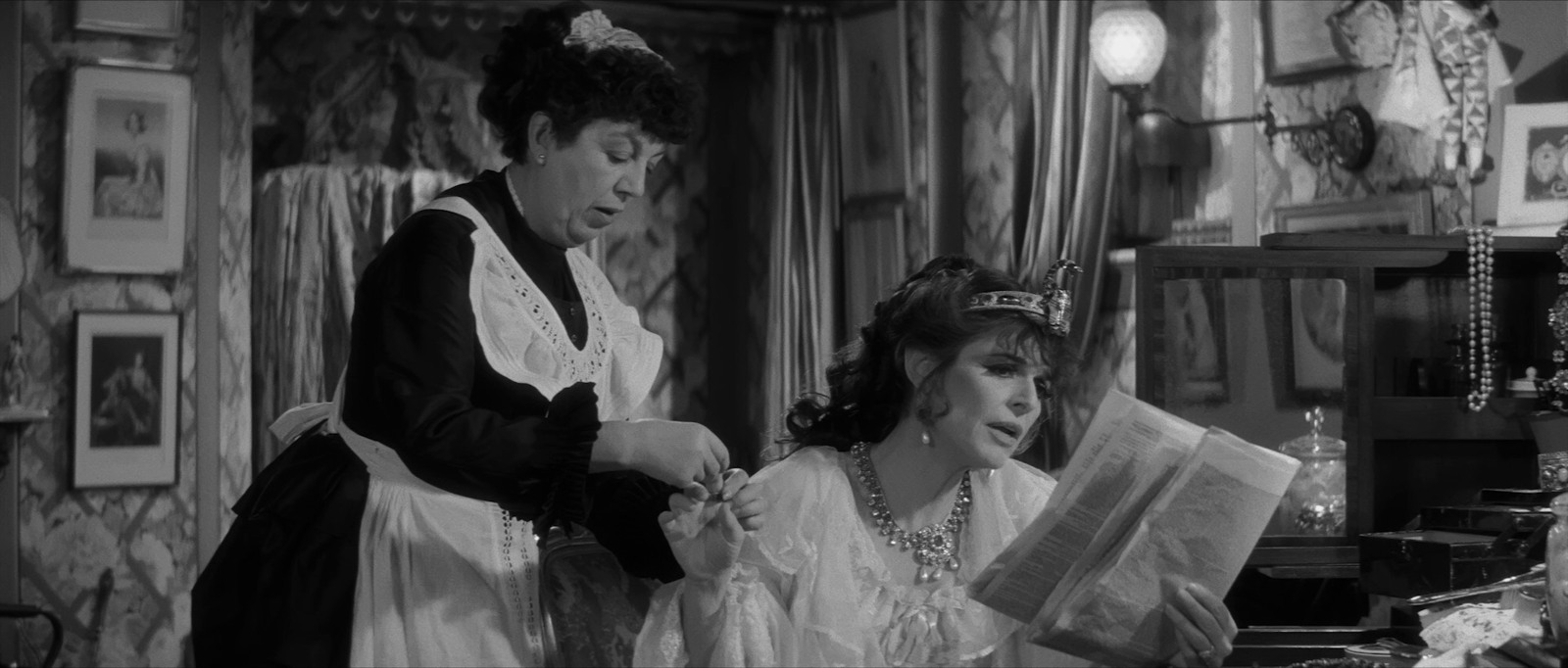
One letter, different audiences
53:00The appeal in the newspaper circulates through two contrasting settings. Mrs. Kendal wants to meet the man described; the porter uses the same publicity to sell access in the pub. Print changes Merrick’s visibility without controlling what that visibility will produce. The film joins charitable attention, celebrity interest and exploitation through a shared public account.
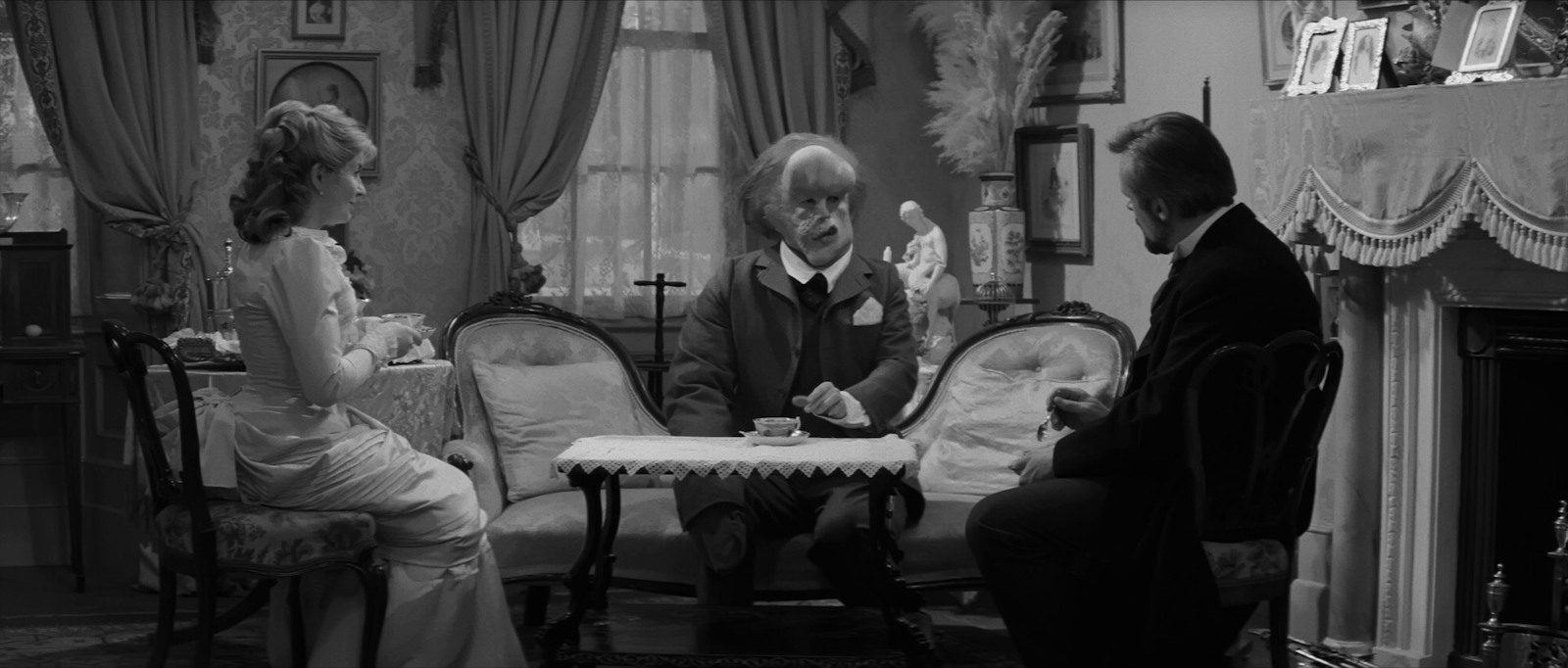
A place at the table
59:30A domestic visit gives Merrick a social role beyond patient or exhibit. The room’s ornaments, family photographs and shared tea establish ordinary forms of welcome. Hurt’s distress at Anne’s kindness interrupts the etiquette rather than ending it. The scene allows embarrassment, gratitude and conversation to occupy the same space, with the three people held together in the composition.
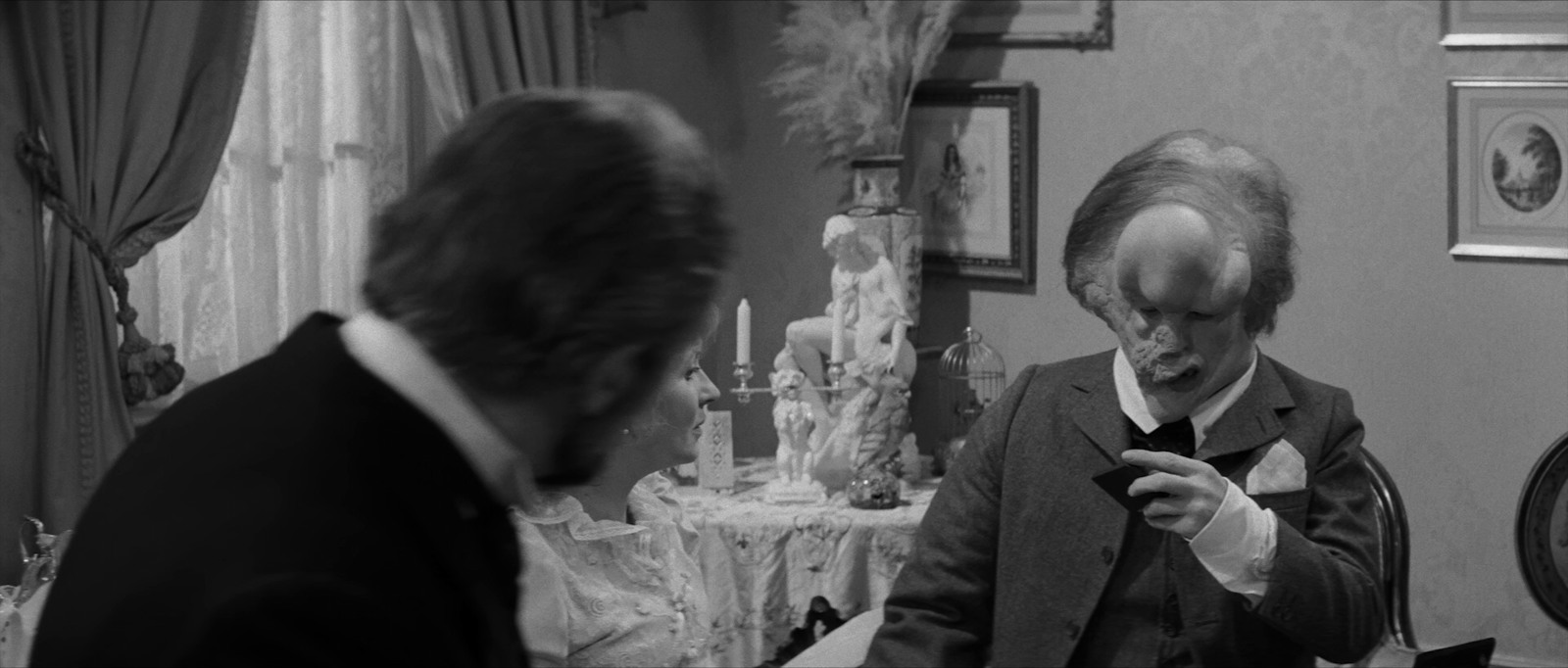
An image he chooses to show
1:01:30The family photographs lead Merrick to offer his own small portrait. For once he selects the image and tells the story around it. His wish that his mother could see him among friends shifts the opening’s face from an alarming origin image to an object of longing. Anne’s response answers his fear of having disappointed her without turning the exchange into a diagnosis.
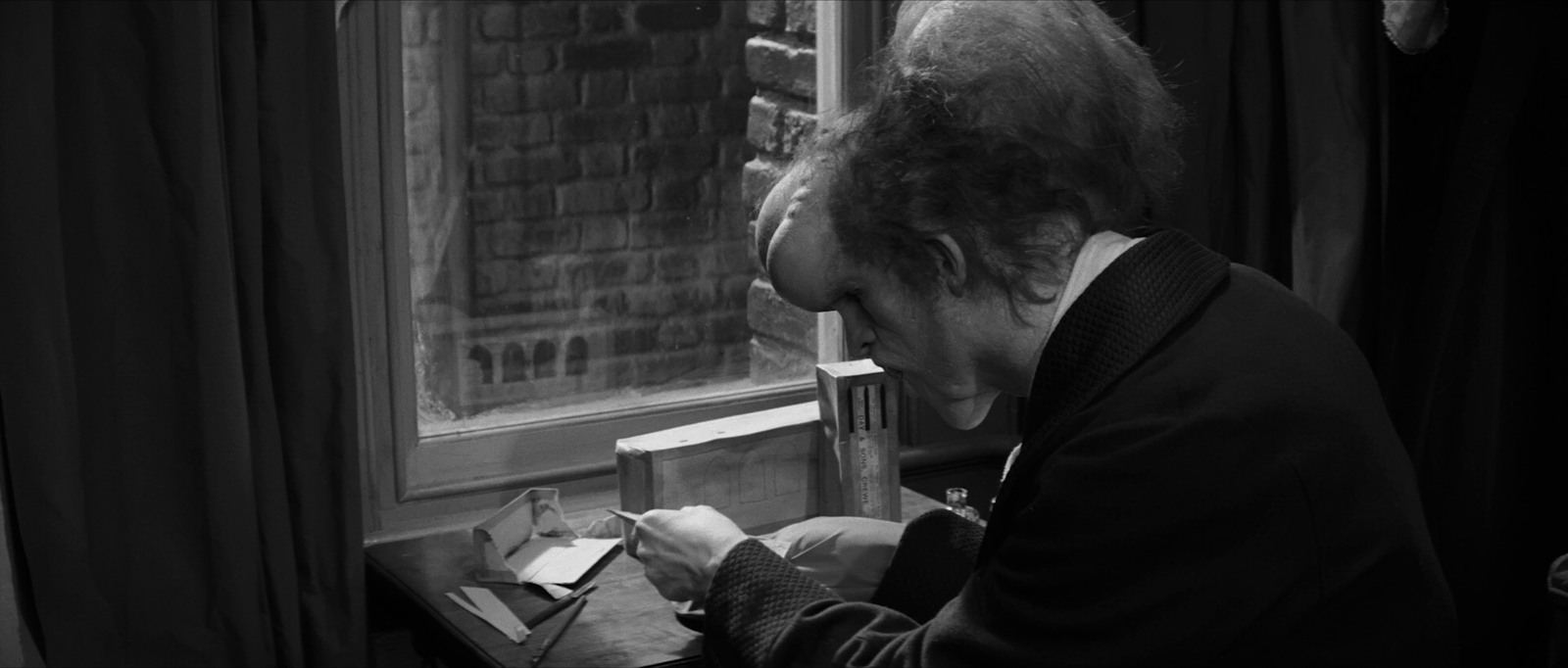
Making what cannot be seen
1:03:10The visible architecture supplies only part of the building Merrick is making. Imagination completes the portion outside his view. The model is therefore more than an emblem of confinement: it is evidence of sustained work and interpretation. His question about being cured follows this growing independence, and Treves must distinguish care from a promise he cannot keep.
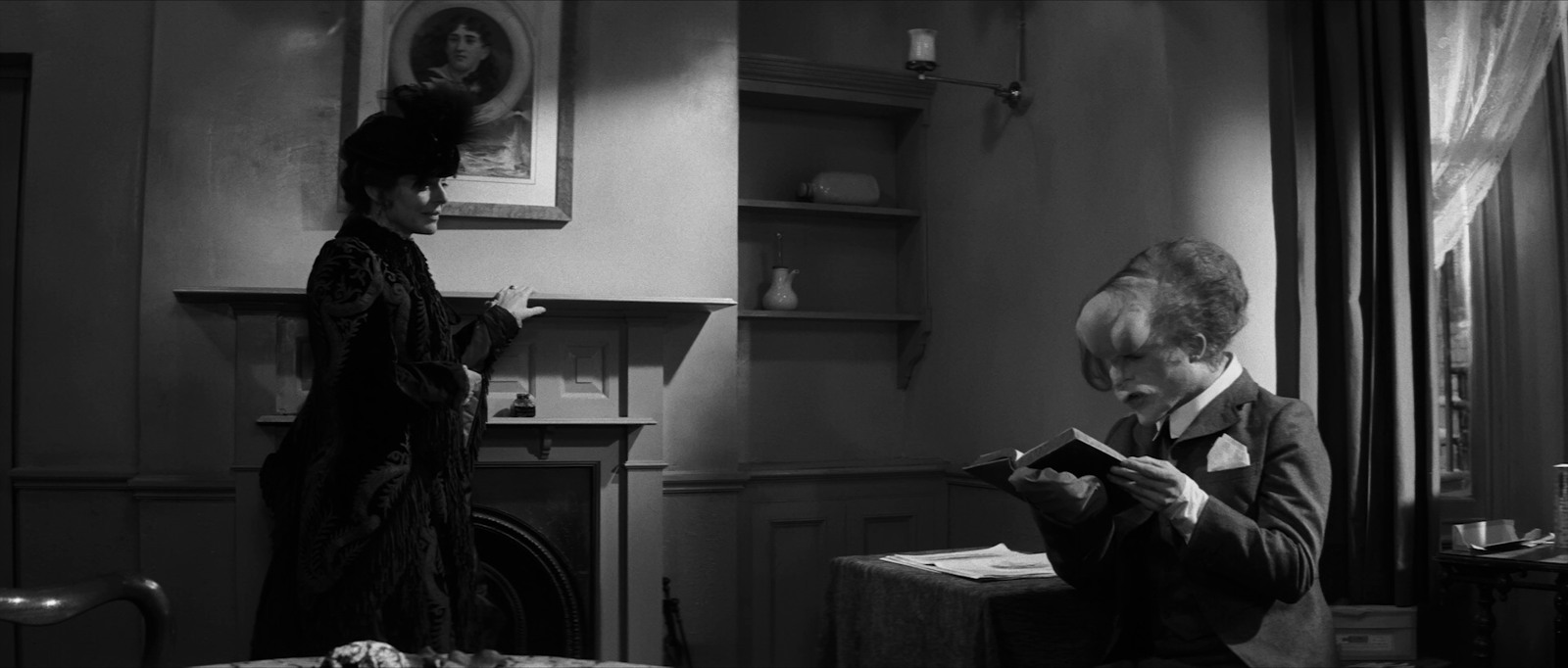
Reading becomes an encounter
1:08:30Kendal’s gift permits a different kind of performance. Rather than repeat answers to pass an examination, Merrick takes a role opposite another reader. The shared Shakespeare scene makes hands, lips and a kiss part of a courteous exchange. Its significance is sharpened by the later crowd’s coercive parody of romance in the same room.
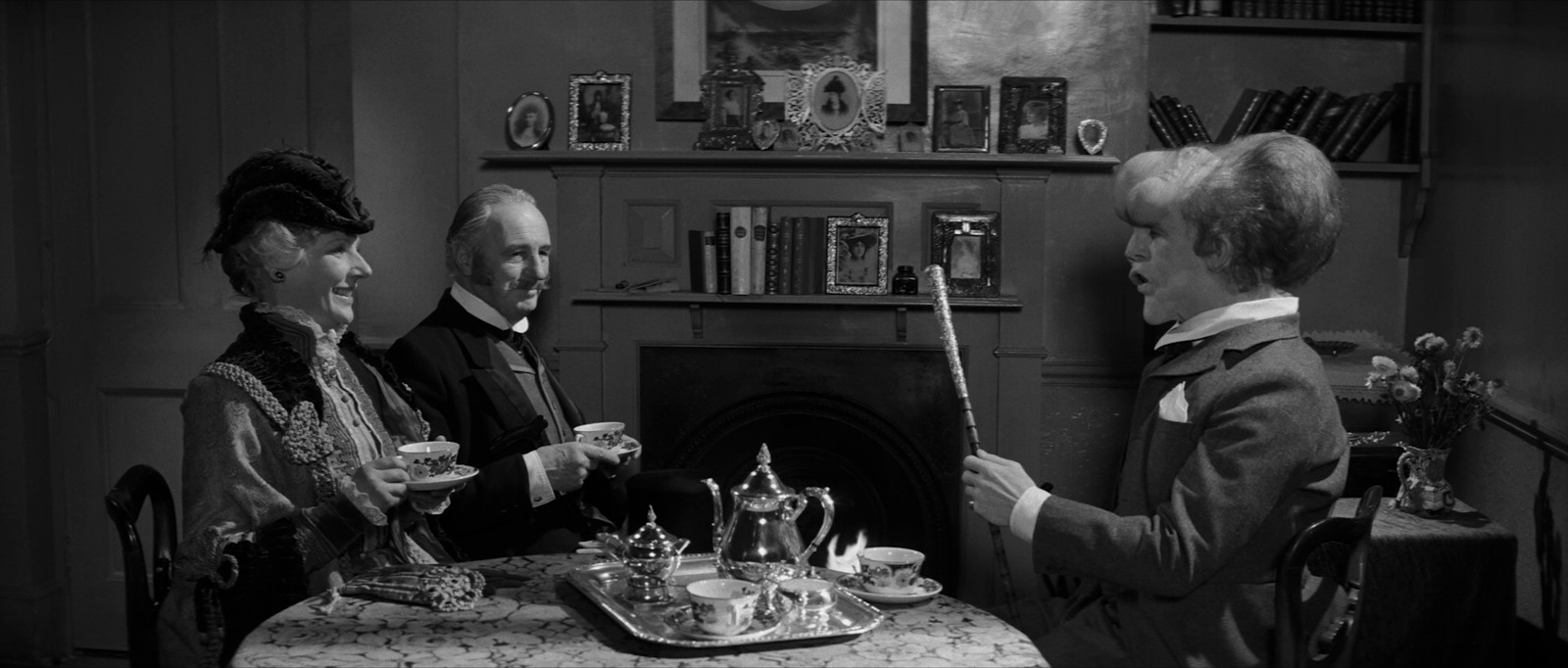
Respectability comes to visit
1:11:30The newspaper’s report of Kendal’s visit brings further callers. Merrick has learned to host them, but polished manners do not guarantee ease or respect. His offer to close the window exposes an awkward response he interprets charitably. The film leaves the visitors’ discomfort in view while refusing to make Merrick responsible for relieving it.
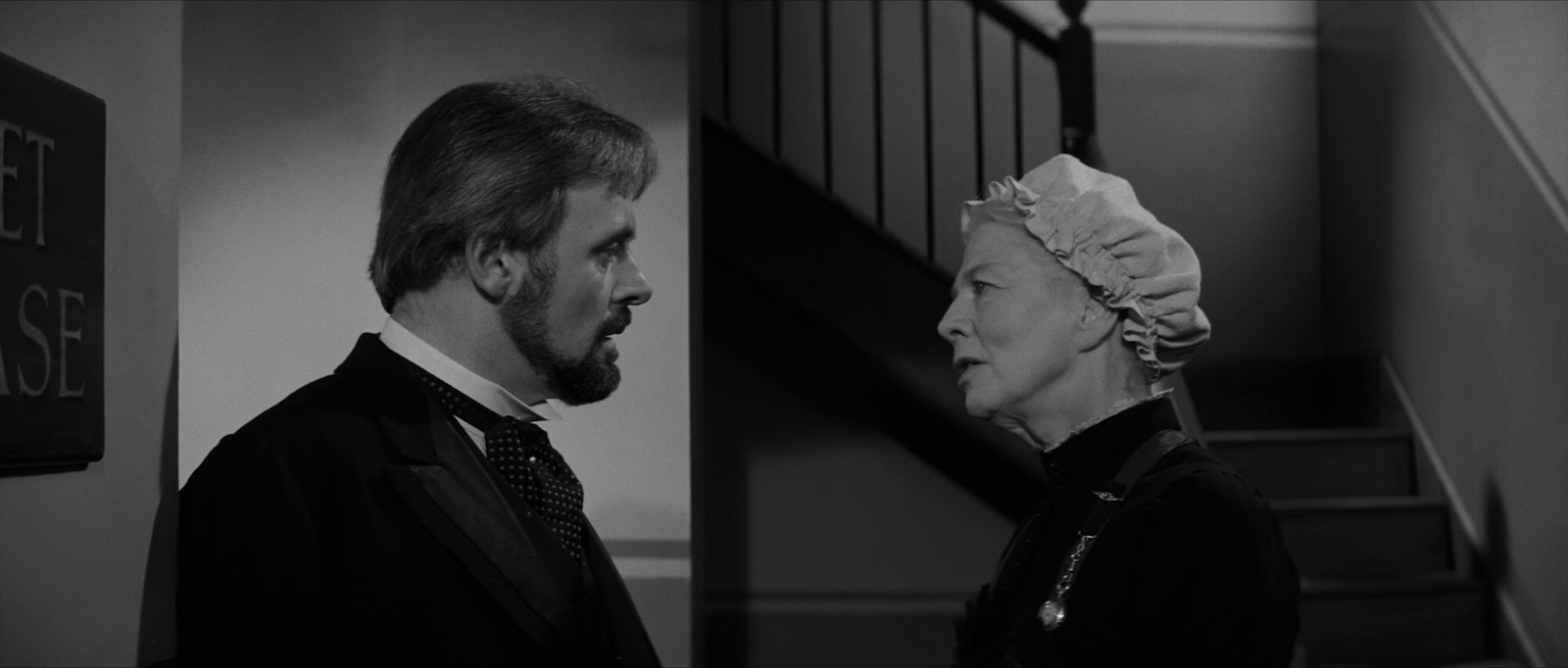
Care as work
1:13:00Mothershead measures kindness through bathing, feeding and daily attendance. She questions visitors whose fashionable interest conceals disgust. Her argument places nursing labour beside the doctor’s public reputation, and it refuses the assumption that visible sympathy is the same as useful care. Treves’s answer does not settle her charge that Merrick is being stared at again.
Scene studies / 03
An uncertain refuge
Public attention, institutional decisions, abduction and the journey back.
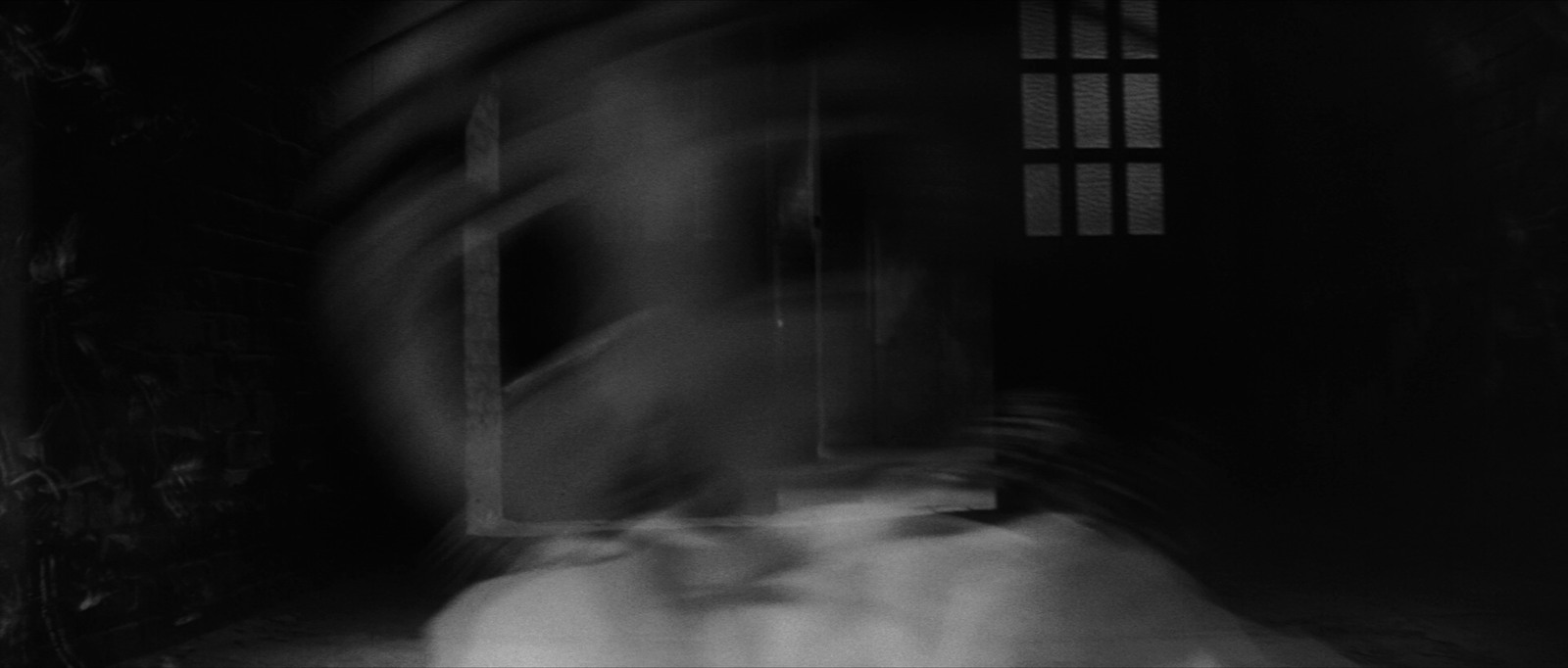
The city returns in a dream
1:15:30The nightmare breaks the continuity of the hospital room into machinery, the hood, bodily detail and the mother’s recurring distress. The subtitle track identifies distorted trumpeting among the industrial sounds. These associations reconnect the apparently secure room with the opening and the working city. The sequence offers a fearful subjective construction rather than a new historical event.
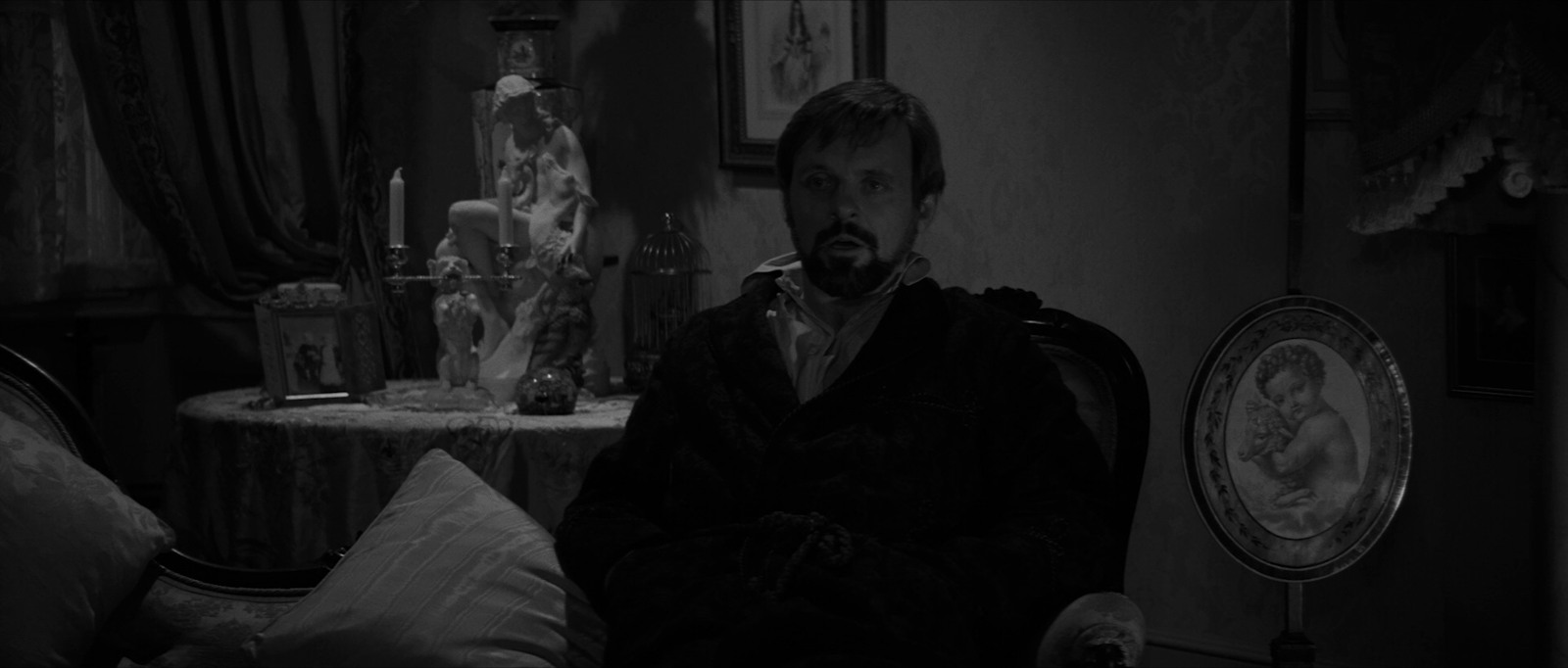
The doctor questions himself
1:17:40Treves notices that Merrick’s fame has also enhanced his own. The scene moves the film’s ethical question out of Bytes’s mouth and into the doctor’s private conversation. Anne points to the difference care has made, but he cannot reduce his motives to a reassuring verdict. Hopkins’s uncertainty keeps the relationship more complicated than a simple rescue narrative.
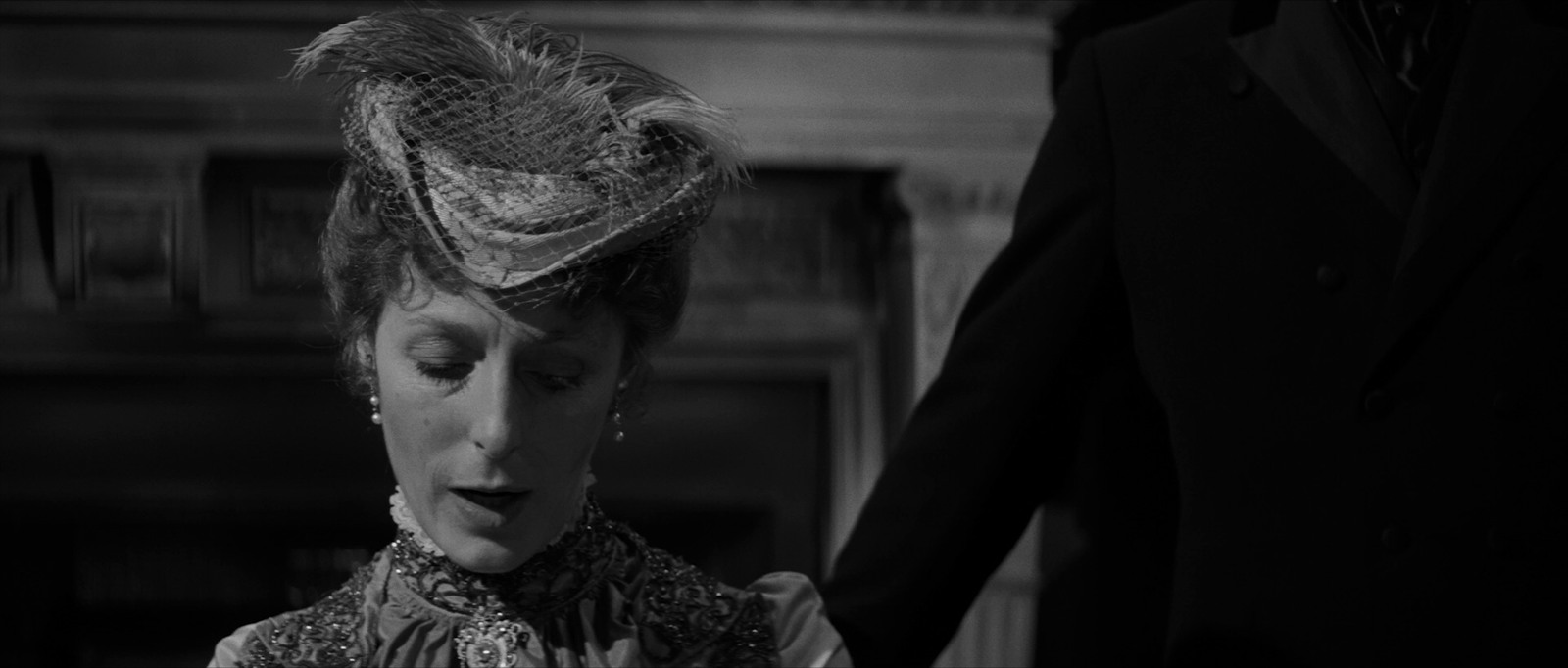
A decision altered by rank
1:21:50The committee debates deserving cases until royal approval changes the terms of the discussion. The letter praises an act of kindness before the vote that must authorize it. The scene is both a relief and a demonstration of institutional power: security depends on advocates, status and funding as well as the argument that Merrick deserves a home.
A home and a personal possession
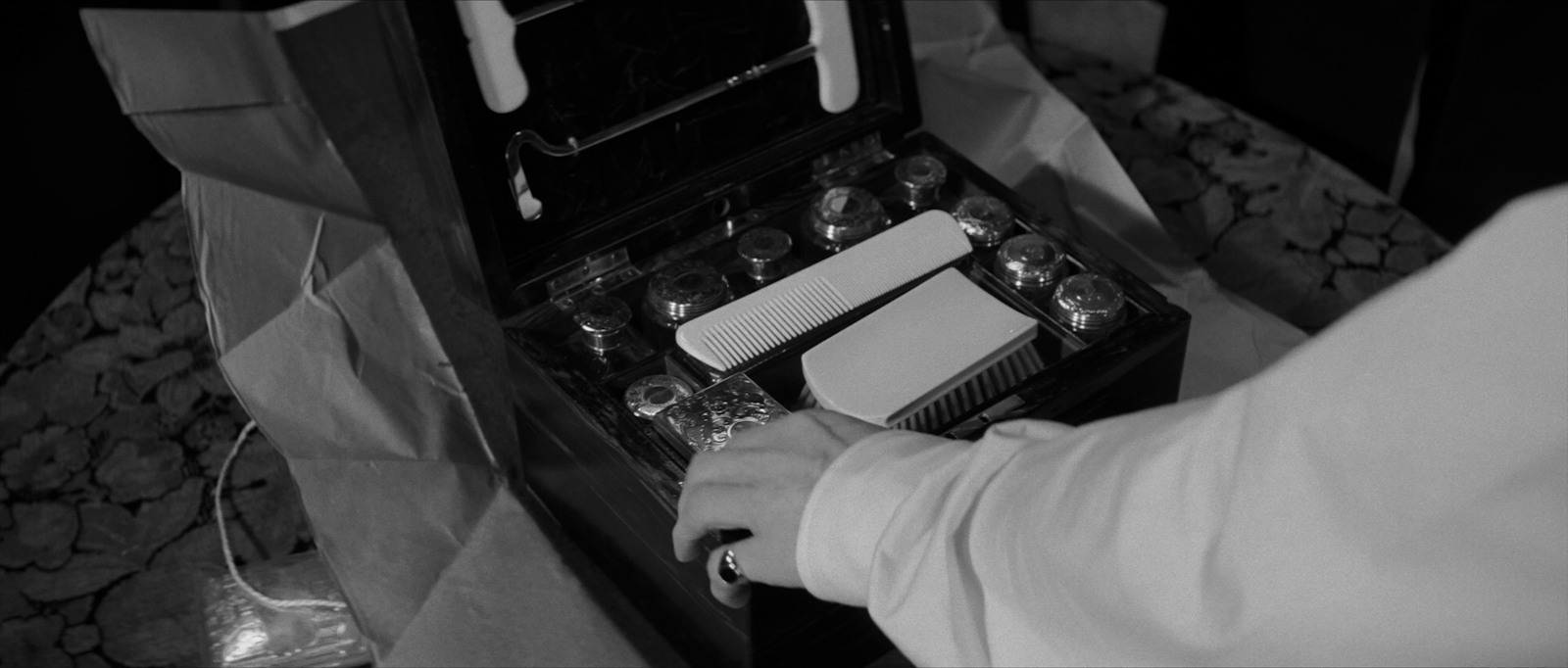
1:24:30The decision becomes tangible through the room and its gift. Hurt’s repeated gestures and returns to thanking his friends make the discovery last beyond a simple announcement. A dressing case also belongs to the everyday routines usually withheld from a person treated as an attraction. The scene gives practical objects an emotional importance that the approaching intrusion will violate.
The room becomes a show
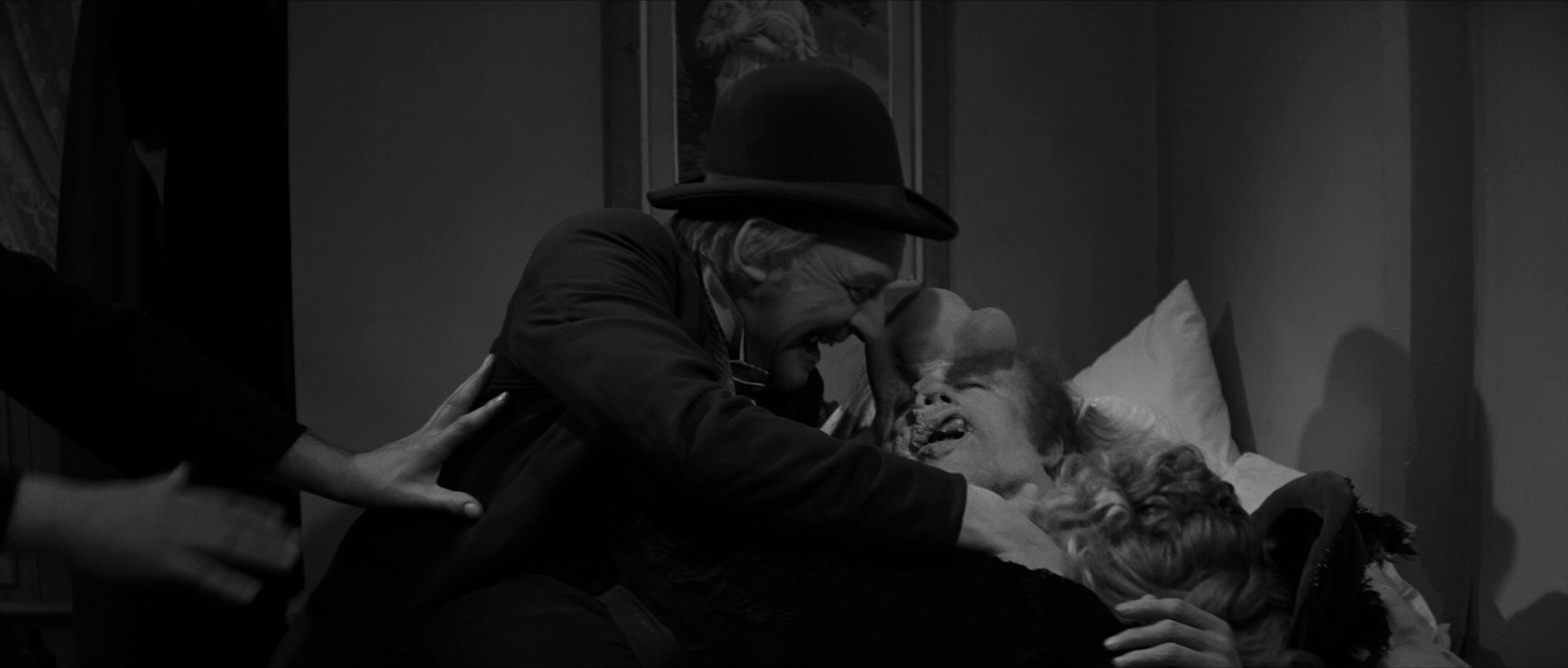
1:28:30The invasion turns the language of welcome into coercion. A forced kiss distorts the exchange with Kendal; a mirror becomes an instrument of humiliation. The visitors occupy the room’s depth and surround the person whose home it is. The sequence brings the public show inside the refuge instead of leaving cruelty safely outside the hospital.
An absence among unfinished things
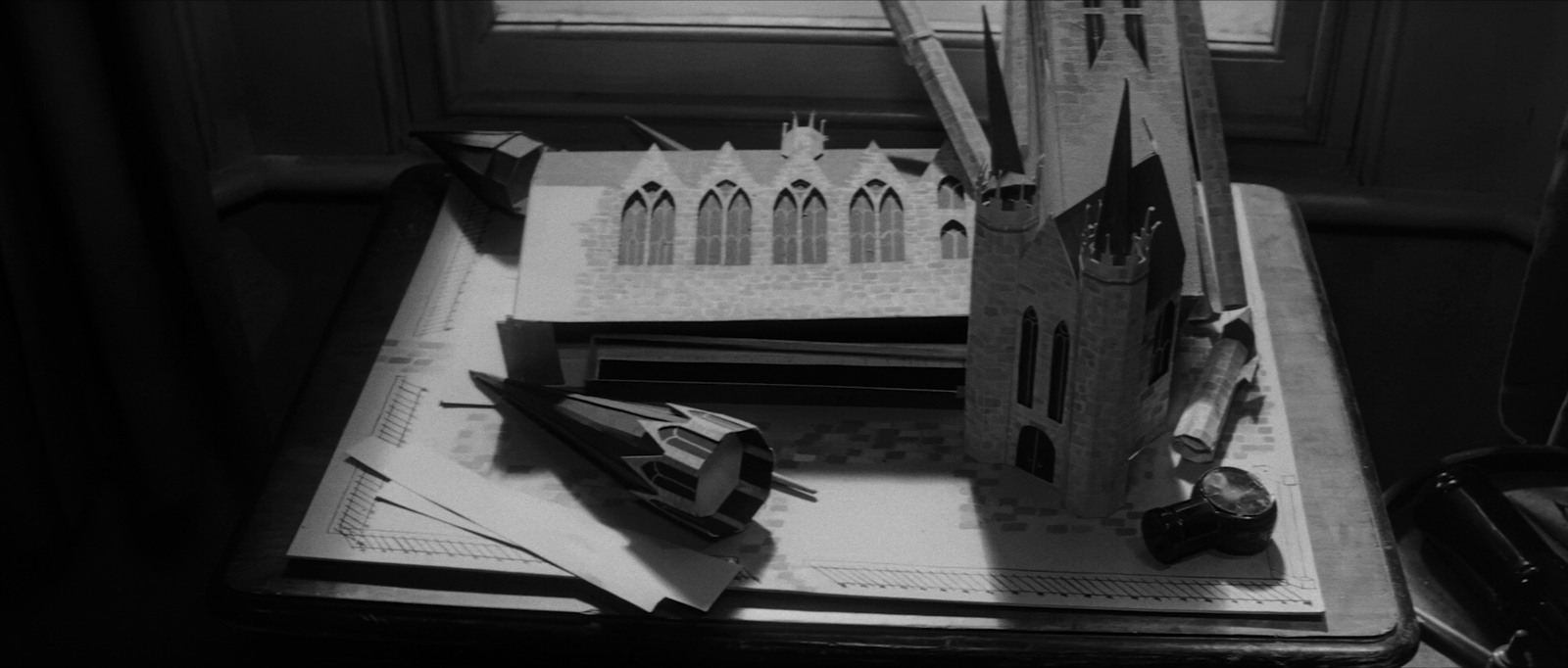
1:32:05Bytes returns after the crowd and removes Merrick. The abandoned model and the room’s objects register the loss before the adults can explain it. The hospital’s failure is visible through interrupted work. Treves’s anger at the porter follows, but the film gives the missing person’s place a moment of its own.
The exhibition repeats
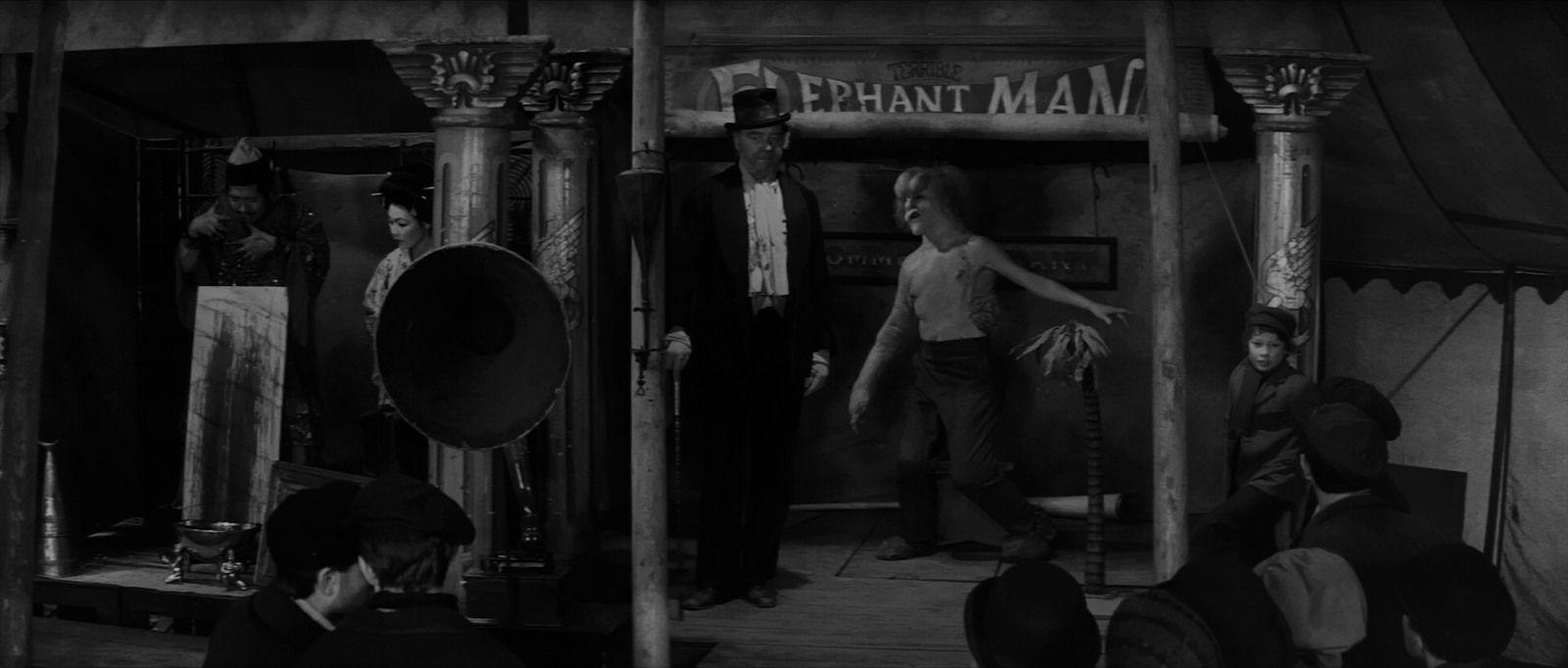
1:36:30The familiar banner and orders return in a rain-soaked show on the continent. Merrick is now fully visible, so the sequence no longer depends on the early concealment. Its force lies in recognizing a social arrangement already condemned: a person made to stand, turn and perform while someone else controls the encounter and collects the money.
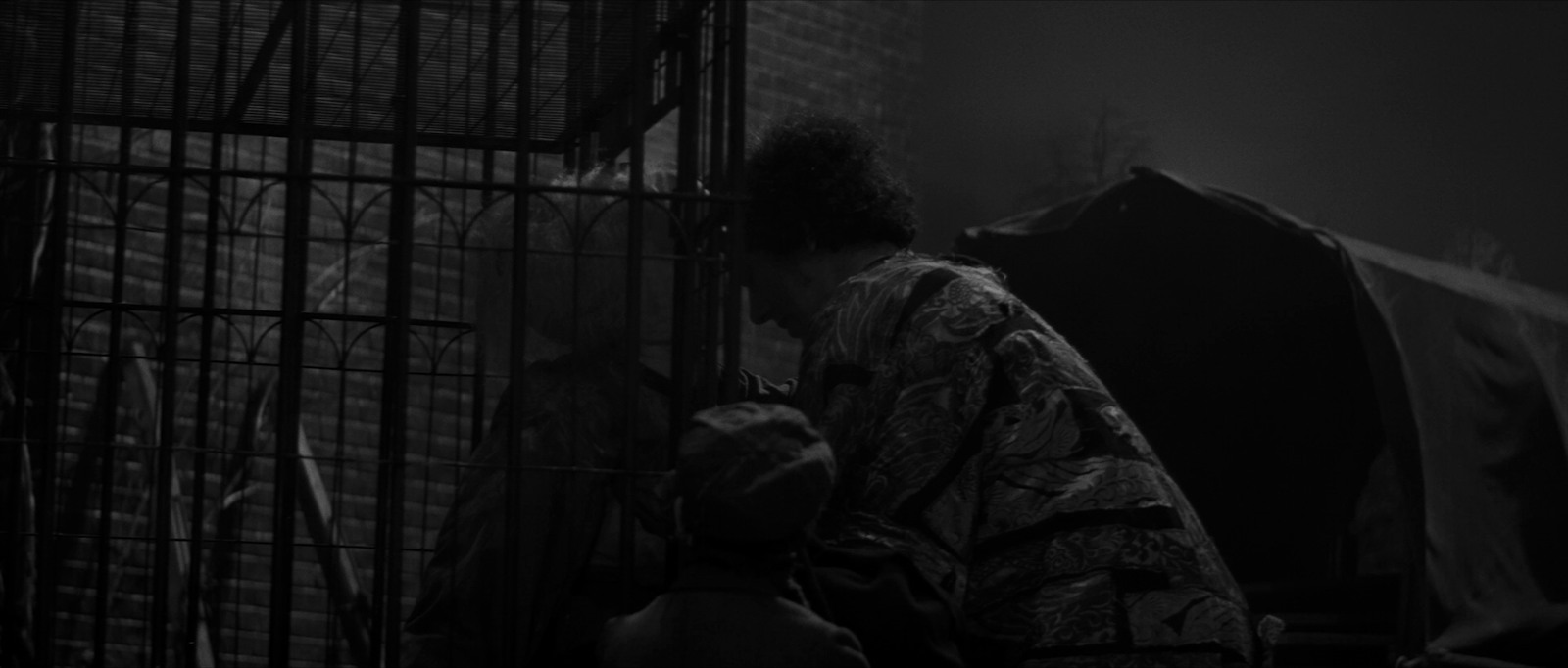
Fellow performers open the cage
1:41:30The rescue changes who has the power to act. The performers and Bytes’s boy organize Merrick’s release, lift him and guide him toward the journey home. Their cooperation contrasts with the earlier audiences. The film gives them agency within the escape rather than leaving them as background figures in another person’s spectacle.
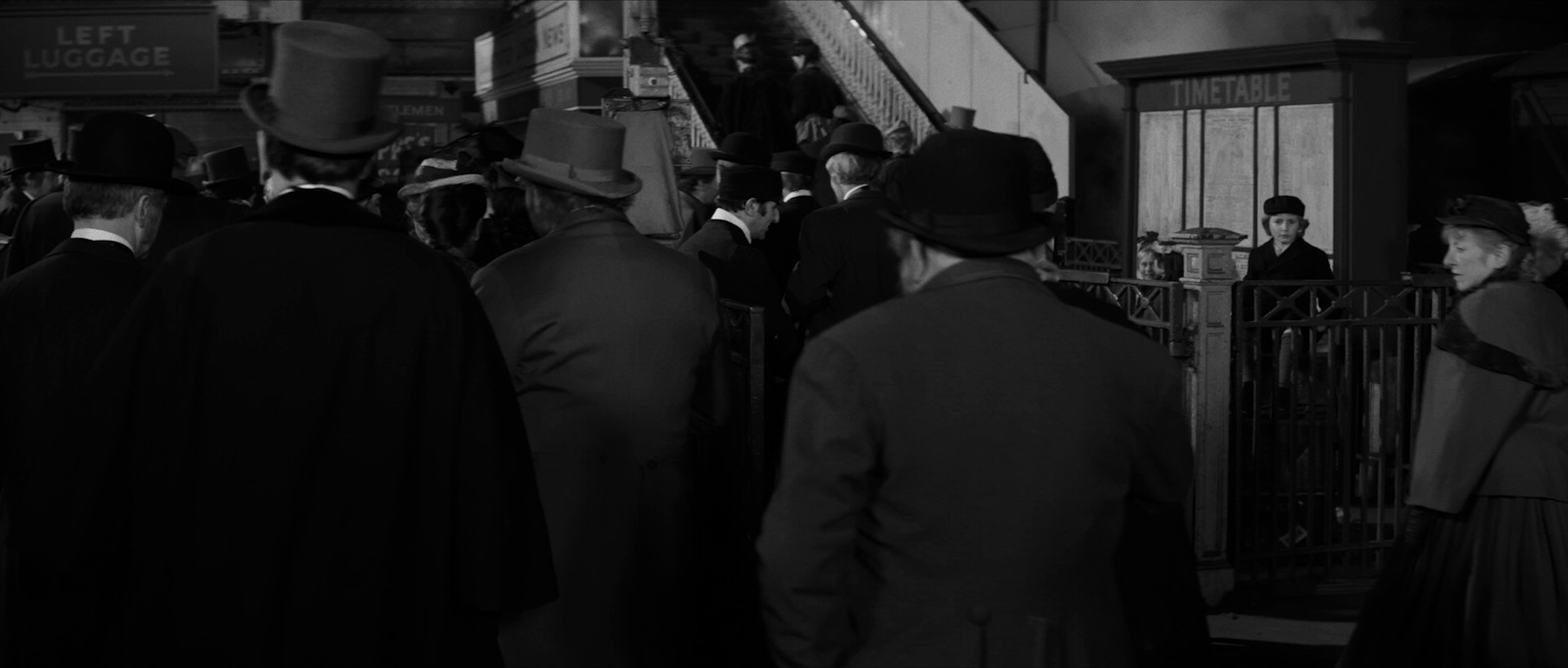
Questions without permission
1:44:30Returning to London does not restore privacy. A boy’s repeated question about Merrick’s head becomes pressure as he follows the covered figure through the station. The audience now knows the person behind the hood. The pursuit makes that knowledge a source of dread rather than a promise of revelation.
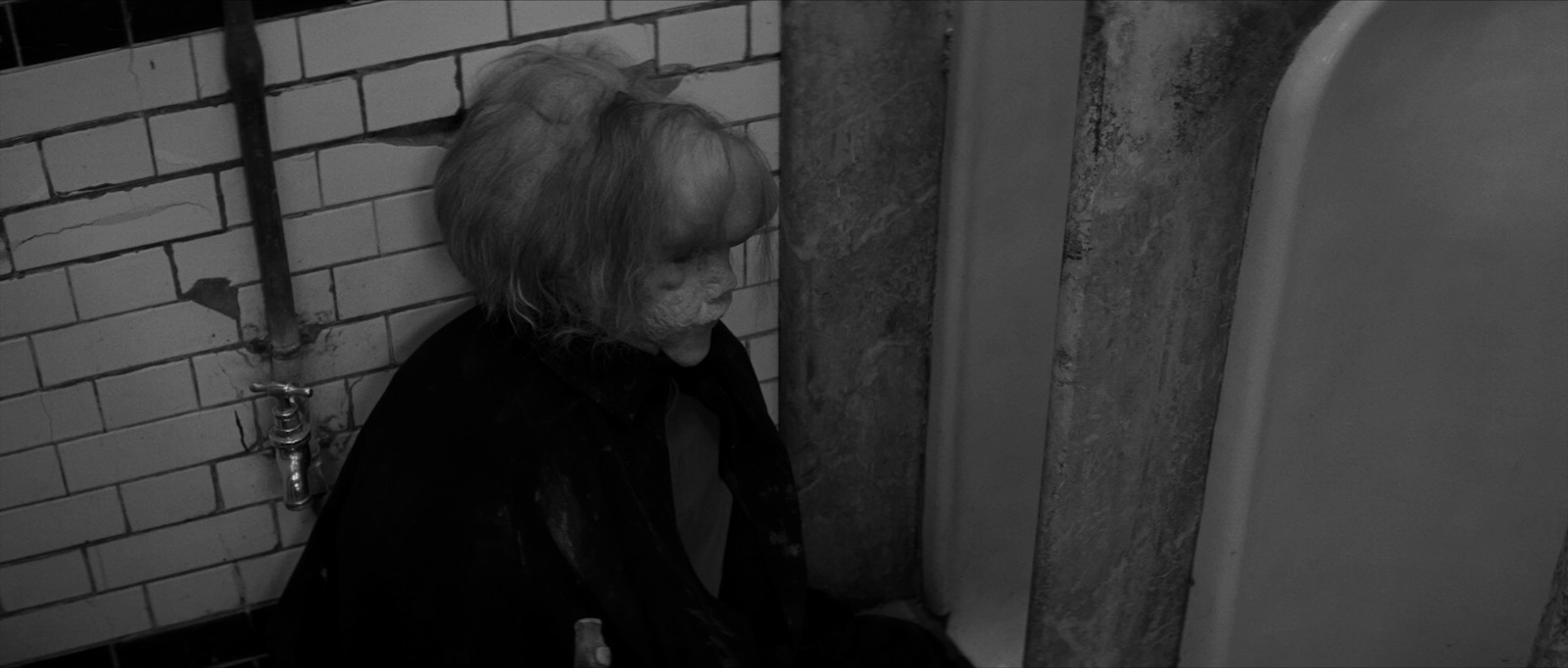
A declaration against the crowd
1:47:00Crowding, pursuit and the dead end of the lavatory produce the film’s most forceful statement of personhood. Hurt’s raised voice breaks the pattern of hesitant greetings and other people’s descriptions. The crowd briefly stops, but the declaration does not make the body safe or strong. The scene ends in exhaustion and the need for help.
Scene studies / 04
An evening and a room
The theatre, a completed model and the film’s final return to the mother.
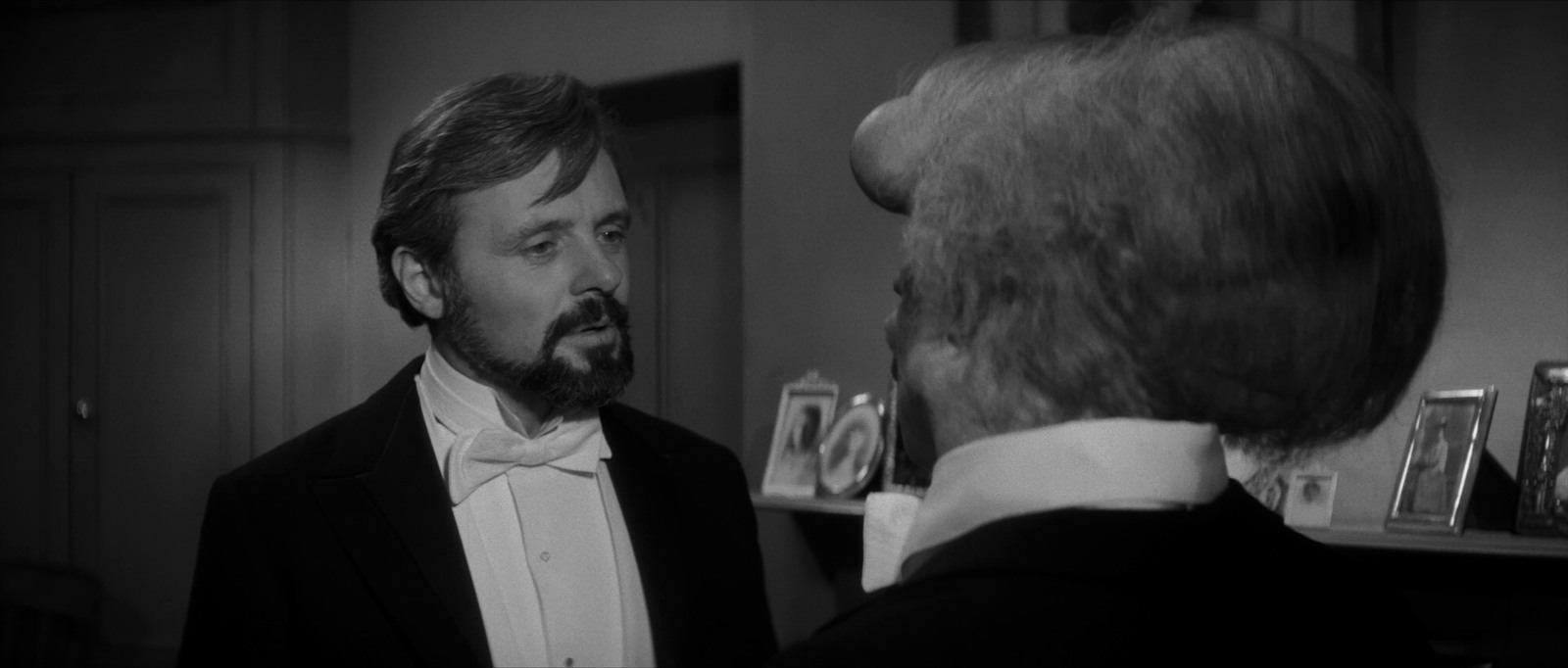
What friendship has changed
1:48:30The film makes the illness explicit before the outing. Merrick nevertheless describes a life made fuller by being loved, while Treves acknowledges that the relationship has changed him too. The exchange gives the final evening its double character: a pleasure anticipated in its own right, and a meeting shadowed by what the other characters already know.
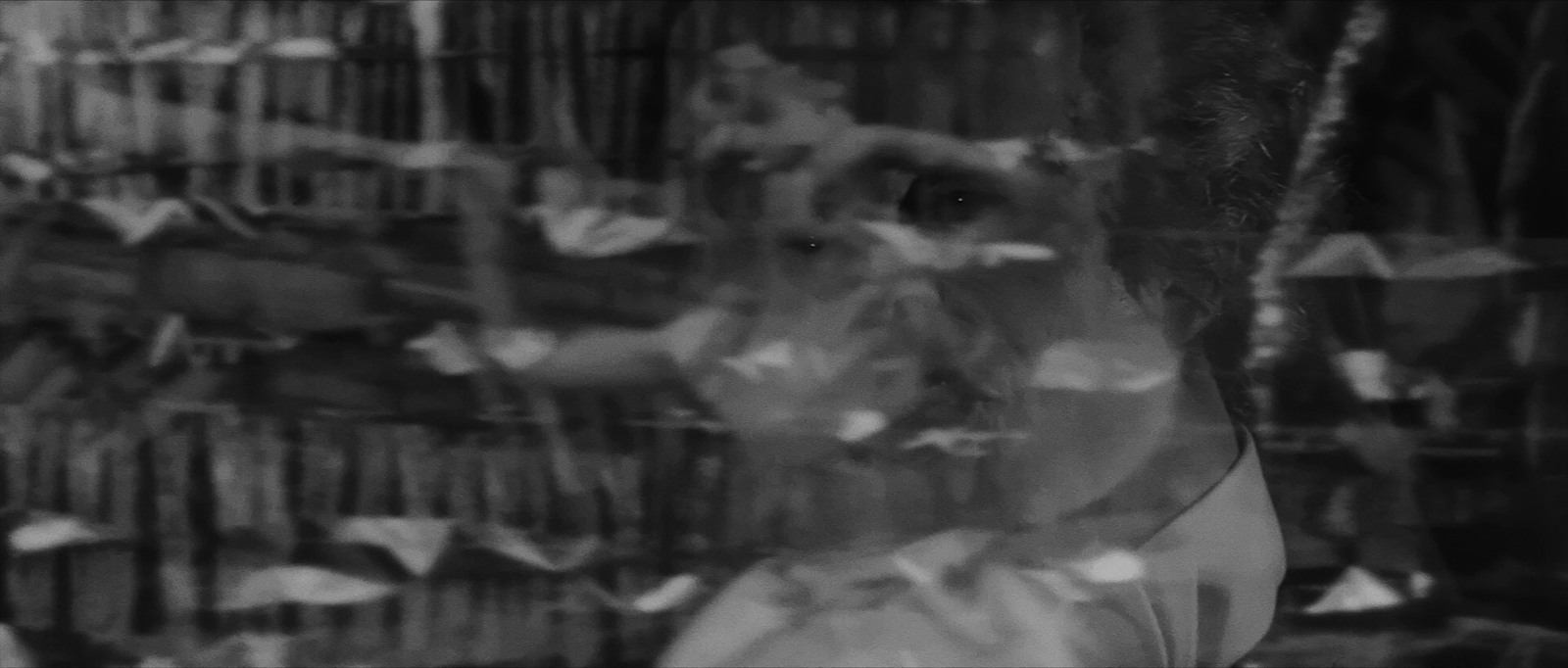
The spectacle enters the spectator
1:51:00The theatre montage does more than alternate a performance with reaction shots. Overlapping images bring the scenic world onto Merrick’s face, letting the public entertainment acquire a private intensity. Coates’s editing and the stage effects turn looking into imaginative participation. This is a different use of spectacle from the film’s opening display, though it remains connected to it.
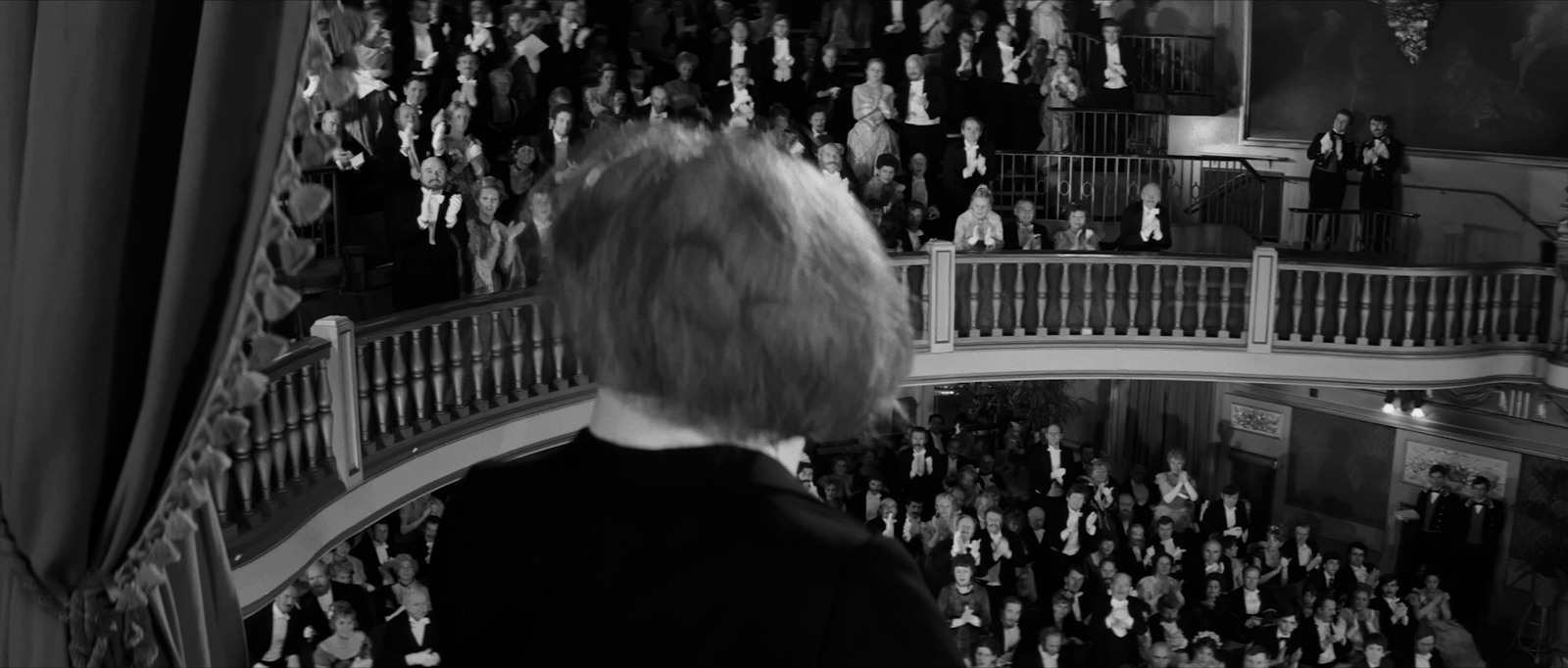
Standing before an audience again
1:53:48Kendal’s dedication asks the audience to look toward Merrick. The instruction to stand recalls earlier commands, but the circumstances have changed: he attends as a spectator and is acknowledged as a friend. The film does not erase the tension of being made visible. It places gratitude and the old structure of looking in the same image.
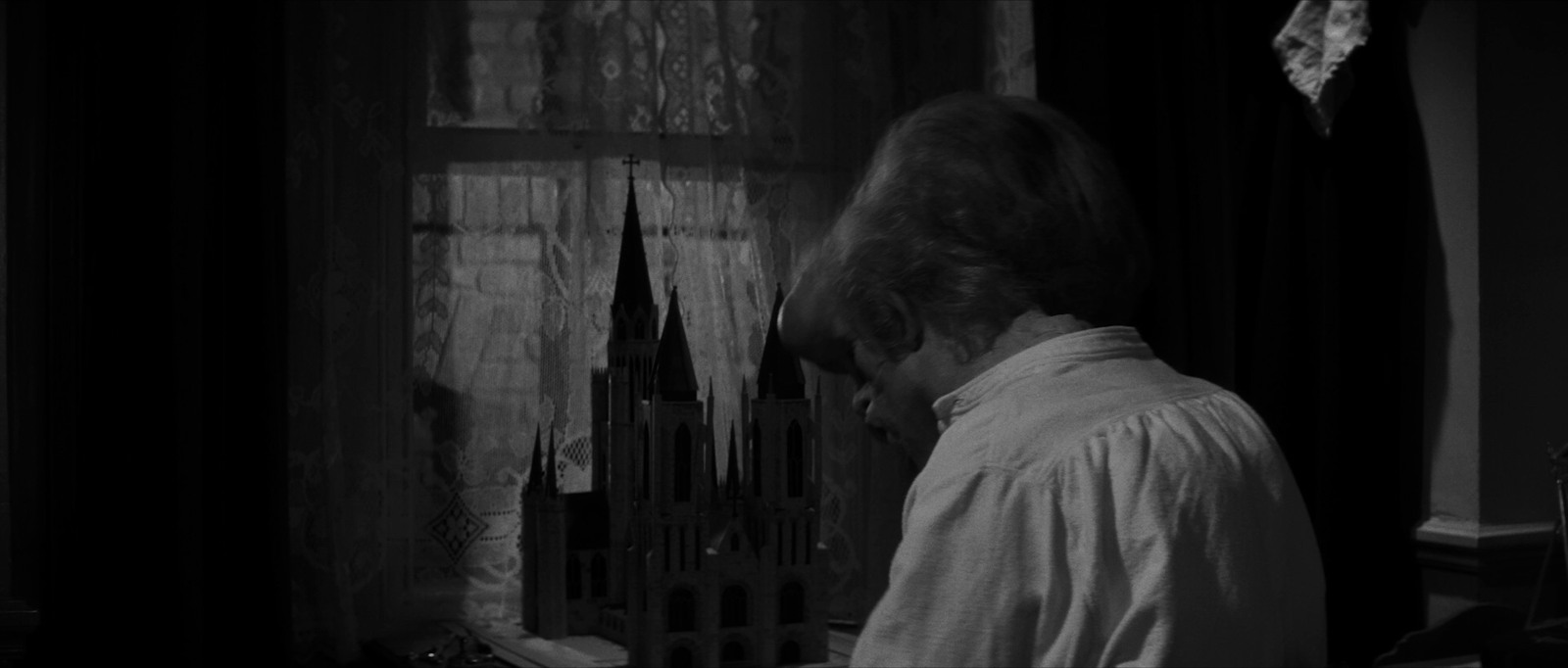
Finishing the cathedral
1:56:30The final visit gives way to work at the window. The completed model connects something seen, imagined and patiently made. Lynch’s AFI recollection locates the start of Barber’s music around this return to the cathedral. The private action now carries the emotional weight that the theatre expressed through an entire audience.
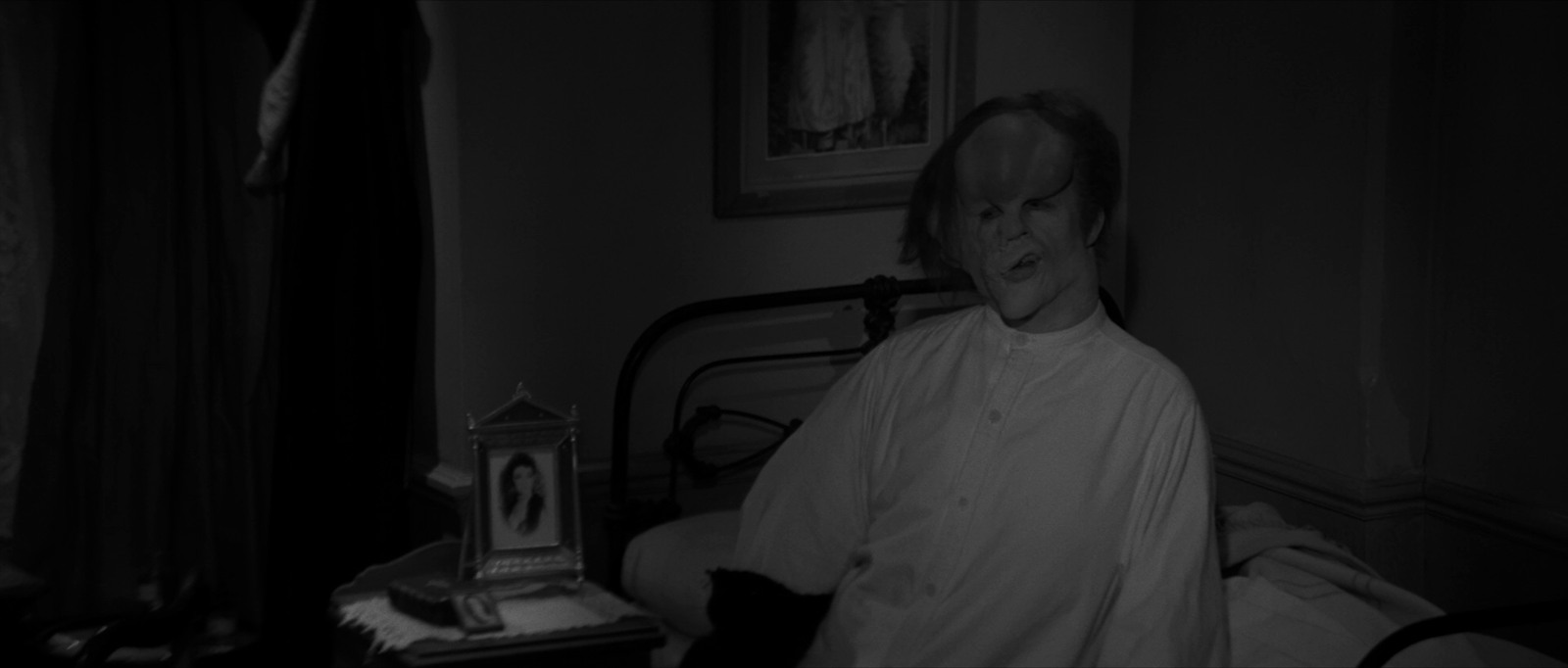
Rearranging the room for sleep
1:58:30The preparation unfolds through small, deliberate actions. Earlier dialogue has established both his wish to sleep like other people and the danger of lying flat. The film leaves these facts beside the visible choice instead of supplying a final explanation through another character. This is the screenplay’s intimate ending; the historical records discussed by Jonathan Evans require a separate reading.
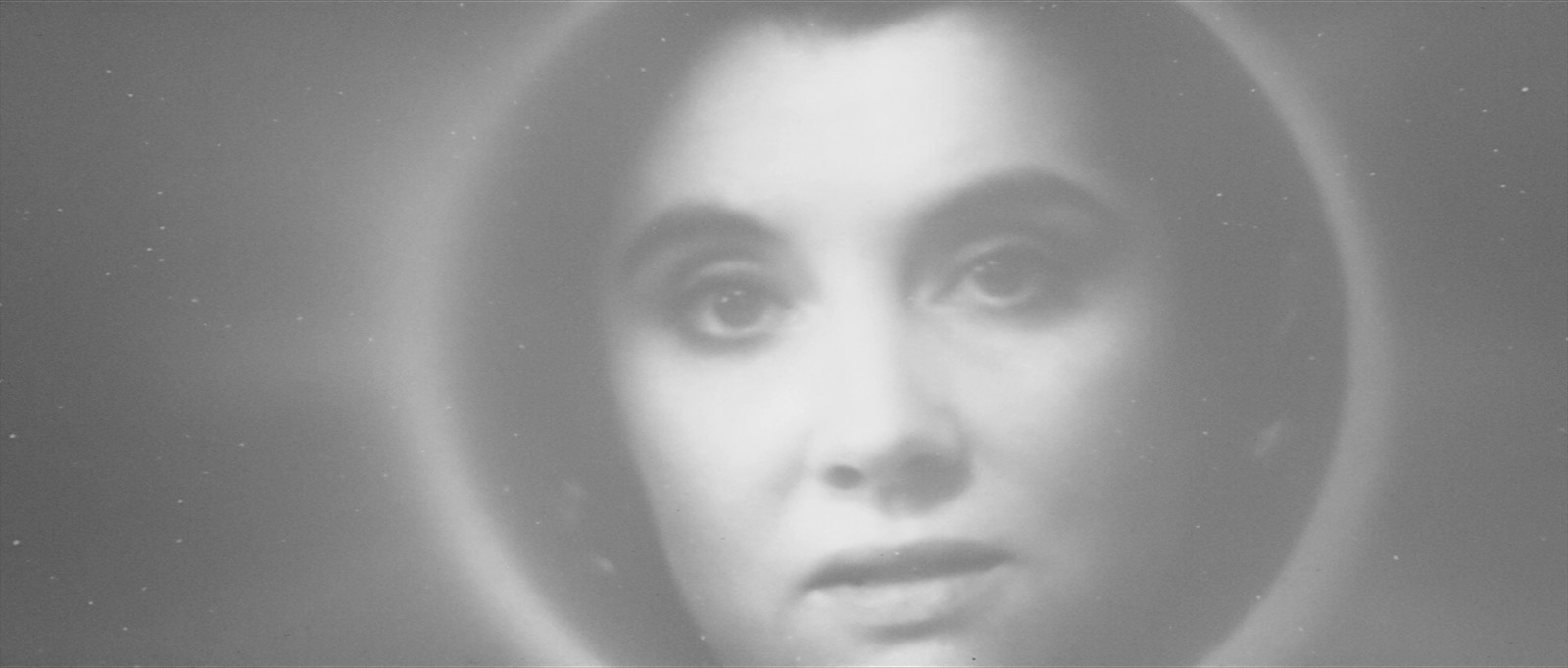
The portrait beyond the room
2:00:45The camera leaves the bedside objects and the final image returns to the mother. Her face, light and stars replace the threatening collision of bodies in the opening. The spoken poem extends that change into language about continuity beyond death. The film closes through an image of consolation, not a medical account of the final moment.
Performance & practical effects
Behind the make-up
Christopher Tucker’s work had to remain responsive to John Hurt: an eye, a mouth, a change of breath and a carefully limited movement could carry a scene. Skintricks opens that collaboration to view through the individual pieces and the actor’s explanation of working inside them.
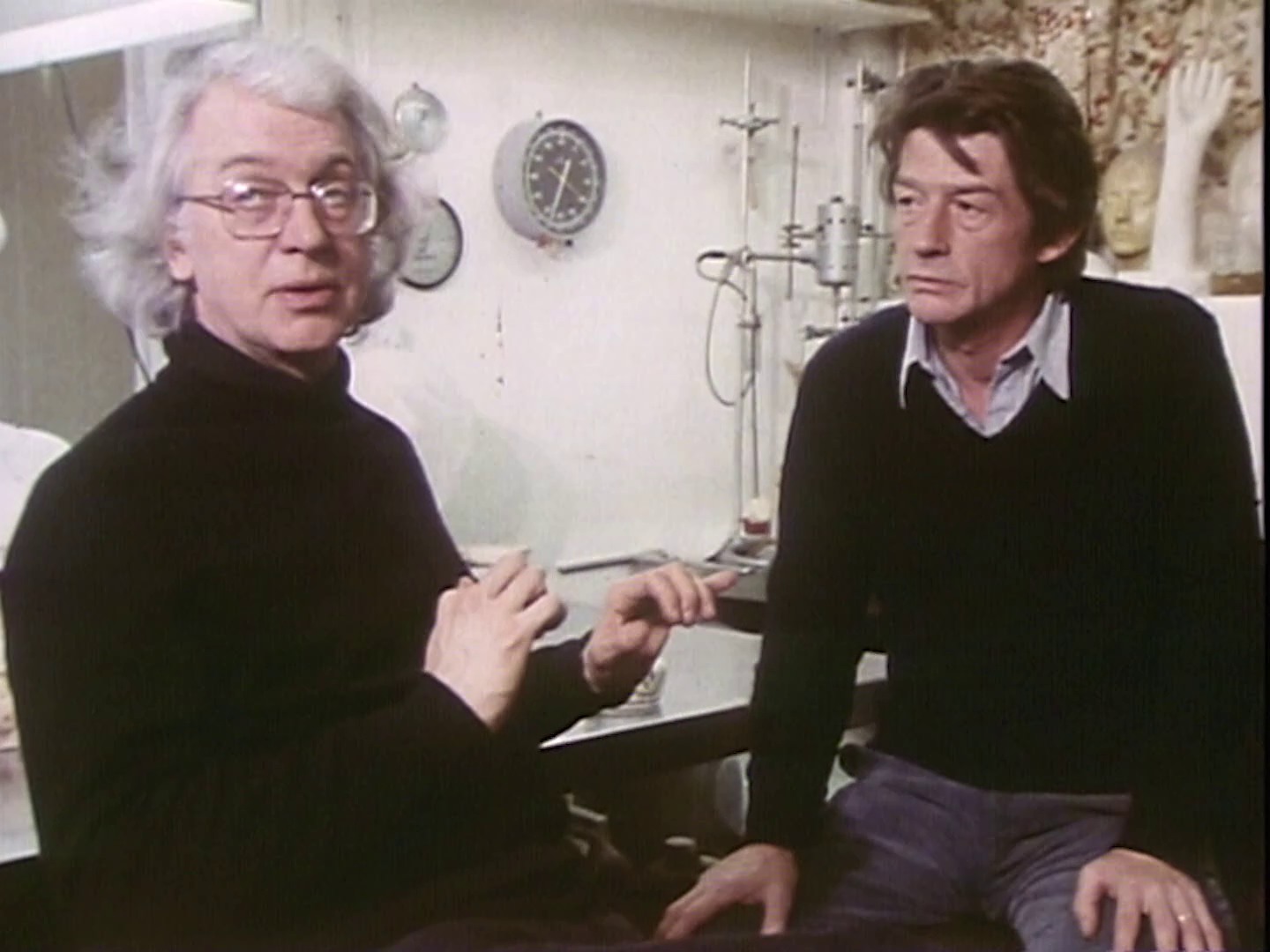
Five stages of the workshop demonstration
Hurt and Tucker loosely reassemble the head pieces to show how they fit together. The visible edges and hands are part of this demonstration. On a shooting day, alignment, adhesive, hair and finishing made the pieces behave as a continuous surface.
Open the five-image make-up gallery
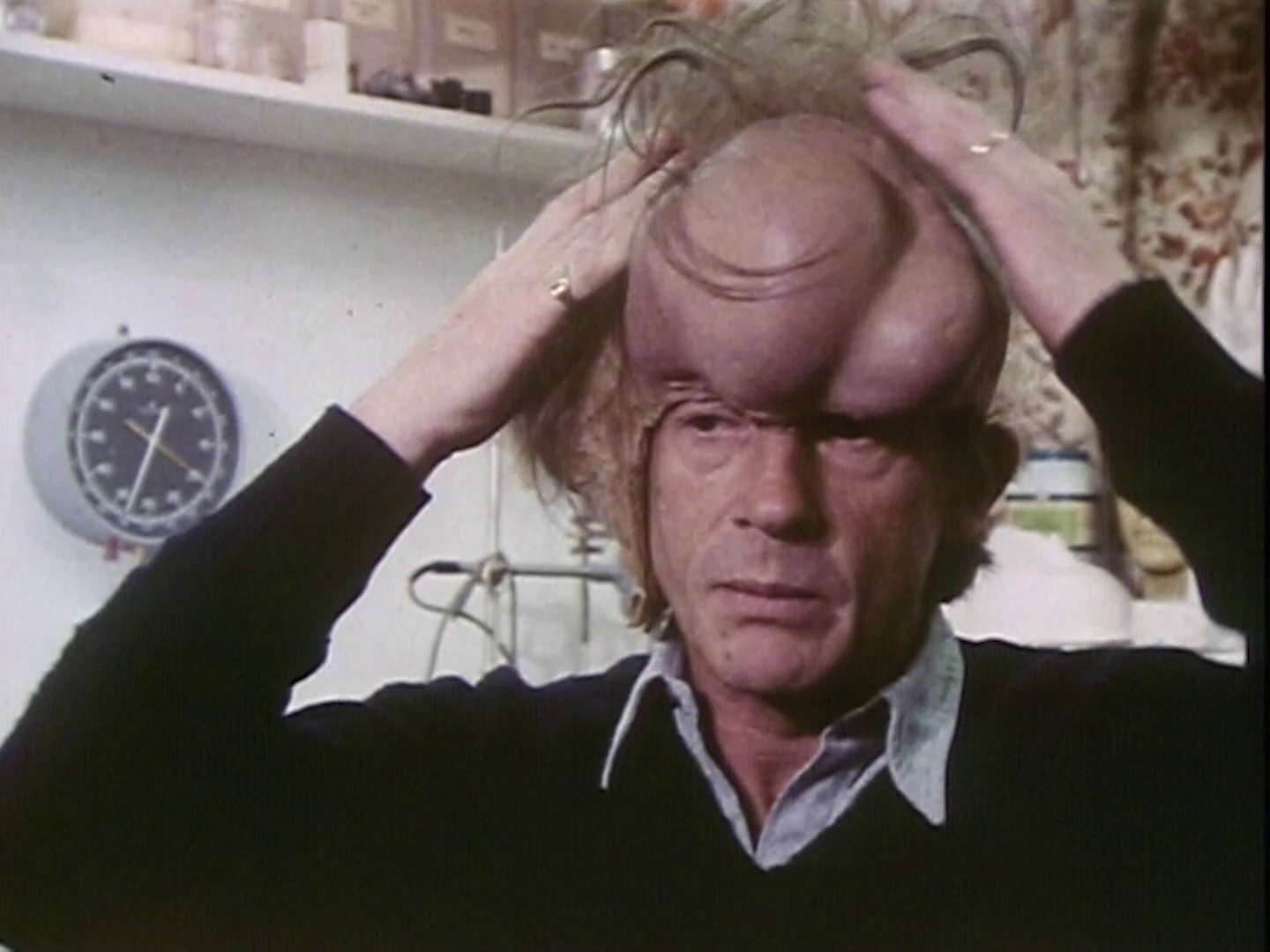
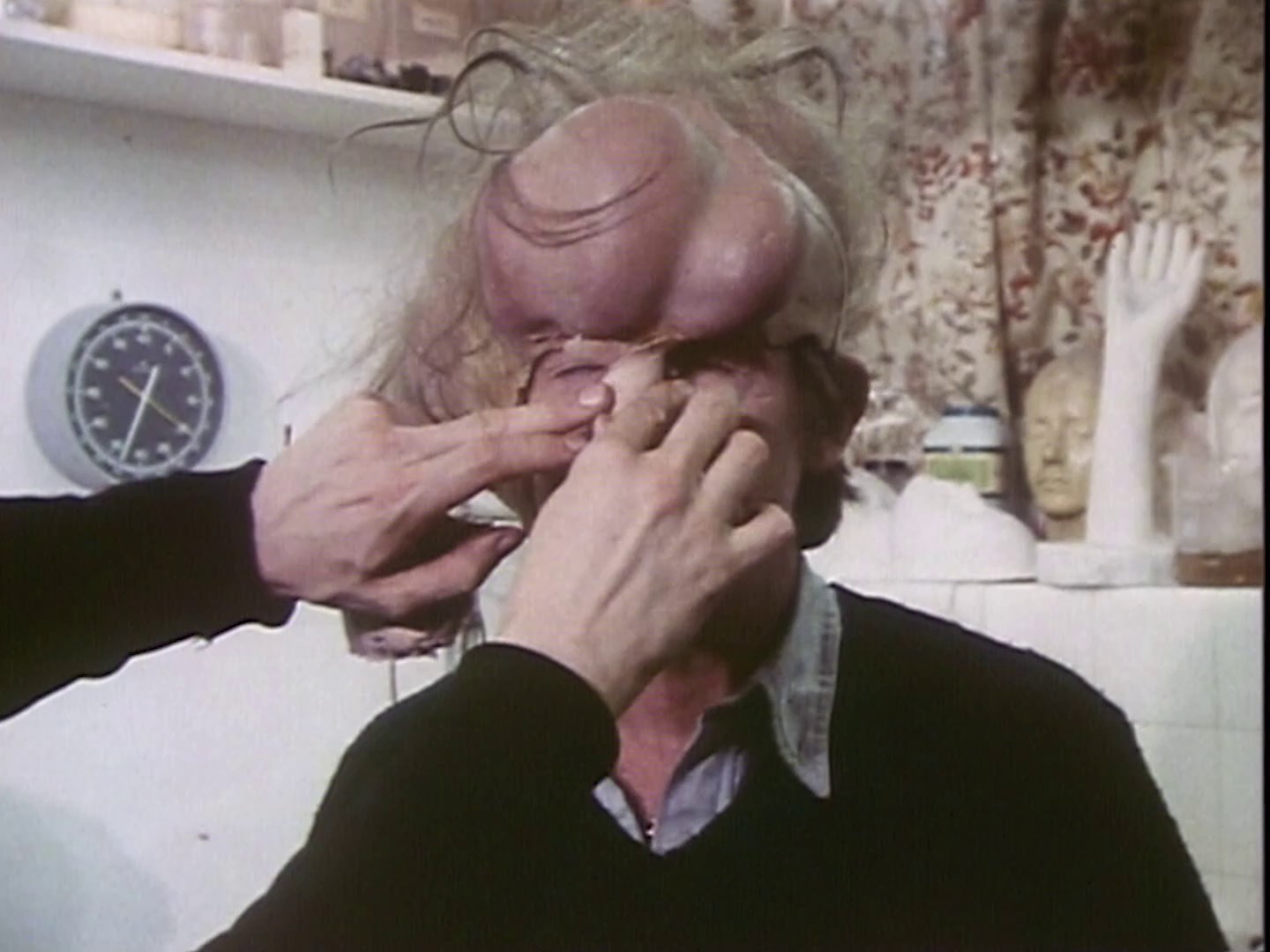
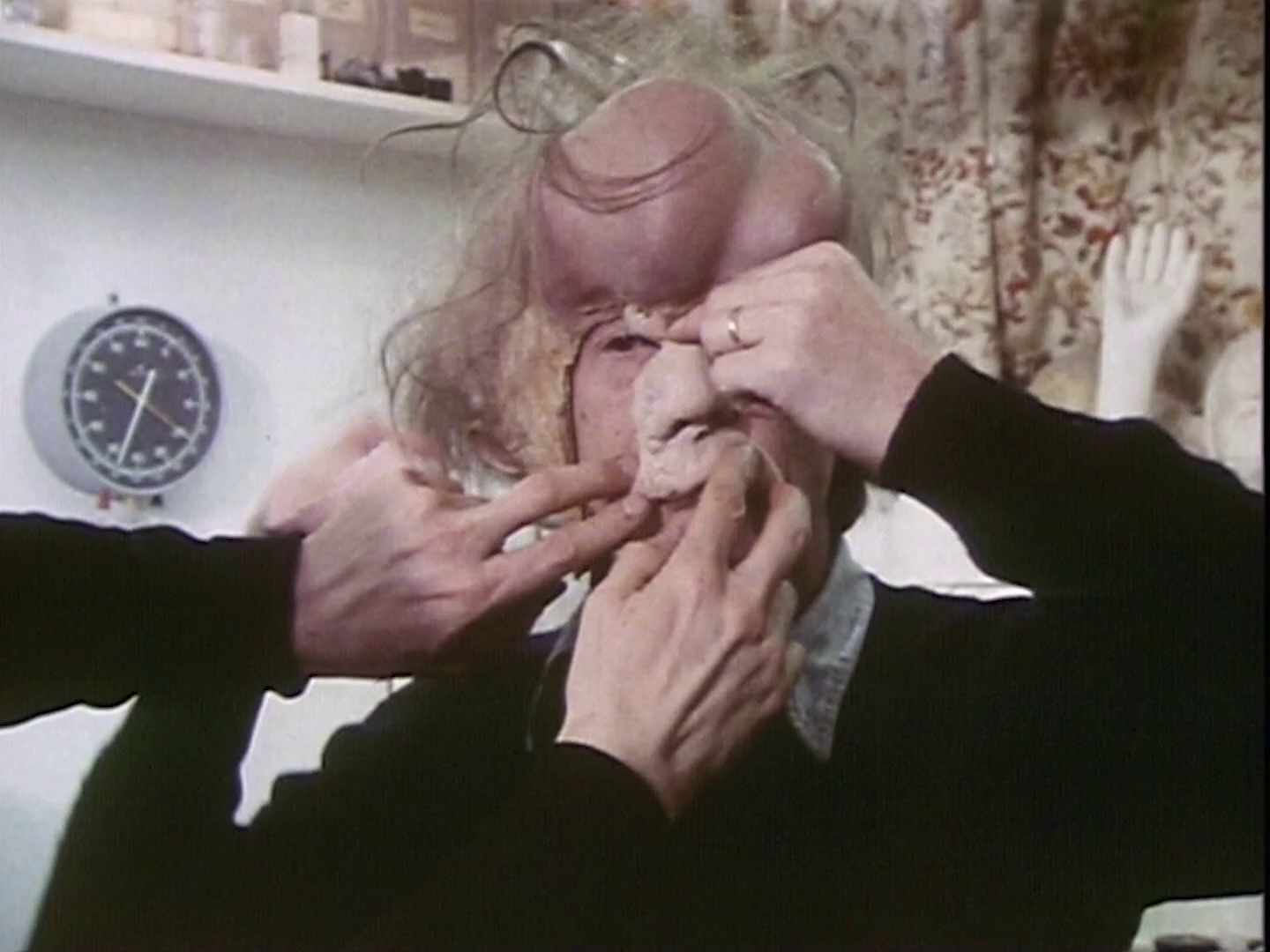
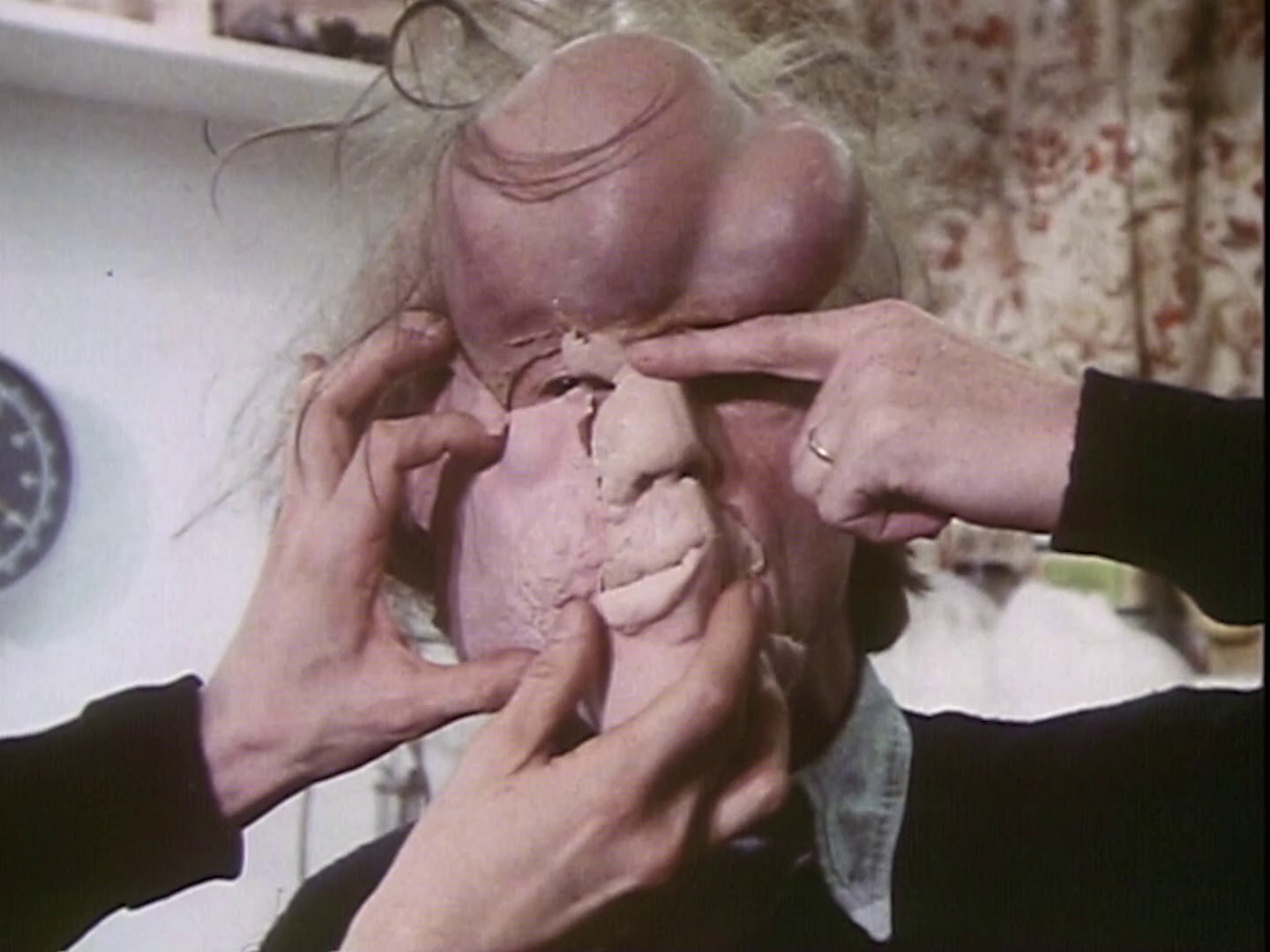
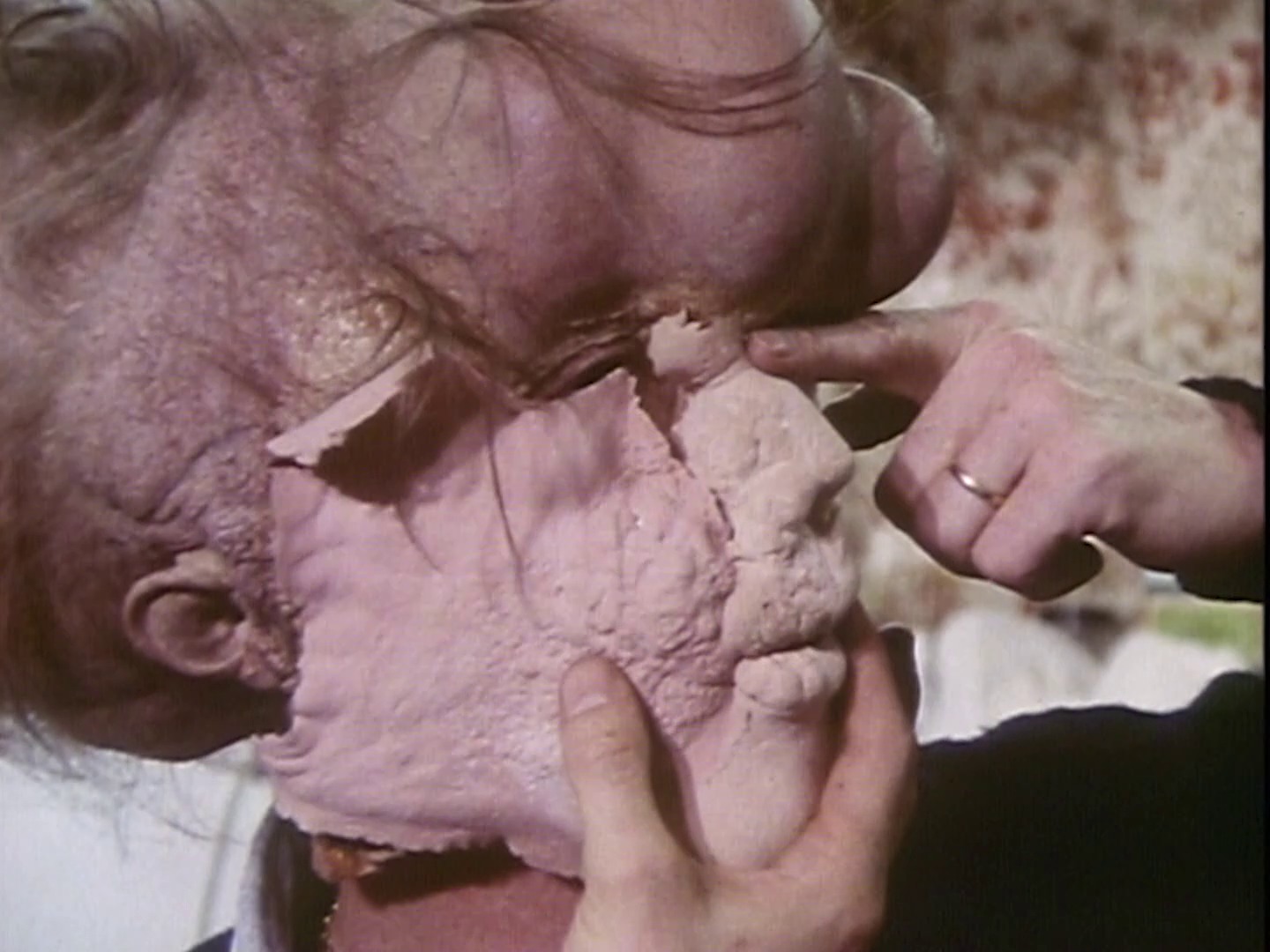
Tucker describes placing the joins where movement could be controlled and trying the teeth before the head cast. Hurt explains how economy of movement protected the fine edges. The technical decisions belong to the performance: they determine what can move freely, how speech is formed and where attention settles. Skintricks, 2:05–6:35 · Read the production history →
Optical images & editing
Faces, elephants and imagined worlds
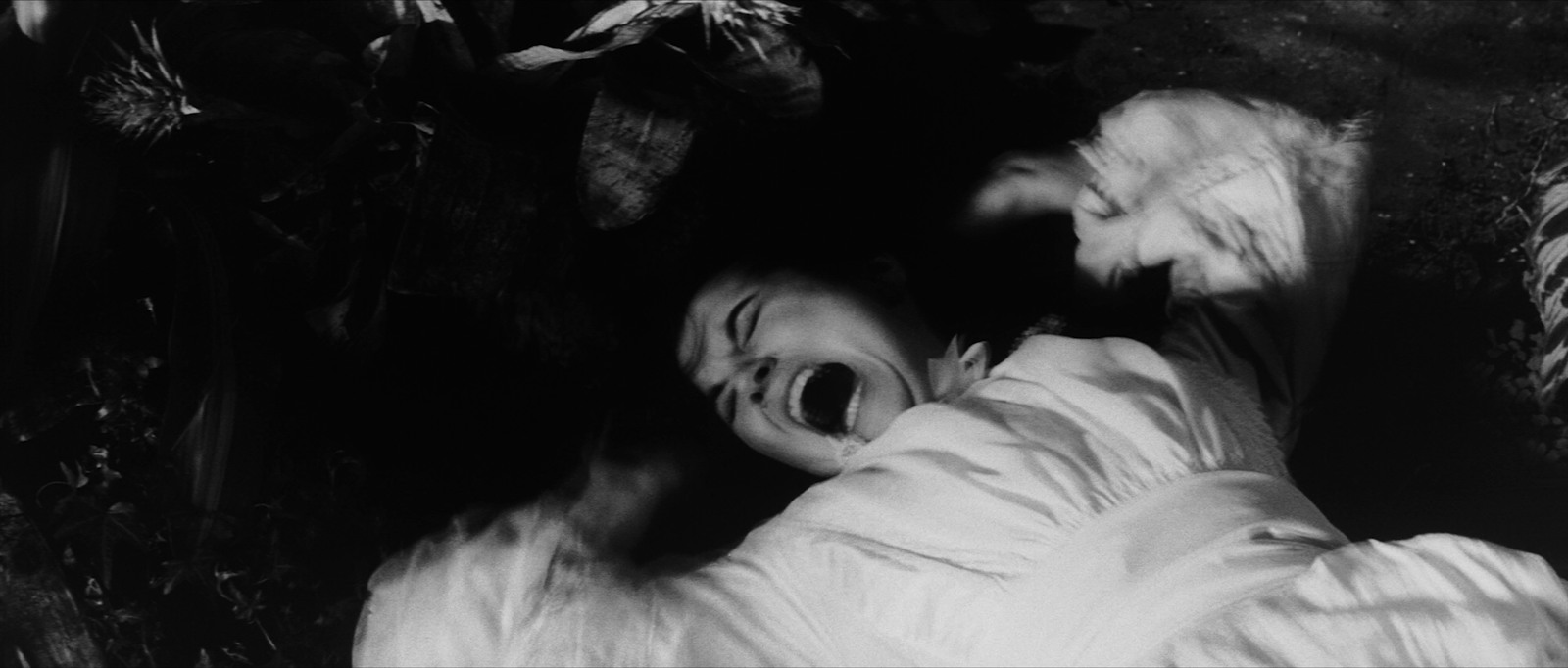
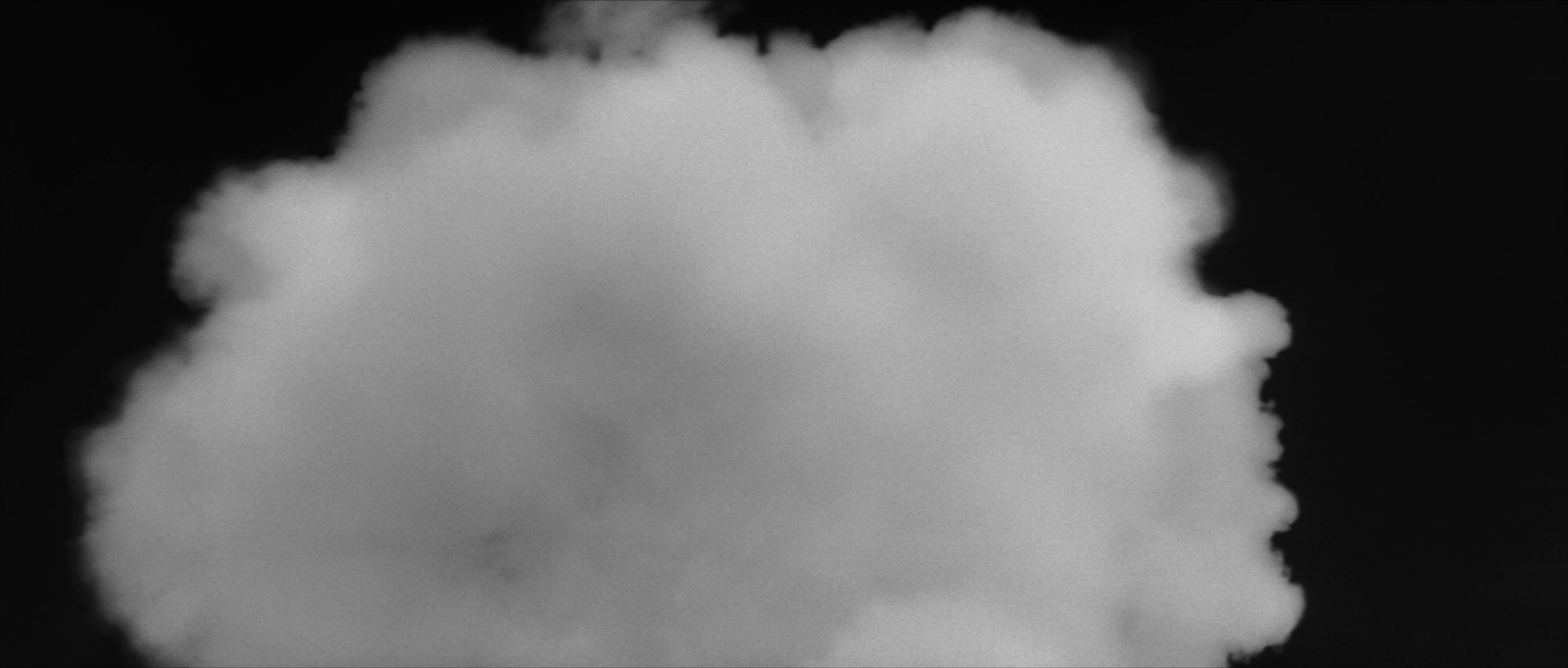
The opening moves from a still portrait into a collision of faces and animals. Overlaps, violent motion, black intervals and smoke make a disturbing origin image before the story begins. It belongs to the film’s imaginative construction, not to the medical explanation of Merrick’s condition.
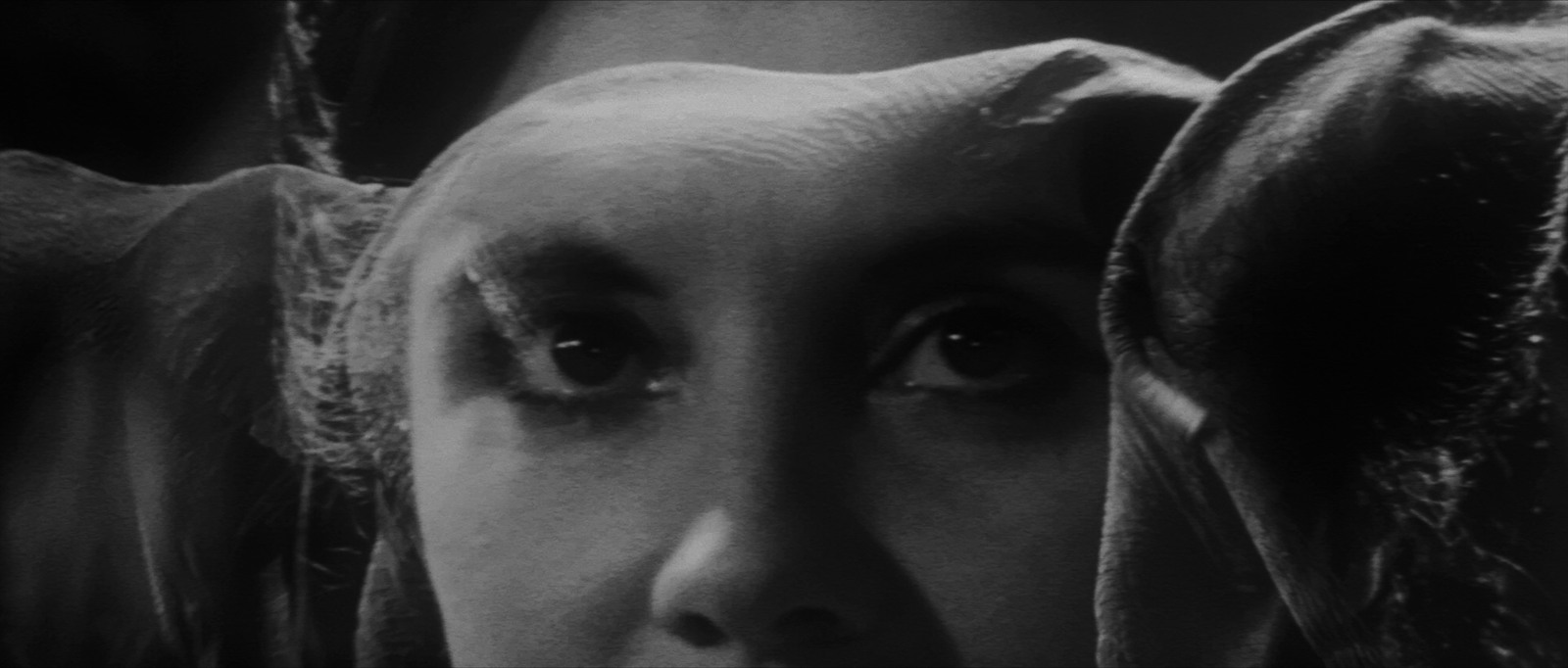
Open the five-image opening-effects gallery
A different kind of overlap
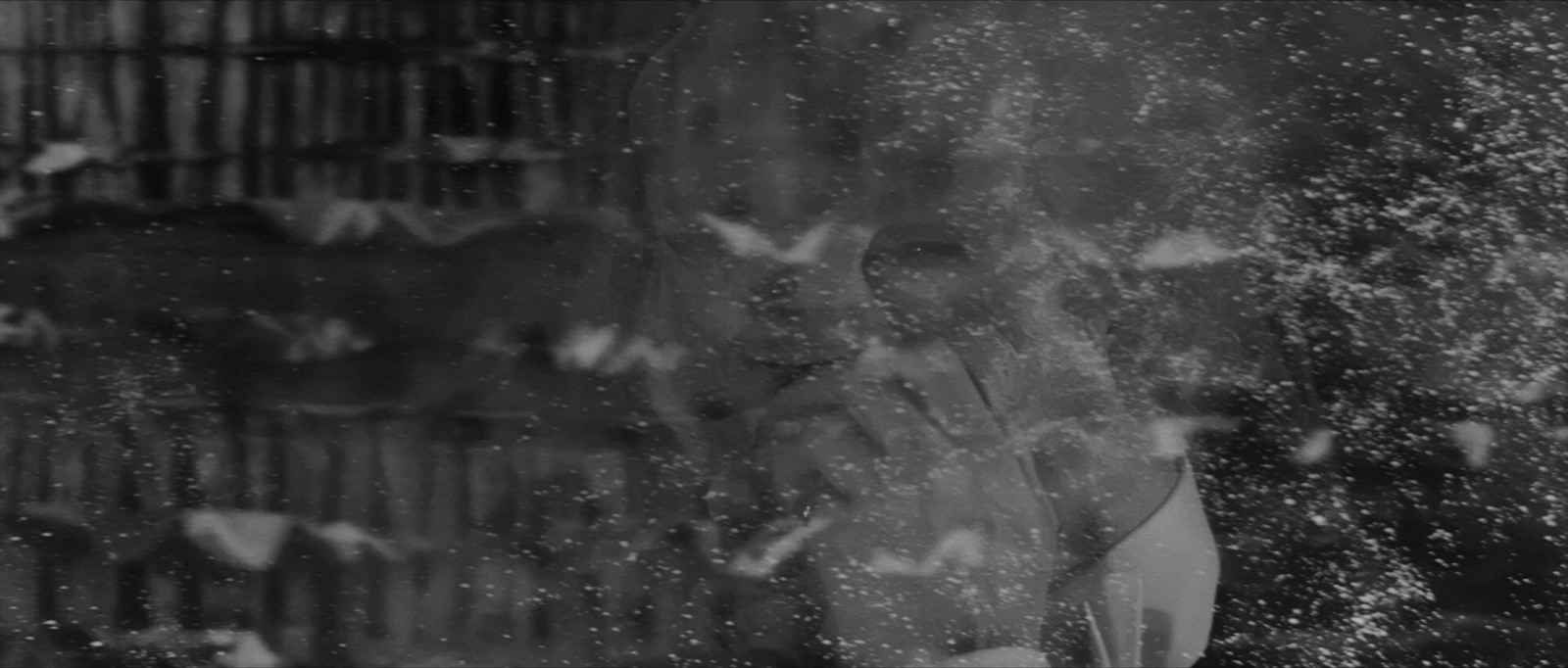
At the theatre, scenery and Merrick’s face share the image. The overlap brings the performance into the spectator’s experience. Where the opening produces alarm, this passage makes room for wonder. The comparison concerns the visible effect of the images; it does not assume that every overlap was produced by the same photographic process.
Return to the opening → · Follow the theatre sequence → · Read the editing study →
Voices from the production
What the makers remember
Contemporary interviews, later recollections and archival documents illuminate different parts of the film. These studies bring the useful details back to the scenes, the sound and the surviving images.
The effort inside the voice
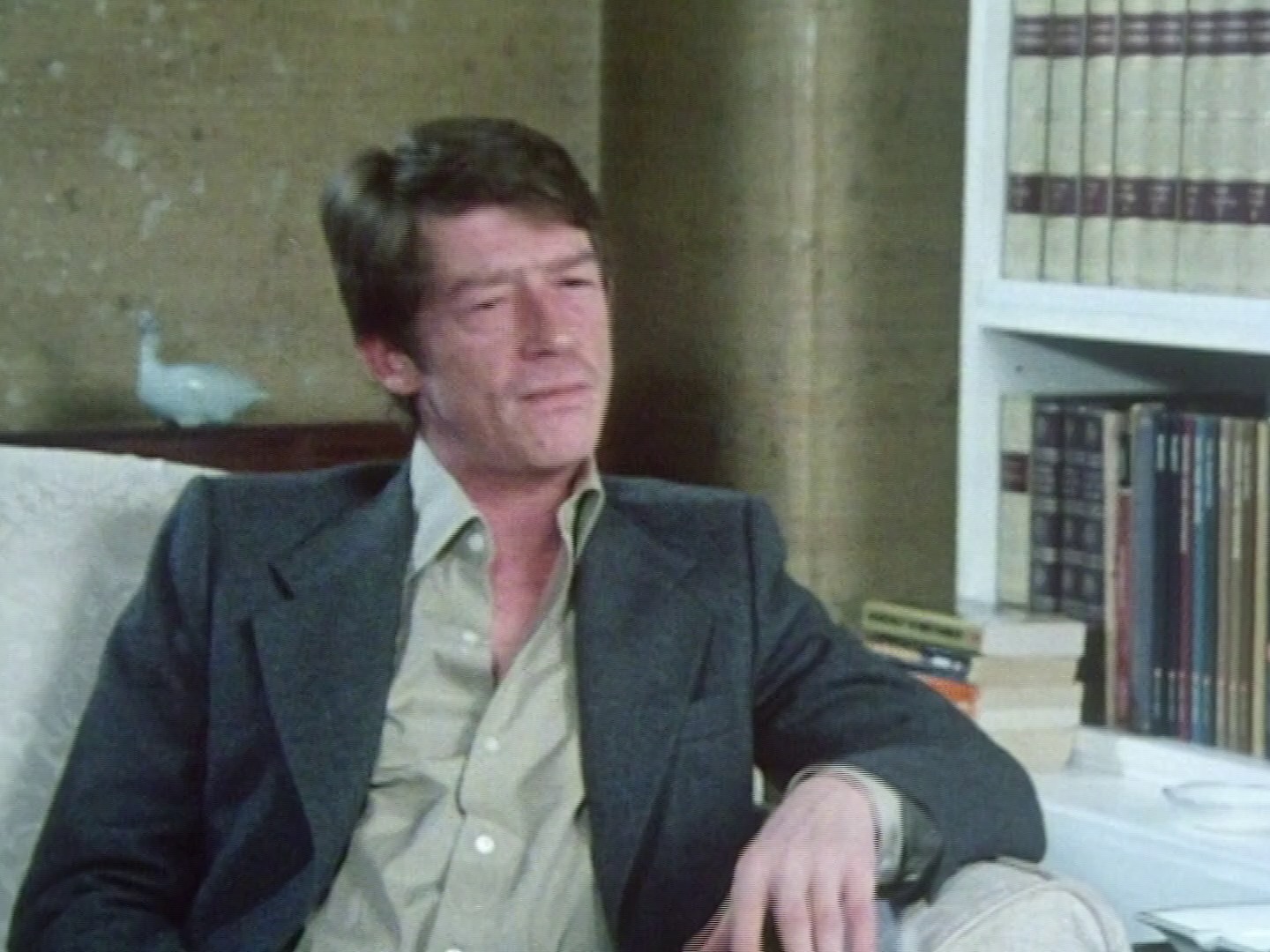
Hurt’s voice is an acted construction, shaped by the screenplay and the prosthetics. In his 1980 Clapperboard interview he describes the educated vocal character as an instinctive choice. In Skintricks, Tucker explains why the teeth were tried in wax before the head cast: Hurt needed to know how they would affect speech. The physical apparatus and the performance developed together.
Jonathan Sanger later recalls resisting a cleaner post-dubbed voice because it would remove the effort of speaking. Read beside Hurt’s account, this makes the film’s increasing access to Merrick a matter of listening as well as looking. The first hesitant phrases, the fluent recitation and the station declaration change how other people hear him. They do not require an imaginary recovery of Joseph Merrick’s historical voice.
Sound & music →Waiting to show Merrick
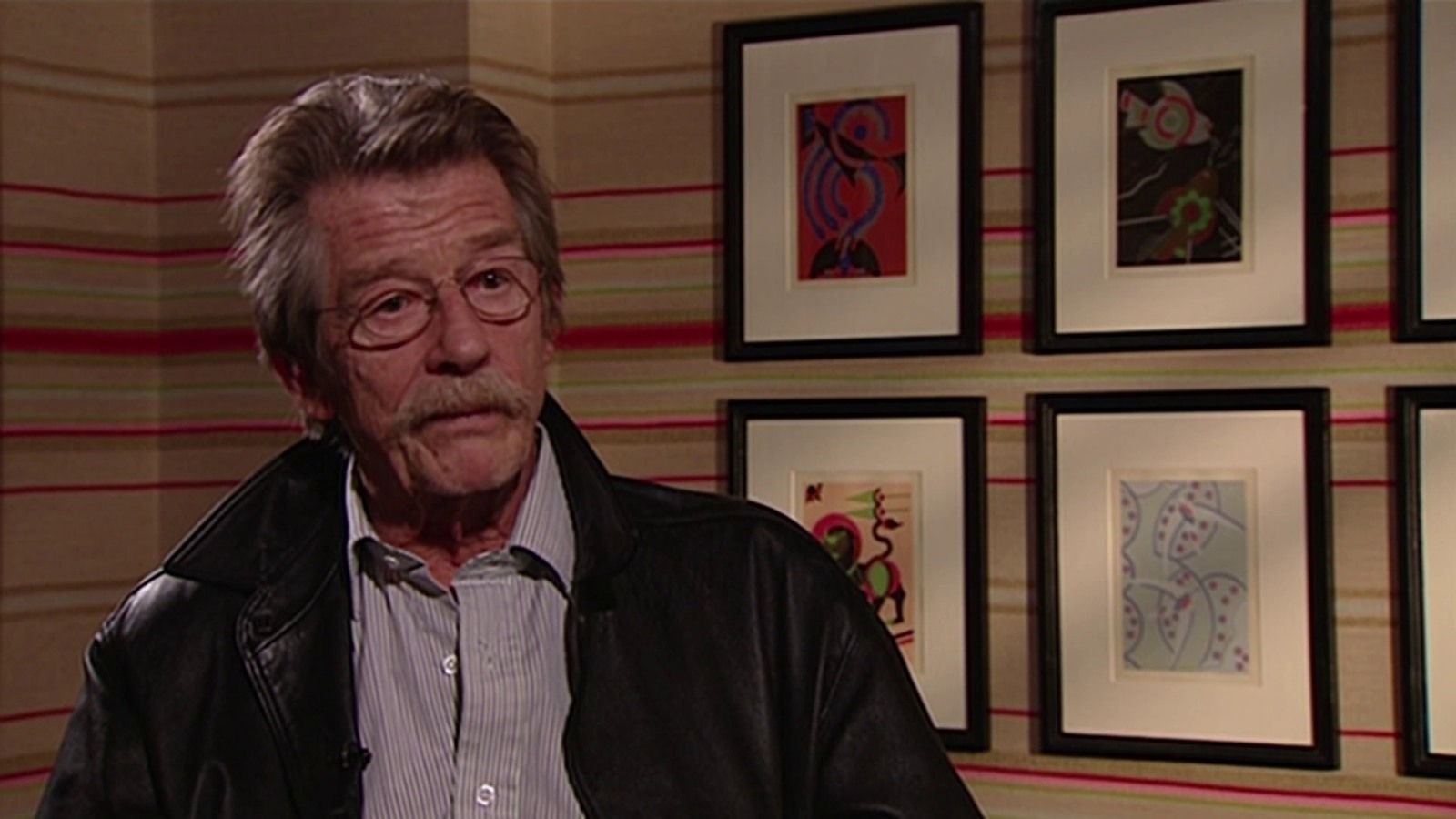
In his retrospective interview, Hurt recalls wanting the full appearance withheld for longer, even encouraging Tucker to take more time. He connects the strength of the part to a precise screenplay and to rehearsal. His account makes the delayed reveal a dramatic decision in which the actor had an active interest, rather than simply a by-product of difficult make-up.
The Terrible Elephant Man Revealed supplies several perspectives on that decision. Hurt remembers arguing for concealment, Brooks recalls proposing glimpses rather than an immediate full view, and Sanger connects the early shooting schedule to the unfinished make-up. These accounts can coexist: a production difficulty, an actor’s preference and a producer’s suggestion helped shape the same dramatic effect. None establishes a single inventor of the finished sequence.
The contemporary Clapperboard programme follows the same principle: its presenter explains that the producers declined to release full make-up scenes detached from their dramatic setting. The publicity interview therefore preserves a discovery the film asks its own audience to make. That restraint is especially revealing beside the trailer’s concentration on silhouettes, the hood and isolated close details.
Looking & being seen →A still photograph has its own author
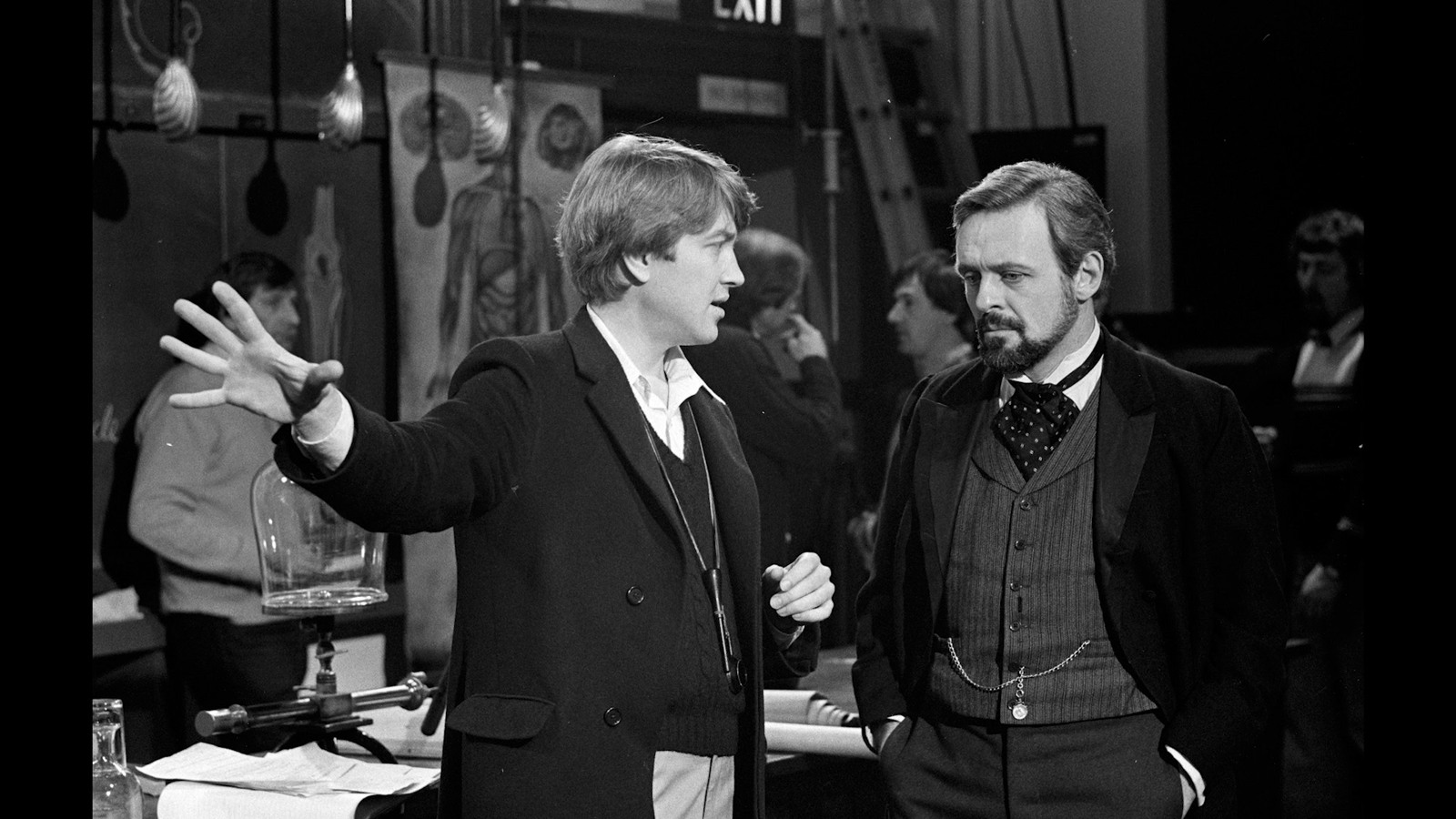
Frank Connor describes a unit stills photographer’s work as a negotiation with the scene. He learned the screenplay, watched the actors, stayed out of their eyelines and sometimes made a photograph after a take. His aim was an image that belonged to the film’s world, even when its framing was made independently of the motion-picture camera.
For The Elephant Man, he recalls an agreement to shoot the publicity stills entirely in black and white. This differed from the routine use of separate colour and monochrome cameras for other productions. His recollections give the dossier’s museum objects another dimension: a production photograph, a publicity layout and a frame from the finished film may show the same moment while recording different acts of image-making.
Museum objects →The hospital record and the film’s order
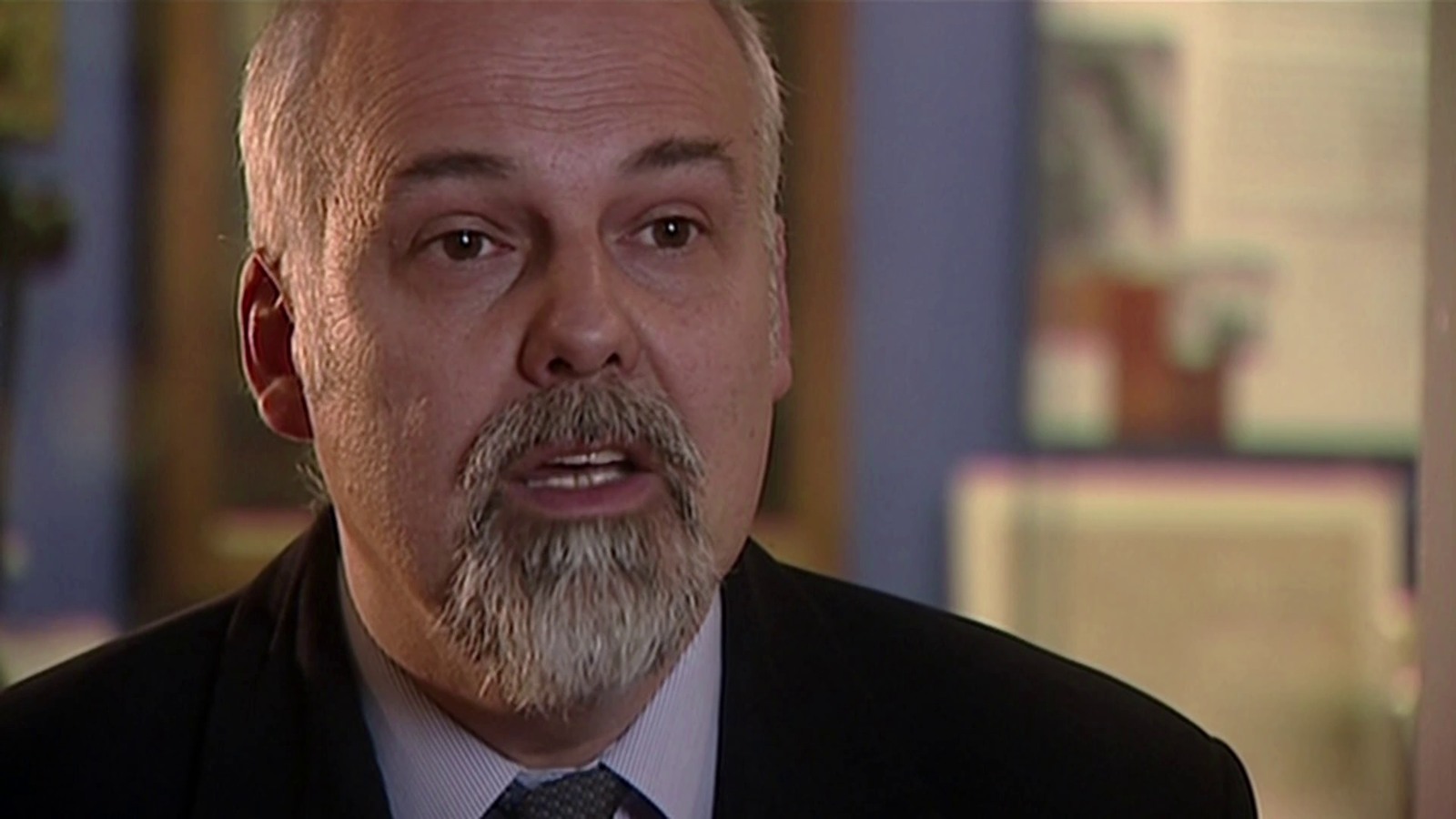
Joseph Merrick: The Real Elephant Man lets archivist Jonathan Evans work through hospital papers, letters, photographs and surviving objects. One striking example is Treves’s manuscript, in which Joseph is altered to John. The document establishes the change on the page; Evans’s suggestion about why Treves made it remains his interpretation.
The chronology is just as useful. Evans separates Treves’s early examination of Merrick in 1884 from his return to London and admission to the hospital in 1886. The film rearranges that history into a later abduction and rescue, after Merrick has already found security and friendship. The difference reveals the screenplay’s design: the hospital can be a refuge without permanently protecting him from the people who turn looking into possession.
The documentary also restores names and institutional labour around the celebrated doctor, including nurse Emma Ireland and matron Eva Luckes. Its records of the final day complicate the film’s intimate bedtime ending. The film scene belongs to the dramatic portrait; the records deserve to be read on their own terms.
Joseph & John Merrick →Finding Victorian London in a building
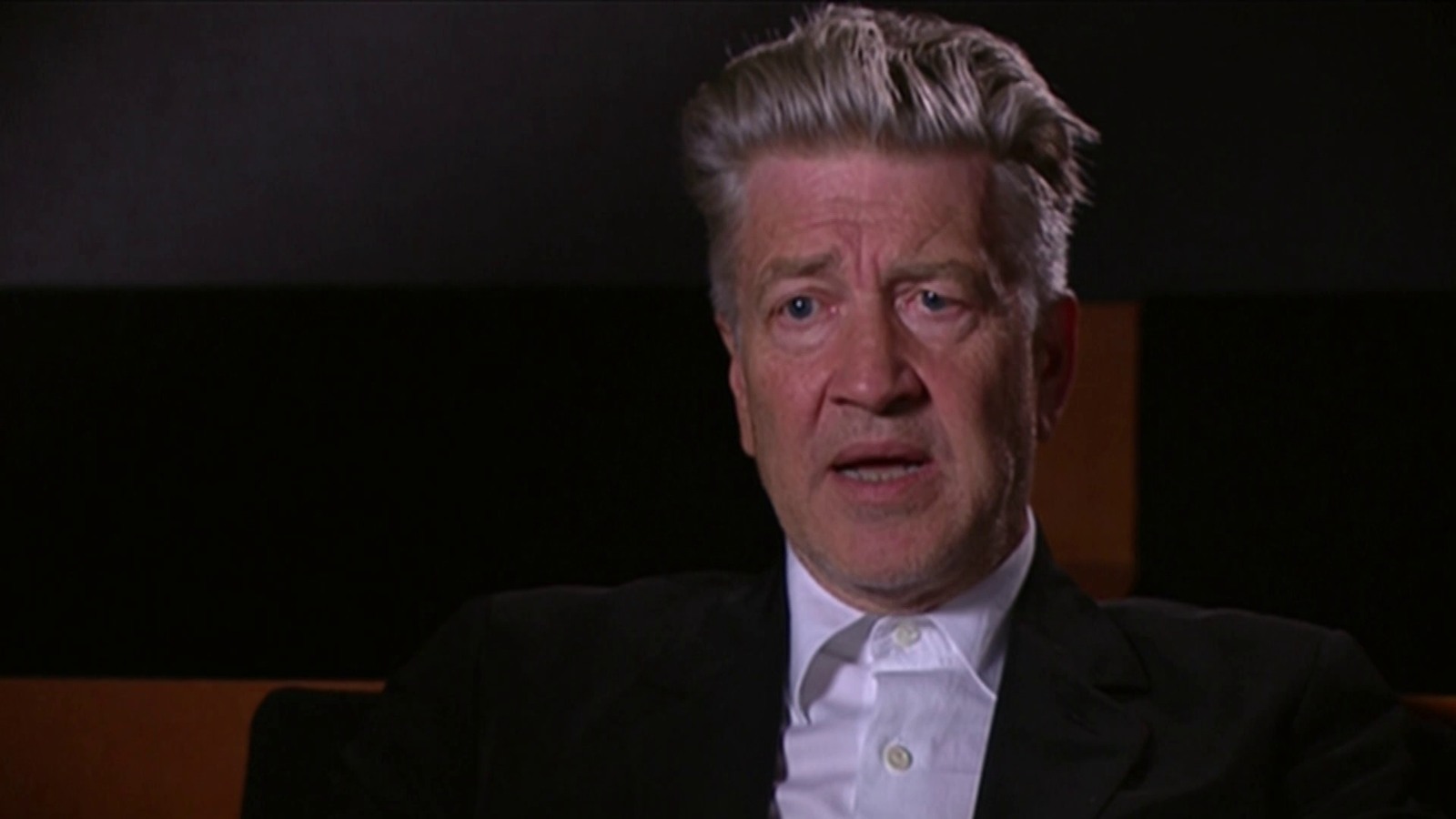
Lynch’s retrospective interview describes looking at photographs and locations with production designer Stuart Craig, then finding an imaginative way into the period inside a derelict hospital. Empty wards, broken windows and pigeons made the building more than an architectural reference. Its atmosphere gave him a tangible feeling for the world he was trying to make.
His 1981 AFI discussion gives the practical counterpart: locations had to be visited, repaired and prepared for filming, while plans made before seeing them could become useless. The conversation with Freddie Francis continued as scenes approached. Read together, the two accounts show research becoming staging—an encountered space changes the possible image.
London locations →A tear, a fade and the music at the end
The 1981 AFI discussion preserves specific memories of decisions that can otherwise become abstract accounts of Lynch’s style. He recalls Hopkins’s tear arriving at the end of a slow camera move, without being prescribed in the screenplay. He describes the black intervals around the opening elephants as deliberate pauses, and the theatre montage as a passage he and Anne V. Coates enjoyed shaping together. Precision and the unexpected are present in the same account.
For the ending, Lynch recalls hearing Barber’s Adagio for Strings on the radio and asking for the recording to begin as Merrick returned to the cathedral model. He says that placement remained. The recollection adds a director’s account to the existing editing and music evidence. His description of work with Alan Splet is similarly practical: they tried sounds against images, responded to the mood and kept searching. It is an account of a collaborative process, not a catalogue of isolated effects.
Sound & music →Making Bytes more than a single-note villain
Lynch tells the AFI audience that Freddie Jones initially declined Bytes because the part seemed flat. They worked on it together, developing the mixture of possessiveness, dependence and resentment that Jones could play. This does not excuse Bytes’s violence. It makes the relationship more disturbing: his claim of ownership is bound to a fear that the person he exploits can exist without him.
The testimony offers a precise way back into the performance. Compare Bytes’s businesslike negotiations with Treves, his insistence on a partnership and his deterioration after losing control. The written role changed through an actor’s objection, and the resulting character carries contradictory feelings into the finished scenes.
Making the film →Two voices in Room to Dream
The audiobook chapter “The Young American” changes its form midway through. Kristine McKenna’s biographical account assembles other people’s recollections; Lynch then takes up the story in his own voice. They often describe the same events from different positions. The failed make-up, the discovery of the hospital and Brooks’s support recur, but the emphasis shifts from a production’s history to what it felt like to live through it.
Lynch’s account of an unfinished screening is particularly revealing. He remembers working on sound with Alan Splet when colleagues asked to see the film, then receiving a discouraging response before the mix was complete. His story makes sound part of the film’s emotional construction, not a final decorative layer. It also warns against treating an early screening and the finished work as interchangeable evidence.
Sound & music →The Criterion interview collection
Follow the documentary witnesses
The collection brings together testimony recorded at different distances from the production. Open a programme for its subjects and useful passages. The Criterion edition page identifies the published supplements.
Room to Dream: “The Young American” 70 minutes · 2018 audiobook
Kristine McKenna’s biographical narrative is followed by Lynch’s own recollections of the project. The chapter connects Ronnie Rocket, the screenplay, Brooks, the cast, make-up, locations, sound and the film’s release. The two voices provide complementary accounts rather than a single contemporaneous production record.
John Hurt: retrospective interview 20 minutes
Hurt discusses the delayed reveal, the screenplay, rehearsal, his fellow actors and the demands of the make-up. His recollections of individual scenes can be compared with his contemporary Clapperboard appearance.
Frank Connor: photographing the production 25 minutes
The unit stills photographer distinguishes his own work from the film camera’s coverage. His account of black-and-white publicity, wider compositions, emotional scenes and crew cooperation connects the production history to the surviving photographs.
Jonathan Sanger in conversation 24 minutes · 2018
Sanger’s discussion with Ian Haydn-Smith follows the screenplay’s discovery, the meeting with Brooks and Lynch, the make-up crisis and the choice to retain the difficulty of Merrick’s speech. The programme’s closing credit identifies a Studiocanal production from 2018.
David Lynch: retrospective interview 25 minutes
Lynch recalls the transition from Eraserhead, Brooks’s protection, writing with Christopher De Vore and Eric Bergren, working with Freddie Francis and Stuart Craig, the failed make-up experiment and finding the atmosphere of Victorian London.
David Lynch at the American Film Institute 51 minutes · 1981
An audio discussion close to the film’s release, covering story structure, texture, photography, rehearsal, the work with Anne V. Coates and Alan Splet, and the selection of Barber’s music. Questions also reach back to Eraserhead and forward to Dune.
The Terrible Elephant Man Revealed 30 minutes · 2001
Brooks, Sanger, Hurt, Tucker and Francis revisit the production. Their memories cover financing, casting, monochrome photography and the make-up crisis. The account of withholding Merrick’s appearance is especially useful because different contributors emphasize different creative and practical reasons.
Joseph Merrick: The Real Elephant Man 20 minutes · 2005
Jonathan Evans uses the Royal London Hospital’s archival record to discuss Merrick’s name, livelihood, admission, friendships, objects and death. Its chronology is a useful counterpoint to the film’s dramatic construction.
John Hurt on Clapperboard 12 minutes · 1980
A contemporary interview on accepting the role, hours in make-up, the invented voice and performance through the screenplay. Its carefully selected film excerpts preserve the full reveal.
Skintricks: John Hurt and Christopher Tucker 14 minutes
Hurt and Tucker discuss the sculpted pieces, fine edges, adhesive, teeth and economy of movement. A loose reassembly of the head pieces makes their relationship visible; it is distinct from a finished, glued and painted application for filming.
David Lynch with Mike Figgis 20 minutes · 2006
Recorded at the Hotel Centrum in Łódź on 28 November 2006. Painting, ideas, film production, digital cameras and directing actors form a conversation that reaches beyond The Elephant Man. Its account of small cameras and proximity to performers also informs the Inland Empire dossier.
Trailer and three radio spots 3 minutes / 1 minute
The trailer and radio copy guide the prospective audience from aversion toward sympathy, but repeatedly frame Merrick through the spectacle they promise to overcome. The trailer withholds a straightforward full-face introduction and ends by distinguishing the film from the Broadway play.
Continue with Lynch and Figgis in the Inland Empire dossier →
Begin with the person
Joseph, John and the authority of the memoir. Why a familiar name—and an apparently straightforward rescue story—need another look.
Begin with the filmmaking
Hurt and Tucker’s working partnership, followed by Coates’s account of the theatre montage. How recognition becomes something built by a whole crew.
Joseph Merrick and the film’s John Merrick
The historical person is Joseph Carey Merrick. Barts Health records his residence at The London Hospital from 1886 until his death in 1890, distinguishing accommodation there from treatment as an ordinary patient. Its archive guide also cautions that clinical collections largely reflect institutional perspectives. These are useful boundaries for reading a film organized around a surgeon’s encounter with him.
The name John is already present in Treves’s 1923 memoir. Howell and Ford’s historical study makes the problem more precise: Treves had used it in earlier medical writing too, while surviving examples of Merrick’s handwriting use Joseph. Their publisher’s sample does not establish why Treves made the error. It does show why simply blaming a screenwriter—or a single late lapse of memory—would be misleading.
The witness is also a storyteller
Treves’s account moves from repulsion to affection. It describes fundraising, private rooms, books, visitors and Merrick’s wish to escape intrusive spectators. But its language repeatedly makes him childlike. Compassion and unequal authority occupy the same narrative. The memoir is evidence of how Treves remembered and represented Merrick, not transparent access to Merrick’s interior life.
Howell and Ford test that narrative against other records. On the exhibition shop, for example, they set Treves’s recollection beside Tom Norman’s response and London directories. Their reconstruction challenges his description of a vacant grocer’s premises. The correction matters because the memorable setting of a story can become accepted history through repetition.
The central research question is who gets to describe Merrick, under what conditions, and with how much room left for him to answer.
That question changes the way a dossier should work. Historical records, a character written for the screen and an actor’s performance belong beside one another, with their differences visible. A generous portrait can still simplify a life. A critical reading can recognize that simplification without dismissing the film’s emotional force.
From Eraserhead to a British production
The project was not a film version of Bernard Pomerance’s stage play. AFI’s research history traces a separately developed screenplay by Christopher De Vore and Eric Bergren, drawing on Ashley Montagu’s book, to producer Jonathan Sanger and Mel Brooks. AFI also records the title dispute and the film’s disclaimer separating it from the play. Its account cites 1979 trade reporting; the underlying press pages remain to be inspected.
In his 2007 BAFTA conversation, Lynch remembered Stuart Cornfeld’s attempts to find backing for Ronnie Rocket, then their discussion of existing scripts. The Elephant Man immediately seized his imagination. He credited Anne Bancroft with helping the project reach Brooks, and Brooks with supporting him when his own makeup experiments failed. Sanger’s recruitment of Christopher Tucker allowed Lynch to concentrate on directing. This is Lynch’s later account, not a dated production diary.
That transition is more revealing than a simple contrast between an independent debut and an industry film. The research points to a director working through other people’s expertise. Freddie Francis remembered Lynch knowing what he wanted and Francis helping him achieve it. That recollection gives the collaboration a practical shape: visual ambition translated through an experienced cinematographer.
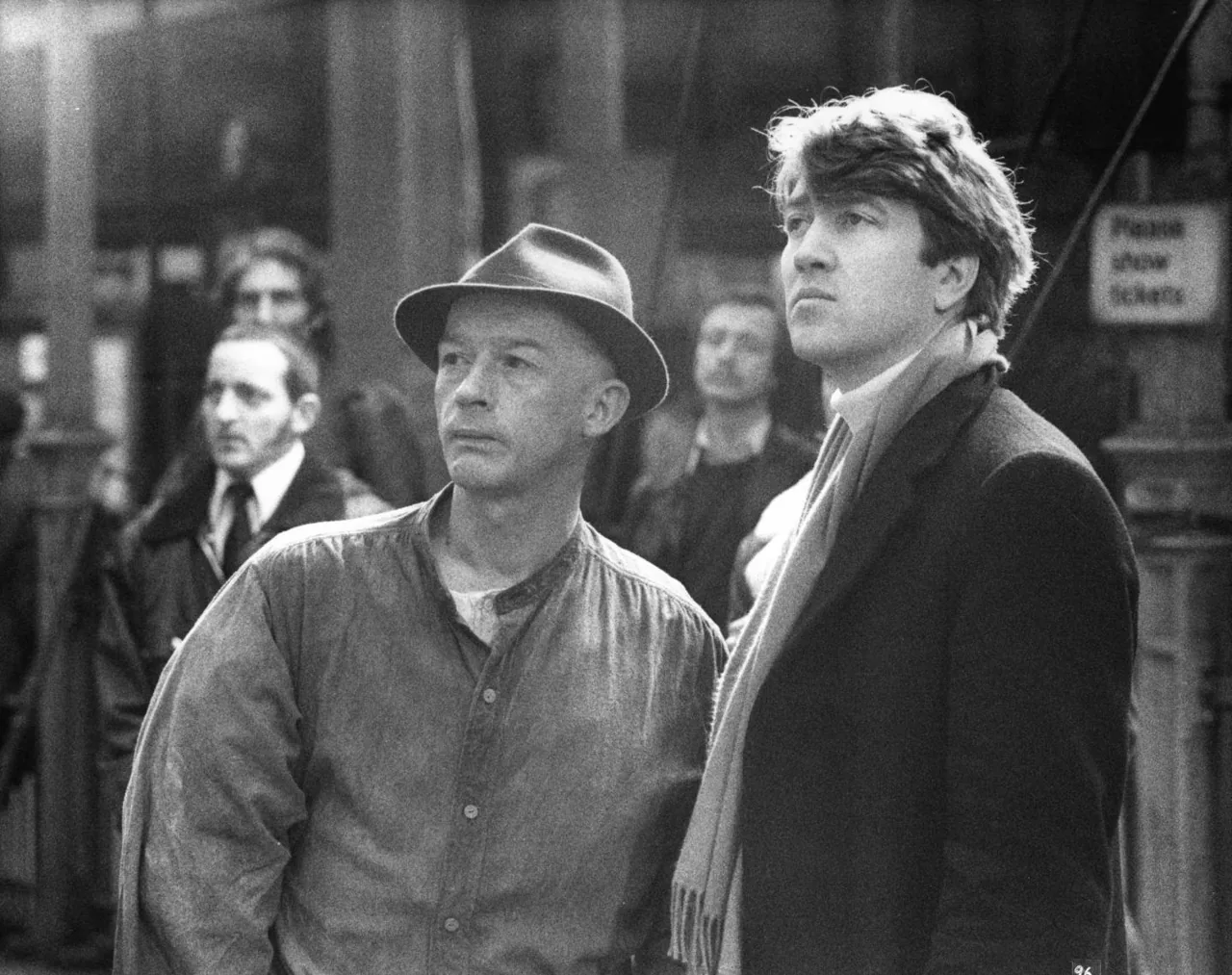
| Area | Collaborators |
|---|---|
| Writing | Christopher De Vore, Eric Bergren, David Lynch |
| Picture and space | Freddie Francis, photography; Anne V. Coates, editing; Stuart Craig, production design; Patricia Norris, costumes |
| Merrick’s makeup | Christopher Tucker, design and creation; Wally Schneiderman, application |
| Listening | John Morris, music; Alan Splet and David Lynch, sound design |
Memoir, screenplay and the limits of a comparison
The circulating screenplay names De Vore, Bergren and Lynch. This reformatted PDF has no verified draft date or provenance. Its passages cannot establish individual authorship or shooting-script status.
| Passage | What is available | What it does not establish |
|---|---|---|
| The opening | The PDF labels its opening an abstract dream, linking a mother’s portrait and elephants. PDF p. 1. | A cinematic image is not a medical explanation or evidence of an event in Merrick’s mother’s life. |
| The theatre | Treves describes a pantomime visit with Merrick screened from the audience. The circulating text instead specifies Henry V and a public ovation. Memoir pp. 30–32; PDF pp. 143–146. | The undated text cannot establish when, why or by whom a change was made. Coates’s account adds a separate production memory. |
| The ending | Treves’s explanation of the fatal attempt to sleep lying down is explicitly conjectural. Memoir pp. 35–37. | A dramatic reading of the film’s ending cannot establish the historical Merrick’s intention. |
The theatre comparison changes the question from “Was he accepted?” to “What kind of acceptance is being staged?” Privacy protects a spectator’s experience; an ovation turns the spectator into the spectacle. Neither is an automatically complete account of dignity. The contrast gives us a productive line of enquiry without pretending an undated document proves the film’s revision history.
The PDF names St. Phillips (pp. 78, 147–148). Keep that textual description separate from building and museum identifications. Follow the three different church records →
Hurt, Tucker and the work of being seen
Speaking to Susan Page in 2011, Hurt recalled that Lynch’s first mask prevented movement. He described developing the replacement with Tucker, a long application process and a schedule of makeup days alternating with rehearsals in ordinary clothes. His account names Francis, Lynch and the soundman as part of those rehearsals. This connects the performance to a working method, rather than treating the prosthetics as an isolated visual trick.
In the BFI interview’s caption transcript, Tucker describes using photographs and casts while recognizing the limitations of post-mortem material. He explains a layered construction and alterations designed to work with Hurt’s mouth and expression. His aim was for viewers to attend to the actor rather than hunt for joins. It is testimony about adaptation for performance, not a claim that the makeup was an exact medical reconstruction.
A discrepancy worth keeping: Hurt’s transcript gives 22 prosthetic pieces; Tucker’s captions and BFI’s description refer to about 15 sections. Different counting boundaries are possible, but not established. We retain both accounts and leave the exact inventory open rather than choosing the most repeated number.
Watch Tucker’s BFI interview from the research-and-construction passage ↗
This is a performance created through constraints. A restricted mouth, the time required to prepare it and the opportunity to rehearse without it affect what an actor can do. The distinction between hiding a join and enabling an expression is crucial. One makes an effect less conspicuous; the other makes an encounter possible.
Recognition is an ensemble task
Alongside Hurt’s Merrick and Hopkins’s Treves, the cast includes Anne Bancroft as Mrs. Kendal, John Gielgud as Carr Gomm, Wendy Hiller as Mothershead, Freddie Jones as Bytes, Michael Elphick as the night porter and Lesley Dunlop as Nora.
For close viewing, the useful unit is the encounter: who begins it, who speaks for whom, where attention moves, and whether Merrick can end it. A listener’s response can make speech feel heard or merely examined. Following the supporting performances prevents a star-centered account from reducing everyone else to a test that Merrick must pass.
Black and white as a production decision
American Cinematographer’s Francis profile reports that Brooks secured approval for anamorphic black-and-white photography. It identifies Panavision, Kodak Plus-X stock and extensive laboratory testing, with Rank selected to process the film. The account presents monochrome as a choice requiring materials and infrastructure, not merely a period look applied afterwards.
The same profile explains Lynch’s admiration for Francis’s work on Sons and Lovers. The connection is useful, but it does not make the films interchangeable. Nor should Francis’s famous accounts of techniques used on The Innocents, discussed elsewhere in that article, be imported into The Elephant Man as if they documented its lighting plan.
Reading the header image: the silhouette is presented on a screen while bodies gather beside it. An image is being made inside the image. The arrangement lets a viewer consider the apparatus of demonstration—the screen, the lecturer, the audience—as well as its subject. That is an observation about this reproduced still; the timing of the reveal, its reverse angles and the accompanying sound require the full sequence.
Contrast and texture shape the film’s black-and-white world. The theatrical image, early home-video transfers and later restorations each belong to its presentation history.
The theatre was also made in the cutting room
Coates’s 1992 interview offers a specific account of revision. She remembered Shakespeare in the script, a change to pantomime whose reason she did not know, and filmed material that did not work as intended. She and Lynch then constructed a montage to fit music already recorded by Morris. She describes enlarging and superimposing glittering material, combining it with Merrick watching and the reactions of his companions.
The Henry V text offers a point of comparison, not proof of the revision sequence. Coates does not identify the reason for the change.
The account makes editing an act of translation: an event is reorganized around the experience of watching it. This gives Coates’s collaboration a central place in the film’s emotional architecture.
It also gives the research a testable next step: compare the surviving text, Coates’s audio, the finished sequence and any available cutting continuity. Agreement among two recollections is not a substitute for that comparison, and a screenplay passage is not proof that everything it describes was filmed.
Music, machinery and a voice that must be heard
The credited sound design belongs to Alan Splet and Lynch; the music to John Morris. Warner Music Japan’s catalogue for CD WPCR-28637, issued in 2015, separates the theme and dramatic cues from Barber’s Adagio for Strings, listed with Previn. Its track list includes the nightmare, station and pantomime. The album is a way into the score’s organization, not a complete transcript of the film’s soundtrack.
Pym’s contemporary review places industrial machinery alongside the film’s treatment of medical progress. His account suggests a productive listening route: the city is a system of labor and power as well as an atmosphere. That remains a critical proposition to test against the sound itself.
Our listening questions: when does a machine remain attached to a visible source, and when does its sound seem to invade another space? How do room noise, pauses and a listener’s reaction affect Merrick’s speech? When does music enlarge his experience, and when might it guide the audience’s response too firmly? These questions connect sound to the film’s social relationships instead of treating it as a list of eerie effects.
We have checked credits and the label’s track list, not auditioned the album or measured a release mix. A cue sheet and an identified-edition listening log are the next evidence required for cue placement, source-recording credits and comparisons between original and later sound presentations.
A constructed London and a revealing model
Scovell’s BFI location study identifies sites around Pickfords Wharf, Winchester Square, the Royal Mint, Liverpool Street and Wapping. It provides comparative images of a city assembled through selected views. These are published location identifications, not our own survey or a reconstruction from call sheets.
For a production-design reading, the distinction is between a place’s historical address, the location used by the filmmakers and the space the finished sequence asks us to imagine. Streets can become neighbors through a cut. A hospital room can be understood through a window, a door and what a character can see from them. Geographic continuity and dramatic continuity are different research problems.
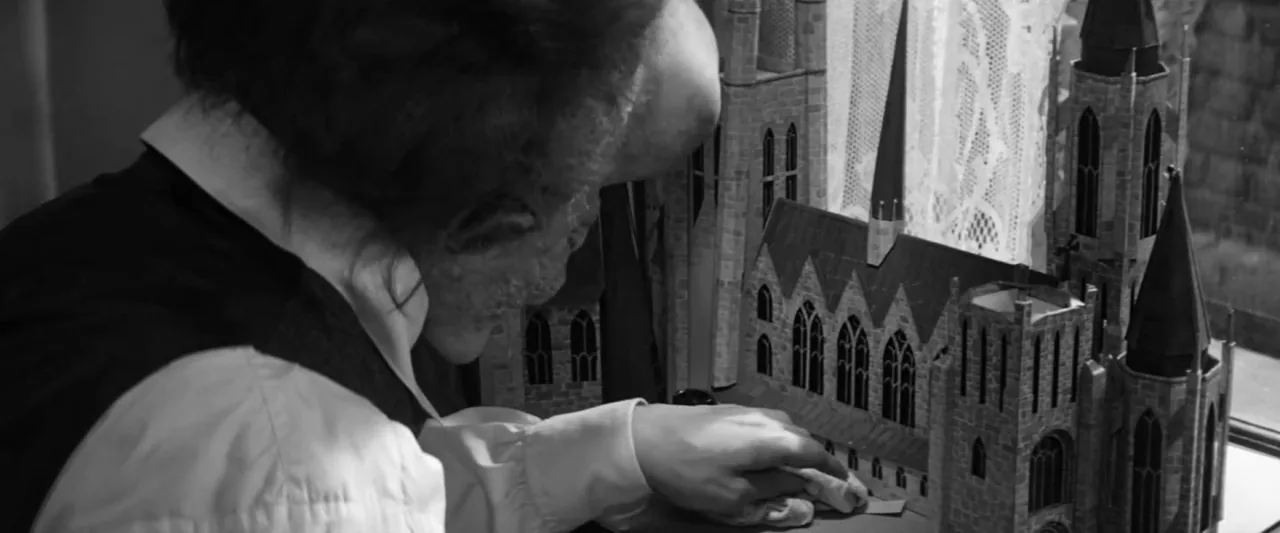
The film’s building and prop
Scovell identifies the church shown outside as St Augustine with St Philip’s, Whitechapel. The prop seen above belongs to the film’s constructed world.
The surviving historical object
Barts catalogues Merrick’s card model as Mainz Cathedral, RLHINV/889. It also lists his hat and veil as RLHINV/598, and a letter facsimile as RLHINV/506. Catalogue descriptions do not prove use by the production.
Reading the still: model-making gives Merrick an activity rather than simply an appearance. His hand and the miniature architecture ask us to attend to something he produces. The window makes that activity spatial: an interior life meets a world beyond the room. Identifying the prop’s makers, materials and historical references would deepen this reading; it cannot be inferred from the surviving hospital object alone.
A public film, and a continuing argument
- Production planningAFI records the announced 15 October start and twelve-week production schedule.
- US releaseAFI’s release record. A territory-specific date; it does not date every international poster or handbill.
- Critical encounterPym’s Sight and Sound review considers the film’s emotional appeal and the uneasy relationship between care and display.
- Industry recognitionEight Academy nominations; BAFTA wins for film, John Hurt’s performance and Stuart Craig’s production design.
Pym praises Hurt’s restraint while questioning the innocence of respectable spectators. In his reading, fashionable visitors and abusive crowds belong within the same problem of looking. He treats the friendship as moving without making every social encounter benevolent. This is one contemporary response, not a summary of all reception.
The enduring tension is whether a film can expose spectatorship’s cruelty while asking us to look. Sympathy does not resolve that tension by itself. A more demanding test is whether the person being watched is allowed intelligence, privacy, labor, desire and contradictions beyond the audience’s need to feel compassionate. This dossier therefore keeps the historical archive beside the craft history: both can challenge an easy version of the story.
The Oscar nominations covered picture, direction, actor, adapted screenplay, art direction, costumes, editing and original score. They document recognition across departments. They do not measure historical accuracy or settle the film’s ethics. Publicity, audience response and the longer international reception need their own records; they should not be reconstructed from awards alone.
The film in print and on disc
The museum connects a Japanese theatrical handbill with a North American LaserDisc. The handbill carries a 1980 catalogue date; the film opened in Japan in May 1981. Their artwork and packaging reveal two different ways the film reached its audience.

Inspect the North American LaserDisc record → · All Elephant Man museum records →
Editions and presentation
Criterion lists a director-approved 4K restoration, stereo sound and supplements.
The film’s edition history runs from early home-video transfers to later restorations. Runtime, framing, soundtrack and supplements give each presentation a particular identity. The museum’s LaserDisc record connects that history to its physical packaging.
The two sister sites, Rare Prints and Posters and Rare VHS and LaserDiscs, provide acquisition routes through the museum records. Lyncharium’s role is to preserve the object’s identity, context and open questions whether or not a copy is currently for sale.
Explore further
Follow the sources below, explore the museum collection, or continue through the Reading Room. New archival discoveries and contributions enrich the record of Lynch’s work.
Sources and further reading
- EM-001 · Criterion Collection: The Elephant Man ↗Publisher credits, specifications, still and edition catalogue inspected.
- EM-002 · Barts Health: Disability history research guide ↗Version 0.2, February 2022; PDF pp. 1–2, text and rendered pages. Archive descriptions, not physical inspection.
- EM-003 · Frederick Treves: The Elephant Man and Other Reminiscences ↗Cassell, 1923, chapter I, especially printed pp. 12–23, 30–37. Gutenberg transcription consulted; later memoir, not contemporary case notes.
- EM-004 · Michael Howell and Peter Ford: The True History of the Elephant Man ↗Publisher sample visually inspected: printed pp. 1–2 and 5–9 (PDF pp. 3–4, 7–11).
- EM-005 · AFI Catalog: The Elephant Man ↗History, credits and release record inspected.
- EM-006 · David Lynch: BAFTA David Lean Lecture, 2007 ↗Transcript, PDF pp. 2–3; relevant page rendered. Retrospective conversation with Jason Barlow.
- EM-007 · The Elephant Man: circulating screenplay text ↗150-page PDF; opening/title, model and theatre passages inspected, especially PDF pp. 1, 78, 143–150. Undated reformatting. PDF page numbers, not production-script pagination.
- EM-008 · John Hurt with Susan Page, The Diane Rehm Show ↗1 December 2011; published transcript, 11:20:56–11:23:42 broadcast-clock labels. Audio not independently audited.
- EM-009 · Christopher Tucker on creating The Elephant Man — BFI ↗BFI page dated 2 December 2013. Linked video’s auto-caption transcript consulted, especially 03:43–08:45. Caption readings remain subject to an audio check.
- EM-010 · Anne V. Coates: British Entertainment History Project interview 251 ↗Roy Fowler interview; relevant session 15 July 1992. Transcript, tracks 9–10, pp. 330–332; theatre account at track 10, 00:00–02:25. Transcript inspected, audio not audited.
- EM-011 · Cinematic Glory: Freddie Francis, BSC — American Cinematographer ↗1998 career profile, web presentation dated 27 August 2019; Elephant Man passages inspected. Trade account and recollection, not laboratory records.
- EM-012 · Freddie Francis: British Entertainment History Project interview 308 ↗Interview metadata lists 24 November 1993 and 6 June 1994. Elephant Man exchange in transcript inspected; audio not audited.
- EM-013 · Adam Scovell: The Elephant Man locations — BFI ↗2 January 2026. Location comparisons and images inspected; no independent site survey or call-sheet check.
- EM-014 · John Morris: The Elephant Man — Warner Music Japan ↗Label catalogue and eleven-track listing inspected. CD WPCR-28637, issued 19 August 2015. Album not auditioned; no film cue-sheet comparison.
- EM-015 · John Pym: The Elephant Man — Sight and Sound ↗Winter 1980–81 review, BFI web reprint dated 17 March 2020. Contemporary criticism; historical and medical assertions not adopted as independent fact.
- EM-016 · Academy: 1981 ceremony ↗Official nomination categories inspected. Ceremony year distinguished from film year.
- EM-017 · BAFTA: 1981 Film Awards ↗Official results inspected, including film, actor and production design.
Another doorway
Continue exploring
Films
Eraserhead — Case File 01 | Production, Sound & Museum
Explore David Lynch’s Eraserhead through production history, sound, performances, deleted scenes, archival photographs and documented research sources.
Films
The Straight Story
Explore David Lynch’s The Straight Story through Alvin’s journey, Richard Farnsworth, Freddie Francis’s photography, landscape, music and production sources.

Museum
Museum — The Objects Remain
Explore David Lynch posters, artist editions and LaserDiscs through 35 illustrated records, edition comparisons, object histories and documented research.
Image credits and sources accompany each linked guide.