Twin Peaks: Episode 7 — The Last Evening
1990 · Written by Mark Frost · Directed by Mark Frost
The first season ends with a town in simultaneous crisis. Follow the recordings, false evidence, mill fire and hotel-room cliffhanger through an illustrated finale study.
Regular Episode 7, after the pilot. Often listed as Season 1, Episode 8. Contains episode spoilers.
Explore this episode
Laura’s voice, Maddy’s image
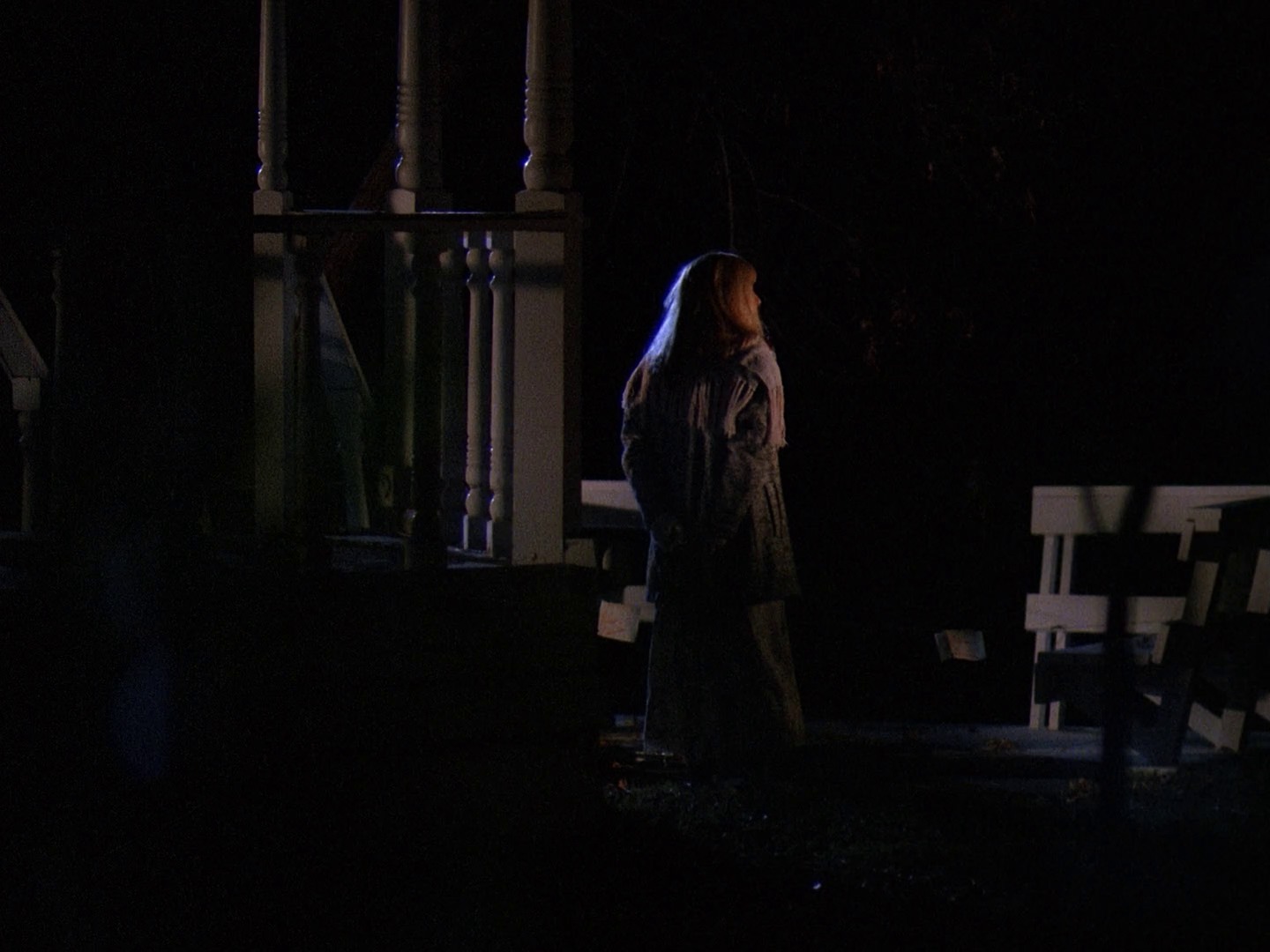
The plan begun in Episode 6 divides Laura’s apparent return across different bodies and technologies. Maddy supplies the visible likeness while Donna and James search Jacoby’s office. A deception intended to reveal a secret exposes its participants to dangers they have not anticipated.
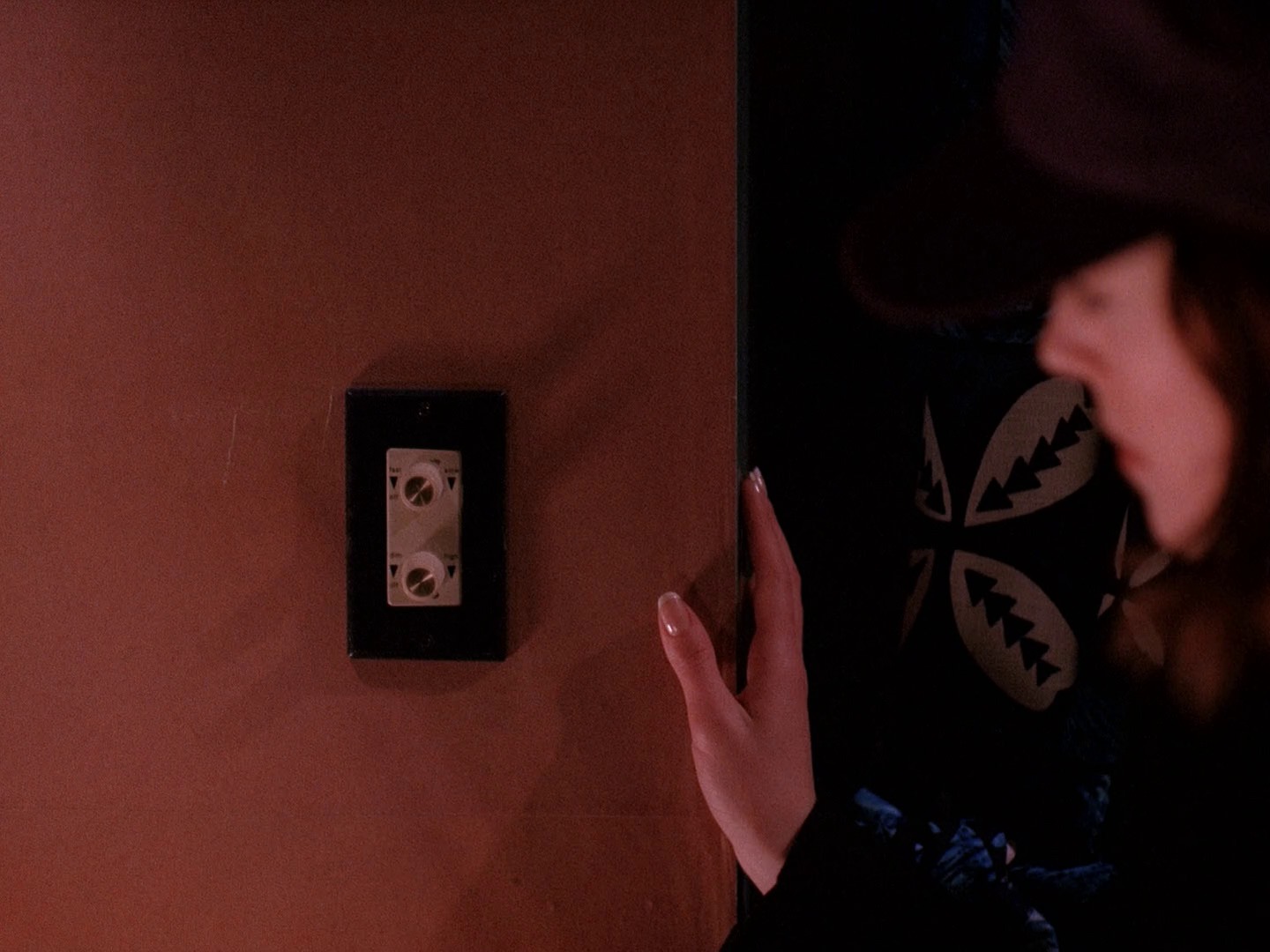
Jacoby’s collection invites the searchers to interpret personal objects as hiding places. Recovering the tape does not produce an emotionally neutral piece of evidence. Laura’s recorded voice can tell James something he does not want to hear, and the group’s access to her private speech cannot restore their control over its meaning.
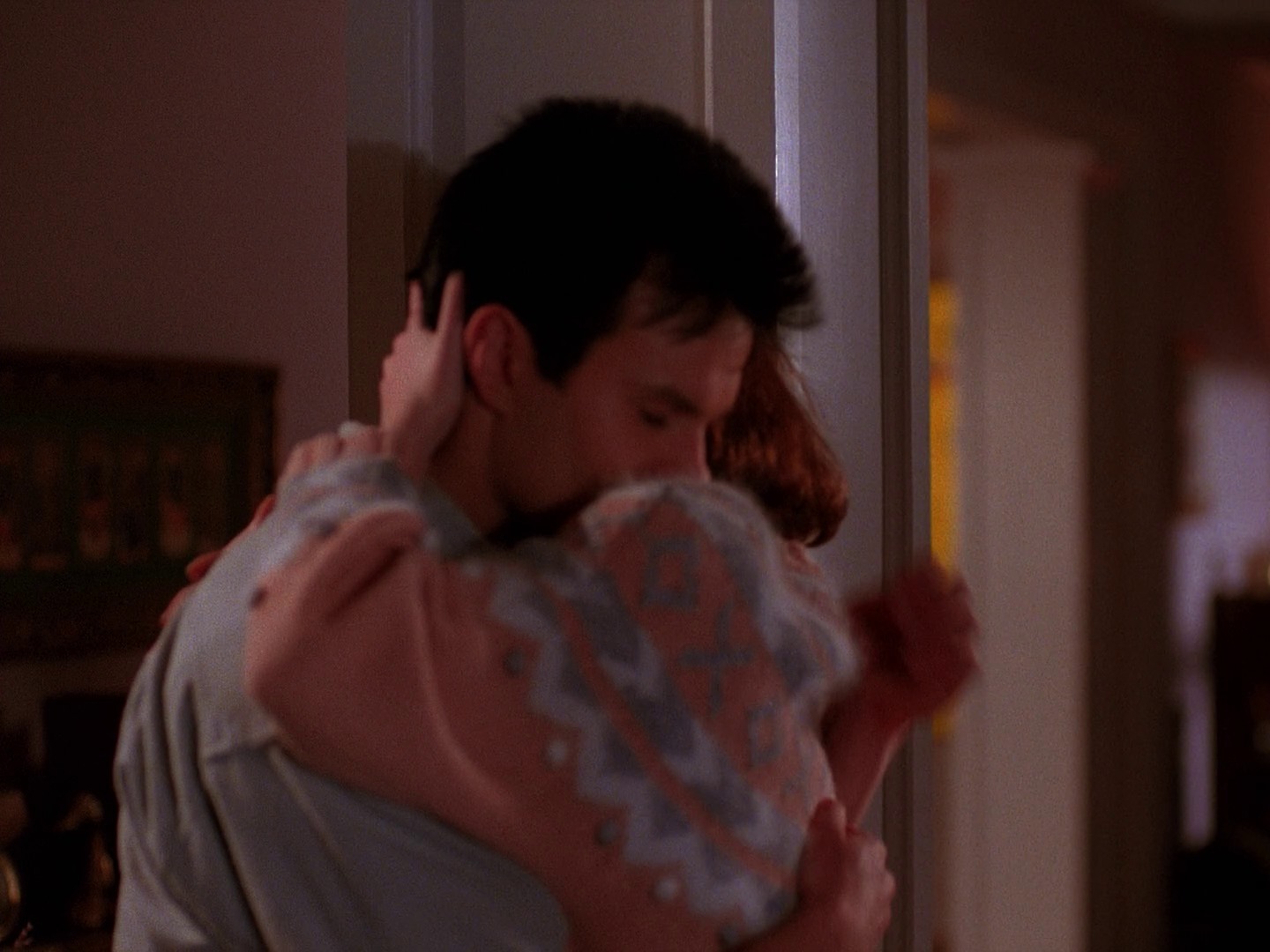
Donna’s comfort after the listening scene shows that an investigation changes the people conducting it. The value of the recording is inseparable from the pain it causes. This is a recurring distinction in the series: a voice can survive its speaker without becoming a transparent explanation of that person.
Jacoby, meanwhile, follows what he takes to be Laura’s return and is attacked. The episode makes the cost of the impersonation extend beyond the people who planned it. Their ingenuity has not given them a complete view of who else is watching.
A suspect tells a story; a story is not a verdict
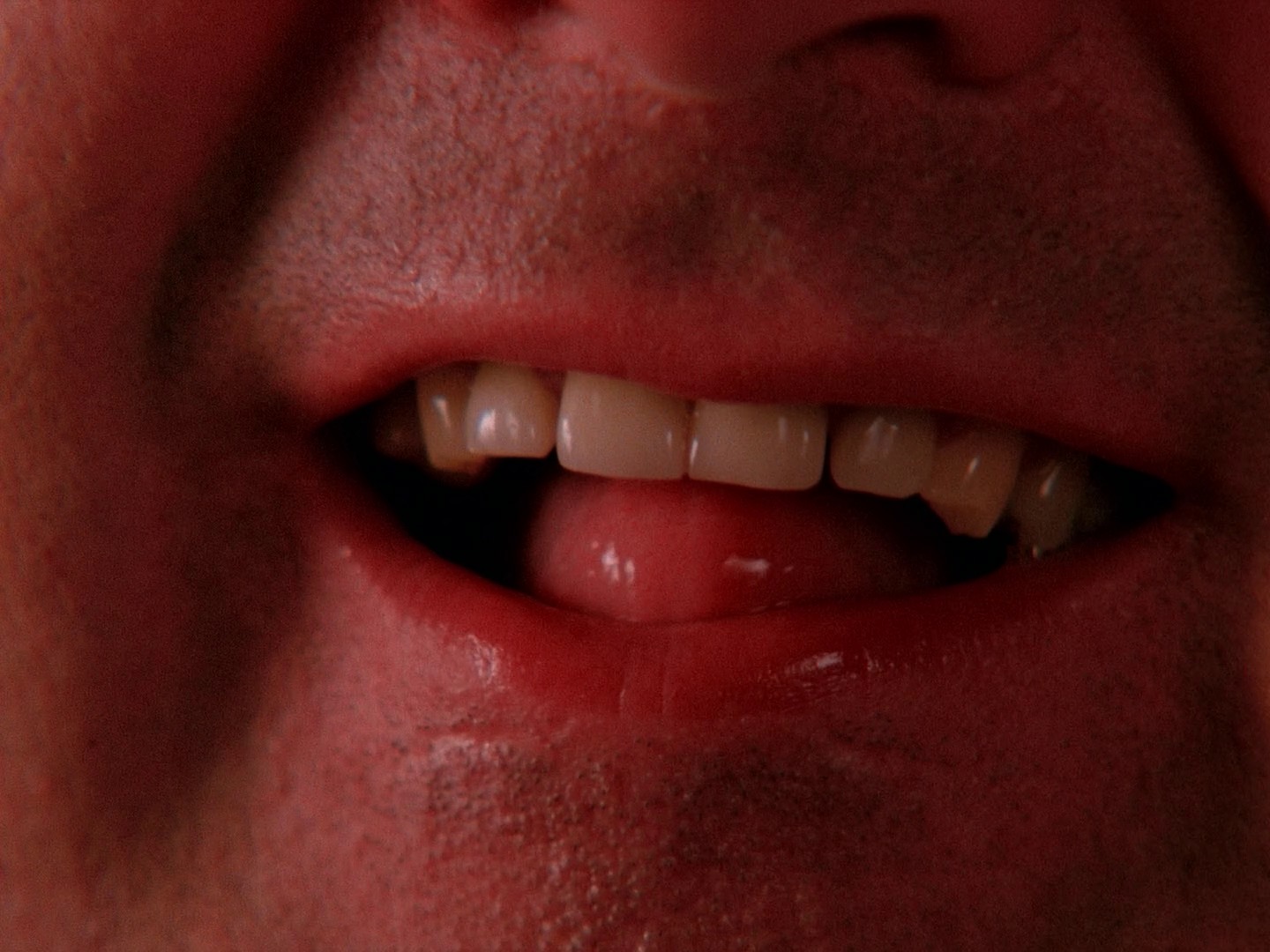
Cooper’s conversation with Jacques at One Eyed Jack’s uses the poker chip and the prospect of further work to keep him talking. Jacques’s account of the cabin is sexualised, cruel and self-interested. It supplies details about Laura, Ronette, Leo and Waldo, but it remains the testimony of an implicated participant, not an omniscient reconstruction.
The close attention to Jacques’s mouth makes the missing chip fragment newly physical. An object that had circulated through forensic reports and the cabin now sits inside a story about bodies and violence. The scene joins material comparison to the discomfort of hearing someone narrate another person’s suffering.
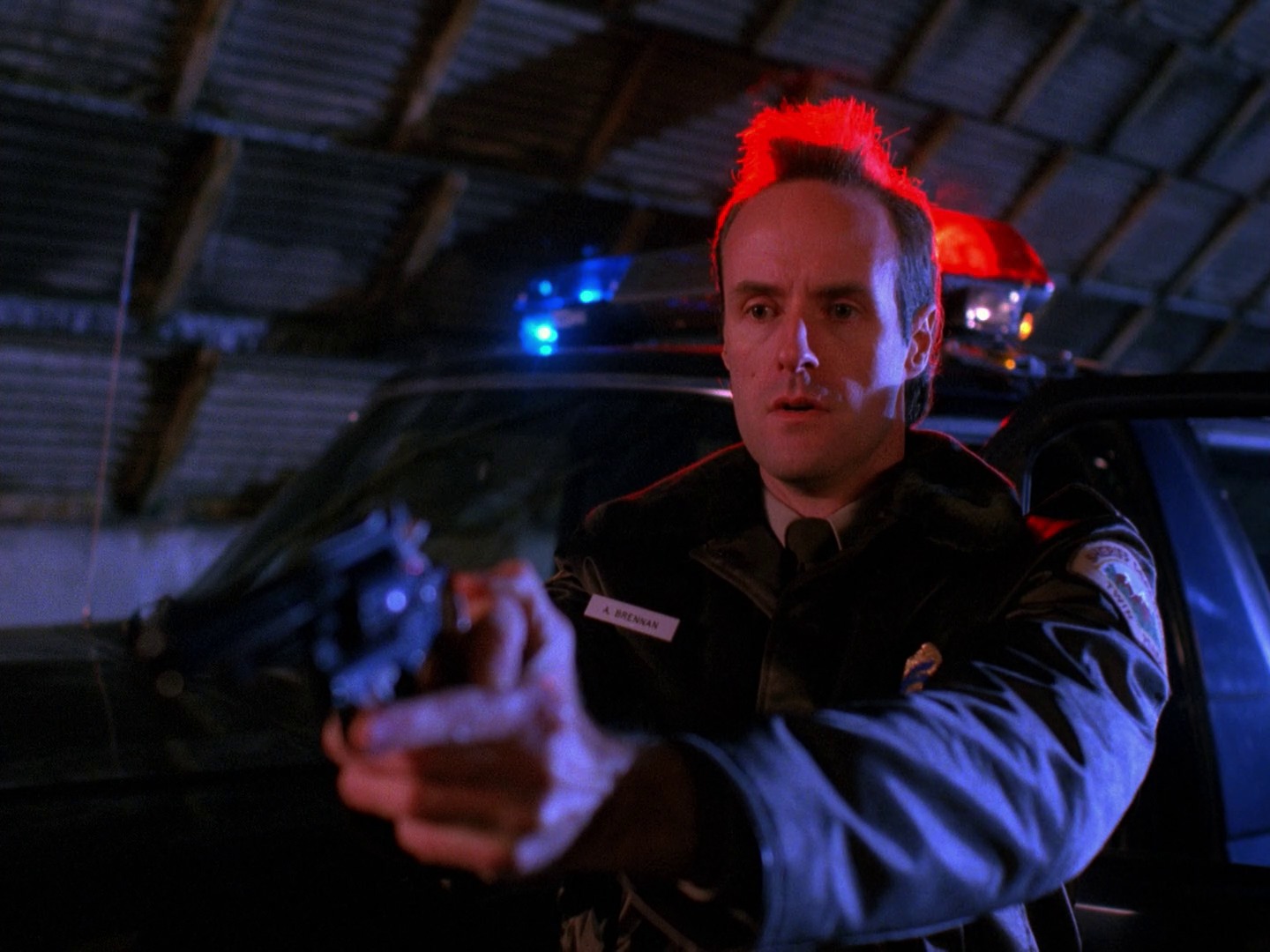
The arrest at the water-treatment site creates a brief appearance of professional resolution. Jacques’s attempt to seize a gun gives Andy a decisive action after the earlier episodes’ mishaps with weapons. The change is consequential without erasing his vulnerability: competence arrives at a particular moment, not as a complete replacement of his character.
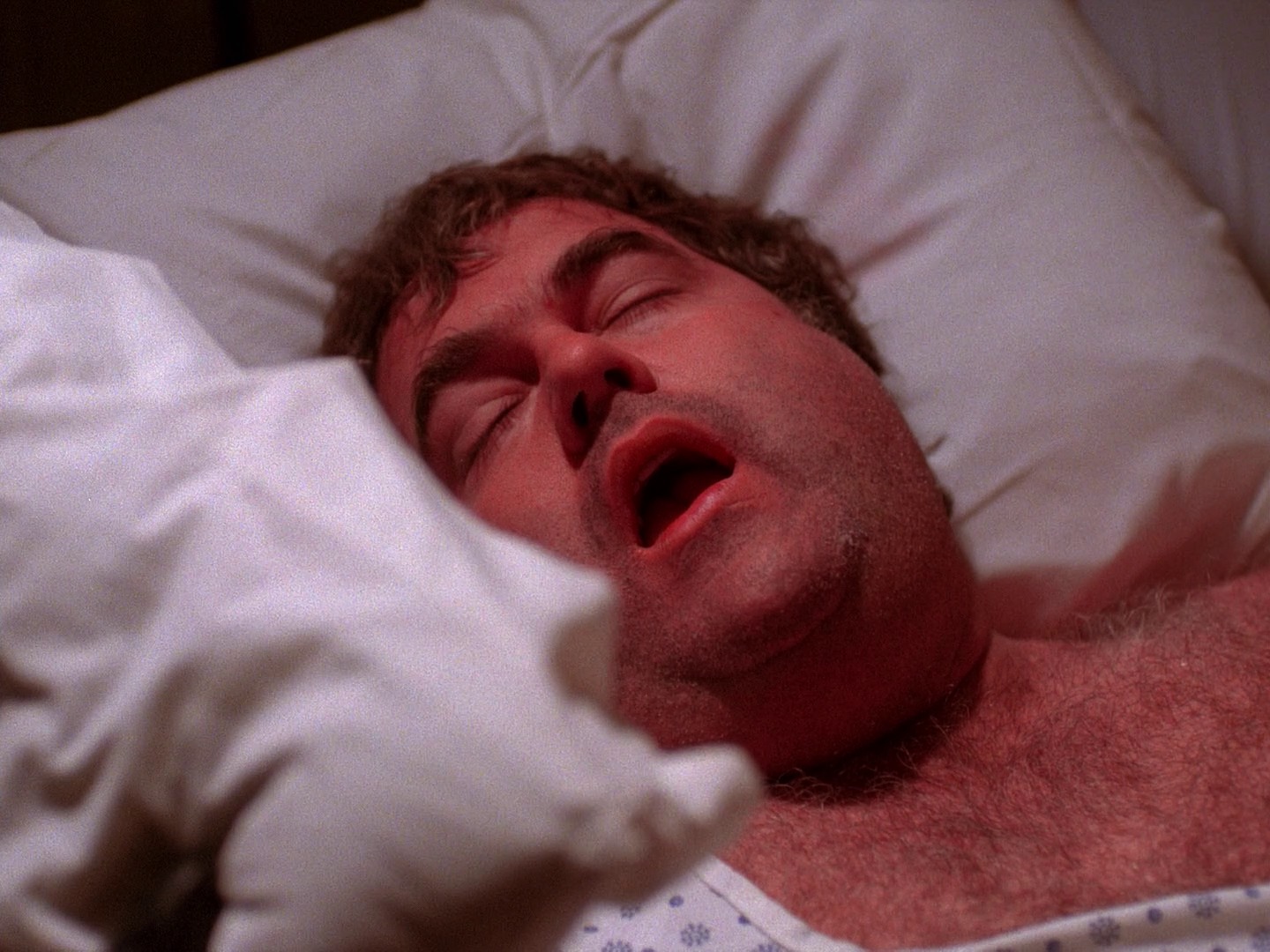
In the hospital, Jacques offers another account of the quarrel with Leo and the blood on the shirt. Those details can alter the meaning of existing evidence, yet the arrest still does not establish who killed Laura. The distinction becomes fatal when Leland hears that a suspect has been caught.
The homes that cannot protect their occupants
Nadine’s farewell and Ed’s discovery of her turn a domestic room into an emergency. The scene provides no comic release for the despair beneath the earlier drape-runner story. Ed’s call for help is a practical action taken in a situation his ordinary reassurances have not prevented.
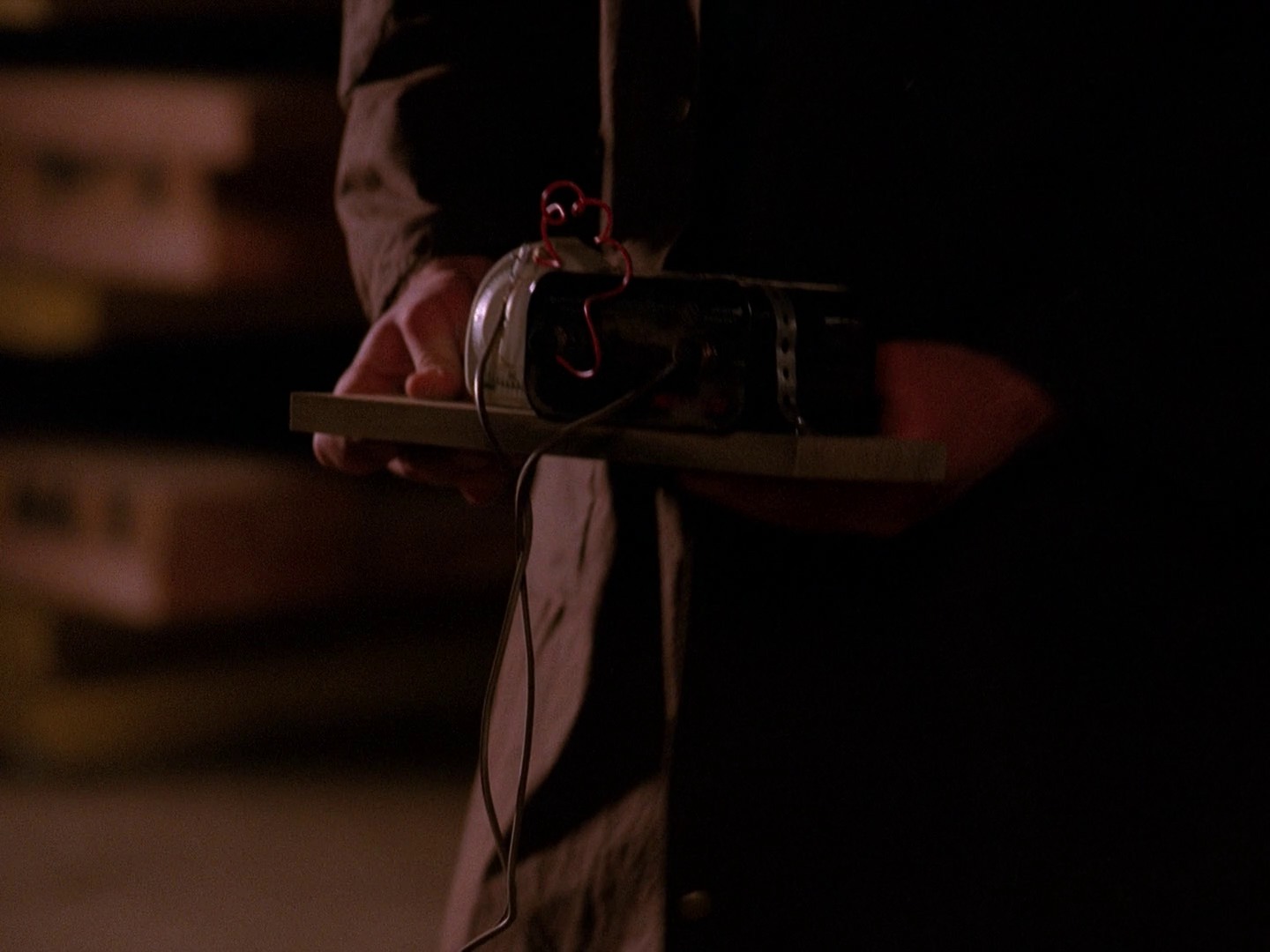
Leo moves Shelly into the mill as part of the arson plan. The timer supplies a visible countdown whose purpose she cannot control. A household abuser’s violence is now integrated into an organised scheme involving property and money.
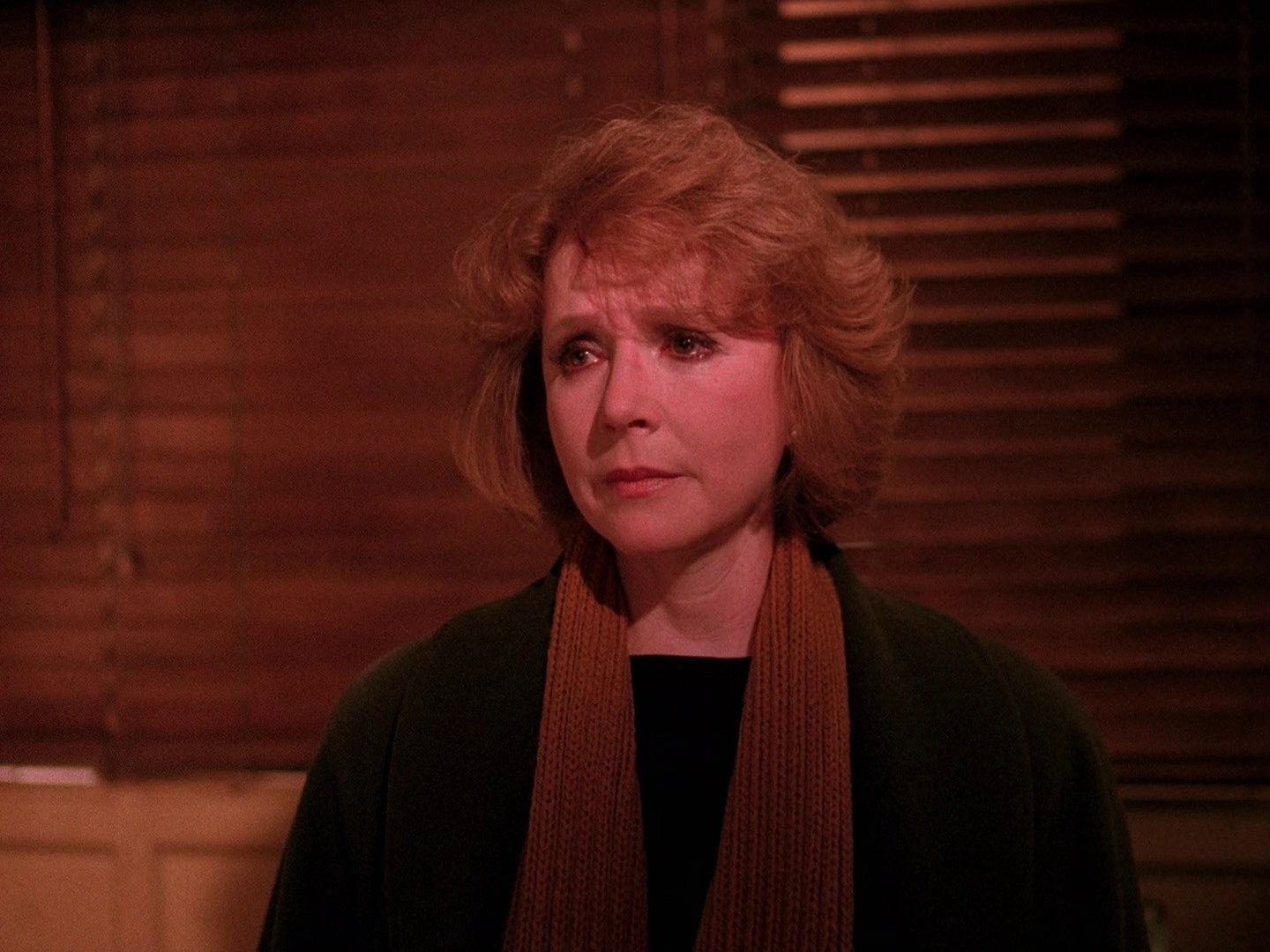
Catherine’s missing ledger makes her dependent on Pete. Her appeal reaches through their hostility towards a shared past, and his willingness to help gives their marriage a dimension that cannot be captured by its quarrels alone. Later, a telephone message draws her towards the mill. An offer of information becomes the route into a trap.
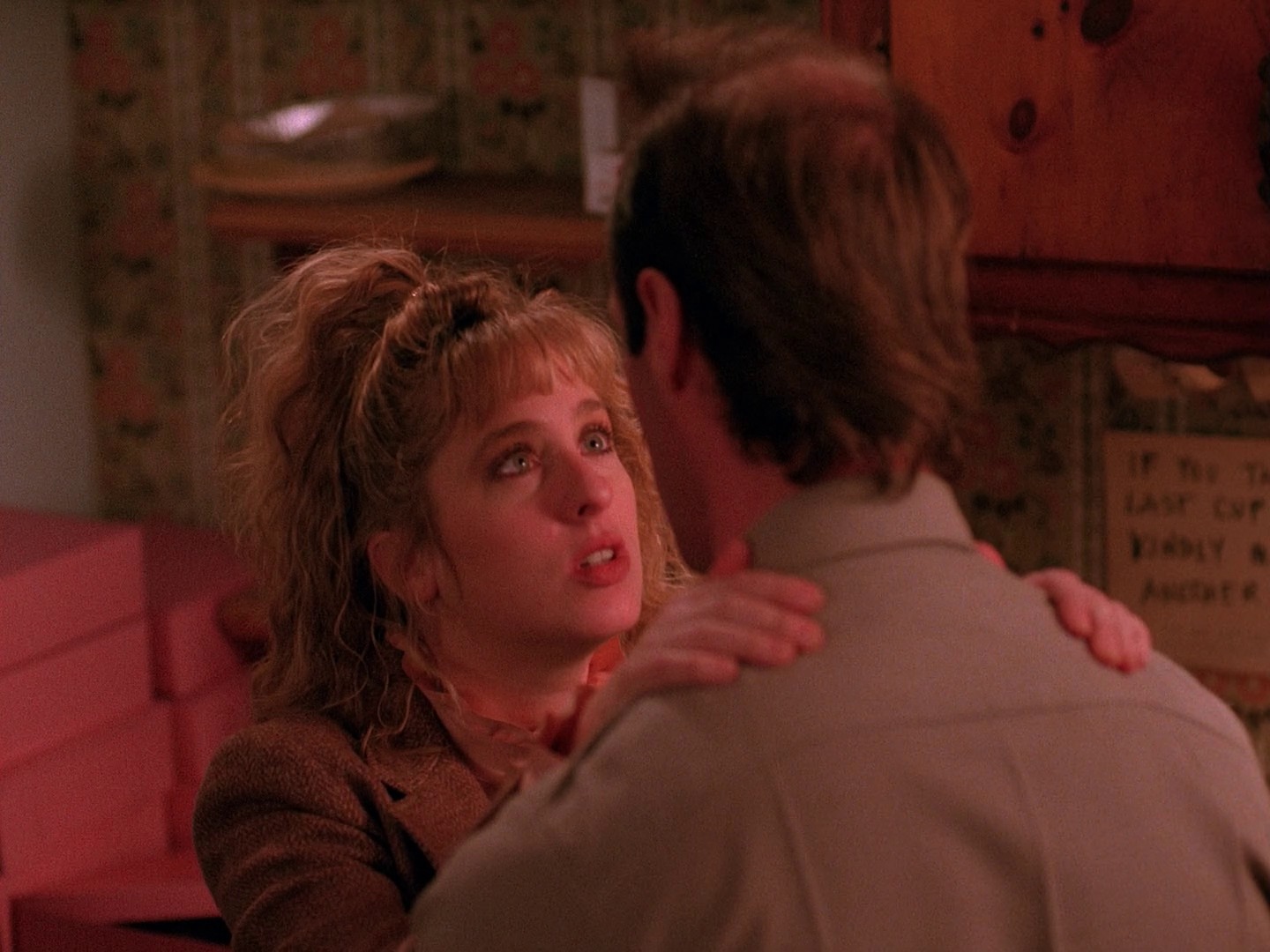
Lucy’s pregnancy announcement interrupts Andy’s attempt to organise their relationship around his own news. It is an intimate disclosure placed among criminal revelations and imminent violence. The episode’s suspense does not come only from asking who will survive; several people are also learning that the life they thought they were inhabiting has changed.
Hank’s promises and the business of violence
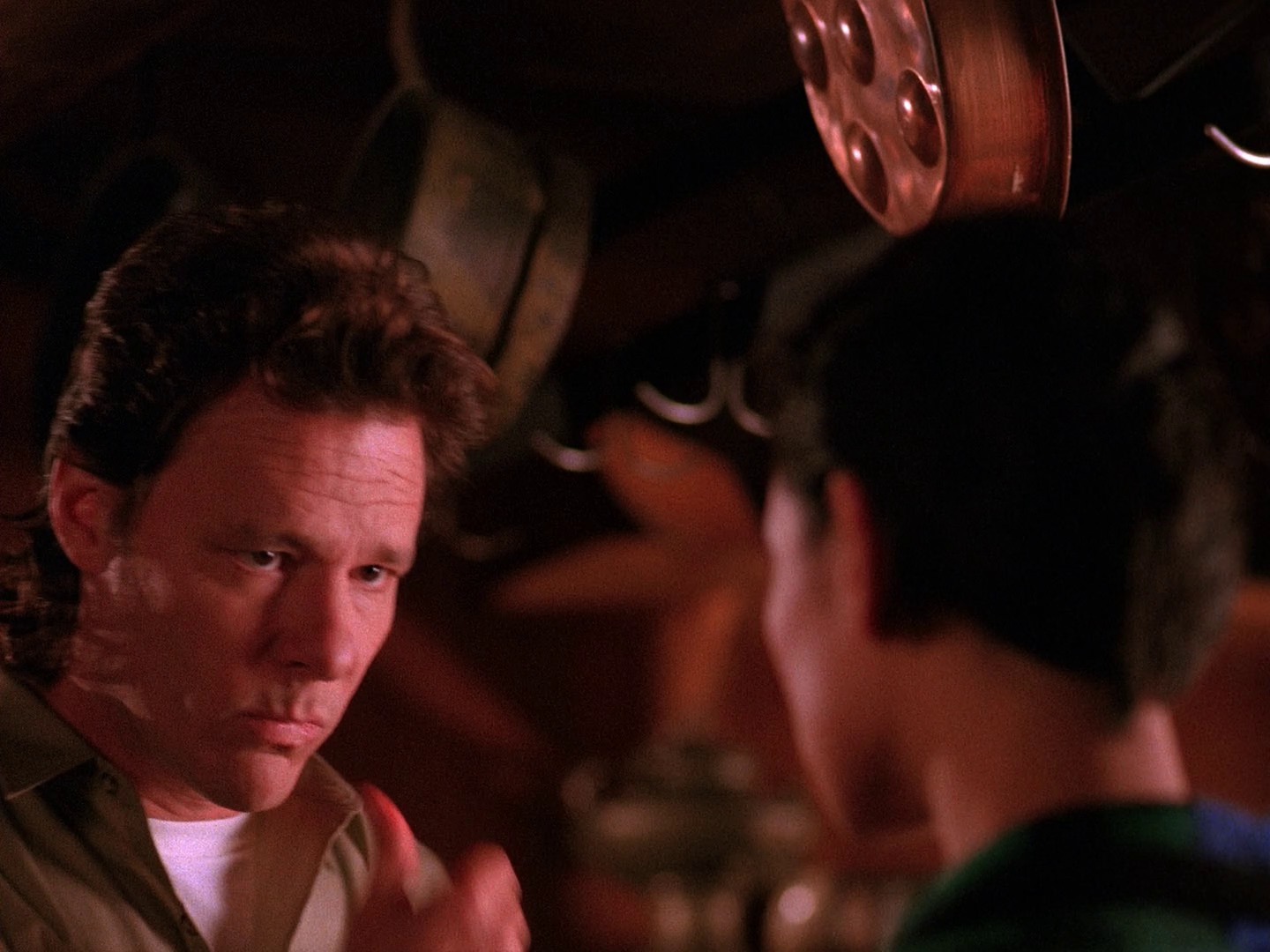
Hank’s confrontation with Josie revises the apparent meaning of his release. He does not intend a completed transaction to end their relationship. The demand for a blood oath gives an ongoing arrangement a bodily sign, turning the language of partnership into a threat.
At the diner, his presentation of himself to Norma belongs to a different performance. Work and domestic reconciliation are the terms through which he becomes acceptable there. Cutting between these roles makes the viewer responsible for remembering information that the people in the diner do not possess.
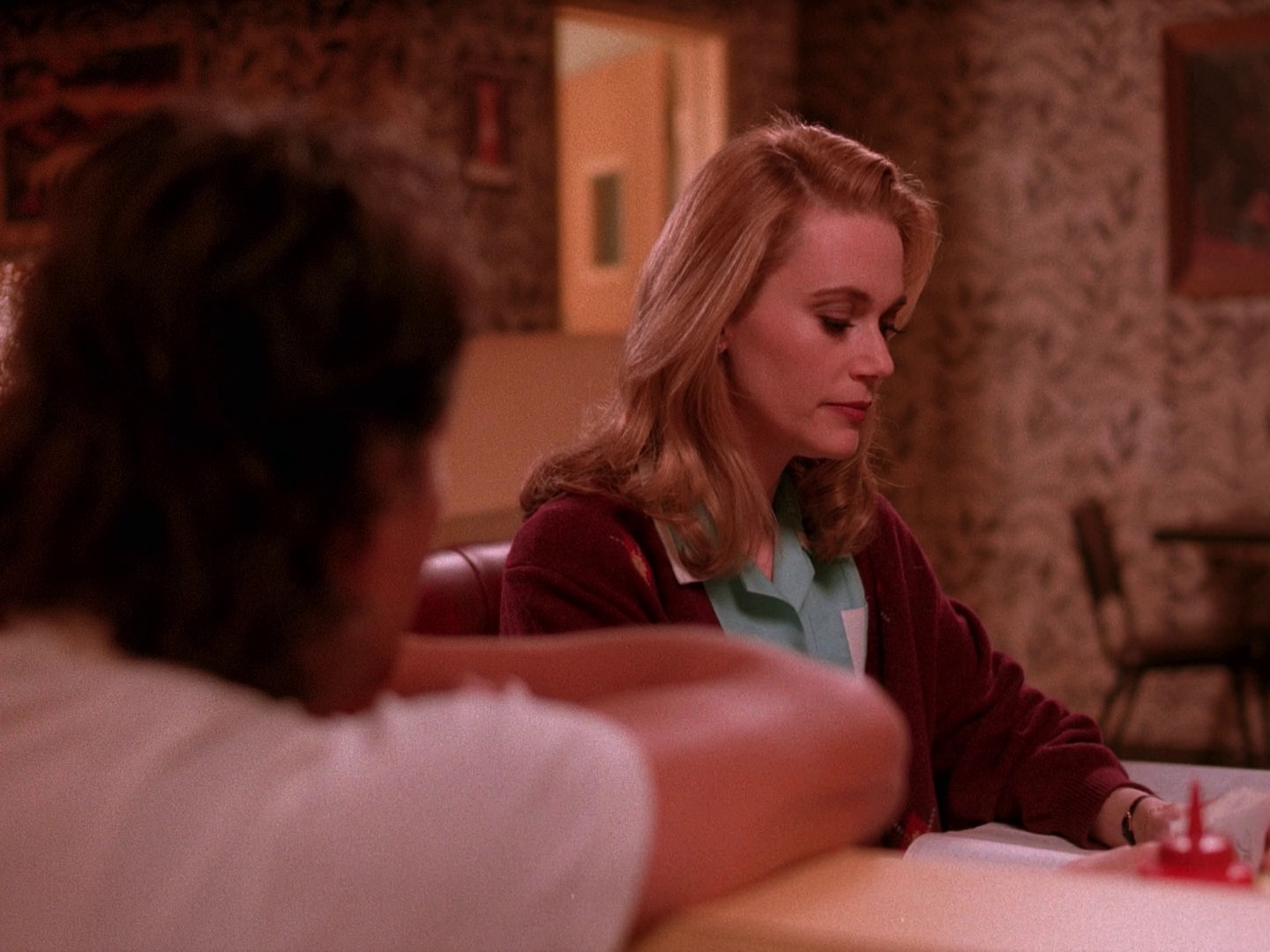
Bobby’s false call to the sheriff’s station uses Leo’s identity to direct attention towards James. Lucy’s recognition of the background clock introduces an incidental clue into the deception. The caller controls what he says but not everything that can identify where he is speaking from.
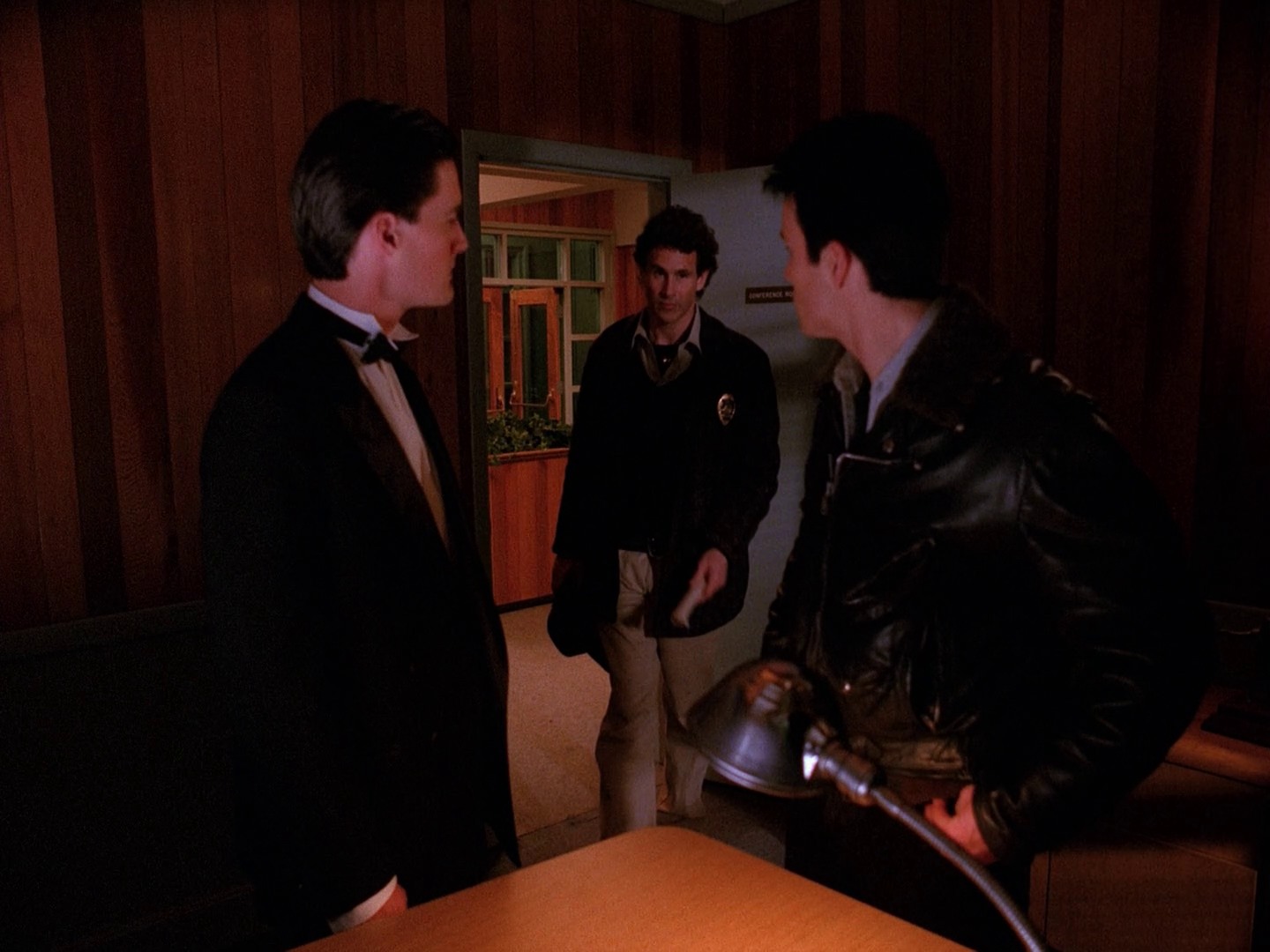
James arrives with Laura’s recording and is instead caught by the cocaine Bobby has planted. Like the shirt placed in Jacques’s apartment, this is evidence whose physical presence is real but whose apparent explanation is manufactured. The episode repeatedly separates an object’s existence from the story someone wants investigators to attach to it.
Ben’s commercial agreement proceeds amid these crimes. His conversations and calls reveal how violence can be treated as an administrative problem inside a business plan. The public performance of investment and the private elimination of obstacles are parts of the same evening.
The finale: simultaneous emergencies
The final movement refuses to remain with one threatened person. Bobby faces Leo; Hank’s intervention changes that confrontation. Catherine finds Shelly at the mill while fire spreads. Pete approaches the burning building. Leland reaches Jacques’s hospital room. Audrey waits at One Eyed Jack’s without knowing who will come through the door. Cooper returns to his hotel room.
Cross-cutting gives the viewer more geographical knowledge than any single character, but no power to intervene. Moving away from a scene does not settle it. Each return adds urgency because other dangers have advanced while attention was elsewhere.
The night comes apart · 6 images

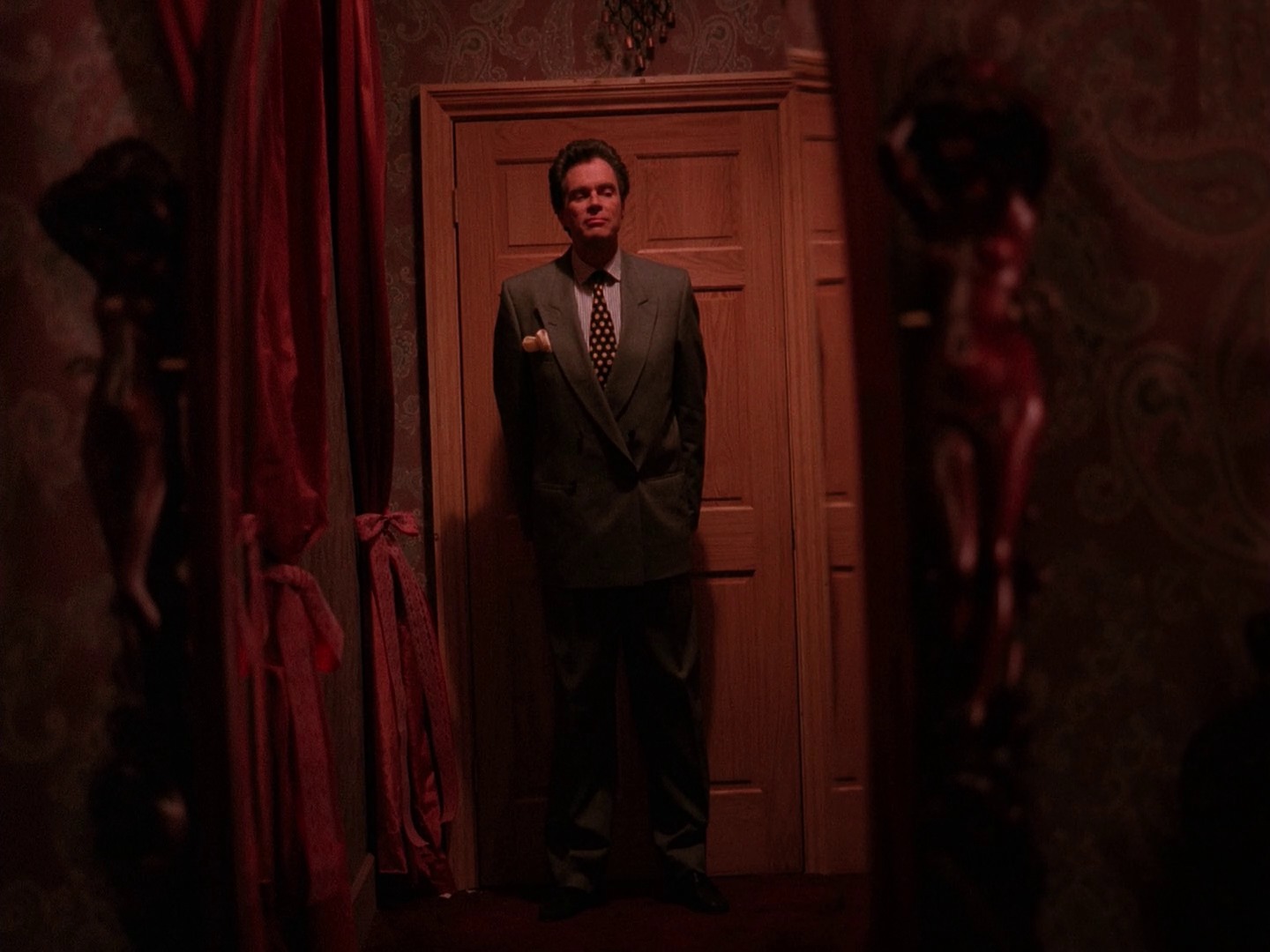
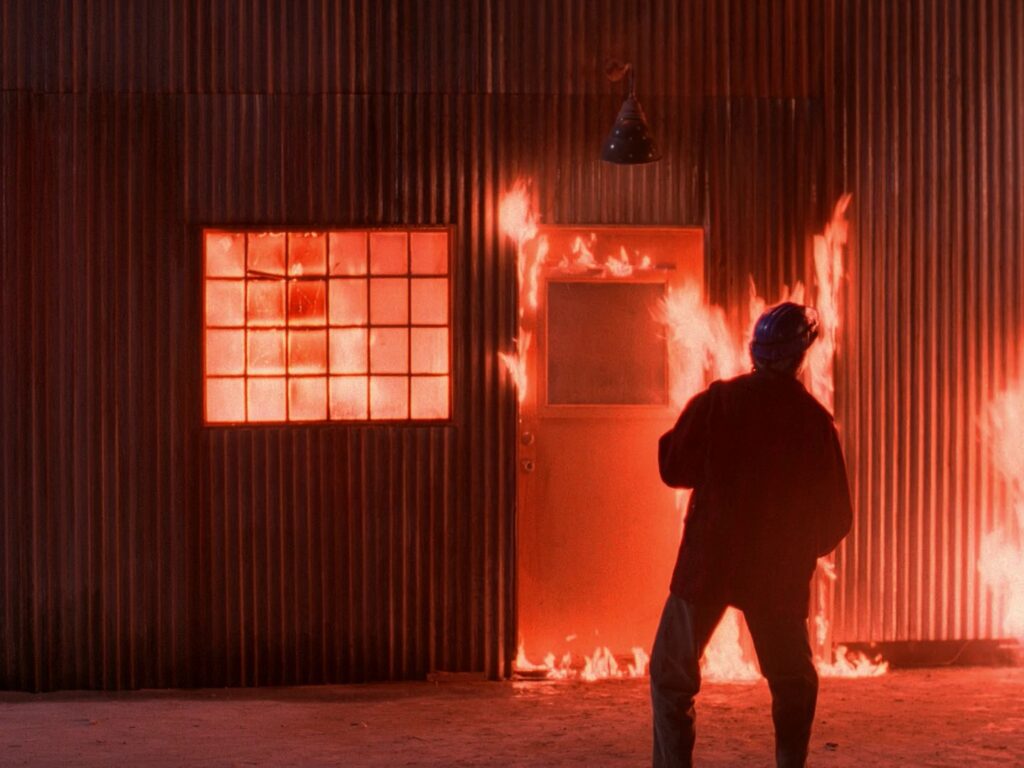
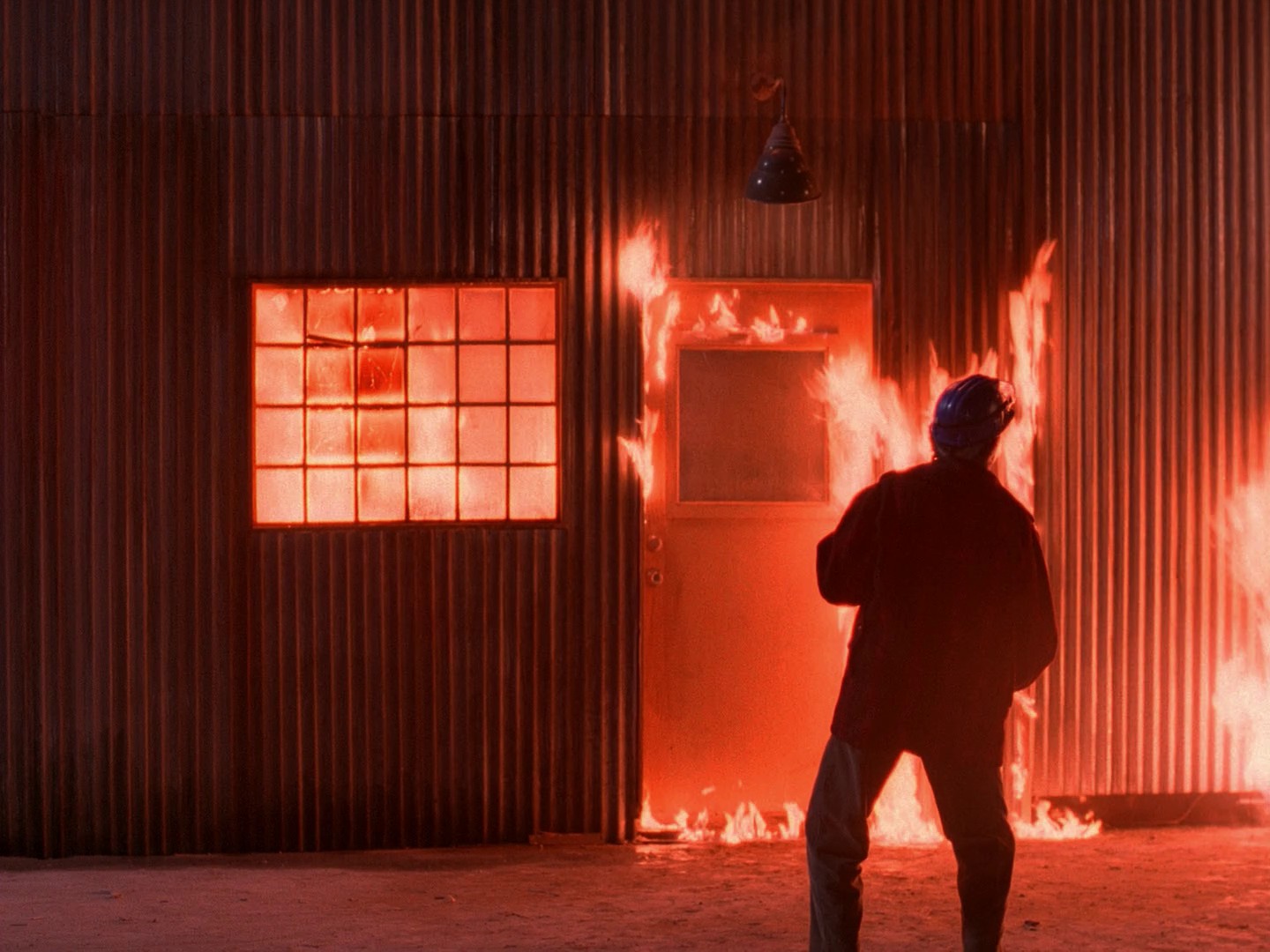
The mill sequence joins two women who have occupied very different positions in the town’s economic arrangements. Fire temporarily makes Catherine’s scheme and Shelly’s captivity parts of the same physical emergency. Pete’s arrival then turns an earlier marital appeal into an action whose outcome the season withholds.
Leland’s hospital attack demonstrates the danger of treating arrest as proof. His belief about Jacques grows out of grief and the news he has heard; the programme has not supplied the same certainty to the audience. The act closes off one person’s ability to speak while leaving the murder investigation unresolved.
Ben’s entrance at One Eyed Jack’s produces a different collision of information. Audrey knows who has arrived. He does not recognise the situation in the same way. Her investigative masquerade reaches a point where concealment becomes an immediate necessity, rather than a freely chosen advantage.
Cooper’s door: routine becomes exposure
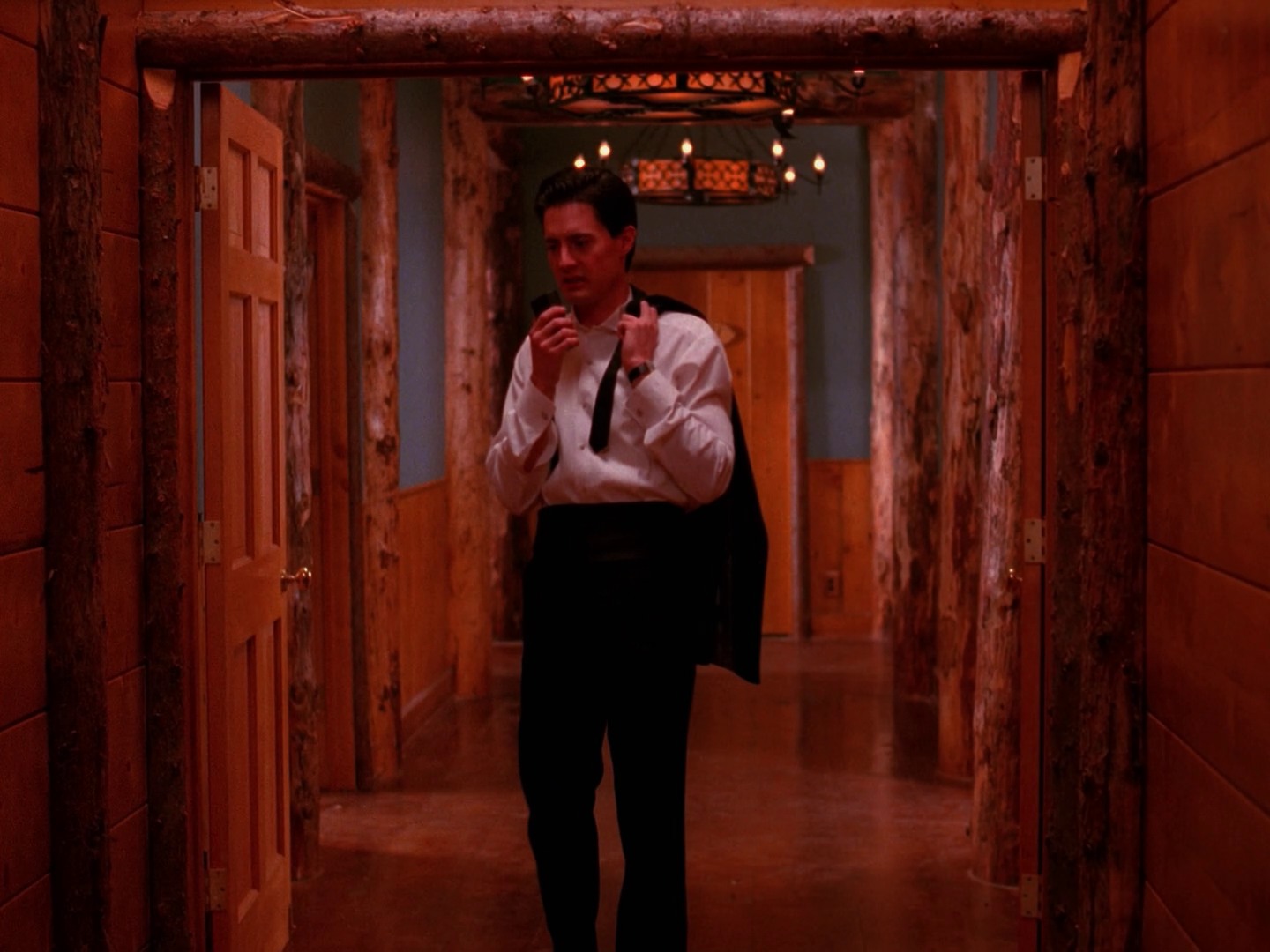
Cooper’s return to the Great Northern initially restores a familiar form: dictation, observations about the evening and the small rituals of preparing for bed. The professional narrator seems to have regained a private space from which he can organise experience.
The last moments turn that room into a vulnerable threshold. A telephone call and a knock compete for attention. Cooper moves towards the door, and the framing briefly allows him to remain an ordinary man completing an ordinary action. The close view of the gun then removes the reassurance associated with his usual investigative command.
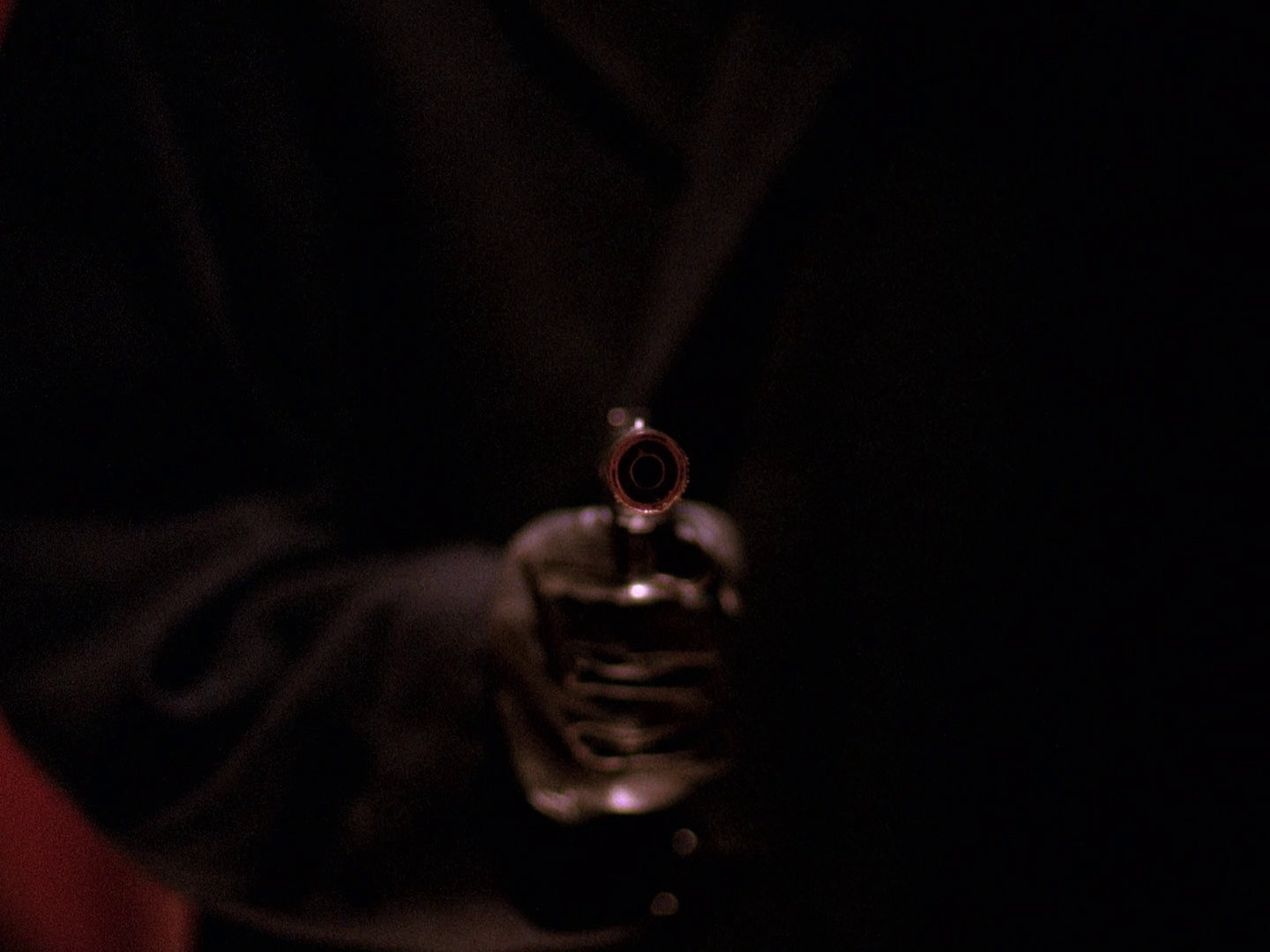
The attacker is not identified here. Keeping that absence intact is essential to a first-season reading. The finale ends by making the detective himself an unresolved question, while the mill, hospital, brothel and several homes remain in crisis. A season organised around finding an answer finishes by multiplying the places where an answer is urgently needed.
The separate Log Lady introduction’s attention to recognising evil and to the rhythm of life offers a pointed frame for this ending. Its reference to sharp noises acquires an association after the episode, but the introduction should not be treated as an advance identification of the gunman.
Voices, sound and dialogue
Sound can authenticate the wrong story
Cooper’s imitation of Waldo helps convince Jacques that he has access to the cabin’s secrets. The investigator borrows a voice in order to make a false identity credible. Later, Bobby’s call gives Lucy a different false identity: he presents himself as Leo and directs suspicion towards James. Lucy notices the clock in the background and reports that it sounds like the one at Easter Park. Truman responds by moving surveillance away from Leo’s house.
The clue is consequential precisely because Lucy is listening carefully. A recognisable sound can help locate a call without proving who made it. The episode turns accurate attention to a background detail into part of a mistaken inference.
Private voices heard by unintended listeners
In Jacoby’s office, Donna and James accidentally activate seagull and wave sounds, then Hawaiian and country music, while trying to search unnoticed. The doctor’s manufactured environment briefly resists their control. What they find then produces a more intimate disruption: Laura’s tape gives James an unflattering account of himself that was intended for somebody else.
His hurt does not make the recording useless. He eventually brings it to Cooper, moving it from private discovery into the official investigation. The same object can wound a listener and supply a lead. Neither effect exhausts Laura’s address to Jacoby.
The quiet corridor and the unfinished call
Cooper’s final dictation revisits the hotel noise and earplugs of Episode 5. He asks Diane to notice the surrounding sound again, this time with relief that the Icelandic party is no longer keeping him awake. He anticipates hot milk and sleep. The change in his report establishes reassurance before the doorway reverses it.
A telephone call competes with the knock. Cooper treats the visitor as expected room service, while Andy’s words arrive too late to become a useful exchange: Leo has been found shot. The final interruption leaves both the conversation and Cooper’s confident account of the investigation unfinished. The Log Lady’s accompanying introduction frames the ending through rhythm and three abrupt sounds without identifying the attacker.
A route through Episode 7
- The false return. Maddy waits; Donna and James search Jacoby’s office; Jacoby is attacked.
- One Eyed Jack’s. Cooper questions Jacques; Audrey’s disguise is tested.
- The arrest. The police trap Jacques; Andy responds when he reaches for a weapon.
- Private emergencies. The tape is heard; Nadine is found; Shelly is bound inside the mill.
- Promises and traps. Hank and Josie, Catherine and Pete, Lucy and Andy, Bobby’s false call.
- Accounts in the hospital. Jacques describes the cabin; Jacoby’s condition is explained; Leland hears of the arrest.
- The schemes converge. Hank returns to the diner, Catherine receives a call, James delivers the tape and is detained.
- The evening breaks apart. Leo and Bobby; Hank’s shot; the mill fire; Pete’s arrival; Leland and Jacques.
- Two doors. Ben enters Audrey’s room; Cooper opens his own door to an unseen attacker.
Credits, introductions and connections
Dialogue and sound-cue references in the voice study follow the episode’s English SDH subtitles; interpretations are Lyncharium’s.
Primary screen source: regular Episode 7, Twin Peaks: From Z to A. The opening credits identify Mark Frost as writer and Mark Frost as director. The scene and dialogue readings are Lyncharium’s analysis of the episode, distinct from production testimony.
The finale is both written and directed by Mark Frost, as its opening credits state. Margaret’s introduction and the recap frame the finale from outside its original dramatic sequence. Continue with the Season 2 dossier for the consequences of the cliffhangers.
Regular Episode 7 follows the pilot; services that count the pilot first list this as Season 1, Episode 8. See the episode index and the separate introductions, recaps and previews.