Twin Peaks: Episode 16 — Arbitrary Law
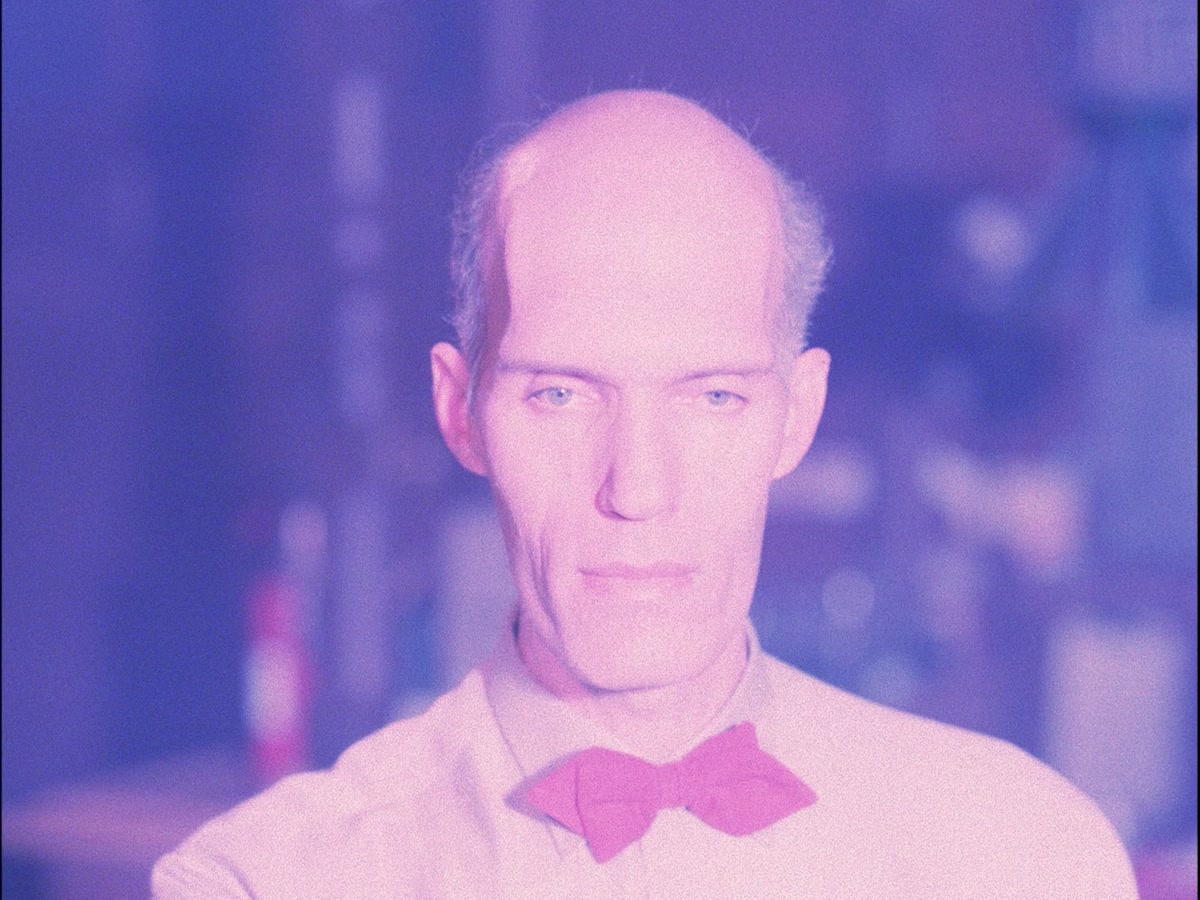
1990 · Season 2, Episode 9 · Tim Hunter
A diary page, a dangerous visit and a room full of suspects. Follow the movement from a remembered dream to the interrogation, and the questions that survive the answer.
Season 2, Episode 9 / overall Episode 16. Major mystery spoilers; the ending gallery is optional.
Explore this episode
A second death changes the investigation
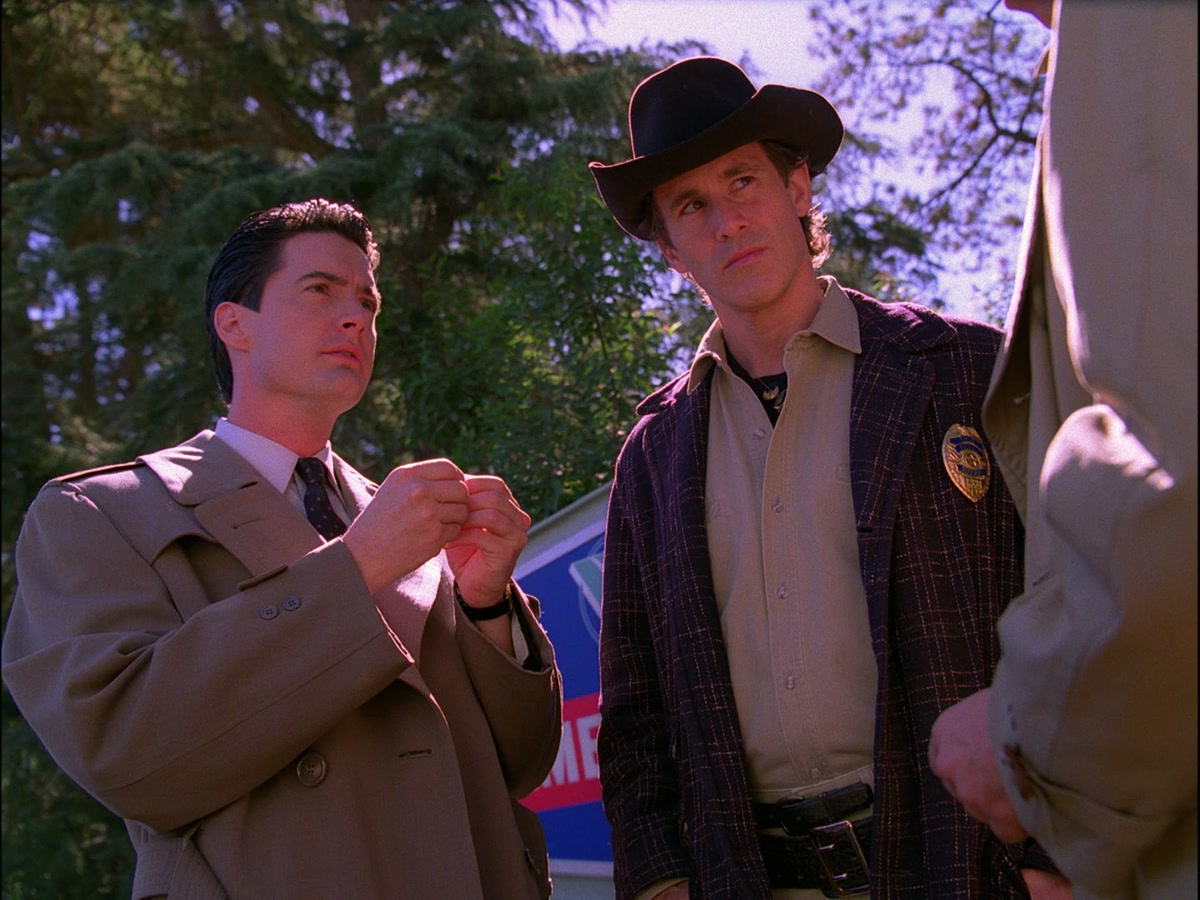
The episode begins with the investigators looking at the consequences of their failure. Maddy’s body is out of view during much of their discussion, but the evidence recovered from it makes the connection to Laura explicit: a letter beneath a fingernail, strands of white fox fur and the signs of the same attacker. Albert’s contribution combines forensic detail with an unusual appeal to Cooper’s instincts. Methods he might ridicule are now welcome if they can prevent another death.
Cooper asks Truman to delay notifying the family. The request exposes the cost of treating information as an investigative resource. A period in which the police may act is also a period in which Donna, James and Maddy’s mother do not know what has happened. The episode will make that unequal distribution of knowledge dangerous.
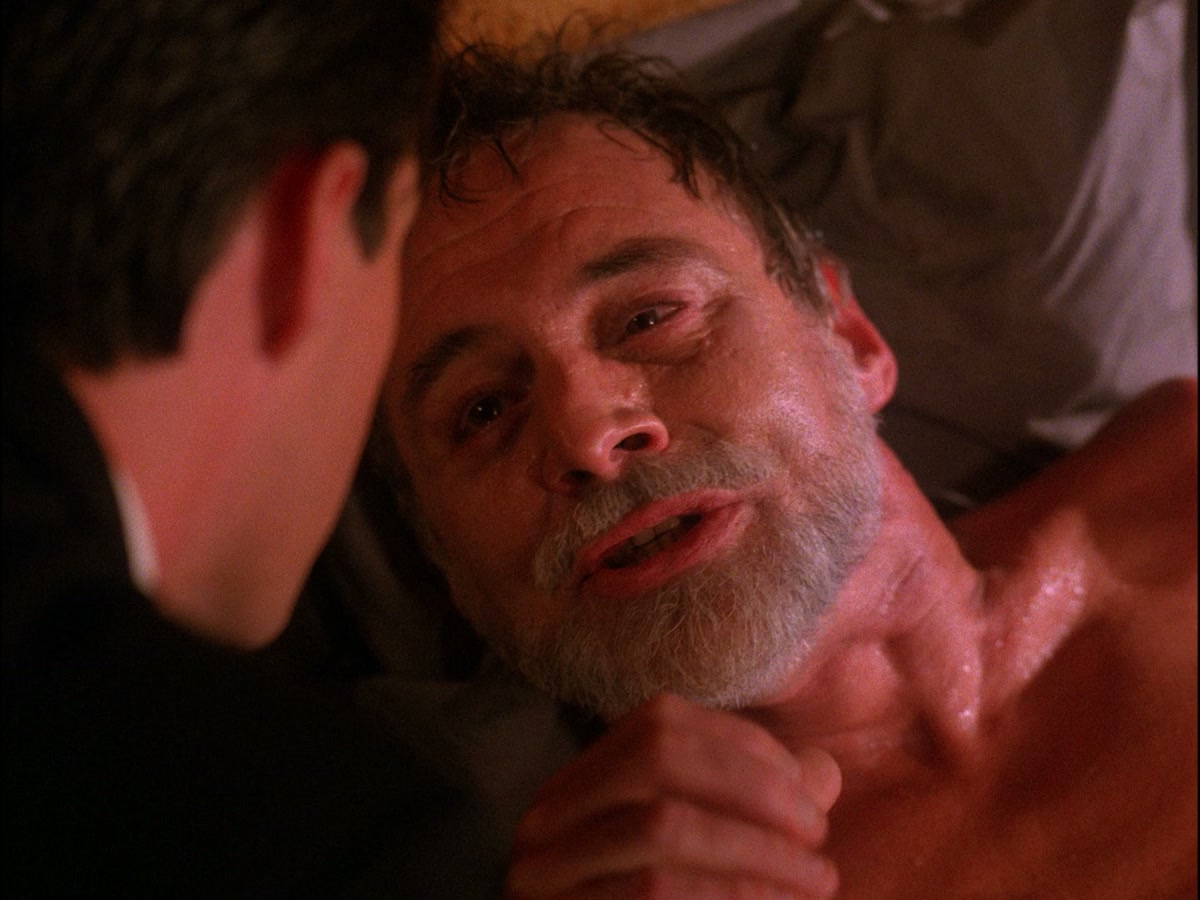
The questioning of Gerard presents a related ethical problem. His body is dehydrated and exhausted; the doctor warns against continuing without medication. Cooper nevertheless needs Mike to speak. A man’s vulnerability becomes the condition for obtaining supernatural knowledge. The scene should retain that discomfort even when the information proves useful.
Laura describes the dream from the other side
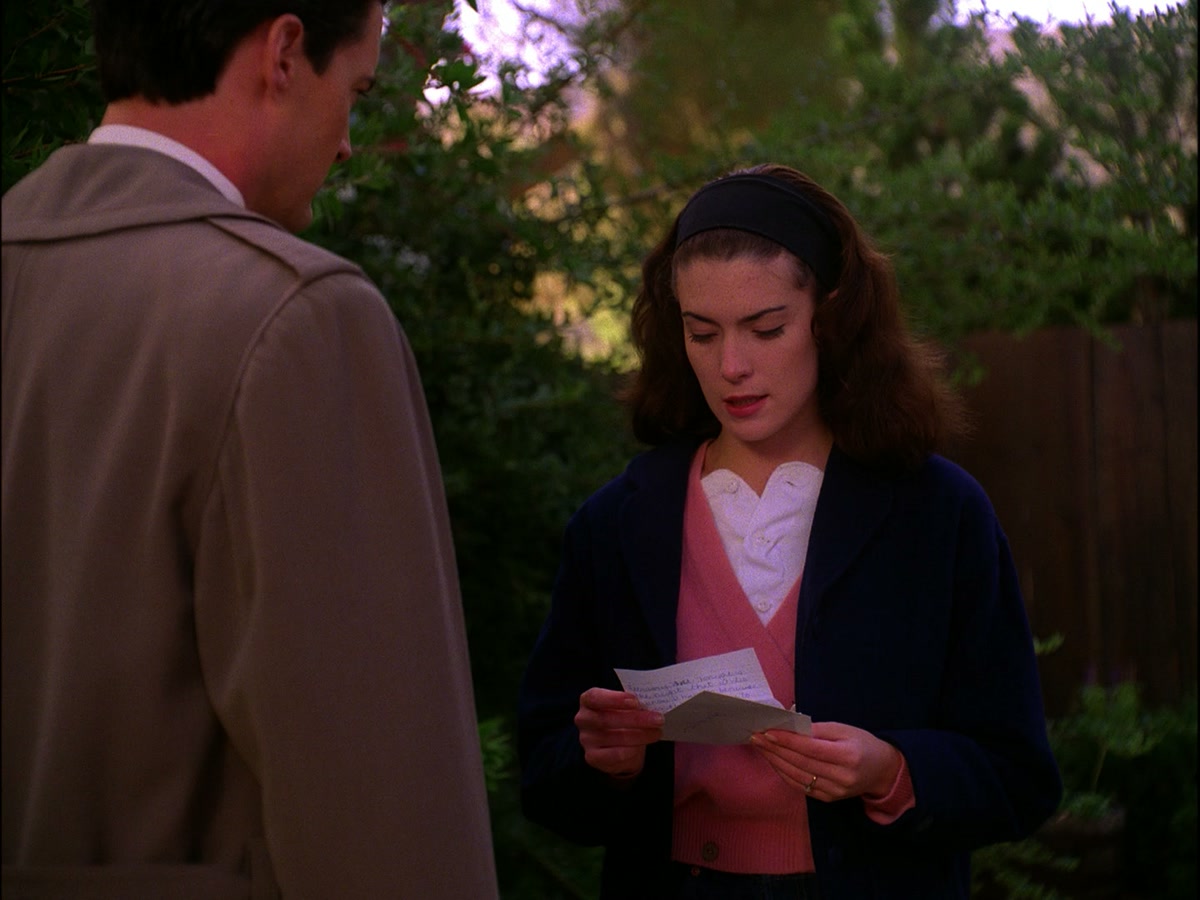
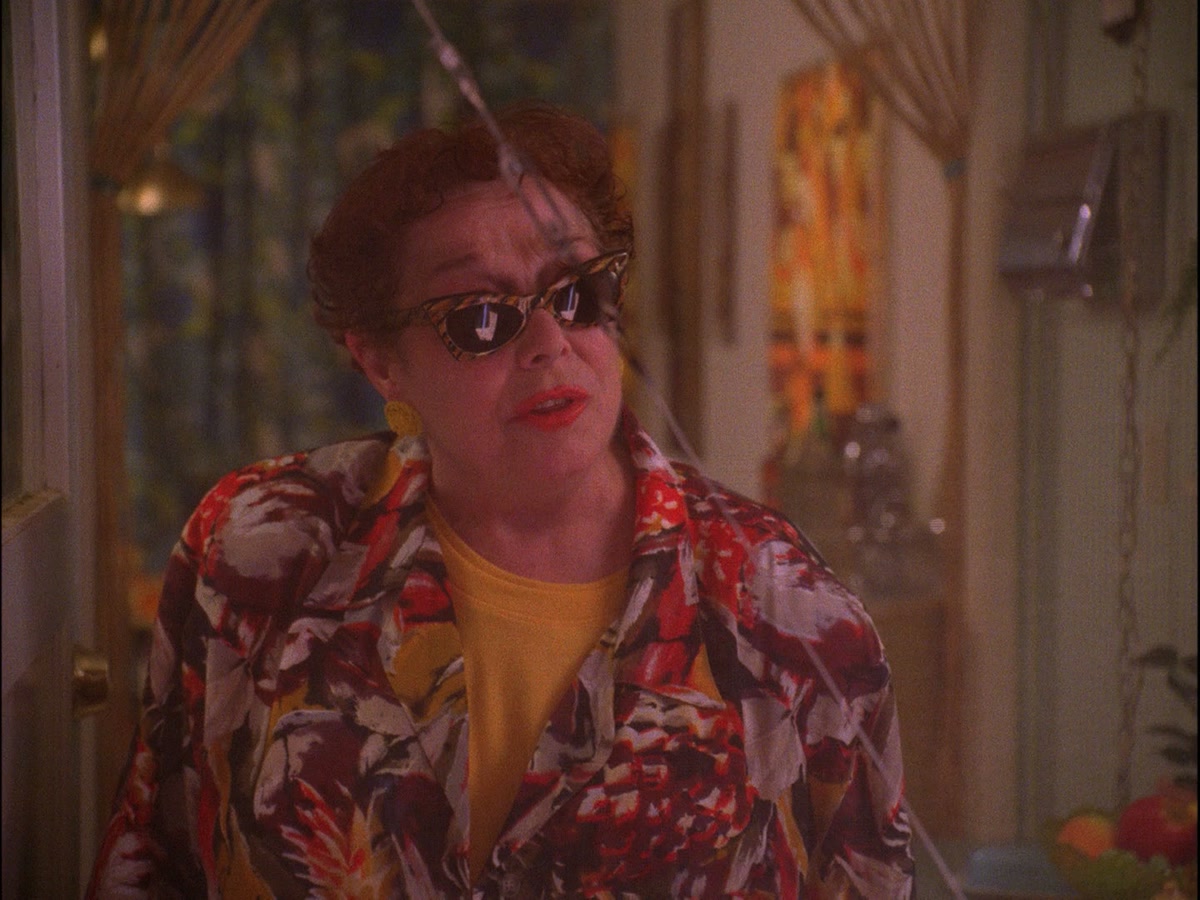
Donna recognises Harold’s words in Andy’s repetition of a French phrase. A small exchange at the diner sends her and Cooper back to the Tremond house, where a different woman answers the door and contradicts the household Donna remembers. The address is stable while the account of who lives there is not.
The envelope waiting for Donna contains a surviving diary page. Laura’s description places her inside the same Red Room experience that Cooper remembers. Her difficulty speaking is no longer only something strange for the detective and the viewer to observe: it is described as frustrating by the person trying to communicate.
The diary therefore changes the dream’s point of view. Laura was trying to tell somebody who might help her; Cooper encountered an enigmatic whisper. Those are two unequal experiences of the same apparent meeting. Her hope that someone heard her sits beside the devastating fact that she died before the investigation began.
The scene makes writing and performance work together. Donna reads outdoors while the image returns to the Red Room. Her ordinary speaking face, the written page and remembered dream images each carry part of the account. Compare the original dream sequence and Anderson’s explanation of its speech technique.
The address and the message · 2 images
Truth can be withheld for a price
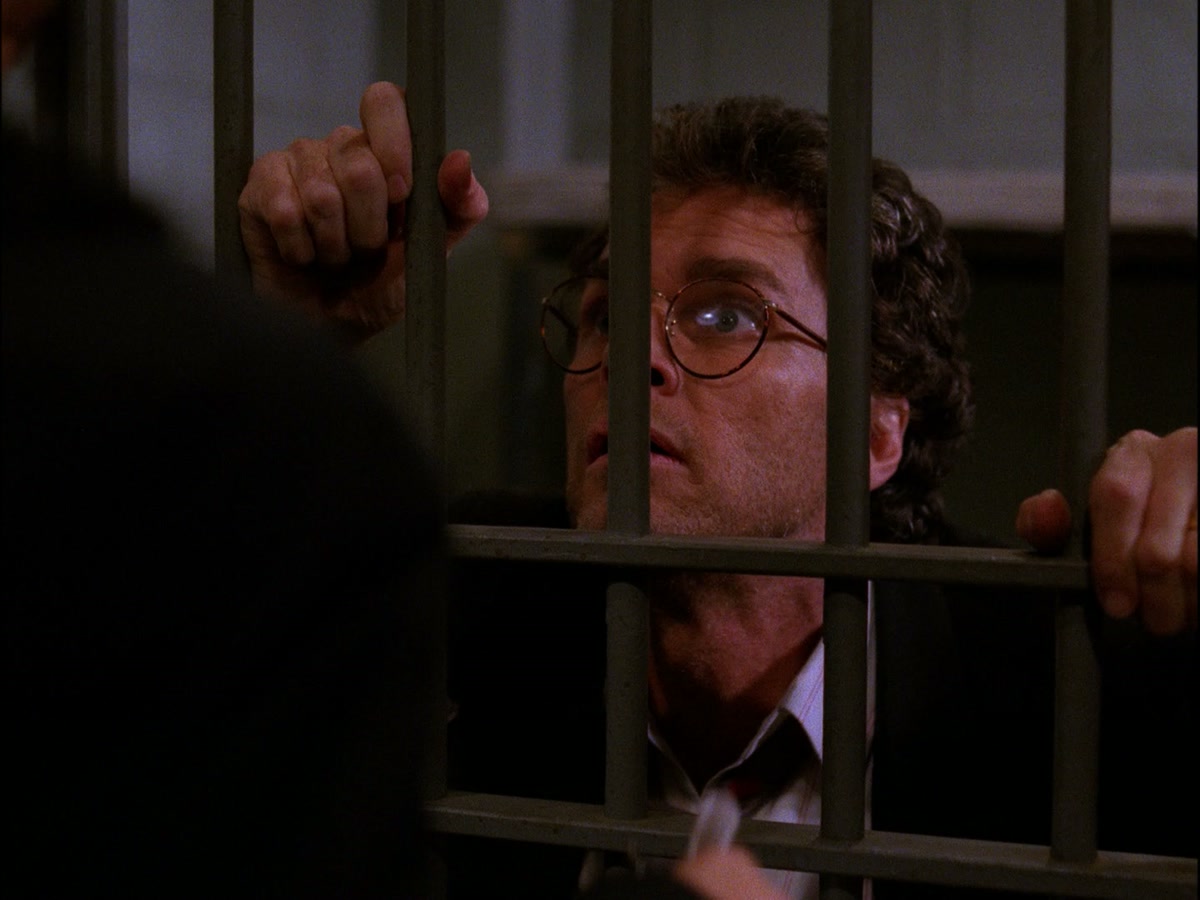
Catherine visits Ben in the Tojamura disguise and turns his confinement into a negotiating advantage. She can provide an alibi, but first demands the business interests he has tried to control. Ben recognises her voice before the exchange becomes openly intimate and hostile.
The scene makes truth available without making it generous. Catherine’s knowledge could correct an accusation; she instead trades on Ben’s fear. This is a different obstacle from the supernatural puzzle. The investigation is also surrounded by people who know ordinary facts and choose when, whether and at what price to disclose them.
The later Roadhouse assembly brings Ben into a much larger arrangement of possible guilt. His humiliating dependence on Catherine sits beside a detective story in which innocence cannot simply be inferred from charm, distress or a convincing speech.
Donna enters the room that the audience remembers
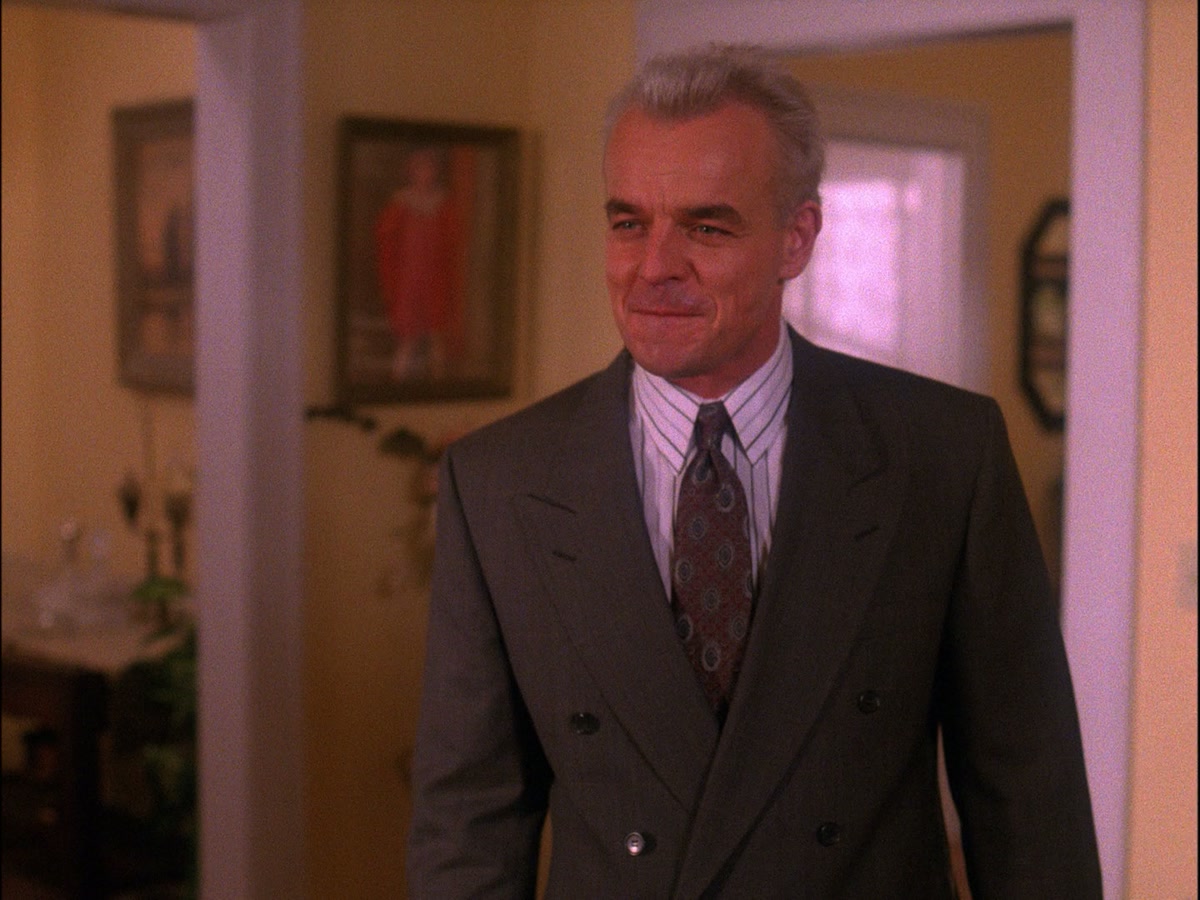
Donna brings a recording for Maddy, expecting Leland to forward it. The innocent errand is cruelly timed: the viewer knows Maddy will never receive the song. Laura’s sunglasses add another return of an absent girl through somebody else’s body. Leland notices the glasses, and Donna’s questions about the secret diary disturb his welcome.
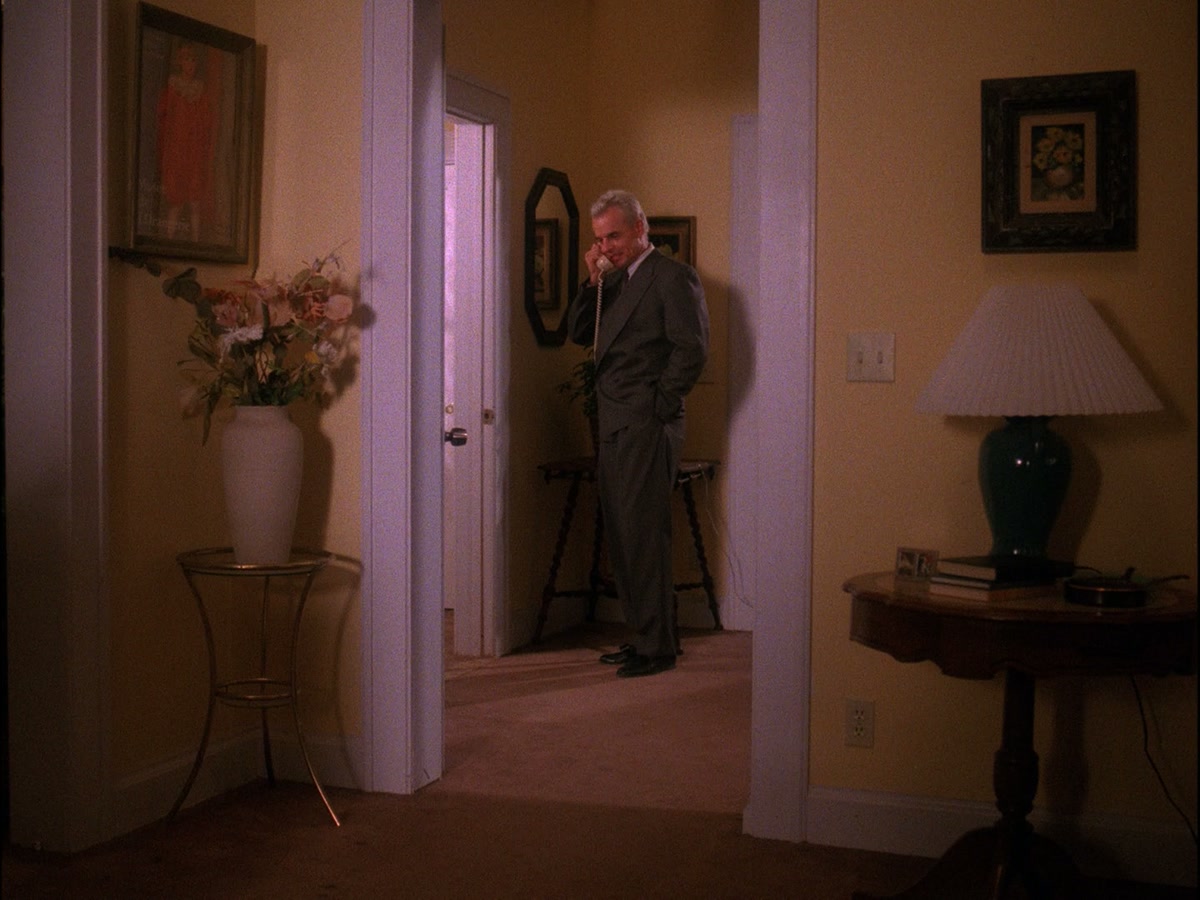
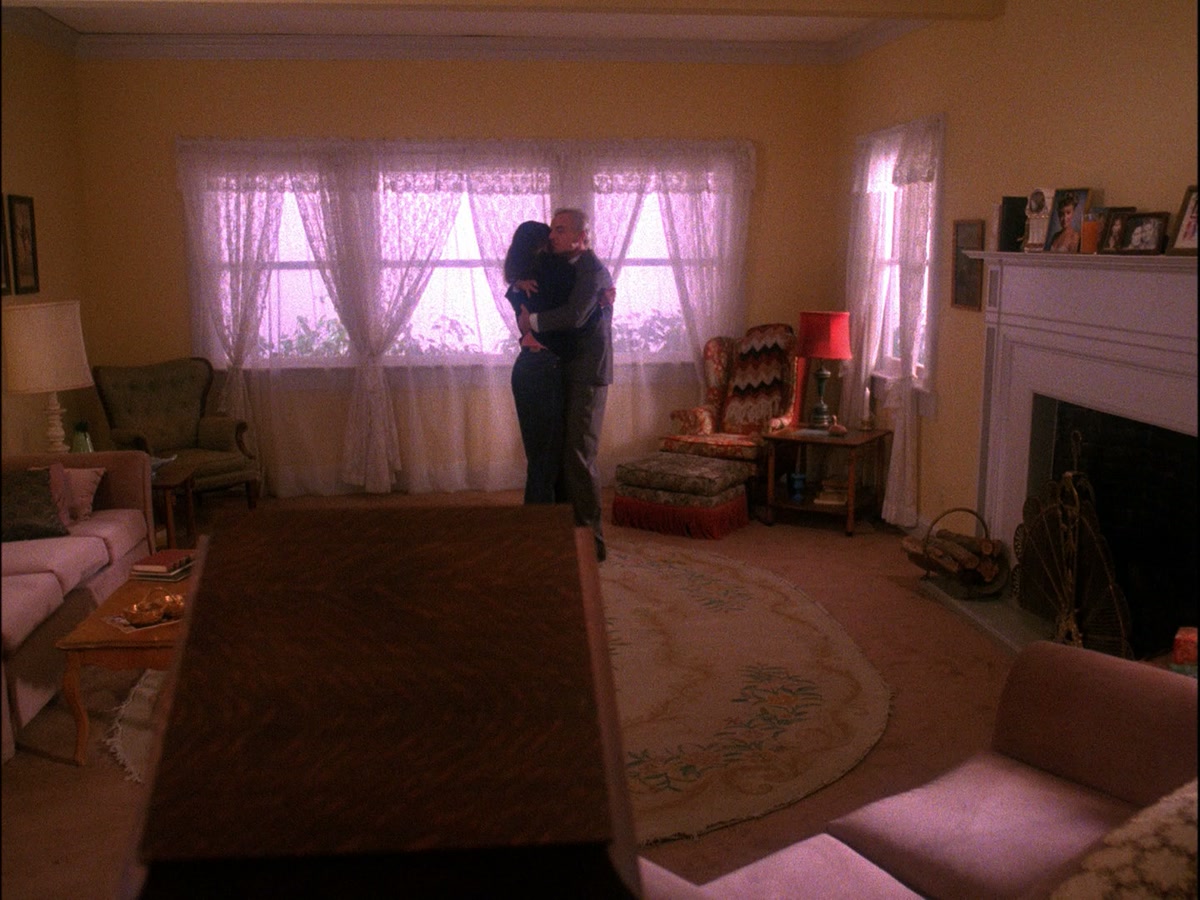
The telephone call from Maddy’s mother makes Leland maintain his story in front of Donna. Once he acknowledges that Maddy has not arrived home, the household’s polite surfaces become harder for Donna to trust. She stands before the mantel photographs, then remains with him for lemonade and music.
A record turns, a dance begins and the room repeats its association of affection with coercion. Donna is held close in the same domestic space in which Maddy was attacked. Wider views keep the furniture and doorways in sight; close views deny the embrace the reassurance it would have in another context. The danger depends on the audience’s memory of the earlier murder.
The doorbell interrupts the encounter. Truman’s arrival takes Leland away, but he does not arrive announcing a rescue of Donna. Her escape occurs inside a police operation whose full purpose she has not been told. On learning of Maddy’s death, she finds that her own visit and the delay in telling her were part of a larger absence of protection.
A familiar room becomes threatening · 4 images
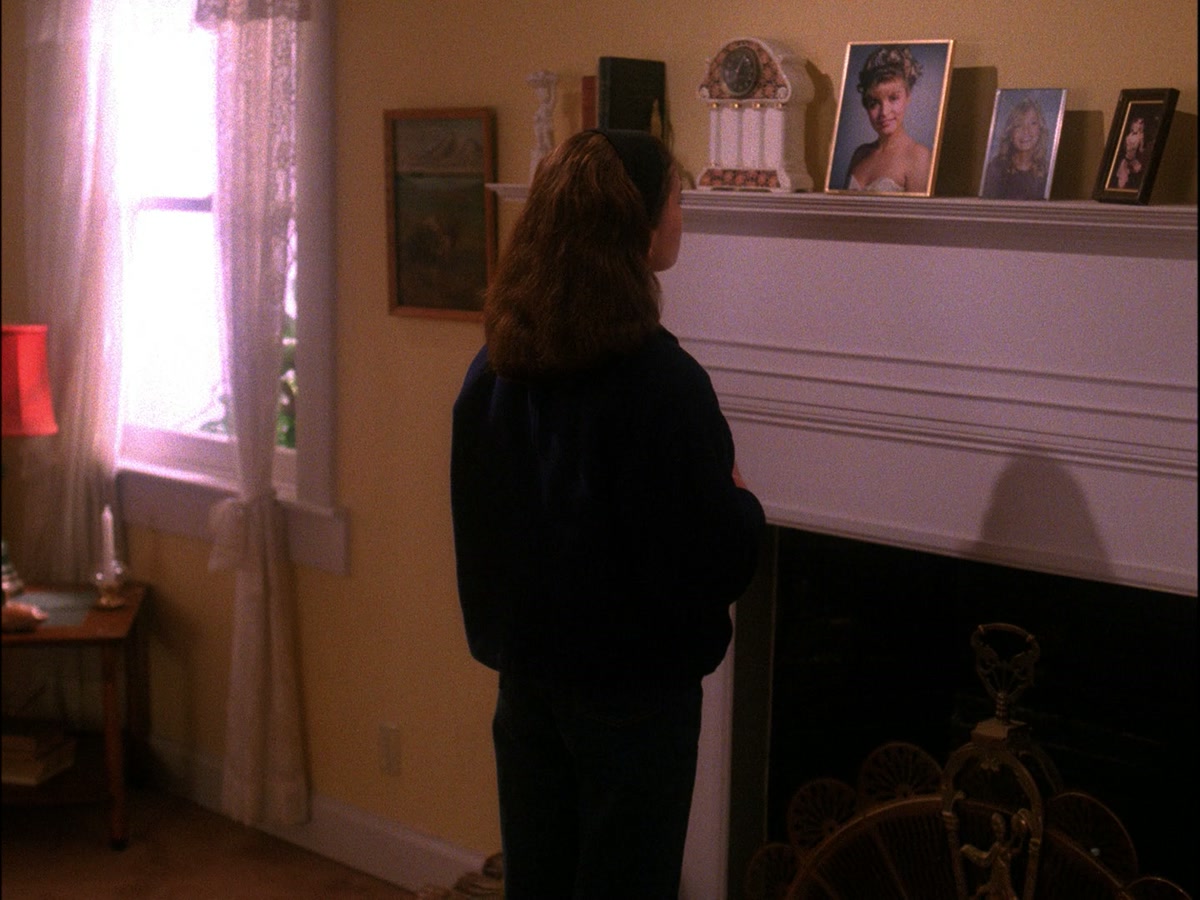

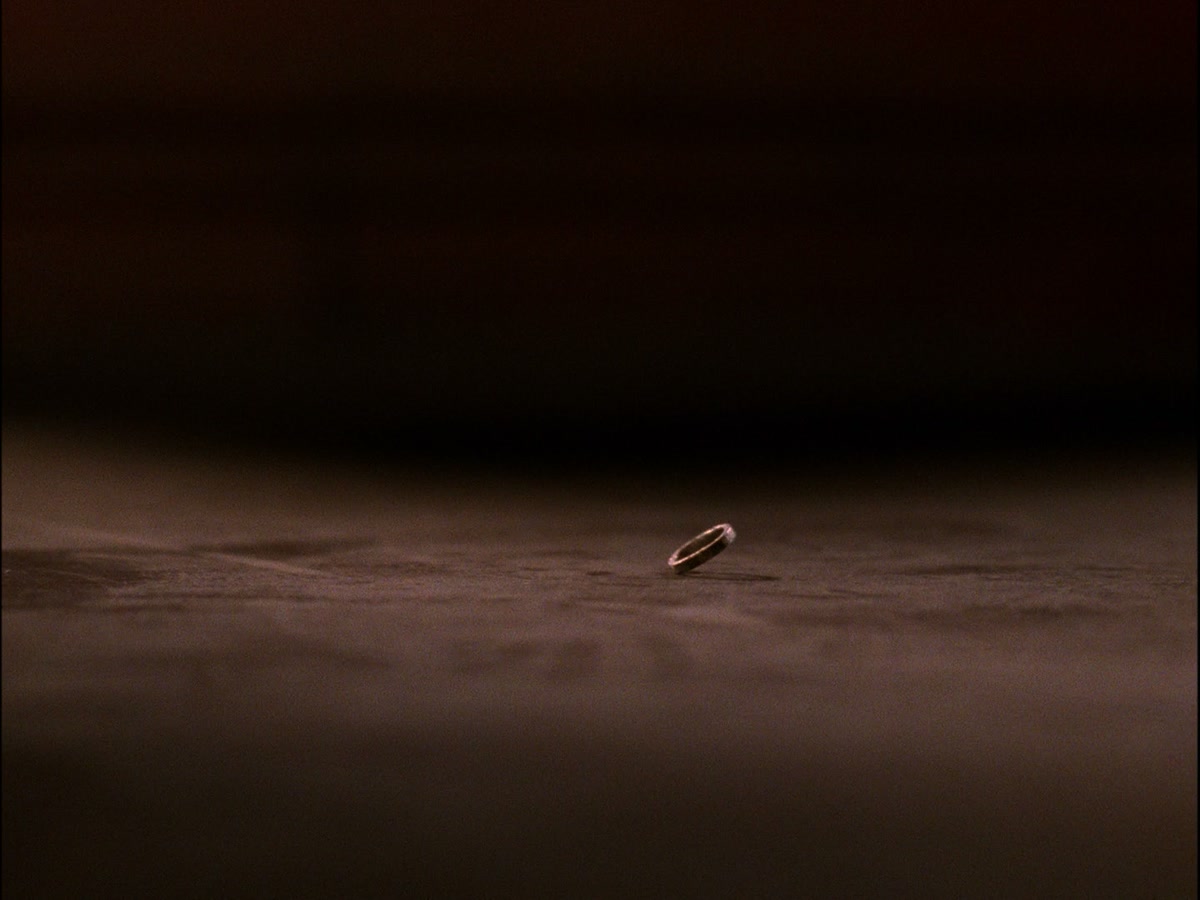
Donna and James had begun the episode imagining permanence through a ring. After the news, James leaves on his motorcycle. The movement from a promise to flight is abrupt, yet it follows the same impossible question that shadows their earlier investigation: whether they could have saved somebody if they had understood sooner.
The promise and the departure · 2 images


The detective gathers a room before he has an answer
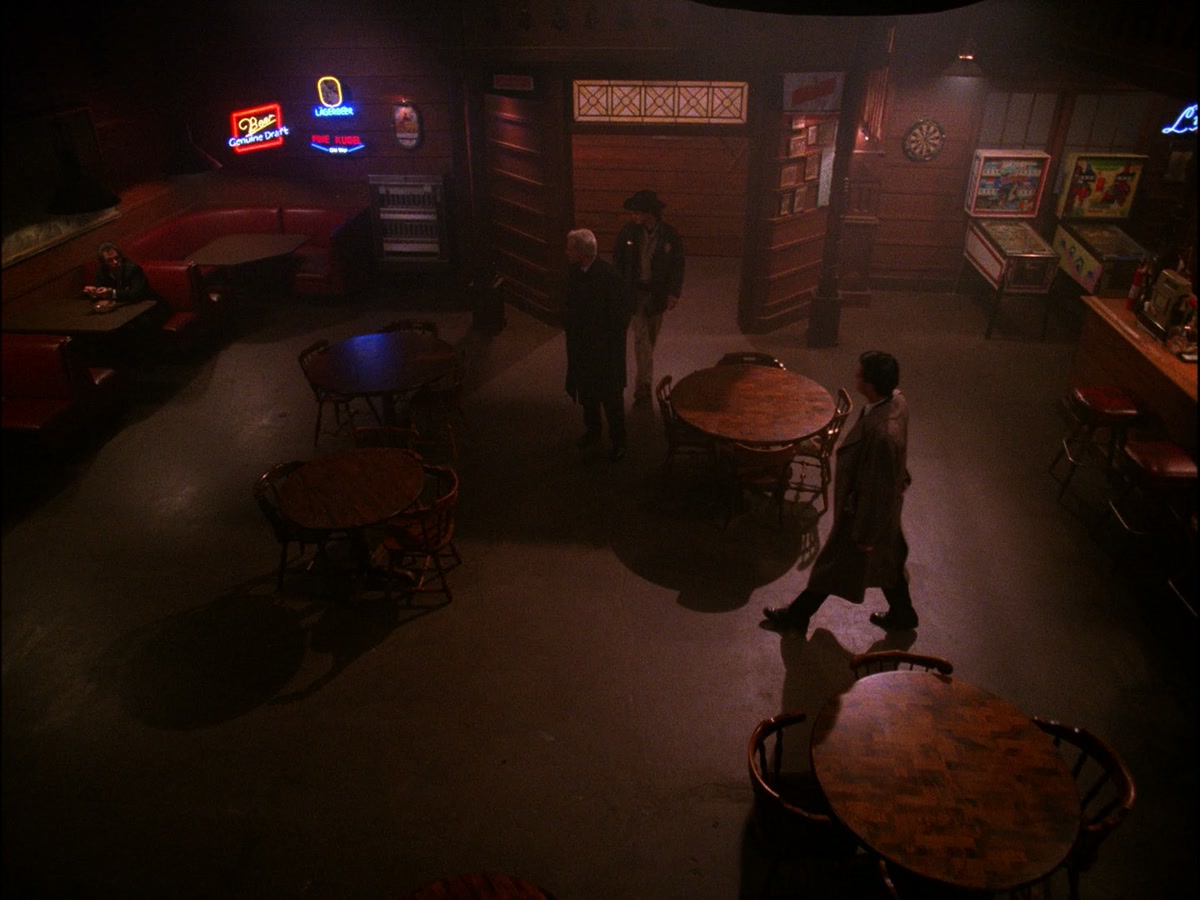
Cooper asks for a clear space at the Roadhouse and gathers suspects and witnesses. The arrangement resembles the familiar mystery-story finale in which a detective explains a solved case. Cooper instead admits that his usual methods have reached a limit. The room is ready for an explanation that he cannot yet give.
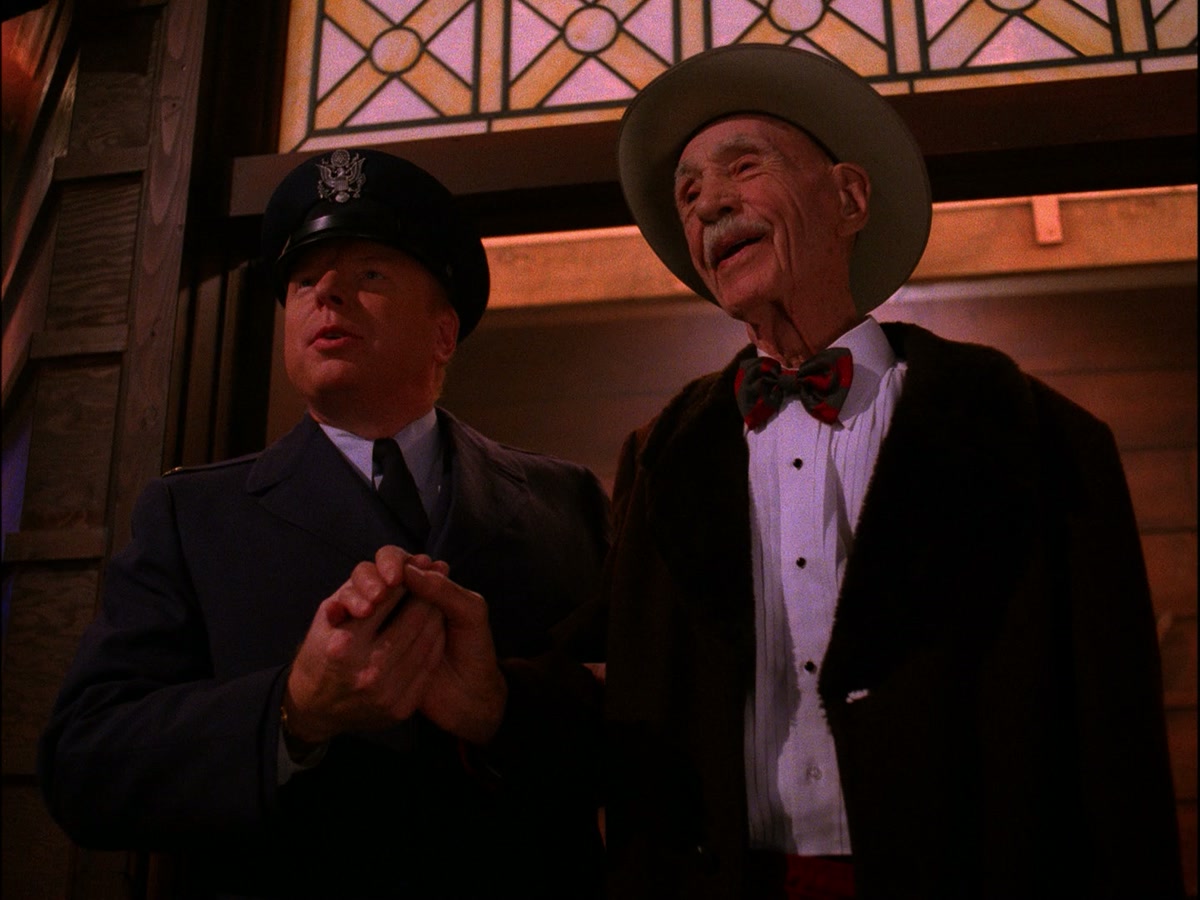
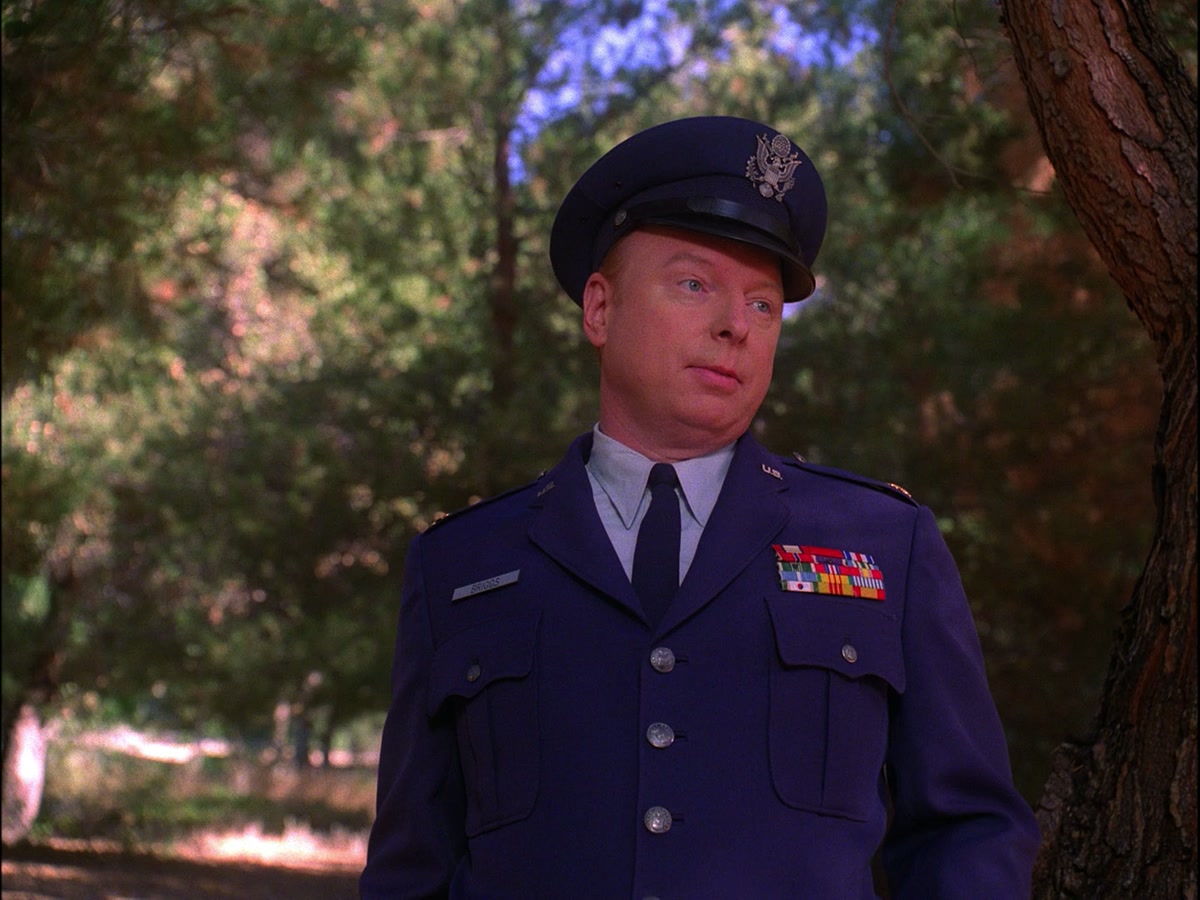
The waiter’s arrival with Major Briggs changes the assembly. Chewing gum supplies a sensory prompt; the line associated with the Red Room returns, and the withheld whisper becomes intelligible in Cooper’s memory. The Giant’s appearance and the returning ring turn recollection into a physical event.
The sequence does not make the dream a self-sufficient criminal procedure. Cooper still stages a deception, ostensibly taking Ben into custody with Leland as his lawyer. The law needs evidence that can travel beyond Cooper’s experience. The episode dramatises that gap instead of pretending a private revelation would be enough in court.
Recognition at the Roadhouse · 3 images
The question of who is speaking
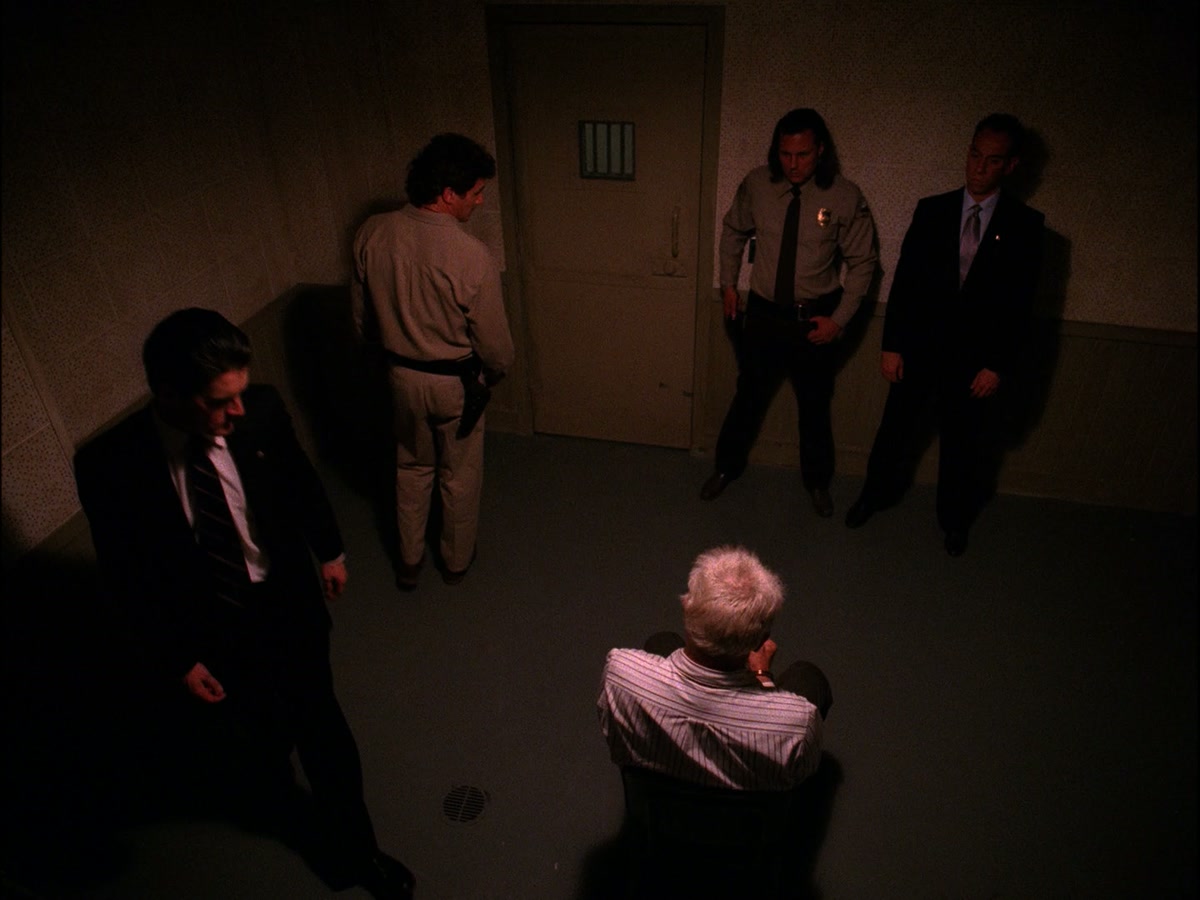
Once confined, Leland’s behaviour changes radically. The speaker taunts the investigators, addresses Cooper’s past and treats Leland as a body used for another purpose. The scene makes identity a question of performance and address as well as appearance. The same face can no longer be assumed to mean the same speaker.
Cooper’s explanation reconnects the letters, hair, dancing, blood and telephone call. Some claims assemble physical evidence; others interpret gestures and wordplay. The distinction matters because the episode’s power comes partly from watching separate kinds of knowledge converge, not from demonstrating that they were interchangeable all along.
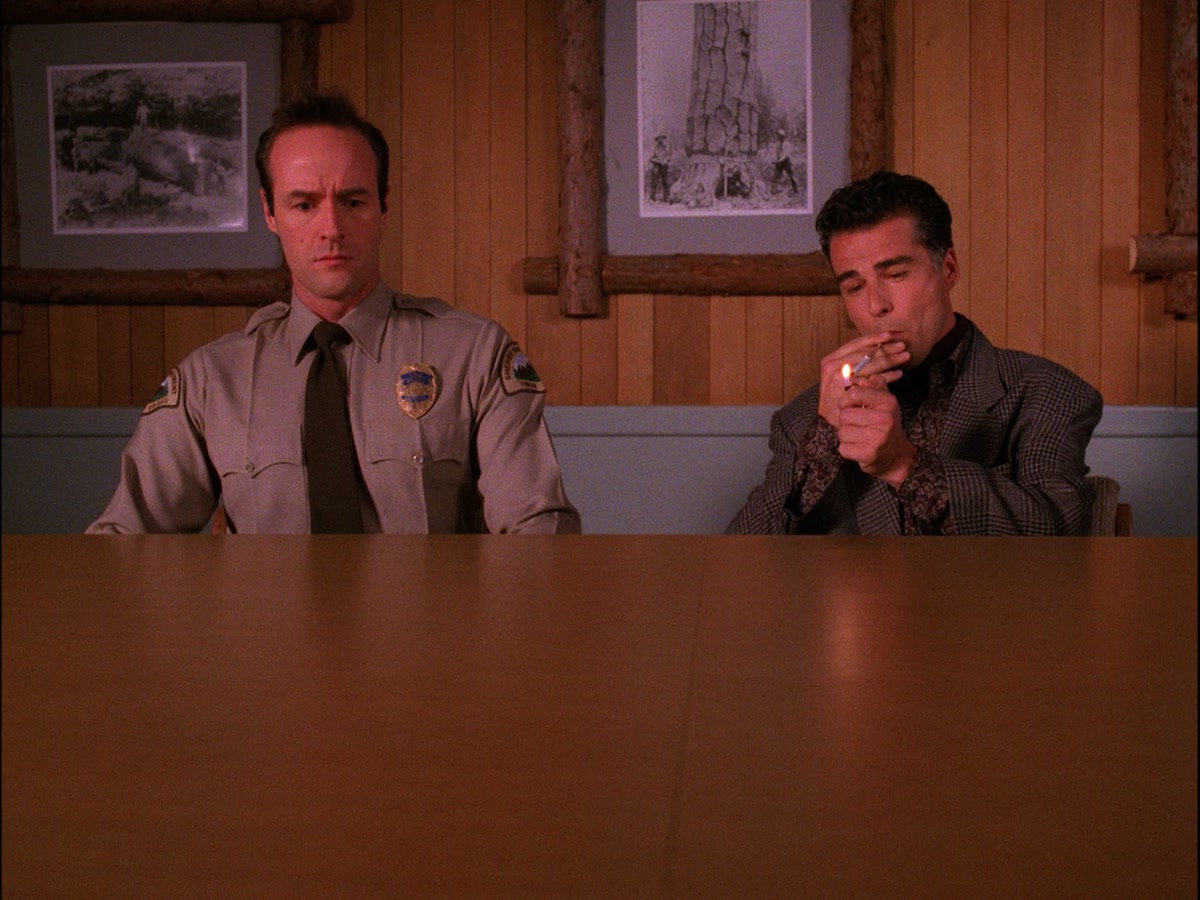
The paternity discussion elsewhere in the station gives Lucy a different kind of authority. She states her decision about her pregnancy and demands cooperation from Andy and Dick. In a building filled with men interpreting uncertain evidence, she makes one fact non-negotiable: the decision is hers. The cigarette and sprinkler system then connect this ordinary conversation to the catastrophe in the interrogation room.
Water, remembrance and an incomplete release
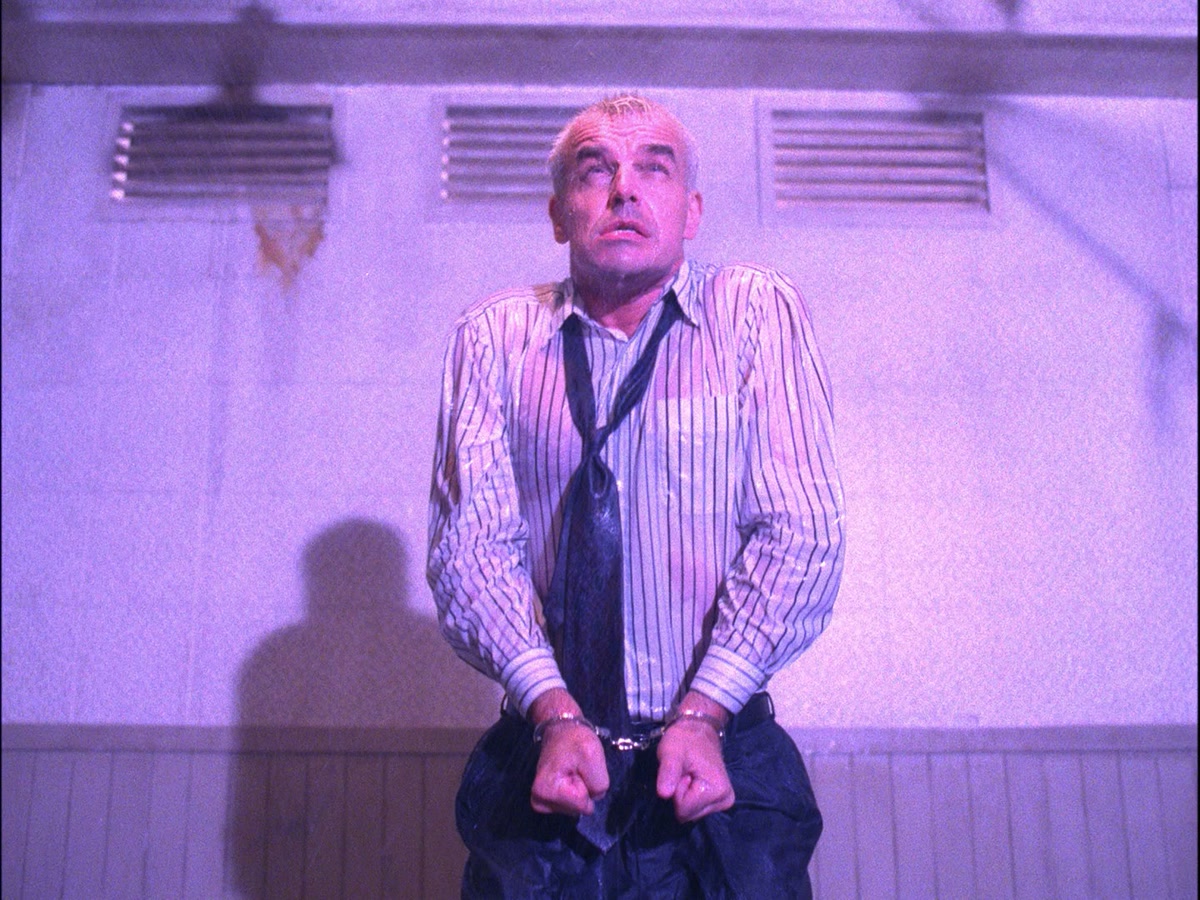
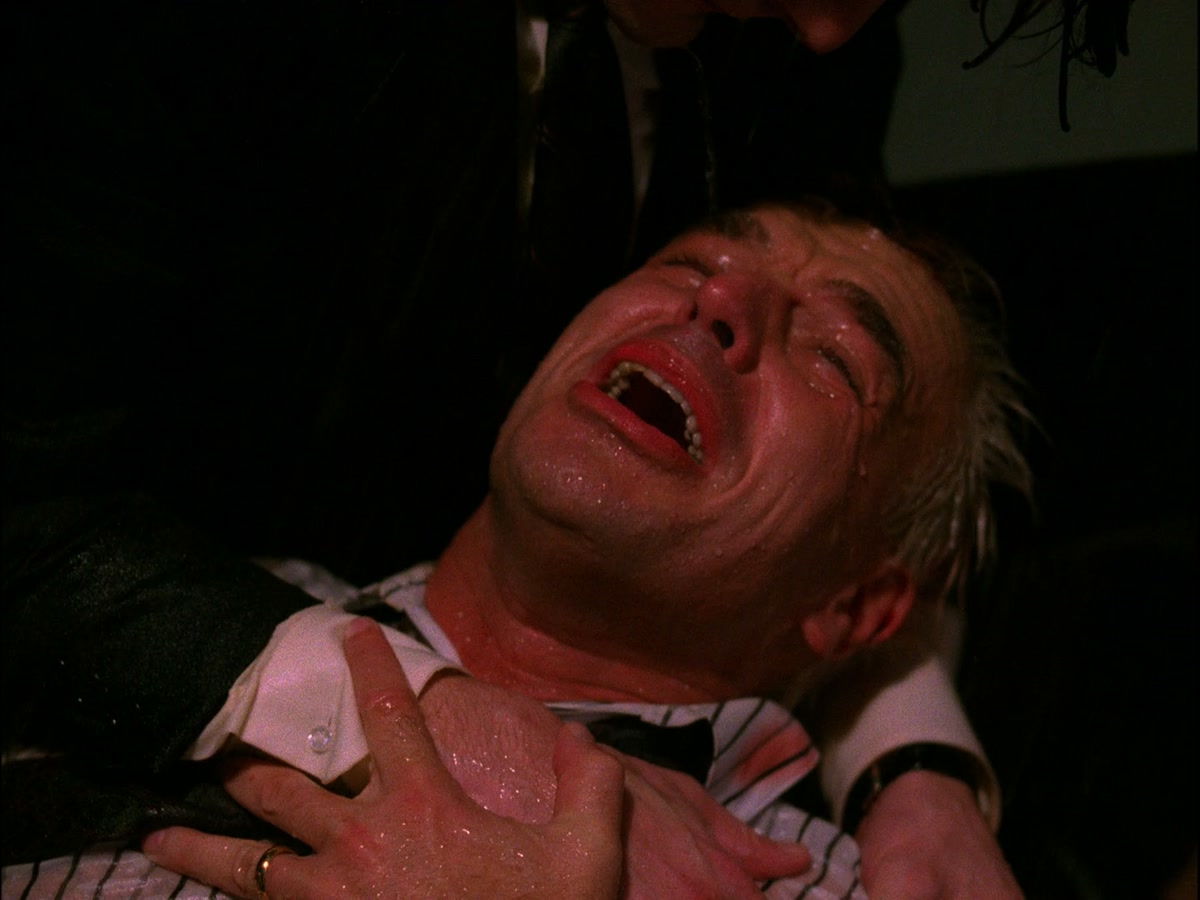
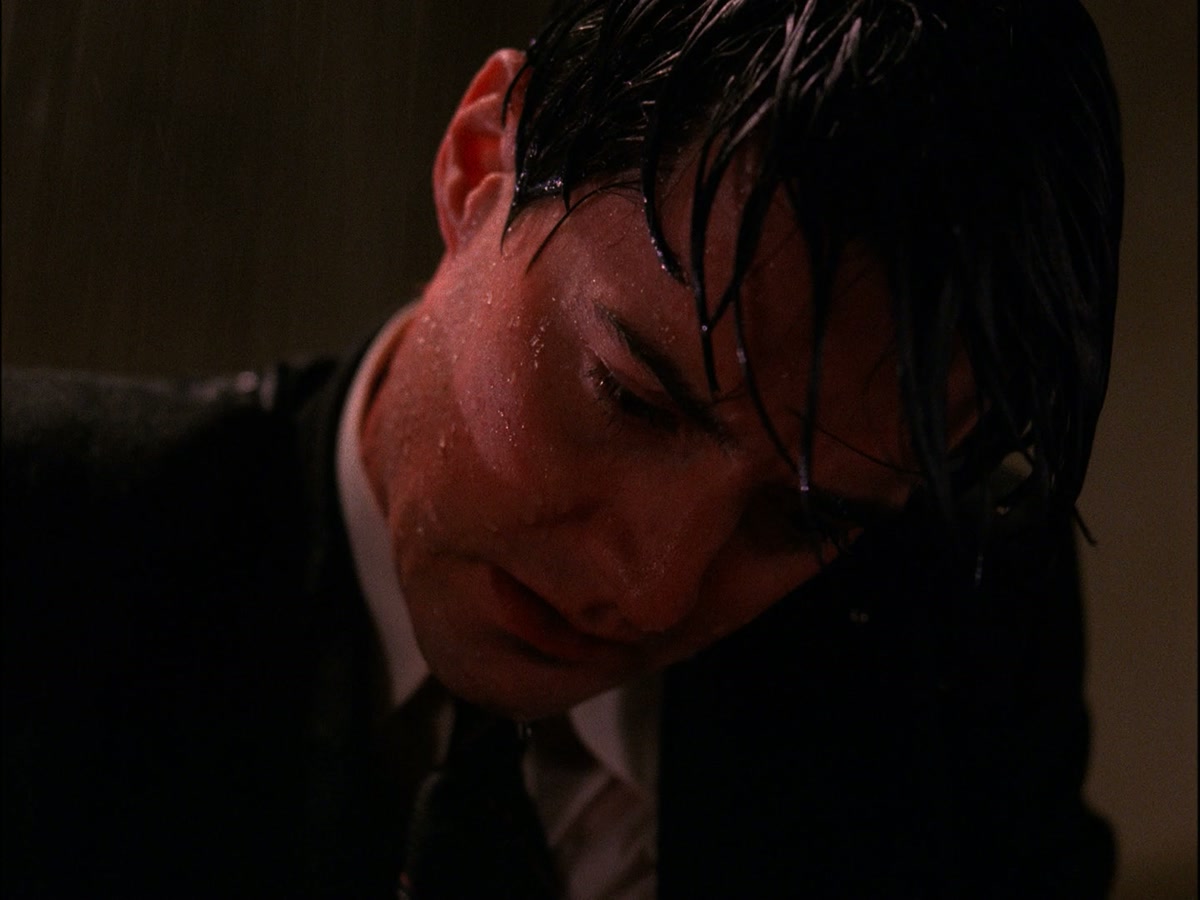
The sprinkler installation has been established before the climax. Its activation changes the interrogation room’s light and surfaces, and the investigators rush toward Leland as he injures himself. The visual transformation comes from an ordinary piece of the building’s equipment, yet the scene gives it the force of a threshold.
On the floor, Leland speaks of childhood, possession and memory. Cooper supports him and guides his attention toward light. The detective’s position has changed: he is no longer extracting a clue from a witness but attending to a dying person. Close views of the two faces and hands slow the investigation into an encounter.
Leland’s account and his claim to see Laura do not require the viewer to forget the violence or treat his own words as a complete explanation of responsibility. The episode offers him compassion while leaving an ethical difficulty that Fire Walk with Me will revisit from Laura’s experience. Her resistance is described here through the person who harmed her; it remains crucial to return to her perspective.
The discussion in the woods keeps disagreement alive. Truman struggles with the supernatural explanation; Albert considers human evil; Cooper insists that understanding the cause matters because their work is to stop it. The final owl and moving woodland images prevent the solved murder from becoming a secure boundary around the threat.
The interrogation room and its aftermath · 5 images

Words that return, sounds that interrupt
Several decisive moments begin with hearing something already encountered: the French phrase, the gum remark and the remembered whisper. The episode treats recognition as delayed. The right words can be present before a listener understands why they matter.
The English caption track identifies the record music during Donna’s visit and marks thunder, the telephone and doorbell around the encounter. These cues are useful locators for comparison: domestic music extends Leland’s invitation, while calls and arrivals interrupt what the room is becoming. In the final sequence, the captions mark the alarm and impacts before Cooper’s sustained address to Leland.
A focused comparison can follow the shift from public explanation at the Roadhouse to intimate speech on the floor. In one, Cooper needs a room of people to recognise the answer; in the other, he directs his words toward a single person whose remaining attention is slipping away.
A route through Arbitrary Law
- The new evidence. Albert, Truman and Cooper confront the connection between two deaths.
- A phrase and a page. Donna leads Cooper back to the Tremond house and Laura’s dream account.
- A bargain. Catherine makes Ben’s alibi part of a business transaction.
- The Palmer living room. An errand for Maddy becomes a threatened repetition.
- The Roadhouse. A staged gathering brings back a missing memory and a ring.
- The interrogation. Identity, evidence and confession converge uneasily.
- The floor and the woods. Cooper offers guidance; the investigators cannot agree that the danger is over.
Sources and connections
Primary source: Twin Peaks, “Arbitrary Law,” Season 2, Episode 9 / overall Episode 16, in Twin Peaks: From Z to A. Opening credits identify director Tim Hunter. Scene studies derive from the episode; dialogue and sound-cue references were checked against the English subtitle track.
Connections: Lonely Souls, Cooper’s first Red Room dream, the Season Two dossier and Mark Frost on planning and discovery.