Twin Peaks: Episode 25 — On the Wings of Love
1991 · Season 2, Episode 18 · Directed by Duwayne Dunham
A listening device, a sudden change in hearing and a mark cut into stone. The investigation reaches Owl Cave while ordinary conversation exposes new intimacies and old secrets.
Season 2, Episode 18 / overall Episode 25. Contains episode spoilers. Focused image galleries open on request.
Explore this episode
A borrowed voice in the Bookhouse
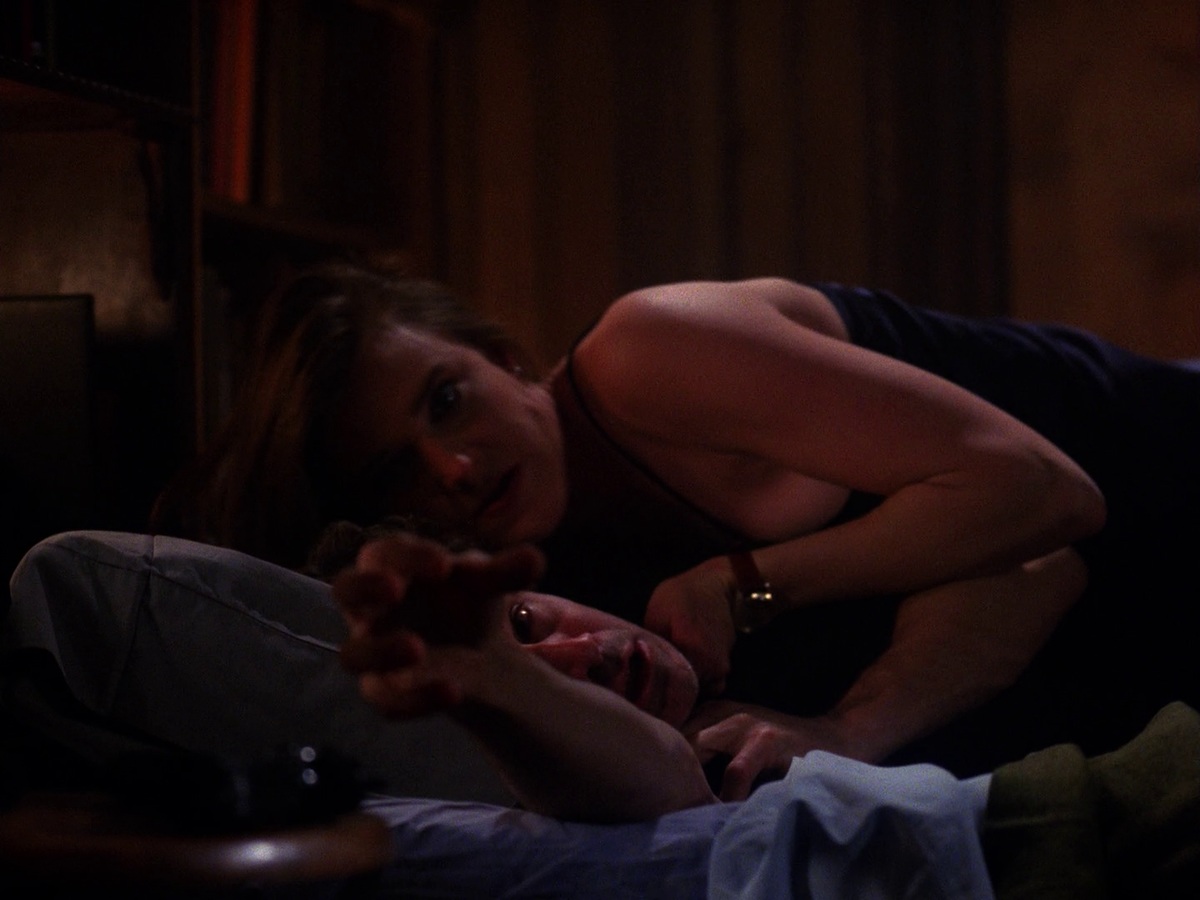
Jones enters the space left vulnerable by Truman’s grief. Her claim to be Josie exploits a voice and a name before the sheriff is fully awake. The scene carries forward the previous episode’s concern with impersonation: Earle borrowed an old friend’s identity to enter the Hayward house; Jones borrows a dead lover’s presence to get close enough to kill.
The bedside struggle reverses that attempted control. Truman survives, and the subsequent exchange with Cooper is deliberately prosaic. Coffee, food and a revoltingly elaborate hangover cure restore the scale of friendship after the bedroom danger. Cooper’s list of ingredients produces a physical reaction rather than a deduction. The sheriff is back among people who recognise him, even if they cannot simply cure his loss.
Read this beside Cooper’s earlier embrace. The two episodes distinguish helping someone endure grief from explaining it away. Truman’s return to work does not require a declaration that everything is resolved.
The miniature that listens
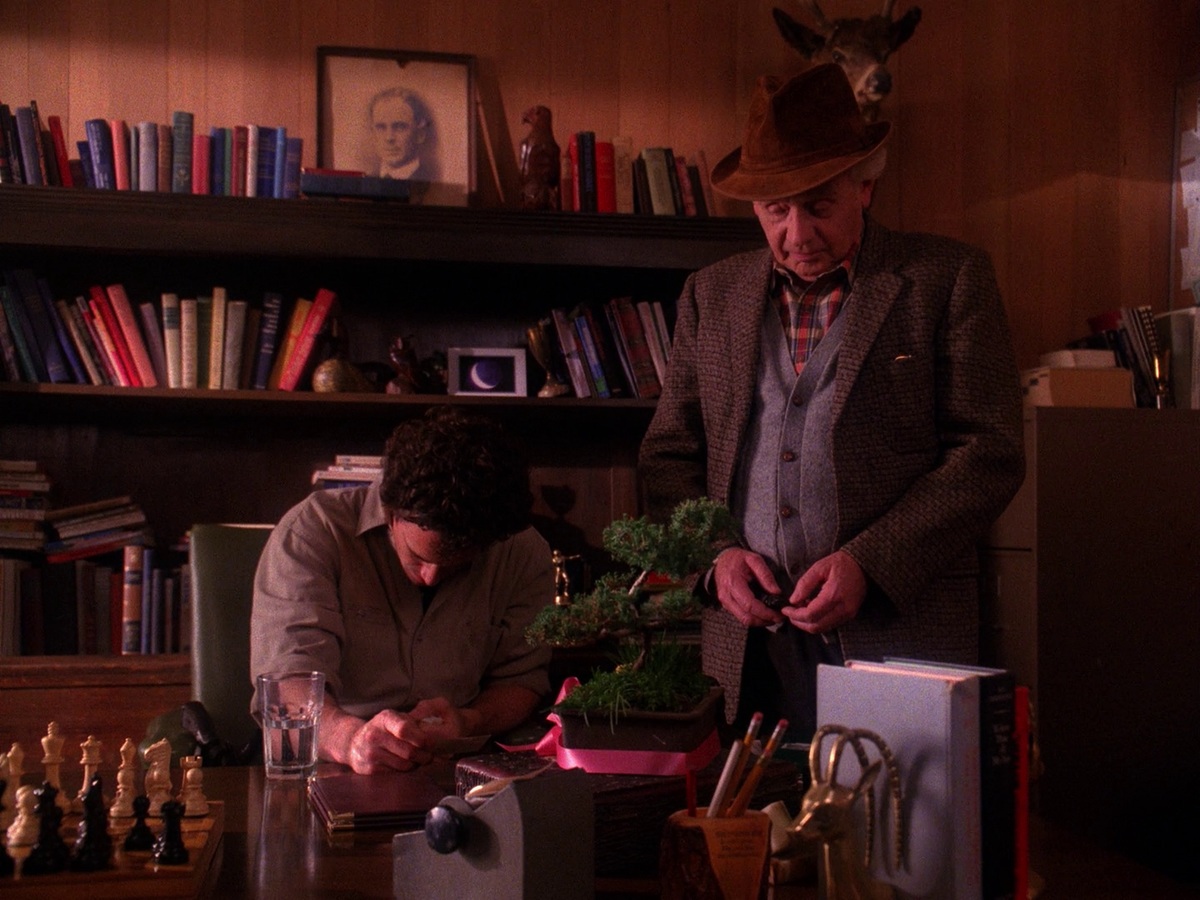
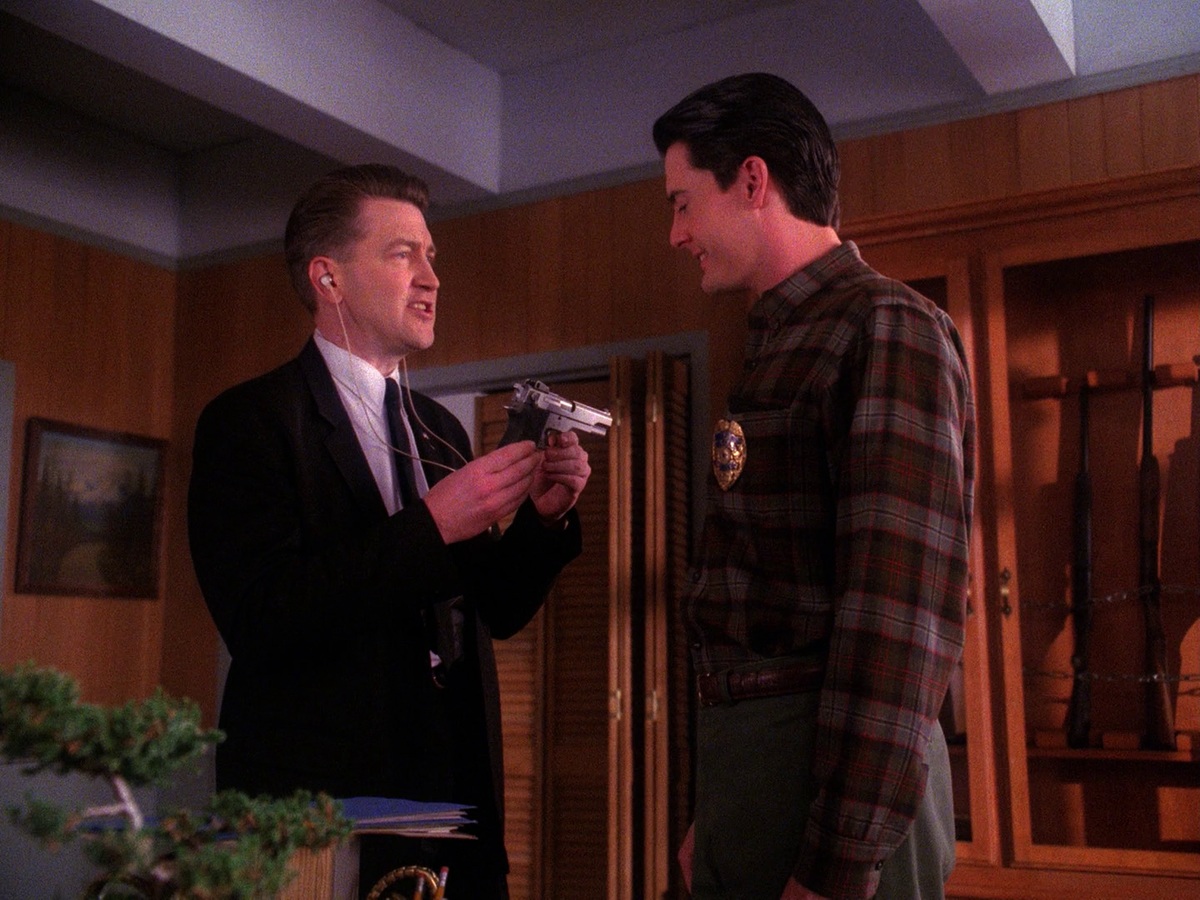
The bonsai arrives as a gift apparently from Josie. Its scale encourages affectionate attention: an ornamental tree on a desk, surrounded by the equipment of routine police work. The cut to Earle’s listening apparatus reverses that harmless appearance. Information travels out of the room while its occupants believe they are speaking privately.
Gordon brings the restricted portion of Earle’s file. The account joins his apparent illness to deliberate deception and identifies his earlier connection with Project Blue Book. These are statements made by the investigators, not an invitation to collapse the episode’s fictional history into a factual account of the real project. What matters dramatically is that the official file and Briggs’s unexplained experiences now seem connected.
Cooper’s reinstatement restores institutional authority at exactly the moment the institution’s conversation is compromised. The badge and new weapon make the return tangible; the receiver means Earle can learn from the celebration. The opposing scenes turn information itself into an instrument of pursuit.
A gift, a listener, a restored agent · 3 images
Earle recasts the town as his game
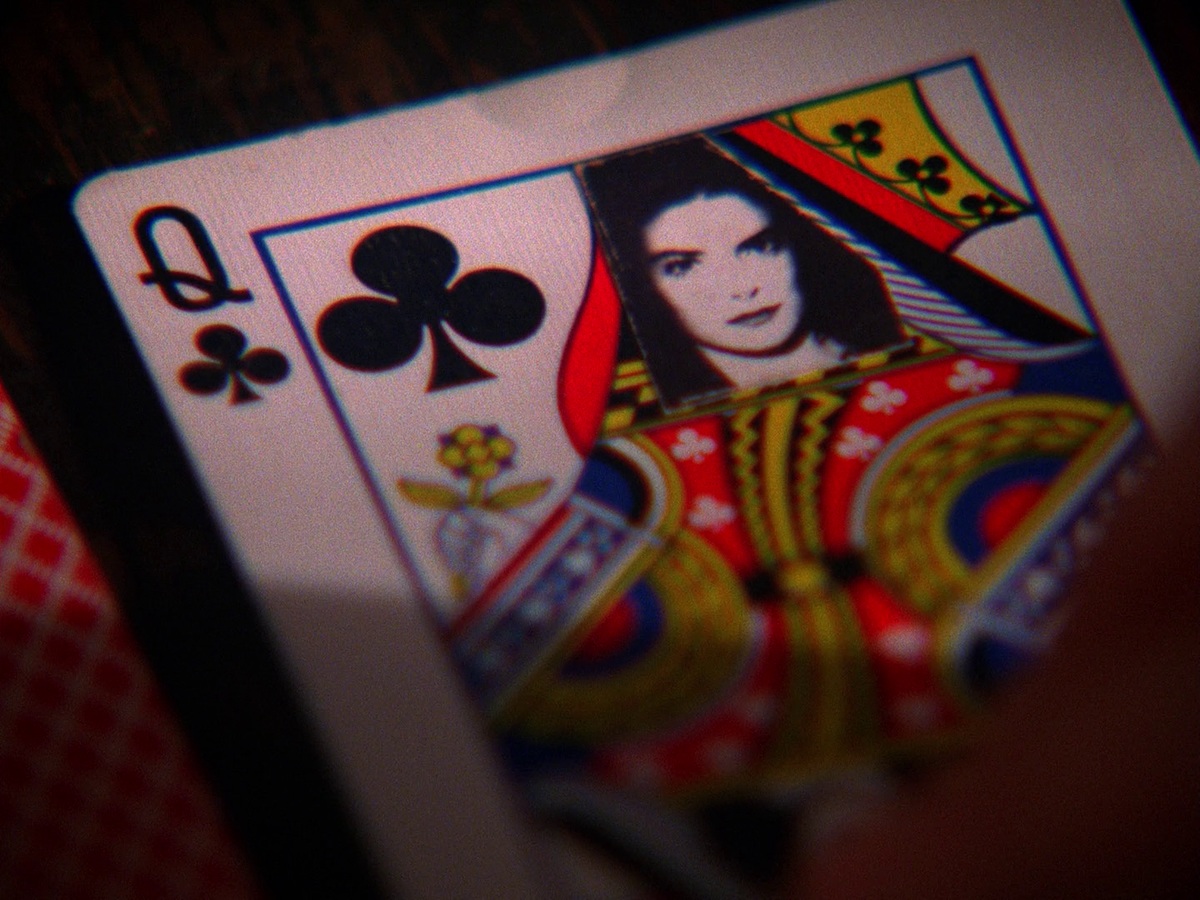
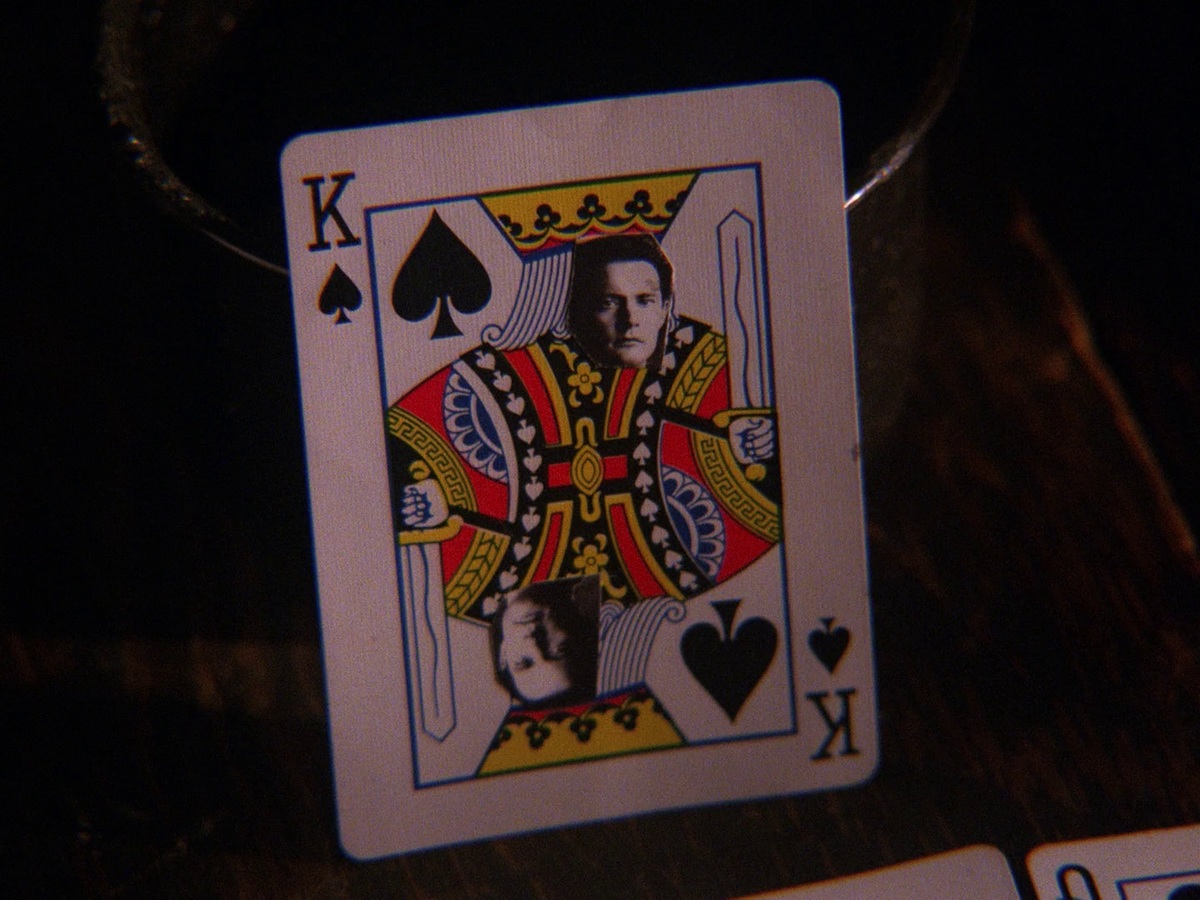
The playing cards replace abstract game pieces with faces. Donna, Audrey and Shelly become queens; Cooper becomes a king. Earle’s attention then shifts to the future winner of Miss Twin Peaks. The pageant offers a public mechanism for selecting a victim, while its promises of recognition and opportunity become material for his private threat.
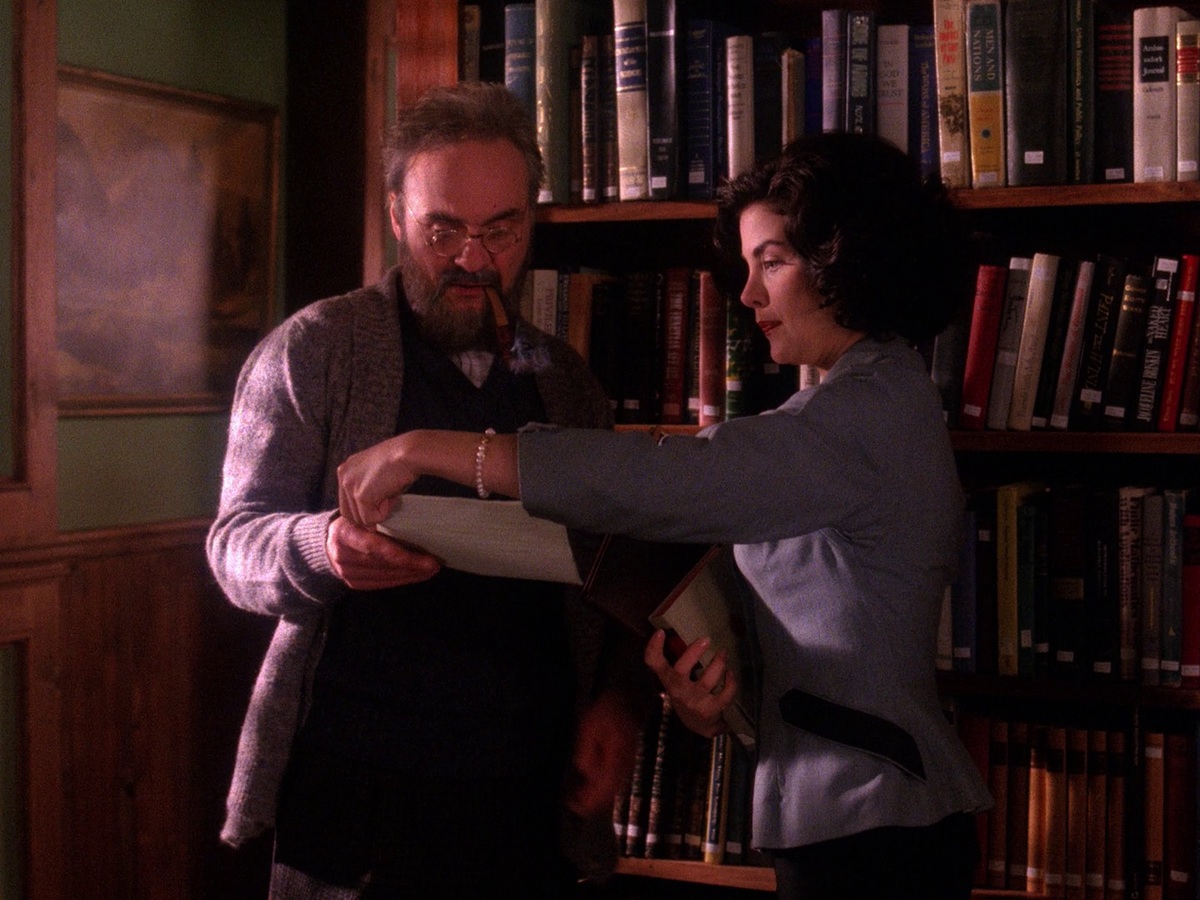
The library encounter shows how that scheme enters everyday life. Audrey is researching civil disobedience for her father’s campaign. Earle, as Edward Perkins, presents himself as a poetry teacher. His expertise lets him seem helpful while she reads the poem that has already drawn the women into his game. The shelf-lined room and courteous exchange make knowledge look protective when it is being used to approach a target.
He recognises Shelley’s poem and compares Audrey to a queen. The allusion works differently for each participant: she hears flattery from a stranger, while the viewer has seen the altered cards. Suspense comes from the unequal meanings of the same conversation, not from Audrey being given an obvious warning and ignoring it.
Faces become pieces · 3 images
Gordon hears Shelly
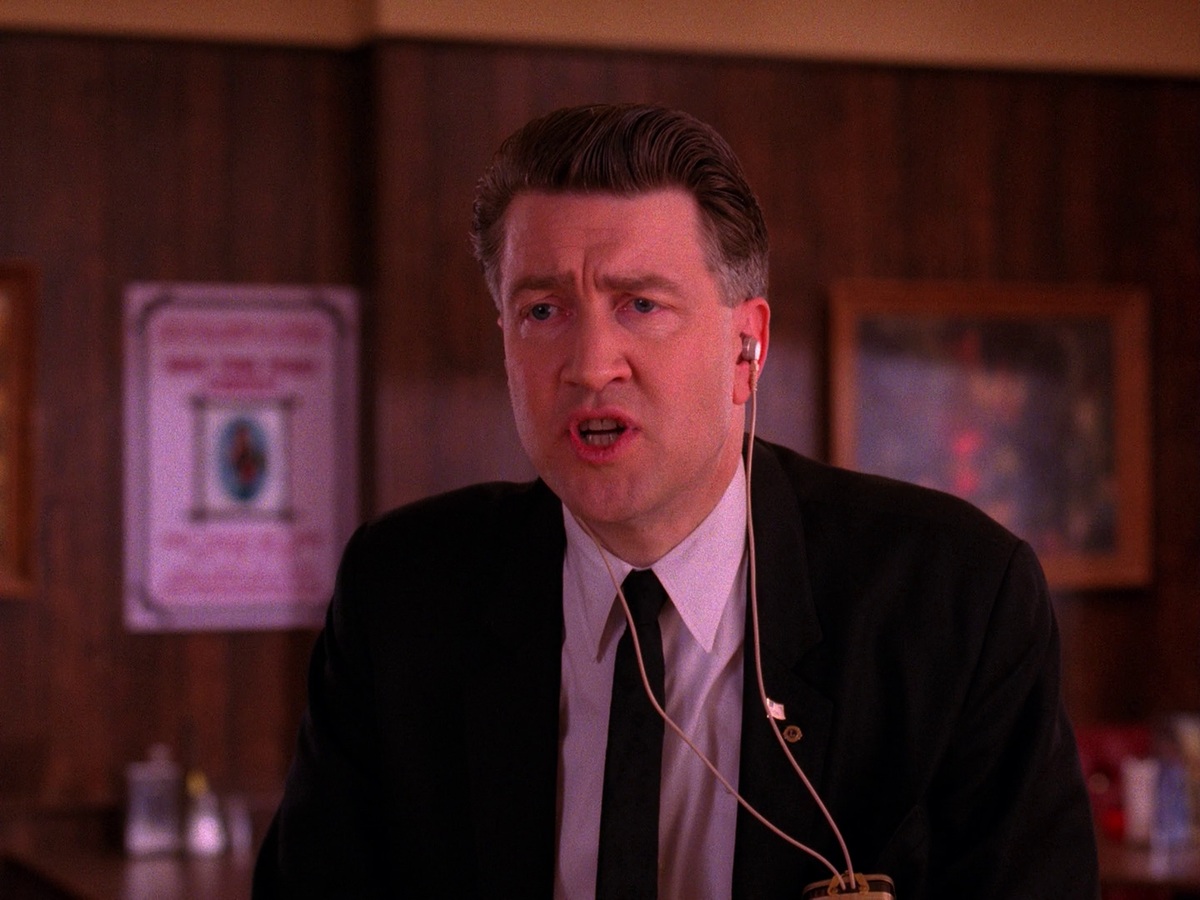
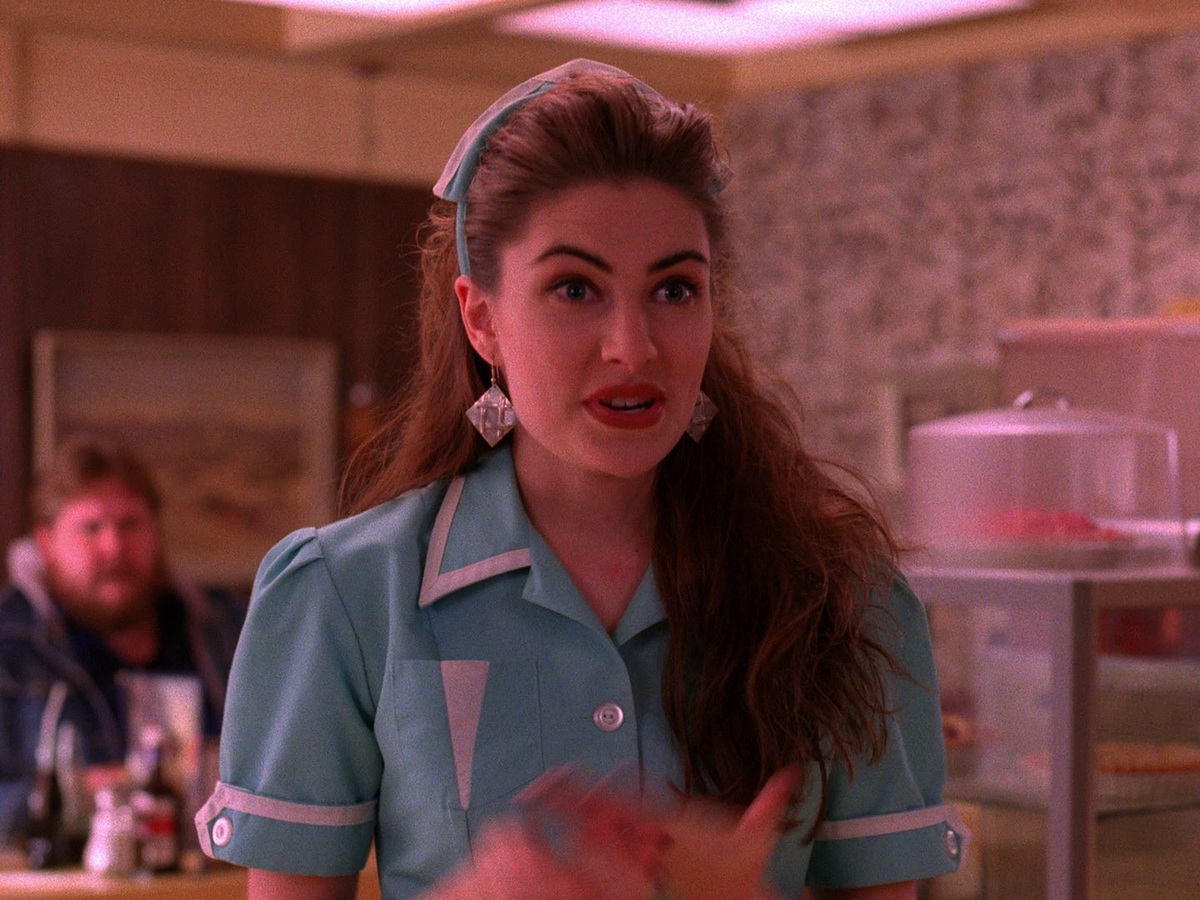
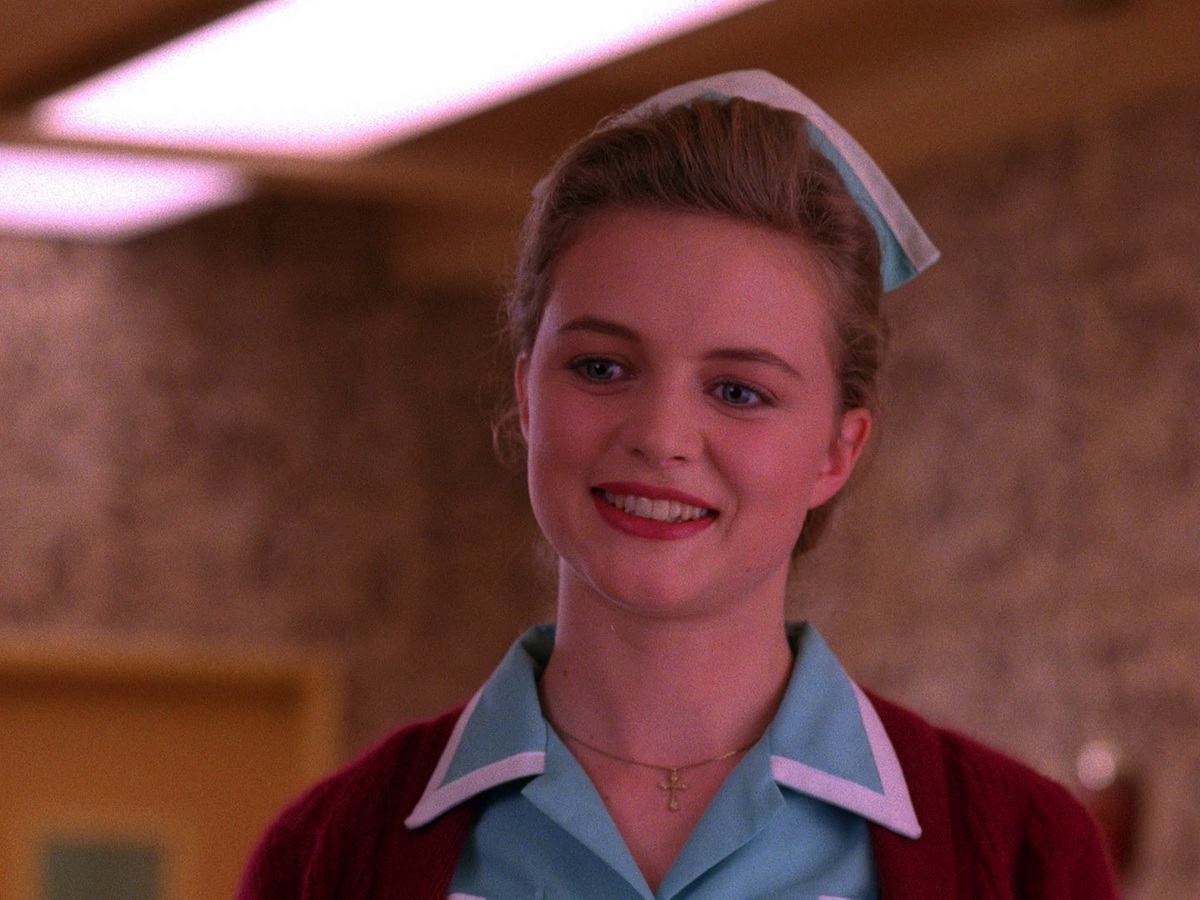
At the Double R, Gordon’s familiar difficulty hearing becomes selective. Shelly speaks and he understands; Margaret joins in and the old difficulty returns. The sequence makes the change explicit in the dialogue and in Gordon’s attention to his hearing aid. It does not establish a medical explanation, and its comic precision depends on leaving the exception unexplained.
The captions distinguish his shouted lines from an ordinary speaking voice during the exchange with Shelly. That shift gives the flirtation a formal shape: the loud public figure discovers a private conversational level, then loses it when another person intervenes. Shelly is not merely the subject of his compliments. Her relaxed response helps turn his astonishment into a conversation.
Kyle MacLachlan’s later account of acting opposite Lynch’s Gordon Cole describes how fully Lynch committed to the role and how difficult it could be to keep a straight face. That recollection provides a useful perspective on the performance without proving the circumstances of this particular take. See the cast testimony study for the distinction between an actor’s memory and the scene on screen.
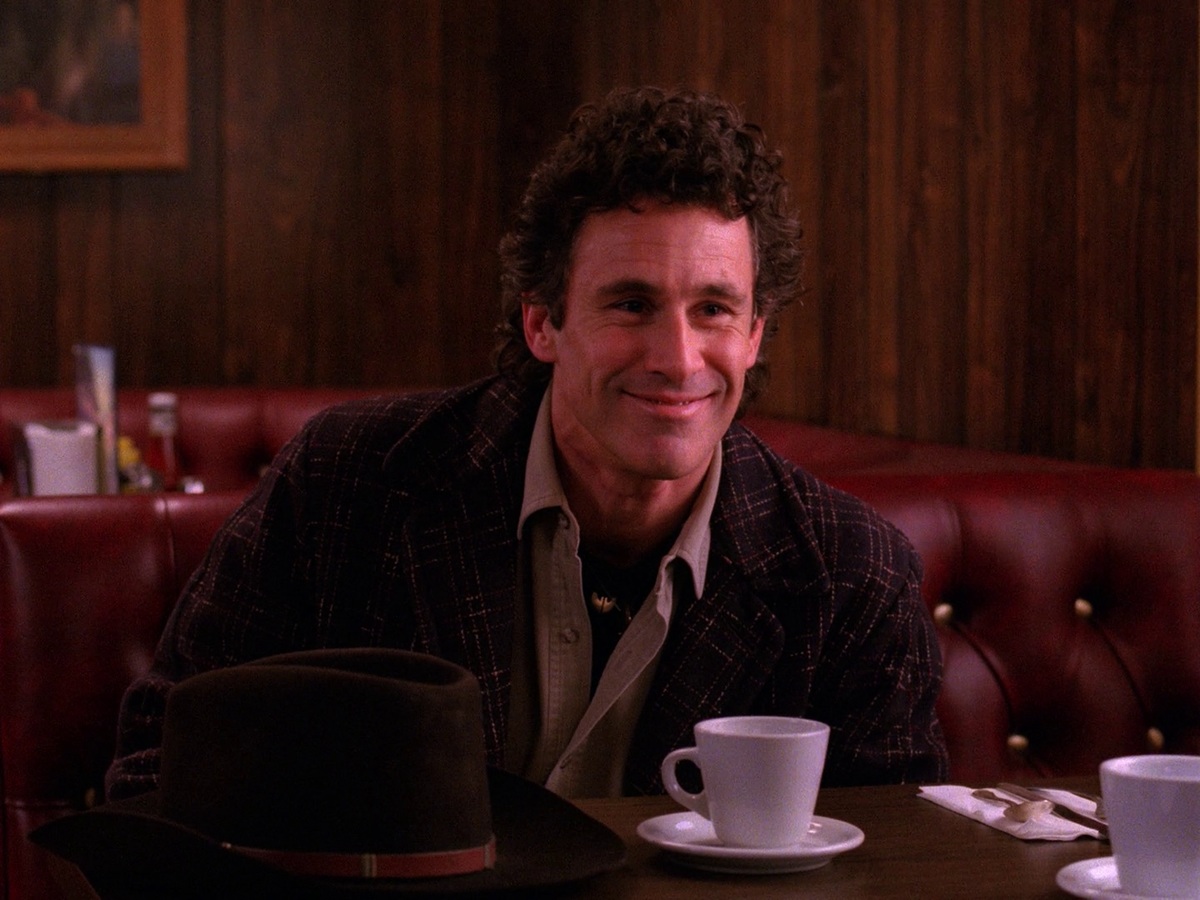
Truman’s recognition of Cooper’s attraction to Annie supplies a second comedy of listening. Cooper thinks he is making conversation; Harry hears a man trying to tell a joke to someone he likes. The unfinished penguin joke, its delayed completion and Annie’s response allow the audience to understand what Cooper has not yet admitted.
Two conversations at the diner · 4 images
The conversation behind the wall
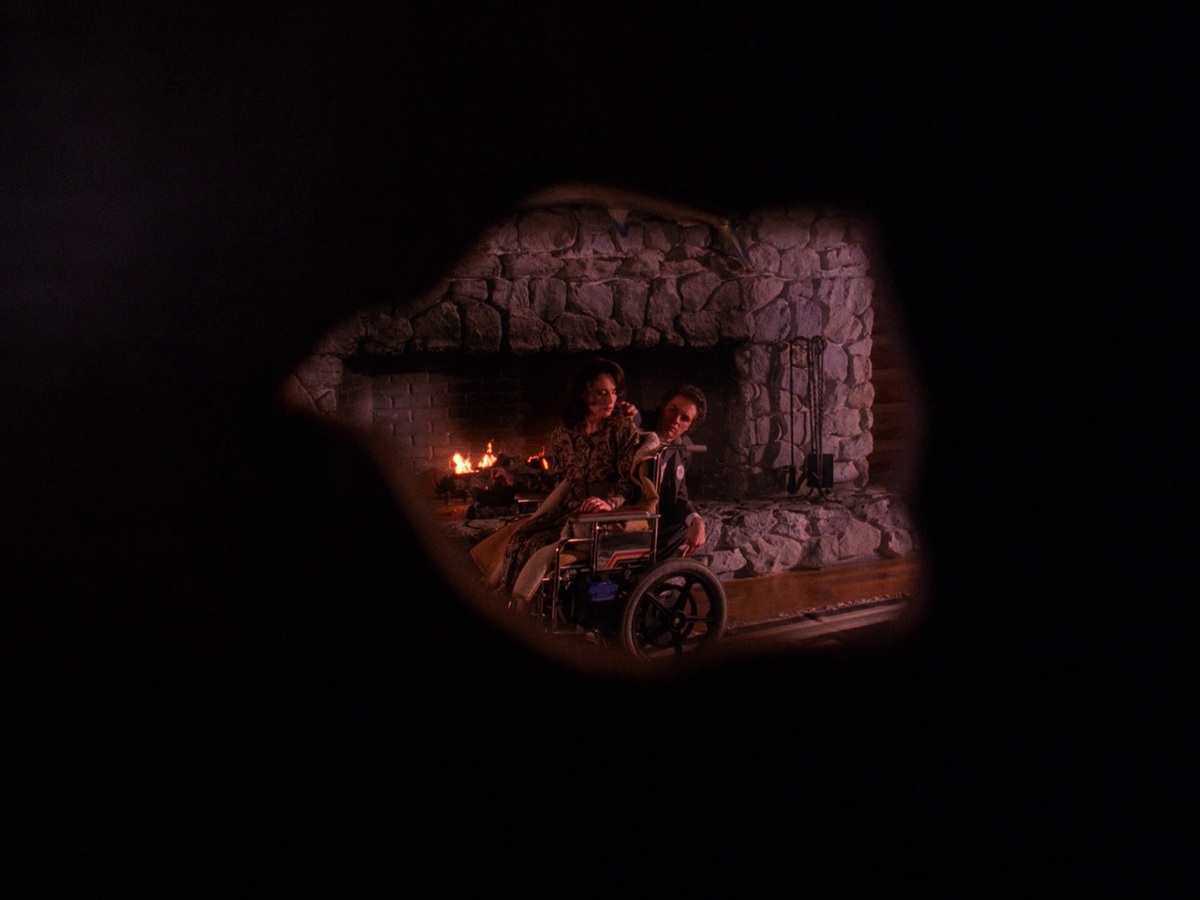
Donna notices Eileen visiting Ben and asks Audrey for help. Their hidden vantage gives the audience a restricted view of a conversation neither woman was meant to witness. The small opening reverses the expansive hotel interiors: access to the family’s past is reduced to a fragment seen through darkness.
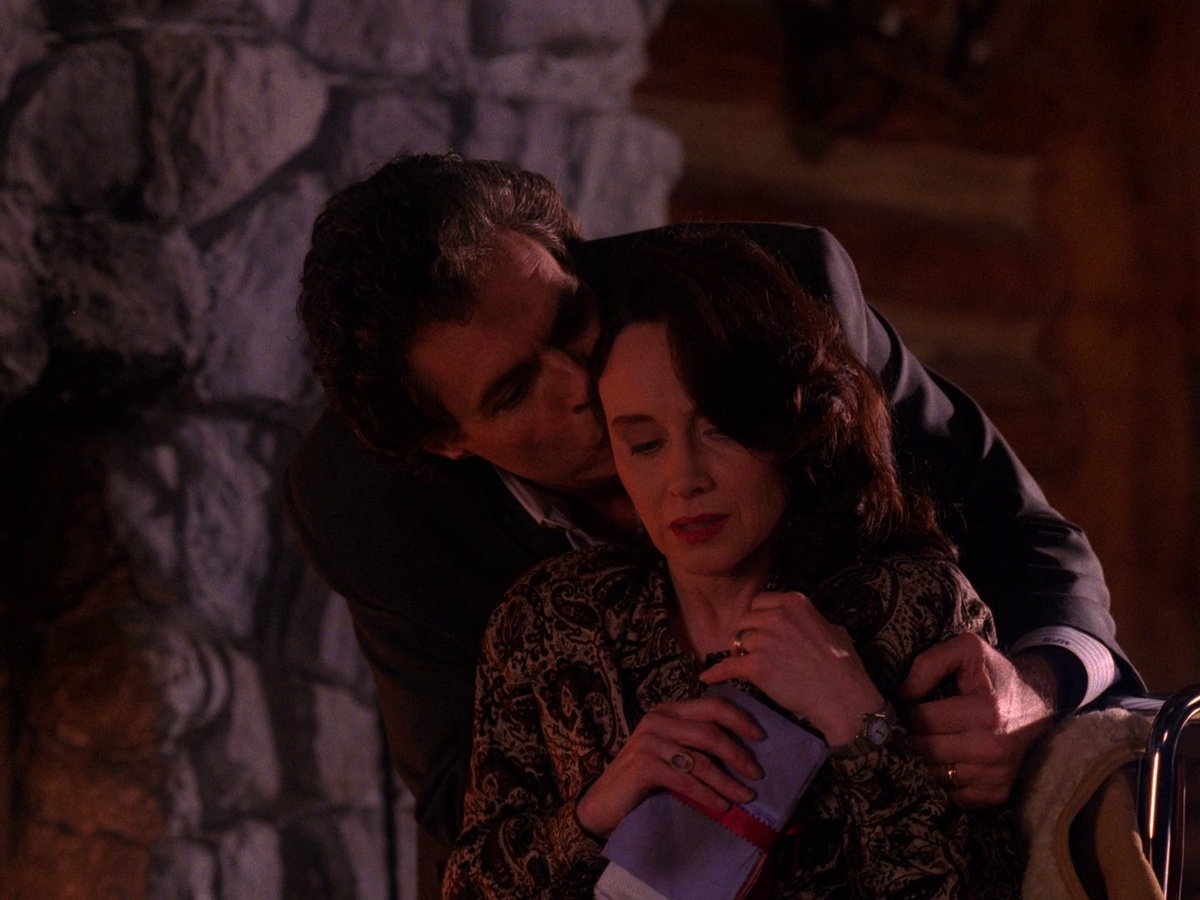
Eileen wants old letters removed from her life. Ben appeals to their shared history while presenting his current reform as a reason to reopen it. She understands that the attempt to repair one wrong may create another. The dialogue deliberately withholds a complete explanation, but the references to time, secrecy and a person who must not be told make the stakes unmistakably familial.
Bill’s later account of charitable business does not settle Donna’s suspicions. The flowers arrive without a card, and his response adds pressure rather than reassurance. Objects that should express goodwill—letters, flowers, a gift plant—keep carrying information that their recipients cannot safely accept at face value.
Ben’s appeal to Audrey also mixes affection with purpose. He asks for honesty and family solidarity, then sends her away on urgent campaign business. Wheeler’s advice to begin with the hardest truth exposes the difficulty of separating Ben’s new moral language from his old habit of arranging other people’s lives.
The Haywards and the Hornes · 4 images
Owl Cave: a drawing becomes a mechanism
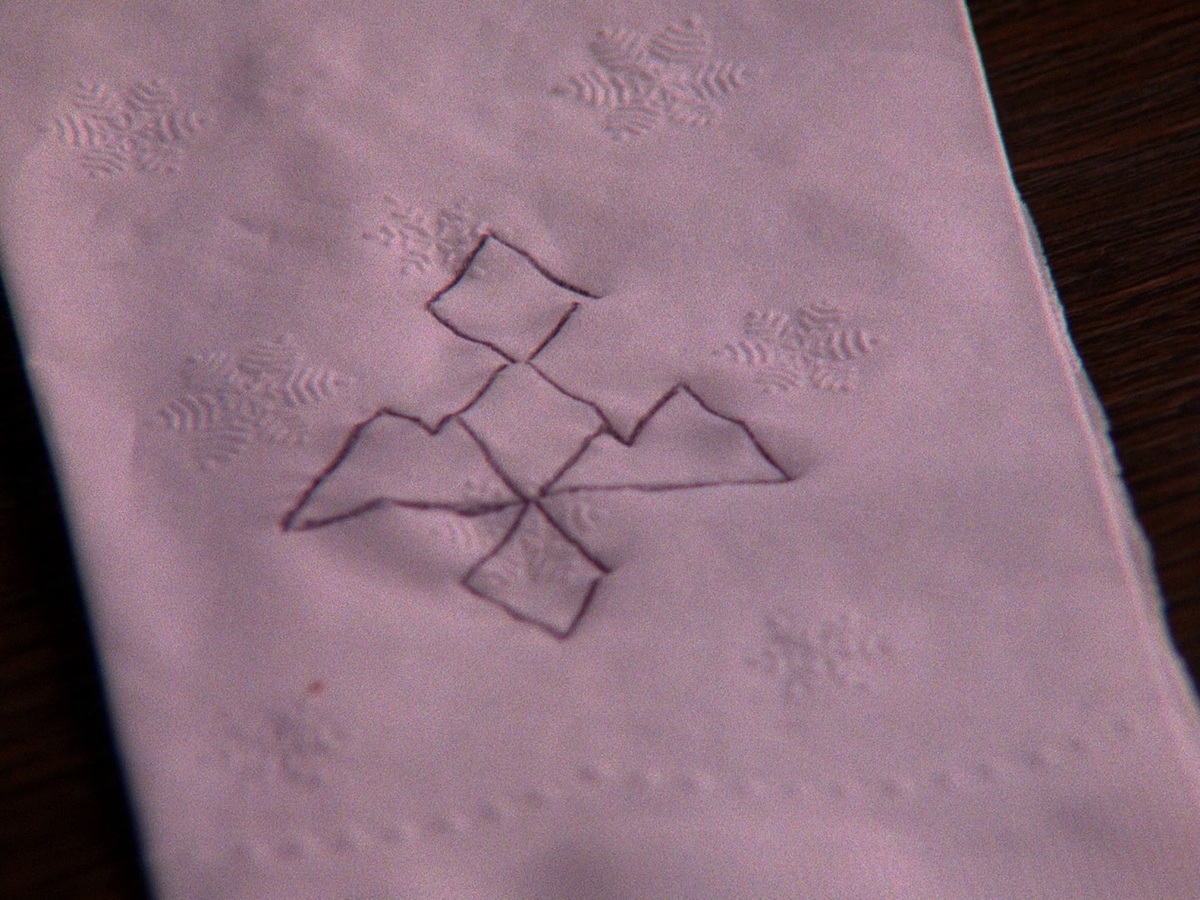
Annie recognises Cooper’s combined drawing of Briggs’s and Margaret’s marks. The clue leaves the police station not through a laboratory result but through local familiarity at the diner. A napkin carries the design into the next stage of the investigation. The same episode that gives Cooper his official status back makes an accidental conversation indispensable to his progress.
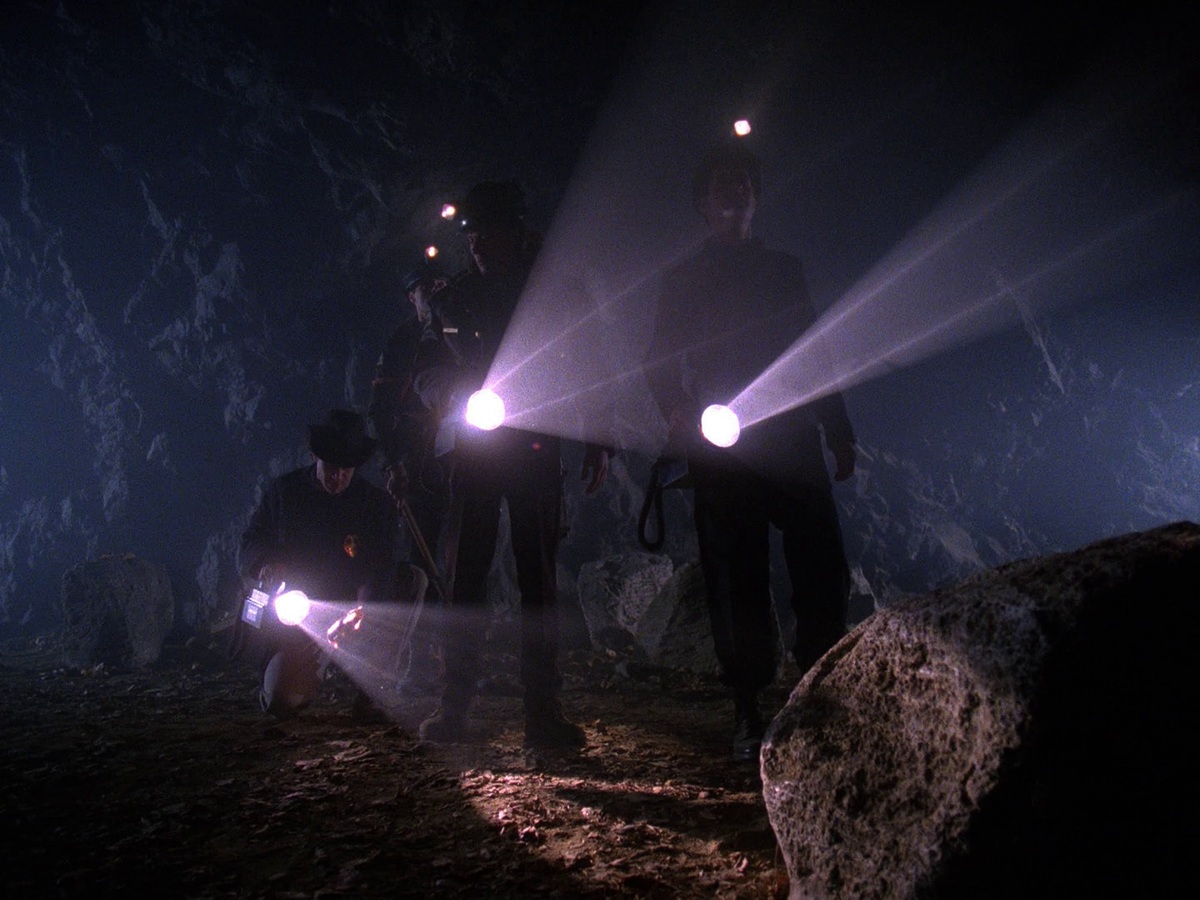
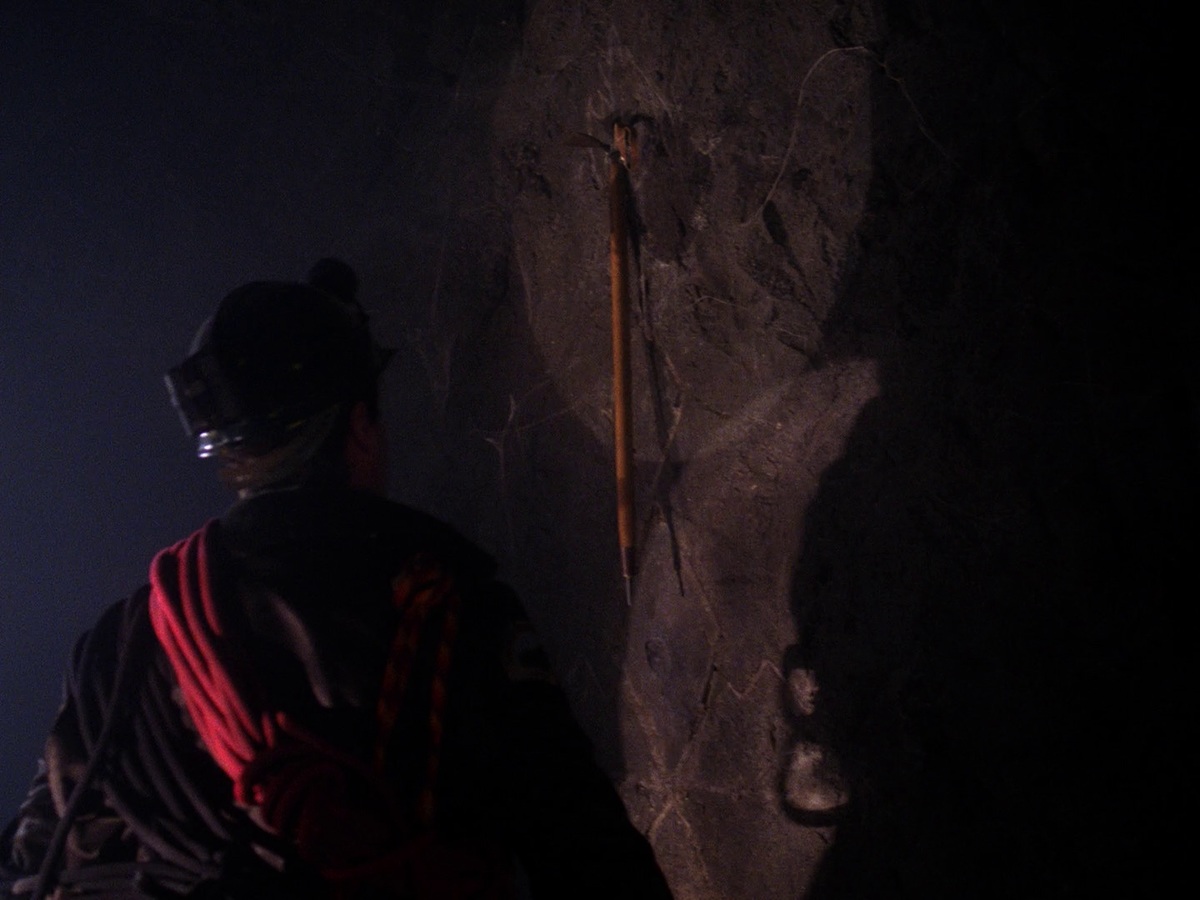
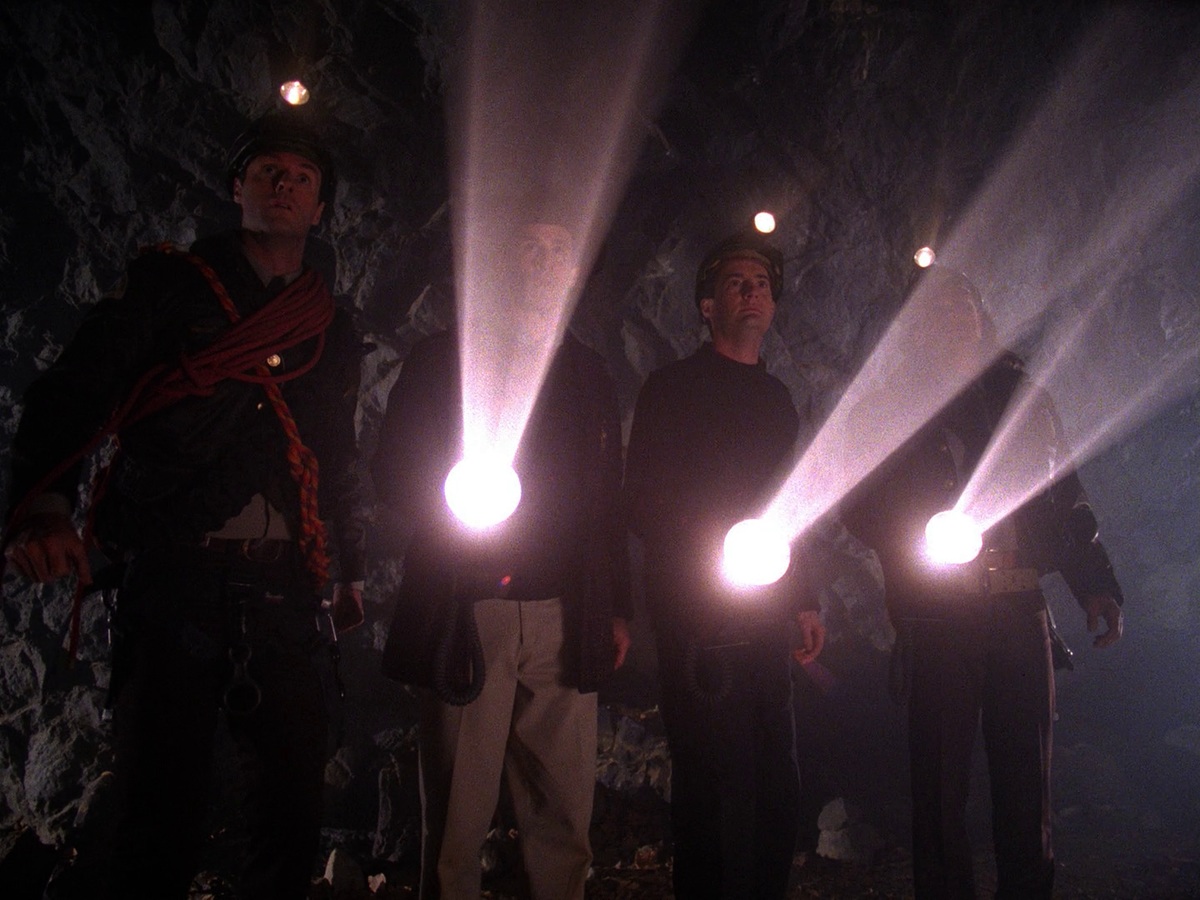
The descent into Owl Cave gives the group a shared physical task. Andy’s awkwardness, the ropes and the concentrated beams of their lamps keep the discovery bodily and practical. Hawk remembers playing there as a child; the traces of other visitors complicate the idea of a place untouched by everyday life.
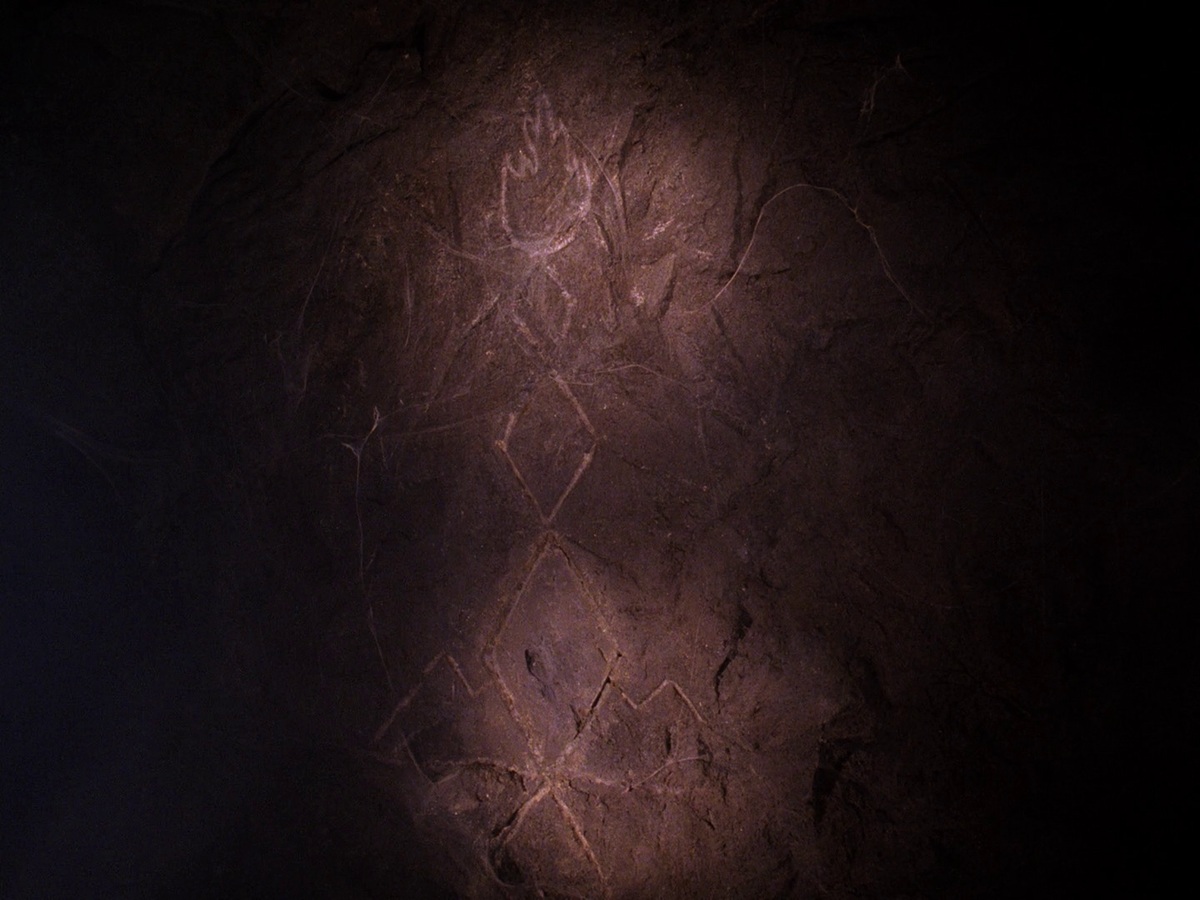
On the wall, the combined symbol is no longer an investigator’s drawing. The owl’s arrival and Andy’s response lead to the pick lodging in the stone. A concealed opening reveals a further symbol. The episode moves through recognition, interruption and discovery rather than allowing Cooper simply to solve a static riddle.
Earle’s final visit makes the discovery incomplete. He understands that the visible mark can be inverted and acts on it. The same location now belongs to an adversary’s line of inquiry. His solitary manipulation of the mechanism answers the investigators’ group exploration without granting either side a final explanation of what lies ahead.
From the diner to the cave wall · 6 images
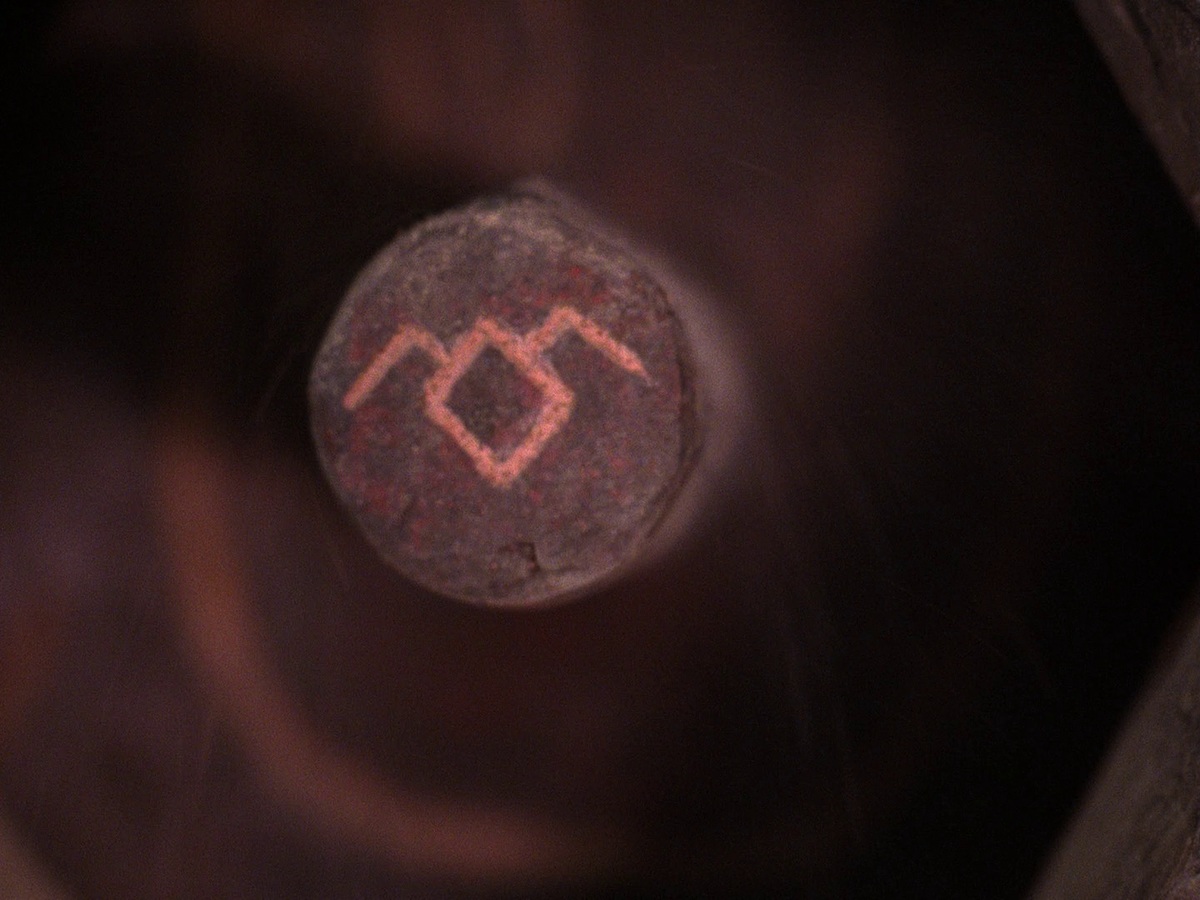
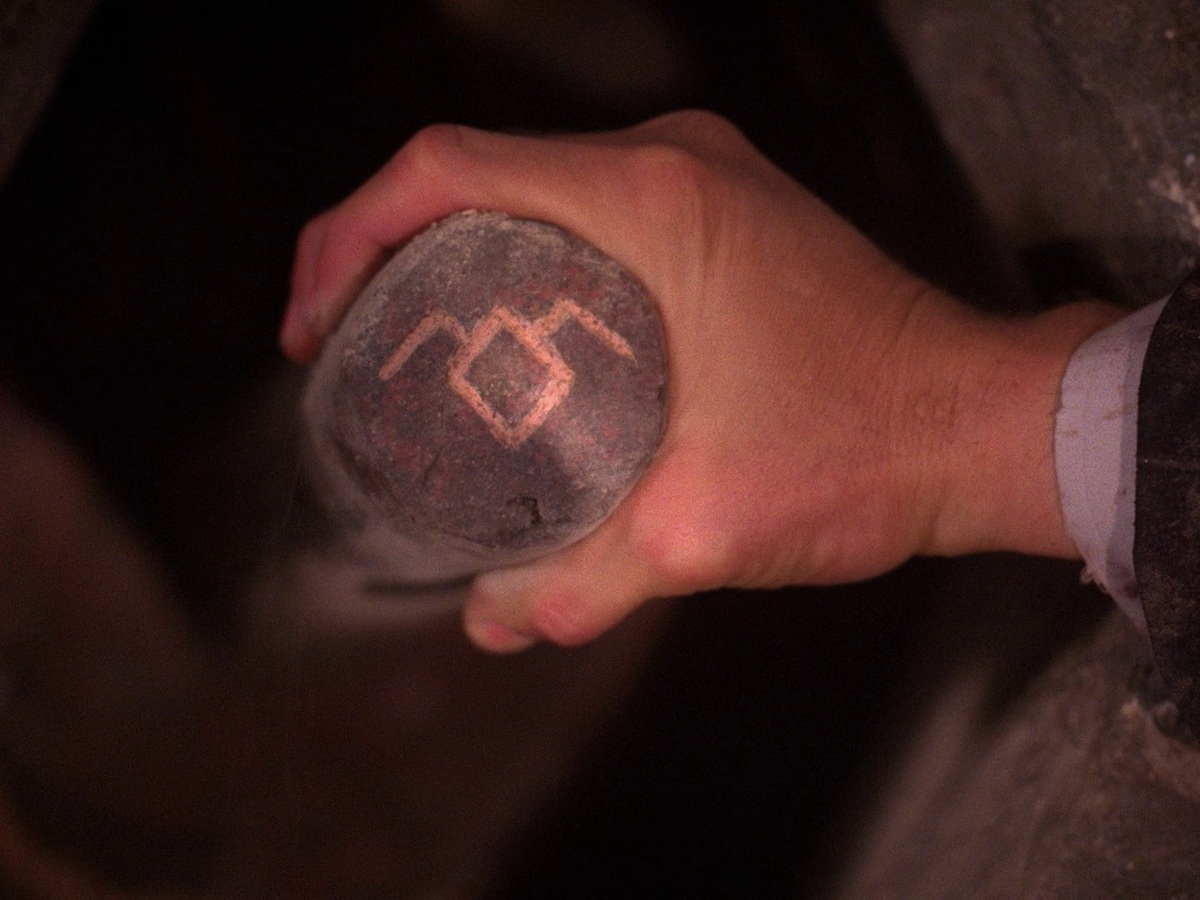
Annie’s unfamiliar world

At the hotel bar, Annie describes music, conversation and people in love as if they formed a language she knows only partly. Cooper meets that uncertainty with an admission of his own: there are things he would do differently if he could begin again. Their exchange is quieter in ambition than the investigation’s talk of patterns and destinations. It asks whether two people can be useful to one another without first becoming entirely legible.
Annie insists that she may be stubborn, strange or unpredictable. Cooper’s offer does not depend on her promising otherwise. The scene extends the diner’s small comedy into an agreement to risk connection. Her presence also interrupts his report to Diane: the habit of narrating experience gives way to an encounter he cannot finish describing in advance.
Placed beside Earle’s calculation of queens and executions, the conversation gains an unease neither character shares. The episode gives the relationship room to be tentative and appealing while the surrounding plot turns intimacy into something an enemy can exploit.
A route through On the Wings of Love
Bookhouse: Jones uses Josie’s identity; Truman survives the attack.
Sheriff’s station: a gift conceals surveillance; Gordon delivers Earle’s file and reinstates Cooper.
Earle’s cabin: the women’s faces enter his card game and the pageant becomes a target.
Great Northern: Donna and Audrey overhear Ben and Eileen.
Double R: Gordon hears Shelly; Cooper and Annie exchange a joke and recognise a symbol.
Library and hotel: Earle approaches Audrey; Ben recruits her for his campaign.
Owl Cave and the hotel bar: a mechanism is revealed, a relationship begins, and Earle follows the investigators.
Sources and connections
Episode and credits. Overall Episode 25 / Season 2, Episode 18, On the Wings of Love. The on-screen credits name Duwayne Dunham as director and Harley Peyton and Robert Engels as writers. Scene references and illustrations derive from Twin Peaks: From Z to A.
Dialogue and sound cues. The English captions identify Gordon’s changes between shouting and ordinary speech, the owl calls and the dialogue discussed above. Interpretive claims concern what those cues do within the scene; they do not attribute an undocumented recording or mixing technique.
Testimony. Kyle MacLachlan, cast interview, production recollections, in Twin Peaks: From Z to A. His comments are used as a general account of working opposite Lynch, not as a dated account of this scene. Cast and crew source notes.
Continue with Wounds and Scars, Variations and Relations, or the illustrated Season Two guide.