Twin Peaks: Episode 23 — The Condemned Woman
1991 · Season 2, Episode 16 · Directed by Lesli Linka Glatter
Josie’s attempts to escape converge in a hotel room, while three fragments of poetry draw three women to the Roadhouse. The episode moves between bargains, declarations of independence and a final image that refuses to explain itself.
Season 2, Episode 16 / overall Episode 23. Contains episode spoilers. Focused image galleries open on request.
Explore this episode
An investigation watched from the next room
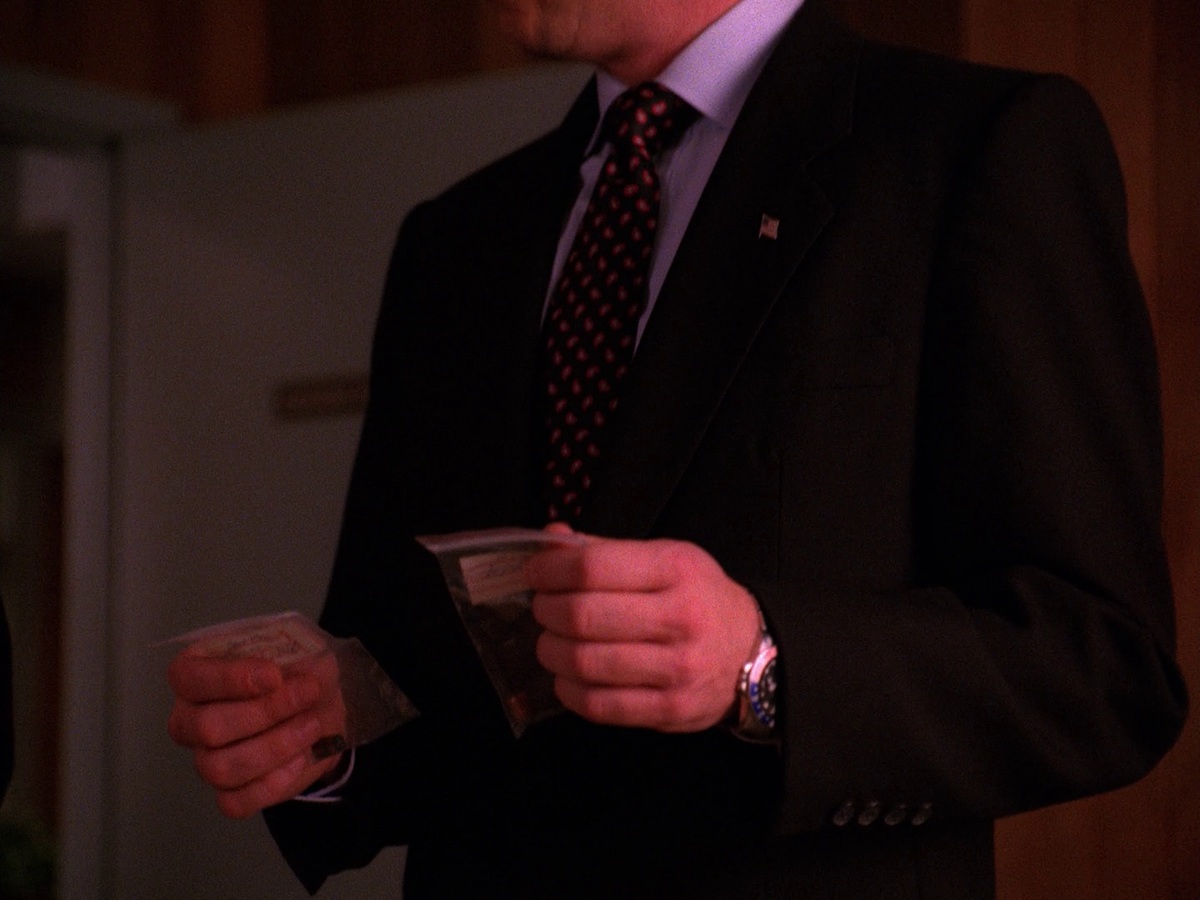
Albert’s ballistic evidence closes the distance between the attack on Cooper and Jonathan’s death. Cooper still wants Josie to have the chance to tell him what happened. This is not the same as dismissing the evidence: he gives her a deadline, while Albert’s later account of the gloves, powder and gun makes delay increasingly difficult to defend. Truman’s relationship with Josie puts a second loyalty under pressure.
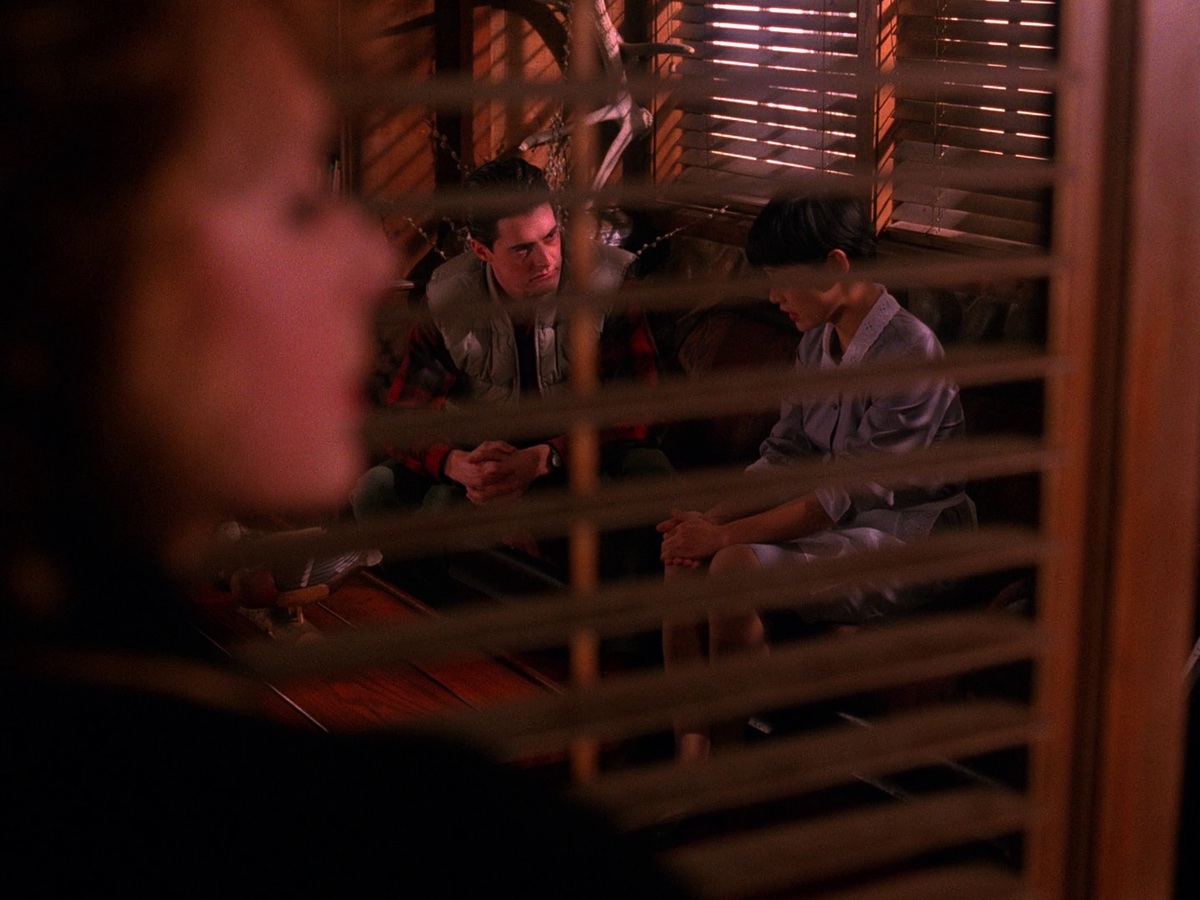
The Packard house makes that pressure spatial. Cooper questions Josie while Catherine watches through the blinds. The scene gives us an observer whom the conversation itself does not acknowledge. Josie is being investigated by the law and monitored within the household at the same time; the possibility of speaking freely is already compromised by the arrangement of the rooms.
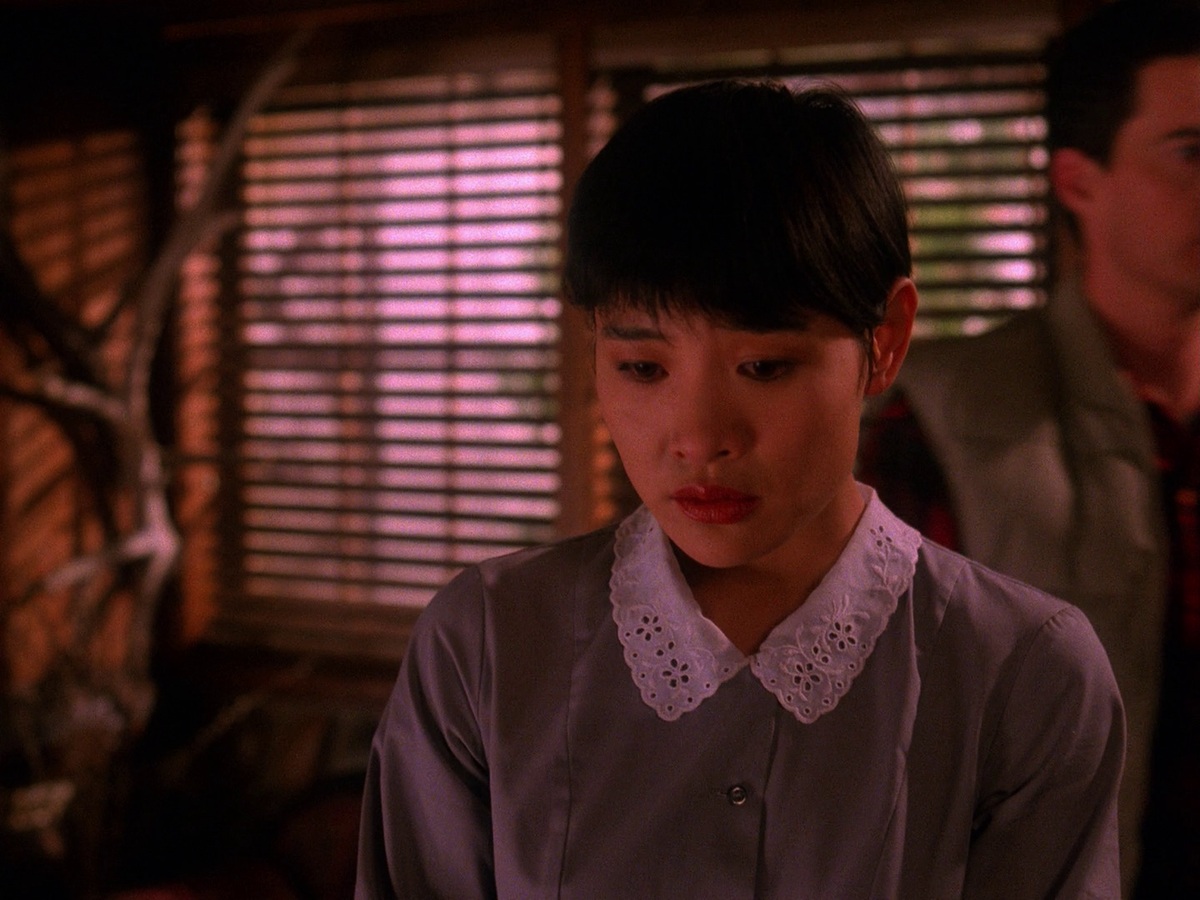
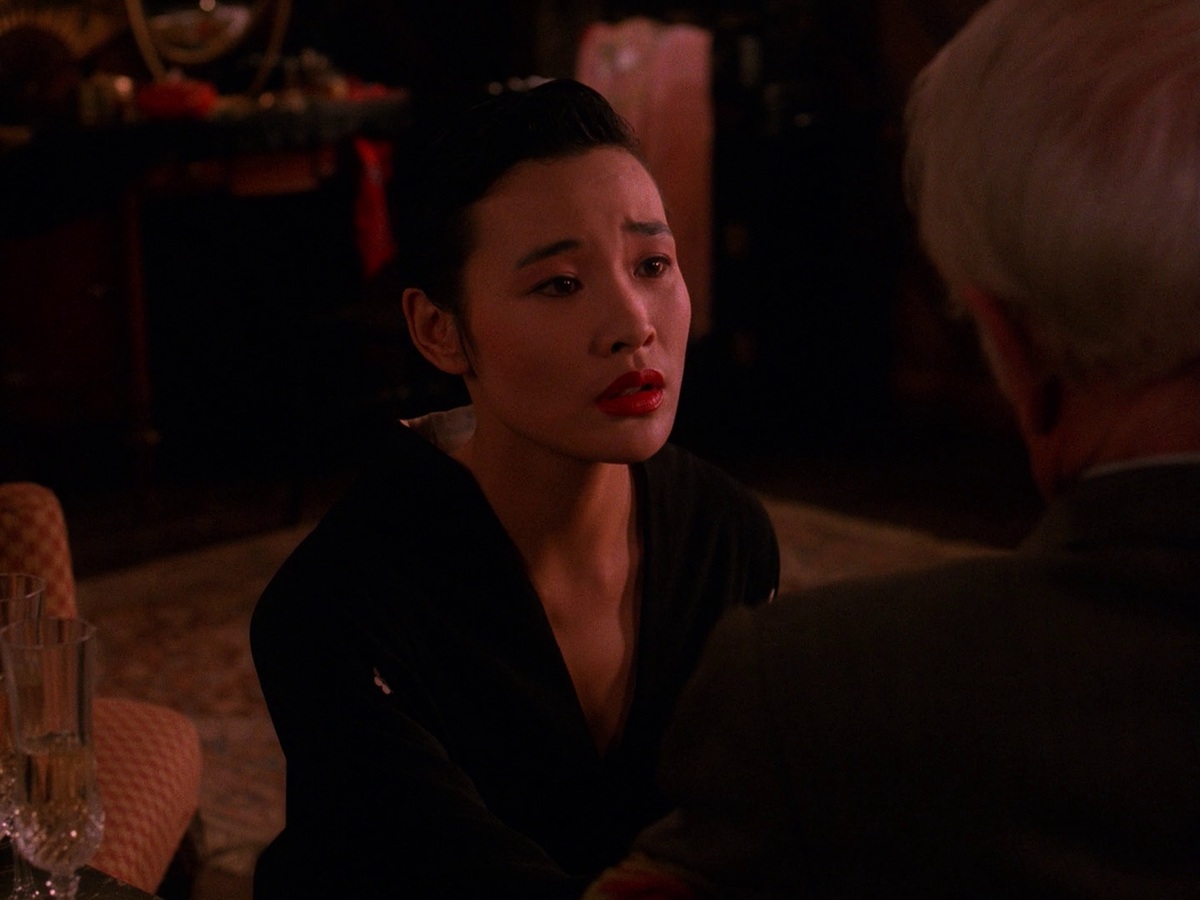
Joan Chen’s guarded expression and maid’s uniform belong to a situation that Catherine has made humiliating. Josie’s account of leaving Jonathan at the airport cannot hold against Albert’s evidence, but the falseness of an explanation does not make her fear imaginary. The episode keeps coercion and culpability in the same frame rather than making one cancel the other.
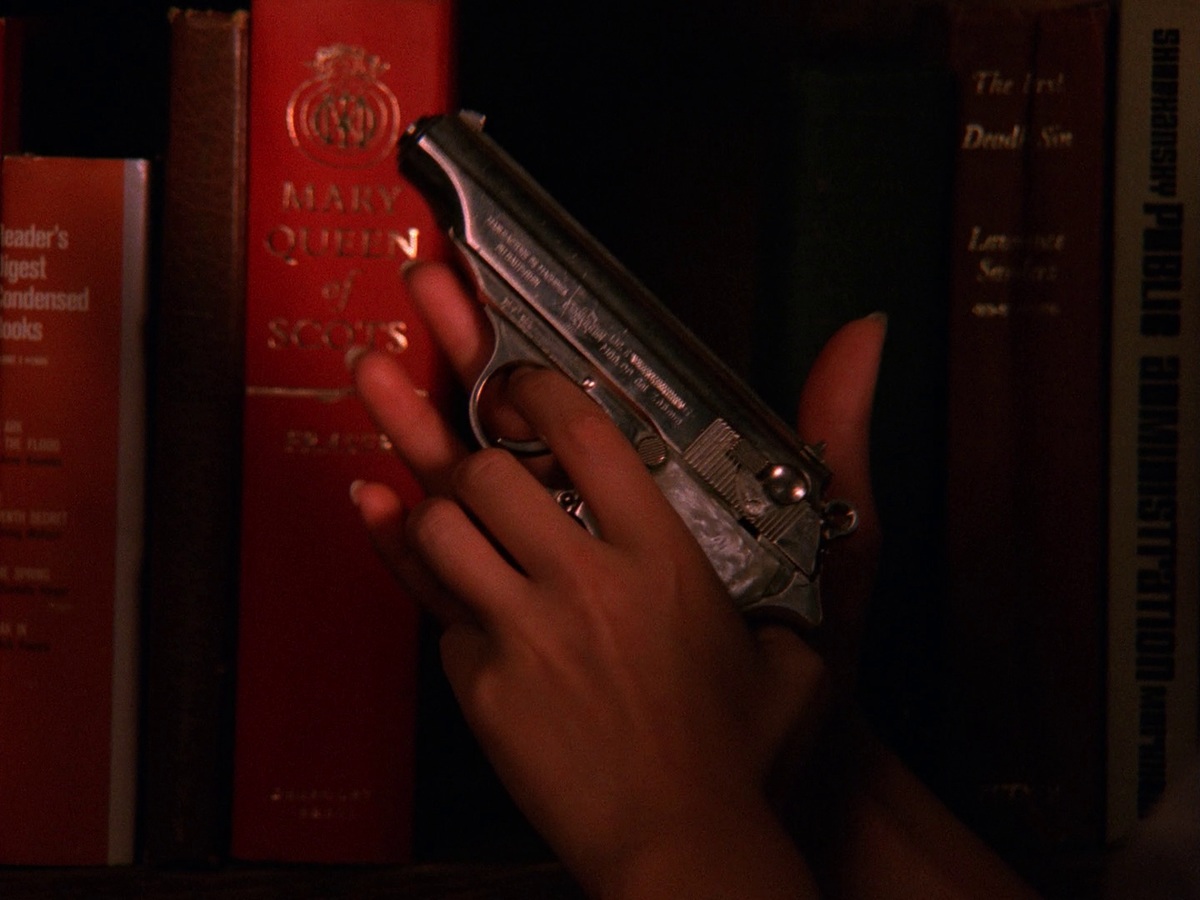
The concealed pistol makes the danger tangible before the hotel confrontation. It is an object waiting within the ordinary furniture of the house. Read beside Catherine’s surveillance, its appearance gives the domestic setting two kinds of hidden threat: a person watching and a weapon kept out of sight.
Evidence, surveillance and the hidden weapon · 4 images
The returned husband and the language of ownership
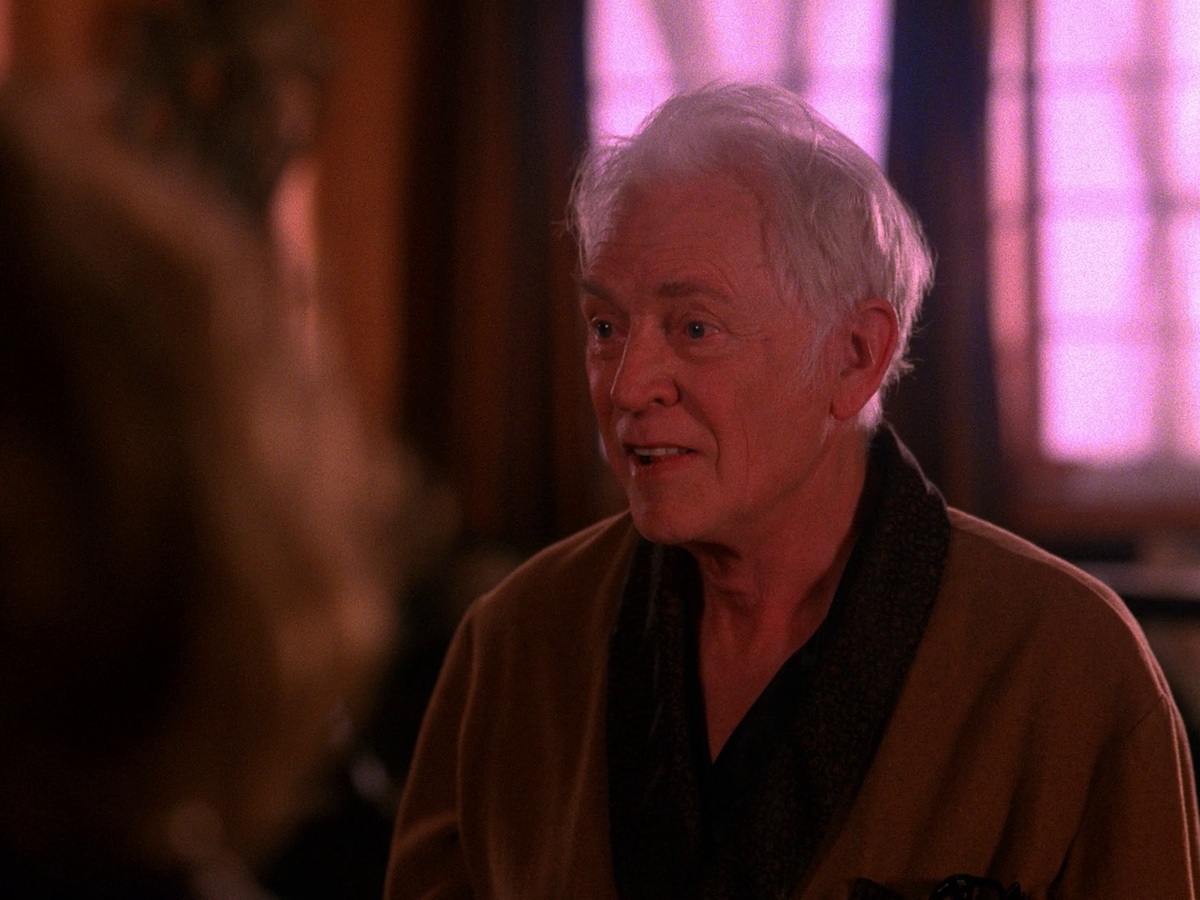
Andrew’s return begins as a private joke shared with Pete, then becomes a shock for Josie. The difference matters: a revelation that delights one part of the household destroys another person’s understanding of her position. Catherine controls the timing, and the laughter after Josie collapses leaves little doubt about the cruelty of the performance.
Andrew subsequently offers Josie an account of her entanglement with Eckhardt and a possible way out. He speaks as someone who understands the coercion, yet he also needs her to act within his continuing struggle with his rival. Sympathy and usefulness are not easily separated here. Josie’s departure for the Great Northern follows a succession of people telling her what she must do.
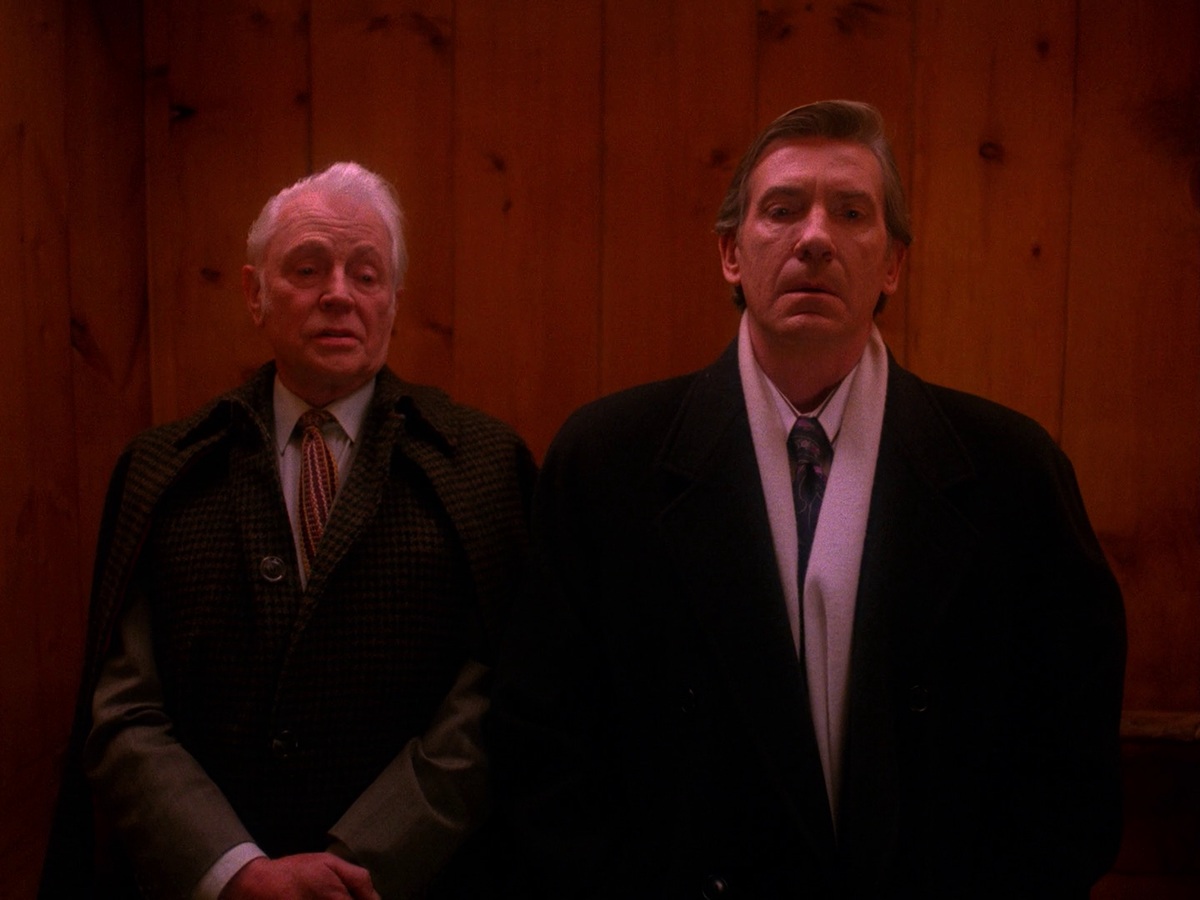
The elevator encounter compresses the men’s contest into a narrow wooden enclosure. Andrew’s survival is itself a weapon; his statements about Josie become further provocations. Eckhardt answers in the language of possession. The scene does not give Josie a corresponding opportunity to define the relationship, and Andrew’s tactical account should not be mistaken for an impartial explanation of her actions.
Catherine later directs Cooper toward the hotel. Information travels through her at decisive moments, but disclosure does not mean surrendering control. Her knowledge reaches other people when she chooses to release it. The episode’s final crisis grows out of that managed circulation of facts as much as it grows out of the gun.
A return, an offer and a confrontation · 3 images
Norma’s refusal and Donna’s farewell
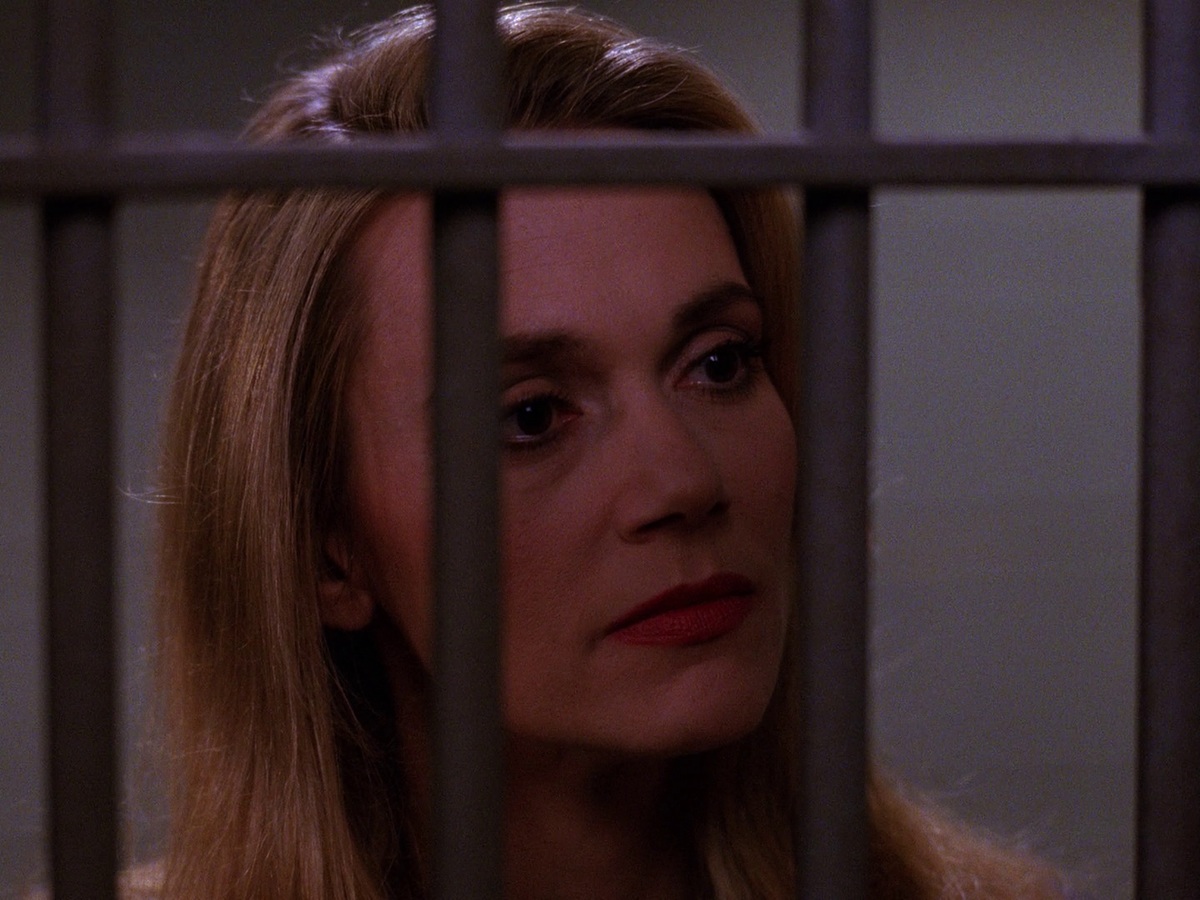
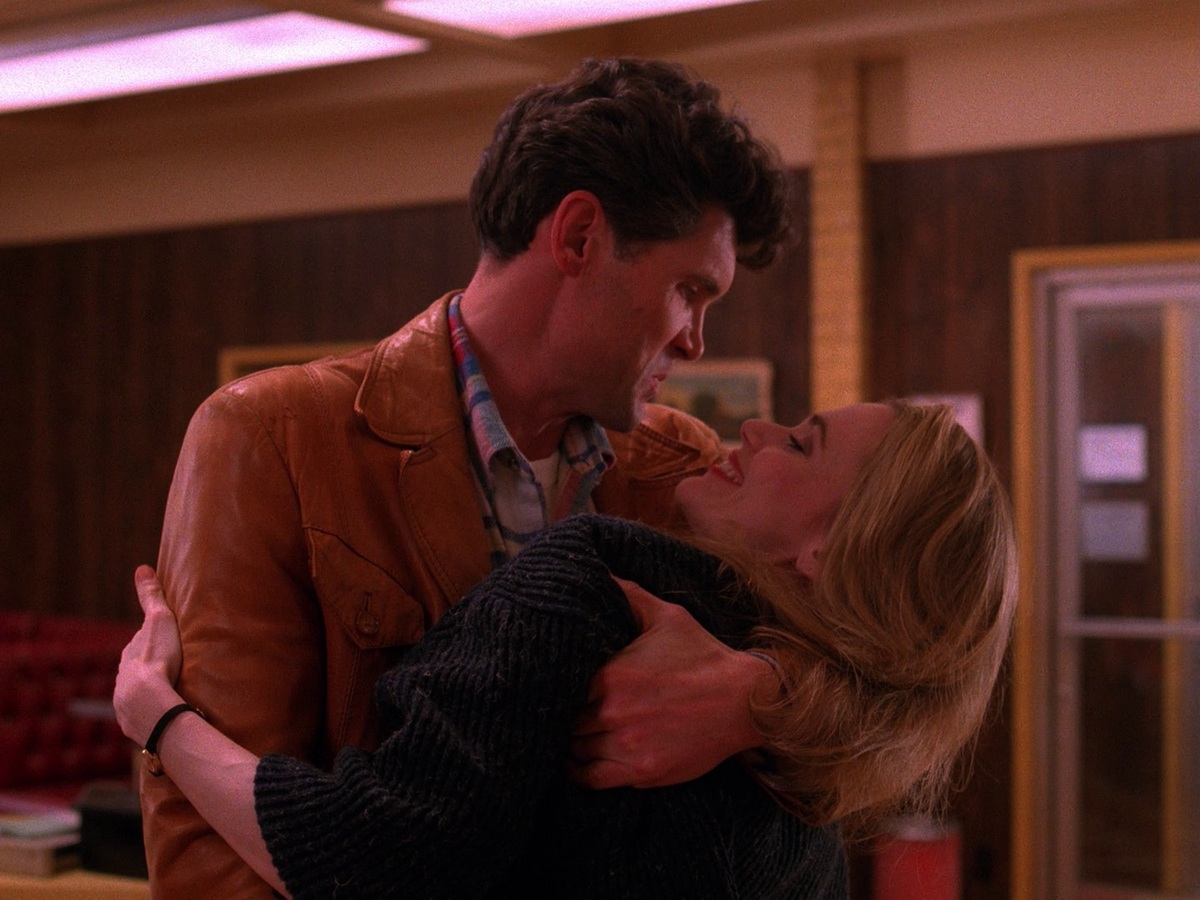
Nadine’s announcement that she loves Mike opens an unexpected possibility for Ed and Norma. Their embrace at the diner briefly lets the future appear simple. The episode does not leave it there: Norma must still confront Hank, whose confinement gives their conversation a literal barrier without ending his attempt to exercise power over her.
Hank first offers the language of self-knowledge and change, then returns to bargaining. He wants Norma to provide an alibi, turning the promise of a renewed relationship into a request for protection. Her refusal matters because she declines the structure of the deal, not merely its terms. The bars divide the couple, but the decisive separation occurs in what she is finally willing to say.
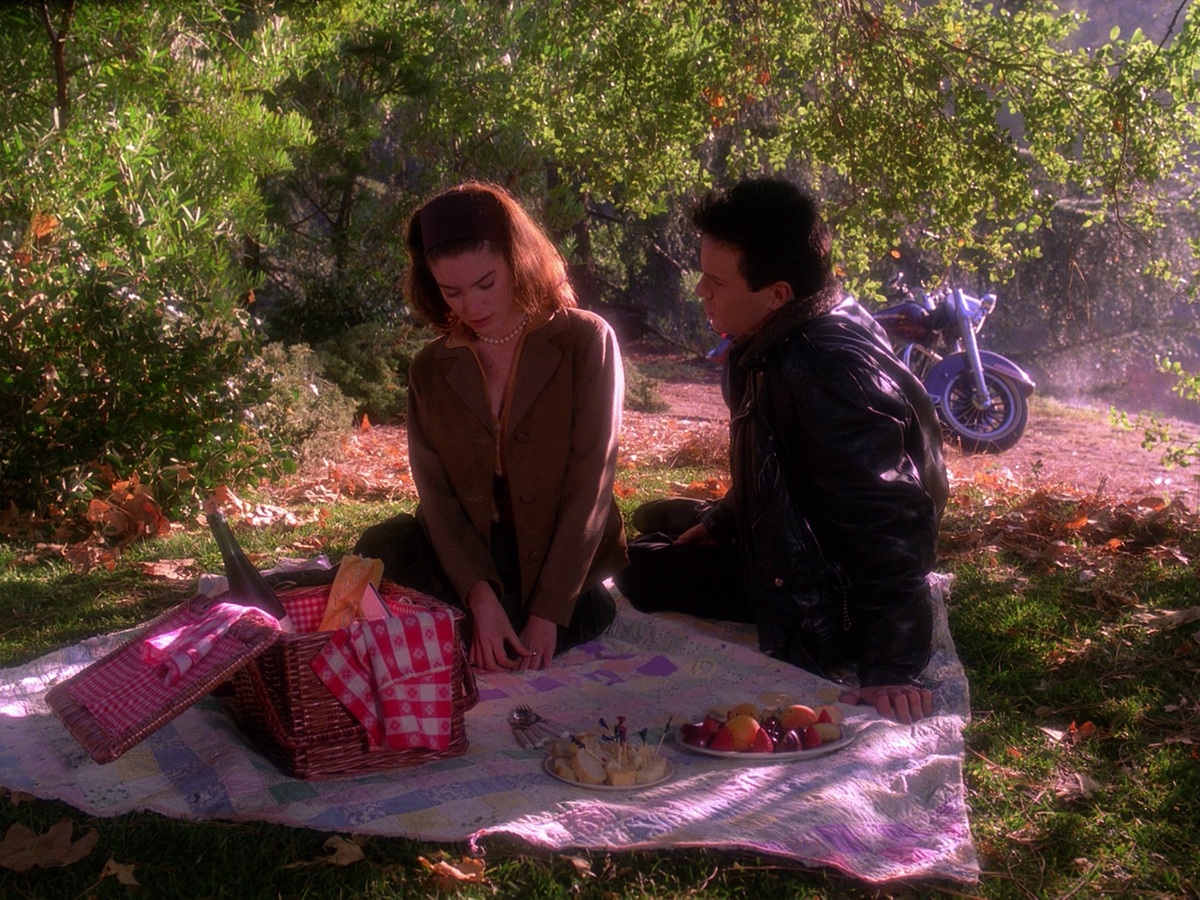
The countryside encounter between Donna and James presents another separation in a very different space. The picnic, greenery and motorcycle make departure visible before it is settled in words. Donna can forgive him without being able to make him stay. His desire for stories unconnected with the recent deaths reveals how thoroughly the town’s violence has occupied their relationship.
Neither scene treats love as an automatic instruction to endure. Norma refuses a coercive bargain; Donna accepts a departure she does not welcome. Placed around Josie’s increasingly restricted movements, these exchanges make the ability to choose one’s distance from another person a central question of the episode.
A future together, a refusal, a parting · 3 images
The game reaches its readers
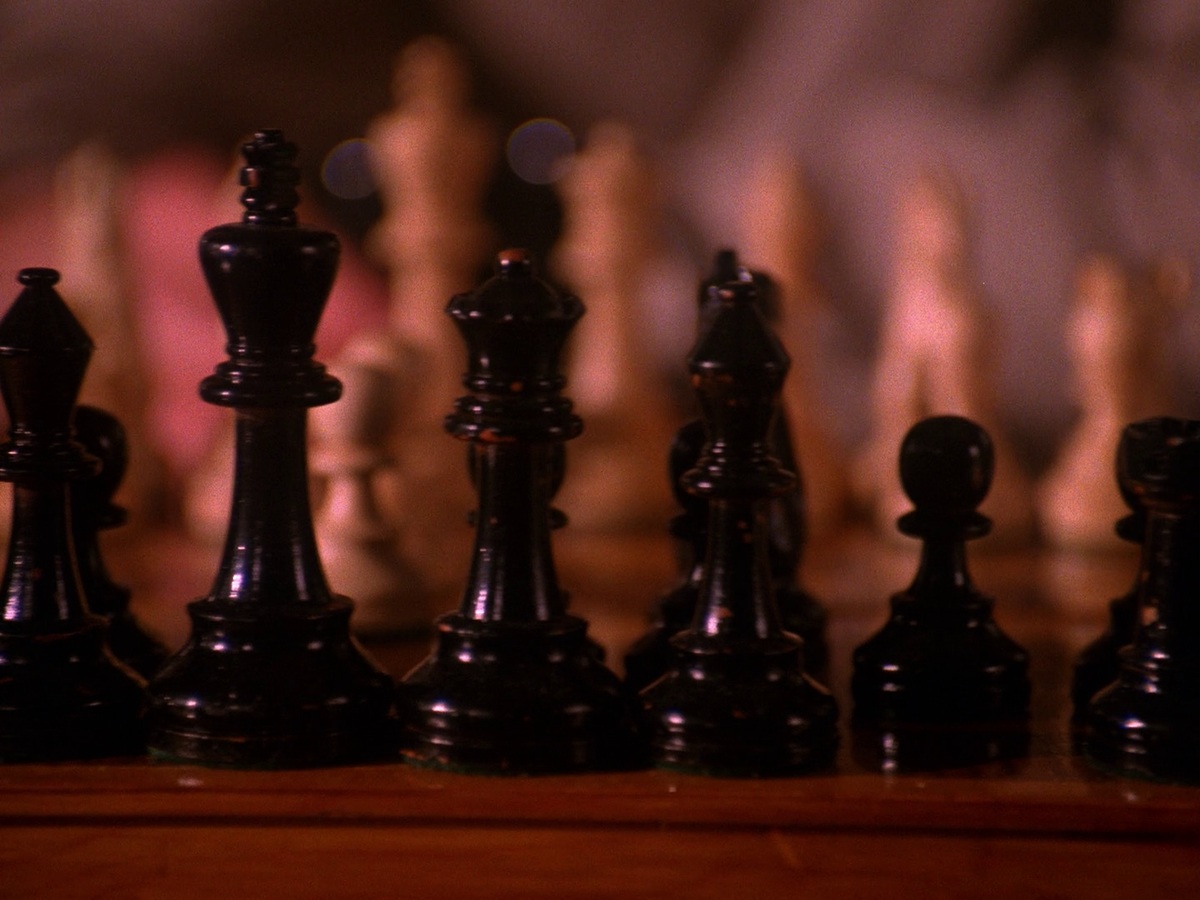
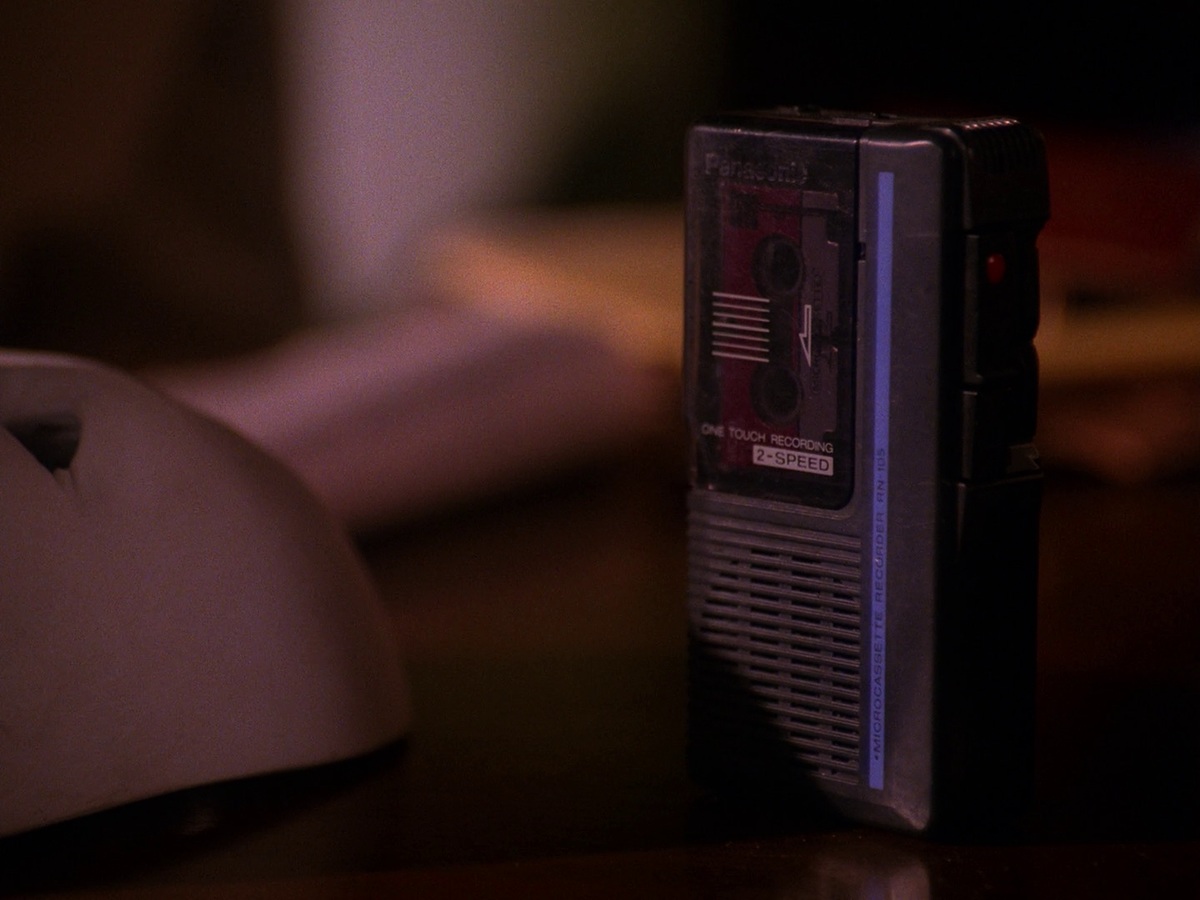
Earle’s recording sets the terms of his game before he appears in person. Cooper must publish his move, or Earle will act for him. The chess pieces on the desk and Caroline’s image join professional pursuit to remembered intimacy. The threat is designed to occupy Cooper’s attention even in the apparent safety of his room.
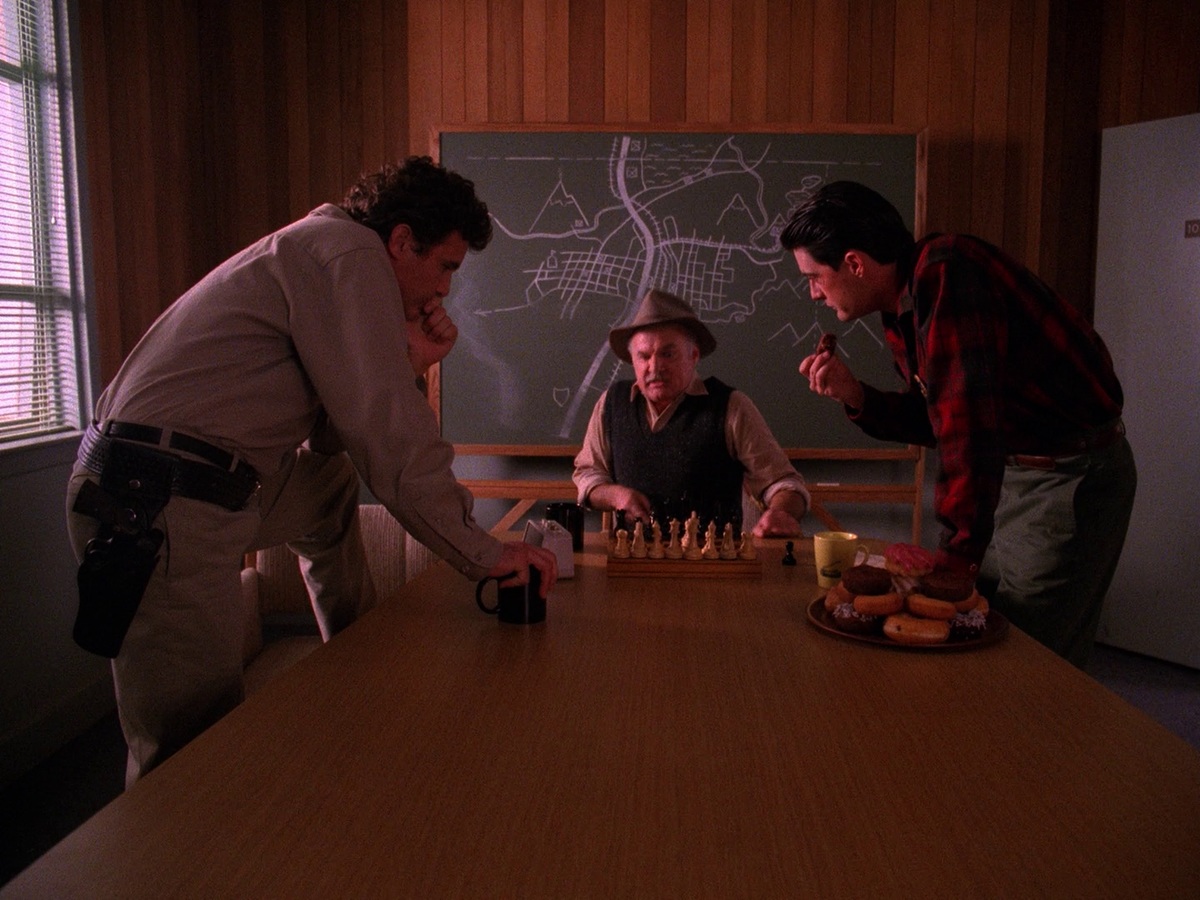
Pete supplies an unusually local form of expertise. His recollection of famous chess play becomes a practical resource, and the station scene lets him occupy the centre of the table rather than remain a comic bystander. Cooper wants a position that avoids the capture Earle has tied to murder. Truman’s doubt about whether Earle will honour the rules is the necessary counterweight to that confidence.
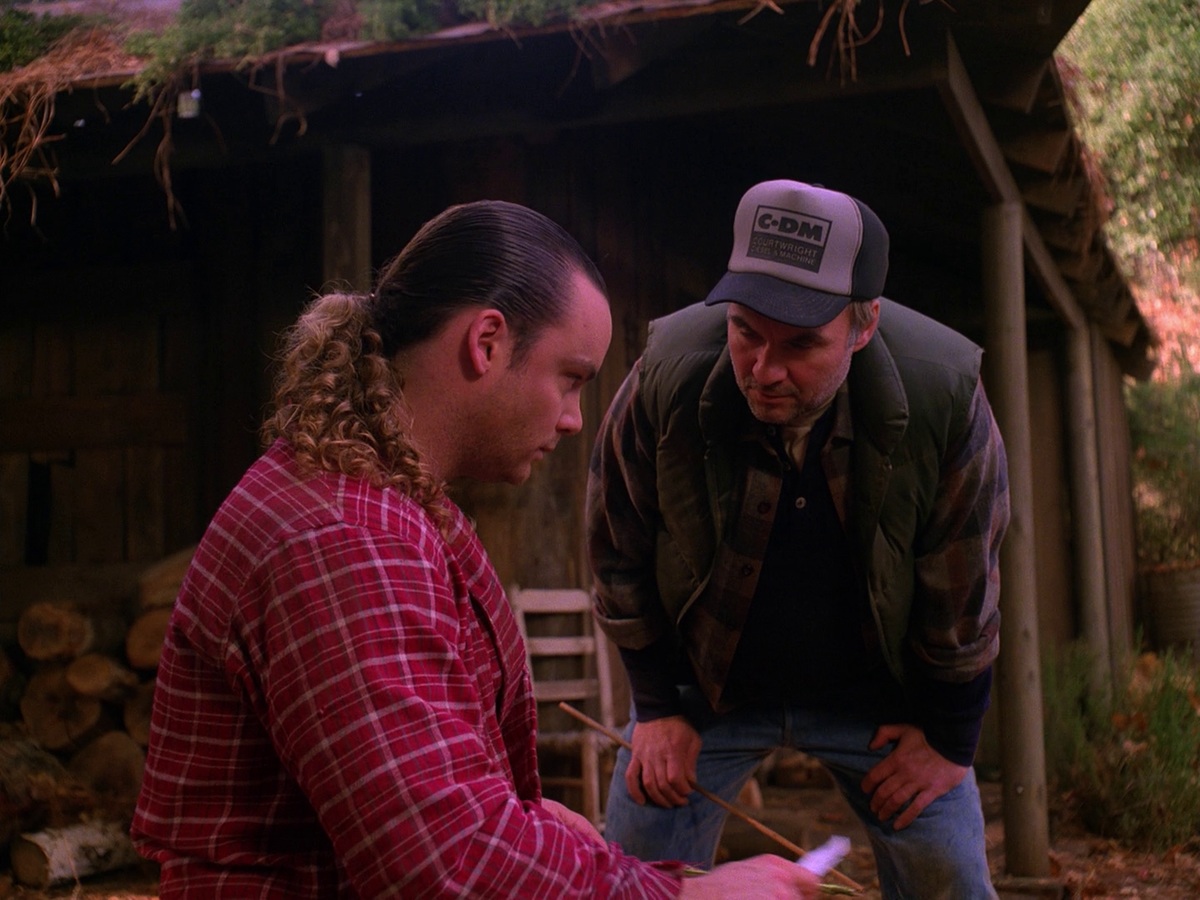
In the cabin, Earle’s instruction of Leo translates the same desire for control into physical domination. The lesson about survival and cruelty is backed by the collar. His fluency and theatrical manner do not soften the coercion; they make it possible for him to present cruelty as education.
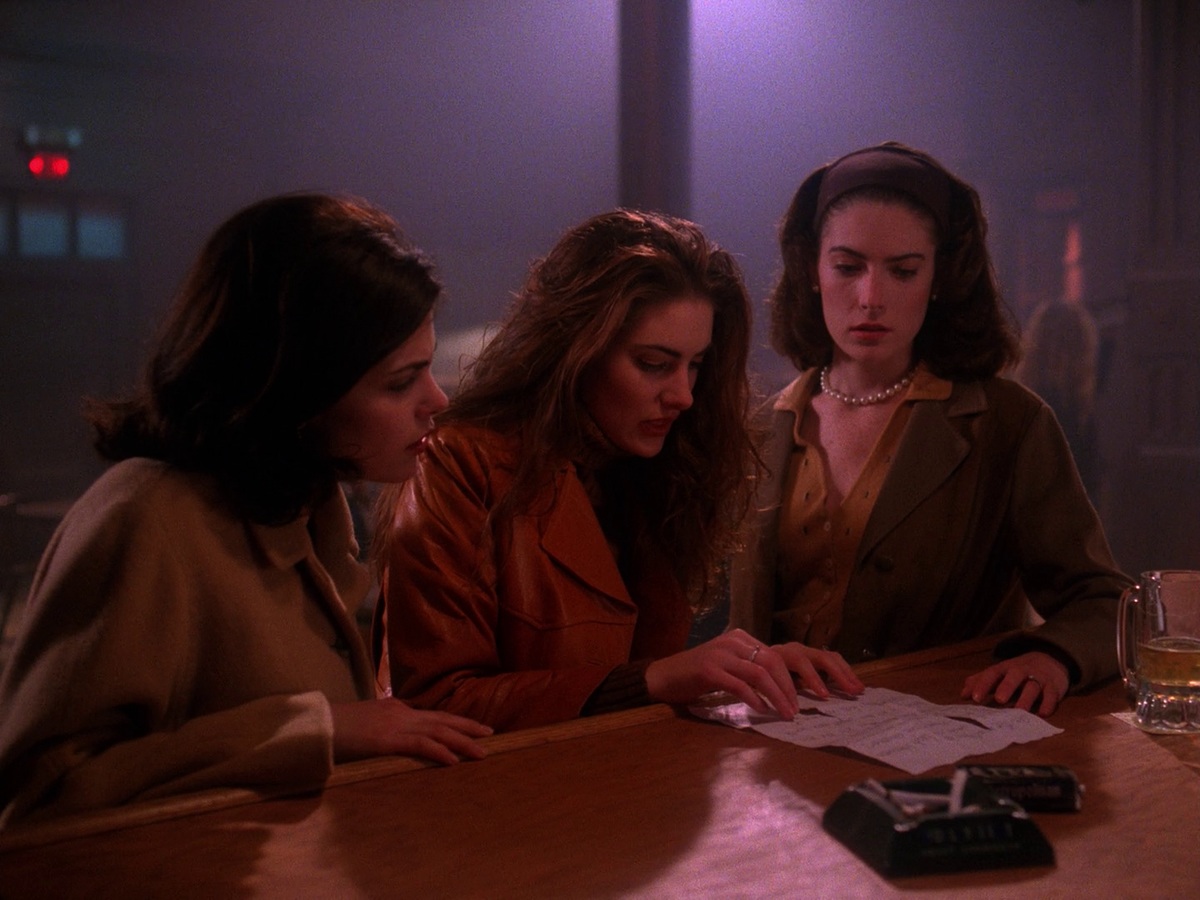
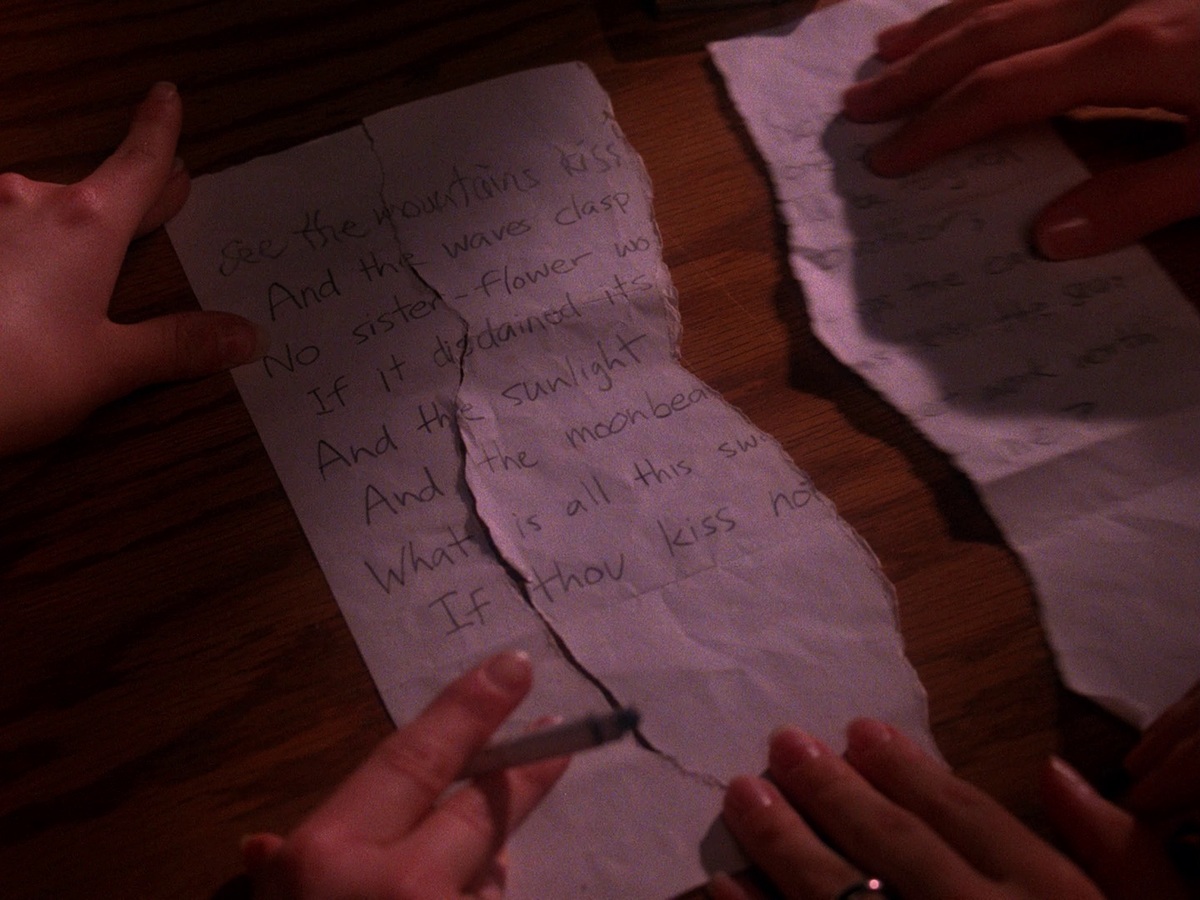
The messages to Audrey, Shelly and Donna create a different kind of assembly. Only when the women put the pieces together at the Roadhouse can the writing be read as a connected passage. The fragments come from Shelley’s Love’s Philosophy, whose language of union becomes disturbing in this context. A poem offering intimacy has been repurposed to arrange people for an unseen observer.
The sequence gives its recipients an active moment of comparison: they recognise that the messages belong together. At the same time, their meeting fulfils the sender’s plan. Reading correctly and escaping manipulation are not necessarily the same achievement.
A voice, a game and a poem in pieces · 6 images
A new morality at the boardroom table
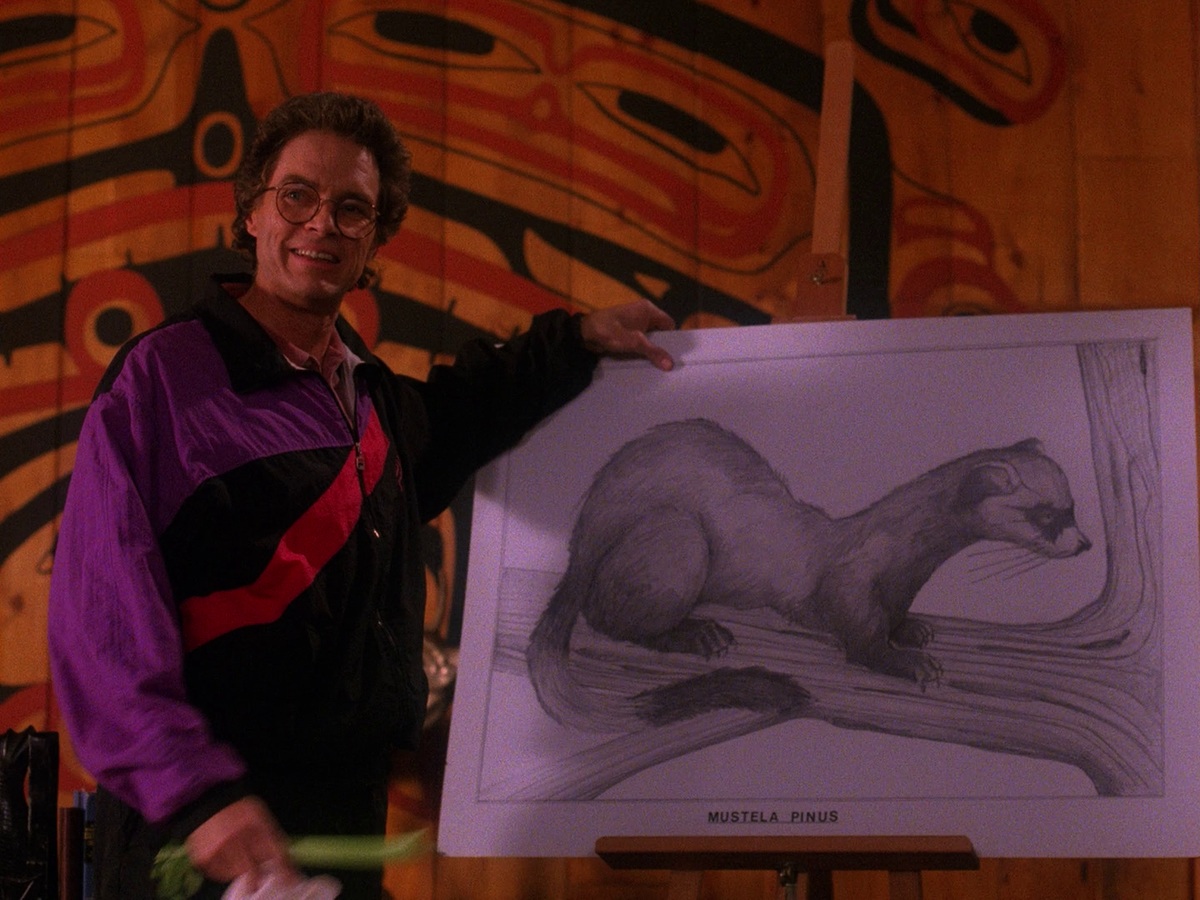
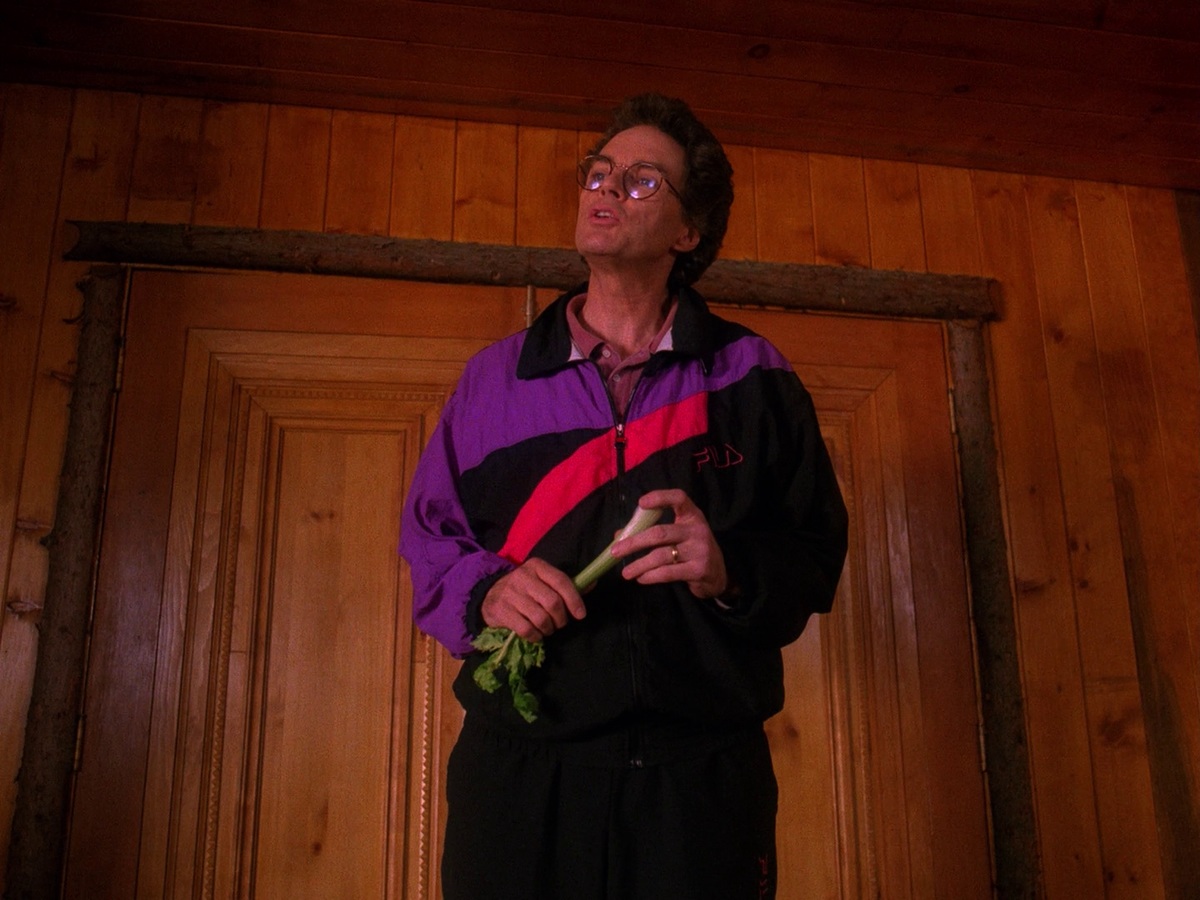
Ben reorganises his business and announces a concern for the human future. The pine weasel gives that concern an image and a campaign. His new board brings together Bobby’s ambition, Jerry’s habits of calculation and Wheeler’s return of an old favour. The reform is therefore introduced through an organisation whose members have sharply different expectations of it.
Catherine’s control of Ghostwood prevents environmental conviction from becoming a simple reversal of Ben’s earlier behaviour. Jerry sees obstruction as a route back to possession. Ben insists on a larger struggle, but the scene leaves the practical overlap between virtue and advantage visible. The forest is both a place worth protecting and an asset around which familiar interests continue to gather.
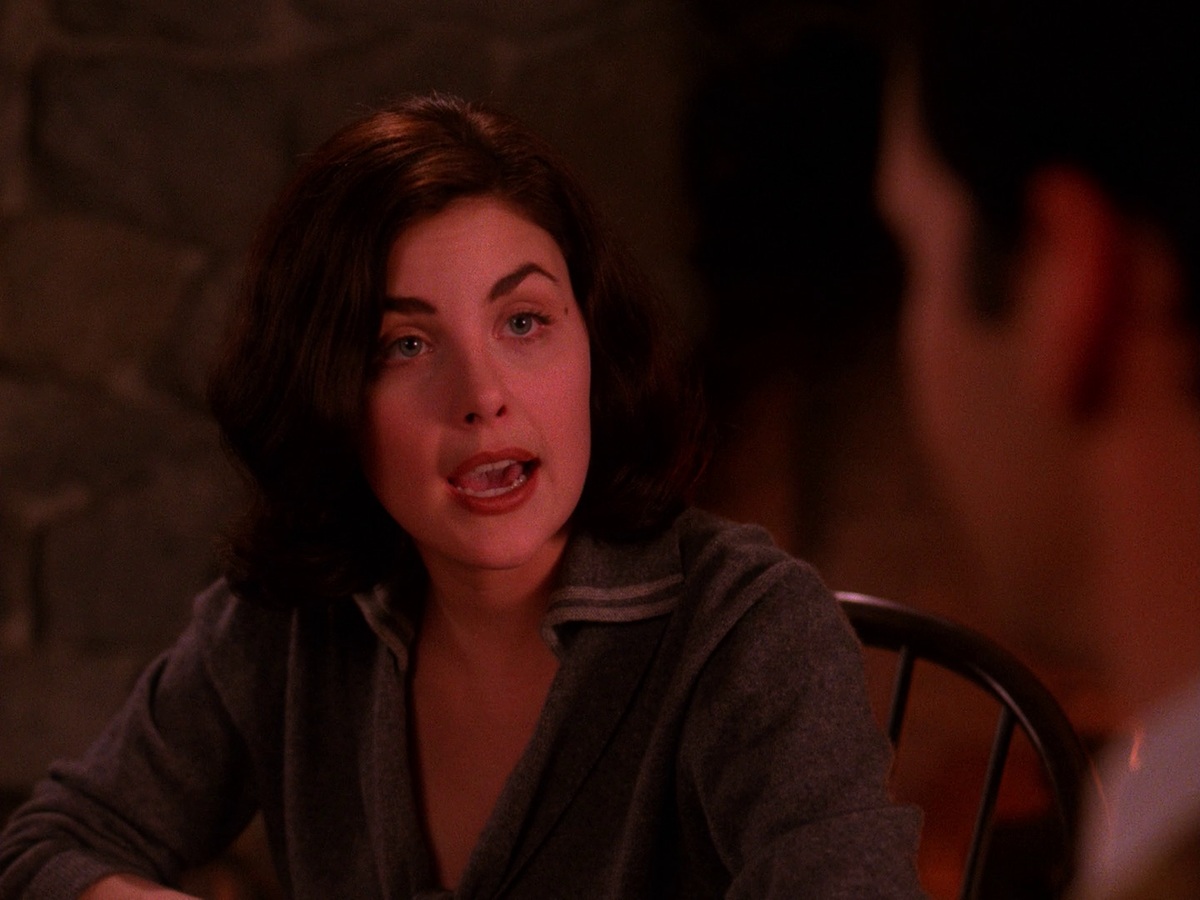
Audrey’s hotel work places her inside that changing business. Wheeler first encounters her there, carrying a memory of the child she used to be. Their later dinner lets her resist being reduced to that memory or positioned as an agreeable addition to her father’s plans. The warmth that develops depends on a conversation in which she can challenge the visitor.
Norma’s telephone conversation about Annie introduces a different arrival. The sister who has been living in a convent is initially described through other people’s expectations. The episode prepares several new arrangements—personal, commercial and romantic—while its central tragedy shows how violently an older arrangement can close.
Business, belief and the dinner table · 3 images
Josie’s death and the face in the wood
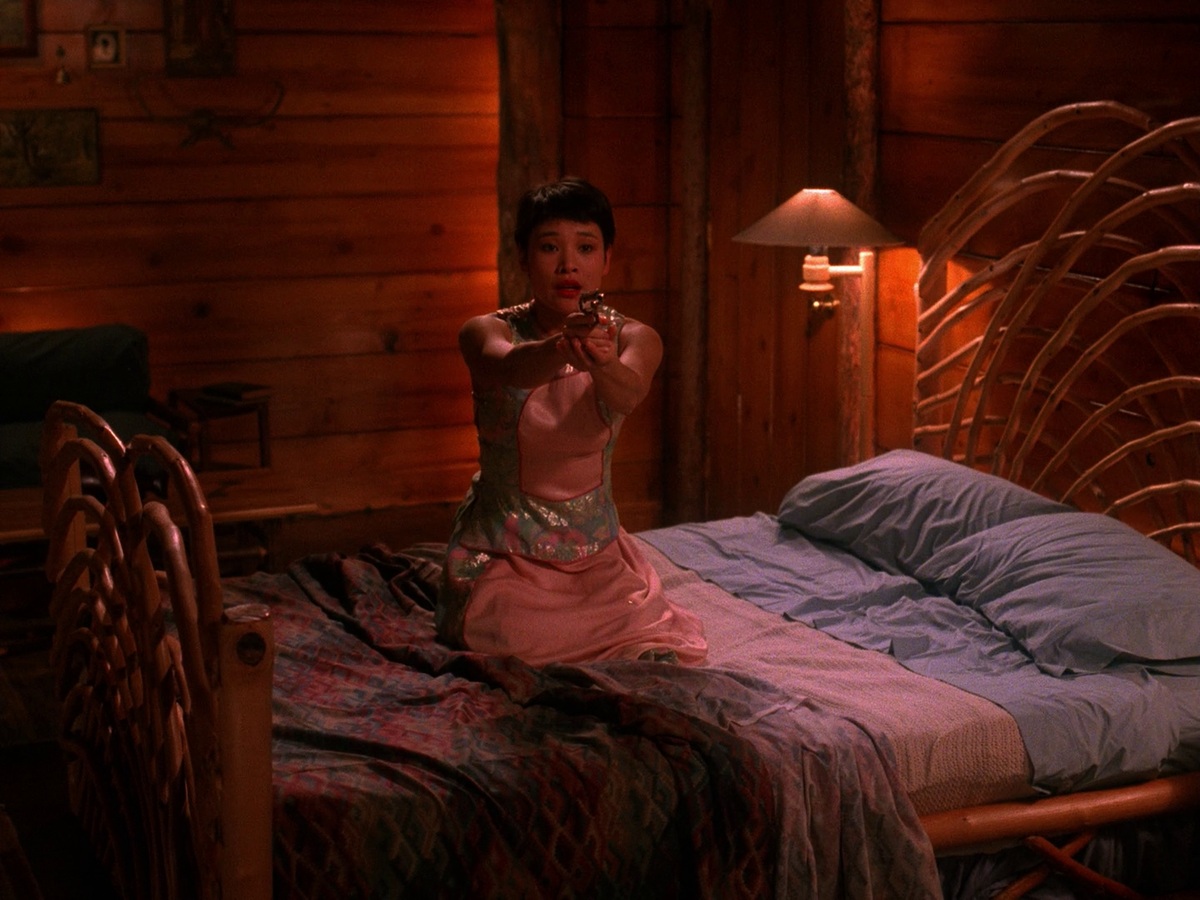
Cooper approaches the suite while the encounter inside remains out of view. The English captions register Josie’s distress and Eckhardt’s words before the gunshot. That order matters: the threshold makes Cooper and the audience late arrivals to a crisis already under way. When he enters, the injured Eckhardt and Josie’s raised pistol define the immediate danger.
Josie explains Jonathan’s threat and her fear of prison, but her words cannot restore control over the room. Truman’s arrival changes the exchange from an interrogation to an appeal between lovers. She lowers the weapon and collapses. The scene gives him the physical presence of the woman he loves without giving him an intelligible account of what is happening to her.
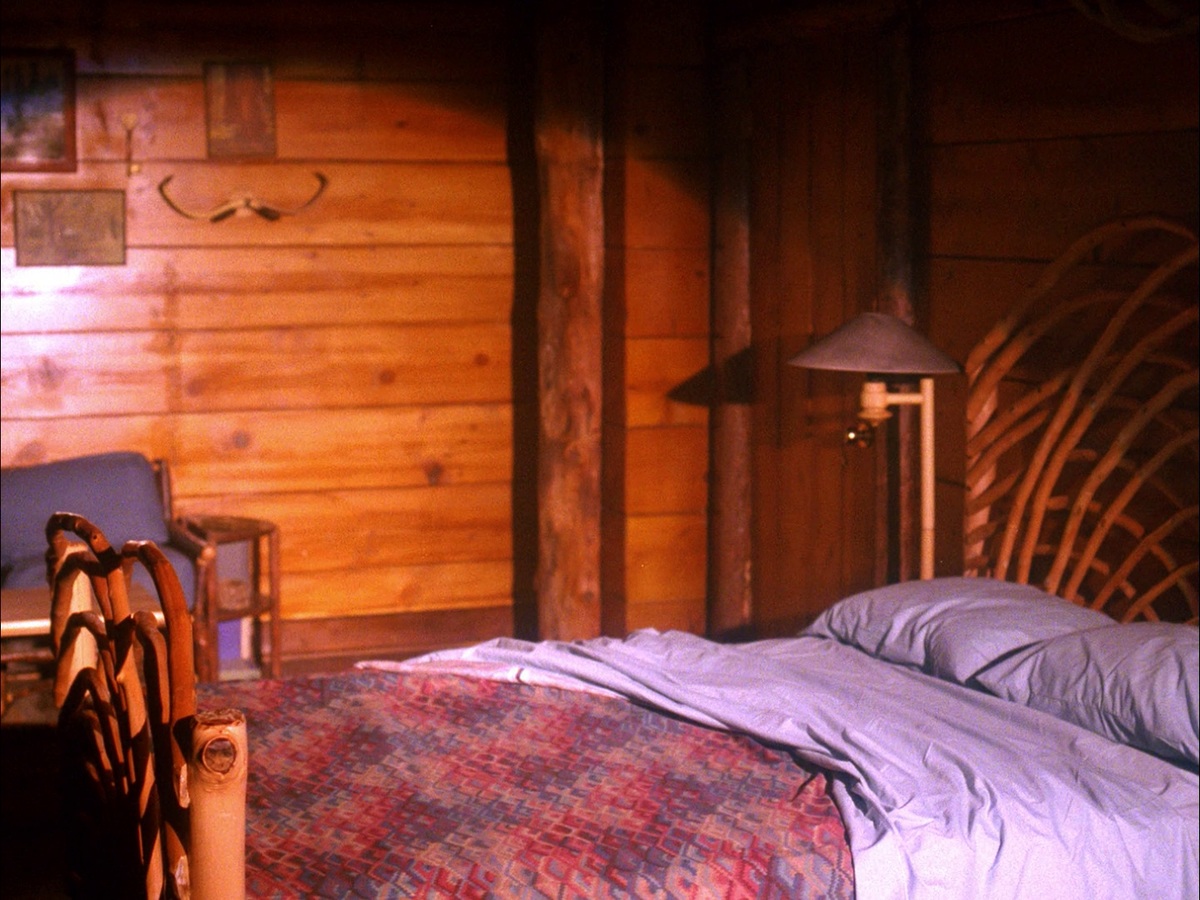
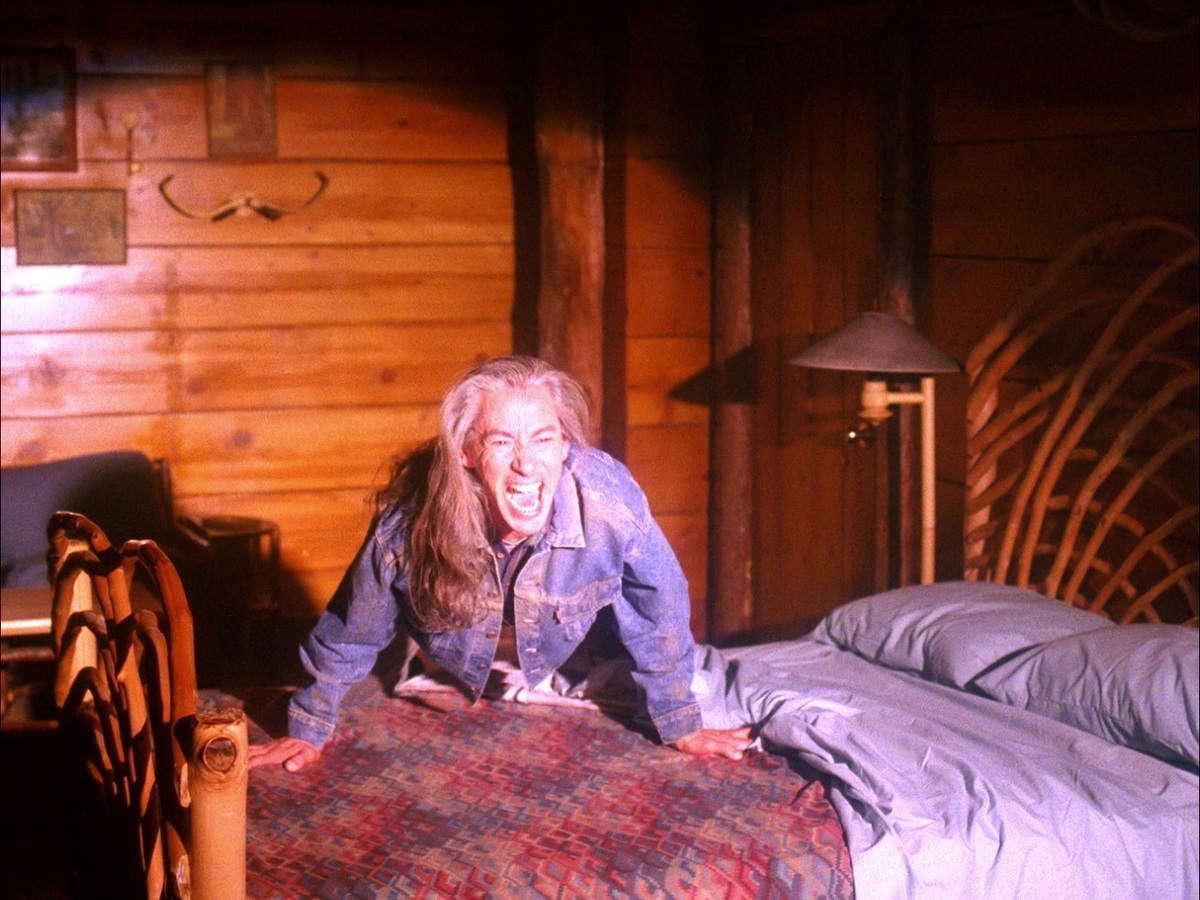
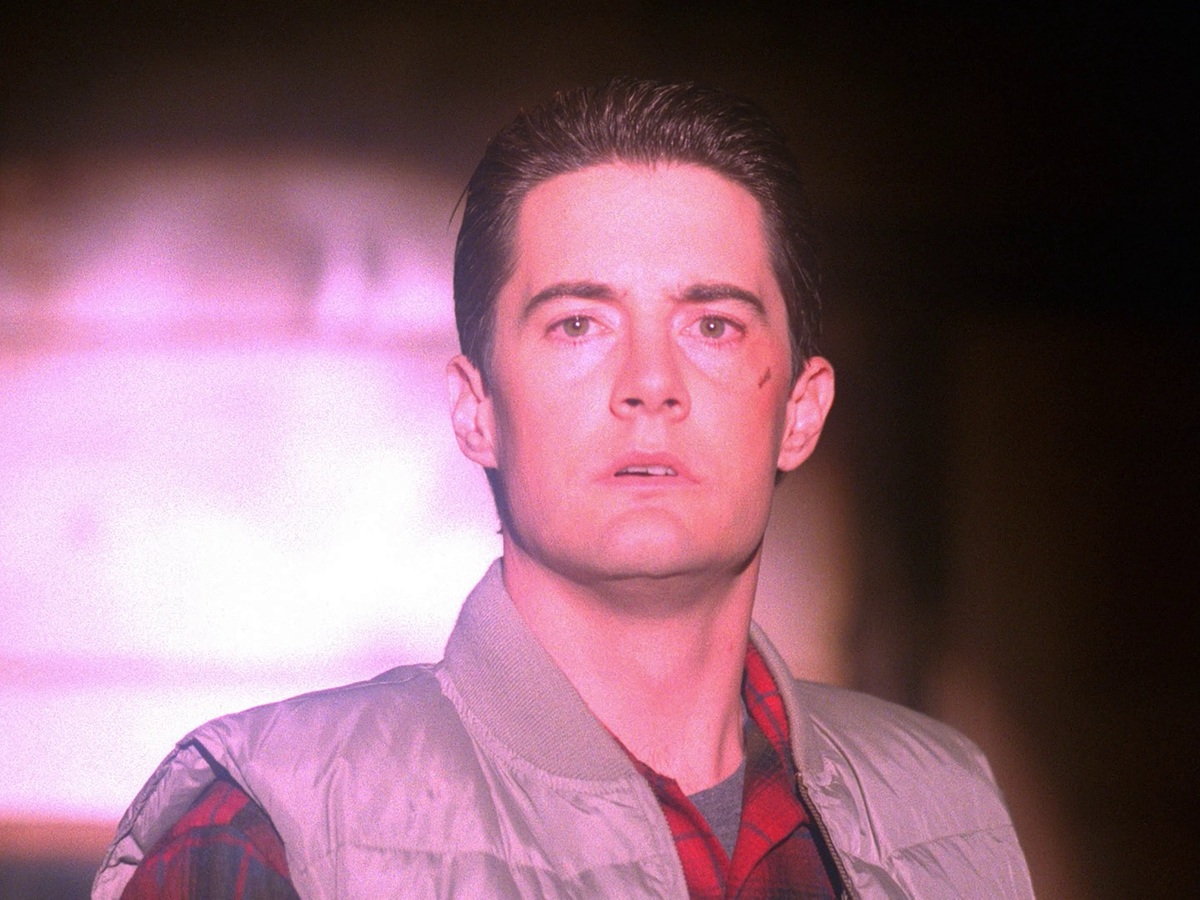
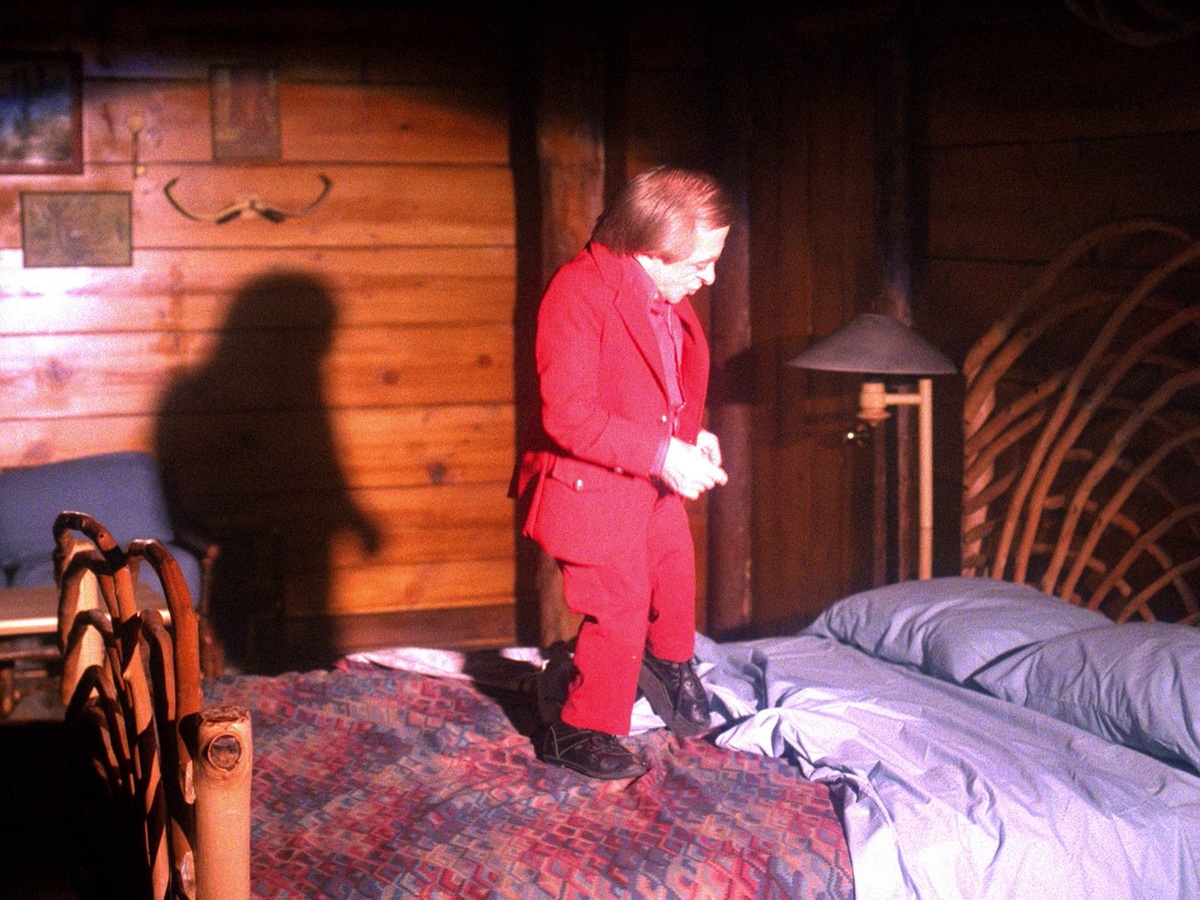
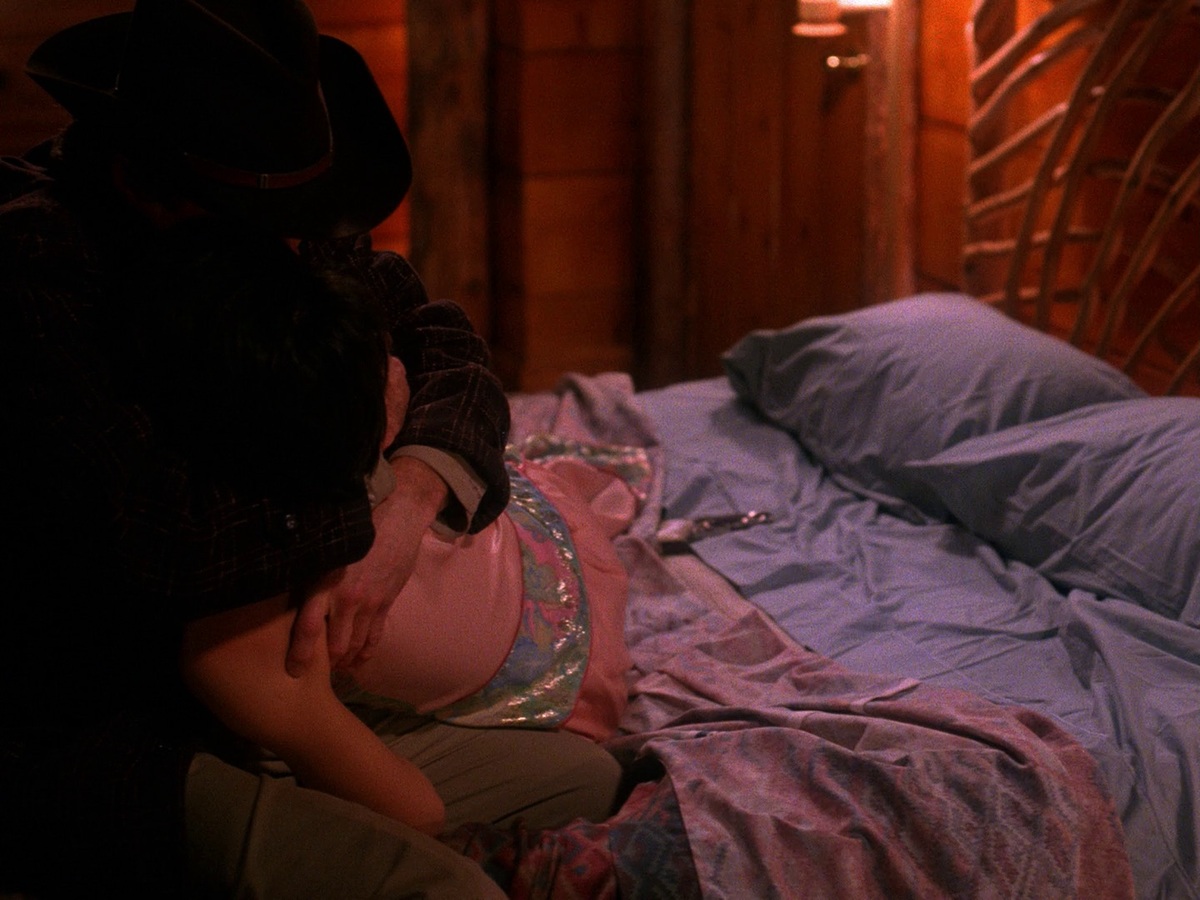
The room then becomes an unstable visual field. The bed appears empty in altered light, BOB rises beside it, and the Man from Another Place appears on the mattress. Cooper’s reactions connect him to the vision. The return to Truman holding Josie keeps grief present beneath the spectacle rather than allowing the supernatural images to replace it.
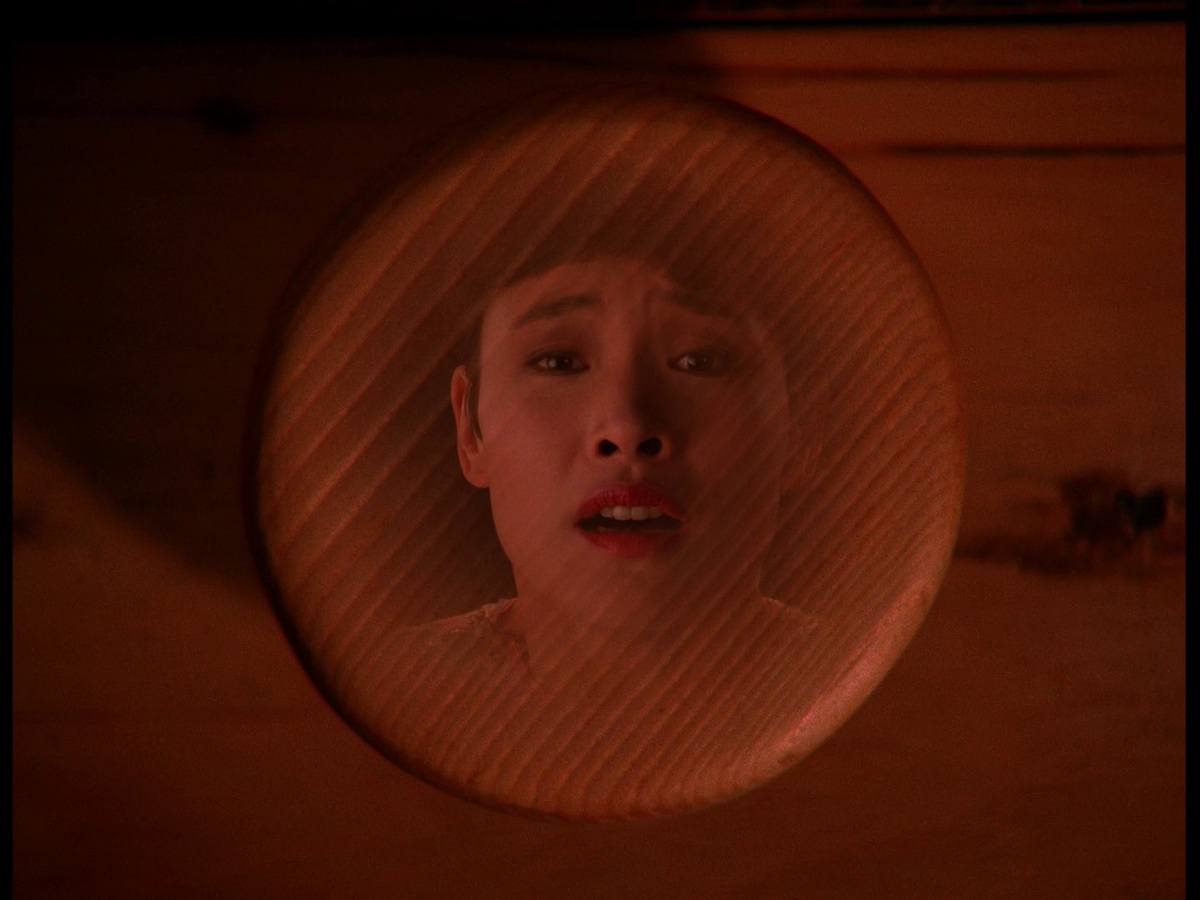
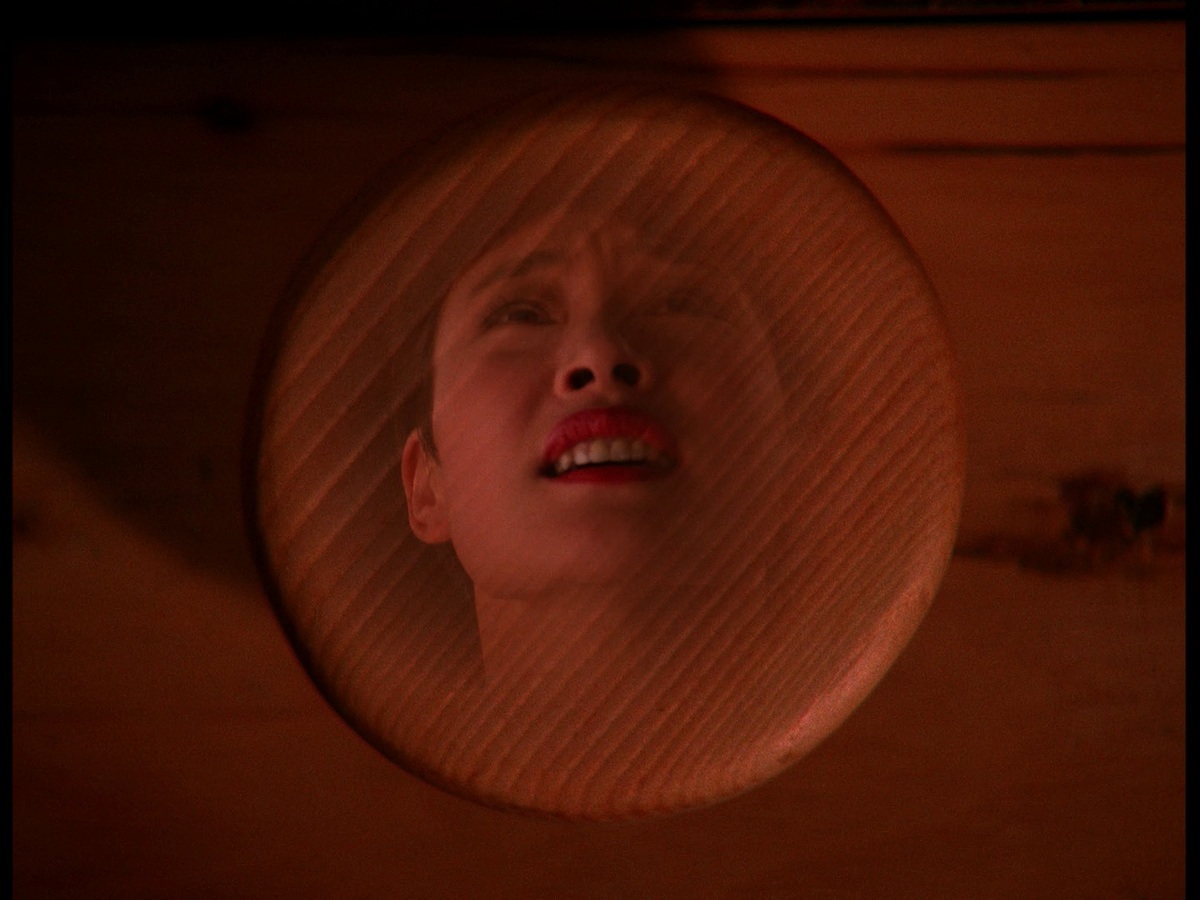
Finally, Josie’s face appears within the round wooden knob. Its curvature and grain remain perceptible as the face strains against the surface. The effect collapses a person and a piece of the hotel’s material world into one image. The gallery follows the transformation in stages, allowing the human expression and the surrounding grain to be compared.
BOB’s question and laughter, Truman’s repeated calls to Josie and the moaning marked in the captions give the passage distinct vocal presences. These do not amount to a single explanatory voice. A taunt, an expression of grief and an image of entrapment coexist. Reading the ending as a straightforward punishment would suppress the conflicting pressures the episode has placed around Josie.
The aftermath continues in Wounds and Scars. That continuation is crucial: the next episode follows the damage to Truman rather than offering a definitive answer to the object at the bedside. The image remains unresolved while its human consequences become unmistakable.
The bedside vision, stage by stage · 7 images
A route through The Condemned Woman
Cooper’s room and the Packard house: Earle sets a deadline; Andrew’s reappearance shocks Josie.
The station and Great Northern: Hank tries to bargain, Albert identifies the bullets, and Audrey meets Wheeler.
The Packard house: Cooper questions Josie under Catherine’s observation.
Ben’s board meeting and the Double R: reform, investment and new relationships begin to take shape.
Earle’s cabin and Hank’s cell: instruction and reconciliation become forms of coercion.
The station and the Packard house: Pete studies the chess position; Andrew proposes Josie’s escape.
The picnic and hotel: Donna and James part; Andrew confronts Eckhardt; Audrey challenges Wheeler.
The Roadhouse and hotel suite: the poem comes together, Josie dies, and Cooper encounters the bedside vision.
Sources and connections
Episode and credits. Overall Episode 23 / Season 2, Episode 16, The Condemned Woman. On-screen credits name Lesli Linka Glatter as director and Tricia Brock as writer. Images and scene evidence derive from Twin Peaks: From Z to A.
Dialogue and sound cues. The English captions support the discussions of the ballistic evidence, Earle’s instructions, the separate relationship decisions and the vocal events around Josie’s death. The formal interpretations here are readings of the episode.
The poem. Earle’s fragments use Percy Bysshe Shelley’s Love’s Philosophy. Their literary source does not make the invitation benign; the episode changes the circumstances in which the language is received.
Follow the preceding episode, continue to Wounds and Scars, or return to the illustrated Season Two guide and the Twin Peaks research hub.